
Log driveway edging ideas can make a plain entrance feel warmer, more defined, and better connected to the surrounding landscape. Natural logs work especially well beside gravel, crushed stone, asphalt, concrete, and rustic pavers. They can follow straight edges, soften curves, retain shallow planting beds, or create a strong transition between the driving surface and lawn. The key is treating the edging as part of the entire front-yard design. Consider the driveway shape, log size, anchoring method, drainage, plant choices, and architecture together. From woodland entrances to neat suburban layouts, these complete designs offer practical inspiration for different properties and budgets. Explore the following 20 log driveway edging ideas to find a look that complements your home.
1. Horizontal Log Driveway Edging With Pea Gravel
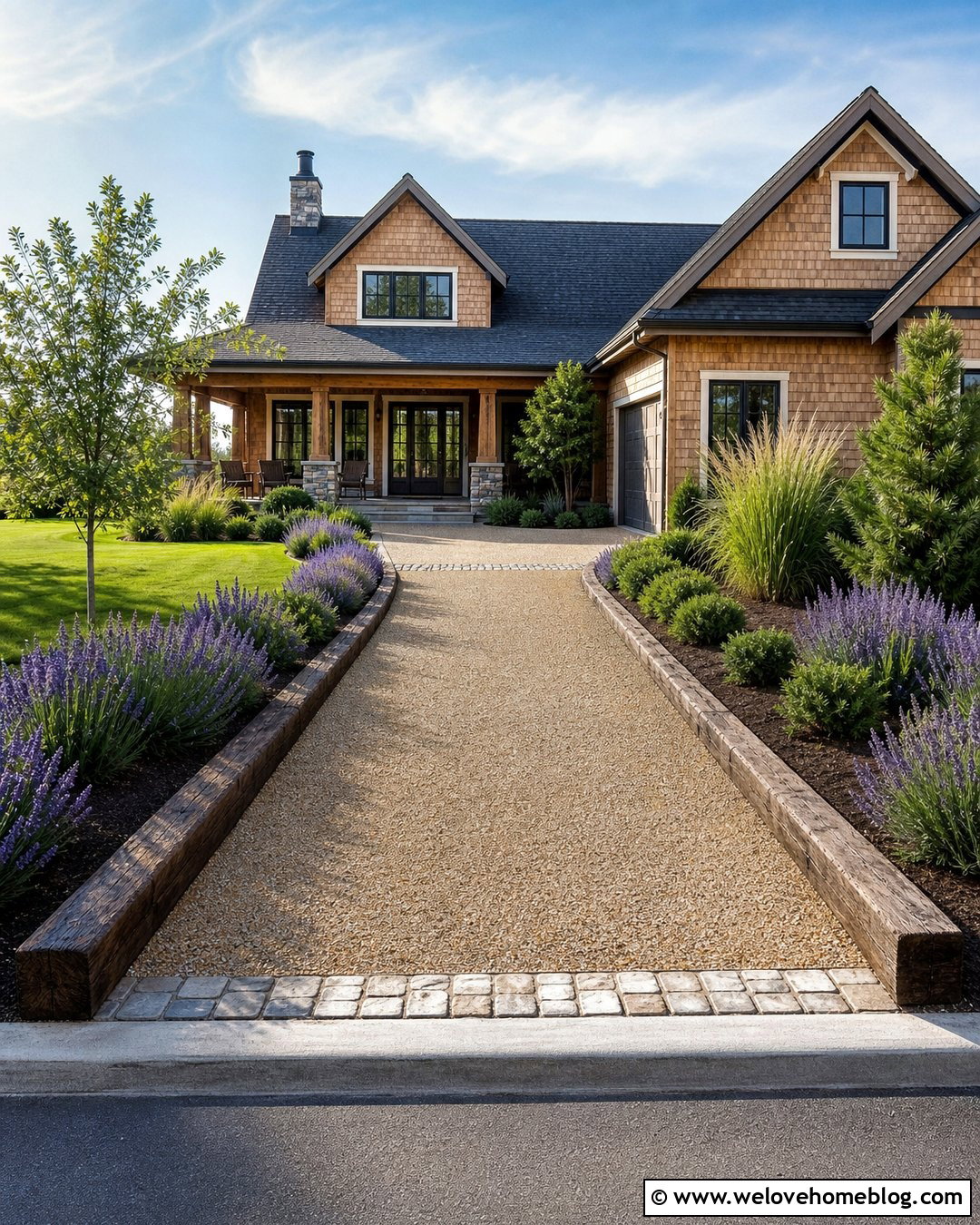
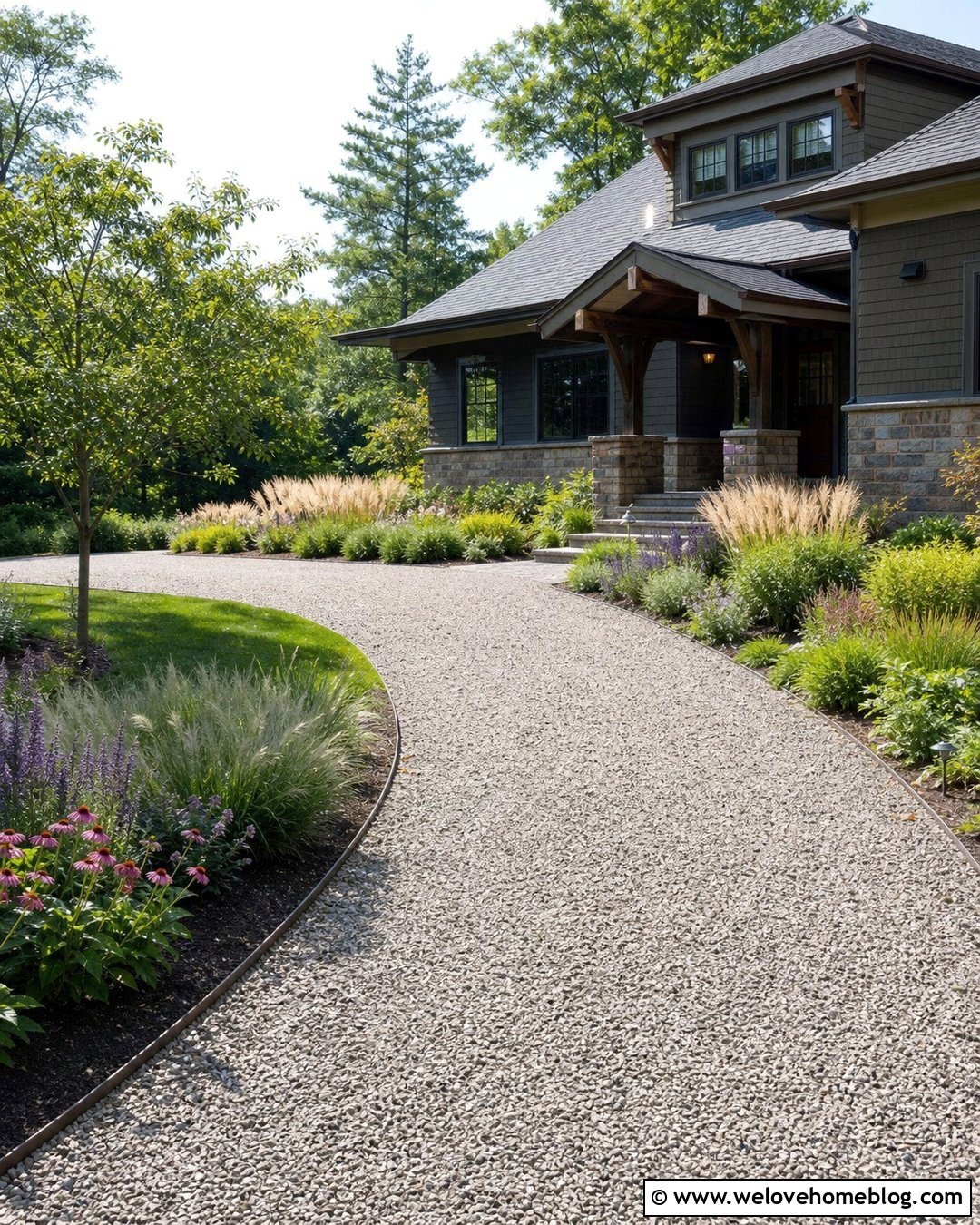
Smooth pea gravel and long horizontal logs create a relaxed driveway that feels natural without looking unfinished. Choose straight cedar, locust, or pressure-treated logs with similar diameters for a consistent border. Set each log partly into a shallow trench and anchor it securely outside the vehicle path. The warm wood tones will stand out against tan or gray pea gravel. Add curved planting beds behind the logs with lavender, compact evergreens, and ornamental grasses. A simple stepping-stone walkway can connect the driveway to a craftsman porch. Because pea gravel shifts under tires, keep the log border slightly above the finished surface to contain loose stones. Rot-resistant or properly treated wood will generally provide a more durable outdoor edge. ()
2. Peeled Cedar Log Driveway Edging With Crushed Stone
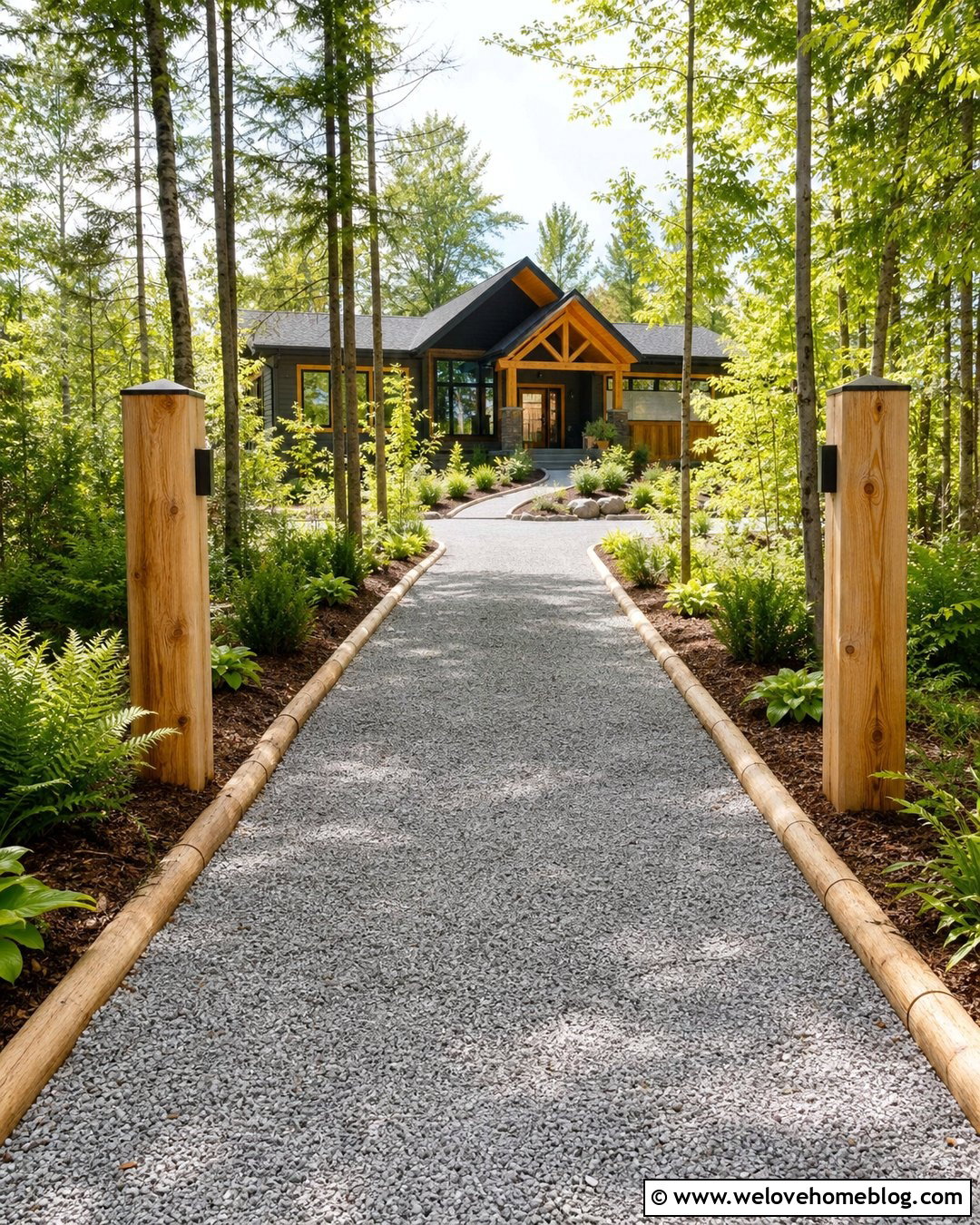
Peeled cedar logs bring a cleaner finish to a rustic crushed-stone driveway. Removing the rough bark creates smoother lines while preserving the knots and natural color variations that give the wood character. Use pale gray crushed granite for a firm, understated surface, then place matching cedar logs along both sides of a straight driveway. Deep green ferns, hostas, and low woodland shrubs can fill shaded beds behind the edging. Near the street, larger cedar posts can mark the entrance without forming a full gate. This complete look fits a cabin, mountain home, or contemporary house surrounded by mature trees. Keep the planting beds slightly lower near the driveway so rainwater does not carry mulch over the logs and onto the driving surface.
3. Vertical Log Driveway Edging With Concrete
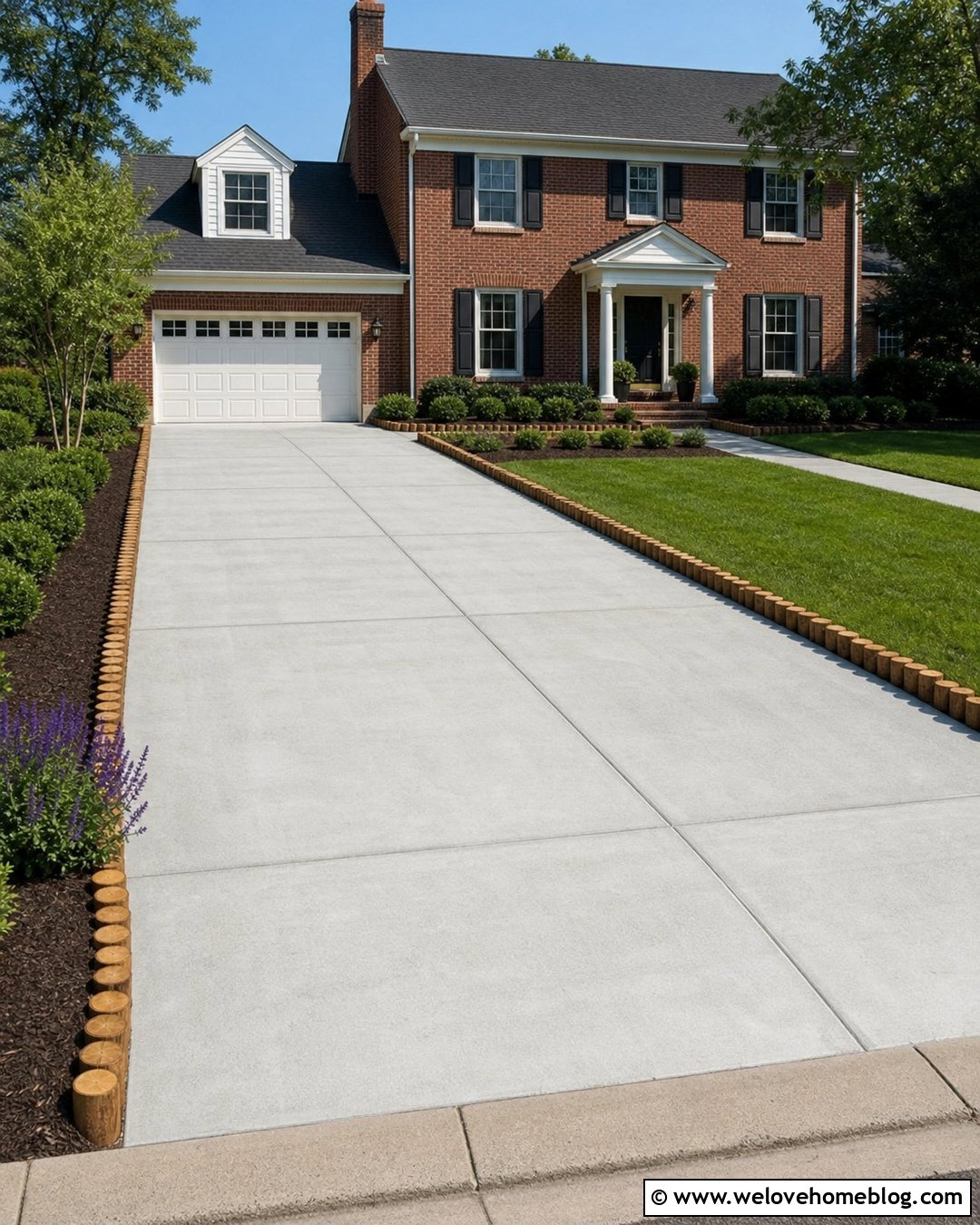
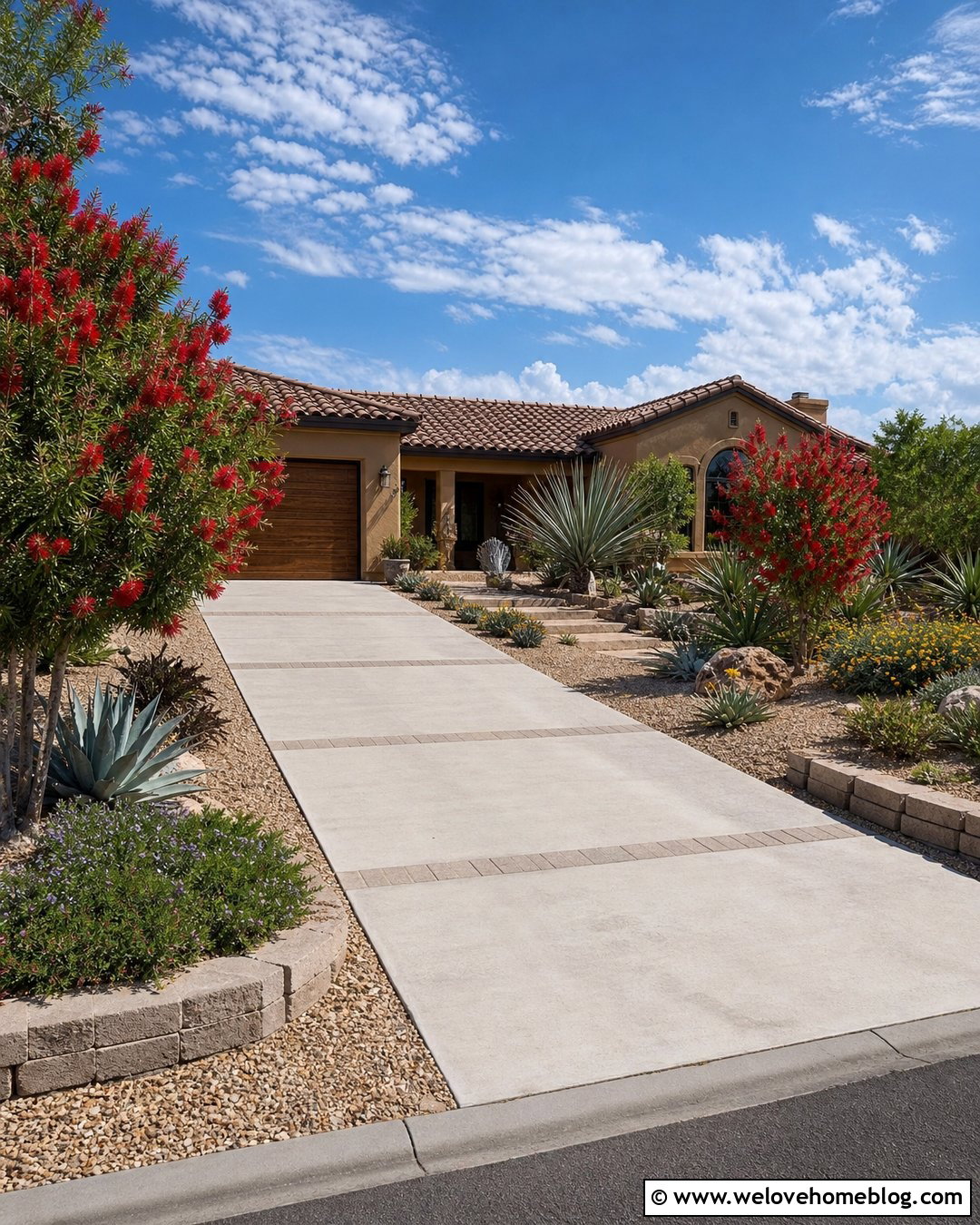
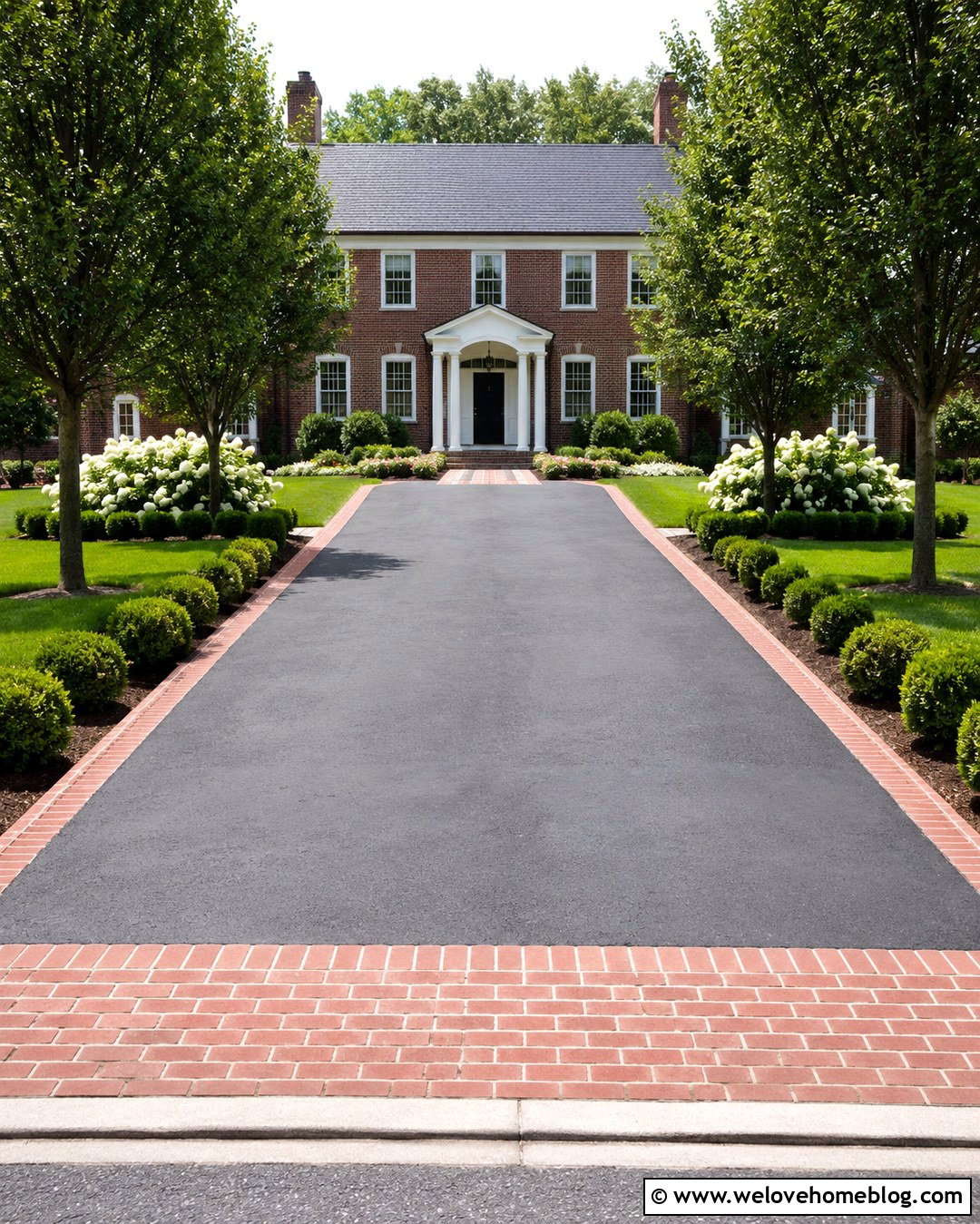
Want a log border that feels orderly enough for a suburban home? Cut uniform wood rounds and install them vertically beside a light gray poured-concrete driveway. Repeating sections of equal height create a neat rhythm that softens the hard concrete without making the entrance look overly rustic. Leave only a modest portion of each round visible so the border remains easy to maintain. Behind it, use dark mulch, clipped boxwood, flowering salvia, and a narrow lawn strip. A straight walkway built from the same concrete can lead toward a brick colonial house. Position the vertical rounds beyond door-swing and tire-clearance areas. This edging works best as a decorative boundary for planting beds rather than as a tall barrier immediately beside the driveway.
4. Curved Log Driveway Edging With Decomposed Granite
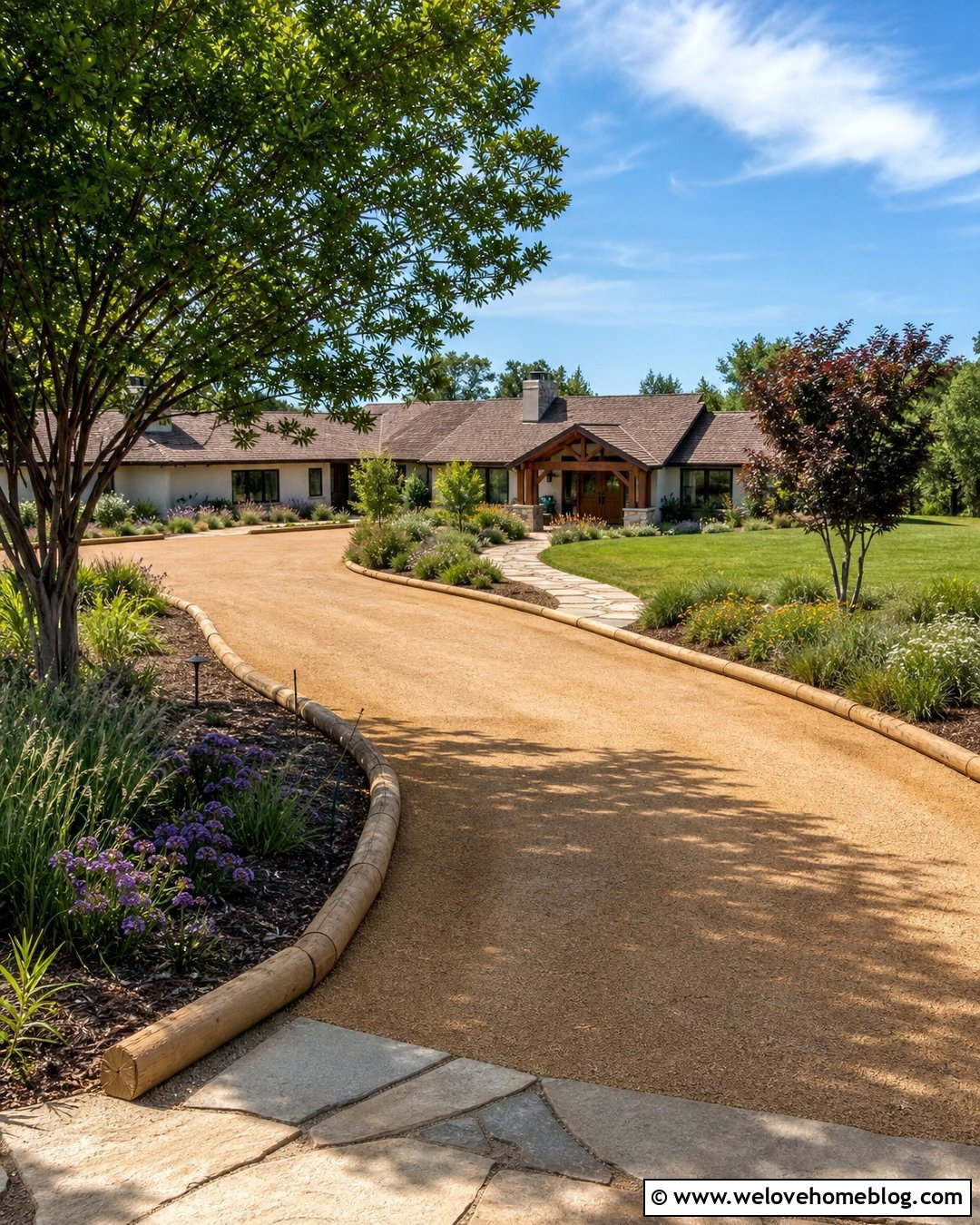
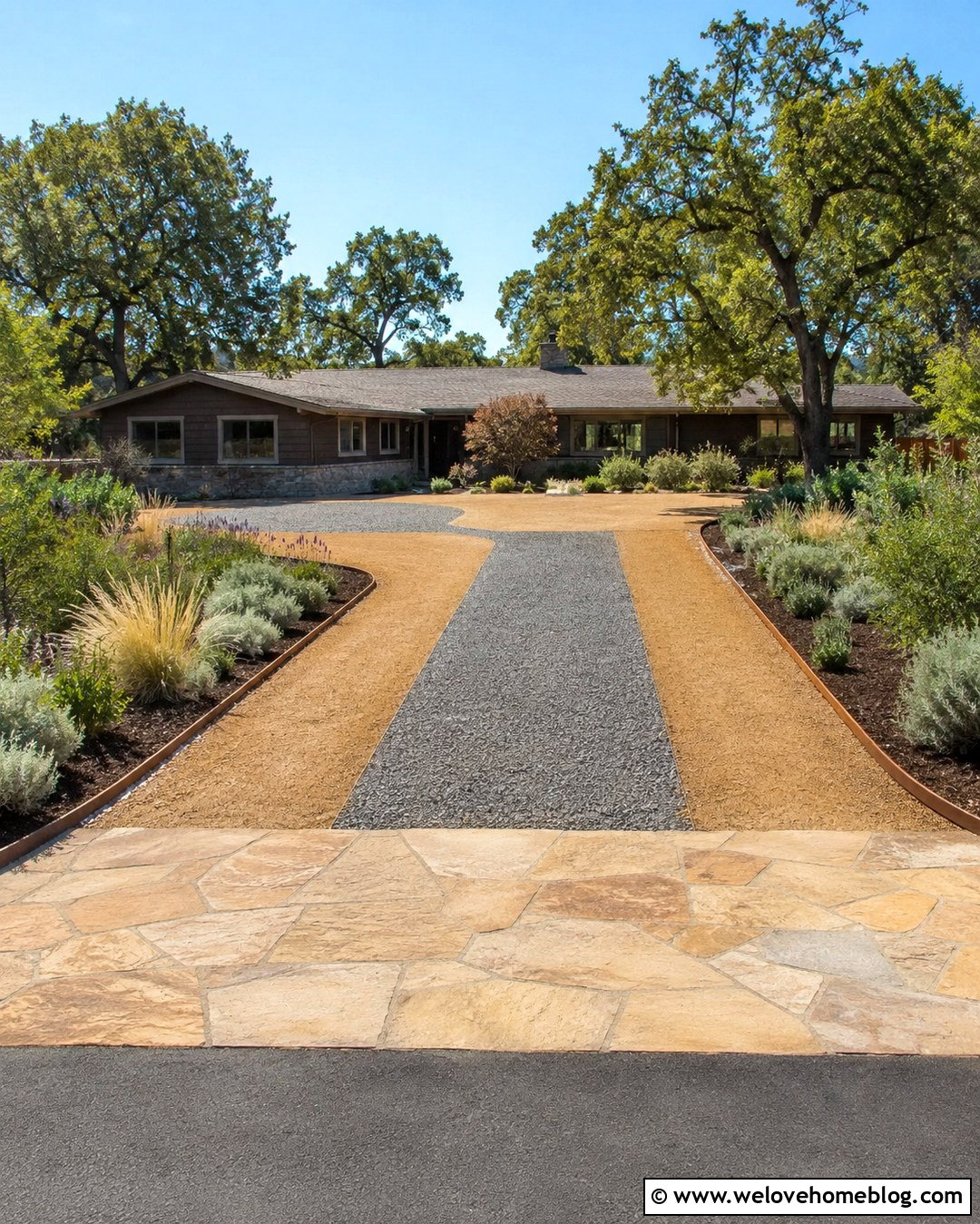
A gently curved driveway becomes more inviting when horizontal logs follow every bend. Decomposed granite is an excellent visual partner because its fine texture and earthy color complement natural wood. Select relatively narrow logs that can be installed in shorter sections around the curves. Stagger the joints so the border appears continuous rather than segmented. On the inside curve, create a broad planting bed with native grasses, flowering perennials, and one small ornamental tree. Use open lawn and scattered shrubs along the opposite side to keep sightlines clear. The result suits a ranch house or low country home with informal landscaping. Compact the decomposed granite carefully and keep the logs firmly anchored so runoff, maintenance equipment, and gradual soil movement do not shift the border.
5. Stacked Log Driveway Edging With Asphalt

Black asphalt gains warmth and definition from a low border made with stacked logs. Place one substantial horizontal log at ground level and add a smaller log above it only where a planting bed needs extra soil retention. Avoid building a continuous high wall beside active vehicle areas. The dark driveway surface looks especially attractive against honey-toned cedar or weathered brown timber. Fill the raised beds with white hydrangeas, compact junipers, and soft green ground cover. A red brick or white siding home provides a classic backdrop. At the street entrance, end the stacked edging with larger stones to create a deliberate transition. Secure each course independently, and design openings where surface water must leave the driveway instead of trapping runoff against the asphalt edge.
6. Half-Buried Log Driveway Edging With River Gravel
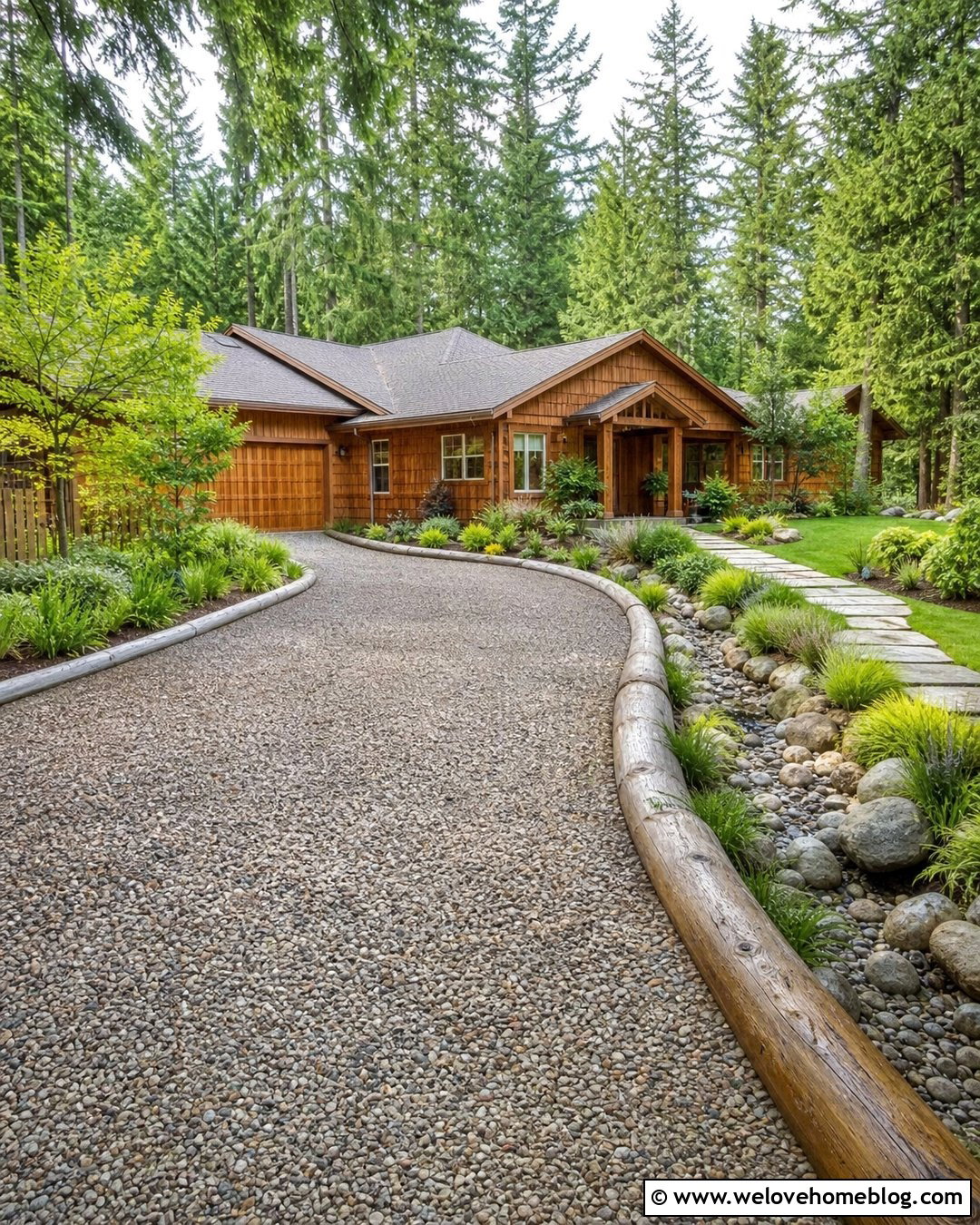
Partly burying thick logs gives a river-gravel driveway a sturdy border with a low, natural profile. Choose straight logs with broad diameters and sink approximately half of each piece into a prepared trench. The exposed rounded surface becomes a smooth transition between mixed river gravel and the lawn. Install steel stakes or other suitable anchors on the landscape side so the hardware stays visually discreet. Rounded gray, tan, and brown stones can continue into a dry creek bed near the driveway entrance. Add sedges, dwarf grasses, and moisture-tolerant shrubs around that drainage feature. This design works beautifully beside a cedar-sided house. Careful trench preparation, stable anchoring, and enough burial depth help horizontal log edging stay aligned along beds and paths. ()
7. Log Driveway Edging With Gravel And Boulders
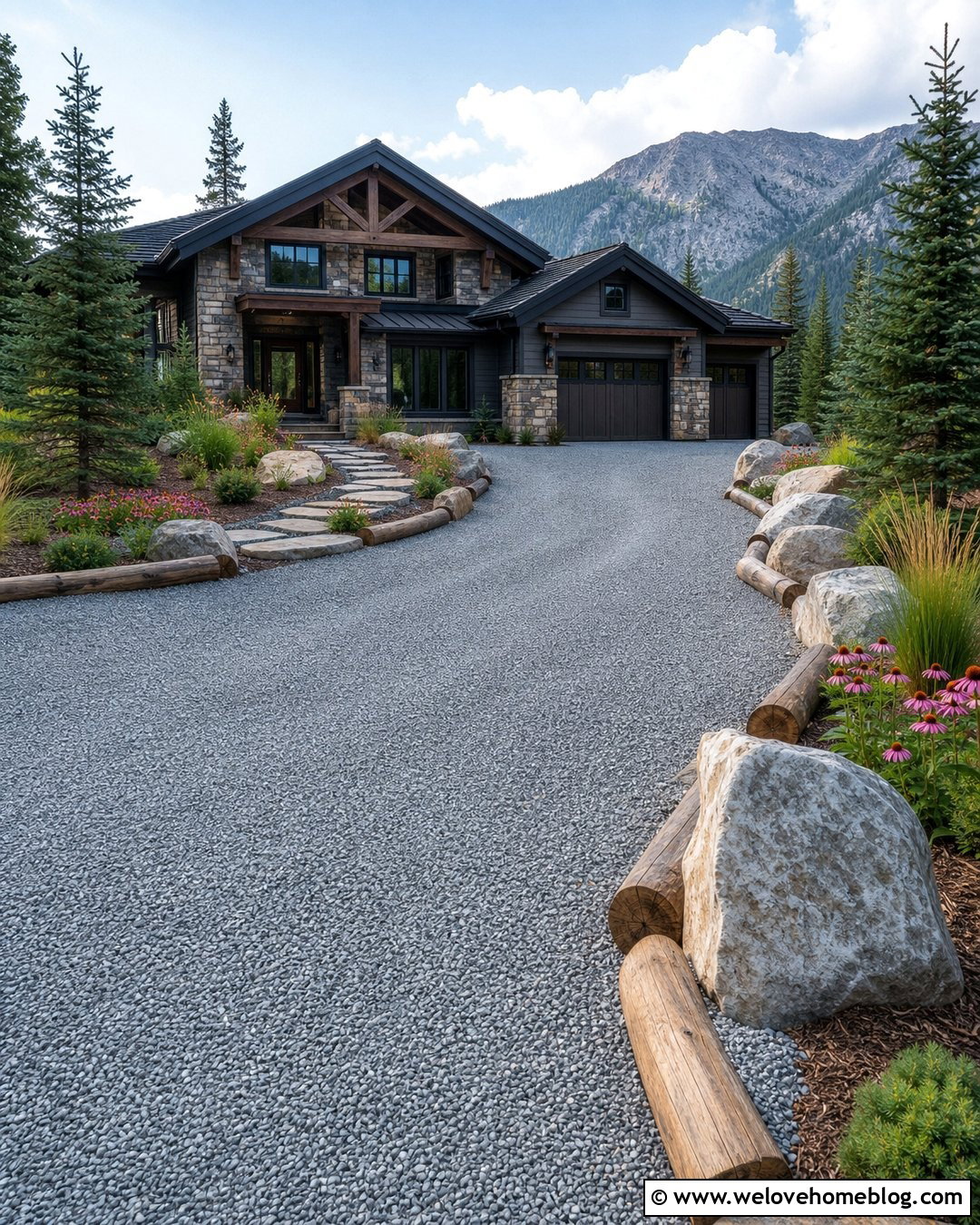
Combining logs and boulders creates an edge that looks intentionally rugged rather than improvised. Start with a driveway surfaced in angular gray gravel, then place long horizontal logs along the main straight sections. At curves, planting-bed corners, and the driveway entrance, interrupt the logs with substantial fieldstone boulders. The stones help visually anchor the wood and connect the border to the surrounding landscape. Behind the edge, arrange pine shrubs, ornamental grasses, coneflowers, and natural mulch in broad groups. Keep the largest boulders well outside normal tire clearance and maintain open visibility near the road. A modern mountain house or rustic farmhouse complements this material combination. Repeating the same stone around a front walkway will make the driveway, garden beds, and home entrance feel like one coordinated landscape.
8. Log Driveway Edging With Wildflower Borders
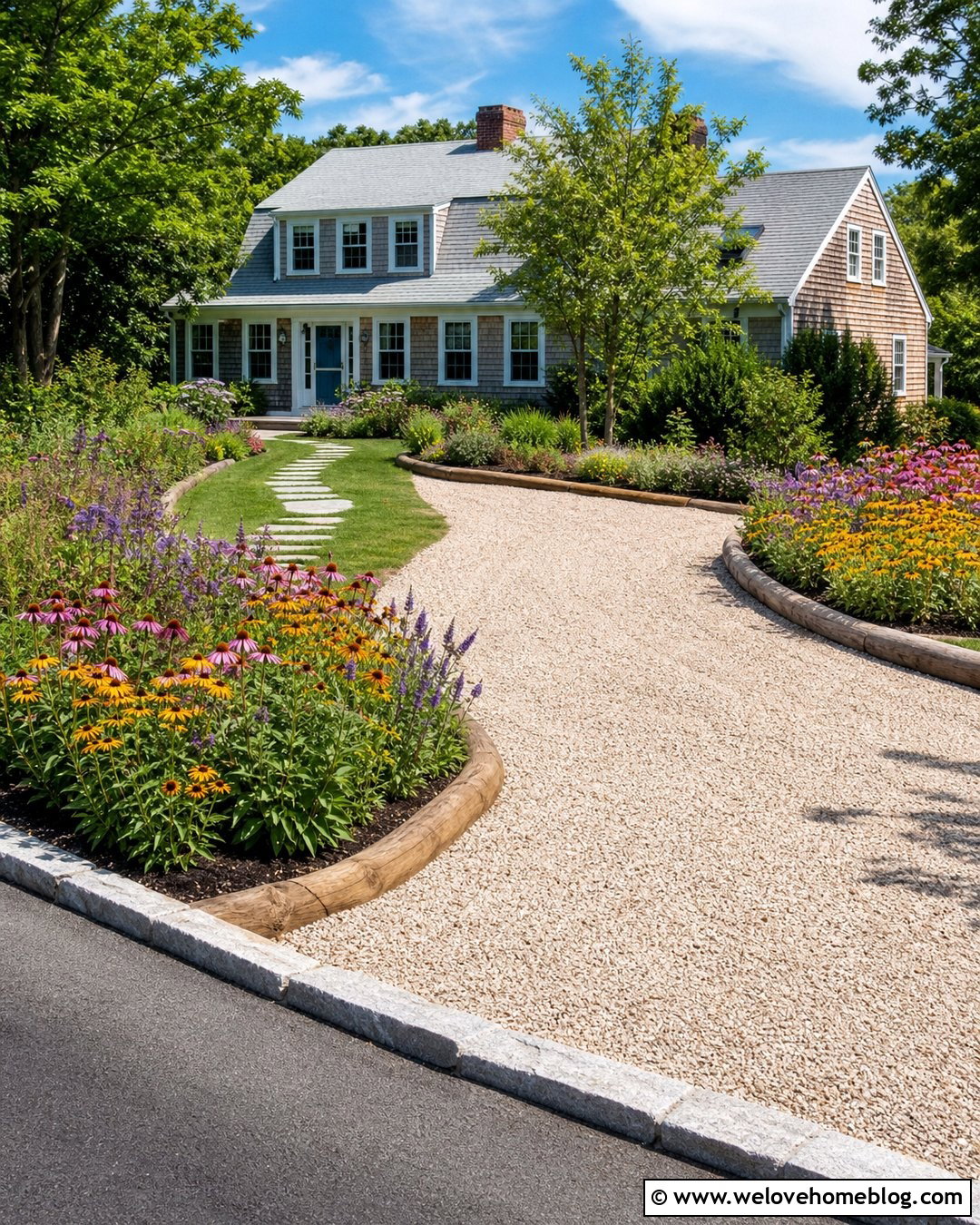
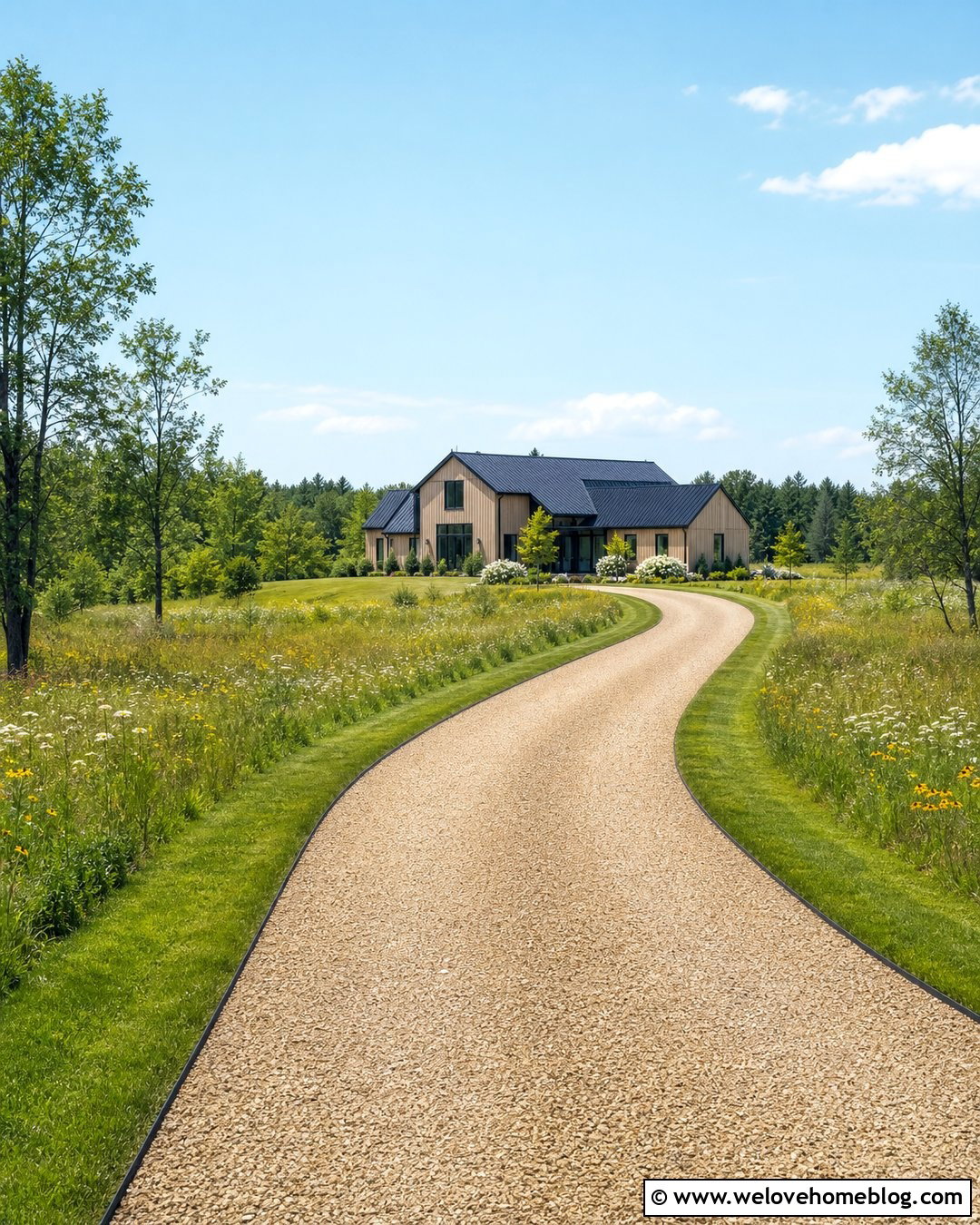
Picture a pale gravel driveway winding through colorful flowers, with simple logs holding the planting beds in place. This cottage-inspired design uses horizontal cedar logs along both sides of a curved or slightly irregular driveway. Behind them, plant generous drifts of black-eyed Susans, coneflowers, coreopsis, asters, and other regionally suitable flowers. Repeat a few species instead of scattering too many individual varieties. That creates a fuller and more organized appearance. Keep taller plants away from the street and driveway turns so drivers have clear views. A mowed strip behind the beds can simplify maintenance and prevent the garden from spreading too far. The combination of warm logs, light gravel, and seasonal color suits cottages, Cape Cod homes, and casual farmhouses with welcoming front porches.
9. Log Driveway Edging With Native Grass Borders
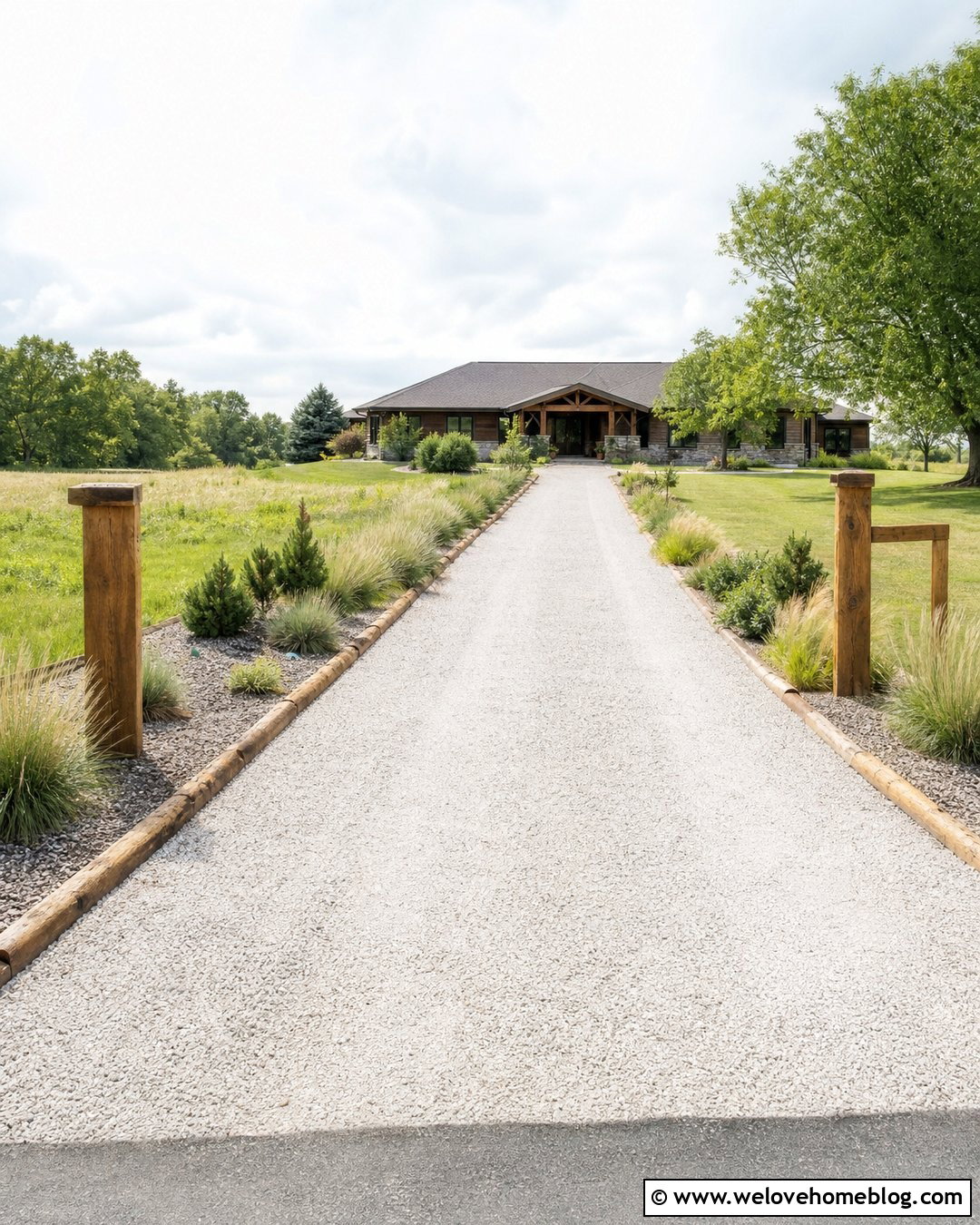
Soft grasses can balance the heavy appearance of thick log edging. Use medium brown horizontal logs beside a straight crushed-limestone driveway, then plant broad ribbons of regionally appropriate native grasses behind them. Vary the grass height gradually, placing shorter varieties near the entrance and taller clumps closer to the house. Gravel mulch between plants will reduce visual clutter and echo the driveway surface. This restrained palette works well with a modern ranch or prairie-style home. To make the entrance feel more structured, add a pair of simple timber posts and repeat the log color around the mailbox. Allow enough space between mature grass clumps and the driveway so foliage does not flop over the driving area. The final look should feel airy, natural, and intentionally arranged.
10. Log Driveway Edging With Mulch Beds
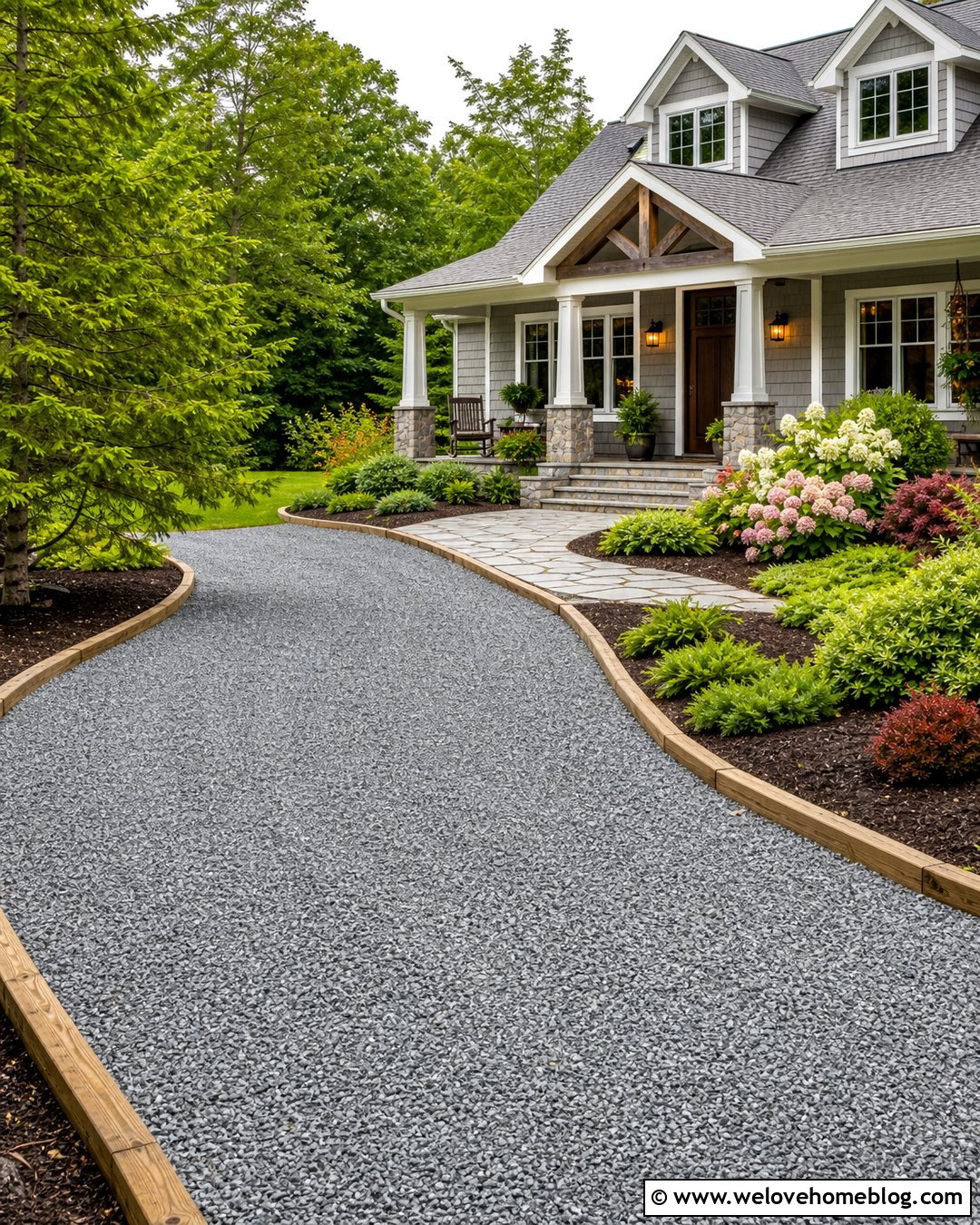
A practical way to upgrade an ordinary gravel driveway is to pair the log border with deep, clean mulch beds. Use straight pressure-treated logs or naturally durable timber to separate compacted gray gravel from dark brown shredded mulch. Place the edging along a gentle curve that widens near the house, creating enough space for layered planting. Low ground covers belong at the front, followed by flowering shrubs and compact evergreen anchors. Continue the mulch beds around the front walkway to visually connect the driveway with the porch. Keep the mulch level below the top of the logs so rain does not wash material onto the driveway. Log edging has enough visual weight to define this transition, while the contrasting colors make even simple plant combinations appear polished and well planned.
11. Log Driveway Edging With Solar Lights
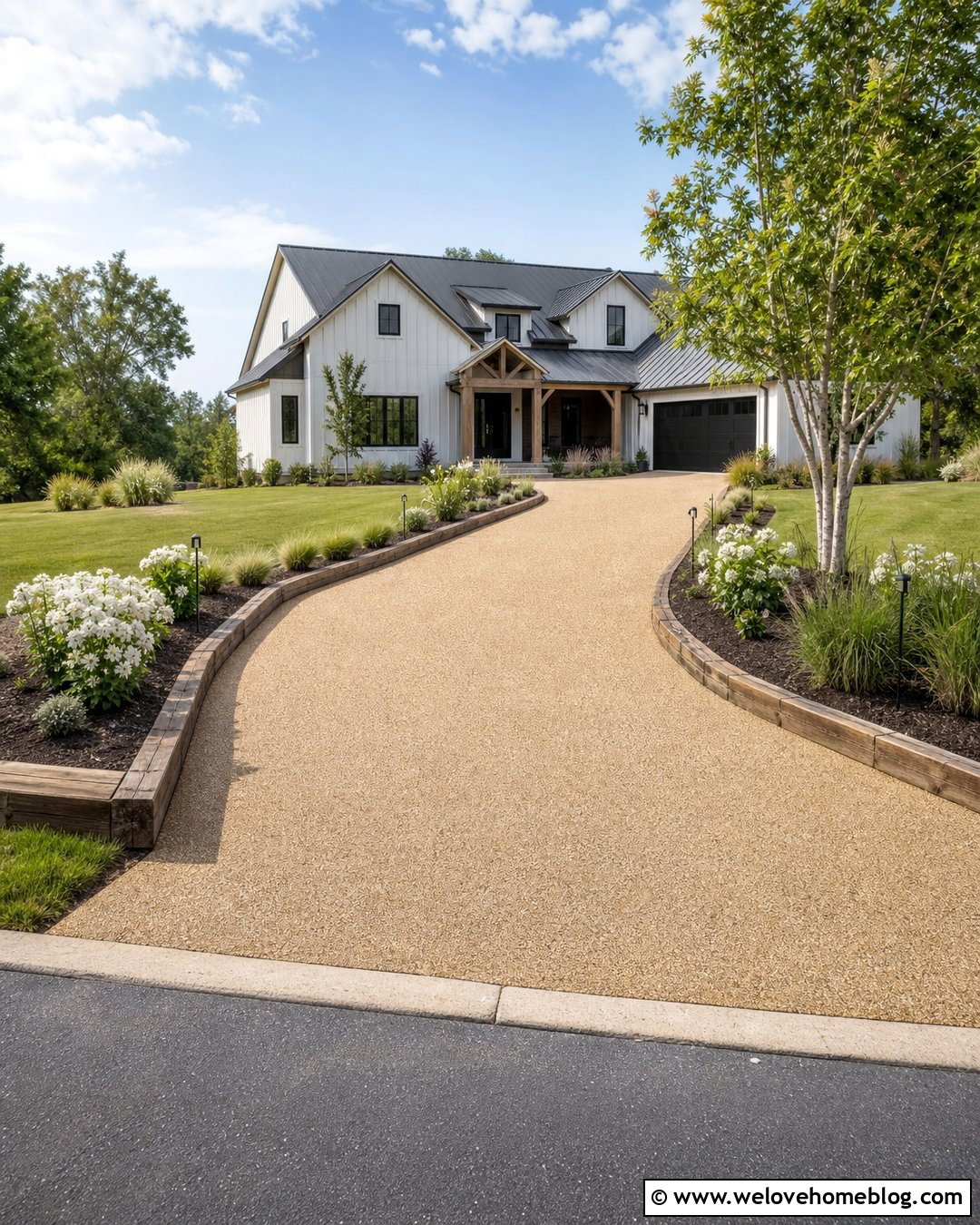
Lighting can make a log-edged driveway easier to follow while adding attractive daytime detail. Begin with a warm beige resin-bound gravel surface and low horizontal cedar logs along a gently curved layout. Install simple black solar fixtures in the planting beds behind the logs rather than directly through the wood. Space them evenly at wider intervals so the driveway does not resemble a runway. During daylight, the dark fixtures provide a crisp contrast against ornamental grasses, white flowers, and pale gravel. Near the house, continue the same lights along the walkway toward a modern farmhouse porch. Select fixtures with shielded or downward-facing heads to reduce glare. Keep every light clear of tires, snow removal equipment, and lawn maintenance routes, especially around the driveway entrance and turning areas.
12. Log Driveway Edging With Stone Entrance Pillars
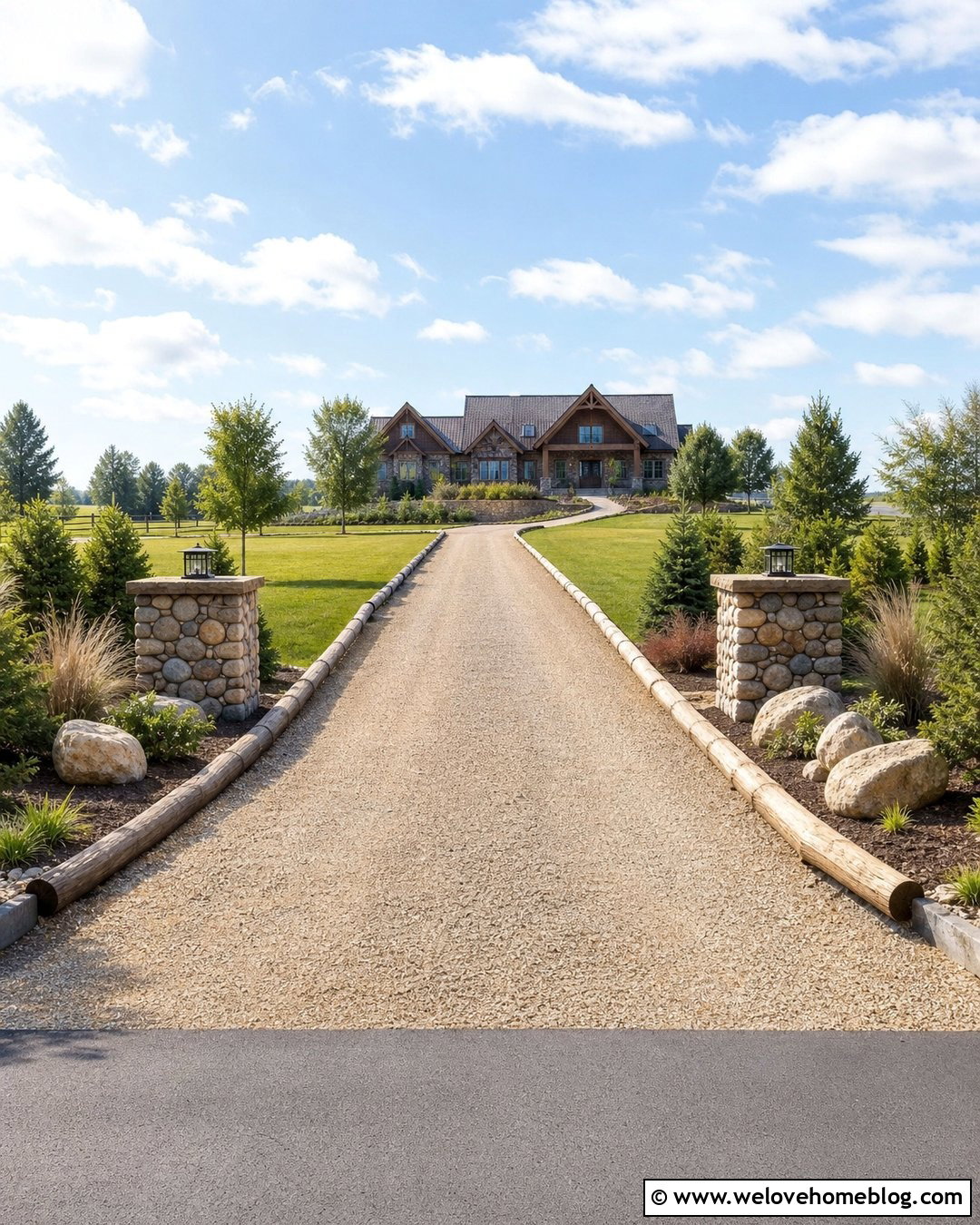
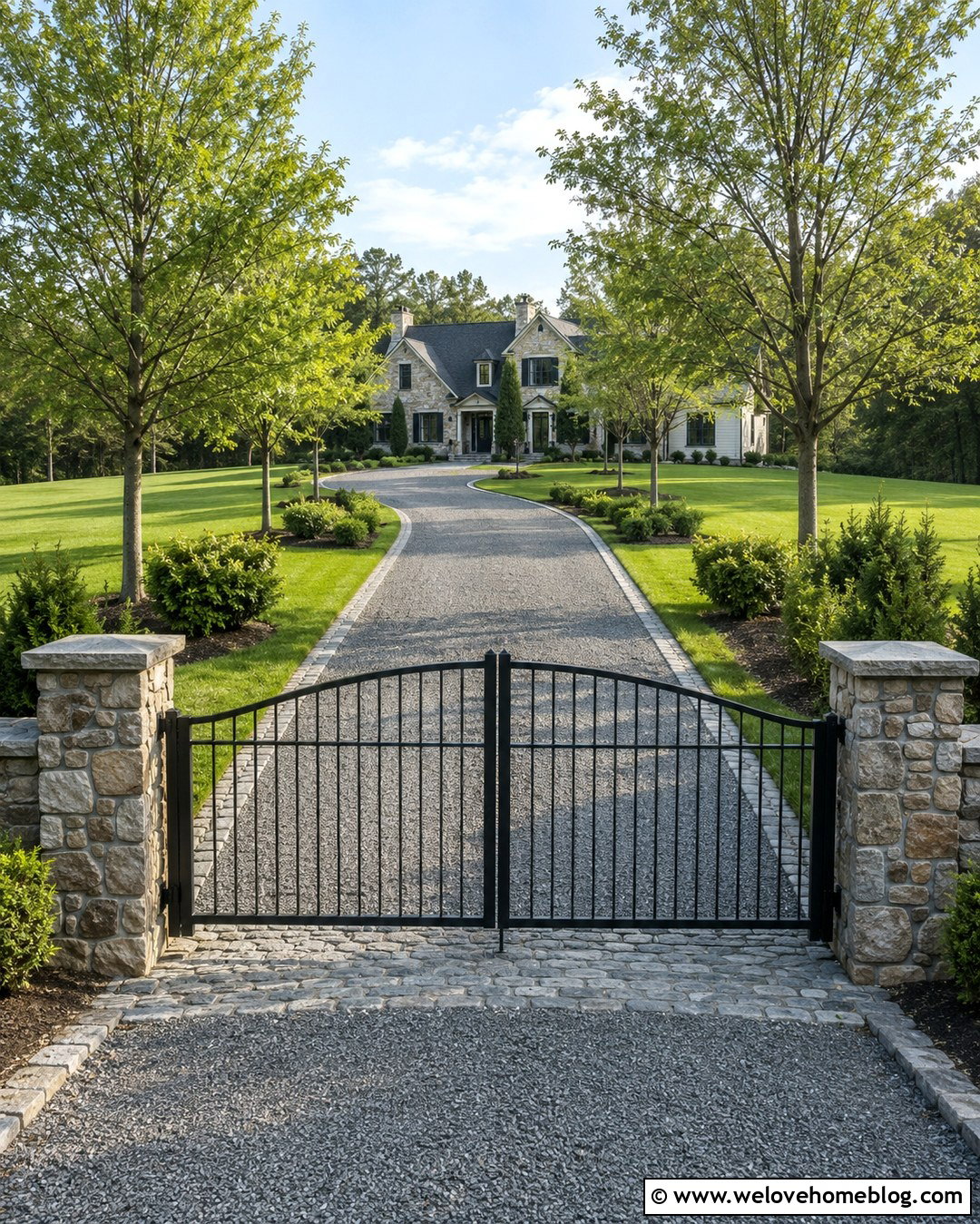
Stone entrance pillars provide structure while log edging carries the rustic character down the driveway. Choose a buff-colored crushed-stone surface with sturdy horizontal logs following both sides of a long, straight approach. At the road, end the logs several feet before two low fieldstone pillars. This separation prevents the entrance from feeling crowded and gives vehicles more turning room. Repeat the pillar stone in small boulder groups behind the logs. Native shrubs, evergreen trees, and understated grasses can frame the approach without hiding the house. The design suits a country property, lodge, or substantial modern farmhouse. Keep the pillars proportional to the driveway width and preserve clear roadside sightlines. Matching stone on the front steps will visually connect the entrance markers with the architecture in the distance.
13. Log Driveway Edging With A Farm Gate
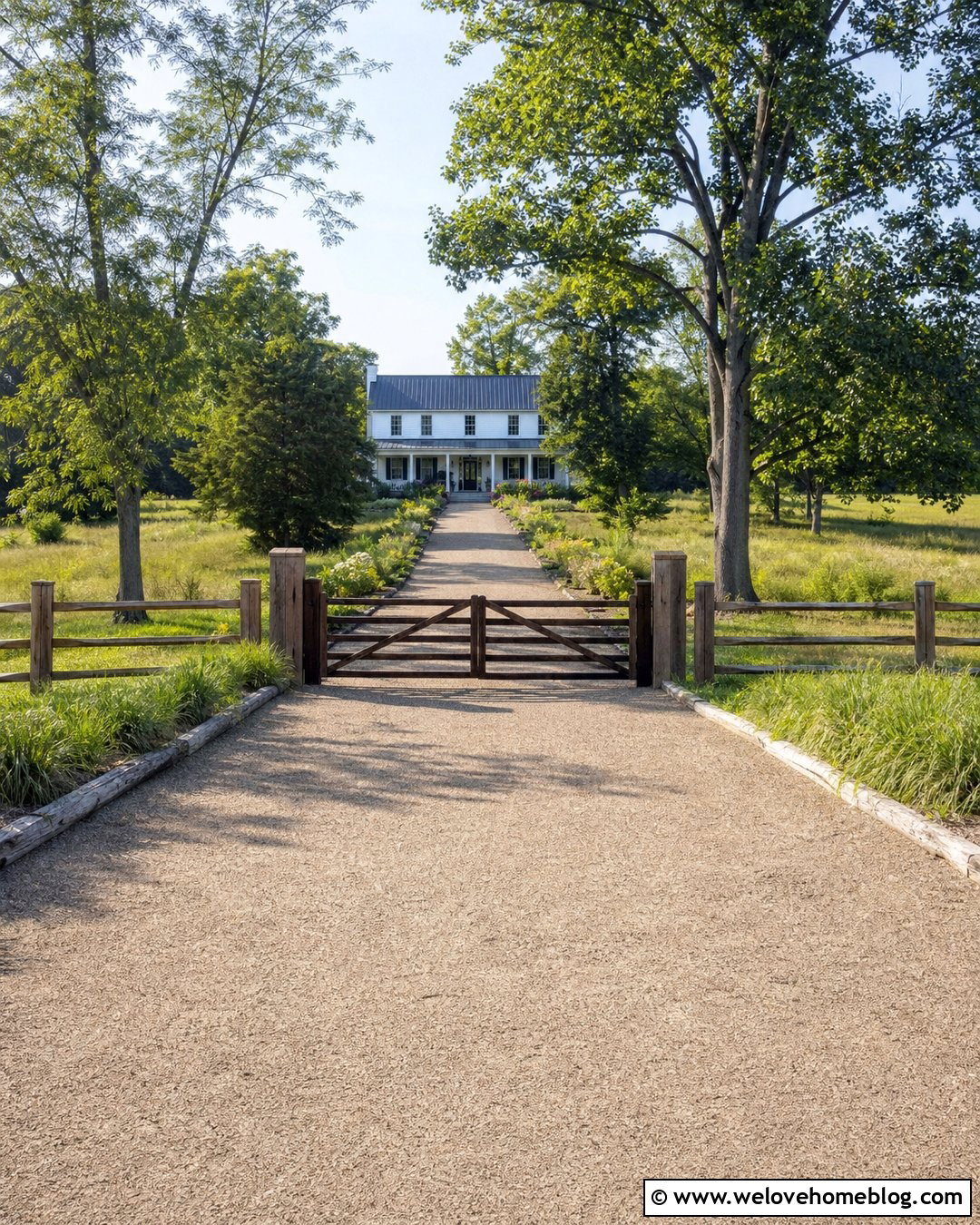
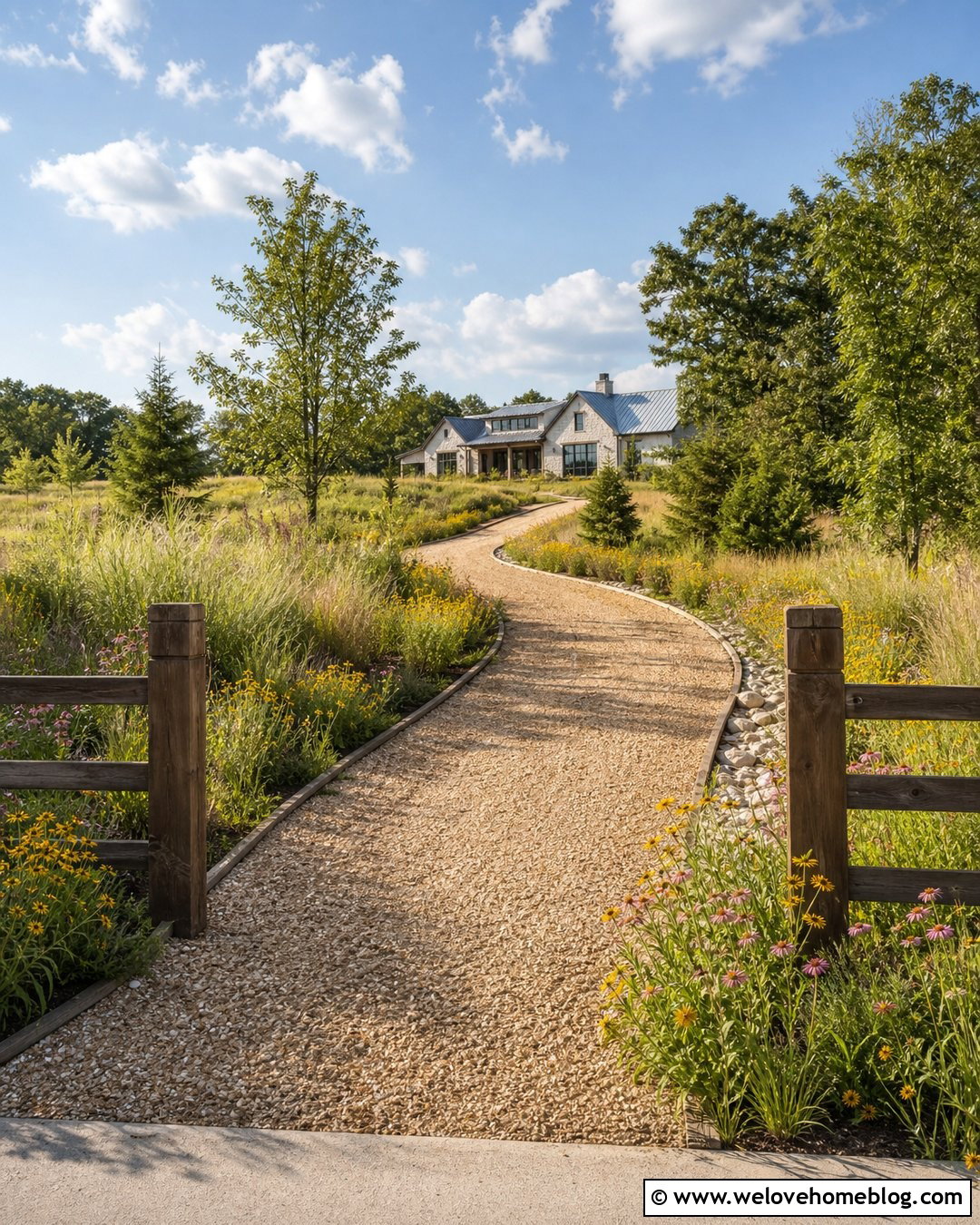
A timber farm gate looks most convincing when the driveway edging and surrounding landscape support the same material story. Use tan compacted gravel for a long, straight driveway bordered with rough horizontal logs. Place the gate between substantial wood posts set back from the road, leaving a safe waiting area for incoming vehicles. End the log edging neatly at each post rather than running it through the gate opening. Add split-rail fencing beyond the entrance and plant small native trees at irregular intervals down the approach. Low meadow grasses can soften the border without blocking visibility. Near the farmhouse, transition to clipped shrubs and more formal planting beds. This gradual change keeps the roadside casual while giving the home a tidy, cared-for appearance.
14. Log Driveway Edging For A Circular Driveway
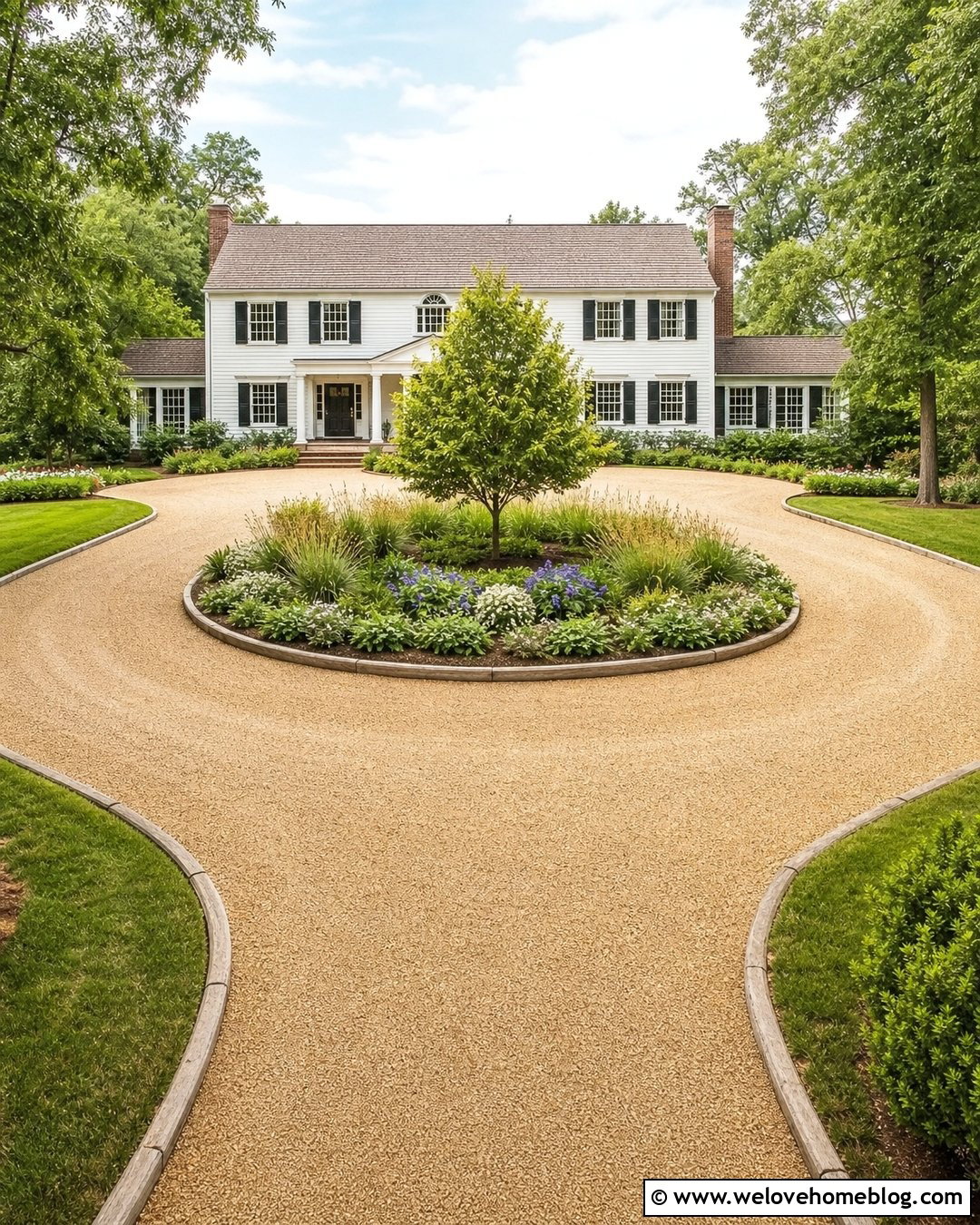
Circular driveways need edging that defines the center island without making vehicle movement feel cramped. Cover the driving surface with compacted golden gravel and use short horizontal log sections to follow the inner and outer curves. The logs around the center island can sit slightly higher because they also separate the gravel from soil and mulch. Plant one small ornamental tree in the middle, surrounded by low grasses, spreading ground cover, and seasonal flowers. Keep plants low near entry and exit points for visibility. Along the outside curve, use a simpler lawn edge with occasional shrubs so the design does not become busy. A wide-front colonial, ranch, or country home can anchor the background. Consistent log diameter will help the circular shape look smooth and deliberate.
15. Log Driveway Edging For A Sloped Driveway
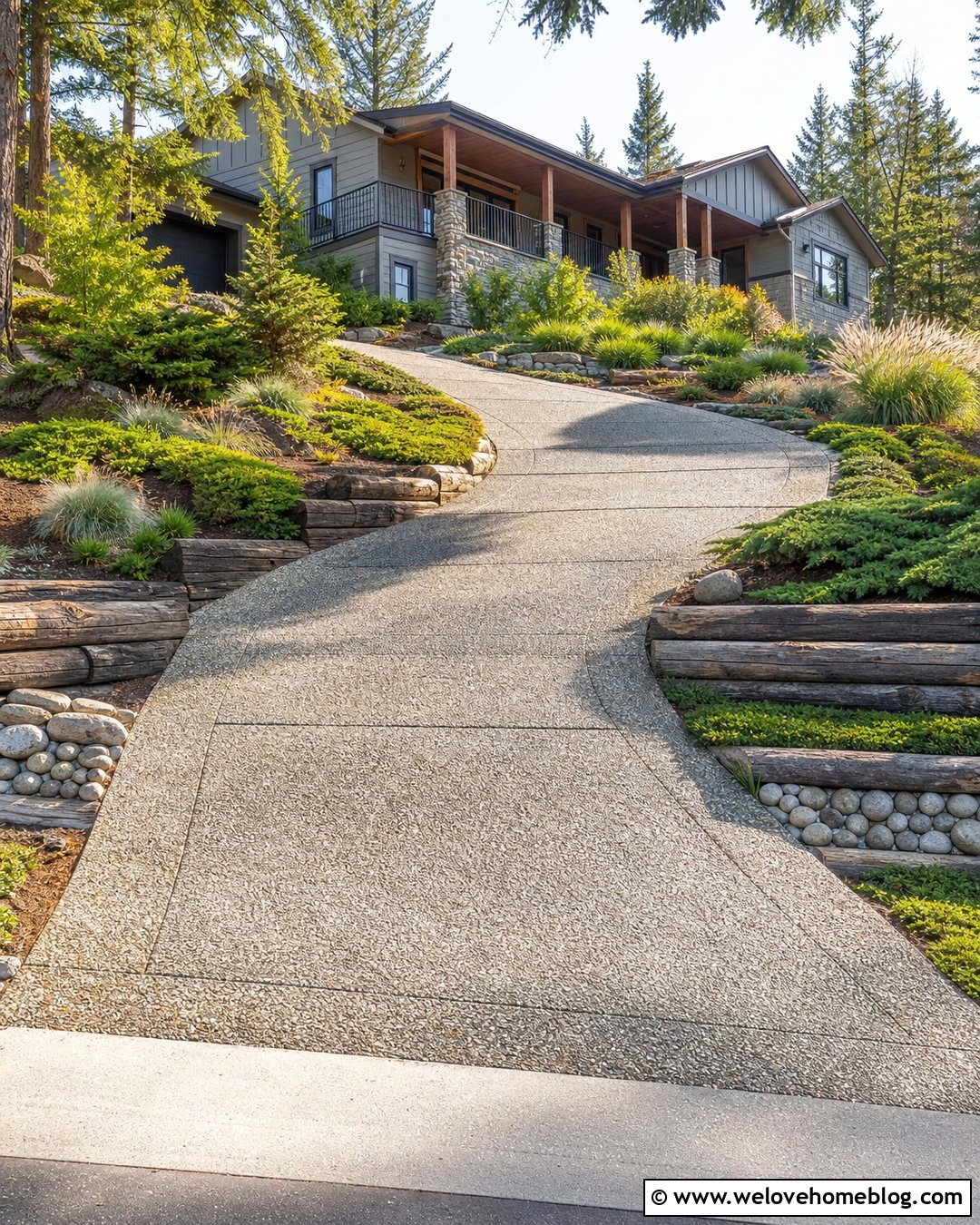
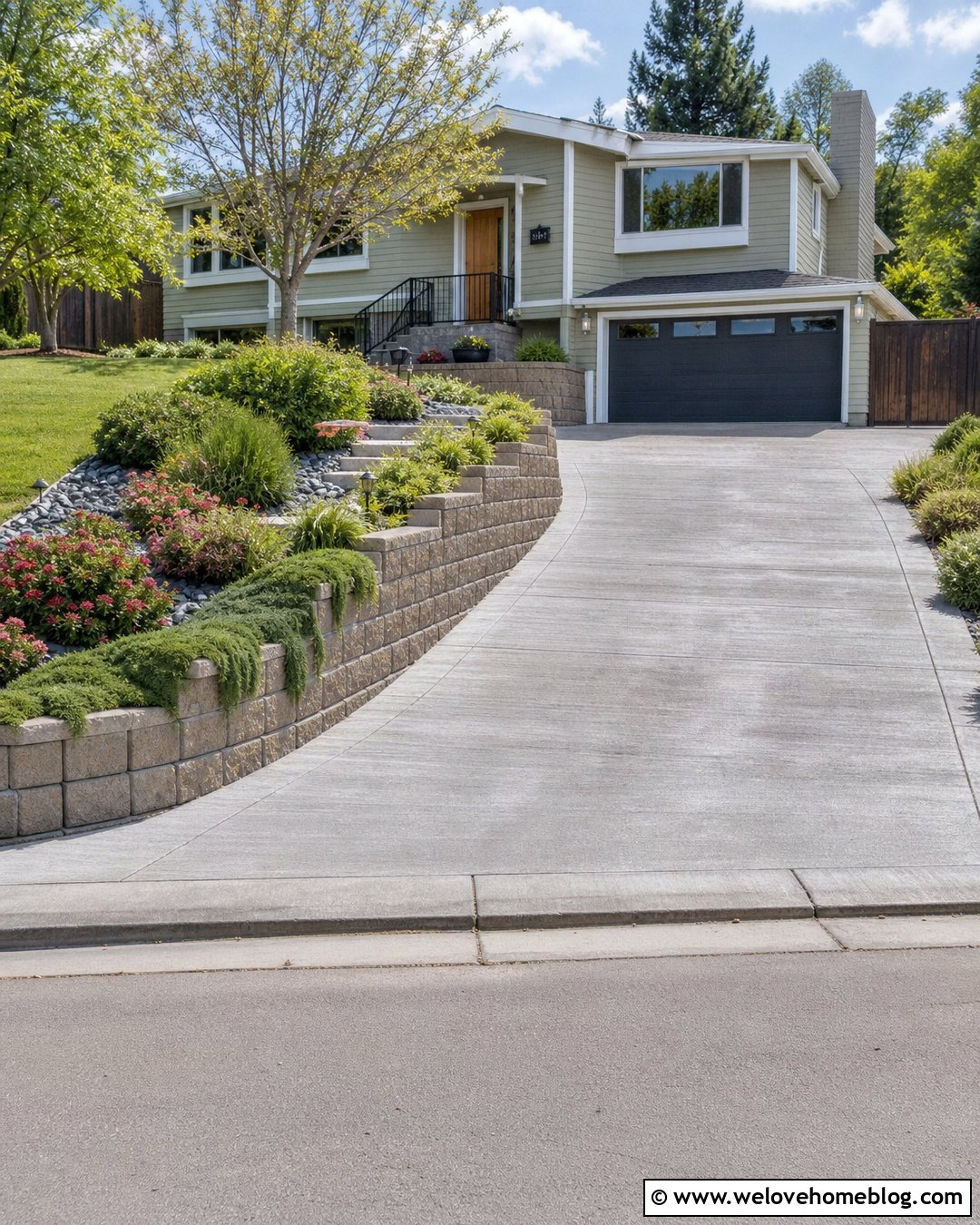
On a sloped driveway, log edging should work with water movement rather than act like a continuous dam. Use textured exposed-aggregate concrete for reliable visual contrast, then install anchored logs along the uphill planting beds. Break the border at planned drainage points where water can move toward a swale or collection area. On the downhill side, use smaller log sections with stone reinforcement where erosion is likely. Plant the banks with spreading junipers, ornamental grasses, and deep-rooted ground covers suited to the site. A series of shallow terraced beds can reduce the apparent steepness near the house. Keep logs low beside driving areas and avoid loose pieces that could roll or shift. The combined design should direct attention toward the home while protecting the driveway edges.
16. Log Driveway Edging With A Drainage Swale
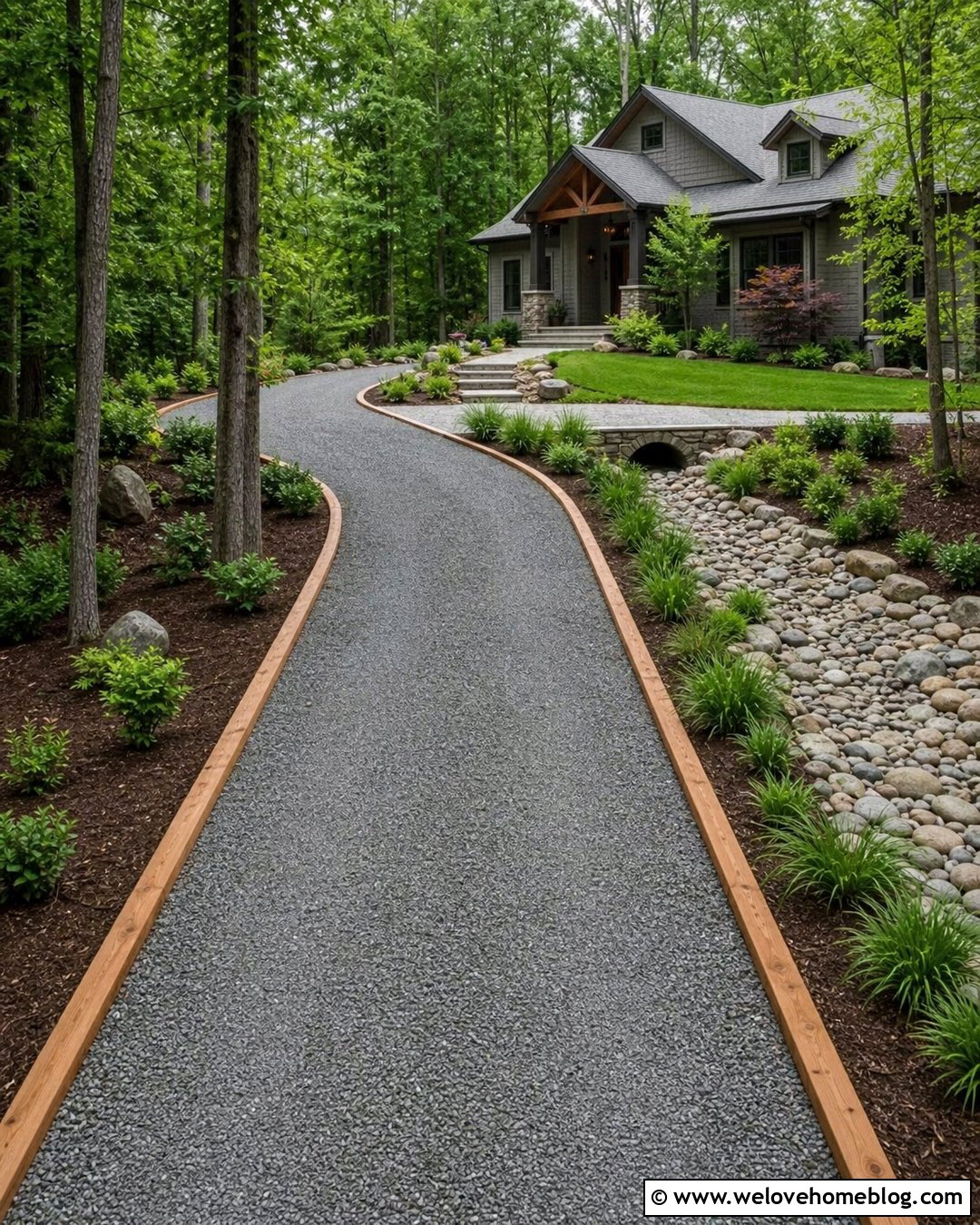
After heavy rain, a beautiful driveway still needs a clear place for water to go. Pair a dark gray gravel driveway with horizontal log edging on the garden side and a shallow planted swale on the lower side. Interrupt the logs where runoff crosses into the swale, using stone-lined openings rather than forcing water around the border. Fill the swale with rounded river rock, sedges, rushes, and other plants suited to occasional moisture. Continue low shrubs and mulch behind the opposite log edge for balance. This design works particularly well on wooded suburban properties and rural lots. The drainage feature should remain broad and gentle, not resemble a hazardous ditch. A small stone culvert beneath the walkway can maintain a dry, convenient route to the front door.
17. Reclaimed Log Driveway Edging With Crushed Concrete
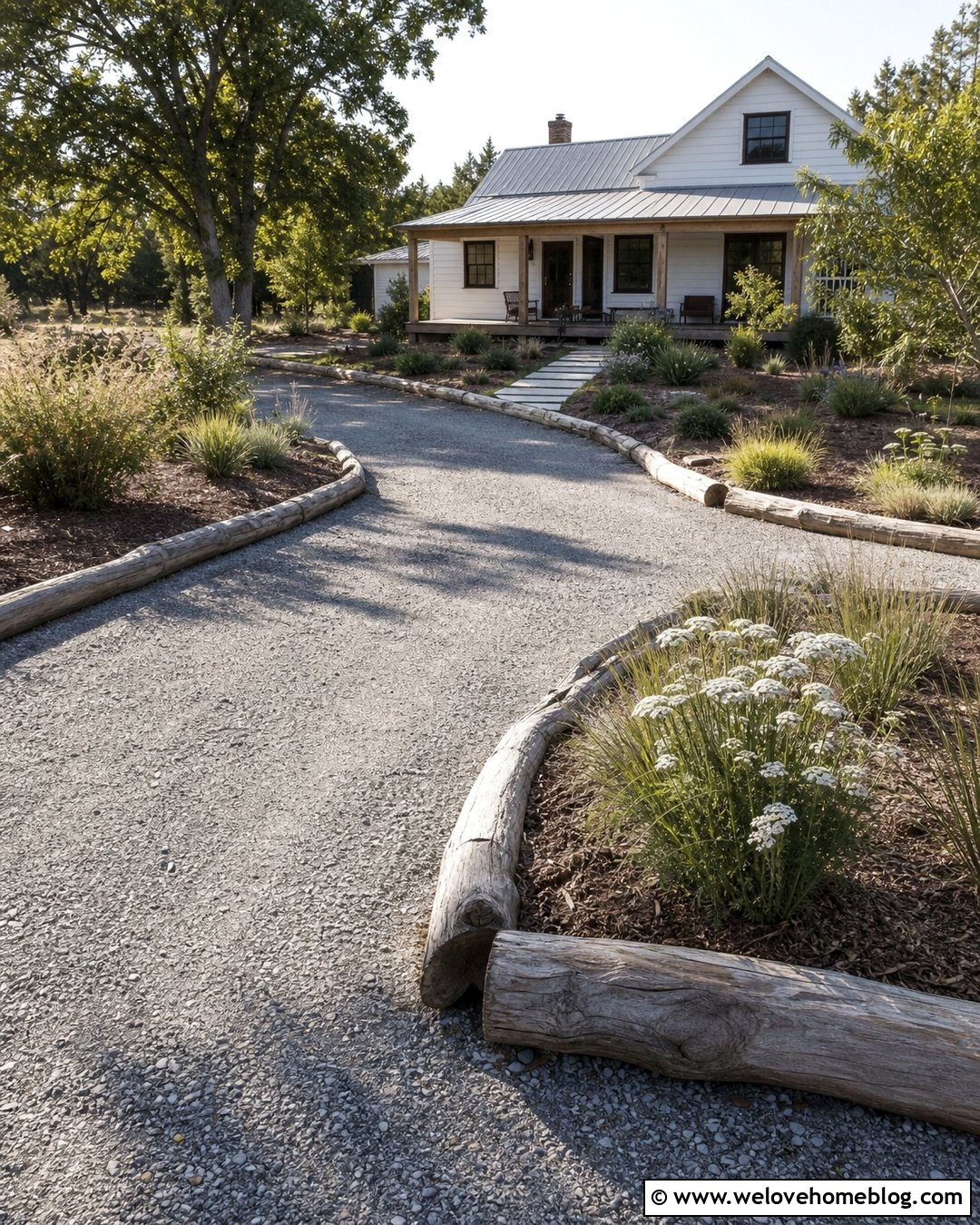
Reclaimed logs can give a recycled crushed-concrete driveway an appealing, budget-conscious finish. Select sound logs without severe decay, protruding hardware, or unstable branches. Arrange the straightest pieces horizontally along the main driveway and reserve irregular sections for wider landscape beds. The pale gray aggregate provides a clean contrast against aged brown wood. Behind the edging, use drought-tolerant grasses, flowering yarrow, and coarse wood mulch for an informal farmhouse landscape. A simple concrete-paver walkway can bridge the rustic driveway and the home’s front steps. Anchor every log rather than relying on its weight alone, especially near turns. Wood borders can help contain loose aggregate, but the driveway base and compaction still need to support vehicles and limit rutting. ()
18. Charred Log Driveway Edging With Black Gravel
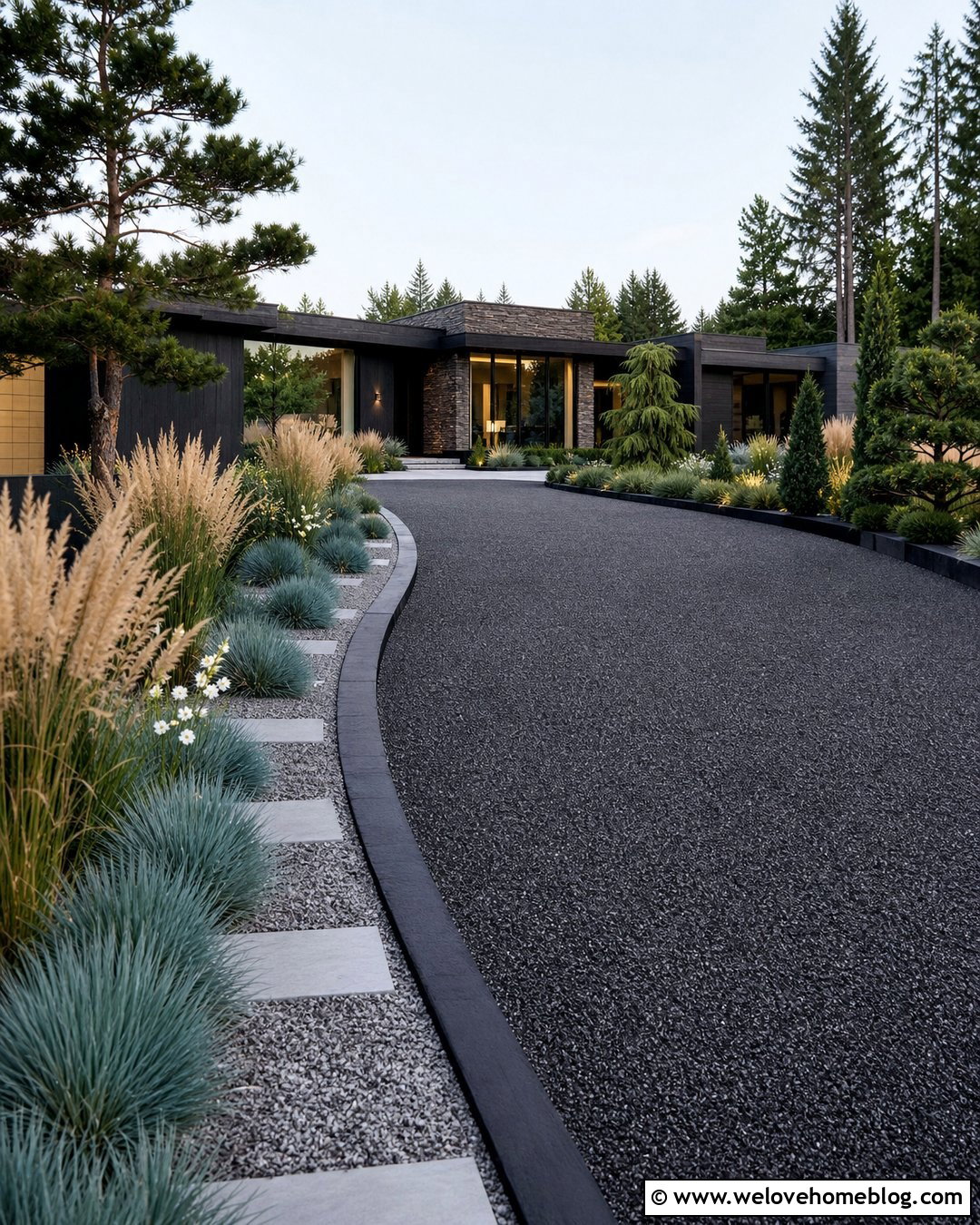
For a stronger contemporary look, pair charred log edging with fine black gravel. The dark materials create a dramatic frame, while pale concrete stepping pads and light green planting keep the entrance from feeling heavy. Use straight charred logs along a wide driveway with a subtle curve toward a modern home. Behind the border, plant feather reed grass, blue fescue, white flowering perennials, and sculptural evergreens in repeated groups. Add a light gray gravel strip between the logs and planting beds for extra contrast and easier maintenance. The black gravel should be compacted and contained so it remains separate from the lighter landscape materials. Choose uniformly finished logs and concealed anchoring for clean lines. This design transforms natural timber into an architectural feature without losing its organic texture.
19. Birch Log Driveway Edging With White Gravel
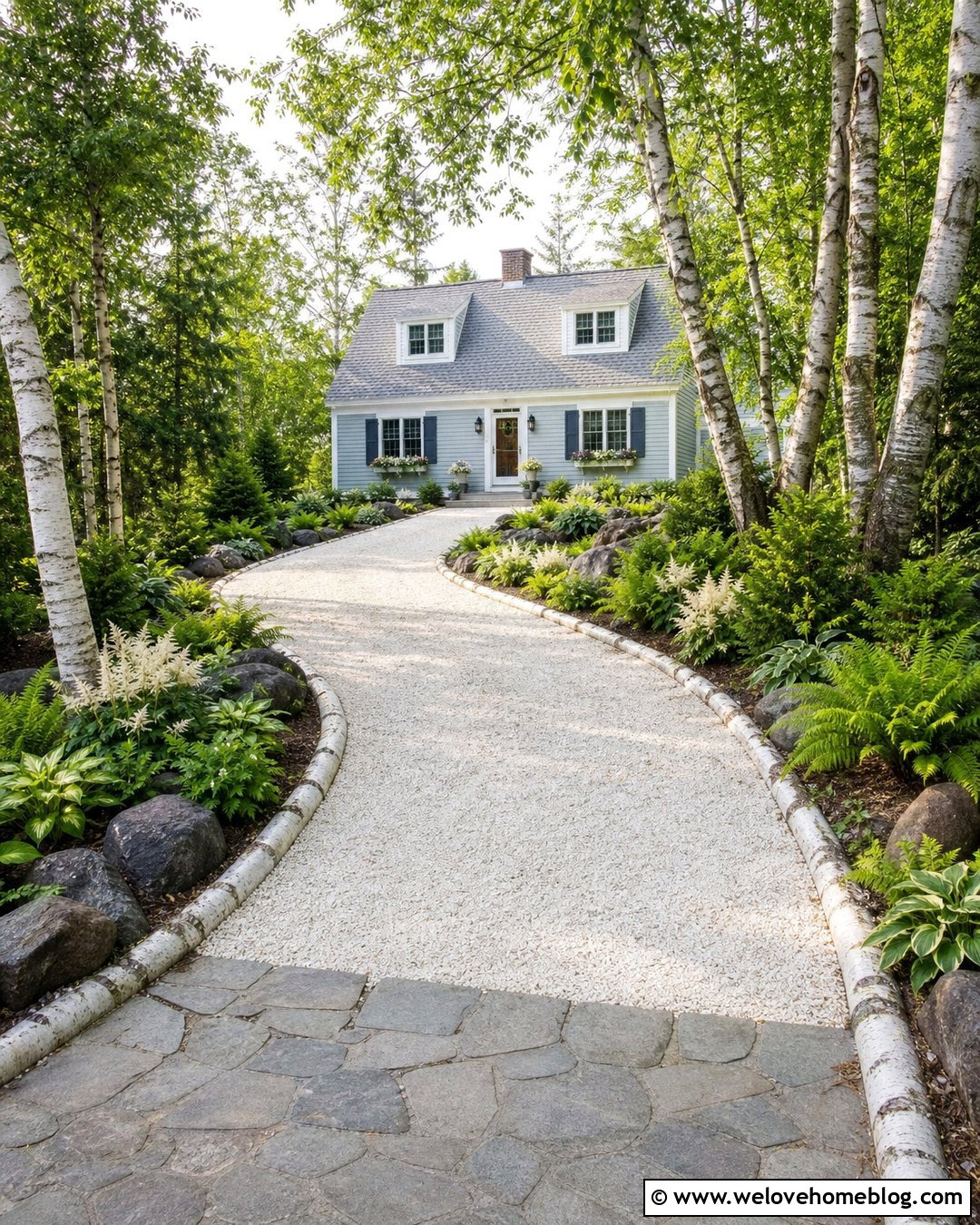
White gravel and pale birch logs create a bright woodland driveway with an airy, informal character. Because birch bark has such a distinctive appearance, use the logs as decorative edging in a well-drained location and plan for eventual replacement if the wood is untreated. Arrange them horizontally beside a narrow curved driveway leading to a cottage or light-colored Cape Cod house. Ferns, hostas, white astilbe, and low evergreen shrubs can fill the shaded beds behind the logs. Add darker fieldstones at occasional intervals to prevent the pale palette from looking washed out. Keep the gravel slightly below the top of the edging and provide a defined apron near the road. The result feels fresh and natural, especially when existing birch trees repeat the same white bark throughout the yard.



20. Mixed-Height Log Driveway Edging With Brick Pavers
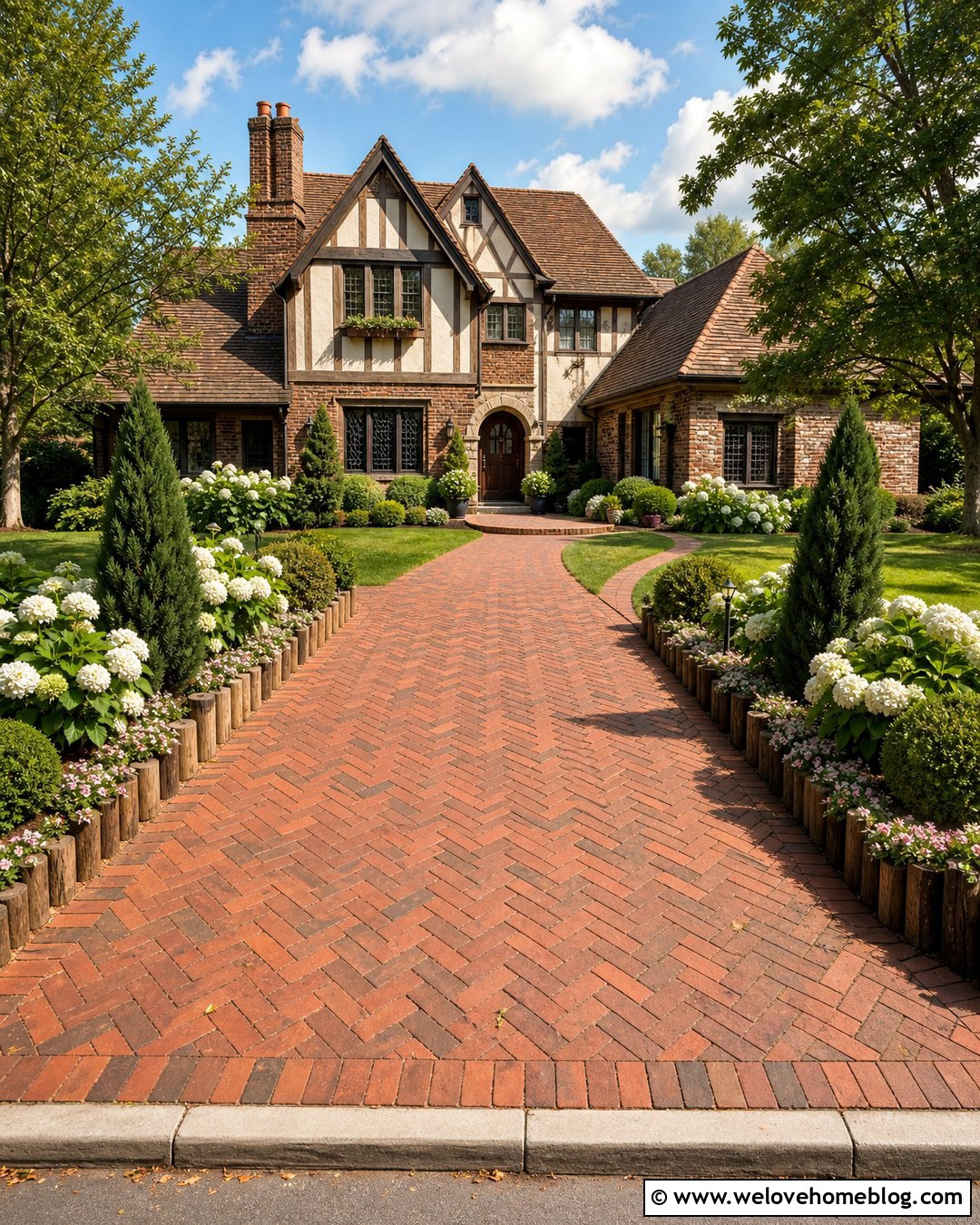
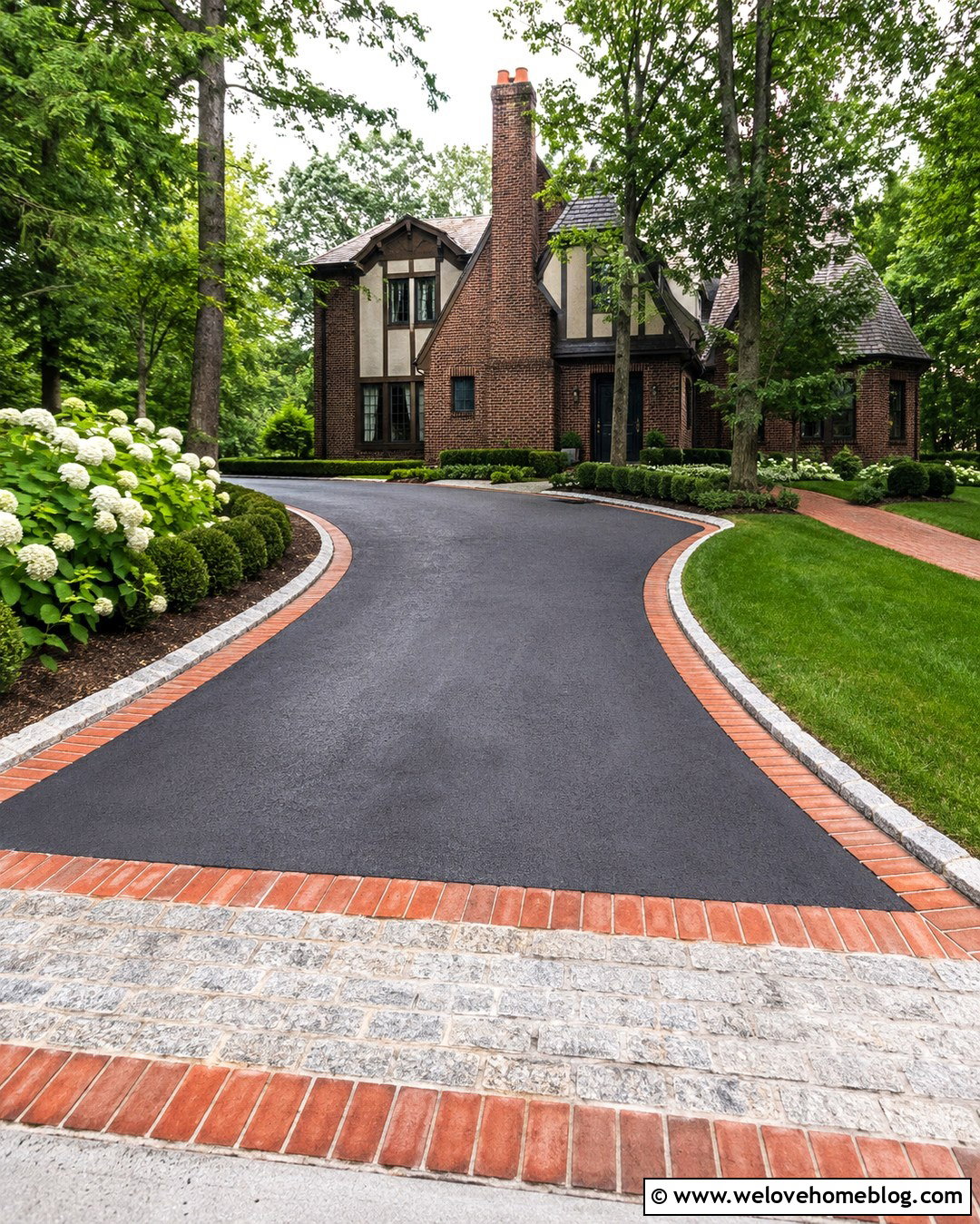
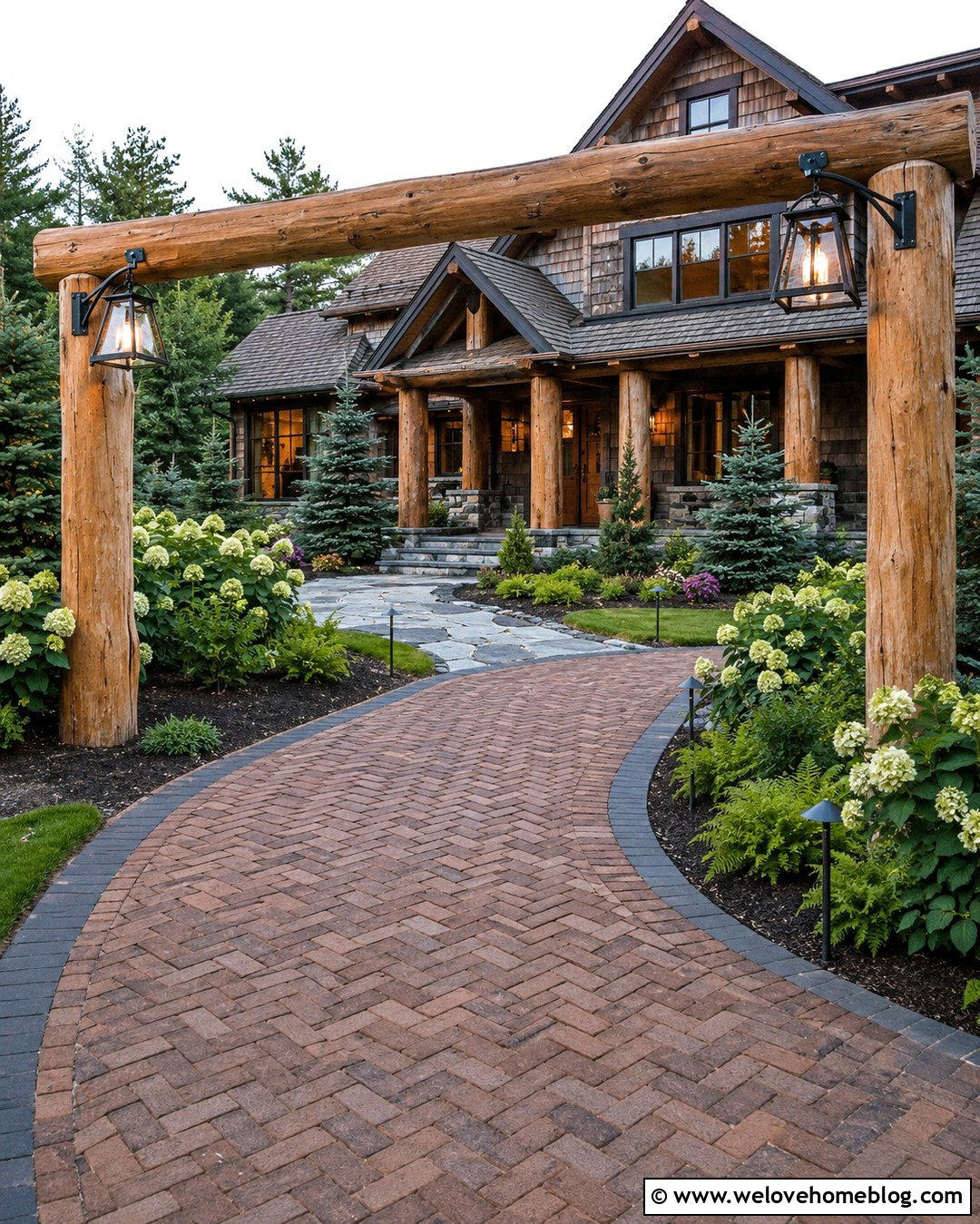
Mixed-height log rounds can soften a formal brick driveway while giving the landscape a handcrafted detail. Install short vertical rounds in a gentle staggered pattern beside clay brick pavers laid in herringbone. Keep the height changes subtle, particularly near walking routes, so the edging remains visually calm and easy to navigate. Behind the logs, create layered beds with clipped evergreens, hydrangeas, and low flowering ground cover. A brick ribbon walkway can connect the driveway to a traditional front porch. Repeat the log edging only along selected planting beds instead of surrounding every paved area. This prevents the combination from becoming overly decorative. The warm brick, natural wood, and deep green foliage work especially well with Tudor, craftsman, and traditional brick homes.
Conclusion:
The best log driveway edging ideas combine natural character with secure installation, sensible drainage, and landscaping that matches the home. Horizontal logs offer a relaxed border for gravel and asphalt, while vertical rounds can give concrete or brick driveways a more structured finish. Logs also pair beautifully with native grasses, wildflowers, boulders, lighting, gates, and entrance pillars. Before installing them, consider vehicle clearance, soil conditions, runoff, snow removal, and the expected life of the selected wood. Choose durable, sound logs and anchor every section carefully. When the driveway surface, edging, plants, and entrance are planned together, log borders can create a welcoming approach that feels distinctive, practical, and naturally connected to the property.

Related posts:

Leave a Reply