
A gravel driveway can feel relaxed and inviting, but loose stones, uneven lawn edges, and poorly planned planting beds can quickly make it look unfinished. The best **gravel driveway landscaping edging ideas** solve these problems while connecting the driveway to the house and front yard. Strong borders help contain surface gravel, create cleaner mowing lines, and reduce the need for constant raking. Landscaping then softens the hard surface with color, texture, shade, or year-round greenery. Your ideal combination will depend on the driveway’s shape, drainage, traffic level, house style, and maintenance needs. From classic brick and natural stone to steel, timber, hedges, and drought-tolerant beds, the complete looks below offer practical **gravel driveway landscaping edging ideas** for many properties and budgets. ()

1. Pea Gravel Driveway With Brick Edging
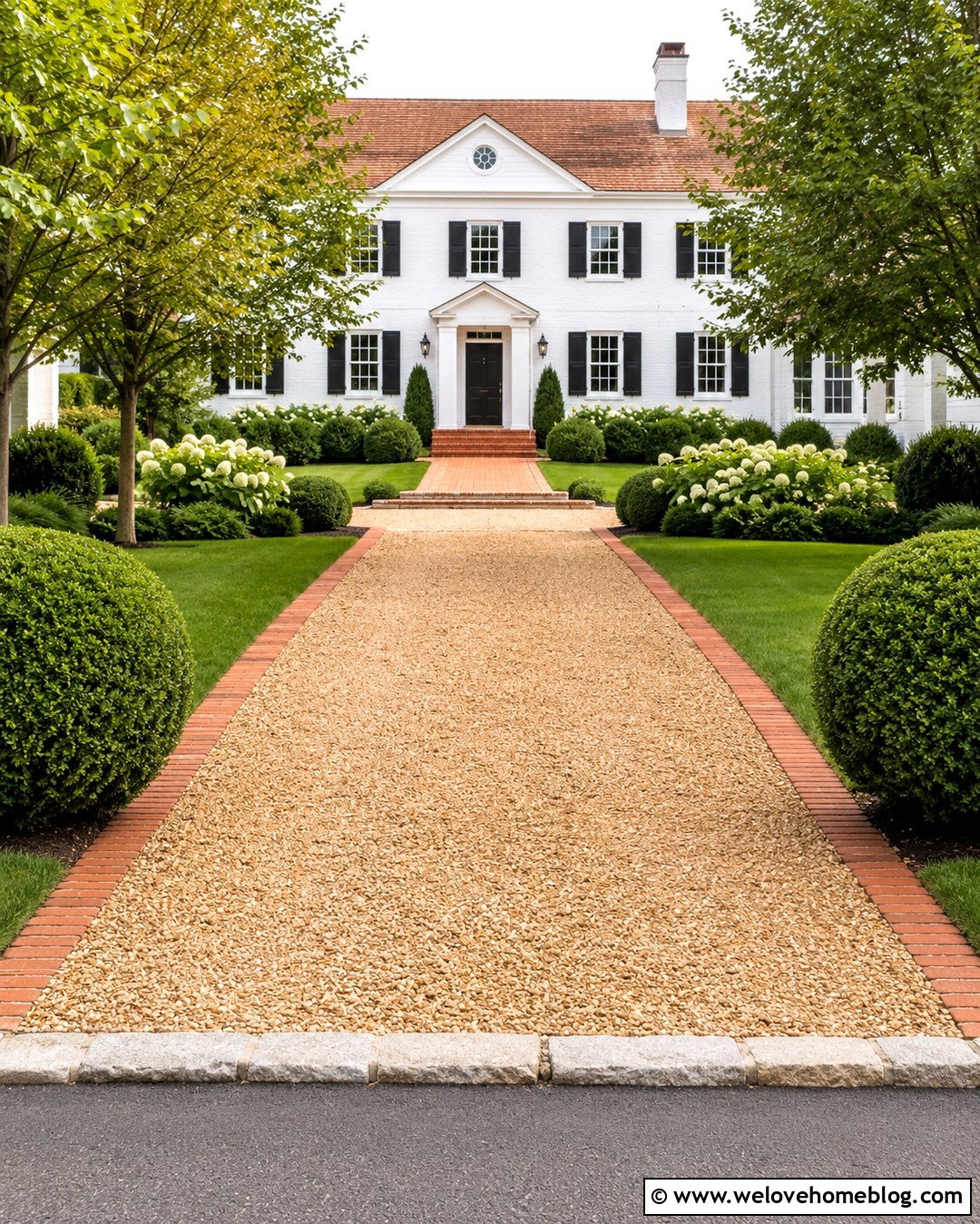
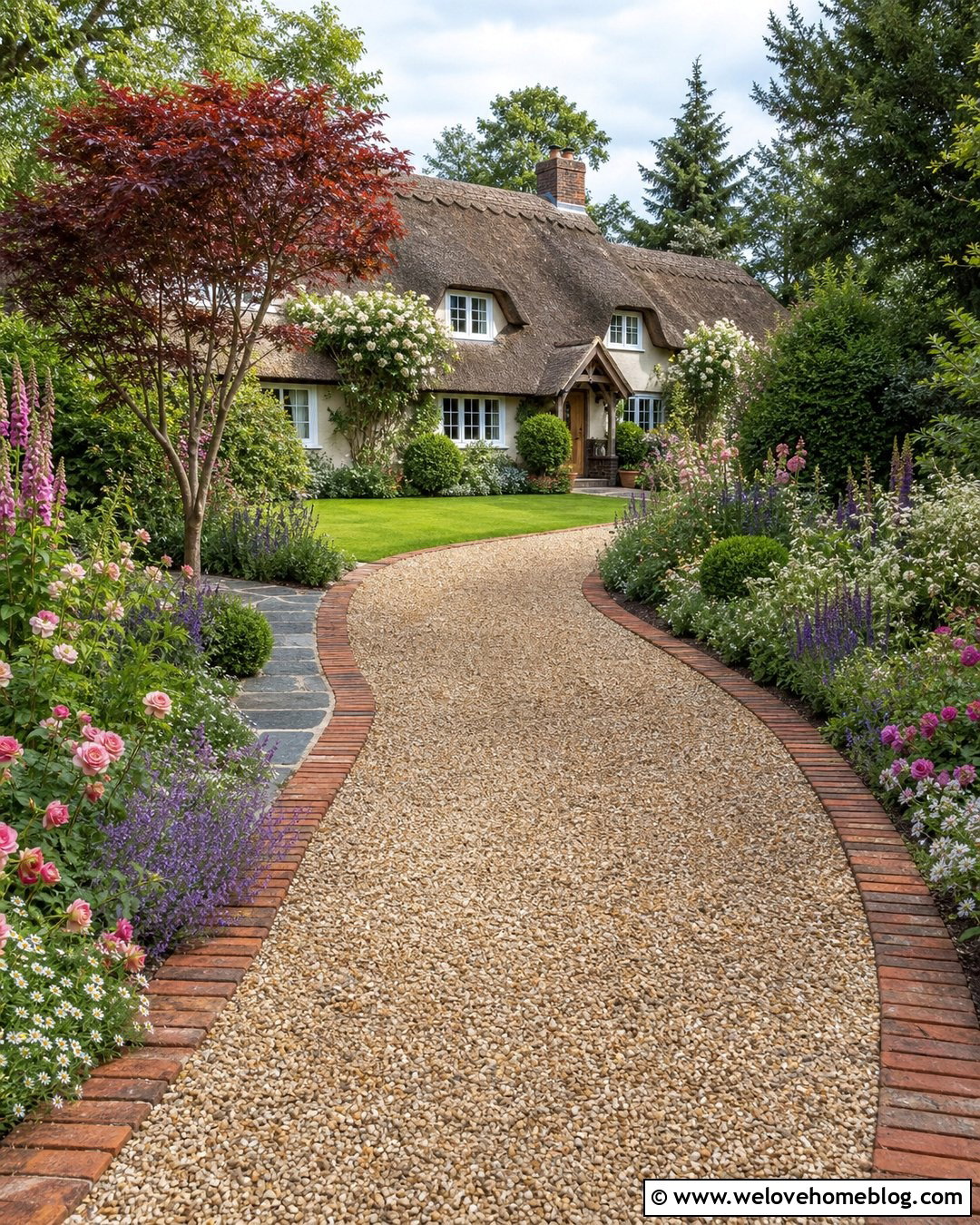
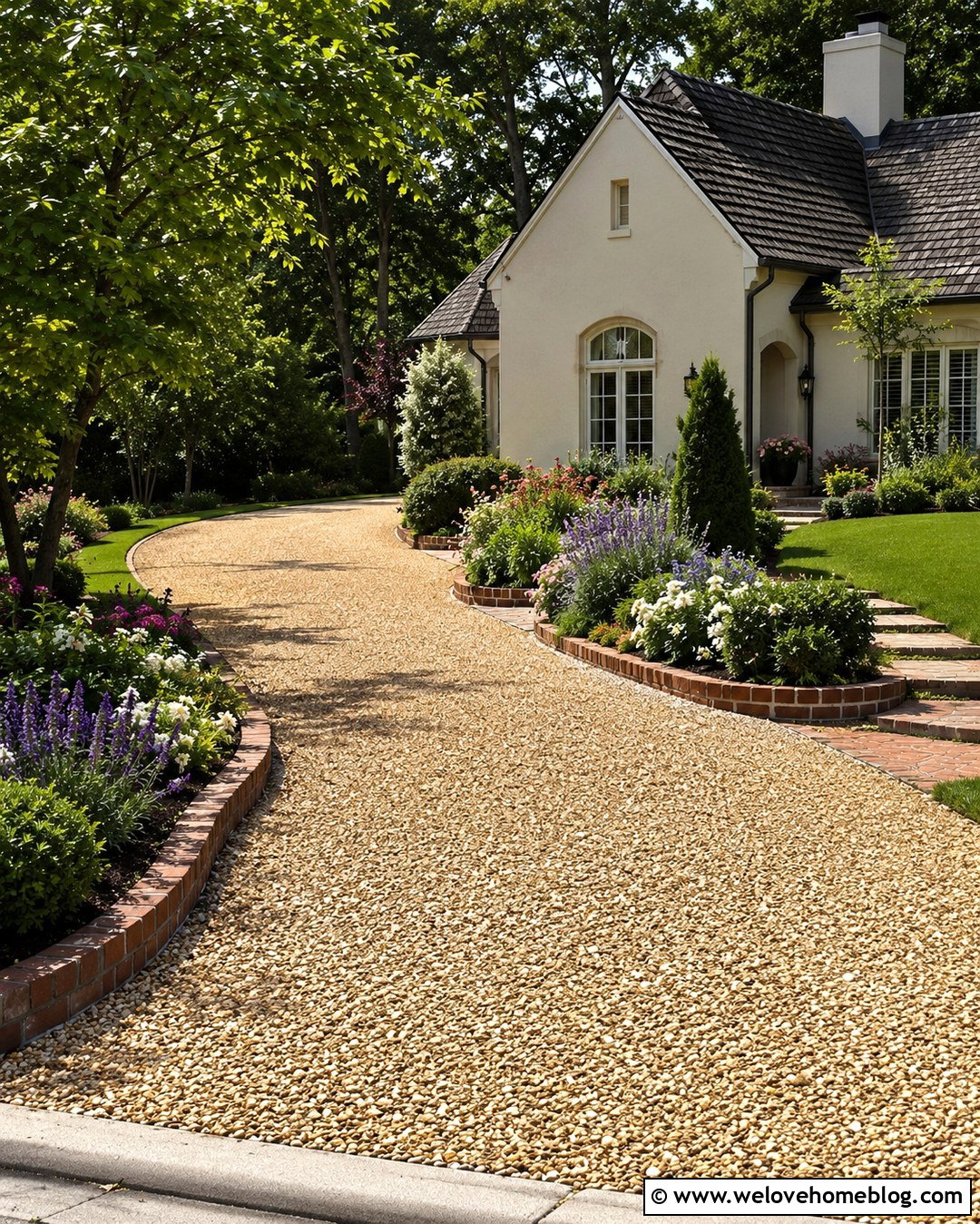
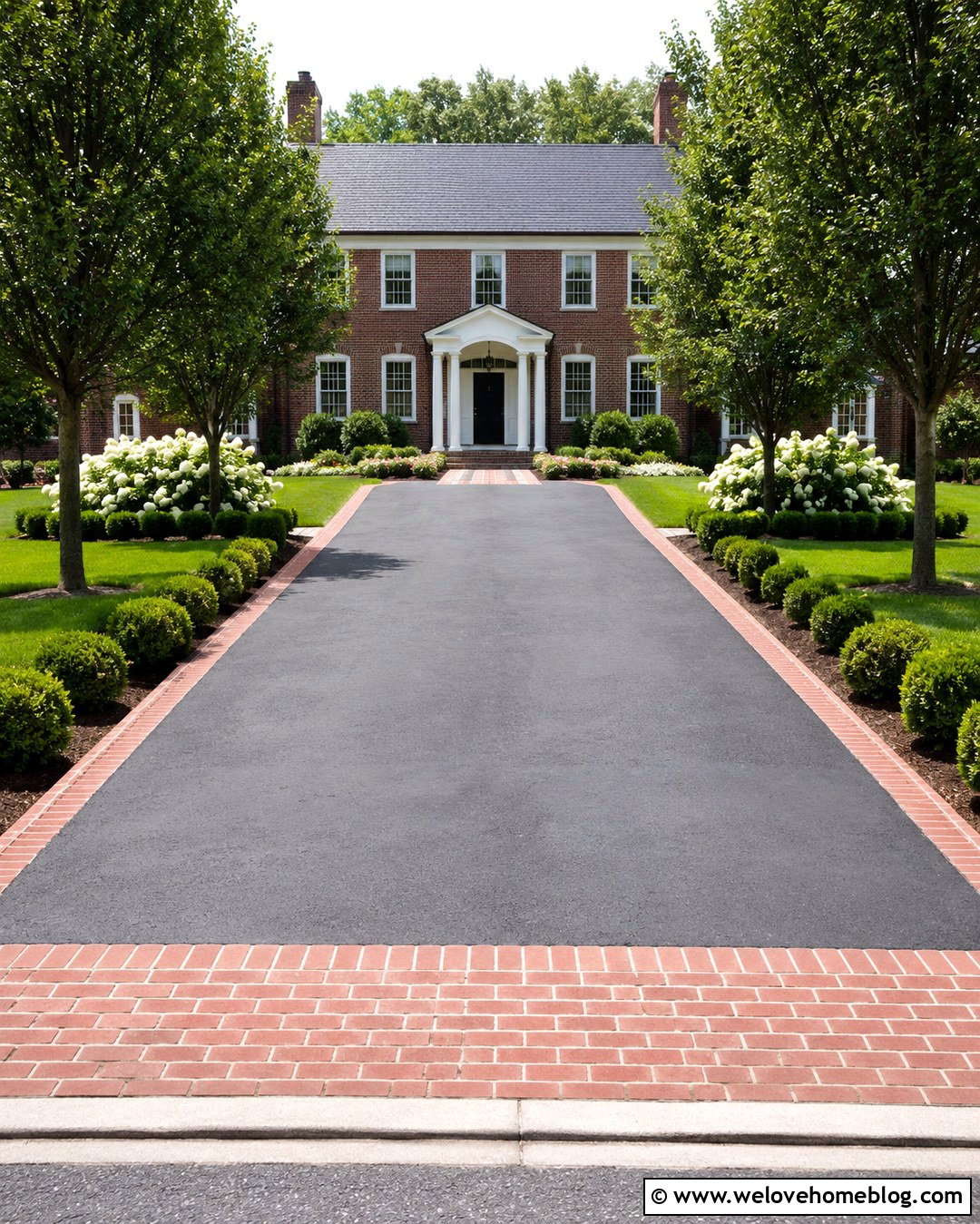
Warm pea gravel and red brick create a comfortable, traditional entrance that works especially well with Colonial, Cape Cod, and cottage homes. Use one or two rows of clay bricks along each side of a straight driveway. Set the bricks on a compacted base so they stay aligned under regular vehicle traffic. A flush border provides an easy mowing edge, while a slightly raised row offers better gravel containment. Continue the brick into a walkway leading toward the front porch for a connected layout. Low boxwood shrubs, white hydrangeas, and neatly cut lawn can frame the driveway without hiding its clean lines. Choose gravel with warm tan, cream, and brown tones to complement the brick rather than compete with it. ()
2. Gray Gravel Driveway With Cobblestone Edging
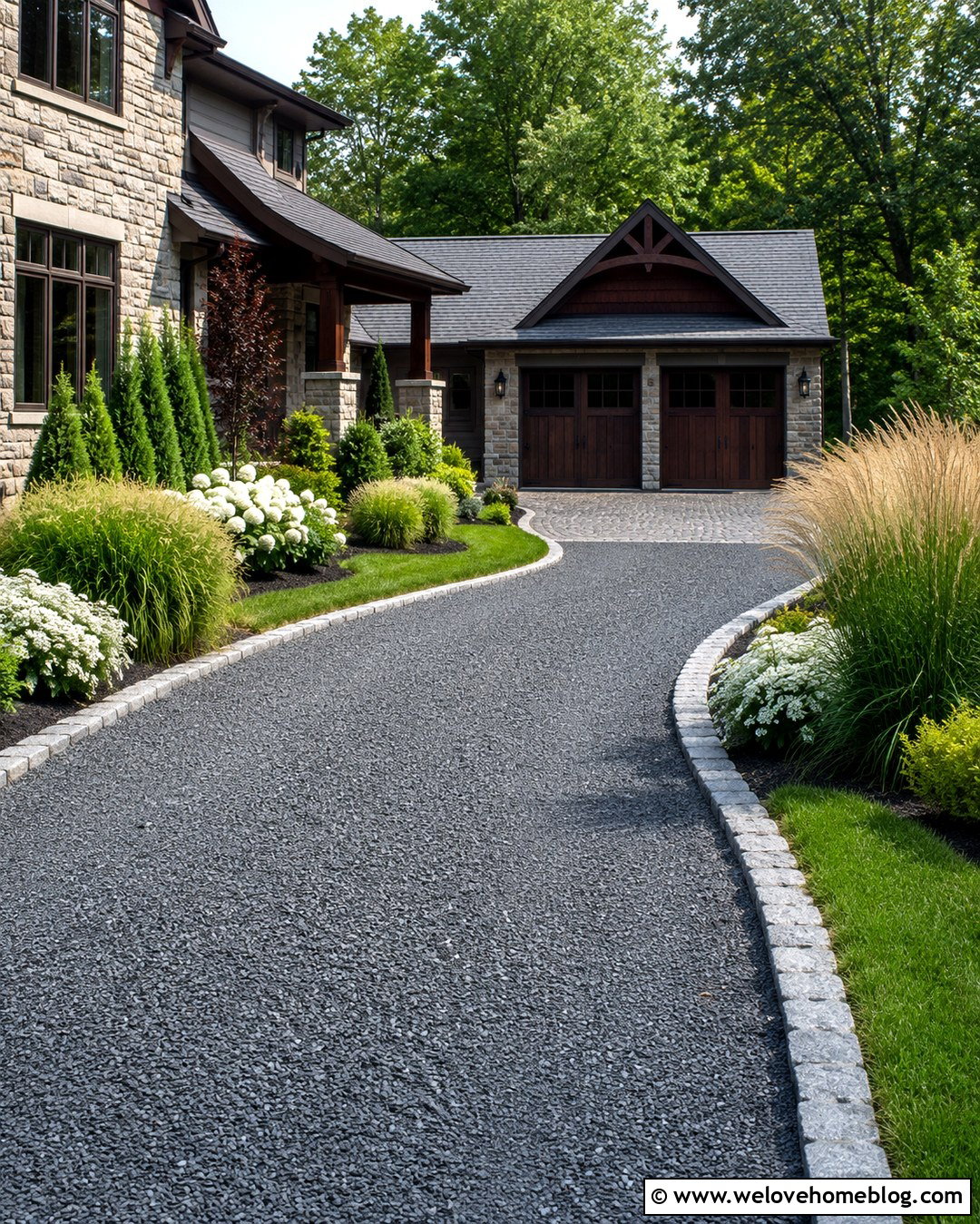
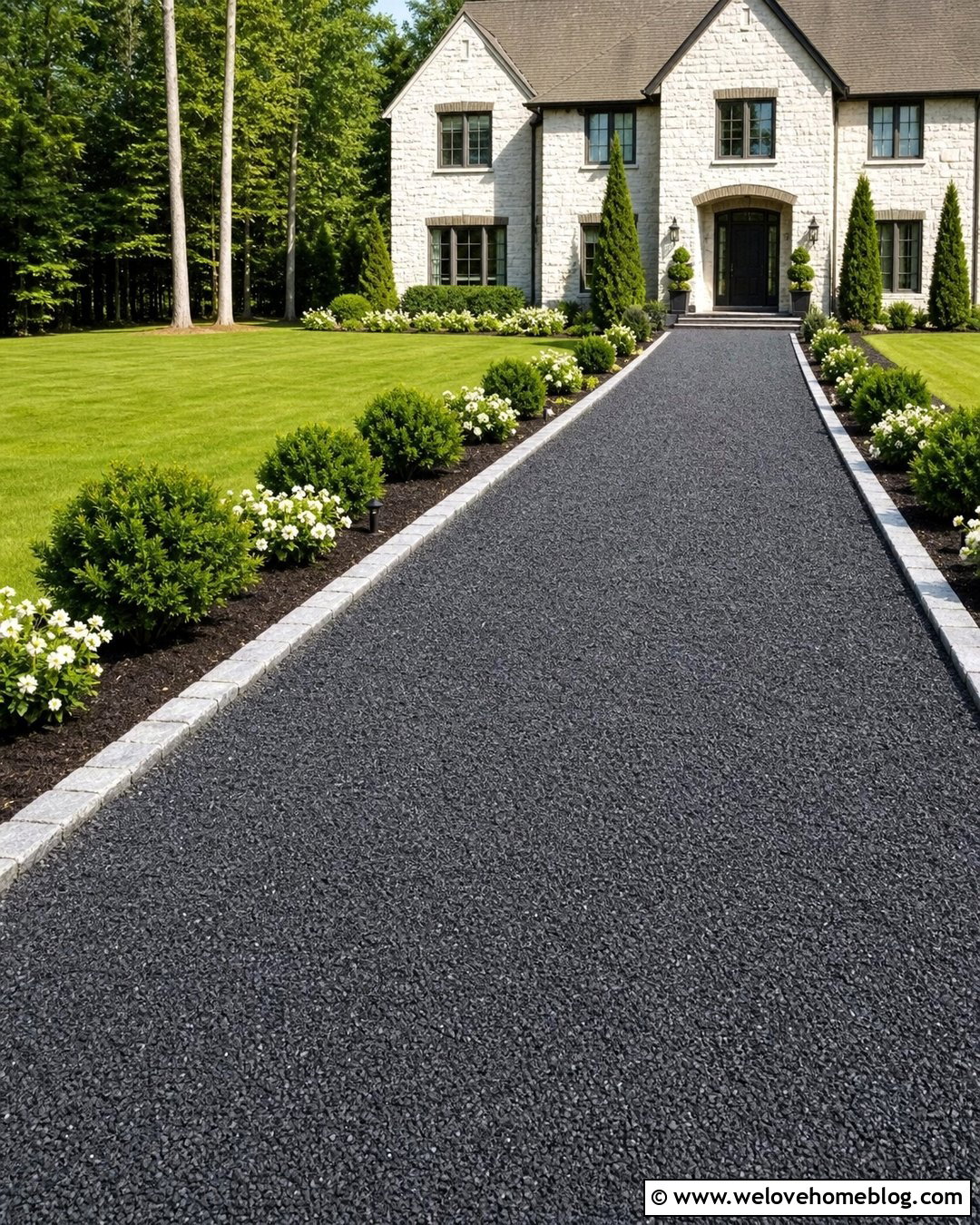
Cobblestone edging gives a gray gravel driveway a substantial border that can handle a formal or rustic setting. Its uneven texture feels natural, yet the repeated stones create a clearly defined line. Use charcoal or silver crushed gravel inside the border and larger gray cobbles along both sides. Two or three rows can strengthen the entrance and visually widen the approach near the road. For a balanced landscape, add curved beds with ornamental grasses, compact evergreens, and white flowering perennials. A matching cobblestone apron near the garage can catch scattered gravel before it reaches paved areas. This complete look suits stone houses, traditional ranch homes, and wooded properties where natural materials help the driveway blend into its surroundings. ()
3. Crushed Granite Driveway With Steel Edging
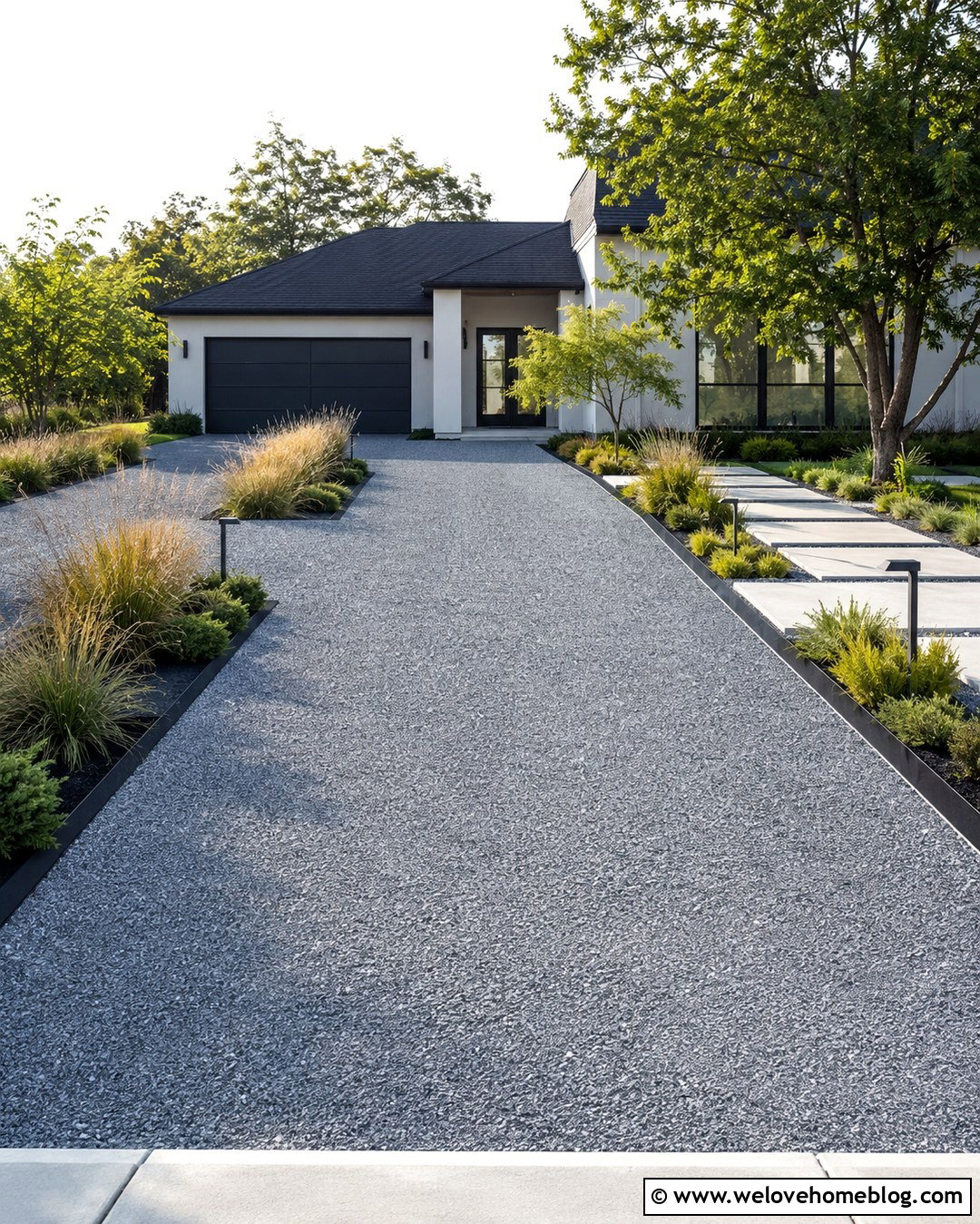
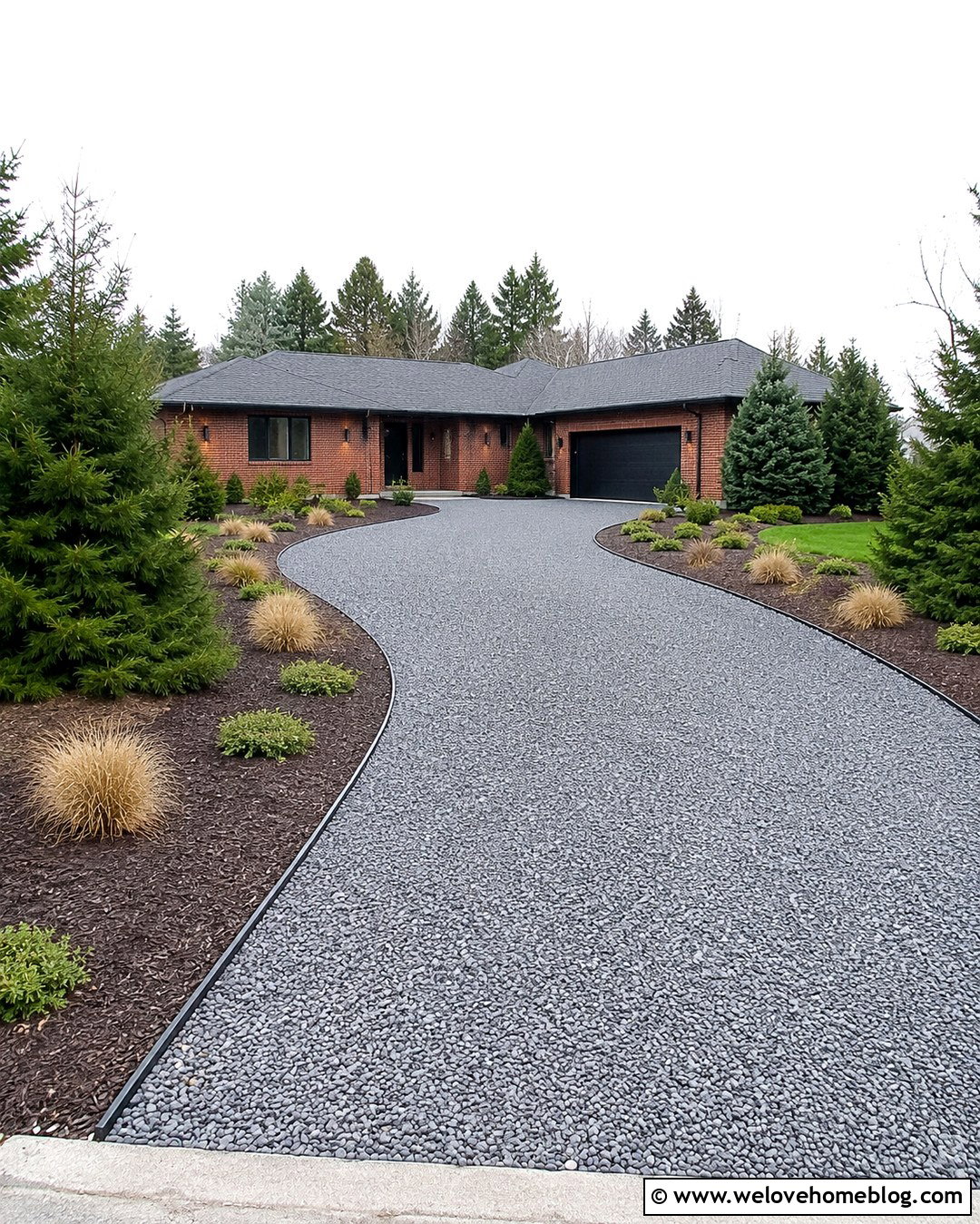
Could a gravel driveway look clean enough for a modern house? Crushed granite paired with black steel edging creates a crisp, streamlined finish without making the landscape feel overly formal. Select charcoal, blue-gray, or cool silver granite and install heavy-gauge steel along a straight or gently angled layout. The top of the steel can sit close to the gravel surface, keeping the border subtle while separating the stone from lawn or planting beds. Repeat the dark color through rectangular planters, house trim, or pathway lighting. Use structured plants such as feather reed grass, dwarf juniper, and clipped shrubs. The result is a low-profile border that allows the driveway’s shape, gravel color, and surrounding architecture to become the main visual features. ()
4. Limestone Gravel Driveway With Concrete Curb Edging
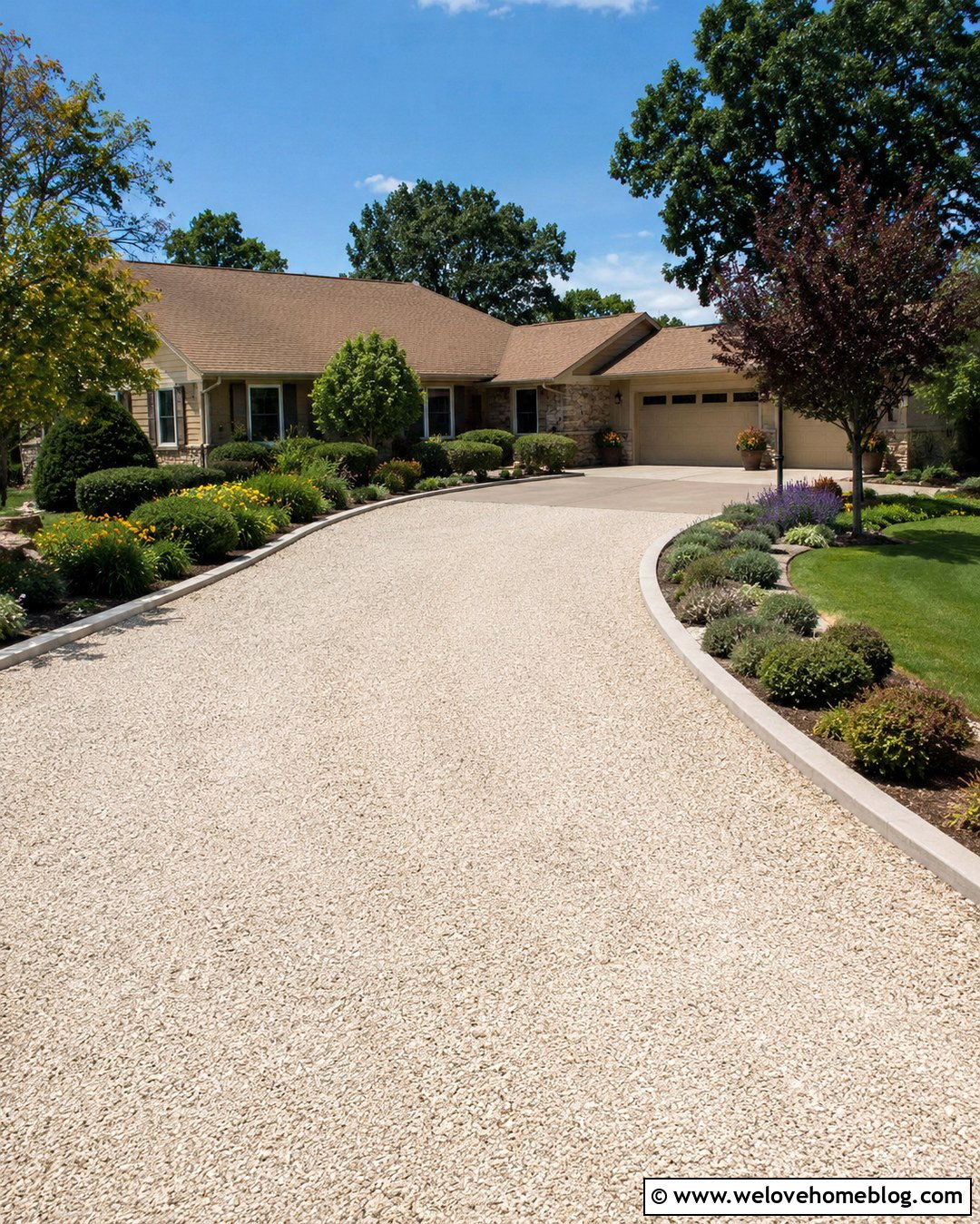
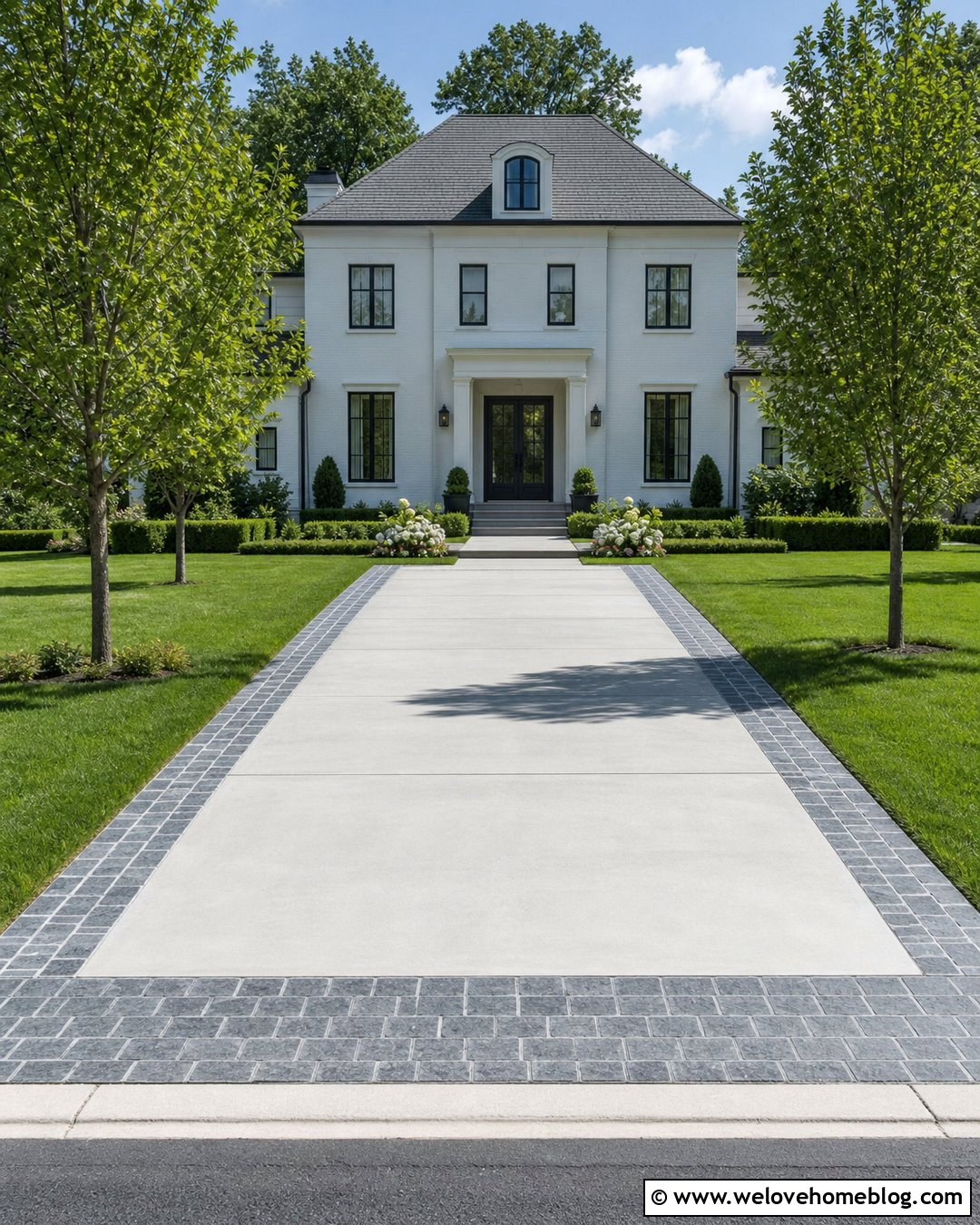
Pale limestone gravel feels especially bright when framed by smooth concrete curbs. This combination creates a durable, easy-to-read boundary for a busy family driveway. Choose a low poured-concrete curb with a natural gray finish, or tint it slightly warmer to coordinate with the home’s exterior. A curved driveway can benefit from continuous concrete because the border follows bends without distracting joints. Place broad lawn areas along one side and layered planting beds along the other to avoid a rigid, tunnel-like appearance. Small trees, rounded shrubs, and ground-cover flowers will soften the curb. Near the garage, widen the concrete into a shallow apron or mowing strip. That transition helps the gravel driveway look intentional from the street to the parking area.
5. White Gravel Driveway With Stone Garden Beds
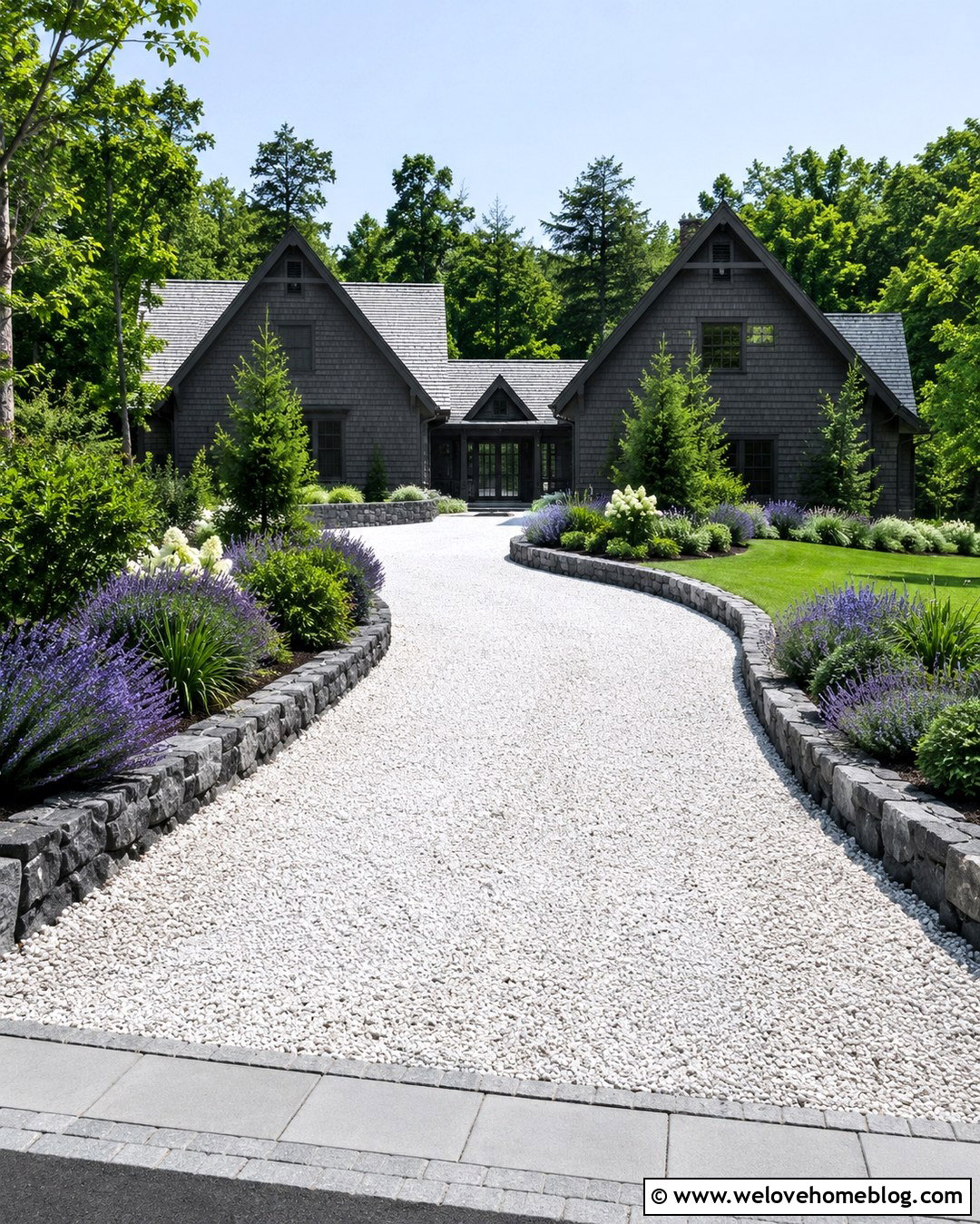
Bright white gravel creates strong contrast beside darker stone edging and richly planted garden beds. This look can make a small front yard feel lighter and more organized. Use flat fieldstone or cut bluestone to form a raised border on both sides of a gently curved driveway. Behind it, create layered beds with dwarf evergreens, lavender, salvia, and low ornamental grasses. Keep taller plants farther from the driving surface so branches do not scratch vehicles or block visibility. A matching stone walkway can branch toward the front door, creating a smooth connection between driveway and entrance. Because white gravel shows leaves and soil easily, limit messy trees directly overhead. The finished landscape feels fresh, garden-focused, and suitable for cottage or contemporary homes.
6. Country Gravel Driveway With Timber Edging
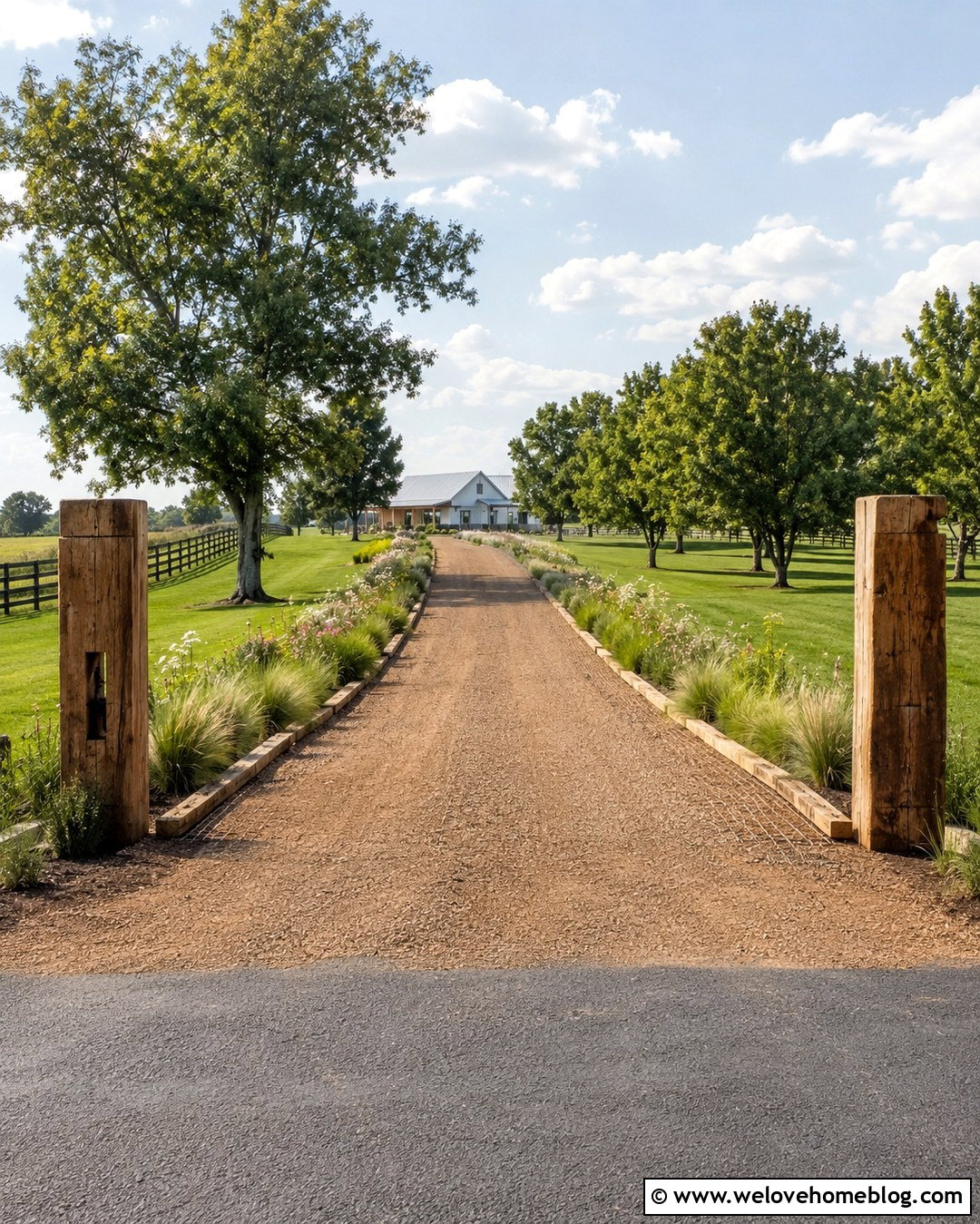
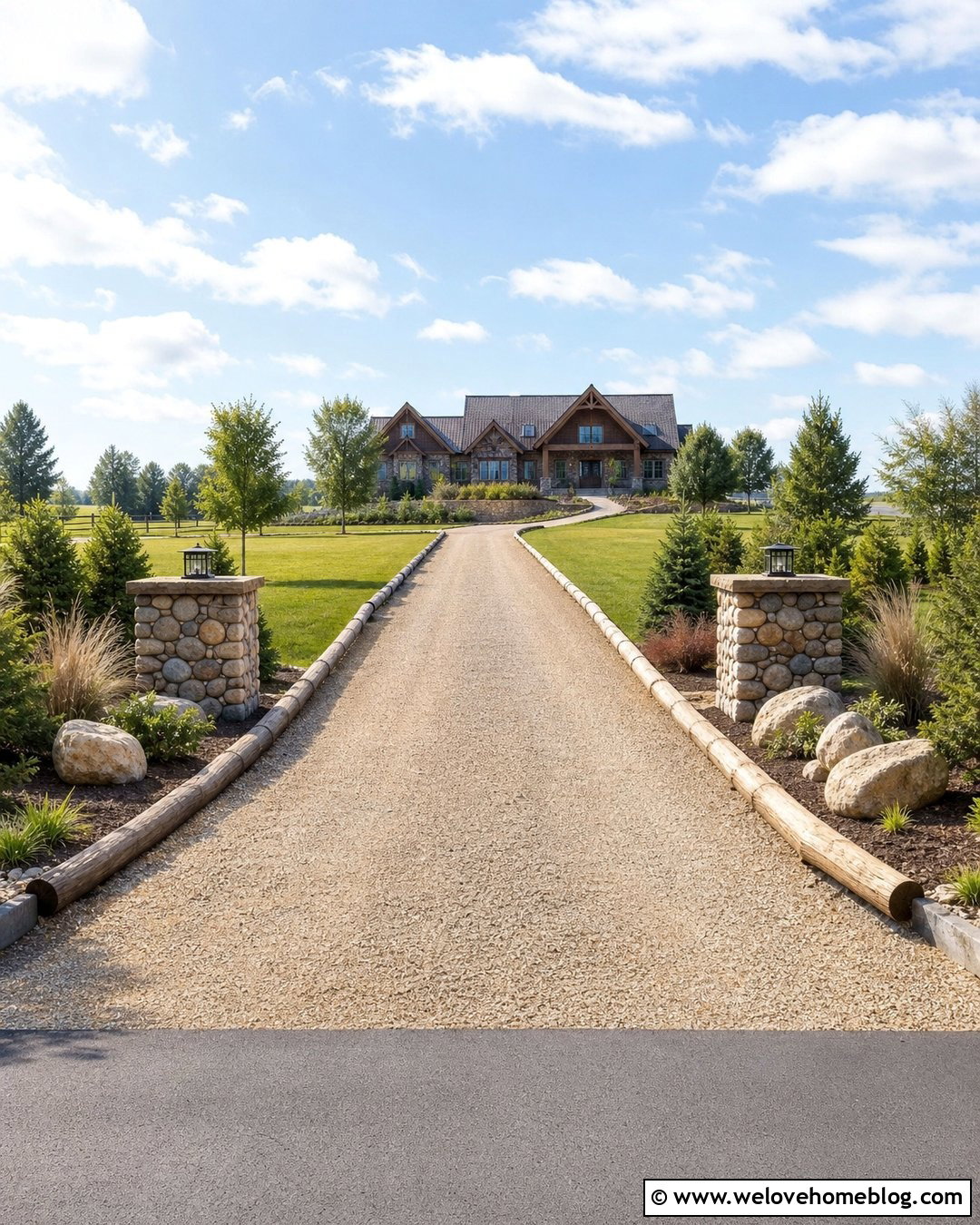
For a long rural driveway, landscape timbers provide an affordable border that fits naturally into an open setting. Use pressure-treated or naturally rot-resistant timber secured firmly along the driveway edges. Medium-brown crushed gravel, rather than bright white stone, will reinforce the relaxed country character. Keep the layout straight through open lawn, then introduce a gentle curve as it approaches the house. Native grasses, wildflowers, and evenly spaced shade trees can provide structure without requiring formal pruning. At the entrance, larger timber posts or a simple farm-style fence can repeat the edging material. Avoid thin boards that may bow or shift. A compacted base and properly anchored timbers create a cleaner, longer-lasting division between loose gravel and surrounding soil. ()
7. Gravel Driveway With Natural Boulder Edging
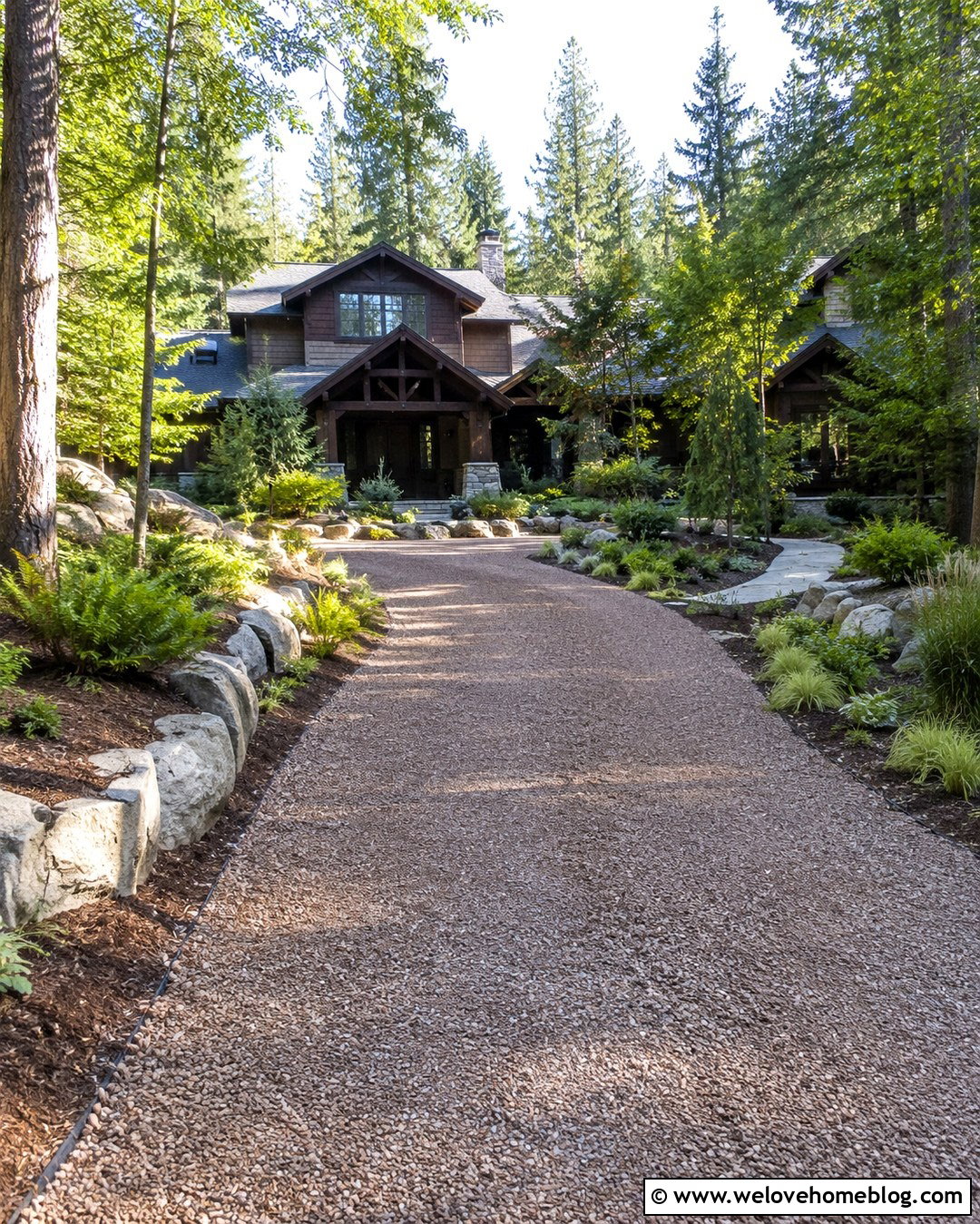
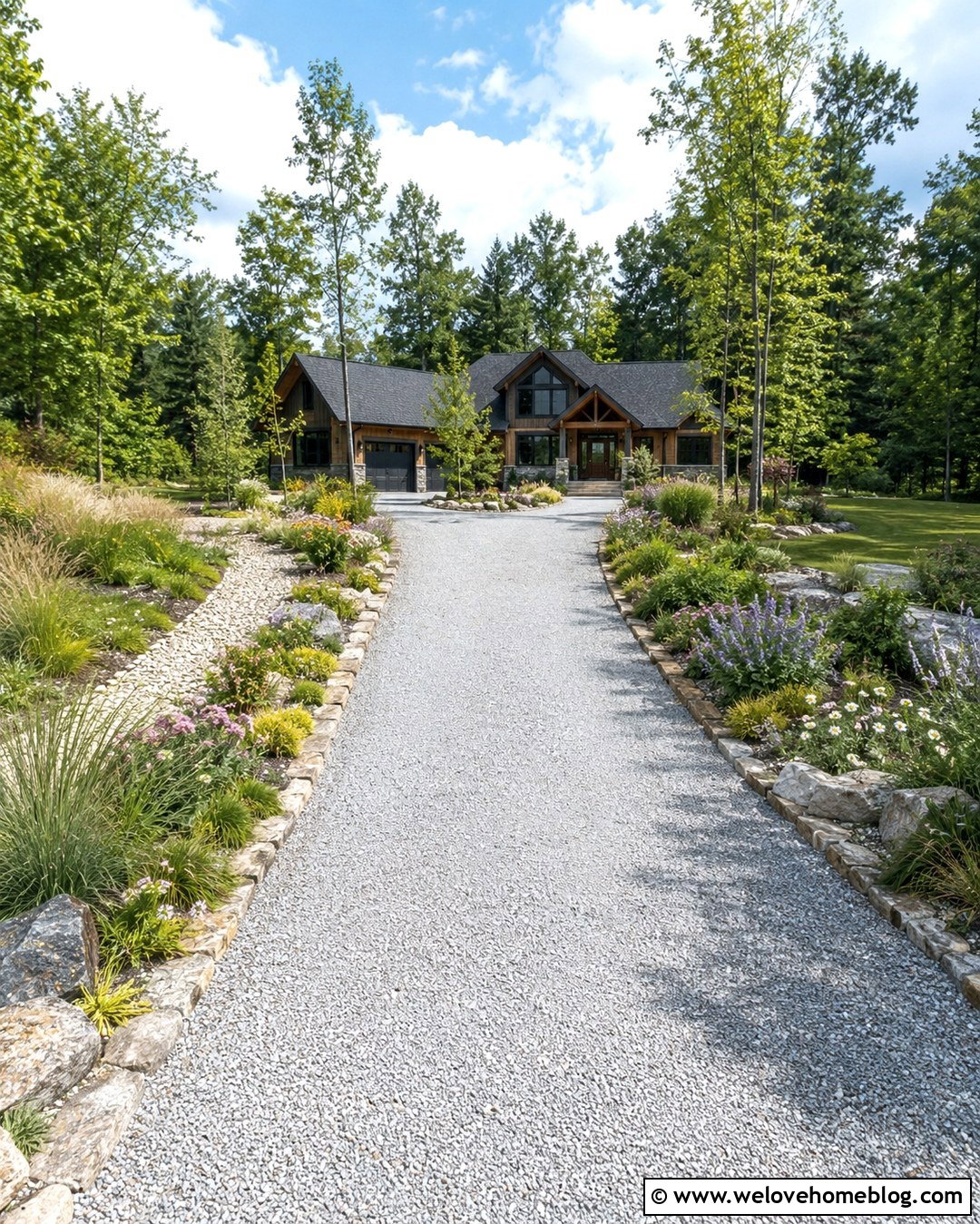
Large local boulders can turn an ordinary gravel driveway into a natural transition through a wooded or sloped yard. Rather than forming an unbroken wall, space the boulders in small groups along the outer curves. Fill the gaps with sturdy ground covers, ornamental grasses, ferns, or low native shrubs. Choose crushed stone in colors that echo the boulders, such as gray granite, brown trap rock, or warm limestone. This makes the driveway and landscape appear connected. On a slope, partially bury each boulder so it feels stable and naturally placed. Keep stones away from tight turning areas where they could become obstacles. The completed design works particularly well with mountain homes, rustic cabins, and Craftsman houses surrounded by mature trees.
8. Fine Gravel Driveway With Metal Landscape Edging
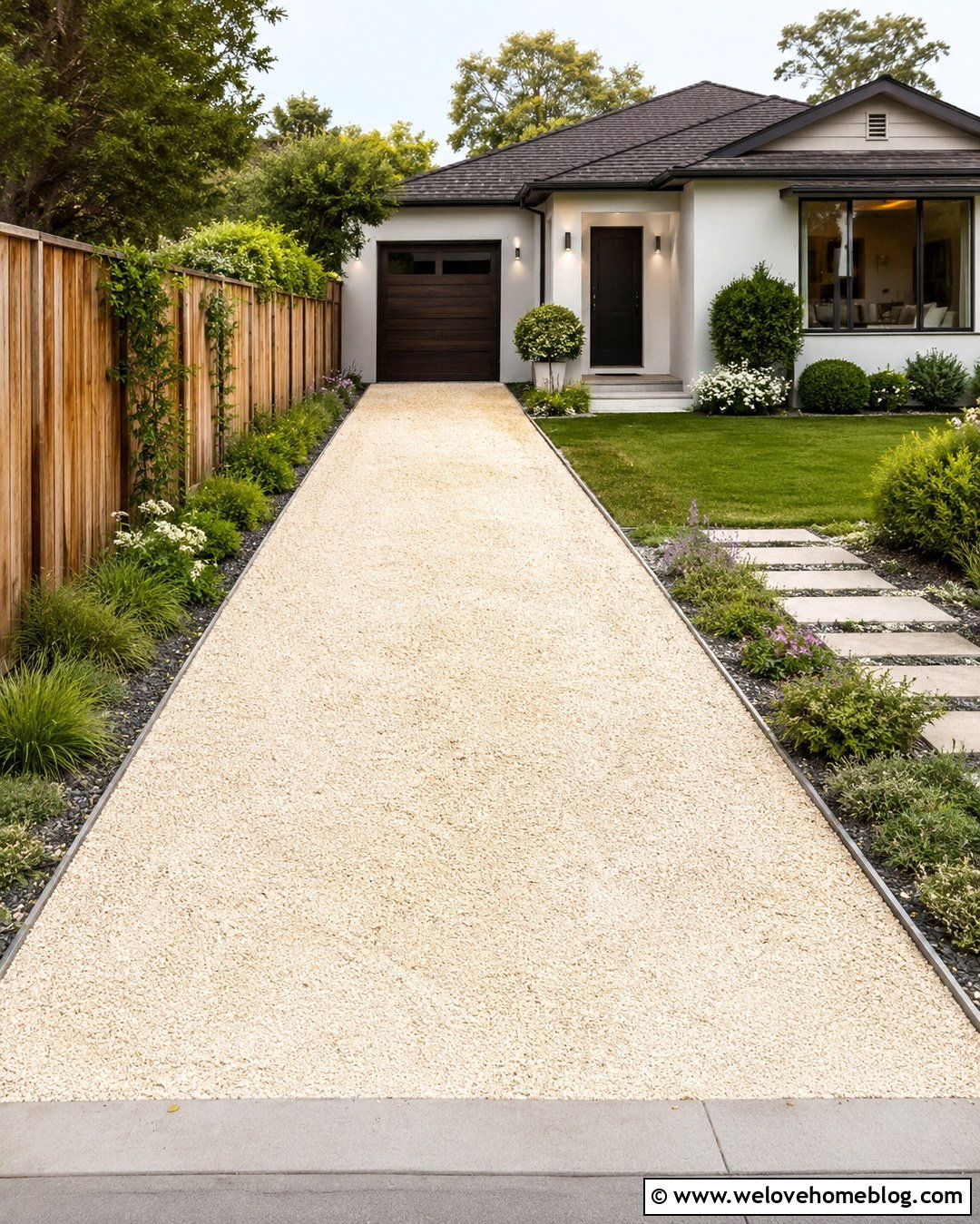
Fine gravel needs a dependable boundary because small particles can easily spread into nearby lawns and flower beds. Aluminum or galvanized steel edging creates a thin, neat line without adding visual weight. Use it beside a compacted beige or light-gray gravel driveway with a simple straight layout. Install the edging securely and select a product designed for substantial landscape use rather than relying on thin, flexible plastic as the main vehicle-edge barrier. Add narrow beds of low-growing sedges, creeping thyme, or compact flowering shrubs beyond the metal. A stepping-stone walkway can cross the planting bed and connect the driveway to the porch. This understated combination suits small suburban lots where every inch matters and a bulky masonry border could make the driveway feel narrow. ()
9. Curved Gravel Driveway With Paver Edging
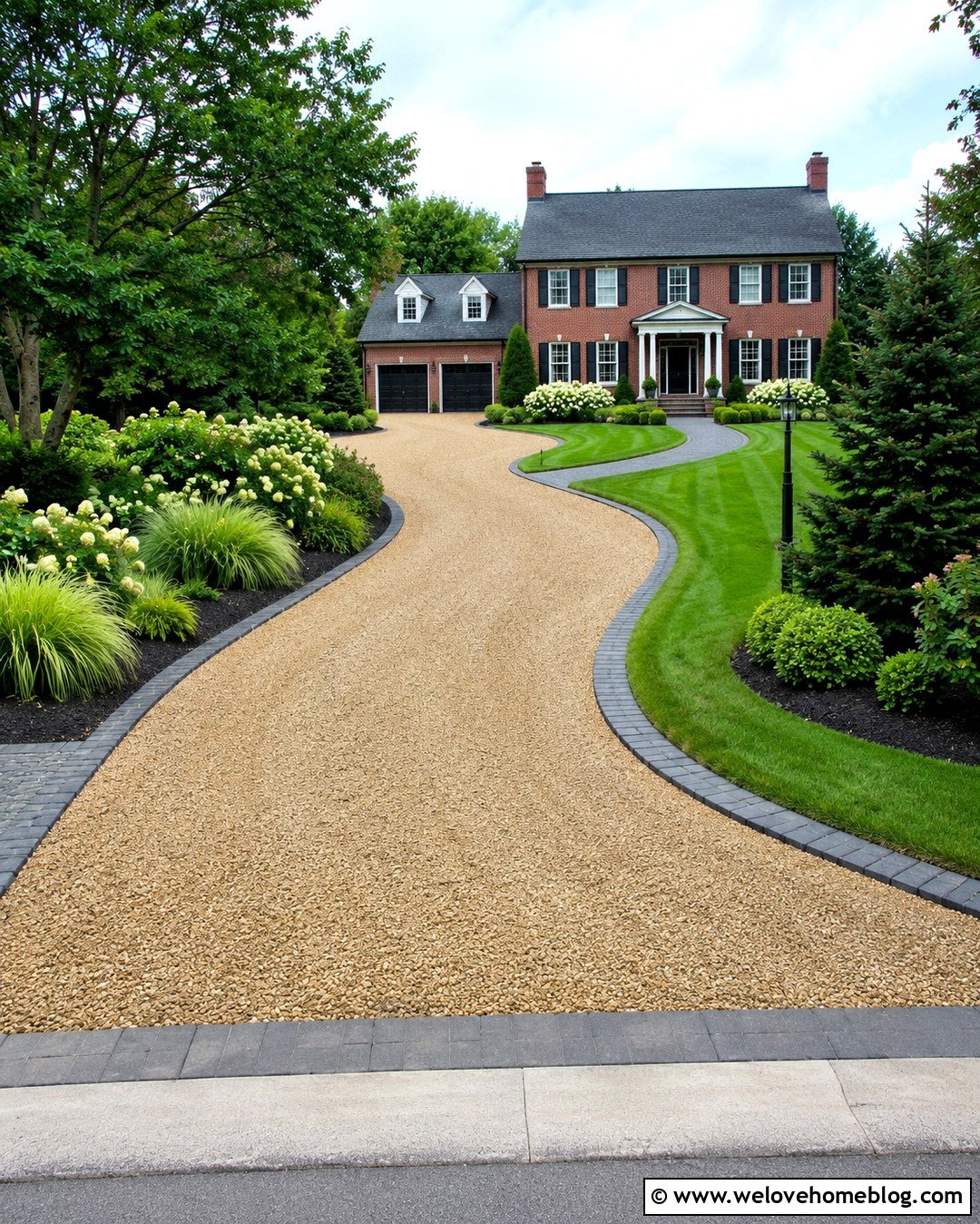
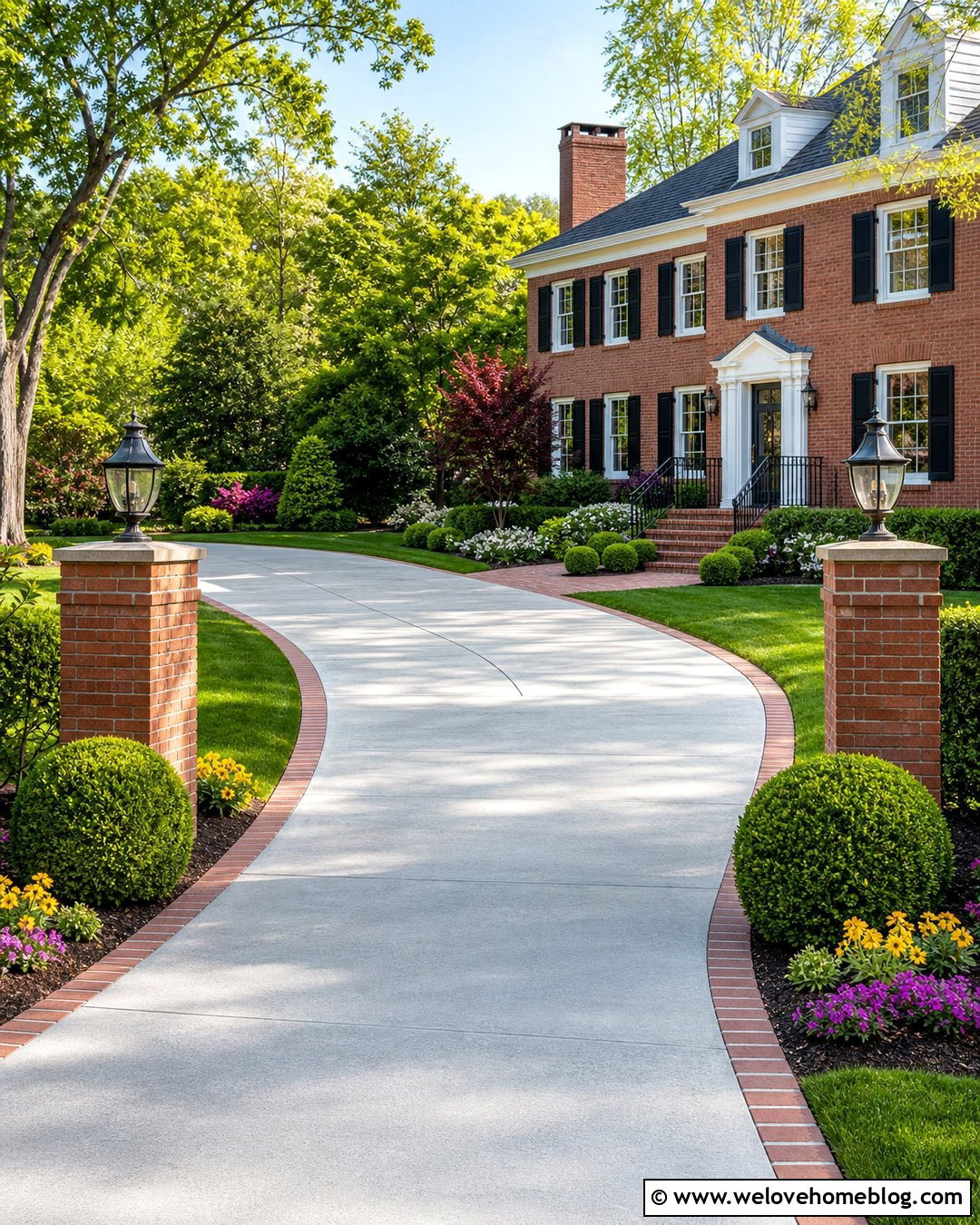
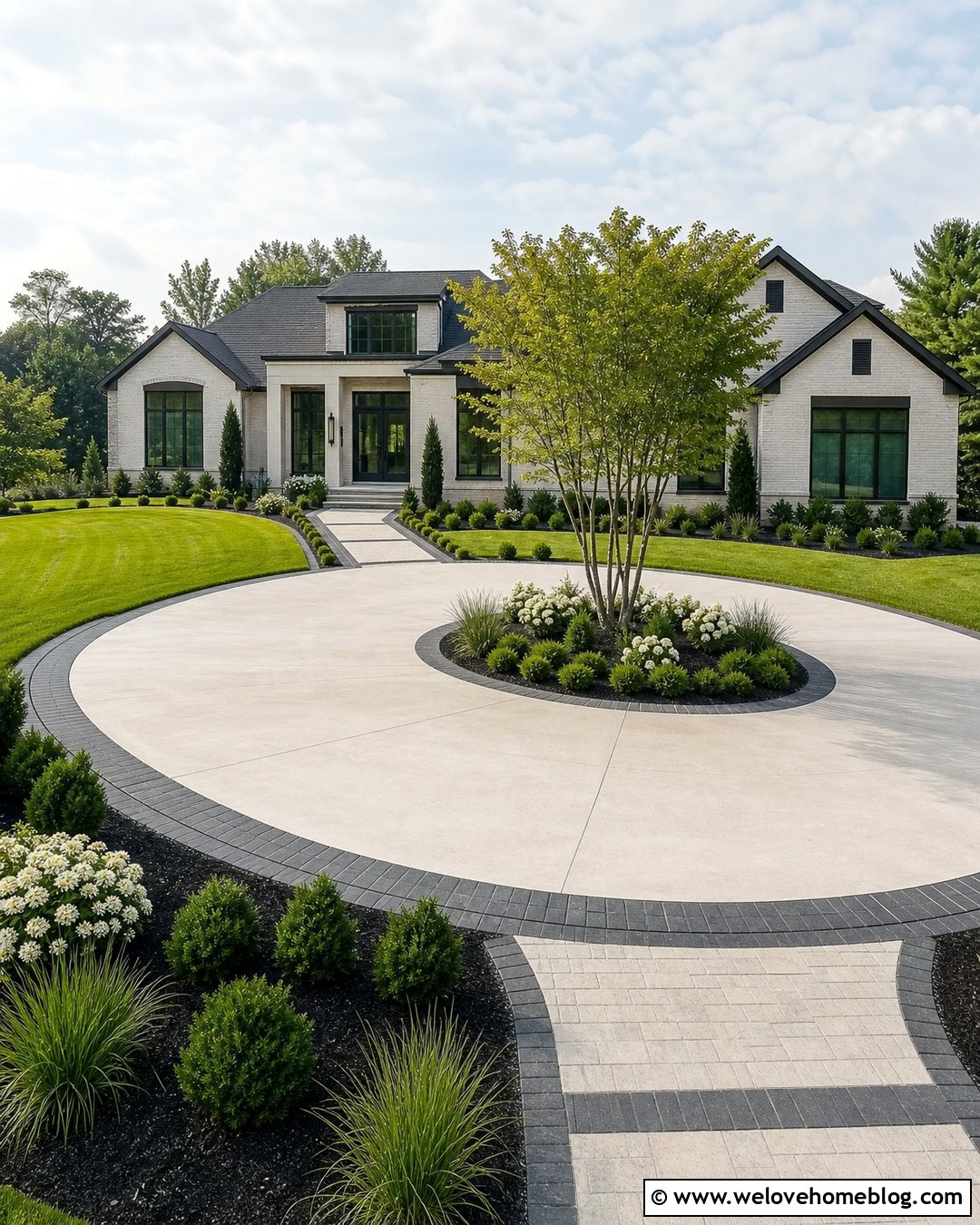
A curved gravel driveway looks more polished when rectangular pavers trace each bend with a consistent line. Select pavers that match the house facade, such as red-brown units for brick homes or charcoal blocks for contemporary exteriors. Set them lengthwise for a narrow border or use two rows near the entrance for greater emphasis. Inside the edge, compact gray or tan crushed gravel to create a stable driving surface. On the outside of the curve, plant sweeping groups of hydrangeas, ornamental grasses, and evergreen shrubs. Keep the inside curve lower and more open to maintain visibility. Finish the design with a paver walkway that continues toward the front door. Repeating one border material across the property creates a coordinated landscape without making every surface identical.
10. Gravel Driveway With Granite Block Edging
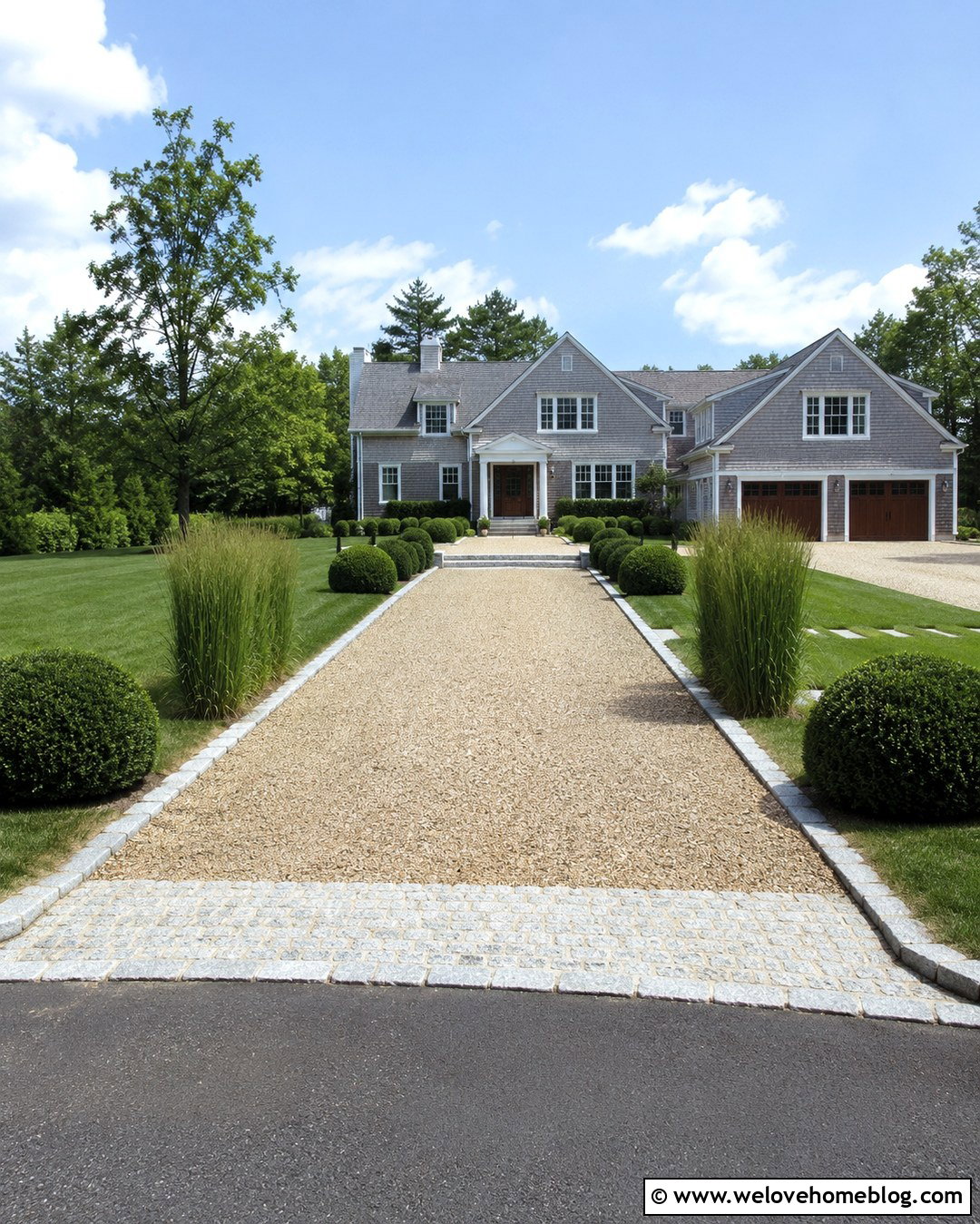
Granite blocks bring weight, texture, and long-term visual appeal to a traditional gravel driveway. Their squared shape produces a more orderly edge than irregular fieldstone while still retaining a natural appearance. Pair gray granite blocks with warm buff gravel for contrast, or use matching gray crushed stone for a quieter, monochromatic design. A single raised row can contain gravel beside planting beds, while a flush row works beside frequently mowed lawn. Frame the driveway entrance with wider blocks and continue the same material around a nearby tree bed or front walkway. Simple landscaping is usually enough. Clipped yew, upright grasses, and broad lawn areas let the stonework remain visible. This complete arrangement complements brick Colonials, shingle-style homes, and formal Craftsman facades.
11. Gravel Driveway With Reclaimed Brick Border
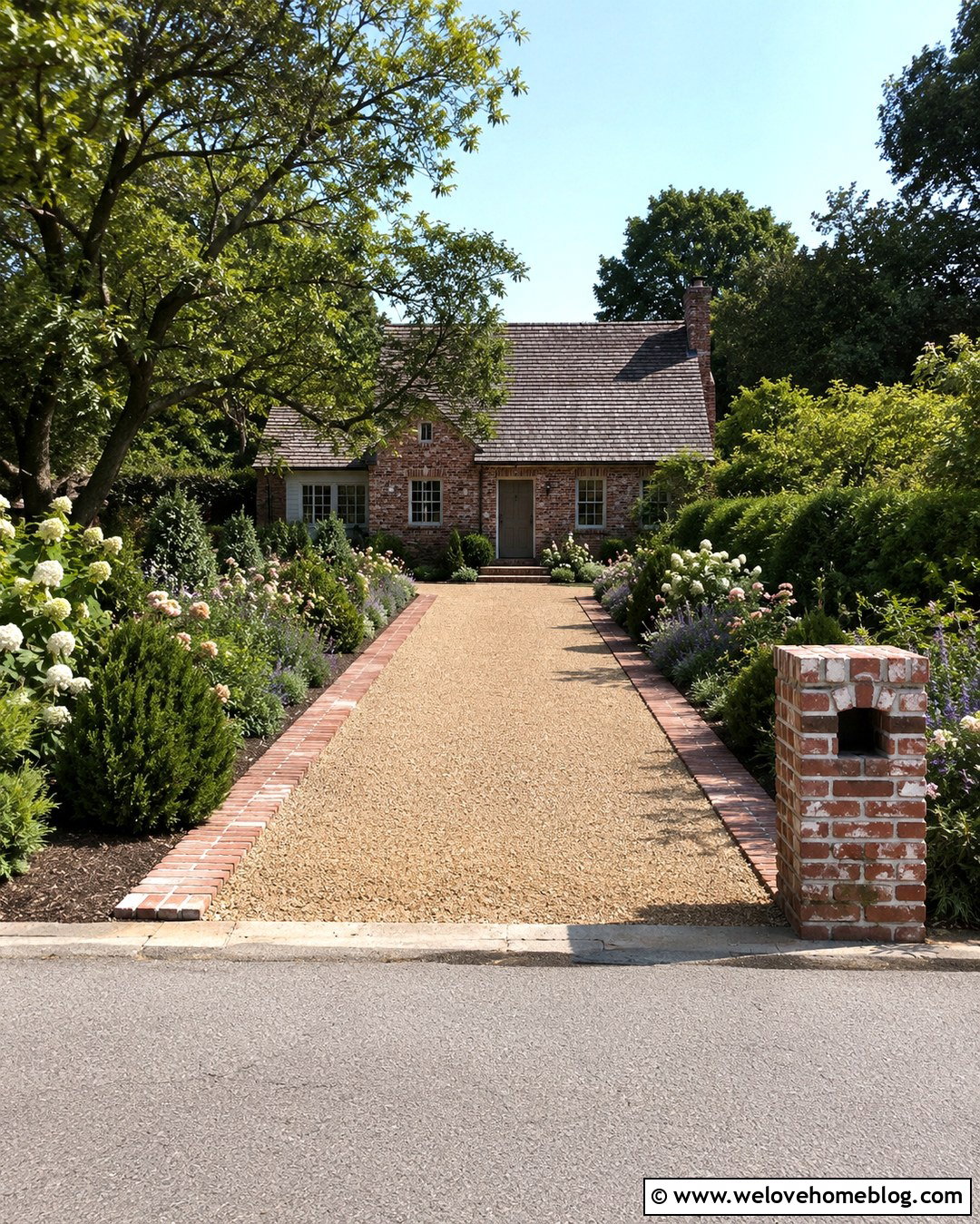
Reclaimed brick gives a gravel driveway an established appearance that feels appropriate beside an older home. Slight variations in color and surface texture add warmth without making the design look messy. Lay the bricks in a soldier-course border along a straight driveway, then widen the pattern near the garage and front walkway. Fill the center with compacted tan gravel containing subtle red and brown tones. Surround the drive with informal beds of roses, catmint, hydrangeas, and evergreen foundation shrubs. Repeating reclaimed brick around the mailbox or address pillar can visually anchor the entrance. Before installation, sort out badly damaged units and prepare a firm base. A consistent alignment will make the weathered material feel intentional rather than pieced together from unrelated leftovers.
12. Gravel Driveway With River Rock Edging
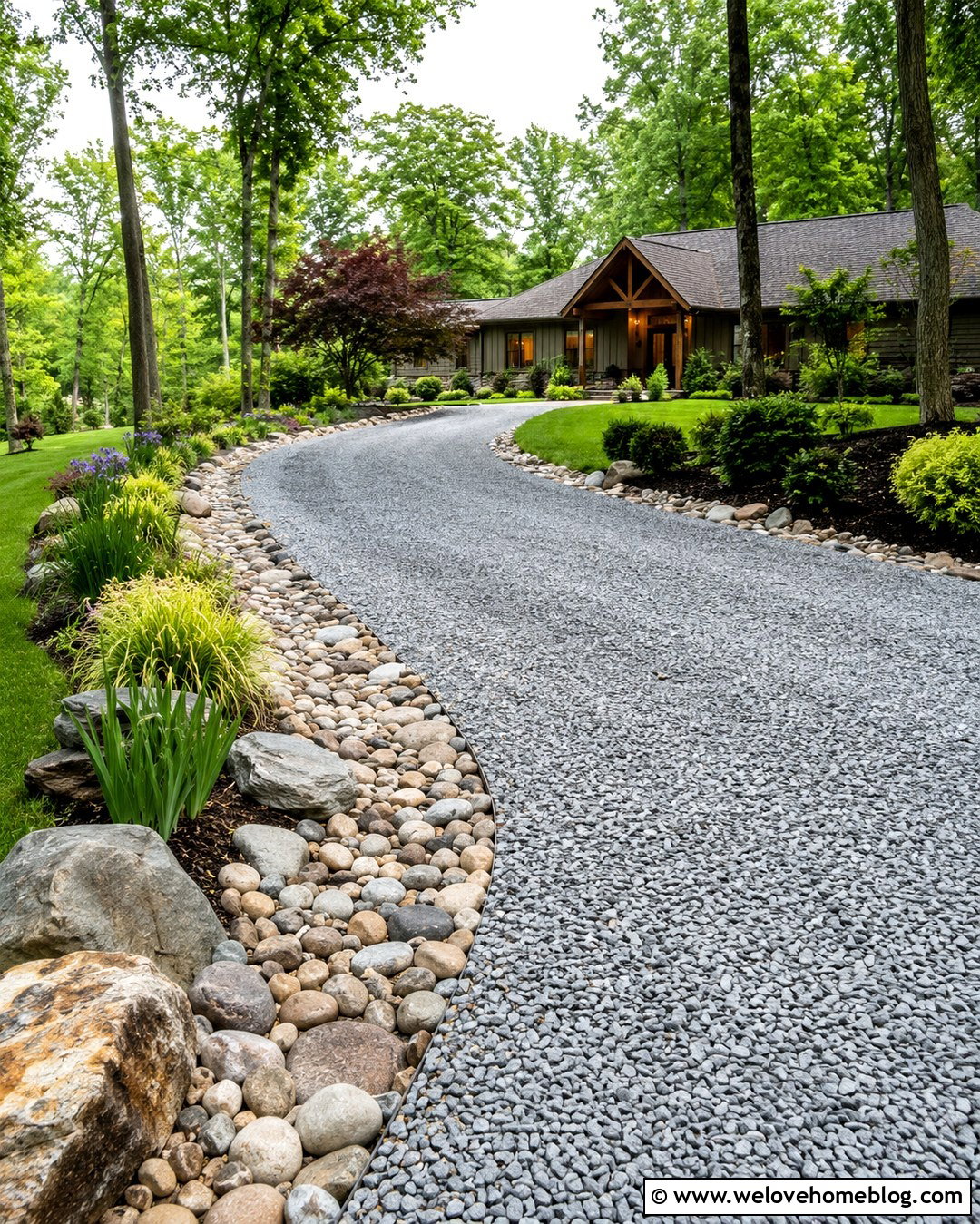
Smooth river rock creates a soft, natural transition between angular driveway gravel and planted areas. It works best as a wide decorative strip rather than a loose single row that can shift under tires. Start with compacted gray crushed gravel for the main driveway. Add a defined band of mixed river stones outside a hidden metal or masonry restraint. Beyond the river rock, plant moisture-tolerant grasses, irises, and compact shrubs if the strip also supports drainage. On a curved driveway, the flowing shape can resemble a dry creek bed and guide rainwater toward an appropriate outlet. Use larger stones near culvert openings and smaller pebbles along flatter sections. The combined driveway, drainage border, and planting scheme feels especially comfortable around ranch and woodland homes.
13. Gravel Driveway With Raised Flower Bed Edging
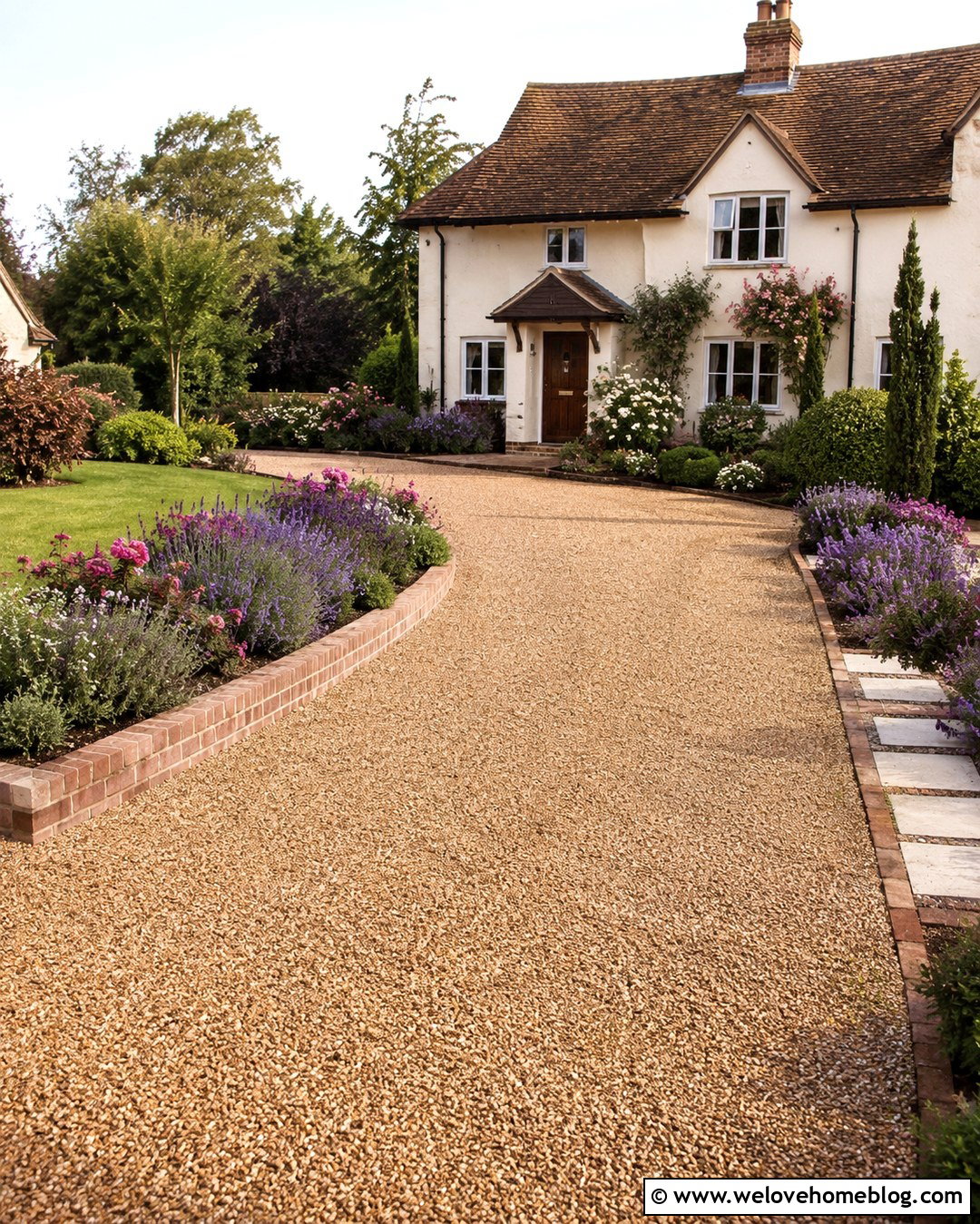
Imagine arriving home to a gravel driveway bordered by color from spring through fall. Raised flower beds can provide that welcoming effect while forming a substantial edge. Build low beds from brick, stone, or concrete blocks and keep them far enough from the driving lane for doors and tires to clear comfortably. Choose warm pea gravel or crushed limestone that complements the wall material. Plant in repeating groups rather than mixing too many individual varieties. Compact roses, salvia, coneflowers, lavender, and evergreen shrubs can create a layered display. Include gaps or stepping pads where people naturally walk from parked vehicles. Proper bed drainage is important because wet soil should not spill onto the gravel. This arrangement makes the driveway feel like an integrated part of the front garden.
14. Gravel Driveway With Low Hedge Edging
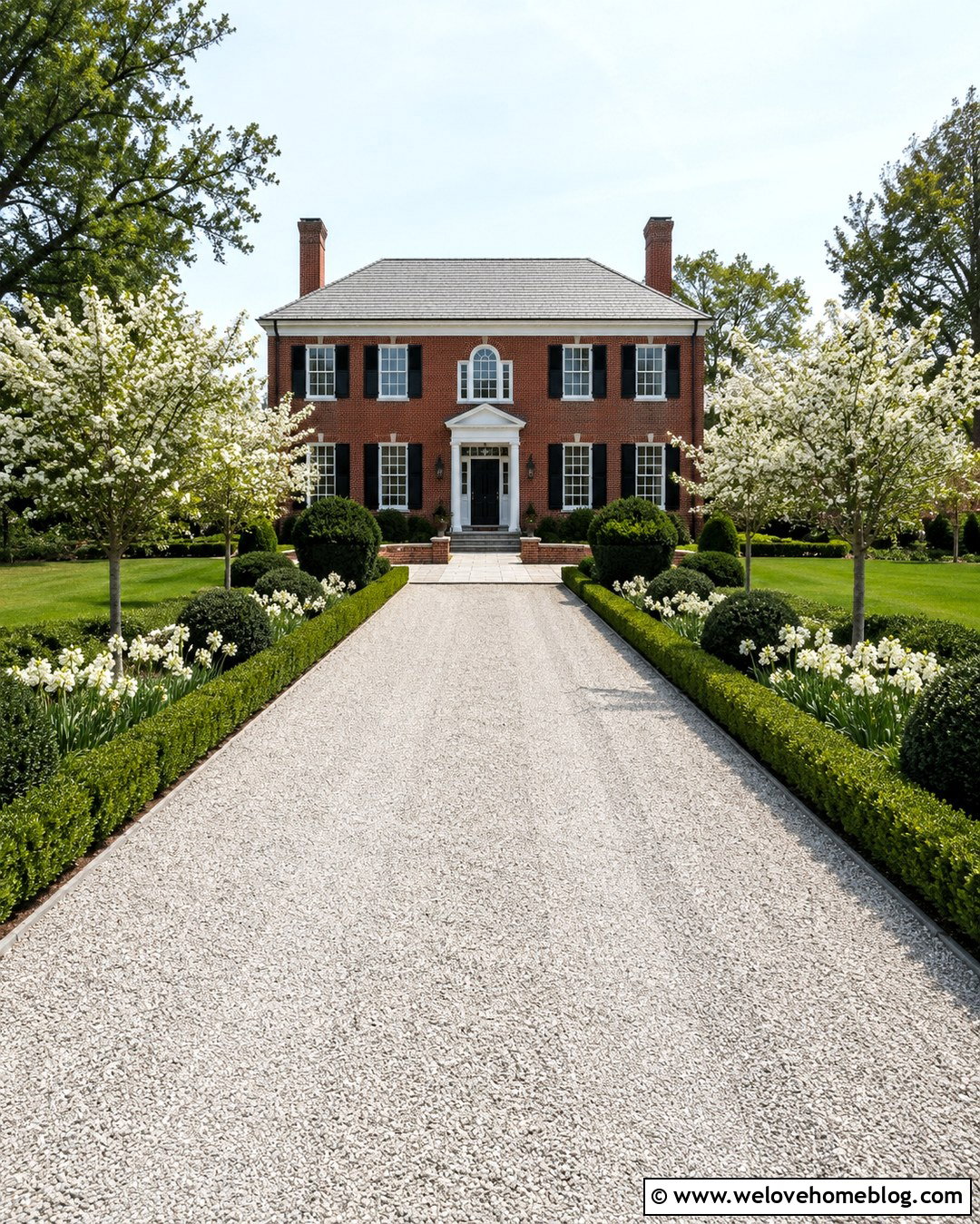
A neatly clipped hedge can give a gravel driveway clear structure without relying entirely on hard materials. Install a discreet steel, brick, or concrete restraint at ground level to contain the gravel, then plant the hedge behind it. Boxwood alternatives, dwarf inkberry, compact holly, and other locally suitable evergreens can maintain a green border through much of the year. Use light beige or gray gravel so the foliage stands out. On a long straight driveway, break up the hedge with entrance openings, small trees, or pockets of flowering perennials. Keep the mature hedge width in mind to prevent it from narrowing the driving lane. Regular trimming will preserve sightlines and create an orderly approach that works beautifully with Colonial, Georgian, and traditional suburban houses. ()
15. Gravel Driveway With Grass Strip Edging
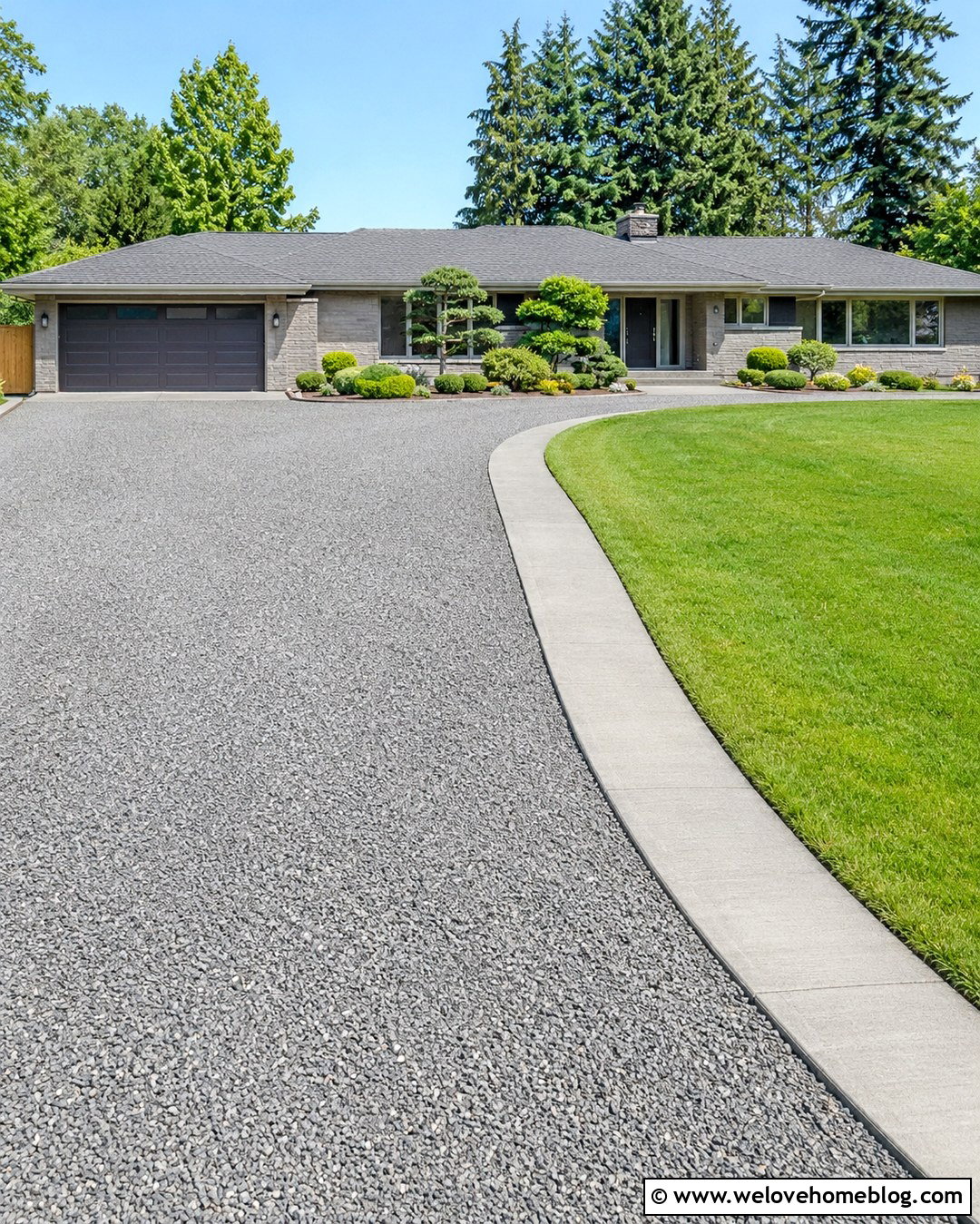
Grass edging offers a simple, affordable choice for broad country lots and long gravel driveways. The cleanest version uses a concealed restraint beneath or beside the lawn edge so gravel does not continuously migrate into the turf. Choose compacted brown or gray crushed stone and maintain a crisp mowing line along both sides. Shade trees planted at generous intervals can frame the approach without creating a dense corridor. Near the house, introduce more detailed landscaping with foundation shrubs, a paved walkway, and a small island bed. This gradual transition keeps the distant portion economical while making the arrival area feel finished. Regular raking, string trimming, and occasional gravel replenishment will still be needed, especially along curves and places where vehicle tires frequently meet the edge. ()
16. Gravel Driveway With Sleepers And Ornamental Grasses
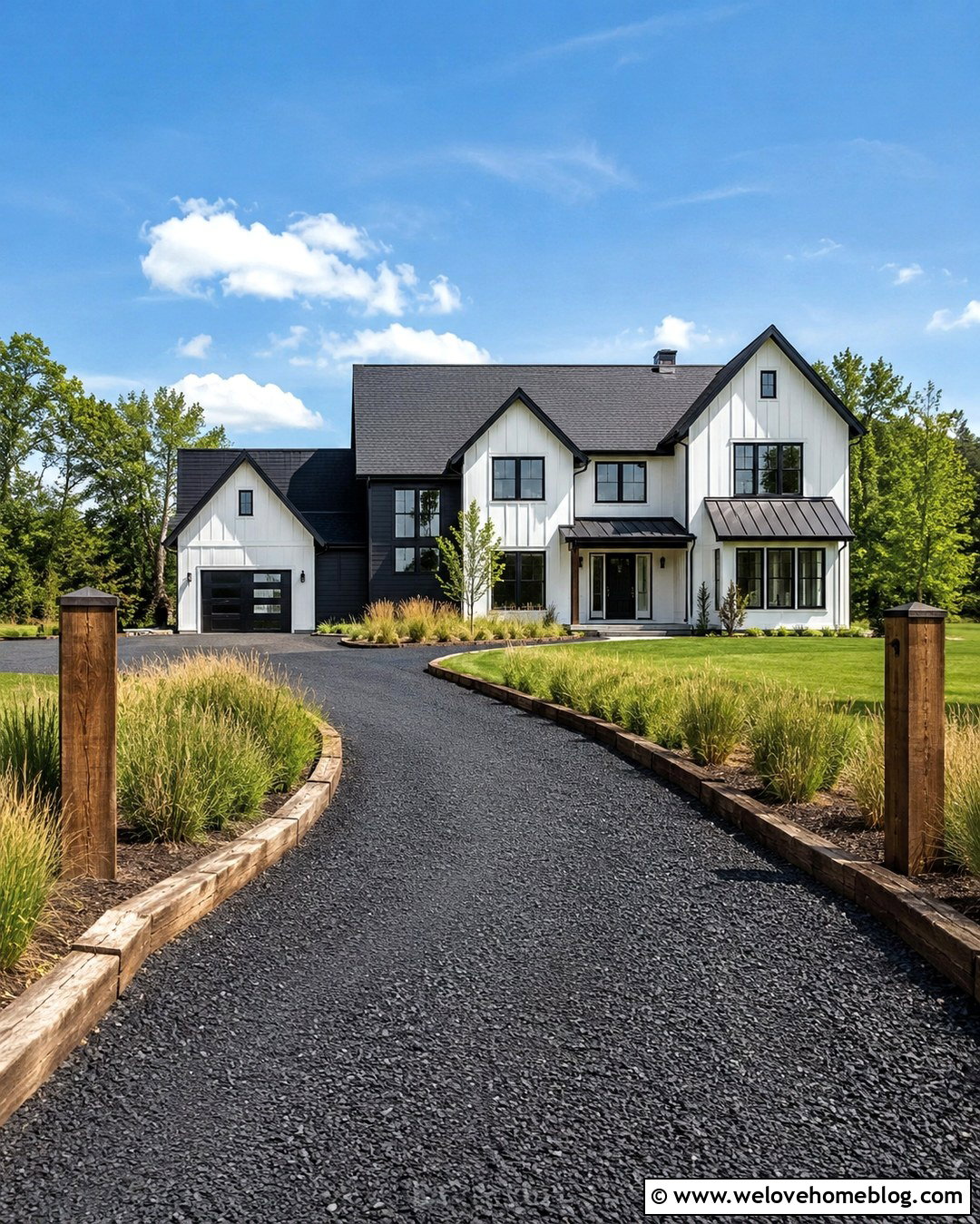
Railway-style sleepers and ornamental grasses can create a bold rustic border for a wide gravel driveway. Use new landscaping sleepers rather than heavily contaminated reclaimed industrial wood. Set the timbers in straight sections or stagger them slightly along a broad curve. Dark gray gravel provides a strong background for the warm wood and green foliage. Plant switchgrass, little bluestem, fountain grass, or locally appropriate varieties behind the sleepers in generous groups. Leave open areas near the road and driveway intersections to protect visibility. Add a matching timber mailbox frame or simple entrance posts to repeat the material. This design looks particularly effective beside modern farmhouses, barn-inspired homes, and large ranch properties where smaller edging materials might disappear within the scale of the landscape.
17. Gravel Driveway With Belgian Block Apron
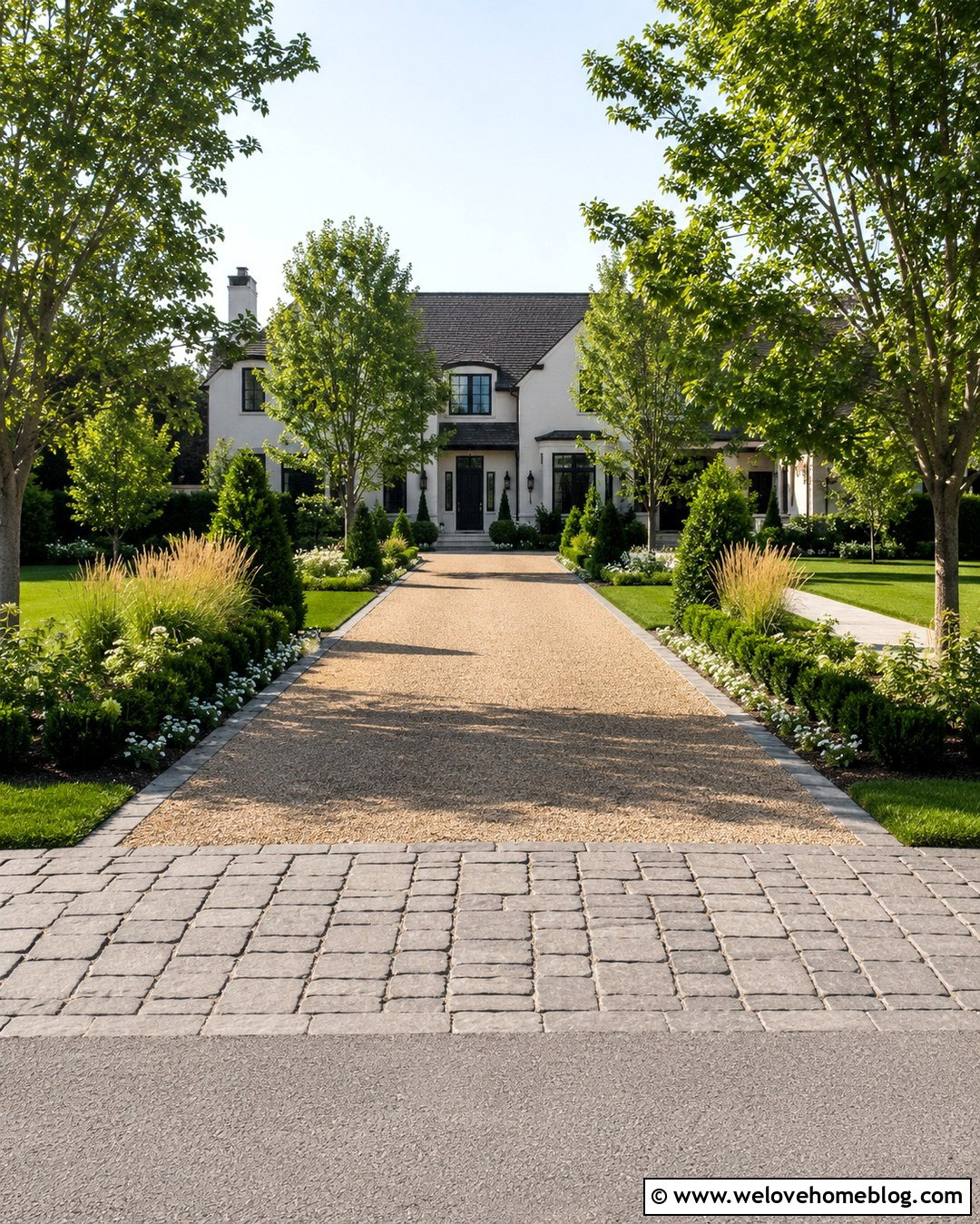
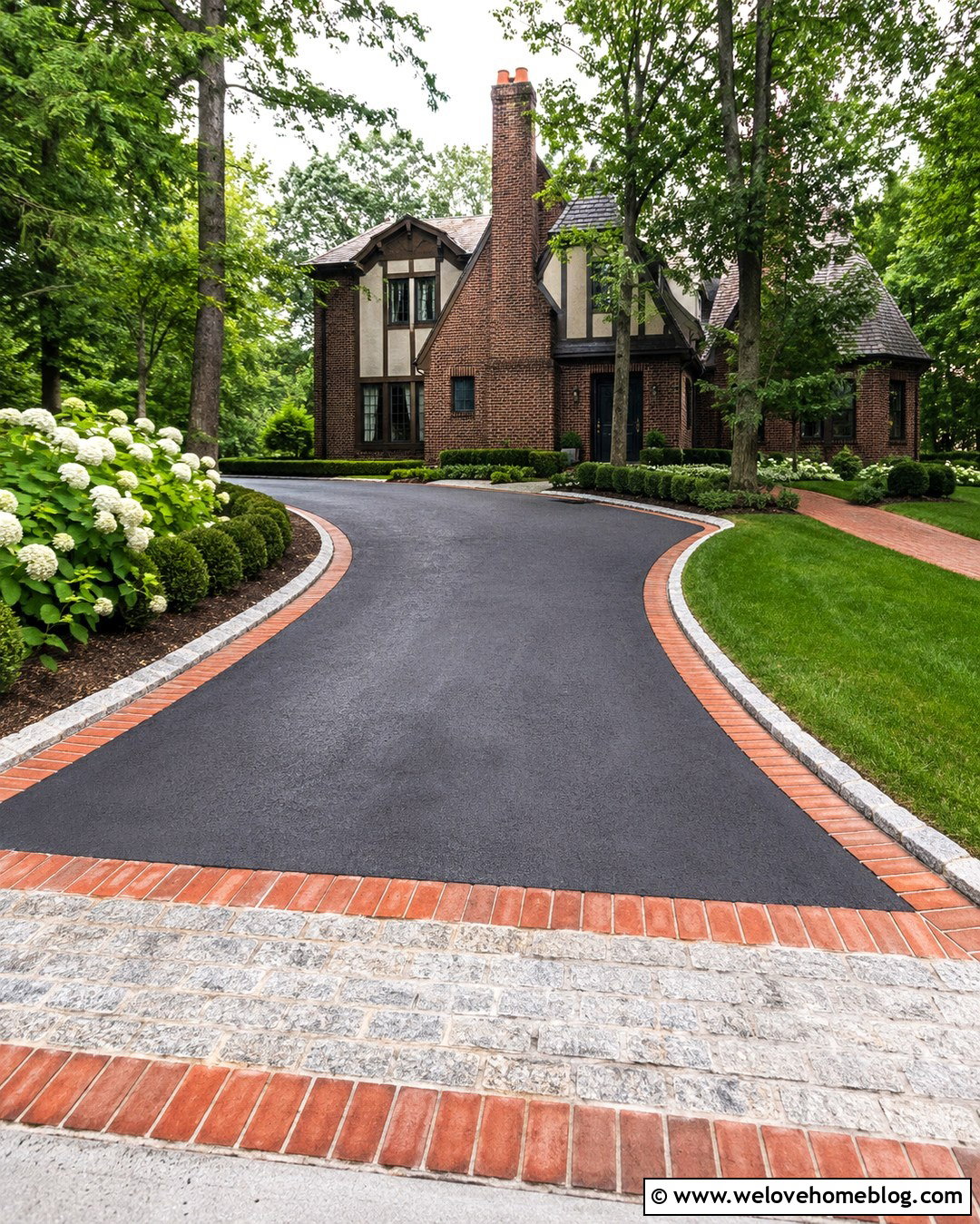
A Belgian block apron can create a strong entrance while narrower block edging guides the gravel driveway toward the house. Lay several rows of blocks where the drive meets the street, then continue one row along each side. The apron clearly marks the transition and can help separate loose gravel from the public roadway. Use warm gray or charcoal blocks with tan crushed gravel for visible contrast. Plant symmetrical beds near the entrance with low evergreens, ornamental grasses, and seasonal flowers. Farther up the driveway, loosen the landscaping with larger shrubs and shade trees. Repeat the blocks around a walkway landing or address monument. This detailed entrance treatment gives a gravel surface a refined appearance and pairs especially well with brick, stone, or traditional stucco homes.
18. Gravel Driveway With Concrete Mowing Strip
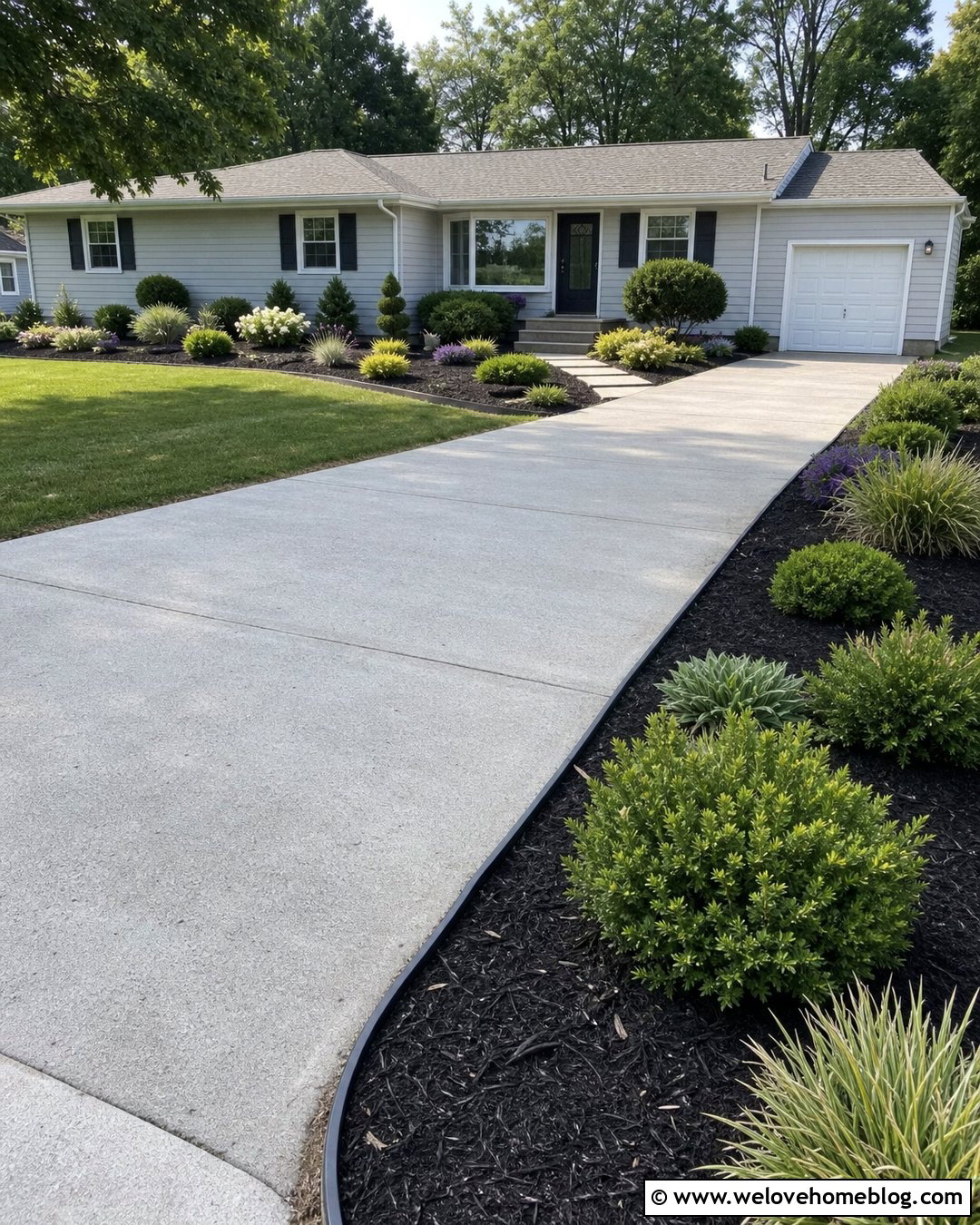
If simple maintenance is the priority, a concrete mowing strip can provide a practical edge between gravel and lawn. Pour a narrow, flush band along both sides of a straight or gently curved driveway. The strip should be wide enough for mower wheels while remaining visually secondary to the gravel. Select a light broom finish for traction and use control joints to create an orderly rhythm. Fill the driveway with compacted crushed limestone or granite, then keep surrounding planting concentrated near the entrance and house. Small ornamental trees and rounded shrubs can soften the plain concrete line. For a cohesive finish, match the strip to an existing concrete walkway or front steps. This uncluttered look works well for ranch homes and busy suburban properties with large lawn areas.
19. Gravel Driveway With Dry Stack Stone Edging
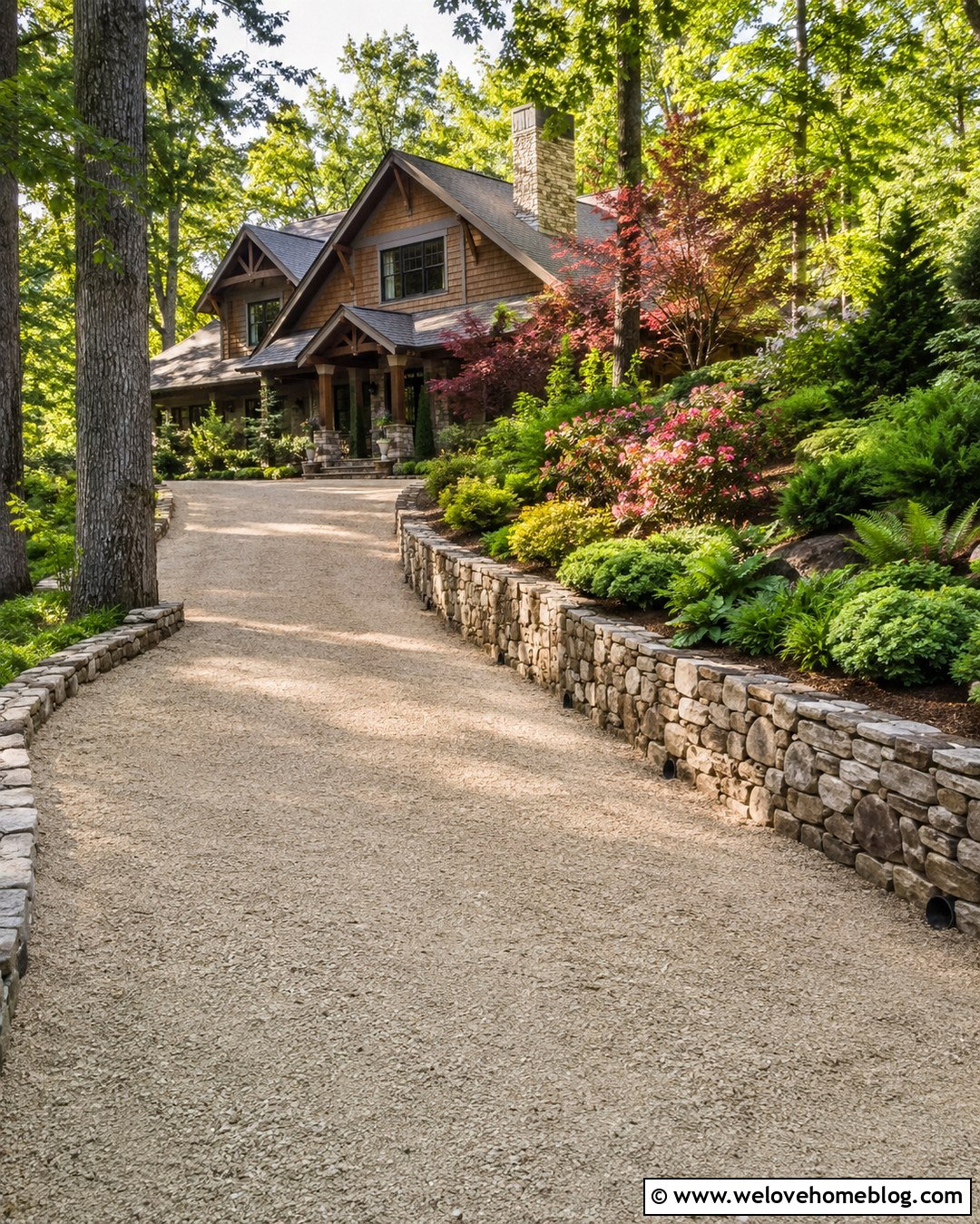
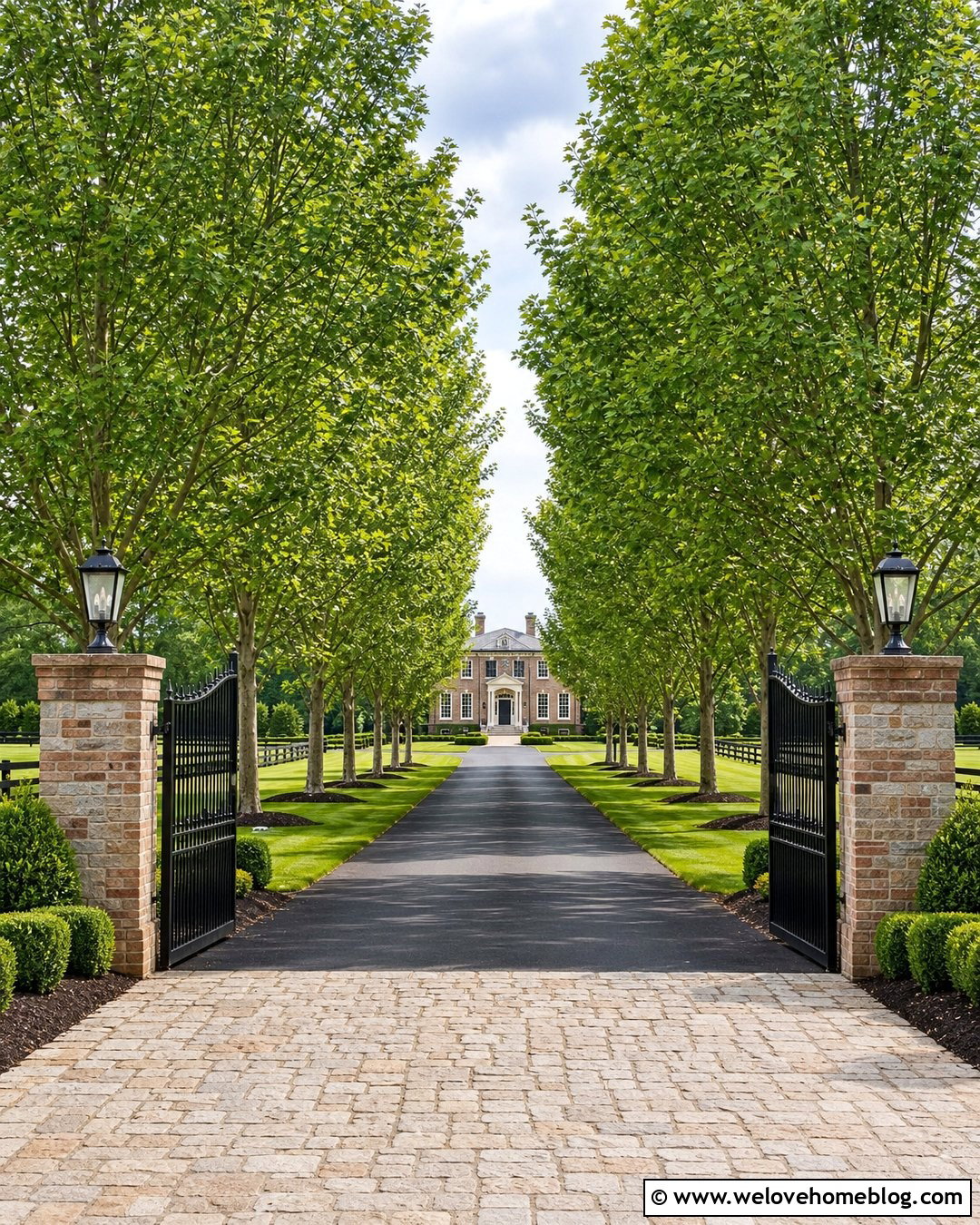
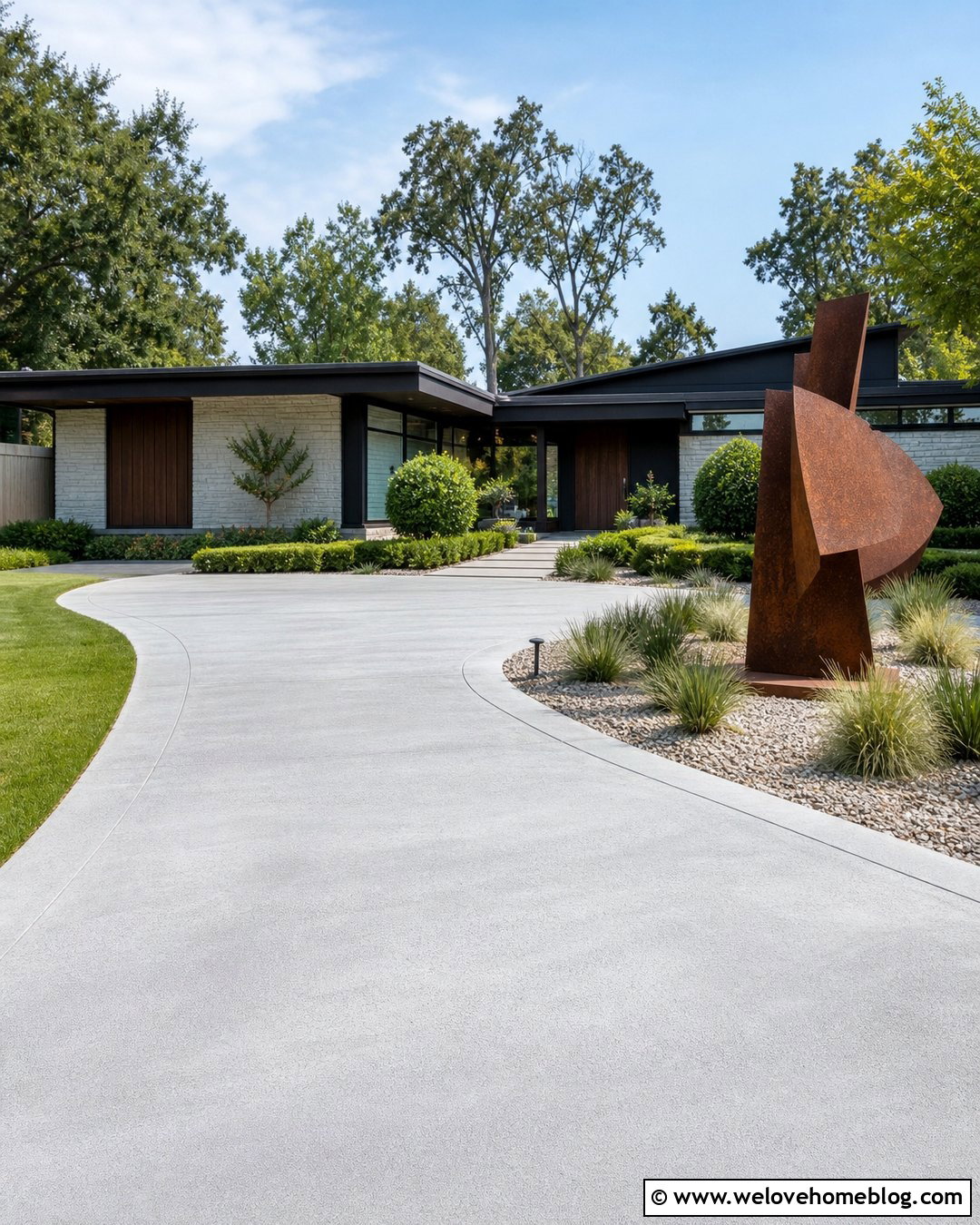
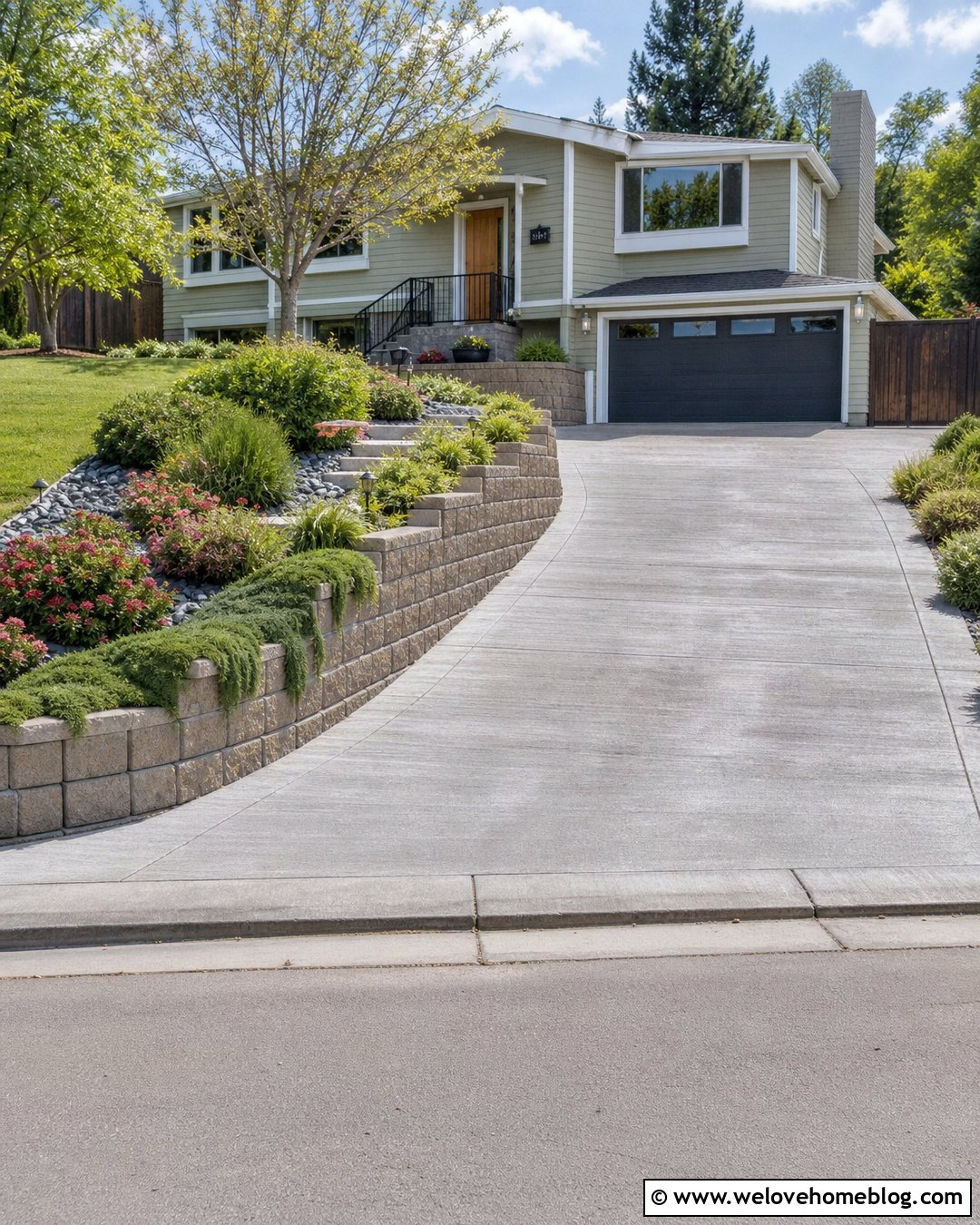
Dry stack stone walls can define a gravel driveway while managing a gentle change in grade. Keep the wall low so it does not overpower the approach or create a tight, enclosed feeling. Use locally sourced stone in gray, brown, or buff tones and coordinate the gravel color with the lighter shades in the wall. A curved driveway can follow the natural contours of the yard, with the stone retaining a raised planting bed on one side. Fill that bed with trailing ground covers, flowering shrubs, and compact evergreens that spill softly over selected sections. Leave drainage openings where needed and avoid placing loose wall stones near turning zones. This complete design feels settled into the landscape and complements Craftsman, farmhouse, cottage, and woodland architecture.
20. Gravel Driveway With Mixed Stone And Plant Edging
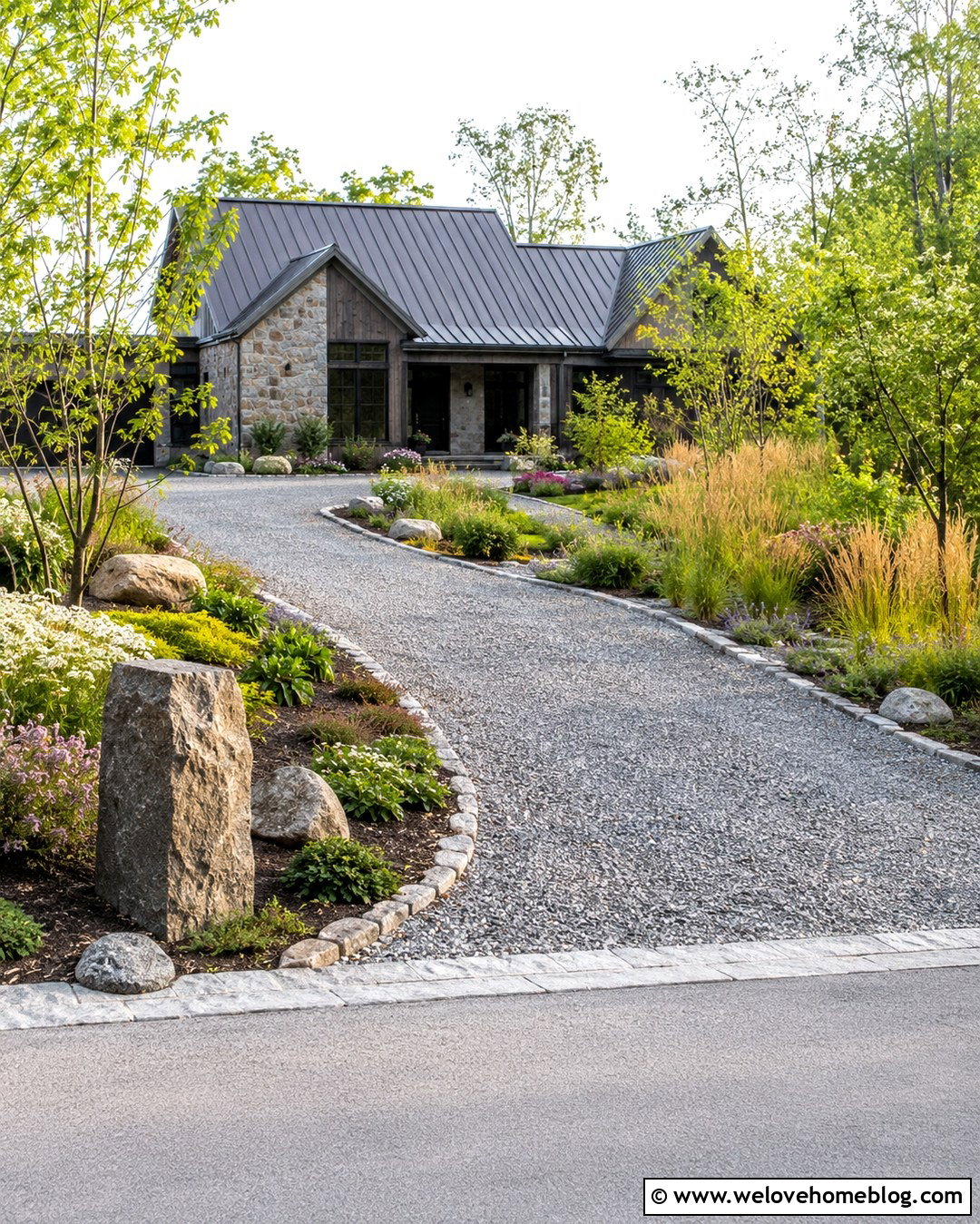
A mixed border can make a large gravel driveway feel natural without sacrificing definition. Start with a dependable stone or metal restraint directly beside the compacted gravel. Beyond it, alternate groups of flat fieldstone, low shrubs, ornamental grasses, and flowering ground covers. The repeated combination should continue along the driveway rather than changing randomly every few feet. Use medium-gray gravel for a flexible base that works with multiple stone and foliage colors. At the entrance, strengthen the composition with larger boulders and an address marker. Near the house, add more formal planting and a matching stone walkway. This layered edge is useful for irregular or curved driveways because plants disguise minor changes in grade while the structural restraint keeps the driving surface contained.
Conclusion:
The strongest **gravel driveway landscaping edging ideas** combine reliable containment with landscaping that suits the home, yard, and amount of maintenance you can manage. Brick, concrete, granite, steel, and substantial timber create defined edges, while hedges, grasses, flower beds, and ground covers soften the finished design. Before choosing a border, consider vehicle clearance, drainage, mowing, snow removal, driveway curves, and the mature size of nearby plants. Prepare a compacted base and install the edging securely rather than treating it as decoration alone. Whether you prefer a formal cobblestone entrance or a relaxed grass-lined country drive, coordinating the gravel, border, layout, and planting will create a cleaner and more welcoming approach.

Related posts:
Leave a Reply