
Driveway landscaping can turn a plain parking area into a welcoming part of your front yard. The best designs treat the surface, shape, edging, plants, drainage, lighting, and house as one connected composition. Current approaches favor layered planting, defined borders, permeable surfaces, native plants, and landscaping that softens hard paving without reducing visibility or parking space. () Whether you have a short concrete pad, a long country lane, or a wide circular entrance, thoughtful details can improve curb appeal and make daily maintenance easier. Start with your climate, sunlight, driveway width, and available budget. Then choose materials and plants suited to those conditions. The complete looks below offer 50 Driveway Landscaping Ideas for different homes, yards, and maintenance levels.

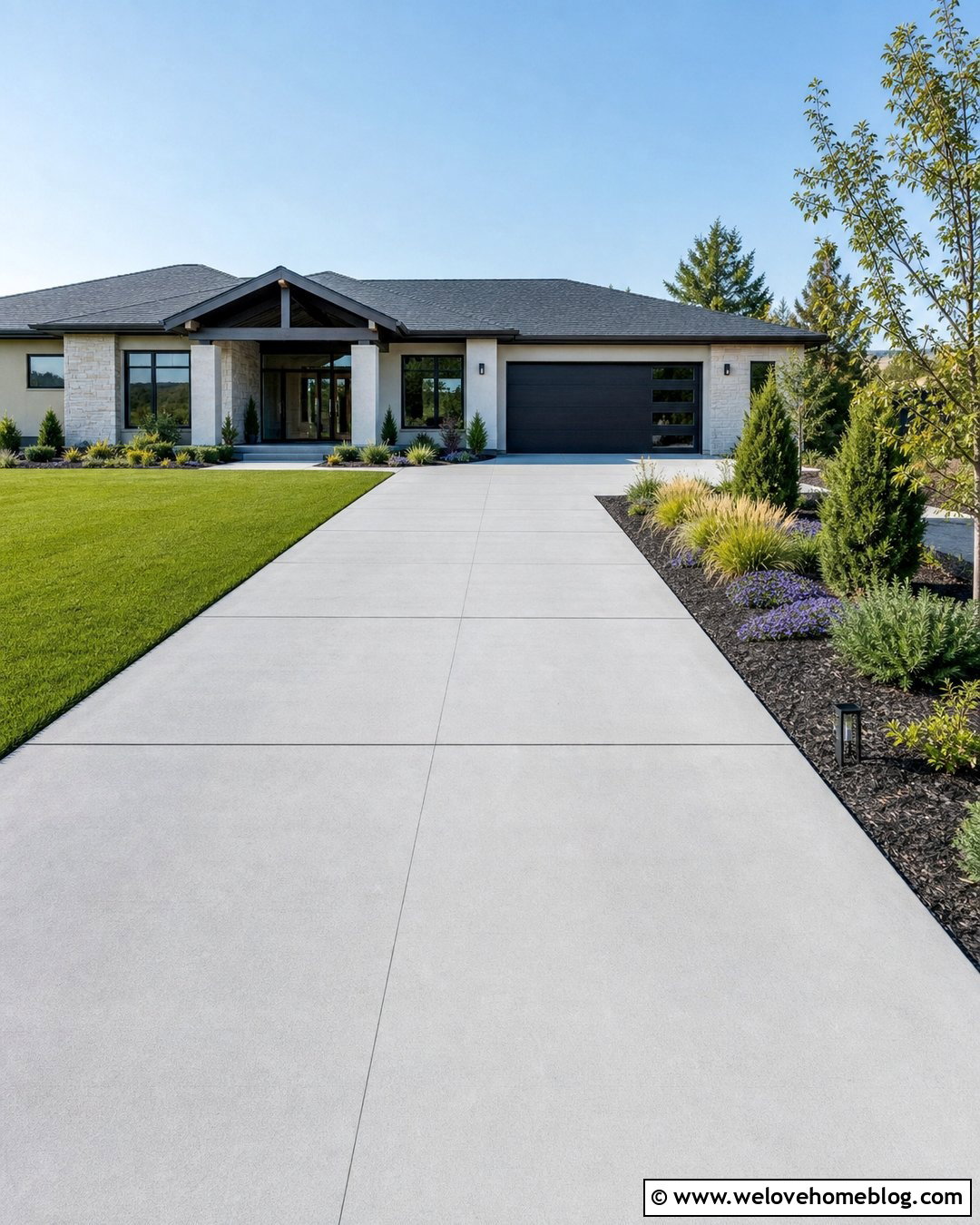
1. Concrete Driveway With Boxwood Borders
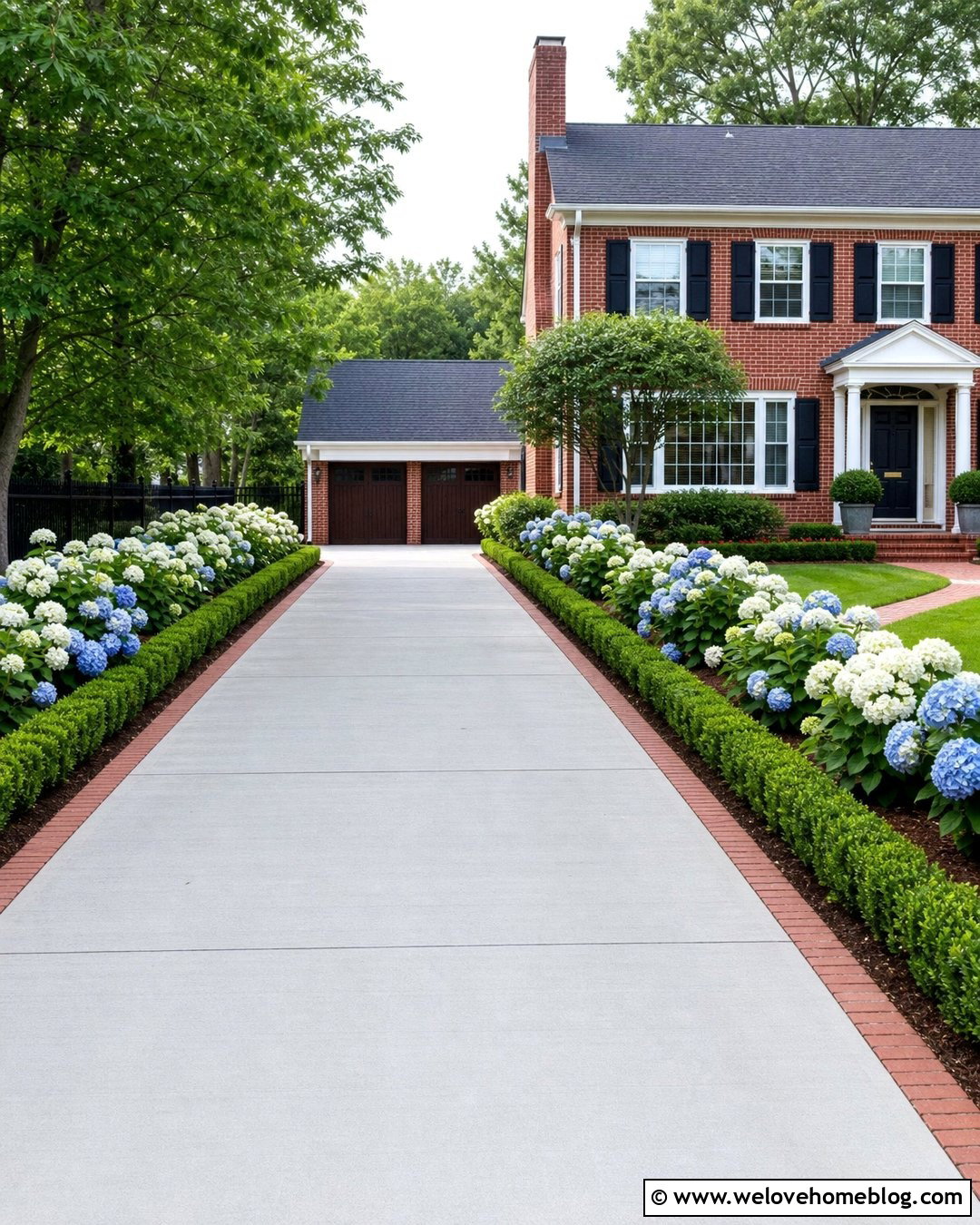
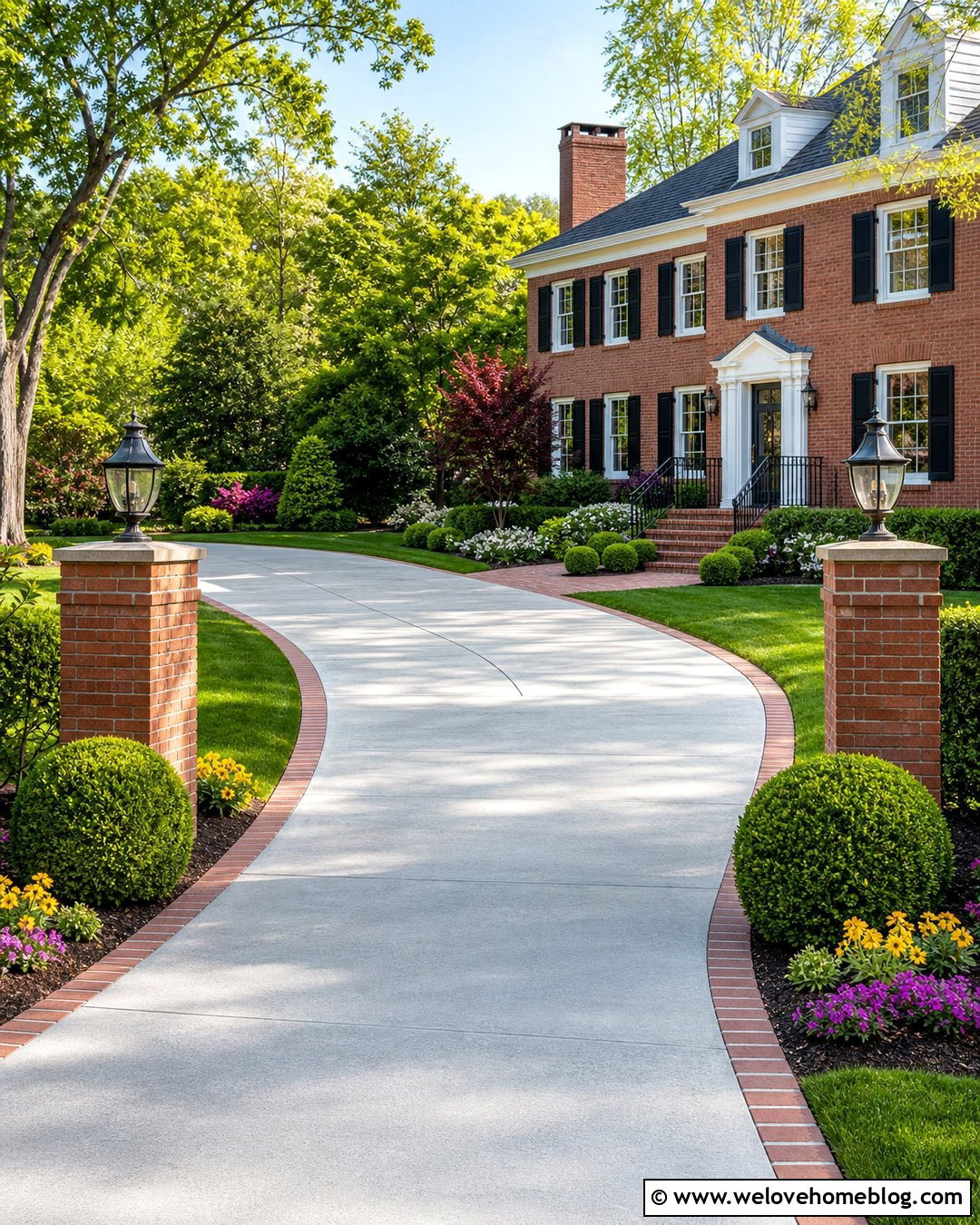
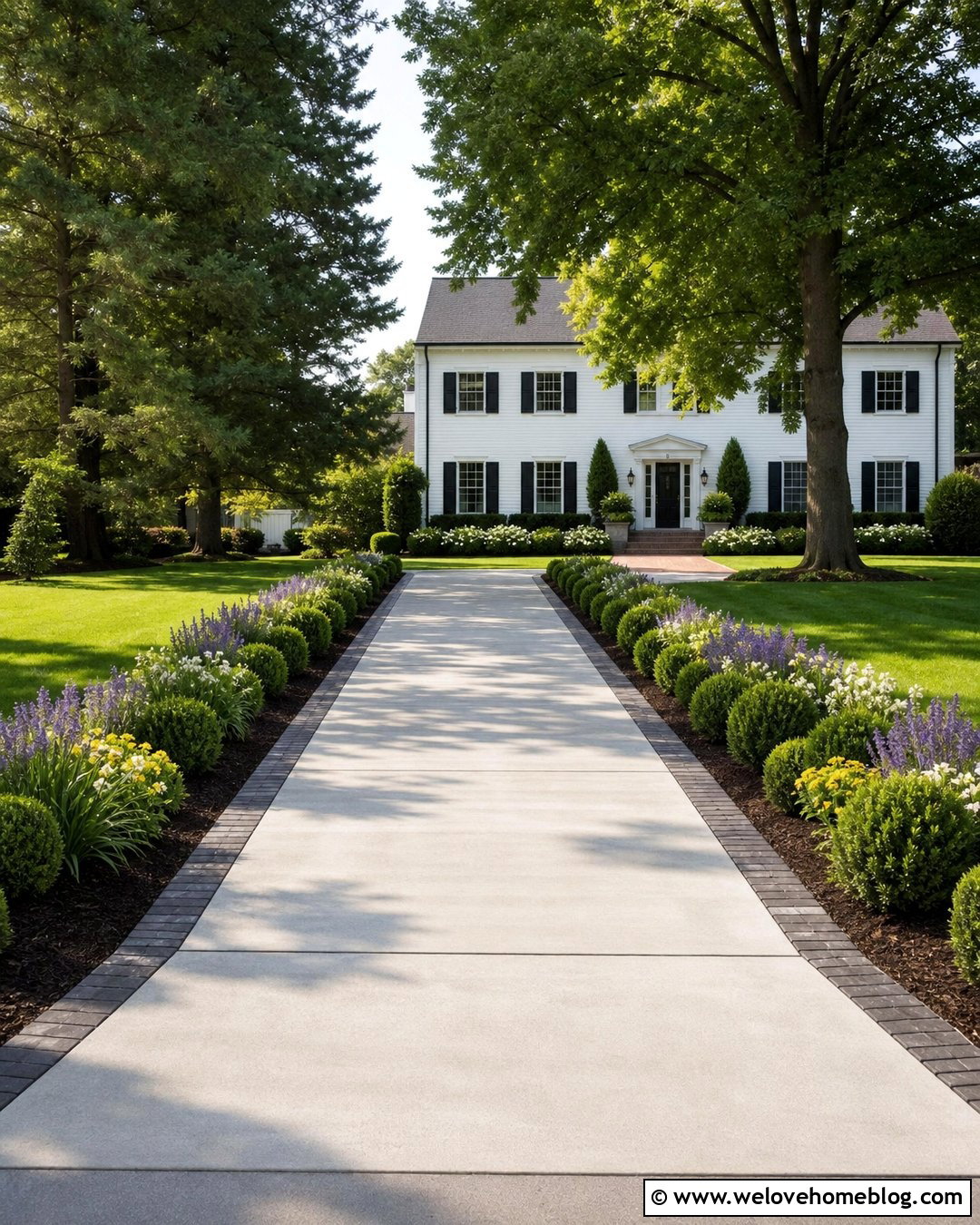
A straight concrete driveway feels more polished when low boxwood hedges frame both sides. Choose broom-finished gray concrete for a clean surface that provides good traction without competing with the house. Add a narrow brick or cobblestone edge between the pavement and planting beds. This protects the hedge roots while creating a clear line for mowing. Keep the boxwoods below 24 inches so drivers can see pedestrians and approaching traffic near the street. Behind them, use hydrangeas, small flowering trees, or upright evergreens to build height closer to the house. Matching beds beside the garage and front walkway connect the entire landscape. This complete look works especially well with colonial, Georgian, and traditional brick homes.
2. Gravel Driveway With Lavender Borders
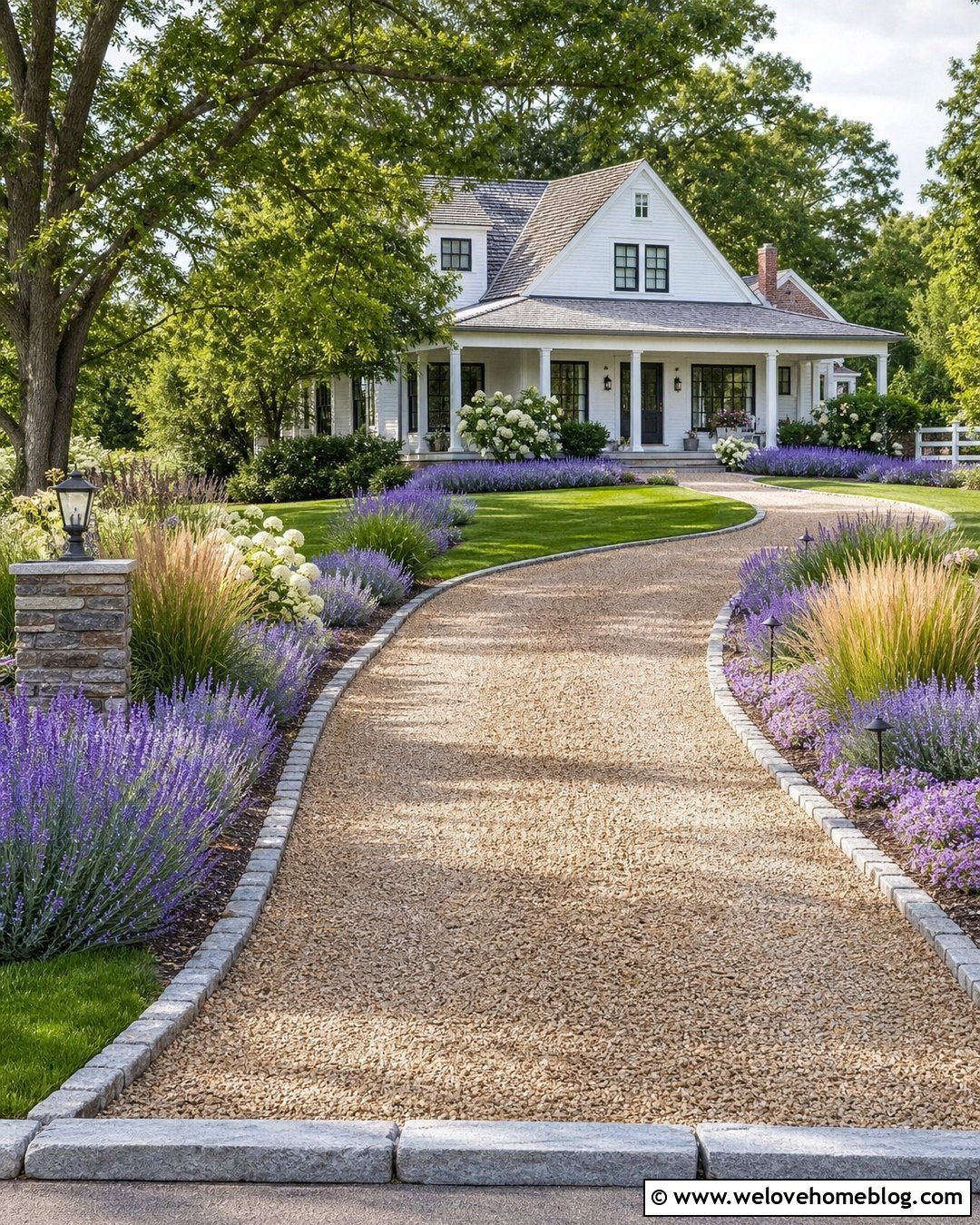
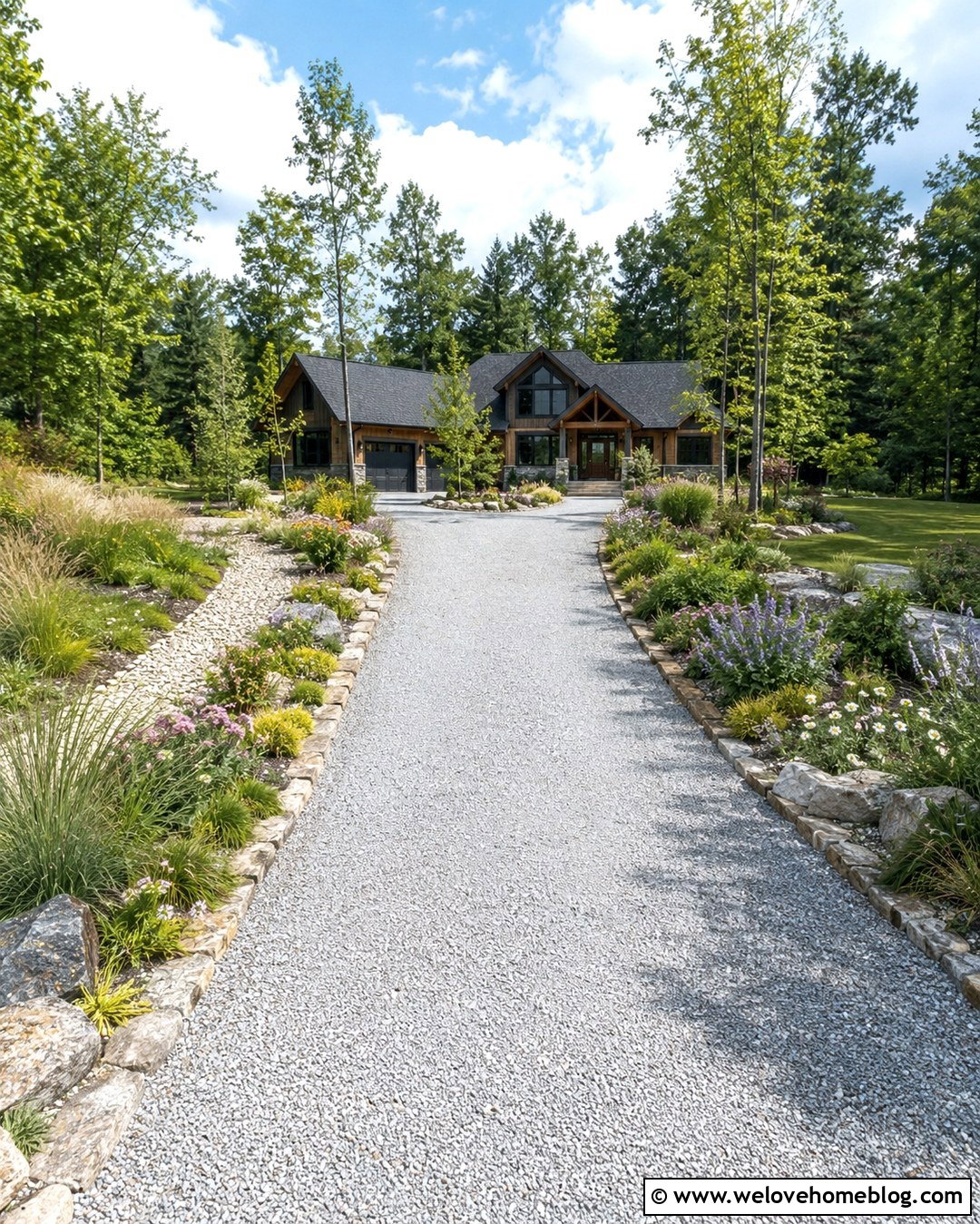
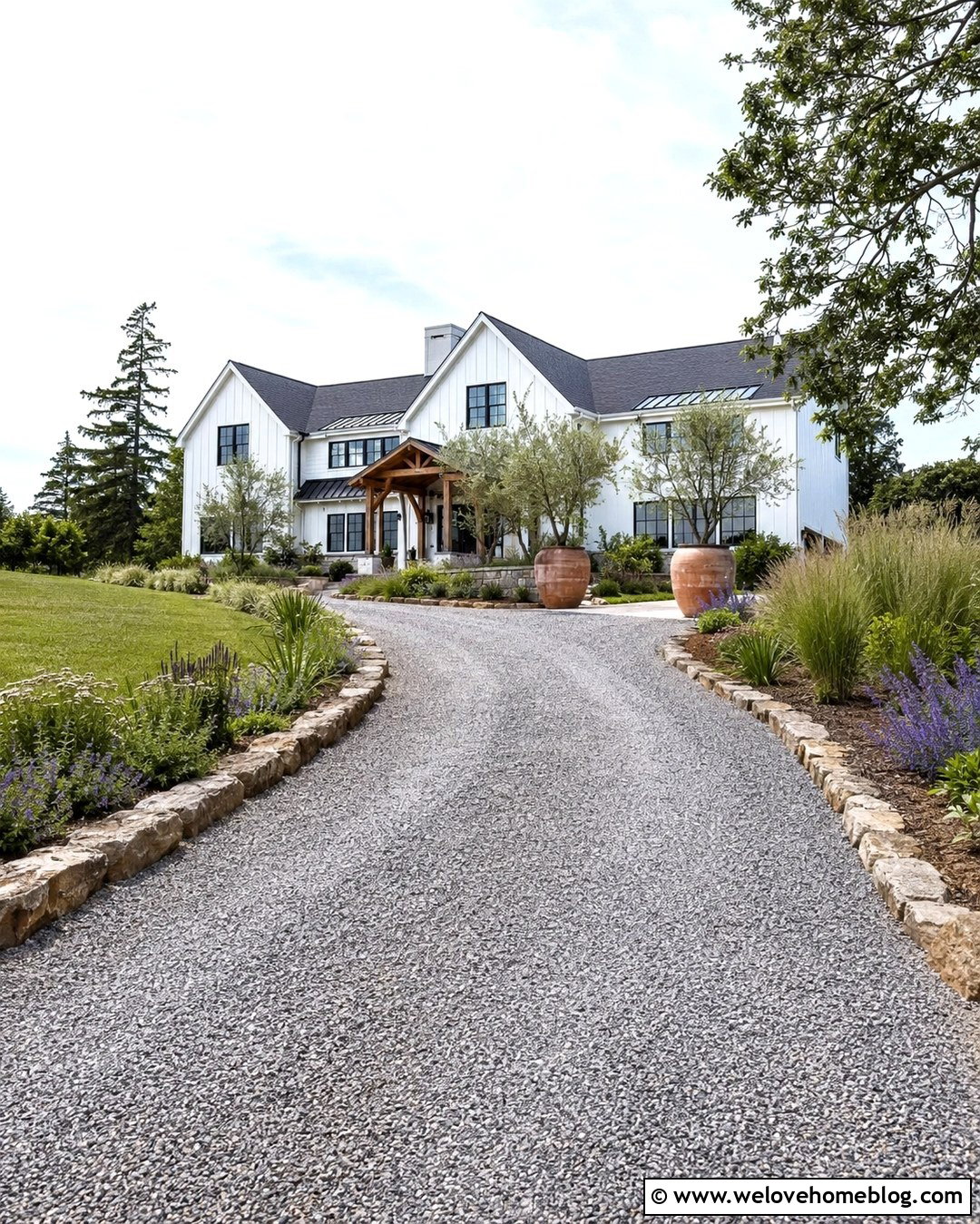
Warm pea gravel and fragrant lavender create a relaxed driveway that suits cottages, farmhouses, and sunny country homes. Use a gently curved layout so the approach feels natural rather than overly formal. Install a compacted base beneath the gravel and contain the loose material with granite cobblestones or steel edging. Plant lavender in repeated groups outside the border, leaving enough space for mature growth. Add drought-tolerant ornamental grasses, catmint, and creeping thyme to fill gaps without creating a crowded edge. A simple stone walkway can branch from the driveway toward the front porch. This combination looks best in full sun and well-draining soil. It also provides color and texture while keeping the planting low enough for clear visibility.
3. Asphalt Driveway With Brick Edging
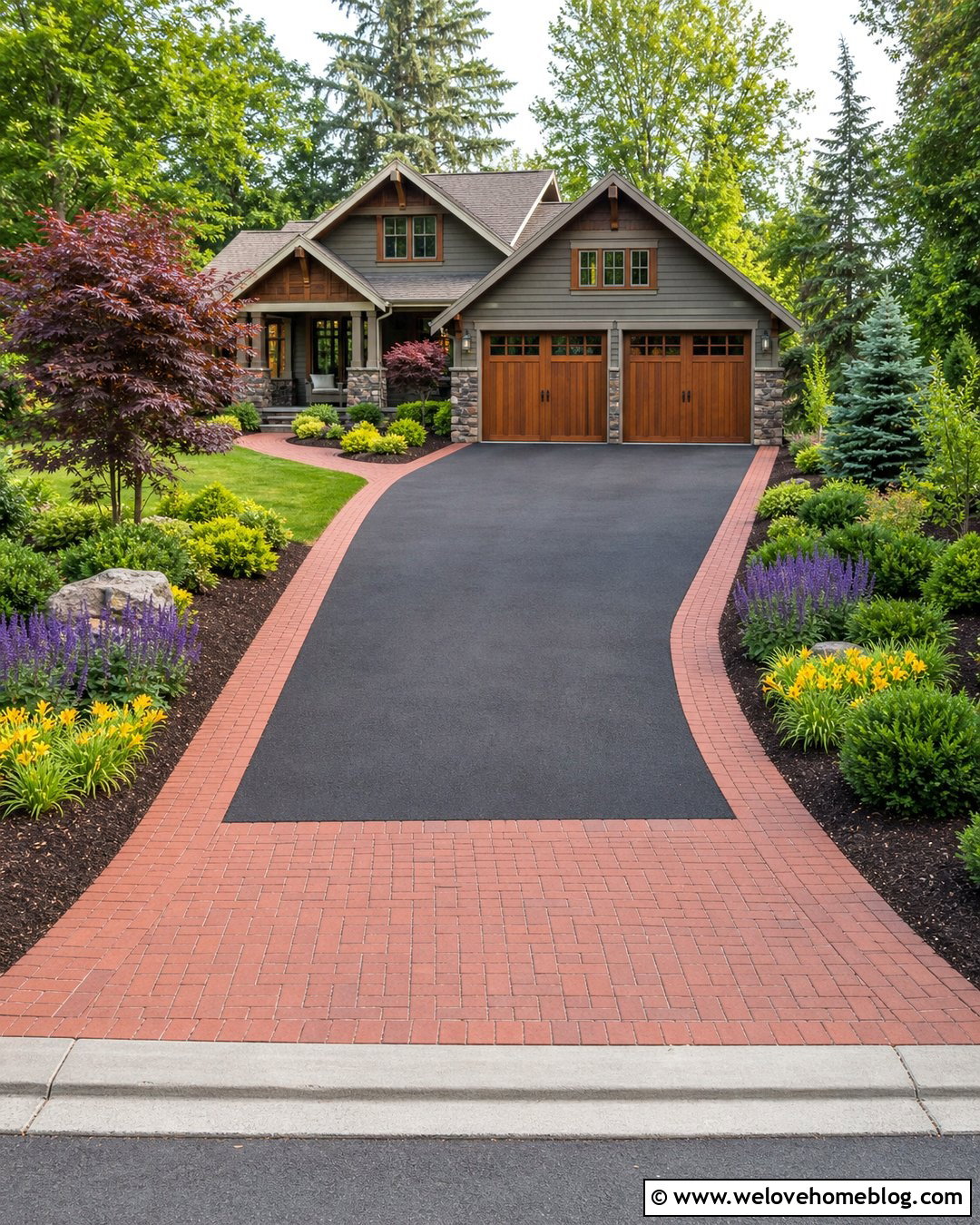
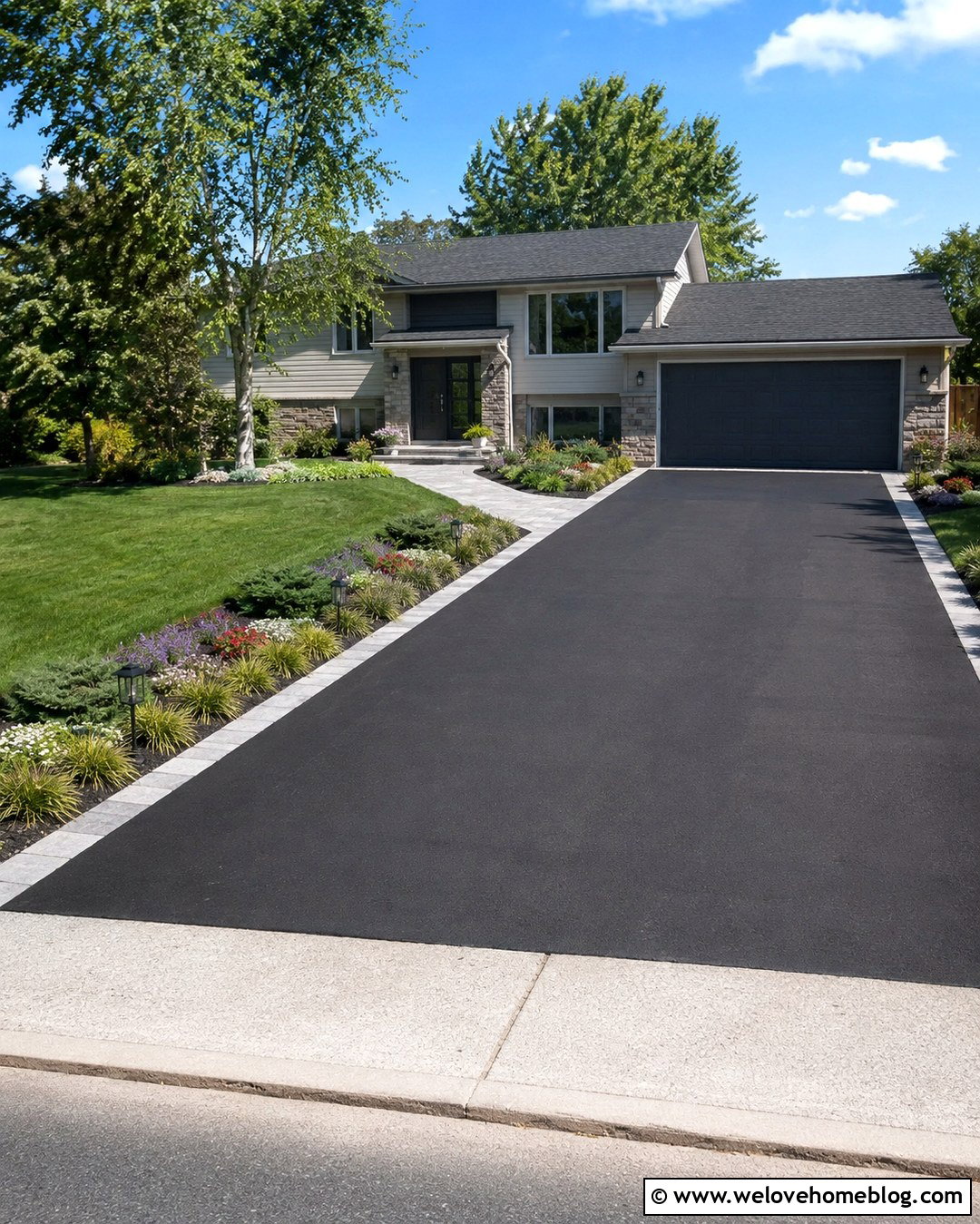
Black asphalt gains definition when a red or charcoal brick ribbon runs along its perimeter. A straight driveway with a wider brick apron at the street creates an especially finished entrance. Beyond the edging, install sweeping mulch beds planted with compact evergreen shrubs, salvia, daylilies, and one ornamental tree near the house. Repeat the brick around the front walkway or porch steps to connect the hardscape materials. Curved planting beds can soften the strong lines of the dark surface without taking away valuable parking room. Select plants that tolerate reflected heat, road salt, and occasional snow storage where needed. The result is practical, affordable, and adaptable to ranch, craftsman, colonial, and suburban homes with traditional exterior details.
4. Paver Driveway With Hydrangea Beds
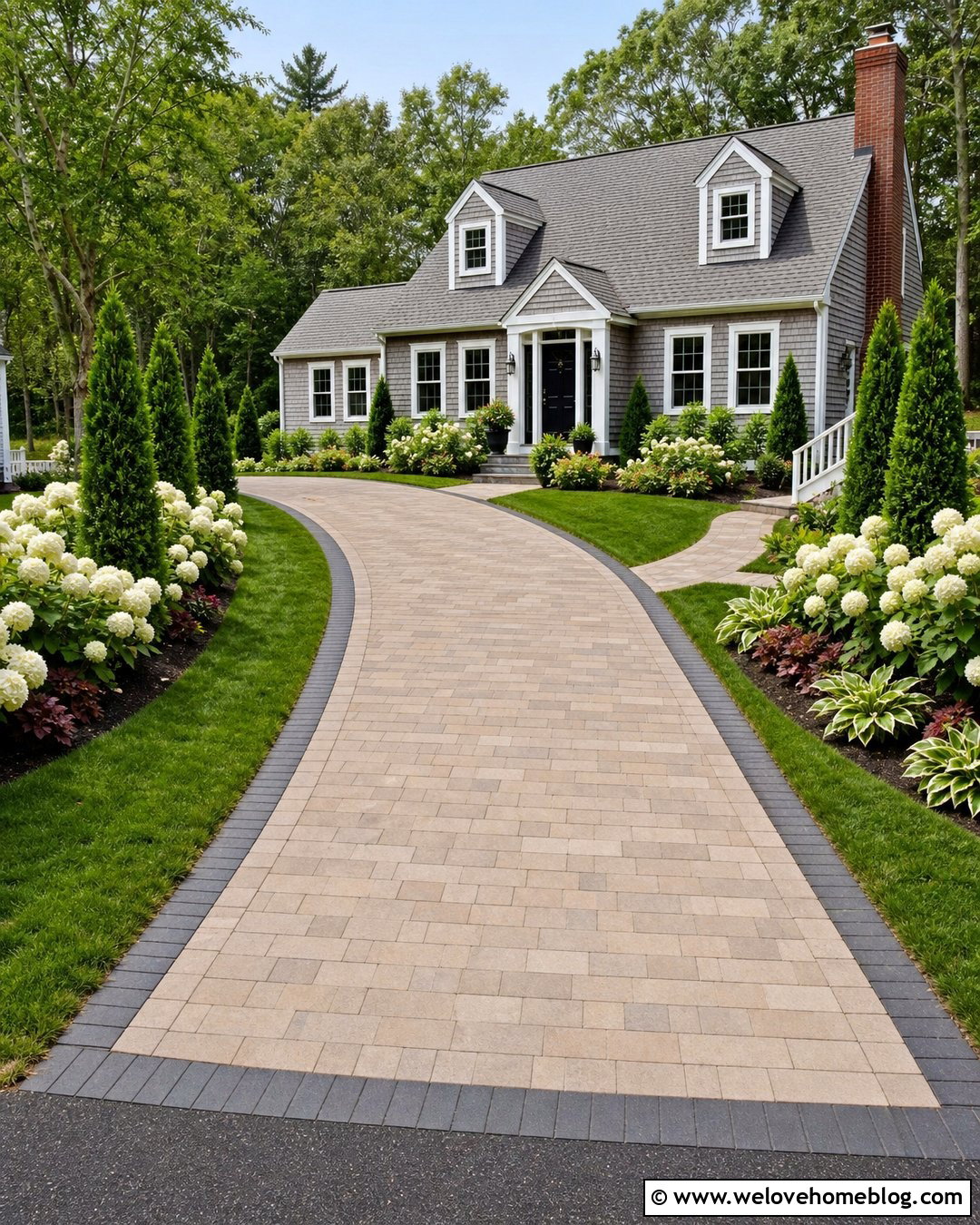
A driveway made from concrete pavers can become an elegant garden approach when broad hydrangea beds soften its sides. Choose neutral taupe or gray pavers in a running-bond pattern and add a darker soldier-course border. Shape the driveway with a subtle curve toward the garage, then echo that curve in the planting beds. Place hydrangeas farther from the pavement so their mature flowers do not brush vehicles. Fill the front edge with compact hostas, coral bells, or shade-tolerant ground covers. Upright evergreens near the garage add winter structure after the flowers fade. This layered design is particularly attractive beside Cape Cod, craftsman, and traditional homes. Match the front walkway to the driveway border for a unified, professionally planned appearance.
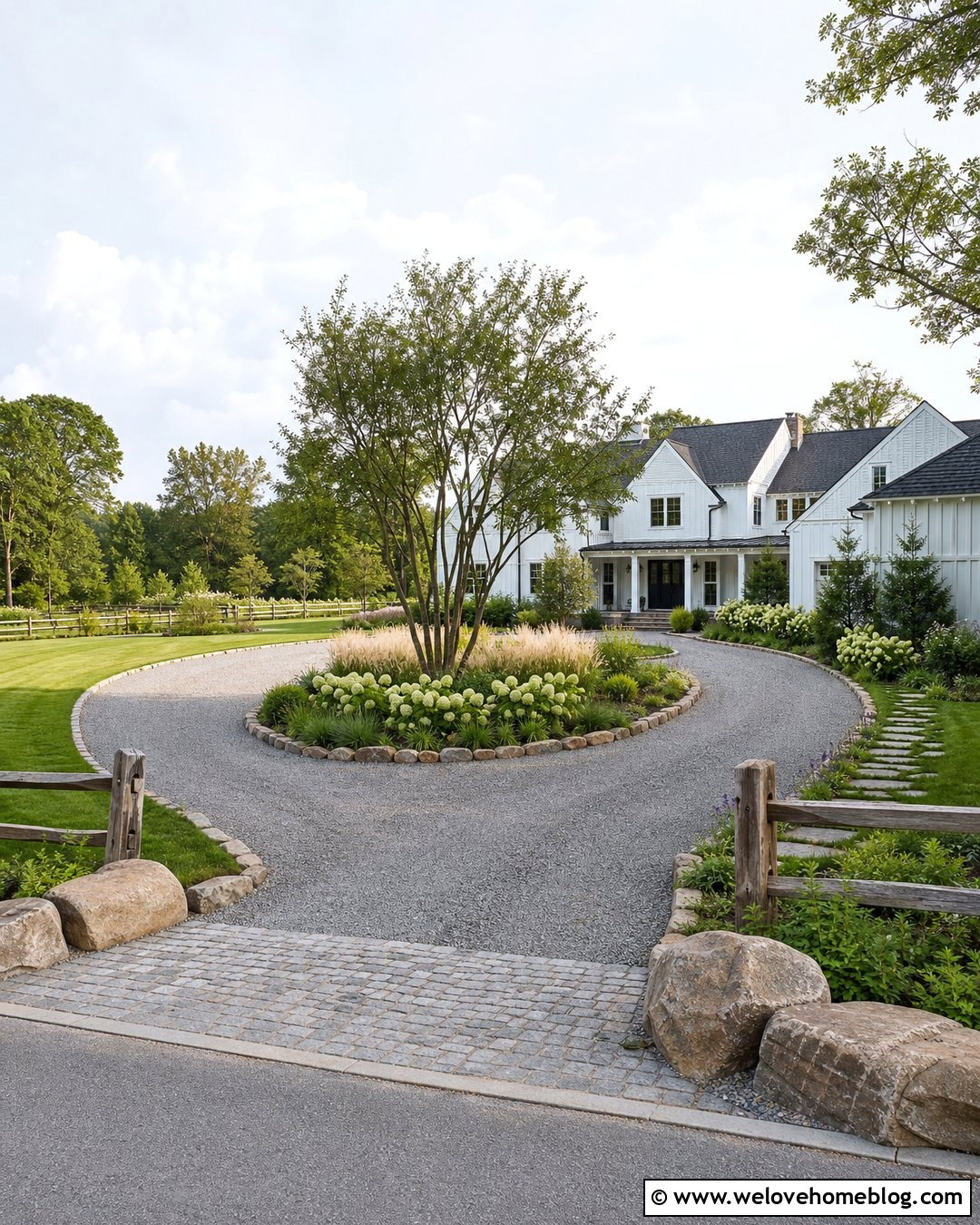
5. Circular Driveway With Center Island
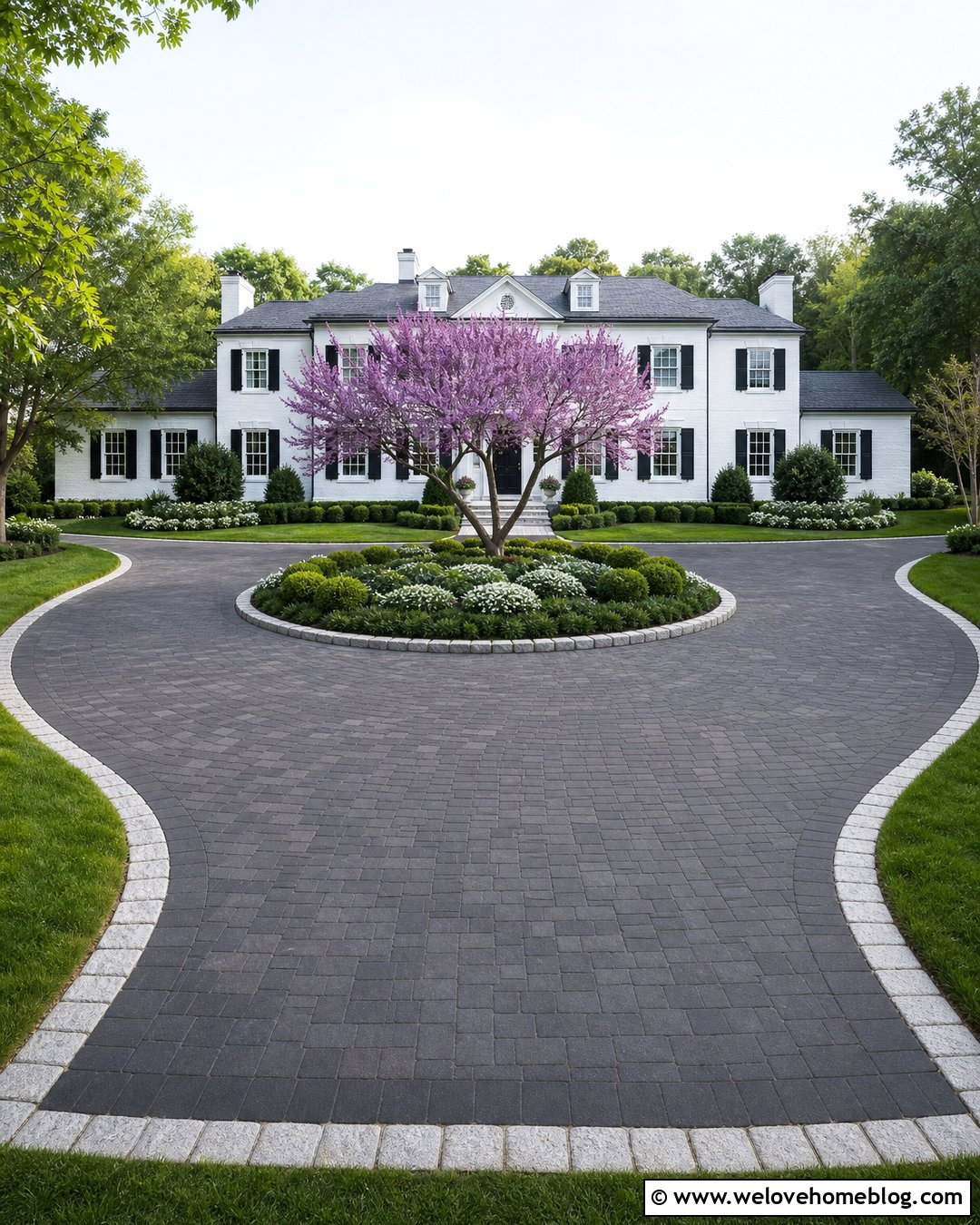
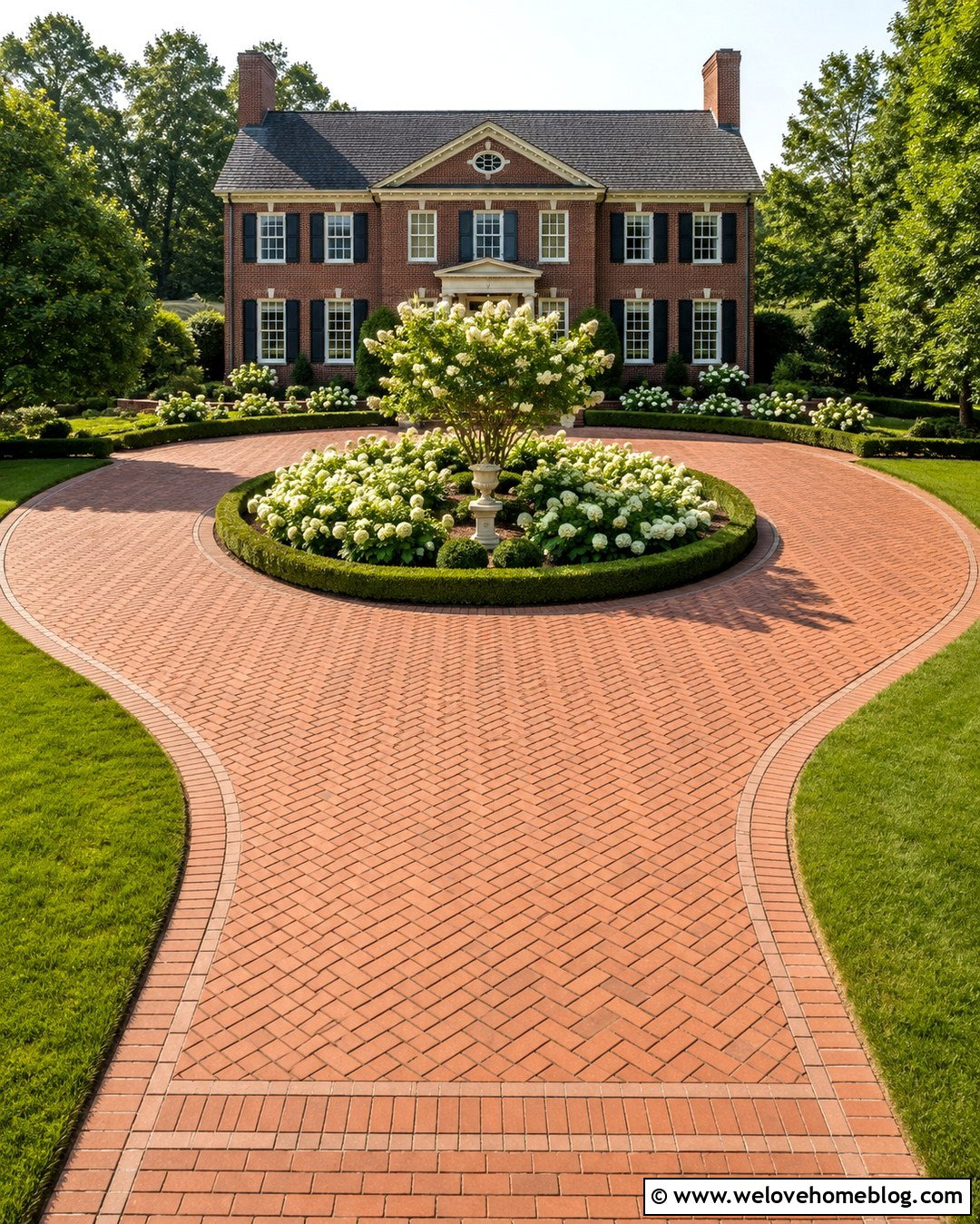
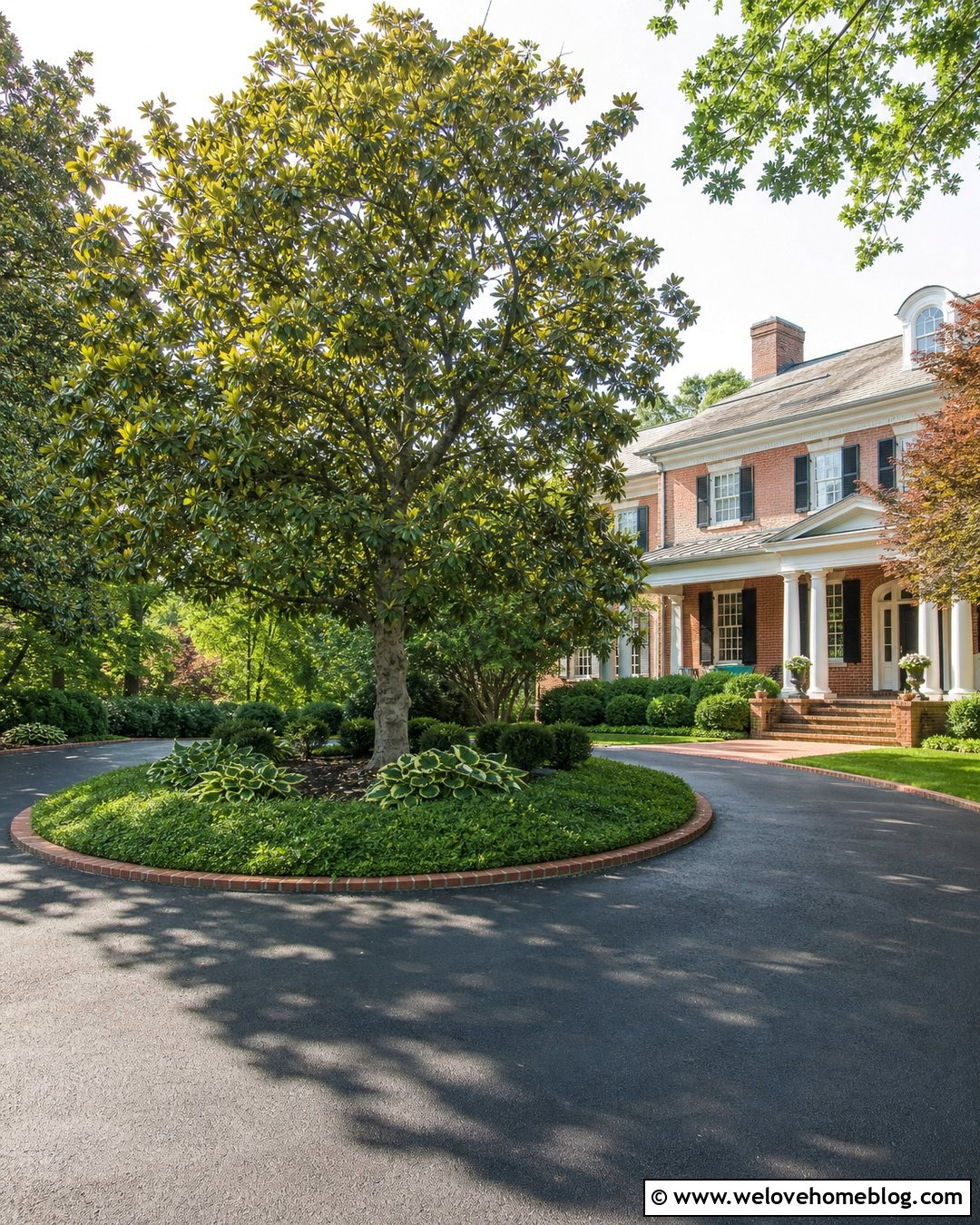
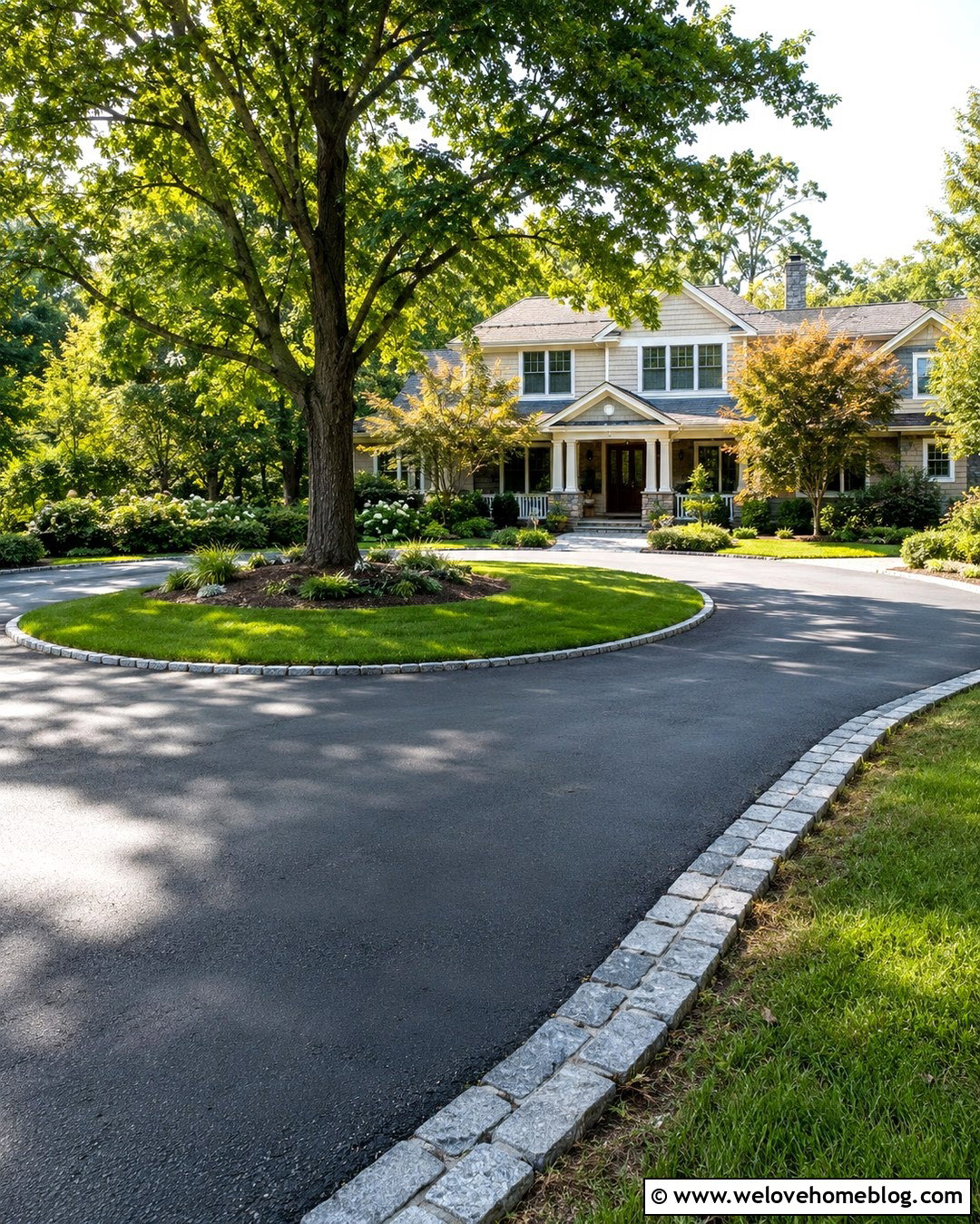
A landscaped center island turns a circular driveway into an organized and memorable entrance. Surround the island with a durable cobblestone curb that keeps soil and mulch off the driving surface. In the center, plant one appropriately sized specimen tree, such as a redbud, serviceberry, or compact Japanese maple. Add low evergreen shrubs, seasonal perennials, and ground cover beneath it rather than tall plants that could block sightlines. The driveway itself may use asphalt, pavers, concrete, or compacted gravel, depending on the home. Repeat one island plant near the front entrance to connect the areas visually. Irrigation, drainage, and mature tree size should be planned before planting. A balanced island gives large front yards structure without making the arrival feel crowded.
6. Modern Driveway With Ornamental Grasses
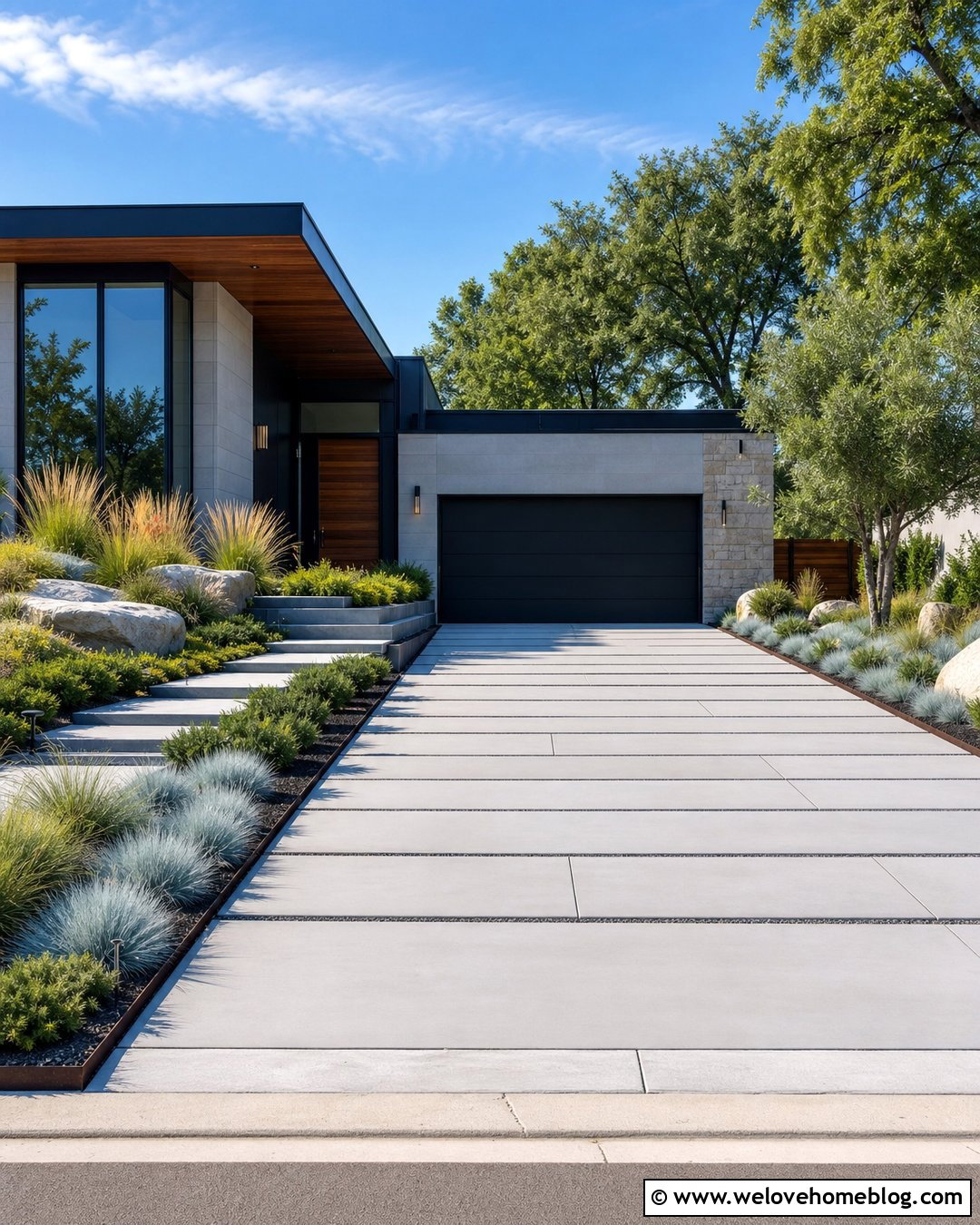
Large-format concrete pavers and orderly ornamental grasses create a crisp driveway for a modern home. Use rectangular charcoal or pale gray pavers in a straight layout, with narrow gravel joints or dark metal edging. Along one side, plant repeated clumps of feather reed grass, blue fescue, or another noninvasive grass suited to the local climate. Balance the grasses with low evergreen mounds and a few sculptural boulders. Keep the planting palette limited so the strong geometry remains clear. A linear walkway and simple low-voltage bollard lights can continue the modern appearance toward the entrance. Leave enough distance between plants and pavement to prevent mature foliage from flopping into the driveway. This restrained landscape provides movement and softness without looking informal or overfilled.
7. Farmhouse Driveway With Split Rail Fence
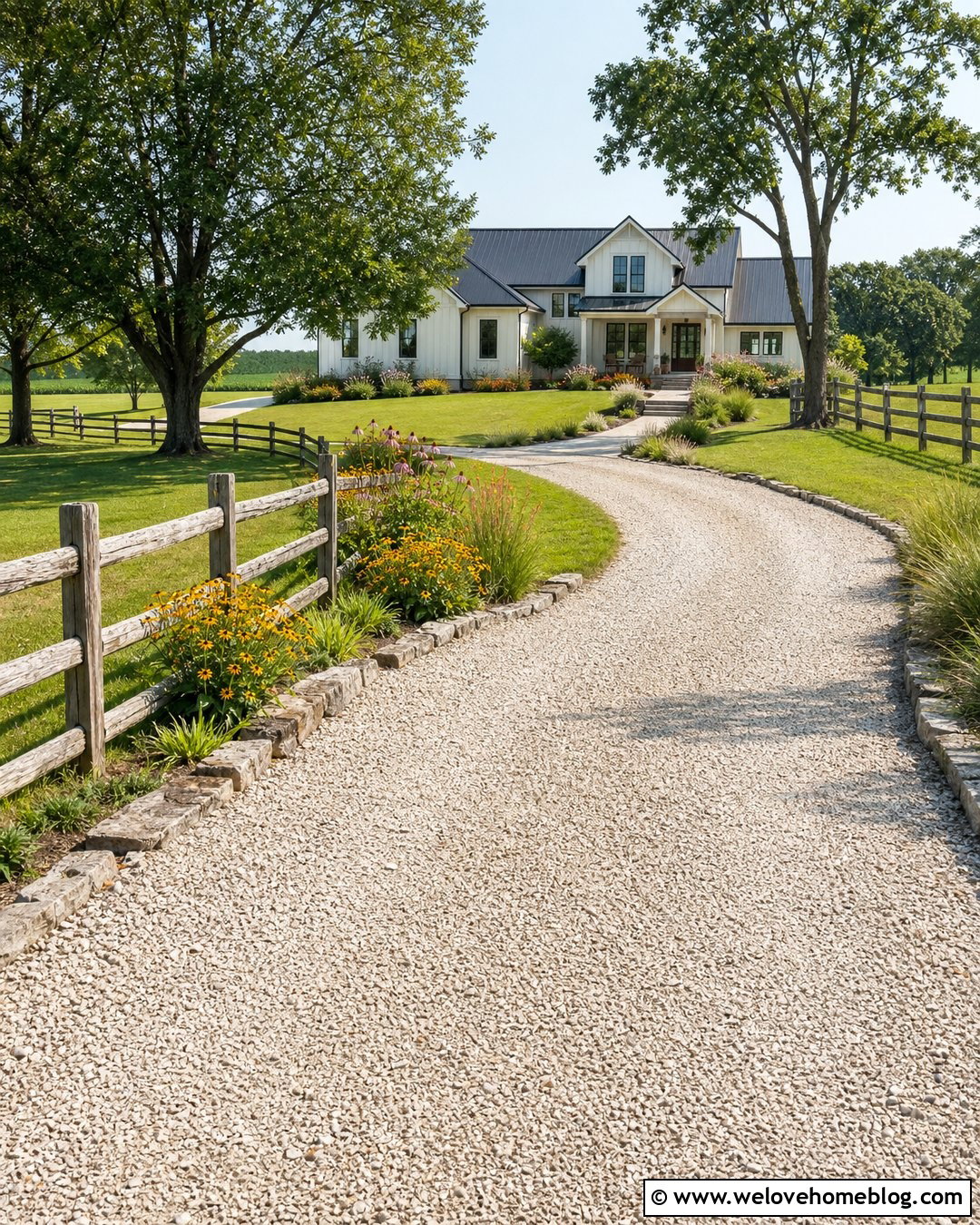
A pale gravel driveway bordered by a split rail fence creates a welcoming farmhouse approach. Follow the natural contours of the yard with a gradual curve rather than forcing a perfectly straight line. Set the fence several feet beyond the gravel edge so there is room for drainage and snow removal. Between the driveway and fence, plant loose drifts of native grasses, black-eyed Susans, coneflowers, and low shrubs. Timber or weathered stone edging helps contain the gravel while maintaining the rustic character. Near the house, transition to tidier foundation beds and a brick or flagstone walkway. Repeating fence posts, meadow plants, and warm gravel tones makes the entire property feel connected. Keep entrance planting low to maintain an open view of the road.
8. Driveway With Native Plant Borders
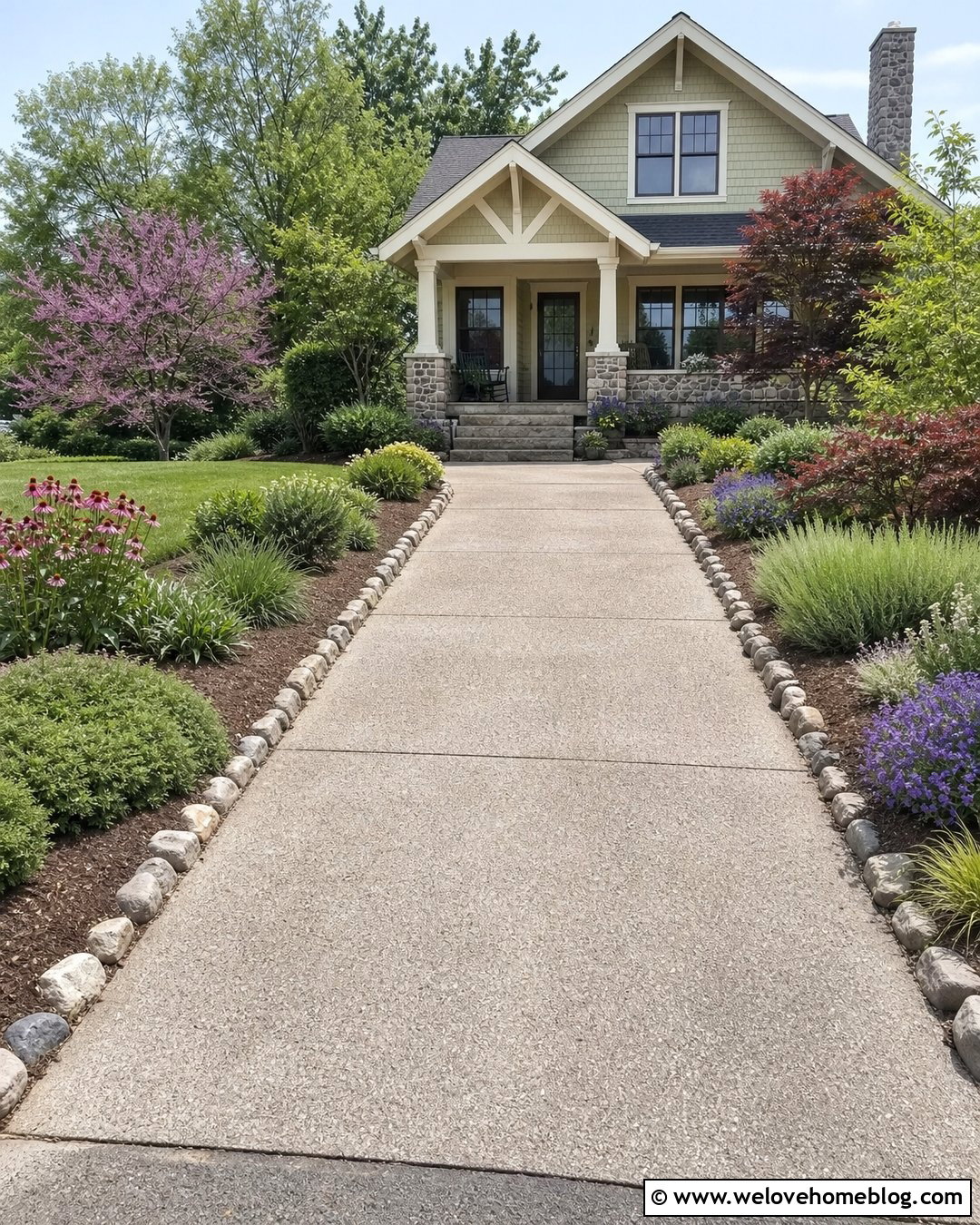
Native planting can transform a conventional driveway into a resilient landscape that feels connected to its region. Start with a simple concrete or asphalt surface and define the edges using local stone, brick, or weathering steel. Arrange plants in broad repeating groups instead of mixing many isolated varieties. Use low ground covers near the pavement, medium grasses and flowering perennials behind them, and compact shrubs at the back. Select species based on local rainfall, winter conditions, soil, and sunlight rather than appearance alone. Leave a setback where doors open and tires may occasionally cross the edge. A curved bed shape helps soften a straight driveway and gives the planting room to expand. This approach can suit modern, cottage, craftsman, and ranch homes.
9. Driveway With River Rock Drainage Beds
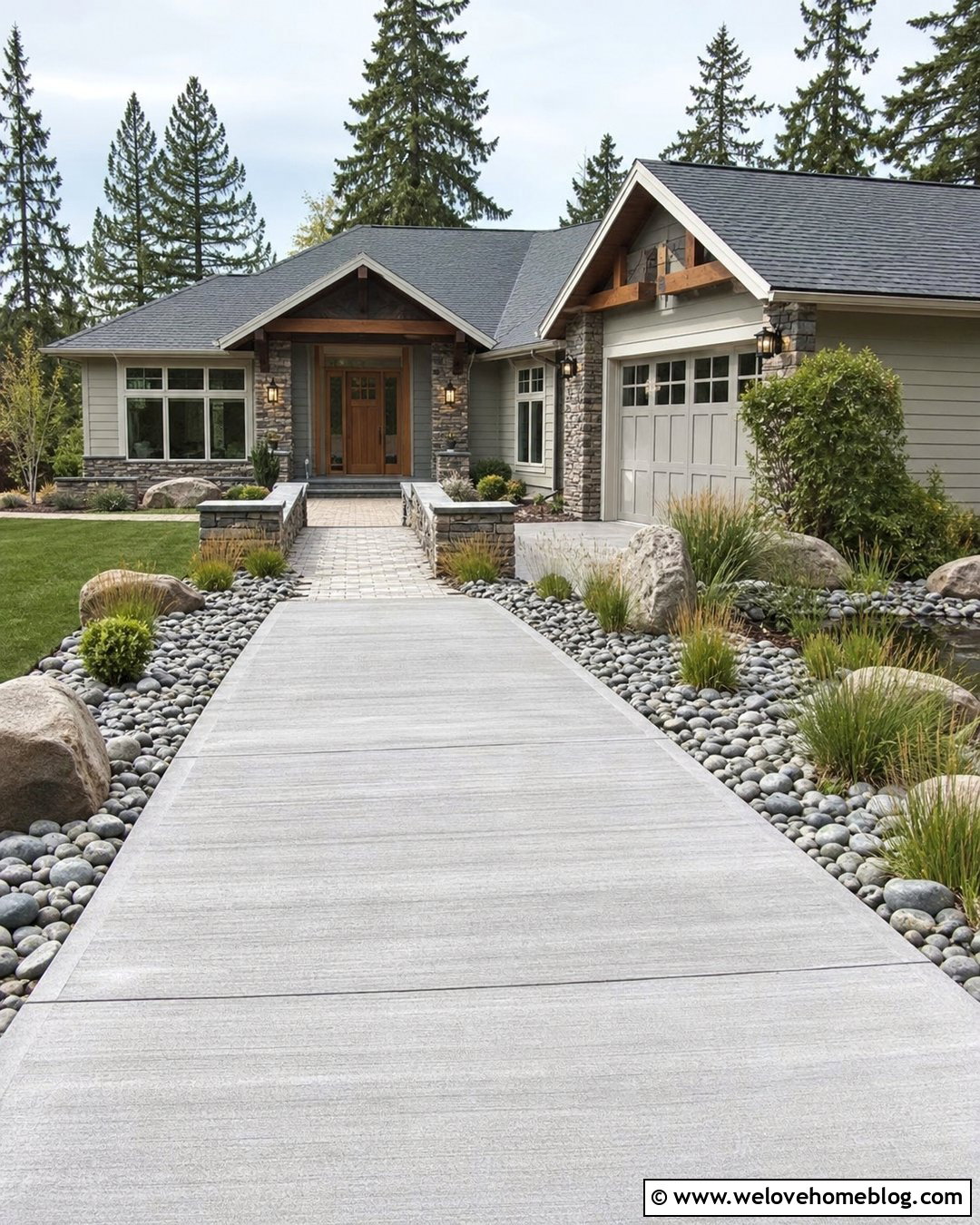
River rock beds can manage runoff while creating a clean transition between the driveway and lawn. Pair a broom-finished concrete driveway with shallow stone channels along one or both sides. Use mixed gray river rock over a properly prepared drainage layer, then punctuate the beds with moisture-tolerant sedges, rushes, dwarf shrubs, or upright ornamental grasses. Larger boulders placed at intervals keep the design from looking like a narrow strip of loose stone. Connect the channel to an approved drainage destination rather than directing water toward a neighboring property or foundation. A bridge-like paver walkway can cross the rock bed near the front entrance. This complete design fits contemporary, desert-inspired, craftsman, and woodland homes while making a necessary drainage feature visually intentional.
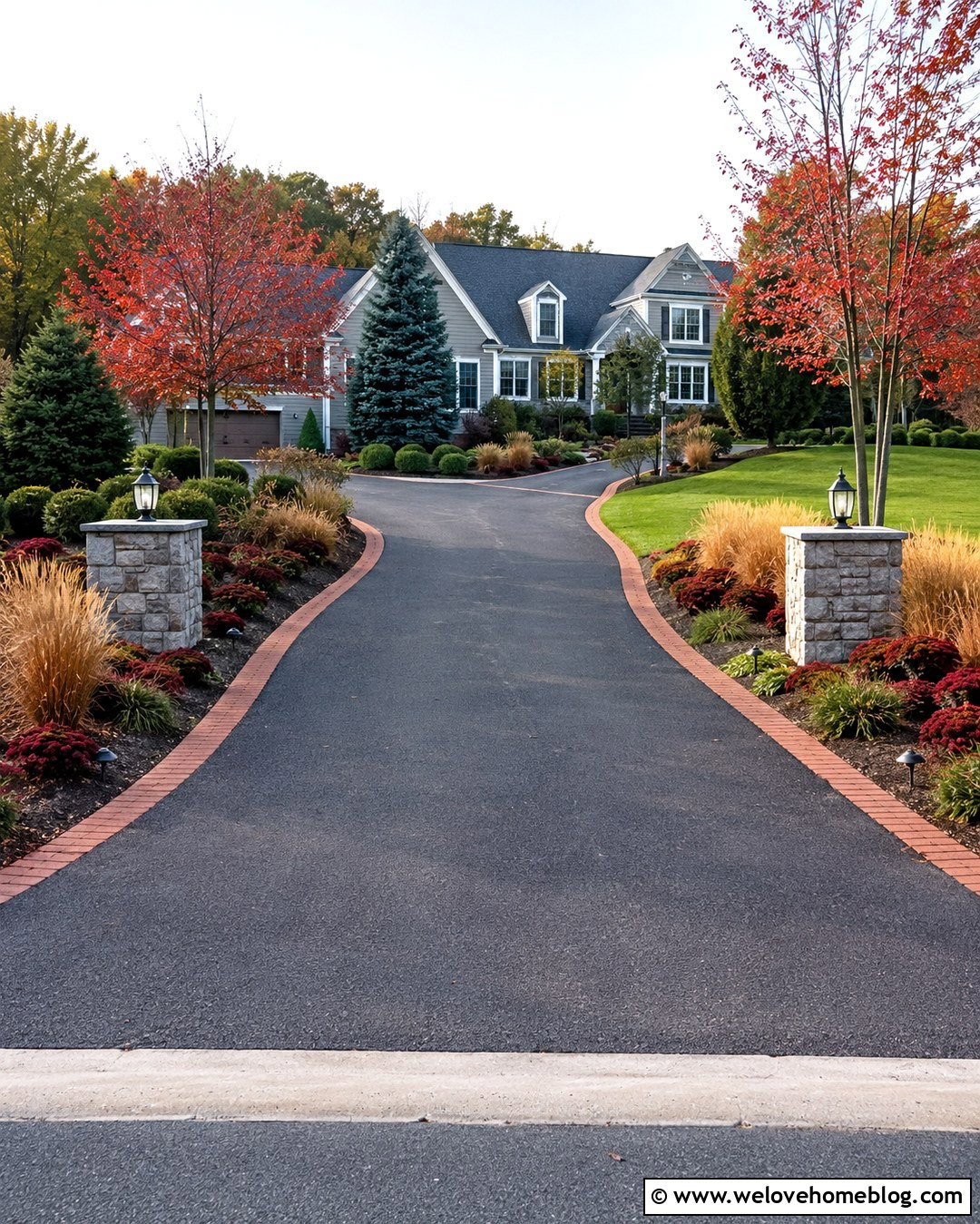
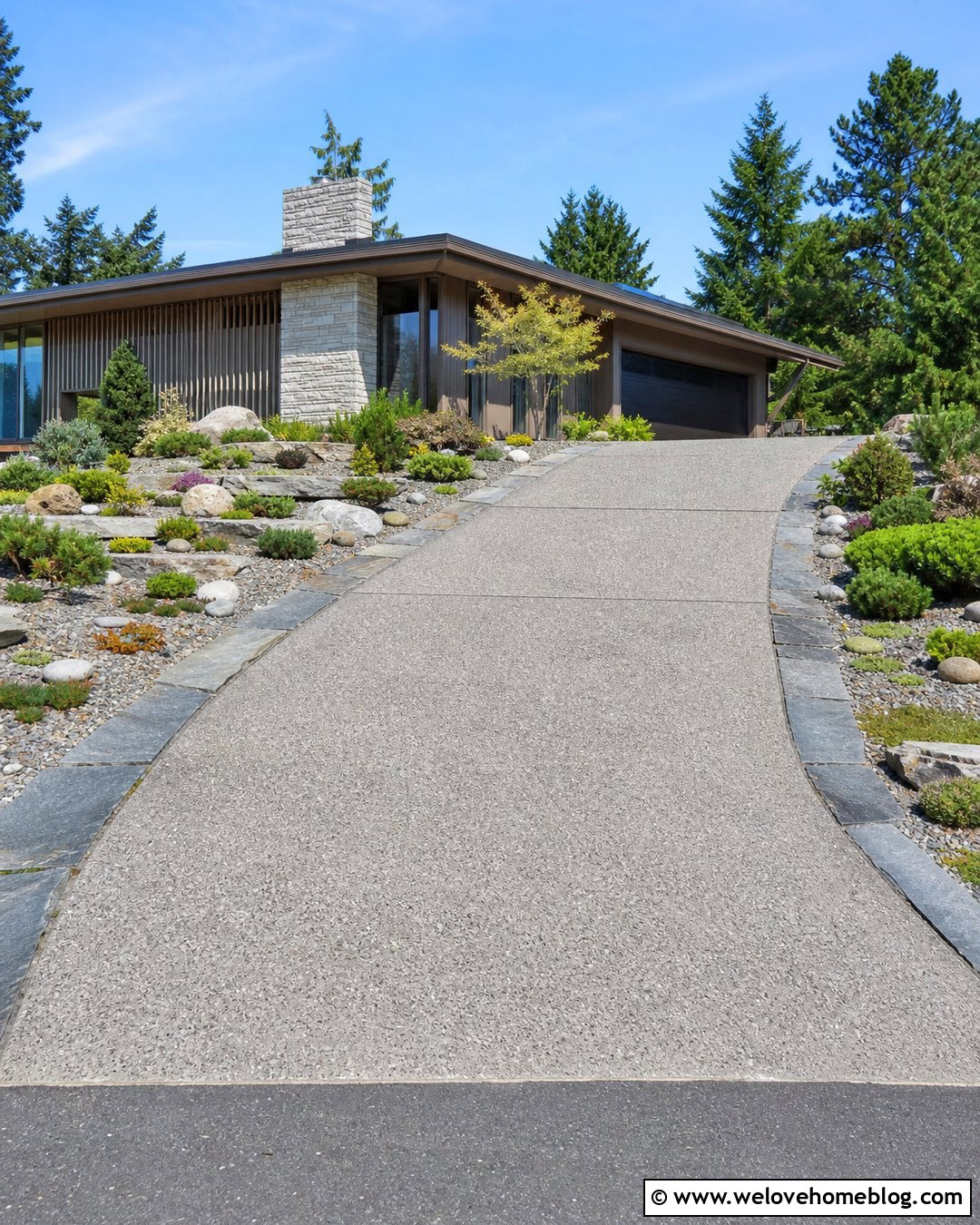
10. Driveway With Low Flower Borders
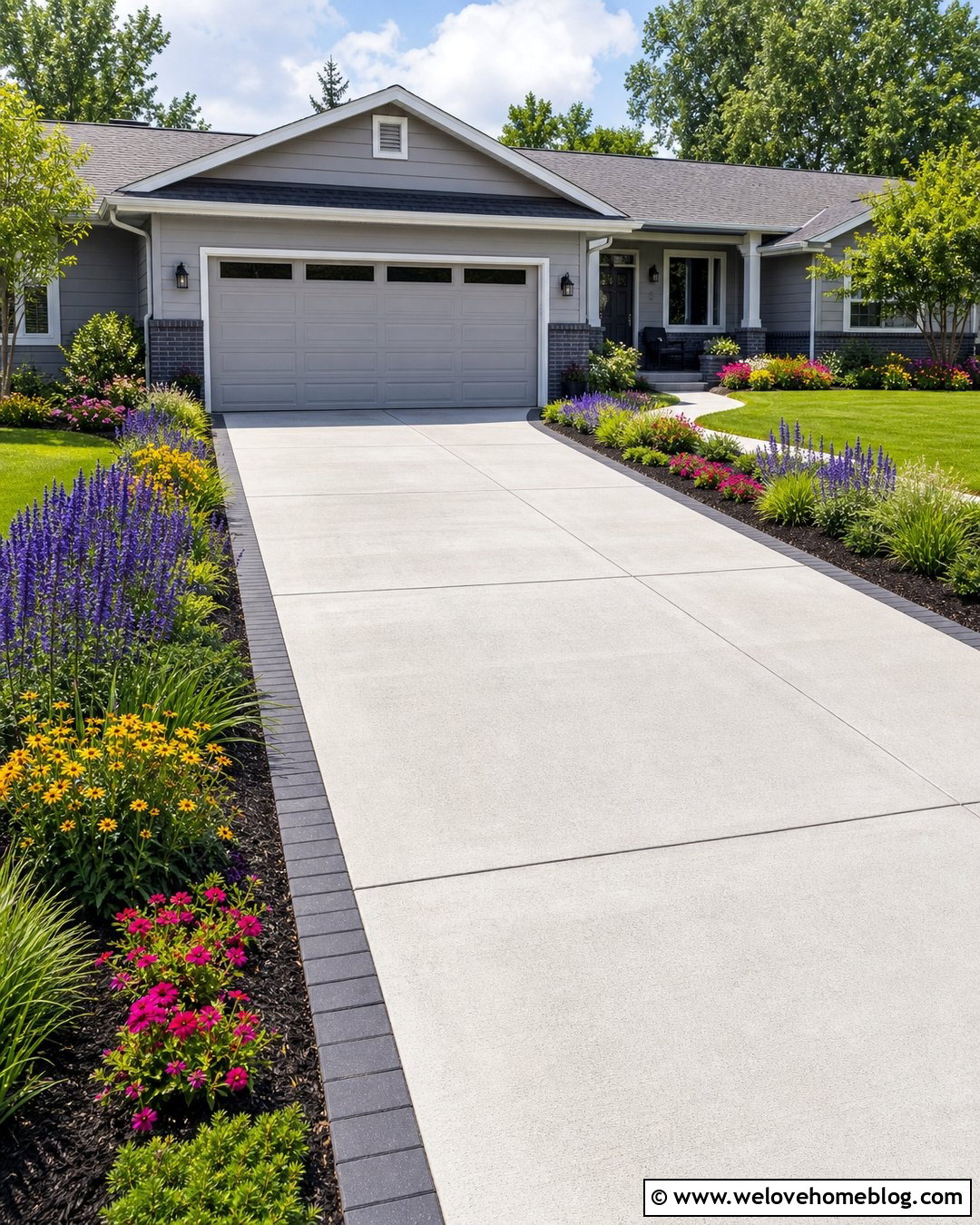
A low flower border adds seasonal color without hiding the driveway or making vehicle access difficult. Use light gray poured concrete or neutral pavers and define the planting edge with a flush brick ribbon. Choose compact flowers that remain below roughly knee height, placing the shortest plants closest to the pavement. Repeating groups of salvia, coreopsis, dianthus, catmint, and small ornamental grasses create a more organized appearance than scattered single plants. Include evergreen ground cover so the beds retain structure outside the main flowering season. A gently curved border can widen near the house and narrow toward the street. Keep flowers away from areas used for snow piles or frequent passenger exits. The finished look feels bright, approachable, and suitable for many suburban homes.
11. Long Driveway With Tree-Lined Borders
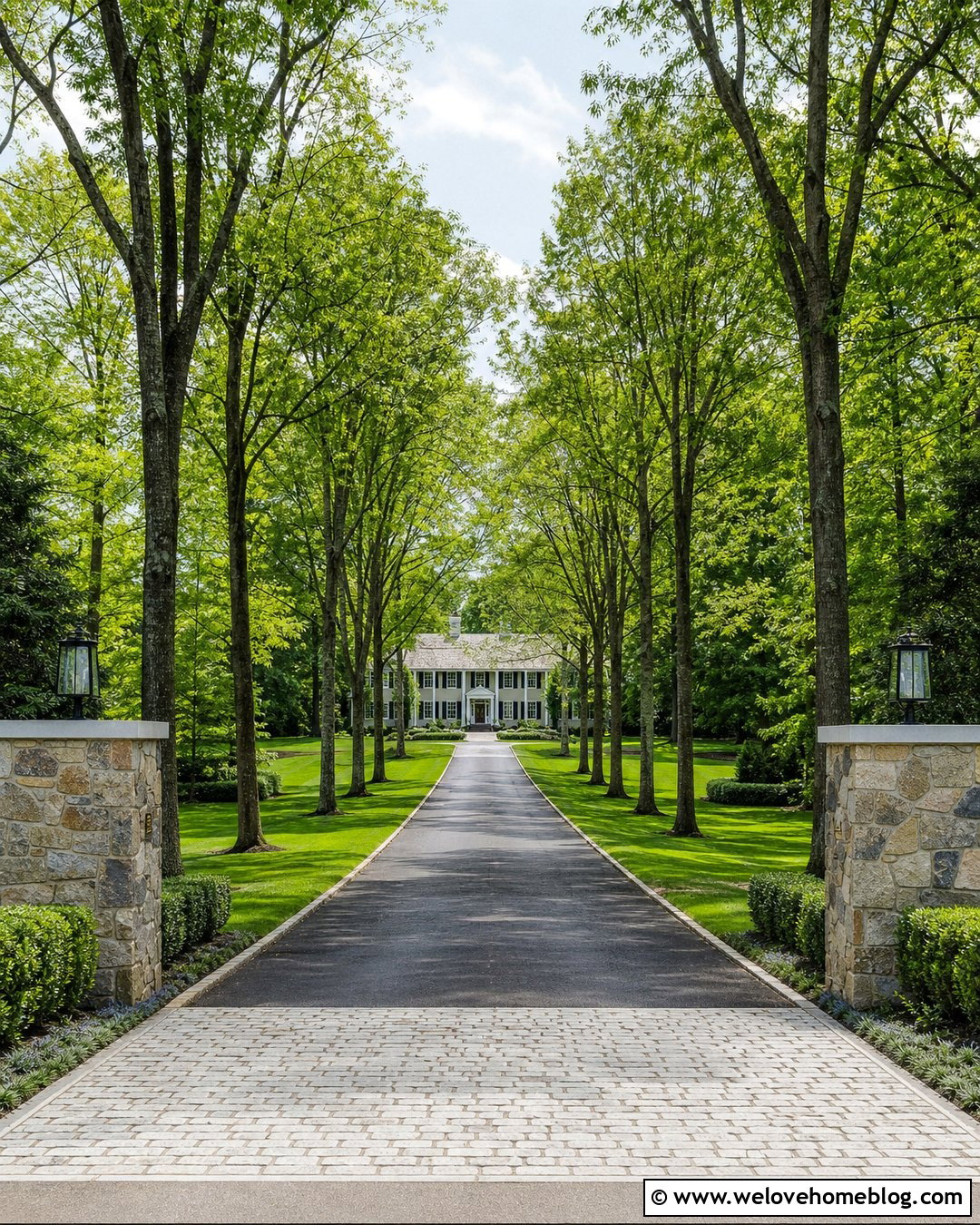
A long driveway gains rhythm and scale from evenly spaced trees along both sides. Choose a durable surface such as asphalt, compacted gravel, or concrete pavers, then leave generous planting strips beyond the driveway shoulders. Select trees with upright growth, dependable structure, and mature roots that will not overwhelm the paving. Place them far enough back for branches, maintenance equipment, drainage, and snow storage. Low grass or simple ground cover beneath the trees keeps the view calm and emphasizes the repeated trunks. At the house, widen the planting into larger beds with shrubs and perennials. Low entry pillars or a stone apron can mark the beginning of the drive. This classic arrangement suits large rural, colonial, farmhouse, and estate-style properties.
12. Small Driveway With Narrow Planting Strips
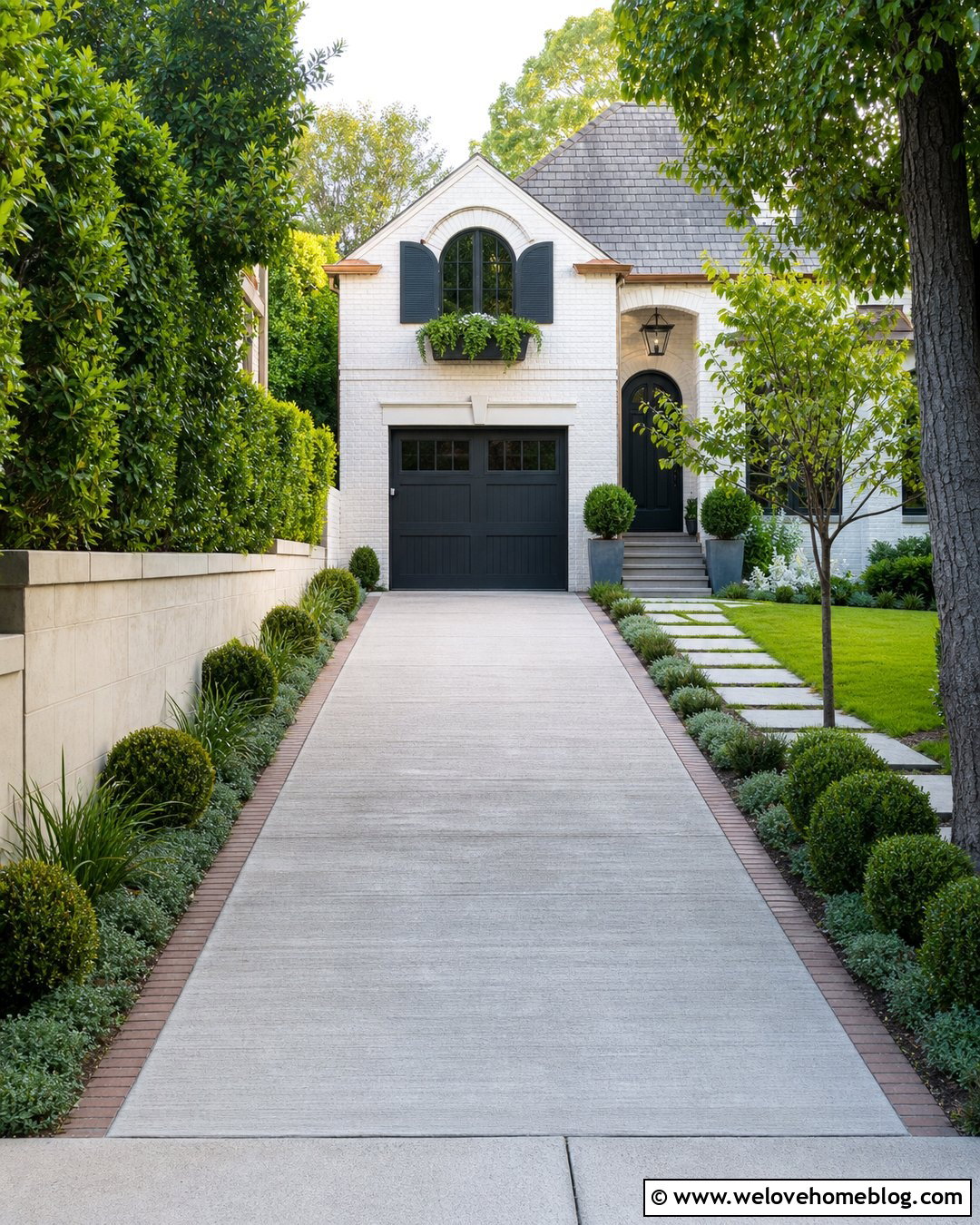
Even a compact driveway can include greenery when every inch has a purpose. Choose a light concrete surface that visually opens the space, then install narrow flush edging along the sides. Plant compact, upright species that will not spread across vehicle doors or reduce the usable width. Dwarf grasses, small sedges, creeping thyme, liriope, and clipped evergreen mounds can fit into shallow beds. Use one consistent plant repeated down the strip instead of many competing varieties. A matching stepping-stone path can connect the driveway to the front door without requiring another broad paved area. Where planting is impossible, use slim planters near the garage. Keep sightlines clear and avoid thorny shrubs. The result feels landscaped while remaining practical for tight urban and suburban lots.
13. Curved Driveway With Layered Shrubs
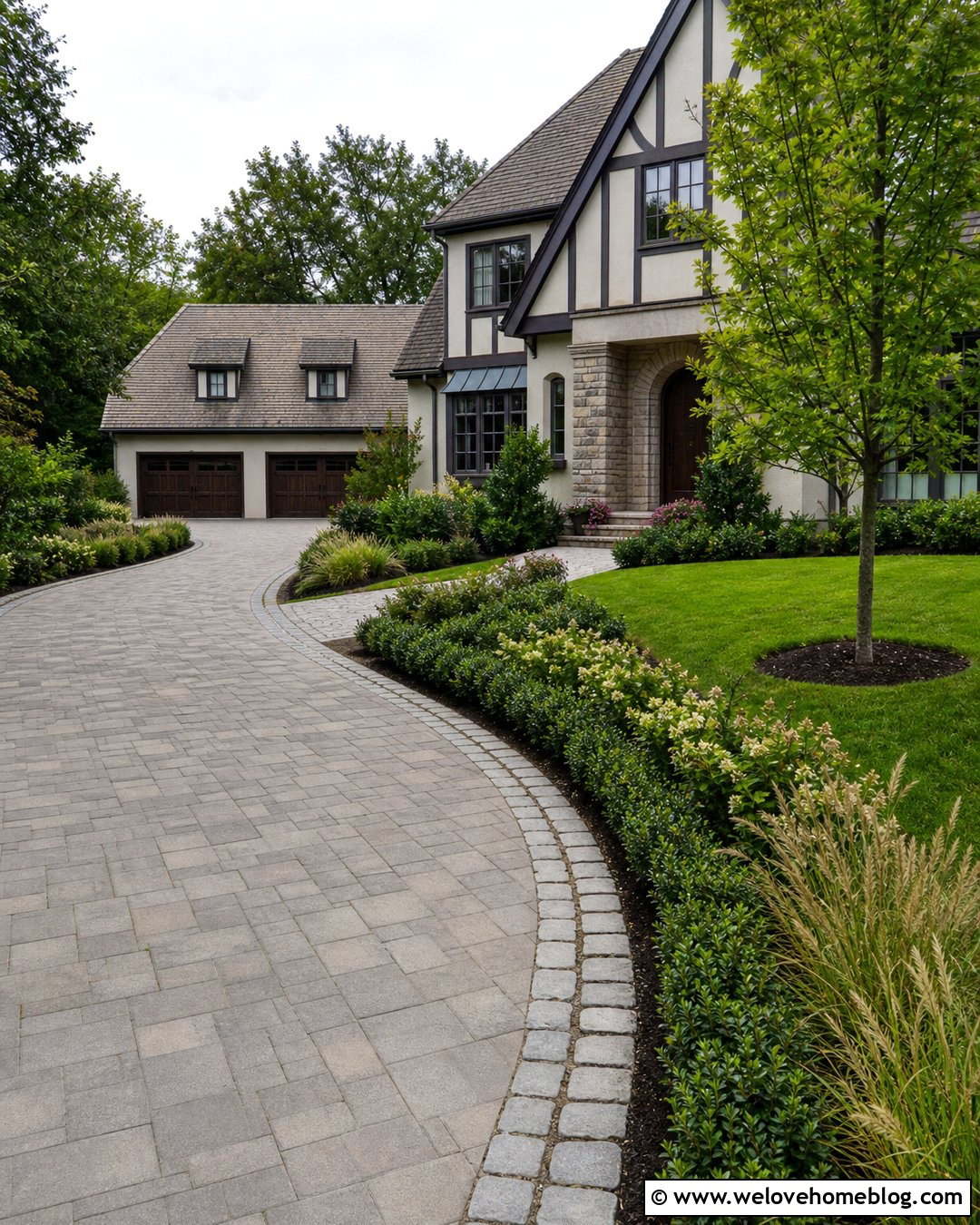
A curved driveway already has movement, and layered shrub beds can emphasize that graceful shape. Use warm-toned concrete pavers, asphalt with a stone border, or fine gravel held by cobblestone edging. Follow the outer curve with low evergreen shrubs, placing taller flowering varieties farther back. Groups of dwarf inkberry, spirea, viburnum, and ornamental grasses can provide changing height and texture. Avoid placing tall shrubs on the inside curve where they could limit driver visibility. A specimen tree near the final turn can frame the house without hiding it. Repeat the driveway edging around the front walkway and beds to unify the hardscape. This design works best when each layer follows the same broad curve rather than forming small, disconnected planting pockets.
14. Driveway With Cobblestone Garden Edging
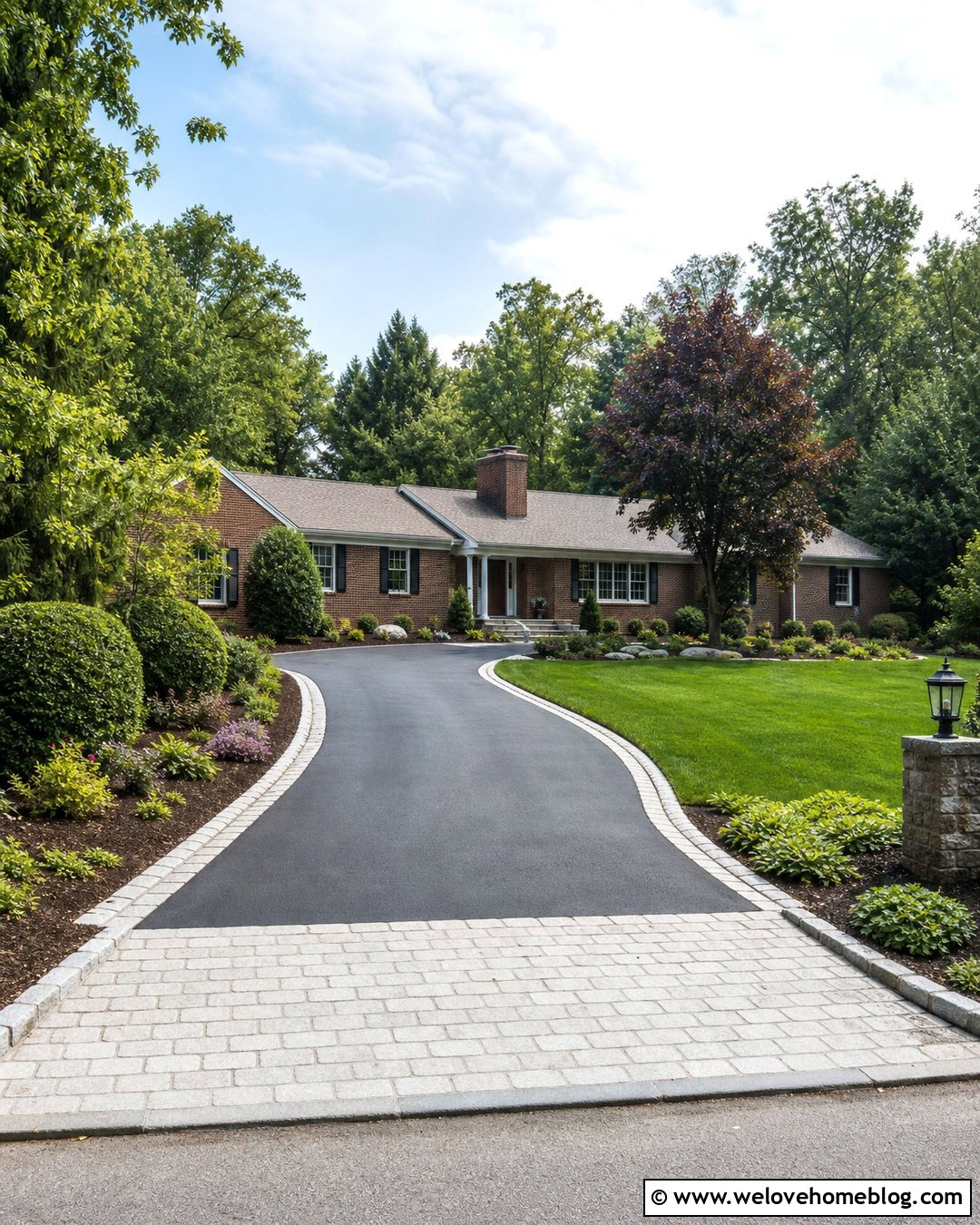
Cobblestone edging provides a durable boundary that suits gravel, asphalt, concrete, and paver driveways. For a balanced design, set a single or double row of granite cobbles beside a straight or softly curved surface. Create mulched planting beds outside the stone and fill them with clipped shrubs, hardy perennials, and spreading ground covers. The rugged texture looks especially effective against smooth black asphalt or pale poured concrete. A wider cobblestone apron at the street can make the entrance feel more substantial. Repeat the same stone beside the walkway or around a nearby tree bed. Proper installation is important because loose or uneven cobbles may shift under tires. When the border, plants, and paving share coordinated colors, the driveway looks intentional rather than simply decorated.
15. Driveway With White Flower Landscaping
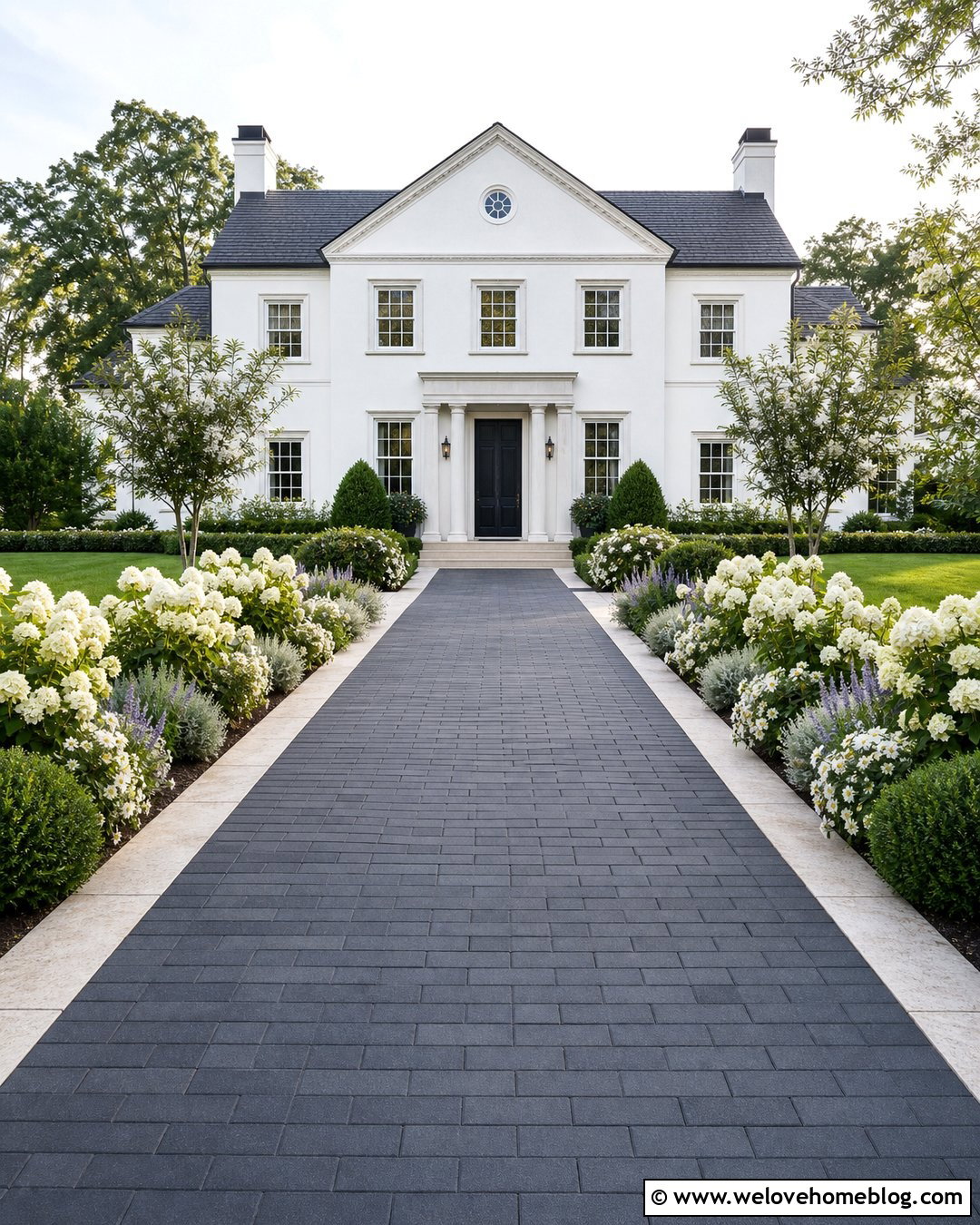
An all-white planting palette creates a calm driveway that looks bright against green foliage and dark paving. Pair a black asphalt or charcoal paver driveway with crisp stone edging and layered beds. Use white hydrangeas, roses, salvia, coneflowers, and low annuals that bloom at different times. Evergreen shrubs and silver foliage maintain structure when fewer flowers are present. Keep the lowest plants beside the drive and reserve larger shrubs for the house end of the beds. White-flowering trees near the lawn can repeat the theme on a larger scale. Avoid relying on one flower that blooms for only a few weeks. With repeated white accents along the entire approach, the composition feels coordinated and elegant without needing a complicated mix of colors.
16. Driveway With Evergreen Landscaping
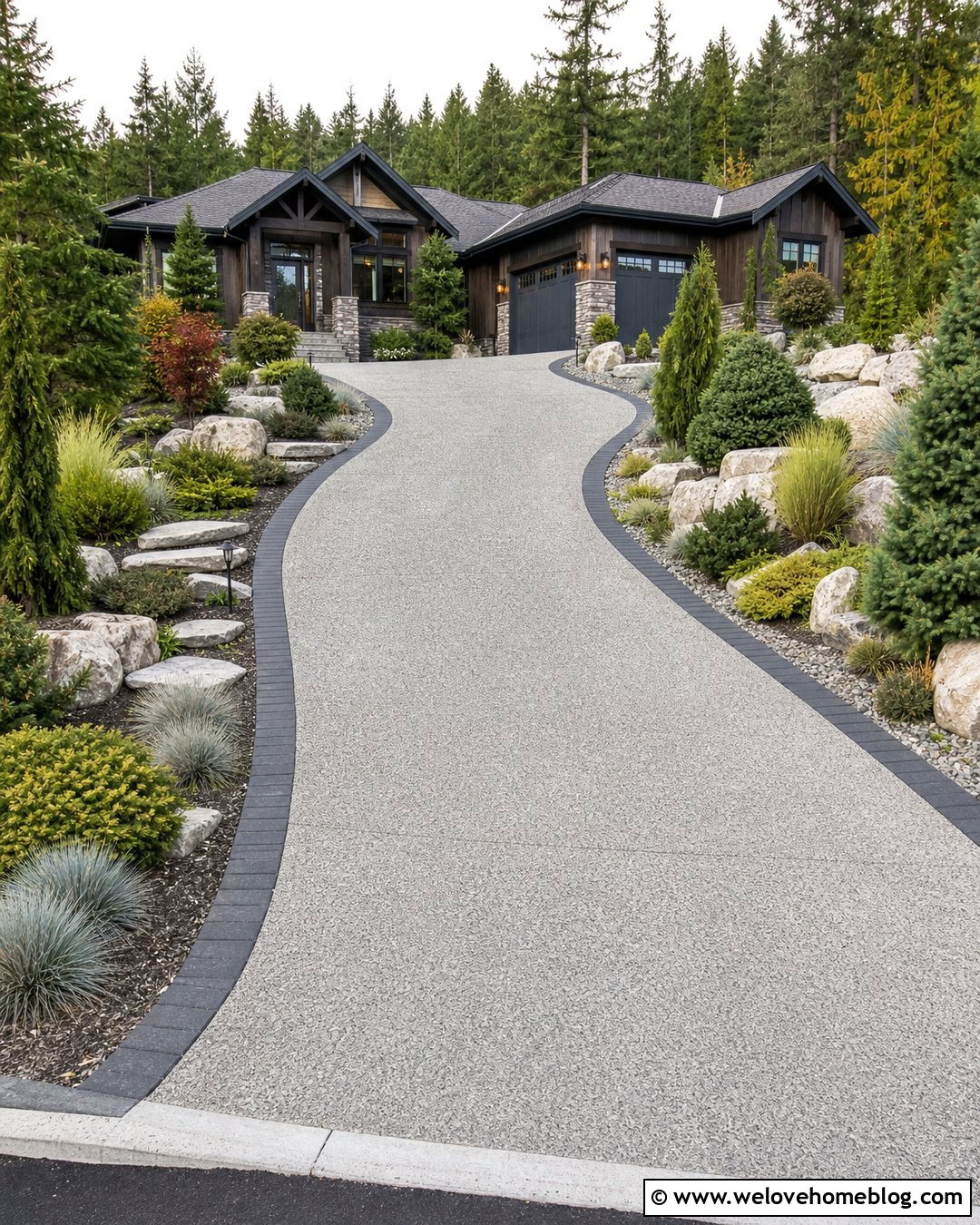
Evergreen landscaping keeps a driveway framed through every season. Choose a neutral exposed-aggregate concrete surface and use dark paver edging to create a defined boundary. Plant a mixture of low spreading junipers, rounded hollies, dwarf conifers, and upright accents, but limit the palette to a few repeated varieties. Varying shapes prevent an evergreen border from looking flat or overly formal. Leave room for each plant’s mature width and maintain clear views near the street. Add a small number of ornamental grasses or flowering perennials for seasonal movement. Mulch or decorative gravel between plants simplifies the ground plane. This design is particularly useful in cold climates and suits ranch, craftsman, mountain, and contemporary homes that need reliable year-round curb appeal.
17. Driveway With Corten Steel Borders
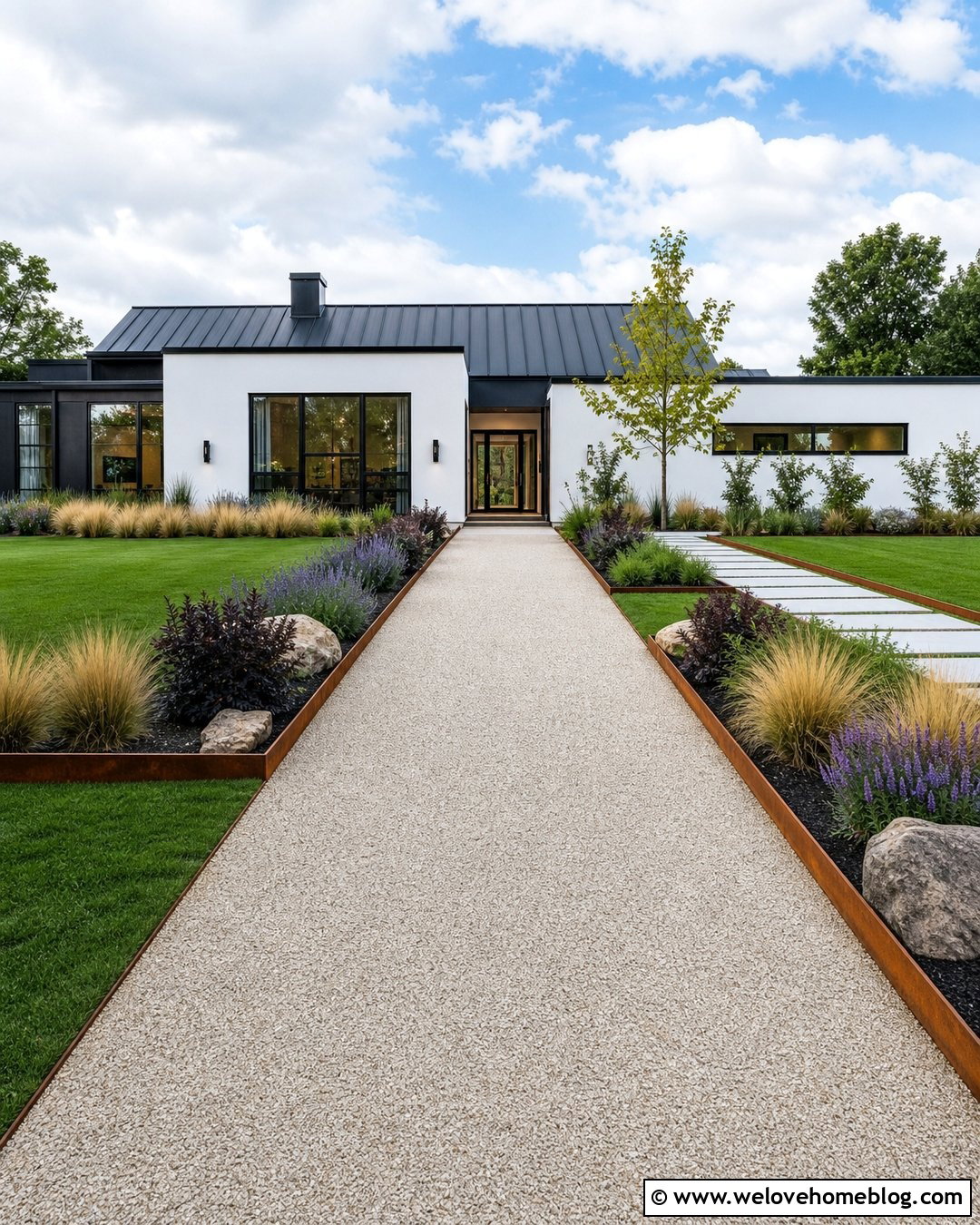
Weathering steel edging gives a modern driveway a thin, precise boundary. Pair it with resin-bound gravel, pale concrete, or rectangular concrete pavers in a straight layout. Outside the steel edge, create broad beds containing ornamental grasses, drought-tolerant perennials, dark-leaved shrubs, and carefully placed boulders. The warm rust tone contrasts attractively with gray pavement and green foliage. Keep the steel high enough to separate materials but low enough to avoid becoming a tripping or tire hazard. Repeat its color through planters, house numbers, or a simple mailbox near the entrance. Straight bed lines reinforce modern architecture, while one sweeping curve can soften a larger yard. This complete look offers strong visual definition without the bulk of a raised masonry curb.
18. Driveway With Cottage Garden Borders
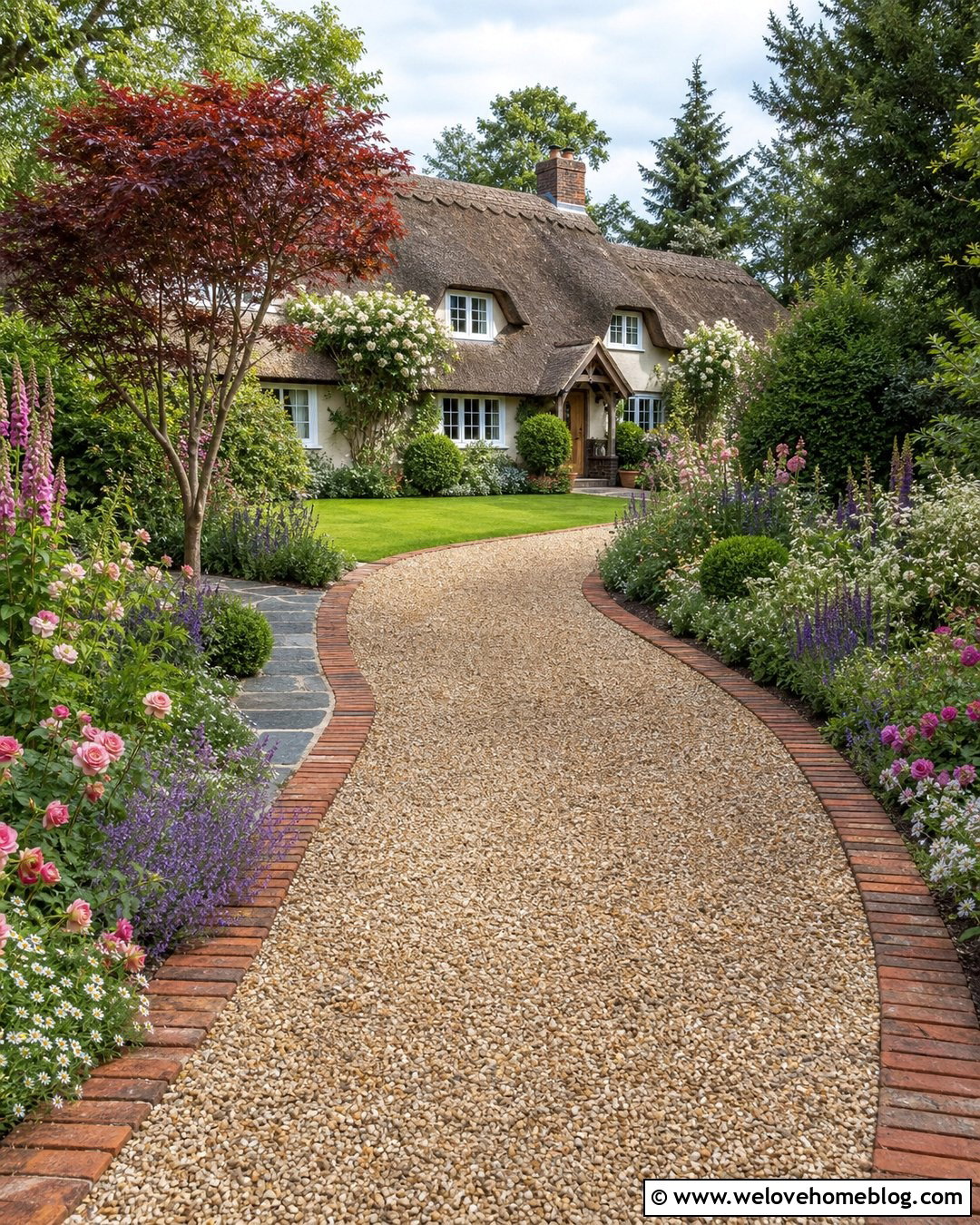
A cottage garden can make a brick or gravel driveway feel as though it has always belonged to the home. Use warm pea gravel or clay brick pavers, edged with reclaimed brick or natural stone. Build generous beds with roses, catmint, salvia, daisies, foxgloves, and compact flowering shrubs. Allow selected ground covers to soften the border, but keep plants from spreading into tire paths. Repeat colors rather than planting one of every variety. Near the entrance, a small flowering tree or vine-covered arbor can create a welcoming focal point. Leave practical open areas beside parking spaces and garage doors. The finished driveway should feel abundant yet navigable, with the planting becoming fuller toward the house and lower near the street.
19. Driveway With Desert Landscaping
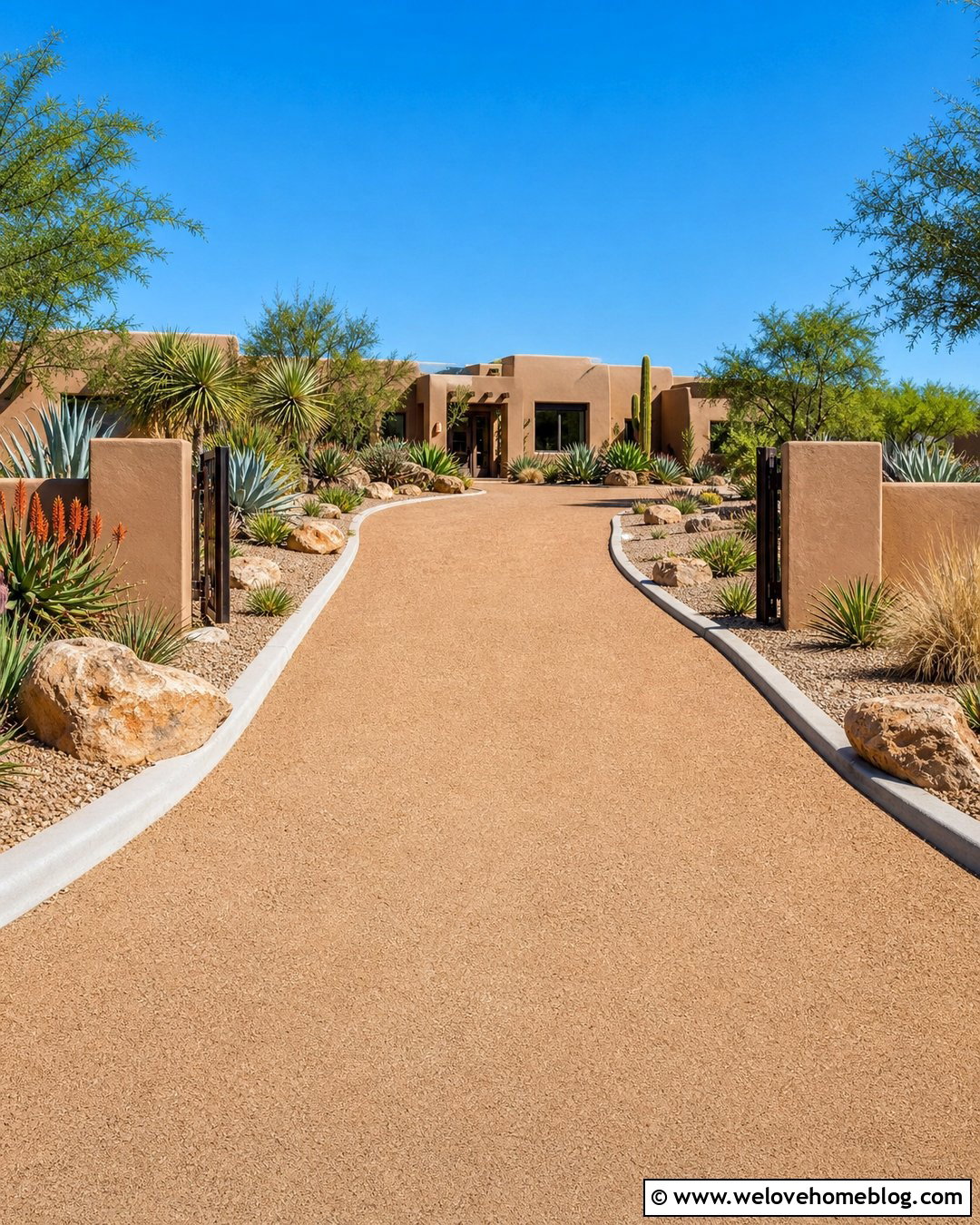
A desert driveway looks cohesive when paving, stone, and drought-tolerant plants share warm regional tones. Choose tan concrete pavers, stabilized decomposed granite, or exposed-aggregate concrete for the driving surface. Define the edges with steel, smooth concrete curbing, or large desert stones. Arrange agave, yucca, desert spoon, aloe, and architectural grasses in spaced groups rather than continuous rows. Gravel mulch reduces bare soil and visually expands the planting beds. Place large boulders near bed centers, away from turning areas and passenger doors. A broad entrance apron and low address monument can complete the composition. Plant selections should match local cold tolerance as well as heat. This low-water look pairs naturally with adobe, Spanish, southwestern, and modern desert homes.
20. Driveway With Tropical Landscaping
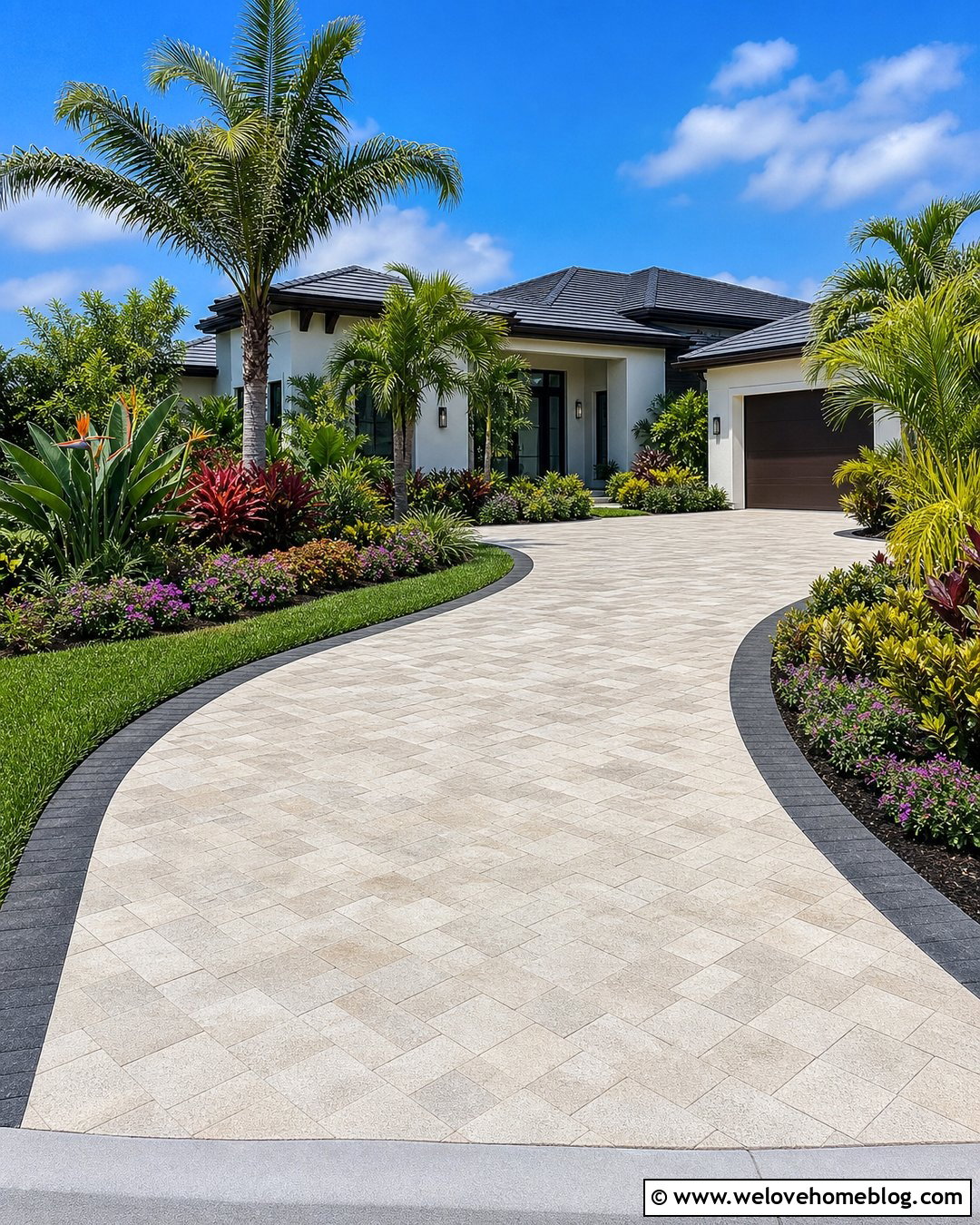
Lush tropical planting can soften a broad driveway in warm climates. Start with a light concrete or pale paver surface that reflects heat and highlights deep green foliage. Curve the planting beds around the driveway, using palms, bird of paradise, gingers, crotons, and compact flowering shrubs in layered groups. Keep large leaves away from vehicle doors and maintain open visibility near the curb. A dark stone or charcoal paver edge provides contrast and contains mulch. Add low ground cover at the front, medium foliage behind it, and taller palms closer to the house. Connect the driveway to the entry with a wide coordinating walkway. The combination should feel full and green without creating a narrow tunnel or hiding important architectural features.
21. Driveway With Rock Garden Borders
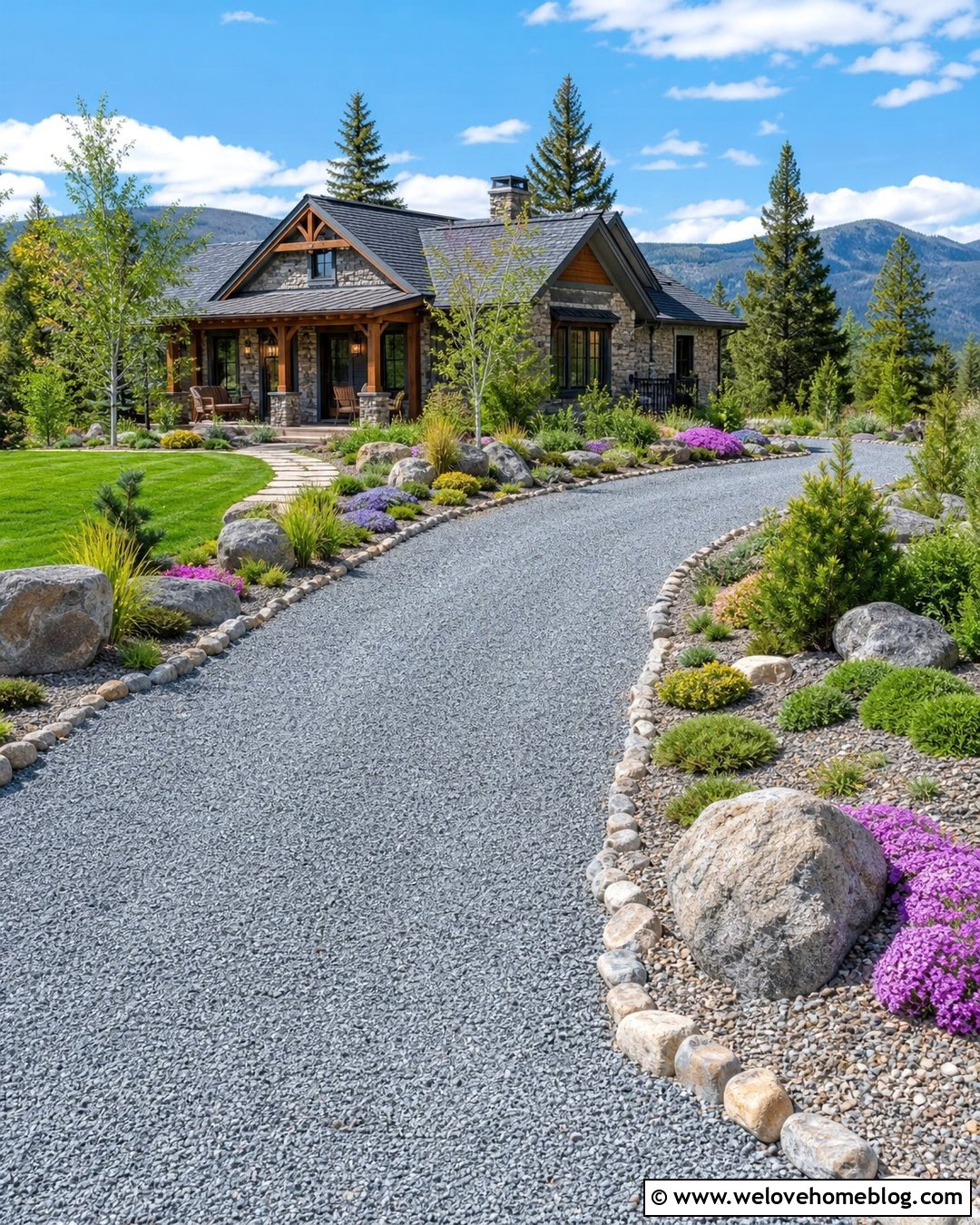
Rock garden borders are useful beside driveways exposed to heat, wind, or difficult soil. Pair a gray gravel or broom-finished concrete driveway with irregular stone edging and gently raised planting areas. Combine several large anchor rocks with smaller gravel mulch instead of covering everything in identical stones. Plant sedum, creeping phlox, dwarf conifers, thyme, and compact ornamental grasses between the rocks. Allow enough soil depth for healthy roots and position plants according to drainage and sunlight. A curved border will make the rock garden feel connected to the surrounding lawn rather than added as a narrow strip. Repeat one stone type near the house foundation or walkway. The overall appearance can range from alpine and rustic to clean and contemporary.
22. Driveway With Japanese Garden Landscaping
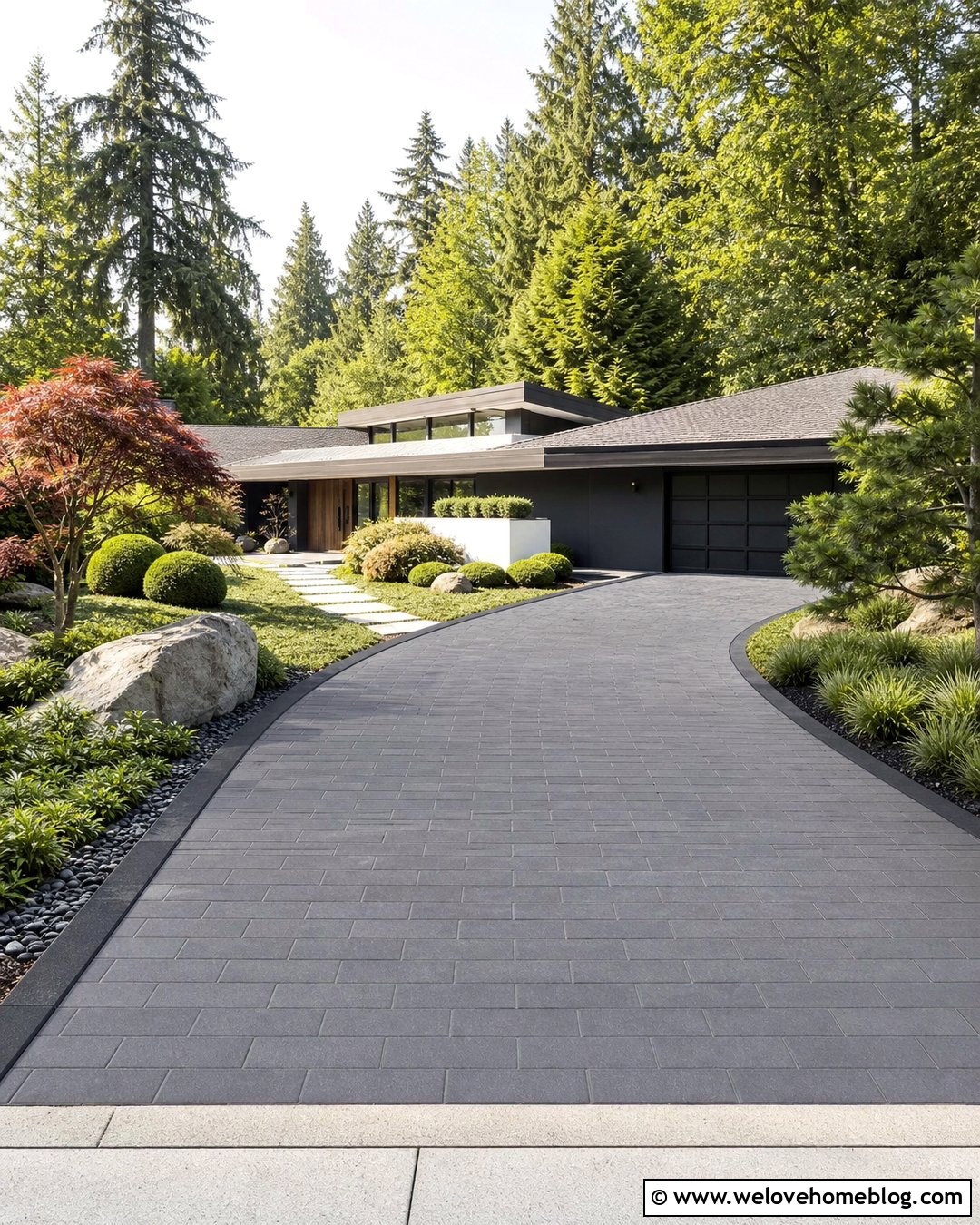
A restrained Japanese-inspired landscape can make a driveway feel peaceful and carefully composed. Use charcoal concrete pavers or fine gray gravel in a straight or gently curved layout. Edge the drive with dark stone and create asymmetrical beds containing clipped evergreens, Japanese forest grass, moss-like ground covers, and one sculptural maple where climate allows. Place a few natural boulders in balanced groups rather than lining them up. A stepping-stone walkway can cross the planting toward the front entrance. Keep the material palette limited and leave areas of open gravel or mulch so each plant remains visible. Avoid placing delicate branches close to vehicle paths. This design complements modern, midcentury, craftsman, and Asian-influenced homes without requiring excessive ornament.
23. Driveway With Rose Garden Borders
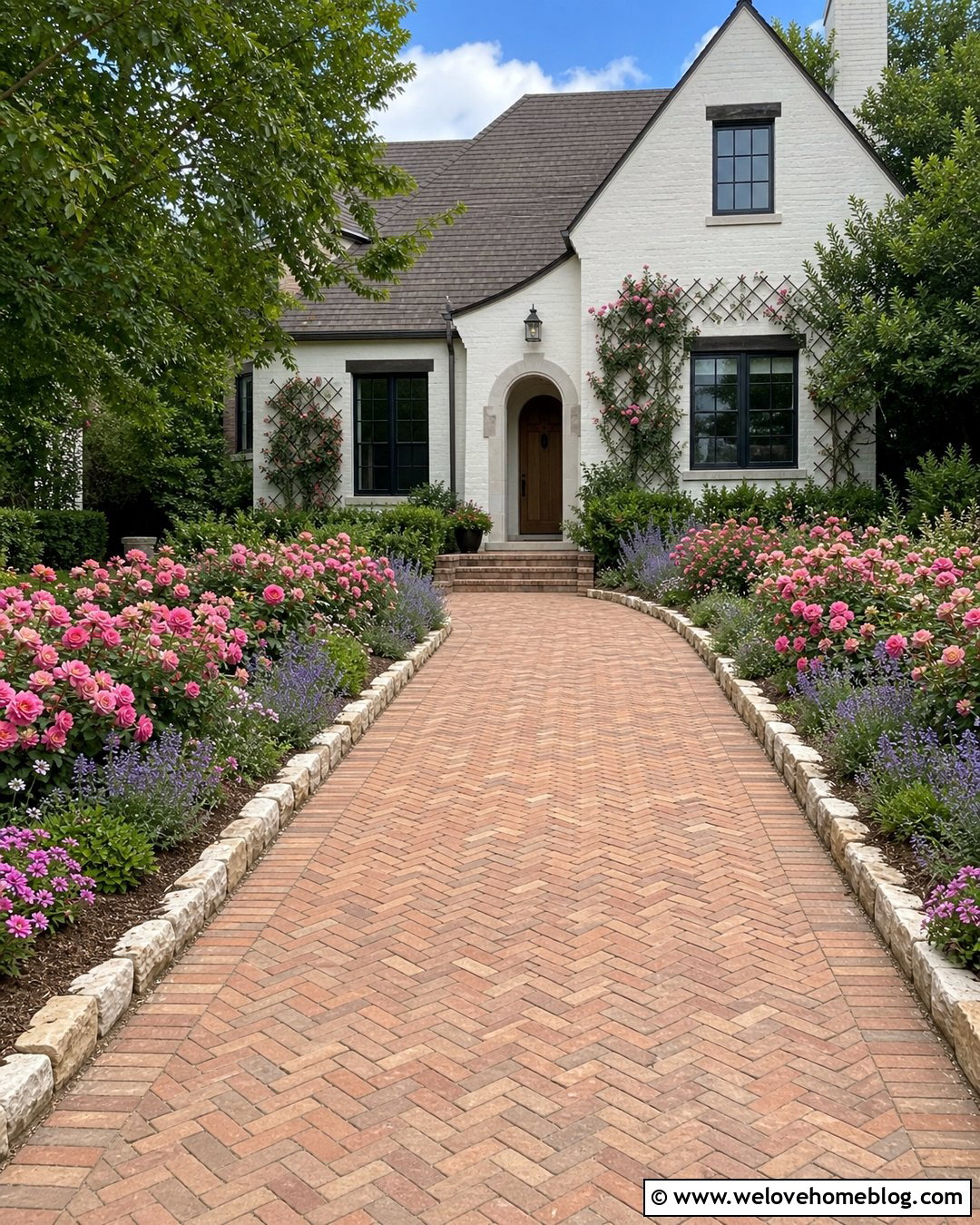
Roses can give a driveway rich color and fragrance when the design accounts for thorns, air circulation, and mature size. Pair a traditional brick paver or smooth concrete driveway with low stone edging. Place shrub roses in broad beds several feet from passenger doors, then fill the front edge with catmint, hardy geraniums, or low evergreen ground cover. Repeating one or two rose colors creates a more cohesive appearance than a mixed collection. Add simple trellises near the house instead of beside tight driving areas. Mulch the beds neatly and provide practical irrigation that does not spray the pavement. A straight path to a colonial or cottage home works especially well. Maintain open street views and select disease-resistant roses suited to the local climate.
24. Driveway With Rain Garden Landscaping
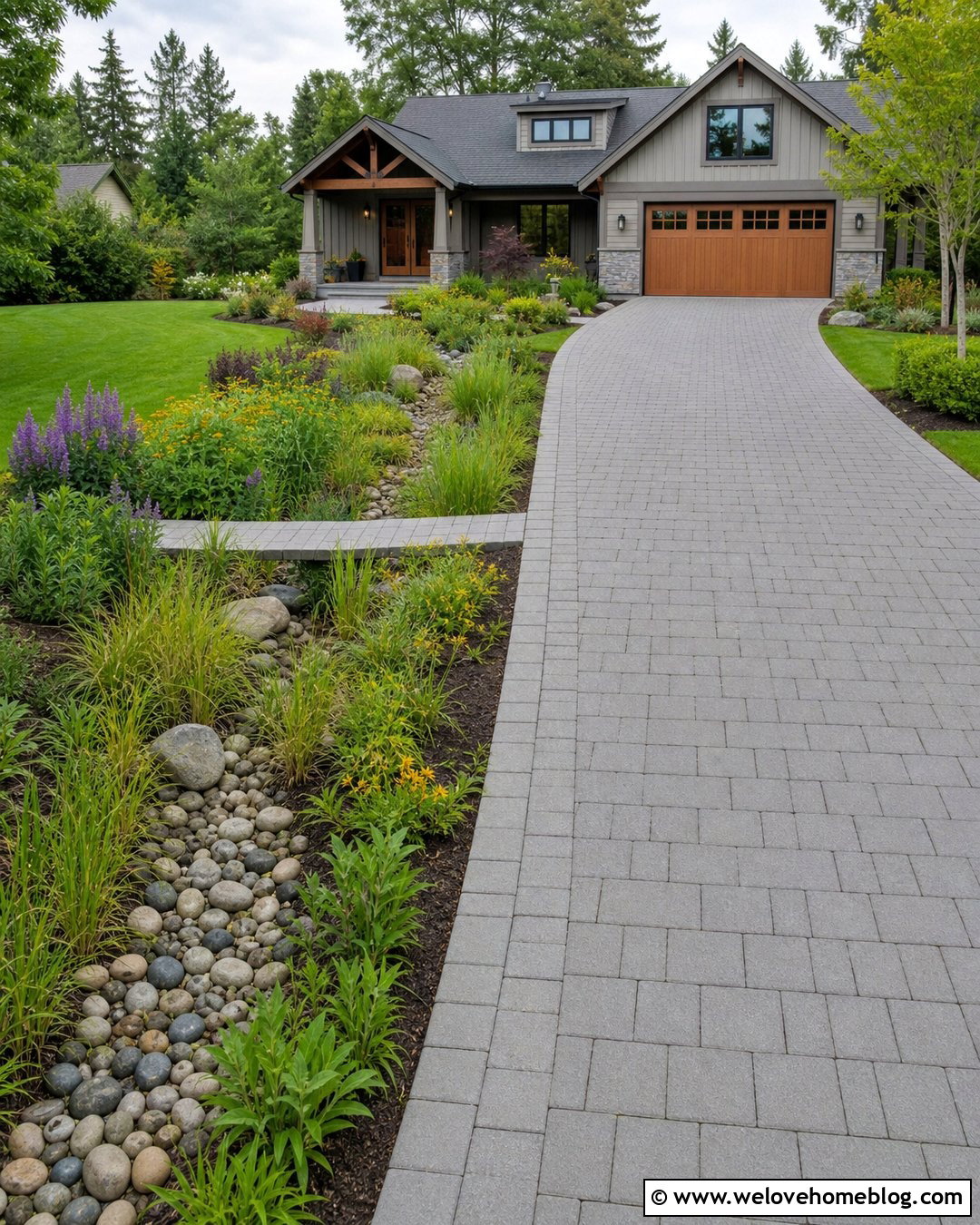
A rain garden can turn driveway runoff into a useful landscape feature when local soil and drainage conditions are suitable. Slope a permeable paver or concrete driveway toward a shallow planted basin located safely away from the foundation. Define the basin with river rock, cobbles, and moisture-tolerant native plants. Use sedges, rushes, flowering perennials, and compact shrubs arranged in clear layers. A stone inlet can slow the flow and reduce erosion where water enters. Keep the lowest area free from trees with sensitive roots and provide an overflow route for major storms. The rain garden should look like a broad planting bed during dry weather, not a deep pit. This environmentally responsive design works with contemporary, craftsman, and naturalistic front yards.
25. Driveway With Mulch Garden Borders
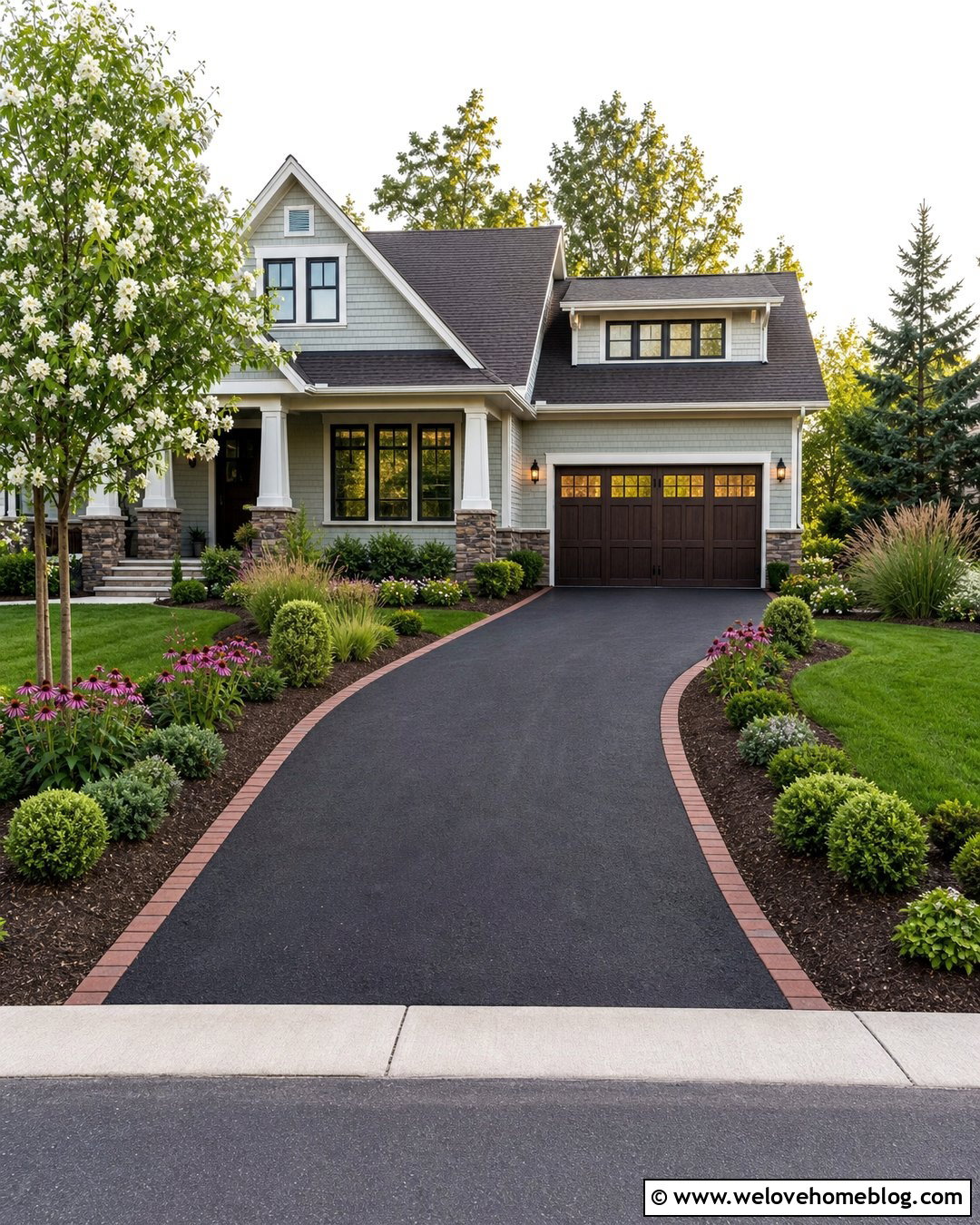
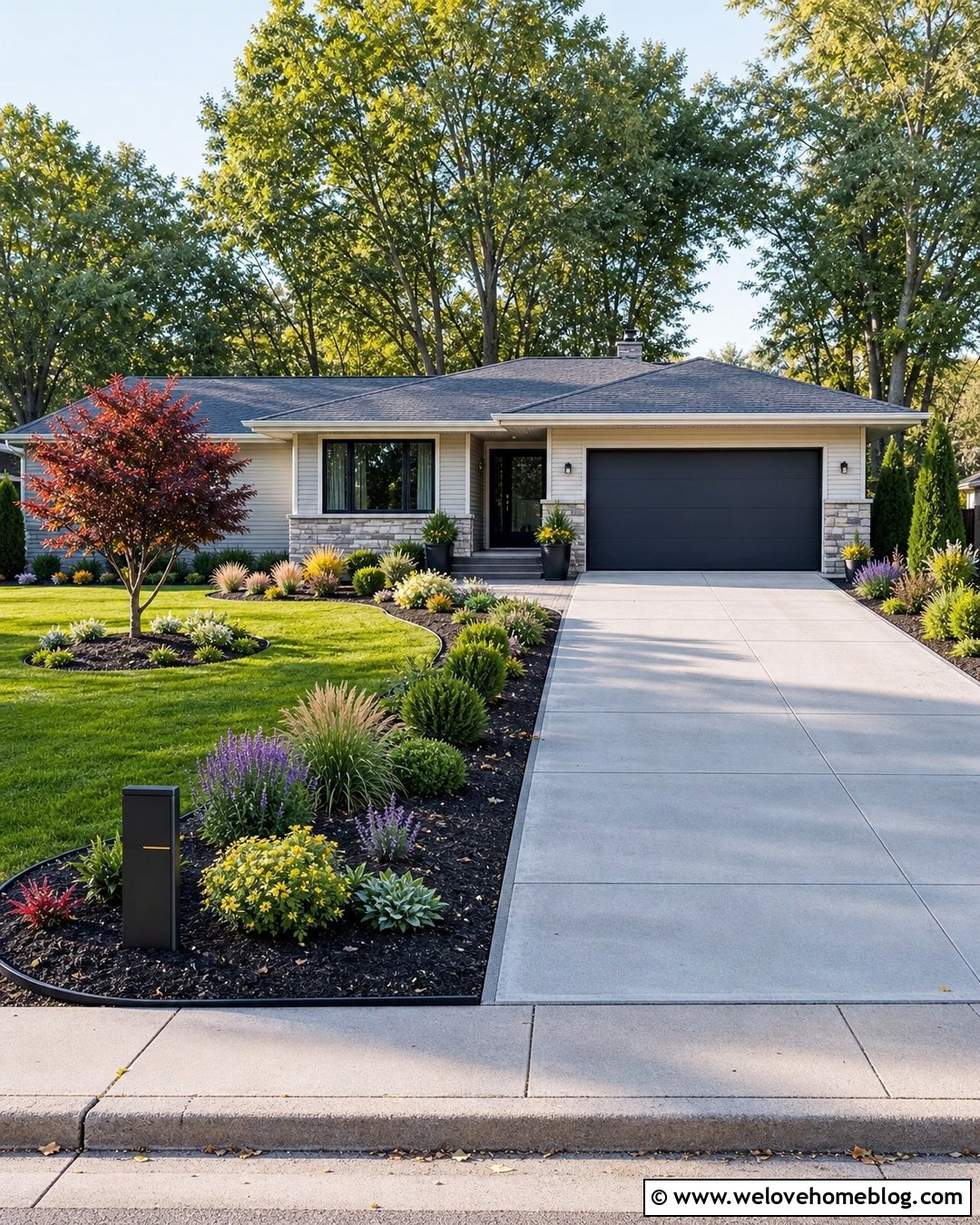
Mulched planting beds offer one of the simplest ways to soften a plain driveway. Start with a straight asphalt or concrete surface and cut broad, gentle bed curves along the lawn. Install brick, steel, or stone edging to keep mulch from washing onto the pavement. Arrange compact shrubs as the permanent framework, then add perennials and ornamental grasses in repeated groups. Use a mulch color that coordinates with the home rather than creating excessive contrast. Keep the layer even and avoid piling it against plant stems or tree trunks. A wider bed near the garage can connect with foundation landscaping, while a narrower strip continues toward the street. This affordable complete look can be updated gradually as plants mature and the budget allows.
26. Driveway With Raised Stone Planters
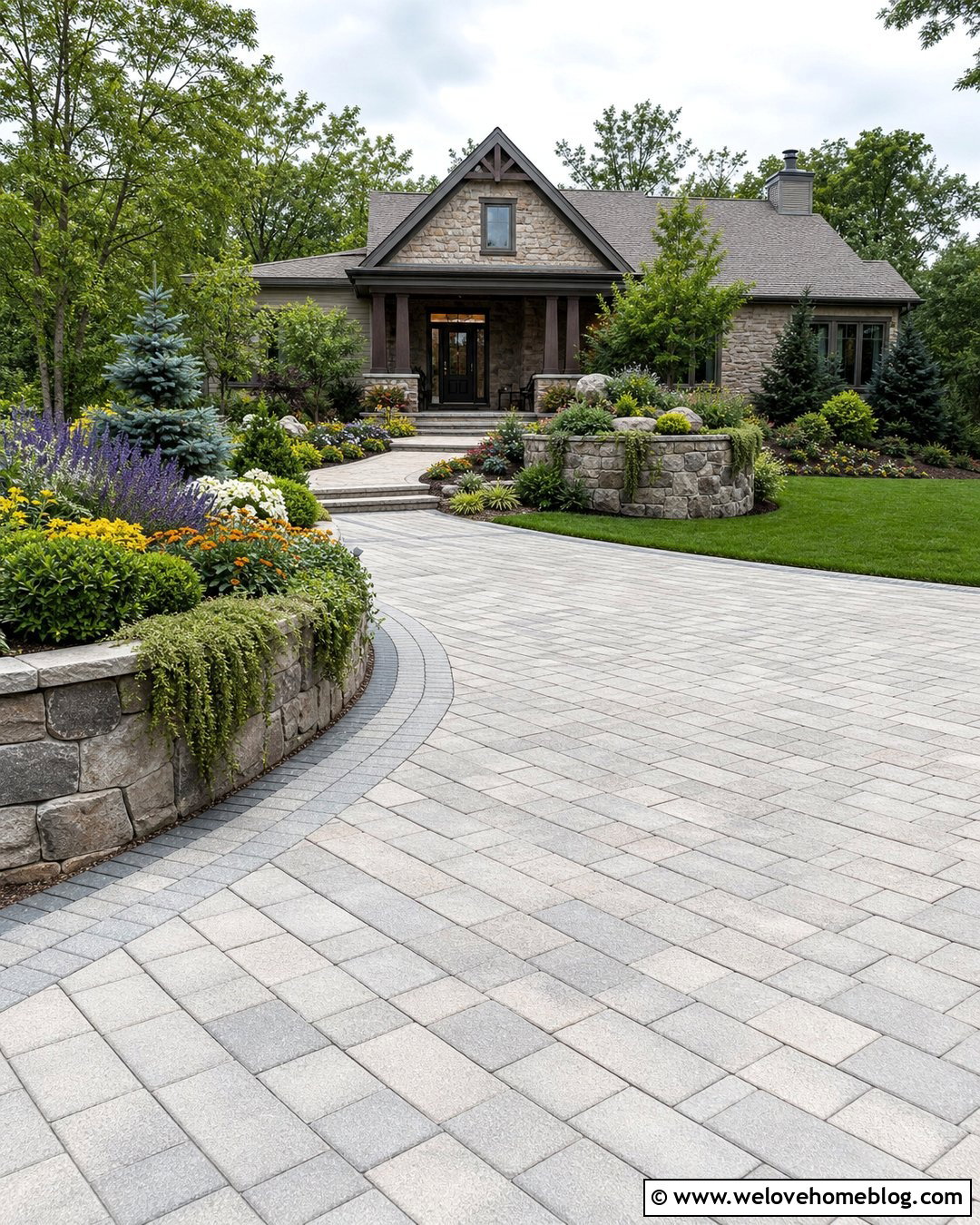
Raised stone planters give driveway landscaping height and structure, particularly on sloped or spacious properties. Pair them with a poured concrete or paver driveway and use the same stone on retaining walls, porch columns, or the house facade. Position planters beyond turning zones and keep entrance walls low enough for safe visibility. Fill them with layered evergreens, ornamental grasses, cascading ground covers, and seasonal flowers. Proper drainage behind and beneath the masonry protects both the plants and the wall. A wide planter near the garage can transition into a lower border running toward the street. Avoid narrow raised beds that restrict passenger doors. When wall height, paving color, and plant scale are balanced, the driveway feels integrated into the architecture instead of enclosed by hardscape.
27. Driveway With Flowering Tree Borders
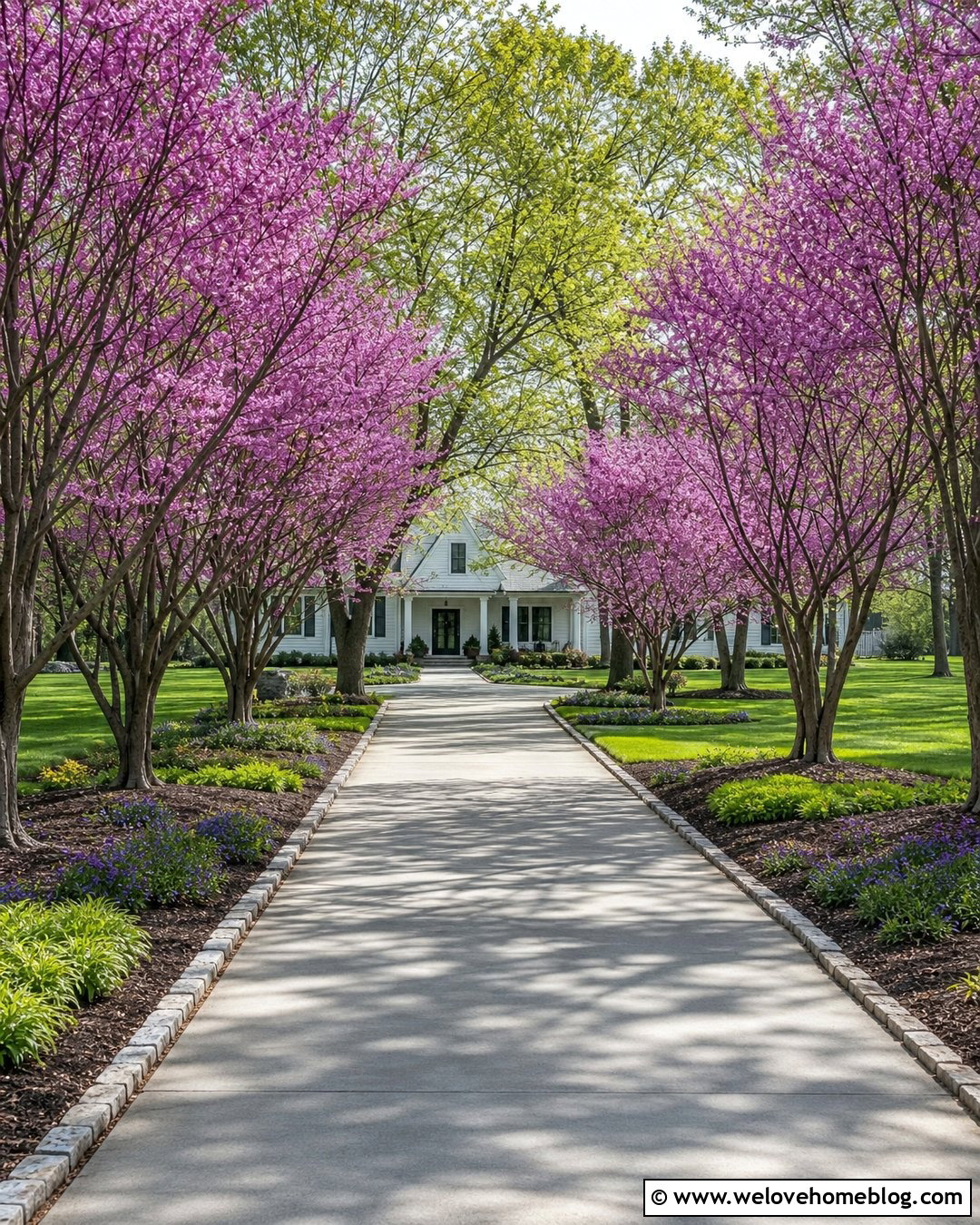
Flowering trees add seasonal drama and vertical scale without requiring continuous tall hedges. Use a wide concrete, asphalt, or paver driveway with trees planted in generous lawn strips or connected beds. Redbuds, serviceberries, crabapples, and dogwoods are possible choices where they suit the climate and site. Space them according to mature canopy width, keeping trunks and low branches clear of vehicles. Beneath the trees, use mulch, low ground cover, or simple shade-tolerant perennials. Repeat the tree variety down a long approach for rhythm, or use a balanced pair near a shorter entrance. Stone edging and a matching walkway can tie the beds to the house. Consider fruit drop, root behavior, overhead utilities, and seasonal maintenance before choosing a species.
28. Driveway With Privacy Hedge Landscaping
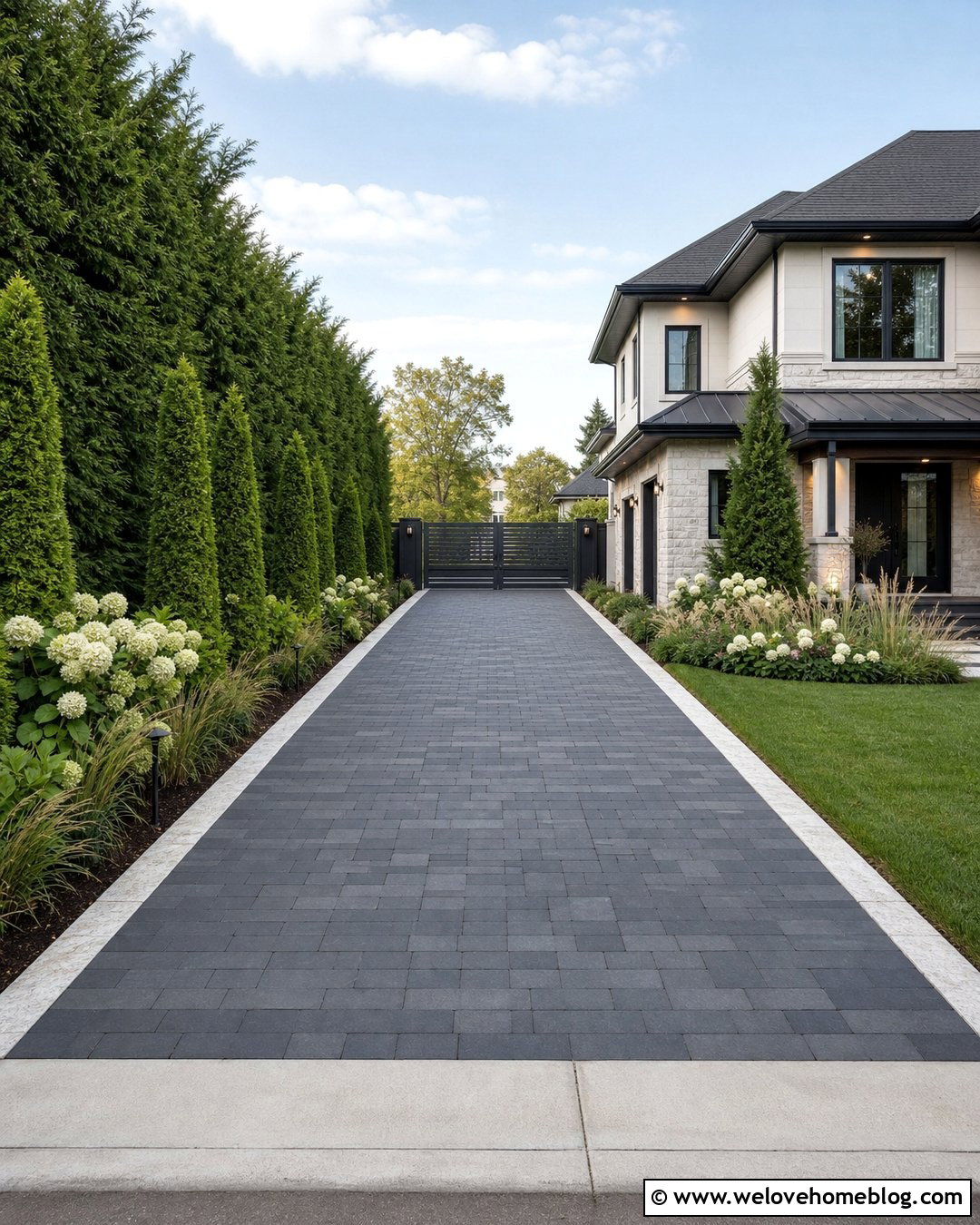
A privacy hedge can screen a driveway from neighboring properties while maintaining a neat streetscape. Pair a dark asphalt or concrete paver surface with a generous planting strip and low stone curb. Choose a hedge suited to the available width, sunlight, and desired height. Upright arborvitae, holly, yew, or regionally appropriate broadleaf evergreens can form the main screen. Add low flowering shrubs or grasses on the driveway side to prevent the hedge from looking like a solid green wall. Keep plants set back from doors, mirrors, utility areas, and snow storage zones. At the street, taper the hedge down or end it early to protect visibility. A matching gate or address pillar can create a clear entrance while reinforcing the privacy-focused design.
29. Driveway With Palm Tree Borders
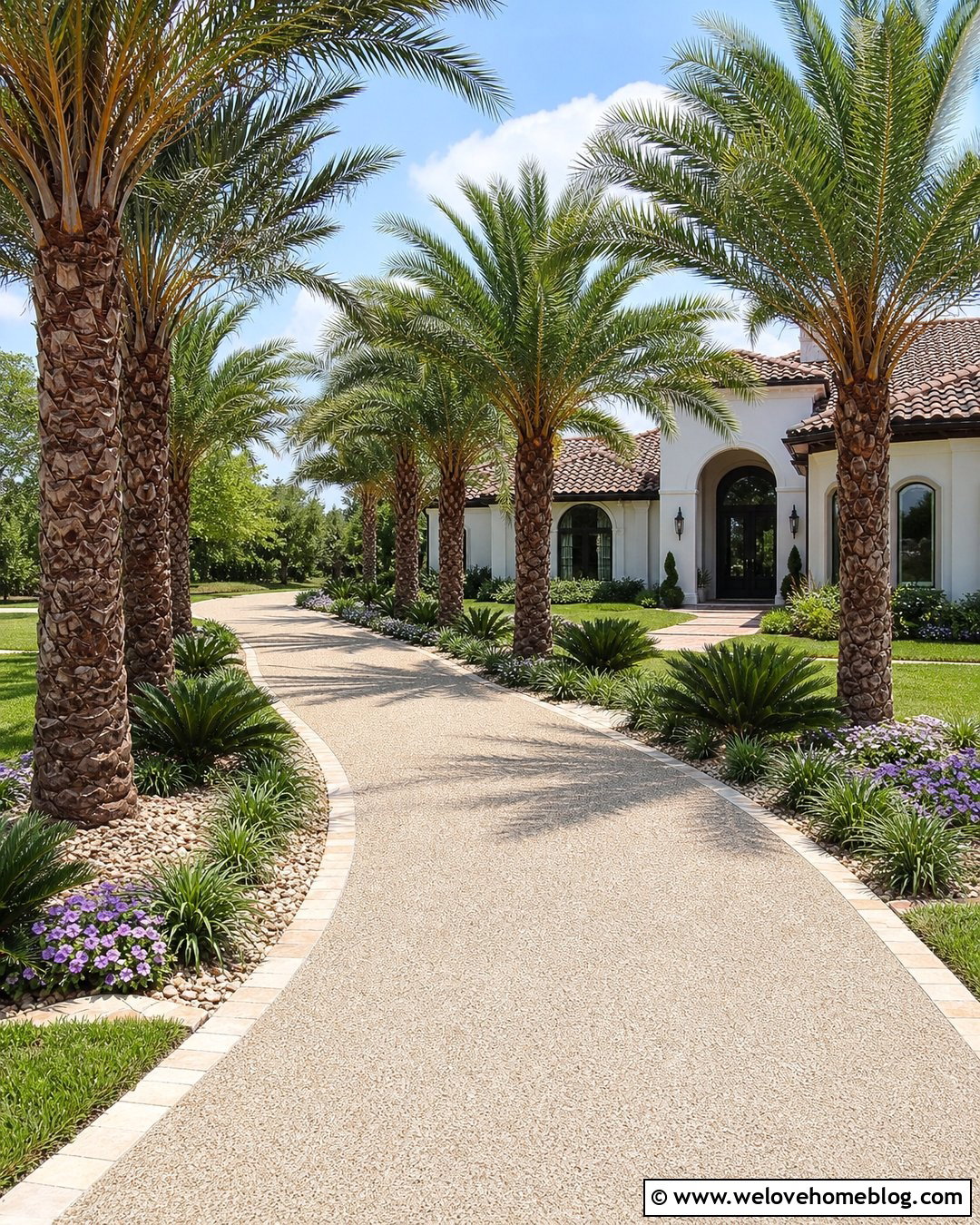
A palm-lined driveway creates a strong sense of arrival in frost-free and suitably warm climates. Use pale concrete pavers or light exposed aggregate to contrast with the trunks and reduce an overly dark appearance. Space palms evenly in lawn panels or broad gravel-mulched beds, placing them far enough from pavement for healthy roots and mature crowns. Add low cycads, liriope, ornamental grasses, or flowering ground covers beneath the trees. Avoid dense shrubs near the entrance so drivers retain clear road views. A gently curved layout gives the repeated palms more depth than a short, rigid row. Continue the driveway border around the front walkway and garage beds. Choose palm species based on mature height, wind exposure, maintenance needs, and regional suitability.
30. Driveway With Succulent Garden Borders
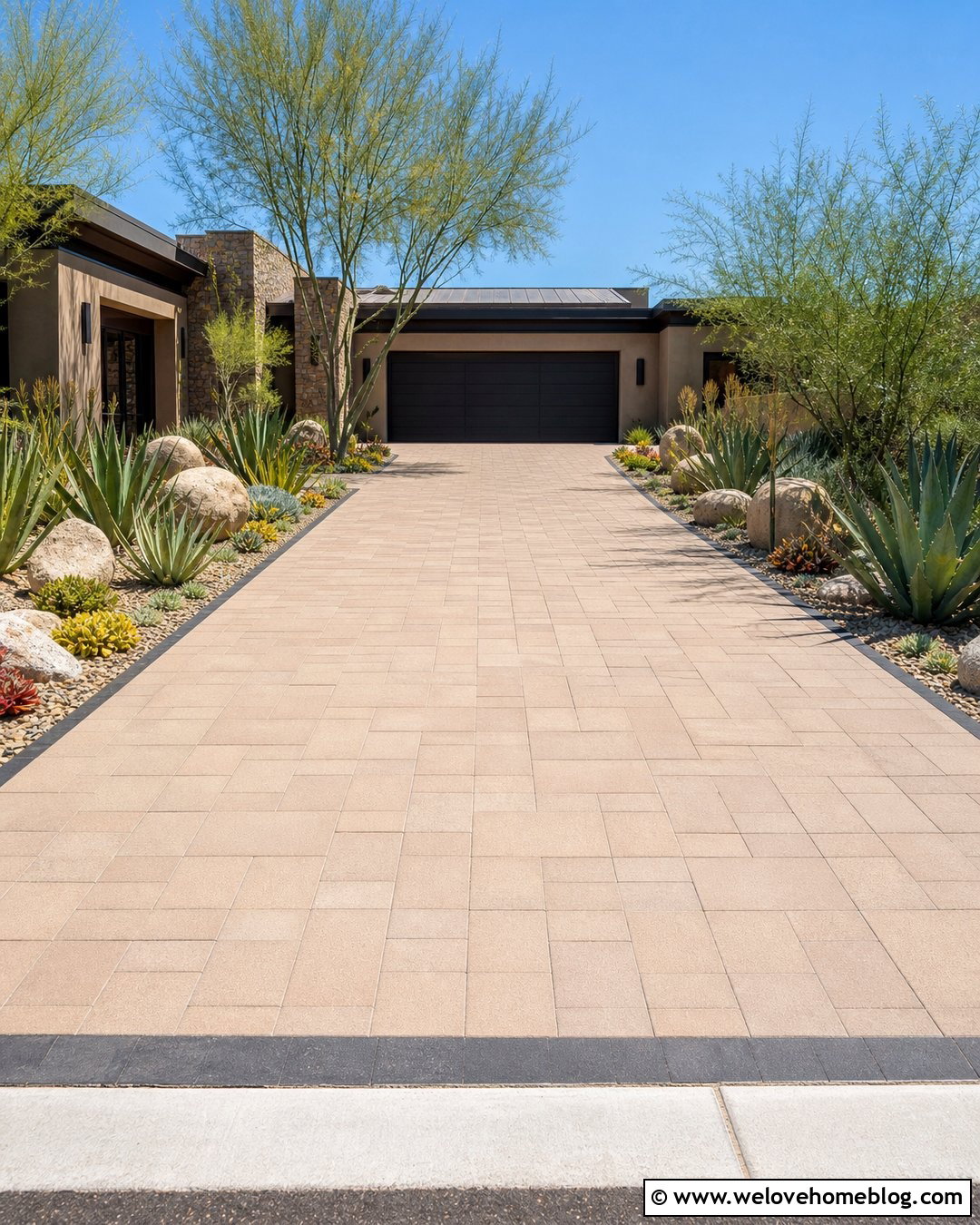
Succulent borders provide bold form and color beside a sunny driveway. Pair warm decomposed granite or tan concrete pavers with dark steel edging that creates a clean separation from the beds. Arrange agave, aloe, echeveria, sedum, and drought-tolerant grasses in generous clusters. Use gravel mulch and a few large boulders to connect the plants with the driveway surface. Keep spiky varieties well away from doors, sidewalks, and turning areas. Repeating shapes and colors creates order while still allowing each plant to stand out. A straight driveway suits a geometric arrangement, while curved beds can soften a wider approach. Check cold hardiness and drainage before planting, because many succulents need protection from prolonged wet soil or severe winter temperatures.
31. Driveway With Wooden Fence Landscaping
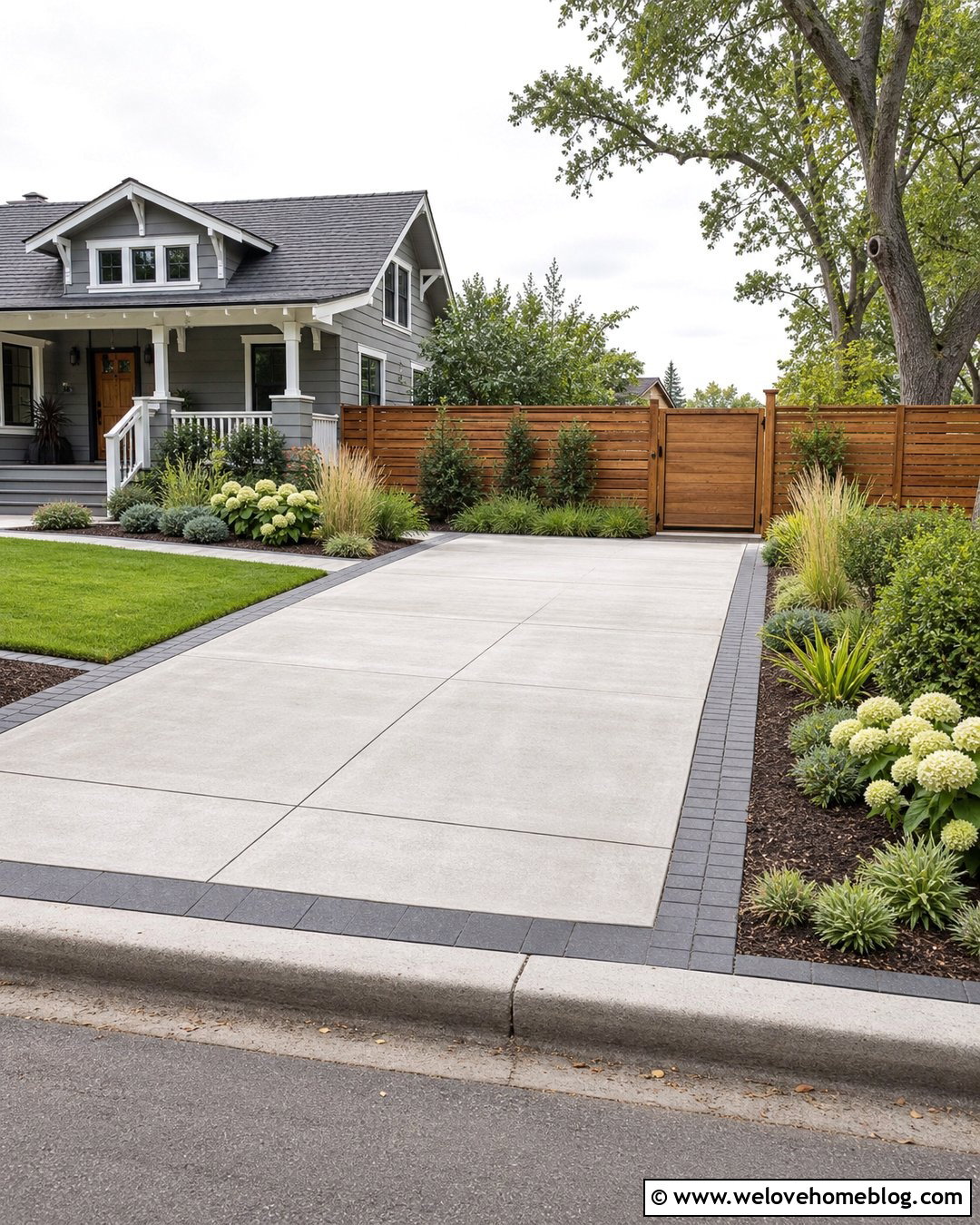
A wooden fence can frame a driveway while adding privacy and warmth. Use gray poured concrete or compacted gravel for the surface, then position the fence beyond a narrow planting bed. Stain the boards in a tone that coordinates with the home, garage door, or front porch. Plant upright grasses, hydrangeas, native shrubs, or shade-tolerant perennials between the fence and driveway. Repetition keeps a long border from appearing cluttered. Add stone or brick edging beside the pavement to contain soil and protect the base of the planting. Near the street, lower the fence or set it farther back for better visibility. A matching pedestrian gate and walkway can connect the driveway landscape to the front entrance, creating one cohesive boundary.
32. Driveway With Boulder Landscaping
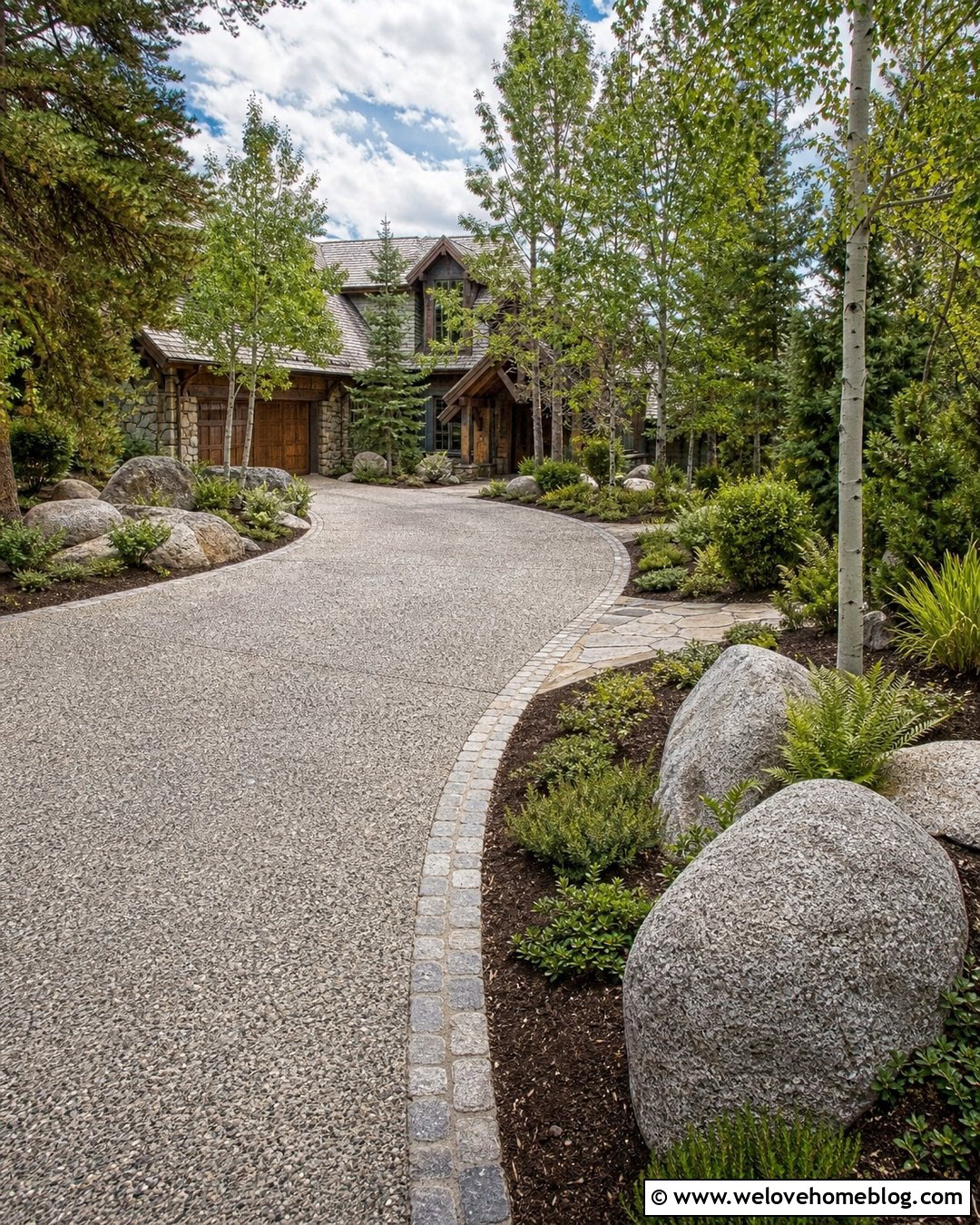
Large boulders bring natural structure to a driveway, especially on wooded, mountain, or sloped lots. Combine a curved asphalt or exposed-aggregate surface with broad beds of local stone, evergreen shrubs, ferns, and ornamental grasses. Partially bury the boulders so they look settled into the landscape rather than placed on top of it. Use several sizes and arrange them in irregular groups. Keep every rock safely outside the vehicle recovery area, turning path, and passenger-door zone. Cobblestone edging can provide a smoother boundary directly beside the pavement. Repeat the stone near the front steps or retaining wall for continuity. The planting should weave around the rocks and soften their base while leaving enough open space to appreciate their shape.
33. Driveway With Grass Paver Landscaping
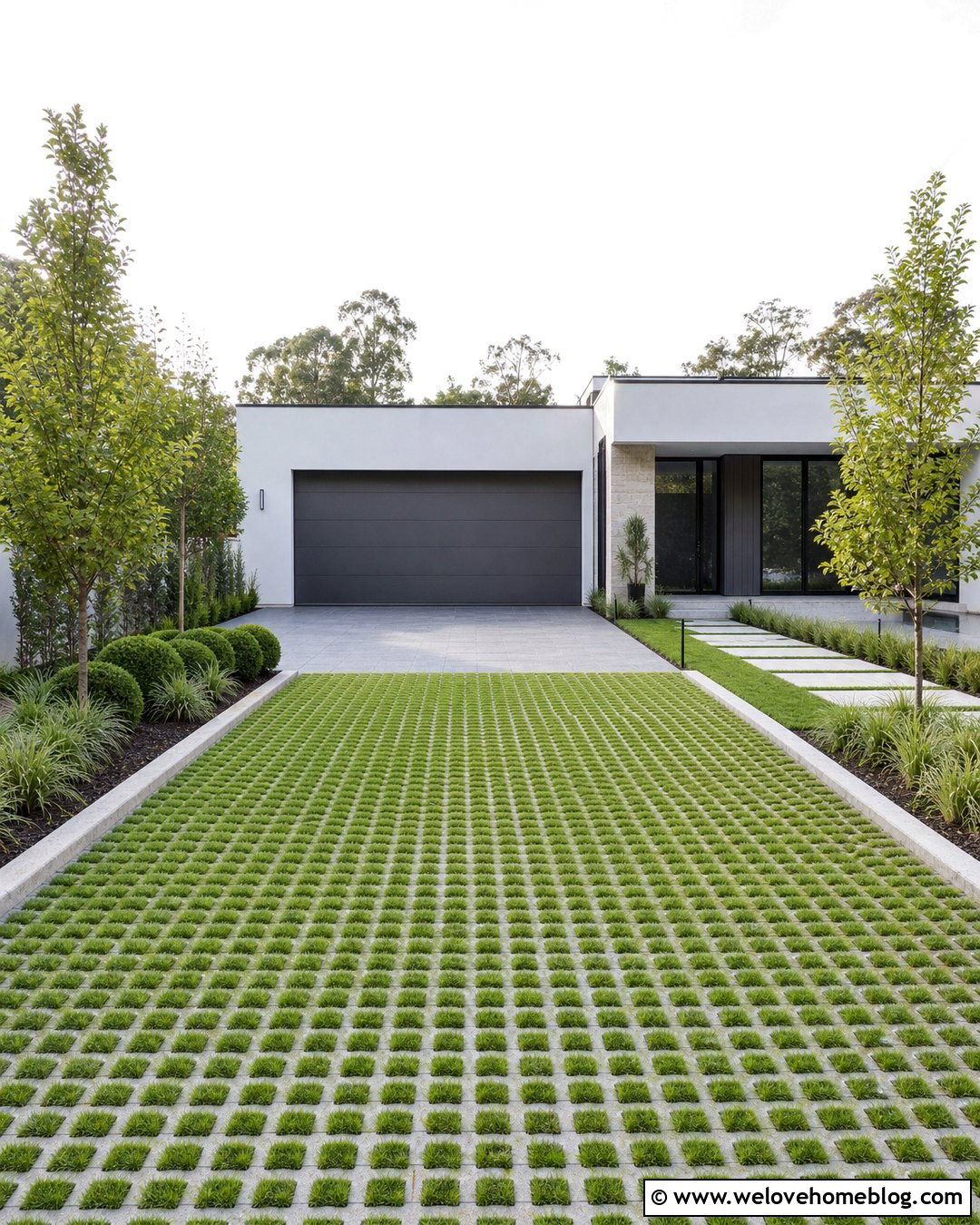
Grass pavers reduce the visual weight of a broad driveway by combining a reinforced driving surface with living turf. Use concrete grid pavers for a straight, curved, or secondary parking area, and establish grass varieties suited to the local sunlight and traffic. Frame the surface with flush concrete curbing so the pavers remain contained. On both sides, create simple beds with ornamental grasses, low shrubs, and small trees that repeat the green texture. A solid paver apron near the garage can handle frequent turning and create a cleaner transition. Plan irrigation and mowing access before installation. Grass pavers require more care than solid pavement, but they can make a modern or contemporary front yard feel greener and less dominated by hardscape.
34. Driveway With Ground Cover Borders
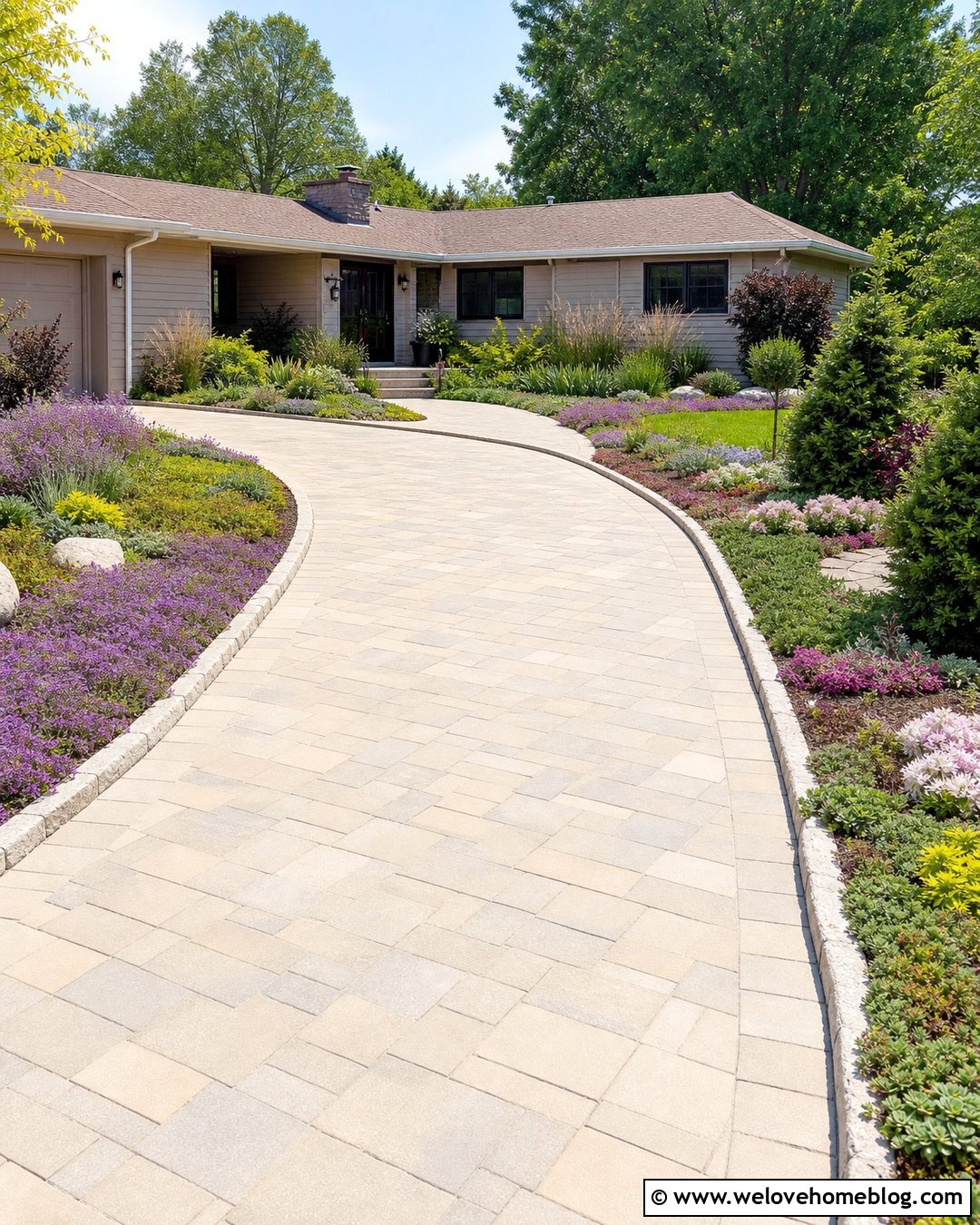
Low ground covers are useful where homeowners want a soft edge without tall plants. Pair a pale paver, gravel, or concrete driveway with flush stone edging and wide planting strips. Creeping thyme, sedum, ajuga, liriope, or other regionally suitable plants can form a continuous carpet, depending on sunlight and moisture. Plant in broad masses instead of small patches, and leave room for growth before expecting complete coverage. Add a few upright shrubs or ornamental grasses near the house to keep the landscape from looking flat. Ground covers should stay outside tire paths and should not create a slippery layer over the pavement. A curved border and matching walkway help the low planting look intentional, giving small and medium yards a tidy finished appearance.
35. Driveway With Ornamental Pear Tree Borders
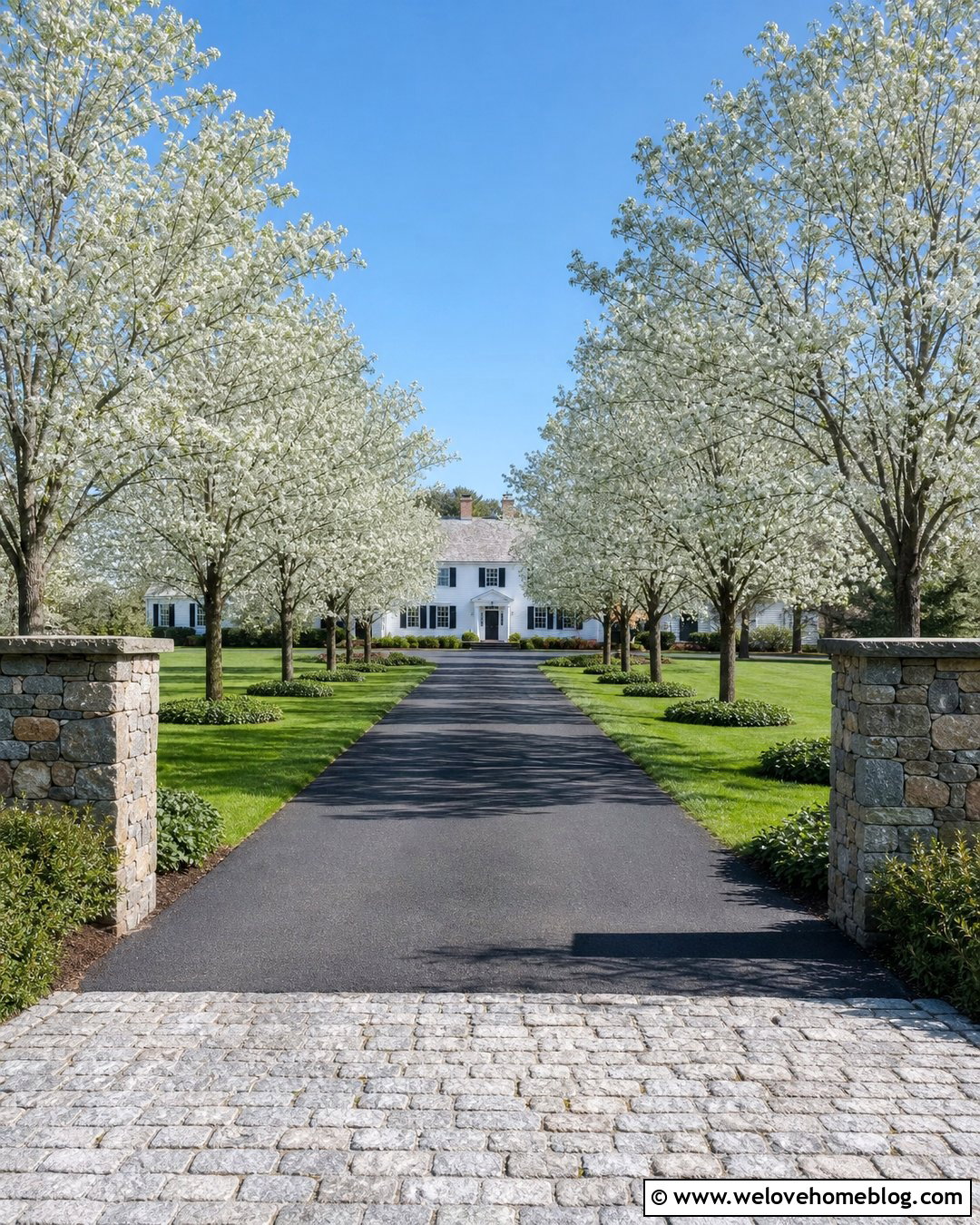
A repeated row of ornamental trees can make a long driveway feel formal, but species selection requires care. Choose locally appropriate, structurally dependable trees rather than automatically using a familiar but potentially problematic variety. Pair the tree line with a smooth asphalt or concrete paver driveway and broad grass strips. Space trunks according to mature canopy width and set them well back from paving. Low evergreen ground cover or neatly maintained lawn beneath the trees keeps the composition simple. Add stone entrance pillars and a contrasting driveway apron to establish a clear beginning. The repeated canopy can frame views toward a colonial, farmhouse, or estate-style home. Consult local extension guidance before planting to avoid invasive, weak-wooded, or poorly adapted ornamental pear selections.
36. Driveway With Black Mulch Landscaping
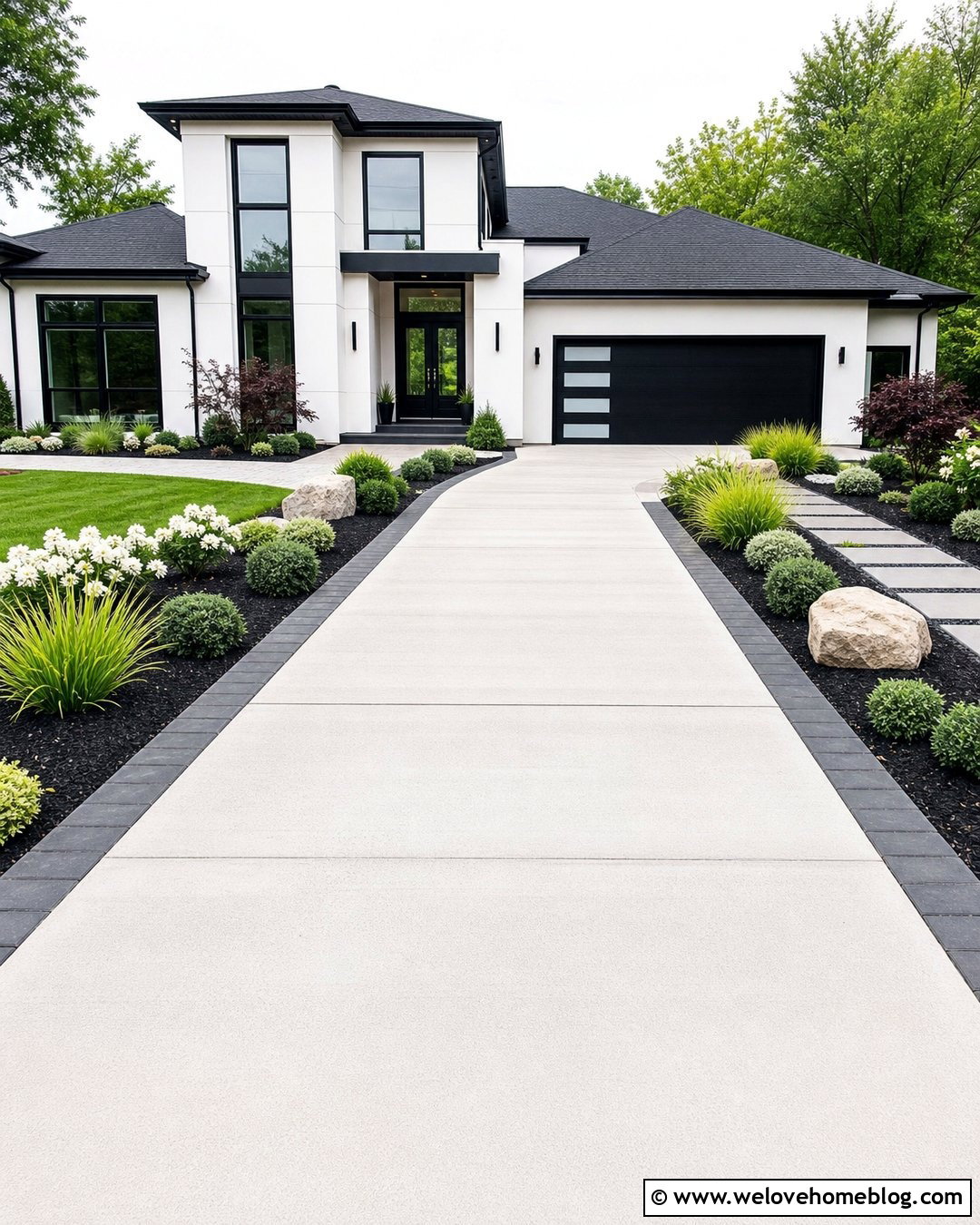
Black mulch creates strong contrast beside light concrete and modern architecture. Use it in clean, geometric beds bordered by charcoal pavers or slim metal edging. Plant bright green ornamental grasses, rounded evergreen shrubs, white flowers, and one or two dark-leaved accents. The limited palette keeps the contrast controlled instead of busy. A straight driveway and rectangular walkway reinforce the organized layout, while a few strategically placed boulders add natural texture. Refresh faded mulch as needed and prevent it from washing over the pavement by maintaining a defined edge. In hot, sunny areas, consider whether a dark mulch surface will increase heat around sensitive plants. This bold landscape works particularly well with white, gray, and black contemporary house facades.
37. Driveway With Brick Garden Borders
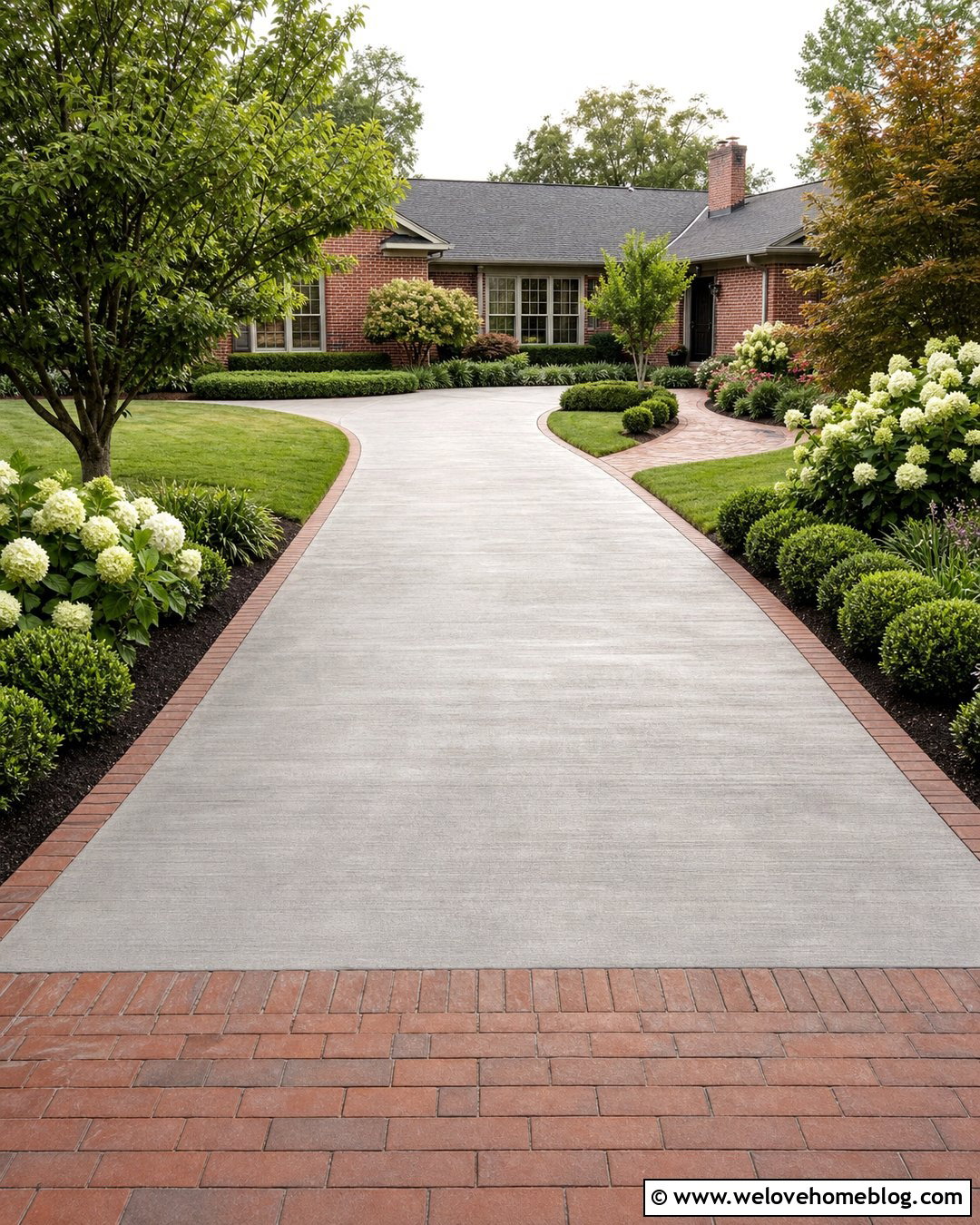
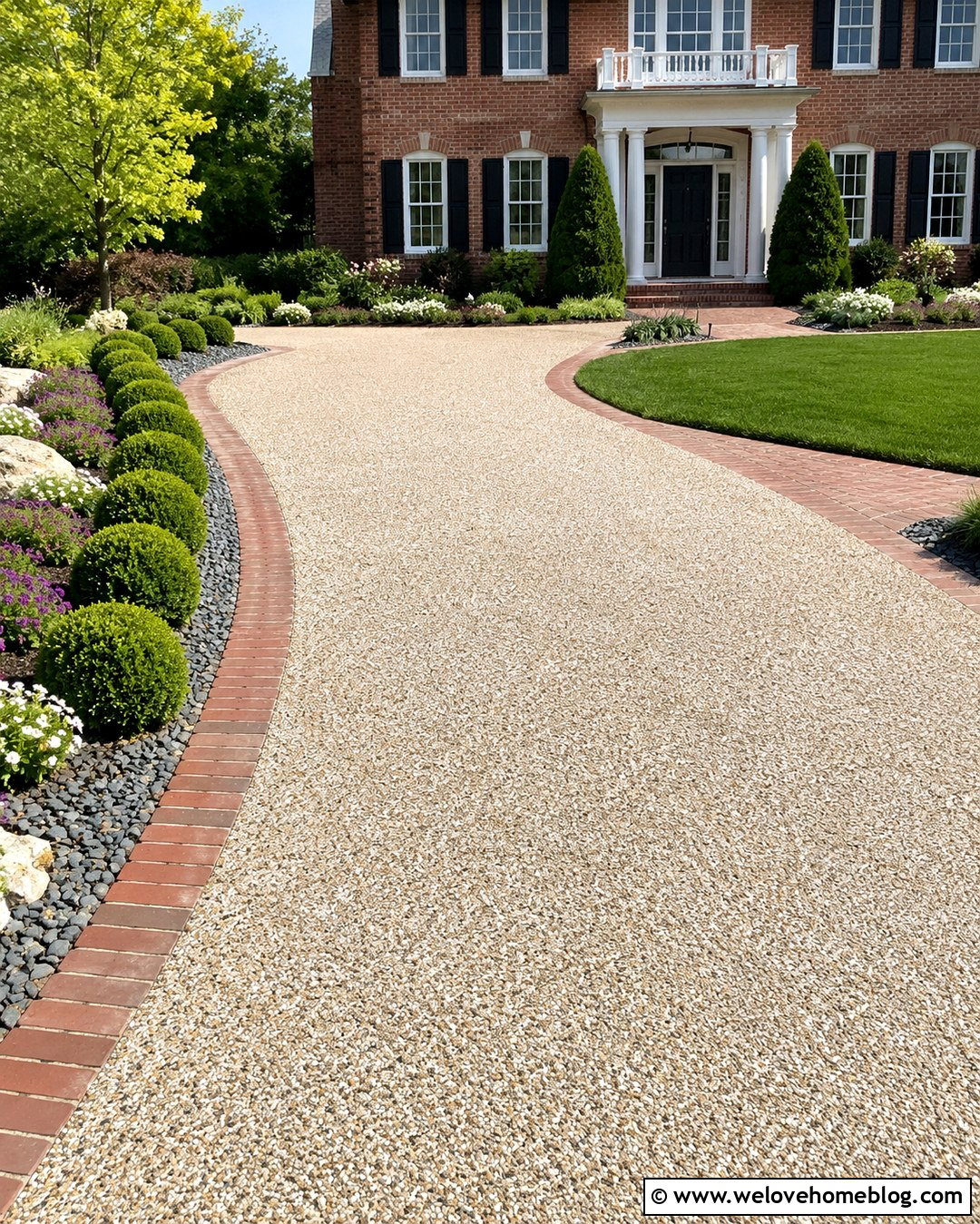
Brick garden borders can visually connect the driveway to a brick home, porch, or walkway. Pair broom-finished concrete with a flush red brick ribbon laid along both edges and across the entrance apron. Beyond it, shape gently curved planting beds filled with boxwood, hydrangeas, daylilies, and compact ornamental trees. Use the same brick around the beds nearest the house to repeat the material without covering the entire yard. Choose brick colors that complement the facade rather than matching it too perfectly. Set the border on a stable base so it remains even under weather and occasional tire pressure. This complete landscape feels traditional but not overly formal, making it suitable for colonial, ranch, craftsman, Tudor, and suburban brick homes.
38. Driveway With Coastal Landscaping
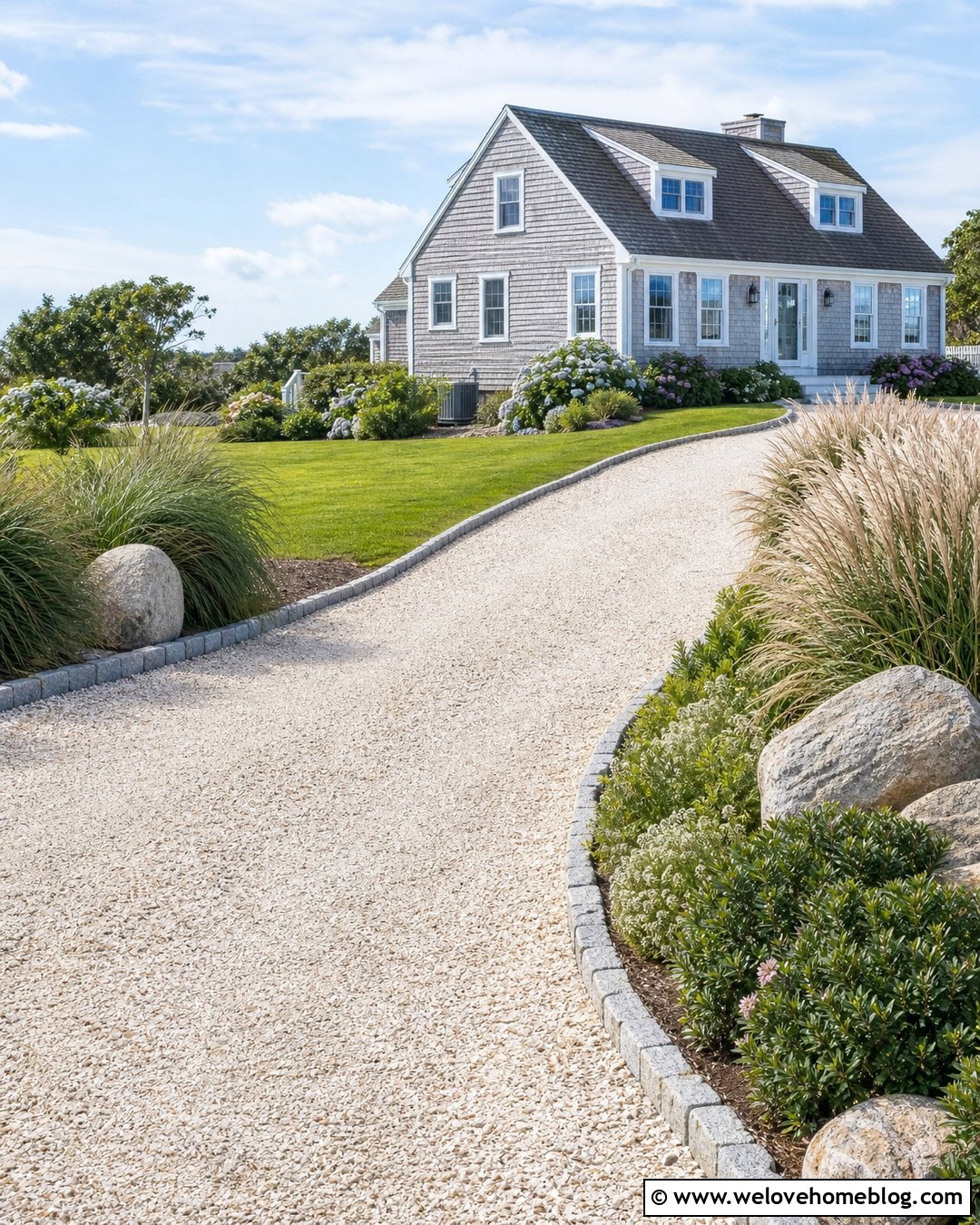
A coastal driveway should feel light, open, and able to handle wind, salt exposure, or sandy soil where those conditions exist. Choose crushed shell, pale gravel, light concrete, or sand-colored permeable pavers for the surface. Contain loose material with weathered granite, steel edging, or a simple concrete curb. Plant beach grass, bayberry, seaside goldenrod, compact hydrangeas, and other locally suitable coastal plants in loose drifts. Keep the beds low so the entrance retains broad views. Weathered wood fencing, natural boulders, and a shell-toned walkway can reinforce the setting without becoming themed. Curved bed lines work well around Cape Cod and shingle-style homes. Select plants for the property’s actual exposure rather than relying only on a coastal appearance.
39. Driveway With Woodland Landscaping
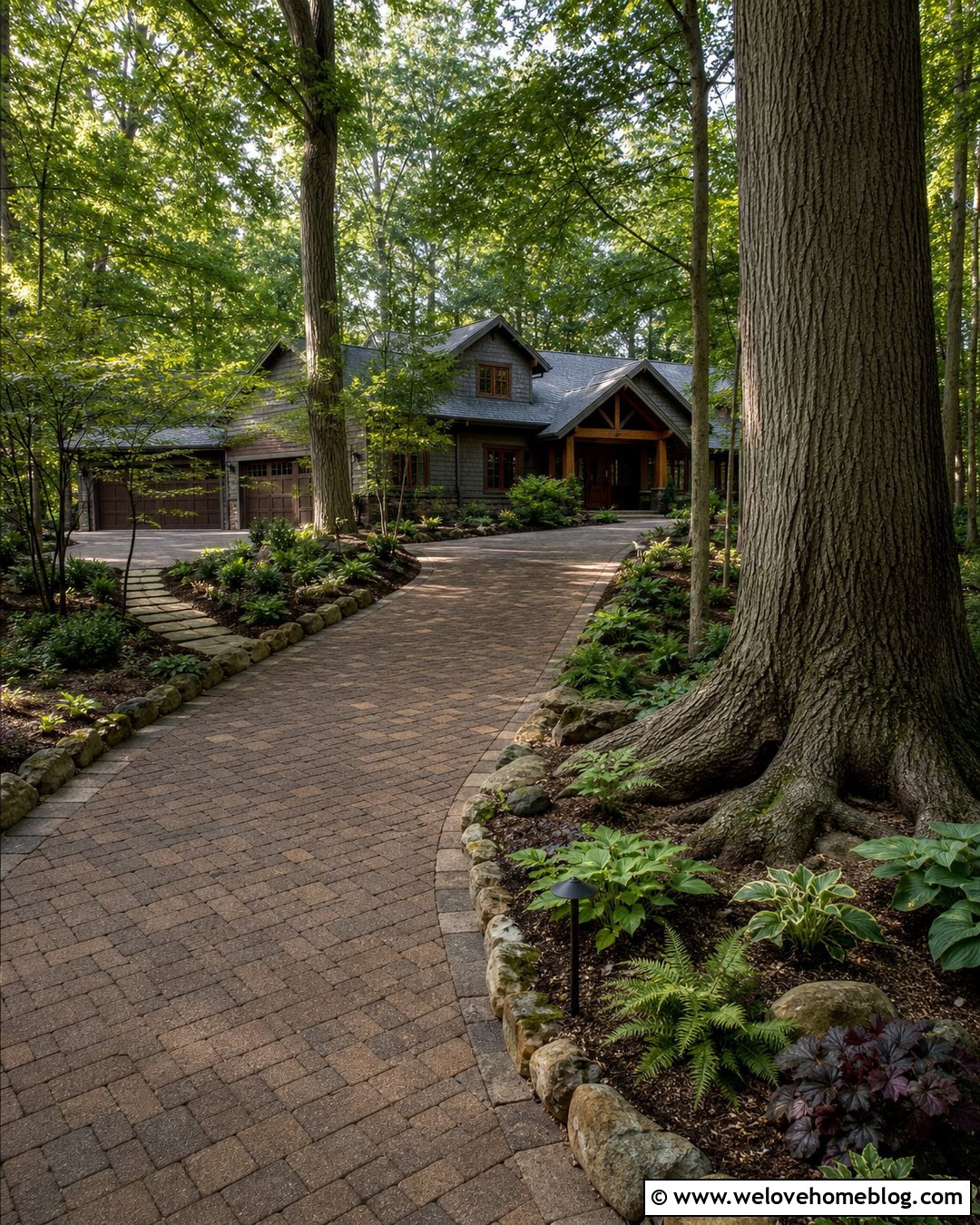
A woodland driveway can blend into a shaded property instead of cutting through it as a stark paved strip. Use dark asphalt, brown-toned gravel, or permeable pavers in a gentle curve around existing trees. Edge the surface with natural stone and plant broad beds of ferns, hostas, sedges, heuchera, and shade-tolerant native shrubs. Preserve tree roots by limiting excavation and avoiding unnecessary grade changes. Fallen leaves can become part of the natural mulch layer when they do not create slippery pavement. Low path lights and a simple stone walkway improve navigation without making the setting feel urban. Near the house, repeat the same plants in tidier groups. The result should protect the wooded character while keeping the full driveway open, visible, and functional.
40. Driveway With Formal Hedge Landscaping
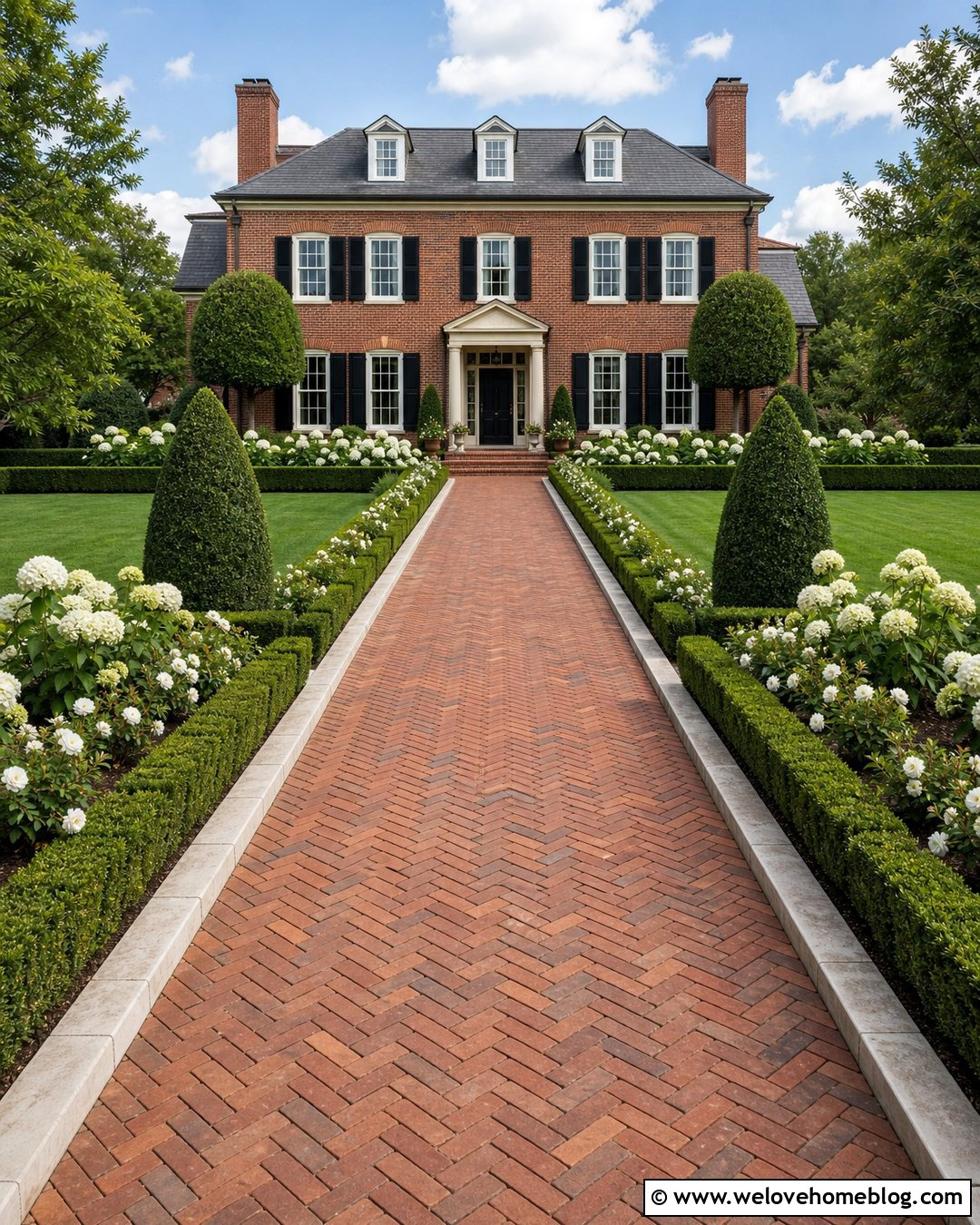
Formal hedges create symmetry and order around a straight driveway. Pair clay brick pavers, dark asphalt, or smooth concrete with matching low hedges on both sides. Boxwood, yew, holly, or another climate-appropriate evergreen can form the framework. Keep the hedge low along the driving area, then allow taller clipped forms near the house or entrance pillars. Behind it, use repeated white flowers, roses, or compact hydrangeas for controlled seasonal color. A central walkway aligned with the front door strengthens the symmetry. Regular trimming is essential, so the design suits homeowners willing to maintain precise lines. Drainage and mature plant width should be planned carefully. This complete arrangement complements colonial, Georgian, French-inspired, and traditional brick homes.
41. Driveway With Wildflower Borders
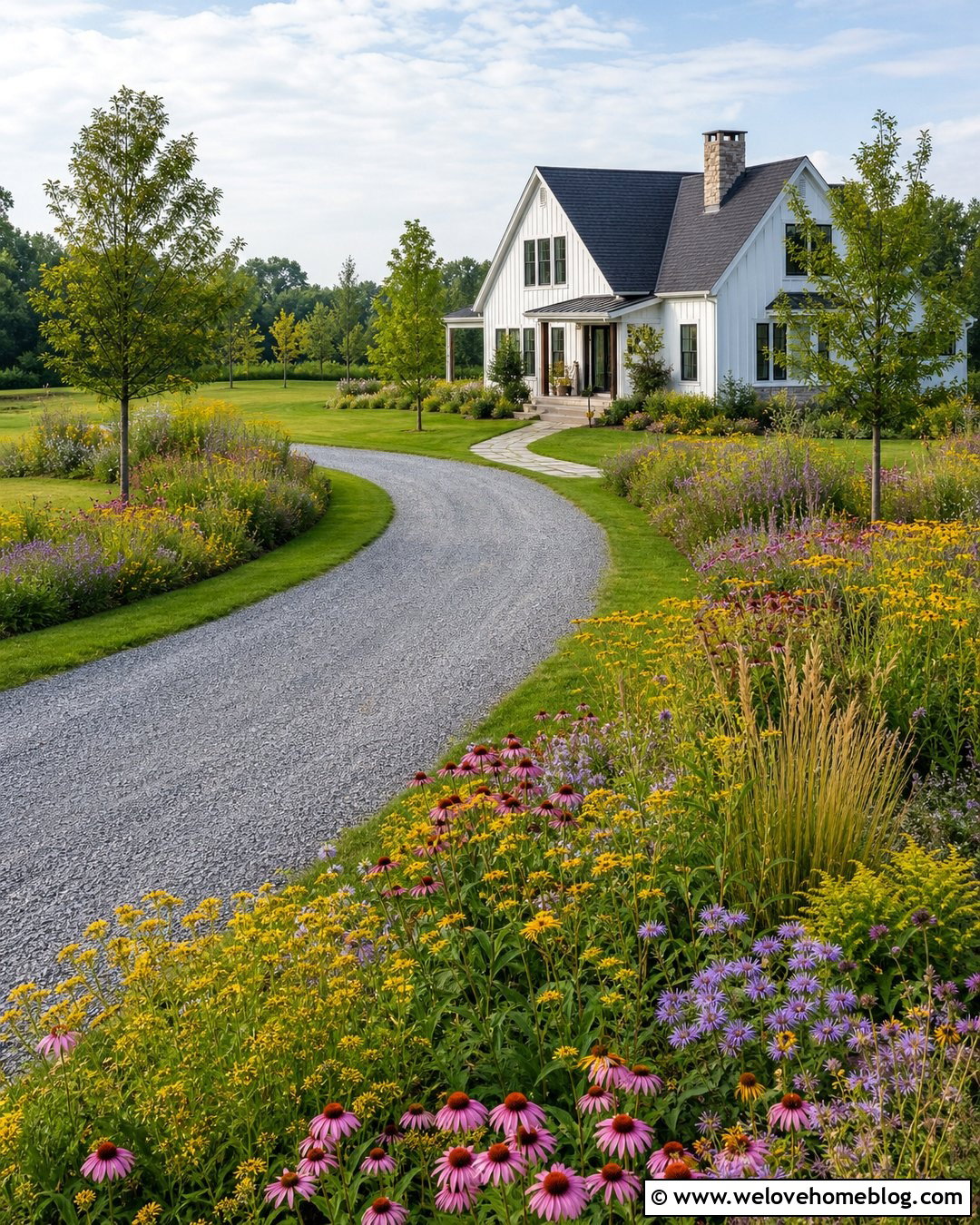
Wildflower borders can give a gravel or asphalt driveway a relaxed meadow character. Use a curved layout with a firm stone edge or regularly mowed buffer strip that keeps stems away from vehicles. Plant a regionally appropriate mix of native flowers and grasses rather than a generic seed blend. Arrange taller species toward the back and shorter plants near the driveway. Include spring, summer, and fall bloomers so the border changes through the season. A few repeated shrubs or small trees provide structure when flowers are dormant. Near the house, transition into more organized beds and a clear walkway. Wildflower landscaping is not maintenance-free; it still requires establishment care, weed management, and periodic cutting. However, the final look can feel natural, colorful, and highly distinctive.
42. Driveway With Retaining Wall Landscaping
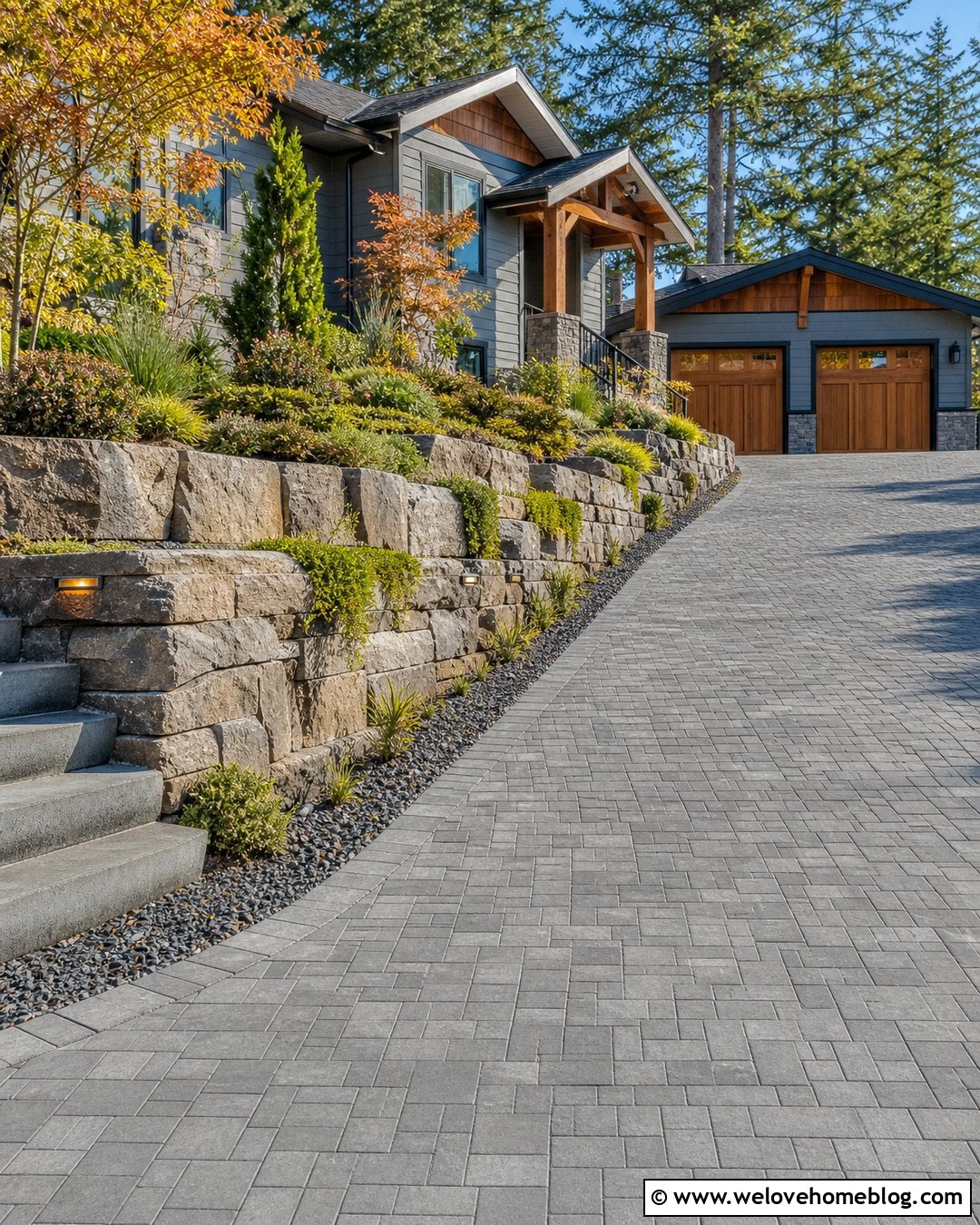
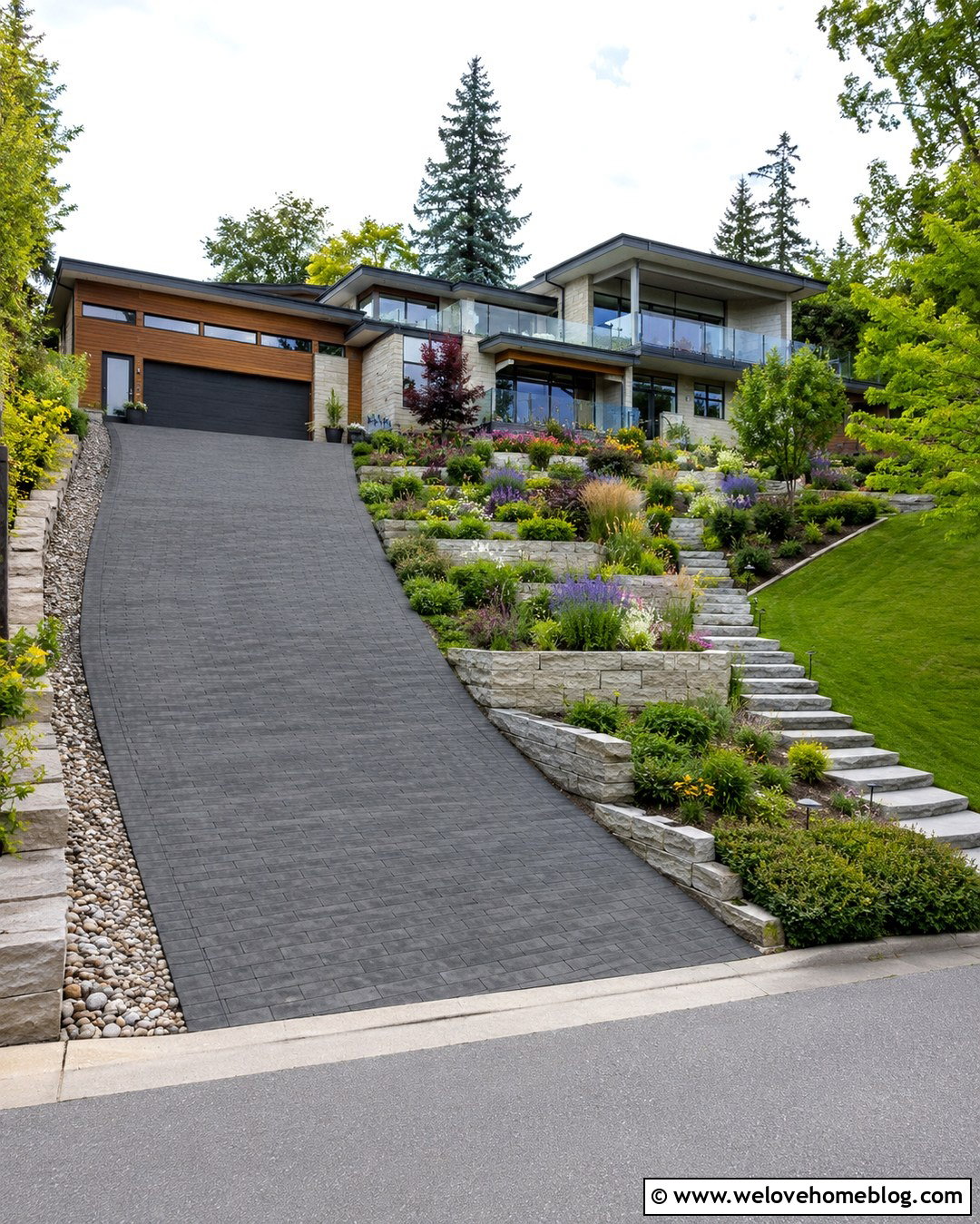
A retaining wall can turn a difficult sloped driveway into a stable, attractive entrance. Pair poured concrete or interlocking pavers with a properly engineered stone or concrete-block wall along the raised side. Create a planted terrace above the wall using cascading ground covers, compact shrubs, and ornamental grasses that will not obstruct visibility. At the wall base, a narrow drainage strip of gravel can reduce staining and keep planting away from vehicle tires. Repeat the wall material around front steps or porch columns. Integrated lighting may improve navigation while emphasizing the stone texture. Taller walls, complex slopes, and drainage problems require professional design. When structure, planting, and paving are planned together, the driveway feels connected to the hillside rather than squeezed between unrelated surfaces.
43. Driveway With Gravel Garden Landscaping
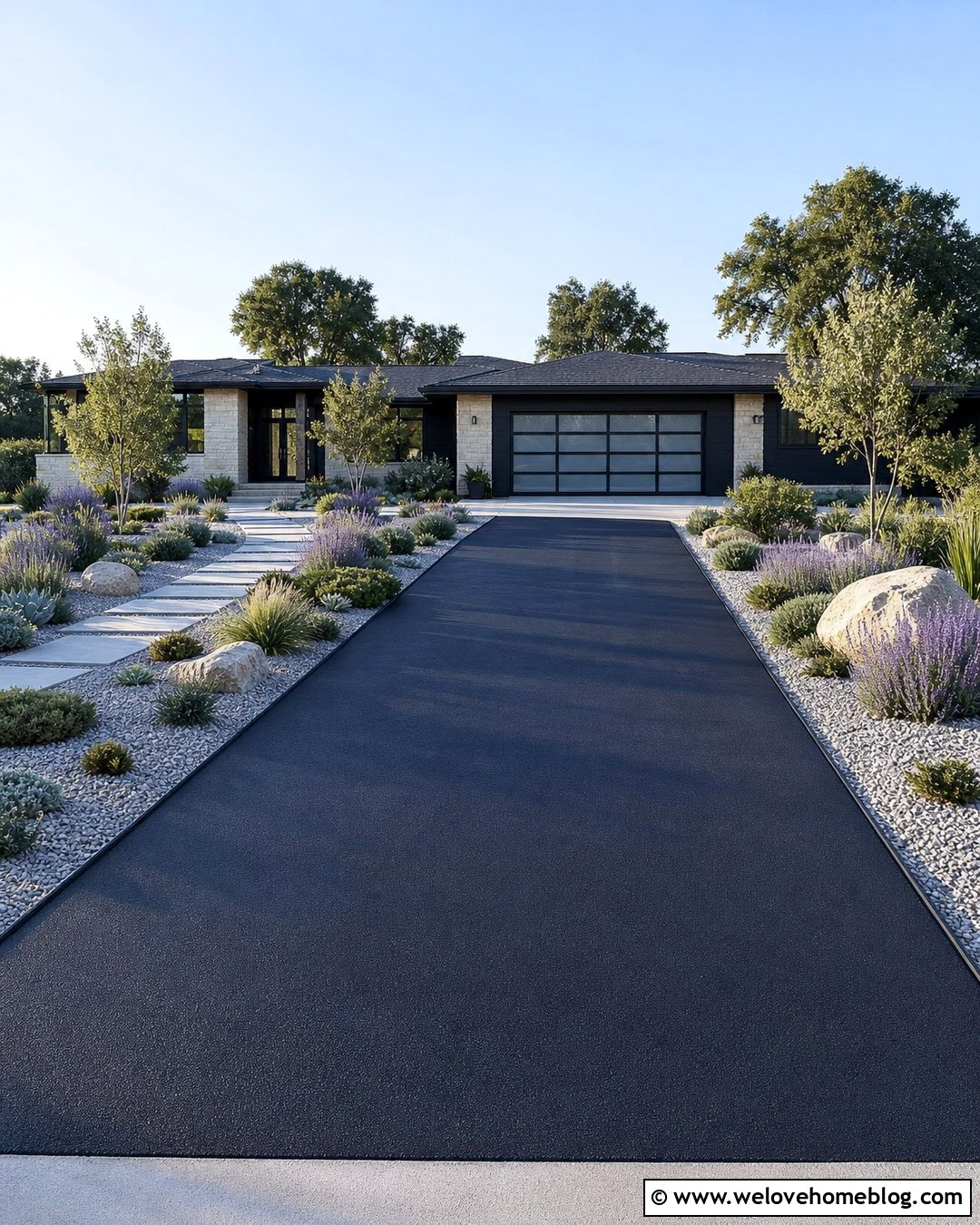
A gravel garden creates a low-water, textured border around a smooth driveway. Use gray poured concrete or black asphalt for the driving surface, then install crisp steel edging beside broad areas of decorative gravel. Add drought-tolerant grasses, lavender, salvia, sedum, and sculptural shrubs in repeated groups. Larger rocks or boulders can anchor the composition, but they should remain well beyond turning and walking areas. Vary plant height while preserving open space between clusters. A stepping-stone walkway through the gravel can connect the parking area to the front door. Choose gravel that contrasts with the driveway but coordinates with the house. Unlike an unmanaged stone strip, this complete look relies on clear bed shapes, intentional spacing, and a limited plant palette.
44. Driveway With Address Sign Landscaping
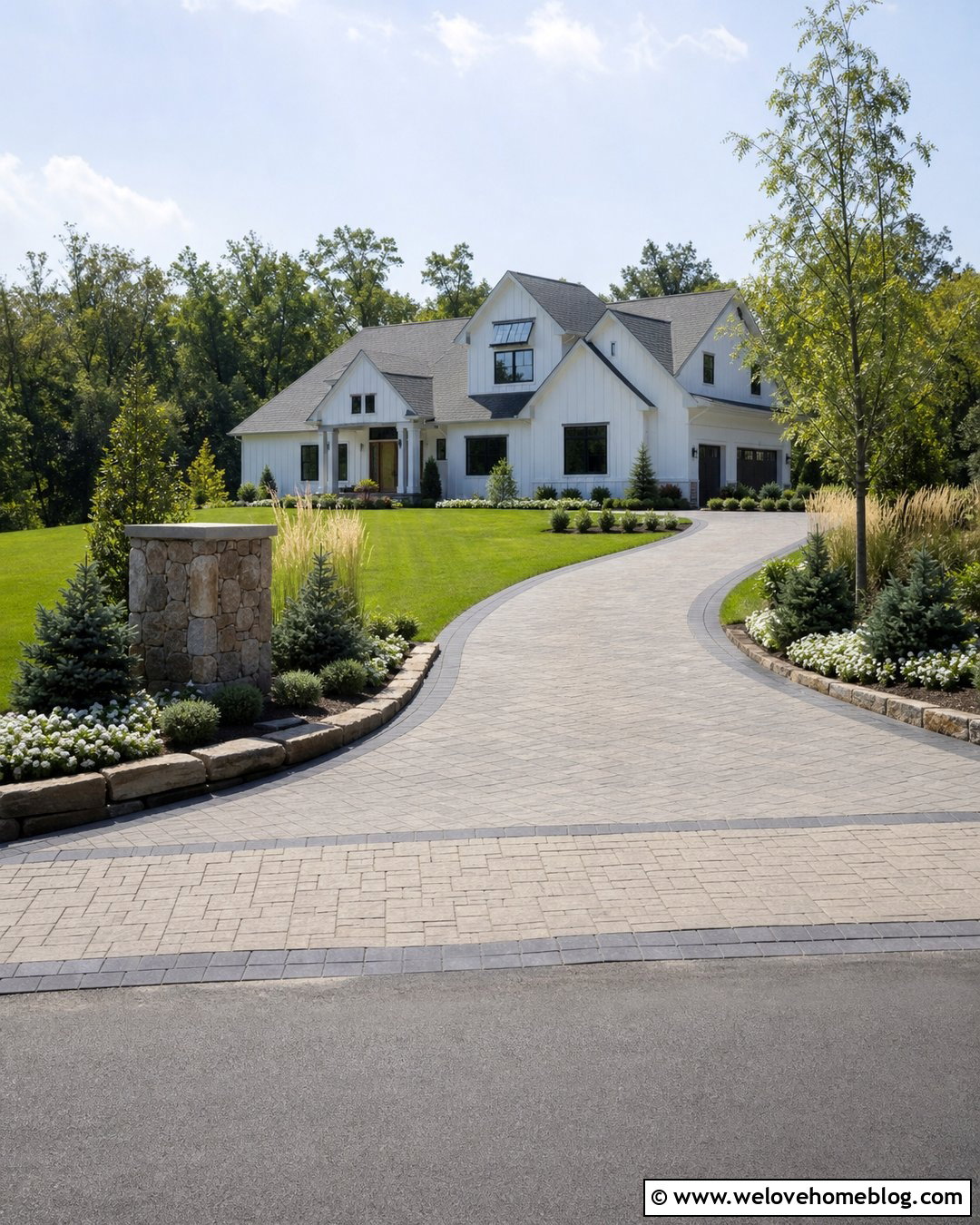
A landscaped address sign can make the driveway entrance easier to recognize while strengthening curb appeal. Pair an asphalt or paver driveway with a low stone, brick, or wood monument positioned outside the visibility triangle and public right-of-way. Surround it with a broad bed of low evergreen shrubs, ornamental grasses, and seasonal flowers. Keep plants from covering the numbers as they mature. Repeat the sign material in the driveway border or apron so it feels connected to the full approach. Low-voltage lighting can illuminate the address without creating glare toward the road. On the opposite side, use a smaller matching bed to balance the entrance. The design should remain simple, readable, and proportional to the house and driveway width.
45. Driveway With Landscape Lighting Borders
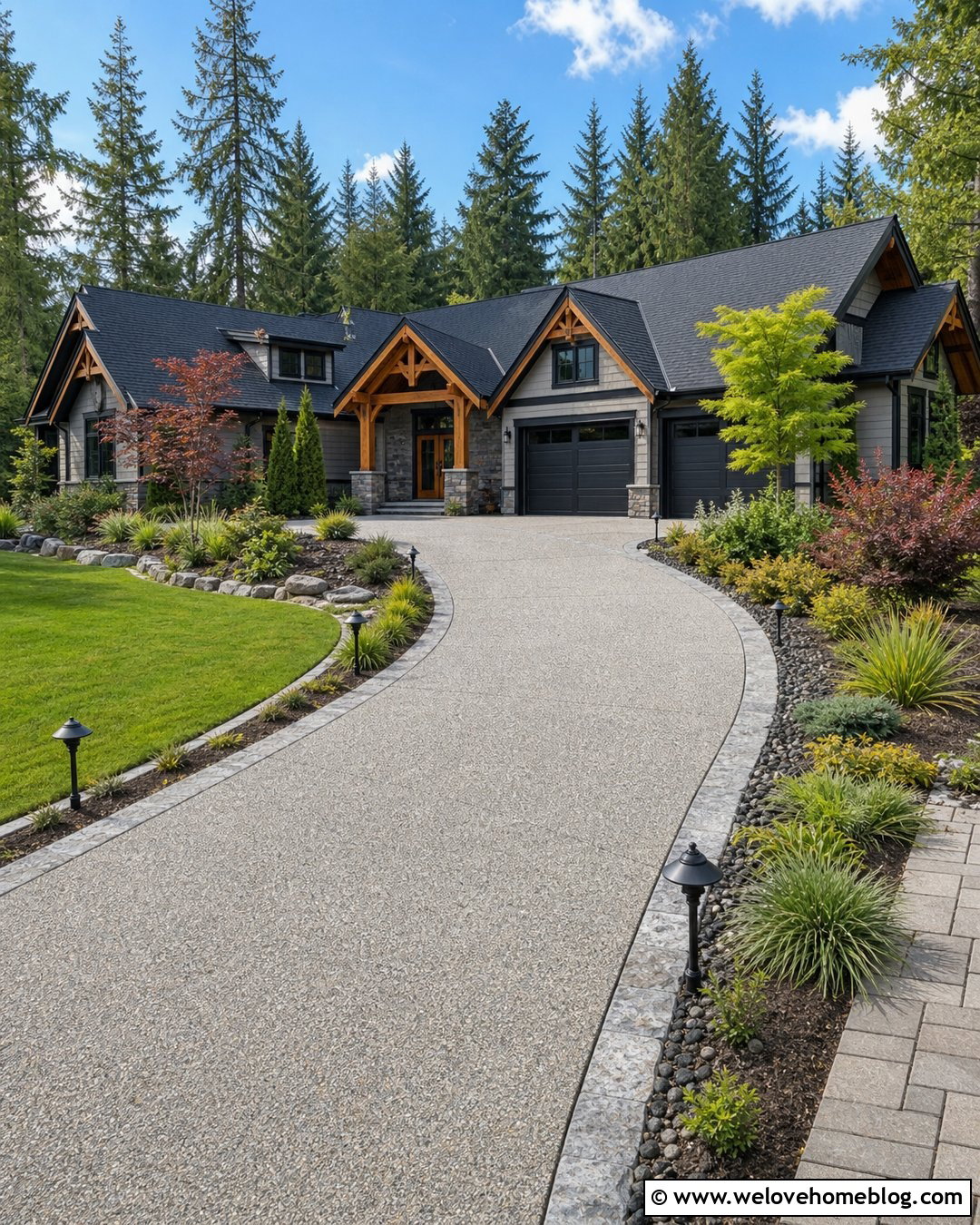
Landscape lighting can clarify the driveway route while highlighting its plants and edges. Begin with a curved paver or exposed-aggregate driveway bordered by low shrubs and ornamental grasses. Place shielded, low-voltage fixtures at important transitions, including the entrance, curves, walkway crossing, and garage approach. Avoid creating a rigid airport-runway effect with too many evenly spaced lights. Instead, illuminate selected trees, stone borders, and planting groups while keeping the pavement readable. Fixtures should stay outside tire paths, mowing zones, and snow storage areas. During daylight, dark bronze or black housings can blend into mulch and foliage. Pair the system with a timer or smart control. A thoughtful plan supports navigation and makes the complete driveway landscape feel intentionally designed after sunset.
46. Driveway With Pergola Entrance Landscaping
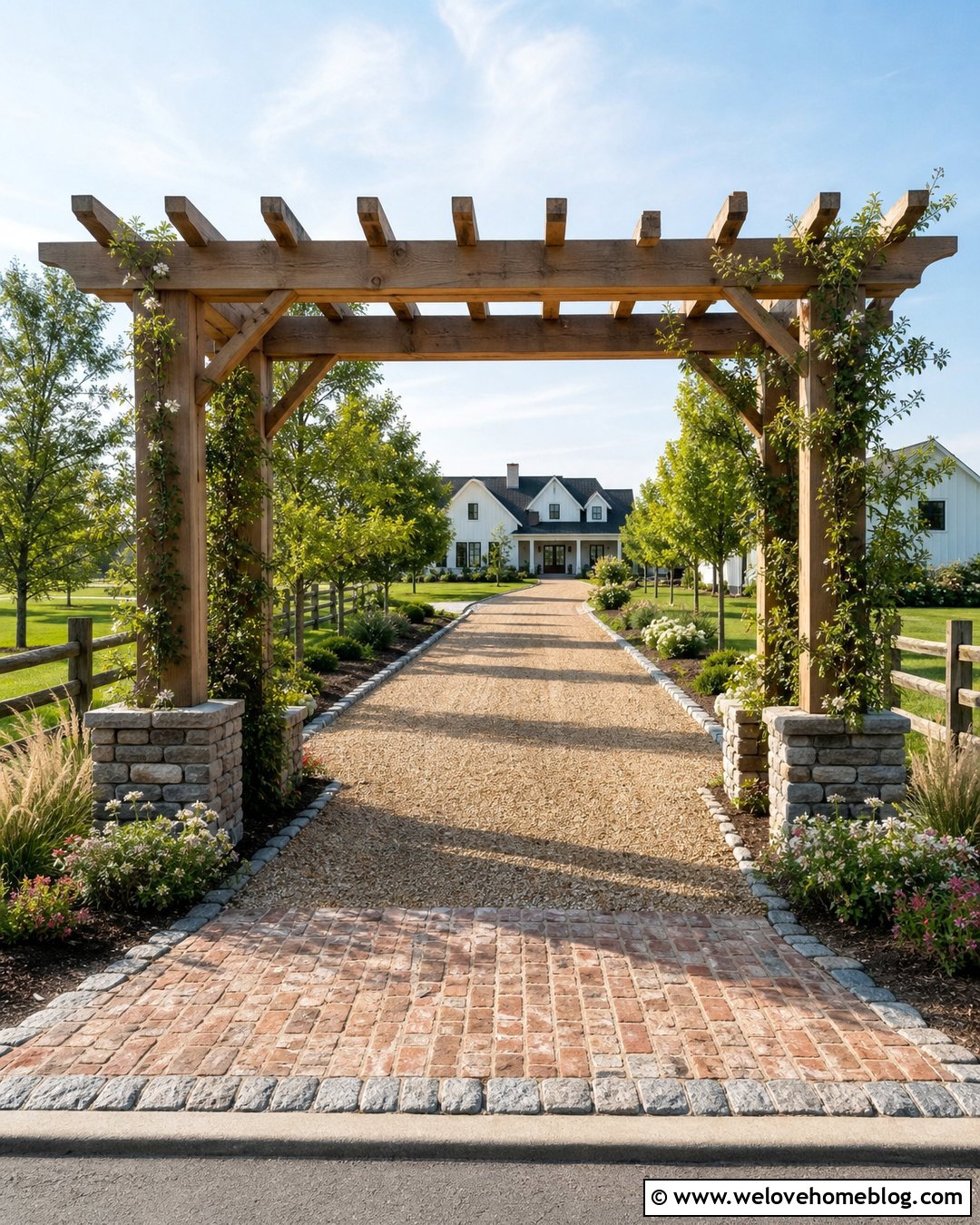
A pergola can mark the entrance to a long driveway when the structure is scaled for vehicles and approved for the site. Use a gravel or brick paver approach framed by sturdy timber or masonry supports positioned well outside the driving clearance. Plant low flowering shrubs, ornamental grasses, and climbing vines around the outer sides of the structure. Avoid vigorous plants that could hang into the vehicle path or conceal address numbers. Continue the pergola material through fencing, mailbox details, or a front porch for visual continuity. A contrasting paver apron beneath it emphasizes the threshold. The surrounding beds should remain lower near the street and become fuller beyond the entrance. This design suits farmhouse, cottage, craftsman, and country properties with generous frontage.
47. Driveway With Stone Pillar Landscaping
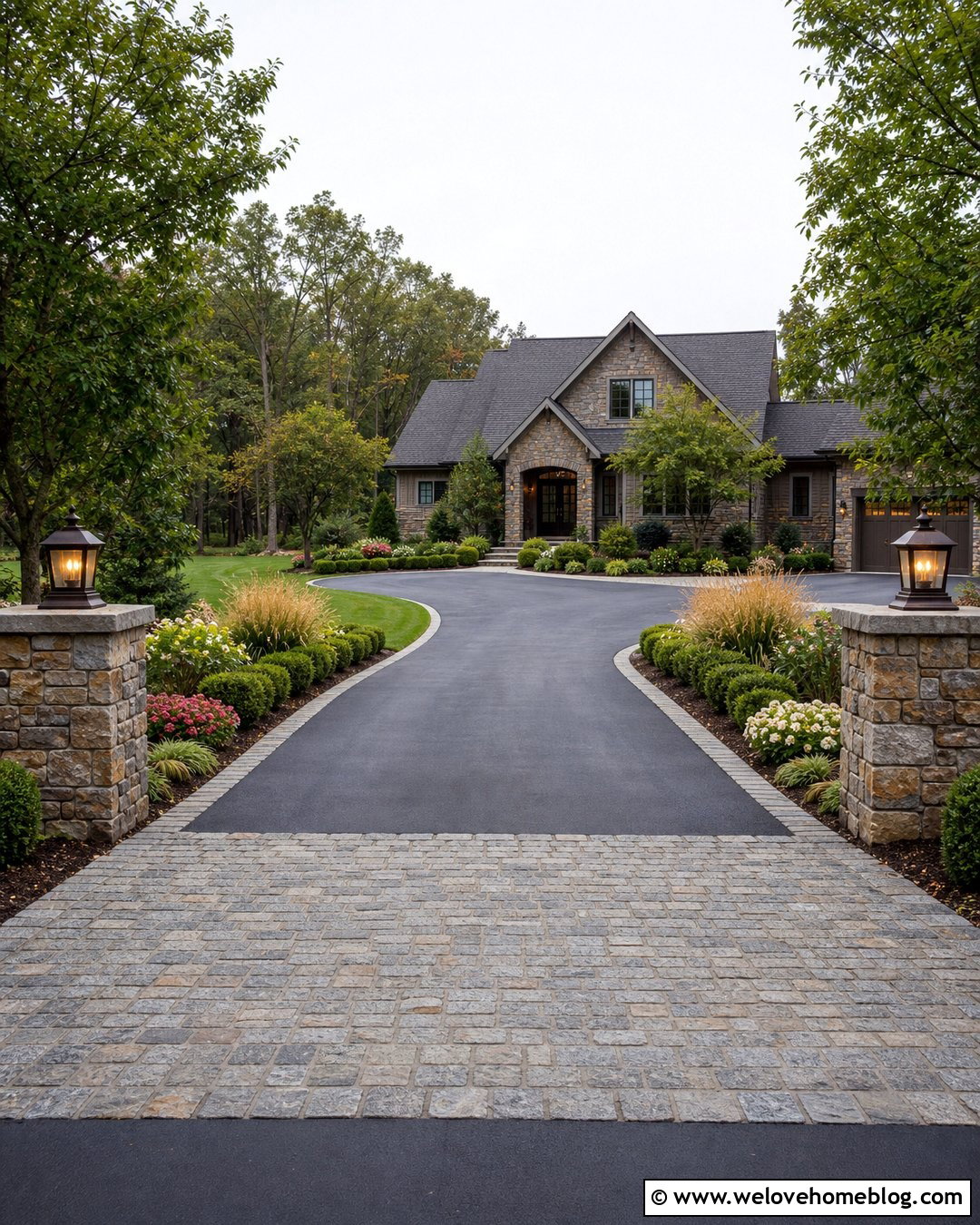
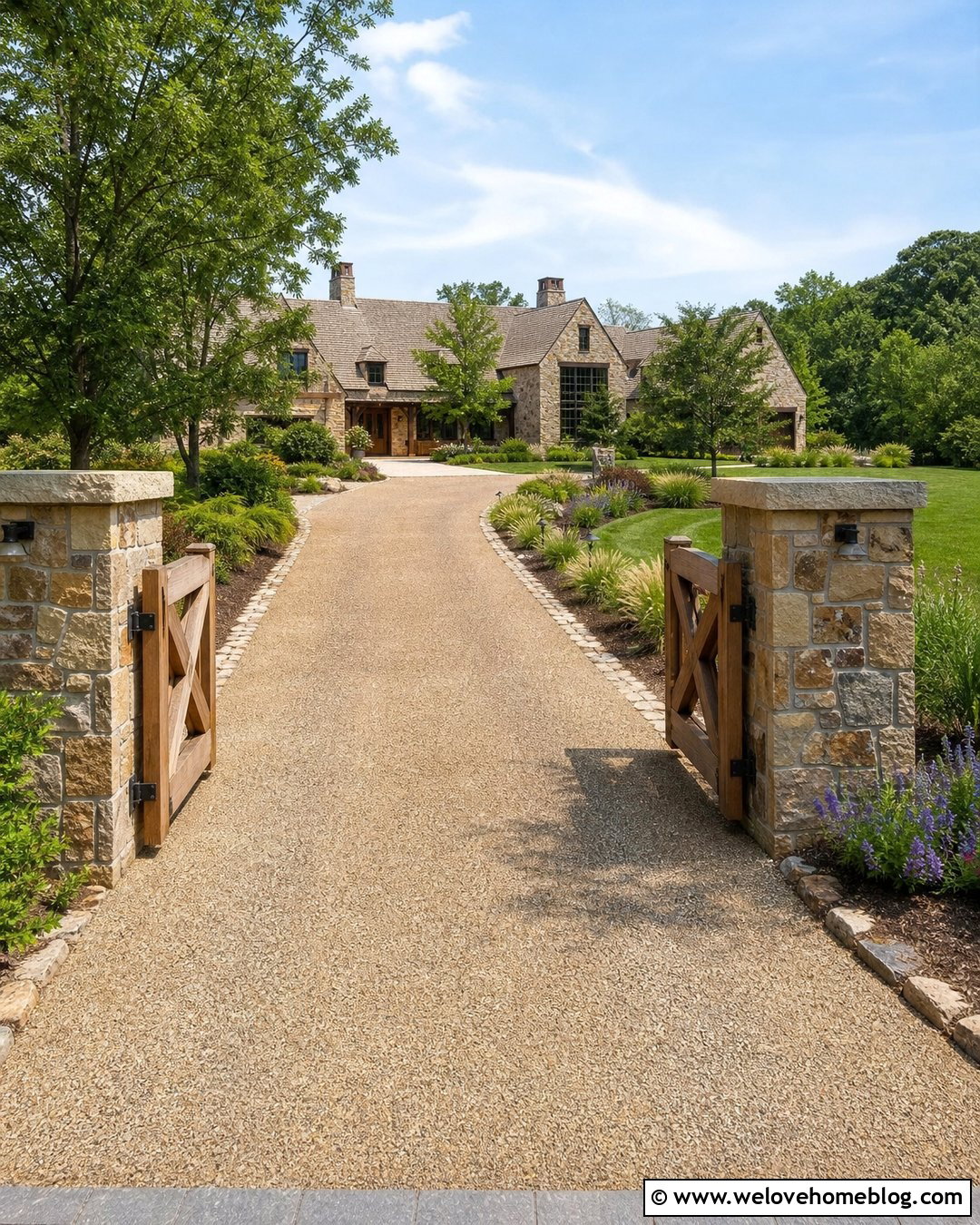
Stone pillars create a strong entrance when they are proportional to the driveway and surrounding house. Pair them with a curved asphalt, paver, or gravel surface and a wider stone apron at the road. Plant symmetrical beds around the outside of the pillars using low boxwood, ornamental grasses, seasonal flowers, and ground cover. Keep the inside edges open so drivers have adequate turning clearance. Match the stone to the house foundation, retaining wall, or porch rather than introducing an unrelated color. Integrated address numbers and subtle lighting can reduce extra clutter. If gates are included, account for swing direction, setbacks, and waiting space. Well-planned pillars should frame the view toward the home while the landscaping softens their weight and connects them to the yard.
48. Driveway With Seasonal Container Landscaping
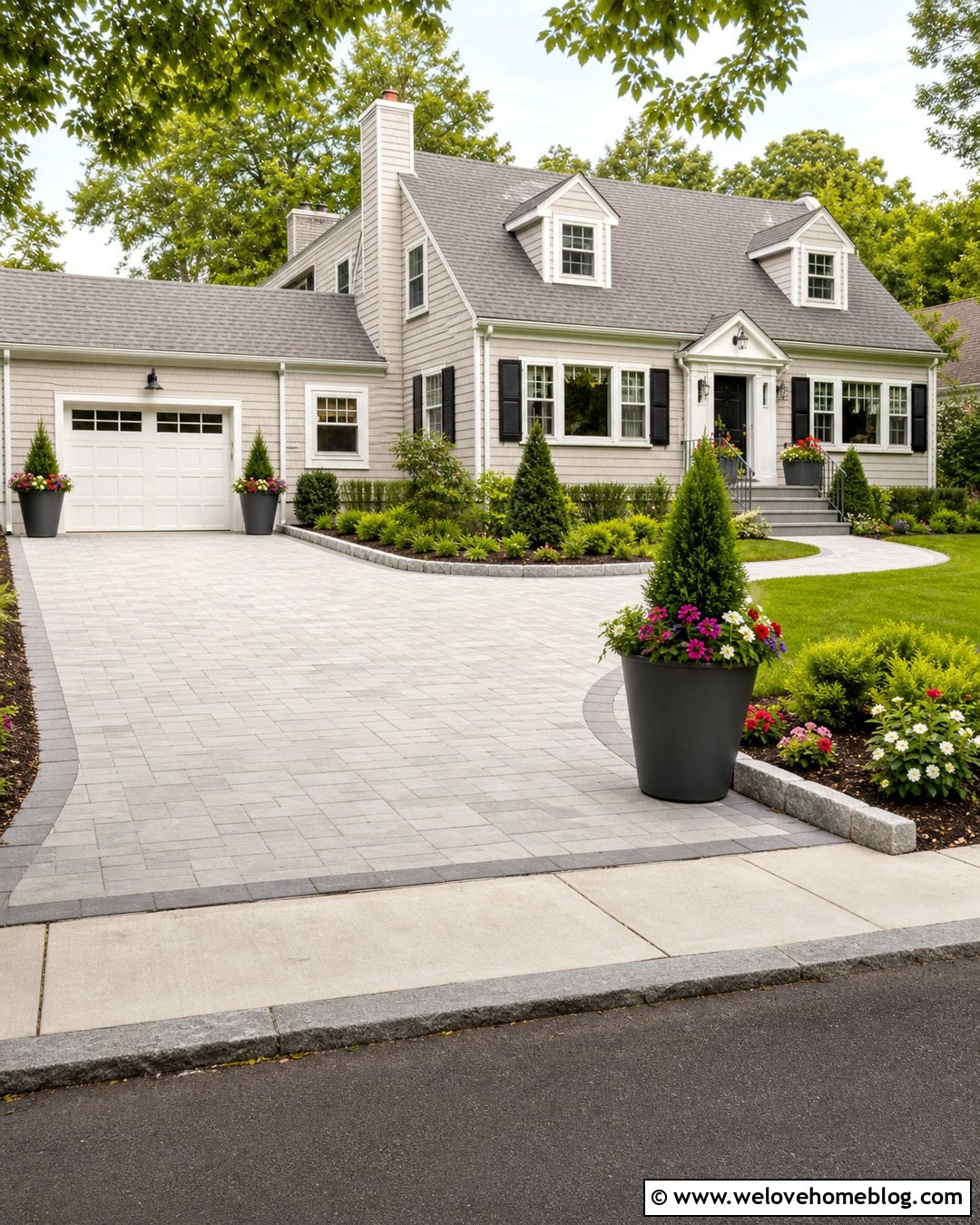
Large containers can add color where permanent planting beds are too narrow or difficult to maintain. Use them beside a concrete or paver driveway near the garage, walkway, or entrance pillars, never within turning paths. Choose containers that coordinate with the facade and are heavy enough to remain stable in wind. Fill them with a layered combination of an upright focal plant, medium foliage, and trailing flowers. Repeat the same container style on both sides for balance, but vary plant color with the season. Surround the pots with simple evergreen beds, stone edging, and neat ground cover so they belong to a complete landscape. Reliable irrigation and drainage holes are essential. Containers offer flexibility without sacrificing parking space or requiring major construction.
49. Driveway With Edible Garden Borders
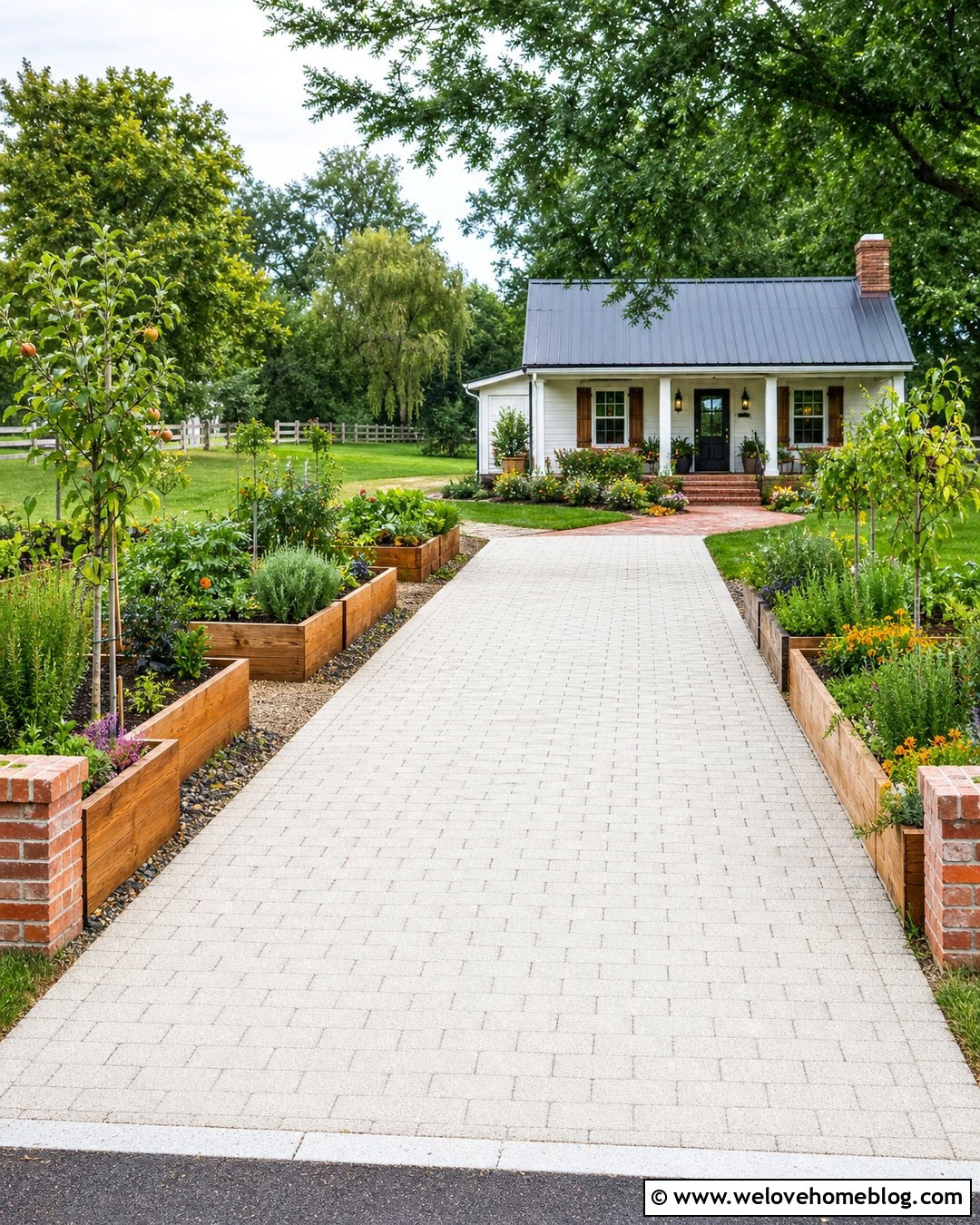
Edible landscaping can border a sunny driveway when food plants are protected from traffic, runoff, and roadside contaminants. Pair a permeable paver or gravel surface with raised timber, brick, or stone beds set beyond passenger-door areas. Plant compact blueberries, herbs, strawberries, dwarf fruit trees, and edible flowers suited to the local climate. Keep tall crops near the house and low herbs toward the driveway. A gravel or mulch path between the beds and pavement provides access for harvesting without stepping into traffic. Drip irrigation reduces water on the driveway and plant foliage. Repeat the bed material around the front walkway for a cohesive appearance. This productive design works especially well with cottage, farmhouse, and suburban homes that receive abundant sunlight.
50. Driveway With Mixed Material Landscaping
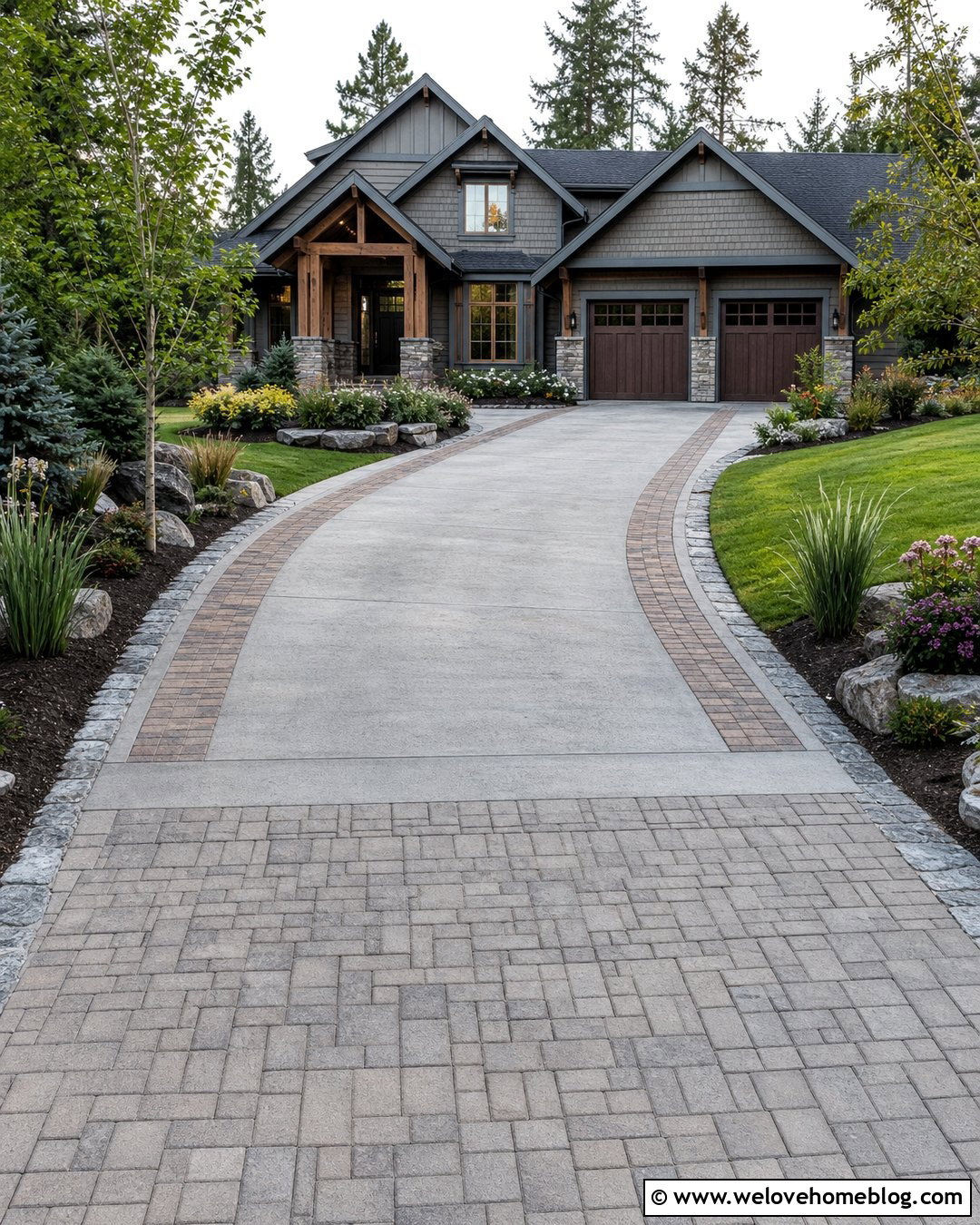
A mixed-material driveway can divide a large paved area into visually manageable sections. Combine gray poured concrete parking lanes with clay brick ribbons, cobblestone edging, or permeable paver bands. Use the material changes to mark the entrance, walkway crossing, and garage apron rather than adding patterns randomly. Surround the driveway with layered beds containing evergreen shrubs, flowering perennials, ornamental grasses, and one or two small trees. Repeat hardscape colors in the house facade, steps, or retaining walls. Curved planting edges can soften a rectangular parking court, while straight borders complement modern architecture. Limit the design to two or three primary materials so it remains cohesive. The finished landscape should direct movement, support drainage, and create curb appeal as one coordinated composition.
Conclusion:
The strongest driveway landscapes combine function, proportion, and planting rather than treating each detail separately. Choose a surface that fits your climate and maintenance needs, then use edging to create a dependable transition into the yard. Plants should tolerate the site’s sunlight, moisture, reflected heat, and winter conditions while staying clear of vehicles and road views. Repeat a limited selection of materials and plants to connect the street, driveway, walkway, and house. Drainage, mature plant size, lighting, and snow storage also deserve early attention. Whether you prefer formal hedges, native flowers, modern grasses, or rustic stone, these 50 Driveway Landscaping Ideas can help you create an attractive entrance that remains practical every day.

Related posts:
Leave a Reply