
A well-designed driveway edge does more than separate pavement from the lawn. It supports the driveway surface, controls loose materials, defines planting beds, and makes the entire front yard look finished. These 20 landscaping driveway edge ideas combine practical borders with complete driveway designs, including concrete, asphalt, gravel, brick, pavers, and resin-bound surfaces. You will find options for sunny yards, shaded entrances, compact suburban lots, long country driveways, and low-maintenance landscapes. Each look considers the driveway material, layout, edging, plants, drainage, and connection to the house. Whether you prefer a formal hedge or a relaxed flower border, use these 20 landscaping driveway edge ideas to create a cleaner and more welcoming approach.

1. Concrete Driveway Edge With Brick And Boxwood
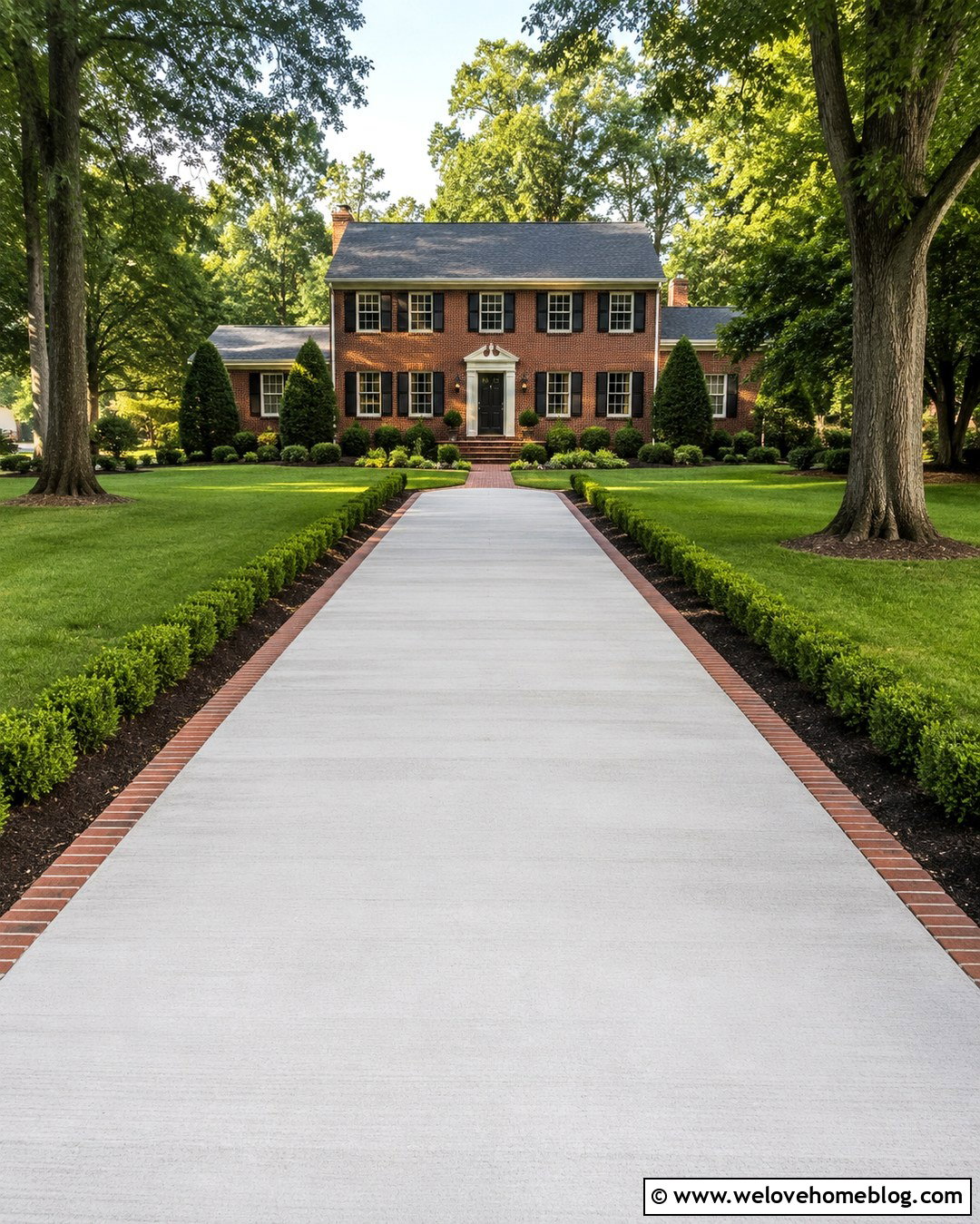
A straight concrete driveway gains warmth and definition when framed with red clay brick and compact boxwood shrubs. Set the bricks flush with the concrete so tires can pass over the border without damaging it. A narrow mulched bed behind the brick provides enough room for a low boxwood hedge while keeping plants away from car doors. This complete look works especially well with Colonial and traditional brick homes because the edging repeats colors already found on the facade. Keep the shrubs around 18 to 24 inches tall to preserve visibility near the street. At the garage, connect the border to a brick walkway or apron. The repeating brick line makes plain concrete feel more intentional without requiring a complete driveway replacement.
2. Asphalt Driveway Edge With Cobblestone And Hydrangeas
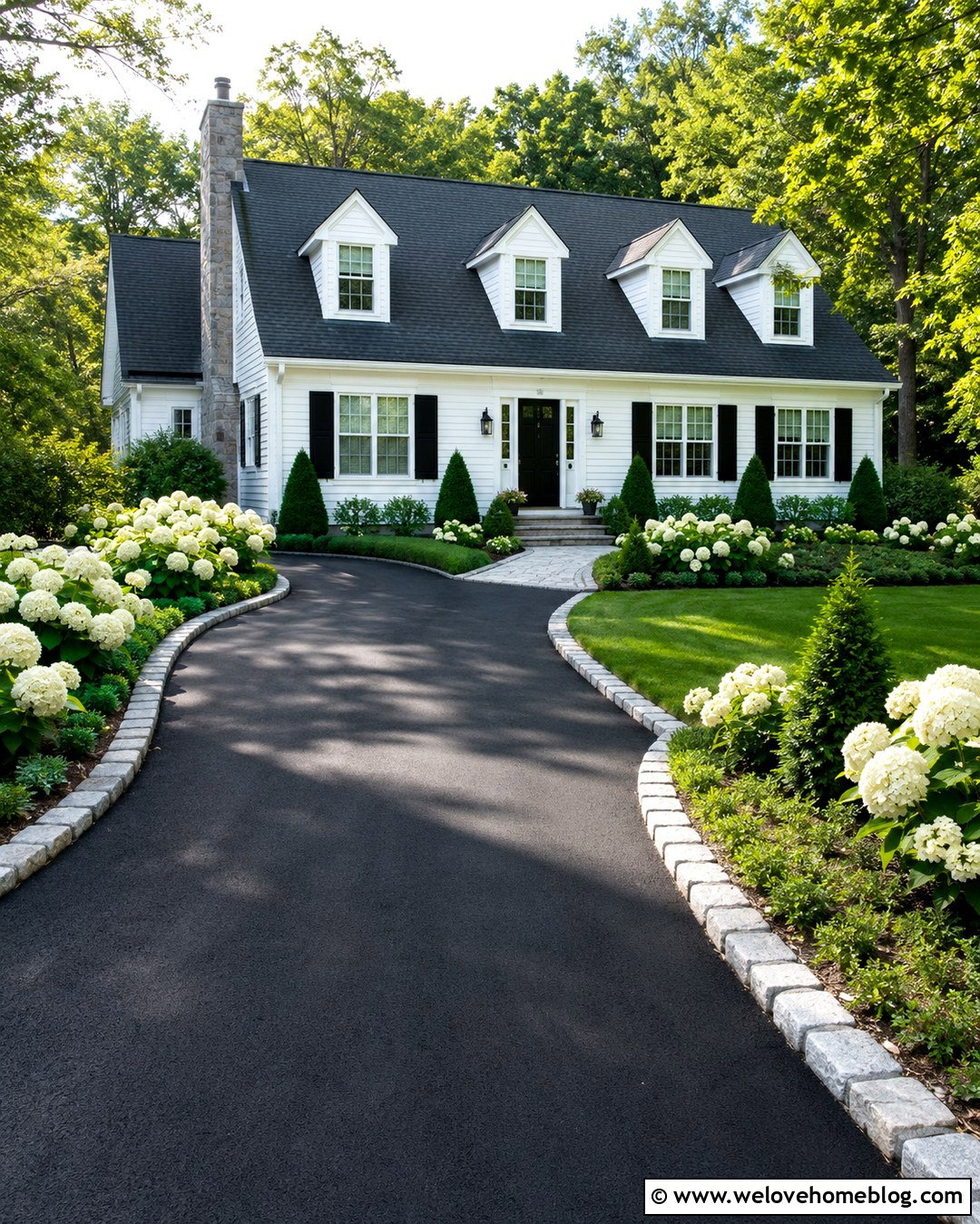
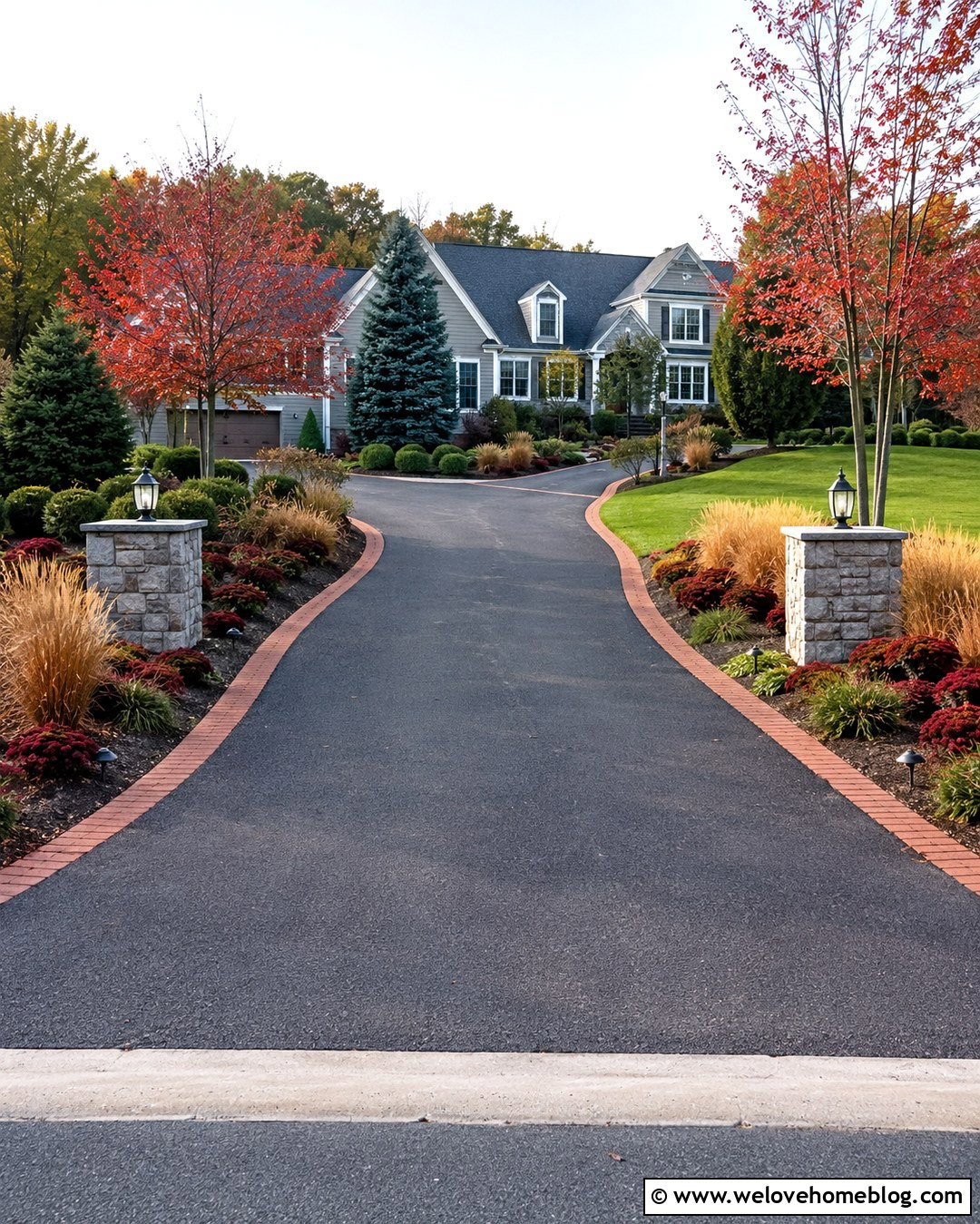
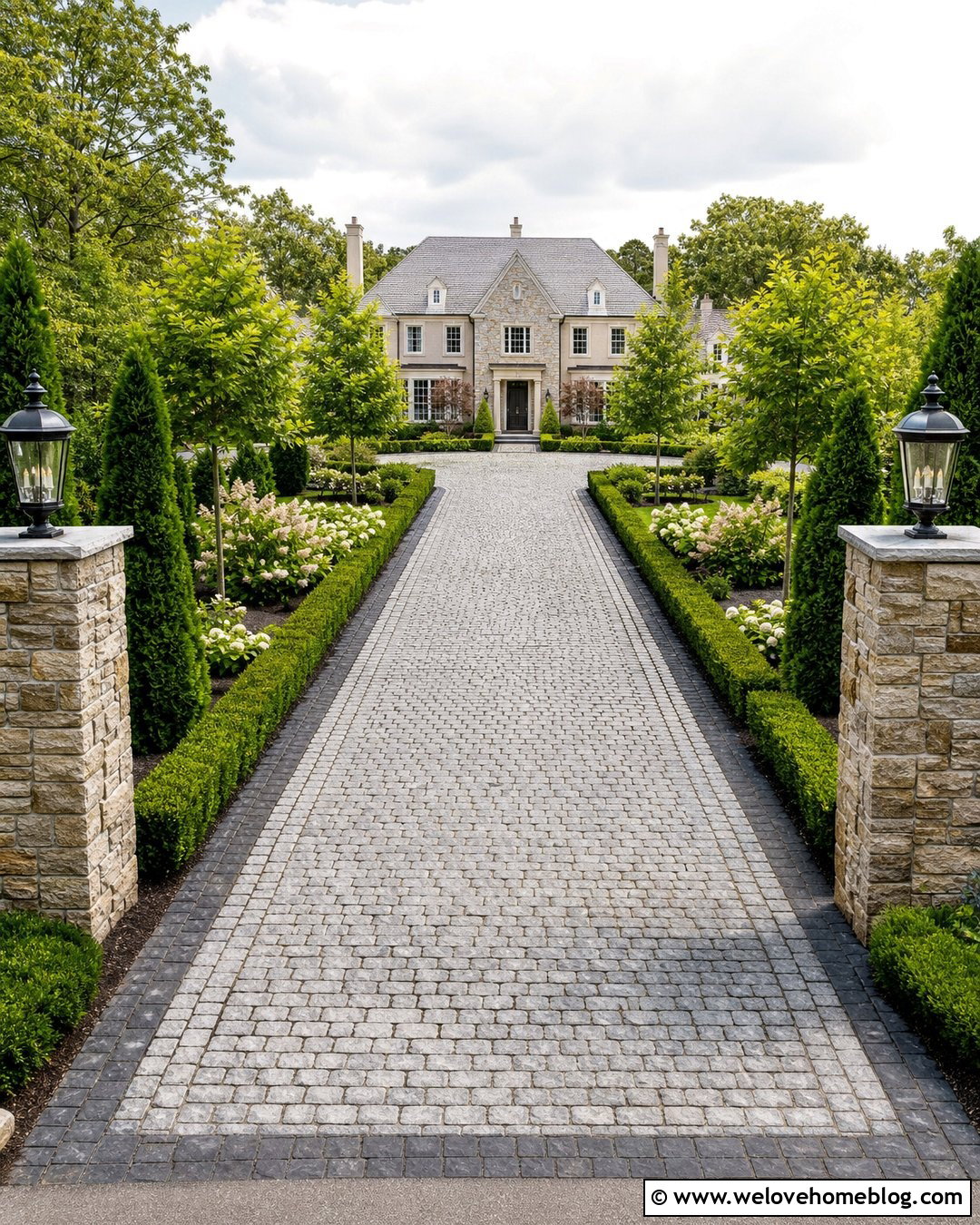
Dark asphalt creates a striking background for pale granite cobblestones and full hydrangea borders. Use cobbles along both sides of a gently curved driveway, setting them into a stable base so they support the asphalt edge. Behind the stone, create wide mulched beds with hydrangeas, dwarf evergreens, and low ground covers. Leave extra clearance near parking areas because mature hydrangeas can spread farther than expected. This driveway edge looks particularly attractive beside a Cape Cod or shingle-style home with white trim. Repeating the cobblestone around nearby garden beds will make the landscape feel connected. Choose hydrangeas suited to local light conditions, and keep street-end planting low enough to maintain a clear view when entering traffic.
3. Gravel Driveway Edge With Timber And Ornamental Grass
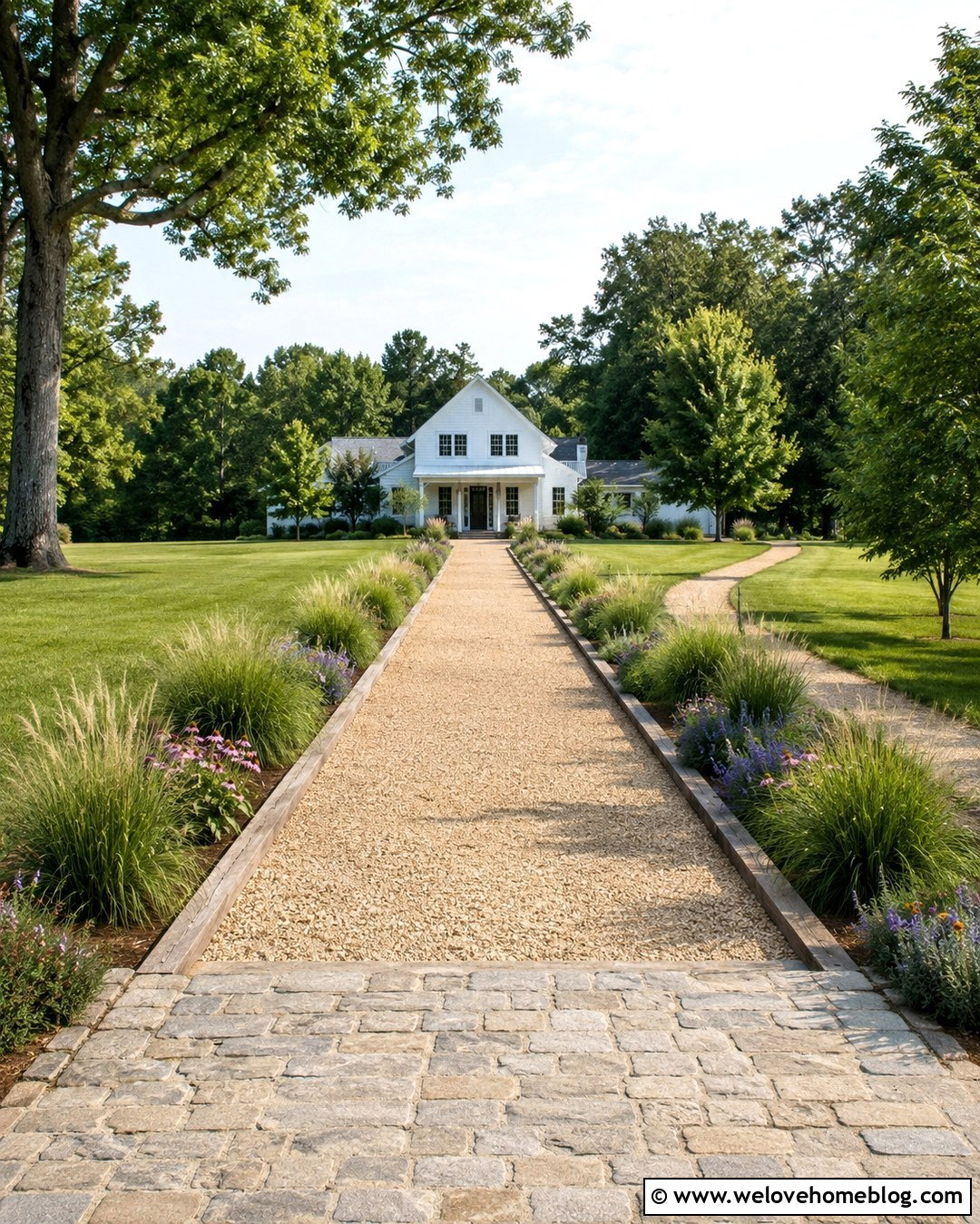
Picture a long gravel driveway bordered by sturdy timbers and softly moving ornamental grasses. Pressure-treated landscape timbers contain the gravel, protect the lawn, and complement a country or modern farmhouse setting. Install them nearly flush with the surface rather than creating a tall barrier that could catch tires. Behind the timber, plant repeated groups of switchgrass, little bluestem, or another locally suitable grass. Add a few flowering perennials between the groups for seasonal color. The straight border controls the gravel, while the loose planting keeps the design from looking rigid. At the road, transition to a wider stone apron that can handle frequent turning. This complete driveway look is practical for larger properties and naturally blends into open yards.
4. Paver Driveway Edge With Lavender And River Rock
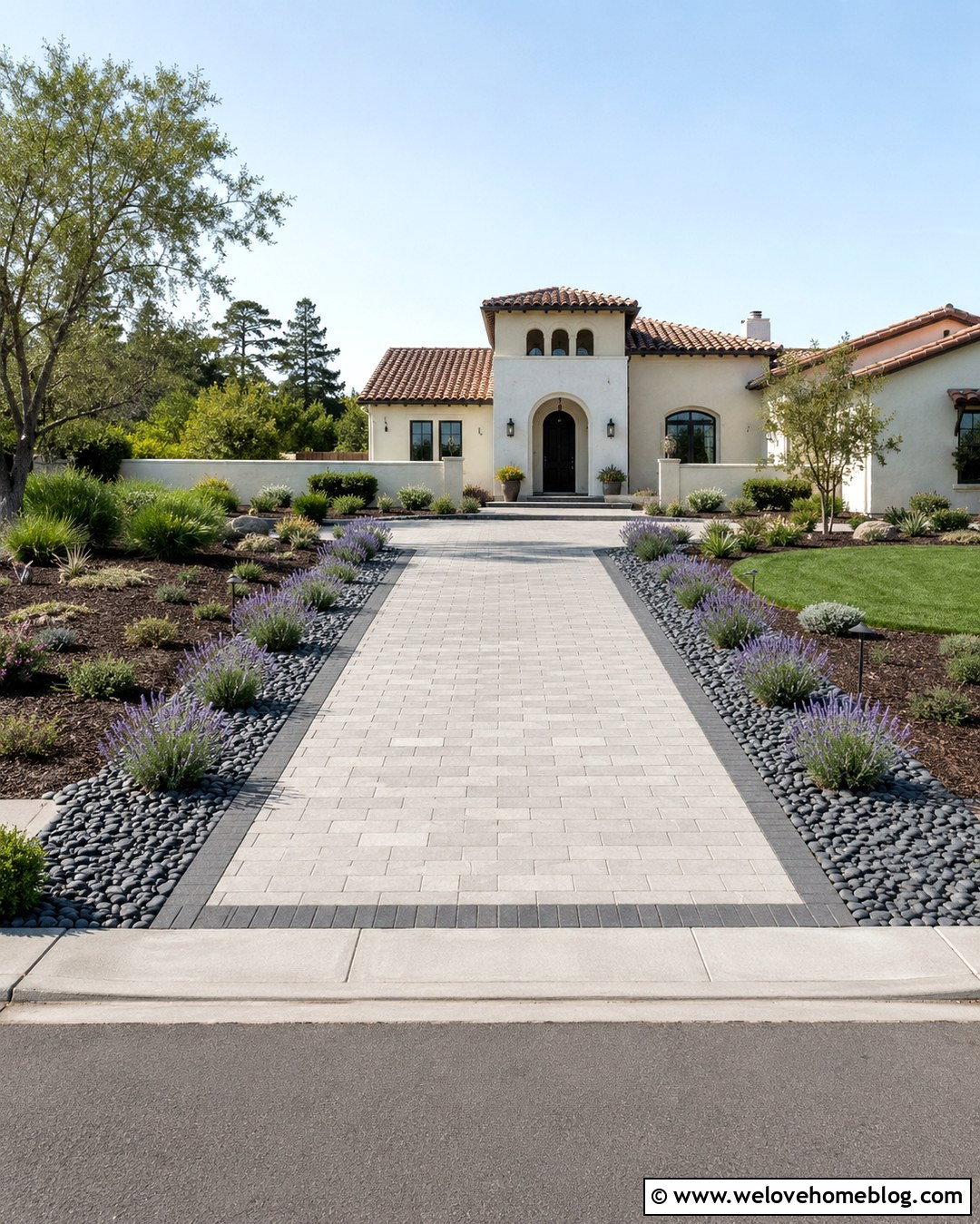
A light gray paver driveway can feel polished yet relaxed when surrounded by lavender and a narrow river-rock strip. Lay the pavers in a running bond or subtle herringbone pattern, then use a darker paver course to define the outer edge. Beyond that border, place smooth river rock around evenly spaced lavender plants. The rock keeps soil and mulch from washing onto the driveway while giving the planting room to breathe. This arrangement performs best in sunny locations with well-drained soil. For a Mediterranean or stucco home, repeat lavender near the front walkway and entrance steps. Keep plants set back from the driving surface so branches do not brush vehicles. The contrasting textures create a neat, drought-conscious landscape with strong curb appeal.
5. Curved Driveway Edge With Natural Stone And Perennials
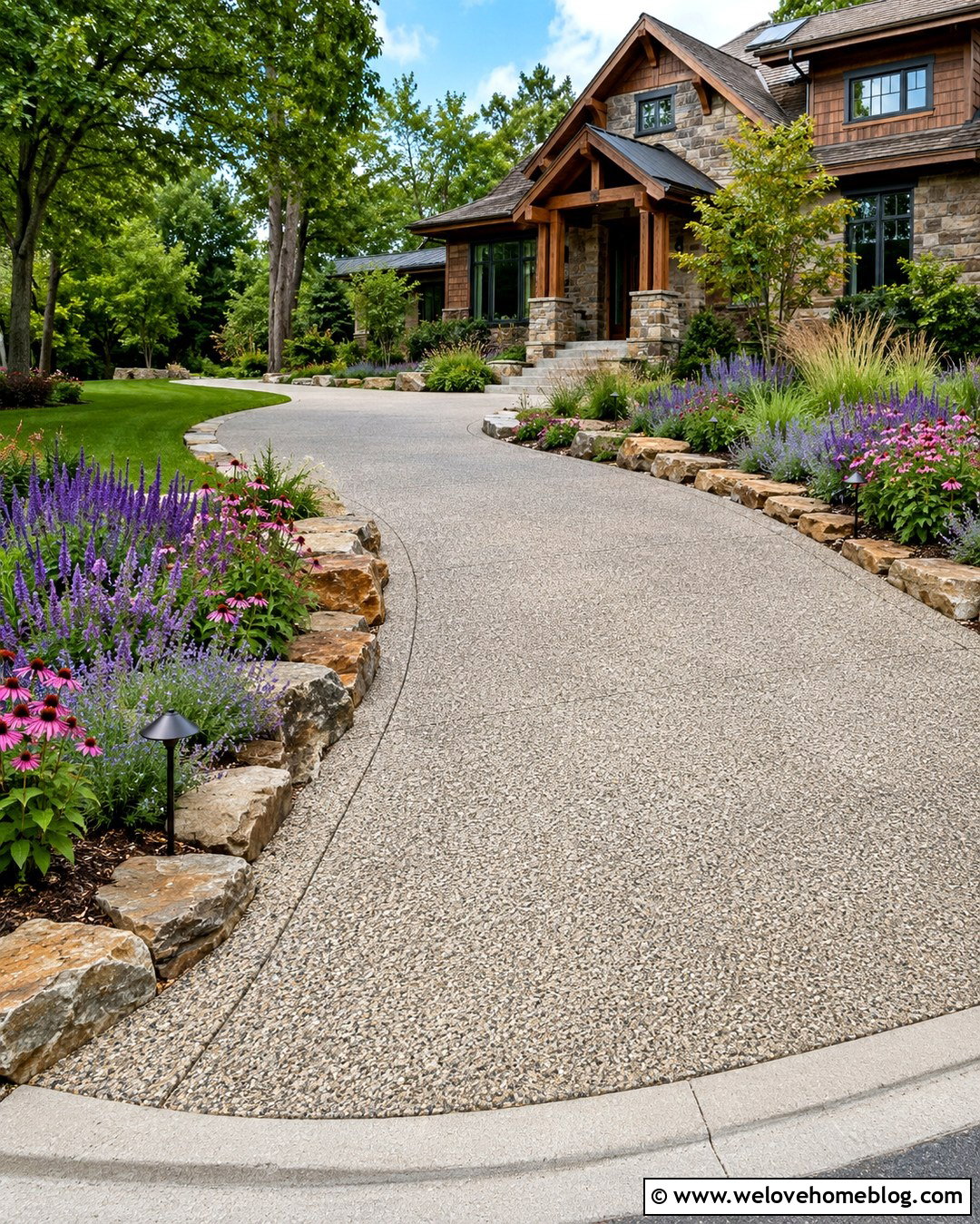
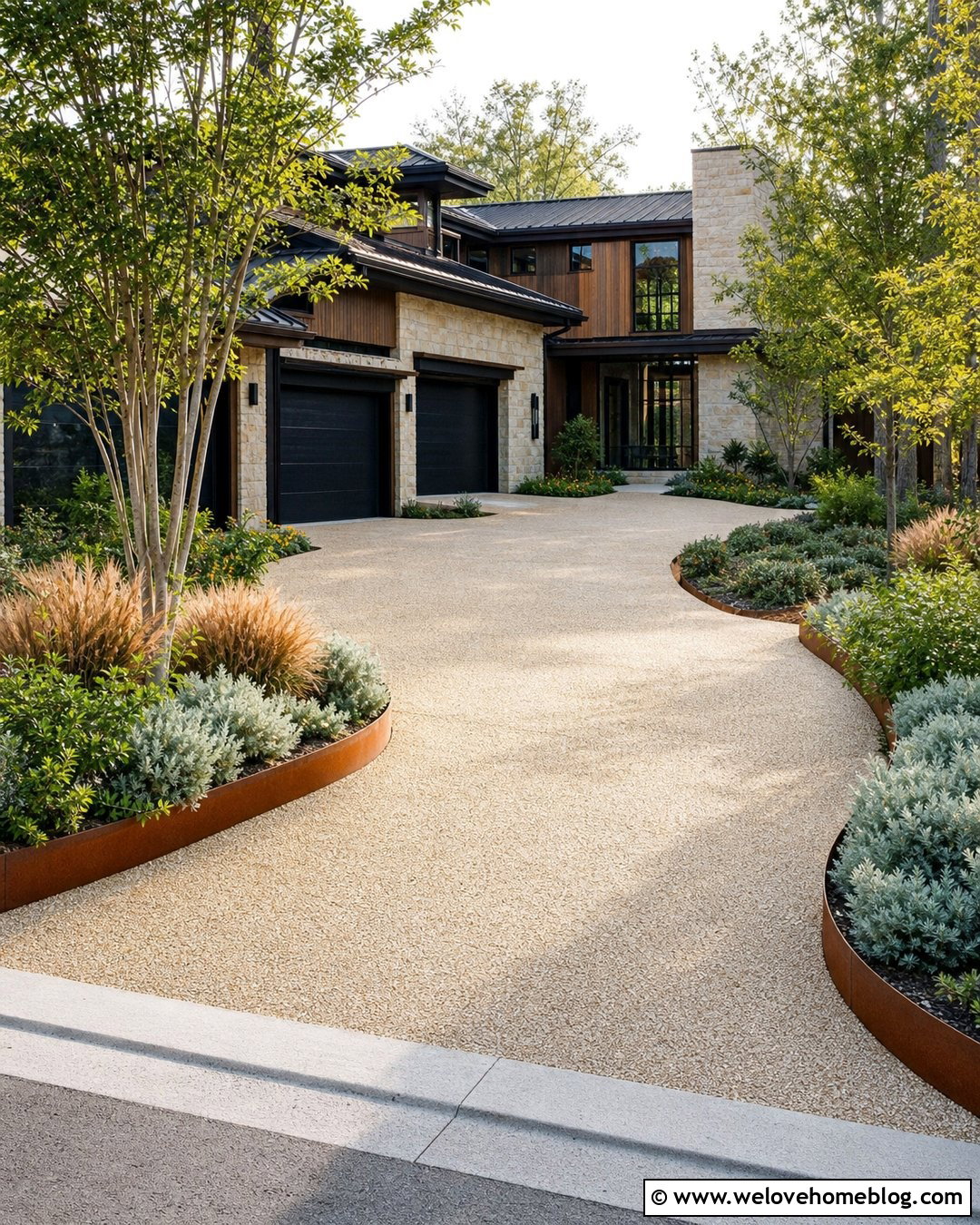
Curves become easier to read when a driveway has a continuous natural-stone border. Along a curved exposed-aggregate driveway, use irregular fieldstone to follow the shape without creating sharp corners. Build a flowing planting bed behind the stone with salvia, coneflowers, catmint, and compact ornamental grasses. Repeating a limited plant palette makes the long edge look organized instead of crowded. Place taller plants toward the house and lower varieties near the street to protect sightlines. This combination is ideal for Craftsman homes because the stone and textured concrete share an earthy character. A few low-voltage lights can be tucked between plants along the outside curve. Together, the visible stone edge and layered flowers guide visitors naturally toward the garage and front entrance.
6. Modern Driveway Edge With Steel And Native Grasses
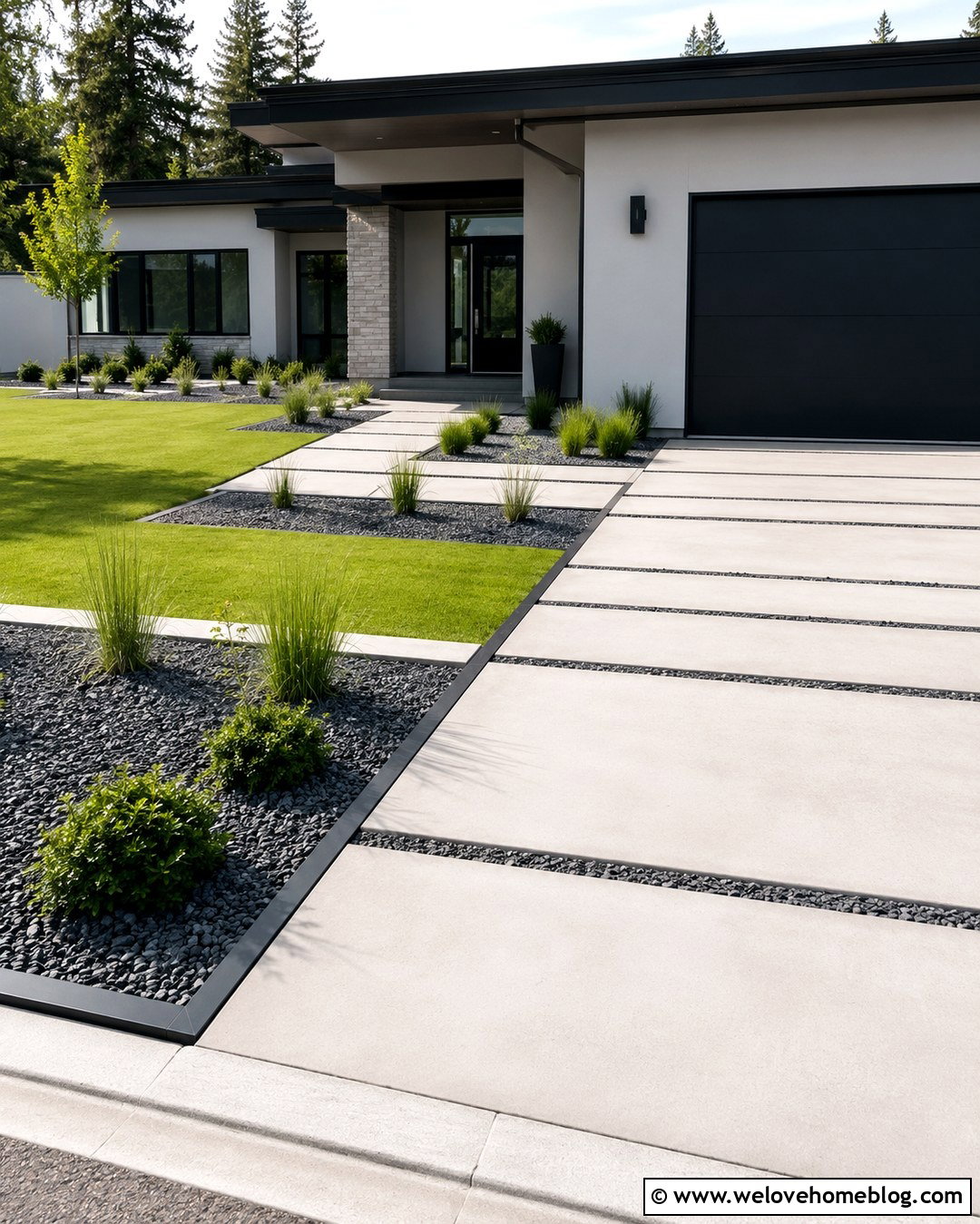
For a crisp modern look, frame large-format concrete slabs with black steel edging and structured native grasses. The slim metal strip creates a precise transition between the driveway, decorative gravel, and planting beds without becoming visually heavy. Arrange the slabs in a straight layout with narrow gravel joints, then plant upright grasses and compact evergreen shrubs in repeated blocks. This simple palette complements a modern house with clean lines, flat or low-pitched roofs, and dark window frames. Select properly finished exterior-grade edging and anchor it securely so the top remains even. Keep the steel close to grade around walking and parking zones. The result is a complete driveway landscape that feels architectural, low-profile, and easier to maintain than a densely planted flower border.
7. Brick Driveway Edge With Lawn And White Flowers
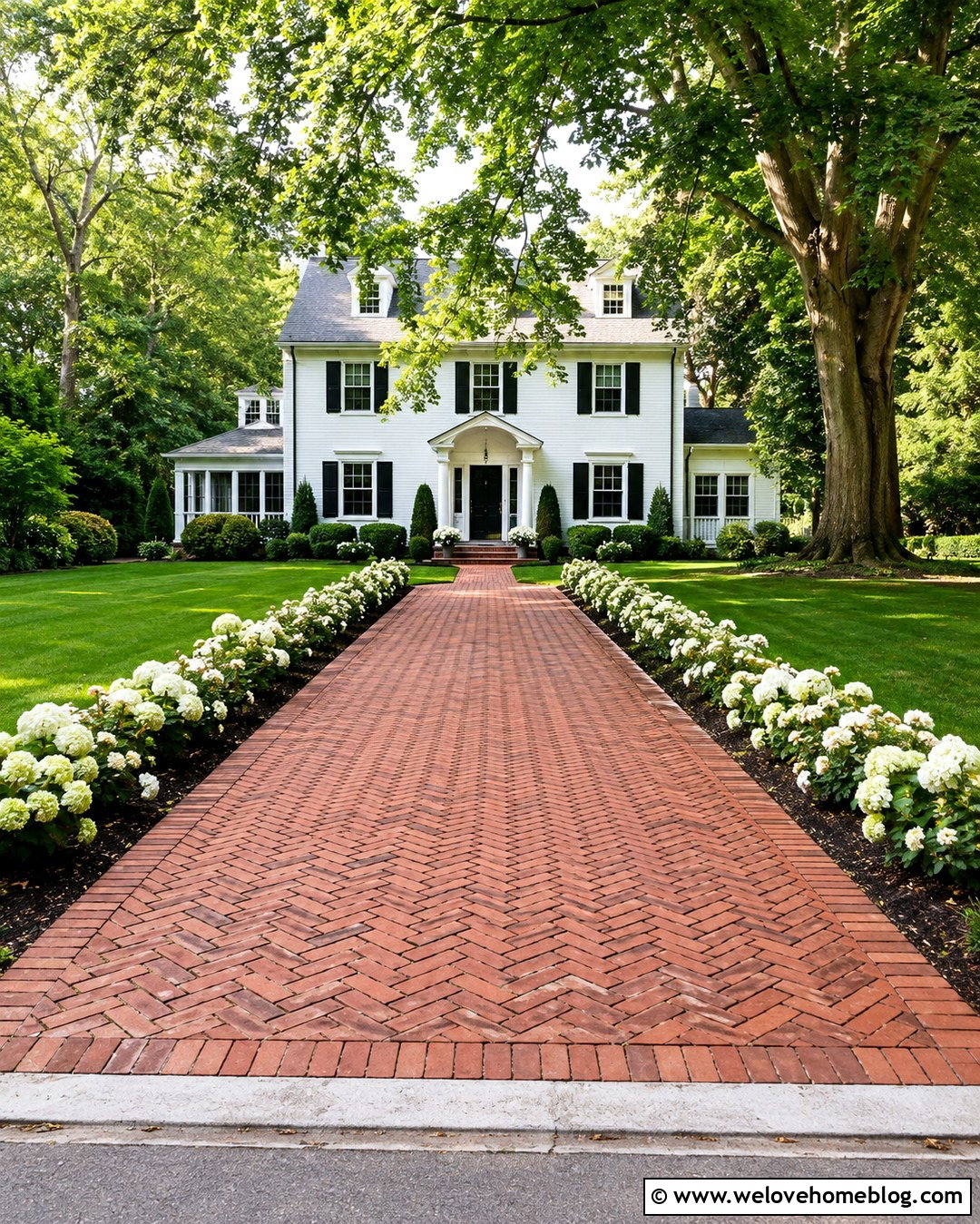
A red brick driveway surrounded by a green lawn and white flowers creates a classic, welcoming approach. Use brick pavers in a herringbone pattern across the driveway, with a soldier-course border providing a strong outer edge. Beside it, form narrow garden beds filled with white roses, hydrangeas, alyssum, or locally appropriate flowering plants. A clean strip of lawn between larger beds can prevent the entrance from feeling overly formal. This design pairs naturally with a white Colonial, Georgian, or traditional two-story house. Match the front walkway to the driveway border for continuity. Because brick already brings noticeable color and texture, keep the planting palette restrained. White blooms, deep green foliage, and neatly clipped bed lines allow the driveway pattern to remain the main visual feature.
8. Circular Driveway Edge With Low Hedges And A Center Garden
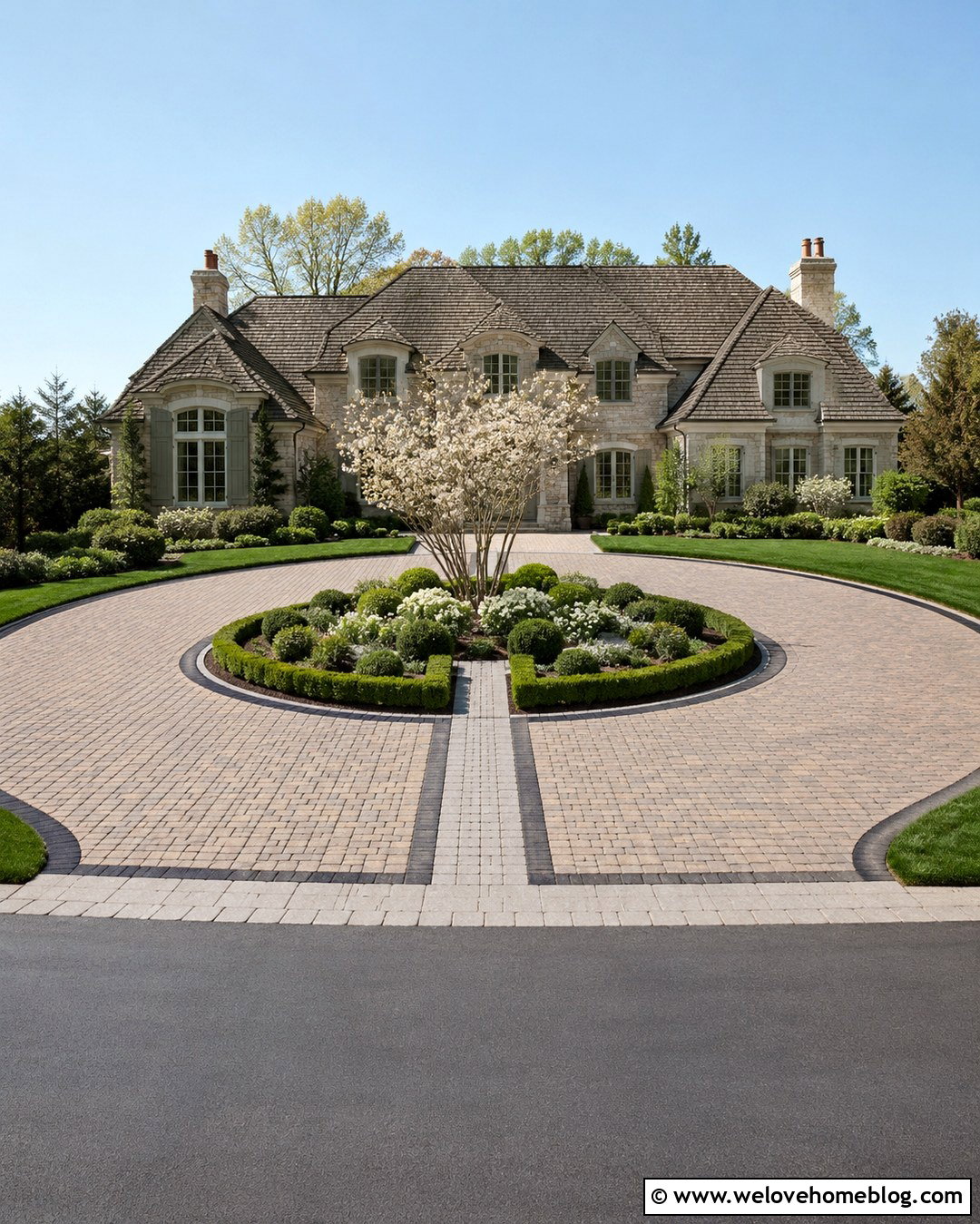
A circular driveway needs landscaping that clarifies the driving route without blocking the house. Use warm-toned concrete pavers around the loop, finished with a darker contrasting border. Low evergreen hedges can trace the outside edge, while the center island holds a layered garden with a small ornamental tree, flowering shrubs, and ground cover. Keep the island plants arranged from low to tall so the tree remains the focal point. Near the driveway entrance, replace taller hedging with low perennials to preserve visibility. This balanced layout suits a large traditional, French country, or transitional home. Matching pavers can form a walkway across the loop to the front door. The combination of structured edges and a planted center creates an impressive but practical arrival experience.
9. Pea Gravel Driveway Edge With Brick And Cottage Flowers
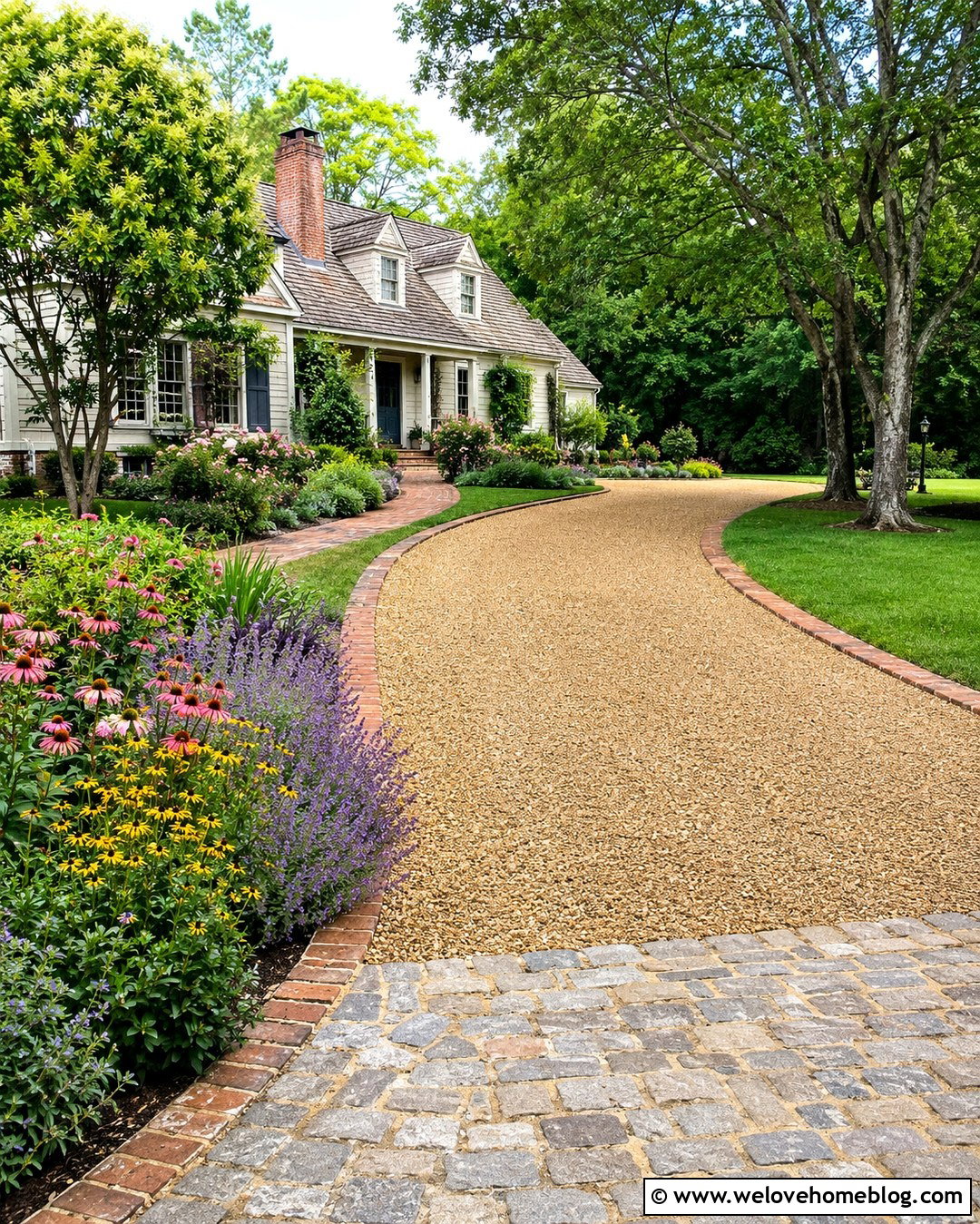
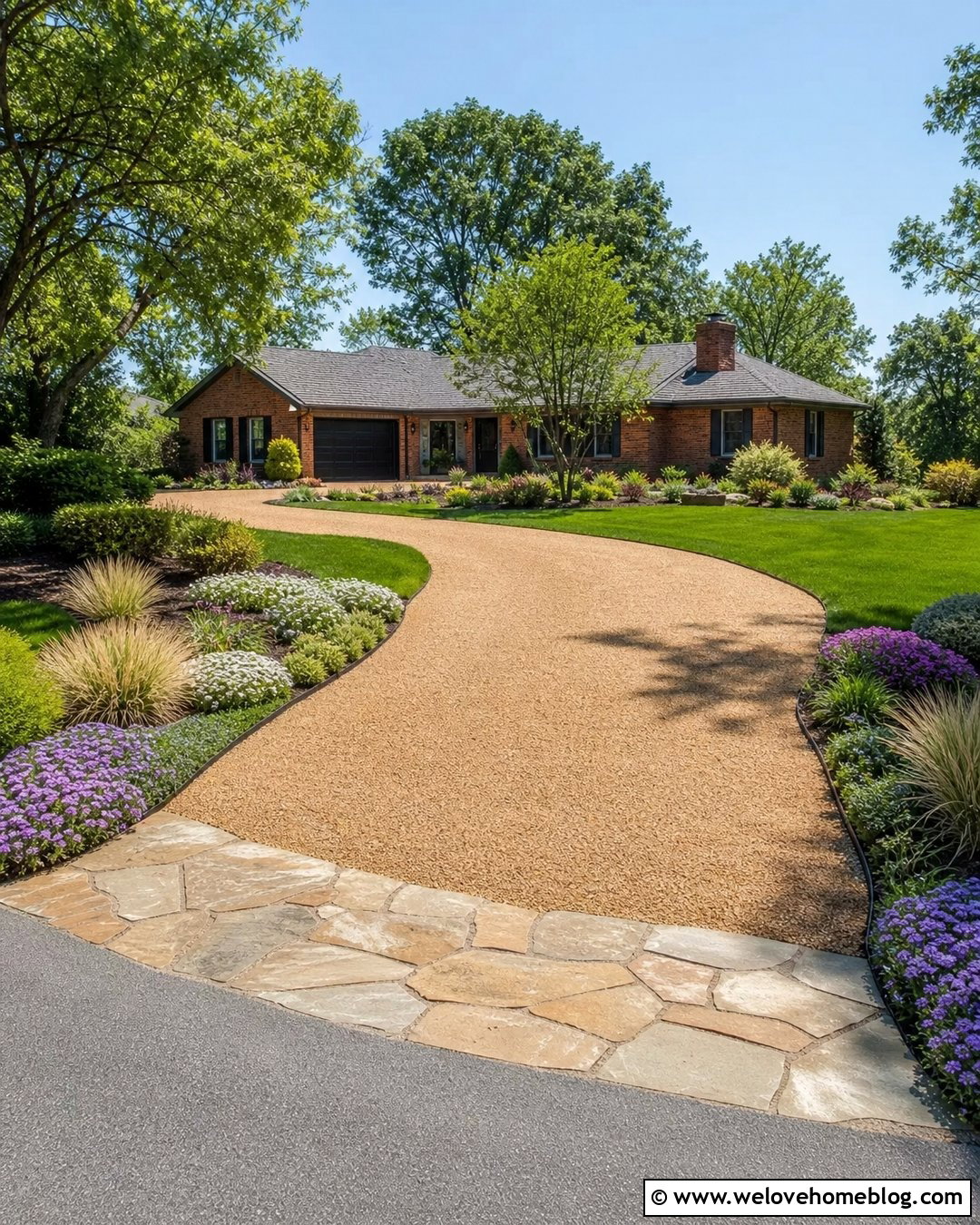
Small pea gravel feels charming beside a cottage home, but it needs a secure border to remain tidy. Frame a gently curved driveway with reclaimed or weathered clay bricks set in a compacted base. Behind the brick, plant informal drifts of coneflowers, coreopsis, catmint, and compact roses. Let the flowers soften the border without spilling onto the driving area. A narrow maintenance strip between the brick and plants can make trimming and weeding easier. Use slightly larger gravel or cobbles at the street entrance, where turning tires are more likely to disturb the surface. Repeating the brick around the front path ties the driveway to the house. This complete edge design feels relaxed and colorful while still providing the structure loose gravel requires.
10. Resin Driveway Edge With Granite And Evergreen Shrubs
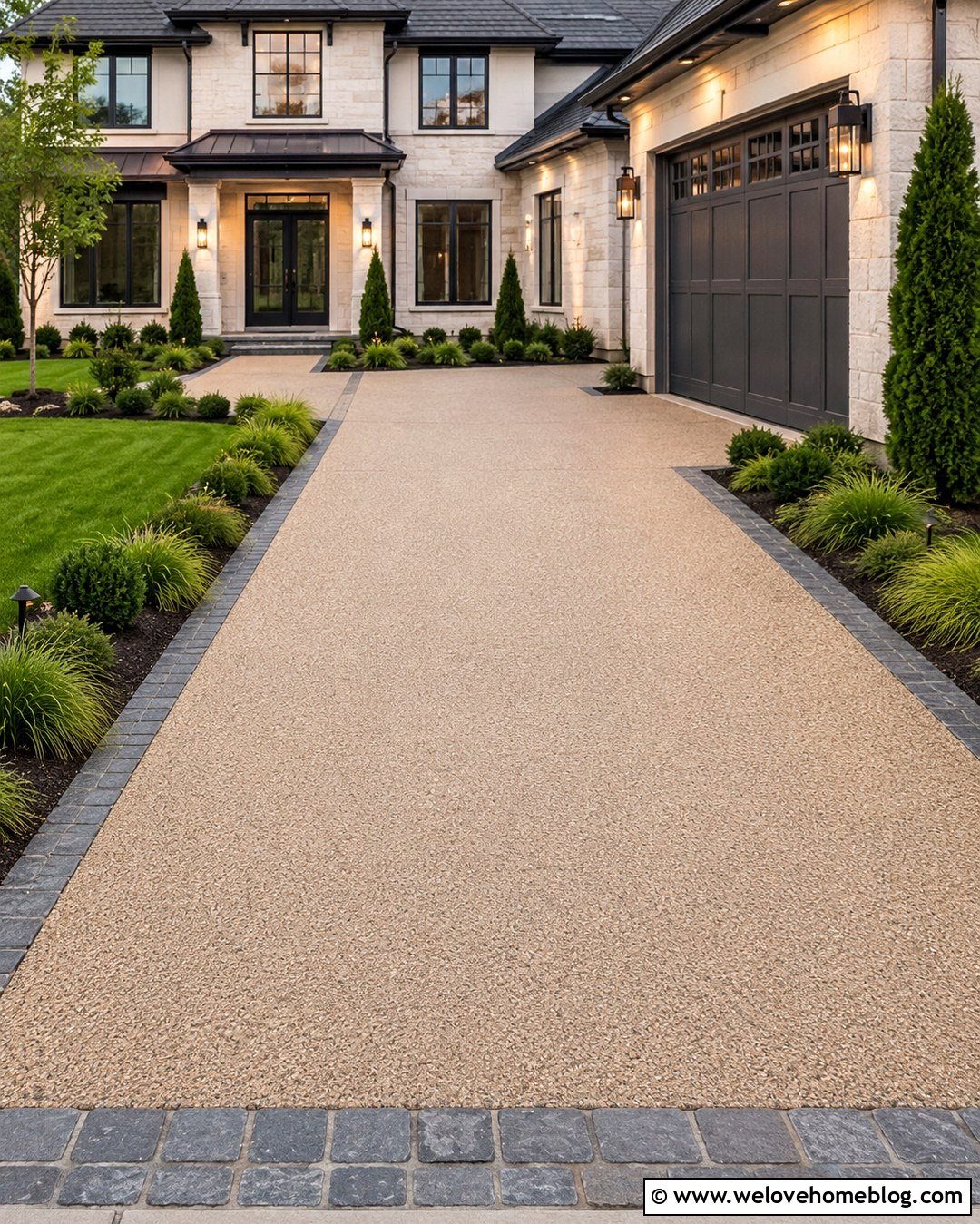
A resin-bound gravel driveway offers a smooth, contemporary surface that looks especially refined with granite edging. Choose a warm beige or light gray resin aggregate, then frame it with charcoal granite setts for clear contrast. Create shallow planting beds behind the stone and fill them with compact evergreen shrubs, ground-cover plants, and a few architectural grasses. The straight edges and limited color palette work well with modern or transitional houses. Continue the granite border around the walkway and garage apron to avoid disconnected materials. Keep soil below the top of the edging so rain does not carry dirt across the resin surface. With its restrained planting and durable-looking border, this driveway landscape delivers a clean appearance throughout the year without feeling bare or unfinished.
11. Driveway Edge With River Rock And Drought-Tolerant Plants
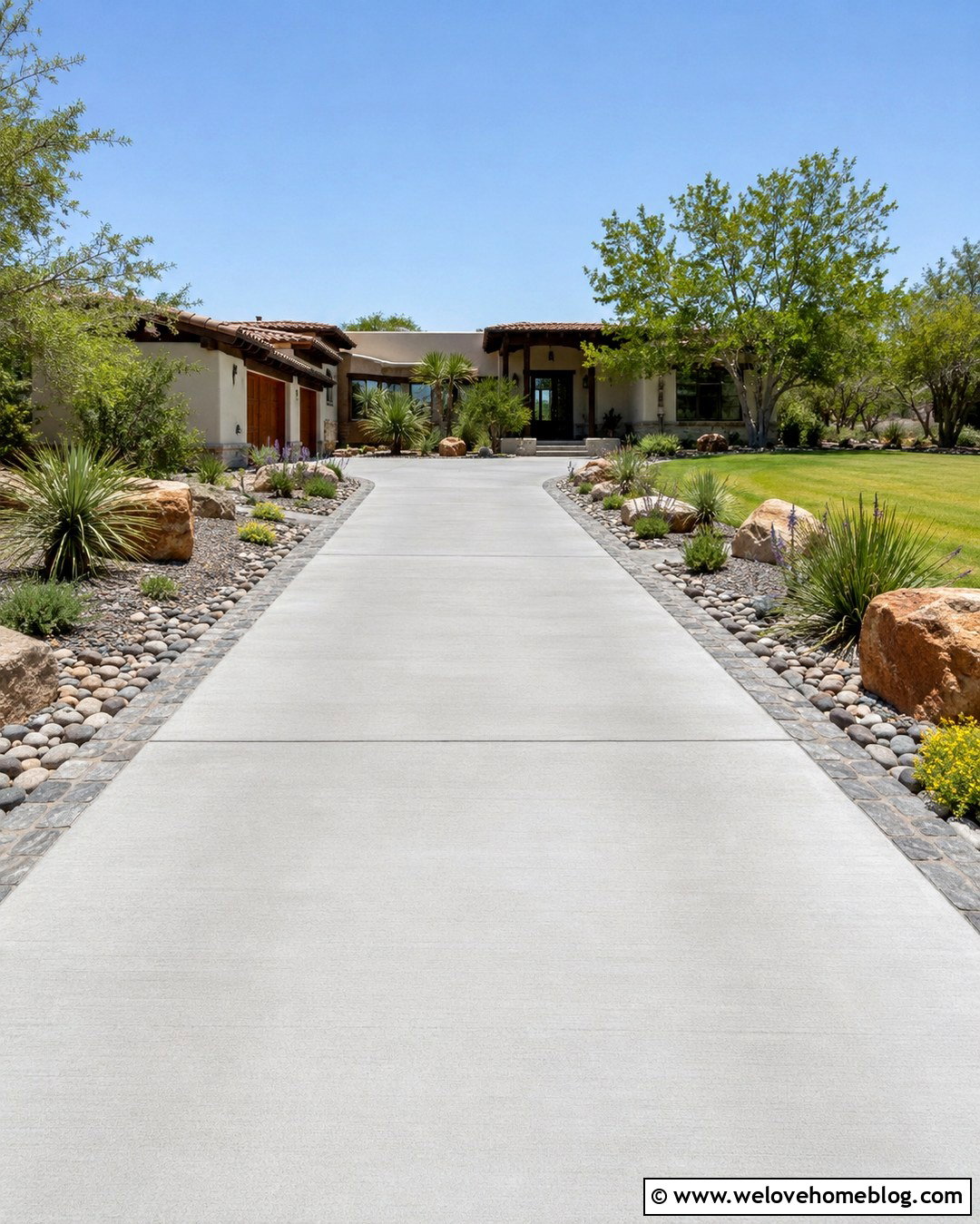
In a hot, sunny yard, a river-rock border can connect the driveway to water-wise landscaping. Start with a light broom-finished concrete driveway in a straight or slightly curved layout. Add a wide band of mixed gray river rock along both edges, separated from the lawn or soil with concealed landscape edging. Plant the rock beds with yucca, agave where climate-appropriate, blue fescue, sedum, and compact flowering perennials. Space plants generously so their shapes remain visible as they mature. A few larger boulders can mark the entrance without creating a continuous wall. This complete look suits ranch, Southwestern, and contemporary homes. The stone band provides a clean transition, handles reflected heat, and reduces the amount of planting immediately beside the driving surface.
12. Asphalt Driveway Edge With Pavers And Low Lighting
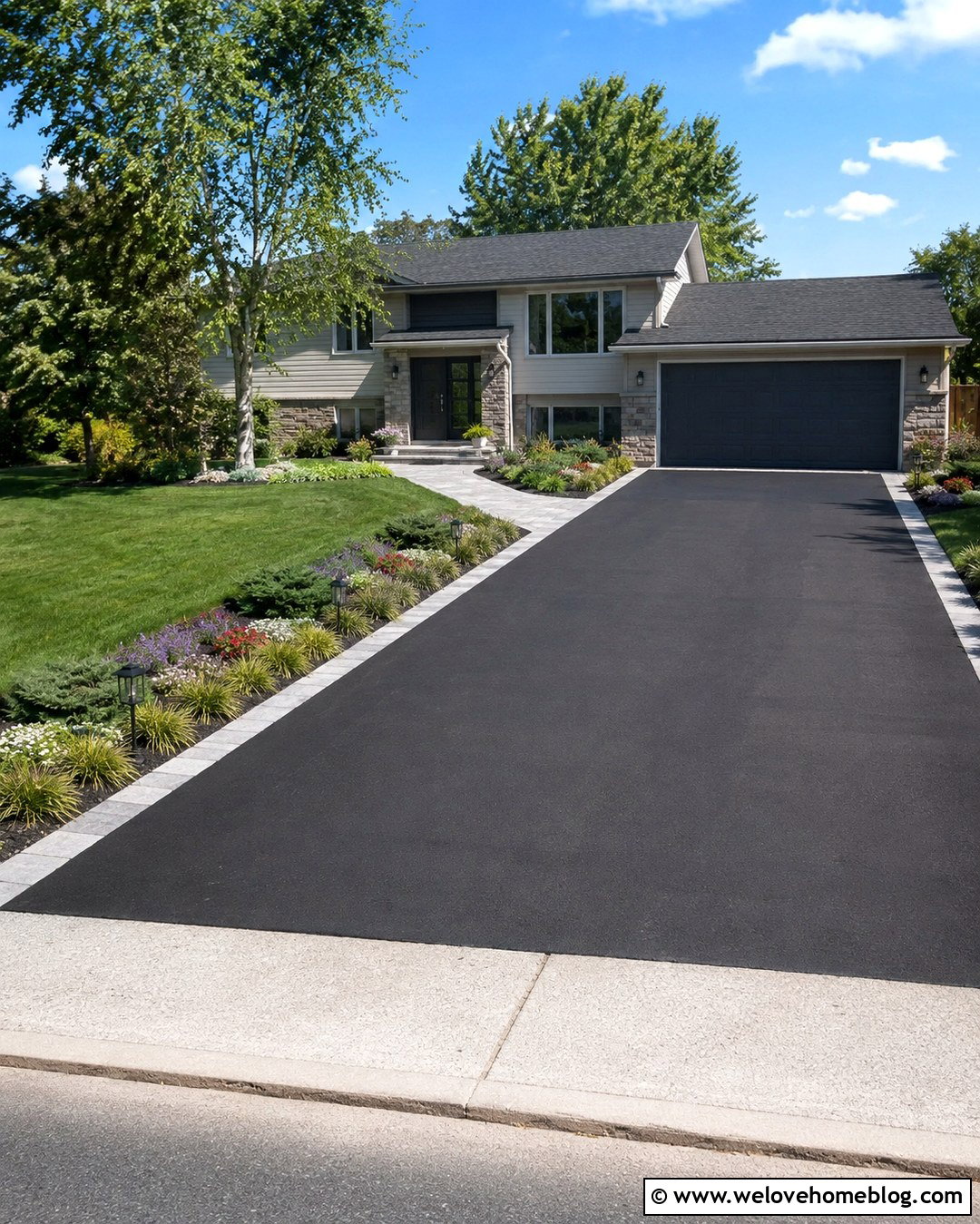
A black asphalt driveway becomes much more finished when outlined with light concrete pavers and discreet landscape lighting. Set a single or double paver row flush with the asphalt, following a straight driveway from the curb to the garage. Beyond the border, install narrow planting beds with low juniper, dwarf grasses, and seasonal flowers. Place compact lights at comfortable intervals behind the pavers, where they can identify the driveway edge without creating obstacles. Near the house, widen the bed and connect it to the front walkway. This arrangement suits a suburban ranch or updated split-level home because it improves a basic driveway without changing its practical layout. The contrasting pavers remain visible during the day, while carefully directed lighting improves the appearance of the full approach after sunset.
13. Driveway Edge With Belgian Block And Evergreen Ground Cover
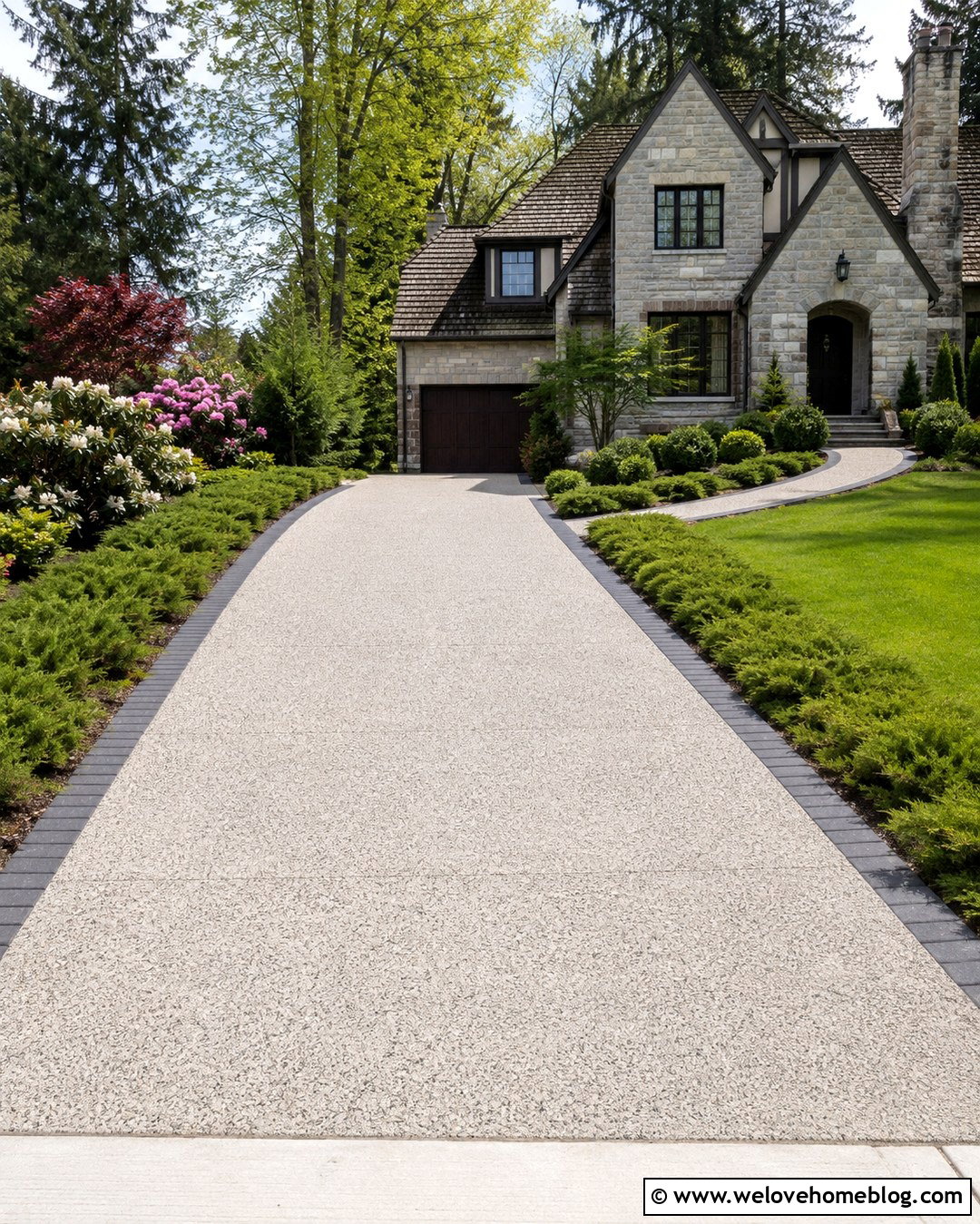
Belgian block gives a driveway a substantial edge while remaining compatible with several surface materials. Pair charcoal or gray blocks with a light exposed-aggregate driveway, installing them flush in a single continuous row. Behind the blocks, use evergreen ground covers such as creeping juniper or another locally suitable low-growing plant. Add small flowering shrubs at wider points near the entrance and garage. This layered border stays low, allowing doors to open and drivers to see across the front yard. The combination works beautifully with stone-front Craftsman, Tudor, and traditional homes because the block echoes masonry on the facade. Carry the same edging around the front walkway for a coordinated finish. The strong stone line supports the driveway visually, while ground cover softens its transition into the landscape.
14. Gravel Driveway Edge With Boulders And Native Planting
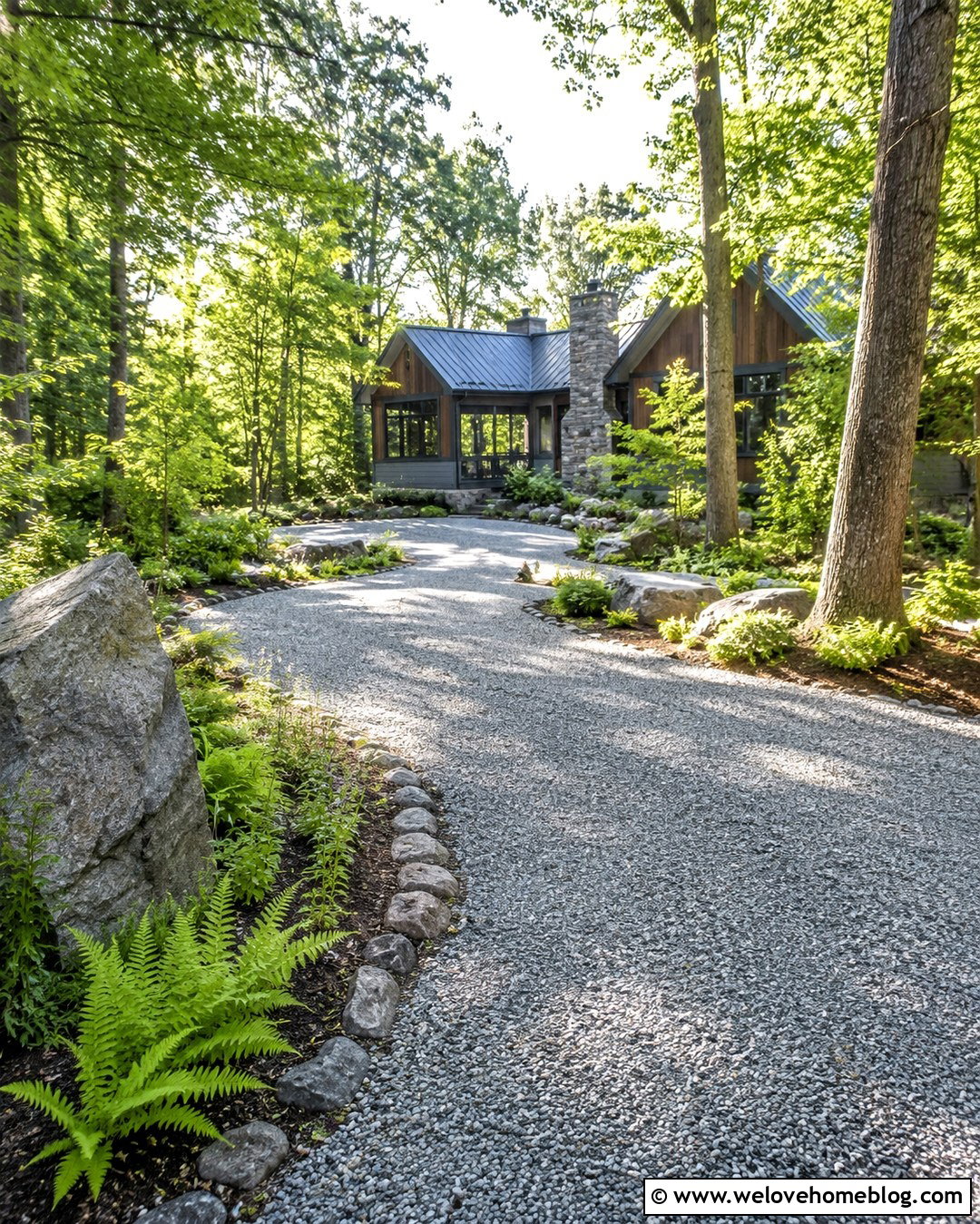
A wide crushed-stone driveway can blend into a wooded property through occasional boulders and informal native planting. Use angular gray gravel for the driving surface and a buried steel or stone restraint to keep it contained. Place medium boulders outside the functional driving width rather than lining the edge too closely. Between them, arrange native shrubs, ferns, grasses, and flowering perennials suited to the site’s light and moisture. The irregular border should appear natural while still guiding the route toward the house. This landscape works best with rustic cabins, contemporary woodland homes, and country properties. Use larger stones at the entrance as visual anchors, but preserve clear sightlines. The finished design feels integrated with its surroundings instead of looking like gravel placed abruptly through the yard.
15. Concrete Driveway Edge With Mulch Beds And Small Trees
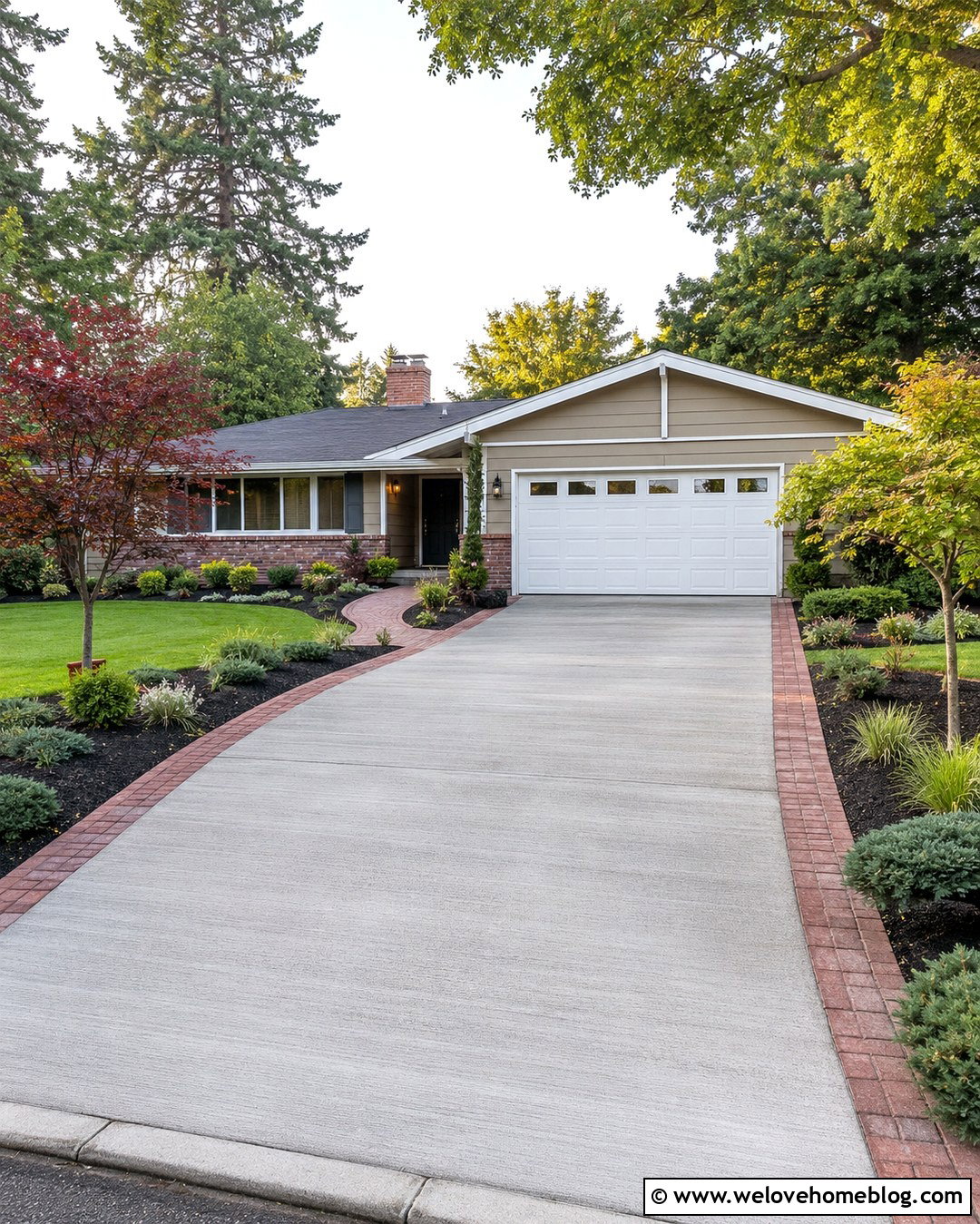
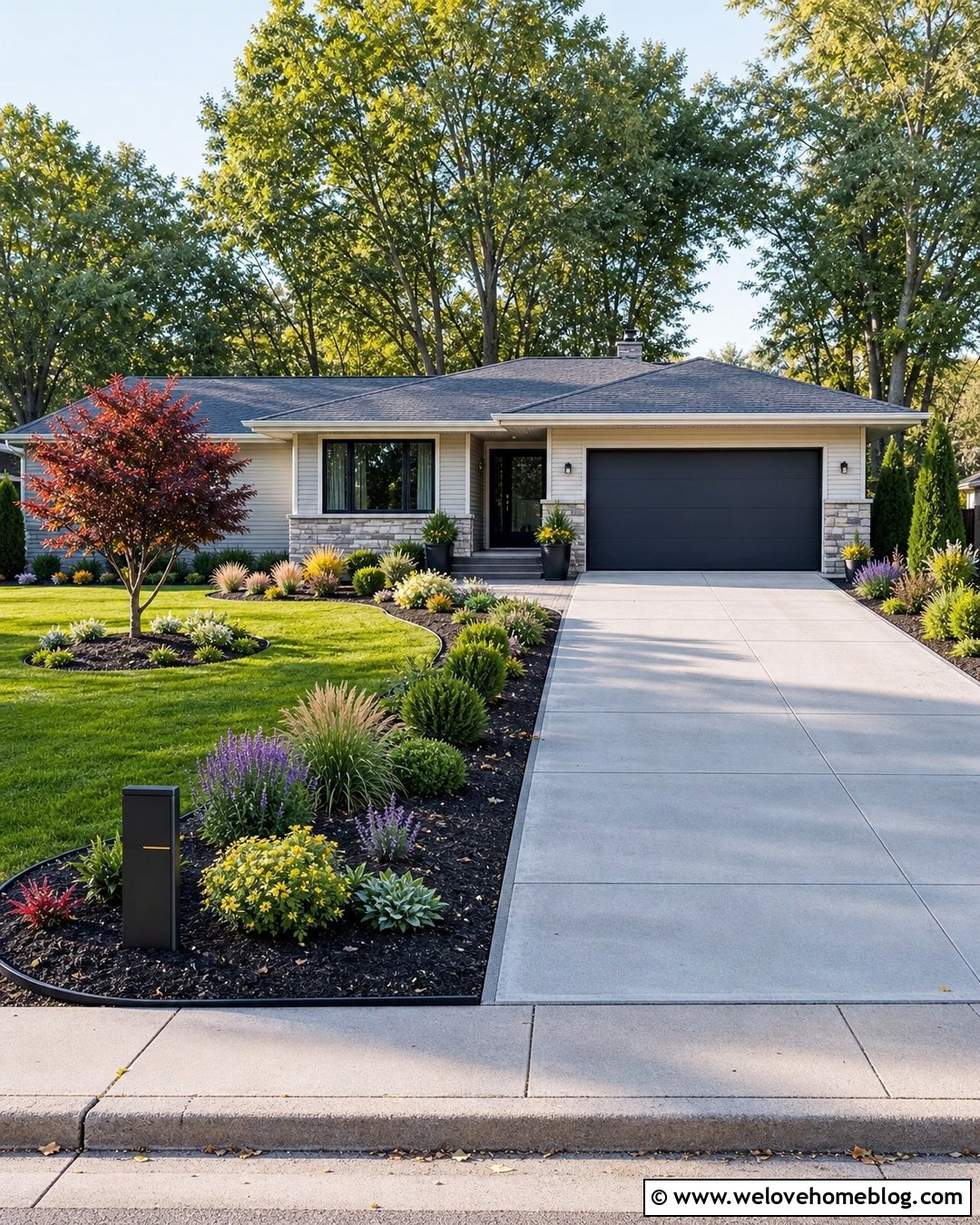
A broad concrete driveway can dominate a front yard unless its edges include enough planting height and depth. Create gently curved mulch beds along a straight broom-finished driveway, using a flush brick or concrete curb to separate the materials. Plant small ornamental trees at key points, then layer compact shrubs, grasses, and ground covers beneath them. Avoid positioning tree trunks where open car doors or turning vehicles could reach them. Near the street, keep the beds lower and simpler. This complete design is a good match for a ranch or two-story suburban home with a wide garage. The curved beds soften the rectangular pavement, while the small trees bring vertical interest. Repeating the same planting groups on both sides produces balance without requiring perfect symmetry.
16. Cobblestone Driveway Edge With Ferns And Shade Plants
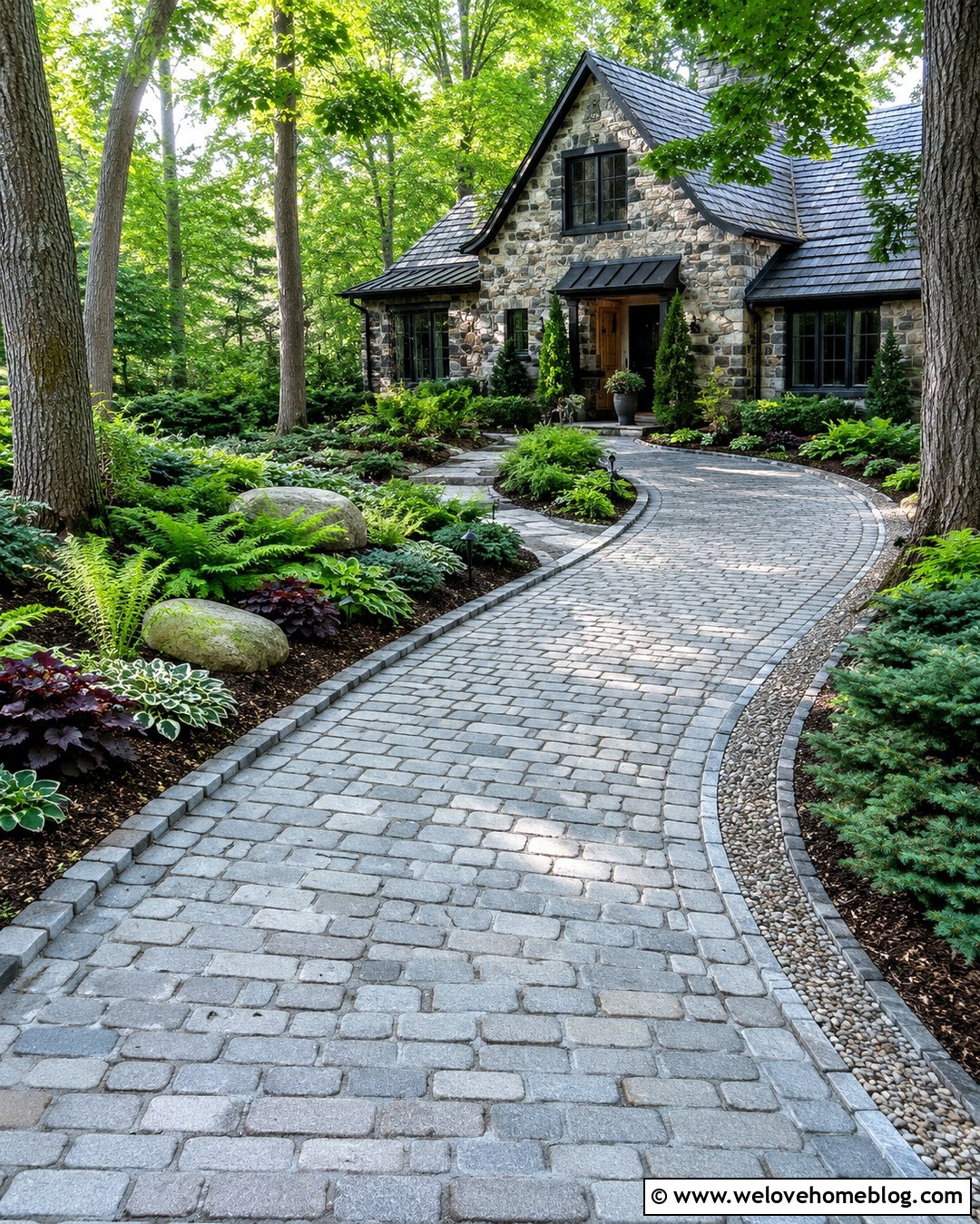
A shaded driveway can still have a lush, detailed border when plants are chosen for lower light. Use gray cobblestone for the full driveway or as a generous edge around darker asphalt. Follow the driveway’s gentle curve with beds of ferns, hostas, heuchera, and low evergreen shrubs. Add fine bark mulch to create a quiet background for the varied foliage. This combination feels at home beside a Tudor, stone cottage, or wooded Craftsman house. Keep leafy plants several inches behind the cobblestone so they do not cover the driving boundary. Where drainage is needed, include a narrow gravel channel between the stones and planting bed. The mixture of rugged masonry and layered foliage creates a cool, established landscape that looks attractive even when few plants are blooming.
17. Paver Driveway Edge With Grass Strips And Flower Beds
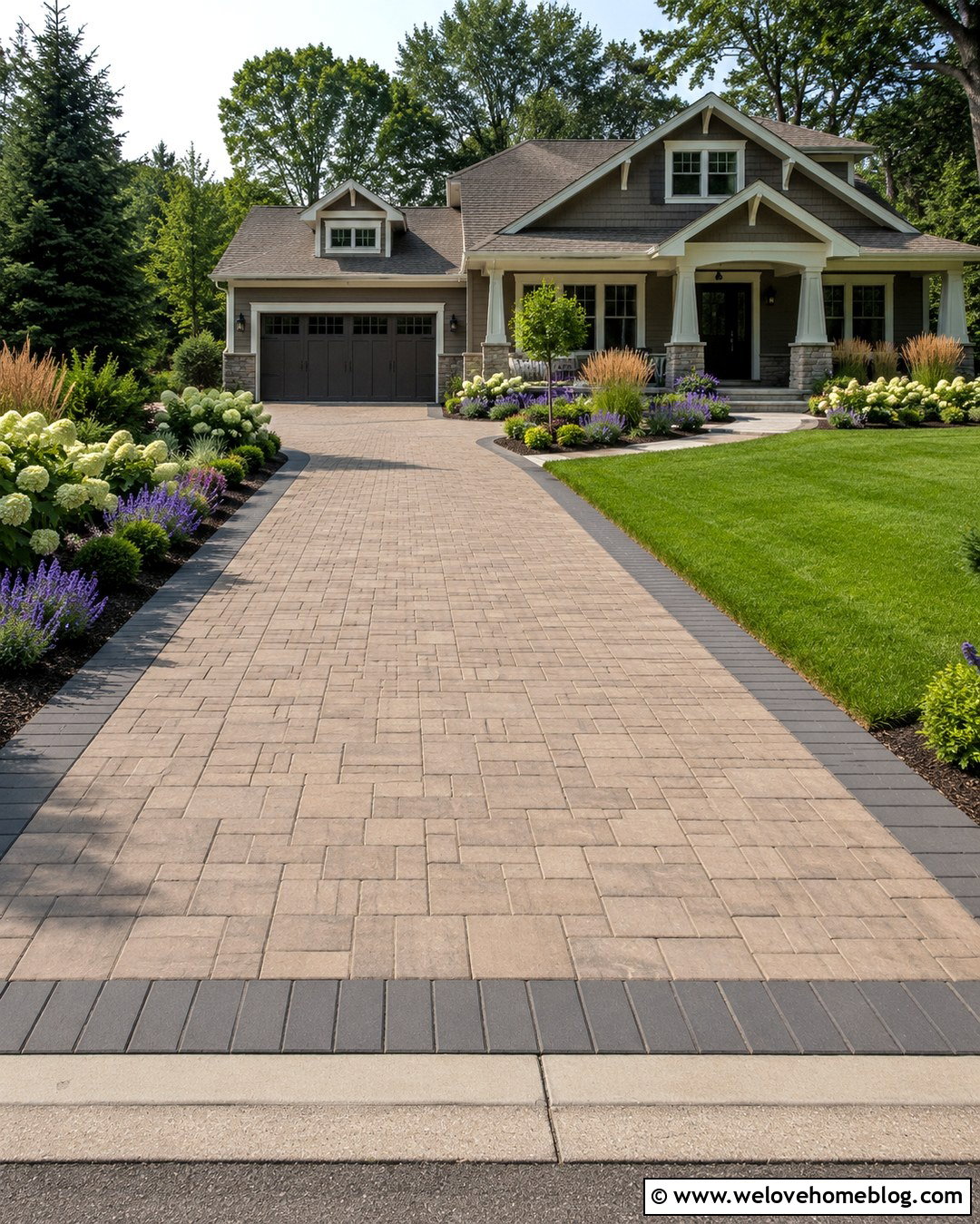
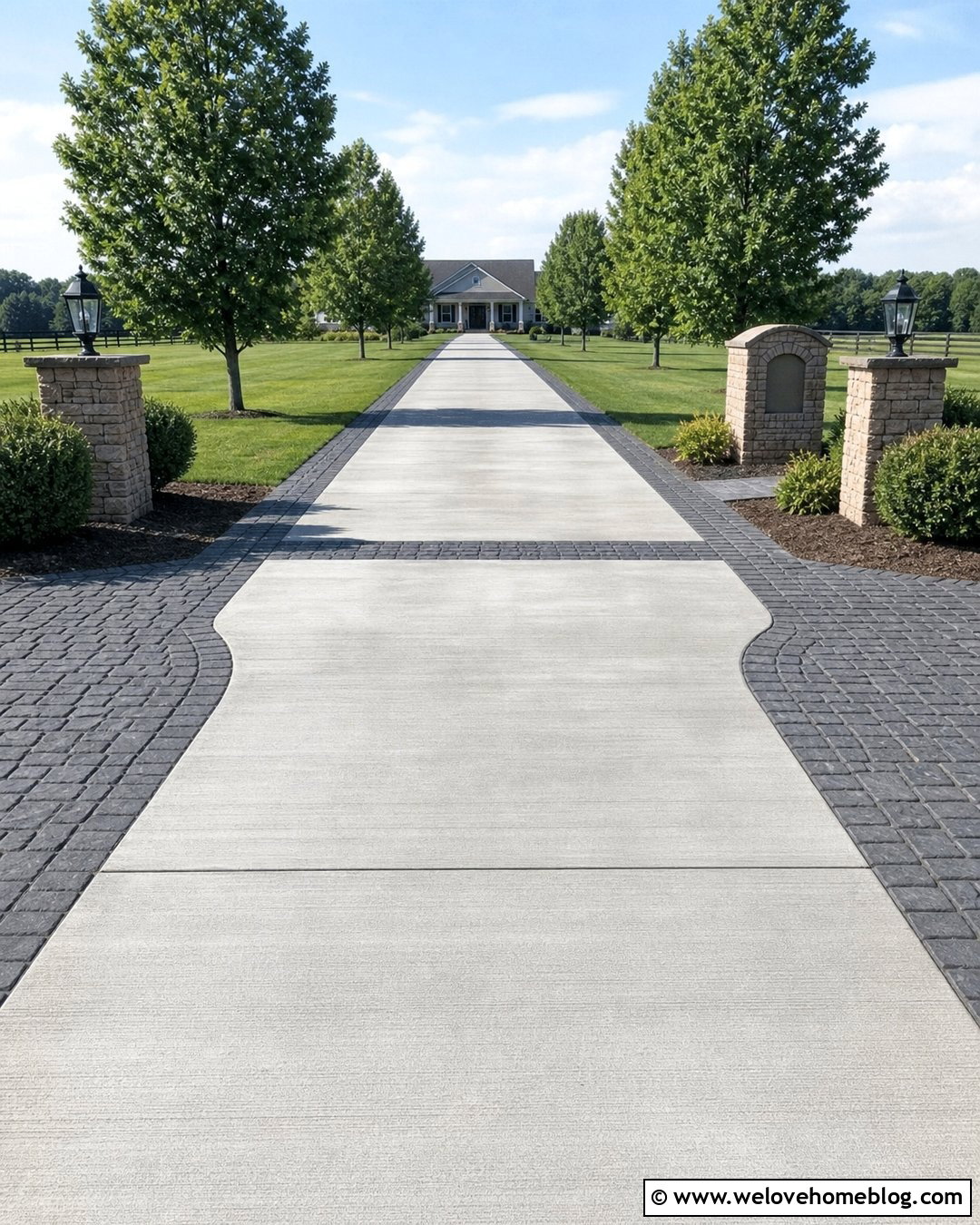
Grass strips can soften a large paved area when they are placed beyond a strong structural edge. Build the driveway with taupe interlocking concrete pavers in a running bond pattern, then add a charcoal soldier-course border. A narrow band of lawn can sit outside the pavers, followed by deeper flower beds containing hydrangeas, salvia, dwarf shrubs, and ornamental grasses. The lawn provides breathing room and makes the colorful border easier to maintain. This layered approach works well in front of a Craftsman or transitional home with a generous yard. Use the same dark pavers to outline the walkway and planting beds. The complete design balances hardscape and greenery, ensuring that the broad driveway remains functional while the surrounding landscape contributes color, softness, and a clear sense of arrival.
18. Farmhouse Driveway Edge With Split-Rail Fence And Wildflowers
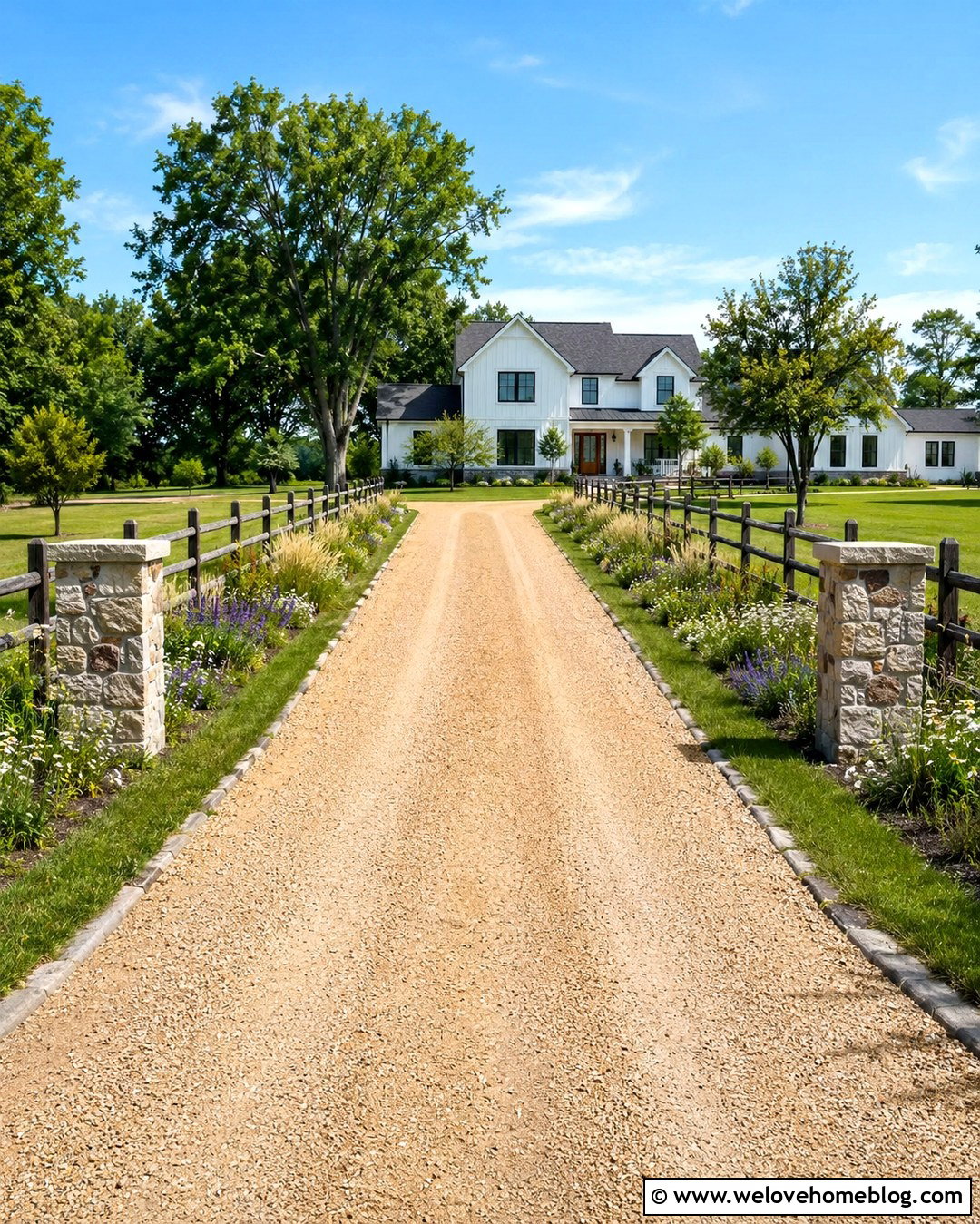
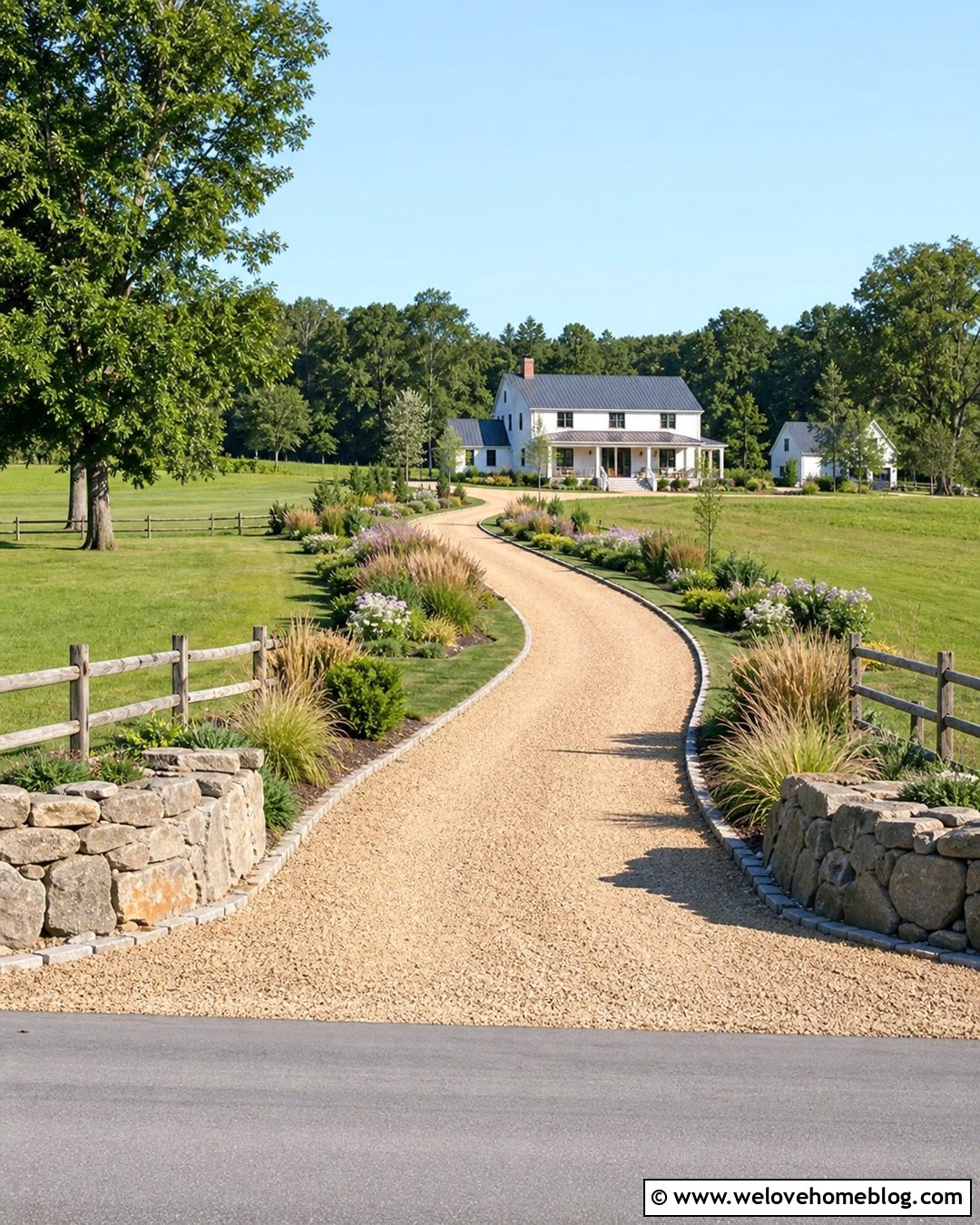
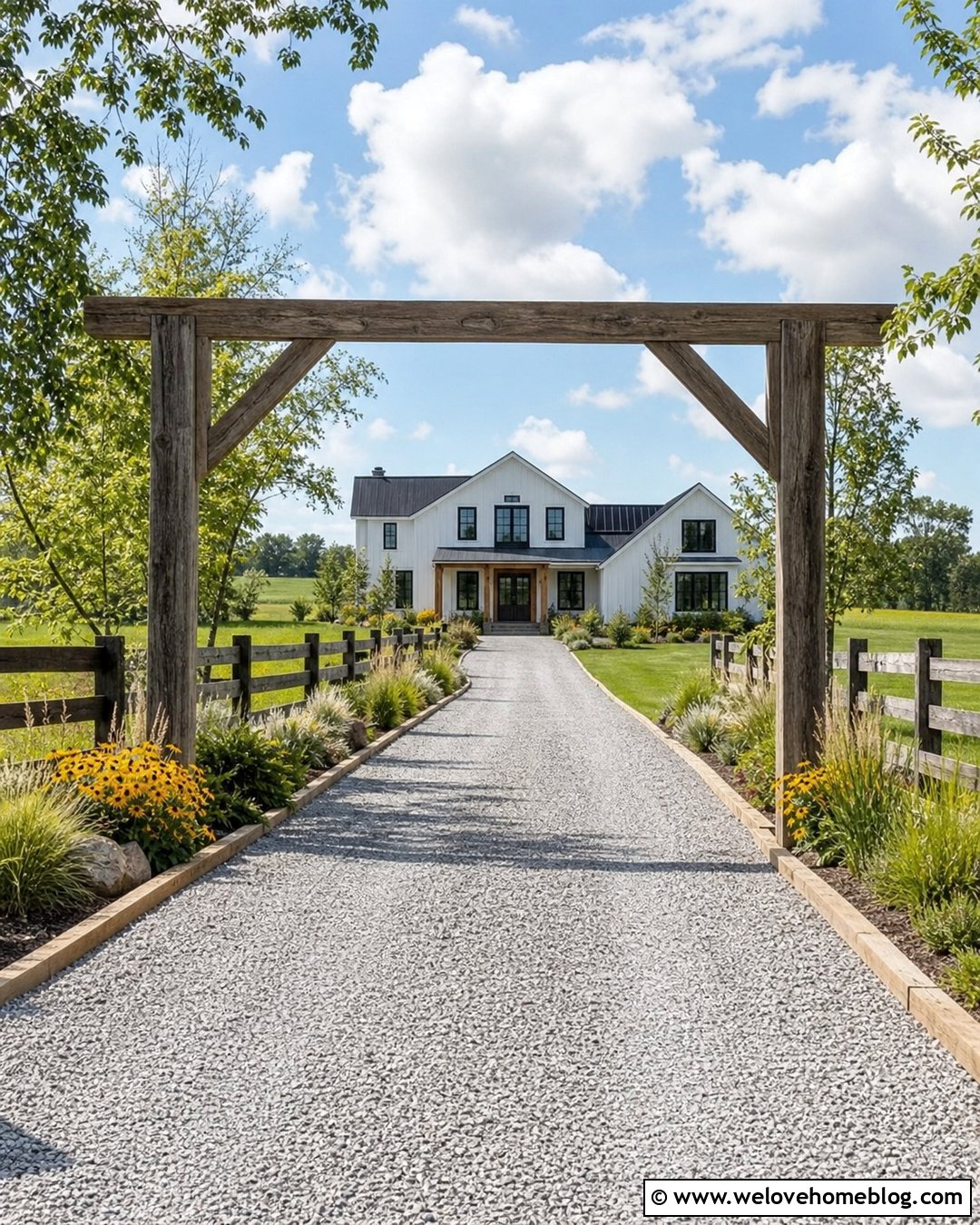
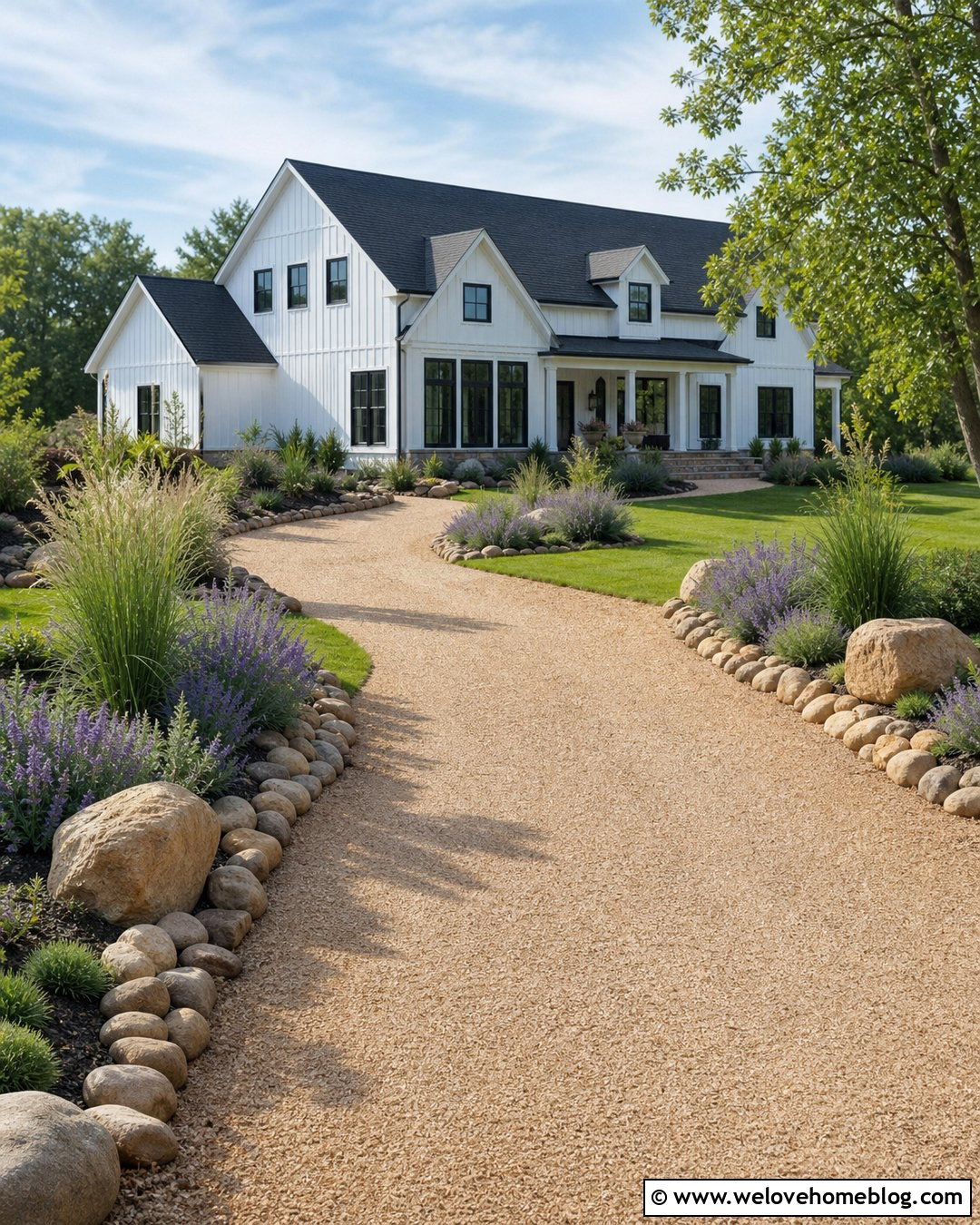
A long farmhouse driveway looks naturally framed by a split-rail fence and a relaxed wildflower border. Choose tan crushed gravel for the surface and contain it with low timber or concealed metal edging. Set the fence several feet outside the driveway so there is room for drainage, snow management, and planting. Between the edge and fence, grow meadow-style flowers and native grasses in broad repeating drifts. Mow a narrow strip beside the gravel to keep the planting from leaning into the driving lane. At the entrance, use simple stone pillars or larger boulders to visually anchor the fence. This complete rural look complements a white modern farmhouse, barn-inspired garage, or country cottage while preserving the open character of the property.
19. Small Driveway Edge With Narrow Planters And Pavers
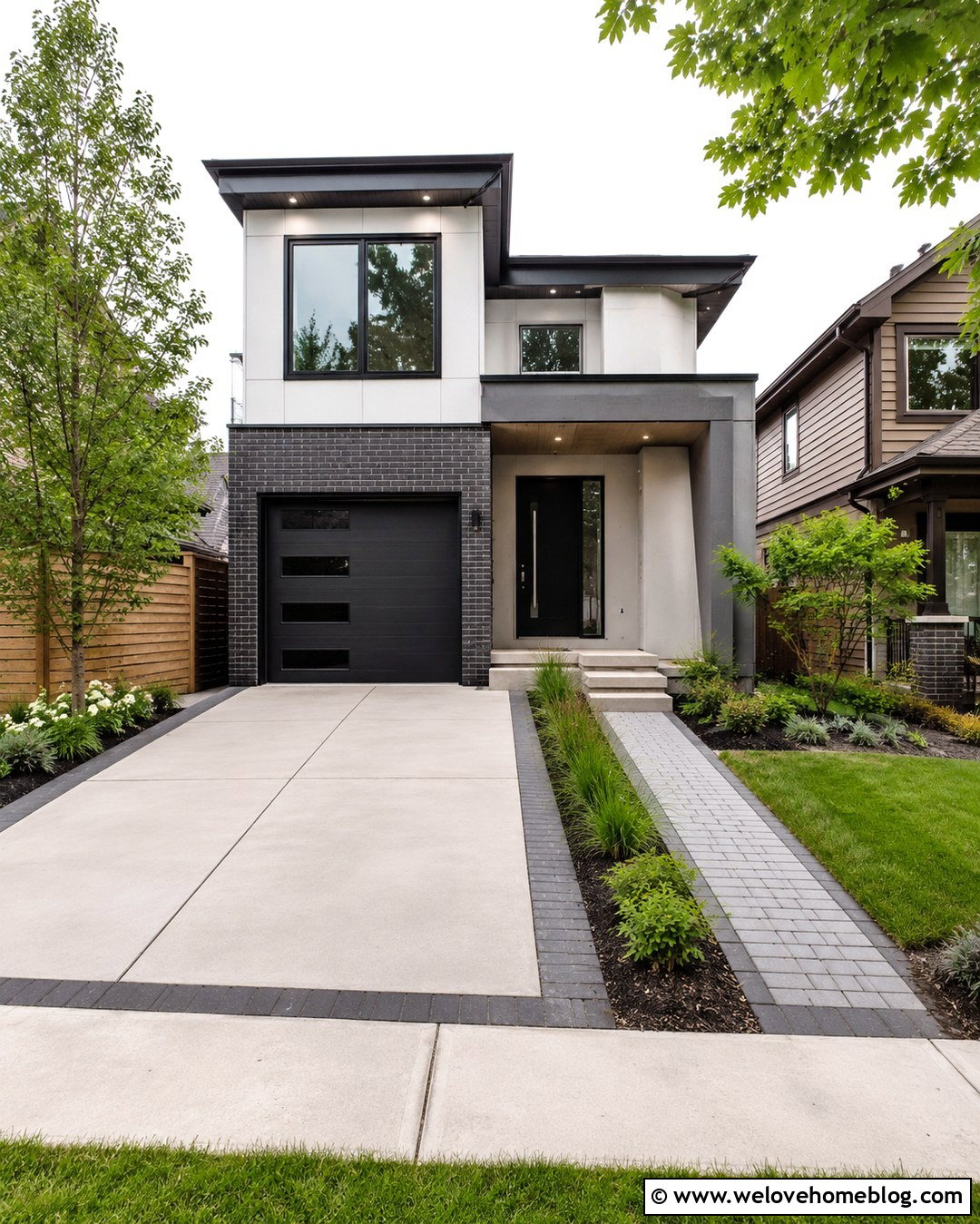
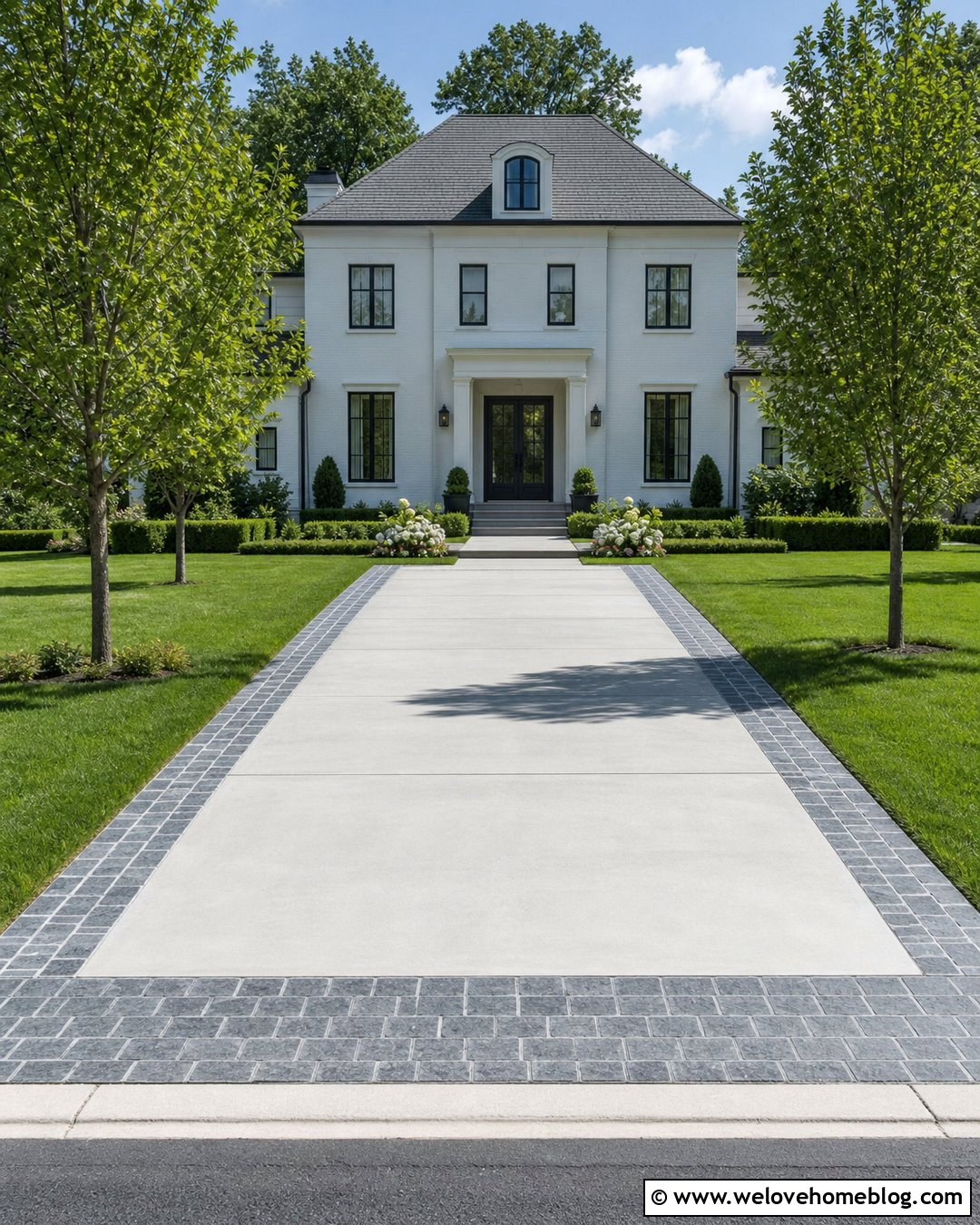
Limited front-yard space calls for a driveway edge that adds greenery without reducing parking width. Use smooth gray concrete for a short straight driveway and install a slim charcoal paver ribbon along each side. Behind one border, create a narrow planter filled with upright ornamental grasses, compact shrubs, and low ground cover. On the opposite side, connect the paver edge to a matching walkway leading toward the front door. This asymmetrical arrangement prevents a small lot from feeling crowded. It works particularly well with townhomes, compact ranch houses, and modern infill homes. Choose plants with tidy mature sizes and avoid thorny or spreading varieties beside car doors. The clear paver border and controlled planting make the entire entrance feel wider, cleaner, and more organized.
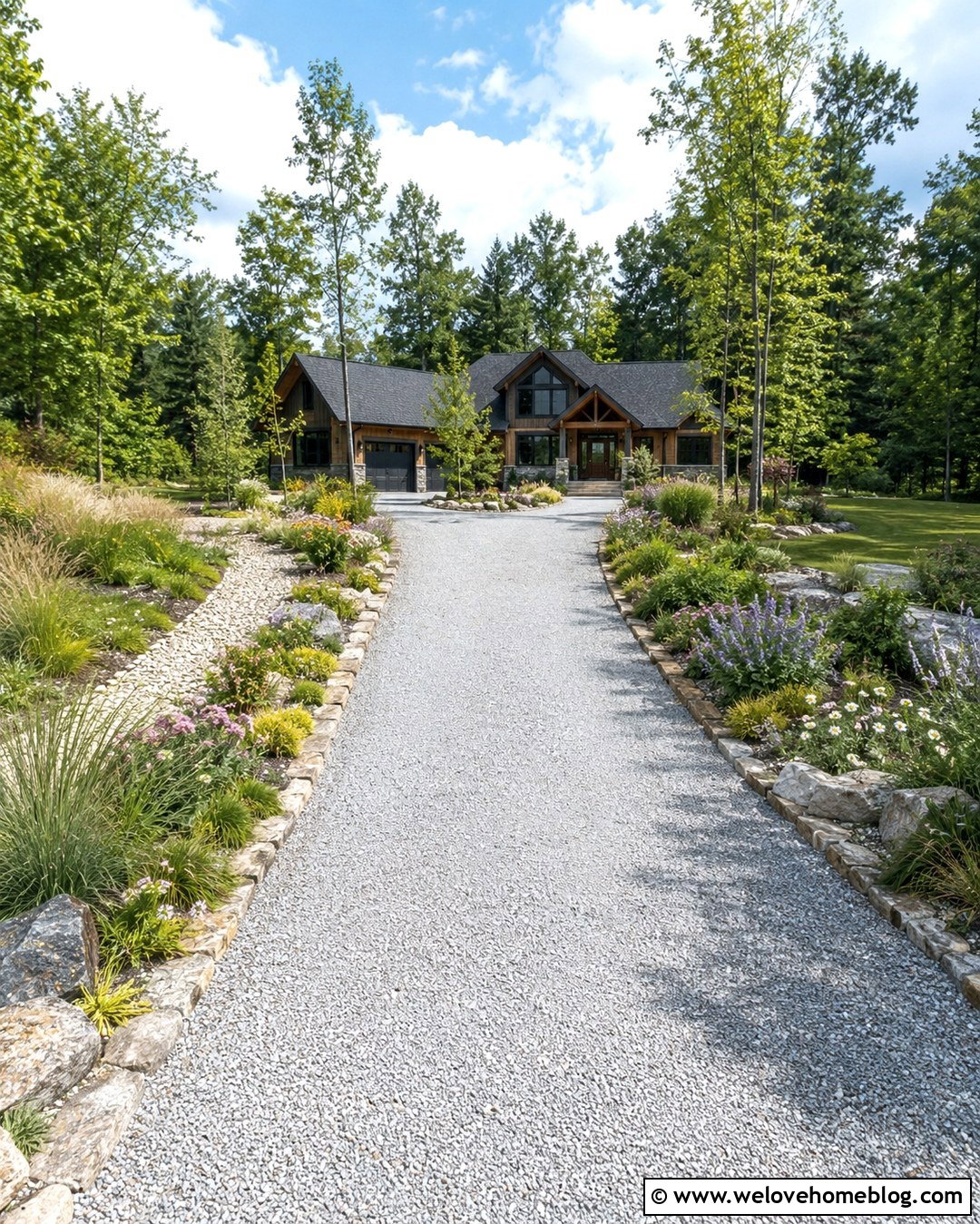
20. Driveway Edge With Stone Wall And Layered Landscaping
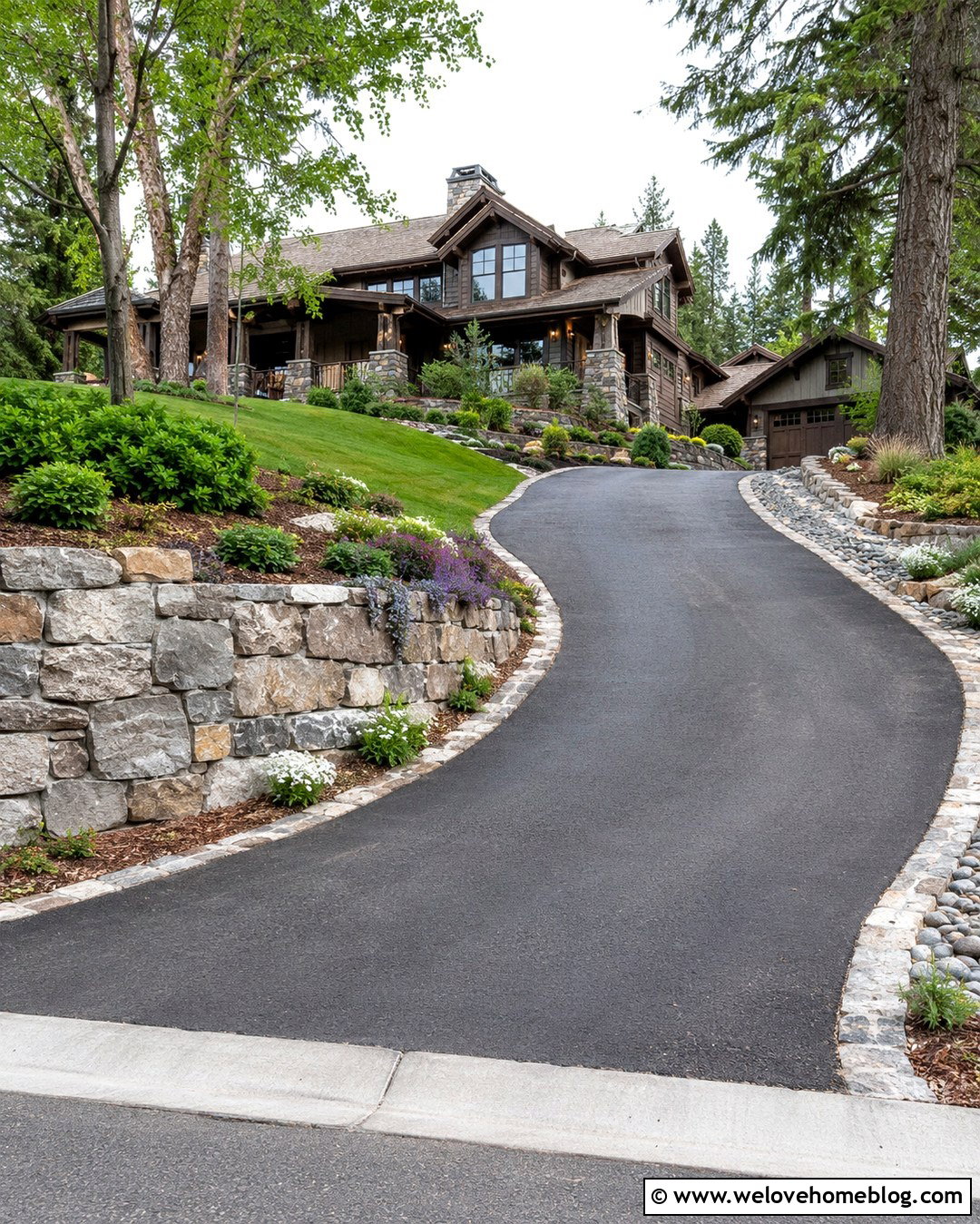
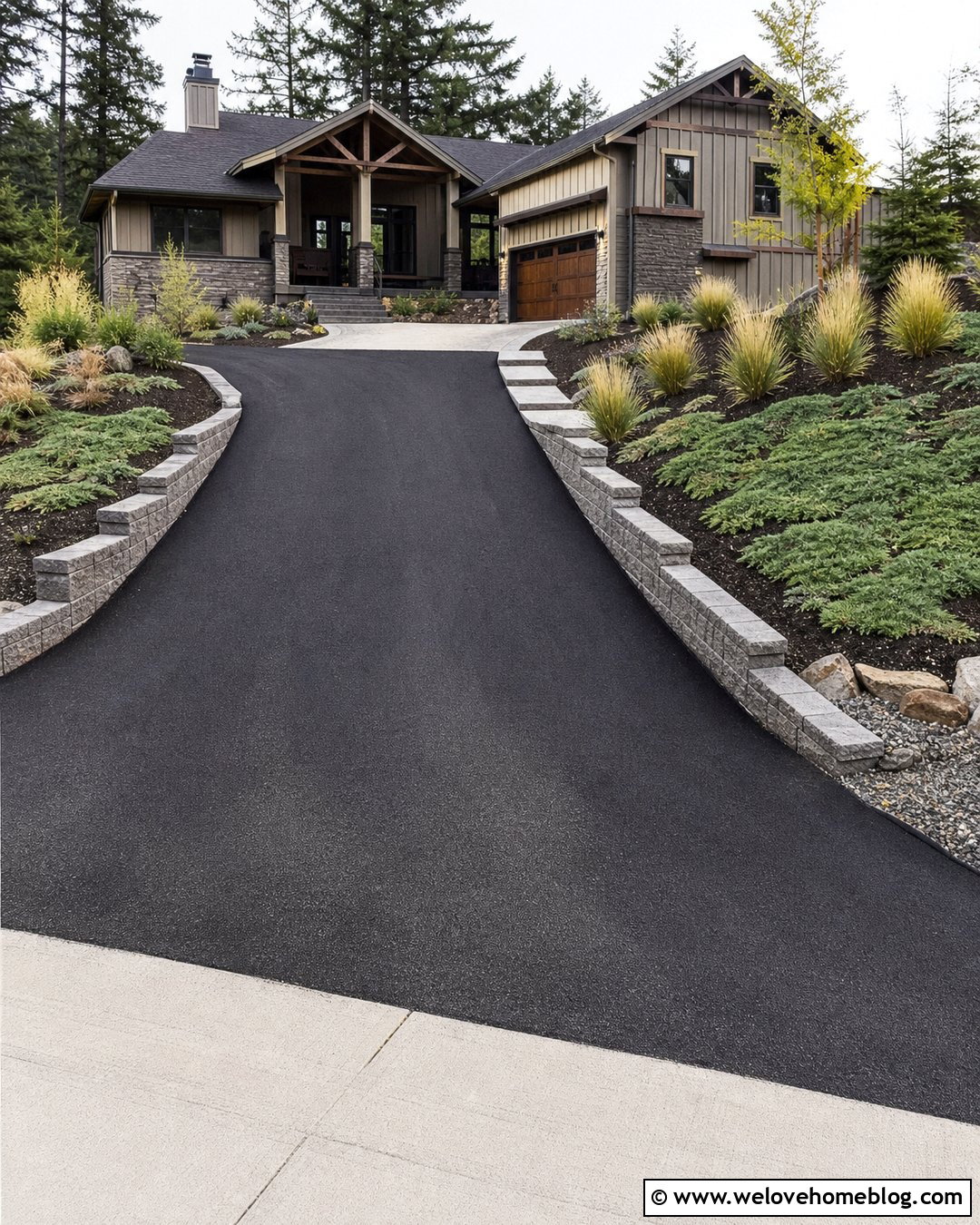
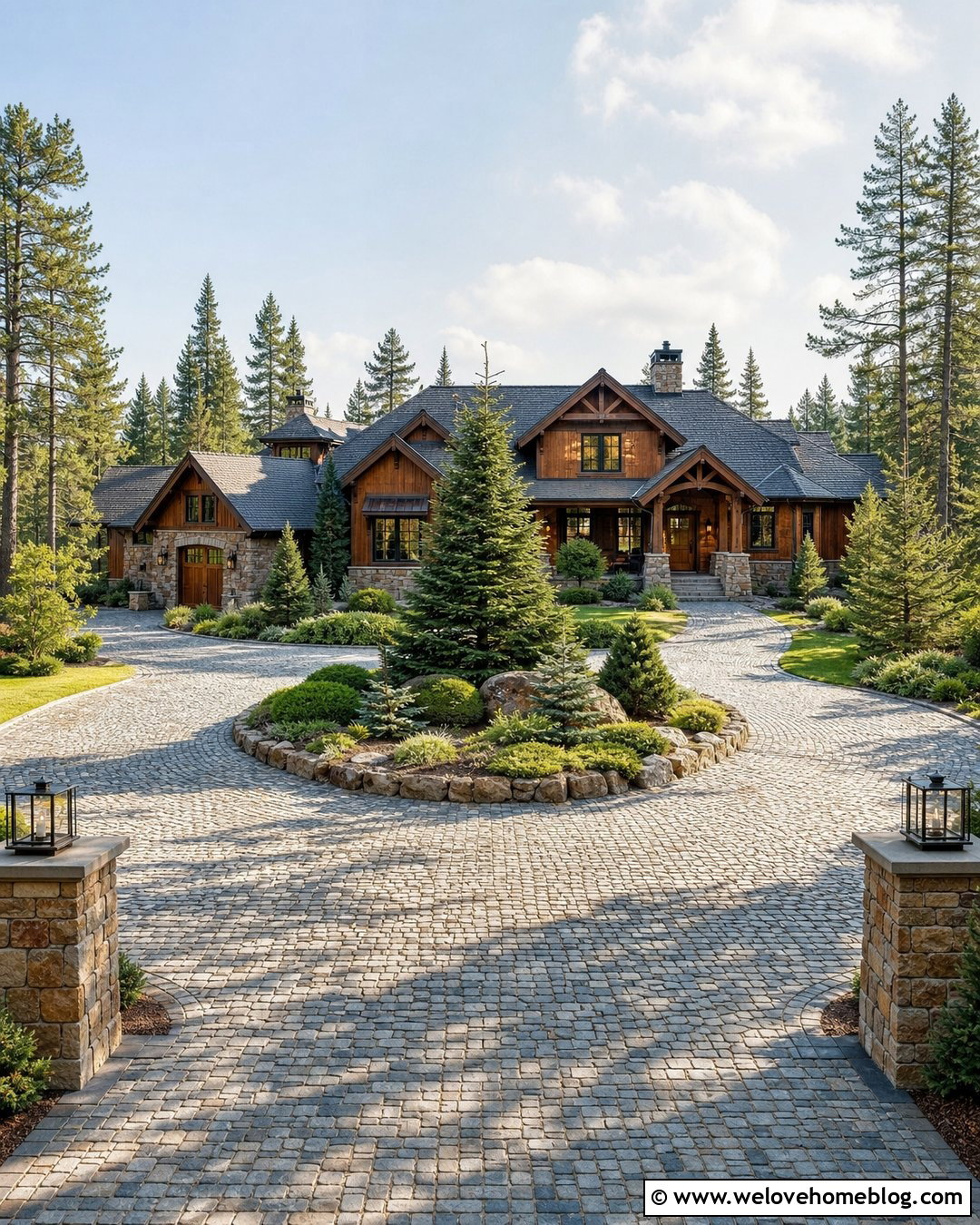
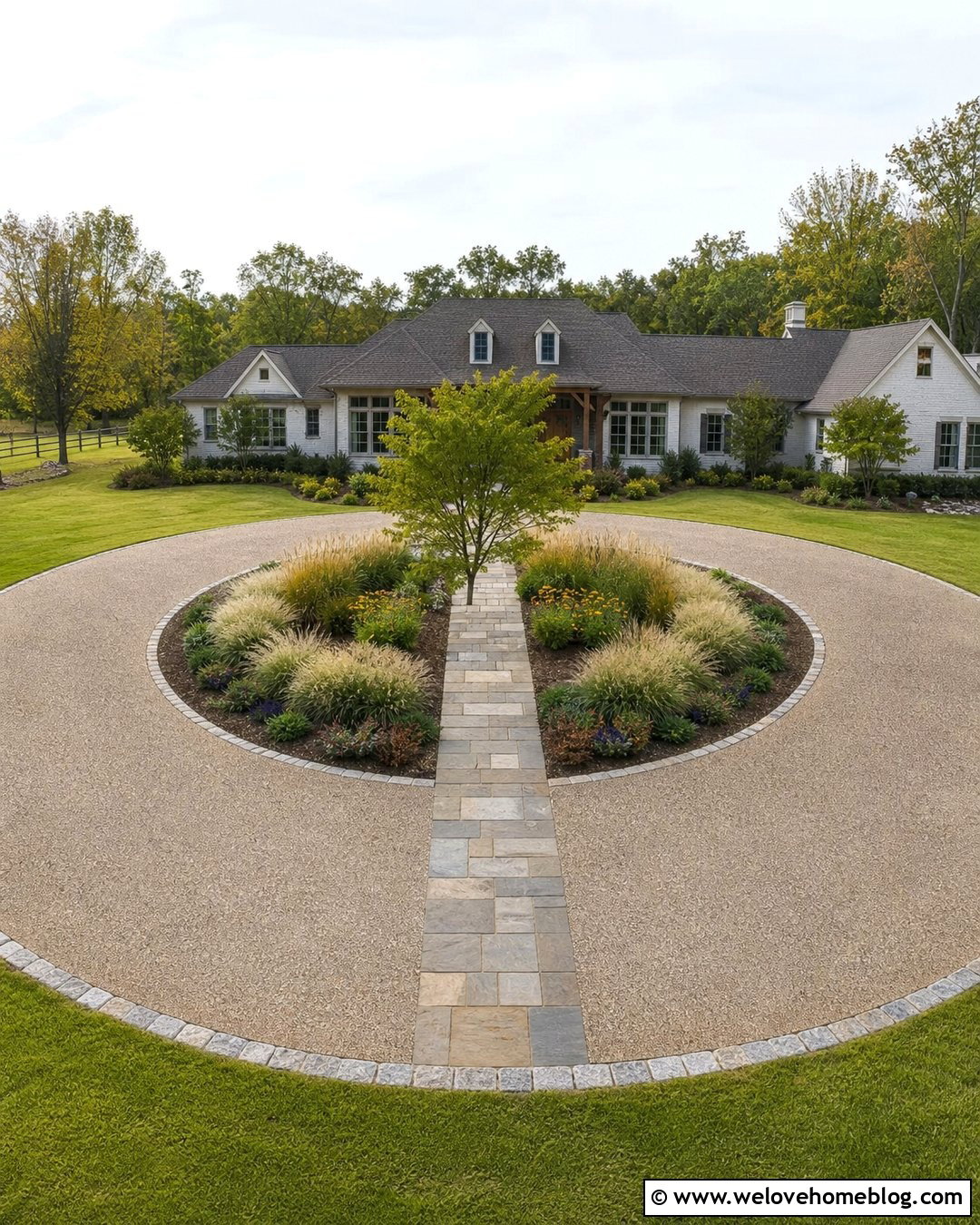
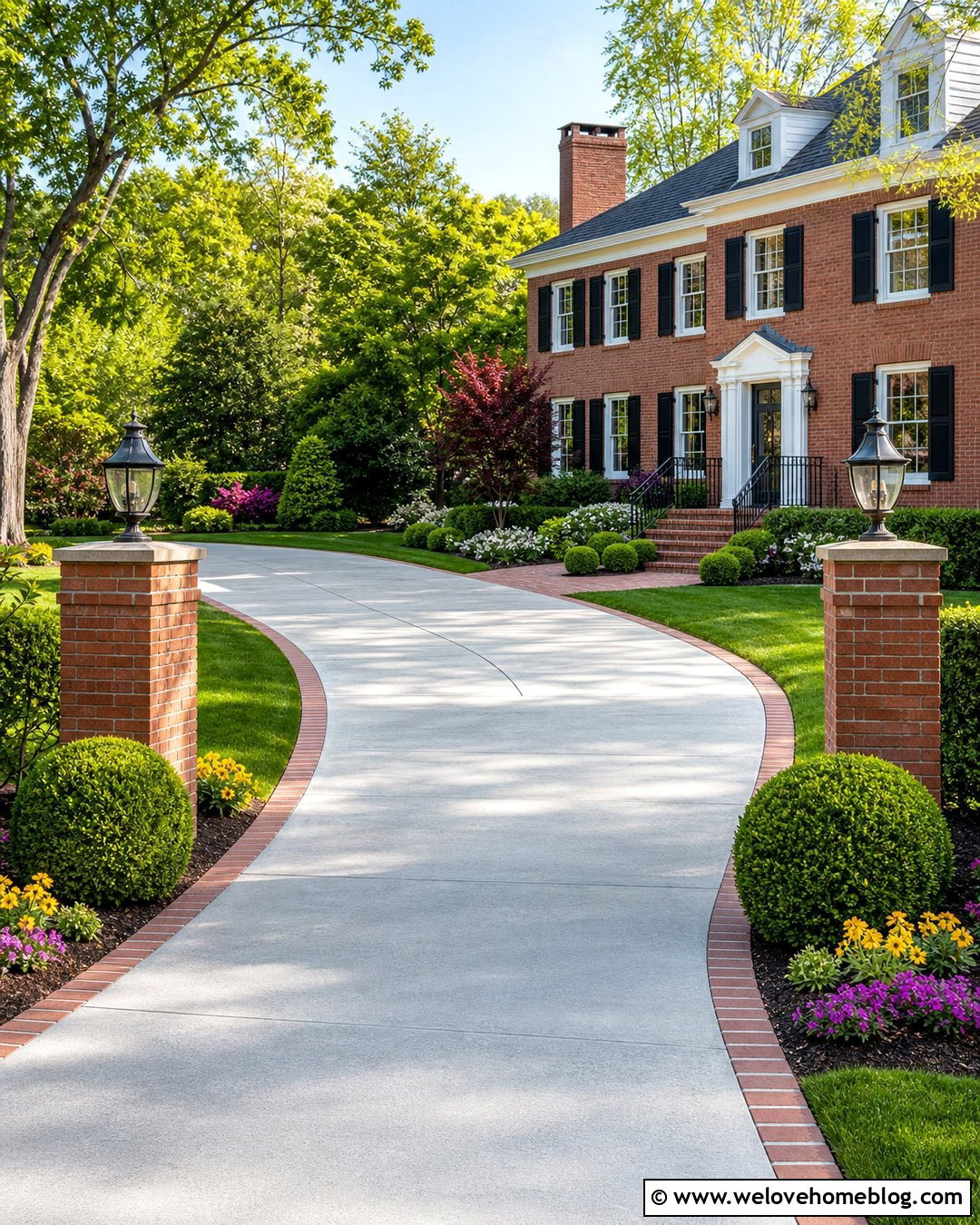
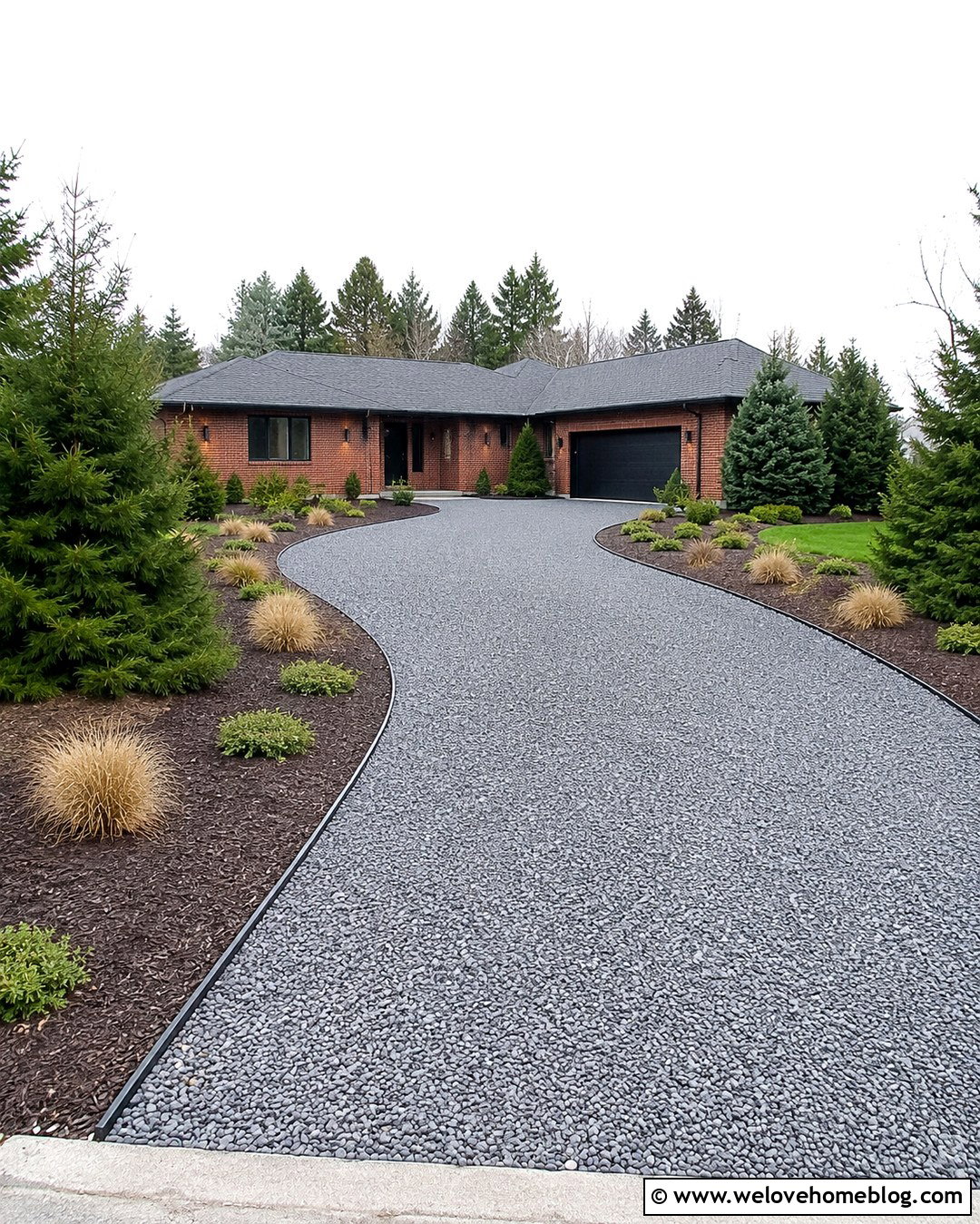
When a driveway crosses a sloped yard, a low retaining wall can become part of a complete landscaped edge. Pair a curved black asphalt driveway with a wall made from natural ledgestone or textured concrete blocks that coordinate with the house. Keep the wall low where possible, then terrace the ground behind it with evergreen shrubs, flowering perennials, and cascading ground covers. On the opposite driveway edge, use matching stone curbing and a simpler lawn border to maintain visual balance. Include proper drainage behind the wall and provide enough clearance for vehicles along the curve. This design suits hillside ranch, Craftsman, and mountain-inspired homes. The finished edge controls the grade, frames the driveway, and turns a difficult slope into an attractive front-yard feature.
Conclusion:
The most successful driveway edges combine structure, planting, and practical clearance rather than treating the border as decoration alone. Materials such as brick, cobblestone, steel, timber, granite, and natural stone can contain the driveway while connecting it to the home’s architecture. Plants should be selected for the available sun, moisture, maintenance level, and mature size. Always protect turning space, drainage paths, car-door clearance, and visibility near the street. From narrow urban entrances to sweeping country approaches, these 20 landscaping driveway edge ideas offer adaptable ways to improve curb appeal. Choose one complete look, repeat its materials throughout the front yard, and your driveway will feel intentional, balanced, and naturally connected to the house.

Related posts:
Leave a Reply