
A well-planned border turns loose stone into a polished, intentional entrance. These 20 gravel driveway with border ideas explore complete looks that combine gravel color, driveway shape, edging, planting, and architecture. The right border helps separate gravel from lawns and garden beds while giving the driveway a clearer, more finished outline. () You can create a traditional approach with red brick, introduce rustic character with timber, or complement a contemporary home with slim steel edging. Consider drainage, vehicle movement, maintenance, and your home’s exterior before choosing a combination. From compact suburban parking areas to long country lanes, the following 20 gravel driveway with border ideas offer practical inspiration for creating a more attractive entrance.

1. Pea Gravel Driveway With Brick Border
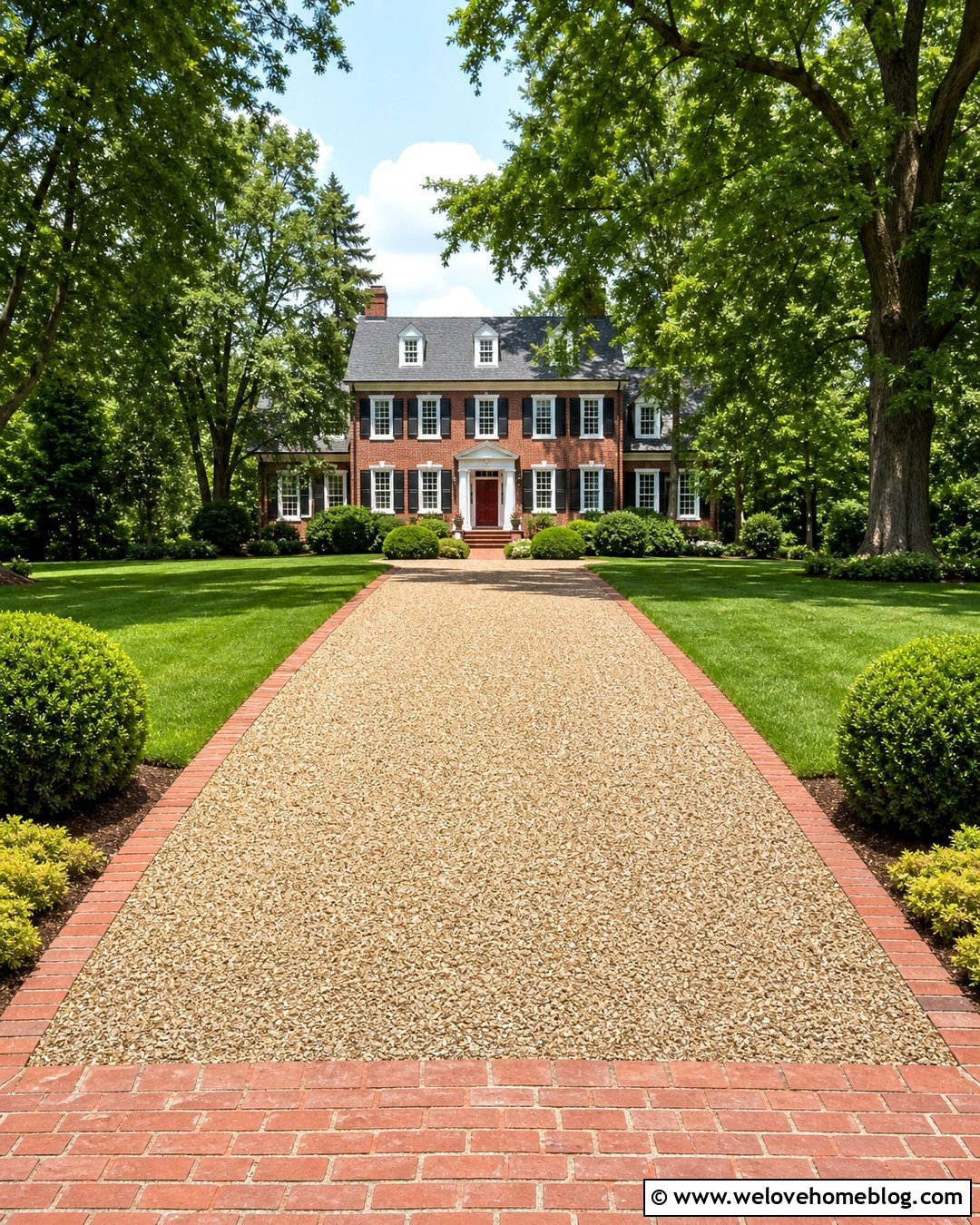
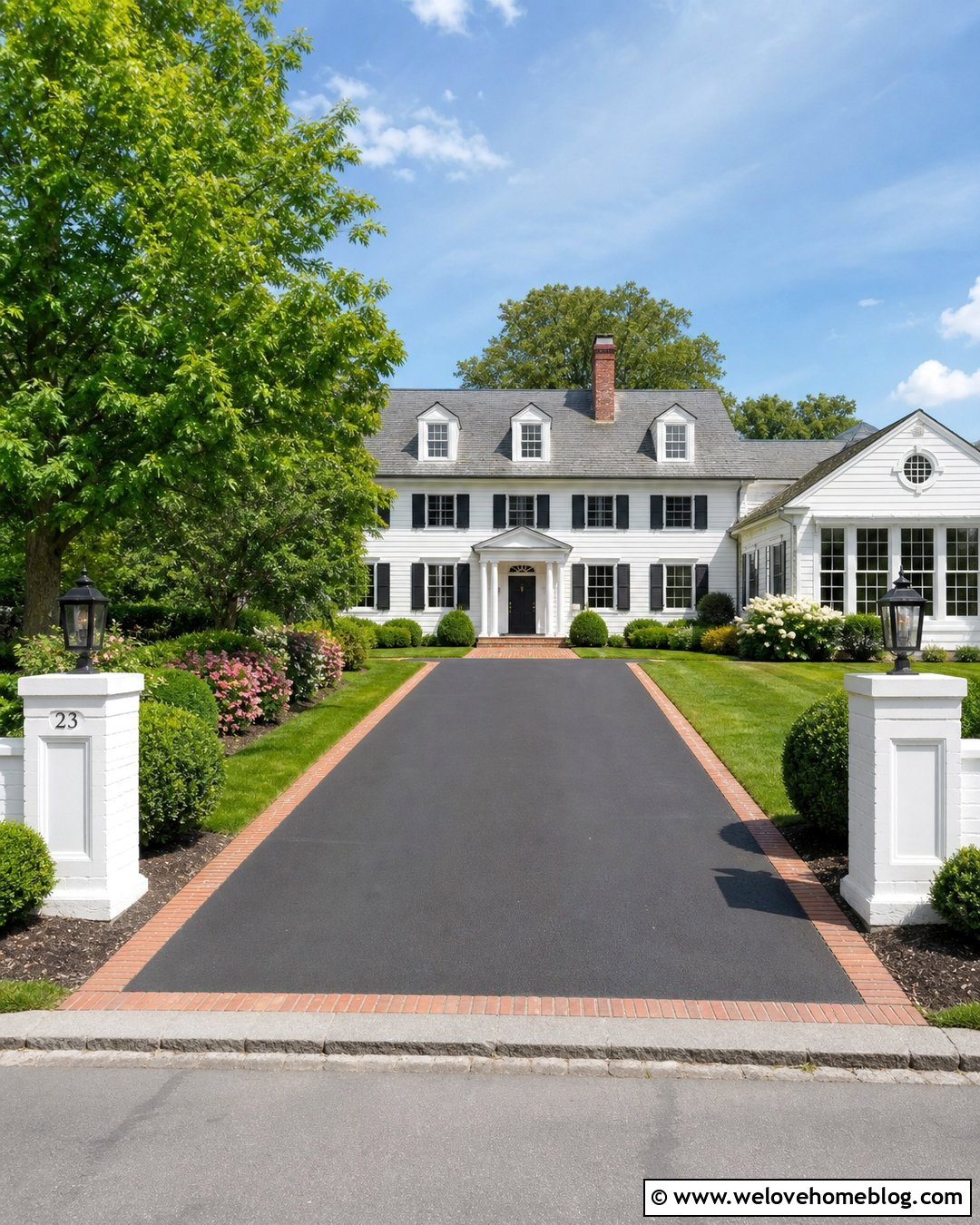
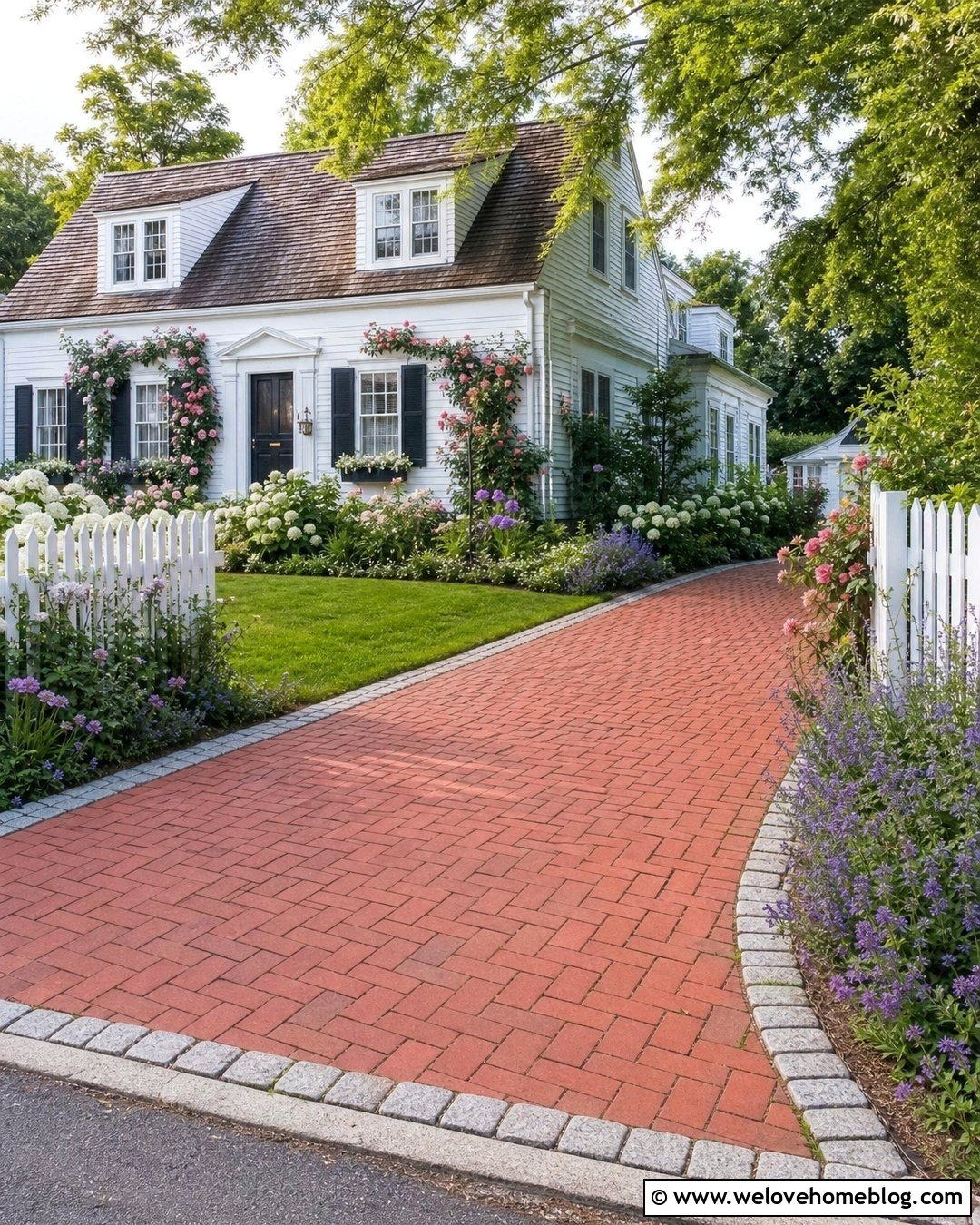
Warm red brick gives a pale pea gravel driveway a familiar, welcoming appearance. Use a straight layout for a colonial or Cape Cod home, placing the bricks lengthwise along both sides for a simple continuous edge. A matching brick apron at the street can make the entrance feel more substantial. Cream, tan, or honey-colored pea gravel provides gentle contrast without competing with the brick. Frame the driveway with trimmed lawn, low boxwood shrubs, and a paved walkway leading toward the porch. Set the bricks on a properly prepared base so they remain level near vehicle tires. This complete combination works especially well when the house already has brick steps, a brick chimney, or warm red accents.
2. Gray Gravel Driveway With Cobblestone Border
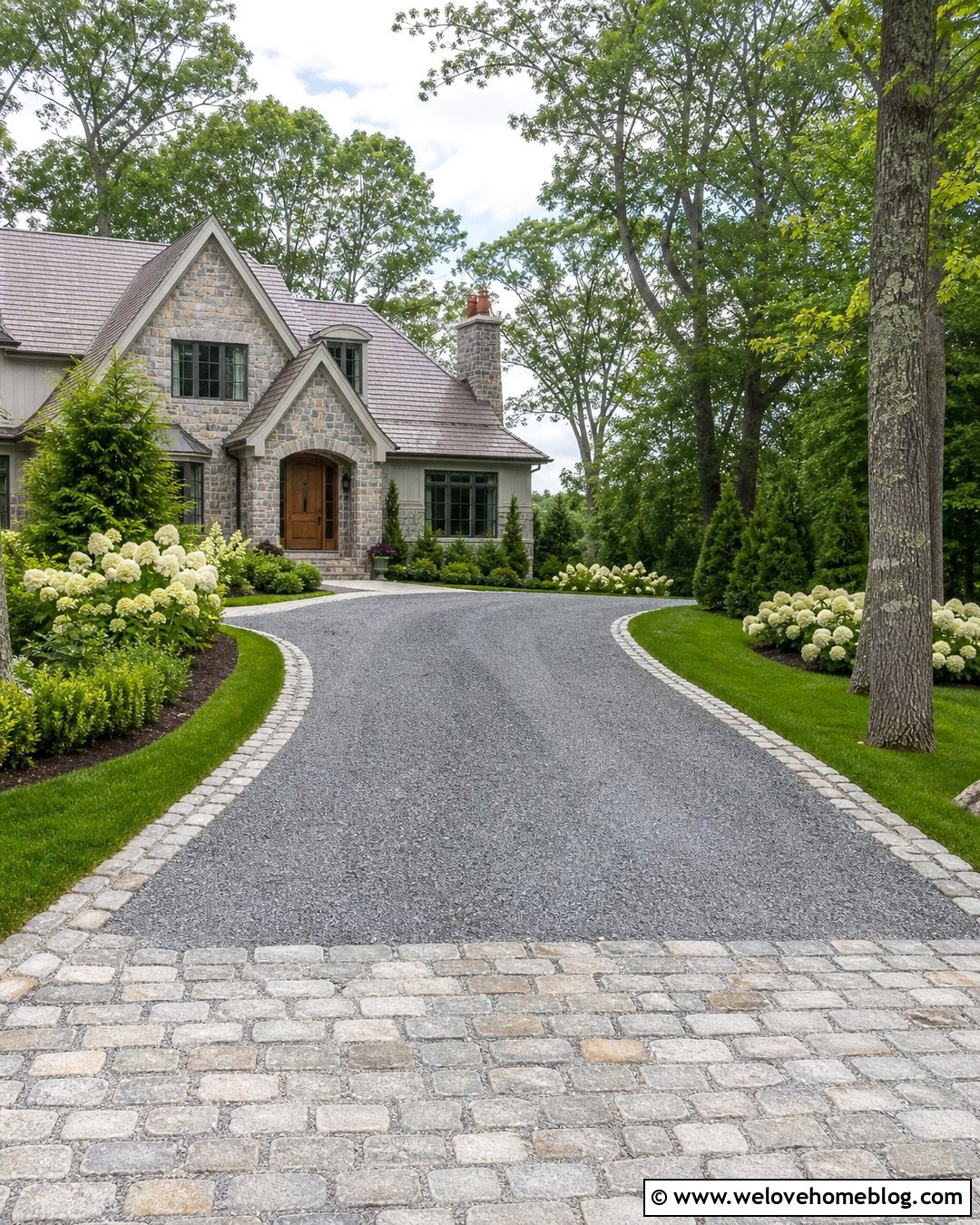
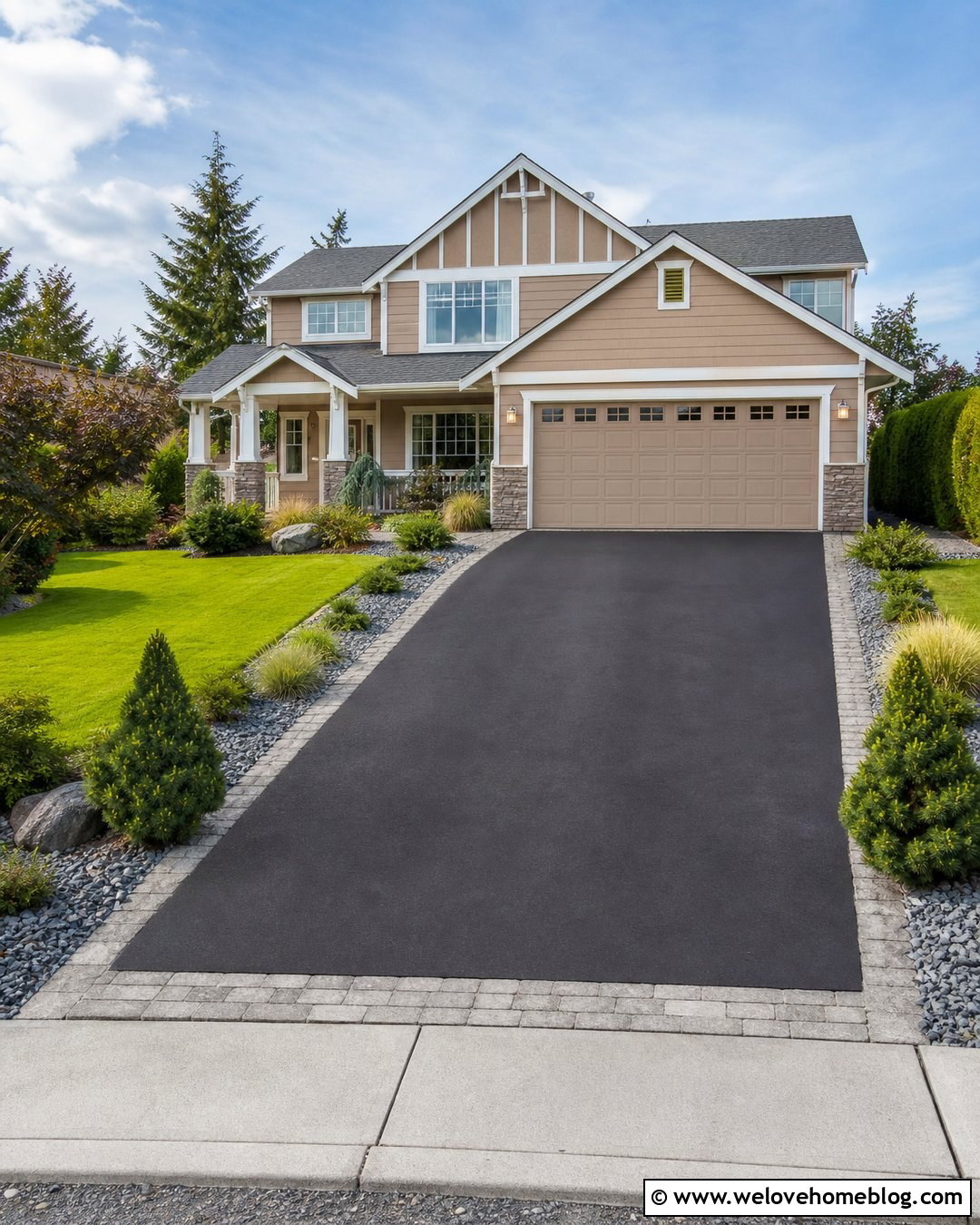
Cobblestone edging can give gray gravel a stronger and more established outline. Choose medium-gray crushed gravel for the main surface, then use chunky cobblestones in mixed charcoal and silver tones along the perimeter. A softly curved driveway makes the irregular texture of the stones feel natural rather than overly formal. At the entrance, widen the cobblestone border into a small apron that visually connects the property to the street. Large hydrangeas, clipped evergreen shrubs, and a green lawn soften the hard materials. This design suits craftsman, Tudor, and stone-front homes particularly well. Keep the cobblestones slightly raised above the gravel, but avoid creating an edge that interferes with doors, tires, drainage, or routine snow removal.
3. Crushed Stone Driveway With Timber Border
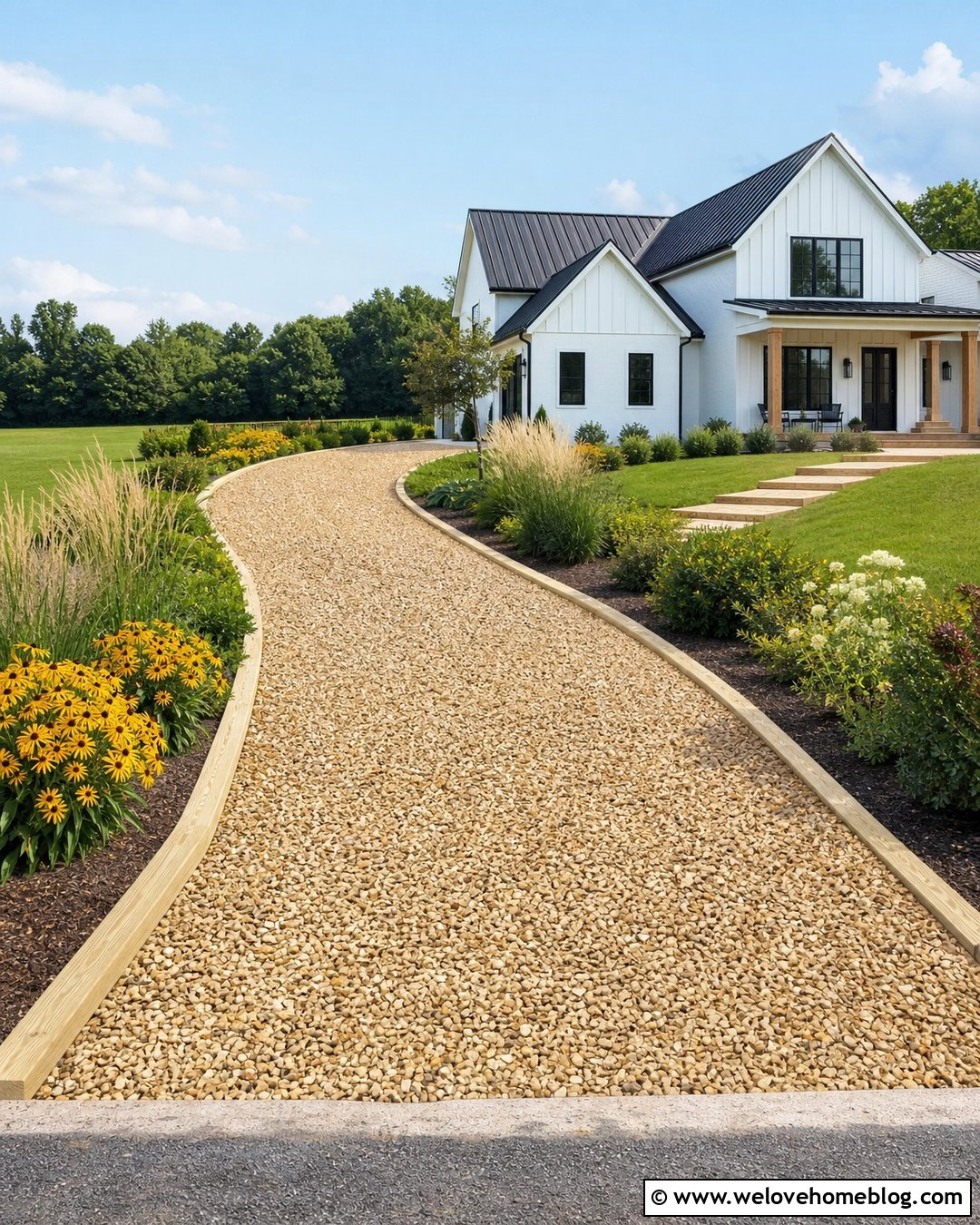
Imagine a quiet country driveway framed by warm wood and informal planting. Compact gray or tan crushed stone within pressure-treated landscape timbers secured along both sides. A straight or gently winding layout works well for a farmhouse, cabin, or ranch home. The timber border should follow smooth lines without sharp corners where vehicle tires could make contact. Add native grasses, black-eyed Susans, and small flowering shrubs beyond the wood to create a relaxed transition into the yard. A simple gravel walkway can branch toward the porch using the same timber edge. Because wood sits close to damp ground, select material intended for landscape contact and inspect it regularly. The finished entrance feels rustic, practical, and comfortably connected to its setting.
4. Black Gravel Driveway With Steel Border
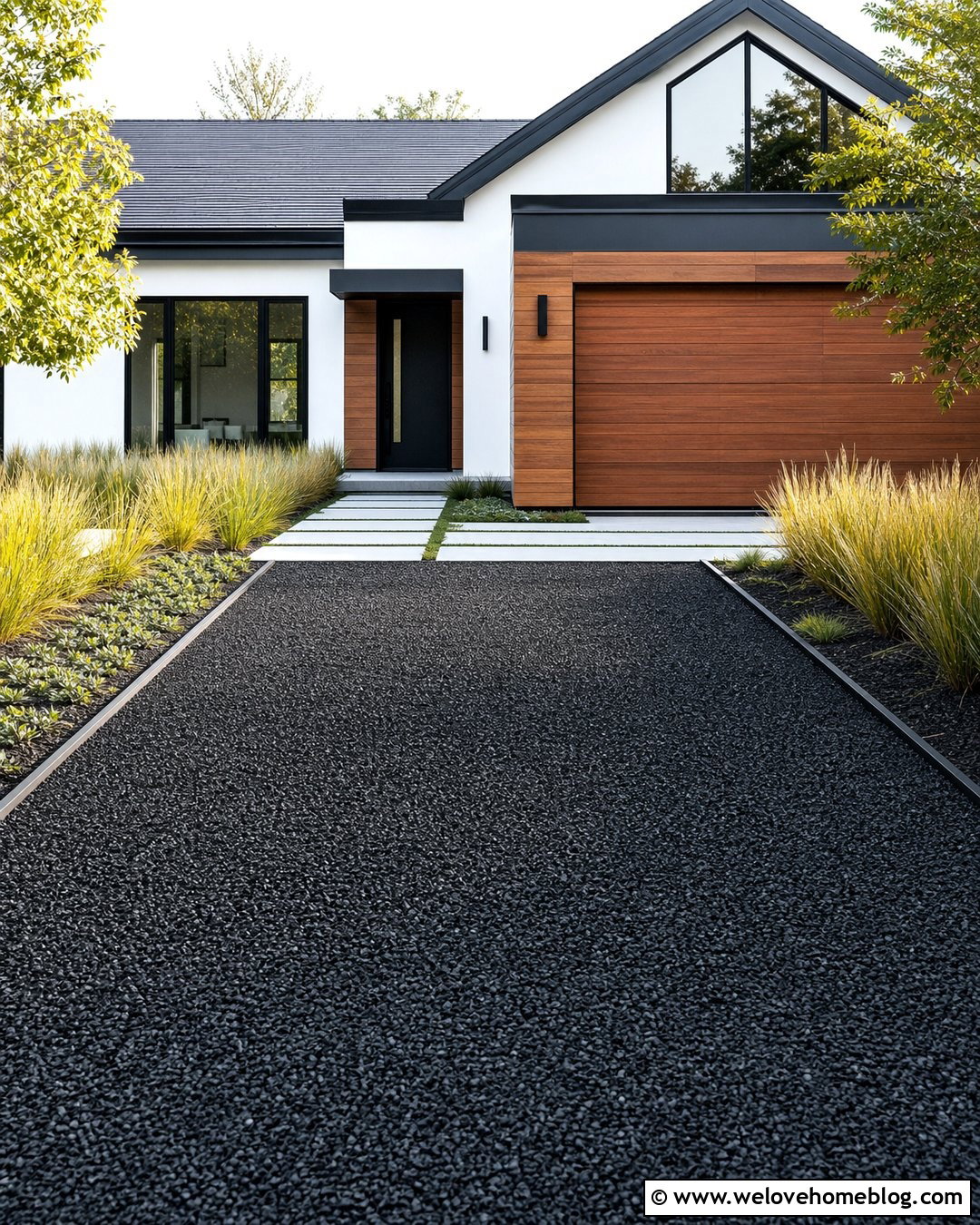
For a clean contemporary entrance, pair charcoal-black gravel with narrow steel edging. The dark surface creates a bold foreground for a white, gray, or wood-clad modern home. Keep the driveway straight and geometric, with crisp corners and an evenly graded surface. Black powder-coated or weathering steel can define both sides without forming a visually heavy border. Beyond the edging, use broad strips of ornamental grass, low evergreen ground cover, and pale concrete stepping pads. A matching walkway makes the overall front yard feel coordinated. Conceal most of the steel below the finished gravel level while leaving enough visible to maintain a sharp separation. This streamlined gravel driveway looks best when planting is restrained and every transition follows the home’s architectural lines.
5. White Gravel Driveway With Concrete Curb
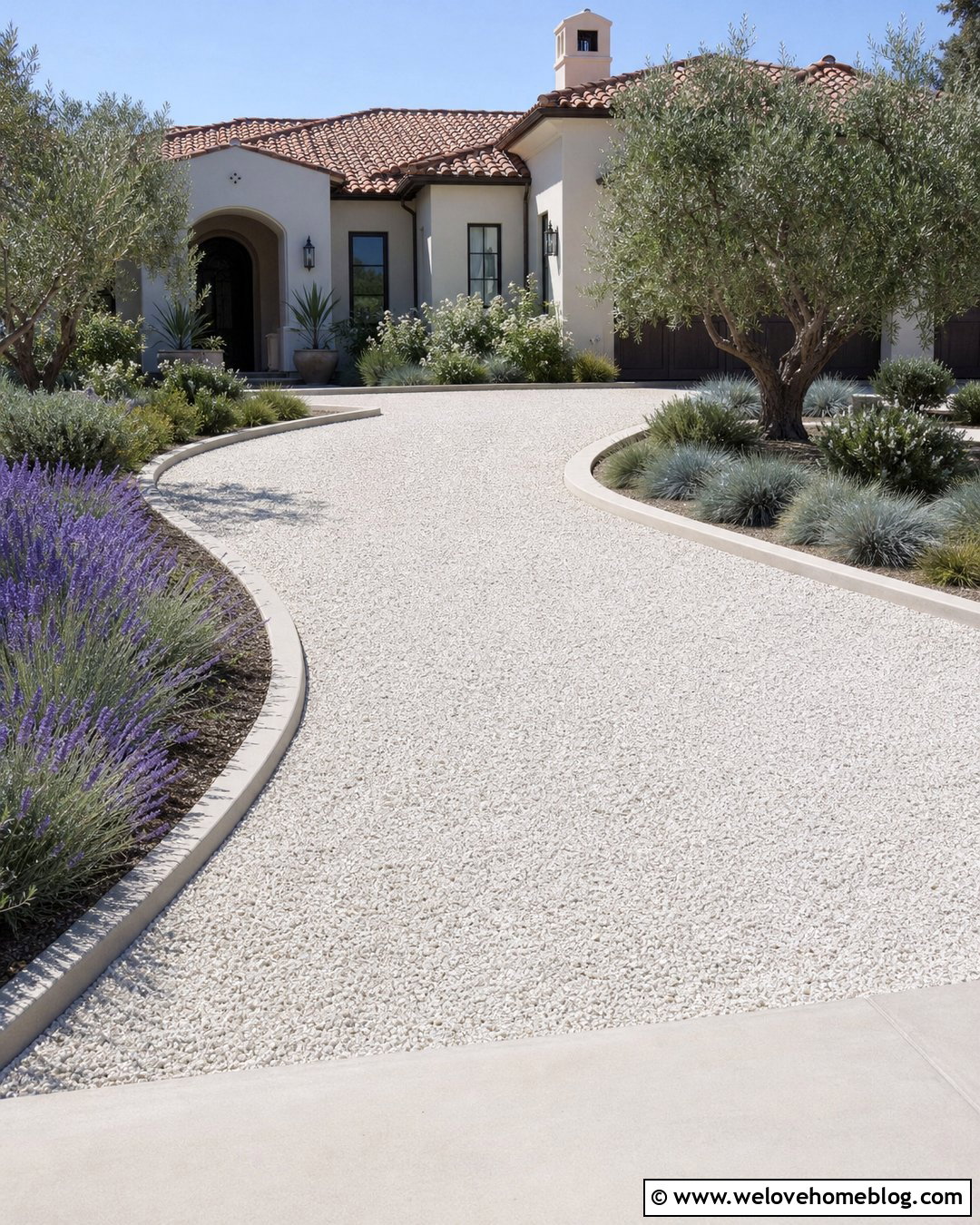
Bright white gravel becomes easier to read as a defined surface when enclosed by a smooth concrete curb. This combination suits Mediterranean, coastal, and stucco homes with light exterior colors. Create a broad curved driveway that sweeps toward the garage or front entry, then follow the curve with low poured-concrete edging. Pale gray concrete provides subtle contrast while maintaining the airy palette. Add drought-tolerant beds containing lavender, blue fescue, compact olive trees, and silvery foliage. At the sidewalk, a wider concrete apron can create a durable visual transition from public pavement to private gravel. Avoid brilliant white stone in heavily wooded locations where organic debris may be obvious. In an open, sunny yard, however, the surface creates a remarkably fresh entrance.
6. Tan Gravel Driveway With Natural Stone Border
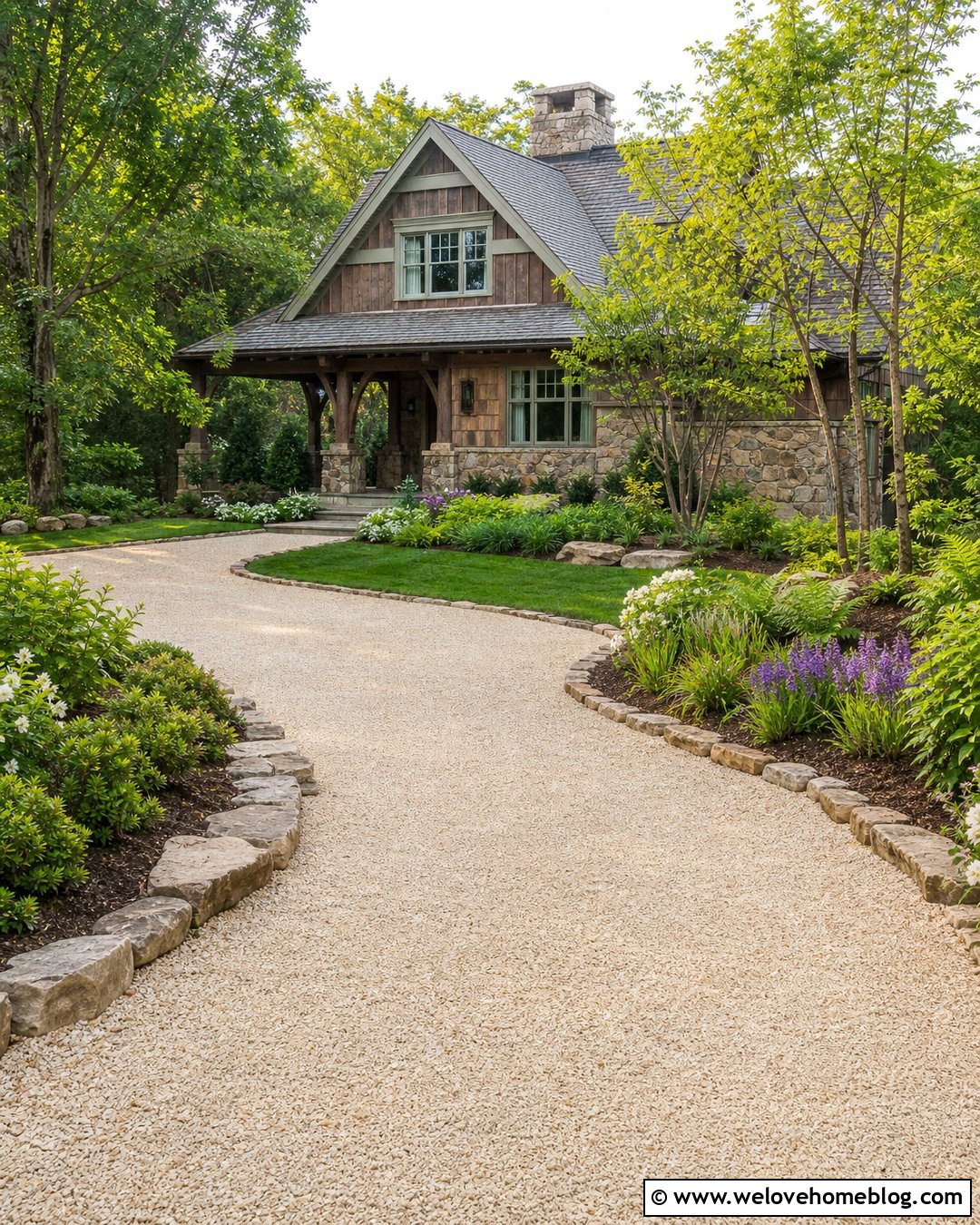
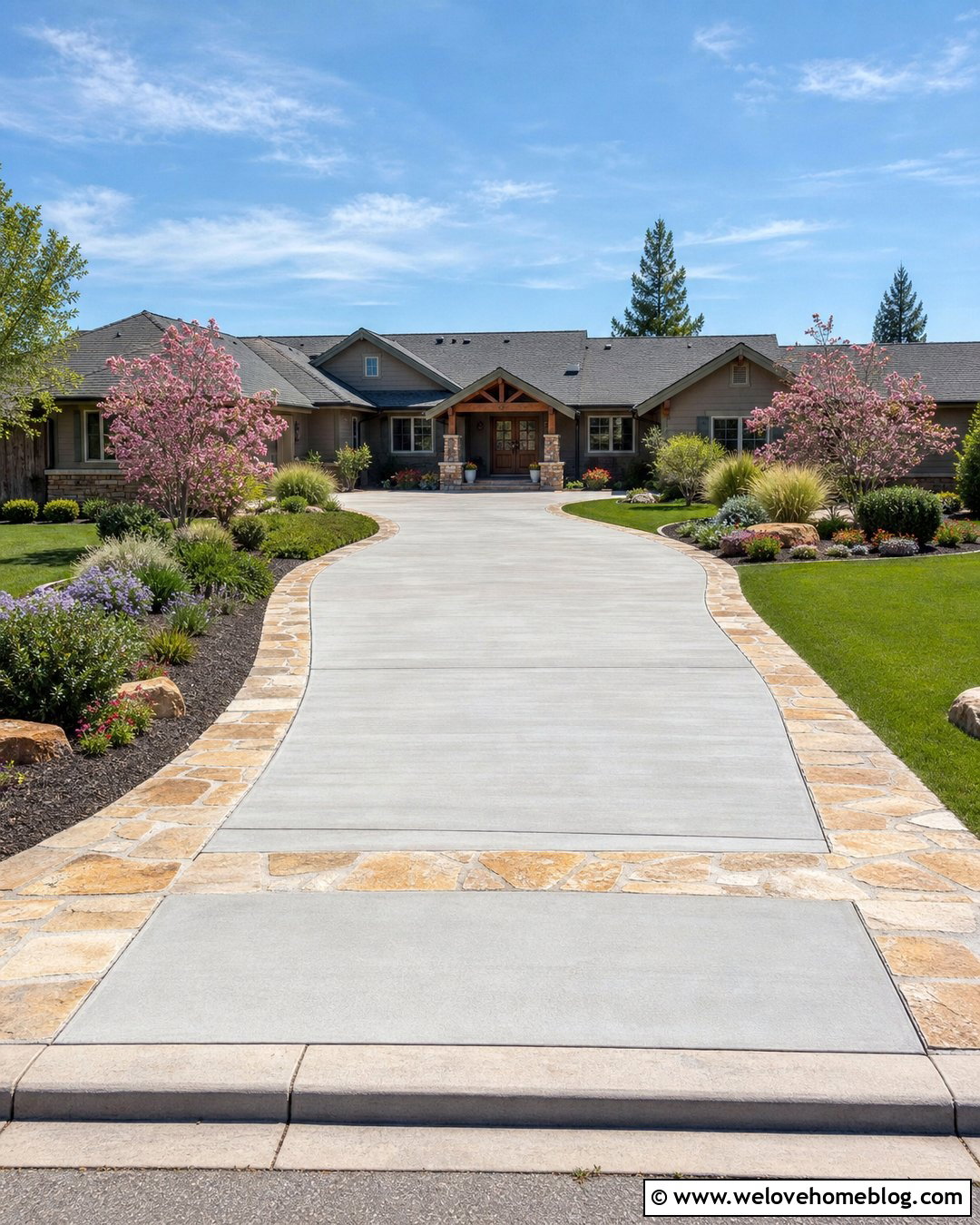
Tan gravel and irregular fieldstone create an approachable look that feels settled into the landscape. Use angular buff-colored gravel on a gently curved driveway leading toward a craftsman or country home. Border it with medium-size natural stones in brown, gray, and sandy tones. Choose stones with relatively flat faces so the edge looks intentional and does not extend unpredictably into the driving area. Beyond the border, plant ferns, flowering perennials, and layered shrubs to connect the driveway with surrounding garden beds. A flagstone walkway in related colors can lead guests from the parking area to the front door. This design does not require perfect symmetry. Slight variations in stone size and planting density support its organic character while the continuous border keeps the overall layout visually organized.
7. Gravel Driveway With Paver Ribbon Border
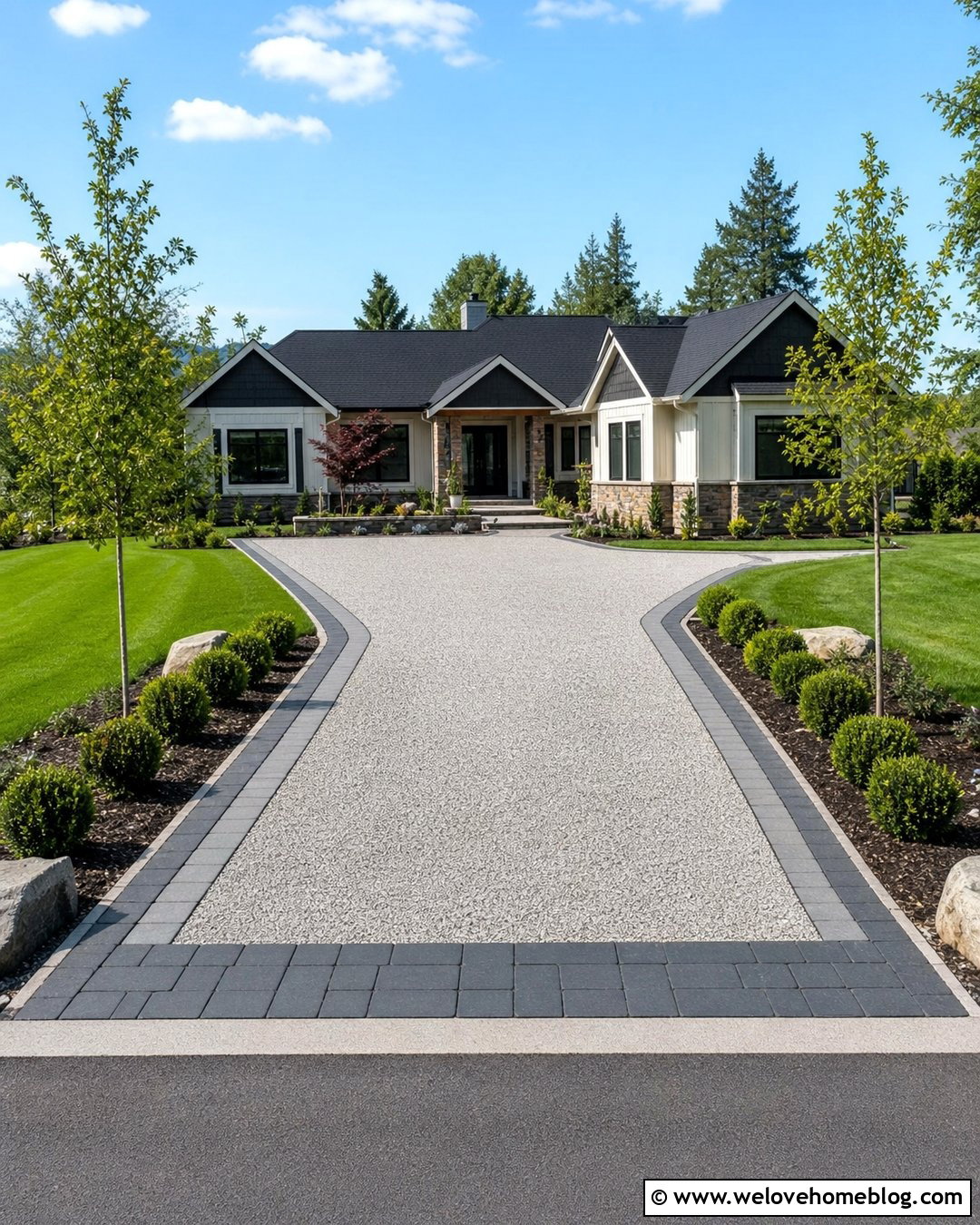
A paver ribbon offers a smooth, tailored frame around an otherwise informal gravel surface. Select light-gray crushed gravel and surround it with one or two rows of rectangular concrete pavers in a darker charcoal tone. A straight driveway with a slightly widened parking pad works well for a suburban ranch or contemporary craftsman home. Continue the pavers across the entrance as a contrasting threshold, then repeat them in the walkway leading to the porch. Neat lawn panels and compact foundation shrubs keep the setting simple. Choose pavers rated for exterior ground use and provide a stable base near frequently traveled edges. The strong color contrast clearly communicates the driveway’s width and shape while allowing gravel to remain the dominant, budget-conscious surface.
8. Pea Gravel Driveway With River Rock Border
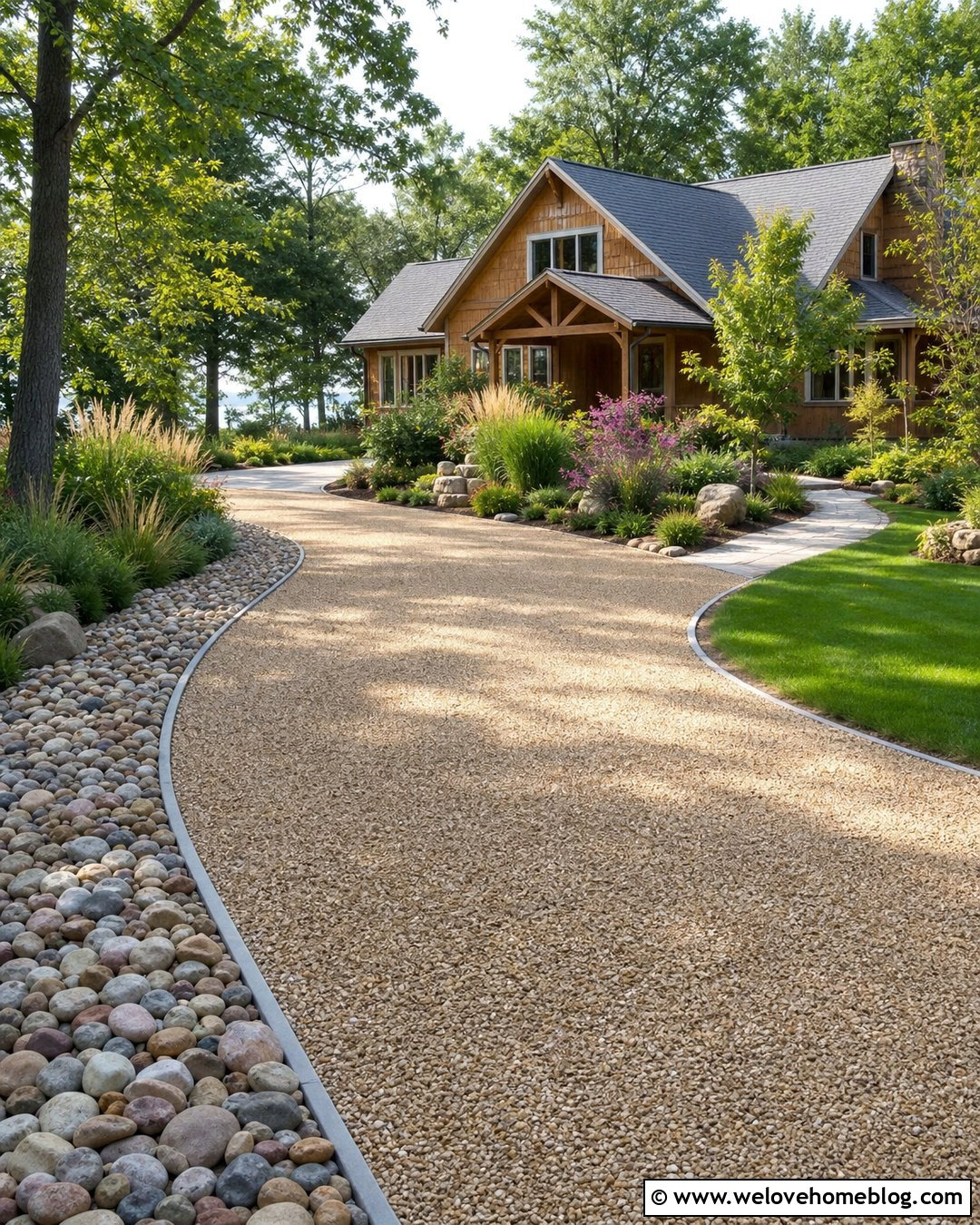
Smooth river rocks create a soft transition between rounded pea gravel and lush planting. Use warm beige pea gravel for a relaxed curved driveway, then install a broad band of larger river stones in mixed cream, rust, gray, and brown. A concealed metal divider between the two stone sizes can help preserve the design’s clean layers. Surround the border with ornamental grasses, flowering shrubs, and a few small trees that arch gently over the approach. This combination complements a rustic ranch, cottage, or natural wood-sided home. Keep the river-rock band outside the primary tire path because larger rounded stones may shift under repeated traffic. Used as a decorative perimeter, the varied rocks add depth and color without making the complete driveway look overly formal.
9. Cream Gravel Driveway With Belgian Block Border
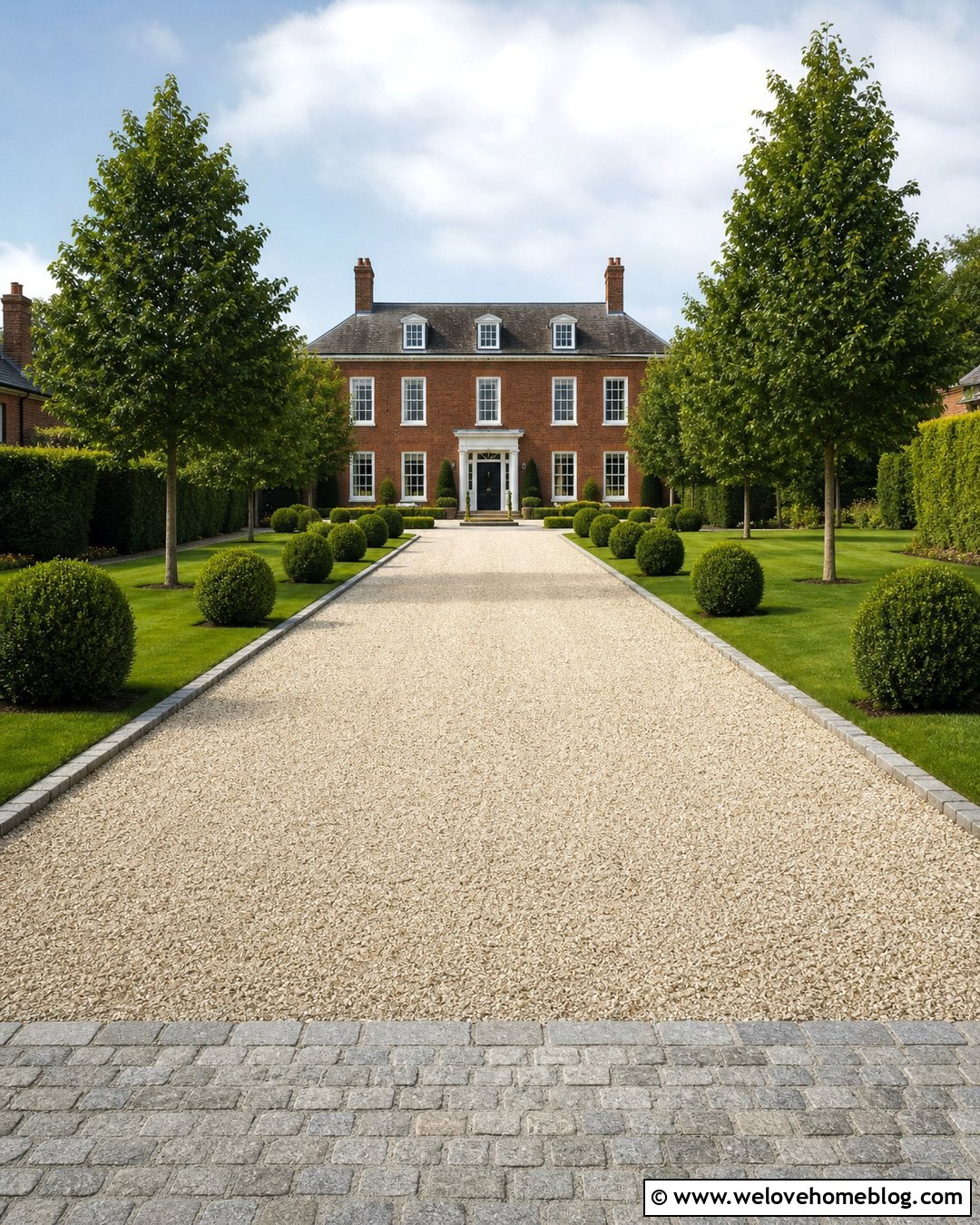
Belgian block provides a substantial edge that can make cream gravel feel appropriate for a traditional home. Lay rectangular granite blocks in a single soldier-course border along a broad, straight driveway. Use cream or light buff gravel to brighten the entrance and highlight the darker gray stone. Near the road, expand the blockwork into a shallow apron for a more finished arrival. Symmetrical boxwoods, small ornamental trees, and rectangular lawn areas reinforce the orderly layout. This pairing works beautifully with Georgian, colonial, and brick-front houses. Keep the top of the blocks consistent along the driveway, even if the surrounding lawn changes slightly in elevation. The result is formal without requiring the cost or visual weight of a fully paved granite surface.
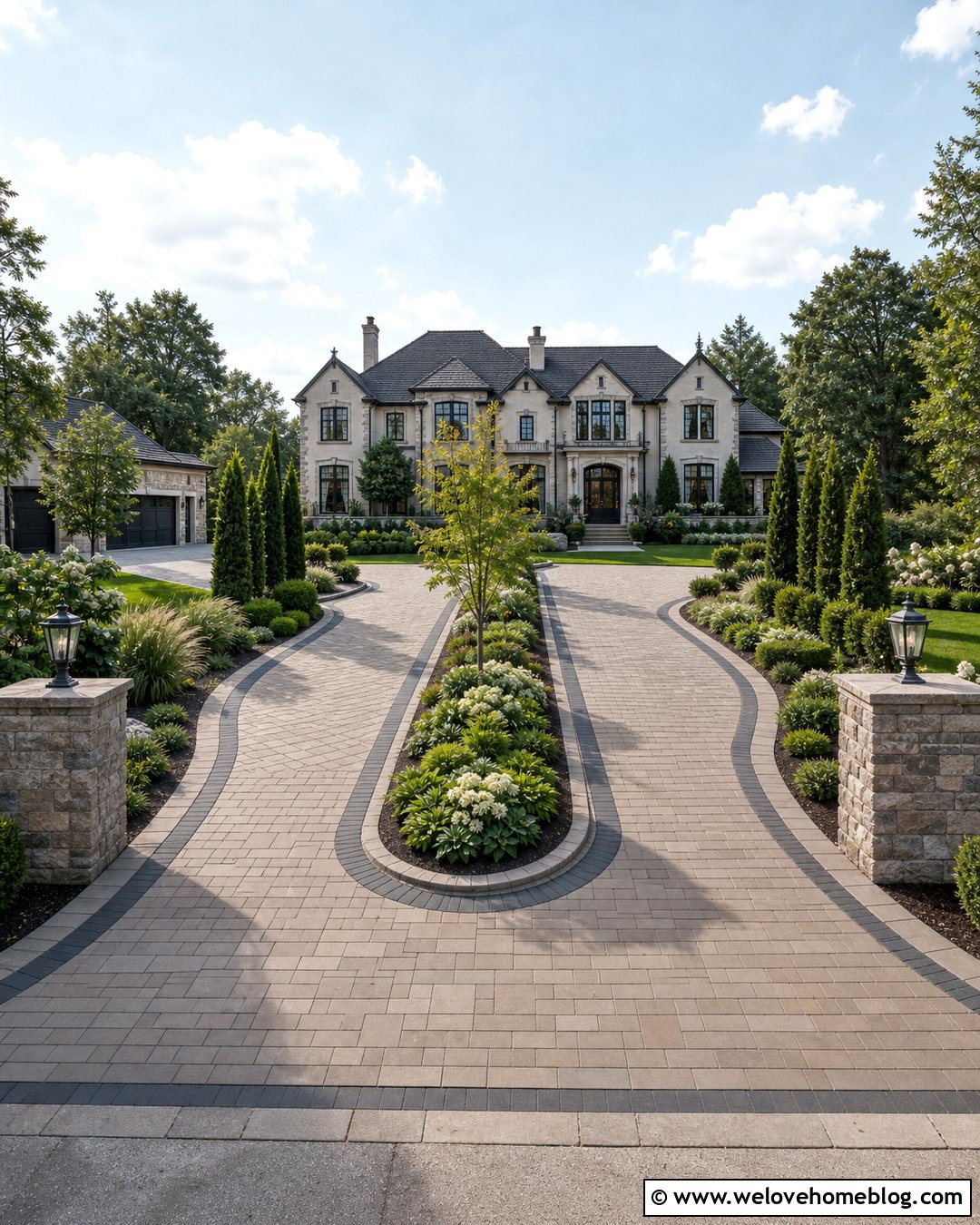
10. Gravel Driveway With Flagstone Garden Border
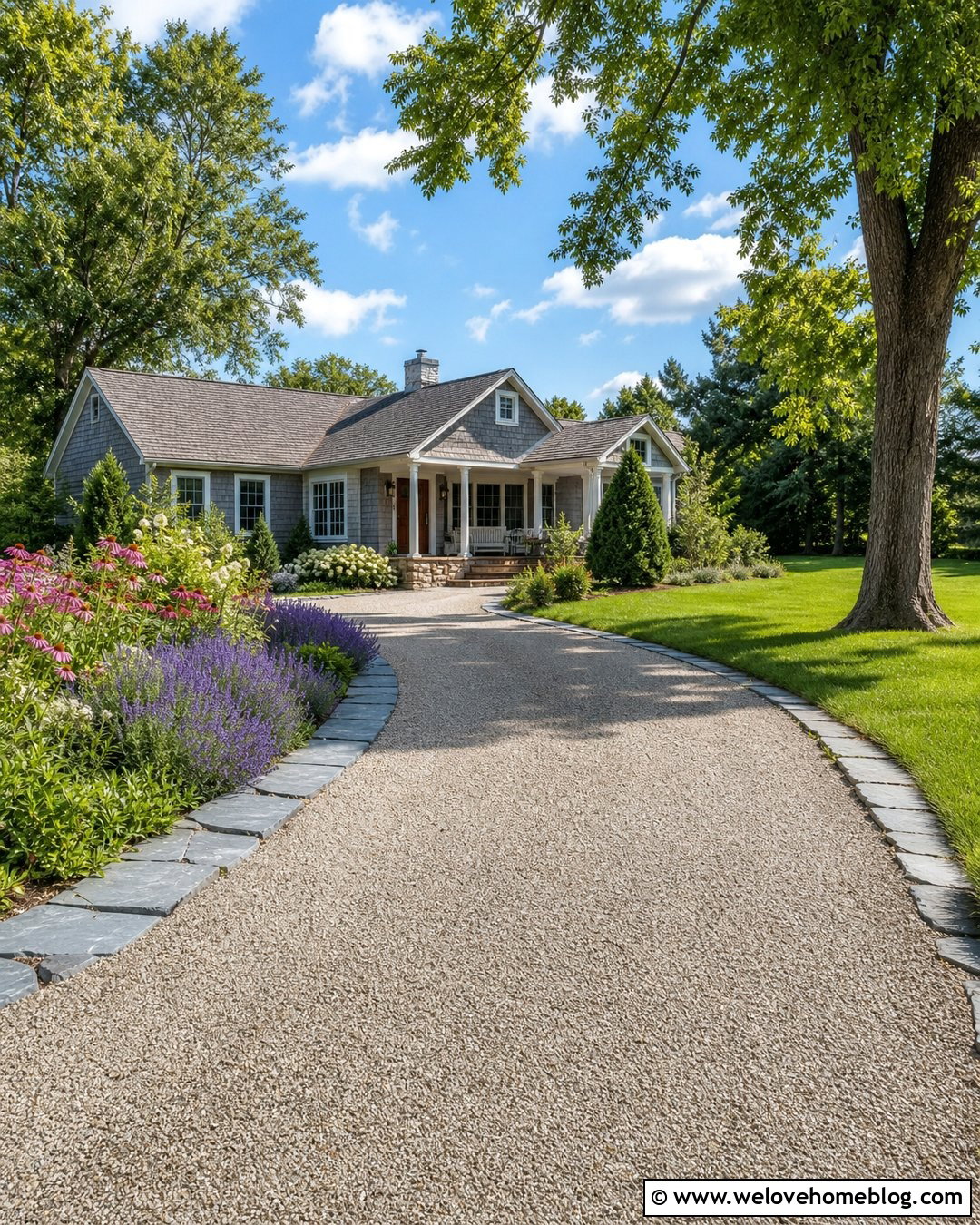
A flagstone border can merge a gravel driveway with nearby paths and planting beds. Start with warm gray crushed gravel on a gently bending driveway. Install broad, flat flagstones along one side beside a garden and a simpler stone edge beside the lawn. The wider flagstones can double as a stepping path, giving passengers a stable place to walk after leaving a vehicle. Fill the garden with salvia, coneflowers, catmint, and compact evergreen shrubs. A bungalow or cottage in the background completes the informal setting. Choose flagstones with coordinated gray, blue, and brown tones rather than dramatically different colors. Keeping the stones closely spaced produces a deliberate edge while preserving the natural variation that makes this complete driveway design appealing.
11. Crushed Granite Driveway With Boulder Border
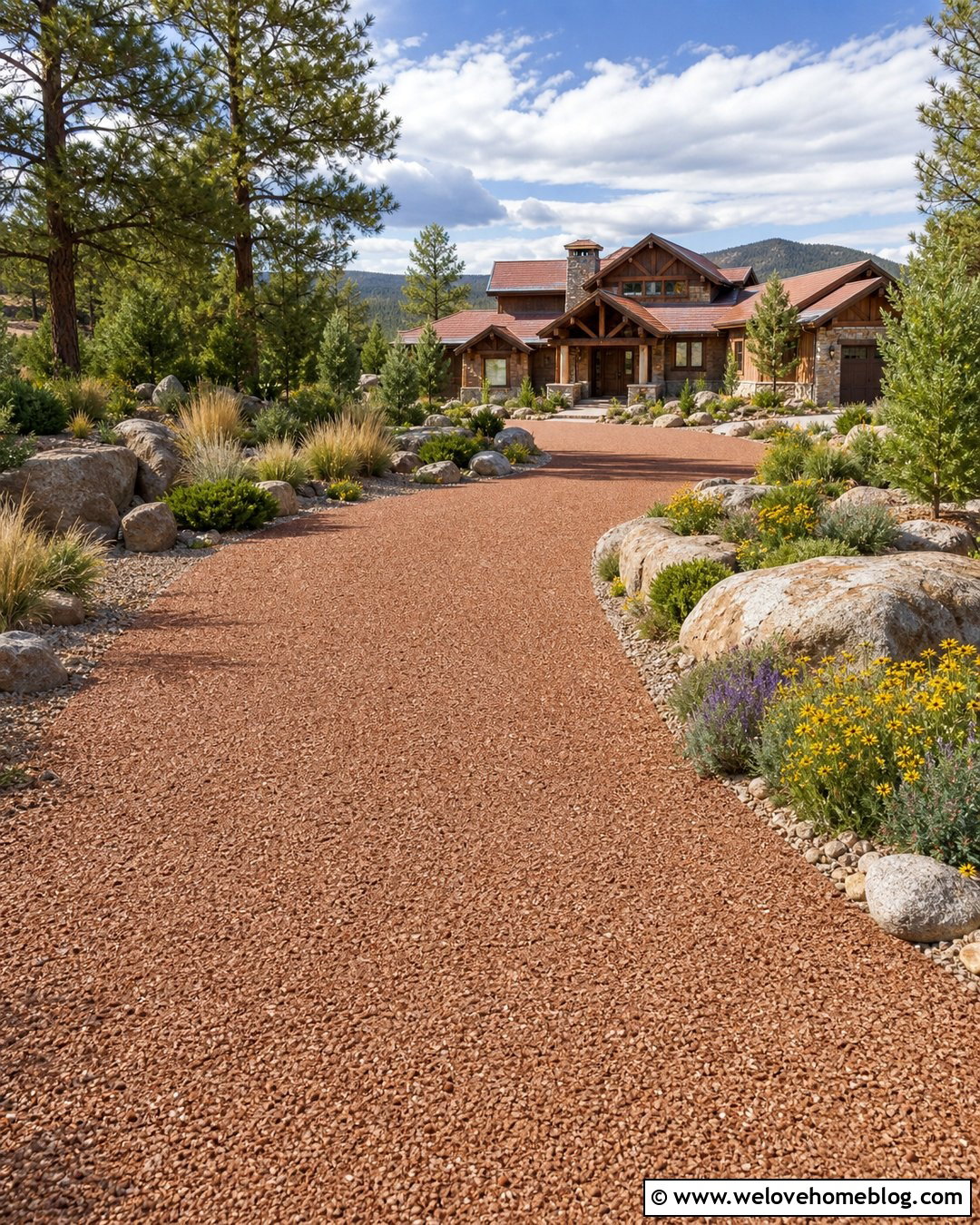
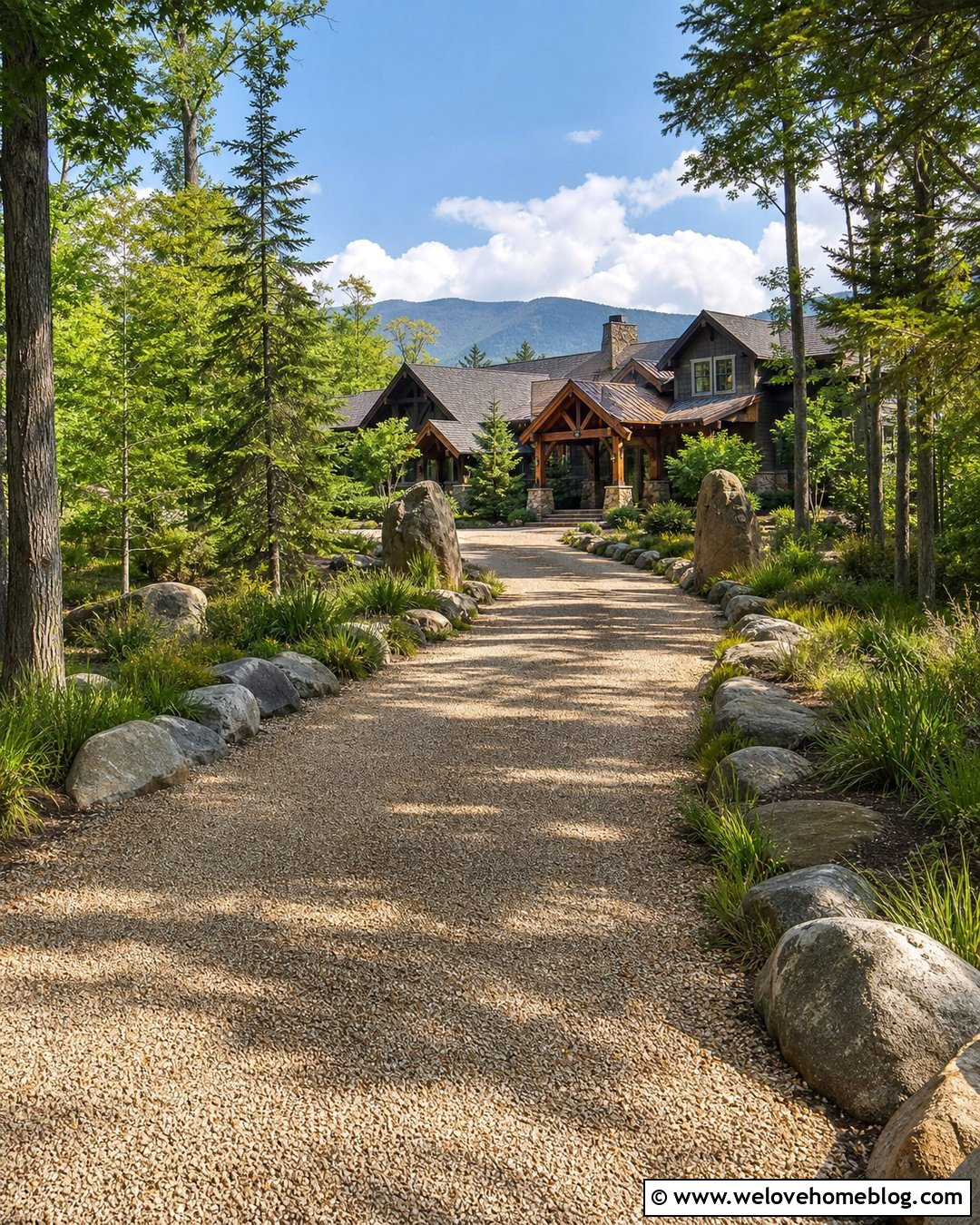
A large property can support a rugged border made from carefully spaced boulders. Use reddish-brown or silver crushed granite on a long, winding driveway leading toward a mountain, lodge, or country-style home. Position weathered boulders outside the usable driving width, concentrating them around bends and the entrance rather than forming an unbroken wall. Native grasses, low junipers, pine trees, and drought-tolerant perennials help the stones appear integrated into the site. Smaller rocks can fill awkward gaps while maintaining a safe setback for vehicles. The driveway should remain visually open, with clear sightlines along every curve. This combination is especially effective when similar stone already appears in retaining walls, foundation details, or the natural landscape surrounding the house.
12. Gravel Driveway With Grass Strip Border
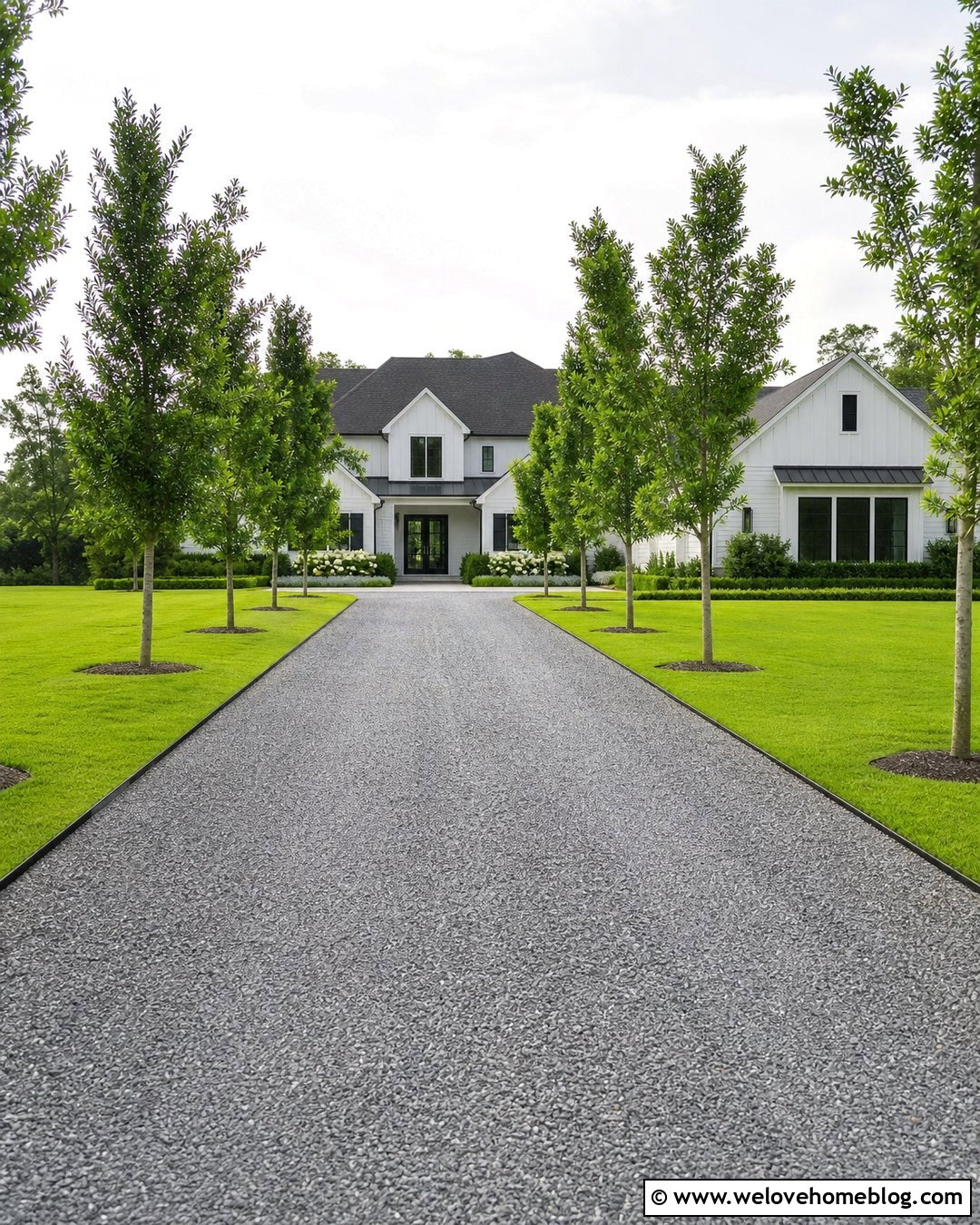
Green lawn strips can create a fresh border when they are protected from loose gravel by a discreet edge. Choose medium-gray gravel for a straight driveway and install narrow steel or aluminum edging flush with the adjoining turf. The almost invisible divider allows the strong contrast between green grass and gray stone to become the main feature. This look suits a tidy ranch, modern farmhouse, or modest suburban home. Add evenly spaced trees along the approach and a simple concrete walkway near the garage. Maintain a generous driving width so tires do not repeatedly cross the lawn. Regular trimming will be important, but the uncomplicated material palette makes maintenance straightforward. The final design feels open, affordable, and well suited to a broad front yard.
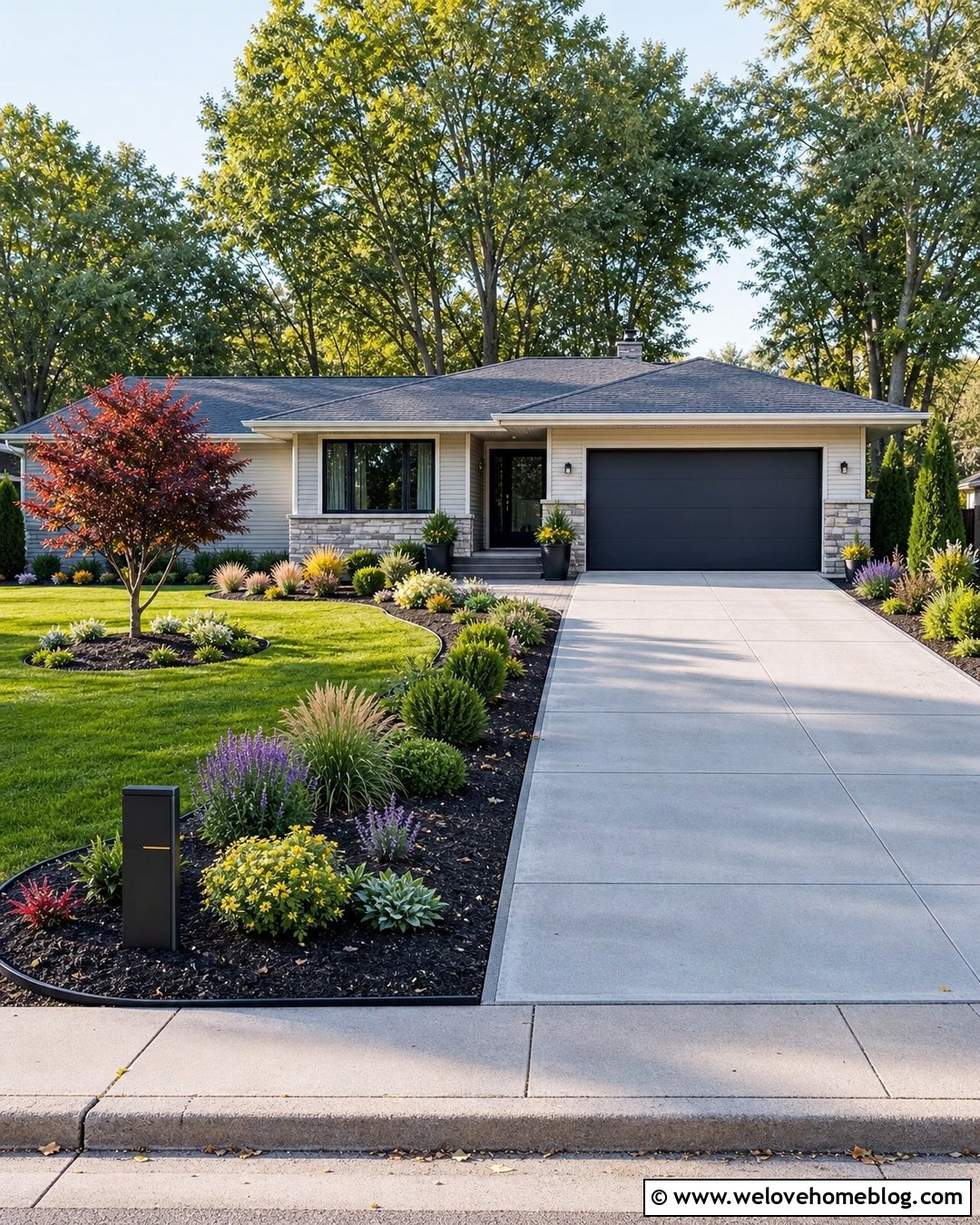
13. Gravel Driveway With Mulch Bed Border
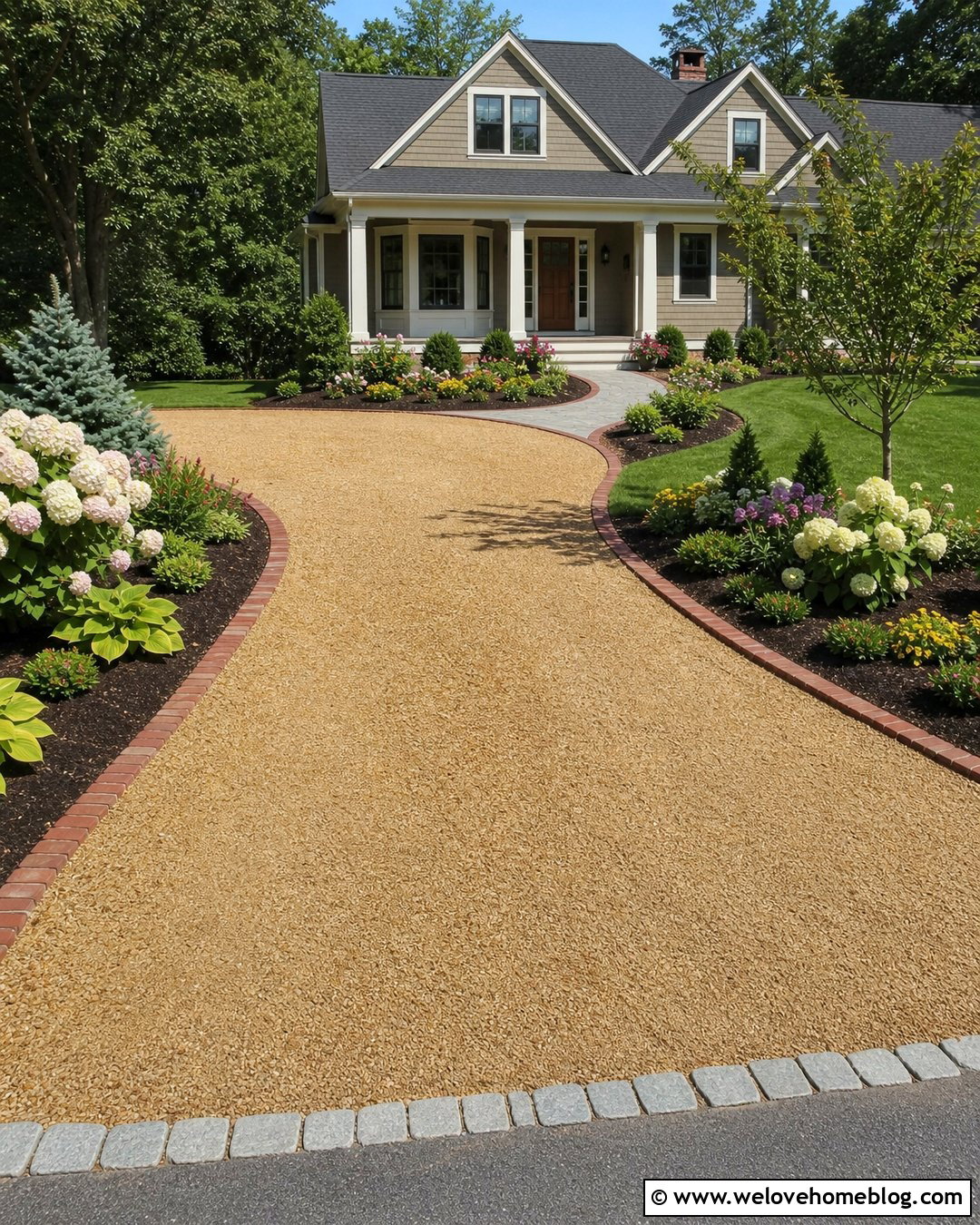
A planted mulch border can soften the long edges of a gravel driveway without sacrificing definition. Lay tan crushed gravel in a gentle curve, then install a low brick, steel, or concrete divider before beginning the mulch beds. Dark brown shredded mulch creates a rich background for hydrangeas, dwarf evergreens, hostas, and seasonal flowers. Use deeper beds near the house and narrower planting strips closer to the street so visibility remains clear. This arrangement works well with a craftsman or traditional suburban facade. Repeat one or two plant varieties along the entire drive to create continuity rather than filling the border with unrelated plants. The hard divider remains essential because it prevents the gravel and mulch from visually blending into an untidy, difficult-to-maintain edge.
14. Farmhouse Gravel Driveway With Sleeper Border
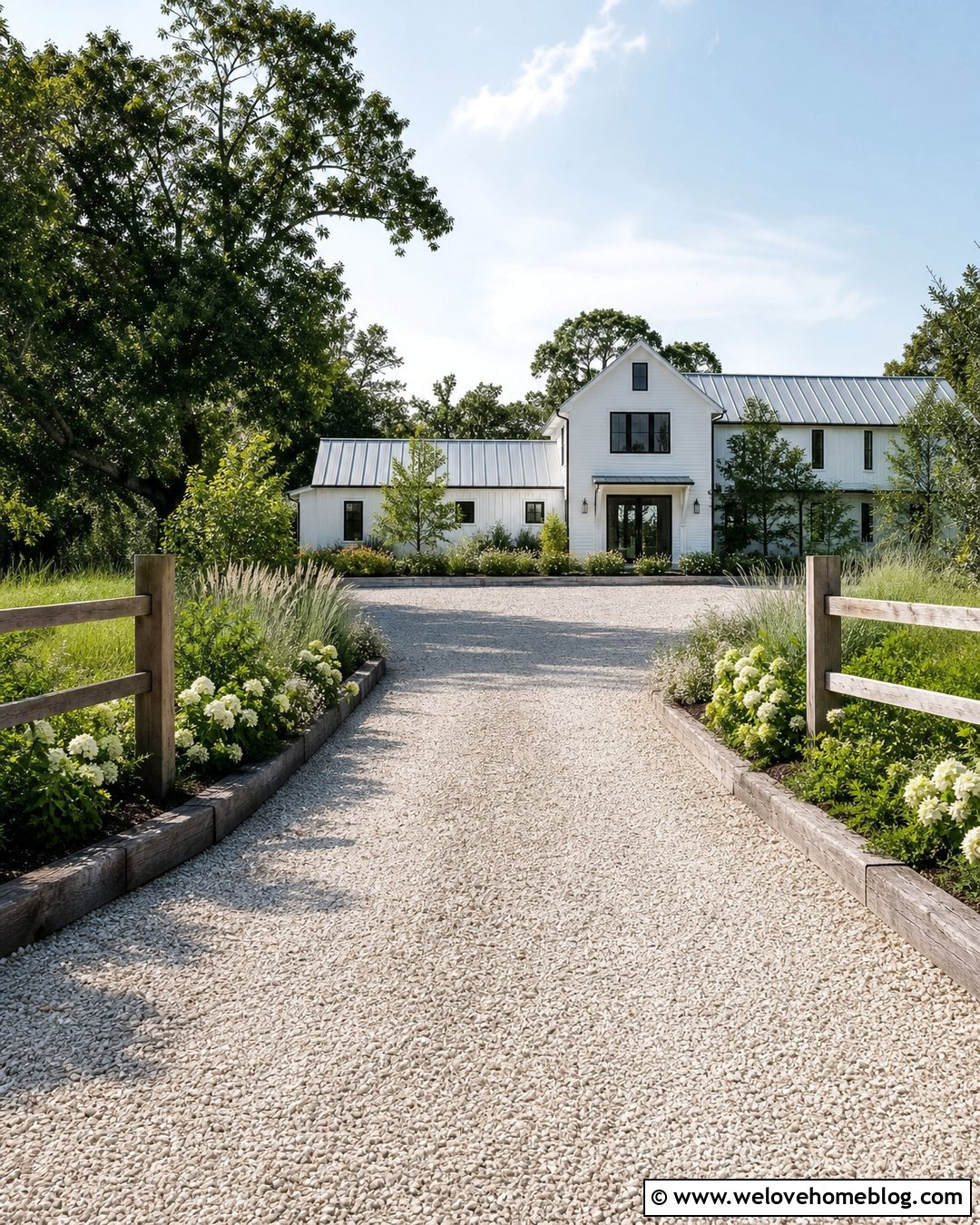
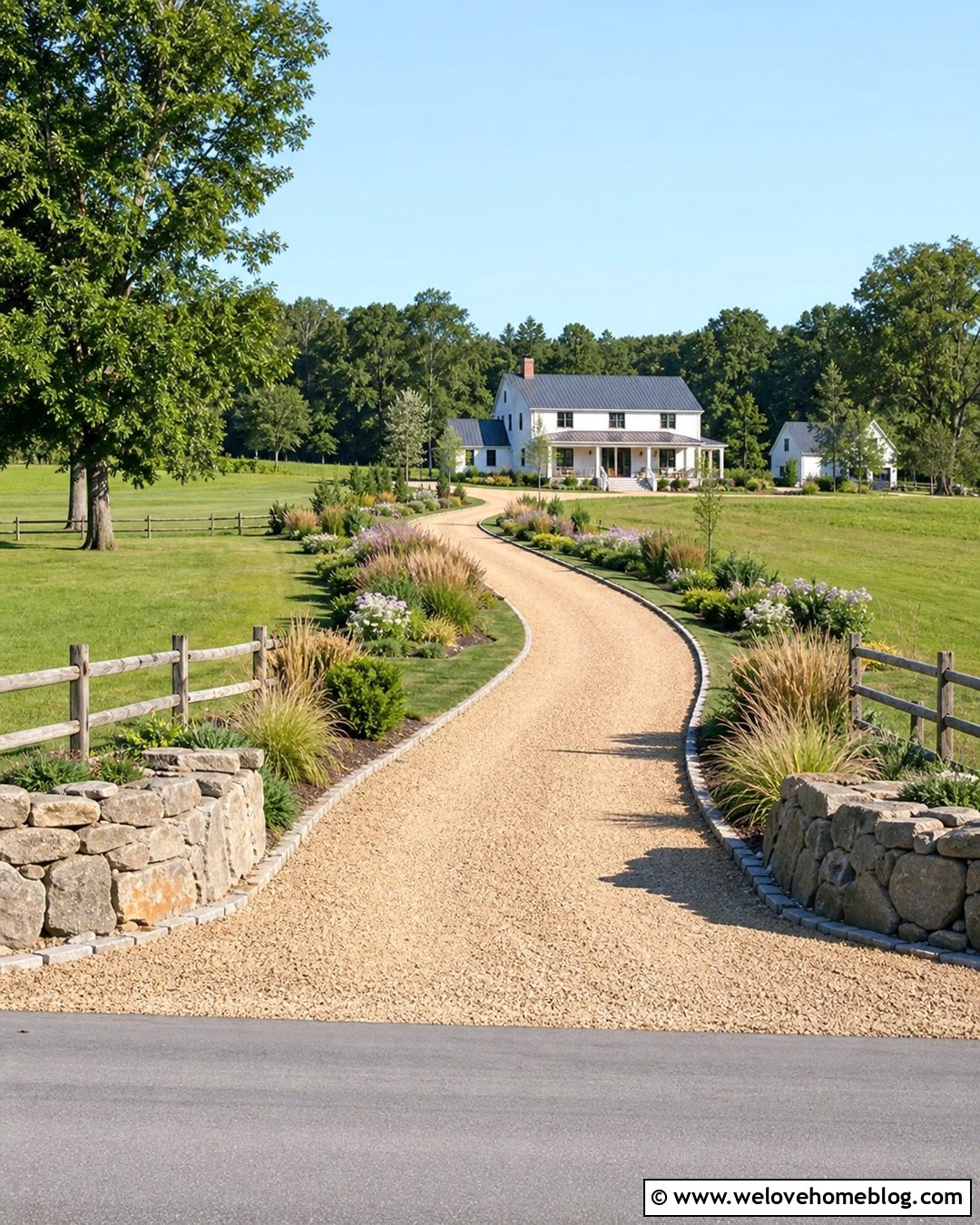
A pale limestone gravel driveway bordered by heavy wood sleepers creates an authentic farmhouse entrance. Use a long, straight approach with a wider turnaround near the garage or barn. Install the sleepers horizontally along low planting beds, allowing them to function as a modest retaining edge where the ground rises. White flowering shrubs, ornamental grasses, and meadow-style perennials can soften the strong wooden lines. A simple post-and-rail fence near the road reinforces the rural setting without enclosing the entire driveway. Keep wooden borders away from tight turning areas where tires could rub against them. The soft limestone color, substantial timber, and loose planting work together particularly well with white siding, black windows, a metal roof, and a broad covered porch.
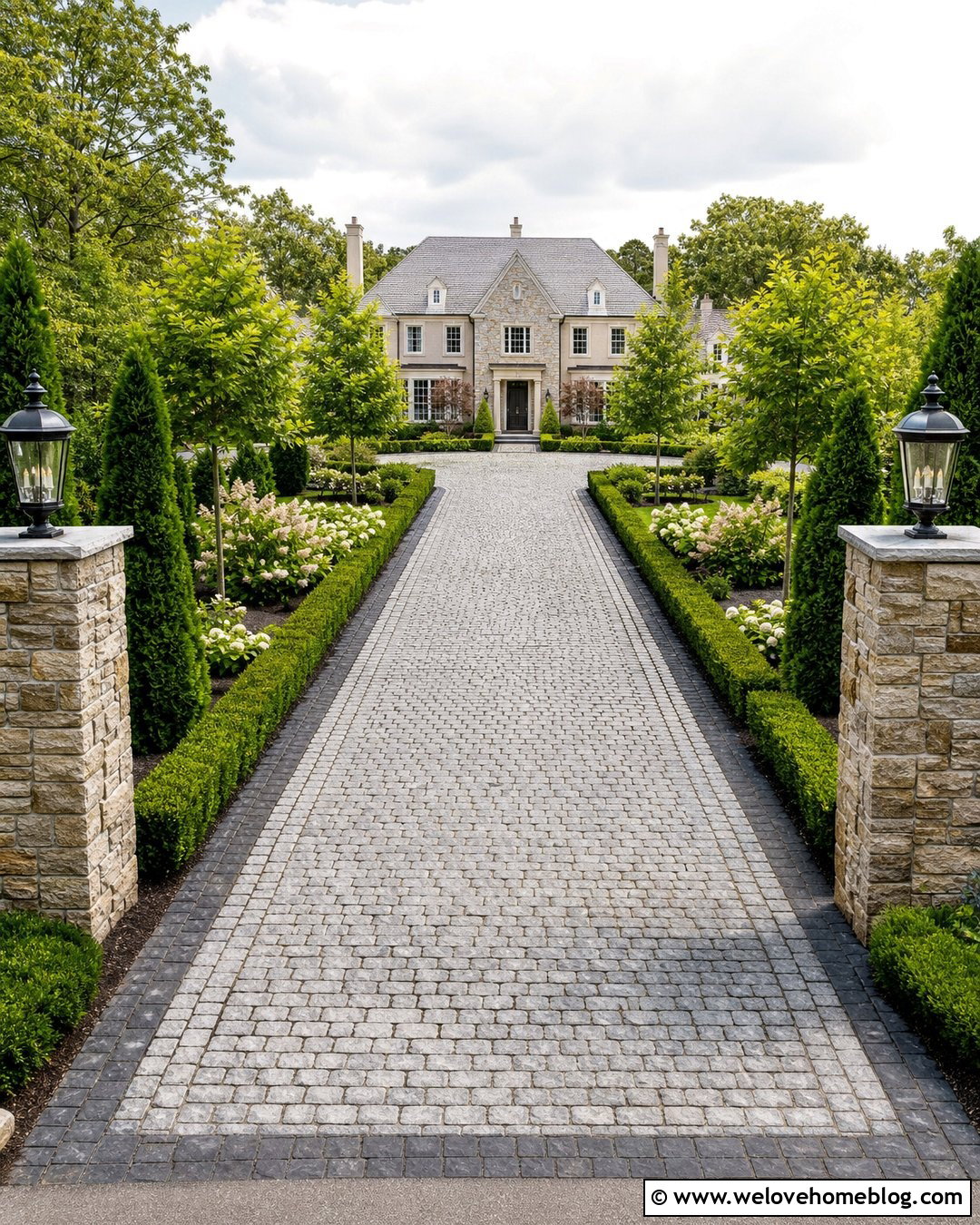
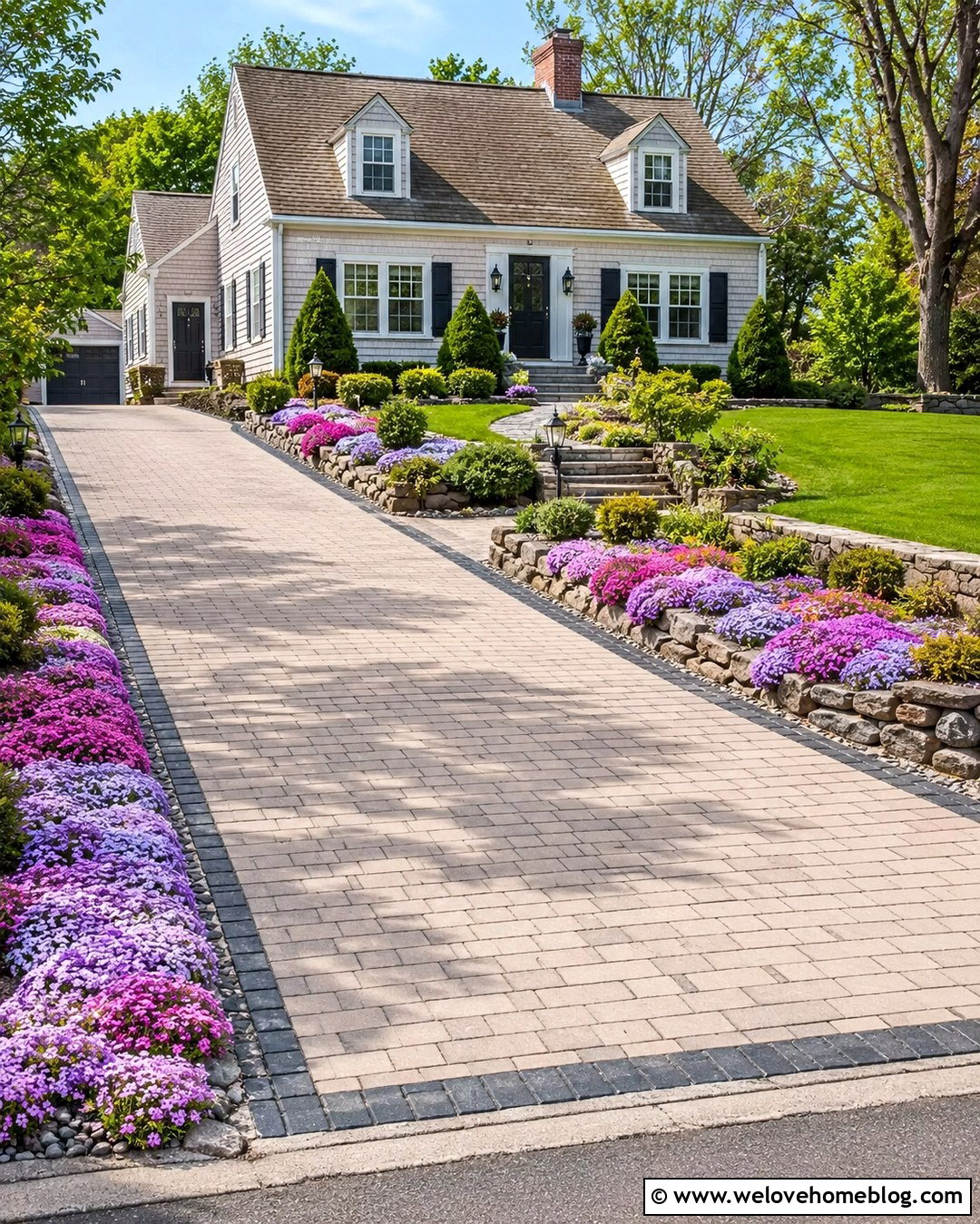
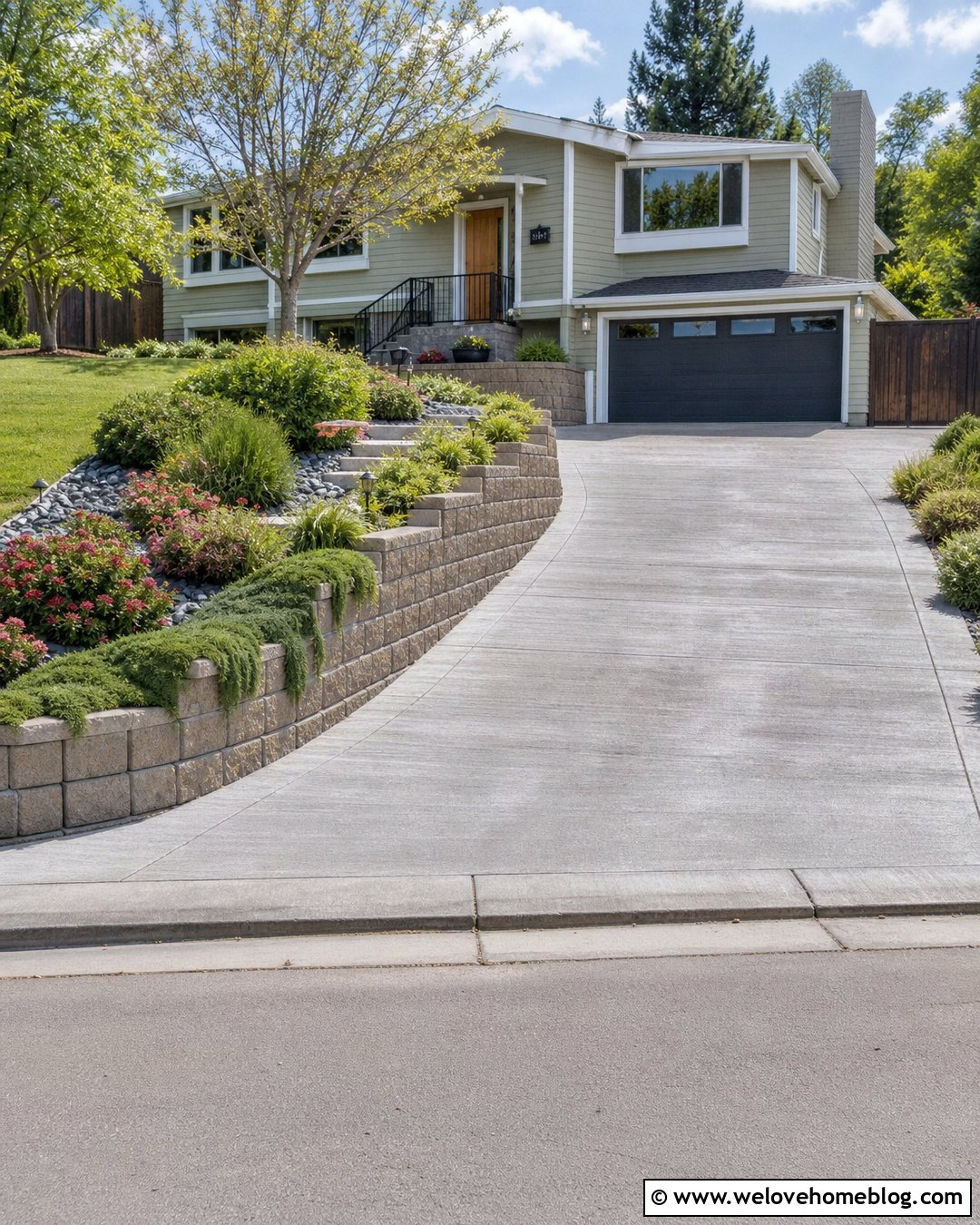
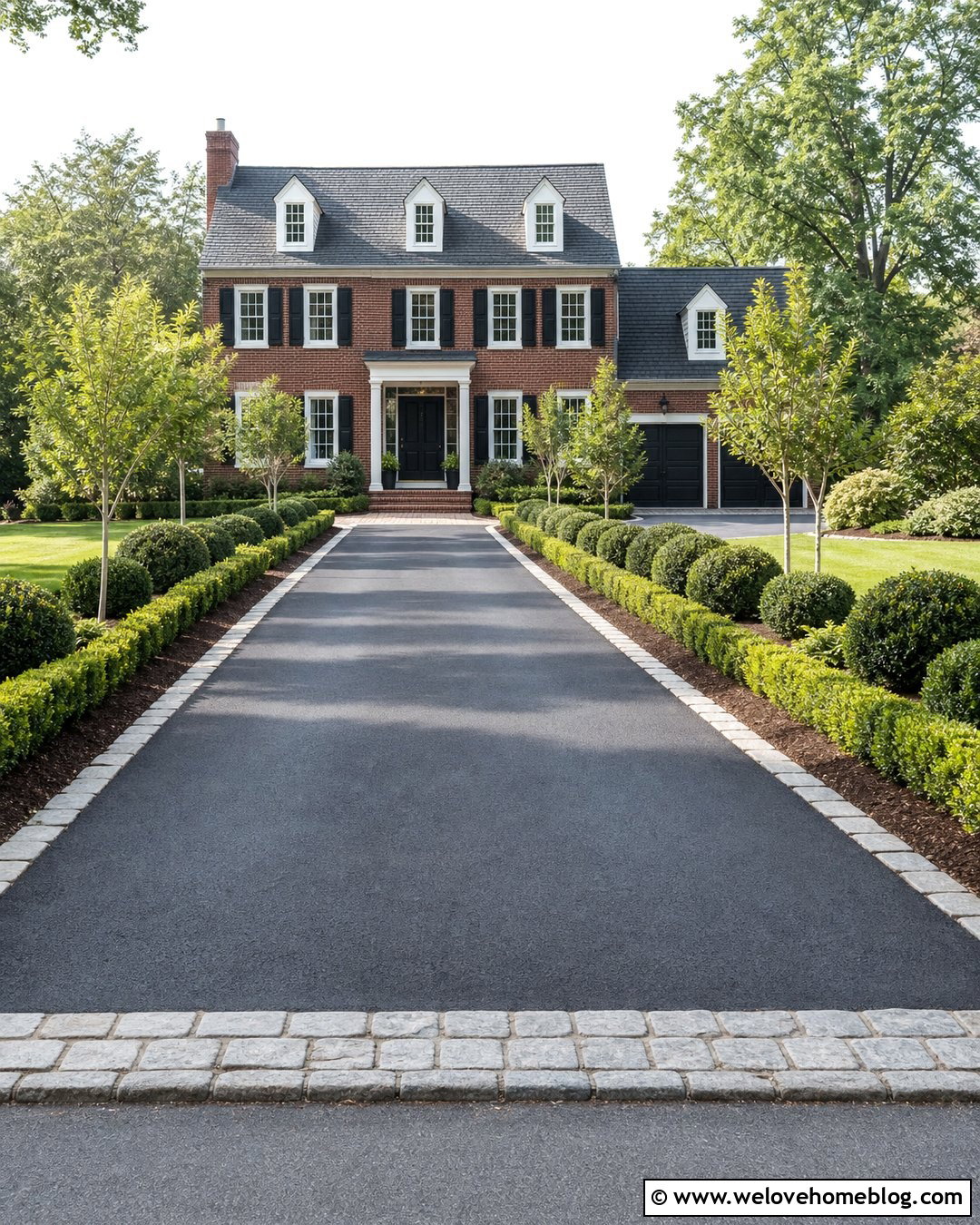
15. Gravel Driveway With Granite Sett Border
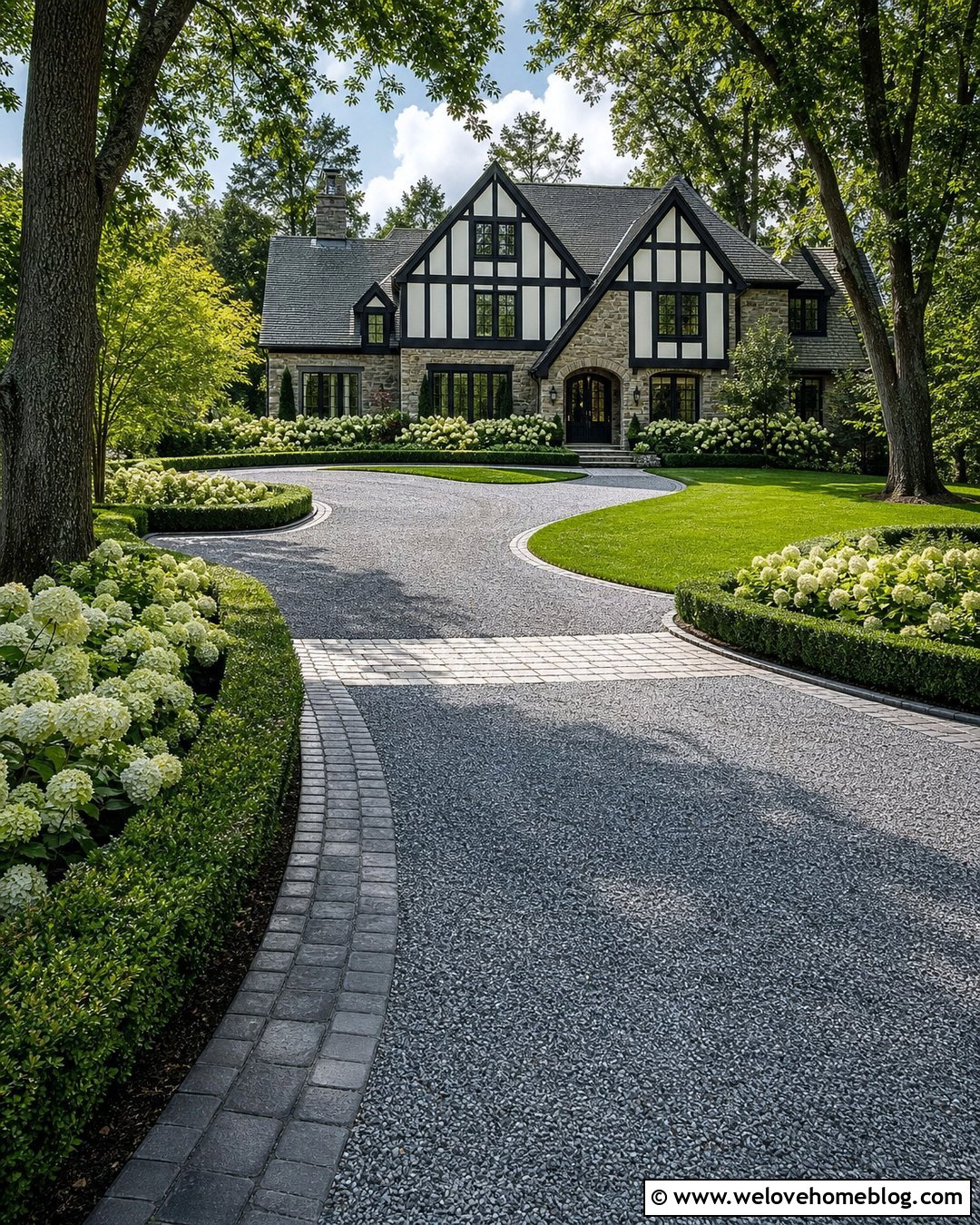
Small granite setts offer the character of cobblestone with a more regular, refined appearance. Pair blue-gray crushed gravel with a double row of square granite setts around a curved or horseshoe driveway. Use darker blocks for noticeable contrast, or select similar gray tones for a quieter finish. At pedestrian crossing points, widen the granite band so it connects naturally with the front walkway. Formal hedges, white hydrangeas, and clipped lawn can frame the drive without hiding its elegant shape. This combination suits stately colonial, Tudor, and European-inspired homes. A carefully built base is especially valuable at the outer curve, where turning vehicles place added pressure on the edge. The repeating stone pattern gives loose gravel a disciplined and visually substantial frame.
16. Brown Gravel Driveway With Recycled Plastic Border
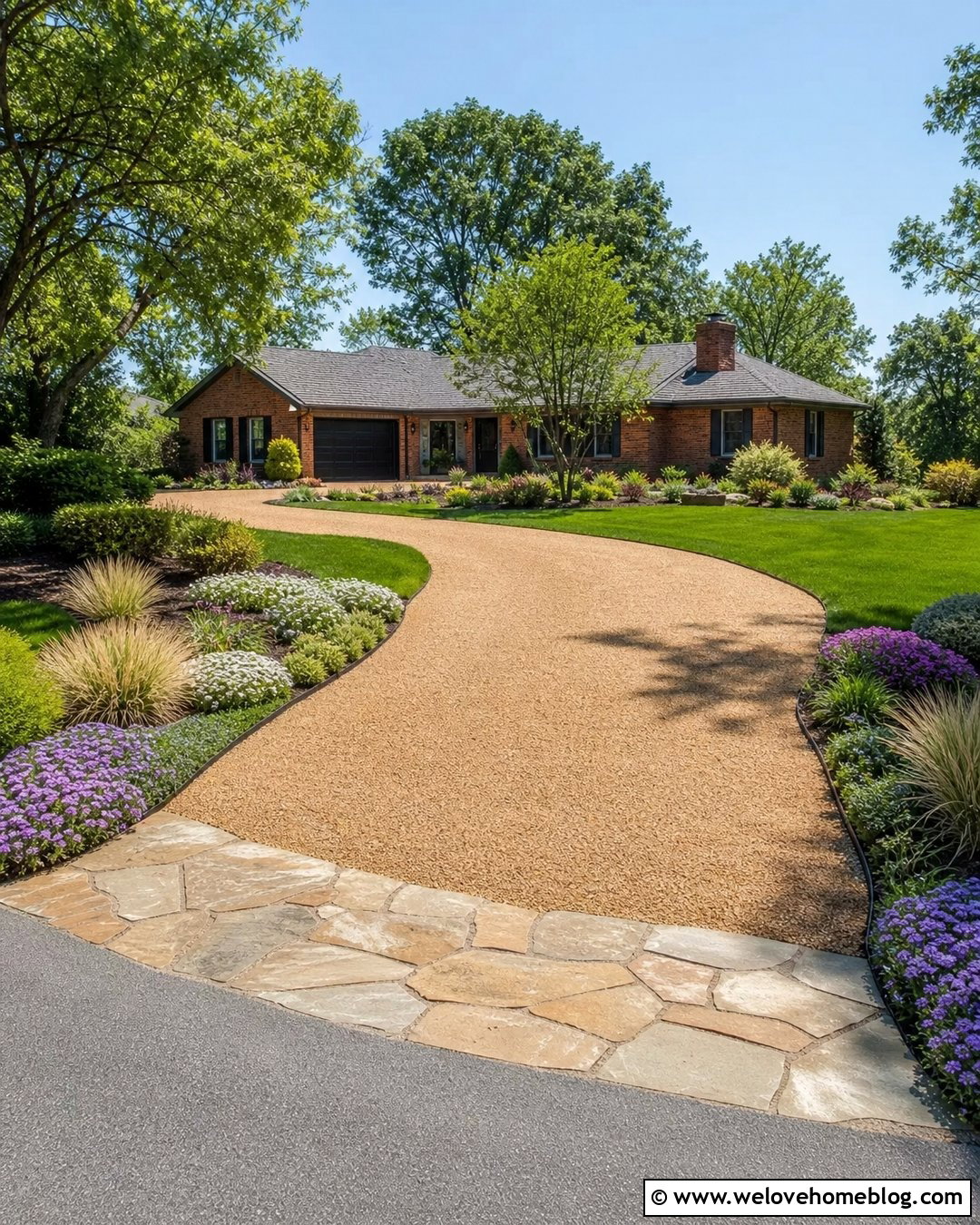
A flexible recycled plastic border can be useful when the goal is affordability and a nearly invisible finish. Choose brown or golden crushed gravel for a small curved driveway leading to a cottage, bungalow, or brick ranch. Use dark edging that disappears between the gravel and adjacent soil, then plant low ground covers, compact grasses, and flowering perennials along the outside. The bendable material can follow gentle curves more easily than rigid blocks, making it suitable for irregular front yards. Anchor the edging securely and keep its top close to the finished gravel height. Add a simple stone apron near the street if the entrance needs greater visual weight. This design places attention on the gravel and landscaping rather than on the border material itself.
17. Gravel Driveway With Low Gabion Border
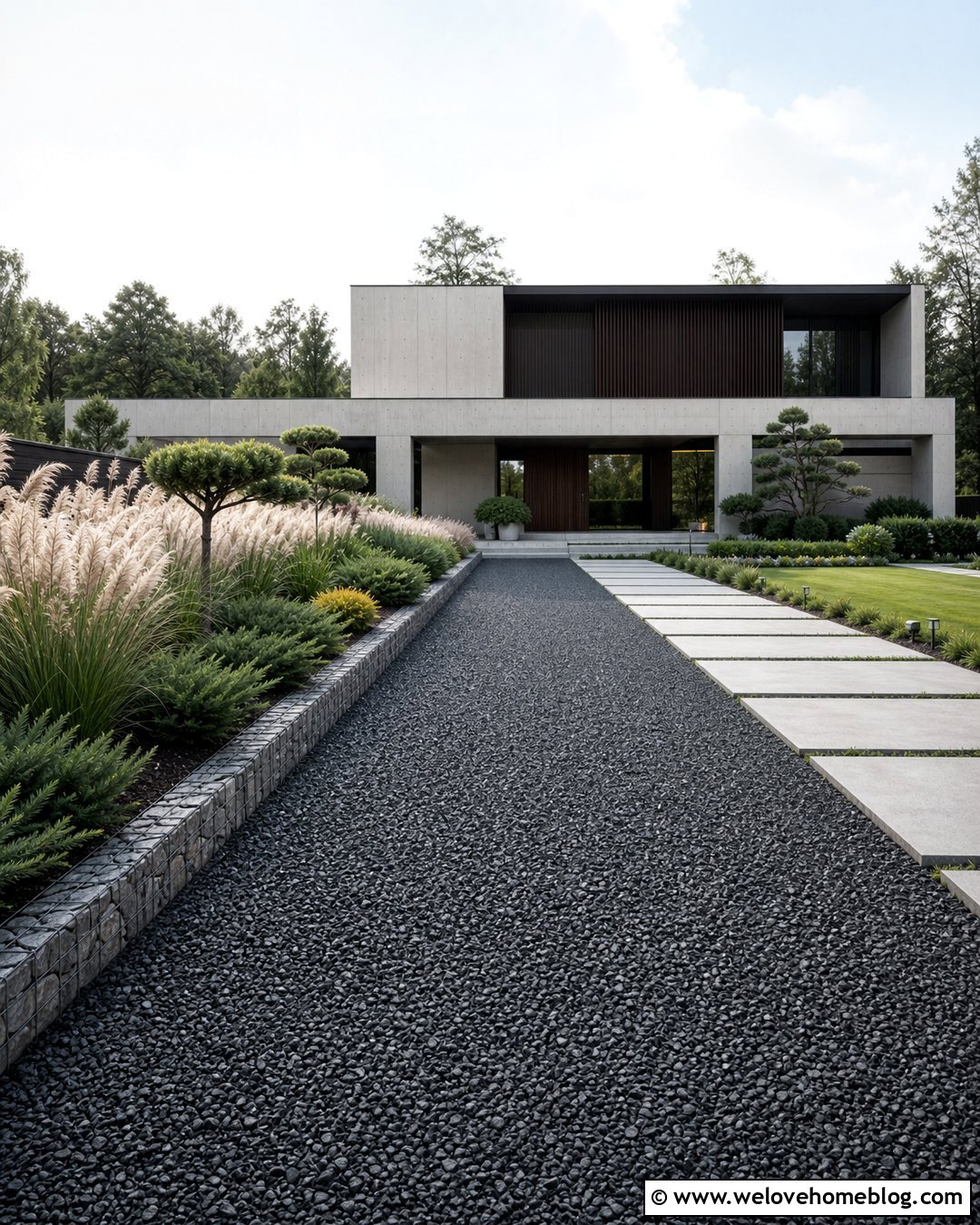
Gabion edging brings texture and architectural structure to a modern gravel driveway. Fill low, narrow wire baskets with angular gray stone that coordinates with a charcoal crushed-gravel surface. Use the gabions selectively along one raised planting bed, at the entrance, or beside a sloping section instead of lining every inch of the driveway. A straight approach works best with the baskets’ geometric form. Plant feather reed grass, low junipers, and sculptural shrubs around a modern house with concrete, wood, or dark siding. Maintain enough distance between the gabions and moving vehicles for comfortable door clearance. When carefully proportioned, this combination turns a practical retaining feature into part of the curb appeal while preserving a clean, uncluttered route to the house.
18. Light Gravel Driveway With Slate Border
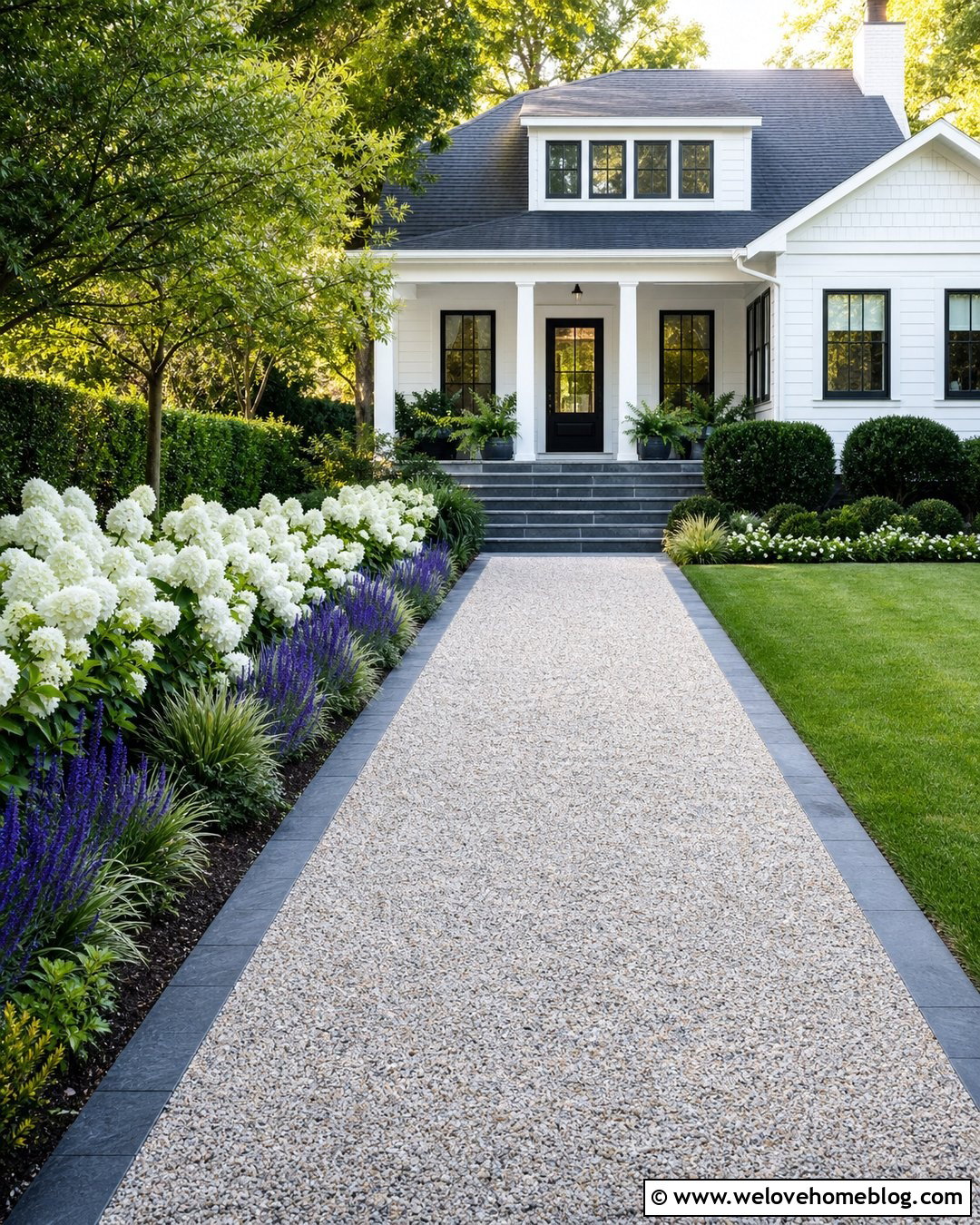
Dark slate makes a striking outline around light cream or silver gravel. Create a compact straight driveway or a narrow side-yard parking area, then frame it with rectangular slate pieces laid in a continuous band. The blue-black stone works especially well beside a white-painted bungalow, gray craftsman, or contemporary home. Repeat the slate in the front steps or walkway to create a coordinated material scheme. Plant white flowers, purple salvia, compact grasses, and deep green shrubs beyond the border. Because natural slate can vary in thickness, select sturdy pieces and prepare an even support layer. A flush installation creates a smoother transition for pedestrians and lawn equipment. The finished driveway feels crisp and dramatic without relying on complicated patterns or excessive decoration.
19. Gravel Driveway With Contrasting Gravel Border
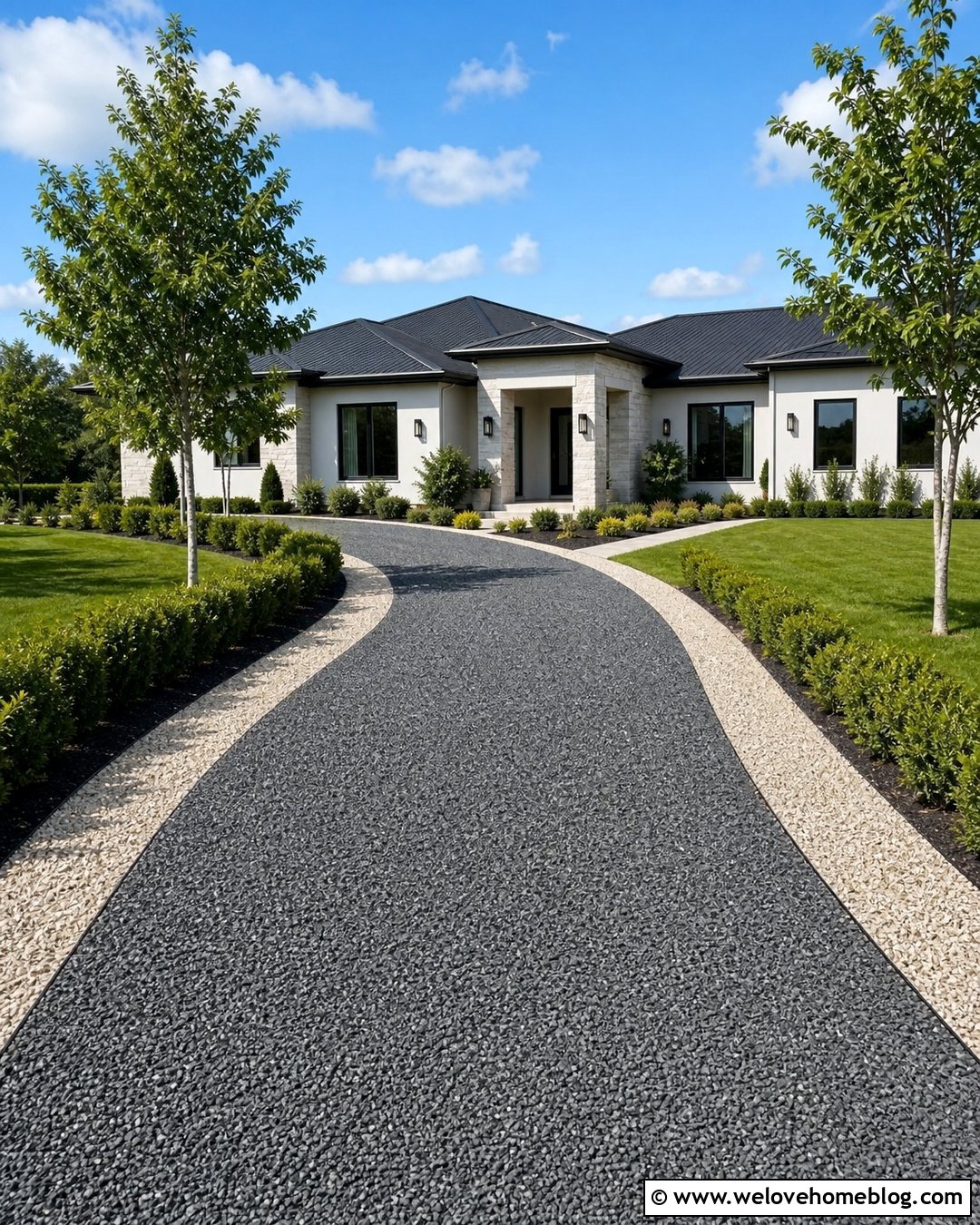
Two gravel colors can create an economical border when separated by concealed edging. Use medium-gray angular gravel for the main driving surface and a narrow band of cream decorative stone along each side. A straight layout emphasizes the contrasting lines, while a broad curve produces a softer, more decorative result. Install metal or composite dividers between the colors so the stones do not quickly mix. Beyond the pale band, add lawn, low hedges, and evenly spaced ornamental trees. This look can adapt to modern, traditional, or ranch homes by changing the gravel palette. Keep the border stone slightly smaller in scale or noticeably different in color. That distinction allows the complete driveway shape to remain visible from the street and upper windows.
20. Circular Gravel Driveway With Mixed Stone Border
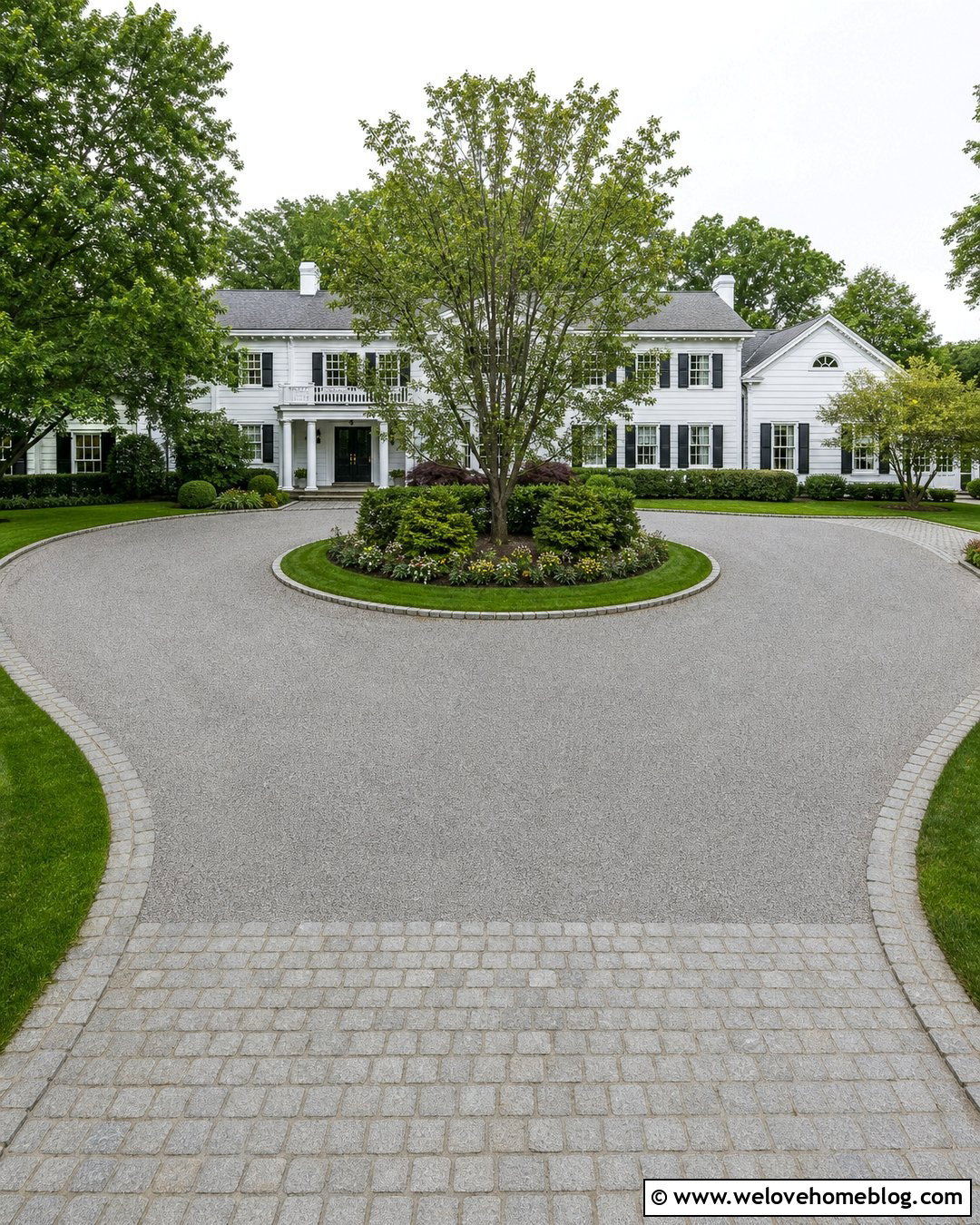
A circular driveway deserves a border that clearly defines both its outer edge and central island. Fill the driving loop with warm gray crushed gravel, then use natural cobblestones or granite blocks around the full perimeter. Repeat the same stone around a central lawn containing a specimen tree, layered shrubs, and low seasonal flowers. A wider paved apron at each entrance helps visually anchor the two access points. This layout suits a large colonial, traditional farmhouse, or estate-style home with a centered front door. Keep planting near the entrances low enough to preserve open views of the street. Matching the inner and outer borders makes the circular shape easy to understand while giving the gravel surface a cohesive, carefully planned appearance from every approach.
Conclusion:
These 20 gravel driveway with border ideas show how edging can influence the appearance of the entire front yard. Brick and Belgian block suit traditional architecture, while steel, contrasting gravel, and gabions support cleaner modern designs. Timber, fieldstone, and boulders create a relaxed connection with rural or wooded settings. Before selecting a border, review your driveway’s curves, slope, drainage, turning space, and maintenance needs. The edging should complement the gravel rather than compete with it. Repeat colors or materials already found on the house, walkway, or landscape walls for a coordinated result. With thoughtful preparation, even a simple gravel surface can become a distinctive, practical, and welcoming part of your home’s curb appeal.

Related posts:
Leave a Reply