
The right stone border can turn a plain driveway into a polished part of the landscape. These 20 Stone Driveway Border Ideas explore complete designs that combine driveway materials, layouts, edging, planting, and architecture. A well-built border can help contain loose gravel, define lawn edges, reinforce vulnerable pavement sides, and create a cleaner transition into the yard. () Natural stone also offers useful variety. You can choose refined granite blocks, rugged fieldstone, warm sandstone, smooth river rock, or reclaimed cobblestone. The best choice should complement the house while handling vehicle traffic, drainage, weather, and routine maintenance. Whether your driveway is asphalt, concrete, gravel, or pavers, the complete looks below offer practical inspiration through 20 Stone Driveway Border Ideas.

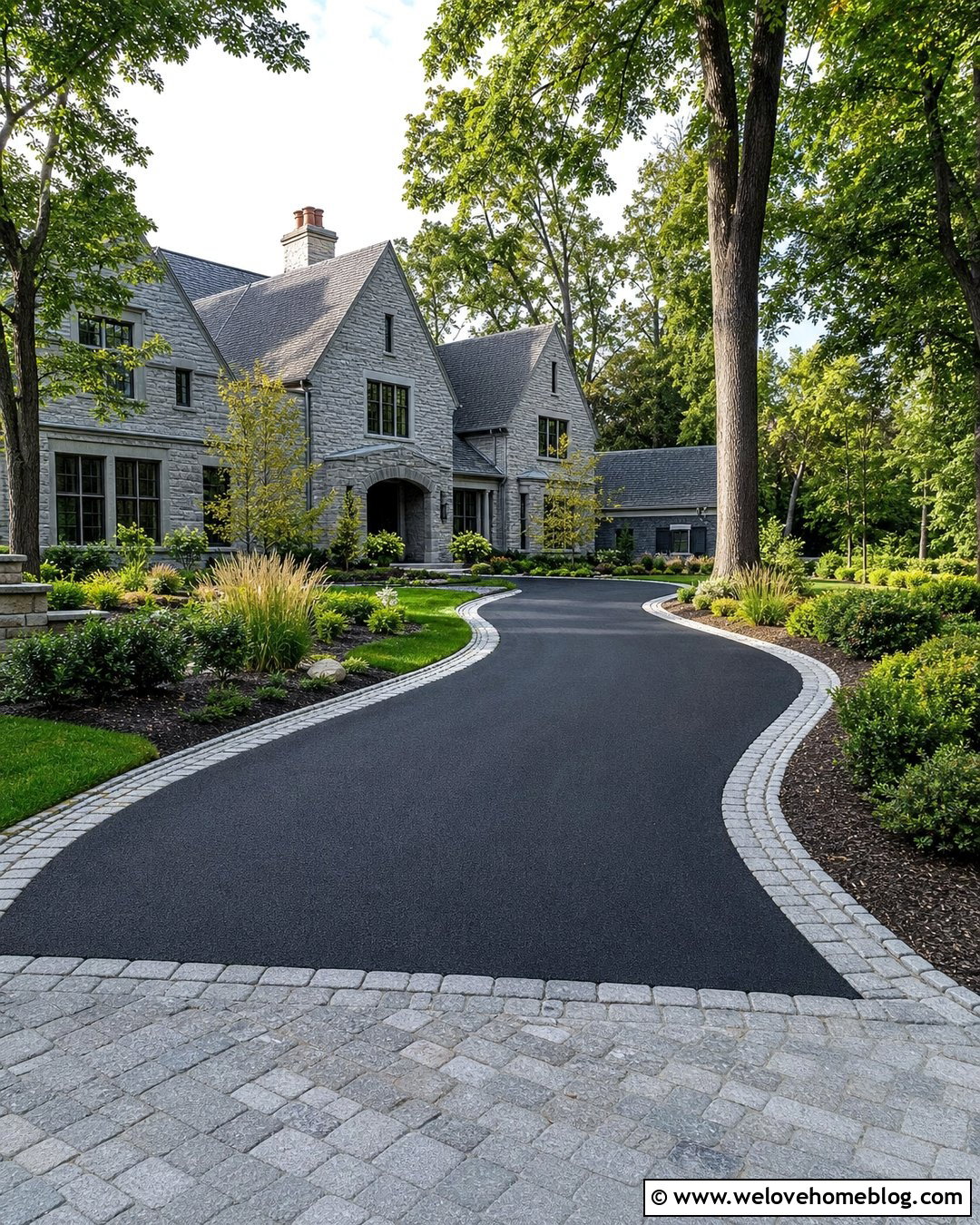
1. Belgian Block Border With Asphalt Driveway
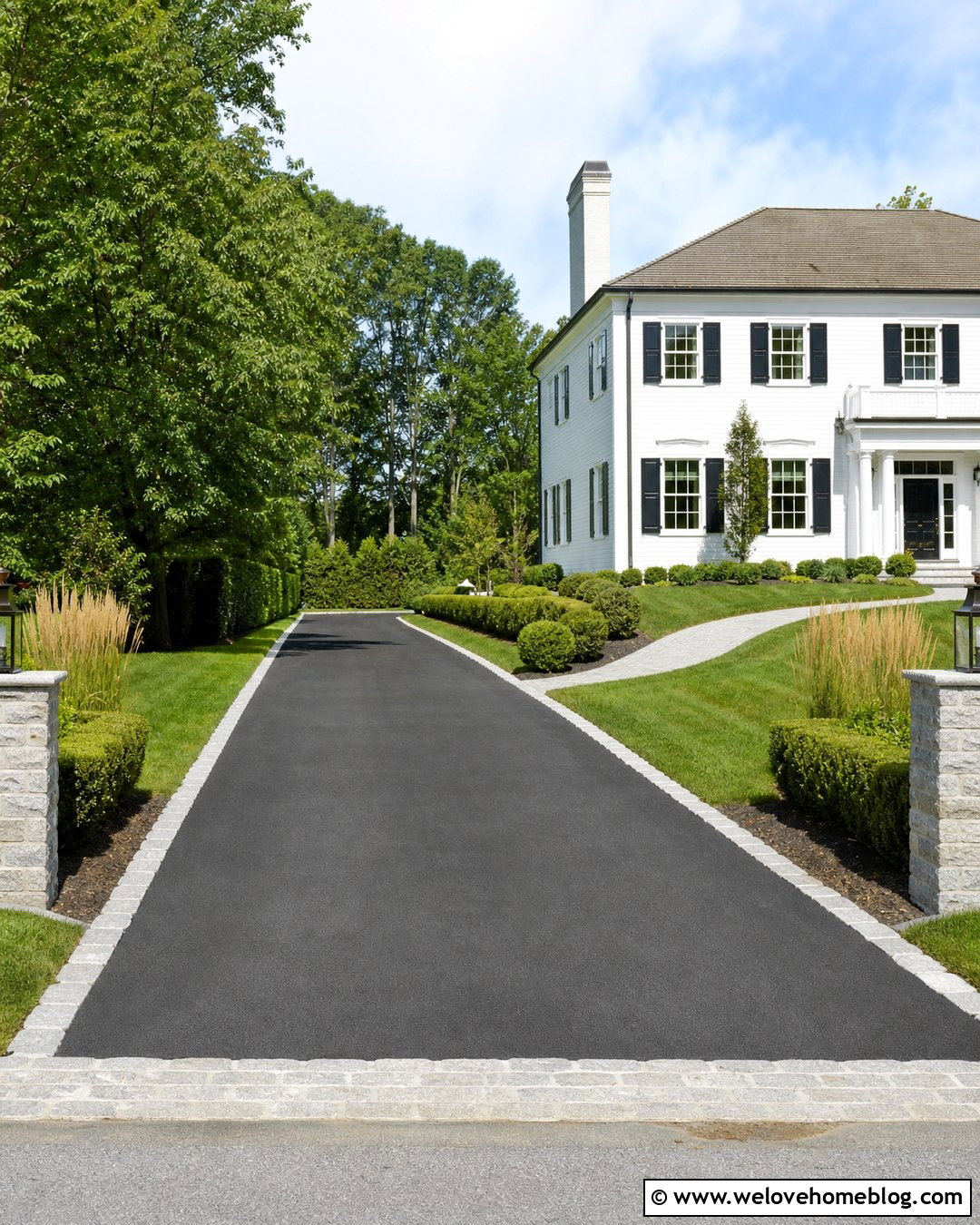
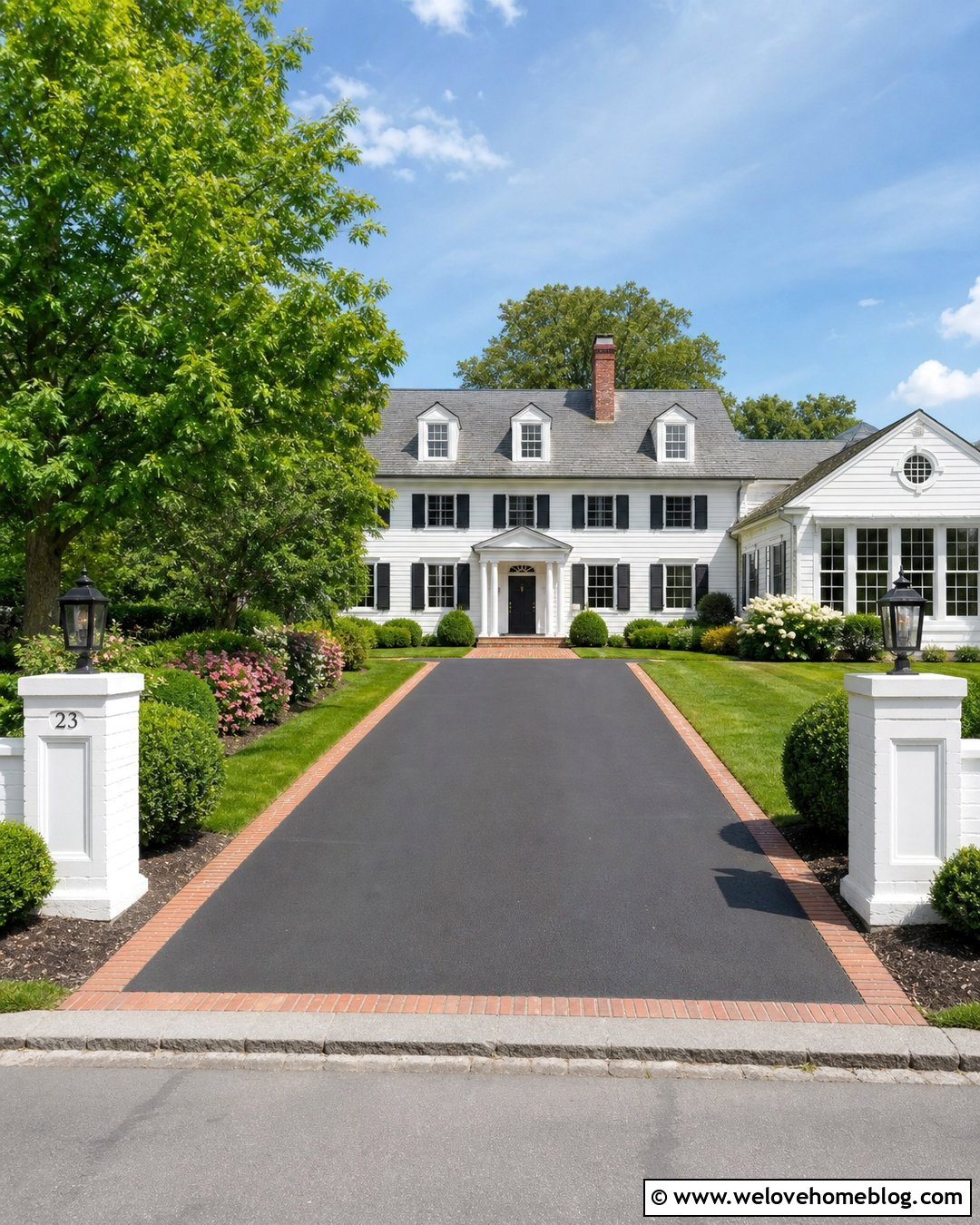
A charcoal asphalt driveway framed by light gray Belgian blocks creates one of the cleanest combinations for a traditional home. Install a single row of granite blocks along both sides, keeping the top nearly flush with the asphalt for easy walking and snow removal. The pale stone sharply outlines the black surface without making a narrow driveway feel smaller. At the entrance, widen the border into a simple granite apron that visually connects the driveway to the street. Low boxwoods, ornamental grasses, and a neatly cut lawn can soften the hard materials. Belgian blocks should sit on a stable, compacted base so they resist movement near turning areas. This complete look works especially well with Colonial, Cape Cod, and brick homes.
2. Cobblestone Border With Concrete Driveway
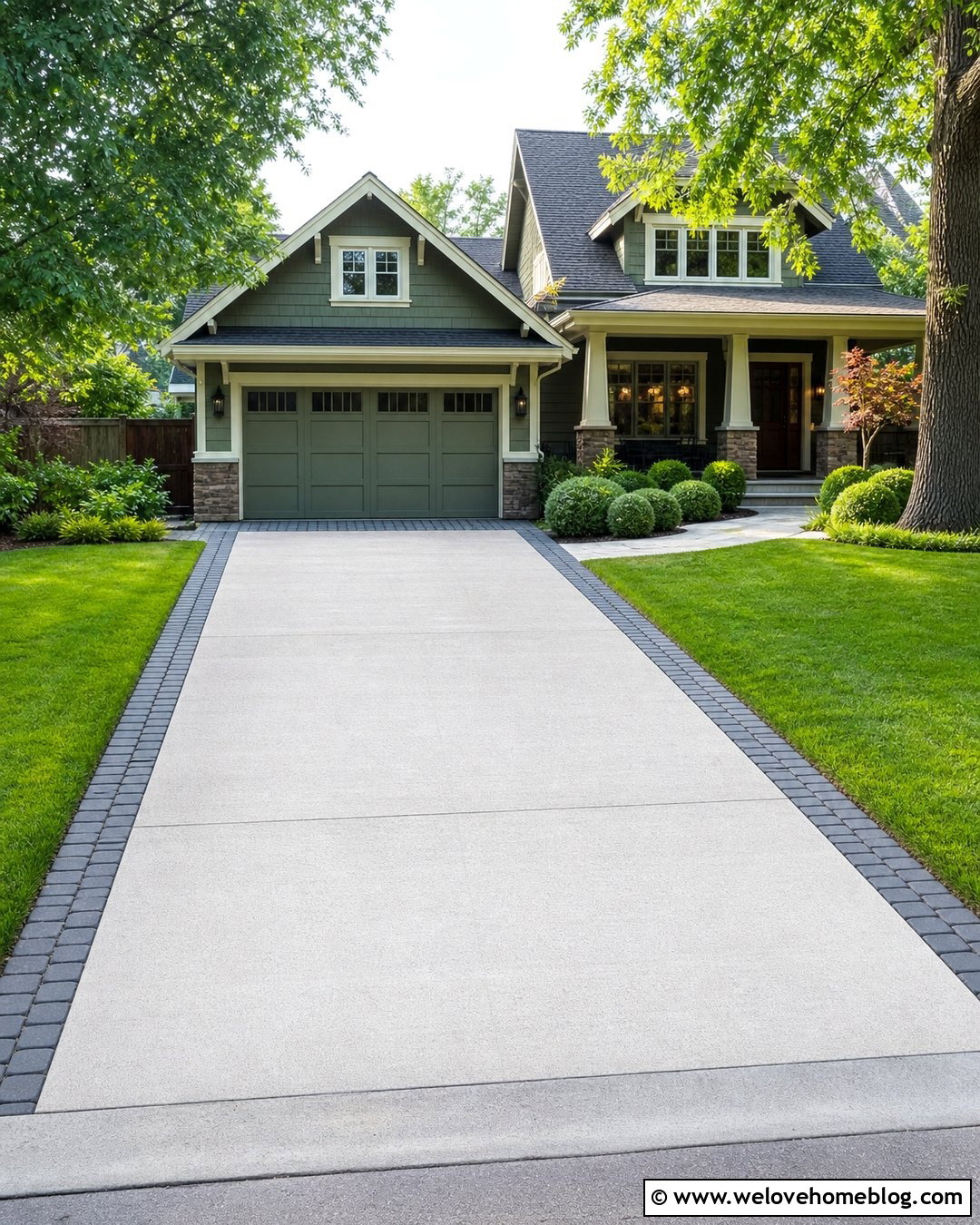
Does a wide concrete driveway feel too plain beside your home? A dark cobblestone border can add texture and contrast without replacing the main surface. Use broom-finished light gray concrete for the driveway and install one or two rows of charcoal cobblestones around its perimeter. Continue the cobblestone across the garage threshold or entrance apron to make the entire design feel connected. A straight layout suits a suburban craftsman house, especially when the stone color repeats tones from the roof or porch foundation. Frame the border with green lawn, rounded shrubs, and a walkway made from matching concrete. Keep the cobblestones low and tightly spaced near vehicle paths. The result feels detailed, durable, and easy to coordinate with existing architecture.
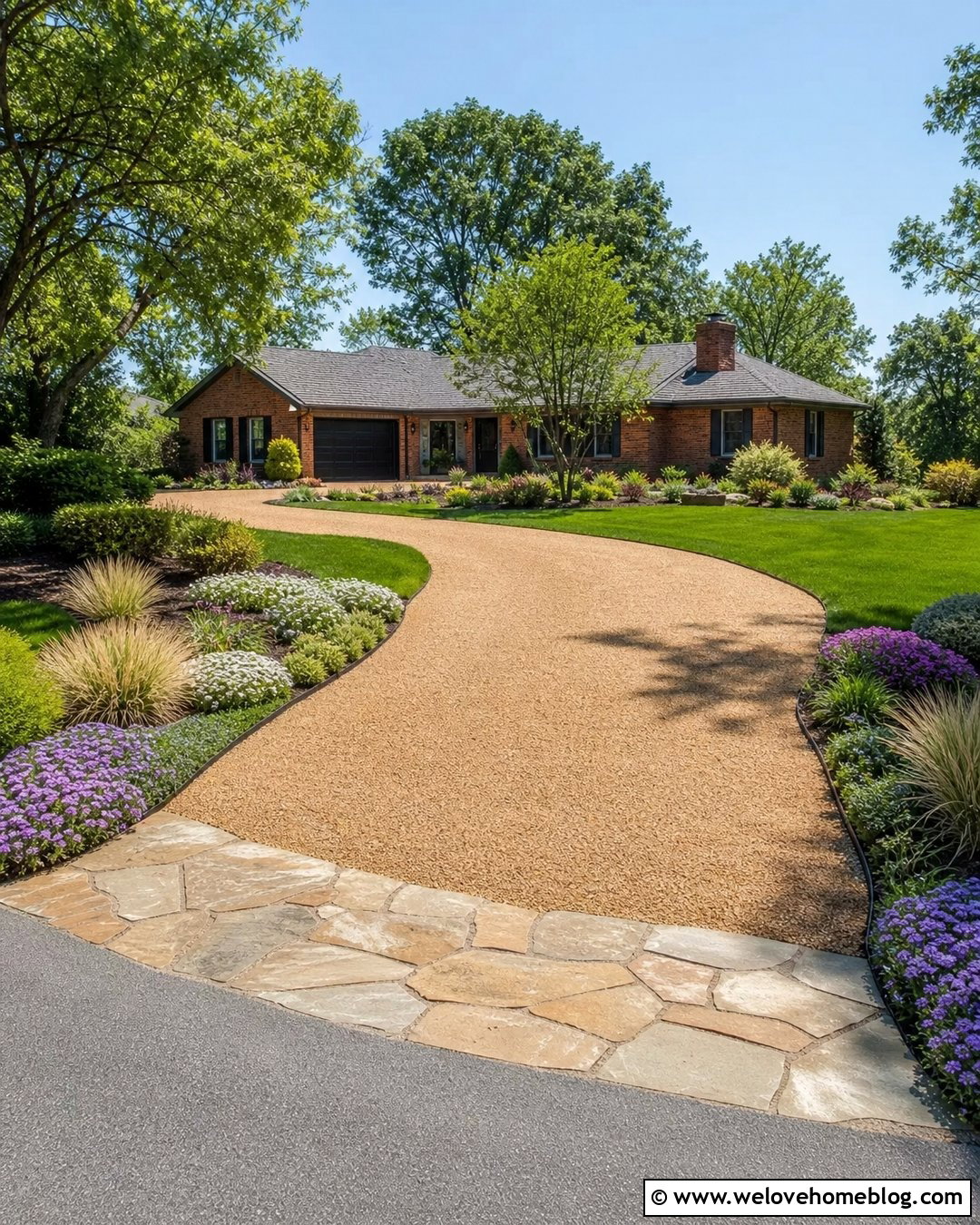
3. Limestone Border With Gravel Driveway
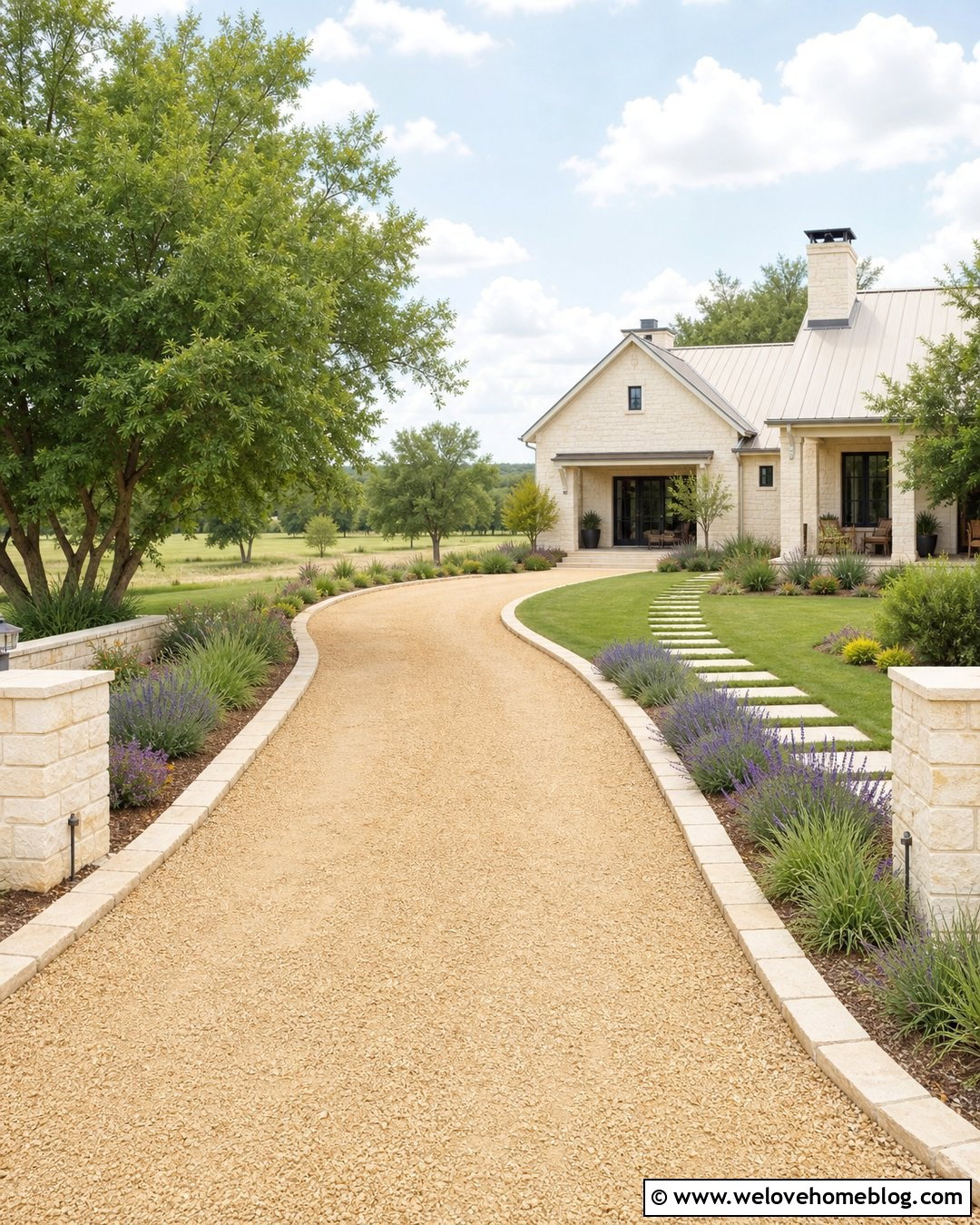
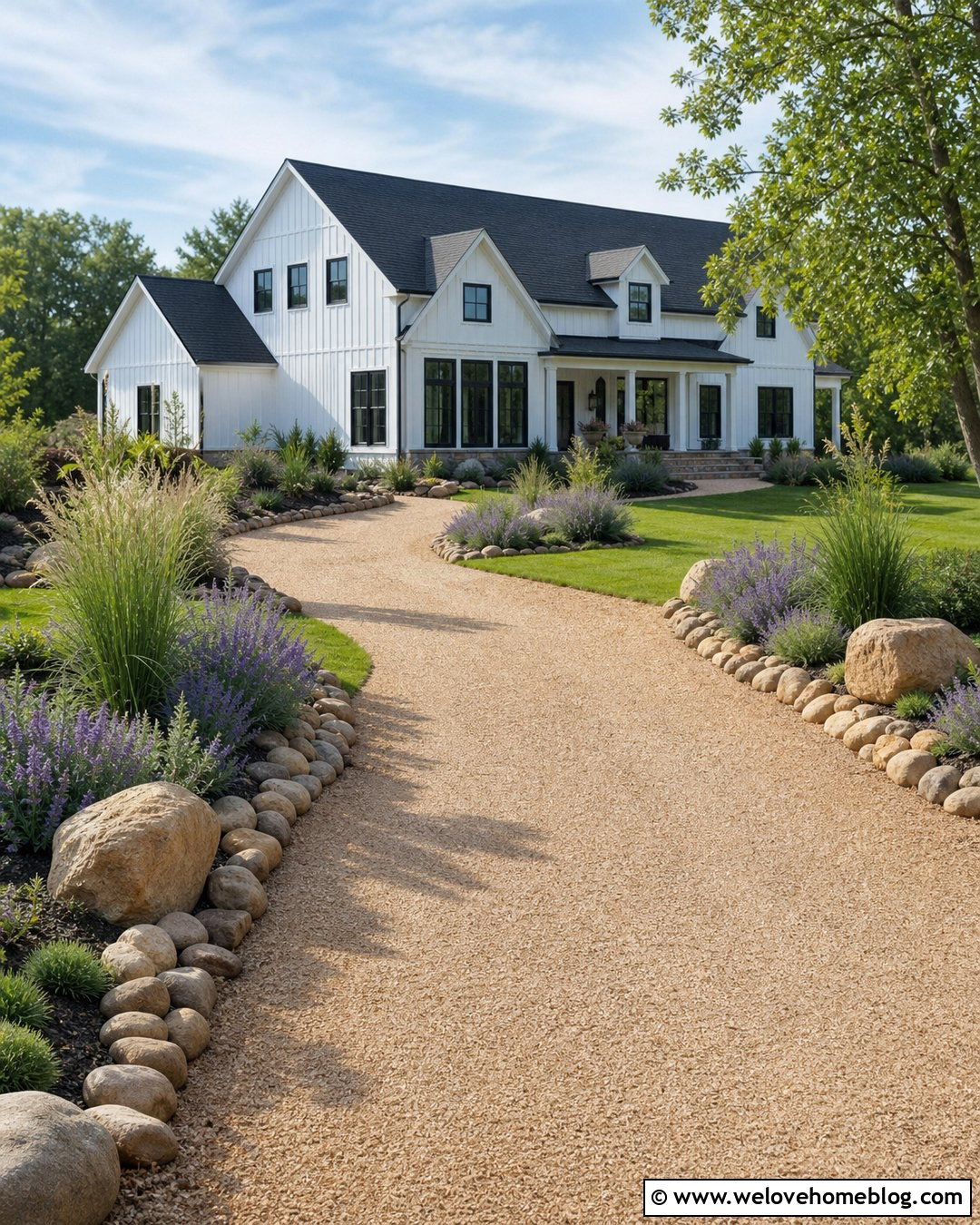
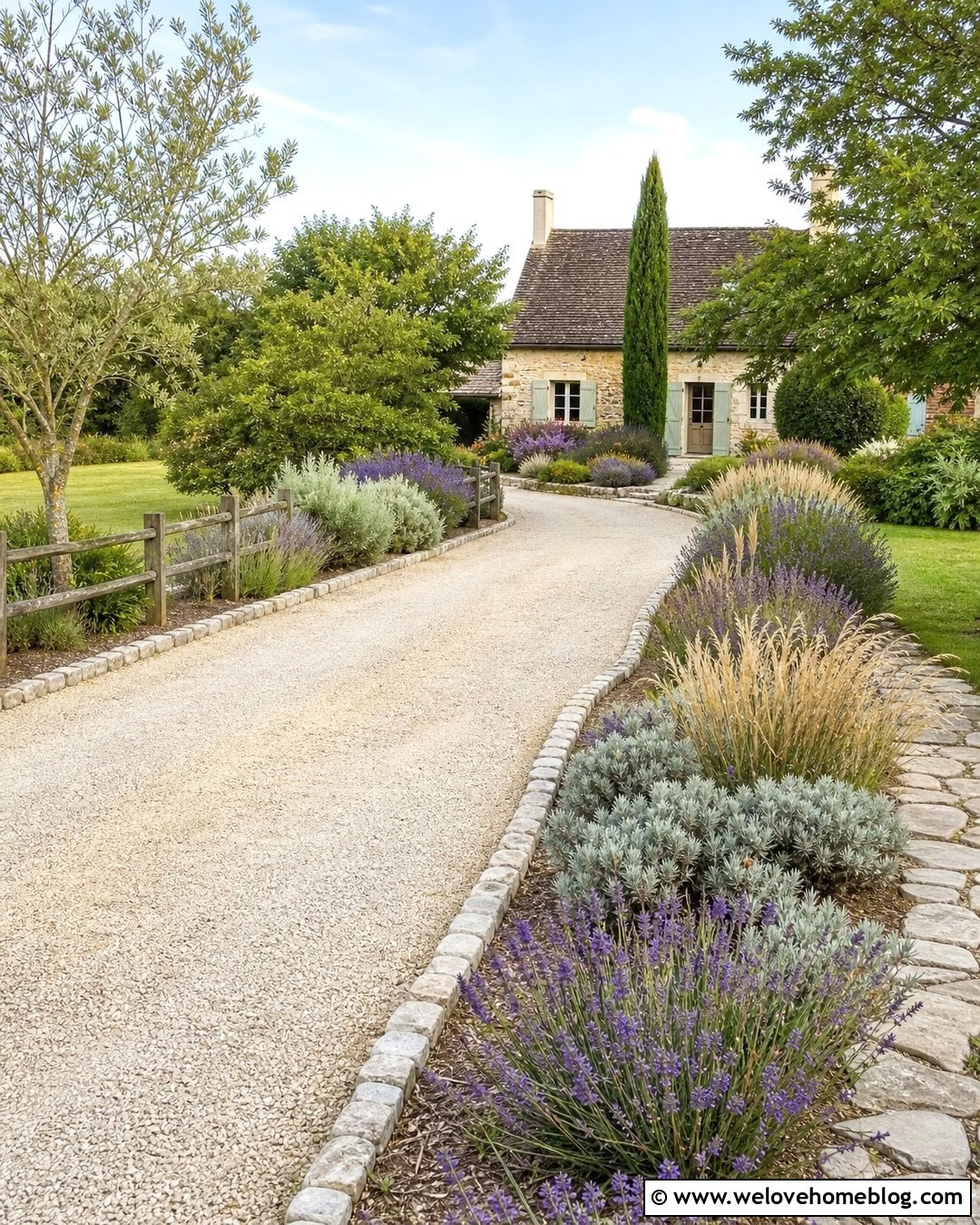
Warm limestone and honey-colored gravel create a relaxed driveway that fits naturally around country homes. Choose compacted tan crushed gravel for the driving surface, then contain it with rectangular limestone blocks laid in a level soldier course. A strong edge helps reduce gravel migration into nearby lawn and planting beds, particularly along curves and turning areas. () Shape the driveway with a gentle bend that reveals the house gradually rather than running directly toward the garage. Plant lavender, catmint, dwarf grasses, or low evergreen shrubs behind the stones for soft color and movement. Matching limestone stepping stones can form a side path to the porch. This palette looks especially attractive with cream siding, natural wood details, and a modern farmhouse facade.
4. Sandstone Border With Curved Driveway
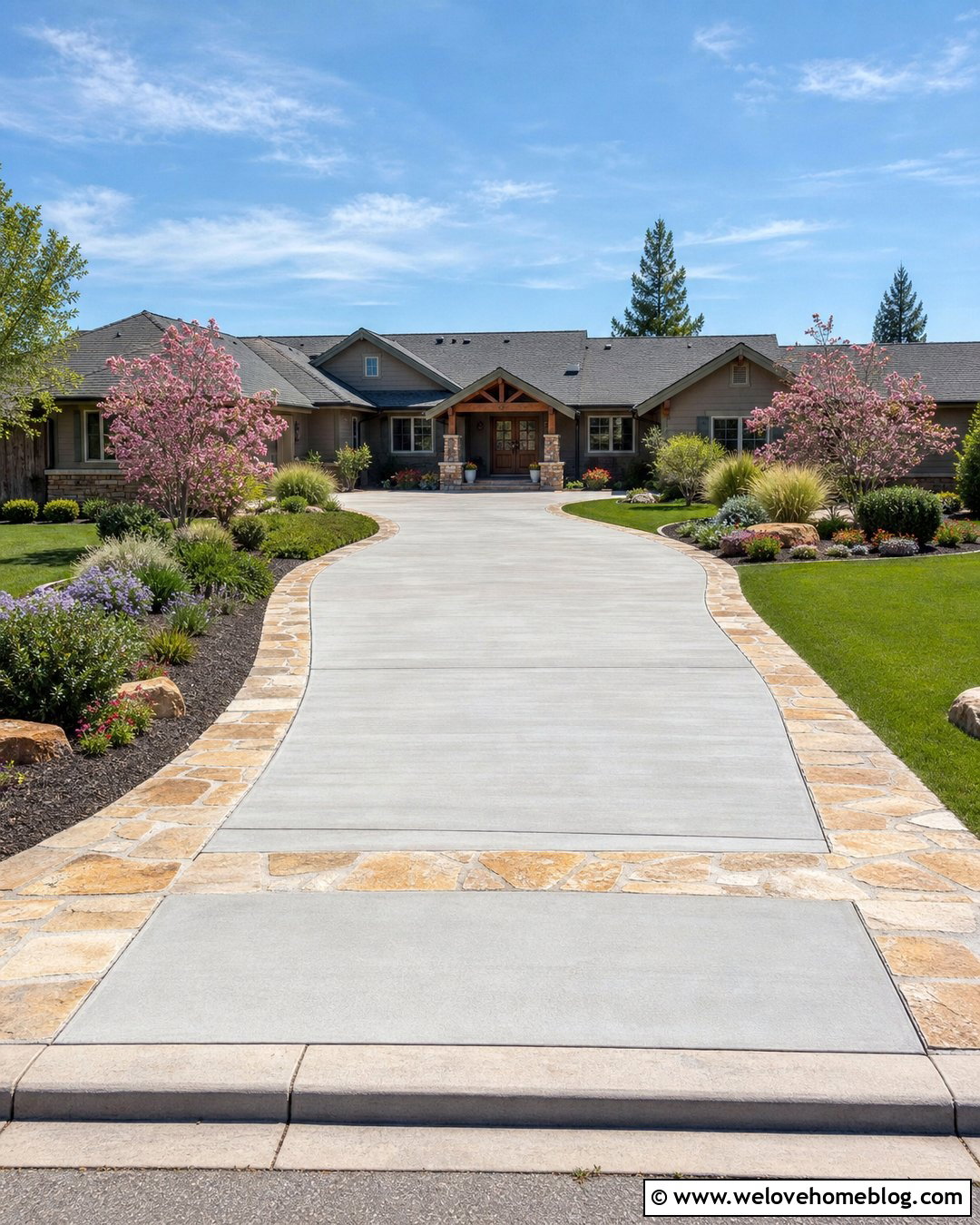
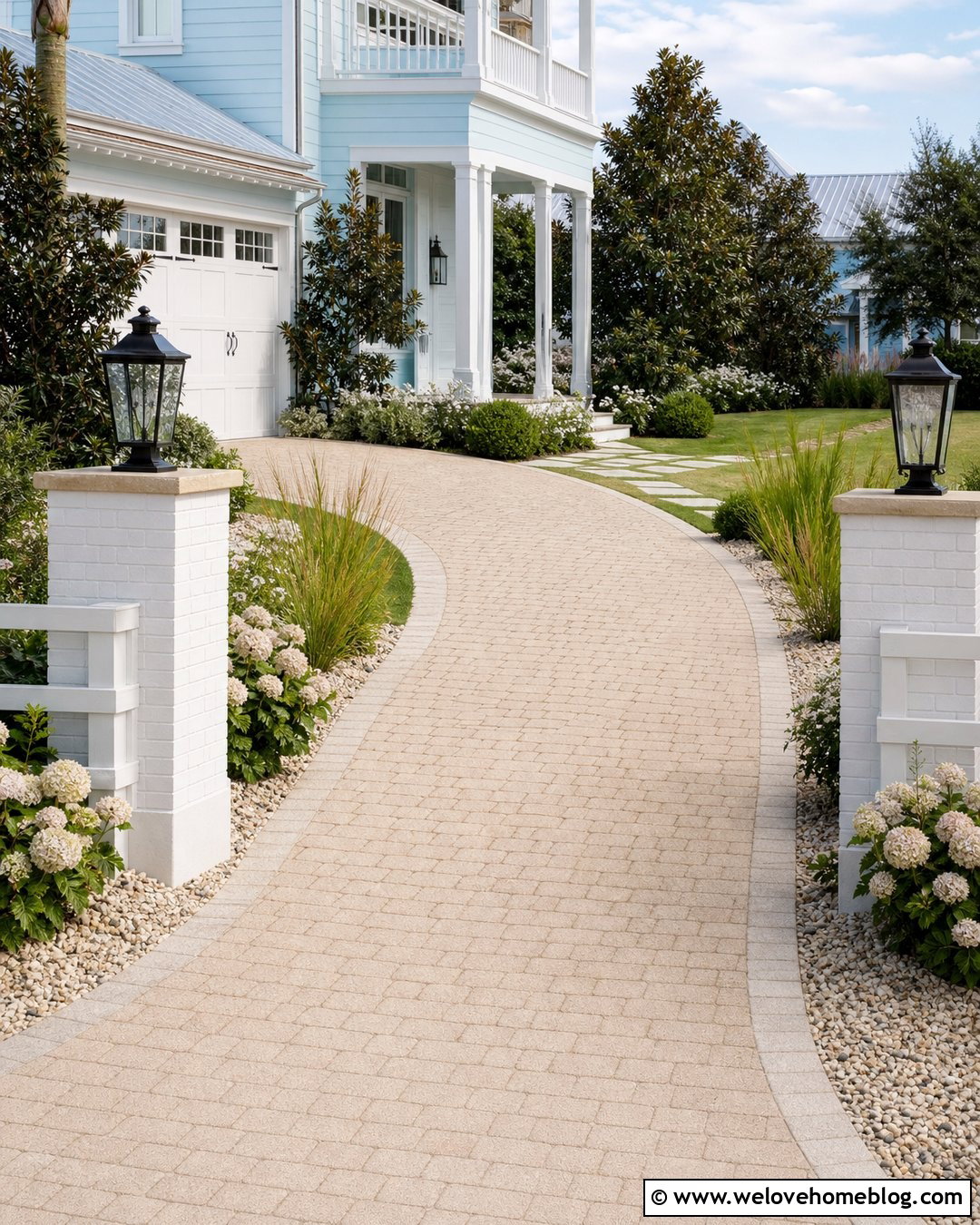
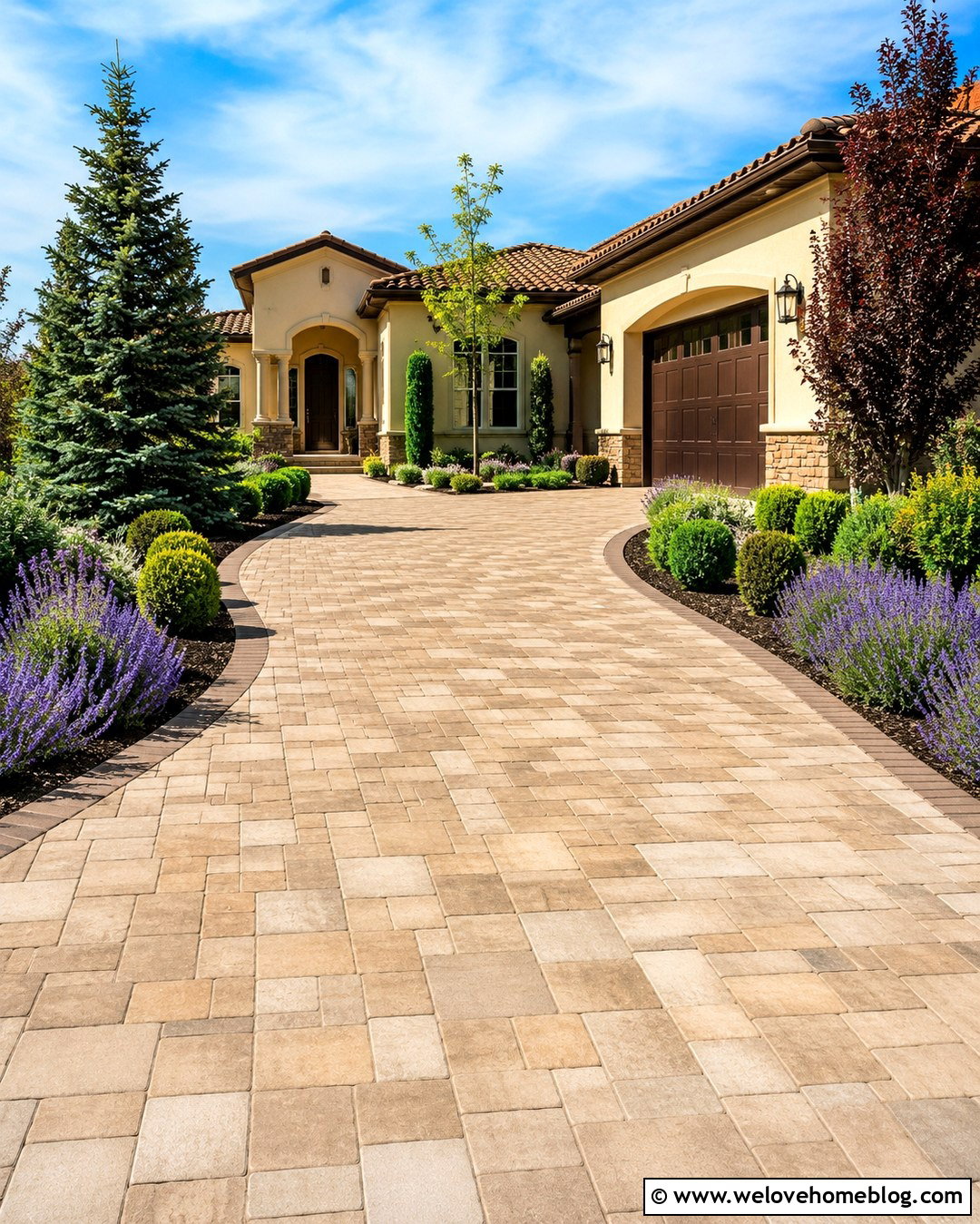
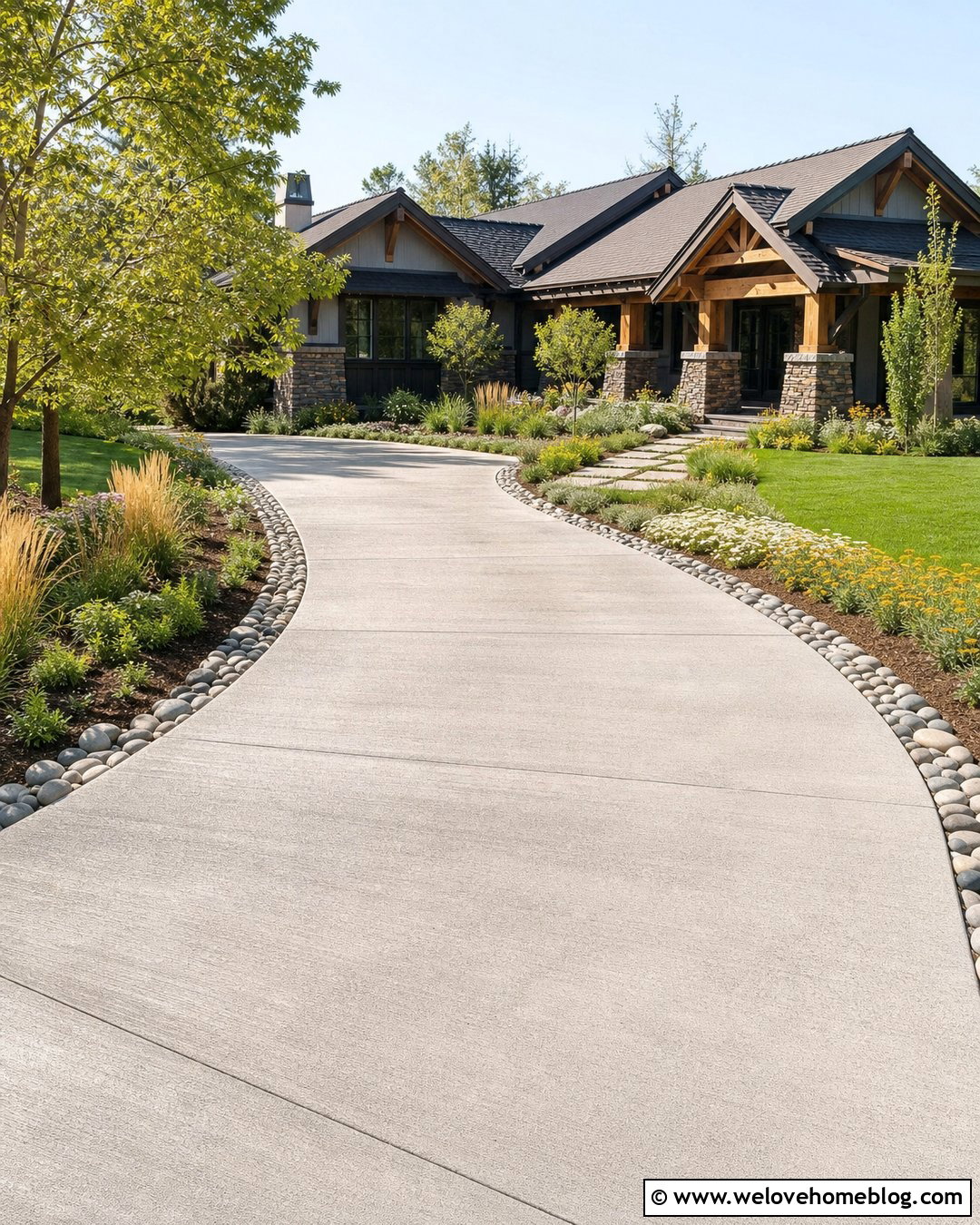
Soft curves become more noticeable when outlined with warm sandstone. For this look, pair a curved, light gray poured concrete driveway with buff and tan sandstone setts along both edges. The varied stone colors create a welcoming transition between the pavement and layered garden beds. Keep the border close to the concrete on the inner curve, where tires are more likely to cross onto the lawn. On the wider outer curve, add ornamental grasses, flowering perennials, and small multi-stem trees. A sandstone walkway leading toward the front door can repeat the border material and unify the yard. This design feels at home beside a ranch or craftsman house. Use stones with a consistent thickness so the border remains even, stable, and visually calm.
5. Fieldstone Border With Farmhouse Driveway
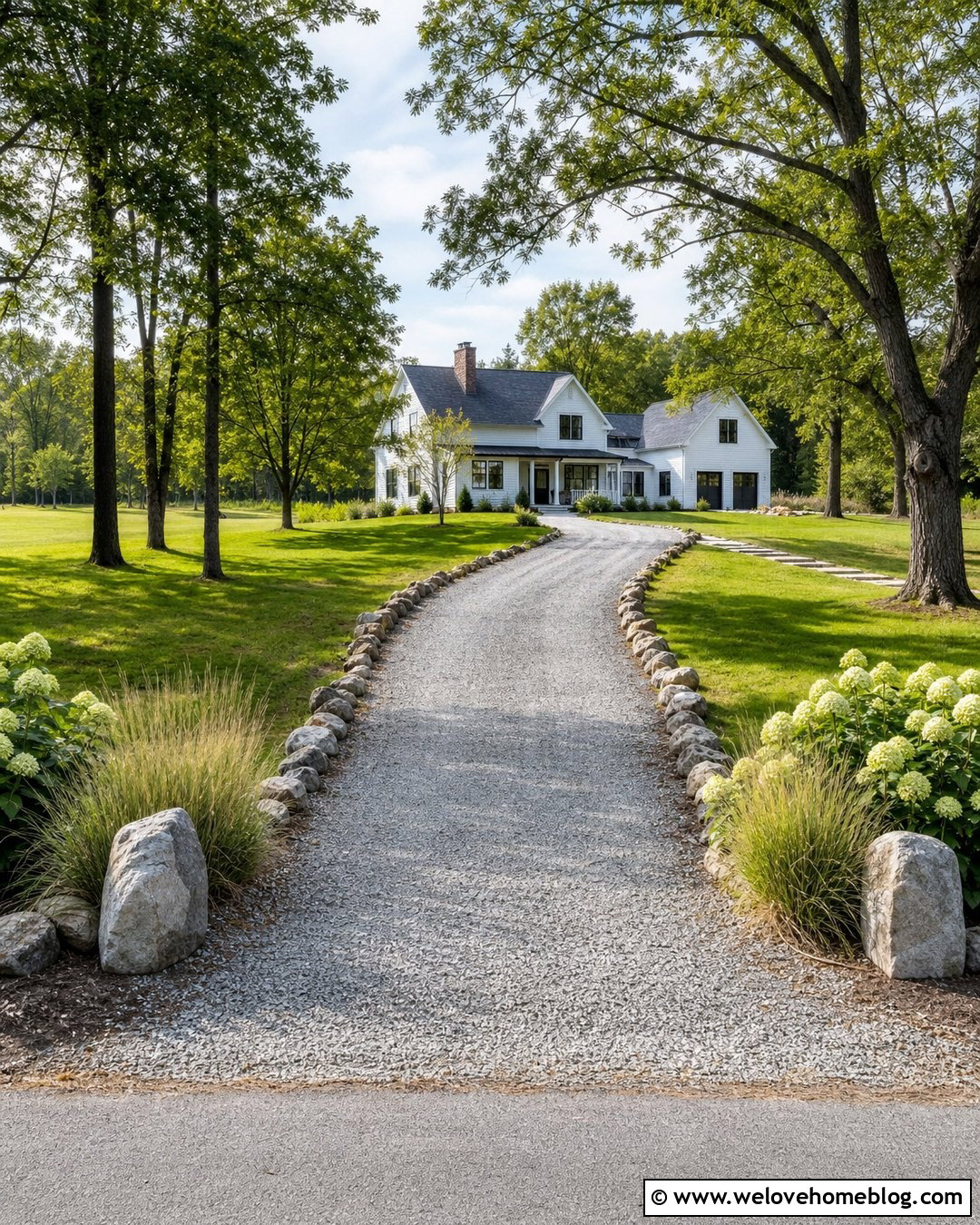
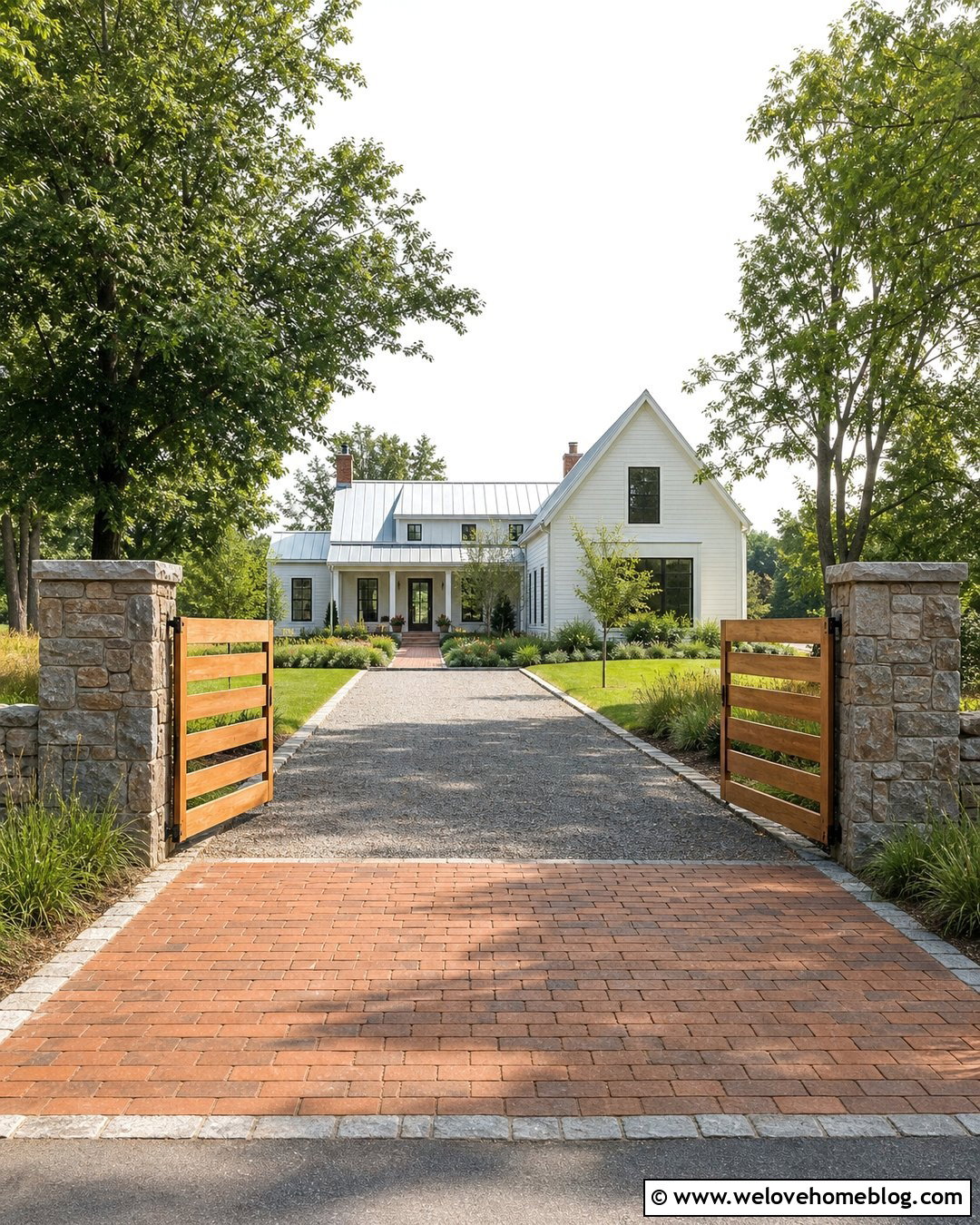
Irregular fieldstone brings an established, rural character to a long farmhouse driveway. Start with compacted gray gravel in a wide, gently curved layout. Along each side, place substantial fieldstones in a low, informal row rather than forcing every piece into a perfectly straight line. The border should look natural while still creating a clear boundary between gravel and grass. Near the house, transition into more carefully fitted stones around the parking area and front walkway. Native grasses, hydrangeas, flowering shrubs, and mature shade trees can frame the approach without hiding the driveway. Choose fieldstone colors that relate to the home’s foundation, chimney, or porch columns. Larger stones near the entrance provide stronger visual weight and make the long approach easier to recognize from the road.
6. Bluestone Border With Modern Concrete Driveway
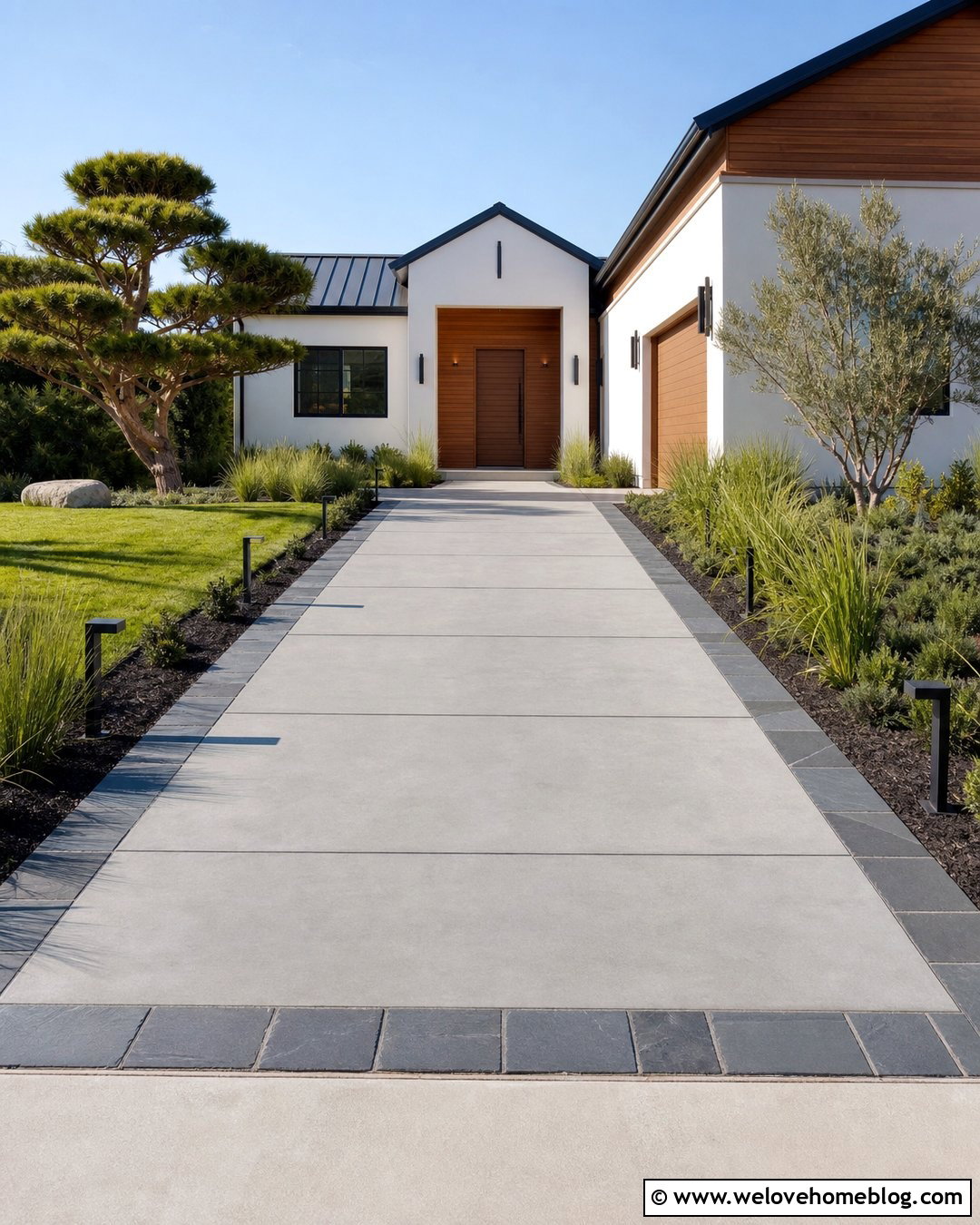
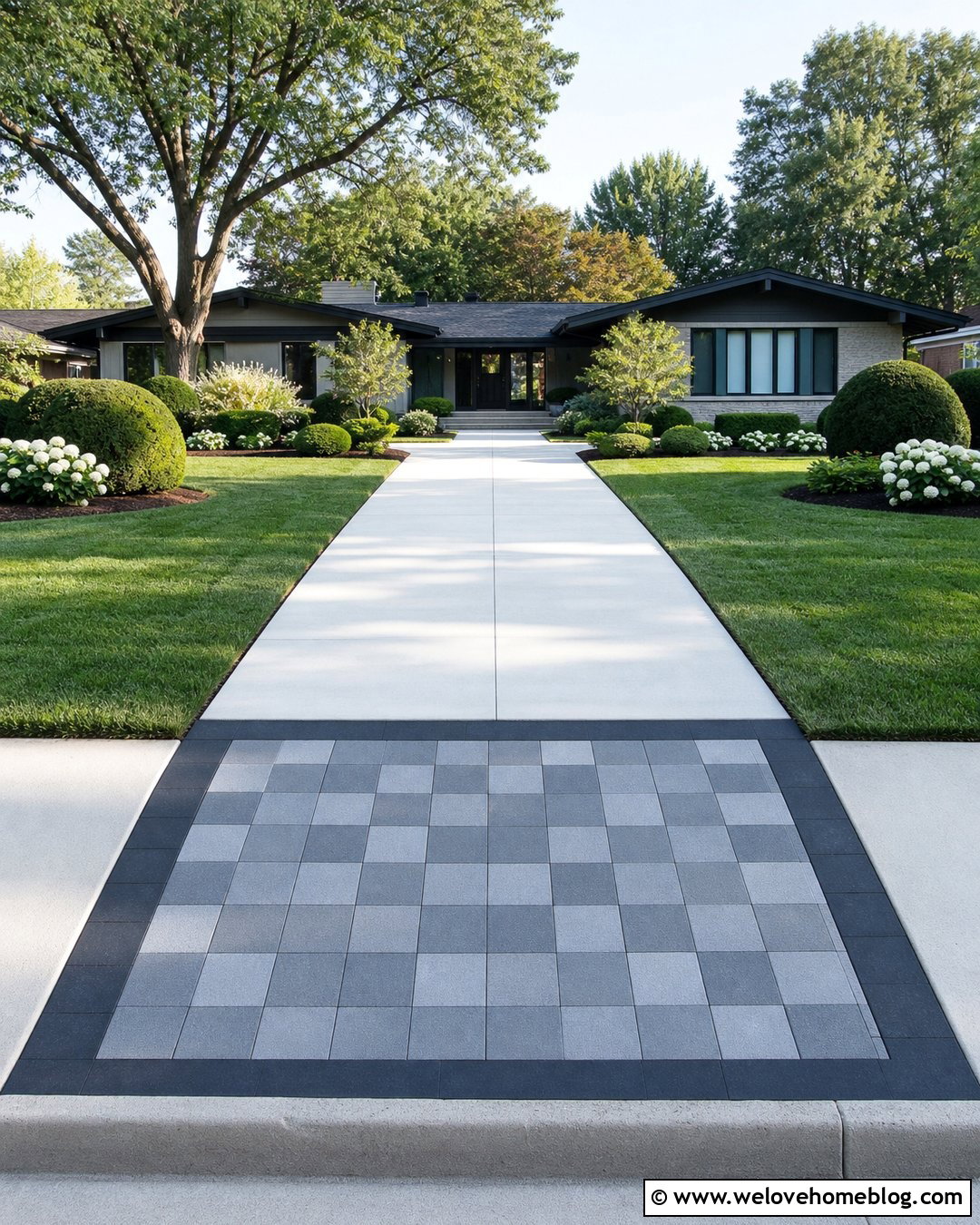
Cool blue-gray stone can make a modern driveway look sharper without becoming overly decorative. Use large rectangular slabs of smooth gray poured concrete, separated by narrow control joints, for the main surface. Frame the straight driveway with a flush border of dark bluestone setts. A matching bluestone band across the entrance can visually mark the transition from sidewalk to private drive. Keep the surrounding landscaping simple with clipped grasses, low evergreen masses, and one sculptural tree near the house. Black metal path lights can follow the stone edge without interrupting its clean line. This design works particularly well with white stucco, dark siding, glass, and natural wood. Select bluestone pieces with similar tones if you want a consistent, streamlined appearance.
7. River Rock Border With Pea Gravel Driveway
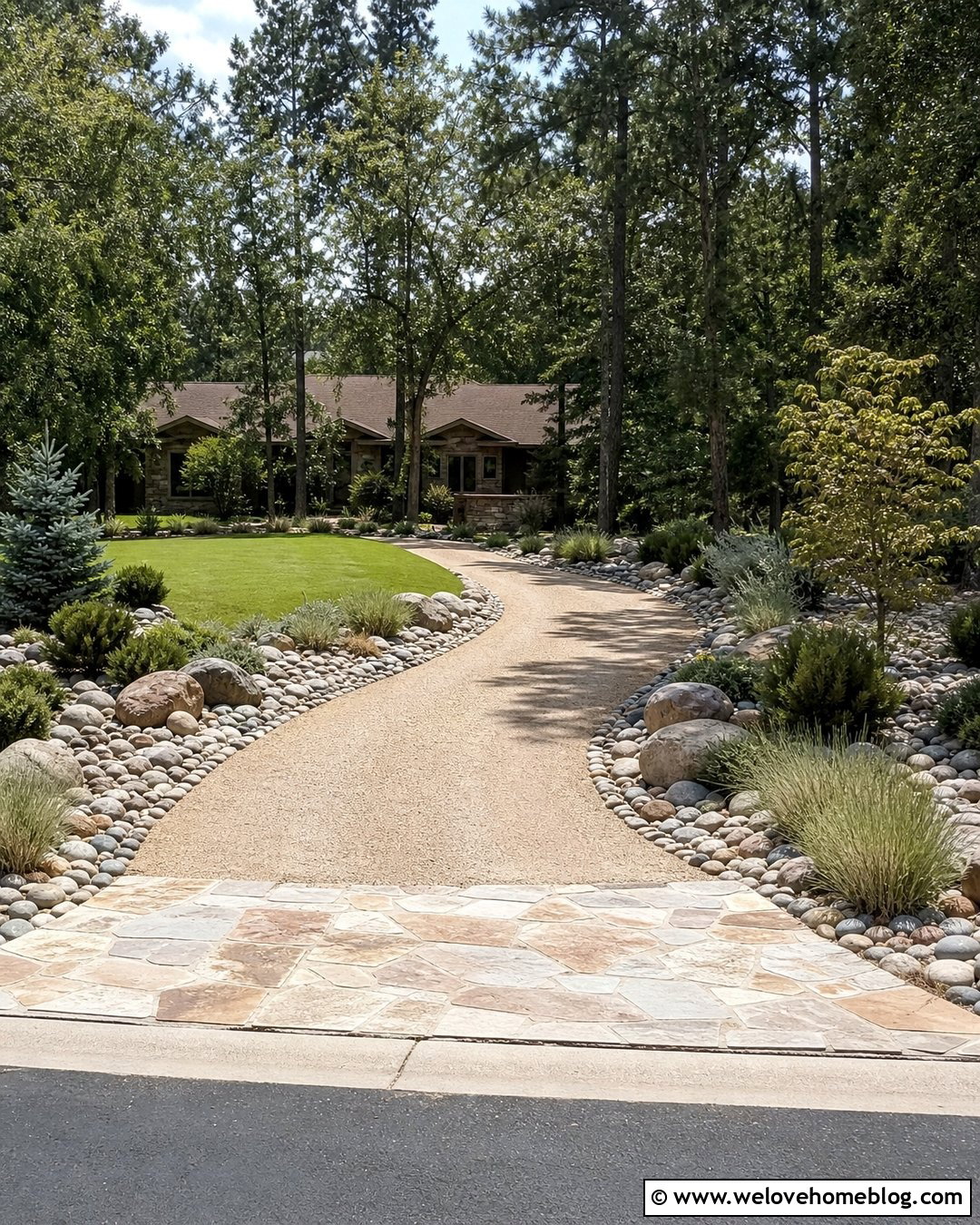
Smooth river rock creates a soft, natural edge around a casual pea gravel driveway. Choose compacted beige pea gravel for the central surface and form a wider border using medium river stones in gray, cream, and muted brown. A hidden rigid restraint between the two loose materials can help preserve a crisp boundary. Make the driveway slightly curved and surround it with drought-tolerant grasses, ground covers, and rounded evergreen shrubs. Larger accent rocks placed occasionally within the planting beds will connect the landscape to the border. This complete look suits a low ranch house, cottage, or wooded retreat. Avoid placing loose rounded rocks where tires regularly turn, since they may shift. Use stable stone blocks at the entrance and garage transition for greater control.
8. Flagstone Border With Garden Driveway
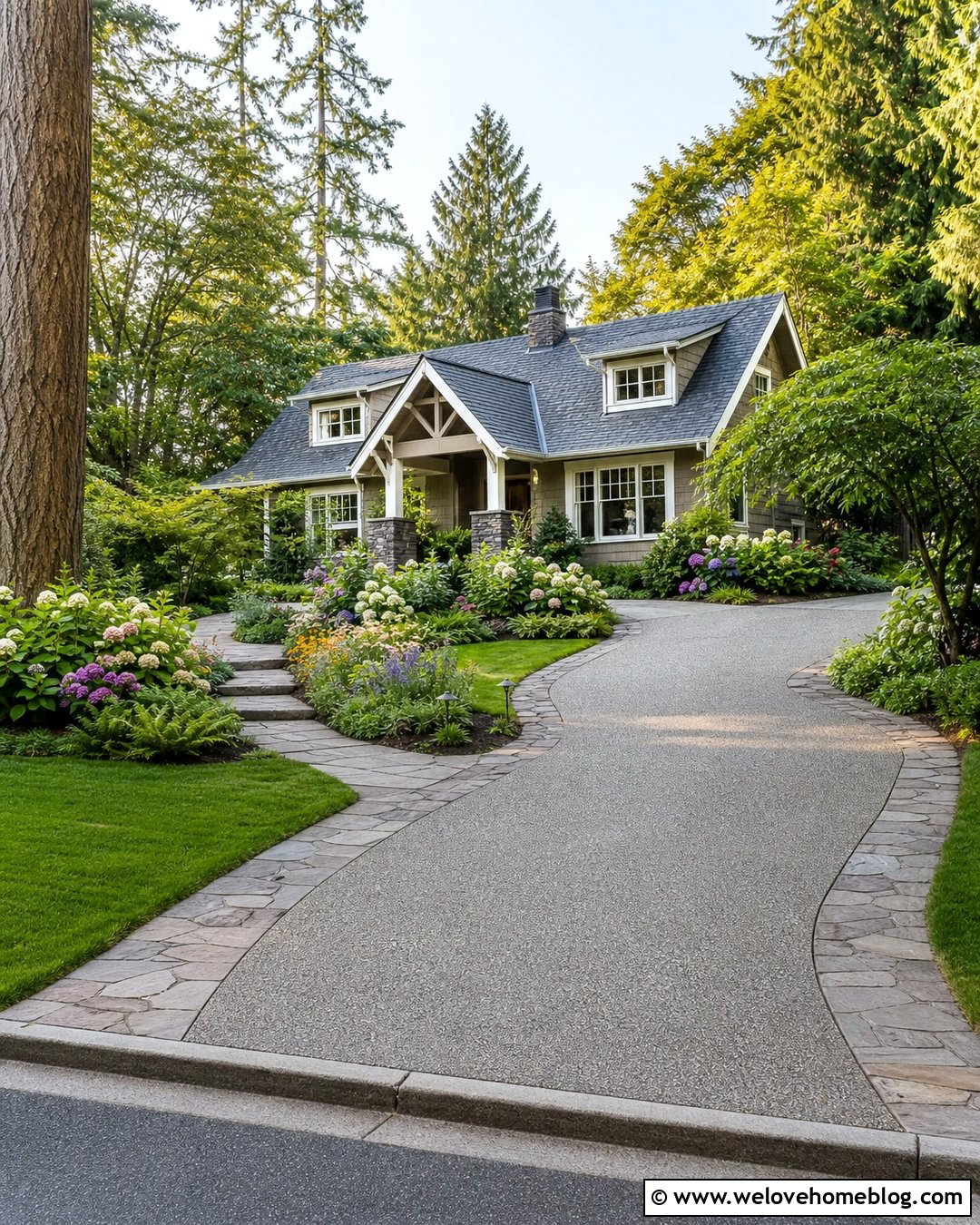
An irregular flagstone border can blend a driveway into a lush front garden. Pair a softly curved, exposed aggregate concrete driveway with flat pieces of gray and brown flagstone laid along both sides. Set the stones closely enough to form a recognizable edge while preserving their natural shapes. Behind the border, create deep planting beds filled with hydrangeas, ferns, flowering perennials, and compact evergreen shrubs. Continue selected flagstones into a garden walkway that branches from the driveway toward the porch. This creates a practical pedestrian route and makes the border feel integral to the overall layout. The relaxed texture complements cottages, craftsman houses, and homes surrounded by mature trees. Keep plants set back from turning zones so branches do not brush vehicles.
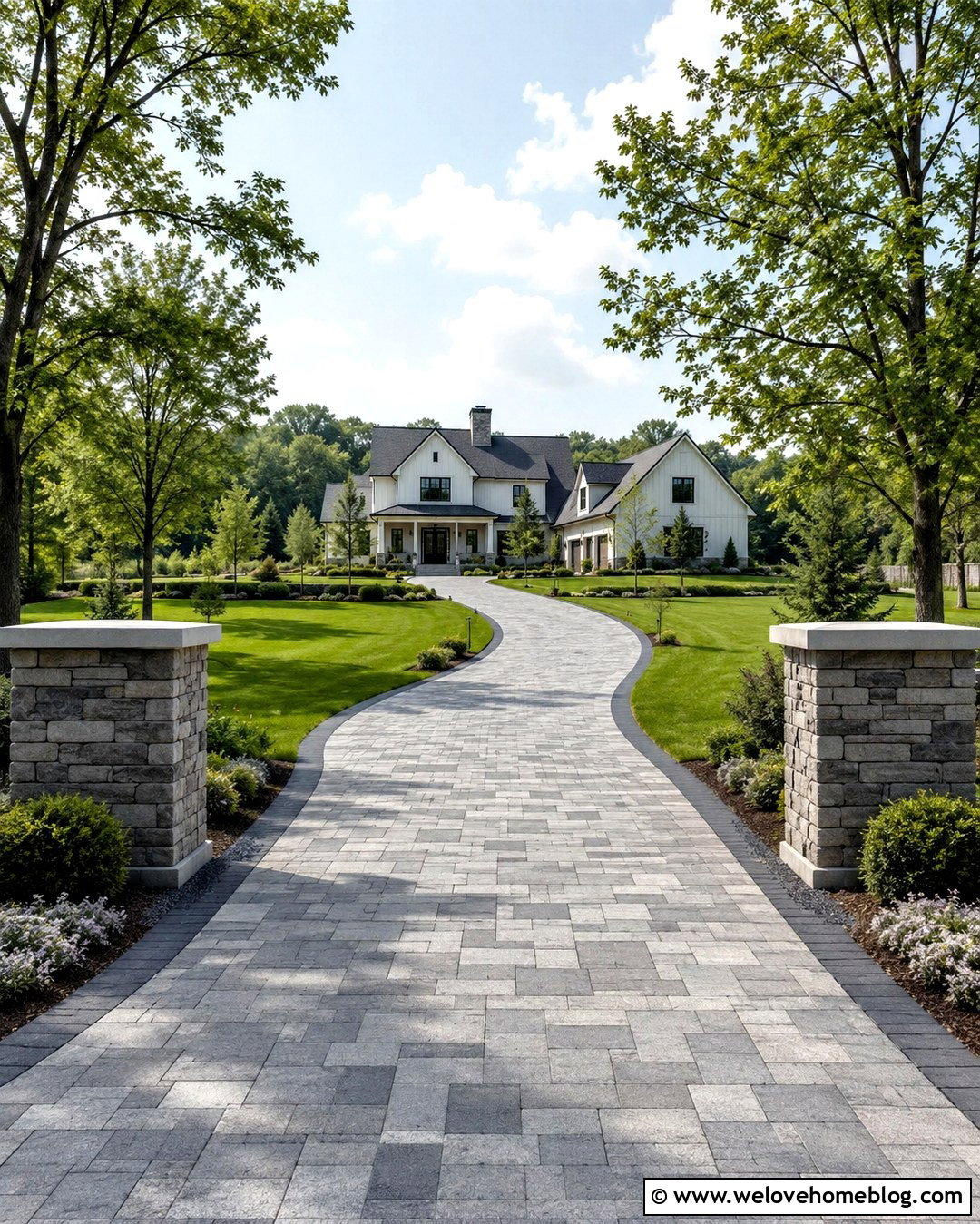
9. Double Granite Border With Paver Driveway
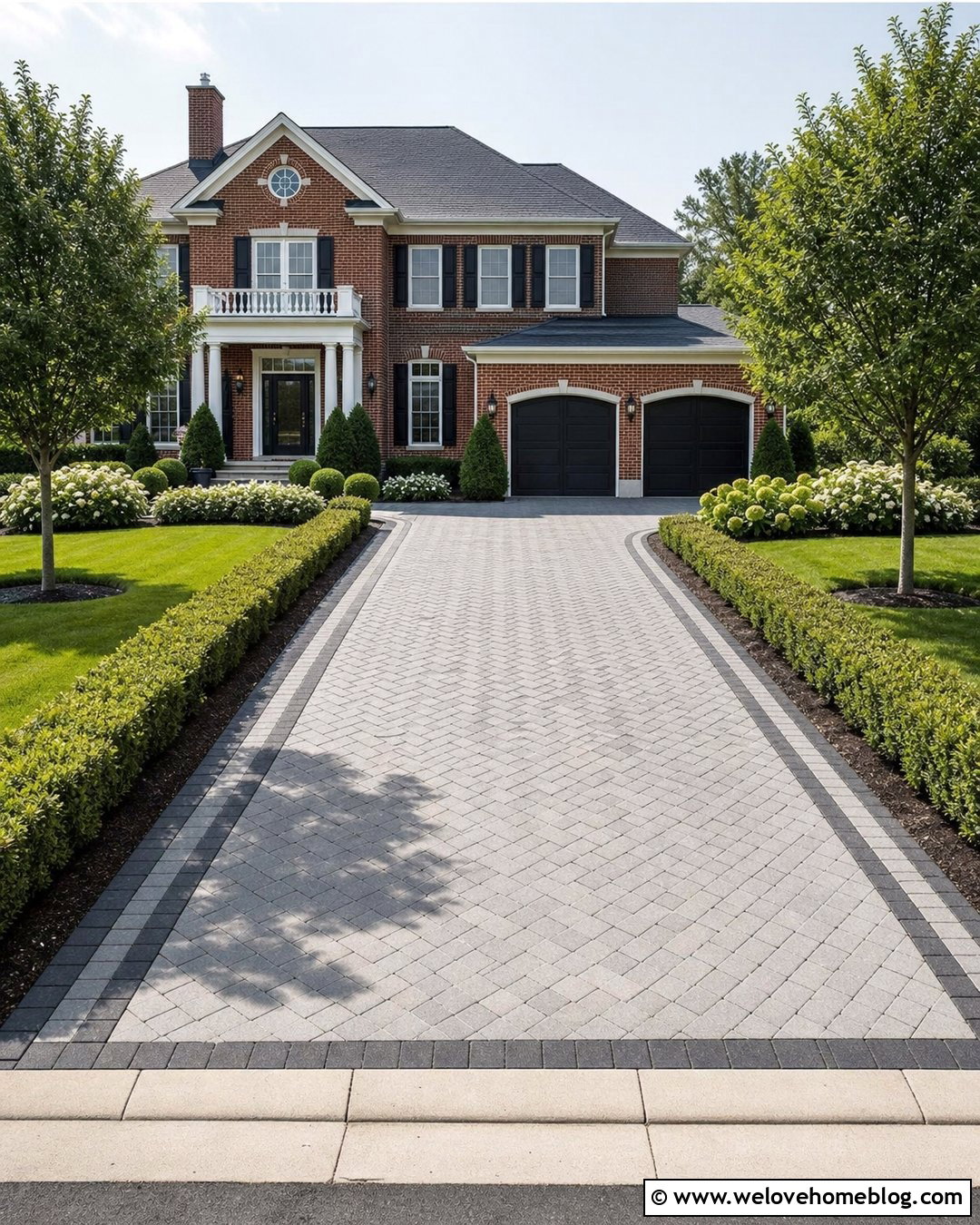
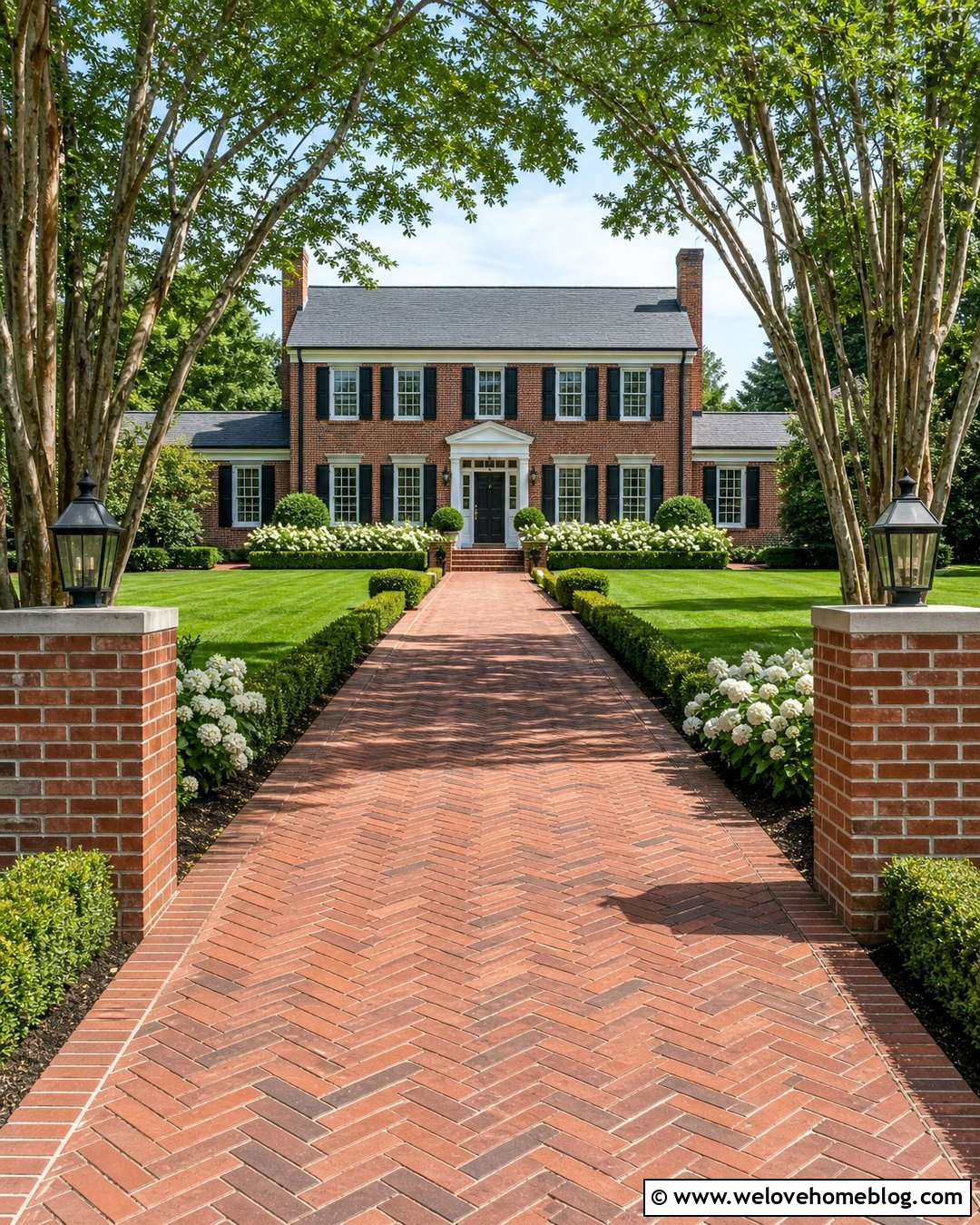
A double granite border gives a paver driveway greater definition and a more substantial frame. Use medium-gray concrete pavers in a running bond or herringbone pattern, then surround them with two rows of darker granite setts. The inner row can sit flush with the pavers, while the outer row creates a subtle transition into the lawn. Repeat the granite across the driveway entrance and around a walkway leading to the front door. Border colors often look especially coordinated when they echo the roof, trim, or masonry details instead of matching the main driveway exactly. () Formal hedges, symmetrical trees, and balanced planting beds complete the design. This tailored layout is well suited to Colonial and Georgian-inspired homes.
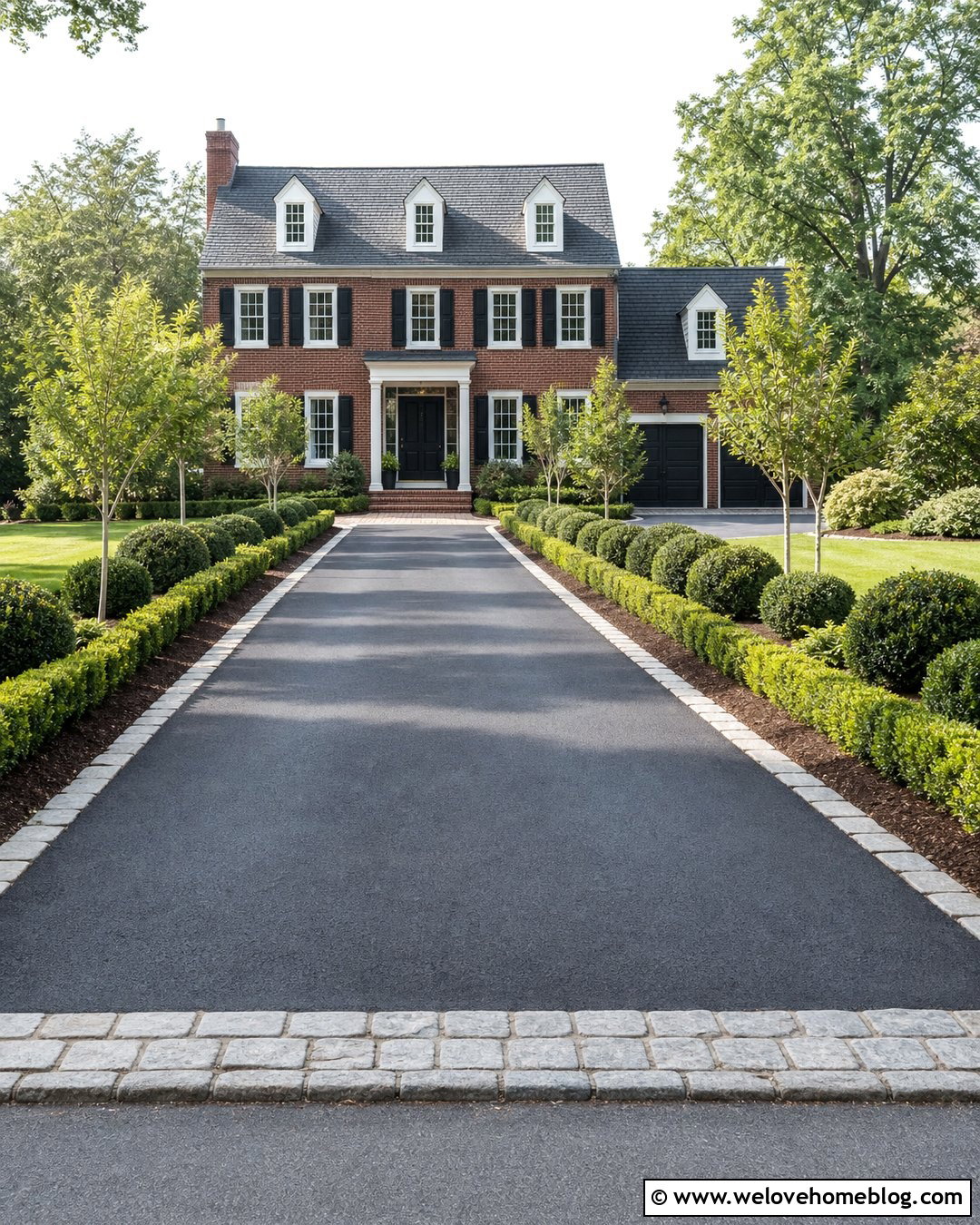
10. Stone Apron With Matching Driveway Border
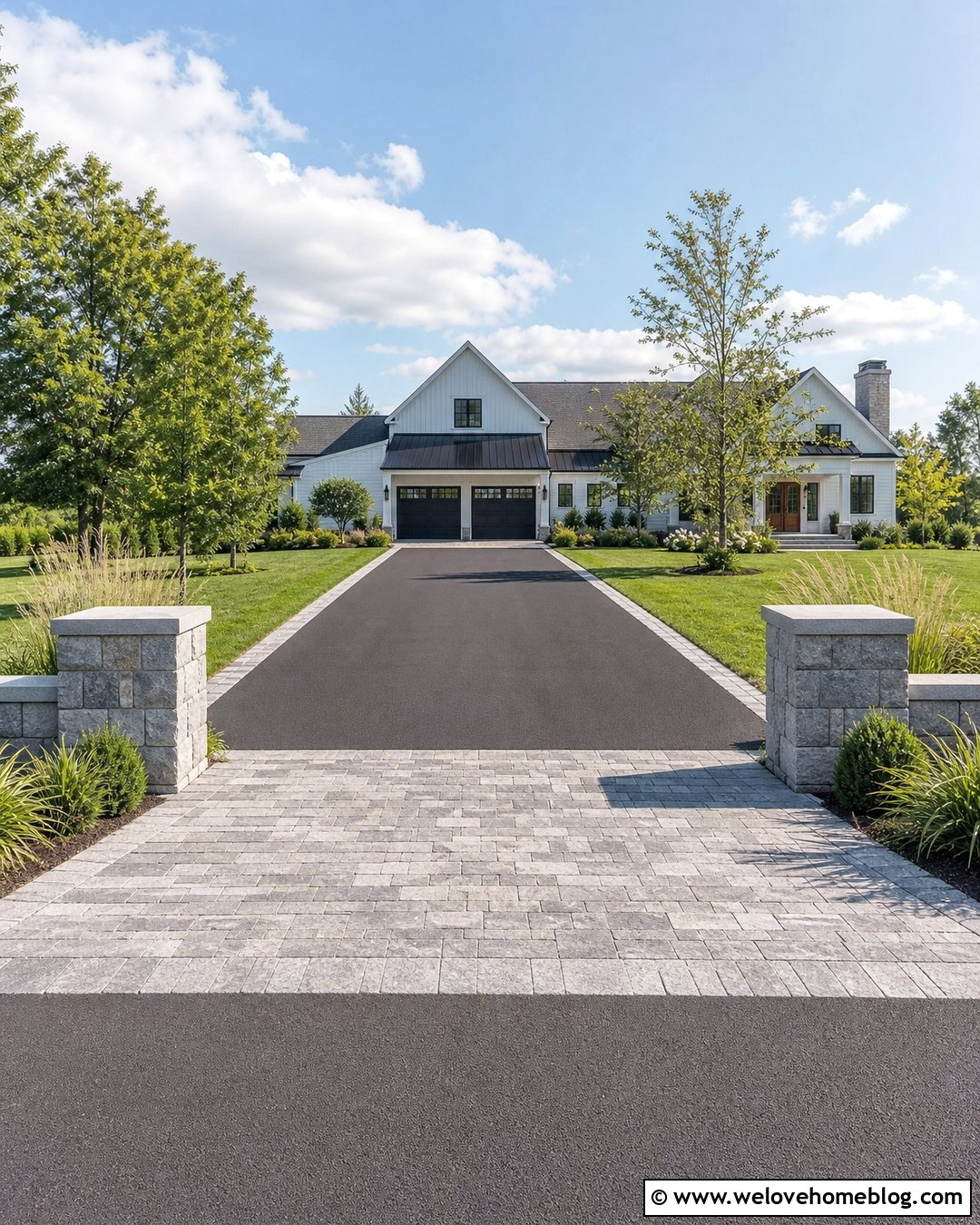
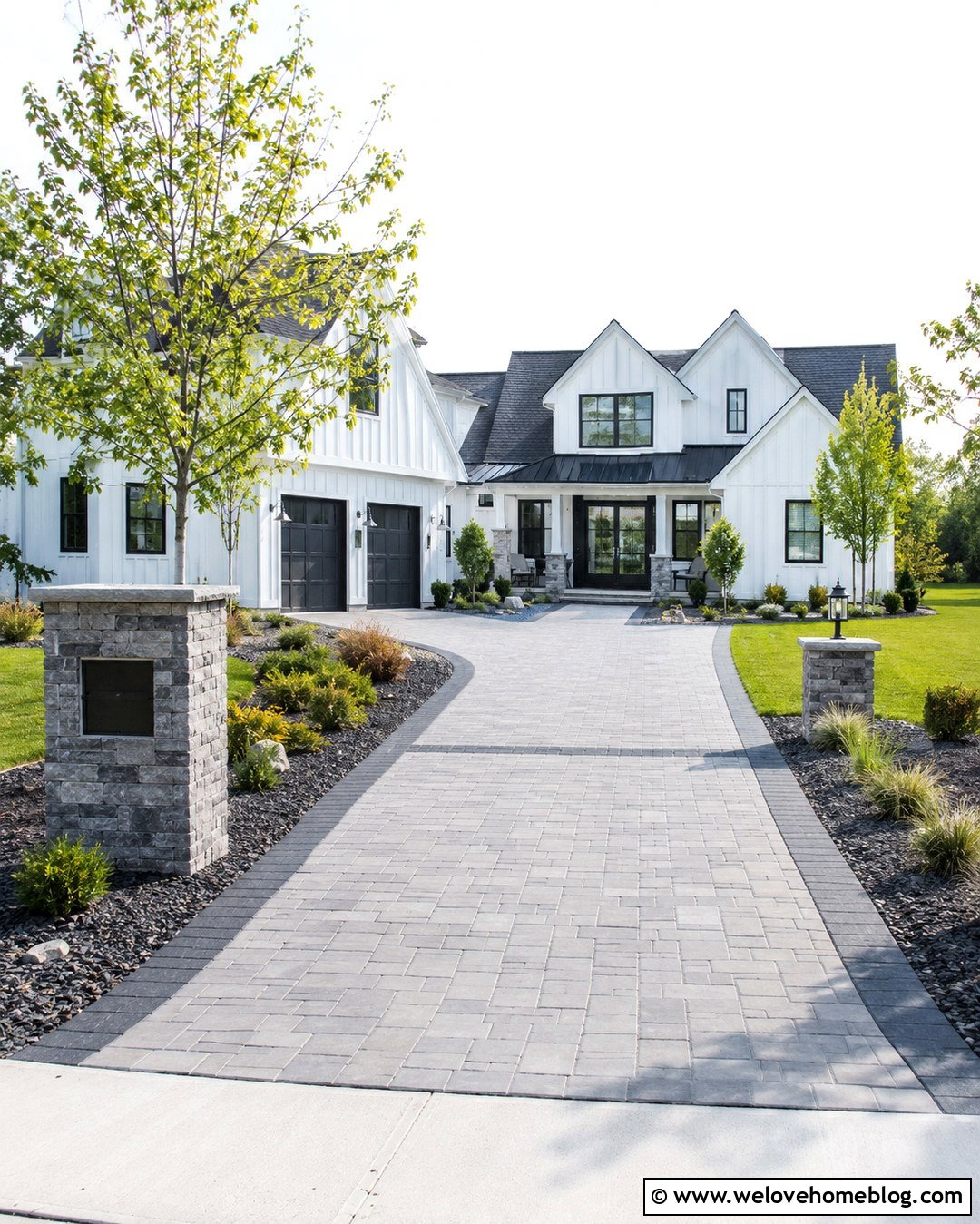
A stone apron makes the driveway entrance feel wider, stronger, and more intentional. Begin with a straight black asphalt driveway and frame its full length with medium-gray granite blocks. At the curb, expand those blocks into a broad rectangular apron laid in a fan or running bond pattern. The change in texture clearly marks the entrance while repeating the side border material. Add low stone pillars or an address marker beyond the turning clearance, then surround them with compact shrubs and ornamental grasses. Near the house, carry the granite into a band across the garage doors for a balanced finish. This design works with many home styles, from brick Colonial to contemporary farmhouse. The apron should be supported by a properly prepared base designed for repeated vehicle loads.
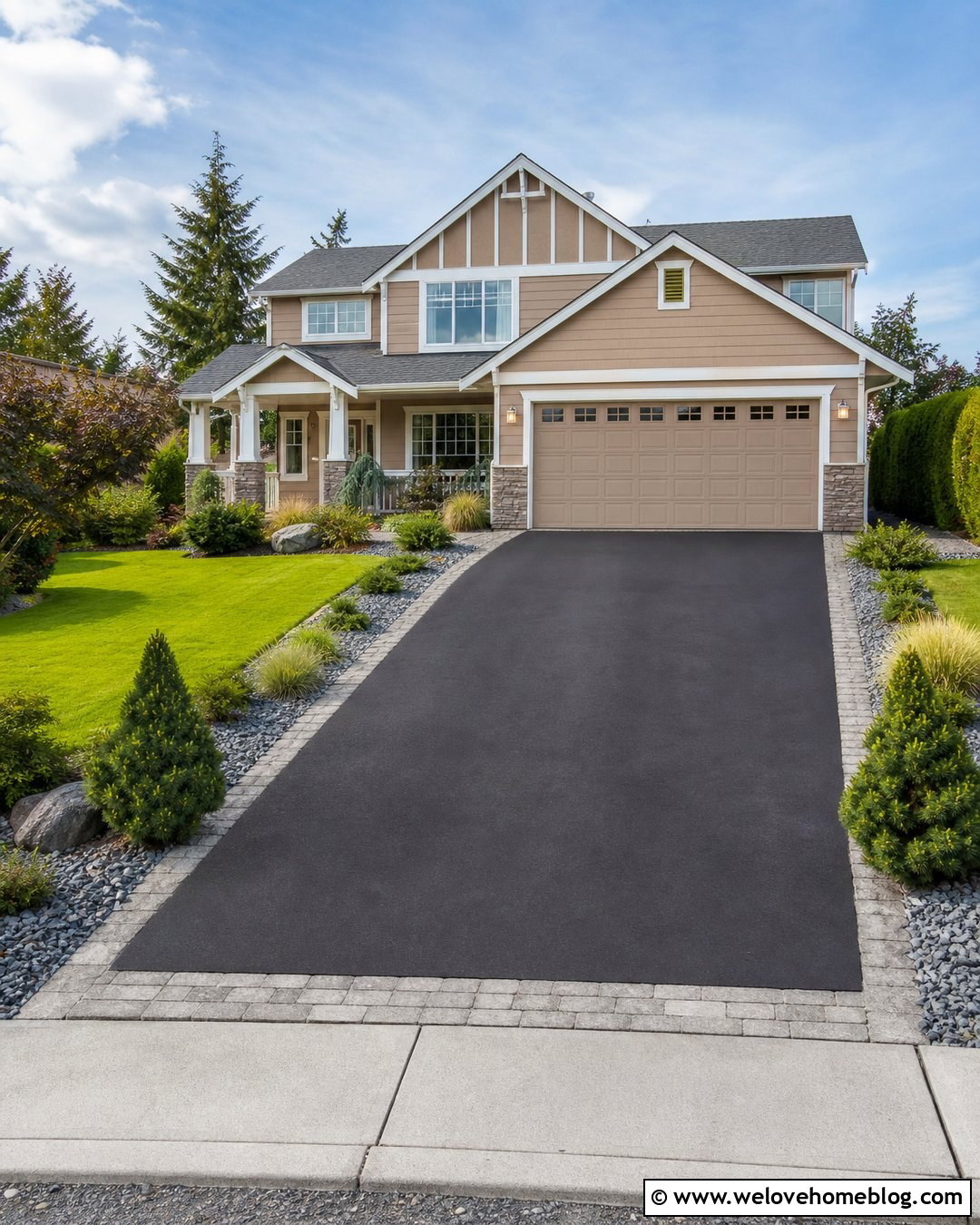
11. Raised Stone Curb With Sloped Driveway
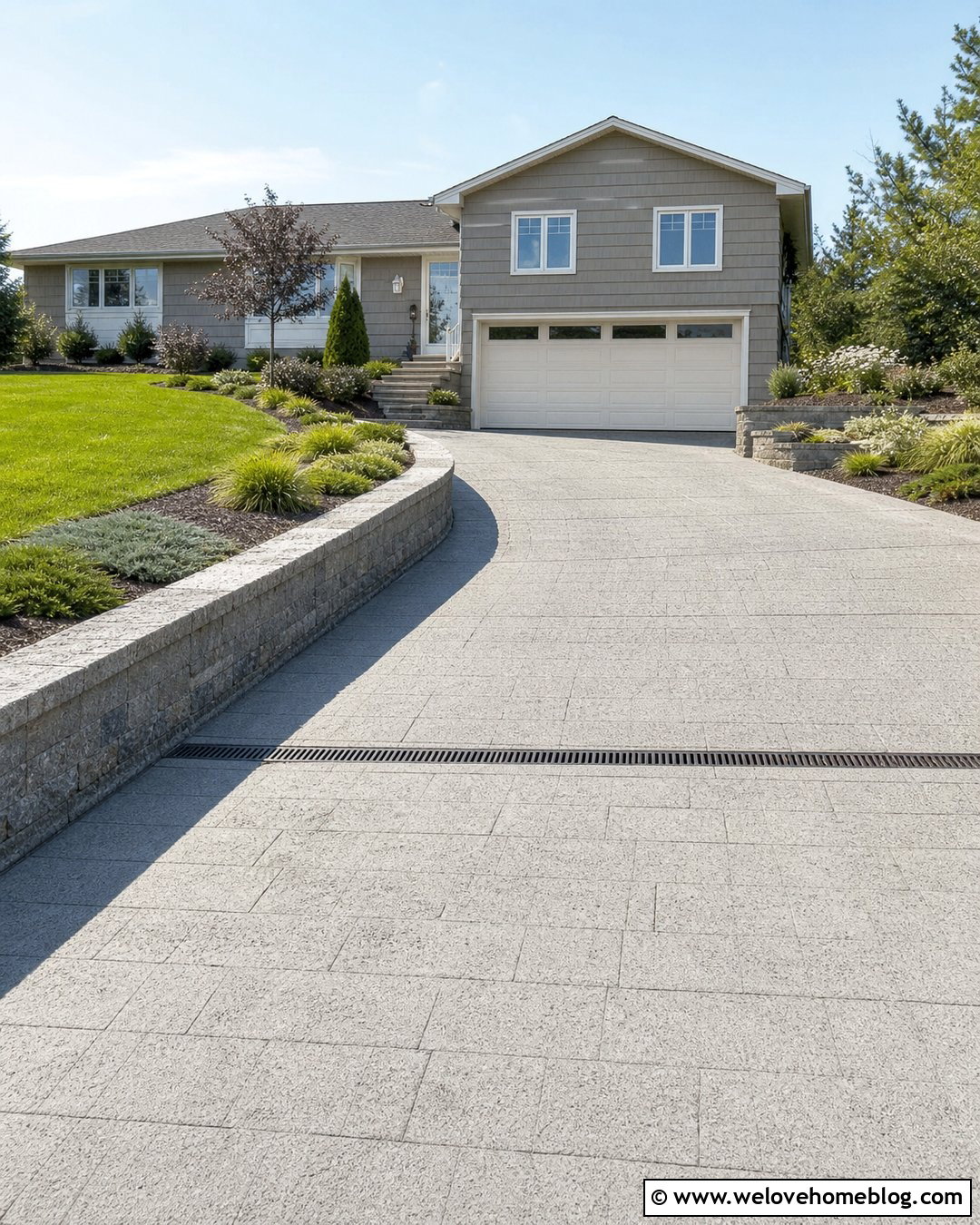
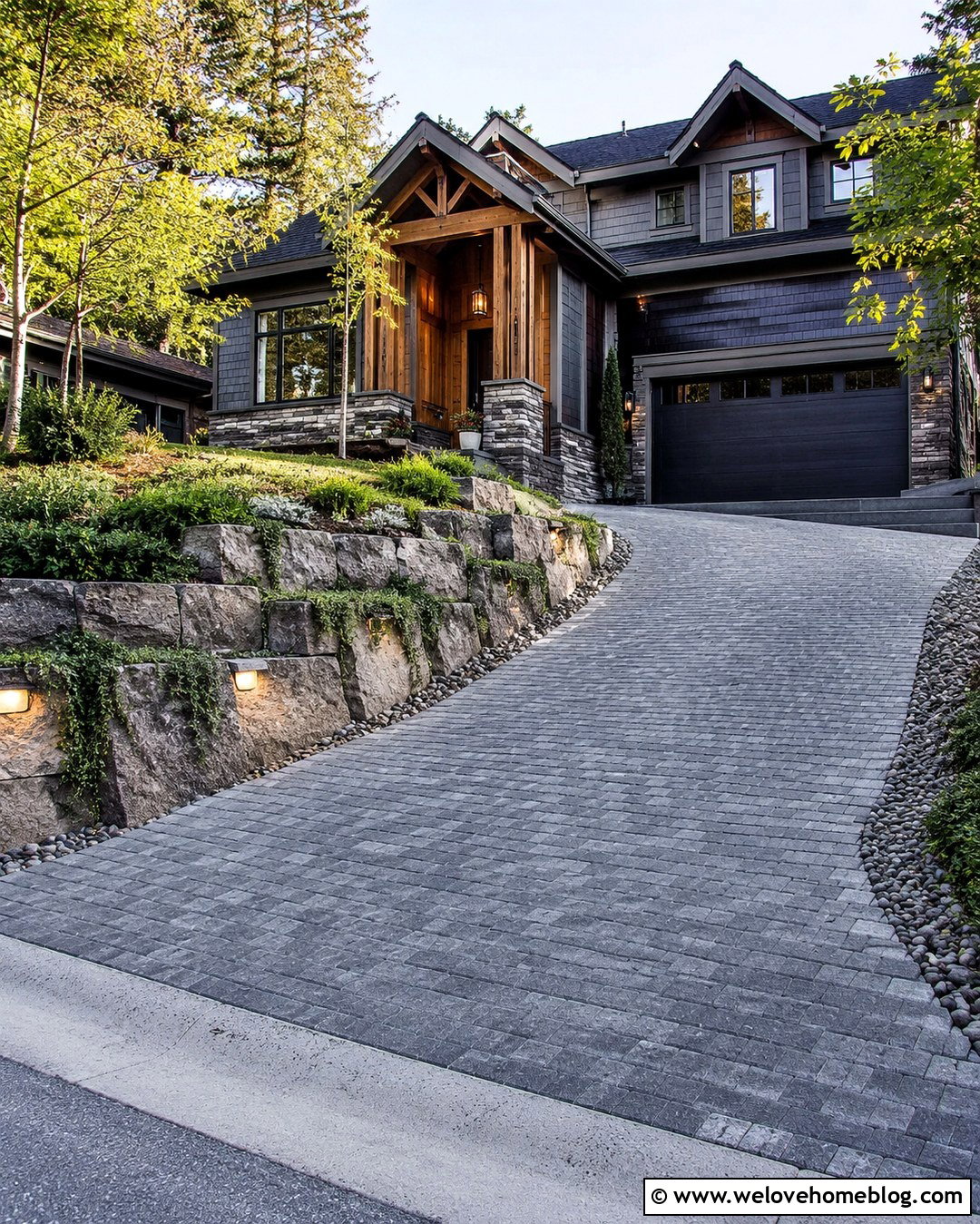
A sloped driveway needs a border that looks attractive while managing changes in grade. Pair a textured concrete driveway with a raised curb made from rectangular granite or limestone blocks. Keep the curb modest in height along the main driving area, then gradually increase it where the adjoining planting bed rises. This creates a low retaining edge for soil and mulch while clearly defining the pavement. Use spreading ground covers, compact grasses, and small shrubs above the stone rather than plants with heavy branches. A linear drainage channel at the bottom of the slope can help direct runoff away from the garage. The border should never interfere with vehicle doors or turning space. This complete arrangement suits split-level homes, hillside properties, and elevated suburban lots.
12. Flush Granite Border With Narrow Driveway
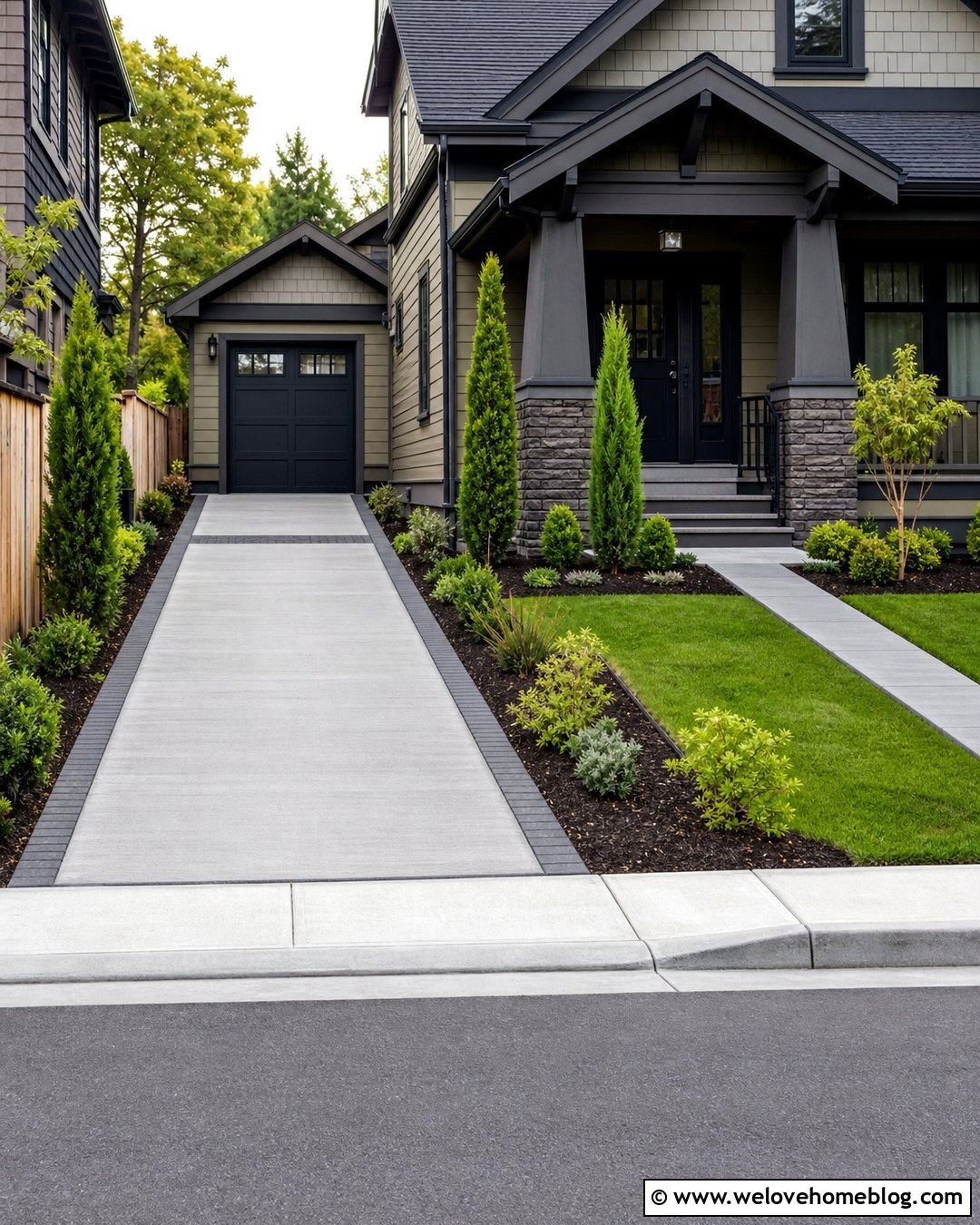
When space is tight, a flush granite edge delivers definition without taking away usable driveway width. Choose a narrow broom-finished concrete driveway and install a single row of slim, charcoal granite setts level with the surface. The dark line will separate the concrete from the lawn while remaining easy to cross on foot. Near the garage, extend the granite into a narrow threshold band. Keep landscaping vertical and controlled with columnar evergreens, small ornamental trees, and compact planting beds beside the house. A straight walkway running parallel to the driveway can use the same granite as an accent. This restrained design prevents a small front yard from feeling crowded. It works especially well with townhomes, compact craftsman houses, and narrow urban or suburban properties.
13. Stone Border With Grass Strip Driveway
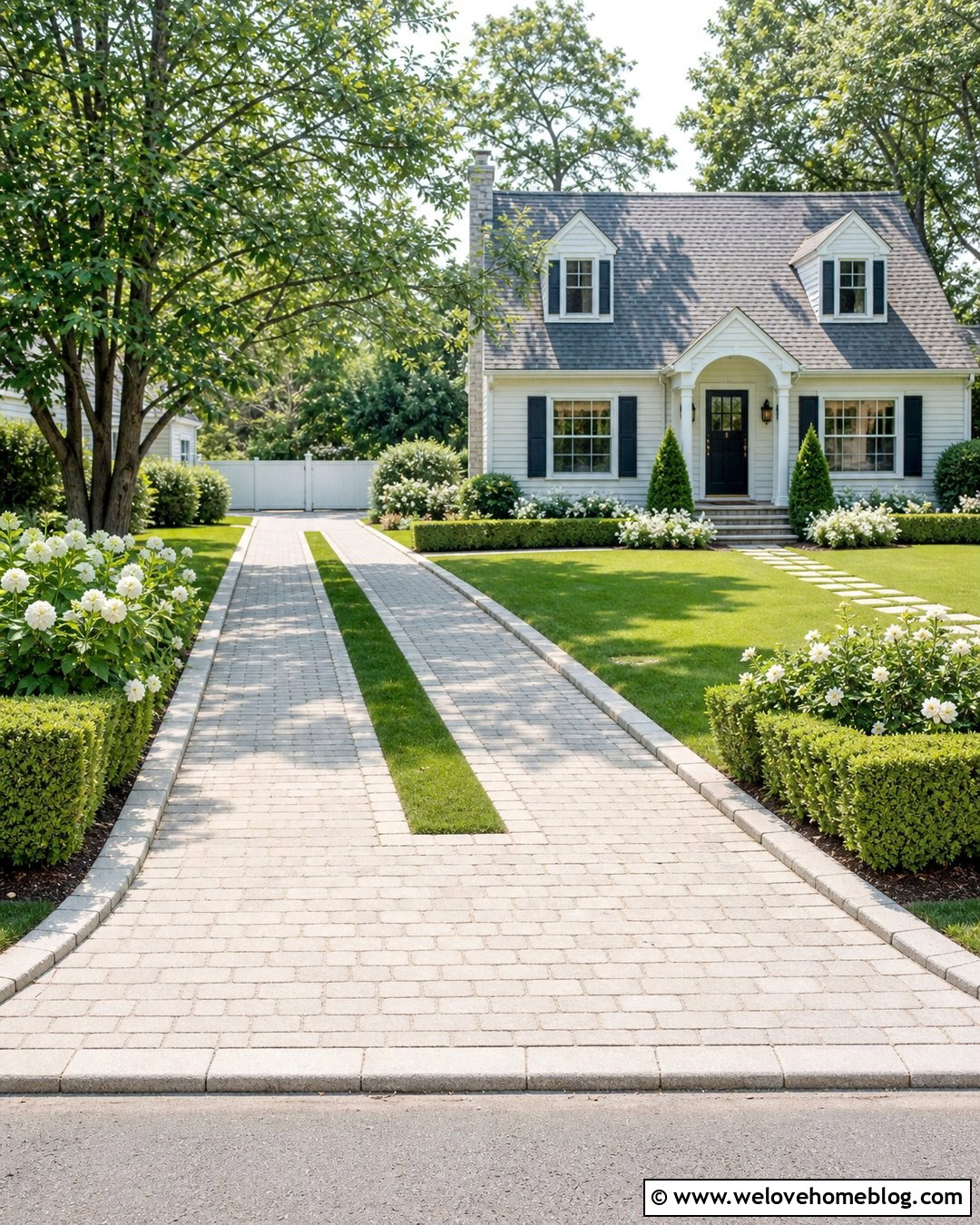
Green grass strips can soften a driveway while the stone border keeps the layout crisp. Create two tracks of light gray concrete pavers with a healthy turf strip running through the center. Outline the outer sides with flat limestone or granite blocks installed flush to the pavers. The border defines the vehicle path, and the center greenery reduces the visual impact of a broad paved area. This arrangement is best for a straight driveway where tires can reliably follow the paved tracks. Use a wider solid apron near the road and garage to simplify turning. Low flower beds, clipped hedges, and a stepping-stone walkway can frame the complete scene. The design complements cottage, Cape Cod, and updated traditional homes with modest front yards.
14. Stone Border With Flower Beds
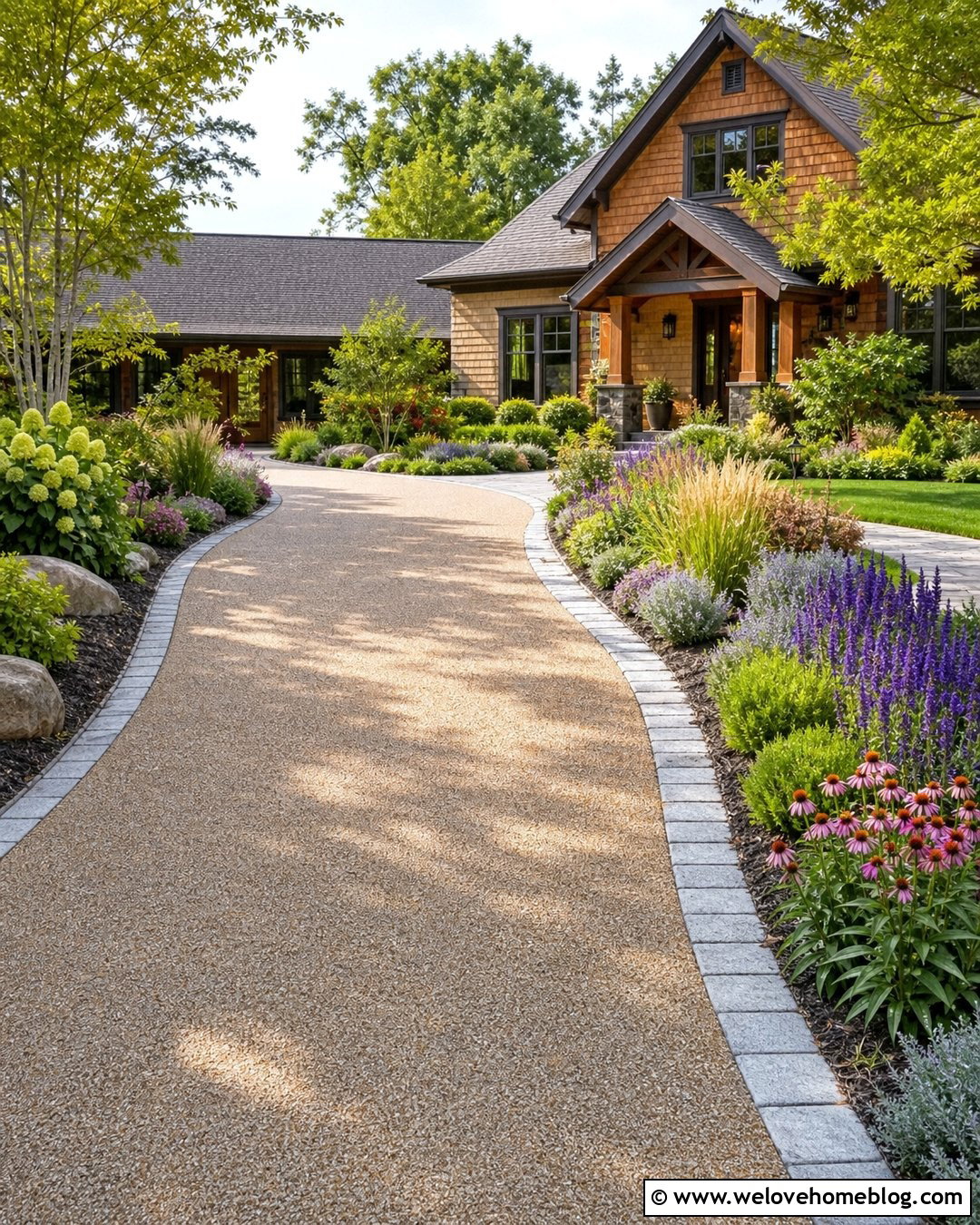
Colorful planting beds can make a stone driveway border feel like part of the garden rather than a separate construction detail. Pair a curved resin-bound gravel driveway in a warm beige tone with a low border of gray granite setts. Behind the stones, create generous beds filled with plants that offer different heights and seasons of interest. Compact shrubs provide structure, while salvia, coneflowers, catmint, and ornamental grasses add softer color. Leave clear visibility at the street entrance and keep taller plants away from the inner curve. Repeat the granite around the walkway and front steps to connect the driveway to the house. This full landscape works beautifully beside a craftsman or cottage home. A restrained plant palette will keep the border attractive instead of visually crowded.
15. Stone Border With Drainage Channel
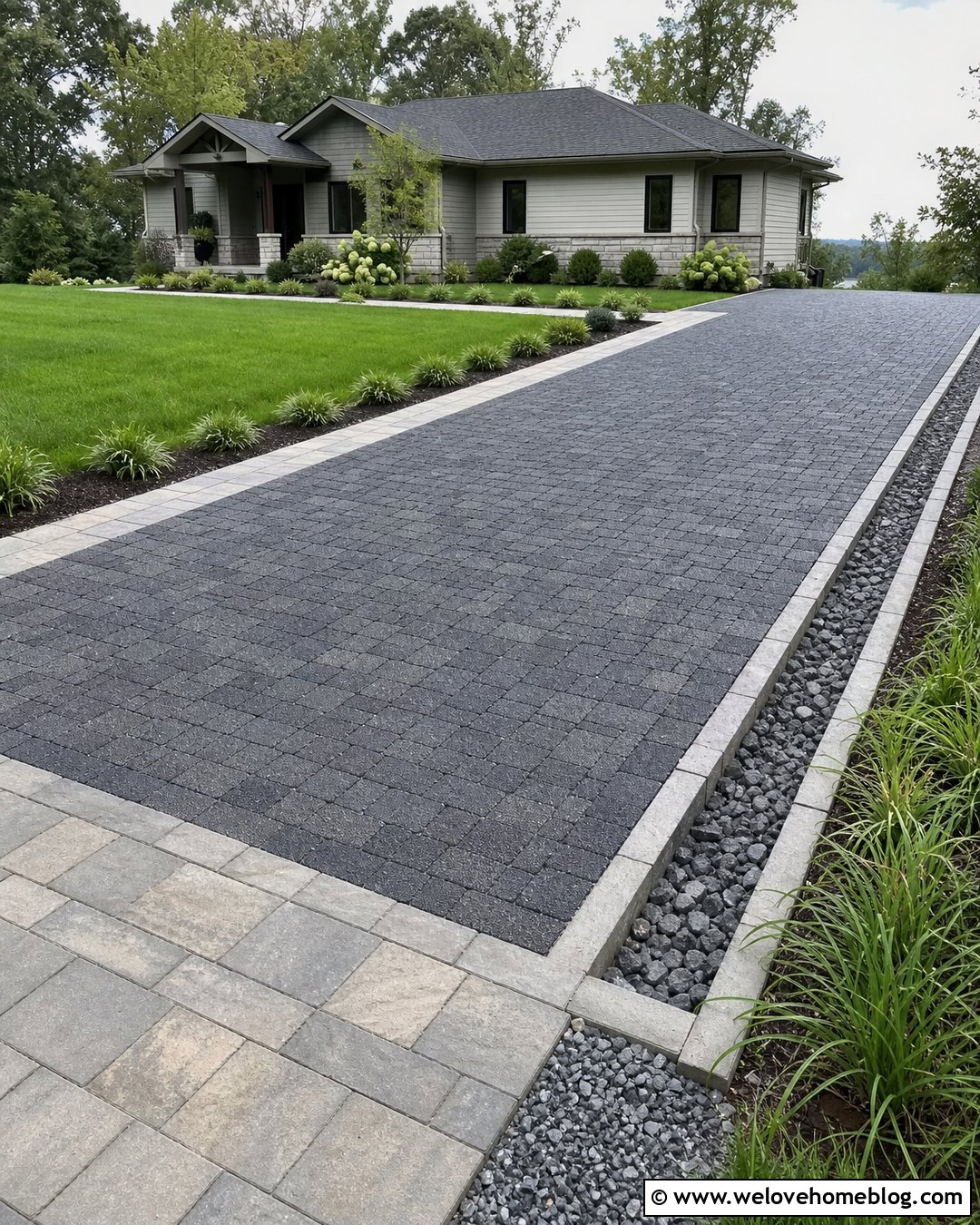
Heavy runoff calls for a driveway design that treats drainage as part of the finished look. Use dark gray permeable pavers for a gently sloped driveway, then frame the edges with rectangular limestone or granite blocks. Along the lower side, install a narrow channel filled with angular drainage stone between the structural border and the planting bed. The channel can collect and guide surface water while creating a deliberate textural band. Extend it toward a suitable drainage area according to local site conditions. Plant moisture-tolerant grasses and compact shrubs beyond the channel, leaving enough space for maintenance. A matching stone apron can complete the entrance. This practical design suits modern ranch homes and properties where lawn edges frequently become muddy after storms.
16. Mixed Stone Border With Concrete Driveway
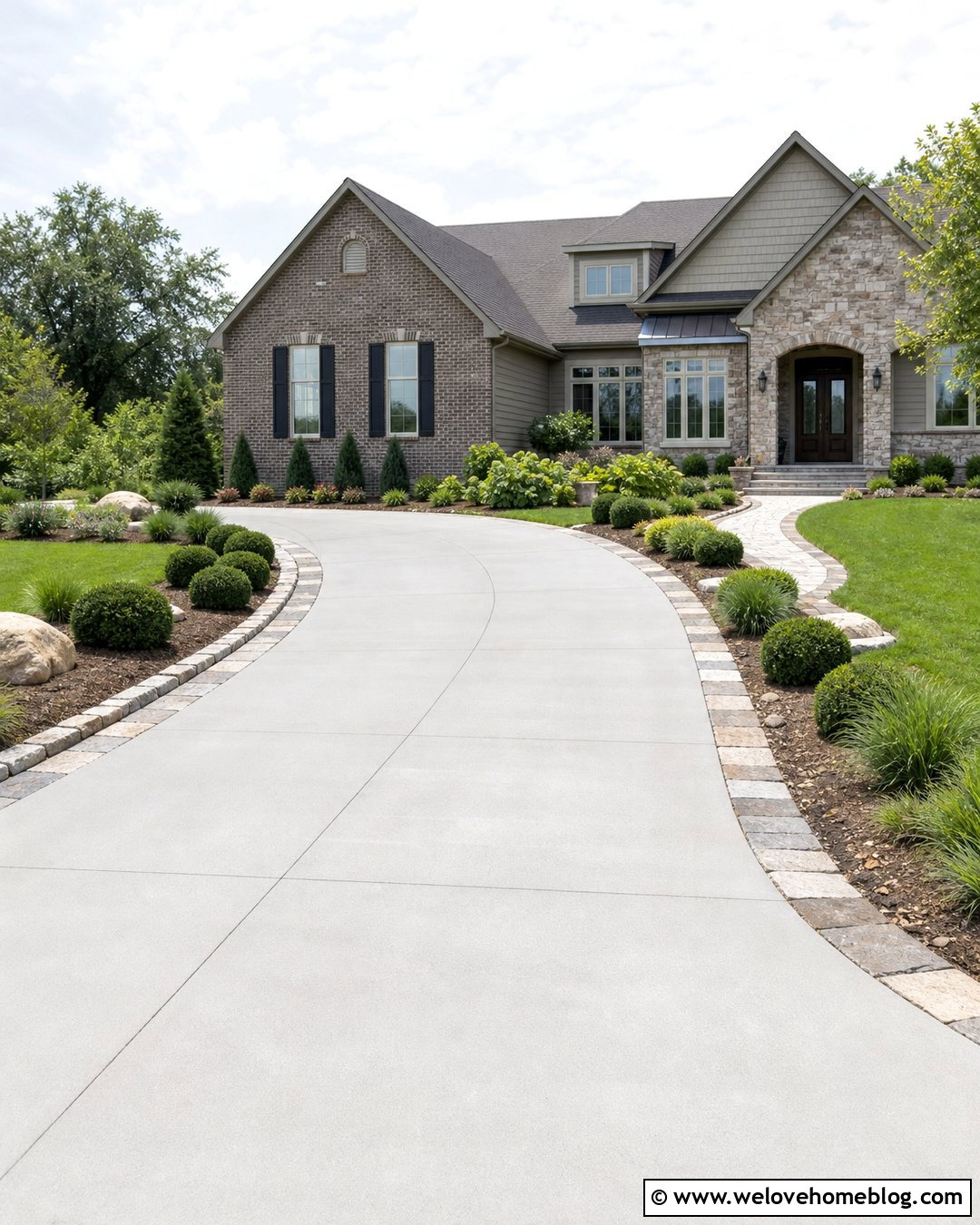
A mixed stone border can add character when the colors are controlled carefully. Start with a plain, light gray concrete driveway in a straight or gently curved layout. Build the border from granite, sandstone, and limestone blocks in related gray, taupe, and buff tones. Keep the stones similar in size so the edge feels coordinated rather than random. A repeating color sequence can make installation look more intentional. Continue the same mix around the front walkway and one small planting island near the garage. Simple grasses, rounded shrubs, and a neatly maintained lawn will allow the varied stone texture to stand out. This look is especially useful when a house includes several exterior materials, such as brick, painted siding, wood, and natural stone veneer.
17. Basalt Border With Light Paver Driveway
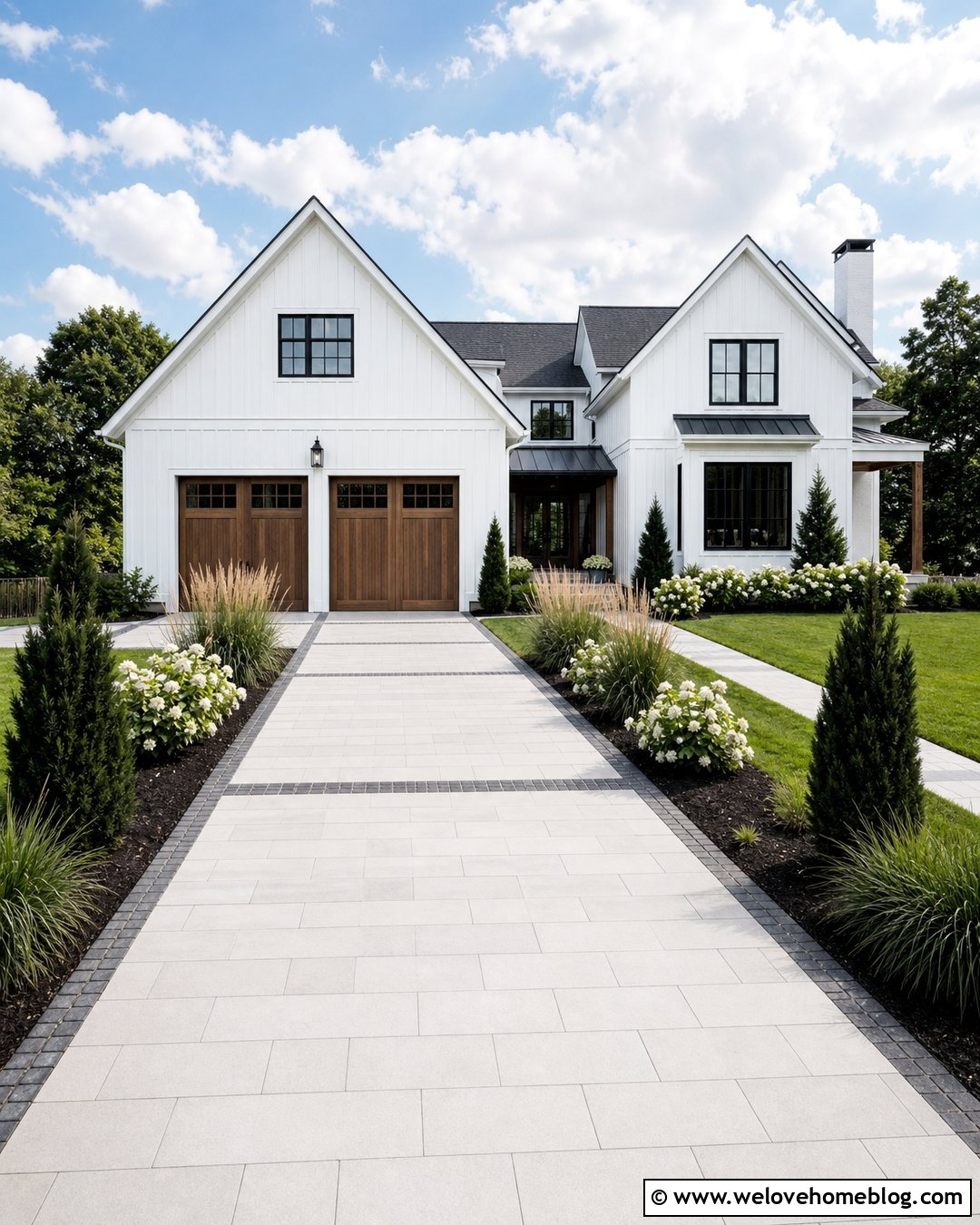
Deep black basalt creates dramatic contrast around a pale driveway. Choose ivory or light gray concrete pavers in a large-format running bond pattern, then outline the full surface with a single row of dark basalt setts. The strong edge emphasizes a straight layout and complements black windows, metal roofing, or modern exterior fixtures. Repeat basalt bands across the driveway at the entrance and near the garage to create a balanced rhythm. Keep the landscaping architectural with upright grasses, clipped evergreens, white flowering shrubs, and dark mulch. A simple concrete walkway can connect to the driveway without competing with the border. This complete look suits modern, transitional, and contemporary farmhouse homes. Use consistent joint spacing so the dark stone line remains smooth and visually precise.
18. Light Limestone Border With Dark Driveway
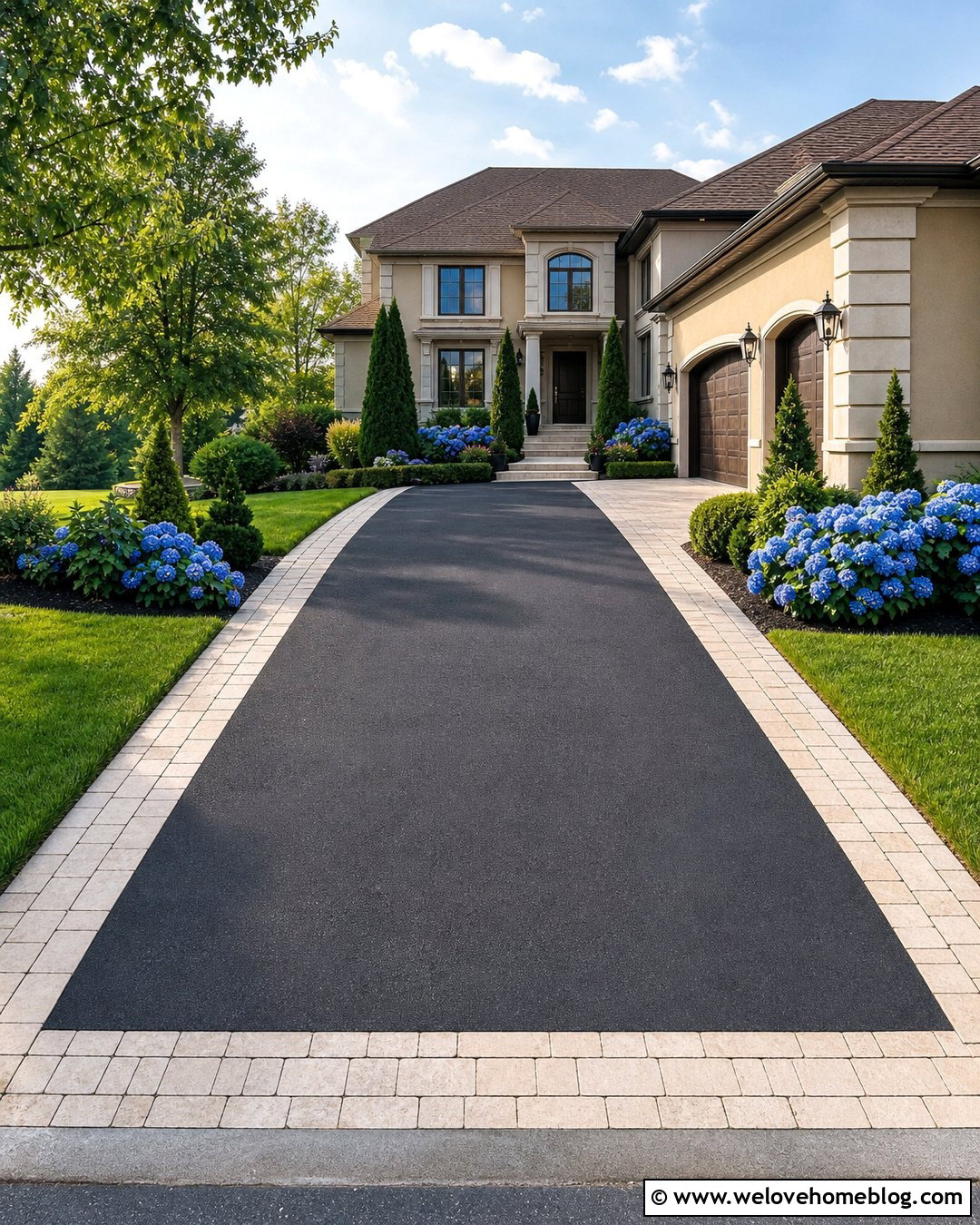
Cream limestone can brighten a dark driveway and connect it to a warm-toned house facade. Pair smooth black asphalt with a broad border of pale limestone setts installed along each side. Use a double row near the entrance, then reduce it to a single row farther up the driveway for a subtle change in scale. A limestone walkway and porch steps can repeat the border color beside a brick or tan stucco house. Add green lawn, soft blue flowering plants, and structured evergreen shrubs to balance the high contrast. Because very light stone can show soil and tire marks, reserve wider bands for areas outside the main turning path. This design offers a polished alternative to the more common gray granite-and-asphalt combination.
19. Reclaimed Cobblestone Border With Brick House
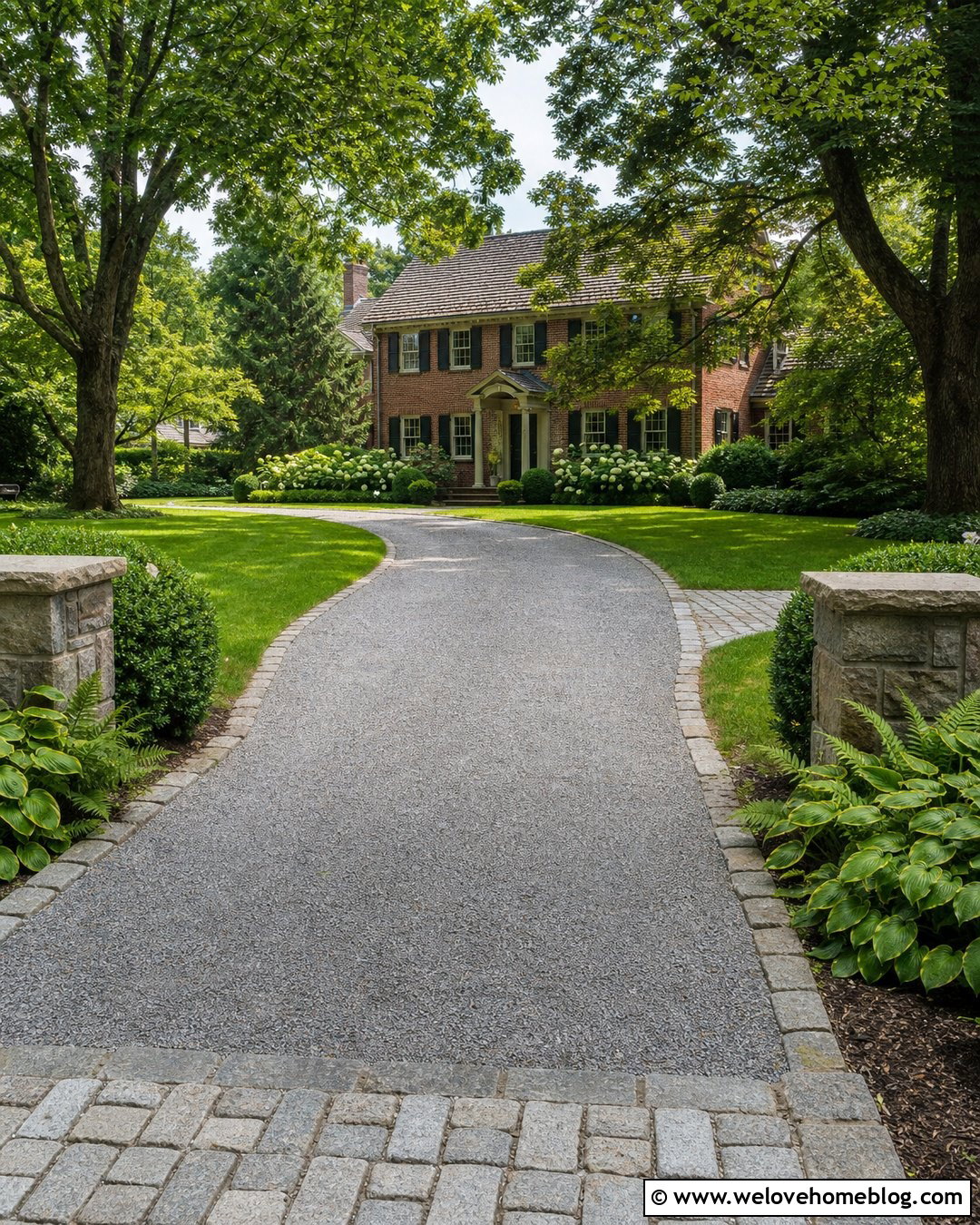
Weathered cobblestones bring depth and history to a driveway beside an older brick home. Use a compacted gray gravel or muted asphalt surface and install reclaimed granite cobbles along both edges. Their softened corners and varied gray-brown colors will complement aged brick, traditional shutters, and mature landscaping. Keep the border relatively straight near the street, then let it follow a gentle curve as the driveway approaches the house. A matching cobblestone apron and walkway junction can make the different outdoor areas feel connected. Fill nearby beds with boxwoods, hydrangeas, ferns, and shade-tolerant ground covers. Since reclaimed pieces may vary in size, sort them before installation and reserve the most uniform stones for areas near the garage, sidewalk, and entrance.
20. Boulder Border With Long Gravel Driveway
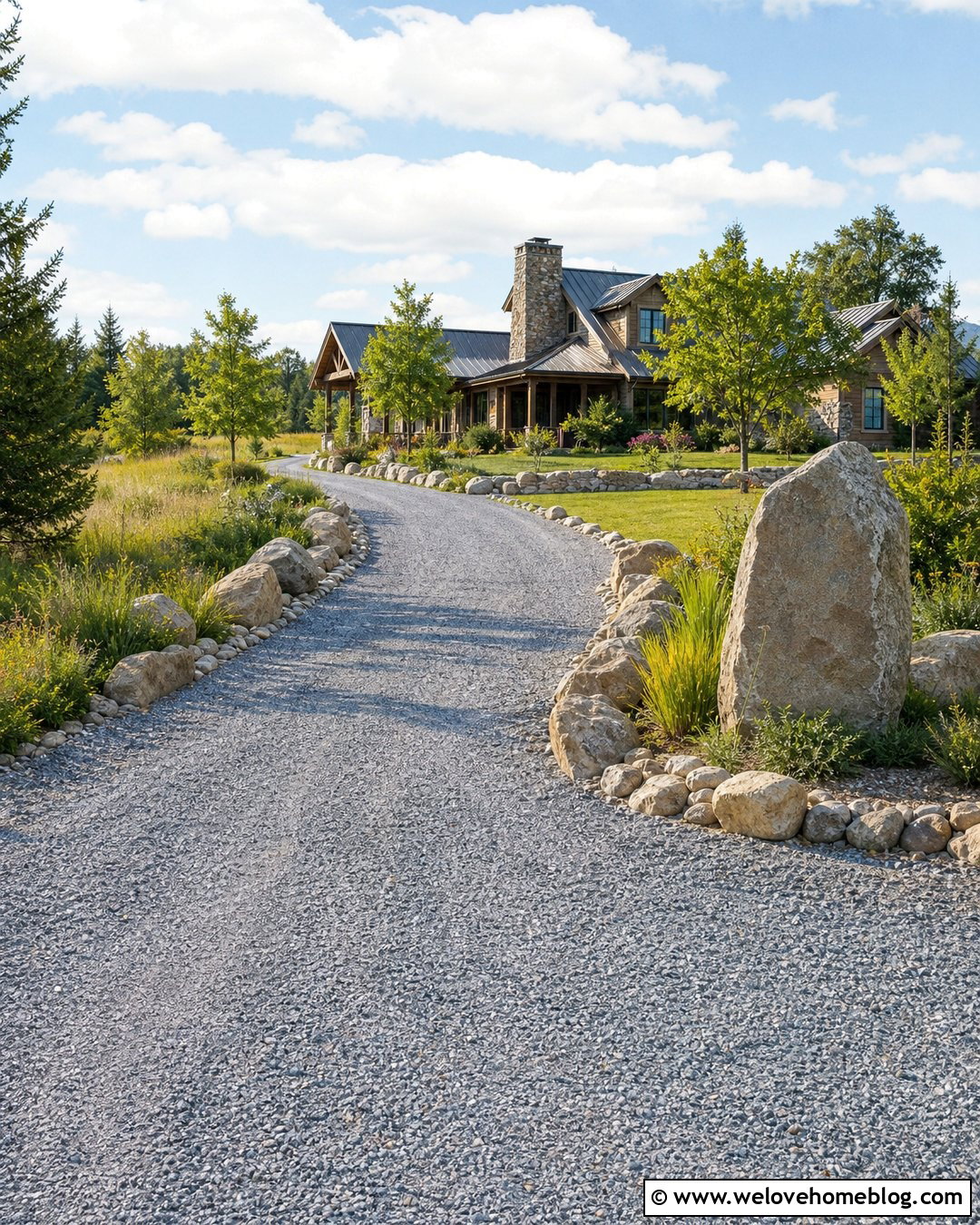
A long rural driveway can handle larger stones that would overwhelm a compact suburban yard. Cover the surface with compacted gray crushed gravel and create a sweeping approach toward a country or lodge-style house. Place medium boulders at generous intervals along the outer edges, then connect them visually with smaller fieldstones and low native grasses. Keep the rocks well outside the vehicle clearance zone, especially near bends and the road entrance. Larger boulders can anchor an address sign or mark the beginning of a wooded section. Near the house, transition to a more refined border of fitted fieldstone around the parking area. The combination of gravel, natural rock, meadow planting, and mature trees creates a low-key entrance that feels appropriate to the surrounding land.
Conclusion:
Successful 20 Stone Driveway Border Ideas do more than place attractive rocks beside pavement. They coordinate the driveway surface, border scale, entrance, planting, drainage, and house architecture as one complete composition. Granite and Belgian blocks offer crisp structure, while fieldstone, sandstone, and river rock produce a softer landscape. Flush borders suit narrow spaces and snow-prone areas, whereas raised curbs can help separate sloped beds from the driving surface. Before choosing a design, consider tire clearance, walking routes, runoff, base preparation, and long-term maintenance. Repeat the border stone in an apron, path, or porch detail for a connected finish. With thoughtful planning, a stone edge can improve both everyday function and lasting curb appeal.

Related posts:
Leave a Reply