
The best **brick driveway edging ideas** do more than add a thin decorative line. Brick can connect the driveway to the home’s exterior, define planting beds, separate paving from grass, and give the entire front yard a cleaner shape. It also offers plenty of design flexibility because bricks can be installed flat, upright, flush, raised, or arranged in decorative patterns. Colors range from traditional red and weathered brown to charcoal, cream, and muted clay. The right combination depends on your driveway material, house style, drainage needs, and surrounding landscape. Brick edging is especially effective when its color or pattern reappears in the walkway, entry steps, or facade. () Here are 20 practical and complete **brick driveway edging ideas**.
1. Red Brick Edging With An Asphalt Driveway
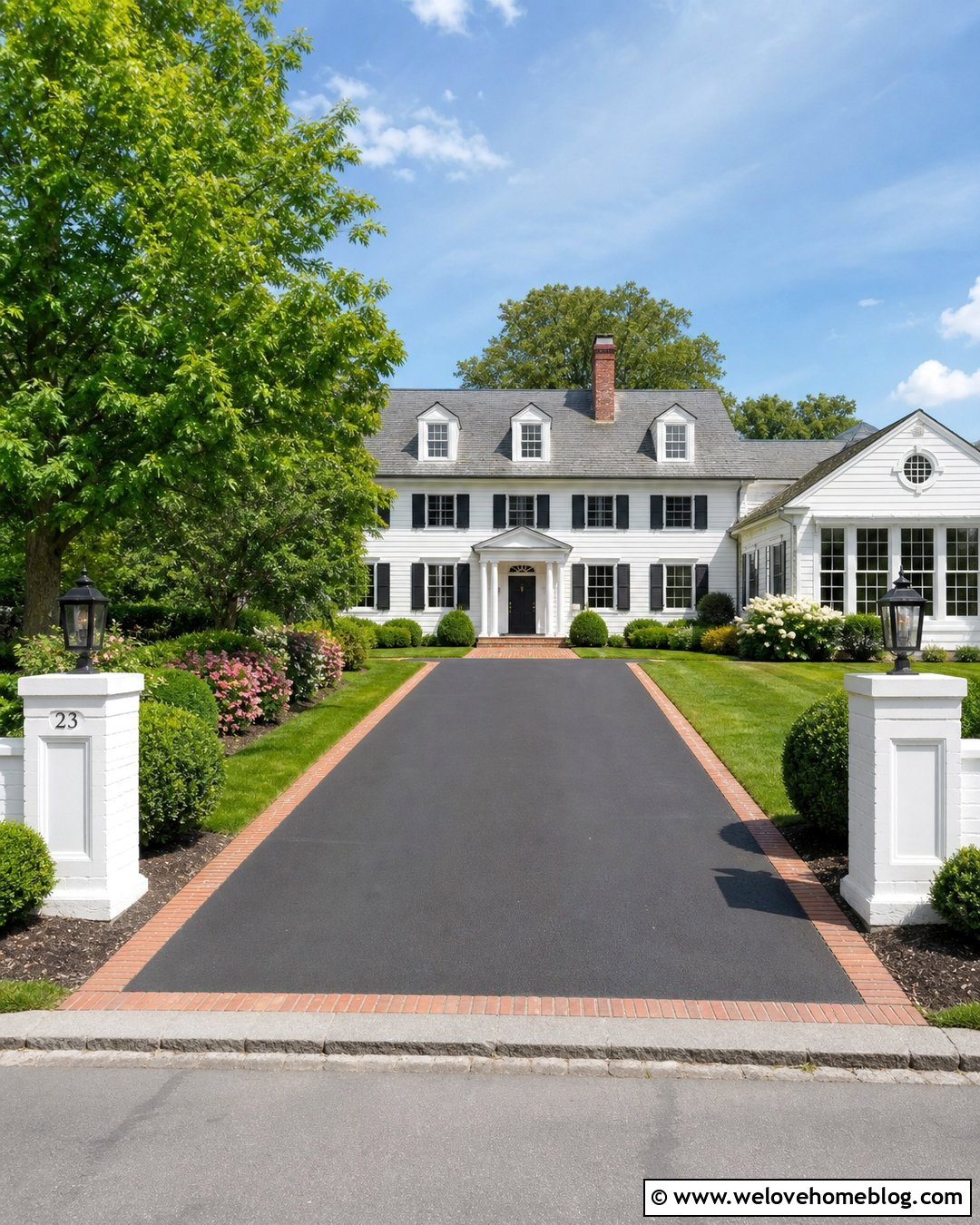
Classic red brick creates a warm, noticeable frame around a smooth black asphalt driveway. Install the bricks in a straight running bond along both sides, keeping their tops nearly flush with the pavement. This level transition looks neat and makes mowing beside the driveway easier. Add narrow planting beds with compact boxwoods, ornamental grasses, and seasonal flowers to soften the strong contrast between black and red. A straight driveway works especially well with this formal arrangement because the brick lines direct attention toward the house. Repeat the red brick around the front walkway or entrance steps for continuity. This complete look suits Colonial, Cape Cod, and traditional ranch homes with red brick details or warm siding colors.
2. Herringbone Brick Edging With A Concrete Driveway
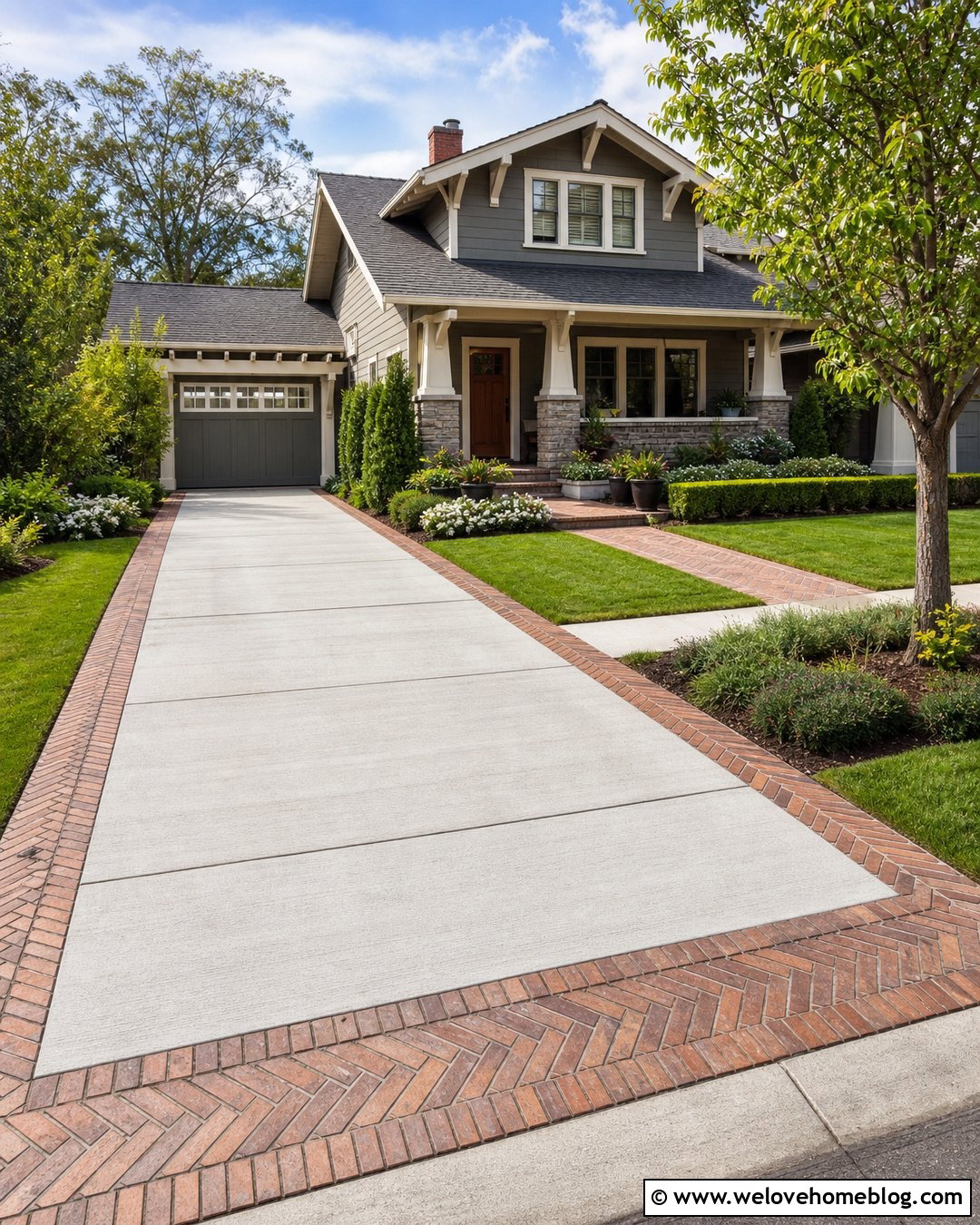
A herringbone brick border brings texture to a plain poured concrete driveway without covering the entire surface. Use two or three rows of clay brick pavers along each side so the angled pattern remains visible from the curb. Warm brown and red bricks provide an attractive contrast against light gray, broom-finished concrete. Keep the driveway straight and connect the patterned border to a matching brick walkway near the garage. Low evergreen shrubs and neatly clipped lawn maintain a clean, balanced appearance. Because herringbone has more visual movement than a simple linear border, it works best with restrained landscaping. This combination can add character to Craftsman, Tudor, and traditional suburban houses while allowing the concrete to remain the practical primary surface.
3. Soldier Course Brick Edging With A Gravel Driveway
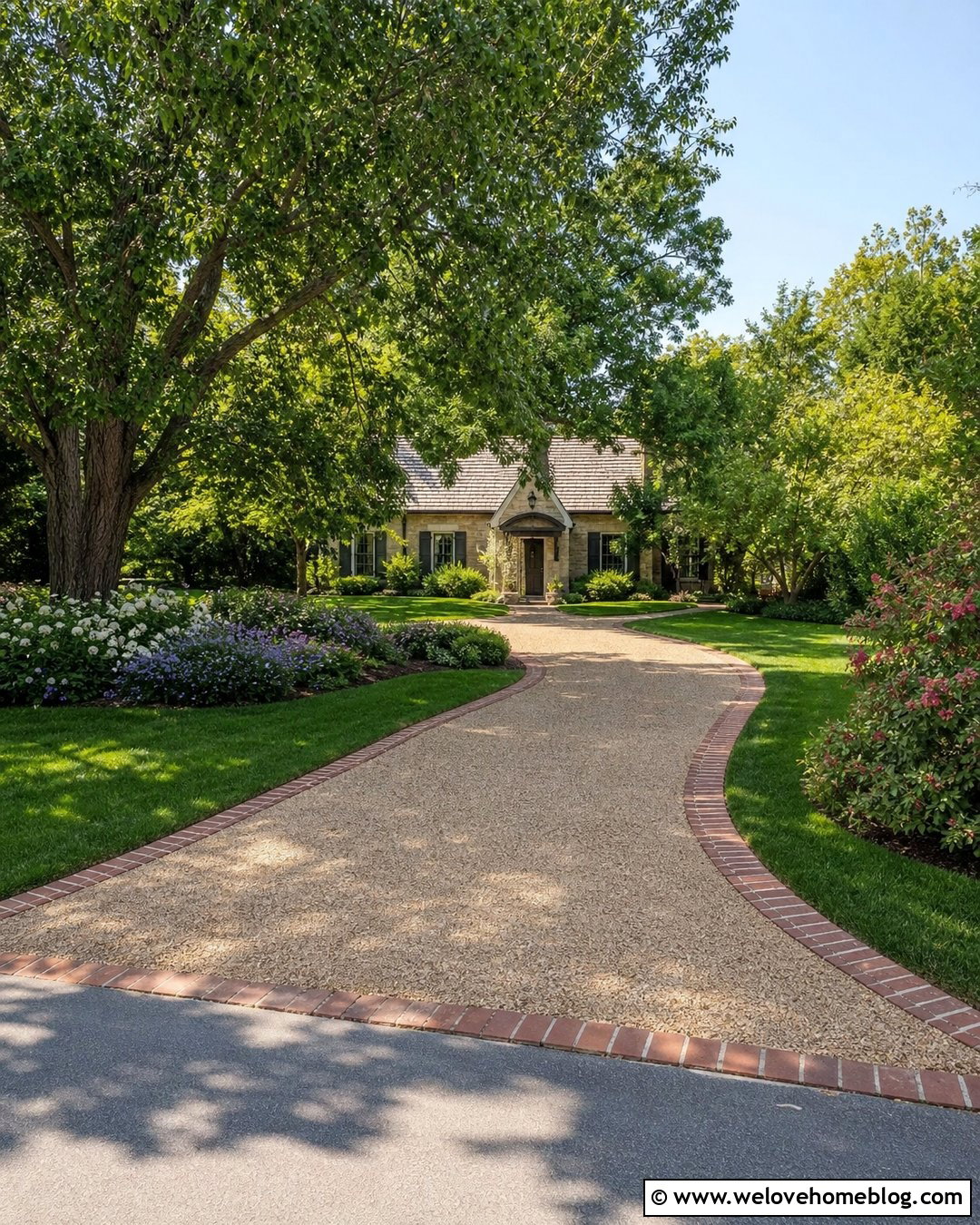
Loose gravel looks much more intentional when it is contained by a straight soldier course brick edge. In this arrangement, rectangular bricks sit side by side with their short ends facing the driveway. Choose aged red or dark brown clay bricks to complement warm beige gravel. The border should be properly supported so it can hold the loose material and preserve the driveway’s shape. Frame the outer edges with mown lawn, flowering shrubs, or relaxed perennial beds. A gently curved layout makes the gravel entrance feel natural while the orderly brick course prevents it from appearing unfinished. This complete driveway look works beautifully with cottages, farmhouses, and country homes, especially when the brick tones coordinate with chimneys, porch floors, or garden paths.
4. Flush Brick Edging With A Lawn Border
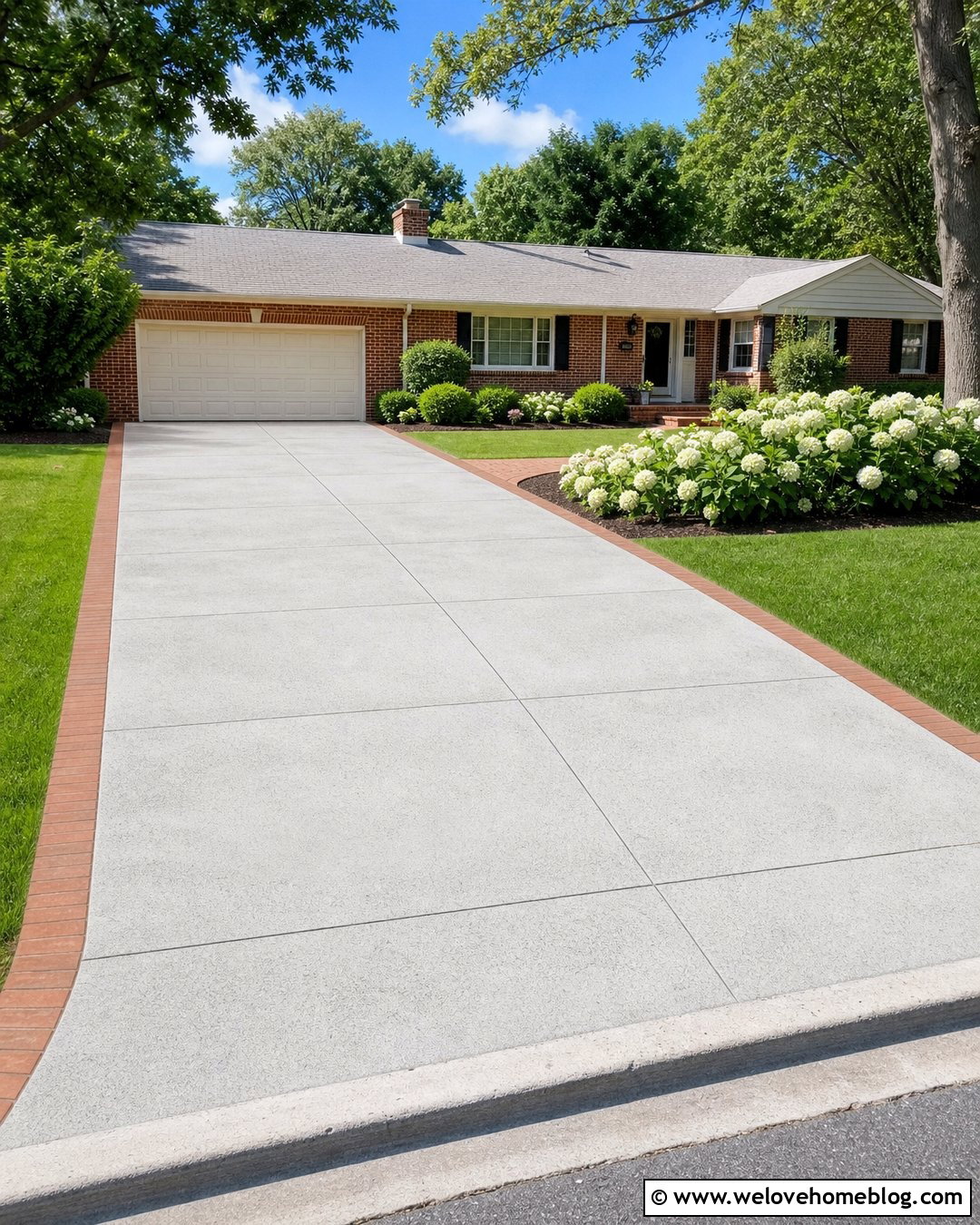
Do you want a crisp driveway edge without creating a raised obstacle? Set clay bricks flat and flush between a gray concrete driveway and the surrounding lawn. The brick strip becomes a practical mowing edge while introducing subtle color and texture. Select medium-red, brown, or variegated brick pavers that relate to the home’s facade. A running bond pattern keeps the design simple enough for a small suburban yard. Along the house side, widen the lawn border into a curved planting bed with hydrangeas and low evergreen shrubs. This approach keeps the driveway visually open and easy to navigate. Horizontal brick edging is commonly installed in a trench, while careful alignment helps the finished border appear smooth and consistent. ()
5. Raised Brick Edging With Flower Beds
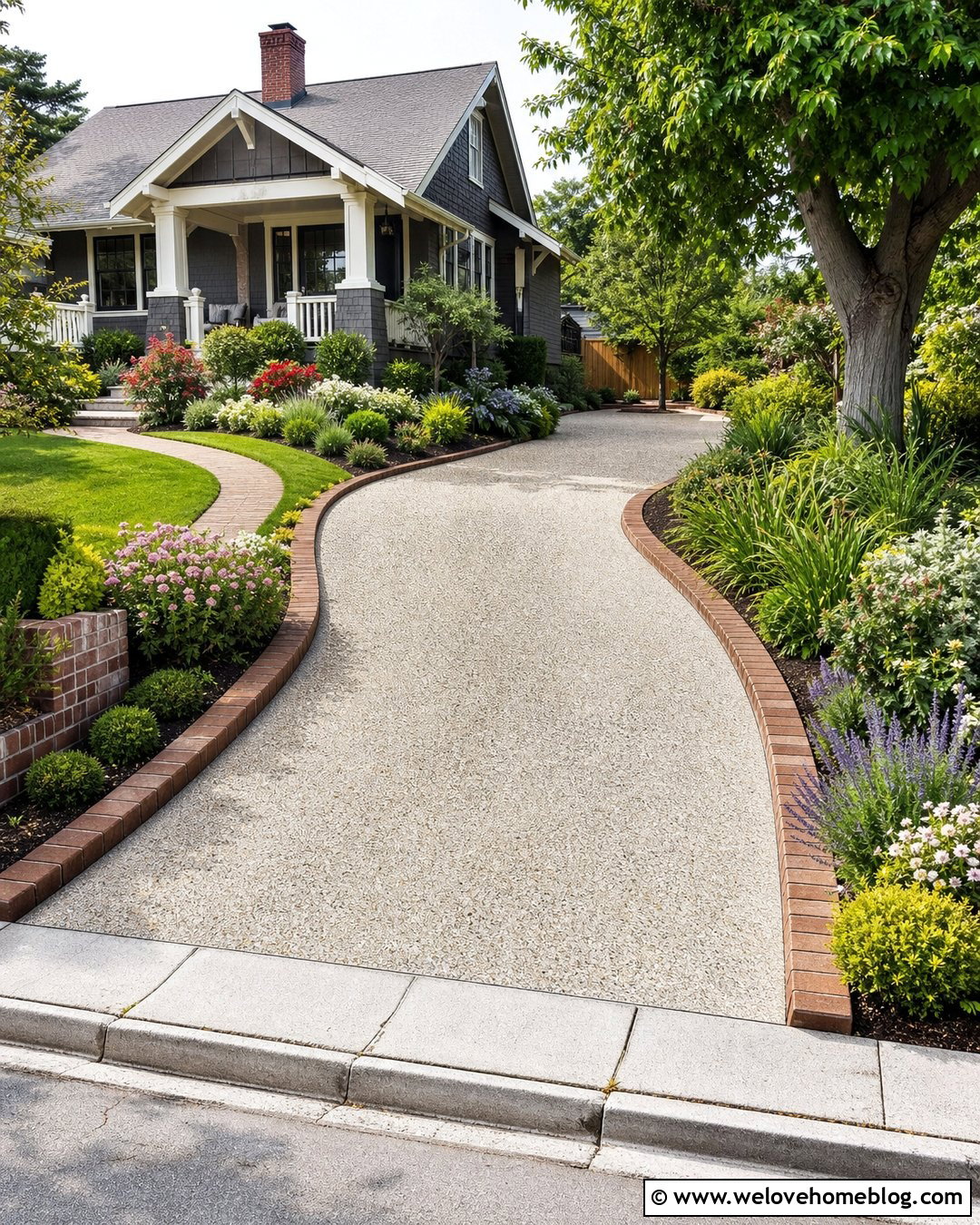
Raised brick edging can separate a driveway from planting beds while giving the landscape more depth. Pair a pale exposed aggregate driveway with one or two upright rows of red-brown clay bricks. Position the border slightly above the driveway to retain mulch and soil, but avoid making it so tall that opening vehicle doors becomes difficult. Behind the bricks, combine flowering perennials, dwarf shrubs, and ornamental grasses in layered beds. A curved border creates generous planting pockets without narrowing the full driveway. Matching brick around the front walkway makes the landscaping feel connected rather than added later. This complete look is a natural fit for cottage, Craftsman, and traditional homes where colorful planting and textured materials support a welcoming, established appearance.
6. Double Row Brick Edging With A Wide Driveway
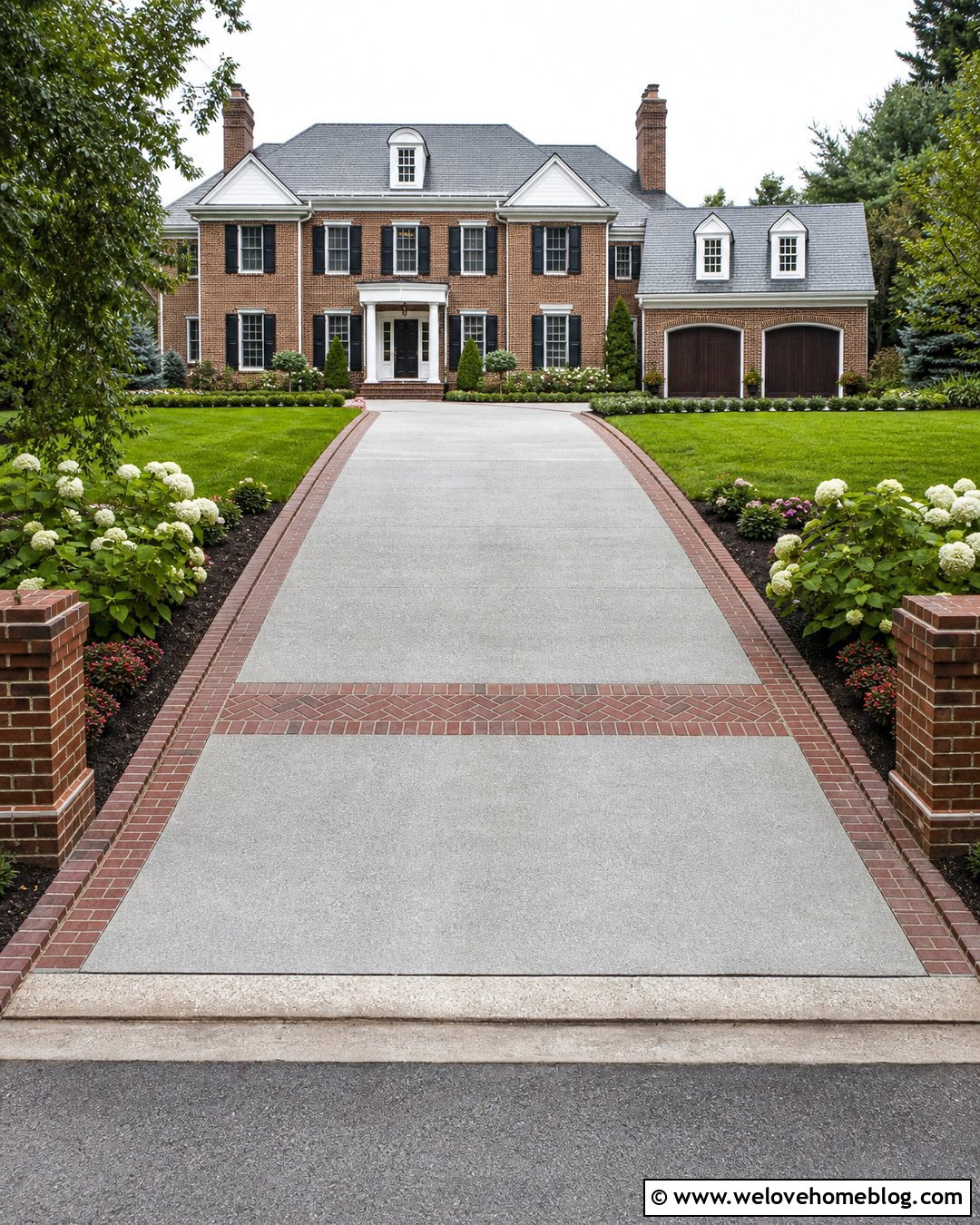
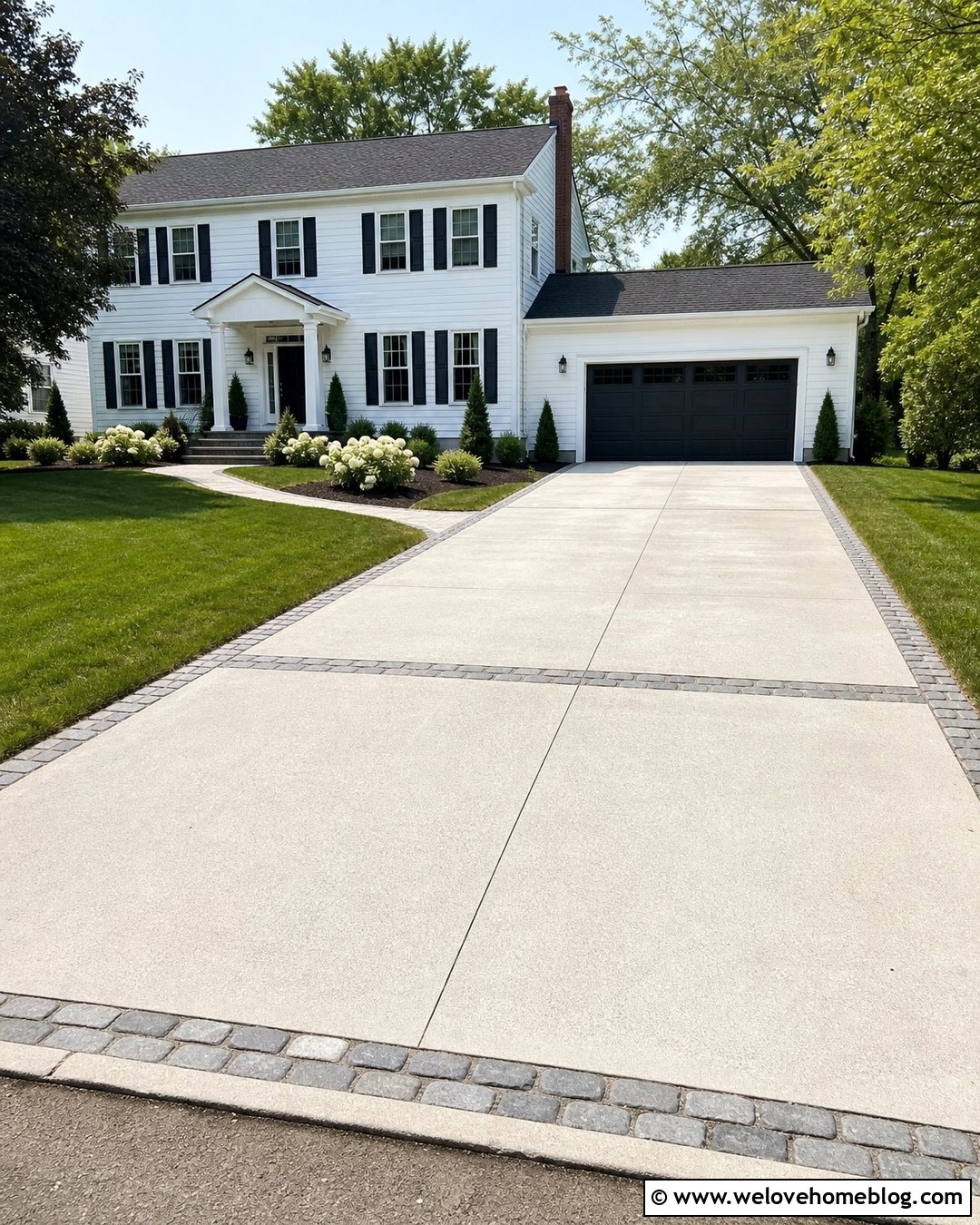
A wide driveway can visually overpower a front yard, but a double row of bricks gives it stronger definition. Frame a broad broom-finished concrete surface with two parallel rows of dark red brick pavers. Lay the inner row in a soldier course and the outer row in a running bond for a detailed yet orderly transition. Add lawn beyond one side and deep planting beds on the other to prevent the layout from feeling overly symmetrical. Near the street, continue the bricks across the driveway as a subtle entrance band. This helps break up the large concrete area and creates a finished curb view. The design works especially well with large Colonial, Georgian, and brick ranch homes that can support a wider, more substantial border.
7. Curved Brick Edging With A Winding Driveway
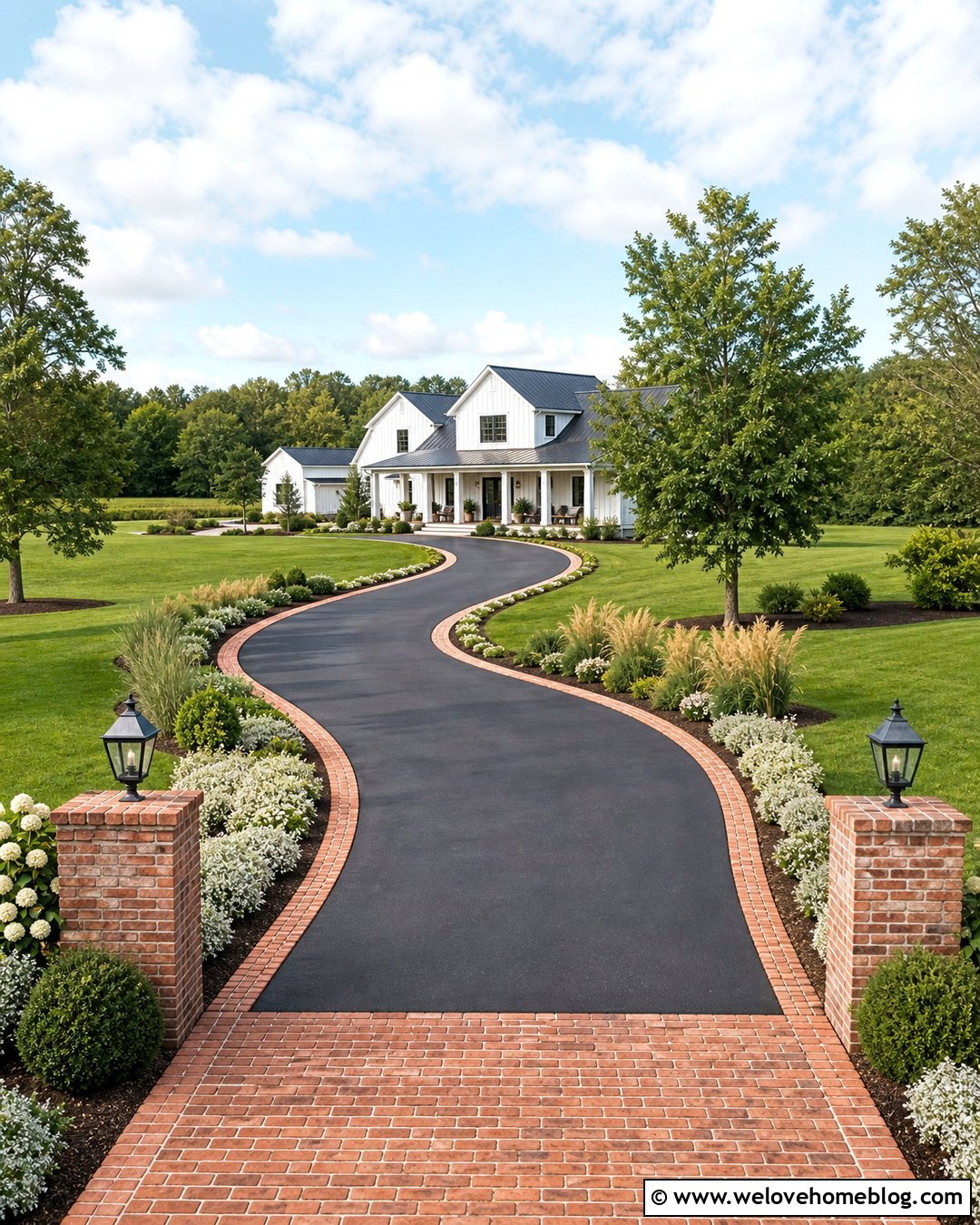
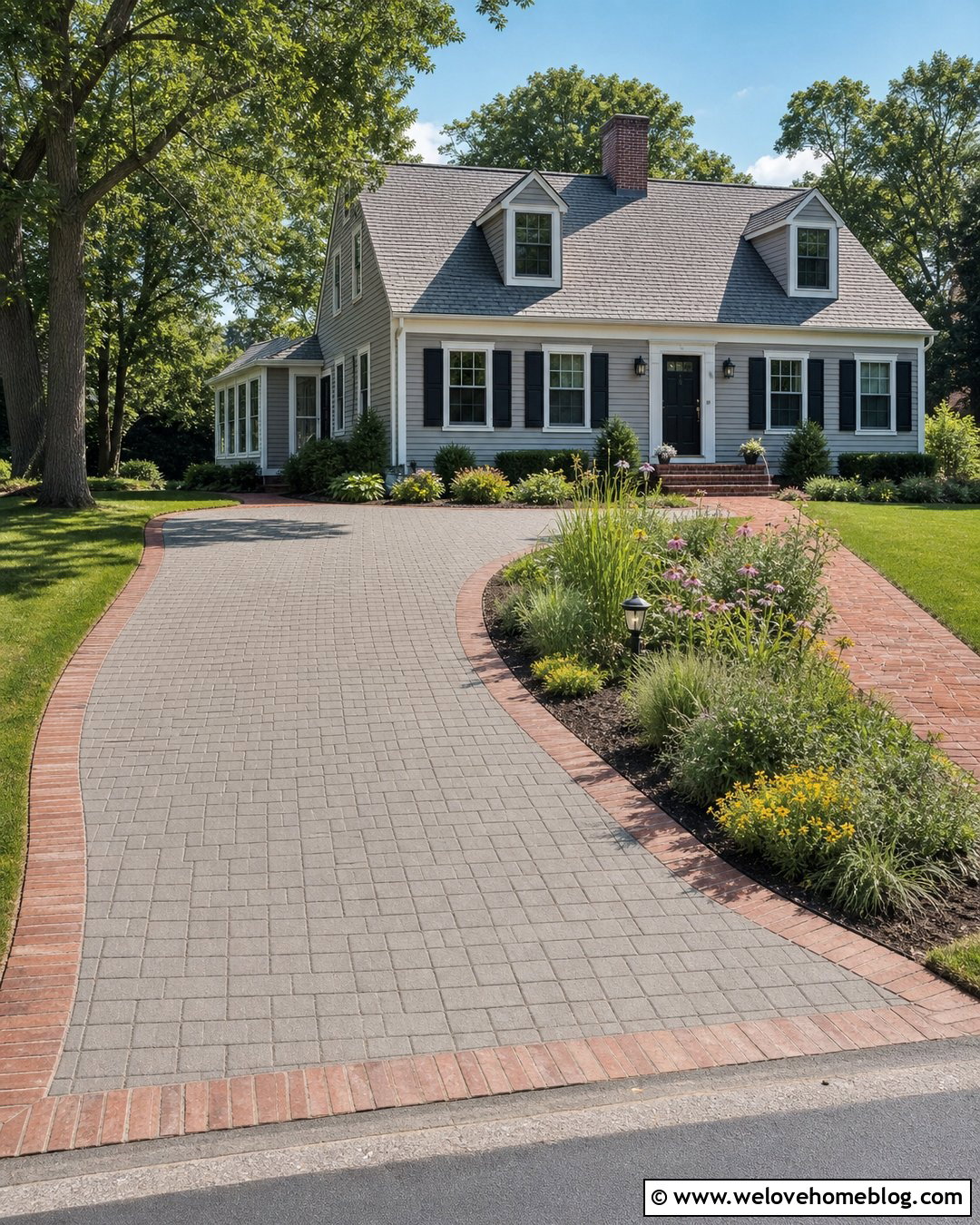
A sweeping driveway needs edging that follows its curves smoothly rather than fighting the natural layout. Use narrow red clay pavers or tapered brick edgers around a curved asphalt driveway leading to a welcoming farmhouse or cottage. Keep the bricks flush or slightly raised, depending on whether they border grass, gravel, or mulch. On the outside curve, plant groups of ornamental grasses and flowering shrubs to emphasize the driveway’s movement. Use lower ground covers along the inside curve so sightlines remain clear. Small, carefully planned joints will produce a cleaner border around bends. Finish the entrance with a wider brick apron or matching walkway connection. The resulting driveway feels relaxed and graceful while remaining visually defined from the road to the house.
8. Reclaimed Brick Edging With A Farmhouse Driveway
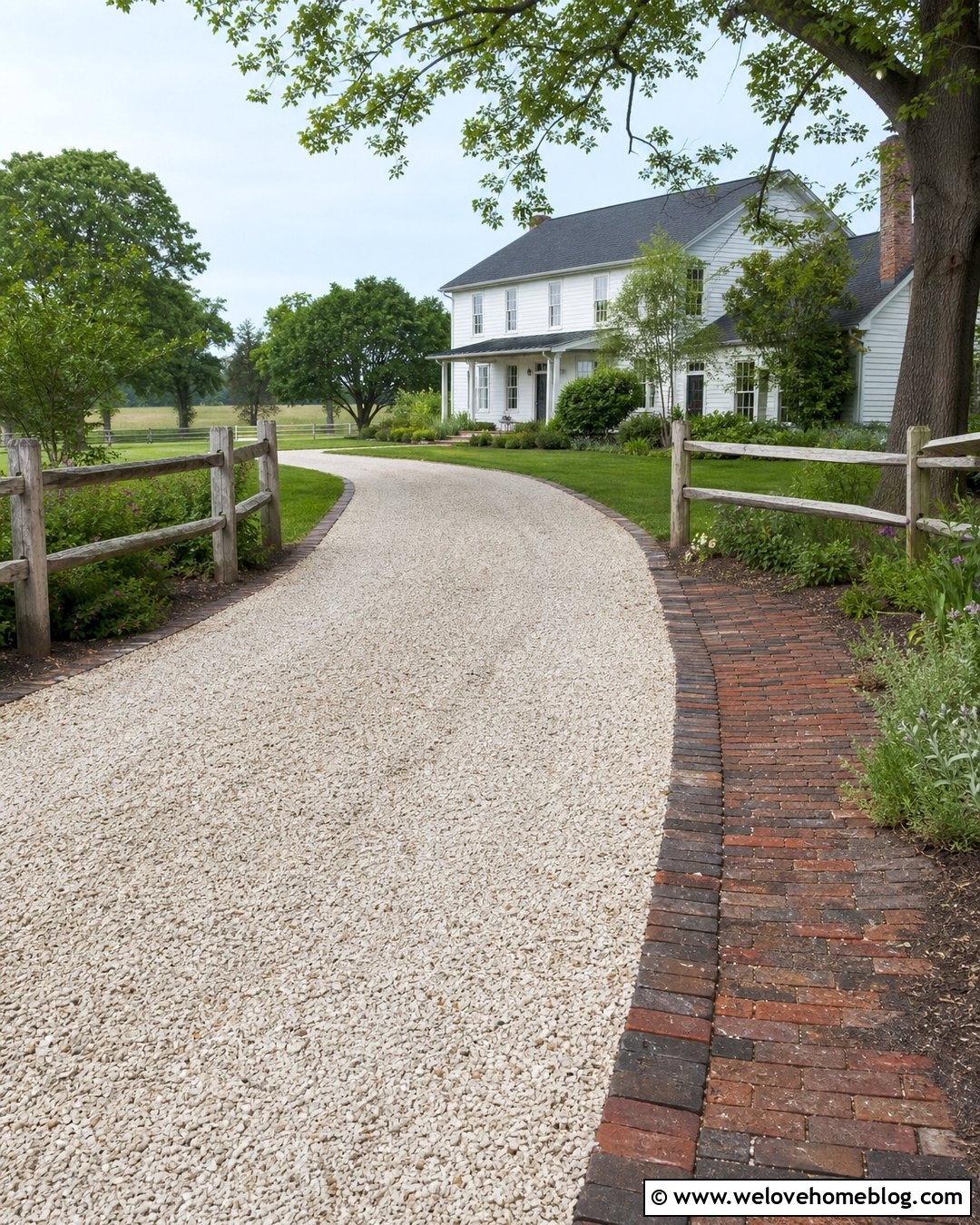
Weathered reclaimed bricks add instant character to a pale gravel or crushed-stone farmhouse driveway. Their uneven red, brown, and charcoal tones look especially natural beside split-rail fencing, mature trees, and informal planting beds. Lay the bricks in a simple soldier course to keep the varied surfaces from becoming too busy. A gently curving driveway enhances the relaxed rural setting, while the brick border contains the gravel and gives the route a deliberate shape. Near the house, transition into a reclaimed brick walkway or small parking apron. Select sound paving bricks rather than fragile interior bricks, and arrange the most consistent pieces near high-visibility areas. The finished driveway should feel aged and welcoming without looking neglected or poorly maintained.
9. Charcoal Brick Edging With A Modern Concrete Driveway
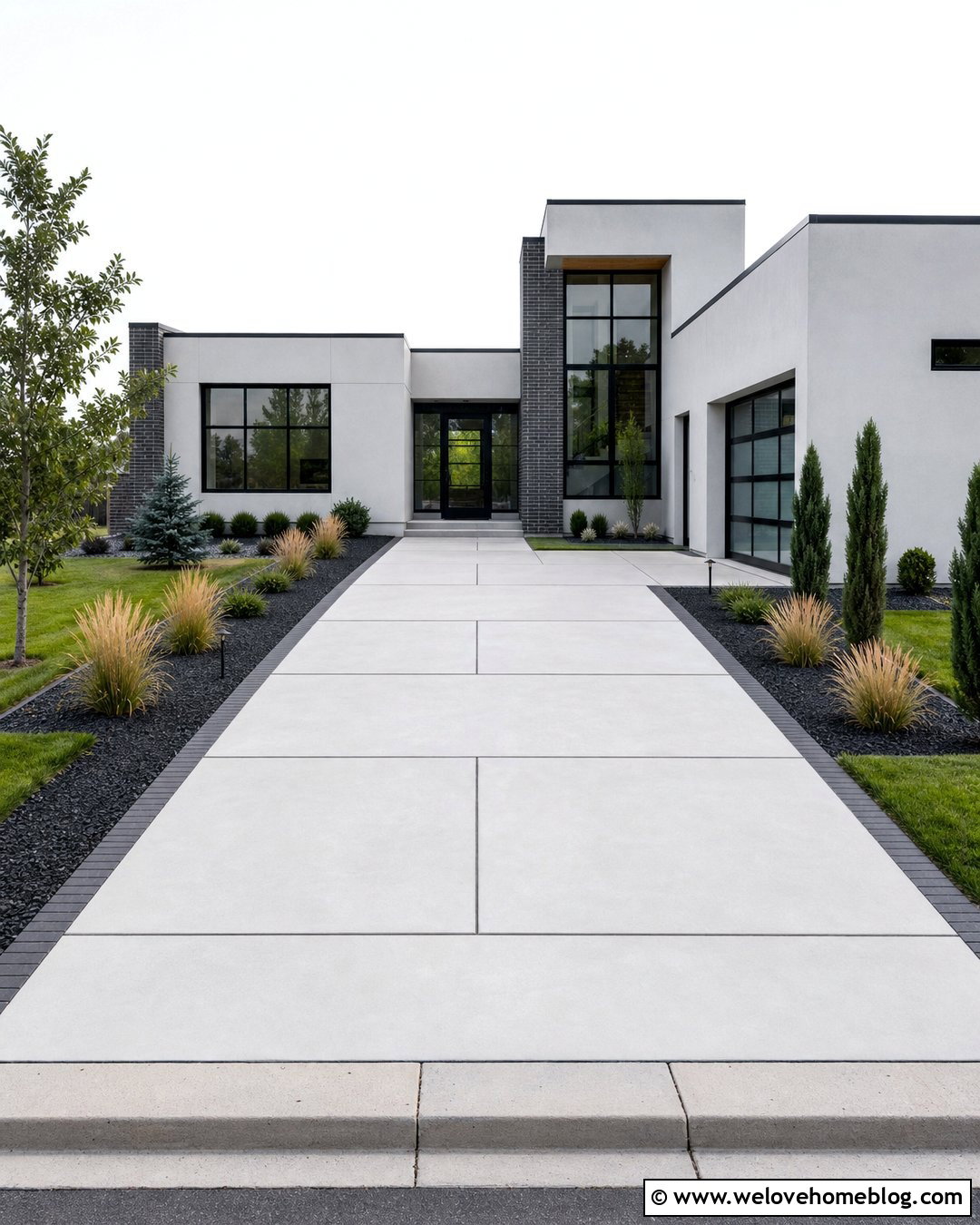
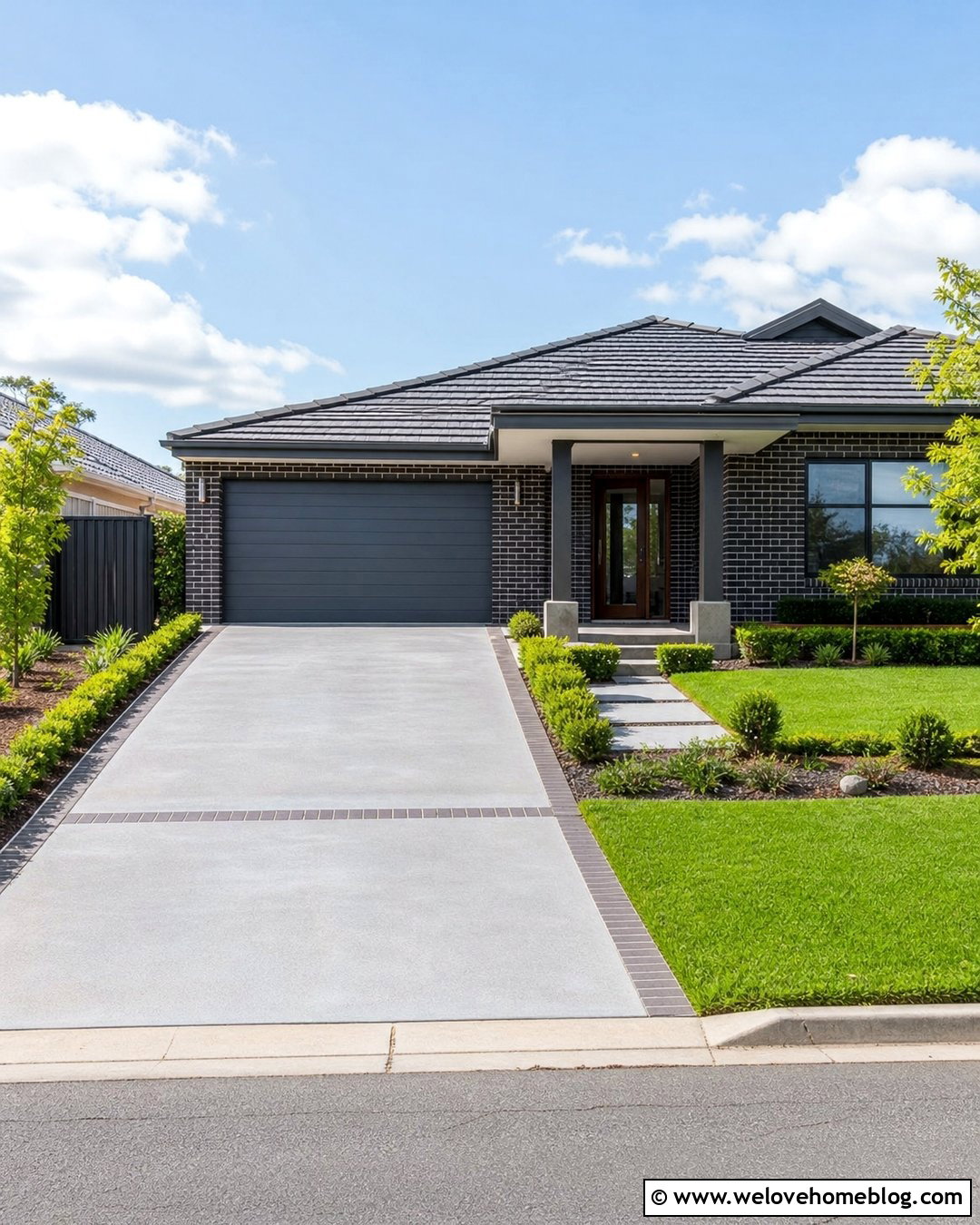
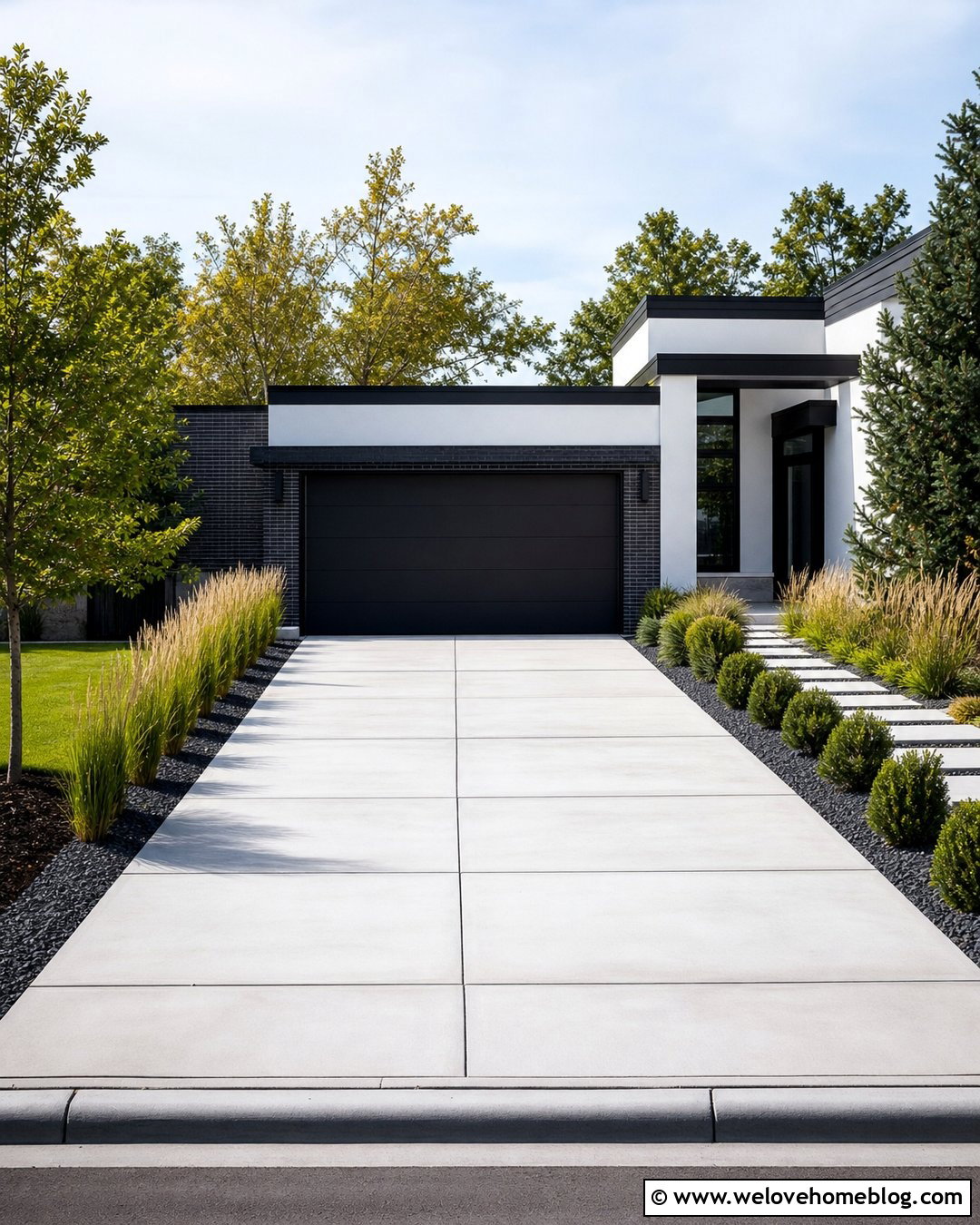
For a sharper contemporary look, surround large light-gray concrete slabs with charcoal brick pavers. Set the dark bricks in a single flush row along a straight or slightly offset driveway. Their deep color outlines the concrete while coordinating with black window frames, metal roofing, or a dark garage door. Narrow gravel planting beds filled with sculptural grasses, compact evergreens, and a few architectural plants keep the landscape restrained. Add rectangular grass strips or permeable joints between concrete sections to soften the hardscape. The charcoal brick should appear as part of a planned material palette rather than an unrelated border. This crisp combination suits modern, midcentury, and minimalist homes where simple geometry, limited colors, and strong lines produce the greatest visual impact.
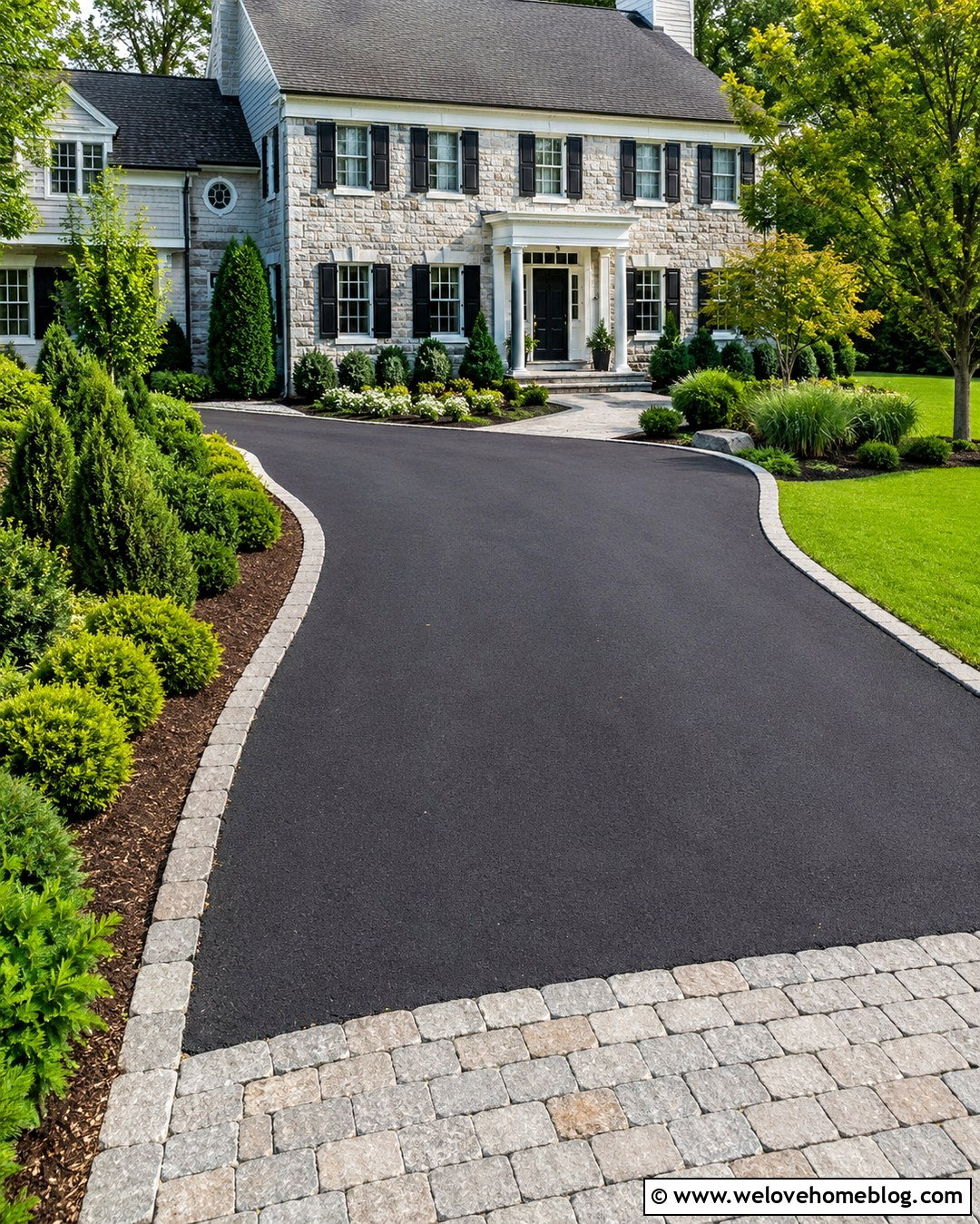
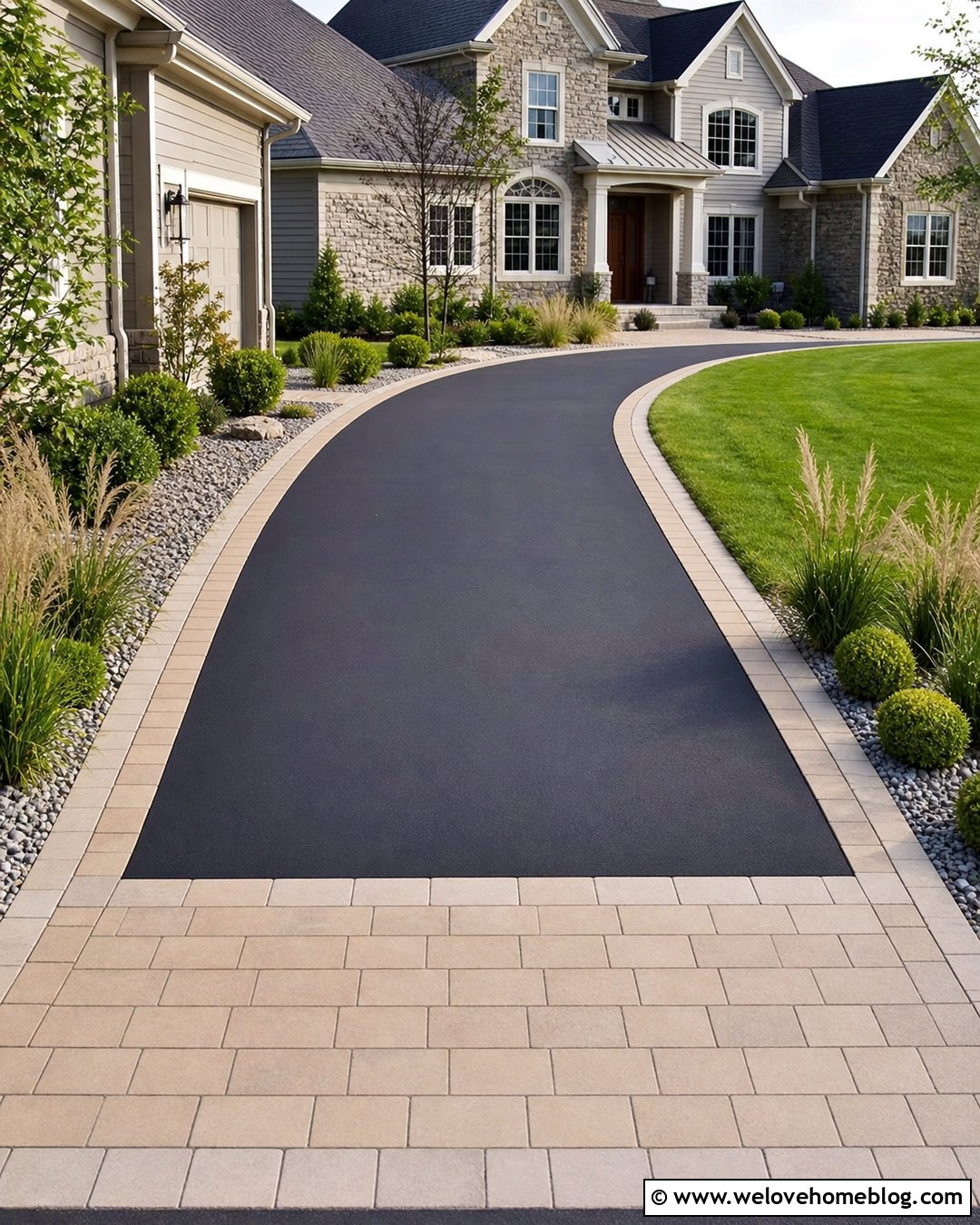
10. Tan Brick Edging With An Exposed Aggregate Driveway
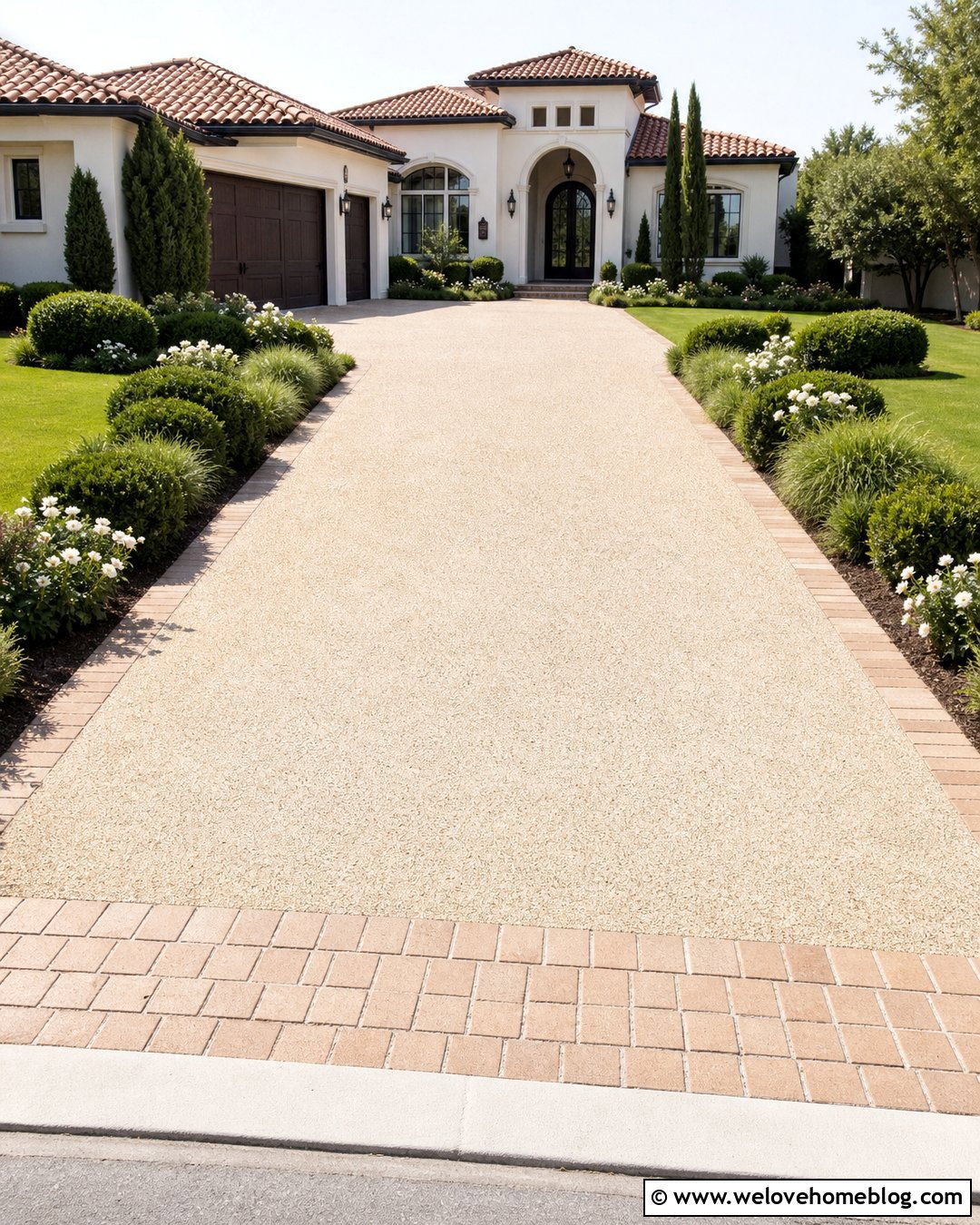
Warm tan brick can soften the textured appearance of an exposed aggregate driveway. Select sandy beige or buff clay pavers that pick up similar colors within the aggregate. A single soldier course provides enough separation without creating a heavy outline. Use the border along a straight driveway and widen it near the street into a coordinated brick apron. On each side, combine green lawn with planting beds containing white flowers, dwarf grasses, and rounded shrubs. The pale palette gives the entrance a bright, open appearance and complements stucco, stone, and light-colored siding. This driveway look works especially well in sunny Southwestern, Mediterranean, and contemporary suburban landscapes. Slight variations among the brick tones will make the border feel natural rather than perfectly manufactured.
11. Brick Driveway Edging With A Matching Entrance Apron
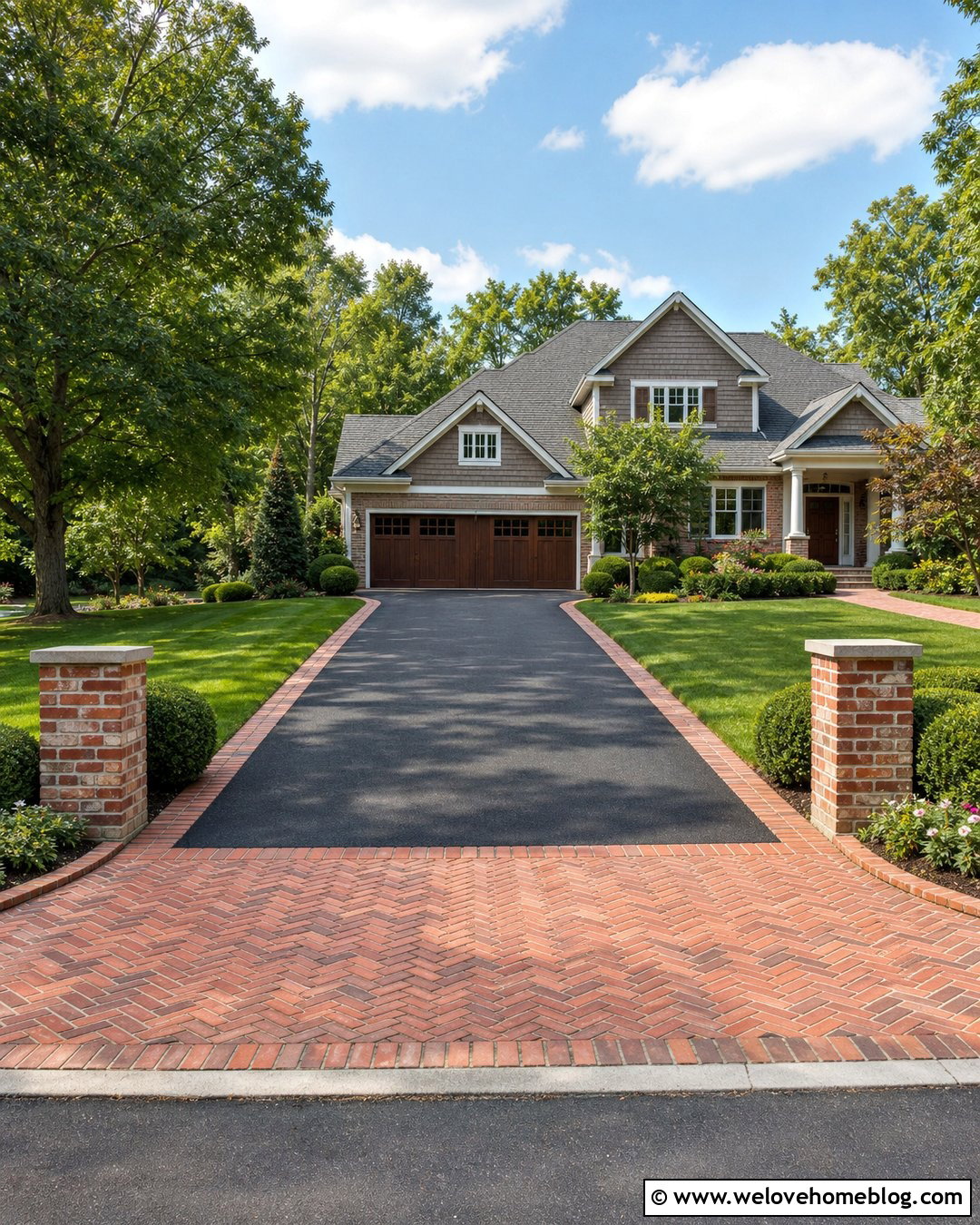
A matching brick apron can turn simple driveway edging into a complete entrance feature. Start with narrow red brick borders running beside a black asphalt or gray concrete driveway. At the curb, expand the same material into a six- to eight-foot-deep apron laid in herringbone or basketweave. The wider brick section clearly marks the driveway entrance and introduces color where it is most visible. Frame it with low stone pillars, clipped shrubs, and broad planting beds that preserve open sightlines. Repeat the brick in a walkway leading to the front door. Keep colors and joint widths consistent throughout the design. This approach suits traditional and Craftsman homes, giving an otherwise basic driveway a polished, custom-built appearance from the street.
12. Basketweave Brick Edging With A Straight Driveway
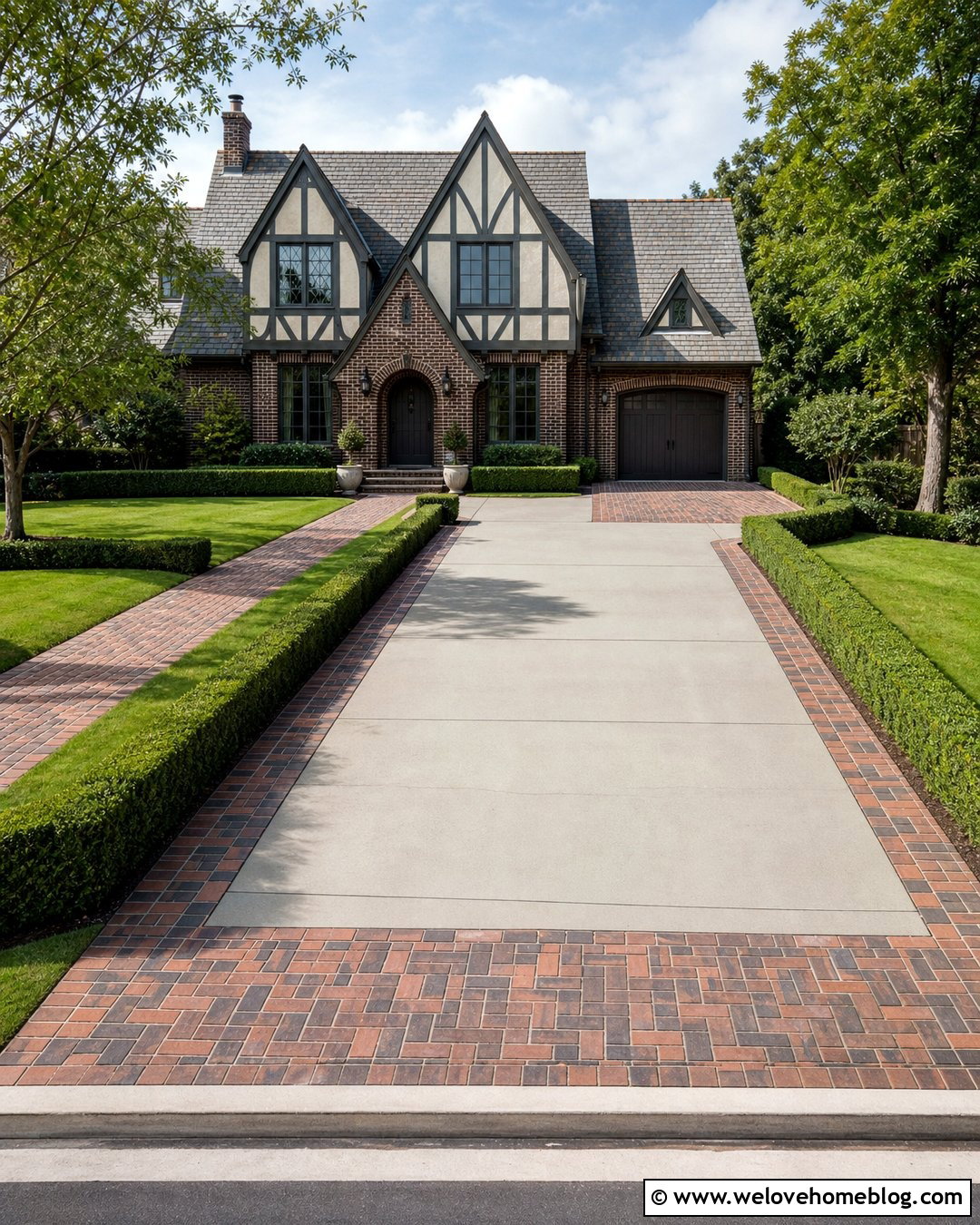
Basketweave brick edging adds an old-fashioned pattern to a straight concrete driveway and traditional front yard. Create a border several bricks wide so alternating pairs of clay pavers can be clearly recognized. A mixture of muted red and brown tones works well beside warm gray concrete. Because the pattern already offers substantial detail, surround it with simple lawn panels, clipped hedges, and a straight brick walkway. Use the same basketweave pattern in a small landing near the garage or porch to create a visual connection. This driveway design is particularly suitable for Colonial Revival, Tudor, and older brick homes. Carefully planned dimensions are important because the pattern looks best when full bricks fit along most of the run with minimal awkward cuts.
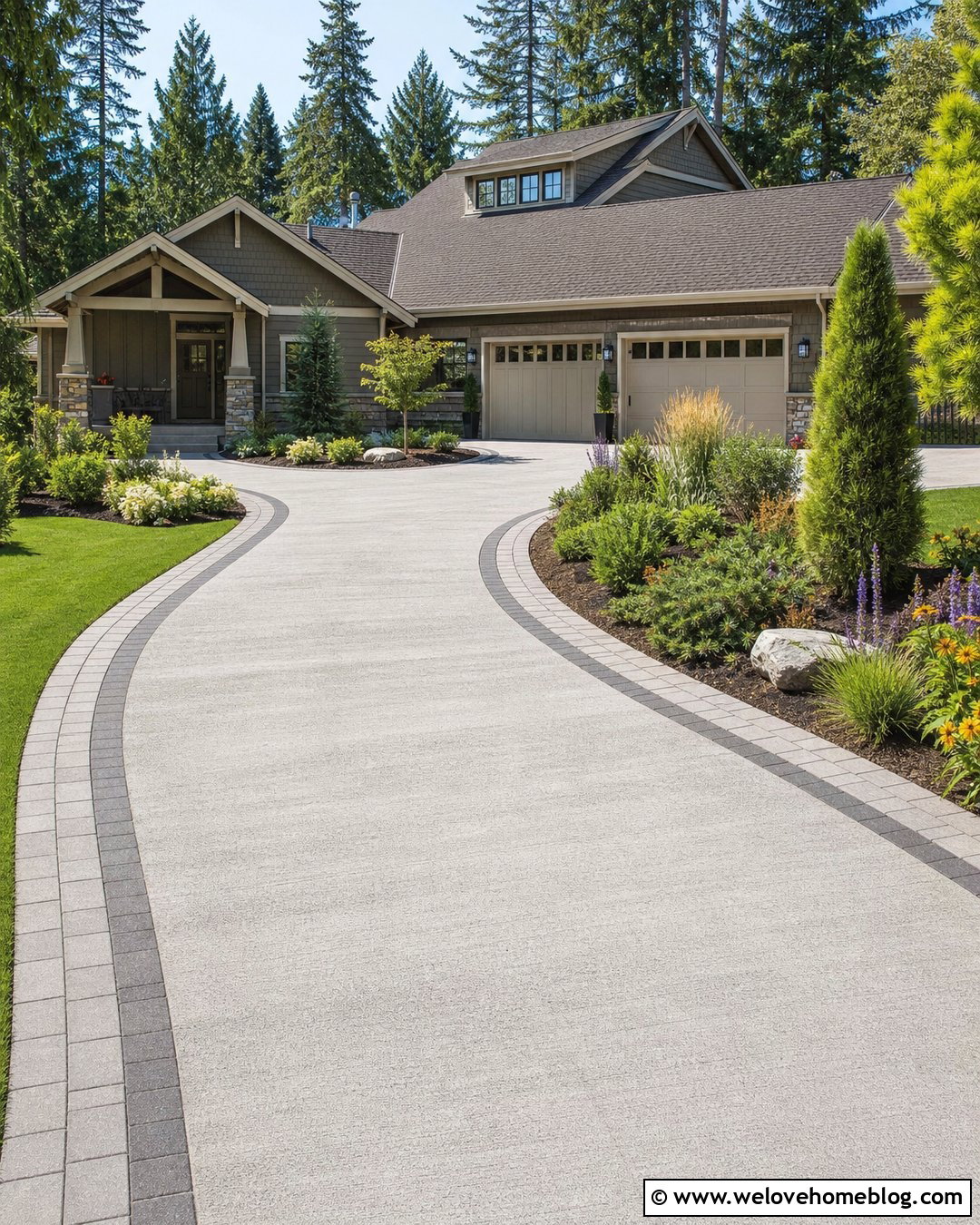
13. Contrasting Brick Edging With A Paver Driveway
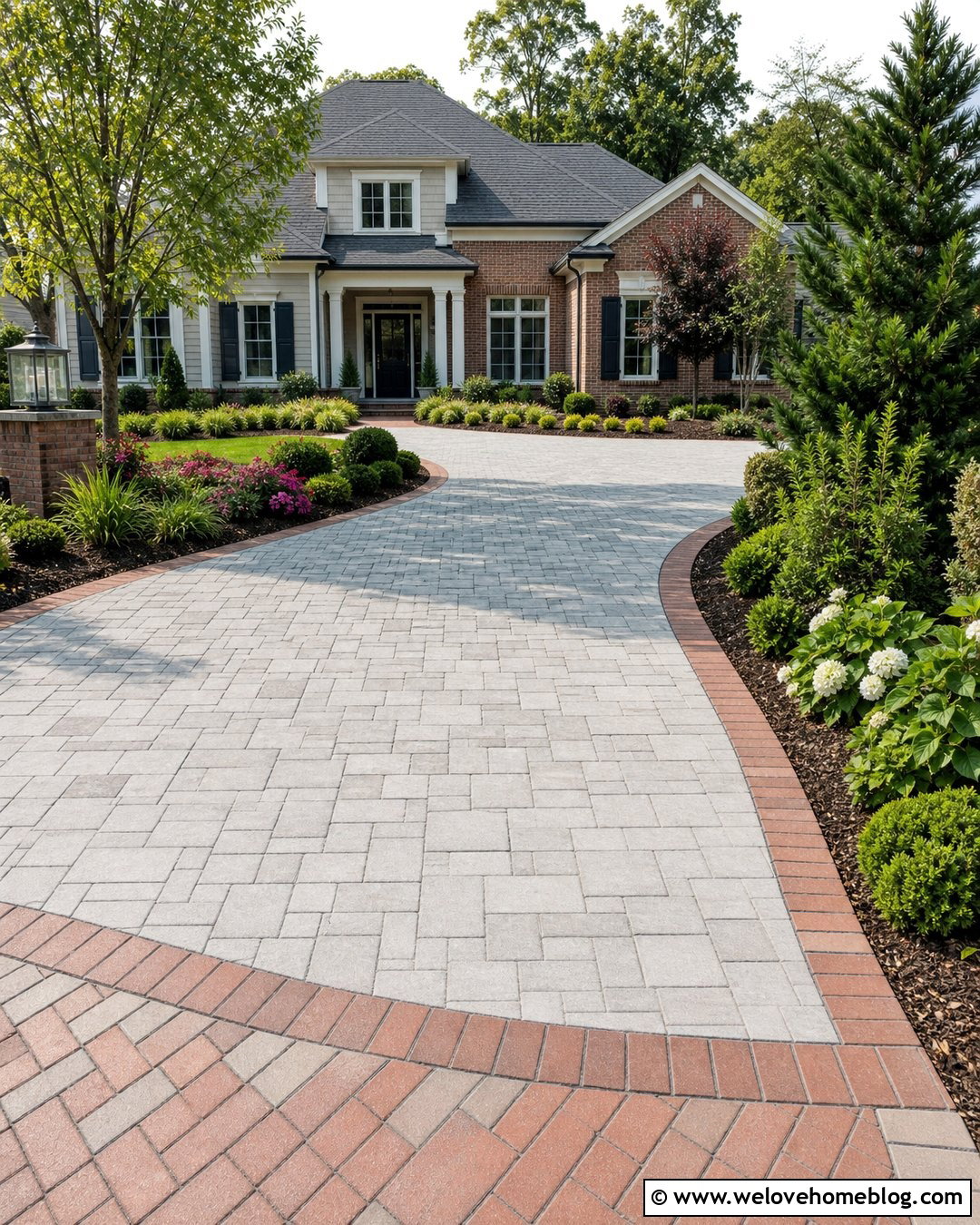
A paver driveway can still benefit from brick edging when the border clearly contrasts with the primary surface. Surround light-gray concrete pavers with dark red or charcoal clay bricks installed in a soldier course. The color difference emphasizes the driveway’s shape and prevents the edge from visually blending into nearby paving. Choose a broad curved layout leading to a transitional or contemporary home. Add mulched beds with evergreen shrubs, flowering perennials, and a few small ornamental trees. Use a narrow strip of matching brick between the driveway and front walkway to tie the hardscape together. Avoid selecting brick that is almost—but not quite—the same color as the central pavers. An intentional contrast creates a cleaner and more cohesive finished design.
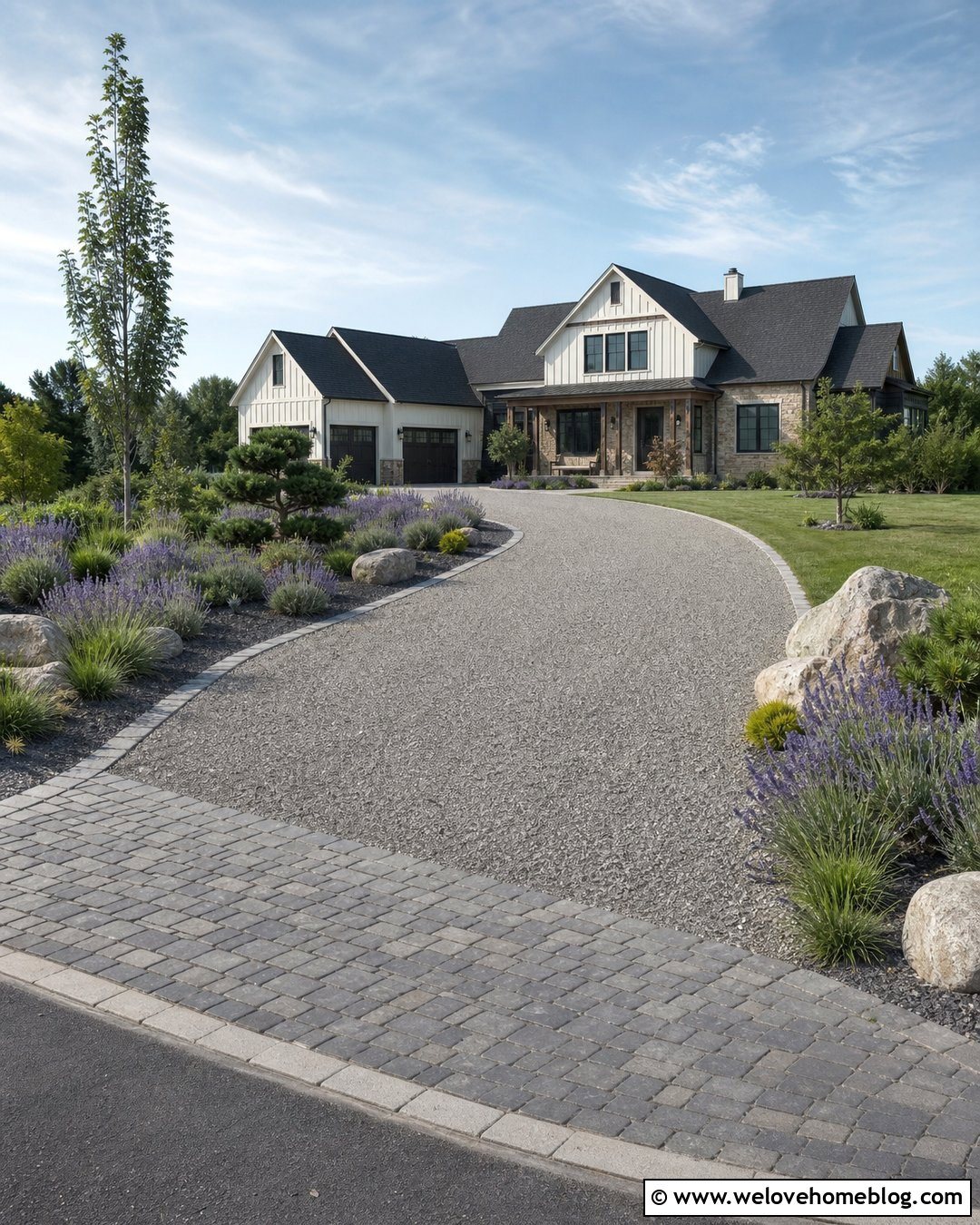
14. Brick Edging With A Cobblestone Driveway Apron
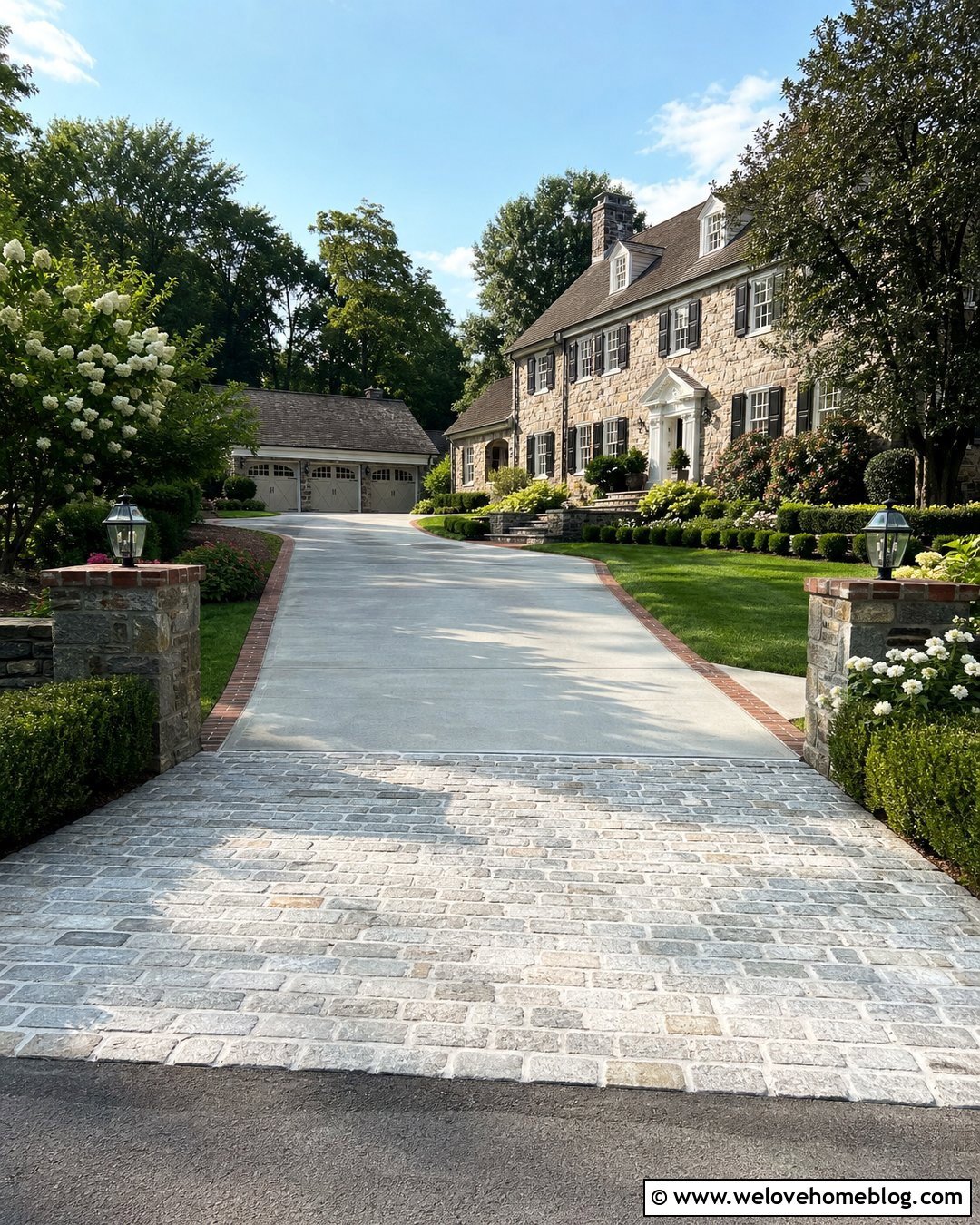
Combining brick edging with a cobblestone apron creates a layered, substantial entrance. Run weathered red brick along both sides of a gray concrete driveway, then install granite cobblestones across the curb end. The brick provides warmth, while the larger gray stones introduce texture and clearly define the transition from street to private property. Add brick-and-stone pillars on either side, but keep them low enough to preserve visibility. Behind the entrance, use clipped hedges, flowering shrubs, and a straight lawn edge to balance the mix of masonry. Repeat small amounts of both materials near the front steps. This design works best with substantial Colonial, European-inspired, or stone-clad homes where multiple traditional materials feel appropriate rather than overly decorative.
15. Brick Driveway Edging With Lavender Borders
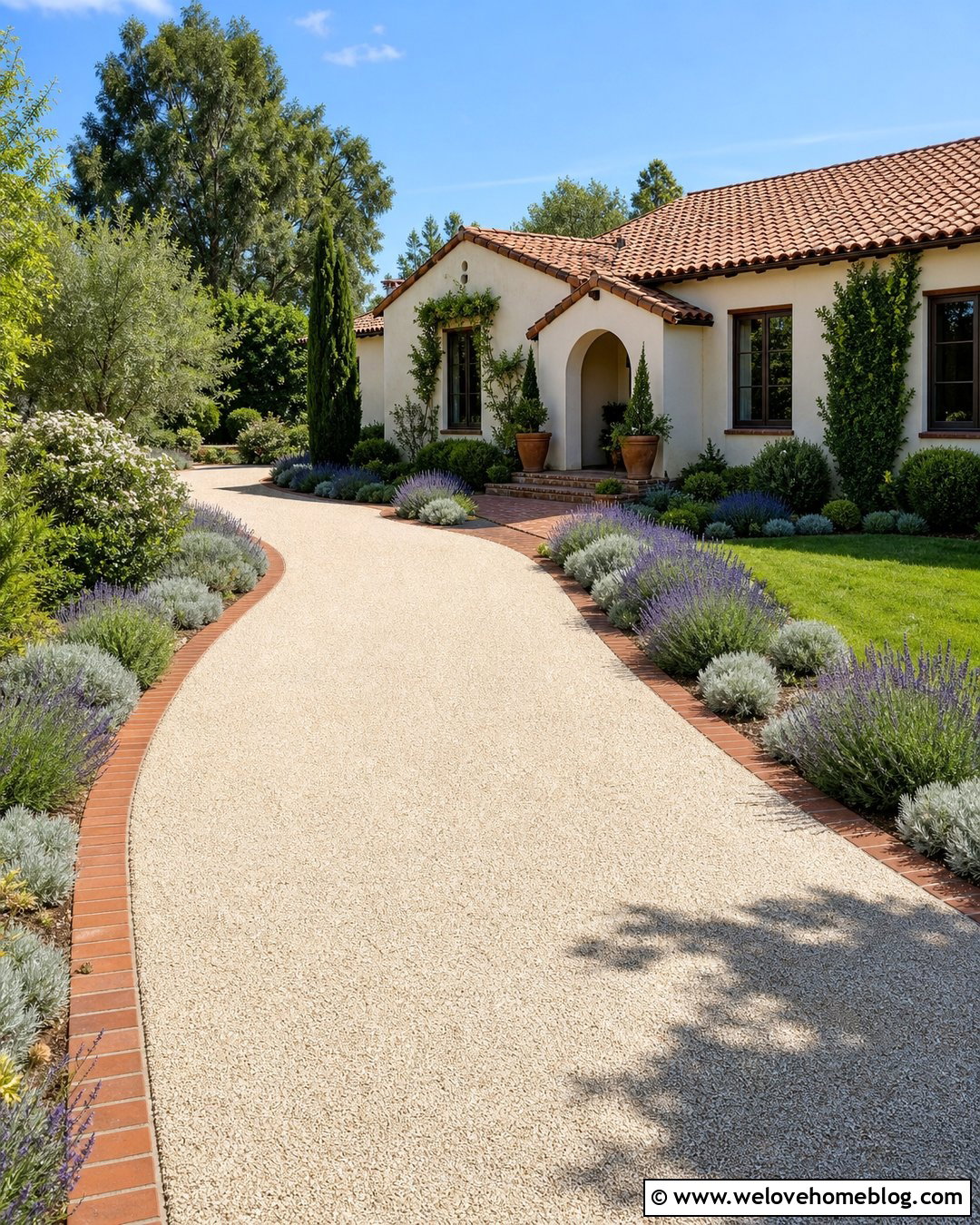
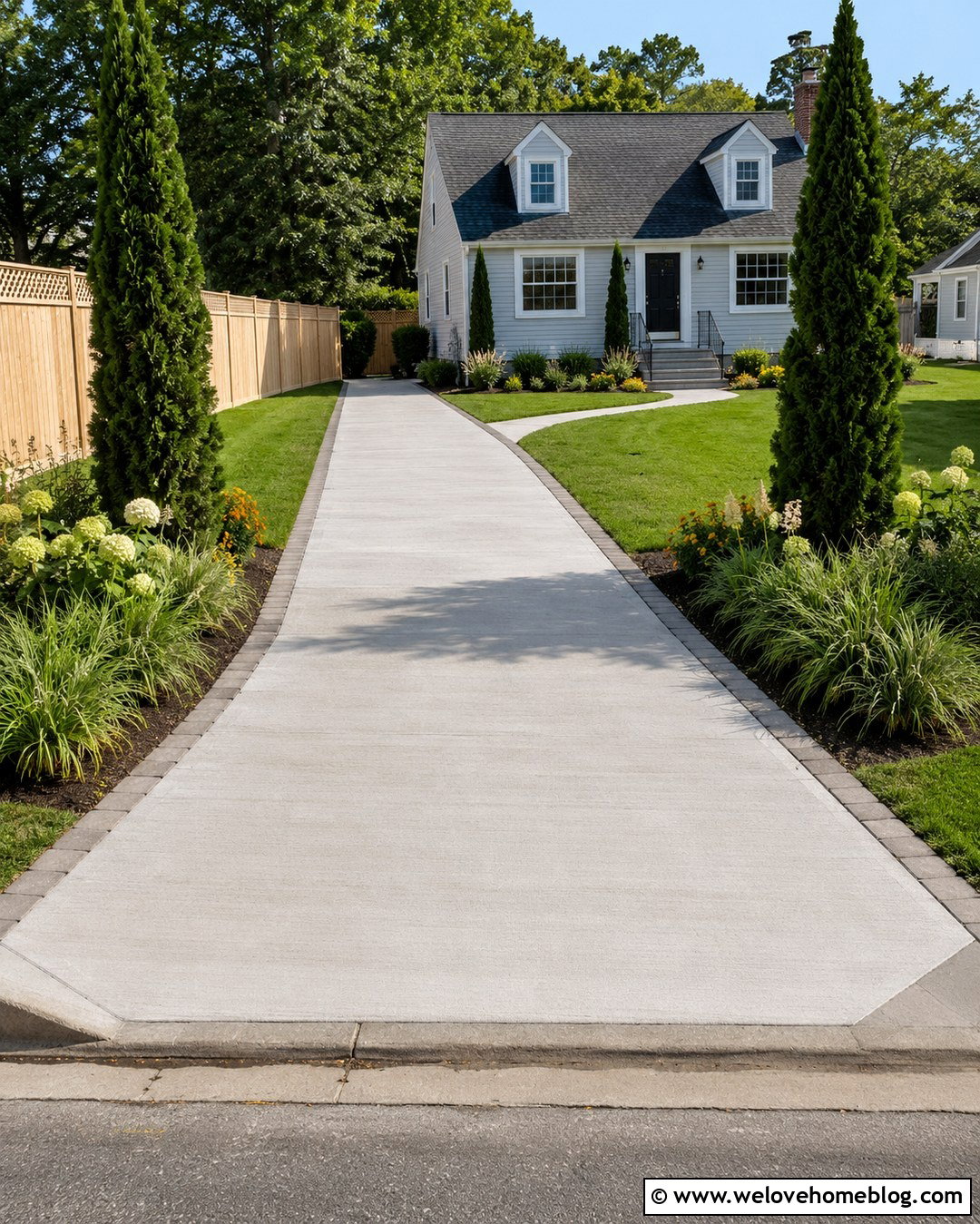
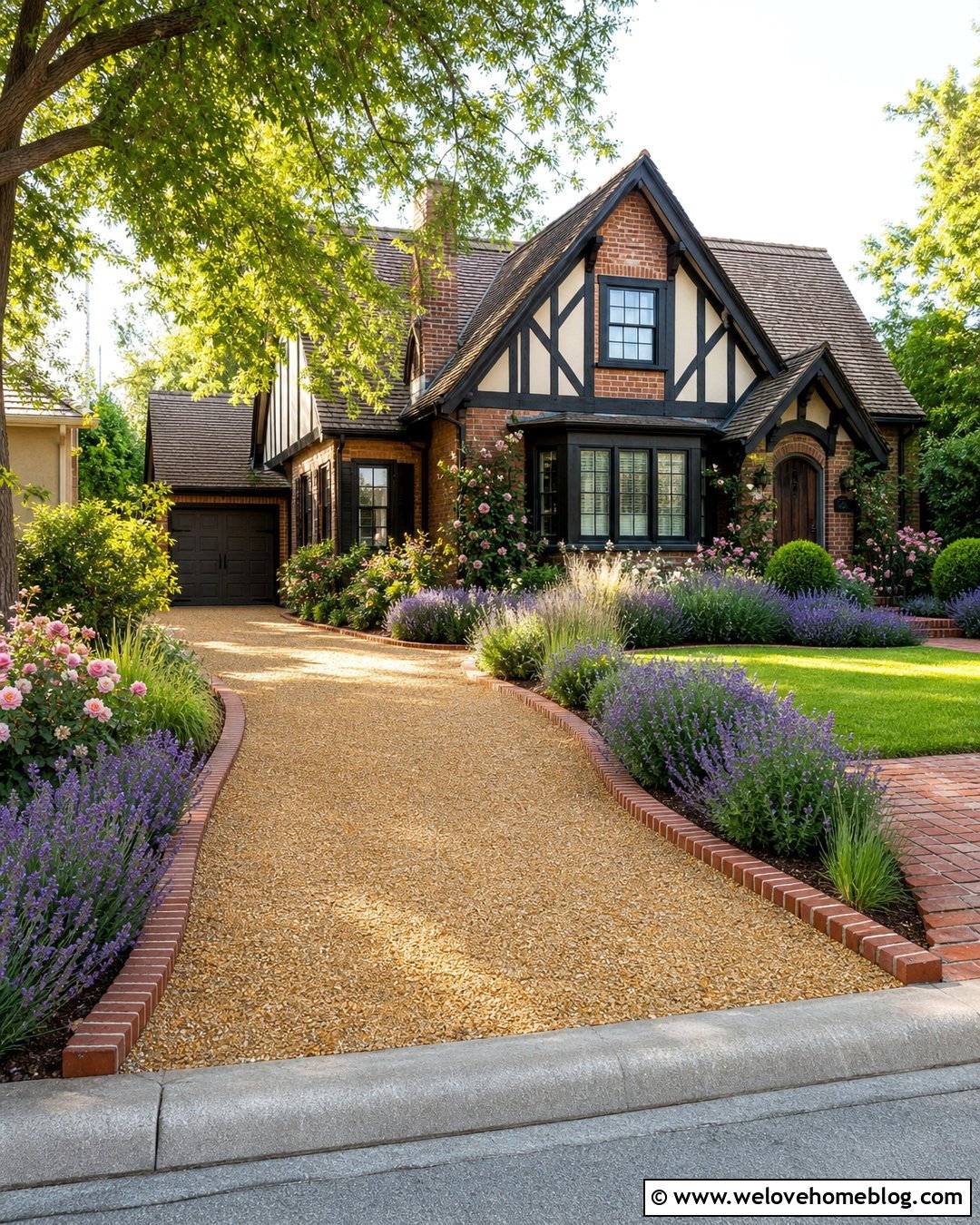
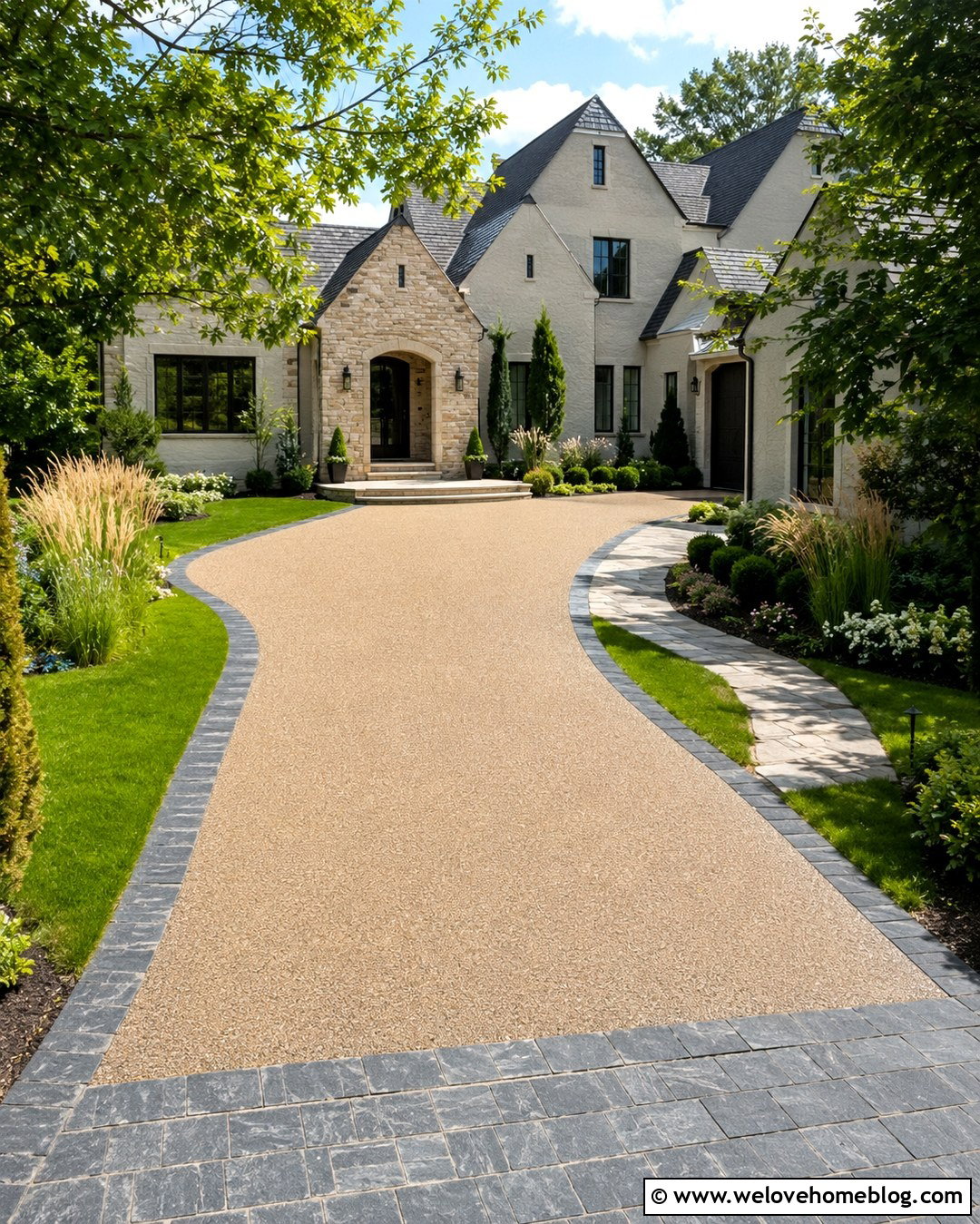
Warm clay brick and purple lavender create an inviting frame for a light gravel or resin-bound driveway. Use a flush red-brown soldier course to define a gently curved route toward a cottage, Mediterranean, or modern farmhouse home. Beyond the brick, plant repeated drifts of lavender rather than isolated specimens. Mix in silver-leaved ground covers and compact evergreen shrubs for color outside the main flowering season. Keep plants slightly back from the driving surface so mature growth does not hide the border or interfere with vehicle doors. A matching brick walkway can branch naturally from the driveway toward the front porch. The combination of structured brick, soft planting, and a flowing driveway shape produces a complete landscape that feels colorful, calm, and thoughtfully coordinated.
16. Brick Driveway Edging With Boxwood Landscaping
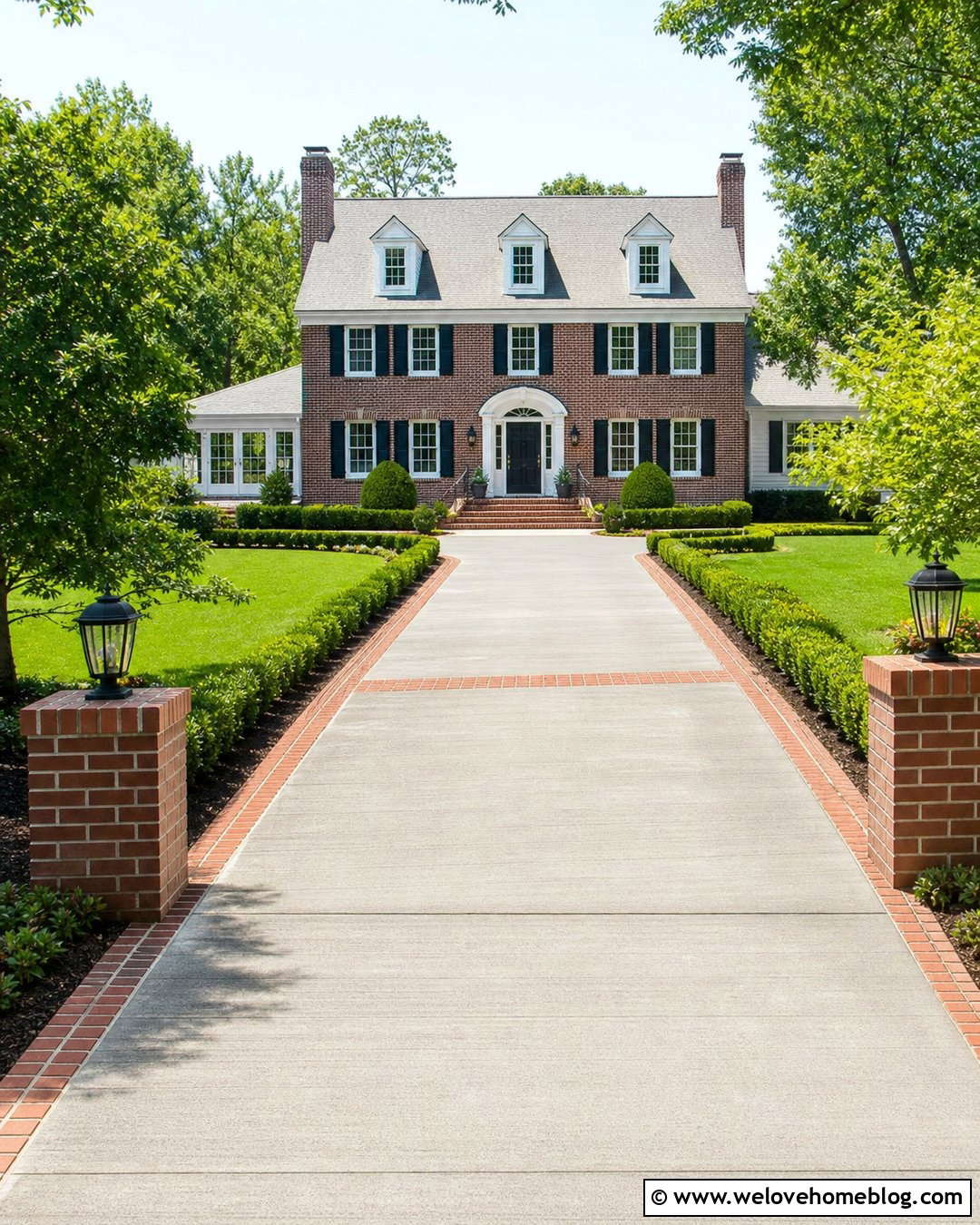
Neatly clipped boxwood can reinforce the formal lines of brick driveway edging. Frame a straight light-gray concrete driveway with two rows of traditional red clay bricks, then plant low boxwood hedges behind the outer edge. Leave occasional openings where walkways cross or planting beds widen around flowering shrubs. The green foliage creates a strong color contrast with both the concrete and brick while guiding the eye toward the house. Use this arrangement with a symmetrical Colonial, Georgian, or Federal-style facade. At the street entrance, add matching brick pillars or a wider brick band across the driveway. Keep the boxwood low enough to maintain visibility and prevent the design from feeling enclosed. Regular spacing will preserve the orderly, architectural character of the complete front yard.
17. Brick Edging Around A Circular Driveway
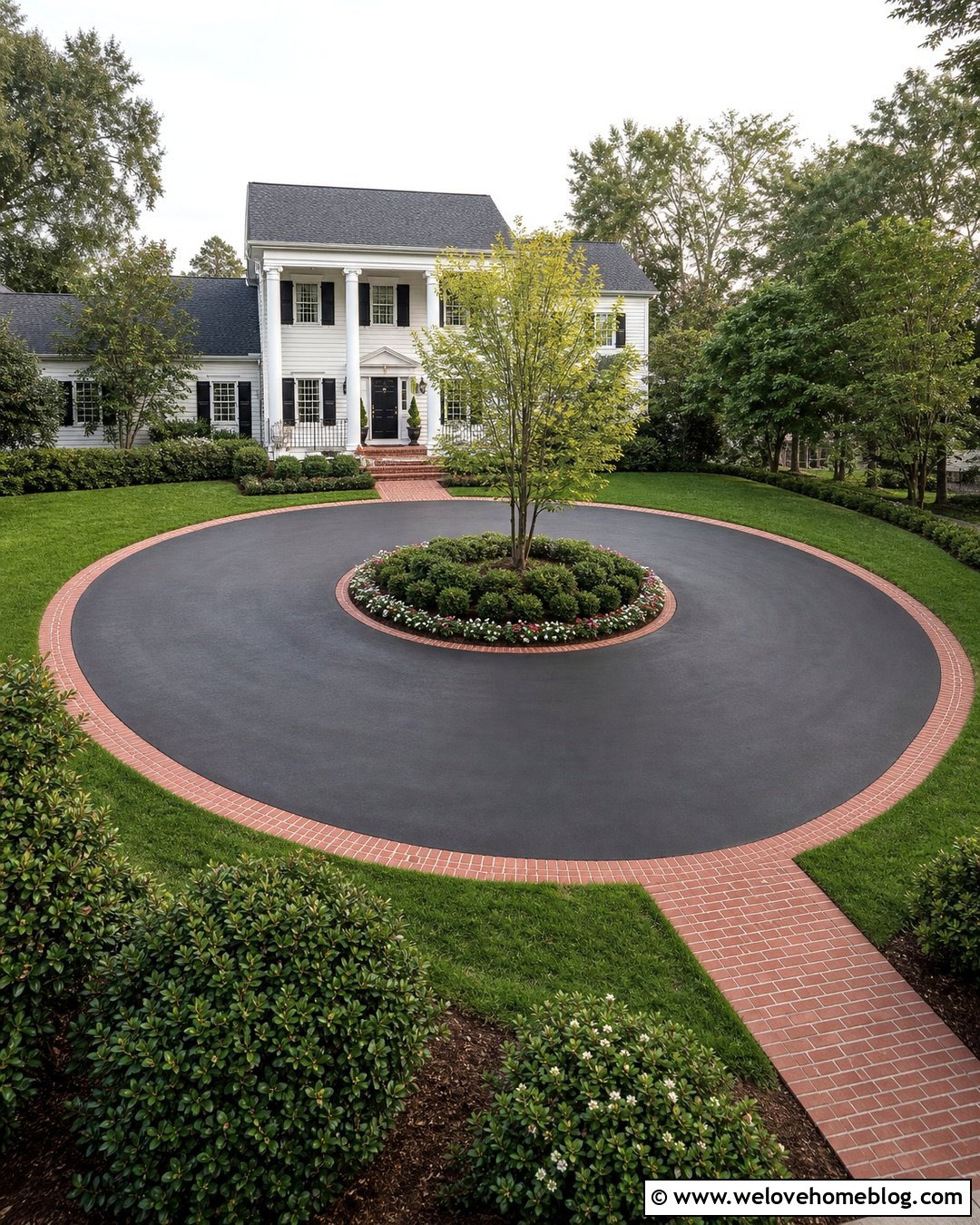
A circular driveway becomes more defined when brick edging outlines both the outer curve and central landscape island. Pair smooth black asphalt with a single soldier course of warm red clay pavers. Inside the circle, create a raised planting bed containing one ornamental tree, low evergreen shrubs, and seasonal flowers. Keep taller plants near the center so drivers have clear views around the loop. Along the outer edge, use lawn and broad foundation beds to visually connect the driveway to the home. Continue the brick around the front walkway and entrance steps for a consistent finish. This design suits larger Colonial, Southern, and traditional properties. A carefully measured curve helps maintain even joints and prevents the brick border from appearing jagged or improvised.
18. Brick Edging With A Gravel Drainage Strip
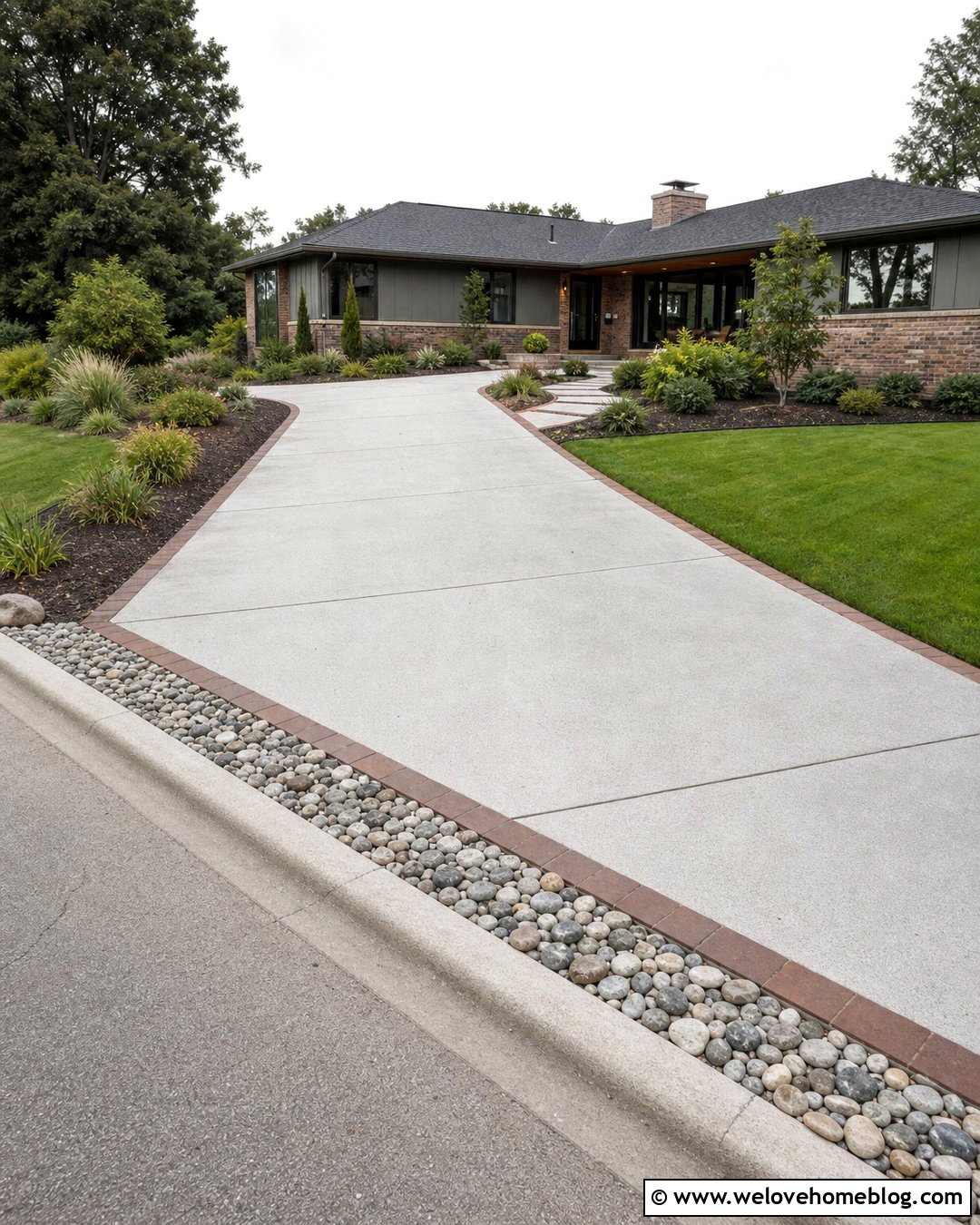
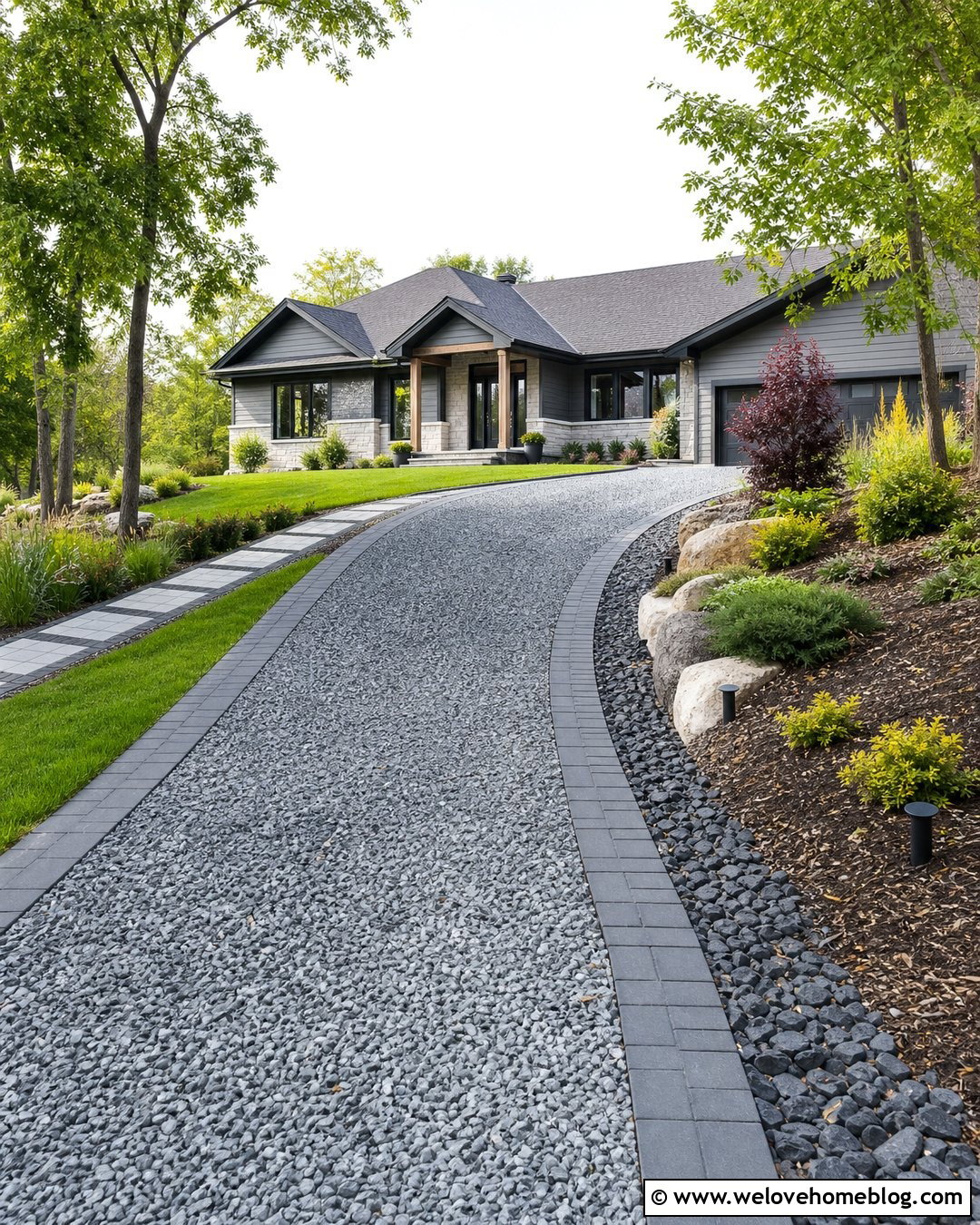
Where runoff collects beside a driveway, brick edging can be paired with a decorative gravel drainage strip. Border a sloped poured concrete surface with dark red clay bricks, then place a narrow channel of washed river gravel beyond the lower side. The bricks create a defined transition, while the stone strip visually separates the driveway from planting beds. Add moisture-tolerant grasses and shrubs farther back without crowding the channel. On the higher side, use a simpler flush brick border beside the lawn. Coordinate the gravel color with stone on the house or walkway. Although this treatment can make drainage infrastructure look more attractive, the site’s grading and water outlet still need to function correctly. The complete design feels practical, balanced, and intentionally landscaped.
19. Brick Edging With A Sloped Concrete Driveway
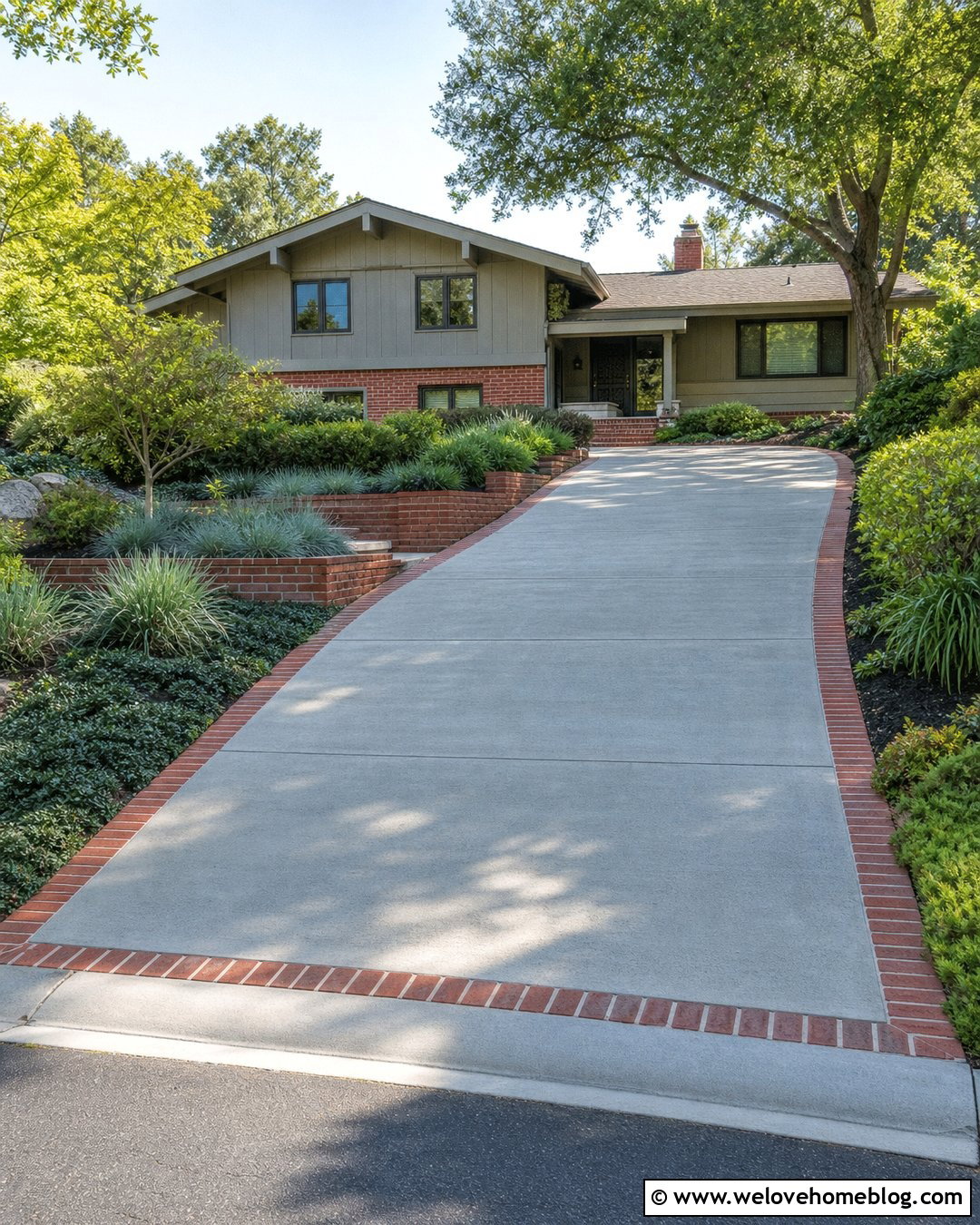
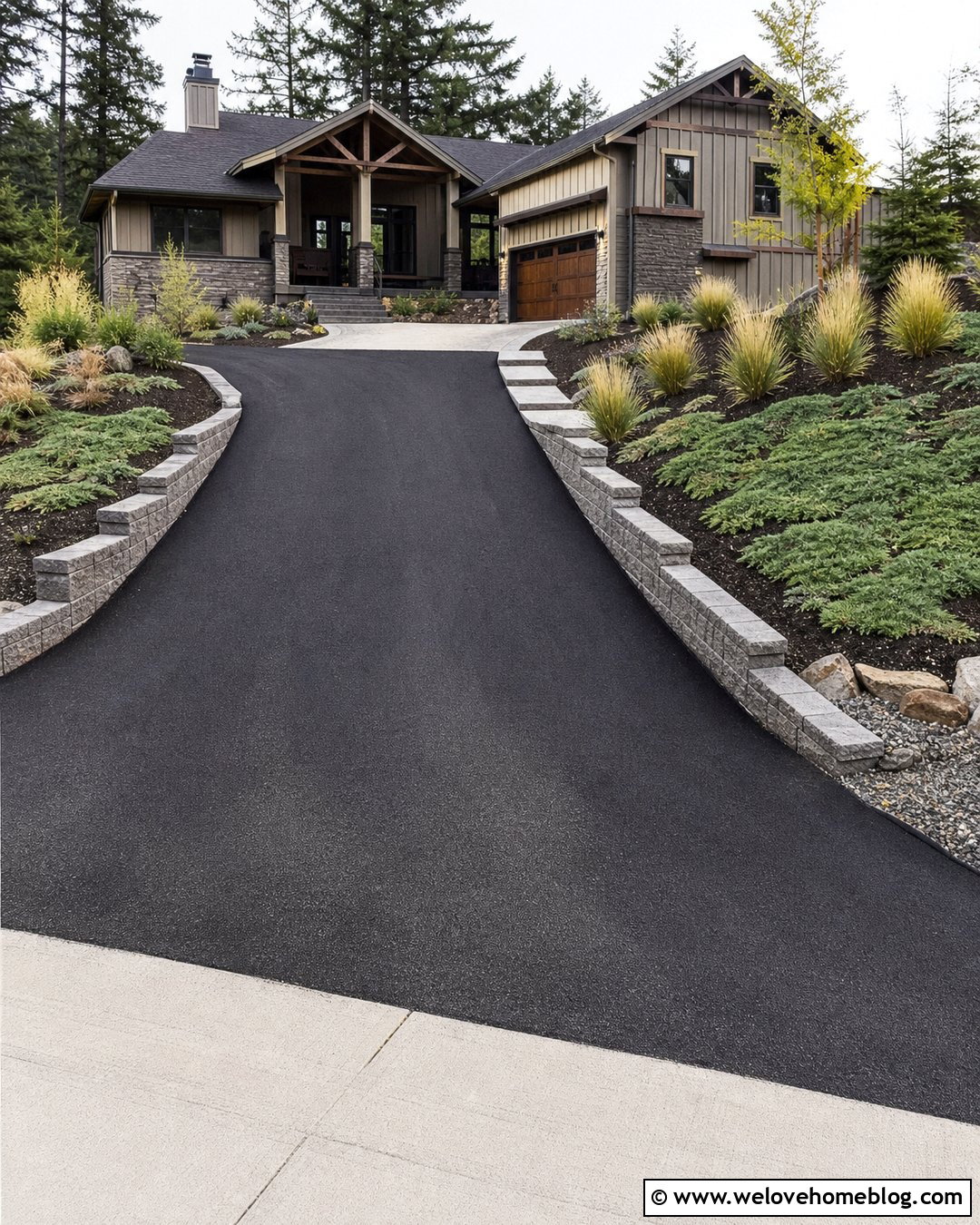
Sloped driveways need borders that look stable and follow the grade consistently. Use deeply colored clay brick pavers beside a broom-finished concrete driveway leading uphill to a Craftsman or split-level home. A soldier course on a well-prepared base gives the edge a substantial appearance. Divide long planting beds into stepped sections using low brick returns that connect visually to the driveway border. Choose erosion-conscious landscaping such as spreading shrubs, ornamental grasses, and dense ground covers. Near the street, create a level-looking brick entrance band to establish a strong starting point. Avoid abrupt height changes along the driving edge. Instead, let the bricks rise gradually with the pavement. This arrangement makes a challenging slope appear structured, connected, and integrated with the surrounding front yard.
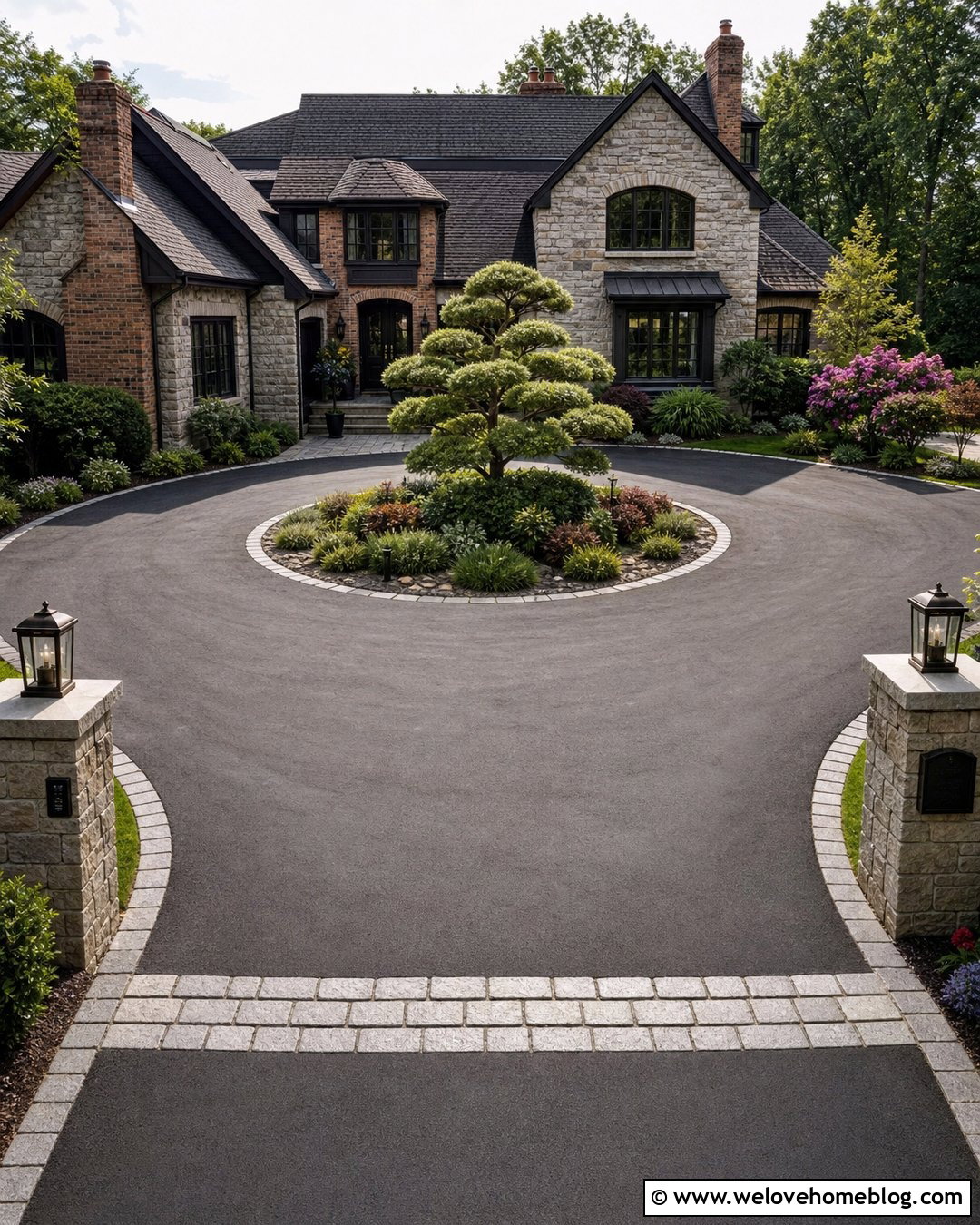
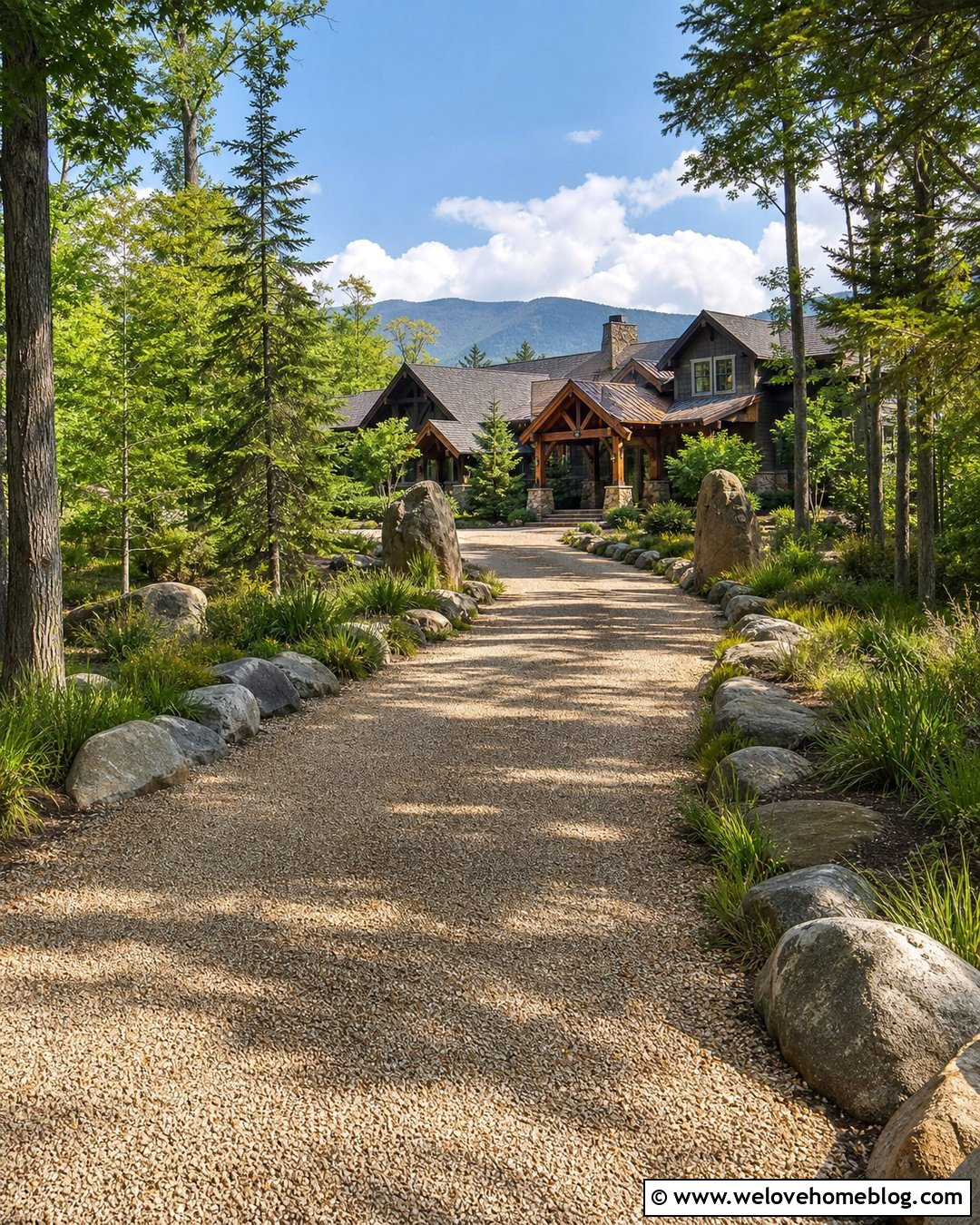
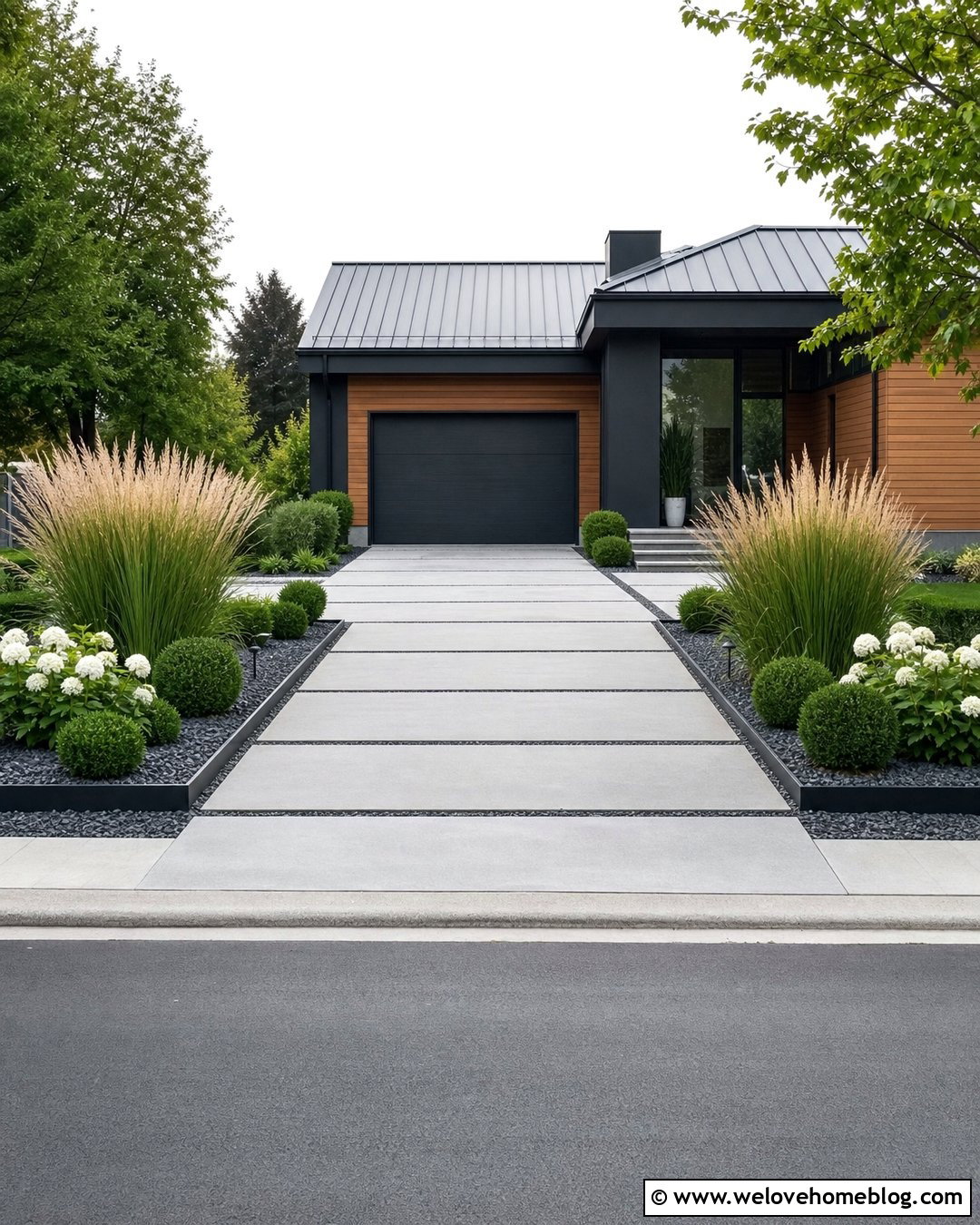
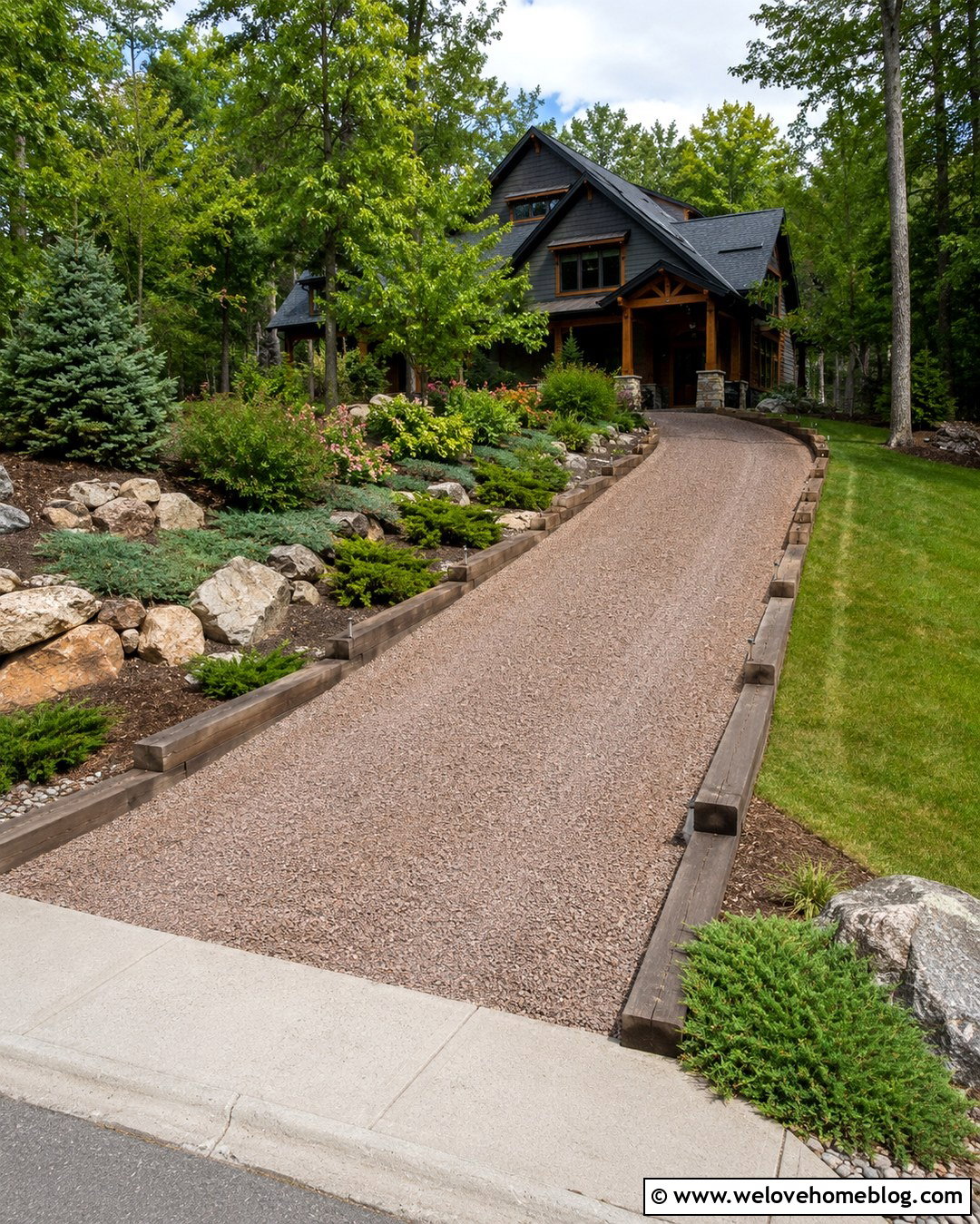
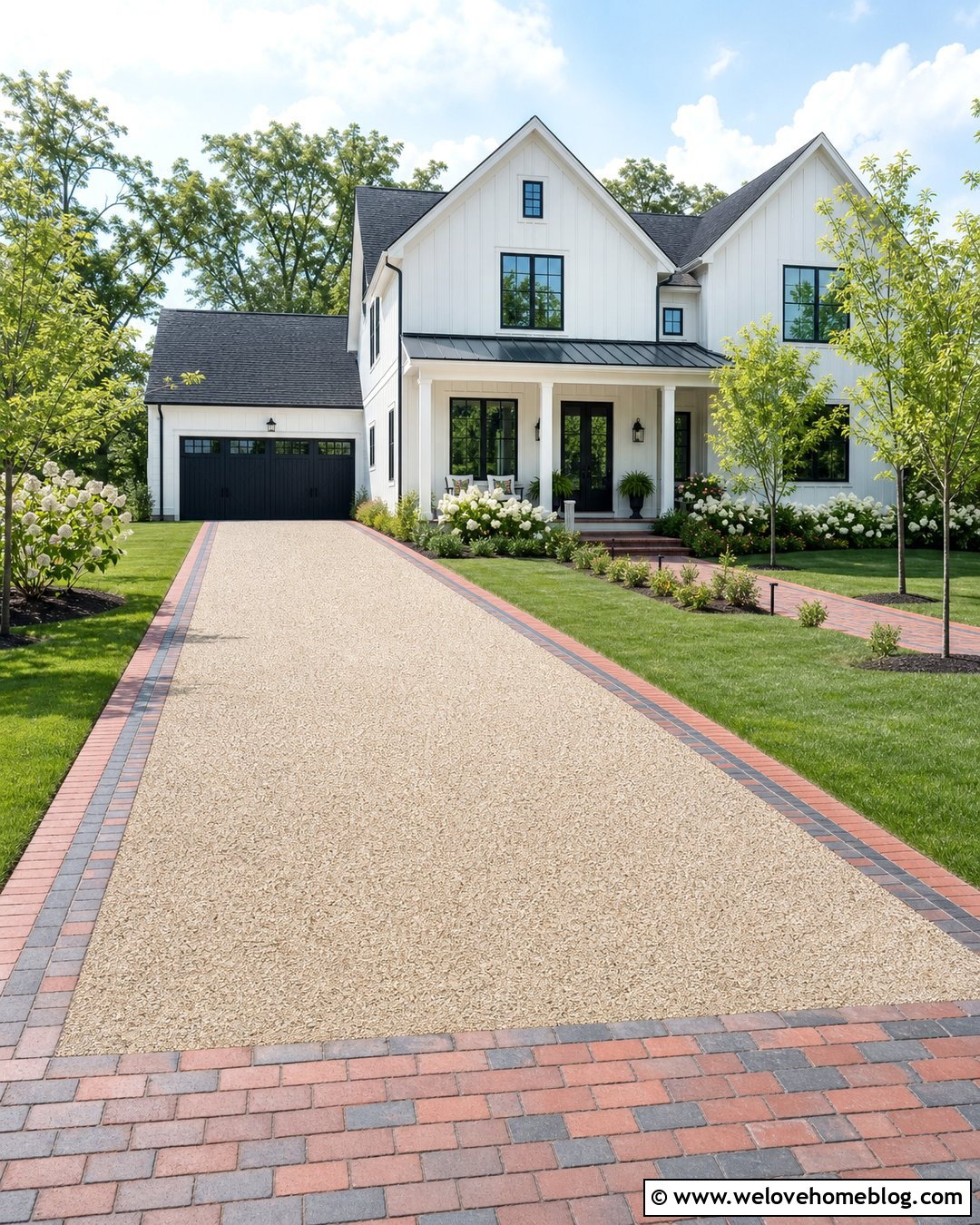
20. Brick Driveway Edging With Entrance Lighting
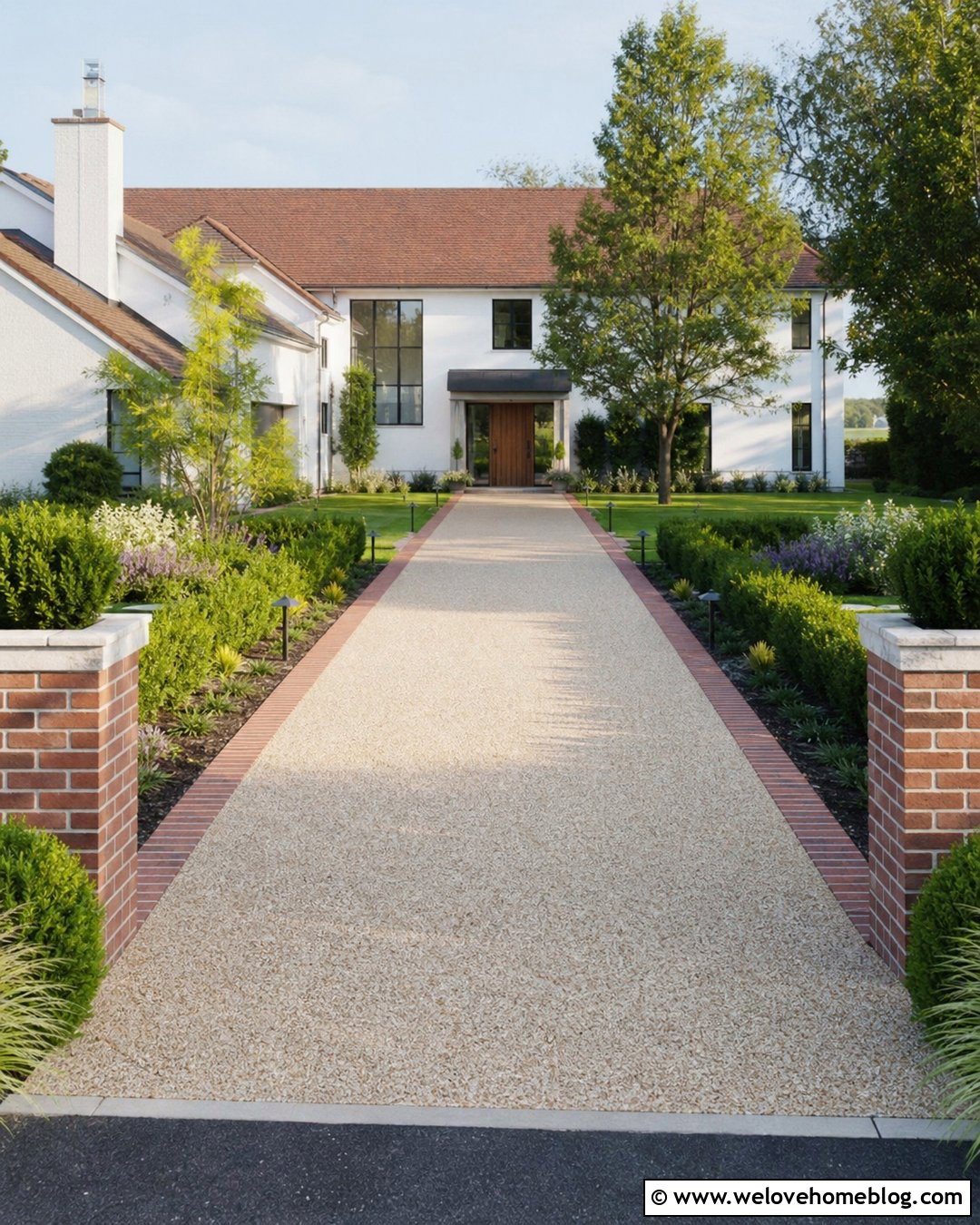
Brick edging becomes even more effective when the entrance lighting is planned as part of the full driveway. Outline a straight resin-bound gravel driveway with dark red clay bricks, then place low black path lights at generous intervals beyond the border. At the curb, add two brick pillars with simple downward-facing fixtures and clear house-number panels. Keep lighting fixtures outside vehicle clearance areas and avoid placing them directly in the brick course. Surround the entrance with compact shrubs, ornamental grasses, and neatly shaped planting beds. During daylight, the red brick gives the pale driveway a warm outline. After dark, the fixtures can reveal the route without turning the front yard into an overly bright runway. This look suits traditional, transitional, and modern farmhouse homes.
Conclusion:
These **20 brick driveway edging ideas** show how a familiar material can complement nearly every driveway surface and house style. Red clay brick brings warmth to asphalt and concrete, while charcoal or tan pavers can support a more contemporary color scheme. Pattern, placement, and landscaping matter just as much as brick color. Flush borders simplify mowing, raised edges retain planting beds, and wider patterned courses add more visual impact. Before choosing a design, consider vehicle clearance, curves, drainage, soil movement, and connections to nearby walkways. Most importantly, treat the driveway, edging, house, and front yard as one composition. A coordinated brick border will look purposeful from the curb and make the entire property feel more finished.

Related posts:
Leave a Reply