
Brick and gravel create a driveway that feels established, welcoming, and practical. The gravel provides texture and a relaxed appearance, while brick adds structure through borders, aprons, pathways, and decorative bands. Together, these materials can suit everything from a small cottage to a large colonial or modern farmhouse. A successful design also considers the driveway’s shape, house architecture, landscaping, and drainage. Strong edging is especially useful because it keeps loose aggregate from spreading into lawns and planting beds. Proper grading and a compacted base help reduce puddles, ruts, and shifting over time. () Whether you prefer traditional red clay or sleek charcoal pavers, these **20 Brick And Gravel Driveway Ideas** offer complete looks for different homes, yards, and budgets.

1. Red Brick Border Gravel Driveway
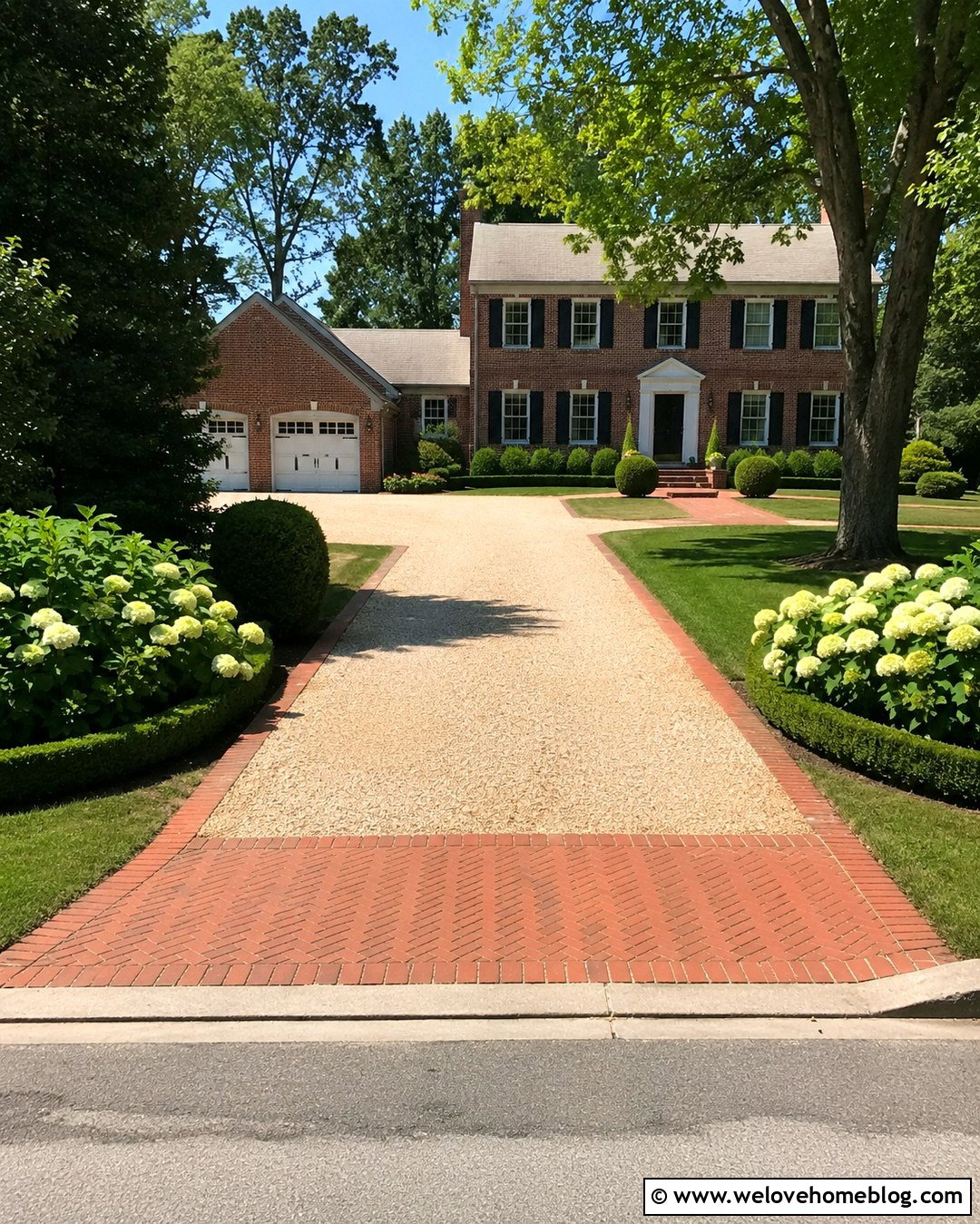
A warm red brick border makes a pale gravel driveway feel neat and intentional. Use compacted beige crushed stone for the main surface, then install clay bricks along both sides in a simple soldier course. The contrast works especially well with a traditional brick, colonial, or Cape Cod home. Keep the driveway straight for a formal look, or soften it with a gentle curve around the front lawn. Low boxwood shrubs, hydrangeas, and seasonal flowers can frame the edges without hiding the brickwork. At the garage, widen the brick border into a matching apron that catches scattered gravel. Set the bricks on a stable base and keep their finished height close to the gravel surface for easier sweeping and vehicle access.
2. Herringbone Brick Apron Gravel Driveway
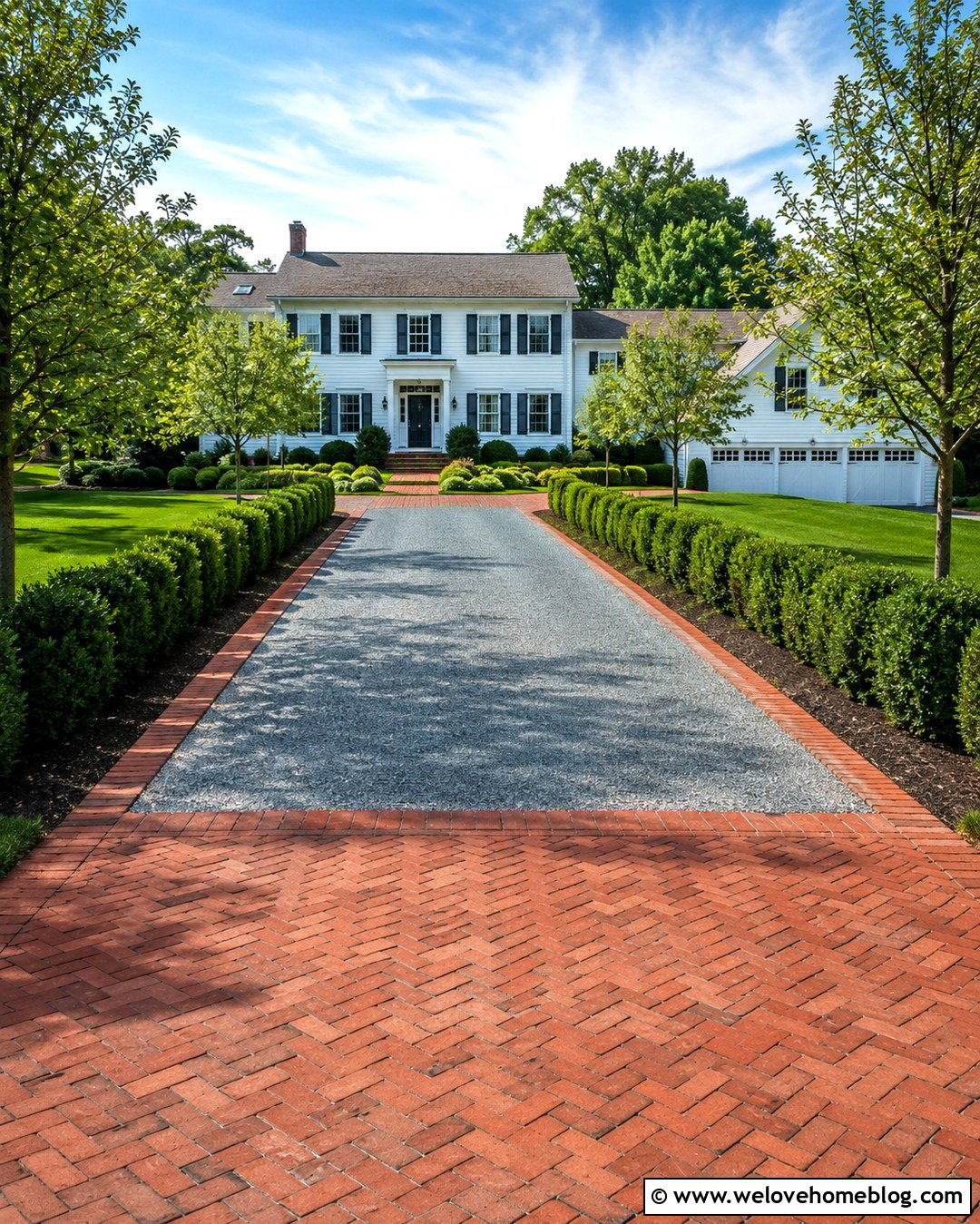
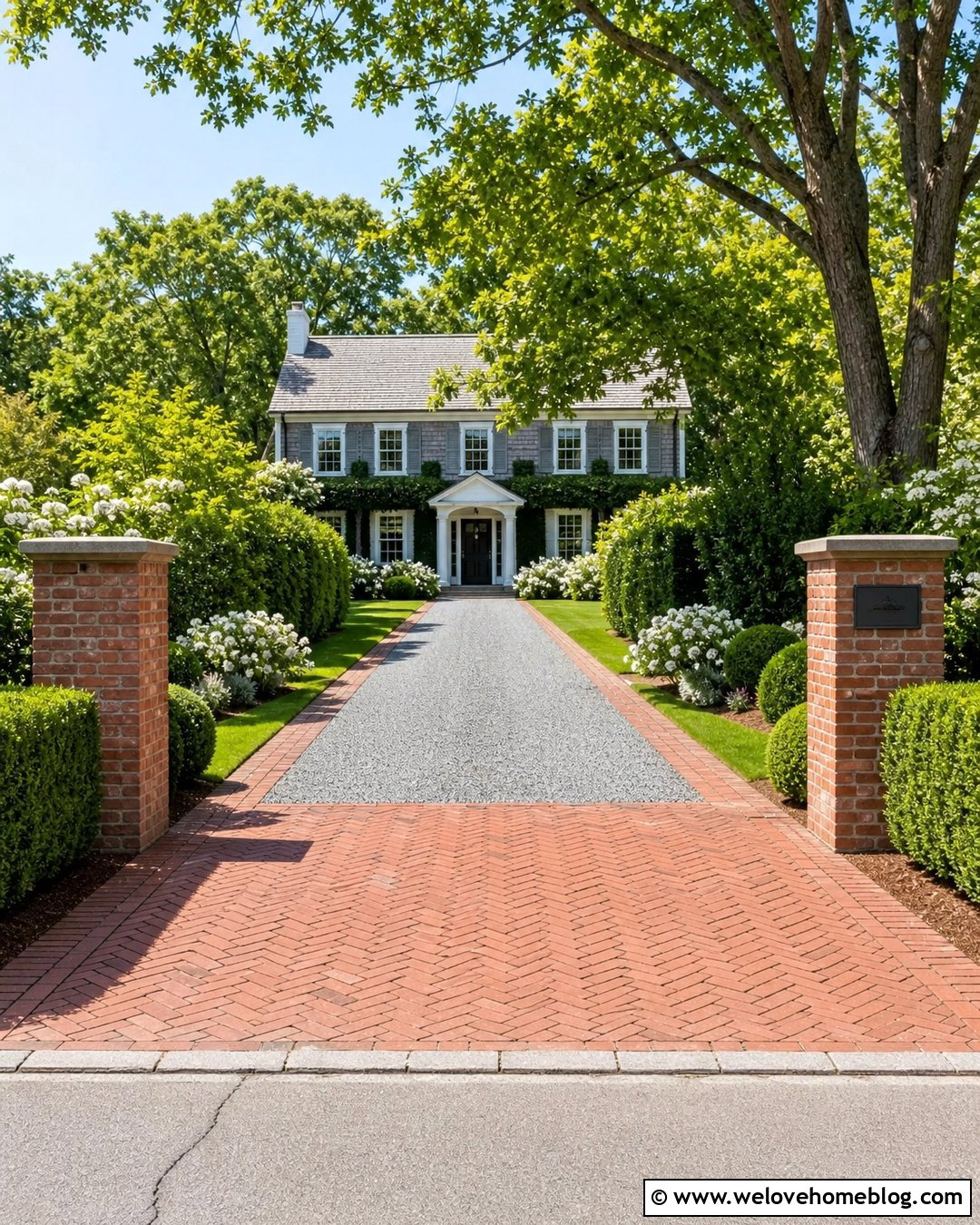
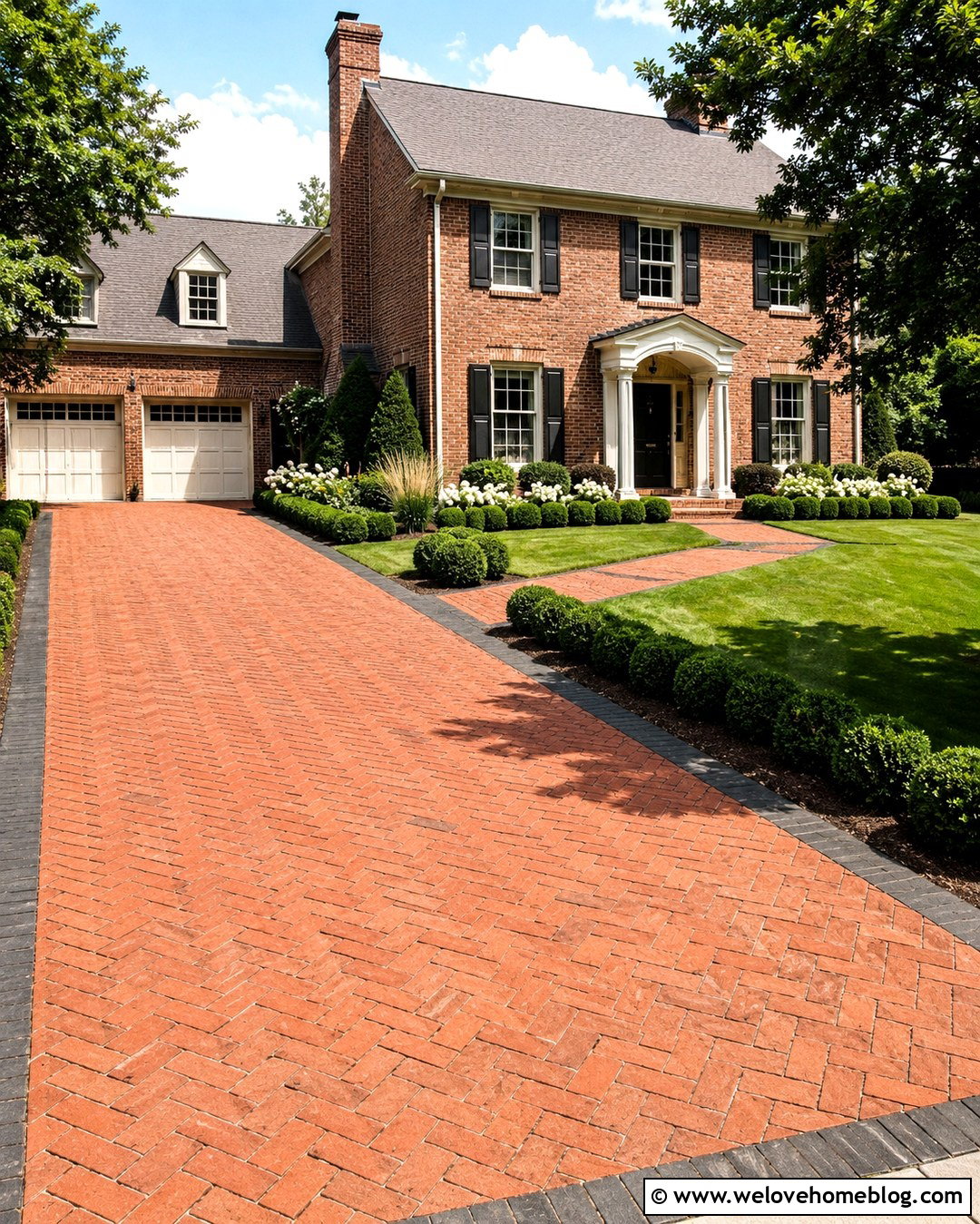
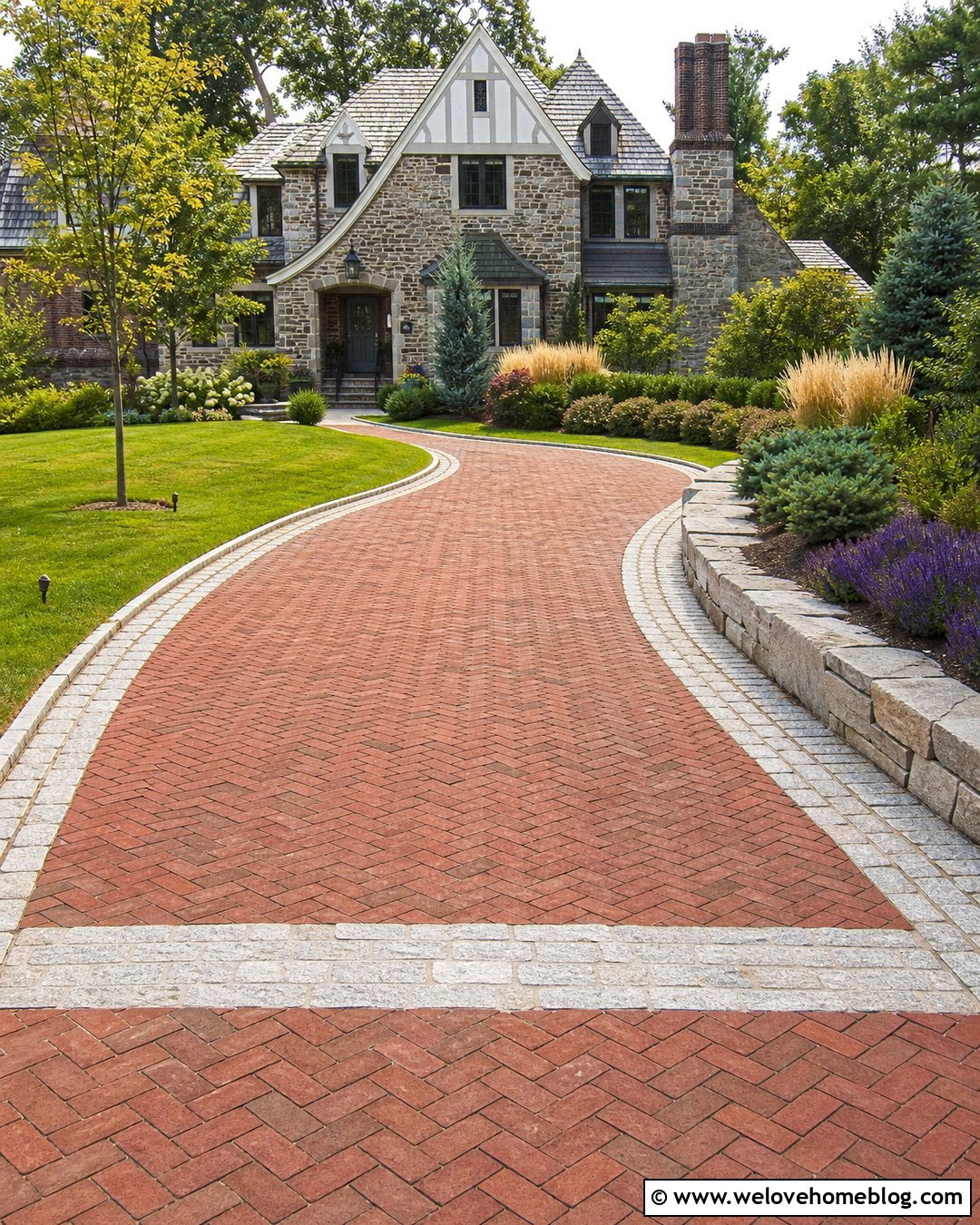
A herringbone brick apron creates an attractive transition between the street and a loose gravel surface. The angled brick pattern immediately defines the entrance, while compacted gray gravel carries the driveway toward the house. Repeat the herringbone treatment in front of the garage so the two ends feel connected. This design looks particularly polished beside a colonial home with white siding and black shutters. Narrow brick borders can run between the aprons to contain the aggregate. Add clipped hedges, a green lawn, and two small ornamental trees near the street. Because the entrance receives turning and braking pressure, use driveway-rated brick pavers over a properly prepared base. The result combines the traditional character of brick with the softer appearance of gravel.
3. Curved Gravel Driveway With Brick Edging
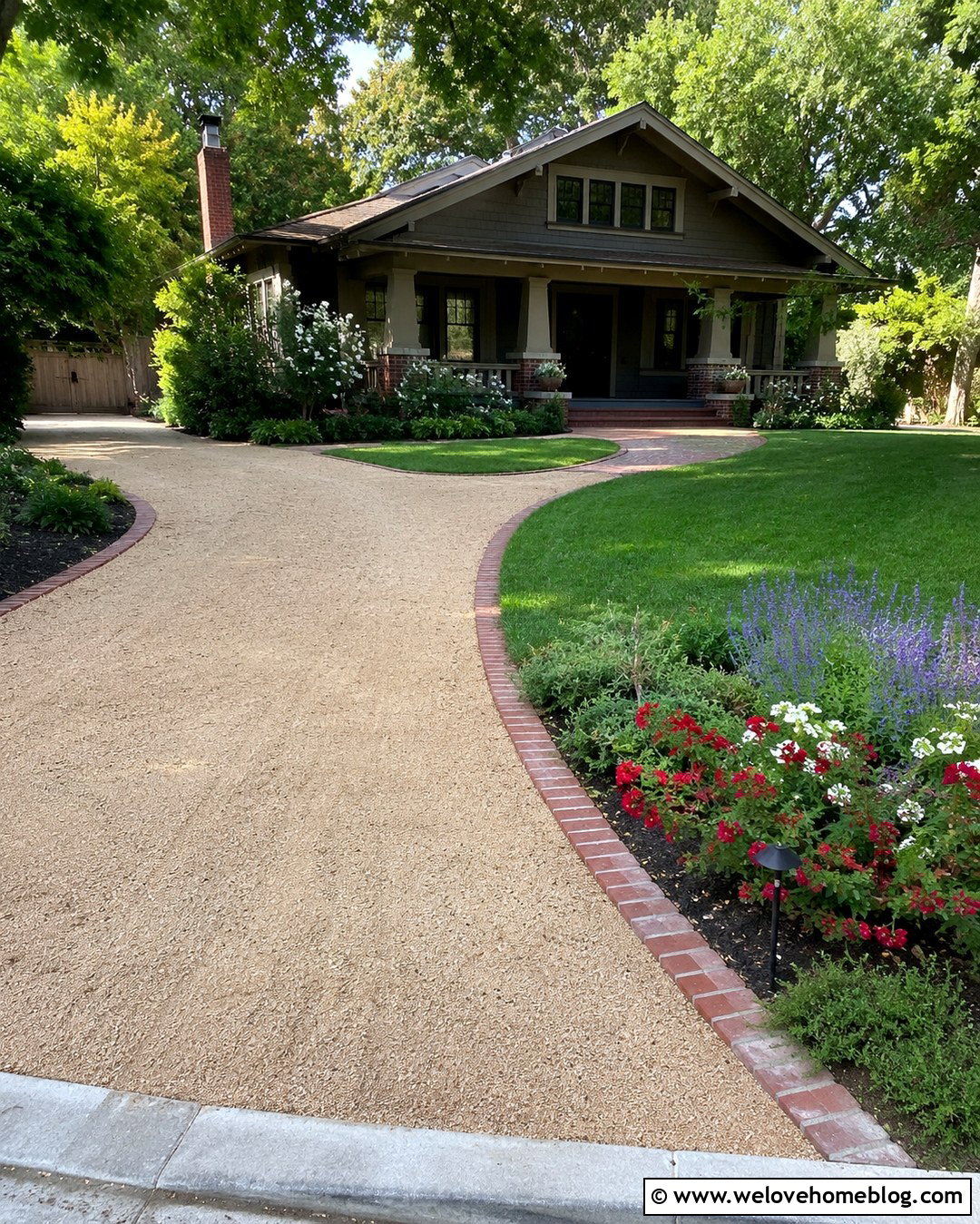
Does your home sit away from the street or behind a broad front lawn? A curved gravel driveway can create a graceful approach while making the property feel larger. Choose angular tan gravel that compacts more securely than very round stone, then contain it with weathered red brick edging. The bricks should follow the curve smoothly instead of forming short, awkward angles. Plant flowering shrubs along the outside bend and keep the inside edge more open for safe visibility. A brick walkway can branch from the driveway and lead to the front porch. This complete layout complements Craftsman houses, country homes, and wooded properties. Before installation, mark the curve carefully and confirm that the width remains comfortable around every bend.
4. Circular Gravel Driveway With Brick Center Island
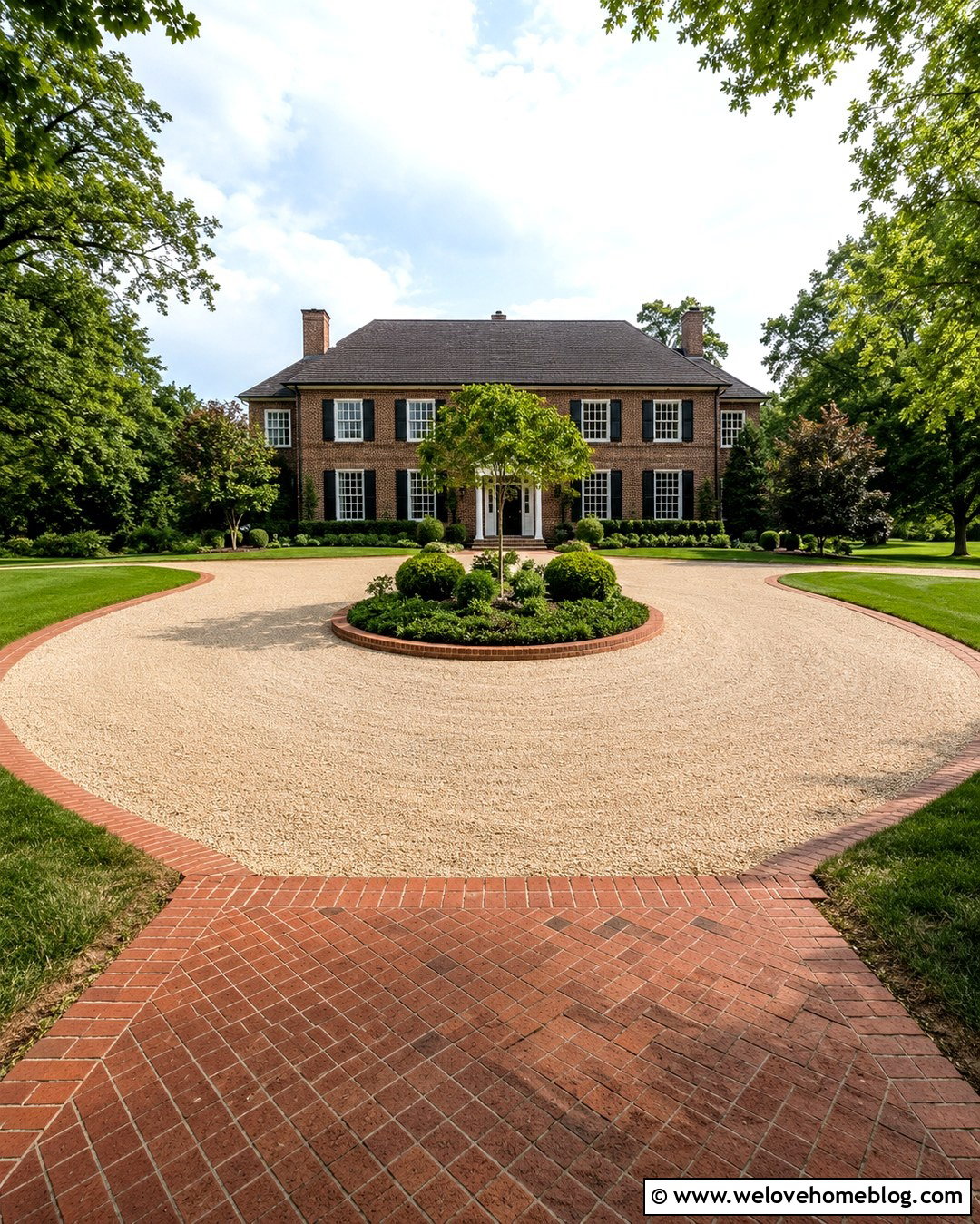
A circular driveway becomes a strong front-yard feature when gravel, brick, and landscaping are balanced carefully. Cover the driving lane with compacted buff gravel and outline both edges with red clay brick. In the center, create a generous planting island surrounded by a wider brick curb. A small ornamental tree, evergreen shrubs, and low ground covers will add height without blocking the house. Continue the brick around the entrance and exit aprons to make the circle feel finished. This layout suits symmetrical colonial, Georgian, and large farmhouse facades. It also creates an easy arrival route because vehicles can move through without backing into the street. Keep the planting island proportional so the driveway remains wide enough for comfortable turning.
5. Gray Gravel Driveway With Dark Brick Border
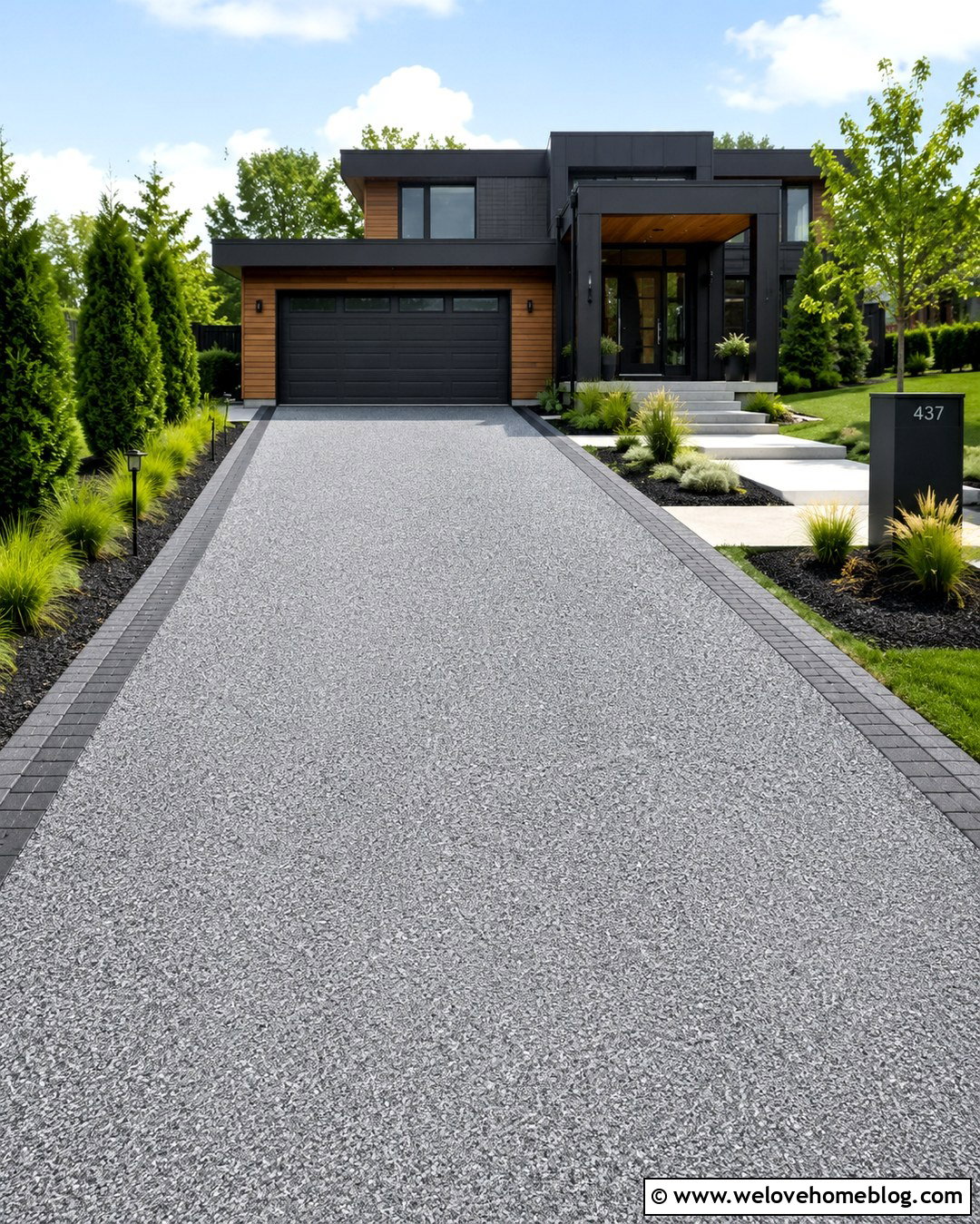
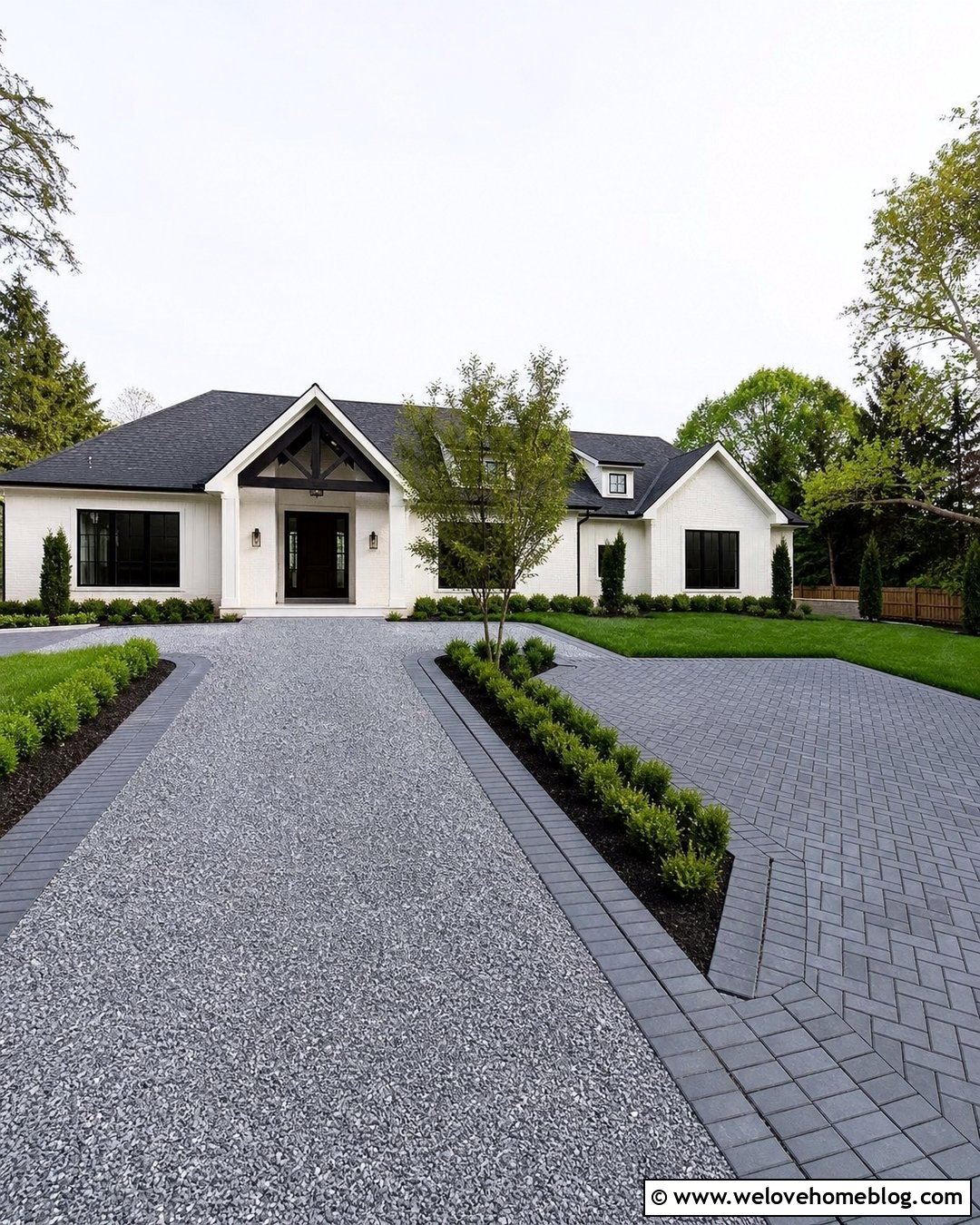
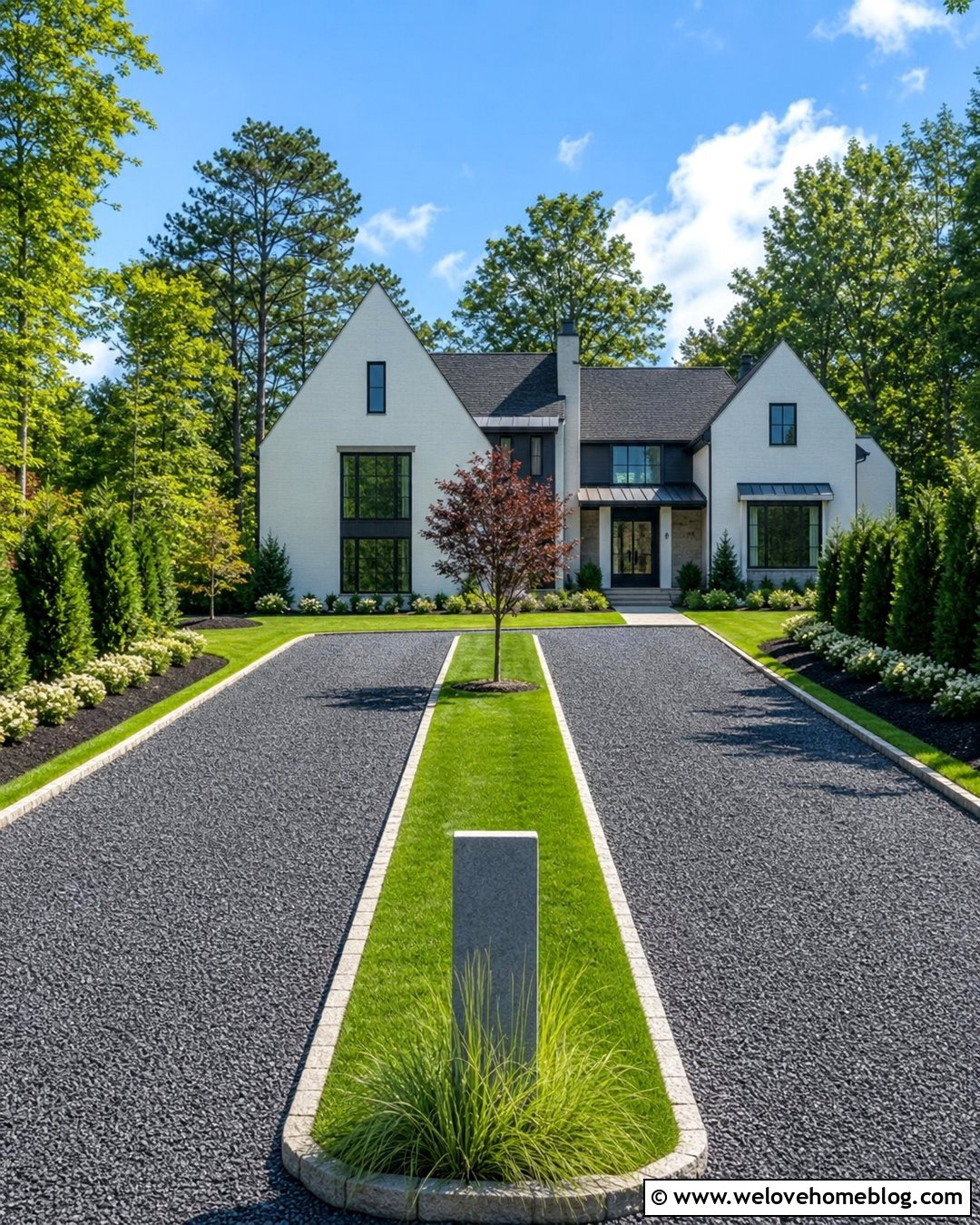
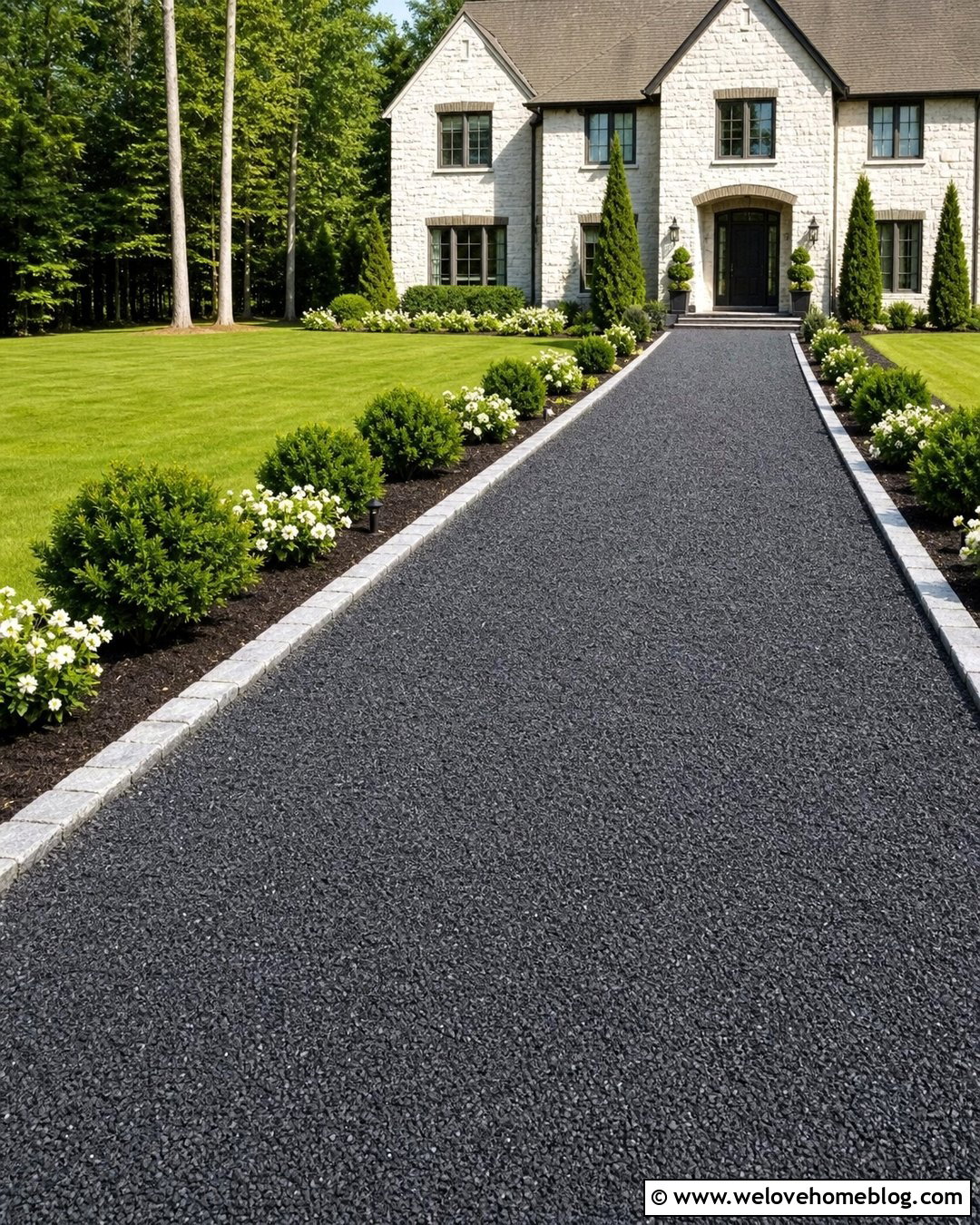
Cool gray gravel and dark charcoal brick create a cleaner, more contemporary combination. Use finely crushed granite or angular basalt gravel across a straight driveway leading to a modern home. Frame the surface with charcoal brick pavers laid in a double soldier course. The broader border gives the loose material a stronger visual boundary and provides a convenient strip for stepping out of a vehicle. Pair the driveway with rectangular planting beds, ornamental grasses, clipped evergreens, and a simple concrete walkway. Black address numbers and minimal exterior lighting can reinforce the modern palette. Maintain some color variation in the planting so the design does not feel too severe. This look delivers crisp lines while preserving the texture and permeability associated with gravel.
6. White Gravel Driveway With Reclaimed Brick
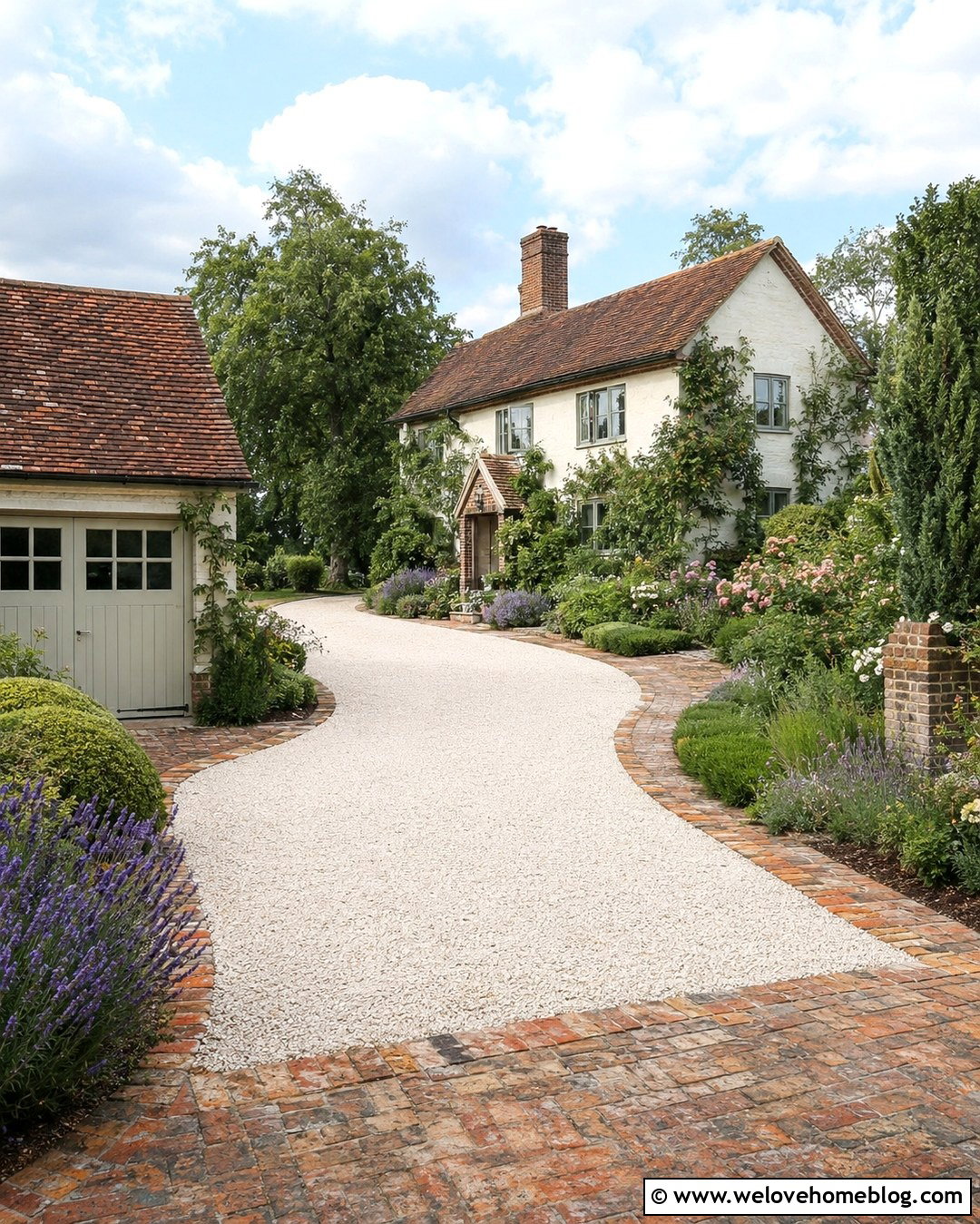
White limestone gravel can brighten a shaded entrance, while reclaimed brick keeps the result from looking overly new. Choose bricks with varied red, brown, and faded orange tones, then place them along a gently curved driveway. Their uneven coloring creates an easy connection with mature trees, aged fences, and an older home. A reclaimed brick apron near the garage provides another practical surface where gravel might otherwise scatter. Add layered cottage planting with lavender, catmint, roses, and compact evergreen shrubs. Avoid using pure white stone in areas where leaf stains or muddy runoff will create constant maintenance. A cream or light buff aggregate often delivers a similar effect with less contrast. The finished driveway feels relaxed, historic, and thoughtfully connected to its surroundings.
7. Crushed Granite Driveway With Brick Ribbons
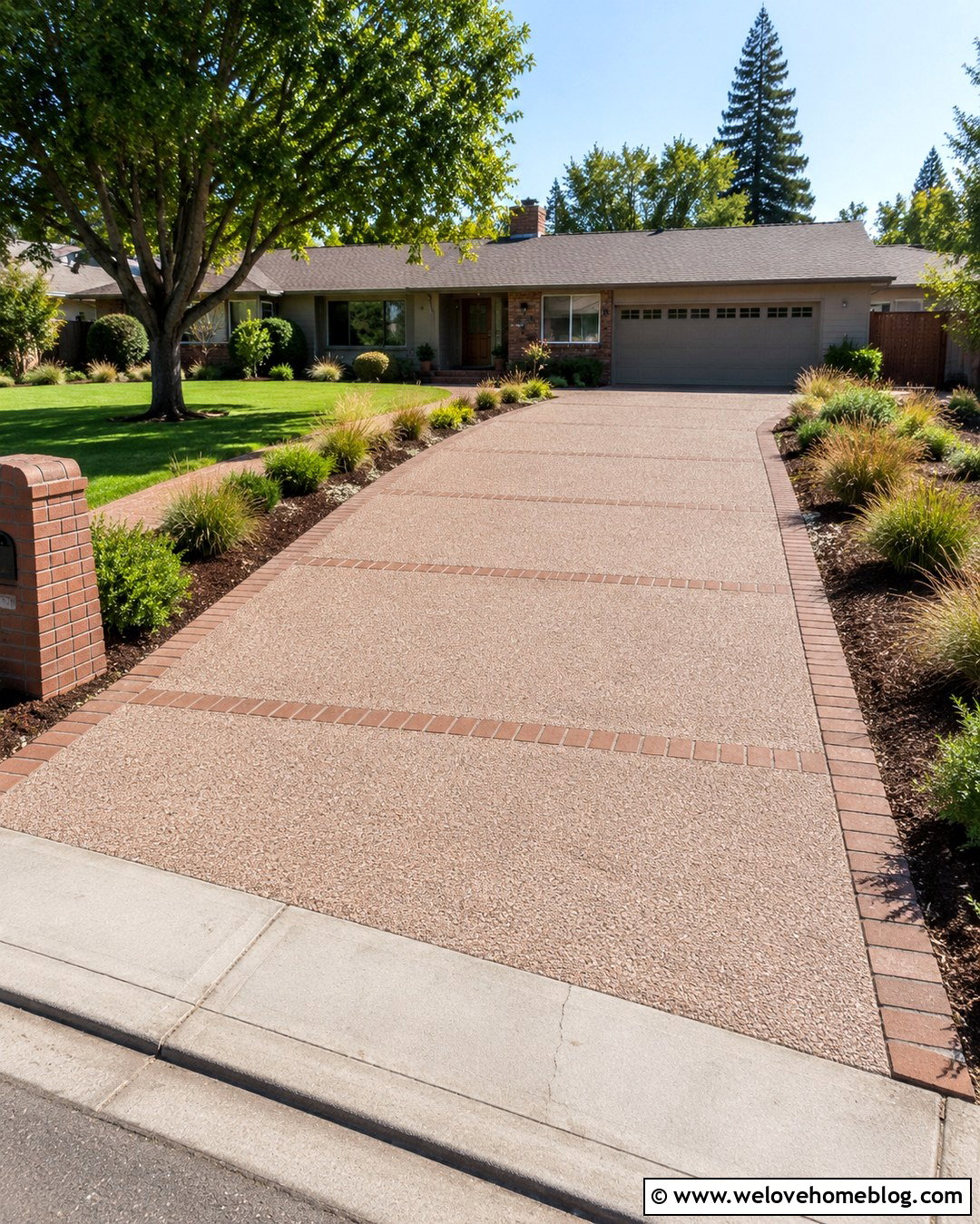
Brick ribbons divide a broad crushed granite driveway into smaller, more attractive sections. Run narrow brick bands across the gravel at regular intervals, or use them to mark changes between the entrance, parking area, and garage approach. Warm brown or red bricks pair naturally with reddish-gray decomposed granite. A matching brick border should contain the outside edges and connect the crossbands visually. This arrangement works well for a ranch house with a wide facade because the horizontal lines echo the home’s proportions. Surround the driveway with drought-tolerant grasses, low shrubs, and mulch beds. Brick ribbons must be supported properly so they do not settle below the gravel or become raised bumps. When installed evenly, they provide rhythm without making the driveway feel busy.
8. Pea Gravel Driveway With Basketweave Brick Parking Pad
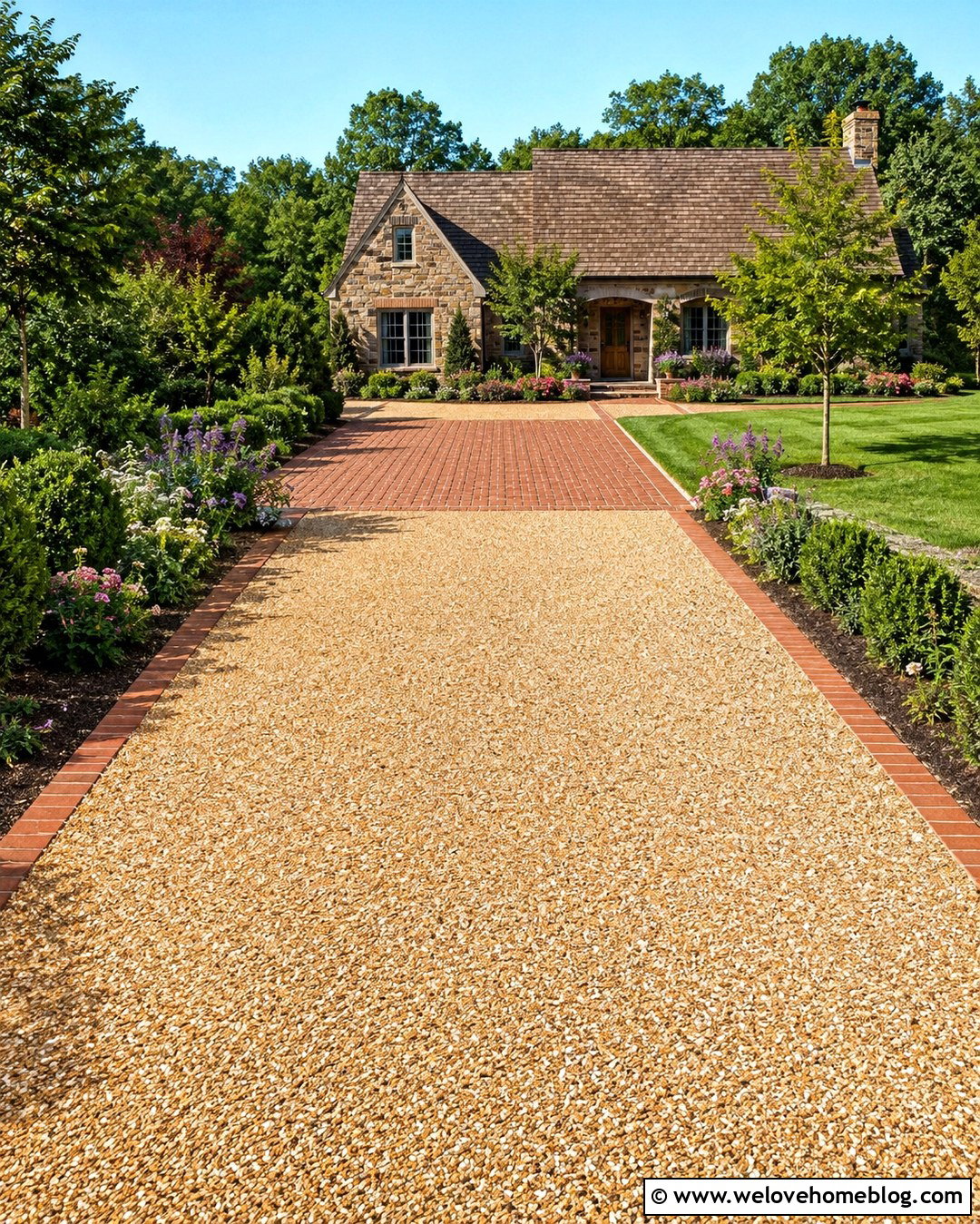
A basketweave brick parking pad adds a stable focal point to a smaller pea gravel driveway. Keep the main approach covered with warm beige pea gravel, then use red or brown brick pavers where vehicles regularly stop. Surround both materials with a continuous brick border so the transition appears planned. The repeating basketweave pattern complements traditional cottages, bungalows, and Tudor-inspired homes. Add a short brick walkway from the parking pad to the porch, using the same pattern for consistency. Flowering borders can soften the edges, but leave enough clear space for doors to open. Pea gravel moves more readily than angular aggregate, so firm edging and regular raking are important. This combination offers a relaxed surface without sacrificing a defined parking area.
9. Long Gravel Driveway With Brick Entry Columns
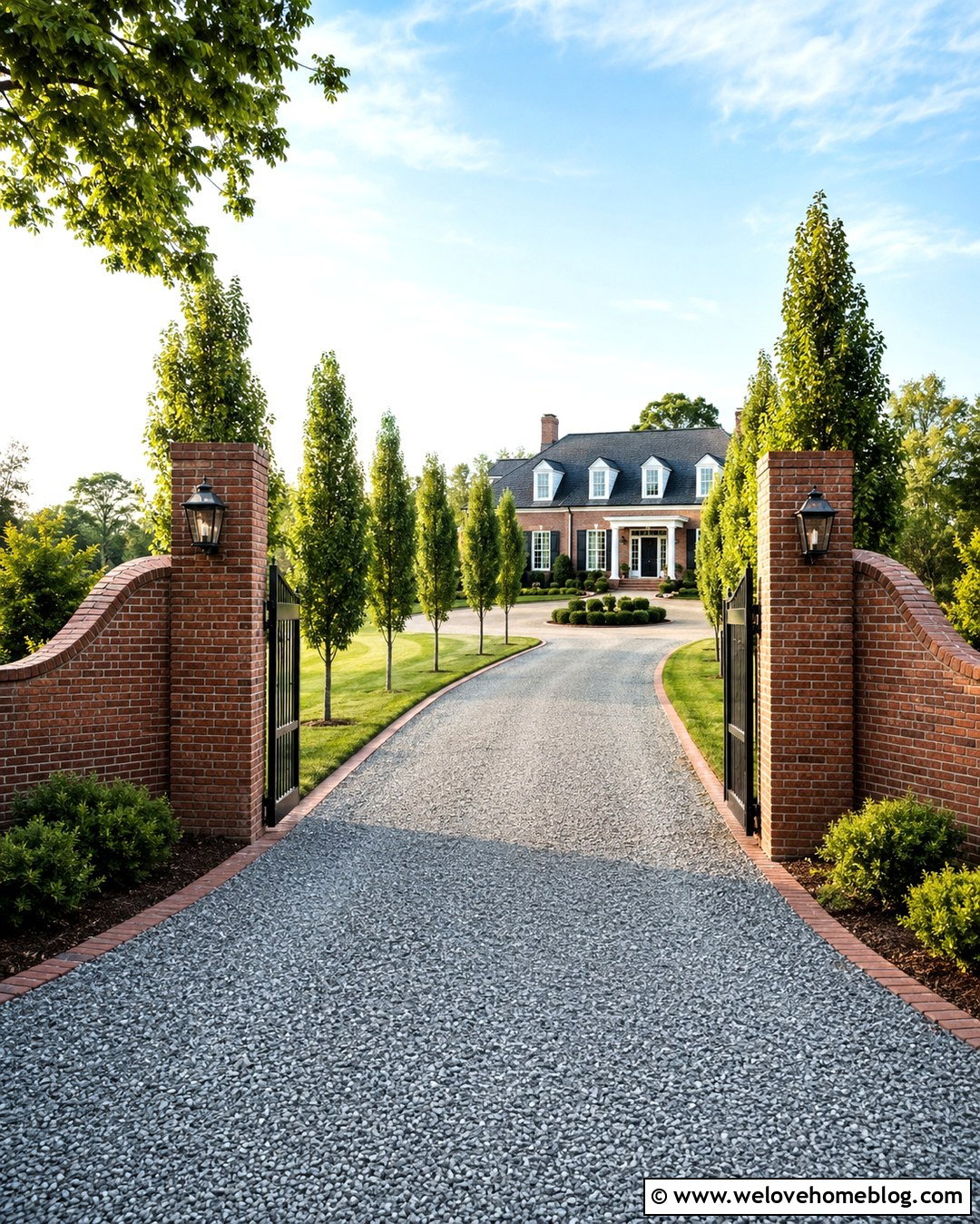
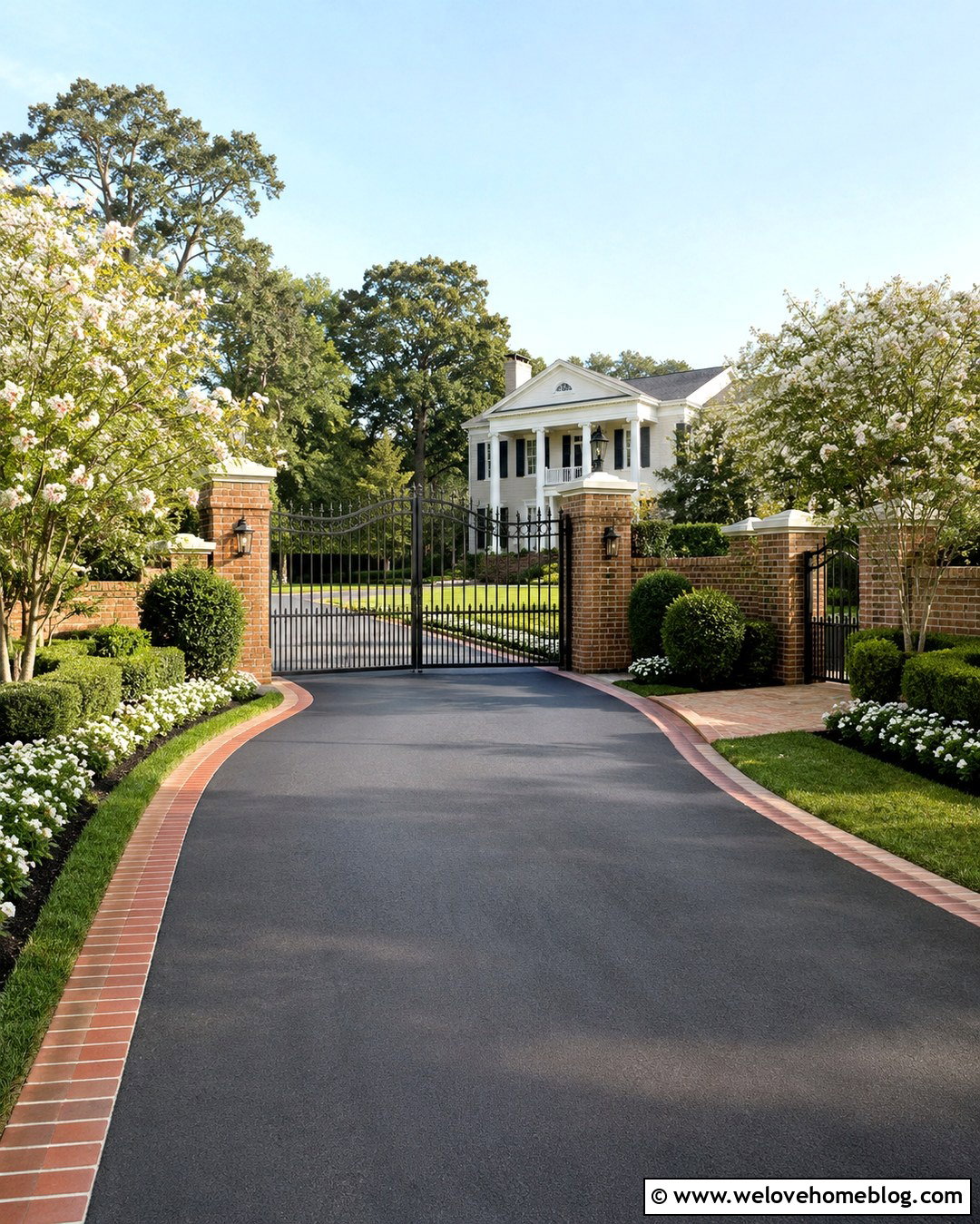
A long gravel driveway deserves an entrance that can be seen clearly from the road. Start with two substantial red brick columns, then continue matching brick edging along a straight or softly curved crushed-stone drive. Mount simple lanterns, a metal gate, or an address plaque on the columns without adding too many decorative details. Gray gravel creates a classic contrast with the warm masonry and hides everyday dust better than very light stone. Space deciduous trees or upright evergreens along the approach, keeping branches well away from vehicles. Near the house, widen the driveway into a brick-edged parking court. The repeated brickwork connects the roadside entrance with the architecture in the distance, making the entire property feel coordinated rather than pieced together.
10. Gravel Driveway With Brick Wheel Tracks
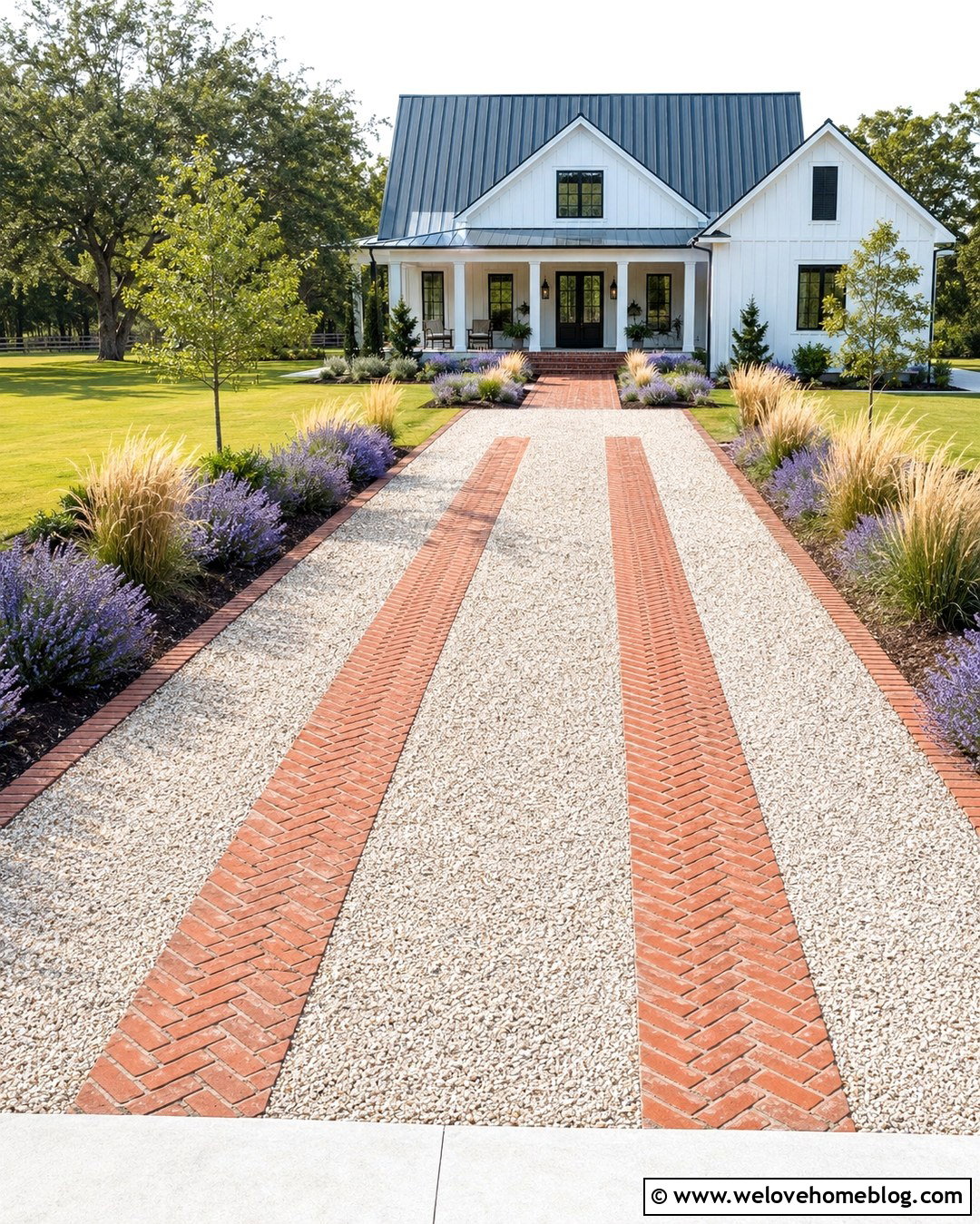
Brick wheel tracks offer a distinctive way to combine a structured driving surface with loose gravel. Install two parallel bands of driveway-rated brick pavers where vehicle tires normally travel, then fill the center and outer sections with compacted gravel. Herringbone brick provides strong visual movement, while a running bond creates a quieter appearance. Continue the brick around the perimeter to contain the aggregate. This layout looks at home beside a modern farmhouse, converted barn, or country cottage. Plant low grasses and lavender along the edges, avoiding tall growth that could lean into the driving area. Precise spacing is essential because the tracks must work for the vehicles using the property. A stable base beneath both materials will help the surfaces remain level and comfortable.
11. Gravel Driveway With Brick Walkway
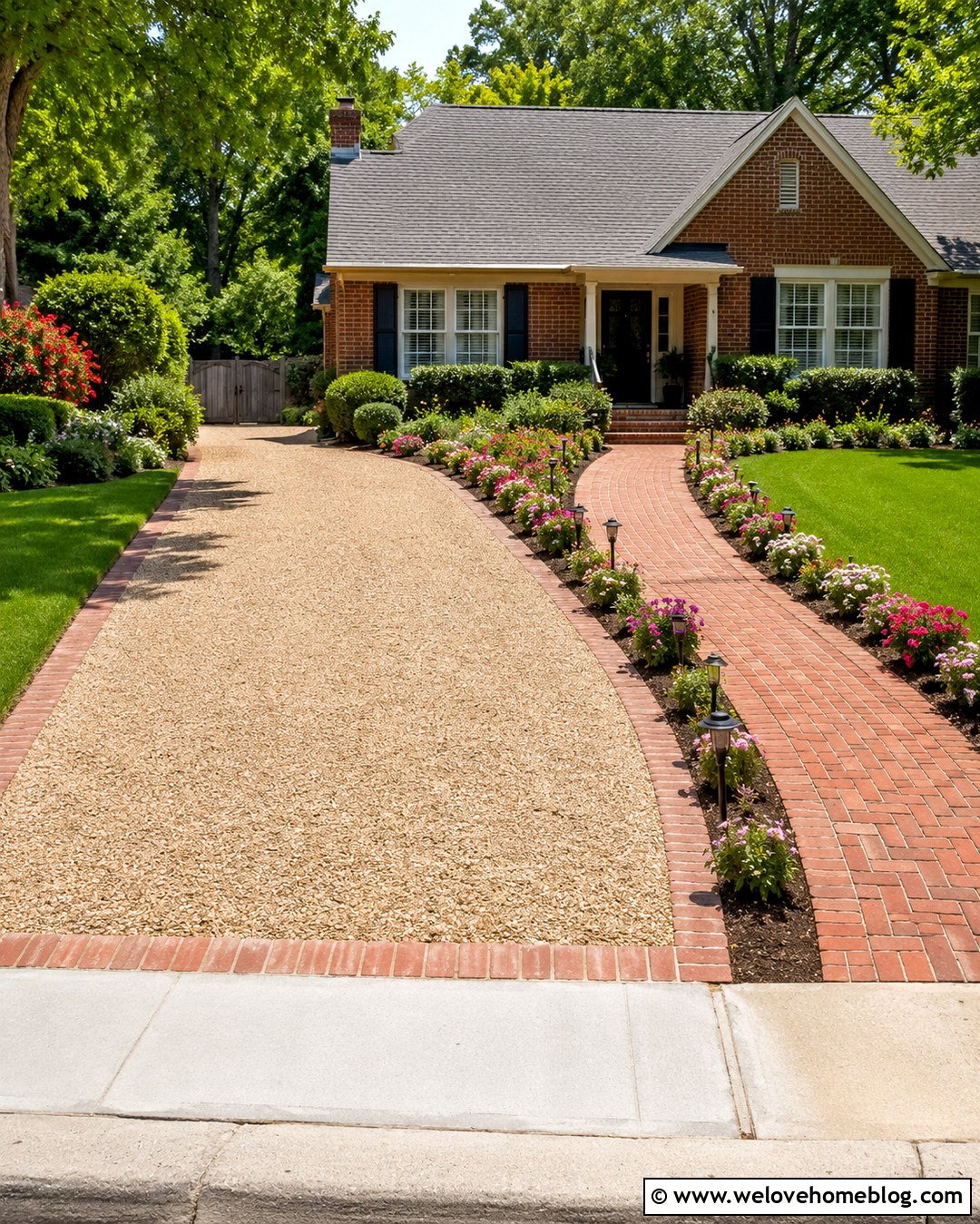
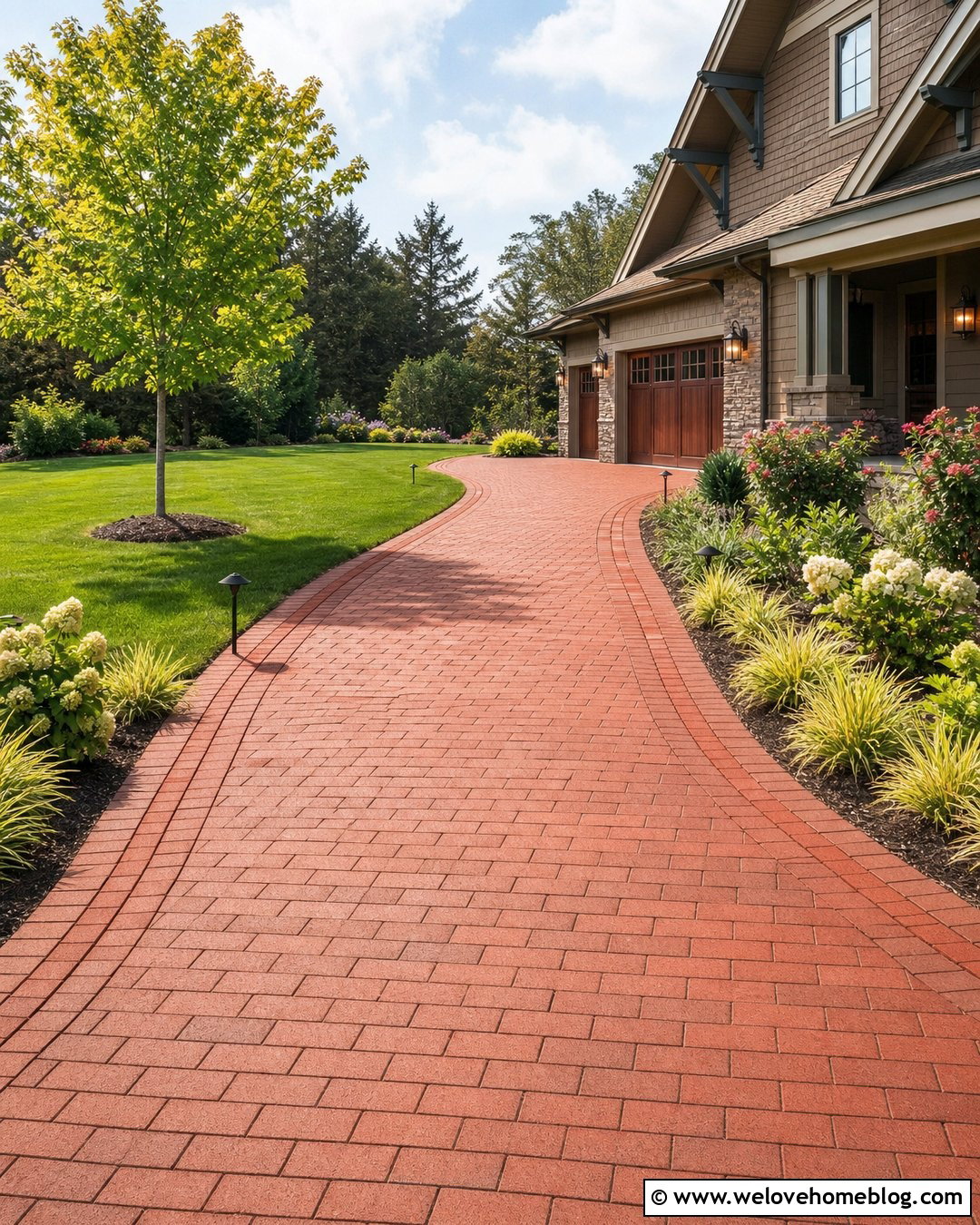
A brick walkway can make a gravel driveway safer and more welcoming for pedestrians. Run the path beside the driveway from the sidewalk or parking area to the front porch. Use clay brick in a running-bond or basketweave pattern, and separate it from the gravel with a narrow brick soldier course. The main driveway can feature compacted tan crushed stone with matching brick edging on the lawn side. This arrangement is useful when guests would otherwise have to walk across loose aggregate in dress shoes or carry packages over uneven ground. Add low foundation shrubs, flower beds, and small path lights to emphasize the route. Match the walkway brick to the home’s chimney, porch steps, or facade so the driveway and architecture share a common material.
12. Sloped Gravel Driveway With Brick Drainage Channel
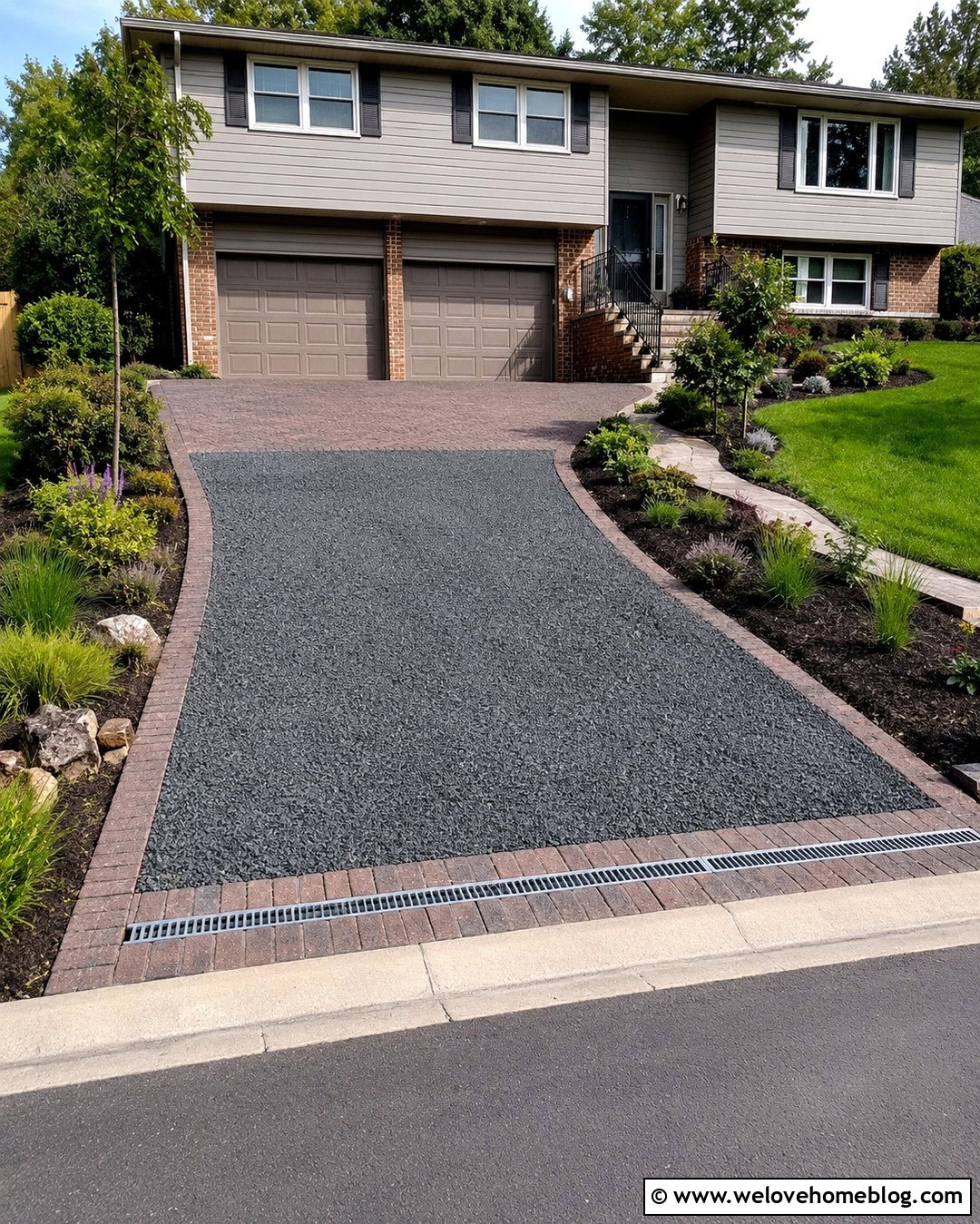
A sloped gravel driveway needs an attractive plan for directing runoff and controlling loose material. Use angular crushed stone that can form a firmer surface, then place sturdy brick borders along both sides. Across the lower portion, integrate a channel drain between rows of brick pavers so it appears connected to the overall design. The driveway should send water toward an approved drainage area rather than the house, neighboring property, or street. () Deep planting beds with moisture-tolerant shrubs can soften the downhill side. Near the garage, a brick apron provides a clean stopping point for the gravel. This combination is practical for hillside ranch homes and split-level properties, but the final grading and drainage details should be planned for local soil and rainfall conditions.
13. Farmhouse Gravel Driveway With Red Brick
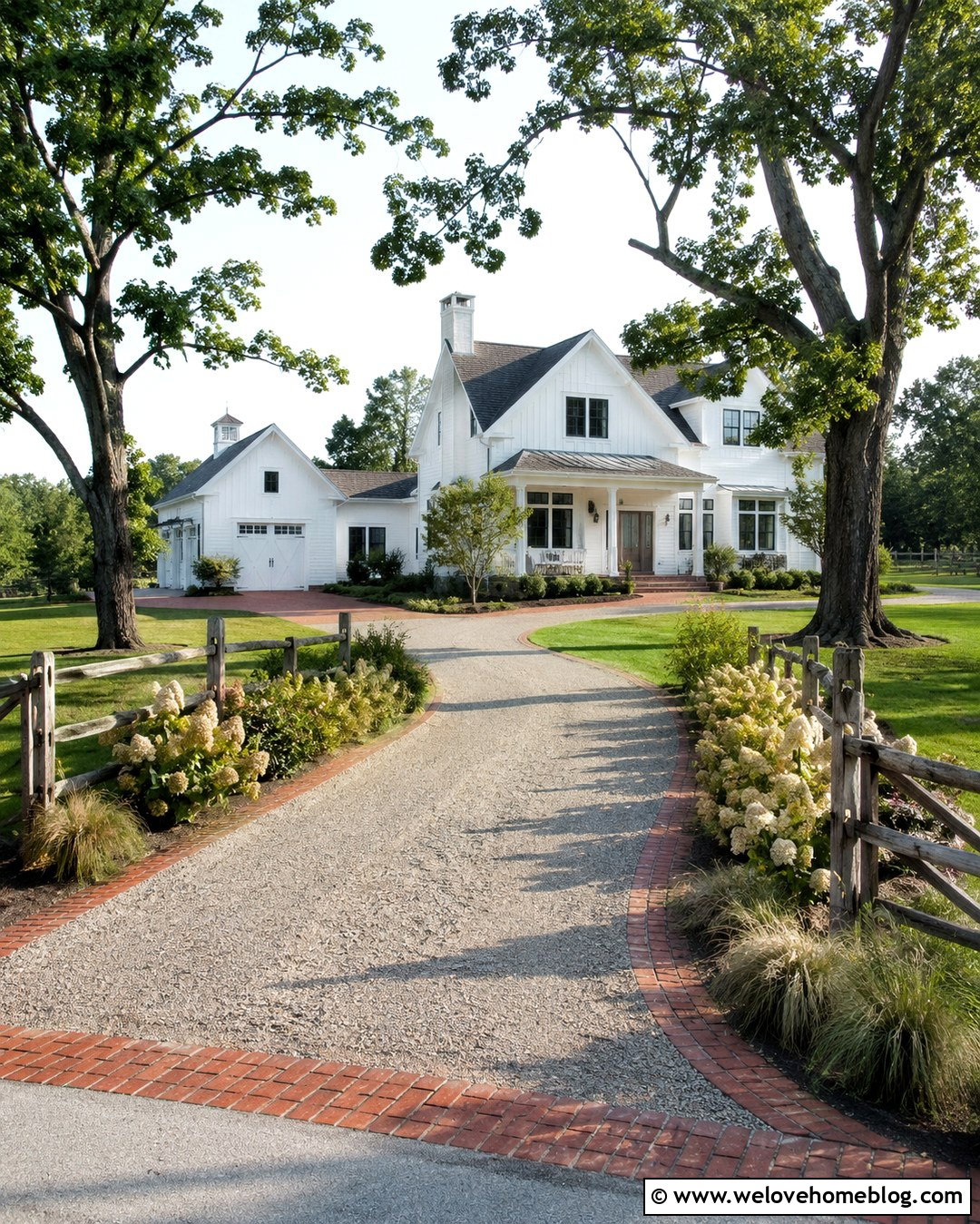
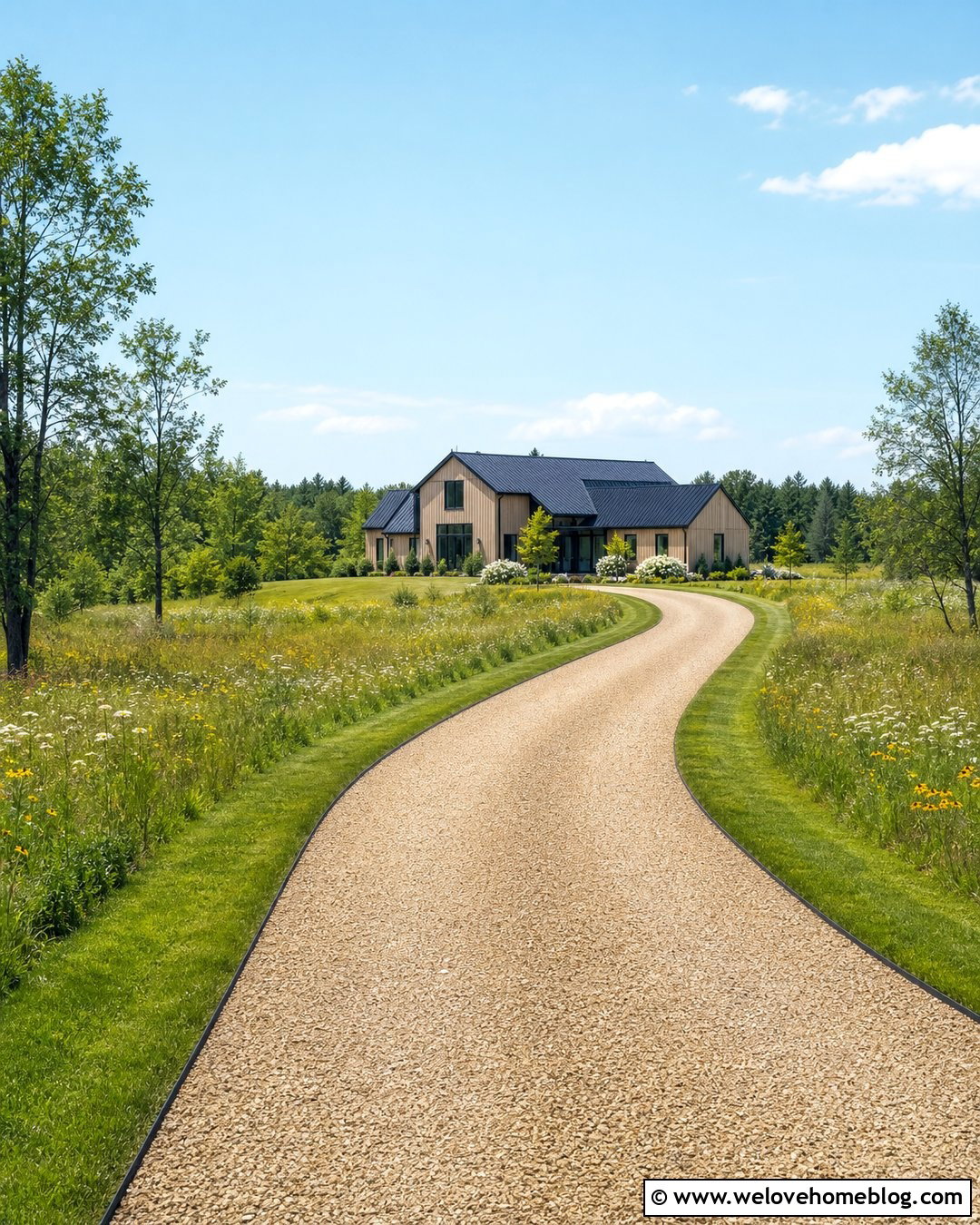
Picture a wide farmhouse porch at the end of a softly textured gravel approach. Use warm gray crushed gravel for the driving surface and traditional red brick for the borders, entrance apron, and garage transition. A gentle curve will feel more natural than a rigid line on a rural or semi-rural property. Frame the route with split-rail fencing, hydrangeas, native grasses, and a few broad-canopy trees. Near the house, add a brick path leading from the driveway to the porch steps. The brick color can repeat the chimney or foundation for a unified exterior. Keep the landscaping loose but controlled, leaving clear sightlines around bends and entrances. This design feels casual enough for a farmhouse while remaining organized and easy to navigate.
14. Colonial Gravel Driveway With Brick Apron
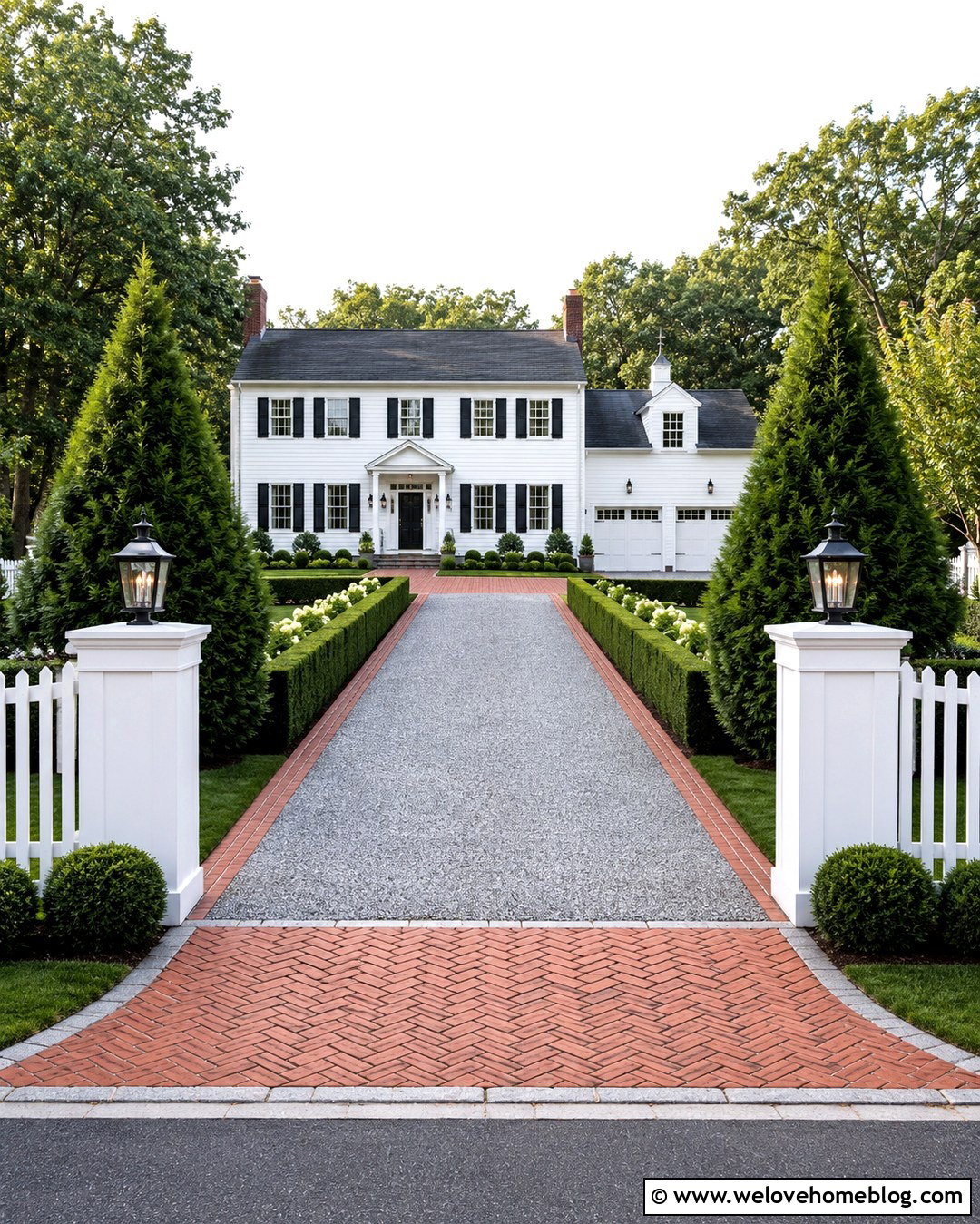
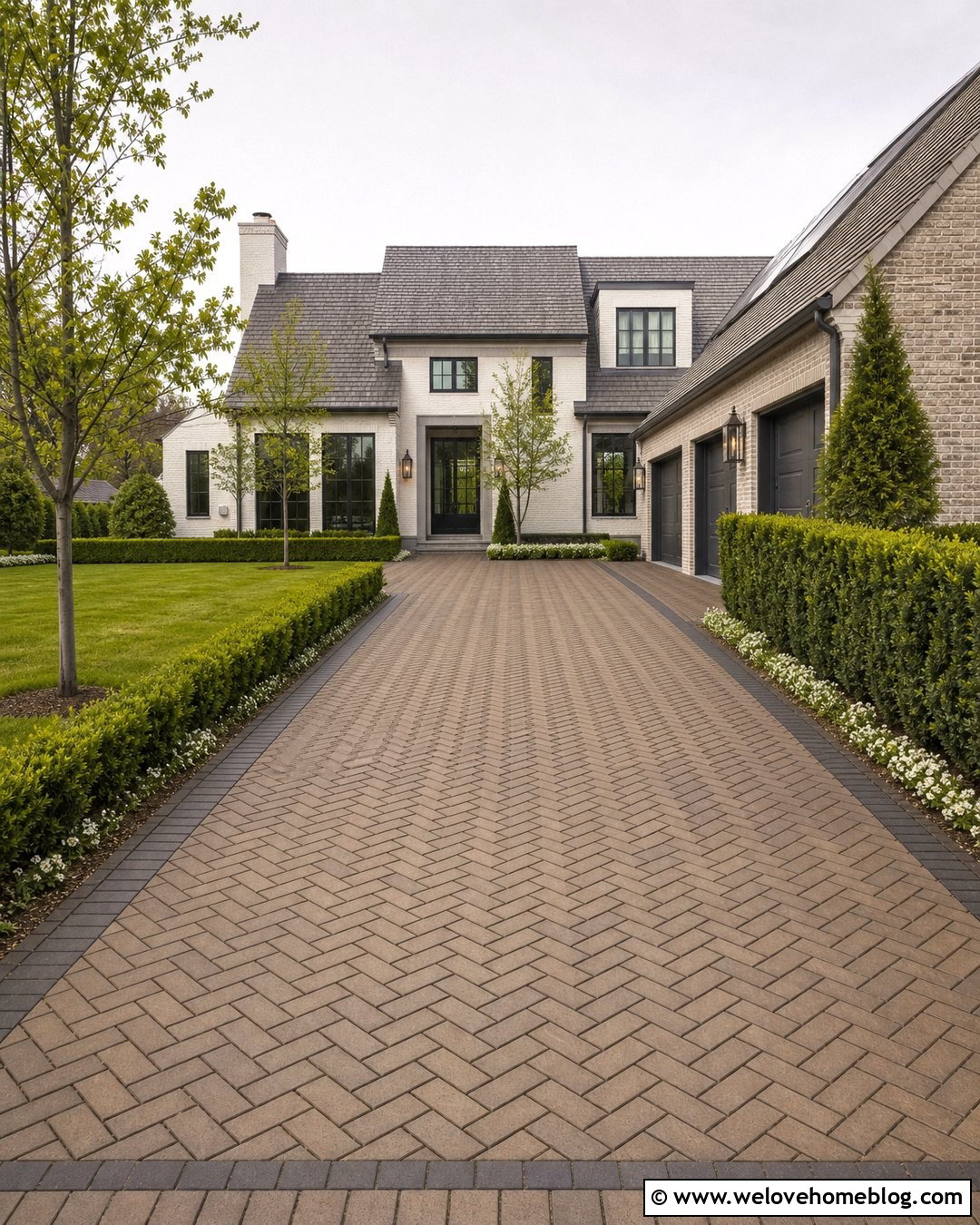
Symmetry is the key to a brick and gravel driveway in front of a colonial home. Center a straight gray gravel driveway on the front door or garage, then frame it with equal-width red brick borders. A broad herringbone brick apron at the street creates a formal entrance, while another apron near the house repeats the pattern. Place matching evergreen shrubs or small trees on both sides to strengthen the balanced layout. A brick walkway can intersect the driveway at a right angle and continue toward the front steps. White fencing, black lanterns, and clipped hedges complete the traditional palette. Keep every transition clean and uncomplicated. The contrast between orderly brickwork and textured gravel gives the home a refined entrance without covering the entire front yard in paving.
15. Cottage Gravel Driveway With Weathered Brick
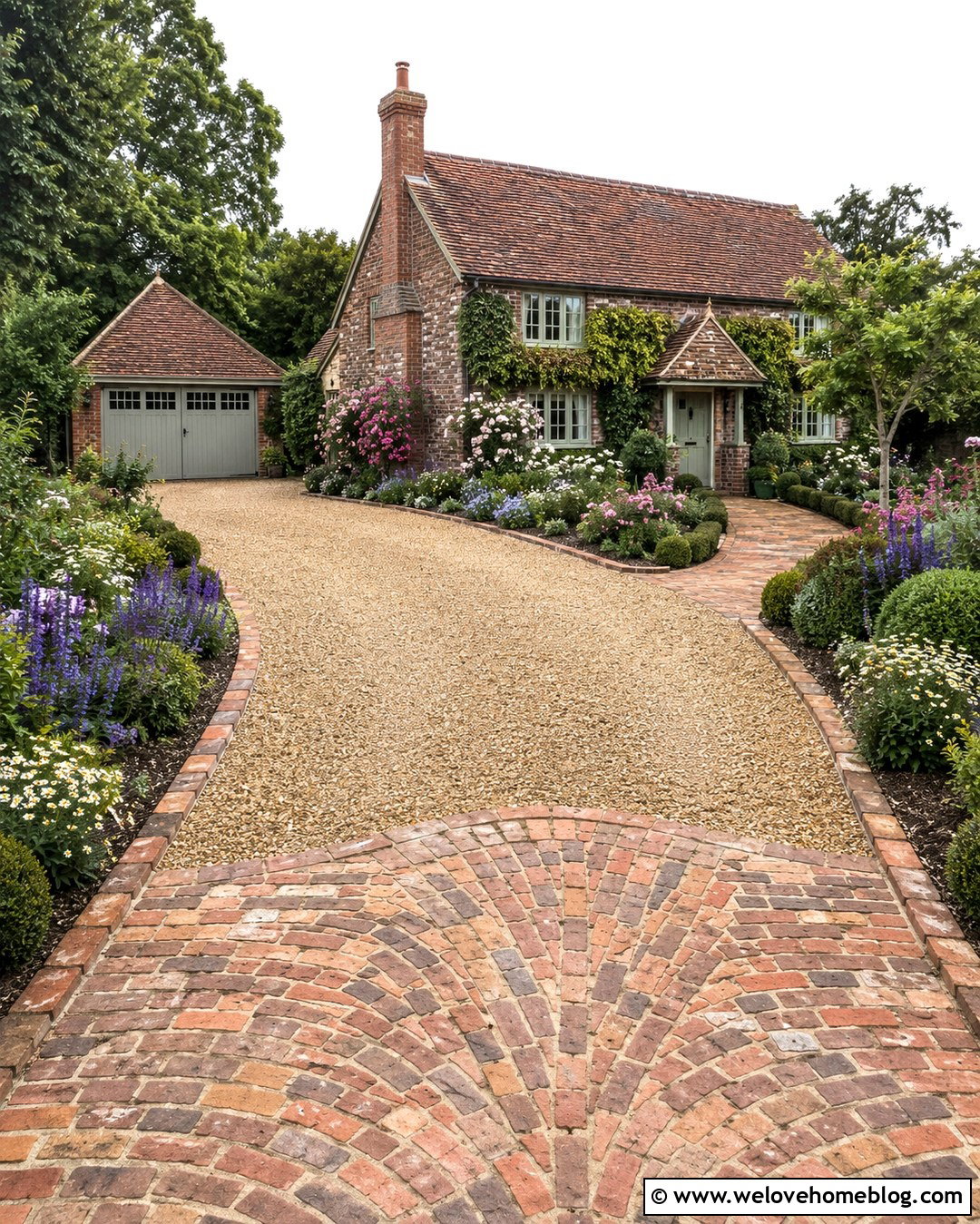
Weathered brick and honey-colored gravel bring natural warmth to a cottage entrance. Shape the driveway with a subtle curve that passes a deep flower border before reaching a small garage or parking space. Use reclaimed red and brown bricks as low edging, allowing their varied colors to complement the cottage facade. At the entrance, widen the brickwork into a simple fan-shaped apron. Plant lavender, salvia, roses, daisies, and compact shrubs nearby, but keep vigorous plants from spilling onto the driving surface. A matching brick path can weave through the garden to the front door. The overall effect should feel informal without becoming untidy. Regularly sweep displaced gravel back from the bricks so the border remains visible and continues to define the driveway’s shape.
16. Modern Gravel Driveway With Charcoal Brick
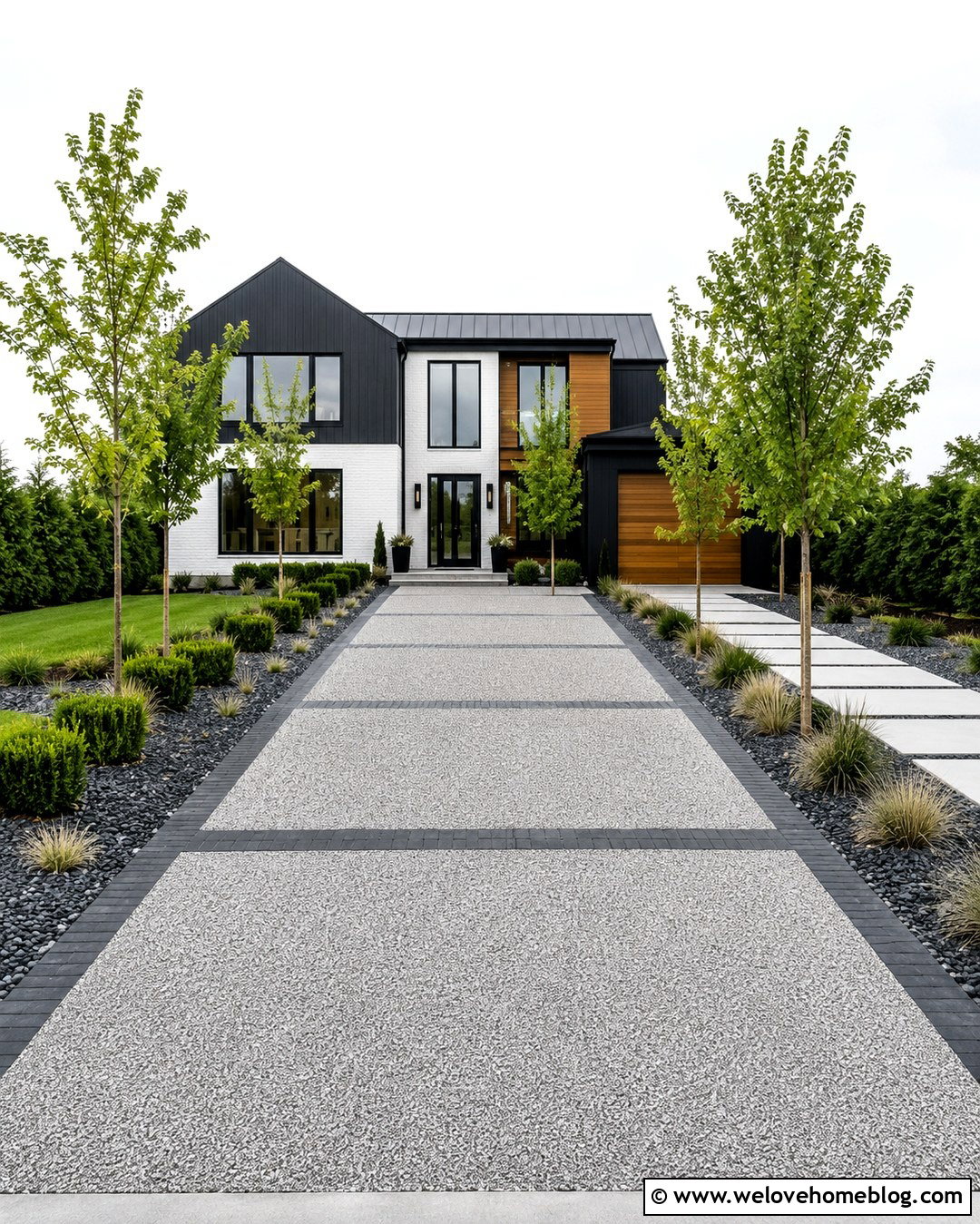
For a modern exterior, limit the palette and let geometry provide the detail. Cover a wide, straight driveway with fine light-gray crushed granite, then surround it with smooth charcoal brick pavers. A double-width border creates a bold frame, while brick bands across the surface can divide the approach from the parking zone. Choose rectangular planting beds filled with ornamental grasses, low evergreens, and dark stone mulch. A large-format concrete walkway can run beside the driveway, separated by a narrow strip of lawn or ground cover. This combination complements black siding, natural wood accents, and white stucco. Keep the gravel consistently graded and level with the brick edge. The finished space will look crisp and current while retaining more visual texture than a single uninterrupted slab.
17. Ranch House Gravel Driveway With Brick Border
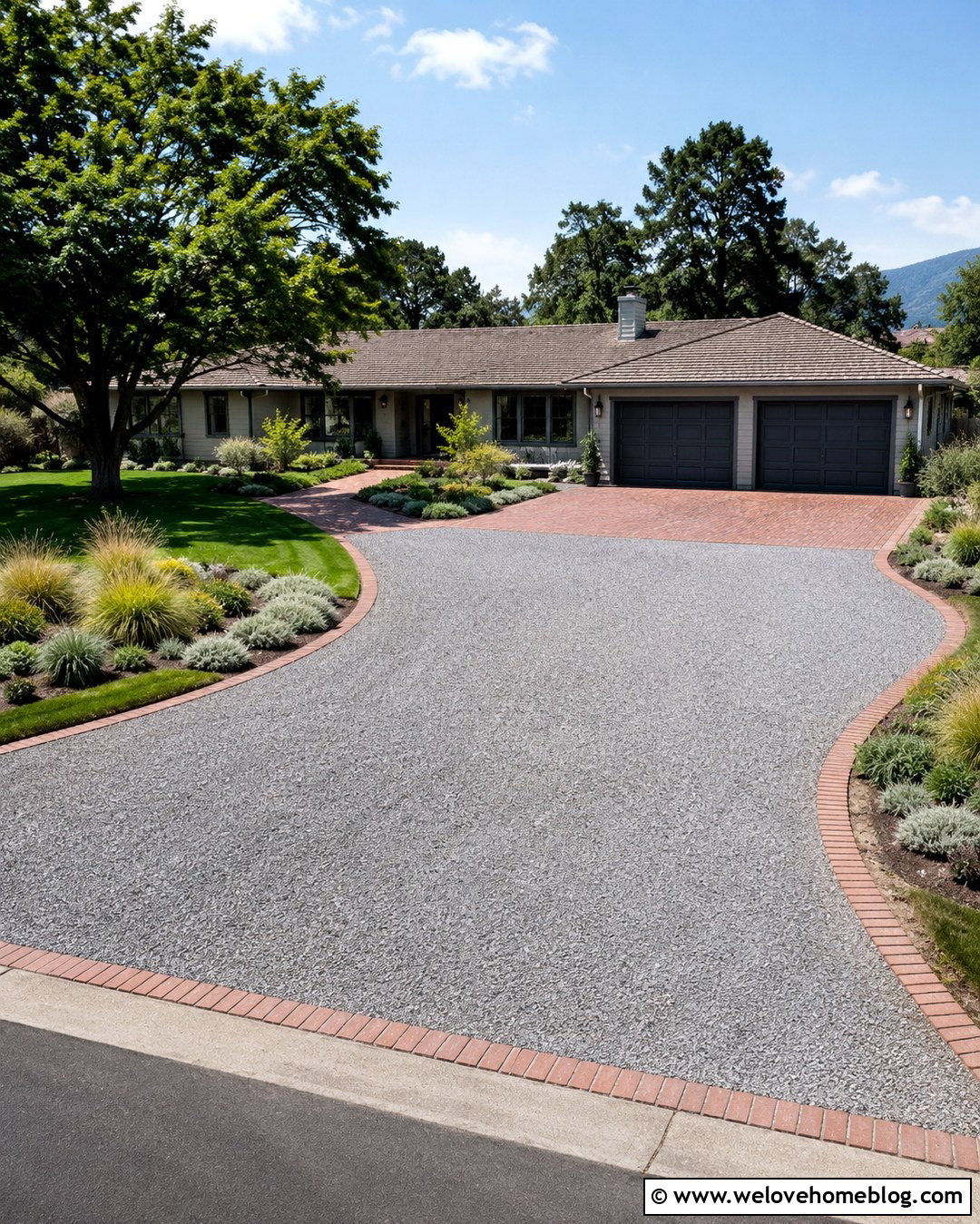
A ranch home often has a wide garage and a long horizontal facade, so the driveway should reinforce those proportions. Use medium-gray crushed gravel across a broad, gently flared approach. Install a double row of brown or muted red brick along the sides, then carry the same brick across the garage entrance as a wide apron. Low planting beds with ornamental grasses, dwarf shrubs, and spreading ground covers will keep the view open. A brick walkway can branch toward the front door without competing with the driveway. If the yard is large, add one shade tree near the outer edge to balance the garage visually. This straightforward layout improves definition and curb appeal while respecting the relaxed, low-profile character associated with ranch architecture.
18. Small Front Yard Brick And Gravel Driveway
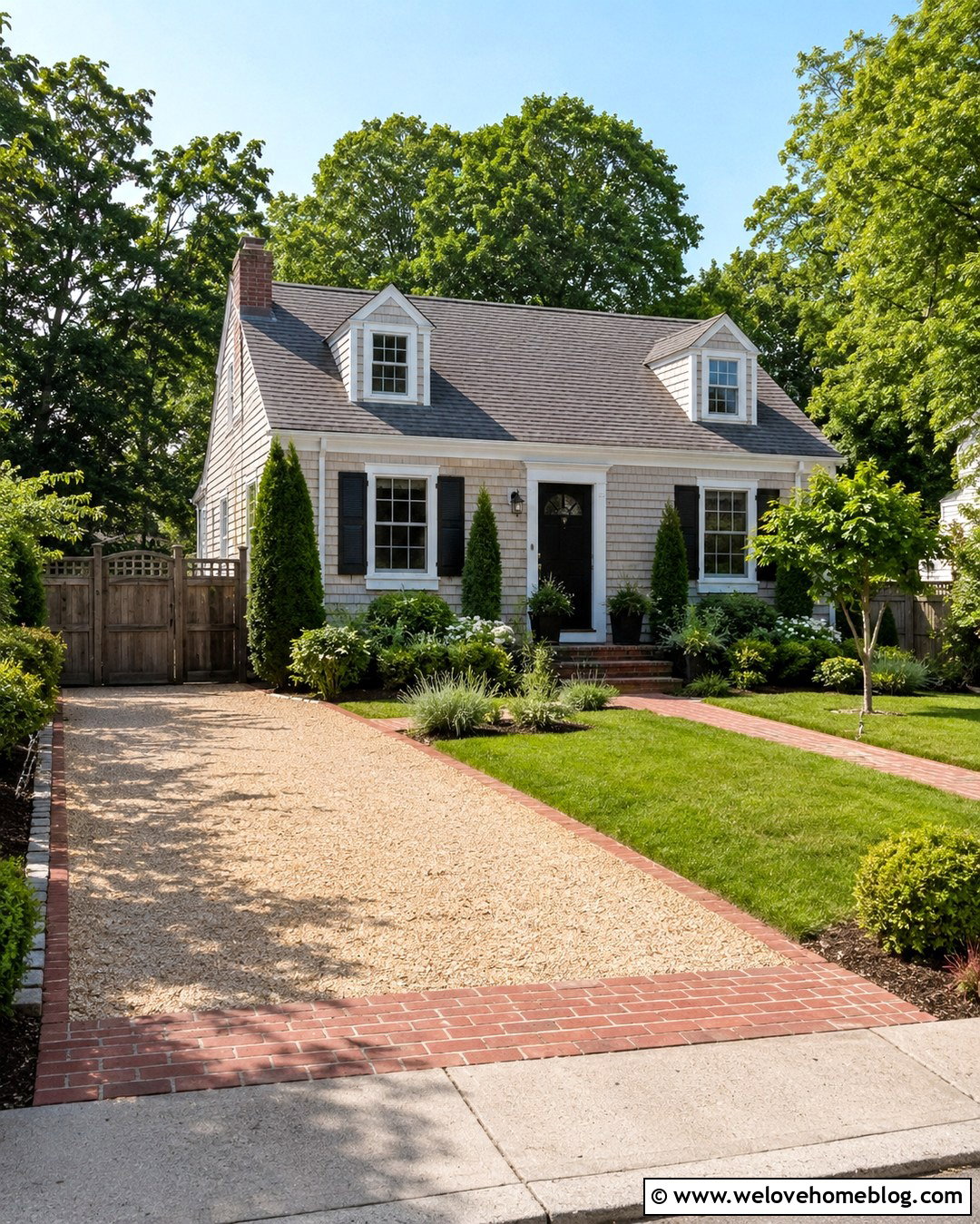
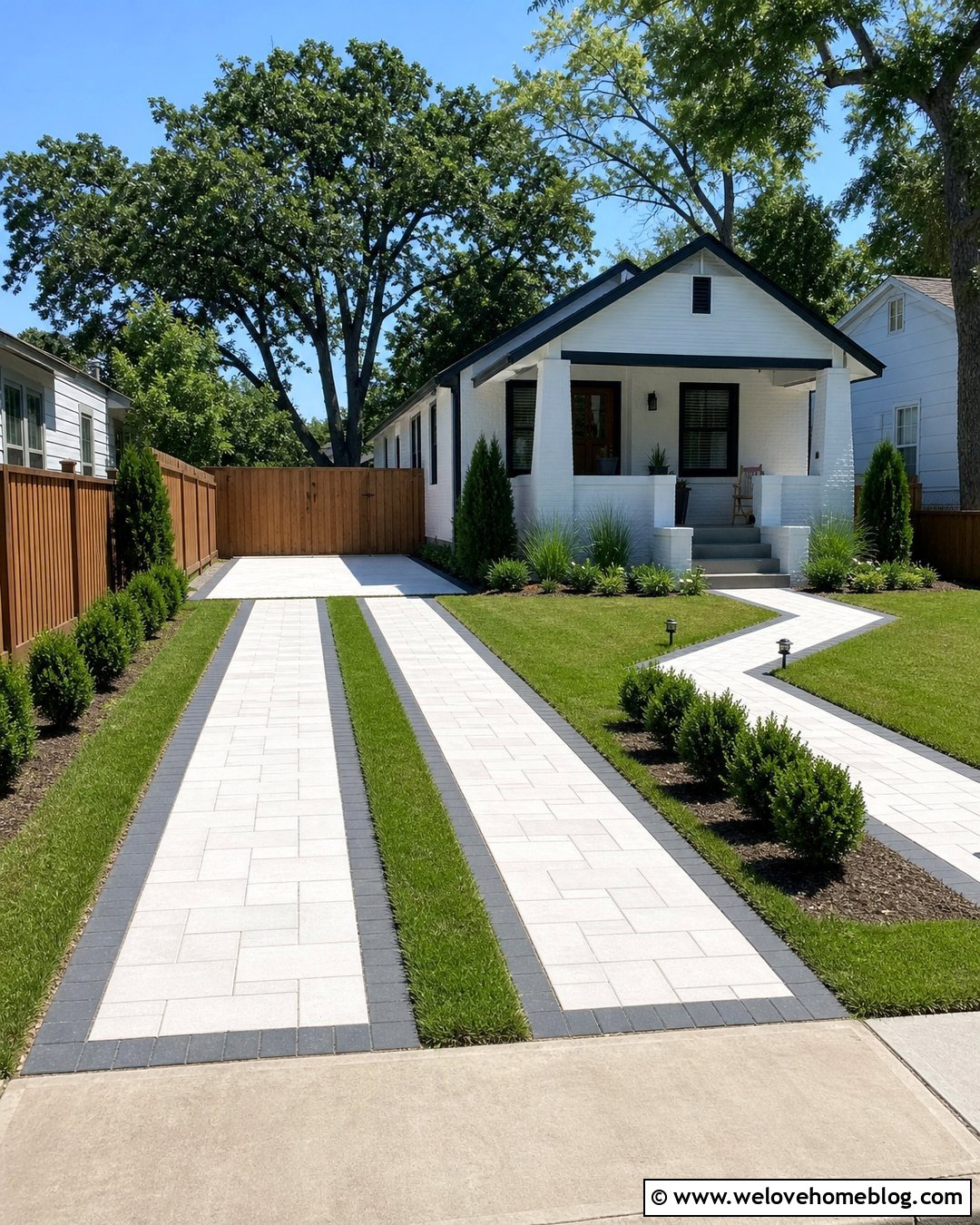
A compact front yard can still accommodate an attractive brick and gravel driveway. Use light-colored crushed gravel to keep the space visually open, then install narrow red brick borders that define the parking area without consuming too much width. A brick apron near the sidewalk creates a tidy entrance and prevents gravel from spreading toward the curb. Along one side, include a slim brick walkway to the front door. Vertical shrubs, compact grasses, and a small ornamental tree provide greenery without crowding the vehicle space. Choose a straight layout with clean corners for the most efficient use of the lot. Matching the brick to porch steps or facade details helps the design feel connected. Good proportions will make the driveway appear intentional rather than squeezed into the yard.
19. Horseshoe Gravel Driveway With Brick Edging
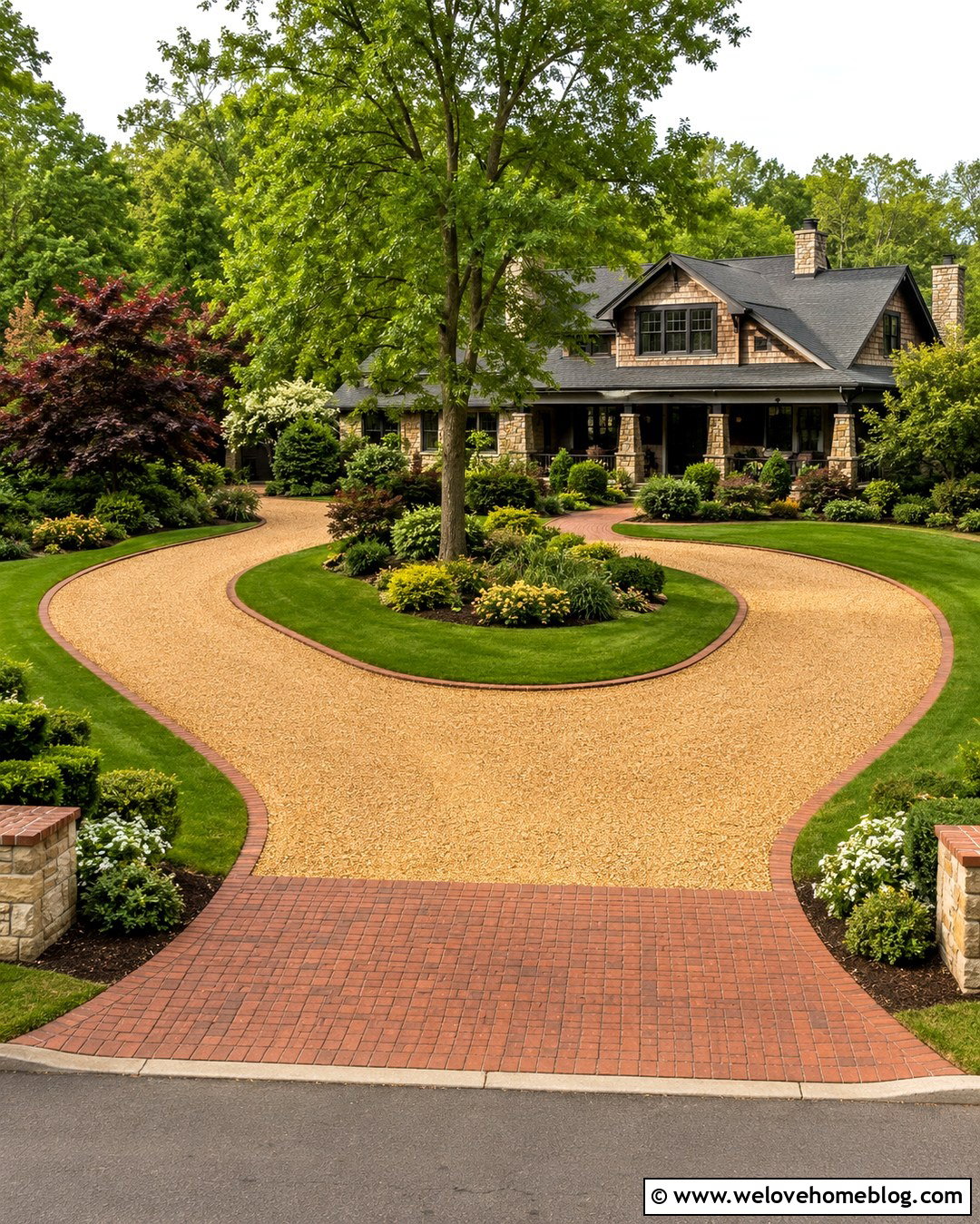
A horseshoe driveway creates a convenient arrival and departure route while preserving a landscaped area near the house. Surface the curved lane with compacted golden gravel and define its inner and outer edges with red brick. Widen both street connections with brick aprons to control loose aggregate where vehicles turn. The central lawn can feature a specimen tree, layered shrubs, and a curved brick walkway to the porch. This design works particularly well with country homes, large Craftsman houses, and traditional suburban properties on wide lots. Maintain clear visibility at both entrances and leave generous turning space through the curve. Repeating the same brick at the mailbox, porch steps, or low garden walls will make the large front-yard layout feel cohesive from every angle.
20. Gravel Driveway With Brick Parking Court
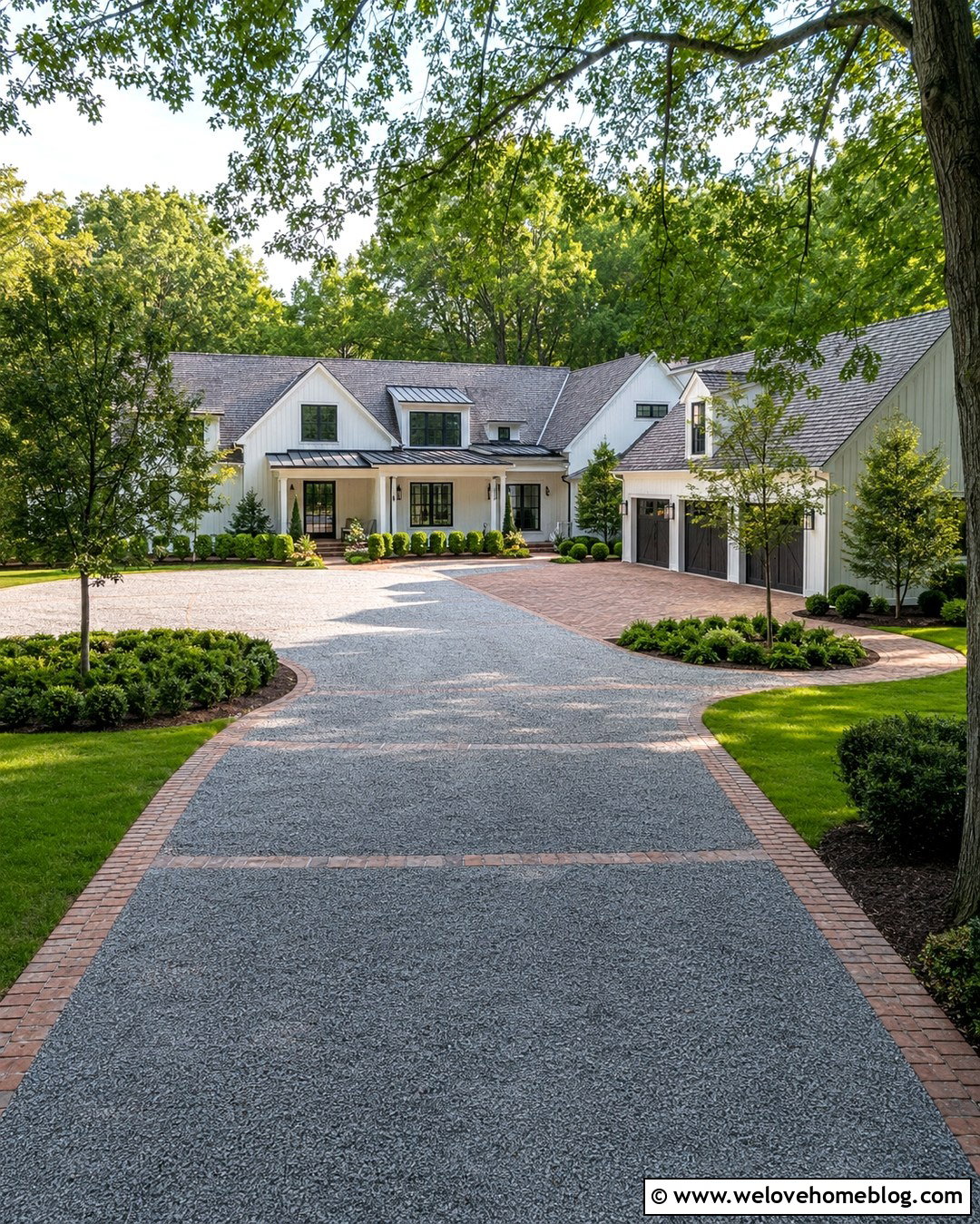
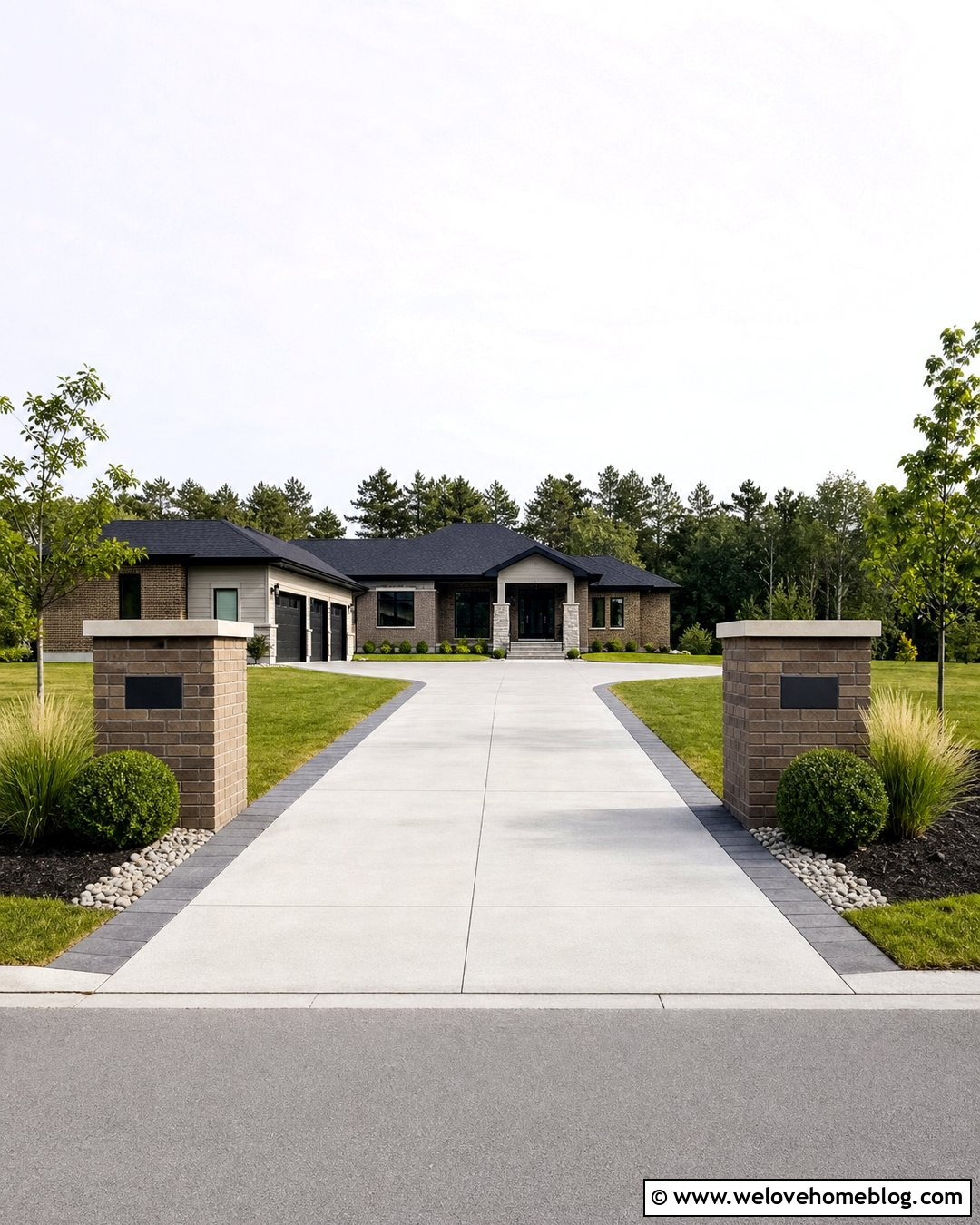
A brick-edged parking court gives a large gravel driveway a clear destination near the house. Use compacted gray gravel for the long approach, then widen it into a rectangular or gently curved court. Outline the entire space with a broad brick border and use brick bands to mark individual parking positions without painting lines. A herringbone apron in front of the garage creates a durable-looking transition and repeats the entrance brickwork. Frame the court with shade trees, clipped shrubs, and planting islands placed outside vehicle turning paths. This arrangement suits larger colonial, farmhouse, and estate-style homes. The parking area should remain generous but not dominate the facade. Thoughtful landscaping and repeated masonry help the court feel like part of the property’s architecture.
Conclusion:
The best brick and gravel driveways combine appearance with everyday function. Brick can contain loose stone, highlight an entrance, create a stable apron, or connect the driveway to a walkway and home facade. Gravel supplies color, texture, and a softer visual character. Before choosing a look, consider vehicle movement, drainage, maintenance, yard size, and architectural style. Build both materials over an appropriate base, use driveway-rated pavers in traffic areas, and make sure water moves safely away from structures. A carefully planned border and consistent landscaping can elevate even a simple layout. Use these **20 Brick And Gravel Driveway Ideas** to create an entrance that feels practical, balanced, and connected to your home.

Related posts:
Leave a Reply