
Sidewalk next to driveway ideas can make a front yard safer, more attractive, and easier to navigate. The best layouts treat the sidewalk and driveway as one complete design rather than two unrelated surfaces. Current approaches often combine contrasting pavers, gentle curves, planted buffers, permeable joints, defined borders, and path lighting to create a clear route toward the entrance. () Material selection matters, but so do width, drainage, edging, and the connection to the porch. A well-planned path should remain visible when vehicles are parked without overwhelming a small yard. Whether your home has asphalt, concrete, gravel, or pavers, the following complete designs offer practical inspiration. Explore these 20 Sidewalk Next To Driveway Ideas to find a layout that fits your property.
1. Concrete Sidewalk Next To Asphalt Driveway
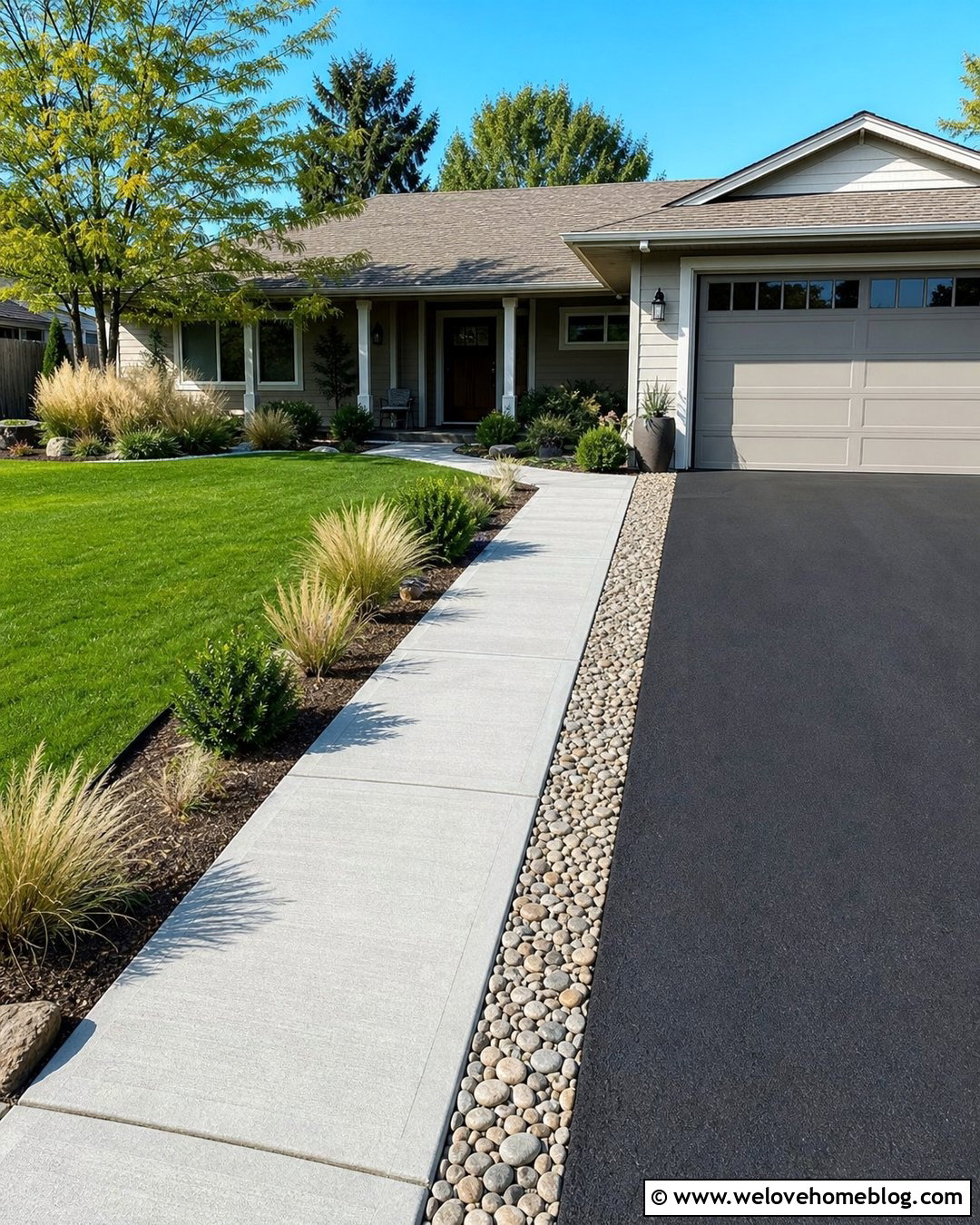
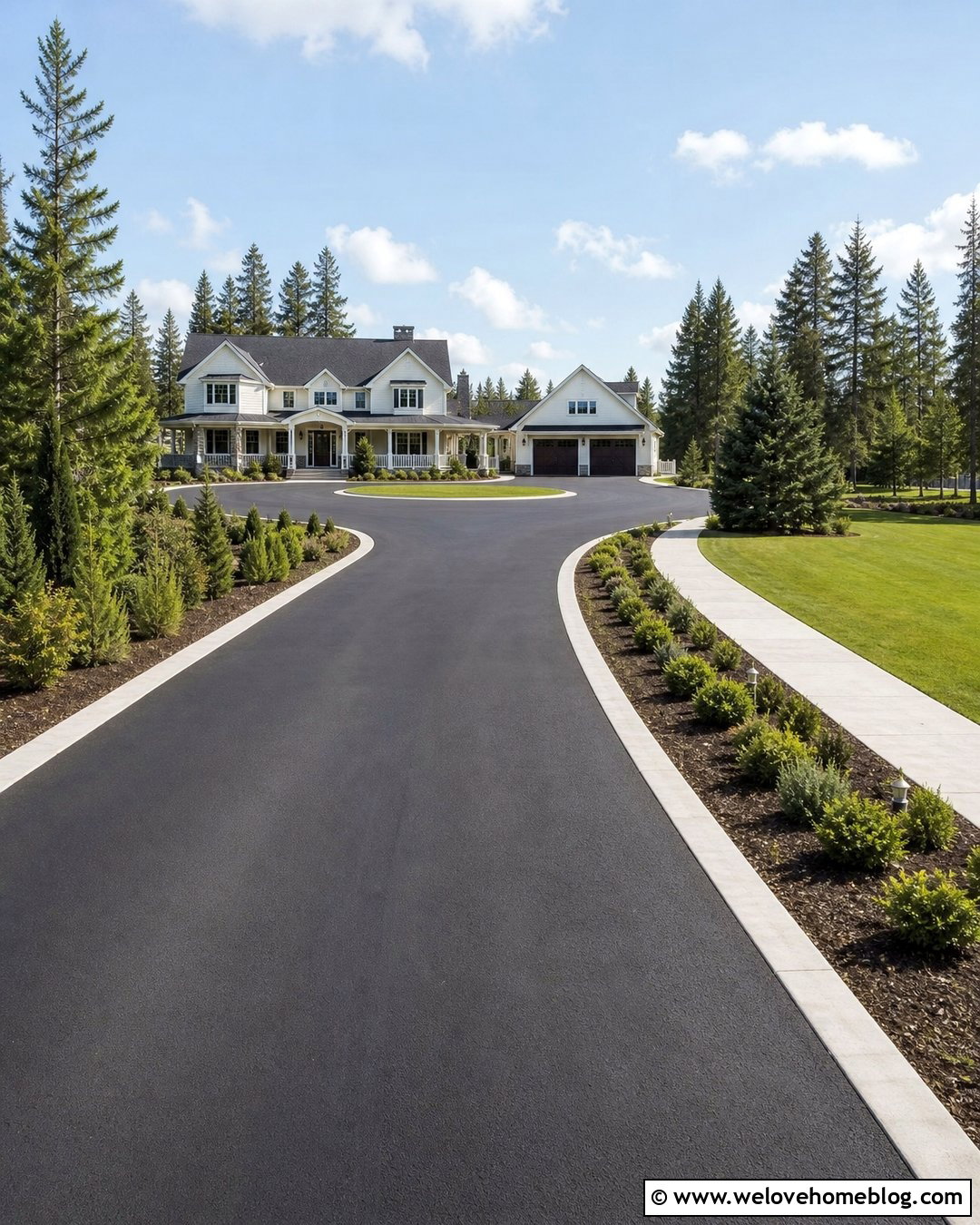
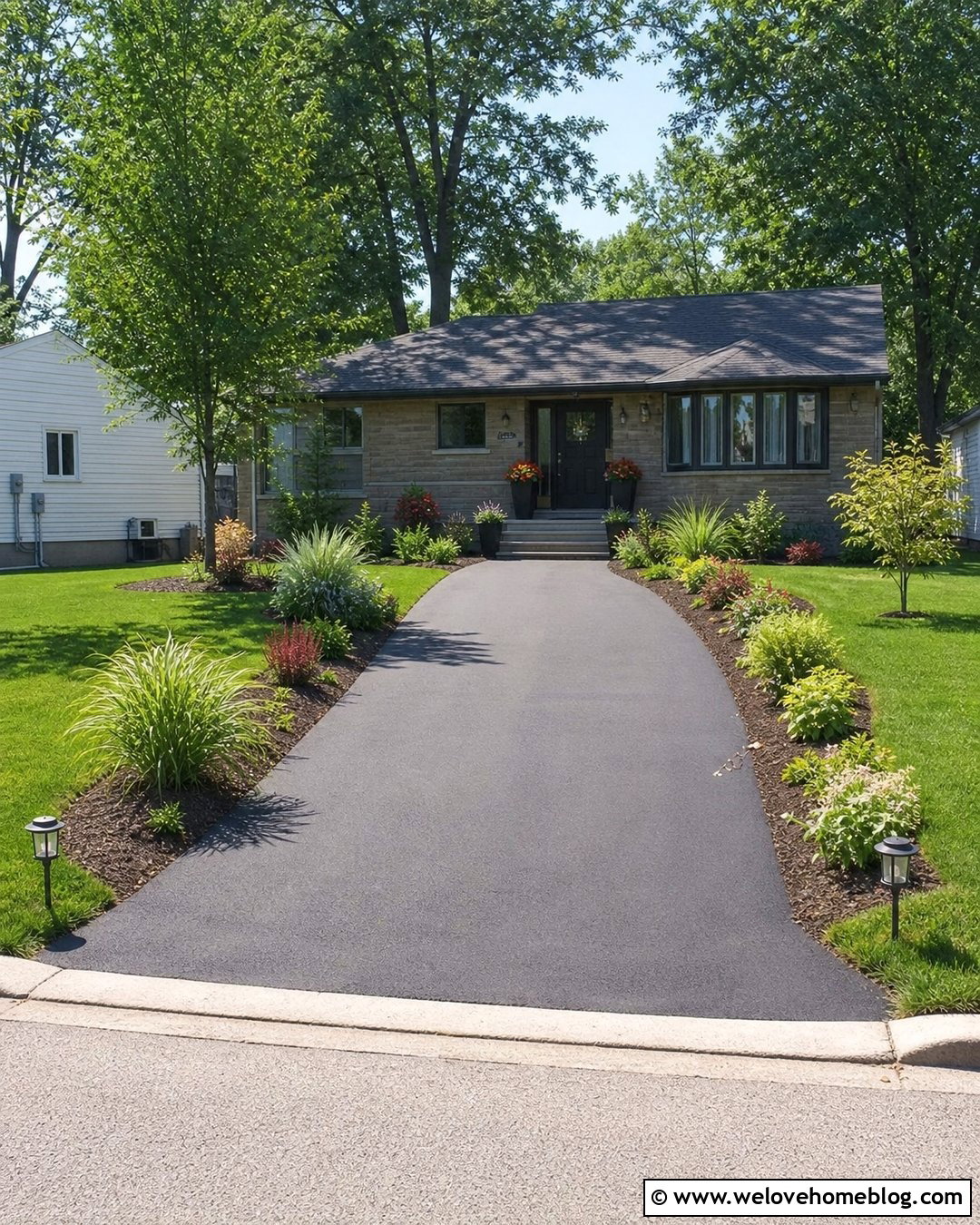
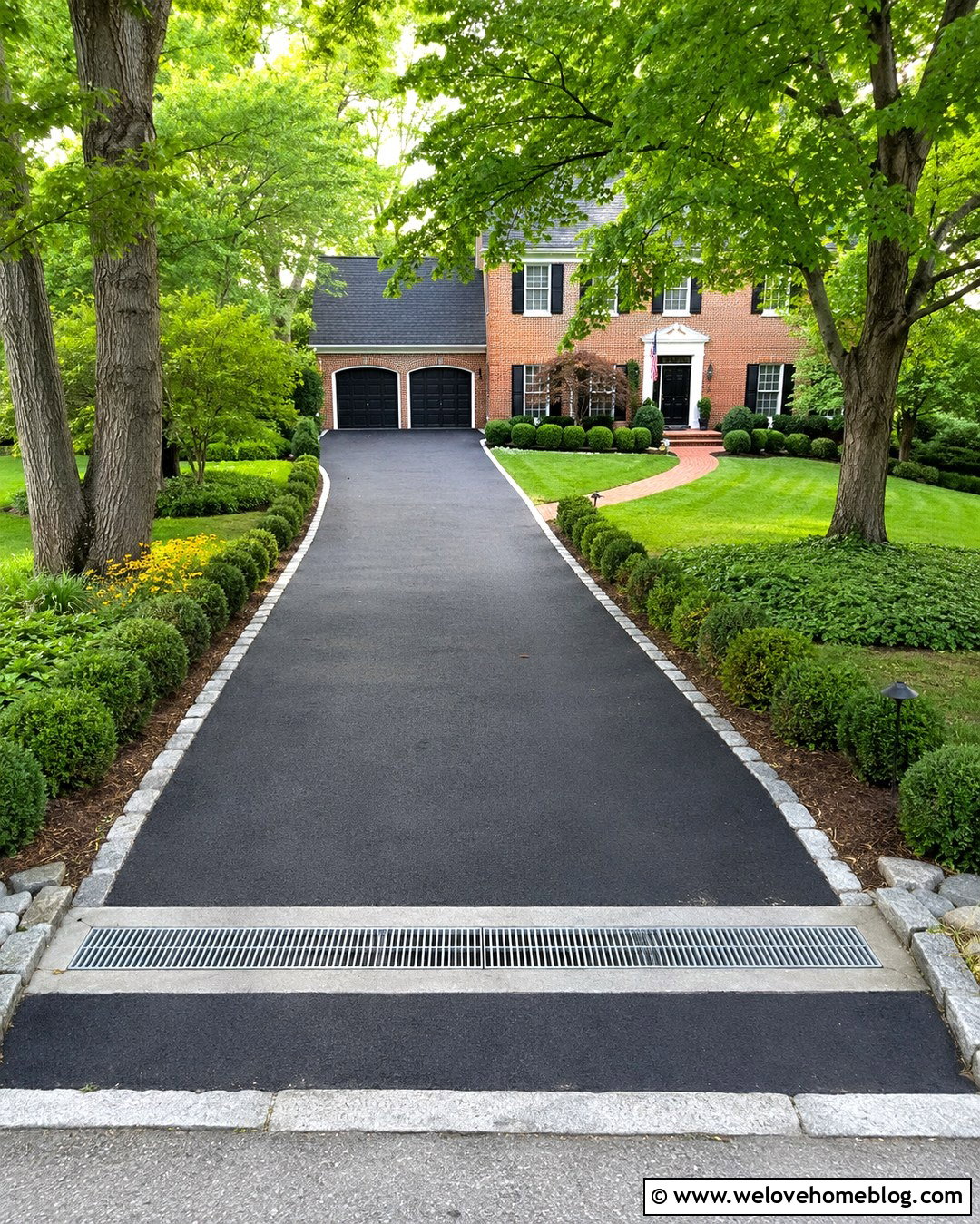
A light gray concrete sidewalk creates a clean contrast beside a black asphalt driveway. Run the two surfaces parallel from the curb before turning the sidewalk toward the front porch. A narrow river rock drainage strip between them prevents the path from looking like a driveway extension. It also creates a visible boundary for drivers. Finish the sidewalk with subtle control joints and a light broom texture for a simple residential appearance. On the lawn side, add a low bed of ornamental grasses, compact shrubs, and seasonal flowers. The dark driveway, pale sidewalk, and green planting form three distinct layers. This practical combination works especially well with ranch, split-level, and traditional suburban homes where clarity and easy maintenance matter.
2. Paver Sidewalk Next To Concrete Driveway
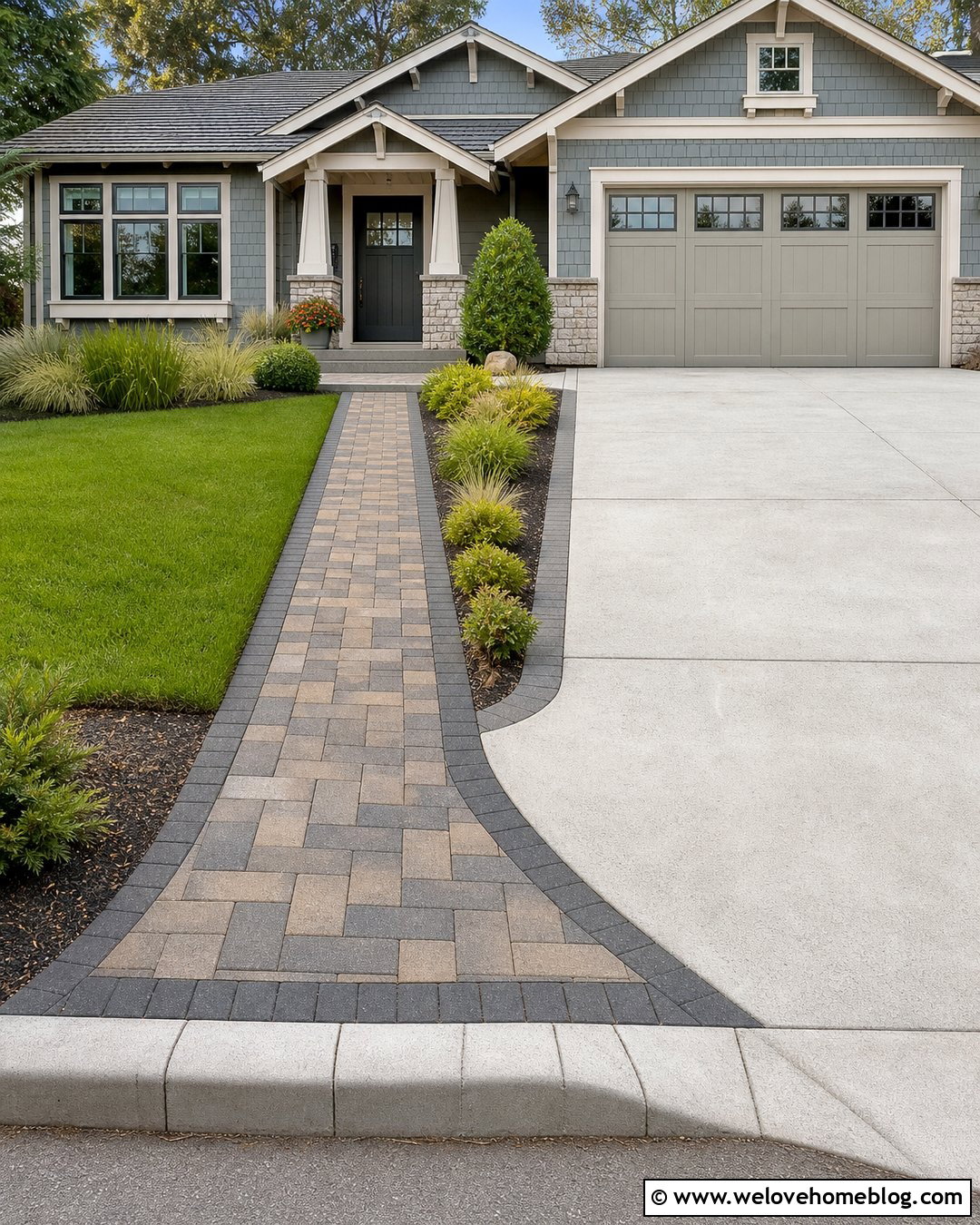
Warm charcoal and tan concrete pavers can soften the plain appearance of a poured concrete driveway. Choose rectangular pavers in a running bond pattern and frame them with a darker soldier-course border. The sidewalk can begin beside the garage, follow the driveway toward the street, and connect to the public sidewalk with a gentle flare. Leave a slim planting bed between the two paved areas for dwarf evergreens or low ornamental grasses. Repeating the dark border along the driveway edge ties everything together without making the surfaces identical. This complete look suits Craftsman and transitional homes because it combines neat geometry with welcoming color. Match one paver tone to the house facade, shutters, or porch columns for a coordinated entrance.
3. Brick Sidewalk Next To Gravel Driveway
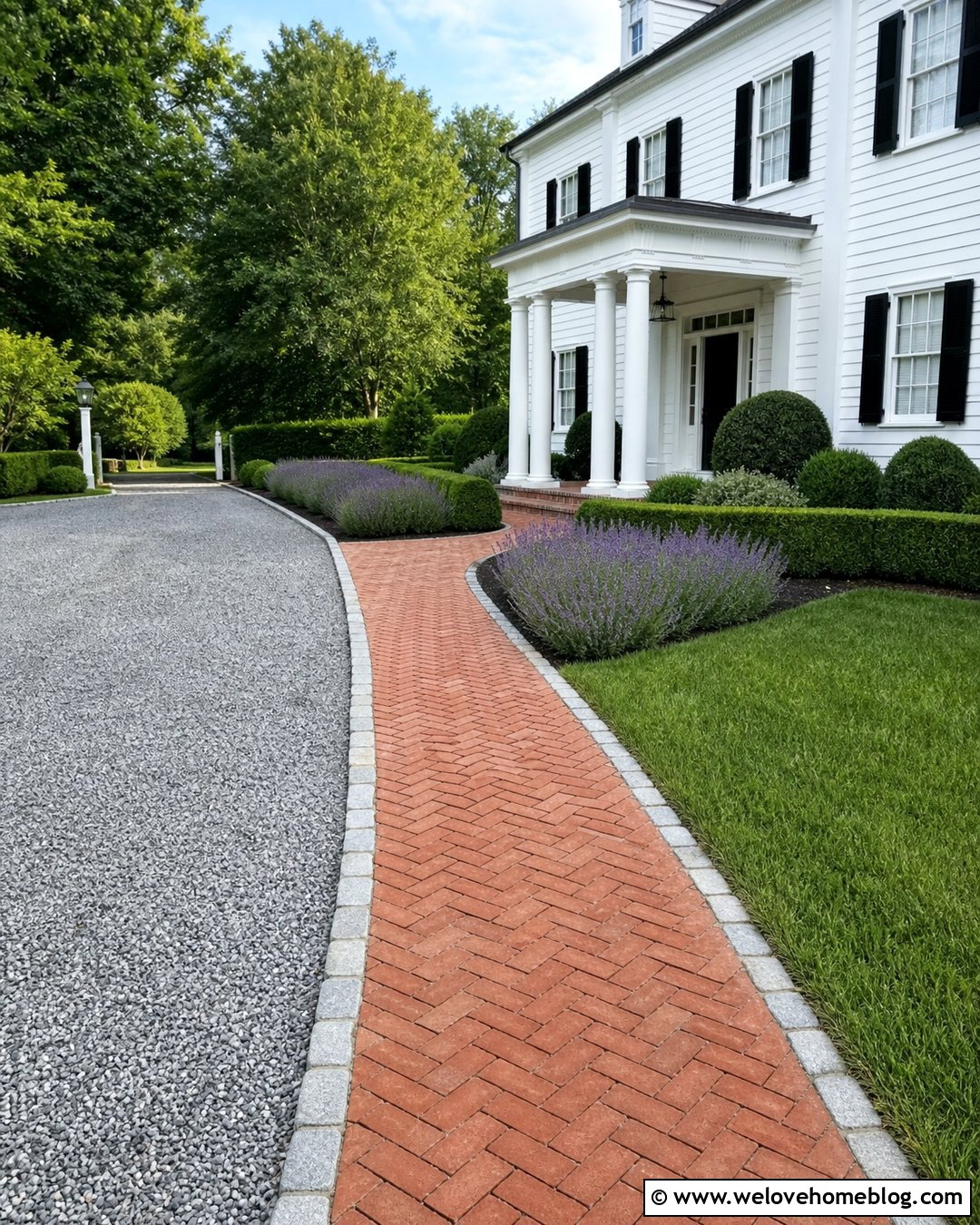
Red clay brick pavers bring structure and traditional character to a loose gravel driveway. Lay the sidewalk in a herringbone pattern so it feels substantial and visually different from the gravel parking surface. A row of granite cobblestones can separate the two materials while keeping gravel from spreading onto the path. On the outer edge, use clipped boxwoods, lavender, or another compact border planting that will not crowd pedestrians. Let the brick sidewalk curve slightly near the porch instead of ending in an abrupt right angle. The warm brick, gray gravel, and green landscaping create a layered approach that complements Colonial, Cape Cod, and cottage homes. Repeat the brick around the porch steps or entrance landing to make the path feel intentional.
4. Flagstone Sidewalk Beside Curved Driveway
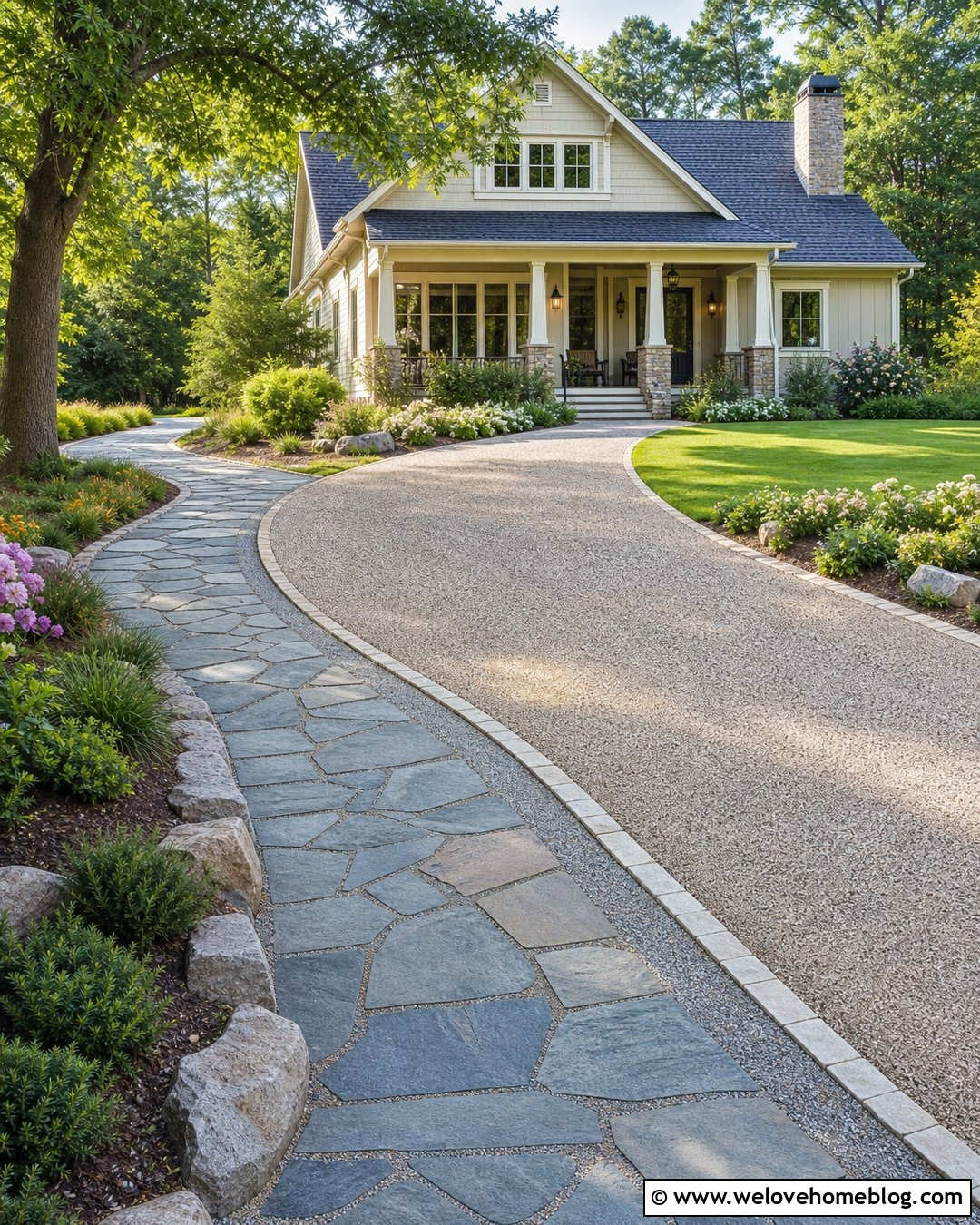
Irregular flagstone creates a relaxed sidewalk that fits naturally beside a curved driveway. Select broad stones with relatively even surfaces and set them in compacted stone dust or fine gravel. Follow the driveway’s sweeping line for part of the route, then guide the path through a planted area toward the porch. A steel or stone edge can define the driveway side without interrupting the organic appearance. Use ground cover between wider joints and add layered beds of flowering shrubs, grasses, and small trees along the lawn side. This arrangement makes the sidewalk feel like a garden path while maintaining an obvious entrance route. It looks especially natural beside exposed aggregate, gravel, or muted concrete driveways serving country, cottage, and wooded homes.
5. Concrete Slab Sidewalk Next To Modern Driveway
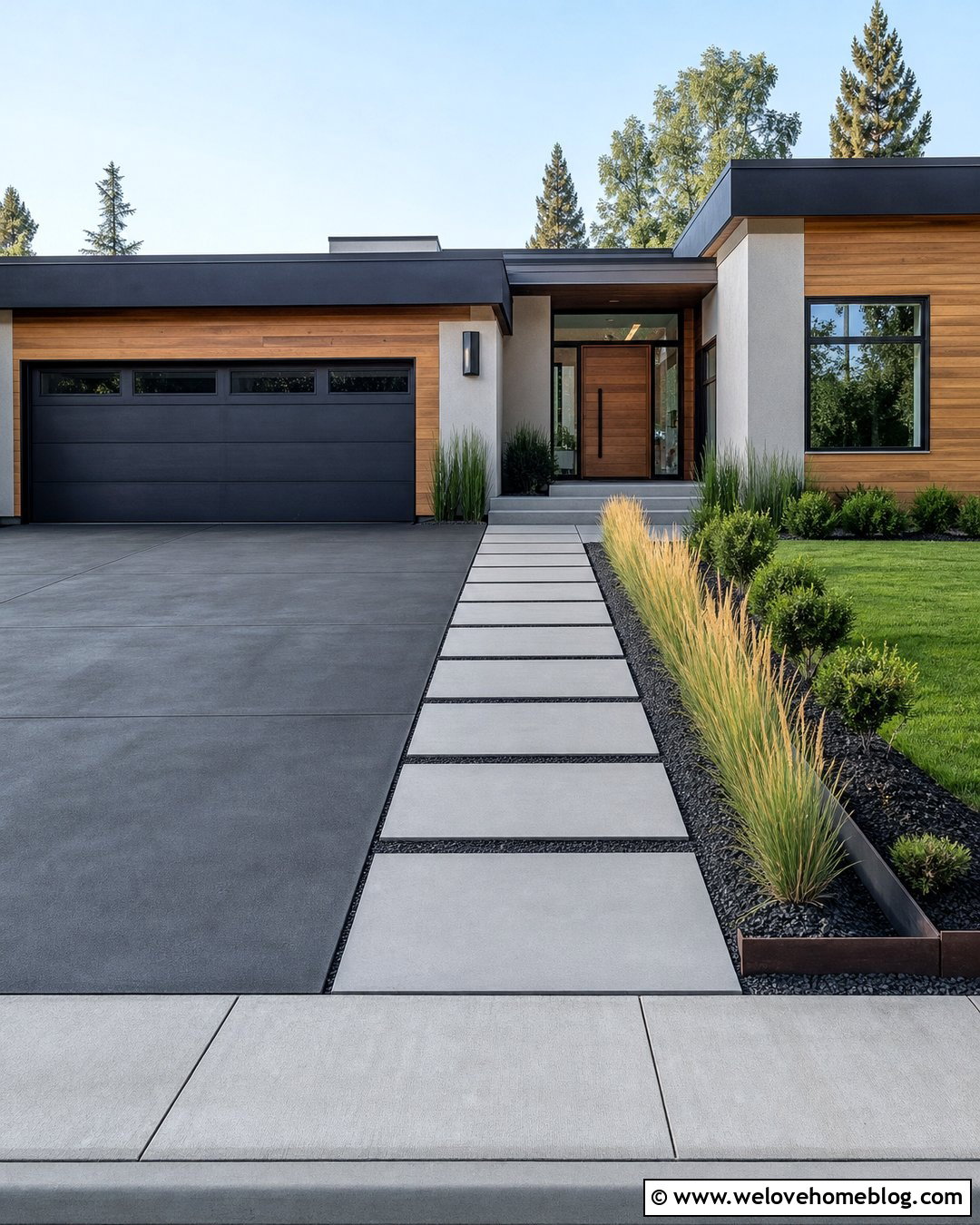
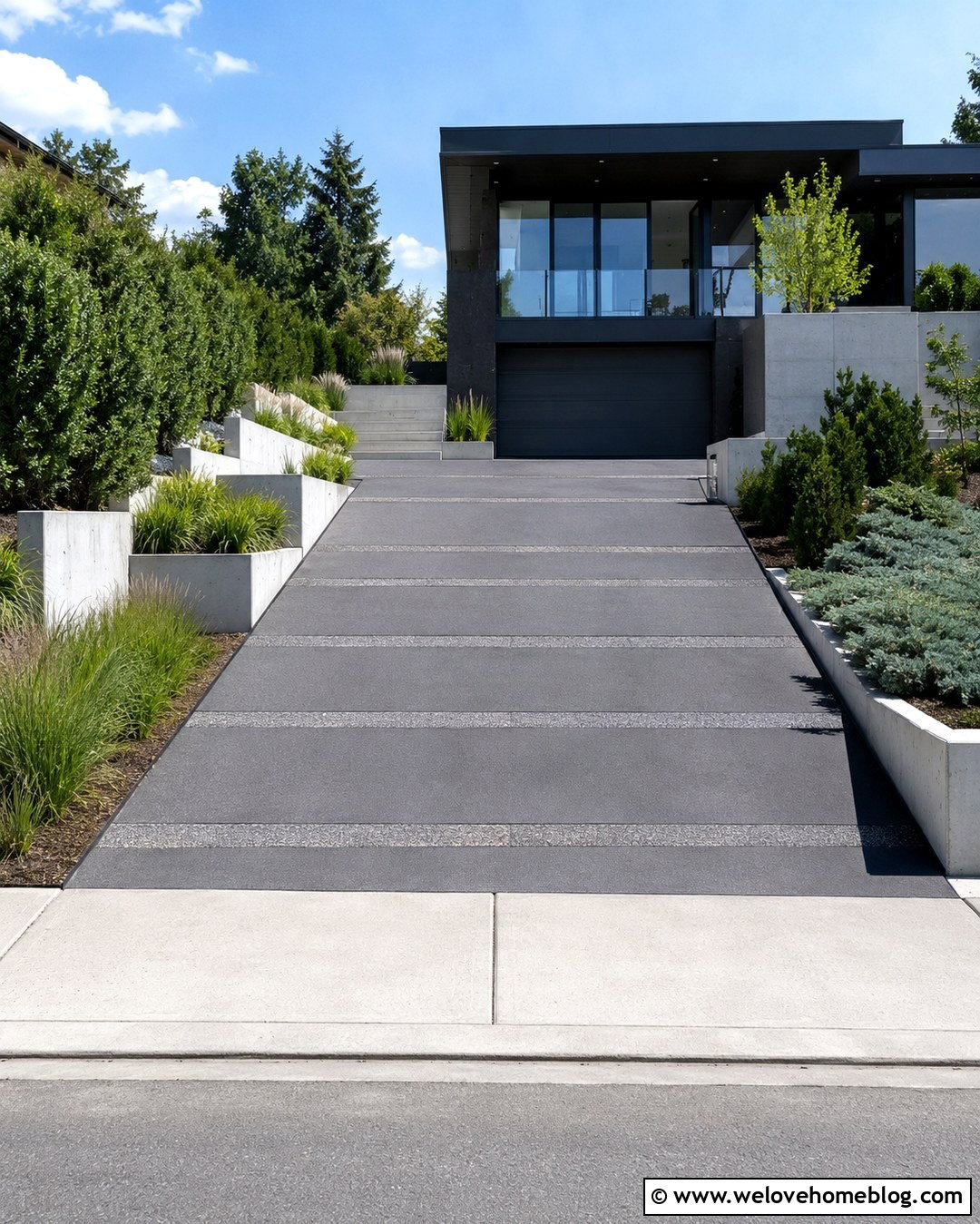
Large rectangular concrete slabs create a bold sidewalk beside a modern driveway. Use smooth light gray slabs with narrow black gravel joints, placing them in a straight line from the curb to the entrance. Pair the path with a charcoal poured concrete driveway or dark concrete pavers for strong but controlled contrast. A narrow planting strip filled with architectural grasses and low evergreen shrubs can separate pedestrian and vehicle areas. Keep the borders straight, the planting palette limited, and the surfaces level wherever the site allows. Near the front door, widen the slabs into a generous landing that mirrors the porch. The combination of oversized geometry, restrained colors, and structured landscaping works beautifully with contemporary homes featuring stucco, wood siding, glass, or dark metal accents.
6. Permeable Paver Sidewalk Next To Gravel Driveway
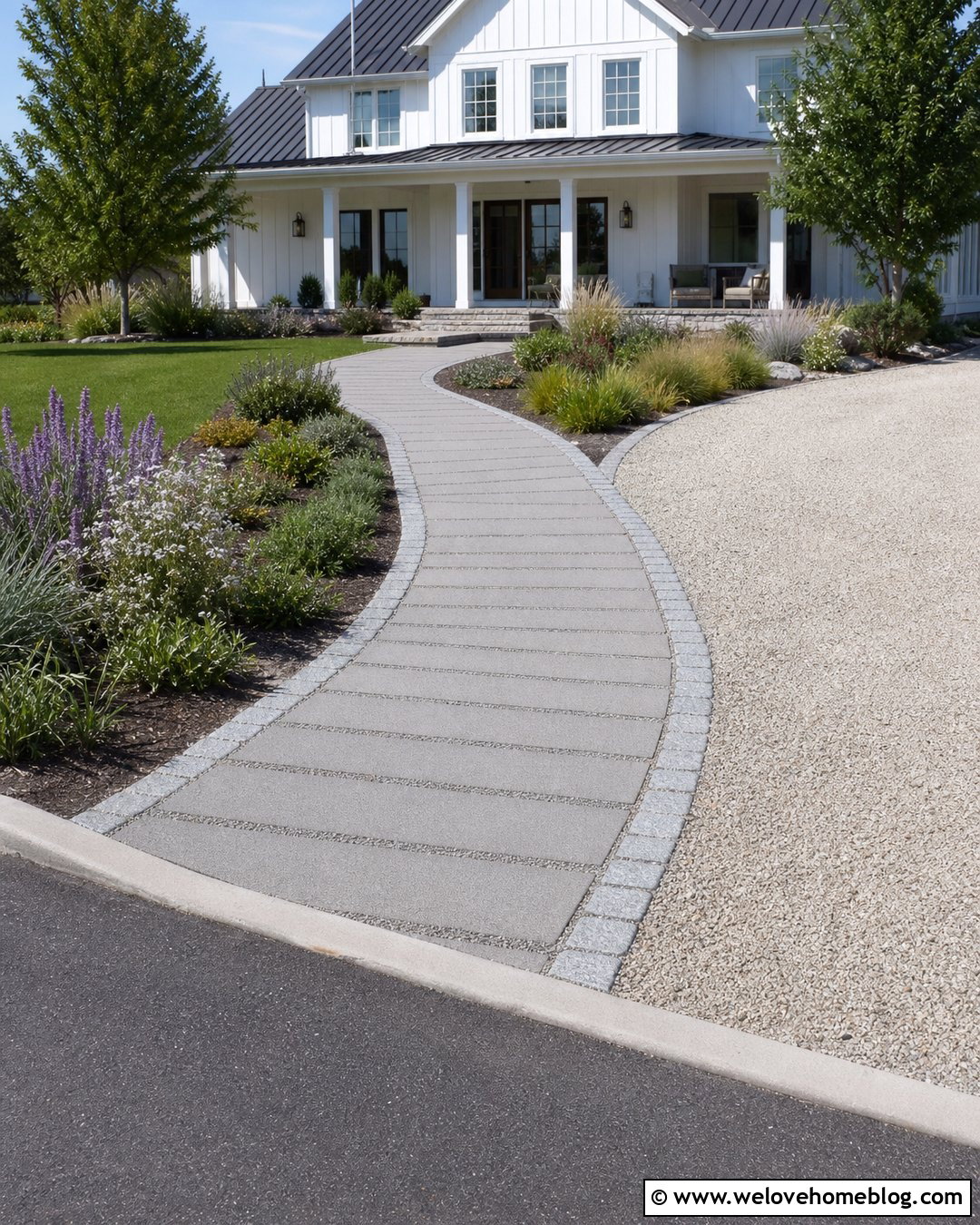
A permeable paver sidewalk complements a gravel driveway while giving pedestrians a firmer surface. Use textured concrete pavers in a soft gray tone with narrow aggregate-filled joints. A straight or gently curved layout keeps the walkway easy to follow without competing with the casual gravel surface. Separate the two areas with a flush cobblestone ribbon that contains the driveway material and creates a crisp transition. On the opposite side, plant drought-tolerant grasses, creeping ground covers, and compact flowering perennials. The sidewalk should connect clearly to both the street and porch, with a slightly wider section near the entrance. This coordinated combination fits modern farmhouse, Craftsman, and environmentally focused landscapes while preserving a softer appearance than an entirely paved front yard.
7. Sidewalk With Grass Strip Next To Driveway
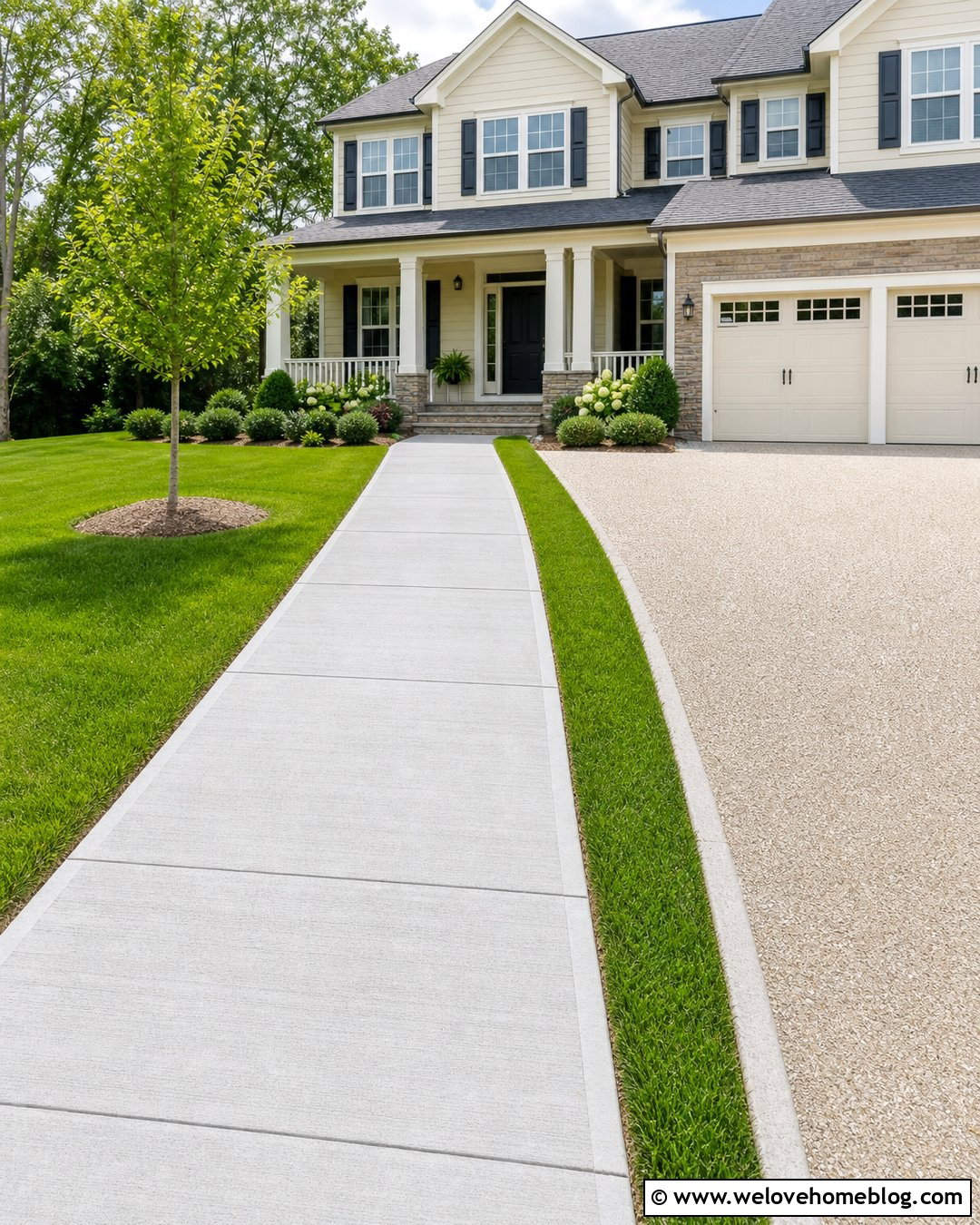
A grass strip between the sidewalk and driveway gives a paved front yard more breathing room. Pair a straight broom-finished concrete sidewalk with a light exposed aggregate driveway, leaving a narrow green ribbon between them. The separation makes the pedestrian route easy to recognize and reduces the feeling of one oversized paved area. Keep the grass strip wide enough for straightforward mowing, or replace lawn with low ground cover where maintenance is difficult. Near the porch, allow the sidewalk to cross the green strip and connect naturally with the driveway for convenient unloading. Add a small ornamental tree or symmetrical shrubs near the entrance rather than filling the entire strip. This simple layout works well for suburban ranch, Colonial, and two-story homes with medium or wide front yards.
8. Sidewalk With Planting Bed Between Driveway
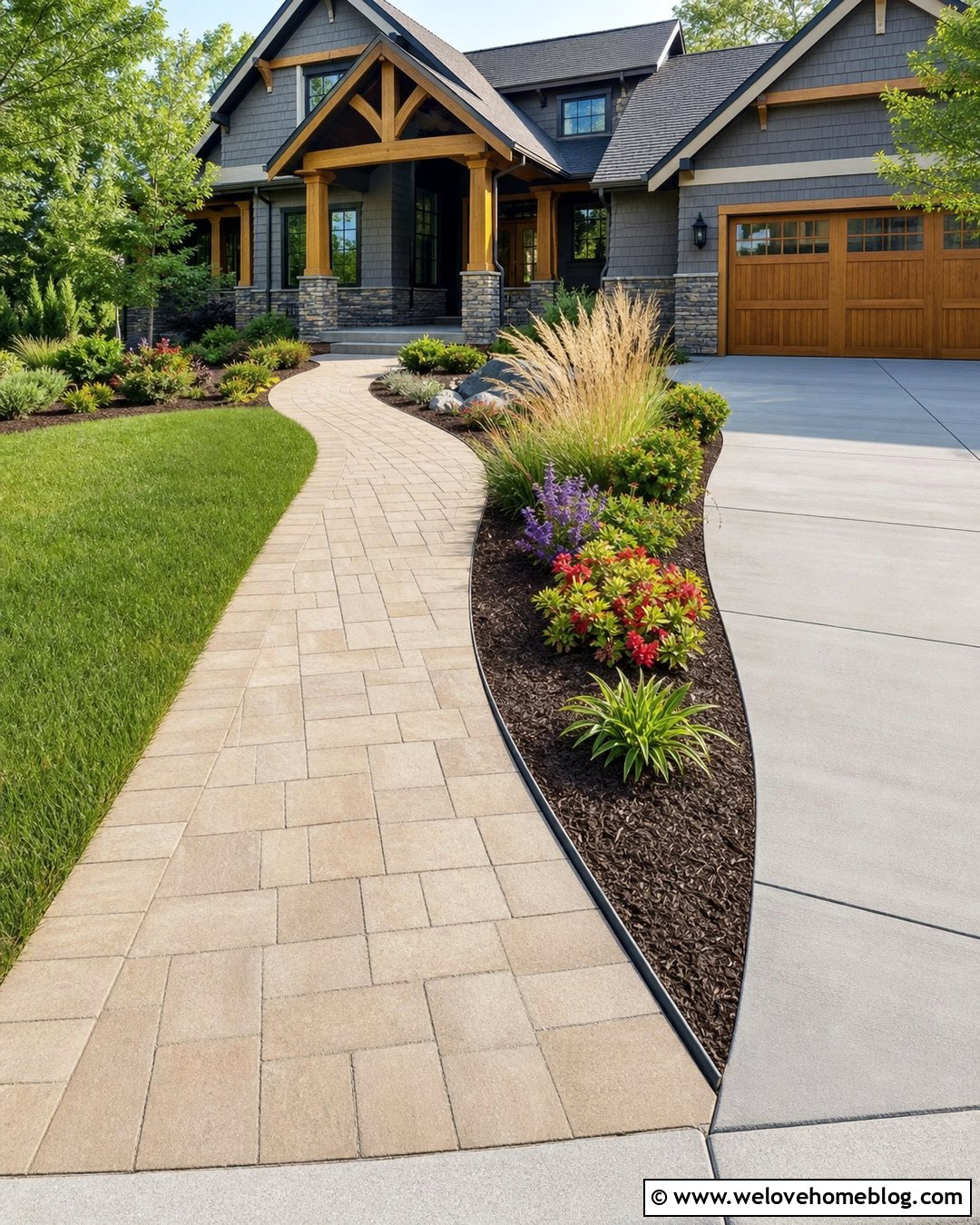
A planted buffer can turn a basic sidewalk and driveway into a complete front-yard landscape. Use warm beige concrete pavers for the sidewalk beside a gray poured concrete driveway. Between them, create a continuous bed with compact shrubs, ornamental grasses, and low flowers that provide color without blocking visibility. A neat stone or metal border keeps soil and mulch off both surfaces. Let the sidewalk remain mostly straight, then curve gently through the bed toward the porch. Repeat one or two plants near the foundation to connect the driveway landscaping with the house. This layout feels welcoming because pedestrians move beside greenery rather than parked vehicles. It is particularly effective for Craftsman, cottage, and traditional homes where layered planting supports the architecture and softens broad hardscape areas.
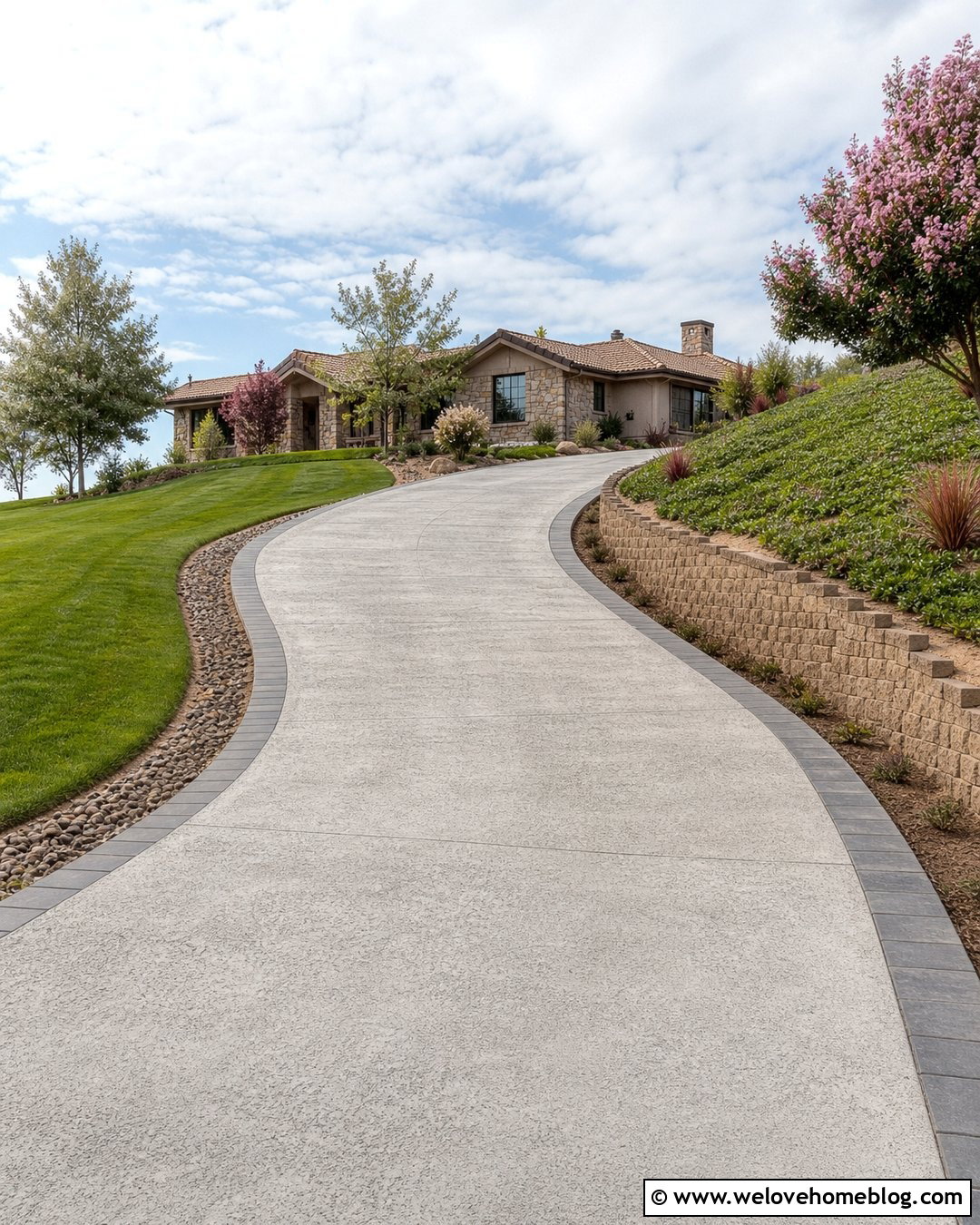
9. Raised Sidewalk Next To Sloped Driveway
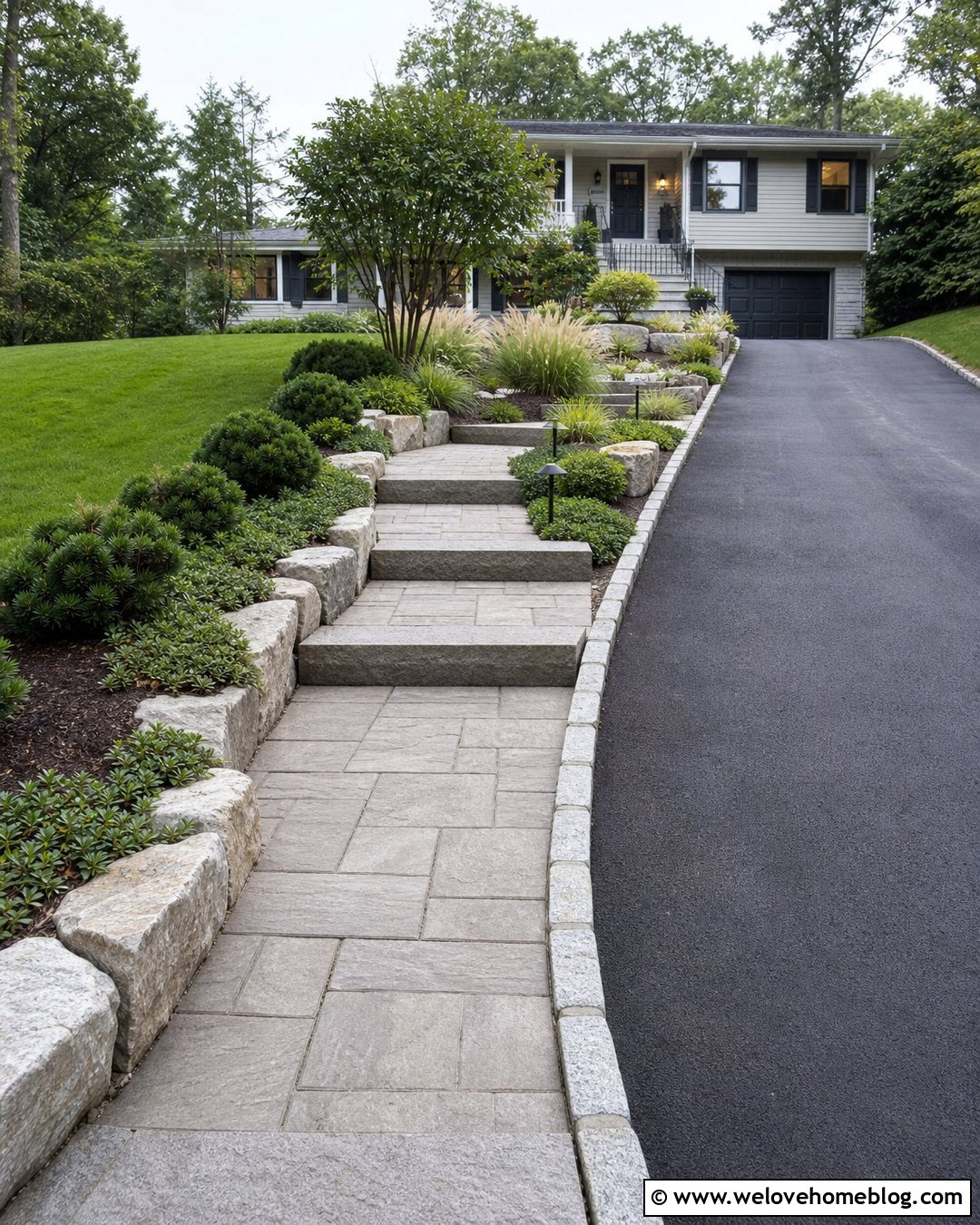
When a driveway slopes more sharply than the preferred walking route, a slightly raised sidewalk can provide clear separation. Build the path from textured concrete pavers or natural stone and support the outer edge with a low retaining border. The sidewalk can follow a gentler route through the yard while the driveway descends directly toward the garage. Use broad landings where elevation changes occur, and have the grading and transitions planned by a qualified local professional. Plant low ground covers along the retaining edge to soften the structure without hiding it. A contrasting paver border on the driveway side makes the path easier to identify. This complete solution suits hillside ranch, split-level, and contemporary homes where elevation must become part of the design rather than an afterthought.
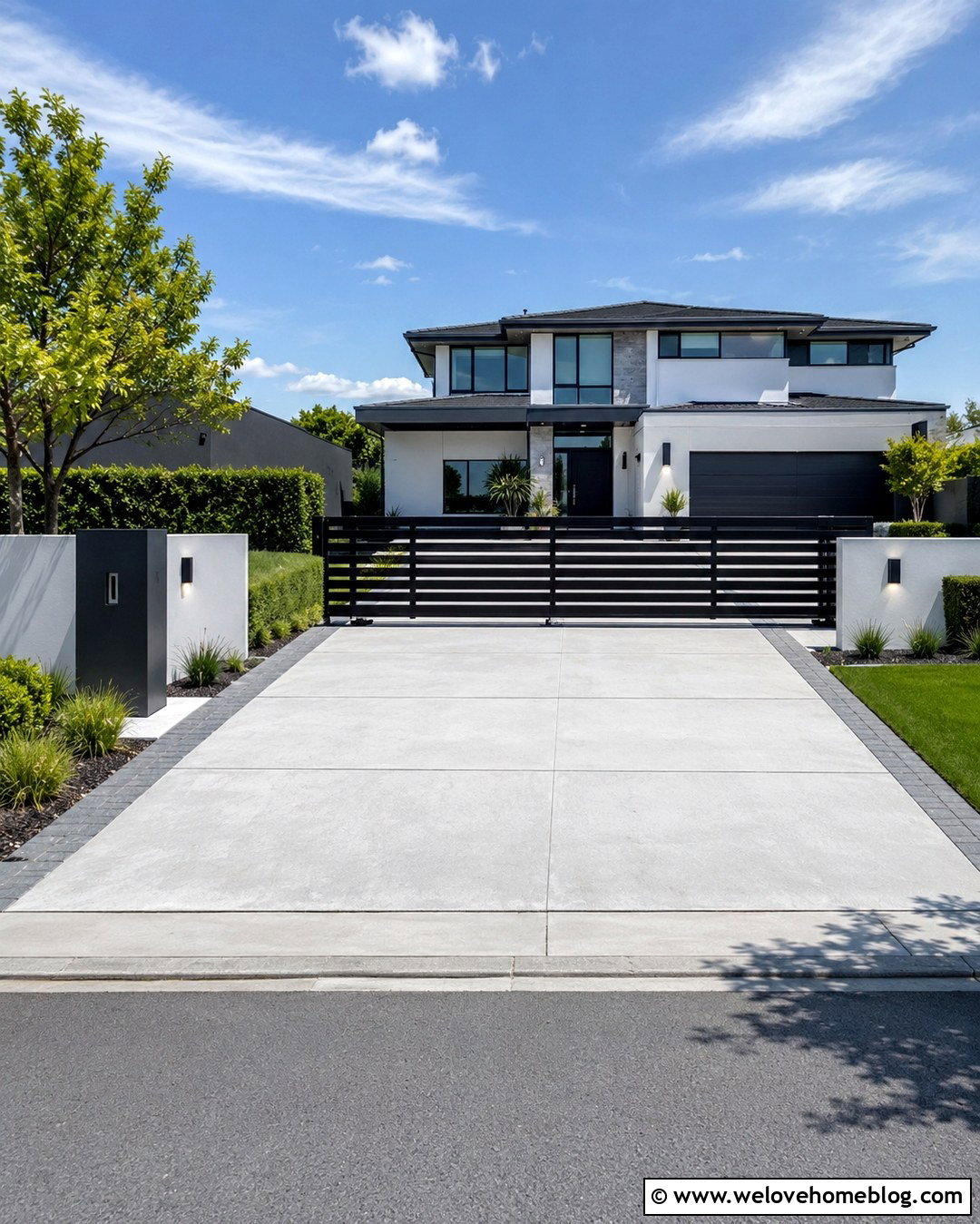
10. Narrow Paver Sidewalk Beside Driveway
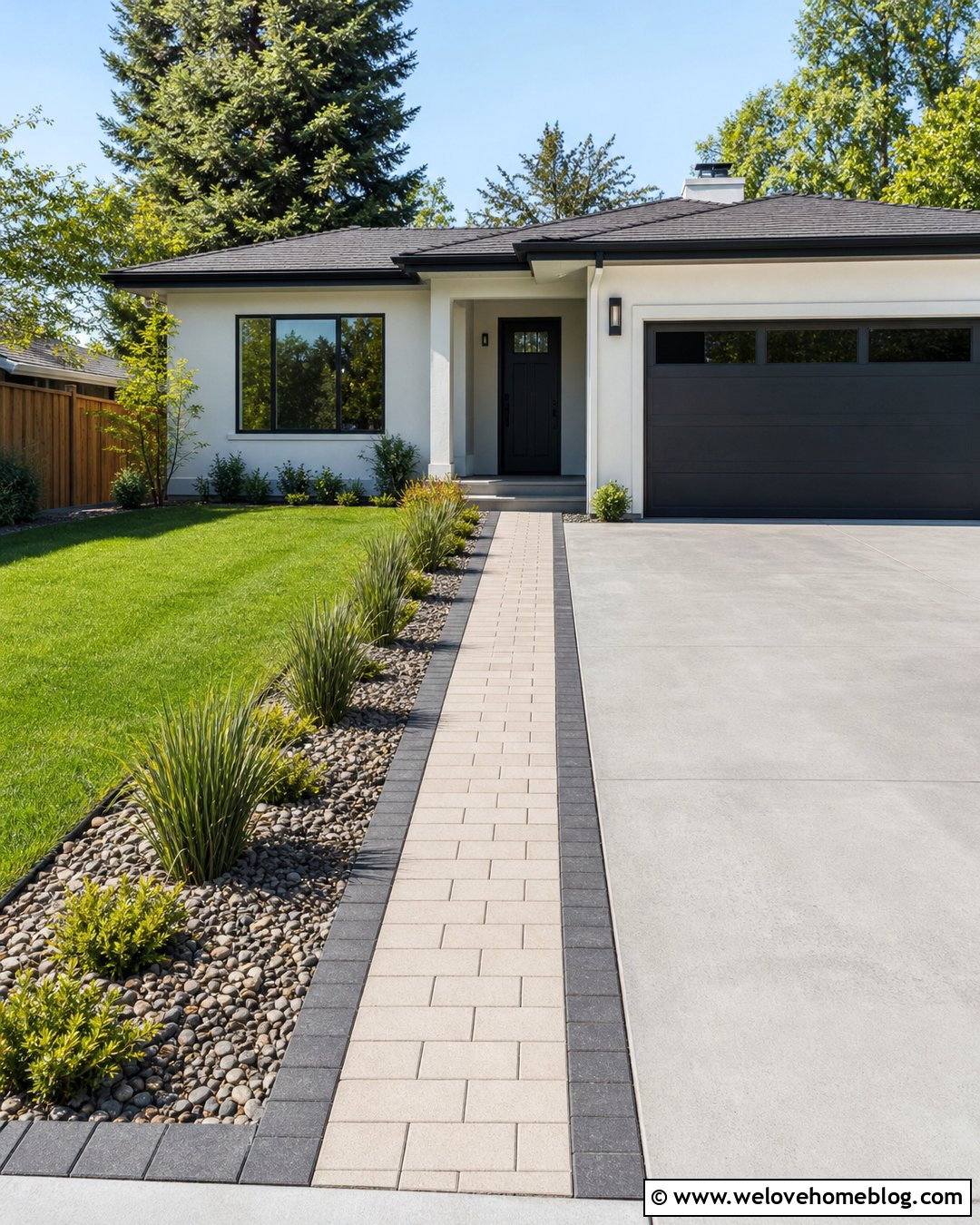
A narrow side yard can still accommodate a useful sidewalk when every inch is planned carefully. Install rectangular concrete pavers in a lengthwise running bond so the path appears longer and less crowded. Place it flush beside an asphalt or poured concrete driveway, but add a contrasting paver border to show where the walking area begins. On the yard side, choose a slim gravel strip with upright grasses rather than spreading shrubs. Continue the sidewalk beyond parked vehicles and connect it directly to the porch steps or side entrance. Light neutral pavers will keep the tight area visually open, while darker edging adds definition. This design is ideal for compact ranch homes, townhomes, and suburban lots where a separate pedestrian route is needed without sacrificing much lawn.
11. Curved Sidewalk From Driveway To Porch
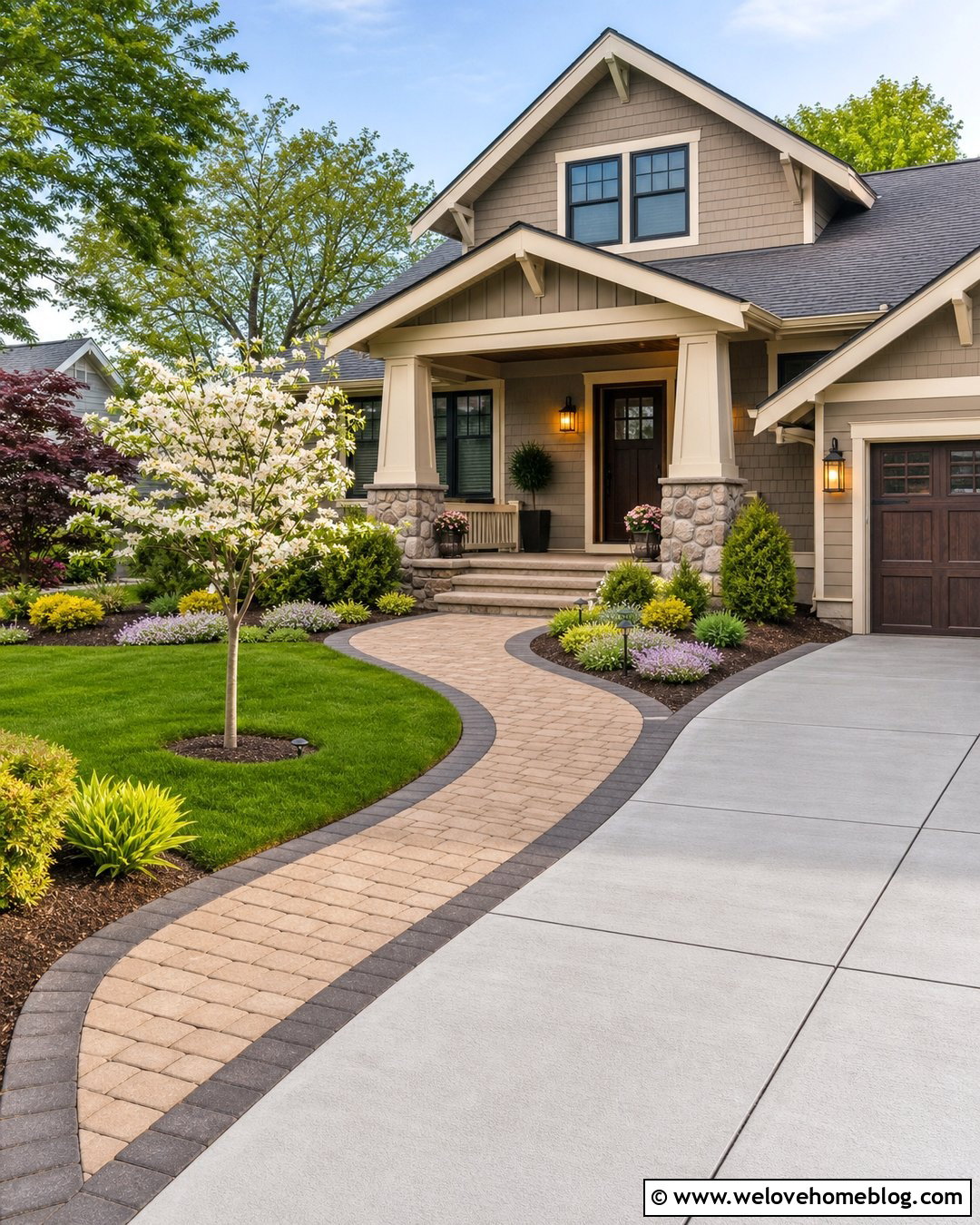
A curved sidewalk creates a graceful transition from the driveway to a front porch. Start the path near the usual parking area, then sweep it through the lawn instead of forcing a sharp corner. Use tumbled concrete pavers, brick, or flagstone to emphasize the relaxed shape. A darker border will hold the curve visually and separate the walking surface from surrounding beds. Fill the inside of the curve with a small flowering tree, layered shrubs, and low perennials. Keep taller plants away from the driveway connection so guests can immediately see the route. The path can widen near the porch to create a comfortable arrival space. This complete design pairs especially well with cottage, Craftsman, farmhouse, and traditional homes that benefit from softer landscape lines.
12. Matching Paver Driveway And Sidewalk
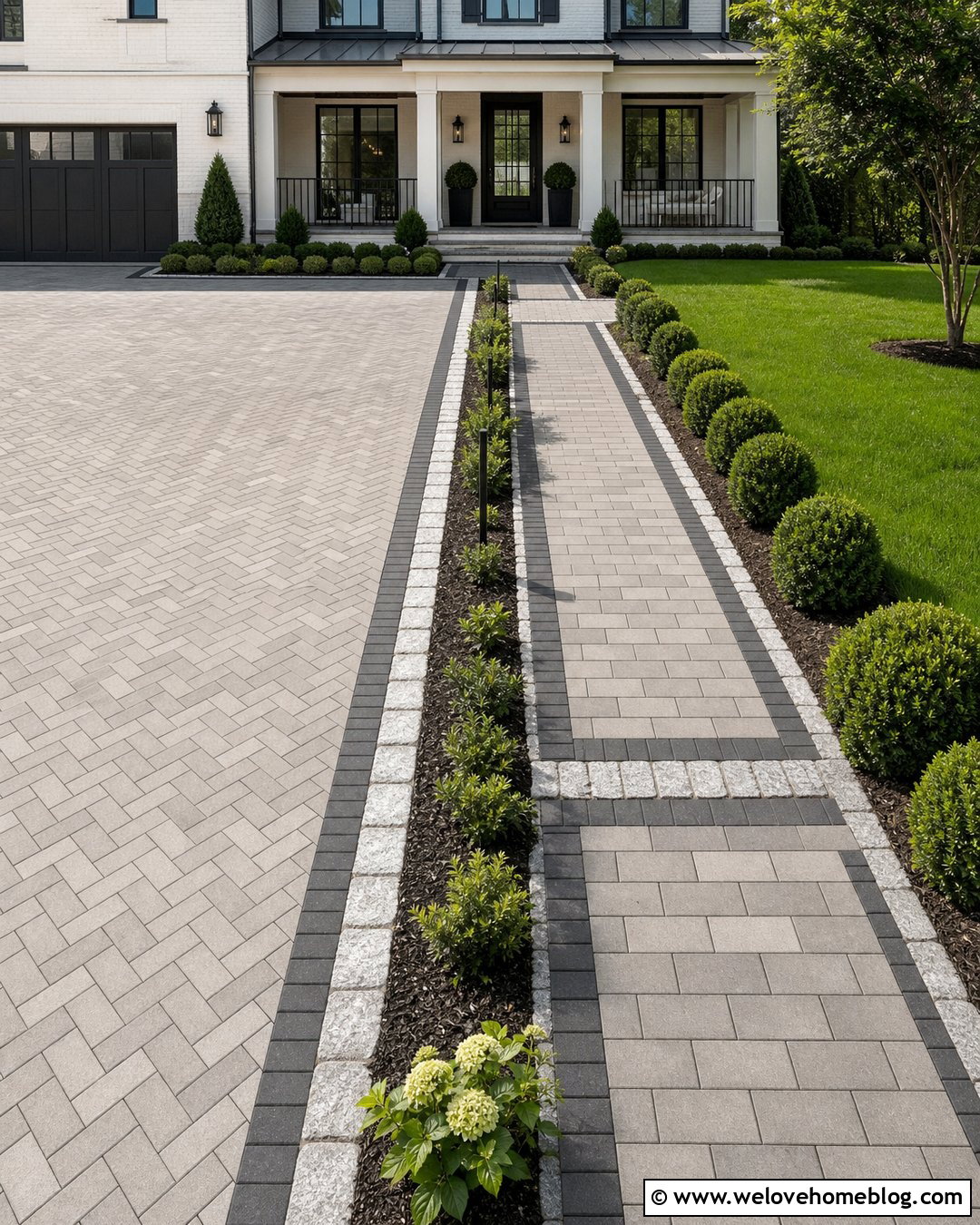
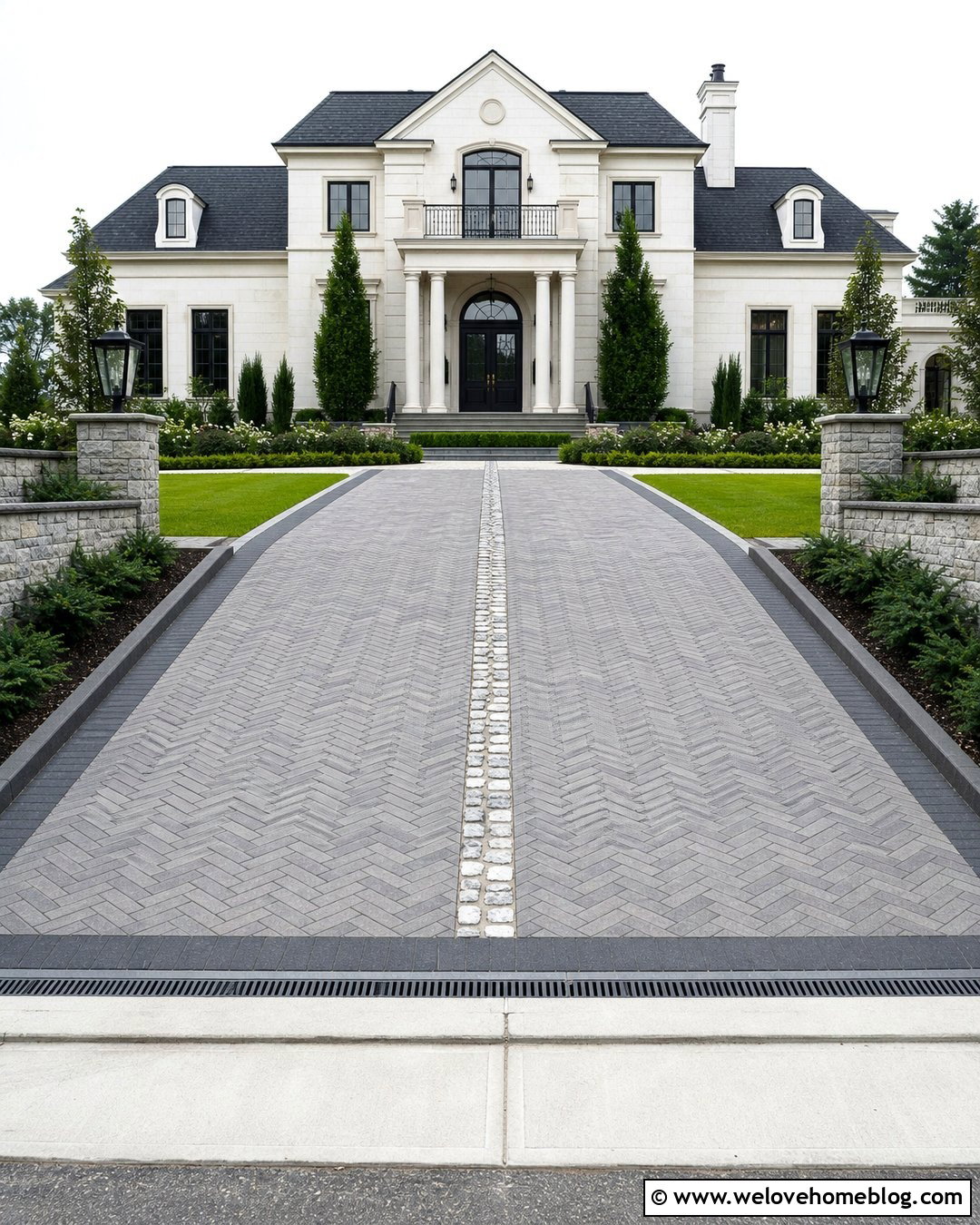
Using matching pavers creates a polished, unified entrance, but the sidewalk should still remain visually distinct. Cover both surfaces with warm gray interlocking concrete pavers, then change the laying pattern on the path. For example, use a herringbone driveway and a running bond sidewalk framed with a charcoal border. Place a narrow planting strip or flush cobblestone ribbon between them for another layer of definition. The sidewalk can follow the driveway before branching toward the porch through symmetrical landscaping. Repeat the border around the entrance landing and front steps. This coordinated approach works with traditional, European-inspired, and upscale transitional houses. Variation in pattern and edging prevents the front yard from becoming monotonous while allowing the driveway, sidewalk, porch, and facade to read as one carefully planned design.
13. Contrasting Sidewalk Next To Black Asphalt Driveway
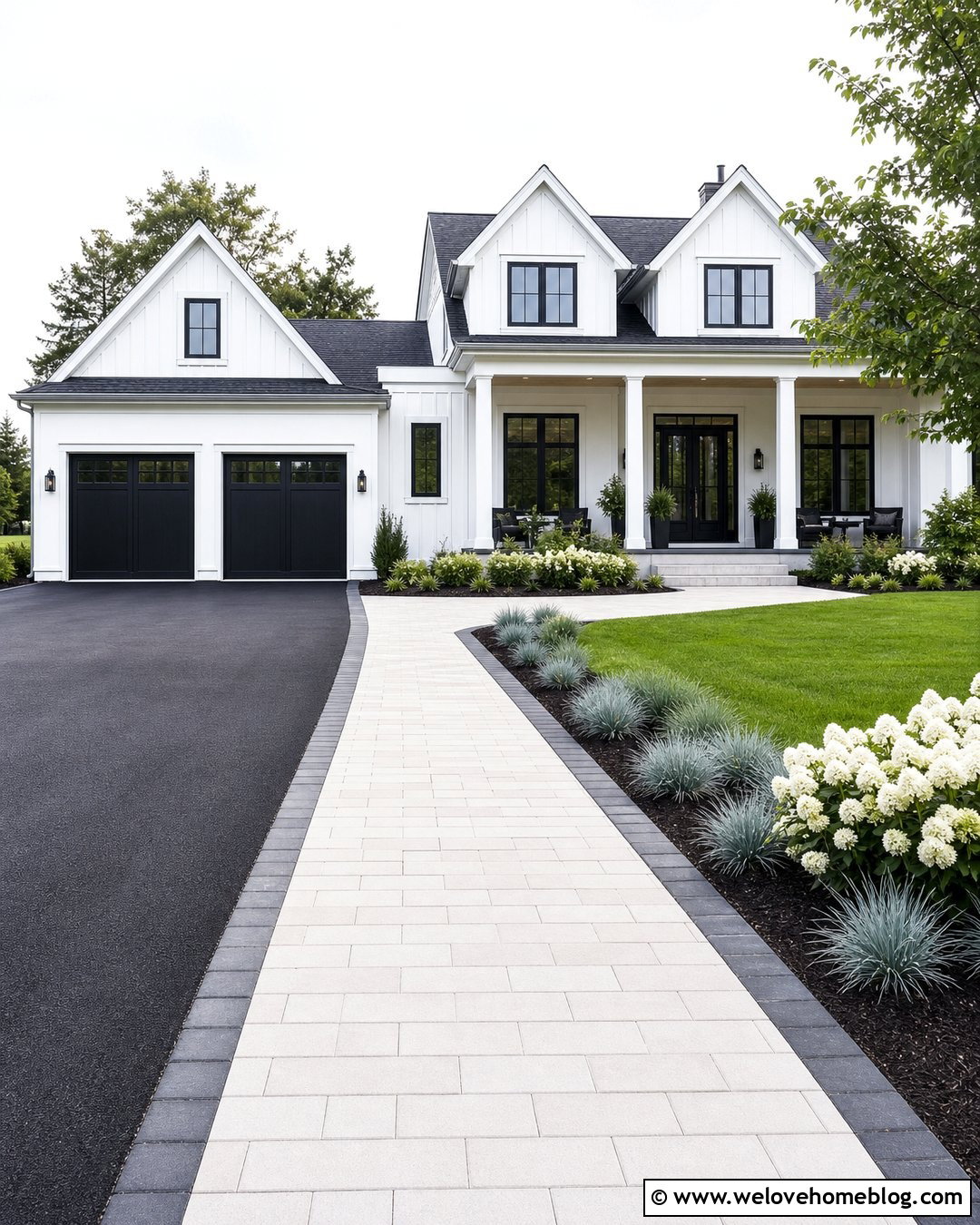
A pale sidewalk beside a black asphalt driveway produces strong curb appeal without requiring elaborate materials. Choose ivory, sand, or light gray concrete pavers and lay them in a simple stacked or running bond pattern. Add a charcoal border that visually relates to the asphalt while framing the lighter path. A slim bed of blue-green grasses and white flowering plants can reinforce the crisp color palette. Keep the sidewalk straight beside the driveway, then angle it toward the entrance with a broad turning area. The result feels orderly, bright, and easy to understand from the curb. This contrast is effective with white farmhouse siding, red brick facades, and dark modern exteriors. Carry the light pavers onto the porch landing to complete the connection with the house.
14. Sidewalk With Cobblestone Driveway Border
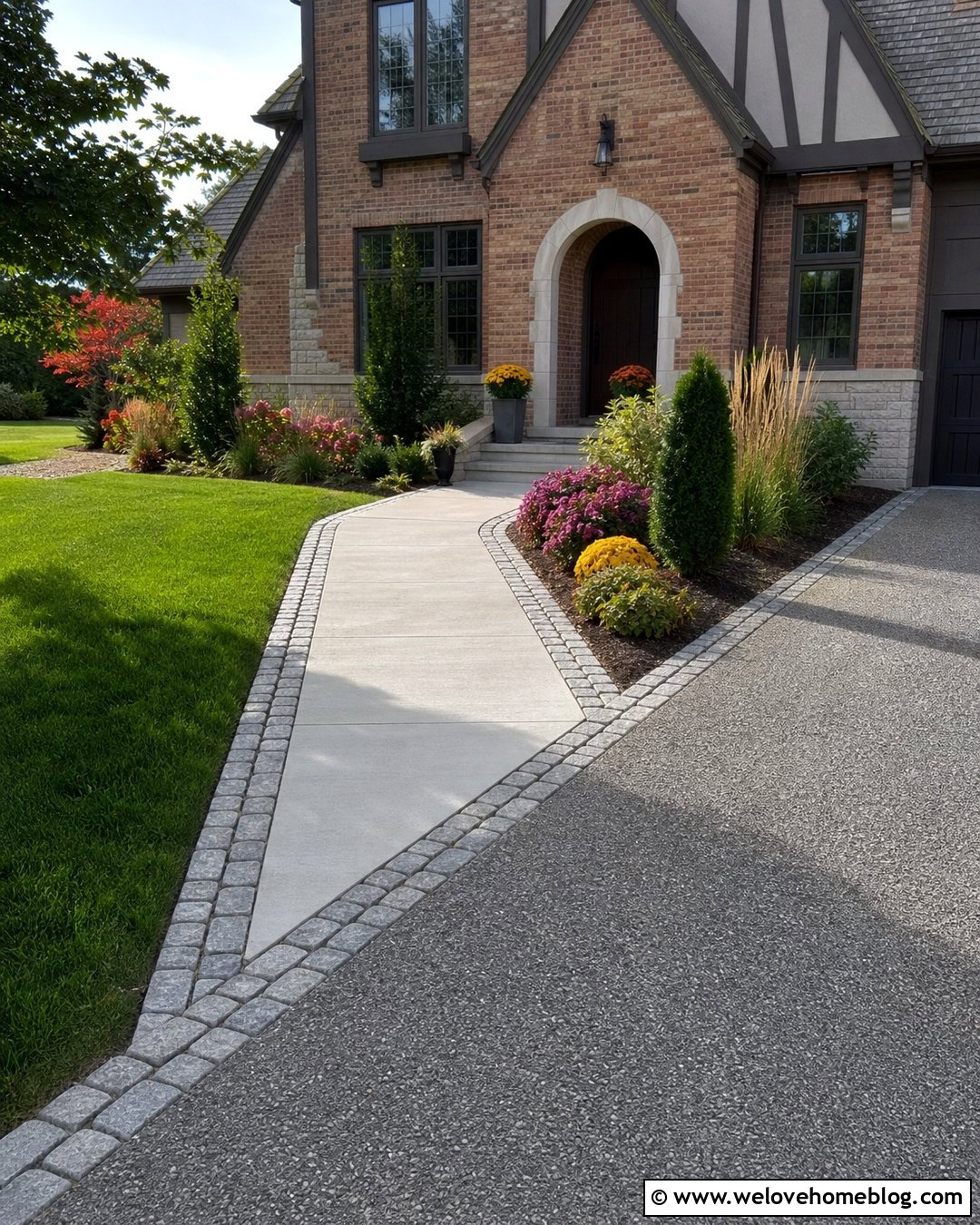
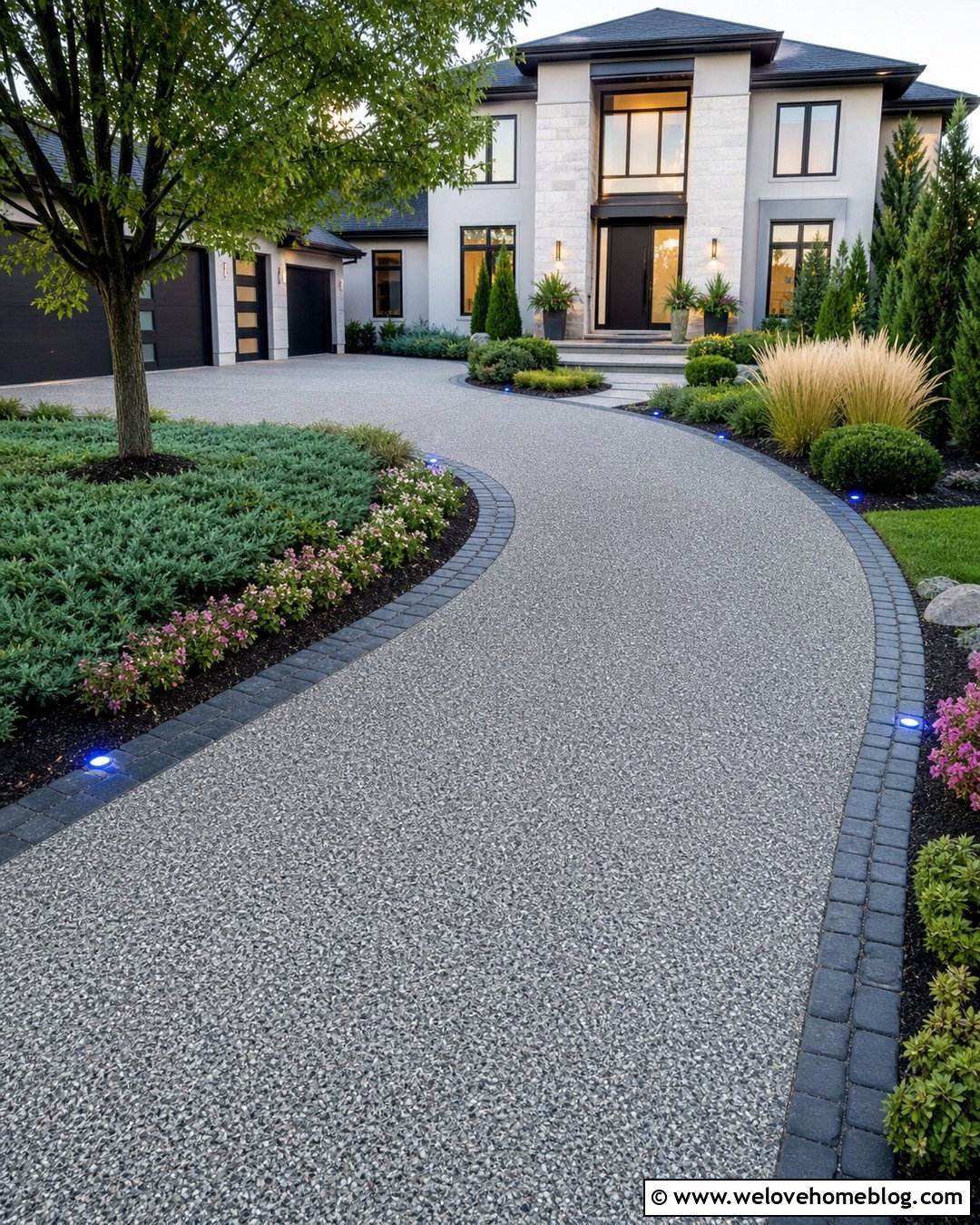
A cobblestone ribbon can define the boundary between a sidewalk and driveway while introducing rich texture. Pair a light poured concrete sidewalk with an exposed aggregate driveway, then install a single or double row of gray granite cobbles between them. Continue the cobblestone around the driveway entrance so the border looks structural rather than decorative. On the lawn side of the sidewalk, create gently shaped planting beds with evergreen shrubs, ornamental grasses, and seasonal color. The path can remain straight for easy movement and curve only as it approaches the porch. Granite cobbles work especially well with stone, brick, Tudor, and traditional facades. Their varied tones help bridge the color difference between the driveway surface, concrete sidewalk, foundation masonry, and surrounding landscape.
15. Sidewalk With Lighting Next To Driveway
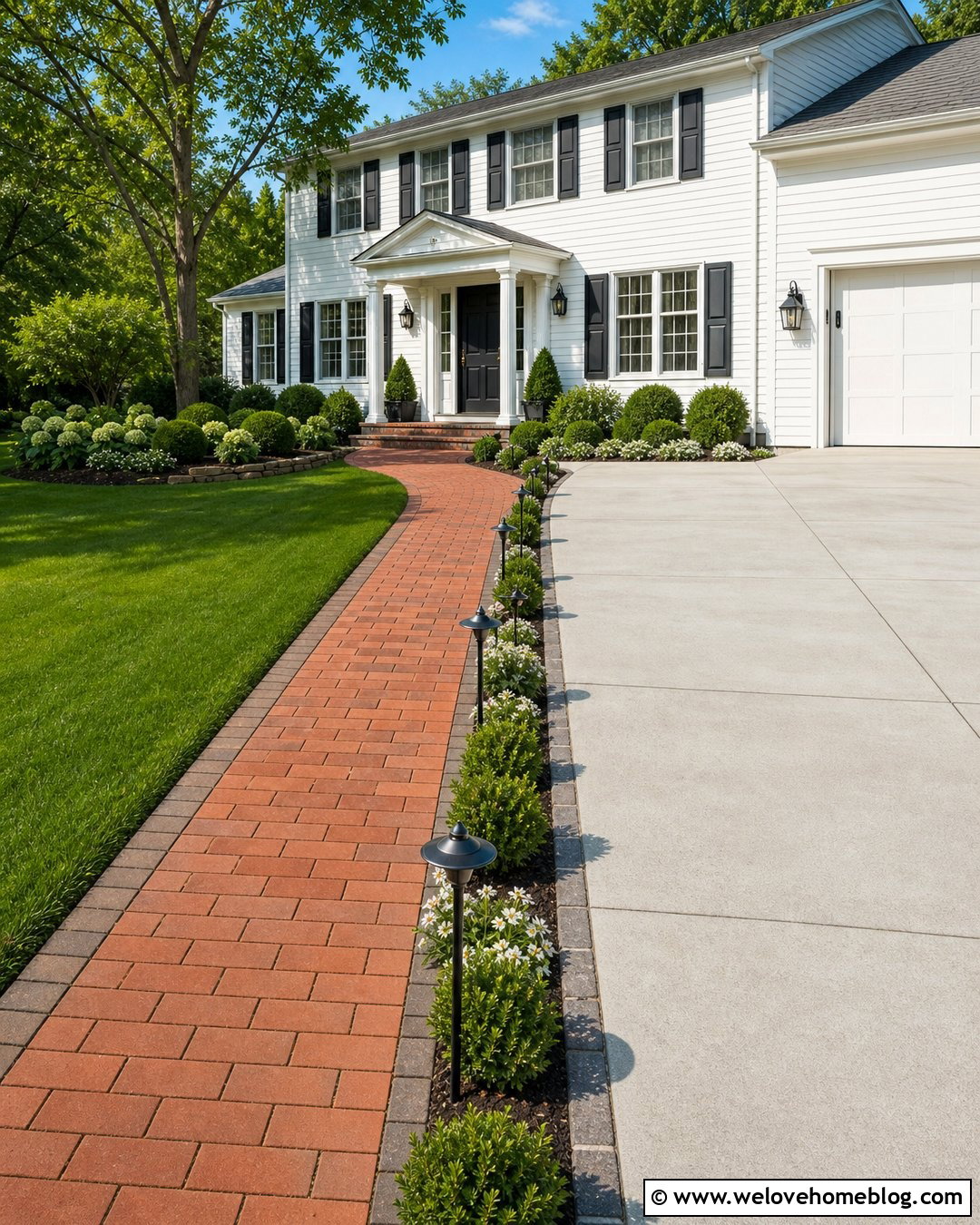
Thoughtful lighting makes a sidewalk easier to recognize while adding evening curb appeal. Use a warm-toned brick paver path beside a gray concrete driveway and separate them with a narrow planted strip. Place low-voltage path lights along the lawn edge rather than directly beside vehicle doors. Space them consistently so the route is clear without creating visual clutter. The sidewalk can run straight toward the house, with a slight curve through the final planting bed. Add recessed step lights at the porch if the entrance changes elevation. During the day, bronze or black fixtures blend into shrubs and mulch. This complete layout works with Craftsman, Colonial, and traditional homes. Coordinate the fixture finish with the mailbox, porch lights, door hardware, or house numbers for a composed exterior.
16. Sidewalk With Retaining Wall Beside Driveway
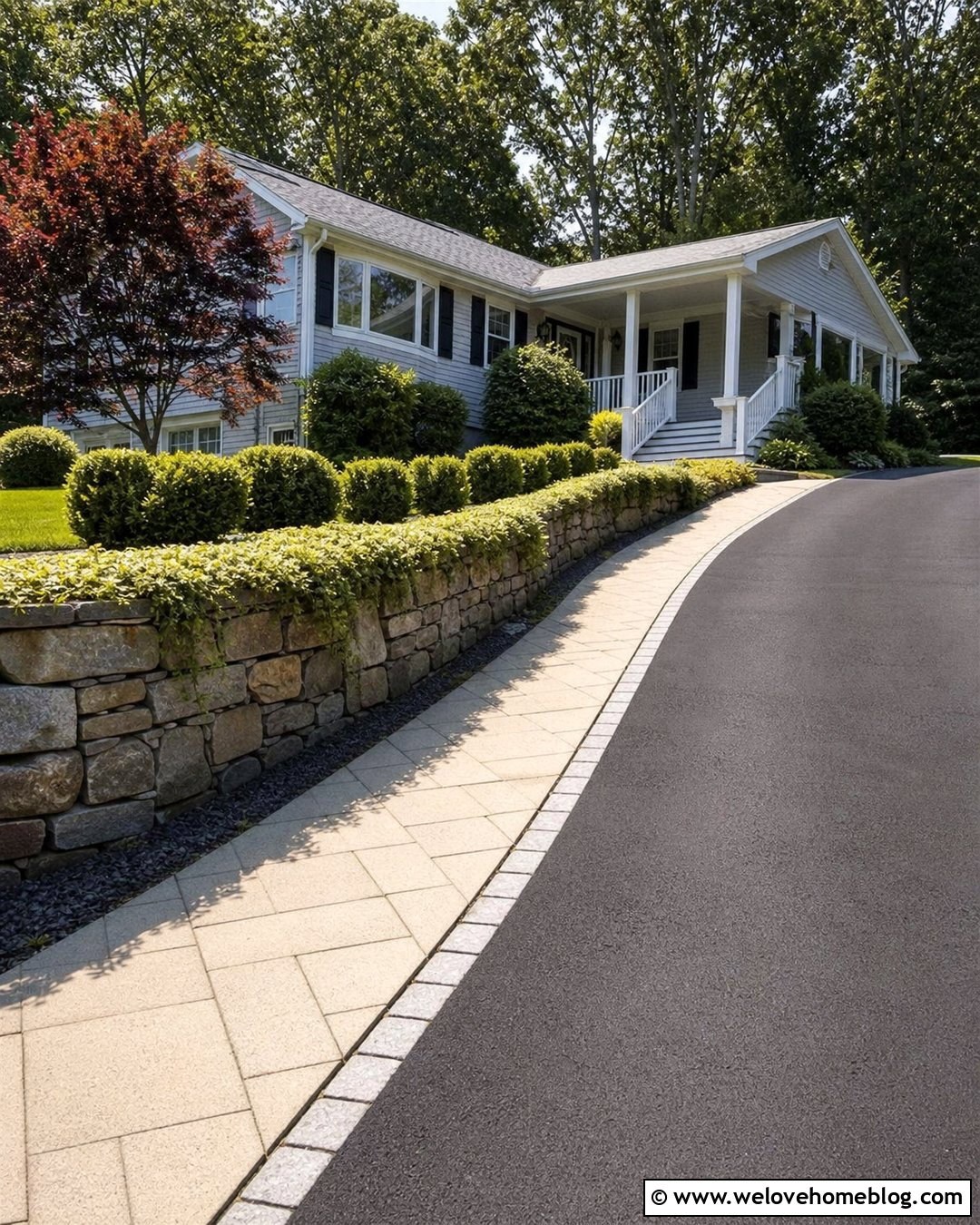
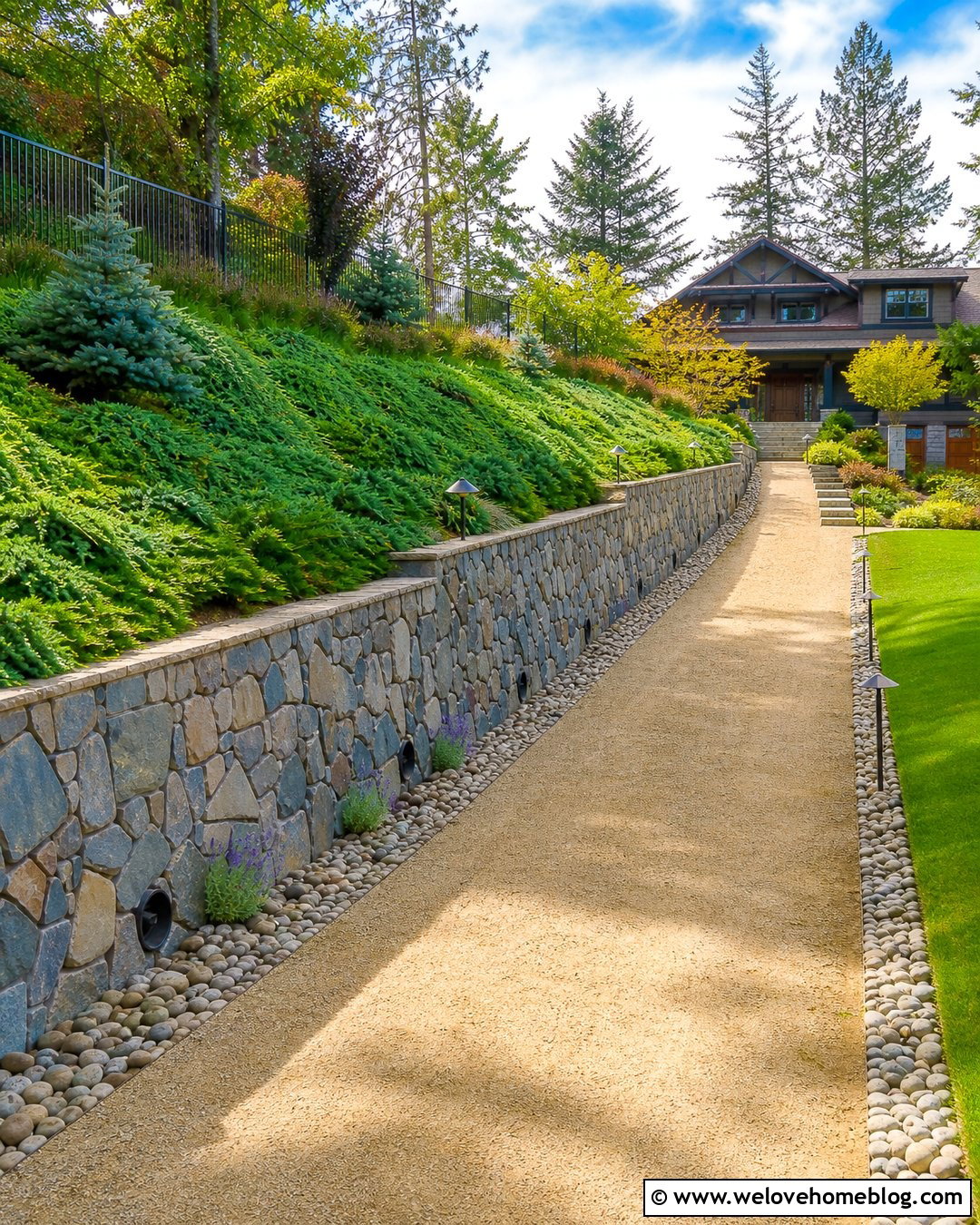
A low retaining wall can organize a sidewalk beside a driveway when the lawn sits at a higher elevation. Use textured concrete block or natural stone that coordinates with the house foundation. Place a smooth concrete or paver sidewalk between the wall and a dark asphalt driveway, leaving enough separation for a defined border or drainage channel. Cap the wall with flat stone for a finished appearance and plant compact trailing greenery above it. Avoid oversized shrubs that could narrow the walking route. The sidewalk should continue toward the porch with consistent material and clear transitions. This layered design makes a sloped front yard feel deliberate and controlled. It suits split-level, raised ranch, Craftsman, and hillside homes where walls, paths, planting, and driveway grading must function together.
17. Stepping Stone Sidewalk Next To Driveway
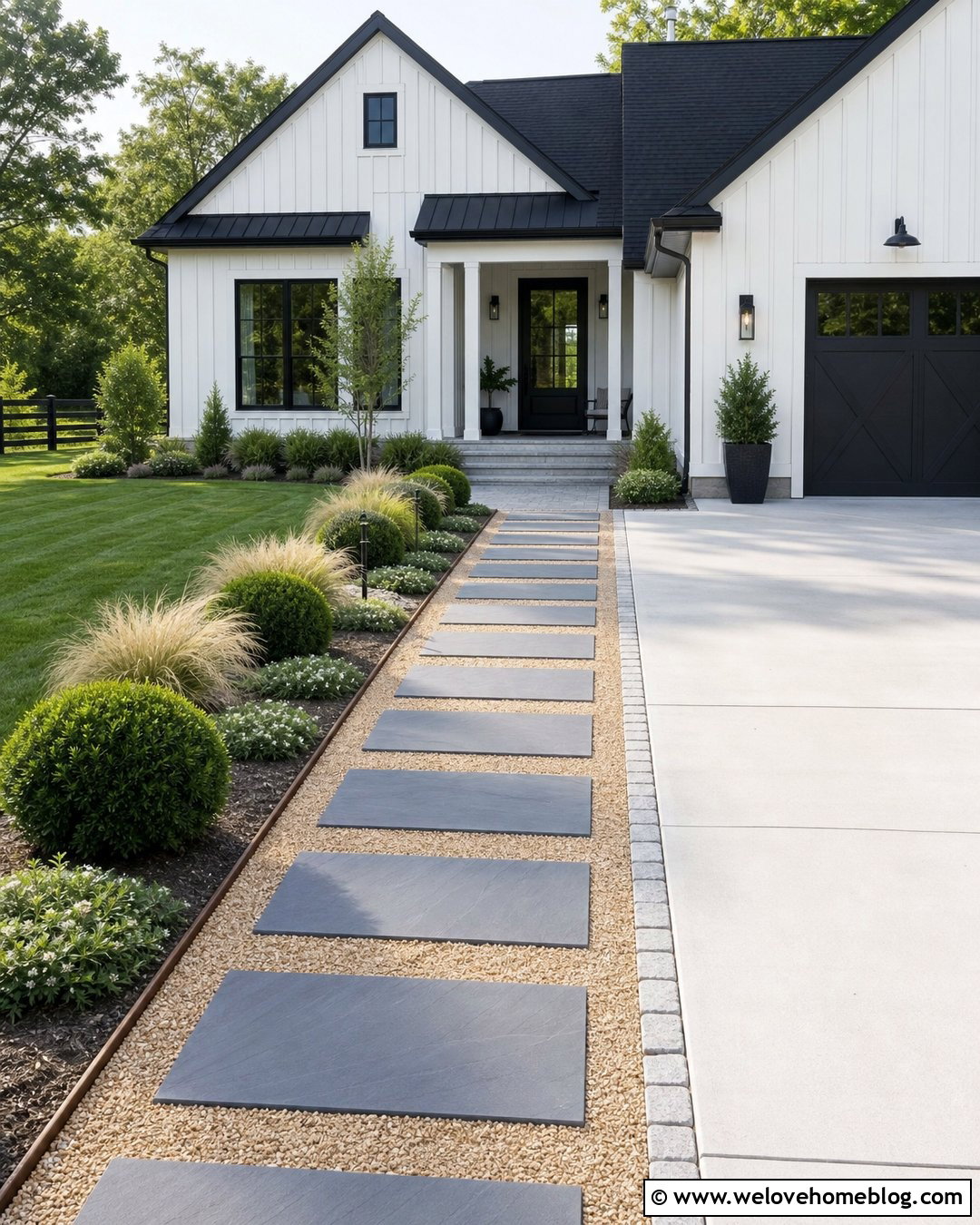
Large stepping stones offer a softer alternative to a continuous sidewalk beside the driveway. Choose broad rectangular bluestone or precast concrete slabs and set them into fine gravel with small, consistent gaps. Run the path parallel to a poured concrete driveway, using a steel edge or cobblestone ribbon to contain the gravel. On the yard side, add low ground cover, ornamental grasses, and a few rounded shrubs. Keep the stepping surfaces even and closely spaced so the route feels purposeful rather than decorative. Near the front porch, transition into a solid stone landing that matches the steps. This relaxed combination fits modern farmhouse, cottage, midcentury, and contemporary homes. It provides texture and greenery while maintaining a clearly visible connection between the curb, parking area, and entrance.
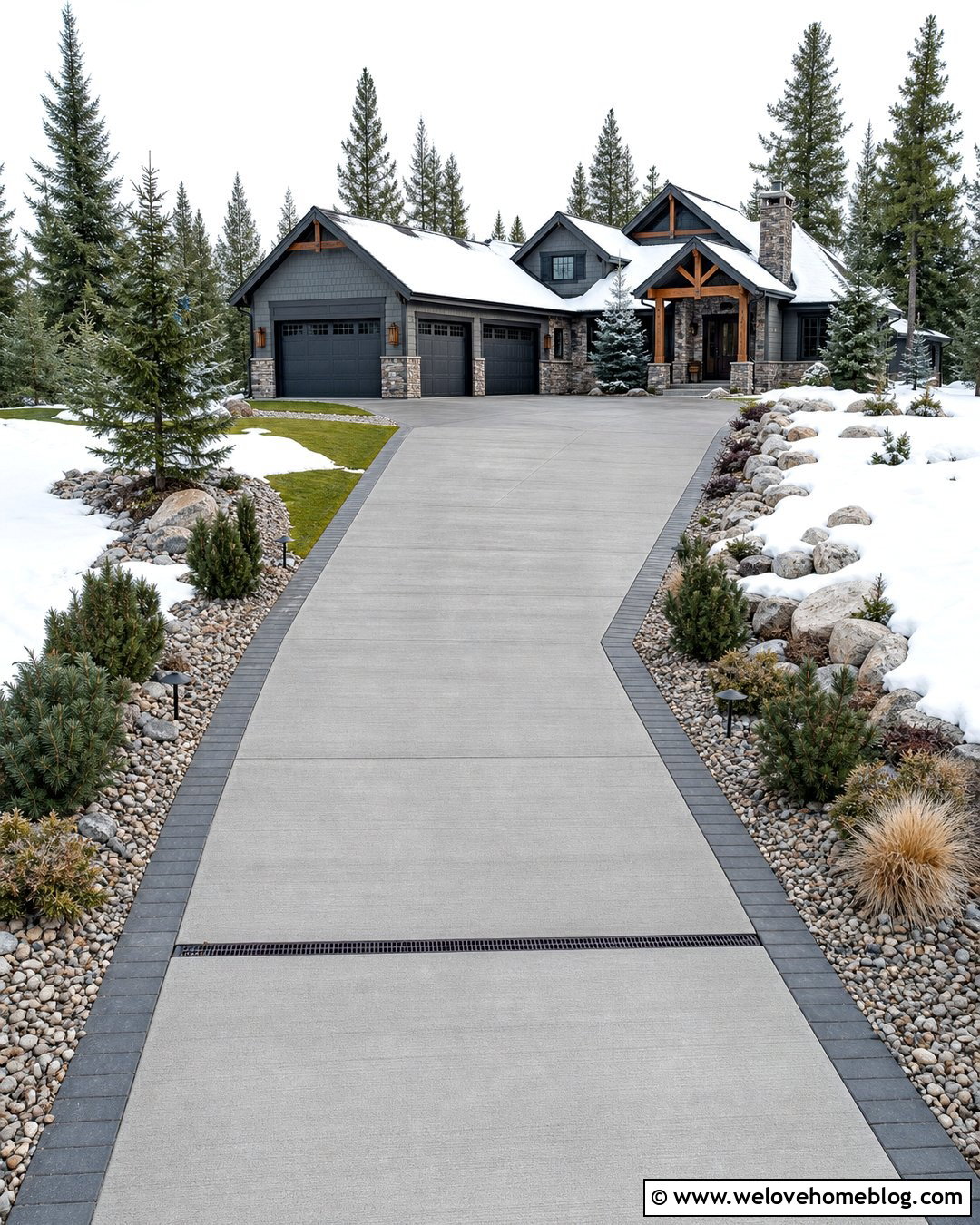
18. Sidewalk With Drainage Strip Next To Driveway
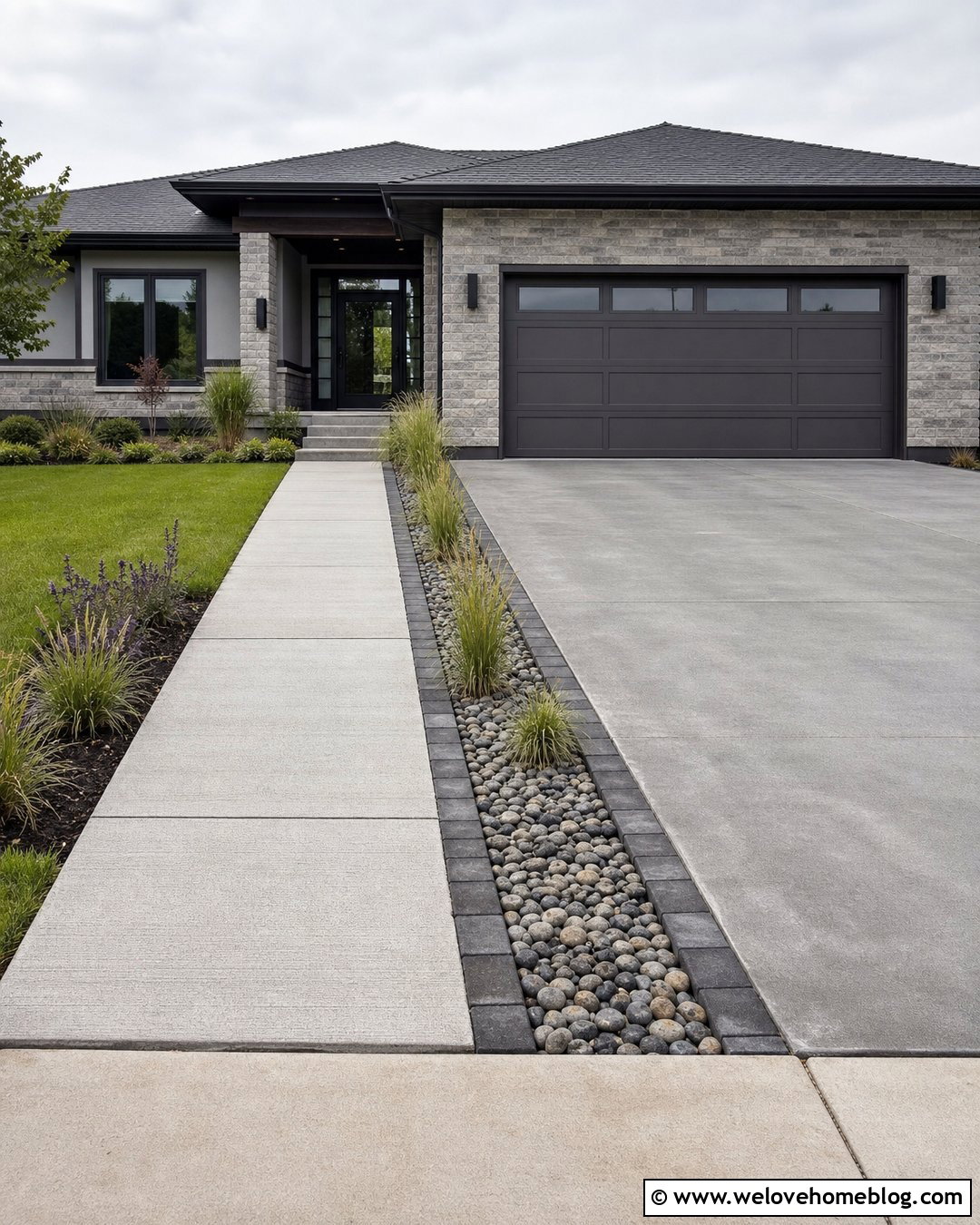
A decorative drainage strip can create useful separation between a sidewalk and a driveway. Pair a light broom-finished concrete sidewalk with a medium gray concrete driveway, then place a narrow channel of smooth river rock between them. Use metal edging or flush pavers to keep the stones contained. The channel should follow the site’s planned drainage direction and connect with an appropriate outlet designed for the property. Add moisture-tolerant planting only where conditions support it, keeping the main walking surface open. On the lawn side, use a simple border of grasses and low shrubs. The different textures make each zone easy to read from the curb. This clean, practical look complements ranch, contemporary, and modern farmhouse homes without making the front landscape feel overly decorated.
19. Sidewalk Next To Circular Driveway
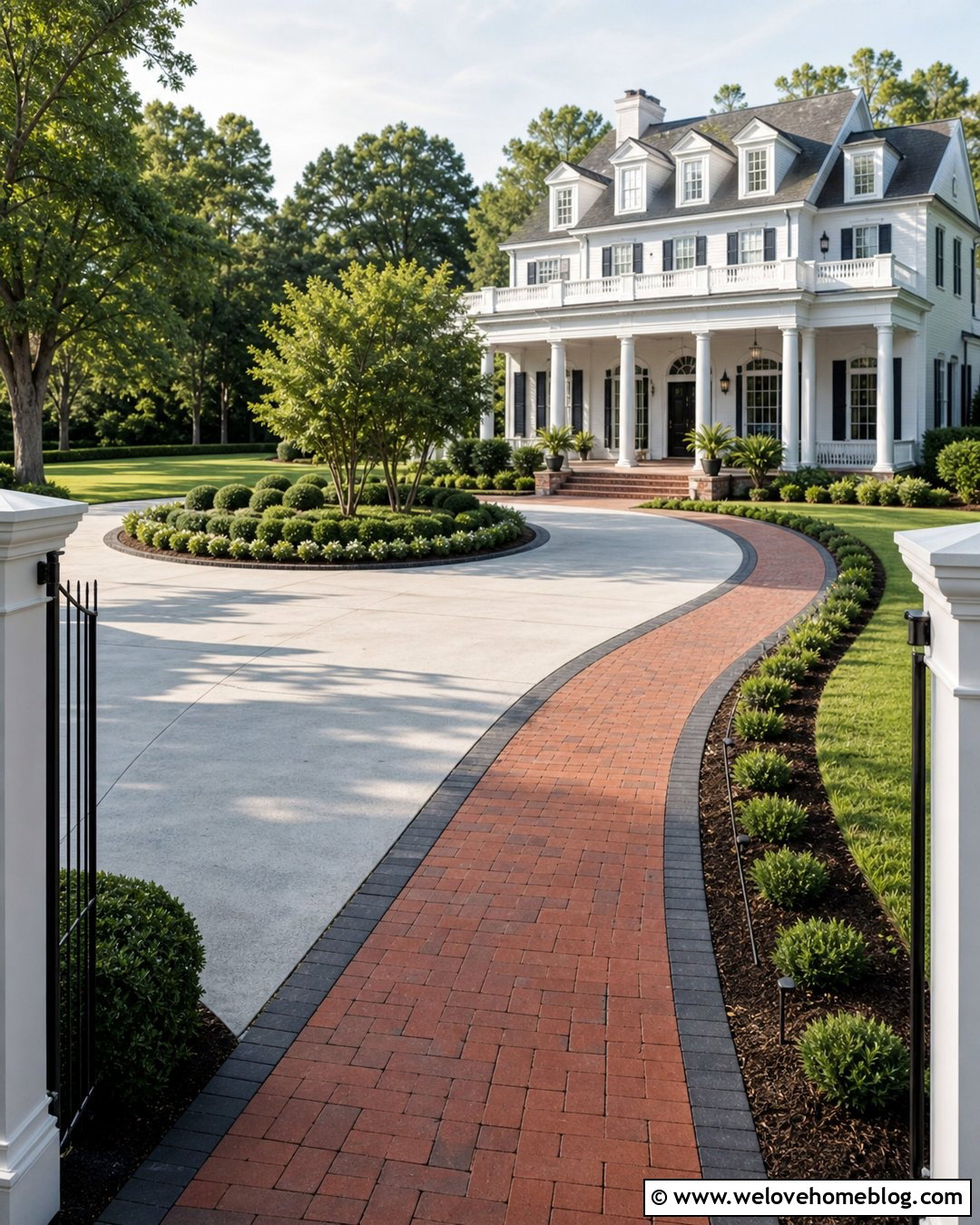
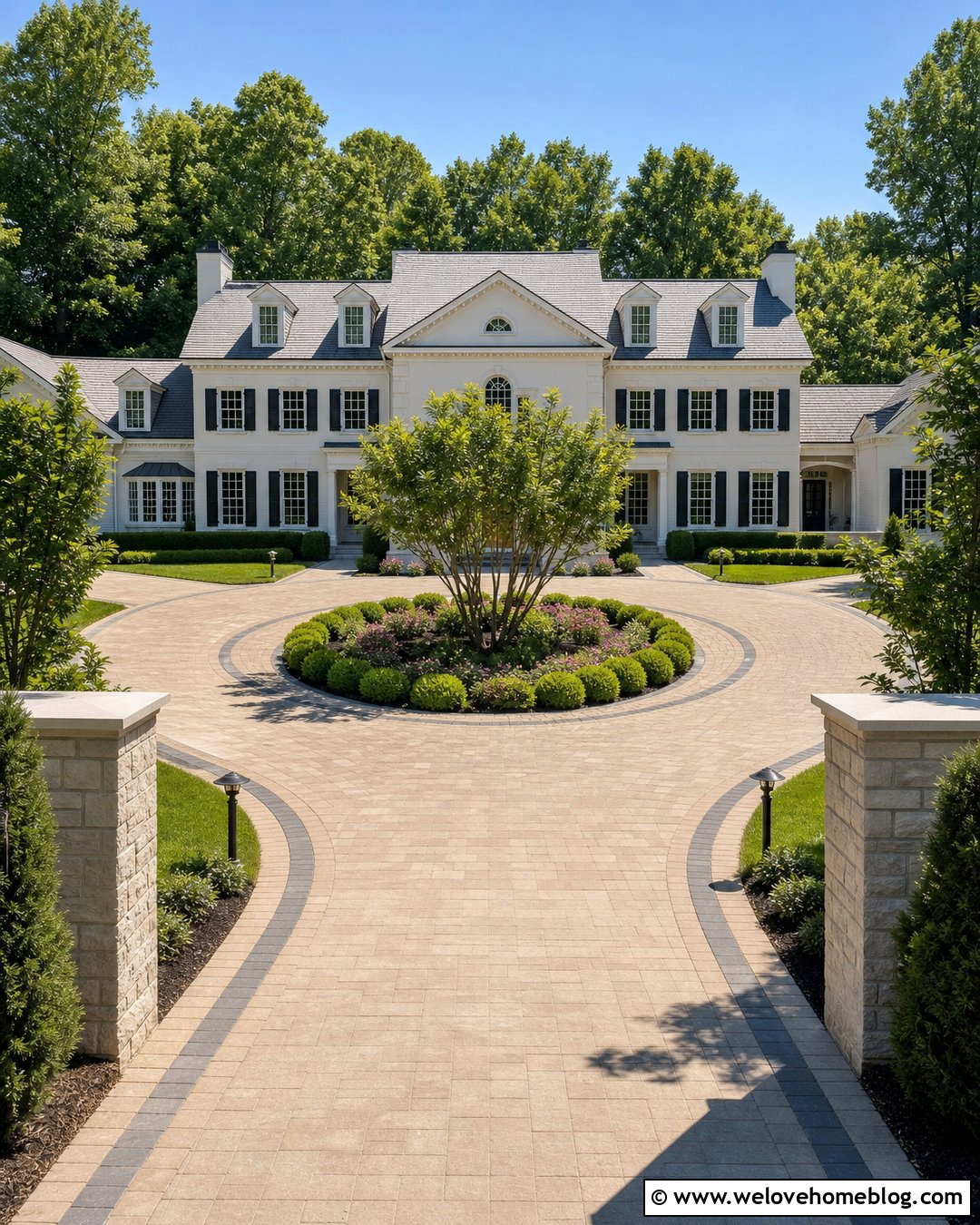
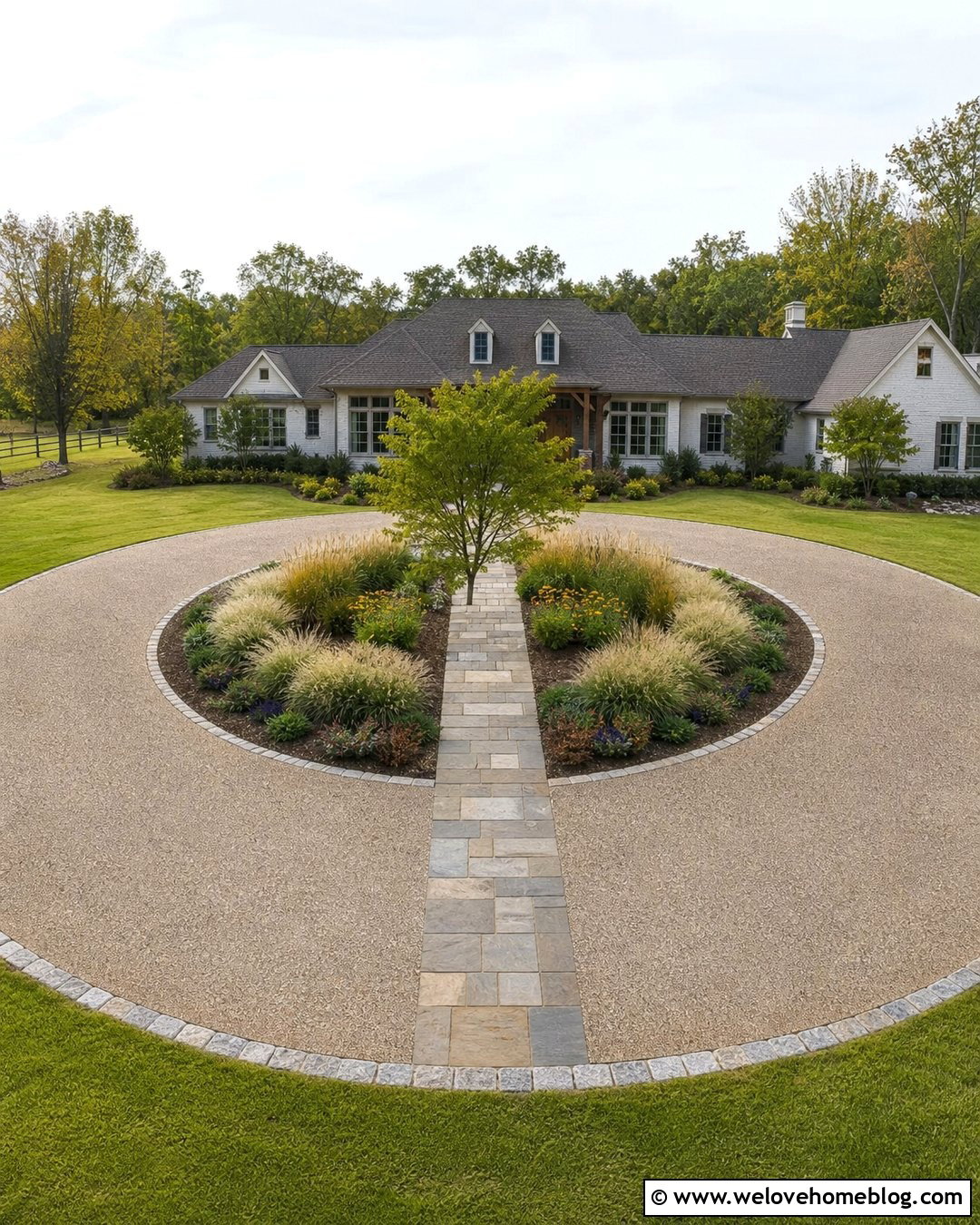
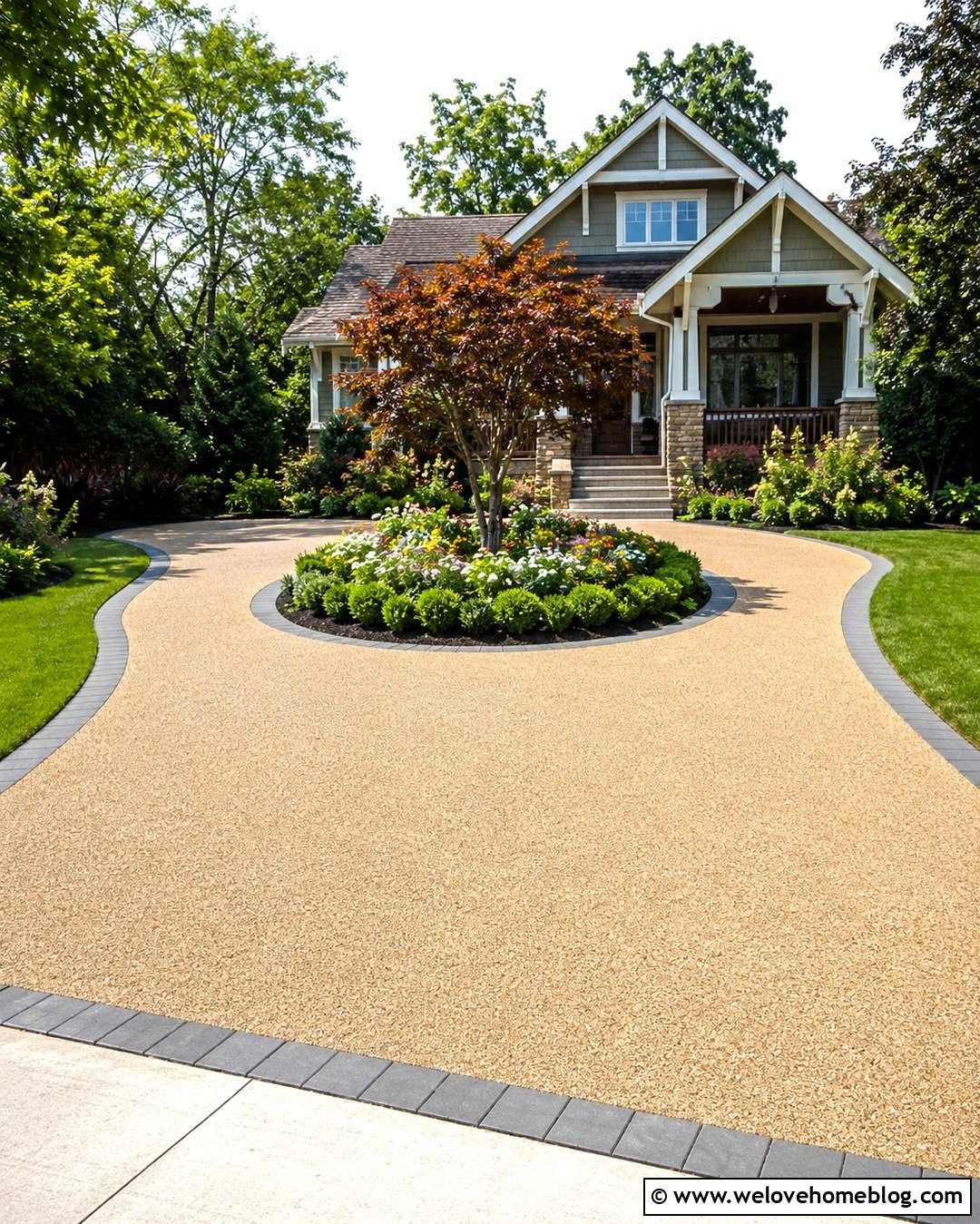
A sidewalk beside a circular driveway should guide guests toward the entrance without competing with the driveway’s sweeping shape. Use clay brick or concrete pavers for the path and let it follow part of the circular edge before branching toward the front door. Define the pedestrian route with a contrasting soldier-course border and a narrow planting bed. In the driveway’s center island, repeat the same shrubs, ornamental trees, and ground covers used beside the sidewalk. This repetition connects both sides of the design. Keep the path visible from each driveway entrance and provide a wider landing near the porch. The coordinated curves suit Colonial, Southern, Mediterranean, and large traditional homes. Brick or dark paver accents can also be repeated around the circular driveway to establish a consistent visual framework.
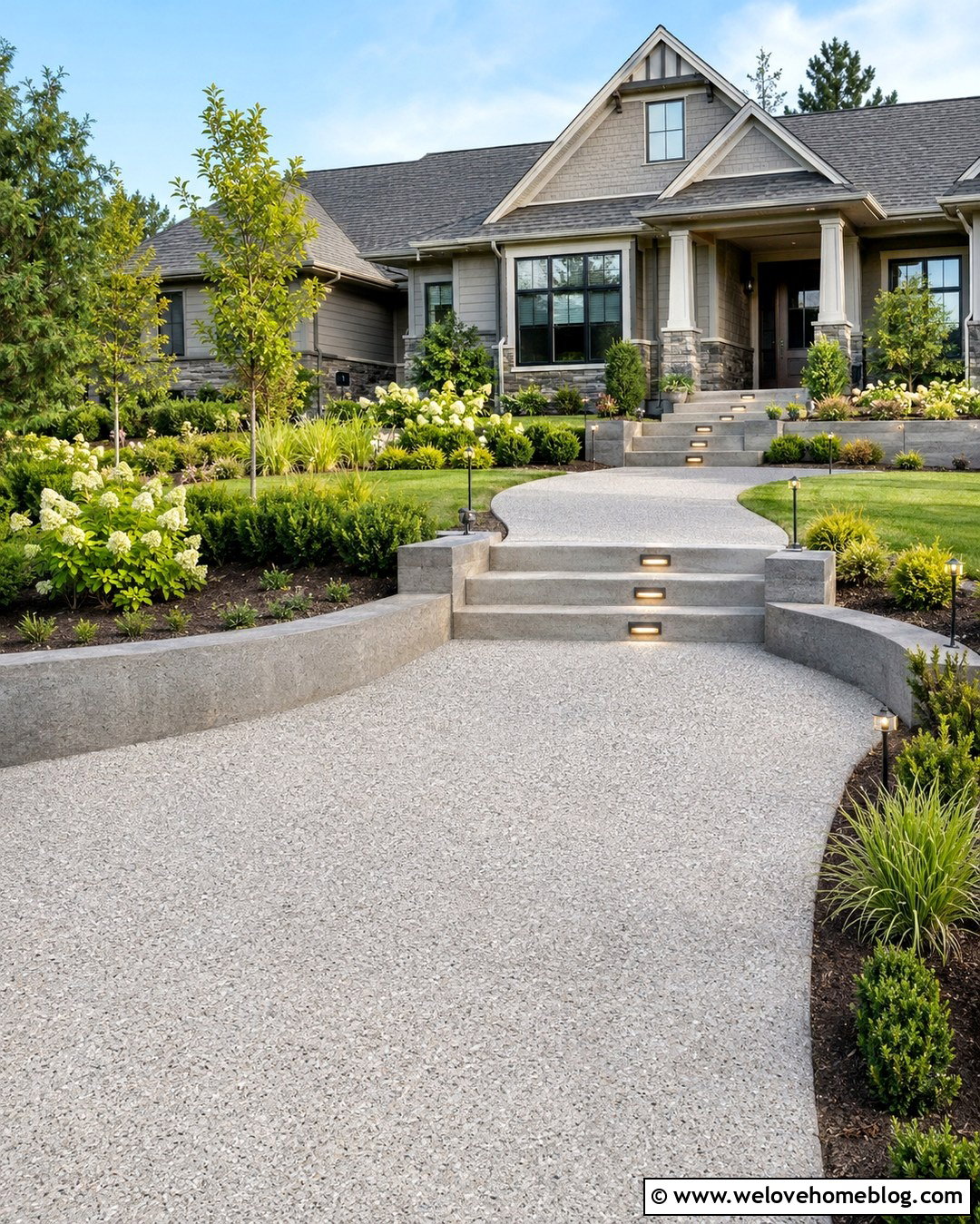
20. Gravel Sidewalk Next To Concrete Driveway
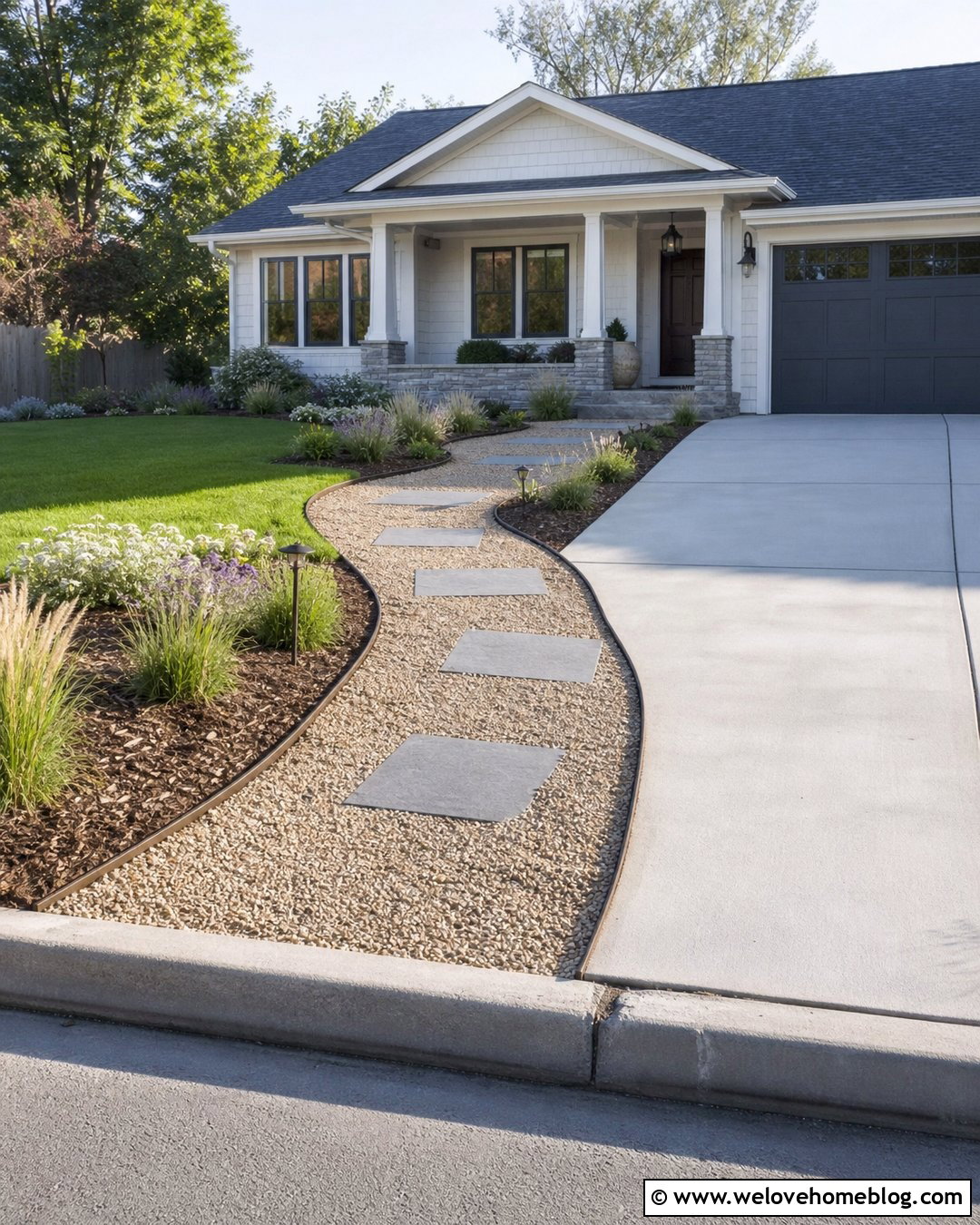
A compacted gravel sidewalk is an approachable option for adding a distinct path beside an existing concrete driveway. Choose fine angular gravel in tan, gray, or buff tones and contain it with steel, timber, brick, or stone edging. Create a straight route along the driveway before curving toward the porch. Install occasional large stepping slabs where a firmer surface would improve the transition to the entrance. A narrow planting bed of hardy grasses and low perennials can soften the lawn edge without spilling across the path. Select gravel that complements the house facade instead of strongly clashing with the driveway. This complete design feels natural beside cottage, farmhouse, ranch, and casual suburban homes. Crisp edging and a defined entrance landing keep the affordable material looking intentional.
Conclusion:
The most successful 20 Sidewalk Next To Driveway Ideas combine safe movement, clear boundaries, suitable materials, and landscaping that complements the house. A sidewalk may match the driveway for a unified appearance or contrast with it for stronger definition. Concrete offers simplicity, while brick, pavers, flagstone, gravel, and stepping slabs introduce color and texture. Planted buffers, drainage strips, lighting, retaining walls, and contrasting borders can make the route more functional and attractive. Before choosing a layout, consider parked vehicles, grading, drainage, maintenance, and the natural route to the entrance. Treat every surface and planting bed as part of one composition, and even a narrow sidewalk can make a meaningful curb-appeal improvement.

Related posts:
Leave a Reply