
Silver travertine brings cool gray, soft beige, and muted taupe movement to a driveway, creating a natural surface that feels refined without looking overly formal. Tumbled finishes and modular French patterns are widely available, while smaller rectangular units can support more structured layouts. () The best design combines the stone with a practical shape, secure edging, balanced landscaping, and an entrance that complements the home. Because natural-stone specifications vary, confirm that the selected paver size, thickness, base, and installation method are approved for residential vehicle traffic and local conditions. () Whether your property is modern, traditional, coastal, or rustic, the following 20 silver travertine pavers driveway ideas offer complete looks you can adapt.

1. French Pattern Silver Travertine Driveway
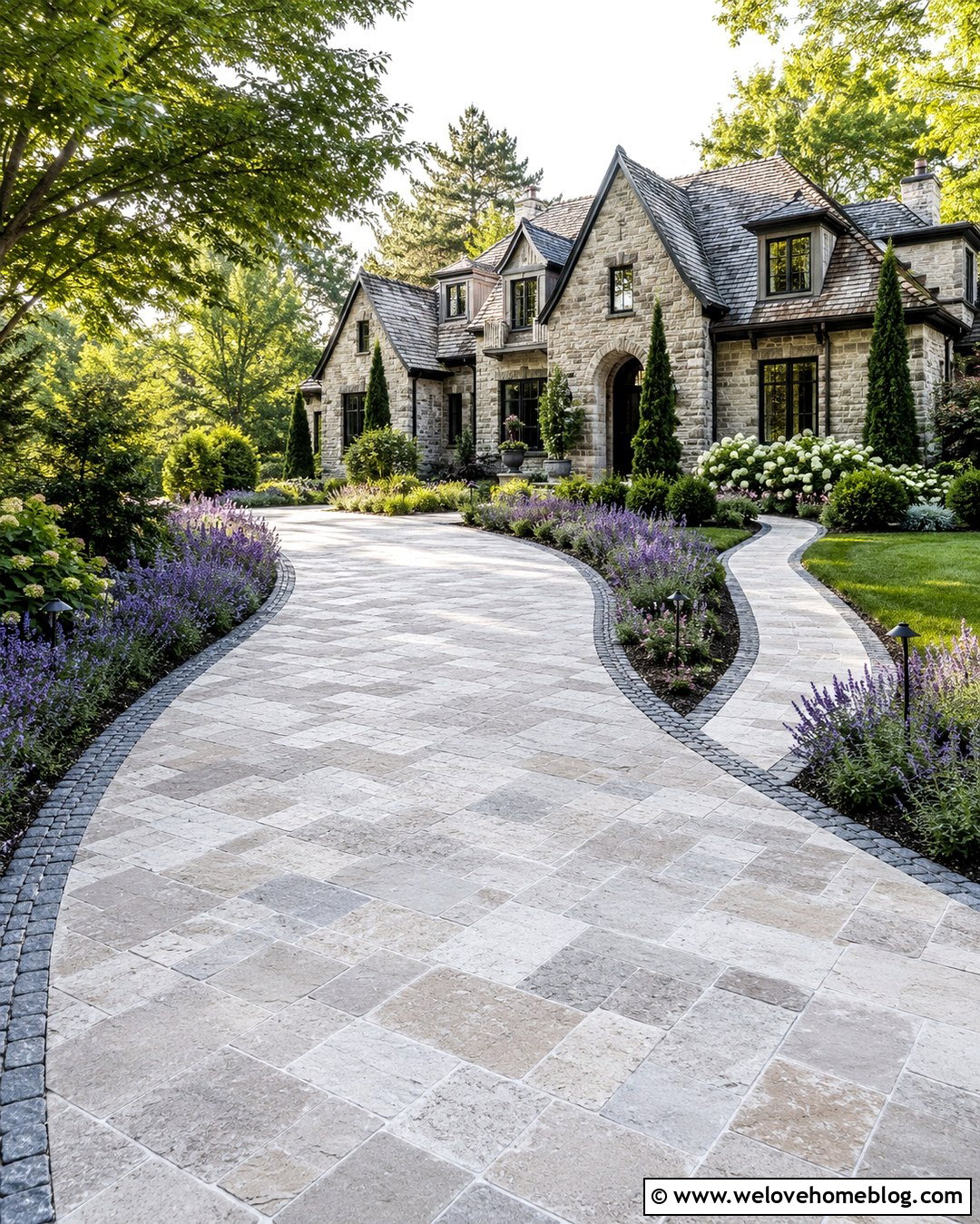
A French pattern is a natural match for silver travertine because it highlights the stone’s shifting gray, cream, and taupe colors. Several rectangular and square sizes create movement without making the driveway appear busy. Use tumbled pavers for softer edges and a relaxed, established finish. A straight layout framed by charcoal cobblestone gives the mixed pattern a crisp boundary. Add broad lawn panels, rounded evergreen shrubs, and a matching travertine walkway leading to the front door. This complete look works especially well with a traditional stucco or light brick house. Ask the installer to blend stones from multiple pallets during installation so color variations appear evenly distributed rather than forming obvious patches.
2. Herringbone Silver Travertine Driveway
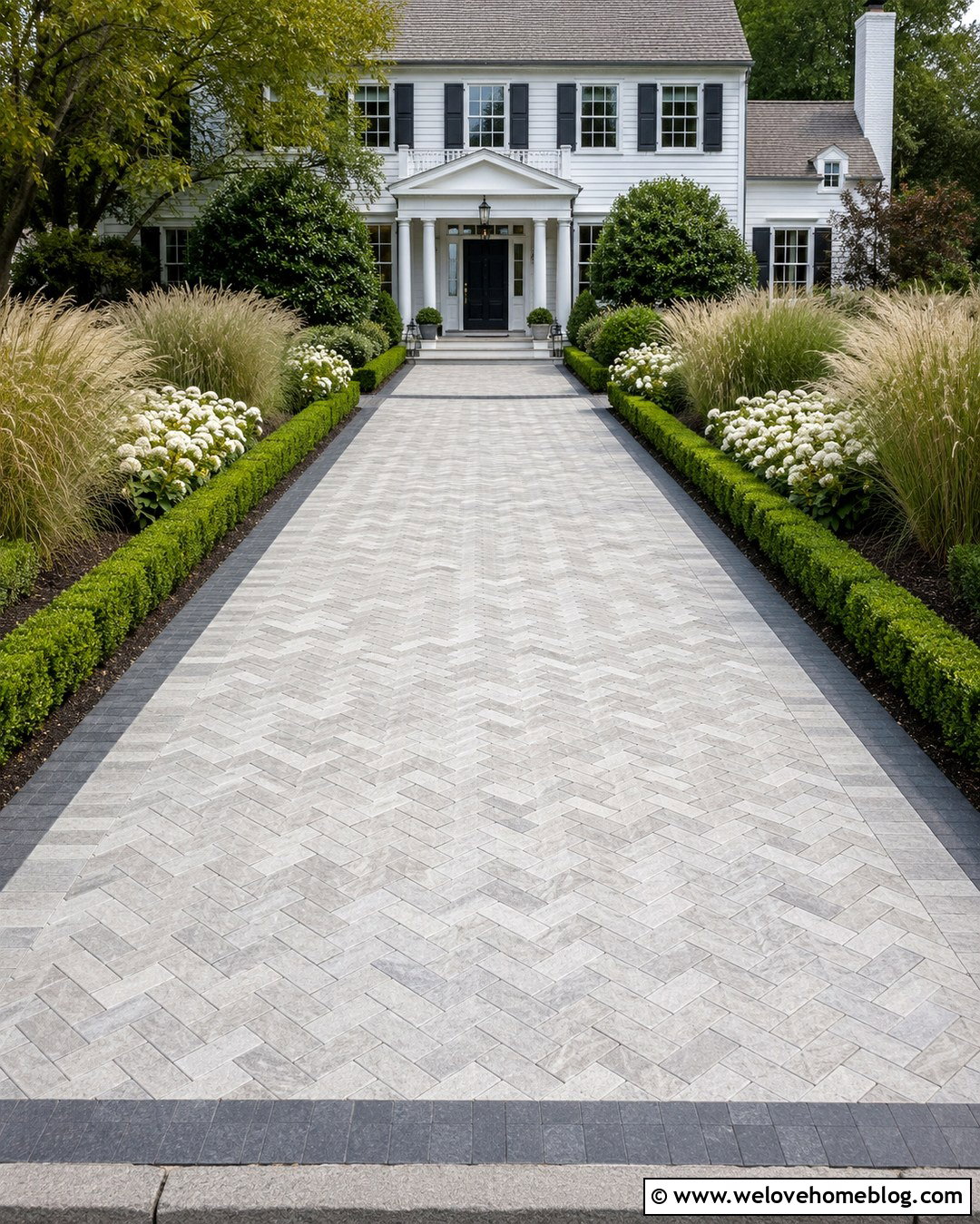
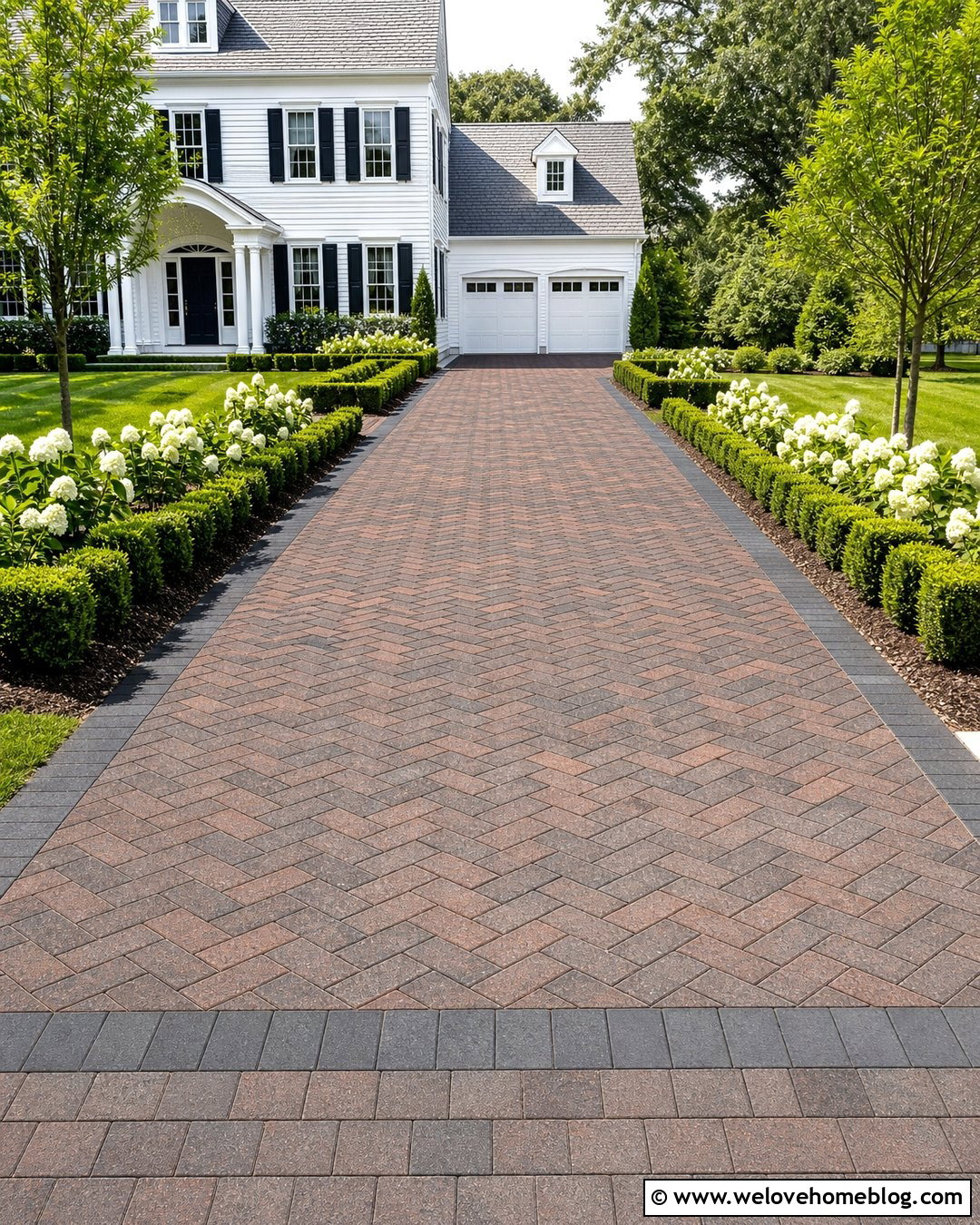
Want a surface that looks structured and handles a busy entrance beautifully? Lay smaller silver travertine rectangles in a herringbone pattern and frame them with a straight soldier-course border. The directional layout adds energy while helping a long driveway feel wider and more detailed. Choose darker gray border stones to define the edges and make the pale travertine stand out. Low boxwood hedges, ornamental grasses, and clean lawn strips can reinforce the orderly design. This combination suits a colonial or transitional house with symmetrical architecture. Keep the walkway simpler by using running-bond travertine, allowing the driveway pattern to remain the main feature. Vehicle-rated paver dimensions and a professionally compacted base are essential for lasting performance.
3. Running Bond Silver Travertine Driveway
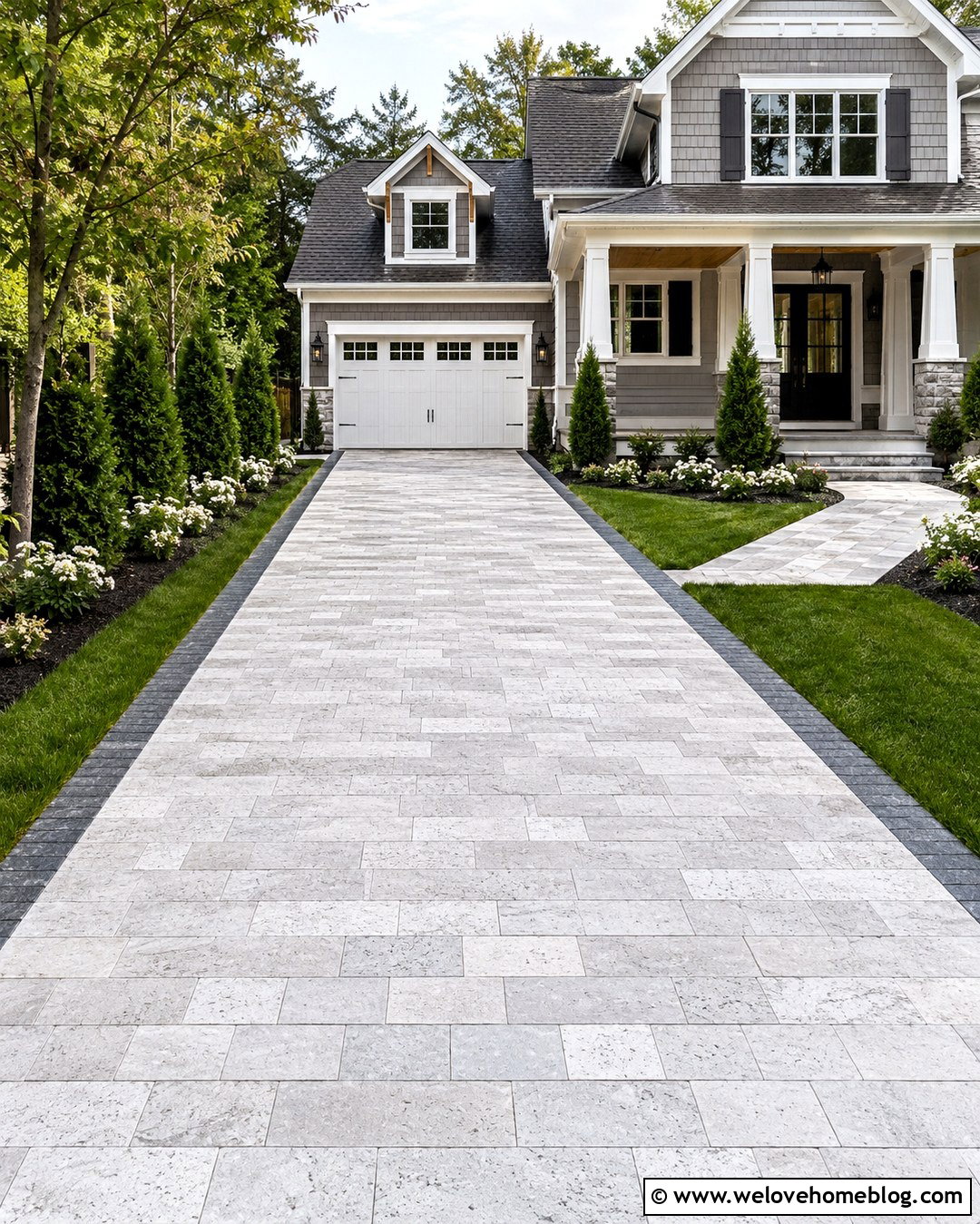
Long, narrow properties benefit from the clean visual direction of a running-bond silver travertine driveway. Rectangular pavers placed across the driveway can make the space appear wider, while pavers running toward the garage emphasize depth. A slim charcoal paver border keeps the edges tidy without overpowering the natural stone. Pair the surface with narrow planting beds containing upright evergreens, white flowering shrubs, and low ground cover. A simple concrete or travertine walkway can branch toward a craftsman-style porch. Running bond provides a calmer appearance than a mixed modular pattern, making it useful where the house already has detailed siding or masonry. Keep joint lines consistent and select an edge restraint suited to the installation system and site conditions.
4. Straight Silver Travertine Driveway With Charcoal Border
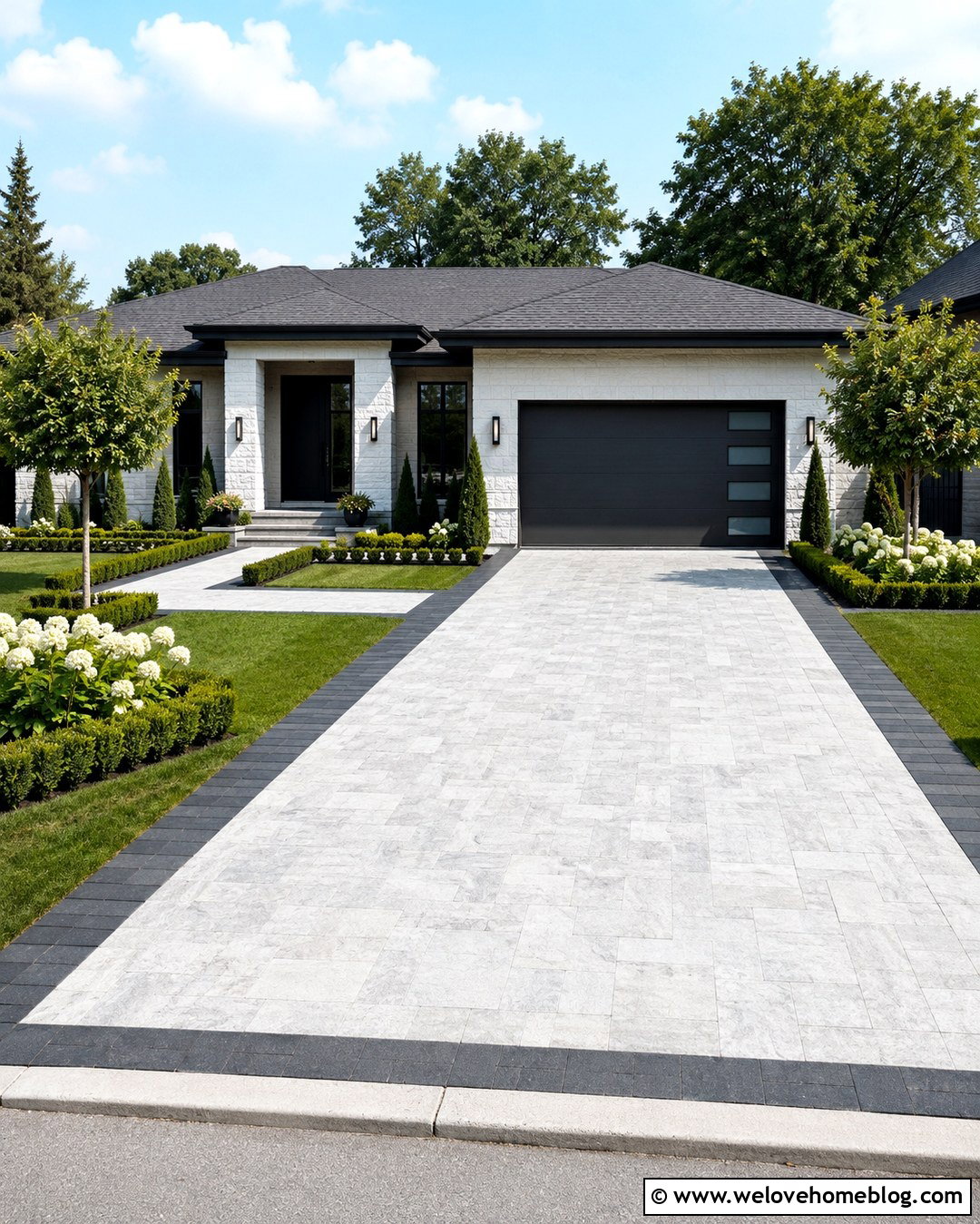
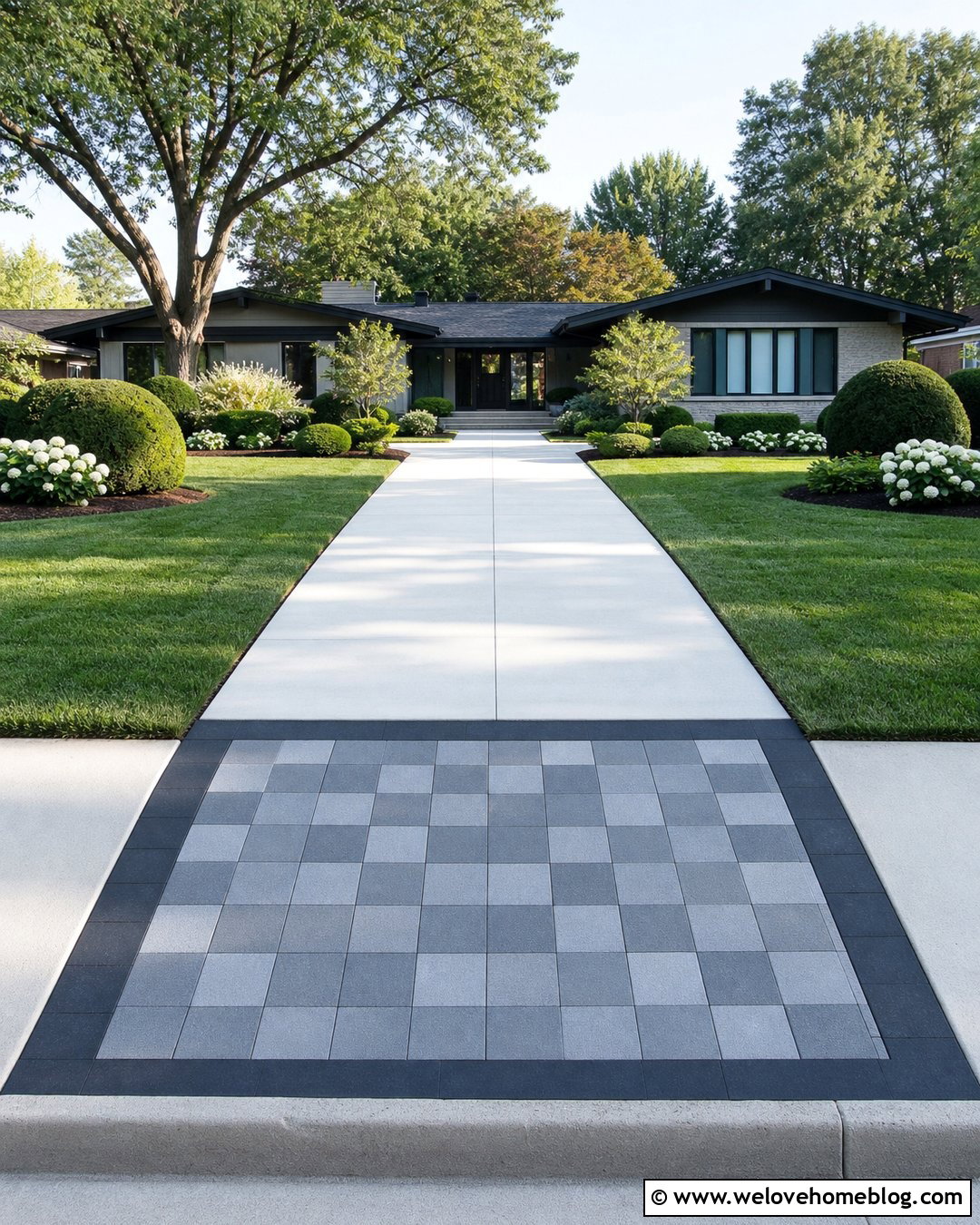
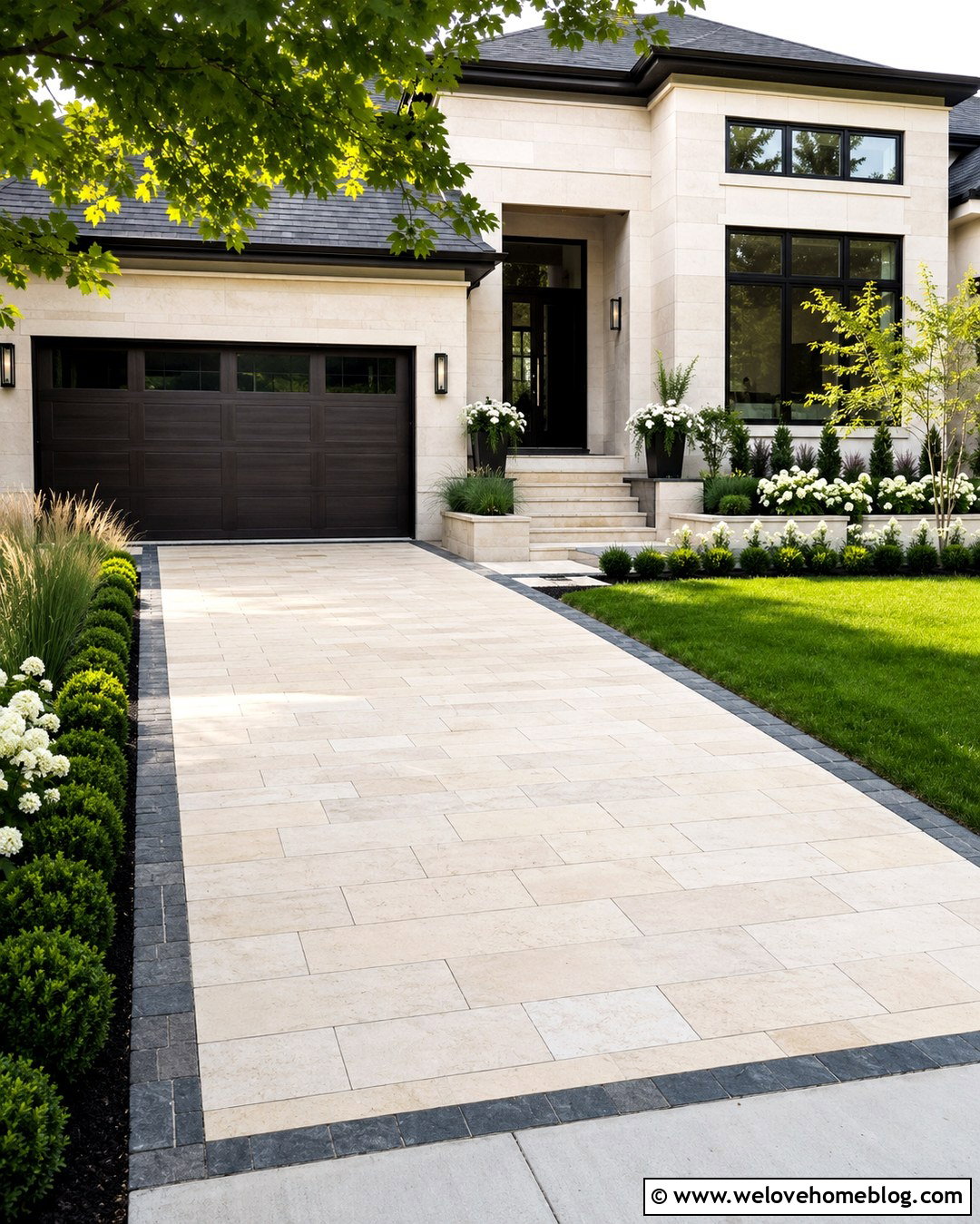
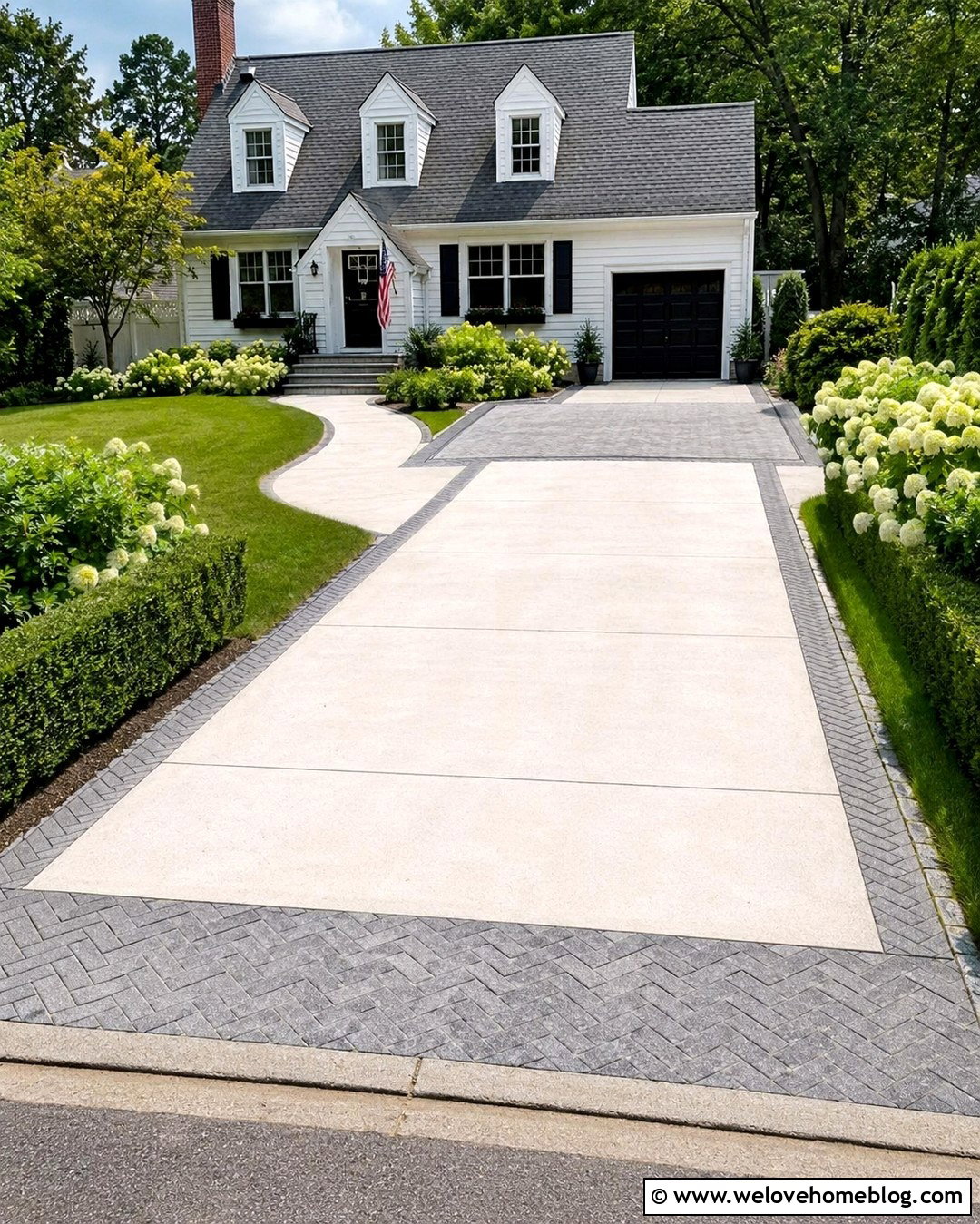
A straight silver travertine driveway gains definition from a dark charcoal border placed along both sides and across the garage threshold. The contrast outlines the driveway’s shape, emphasizes its pale coloring, and creates a tailored connection to black windows or a dark roof. Use a modular travertine pattern through the main field, then install the border in a simple soldier course. Balanced planting beds with clipped shrubs, dwarf trees, and white blooms prevent the strong border from feeling too severe. This look fits a contemporary suburban house or updated ranch. At the curb, widen the border into a shallow entrance apron for a more finished transition. Repeating charcoal pavers around the walkway ties the entire front yard together without adding another material.
5. Curved Silver Travertine Driveway With Cobblestone Edging
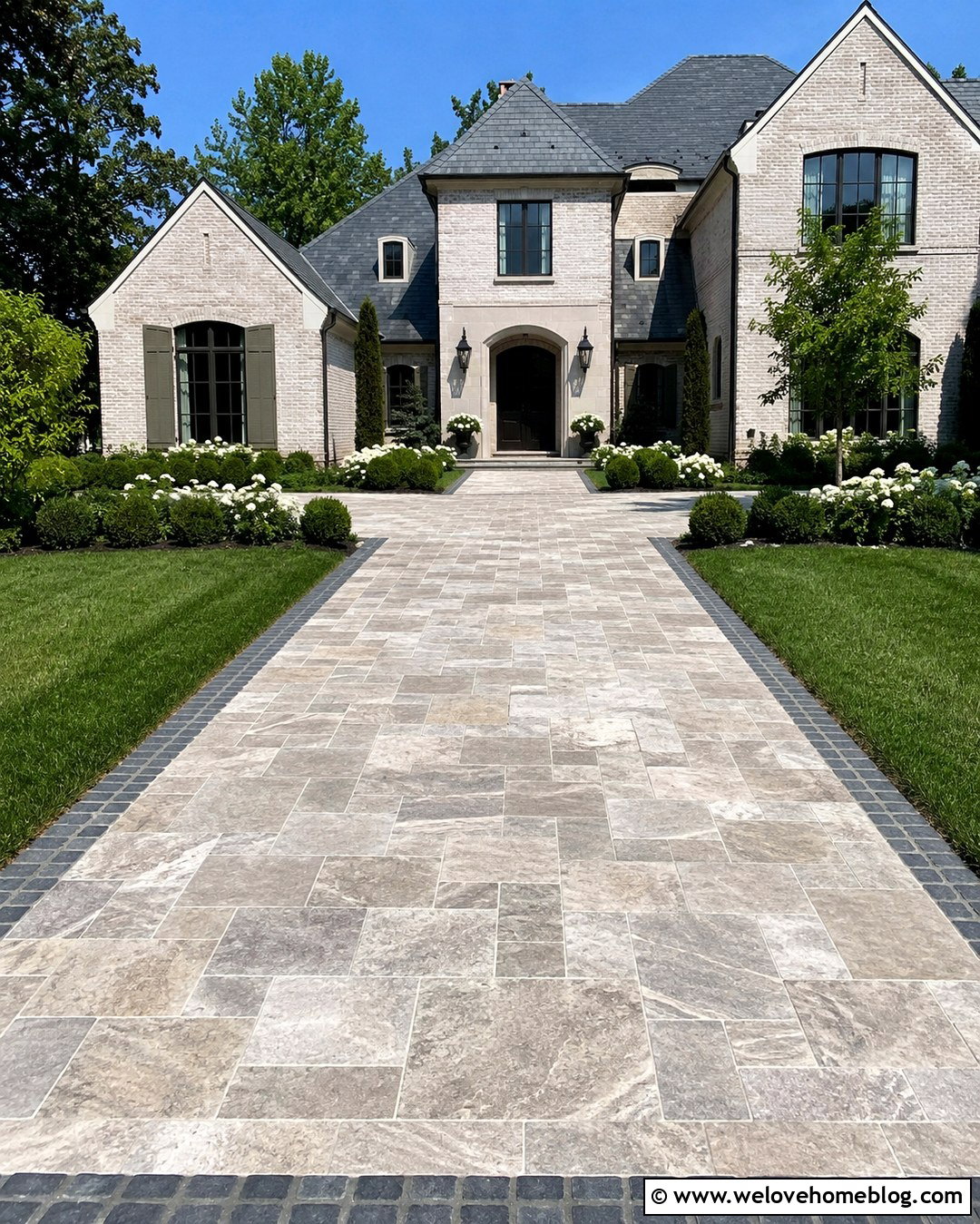
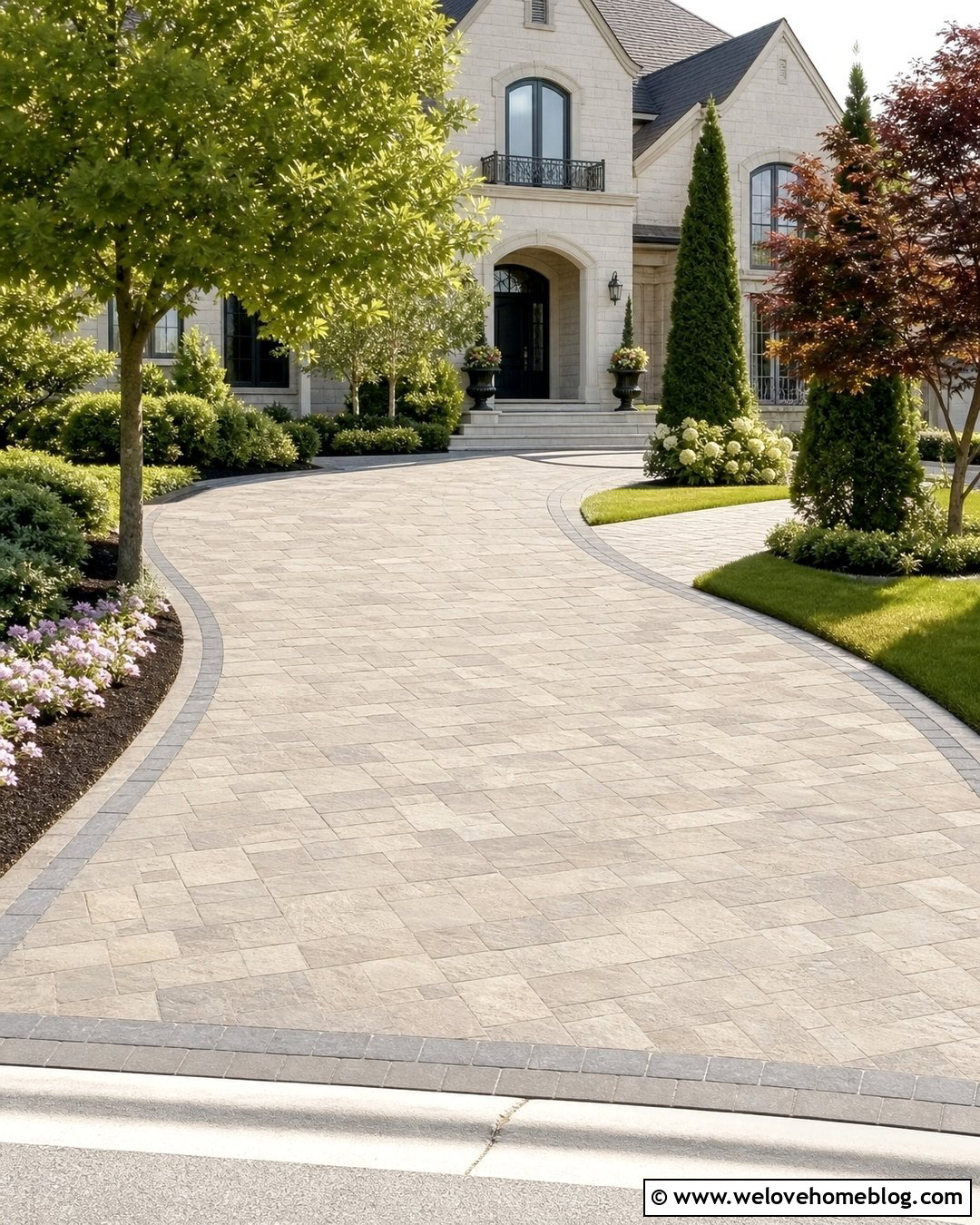
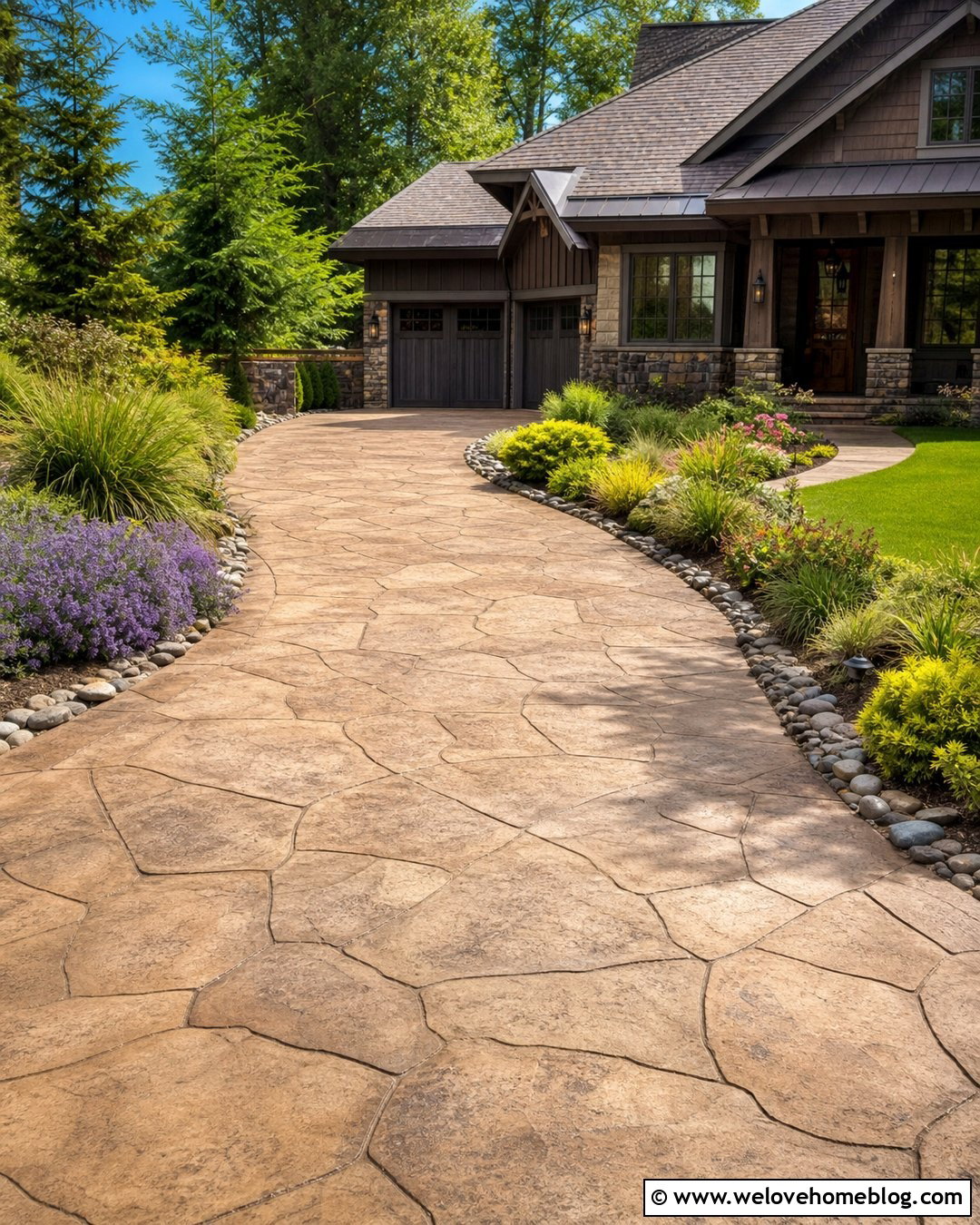
A gentle curve allows the natural variation of silver travertine to unfold gradually as the driveway approaches the house. Use a French pattern through the center and durable gray cobblestone along the outside edges. The smaller cobbles can follow curves smoothly while giving the travertine a secure, visually substantial frame. Plant sweeping beds of lavender, ornamental grasses, hydrangeas, and compact evergreens beside the driveway. Place taller trees farther back so roots and overhanging branches do not interfere with the paving. This complete design feels at home beside a stone craftsman or European-inspired residence. Keep the curve broad enough for comfortable vehicle movement, and let the walkway follow a separate, softer route toward the front porch for an inviting layered entrance.
6. Circular Silver Travertine Driveway With Center Island
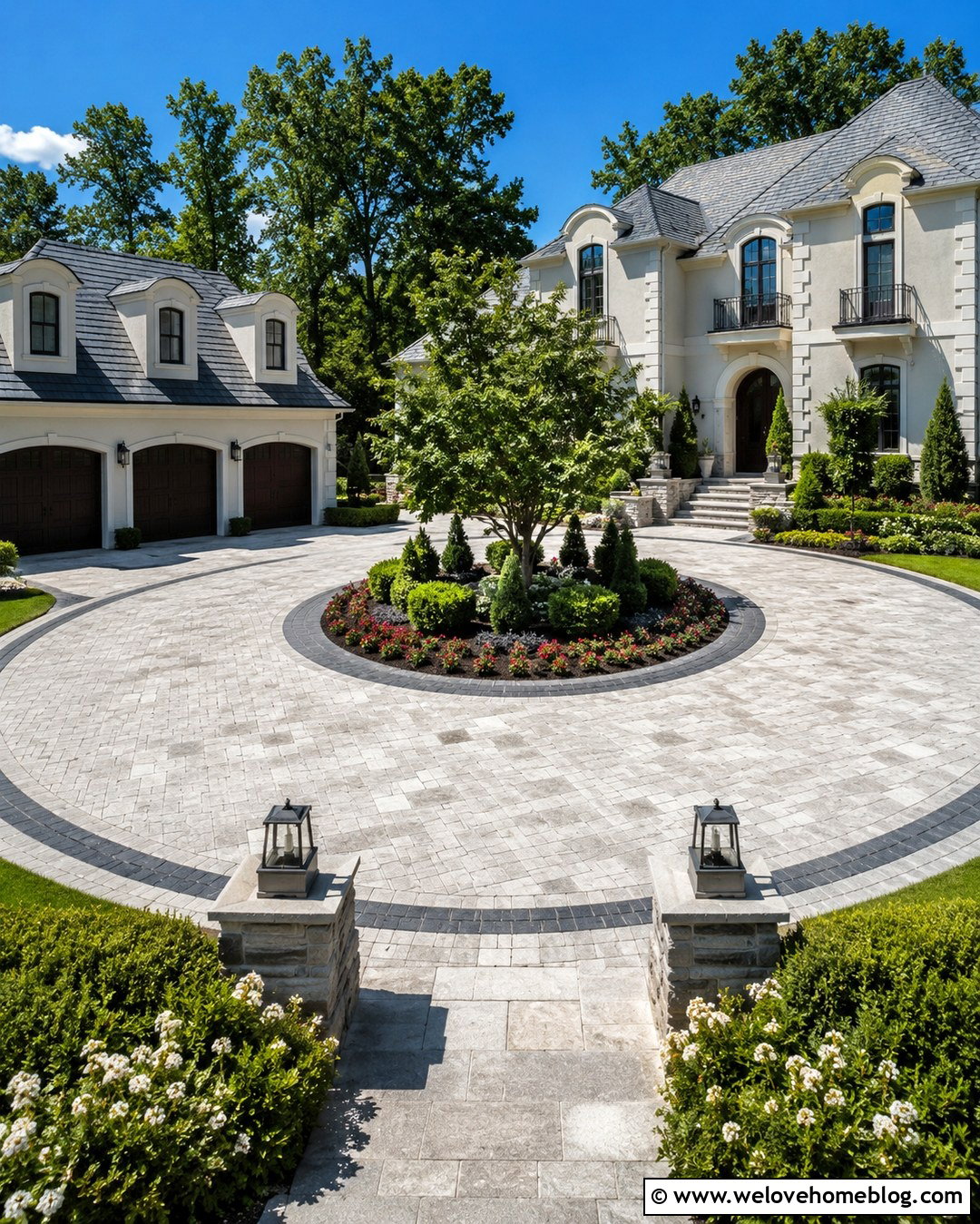
A circular driveway becomes an elegant focal point when silver travertine surrounds a landscaped center island. Choose a modular pattern that visually softens the broad paved area, then define both edges with darker granite or basalt setts. In the island, combine a small ornamental tree with evergreen shrubs, seasonal flowers, and low ground cover that will not block sightlines. Matching stone pillars can mark the entrance without requiring a gate. This layout works best on a wider property with enough turning space and a clearly planned connection to the garage. Include a direct travertine walkway from the inner curve to the front door. Proper drainage is especially important because runoff should move away from the island, house foundation, and garage entrance rather than collecting between them.
7. Modern Silver Travertine Driveway With Grass Strips
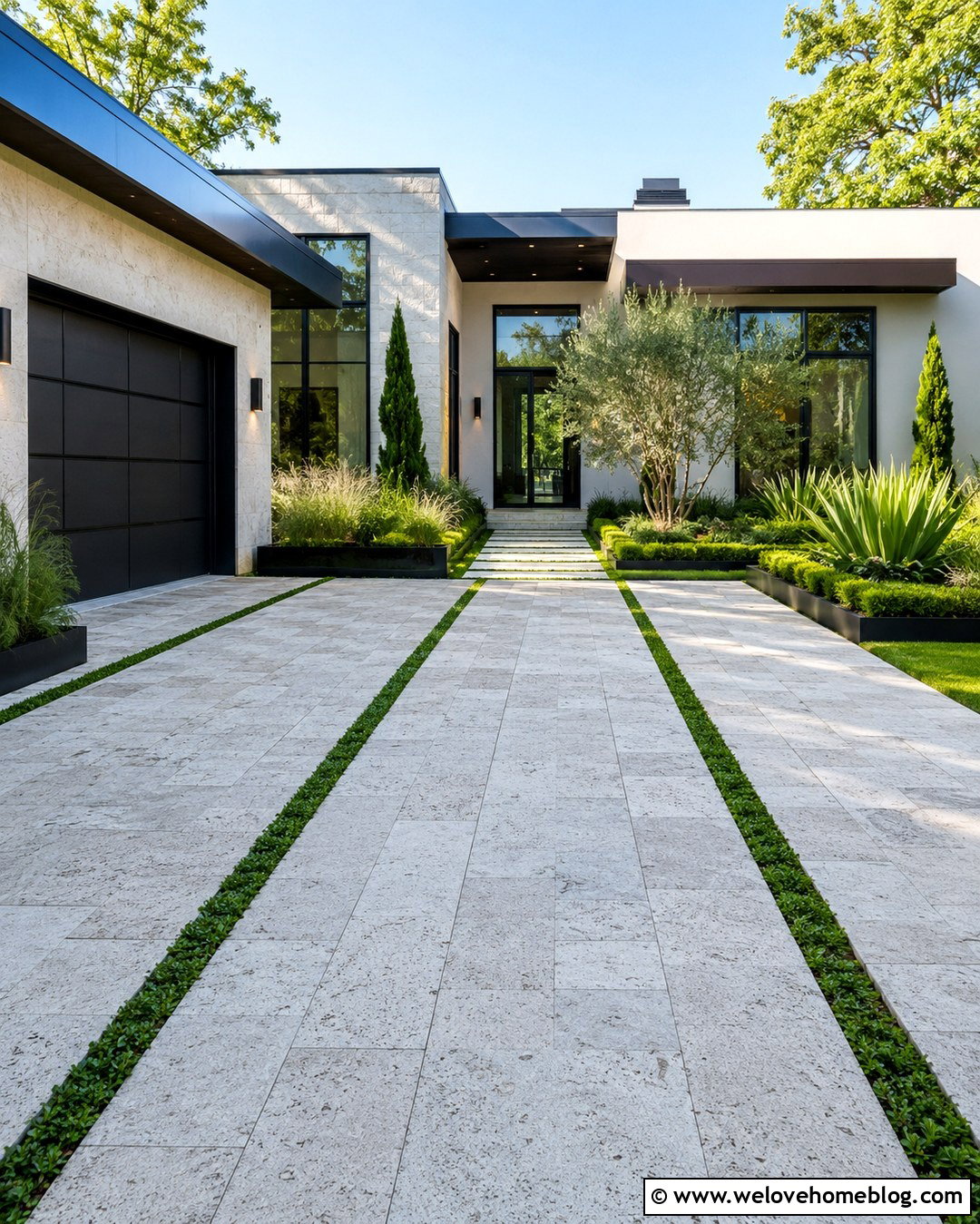
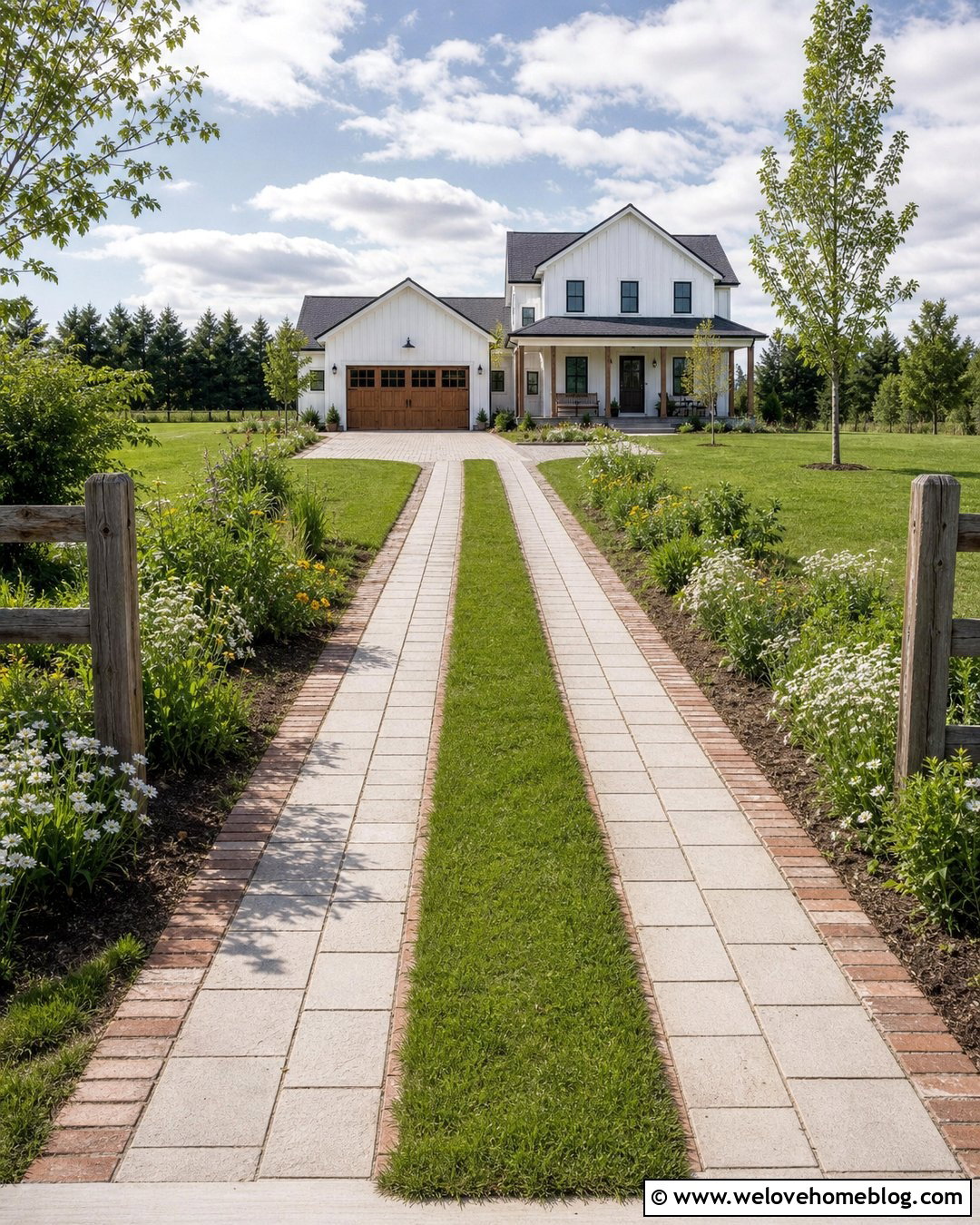
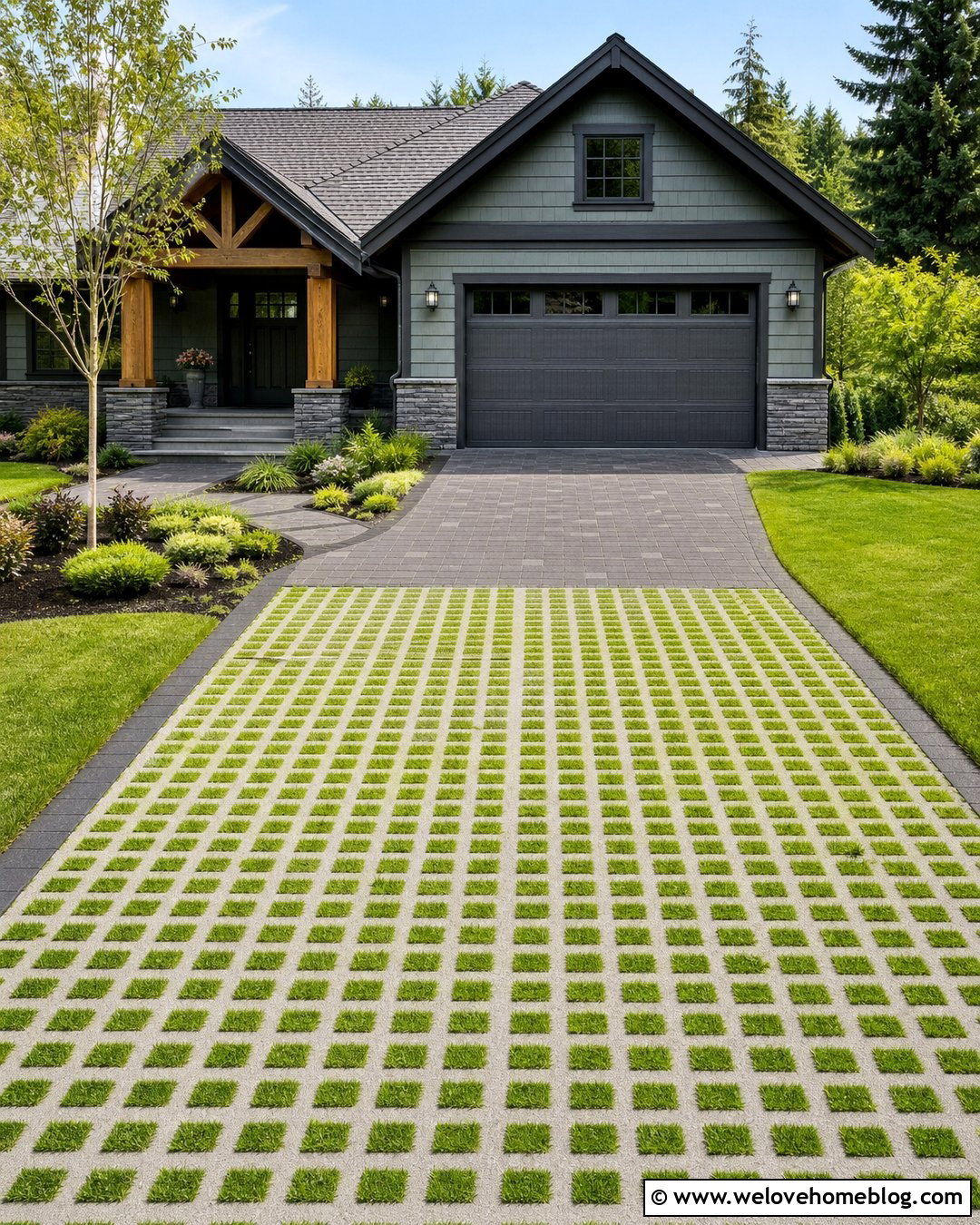
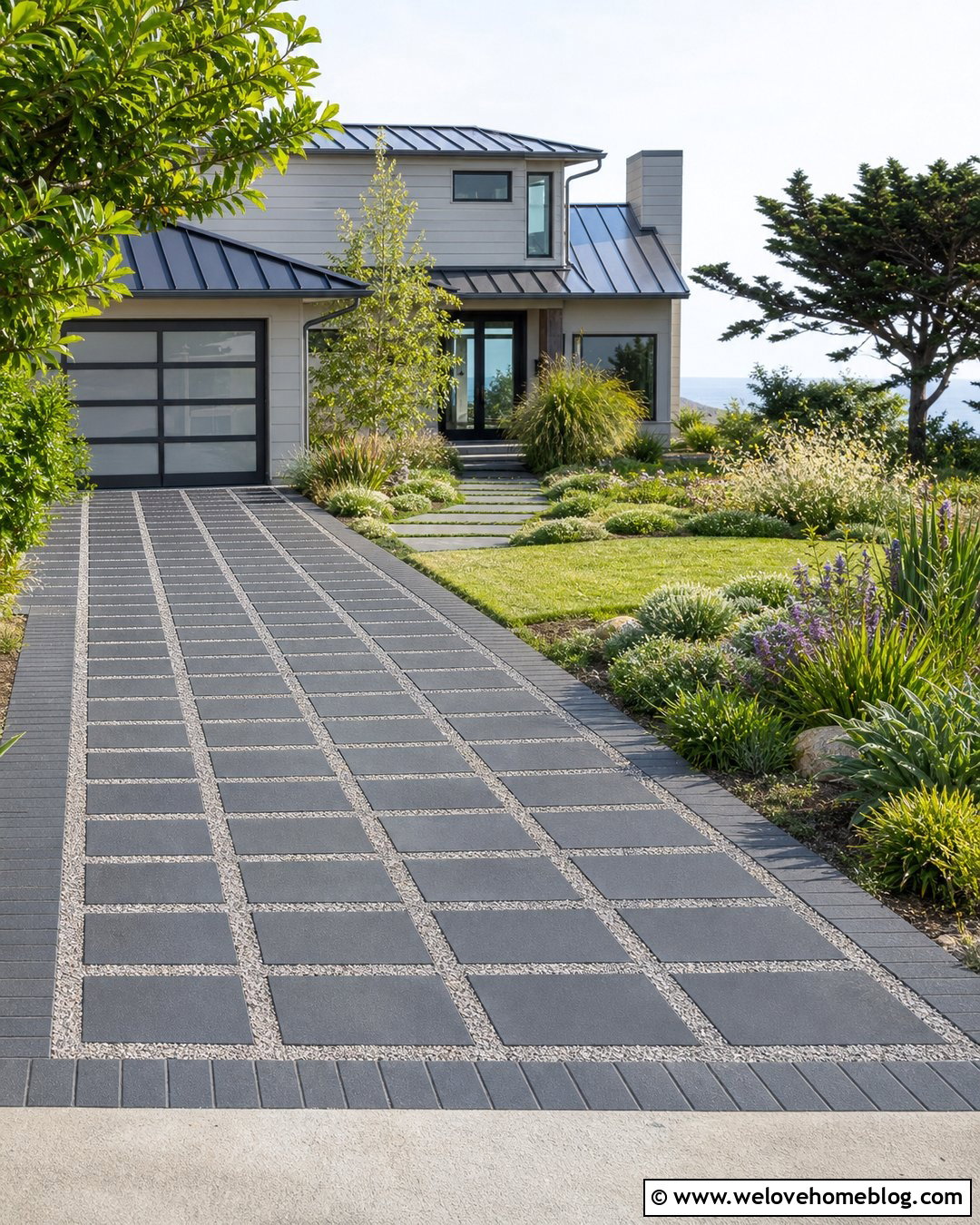
Large visual bands of silver travertine separated by narrow green strips can create a clean modern driveway. Instead of placing grass directly in wheel paths, use substantial paved driving lanes and reserve planted joints for low-traffic divisions or decorative side panels. Straight edges, consistent spacing, and a rectangular layout suit a modern house with flat rooflines and large windows. Choose tough, locally suitable ground cover when conventional turf would require too much trimming or irrigation. Black metal edging can keep planted areas crisp and prevent soil from spreading onto the stone. Repeat the travertine in oversized entrance steps and a simple front walkway. This composition balances cool natural stone with fresh greenery while preserving a practical, readable route from the curb to the garage.
8. Silver Travertine Driveway With Brick Apron
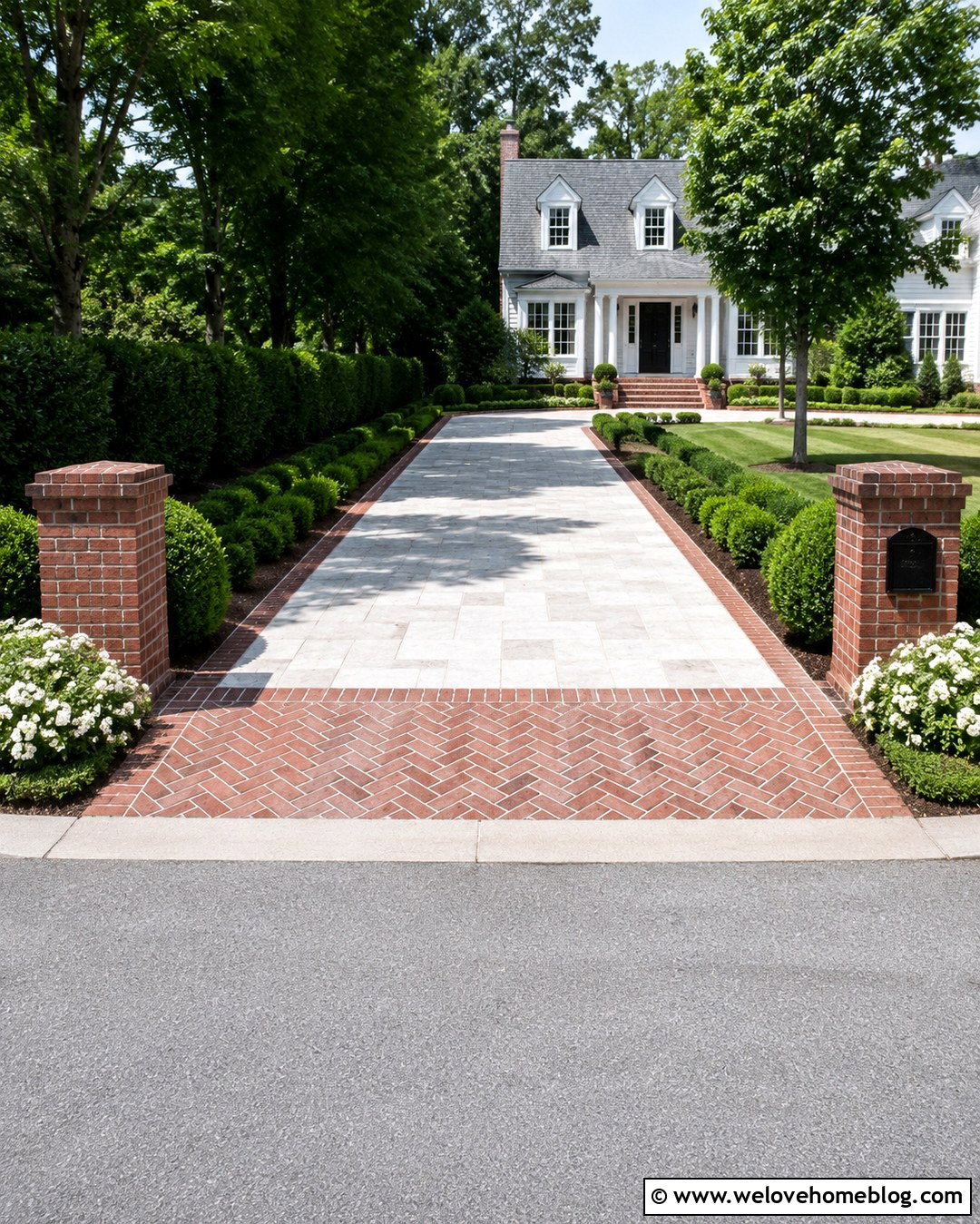
A brick apron introduces warmth at the curb while allowing silver travertine to remain the main driveway material. Select weathered red or brown clay brick that relates to the home’s facade, chimney, or front steps. Lay the apron in herringbone for visual strength, then continue into a French pattern travertine field bordered by a narrow brick ribbon. The two materials should meet at a clean, carefully planned transition. This pairing works particularly well with colonial, Cape Cod, and traditional brick homes. Frame the entrance with lawn, flowering shrubs, and matching brick mailbox pillars. Repeating a small amount of brick near the garage helps the apron feel intentional rather than disconnected. Keep the color palette limited so the natural travertine variation remains easy to appreciate.
9. Silver Travertine Driveway With Cobblestone Apron
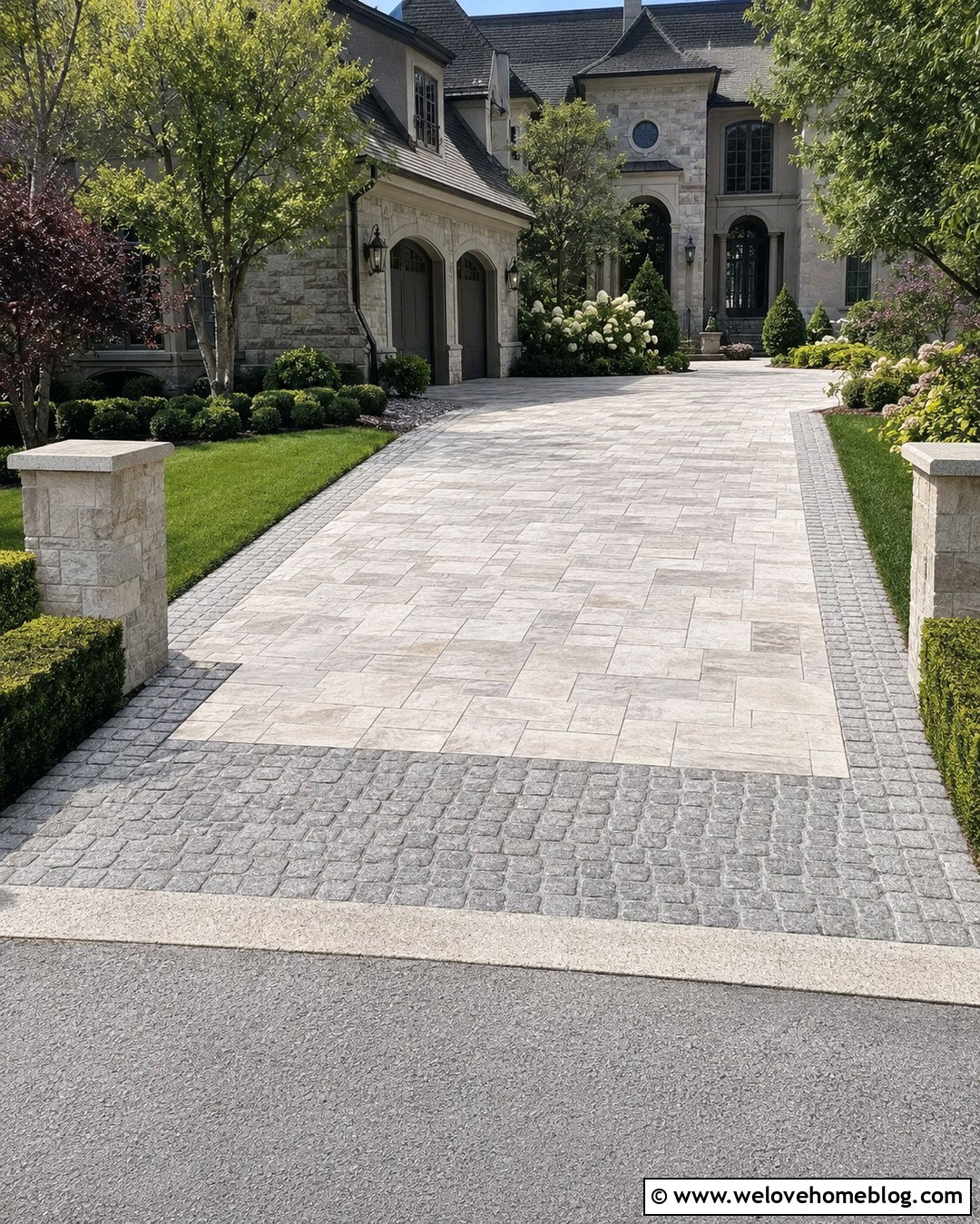
The entrance of a driveway receives strong visual attention, making it an ideal location for a cobblestone apron. Use rectangular gray granite cobbles across the curb opening, then transition into tumbled silver travertine laid in a modular pattern. Continue one row of cobbles along each side to frame the complete route. The rougher apron adds texture and creates a grounded transition between the street and the lighter driveway. Pair it with stone address pillars, clipped hedges, and broad lawn sections for a balanced estate-style appearance. A stone or stucco house will naturally connect with this material combination. Make sure the apron dimensions, curb connection, and right-of-way work follow local requirements. A properly detailed transition can also reduce awkward cuts in the travertine field.
10. Silver Travertine Driveway With Black Metal Gate
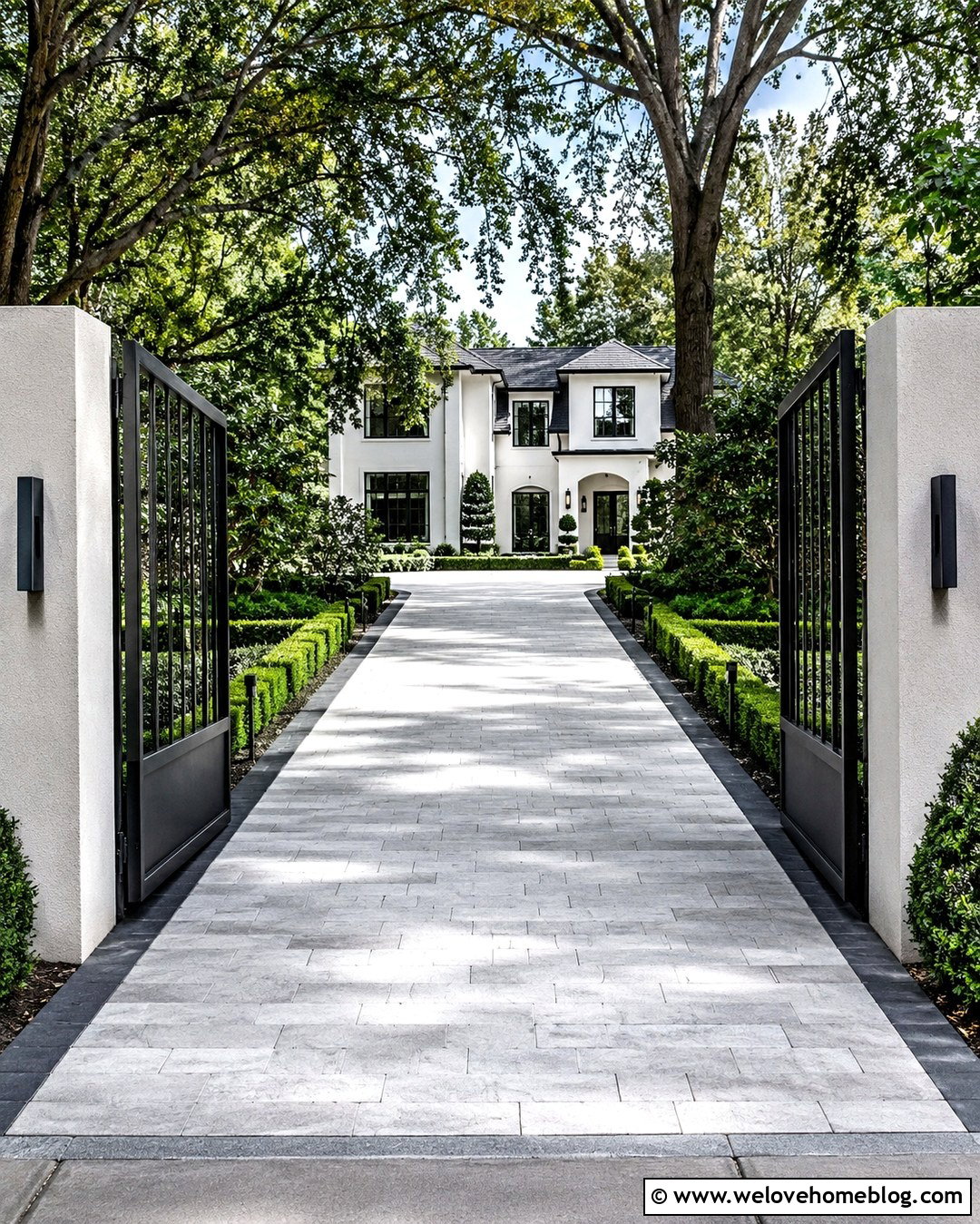
Cool silver travertine and a black metal gate create a sharp, upscale entrance without requiring elaborate decoration. Use a straight or gently curved driveway with a running-bond field and dark border pavers that visually connect to the gate. Position the gate between substantial stone or smooth stucco pillars, leaving enough level space for safe vehicle access. Low hedges and symmetrical planting beds can keep the entrance visible and uncluttered. Continue the travertine beyond the gate toward a modern farmhouse or transitional home. Simple black path lights and matching house details strengthen the coordinated palette. Plan gate swing, drainage, underground utilities, access controls, and delivery clearance before paving begins. These functional decisions should shape the entrance rather than being added after the driveway is installed.
11. Silver Travertine Driveway With Stone Pillars
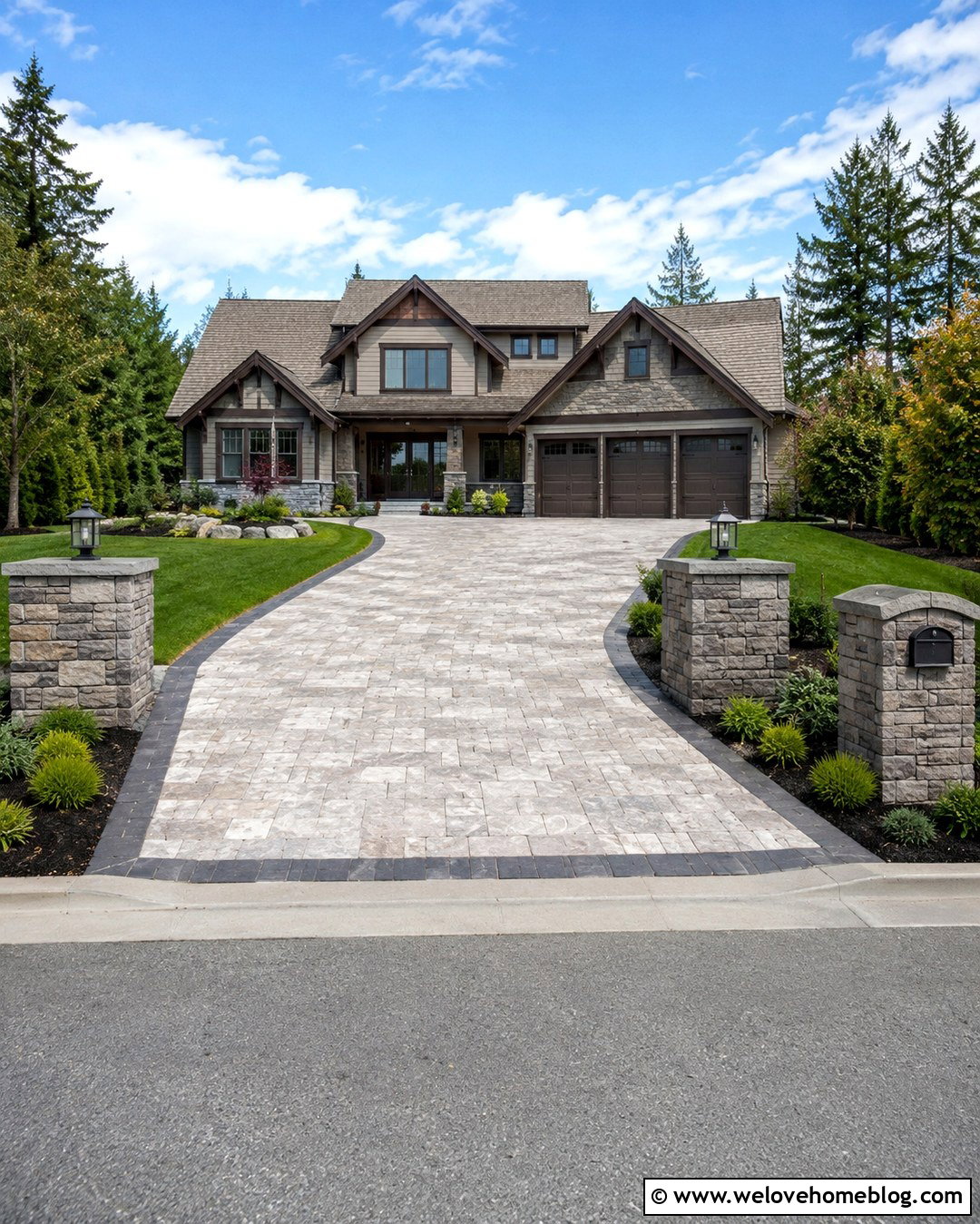
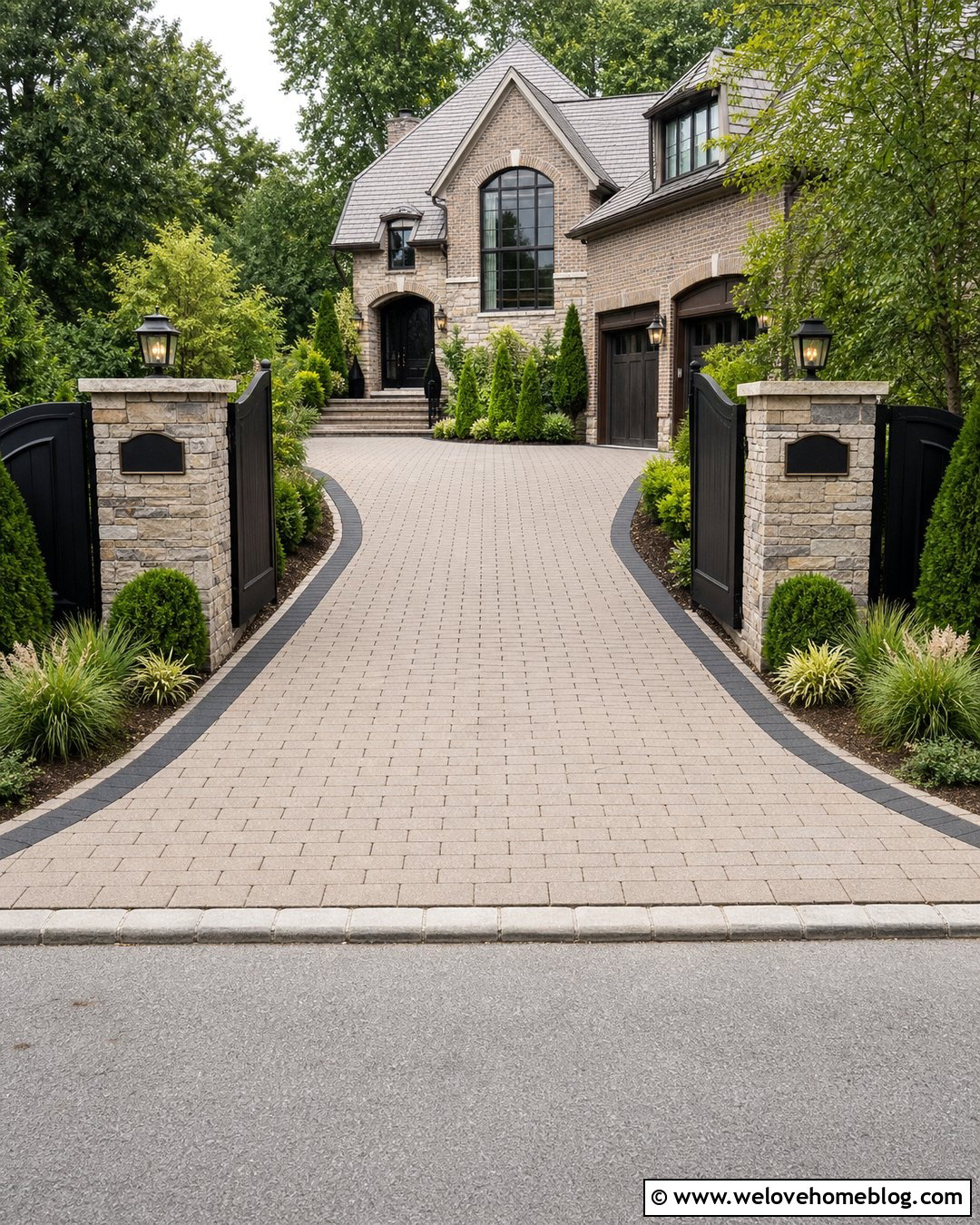
Stone pillars can give a silver travertine driveway a permanent, well-proportioned entrance even when no gate is needed. Choose locally appropriate ledgestone or ashlar masonry containing gray, cream, and warm beige tones found in the pavers. A French pattern driveway with a darker stone border will connect the pillars to the pavement. Add discreet address plaques, capped lights, and low evergreen plantings that keep the entry easy to see from the road. This look complements craftsman, ranch, mountain, and country homes. The pillars should be sized to the driveway width and surrounding property rather than made unnecessarily massive. Carry the same masonry onto a mailbox, low retaining wall, or porch base, but avoid covering every feature. Restraint helps the silver travertine remain the visual foundation.
12. Tree-Lined Silver Travertine Driveway
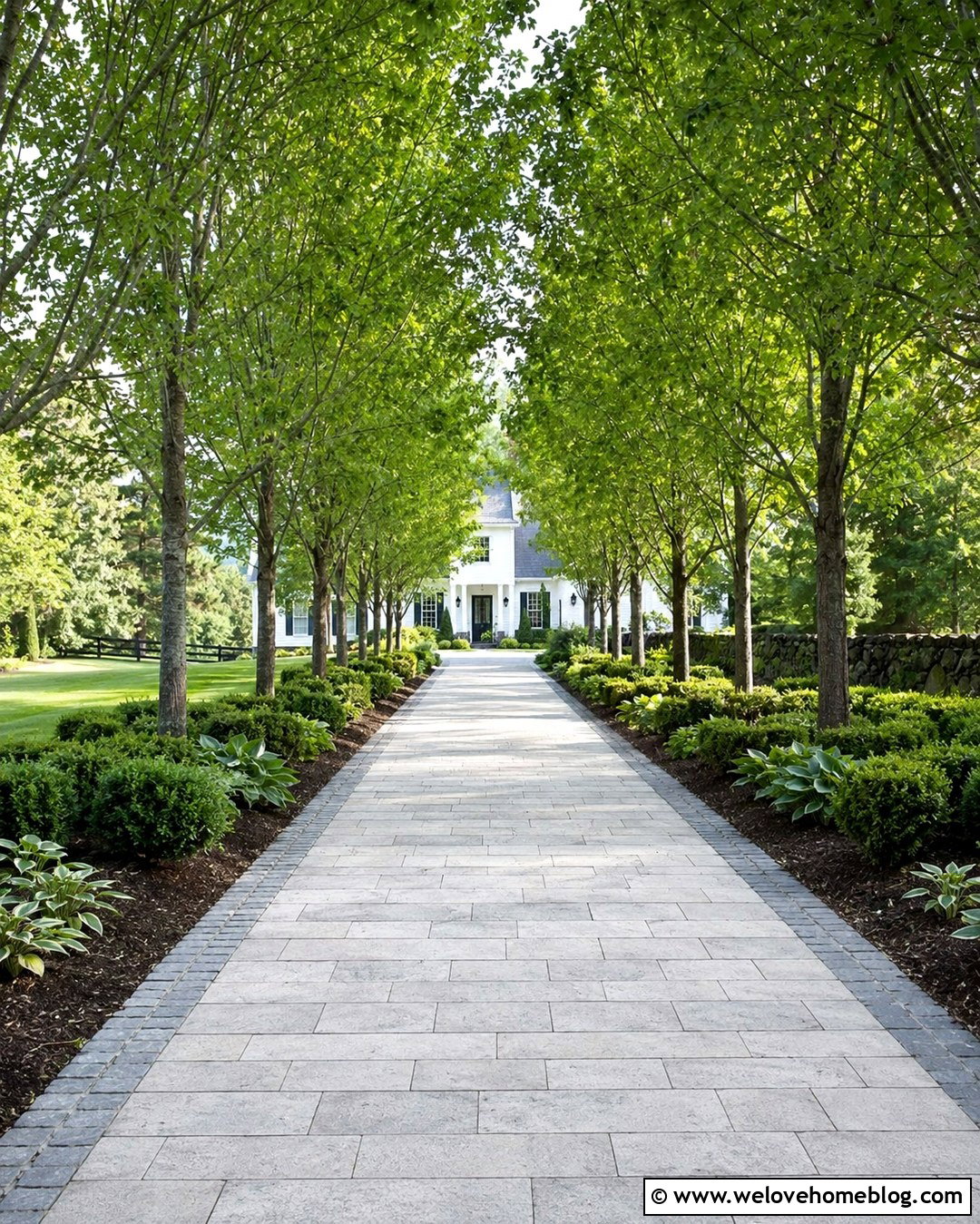
A long silver travertine driveway can feel welcoming and established when rows of trees frame the approach. Use a running-bond or understated modular pattern so the paving does not compete with the landscaping. A narrow cobblestone edge provides separation between the travertine and planting beds. Select appropriately sized trees for the available space, and position them far enough from the driveway to protect visibility, paving, and vehicle clearance as they mature. Beneath the trees, use mulch, low shrubs, or shade-tolerant ground cover for a finished appearance. The repeated trunks naturally guide the eye toward a farmhouse, colonial, or country residence. Consider root behavior, leaf litter, irrigation, and maintenance before choosing species. Soft landscape lighting can be included without turning the entrance into a row of glaring fixtures.
13. Silver Travertine Driveway With Lavender Borders
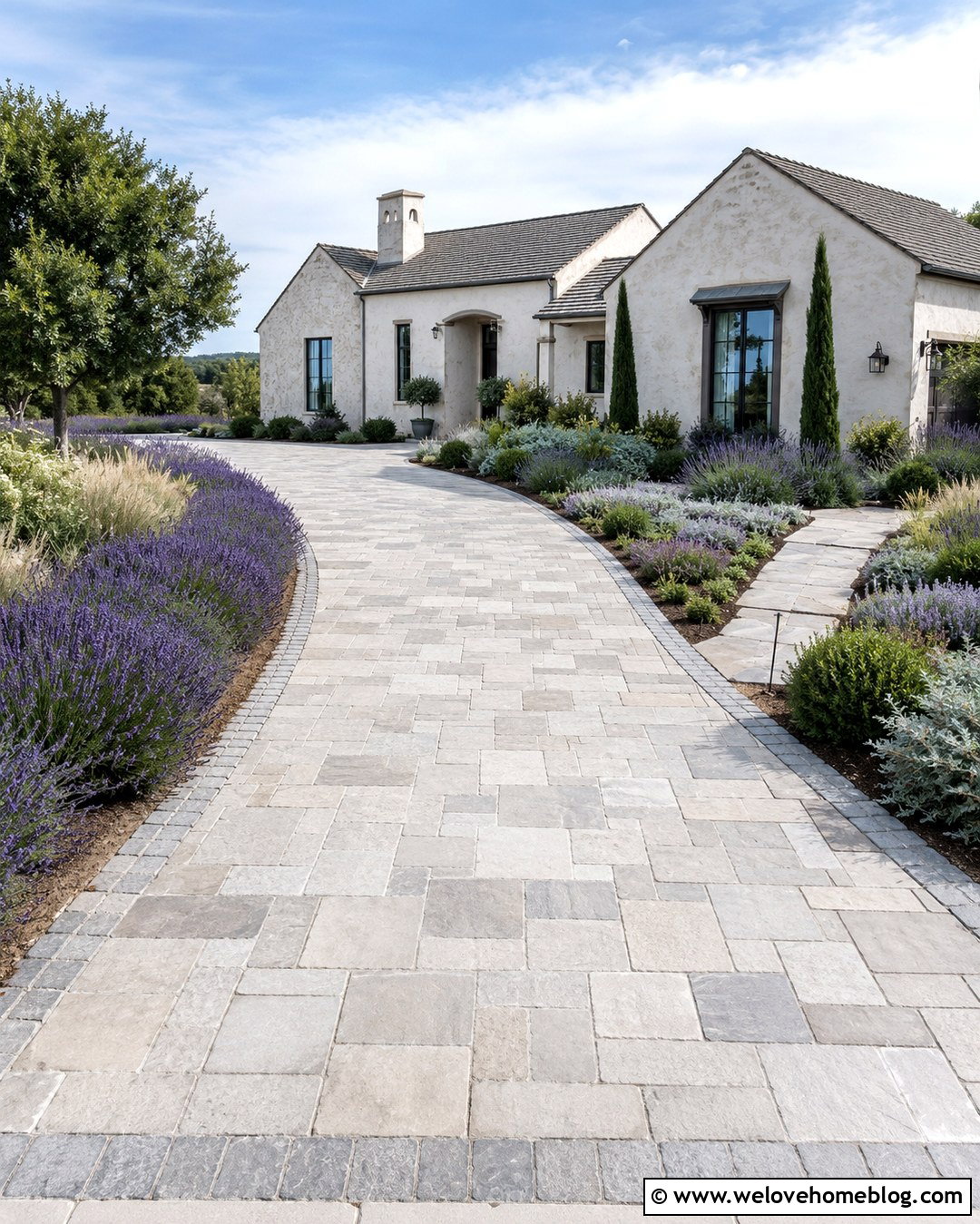
Soft purple flowers bring out the blue-gray undertones in silver travertine while adding movement and fragrance around the driveway. Use a gently curved French pattern surface edged with small gray cobbles. Behind the edging, plant broad drifts of lavender where climate, sun, and drainage conditions allow. Mix in ornamental grasses, silvery foliage, and compact evergreen shrubs so the beds remain attractive outside the flowering season. This complete look suits Mediterranean, farmhouse, and light stucco homes. Keep plants set back from vehicle doors and tires, particularly along narrow sections. A matching travertine walkway can pass through the planting toward the entrance. If lavender is unsuitable for the region, choose a locally adapted plant with similar color, scale, and drought-conscious character rather than forcing a high-maintenance planting scheme.
14. Silver Travertine Driveway With Low-Maintenance Landscaping
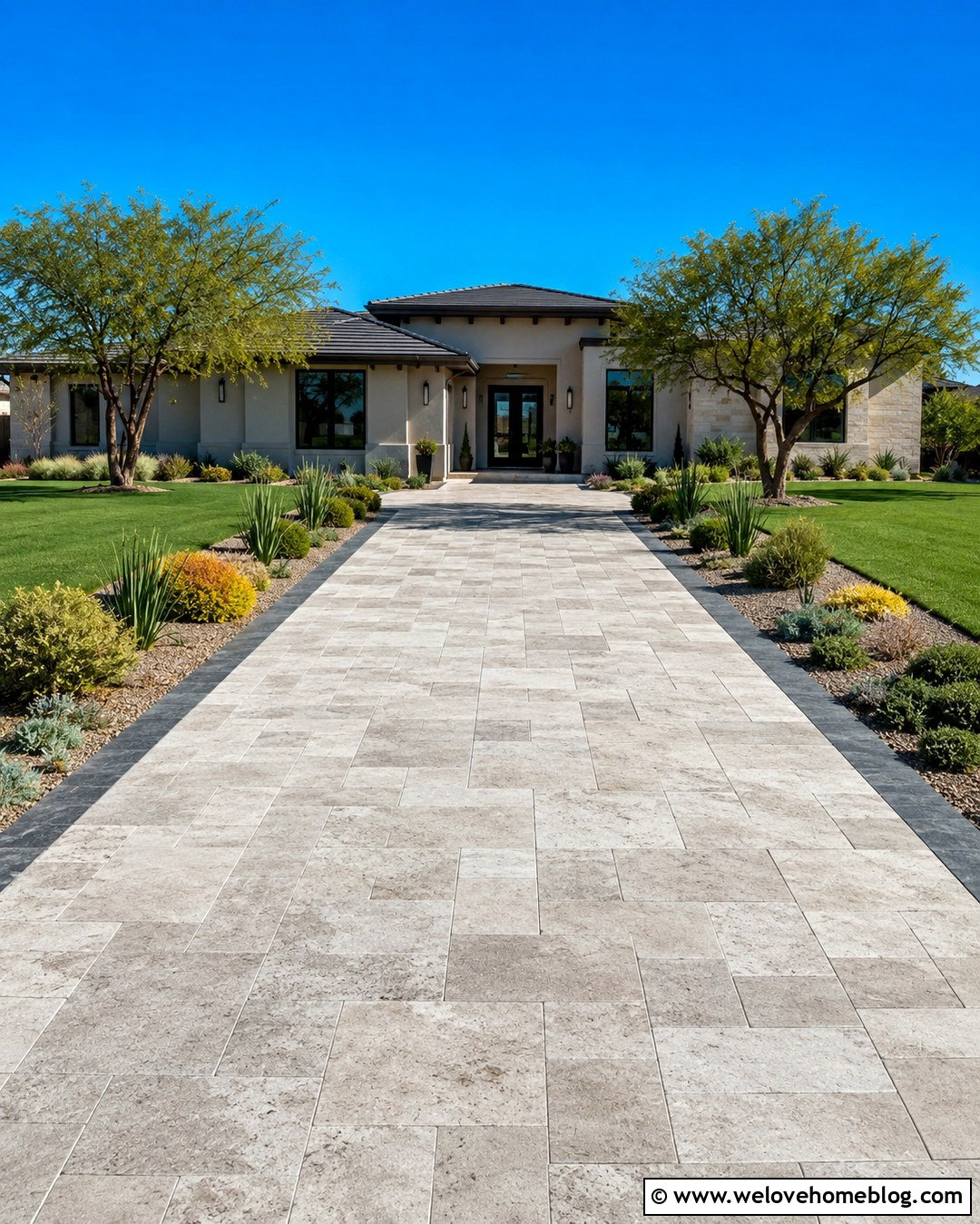
For easier upkeep, surround a silver travertine driveway with simple planting masses instead of narrow beds filled with many species. A straight modular driveway with dark stone edging provides a clear structure. Use groups of compact evergreens, ornamental grasses, hardy ground covers, and one or two accent trees. Decorative gravel can cover open soil, but a solid edge should stop loose stones from migrating onto the travertine. Choose plants according to local climate, mature size, water needs, and exposure. This approach works well with ranch, contemporary, and Southwestern-influenced homes. Limit lawn to broad areas that are easy to mow. The restrained landscape allows the pavers’ natural variation to take center stage while reducing detailed pruning, frequent replanting, and difficult maintenance along the driveway edges.
15. Coastal Silver Travertine Driveway
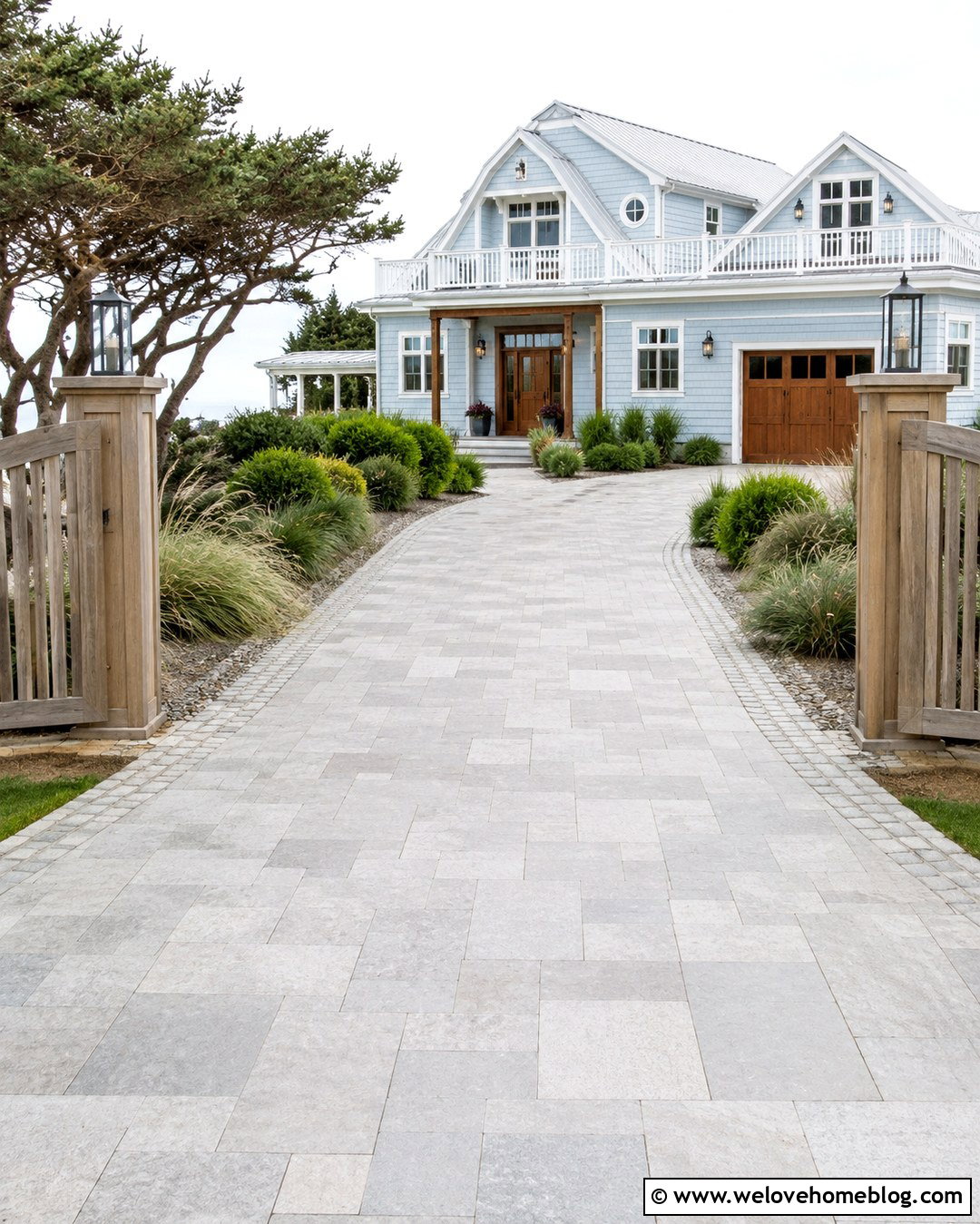
Silver travertine can support a light coastal exterior when it is paired with soft landscaping and simple boundaries. Choose a straight or subtly curved driveway in a random modular pattern, then frame it with pale gray cobblestone or matching travertine setts. Add salt-tolerant ornamental grasses, rounded shrubs, and small windswept trees suited to the property’s actual conditions. A white or pale blue coastal house with natural wood details creates a relaxed background. Avoid introducing too many bright colors; muted greens, sand tones, and blue-gray accents complement the stone more naturally. A wide travertine walkway and an understated timber gate can complete the approach. In coastal environments, ask a local stone professional about drainage, sealing, salt exposure, and maintenance requirements before selecting the final installation system.
16. Modern Farmhouse Silver Travertine Driveway
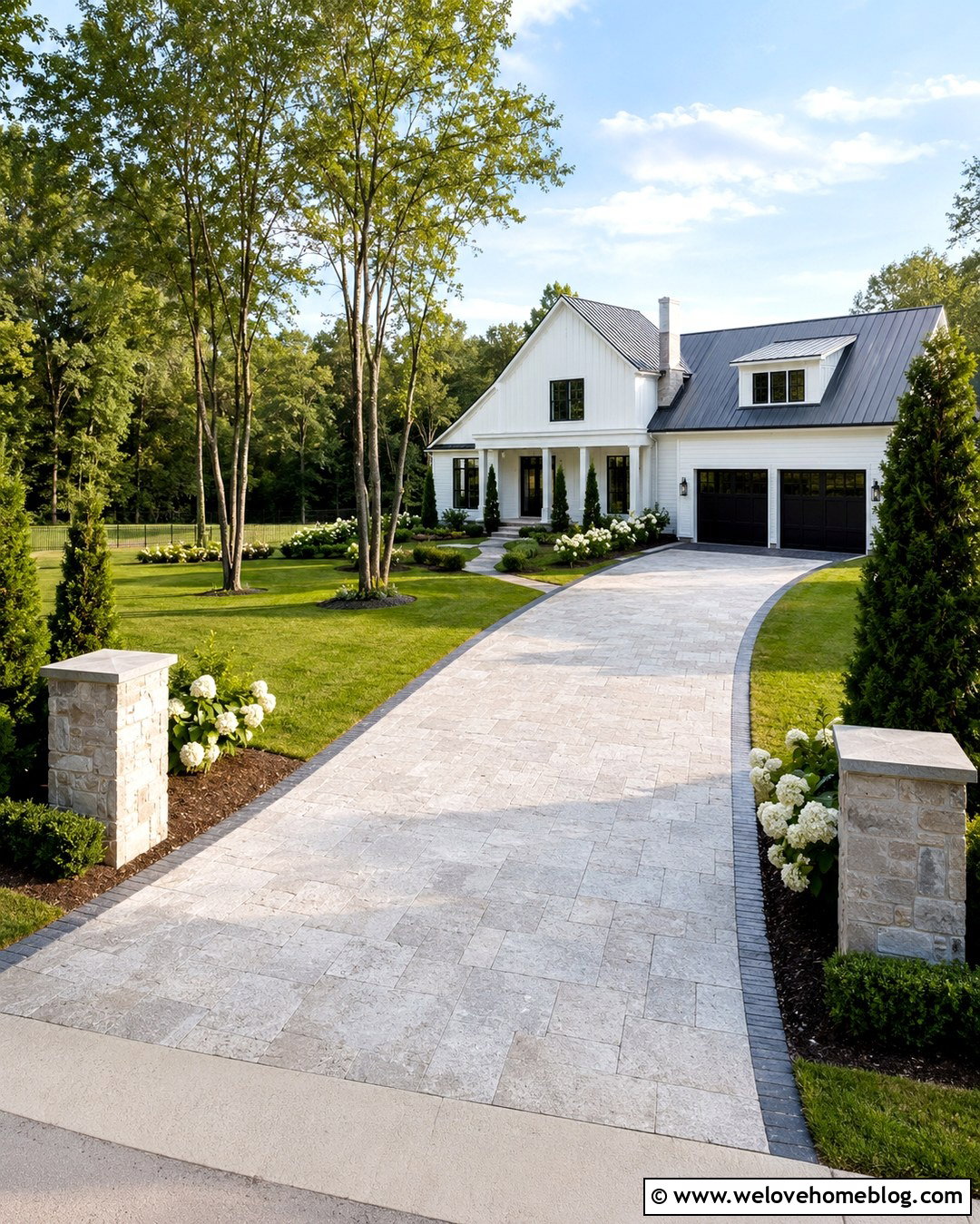
A modern farmhouse gains a polished yet approachable entrance from tumbled silver travertine. Use a wide straight driveway with a French pattern field and a thin charcoal paver border. The gray stone connects naturally with a white facade, black windows, and a dark metal roof. Frame the paving with large lawn panels, layered hydrangeas, evergreen shrubs, and a few multi-stem trees. At the garage, add a darker paver band that visually separates parking from the main approach. A matching travertine walkway can lead to broad porch steps without introducing another competing surface. Black lantern-style fixtures and simple stone mailbox pillars finish the design. Keep the landscape informal enough to suit farmhouse architecture, but use clear bed lines so the driveway still appears neat and intentionally planned.
17. Mediterranean Silver Travertine Driveway
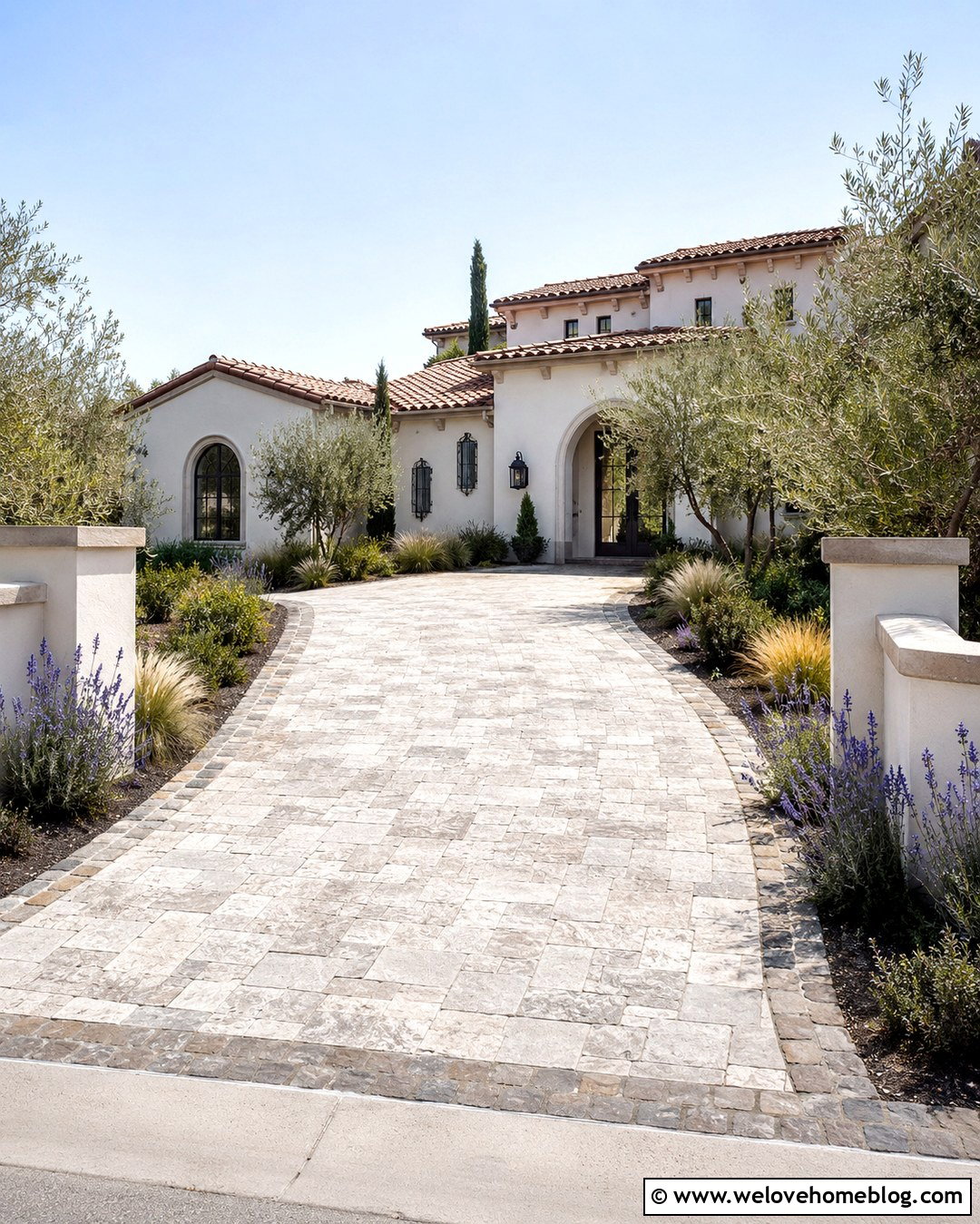
Silver travertine offers a cooler alternative to gold stone around a Mediterranean-style house. A curved driveway laid in a varied French pattern complements arched openings, pale stucco, and a clay tile roof. Use warm gray or muted brown cobblestone edging to connect the cool pavement with the warmer architecture. Plant olive-like trees where suitable, along with lavender, rosemary, ornamental grasses, and clipped evergreen forms. A low stucco wall with travertine caps can frame the entrance without hiding the home. Include a broad landing near the garage so the curve remains practical. The goal is balance: natural texture, softly weathered colors, and restrained planting rather than an overly themed display. Local climate and mature plant sizes should guide the final landscape selection.
18. Colonial Silver Travertine Driveway
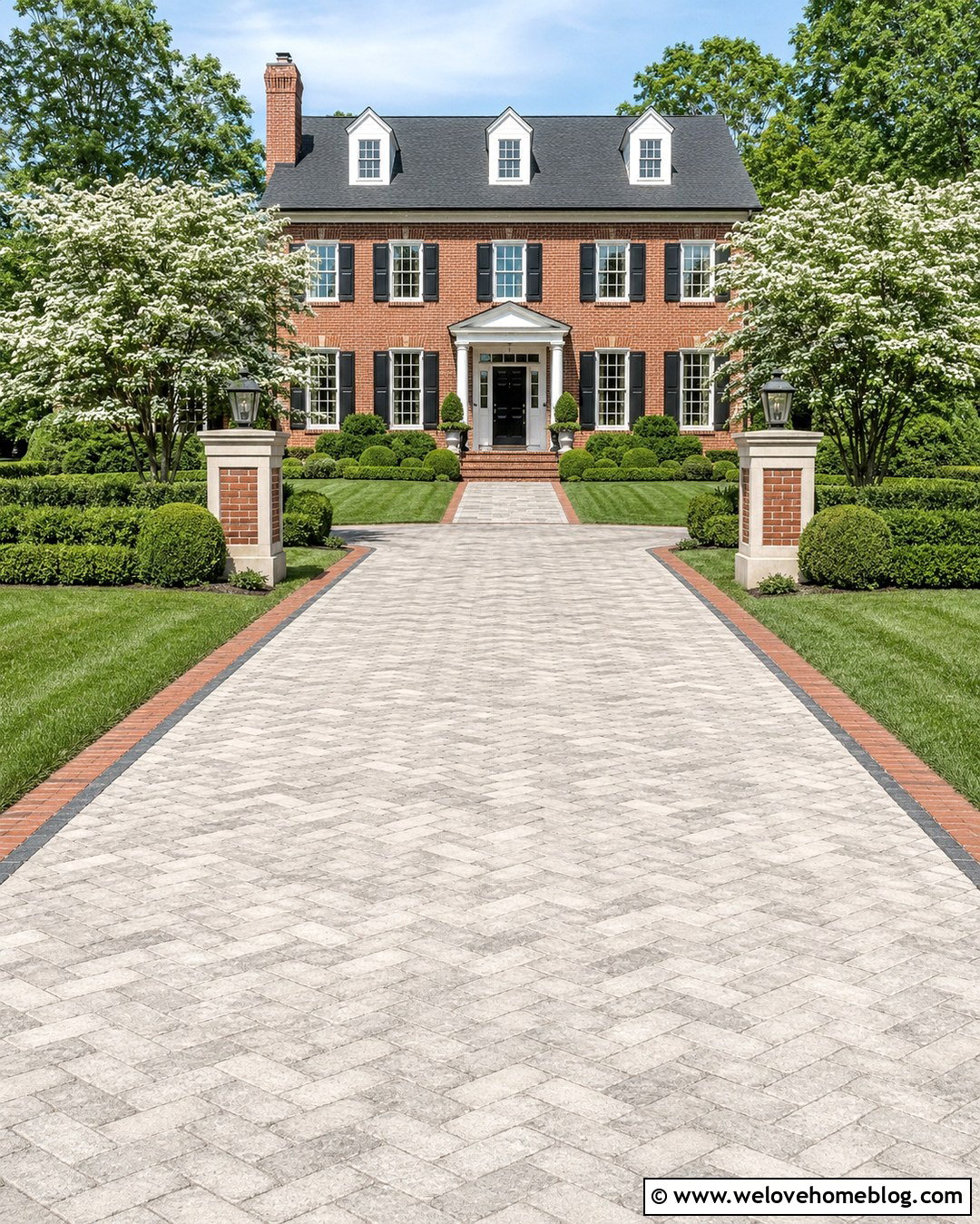
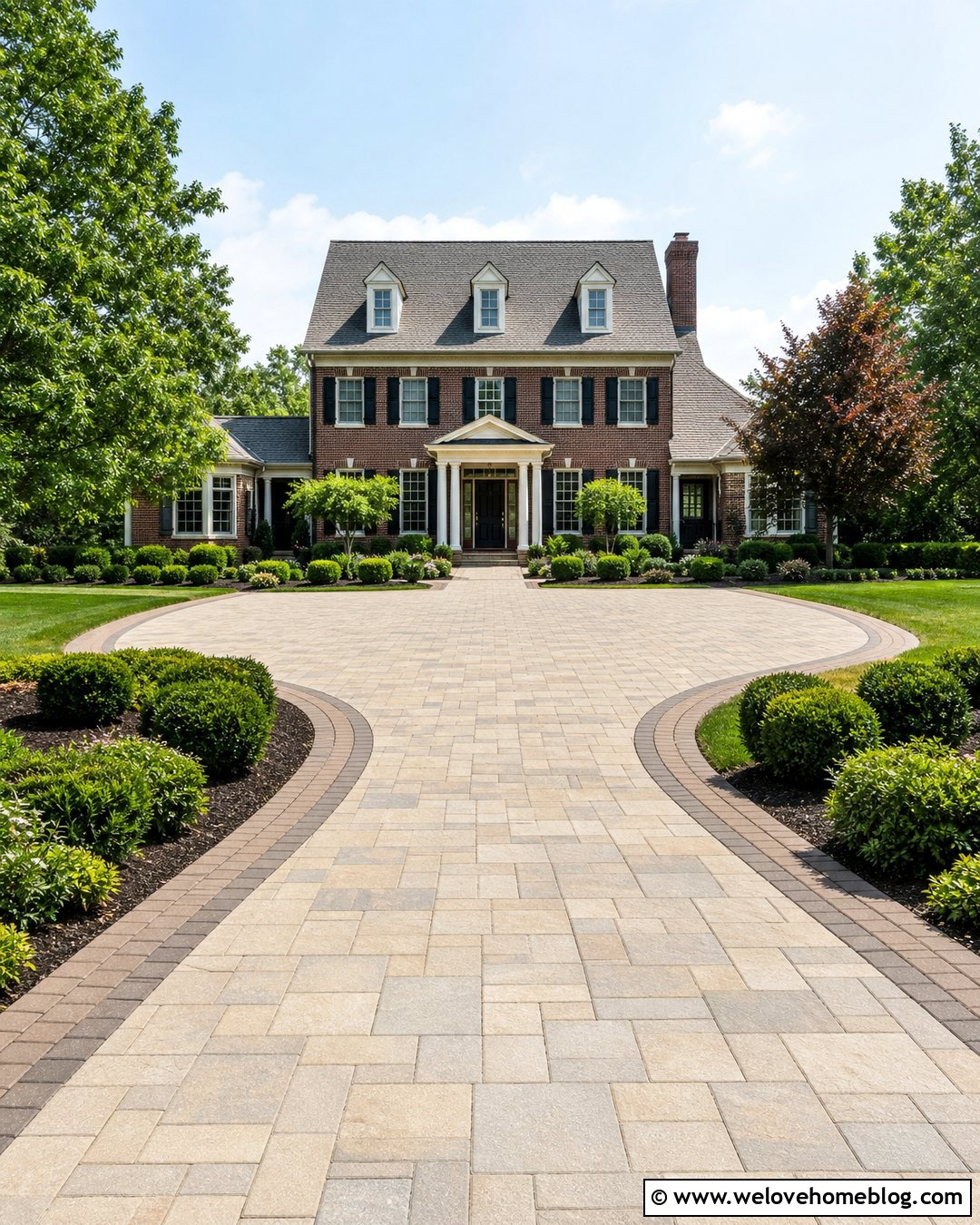
Symmetry is the key to pairing silver travertine with a colonial home. Center a straight driveway on the garage or formal approach, and use a herringbone field made from smaller rectangular pavers. A red brick border can reference the facade, while a thin charcoal line prevents the materials from blending together. Match planting beds on both sides with clipped boxwood, small flowering trees, and white seasonal blooms. Brick or stone pillars at the curb can hold address markers and simple lanterns. Continue a narrower travertine walkway toward the centered front entrance, using a less prominent running-bond layout. The combination feels traditional without relying on an entirely red brick driveway. Precise alignment and balanced proportions are especially important because small inconsistencies become noticeable in a formal, symmetrical front yard.
19. Narrow Silver Travertine Driveway
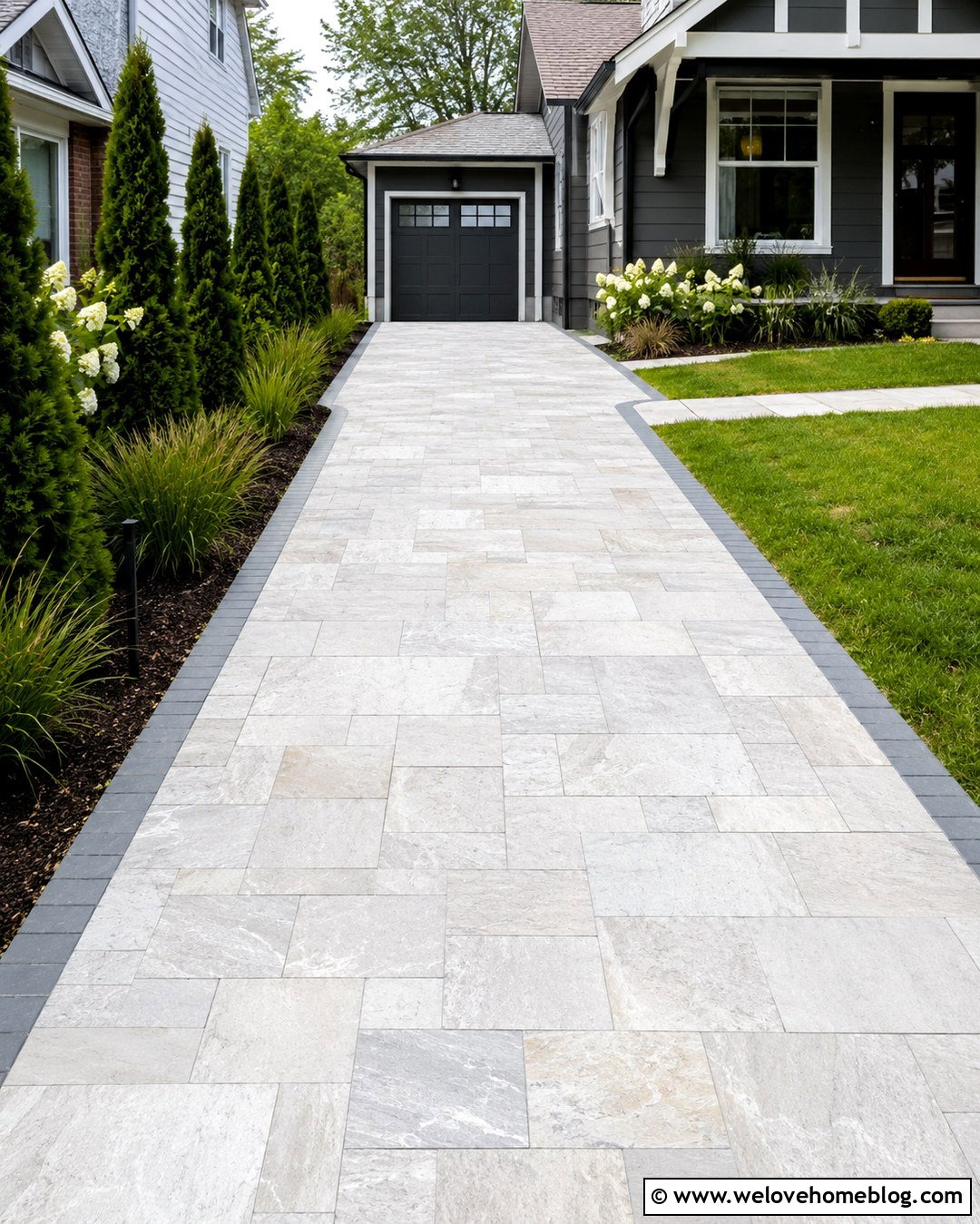
A narrow driveway needs clean lines, controlled planting, and enough paved width for comfortable daily use. Install rectangular silver travertine in a running bond that visually lengthens the route. Use a slim dark border rather than wide decorative bands that reduce the apparent driving area. On one side, create a narrow planting bed with upright shrubs or ornamental grasses. Keep the other side open with lawn or a simple walkway for easier vehicle access. This layout is useful beside cottages, bungalows, and compact suburban homes. At the garage, widen the paving slightly to create a practical transition and space for opening doors. Avoid oversized trees, spreading shrubs, and loose gravel close to the surface. Every element should make the restricted space feel organized, bright, and easy to navigate.
20. Silver Travertine Motor Court Driveway
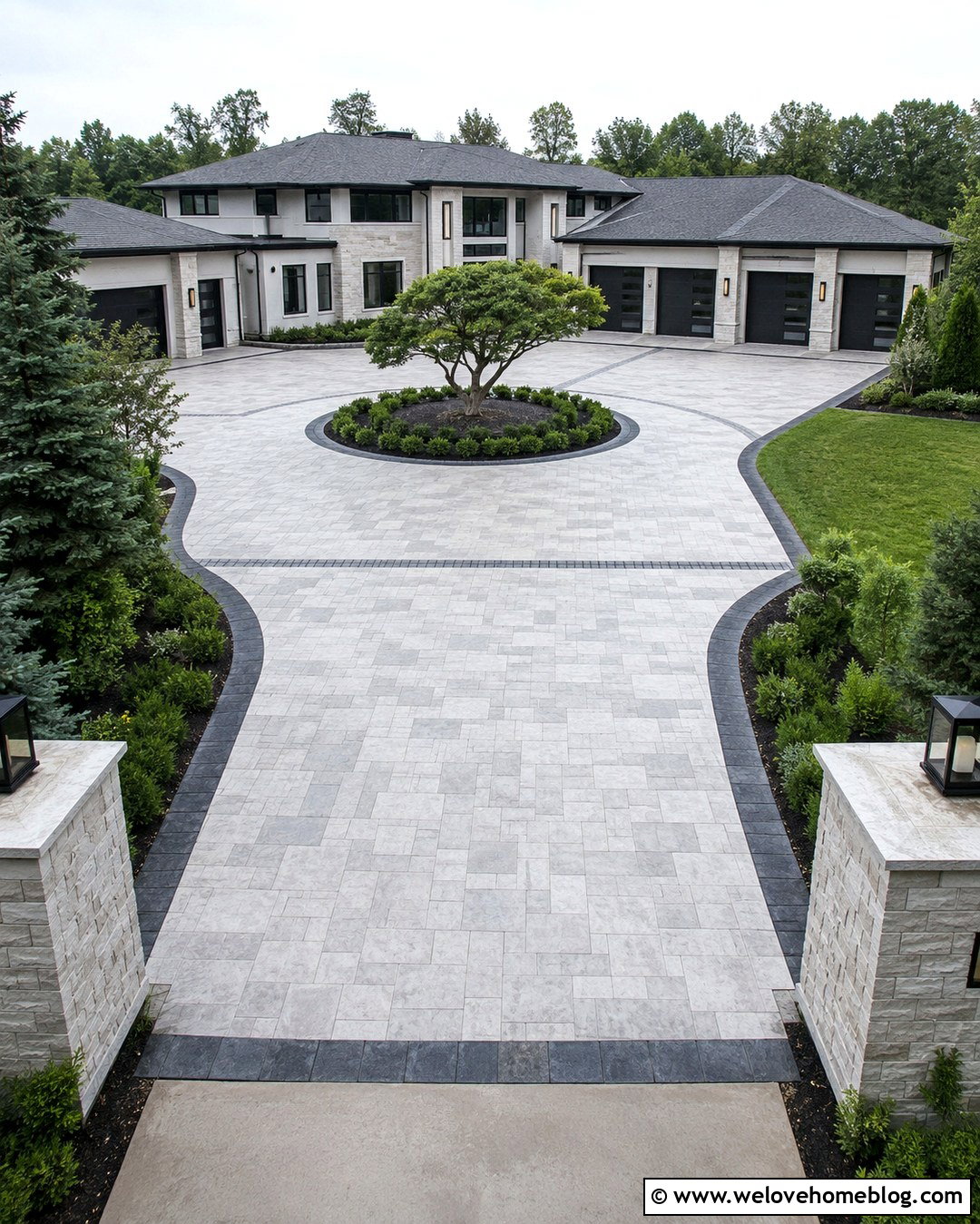
A wide motor court can showcase silver travertine on a grand scale while remaining visually organized. Break up the paved area with a modular French pattern, charcoal perimeter border, and subtle cobblestone bands that define parking zones. A circular planting island or central stone planter can reduce the appearance of uninterrupted paving, provided there is ample turning clearance. Use larger planting beds around the outside with trees, evergreen structure, and layered shrubs. This design works well with expansive ranch, estate, and contemporary homes featuring multiple garage bays. Coordinate walkways, steps, and entrance pillars with the same limited material palette. Because motor courts support repeated turning and heavier use, have the pavement structure, drainage, paver dimensions, and edge restraints designed specifically for the expected vehicle loads.
Conclusion:
These 20 silver travertine pavers driveway ideas show how one natural material can suit many homes, property sizes, and entrance layouts. French patterns create relaxed movement, while herringbone and running bond offer a more ordered appearance. Borders, aprons, pillars, gates, and planting beds help the driveway connect with the architecture instead of looking like an isolated paved surface. Before choosing a layout, study vehicle movement, drainage, mature landscaping, maintenance, and the transition to the street and garage. Most importantly, select silver travertine pavers rated for the intended traffic and use an experienced natural-stone installer. A carefully engineered foundation and a cohesive design will make the finished driveway both attractive and practical.

Related posts:

Leave a Reply