
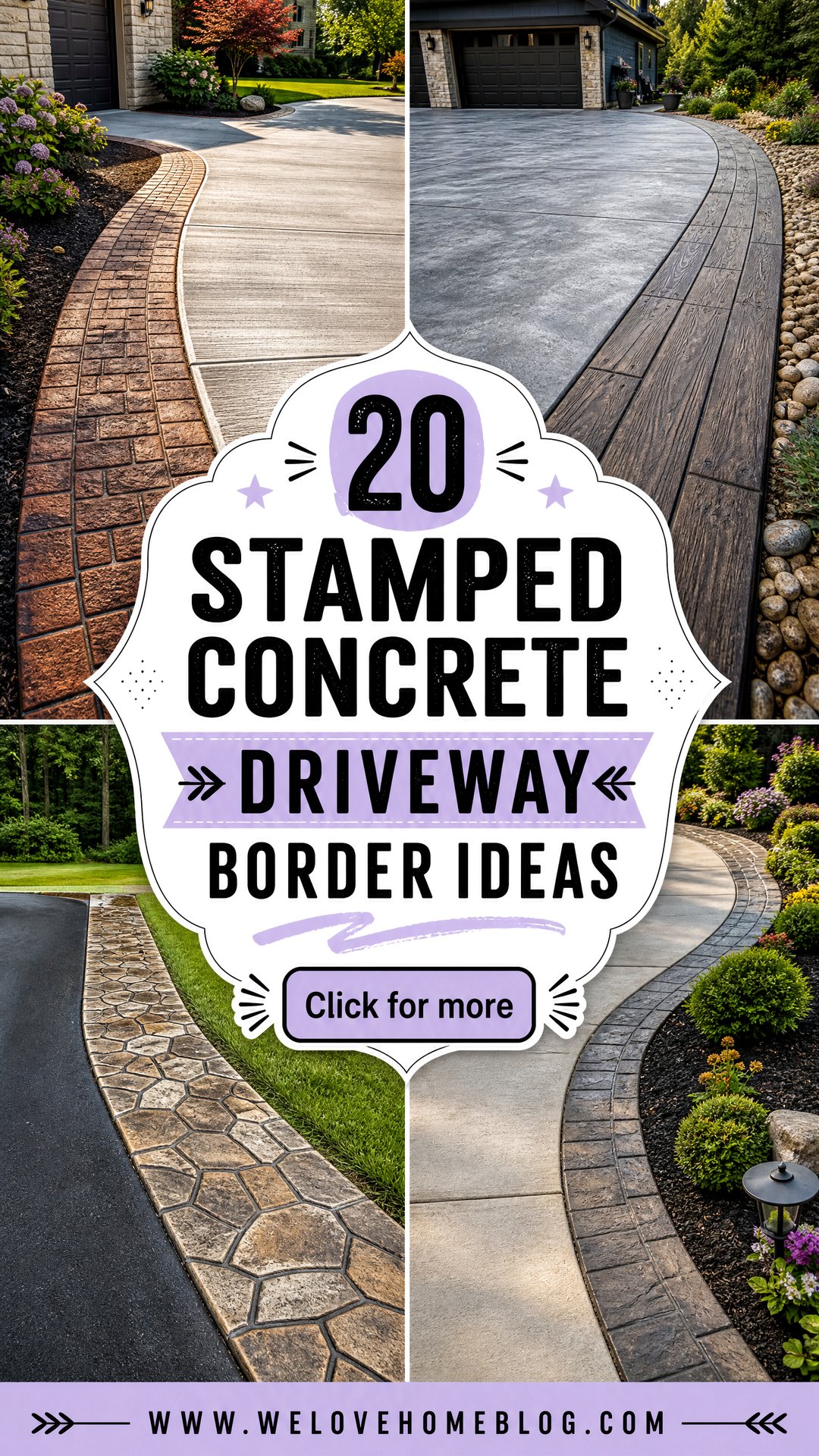
Stamped concrete driveway borders can turn a basic parking surface into a polished part of the home’s landscape. The border creates a defined frame while adding the color, texture, and pattern of brick, cobblestone, slate, or natural stone. It can surround broom-finished concrete, exposed aggregate, asphalt, or a fully stamped driveway. Contrasting borders may also highlight curves, organize wide parking areas, connect walkways, and make long driveways feel less plain. Stamping only the perimeter can deliver decorative impact with less labor than stamping the entire surface. () The best design coordinates with the home’s exterior, entrance, and planting beds rather than looking like a separate feature. Explore these complete, practical, and curb-friendly 20 Stamped Concrete Driveway Border Ideas.
1. Brick Stamped Concrete Driveway Border With Broom Finish
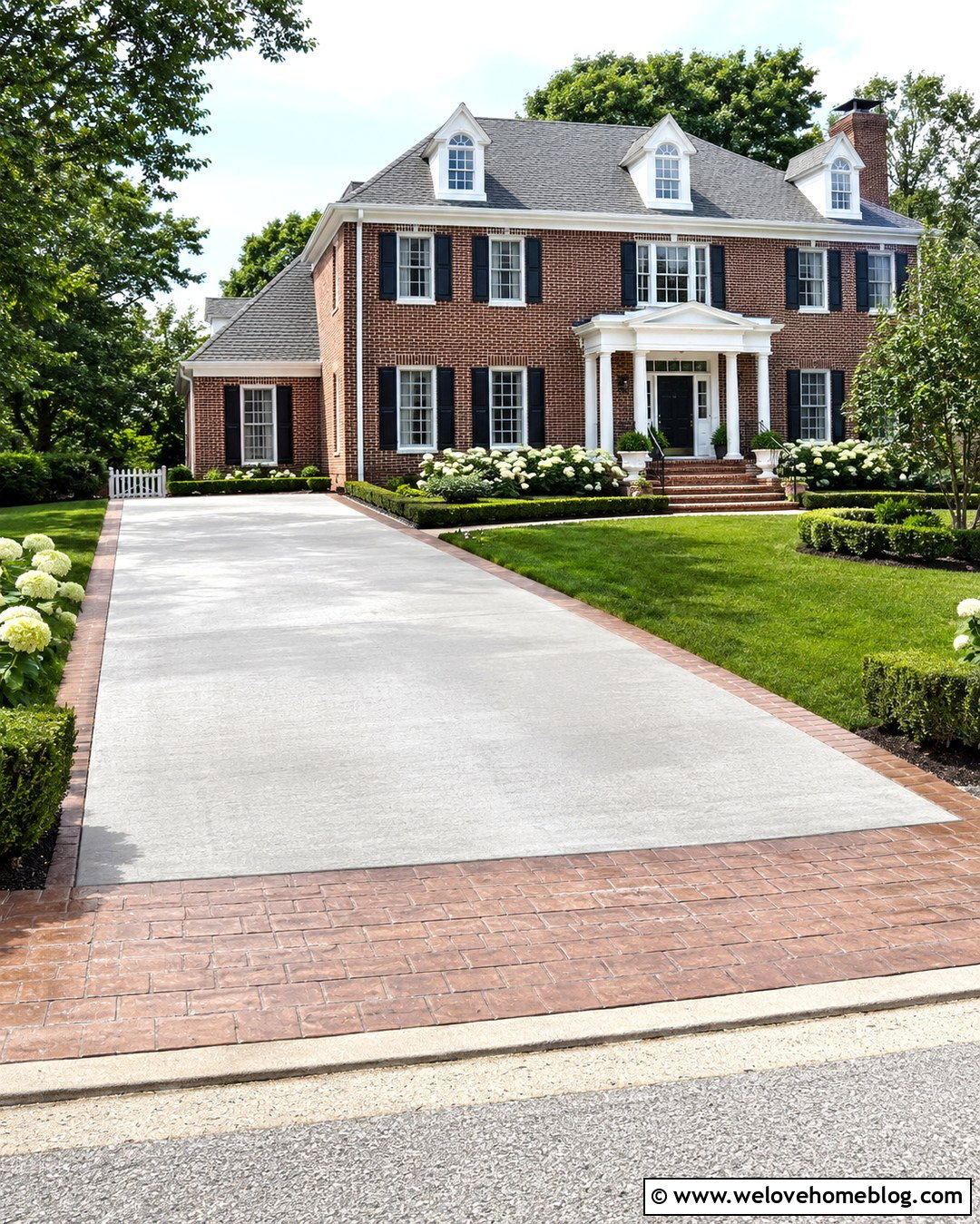
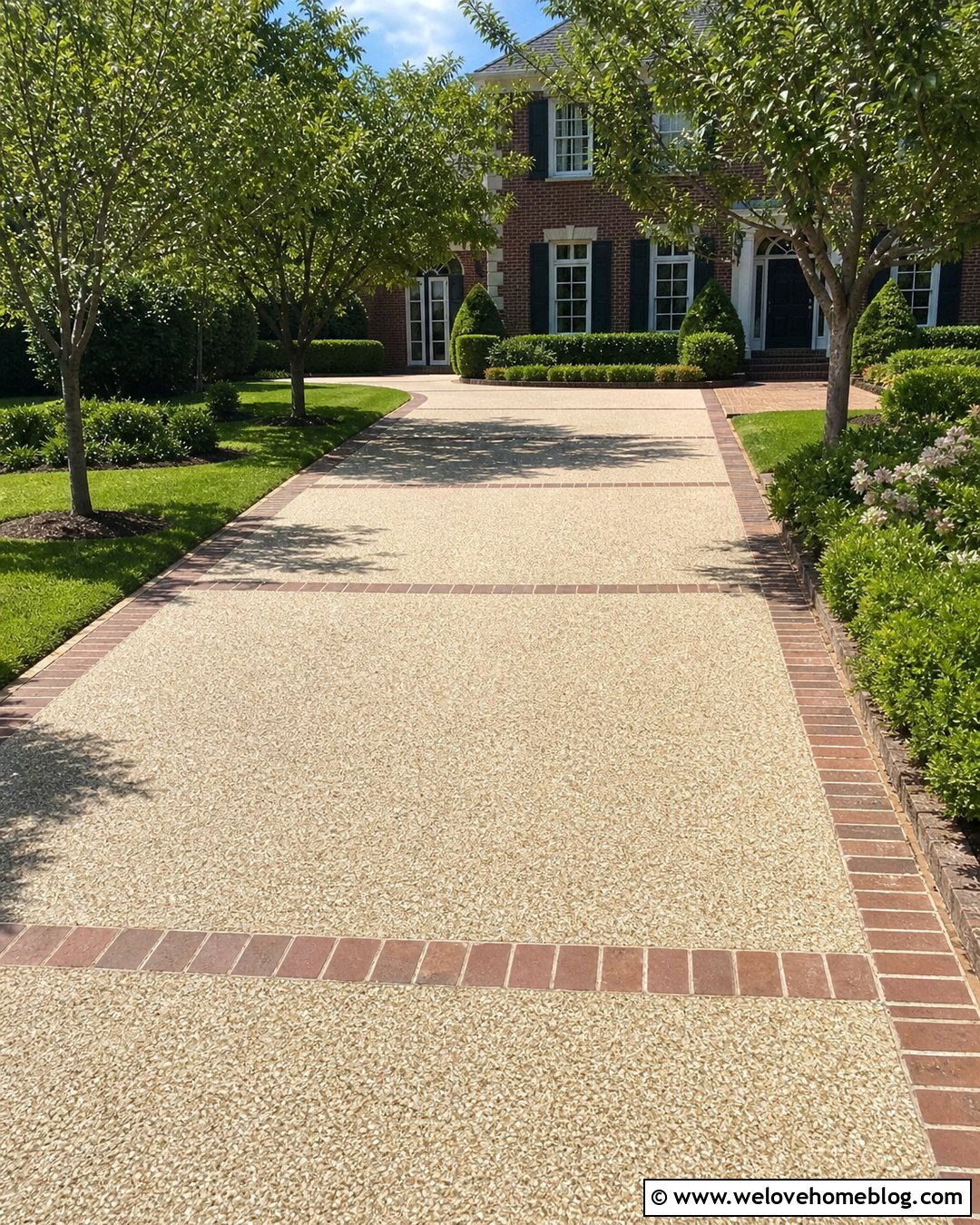
A warm brick-pattern border gives a light broom-finished concrete driveway a more traditional and finished appearance. Choose a running-bond stamp in muted red, burnt sienna, or brown to frame the smooth center without making the overall design too busy. This combination works especially well with colonial, Cape Cod, ranch, and brick-front homes. Continue the stamped border around the driveway apron and along the walkway to create one connected hardscape. Narrow planting beds filled with boxwood, hydrangeas, or ornamental grasses can soften the strong lines. For a balanced result, match the stamped concrete color to an existing detail, such as brick siding, porch steps, shutters, or roof tones. Brick-pattern borders are particularly effective when echoed by the home’s masonry. ()
2. Cobblestone Stamped Concrete Driveway Border With Exposed Aggregate
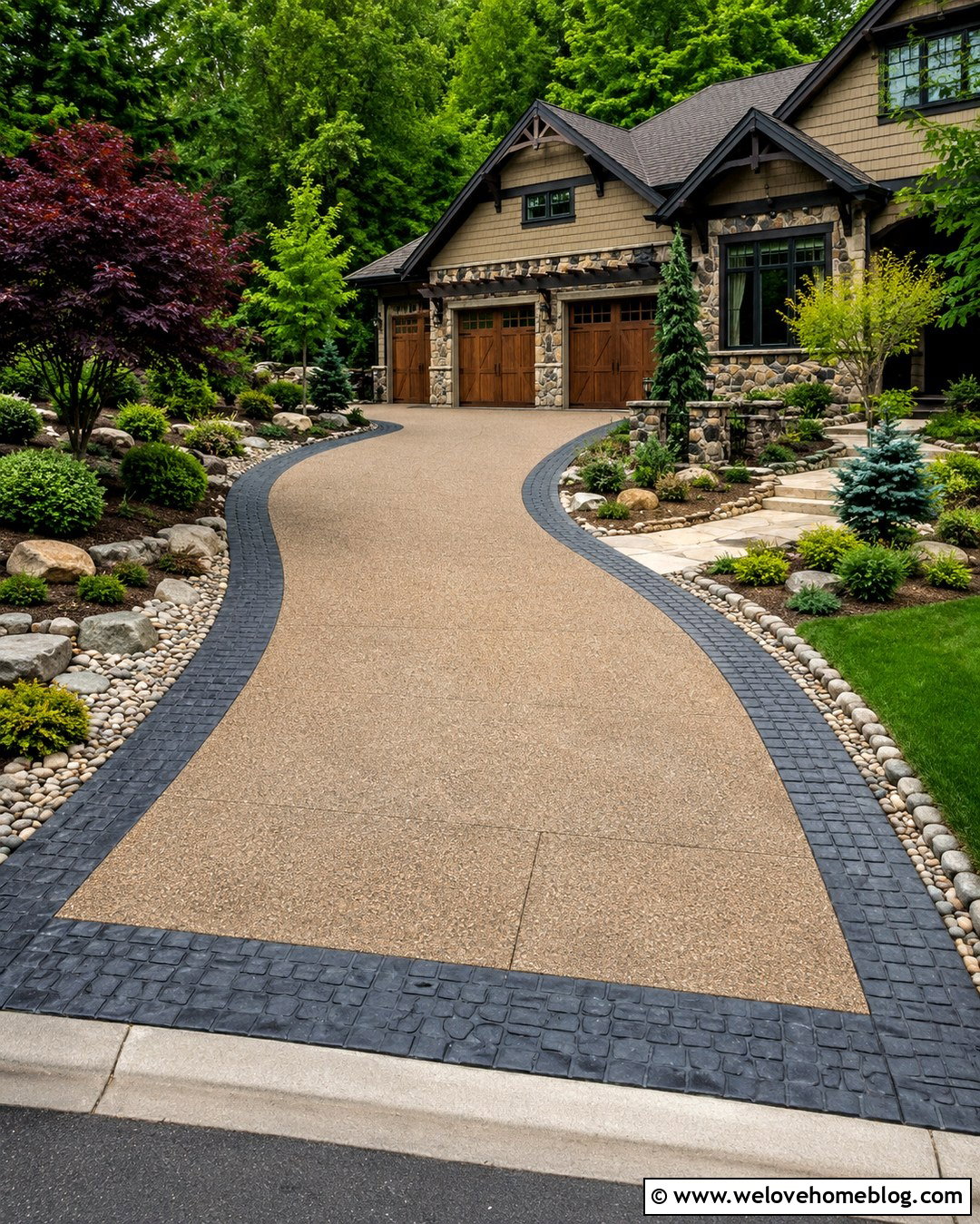
Exposed aggregate has a naturally textured surface, and a cobblestone stamped concrete border gives it a stronger architectural frame. A charcoal, walnut, or deep gray border can contrast with a tan or pale gray aggregate field. Rounded cobblestone impressions bring traditional character, while the exposed stones keep the center practical and visually relaxed. This complete look suits craftsman homes, wooded properties, and suburban houses with stone veneer. Follow a curved driveway with a continuous border so the cobblestone pattern emphasizes the approach. Low evergreen shrubs and river-rock beds can reinforce the rugged texture without hiding the edge. Ask for sample panels before selecting colors because the aggregate, concrete base, release color, and sealer will all affect the finished combination.
3. Ashlar Slate Stamped Concrete Driveway Border With Smooth Concrete
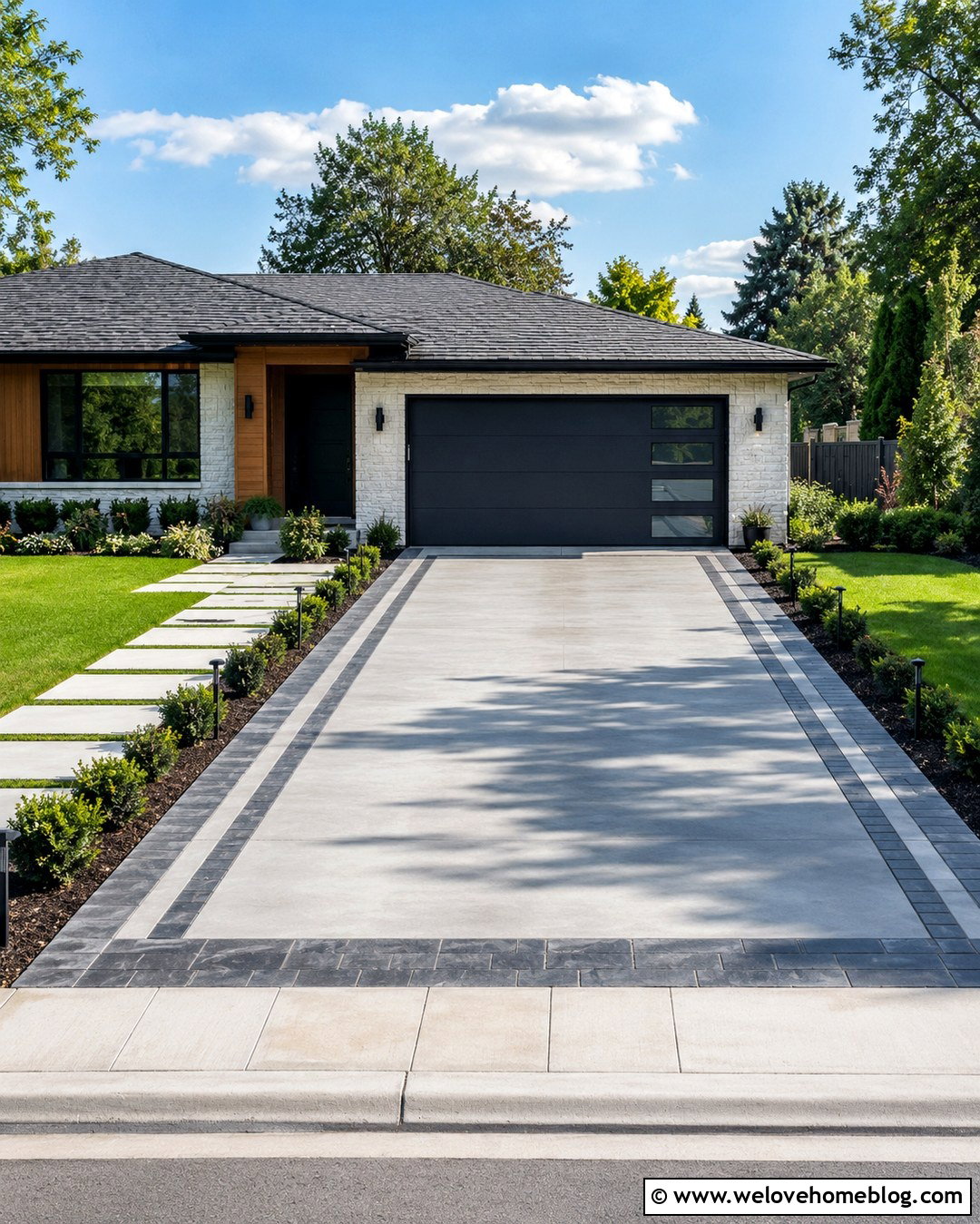
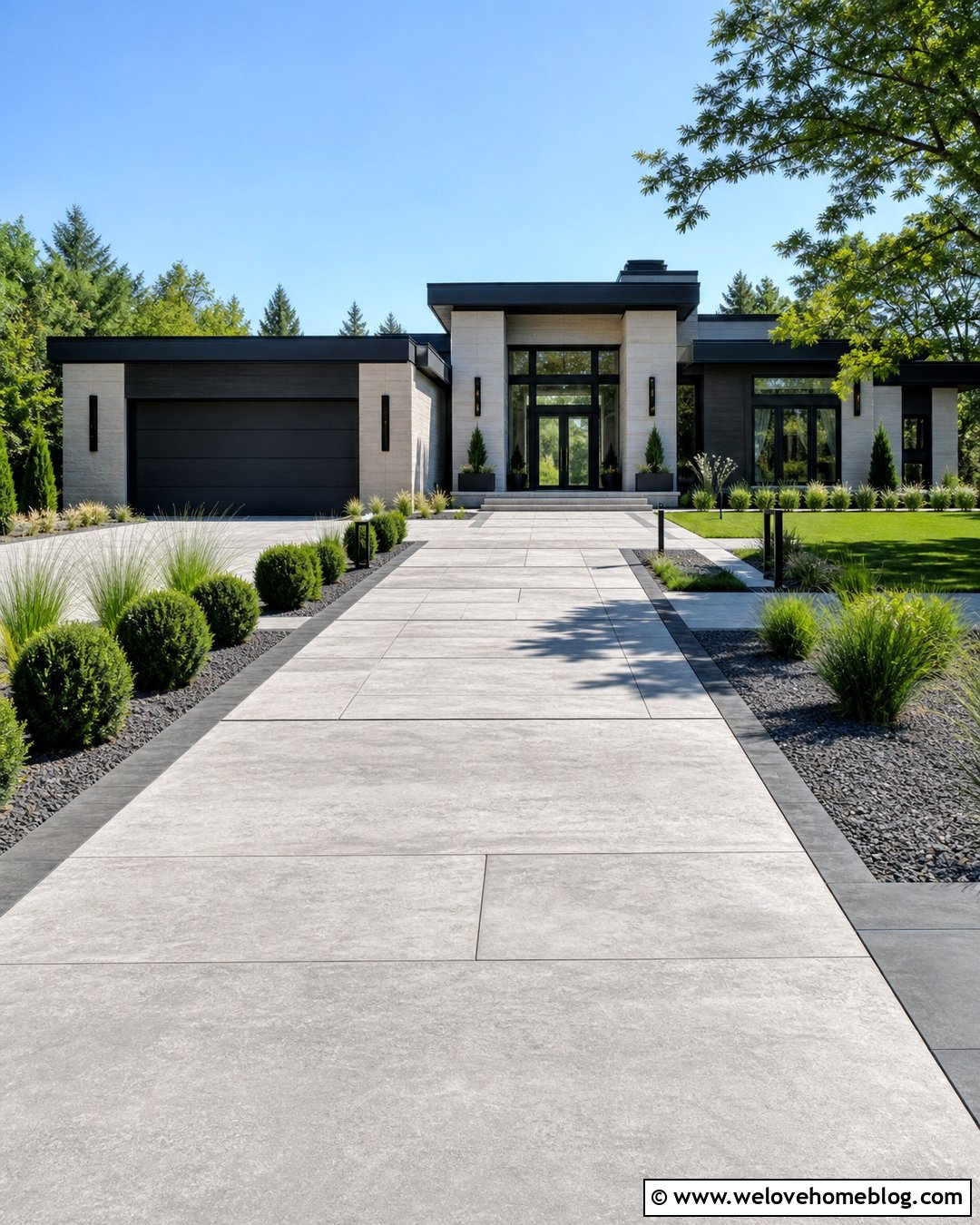
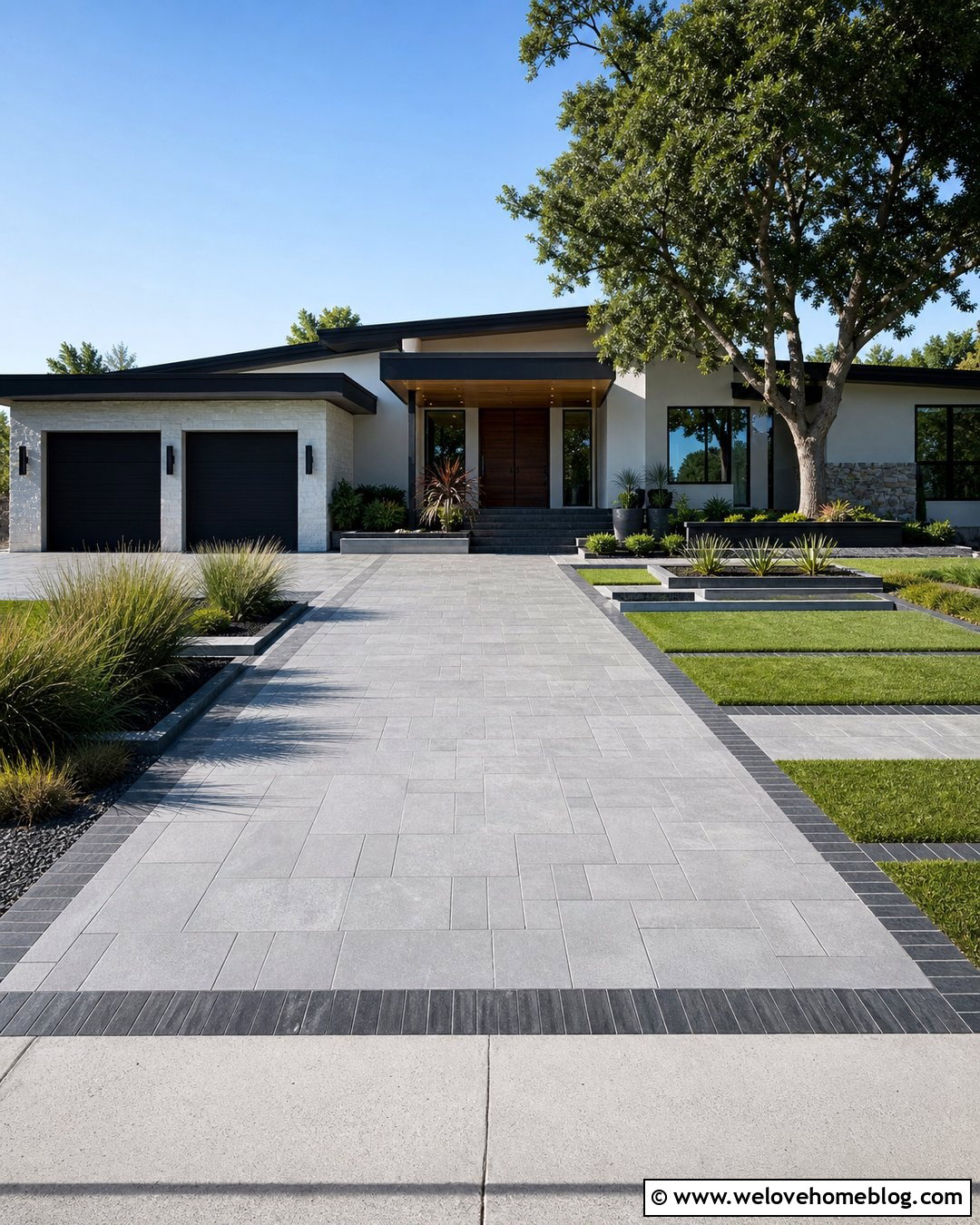
Clean rectangular ashlar slate stamps can bring structure to a wide, smooth concrete driveway. Use a medium-gray field with a darker slate border for a crisp, tailored appearance. The border may be installed as one broad band or as two narrow stamped bands separated by a smooth concrete strip. This arrangement looks especially appropriate beside modern ranch, contemporary, and transitional homes. Keep the driveway straight and uncluttered so the geometric slate pattern remains easy to read from the curb. Linear planting beds, clipped shrubs, and rectangular walkway slabs can repeat the same orderly composition. A subtle charcoal antiquing color placed in the stamped joints will create depth without producing an overly mottled surface. The final border should complement the facade rather than compete with it.
4. Flagstone Stamped Concrete Driveway Border With Sand Finish
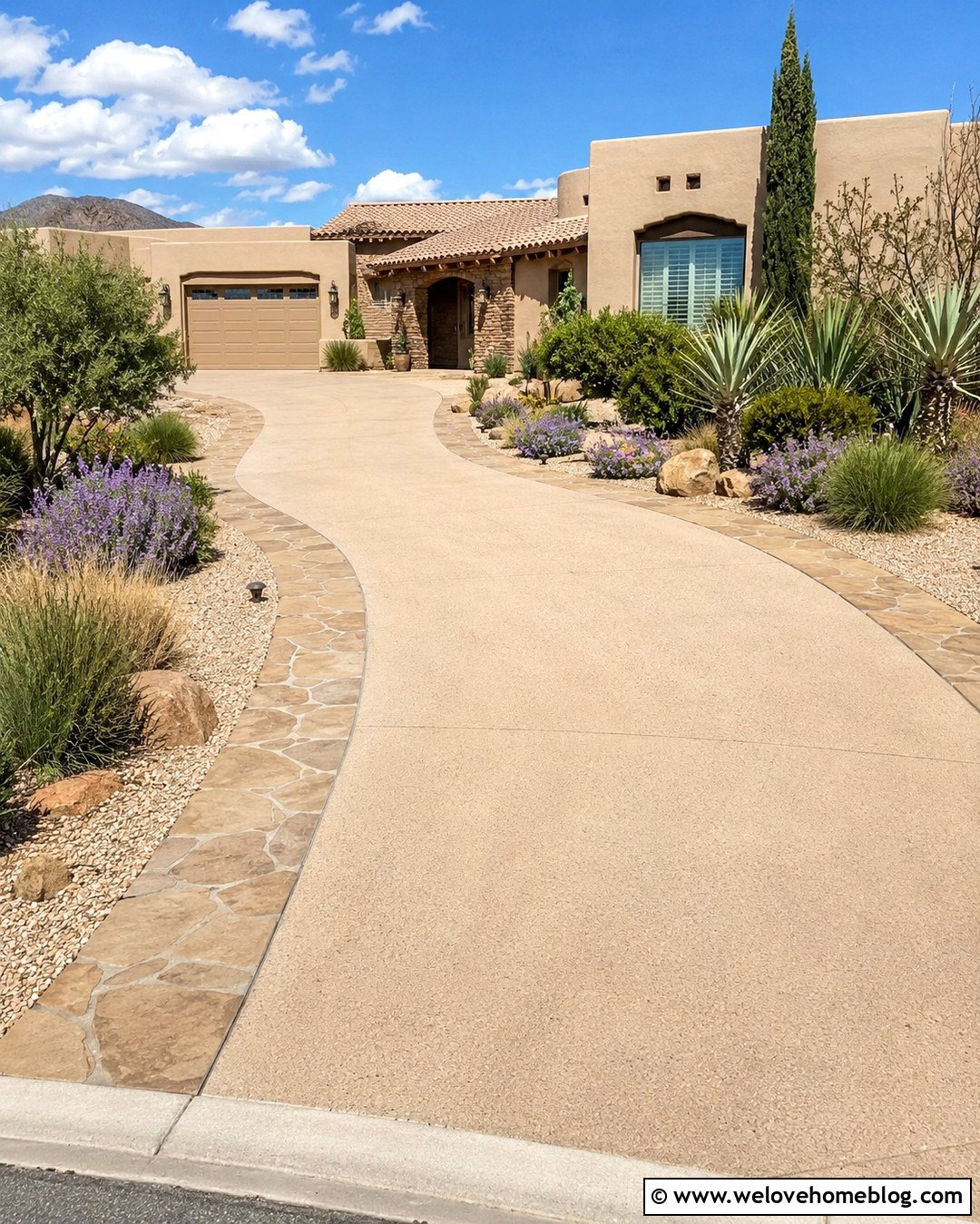
A flagstone stamped concrete border adds an organic outline to a warm sand-finished driveway. The irregular stone shapes are particularly attractive around gently curved layouts because they create a relaxed transition between the hardscape and garden. Select beige, sandstone, taupe, and soft brown coloring for a natural effect. This palette works with southwestern homes, stucco facades, rustic ranch houses, and properties surrounded by dry-climate landscaping. Frame the driveway with gravel beds, sculptural grasses, flowering sage, or drought-tolerant shrubs. A matching flagstone-stamped walkway can branch toward the front porch, visually connecting the driveway border with the entrance. Avoid extremely dark joint colors if the house has a light exterior. Softer shading usually makes the simulated flagstone appear more believable and keeps the driveway bright.
5. Wood Plank Stamped Concrete Driveway Border With Gray Concrete
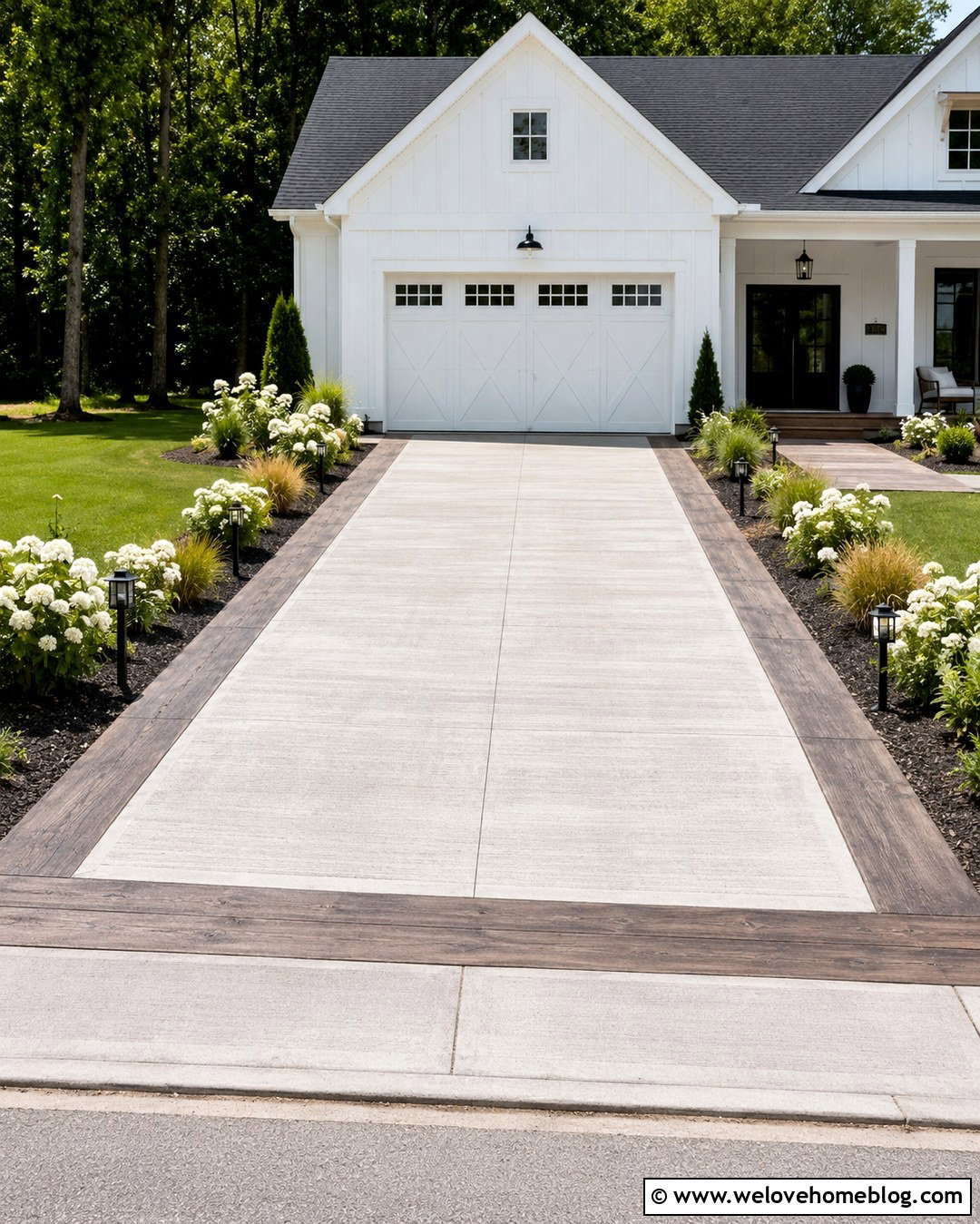
Wood-plank stamping provides warmth and grain-like texture without placing real wood directly beside a vehicle surface. Surround a pale gray concrete driveway with wide plank-pattern borders colored in walnut, weathered brown, or gray-brown tones. This design can complement modern farmhouse, rustic contemporary, craftsman, and country homes. Run the stamped planks lengthwise along both sides, then turn them across the apron to create a complete frame. Timber-look borders are visually strong, so keep the center field simple with a broom or light sand finish. Add ornamental grasses, white flowering shrubs, and black metal landscape lights for a clean farmhouse composition. Carefully planned plank lengths and joint placement help the pattern look intentional, particularly around curved corners, walkway connections, and changes in driveway width.
6. Herringbone Stamped Concrete Driveway Border With White Concrete
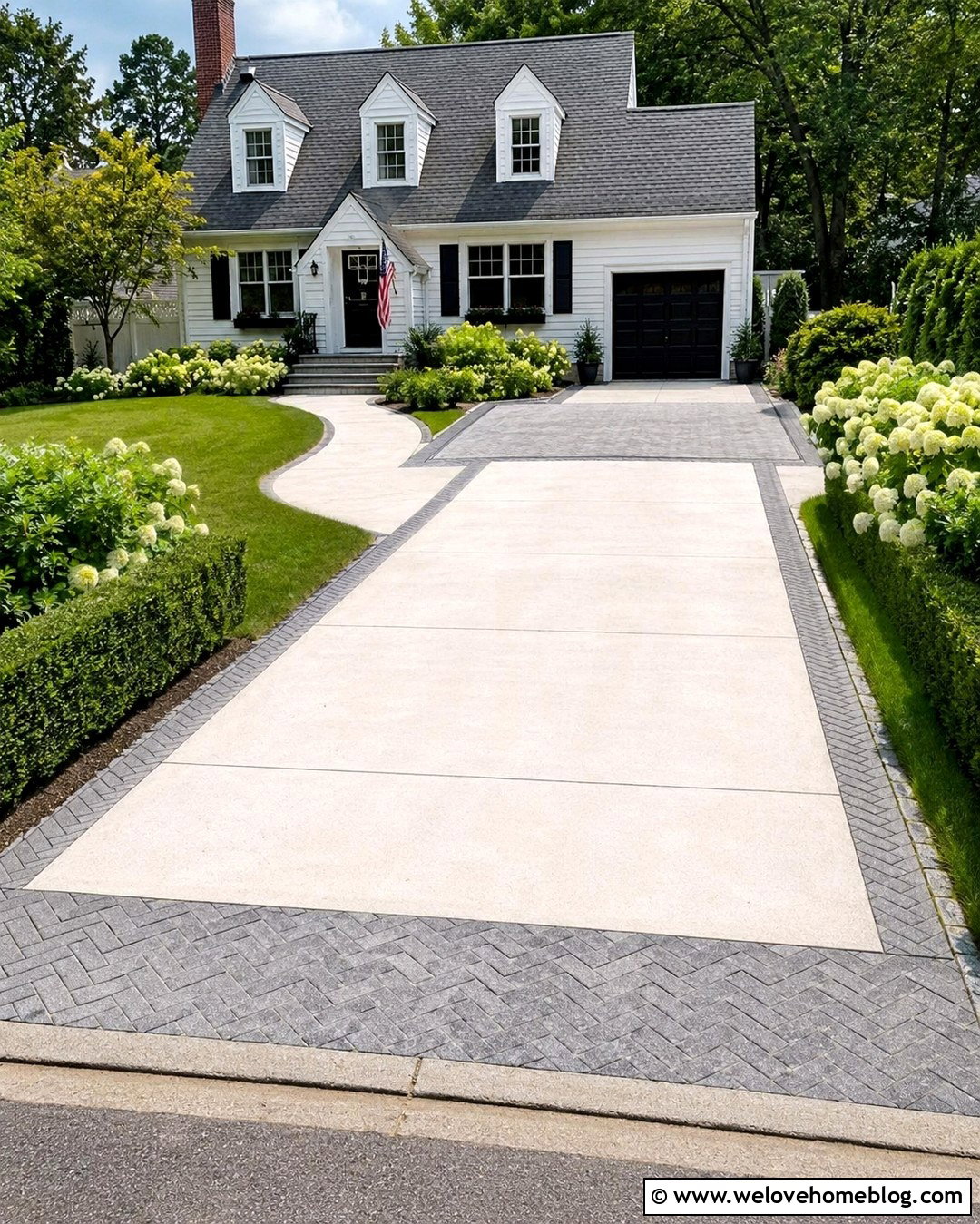
A herringbone stamped border creates movement around a bright white or ivory concrete driveway. The angled brick pattern gives the perimeter more energy than a standard running-bond layout, making it useful for short suburban driveways that need a distinct focal point. Try a medium-gray border beside a white center for a modern look, or select warm red-brown coloring for a traditional home. Carry the herringbone pattern across the street apron and around a widened parking pad so every section feels connected. Neatly trimmed lawn and simple foundation planting will prevent the front yard from becoming visually crowded. Because the pattern contains numerous directional lines, accurate layout is important at corners. A darker release color can clarify the joints while keeping the base color visible.
7. European Fan Stamped Concrete Driveway Border With Aggregate Concrete
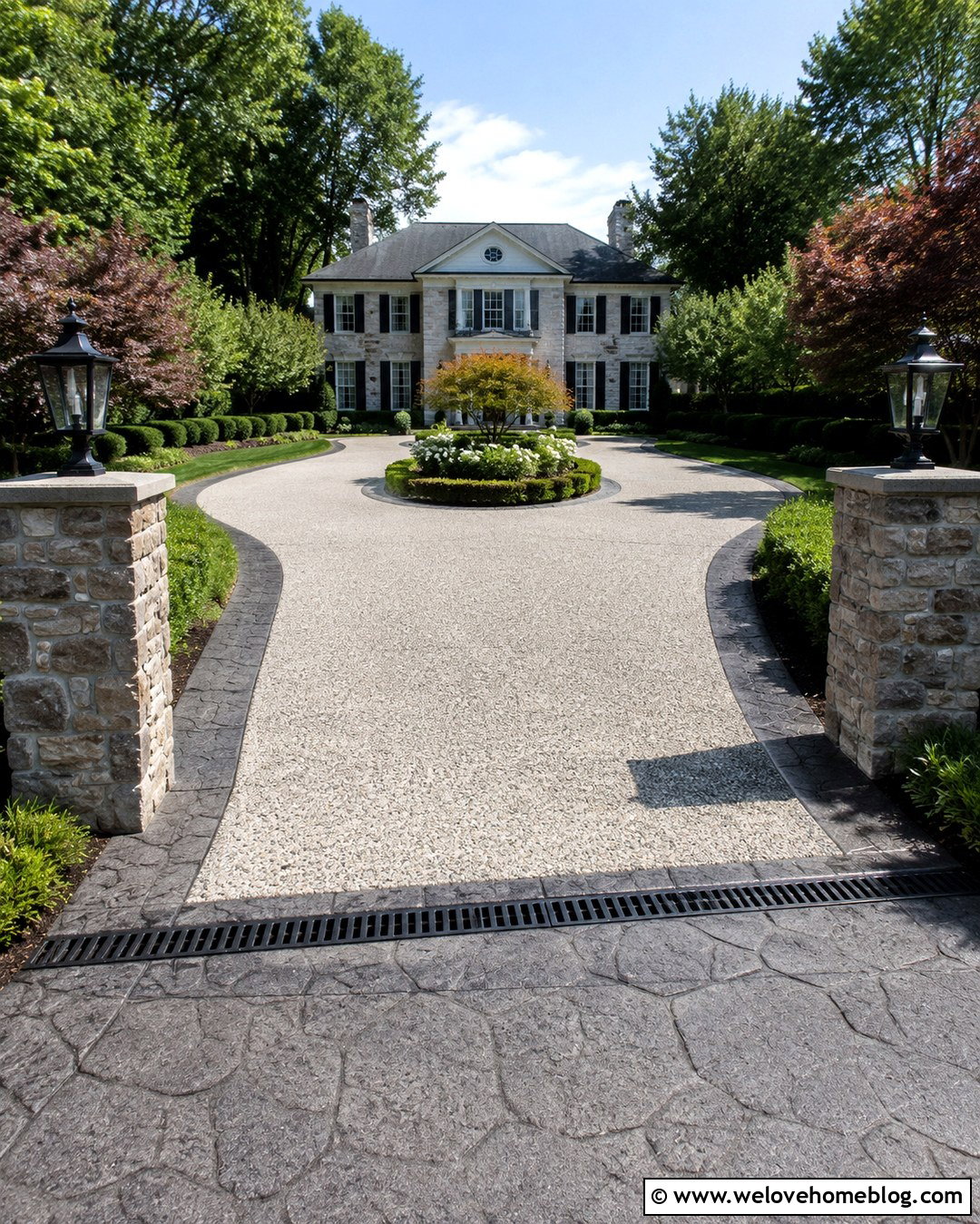
European fan stamping can give a large aggregate concrete driveway a graceful, formal outline. Its curved rows work naturally around a circular or horseshoe layout, where straight brick borders may feel rigid. Consider a dark graphite border surrounding a lighter exposed aggregate field. The contrast highlights the driveway’s shape while the fan pattern creates a distinctive approach to the house. European fan patterns can also be combined with exposed aggregate borders and integrated drainage details. () Use symmetrical planting beds, small ornamental trees, and low hedges to support the formal composition. Stone entrance pillars can repeat the border’s gray tones. On especially wide driveways, add matching stamped bands near the garage or turning circle to keep the border from appearing disconnected from the central surface.
8. Random Stone Stamped Concrete Driveway Border With Asphalt
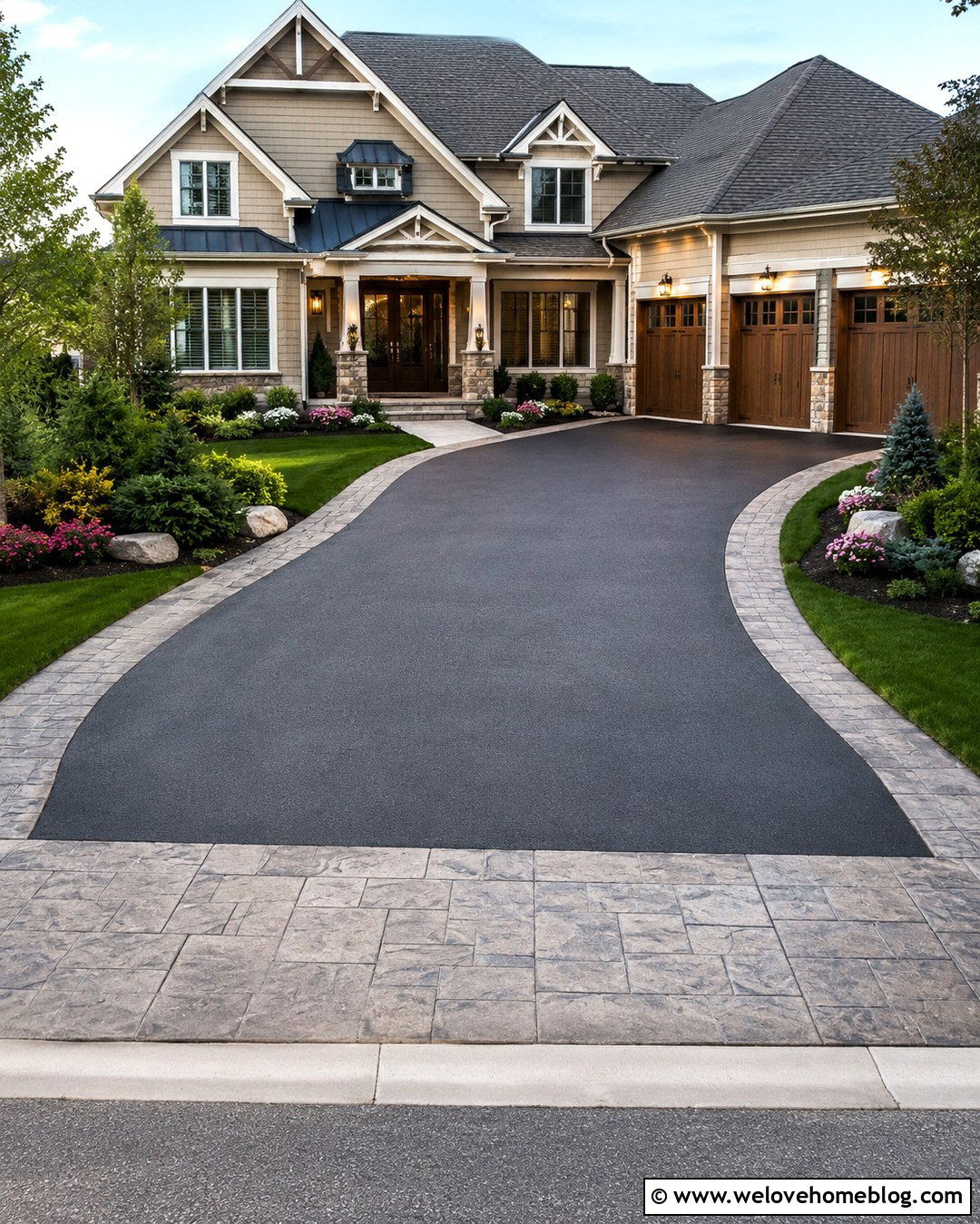
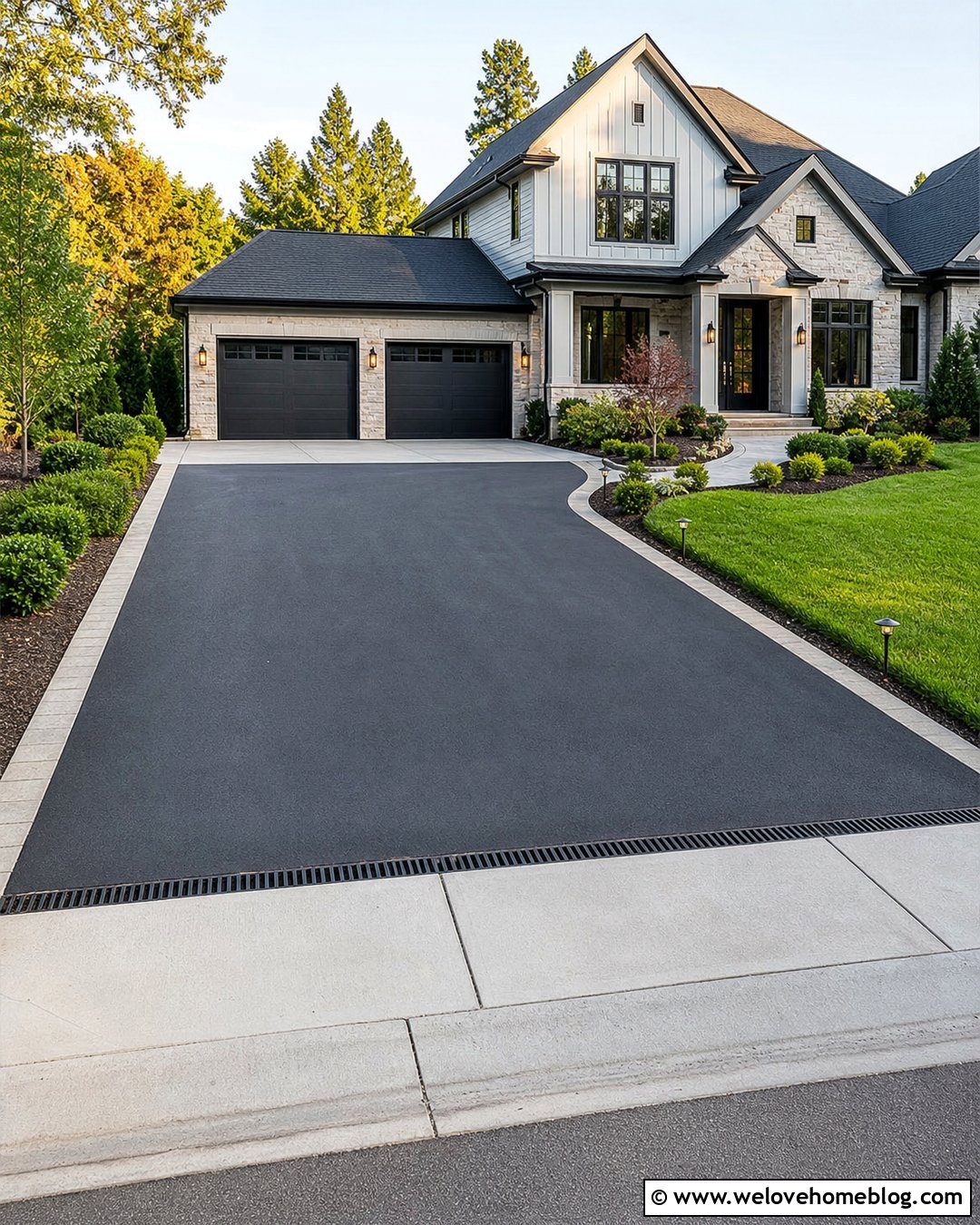
A stamped concrete border can make a black asphalt driveway look more permanent and connected to the home. Random stone stamping is a flexible choice because its irregular pattern softens the sharp contrast between dark pavement and surrounding lawn. Choose a medium-width border in buff, gray, or brown, depending on the house exterior. A warm stone color pairs nicely with beige siding and brick, while charcoal works with contemporary white or gray facades. Continue the concrete through the entrance apron to protect the visual frame and create a welcoming transition from the street. Curved planting beds with evergreen shrubs and seasonal flowers can follow the same line. Proper base preparation and carefully planned transitions are essential where separate asphalt and concrete surfaces meet.
9. Dark Slate Stamped Concrete Driveway Border With Light Concrete
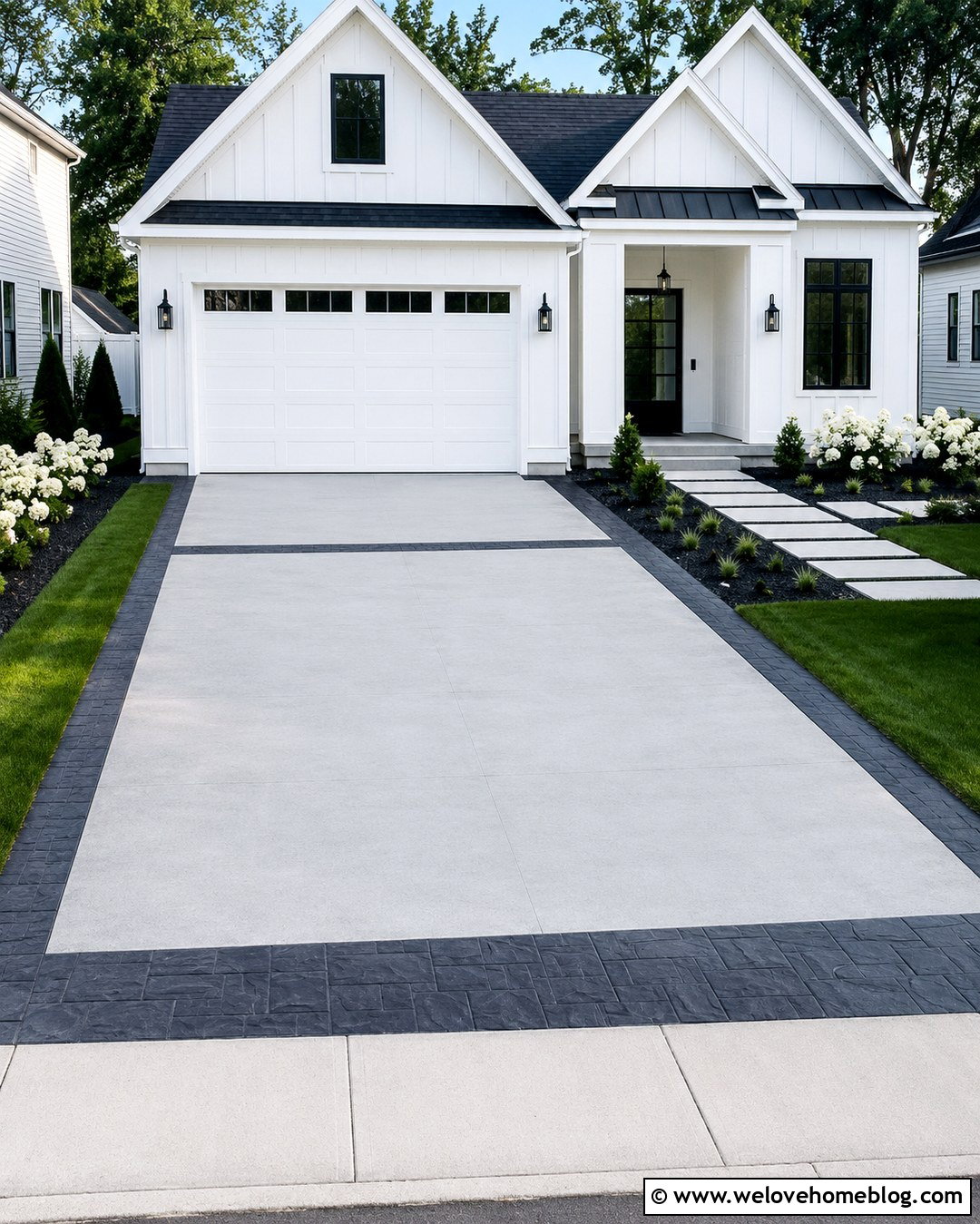
Strong contrast can make a simple driveway appear carefully designed. Frame a pale gray broom-finished concrete field with a charcoal slate-stamped border, then repeat the dark color in porch railings, exterior lights, or window trim. The slate texture introduces subtle variation, while the restrained palette supports modern, transitional, and Scandinavian-inspired homes. A straight driveway with square corners will emphasize the clean geometry. Use broad grass strips, white flowering plants, and dark decorative gravel along the sides to complete the look. If the driveway is wide, one or two narrow crossbands can divide the surface into comfortable visual sections. Those bands may also align with planned joints, helping the decorative layout and practical slab organization feel like one coordinated design rather than unrelated additions.
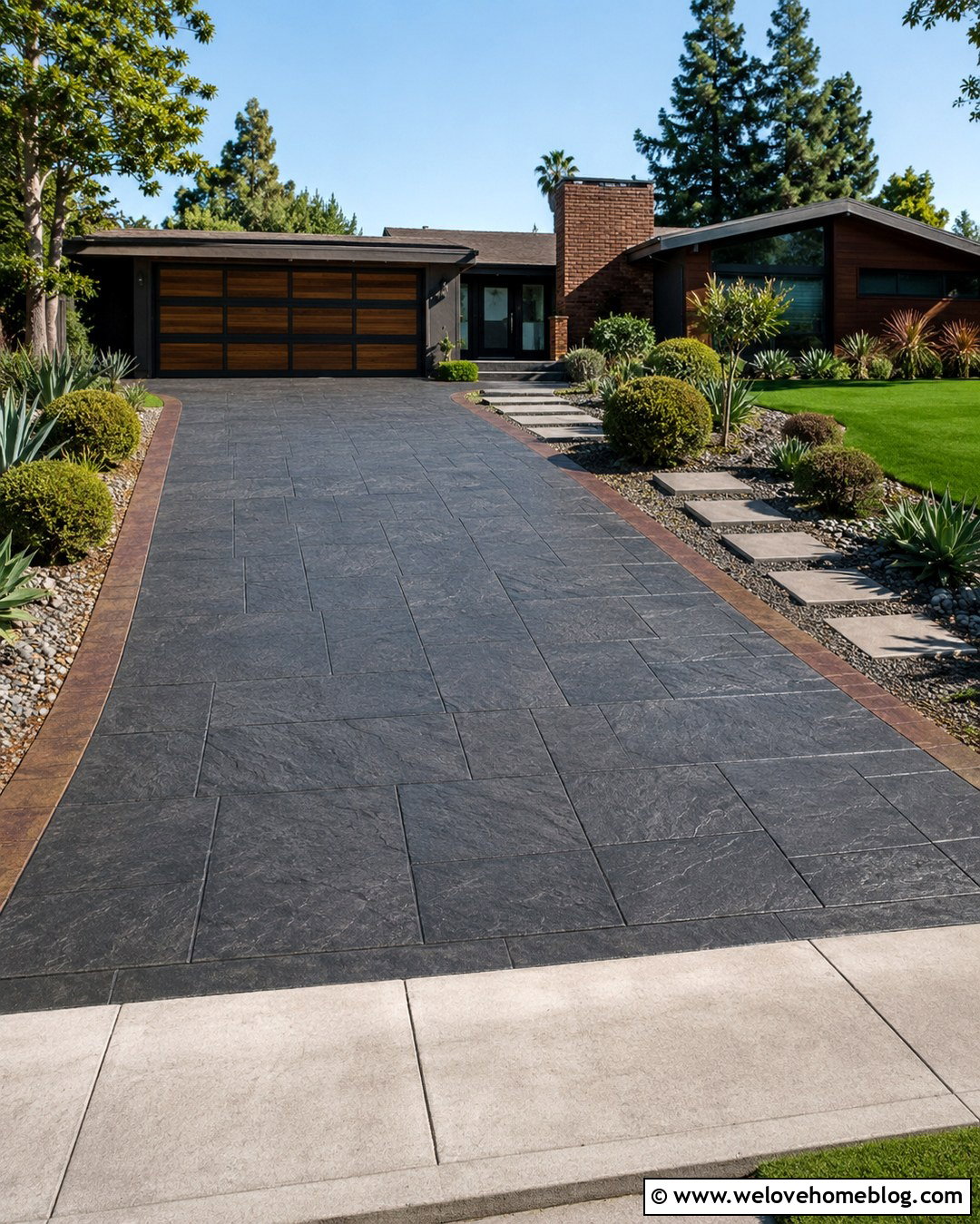
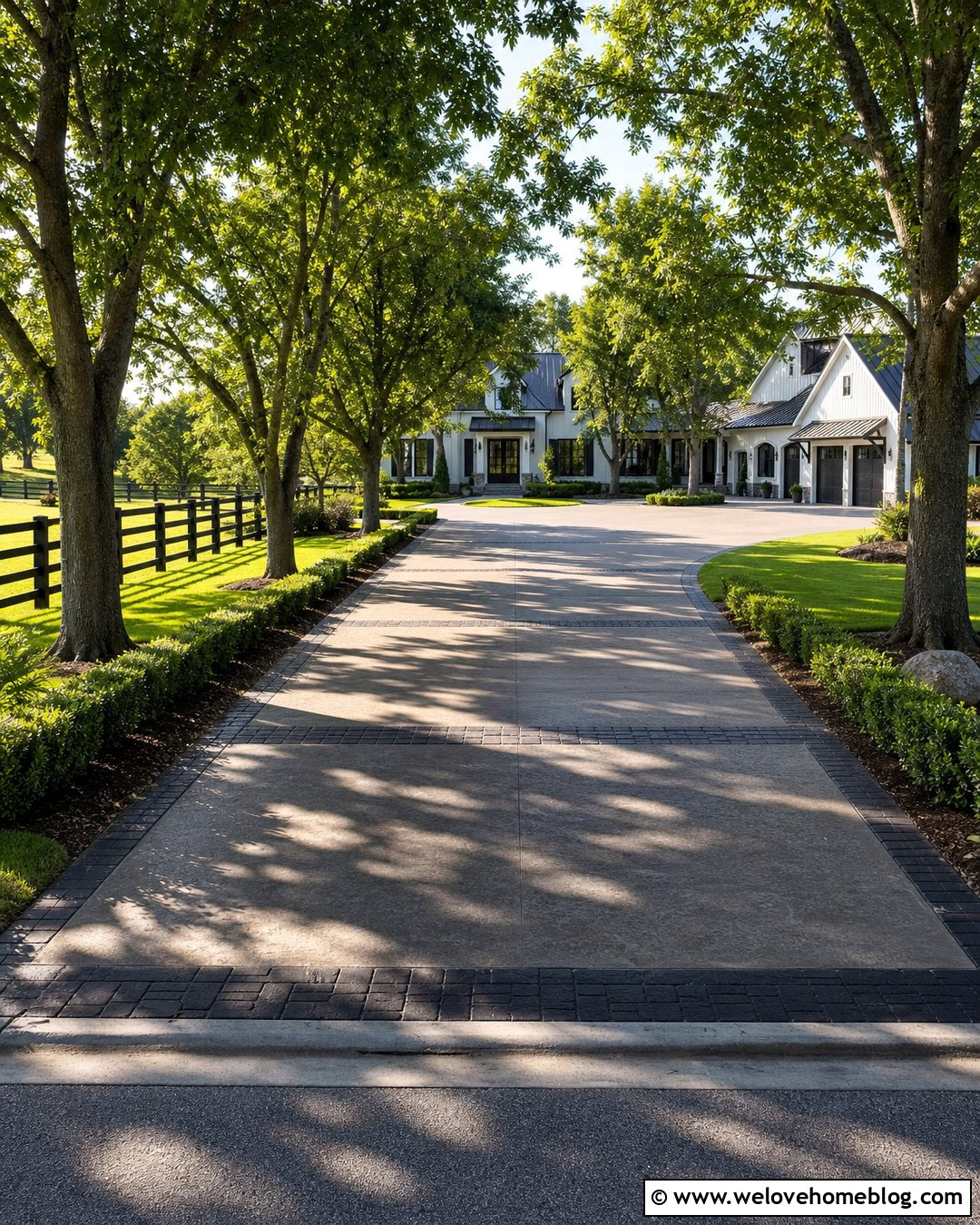
10. Tan Stone Stamped Concrete Driveway Border With Brown Concrete
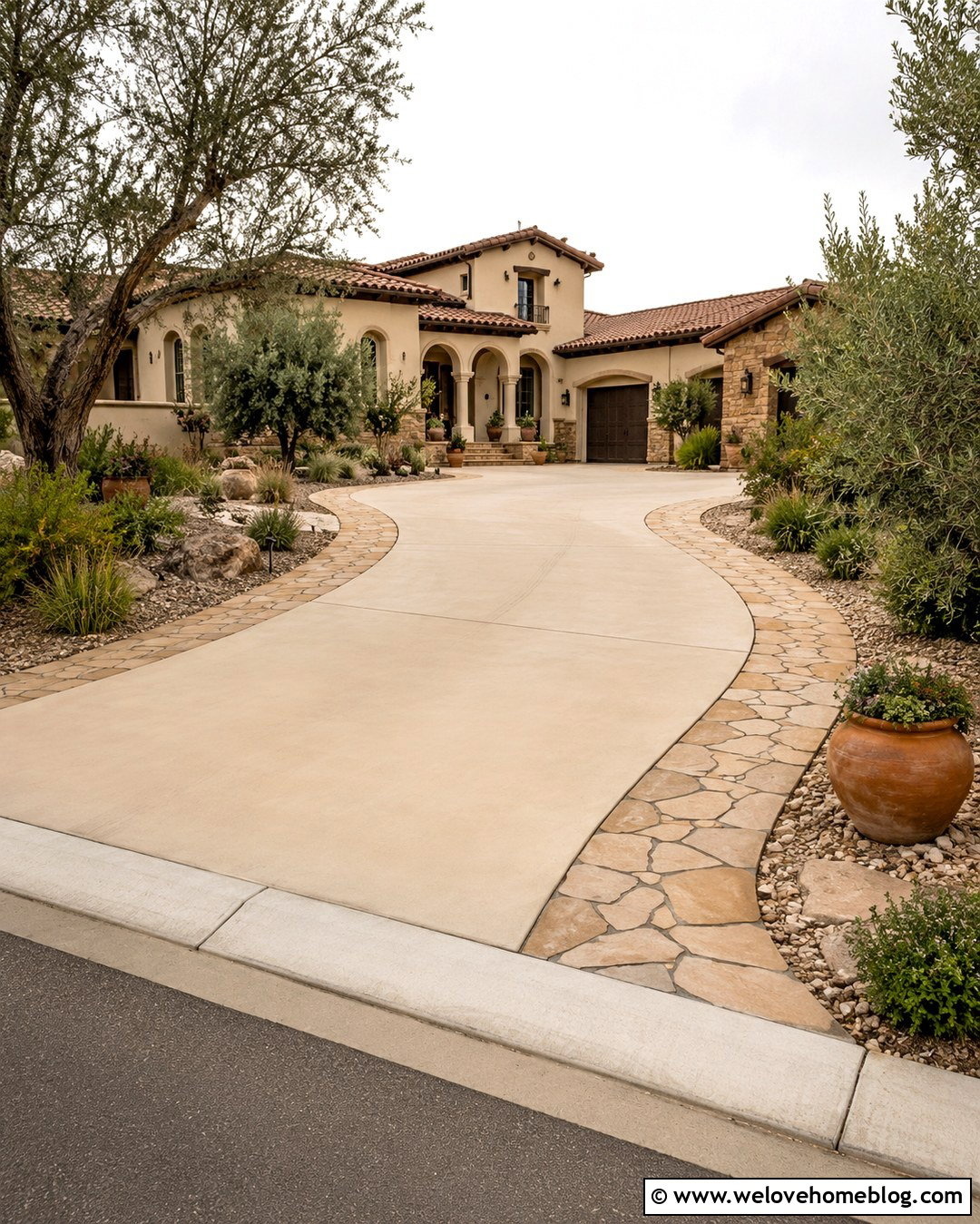
Warm neutrals can help a driveway blend with brick, stone veneer, and earth-toned landscaping. Begin with a light brown or taupe concrete field and surround it with a tan stone-pattern stamped border. Add a darker brown release color to define the stone joints and create gentle depth. This combination suits Mediterranean, Spanish, Tuscan, and southwestern homes, especially when the driveway follows a soft curve toward the garage. Terracotta planters, olive-toned shrubs, ornamental grasses, and pale gravel beds can reinforce the warm palette. Keep the border broad enough for the stamped pattern to appear complete rather than chopped at the edges. Where the driveway meets the walkway, continue the stone stamp around the corner so the transition looks planned and naturally directs attention toward the entry.
11. Red Brick Stamped Concrete Driveway Border With Gray Aggregate
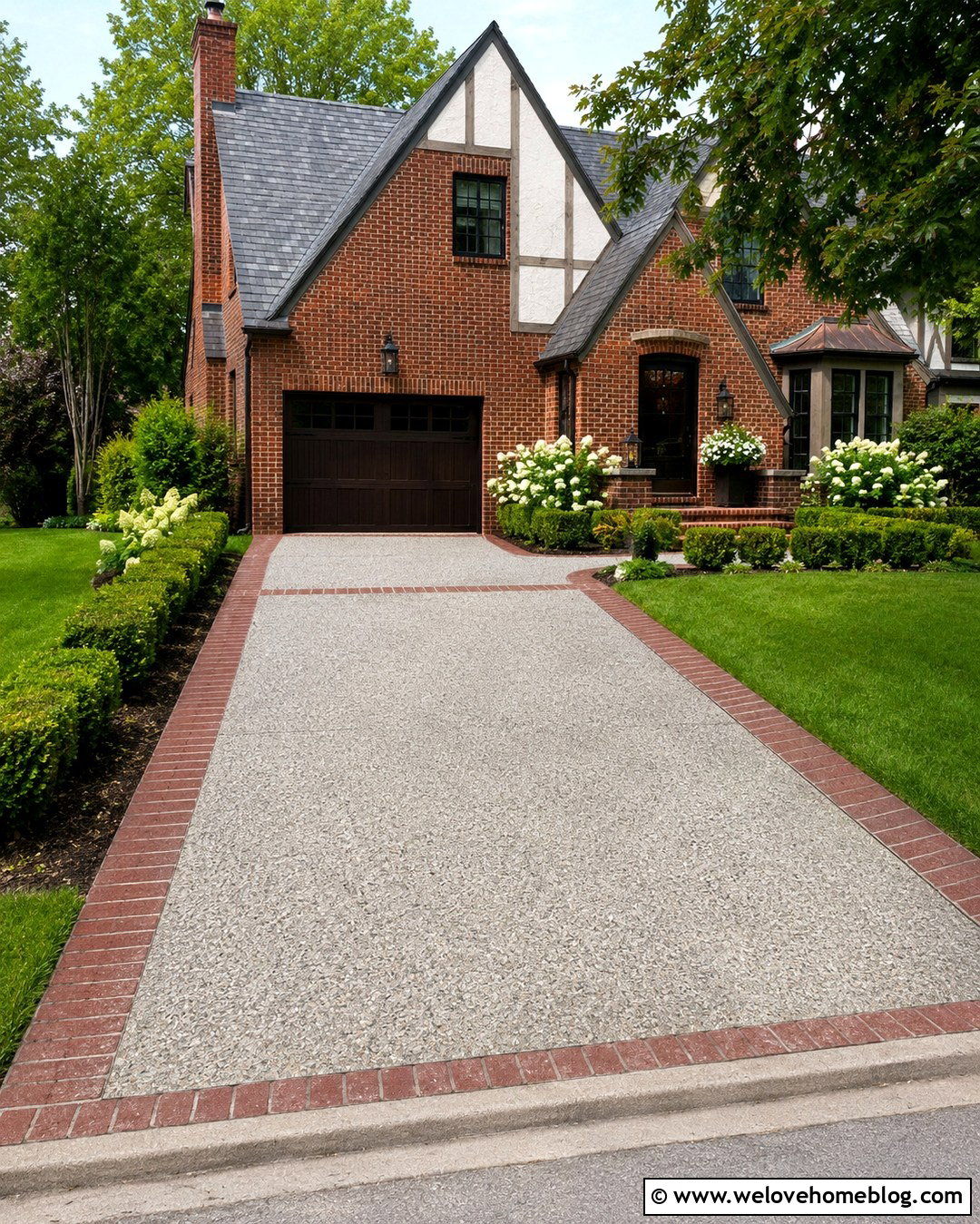
Red brick color stands out beautifully against a cool gray exposed aggregate driveway. The border can visually connect the pavement to a red brick house, chimney, porch column, or garden wall. Choose a running-bond or basket-weave stamp, then use burgundy and brown antiquing tones to reduce the appearance of a flat, overly bright red strip. This design is well suited to traditional suburban, colonial, Tudor, and craftsman homes. Repeat a narrow brick-stamped band across the apron or near the garage doors for continuity. Green lawn, clipped hedges, and white flowers create a classic surrounding landscape. If the house contains several shades of brick, base the border color on the darker masonry tones. They typically create a grounded frame and hide surface marks more effectively.
12. Limestone Stamped Concrete Driveway Border With Cream Concrete
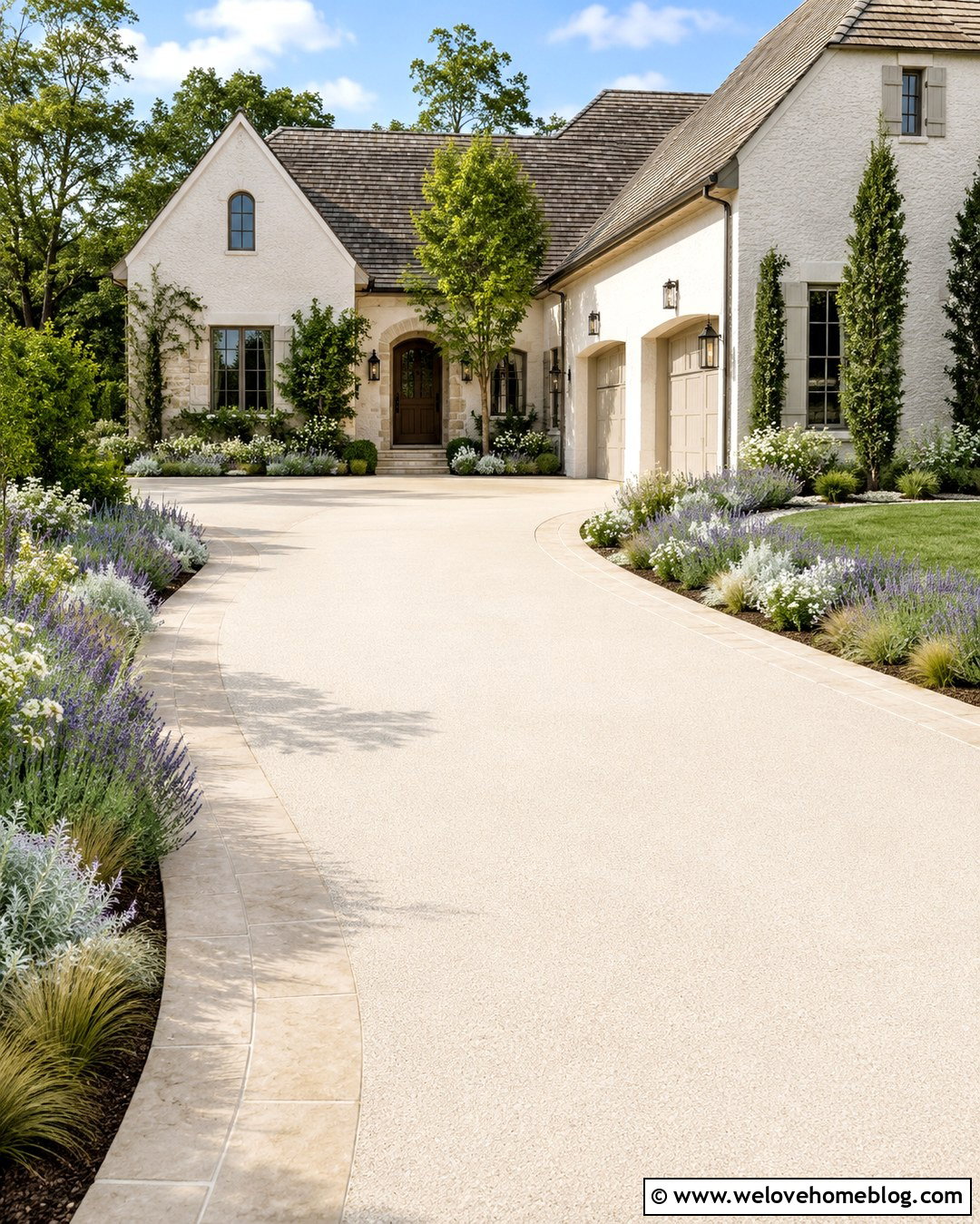
Soft limestone coloring creates a refined border without introducing a dramatic contrast. Pair a cream or warm ivory driveway with a limestone-stamped edge in pale beige, greige, or light taupe. The result feels bright, spacious, and appropriate for coastal, French country, Mediterranean, and light stucco homes. A gently curved driveway can enhance the relaxed appearance, especially when bordered by lavender, dwarf grasses, white roses, or silvery foliage. Choose a stamp with lightly irregular rectangular stones to keep the design structured but not overly formal. A coordinating walkway leading from the driveway to the porch can use the same limestone texture. Since very light concrete may show tire marks and stains more readily, discuss realistic color variation, finishing methods, and maintenance expectations with an experienced decorative concrete contractor.
13. Wide Stamped Concrete Driveway Border With Narrow Center Bands
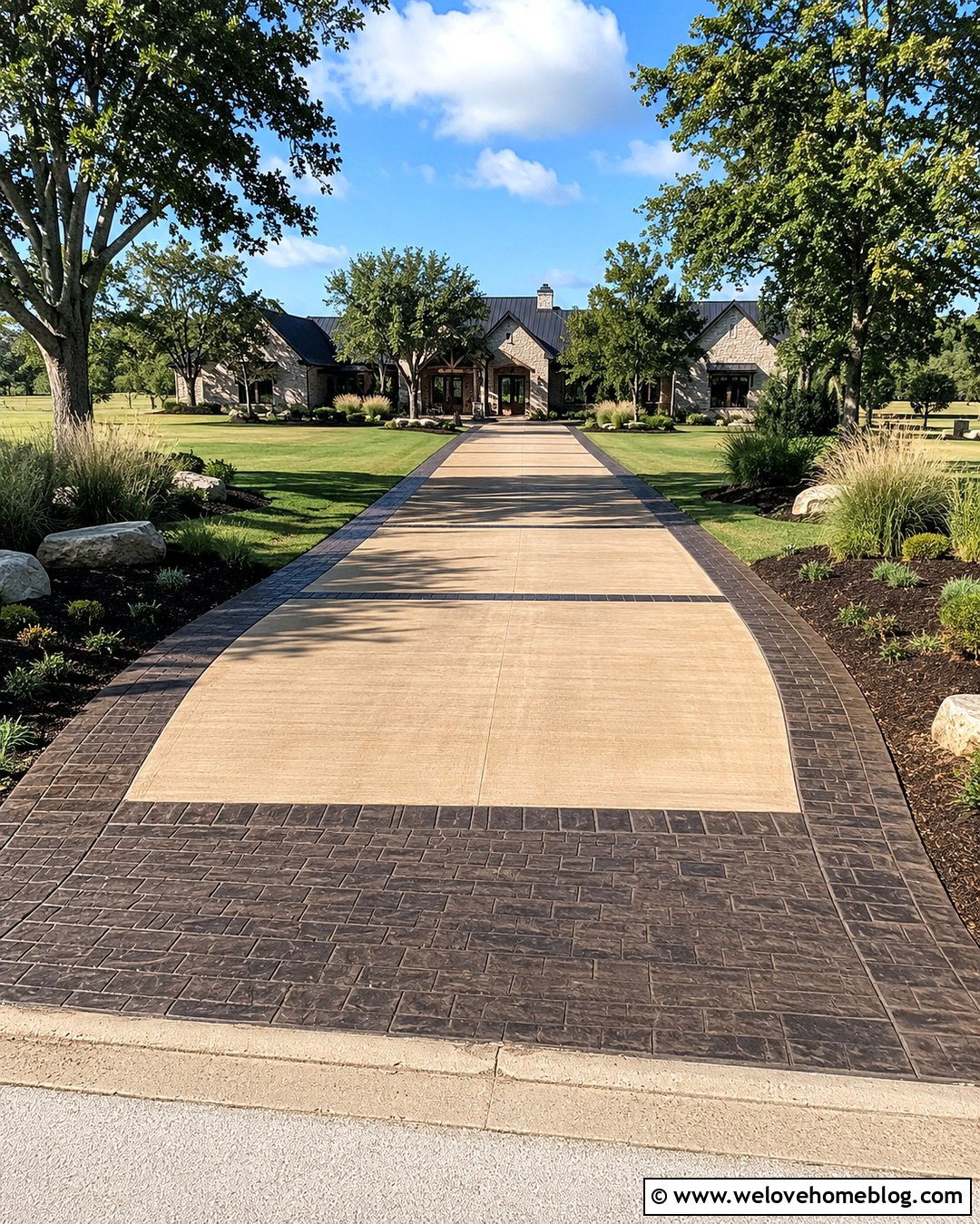
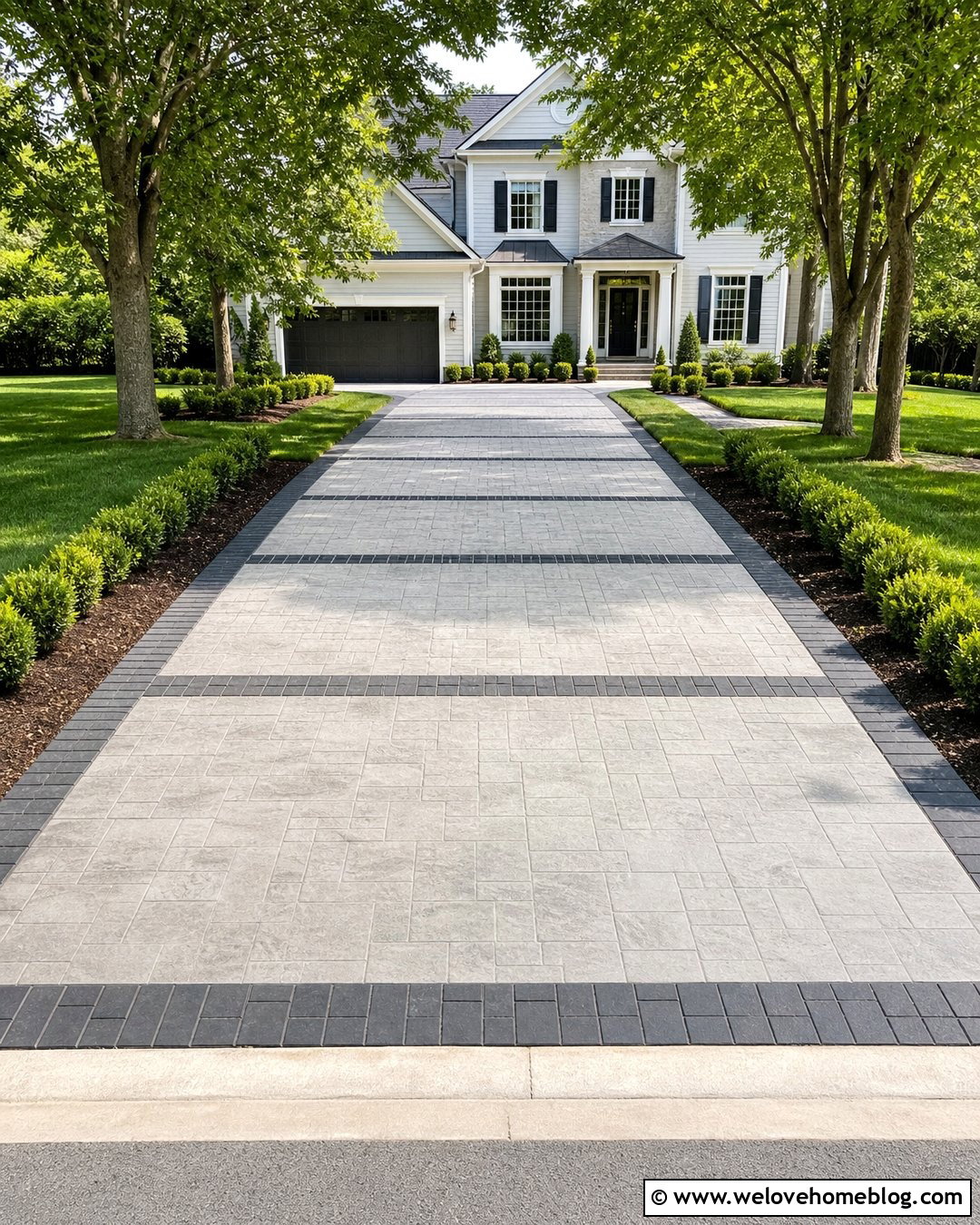
A wide border can give a large driveway stronger proportions and a more substantial curb presence. Use a cobblestone, ashlar slate, or large stone stamp around the perimeter, then introduce narrower matching bands across the center at carefully spaced intervals. Crossbands can break up long expanses and may be positioned with planned control joints. Decorative bands are commonly used to organize the surface and disguise necessary divisions. () For a balanced palette, combine a medium-tan broom-finished center with a darker brown border. This layout works well for long driveways leading to ranch, craftsman, or country homes. Keep adjacent planting low near the entrance, then gradually increase plant height closer to the house. That landscaping sequence strengthens the sense of arrival.
14. Narrow Stamped Concrete Driveway Border With Curved Landscaping
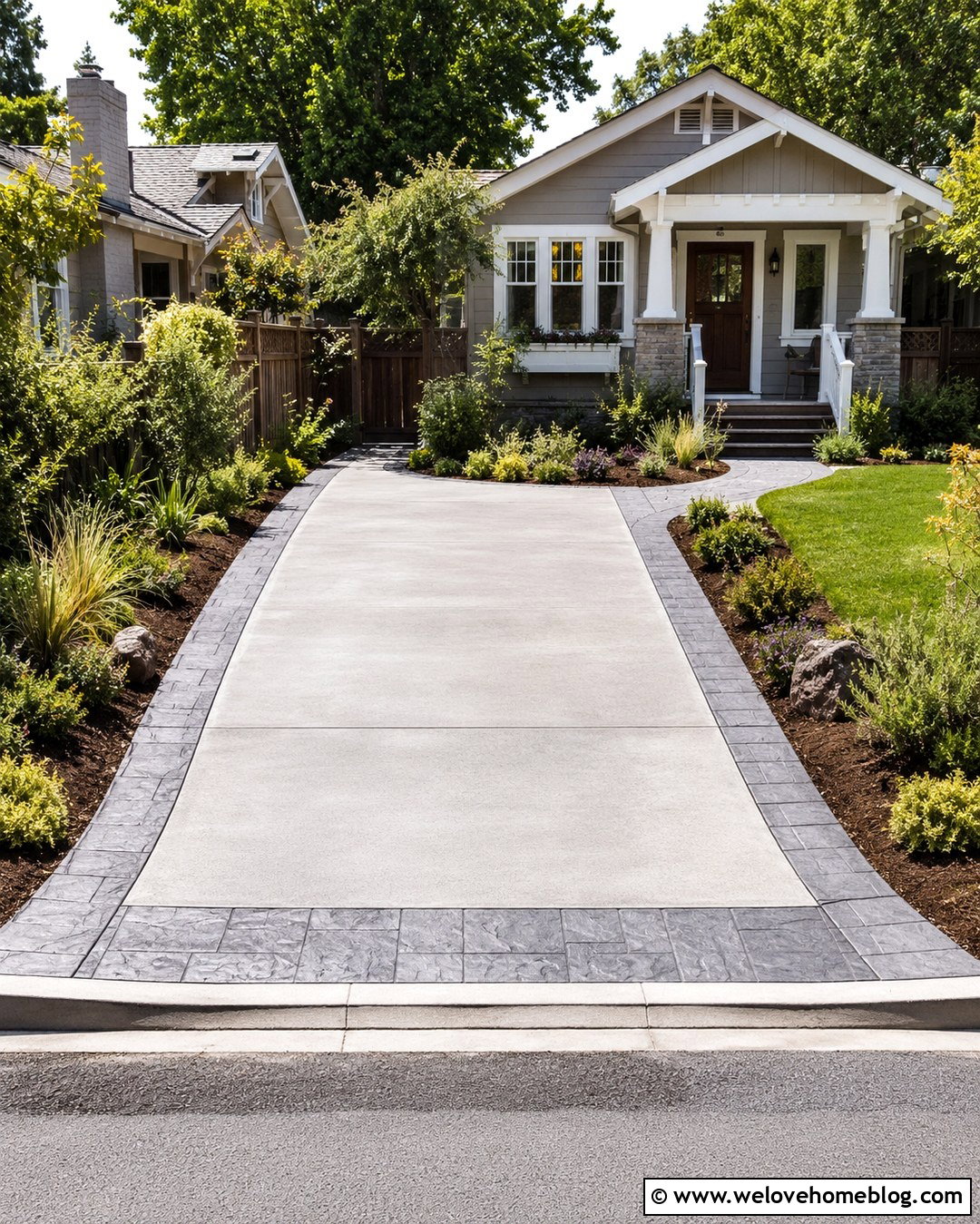
Small driveways benefit from borders that add definition without taking over the surface. A narrow slate or brick-stamped band can frame a compact poured-concrete driveway while leaving enough visual space in the center. Use closely related colors, such as a light gray field with a medium-gray border, to avoid making the driveway appear narrower. Curved planting beds placed beyond the concrete edge can soften the straight parking area. Fill them with compact shrubs, ground covers, and ornamental grasses that will not spill into vehicle clearance zones. This complete look suits bungalows, cottages, townhomes, and small ranch houses. At the apron, gently flare the stamped border toward the street. The wider entrance creates a welcoming effect and gives the pattern more visibility from the curb.
15. Stamped Concrete Driveway Border With Matching Walkway
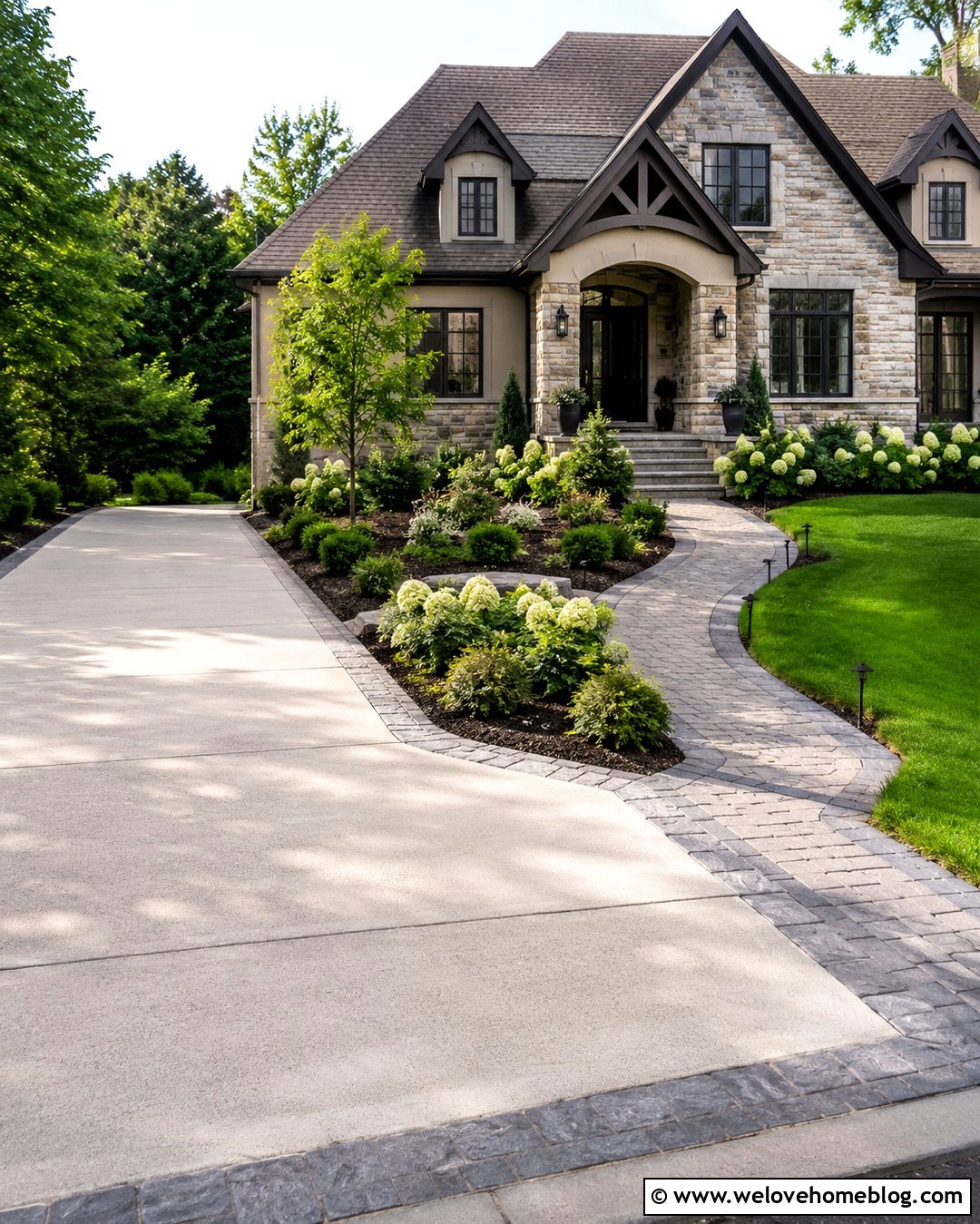
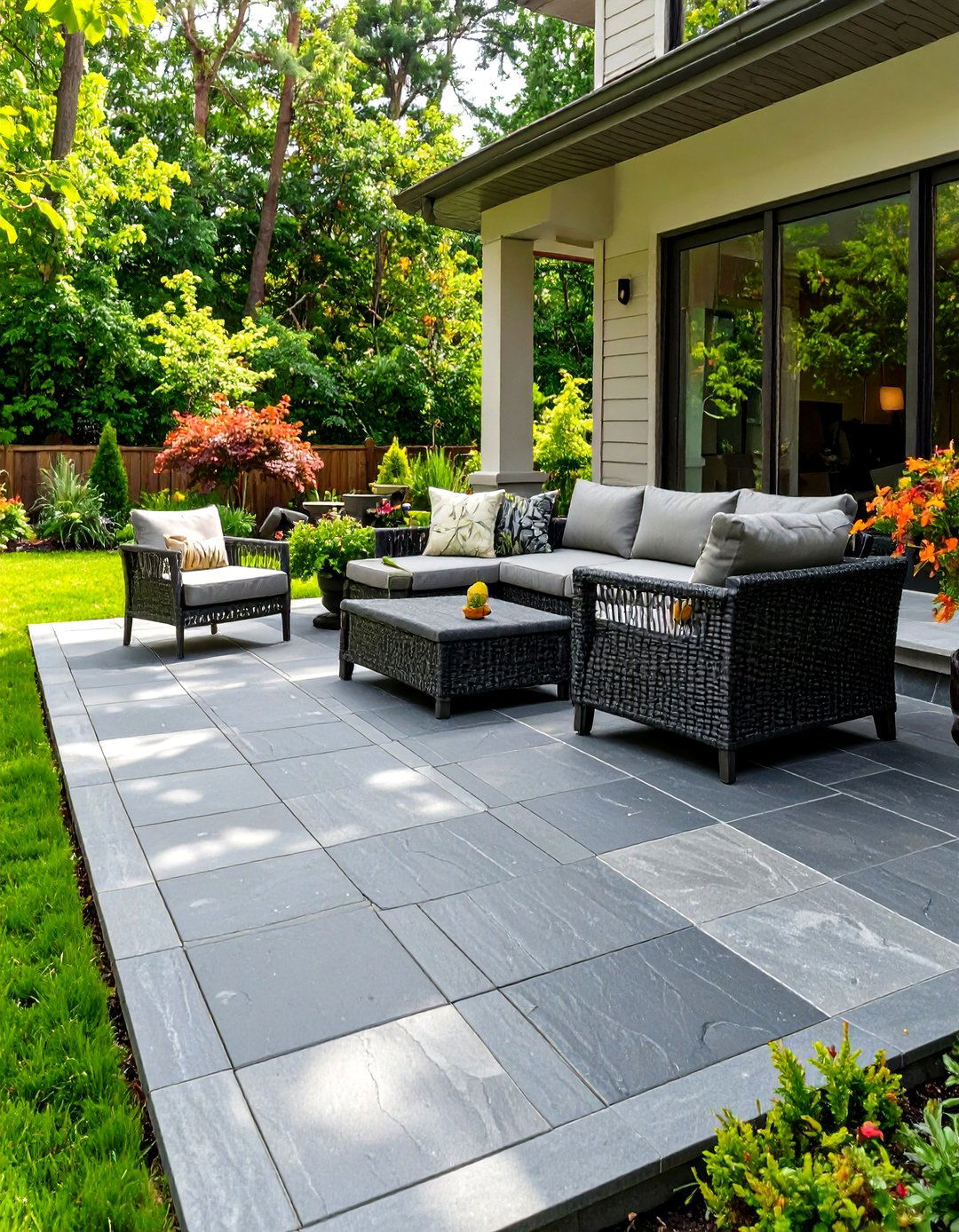
Connecting the driveway border to the front walkway creates a clear visual route to the entrance. Frame a broom-finished or lightly textured concrete driveway with a cobblestone stamp, then continue that exact pattern, color, and joint detail along the walkway. The connected surfaces can wrap around a small planting island or lead directly to the porch steps. This approach works for nearly any house style because the stamp and color can be customized to match existing materials. Use brick texture for a traditional facade, slate for a contemporary home, or irregular stone for a cottage. Keep the surrounding planting lower near the walkway intersection so the route remains visible. Repeating one decorative finish in both areas provides cohesion without requiring the full driveway to be stamped.
16. Stamped Concrete Driveway Border With Matching Apron
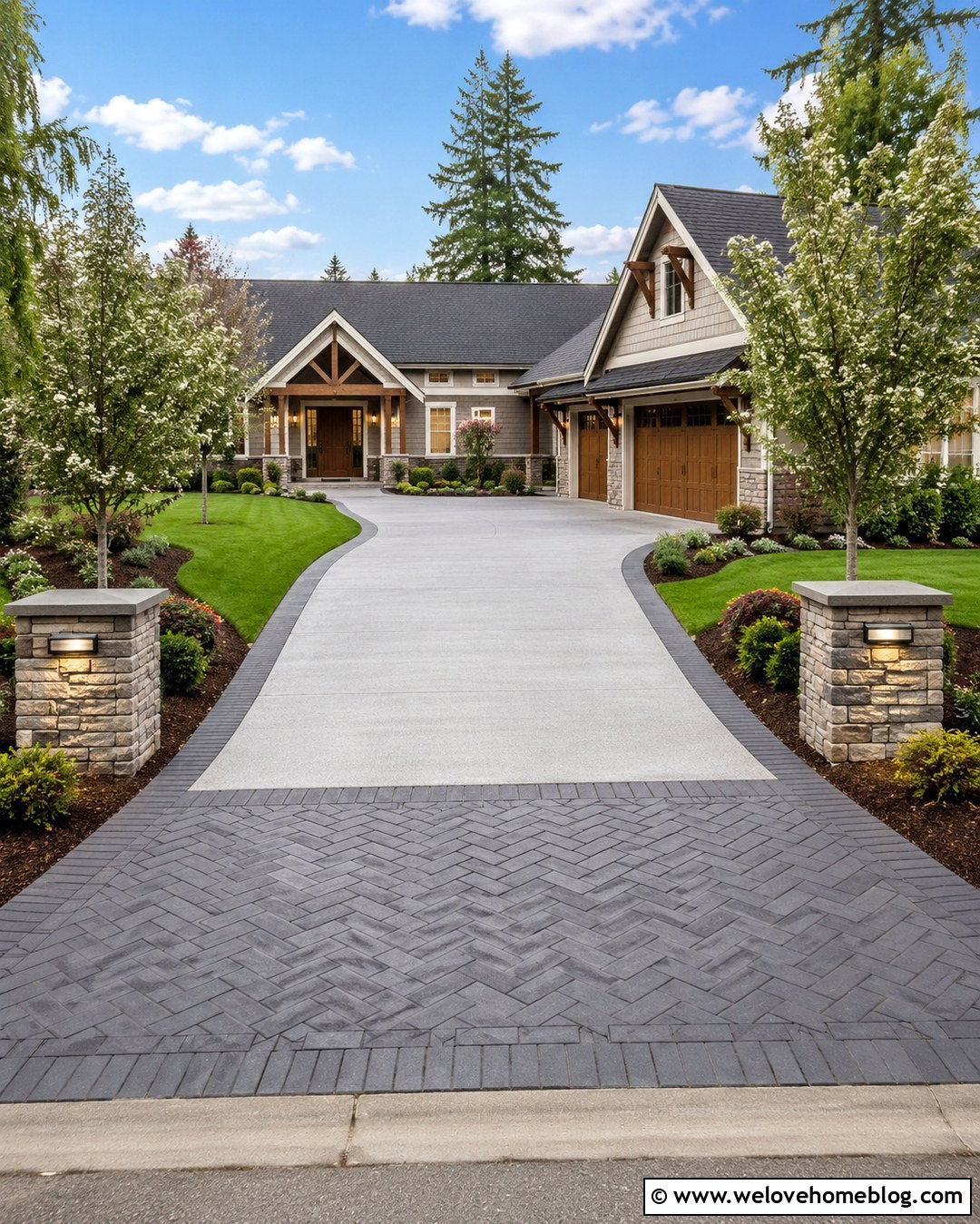
The driveway apron is the first part visitors see, so extending the stamped border across it creates a more impressive entrance. Use a dark cobblestone or herringbone pattern around a light broom-finished driveway, then stamp the full apron in the same pattern. The material shift forms a visual threshold between the street and private property. Stamping the apron and continuing that treatment along the edges can also add interest to a long concrete approach. () Frame the entrance with low stone pillars, simple address lighting, and symmetrical planting beds. Farther up the driveway, keep the border continuous to guide the eye toward the house. Match its color with masonry, roof tones, or garage-door details so the decorative apron feels connected to the architecture.
17. Curved Stamped Concrete Driveway Border With Stone Texture
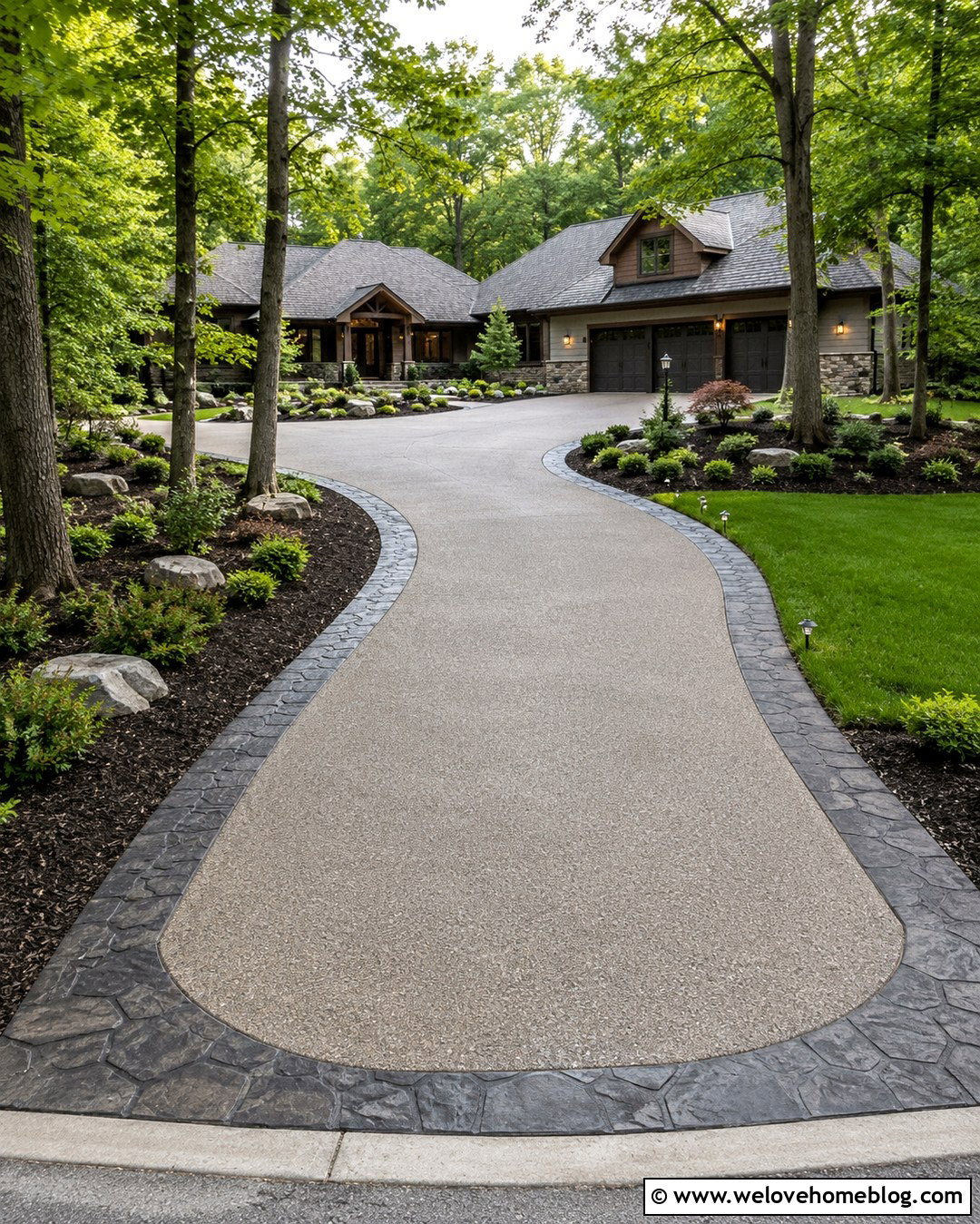
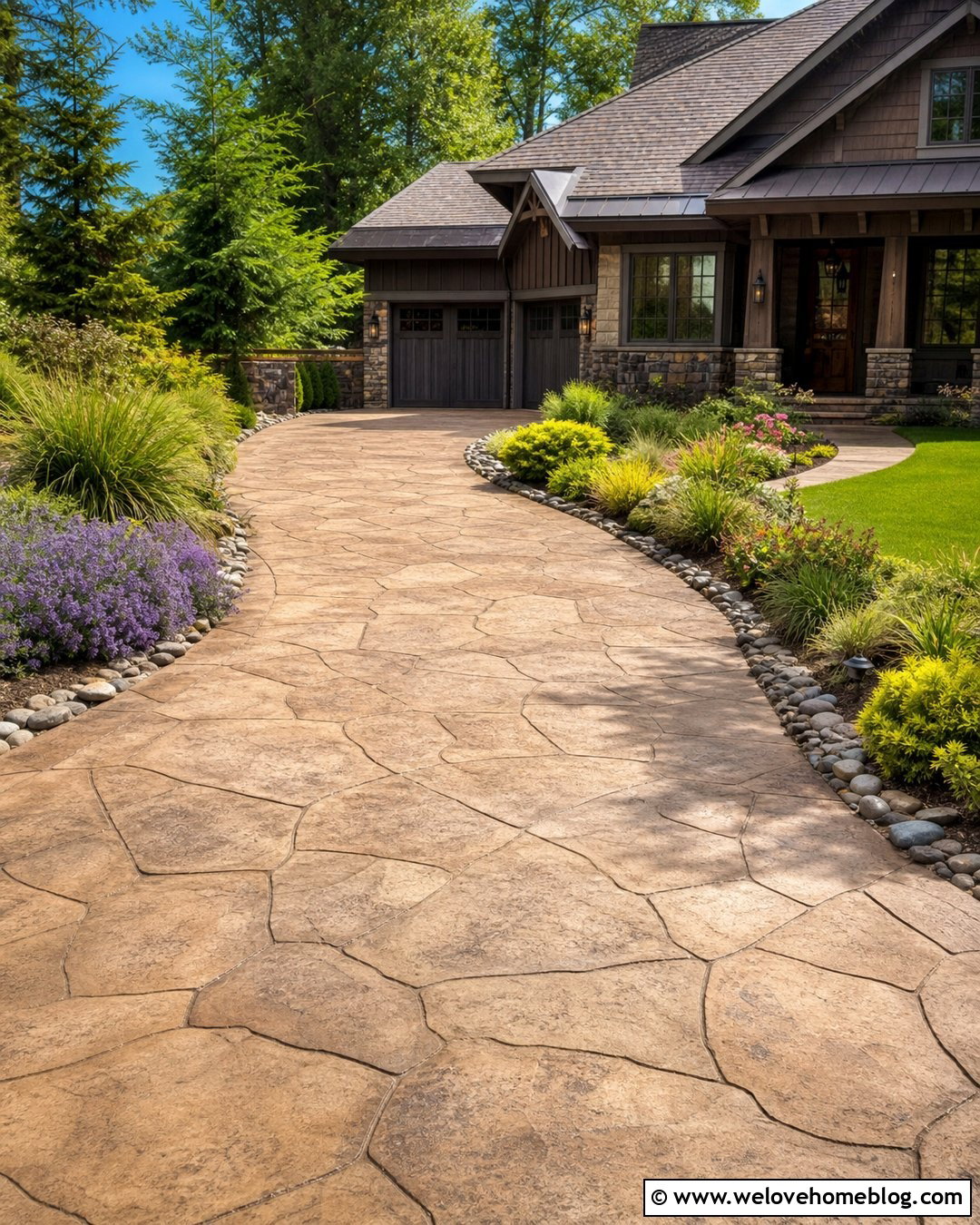
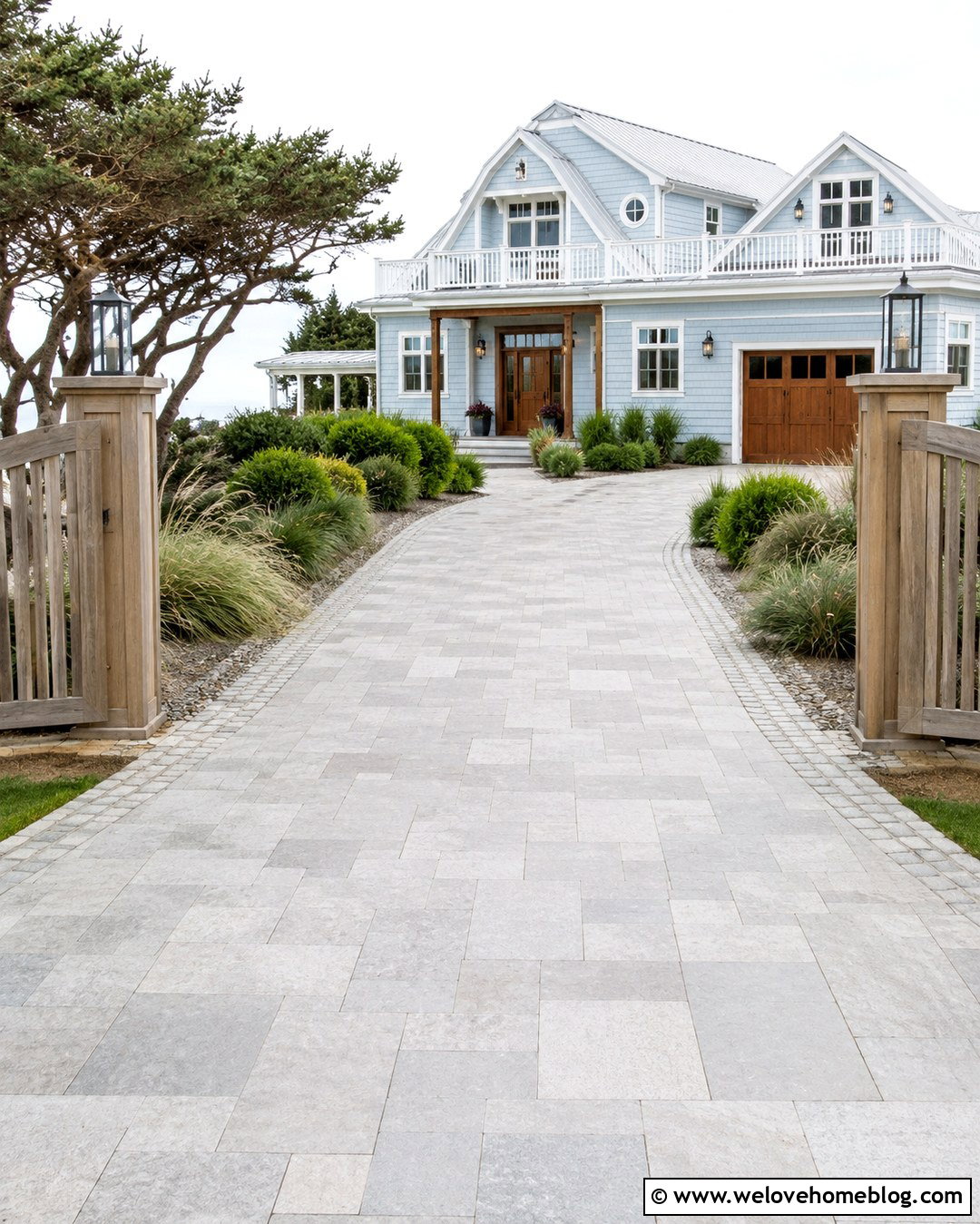
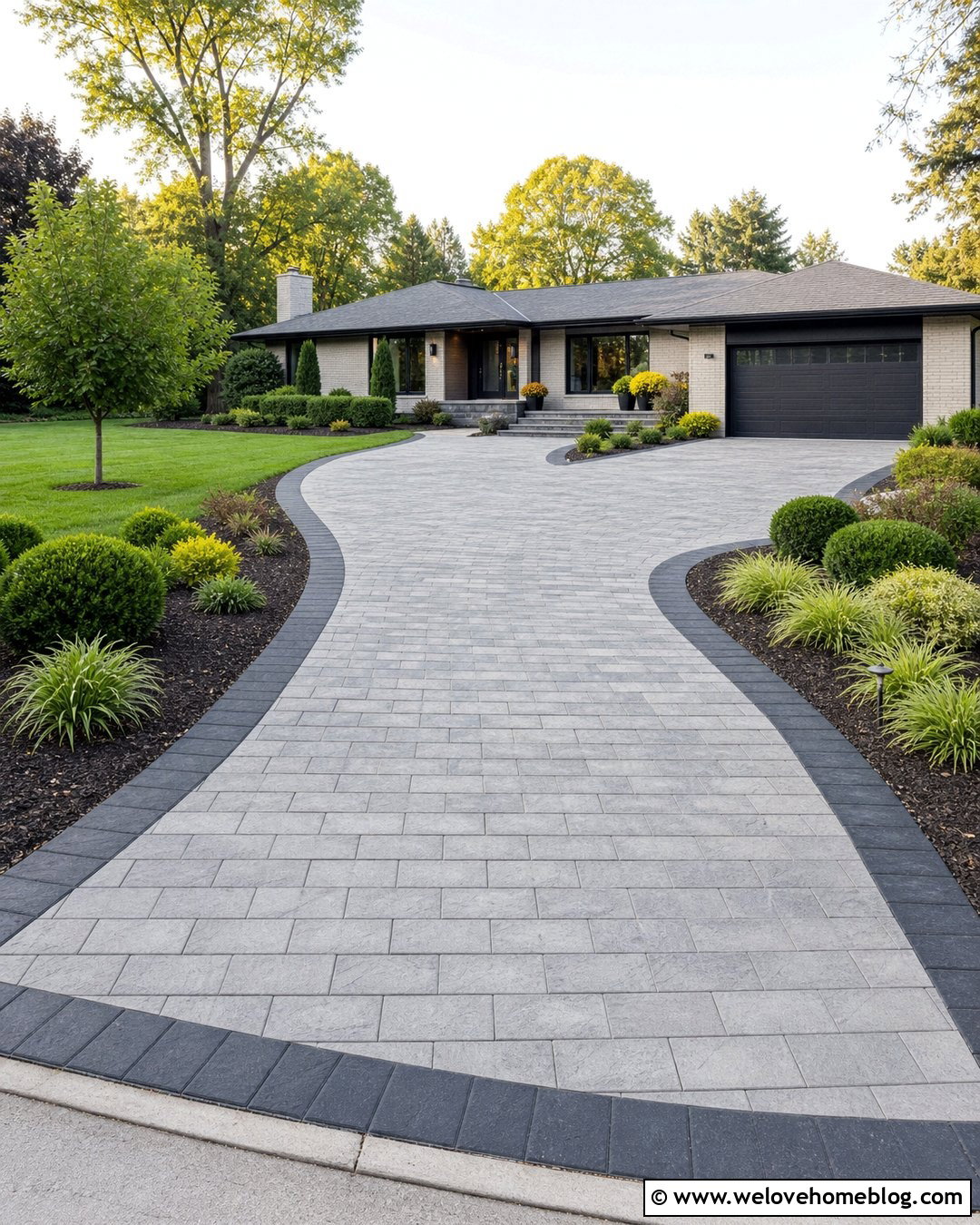
Curved driveways need a border pattern that can follow changing lines without looking awkward. A random stone, flagstone, or seamless rock-texture stamp works well because its irregular shapes do not depend on perfectly straight rows. Choose a warm gray center with a darker stone border, then allow the edge to sweep naturally around lawns and planting islands. This design is ideal for wooded lots, country homes, ranch houses, and properties with deep front yards. Use layered landscaping along the outer curve, placing ground covers near the concrete and taller shrubs farther back. Small trees can emphasize major turns without blocking sightlines. Consider how the stamp will meet the apron, walkway, and garage pad before installation. Thoughtful transitions are especially important when several curves come together.
18. Circular Stamped Concrete Driveway Border With Center Island
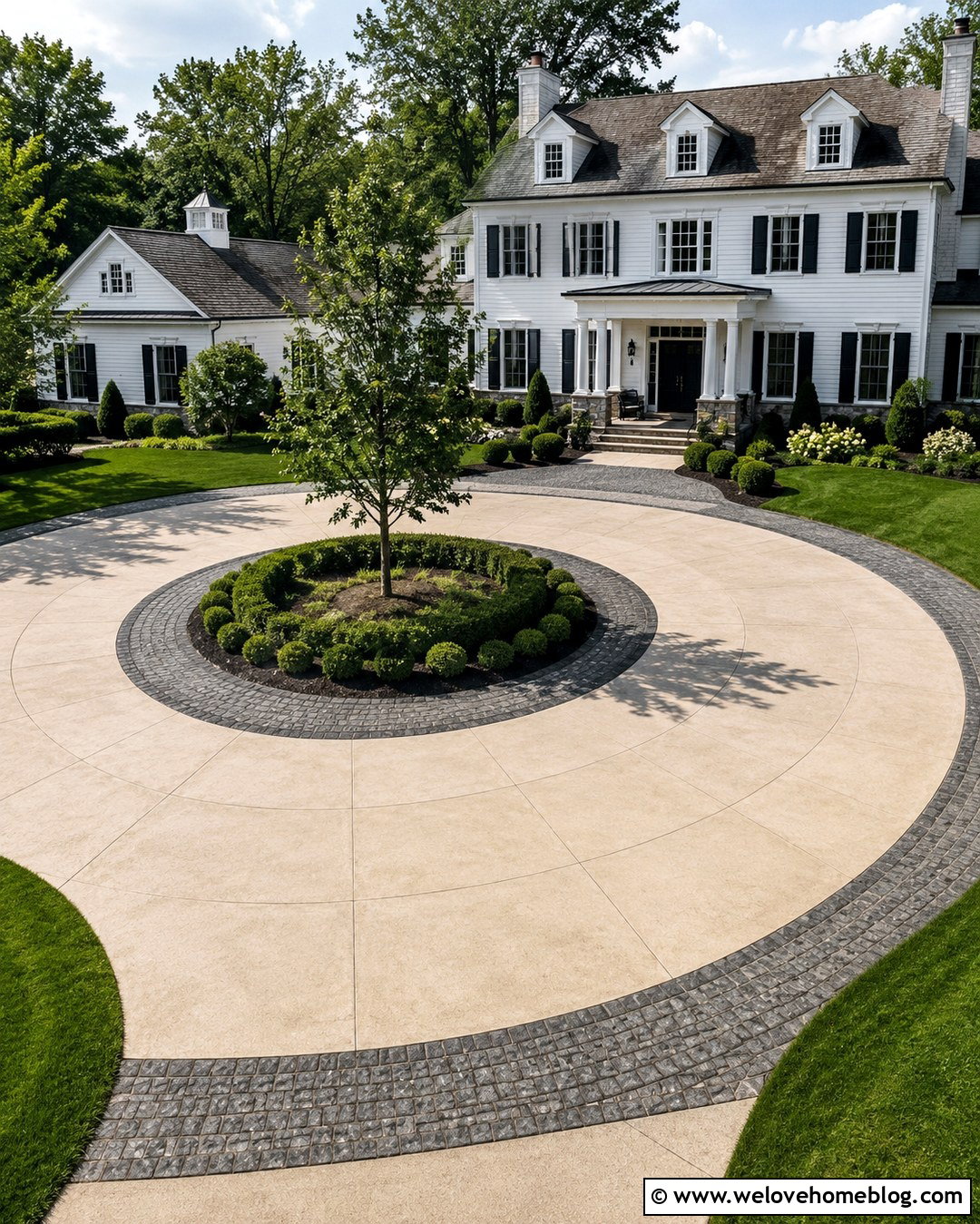
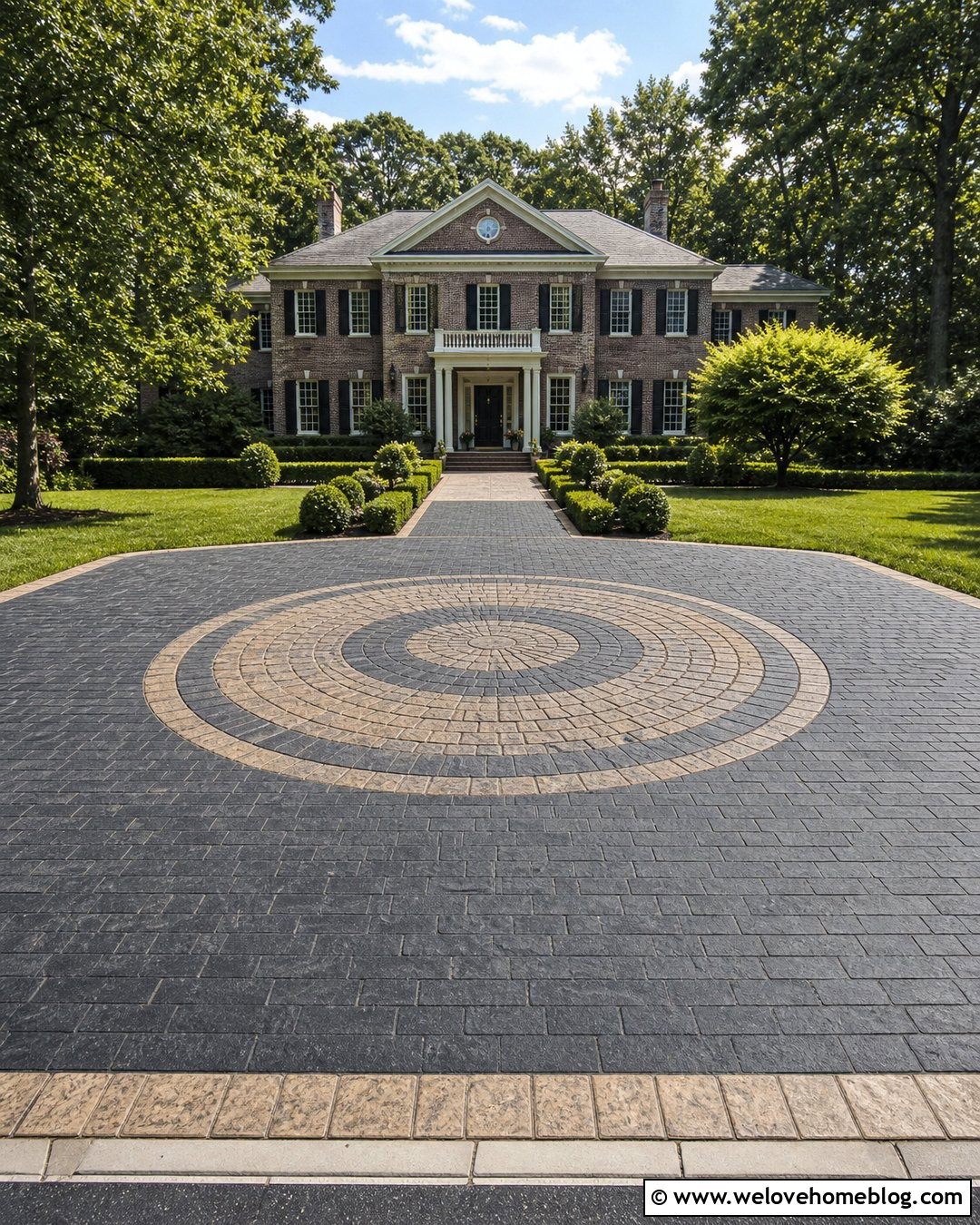
A circular driveway looks complete when its border clearly traces both the outside perimeter and the center island. Use a cobblestone or European fan stamp in dark gray around a lighter concrete field. The repeated curves will highlight the circular movement and create a formal approach. Inside the island, plant a specimen tree, low evergreen hedge, or layered flower bed that remains attractive from every direction. Match the stamped border to stone pillars, porch masonry, or roof colors for a coordinated exterior. A second stamped band near the main entry can identify the drop-off area without changing the driveway material. Avoid overly wide borders on a tight circle because they can visually reduce the driving surface. Proportion the pattern to the available width and turning space.
19. Two-Tone Stamped Concrete Driveway Border With Decorative Corners
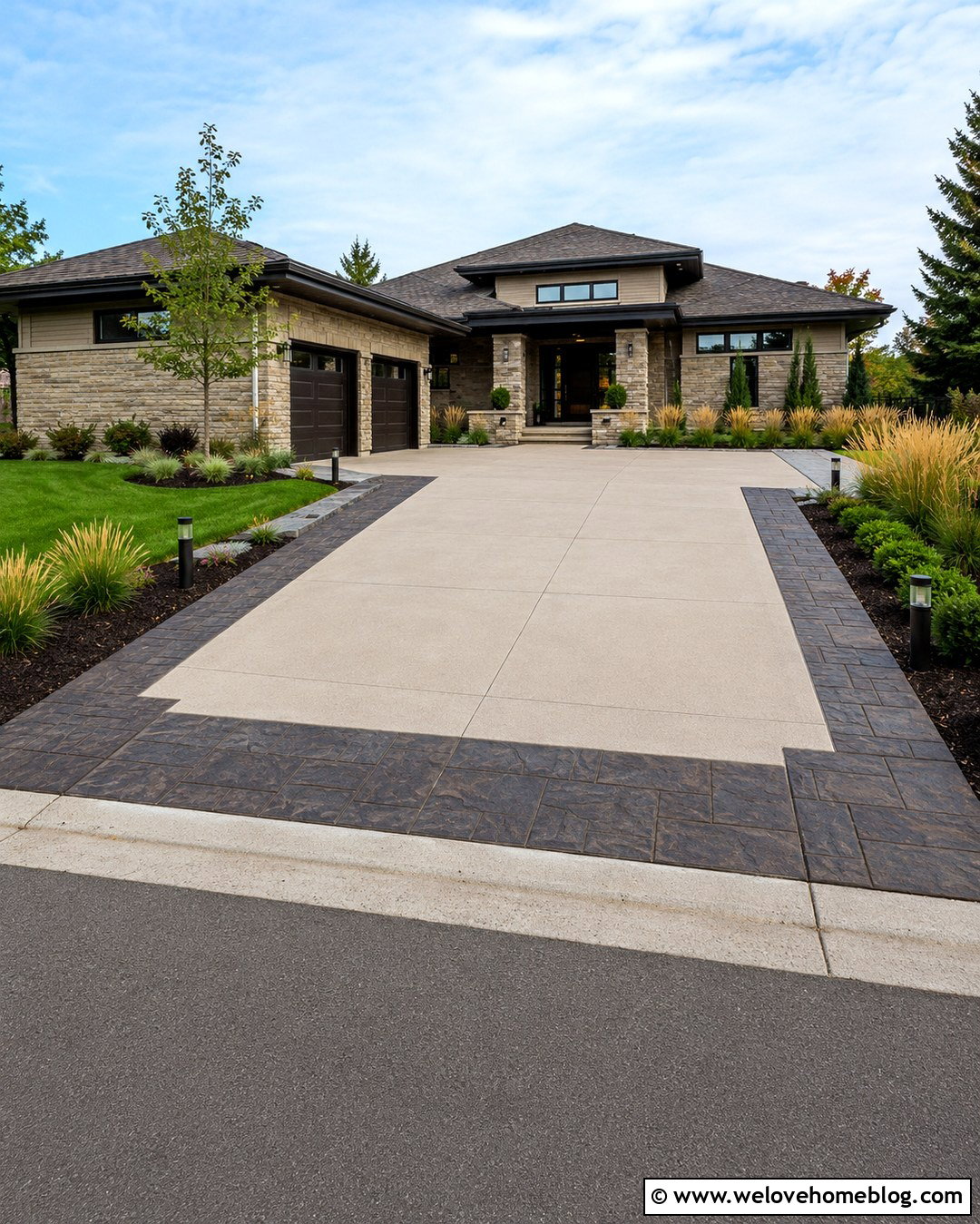
Decorative corners can elevate a standard rectangular driveway without filling the entire surface with pattern. Start with a light taupe concrete field and add a dark brown ashlar slate border. At the four corners, widen the border into square stamped panels or gently curved blocks. These details create small focal points and provide natural locations for low landscape lights or planting-bed transitions. The approach works particularly well with craftsman, prairie, and transitional homes that feature strong horizontal lines. Repeat the darker border color in the garage door, trim, or front steps. Keep the decorative corner shapes simple enough to remain clear from the street. Overly intricate inlays may become visually lost once the driveway contains shadows, leaves, and the normal signs of daily use.
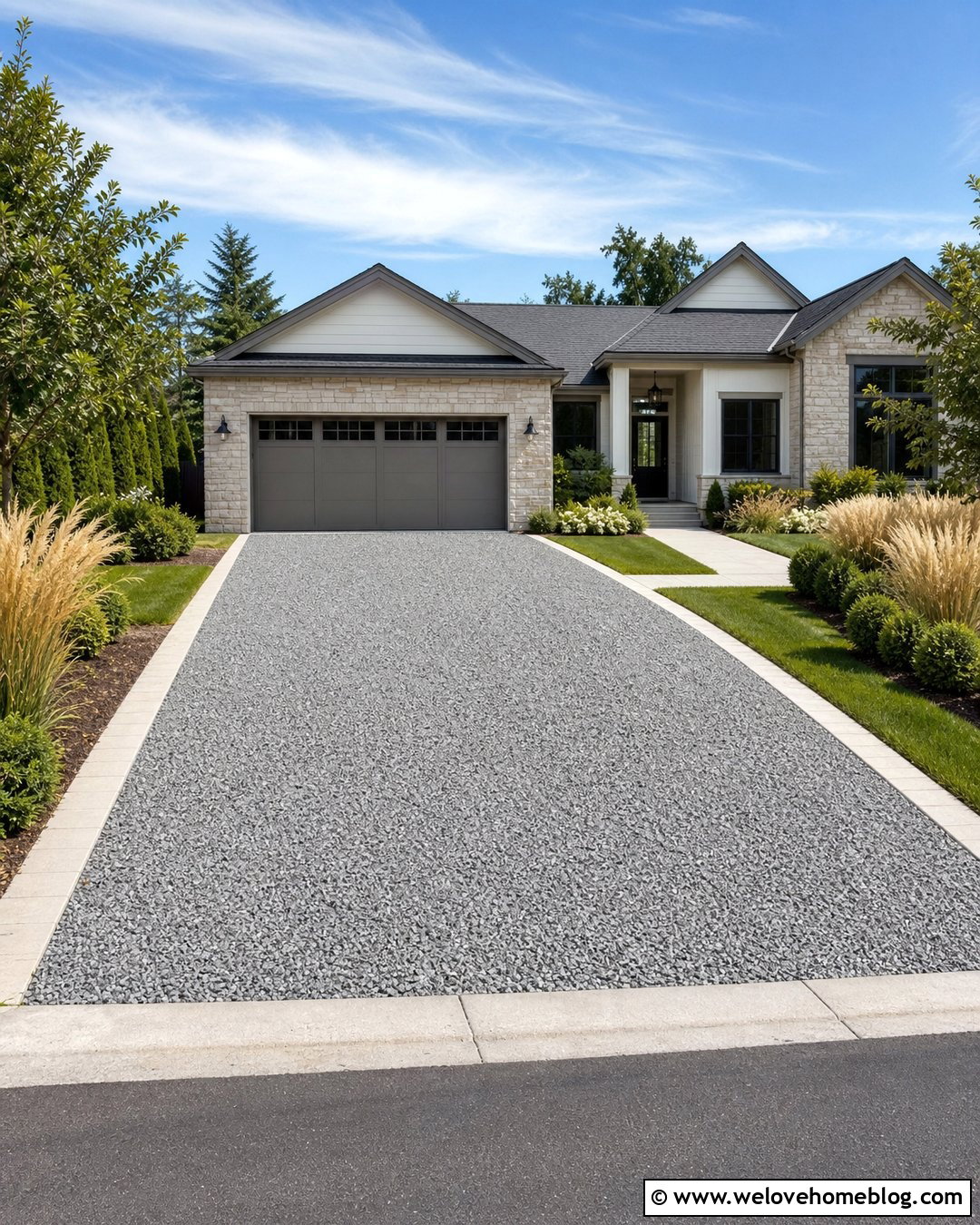
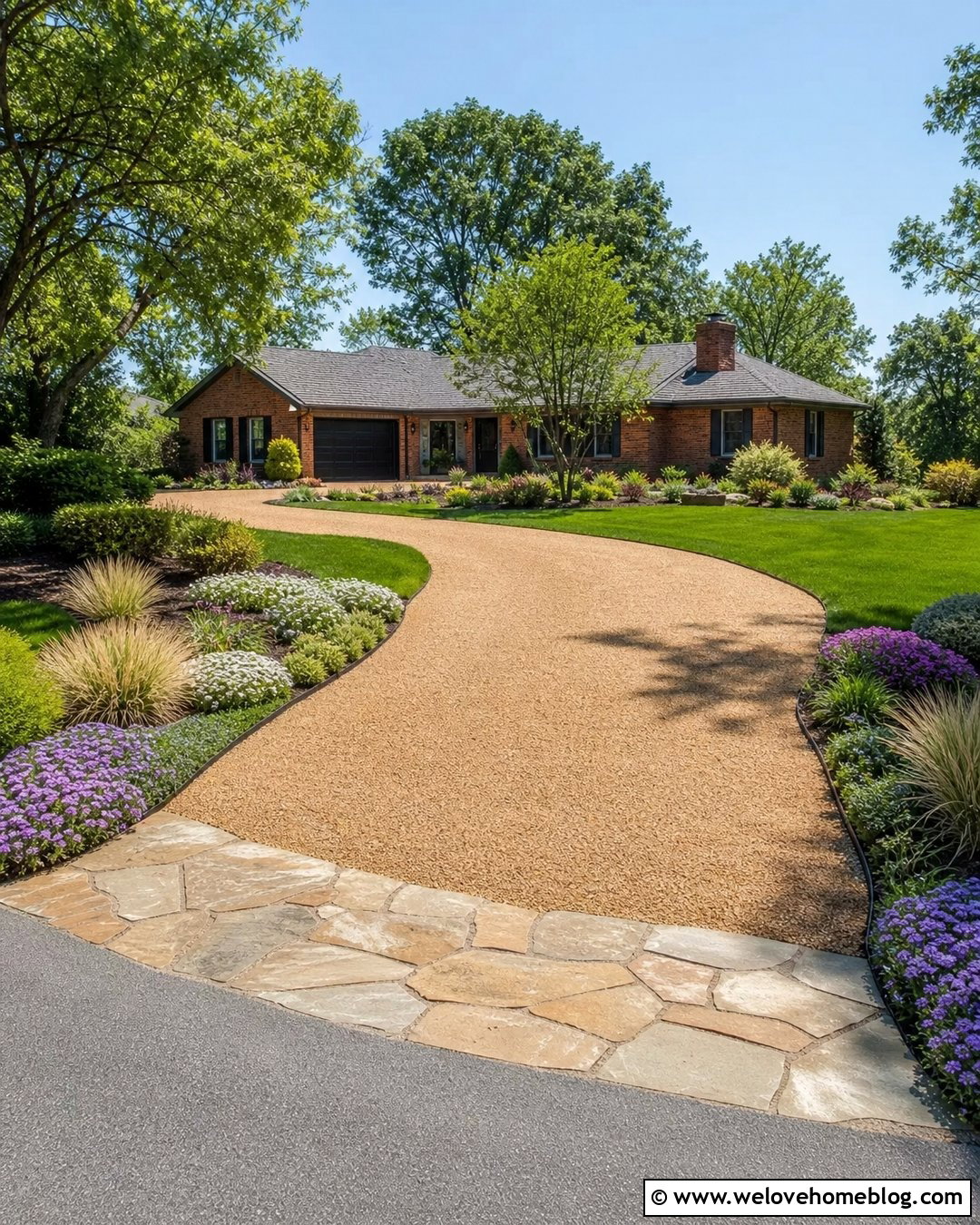
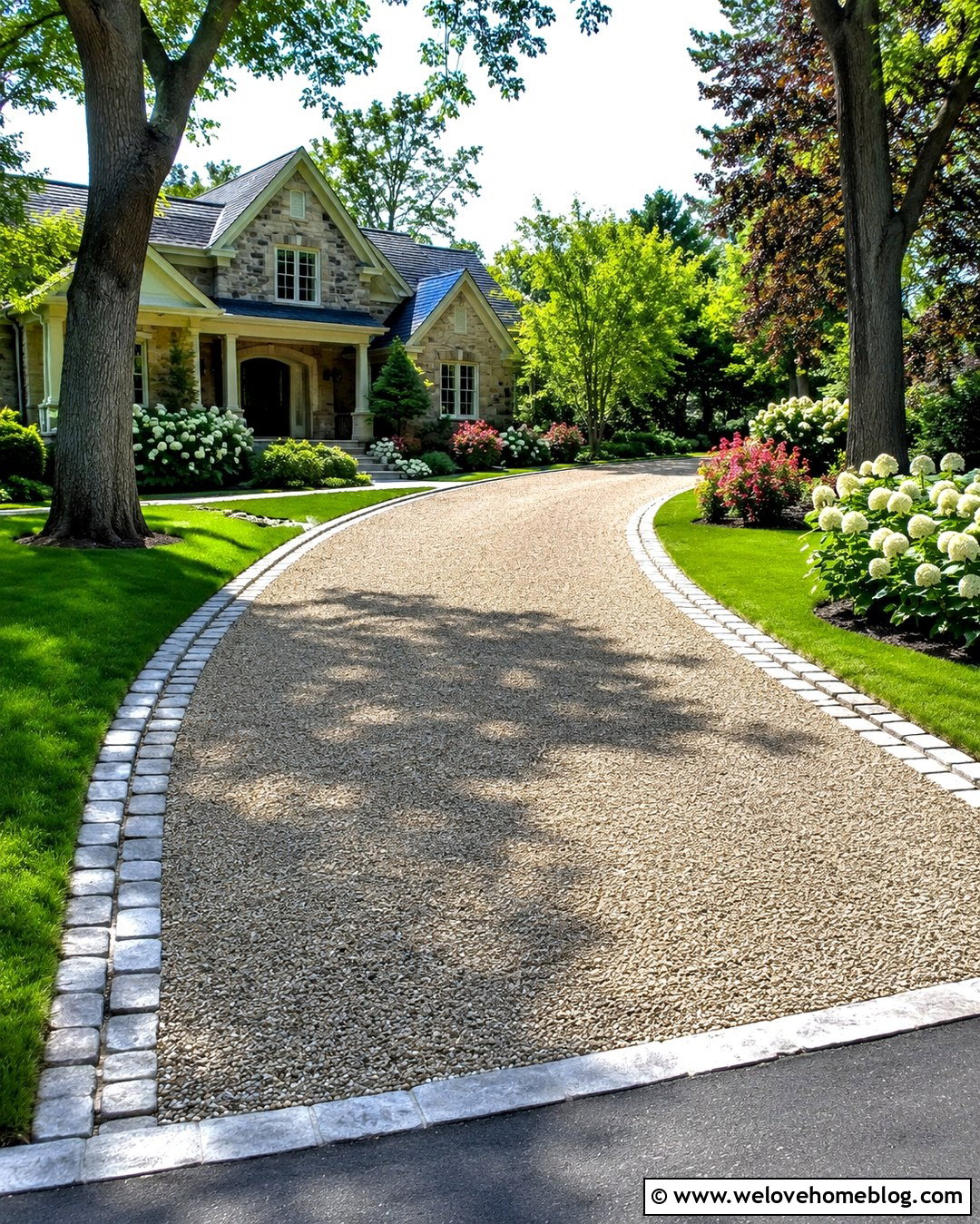
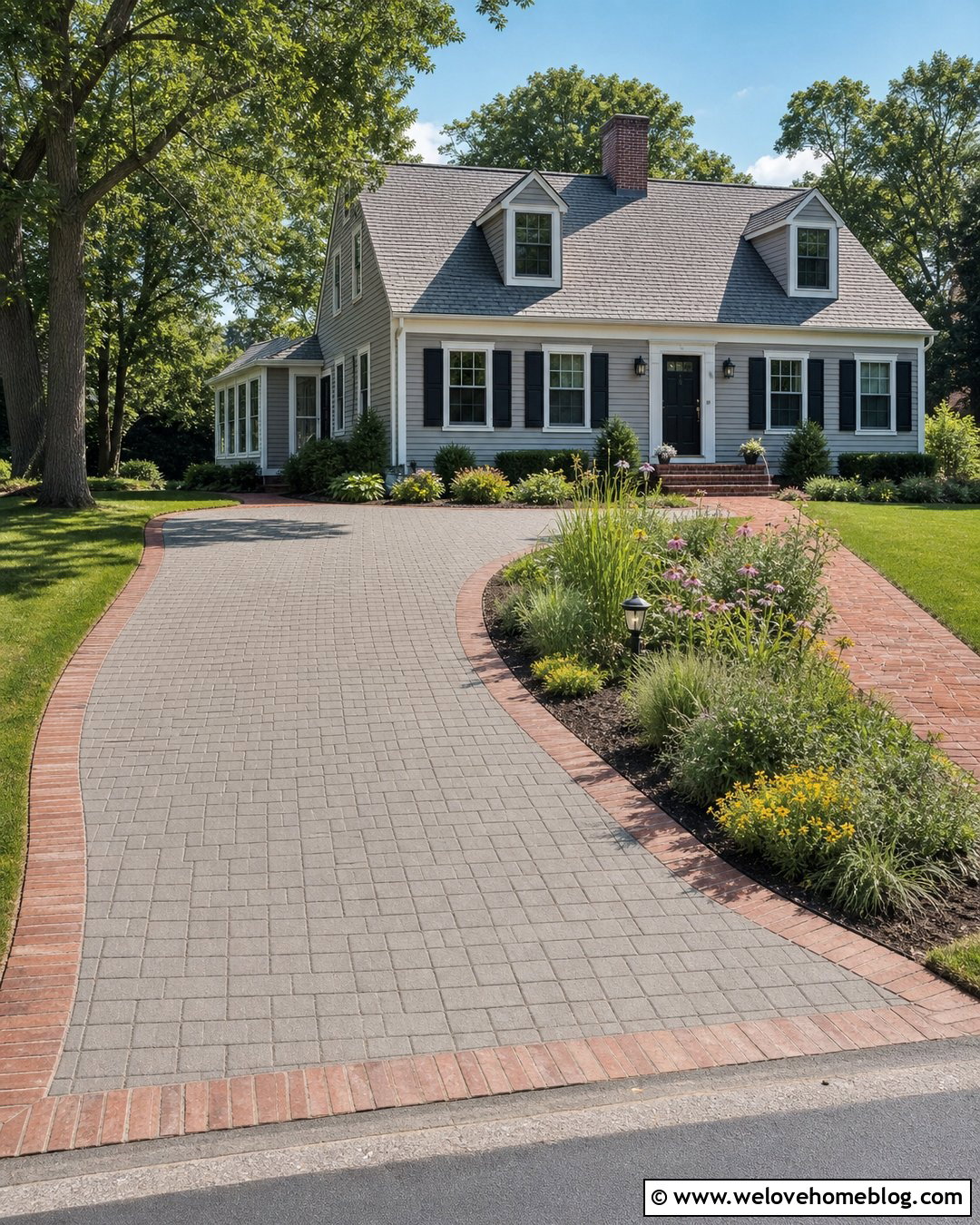
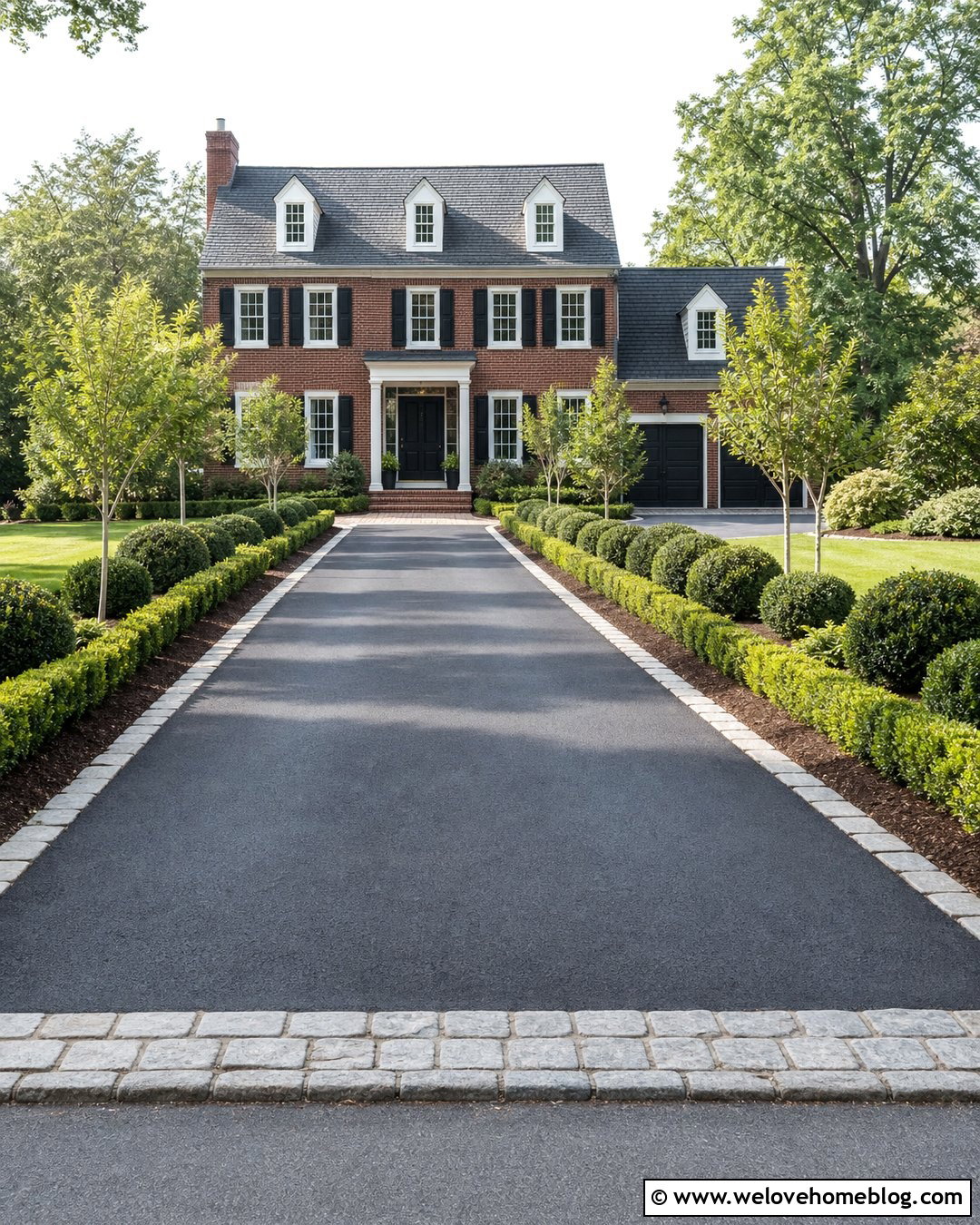
20. Stamped Concrete Driveway Border With Grass Strip
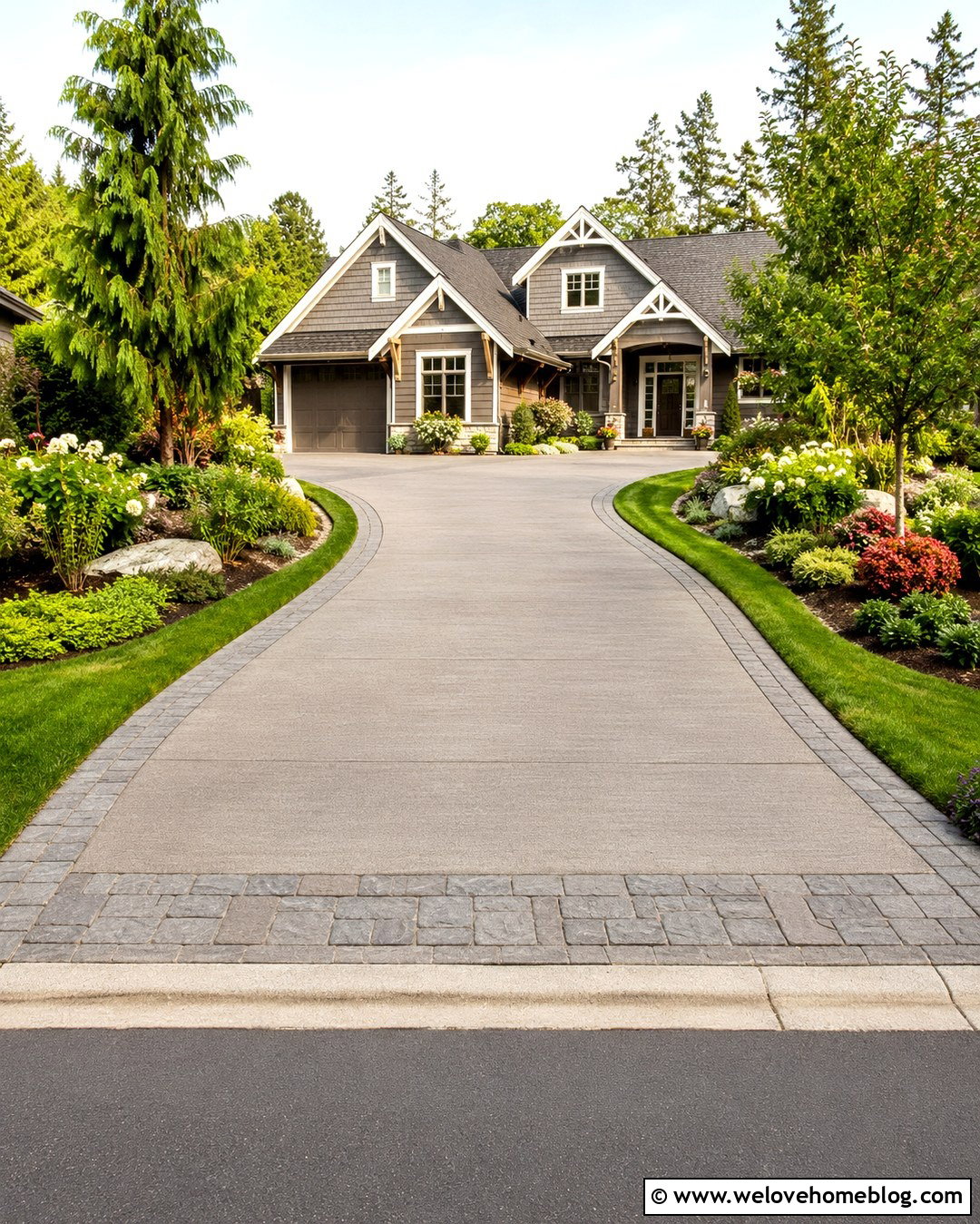
A narrow grass or ground-cover strip outside a stamped concrete border creates a softer transition into the yard. Use a gray cobblestone-stamped edge around a warm broom-finished driveway, then leave a carefully planned green strip between the concrete and larger planting beds. This layered border can suit farmhouse, cottage, craftsman, and naturalistic suburban landscapes. Keep the planted strip broad enough for healthy growth but narrow enough to maintain easily. Where regular mowing would be difficult, use low ground covers selected for the site’s sun, drainage, and climate. Repeat the stamped pattern at the apron and walkway entrance to preserve a clear frame. Breaks containing vegetation can become part of a decorative driveway composition when the paving and landscape layout are designed together. ()
Conclusion:
The best 20 Stamped Concrete Driveway Border Ideas do more than decorate the pavement’s outer edge. They connect the driveway to the architecture, organize its shape, and create a thoughtful transition into the surrounding landscape. Brick, slate, cobblestone, flagstone, limestone, and wood-plank stamps can each produce a different curb appeal mood. The field material, border width, color contrast, apron, walkway, and planting beds should work as one complete design. Before installation, compare physical color samples and review the pattern layout around curves, corners, joints, and garage entrances. A well-planned stamped border can give a simple driveway character while keeping the central surface practical, clean, and visually balanced.

Related posts:

Leave a Reply