
Brick stamped concrete combines the classic character of masonry with the continuous strength and practical installation of concrete. The right pattern, color blend, border, and driveway layout can make the surface look convincingly like individual brick pavers. It can also complement traditional, farmhouse, ranch, colonial, and modern homes. Popular choices include running bond, basketweave, herringbone, and curved radial patterns. Warm red and brown finishes create an established look, while charcoal, taupe, and cream tones feel more contemporary. Borders, landscaped edges, entry aprons, and coordinated walkways help complete the design. For a surface that feels intentional rather than overly decorative, consider these 20 Brick Stamped Concrete Driveway Ideas.
1. Red Herringbone Brick Stamped Concrete Driveway

A red herringbone pattern gives a brick stamped concrete driveway a traditional appearance with plenty of visual movement. The angled layout works particularly well on a straight driveway because it breaks up the long surface and makes the approach feel wider. Choose a muted brick-red base with charcoal or dark brown antiquing instead of one flat, bright color. A darker stamped border can frame the pattern and create a clean transition to the lawn. Add symmetrical evergreen shrubs, low flowering plants, and a matching walkway leading toward the front door. This complete look suits colonial, Georgian, and traditional brick homes. Before installation, ask the contractor to coordinate control joints with the stamped pattern so necessary lines feel less distracting.
2. Running Bond Brick Stamped Concrete Driveway
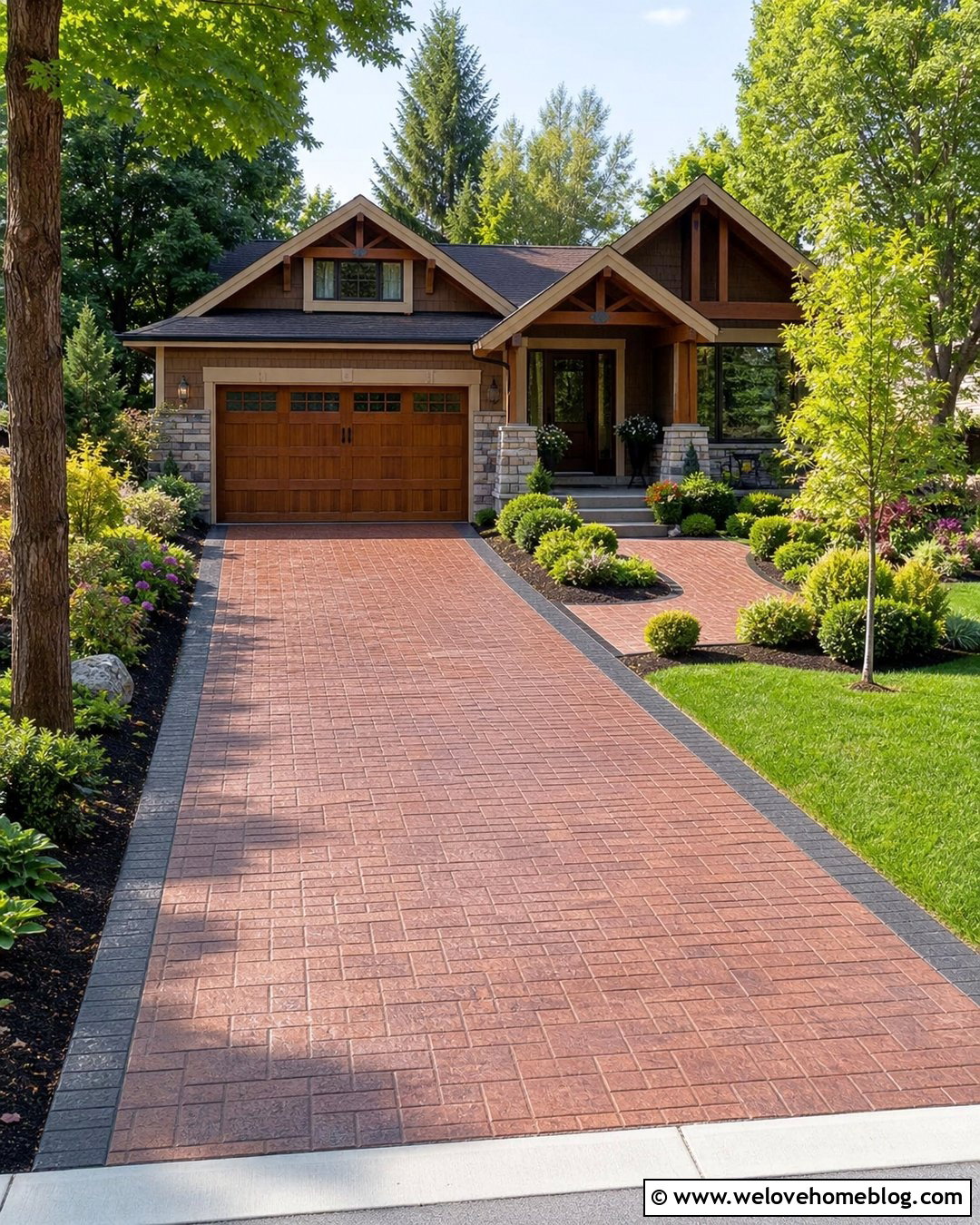
Running bond is a simple brick pattern that creates a neat, familiar surface without making the front yard look too busy. Rectangular brick impressions are arranged in offset rows, producing a clean direction toward the garage. Use medium red-brown concrete with lightly darkened joints for realistic depth. A flush charcoal border gives the warm field a tailored finish and separates it from planting beds. This combination looks especially natural beside a craftsman house with stone columns, wood trim, and a deep front porch. Continue the running bond pattern onto the entry walkway for visual continuity. Because the pattern is orderly, careful alignment at the garage, sidewalk, and driveway apron matters. Slight color variation helps the stamped surface resemble genuine aged brick.
3. Basketweave Brick Stamped Concrete Driveway
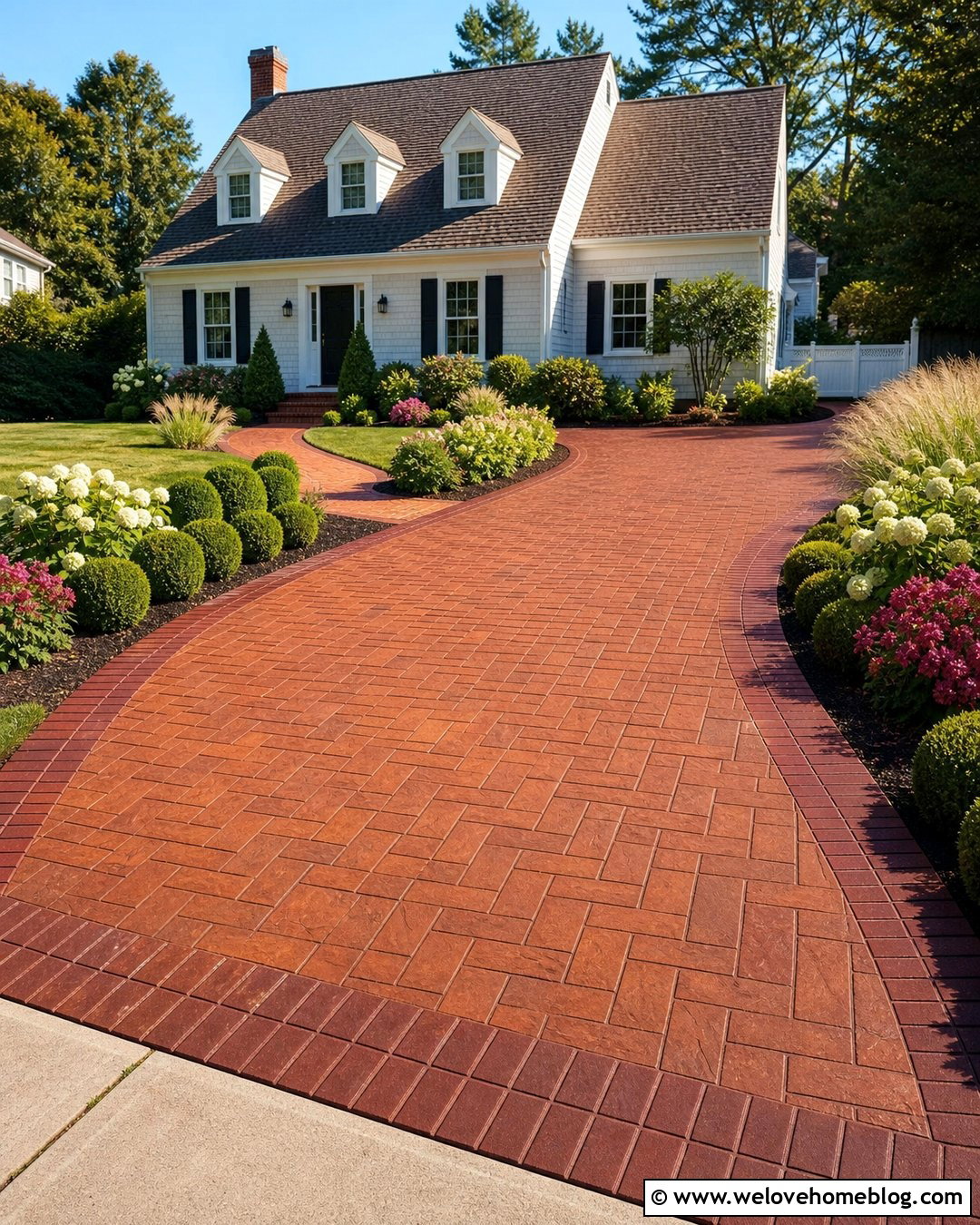
Basketweave stamping brings a decorative rhythm to a wide driveway while maintaining the familiar proportions of traditional brick. Pairs of rectangular impressions alternate direction, creating small woven blocks across the concrete. A warm terracotta base with soft brown antiquing gives the pattern definition without producing harsh black joints. Frame the driveway with a narrow soldier-course stamped border in a deeper red. Curved planting beds filled with boxwood, hydrangeas, ornamental grasses, and seasonal flowers can soften the geometric layout. This brick stamped concrete driveway pairs naturally with a Cape Cod or cottage-style home. The pattern contains more directional changes than running bond, so it is best displayed across broad, open sections where viewers can appreciate the full repeat from the curb.
4. Charcoal Brick Stamped Concrete Driveway
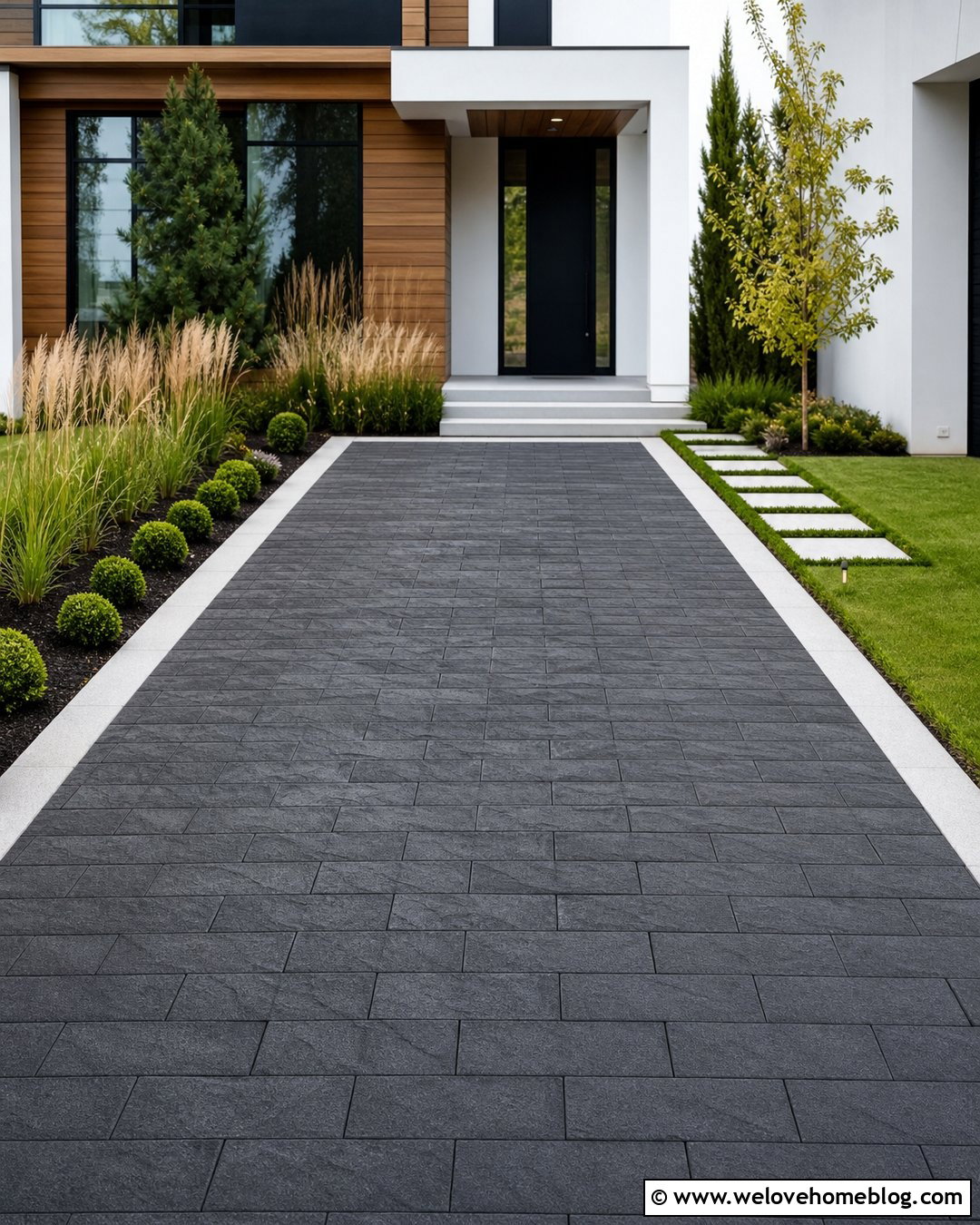
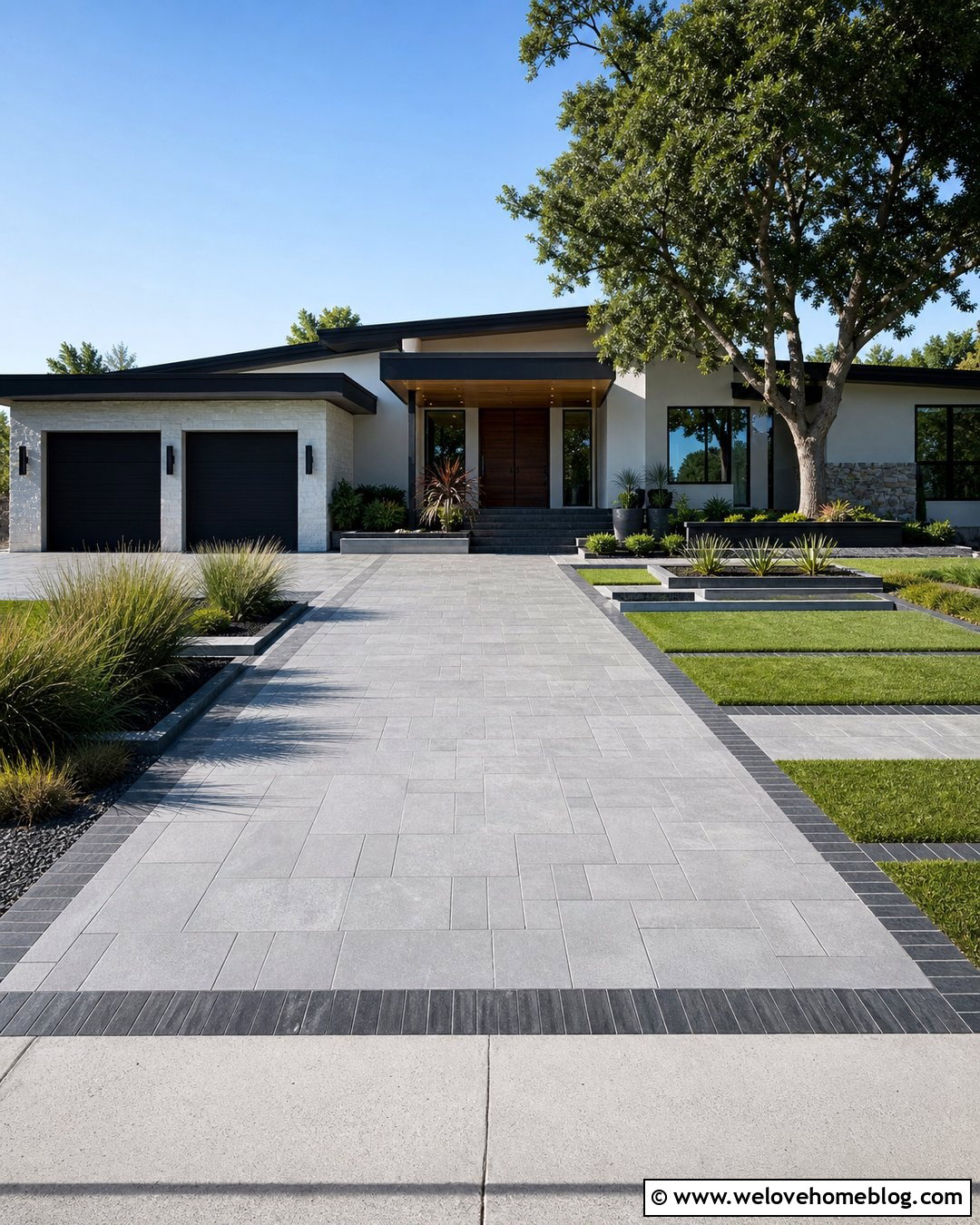
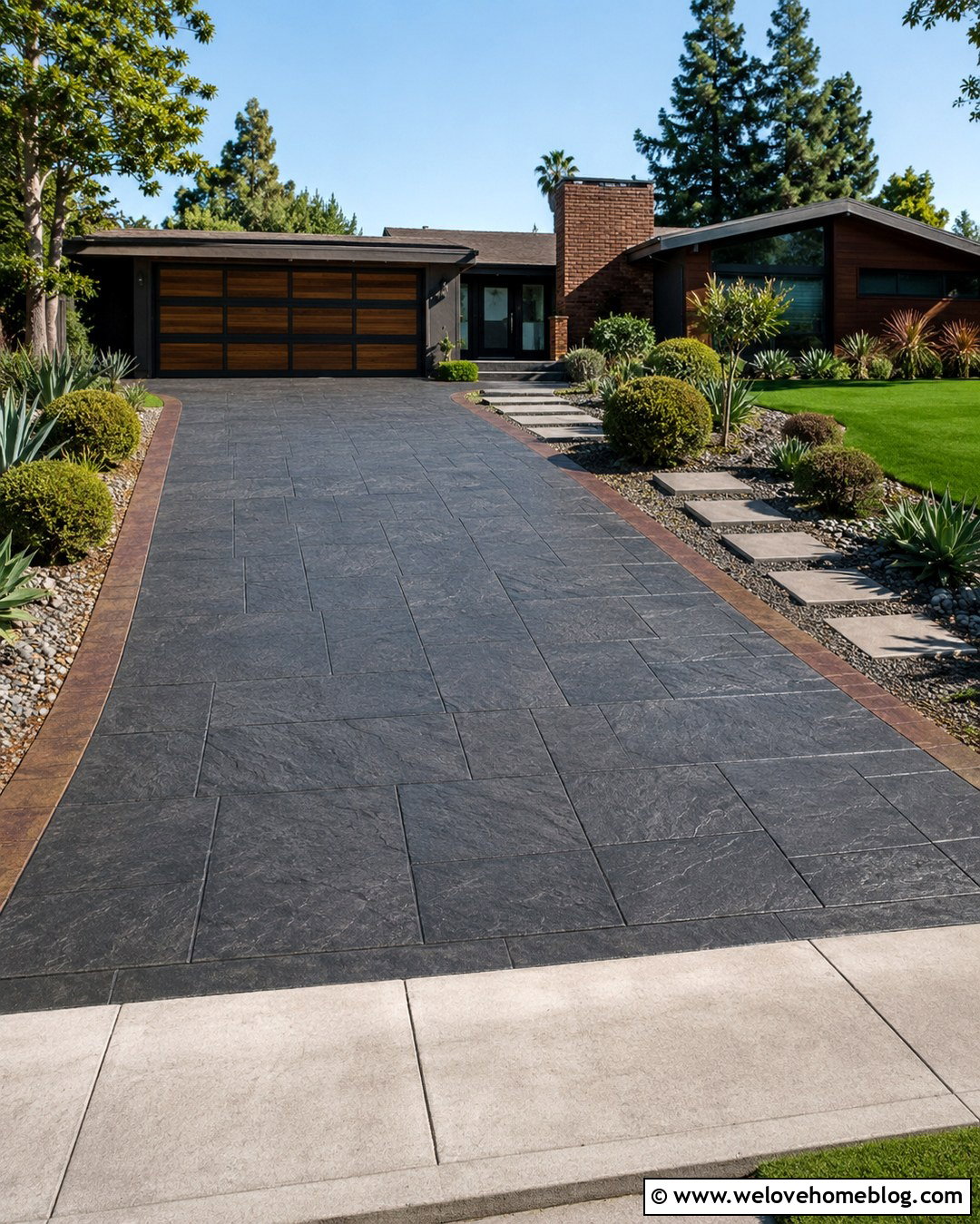
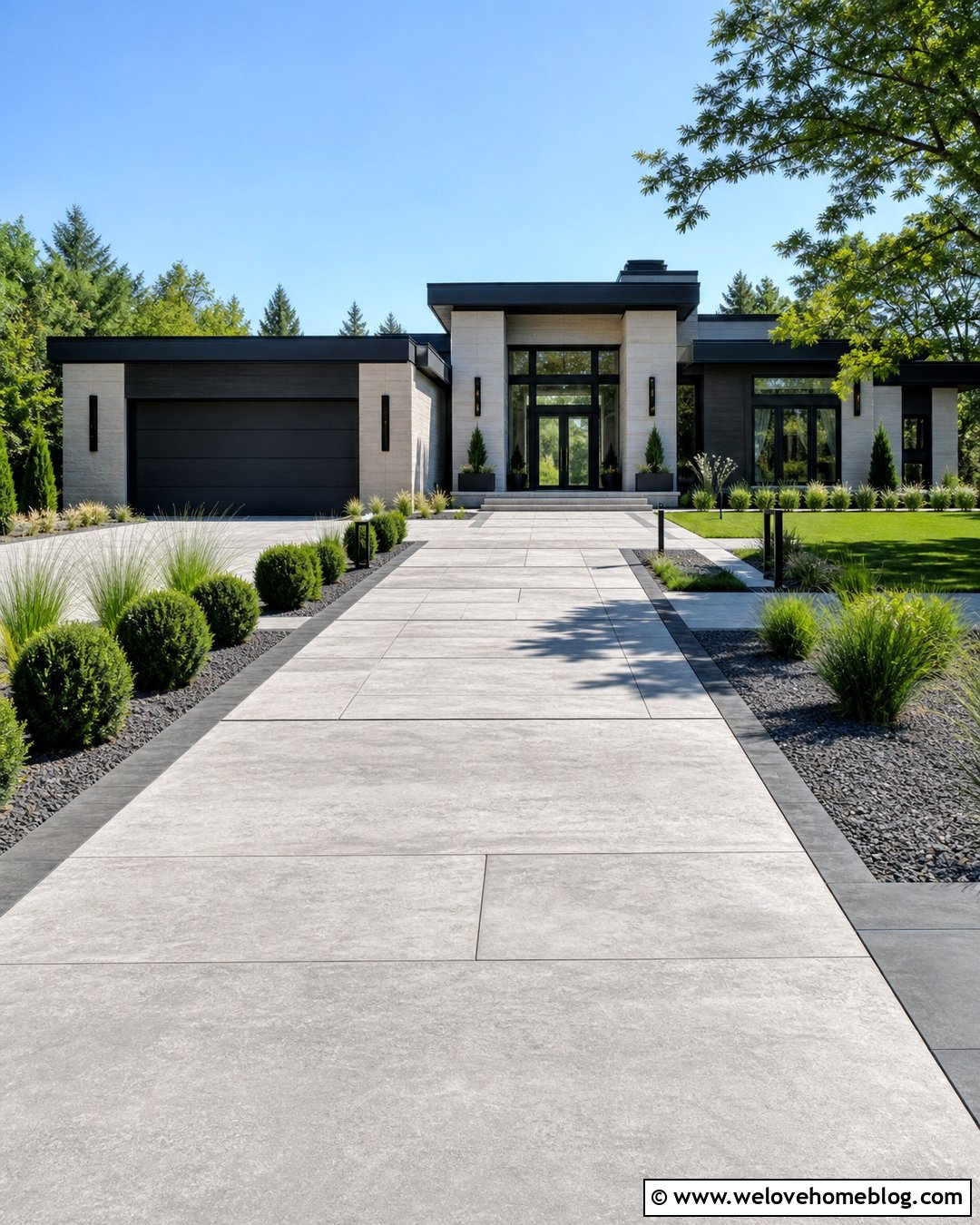
Could a brick pattern work with contemporary architecture? A charcoal brick stamped concrete driveway proves that the material does not need to look rustic or traditional. Select a deep gray base with lighter highlights across the raised texture and crisp, dark joints. A stacked running bond pattern reinforces the clean lines of a modern house. Keep the driveway straight and frame it with smooth pale-gray concrete bands for contrast. Structured planting beds containing ornamental grasses, clipped shrubs, and a few sculptural evergreens maintain the minimalist effect. Large rectangular walkway slabs can connect the driveway to the entrance without competing with the brick imprint. This darker finish makes a strong statement, but balanced landscaping and a light-colored facade prevent the overall curb view from feeling too heavy.
5. Tan Brick Stamped Concrete Driveway
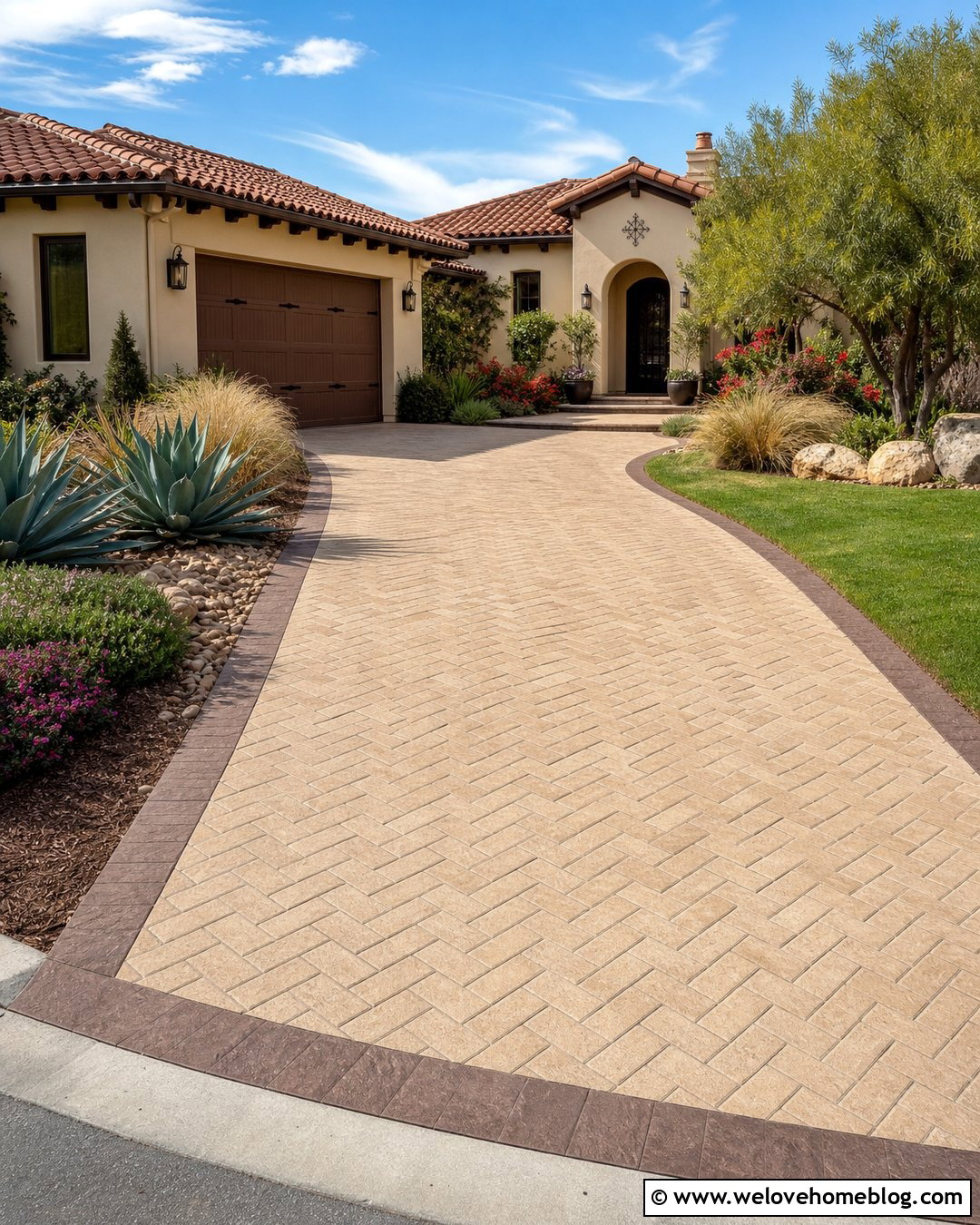
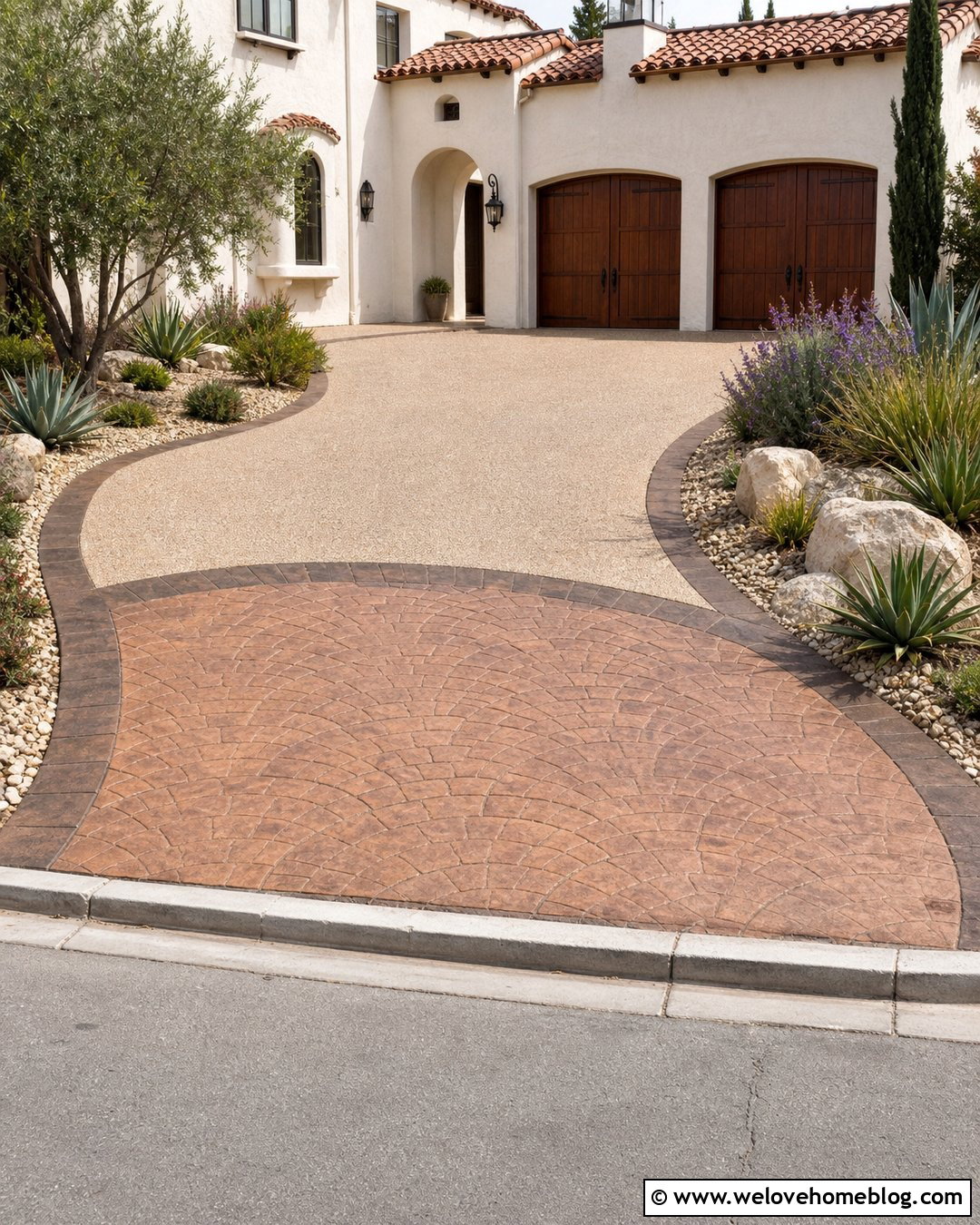
Soft tan coloring gives brick stamped concrete a relaxed look that fits warm climates and light-colored homes. Rather than imitating red clay brick, this treatment resembles weathered buff masonry. Use a sandy beige base with taupe or walnut antiquing to reveal the pattern’s texture. A 45-degree herringbone layout adds movement to a curved driveway, while a darker brown soldier-course border defines both sides. Drought-tolerant landscaping can complete the design with agave, fountain grass, low flowering shrubs, decorative rock, and a small shade tree. The combination complements Mediterranean, Spanish, and Southwestern architecture without overwhelming stucco walls or tile roofing. Choose color samples outdoors beside the house because sunlight, surrounding soil, and facade colors can change how the finished concrete appears.
6. Brick Stamped Concrete Driveway With Dark Border
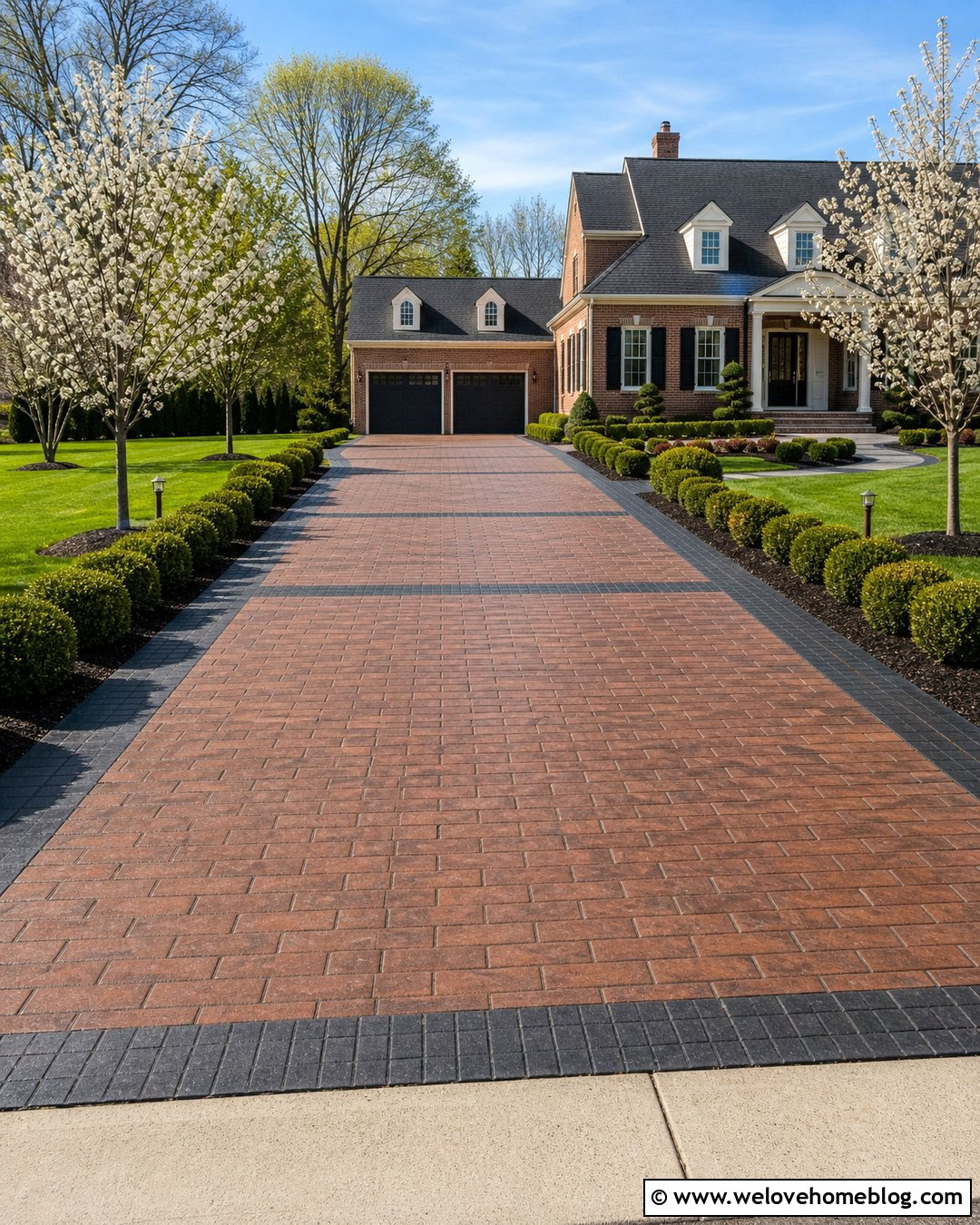
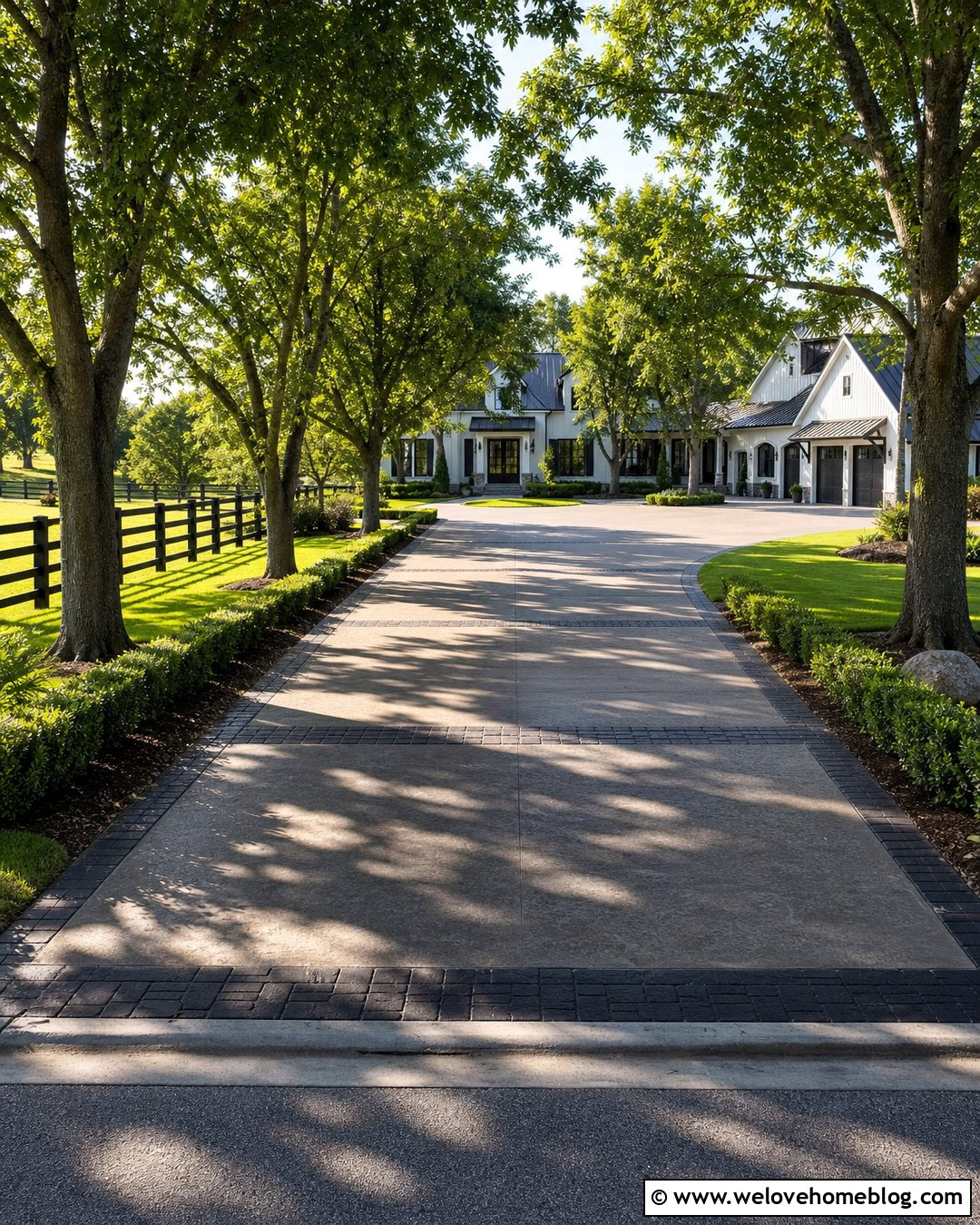
A dark border can make a large brick stamped concrete driveway look more organized and polished. Use a warm reddish-brown running bond pattern for the main field, then surround it with a charcoal brick-stamped band. The contrast creates a strong outline along the lawn, planting beds, sidewalk, and garage threshold. It can also visually separate different parking areas on a wide driveway. Keep the layout straight and add matching crossbands at natural divisions rather than placing decorative lines randomly. Formal boxwood borders, small flowering trees, and balanced foundation plantings support the structured appearance. This design works well with a two-story traditional home featuring black shutters or a dark roof. Contrasting borders and bands are established ways to give stamped surfaces greater definition. ()
7. Curved Brick Stamped Concrete Driveway
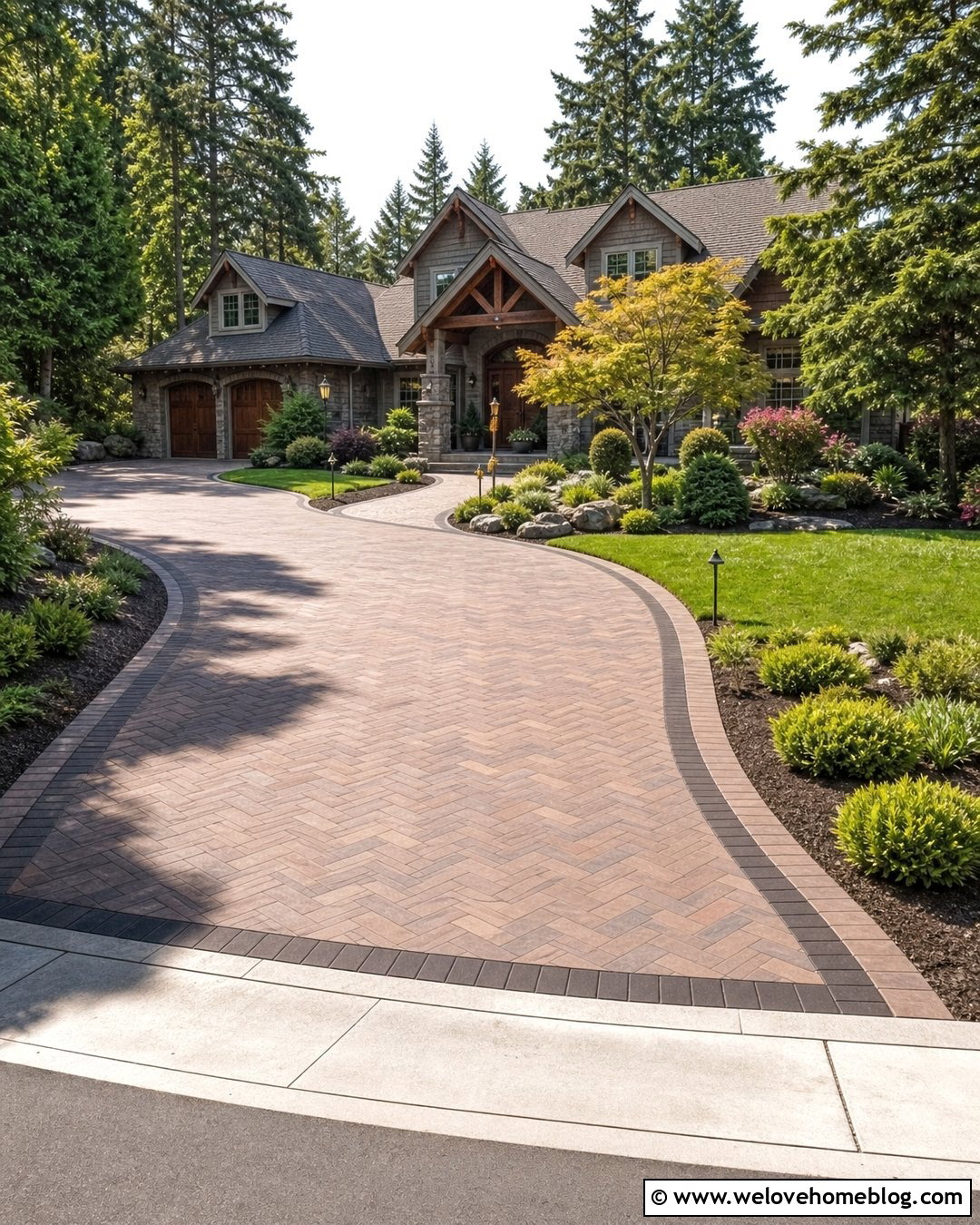
A gently curved driveway creates a more graceful approach and allows the brick pattern to unfold gradually. Choose a reddish-taupe herringbone stamp that follows the direction of travel, helping the curve feel intentional. Define the outer edge with a dark brown soldier-course border and use a softer border color beside the inner planting bed. A small ornamental tree, layered shrubs, and ground cover can occupy the center of the curve without blocking the home. Low landscape lighting may follow the border while remaining secondary during the day. This complete design is especially effective for ranch, craftsman, and country houses positioned slightly away from the street. Maintain a comfortable turning path and avoid tight curves that make daily parking or snow removal unnecessarily difficult.
8. Circular Brick Stamped Concrete Driveway
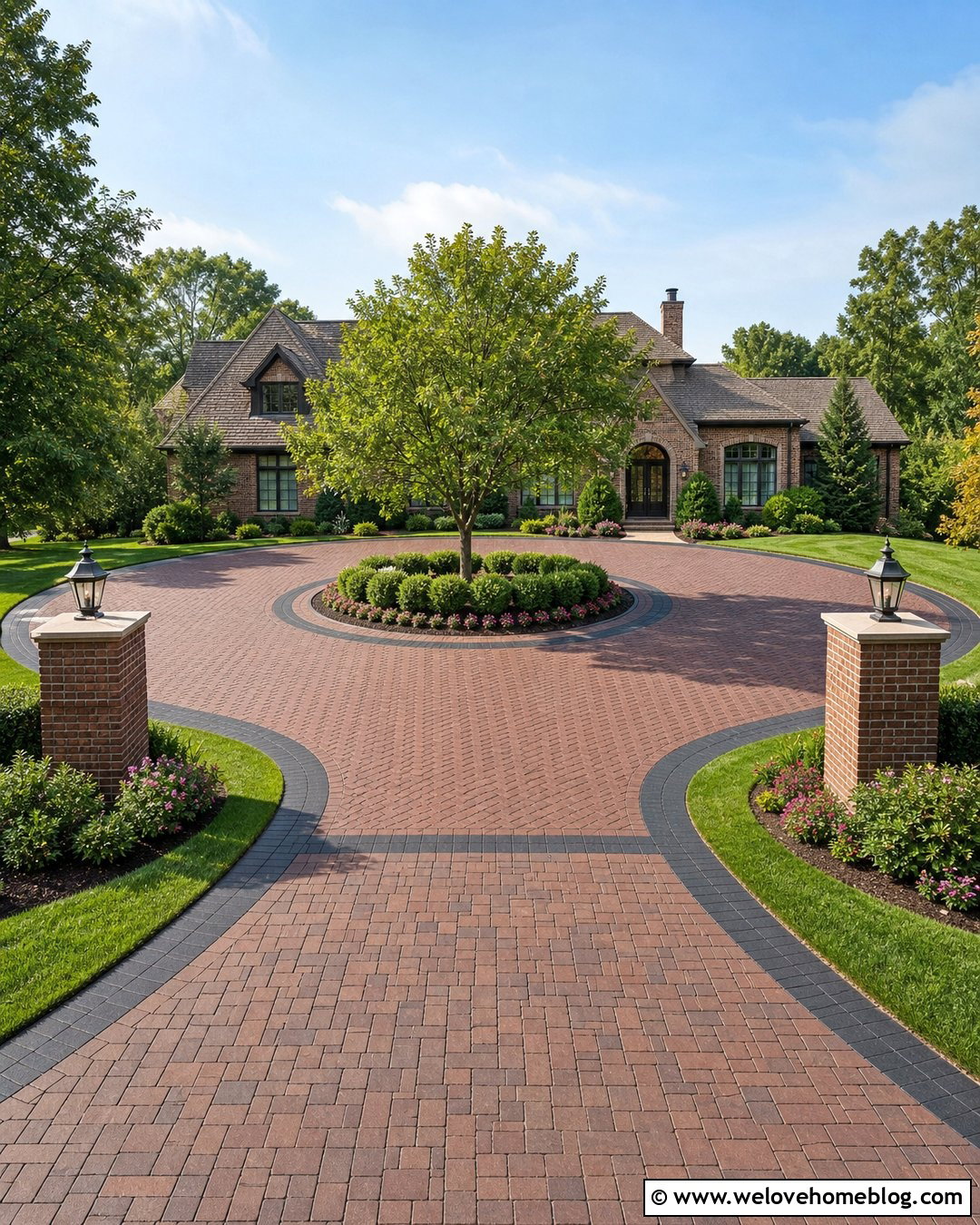
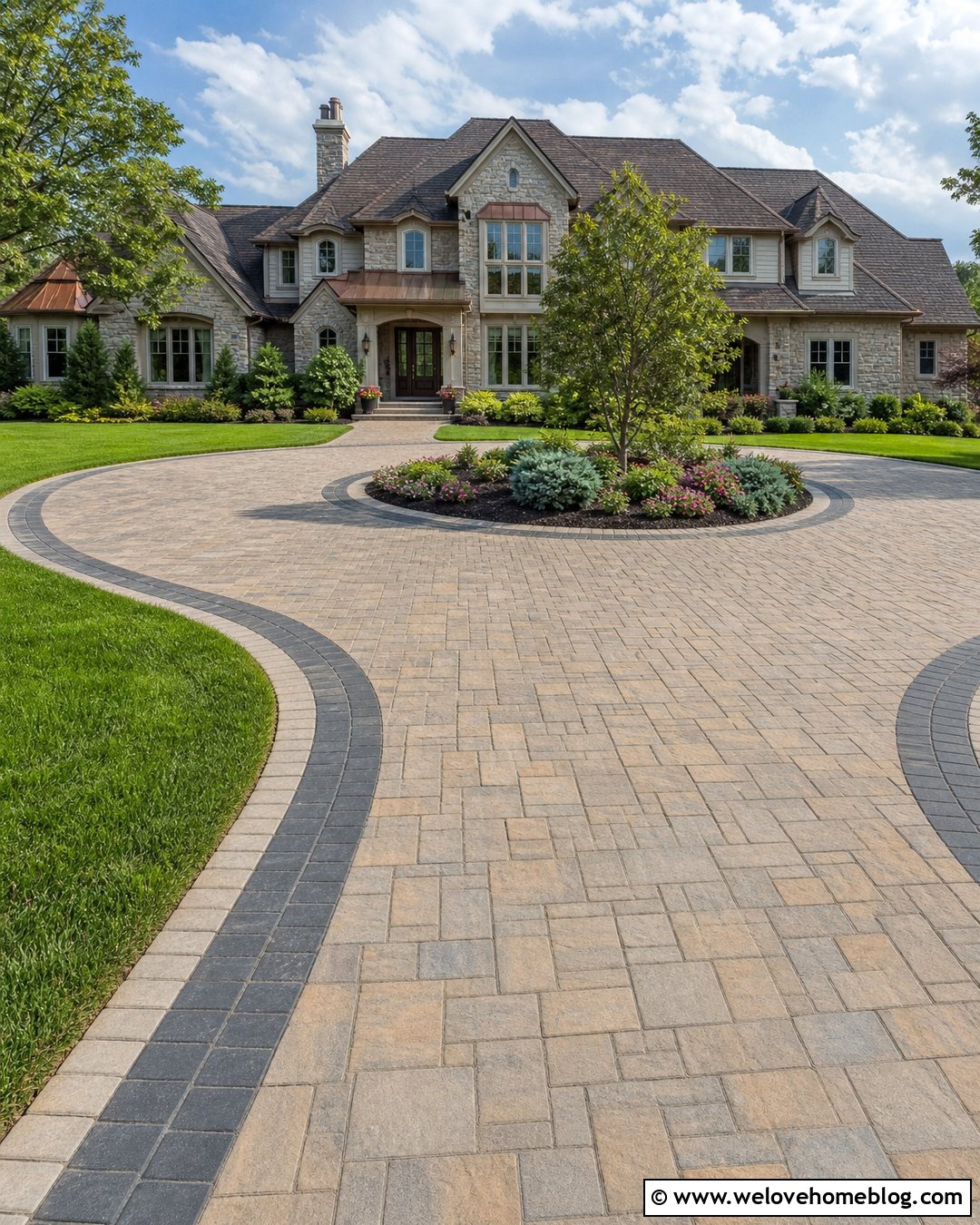
A circular brick stamped concrete driveway creates an impressive entrance while improving movement through a spacious front yard. Use a classic herringbone field in muted red, brown, and charcoal tones. Near the center island, shift to a radial brick pattern so the stamped lines follow the circular geometry instead of ending awkwardly. A matching dark border around both edges visually contains the design. Landscape the central island with one specimen tree, low evergreen shrubs, and flowers that stay below important sightlines. Brick-faced pillars at the entrance can echo the driveway’s color without creating an overly matched appearance. This arrangement suits colonial, traditional, and estate-style homes. The decorative pattern should remain consistent around turns, where uneven stamp alignment is most noticeable from the curb.
9. Brick Stamped Concrete Driveway With Stone Edging
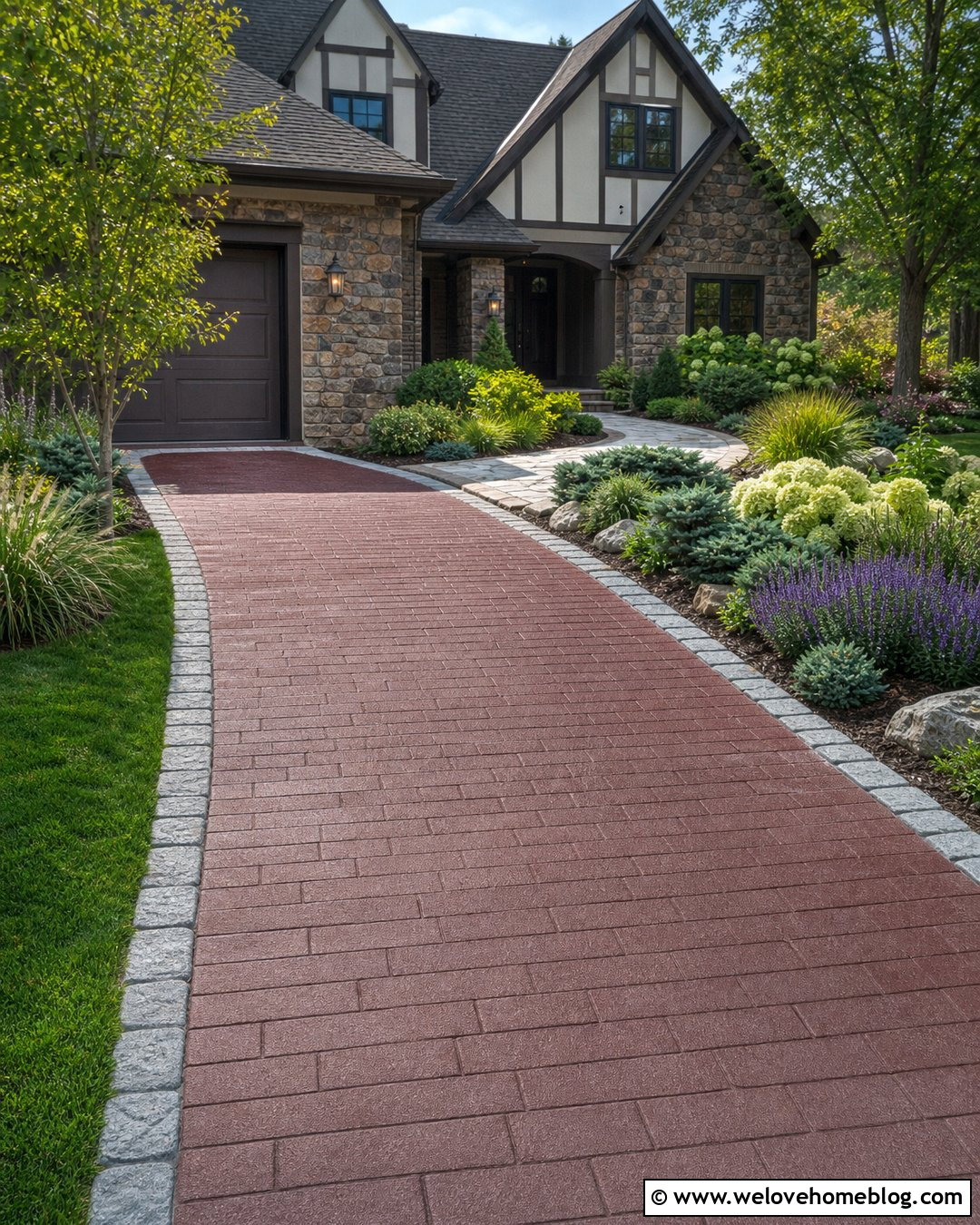
Stone edging introduces natural texture around the precise lines of a brick stamped concrete driveway. Begin with a deep burgundy running bond pattern containing subtle brown and charcoal variation. Install a wide border of gray cobblestone or granite setts along both sides, keeping the stones level with the concrete transition. The cooler border color balances the warm brick finish and links the driveway to stonework on the house. Layered planting beds containing juniper, salvia, hydrangeas, and ornamental grasses can soften the outer edges. A straight layout gives the contrasting materials room to read clearly from the street. This design looks especially cohesive beside a craftsman or Tudor-inspired home with stone veneer, dark wood details, and a prominent front gable.
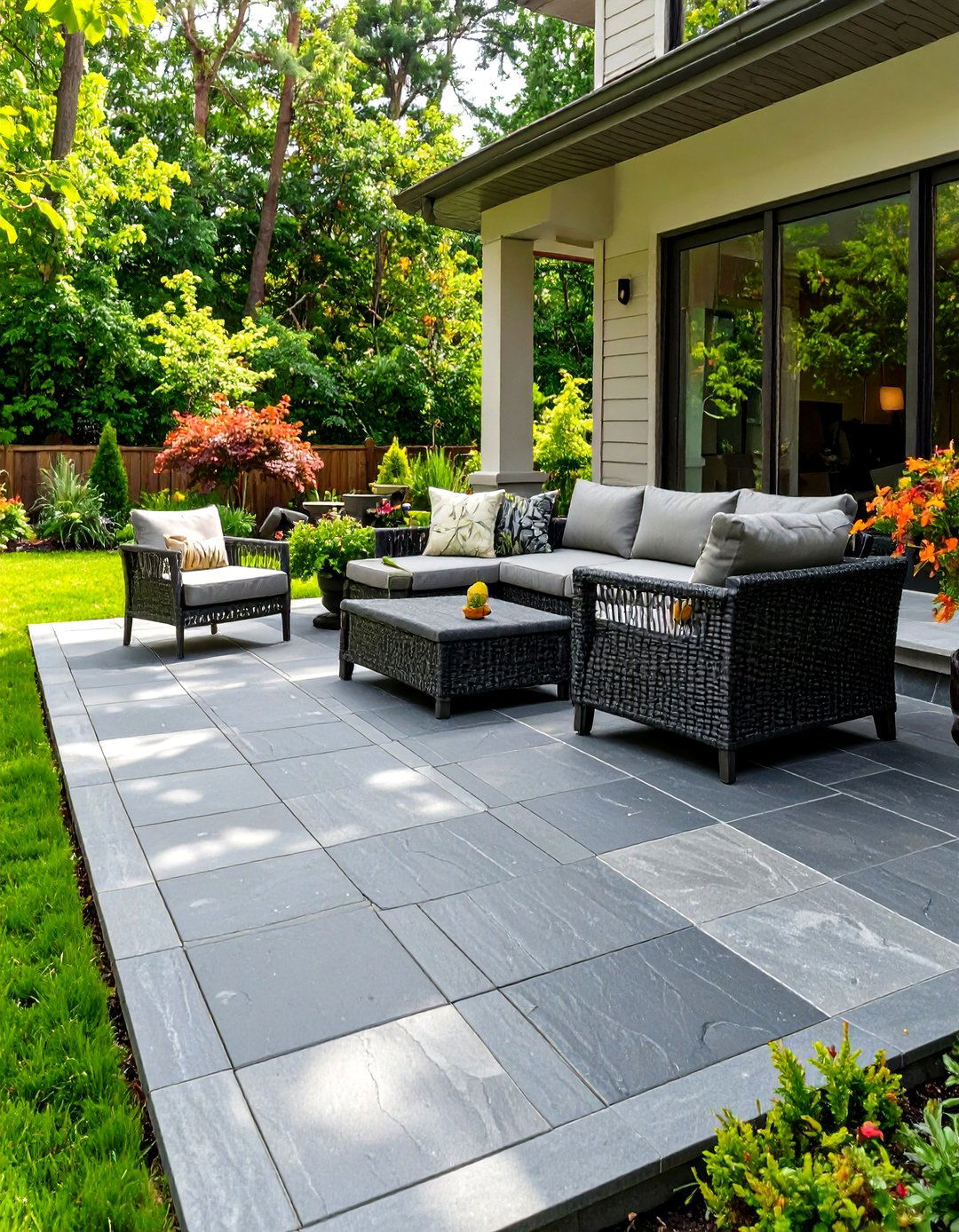
10. Brick Stamped Concrete Driveway With Grass Border
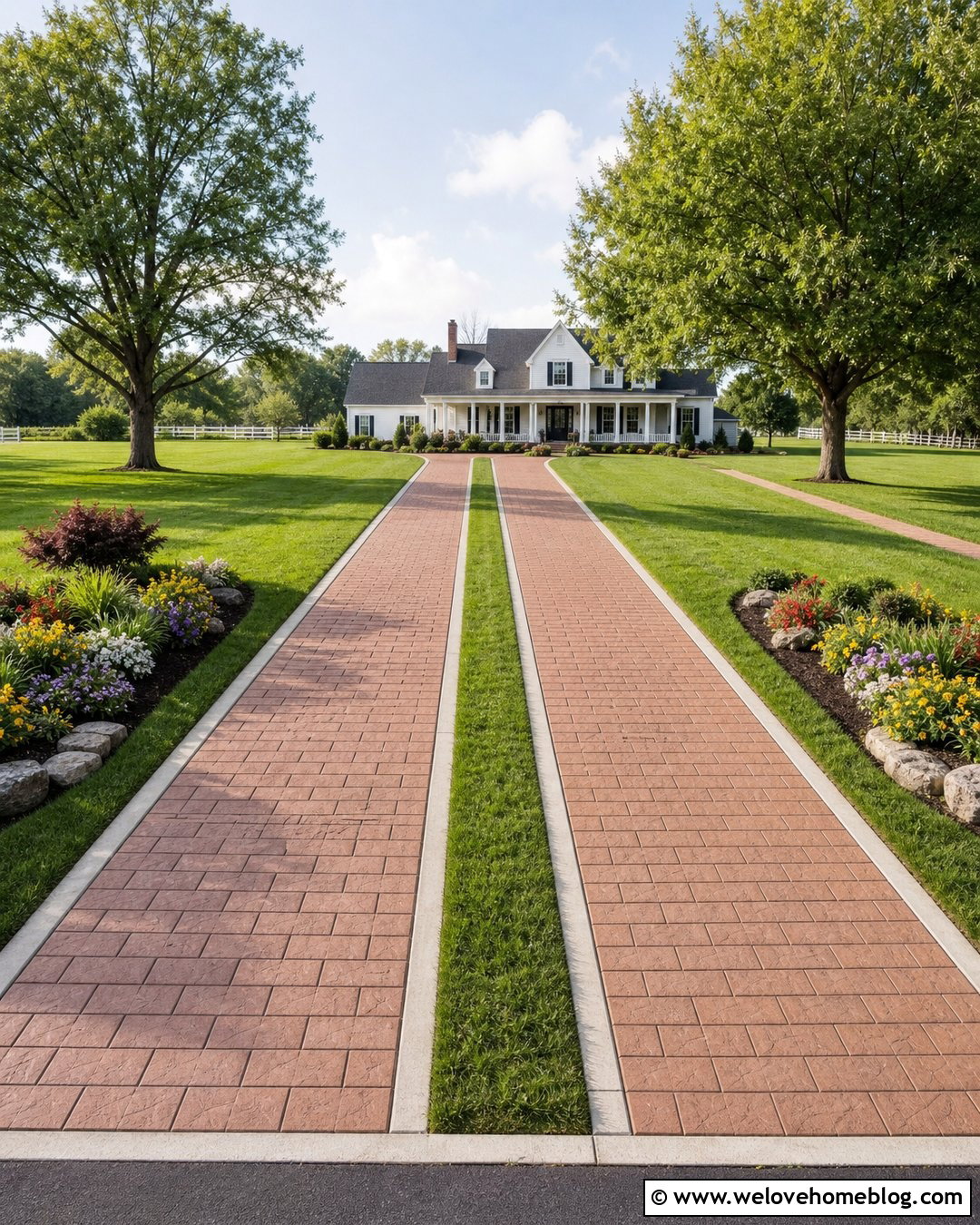
Fresh green grass creates a simple, affordable frame for warm brick stamped concrete. Select a medium terracotta running bond pattern with a subtle tan release color that prevents the driveway from looking uniformly red. Keep the edges straight and crisp, allowing the lawn to meet a narrow flush concrete curb. This curb protects the stamped edge while remaining almost invisible from a distance. A central grass strip can be added to a long driveway when the property layout and maintenance needs allow it, creating the character of an old carriage drive. Repeat the brick finish on a narrow front walkway and add informal beds near the house. The complete look is well suited to farmhouse, cottage, and country homes surrounded by open lawn and mature trees.
11. Brick Stamped Concrete Driveway With Brick Columns
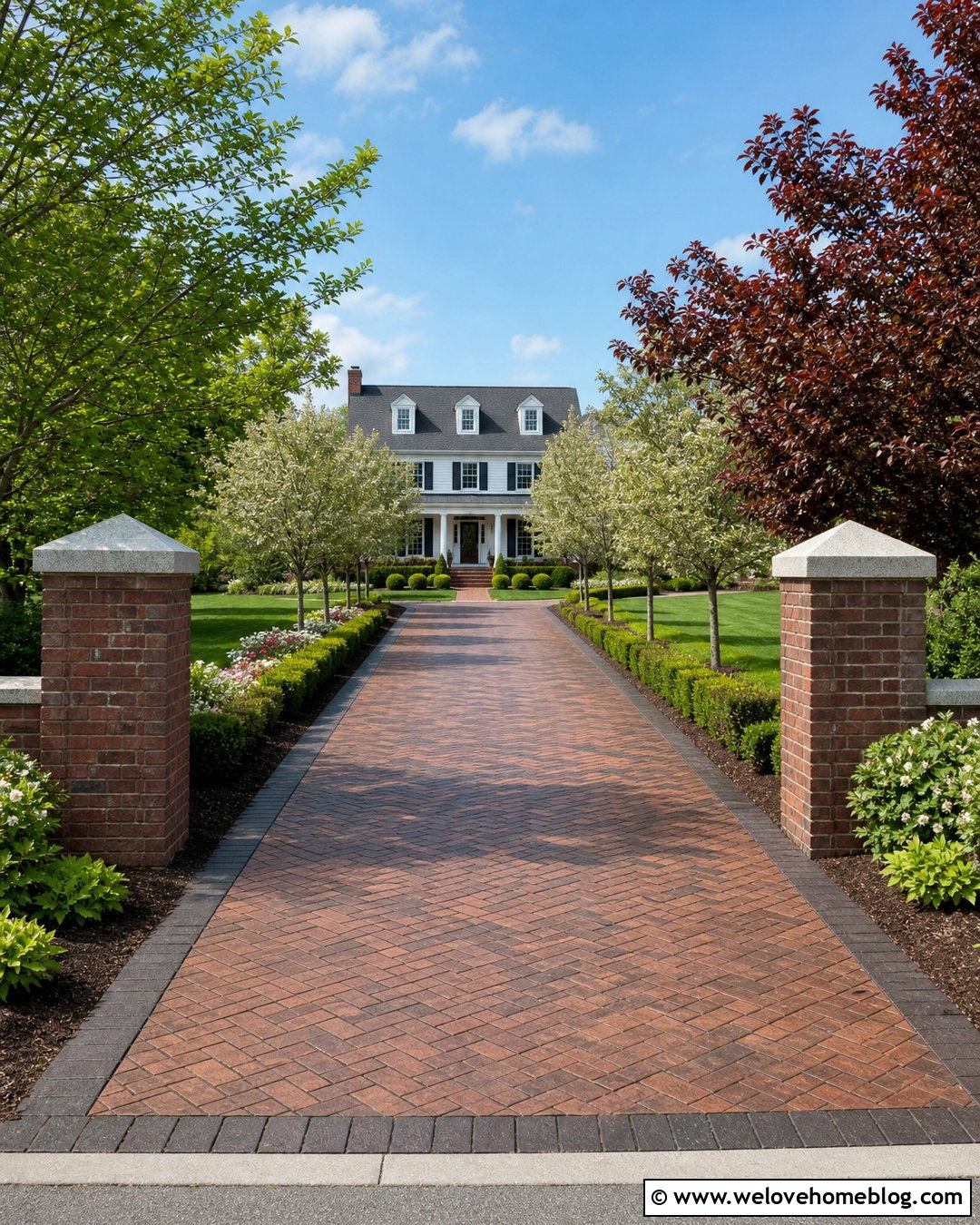
Brick entrance columns can give a long stamped driveway a clear starting point and stronger street presence. Use a warm brown-red herringbone pattern for the full driveway, bordered by a darker running bond band. Build square masonry columns in a related brick blend rather than attempting an exact color match. Stone caps or pale concrete caps provide contrast and help connect the columns with lighter trim on the house. Low hedges, flowering perennials, and two small ornamental trees can frame the entrance without hiding it. For nighttime function, mount appropriately scaled lanterns on the columns, while image styling and daytime curb appeal remain bright and open. This complete approach suits colonial, traditional farmhouse, and craftsman architecture, especially when the home sits back from the road.
12. Brick Stamped Concrete Driveway With Paver Apron
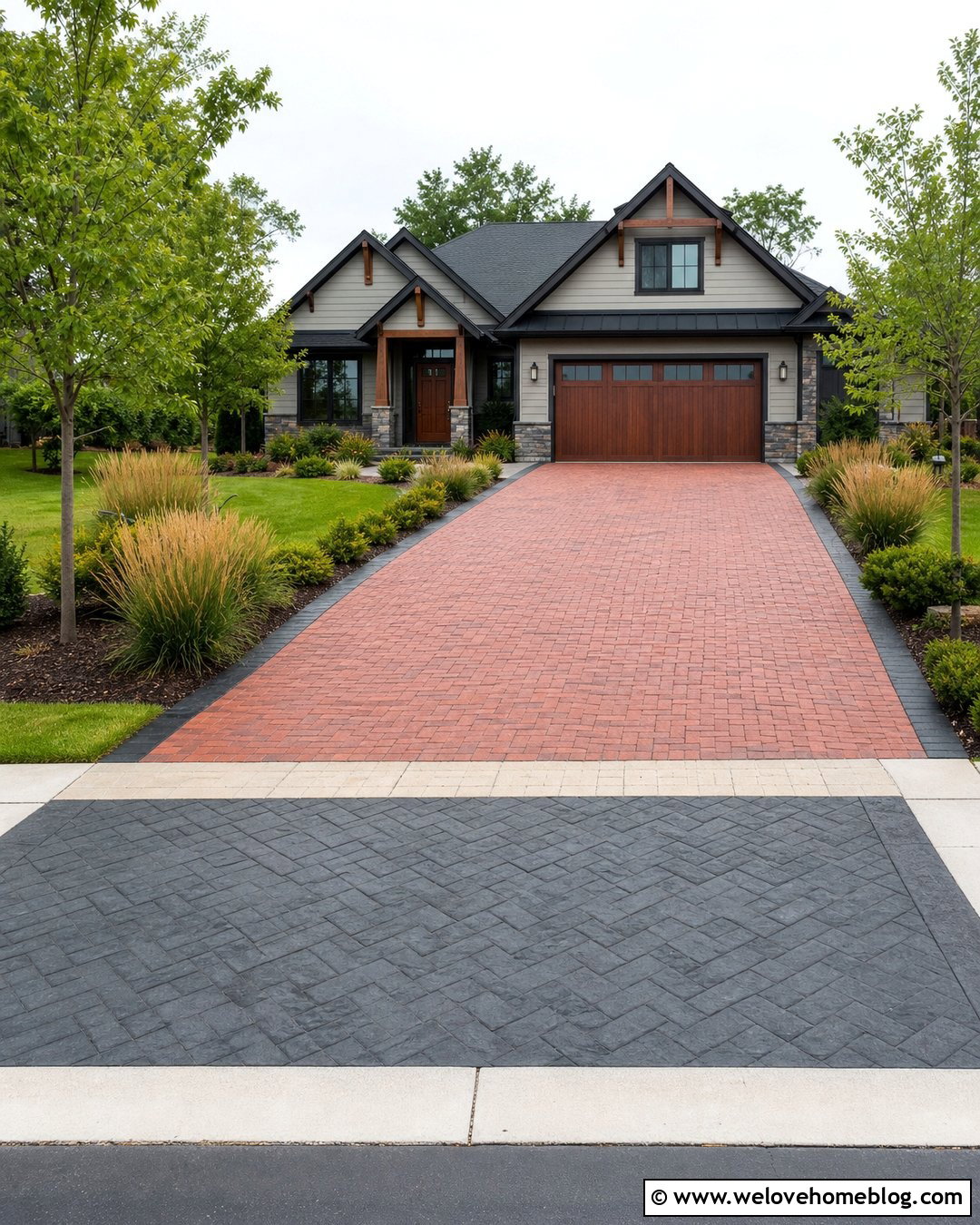
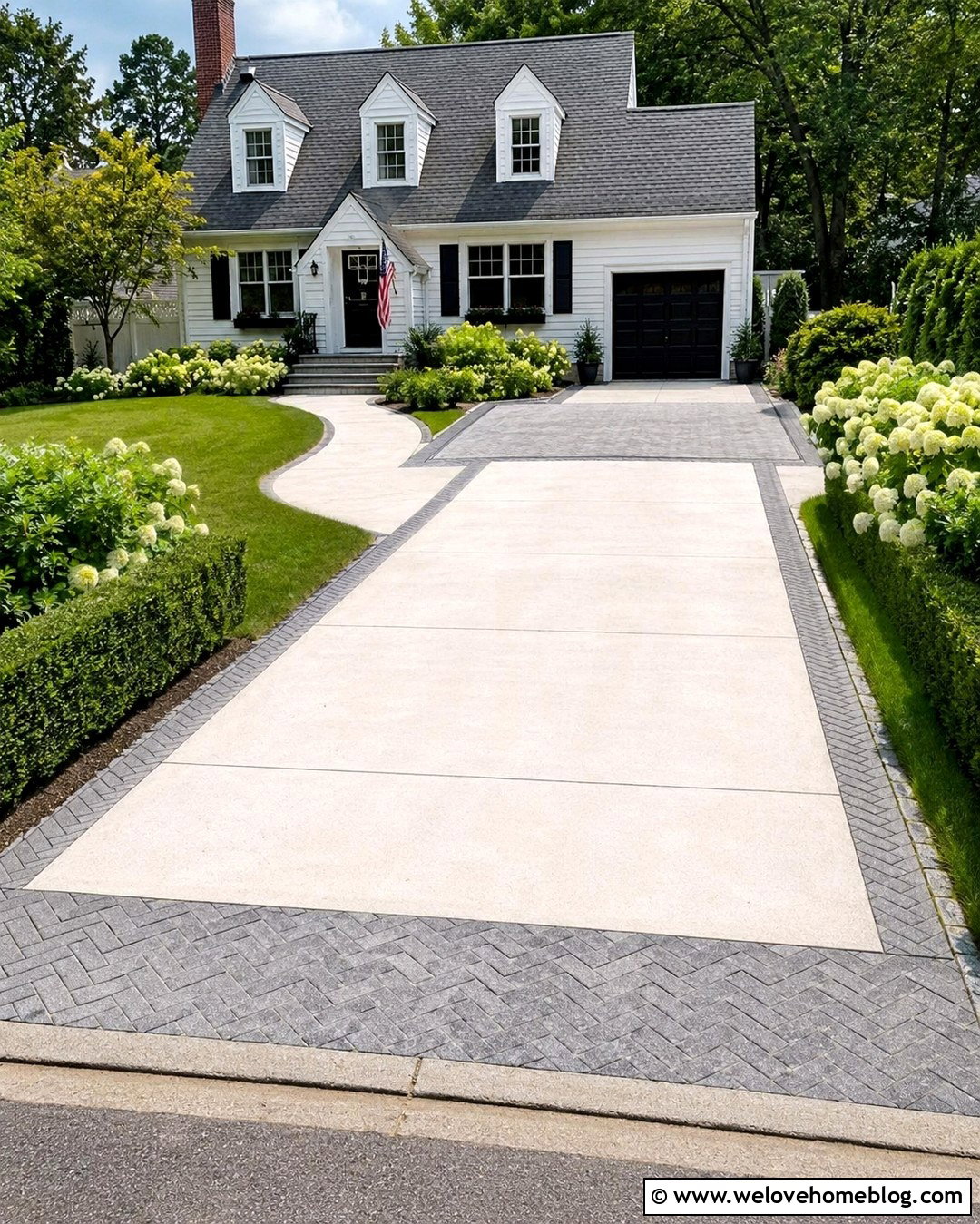
A contrasting entrance apron gives brick stamped concrete a more customized appearance and highlights the transition from street to private property. Use a muted red basketweave stamp across the main driveway, then create a broad charcoal herringbone apron at the curb. A narrow cream-colored concrete band between the two patterns can keep the transition crisp. Continue dark edging along the driveway so the apron feels connected rather than added later. Plant low ornamental grasses and compact shrubs near the entrance, leaving wide, clear sightlines for vehicles. This design works on straight driveways leading to ranch, transitional, or craftsman homes. Borders and decorative bands can add impact while dividing a large concrete area into more visually manageable fields. ()
13. Brick Stamped Concrete Driveway With Concrete Bands
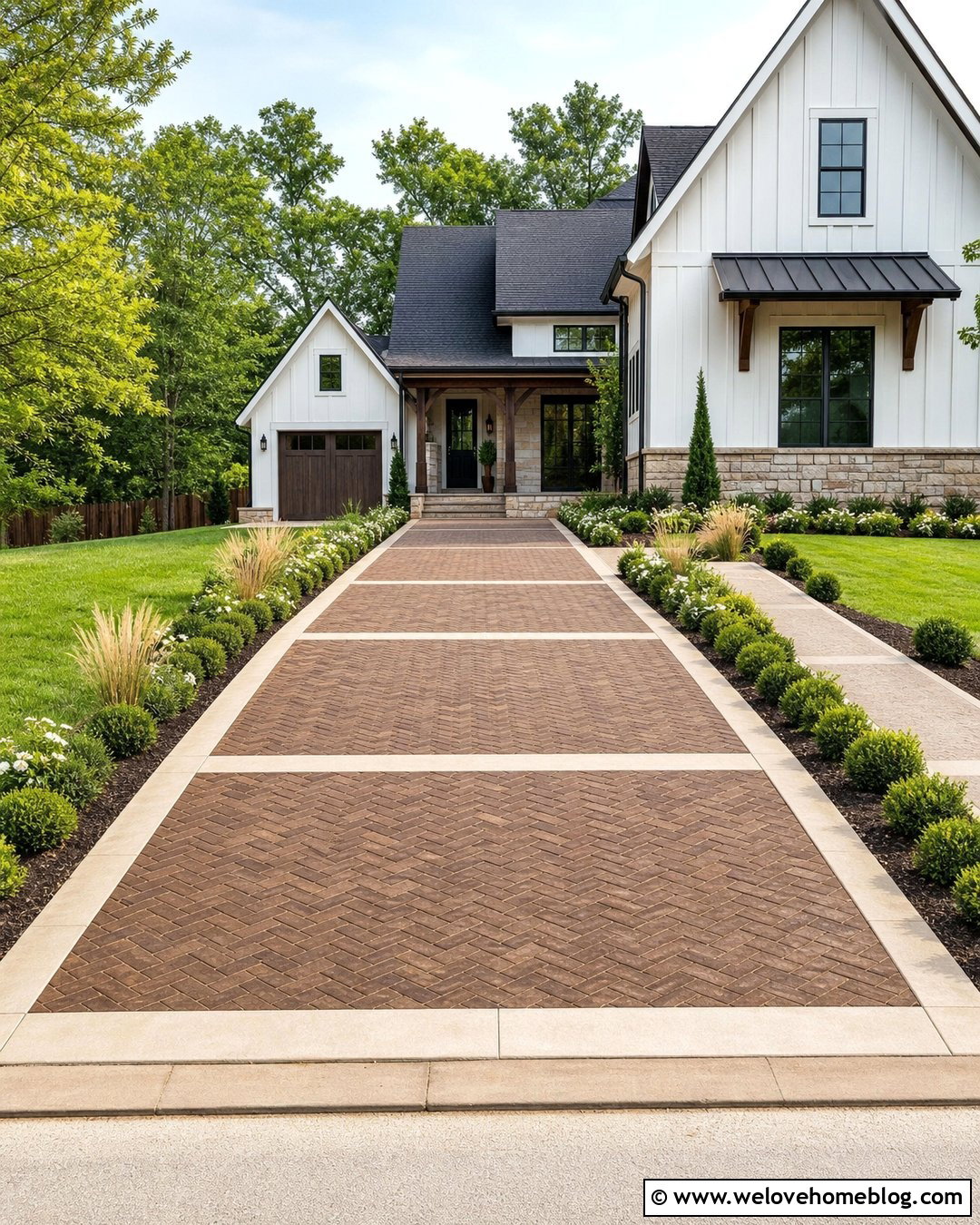
Light concrete bands create a strong geometric contrast against a dark brick-stamped field. Choose a walnut-brown herringbone pattern and divide the driveway into large rectangular sections using smooth cream or pale-gray bands. The bands may align with planned joints, helping necessary divisions become part of the overall composition. Use the same light concrete around the perimeter to establish a clean frame. Structured beds with dwarf evergreens, white flowers, and ornamental grasses reinforce the organized layout. A straight driveway leading to a modern farmhouse or transitional house is ideal because its broad surface clearly displays the grid. Keep the number of bands restrained. Too many small divisions can compete with the brick texture, while several well-spaced lines make the complete driveway look balanced and deliberately planned.
14. Brick Stamped Concrete Driveway With Landscape Island
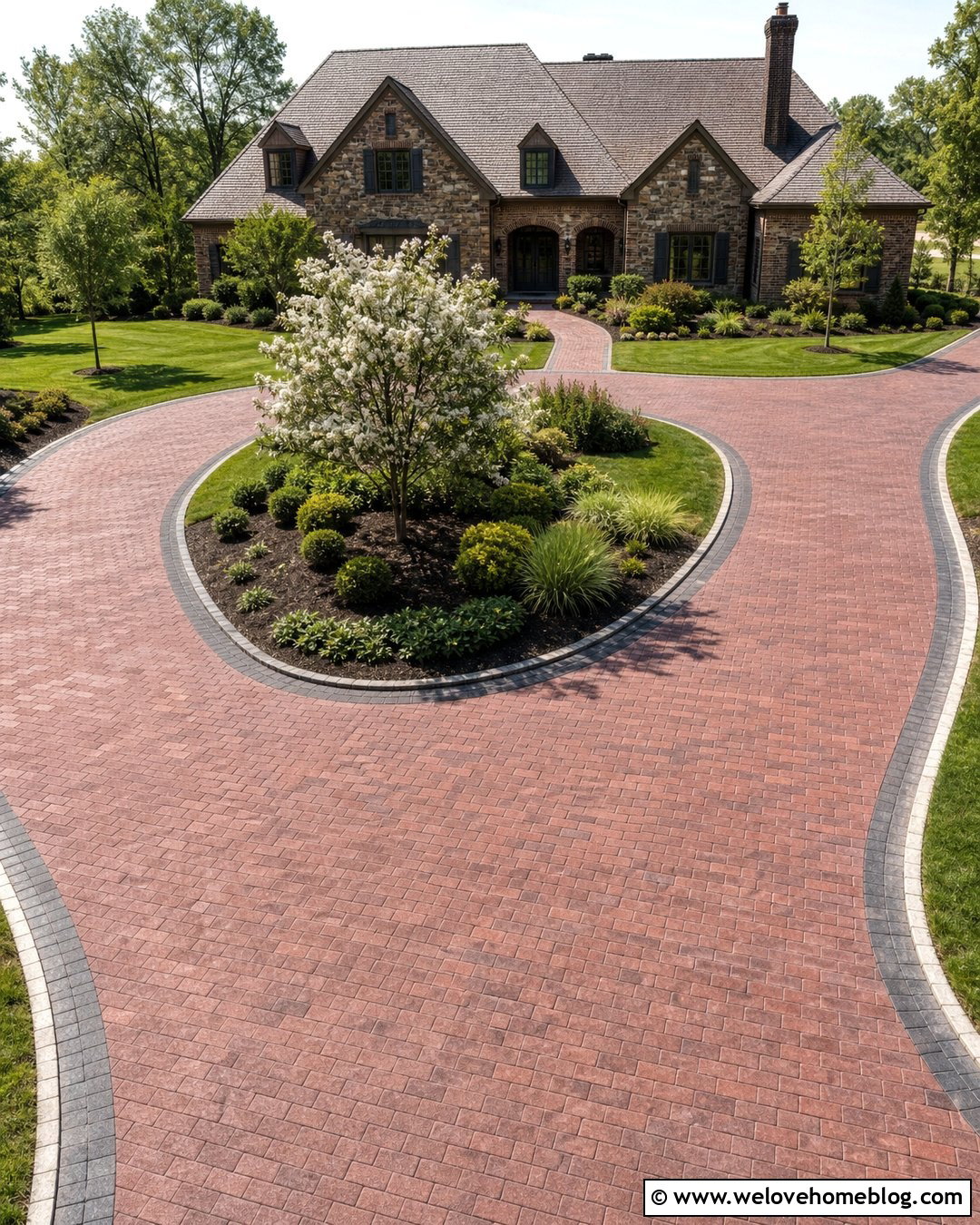
A landscape island breaks up a broad driveway and gives the stamped brick pattern a natural focal point. Shape the driveway into a gentle horseshoe or wide split around an oval planting bed. Use a weathered red running bond stamp with brown antiquing, then follow the island’s curves with a dark soldier-course border. Fill the island with one small flowering tree, low shrubs, ornamental grasses, and ground cover. Avoid tall, dense plants near turning areas because drivers need clear views through the approach. Match the driveway walkway to the main brick pattern and use the same border around nearby beds. This complete layout is a practical option for large suburban lots, country properties, and homes with front-facing garages that need a softer, more landscaped curb view.
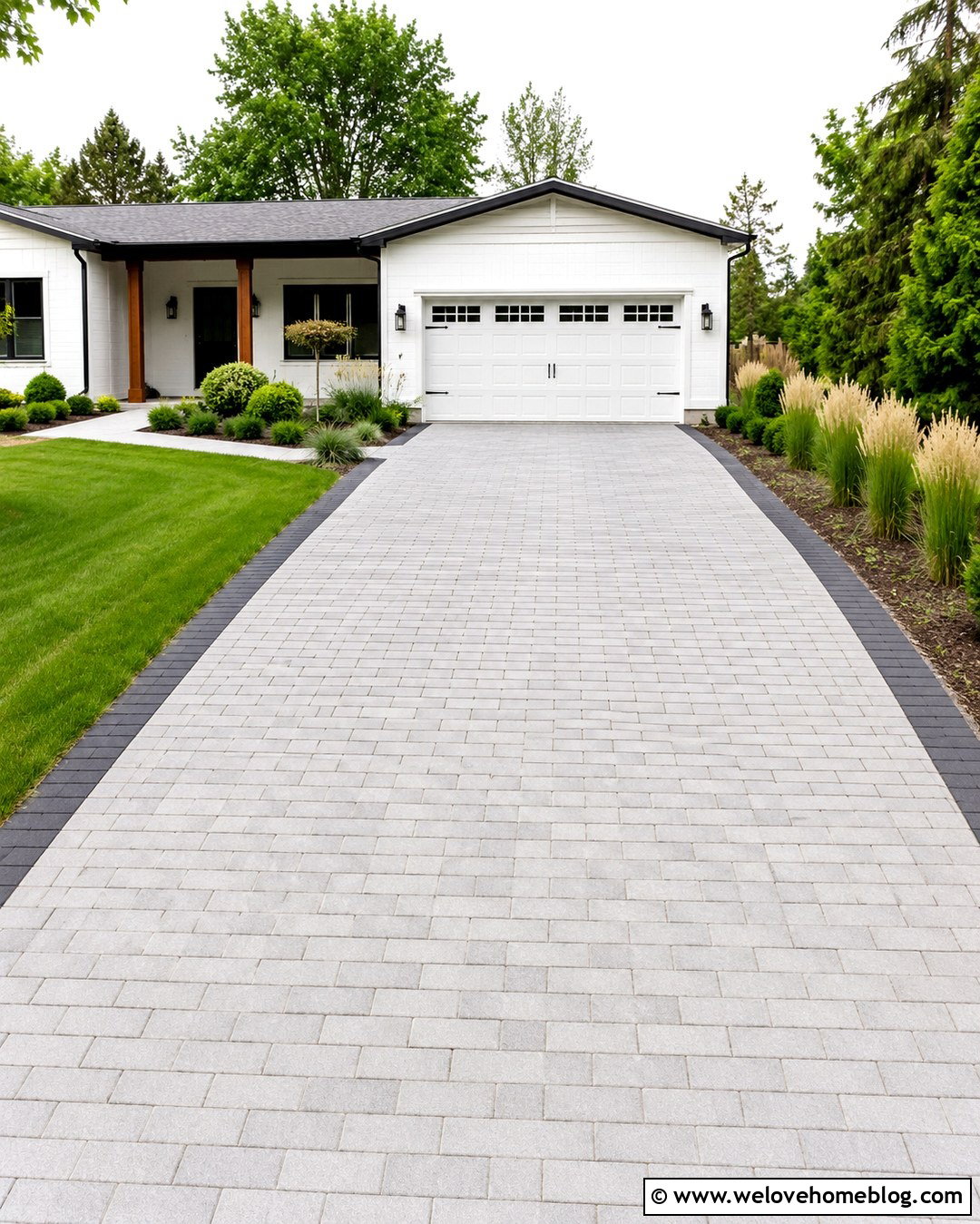
15. Brick Stamped Concrete Driveway For Brick House
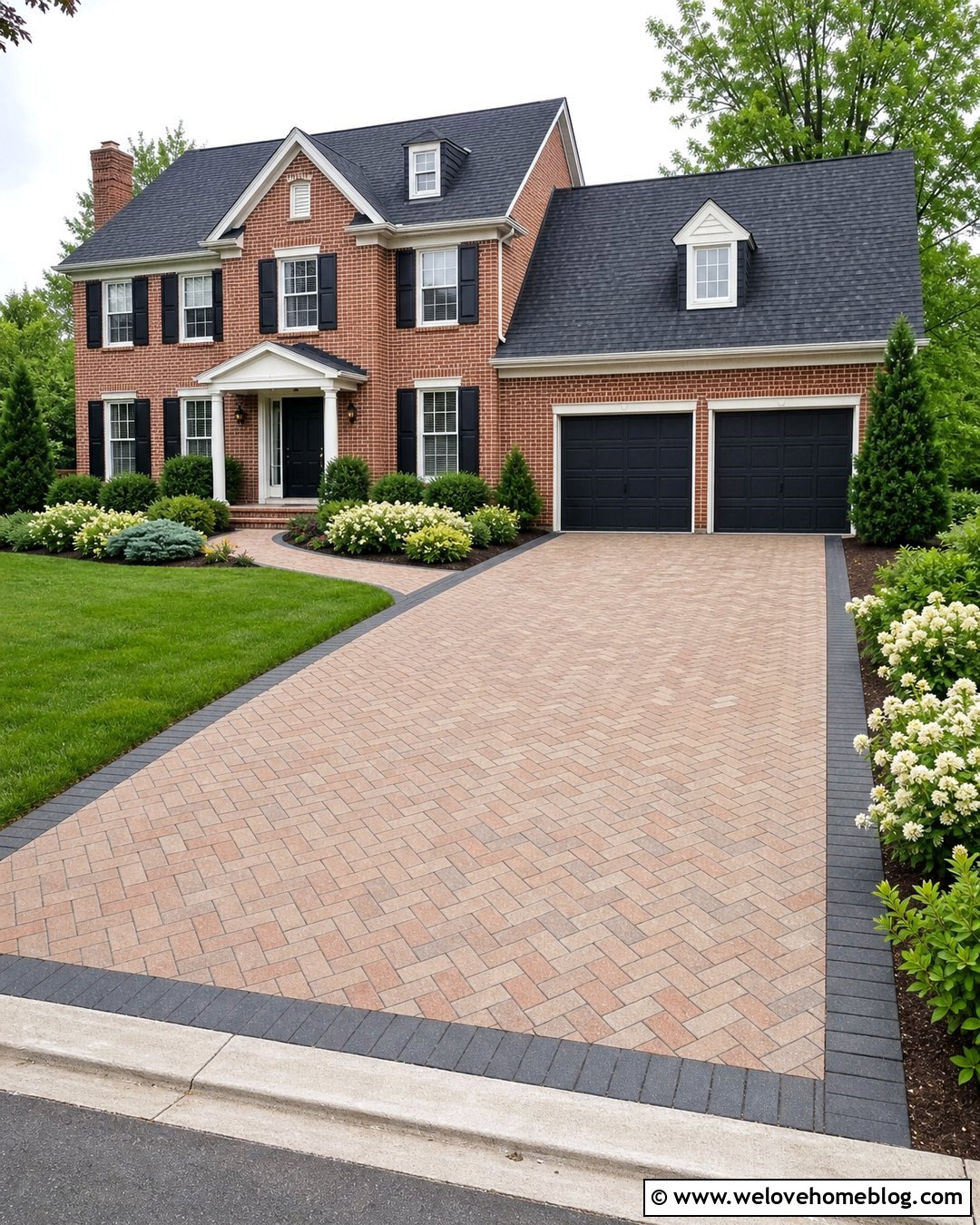
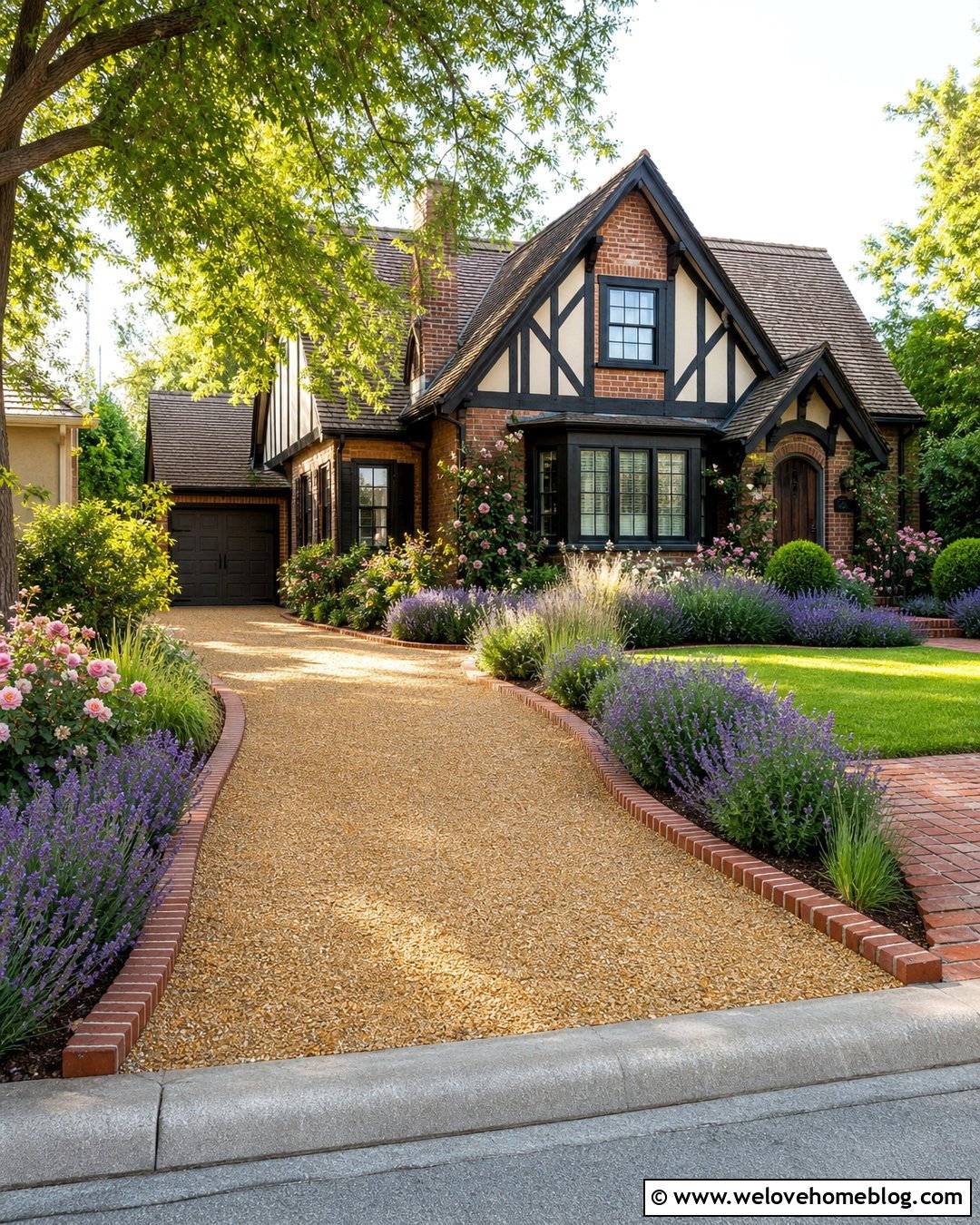
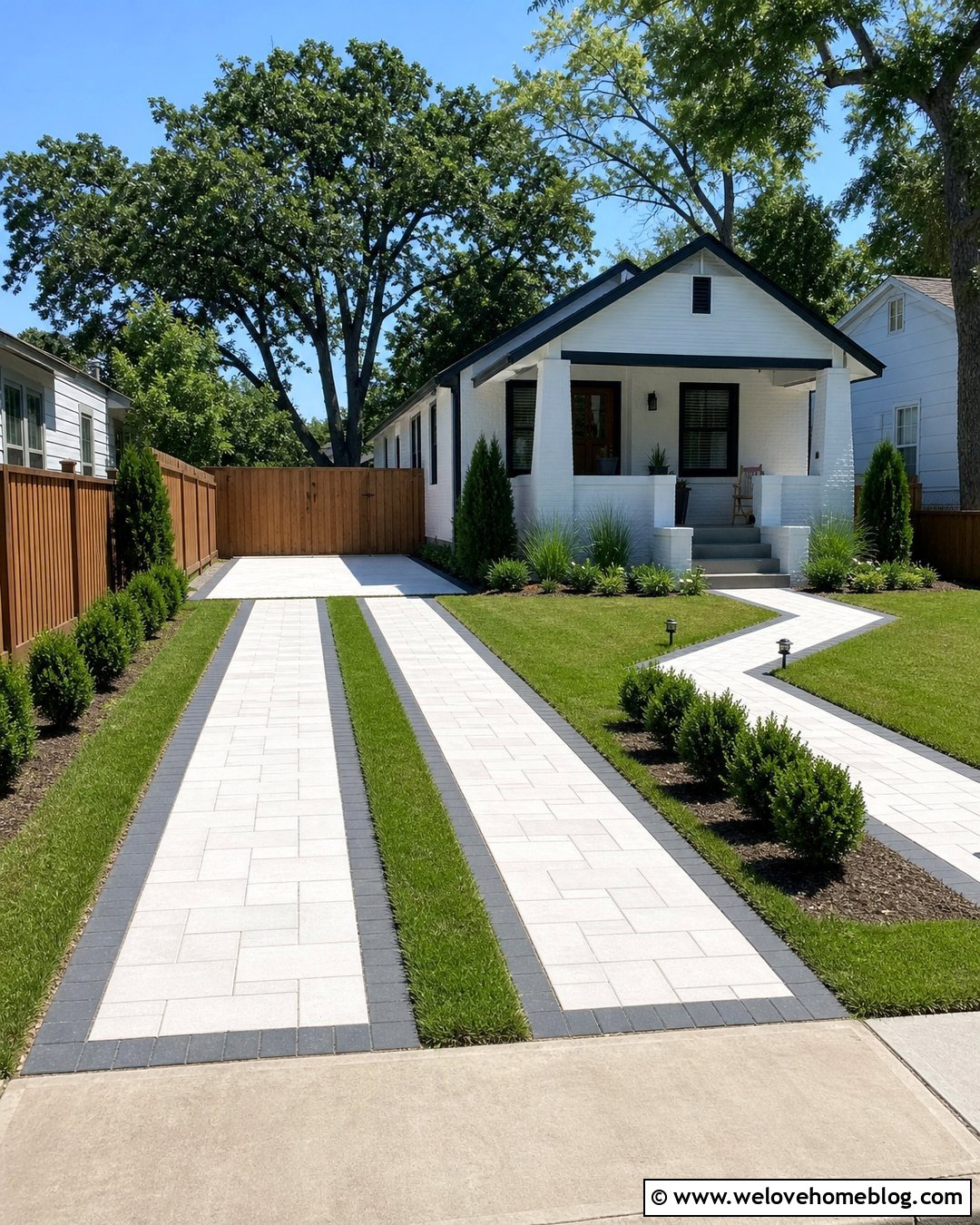
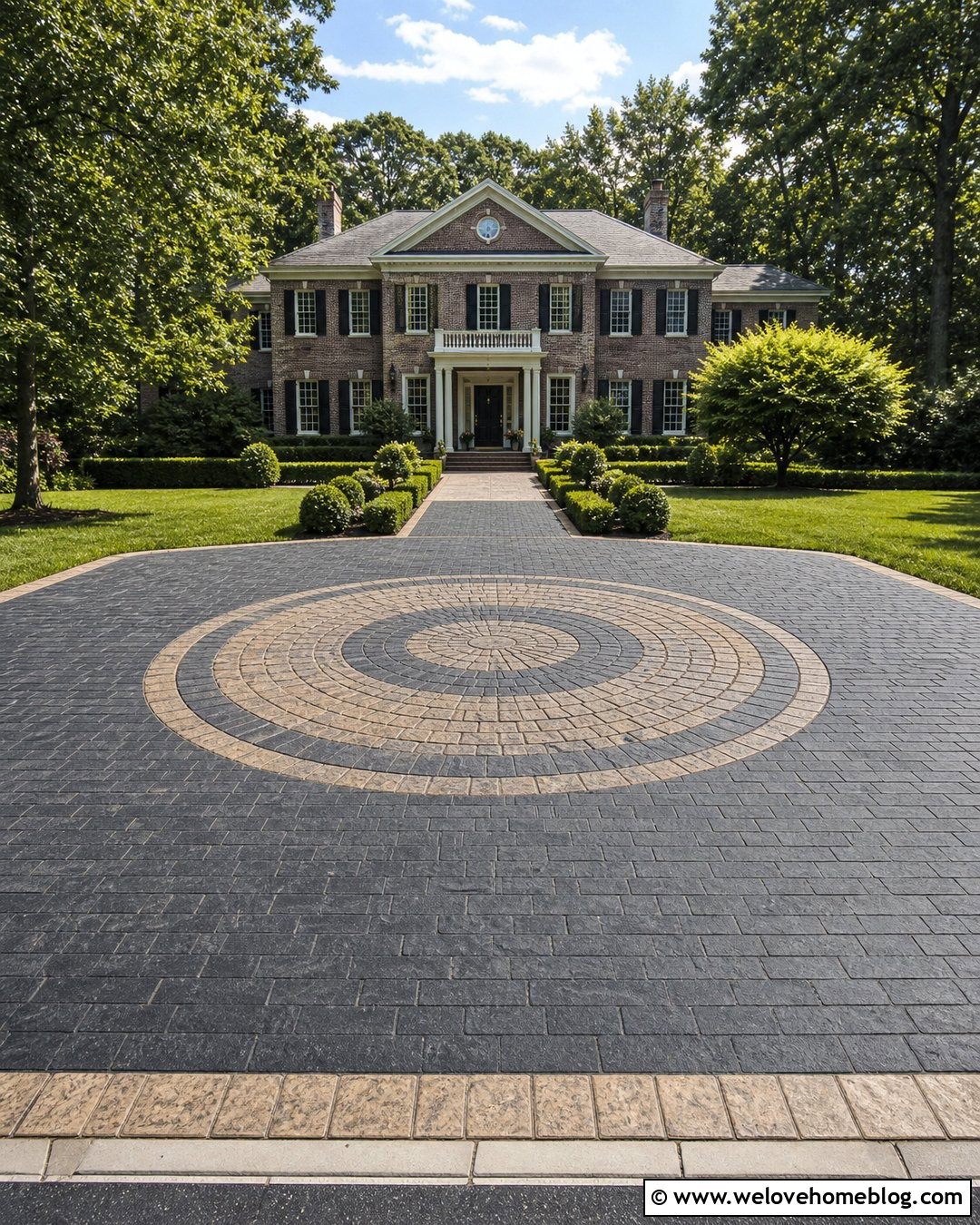
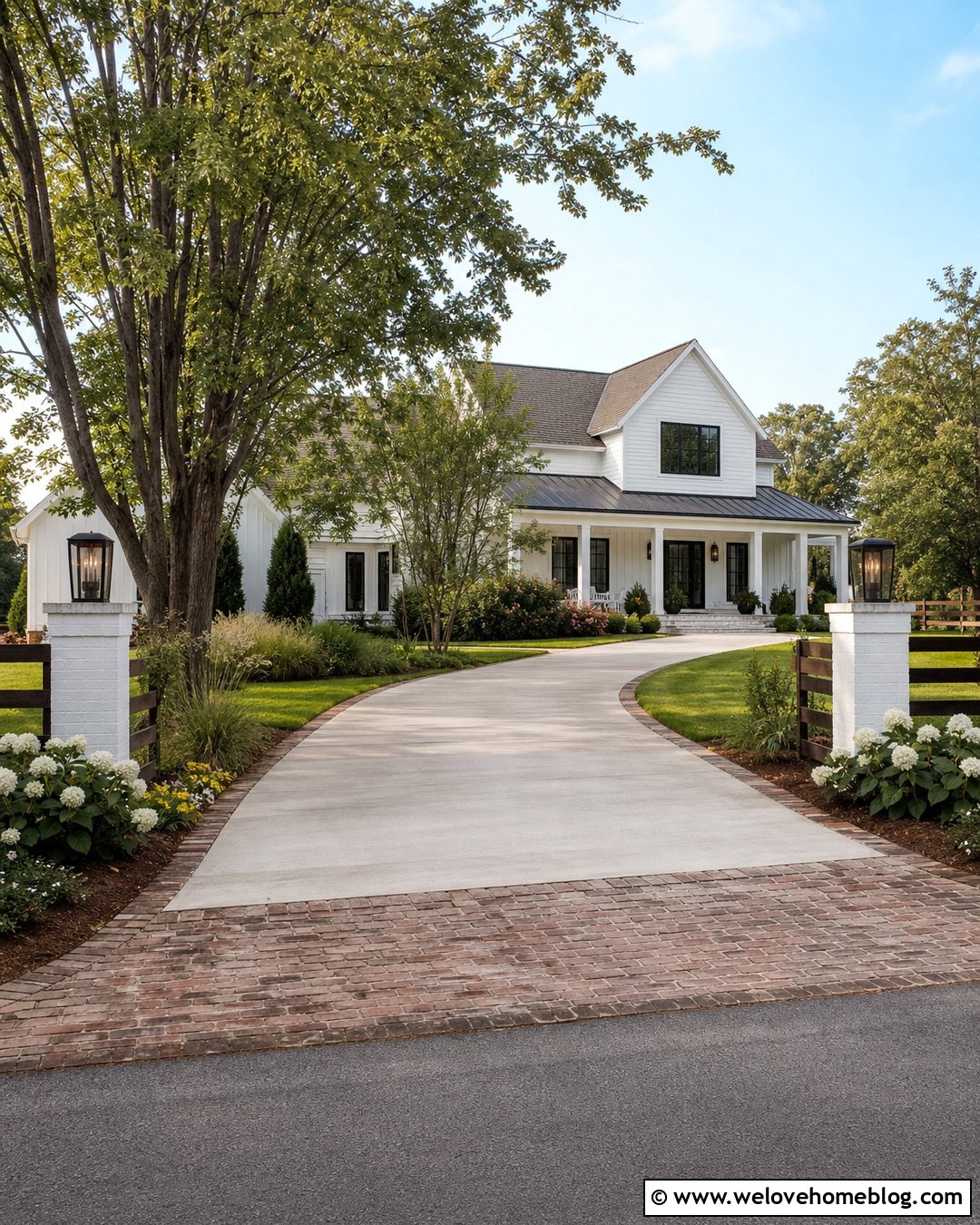
When the home already has a brick facade, the driveway should coordinate without creating one overwhelming block of red. Choose brick stamped concrete in a lighter taupe, faded terracotta, or warm gray finish. A 45-degree herringbone pattern can distinguish the ground plane from the horizontal courses on the walls. Add a charcoal border that echoes the roof, shutters, or window trim. Green lawn, pale flowering shrubs, and evergreen foundation plants provide visual breathing room between both masonry surfaces. This approach works for traditional and transitional brick houses with either straight or gently curved driveways. Comparing full-size color samples against the exterior is important because complementary tones usually feel more natural than an exact simulated match. The goal is a coordinated curb view with clear layers and contrast. ()
16. Brick Stamped Concrete Driveway For Farmhouse
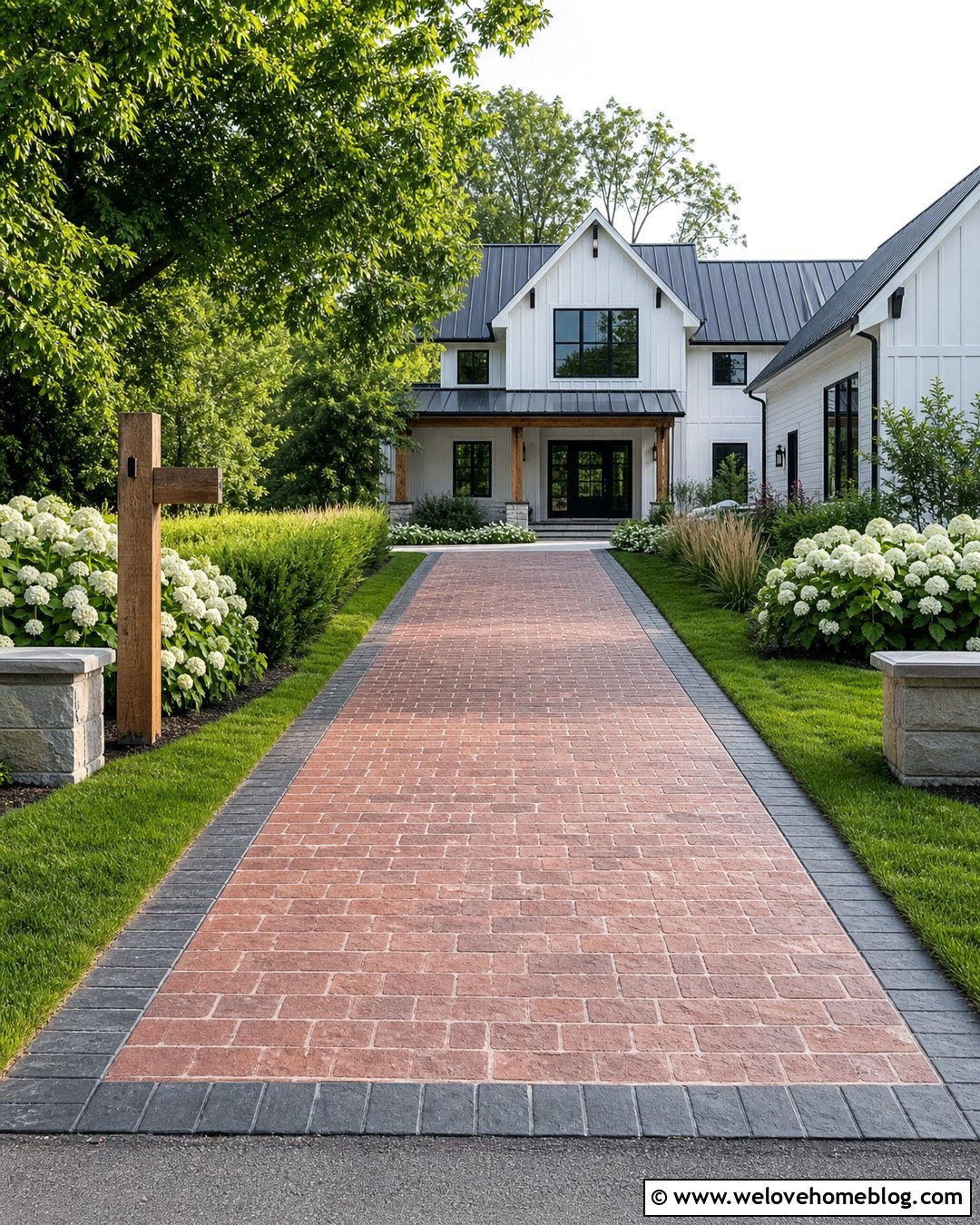
Imagine a welcoming farmhouse framed by mature trees and a long brick-patterned approach. Use a weathered red-brown running bond stamp with softly irregular coloring to create an established appearance. Keep the driveway mostly straight, but widen it near the house for easier parking and turning. A narrow charcoal brick border gives the surface definition, while informal grass edges prevent it from feeling overly formal. Add white hydrangeas, native grasses, low hedges, and a simple walkway leading to the porch. Reclaimed-looking brick columns or a timber address sign can mark the entrance without blocking the open rural view. This complete design works with white siding, black windows, a metal roof, and natural wood accents. Muted color variation is the key to a convincing farmhouse finish.
17. Brick Stamped Concrete Driveway For Ranch House
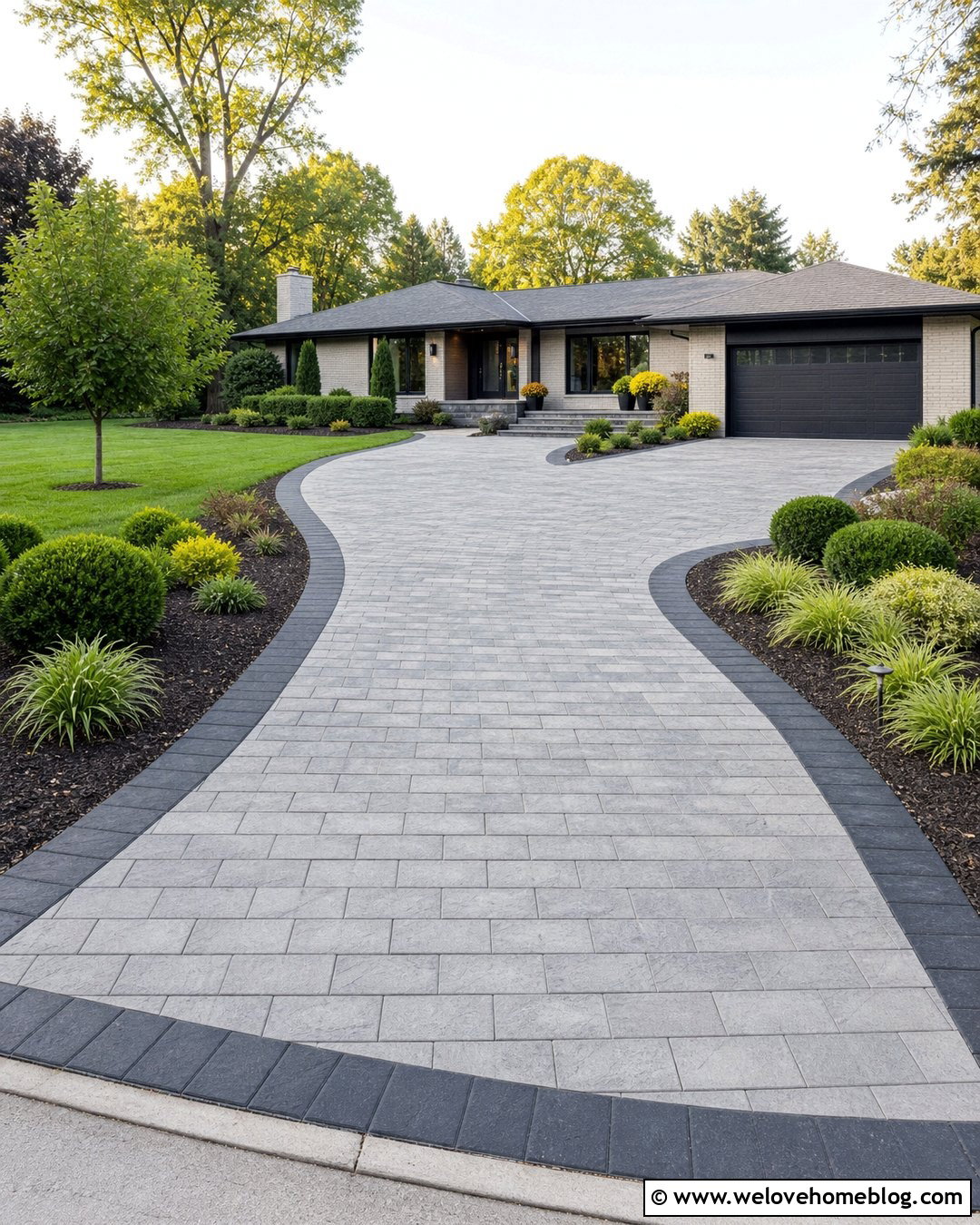
A low ranch house benefits from driveway details that emphasize width without overpowering the facade. Select a warm gray brick stamped concrete finish with brown undertones and arrange it in a horizontal running bond pattern. The brick lines should visually stretch across the driveway rather than directing every line toward the garage. Frame the field with a deep charcoal border and create a broad curved planting bed beside the front walkway. Low ornamental grasses, rounded shrubs, and one small tree preserve views of the home’s long roofline. A gentle curved approach works well when the garage sits to one side. Repeat the driveway color in porch steps or walkway accents. The resulting design feels grounded, practical, and updated while retaining the casual simplicity associated with a classic American ranch.
18. Two-Tone Brick Stamped Concrete Driveway
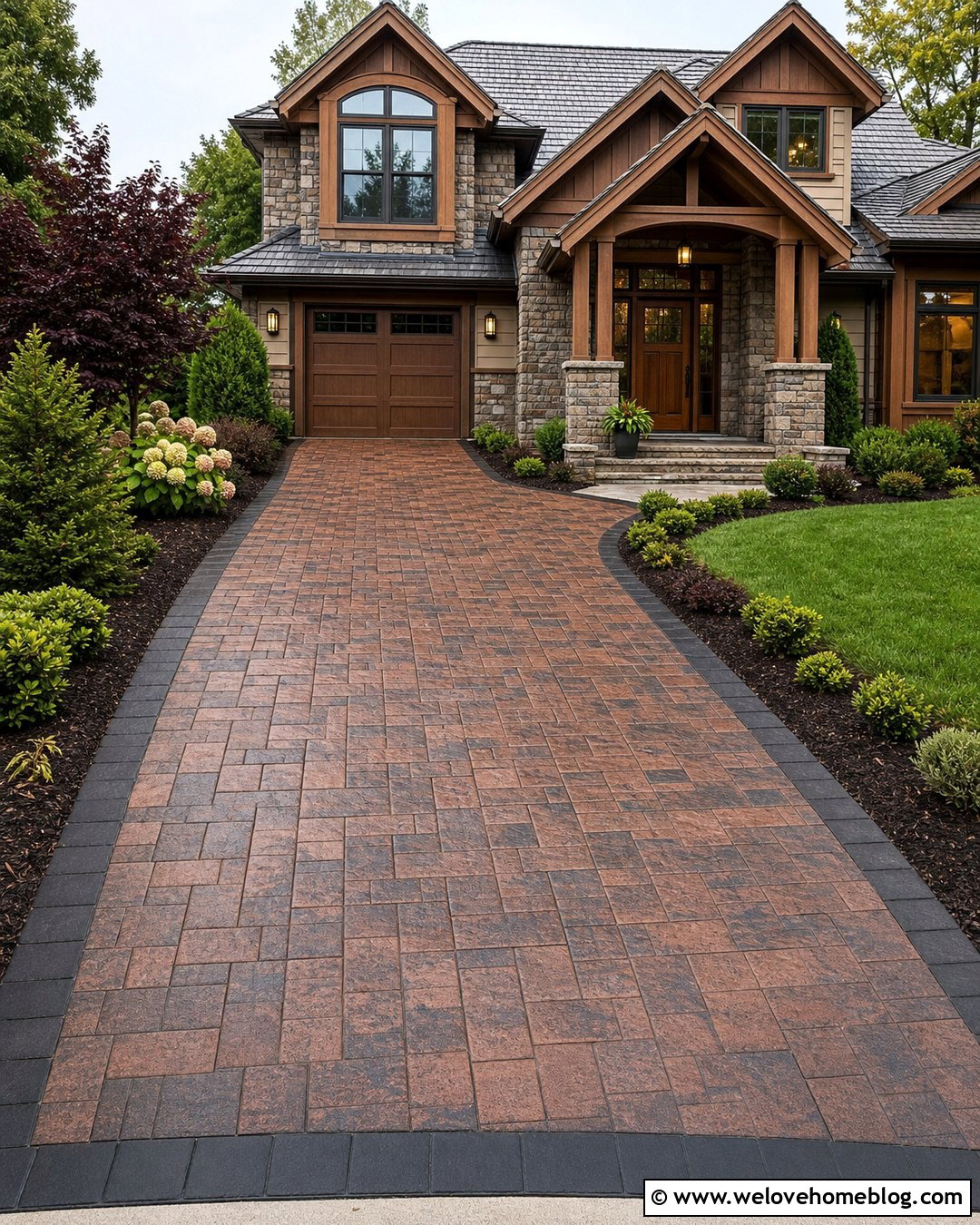
Two-tone coloring adds realistic variation and prevents a brick stamped concrete driveway from appearing flat. Start with a medium terracotta integral color, then apply deeper brown or charcoal accents that settle into joints and textured areas. Use a basketweave field surrounded by a dark running bond border so both the color and pattern change at the edge. A straight driveway allows this detailed combination to remain orderly. Warm planting beds filled with burgundy foliage, cream flowers, and evergreen shrubs can echo the blended surface. This look complements craftsman, Tudor, and traditional homes with layered exterior materials. Stamped concrete commonly combines a base color, accent coloring, and texture to mimic masonry, so selecting a restrained palette is generally more convincing than using several unrelated shades. ()
19. Brick Stamped Concrete Driveway With Matching Walkway
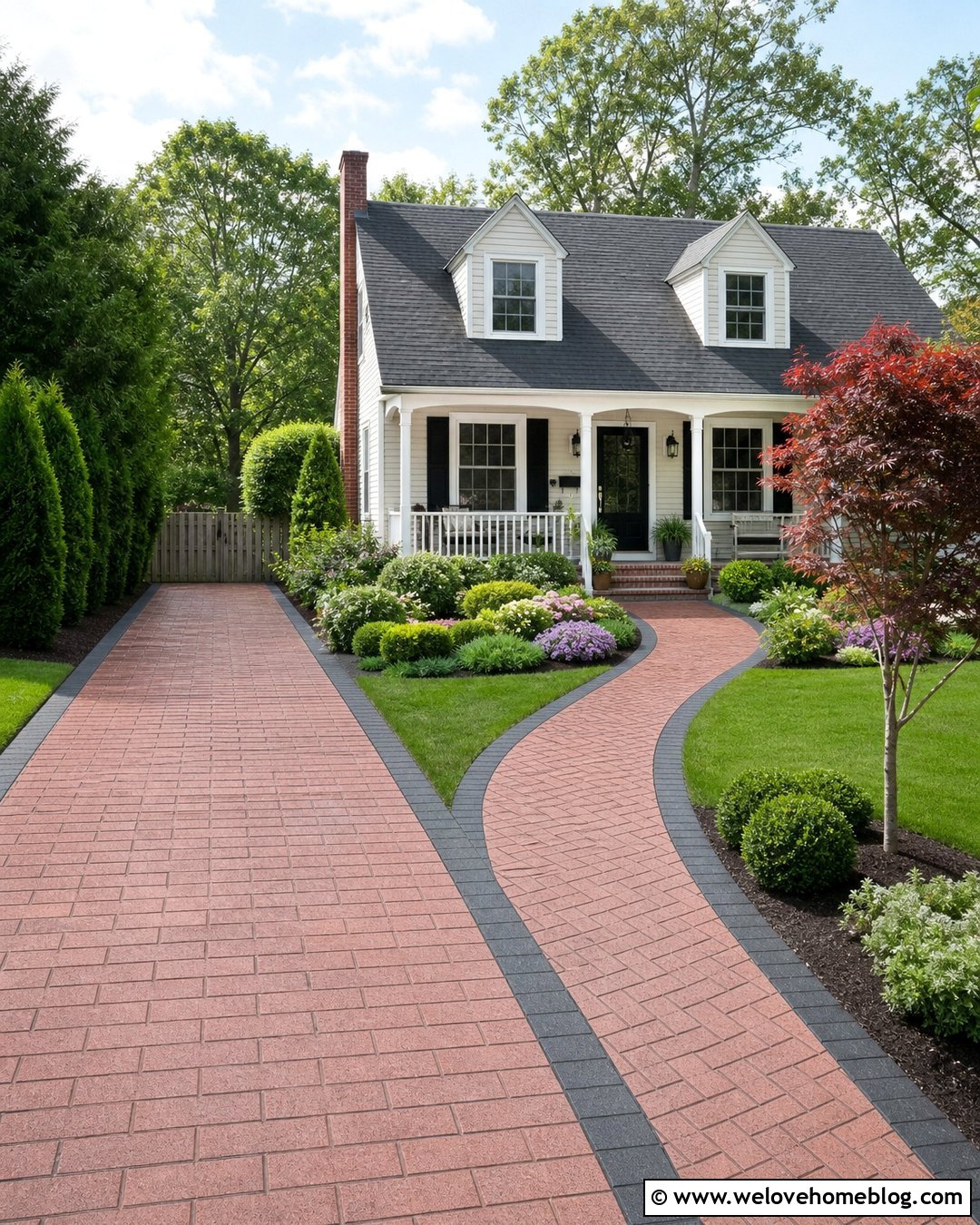
Connecting the driveway and front walkway with one coordinated pattern can make a compact yard feel more unified. Use a soft red running bond stamp on a straight driveway, then carry the same finish onto a curved walkway leading to the porch. Rotate the walkway bricks into a 45-degree herringbone layout to create subtle distinction while preserving the shared color palette. Outline both surfaces with a narrow charcoal border. Fill the space between them with a layered bed of boxwood, flowering perennials, ground cover, and a small ornamental tree. This complete plan suits Cape Cod, cottage, and suburban traditional houses. At the connection point, provide a smooth, generous transition rather than a narrow corner, making the route visually welcoming and easier to navigate.
20. Light Gray Brick Stamped Concrete Driveway
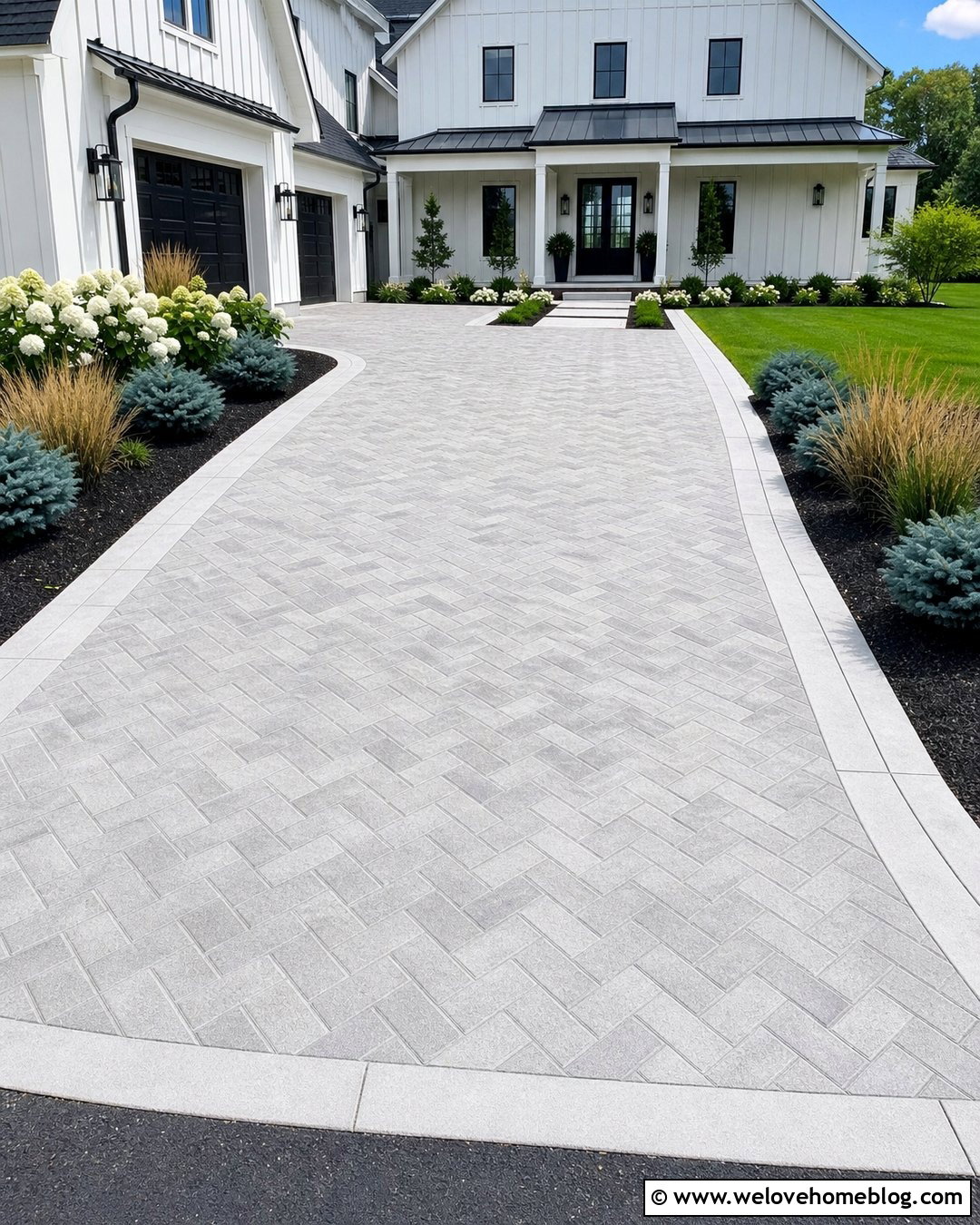
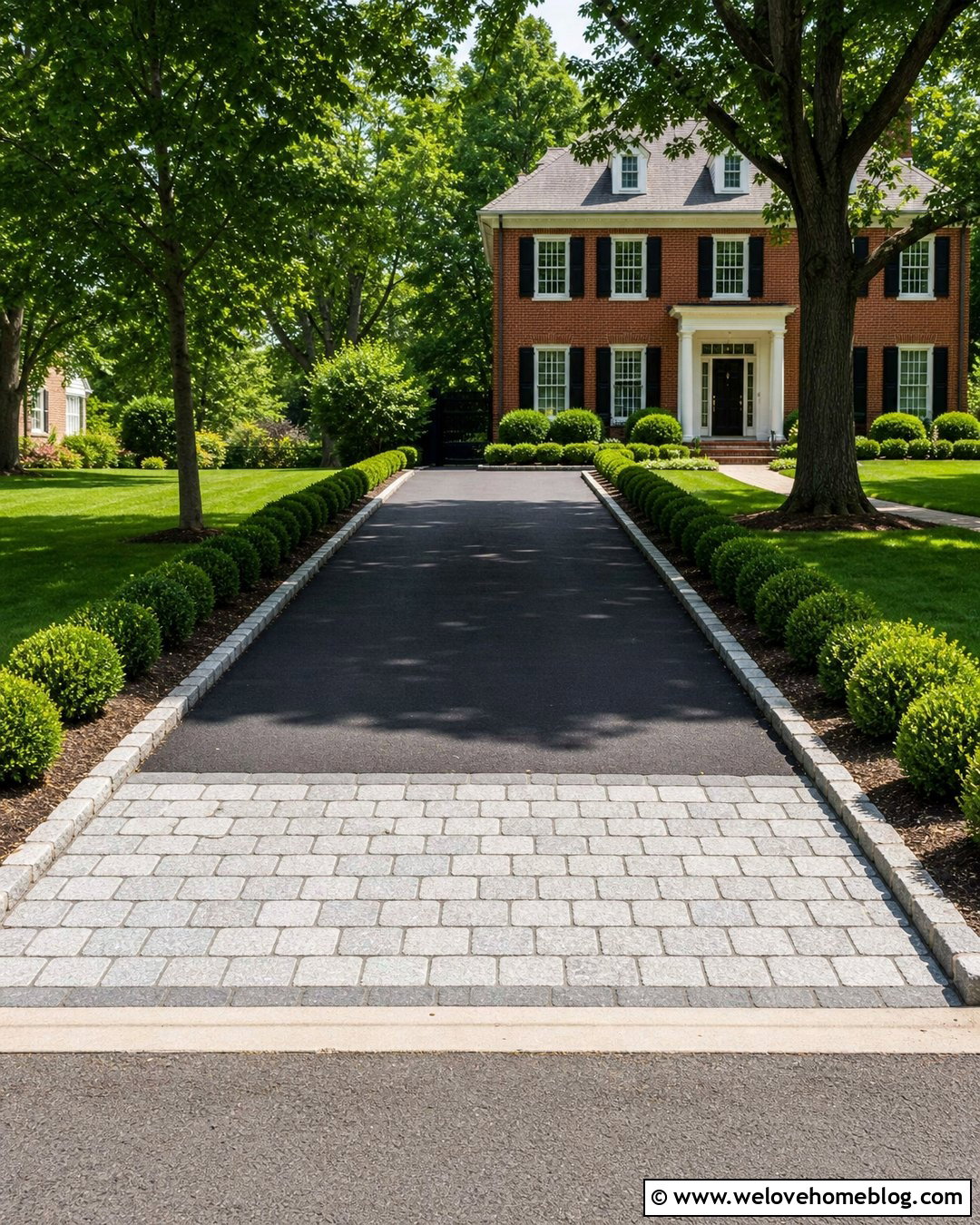
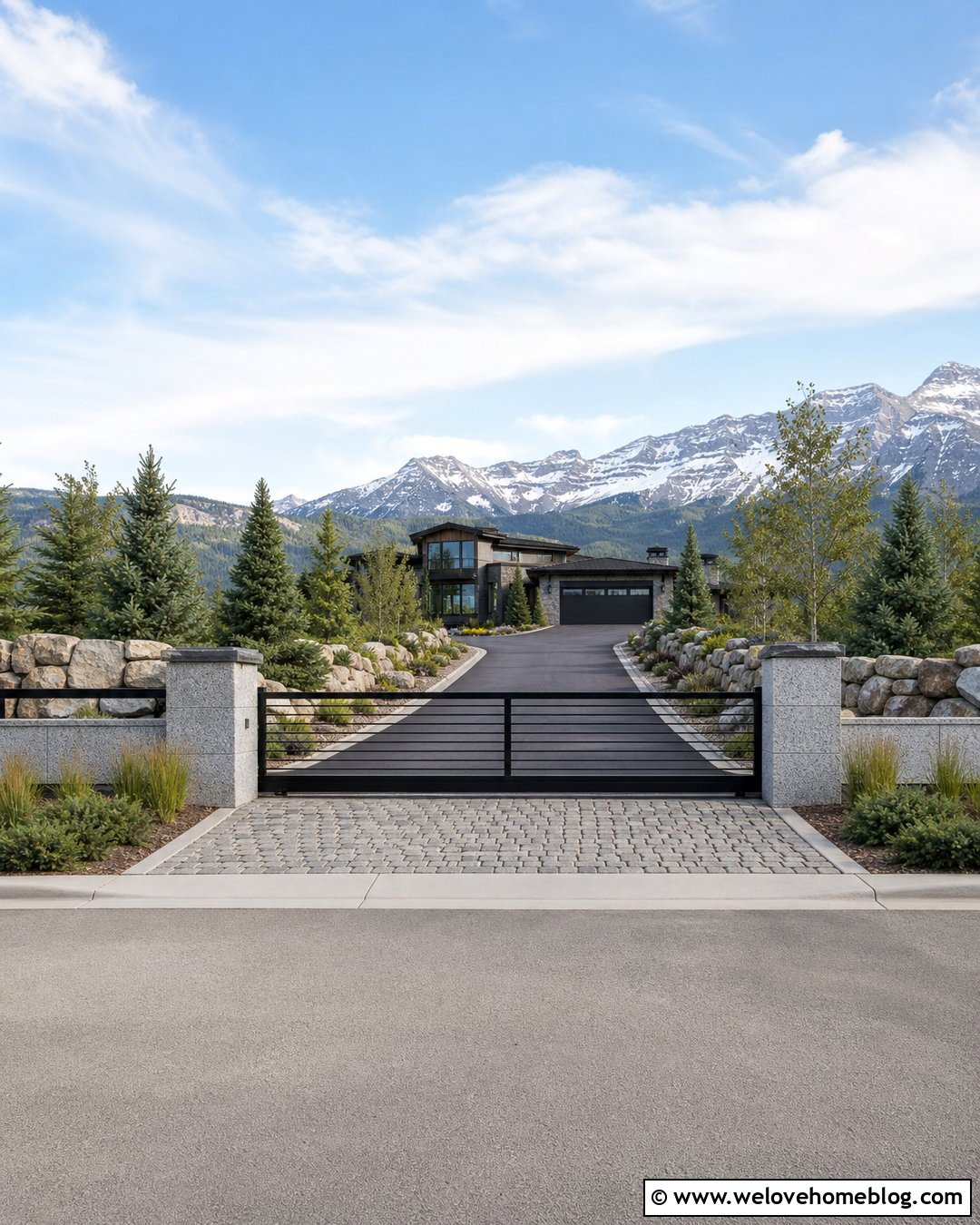
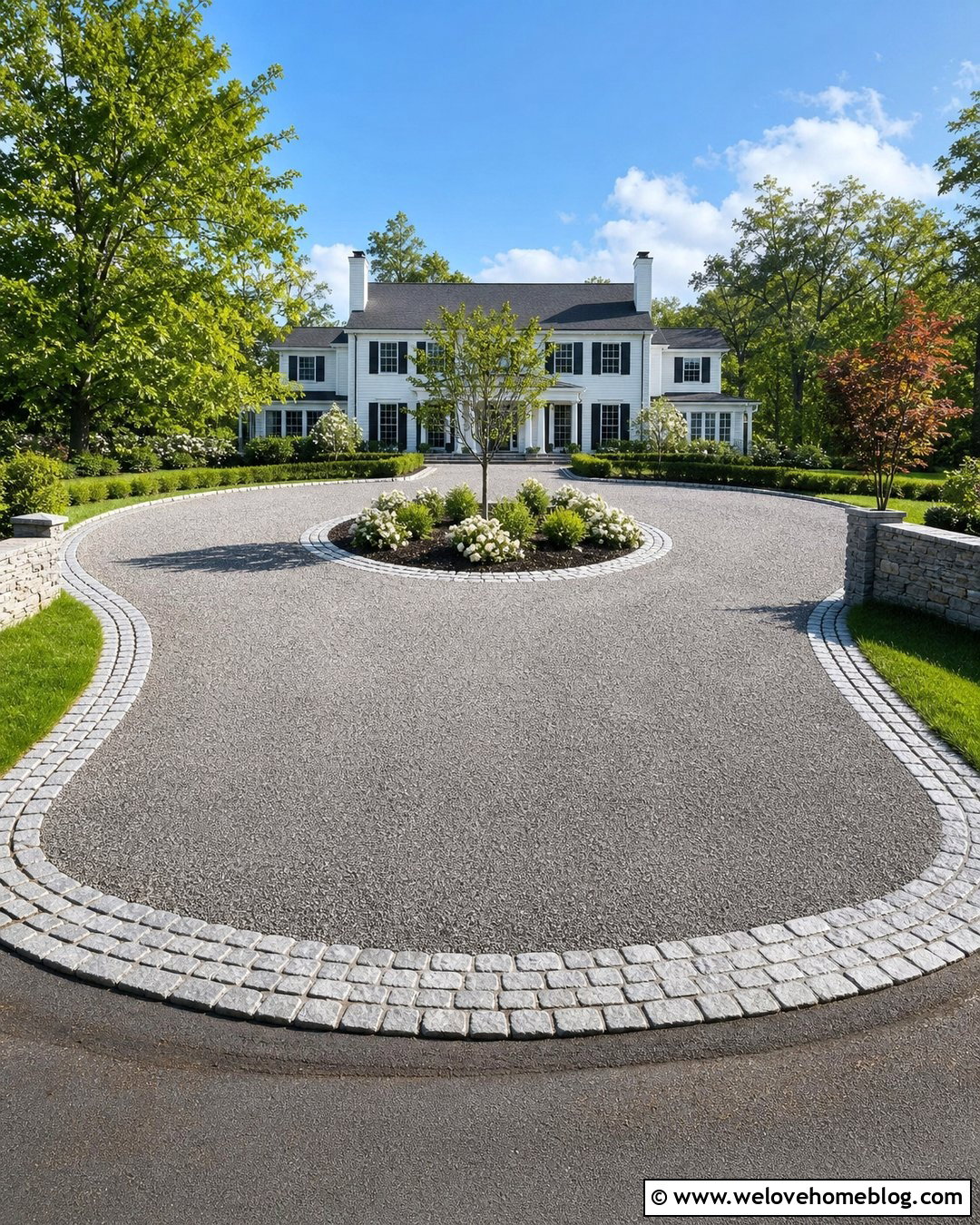
Light gray brick stamped concrete offers a fresh alternative to the deep reds commonly associated with masonry patterns. Select a pale silver-gray base with medium-gray antiquing that defines the joints without making them look black. A clean herringbone layout adds enough detail for curb appeal, while a smooth white-gray perimeter band maintains a contemporary finish. Use a straight or subtly flared driveway leading to a white modern farmhouse, coastal home, or updated colonial. Blue-green shrubs, ornamental grasses, white flowers, and dark mulch create balanced contrast around the cool surface. Black entry lights and a dark front door can repeat the joint color. Because light finishes can show some stains, discuss a suitable protective sealer, traction additive, cleaning method, and maintenance schedule with an experienced local installer.
Conclusion:
These 20 Brick Stamped Concrete Driveway Ideas show how one paving method can support traditional, rustic, transitional, and contemporary curb appeal. Herringbone creates movement, running bond offers simplicity, and basketweave adds decorative character. Color is equally important. Muted terracotta feels established, charcoal looks modern, and warm gray works well beside many exterior finishes. Borders, bands, entrance aprons, landscaping, and coordinated walkways turn the stamped surface into a complete front-yard design. Before choosing a final combination, compare large samples outdoors and review local installations completed by the contractor. Careful planning of colors, drainage, joints, traction, and sealing will help the finished driveway remain attractive, practical, and visually connected to the house.

Related posts:
Leave a Reply