
A well-designed paver driveway can turn a practical parking area into a polished part of your home’s landscape. The best 20 Paver Driveway Ideas combine durable materials with a layout, border, and planting plan that complements the architecture. Current options range from traditional clay brick and cobblestone-inspired surfaces to large-format concrete units and permeable systems designed to let water enter stone-filled joints. () Before choosing a look, consider your driveway’s slope, vehicle traffic, drainage, garage placement, and surrounding walkways. Color matters too. Warm pavers flatter brick and traditional homes, while cool gray tones create a cleaner contemporary finish. The complete designs below offer practical inspiration for different house styles, lot sizes, and budgets through these 20 Paver Driveway Ideas.

1. Herringbone Brick Paver Driveway
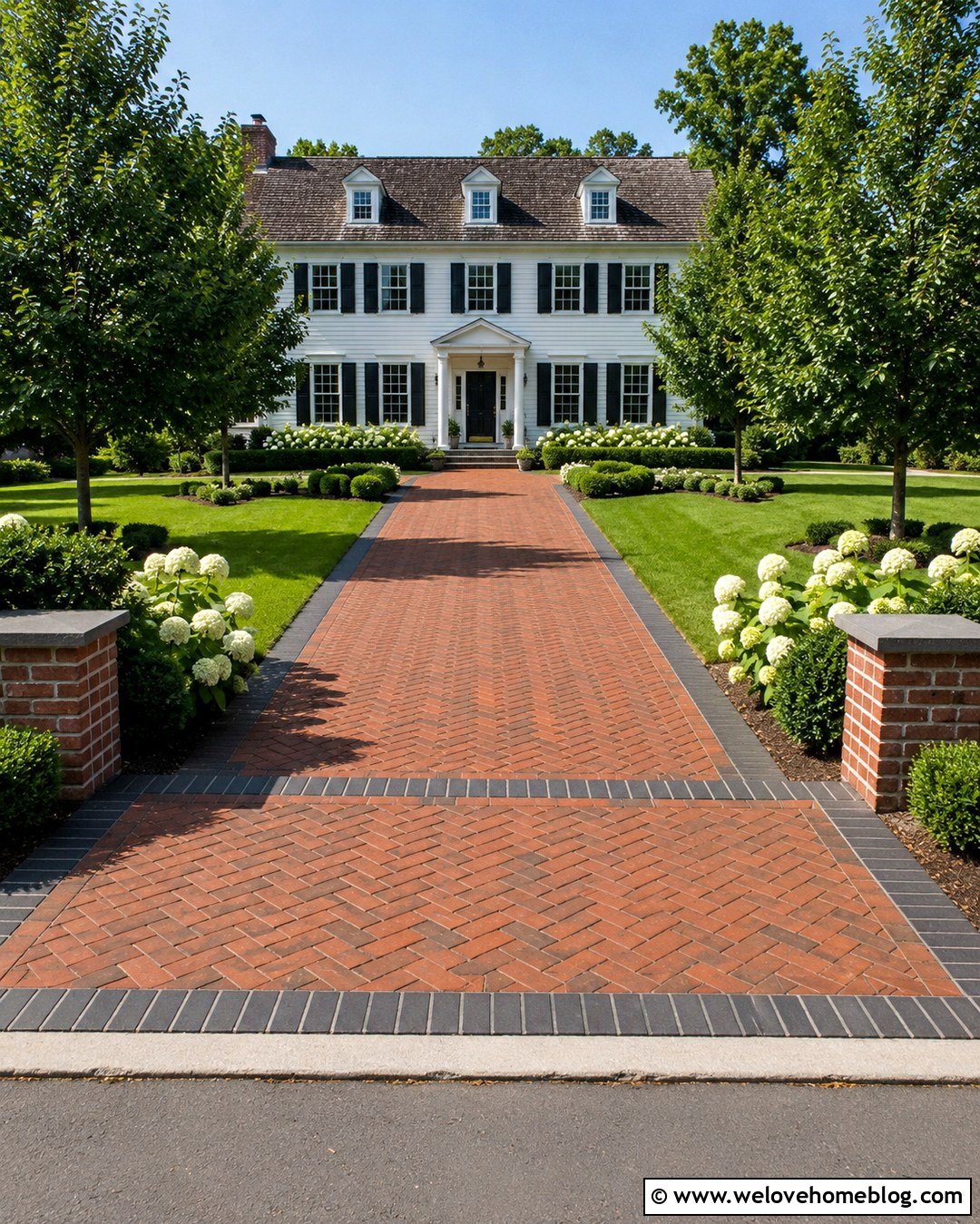
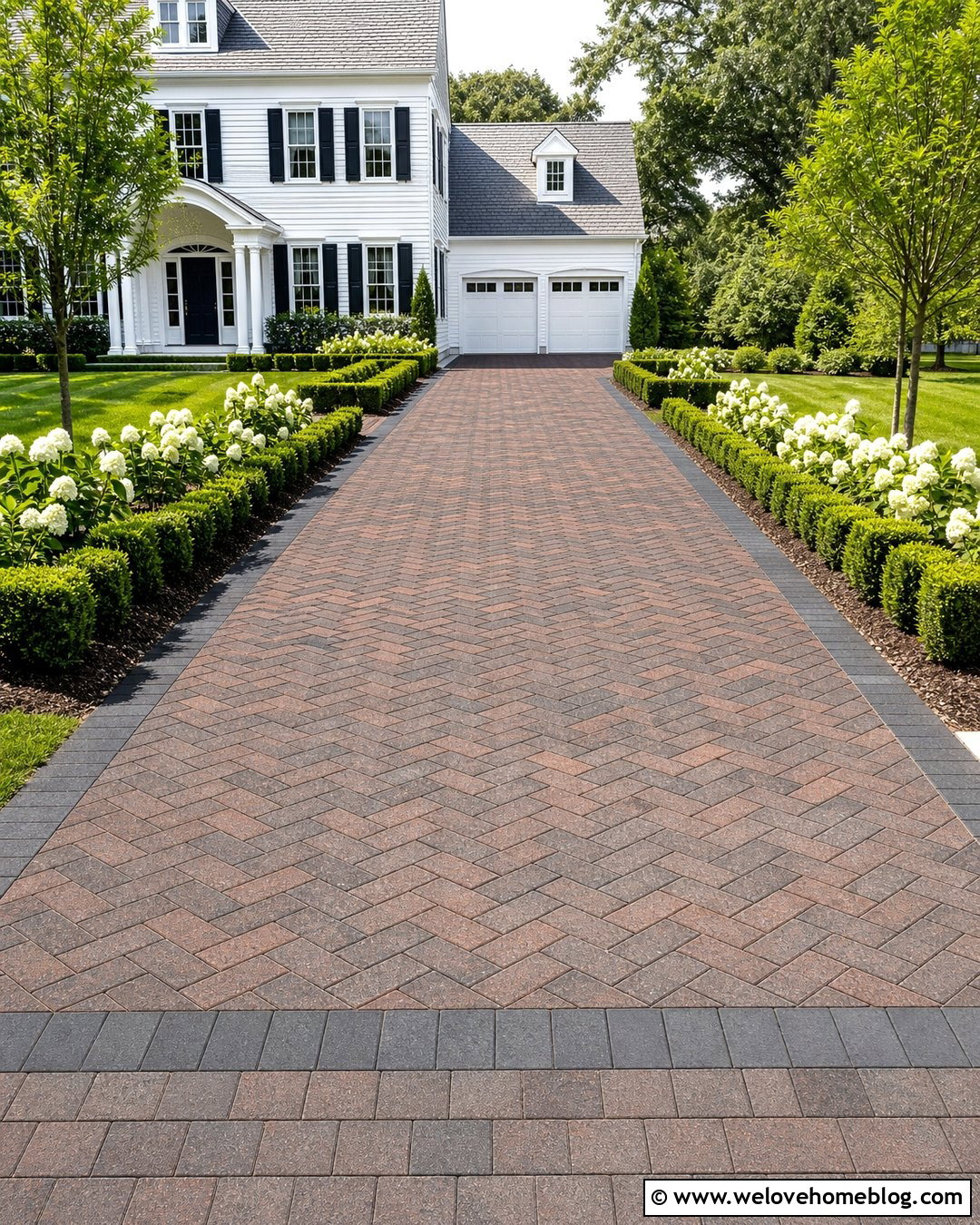
Clay brick pavers laid in a herringbone pattern give a straight driveway a strong sense of movement. The angled arrangement feels especially appropriate beside a Colonial, Georgian, or traditional brick house. Choose rich red and brown tones that relate to the facade without matching it too closely. A charcoal soldier-course border can contain the pattern and provide a crisp transition to the lawn. Near the street, add a wider brick apron that clearly defines the entrance. Symmetrical planting beds filled with boxwoods, hydrangeas, and a pair of small ornamental trees reinforce the orderly appearance. Continue the same brick into the front walkway so the driveway and entry feel connected rather than designed as separate outdoor features.
2. Large Format Concrete Paver Driveway
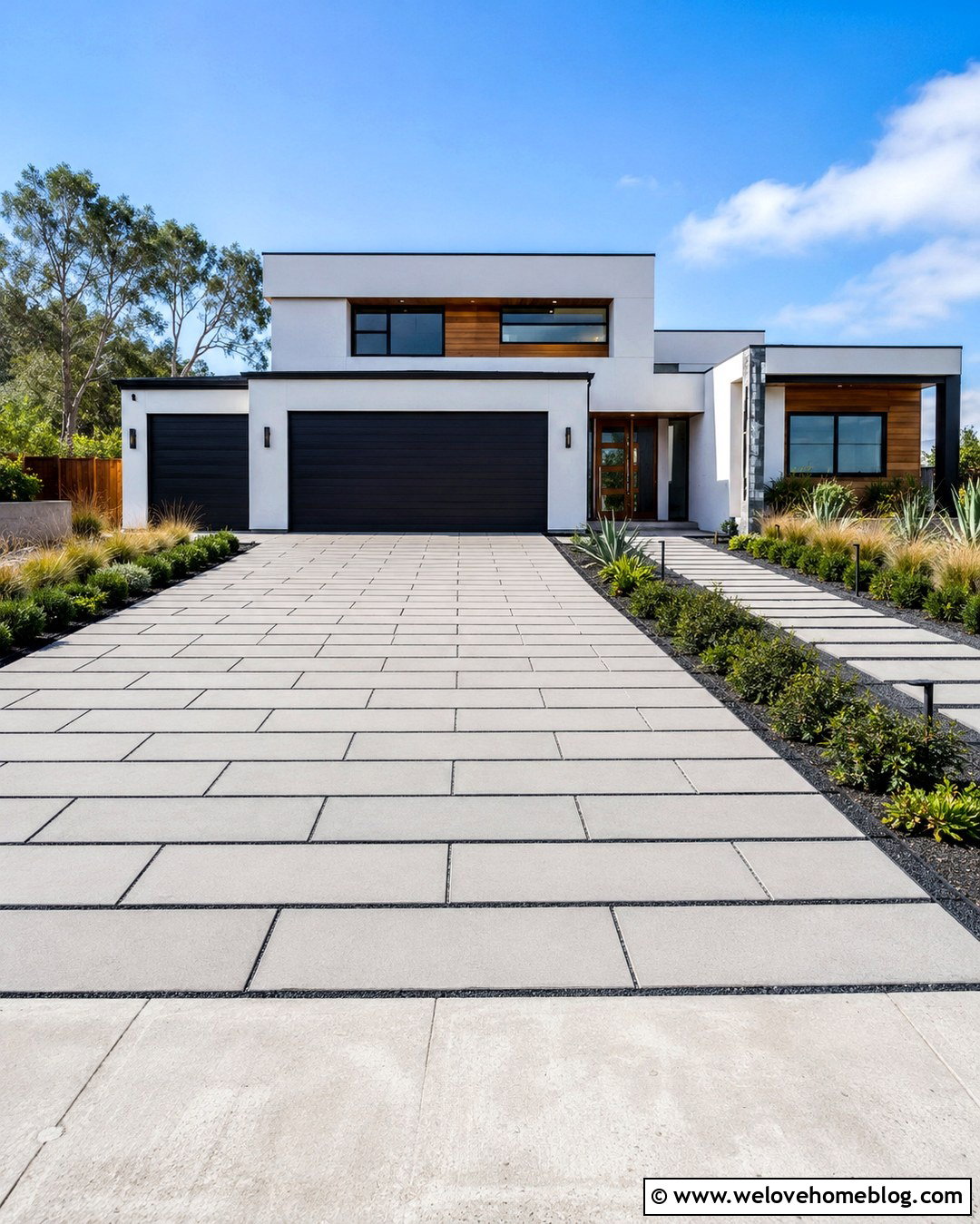
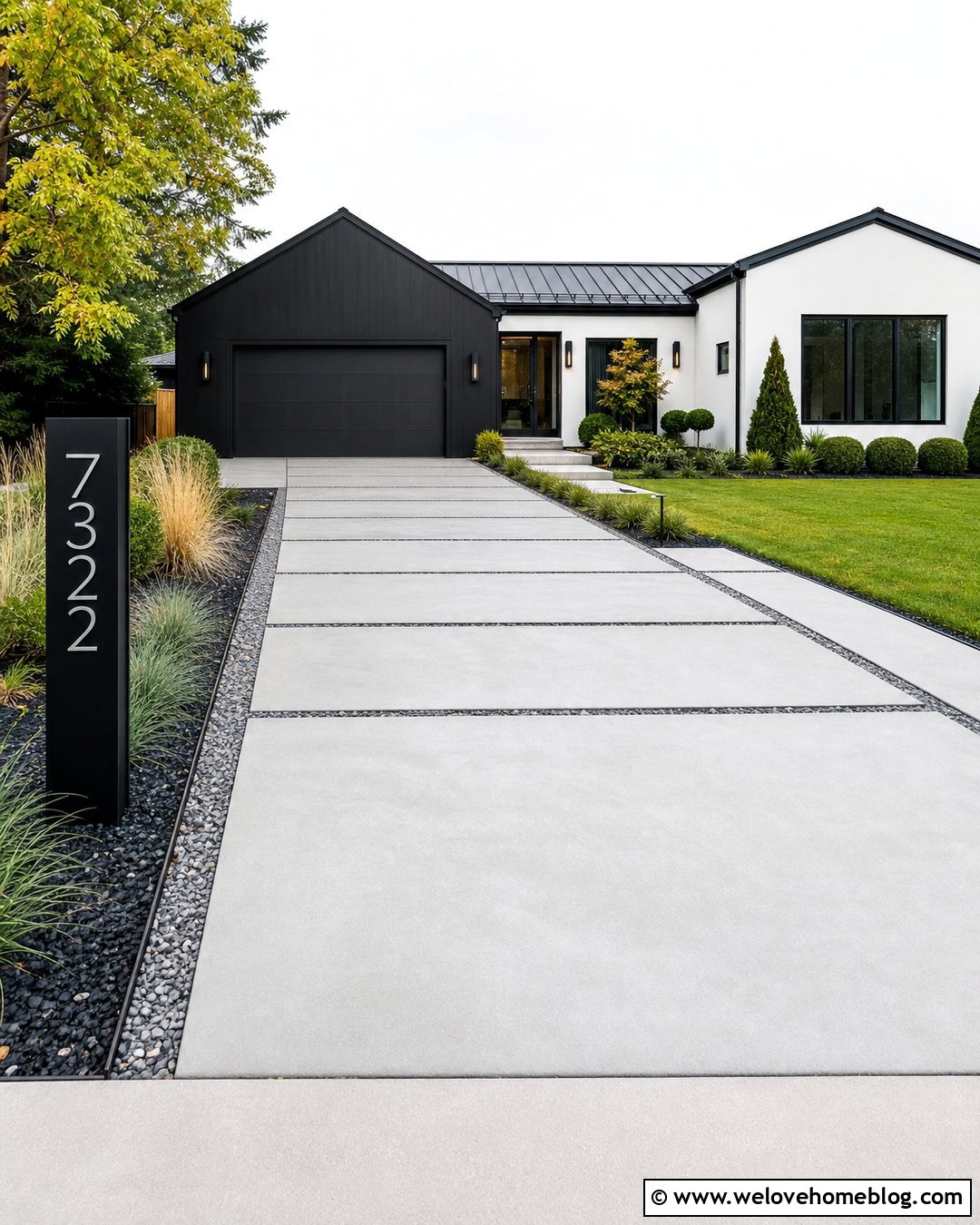
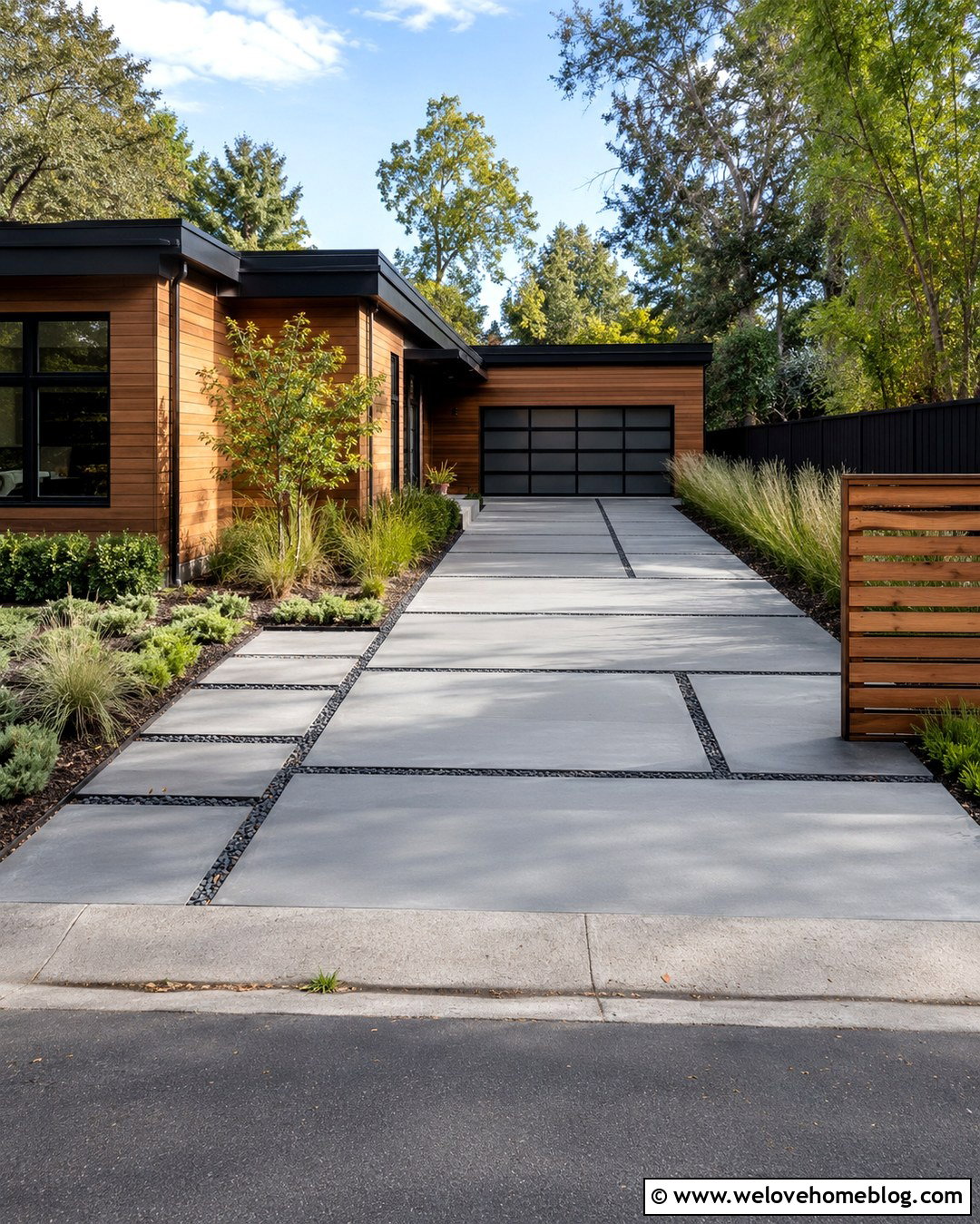
Clean rectangular concrete pavers can make a modern driveway feel spacious and uncluttered. Use oversized units in pale gray, warm greige, or soft charcoal, arranged in a simple running bond or linear pattern. A straight driveway works particularly well because its strong geometry echoes the horizontal lines of a contemporary house. Narrow gravel joints soften the surface and may help visually separate each slab. Frame the driveway with dark metal edging, architectural grasses, low evergreen shrubs, and a concrete walkway made from matching units. Avoid adding too many colors or decorative patterns. Instead, let subtle texture and precise installation create interest. Black garage doors and streamlined address numbers can complete this coordinated modern exterior.
3. Permeable Concrete Paver Driveway
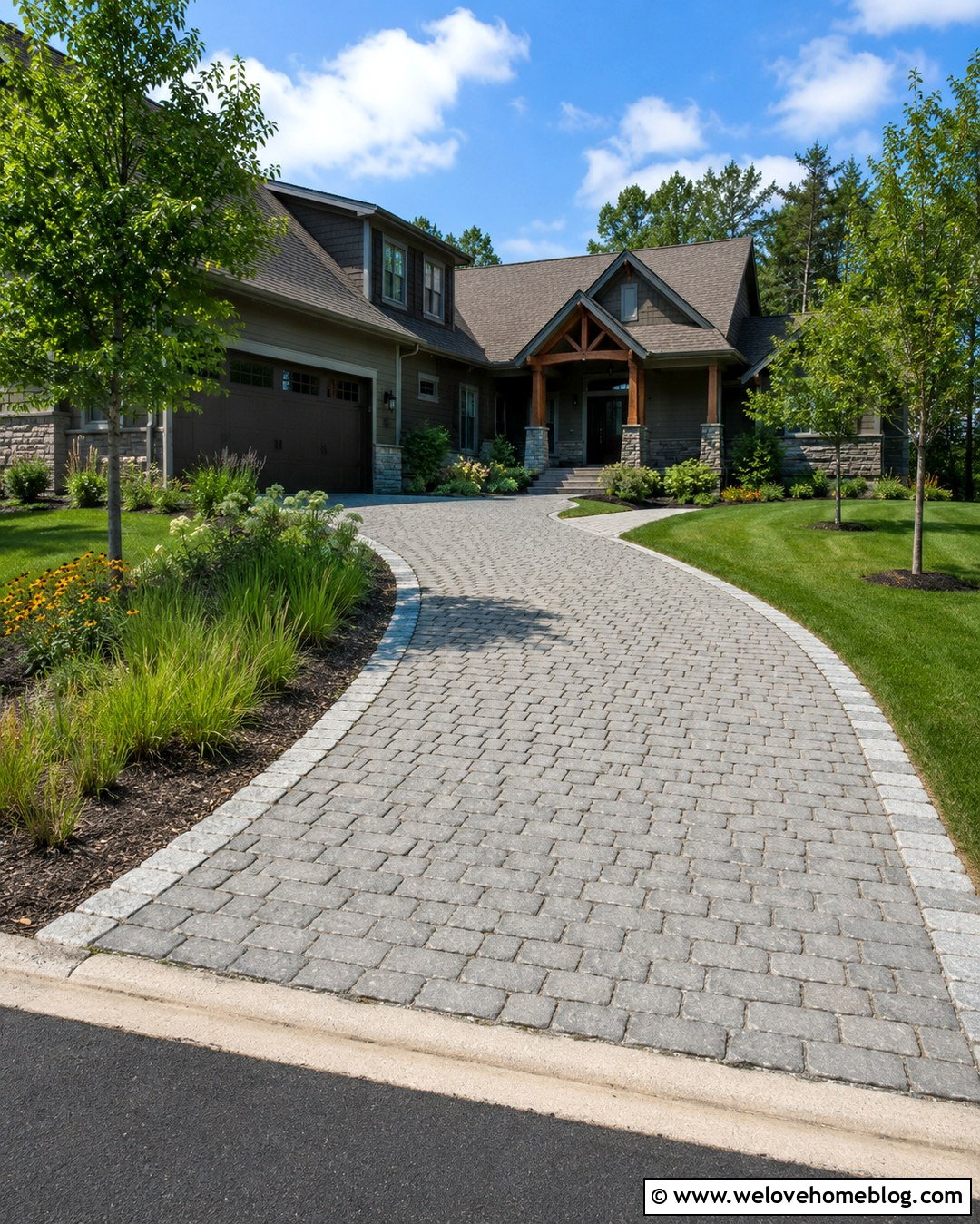
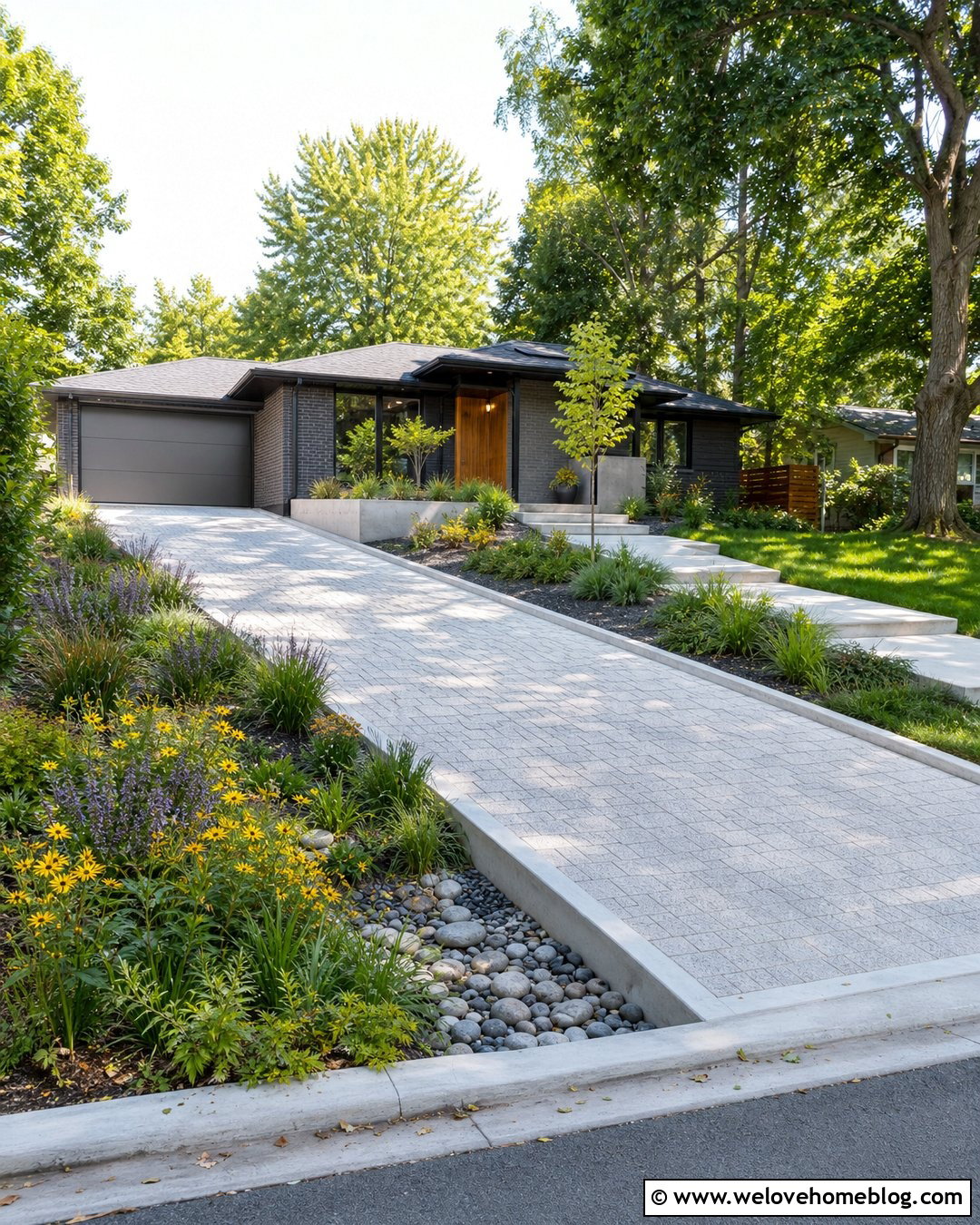
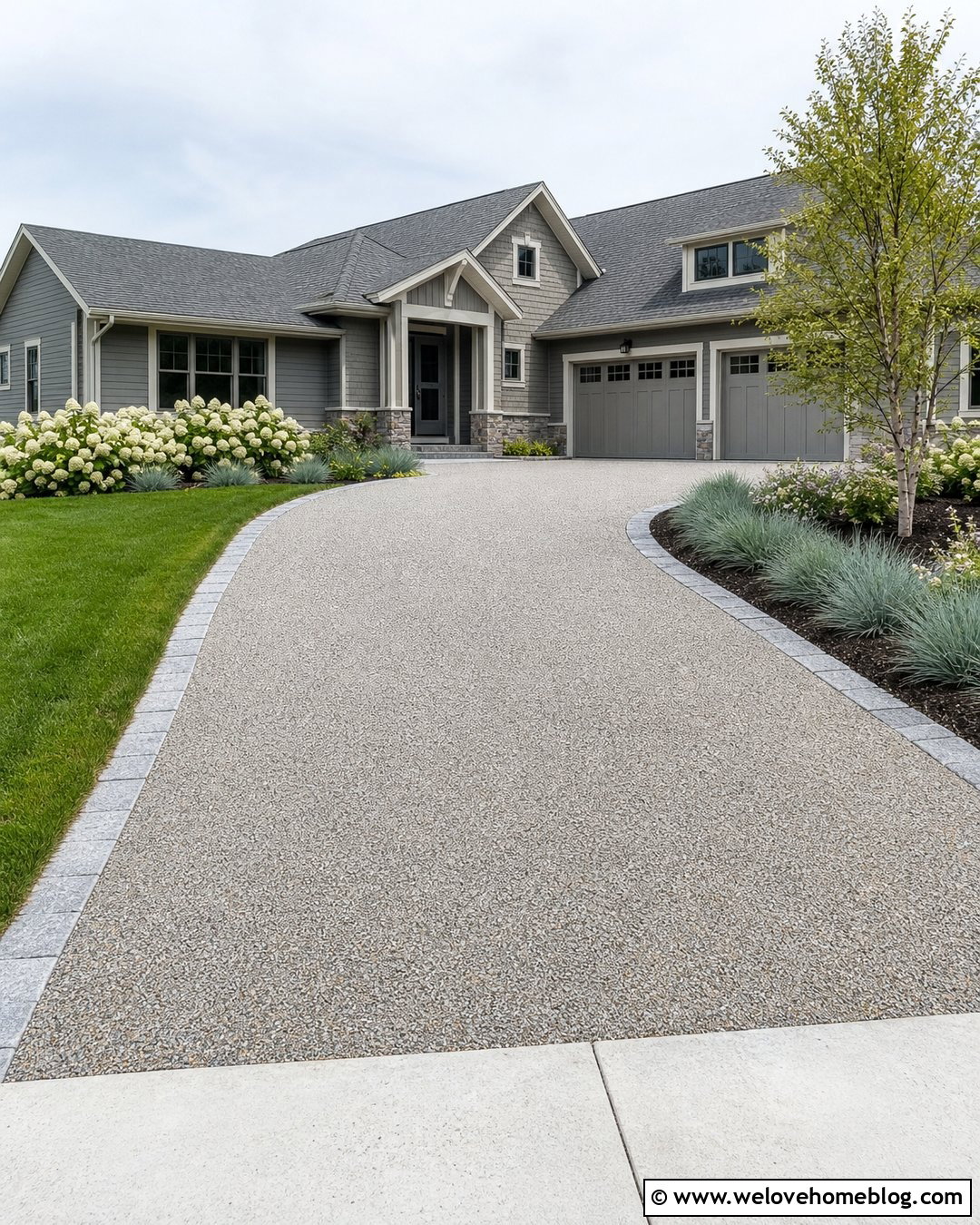
A permeable paver driveway can combine an attractive entrance with a more drainage-conscious surface. These systems generally use interlocking pavers with wider, aggregate-filled joints that allow water to pass into a properly prepared stone base. () For a complete design, select medium-gray permeable concrete pavers and install them across a gently curved approach. Define the edges with granite cobbles that prevent the border from disappearing into nearby planting beds. A shallow rain garden containing native grasses, sedges, and flowering perennials can sit beside the driveway’s lower side. Choose pavers rated for residential vehicle traffic, and have the soil, base depth, drainage route, and local requirements evaluated before installation. The finished look suits Craftsman, contemporary, and environmentally focused homes.
4. Cobblestone Paver Driveway
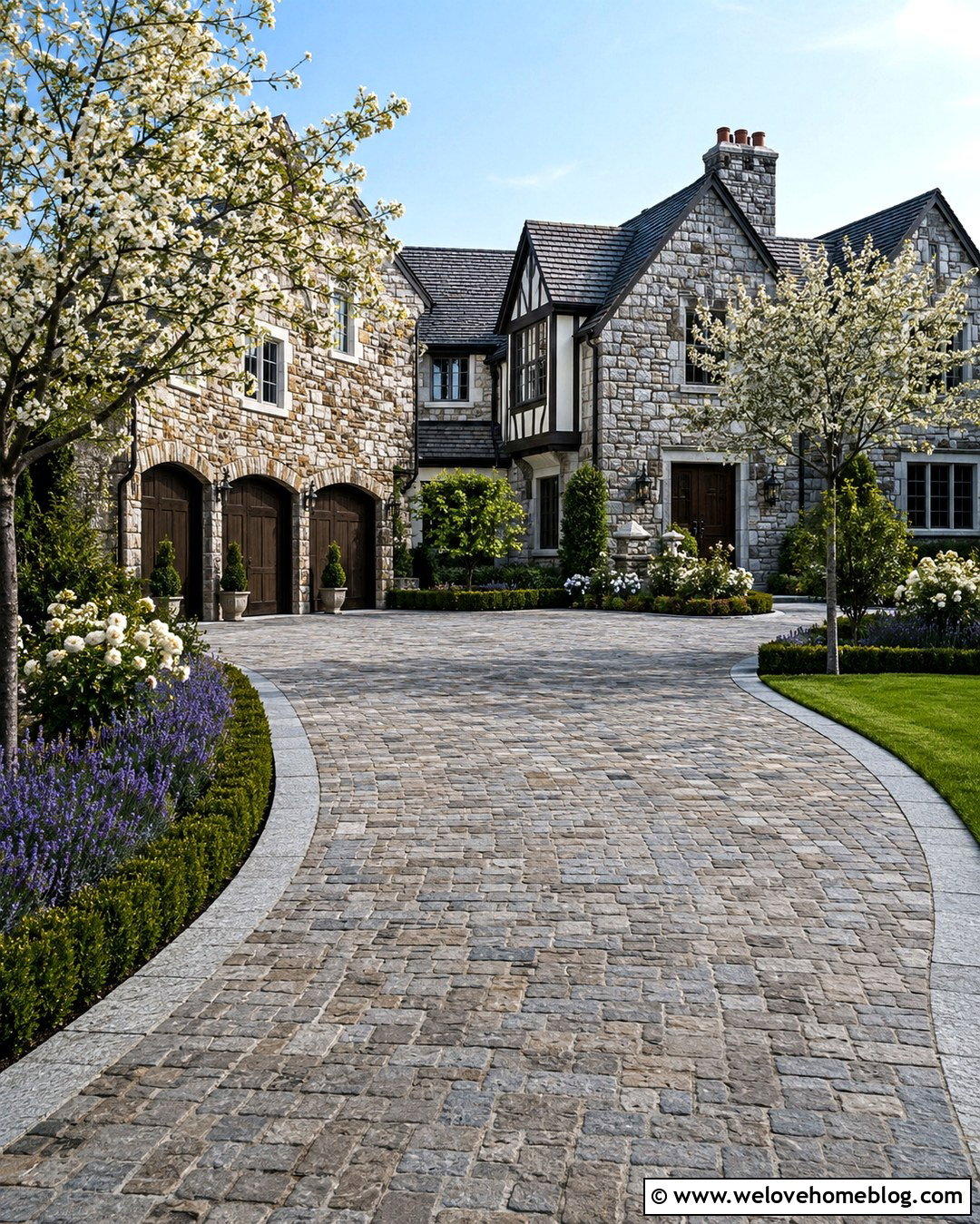
A cobblestone paver driveway creates an established, European-inspired entrance that pairs beautifully with stone cottages and Tudor-style homes. Use granite setts or concrete pavers manufactured with an aged cobblestone texture. Blended gray, charcoal, and muted brown tones will keep the broad surface from looking flat. A gently curving layout strengthens the informal character and reveals the house gradually as visitors approach. Install larger cobbles along both sides to create a substantial frame. Deep planting beds filled with clipped evergreens, white roses, lavender, and small flowering trees balance the rugged paving. Near the garage, widen the driveway into a simple motor court. Softly irregular color variation provides charm, while a carefully engineered base keeps the surface functional.
5. Circular Paver Driveway
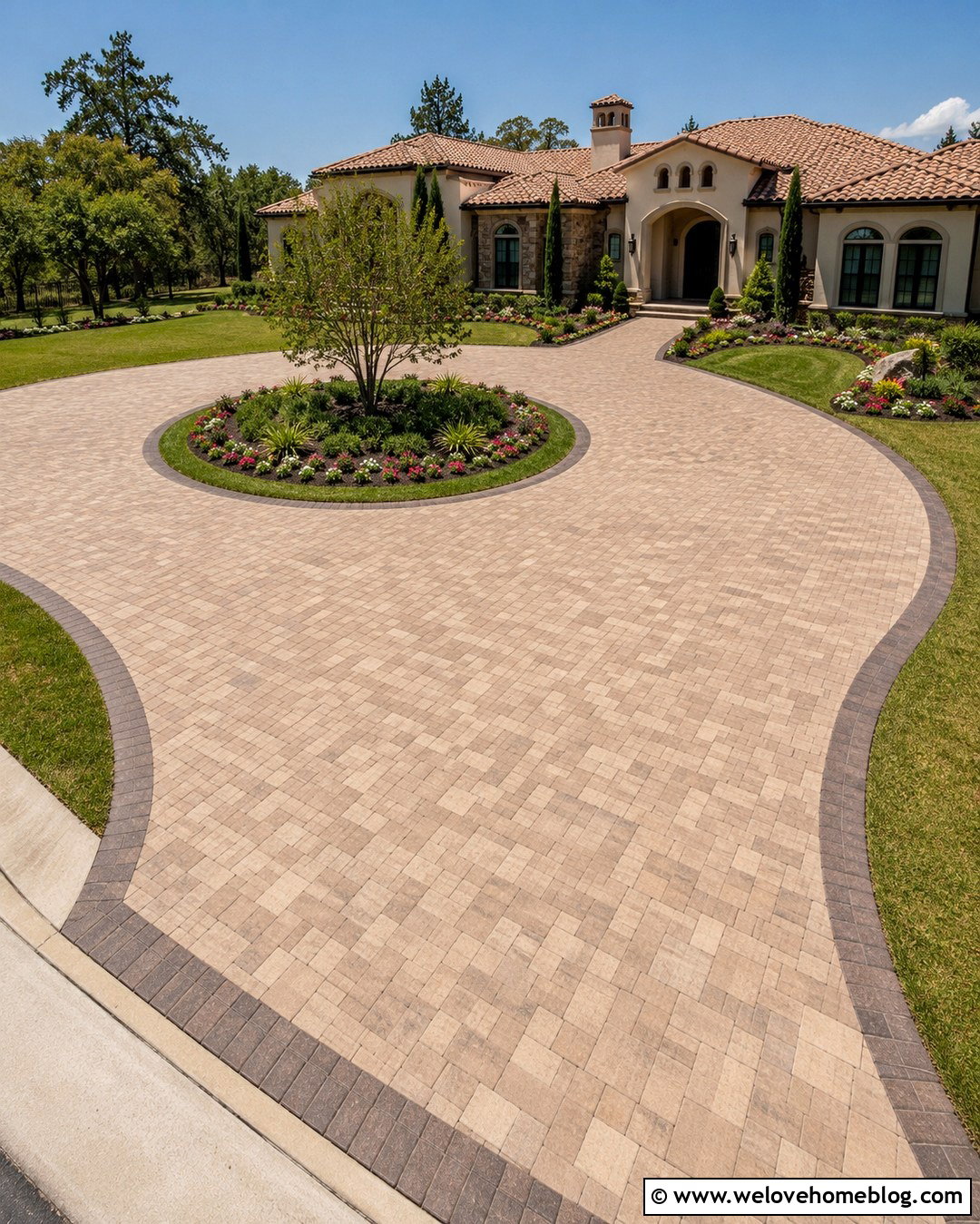
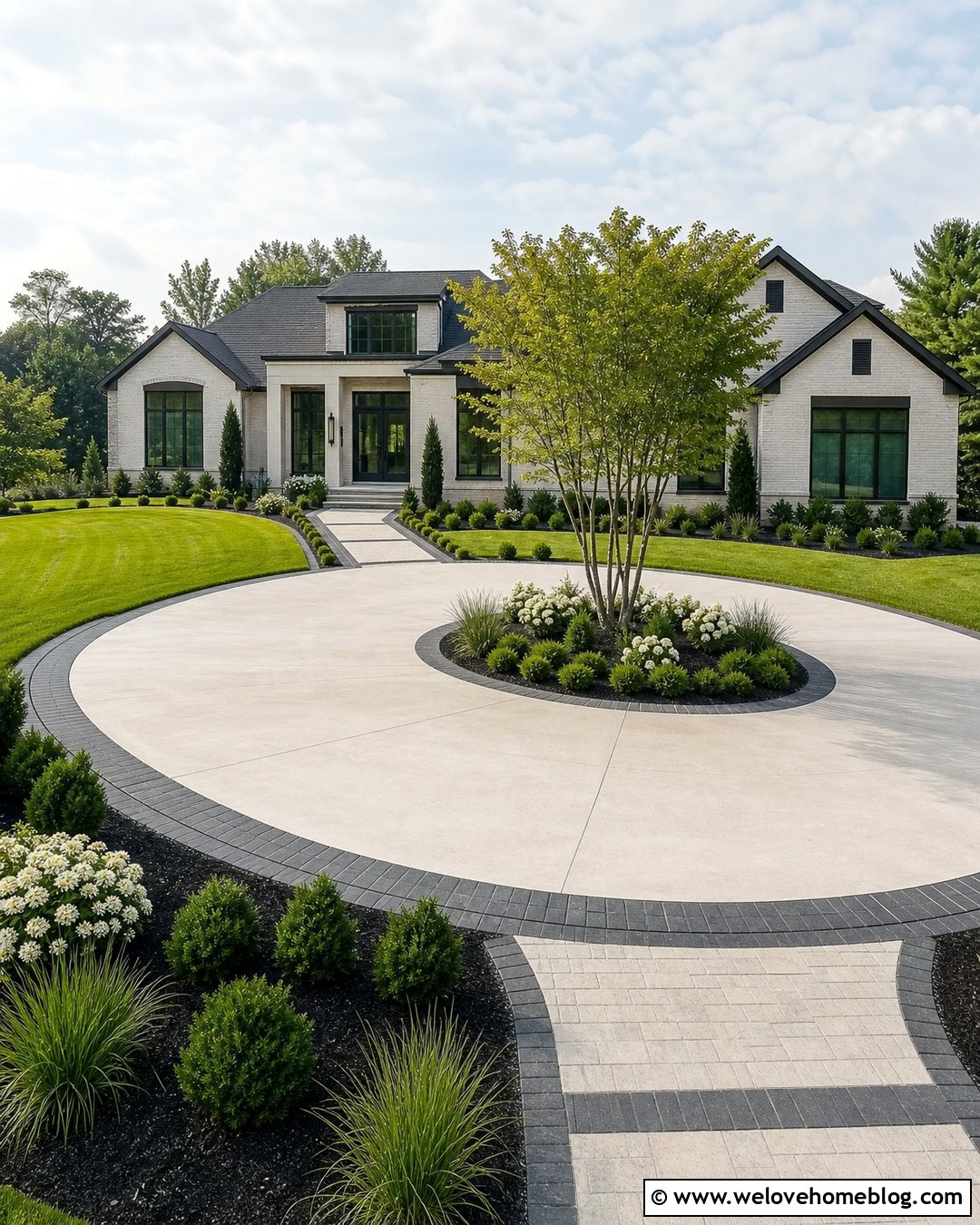
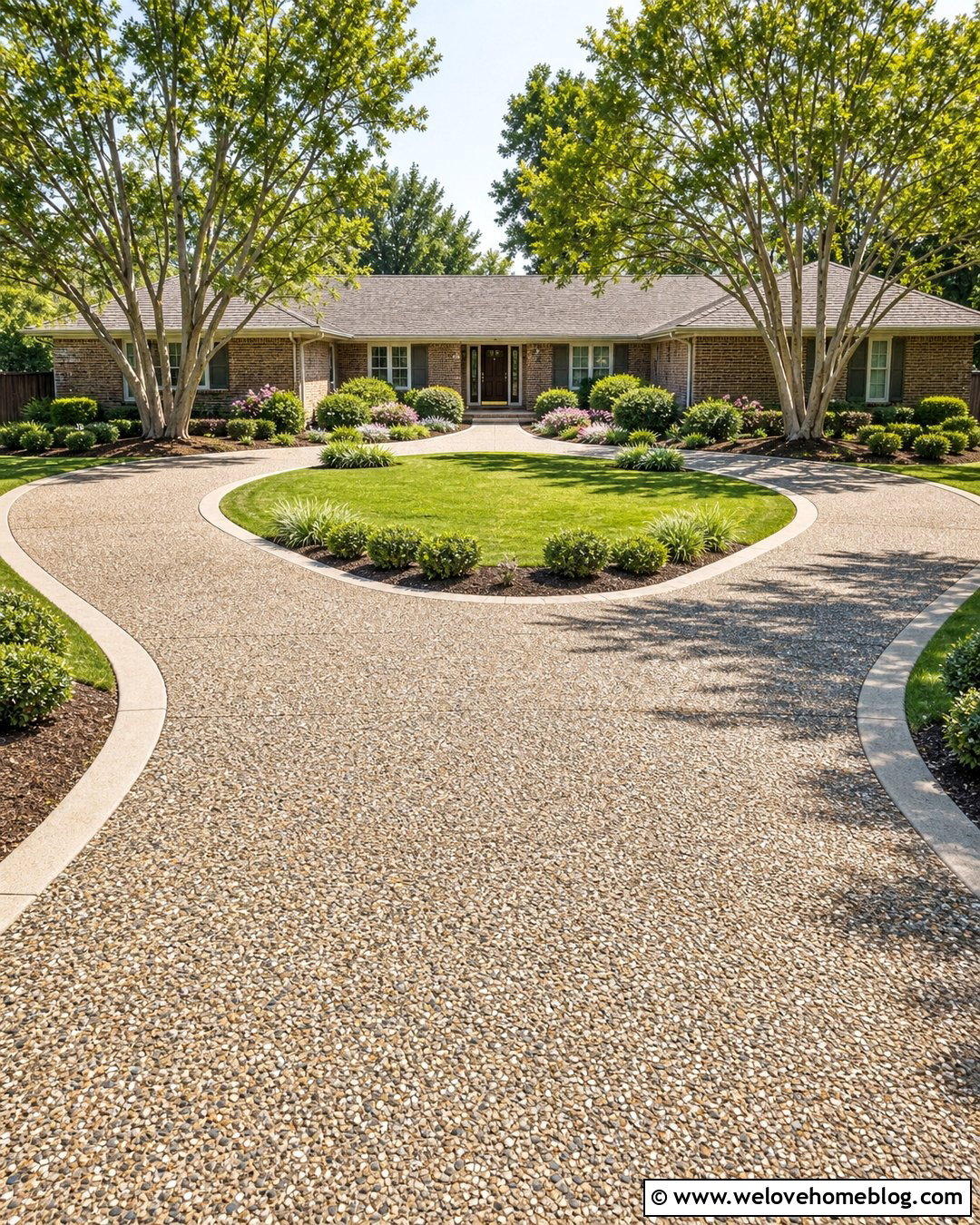
A circular paver driveway gives a larger front yard an elegant layout while creating a convenient flow toward the house and back to the street. Cover the drive with warm beige concrete pavers arranged in an ashlar pattern, then use darker pavers to outline both curves. At the center, build a landscaped island with one appropriately scaled ornamental tree, low shrubs, and seasonal flowers that will not block important sightlines. The inner border can be slightly raised to protect the planting bed, while the outer edge remains level near vehicle turning areas. Match the main paver color to a stucco, Mediterranean, or transitional home. A broad walkway connecting the inner circle to the front door completes the arrival sequence.
6. Curved Paver Driveway
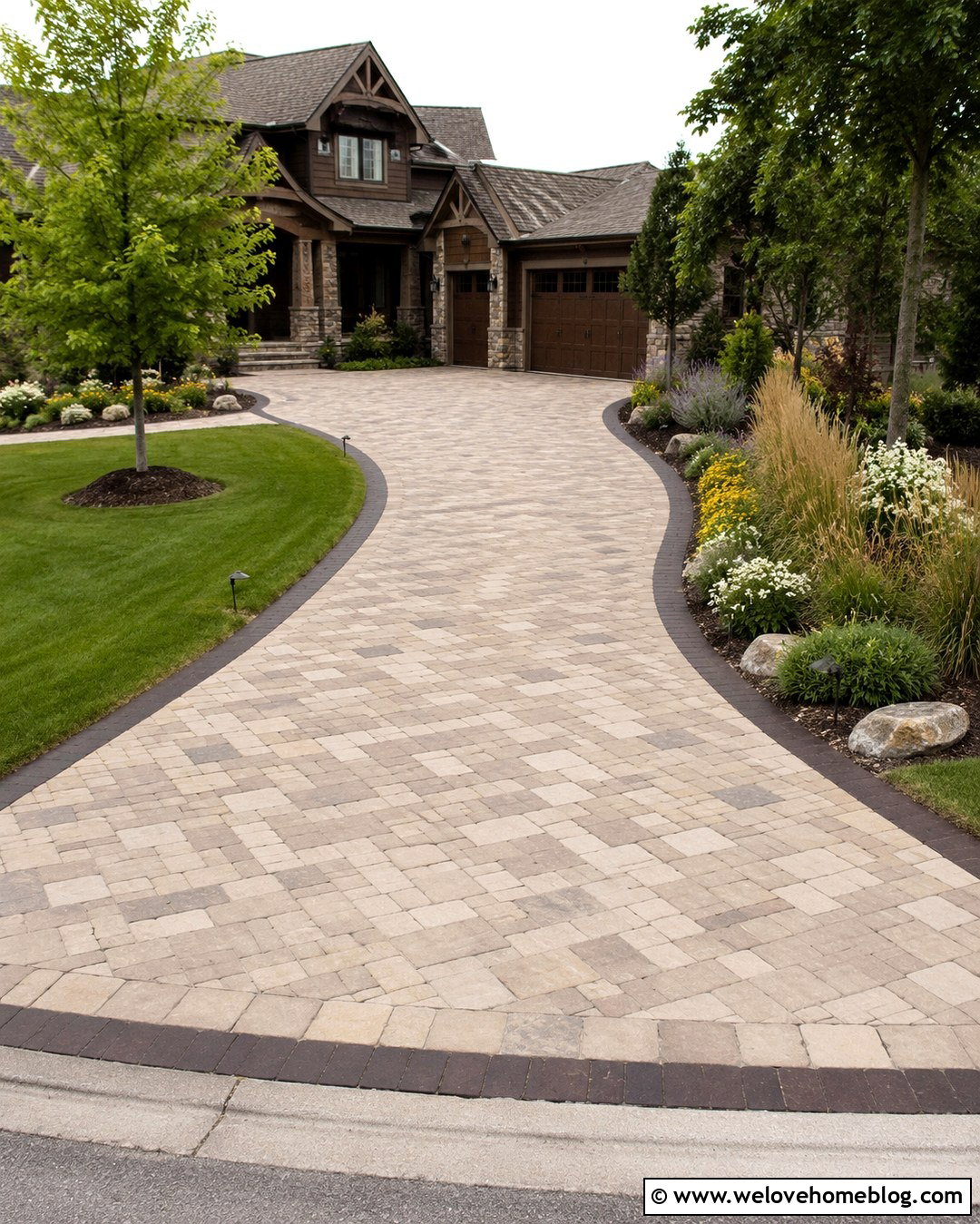
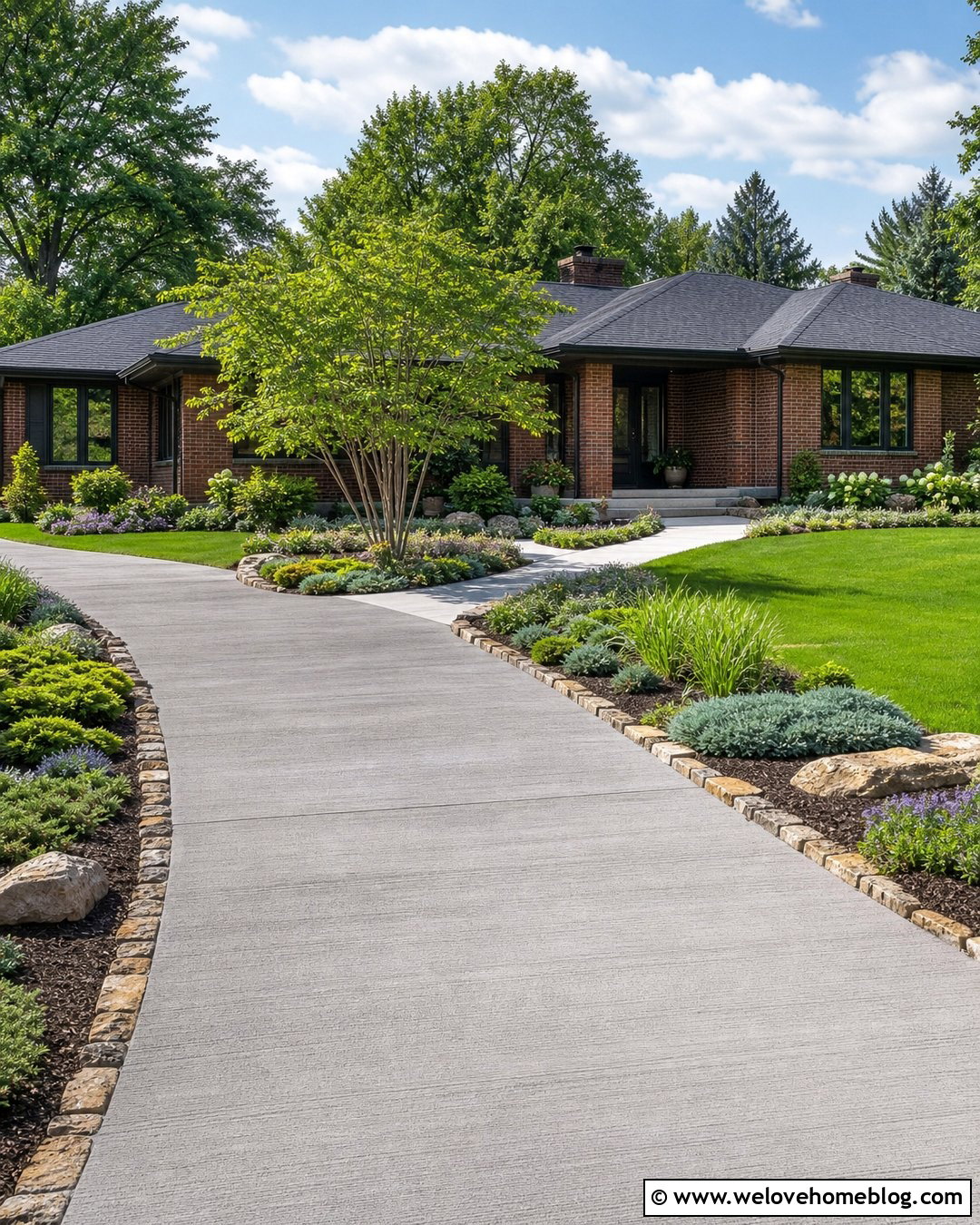
A sweeping paver driveway can make a deep front yard feel more natural and inviting than a rigid straight approach. Choose mixed-size concrete pavers in warm taupe and sandstone tones, using a random ashlar layout to complement the curve. A dark brown paver border should follow the entire edge and visually hold the varied pattern together. On the outside of the bend, plant layered groups of ornamental grasses, evergreen shrubs, and flowering perennials. Keep the inside of the curve more open with lawn and a single feature tree so drivers maintain clear views. This complete arrangement works well with ranch, Craftsman, and country homes. Gentle landscape lighting can trace the curve without making the entrance appear overly formal.
7. Gray Paver Driveway With Dark Border
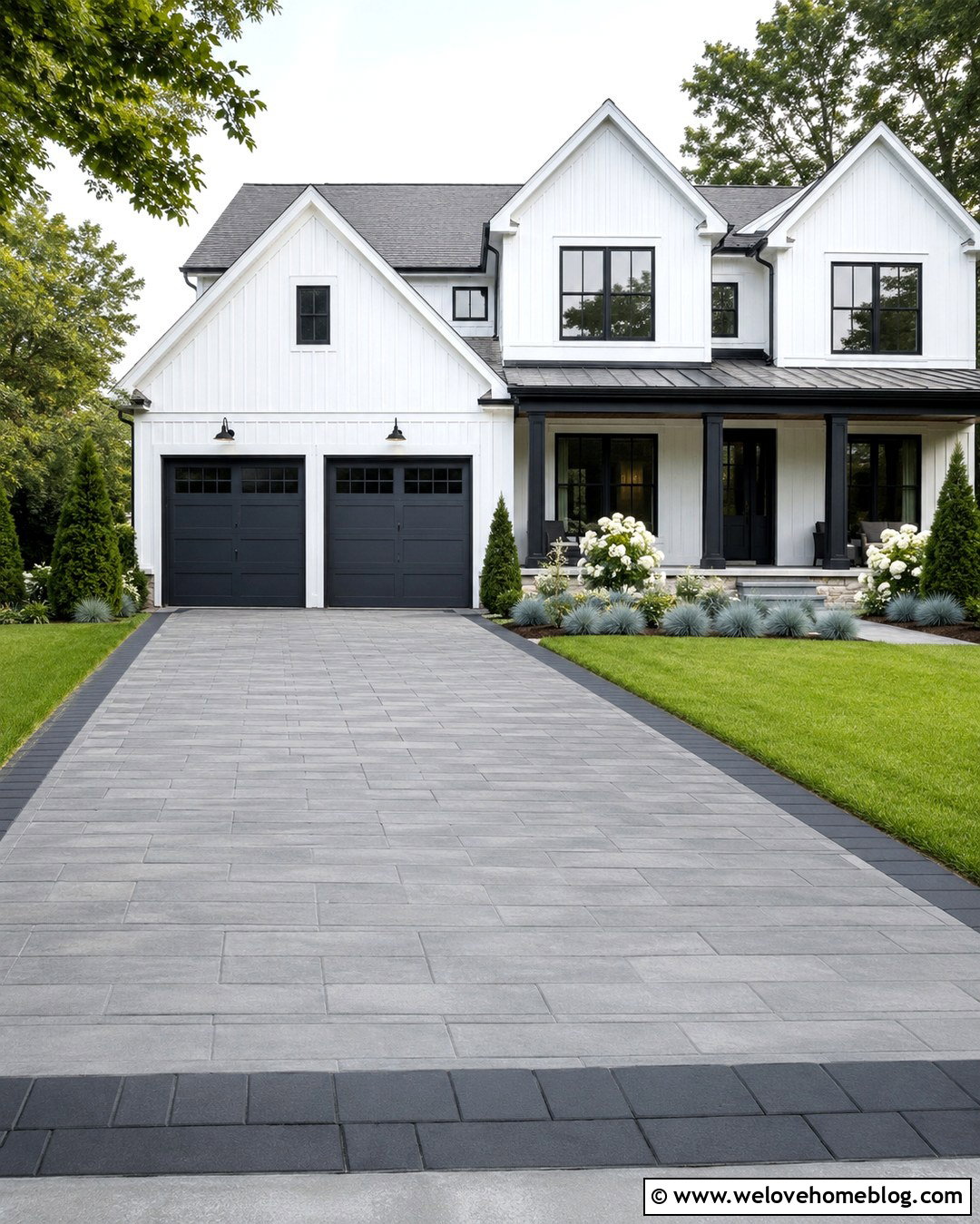
Cool gray concrete pavers create a versatile driveway that can look modern without feeling stark. Use medium-size rectangular pavers in two or three closely related gray tones, laid in a staggered pattern across a straight or slightly flared driveway. A charcoal border adds definition and helps the lighter field stand out against the surrounding lawn. Repeat the charcoal accent in the front steps, porch planters, or garage-door trim for a coordinated exterior. Low beds of blue-green grasses, white flowering shrubs, and compact evergreens provide color without competing with the paving. This palette complements white siding, natural stone, and dark-painted contemporary facades. At the sidewalk, widen the border into a neat apron that gives the driveway a more finished entrance.
8. Tan Paver Driveway With Stone Edging
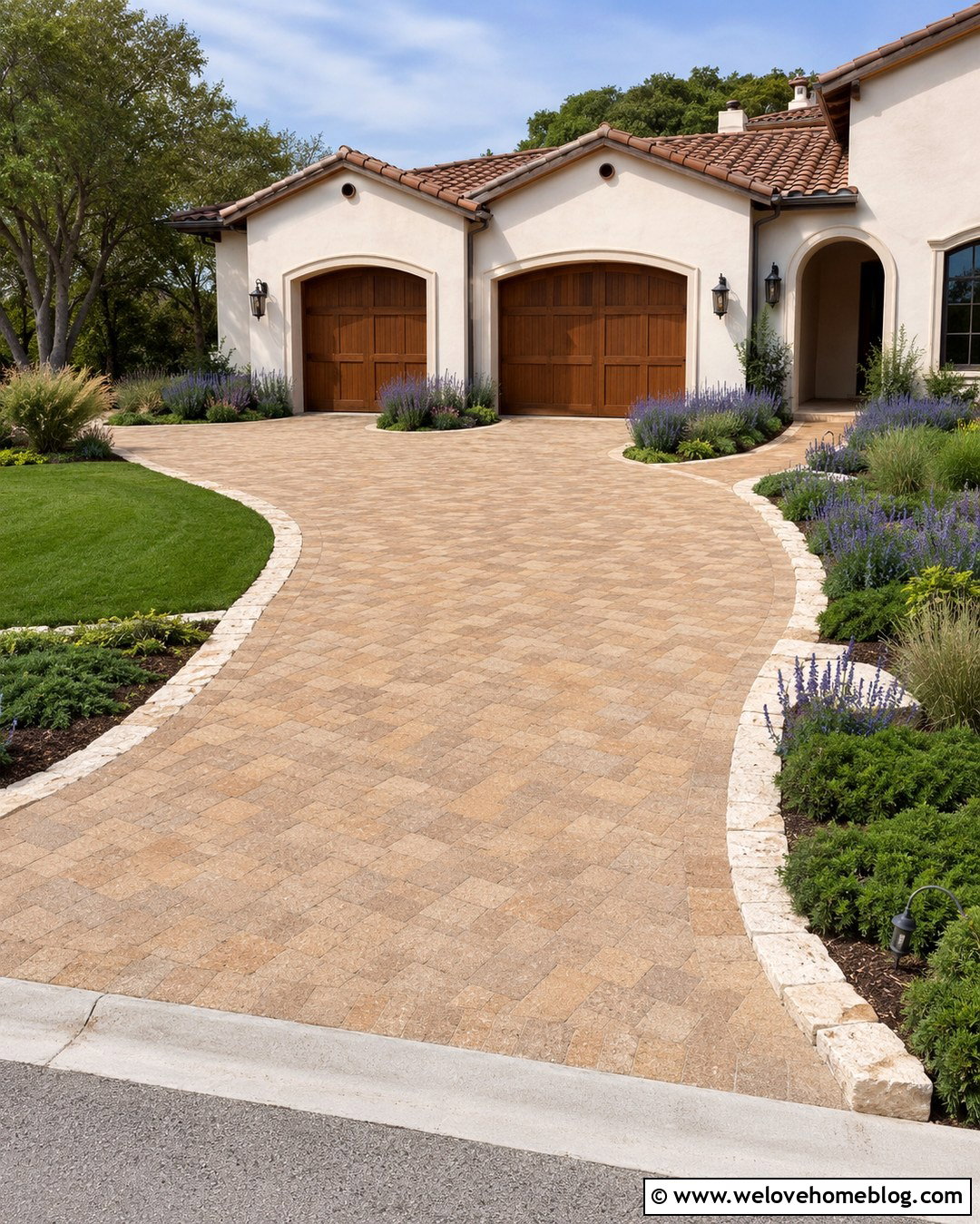
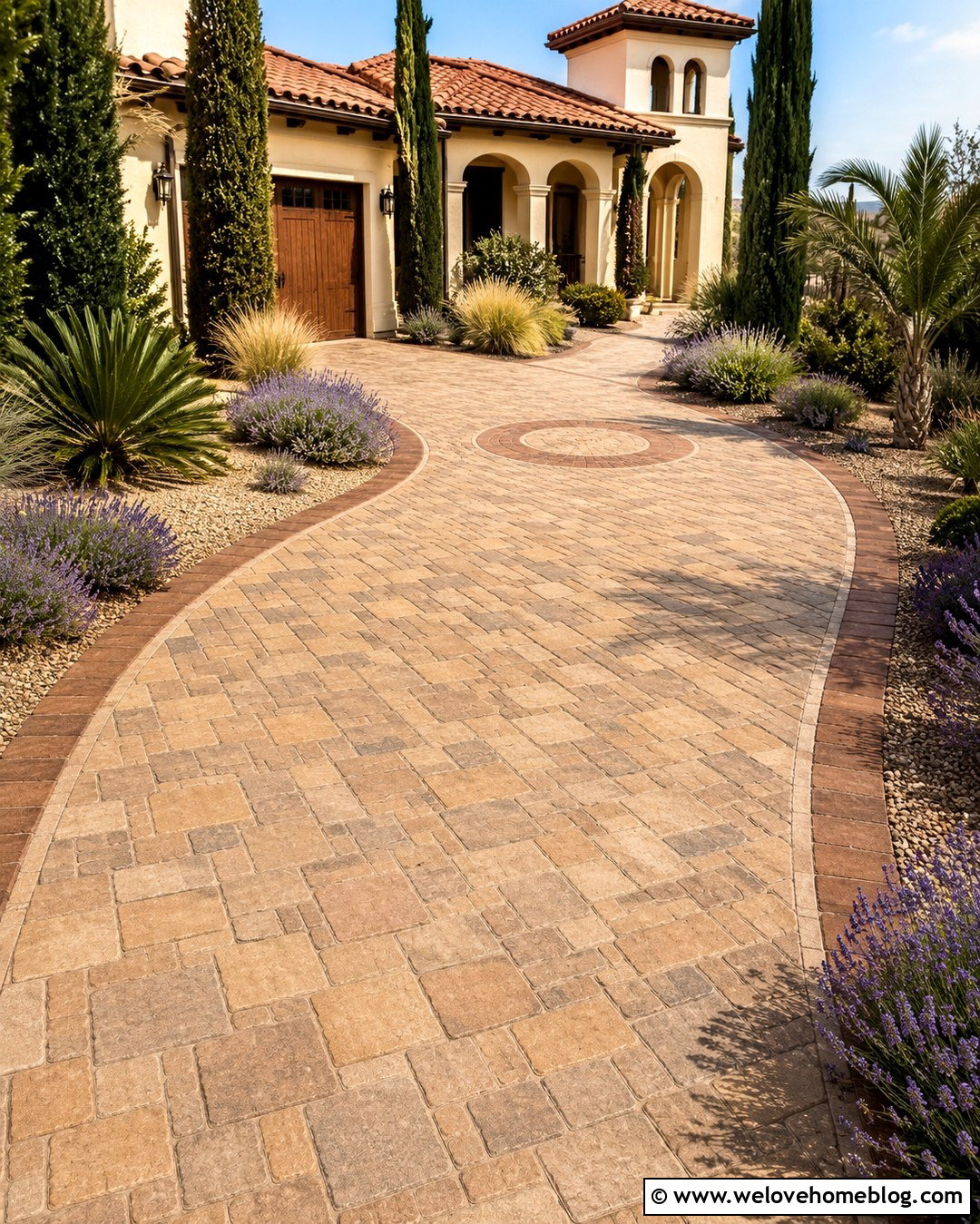
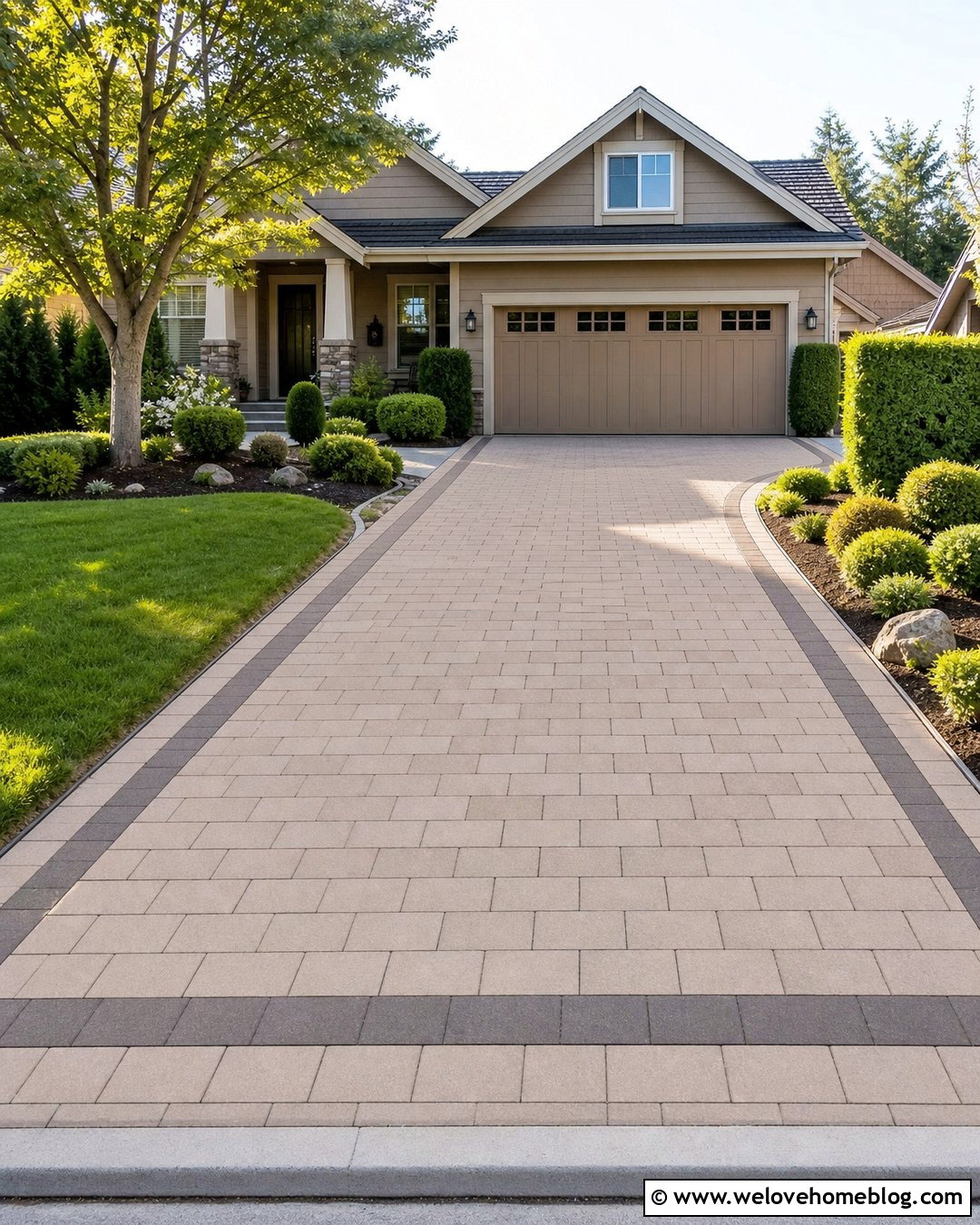
Warm tan pavers can soften a wide driveway and connect it naturally to a cream, beige, or brown home exterior. Select tumbled concrete pavers with subtle sandstone variation and install them in a mixed rectangular pattern. Edge the surface with rough-cut limestone or pale granite blocks for a border that feels substantial but not overly dark. A gently curved shape will emphasize the relaxed colors and create room for generous planting beds. Use lavender, catmint, ornamental grasses, and low junipers to frame the approach with varied texture. A matching tan paver walkway can branch toward the porch through the lawn. This complete combination suits Southwestern, Mediterranean, traditional, and rustic homes, especially when the garage doors feature natural wood tones.
9. Red Brick Paver Driveway
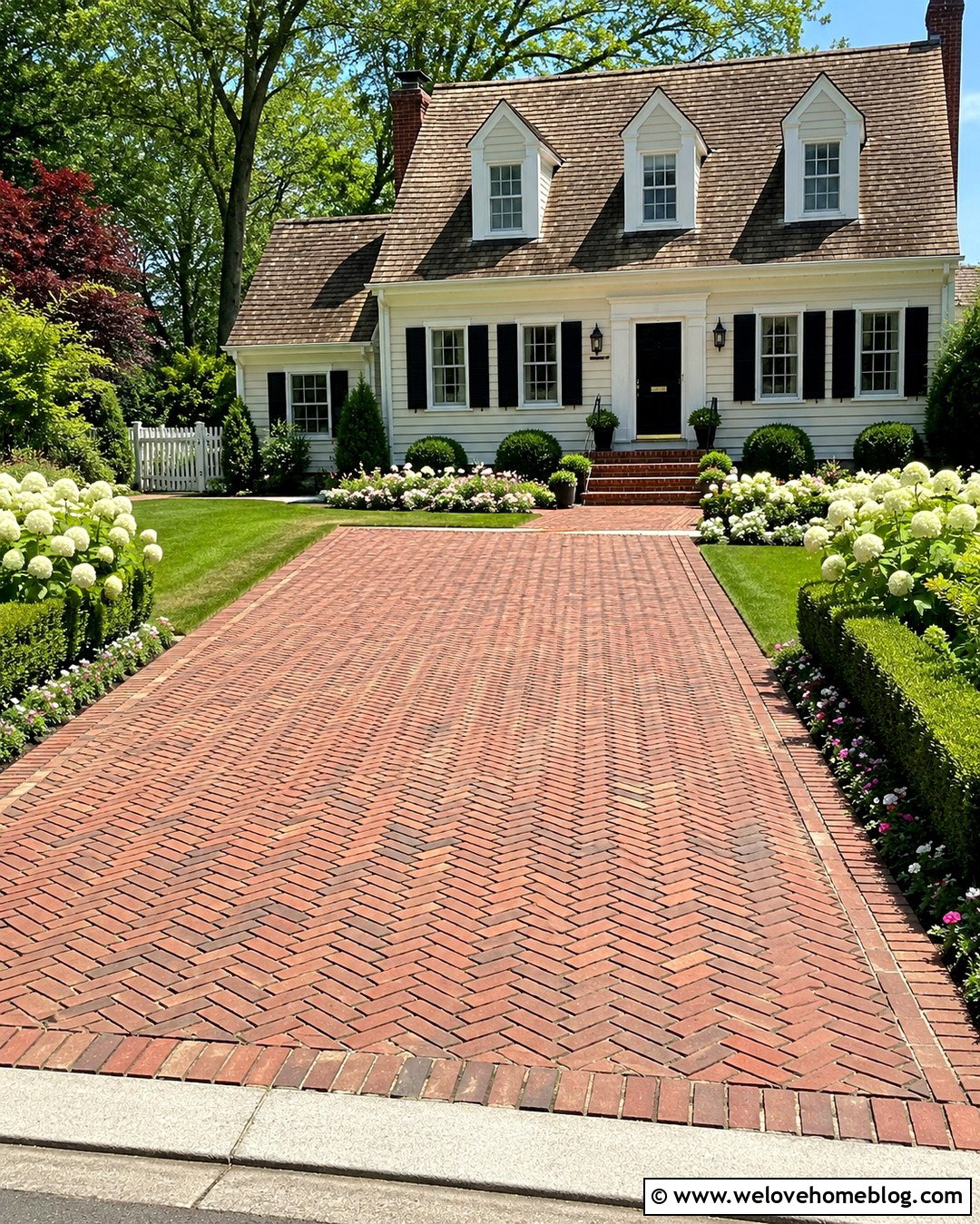
Nothing brings warmth to a traditional exterior quite like a red brick paver driveway. Choose genuine clay pavers rated for vehicular applications, with a blend of red, burgundy, and weathered brown rather than one uniform color. Lay them in a herringbone pattern on the main driving area and use a straight soldier course around the perimeter. A rectangular driveway can feel softer when narrow garden beds run along both sides. Fill them with clipped boxwood, white hydrangeas, and spring bulbs for a classic appearance. A brick Colonial or Cape Cod house provides an ideal backdrop, although cream siding also creates attractive contrast. Repeat the driveway brick on porch steps or walkway borders to unify the front landscape.
10. Mixed Size Paver Driveway
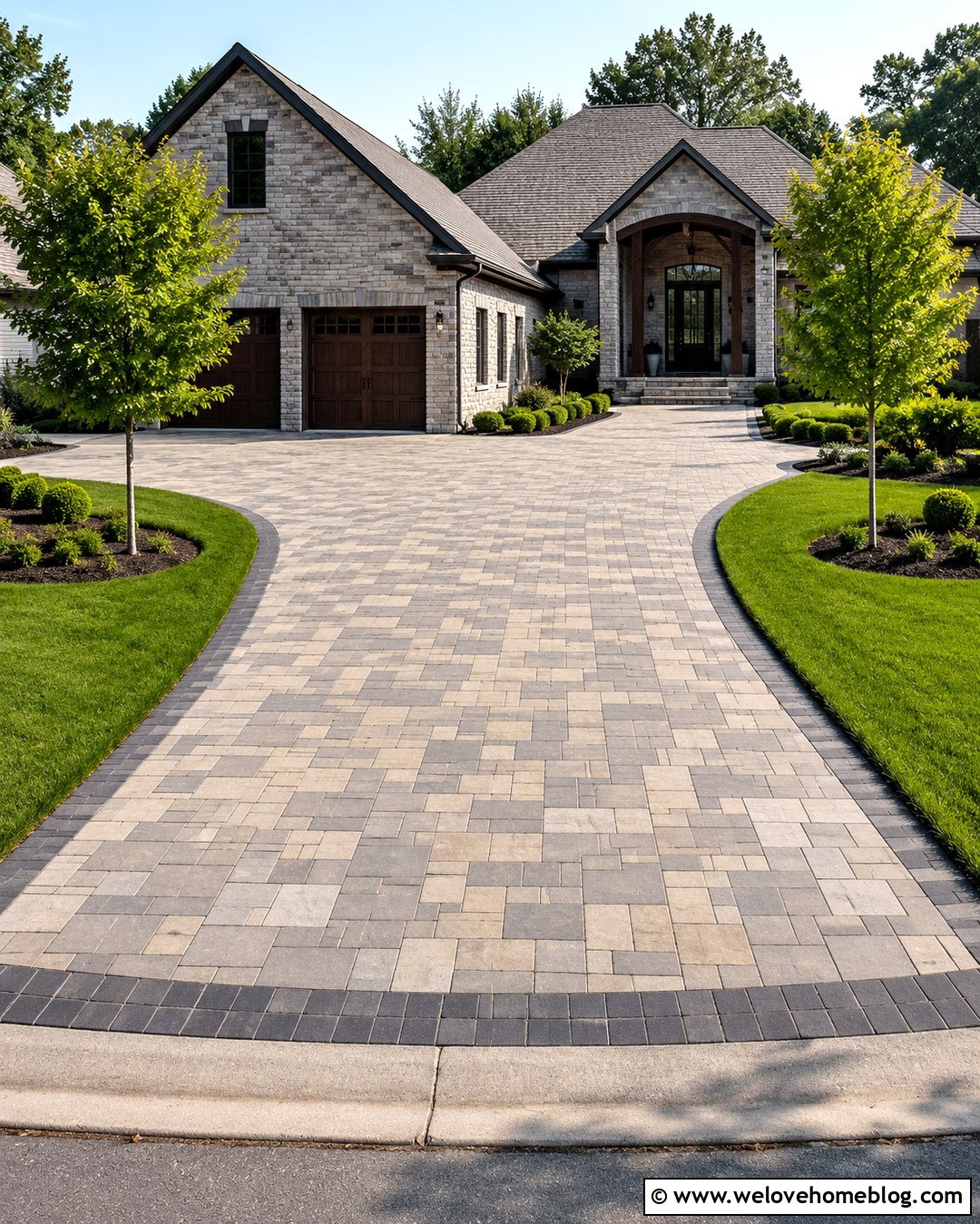
Mixed-size concrete pavers produce a detailed surface without relying on bold color changes. Combine squares and rectangles in a modular ashlar pattern, using muted gray, beige, and taupe tones that complement natural stone siding. This layout is especially effective on a broad driveway because its varied joints break up the visual scale. Keep the shape straight, but add a gentle flare where the driveway meets the street. A single dark paver course can outline the perimeter and separate the field from smooth lawn edges. Plant small trees near the entrance, then use lower shrubs closer to the garage to preserve visibility. Carry the same paver blend into a wider front walk, creating one connected hardscape around a transitional or Craftsman house.
11. Basketweave Brick Paver Driveway
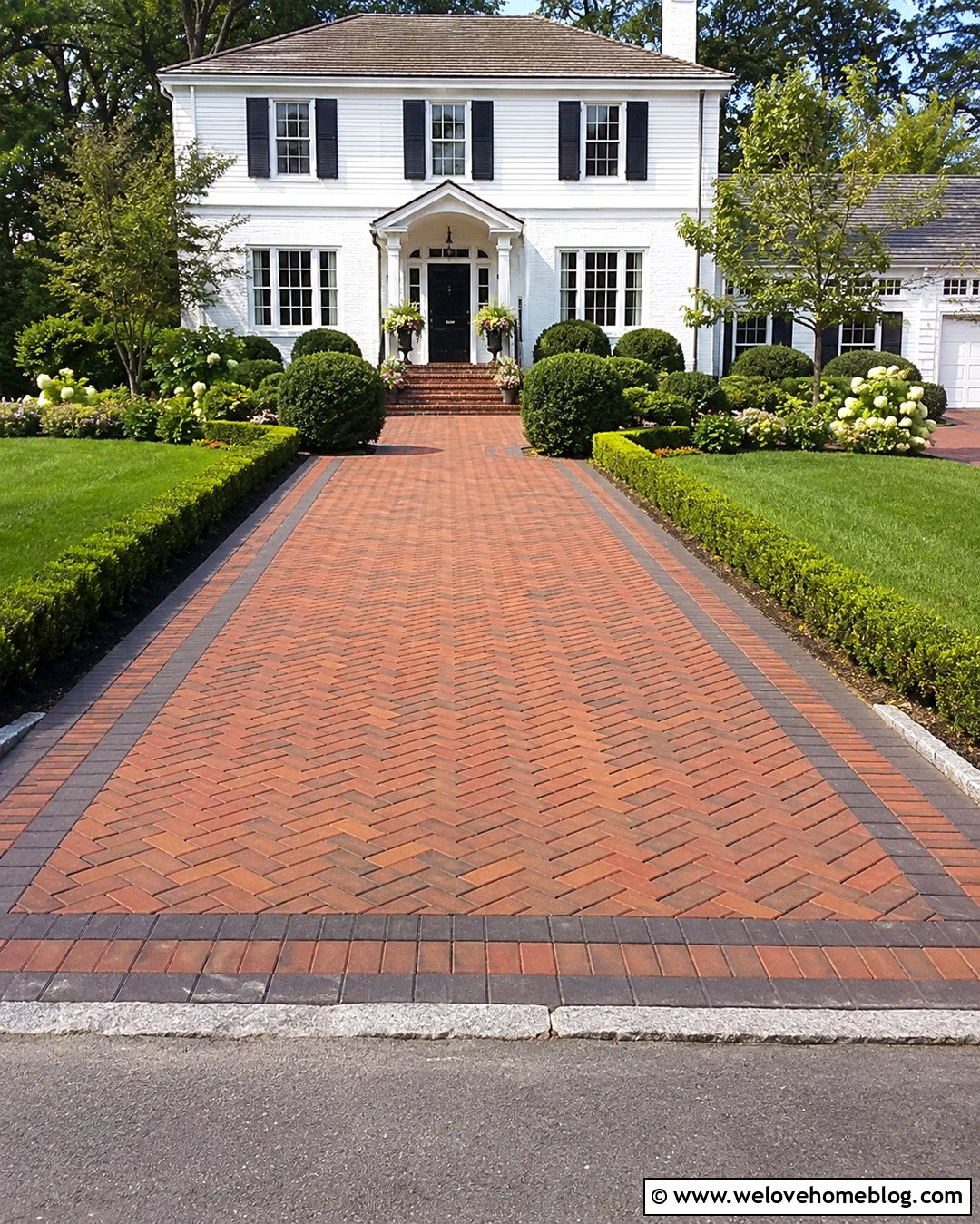
A basketweave pattern brings traditional detail to a brick paver driveway while creating a calmer appearance than herringbone. Pairs of clay brick pavers alternate direction, forming compact squares across the surface. Use this pattern on a short, straight driveway where the design can be appreciated from the curb. Deep red and brown brick works well with a white Colonial, painted cottage, or historic-inspired facade. Surround the pattern with a double soldier-course border in charcoal brick to provide contrast and secure the visual edges. Neatly clipped hedges, rounded foundation shrubs, and a simple brick walkway maintain the formal mood. Because the layout contains many visible joints, careful alignment is important for a crisp, intentional finished appearance.
12. Running Bond Paver Driveway
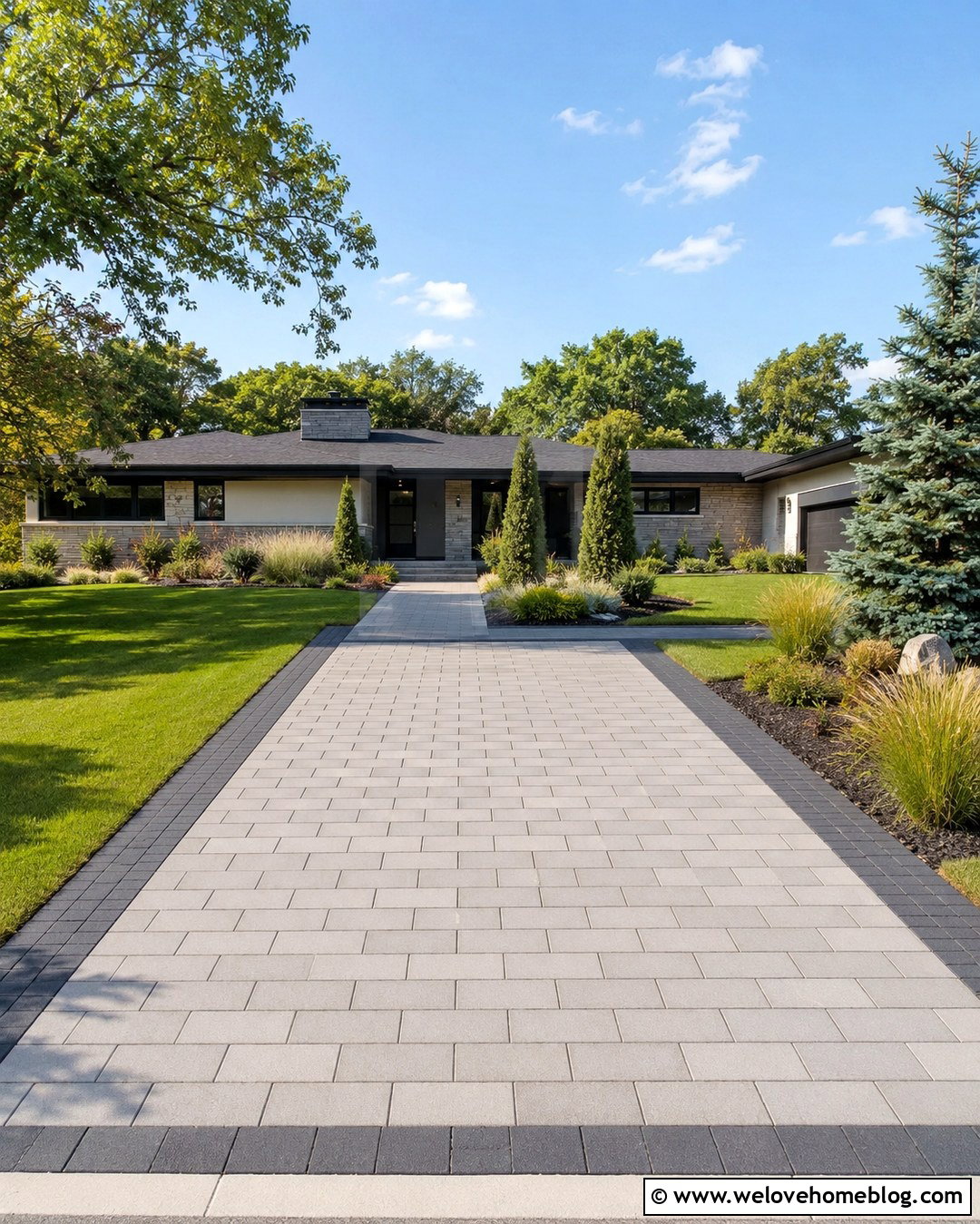
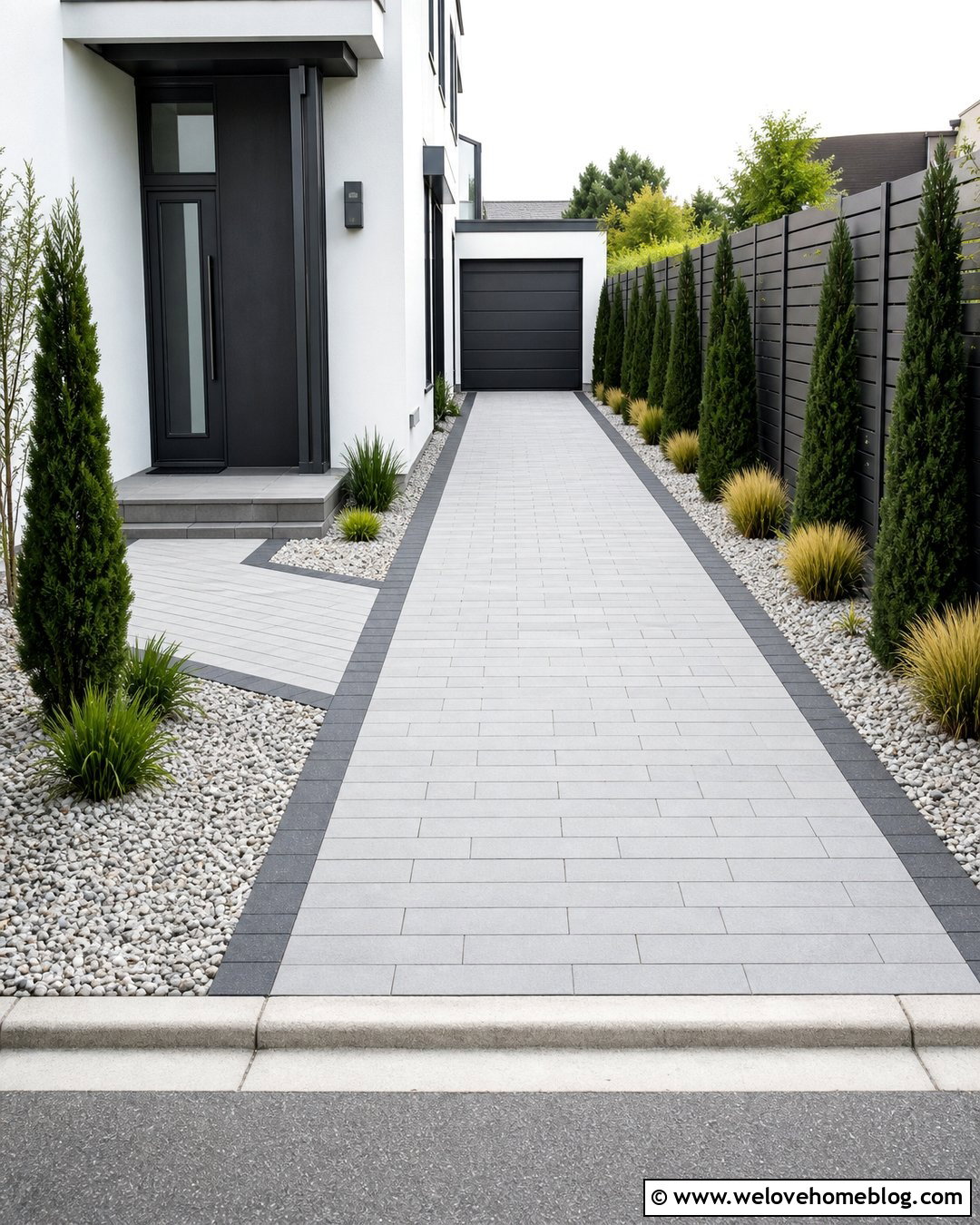
A running bond layout offers a straightforward way to make rectangular driveway pavers feel clean and orderly. Each row is offset from the previous row, creating long horizontal lines that can visually widen a narrow driveway. Choose smooth concrete pavers in warm gray or light taupe and position the rows across the driveway rather than along its length. Finish the edges with a darker contrasting course that follows the straight approach from curb to garage. Narrow planting beds can contain upright evergreens, compact grasses, and low ground cover without reducing usable driving space. This design works particularly well with ranch and midcentury modern homes. Extend the same bond pattern into the walkway, changing direction at the porch to subtly identify the pedestrian route.
13. Paver Driveway With Grass Strips
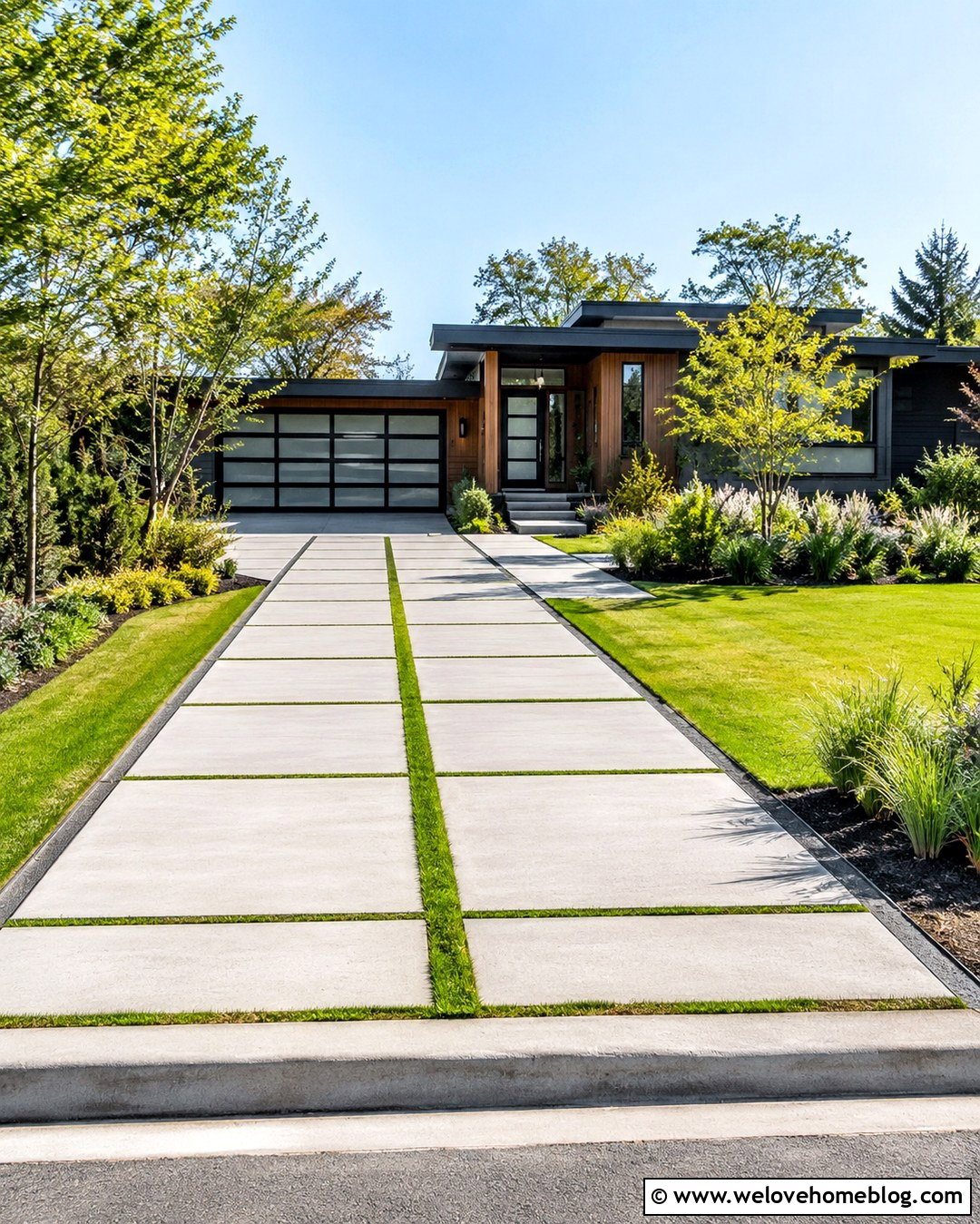
Concrete pavers separated by green grass strips can make a driveway feel lighter and more integrated with the yard. Use large, vehicle-rated rectangular pavers in a pale gray finish, placing them in two broad driving tracks or a structured grid. The planted joints must be designed for the site’s climate, maintenance level, sunlight, and expected vehicle use. Frame the driveway with steel edging or a narrow band of smaller gray pavers to maintain clean boundaries. Continue the lawn around the surface, then add architectural grasses and low shrubs near the house. This open, geometric design complements contemporary and midcentury homes. It works best when the driveway base, paver thickness, joint width, irrigation, and drainage plan are professionally coordinated.
14. Paver Driveway With Center Medallion
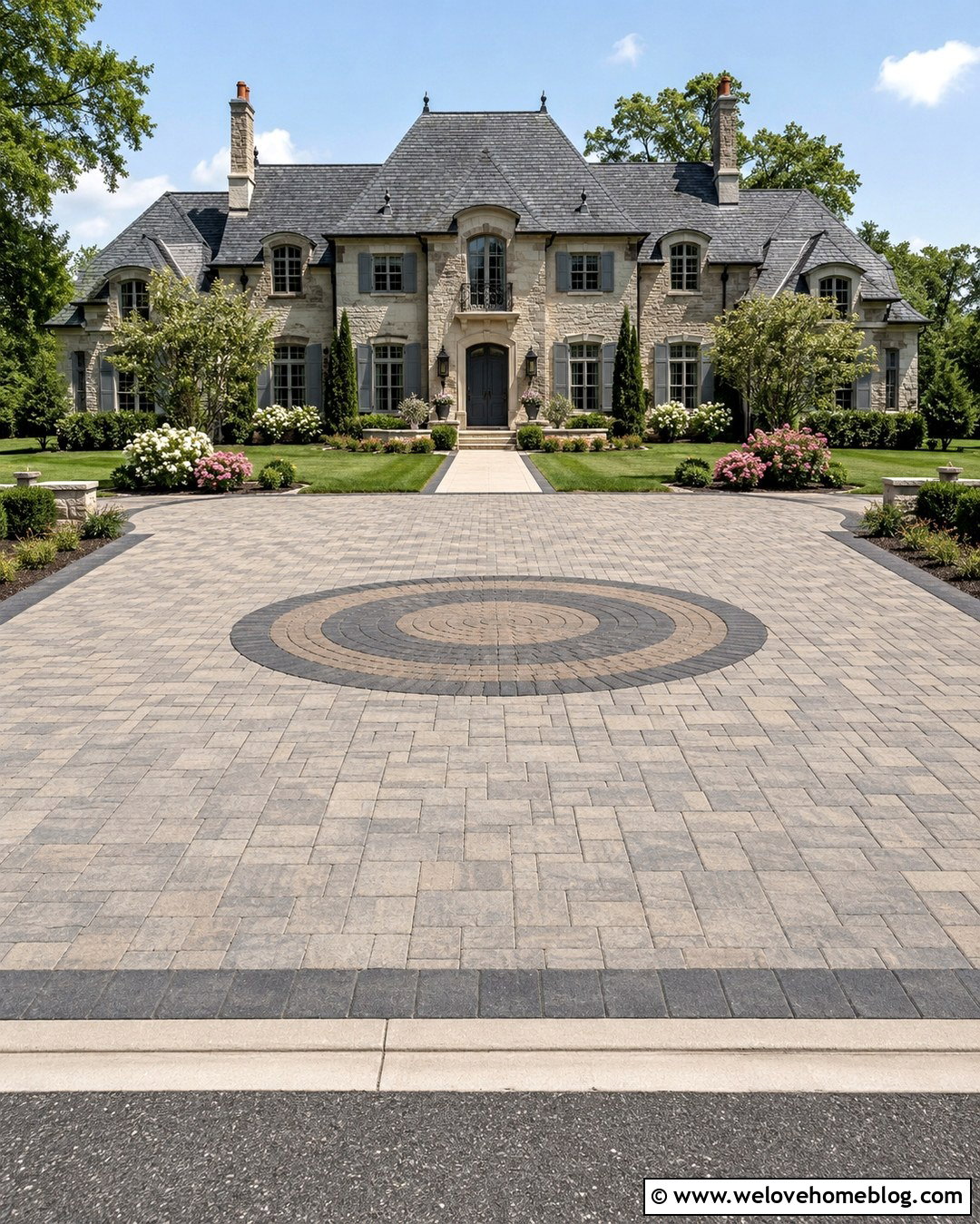
A contrasting center medallion can give a large paver driveway a clear focal point without covering the entire surface in decorative detail. Start with warm gray concrete pavers in a simple running bond or ashlar pattern. At the widest point near the house, install a circular medallion using charcoal and tan pavers arranged in concentric rings. Keep the colors related to the main field so the design remains refined. A matching charcoal border can connect the medallion visually to the driveway’s outer edges. Frame the motor court with balanced evergreen beds and a central walkway leading to the porch. This look suits symmetrical Colonial, French country, and traditional homes, especially when the circle aligns with the front door or an architectural window.
15. Paver Driveway With Contrasting Apron
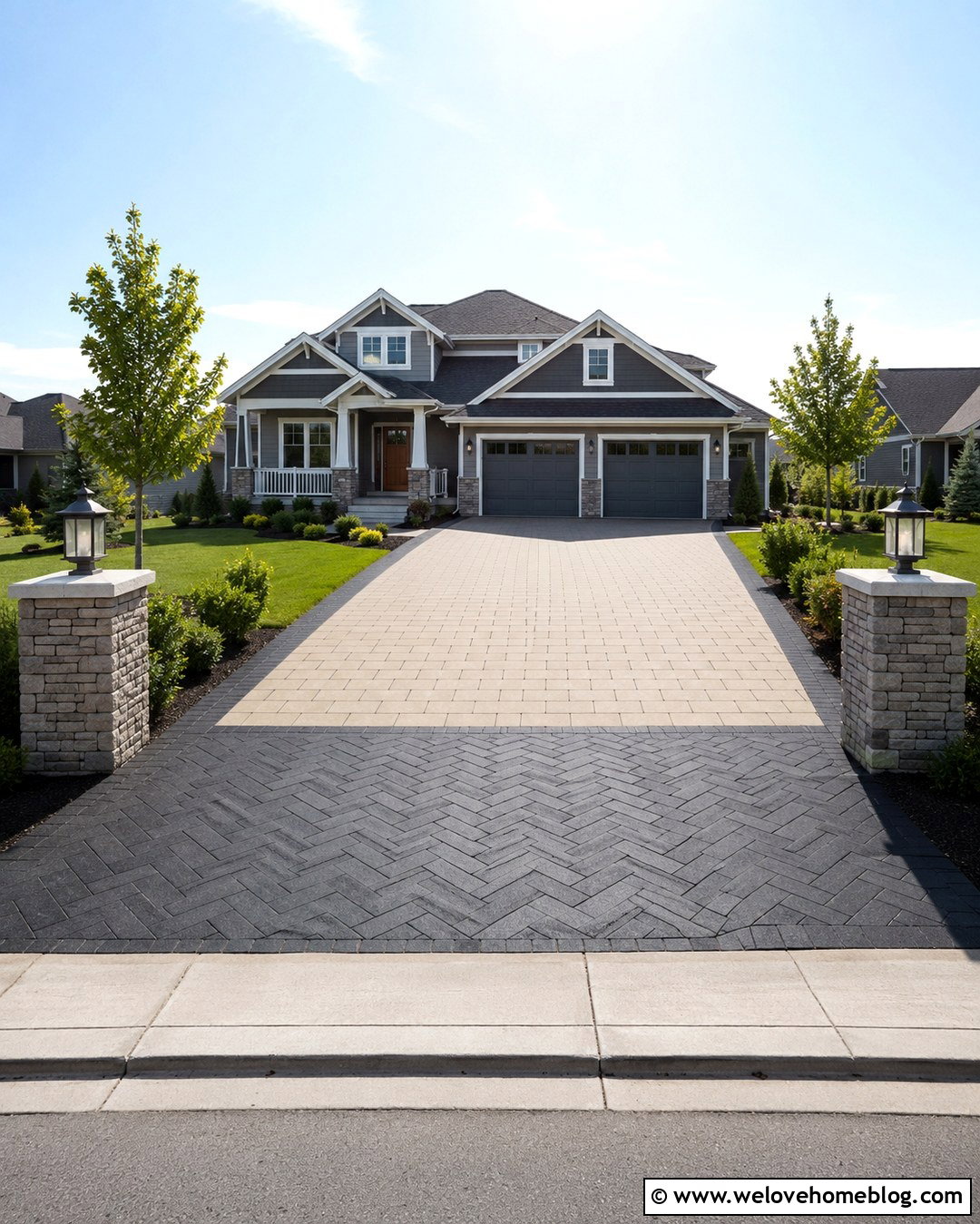
A contrasting paver apron marks the driveway entrance and adds detail where it is most visible from the street. Cover the main straight driveway with light beige concrete pavers in a practical running bond. Across the first several feet, switch to dark charcoal pavers laid in herringbone, creating a defined threshold without overwhelming the design. Continue a narrow charcoal border along both sides to connect the apron with the rest of the driveway. Stone entrance columns, simple lanterns, and low evergreen planting beds can reinforce the sense of arrival. Keep taller plants back from the curb to protect visibility. This combination can refresh a suburban, Craftsman, or transitional exterior while allowing the main paving field to remain simple and visually spacious.
16. Paver Driveway With Matching Walkway
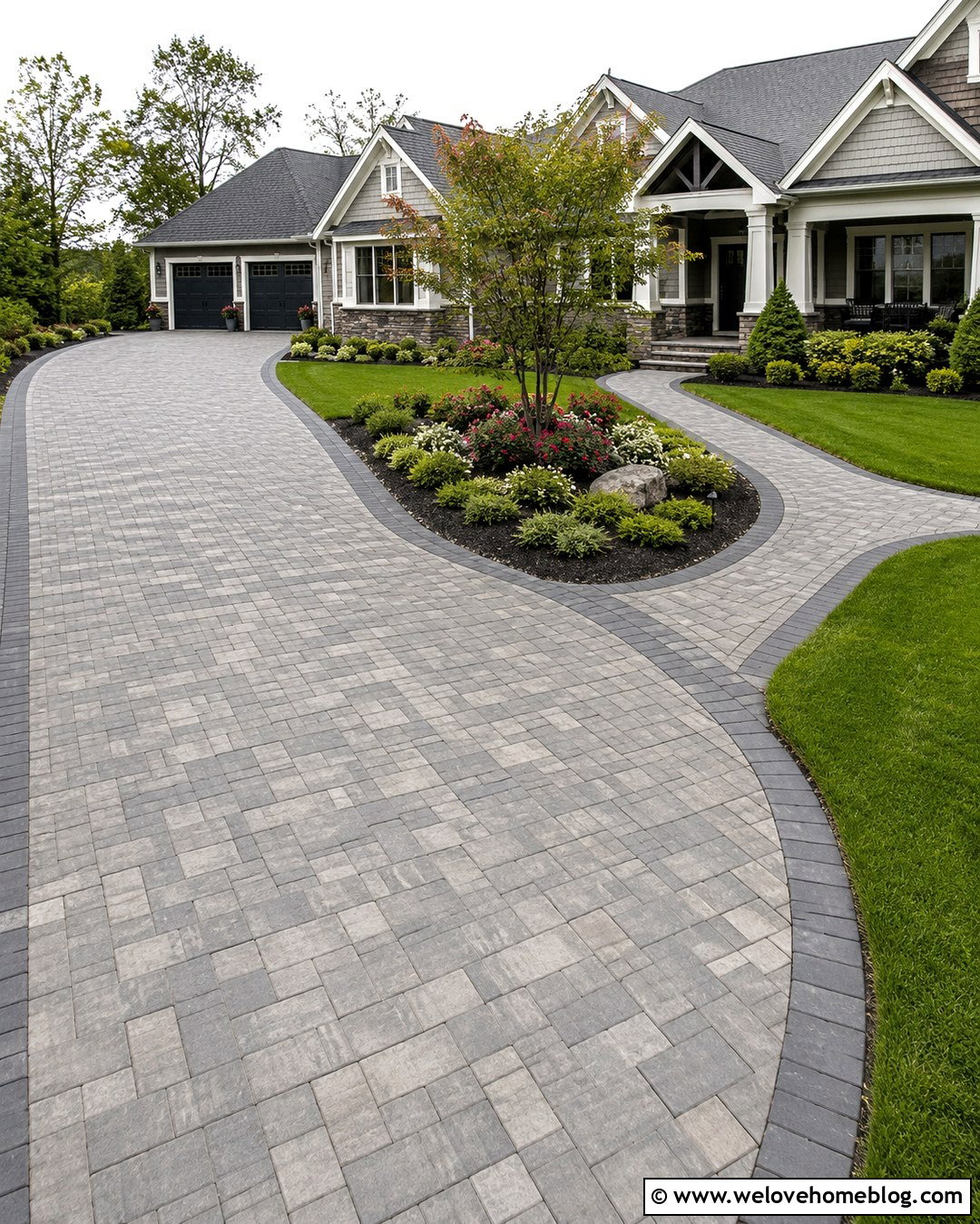
Using the same pavers for the driveway and front walkway creates a connected landscape, but the pedestrian route should remain easy to recognize. Install blended taupe concrete pavers across a slightly curved driveway in a mixed-size ashlar pattern. Branch a narrower walkway toward the porch, then distinguish it with a charcoal border and a different laying direction. A planting island between the driveway and walk can contain a small ornamental tree, flowering shrubs, and low ground cover. This green separation keeps the front yard from appearing completely paved. Choose a paver blend that reflects colors found in the roof, stone veneer, or porch columns of a Craftsman or transitional home. Repeating materials makes the entire entrance look planned and cohesive.
17. Paver Driveway With Gate And Pillars
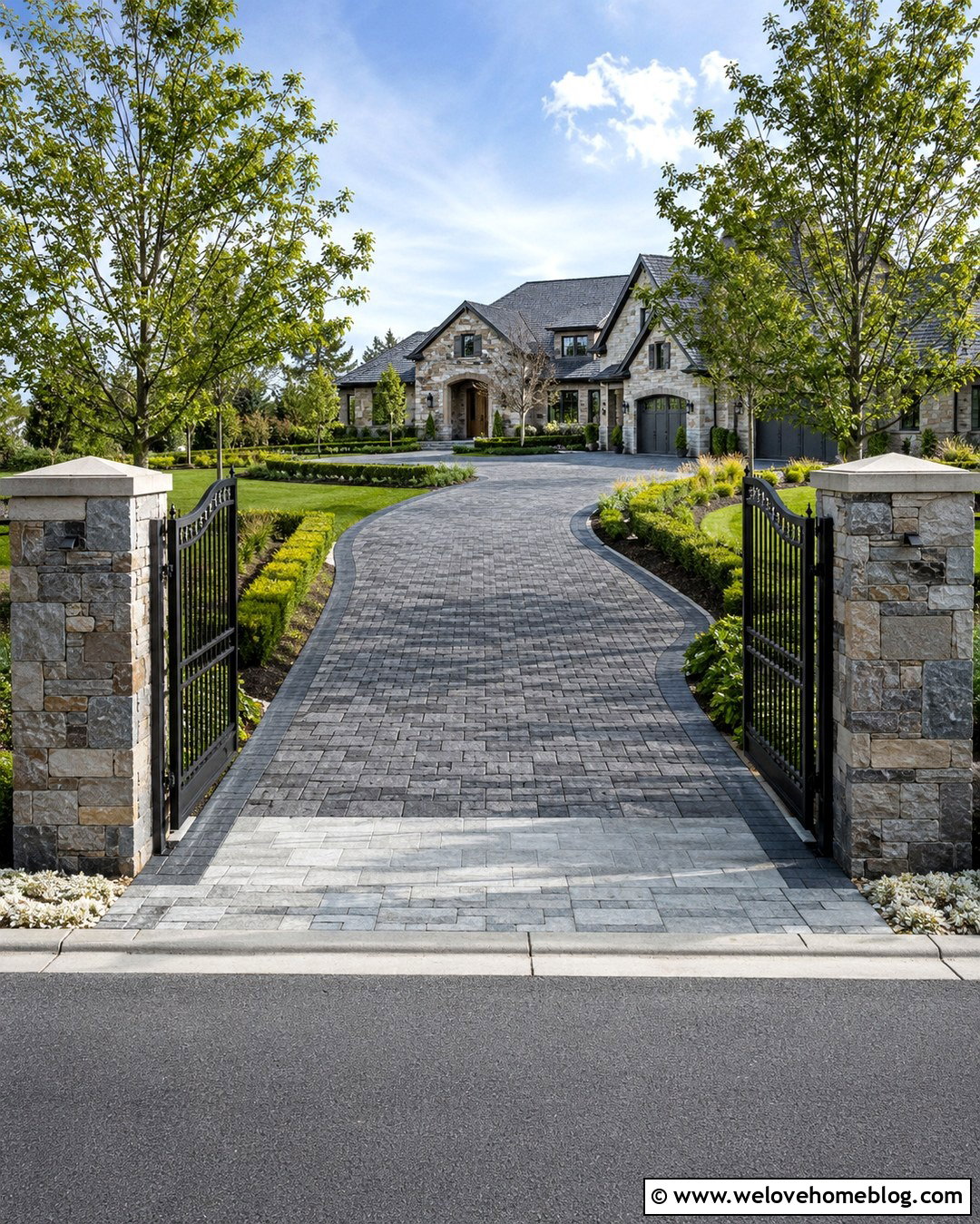
A gated paver driveway should treat the paving, entrance structure, and landscaping as one coordinated composition. Use charcoal-gray cobblestone-style concrete pavers on a long, gently curved approach to a stone or brick house. At the street, install masonry pillars faced with the same stone used on the home. A simple black metal gate provides contrast without hiding the driveway beyond it. Create a lighter gray paver apron beneath the gate so the entrance remains visible and clearly defined. Low hedges, ornamental grasses, and matching trees can frame both pillars while preserving driver sightlines. Continue the darker edge course up the drive toward the garage. The result feels secure and substantial without becoming excessively ornate or disconnected from the surrounding yard.
18. Narrow Paver Driveway
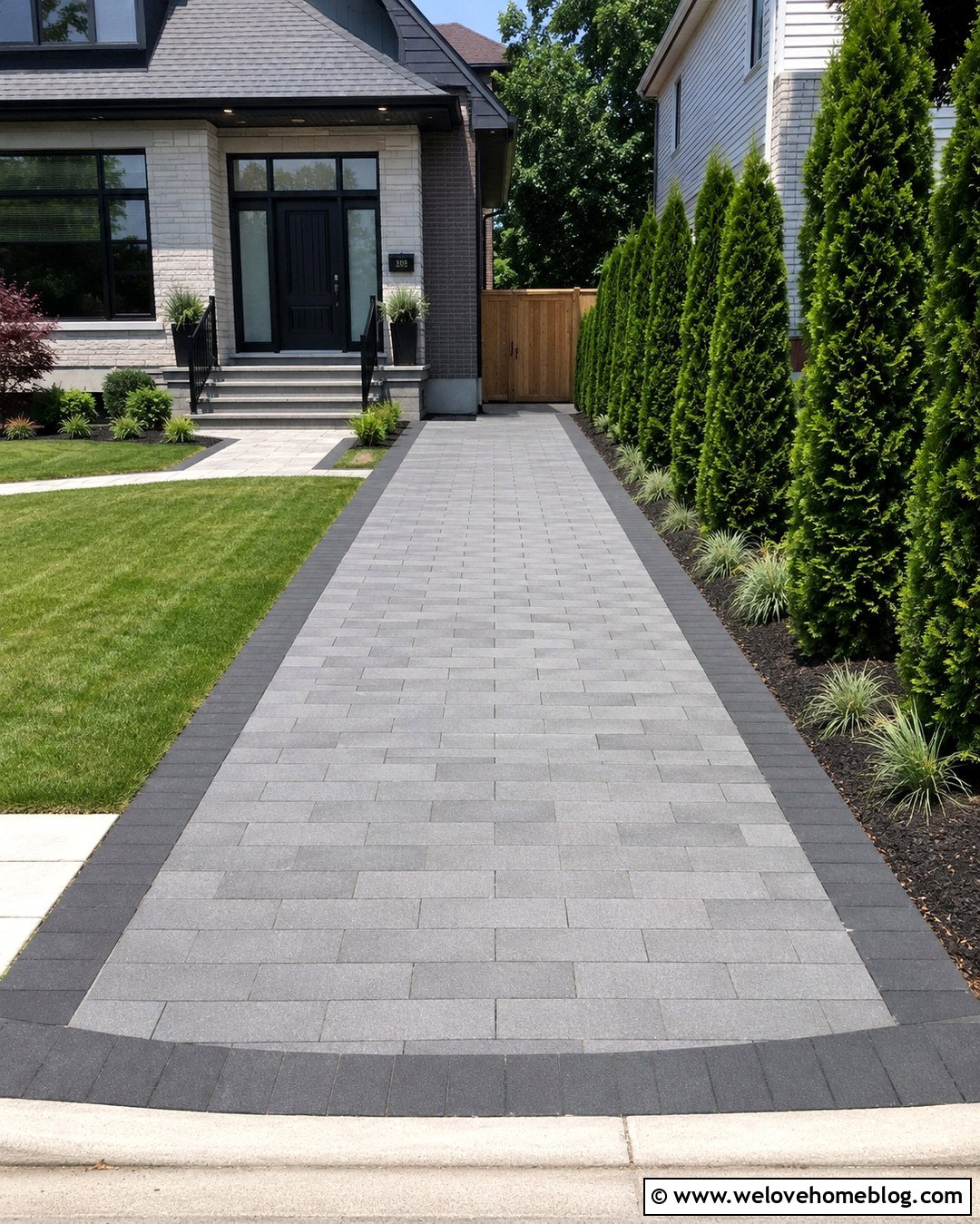
A narrow paver driveway needs clean boundaries, a simple pattern, and landscaping that does not crowd the driving area. Long rectangular concrete pavers in a medium-gray running bond can visually broaden the surface when laid across its width. Add a single charcoal border course rather than a wide decorative band, which could make the usable space feel smaller. Along one side, create a slim planting bed with columnar evergreens, low grasses, or compact shrubs. Keep the opposite side open with lawn or a level walkway for easier movement around parked vehicles. A small flare near the street improves the sense of entry. This practical arrangement fits bungalow, urban cottage, and compact suburban lots where every foot of front-yard space must serve a clear purpose.
19. Sloped Paver Driveway
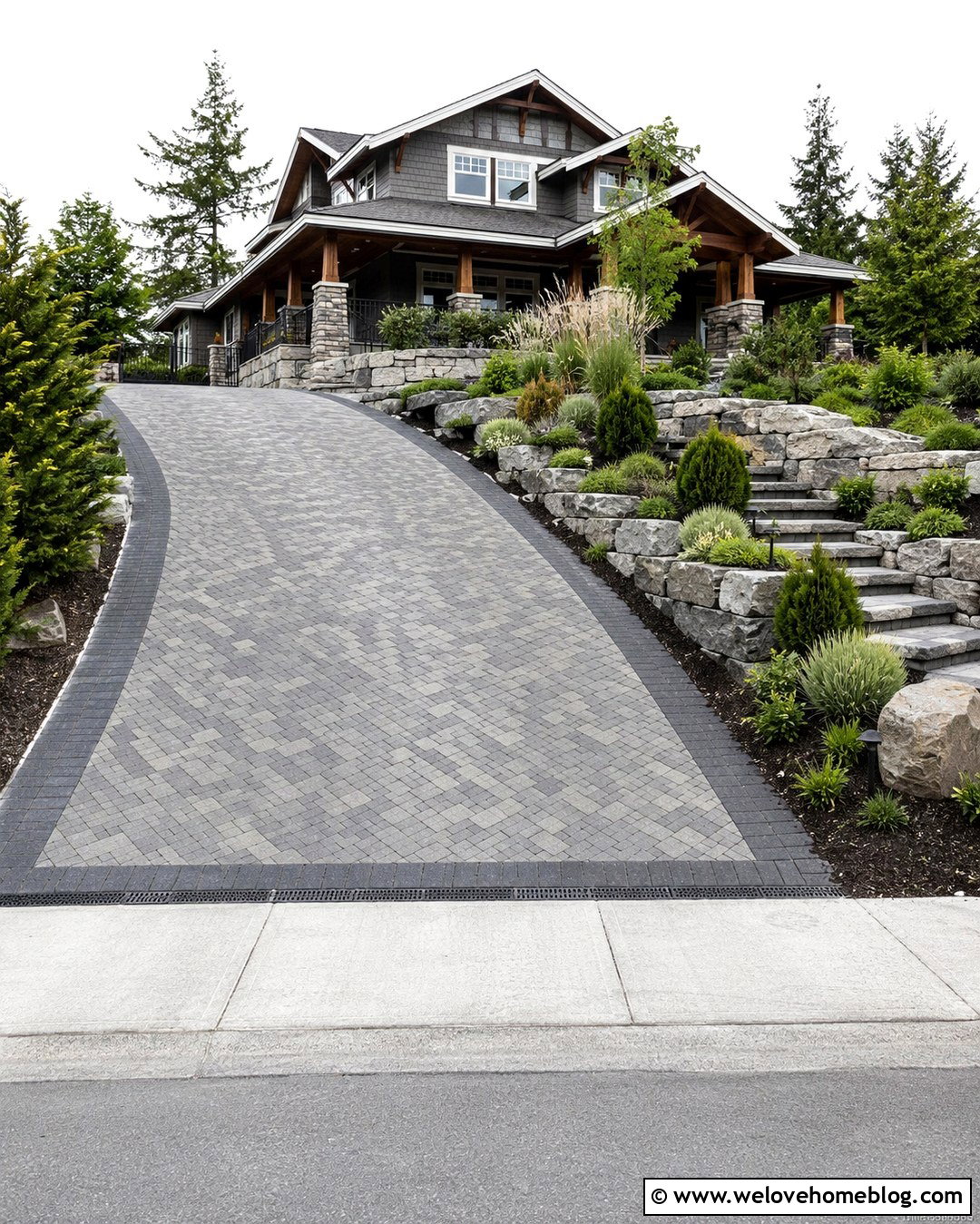
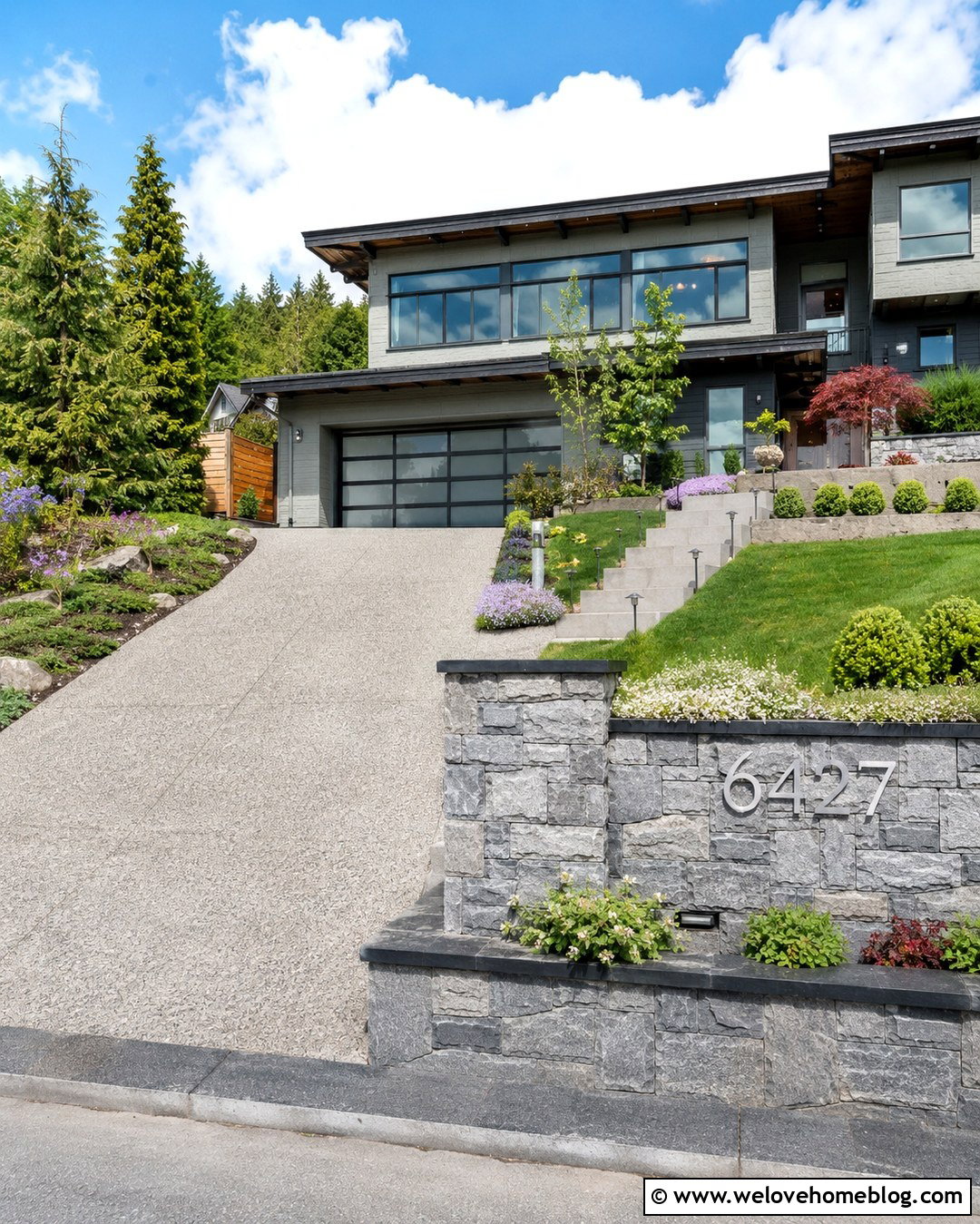
A sloped paver driveway can look attractive, but its base, drainage, edge restraint, and surface transition require especially careful planning. Choose textured interlocking concrete pavers in medium and dark gray tones to create a visually grounded surface. A herringbone layout adds energetic detail along the incline, while a strong charcoal border clearly defines both sides. At the bottom, use a level paver apron and a drainage solution appropriate for the property and local rules. Terraced planting beds with retaining walls can frame the slope more effectively than loose soil banks. Fill them with erosion-conscious ground covers, compact shrubs, and ornamental grasses. Coordinate the paver colors with a hillside contemporary or Craftsman home positioned above the street.
20. Farmhouse Paver Driveway
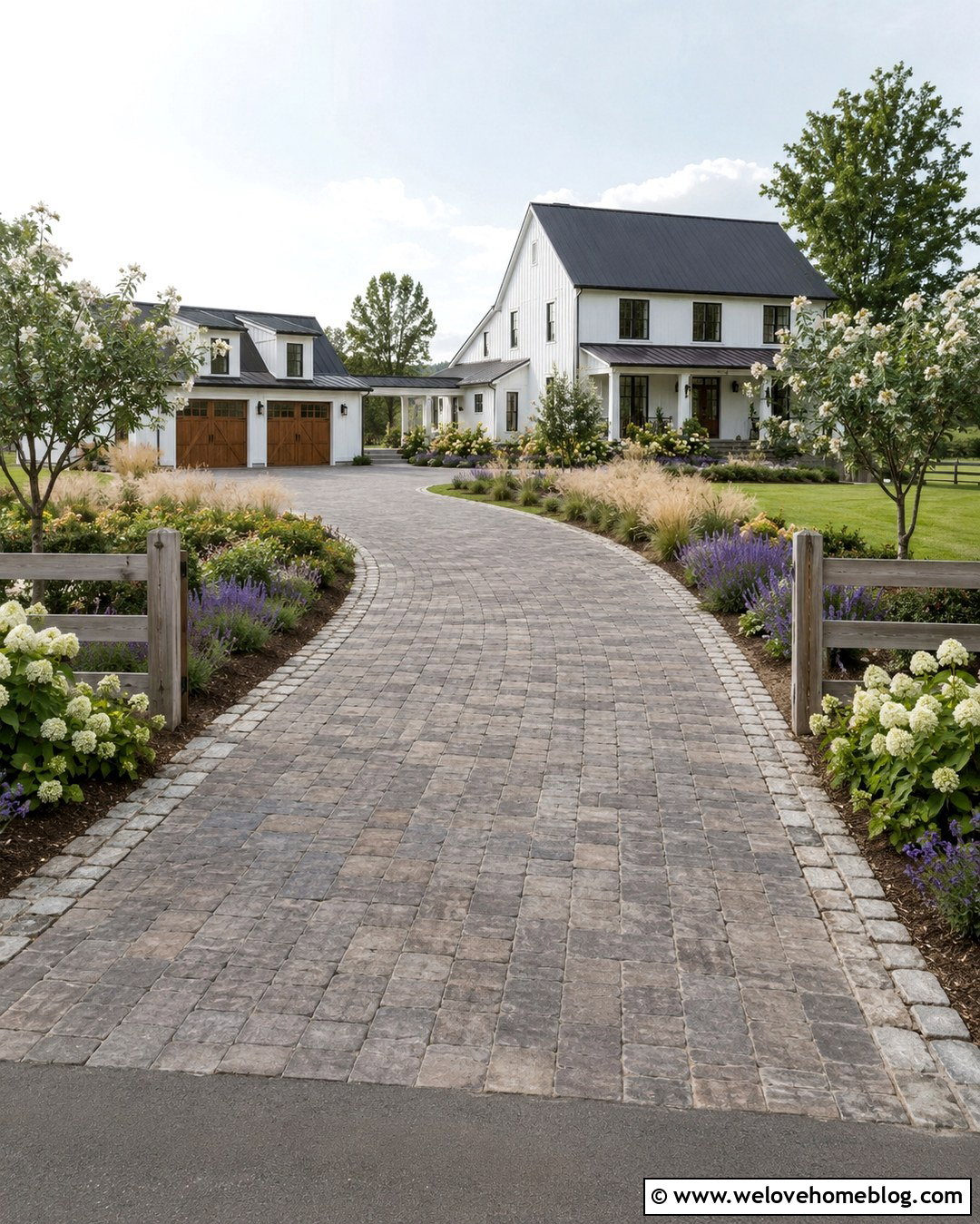
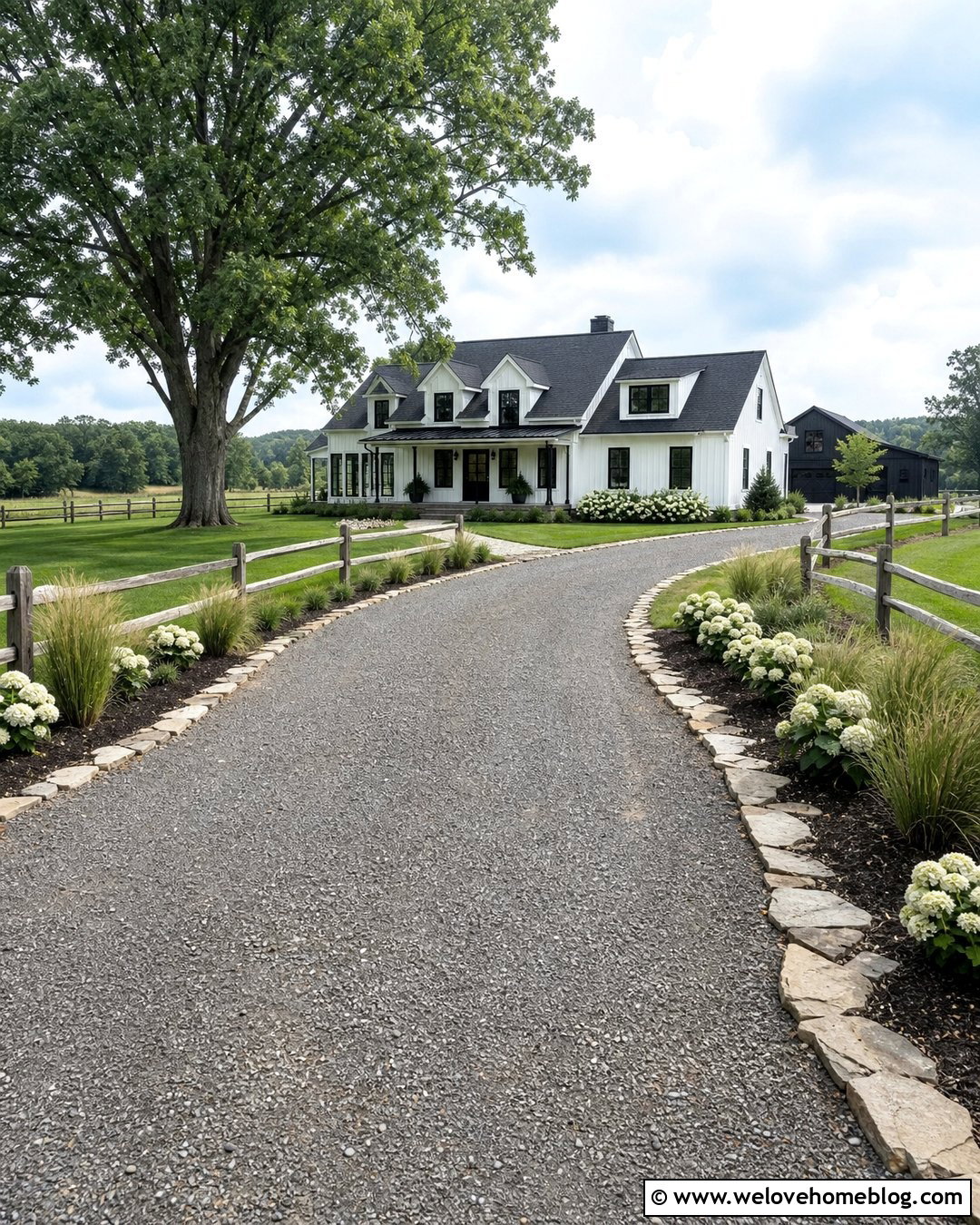
A farmhouse paver driveway looks most convincing when it combines a practical layout with warm, understated materials. Use weathered concrete pavers in blended gray, brown, and muted tan, shaped to resemble aged stone. A long, gently curving driveway can lead through open lawn toward a white modern farmhouse with a dark roof and natural wood garage doors. Edge the paving with granite cobbles or a narrow band of darker pavers. Near the house, widen the drive into a simple parking court and connect it to a matching front walkway. Informal beds of hydrangeas, ornamental grasses, salvia, and small flowering trees soften the edges. Wooden fencing near the entrance can reinforce the rural character without making the design feel overly themed.
Conclusion:
The strongest 20 Paver Driveway Ideas do more than introduce an attractive paving pattern. They coordinate the driveway’s material, color, shape, edging, drainage, landscaping, and connection to the house. Brick herringbone can enrich a traditional facade, while large concrete units create a clean modern approach. Curved layouts feel relaxed, circular drives provide graceful circulation, and permeable systems can support a drainage-focused landscape when properly designed. Before selecting a final look, compare full-size samples outdoors and confirm that every product is rated for driveway use. A qualified installer should also evaluate the base, slope, water movement, and edge restraints. Thoughtful planning will help your finished paver driveway remain cohesive, functional, and welcoming.

Related posts:
Leave a Reply