
Pavers can turn a practical parking area into a polished extension of your home. The best **paver driveway design ideas** combine a durable surface with a pattern, border, shape, and landscape plan that suits the architecture. Classic brick works beautifully with traditional homes, while large concrete pavers create cleaner lines around modern facades. Permeable systems, contrasting bands, curved layouts, and planted center islands offer even more ways to balance appearance with everyday function. Paver patterns can also organize a wide surface, visually lengthen a compact driveway, or create a more noticeable entrance from the street. () Whether you are planning a complete renovation or gathering inspiration, the following complete looks provide practical and distinctive **20 Paver Driveway Design Ideas**.

1. Herringbone Brick Paver Driveway
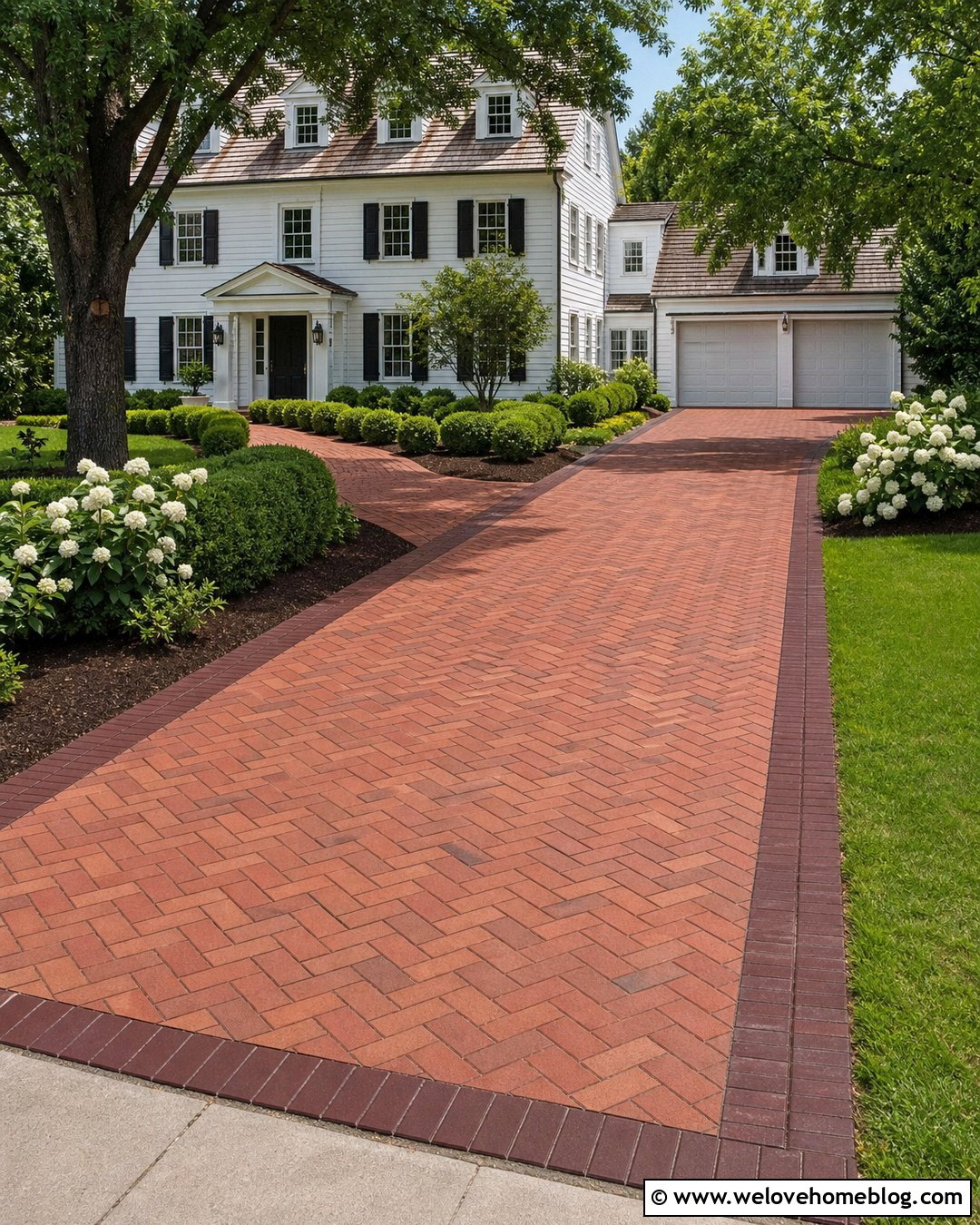
A herringbone brick paver driveway brings warmth and structure to a traditional home. Lay clay brick pavers at a 45-degree angle to make the entrance feel wider and add movement across the surface. A straight soldier-course border keeps the angled pattern visually contained and creates a clean transition to the lawn. Choose red and brown bricks for a colonial facade, or use muted burgundy brick beside a craftsman home. Low boxwoods, hydrangeas, and a simple brick walkway can connect the driveway to the front porch. At the garage, continue the border across the driveway as a finishing band. Herringbone is especially suitable where you want a familiar brick surface with more visual energy than a standard running bond. ()
2. Large Concrete Paver Driveway
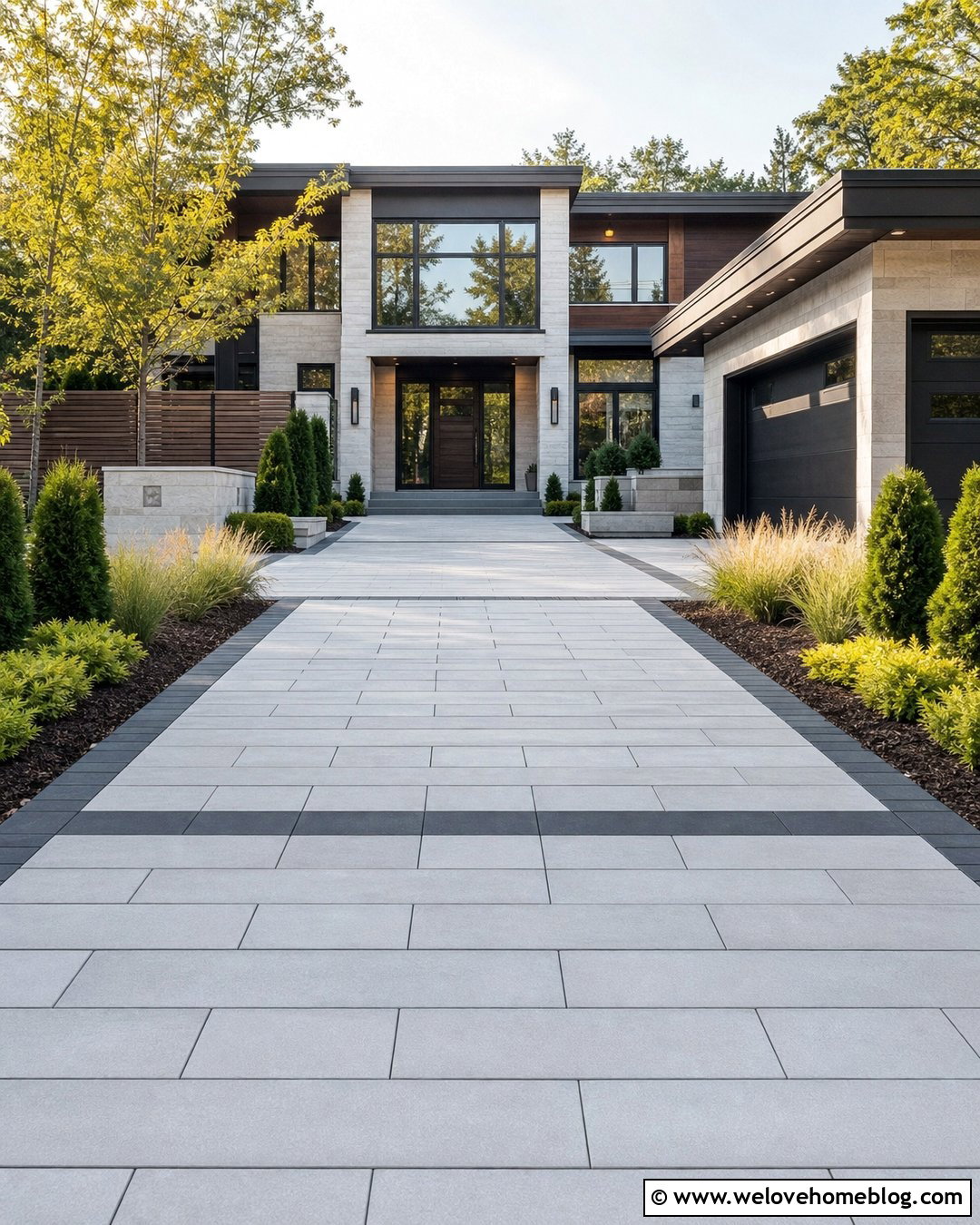
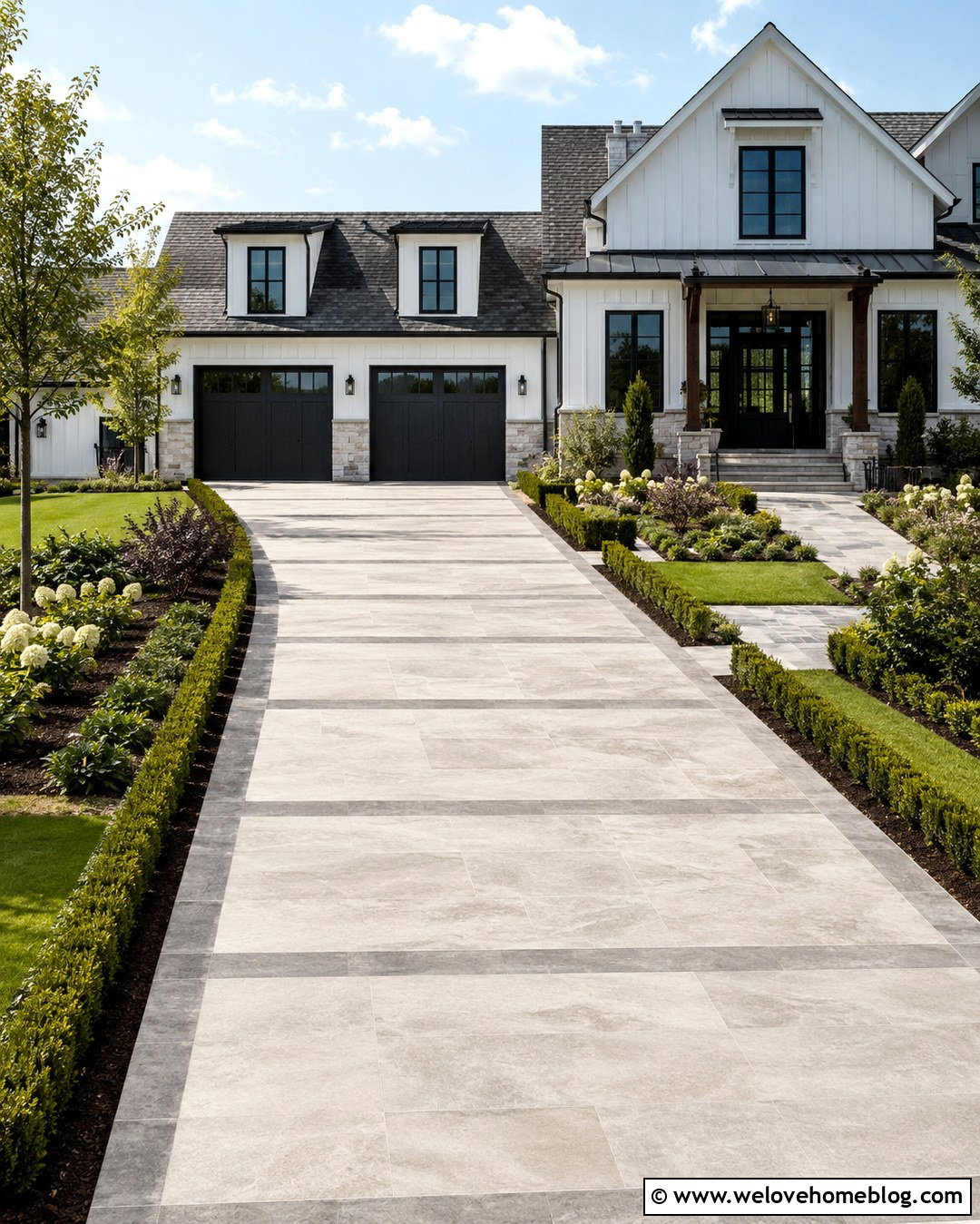
Crisp lines make a large concrete paver driveway a natural match for contemporary architecture. Use oversized rectangular pavers in light gray, arranged in a straight stacked pattern that points toward the garage. Narrow charcoal joints provide definition without making the design look busy. A dark soldier-course border can frame the surface and coordinate with black windows or a metal roof. Complete the look with rectangular planting beds, ornamental grasses, clipped shrubs, and a wide concrete walkway. Keeping the color palette limited helps the driveway feel spacious rather than heavy. On a broad property, break up the paving with one or two slim accent bands. The finished entrance should feel geometric, uncluttered, and closely connected to the home’s modern facade.
3. Curved Cobblestone Paver Driveway
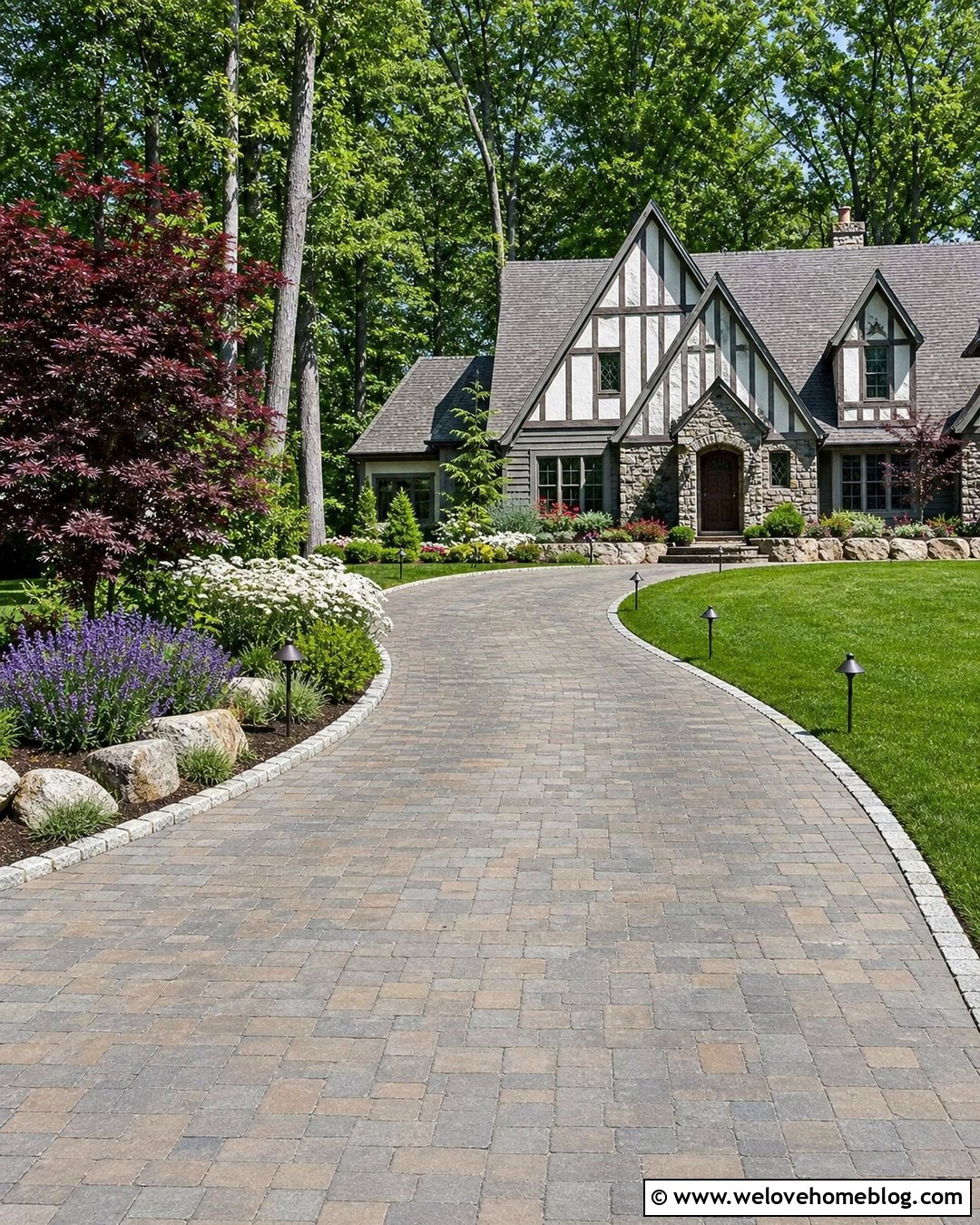
Soft curves and textured cobblestone pavers can give a wooded or country property a natural, established appearance. Design the driveway to sweep gradually from the street rather than making a sharp turn toward the house. Gray and tan cobblestone-style concrete pavers create subtle color variation, while larger granite setts form a strong outer edge. Fill the inside of the curve with layered shrubs, flowering perennials, and a small ornamental tree. The planting bed becomes part of the driveway composition instead of leftover space. Low path lights can follow the outer border without interrupting the daytime view. This complete look works particularly well with stone cottages, Tudor homes, and rustic craftsman houses surrounded by mature trees and informal landscaping.
4. Permeable Paver Driveway With Rain Garden
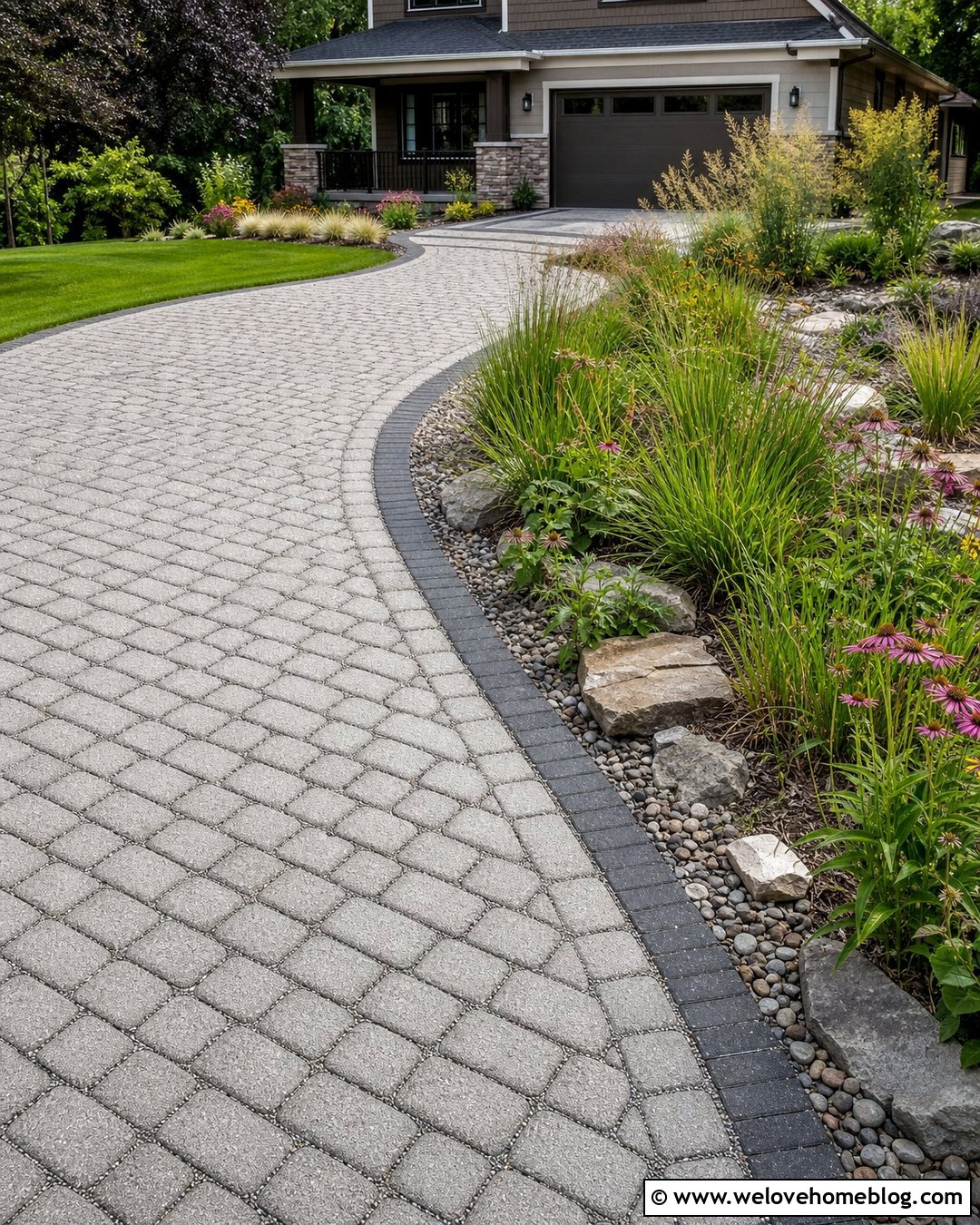
When stormwater needs thoughtful management, combine a permeable paver driveway with a planted rain garden. Choose permeable concrete pavers in a soft gray blend, separated by wider aggregate-filled joints. Shape the driveway with a gentle curve that directs attention toward the house and the landscaped drainage area. Along the lower side, create a shallow rain garden filled with locally appropriate grasses, sedges, and flowering plants. A contrasting charcoal paver border keeps the driving surface defined. Permeable paving is designed so water can pass through its joints into a prepared stone base rather than simply flowing across the surface. Local soil, slope, rainfall, and drainage rules should guide the final system and planting plan. ()
5. Circular Paver Driveway With Center Island
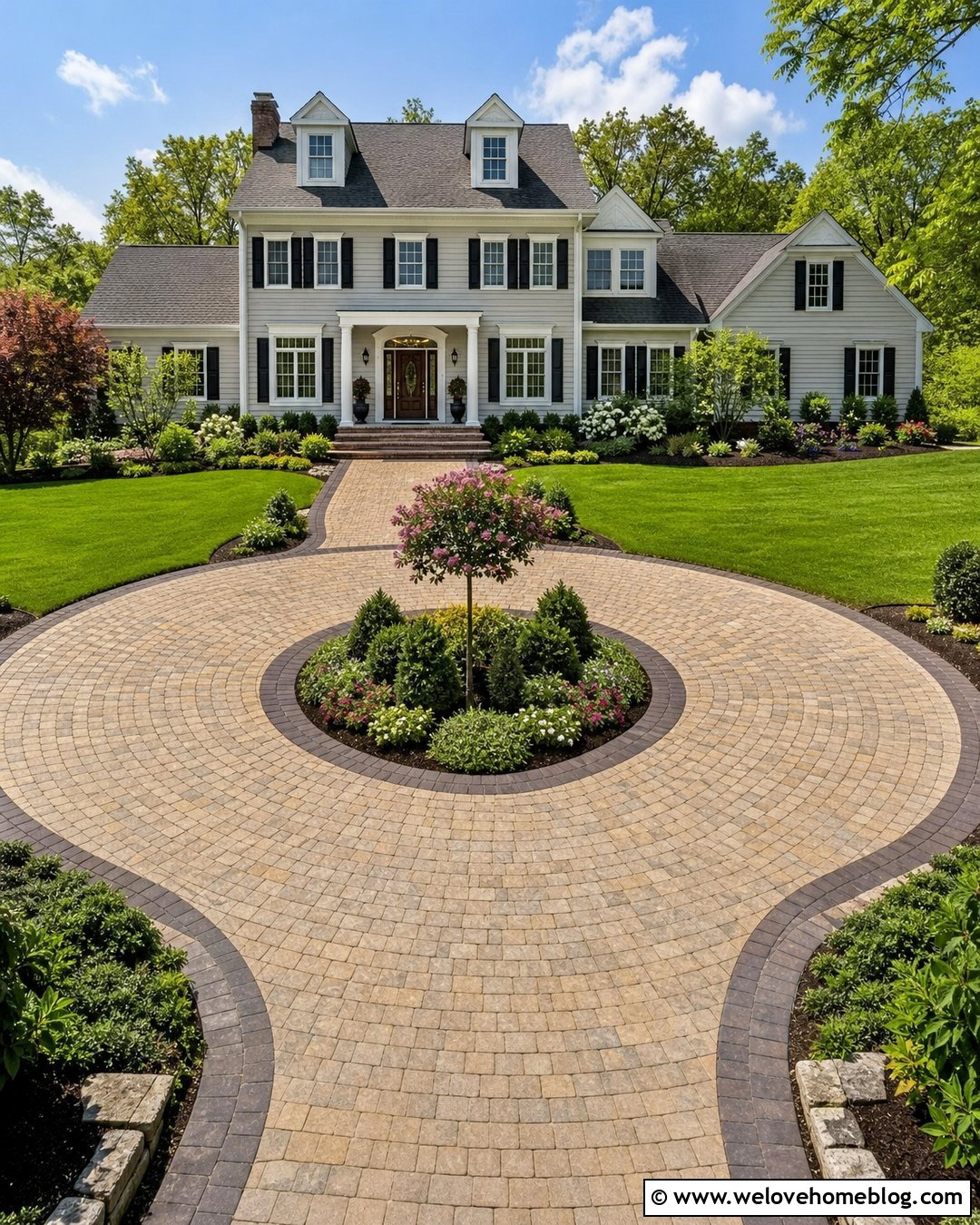
A circular paver driveway creates an impressive approach while making arrival and departure more convenient on a spacious property. Use tumbled concrete pavers in warm beige and brown, laid in an ashlar pattern around the loop. Define both edges with dark brown pavers so the circle reads clearly from the curb. In the center, add a raised planting island with a small tree, evergreen shrubs, seasonal flowers, and low ground cover. Keep taller plants near the middle to preserve visibility around the curve. A matching paver walkway can branch from the driveway to the front steps. This arrangement suits colonial, Mediterranean, and traditional estate homes, especially when the paver colors repeat tones found in the roof, stonework, or brick facade.
6. Ashlar Paver Driveway With Stone Edging
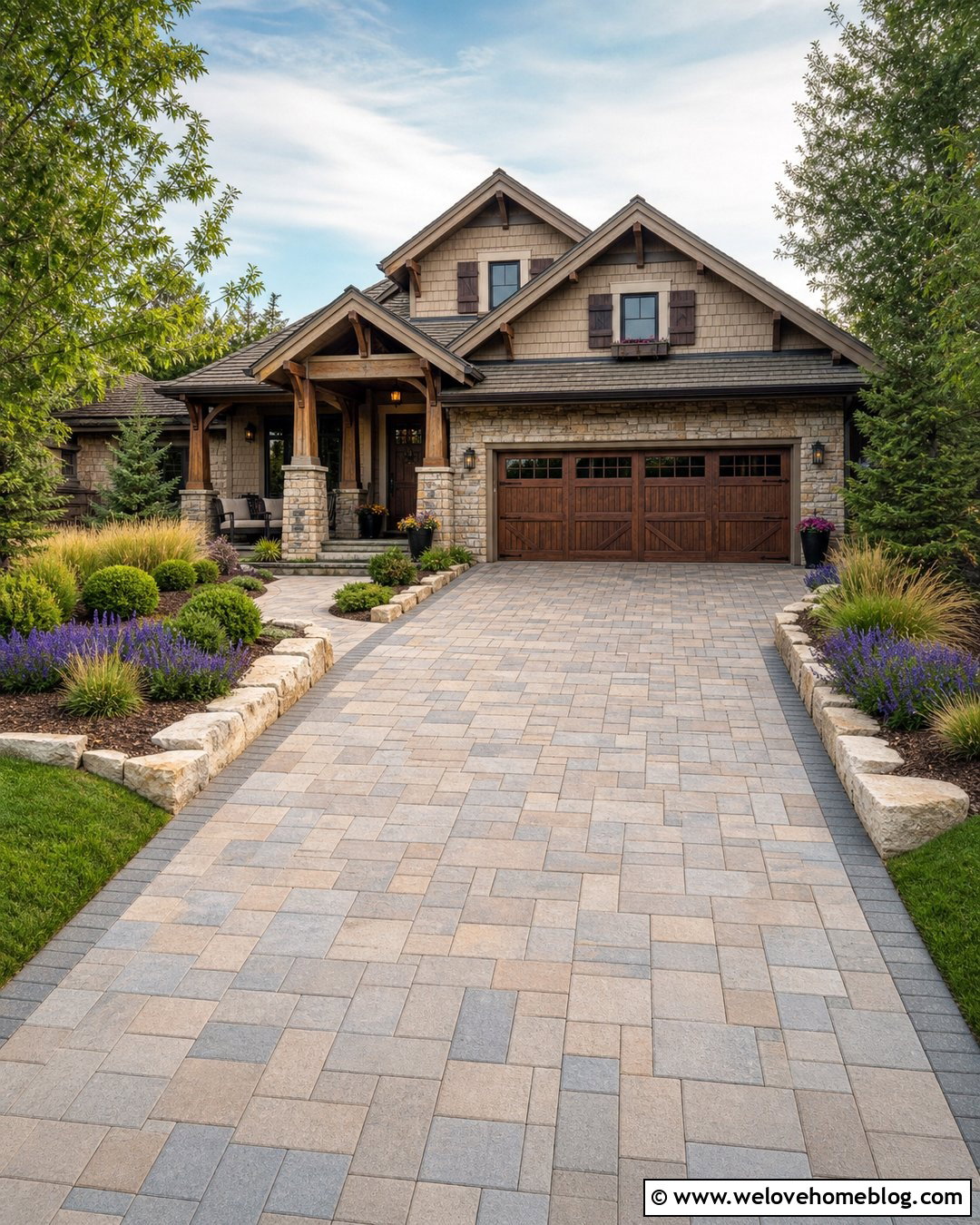
Mixed-size ashlar pavers create texture without the strong directional lines of brick patterns. Combine square and rectangular concrete pavers in blended taupe, sandstone, and light gray for a relaxed surface that complements many house styles. A straight driveway keeps the varied pattern from feeling overly complex. Border it with natural limestone blocks that coordinate with a stone veneer facade or garden wall. Broad planting beds filled with rounded shrubs, salvia, ornamental grasses, and mulch can soften each side. Carry the driveway pavers into a wider landing near the garage, then use the same stone edging around the walkway. Ashlar layouts are useful for visually breaking up a large paved area while maintaining a coordinated, practical entrance. ()
7. Basketweave Brick Paver Driveway
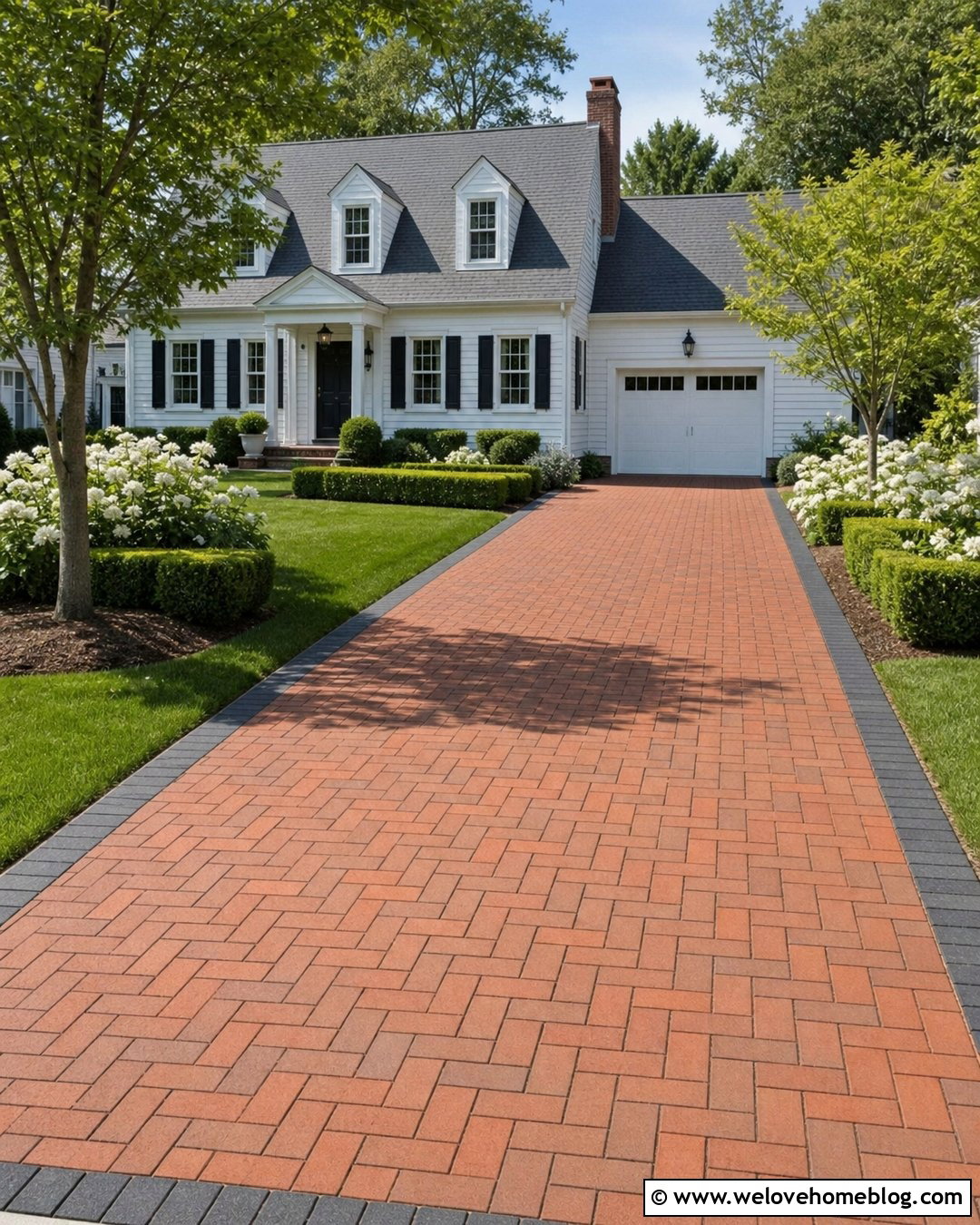
Basketweave brick pavers offer a recognizable pattern with a softer, more decorative rhythm than herringbone. Pair warm red clay brick pavers in alternating pairs with a dark charcoal brick border. The contrast outlines a straight driveway and helps the basketweave field remain easy to read from the street. This complete look works beautifully with a Cape Cod house, white colonial, or painted brick cottage. Frame the drive with green lawn, clipped hedges, and white flowering shrubs for a crisp traditional palette. A matching brick walkway can turn toward the porch using the same border treatment. If the house already has several exterior materials, keep the driveway colors restrained so the woven pattern becomes the main feature without overwhelming the facade.
8. Running Bond Paver Driveway
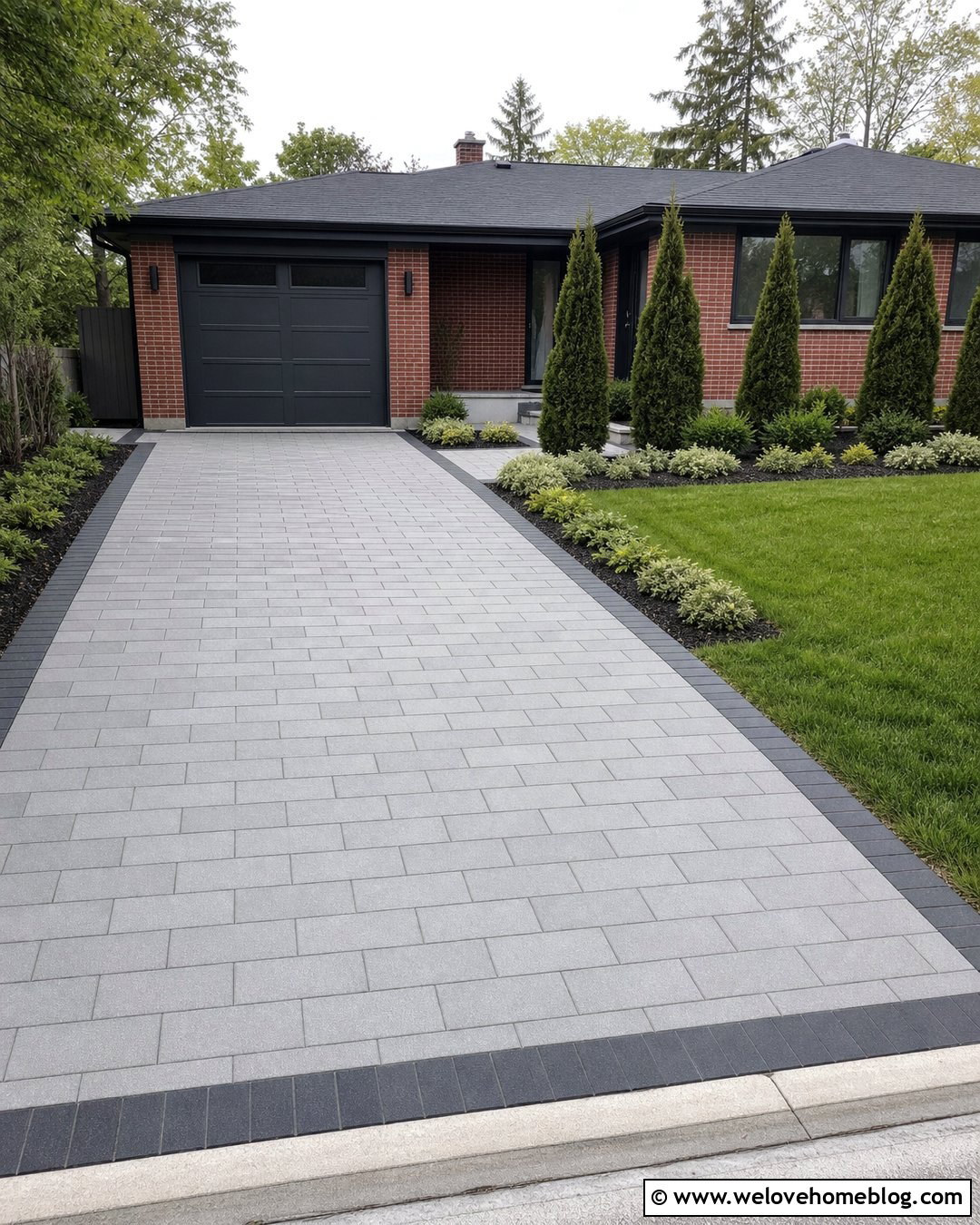
A running bond paver driveway is simple, orderly, and adaptable to compact or narrow lots. Lay rectangular concrete pavers lengthwise toward the garage to visually emphasize the driveway’s direction. Mid-gray pavers with slightly varied tones conceal everyday dust better than a very uniform light surface. Add a perpendicular charcoal soldier course along both sides for a sharp frame. Narrow planting beds with upright evergreen shrubs and low ground cover preserve driving space while softening nearby walls or fences. Near the sidewalk, install a matching paver apron that creates a deliberate entrance. Running bond can complement brick ranch homes, suburban colonials, and updated split-level houses because its straightforward layout supports the architecture rather than competing with it. ()
9. Grass Strip Paver Driveway
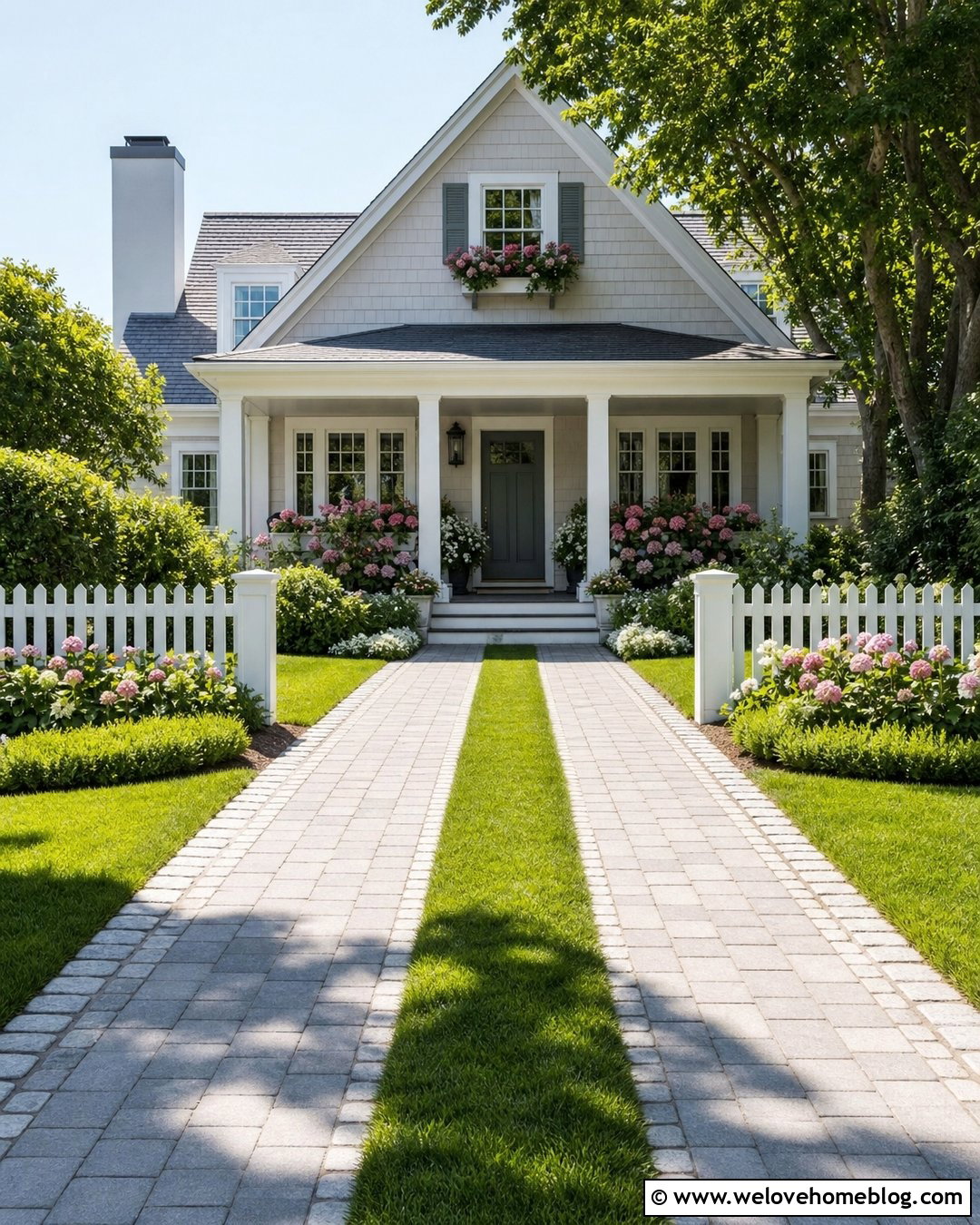
A grass strip paver driveway reduces the visual weight of hardscaping and gives a small home a relaxed garden entrance. Install two broad tracks of rectangular concrete pavers where vehicle tires travel, leaving a continuous strip of lawn or durable low ground cover through the center. Use flush cobblestone edging along the outer sides to hold the layout visually together. The driveway can remain straight for a cottage or bend gently toward a detached garage. Repeat the pavers in a short walkway leading to the front door. Informal flower beds, small shrubs, and a picket fence complete the look. This design requires careful planning for vehicle width, drainage, mowing access, and a properly prepared load-bearing base beneath the paved tracks. ()


10. Paver Driveway With Double Border
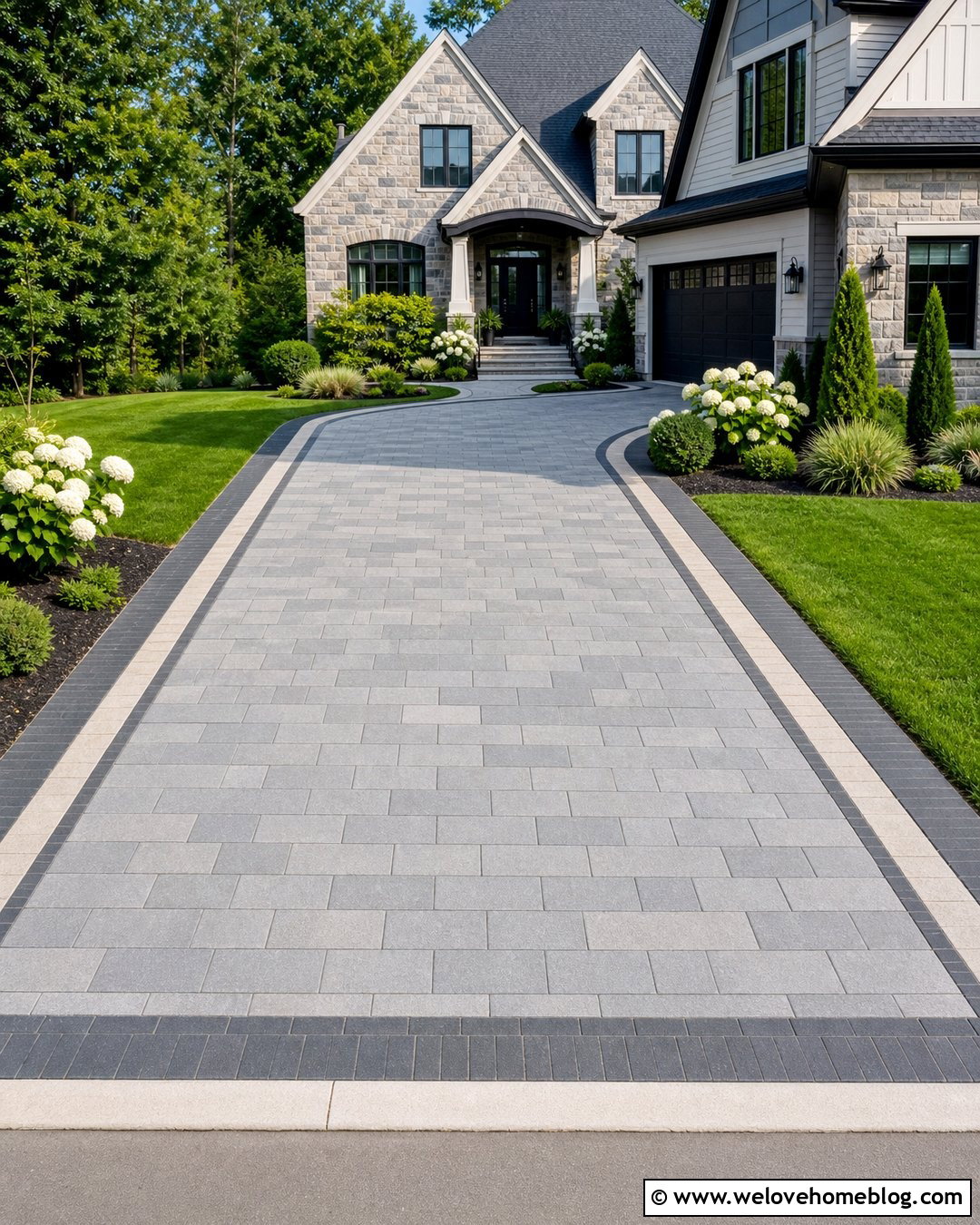
A double border adds depth and definition to a wide paver driveway. Begin with a field of medium-gray concrete pavers in a subtle running bond. Surround it with a narrow cream paver band followed by a wider charcoal soldier course. The layered frame makes the central paving look tailored and provides a clear transition to lawn and planting beds. Keep the driveway shape straight or gently flared near the street so the border remains easy to follow. White hydrangeas, dark evergreen shrubs, and ornamental grasses can repeat the light-and-dark contrast. This treatment is especially effective beside a transitional home with mixed stone and siding. Double borders also offer a practical way to introduce several exterior colors without placing a complicated pattern across the entire driving surface. ()
11. Paver Driveway With Contrasting Apron
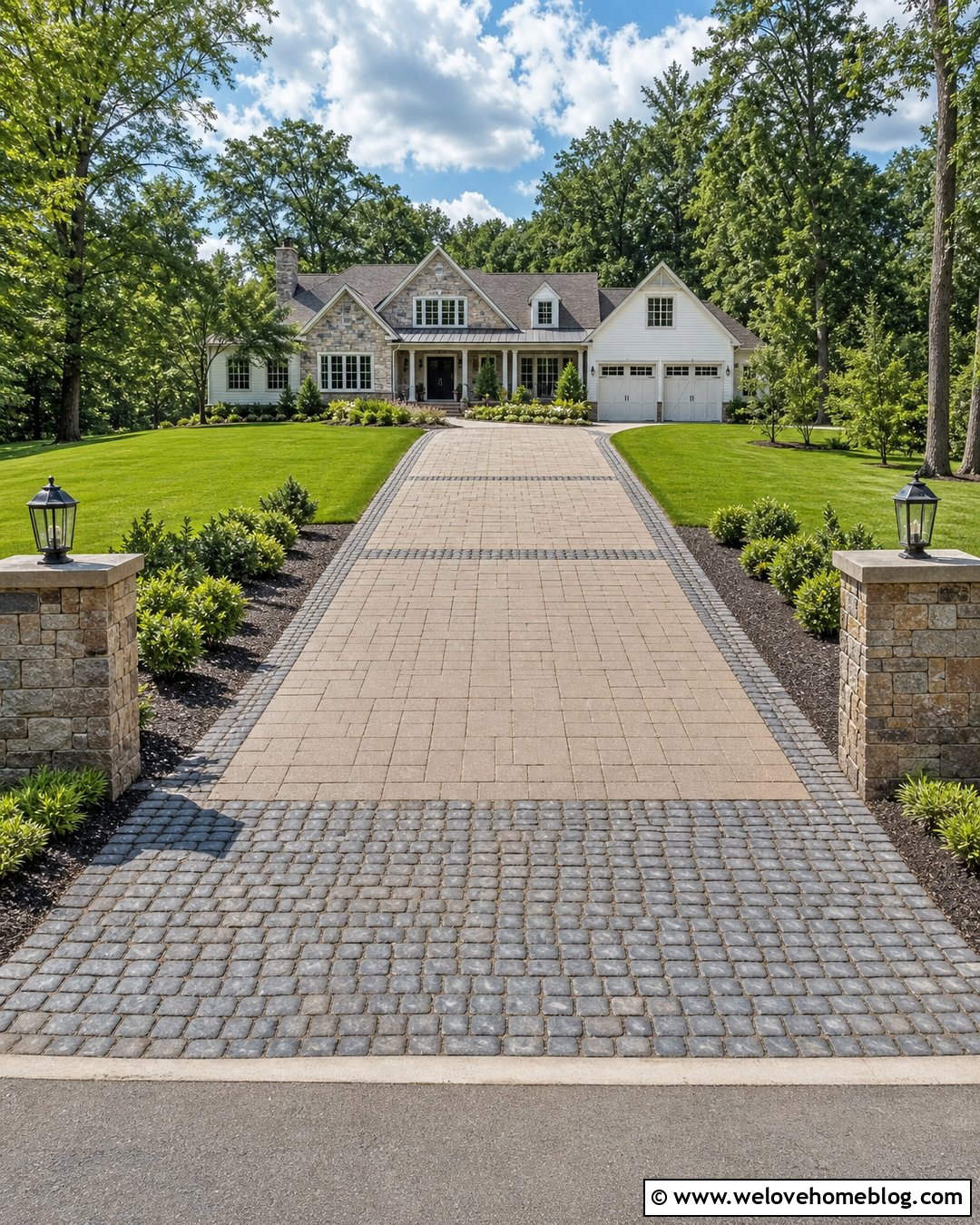
A contrasting apron gives the driveway entrance a finished appearance and makes it more noticeable from the street. Use neutral taupe concrete pavers for the main straight driveway, then add a broad band of dark cobblestone pavers where the surface meets the road. Extend the cobblestone along both edges as a narrow border so the apron feels connected to the complete design. Low stone pillars, simple lanterns, and curved planting beds can frame the entrance without narrowing it. Farther up the driveway, repeat a smaller cobblestone band before the garage doors. The darker accents create visual stopping points across a long paved surface. Coordinate the stone tones with the home’s foundation, chimney, retaining walls, or front steps for a balanced and intentional result.
12. Fan Pattern Paver Driveway
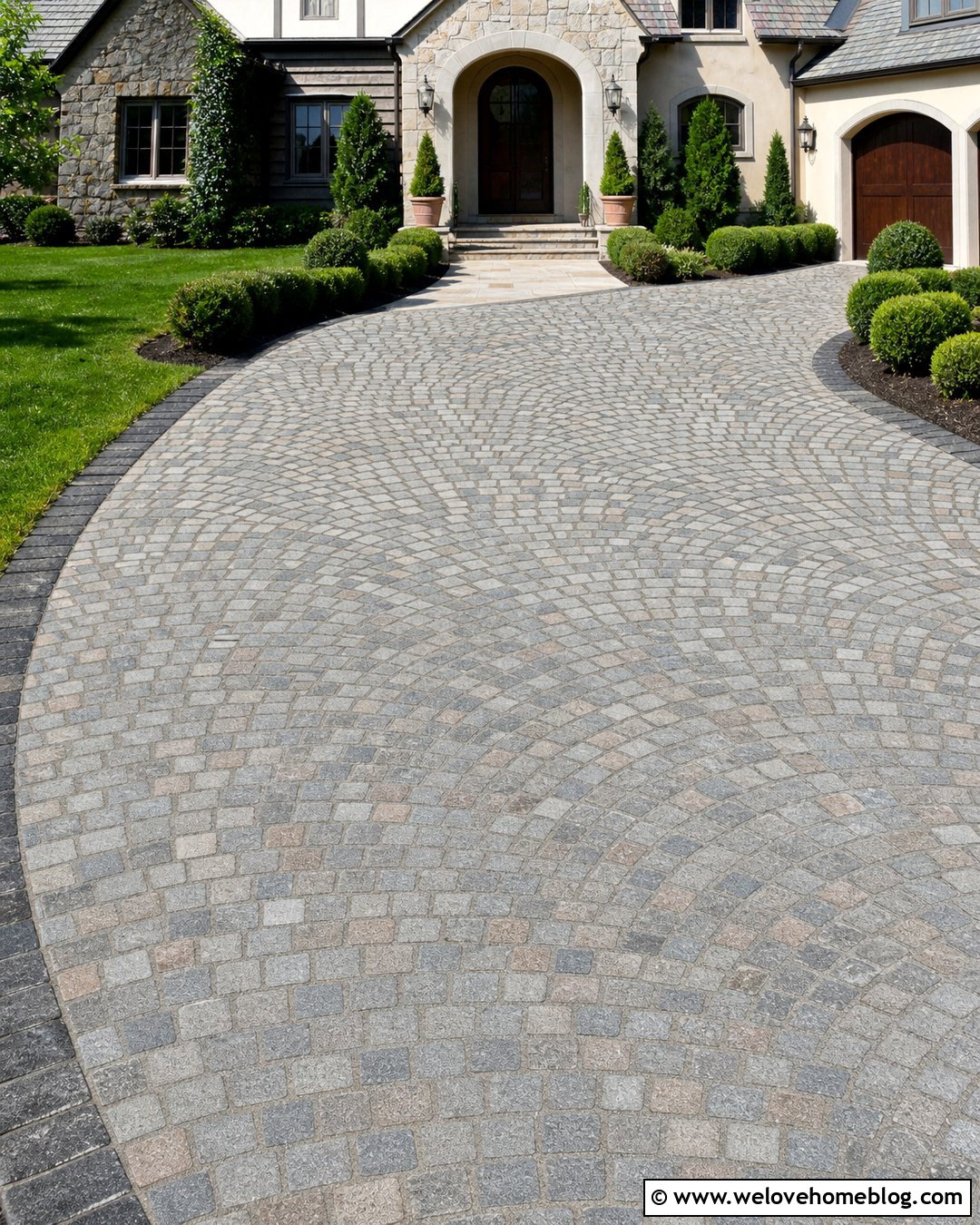
A fan pattern brings old-world detail to a driveway without requiring elaborate landscaping. Use small cobblestone-style concrete pavers in blended gray, charcoal, and muted brown, arranged in overlapping arcs across a gently curved surface. A simple dark soldier-course border provides a quiet frame and prevents the fan layout from looking unfinished. Pair the driveway with a European-inspired stucco or stone house, clipped evergreen shrubs, and symmetrical planting beds. Near the garage, keep decorations minimal so the paving remains the focal point. A smooth stone walkway can offer a calmer transition to the front entrance. Fan patterns are particularly attractive on wider driveways where several complete arcs can be seen clearly from the curb rather than being compressed into a small space. ()
13. Two-Tone Geometric Paver Driveway
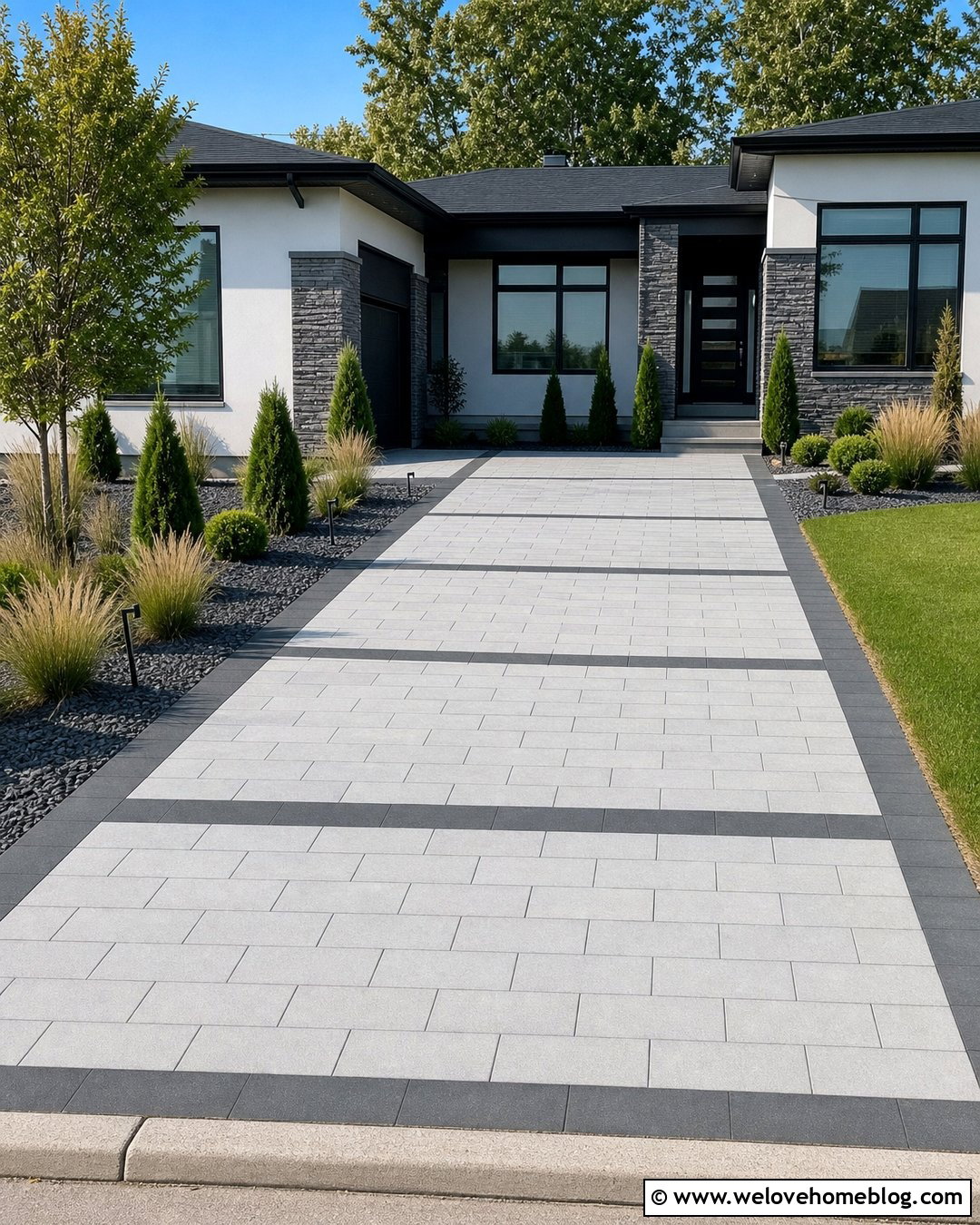
Two-tone pavers can create a bold modern driveway while maintaining a practical, organized layout. Start with light gray rectangular concrete pavers laid in a linear pattern. Add charcoal paver bands at regular intervals to form large geometric panels across the surface. Continue the dark color around the perimeter for a coordinated border. A straight driveway is best because it keeps the lines precise and leads the eye toward the garage. Surround it with architectural grasses, low evergreen mounds, gravel mulch, and a concrete slab walkway. Match the charcoal accents to black garage doors, window frames, or exterior lighting. Limit the design to two main paver colors, allowing the pattern, landscaping, and contemporary house facade to work together without visual clutter.
14. Light Paver Driveway With Coastal Landscaping
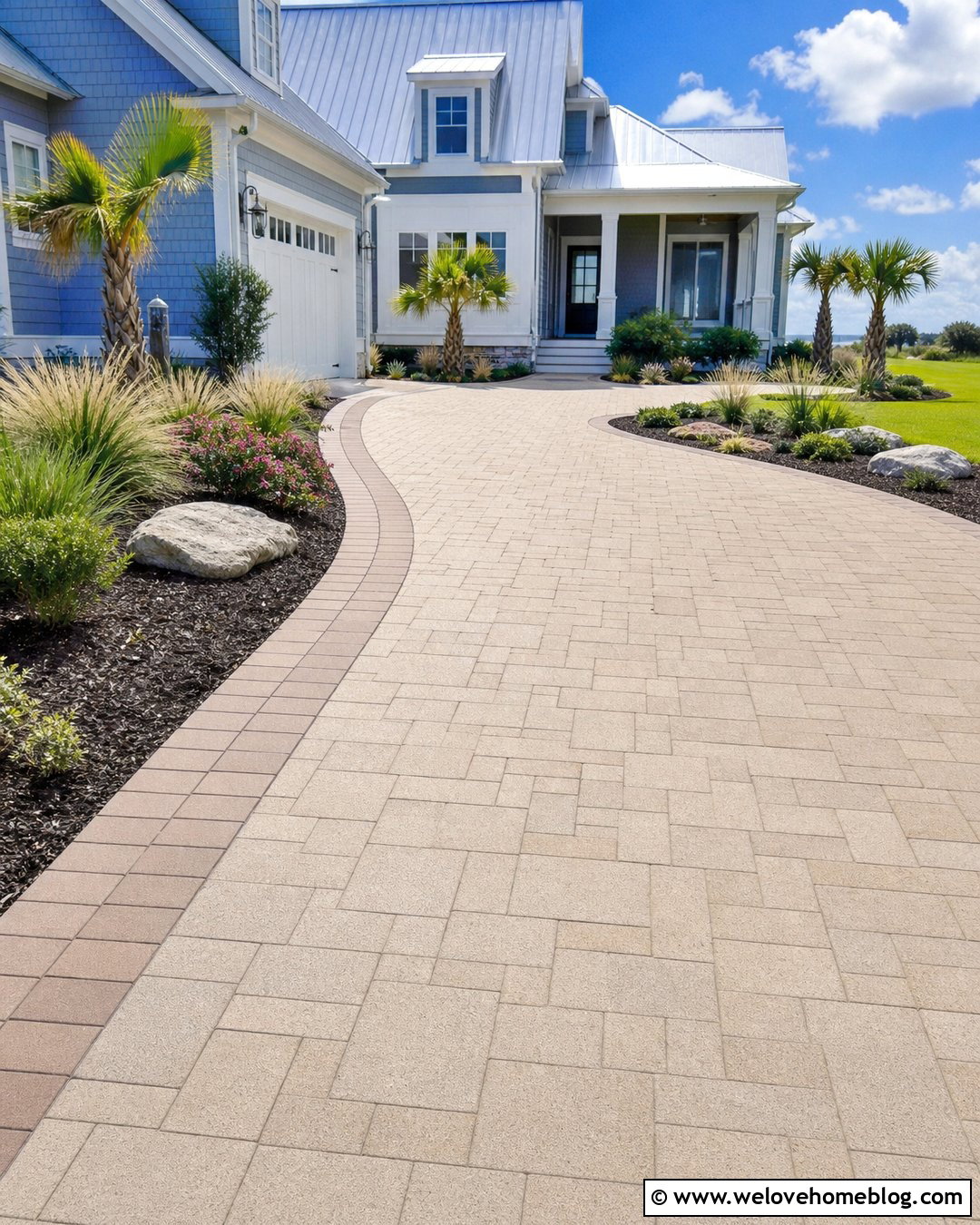
Pale pavers create an airy driveway that complements coastal and warm-climate homes. Choose sand-colored concrete pavers with a lightly textured finish, arranged in a mixed rectangular pattern. Frame the driveway with a narrow border of slightly darker taupe pavers to prevent the surface from blending into nearby walkways. A soft curve can make the approach feel relaxed and provide room for coastal planting beds. Use ornamental grasses, dwarf palms where climate-appropriate, low flowering shrubs, and light decorative stone. Blue-gray siding, white trim, and a simple covered porch complete the palette. Keep the planting open enough to show the driveway’s full shape from the curb. The result should feel bright and casual while still providing a clearly defined route to the garage.


15. Charcoal Paver Driveway For Modern Farmhouse
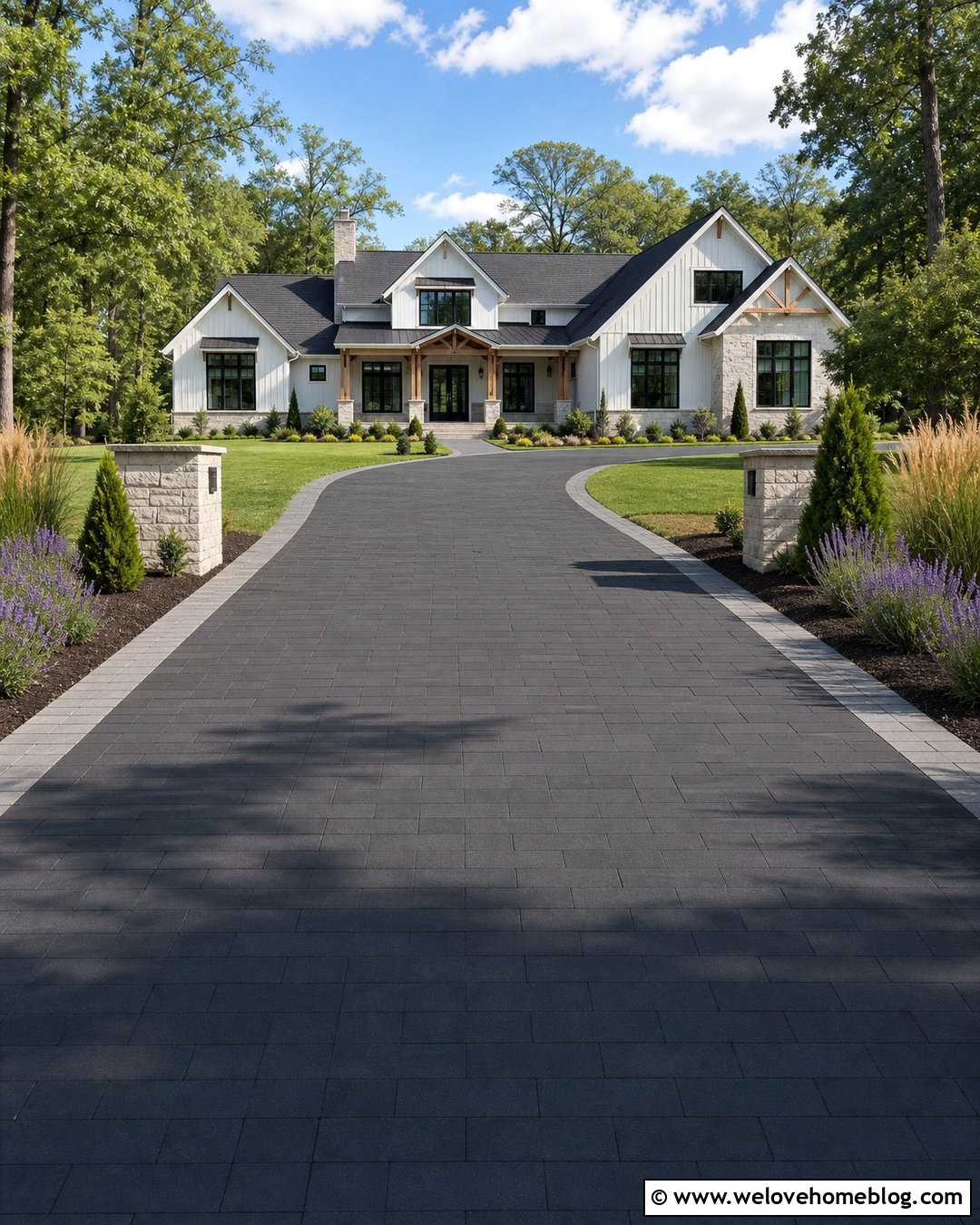
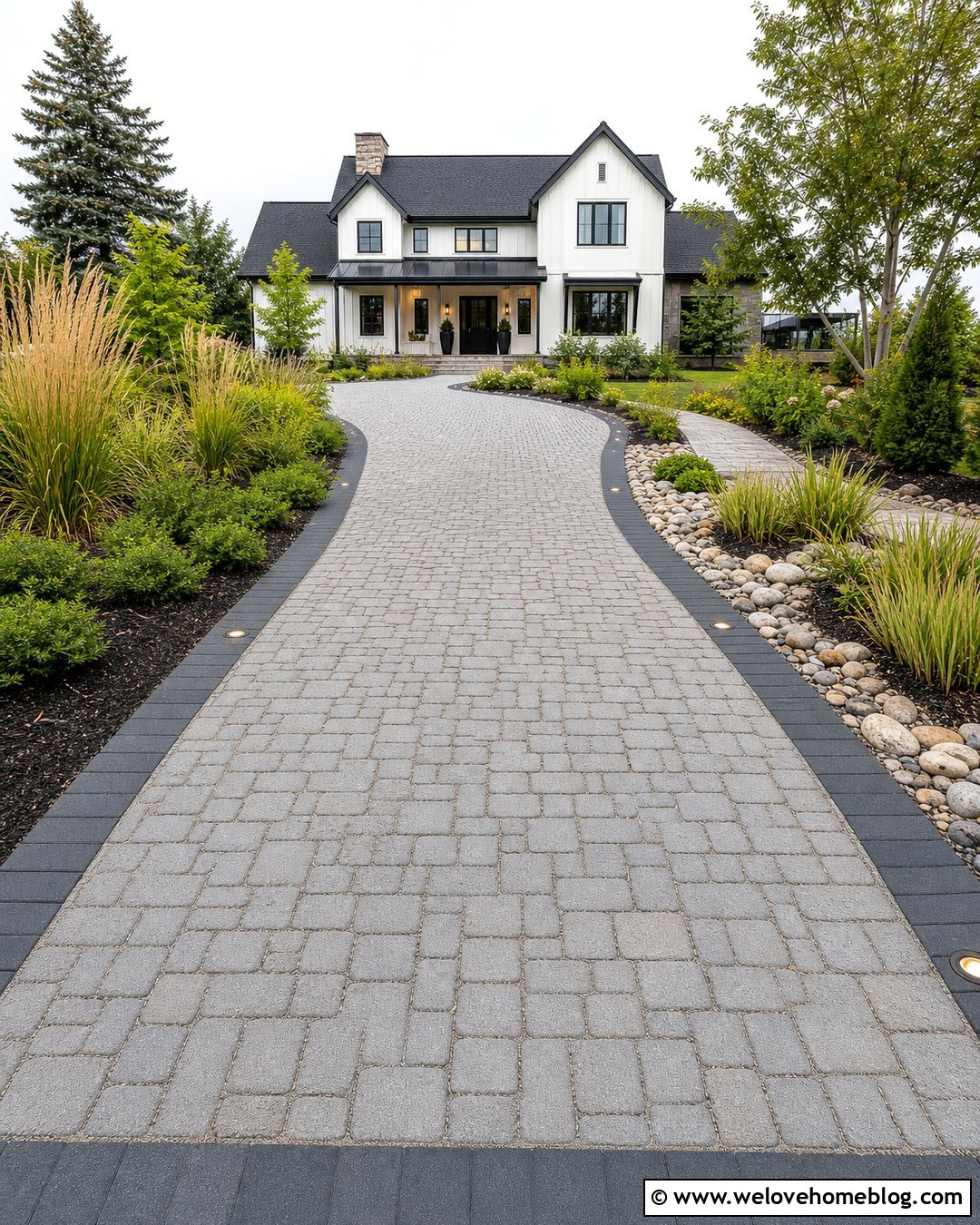
Deep charcoal pavers create a strong foundation for a modern farmhouse exterior. Lay large rectangular concrete pavers in a staggered running bond across a broad, straight driveway. Use a medium-gray paver border to separate the dark field from the lawn and soften the transition. Near the street, slightly flare the entrance and add low limestone pillars that echo pale stone on the house. White siding, black windows, and natural timber accents balance the driveway’s darker tone. Linear beds of fountain grass, lavender, and compact evergreens keep the landscaping simple but welcoming. Because dark paving can dominate a front yard, generous green lawn and light-colored facade materials are important. Together, the contrasting elements produce a clean, grounded entrance with clear farmhouse character.
16. Reclaimed Brick Paver Driveway
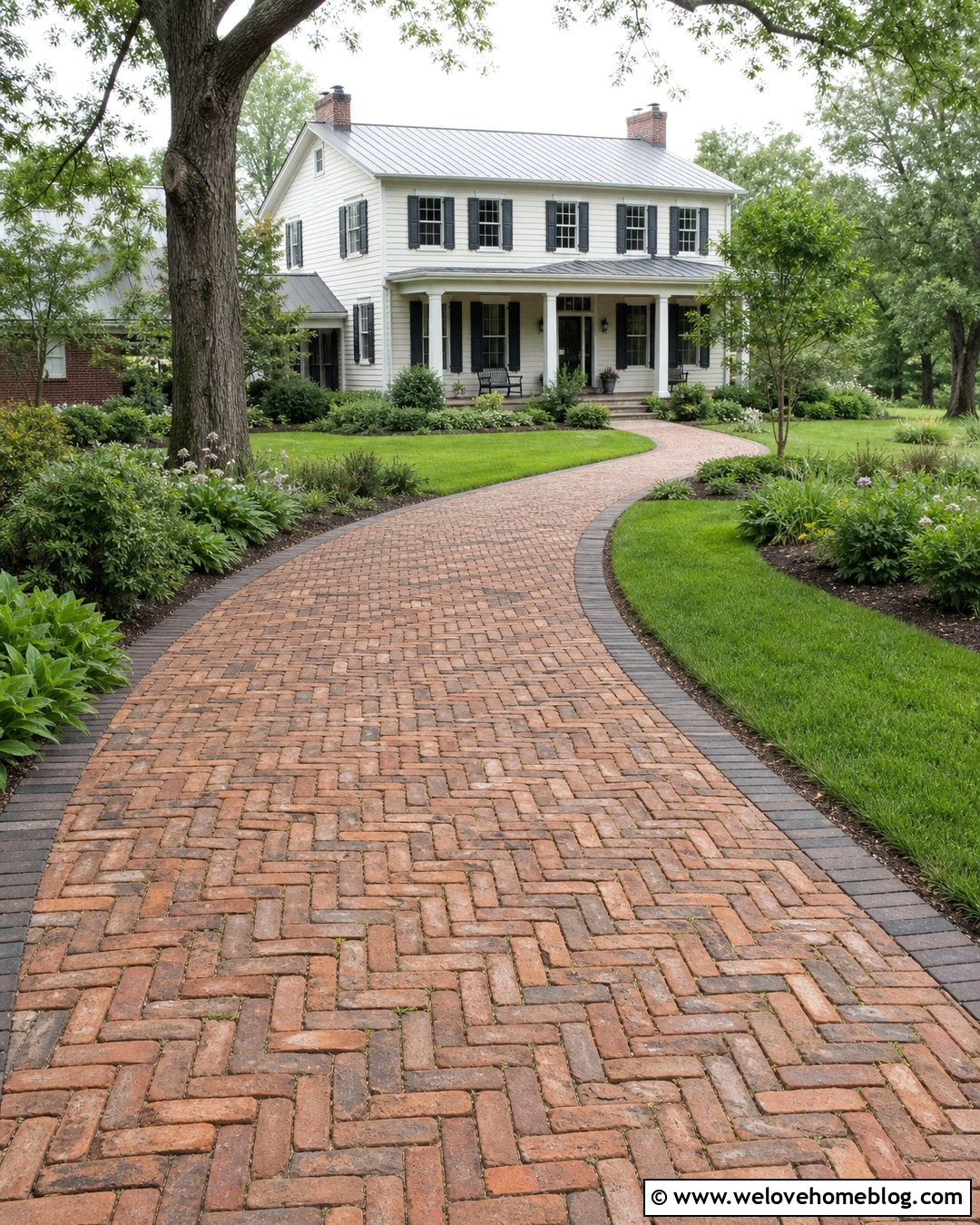
Weathered reclaimed brick gives a driveway color variation and character that feels naturally connected to an older home. Arrange red, brown, and muted orange clay brick pavers in a traditional herringbone field. Use darker reclaimed bricks in a soldier-course border to organize the irregular tones. A gently curved layout works well beside a historic colonial, renovated farmhouse, or craftsman bungalow. Add informal perennial beds, mature shade trees, and a brick walkway that branches toward the porch. Keep new landscape materials understated so they do not compete with the aged surface. Reclaimed units should be evaluated for driveway suitability, condition, and dimensional consistency before installation. Used as the main field or as accents, reclaimed brick and cobblestone can reinforce an established, old-world appearance. ()
17. Small Diagonal Paver Driveway
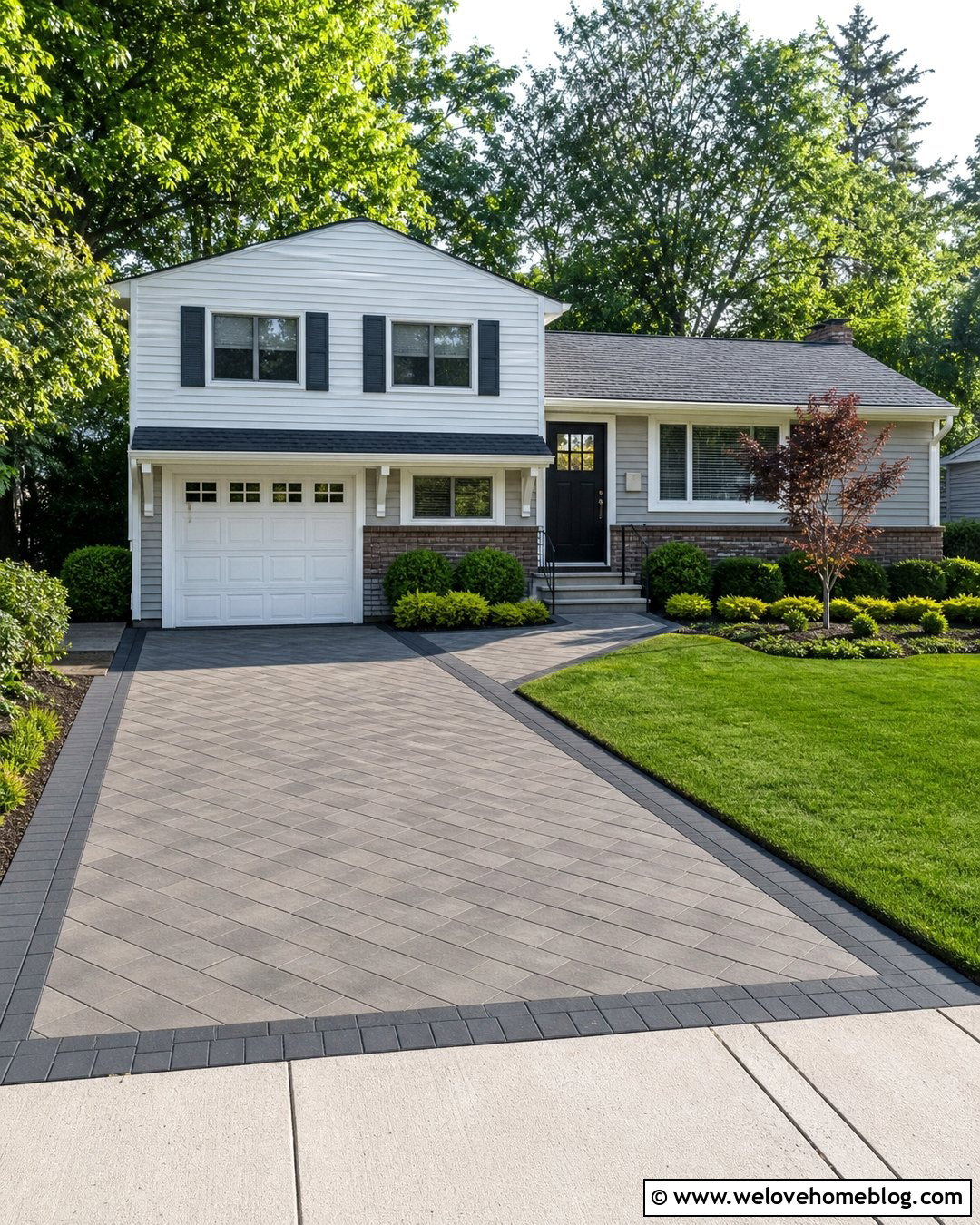
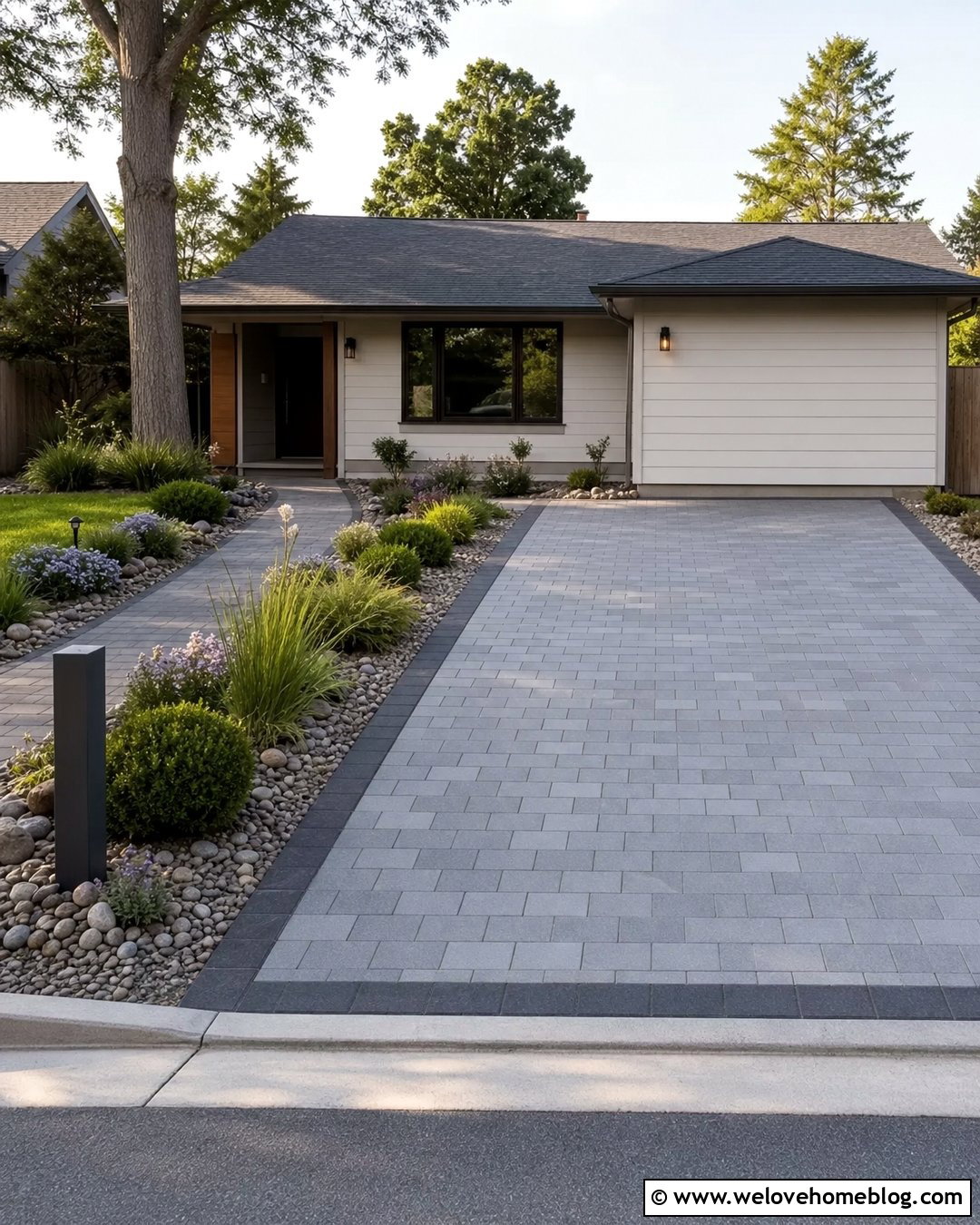
A diagonal paver pattern can make a small driveway feel more dynamic without adding extra materials. Use compact rectangular concrete pavers in warm gray, laid at a 45-degree angle within a narrow charcoal border. Keep the driveway straight and slightly wider near the garage to create a useful parking pad. On one side, install a slim matching walkway separated by a strip of ground cover or decorative gravel. On the other, use a compact planting bed with one ornamental tree and low shrubs. Limiting the design to two paver tones keeps the angled layout from overwhelming a small front yard. The diagonal lines add movement, while the continuous border creates a clear edge next to the lawn, sidewalk, and garage threshold.
18. Long Paver Driveway With Trees
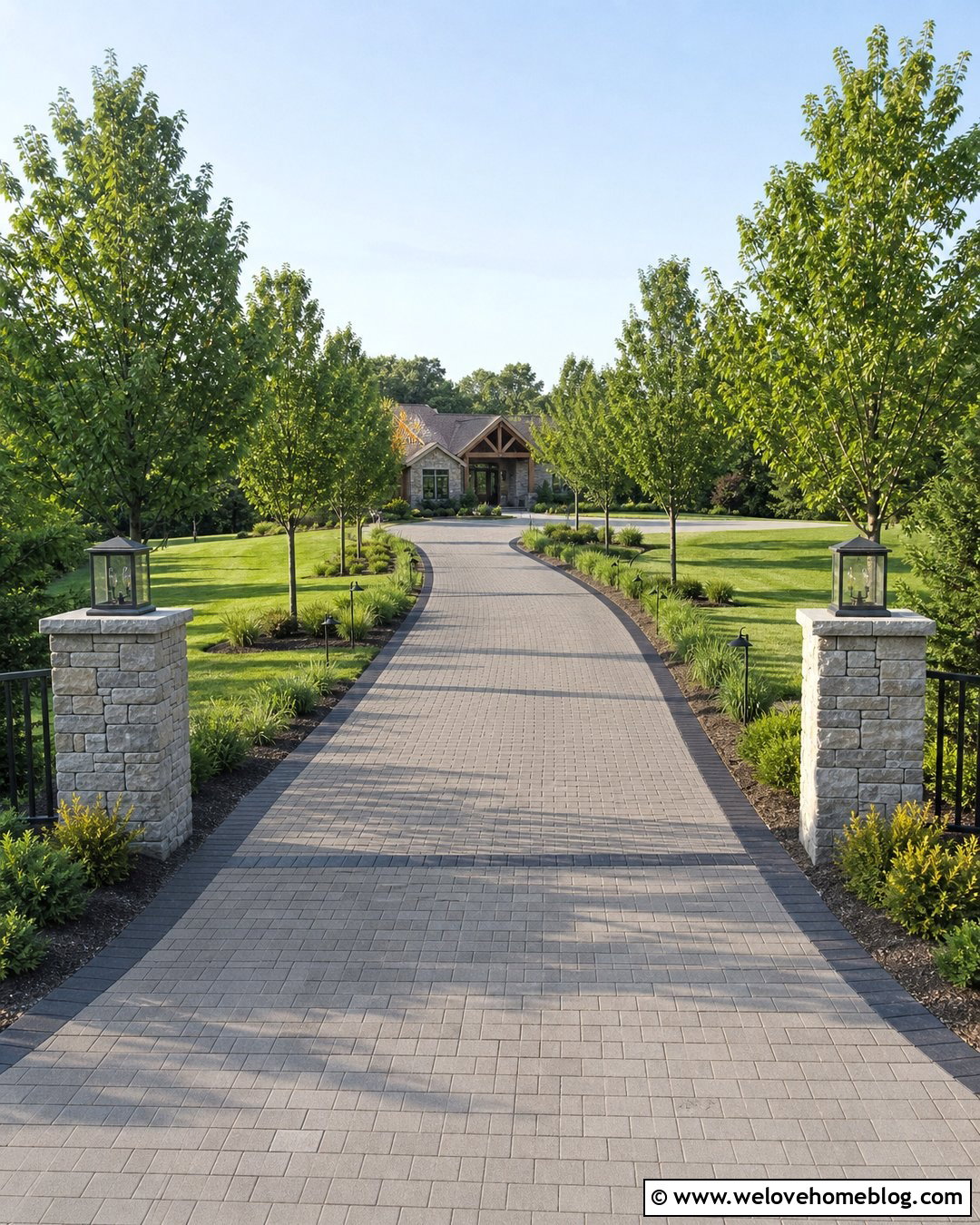
A long paver driveway needs repetition and scale to feel connected from the street to the house. Choose warm gray interlocking concrete pavers in a running bond that follows a straight or gently curving route. Border the surface with darker pavers, then repeat that tone in entrance pillars and a band near the parking court. Plant evenly spaced deciduous trees outside the driveway edges, leaving enough room for mature trunks, roots, and canopies. Low shrubs or ornamental grasses can fill the spaces between them without blocking sightlines. Simple path lights add another repeating element along the approach. At the house, widen the paving into a practical turnaround. The unified paver field, border, trees, and terminal court make the full distance feel intentional.
19. Sloped Paver Driveway With Retaining Wall
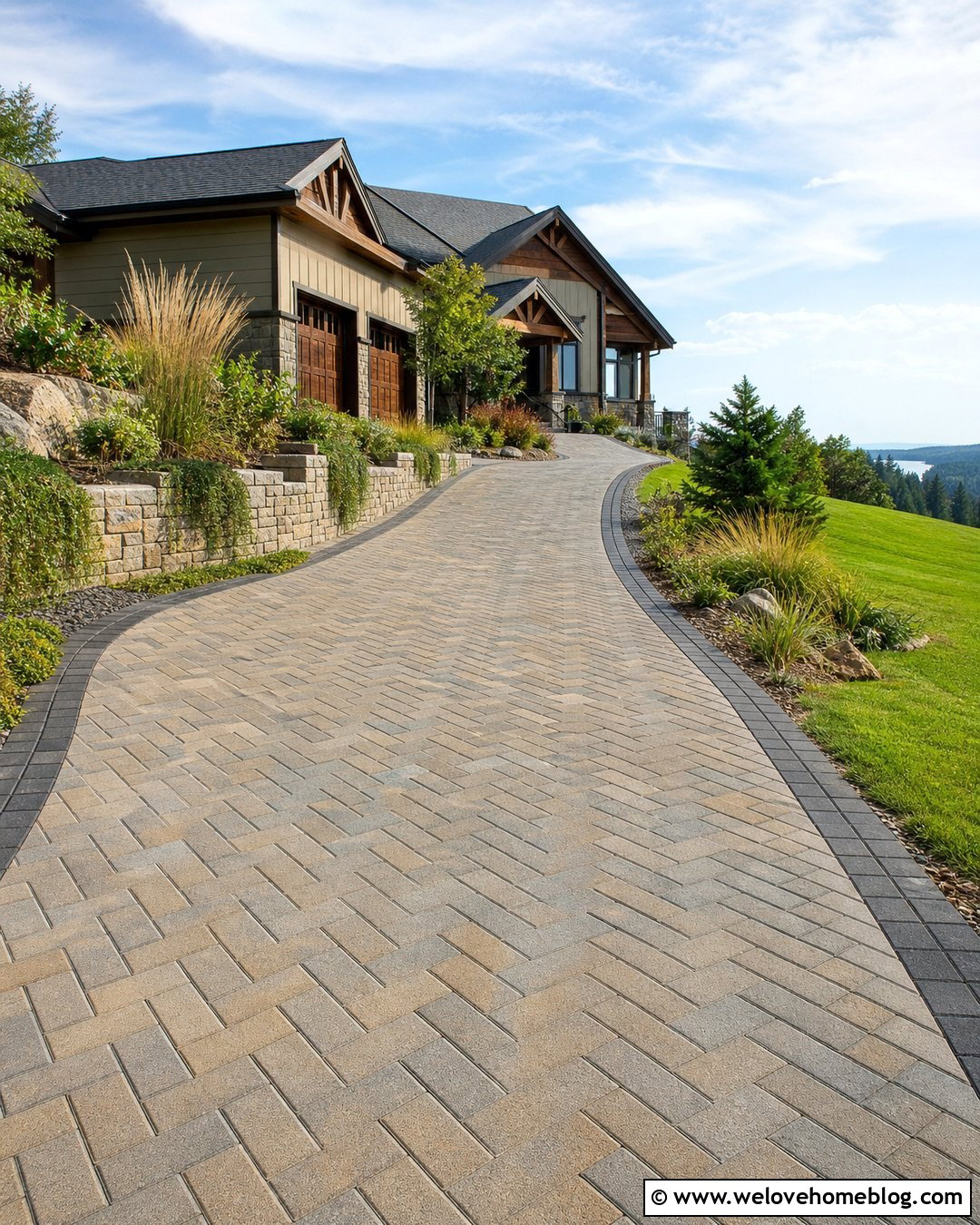
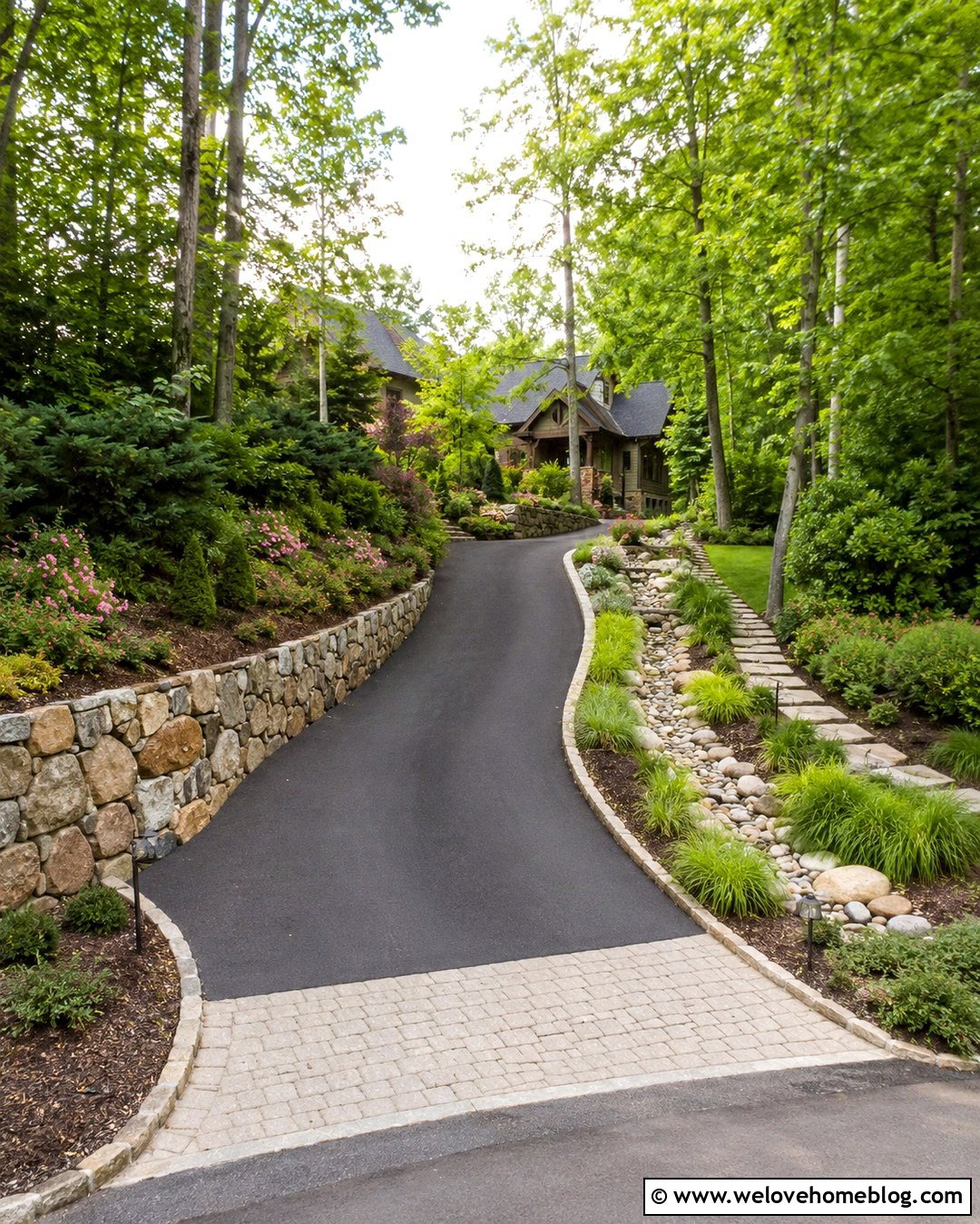
Sloped properties benefit from a driveway design that visually connects paving, grade changes, and surrounding walls. Use textured interlocking concrete pavers in blended tan and gray, arranged in a herringbone pattern along a gently curving incline. A dark paver border defines the driving area, while a low segmental stone retaining wall supports the uphill planting bed. Repeat the wall stone in entrance columns or front-step details. Plant cascading ground covers, compact shrubs, and ornamental grasses above the wall to soften its upper edge. On the downhill side, maintain an open lawn or low planting area for clearer visibility. Drainage, base preparation, slope, edge restraint, and local weather conditions require professional evaluation so the attractive surface also performs reliably under vehicle traffic.
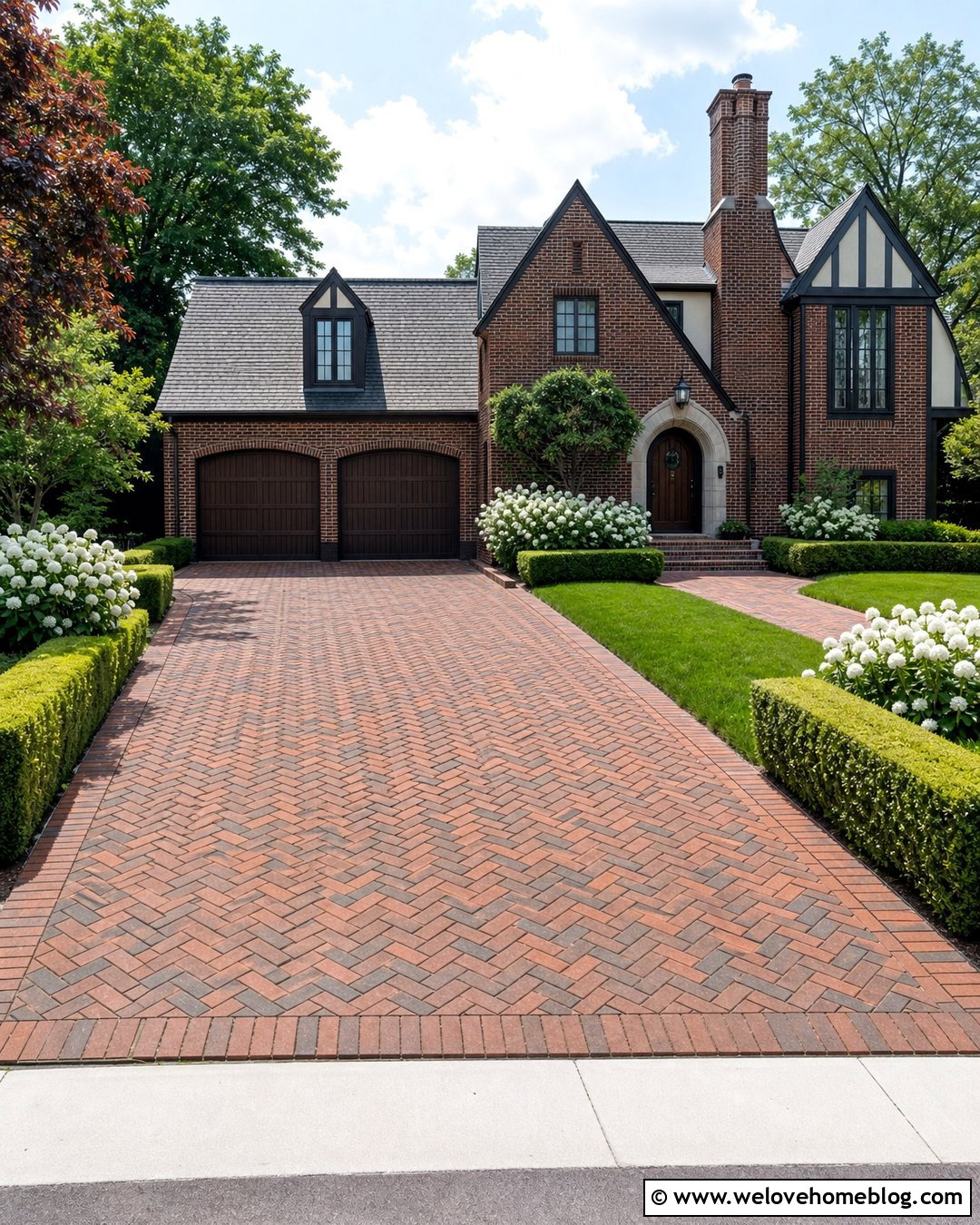
20. Paver Motor Court With Center Medallion
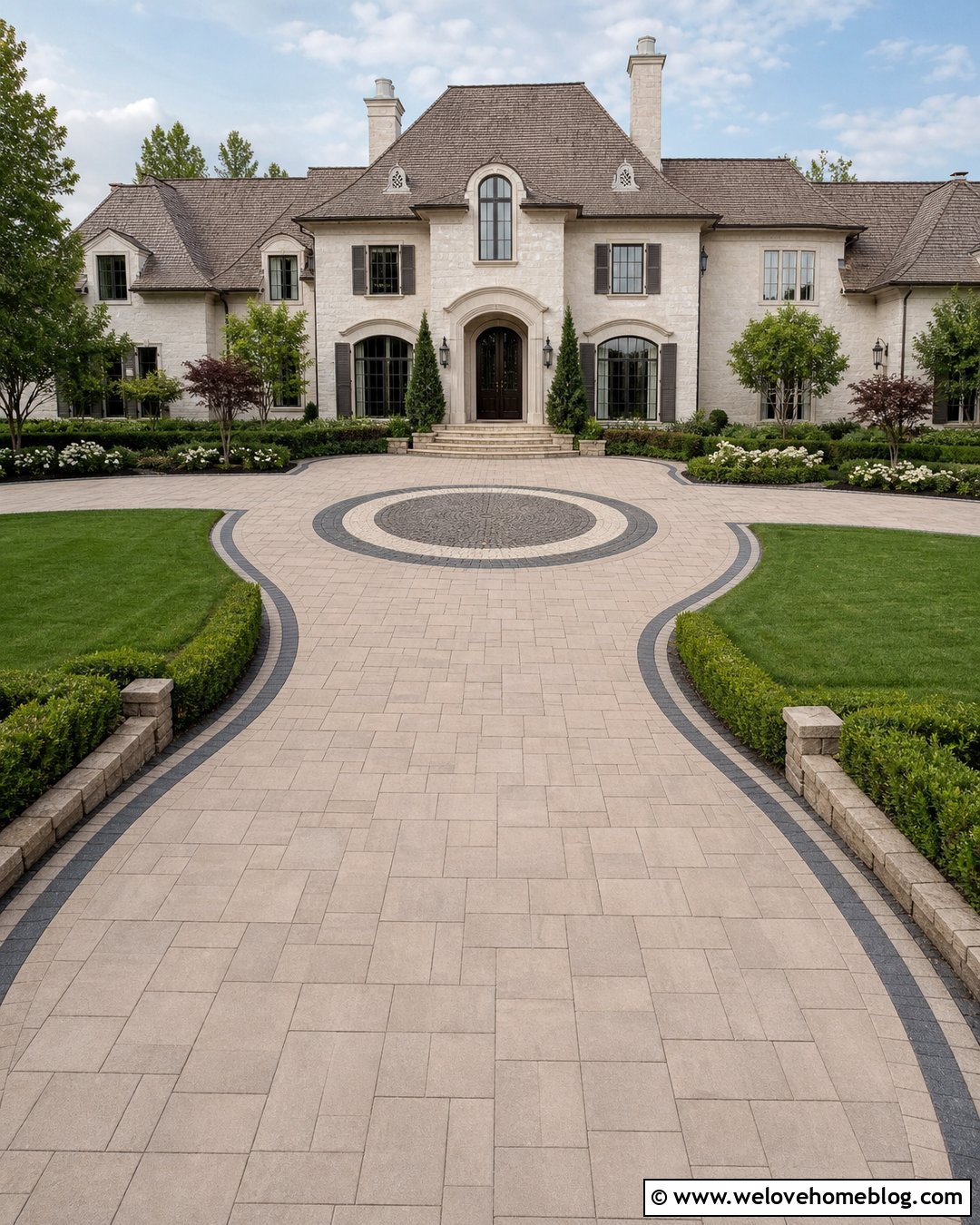
A paver motor court gives a large front entry a formal focal point and useful turning space. Create the main field with large taupe concrete pavers in a mixed ashlar pattern. At the center, install a circular medallion of charcoal and cream cobblestone-style pavers. Carry the charcoal color into a double perimeter border that clearly outlines the court. A curved driveway can enter from one side and exit from the other, forming a graceful approach to the house. Frame the paving with symmetrical lawn panels, evergreen hedges, and broad stone steps. Keep the central medallion level and unobstructed rather than adding a planter that reduces maneuvering space. This complete composition suits large traditional, French country, and Mediterranean-inspired homes.
Conclusion:
The strongest **20 Paver Driveway Design Ideas** treat the surface, pattern, border, landscaping, and house as one connected composition. Begin by choosing a complete look that fits your property’s scale and architectural character. Herringbone brick can warm up a traditional facade, while linear concrete pavers support cleaner modern lines. Curves, aprons, medallions, and contrasting borders can guide the eye and organize wider areas. Permeable systems and grass-strip layouts introduce practical alternatives when site conditions allow. Before selecting a final design, consider vehicle movement, drainage, slope, maintenance, climate, and local requirements. A qualified installer can then specify the excavation, base, edge restraints, paver thickness, and joint material needed for dependable driveway performance.

Related posts:


Leave a Reply