
A paver driveway can do far more than create a practical place to park. The right combination of color, pattern, border, shape, and landscaping can make the entire front yard feel more polished. These 20 Paver Driveway Curb Appeal Ideas include classic brick layouts, modern concrete pavers, permeable designs, curved approaches, and welcoming entrances. Each look treats the driveway as part of the home rather than a separate paved area. Coordinated walkways, garden beds, lighting, and architectural details help connect everything visually. Whether you have a compact suburban lot or a wide country property, thoughtful planning can produce a distinctive yet practical entrance. Explore these complete, approachable 20 Paver Driveway Curb Appeal Ideas.

1. Herringbone Paver Driveway With Dark Border
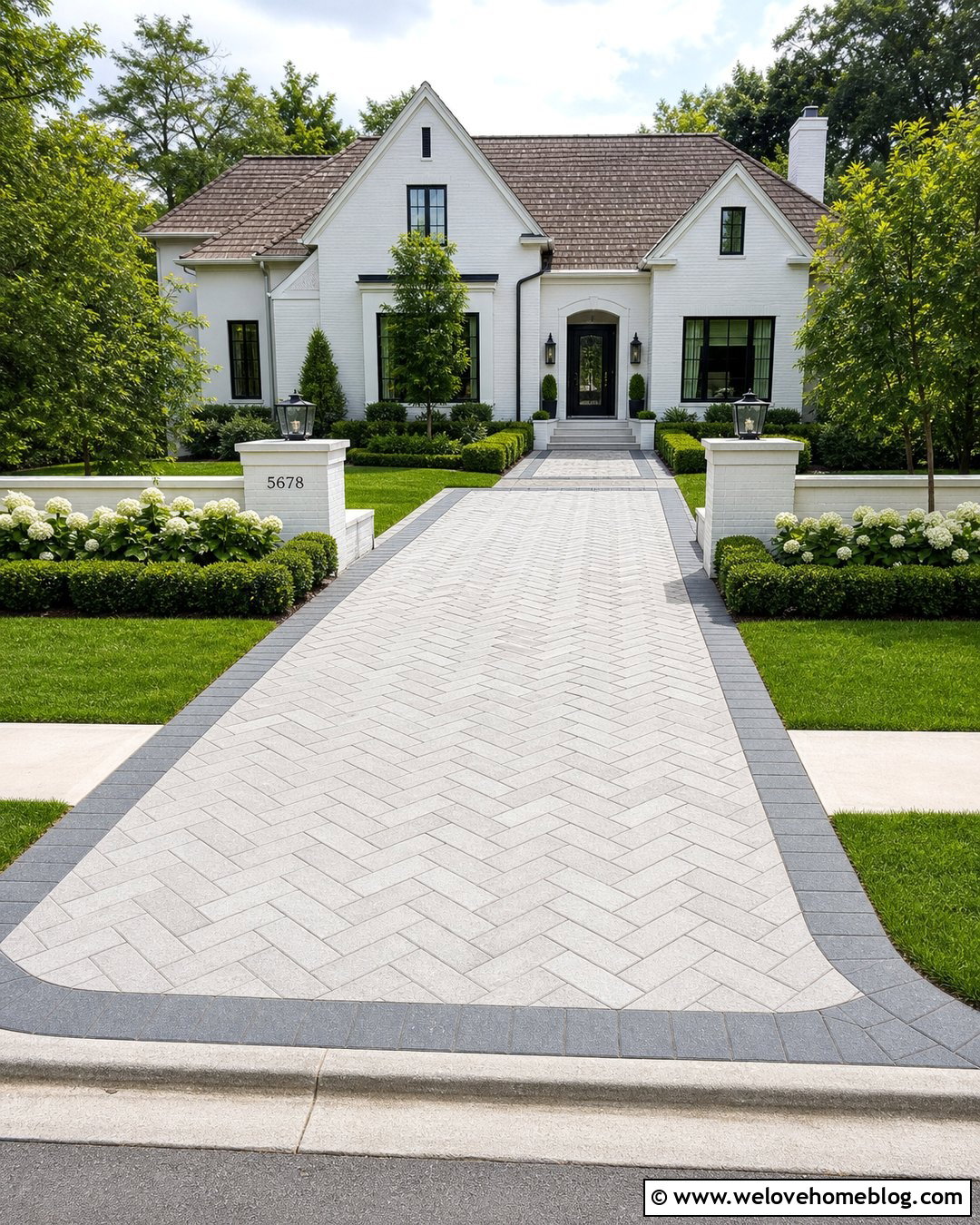
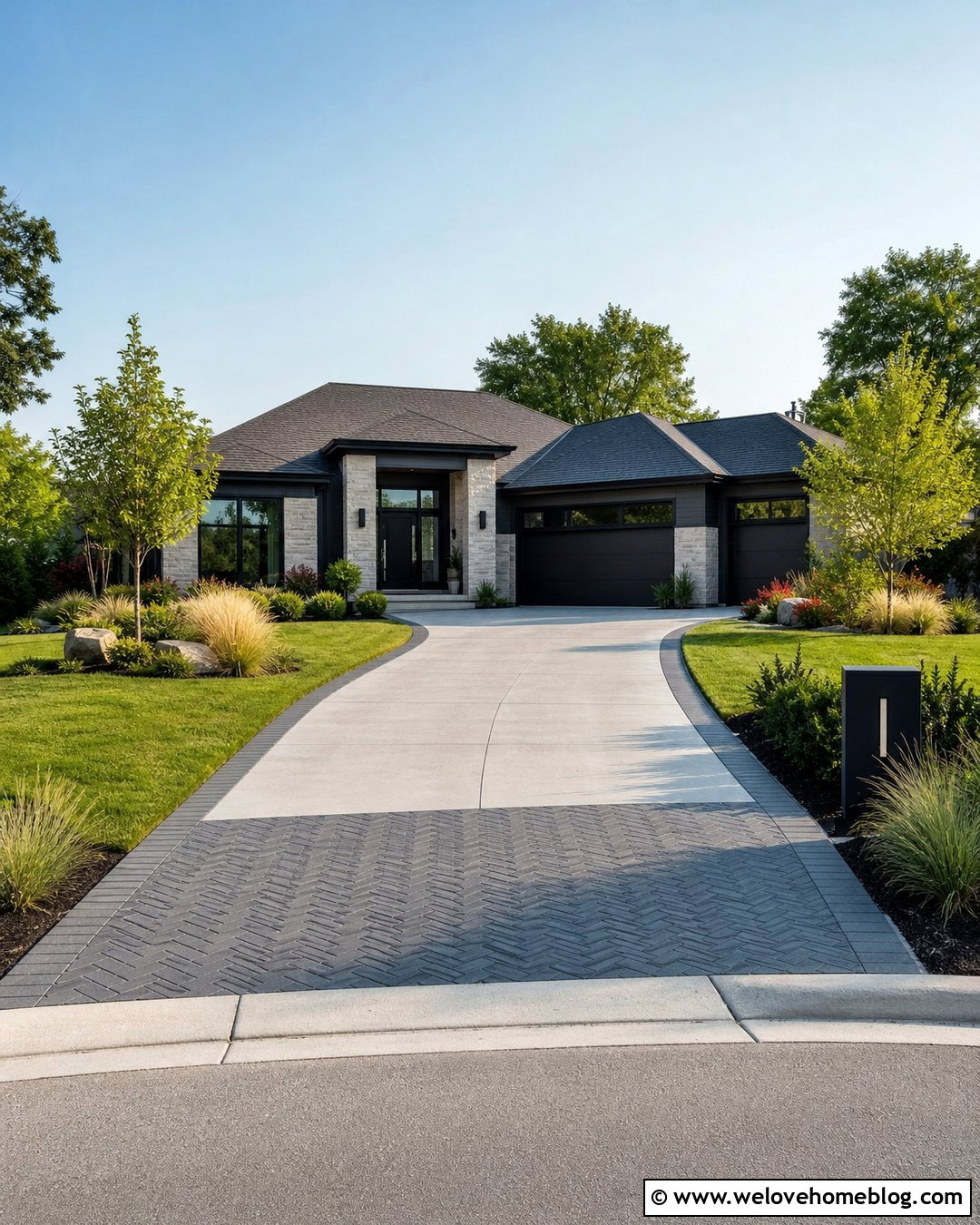
A light-gray herringbone paver driveway framed by charcoal edging creates a crisp, tailored entrance. The angled pattern gives the surface movement, while the darker border clearly defines its shape. Herringbone is also frequently recommended for vehicle areas because its interlocking arrangement works well under traffic. () Keep the layout straight for a clean suburban look, then connect it to the front door with a matching paver walkway. Low boxwood hedges, white flowering perennials, and an even lawn soften the hard lines without hiding them. This combination works especially well with white, gray, or red brick homes. Choose slightly varied gray pavers rather than one flat color so dirt, tire marks, and normal surface wear remain less noticeable.
2. Tumbled Paver Driveway With Brick House
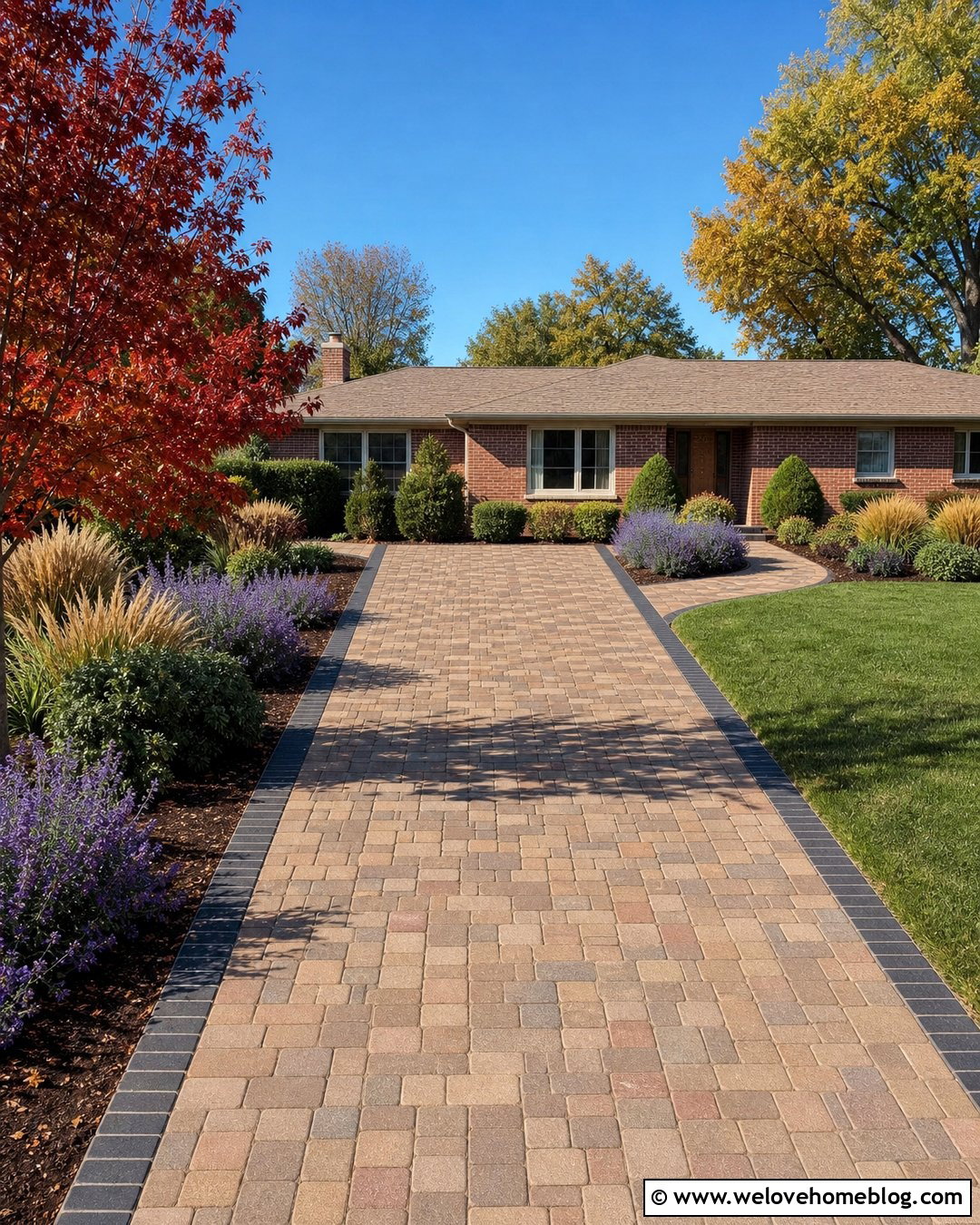
Warm, tumbled concrete pavers can make a newer driveway feel comfortably established. Choose an autumn blend containing muted brown, tan, and clay tones that complements red brick without matching it exactly. Lay the pavers in a mixed running bond, then add a single darker soldier-course border for a neat finish. Along both sides, use gently curved planting beds filled with evergreen shrubs, catmint, and compact ornamental grasses. A straight driveway keeps the overall design orderly, while the softened paver edges and layered plants prevent it from looking rigid. Repeat one paver color in the front walkway or porch steps. This creates a visual connection between the curb, garage, and main entrance while allowing the brick facade to remain the strongest architectural feature.
3. Large Format Paver Driveway With Modern Landscaping
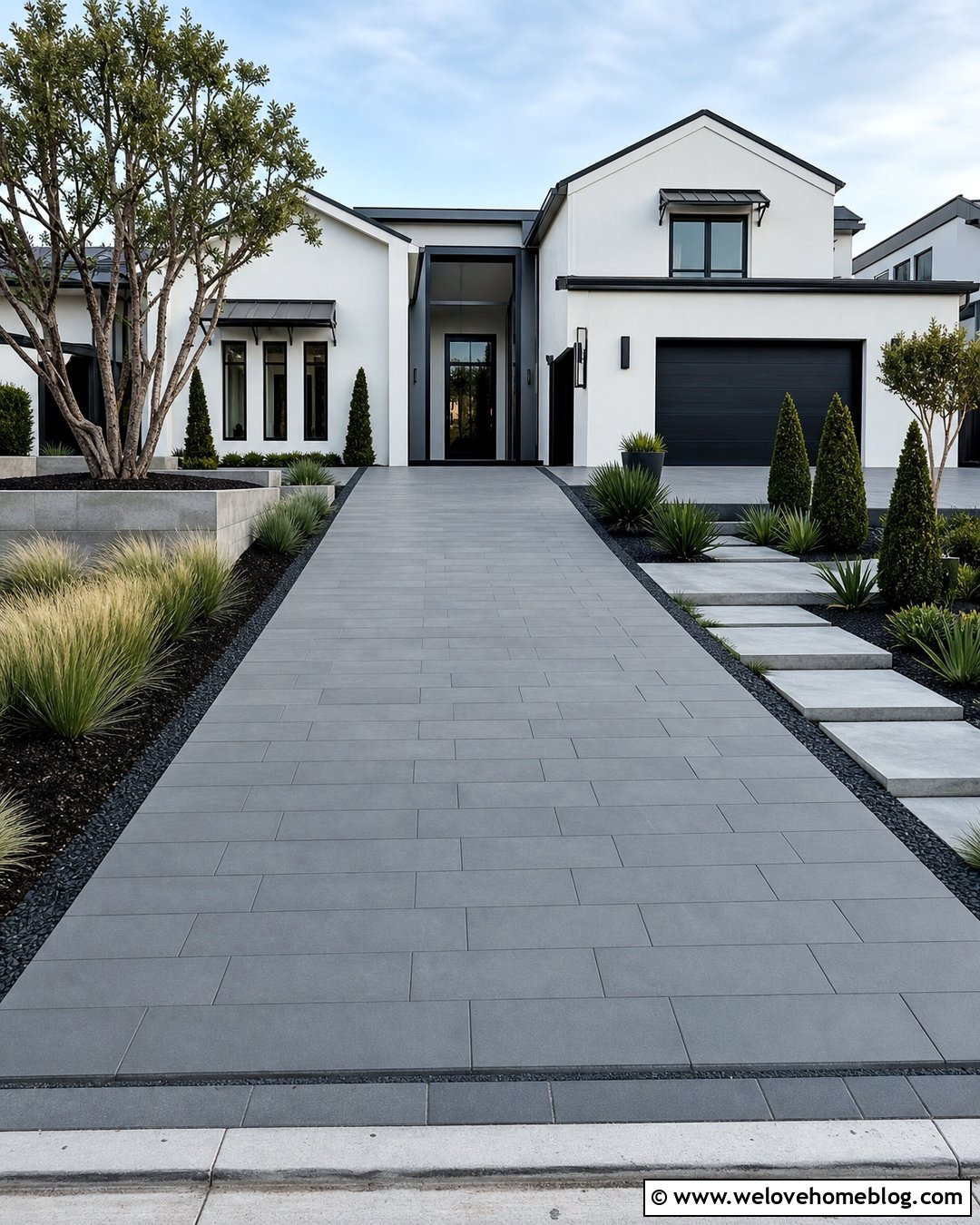
Wide rectangular concrete pavers give a modern driveway a calm, uncluttered appearance. Use smooth charcoal or medium-gray units in a linear pattern that follows the direction of travel toward the garage. Large-format pavers and oversized running-bond layouts are commonly used to bring a more contemporary character to residential paving. () Frame the driveway with narrow strips of black stone or a flush border in a slightly darker gray. Structured landscaping completes the look. Consider rectangular beds containing ornamental grasses, clipped evergreens, and one sculptural multi-stem tree. Keep the plant palette limited and repeat each variety in groups. A broad concrete stepping-stone walkway can cross the planting bed and meet the driveway, echoing its scale while clearly directing visitors to the front door.
4. Permeable Paver Driveway With Grass Joints
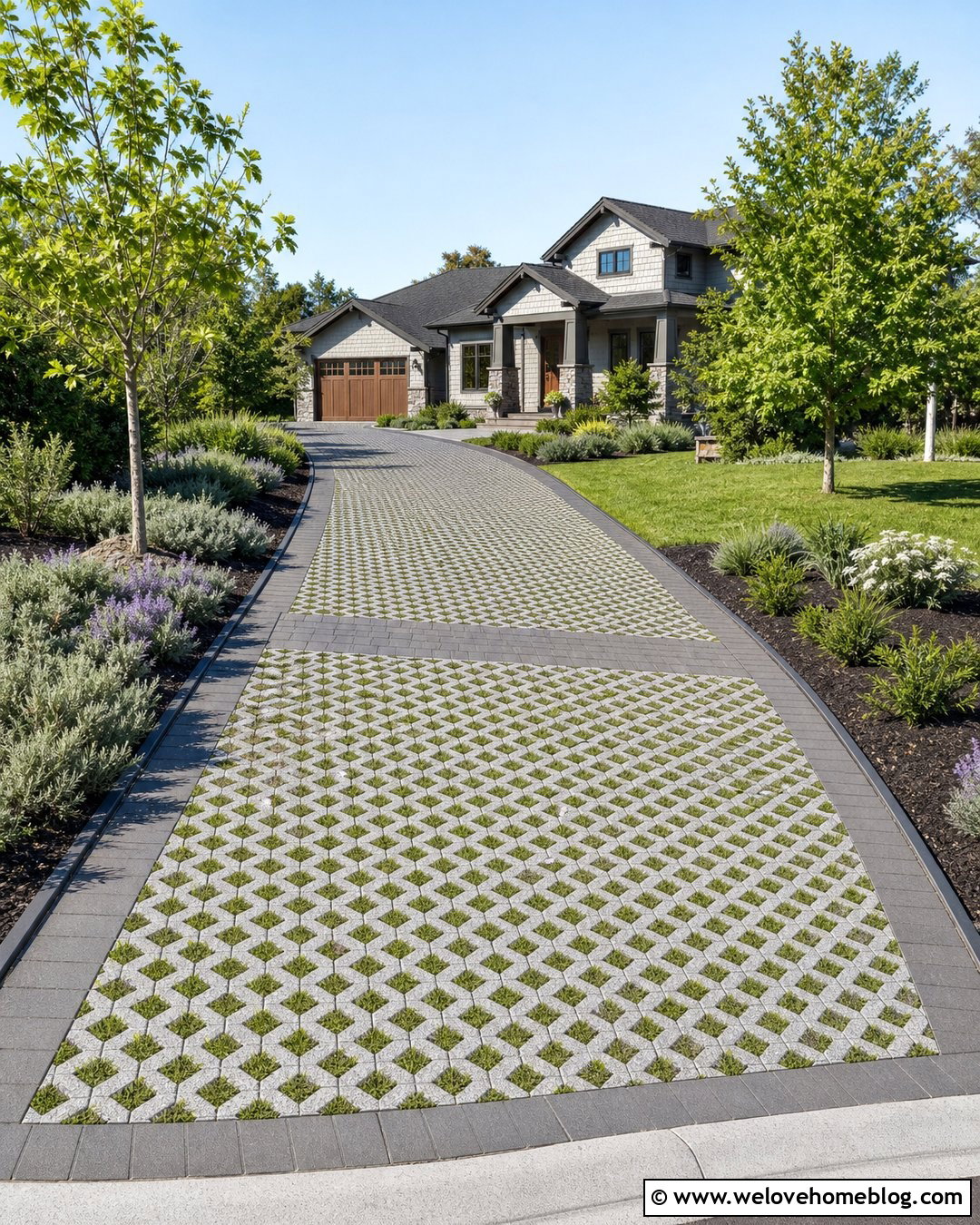
Could a greener driveway still look neat and intentional? Permeable concrete grid pavers with narrow grass joints create a softer surface that blends into the front lawn. Use a straight or gently curved layout, then establish solid paver bands near the garage and street for cleaner transitions. Permeable systems are designed to let water pass through joints into an appropriate underlying system, although local soil, drainage, and installation requirements still need professional evaluation. () Edge the driveway with low steel restraints or dark concrete pavers to maintain a defined outline. Drought-tolerant shrubs, flowering ground covers, and small shade trees can frame the approach. Regular mowing and careful joint maintenance will keep the grass strips looking deliberate rather than overgrown.
5. Circular Cobblestone Paver Driveway With Center Garden
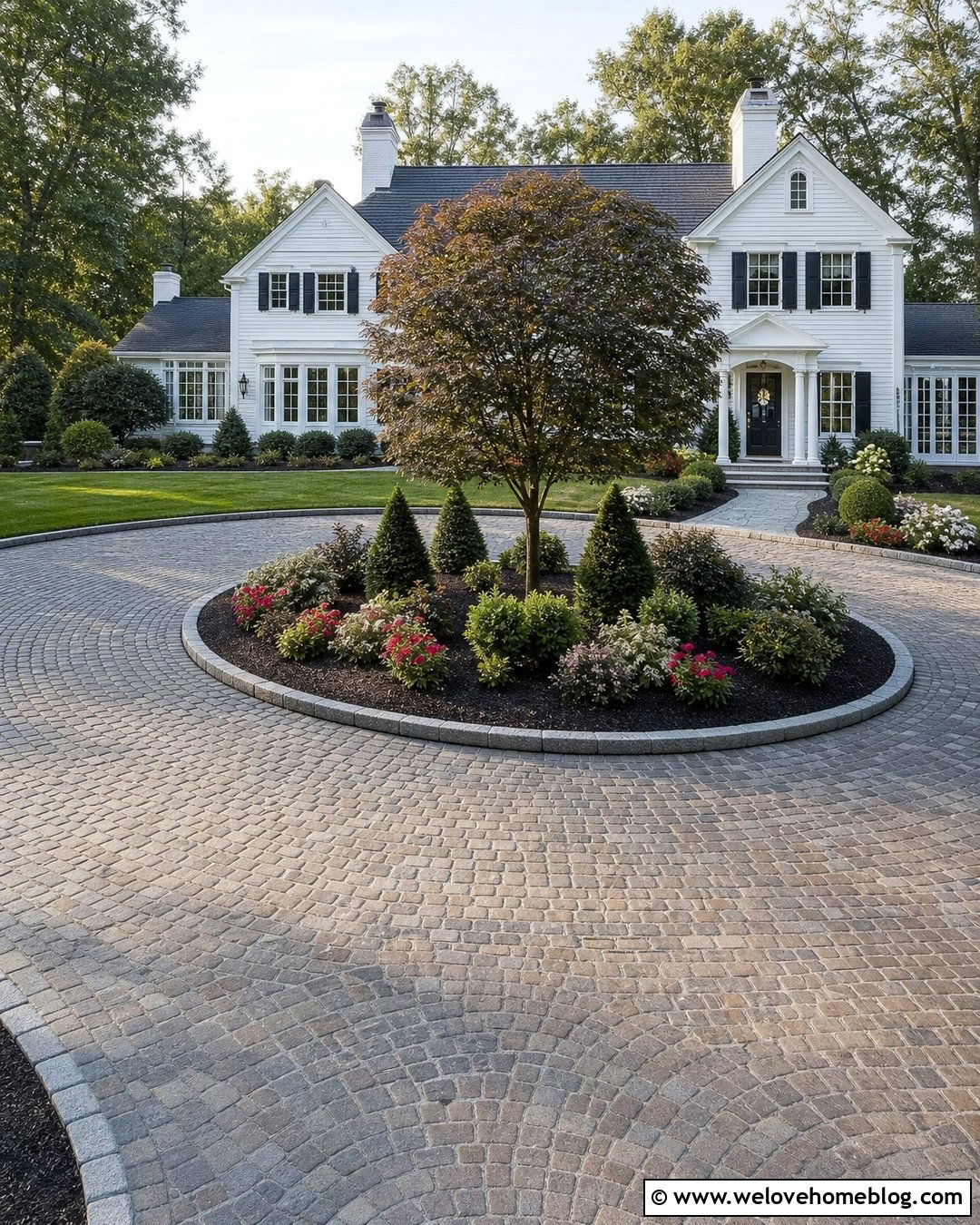
A circular paver driveway creates an impressive arrival while making the front landscape a central feature. Select cobblestone-style concrete pavers in blended gray and brown tones, arranging them in fan or curved patterns that follow the driveway’s shape. In the middle, build a generous island with a small ornamental tree, evergreen shrubs, seasonal flowers, and dark mulch. A low cobblestone curb can separate the planting from vehicle traffic. Match the island border to the outer driveway edge for balance. Near the house, connect the circle to a wider parking area and a curved paver walkway. This complete design suits colonial, European-inspired, and traditional homes. Before building, confirm that the driveway diameter, turning space, drainage, and entrance width can safely accommodate regular vehicles and service access.
6. Ashlar Paver Driveway With Natural Stone Edging
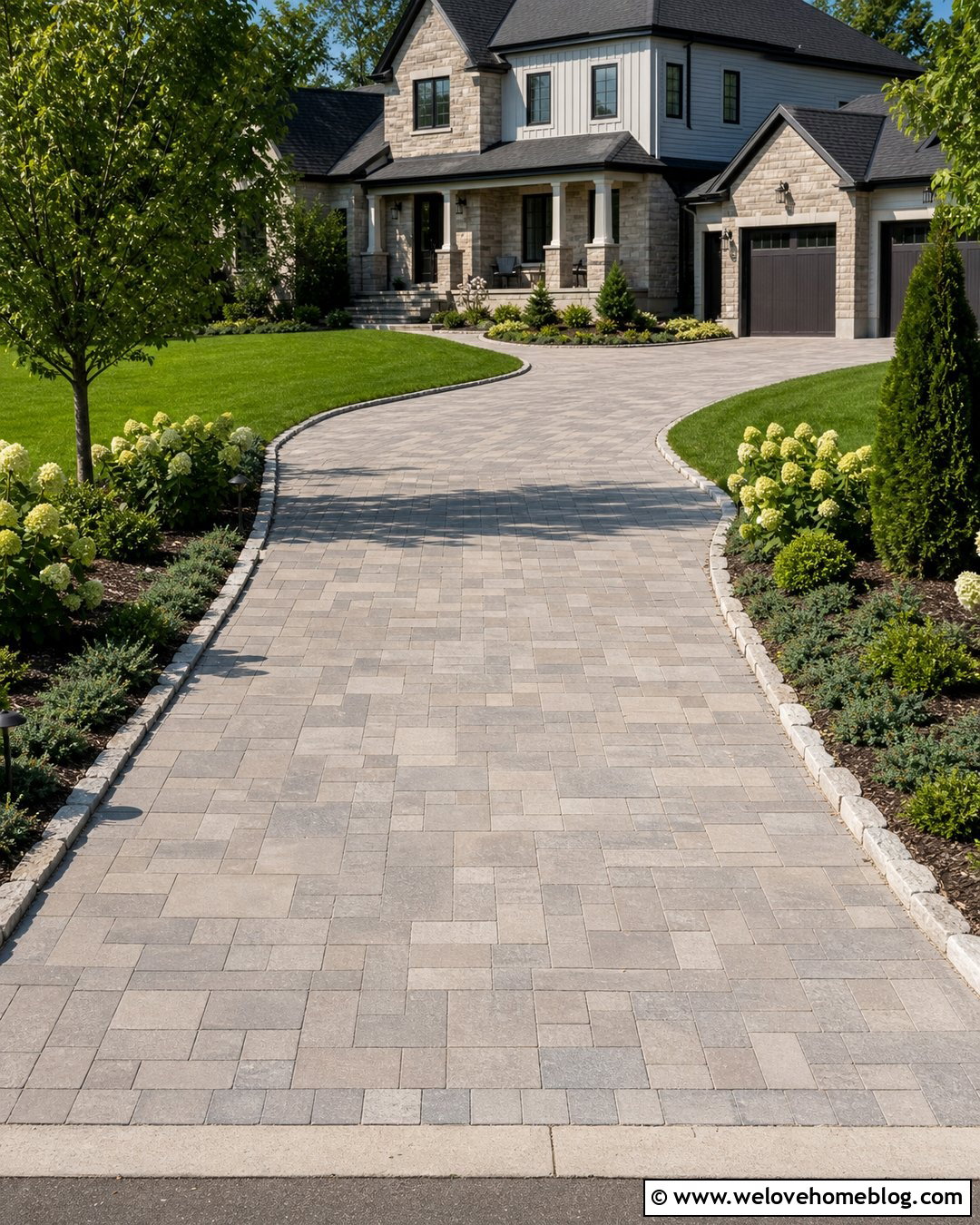
Mixed-size ashlar pavers bring subtle variation to a large driveway without creating an overly busy pattern. Choose concrete pavers in soft limestone, greige, and warm-gray tones, then frame the surface with natural stone edging in a related color. Ashlar layouts combine several square and rectangular sizes, producing a varied look that works with both contemporary and traditional architecture. () A gently curved driveway can emphasize the pattern while leading the eye toward the garage. Add broad planting beds with hydrangeas, compact evergreens, and shade-tolerant ground covers along the inside curve. On the opposite side, maintain an open lawn to avoid making the approach feel narrow. Repeating the natural stone around porch columns or garden walls will help the driveway feel integrated with the house.
7. Red Brick Paver Driveway With White Colonial House
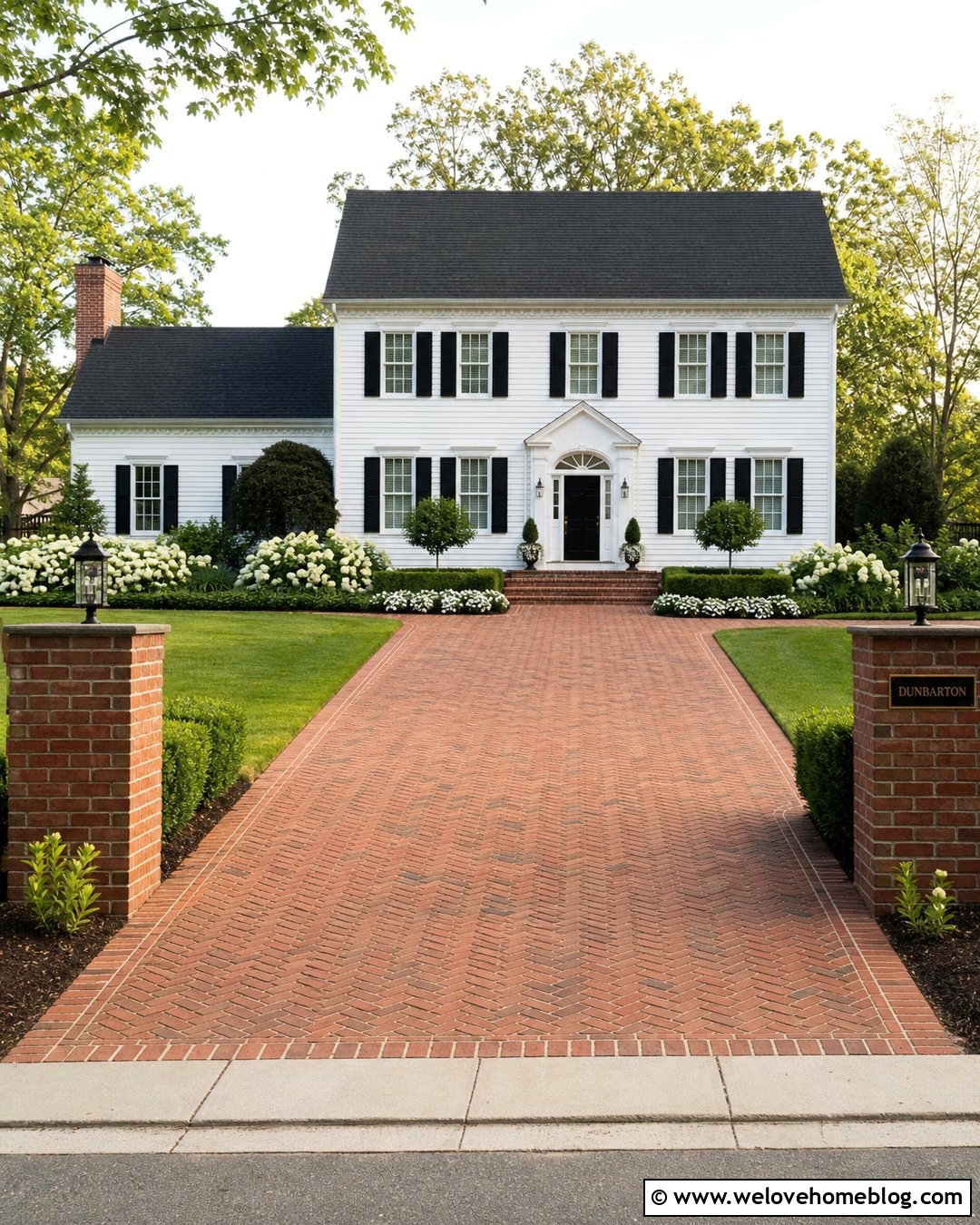
Few combinations look as established as red clay brick pavers leading to a white colonial home. Lay the brick in a 45-degree herringbone pattern for rich texture, then use a straight soldier-course border to produce a clean outline. The warm surface stands out against white siding, dark shutters, and green lawn without requiring complicated decorative inlays. Keep the driveway straight and symmetrical whenever the lot allows. On each side, create balanced beds with boxwoods, white hydrangeas, and low seasonal flowers. Brick entrance pillars can reinforce the formal layout, especially when capped with simple lanterns. Connect the driveway to the front steps with a matching brick walkway. Because brick color varies naturally, view full-size samples outdoors beside the facade before choosing the final blend.
8. Gray Paver Driveway With Double Border
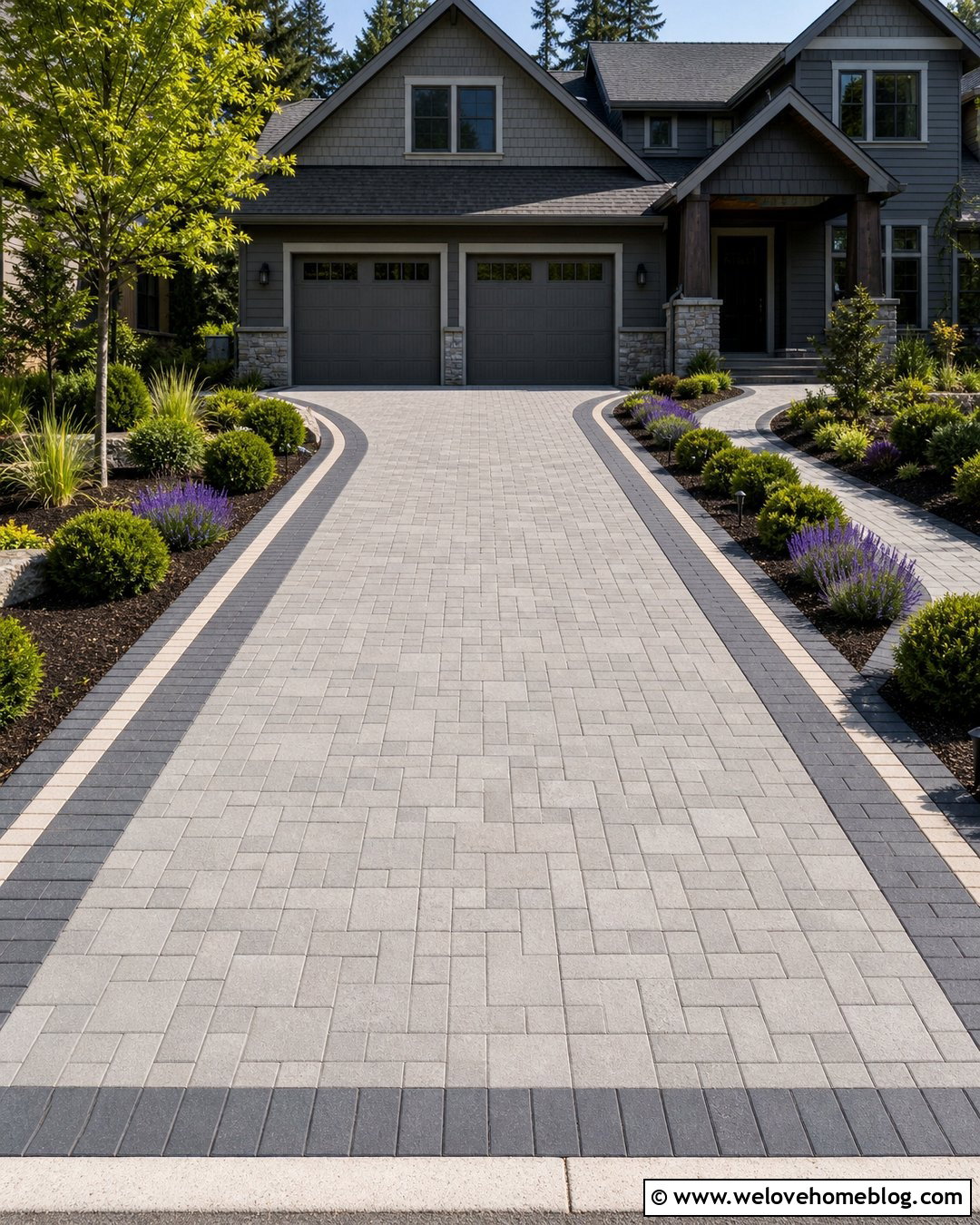
A double border can give a simple gray paver driveway more depth and definition. Start with medium-gray concrete pavers in a three-piece pattern. Add a narrow cream accent band, followed by a wider charcoal soldier-course edge. Double borders are often used to create a more substantial visual frame around the main paver field. () This arrangement works especially well on wide driveways where a single thin outline could disappear from the curb. Keep adjacent landscaping controlled with low evergreen mounds, purple flowering perennials, and dark mulch. A matching charcoal walkway can branch toward the front door, while the cream accent reappears around the porch steps. The layered frame makes the driveway look planned and finished without relying on complicated medallions or several competing paver colors.
9. Curved Paver Driveway With Flowering Borders
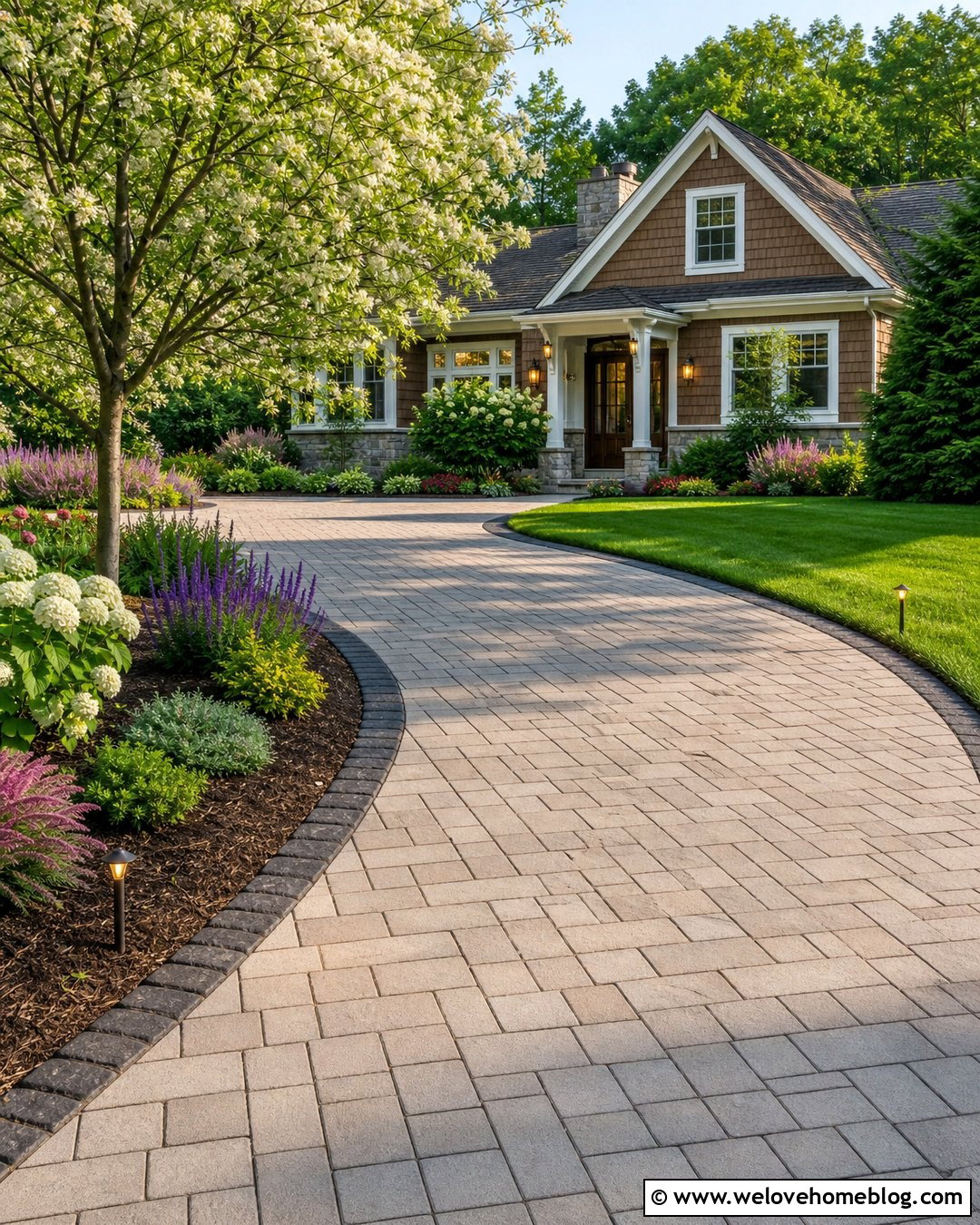
A gently curved paver driveway can make the approach feel longer, softer, and more connected to the landscape. Use warm-gray interlocking concrete pavers in a flowing running bond, allowing the rows to follow the curve naturally. Define the outer edge with dark cobblestone-style pavers and create deep planting beds along the inner bend. Layer a small flowering tree with hydrangeas, salvia, ornamental grasses, and evergreen ground covers. Keep mature plant sizes in mind so branches and foliage do not reduce driving space. Low landscape lighting can follow the edge without creating a runway effect. Near the garage, widen the paving slightly to simplify parking and turning. This complete look fits craftsman, cottage, and transitional homes, especially on lots where a straight driveway would feel too abrupt.
10. Coastal Paver Driveway With Light Colors
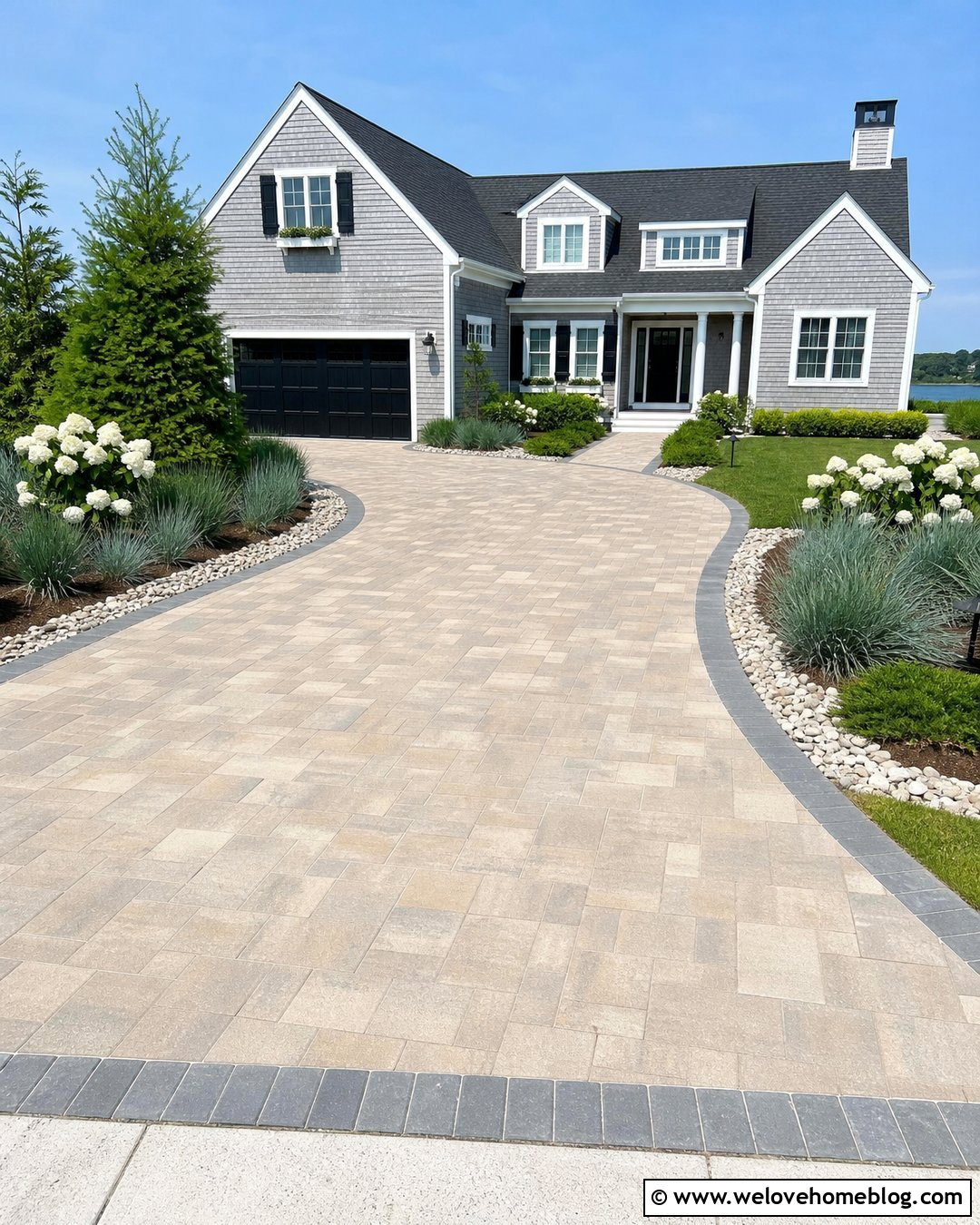
Soft sand-colored concrete pavers create an airy entrance for coastal and Cape Cod homes. Select a lightly textured finish with subtle cream, beige, and pale-gray variation. Arrange rectangular pavers in a simple running bond, then frame the driveway with a narrow slate-gray border. The contrast should be visible but not severe. Add curved beds containing blue-green ornamental grasses, white hydrangeas, compact junipers, and salt-tolerant plants suited to the local climate. Pale river rock can replace mulch in selected areas, but use it sparingly so the landscape does not appear washed out. A gently flared entrance makes the driveway welcoming from the street. Repeat the pavers on the front walkway and use dark fixtures near the garage to balance the otherwise light color palette.
11. Paver Driveway With Contrasting Entrance Apron
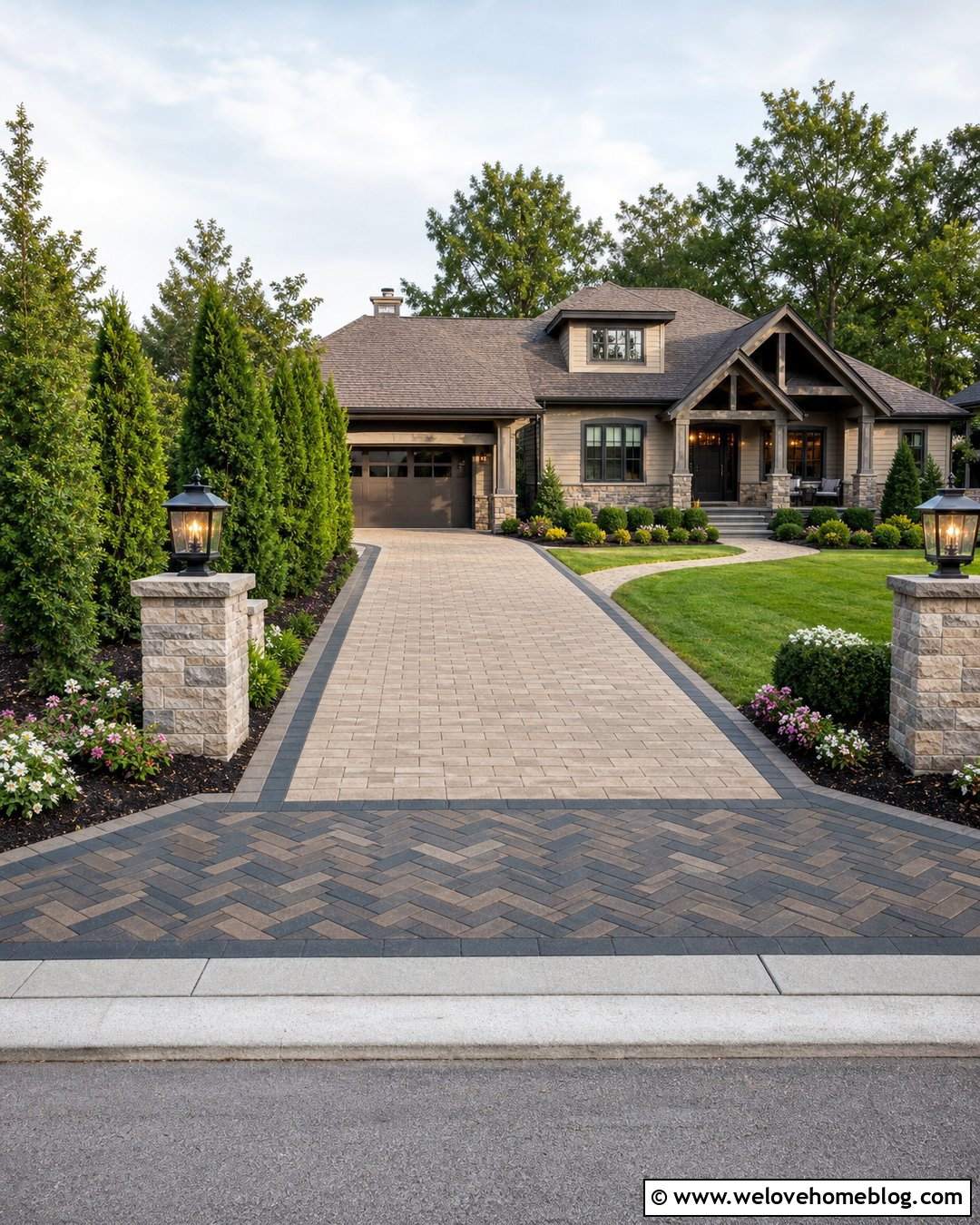
The curbside entrance is an ideal place to introduce a stronger pattern without covering the entire driveway in decorative details. Build the main surface with muted tan concrete pavers in a running bond. At the street, add a broad charcoal and tan herringbone apron that extends several feet into the driveway. Frame both areas with the same dark border so the transition feels intentional. Low stone pillars, tidy evergreen plantings, and flowering ground covers can mark the entrance without obstructing sightlines. Continue the simpler tan field toward a craftsman or ranch home, allowing the apron to remain the focal point. This approach creates visible curb appeal where it matters most while keeping the larger paved area calm, practical, and easier to coordinate with existing landscaping.
12. Checkerboard Paver Driveway With Grass Squares
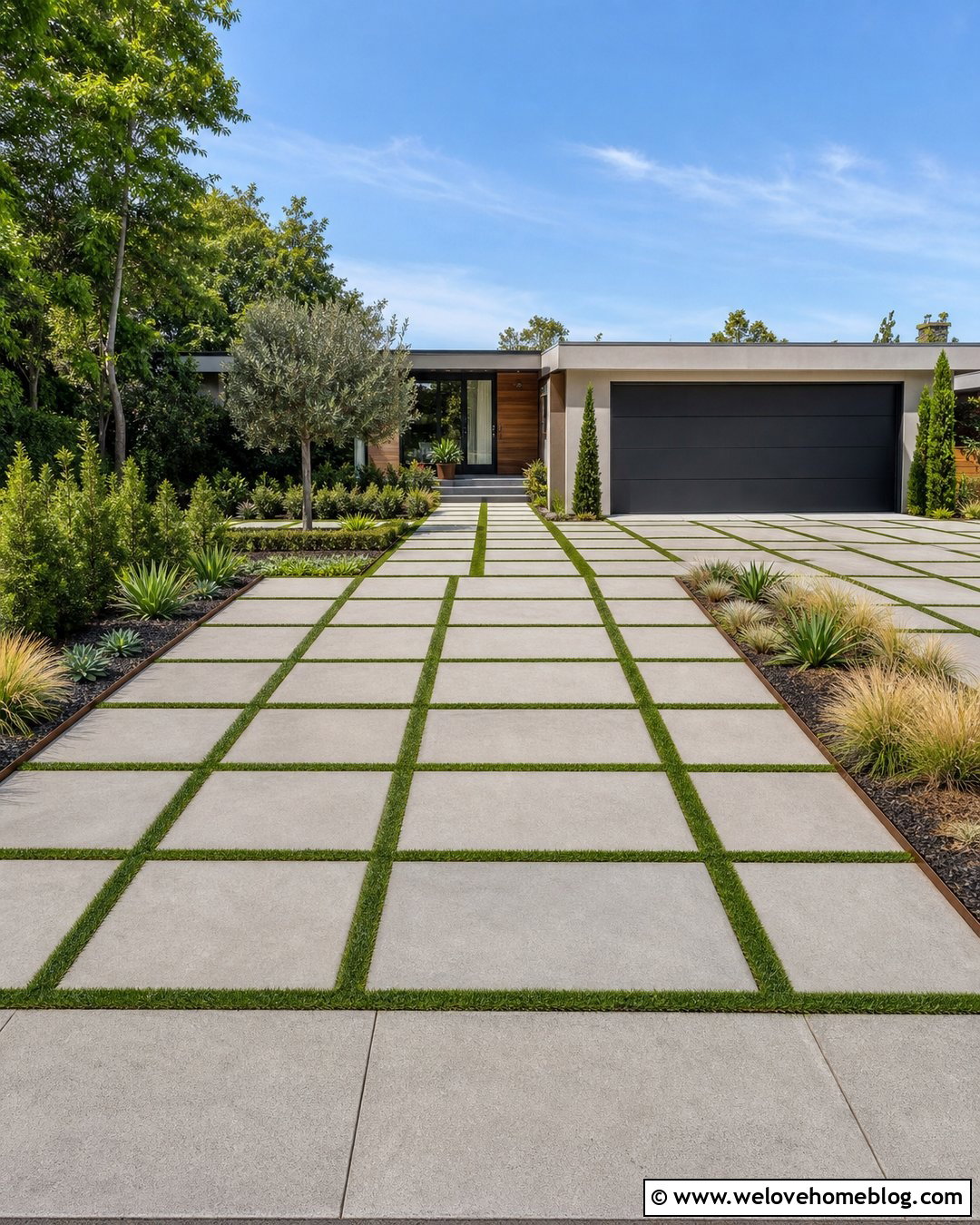
A checkerboard driveway combines structured paving with the color and softness of a lawn. Use large square concrete pavers in warm gray, spacing them evenly to create narrow turf joints. Keep the grid perfectly aligned with a modern or midcentury home so the surface feels architectural rather than unfinished. Add solid bands of matching pavers where vehicles stop, turn, or enter the garage. Along the sides, use clean rectangular beds with ornamental grasses, low succulents where climate permits, and compact evergreen shrubs. A flush steel or concrete border will separate the grid from surrounding lawn. The grass variety should suit local light, temperature, and maintenance conditions. For less upkeep, consider an appropriate low-growing ground cover, while confirming that it can tolerate occasional traffic and driveway conditions.
13. Fan Pattern Paver Driveway With Stone Pillars
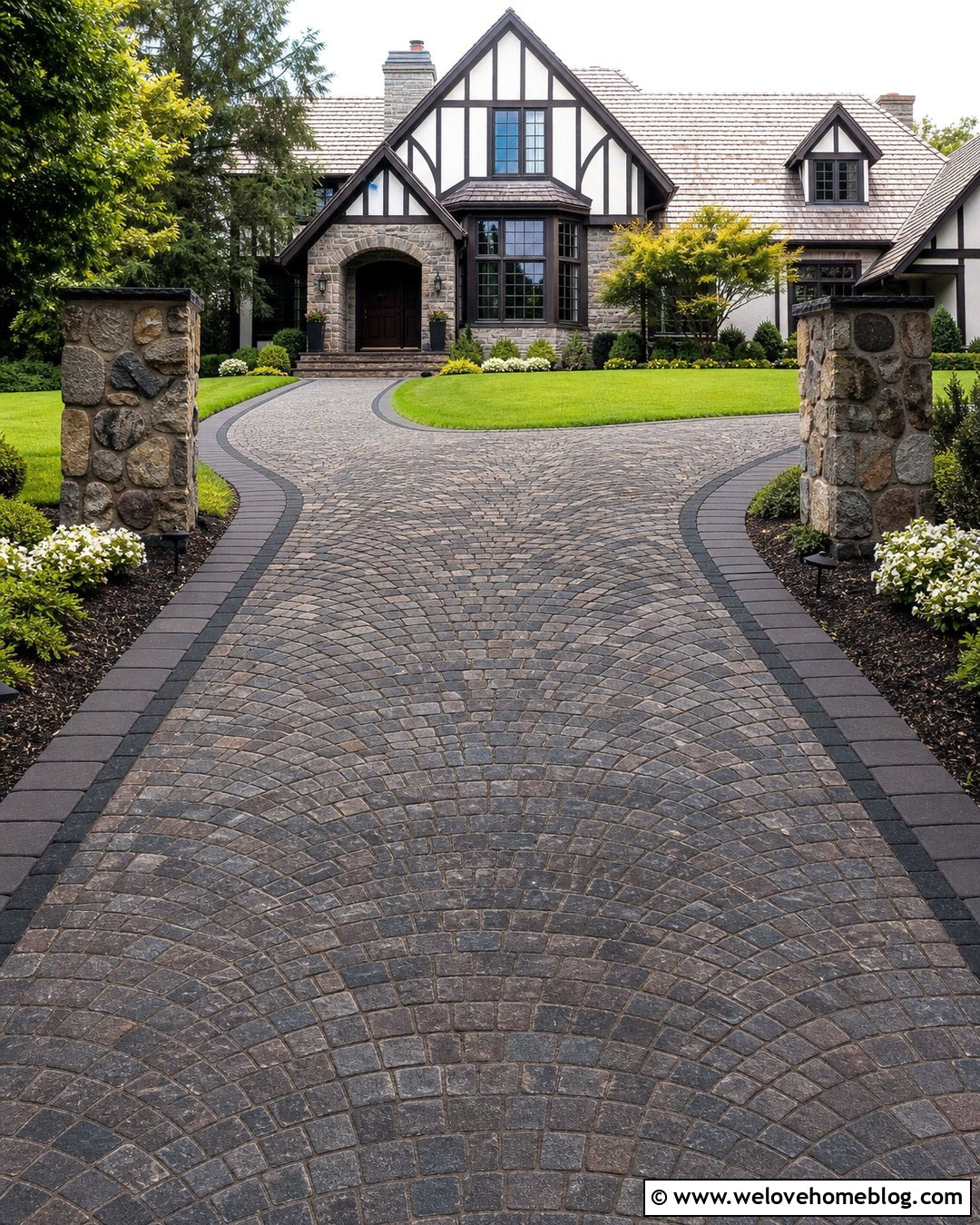
Fan-pattern pavers bring old-world movement to the entrance without requiring a fully circular driveway. Choose small cobblestone-style concrete pavers in blended charcoal, brown, and gray. Arrange the fans so they open toward the house, guiding the eye through a gently flared entry between stone pillars. Continue the same pattern along the driveway, but simplify the border with a single row of dark rectangular pavers. Around the pillars, install low evergreen shrubs and restrained flowering plants that will not hide the masonry. A curved walkway can branch from the driveway and repeat a smaller fan pattern near the front steps. This look complements Tudor, European, and traditional houses. Keep other materials limited because the curved paving pattern already supplies plenty of texture and visual interest.
14. Two Tone Paver Driveway With Geometric Bands
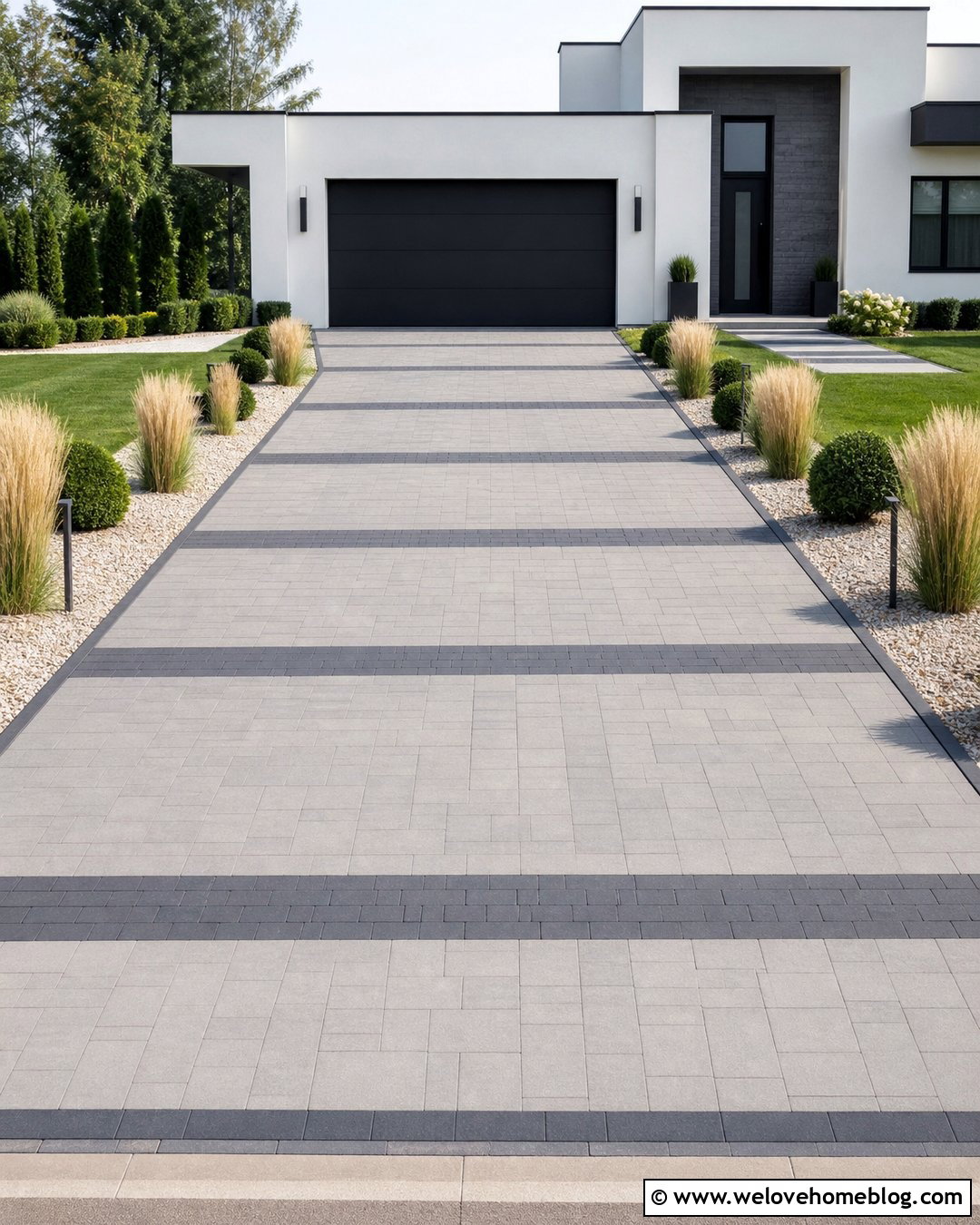
Two paver colors can create a bold modern driveway when the pattern remains disciplined. Use smooth light-gray rectangular concrete pavers as the main field and charcoal pavers for wide bands crossing the driveway at regular intervals. Align those bands with garage doors, facade joints, windows, or front walkway edges whenever possible. This makes the pattern feel connected to the architecture rather than randomly applied. A straight driveway works best because it allows the geometry to read clearly from the street. Frame the surface with black metal edging and simple beds of feather reed grass, rounded evergreens, and pale gravel mulch. Avoid adding another decorative border or colorful medallion. The contrast between the two tones should provide enough character while preserving the clean appearance expected around a contemporary home.
15. Small Paver Driveway With Running Bond Pattern
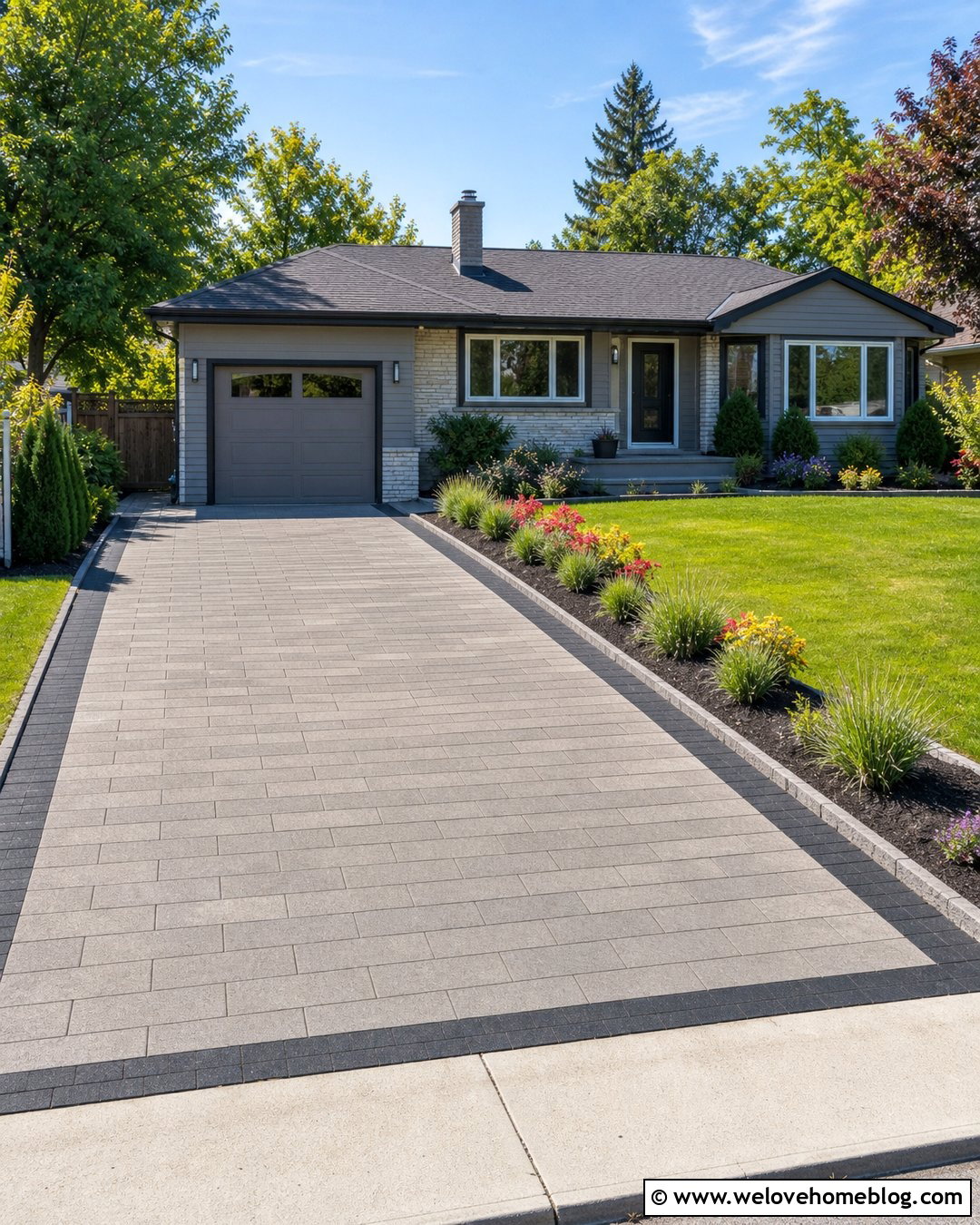
A compact driveway can look wider and more organized with rectangular pavers laid across its width. Choose light taupe concrete pavers with a lightly textured finish, then install them in a running bond perpendicular to the direction of travel. Add a thin charcoal border to define the edges without using valuable visual space. On one side, connect a matching walkway directly to the front entrance. On the other, use a narrow planting strip with upright grasses, dwarf shrubs, and seasonal flowers. Keep plants low near the street and maintain enough clearance for doors, mirrors, and trash containers. A restrained material palette prevents the small area from feeling crowded. The completed driveway should read as one continuous front entry, not as a parking pad surrounded by unrelated leftover spaces.
16. Farmhouse Paver Driveway With Stone Columns
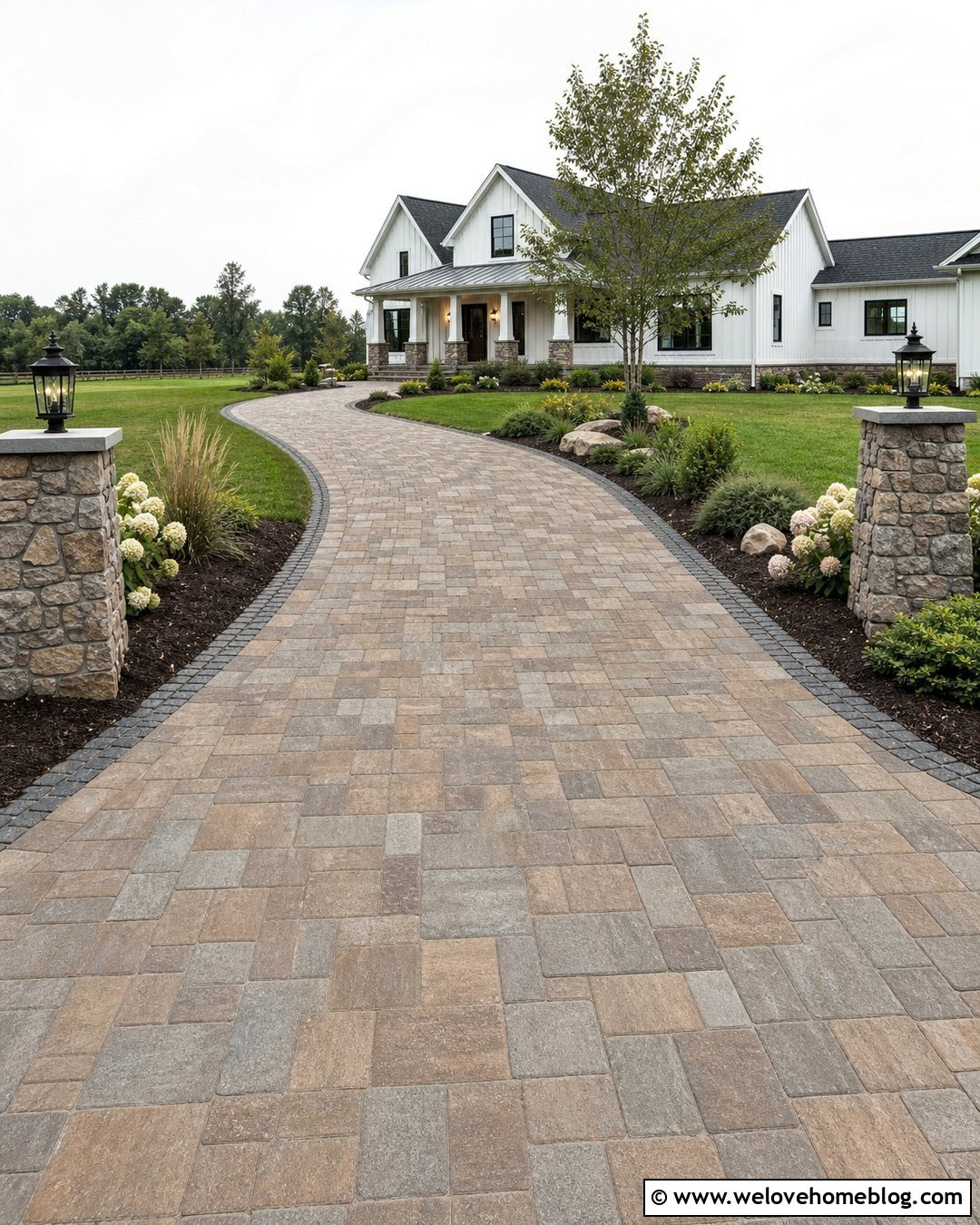
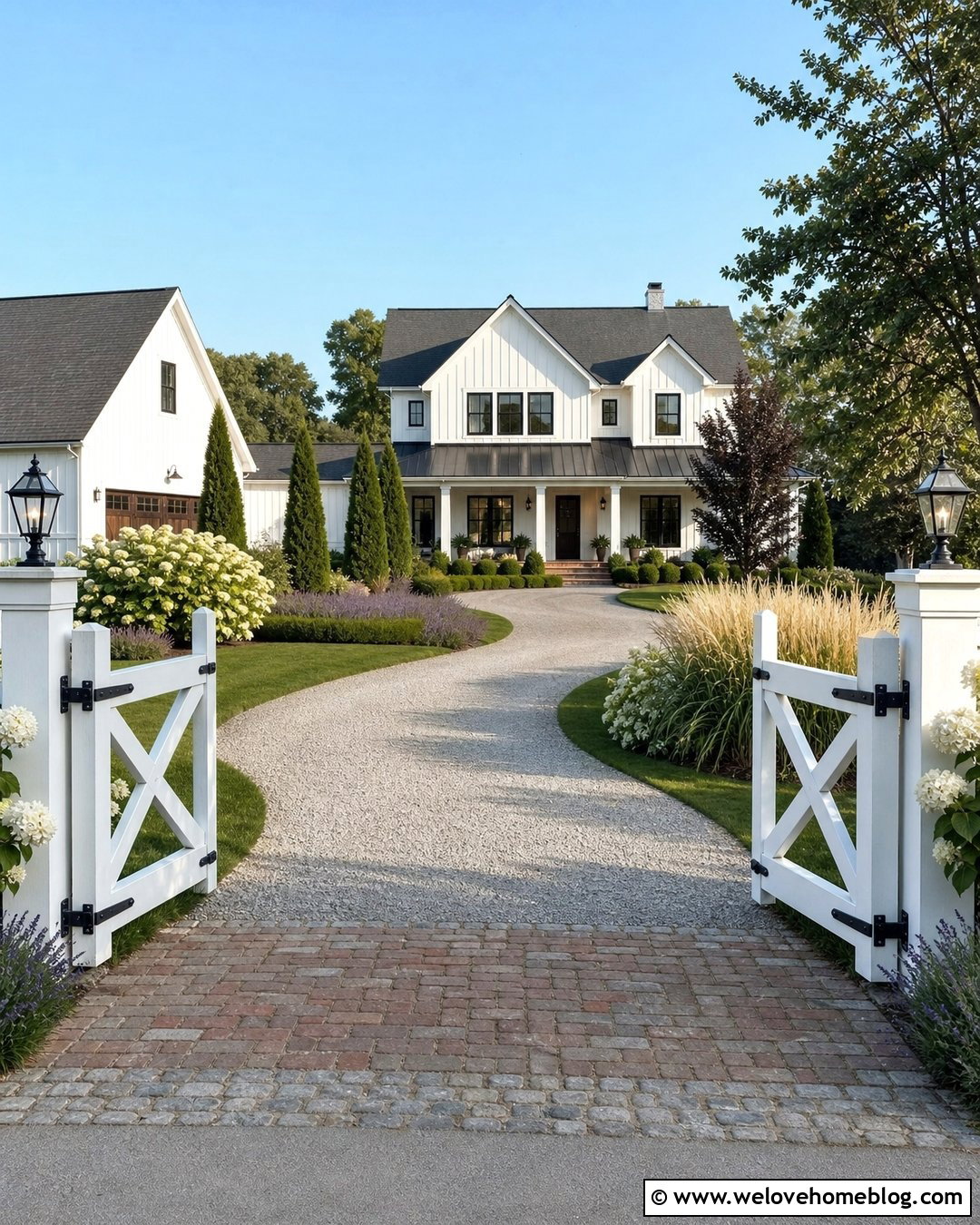
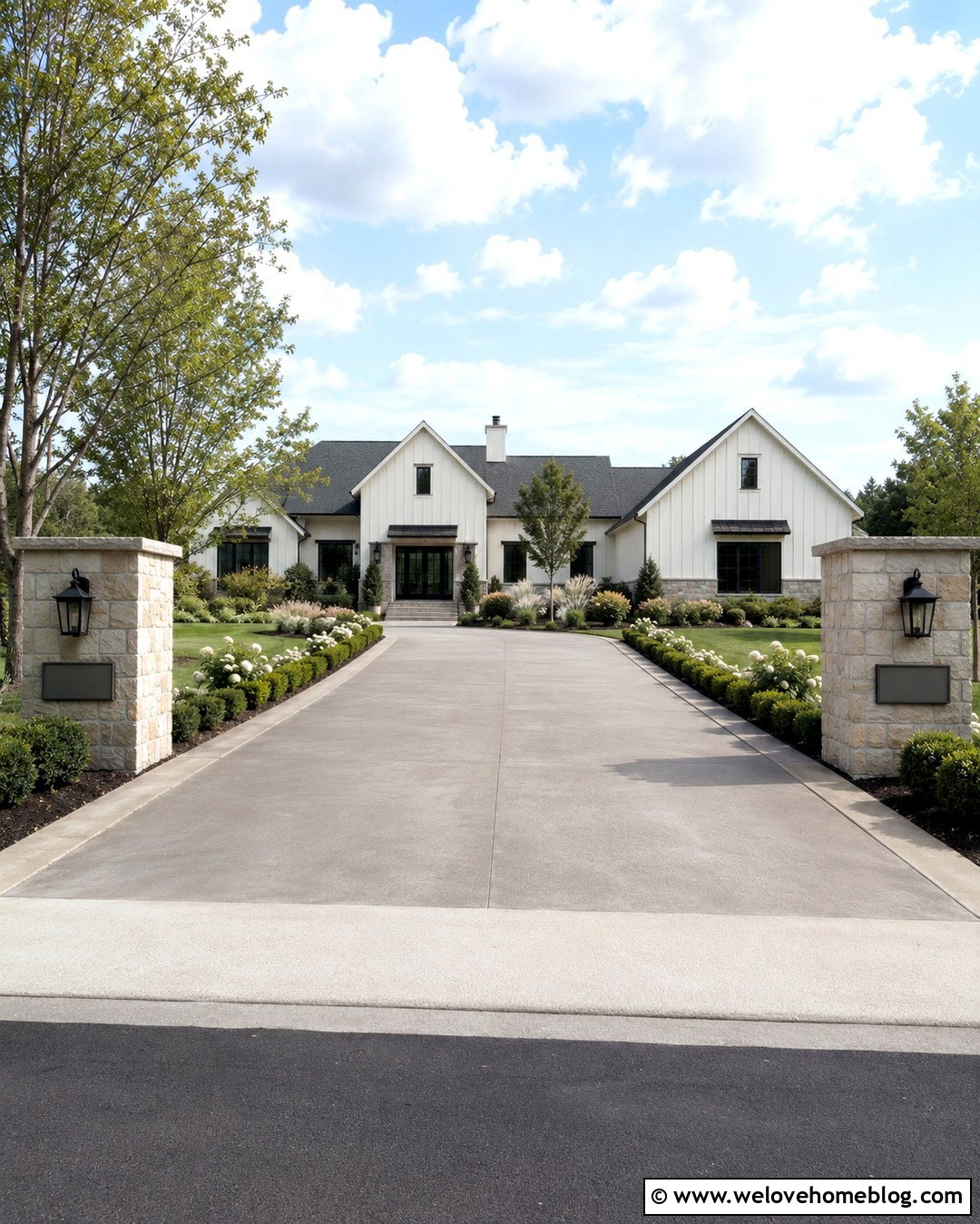
Tumbled concrete pavers in warm gray and weathered brown suit the relaxed character of a modern farmhouse. Use a mixed-size pattern along a broad, gently curved driveway, then add a border of charcoal cobblestone-style pavers. At the curb, place simple fieldstone columns on both sides and surround them with hydrangeas, ornamental grasses, and low evergreen plants. Leave the entrance open rather than filling it with heavy gates or elaborate decoration. Closer to the house, repeat the fieldstone around porch bases or low retaining walls. A matching paver walkway can lead through the lawn toward a white board-and-batten facade. This complete design balances rustic texture with an orderly layout. The result feels welcoming and established while remaining clean enough for a newer farmhouse exterior.
17. Mediterranean Paver Driveway With Drought Tolerant Landscaping
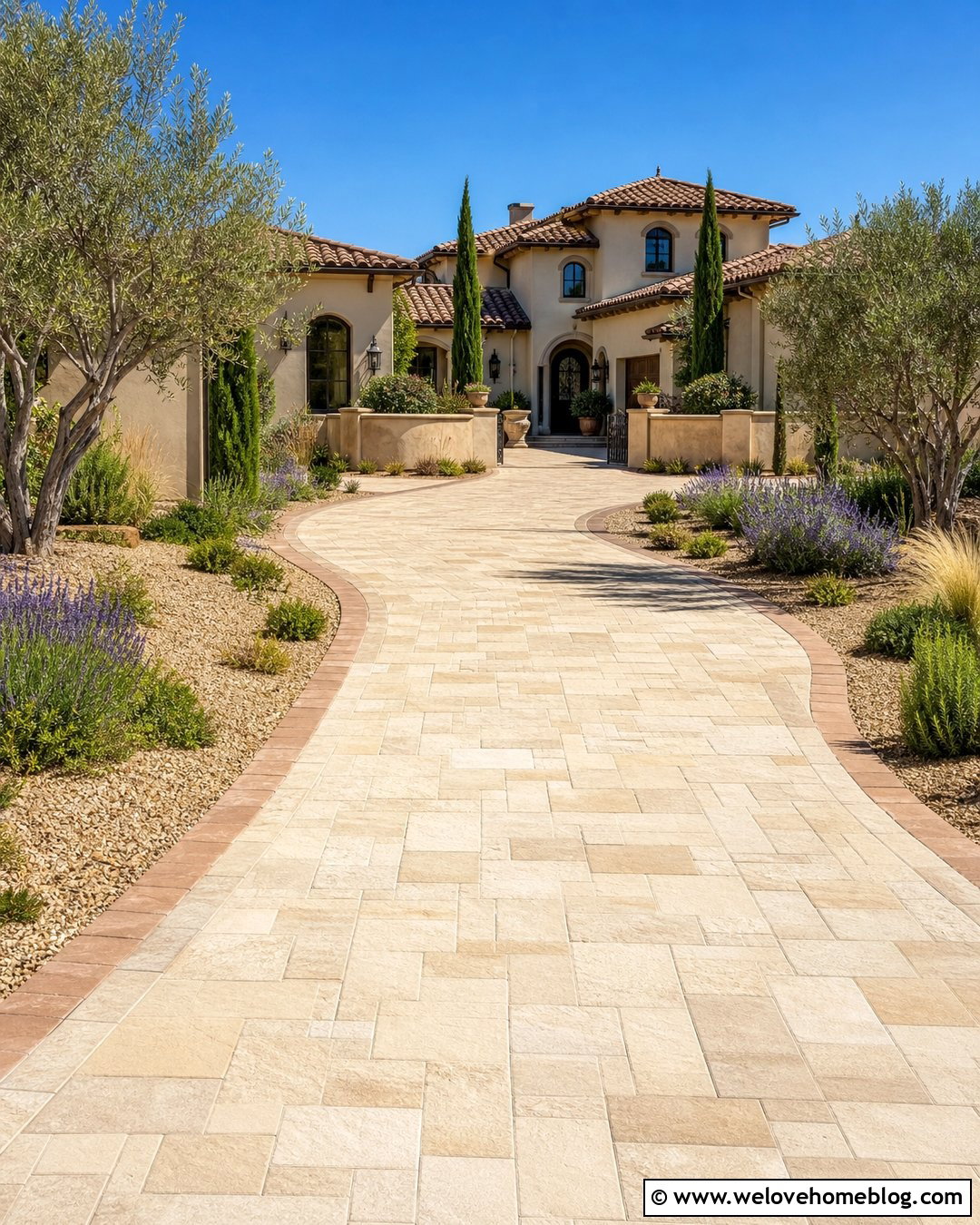
Warm limestone-look concrete pavers can create a Mediterranean influence without the maintenance concerns of using delicate stone in unsuitable conditions. Choose a textured ivory and sand blend, arranged in a modular ashlar pattern. Add a narrow terracotta-colored paver border to coordinate with a clay tile roof. A curved driveway will complement the relaxed layout, especially when framed by gravel beds, lavender, rosemary, ornamental grasses, and sculptural evergreen shrubs suited to the local climate. Use low stucco walls near the entrance, capped with matching warm-toned pavers. A broad walkway should continue the modular pattern toward an arched front door. Limit the palette to warm stone, muted green, and terracotta. This keeps the driveway elegant while allowing the planting forms and architectural details to provide personality.
18. Black Paver Driveway With Minimal Landscaping
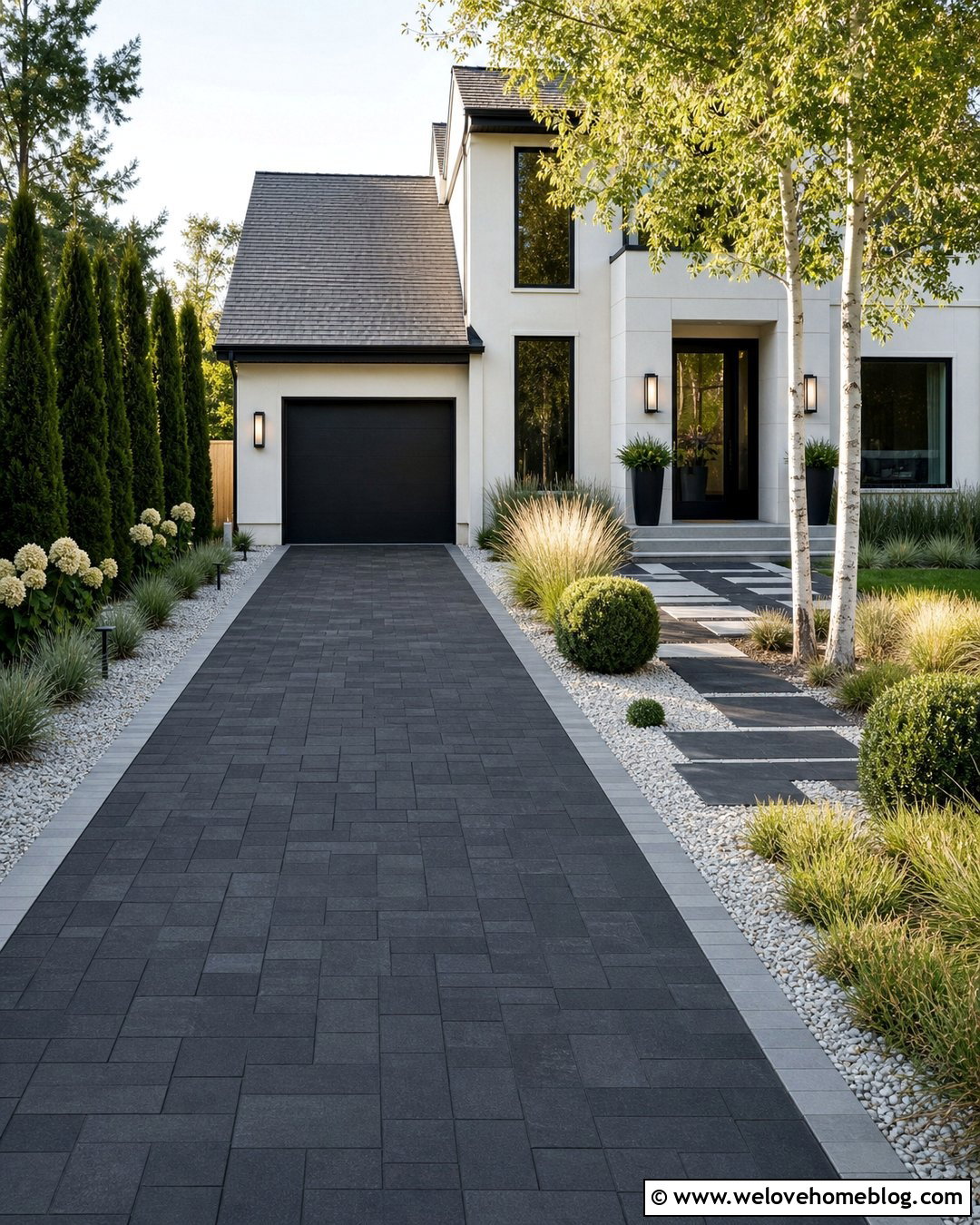
Dark pavers create a dramatic entrance, but the surrounding design should keep the surface from feeling heavy. Select charcoal-black concrete pavers with subtle tonal variation and a matte finish. Lay them in a long linear pattern along a straight driveway leading to a light-colored modern house. Use a medium-gray flush border to separate the paving from pale gravel beds. Add airy ornamental grasses, compact rounded shrubs, and one light-barked tree for contrast. A wide walkway of matching dark pavers can connect the driveway to the front door, while pale concrete stepping stones provide a visual break. Avoid dense hedges on both sides because they may make the approach feel enclosed. Bright facade materials and open lawn areas will balance the strong color and maintain welcoming curb appeal.
19. Paver Driveway With Matching Front Walkway
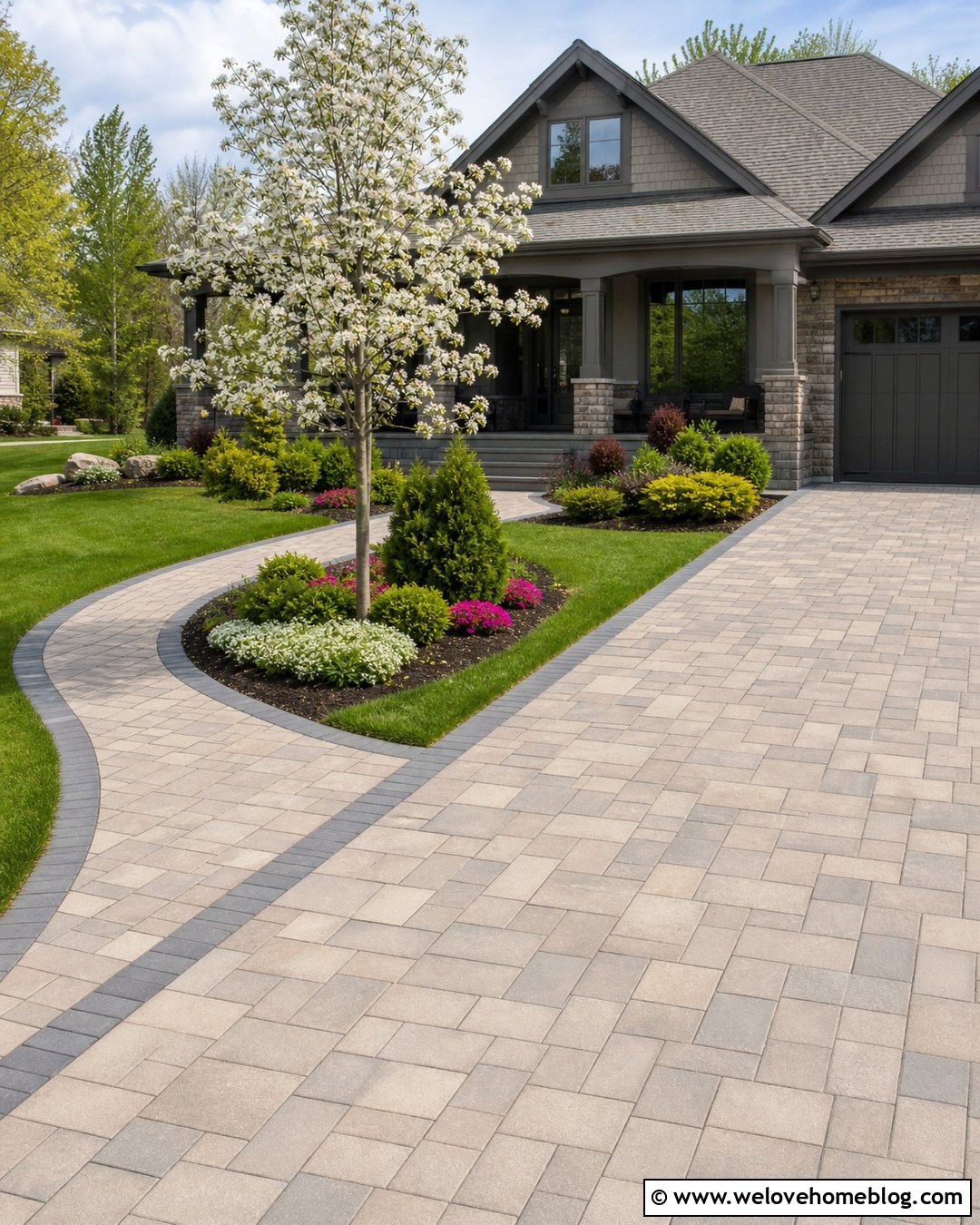
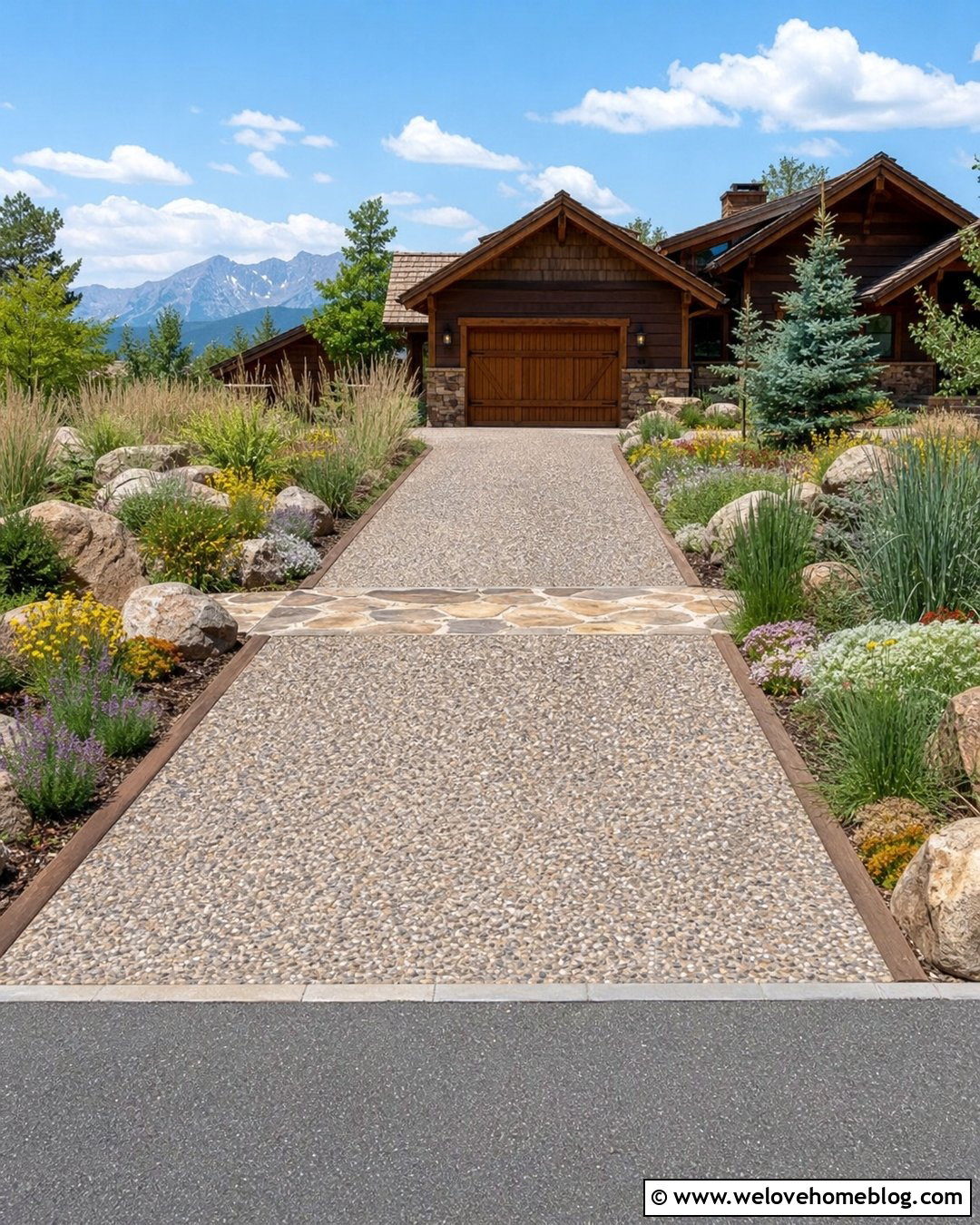
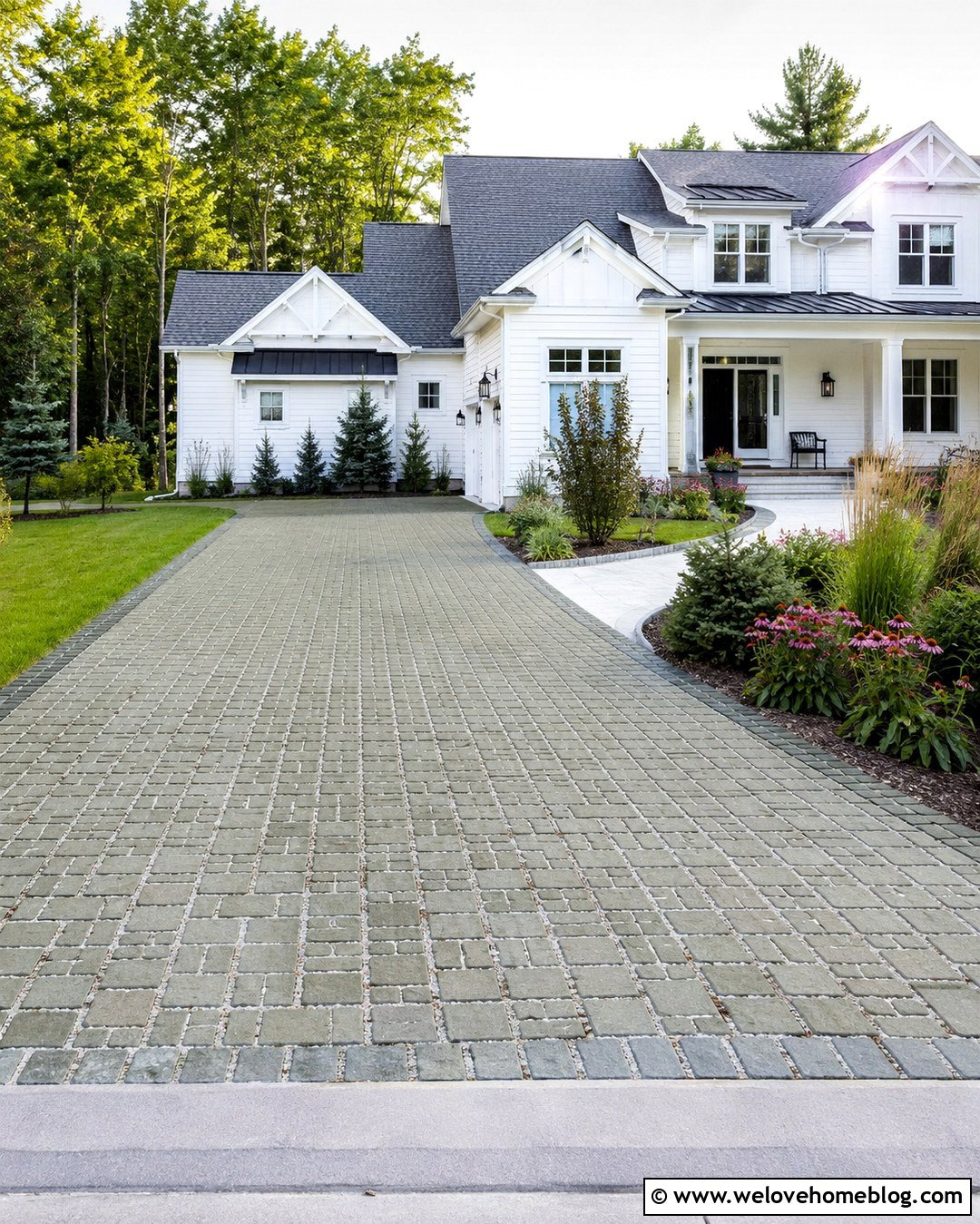
When the driveway and walkway share materials, the entire entrance feels more cohesive. Use beige and gray concrete pavers in a three-size pattern across a straight driveway. Near the house, branch the walkway from one side and continue the same pavers toward the porch. Turn the walkway border slightly darker so visitors can immediately distinguish the pedestrian route. Repeating paver colors across connected hardscape areas is a practical way to carry the design toward the front door. () Fill the space between the driveway and path with a layered planting bed containing a flowering tree, evergreen shrubs, and ground covers. The shared material creates unity, while the change in width and border treatment gives each area a clear function.
20. Sloped Paver Driveway With Retaining Walls
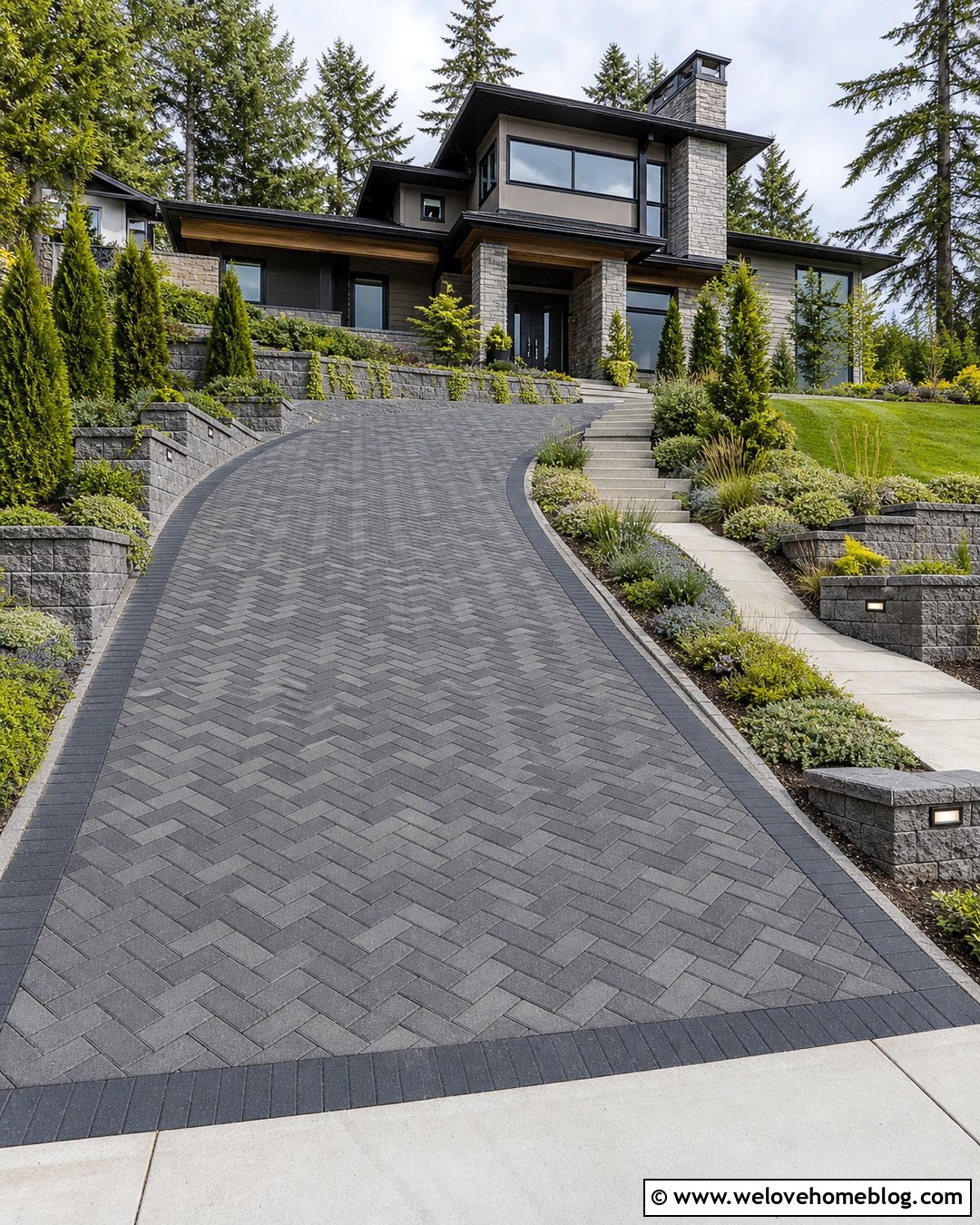
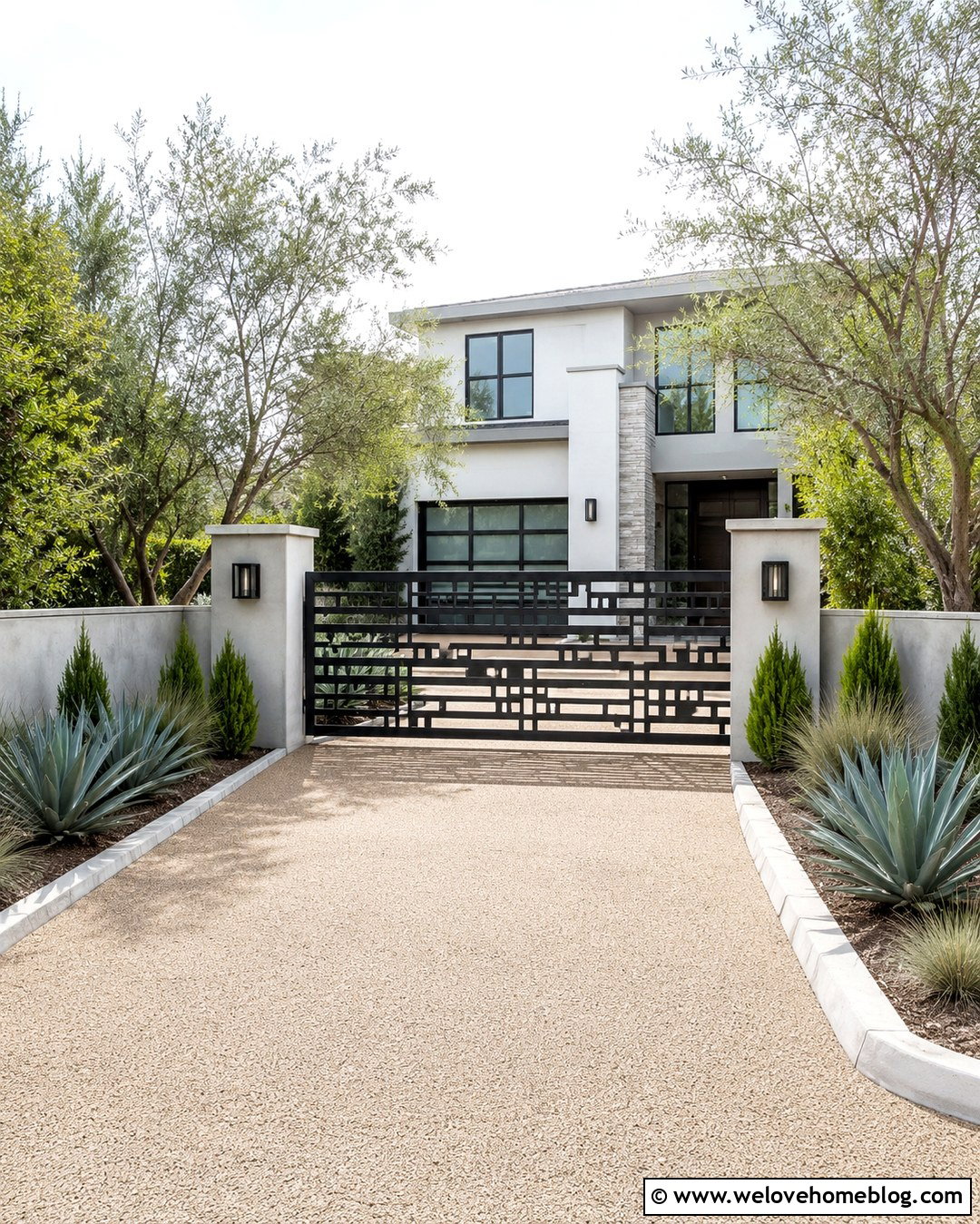
A sloped driveway needs curb appeal that also respects drainage, grades, and safe vehicle access. Use textured interlocking concrete pavers in a charcoal and medium-gray blend, laid in a 45-degree herringbone pattern. Frame the edges with a dark soldier course, then support raised planting areas with low segmental retaining walls in a coordinating gray. Step the walls gradually with the slope instead of creating one oversized barrier. Fill the beds with compact evergreens, cascading ground covers, and erosion-conscious plants selected for the site. Recessed wall lights can improve visibility while keeping fixtures away from vehicle paths. Because slopes require careful base preparation, water management, wall engineering, and transitions, have the complete layout assessed by qualified local professionals before installation begins.
Conclusion:
The strongest 20 Paver Driveway Curb Appeal Ideas combine surface design with the shape of the property, home architecture, and surrounding landscape. Start with vehicle-rated pavers and a pattern that suits the driveway’s size. Then add definition through borders, coordinated walkways, planting beds, entrance details, or retaining walls. Light colors can open a compact area, while dark borders and geometric bands provide stronger structure. Curves work naturally with layered landscaping, and straight layouts complement formal or modern homes. Before selecting materials, compare full-size samples outdoors and review drainage, slope, base construction, and local requirements with an experienced installer. Careful planning will produce a driveway that looks attractive from the curb and functions reliably every day.

Related posts:
Leave a Reply