
Permeable concrete can make a driveway feel polished while helping rainwater move through the surface instead of rushing toward the street. These 20 Permeable Concrete Driveway Ideas explore complete designs using pervious concrete, permeable concrete pavers, and open concrete grid systems. Each look combines the driving surface with a practical layout, sturdy borders, attractive landscaping, and a house style that suits the overall design. Because these systems depend on open spaces and a properly prepared stone base, professional site planning is essential for dependable drainage. () From compact suburban driveways to large circular entrances, there is an option for different properties, climates, and budgets. Use these complete 20 Permeable Concrete Driveway Ideas to plan a functional upgrade with lasting curb appeal.

1. Straight Pervious Concrete Driveway With Brick Border
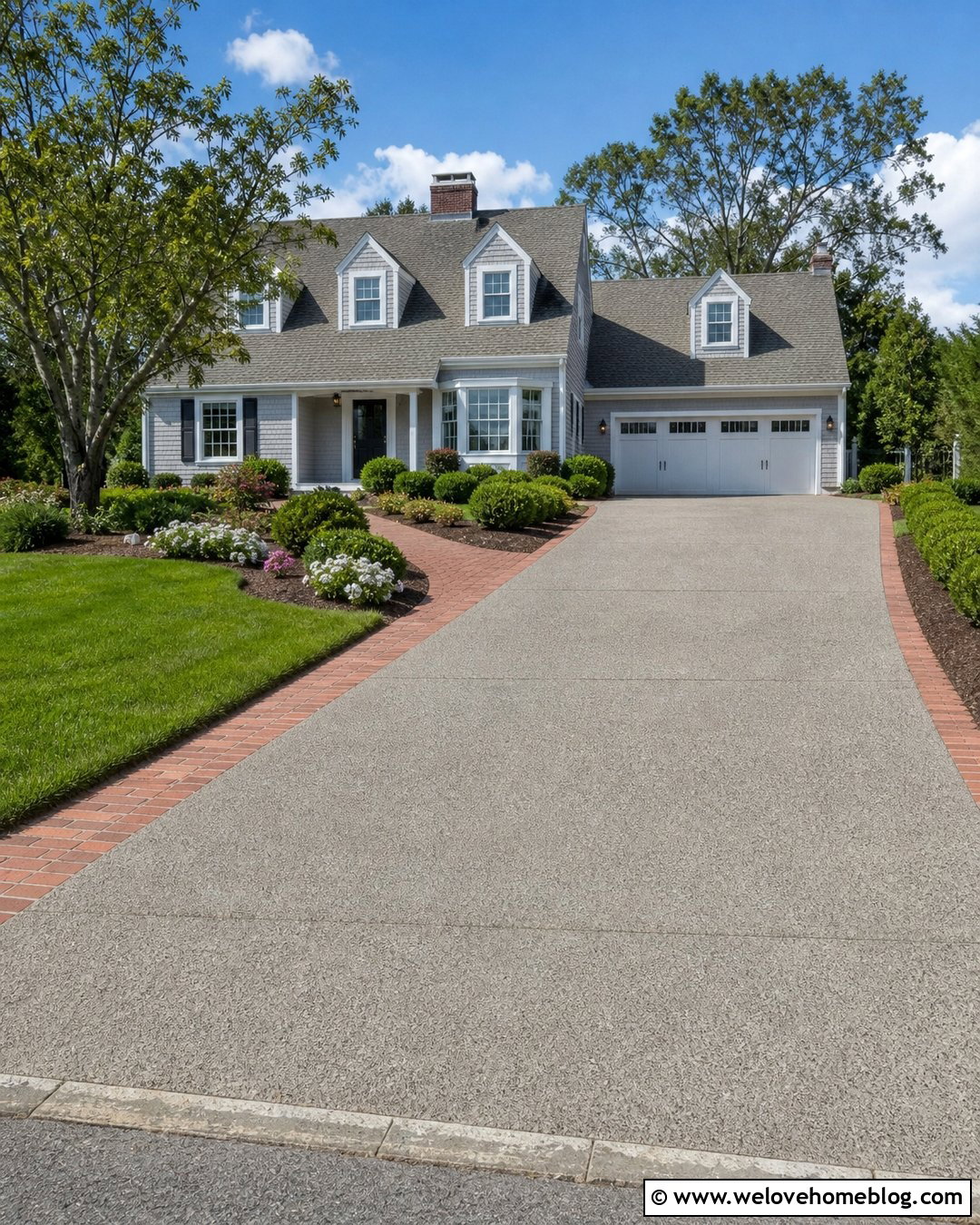
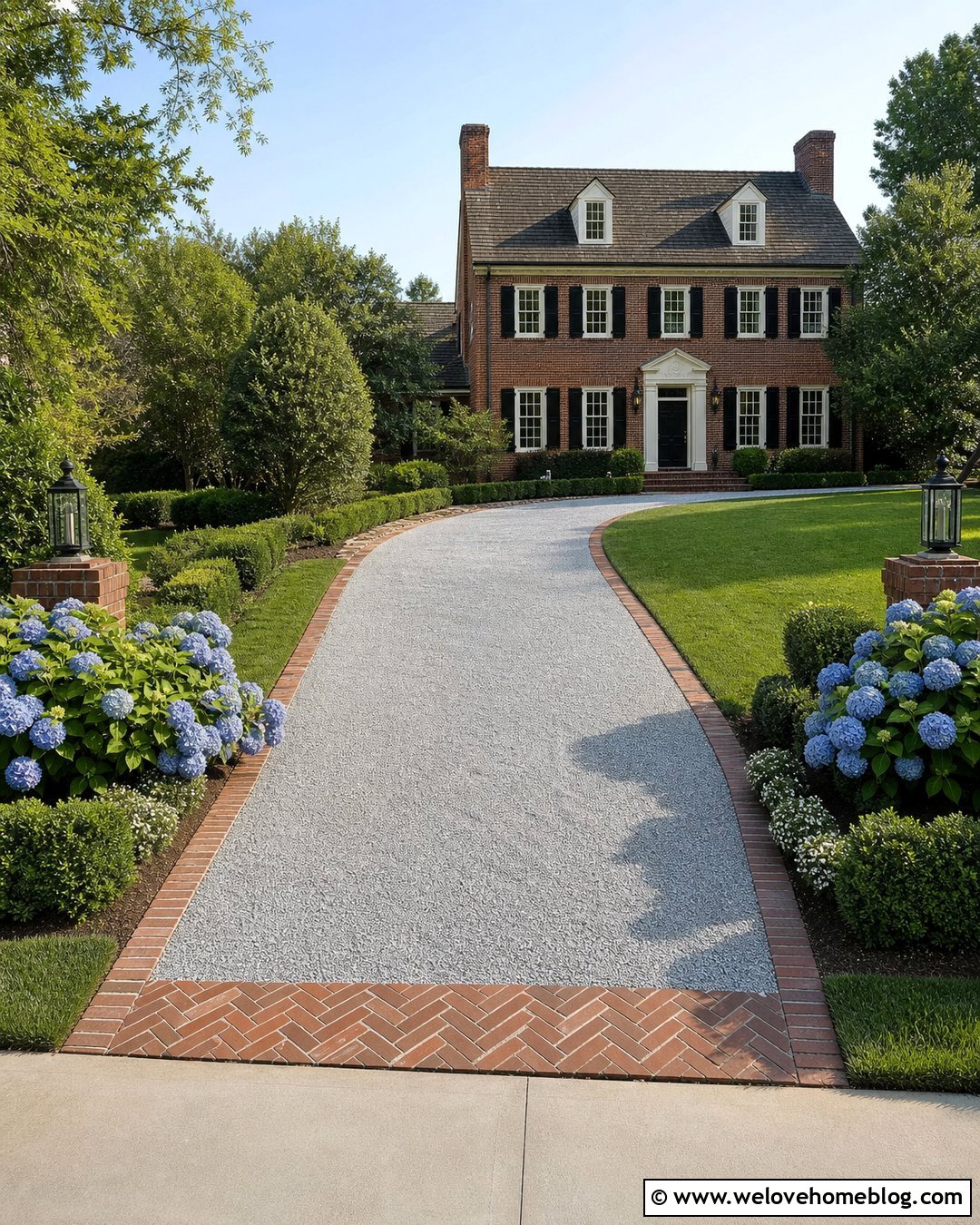
A straight pervious concrete driveway offers a simple layout that makes the natural texture of the surface easy to appreciate. Choose a warm gray concrete mixture and frame it with a narrow border of red or brown brick pavers. The brick creates a clean transition to the lawn while complementing traditional ranch, Cape Cod, or colonial homes. Low evergreen shrubs can soften both sides without covering the border. Add a brick walkway near the garage so the materials feel connected across the property. Beneath the visible surface, an open-graded aggregate base provides space for water to collect and filter into suitable soil. The driveway should still be graded carefully to protect the house, foundation, and neighboring property during heavier storms.
2. Curved Pervious Concrete Driveway With Cobblestone Edging
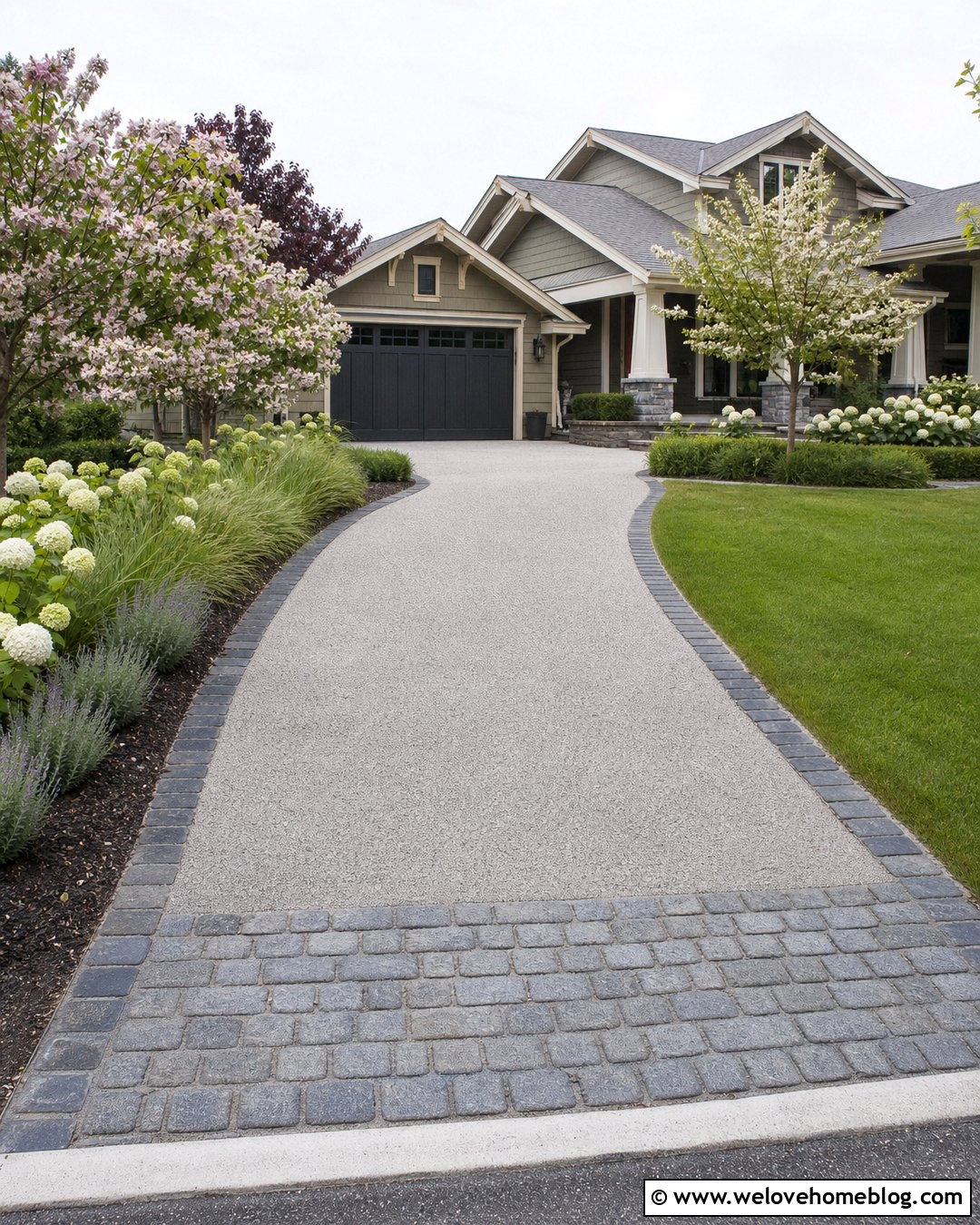
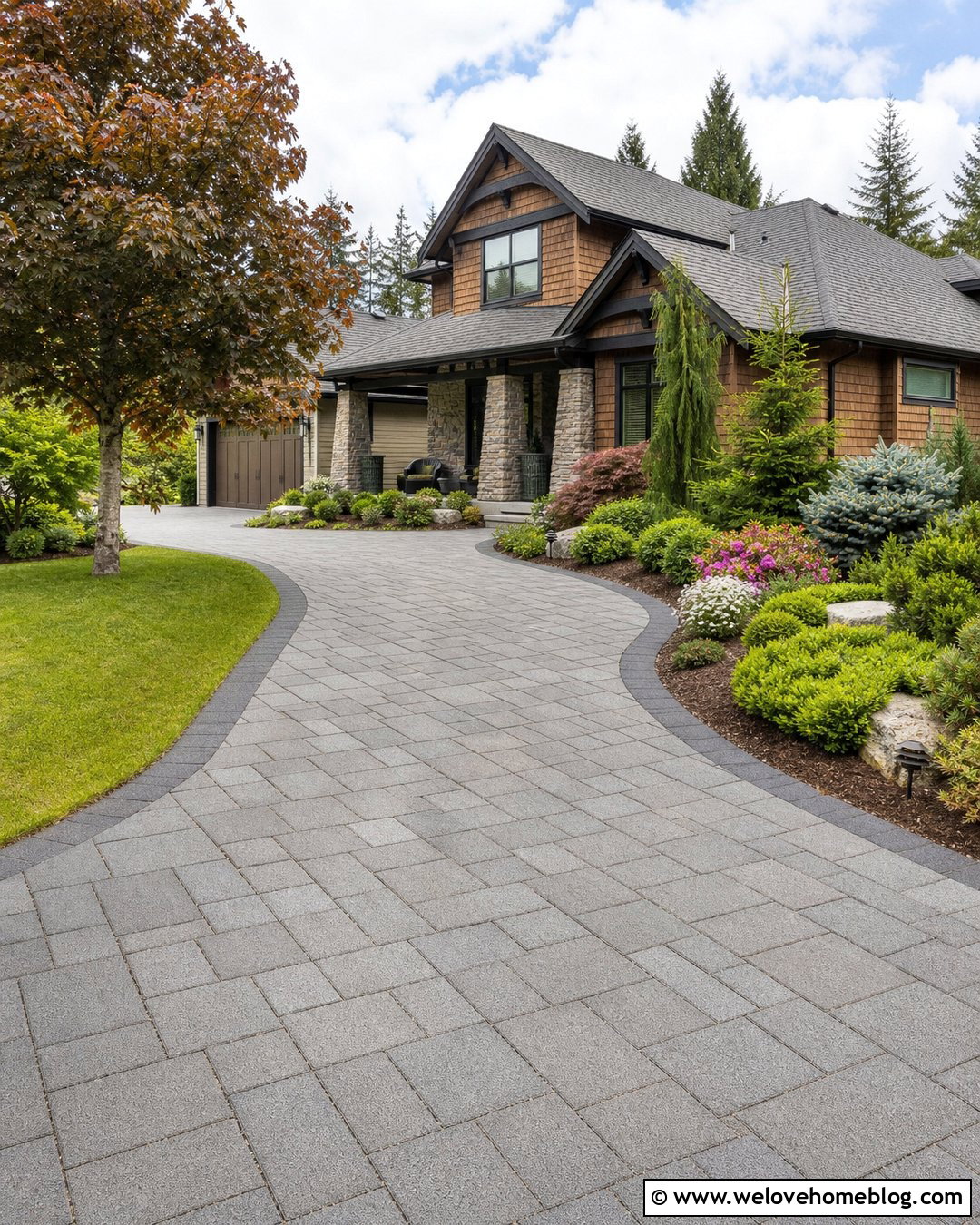
Could a gentle curve make a narrow front yard feel larger? A curved pervious concrete driveway creates a graceful approach while directing attention toward the front entrance. Use natural gray pervious concrete with charcoal cobblestone edging that follows every bend. The dark border defines the irregular concrete texture and helps separate the driving area from planting beds. Place ornamental grasses, compact hydrangeas, and small flowering trees along the outside curve. Keep the inside curve more open with lawn and low ground cover to preserve visibility. This complete look works especially well with craftsman homes and wooded suburban properties. A matching cobblestone apron at the street can strengthen the entrance, but the apron and edging should not interrupt the designed path of drainage through the driveway system.
3. Modern Permeable Concrete Driveway With Black Paver Bands
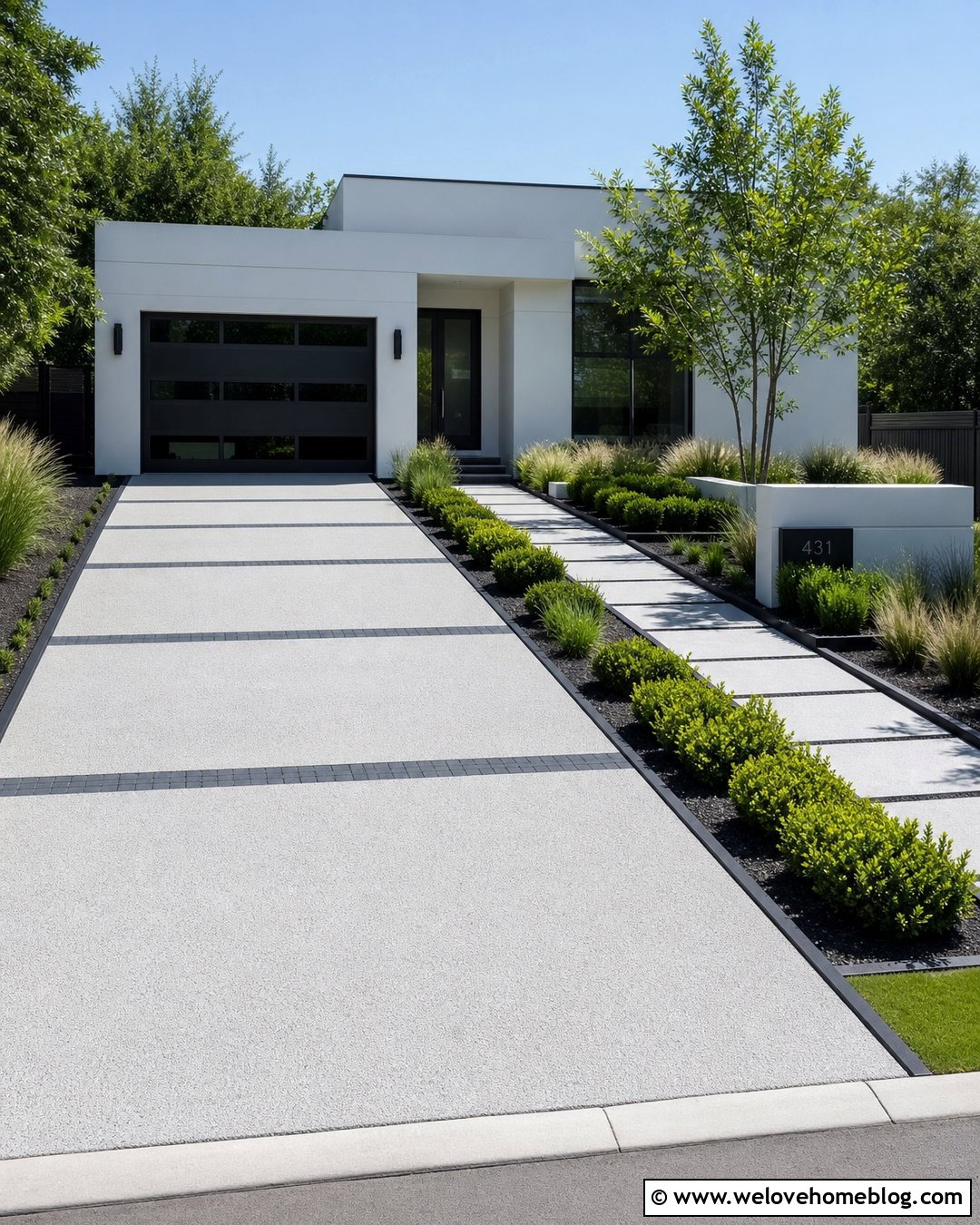
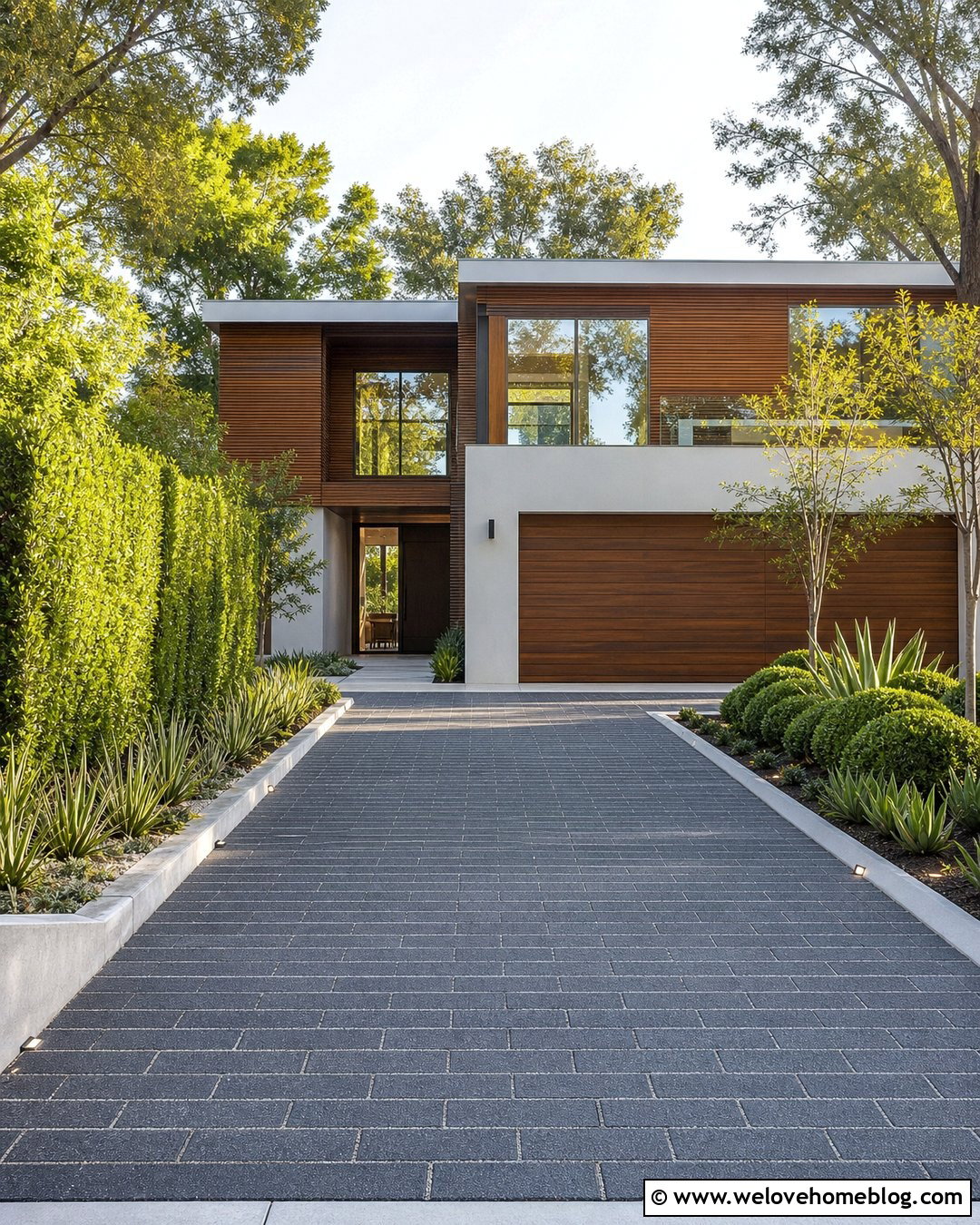
Crisp lines give this permeable concrete driveway a distinctly modern character. Start with light gray pervious concrete divided visually by narrow bands of charcoal permeable concrete pavers. Run the bands across the driveway at measured intervals to create a structured pattern without filling the drainage spaces with mortar. Black metal landscape edging can continue the strong geometry beside rectangular beds of ornamental grass, dwarf boxwood, and white flowering plants. A straight concrete walkway should align with one of the darker bands and lead toward a flat-roof or midcentury modern house. Keep the lawn simple and avoid crowded planting. The contrasting concrete surfaces, linear layout, and disciplined landscaping create an upscale appearance while allowing the driveway to remain visually lighter than a large conventional concrete slab.
4. Farmhouse Permeable Concrete Driveway With Stone Edging
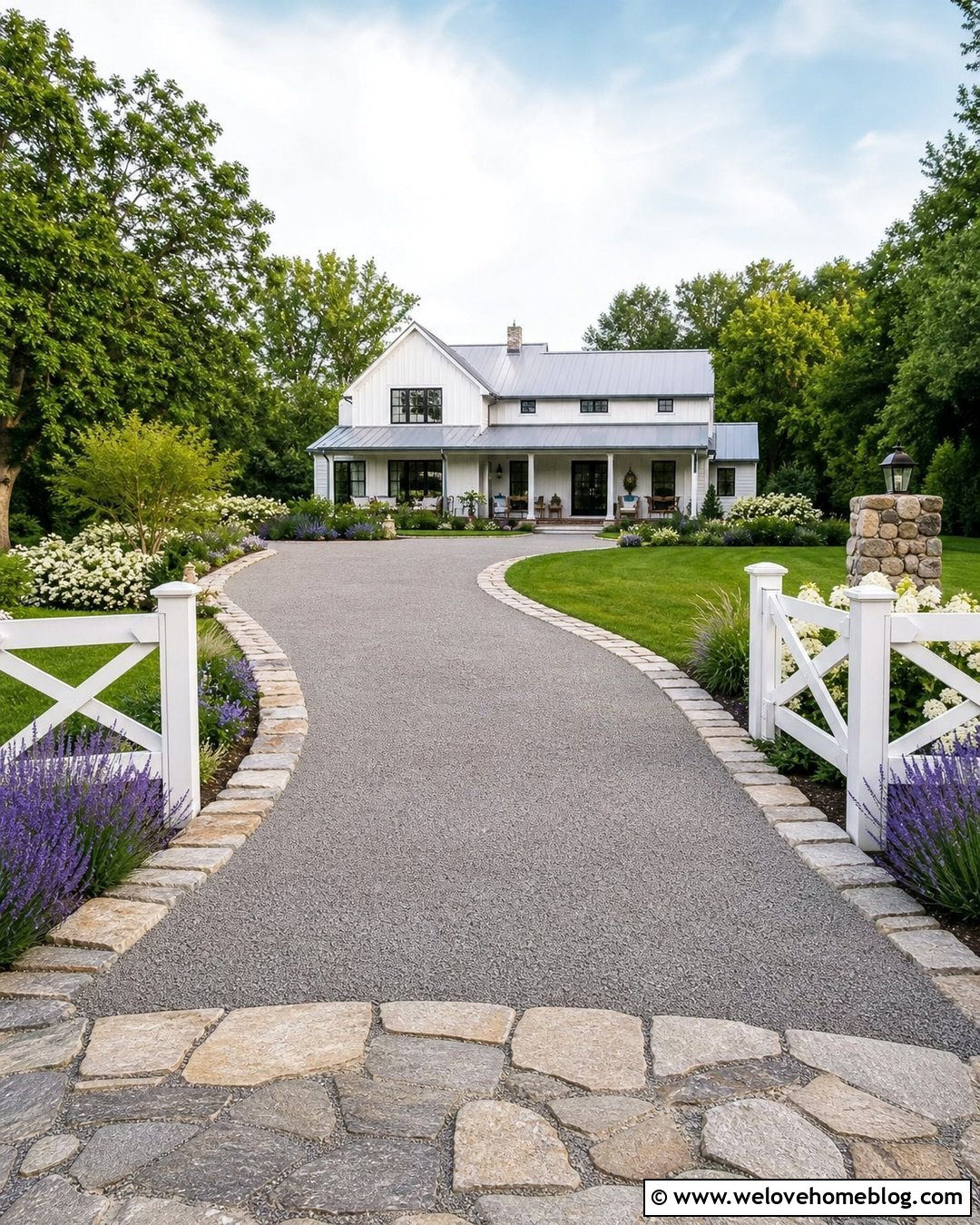
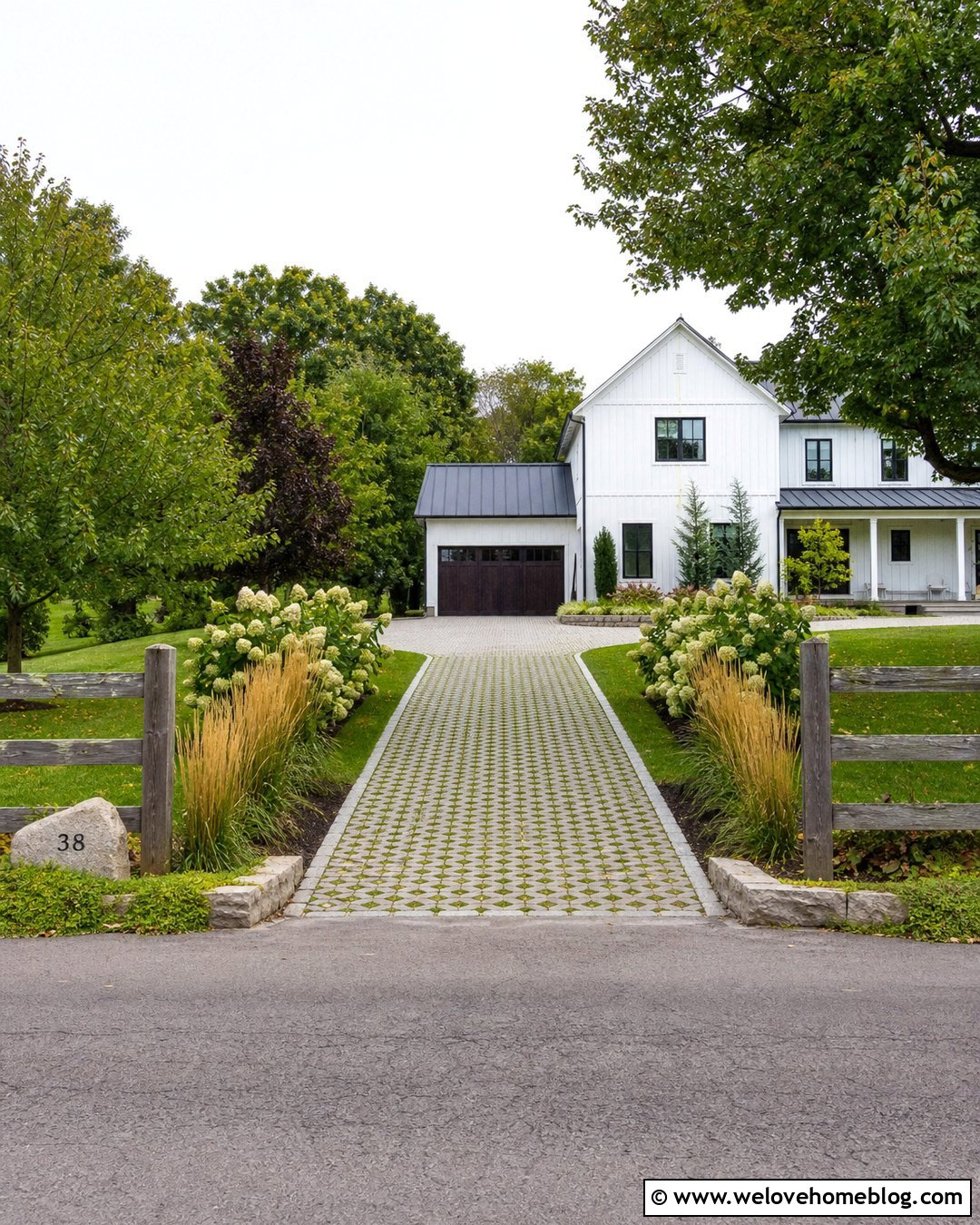
Soft gray pervious concrete pairs naturally with the relaxed materials used around a modern farmhouse. Create a wide, gently curved driveway with irregular fieldstone edging and broad planting beds filled with lavender, salvia, ornamental grasses, and compact flowering shrubs. The exposed stone-like texture of the concrete prevents the surface from looking overly formal. Near the house, add a short walkway made from matching fieldstone stepping slabs. White gate posts or simple timber fencing can mark the entrance without closing off the view. Use larger shade trees farther from the driveway to frame the approach while limiting leaves directly over the permeable surface. This design feels established and welcoming because the concrete, natural stone, planting, and white farmhouse facade share soft, earthy colors.
5. Charcoal Permeable Concrete Driveway With Light Borders
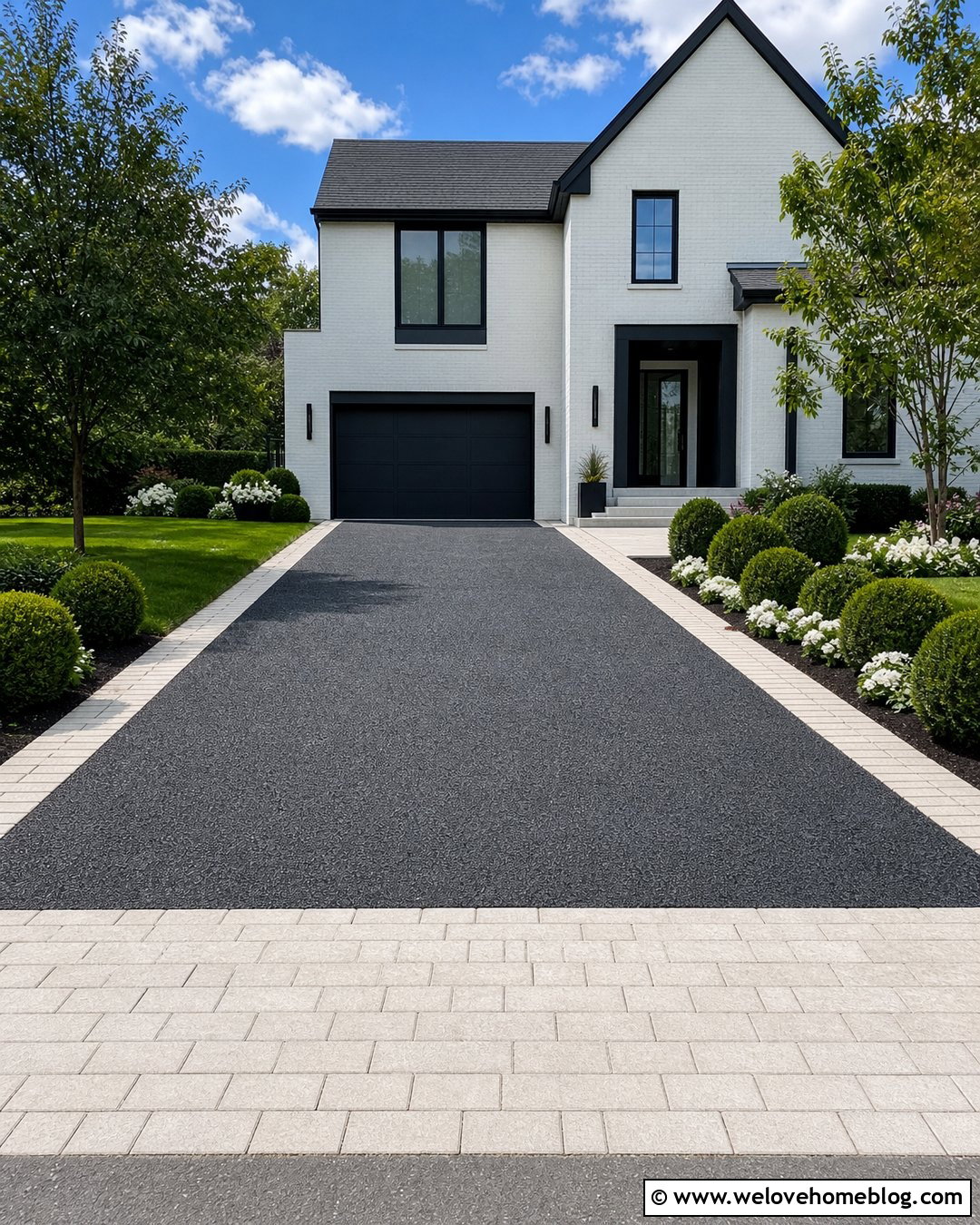
Dark charcoal pervious concrete can create dramatic curb appeal when it is balanced with lighter details. Use it on a straight driveway leading to a contemporary white or pale brick house. Add cream permeable concrete pavers along both edges and repeat them across the entrance as a contrasting apron. The pale border makes the driveway shape easier to read and reduces the visual weight of the darker surface. Surround it with bright green lawn, rounded evergreen shrubs, and white flowering ground cover. Before selecting a colored mixture, ask an experienced pervious concrete installer how pigments and aggregates will work with the required mix design. Avoid film-forming decorative coatings that could obstruct the open surface. The final design should remain porous, consistent, and suitable for regular vehicle traffic.
6. Natural Aggregate Permeable Concrete Driveway With Native Plants

The coarse aggregate in pervious concrete can become a feature rather than something to hide. Select a blend with tan, gray, and muted brown stone for a driveway that fits naturally into a dry or woodland landscape. A shallow S-curve provides an informal approach to a craftsman, adobe-inspired, or rustic contemporary house. Edge the concrete with larger native stones placed in a restrained single row. Beyond them, plant drought-tolerant grasses, flowering perennials, and low shrubs suited to the local climate. A stepping-stone walkway can branch from the driveway without introducing another dominant material. Keep loose soil and mulch away from the permeable surface because they can settle into its open spaces. Gravel mulch around the plants offers a visually compatible and generally cleaner transition.
7. Permeable Concrete Paver Driveway With Gravel Joints
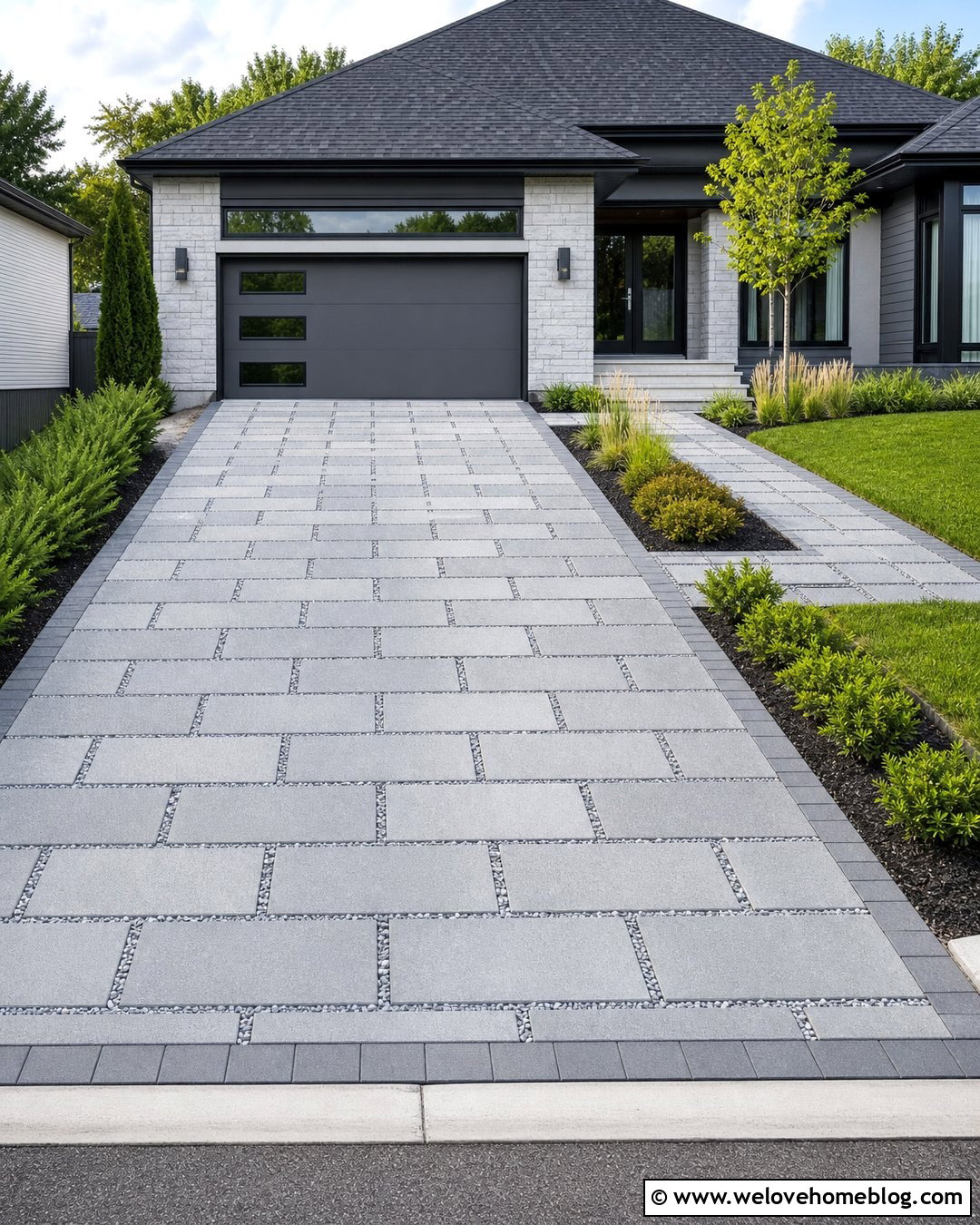
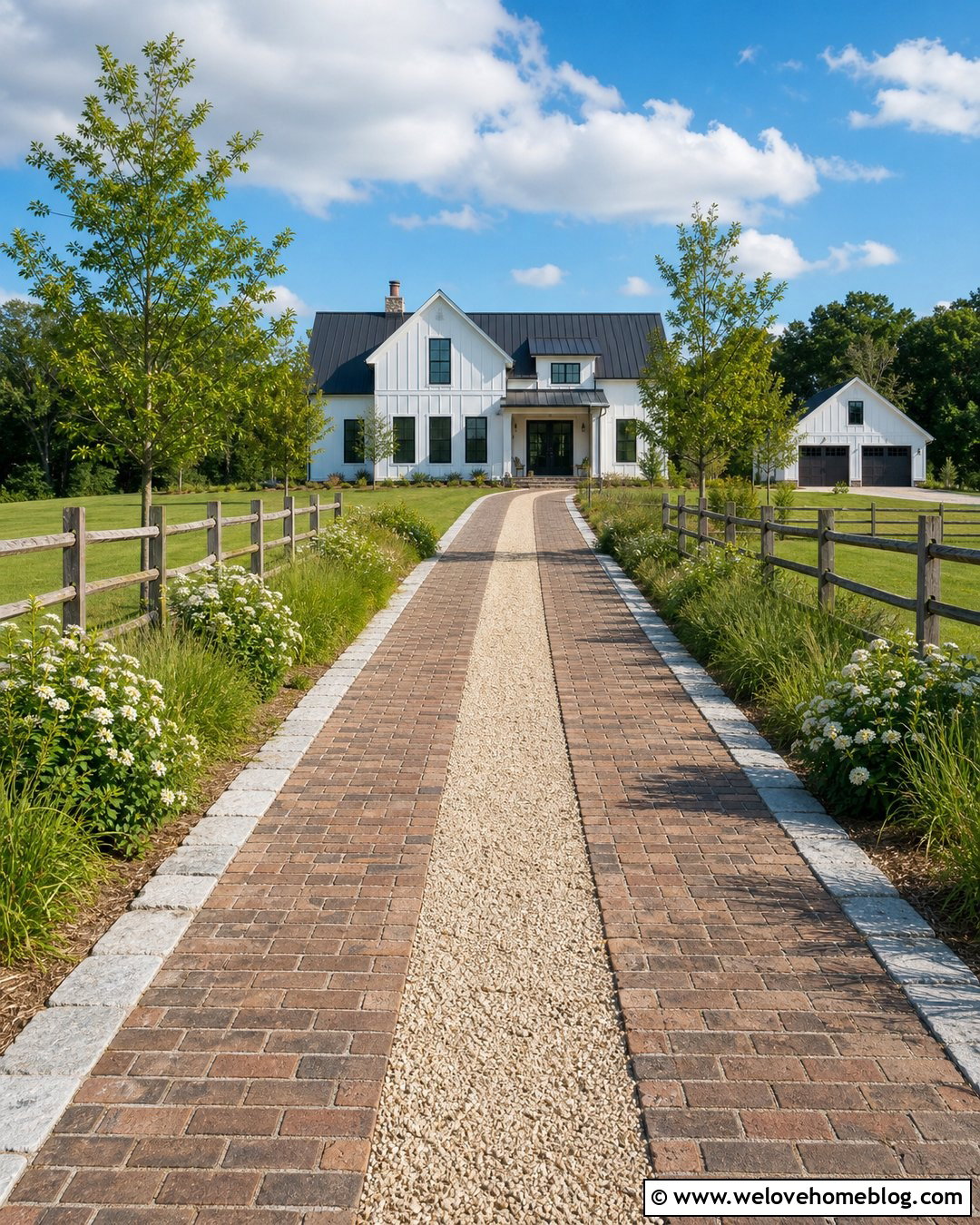
Wide stone-filled joints make the drainage pattern clearly visible in this permeable concrete paver driveway. Choose rectangular concrete pavers in two soft gray tones and install them in a running bond pattern. Fill the designed joints with clean, angular aggregate rather than ordinary joint sand. A dark concrete soldier course can frame the surface and produce a neat boundary beside the lawn. Add layered landscaping with low junipers, ornamental grasses, and one small tree near the front corner. This complete look suits contemporary suburban homes because it combines a traditional unit-paver surface with simple planting. Permeable pavers depend on correctly sized joint stone, bedding material, base aggregate, and edge restraints. Those components work together, so substitutions should be approved by the system manufacturer or project designer. ()
8. Herringbone Permeable Concrete Paver Driveway
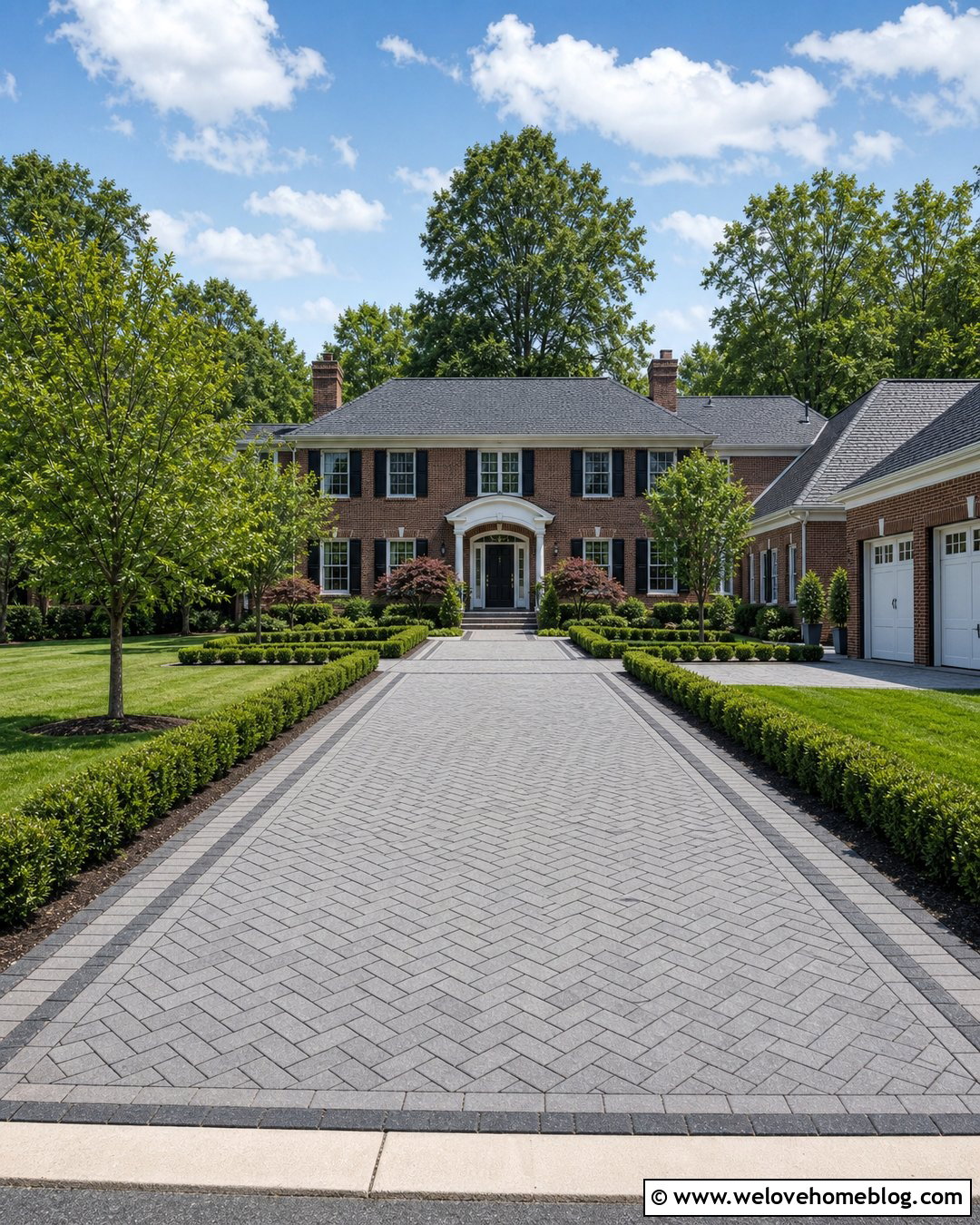
A herringbone pattern brings movement and detail to a driveway without requiring bold colors. Use medium-gray permeable concrete pavers with drainage joints filled with small charcoal aggregate. Lay the main field in a 45-degree herringbone arrangement and contain it with a double border of straight rectangular pavers. The pattern is especially attractive on a wide driveway leading to a brick colonial or traditional two-story home. Formal boxwood beds, lawn panels, and symmetrical ornamental trees can reinforce the orderly appearance. At the garage, continue the border across the full width to create a finished transition. Plan for periodic sweeping or vacuuming with equipment appropriate for permeable pavement because sediment, leaves, and debris can gradually obstruct open joints. () Clean landscaping edges also help reduce material washing onto the driveway.
9. Large Permeable Concrete Paver Driveway With Stone Joints
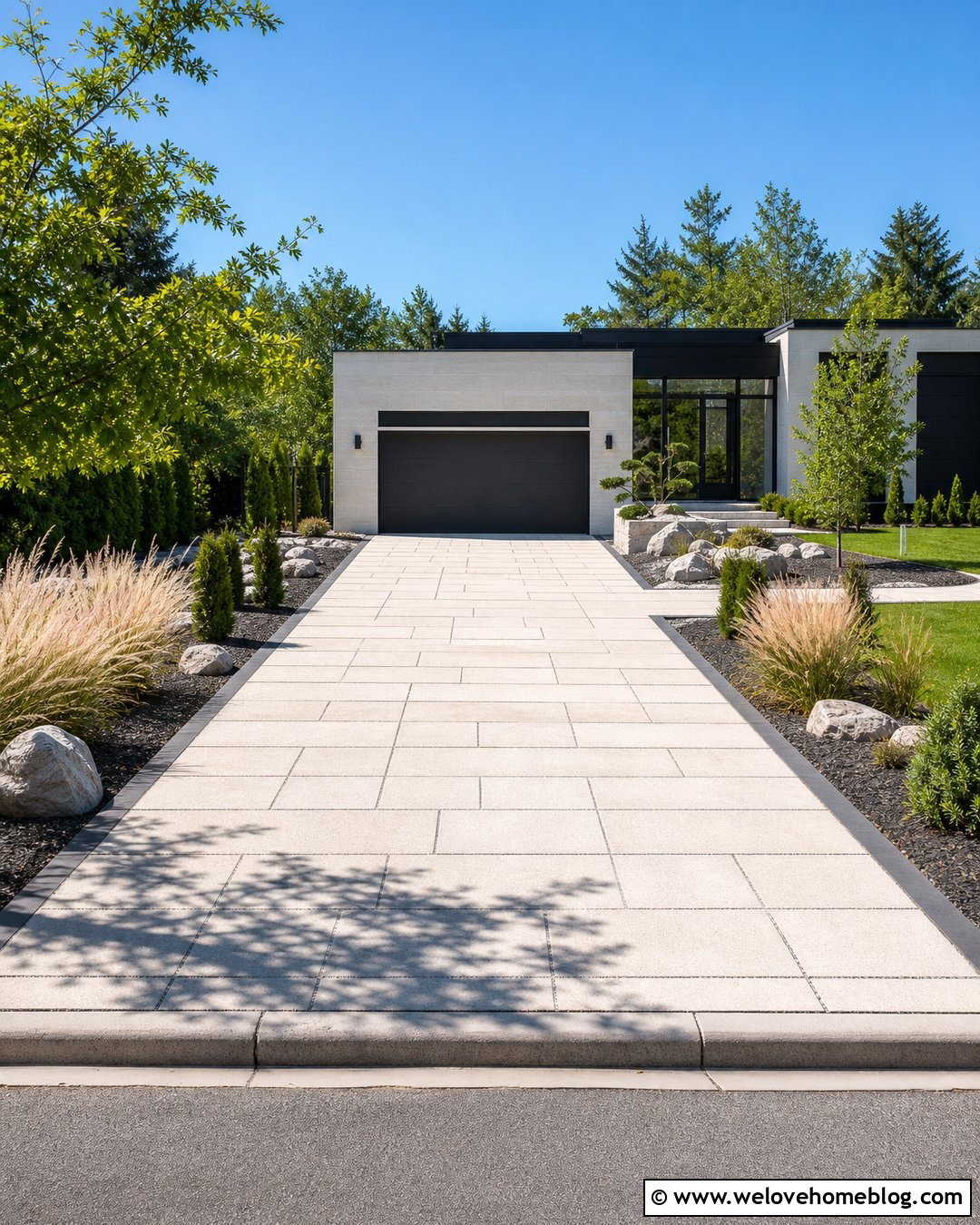
Large-format concrete pavers create a calm surface with fewer visual lines, making them ideal for modern architecture. Select oversized rectangular permeable concrete pavers in a pale limestone tone and separate them with narrow joints of washed gray aggregate. Arrange the pavers in a staggered pattern along a straight, broad driveway. Frame the design with slim black edging and rectangular beds containing feather reed grass, compact evergreens, and smooth landscape stones. A flat concrete walkway can connect the driveway to a minimalist front door. Keep every joint width consistent so the pattern appears intentional from the curb. Because large pavers and vehicle loads require a system designed for driveway use, confirm the selected units, base, and edge restraints are appropriate. The result feels spacious, clean, and carefully coordinated.
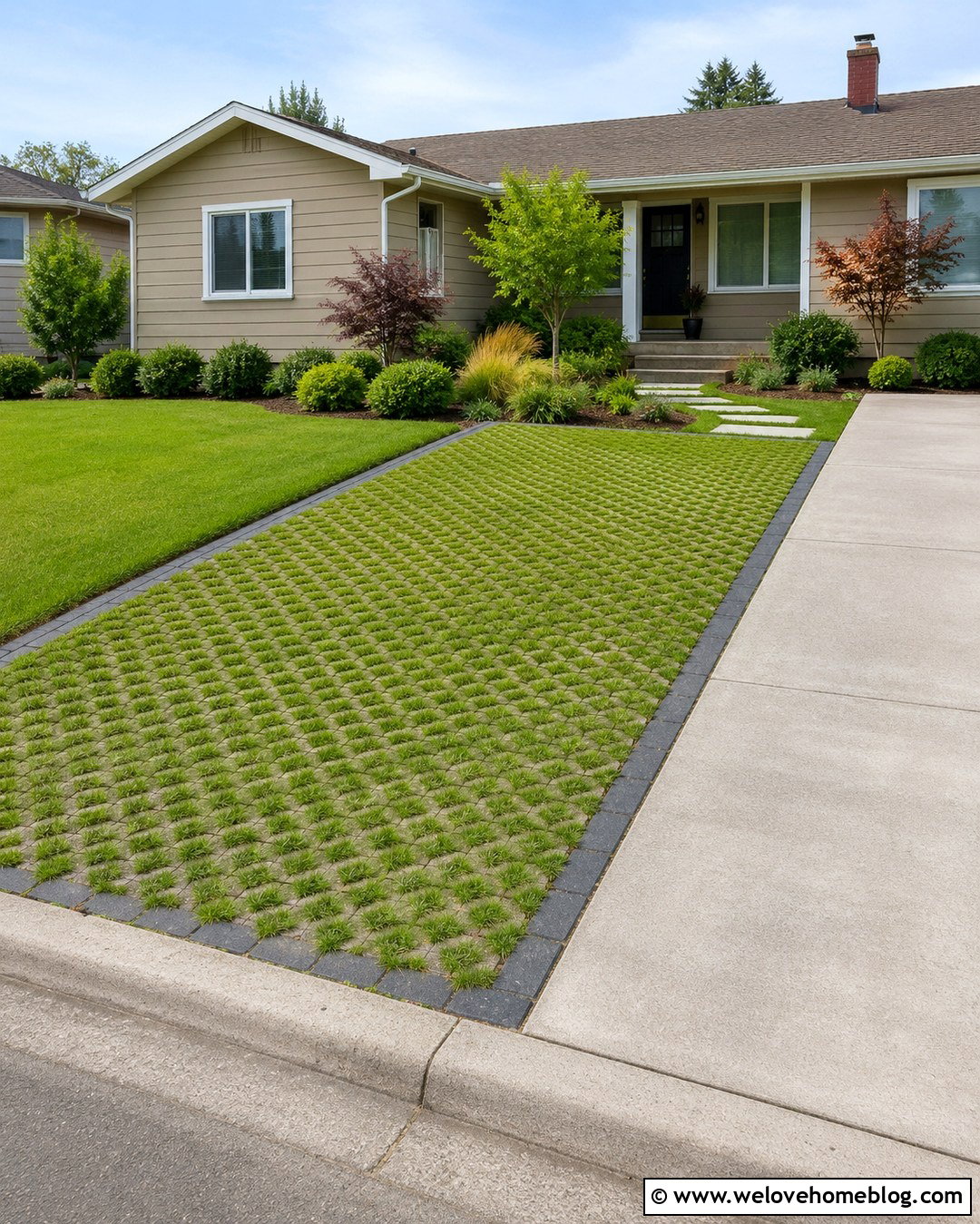
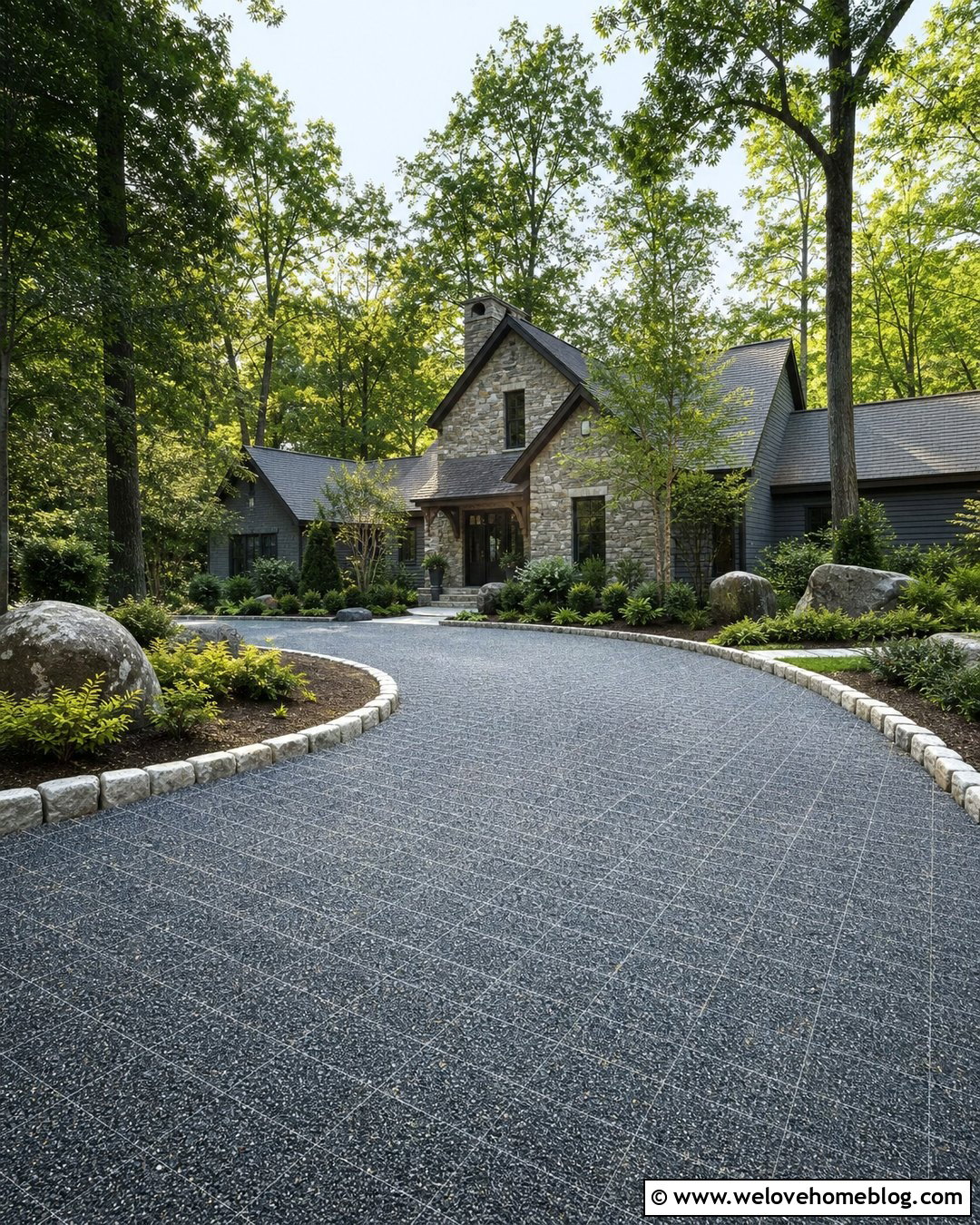
10. Grass Grid Permeable Concrete Driveway
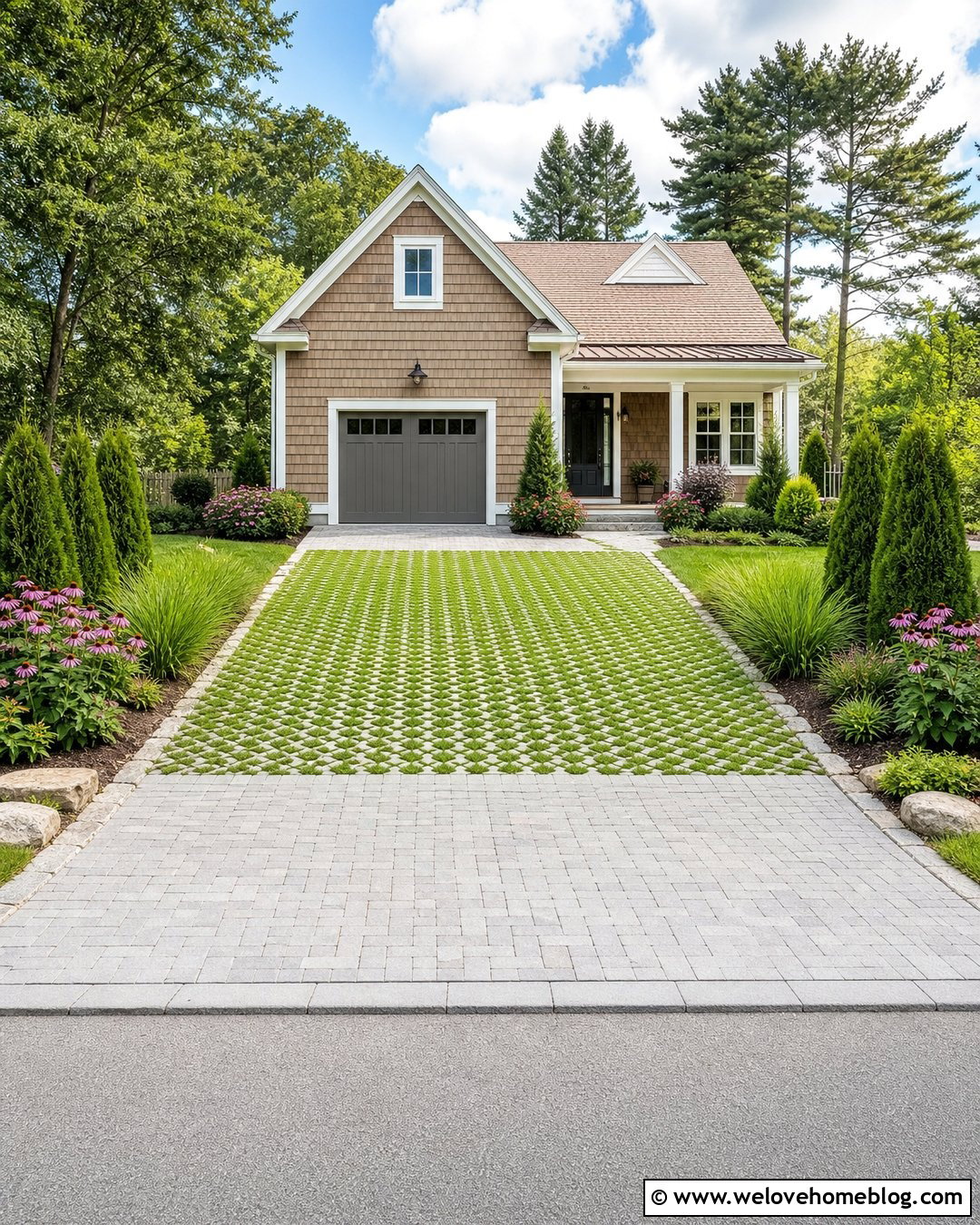
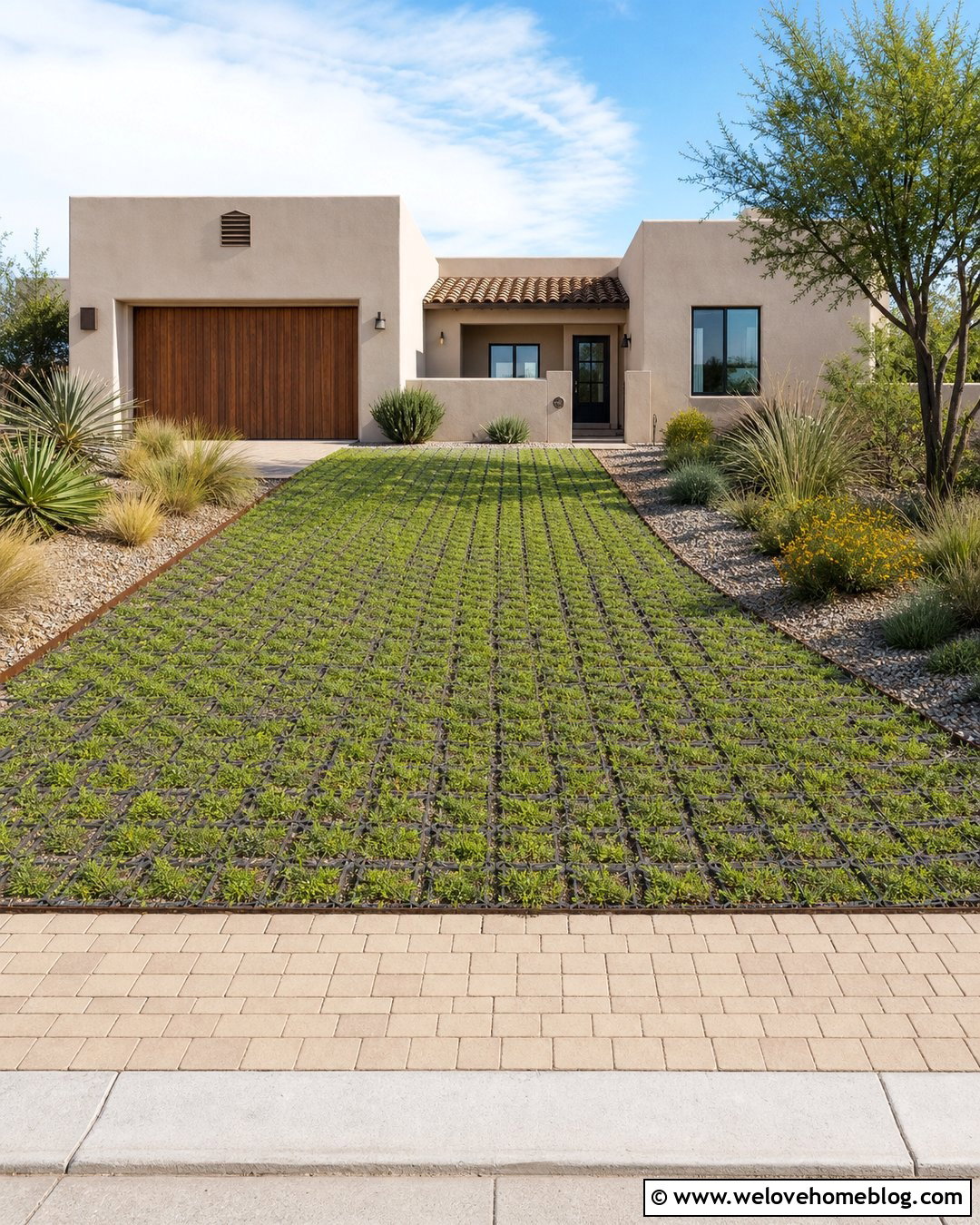
A grass-filled concrete grid driveway blends hardscape with greenery and works well where homeowners want a softer-looking parking surface. Use load-rated concrete lattice pavers across a straight or slightly curved driveway, filling their openings with an appropriate reinforced turf system. Add a solid permeable concrete paver apron at the garage and street to manage turning and frequent tire movement. Natural stone edging can protect the grid edges beside cottage-style beds of coneflowers, grasses, and low evergreen shrubs. This design suits ranch homes, cottages, and properties surrounded by generous lawn. Grass selection, irrigation, sunlight, and expected traffic should be considered before installation. Tire paths may need a more durable gravel infill if daily vehicle use makes healthy turf difficult to maintain throughout the entire driveway.
11. Gravel Grid Permeable Concrete Driveway
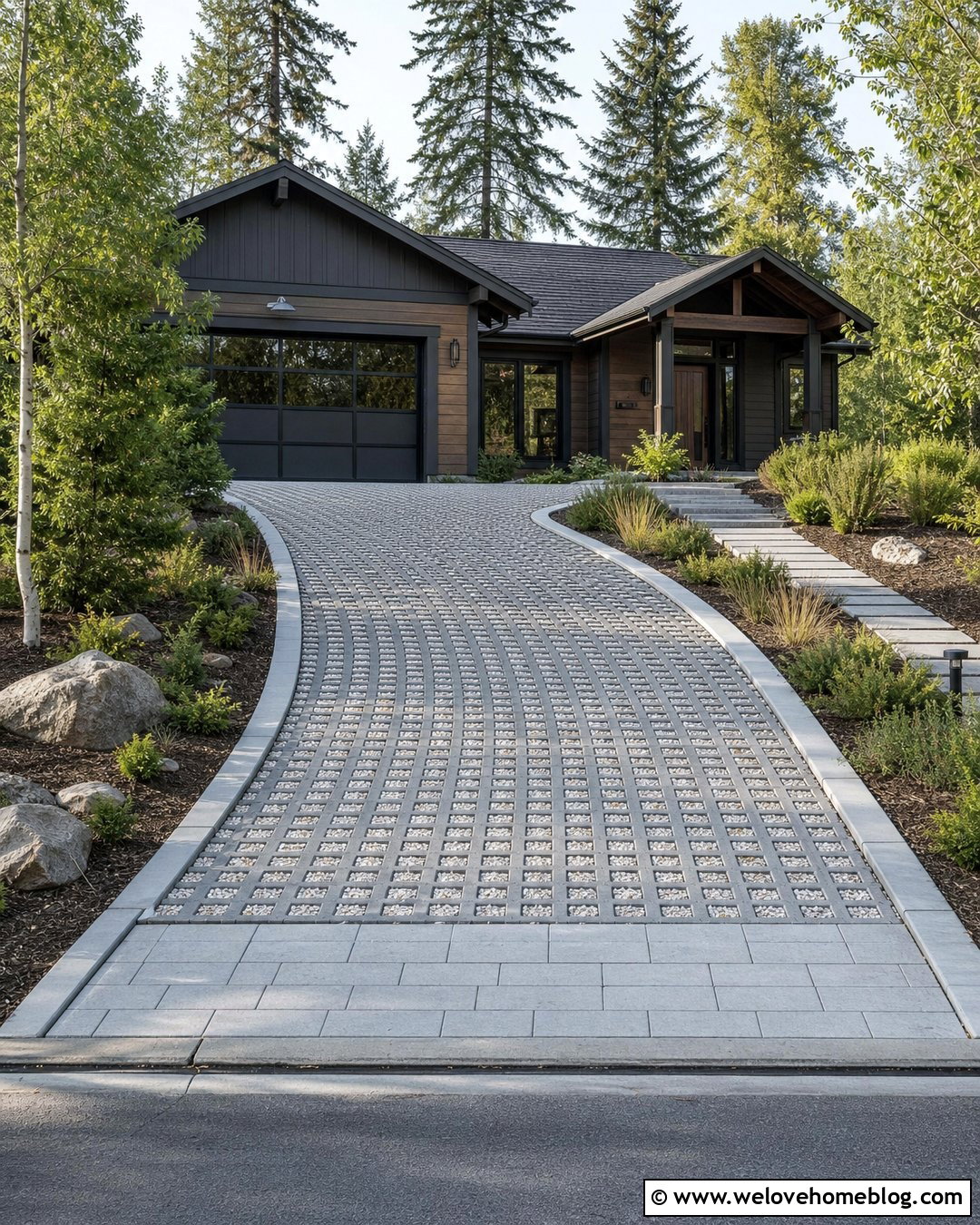
Concrete grid pavers filled with clean angular gravel offer a rugged surface that still looks organized. Choose a medium-gray grid and pale granite infill to create visible contrast. A gently curved layout can lead toward a country home, detached garage, or contemporary cabin. Use substantial concrete edge restraints along the driving area, then soften the boundary with native shrubs and tall grasses. At the street, install a full-width band of solid permeable concrete pavers to produce a smoother entrance and contain the gravel-filled cells. A matching paver walkway can lead toward the porch. The selected infill should fit the grid openings and remain stable under turning tires. Avoid substituting rounded decorative pebbles unless the system specifically permits them, since the entire grid, fill, and base must perform as one pavement assembly.
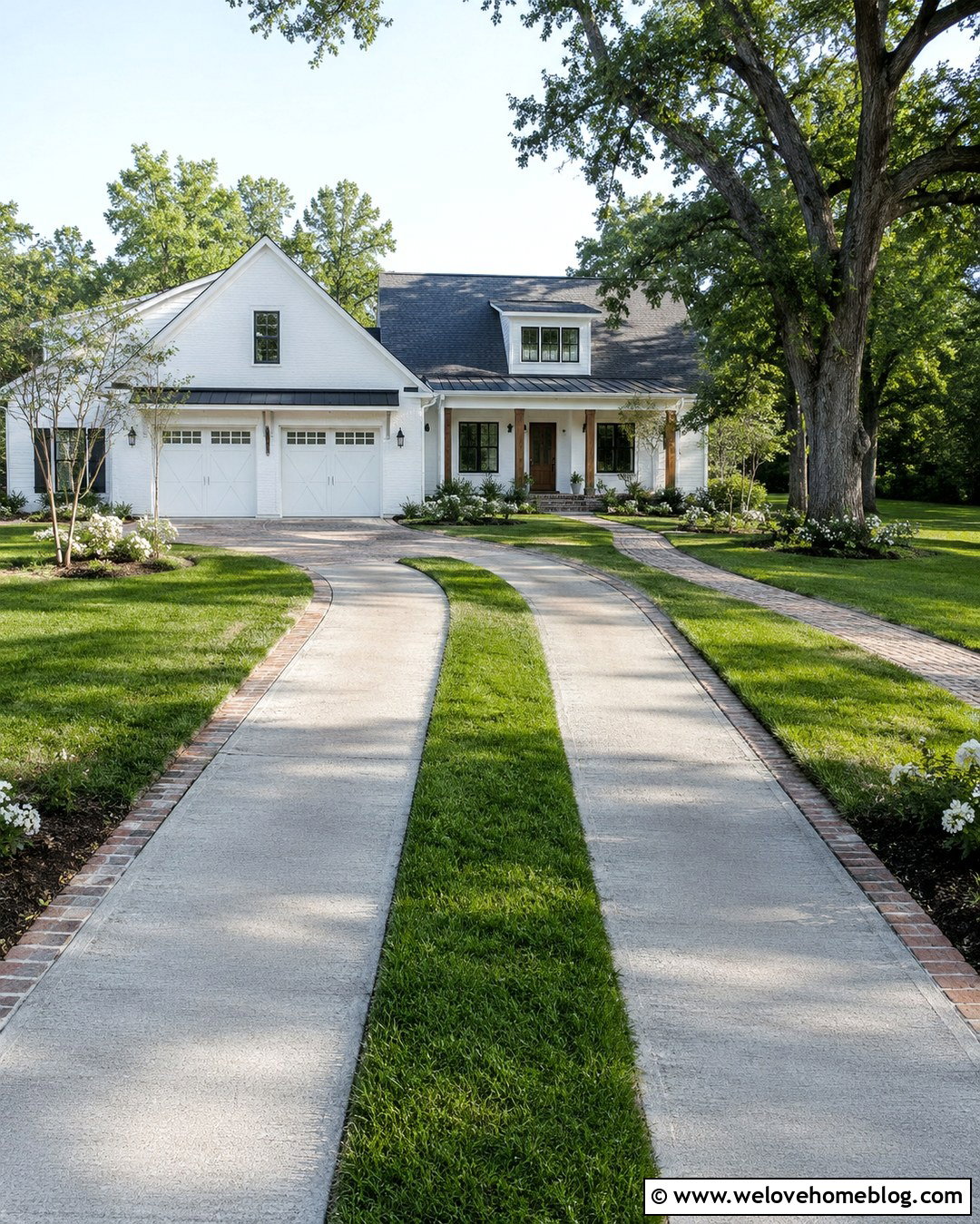
12. Concrete Ribbon Driveway With Planted Center
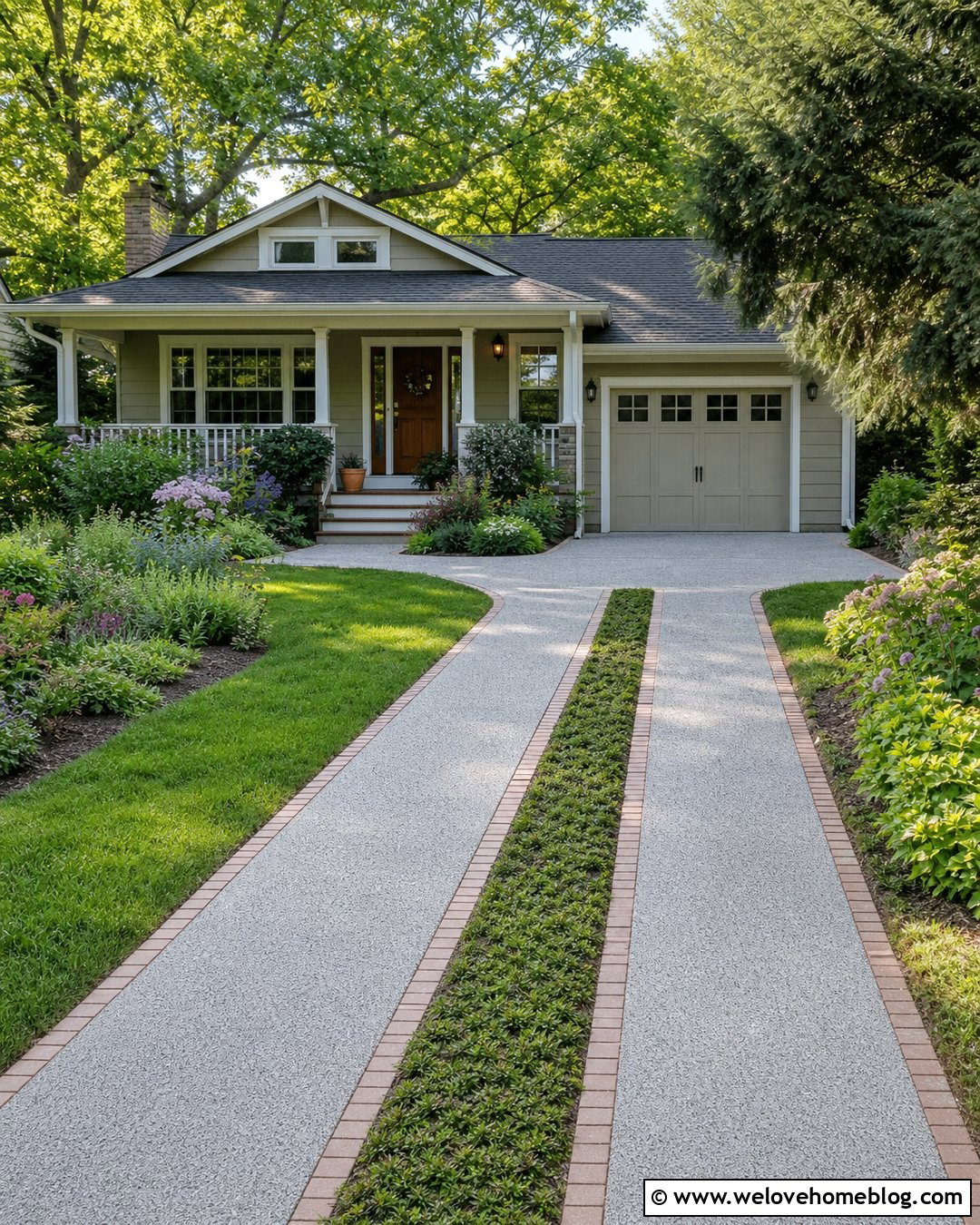
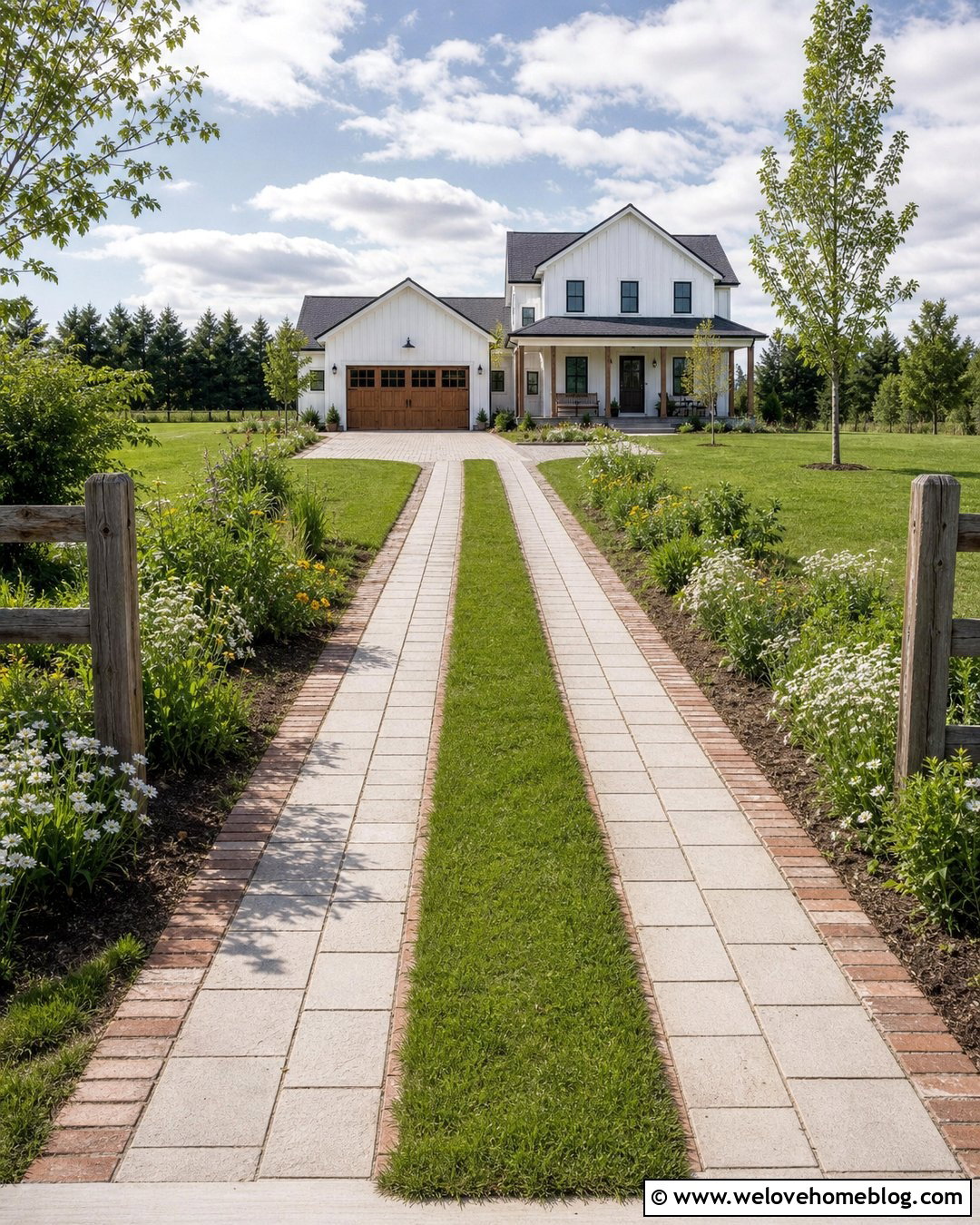
Two pervious concrete tire ribbons can reduce the visual width of a driveway while creating room for a planted center strip. Form the ribbons wide enough for normal vehicle tires and follow a straight route toward a cottage, bungalow, or detached garage. Fill the central area with low, durable ground cover suited to the climate, or use washed decorative gravel where living plants would receive too much traffic. Brick or concrete paver edging can outline each ribbon and keep nearby soil separated from the porous concrete. Continue the tire strips into a full-width permeable parking pad near the garage for easier turning. Surround the approach with lawn and simple perennial borders. This layout is best planned around actual vehicle dimensions so drivers can enter comfortably without repeatedly crossing the center planting.
13. Circular Permeable Concrete Driveway With Center Garden
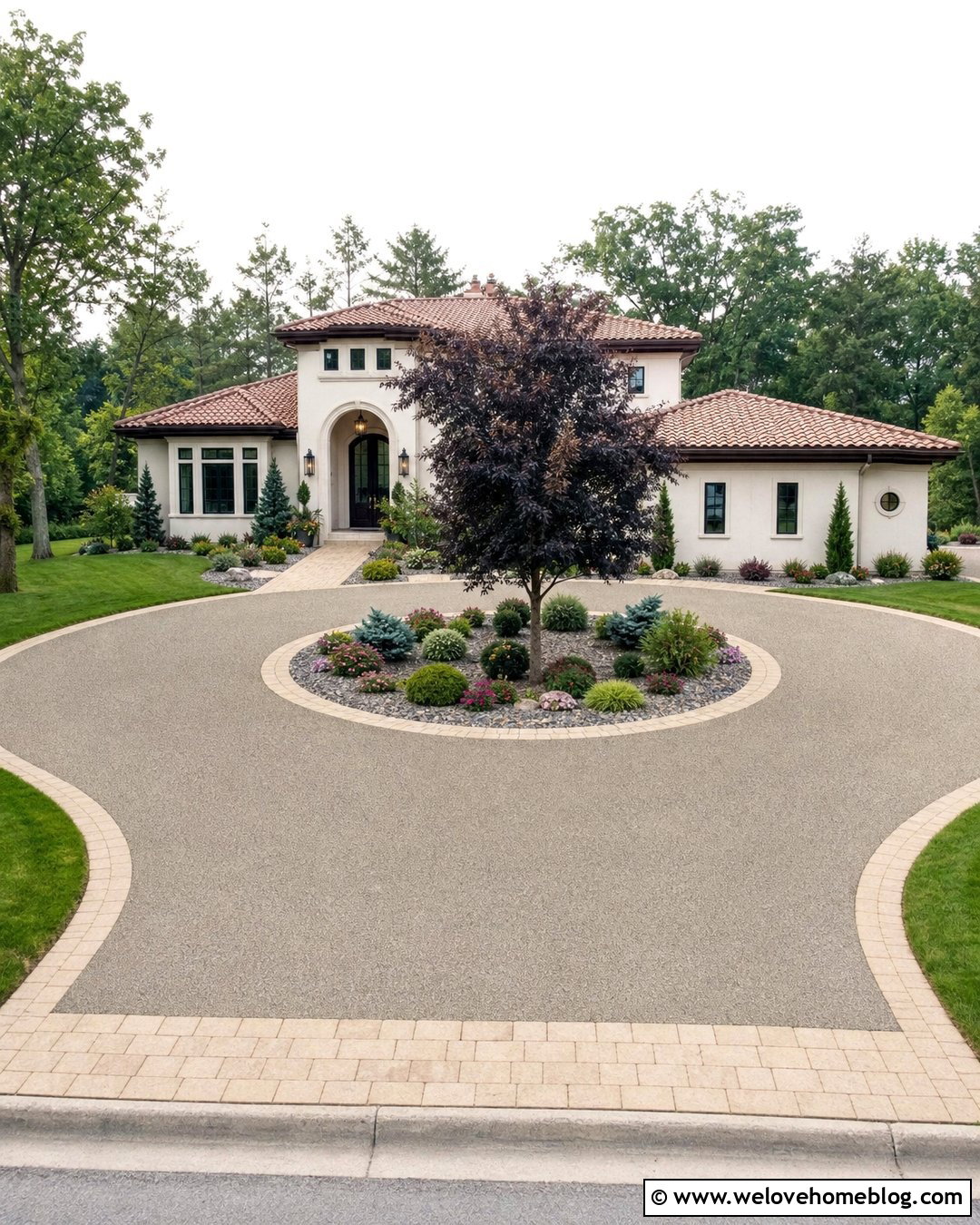
A circular permeable concrete driveway creates an impressive entrance while preserving a landscaped focal point near the house. Use warm gray pervious concrete for the main loop and outline both edges with tan permeable concrete pavers. In the center island, plant a small ornamental tree surrounded by low evergreen shrubs, flowering perennials, and decorative gravel mulch. Keep plants compact near entry and exit points so drivers can see pedestrians and street traffic. The loop can lead to a colonial, Mediterranean, or large craftsman home without appearing excessively formal. Repeat the tan pavers around a front walkway to connect the driveway with the entrance. Circular layouts require careful grading because the central island, house, and street create several drainage relationships that must be evaluated as part of the overall system.
14. Horseshoe Permeable Concrete Driveway With Entry Pillars
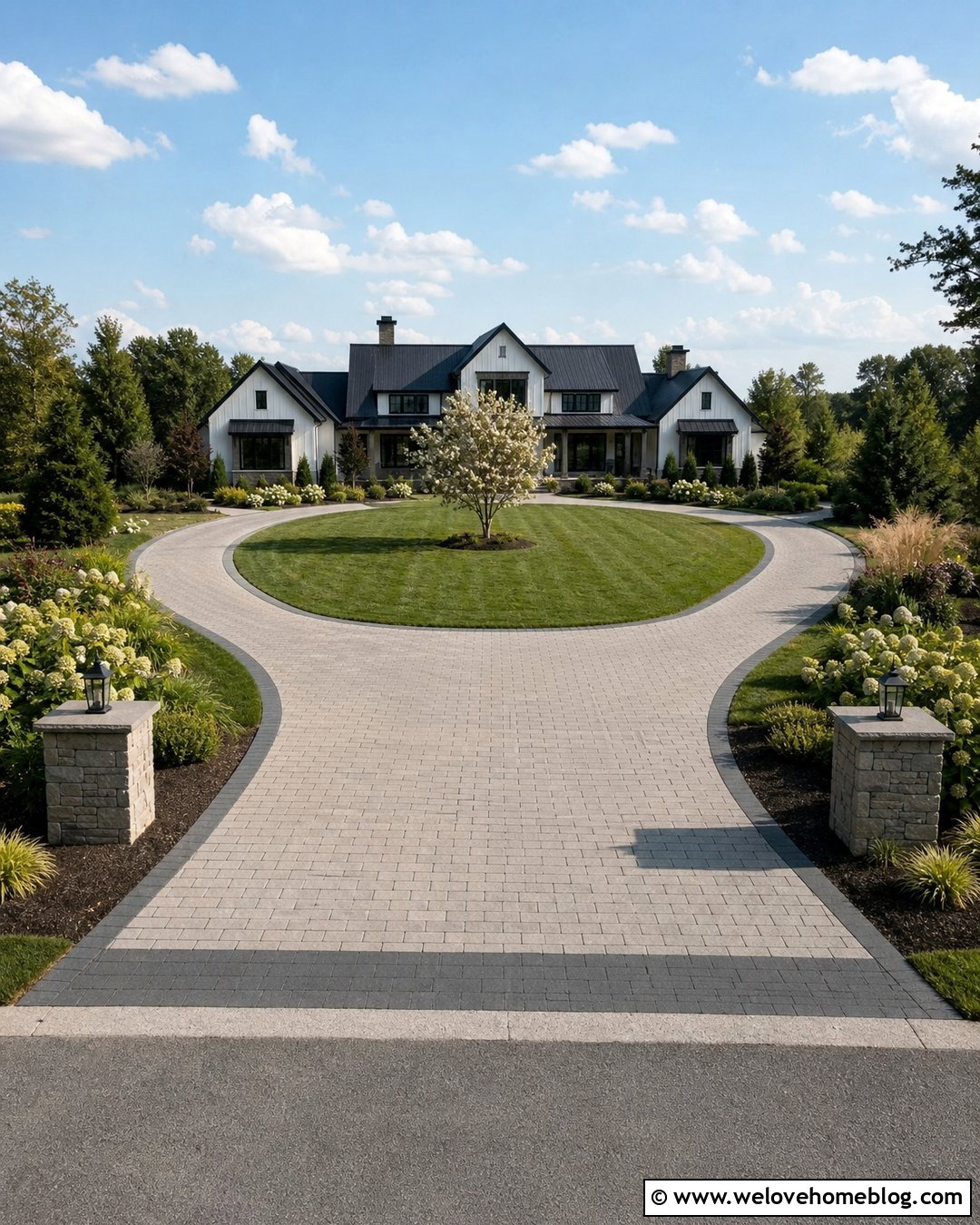
Two defined entrances make a horseshoe driveway convenient and visually balanced. Build the sweeping layout with light gray permeable concrete pavers arranged in a simple running bond. Use charcoal pavers as a narrow border along the full curve and around both street aprons. Low stone pillars can mark the entry and exit without overwhelming the yard. Between them, retain a wide lawn panel with a central flowering tree and curved beds of hydrangeas, evergreen shrubs, and ornamental grasses. This complete design works well with traditional, French country, and substantial modern farmhouse homes. Keep gates, address signs, and taller plants positioned away from sightlines. The paver pattern should follow the driveway curves smoothly, while strong edge restraints help maintain clean boundaries around the long, rounded perimeter.

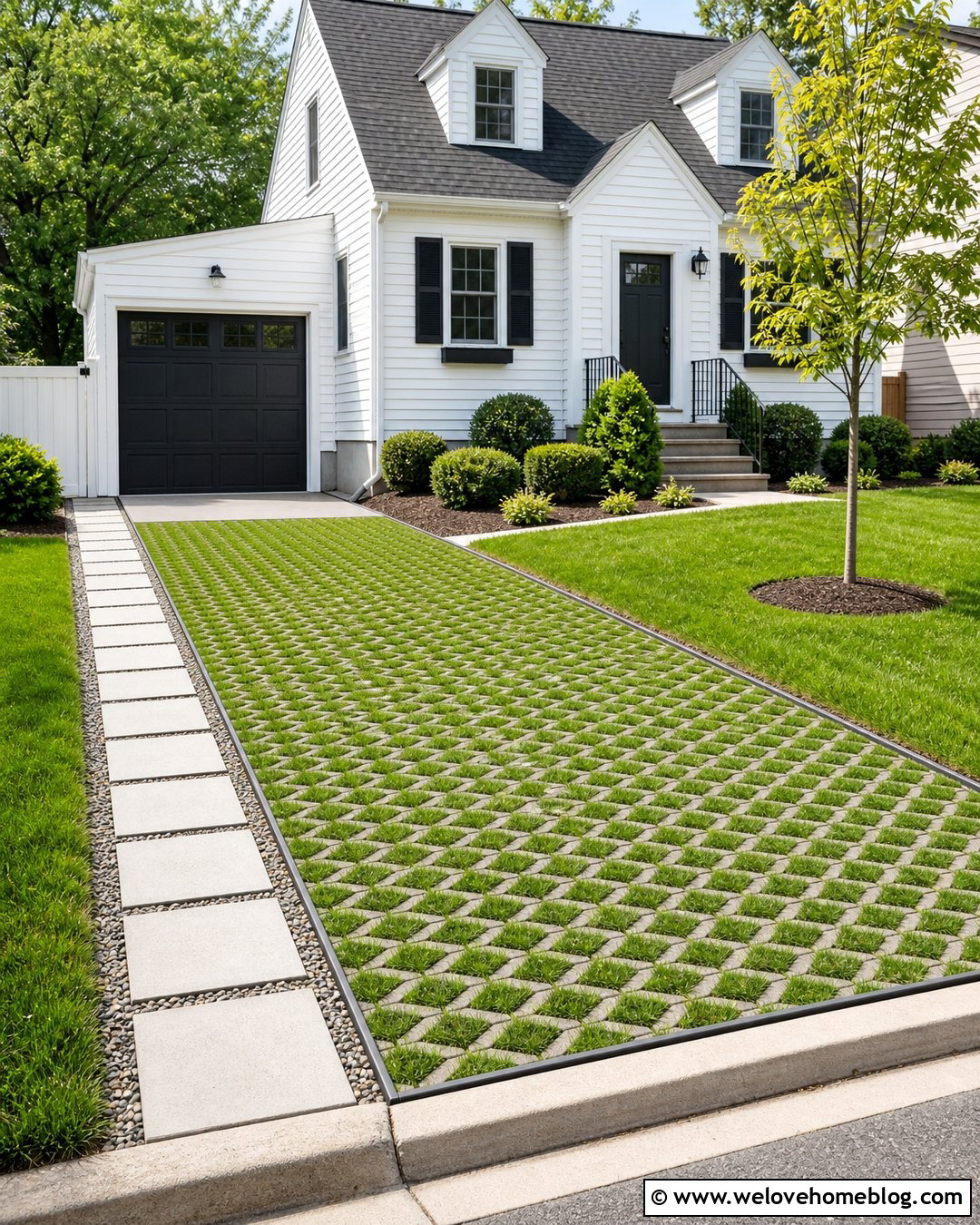
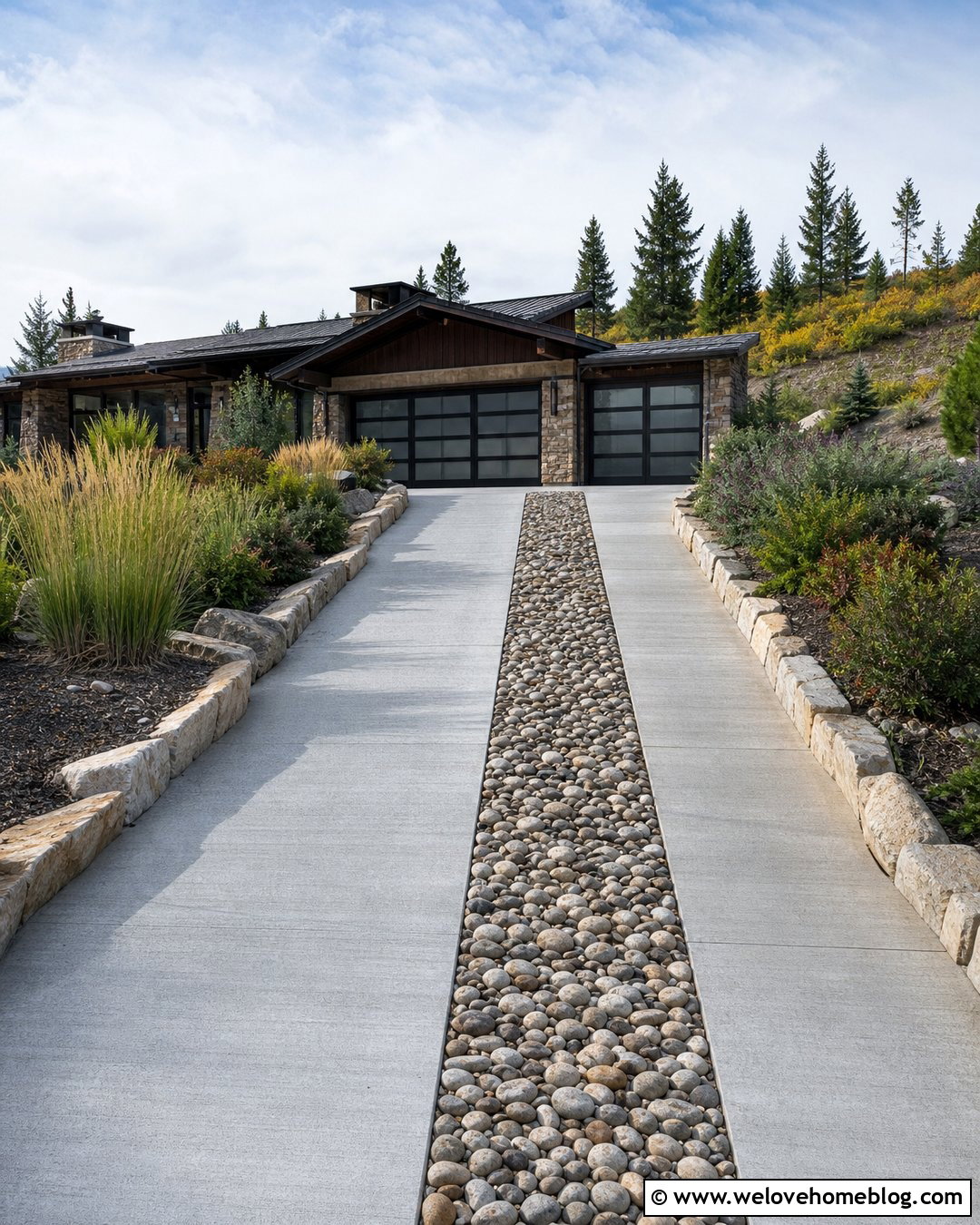
15. Sloped Permeable Concrete Driveway With Terraced Landscaping
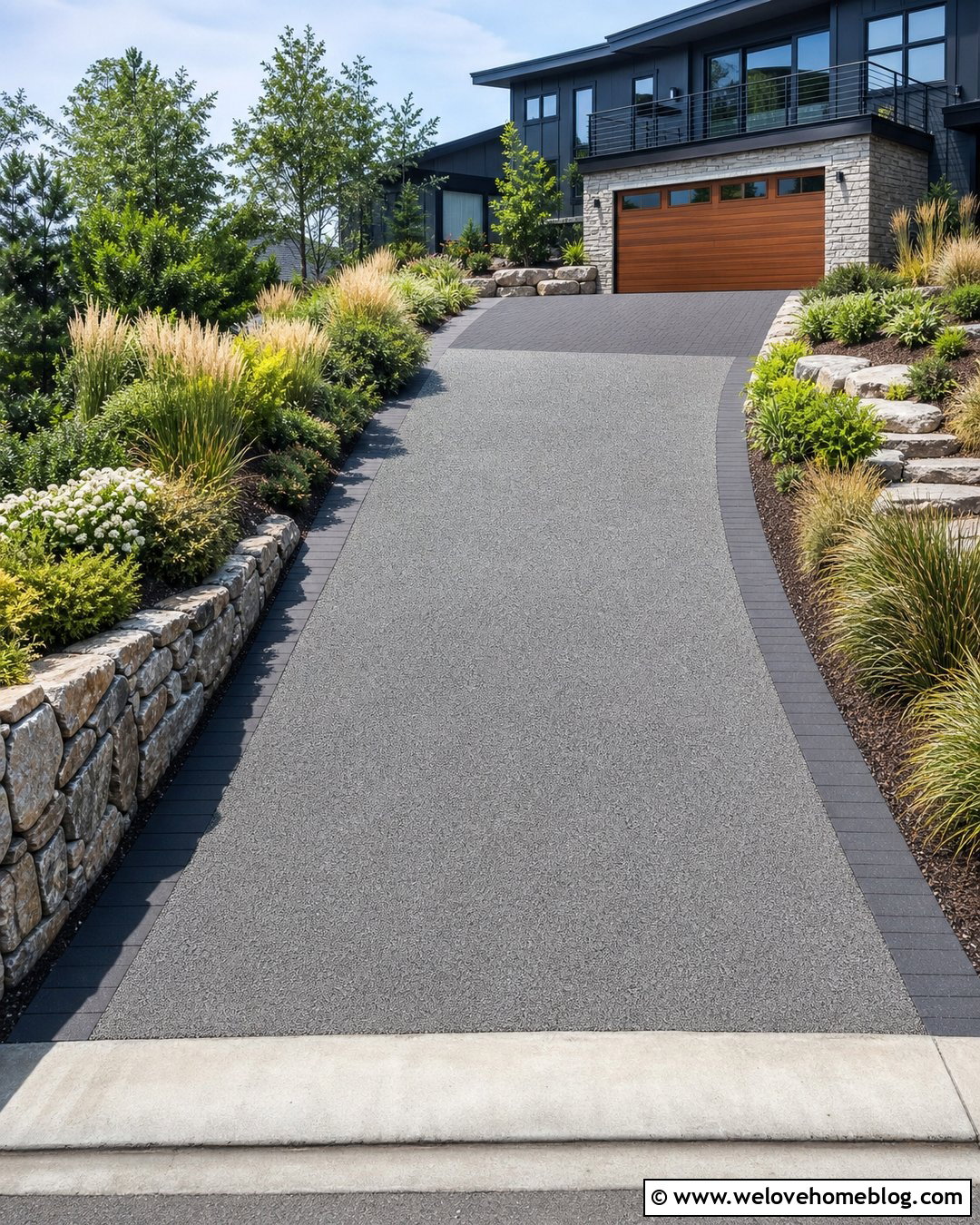
A sloped driveway needs more than an attractive porous surface. It also requires site-specific planning for soil, water movement, stability, and overflow. Use textured pervious concrete on a moderately sloped straight driveway, bordered by dark concrete pavers that visually define the edges. Add terraced planting beds on the higher side with retaining walls, deep-rooted shrubs, and ornamental grasses. On the lower side, maintain an open landscaped area that follows the drainage plan. A contrasting permeable paver apron can provide a finished transition at the garage. Steeper sites, compacted or slow-draining soils, and high groundwater may limit where permeable pavement is appropriate. Local requirements and professional evaluation should guide the final design rather than appearance alone. ()
16. Narrow Permeable Concrete Driveway With Vertical Landscaping
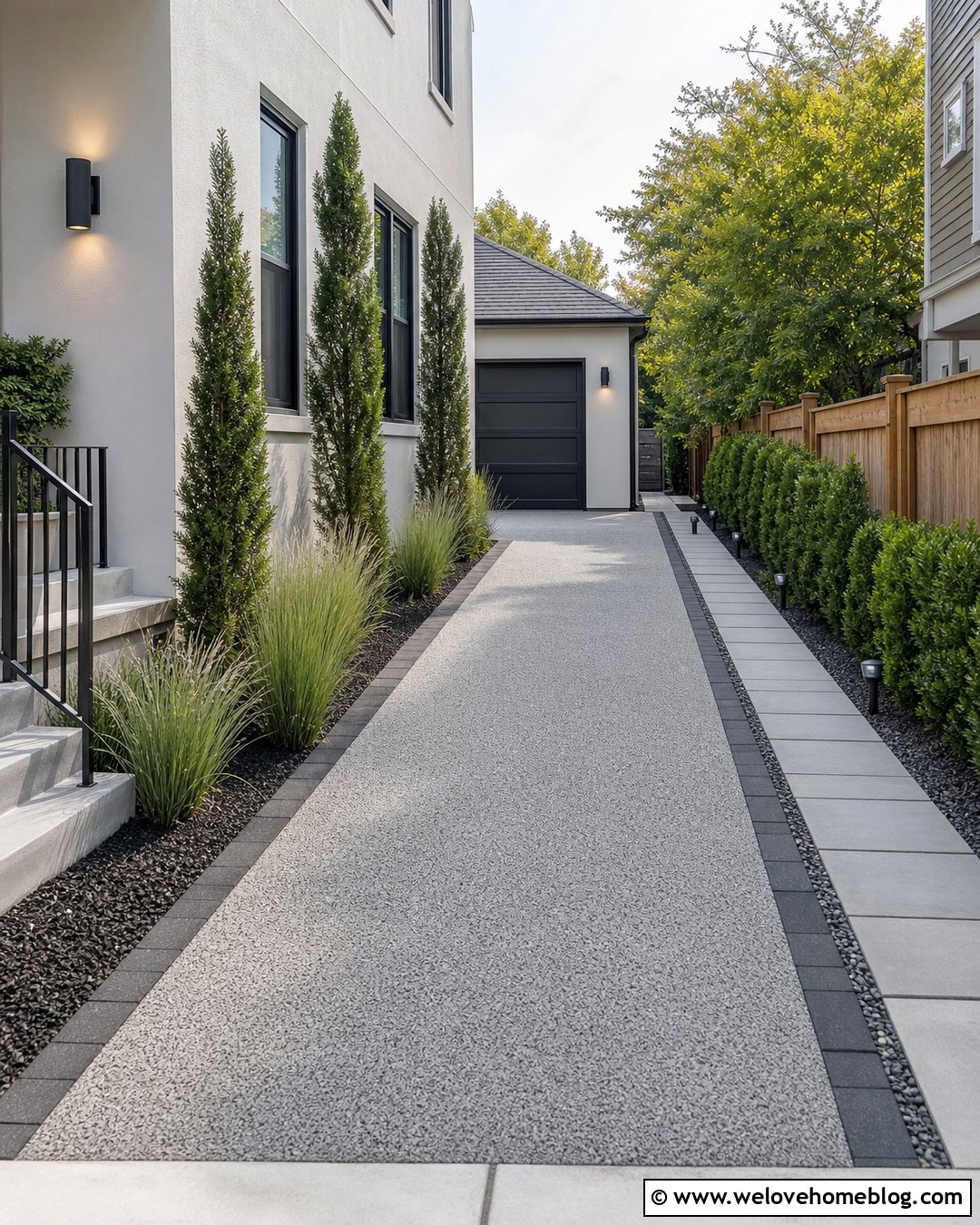
Small side yards can still support a complete and attractive driveway design. Use pale gray pervious concrete on a narrow straight layout leading to a rear or side garage. Frame it with a single row of charcoal permeable pavers to preserve as much driving width as possible. Along one boundary, install slim planting beds containing upright grasses, columnar evergreens, and compact shrubs. The opposite side can feature a clean walkway separated from the driveway by a narrow gravel strip. Wall-mounted lighting on the house or fence provides illumination without occupying ground space. Keep spreading plants and loose mulch away from the driving surface. The light concrete, dark outline, vertical planting, and uncluttered edges make the confined area feel wider while maintaining a practical route for vehicles and pedestrians.
17. Permeable Concrete Parking Court With Paver Border
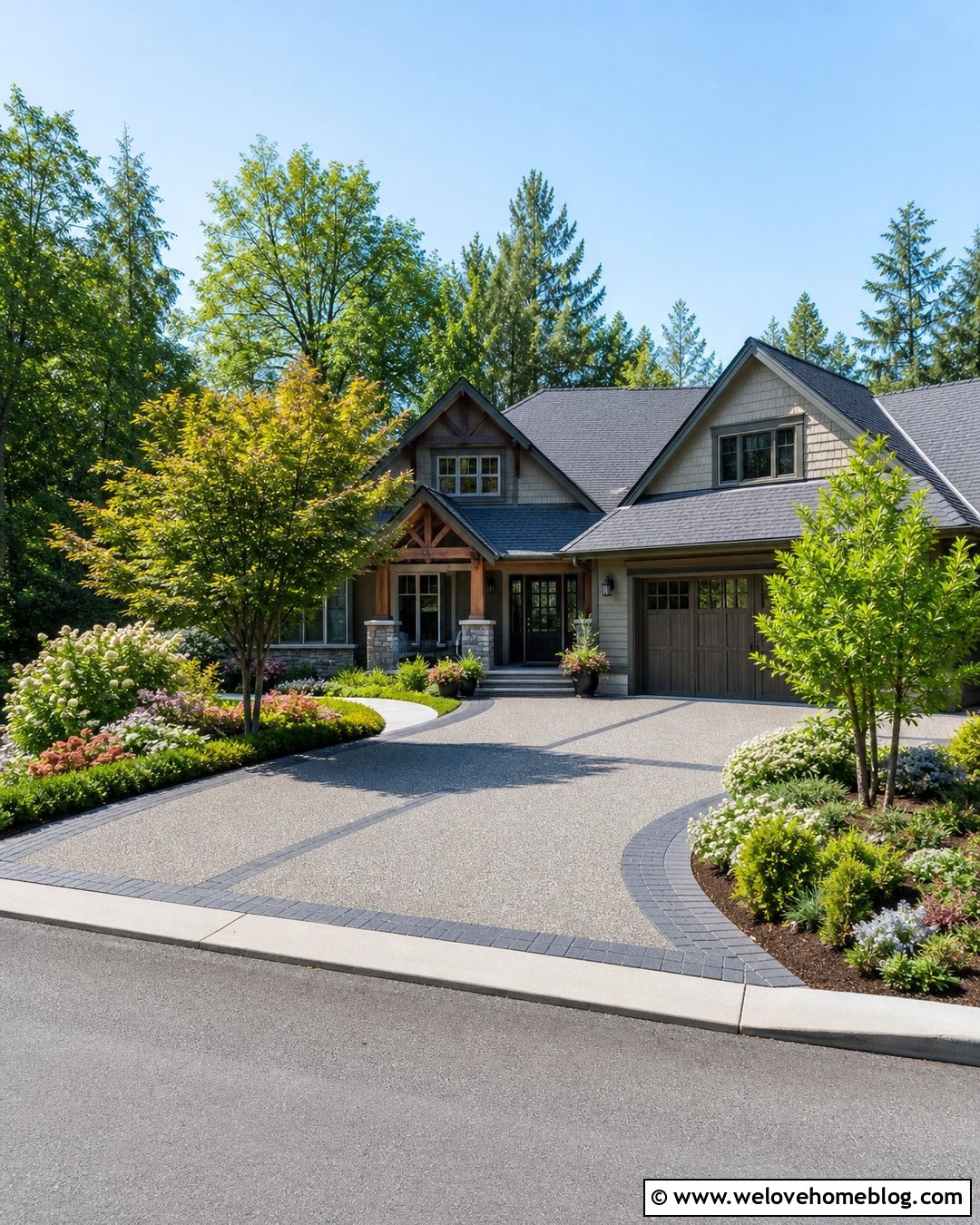
A broad parking court does not have to look like a blank paved area. Use natural gray pervious concrete for the central surface and create a large rectangular frame with dark permeable concrete pavers. Divide parking spaces subtly with narrow paver bands rather than painted lines. Around the perimeter, add generous beds containing small shade trees, evergreen structure, flowering shrubs, and low ground cover. A curved walkway can lead from the court to a craftsman or contemporary country home. If space permits, include a planted corner island that guides turning movements without blocking access. The parking layout, base design, and pavement thickness should reflect the expected vehicles and traffic. This combination makes a sizable driveway feel connected to the landscape instead of appearing like a commercial parking lot.
18. Permeable Concrete Driveway With Contrasting Paver Apron
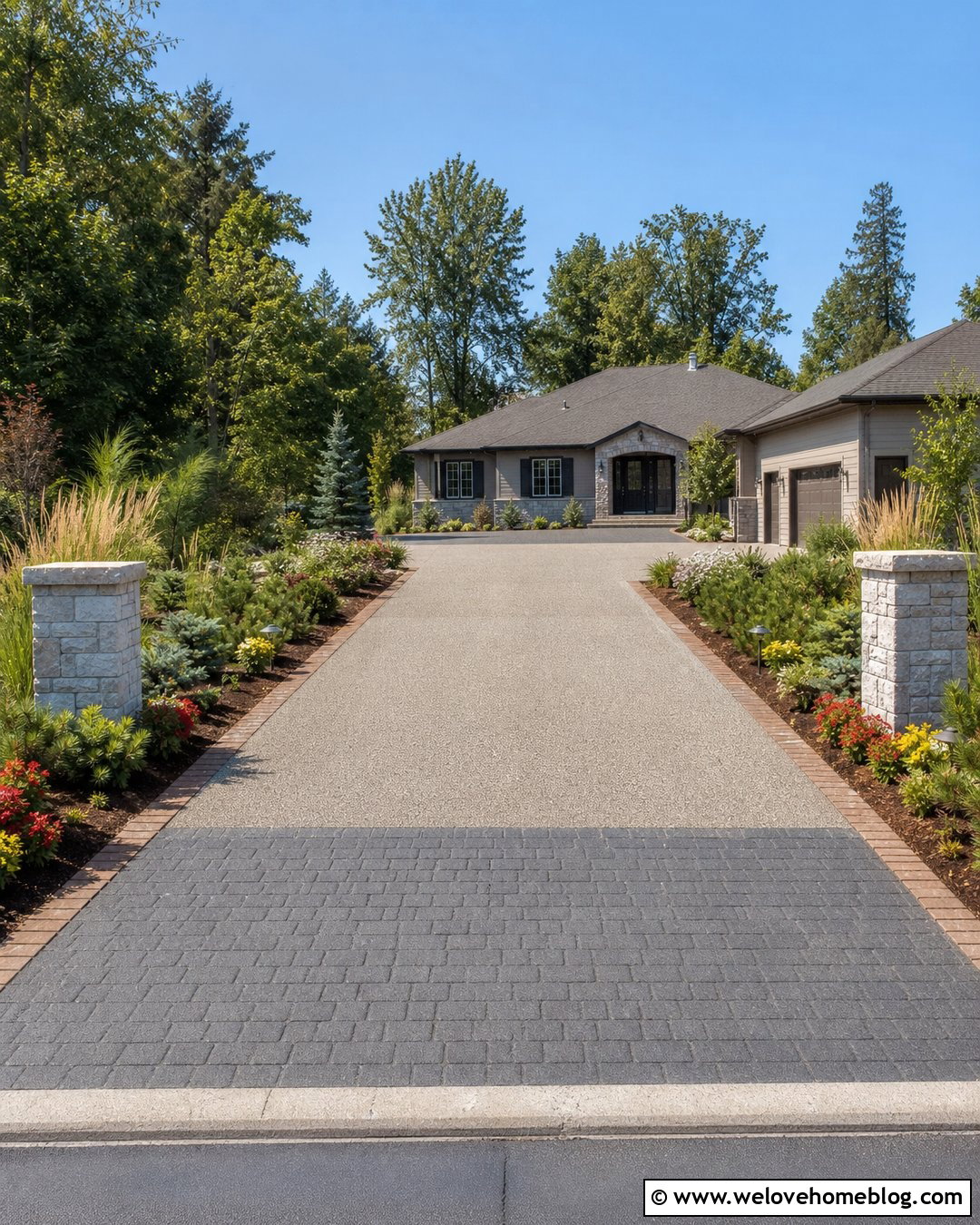
The street-facing apron is an ideal place to add detail to a simple driveway. Pour the main straight surface in warm gray pervious concrete, then install a wide apron of charcoal permeable concrete pavers at the entrance. Repeat the same pavers in a narrower band in front of the garage. Brick-edged planting beds can sit behind each side of the apron, filled with compact evergreens, seasonal flowers, and ornamental grasses. Low address pillars may be added where local visibility rules allow. This design complements ranch, transitional, and modern farmhouse exteriors because it uses contrast without becoming busy. Make sure the connection between the poured concrete and pavers is properly restrained and detailed. The transition should remain stable while allowing each permeable surface to function as intended.
19. Tree-Lined Permeable Concrete Driveway With Gravel Borders
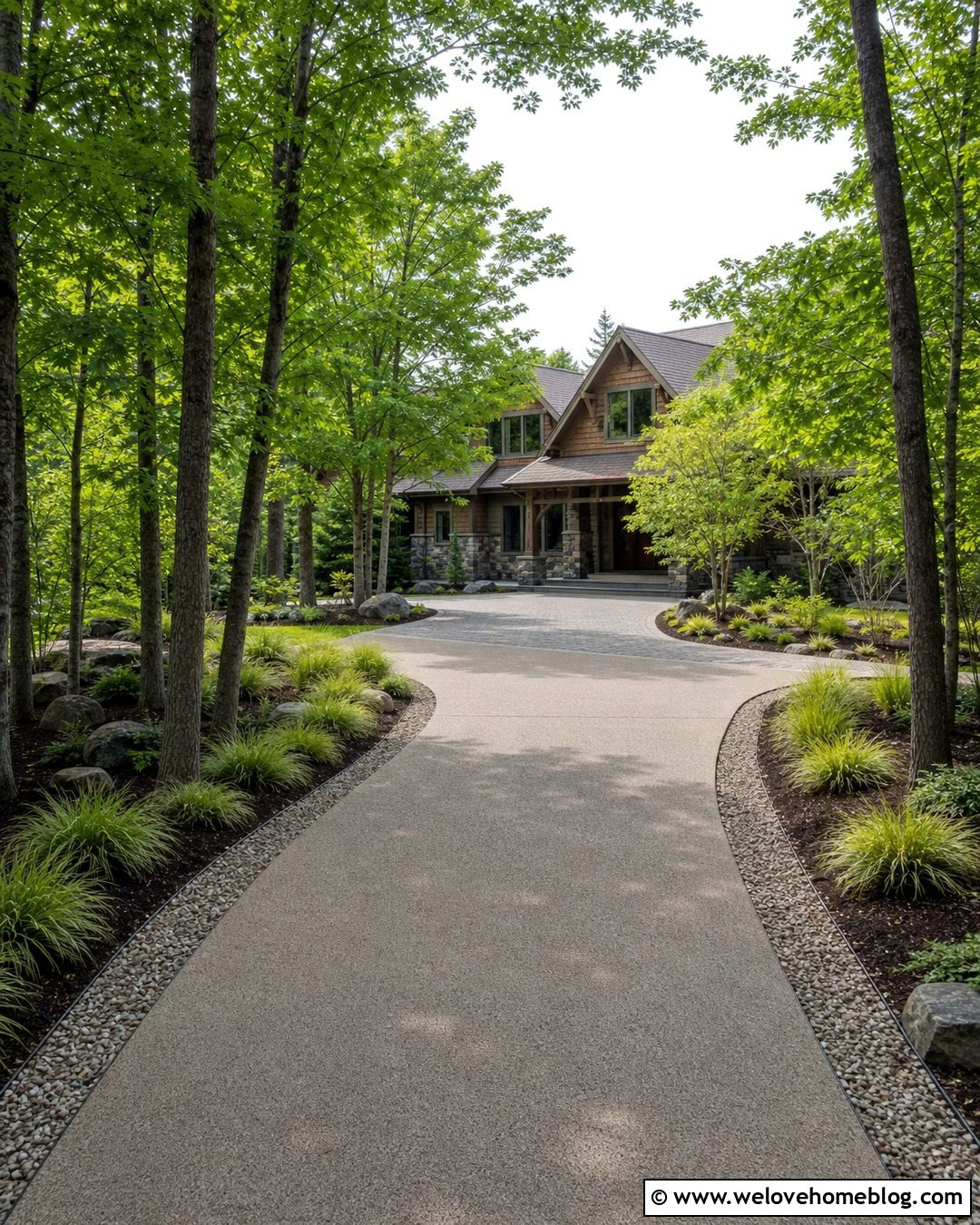
Imagine a long driveway disappearing between evenly spaced trees and soft planting beds. Pervious concrete in a muted tan-gray tone gives the route a stable surface while fitting the natural setting. Follow a gentle curve toward a country, craftsman, or woodland contemporary house. Add narrow borders of washed gravel contained by steel or concrete edging. Beyond the gravel, plant matched rows of small deciduous trees with grasses and low shrubs underneath. Trees should be placed far enough from the pavement to account for mature trunks, roots, and falling organic debris. A permeable concrete paver landing near the house can create a defined parking and turning area. Regular removal of leaves and sediment will help preserve the clean appearance and open texture of the driving surface.
20. Coastal Permeable Concrete Driveway With Sand-Tone Pavers
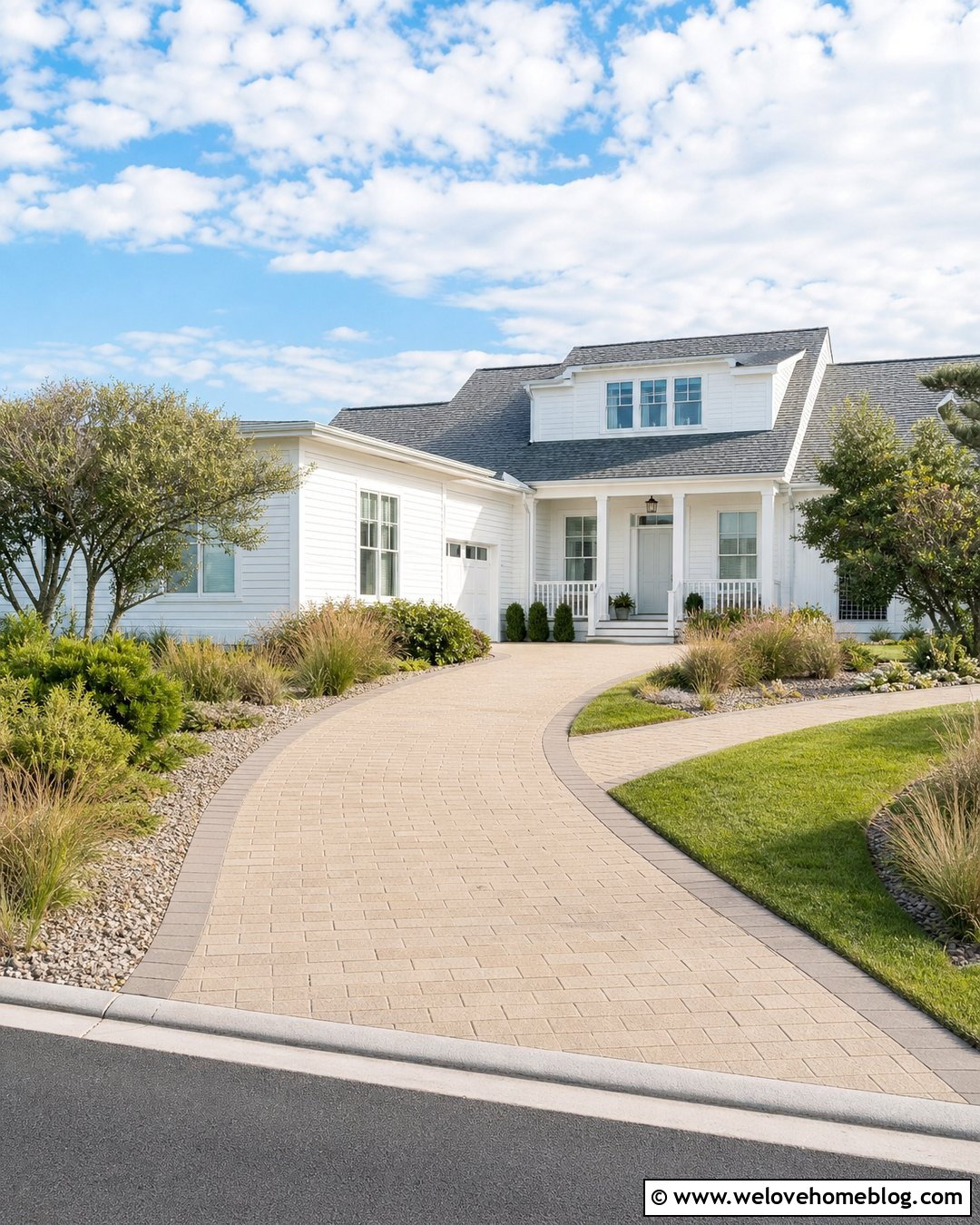
Light colors and simple planting create a fresh driveway suited to a coastal-inspired home. Use sand-tone permeable concrete pavers with narrow joints filled by pale washed aggregate. Arrange them in a running bond across a broad, gently curved driveway. Edge the surface with slightly darker taupe concrete pavers, then frame it with salt-tolerant grasses, low evergreen shrubs, and clean gravel mulch selected for the local environment. A matching walkway can lead to a white shingle, coastal cottage, or light stucco house. Keep the palette restrained so the concrete texture remains visible. Coastal properties may present sandy soils, high groundwater, heavy rain, or salt exposure, so the pavement system, overflow route, and material specifications should be evaluated for the actual site before construction begins.
Conclusion:
The best permeable driveway combines an attractive surface with a complete plan for borders, landscaping, vehicle movement, drainage, and maintenance. These 20 Permeable Concrete Driveway Ideas show how pervious poured concrete, permeable concrete pavers, and concrete grid systems can complement homes ranging from compact cottages to large contemporary properties. Begin by choosing a layout that fits the yard and normal driving patterns. Then coordinate the concrete color, edging, plants, walkway, and entrance features. Most importantly, work with an experienced professional who can assess the soil, slope, base depth, overflow needs, and local requirements. Thoughtful planning will produce a driveway that feels welcoming, functions reliably, and strengthens the home’s overall curb appeal.

Related posts:
Leave a Reply