
A tired driveway can make an otherwise attractive home feel unfinished, but the right upgrades can quickly restore curb appeal and improve daily function. These 20 Driveway Makeover Project Ideas cover everything from simple cleaning and edging projects to complete surface replacements, new landscaping, drainage improvements, lighting, and entrance features. The best makeover treats the driveway as part of the entire front yard rather than an isolated parking surface. Its material, shape, borders, walkway, plants, and connection to the garage should all feel intentional. Before starting, inspect the base, drainage, cracks, and slopes so decorative changes do not hide larger problems. Whether you want a budget-friendly weekend refresh or a major renovation, explore these 20 Driveway Makeover Project Ideas.

1. Pressure-Washed Concrete Driveway With Brick Edging
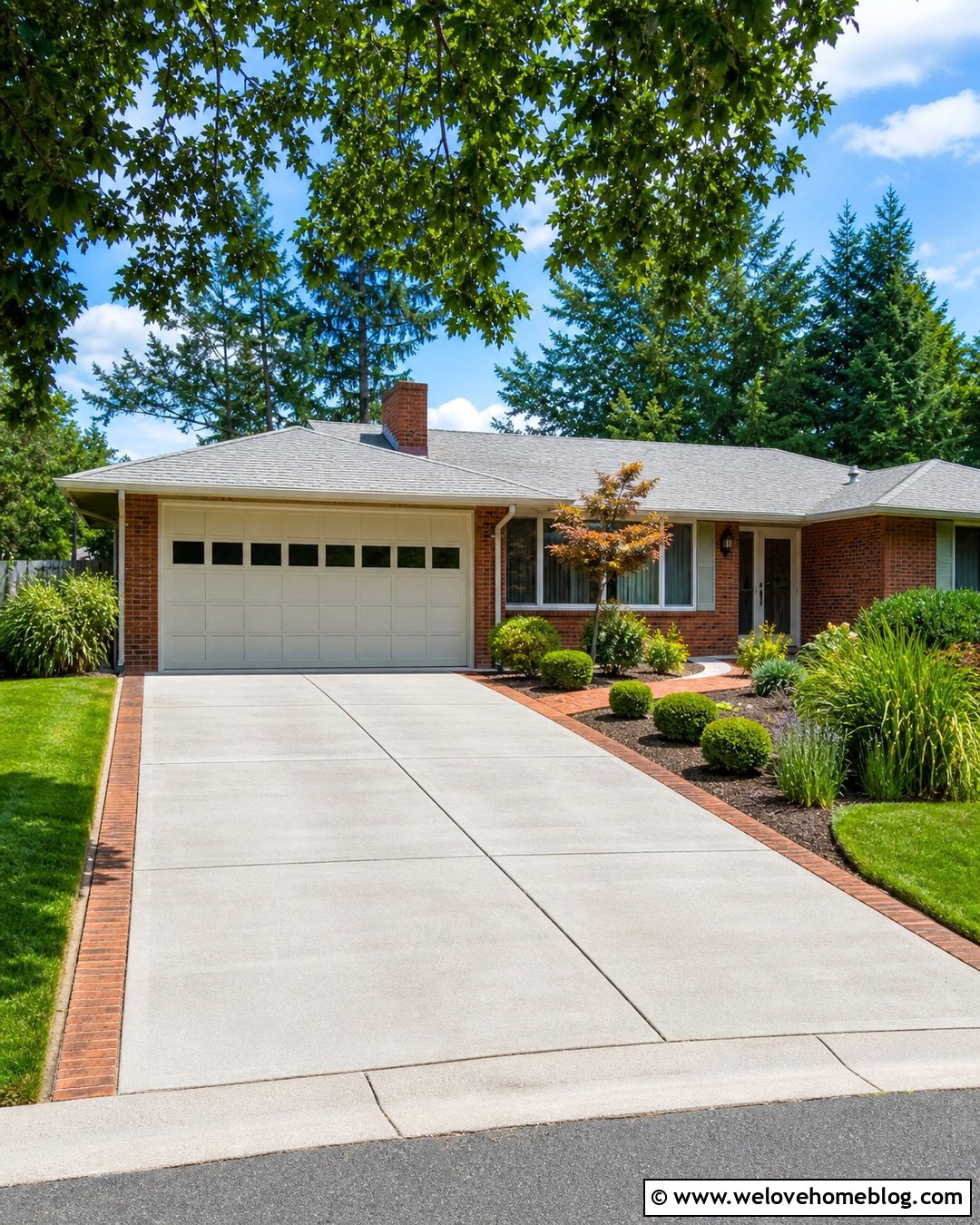
Sometimes the most effective makeover begins with revealing the surface you already have. Pressure-wash a structurally sound concrete driveway to remove embedded dirt, organic buildup, and old stains. Repair small cracks with a compatible concrete filler, then apply an appropriate sealer after the surface dries. Frame the cleaned concrete with red or charcoal brick edging to give the driveway a crisp, finished outline. A matching brick walkway can connect the parking area to the porch. Complete the look with narrow mulched beds, low evergreen shrubs, and ornamental grasses that will not obstruct visibility. This straightforward project works especially well for ranch and traditional homes because the brick adds warmth while the bright concrete keeps the entrance open and welcoming.
2. Resurfaced Concrete Driveway With Paver Borders
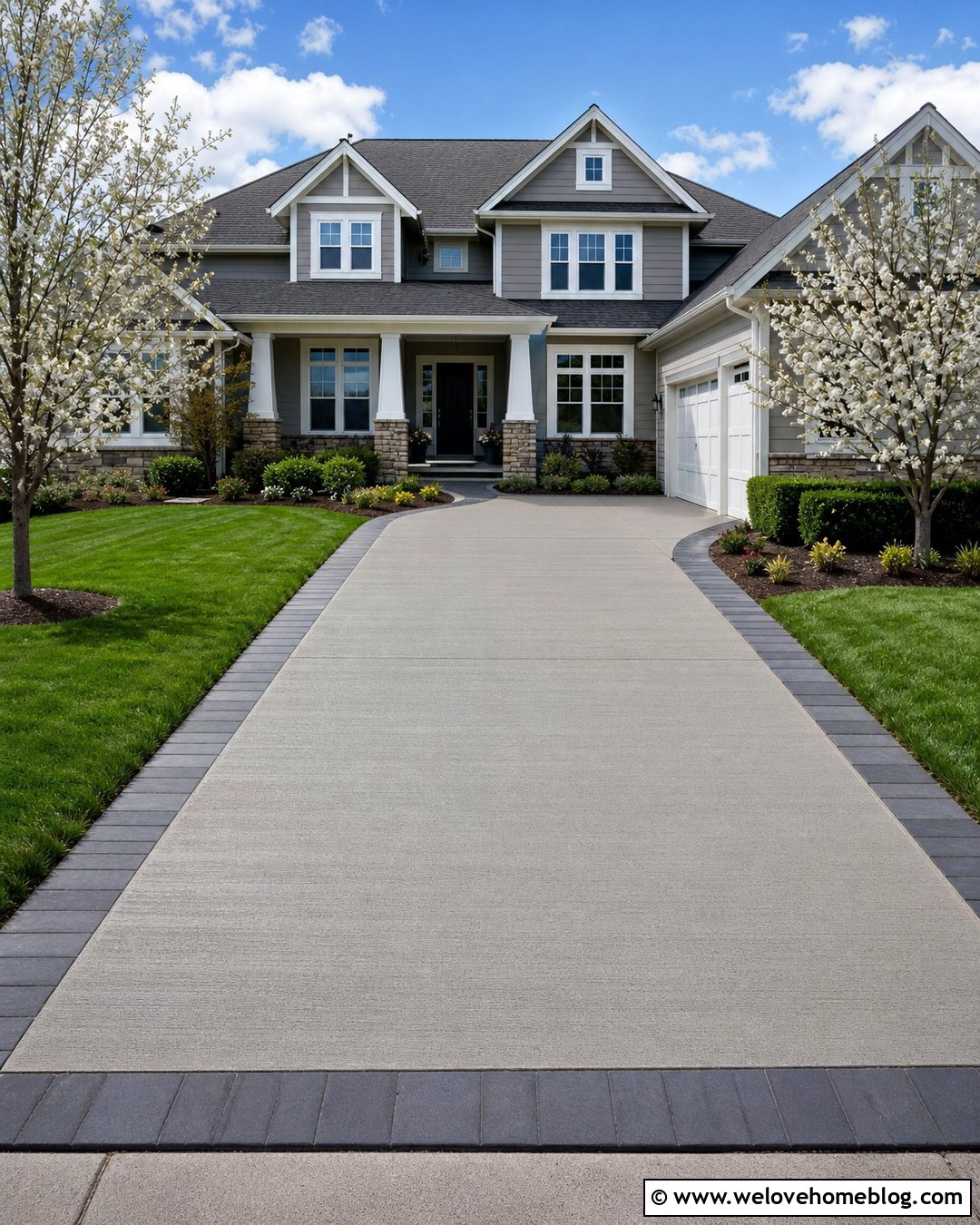
A worn concrete driveway does not always require complete demolition. If the existing slab is stable and has only minor surface damage, a professionally installed cement-based overlay can cover discoloration, small imperfections, and outdated finishes. Proper cleaning, repairs, and surface preparation are essential because the new coating needs a sound base to bond correctly. Severely uneven or structurally damaged slabs may need replacement instead. () Choose a warm gray overlay with a light broom texture, then add charcoal concrete pavers along both sides. Echo those pavers in the front walkway or porch steps. Simple foundation shrubs and a neatly cut lawn will make the updated driveway look original to the house rather than like a separate improvement.
3. Stained Concrete Driveway With Stone Landscaping
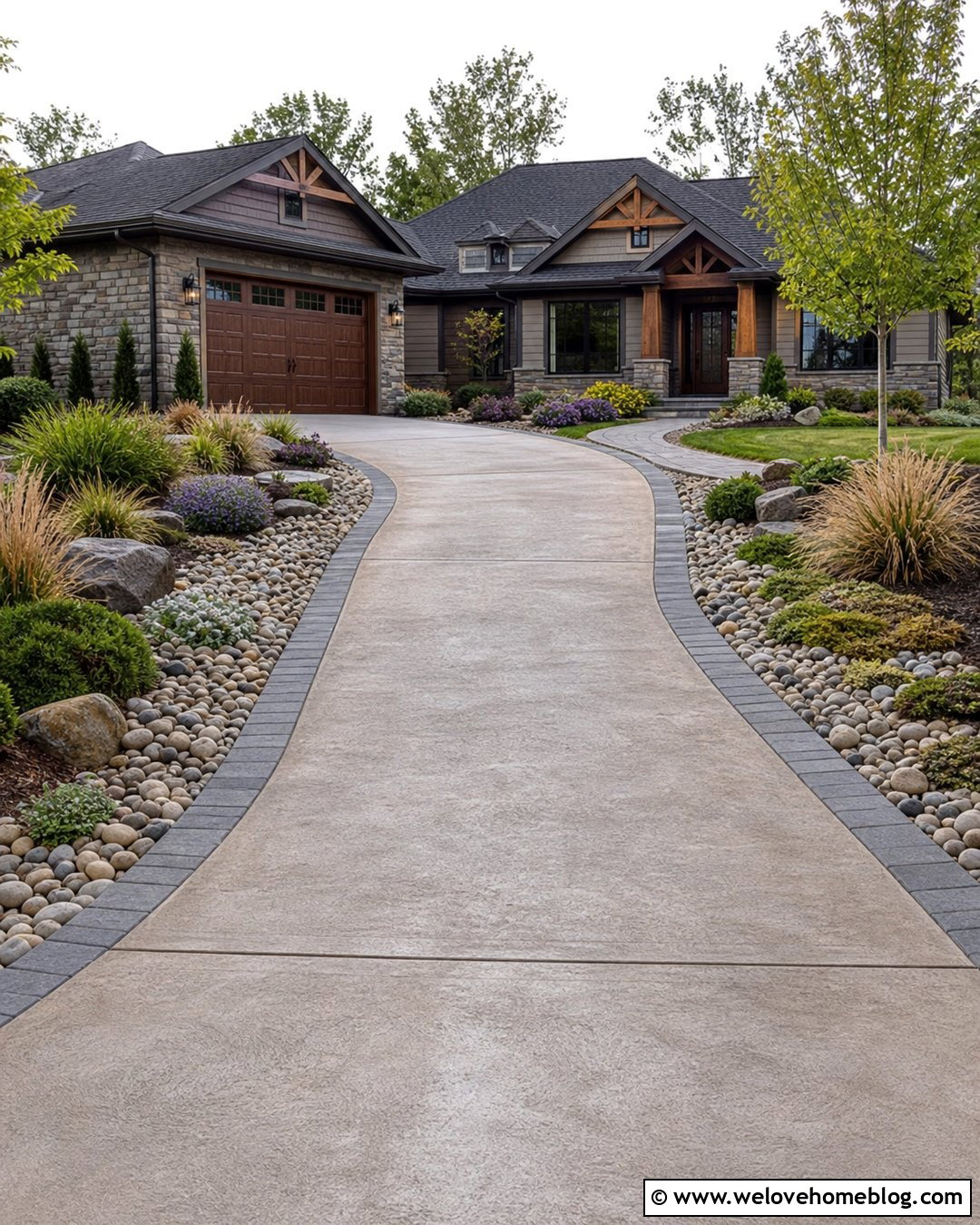
Warm up plain concrete by applying a driveway-rated stain in a soft taupe, sandstone, or muted brown tone. The color can visually connect the pavement with brick, stone veneer, wood siding, or a natural front-yard palette. Start with a complete cleaning and repair plan because stains may highlight existing surface differences instead of concealing them. Add a dark paver border for contrast, and use river rock beds beside the driveway to create a clean transition into the yard. Groups of compact ornamental grasses, dwarf evergreens, and drought-tolerant perennials will soften the hard surface without spilling into vehicle space. Continue the same stain tone or border material toward the front walkway so the driveway, landscaping, and entrance read as one coordinated makeover.
4. Black Asphalt Driveway With Brick Ribbon
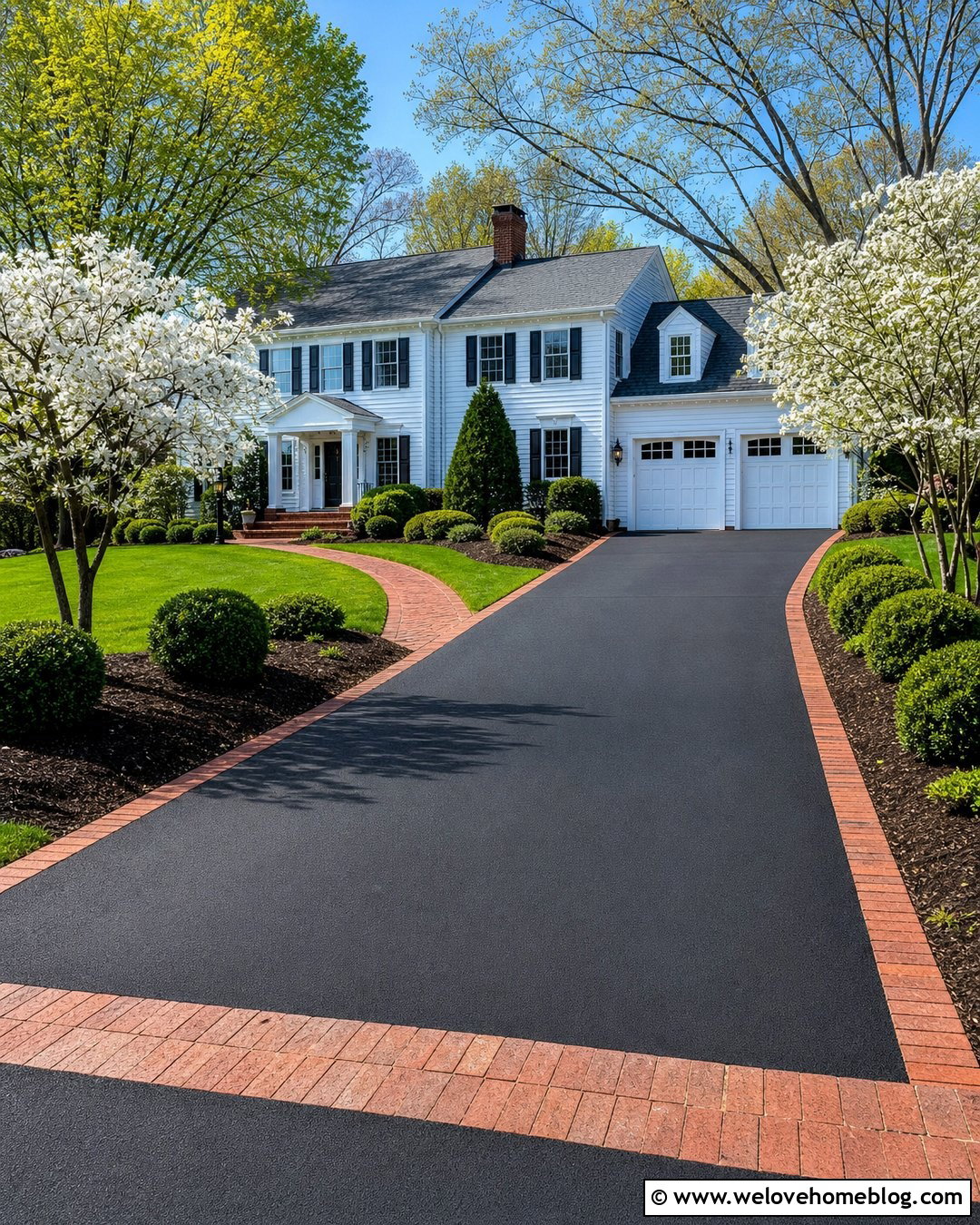
Fresh black asphalt creates strong contrast against green lawns and light-colored homes. Turn that basic surface into a complete design by installing a clay brick ribbon along each side and across the driveway apron. The brick protects the visual edge while connecting the driveway to traditional porch steps, chimneys, or exterior masonry. If the existing asphalt remains stable, repair cracks and damaged edges before applying a compatible sealcoat. Avoid coating loose, crumbling, or badly sunken pavement without correcting the underlying problem. Frame the finished driveway with curved mulch beds, rounded shrubs, and a few small flowering trees. A straight brick walkway leading from the driveway to the front door will repeat the border and make the entrance easier to recognize from the curb.
5. Crushed Stone Driveway With Cobblestone Edging
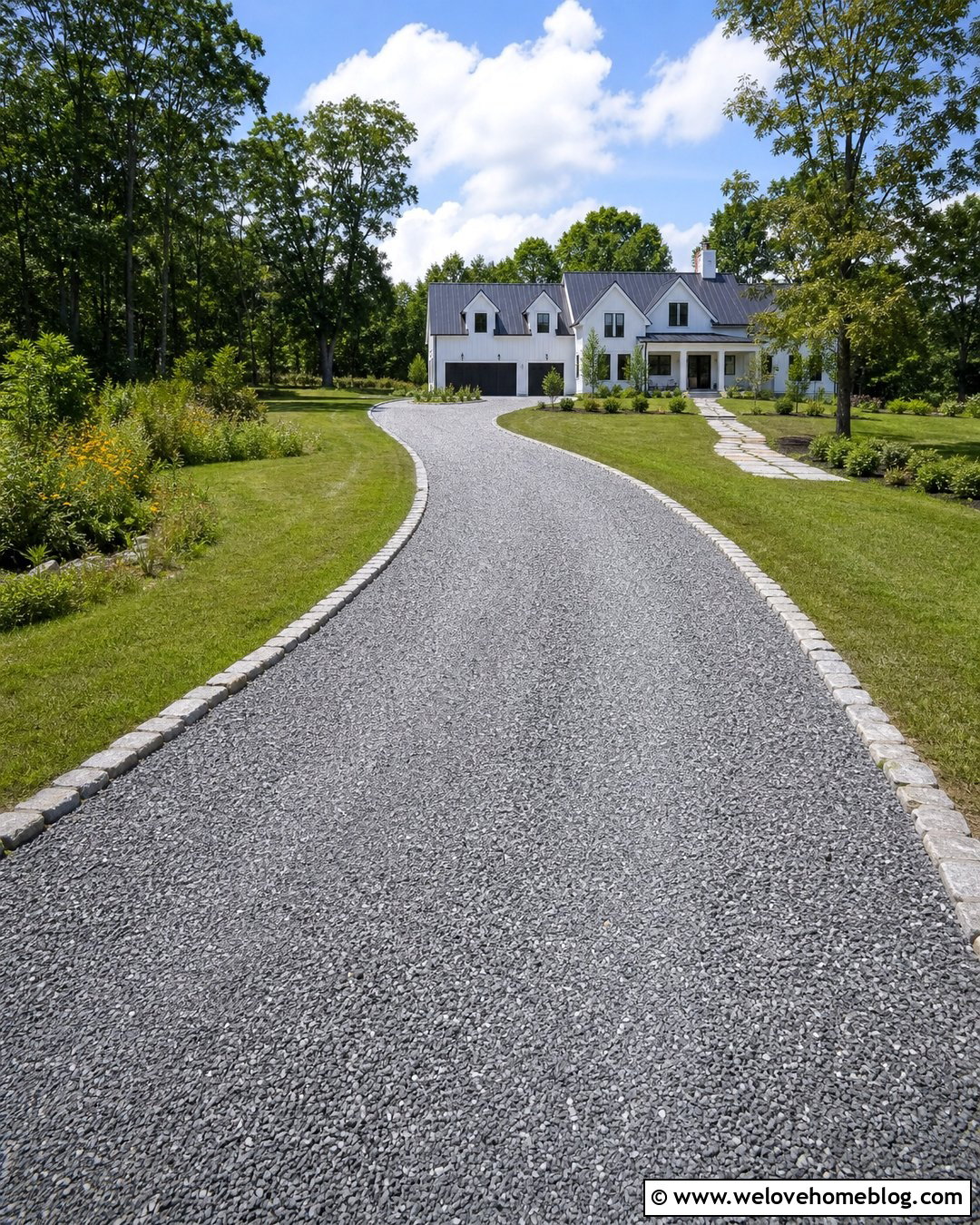
A new layer of compacted crushed stone can transform a rutted rural driveway into a more polished entrance. Begin by correcting drainage, restoring the crown or intended slope, and repairing weak areas in the base. Use angular gray or tan crushed stone rather than overly rounded material where traction and stability are important. Install substantial cobblestone edging along both sides to contain the aggregate and define the shape. Loose driveway materials tend to spread or thin without secure borders, so edging should be treated as a functional component rather than decoration alone. () Finish the look with broad grass shoulders, native shrubs, and two medium ornamental trees near the road. This combination suits farmhouses, cottages, and wooded properties especially well.
6. Pea Gravel Driveway With Steel Edging
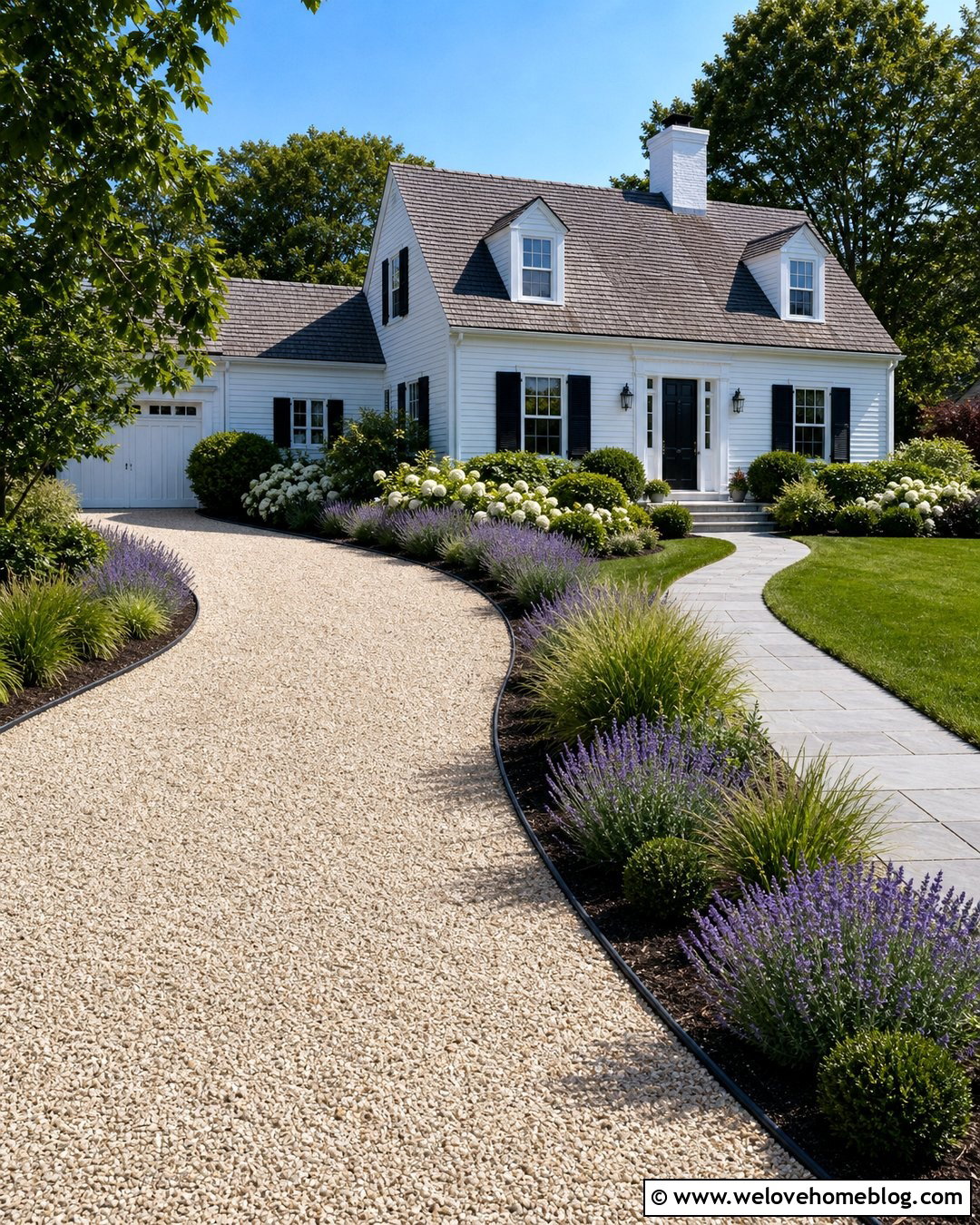
Light-colored pea gravel can brighten a small driveway and give a cottage or Cape Cod home a relaxed appearance. Because rounded gravel shifts more easily than angular stone, reserve this makeover for suitable sites and install a properly prepared, compacted base beneath the decorative top layer. Black steel edging provides a thin but visible boundary between the gravel, lawn, and garden beds. Shape the driveway with a gentle curve rather than an abrupt turn, leaving comfortable clearance for vehicles. Plant lavender-like perennials, compact hydrangeas, or low grasses in repeated groups along one side. On the opposite side, add a smooth paved walkway so guests do not have to cross loose stone. The balance of gravel, steel, planting, and paving makes the entire approach feel deliberate.
7. Concrete Driveway With a Paver Apron
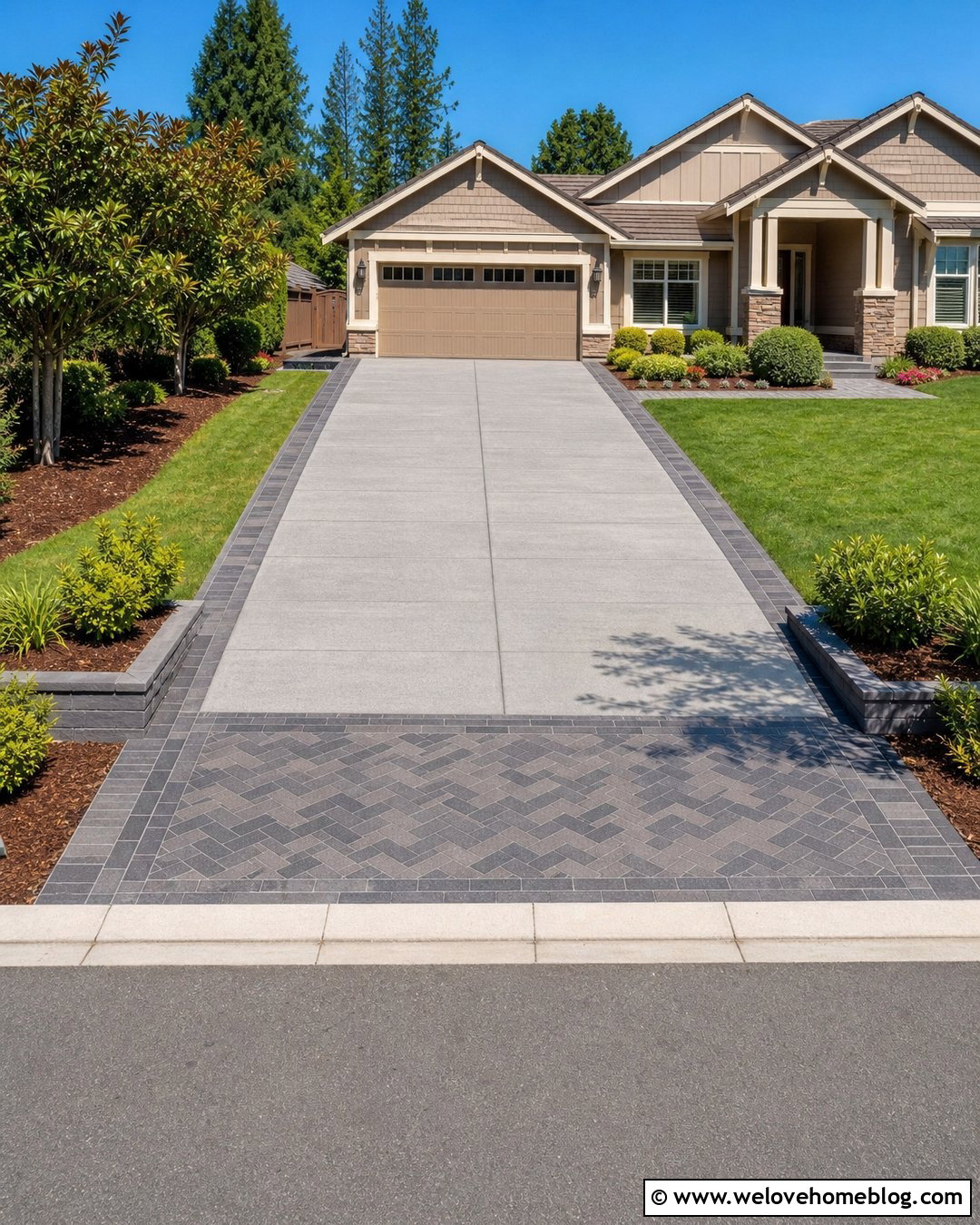
A decorative apron concentrates visual impact at the most noticeable part of the driveway without requiring a full surface replacement. Keep the main driveway in light gray poured concrete, then replace or frame the street-facing entrance with concrete or clay pavers. A herringbone pattern can add movement, while a simple running bond creates a quieter transition. Repeat the apron material in narrow side borders or the walkway near the garage to avoid an isolated patchwork appearance. Low planting beds near the curb can highlight the upgraded entrance, but they should preserve sightlines and avoid interfering with drainage or public right-of-way requirements. This makeover is especially effective on straight suburban driveways because it provides a clear beginning, introduces color, and visually separates private pavement from the street.
8. Herringbone Paver Driveway With Evergreen Borders
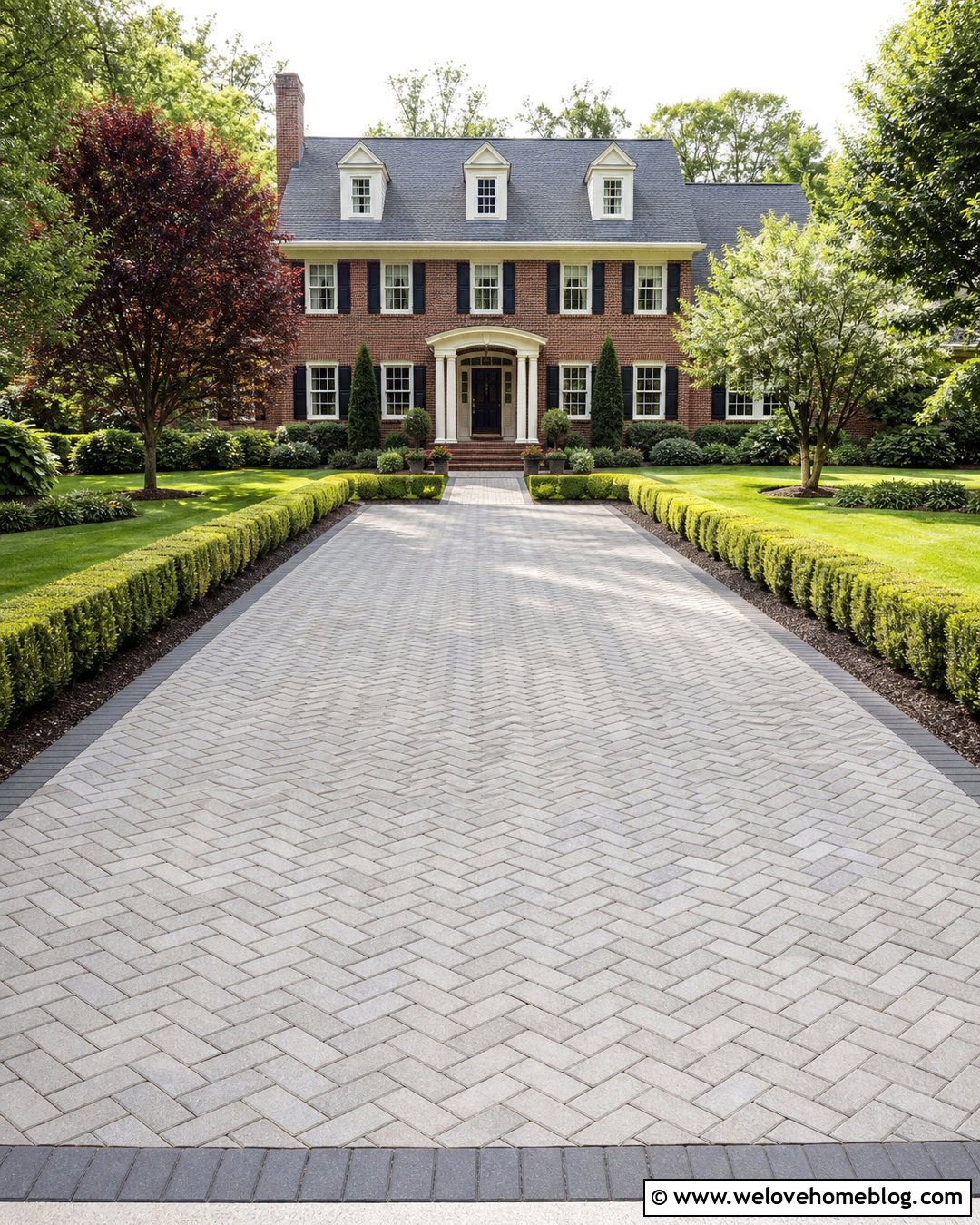
For a more complete transformation, replace damaged pavement with interlocking concrete or clay pavers laid in a herringbone pattern. The angled layout creates a detailed surface that looks attractive from both the street and the front door. Choose two related tones rather than too many colors, such as warm gray field pavers with a charcoal soldier-course border. Continue the border around the driveway apron and into the walkway for a unified plan. Formal rows of low boxwood-like evergreens can reinforce the geometry, while taller shrubs near the house add depth without crowding the parking area. A carefully prepared base and secure edge restraints are critical for vehicle use. This polished combination complements colonial, Tudor, craftsman, and traditional brick homes without making the front yard feel overly ornate.
9. Exposed Aggregate Driveway With Natural Stone Borders
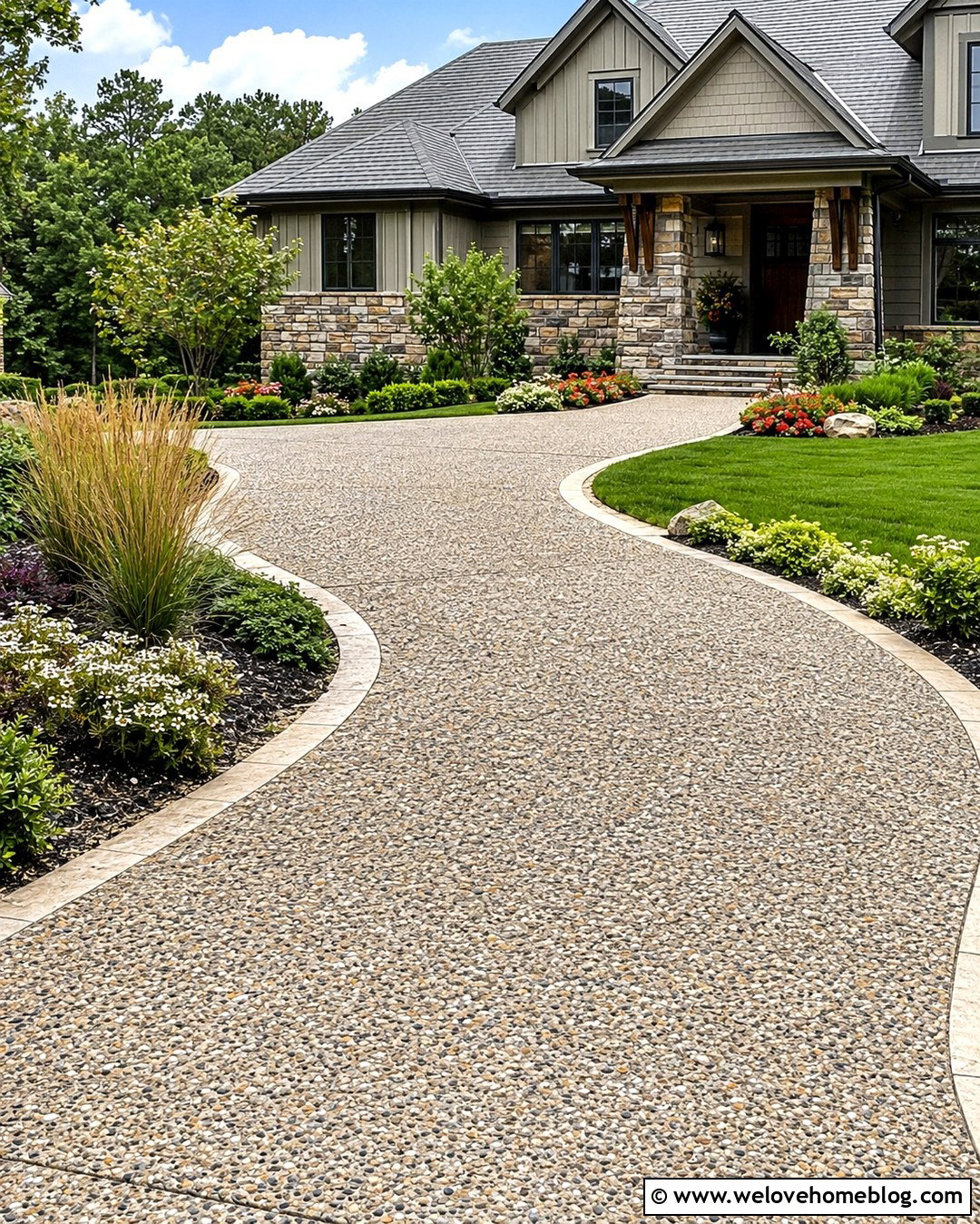
Exposed aggregate adds texture and subtle color while retaining the clean appearance of a concrete driveway. Select a mix containing stones that coordinate with the house facade, such as warm tan aggregate beside buff brick or cool gray aggregate near blue-gray siding. Shape the driveway with broad curves and finish the perimeter with natural stone set close to the surface. This border can connect visually with retaining walls, porch columns, or front steps. Use layered planting beds containing upright grasses, spreading ground covers, and compact flowering shrubs to soften the textured pavement. Keep plants low at the street and taller near the house. The result feels substantial but natural, making exposed aggregate an excellent makeover choice for craftsman homes, contemporary ranch houses, and wooded suburban properties.
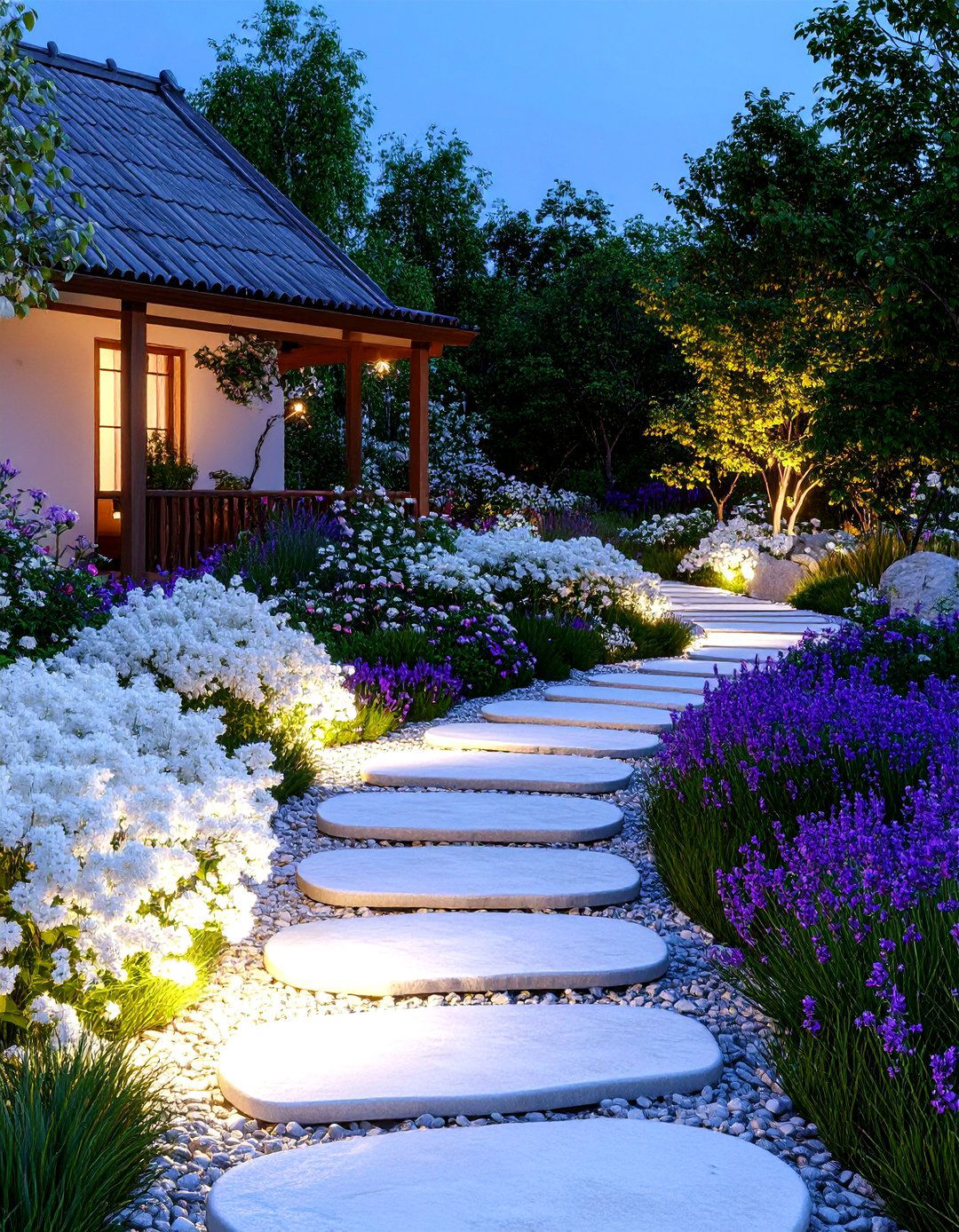

10. Stamped Concrete Driveway With Curved Planting Beds
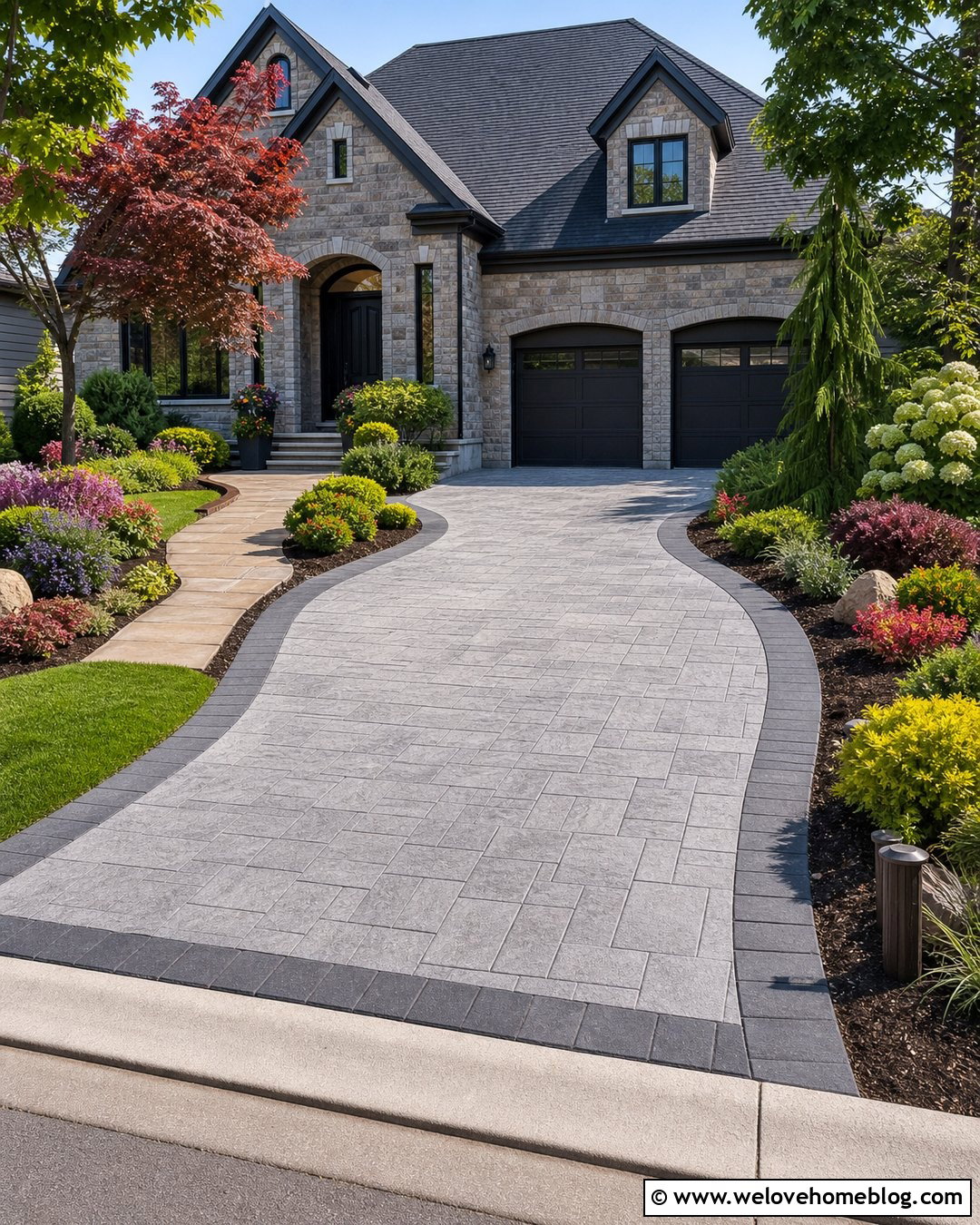
Stamped concrete can give a driveway the appearance of large stone slabs, cobblestone, or pavers while maintaining a continuous concrete surface. Choose a restrained pattern and natural color blend so the finish supports the architecture instead of competing with it. A medium-gray ashlar pattern, for example, works well with stone veneer and neutral siding. Follow the driveway’s outer edge with wide, curved planting beds that soften the stamped geometry. Use dark mulch, mounded evergreen shrubs, seasonal perennials, and one ornamental tree as a focal point. A contrasting smooth-concrete or paver walkway will help guests distinguish the pedestrian route. Before selecting the finish, discuss traction, drainage, control joints, curing, and compatible sealers with an experienced installer who understands local weather conditions.
11. Ribbon Driveway With Grass Strips
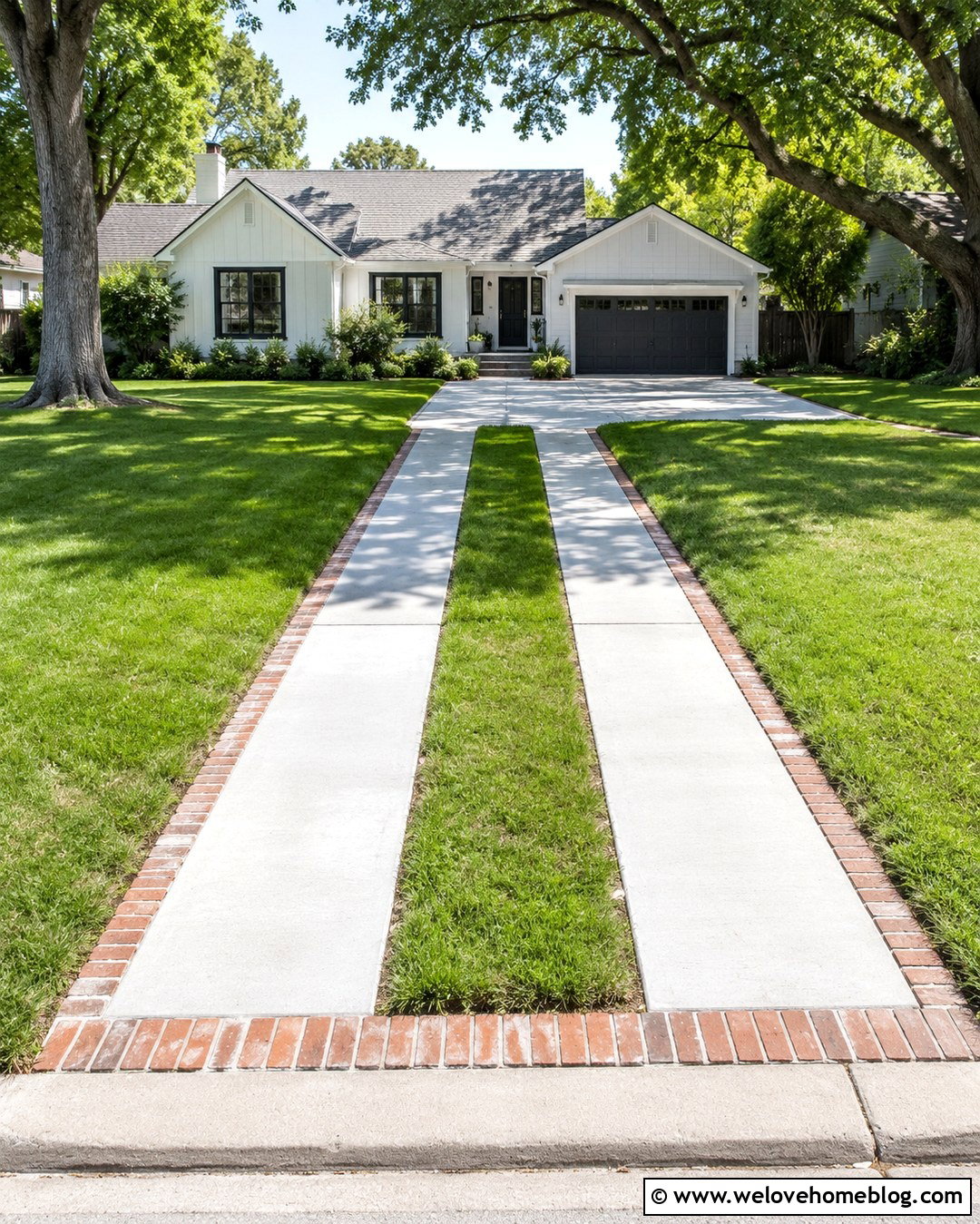
A ribbon driveway uses two paved tracks with a planted or gravel strip between them, reducing the visual weight of a wide paved area. For a traditional home, install light concrete wheel tracks separated by durable low grass. For a lower-maintenance version, replace the center grass with compacted decorative gravel that matches nearby beds. Outline the full driveway with flush brick or concrete edging so the narrow surfaces remain clearly defined. The layout works best when wheel paths, turning movements, drainage, and maintenance access are planned carefully. Continue one paved ribbon into a wider landing near the garage and connect it to the front walkway. Simple lawn panels, shade trees, and restrained foundation planting complete a makeover that feels greener and less dominated by hardscape.
12. Driveway Parking Pad With Matching Pavers
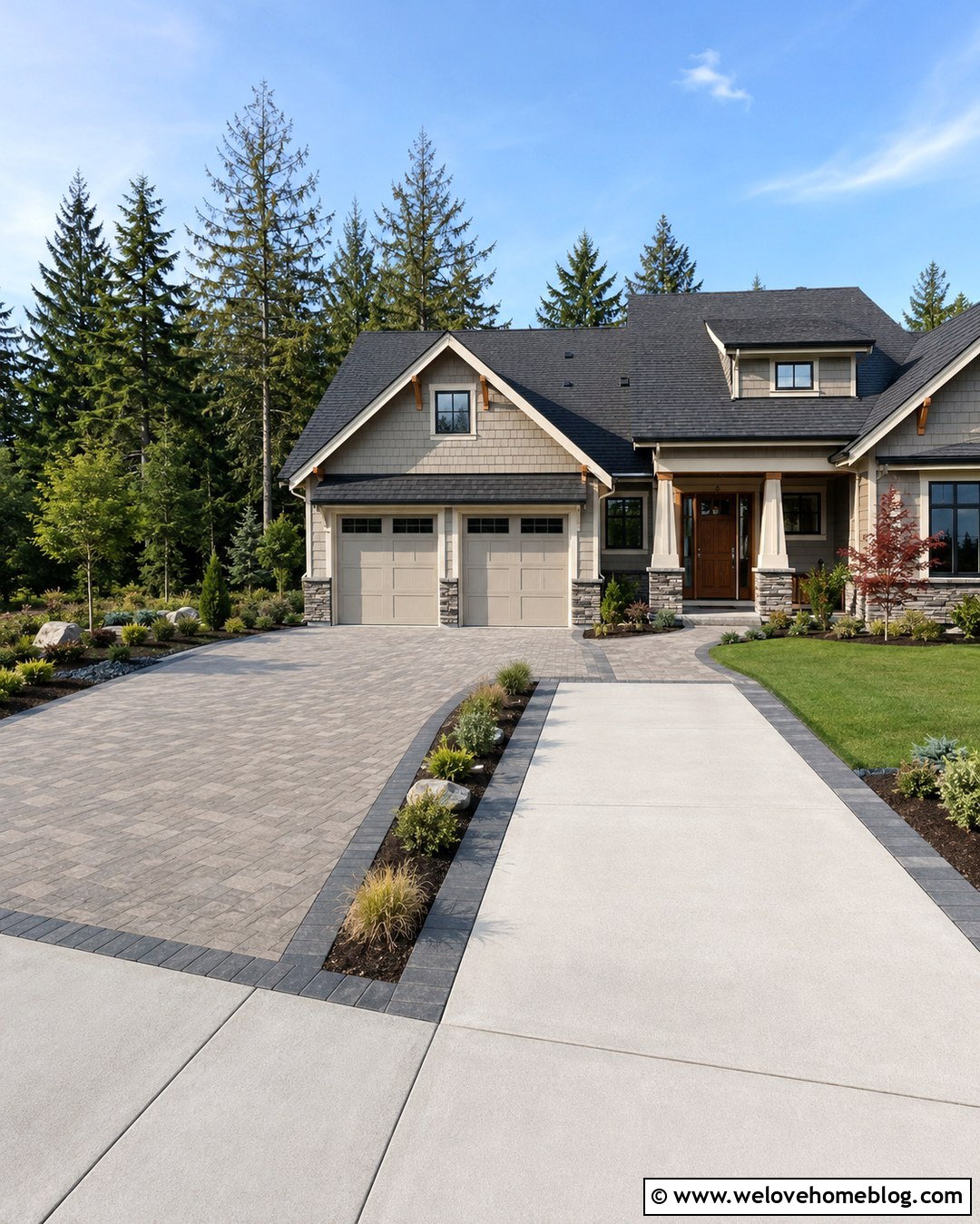
When vehicles regularly crowd the main driveway or damage the lawn, a well-designed parking pad can improve both appearance and function. Widen one section near the garage using pavers that coordinate with the existing driveway color. Instead of creating a random rectangular extension, give the new pad a clean border, a balanced connection to the main surface, and enough space for comfortable vehicle movement. Separate it from the front walkway with a narrow landscaped island containing low shrubs and ornamental grasses. If the house has brick details, repeat that color in the paver border. Confirm drainage, setbacks, utility locations, and local approval requirements before expanding the paved area. Done correctly, the addition looks intentional and prevents the front yard from becoming an informal overflow parking zone.
13. Permeable Paver Driveway With Rain Garden

Permeable interlocking concrete pavers can create an attractive driveway while allowing water to pass through open joints into properly designed layers below. The system requires more than swapping ordinary pavers for permeable ones; excavation depth, aggregate layers, soil conditions, overflow routes, and maintenance all matter. Permeable pavements can help reduce runoff by allowing rain and snowmelt to infiltrate through the surface. () Pair a charcoal permeable paver driveway with a shallow rain garden positioned to receive suitable overflow. Plant the garden with regionally appropriate grasses, sedges, and flowering perennials that tolerate changing moisture levels. () Stone edging, a raised walkway, and clean lawn transitions will integrate the stormwater features into a modern, complete front-yard design.
14. Curved Driveway With Layered Shrub Borders
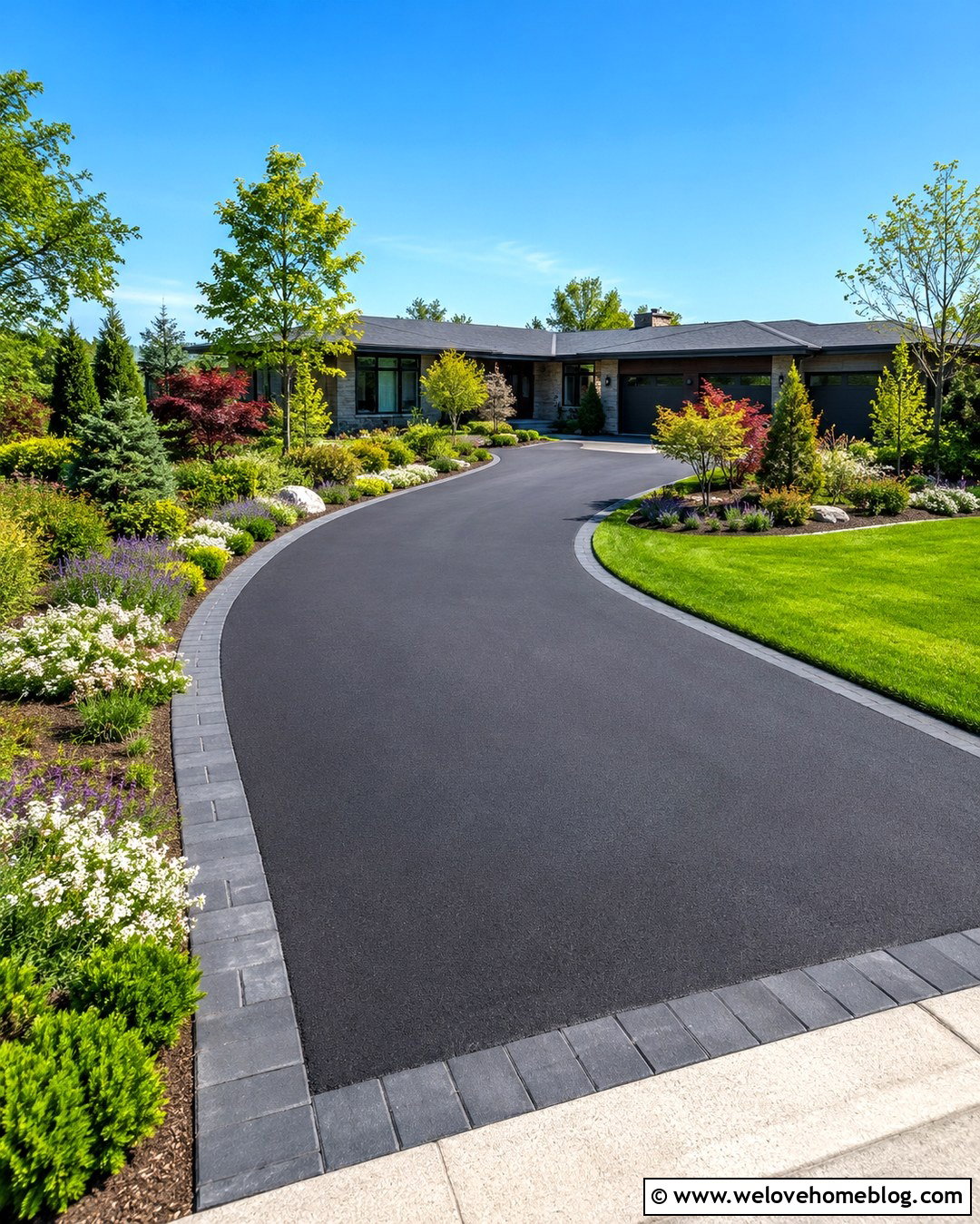
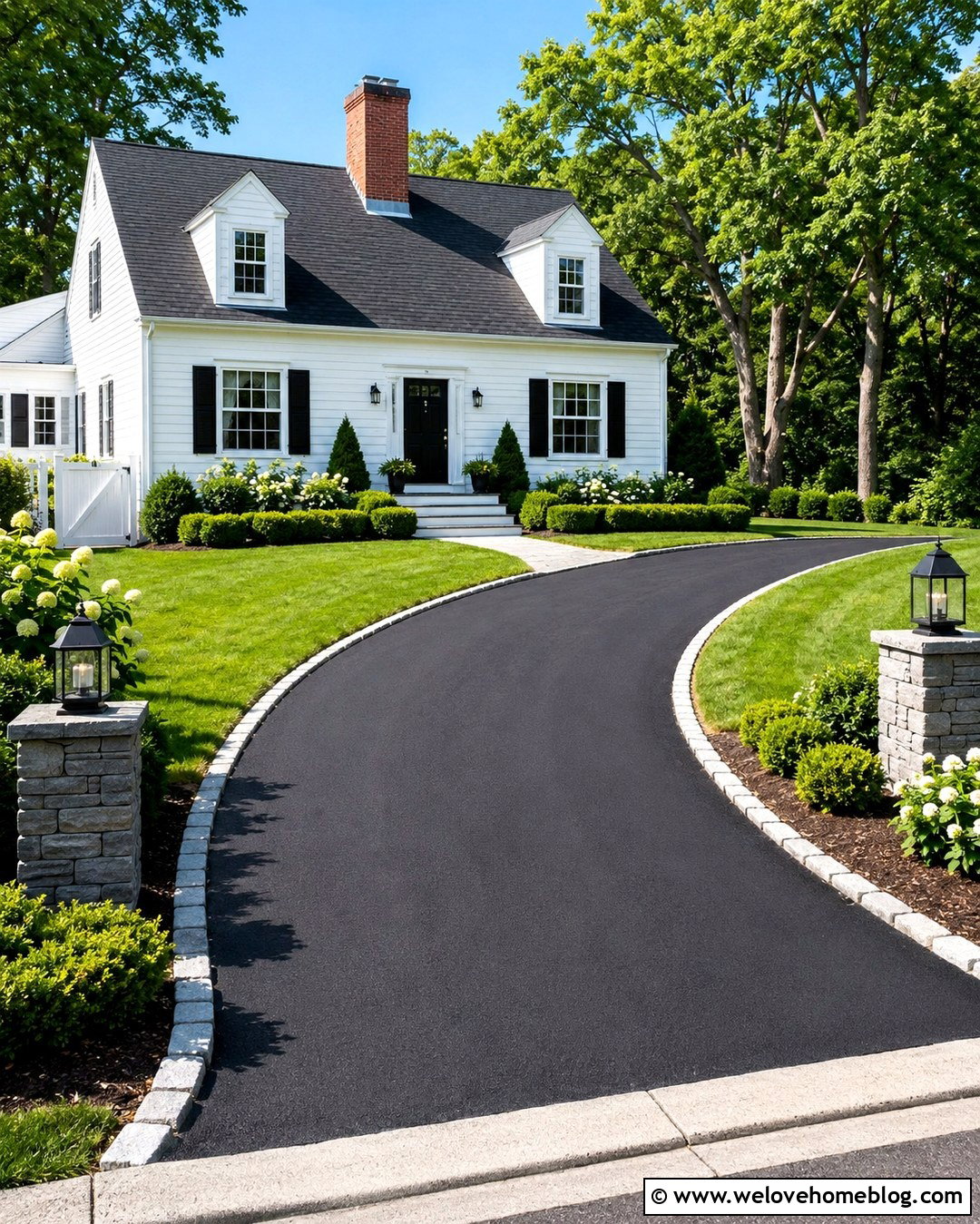
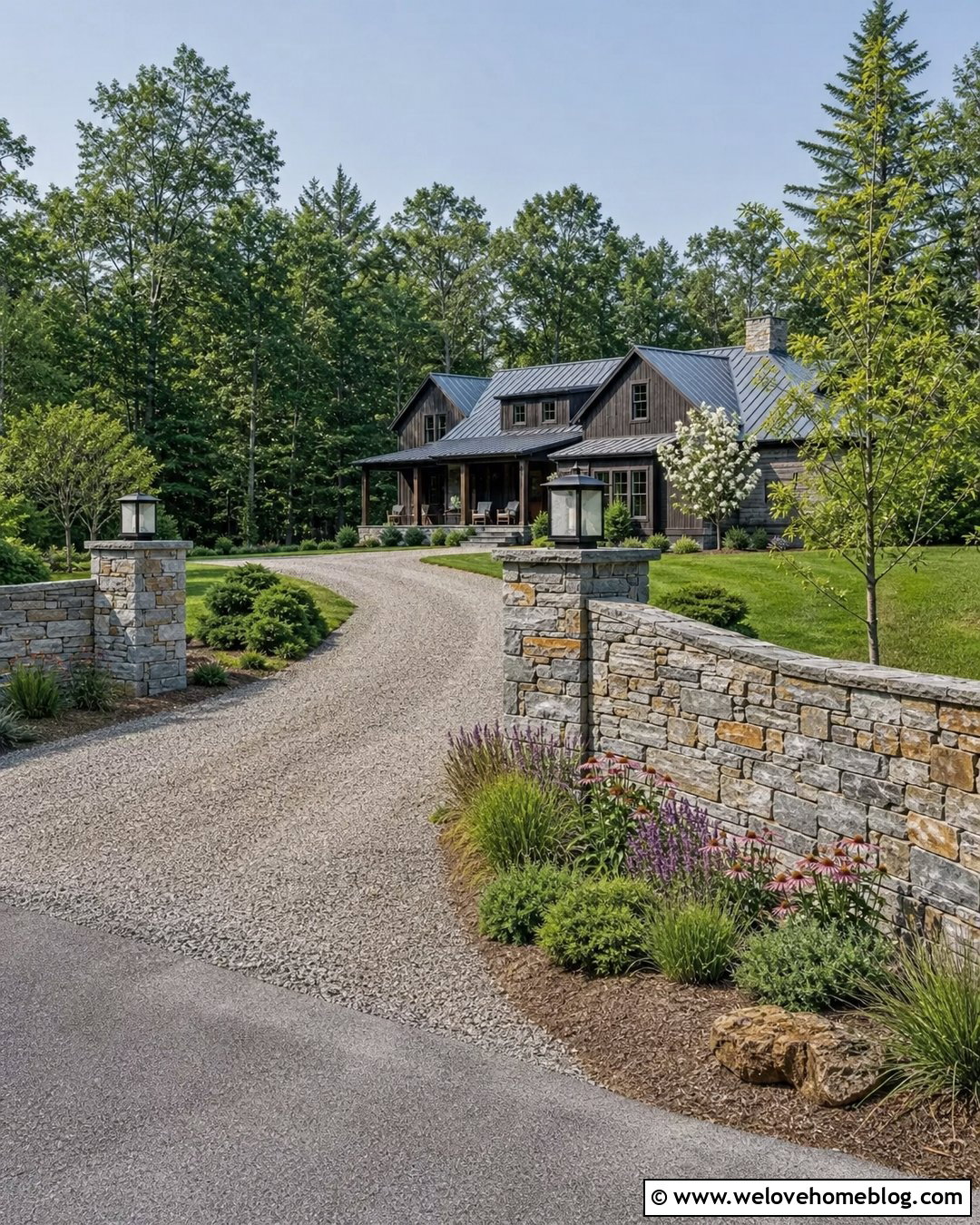
A straight driveway can feel harsh when it cuts through a large front yard without any supporting landscape. If site dimensions and access allow, reshape the approach into a gentle curve using asphalt, concrete, gravel, or pavers. Emphasize the outer curve with a continuous layered border rather than scattered individual plants. Place low ground cover and perennials near the pavement, medium shrubs behind them, and small ornamental trees at wider points. Keep the inside curve more open to preserve visibility and make navigation comfortable. Natural stone or dark paver edging can sharpen the boundary and prevent mulch from washing onto the driving surface. This makeover works particularly well for ranch, cottage, and country homes because the curved route slows the visual approach and creates a more landscaped arrival.

15. Circular Driveway With a Landscaped Center Island
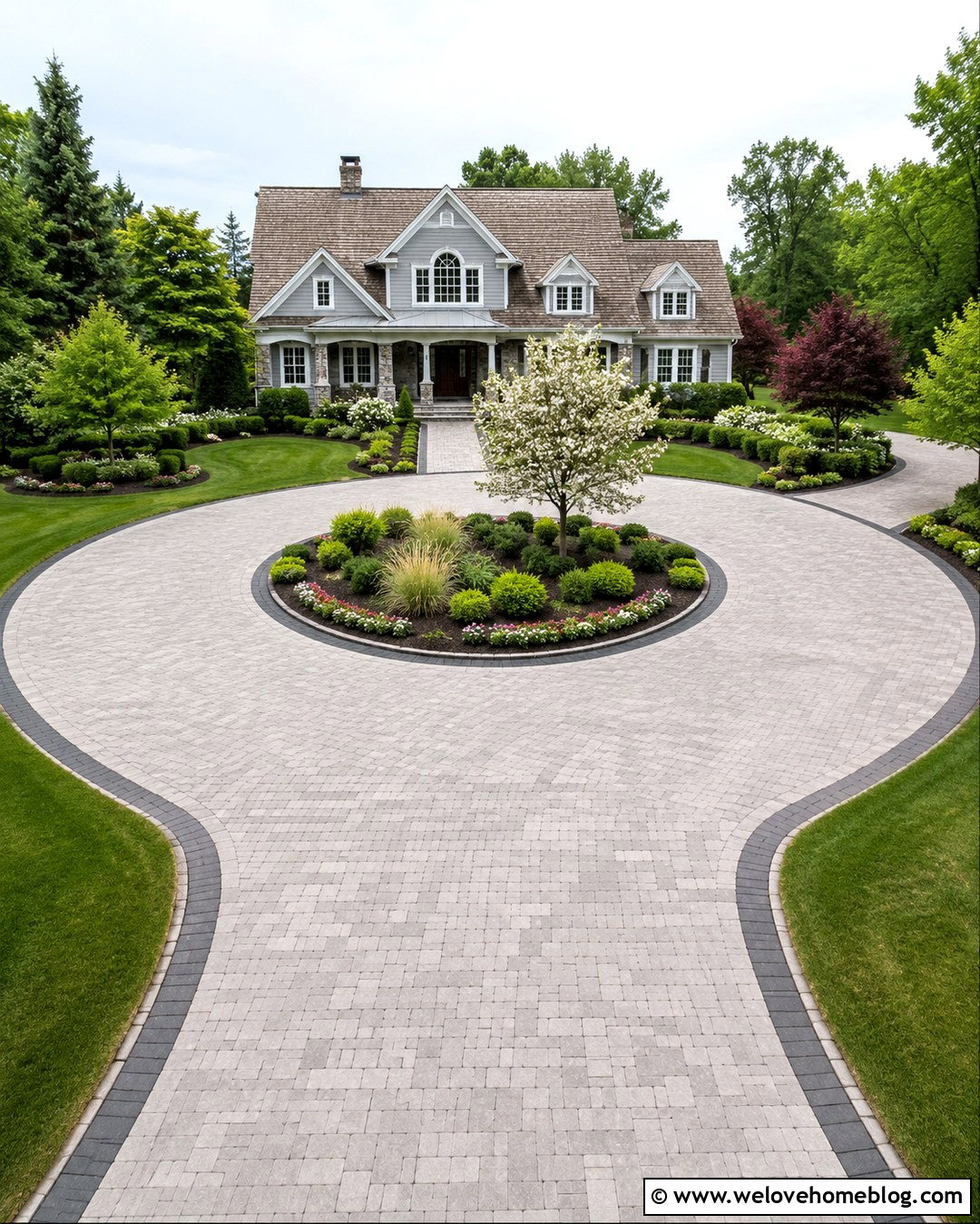
A circular driveway can become the defining feature of a broad front yard when its center island is treated as part of the architecture. Resurface the drive with gray concrete pavers, exposed aggregate, or compacted gravel, then install a contrasting edge around the island. Anchor the planting with one appropriately scaled ornamental tree rather than an oversized species that may eventually obstruct the house. Surround it with low evergreens, ornamental grasses, ground cover, and seasonal flowers arranged in broad repeated groups. Add a paved path across or around the circle if guests need a clear route to the front door. Maintain open views near both driveway connections. The finished layout should guide vehicles naturally while framing the home instead of hiding it behind dense landscaping.
16. Driveway Lighting With Stone Edging
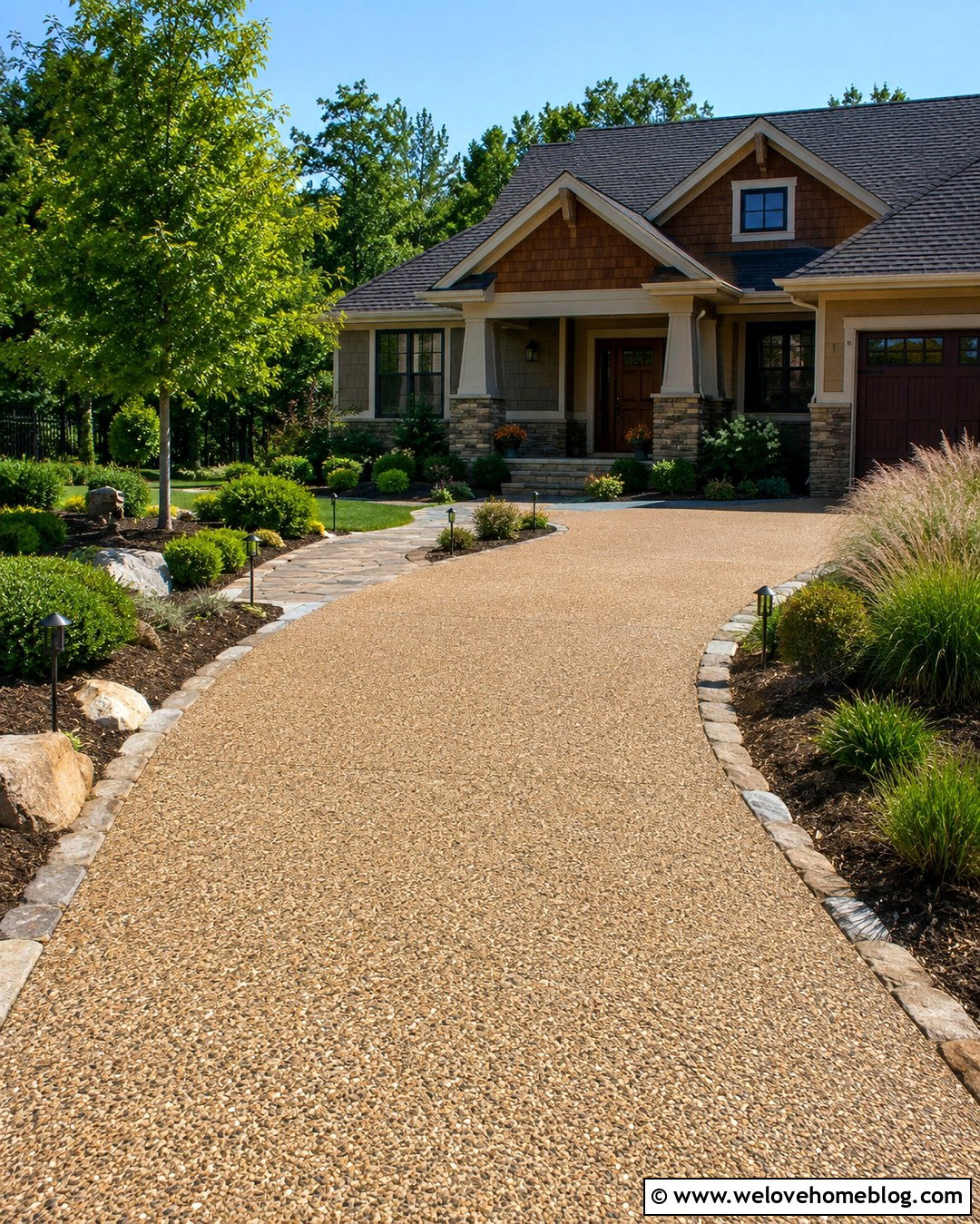
Low-voltage landscape lighting can improve the driveway’s nighttime visibility while making the daytime design appear more structured. During the makeover, install discreet fixtures beside natural stone edging rather than scattering lights randomly through the lawn. Space them according to the fixture’s beam spread and concentrate illumination near curves, elevation changes, pedestrian crossings, and the garage approach. Choose shielded, downward-directed fixtures to reduce glare for drivers and neighbors. During daylight, the stone border should remain the main visual feature, supported by low grasses and tidy mulch beds. Coordinate driveway lights with porch and walkway fixtures using similar finishes. Plan wiring, transformer capacity, drainage, and future plant growth before installation. The result should guide movement gently without making the property look like a brightly illuminated runway.
17. Driveway Gate With Stone Pillars
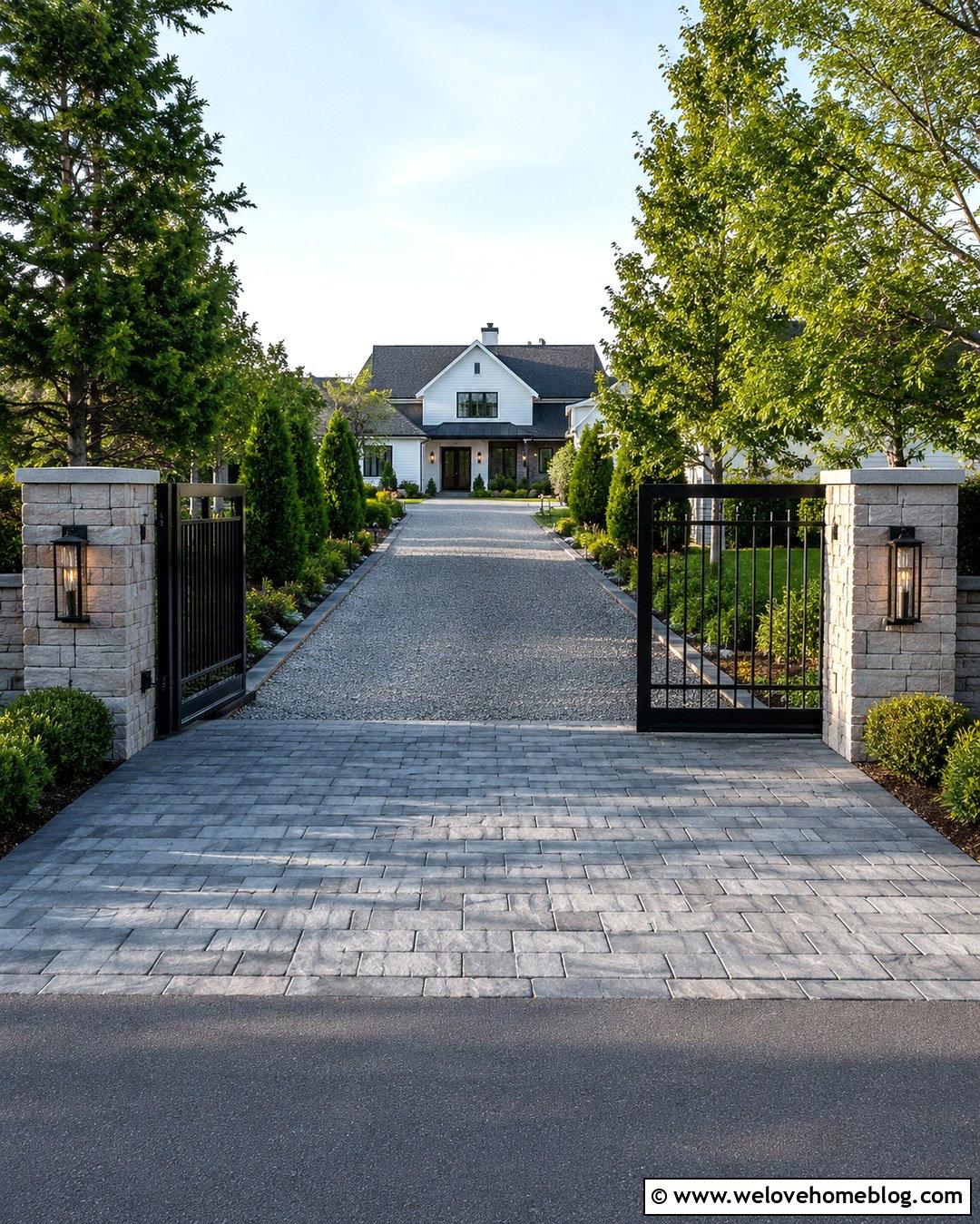
A new gate should feel connected to the driveway, house, and surrounding landscape rather than appearing as a separate decorative object. Pair a black metal swing or sliding gate with stone-clad pillars that repeat masonry found on the home. Resurface the entrance area with charcoal concrete pavers, then transition to asphalt or gravel farther inside the property if a full paver driveway exceeds the budget. Add low hedges and symmetrical planting beds outside the pillars, leaving enough open space for visibility and gate operation. Include lighting, access controls, drainage, mail delivery needs, and emergency access in the planning stage. Verify property boundaries and applicable rules before construction. This complete entrance treatment works especially well for long driveways serving farmhouse, Mediterranean, transitional, or estate-style homes.
18. Driveway Entrance With an Address Monument
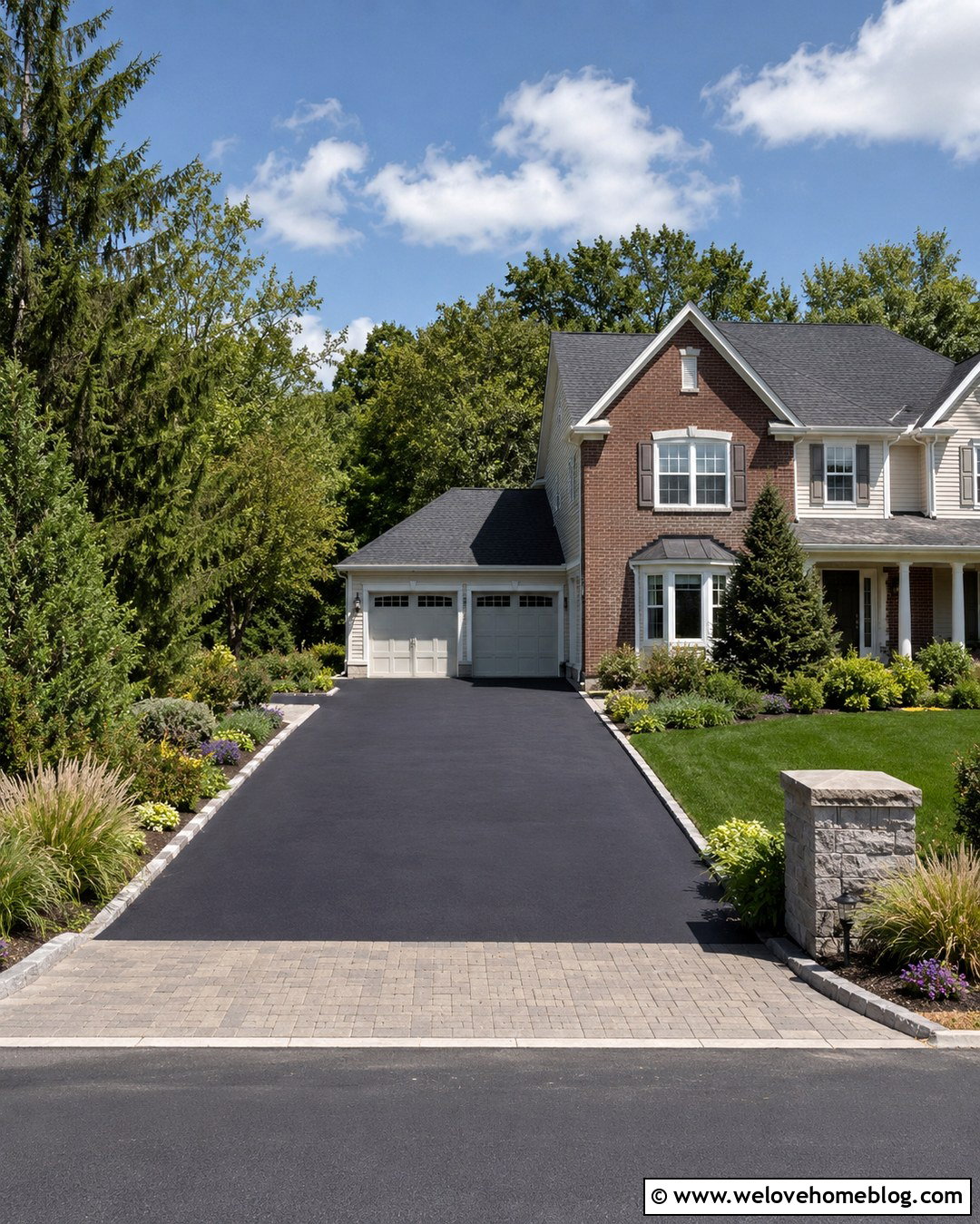
A clear address feature can update the driveway entrance while helping visitors recognize the property. Build a low stone or brick monument beside the driveway apron, using materials that match the home’s facade or existing borders. Pair it with a resurfaced asphalt driveway and a paver entrance band so the sign feels integrated into the hardscape. Keep lettering uncluttered and make sure the placement remains visible without blocking sightlines. Surround the monument with low evergreen shrubs, ground cover, and one compact ornamental grass grouping. A shielded light can illuminate the address without shining toward the street. On the opposite side of the driveway, repeat a smaller planting bed to create balance. The makeover provides a strong curbside focal point without requiring an elaborate gate or large pillars.
19. Driveway Walkway Connection With Contrasting Pavers
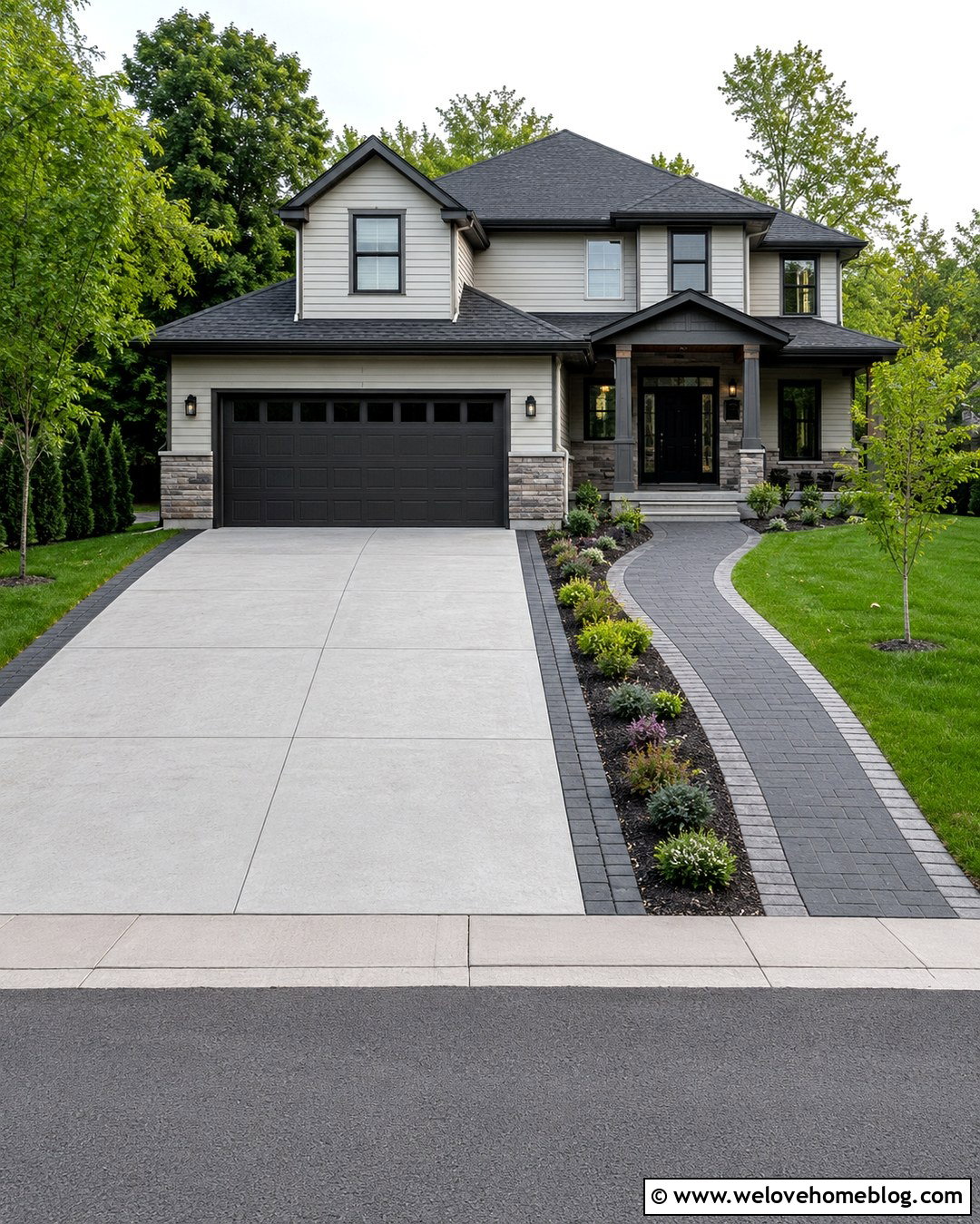
Many driveways look incomplete because there is no obvious pedestrian route from the parking area to the front door. Add a contrasting paver walkway that begins at a comfortable unloading point and curves gently toward the porch. If the driveway is plain concrete, use charcoal or warm brown pavers for definition. Repeat the same material as a narrow driveway border or garage apron so the walkway does not look attached as an afterthought. Separate walking and driving areas with a slim landscaped bed where space permits. Use low plants near doors and vehicle zones, reserving taller shrubs for the foundation. Proper slopes, stable surfaces, and clear transitions are especially important for accessibility. This makeover improves everyday circulation while giving the front yard a more organized, welcoming appearance.


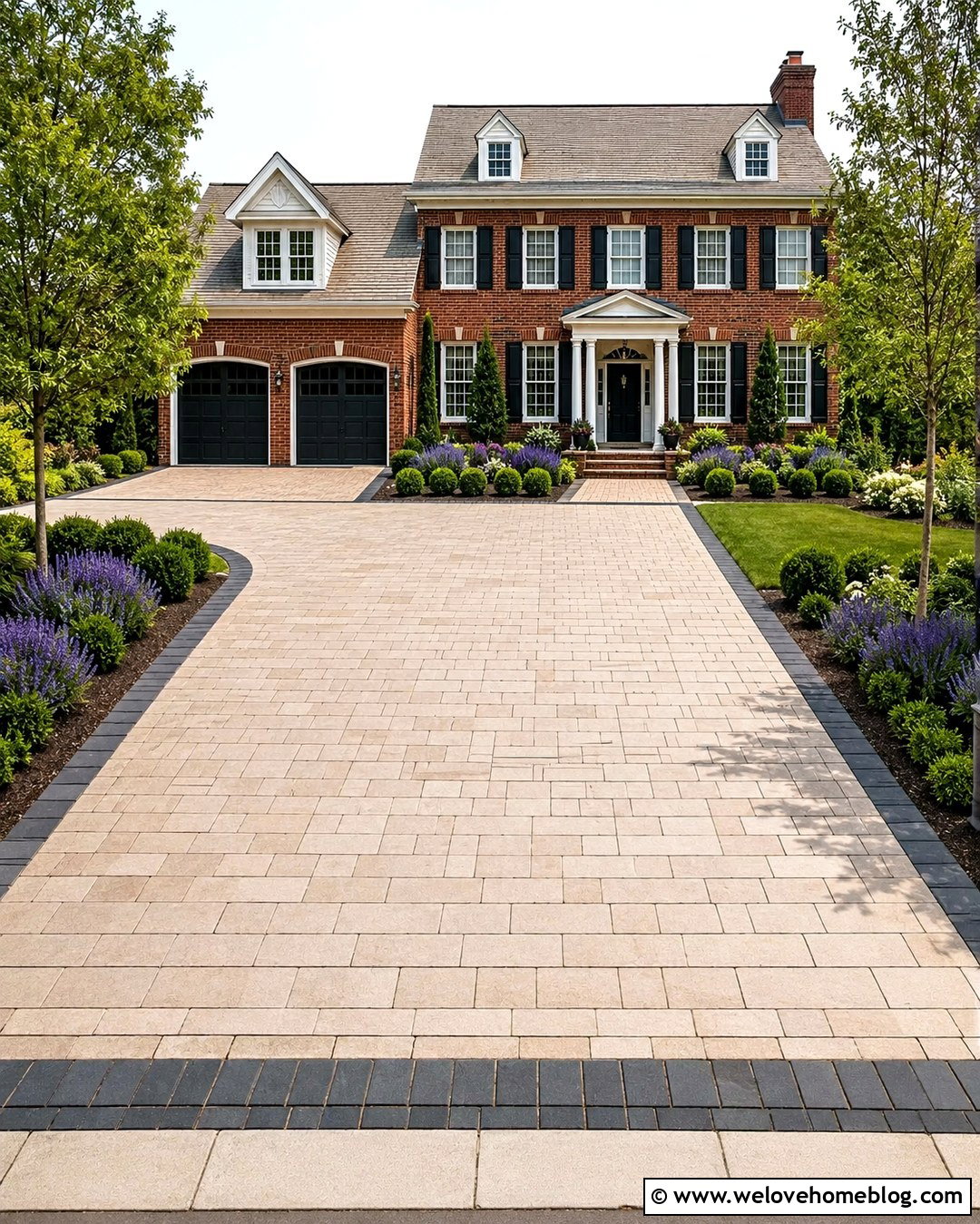
20. Garage Apron Driveway With Coordinated Landscaping
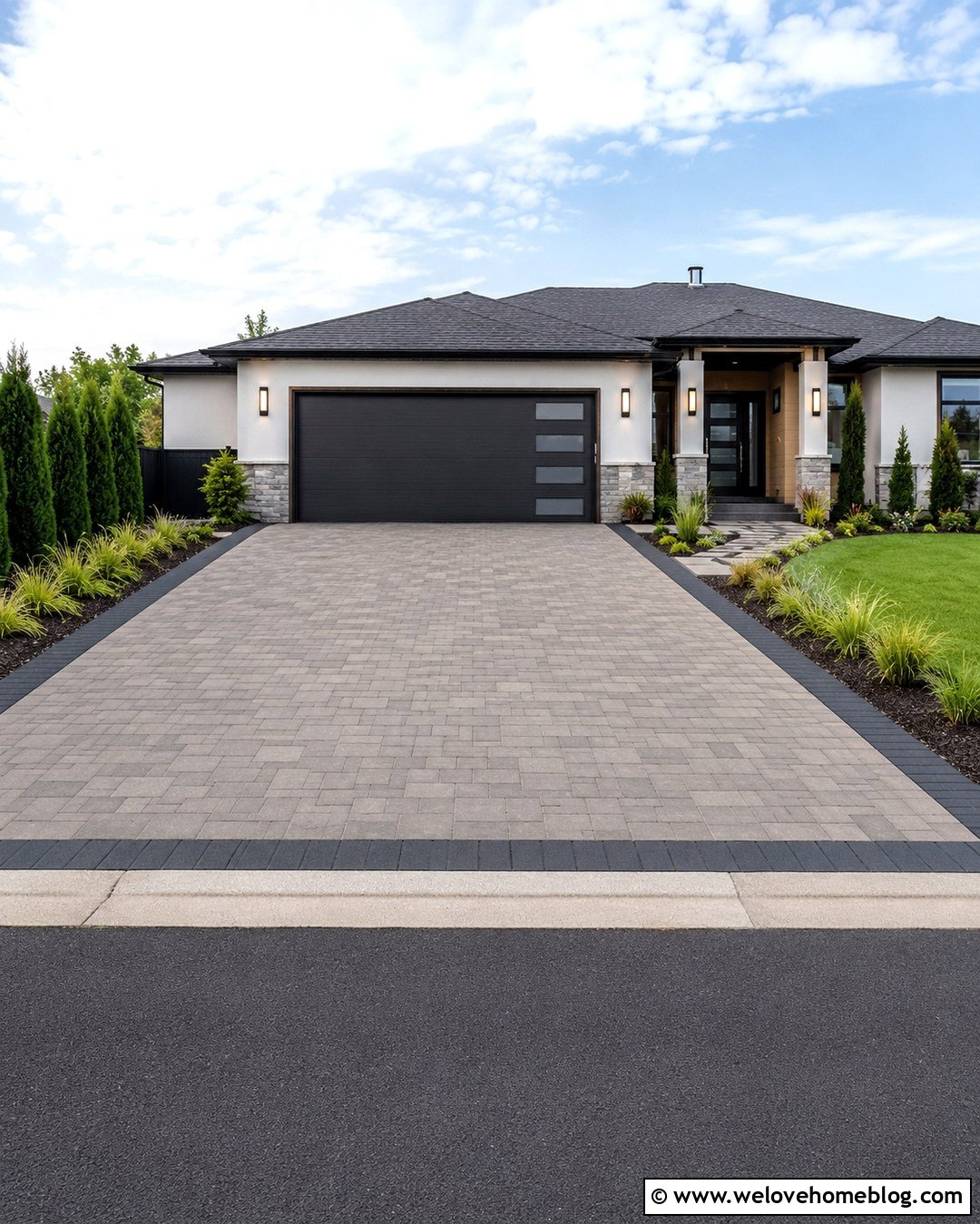
The section directly in front of the garage often shows the most stains, cracks, and mismatched repairs. Replace that worn area with a distinct paver or exposed aggregate apron while retaining a stable asphalt or concrete driveway beyond it. Choose a color that relates to the garage door, exterior trim, and front walkway. A wide border around the apron can create a clean visual transition between old and new surfaces. Add narrow planting beds beside the garage, using upright shrubs and grasses that will not interfere with doors, mirrors, or passenger access. Improve downspout routing and confirm that water moves away from the garage opening. Finish with matching wall lights and a neat walkway connection. This targeted project creates a polished arrival without rebuilding the entire driveway.
Conclusion:
Successful 20 Driveway Makeover Project Ideas go beyond changing the pavement color or adding a few plants. The strongest transformations coordinate the driveway surface, layout, edging, drainage, landscaping, walkway, and house architecture. Begin by repairing structural or water-related problems, then choose upgrades that suit your climate, maintenance expectations, and budget. Small projects such as cleaning concrete, adding brick borders, or improving the garage apron can produce a noticeable difference. Larger renovations may introduce pavers, permeable surfaces, curved layouts, gates, or circular planting islands. Whatever scale you choose, maintain safe visibility and comfortable vehicle movement. A well-planned makeover creates a driveway that looks intentional, functions reliably, and strengthens the home’s entire curb appeal.

Related posts:





Leave a Reply