
A well-built driveway gate can improve privacy, security, and curb appeal while giving your entrance a more finished appearance. This guide to **20 Driveway Gate How To Build Ideas** covers practical designs for different house styles, driveway surfaces, budgets, and skill levels. Before choosing a design, measure the opening, study the driveway slope, and confirm that the gate has enough room to swing or slide safely. The posts, frame, bracing, hinges, and latch must work as one system. Heavy or automated gates may require professional fabrication, electrical work, or engineered footings. From affordable timber gates to modern steel sliders, the following complete entrance designs combine reliable construction with attractive landscaping. Explore these **20 Driveway Gate How To Build Ideas** to find a suitable approach for your property.
1. Wood Double Swing Driveway Gate
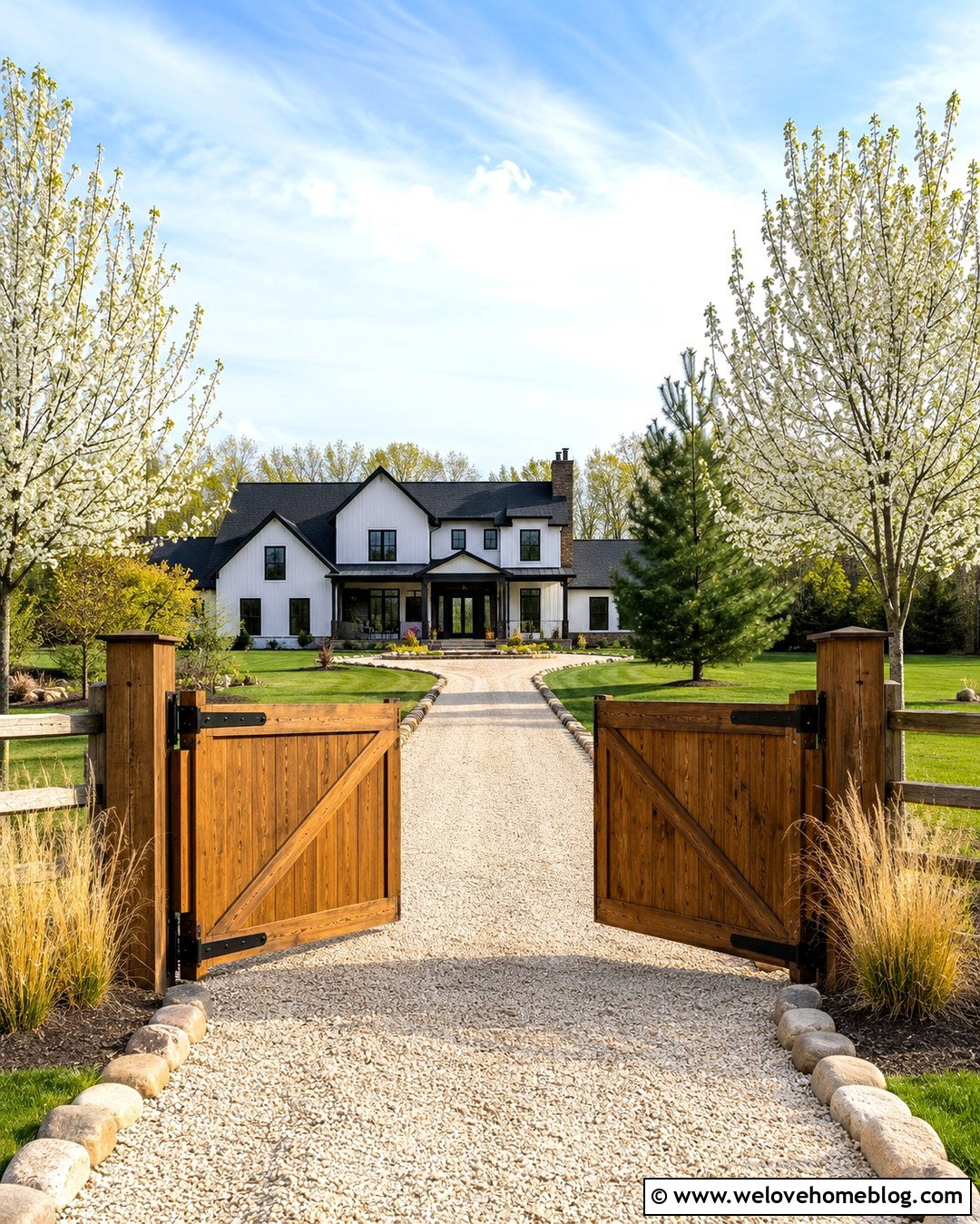
A double swing gate is a manageable choice for a wide, level entrance because each leaf covers only half the opening. Start with pressure-treated posts or steel posts set in properly sized concrete footings. Build two matching rectangular frames from cedar or treated lumber. Install a diagonal compression brace from the lower hinge corner toward the upper latch corner on each wooden leaf. Exterior-rated bolts provide stronger connections than lightweight finish screws. Hang the leaves with adjustable heavy-duty hinges, leaving consistent clearance at the center and above the driveway. Add a center latch and cane bolts that secure the inactive leaf. A light gravel driveway, stone edging, and informal planting beds create a relaxed country entrance that suits this practical DIY gate.
2. Metal Frame Wood Driveway Gate
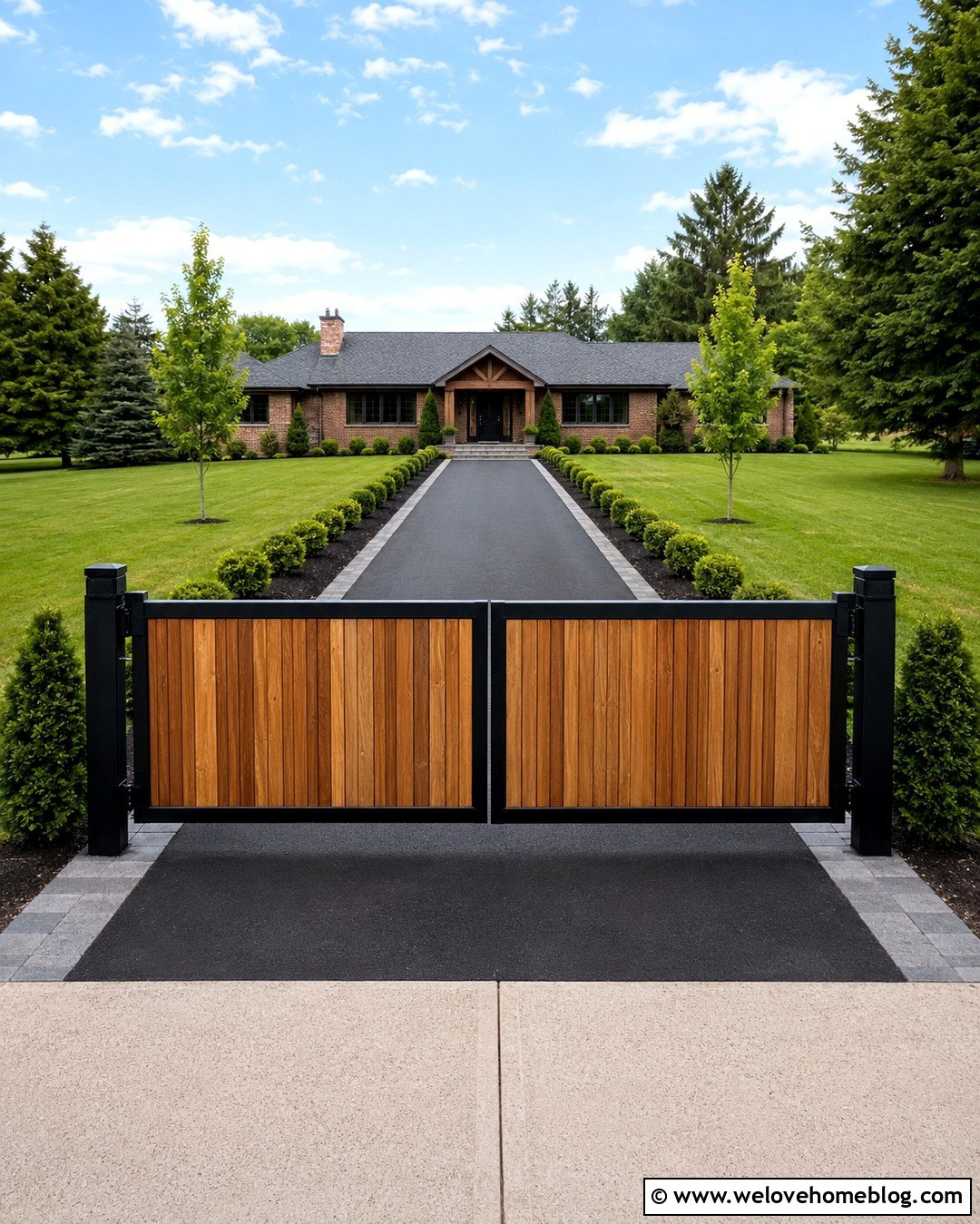
Do you want the warmth of wood without relying on a large wooden frame? Build a rigid rectangular frame from welded steel tubing, then fasten cedar boards to horizontal mounting rails. The steel controls twisting, while spaced vertical boards soften the industrial appearance. Apply a rust-resistant primer and exterior metal coating before installing the wood. Seal every board on all sides to reduce uneven moisture absorption. Substantial steel posts, adjustable hinges, and reinforced hinge plates are essential because the finished gate can become heavy. Position the boards slightly above the frame’s lower rail so they do not trap water. Pair this gate with a black asphalt driveway, charcoal paver borders, clipped shrubs, and a brick ranch home for a durable, balanced entrance.
3. Cedar Slat Sliding Driveway Gate
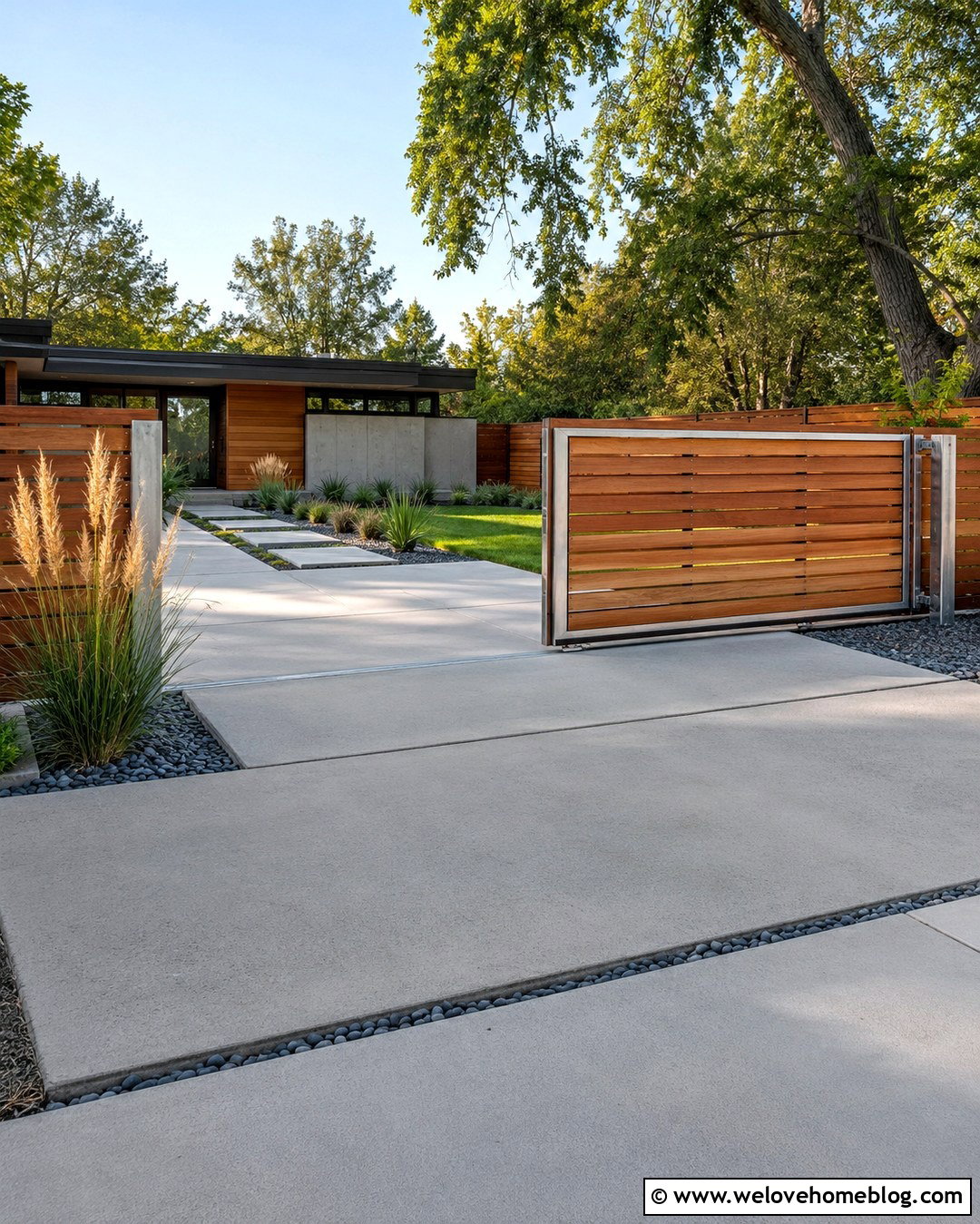
When a short driveway cannot provide safe swing clearance, a sliding cedar gate can move parallel to the fence. Build a galvanized steel frame long enough for the opening and selected sliding system. Add closely spaced horizontal cedar slats, keeping their layout consistent across the gate and adjoining fence. A tracked design needs a straight, stable surface for its bottom rail, wheels, and drainage. A cantilever system avoids a ground track but requires additional gate length, strong support posts, and correctly positioned roller assemblies. Confirm that sufficient space exists beside the opening before construction begins. Finish the entrance with a smooth gray concrete driveway, narrow gravel drainage strips, ornamental grasses, and a low modern house. The horizontal lines make the complete property feel wider and cleaner.
4. Farmhouse Cross Brace Driveway Gate
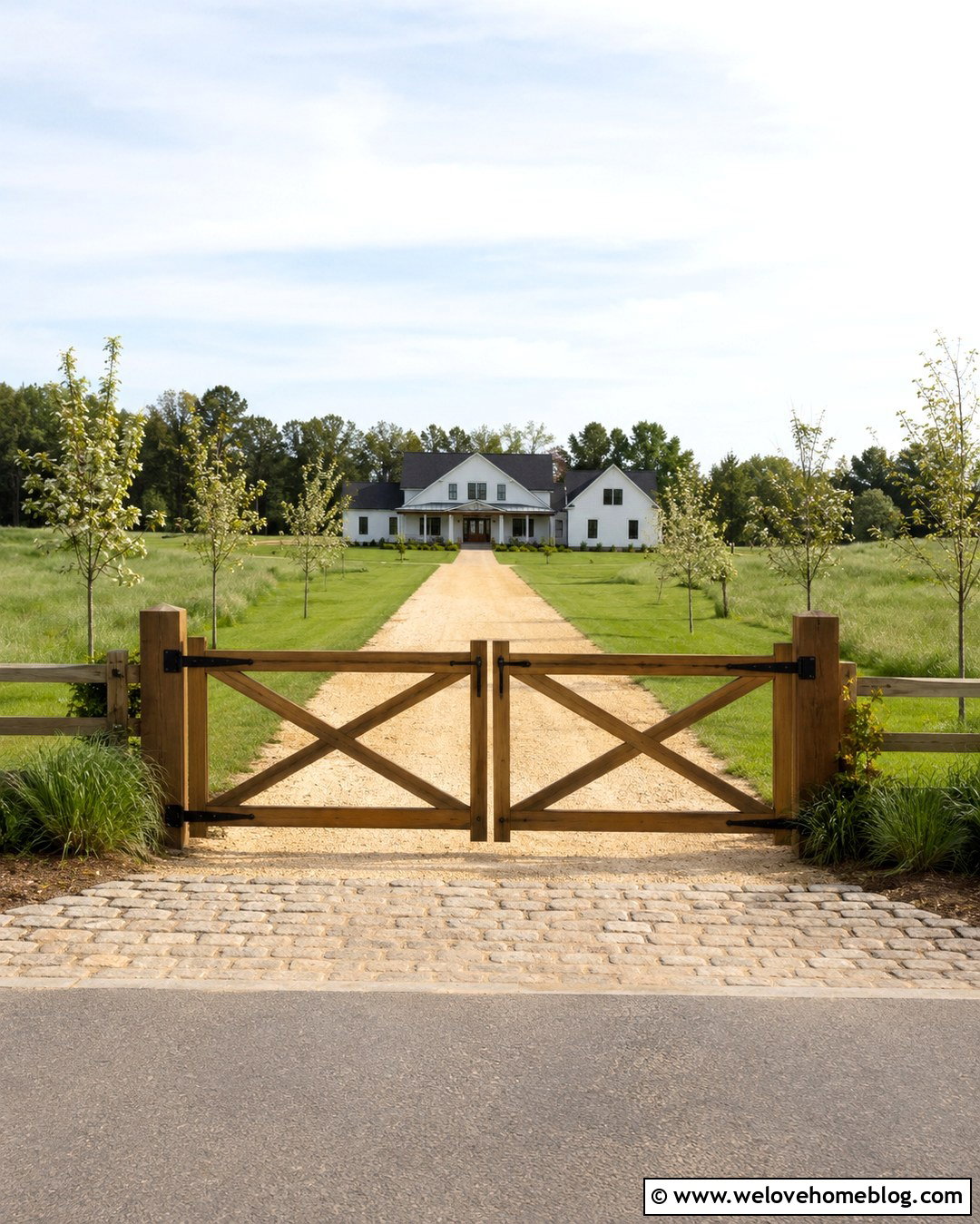
Freshly stained timber and bold diagonal braces give a farmhouse entrance an honest, handcrafted character. Construct two gate leaves from dry cedar, cypress, or properly treated lumber. Use sturdy perimeter rails with an X-brace or well-positioned diagonal braces to limit sagging. Through-bolts and exterior washers strengthen major joints and make future repairs easier. Hang the leaves from timber posts reinforced by concrete footings, or conceal steel supports inside wider wood surrounds. Black strap hinges and a simple center latch provide contrast without making the design overly decorative. Continue the rural look with a pale crushed-stone driveway, cobblestone entrance apron, split-rail fencing, native grasses, and small flowering trees. Keep the gate light and partially open rather than covering the frame with unnecessary heavy boards.
5. Modern Horizontal Driveway Gate
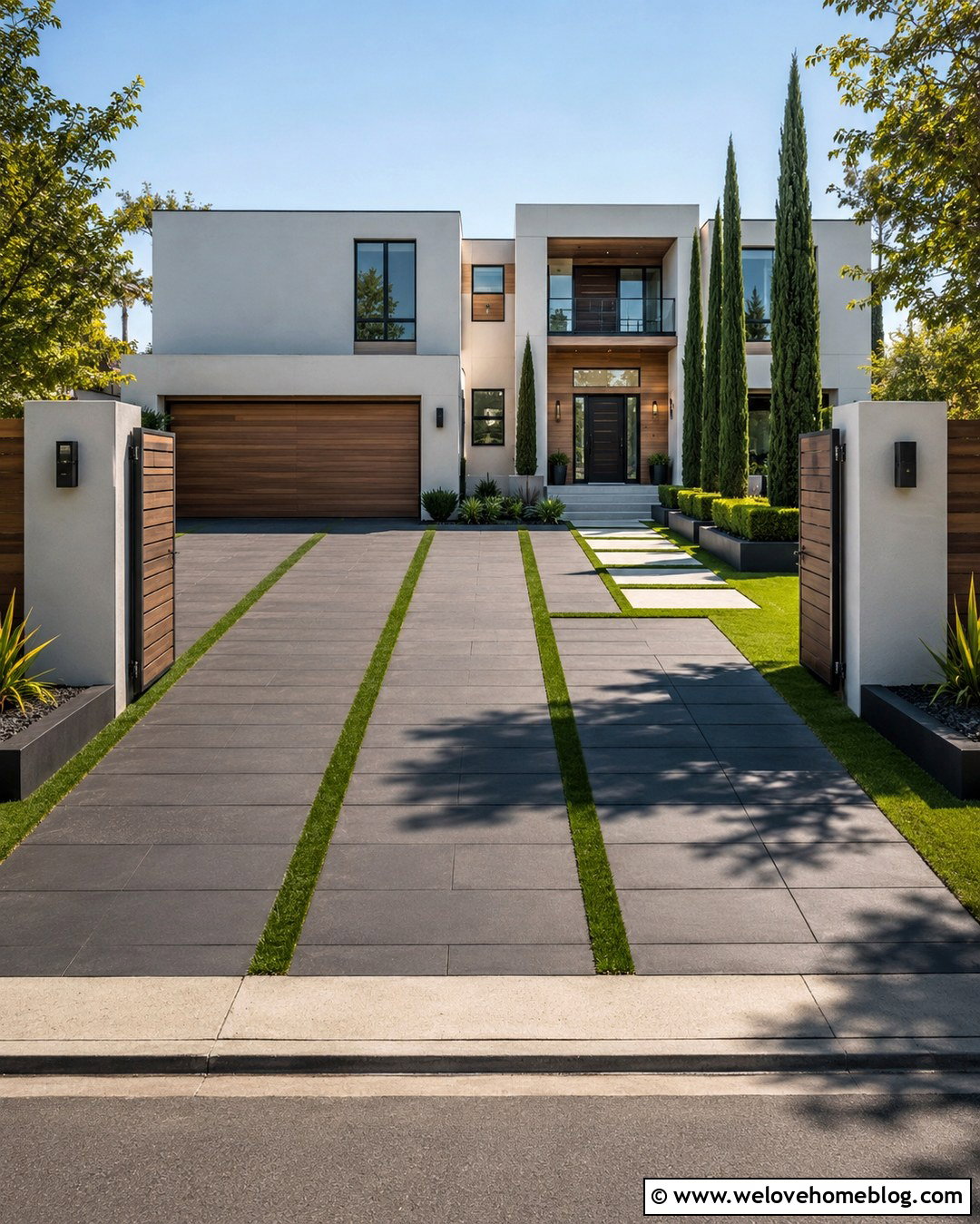
A horizontal driveway gate works especially well with modern homes, but its clean appearance depends on accurate spacing. Fabricate a square steel or aluminum frame and add evenly spaced composite, cedar, or powder-coated metal slats. Use temporary spacer blocks so every gap remains identical during assembly. For a swing design, reinforce the hinge side and choose hardware rated for the completed gate’s size and weight. A concealed steel frame can support the slats without interrupting the minimalist facade. Install square masonry pillars with simple caps, but leave suitable clearance around hinges and moving parts. A charcoal concrete paver driveway, straight grass strips, rectangular planting beds, and sculptural evergreen shrubs complete the look. Limit the color palette to two or three finishes for a cohesive entrance.
6. Black Steel Bar Driveway Gate
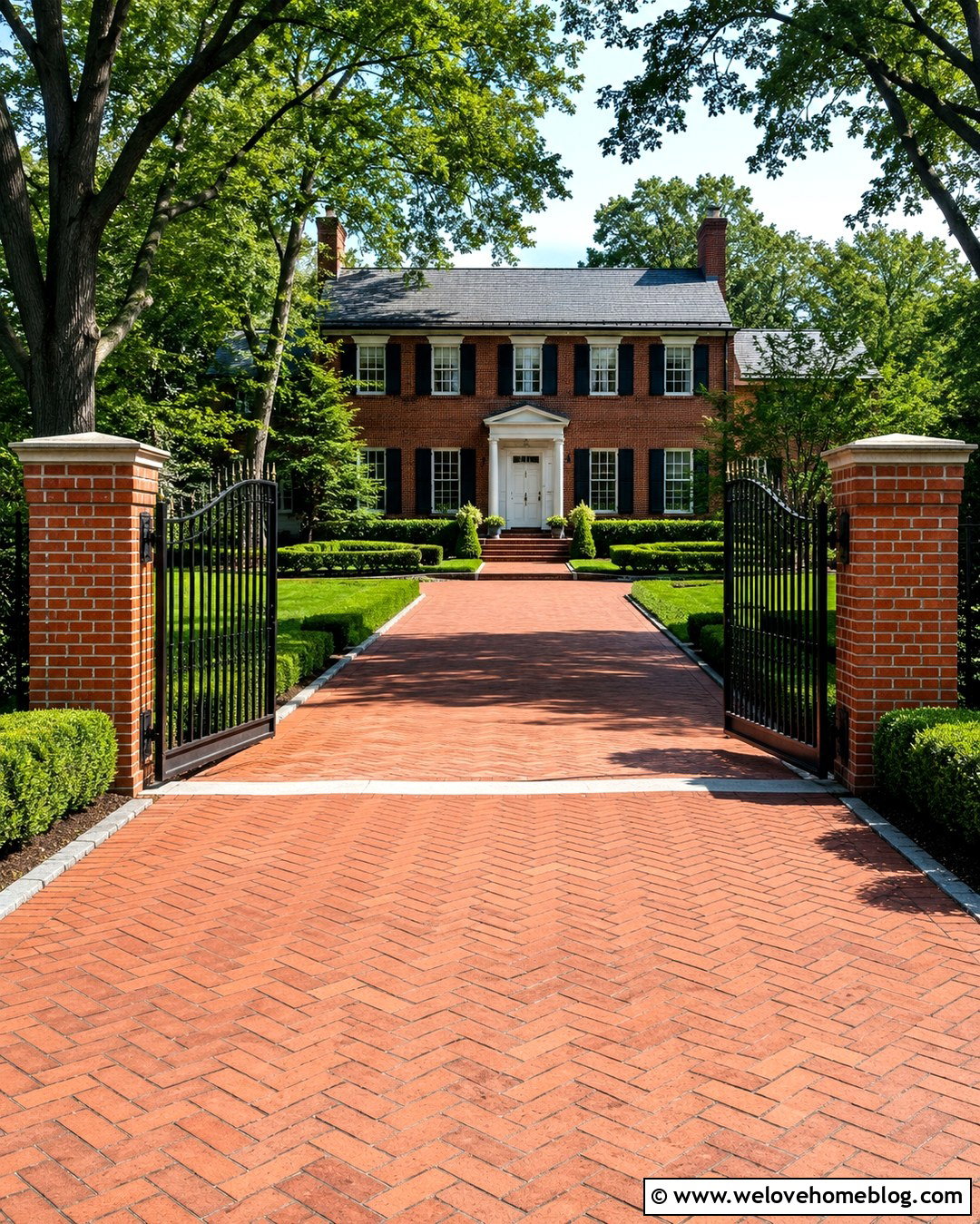
Slim vertical steel bars can secure the entrance while preserving views toward the house. Begin with a welded rectangular frame made from appropriately sized steel tubing. Lay out the bars on a flat work surface and use spacers before welding them between the top and bottom rails. Check the frame diagonally to confirm it remains square as the welds cool. Add a lower horizontal rail if the design needs extra stiffness or smaller openings near the ground. After smoothing the welds, use galvanizing or a complete rust-resistant coating system suitable for exterior steel. Mount the gate between brick pillars with heavy adjustable hinges. Red brick pavers, evergreen hedges, formal lawn panels, and a colonial home create a traditional entrance without making it appear visually closed.
7. Simple Timber Driveway Gate
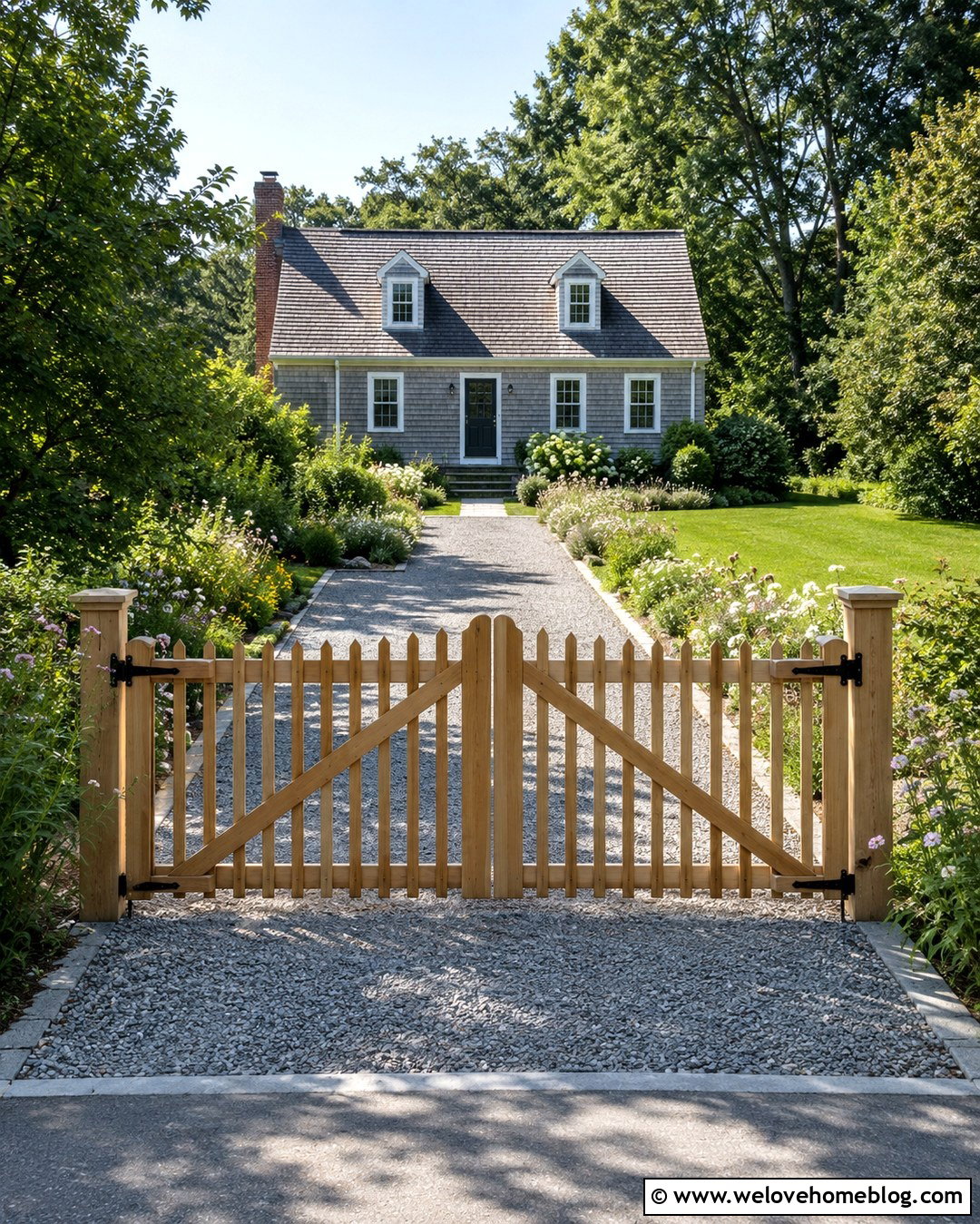
A simple timber gate can be affordable, attractive, and easier to repair than an elaborate design. Use two lightweight leaves rather than one exceptionally long panel. Assemble each rectangular frame on a level surface, checking equal diagonal measurements before securing the joints. Add a diagonal brace that transfers the outer corner’s load back toward the lower hinge area. Vertical pickets can be spaced for visibility or installed closer together for more privacy. Use corrosion-resistant fasteners because ordinary interior hardware deteriorates quickly outdoors. Mount the gate to robust posts and test its full movement before adding the final latch. Pair the natural timber with a compacted gray gravel driveway, timber edging, meadow planting, and a modest Cape Cod house for an approachable, budget-conscious entrance.
8. Privacy Panel Driveway Gate
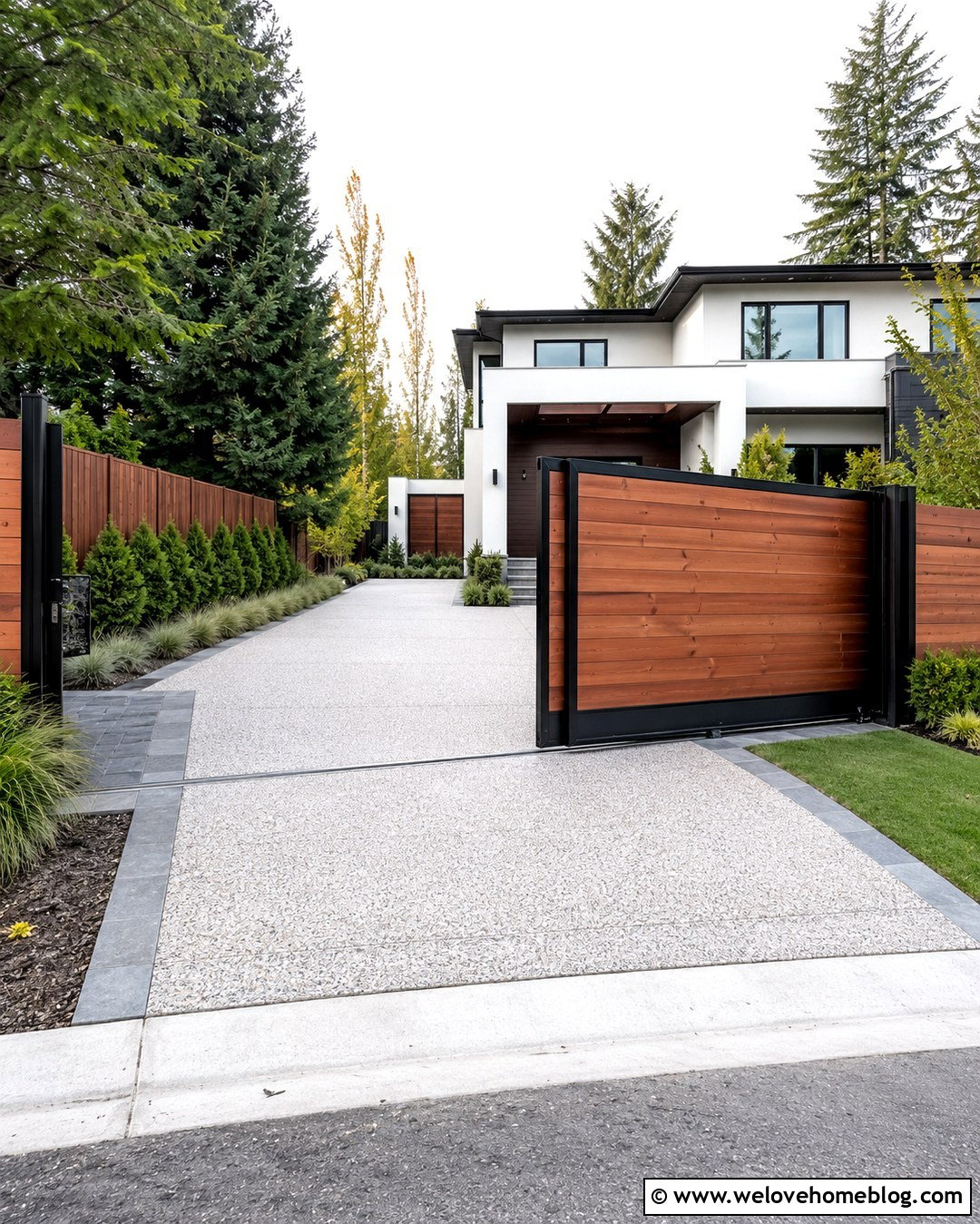
For a driveway facing a busy street, a solid privacy gate can create a calmer front yard. The large surface catches more wind than an open gate, so the posts, hinges, frame, and foundations require careful planning. Build a reinforced steel frame and attach tongue-and-groove cedar, exterior composite boards, or corrugated metal panels. Leave small drainage and expansion gaps where the selected material requires them. A sliding layout is often practical because it does not project into the driveway, although it needs an unobstructed side return. Match the gate to a tall boundary fence and use a dependable latch. A light exposed-aggregate driveway, broad stone borders, layered evergreen planting, and a contemporary stucco house keep the private entrance welcoming rather than severe.
9. Picket Driveway Gate
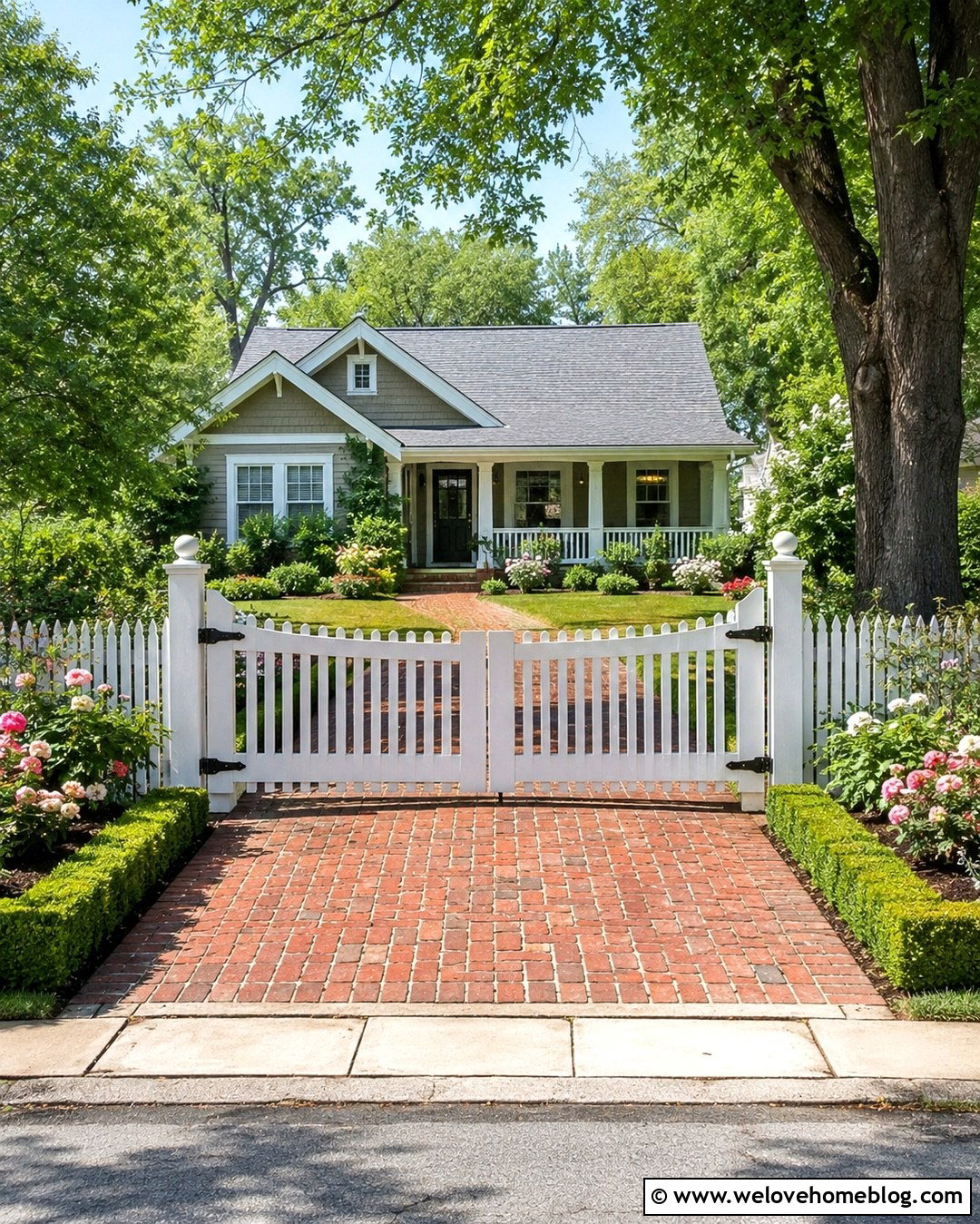
An open picket gate brings cottage character to a smaller driveway without blocking the house from view. Build two compact wood frames with a top rail, bottom rail, and diagonal bracing. Cut the pickets together with a simple template so their heights and pointed or rounded tops match. Keep the gaps even by using a spacer during installation. Prime and paint every face, edge, and cut end before final assembly for more complete coverage. White or soft gray paint works well with traditional homes, while black hardware provides a crisp outline. Set the gate between painted posts with substantial strap hinges and a centered latch. A clay brick driveway, low boxwood edging, roses, lawn, and a craftsman cottage create a complete entrance with friendly curb appeal.


10. Chain Link Driveway Gate With Wood Slats
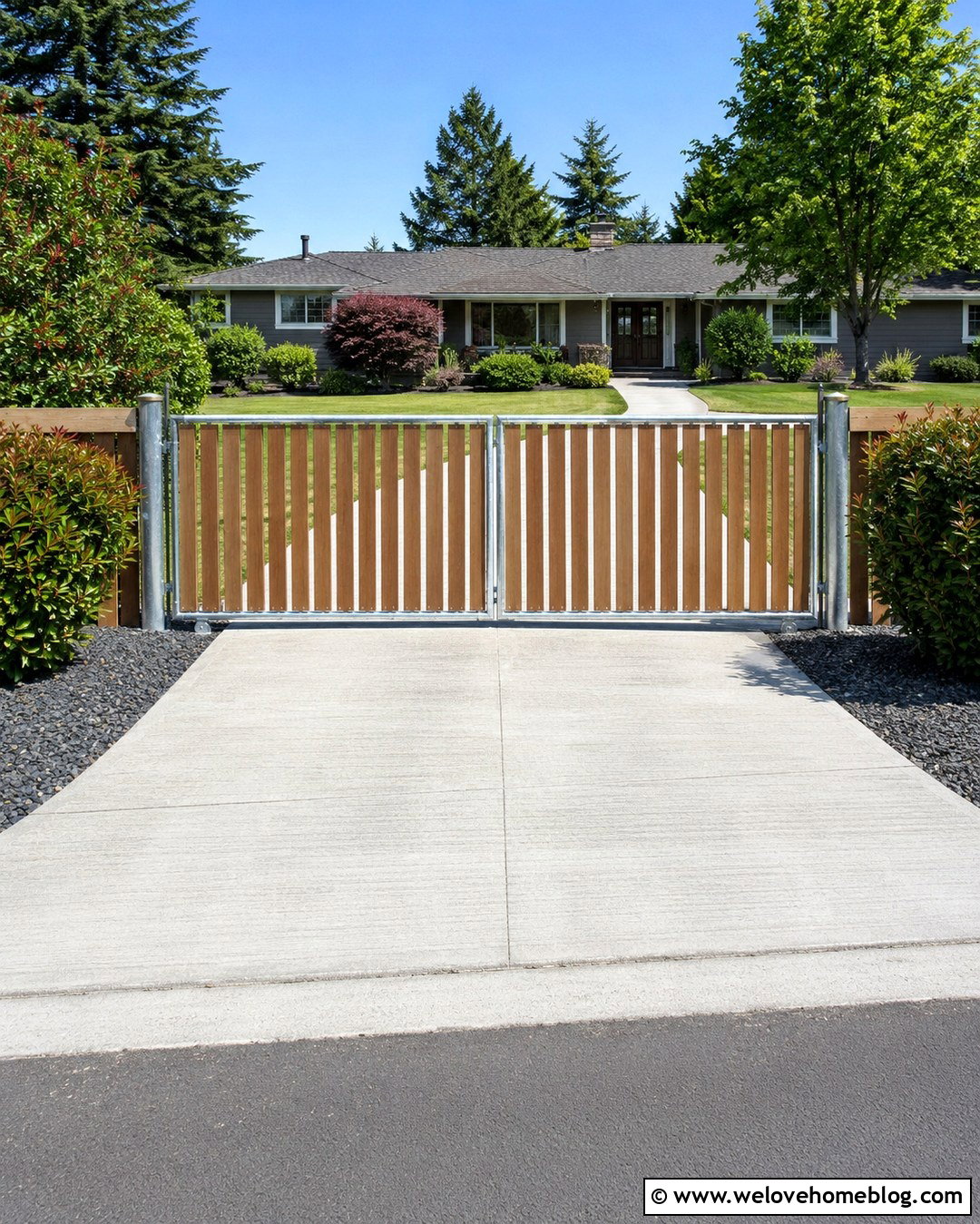
A chain-link gate offers a practical frame that can be upgraded with wood slats for improved appearance and partial privacy. Install a correctly sized double gate or rolling frame between strong steel terminal posts. Check that every corner connection and tension band is secure before adding extra weight. Attach lightweight cedar boards to supplemental rails rather than fastening heavy lumber randomly to the mesh. Leave narrow spaces between the boards to reduce wind pressure. Use gate wheels where appropriate to help support wide leaves, and install a drop rod on the inactive side. A basic concrete driveway, dark gravel shoulders, durable shrubs, and a suburban ranch house make this hybrid solution feel intentional. Stain the wood to coordinate with nearby fencing and entry doors.
11. Corrugated Metal Driveway Gate
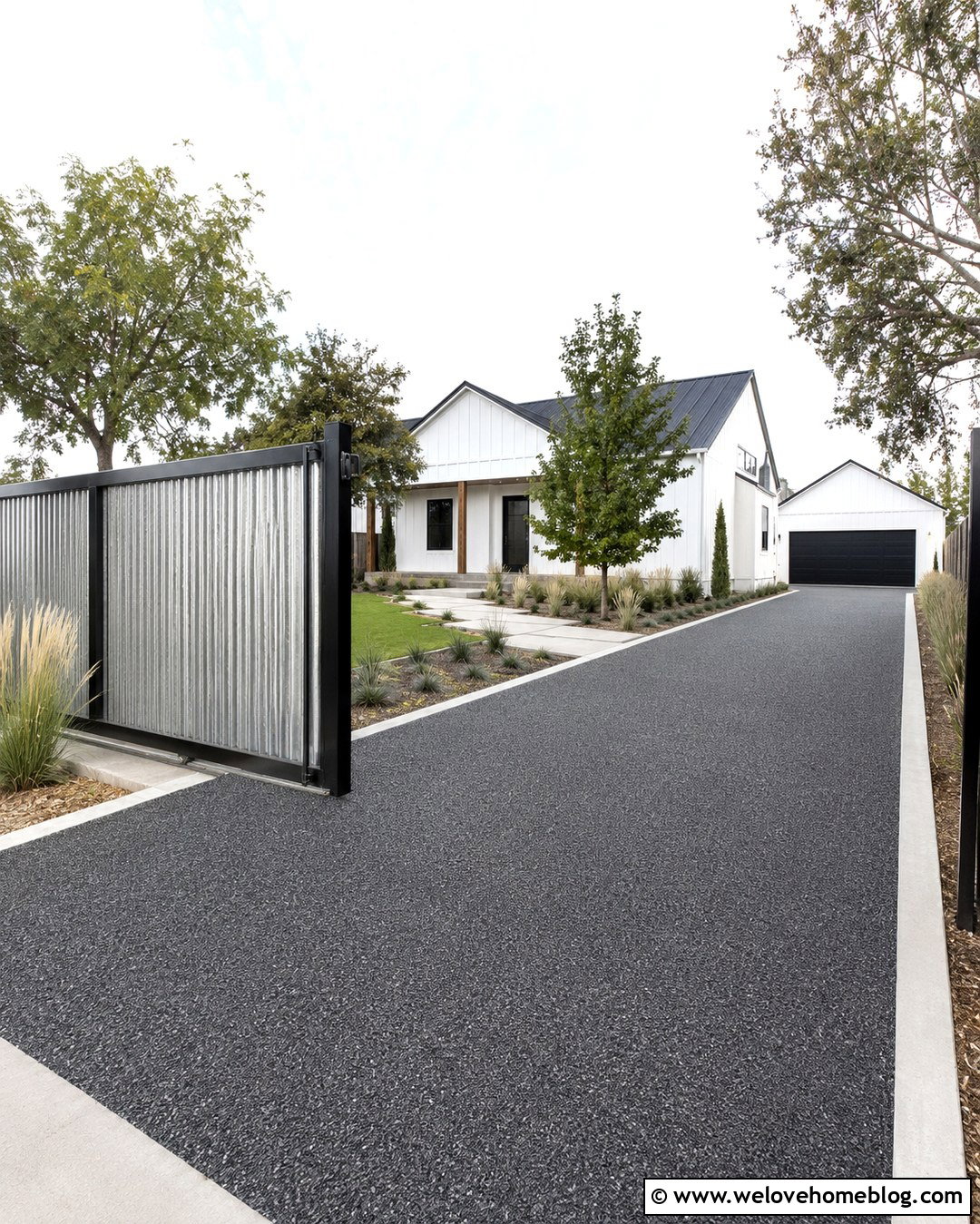
Corrugated steel panels create a strong visual statement and can cover an economical welded frame. Construct the frame from square steel tubing, adding intermediate rails wherever the sheet edges need support. Treat cut edges and drilled holes to reduce corrosion, then fasten the panels with exterior screws and sealing washers. Run the corrugations vertically so rainwater drains downward and dirt has fewer horizontal ledges to collect on. Because solid metal panels can catch wind, avoid undersized posts and lightly built hinges. A sliding layout can keep the entrance compact and modern. Combine the gate with a dark resin-bound gravel driveway, concrete curbs, drought-tolerant grasses, and a simple modern farmhouse. Black framing with warm galvanized or bronze-toned panels adds useful contrast.
12. Aluminum Driveway Gate
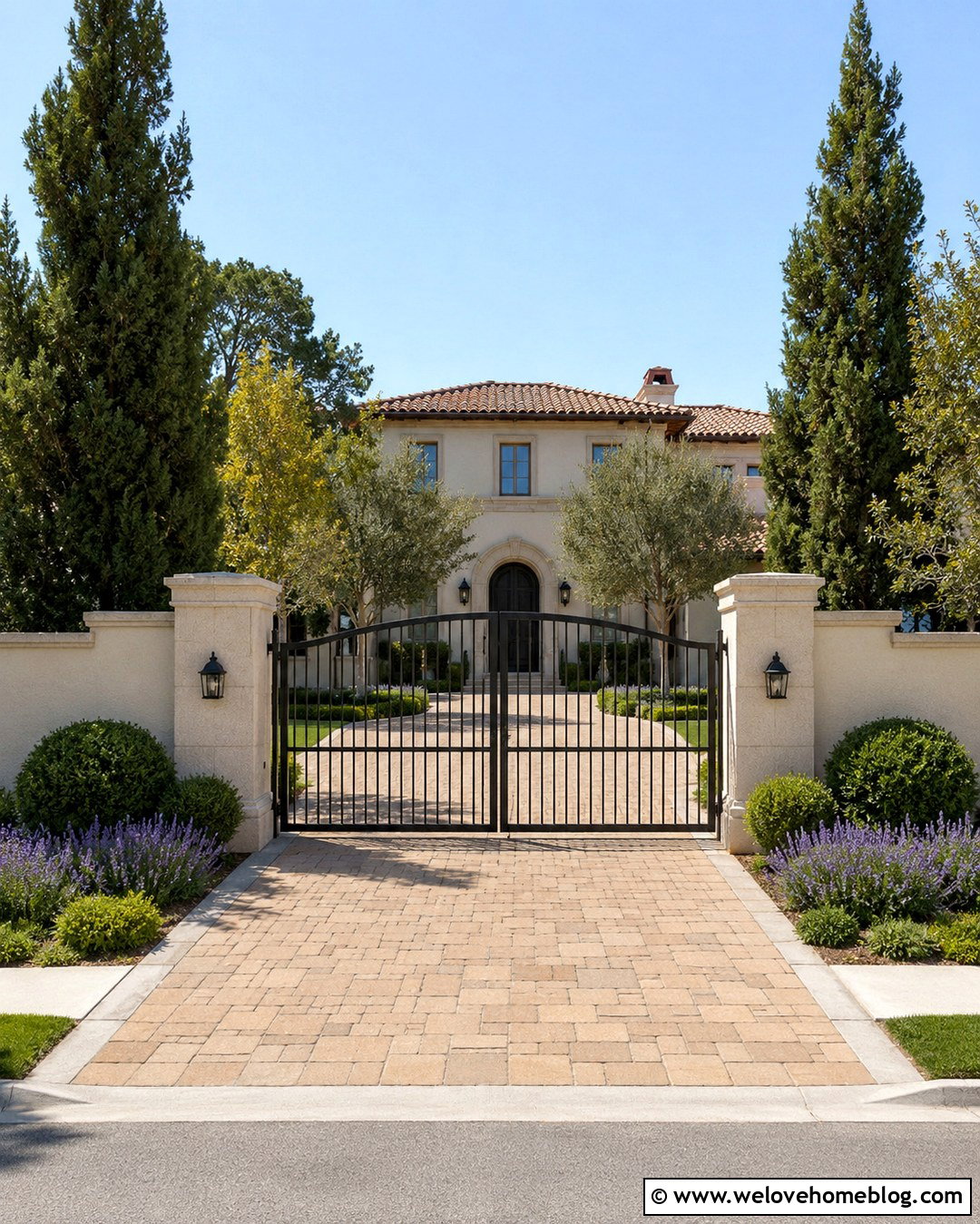
Aluminum is useful when you want the appearance of metal without the weight of a comparable solid-steel design. A DIY builder can assemble certain prefabricated aluminum gate kits with brackets and mechanical fasteners, while custom frames generally require suitable fabrication skills. Follow the system’s dimensions closely and avoid mixing incompatible metals where corrosion could develop. Square the frame before tightening every connection, then attach the infill panels or vertical rails. Use posts, hinges, and latches designed for the gate system rather than general-purpose fence hardware. A double swing arrangement suits a broad, level entrance and reduces the span of each leaf. Pair a matte-black aluminum gate with tan concrete pavers, limestone pillars, symmetrical shrubs, and a light stucco Mediterranean home for polished curb appeal.
13. Cattle Panel Driveway Gate
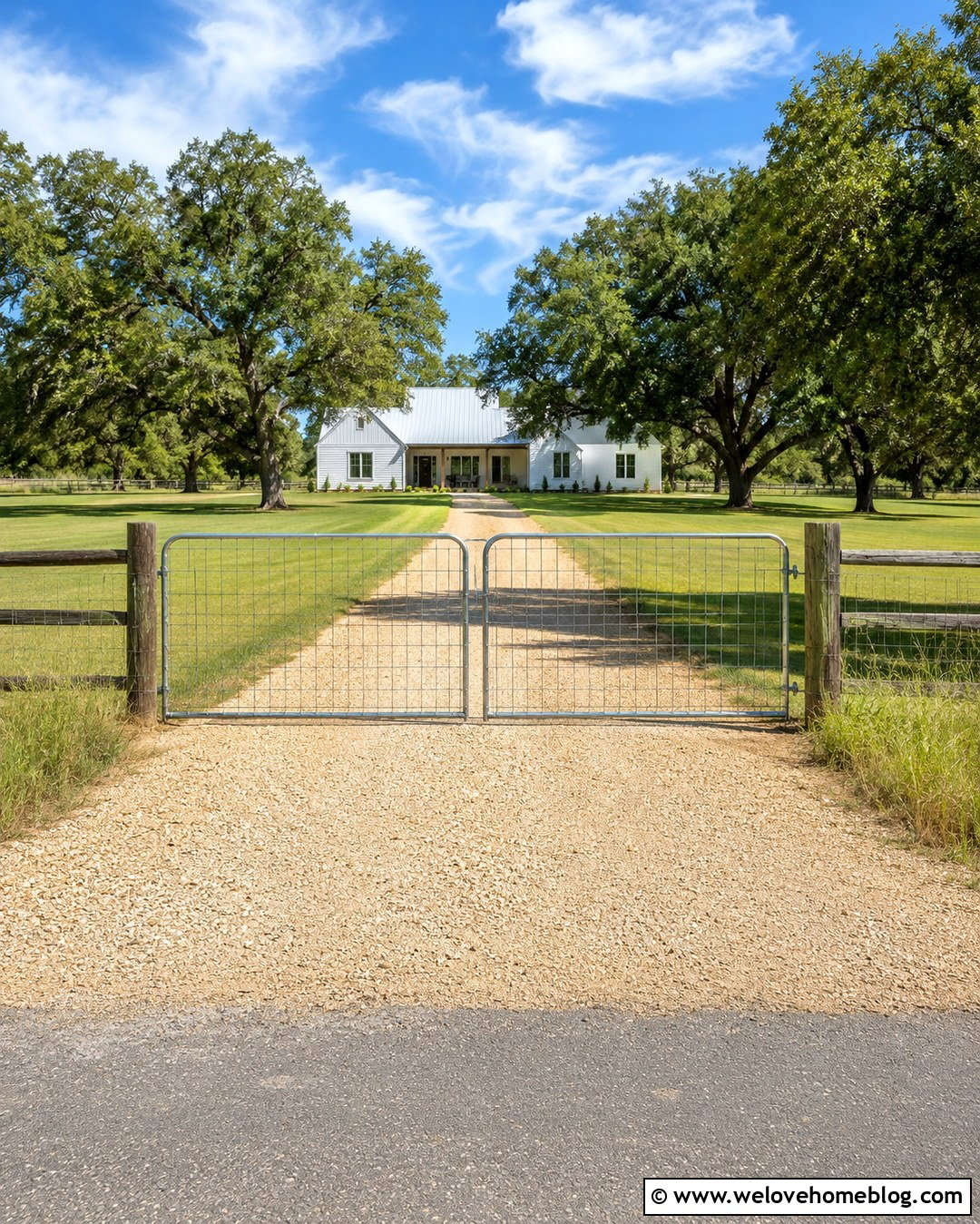
A galvanized cattle panel gate suits rural properties where visibility, airflow, and simple construction matter more than complete privacy. Start with a purchased tubular gate or build a reinforced steel frame sized for the opening. Secure welded wire panels inside the frame with metal clips, bolts, or welded tabs that do not leave sharp projections. Hang the gate from a substantial post using adjustable hardware, and add a support wheel if the manufacturer’s design permits it. A double gate works better than one long leaf across many wider entrances. Keep the agricultural design tidy with matching field fencing and well-defined posts. A tan gravel driveway, native grass borders, shade trees, and a white barn-style home turn this inexpensive gate into a purposeful country entrance.
14. Arched Wood Driveway Gate
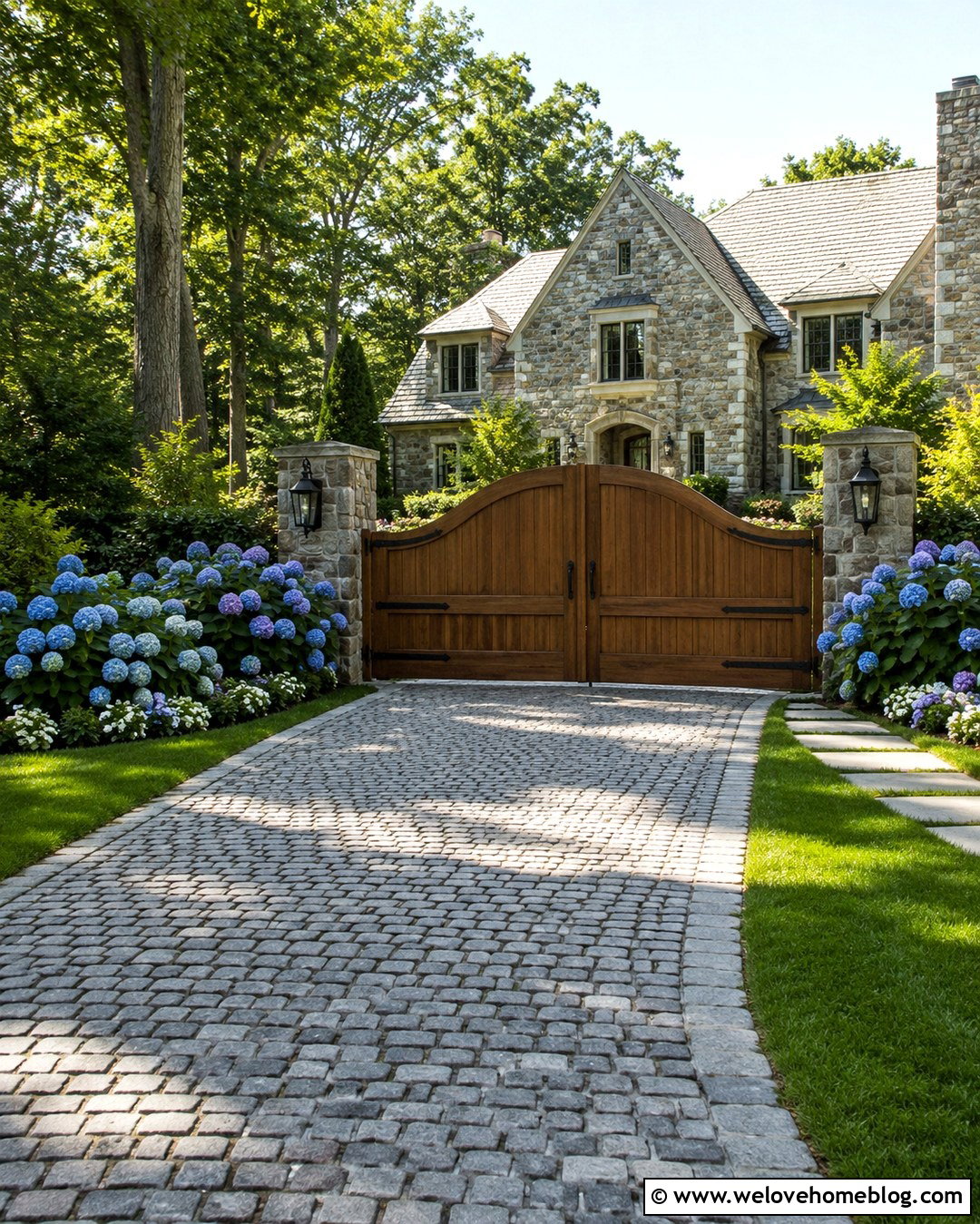
An arched top softens a tall wood gate and creates a clear focal point from the curb. Build the structural gate as a reinforced rectangular frame rather than relying on the decorative curve for strength. Mark the arch on the vertical boards with a flexible strip, cut the shape carefully, and sand the edges before sealing. Alternatively, attach shorter boards in a gradual stepped arrangement for a simpler build. Use a steel frame beneath the wood when the opening is wide or the privacy boards are heavy. Square masonry columns can visually support the arched profile. A curved cobblestone driveway, natural stone pillars, hydrangea beds, mature trees, and a traditional stone house create a graceful entrance where the gate shape follows the landscape.
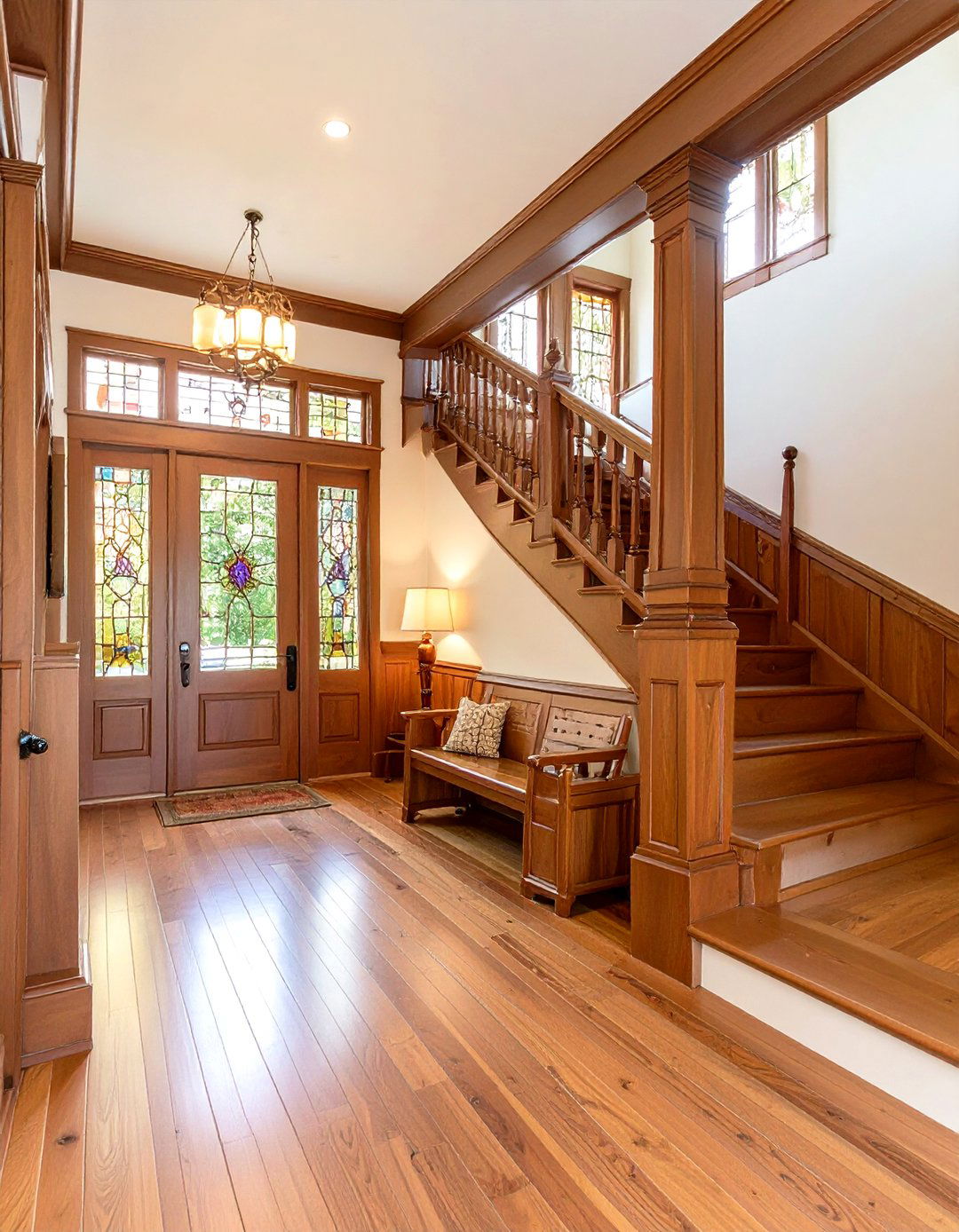

15. Pallet Wood Driveway Gate
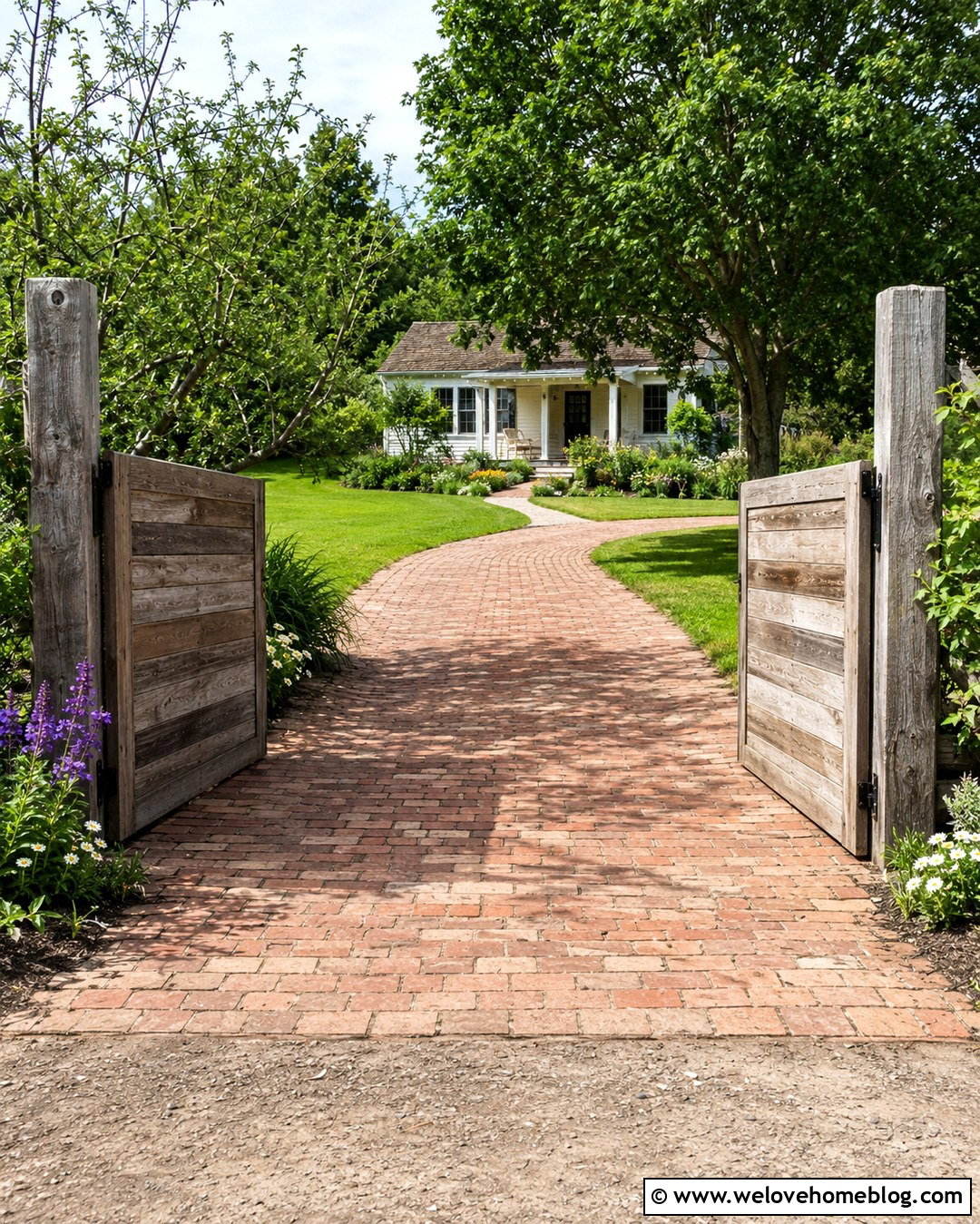
Reclaimed pallet boards can provide rustic texture, but they should serve as cladding rather than the main structural frame. Choose clean, sound boards with known markings, remove every nail, and discard cracked or contaminated pieces. Build the gate’s supporting frame from new treated lumber or welded steel so it remains square under repeated movement. Plane or sand the reclaimed boards, seal them thoroughly, and attach them with corrosion-resistant screws. Arrange mixed board widths deliberately instead of creating random gaps. Because reclaimed wood varies in density, weigh both leaves and balance the cladding as evenly as possible. A recycled brick driveway, weathered timber posts, native flowers, and a casual country cottage complement the gate while making the reused material look thoughtful rather than temporary.
16. Automatic Swing Driveway Gate
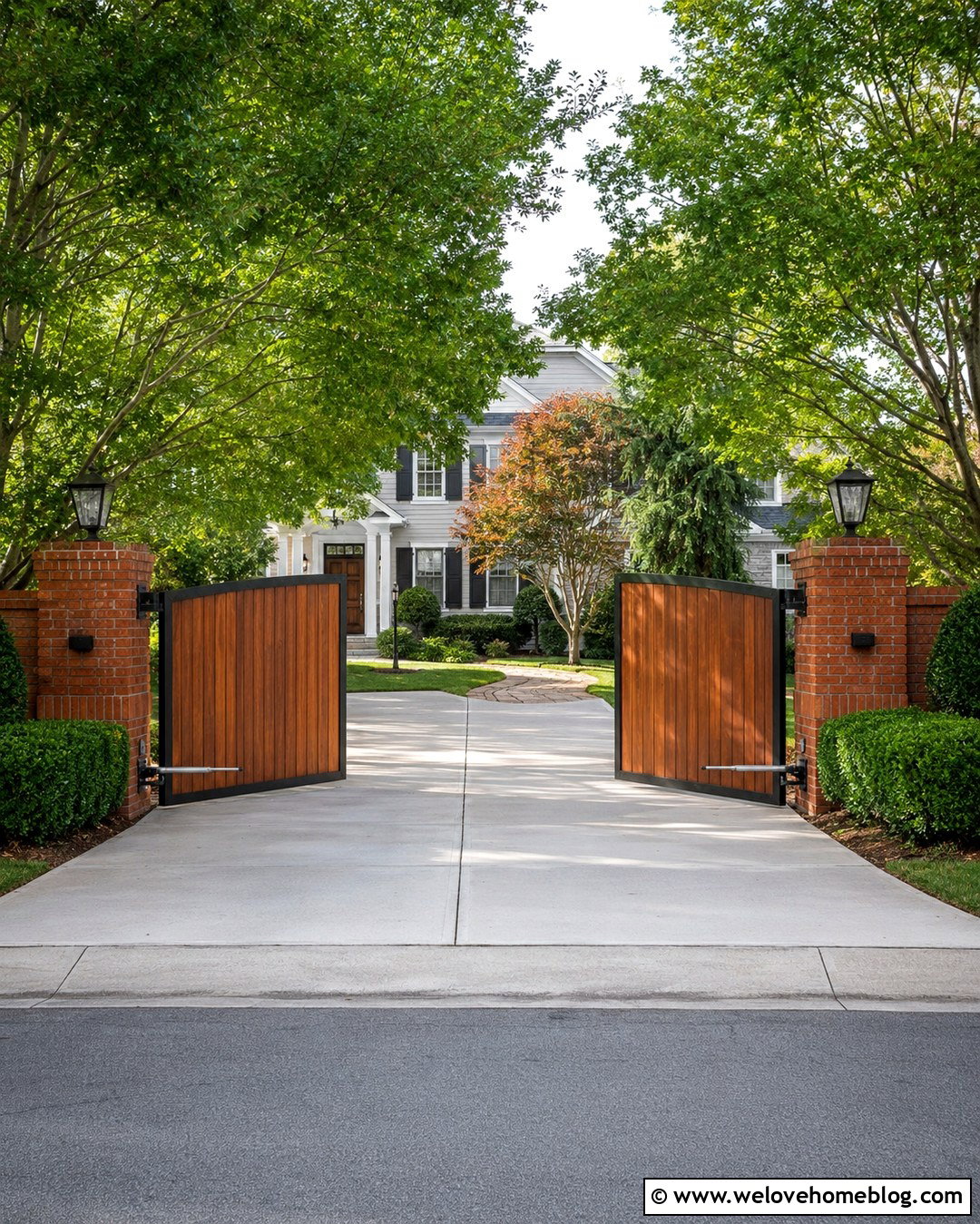
Automation is easiest to plan before the gate, pillars, driveway edges, and landscaping are complete. Build a balanced double swing gate with strong posts, adjustable hinges, and enough clearance for the chosen opener geometry. Keep each leaf straight and relatively light so the operators are not compensating for a poorly built frame. Install conduits for power, controls, communication wiring, and future accessories before pouring nearby concrete. Safety sensors, controlled access, manual release hardware, and properly positioned stops should be treated as essential parts of the entrance. Electrical connections and powered gate systems should follow applicable instructions and local requirements. Finish the design with a smooth concrete driveway, brick pillars, low hedges, and a traditional two-story home, keeping plants clear of arms, sensors, and moving leaves.
17. Automatic Sliding Driveway Gate
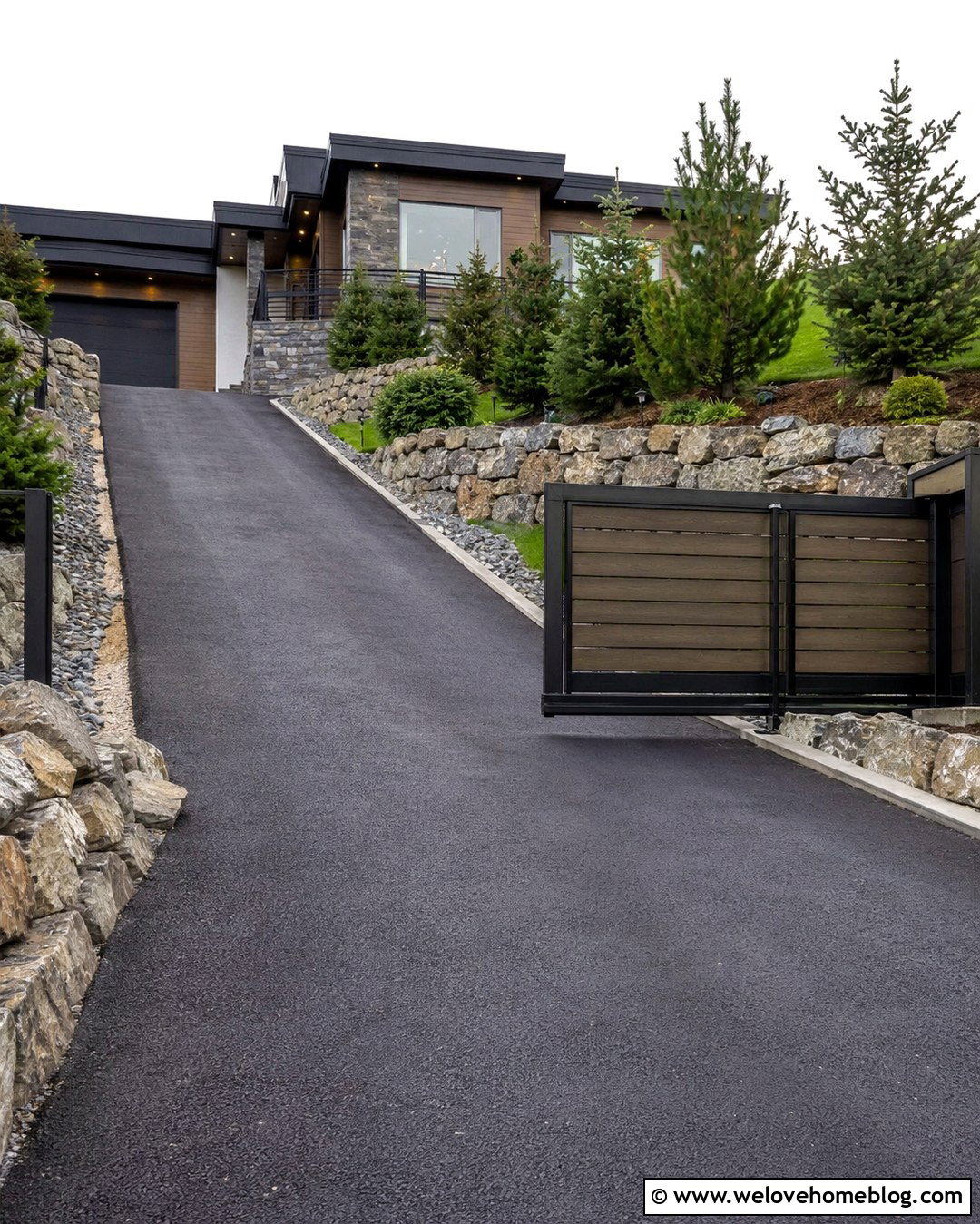
A sliding gate is useful on an uphill driveway because the panel travels sideways instead of sweeping across the rising surface. Measure the entrance and the full side return before selecting a tracked or cantilever system. Build a straight steel or aluminum frame with enough reinforcement to resist flexing, then add lightweight wood, composite, or metal infill. Tracked gates need a durable, accurately aligned track with reliable drainage. Cantilever gates require a longer frame, substantial support posts, and compatible roller hardware. Plan the motor base, conduits, access controls, safety equipment, and service space as one system. A sloped asphalt driveway, stone retaining walls, evergreen planting, and a hillside contemporary home create a functional entrance that looks integrated into difficult terrain.
18. Driveway Gate With Stone Pillars
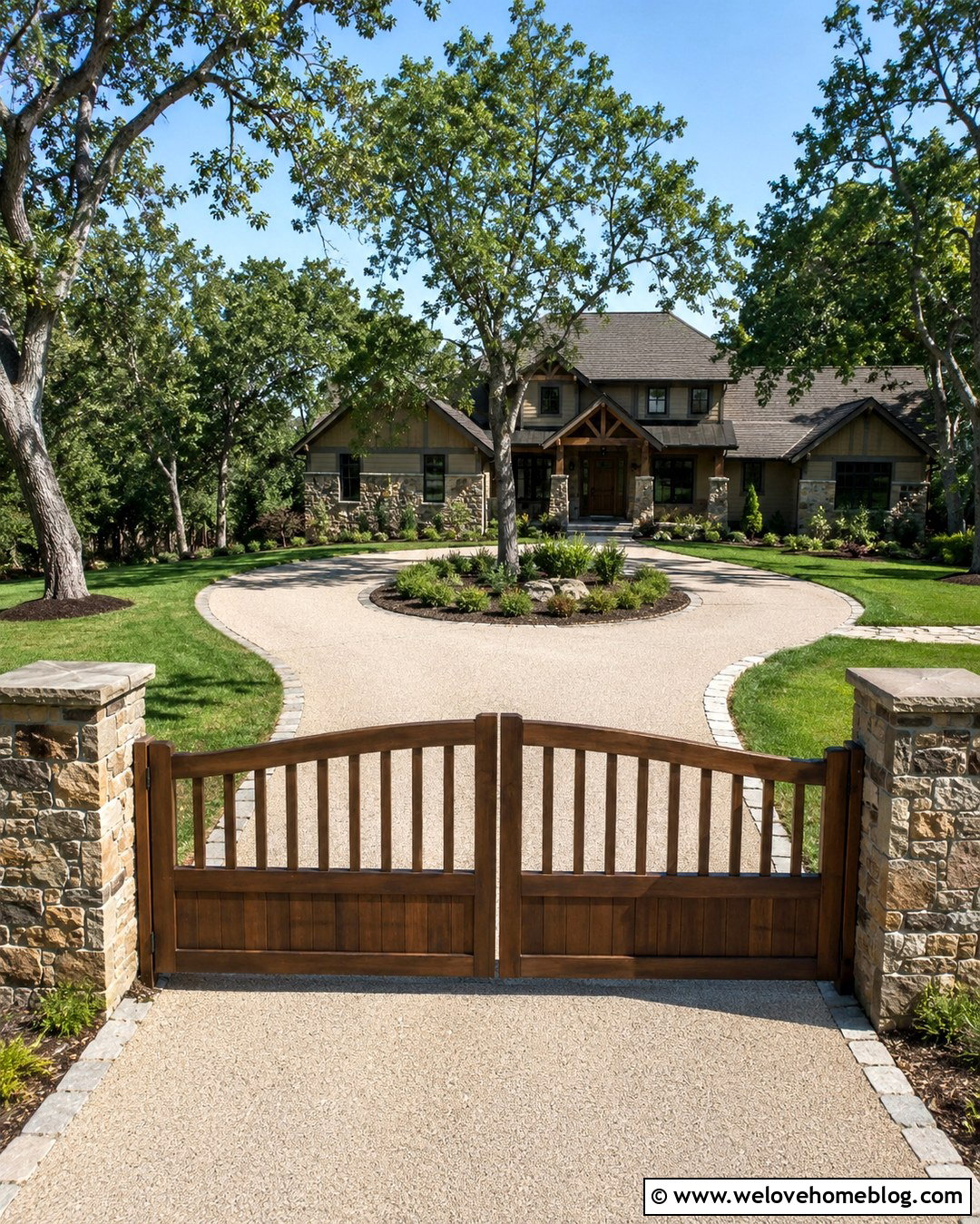
Stone pillars can make a driveway gate feel permanent, but their internal structure matters more than the decorative veneer. Build reinforced concrete or engineered masonry cores sized for the gate loads, then apply natural stone or manufactured stone around them. Install hinge plates, conduits, access wiring, and mounting points while the cores remain accessible. Avoid attaching a heavy gate only to thin stone facing. A pair of stained cedar swing leaves balances the visual weight of the columns and introduces warmth. Add simple stone caps that shed water away from the pillar faces. An exposed-aggregate circular driveway, matching stone edging, broad lawn, oak trees, and a craftsman home form a substantial complete entrance. Keep the planting low near the gate so drivers retain clear sightlines.
19. Driveway Gate With Brick Columns

Brick columns work naturally with colonial, Georgian, and traditional suburban homes. Start with structurally sound cores and plan the brick dimensions around the gate opening, hinge hardware, cap, and any concealed wiring. Set mounting plates or heavy anchors into the supporting structure rather than relying only on the outer brick. Build a black steel double gate with open vertical bars and a restrained curved top. The open design reduces visual bulk and allows the architecture behind it to remain visible. Match the column brick to the house when possible, but use contrasting stone or precast caps for a finished edge. A herringbone brick-paver entrance apron, black asphalt driveway, clipped boxwood beds, and symmetrical shade trees connect the gate to the entire front landscape.


20. Driveway Gate With Pedestrian Door
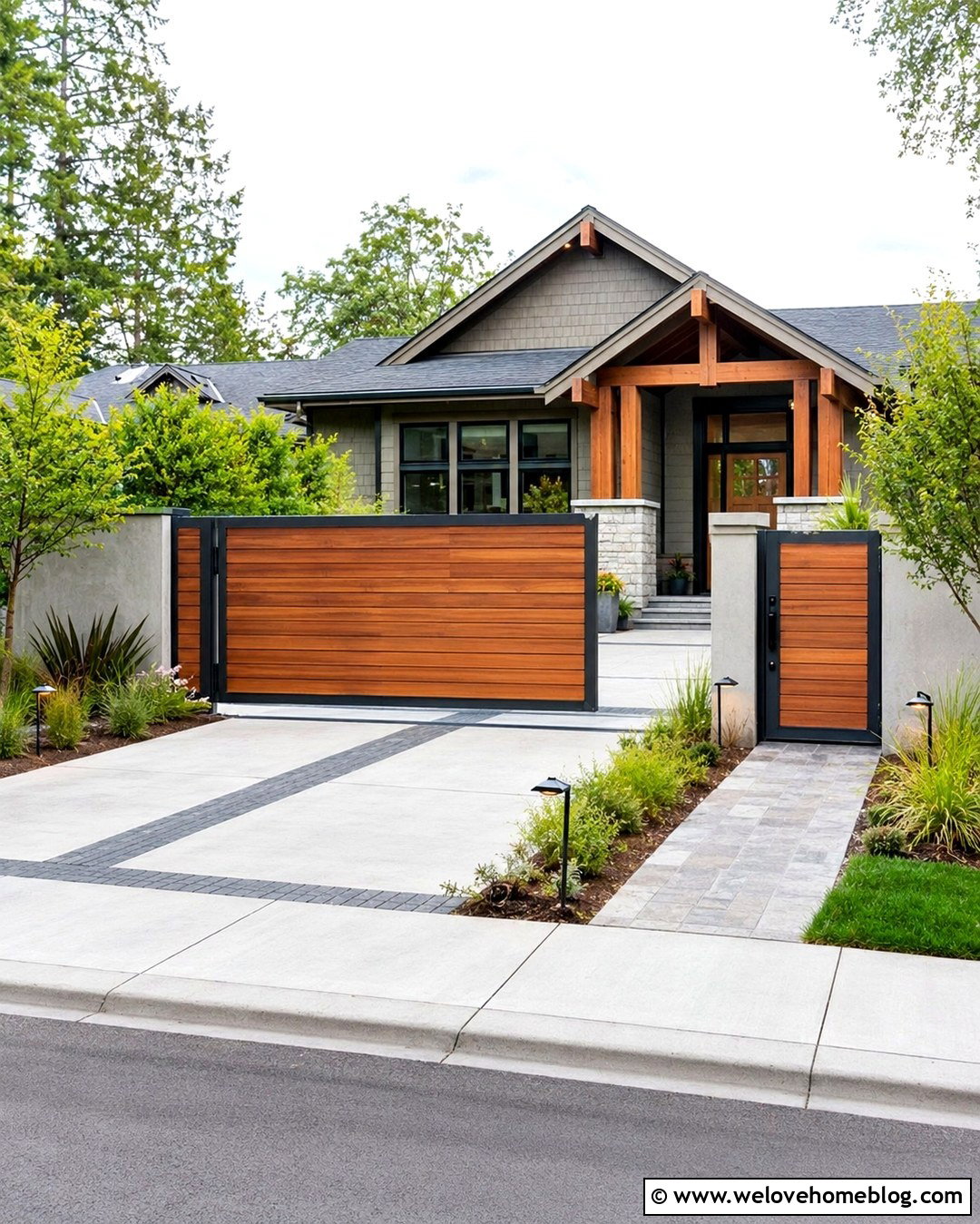
A separate pedestrian door prevents you from opening the full vehicle gate whenever someone walks in or out. Build a coordinated entrance with a wide sliding or double swing driveway gate and a narrower hinged walk gate beside it. Use separate structural posts so the pedestrian gate does not interfere with the main gate’s hinges, rollers, or latch. Align the rails, boards, and top edges across both openings for a continuous appearance. Add an easy-to-operate latch and a smooth paved walkway leading safely toward the house. Horizontal cedar slats over black metal frames create a modern but approachable finish. Pair the entrance with a light-gray concrete driveway, charcoal paver ribbons, ornamental grasses, pathway lighting, and a modern craftsman home for an organized, accessible frontage.
Conclusion:
The best driveway gate begins with accurate measurements, a suitable opening method, strong posts, and a frame that will remain square. These **20 Driveway Gate How To Build Ideas** show how timber, steel, aluminum, composite boards, wire panels, masonry columns, and automated hardware can create very different entrances. Match the design to the driveway slope, available side space, house architecture, and desired privacy level. Keep wide gate leaves lightweight and properly braced, and never treat decorative pillars or cladding as structural support. If the project involves welding, unusually large spans, automation, electrical service, or challenging soil, professional help may be worthwhile. Thoughtful construction will produce a gate that operates reliably and enhances the entire property.

Related posts:


Leave a Reply