
Choosing the right driveway gate means balancing security, privacy, daily convenience, available space, and curb appeal. A beautiful gate can still become frustrating if it swings into a slope, blocks vehicle stacking space, or requires more maintenance than expected. Start with the driveway layout and opening size. Then compare operating types, materials, access controls, safety features, and long-term costs. The gate should also coordinate with the driveway surface, entrance pillars, fencing, landscaping, and architecture. This guide to **20 how to choose driveway gates ideas** covers complete entrance combinations for suburban homes, country properties, modern houses, and compact lots. Use the following sections as a practical checklist while exploring **20 how to choose driveway gates ideas**.
1. How To Choose A Driveway Gate For Security
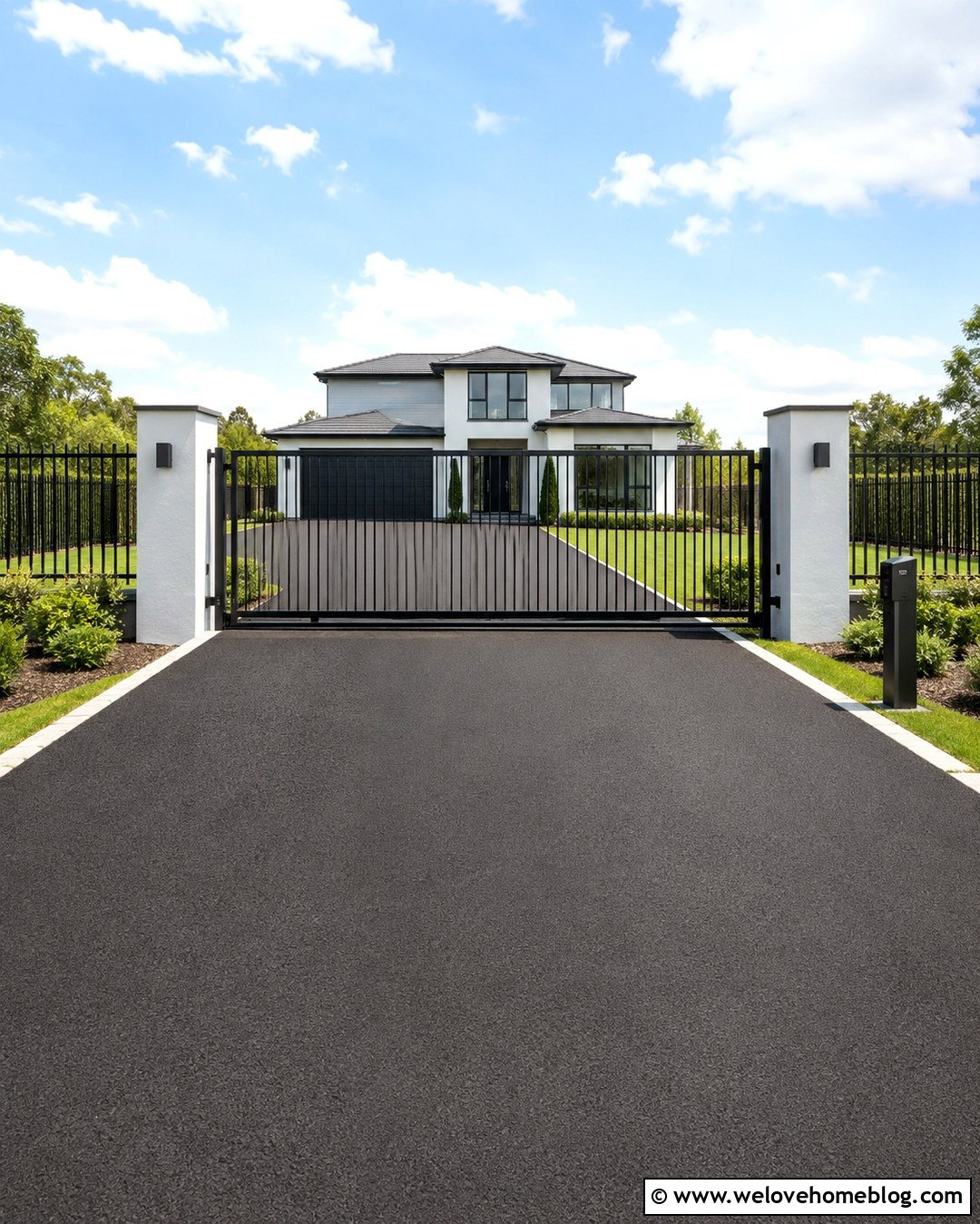
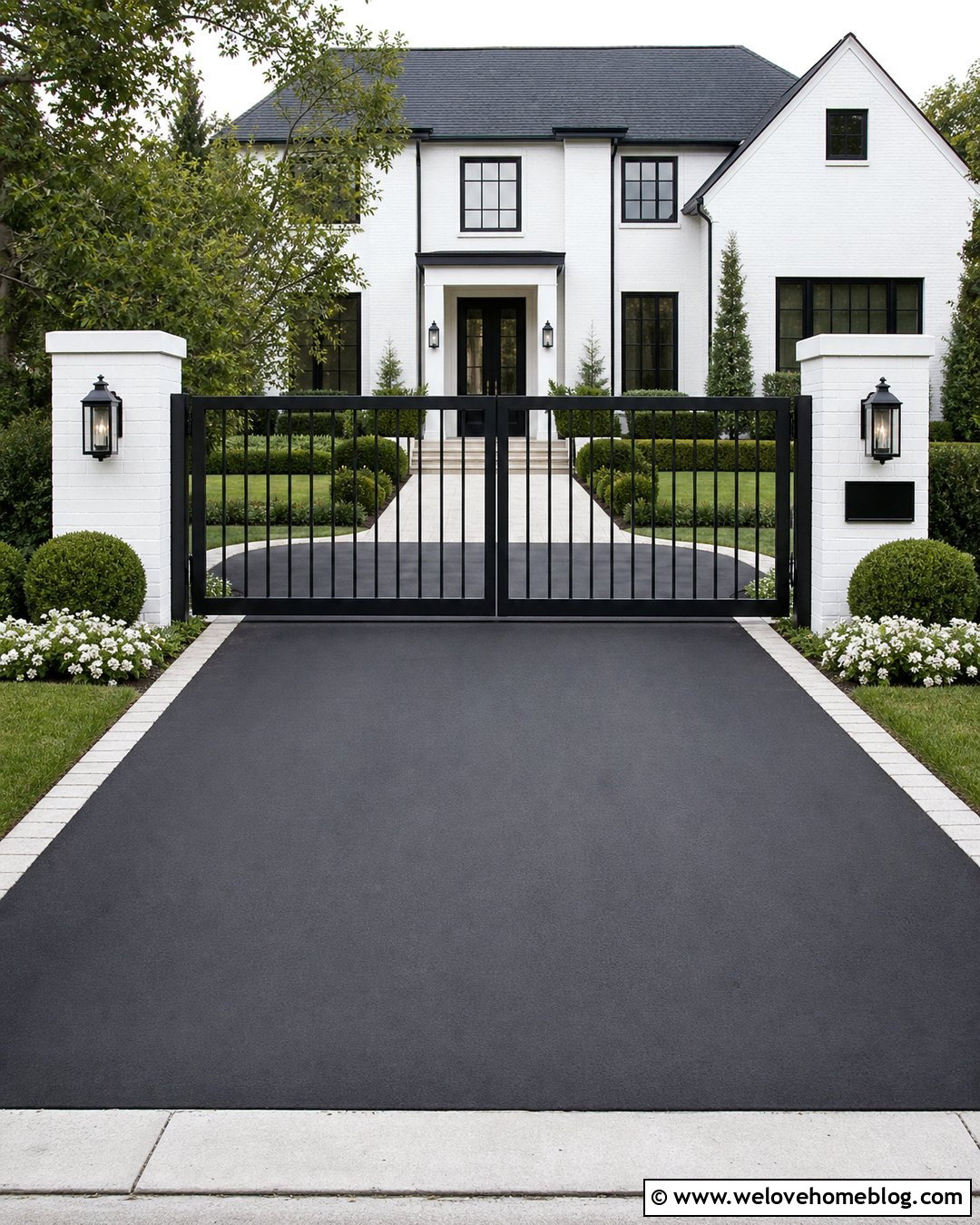
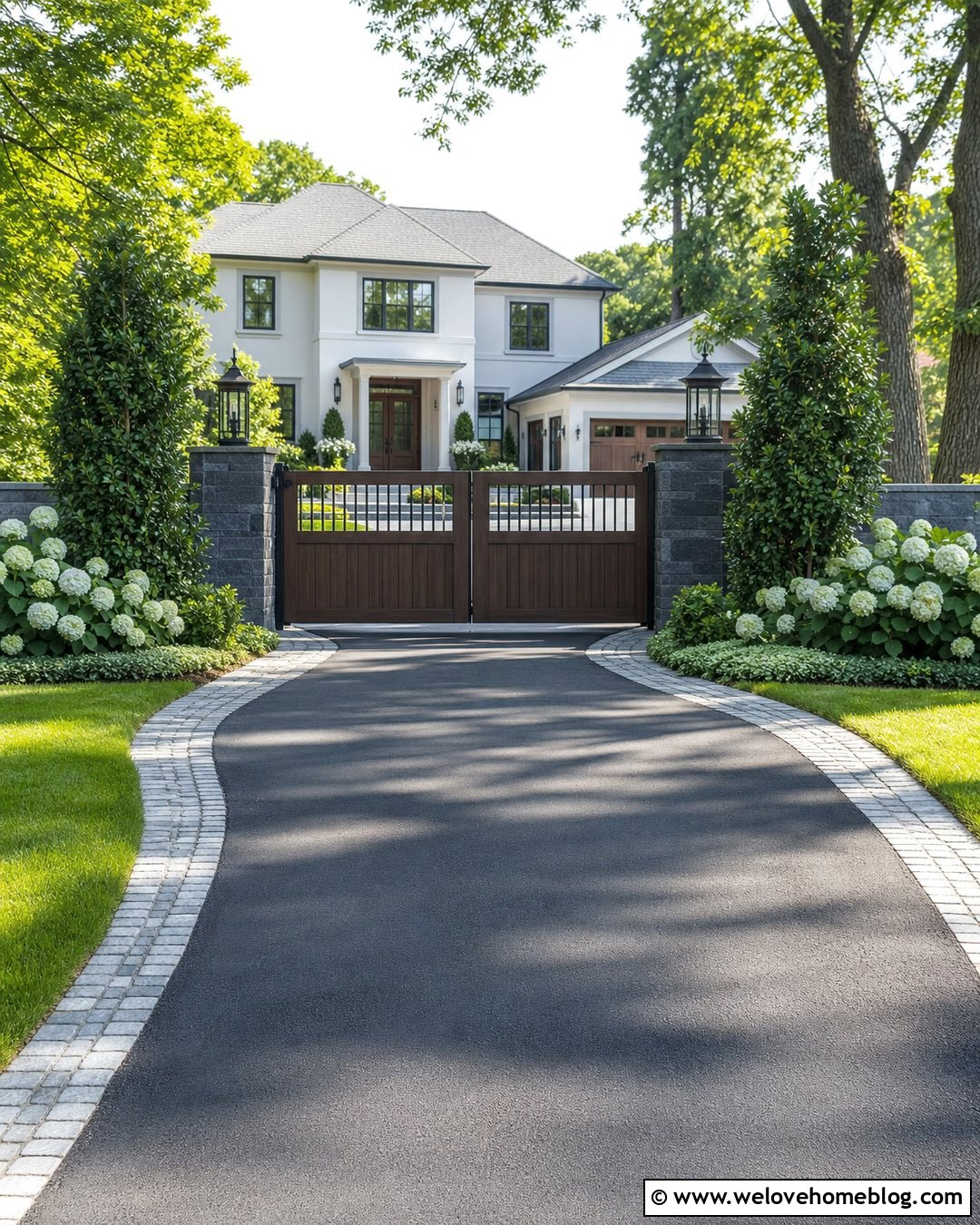
Begin by deciding what the gate must prevent. A decorative open-bar gate discourages casual entry while preserving visibility, but a taller solid gate provides stronger privacy and a more substantial boundary. For a secure entrance, consider a powder-coated steel sliding gate paired with masonry pillars, anti-climb vertical bars, and matching metal fencing. A black asphalt driveway gives this arrangement a clean, durable foundation. Keep shrubs low near access controls so the entrance remains visible from the house. Add a separate pedestrian gate rather than leaving the vehicle gate partially open for visitors. The locking system, frame strength, post foundations, and automation matter as much as the gate’s appearance, so have security-focused hardware professionally specified.
2. How To Measure A Driveway Gate Opening
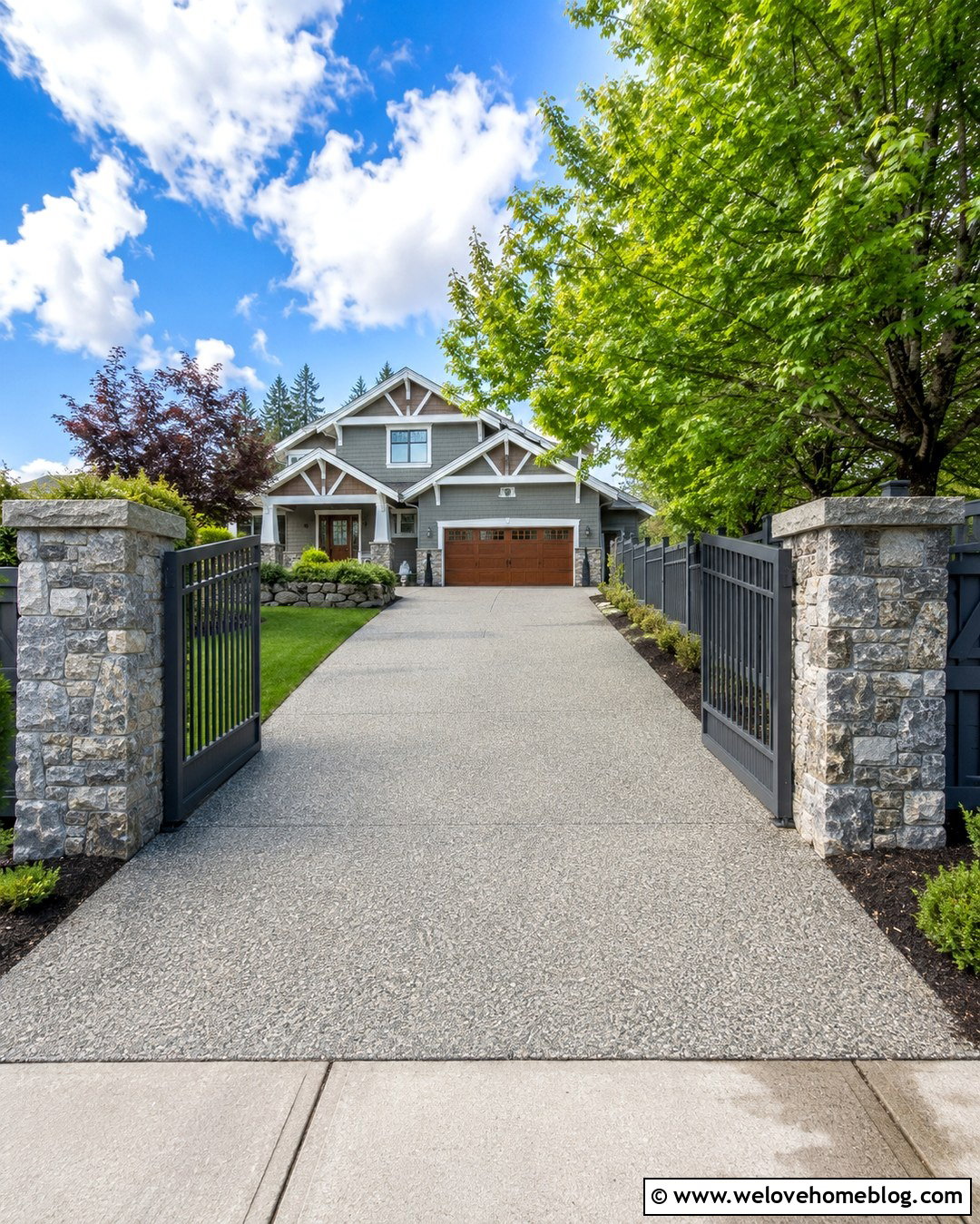
Accurate measurements prevent awkward gaps, restricted vehicle access, and costly alterations. Measure the clear opening between the proposed posts at the narrowest point, then confirm that delivery vans, trailers, and emergency vehicles can approach comfortably. Also record the driveway slope, ground clearance, fence-line space, and distance from the gate to the street. A double-swing steel gate can work beautifully across a wide, straight exposed aggregate driveway, especially when its two lighter leaves reduce strain on the hinges. Position stone pillars outside the usable opening instead of narrowing the driving path. Remember that automatic operators, hinges, stops, and safety equipment require additional space. Give your installer a simple site drawing with measurements, utilities, drainage channels, and nearby landscaping marked clearly.
3. How To Choose A Swing Driveway Gate
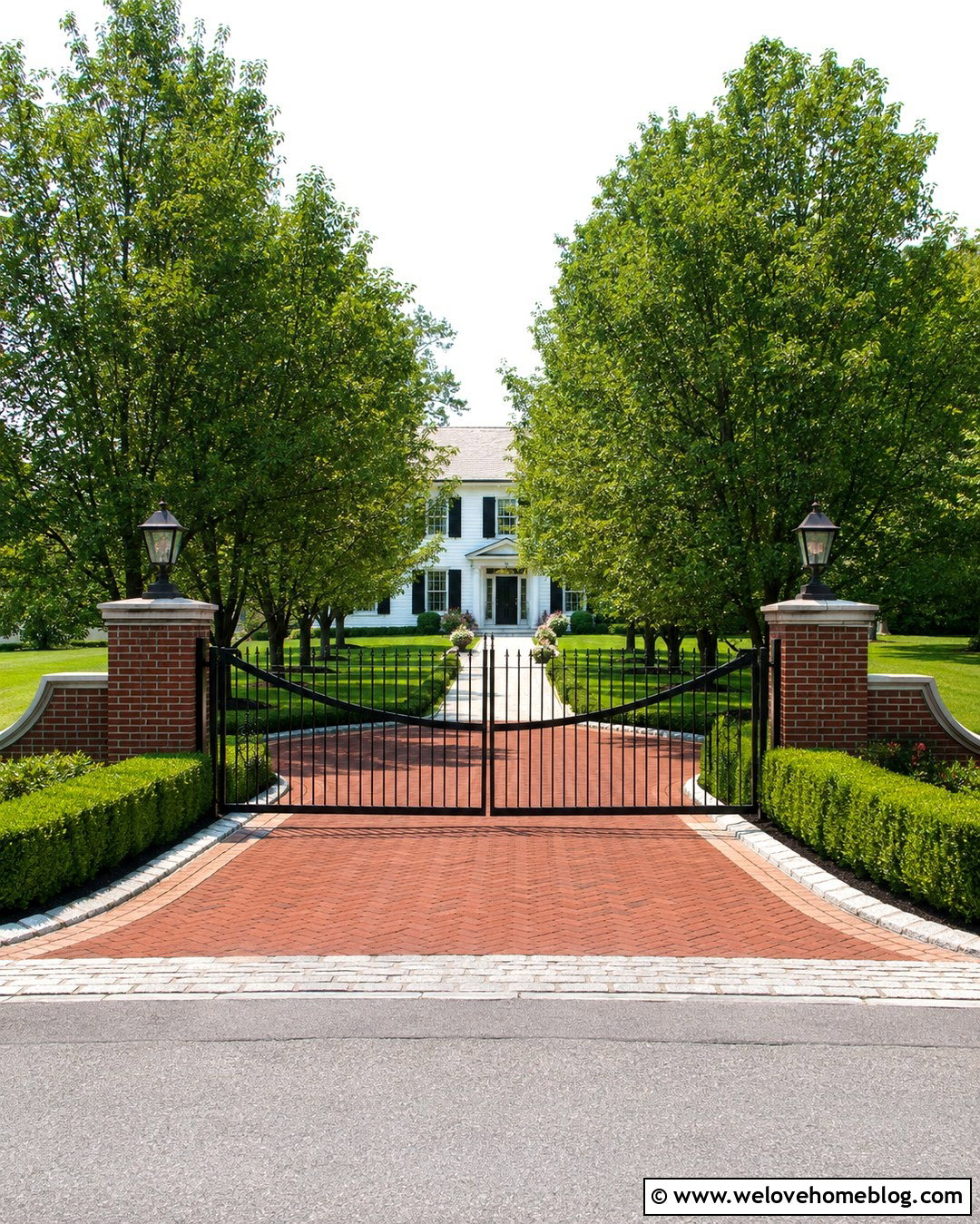
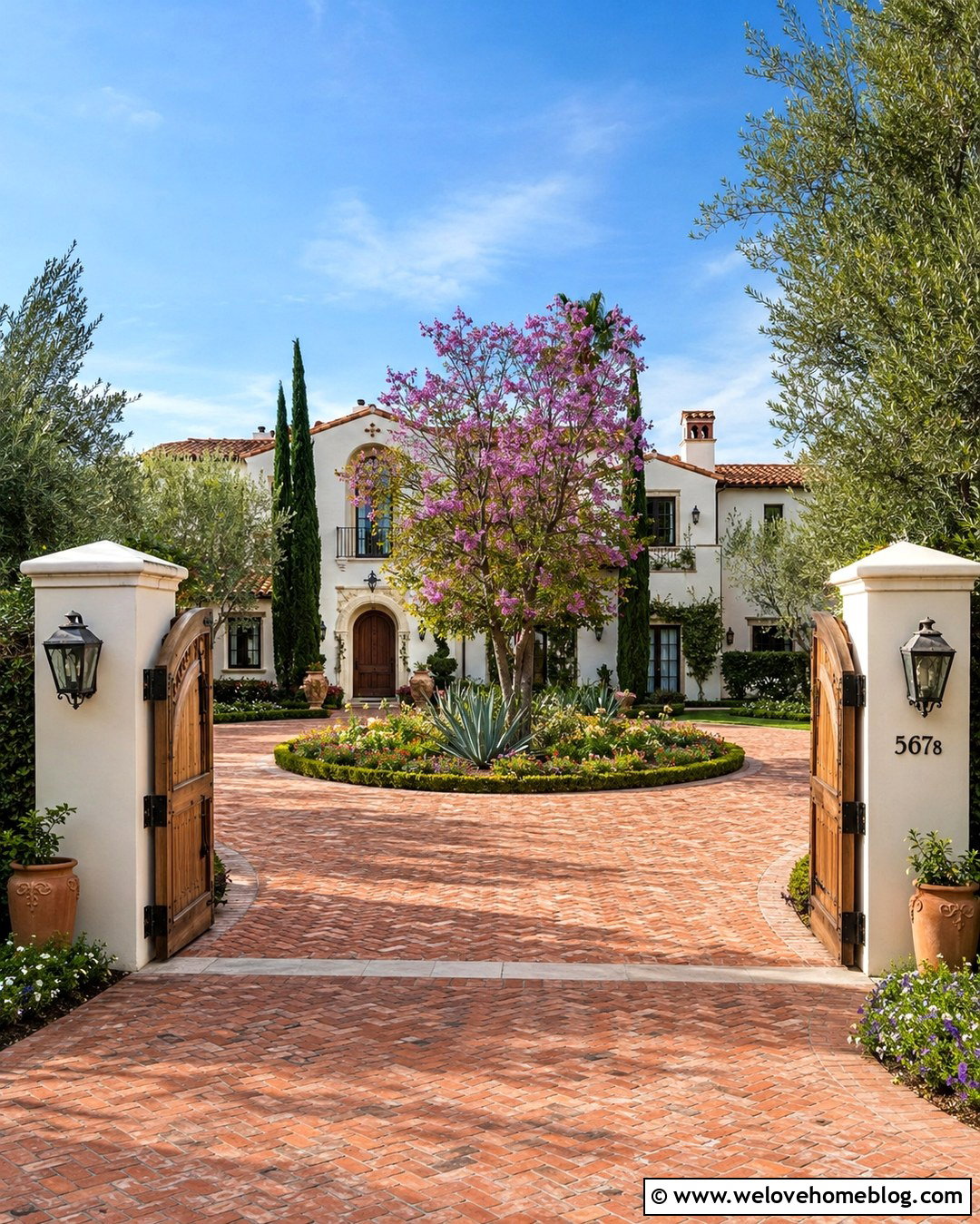
A swing gate creates a classic residential entrance when the driveway is reasonably level and has enough open space behind the gate. Double-swing gates suit wide entrances because each leaf travels through a smaller arc, while a single leaf offers a cleaner look across a modest opening. Picture a curved clay brick driveway approaching an arched wrought iron gate between brick pillars. Formal hedges and matching lanterns complete the traditional design. Before choosing this layout, mark the full swing path on the ground and check where vehicles will wait while the gate opens. The leaves should not collide with rising pavement, planting beds, or parked cars. Swing gates generally have straightforward mechanisms, but heavy leaves need strong posts, correctly rated hinges, and properly matched operators. ()
4. How To Choose A Sliding Driveway Gate
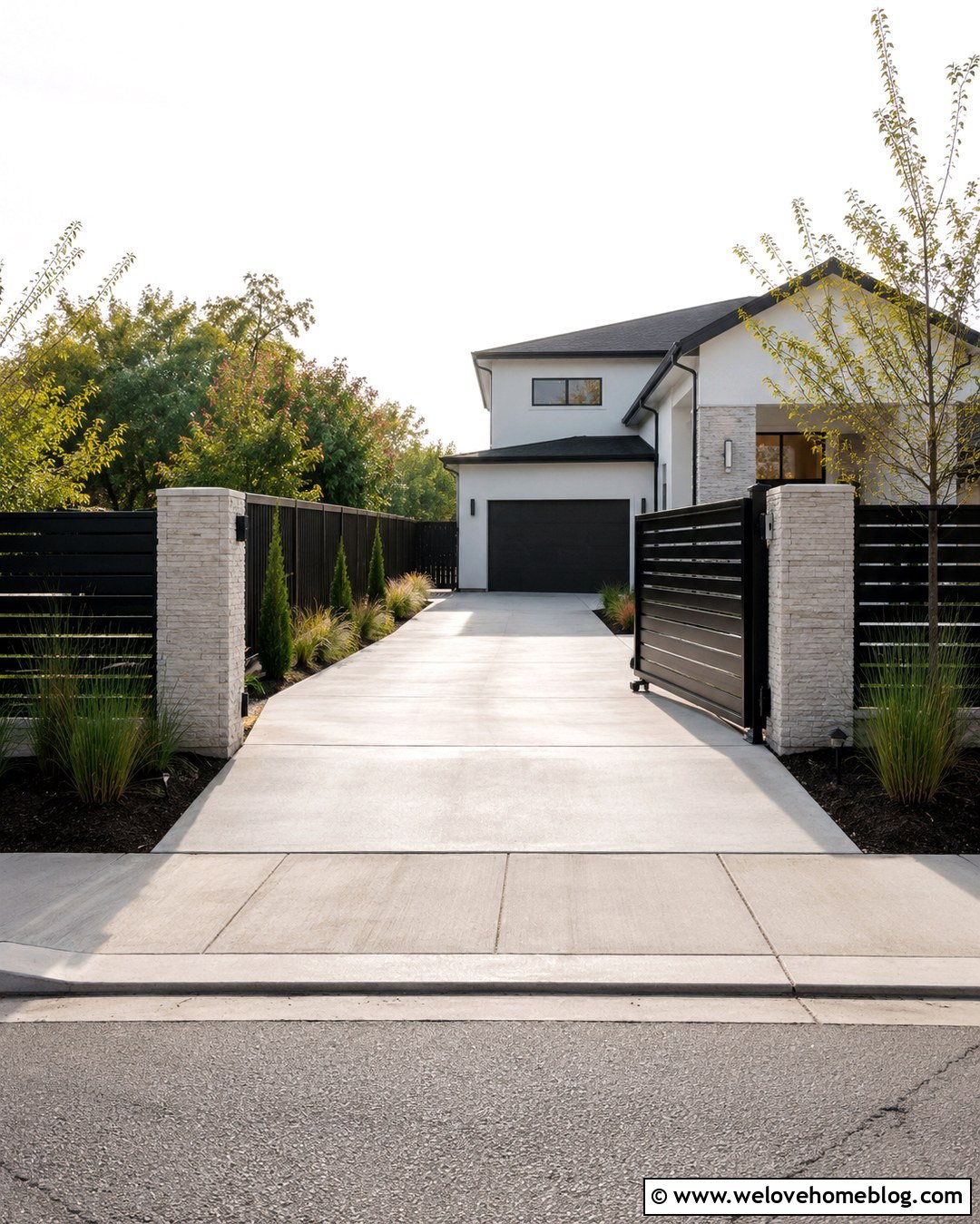
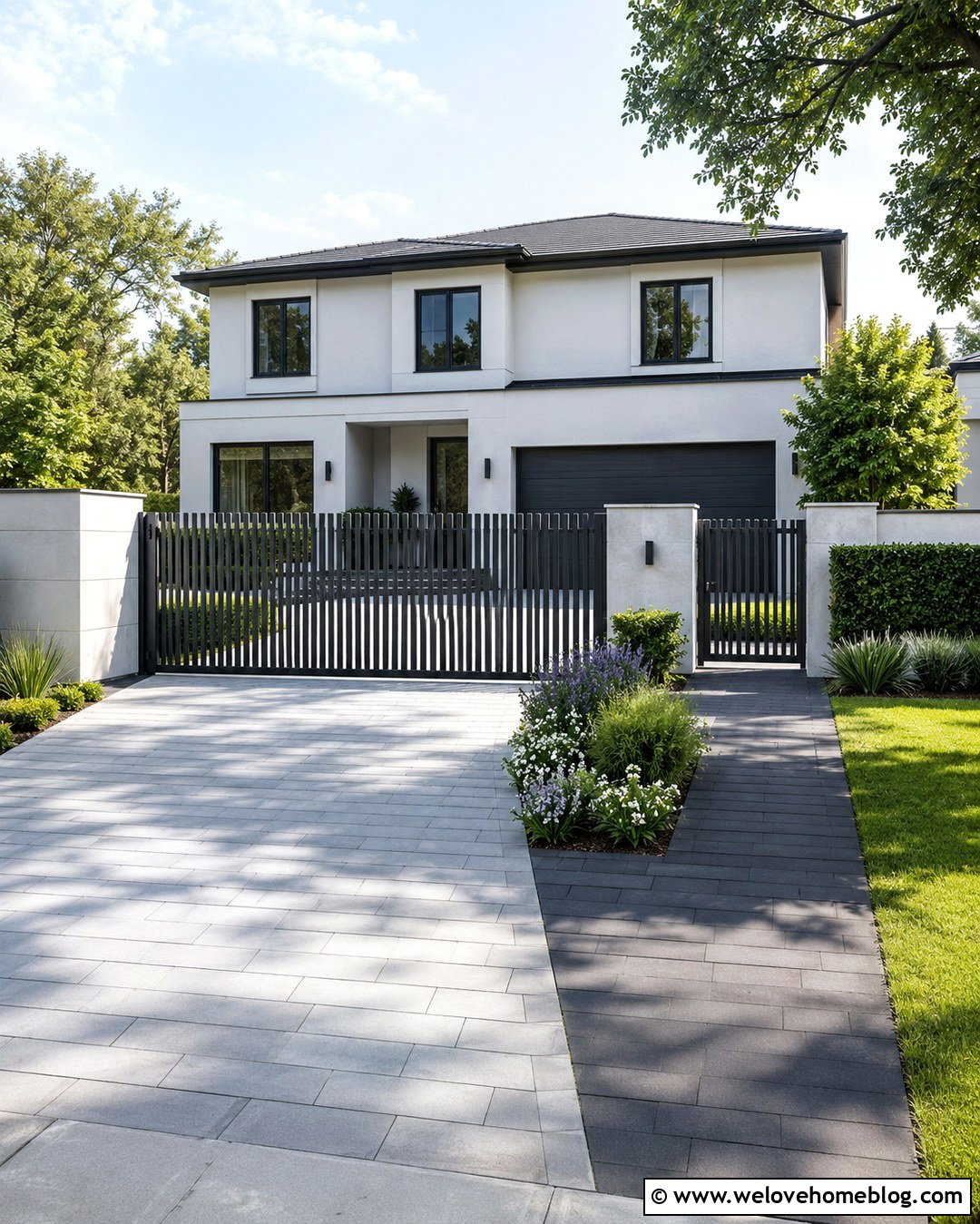
When the driveway is short or rises immediately inside the entrance, a sliding gate may use the available space more efficiently. The gate moves parallel to the fence rather than sweeping across the parking area. A horizontal aluminum sliding gate looks especially cohesive beside a straight gray poured concrete driveway leading to a modern home. Continue the gate’s slim black lines through the fence, address marker, and planting-bed edging. You will need sufficient clear space along one side of the entrance for the gate to retract. Tracked systems also require a stable, well-drained path that can be kept clear of gravel and debris. Confirm that the motor, rollers, safety sensors, and supporting structure are sized for the gate’s weight, length, wind exposure, and expected daily use.
5. How To Choose A Cantilever Driveway Gate
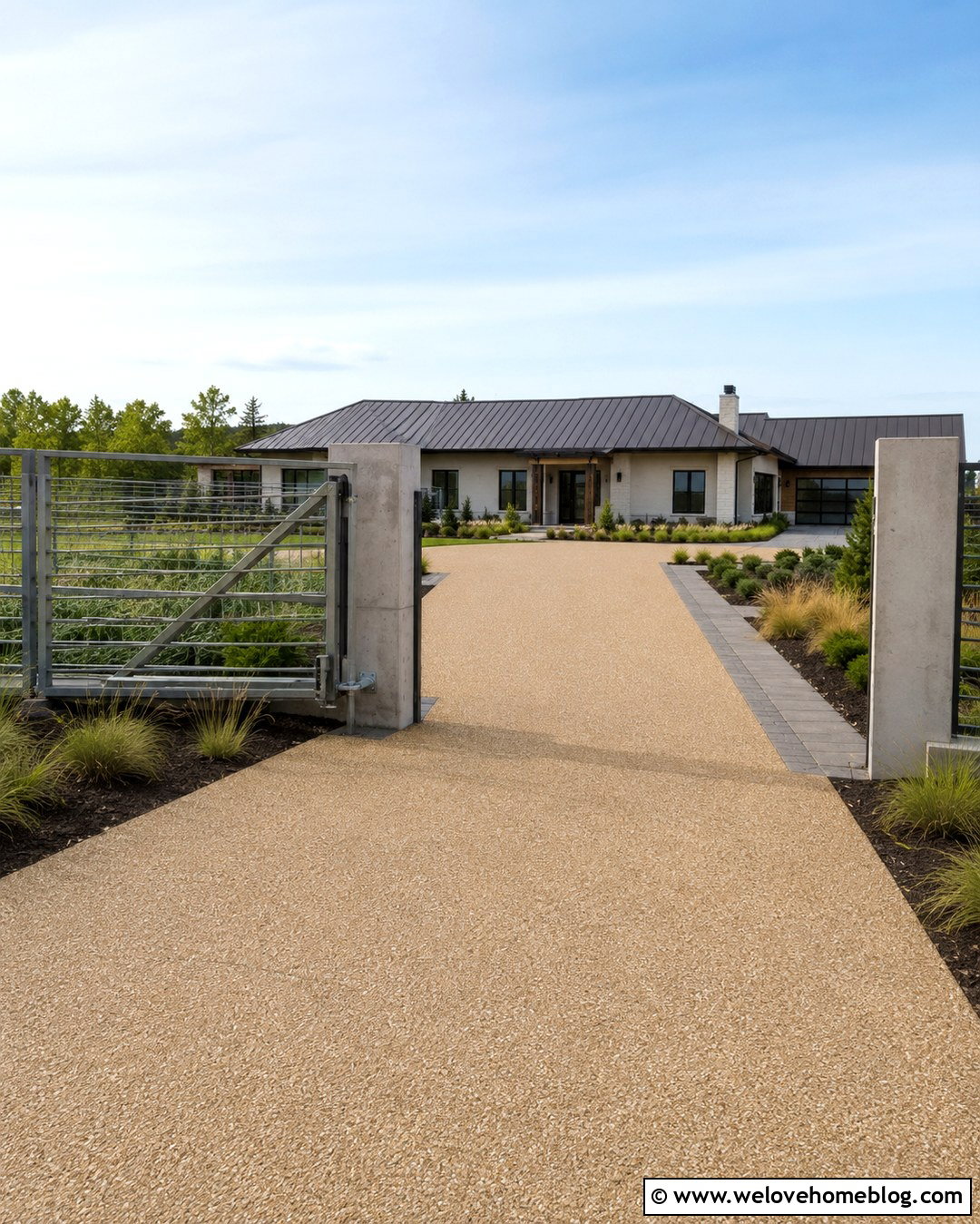
A cantilever gate slides without relying on a track across the driveway opening. That can be useful where a ground track would collect gravel, leaves, ice, or mud. Consider a galvanized steel cantilever gate spanning a wide resin-bound gravel driveway at a contemporary ranch house. The gate can retreat behind matching fencing, while concrete support posts and ornamental grasses create a neat, low-maintenance entrance. This system needs additional fence-line room because the gate includes a counterbalanced section beyond the clear opening. The supporting posts and foundation must also carry significant leverage. Cantilever gates tend to involve more structure and hardware than basic swing gates, so compare installation and maintenance costs carefully. They are strongest visually when the long frame aligns cleanly with the surrounding fence. ()
6. How To Choose A Gate For A Sloped Driveway
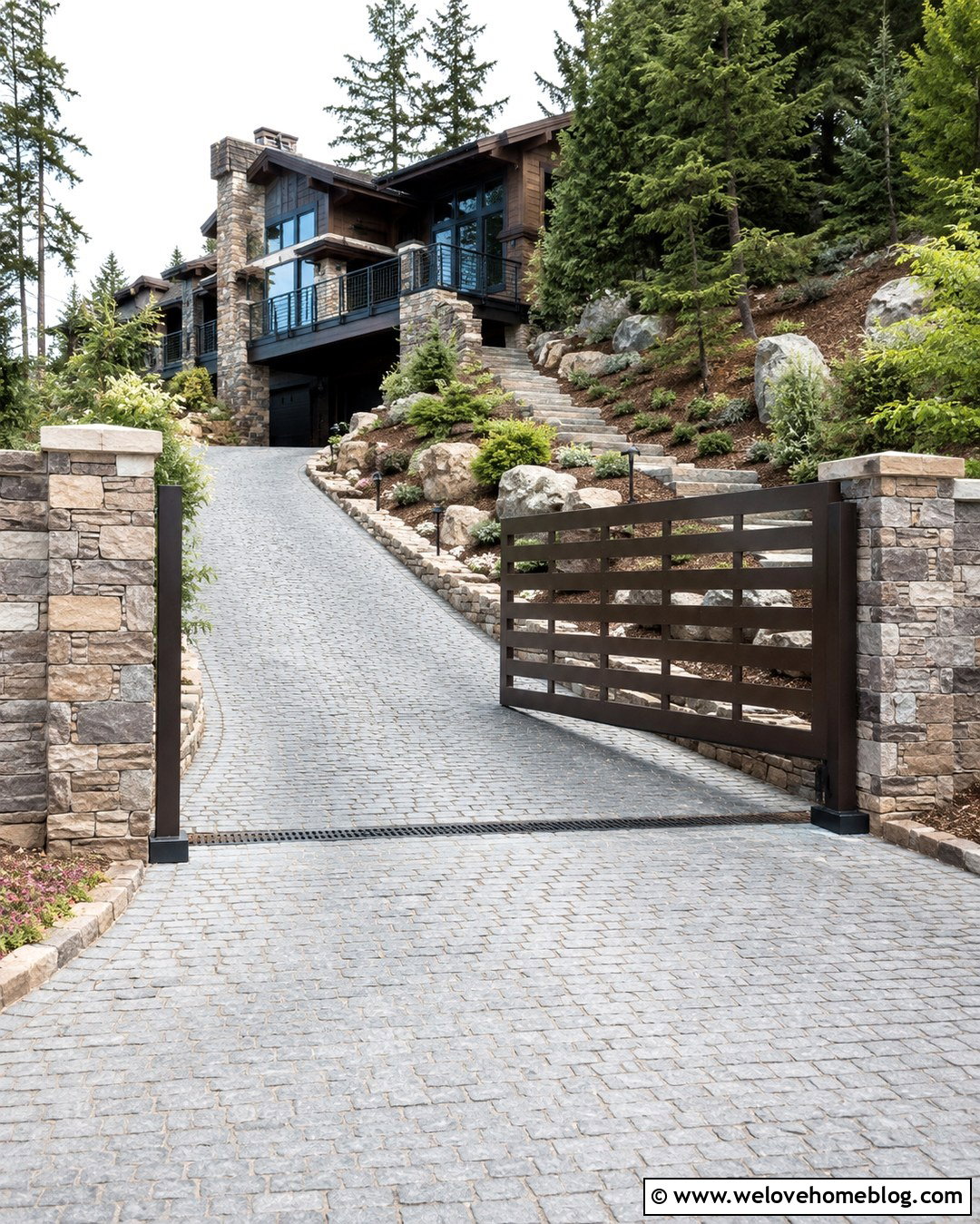
A rising driveway can stop a standard inward-swinging gate from opening fully. Before selecting any gate, measure the elevation change across its entire travel path. A sliding or cantilever gate is often easier to integrate because it moves sideways rather than uphill. For a sloped cobblestone driveway, try a dark bronze cantilever gate set between natural stone pillars. Tiered planting beds can follow the grade without crowding the moving gate. If side clearance is unavailable, a custom swing gate may be designed around the slope, but that requires careful attention to bottom gaps, hinges, and automation. Avoid creating a large opening underneath that pets could escape through. Drainage is equally important because runoff, sediment, and winter ice can interfere with gate hardware near the driveway’s lowest point.
7. How To Choose Aluminum Driveway Gates

Aluminum offers a crisp appearance without the weight of many solid steel or iron designs. It is a practical choice when you want a wide automated gate with reduced strain on hinges and operators. A matte-black aluminum double-swing gate with narrow vertical pickets can complement a light gray paver driveway and a coastal-inspired house. White stucco pillars, salt-tolerant grasses, and limestone edging keep the entrance bright and balanced. Look for substantial frame construction, durable welded joints, and an exterior-grade powder-coated finish. Thin decorative panels can feel flimsy across a broad driveway, so assess the gate from both the curb and the house. Aluminum does not naturally provide complete privacy, but slats or infill panels can increase coverage without making the entrance look excessively heavy.
8. How To Choose Steel Driveway Gates
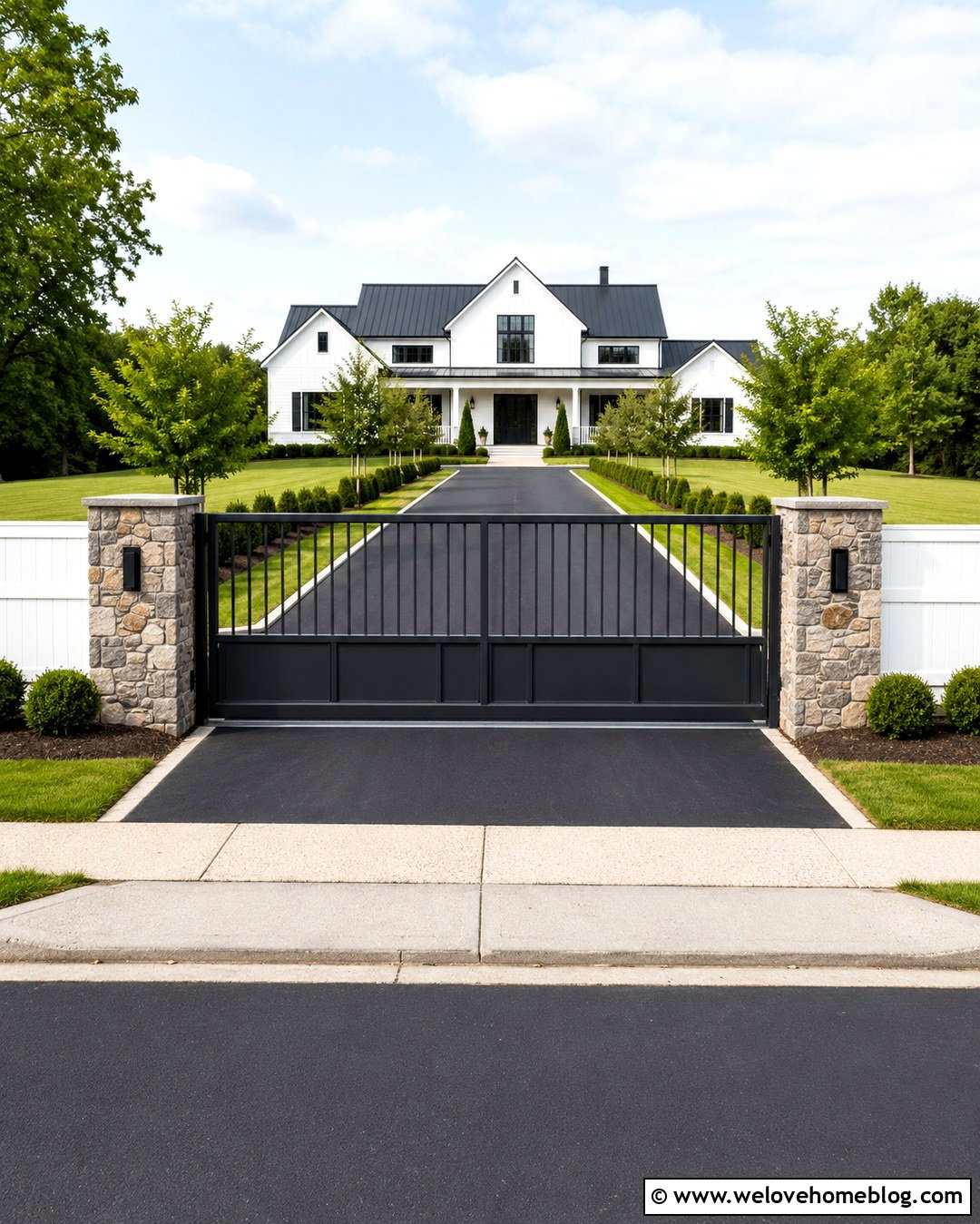
Steel is well suited to gates that need a strong frame, slim profiles, or custom decorative details. A charcoal steel sliding gate paired with a black asphalt driveway can create a secure entrance for a modern farmhouse. Use vertical bars along the upper section and closely spaced steel panels below for balanced visibility and privacy. Stone-clad pillars, white fencing, and clipped shrubs prevent the dark gate from overwhelming the frontage. Ask how the steel will be protected from corrosion, particularly around welds, fasteners, cut edges, and areas close to sprinklers. Galvanizing and quality powder coating can improve durability, but damaged finishes still need attention. Because steel gates can become heavy, the supporting posts, rollers, hinges, foundations, and automatic operator must be selected as one coordinated system.
9. How To Choose Wood Driveway Gates
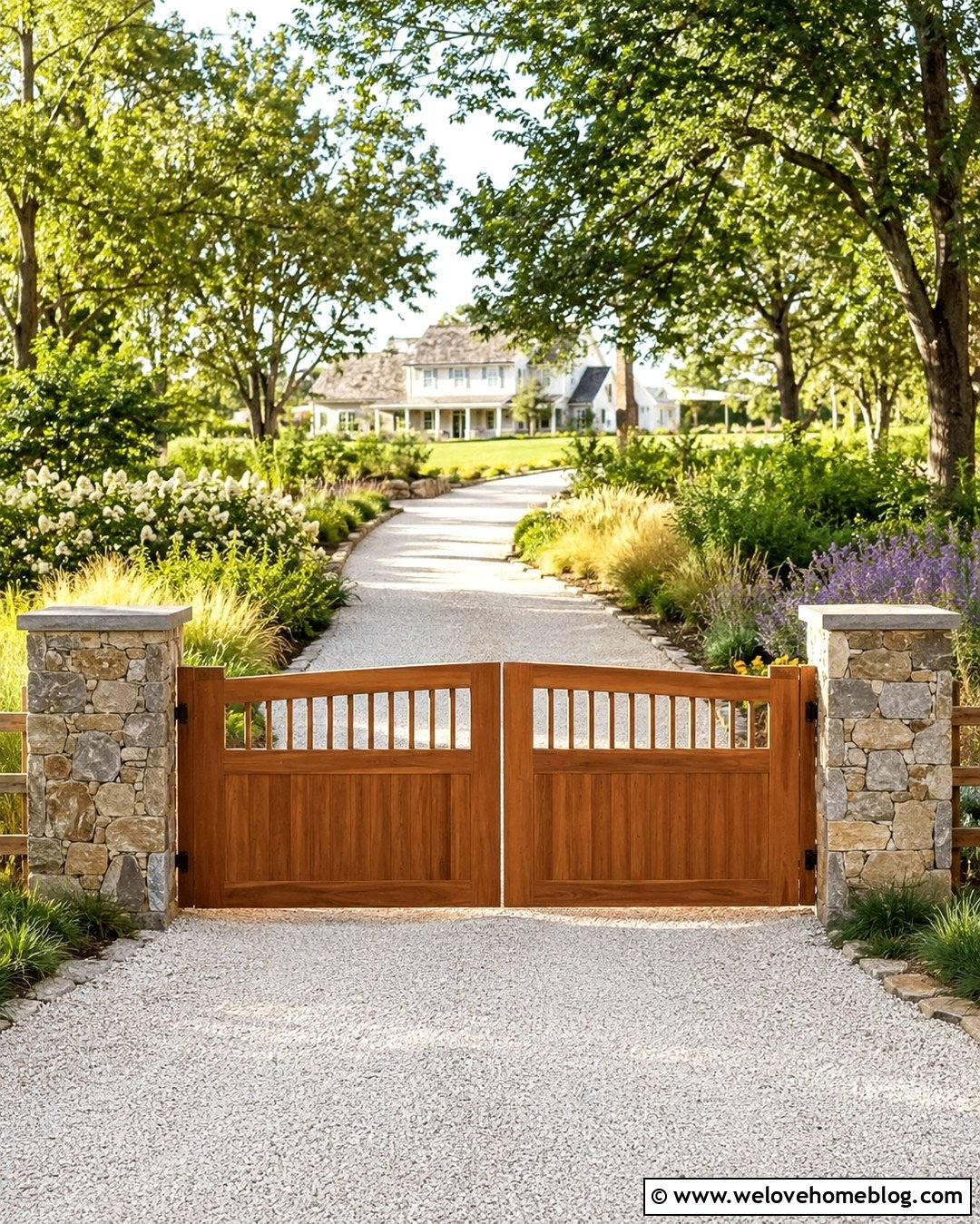
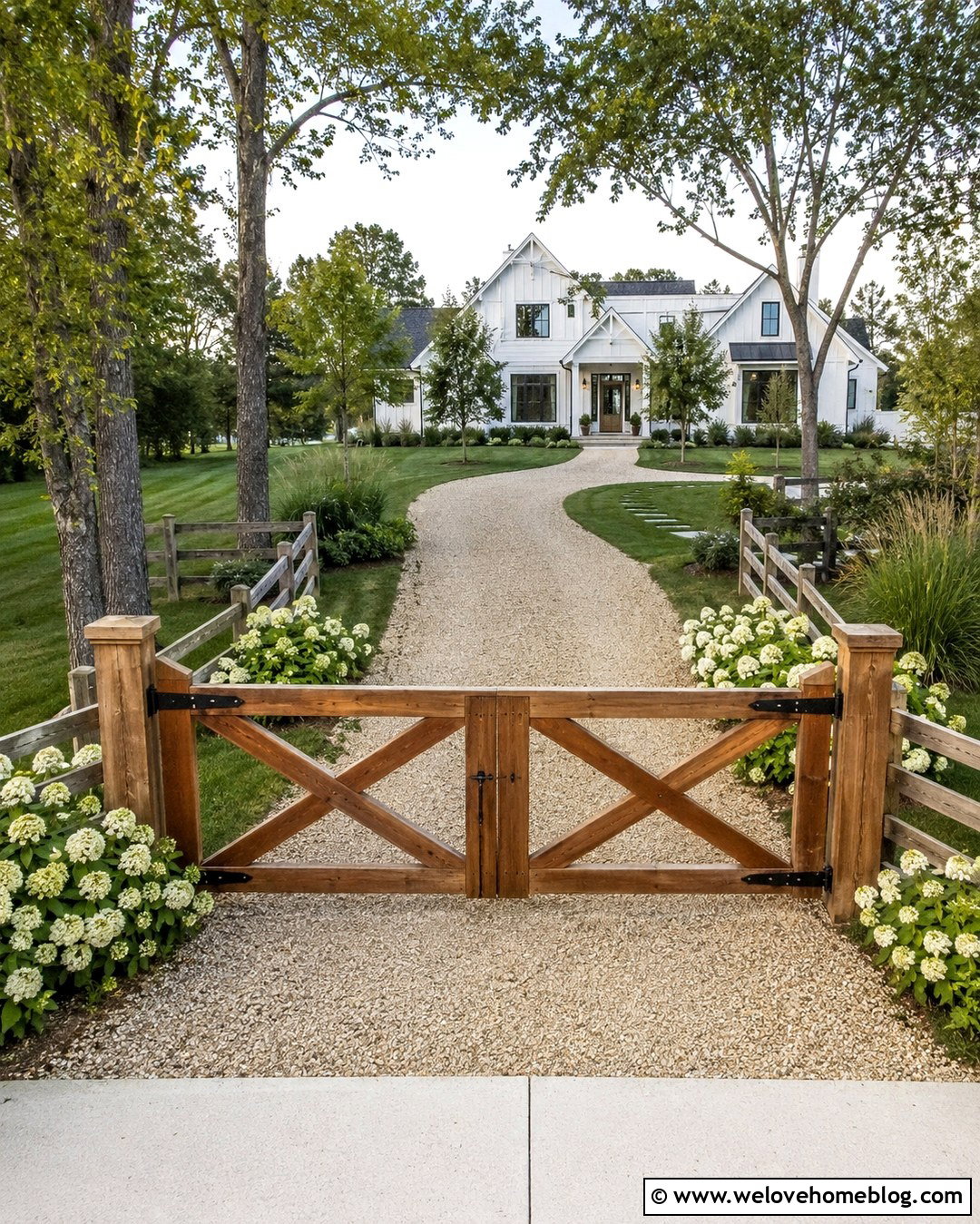
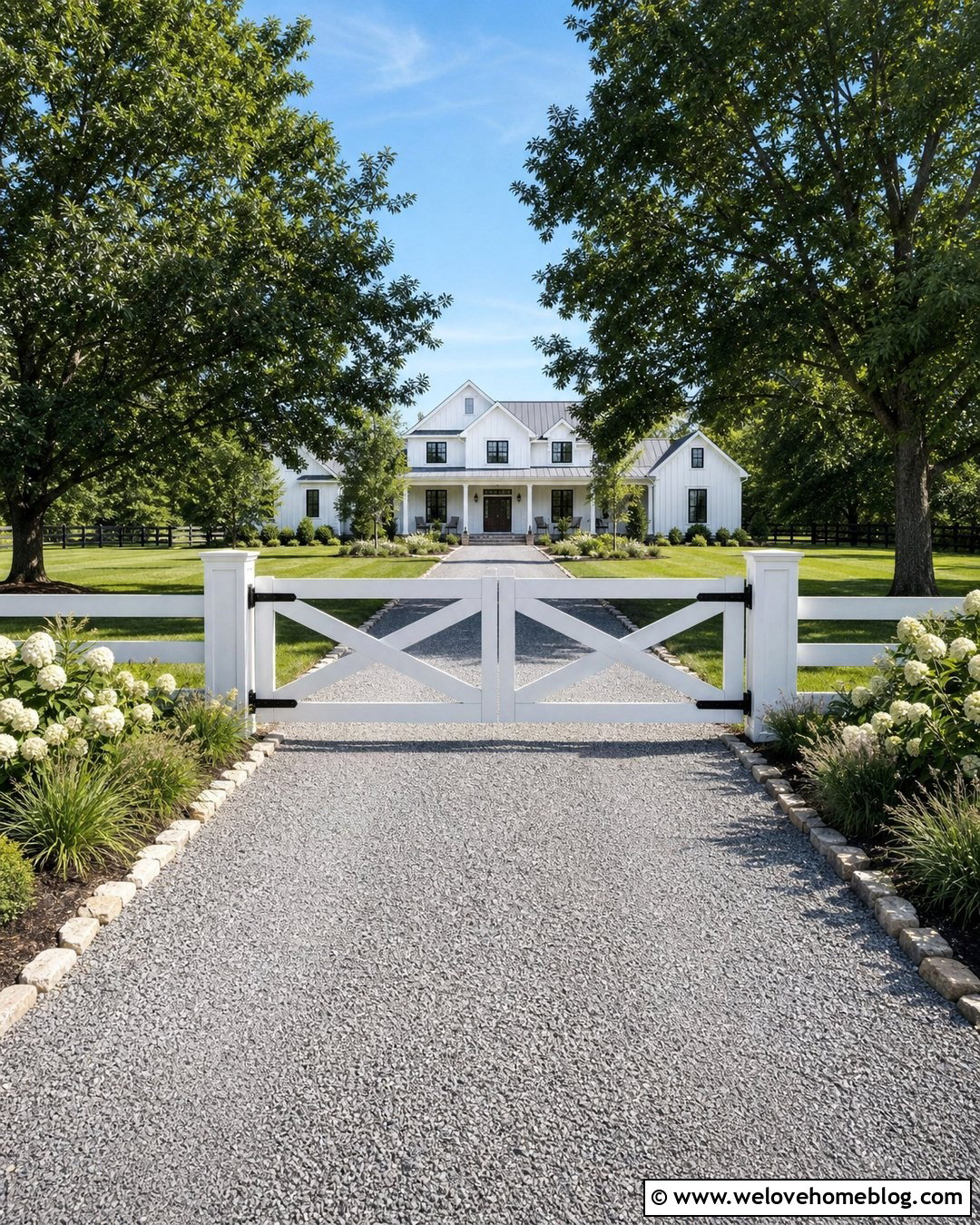
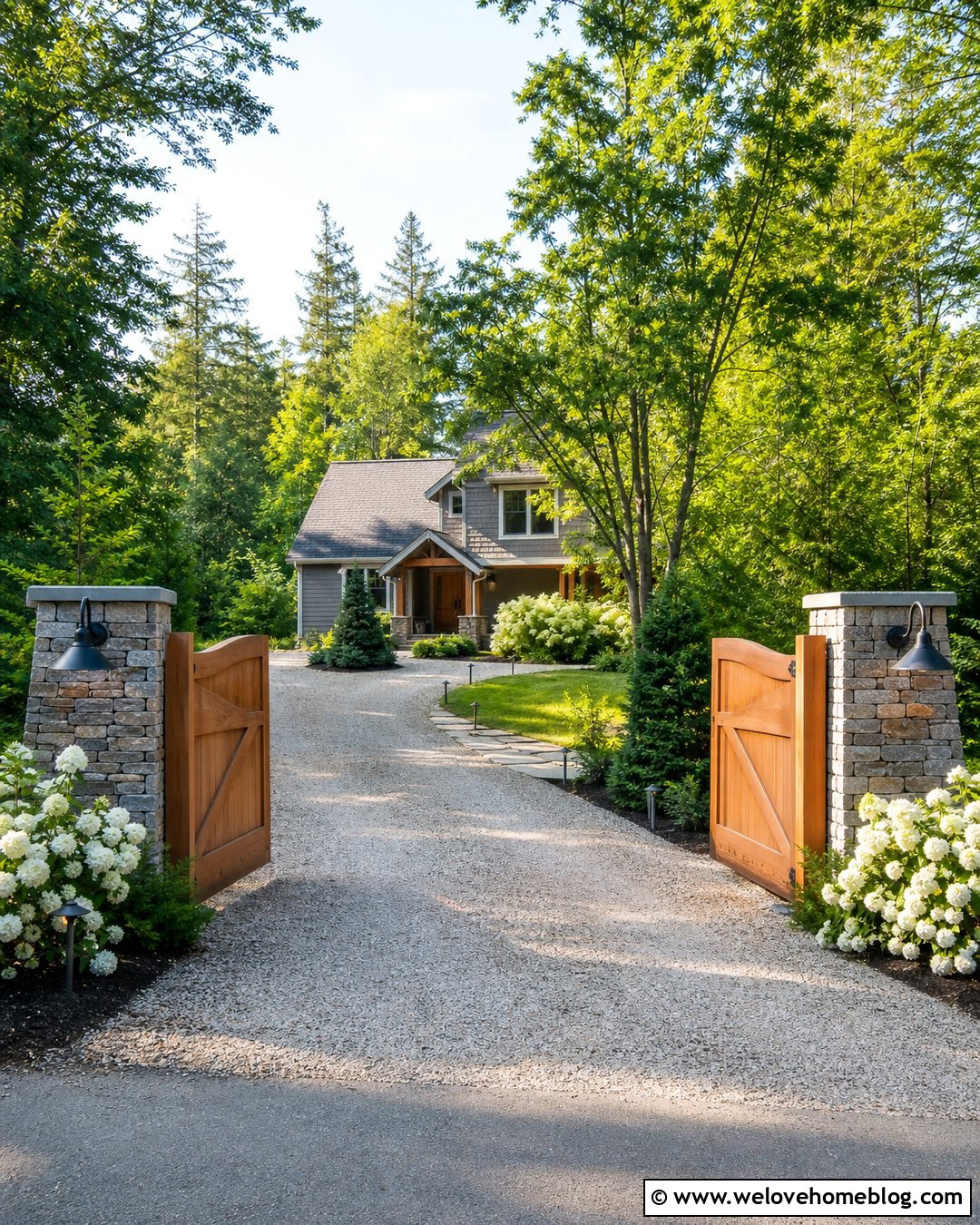
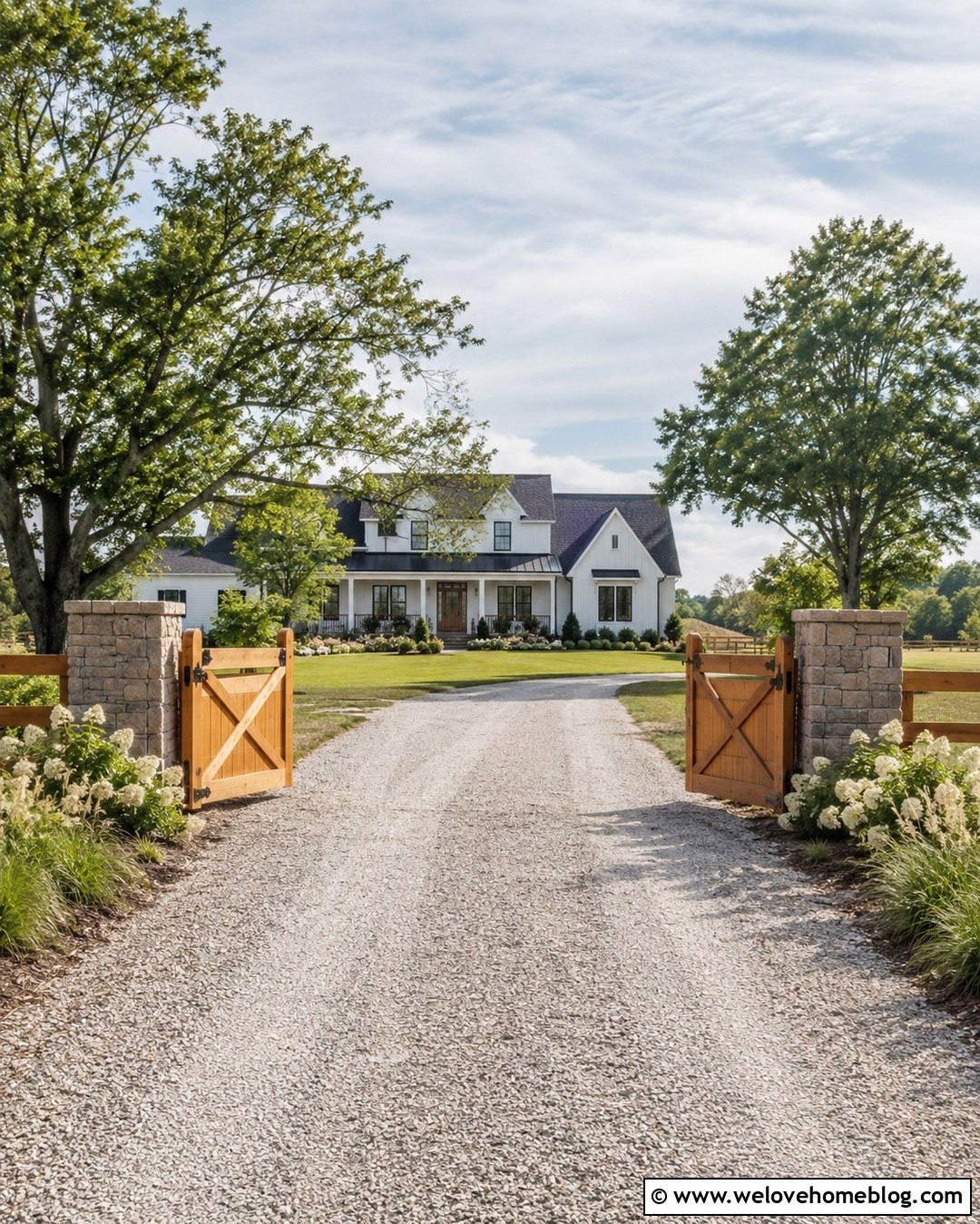
Wood brings warmth to an entrance and pairs naturally with country, Craftsman, and modern farmhouse architecture. For a welcoming rural look, combine a cedar double-swing gate with a pale crushed-stone driveway, timber fencing, fieldstone pillars, and layered native planting. A steel inner frame can help the wide wooden leaves stay aligned while allowing the cedar boards to remain the visual focus. Choose a wood species and protective finish suitable for local moisture, sun, insects, and temperature changes. Horizontal boards feel contemporary, while vertical boards and cross braces create a more traditional character. Leave appropriate movement gaps because wood expands and contracts. Regular cleaning, staining, and hardware inspections should be included in the ownership plan, especially where sprinklers or dense vegetation keep the lower boards damp.
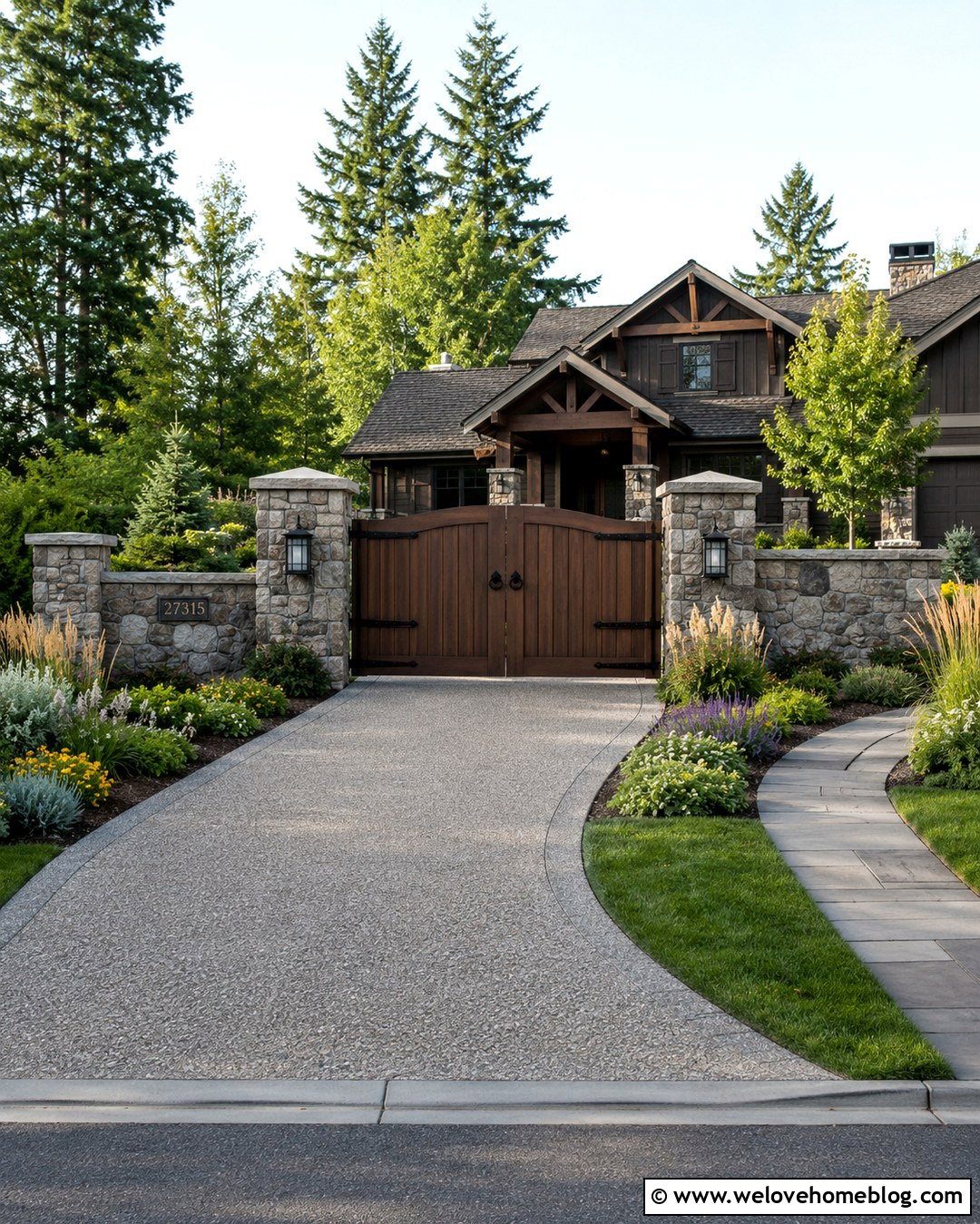
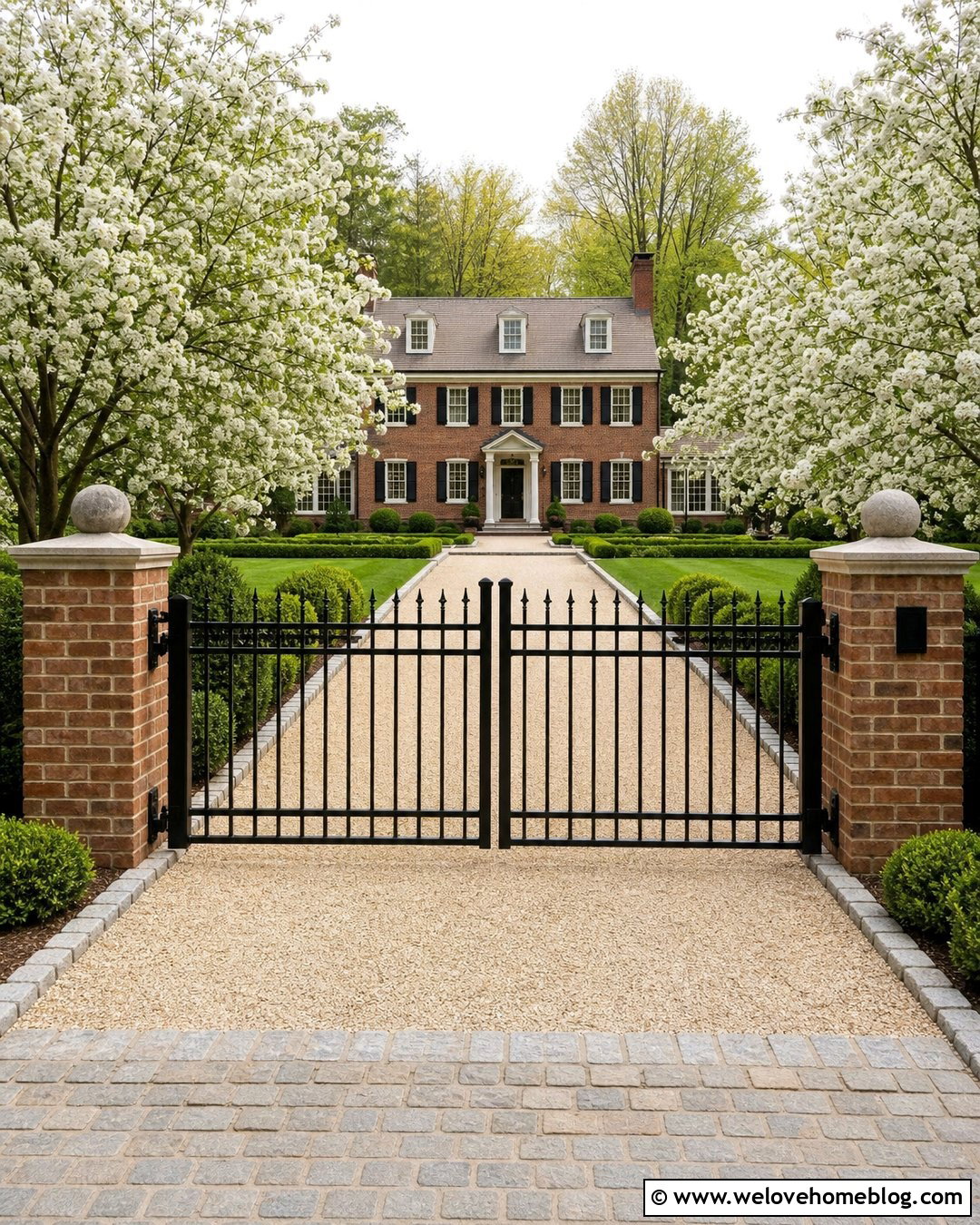
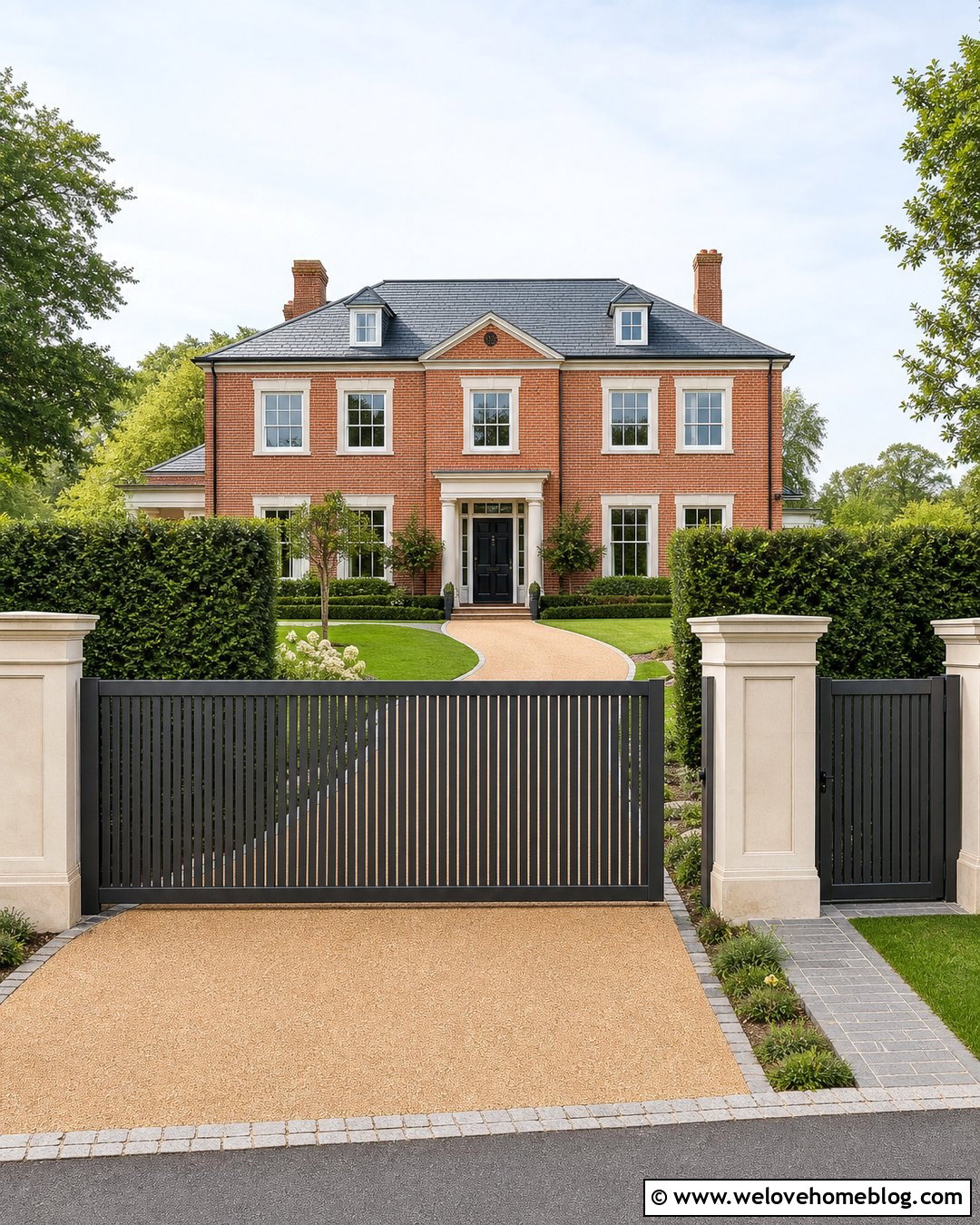
10. How To Choose Wrought Iron Driveway Gates
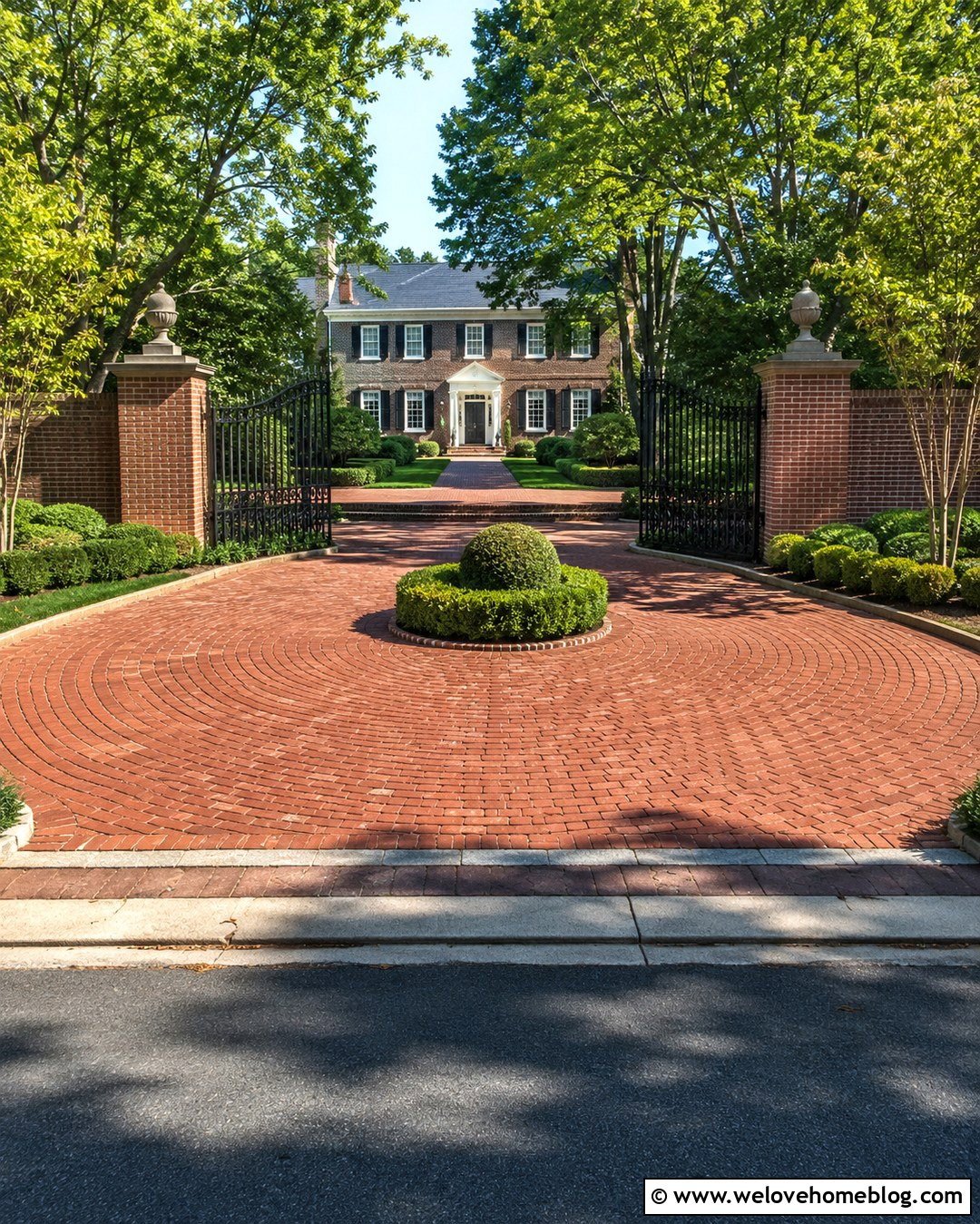
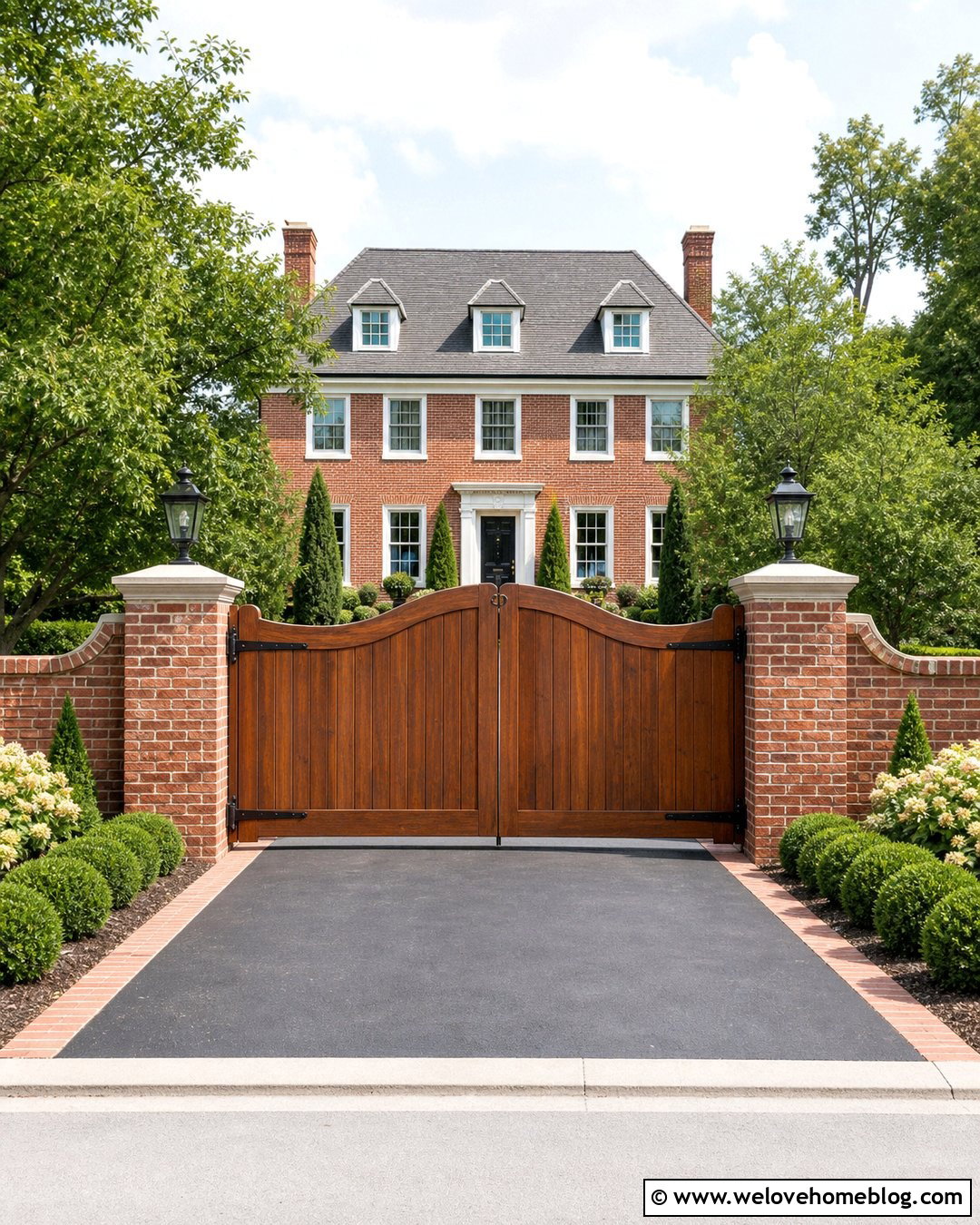
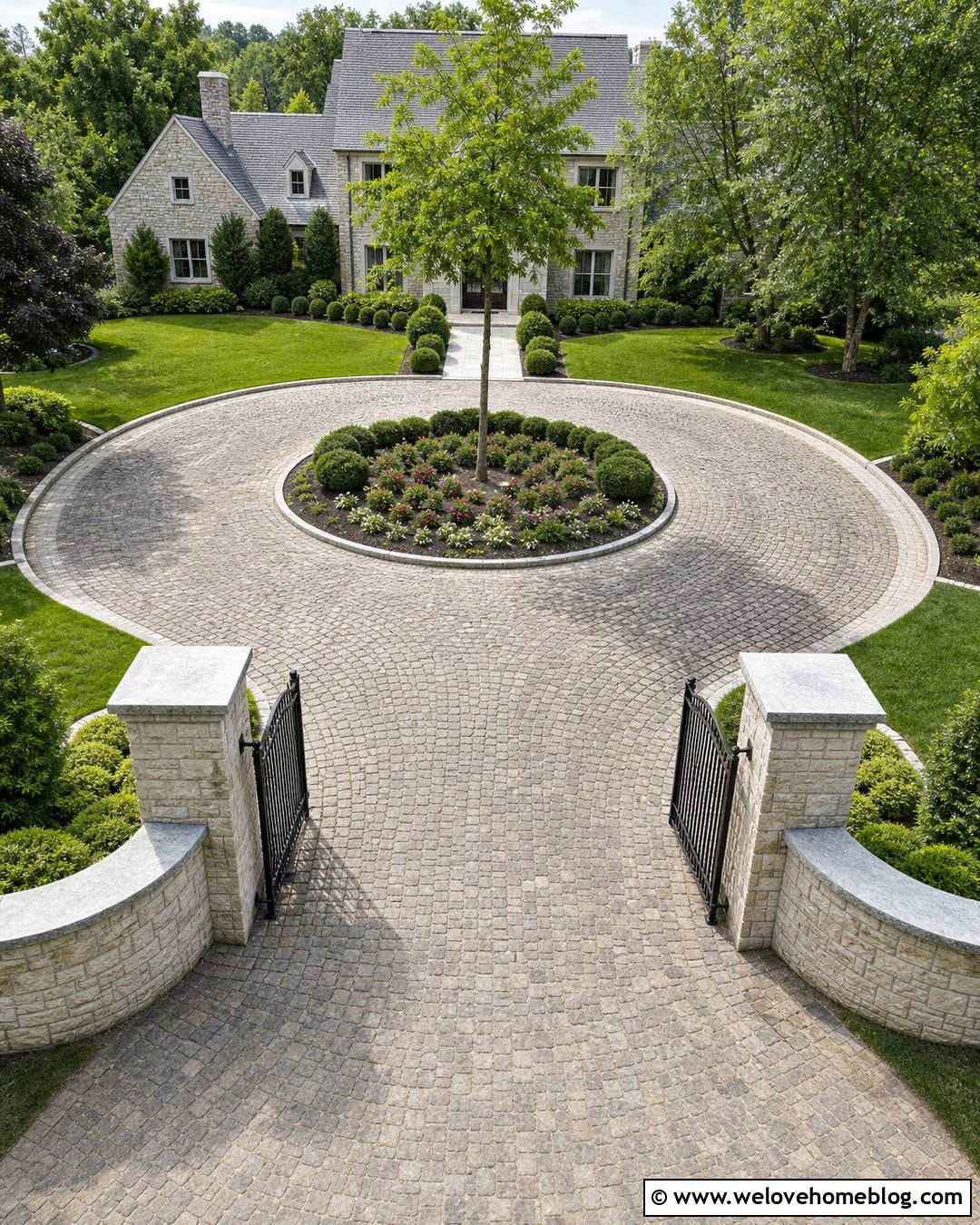
An ornamental iron gate works best when the house and landscape can support its traditional character. A gently arched double-swing gate looks elegant across a circular clay brick driveway leading to a colonial home. Match the gate with brick pillars, understated finials, formal boxwood beds, and symmetrical shade trees. Keep the pattern open enough to maintain views toward the house, but avoid oversized scrollwork that competes with the architecture. True wrought iron and fabricated ornamental steel may be described similarly by sellers, so confirm the actual material, protective finish, and maintenance requirements. Decorative gates still need practical clearances, reliable hinges, strong foundations, and properly positioned operators. Repeating one gate detail in the pedestrian entry or railing can unify the property without making the frontage feel overly ornate.
11. How To Match A Driveway Gate To Your House
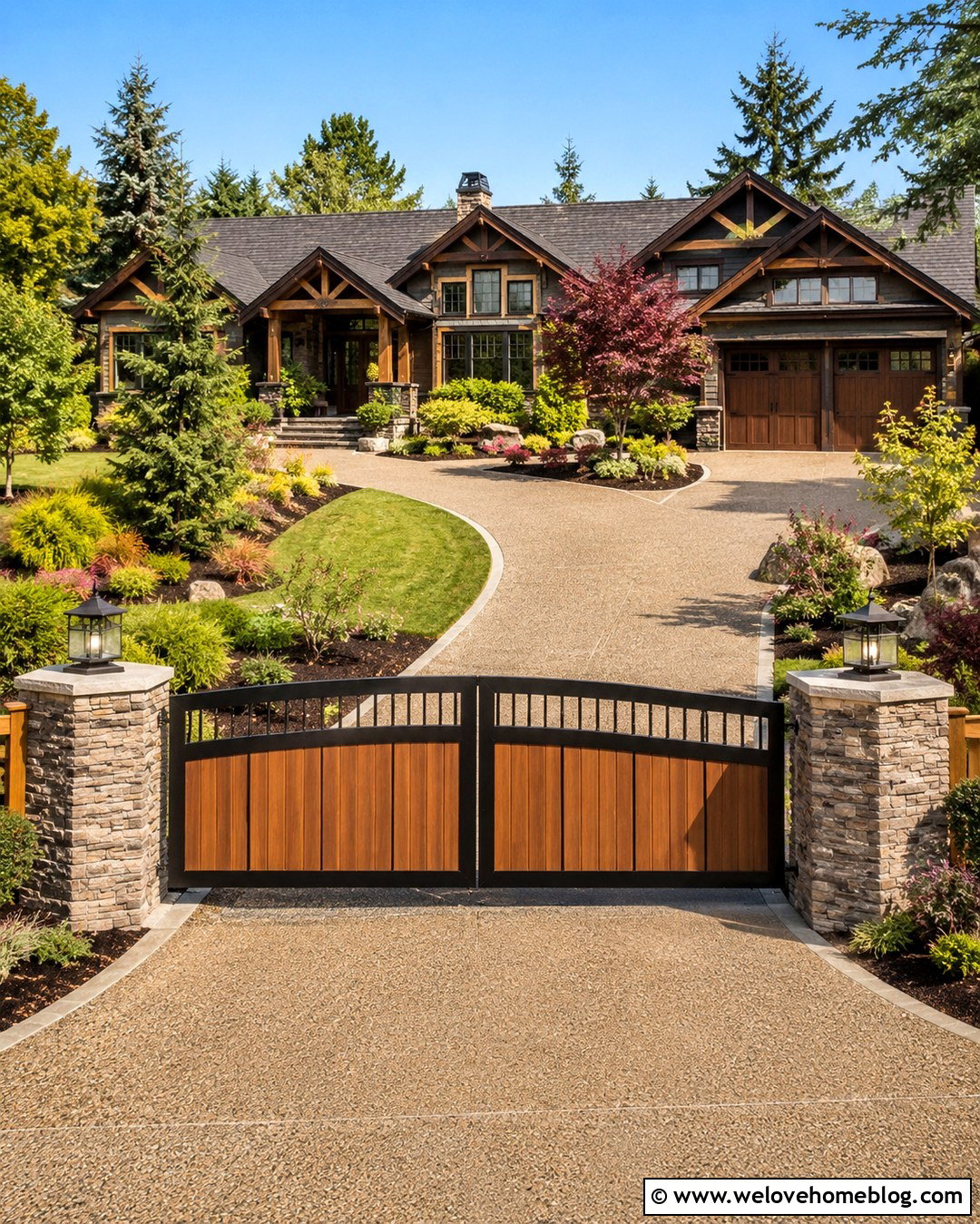
The best gate usually repeats a few architectural features instead of copying every detail. Look at the home’s rooflines, window shapes, exterior colors, railings, and primary materials. A modern house may suit a flat-topped gate with horizontal slats, while a Tudor or colonial home can support gentle arches and vertical metalwork. For a Craftsman property, pair a warm wood-and-steel gate with an exposed aggregate driveway, tapered stone pillars, and deep planting beds. Match the gate color to window frames or exterior hardware rather than choosing an unrelated finish. The pillars should also feel proportionate to the home and driveway width. View samples from the curb in daylight. A design that looks delicate in a catalog may appear undersized across a broad residential entrance. ()
12. How To Choose A Privacy Driveway Gate
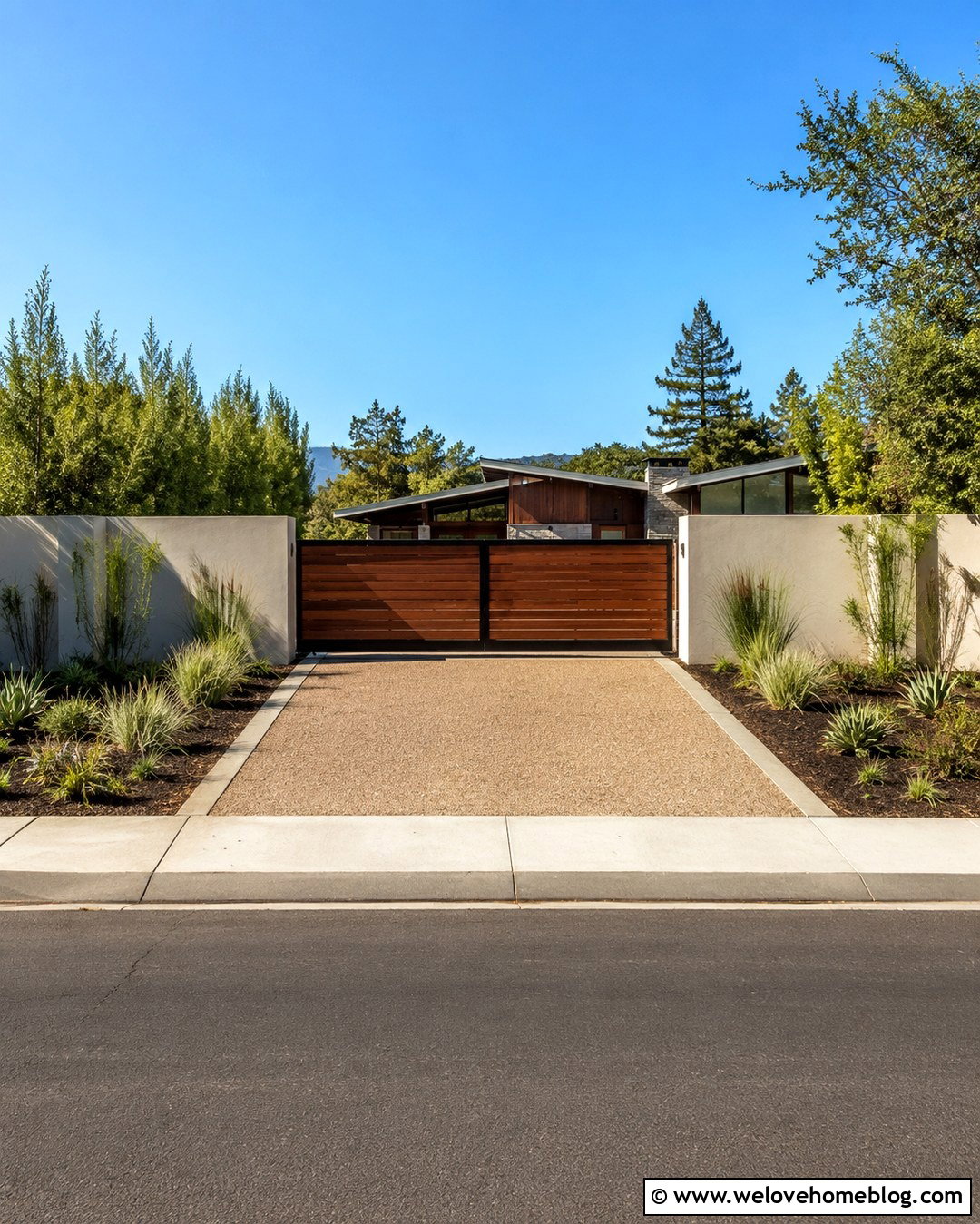
A privacy gate should screen the property without turning the entrance into a solid, unwelcoming wall. Horizontal cedar boards set inside a black steel frame create warm coverage while keeping the structure crisp. Pair this gate with a straight resin-bound gravel driveway, low stucco walls, and layered evergreen landscaping around a mid-century modern house. Narrow gaps between boards can reduce the boxed-in feeling and relieve some wind pressure. Consider how a tall solid gate affects sightlines when drivers exit the property. Set the gate far enough back to provide safe visibility and useful vehicle waiting space where the lot allows. Strong wind can place considerable force on large solid panels, so the frame, posts, foundations, hinges, and operator must be designed for the gate’s full surface area.
13. How To Choose An Automatic Driveway Gate
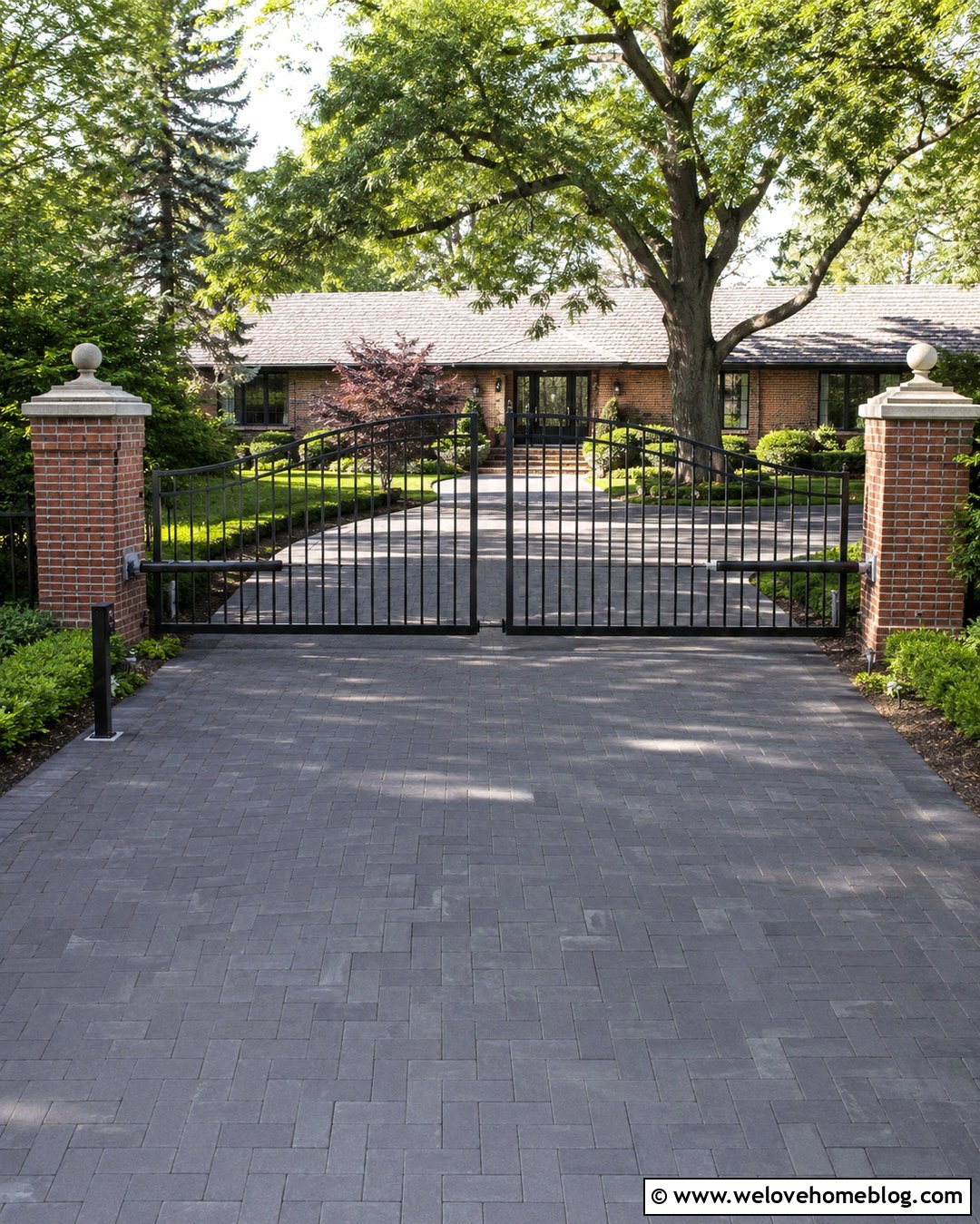
Automation is valuable when the gate will be used several times a day or when leaving a vehicle to open it would be inconvenient. Start by choosing the correct gate movement, then match the operator to the leaf size, weight, wind exposure, and expected number of cycles. A black steel automatic double-swing gate can frame a curved concrete paver driveway leading to a brick ranch home. Add masonry pillars, a keypad pedestal, and low evergreen beds without obstructing safety devices. Plan power, drainage, underground conduit, manual release access, and backup operation before installing the driveway surface. Remote controls, vehicle detection, smart controls, and intercoms can improve convenience, but the system should remain understandable for guests and service providers. Schedule professional inspections so alignment and safety features remain reliable. ()
14. How To Choose A Solar Driveway Gate Opener
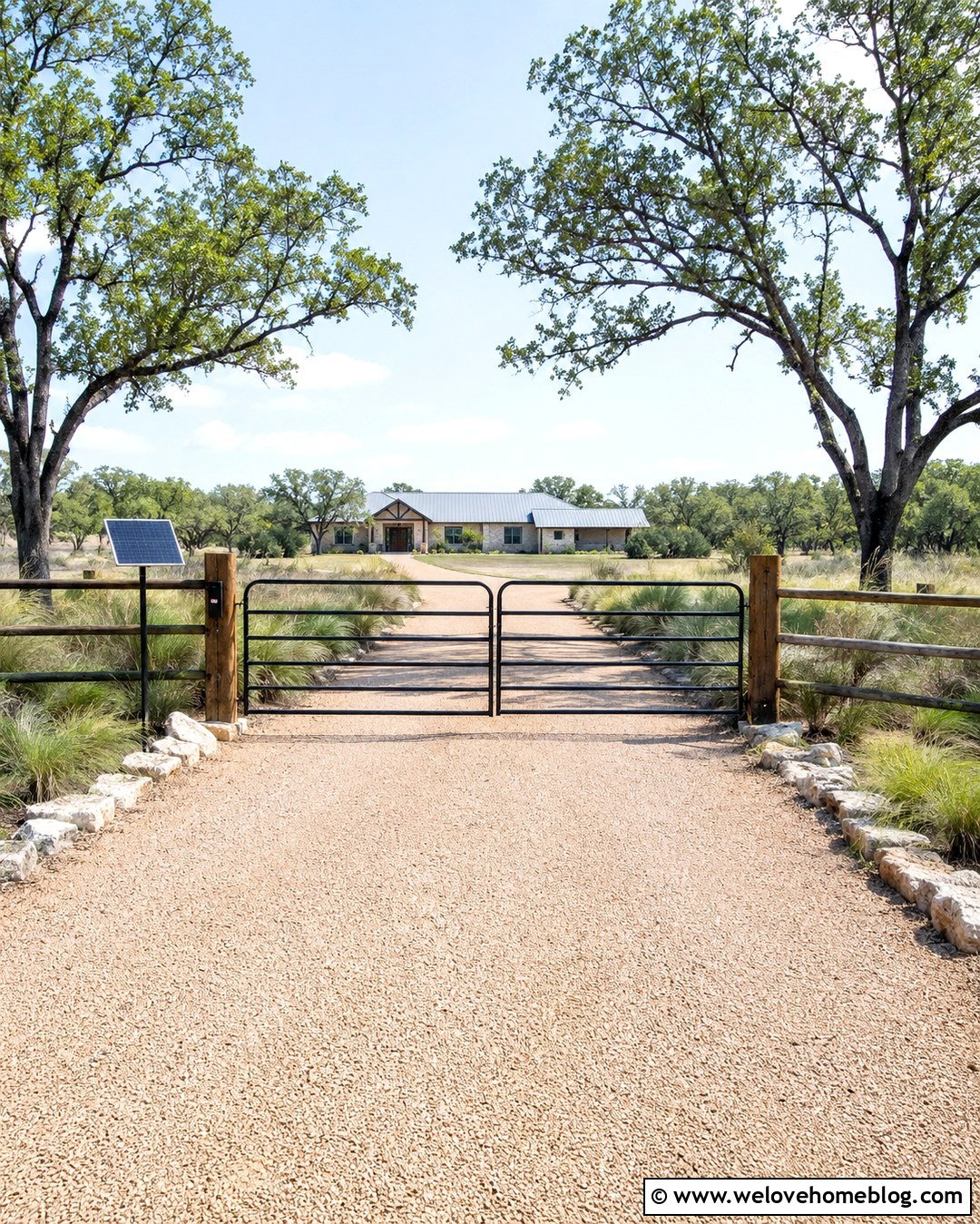
Solar power can support an automatic entrance where running utility power is difficult, but the location must receive dependable sunlight. Shade from trees, pillars, buildings, and winter sun angles can reduce charging performance. A solar-powered tubular steel swing gate fits naturally beside a long tan gravel driveway leading to a country ranch house. Mount the panel where it receives clear exposure without making it the entrance’s main visual feature. Surround the gate with split-rail fencing, native grasses, and stone edging for a relaxed rural look. The panel, battery storage, operator, gate weight, and daily cycles must be evaluated together. Ask how the system performs during cloudy periods and how the gate can be released during a fault. Provide accessible, weather-protected space for batteries and control equipment.
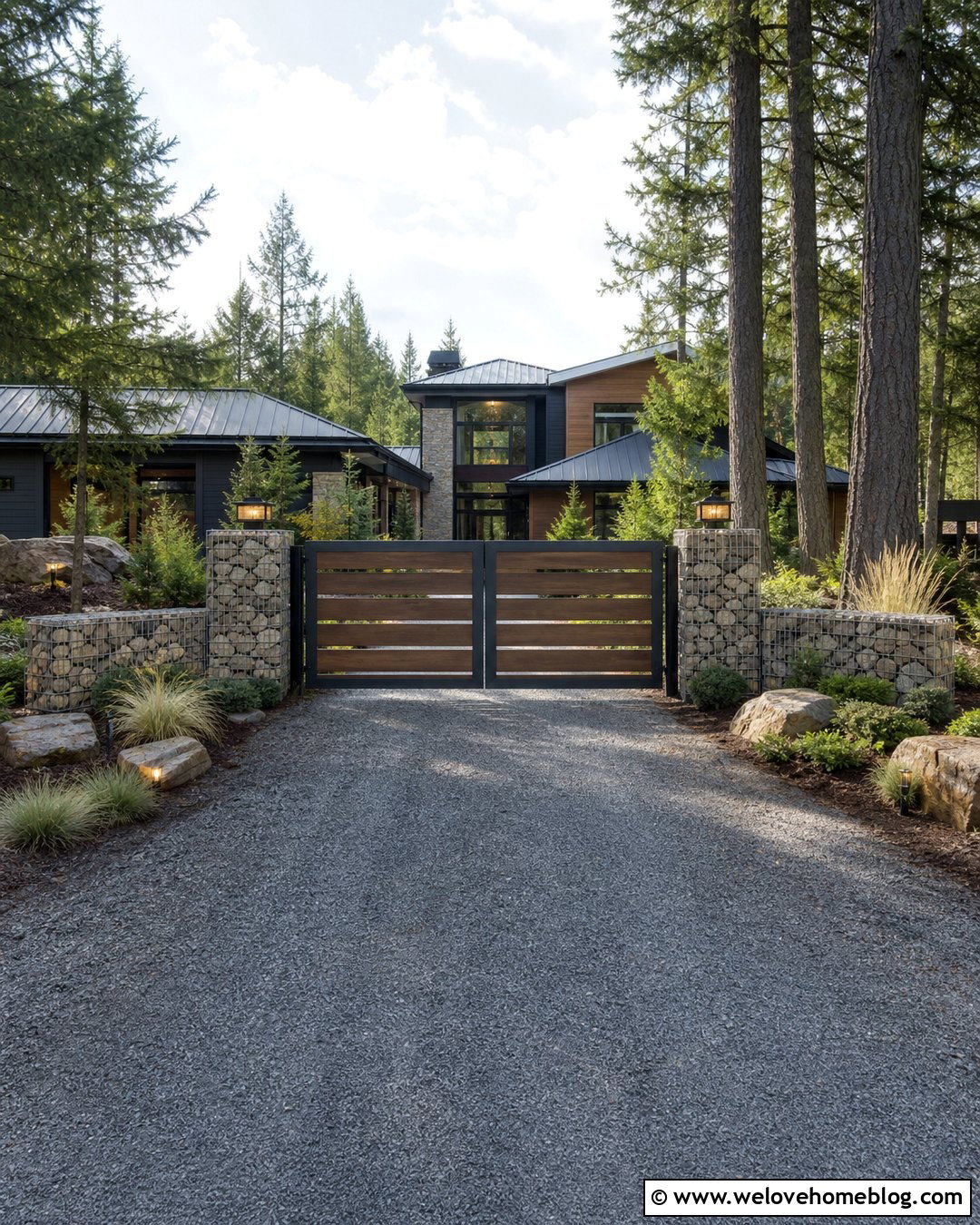
15. How To Choose Driveway Gate Access Controls
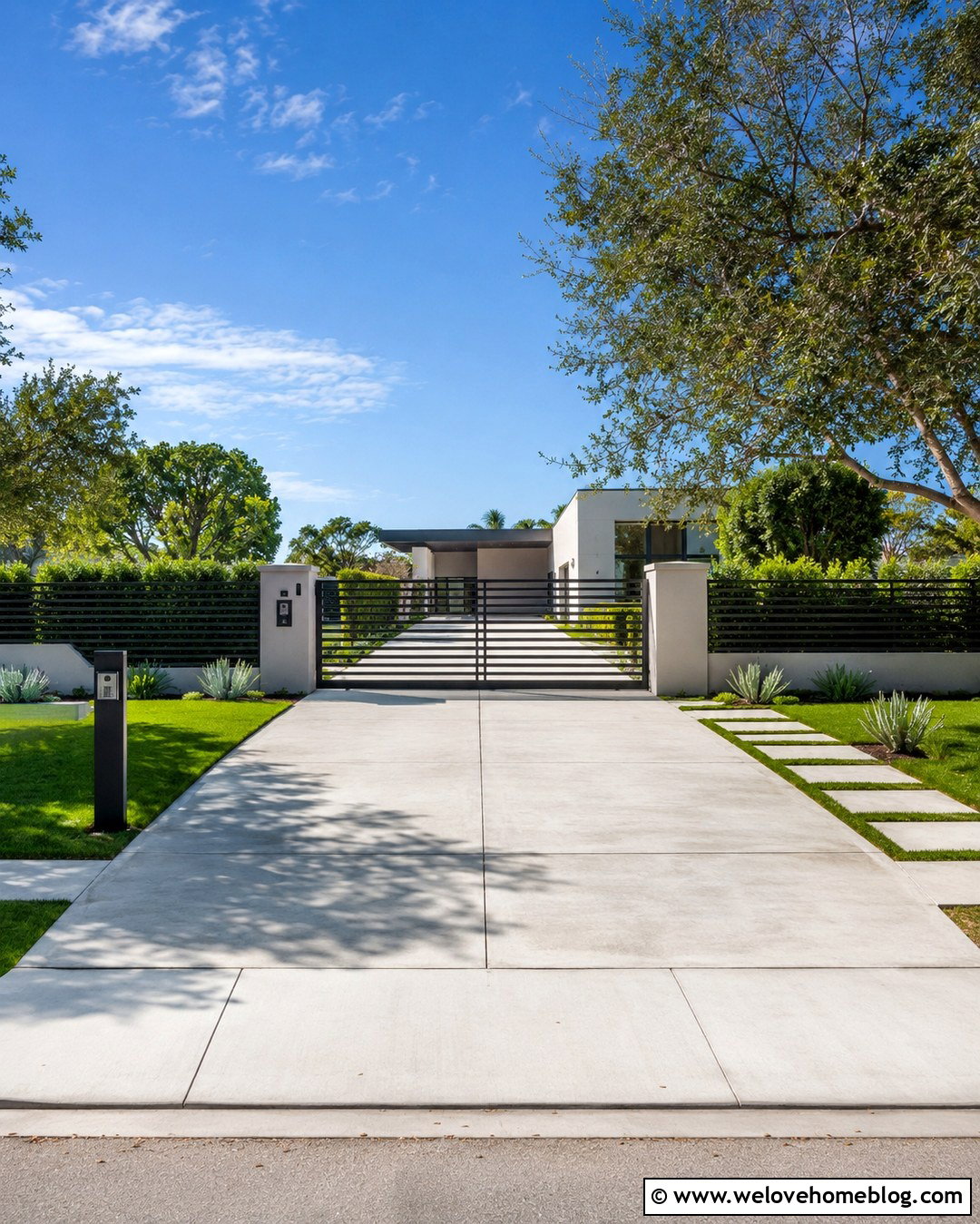
Access controls should match the people who regularly use the property. Remotes are convenient for residents, while a keypad can serve visitors, cleaners, and deliveries. Video intercoms provide more control when the gate is far from the house. For a contemporary entrance, combine a dark aluminum sliding gate with a pale concrete driveway, a slim masonry pillar, and a flush-mounted intercom. Keep the equipment reachable from a vehicle window without forcing drivers too close to the moving gate. Provide a separate method for pedestrian access and consider temporary codes rather than sharing one permanent number. Reliable cellular service, internet coverage, wiring, weather resistance, and emergency access all affect the final choice. The simplest dependable system is often better than a complicated setup the household finds difficult to manage.
16. How To Choose Safe Driveway Gate Features
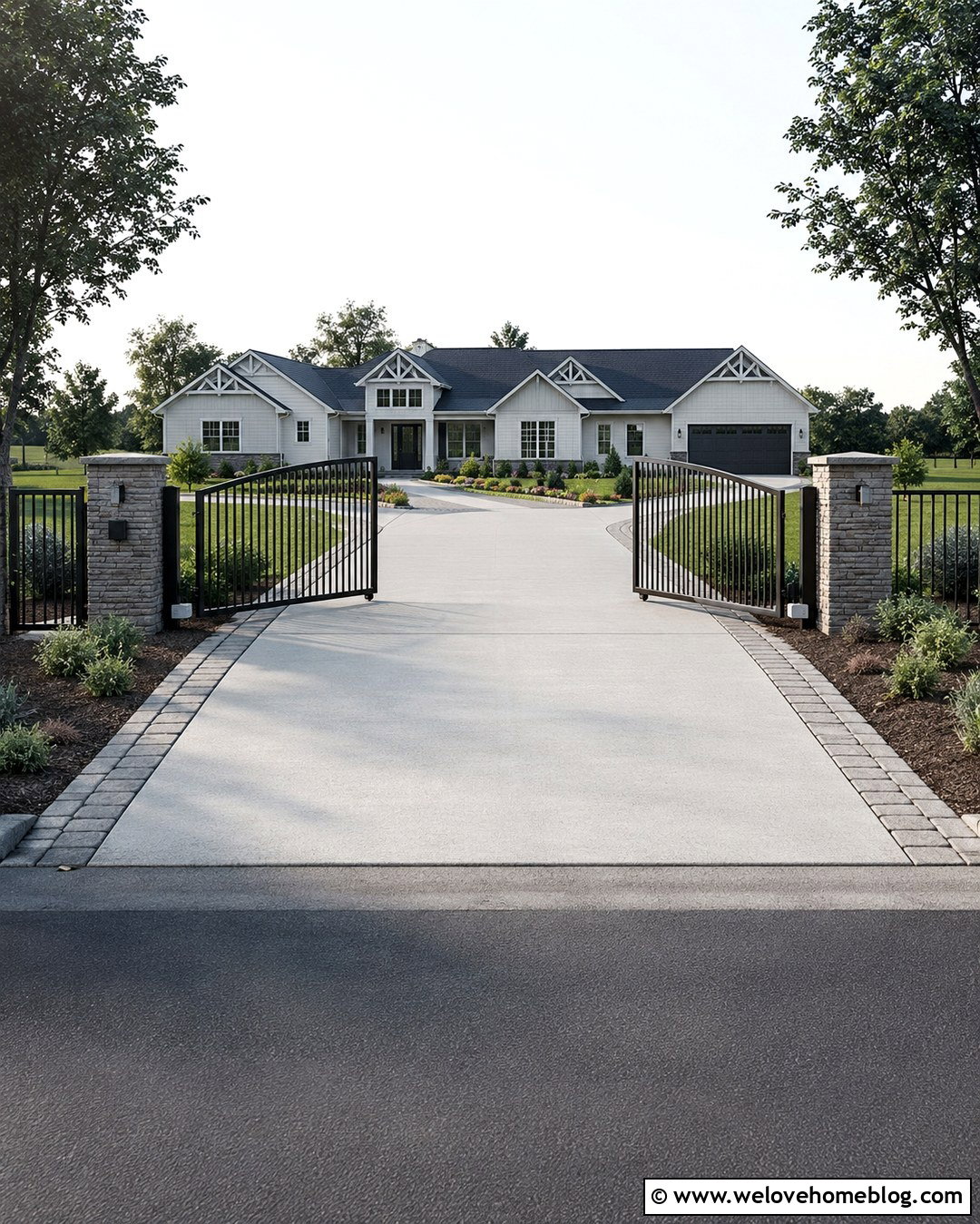
An automatic gate creates moving pinch, crush, and impact areas that must be addressed during design. Choose an experienced installer who can identify entrapment zones and specify appropriate photo eyes, contact edges, warning devices, stops, and operator controls. A safe family entrance might use an open-picket aluminum swing gate across a straight broom-finished concrete driveway. Low landscaping preserves visibility, while a separate latchable pedestrian gate keeps foot traffic away from vehicle movement. Avoid decorative gaps where hands or feet could become trapped. Children should not play near gate controls, hinges, rollers, or operator arms. Test the reversal and obstruction-detection features according to the installer’s maintenance plan. Manual release instructions should be easy to find, but controls must remain protected against unauthorized operation and accidental activation.
17. How To Choose Driveway Gate Posts And Pillars
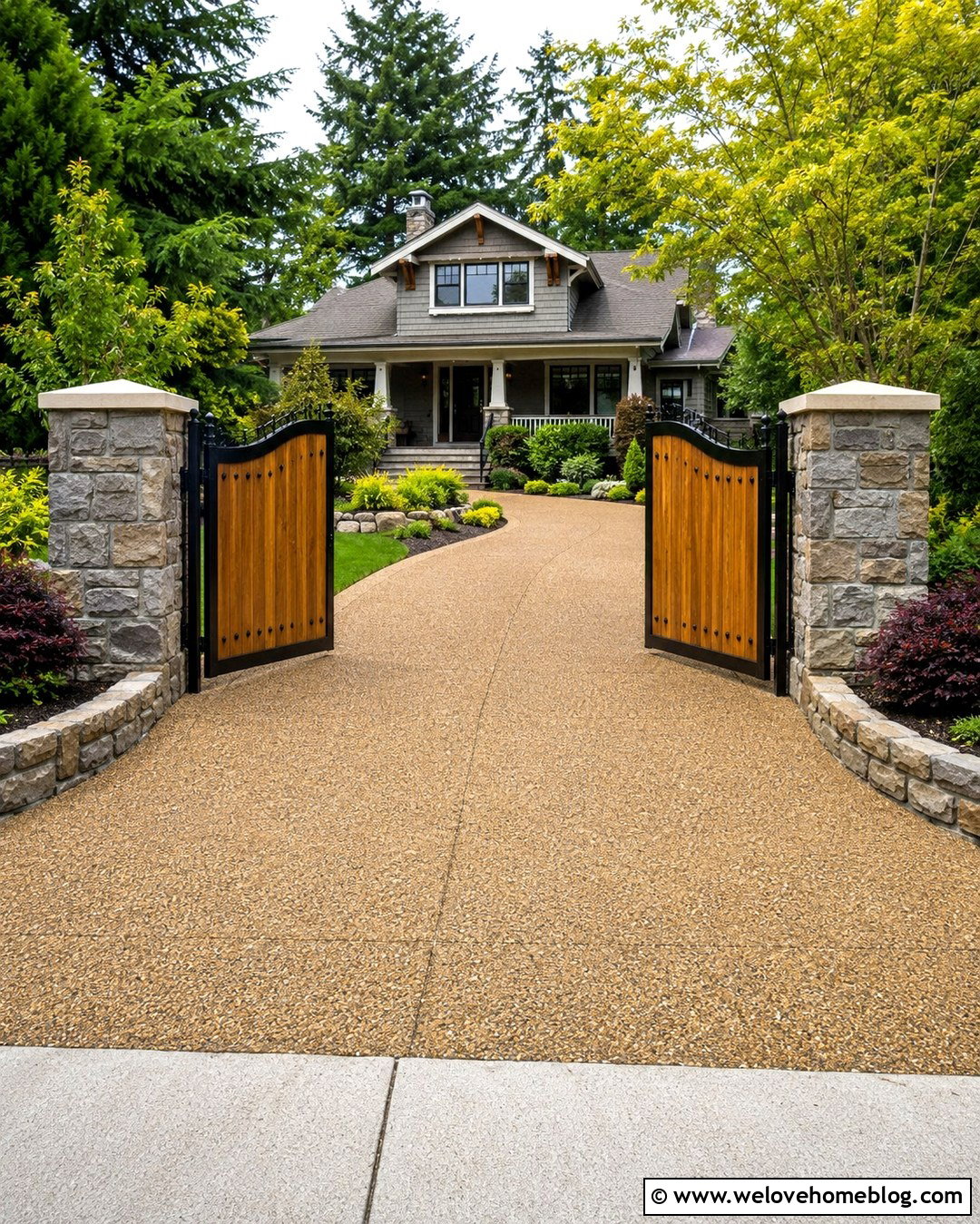
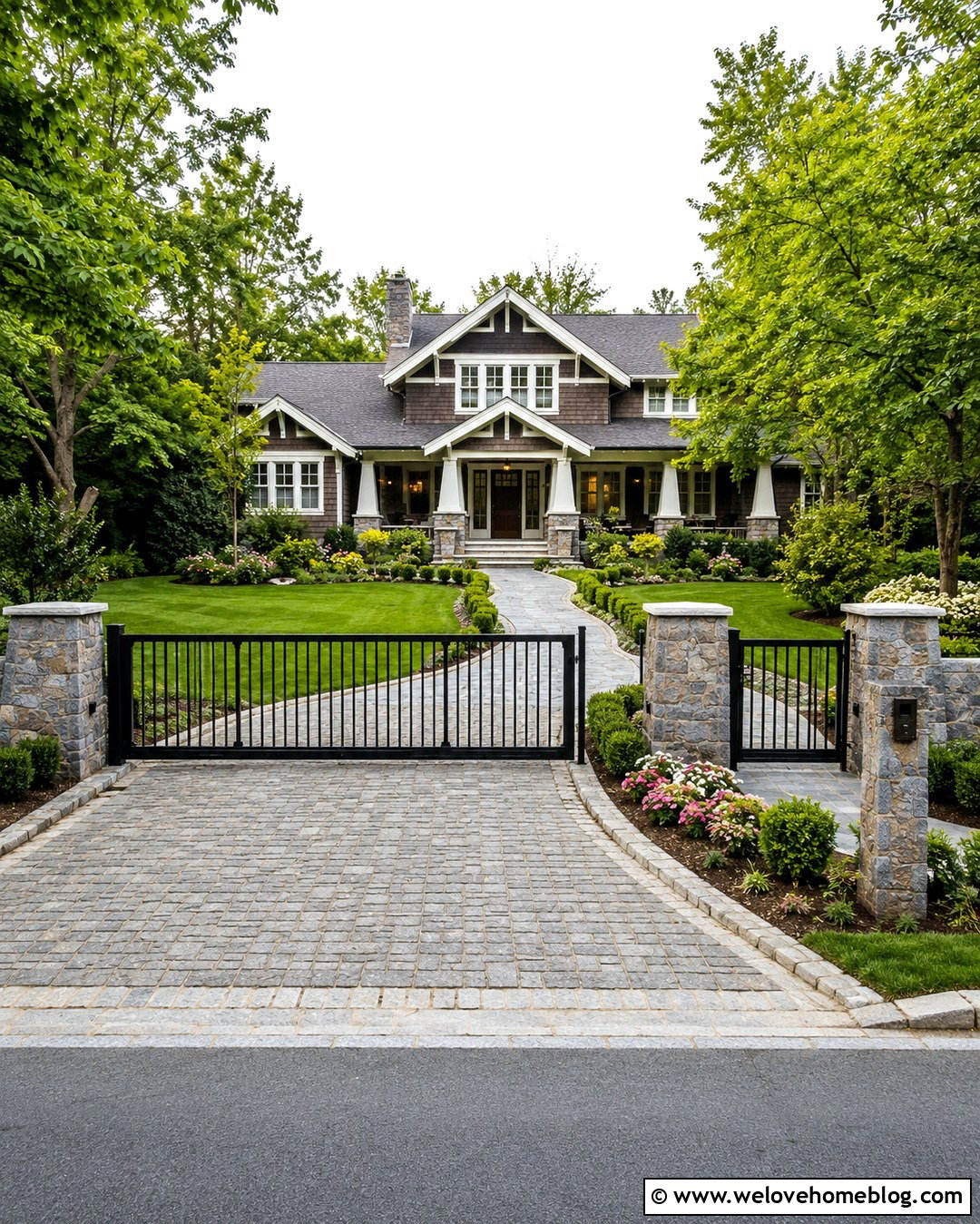
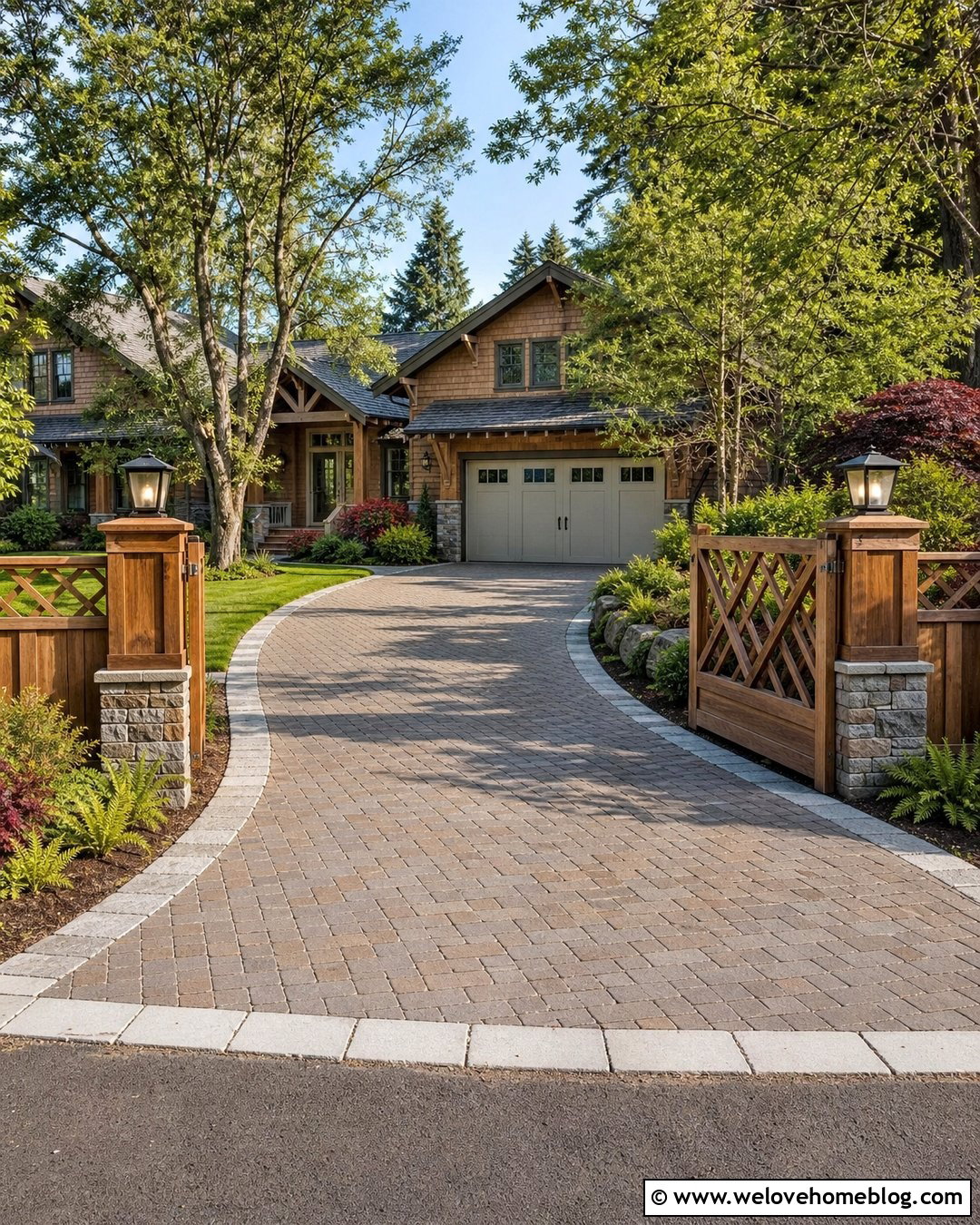
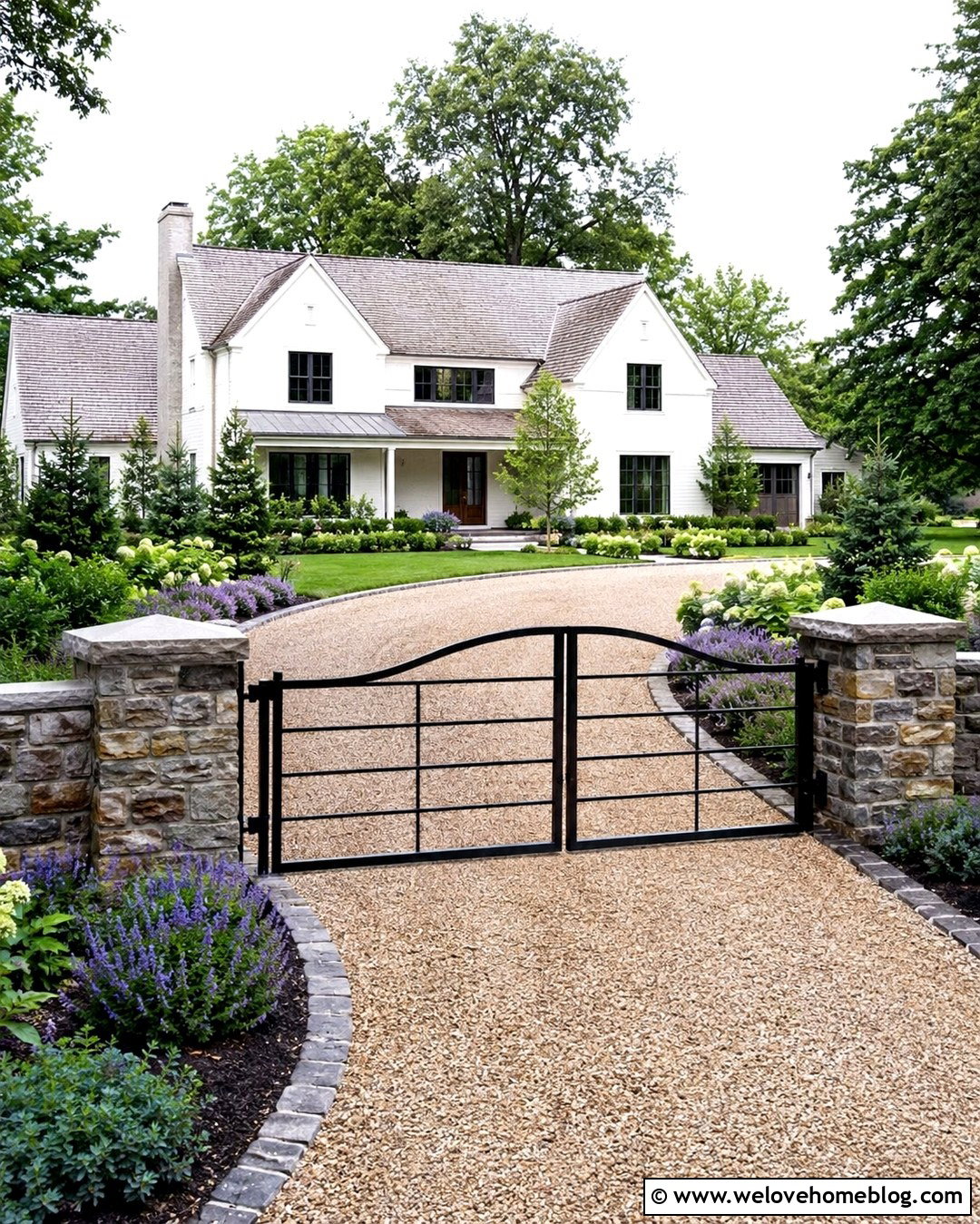
Even a well-made gate will sag or bind if its supports are undersized. Gate posts and pillars must handle the leaf weight, hinge forces, operator movement, soil conditions, wind, and repeated daily use. For a substantial entrance, pair a steel-framed cedar gate with a curved exposed aggregate driveway and reinforced stone-clad pillars. Cap the pillars with simple limestone tops and repeat the stone along nearby planting beds. Decorative masonry should conceal, rather than replace, the properly engineered structural supports inside. Confirm underground utility locations before excavation and keep foundations clear of drainage problems and aggressive tree roots. Pillar width should feel balanced with the gate and house. Oversized columns can narrow the entrance visually, while thin posts may make a broad, heavy gate appear unsupported.
18. How To Add Lighting Around A Driveway Gate
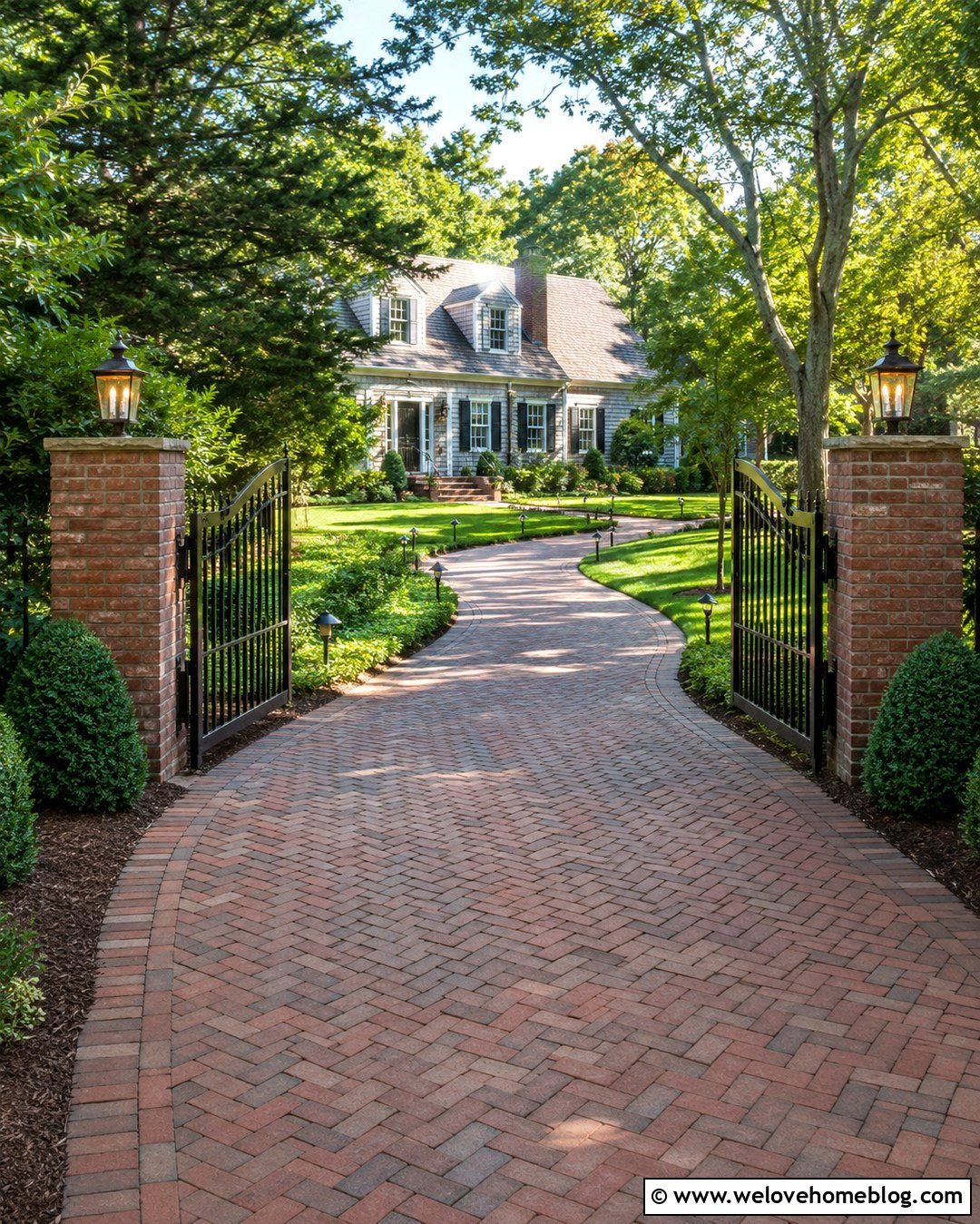
Gate lighting should help drivers recognize the entrance, locate access controls, and navigate the driveway without creating glare. Install downward-facing fixtures on pillars, low path lights along the approach, or shielded lighting near an address marker. A bronze steel gate, warm brick pillars, and a herringbone brick paver driveway make a cohesive entrance for a traditional Cape Cod home. Even though fixtures are selected for nighttime use, their scale and finish should still look attractive during the day. Keep electrical components away from drainage paths and coordinate conduit before the driveway and landscaping are completed. Avoid placing bright fixtures directly behind an intercom camera. Choose a consistent metal finish for lanterns, gate hardware, and the address plaque so the entrance reads as one planned composition rather than a collection of accessories.
19. How To Landscape A Driveway Gate Entrance
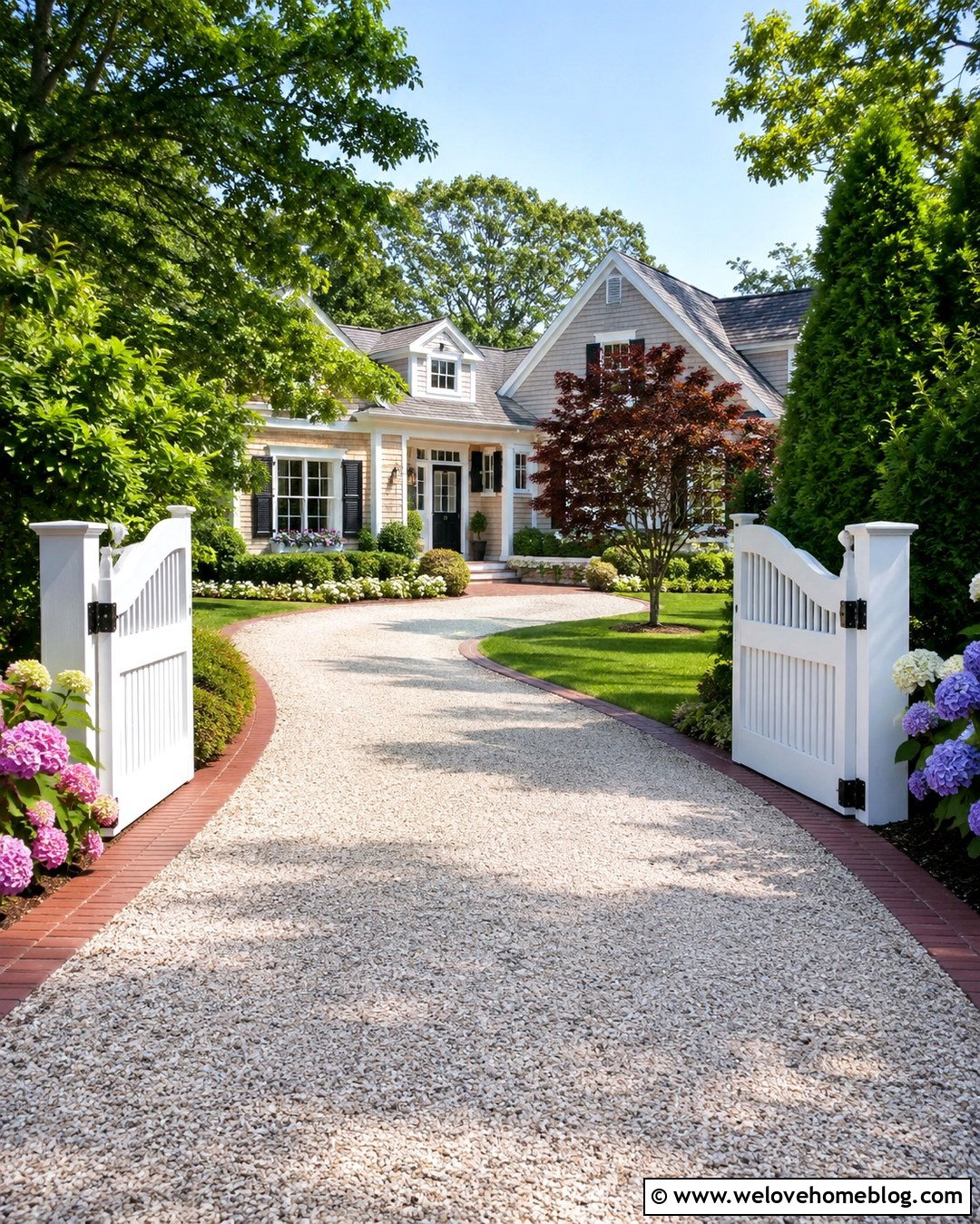
Landscaping can soften a gate and connect it to the yard, but plants must not interfere with hinges, tracks, sensors, cameras, or access panels. Frame a white vinyl double-swing gate with a light pea gravel driveway, brick edging, flowering shrubs, and small ornamental trees for a cheerful cottage entrance. Keep mature plant sizes in mind so branches do not grow into the gate’s movement area. Low ground covers work well near operator equipment, while larger shrubs should sit farther back. Maintain clear sightlines between vehicles, pedestrians, and the street. Use matching beds on both sides when the entrance calls for symmetry, or follow a curved driveway with looser planting for a natural look. Include irrigation access without directing constant spray toward wood, steel, electronics, or masonry joints.
20. How To Budget For A Driveway Gate
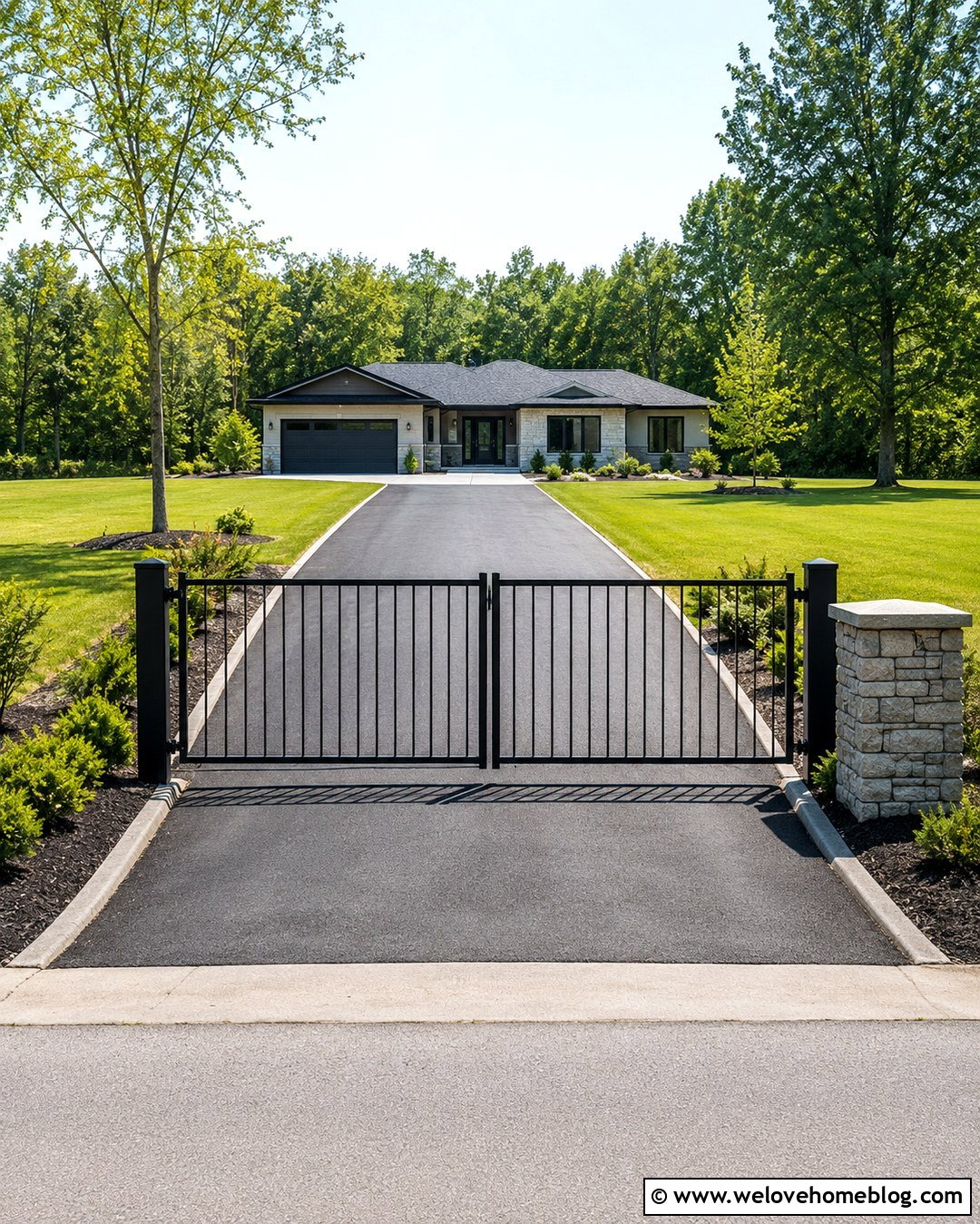
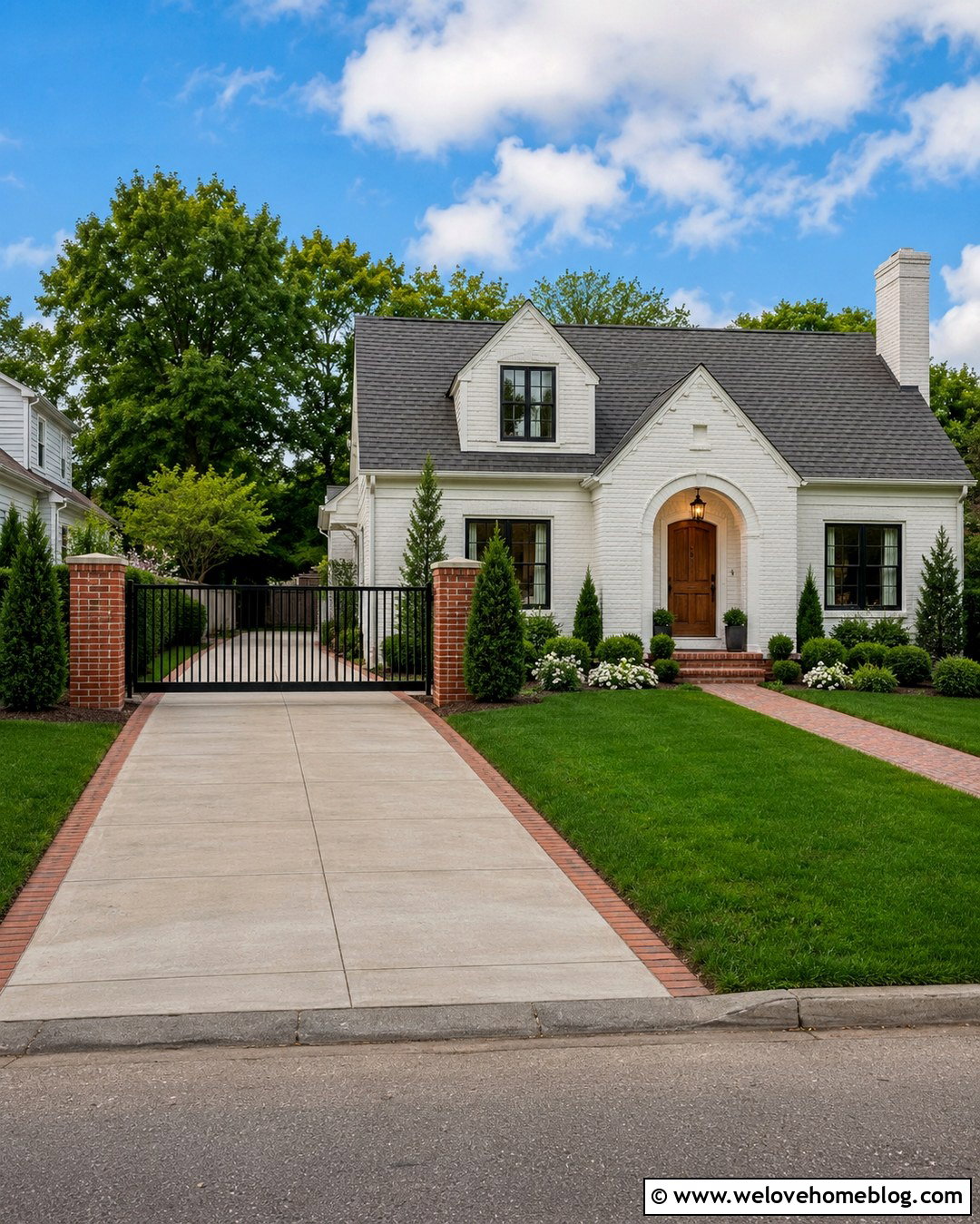
A realistic budget includes much more than the visible gate panel. Account for design, fabrication, delivery, posts, foundations, automation, electrical work, drainage, access controls, safety equipment, lighting, permits, and landscaping repairs. A simple powder-coated aluminum swing gate across a straight asphalt driveway can provide a polished entrance without elaborate masonry. Pair it with steel posts, modest evergreen beds, and a clear address sign for controlled costs and easy maintenance. Compare proposals based on frame construction, finish, hardware, operator capacity, warranties, and service support rather than price alone. Ask which components will eventually require lubrication, repainting, battery replacement, or adjustment. Planning conduit and automation readiness now can also make a future upgrade cleaner, even if the first installation uses a manual gate.
Conclusion:
The right driveway gate should fit the property before it fits a particular trend. Measure the entrance carefully, study the slope and available movement space, and decide how much security, privacy, and automation your household genuinely needs. Then select a durable material and gate design that complements the driveway surface, fencing, pillars, landscaping, and home architecture. Do not overlook structural supports, drainage, safety equipment, emergency access, and future maintenance. Professional guidance is especially valuable for large or automated systems. By treating the entire entrance as one coordinated project, these **20 how to choose driveway gates ideas** can help you create a gate that looks attractive, operates smoothly, and remains practical for years.

Related posts:
Leave a Reply