
Composite gates bring the warmth of wood to an entrance without the same level of staining, painting, and weather-related upkeep. The best 20 Composite Driveway Gates Ideas combine durable composite boards with reinforced aluminum or steel frames, practical opening systems, and landscaping that connects the gate to the home. Horizontal slats feel modern, while vertical boards, arched tops, and stone pillars can suit traditional properties. Gate color also matters. Walnut, charcoal, gray, and natural oak finishes can coordinate with fencing, garage doors, trim, or front doors. Whether you need privacy, automation, or a solution for limited space, the complete entrance should feel balanced and easy to use. Explore the following 20 Composite Driveway Gates Ideas.
1. Horizontal Composite Driveway Gate
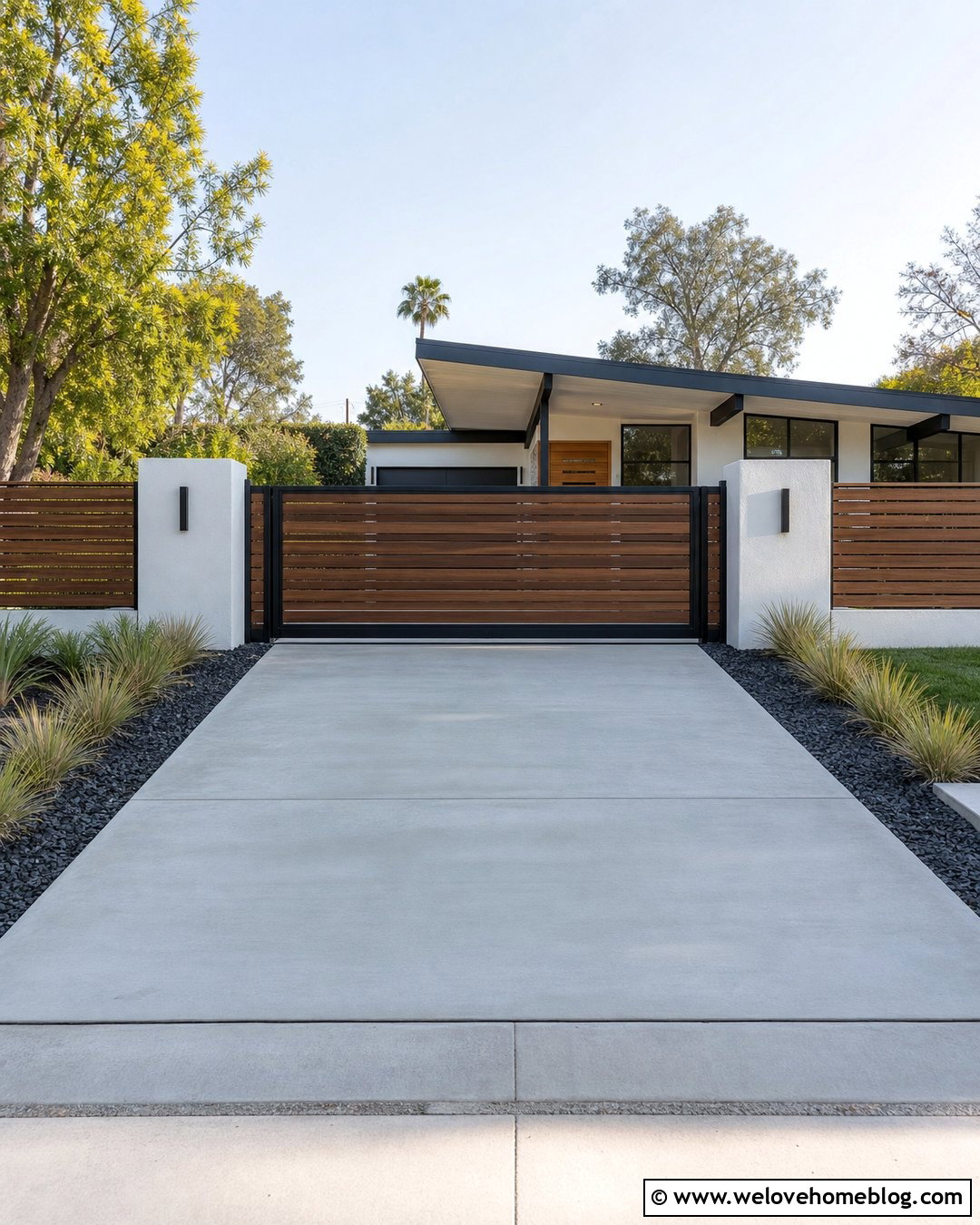
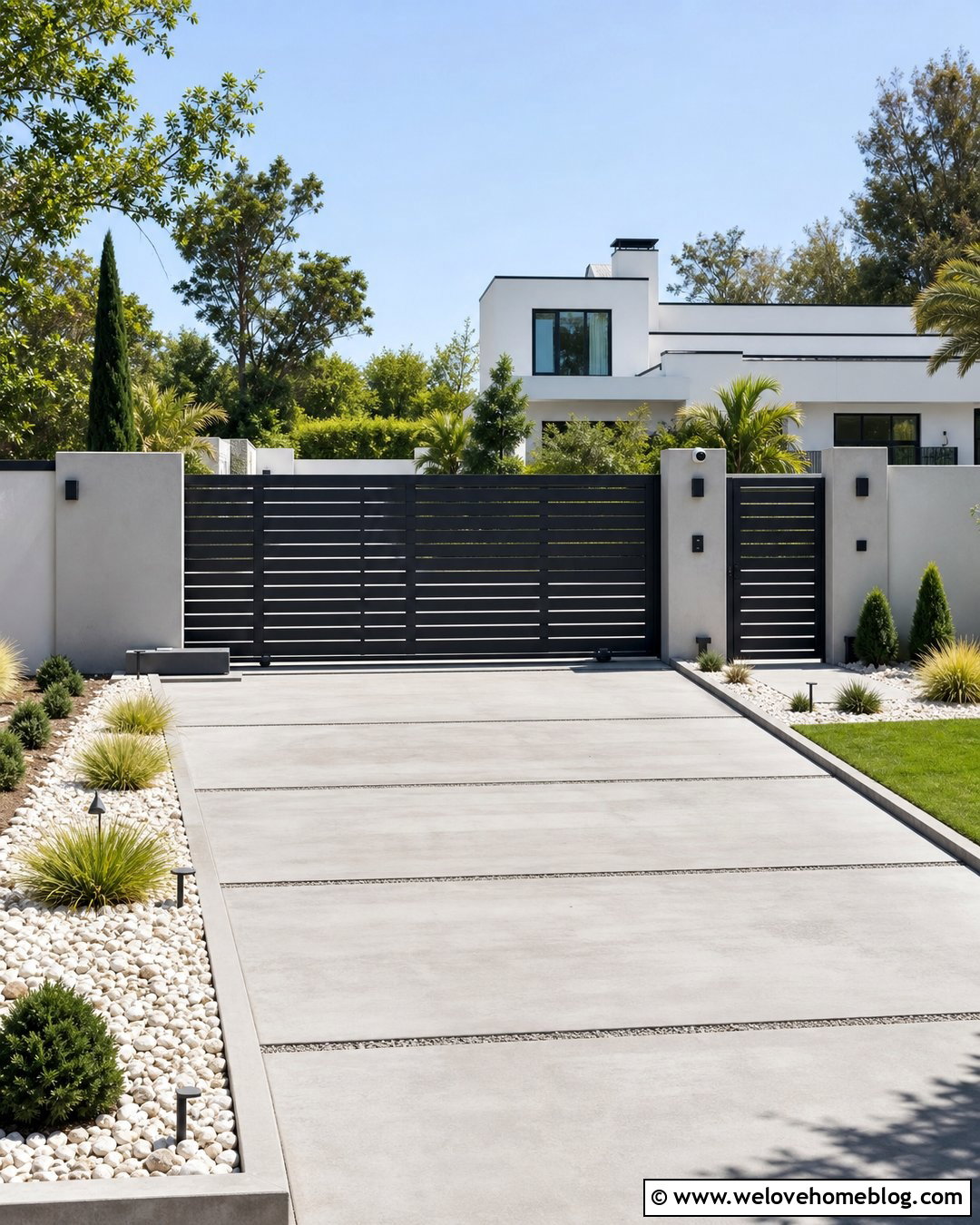
A horizontal composite driveway gate creates a clean entrance that works especially well with modern and midcentury homes. Choose narrow wood-grain boards in walnut, teak, or warm oak, then place them inside a matte black aluminum frame. Small gaps between the slats can reduce the heavy appearance while still providing useful screening. A straight poured concrete driveway reinforces the simple lines, especially when bordered with black gravel and low ornamental grasses. Square stucco pillars can conceal hinges, wiring, and automation equipment. Match the gate boards with nearby composite fencing for a continuous frontage. This design looks most balanced when the slat spacing, driveway joints, house trim, and pedestrian gate all follow the same horizontal rhythm.
2. Full Privacy Composite Driveway Gate
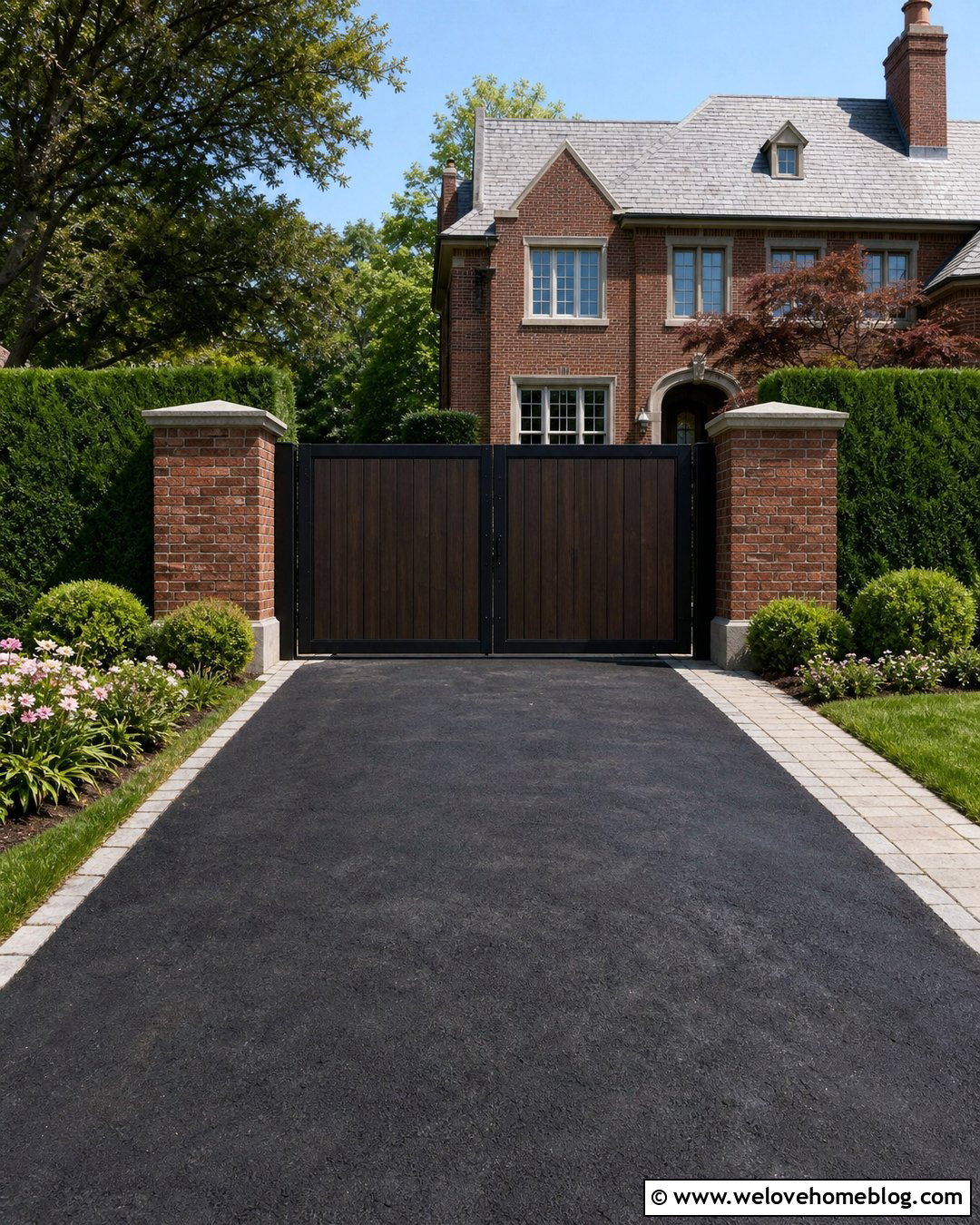
For a front yard exposed to a busy street, a full privacy composite driveway gate offers a strong visual barrier without looking overly industrial. Closely fitted dark walnut boards can fill a sturdy powder-coated steel frame, leaving no direct sightline into the driveway. A double-swing layout gives the wide gate a symmetrical appearance and suits a level asphalt entrance with enough room behind it. Anchor each side with substantial brick pillars and simple capstones rather than elaborate decoration. Evergreen hedges can continue the privacy line while softening the gate’s solid surface. Because dense composite infill adds weight, the frame, posts, hinges, and opener should be designed as one system. A concealed center stop keeps both leaves neatly aligned when closed.
3. Composite Sliding Driveway Gate
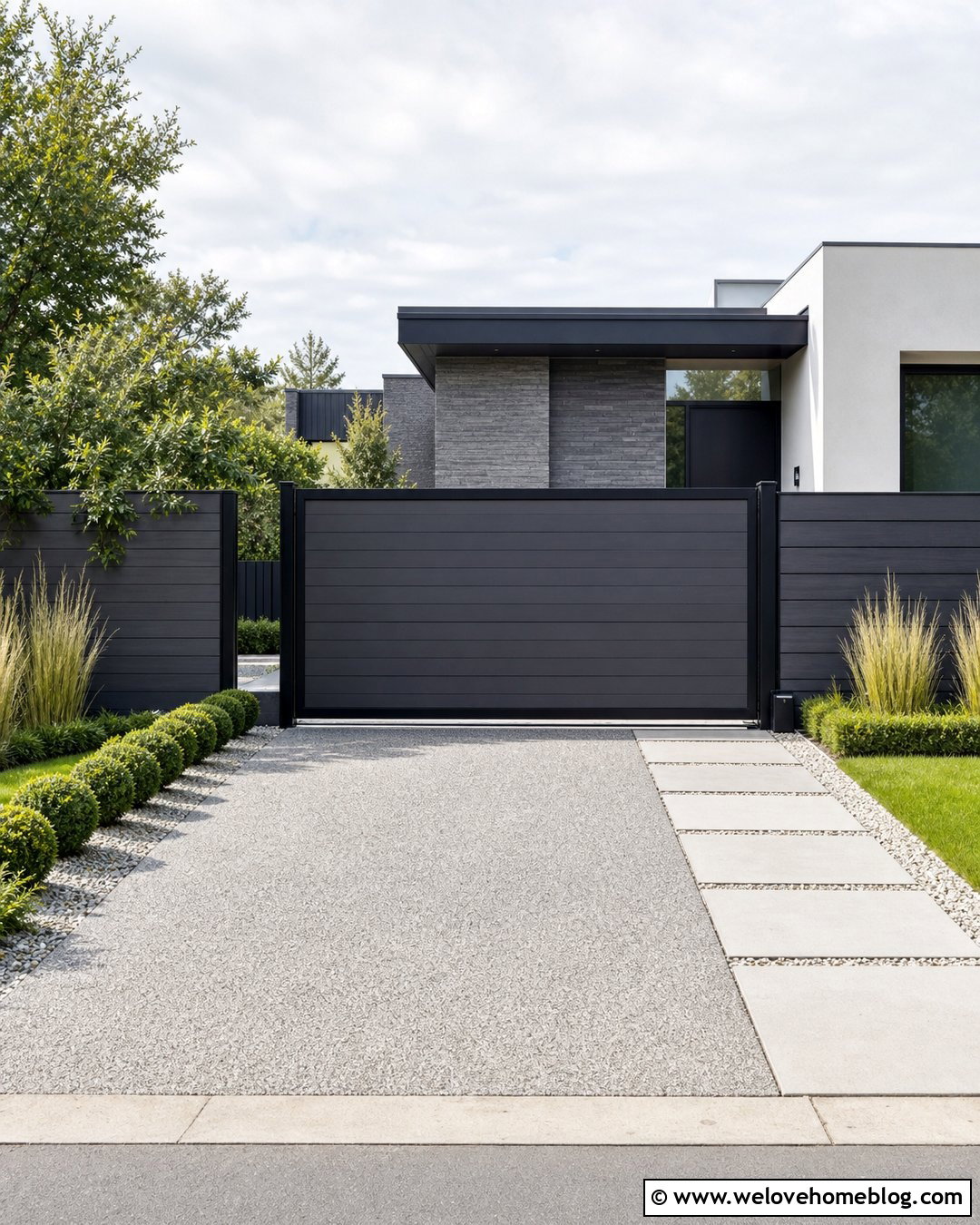
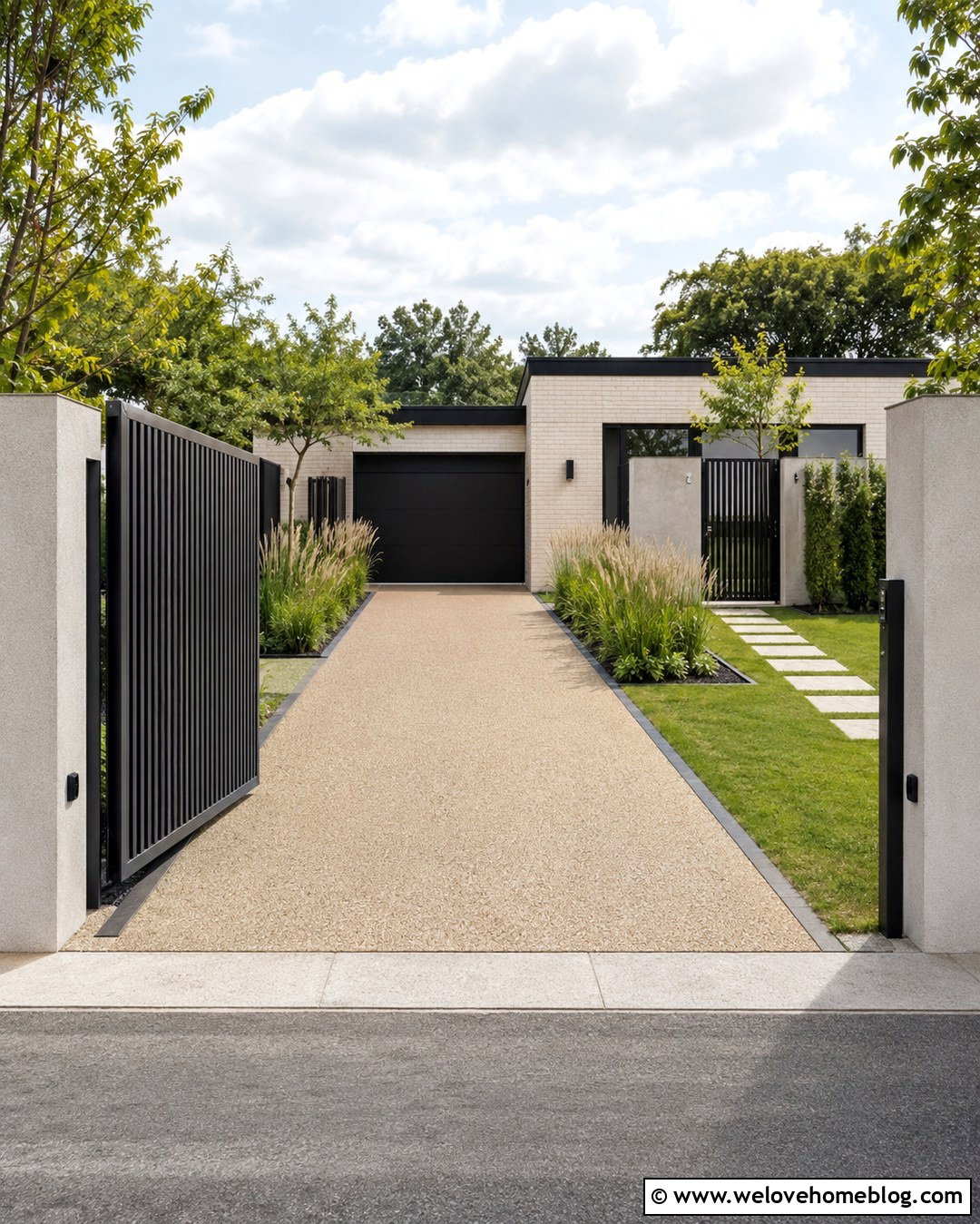
A composite sliding driveway gate is useful when vehicles park close to the entrance or the property lacks room for swinging panels. The gate travels sideways along the fence, keeping the main driveway area clear. Graphite composite boards inside a slim black aluminum frame create a crisp look beside a light exposed aggregate driveway. Continue the boards into matching fence panels so the gate appears to disappear when closed. A tracked system may work on a flat, well-drained entrance, while other sites may benefit from a professionally designed cantilever system. Linear planting beds filled with boxwood, fountain grass, and pale gravel complete the modern layout. Leave adequate side space for the full gate, operating hardware, and safe movement away from pedestrians.
4. Double Swing Composite Driveway Gate
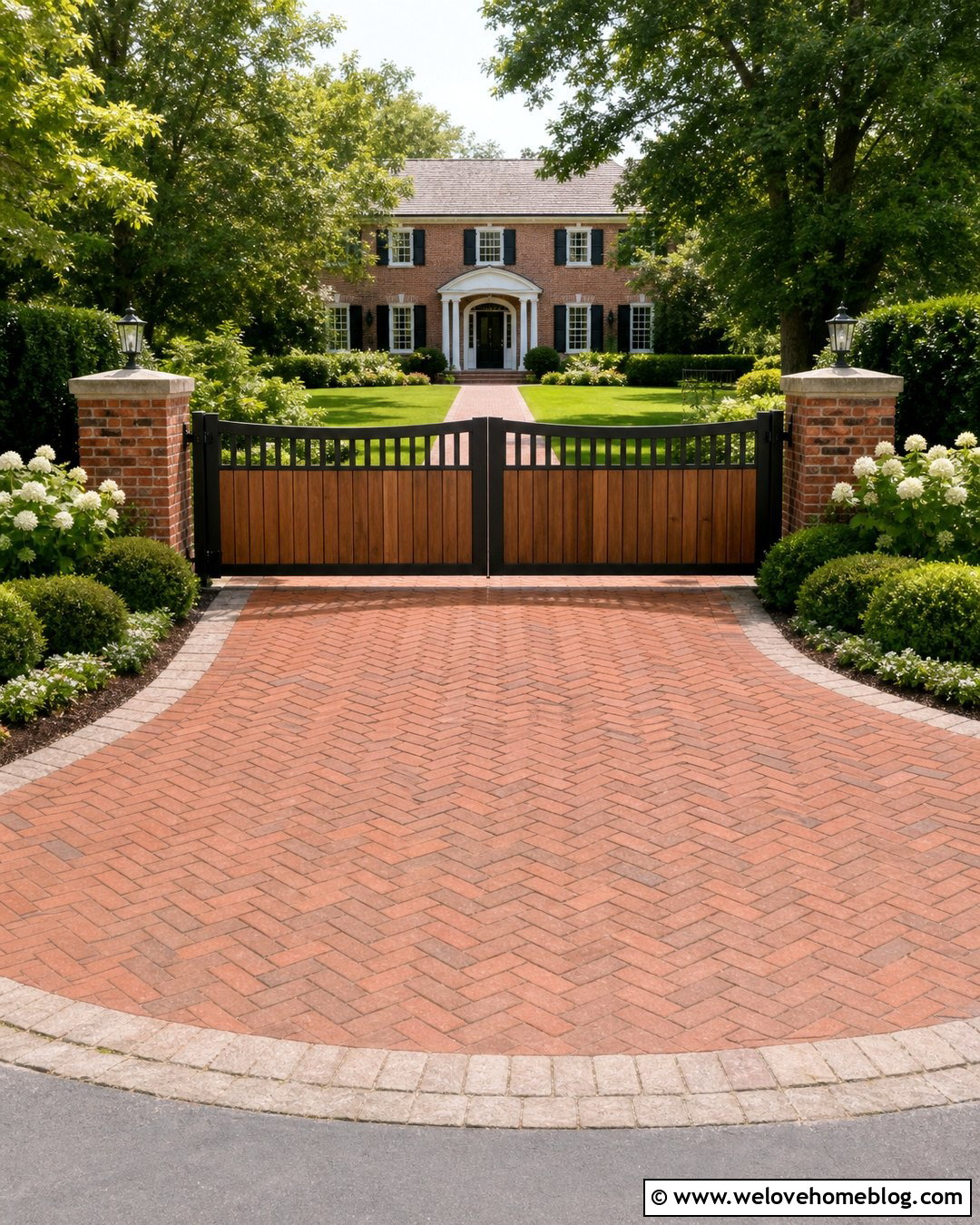
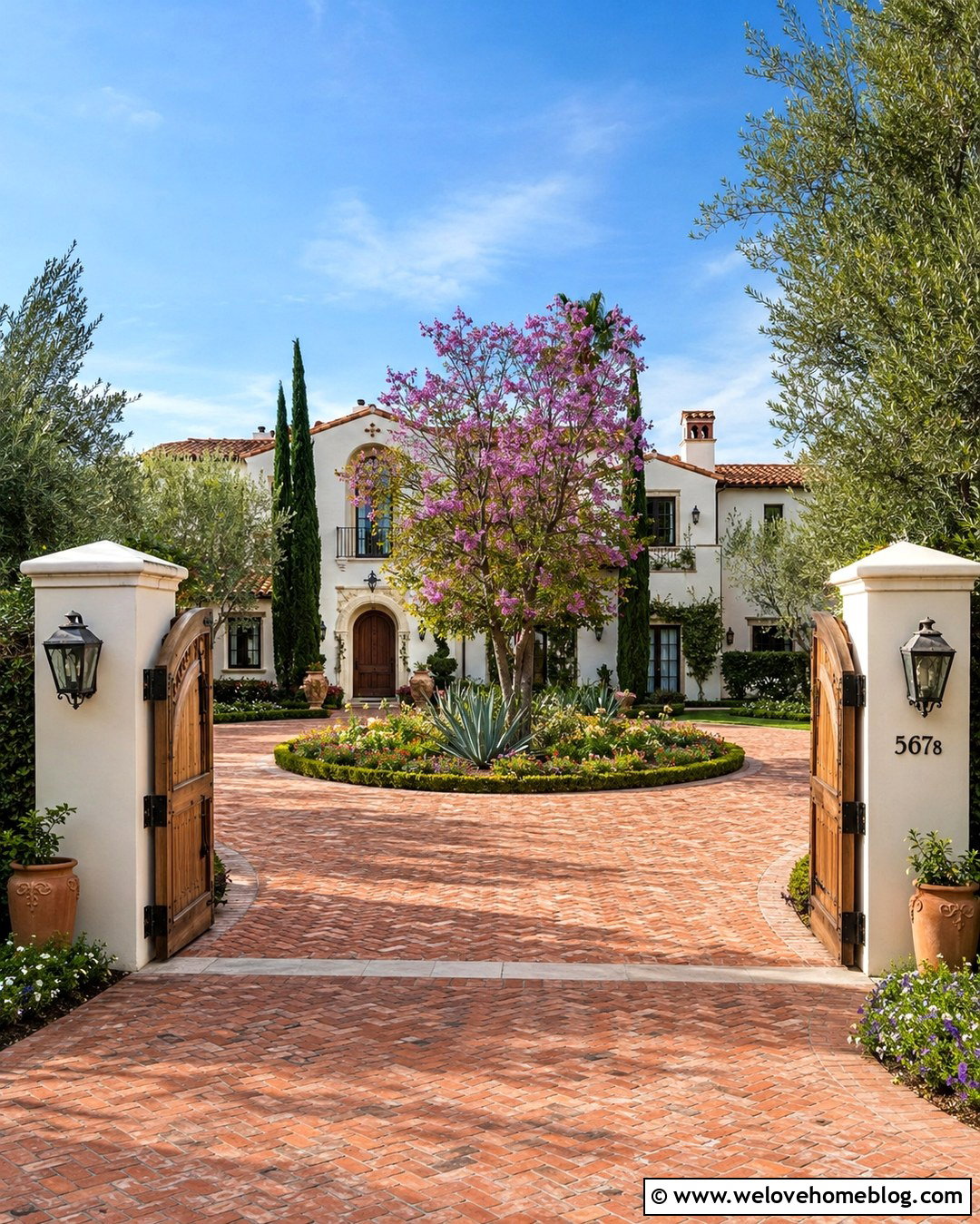
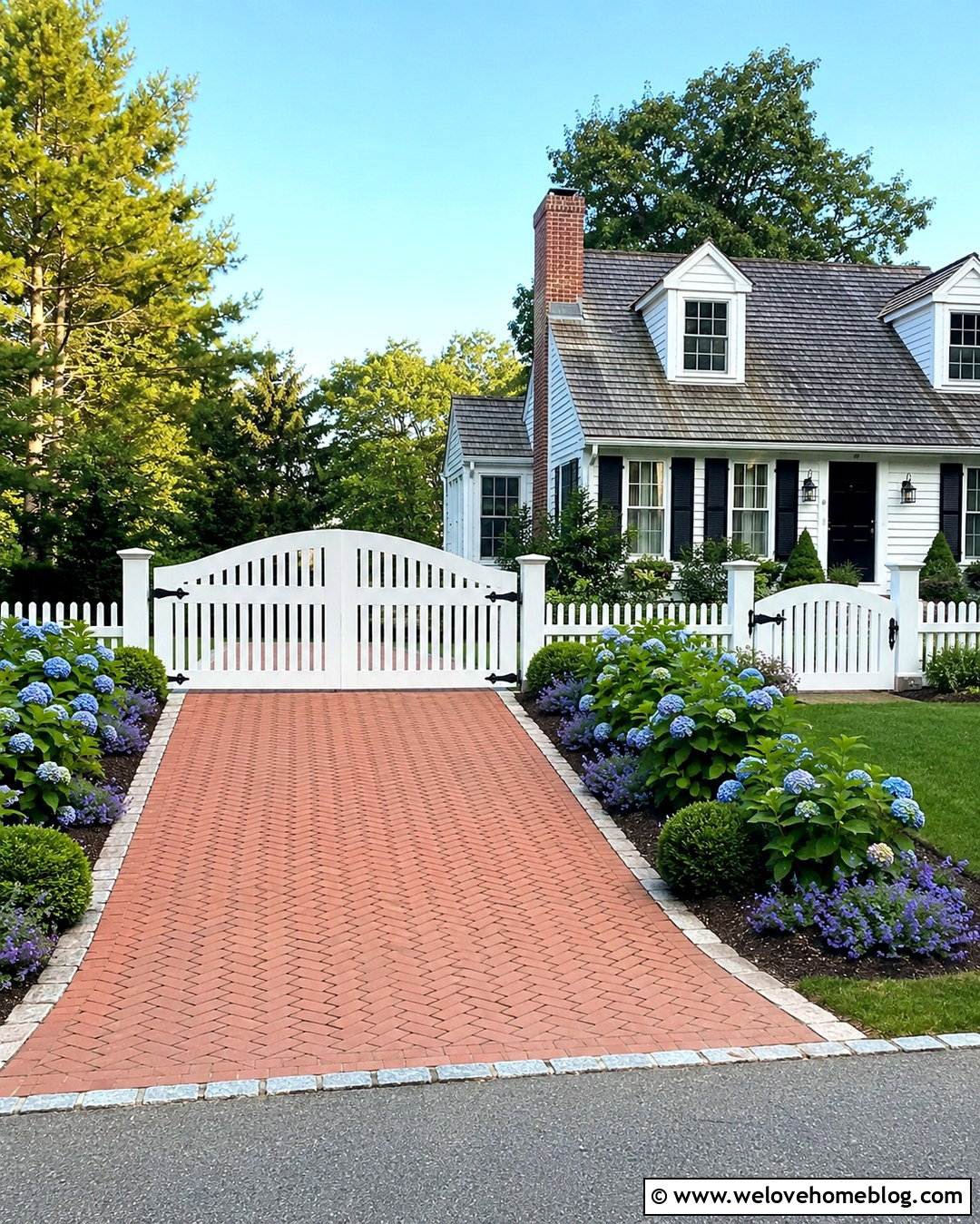
Two balanced panels give a double swing composite driveway gate a welcoming, established appearance. This arrangement is especially attractive at the entrance to a wide circular driveway, where each leaf can open inward without interrupting the landscape. Medium oak composite boards soften a black metal frame and pair naturally with tan brick pillars. Choose a semi-private layout with narrow spaces between boards to keep the gate from feeling too solid. Curved planting beds around the pillars can hold hydrangeas, clipped shrubs, and seasonal ground cover. A brick paver driveway laid in herringbone adds texture while supporting the traditional symmetry. Before installation, confirm that the surface is level enough for the swing path and that open gates will not interfere with vehicles or walkways.
5. Black Composite Driveway Gate
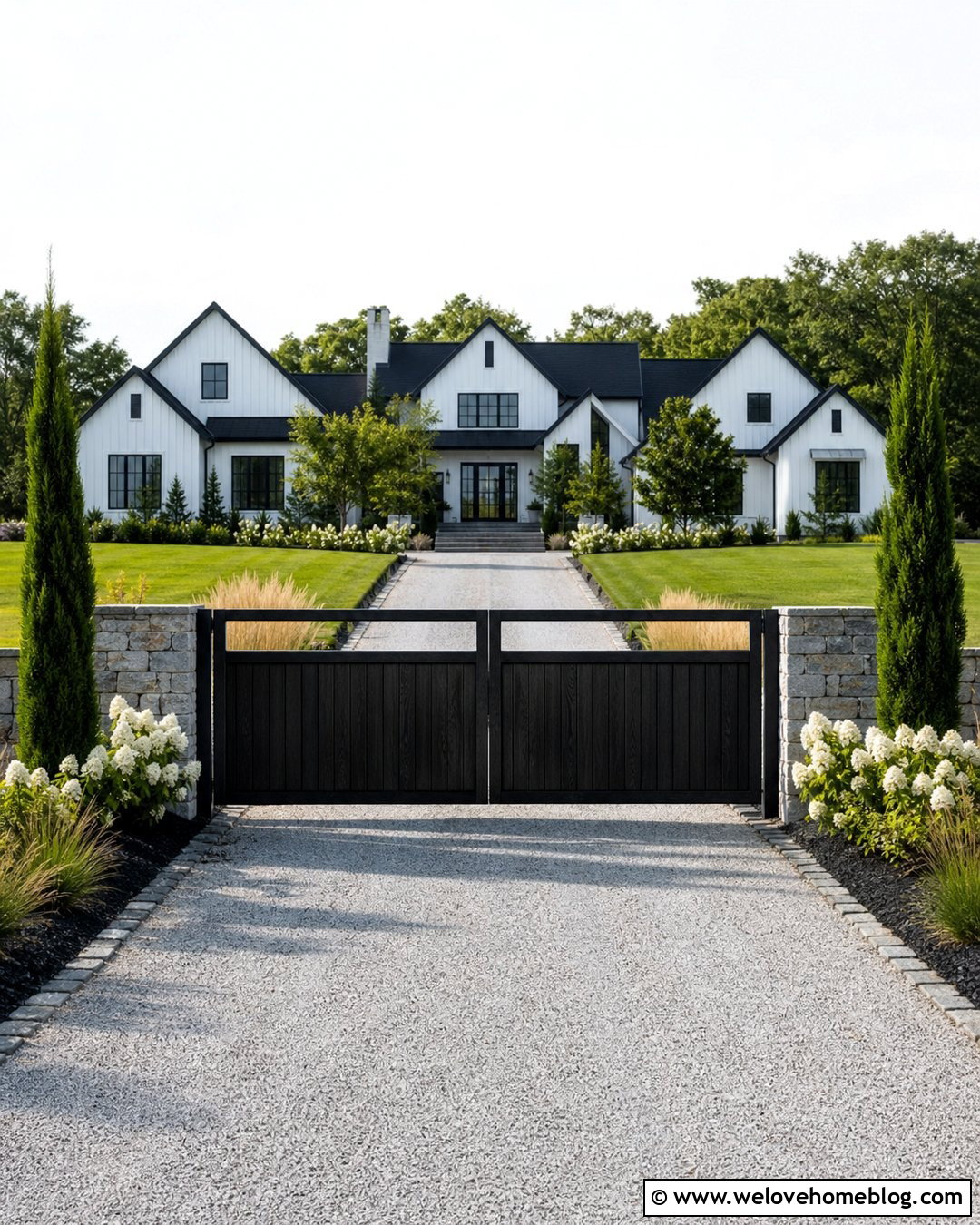
Deep charcoal or black composite boards can give a driveway entrance a bold, unified appearance. Instead of combining them with a contrasting frame, use a matching black aluminum surround for a nearly seamless result. The dark gate stands out particularly well against a white modern farmhouse with black windows and a pale gray gravel driveway. A wide double-swing configuration keeps the entrance proportional, while low stone walls prevent the black surface from appearing disconnected from the landscape. Add structured beds with white flowering shrubs, upright evergreens, and soft green grasses. Bright daytime lighting reveals the subtle wood-grain finish within the boards. Coordinating the gate with the home’s roof, garage hardware, and exterior lighting makes the dark color feel intentional rather than visually overpowering.
6. Gray Composite Driveway Gate
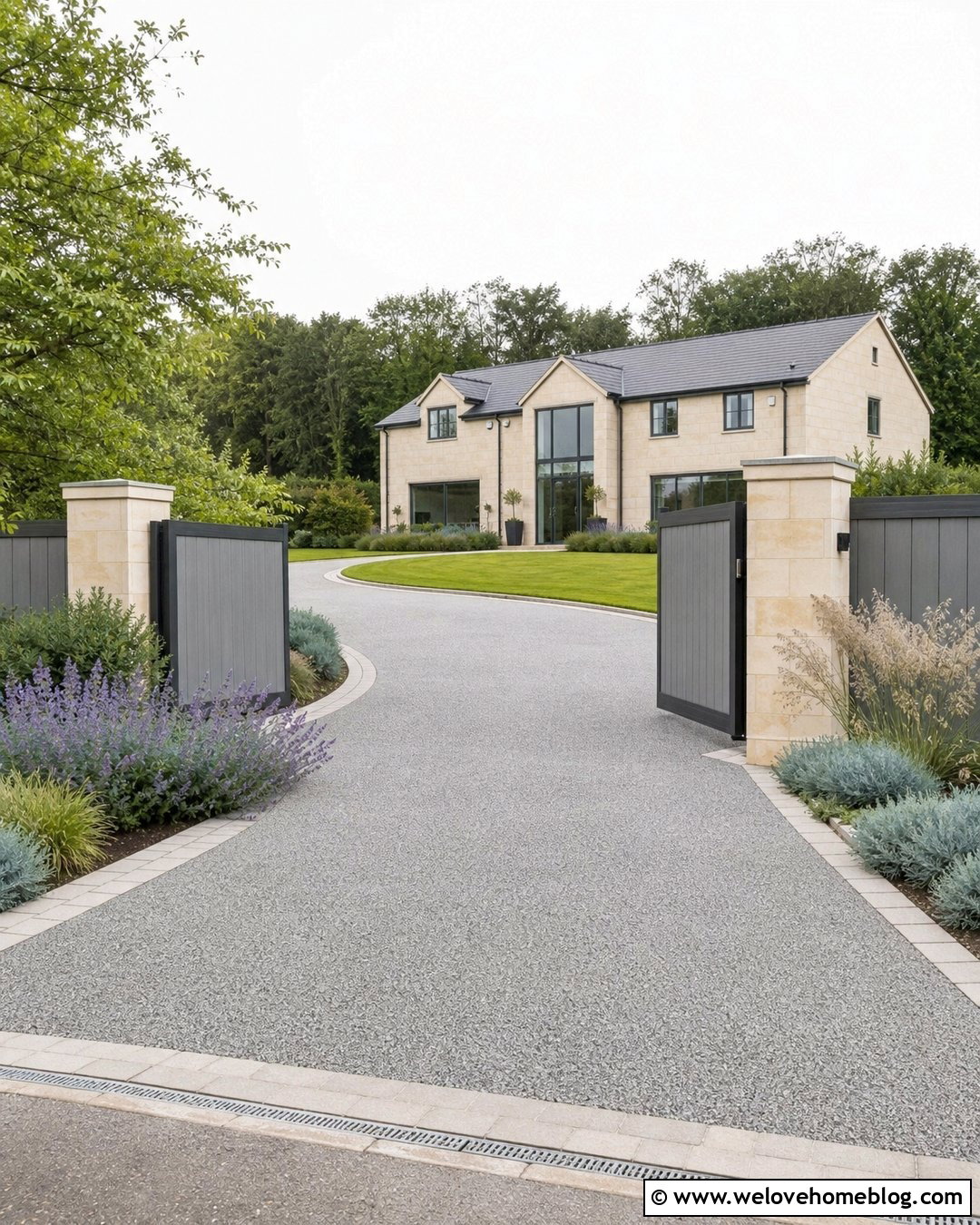
A gray composite driveway gate provides a softer alternative to solid black while preserving a contemporary character. Misty gray vertical boards look refined inside a charcoal aluminum frame, particularly when paired with a curved resin-bound gravel driveway in a similar cool tone. Light limestone pillars can brighten the entrance and visually connect it with a pale stone house facade. Install the boards with consistent spacing and a level top for an orderly finish. Along both driveway edges, use blue-green shrubs, lavender, and white ornamental grasses to reinforce the restrained color palette. This combination works well in smaller front yards because the muted gate does not dominate the curb view. Matching gray composite fence panels can extend outward from the pillars and make the entire boundary look carefully planned.
7. Oak Composite Driveway Gate
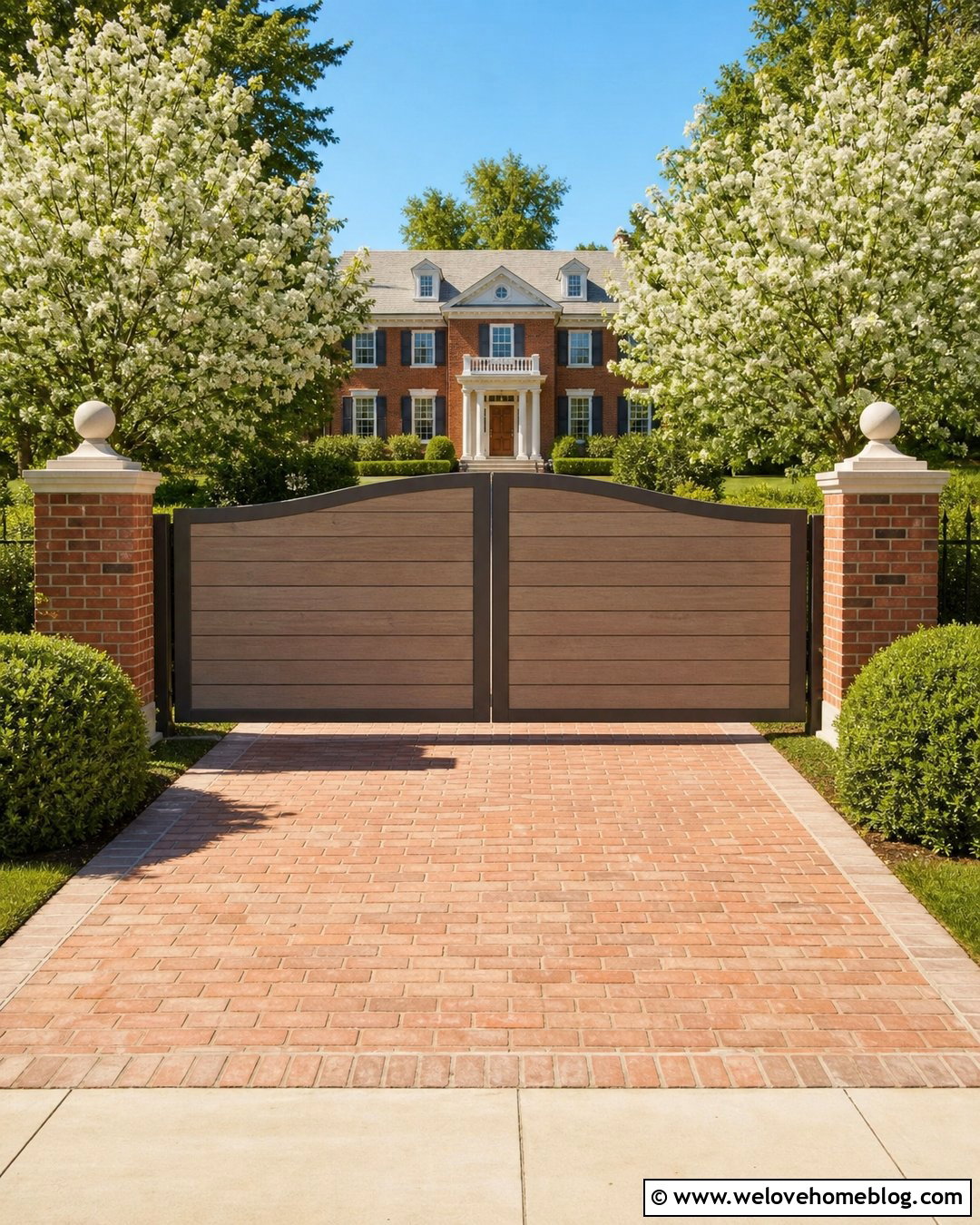
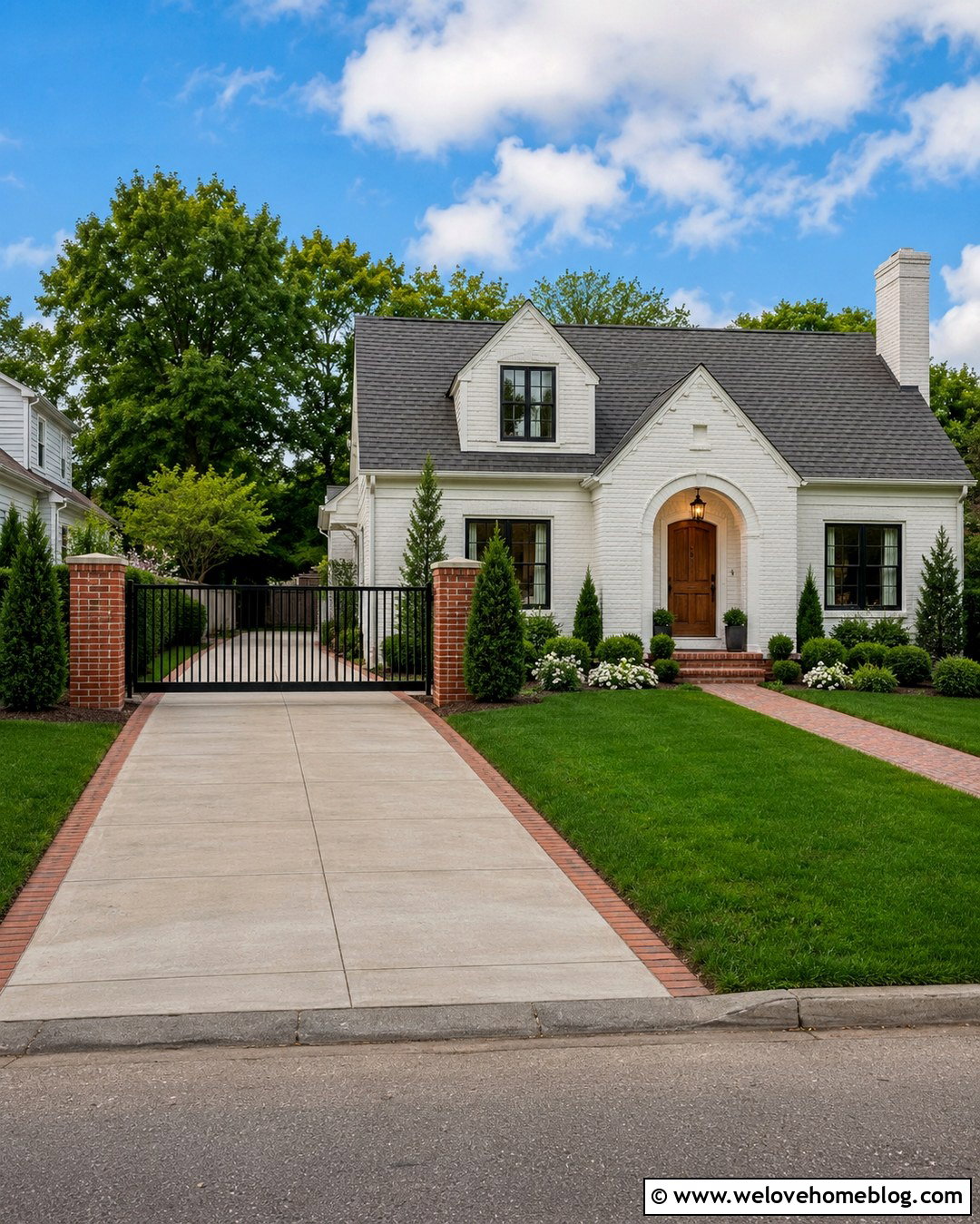
Natural oak-effect composite boards bring warmth to a gate while remaining suitable for a clean, low-fuss entrance. Their lighter color complements red brick, cream siding, and stone without creating the heavy appearance of dark privacy panels. Set the boards horizontally within a dark bronze frame, then use a gently arched top to soften a straight driveway. Clay brick pavers laid in a running bond can connect the gate to a traditional colonial home. Brick pillars with limestone caps provide sturdy visual anchors, while clipped boxwood and small flowering trees frame the approach. Keep other entrance details simple so the realistic grain remains the focal point. Repeating the oak tone on the front door or porch ceiling helps the composite driveway gate feel like part of the architecture.
8. Walnut Composite Driveway Gate
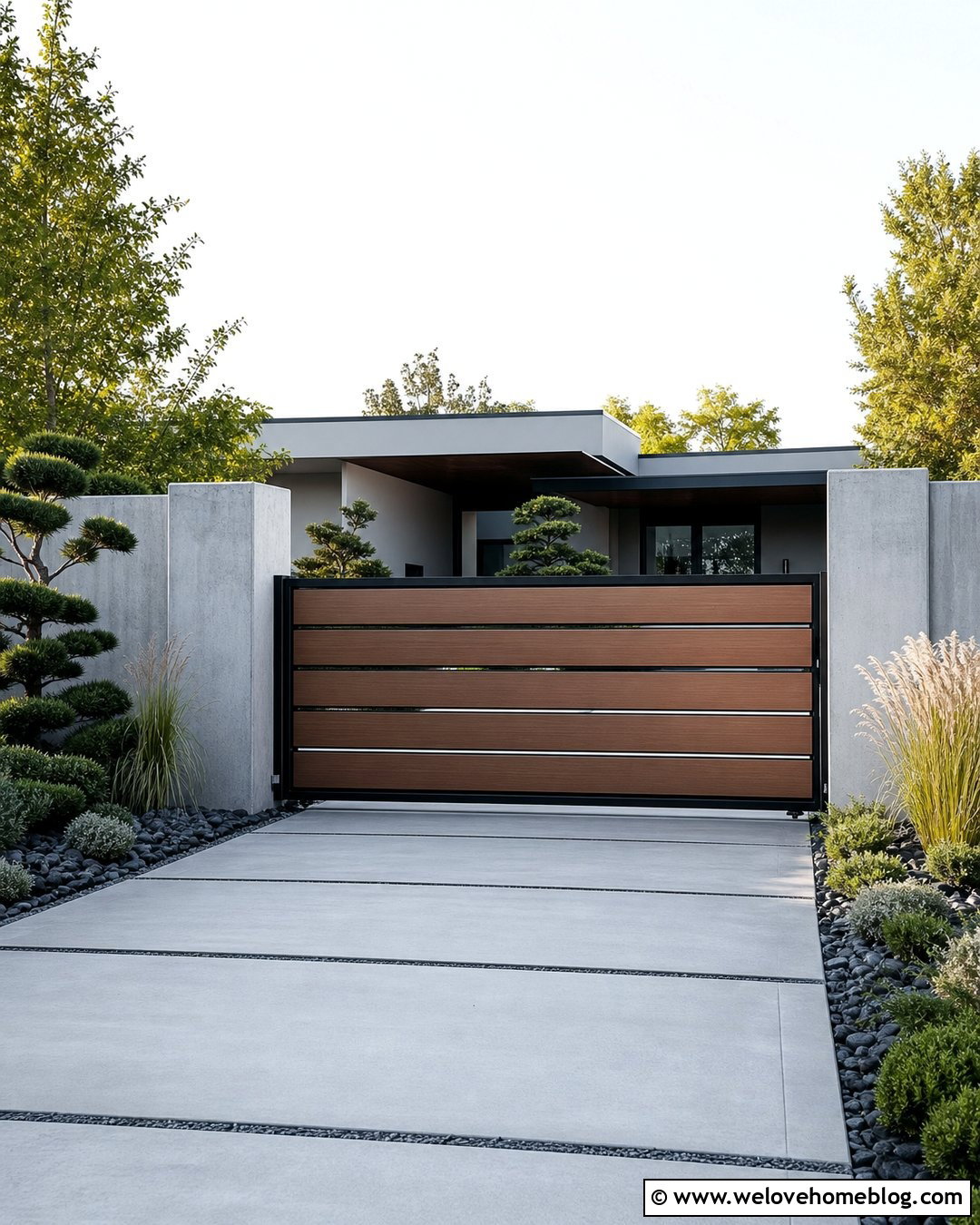
Rich walnut composite creates an elegant entrance when balanced with simple materials and uncluttered lines. Use wide horizontal boards inside a matte black frame, with a narrow shadow gap between each course. A cantilever sliding layout can make the design feel especially streamlined because no swinging panels occupy the driveway. Pair it with smooth gray concrete divided into large rectangular sections and edged by dark river rock. Tall concrete pillars provide a strong frame, while integrated downlights can illuminate the opening without adding decorative fixtures to the gate itself. In the surrounding beds, combine sculptural evergreens, feather reed grass, and restrained ground cover. This complete look suits a flat-roofed contemporary home and allows the walnut coloring to introduce warmth against concrete, glass, and black metal.
9. Composite Driveway Gate With Stone Pillars
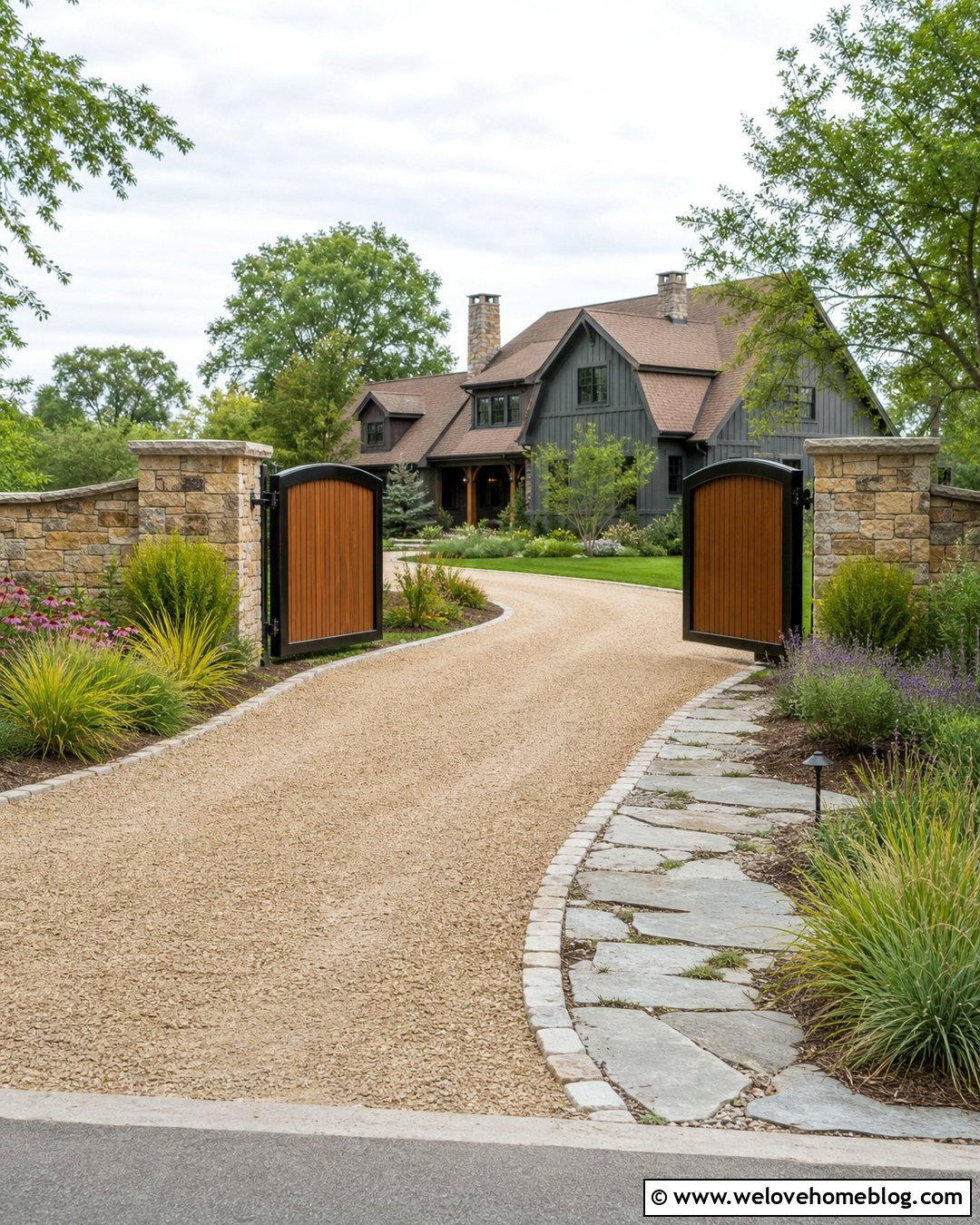
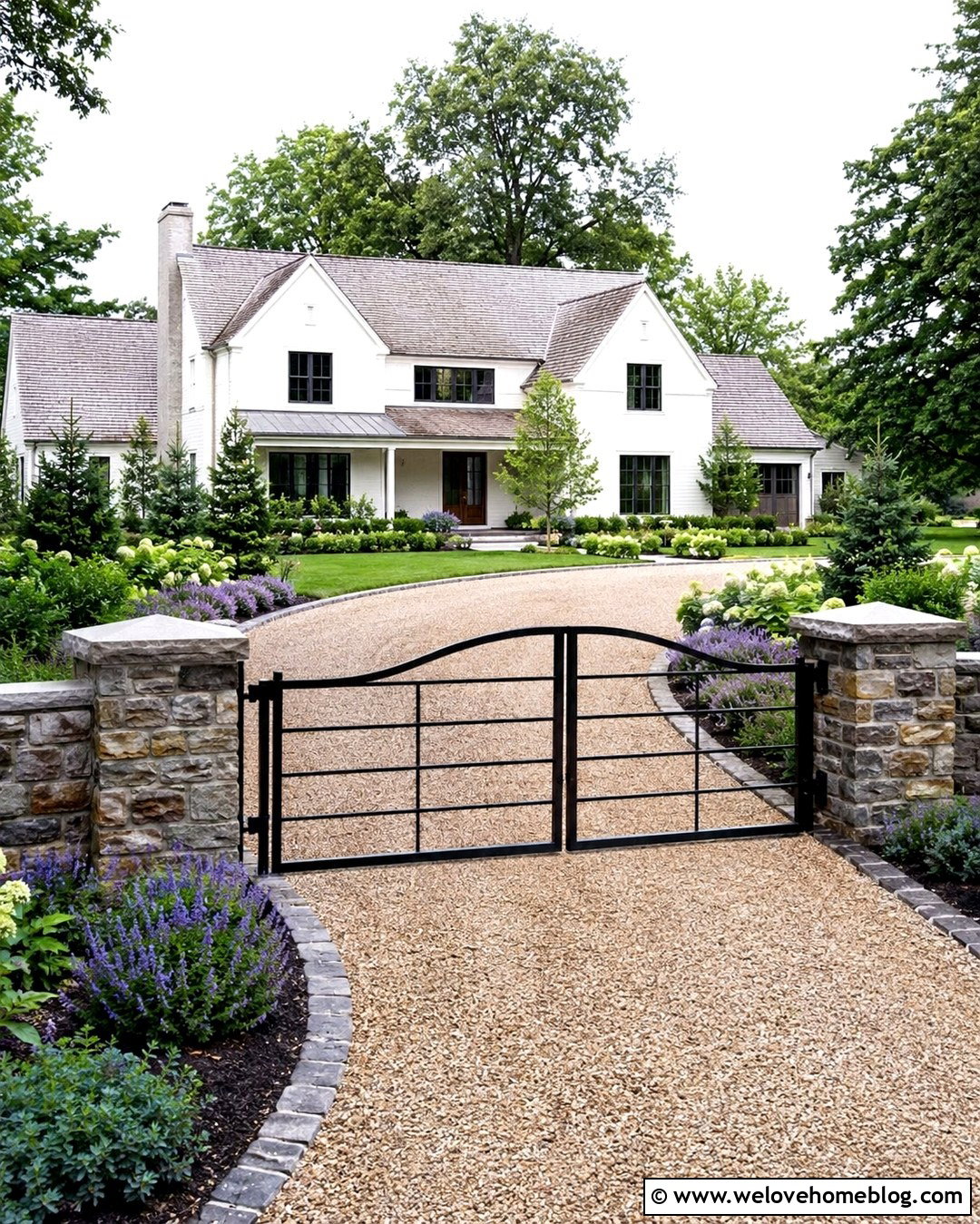
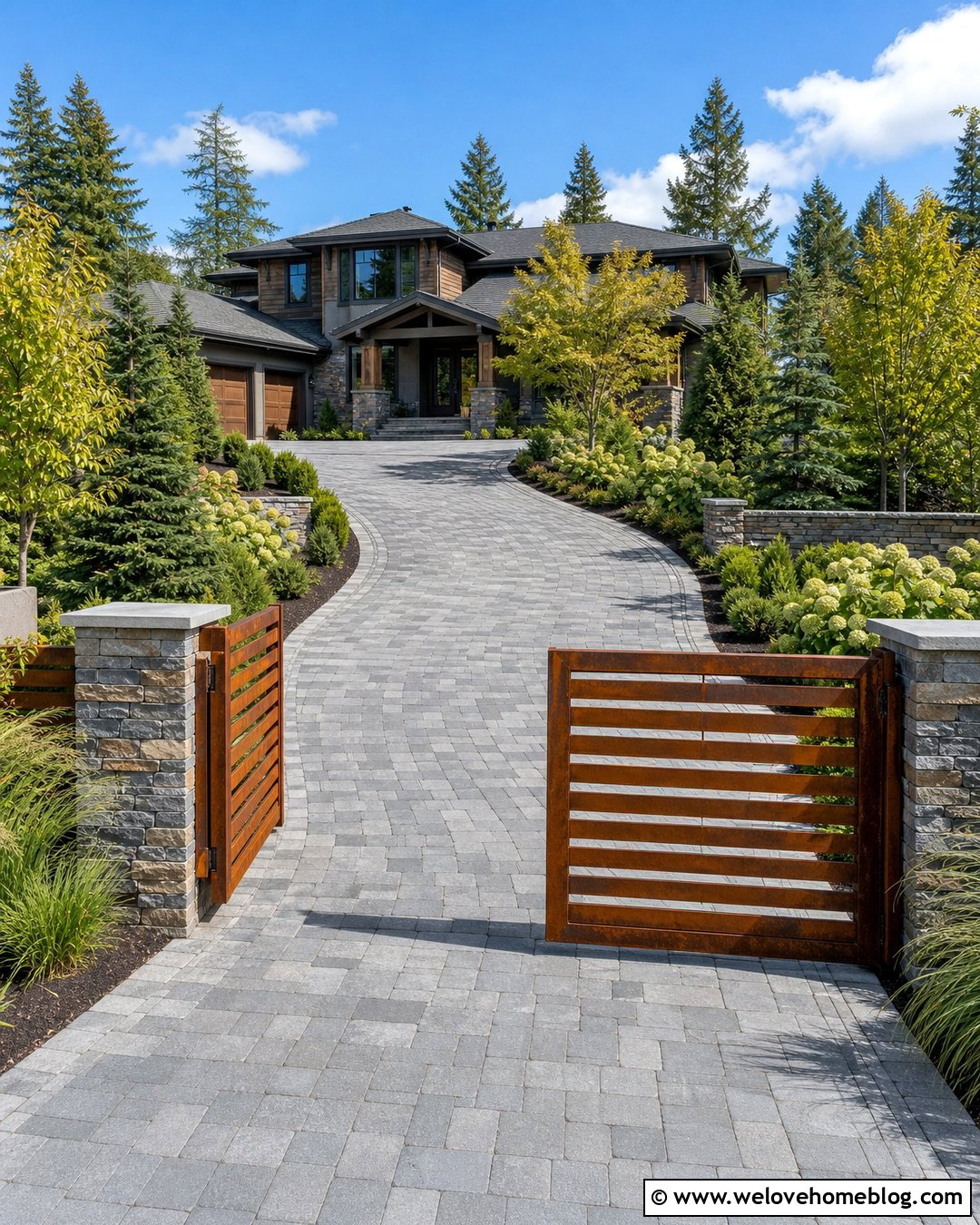
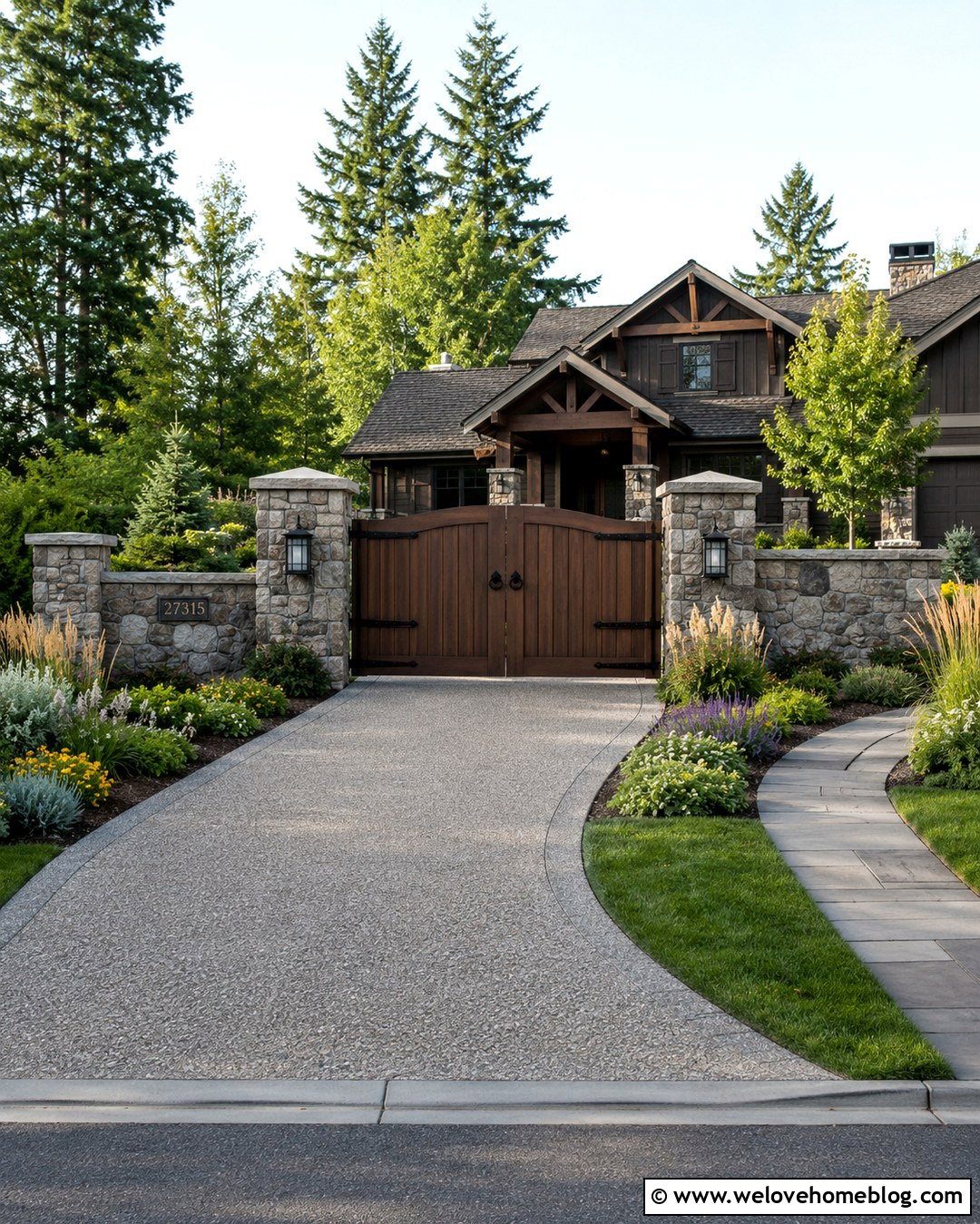
Stone pillars can make a composite driveway gate feel grounded and appropriate for a substantial country or craftsman home. Select warm brown vertical boards with a reinforced dark metal frame, then mount two swing leaves between wide pillars faced with irregular fieldstone. A slightly arched gate top echoes the natural contours of the stone without becoming overly decorative. Continue the rustic character with a curved tan gravel driveway bordered by granite setts. Mixed planting beds containing evergreen shrubs, native grasses, and flowering perennials should surround the pillars rather than hide them. Low-voltage lanterns can be mounted near the pillar tops for balanced illumination. Using stone already present on the home’s foundation or chimney will help the new entrance look original to the property.
10. Composite Driveway Gate With Brick Pillars
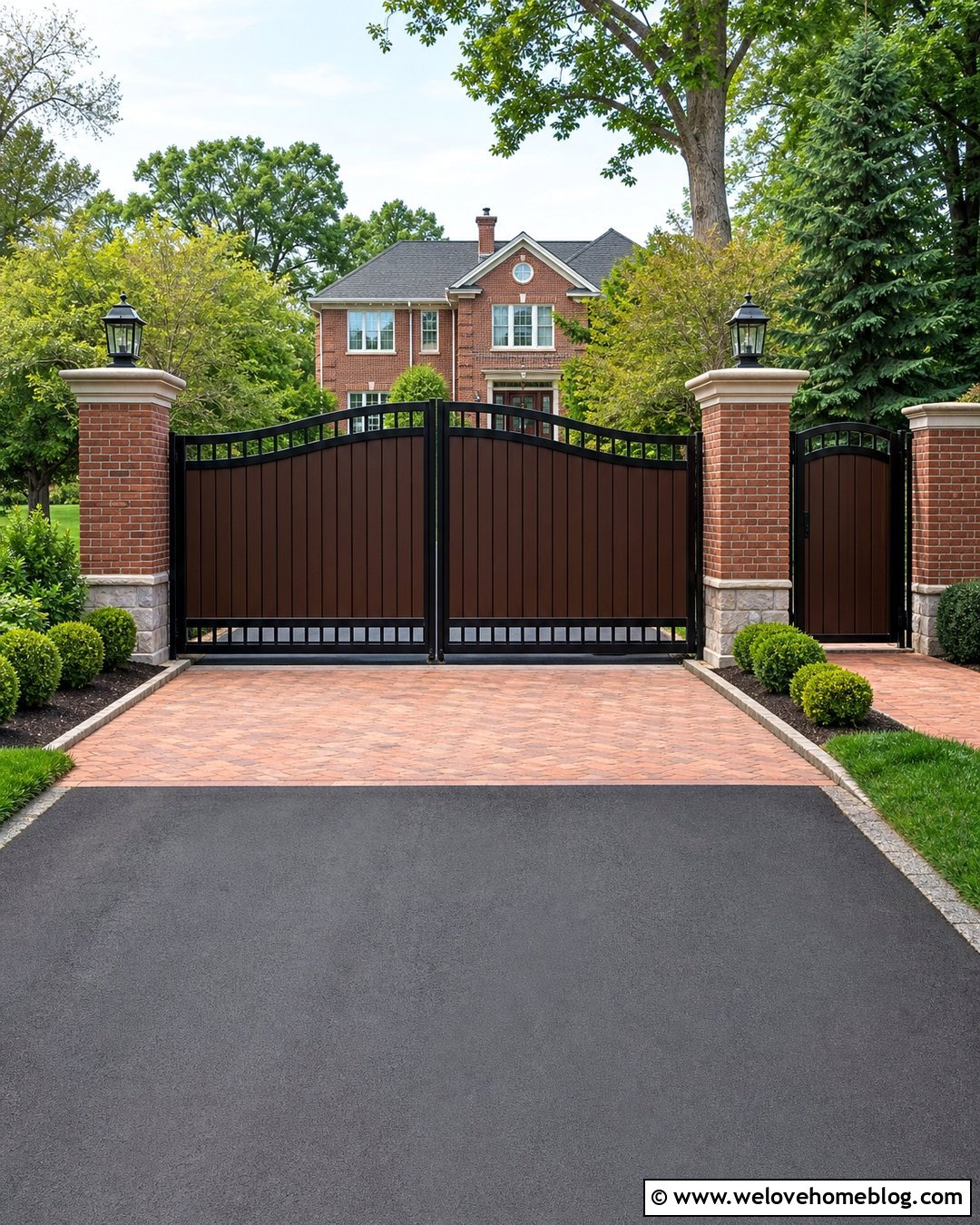
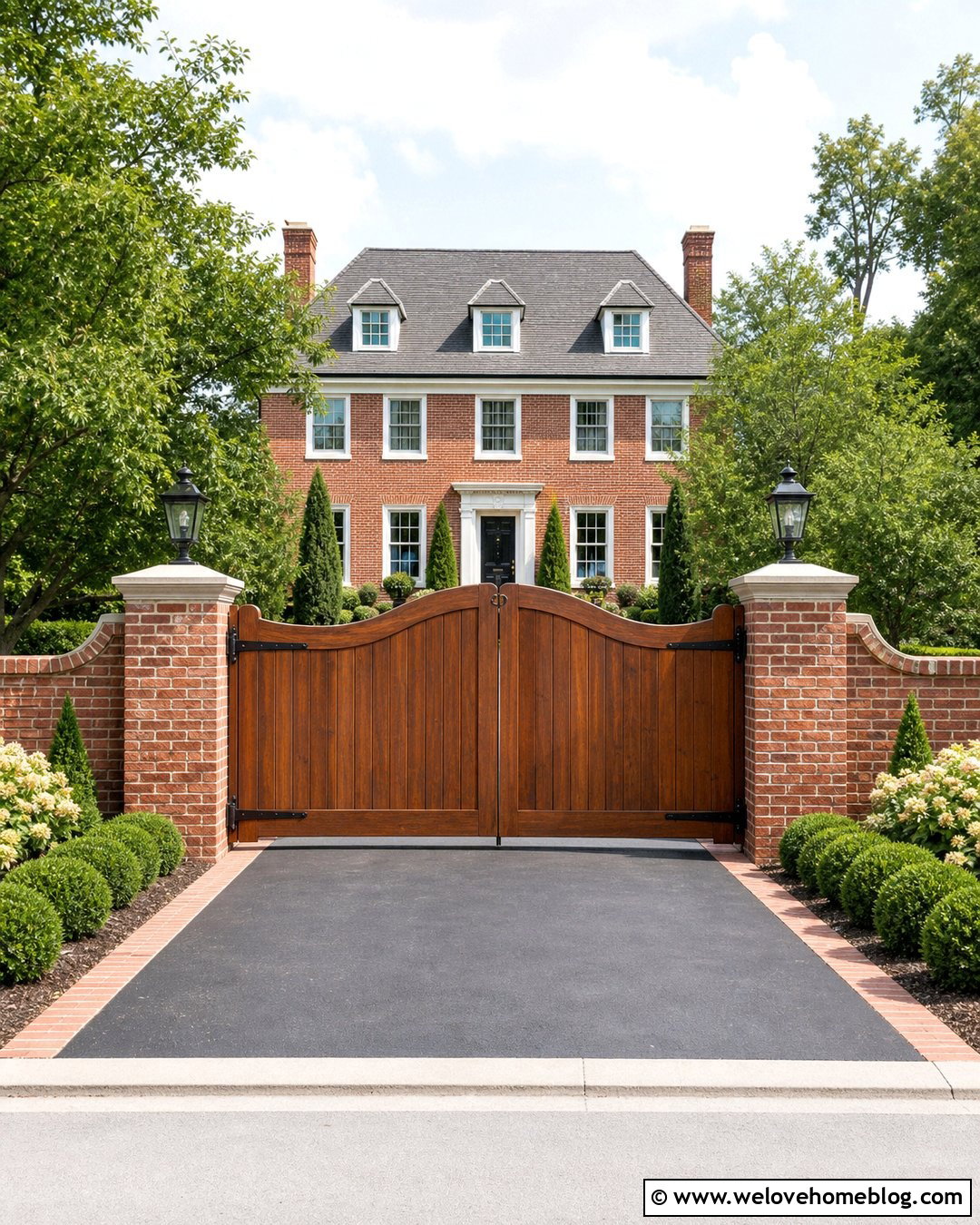
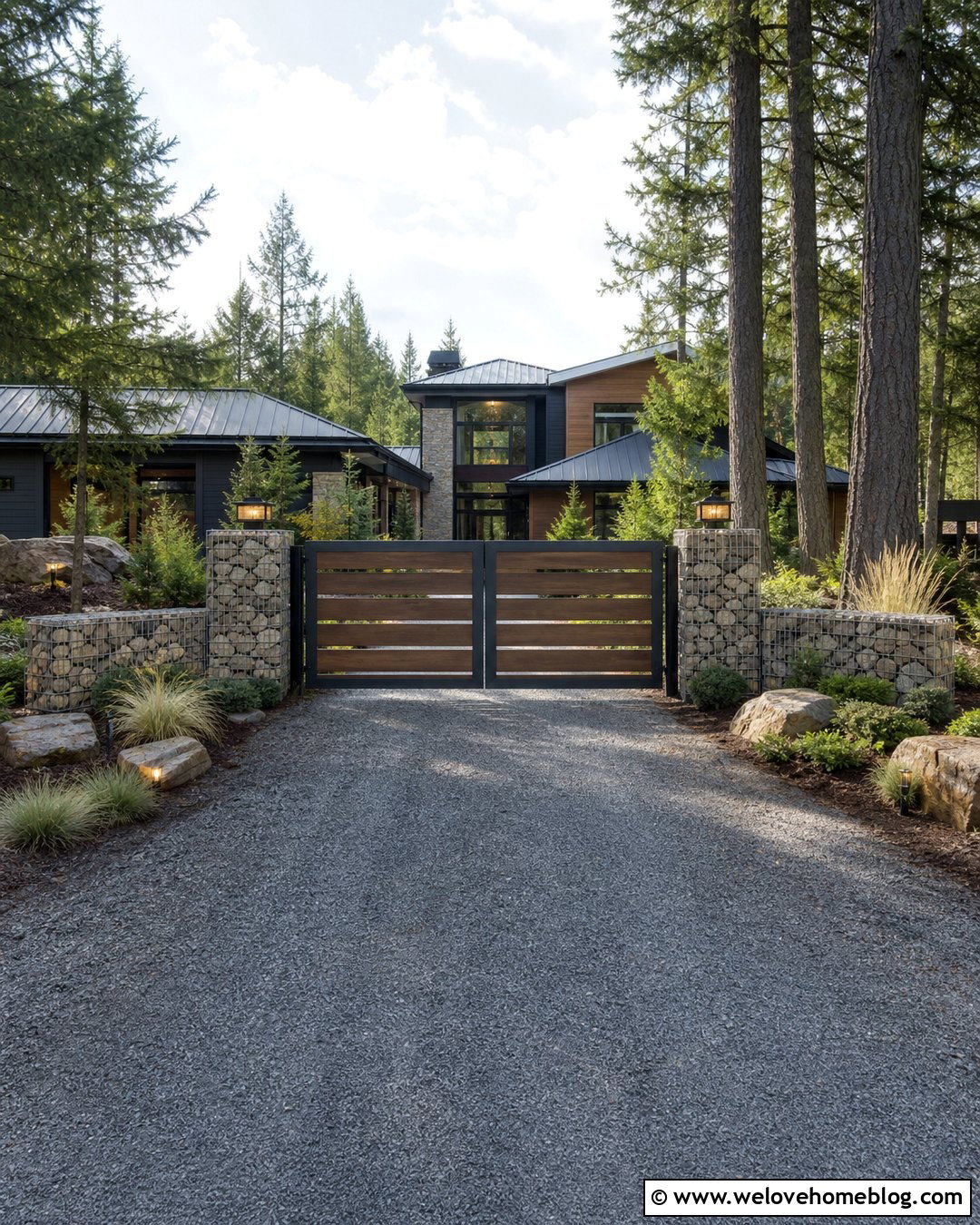
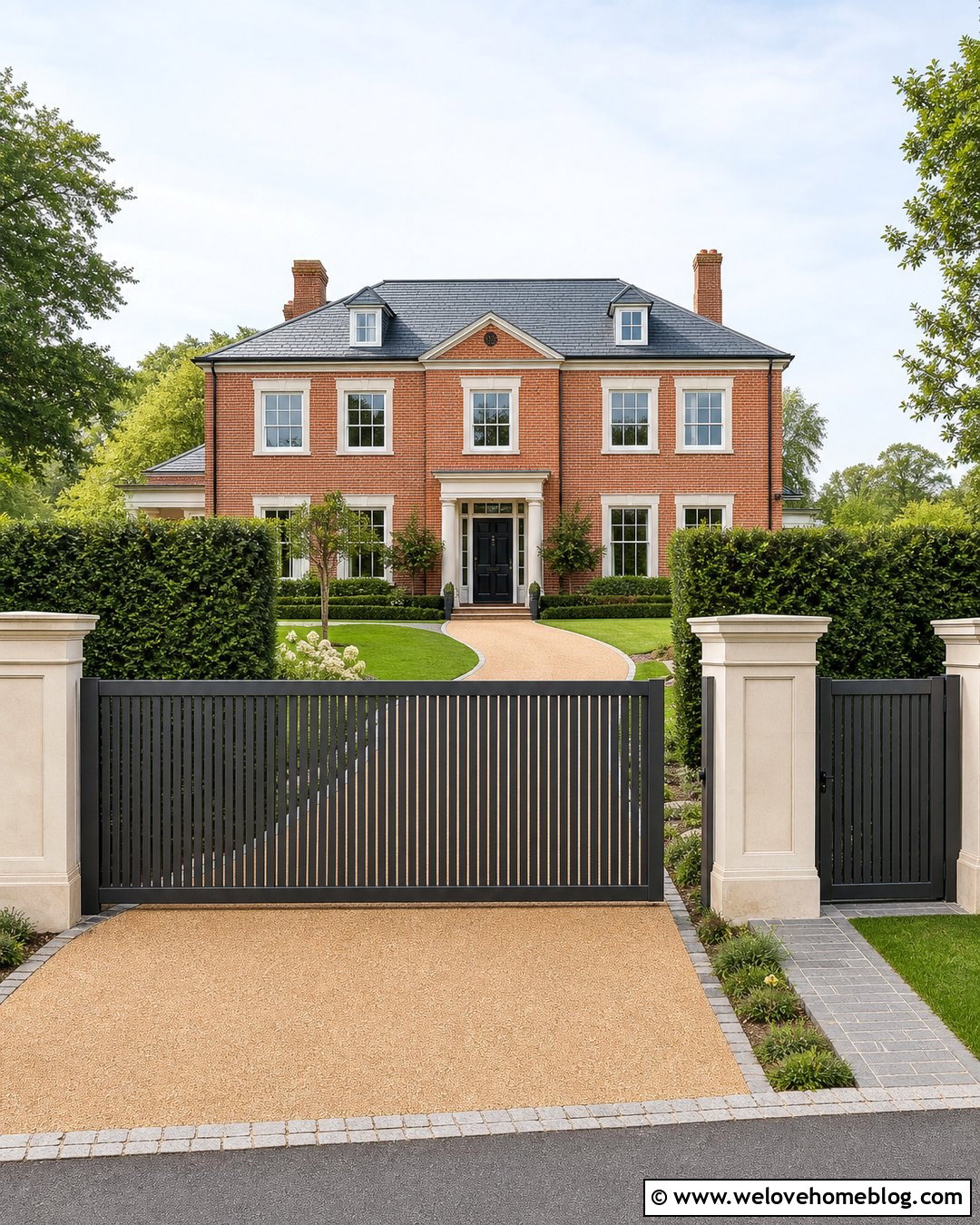
Traditional brick pillars pair well with composite boards when their colors relate to the house and driveway. For a red brick home, consider dark brown composite infill within a simple black aluminum frame. A straight double-swing gate with a shallow center rise can feel classic without copying ornate ironwork. Use clay brick pavers across the driveway entrance, then transition to black asphalt farther inside the property. This brick apron protects the visual importance of the gateway and creates a clear threshold. Limestone pillar caps, black lanterns, and neat boxwood beds finish the composition. Keep the pillars proportional to the gate height and width; undersized supports can make a broad entrance look unbalanced. A matching pedestrian gate can create convenient access without opening the vehicle entrance.
11. Composite Driveway Gate With Metal Inserts
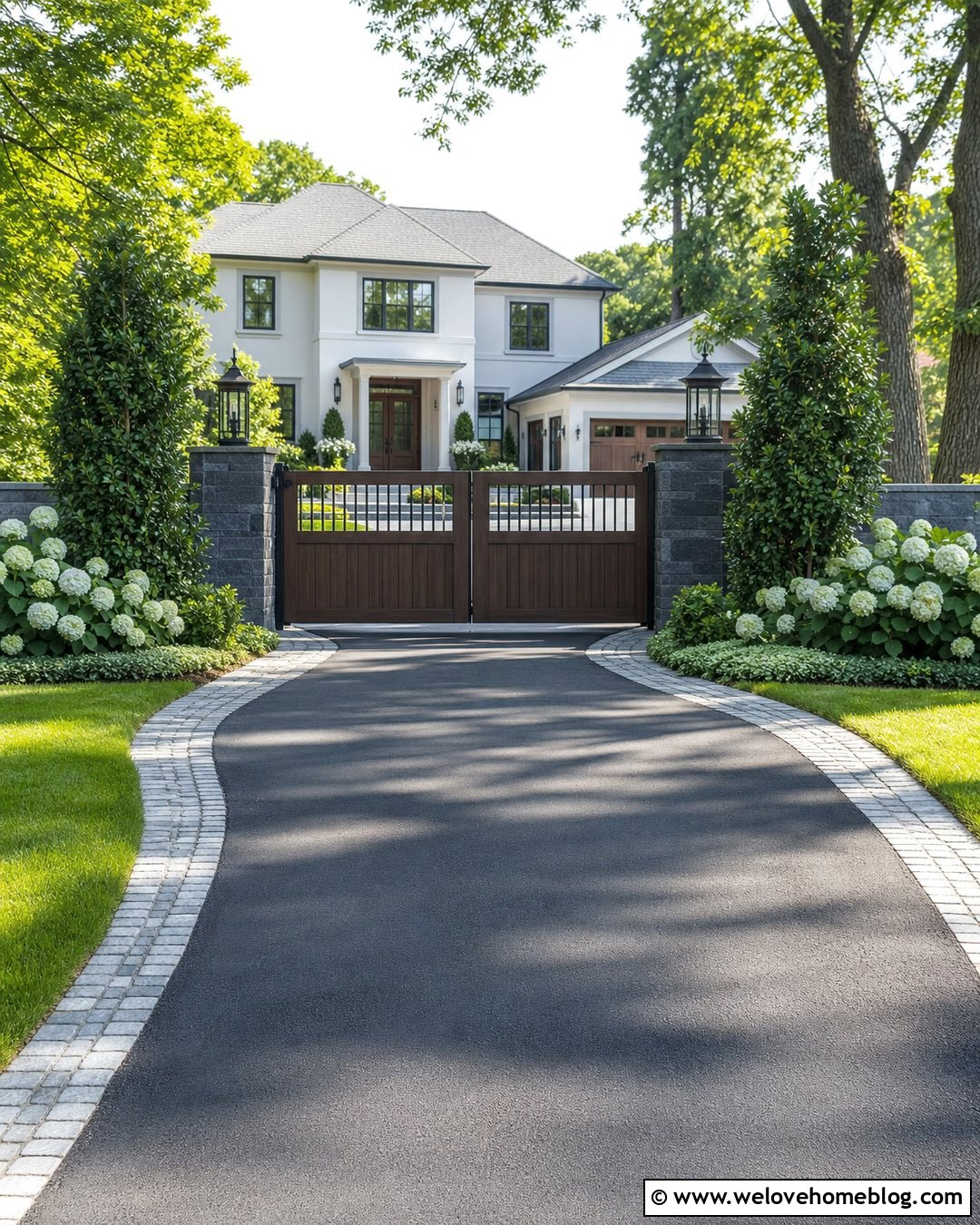
Composite boards and metal inserts can create a more open, decorative gate without sacrificing the material’s warm appearance. Place vertical walnut boards across the lower two-thirds of each gate leaf, then add a narrow upper panel of black metal bars. This arrangement provides screening around the driveway while allowing light and visibility near the top. A curved black asphalt driveway bordered with cobblestone supports the transitional design. Use dark metal posts or simple masonry pillars, depending on the house facade. Beds of hydrangeas, upright hollies, and low ground cover can soften the entrance without blocking the gate’s movement. Keep the metal pattern straightforward, such as vertical bars or a rectangular grid. Complex scrollwork may compete with the composite grain and make the overall entrance feel unnecessarily busy.
12. Arched Composite Driveway Gate
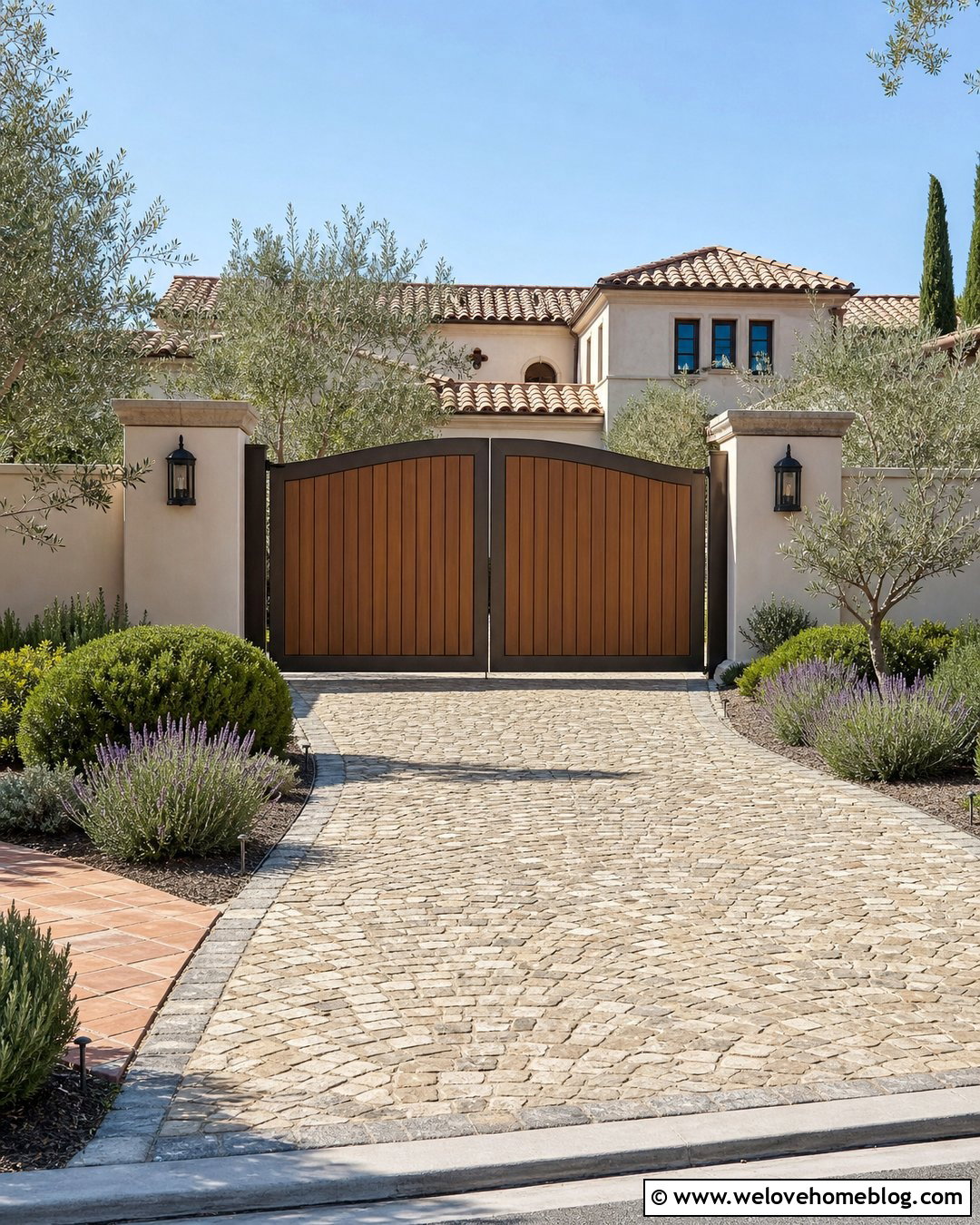
An arched composite driveway gate adds gentle traditional character while maintaining the practical benefits of engineered boards. The most balanced version uses two symmetrical leaves that rise gradually toward the center. Choose warm cedar-tone vertical composite boards inside a dark bronze frame, with the top rail following the same curve. Mount the gate between stucco pillars topped with understated stone caps. A pale cobblestone driveway can curve through the entrance toward a Mediterranean or Spanish-style home. Surrounding beds filled with rosemary, lavender, olive trees, and clipped shrubs support the architecture and keep the approach inviting. Avoid making the arch too steep, particularly on a wide gate. A shallow curve is easier to integrate with fencing and provides distinction without making the entrance resemble an oversized garden gate.
13. Slatted Composite Driveway Gate
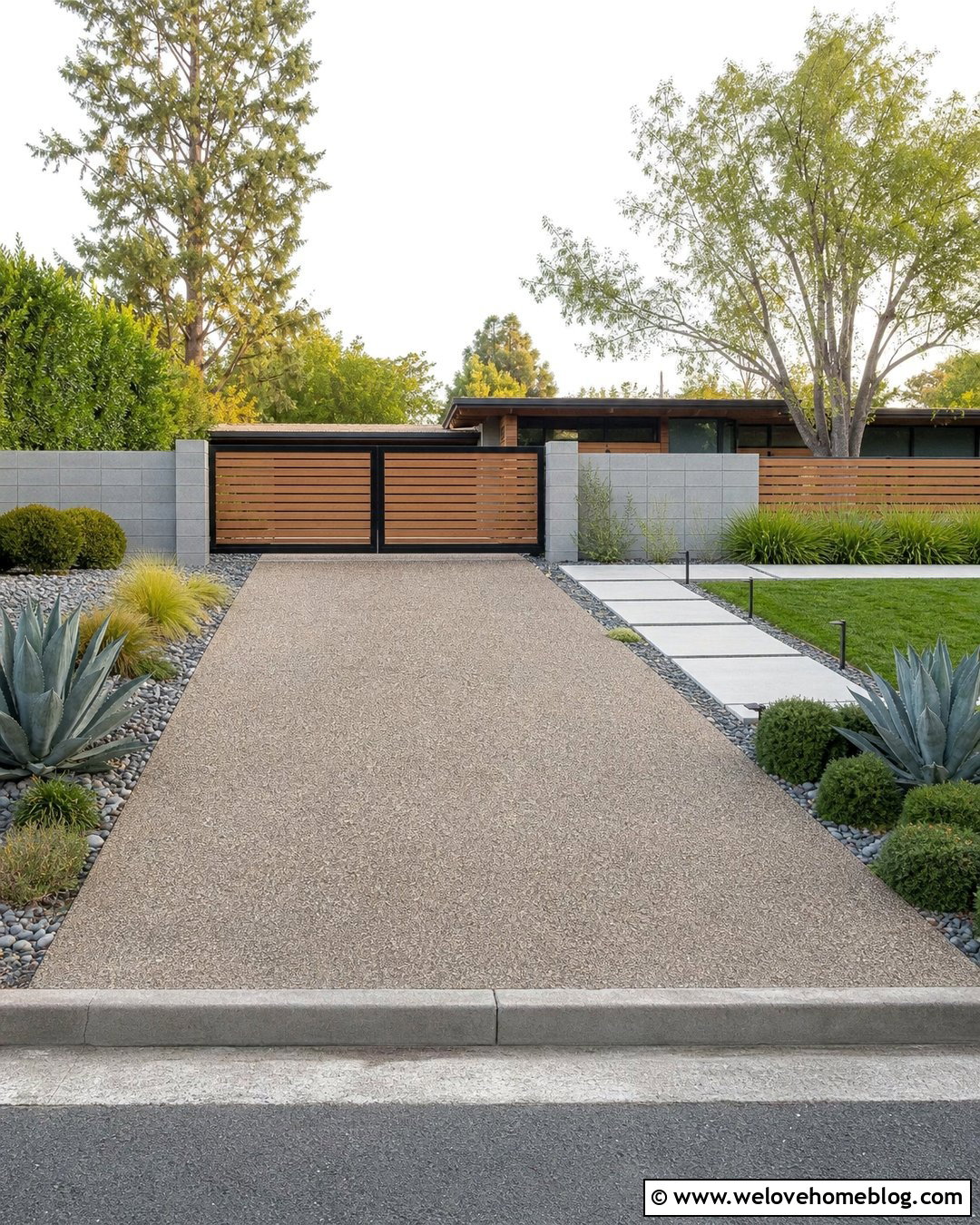
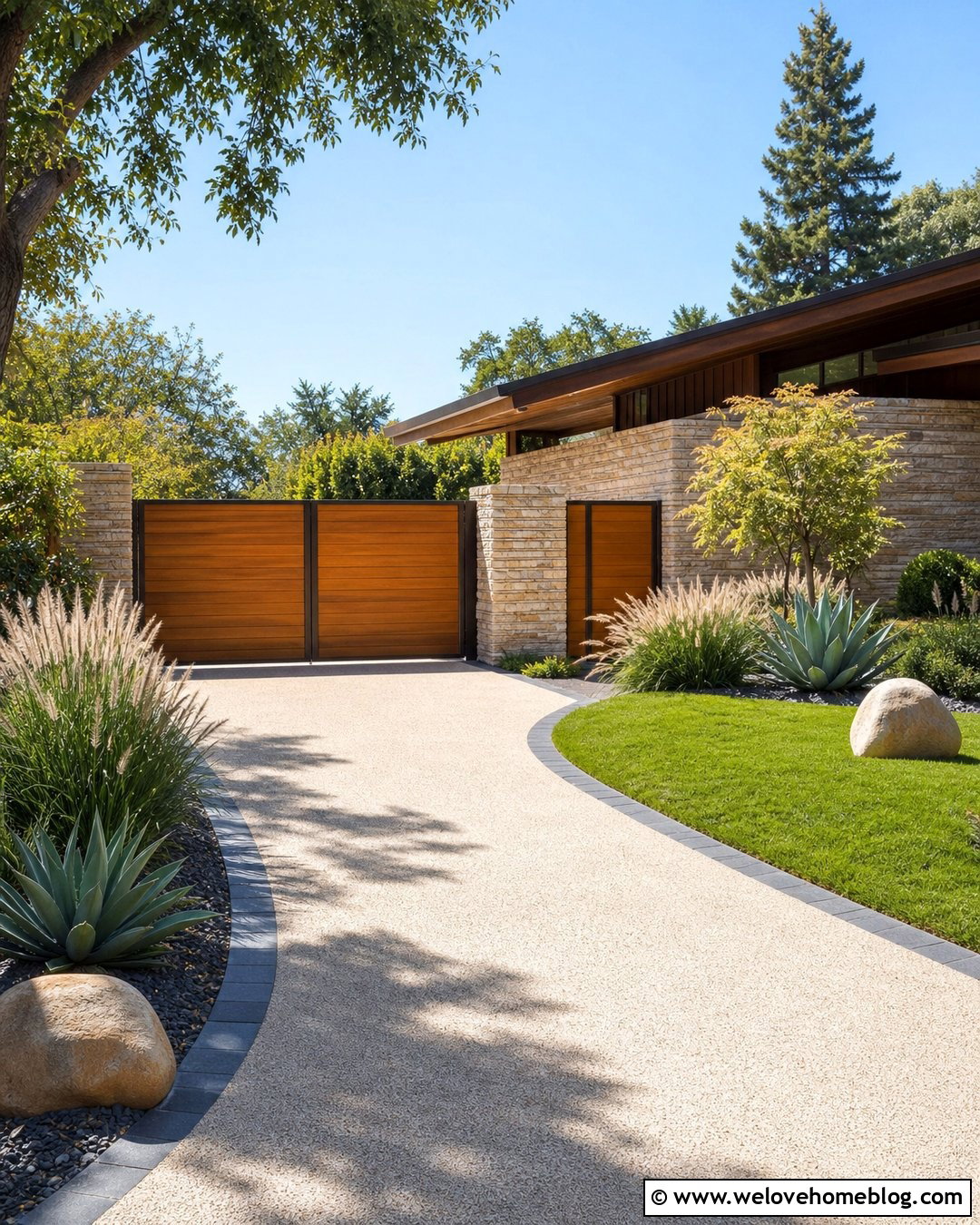
A slatted composite driveway gate offers a useful compromise between openness and privacy. Narrow horizontal boards with deliberate spacing allow light and air to pass through while partially screening the yard. Honey oak slats inside a black aluminum frame create a strong contrast that suits a low ranch or midcentury home. Pair the gate with an exposed aggregate driveway featuring straight edges and a wide concrete threshold beneath the moving panels. Low masonry walls can extend from both sides, followed by simple horizontal fencing. Drought-tolerant landscaping with agave, ornamental grass, rounded shrubs, and decorative gravel keeps the frontage tidy. The slat gaps should remain consistent across both gate leaves and adjoining fence panels. This repetition makes the complete entrance appear wider, calmer, and professionally designed.
14. Vertical Composite Driveway Gate
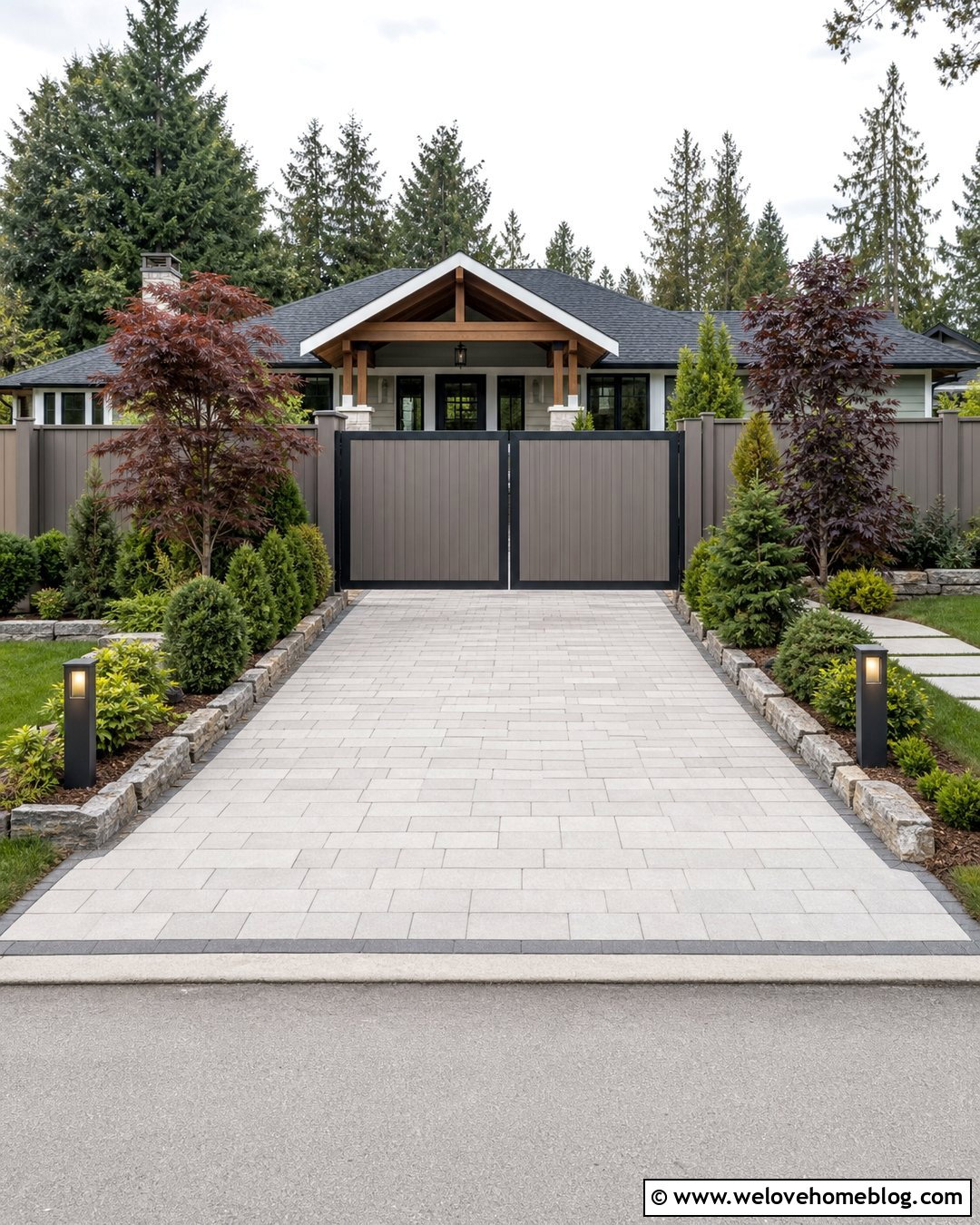
Vertical composite boards can make a low driveway gate appear taller and give a traditional entrance a fresh, simplified finish. Select narrow gray-brown boards and place them tightly inside a charcoal steel frame. A flat top keeps the design clean, while a double-swing layout maintains symmetry across the opening. This gate works beautifully with a straight concrete paver driveway leading to a craftsman bungalow. Use natural stone edging, layered foundation shrubs, and two small ornamental trees to frame the approach. Square wood-look lighting fixtures can echo the vertical proportions without introducing ornate details. Aligning the boards with vertical porch posts or siding accents creates a visual connection to the house. For a cohesive boundary, repeat the same board width and direction on the nearby composite fence and pedestrian entrance.
15. Two Tone Composite Driveway Gate
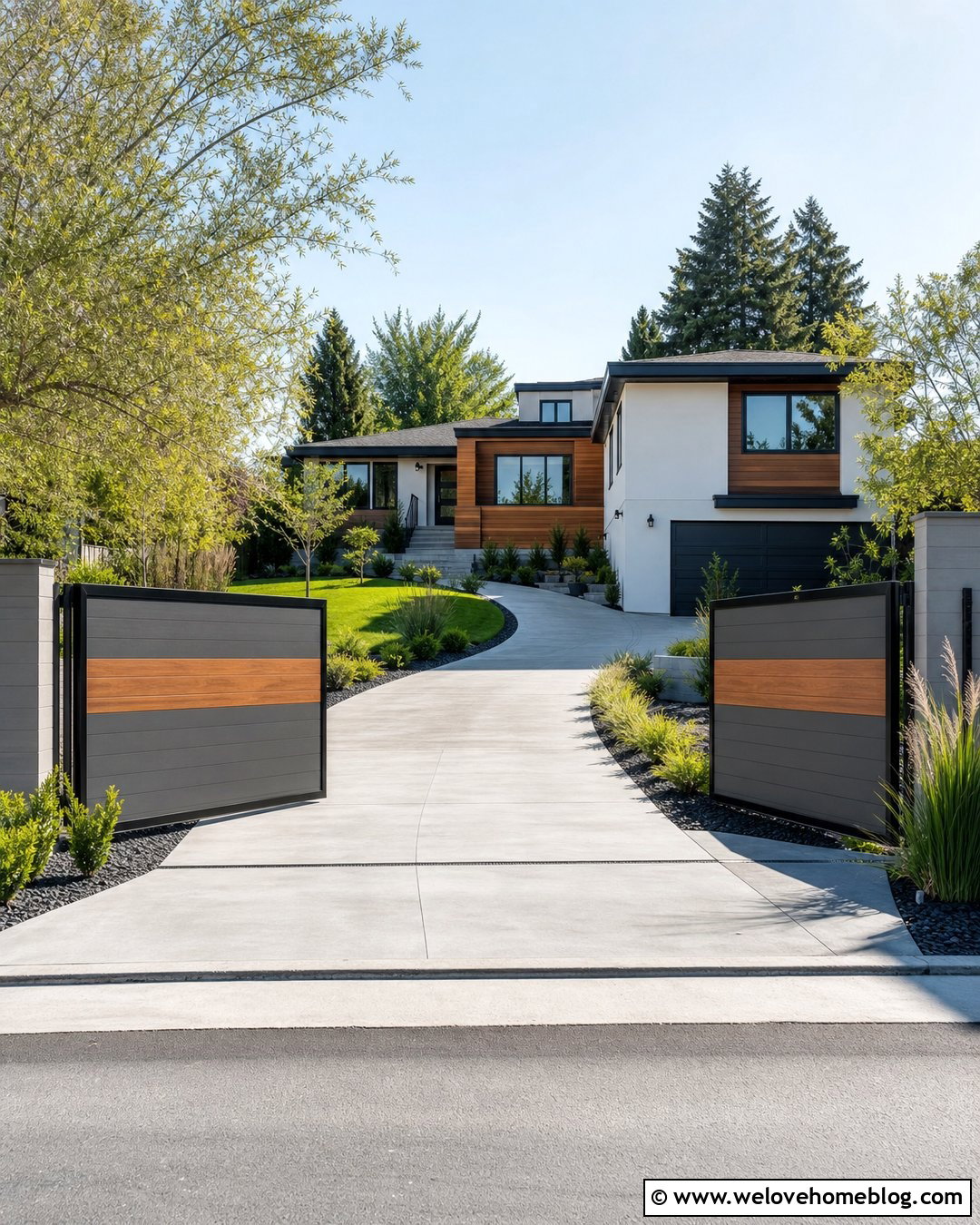
Combining two composite colors can make a broad driveway gate more interesting without relying on decorative metalwork. Use dark graphite boards across most of the surface, then add a warm oak band through the center. A black aluminum frame unifies both finishes and gives the design a crisp outline. The horizontal accent can align with the handle, keypad, mailbox, or adjoining fence detail. Pair this gate with a light gray poured concrete driveway that curves toward a contemporary split-level home. Black gravel borders and low green planting keep the color scheme controlled. Limit the design to two composite tones and one frame color for clarity. When the same oak accent appears on the front door or garage, the gate becomes a coordinated part of the property rather than an isolated feature.
16. Composite Driveway Gate With Pedestrian Door
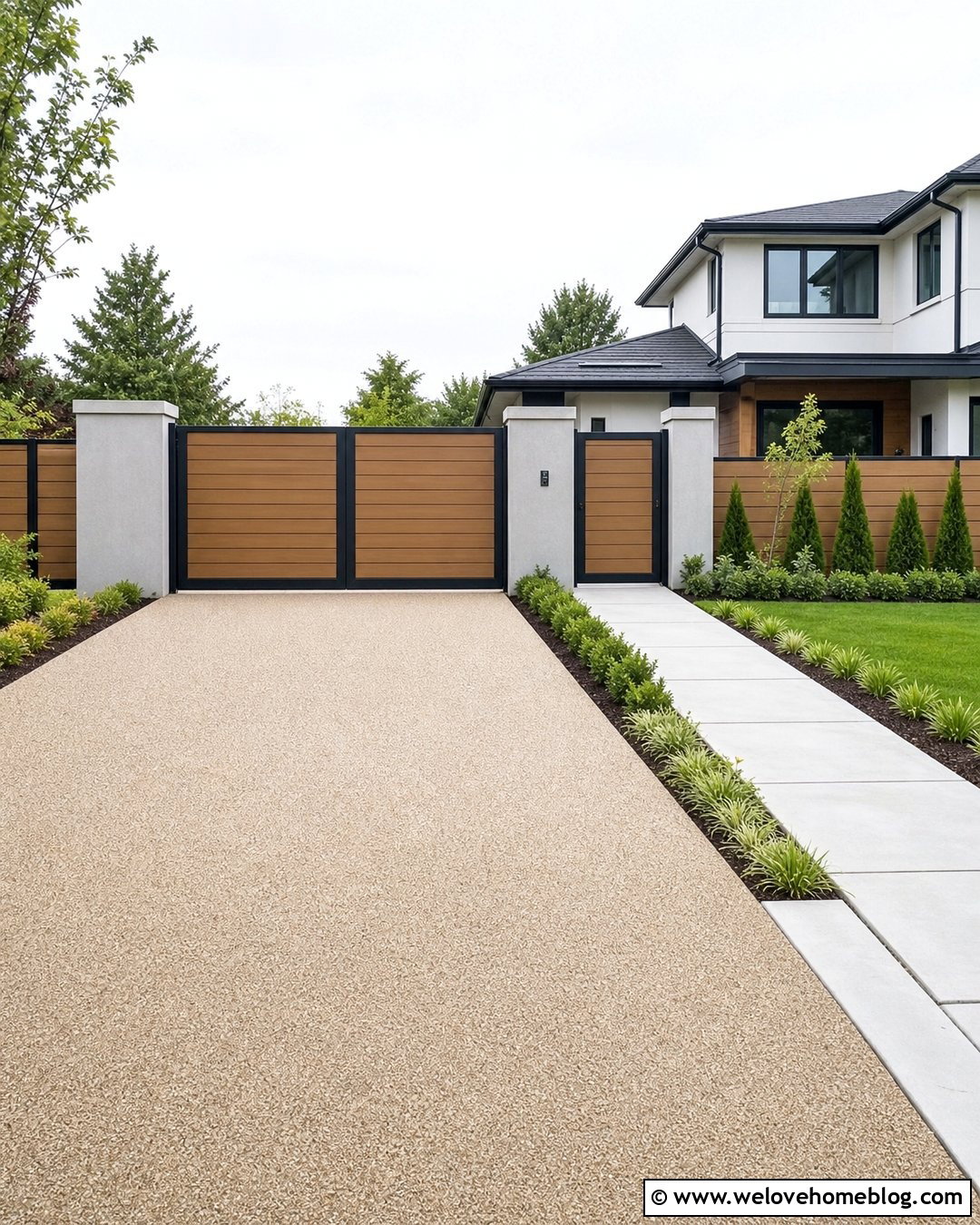
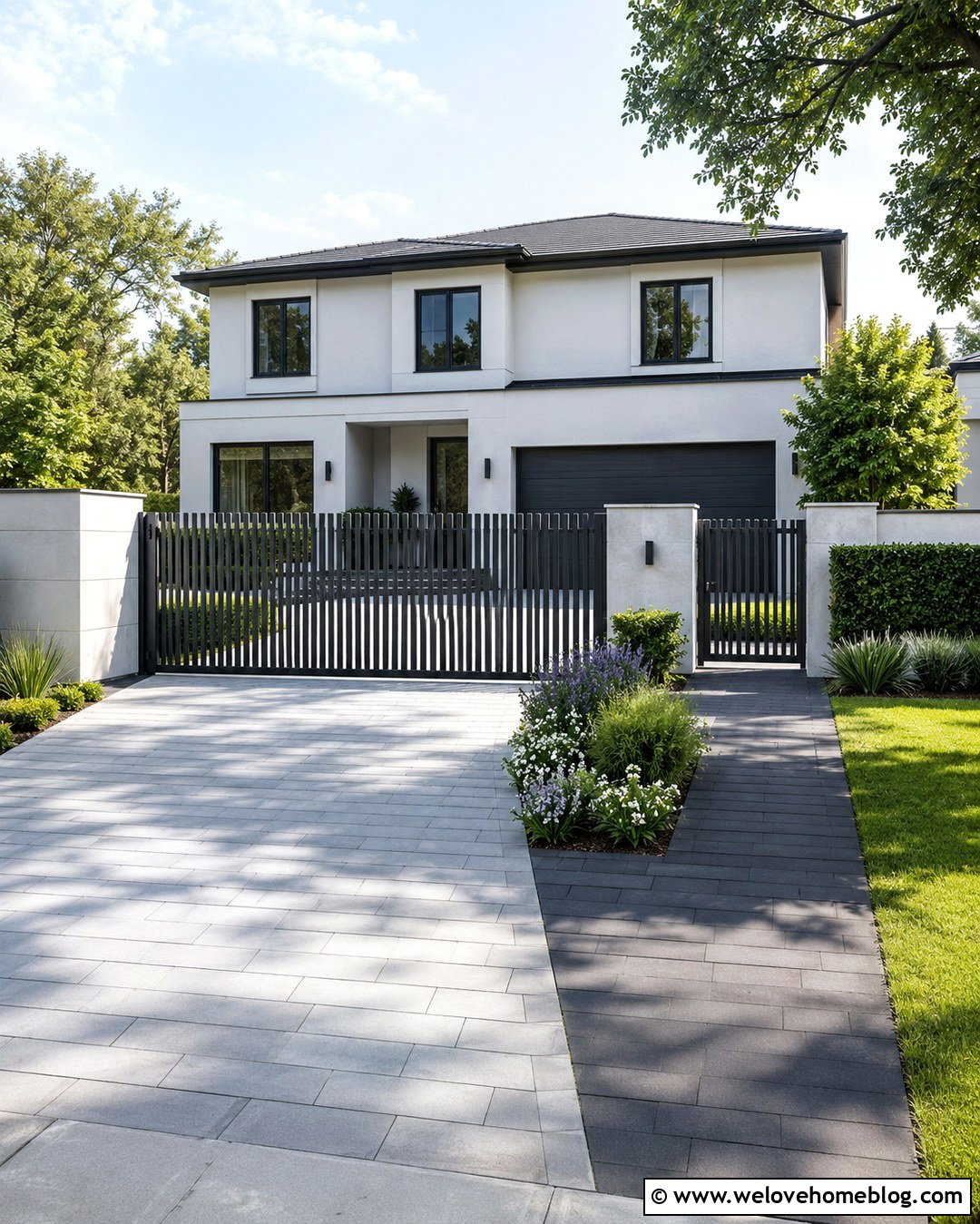
A coordinated pedestrian door makes a gated entrance easier to use for walking, deliveries, and routine yard access. Place the smaller door beside a double-swing composite driveway gate rather than cutting it into a moving leaf. Matching teak-tone horizontal boards and black frames can unify all three panels. Wide concrete pillars separate the openings and provide room for hinges, a keypad, intercom equipment, and discreet lighting. A straight resin-bound gravel driveway creates a smooth modern approach, while a parallel concrete walkway guides visitors toward the pedestrian entrance. Use layered grasses and compact evergreen shrubs to soften the pillars without covering access controls. Keeping the gate, door, fencing, and house trim at related heights prevents the extra opening from making the frontage appear fragmented or visually crowded.
17. Automatic Composite Driveway Gate
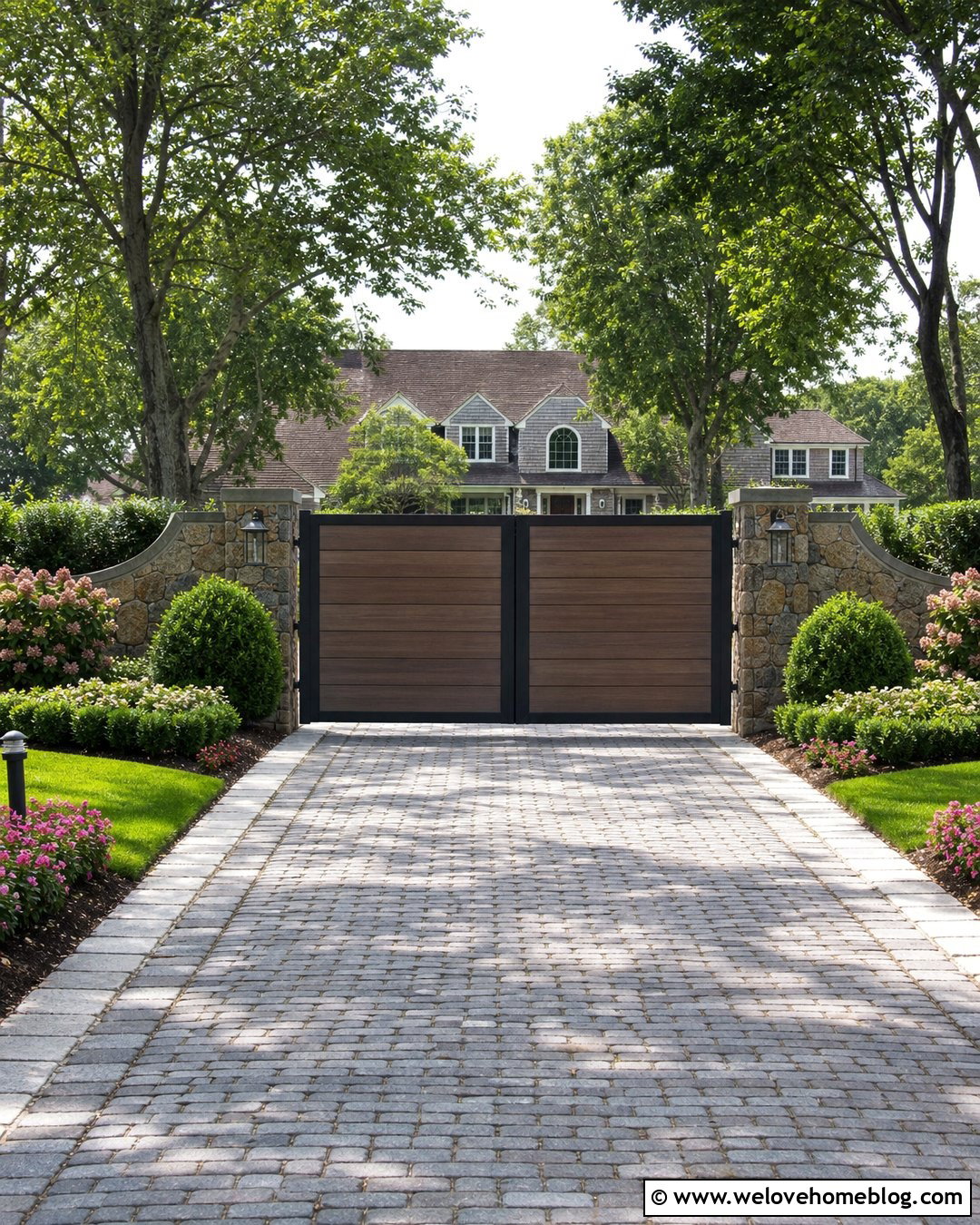
An automatic composite driveway gate combines convenient entry with a clean residential appearance. A pair of medium walnut swing gates can open toward a long cobblestone driveway, provided the entrance is level and offers sufficient clearance. Reinforced black frames support the composite infill and coordinate with concealed or carefully positioned operators. Stone pillars can house safety equipment, wiring, an intercom, and a keypad without cluttering the curb view. Add low hedges and flowering borders outside the gate, keeping plants away from moving leaves and detection areas. The automation system should be selected for the gate’s size, weight, exposure, and expected use. Planning underground conduit before paving or landscaping can help preserve the finished entrance. Manual release access is also important if power or equipment problems occur.
18. Cantilever Composite Driveway Gate
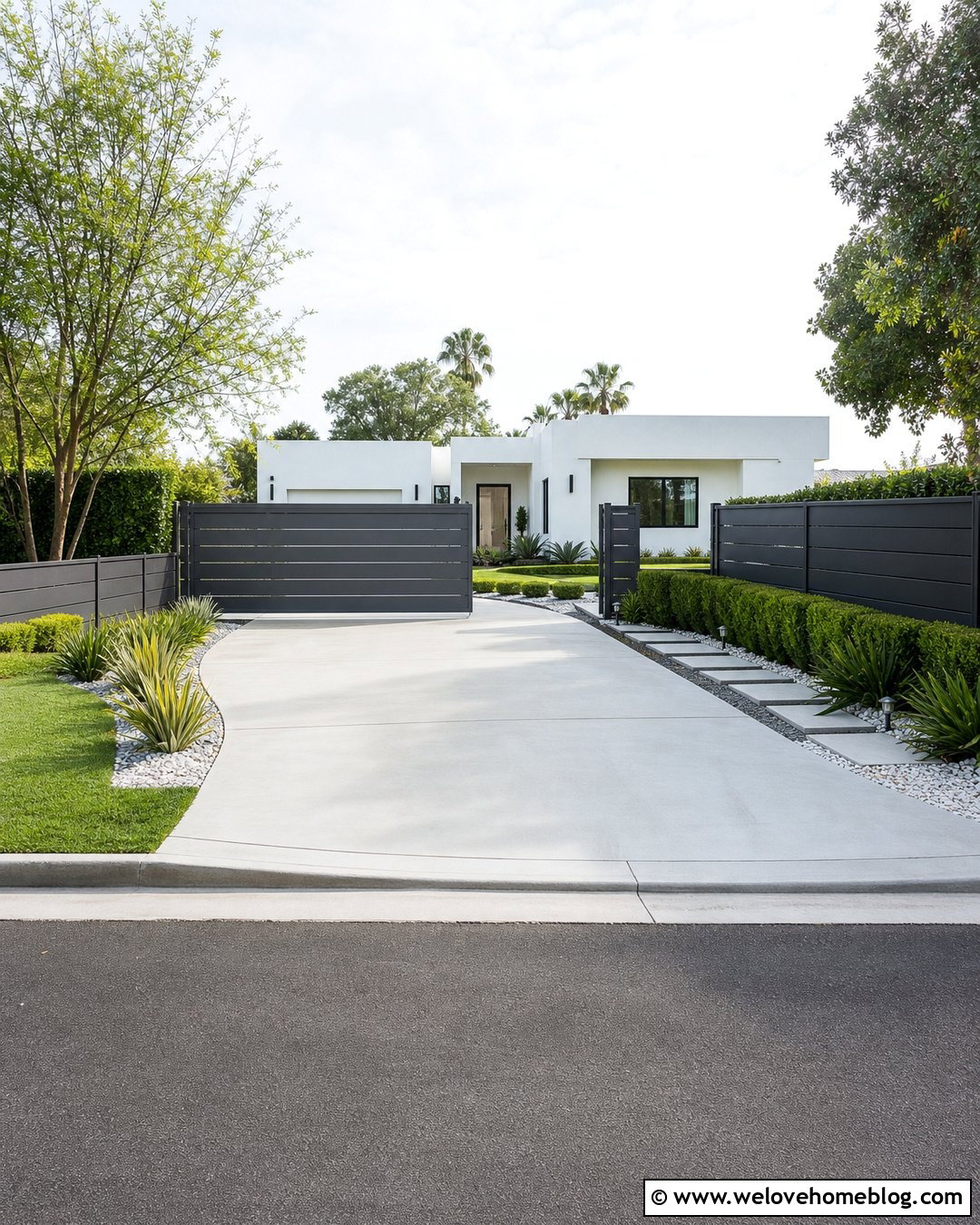
A cantilever composite driveway gate slides across the entrance without relying on a track embedded in the driveway surface. This can create an uncluttered threshold where leaves, gravel, or drainage would make a ground track less desirable. Choose charcoal horizontal composite boards in a reinforced aluminum frame and continue the same finish into the boundary fence. A pale concrete driveway with a slight curve creates contrast and leads toward a minimalist stucco home. Use long planting beds with clipped shrubs, ornamental grasses, and light decorative stone to emphasize the gate’s sideways movement. The design needs enough clear space beside the opening for the full leaf and its extended counterbalance section. Because the structure and hardware are specialized, accurate site measurements and professional engineering are essential for reliable operation.
19. Composite Driveway Gate With Address Sign
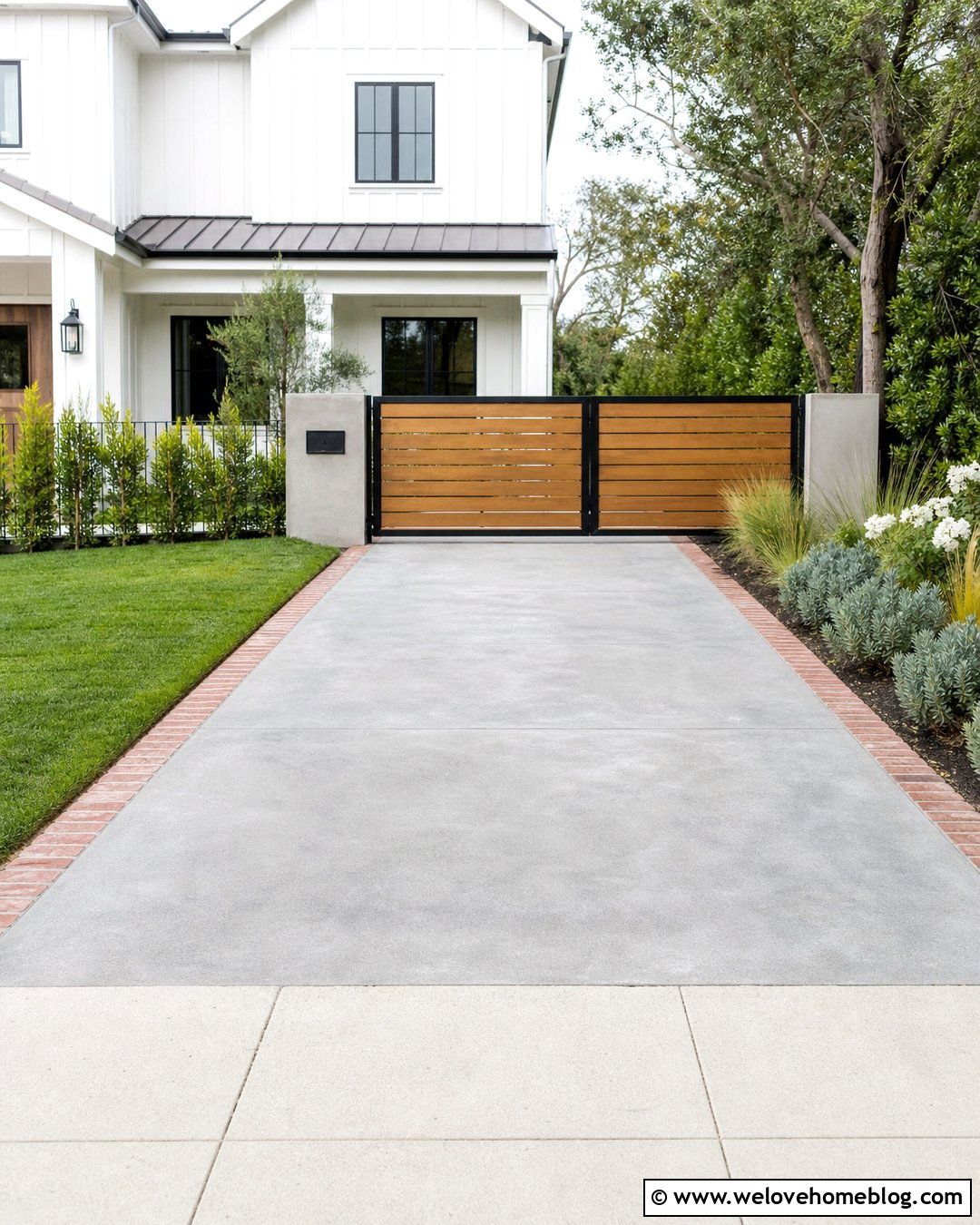
An integrated address sign can make a composite driveway gate easier to identify while adding a polished focal point. Keep the sign on a stationary pillar or side panel so it remains visible when the gate is open. Warm oak composite slats, a black frame, and a slim black address plaque create a contemporary but welcoming combination. Pair the entrance with a straight gray concrete driveway bordered by a narrow strip of brick pavers. A modern farmhouse in the background can repeat the oak tone on its front door and the black finish on windows and lighting. Surround the sign with low shrubs rather than tall plants that may hide it. Use simple, high-contrast numbers and position lighting to improve visibility without shining directly toward the road or neighboring properties.
20. Composite Driveway Gate With Matching Fence
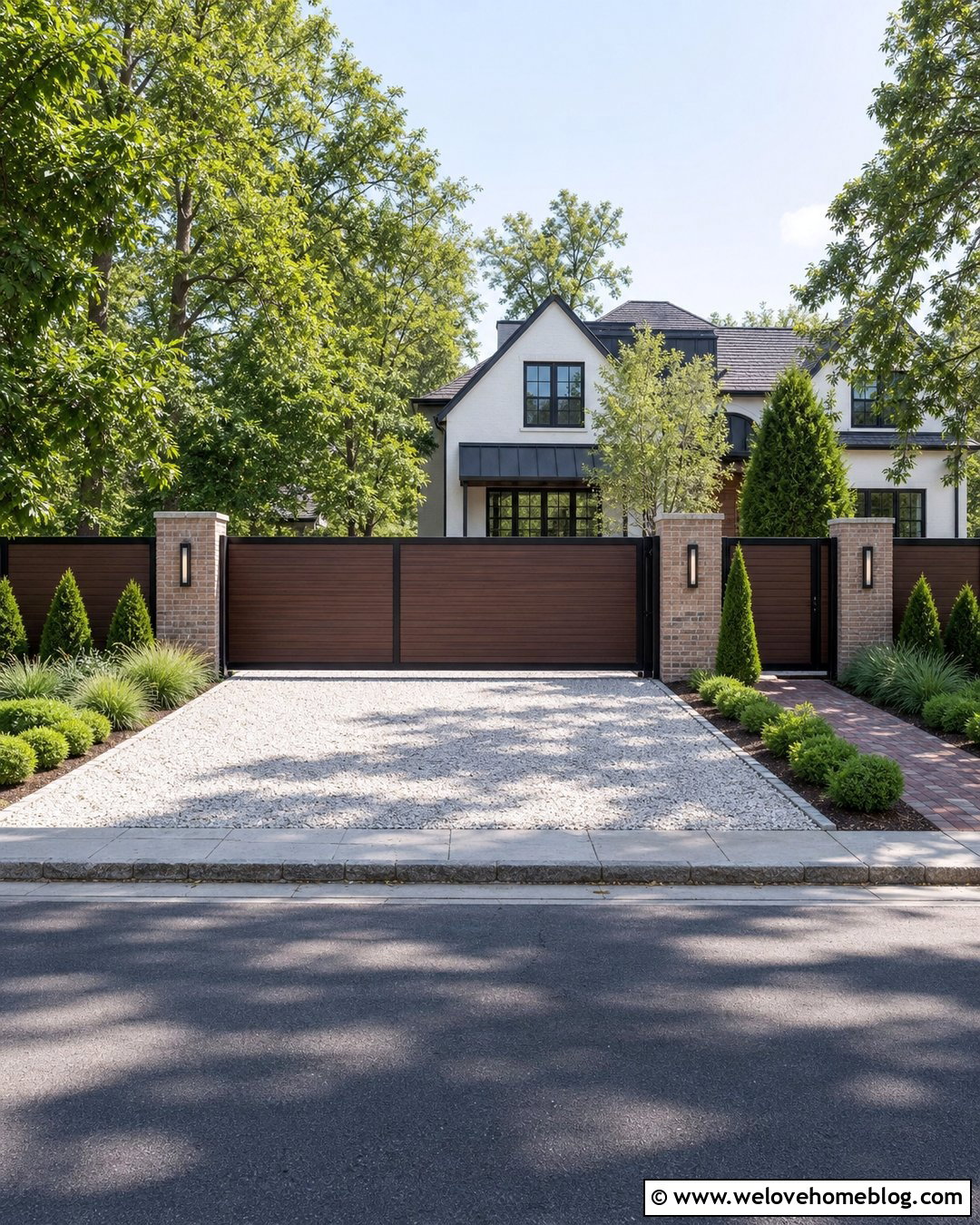
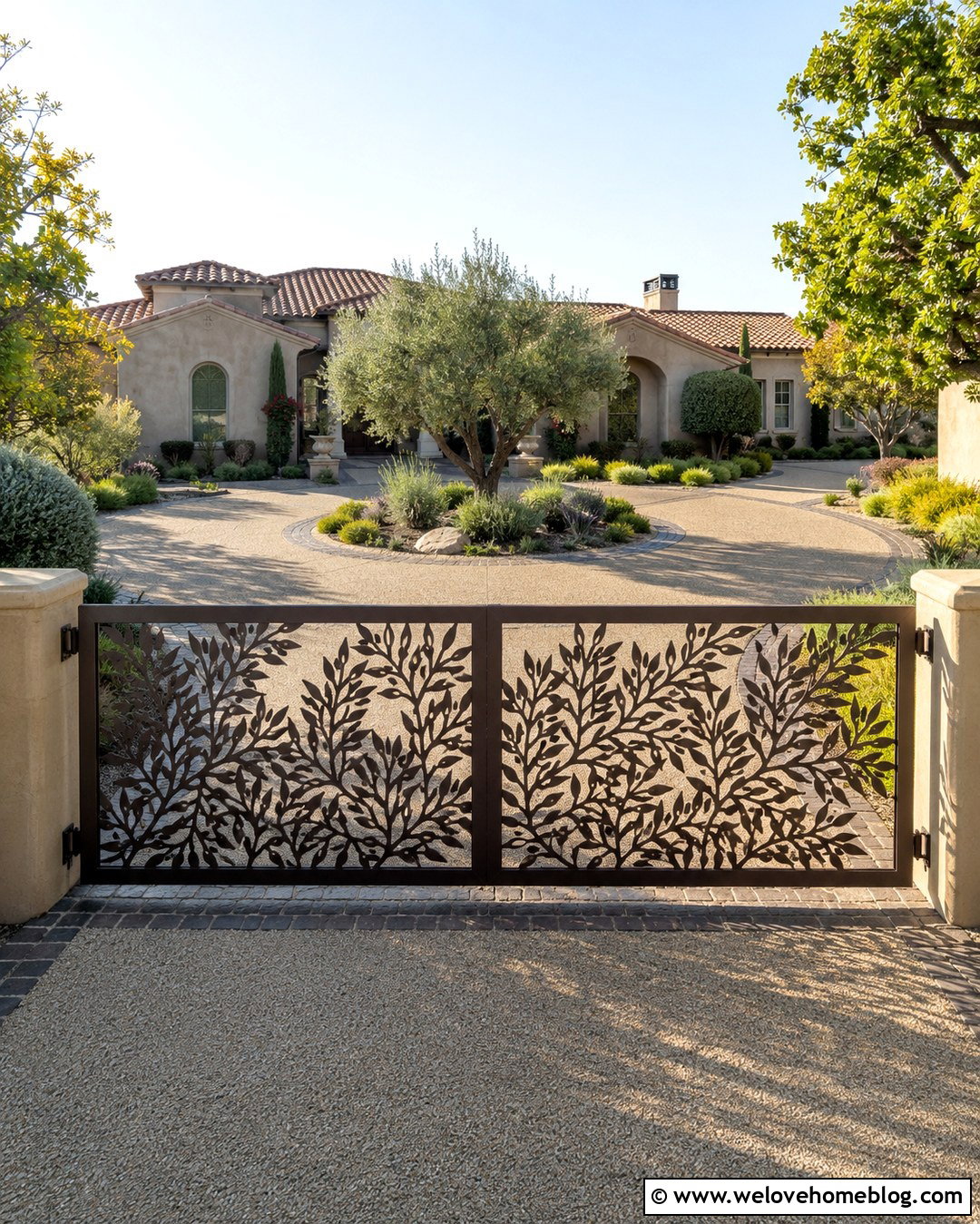
Matching the driveway gate to the surrounding composite fence creates one of the most cohesive front-yard designs. Use identical board color, direction, spacing, and frame finish across the entire boundary. Dark walnut horizontal boards can form a sliding gate, two fence runs, and a separate pedestrian door beside a wide pea gravel driveway. Granite edging keeps loose stone away from the gate mechanism and gives the entrance a durable transition. Brick pillars at key openings add structure without breaking the continuous board pattern. Behind the fence, layer small trees, evergreen shrubs, and grasses to provide softness above the panels. This complete treatment works well for a suburban home needing privacy. Slight variations in fence height can follow the landscape while the gate opening remains level and visually centered.
Conclusion:
The strongest composite gate designs balance appearance, movement, structure, privacy, and the surrounding landscape. Horizontal slats suit streamlined homes, while vertical boards, gentle arches, brick pillars, and stonework can support more traditional architecture. Sliding and cantilever systems save swing space, whereas double gates create a symmetrical entrance on level driveways. Color coordination is equally important. Match the composite finish with fencing, trim, doors, or exterior materials to make the entrance feel connected to the house. Reinforced framing and properly selected hardware help support the gate over time. Use these 20 Composite Driveway Gates Ideas to plan a complete entrance that improves access, security, curb appeal, and everyday convenience.

Related posts:
Leave a Reply