
Modern composite driveway gates ideas bring together privacy, durability, and clean architectural style. Composite infill can recreate the warmth of wood while reducing concerns about fading, warping, rot, and frequent refinishing. Many current designs pair composite boards with reinforced aluminum or steel frames, creating a streamlined entrance that coordinates well with modern homes and landscaping. Horizontal slats, solid privacy panels, wood-look finishes, dark frames, and automated openings are especially useful starting points. () The best result also considers the driveway surface, gate movement, pillars, lighting, fencing, and planting as one complete composition. The following complete entrance designs provide practical inspiration through 20 Modern Composite Driveway Gates Ideas.
1. Horizontal Slat Composite Driveway Gate
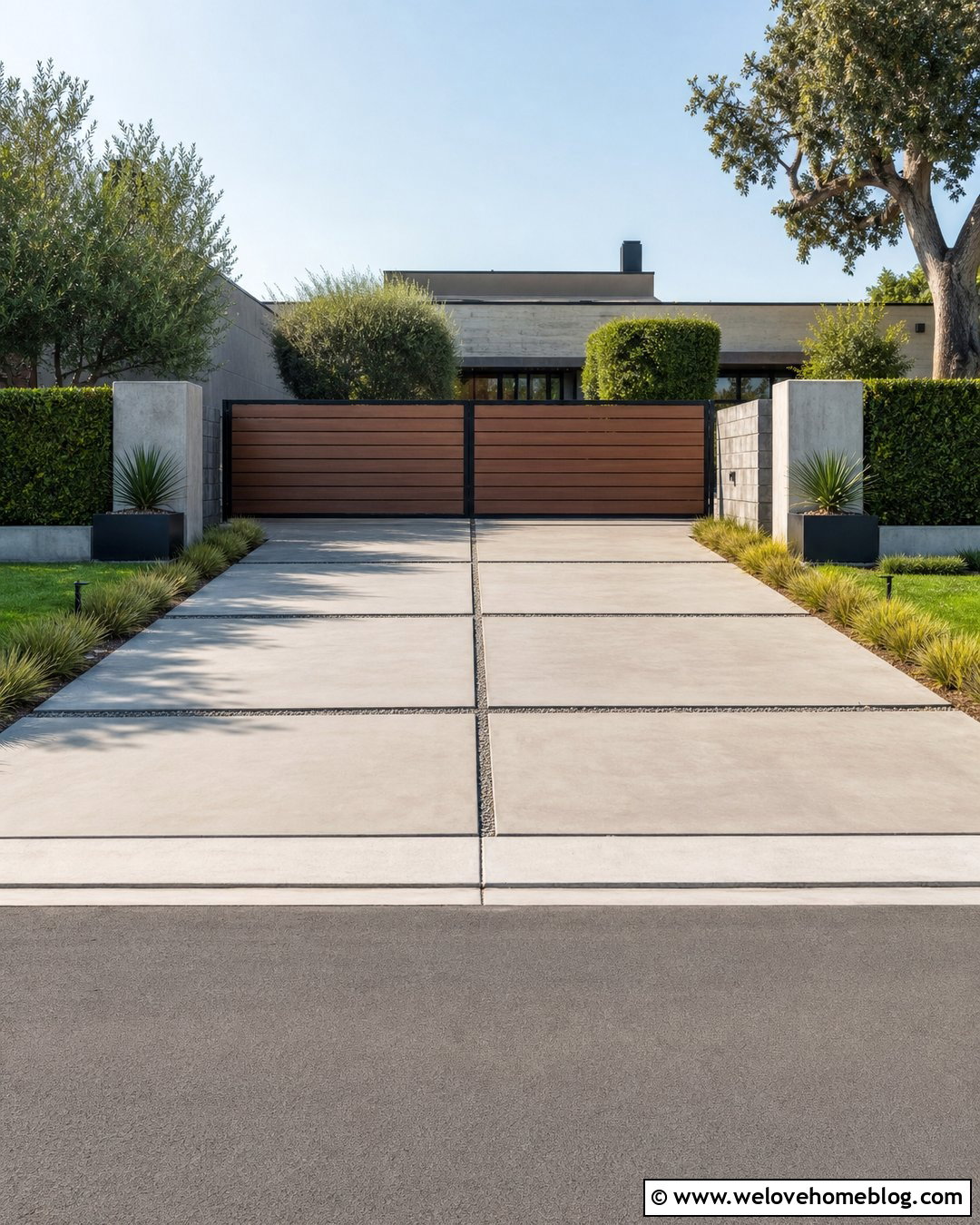
A horizontal slat gate creates long, uninterrupted lines that make a residential entrance appear wider. Choose warm walnut composite boards inside a slim matte-black aluminum frame for a balanced mix of natural color and modern structure. A straight driveway finished with large-format light gray concrete slabs reinforces the gate’s horizontal direction. Narrow gravel joints can improve visual rhythm without making the surface feel busy. Frame the entrance with low rectangular planters, ornamental grasses, and clipped evergreen shrubs. Simple concrete pillars keep the composition crisp beside a flat-roof contemporary home. Use closely positioned boards for greater screening or slightly wider openings for a lighter appearance. Matching composite fence panels can extend from both sides and make the gate feel properly integrated.
2. Vertical Slat Composite Driveway Gate
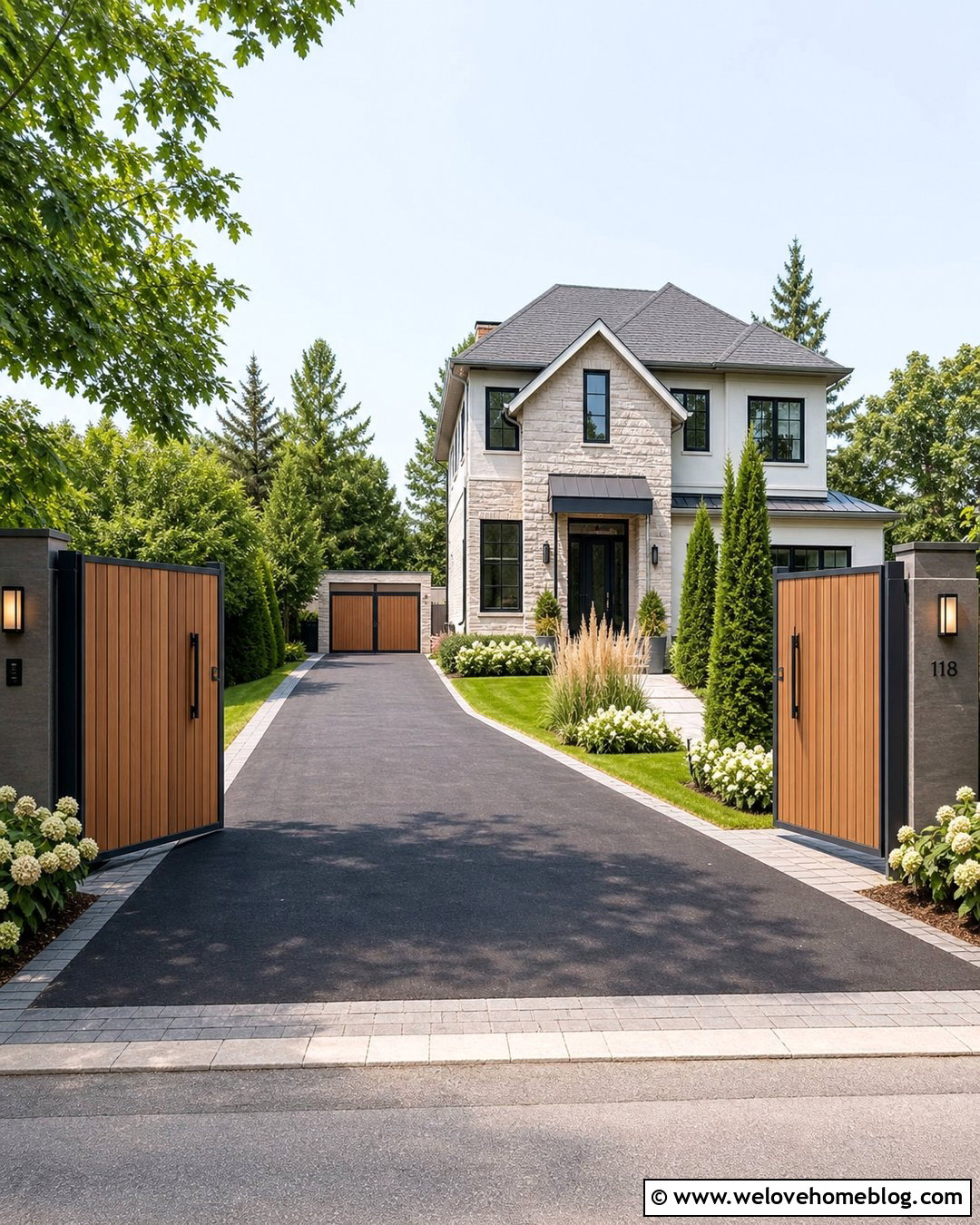
Tall vertical composite boards give a driveway gate a strong, orderly presence without requiring decorative details. This arrangement works especially well at a narrow entrance because the upright lines visually emphasize height instead of width. Try medium oak composite slats within an anthracite aluminum frame, paired with a straight charcoal asphalt driveway. A soldier-course border of gray pavers can neatly define the edges and connect the driveway to a matching front walkway. Place slim masonry pillars on either side, then soften them with upright junipers, feather reed grass, and compact flowering shrubs. The gate can be built as a double-swing design for a traditional operating pattern. Against a two-story transitional house, its warm color prevents the dark entrance from looking overly industrial or severe.
3. Full Privacy Composite Driveway Gate
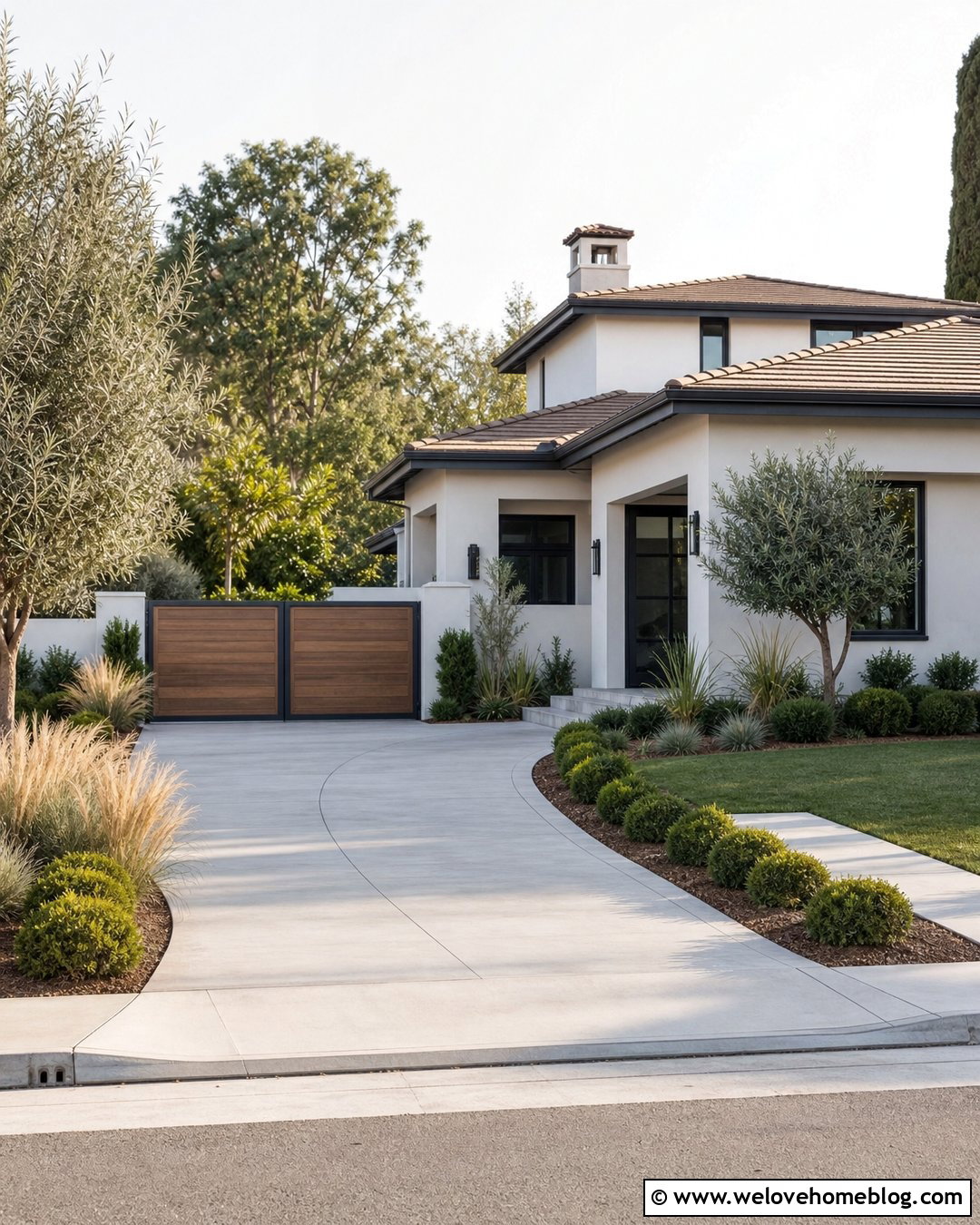
For a more enclosed frontage, select a full privacy gate made with tightly fitted composite tongue-and-groove boards. A rich teak-look finish can add warmth, while a dark metal perimeter frame clearly defines each gate leaf. Pair the design with a smooth poured concrete driveway that gently curves toward a modern stucco house. Broad planting beds filled with boxwood, dwarf olive trees, and soft ornamental grasses can make the solid gate feel less imposing. Square rendered pillars should match the home’s facade, creating a direct visual connection between the street and architecture. Keep handles, hinges, and automation components concealed whenever possible. Because a solid gate has greater visual weight, limiting the entrance palette to two or three colors will produce a calmer, more intentional appearance.
4. Black Frame Composite Driveway Gate
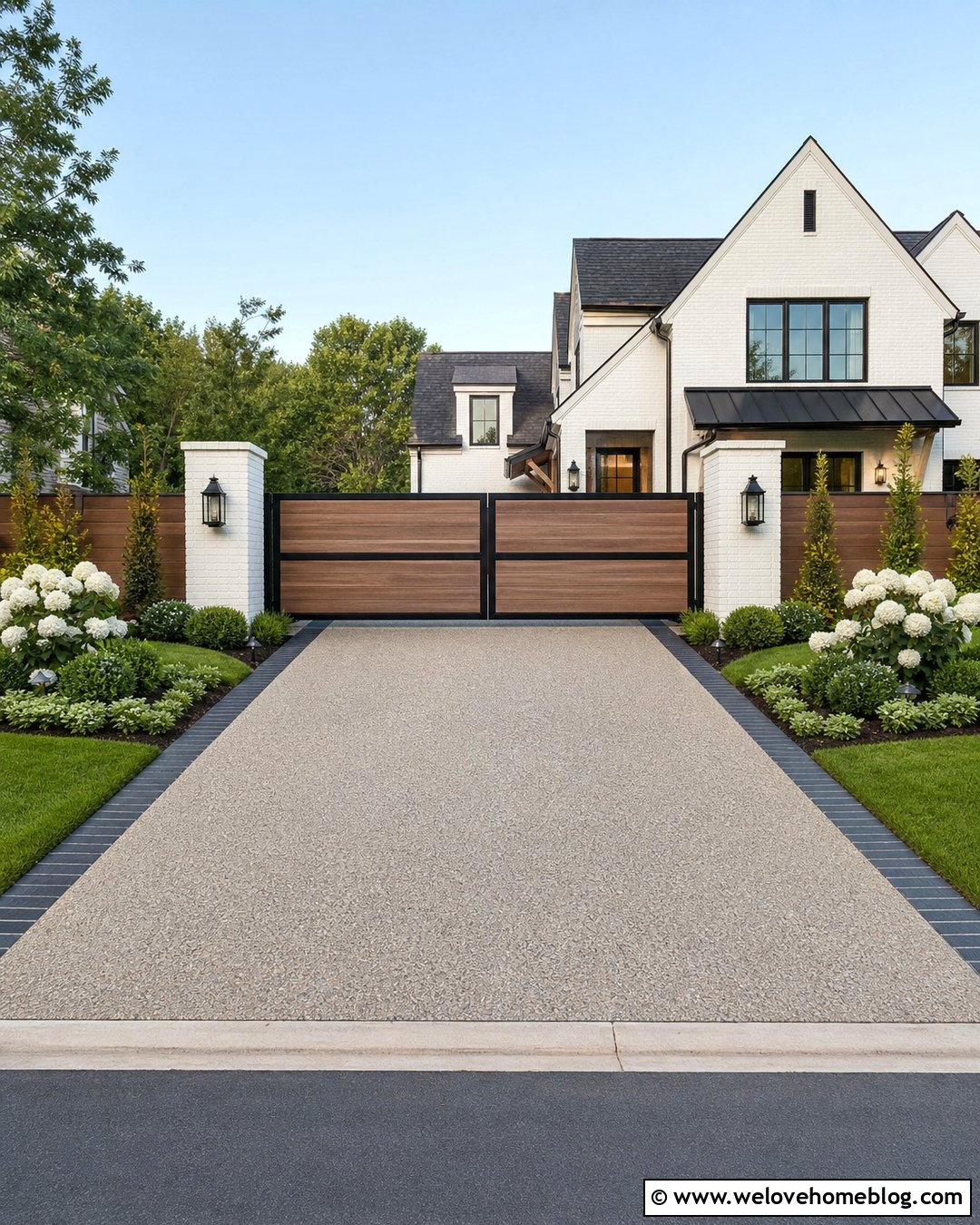
A bold black frame can turn simple composite infill into a sharply defined architectural feature. Choose cedar-tone horizontal boards surrounded by a wide powder-coated aluminum border. The contrast looks particularly effective beside a white brick modern farmhouse with black windows and roof accents. Continue the entrance with a straight exposed aggregate driveway edged by black clay pavers. On both sides, use symmetrical beds containing dwarf evergreens, white hydrangeas, and neat ground cover. Black metal posts or smooth white masonry pillars can support the gate, depending on how strongly you want it to stand out. Matching side fencing should repeat the same composite-and-black combination. This design feels modern without losing the welcoming character often expected from a farmhouse entrance, especially when the landscaping remains soft and restrained.
5. Wood Look Composite Driveway Gate
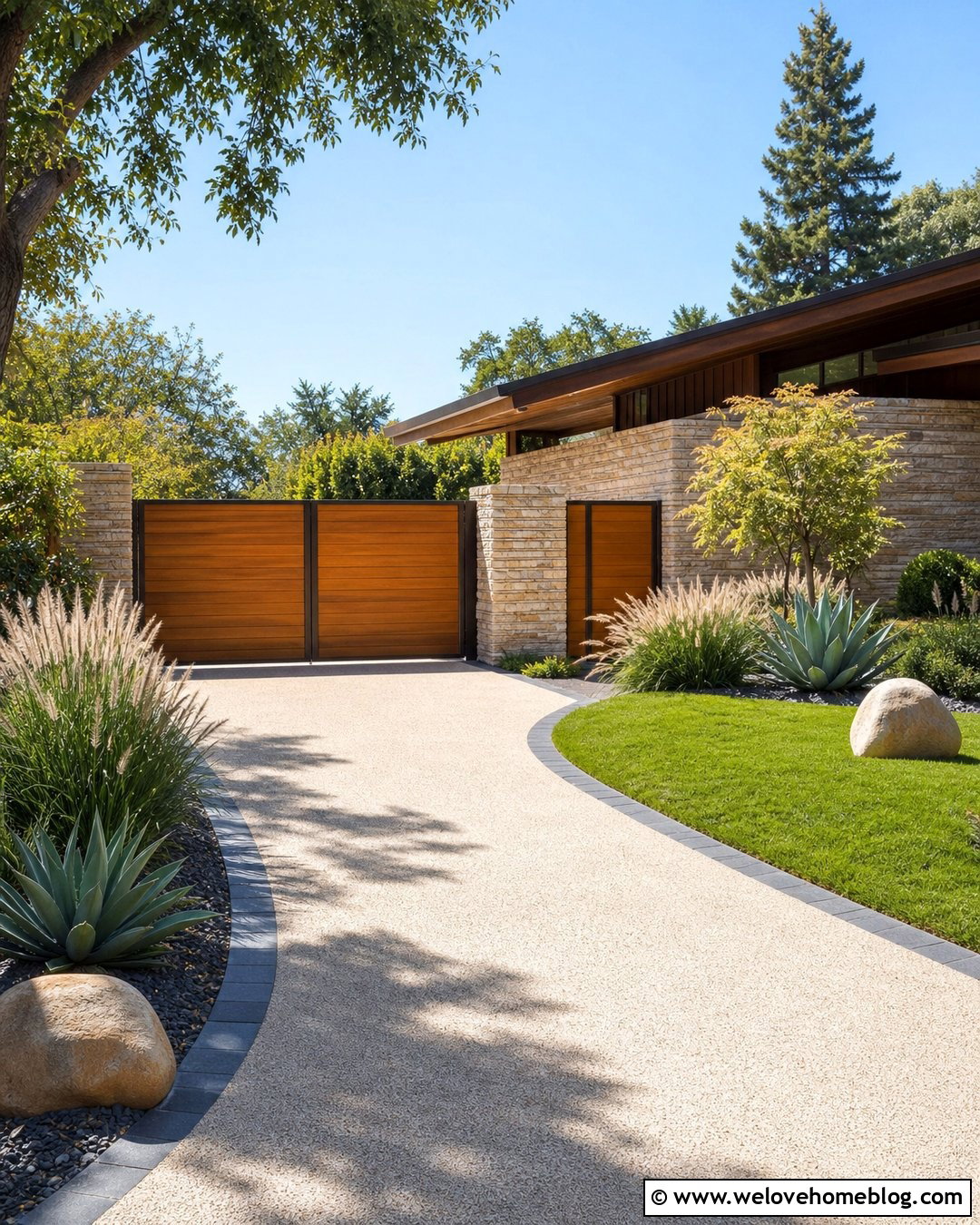
Wood-look composite provides the character of timber while supporting a cleaner, lower-maintenance entrance. Select realistic golden oak boards with varied grain tones instead of a completely uniform printed finish. Arrange them horizontally inside a dark bronze frame to complement a mid-century modern house with stone, glass, and warm siding. A curved driveway made from cream resin-bound gravel creates a smooth visual transition from the street. Define its edges with dark granite setts and drought-tolerant planting beds filled with agave, fountain grass, and rounded boulders. Low stone pillars can connect the gate to the home’s masonry accents. Keep the gate profile flat and hardware minimal so the wood effect remains the focal point. Repeating the composite finish on a nearby pedestrian gate completes the entrance.
6. Charcoal Composite Driveway Gate
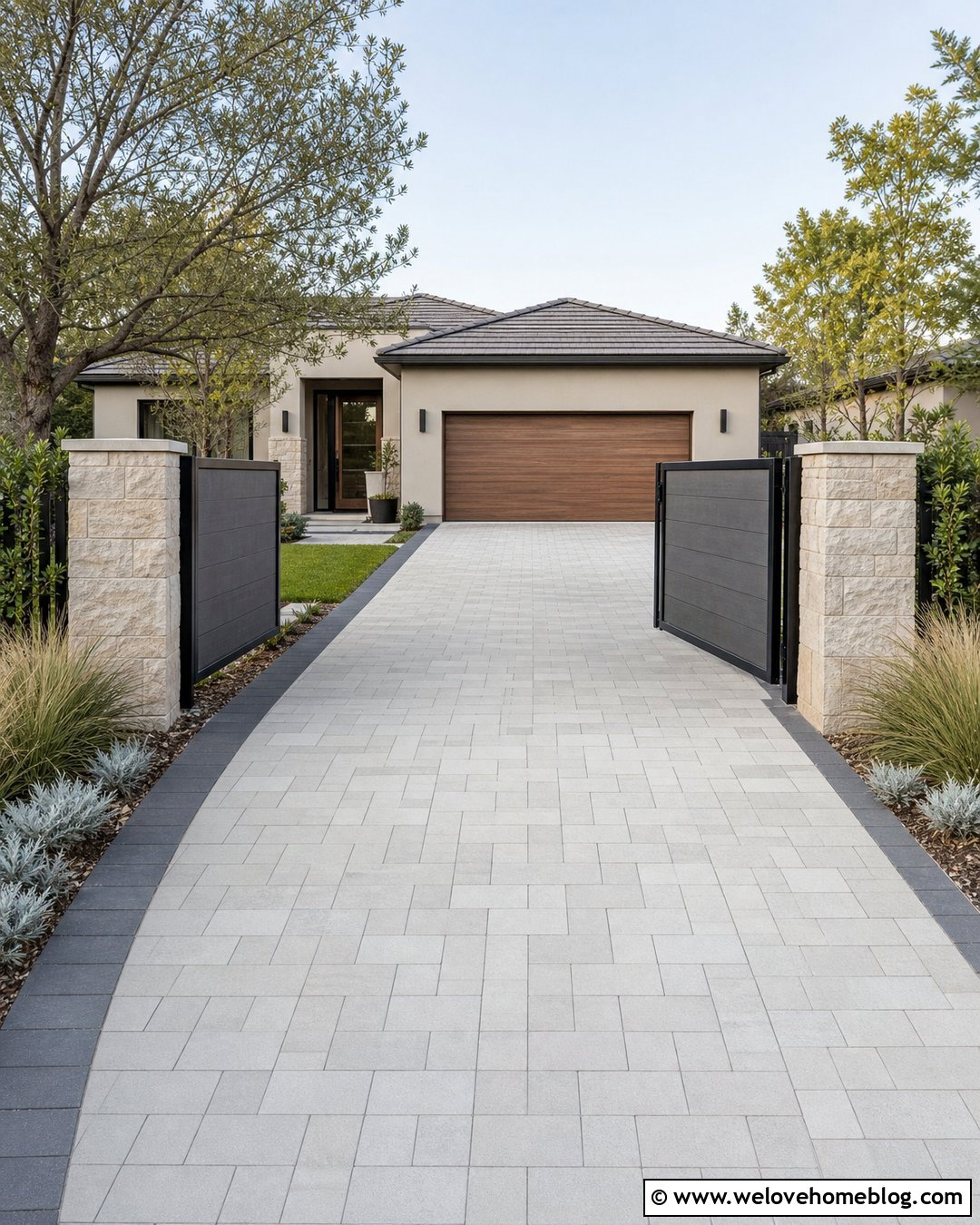
Charcoal composite boards create a refined monochromatic entrance when paired with black framing and neutral masonry. To prevent the design from becoming flat, use boards with a subtle brushed texture and narrow shadow gaps. A wide driveway of pale concrete pavers provides enough contrast for the dark gate to remain clearly visible. Arrange the pavers in a running bond pattern and add charcoal border courses around the perimeter. Light limestone pillars can soften the transition between the gate and a contemporary beige stucco house. Complete the setting with mounded grasses, silvery foliage, and compact evergreen shrubs. A double-swing configuration suits a broad, level driveway and gives the entrance a balanced centerline. Warm wood accents on the garage or front door can keep the overall frontage from feeling too cool.
7. Two Tone Composite Driveway Gate
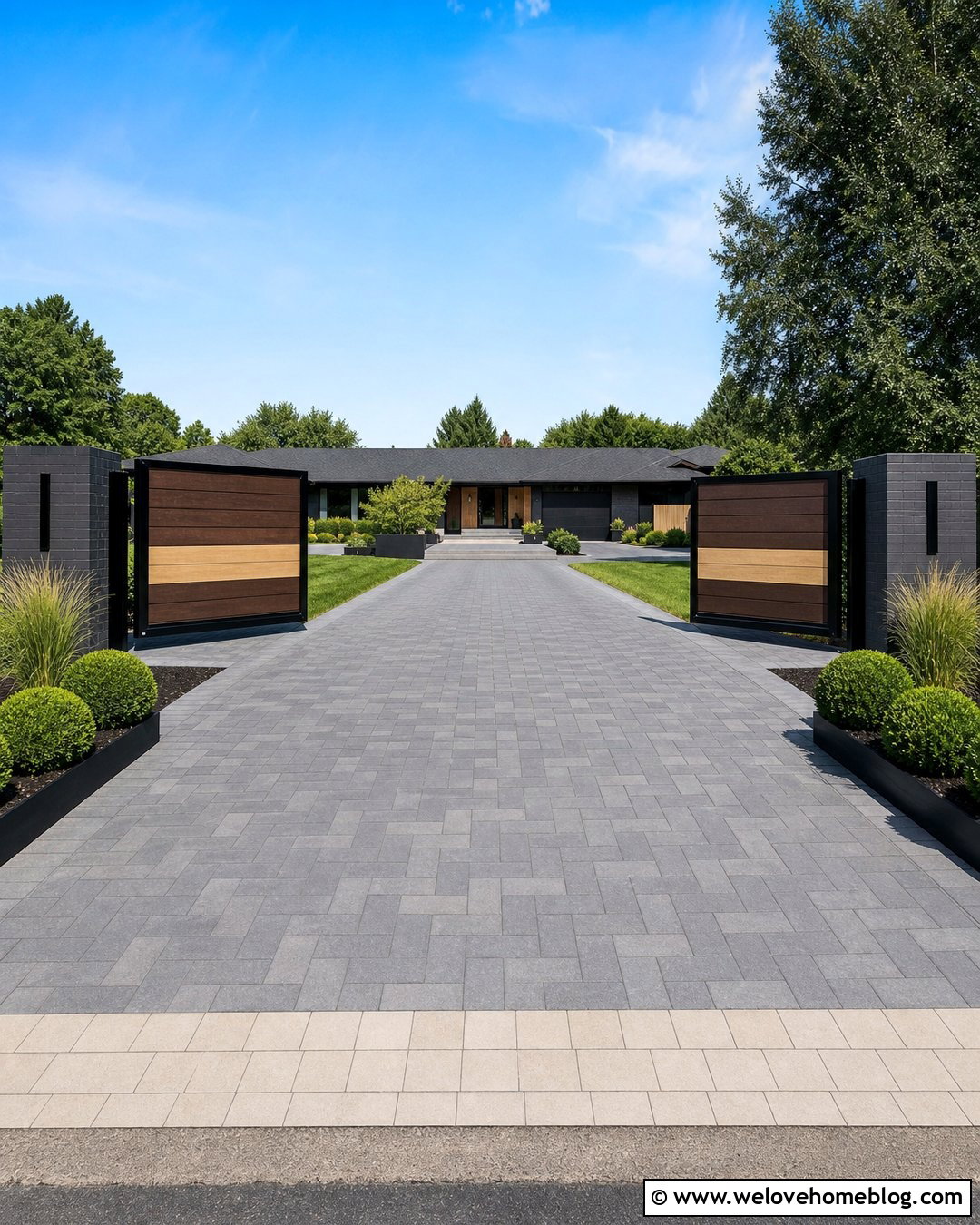
Combining two composite colors gives a modern gate depth without relying on ornamental metalwork. Start with dark walnut boards across most of the gate, then introduce a narrow central band of light oak composite. A black aluminum frame unifies both finishes and keeps the contrast controlled. Pair the gate with a straight driveway of medium gray interlocking concrete pavers arranged in a simple linear pattern. A lighter paver apron near the gate can echo the pale accent boards. Surround the entrance with black steel planters, rounded boxwood, and airy grasses. Smooth charcoal pillars connect the gate to a modern ranch house with mixed stone and siding. Keep the neighboring fence in one dominant composite color so the accent stripe remains special rather than turning into a repetitive visual distraction.
8. Sliding Composite Driveway Gate
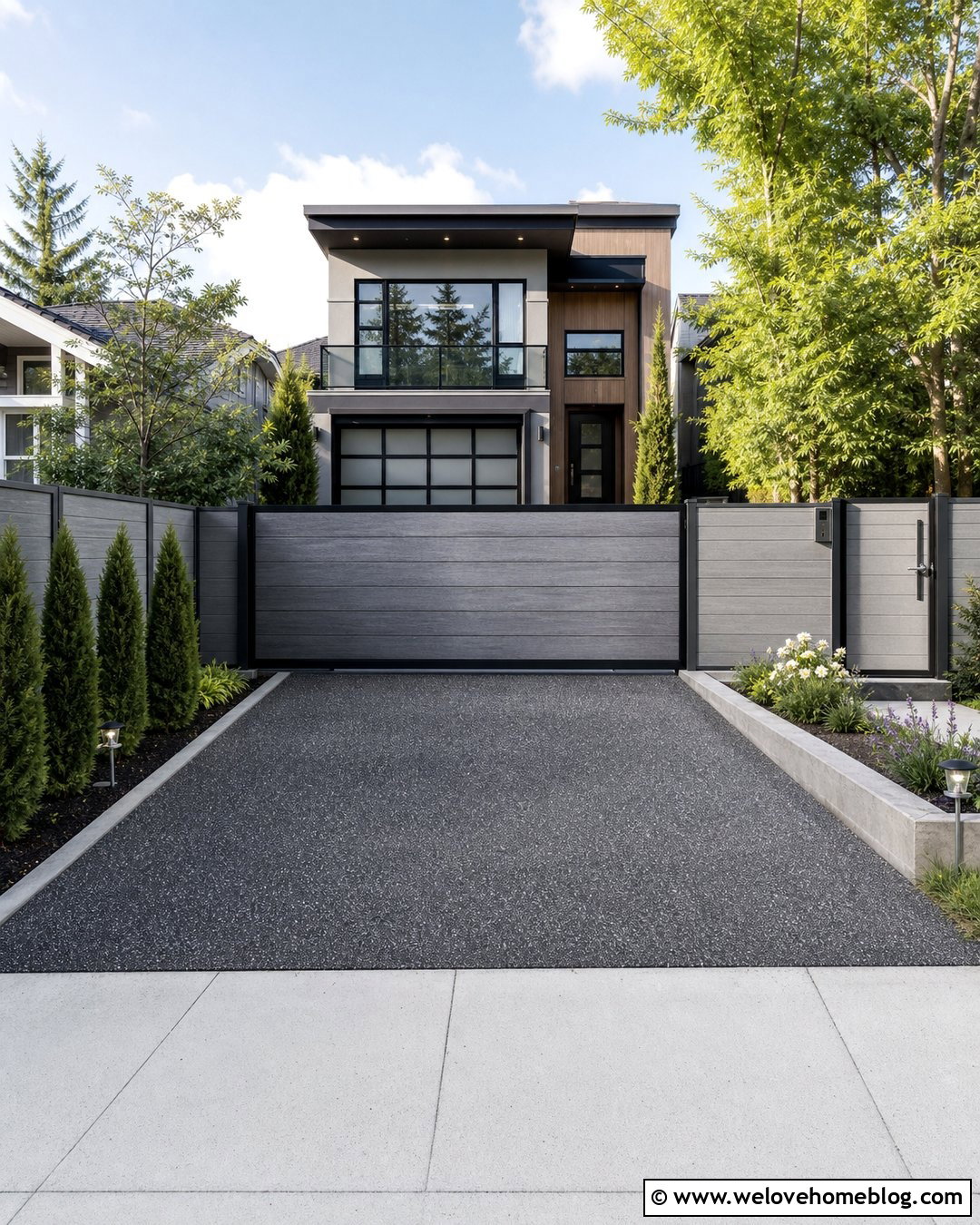
A sliding composite gate provides a streamlined solution when the entrance does not have enough interior space for swinging leaves. Use horizontal gray-oak composite boards inside a slim black frame, with the gate sliding behind a matching fence panel. A compact driveway finished in dark resin-bound gravel can run straight toward a contemporary townhouse or narrow-lot home. Border the surface with smooth concrete curbs and use vertical planting beds to conserve valuable frontage. Narrow trees, columnar shrubs, and raised planters add greenery without interfering with the operating path. Conceal the track or select an appropriate cantilever mechanism for a cleaner appearance. Repeat the gate’s horizontal spacing on the adjoining fence. An integrated pedestrian entrance can preserve the unified facade while keeping daily access convenient and clearly separated.
9. Double Swing Composite Driveway Gate
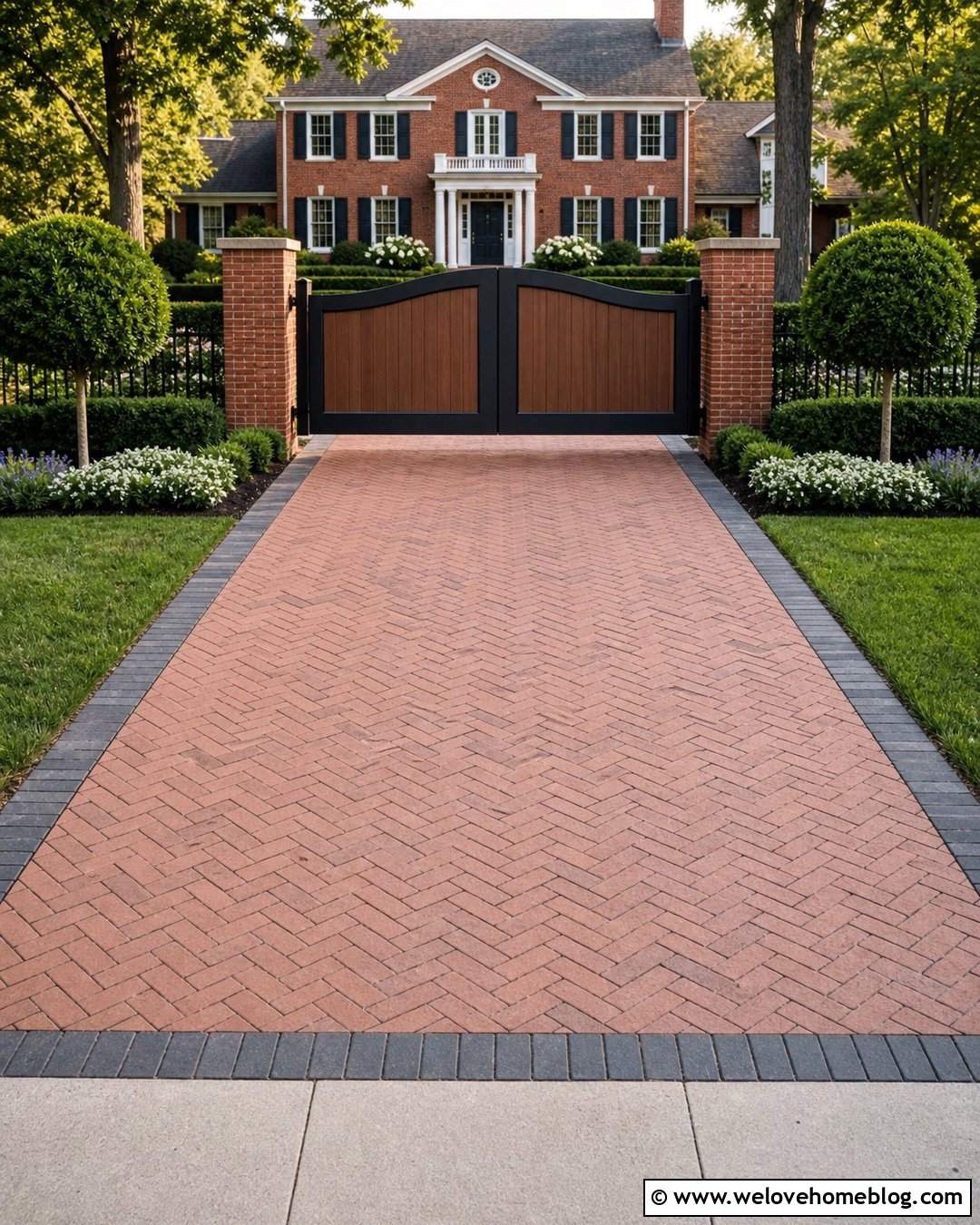
A symmetrical double-swing gate creates a strong central entrance that feels appropriate for broad suburban properties. Choose chestnut composite boards arranged horizontally, with a black aluminum frame and a narrow gap where the two leaves meet. Continue the balanced layout through a straight driveway of red-brown clay brick pavers in a herringbone pattern. Dark soldier-course edging can connect the paving to the gate frame. On each side, build matching brick pillars topped with simple flat caps. Layer the landscaping symmetrically with small ornamental trees, evergreen spheres, and low flowering borders. The warm materials work well with a renovated colonial house, while the gate’s flat profile keeps the frontage contemporary. Set the leaves back far enough from the road to create a practical waiting area where site dimensions permit.
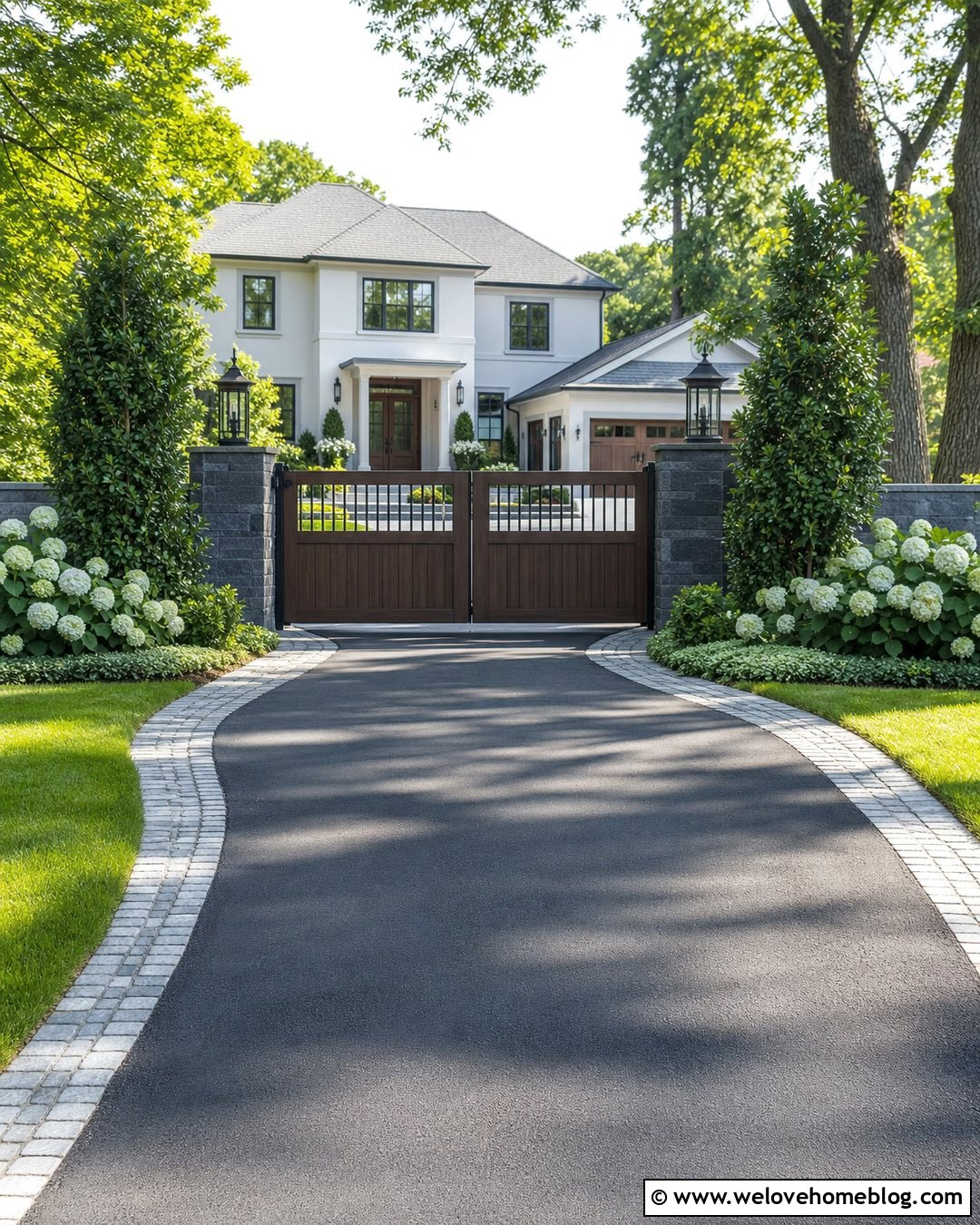
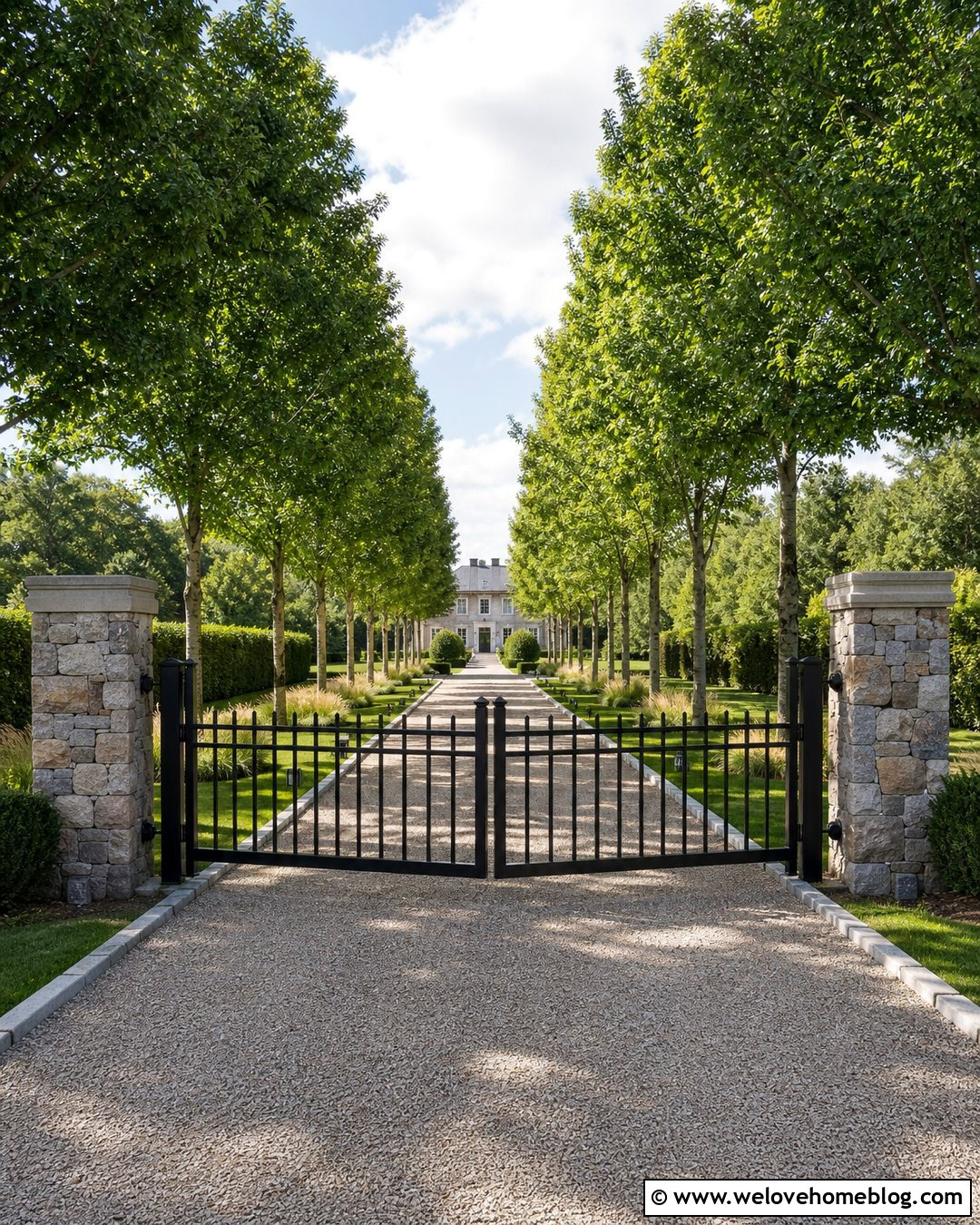
10. Cantilever Composite Driveway Gate
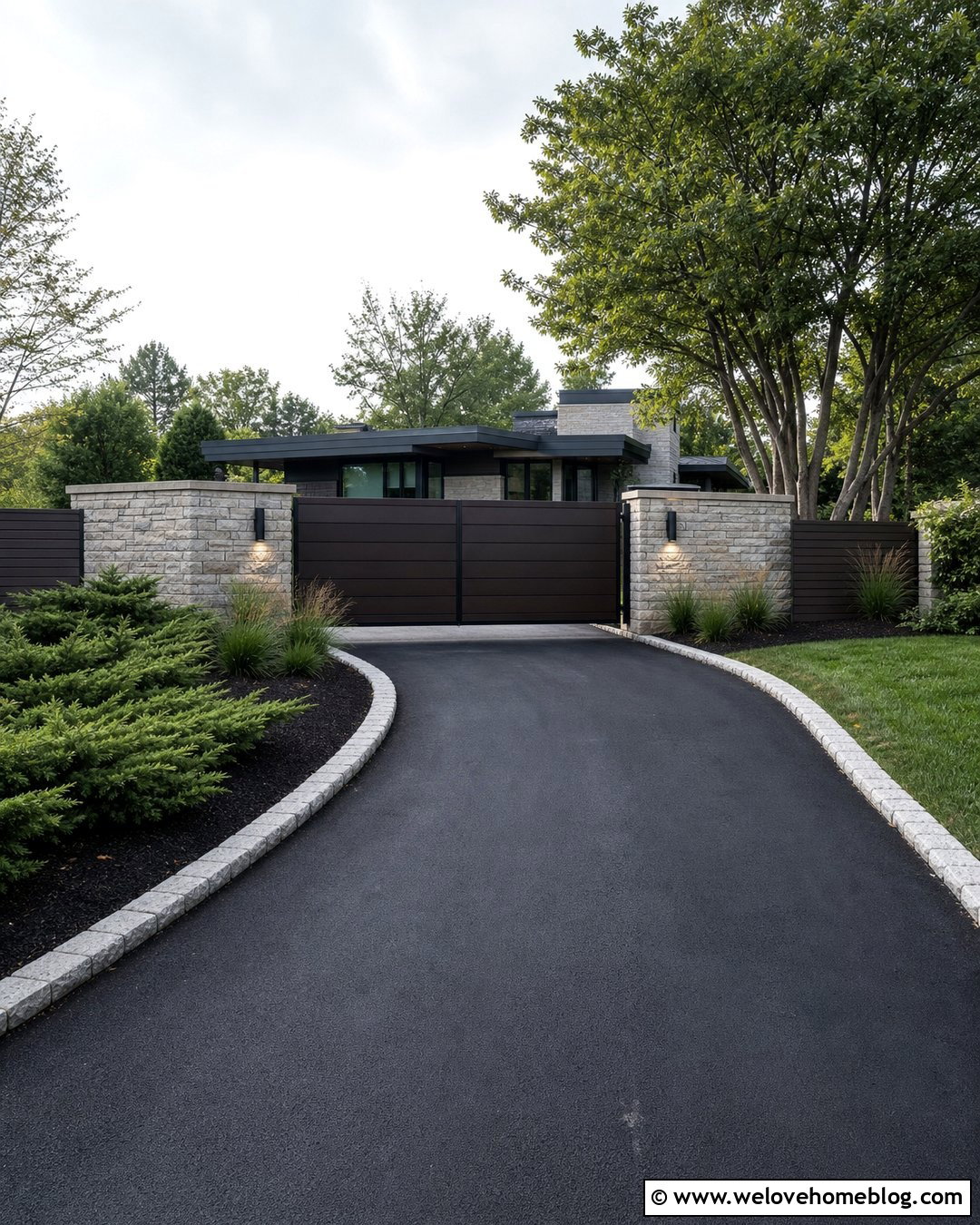
A cantilever gate appears to float across the driveway because it does not require a track running through the vehicle opening. Emphasize that clean look with espresso-brown composite slats and an understated dark steel frame. Pair it with a wide black asphalt driveway that curves gently toward a low-profile contemporary home. Add a border of light granite blocks to define the dark surface and relate it to pale stone entrance walls. The receiving side can include a landscaped pocket containing sculptural grasses, spreading juniper, and a small multi-stem tree. Keep the gate’s counterbalance section screened behind matching composite fencing. This setup produces an uncluttered threshold, particularly where fallen leaves or loose gravel could collect around a ground track. Professional structural planning remains essential for the long moving span.
11. Composite Driveway Gate With Stone Pillars
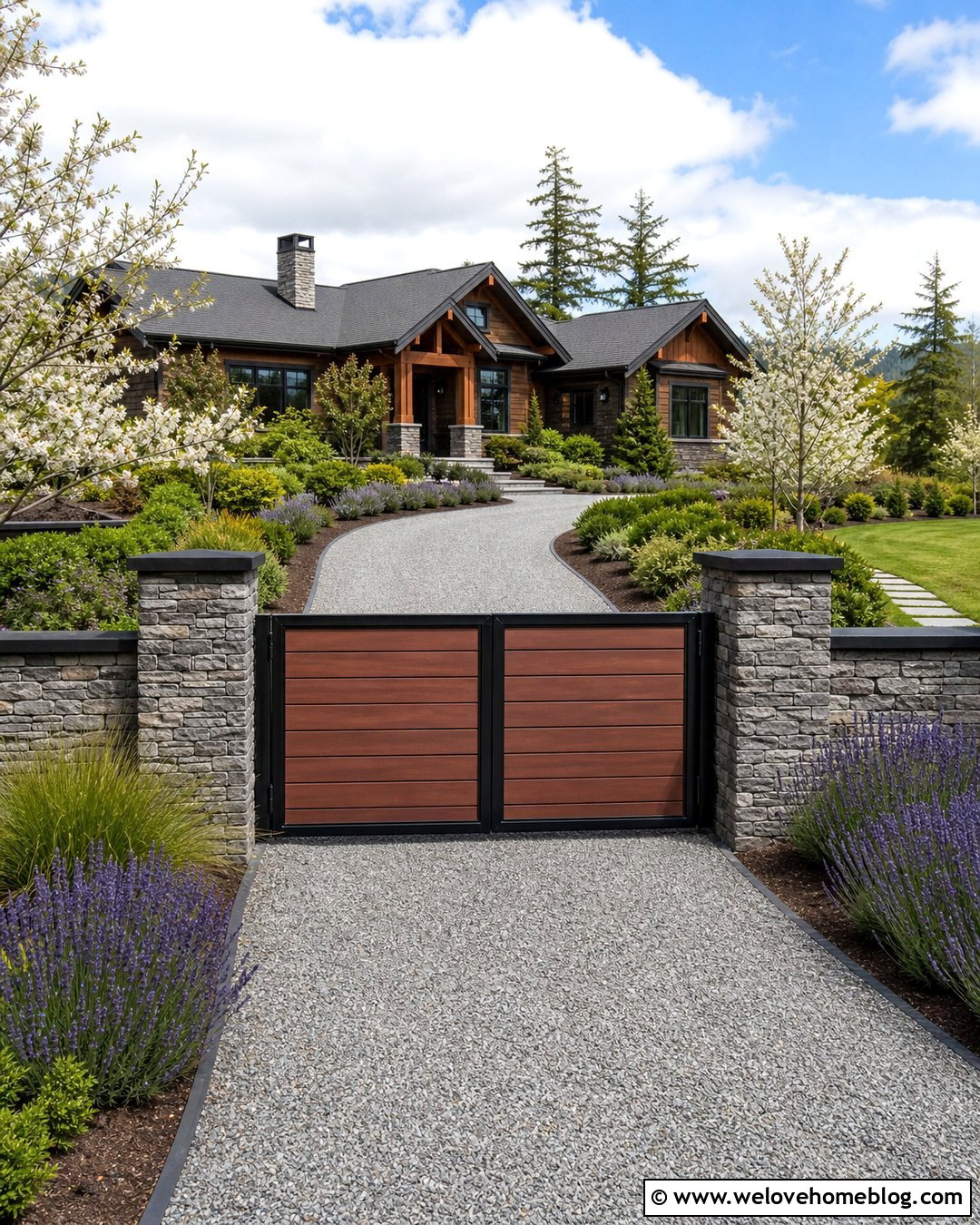
Natural stone pillars give a composite gate enough visual weight to suit a substantial home or rural suburban property. Select weathered gray stacked stone with broad charcoal caps, then install warm redwood-look composite boards inside a matte-black frame. A gently curved driveway made from compacted gray gravel adds texture while keeping the entrance relaxed. Edge the gravel with dark steel strips and create generous planting beds around the pillars. Lavender, ornamental grasses, low junipers, and small flowering trees can bridge the transition from hard stone to lawn. The gate should remain simple, preferably with evenly spaced horizontal boards and concealed hardware. A modern craftsman house in the background can repeat the stone on porch columns. This connection helps the gate, driveway, landscape, and house read as one coordinated property.
12. Composite Driveway Gate With Brick Pillars
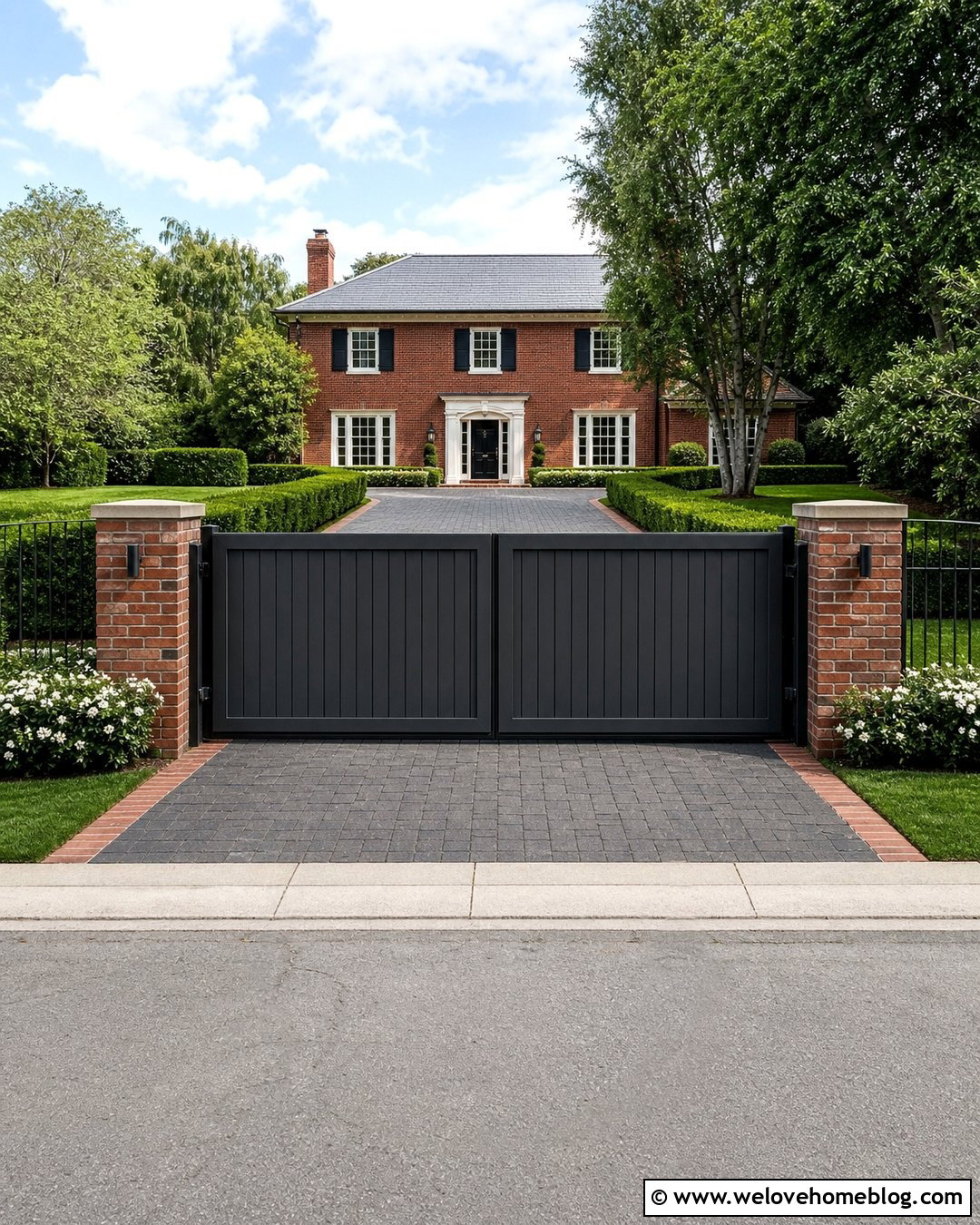
Brick pillars can make a modern composite gate feel naturally connected to an established neighborhood. Use clean-lined red brick piers with understated concrete caps rather than ornate detailing. Between them, install dark gray composite boards vertically inside a black aluminum double-swing frame. A driveway surfaced with tumbled concrete pavers in blended charcoal and brown tones will bridge the difference between the dark gate and warm masonry. Add a simple brick ribbon along each edge for continuity. Low yew hedges, white flowering shrubs, and a neatly trimmed lawn can soften the formal entrance. This complete look works especially well with an updated brick colonial or traditional ranch house. Match the gate height to the pillars carefully, leaving enough pillar visible above it to create a balanced and properly anchored composition.
13. Composite Driveway Gate With Concrete Pillars
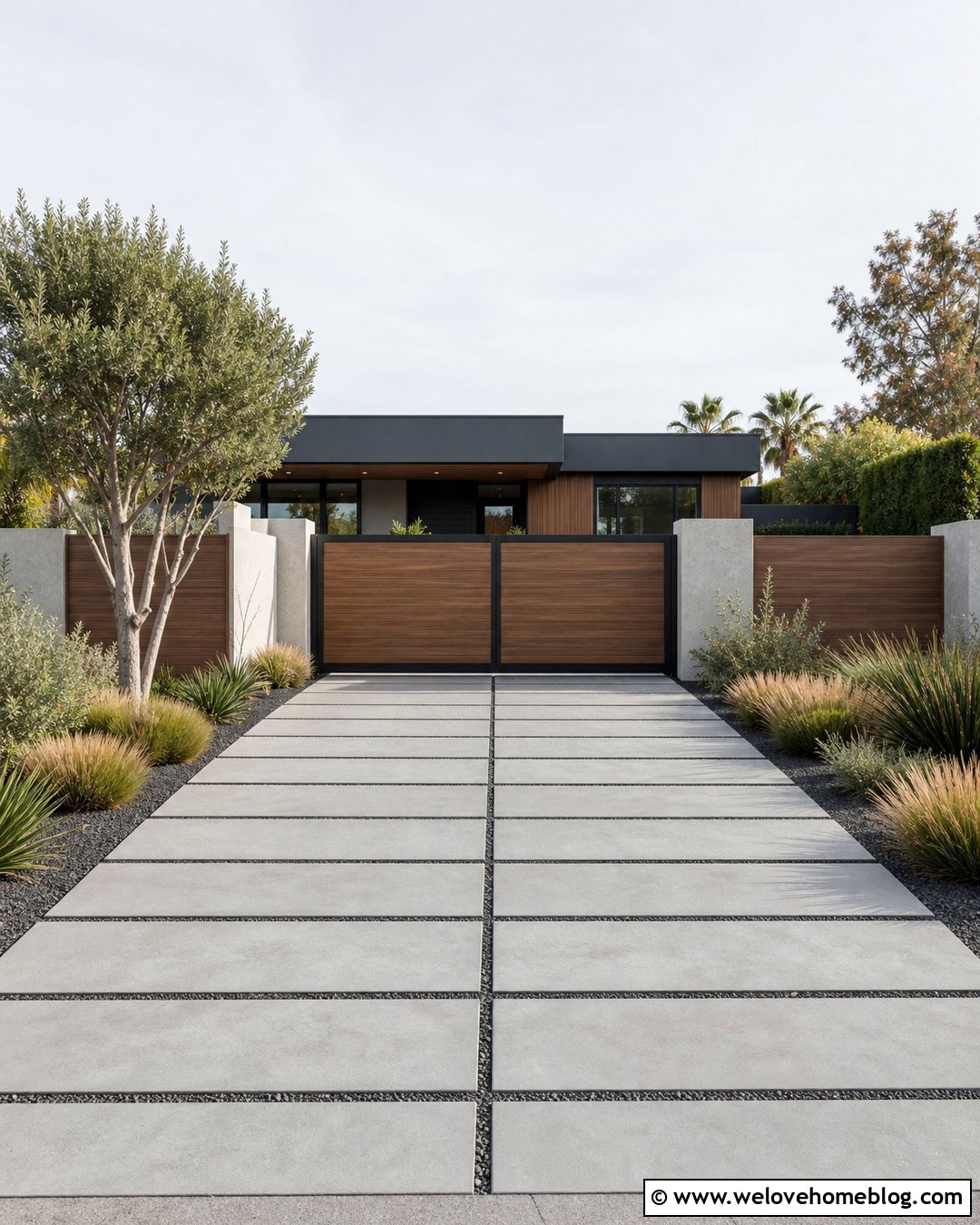
Smooth poured-concrete pillars create a minimalist backdrop for richly colored composite boards. Choose horizontal walnut-look infill with a thin charcoal frame, allowing the warmth of the gate to stand out against the cool concrete. Continue the modern palette with a driveway of large rectangular concrete pavers separated by narrow strips of dark gravel. A straight layout leading to a flat-roof home strengthens the entrance’s precise geometry. Use asymmetrical planting for contrast, such as one sculptural multi-stem tree on one side and layered ornamental grasses on the other. Low concrete walls can connect the pillars to matching composite fencing. Integrate the keypad, intercom, and house number into one pillar instead of mounting several separate boxes. This keeps the practical equipment organized and protects the uncluttered architectural effect.
14. Composite Driveway Gate With Matching Fence Panels
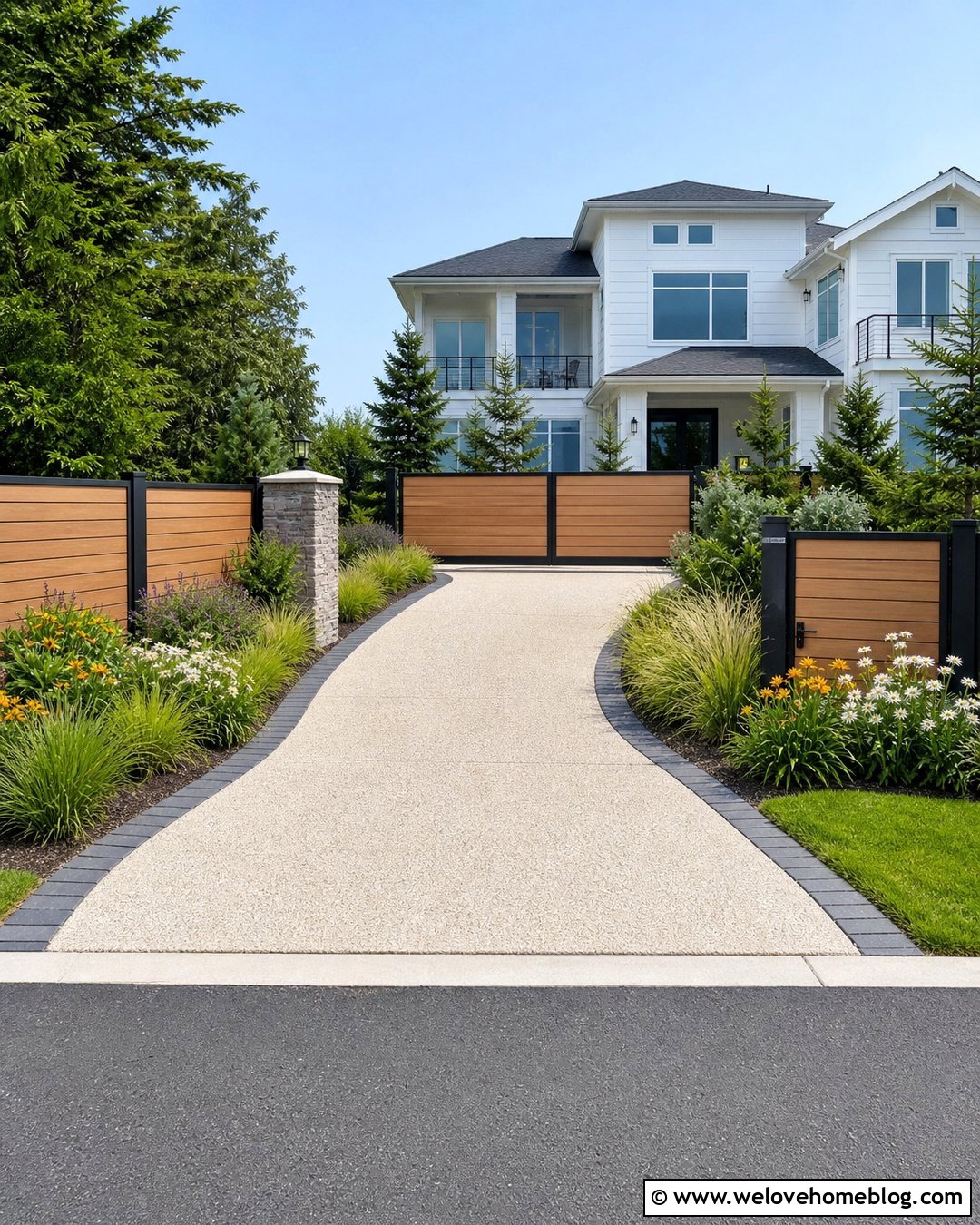
Repeating the composite gate material across adjoining fence panels creates a continuous, finished property boundary. Use warm teak-look horizontal boards framed by matte-black posts, keeping the gate and fence slat spacing identical. A pale exposed aggregate driveway can curve toward a modern coastal-style home with white siding and simple dark trim. Border the driveway with charcoal pavers, then add relaxed planting beds of ornamental grasses, flowering perennials, and salt-tolerant evergreen shrubs. Break up a long fence run with occasional stone columns or planted recesses so the frontage does not appear like one unbroken wall. The gate can remain full height for privacy while selected fence sections use small gaps for airflow. A matching pedestrian gate near the front walkway completes the coordinated boundary without introducing another competing material.
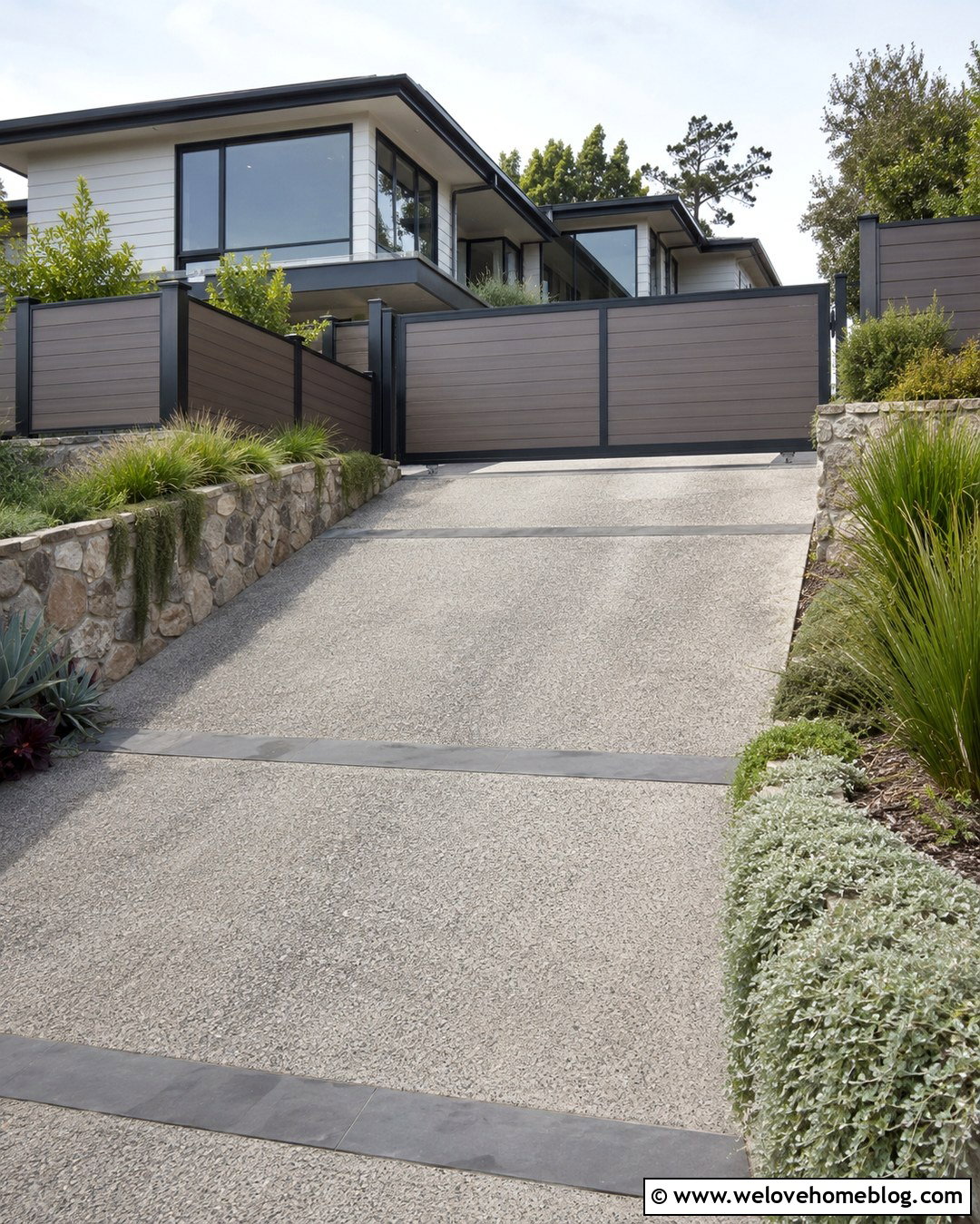
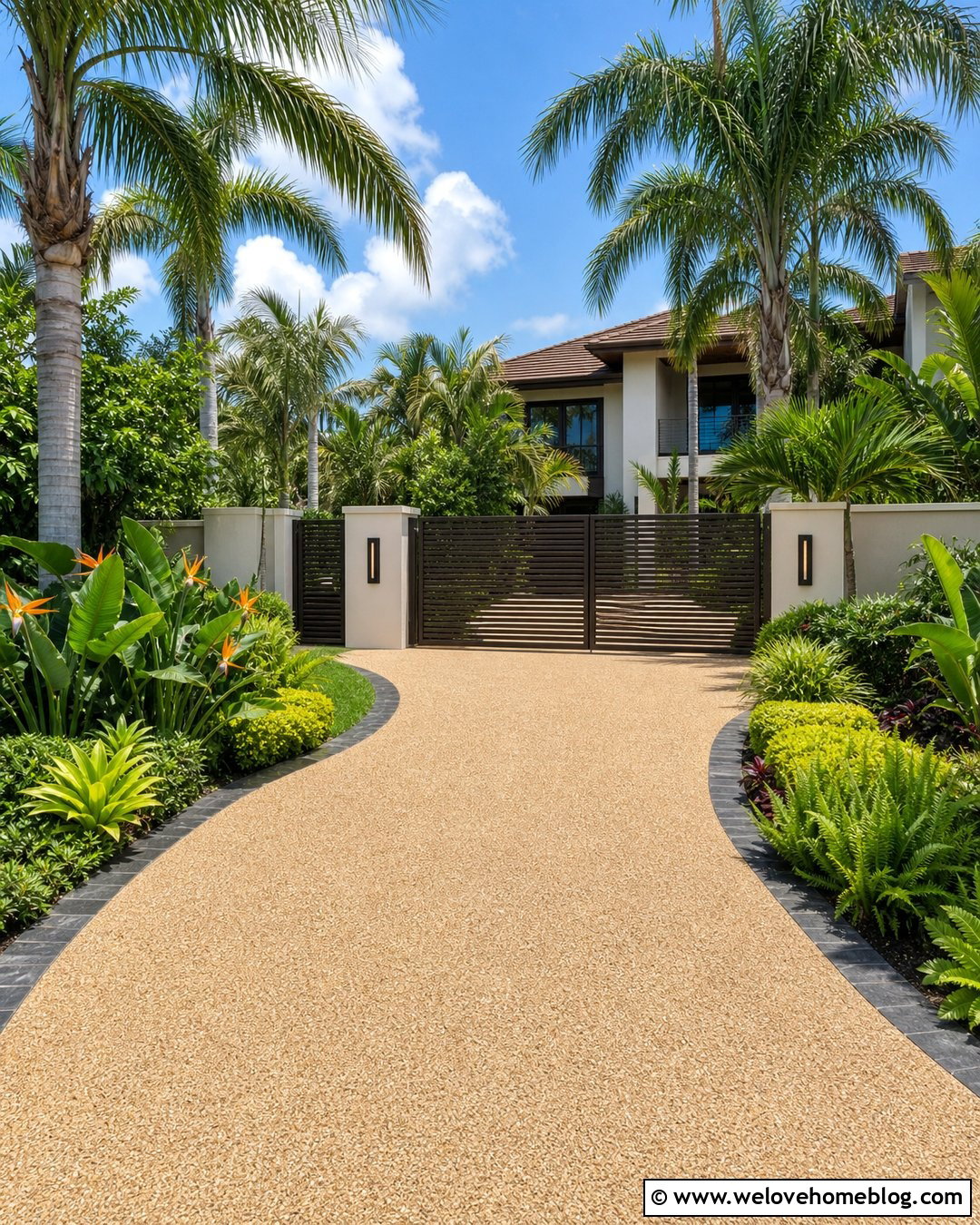
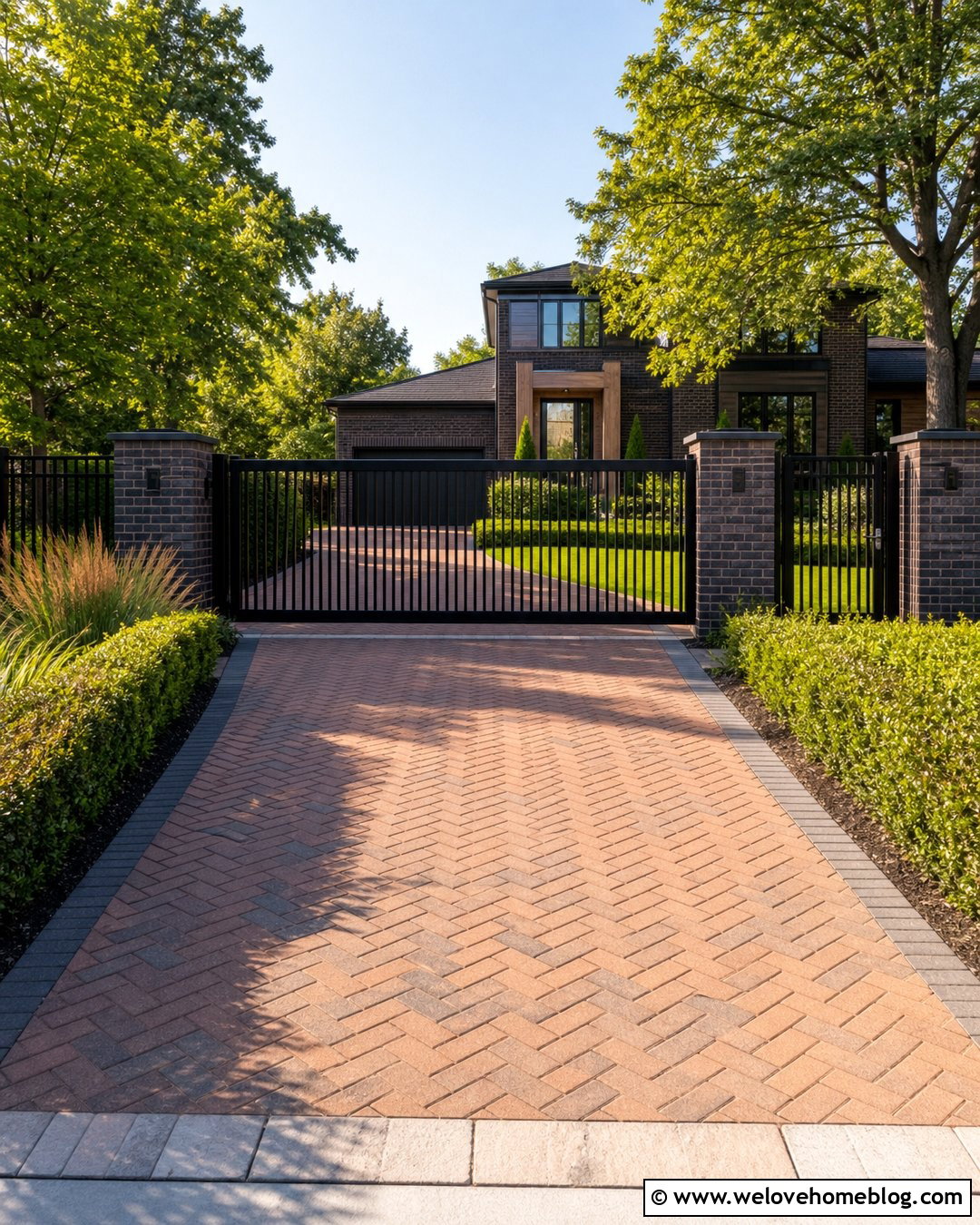
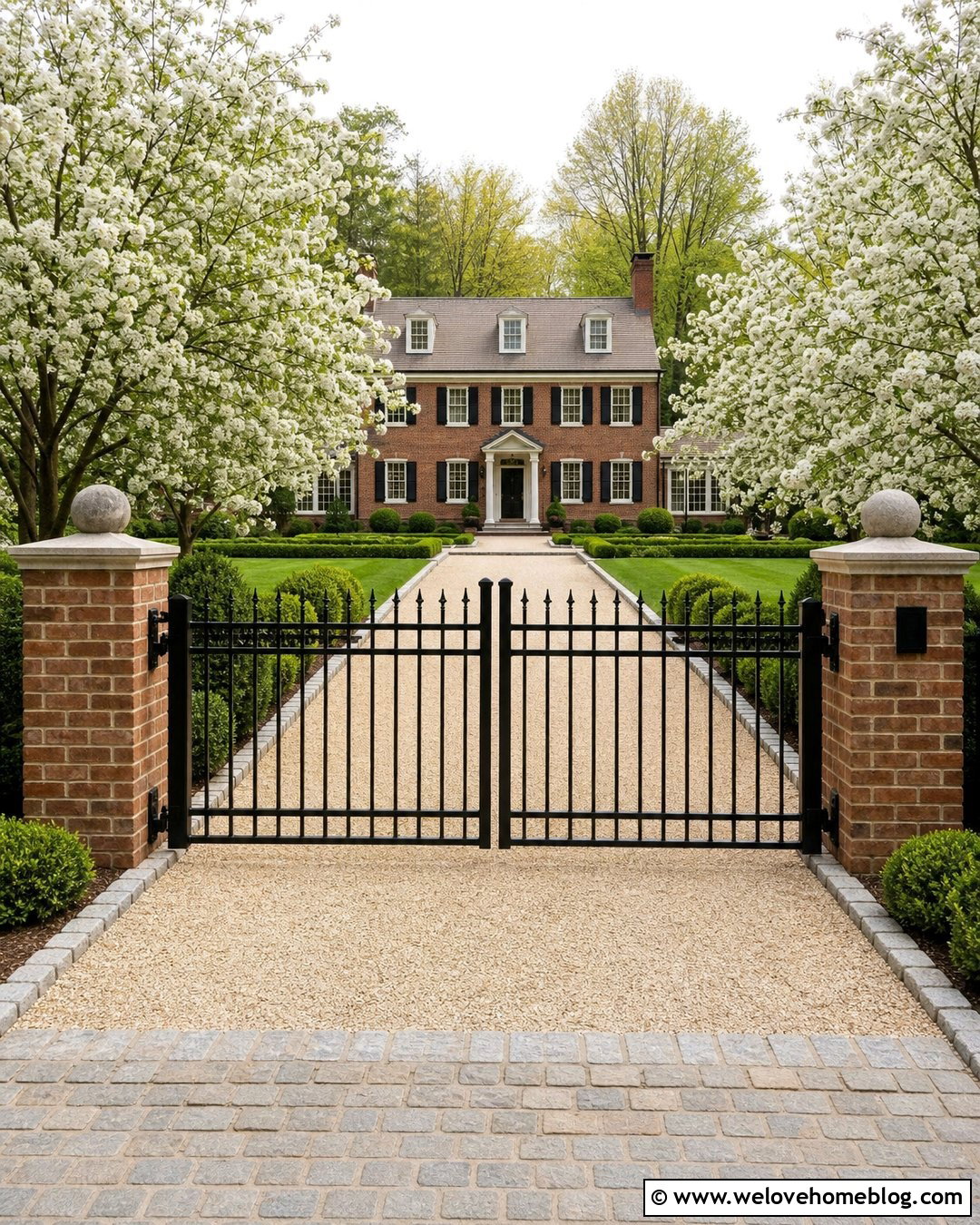
15. Composite Driveway Gate With Pedestrian Gate
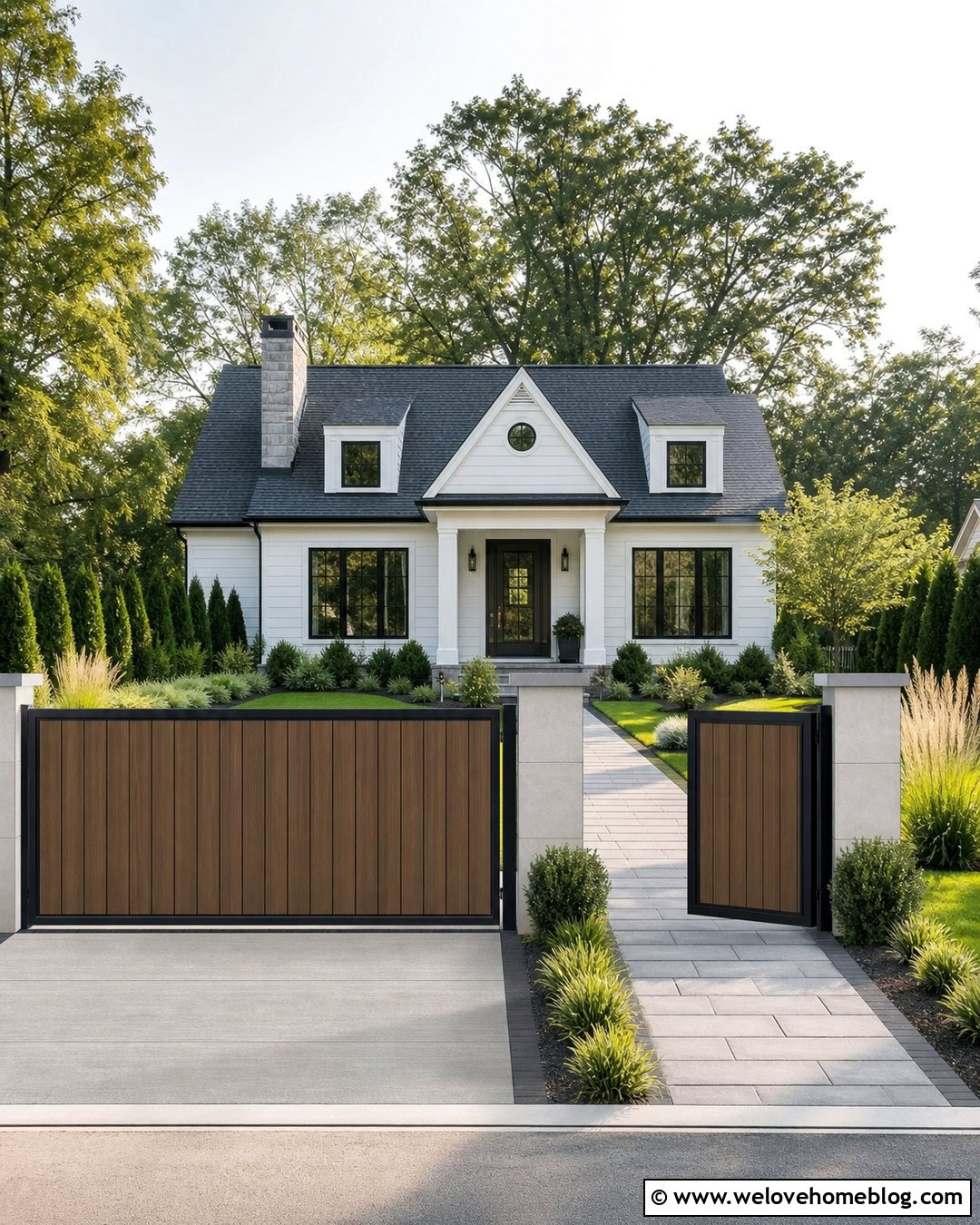
A separate pedestrian gate makes the entrance easier to use while preserving a clear opening for vehicles. Design both gates with narrow vertical composite slats in a natural oak finish and identical black aluminum frames. Position the pedestrian entrance beside the driveway, aligned with a direct paver walkway to the front door. For the main surface, choose smooth gray concrete with a subtle broom finish and a contrasting black paver border. Concrete pillars can divide the two openings and hold the latch, intercom, and address numbers. Frame the frontage with low grasses, evergreen shrubs, and a small shade tree near the walkway. Against a modern Cape Cod home, the natural composite color adds warmth. Keeping both gates at the same height will make the multi-opening entrance look organized rather than pieced together.
16. Composite Driveway Gate With Address Sign
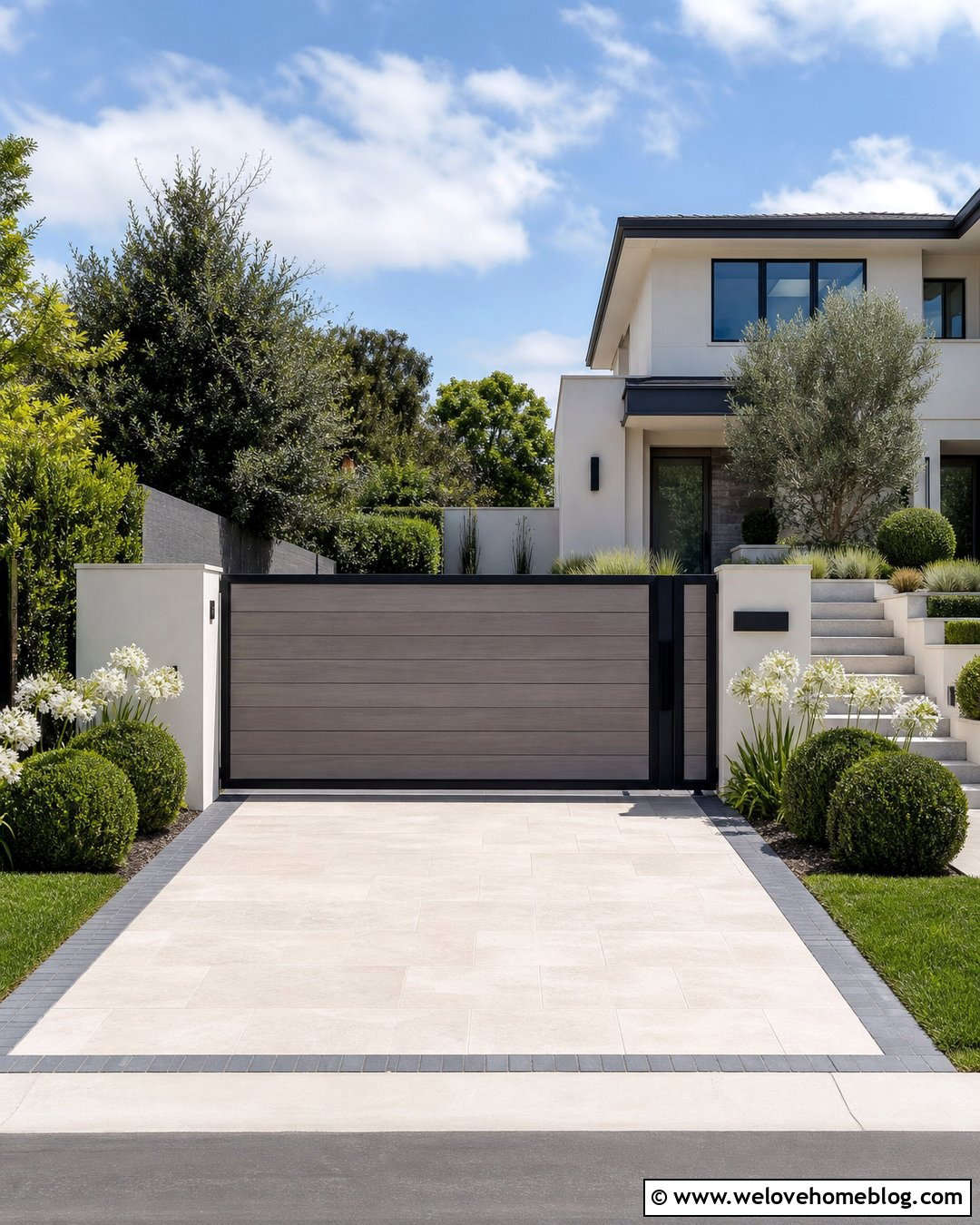
An integrated address sign can turn a practical composite gate into a clear, polished entrance feature. Use broad horizontal boards in a medium gray wood-look finish, framed with black aluminum. Add a slim vertical metal panel near one side for large, simple house numbers, leaving the rest of the gate free from decoration. A driveway of ivory limestone-look porcelain pavers can run straight toward a contemporary stucco home. Define the surface with charcoal edging and matching front steps. On either side, plant clipped shrubs, white flowering perennials, and architectural grasses in symmetrical beds. The sign panel may also coordinate with a mailbox or intercom mounted on the nearest pillar. Choose numbers with strong contrast and confirm their placement remains visible from the normal street approach without compromising the gate’s privacy.
17. Composite Driveway Gate With Pillar Lighting
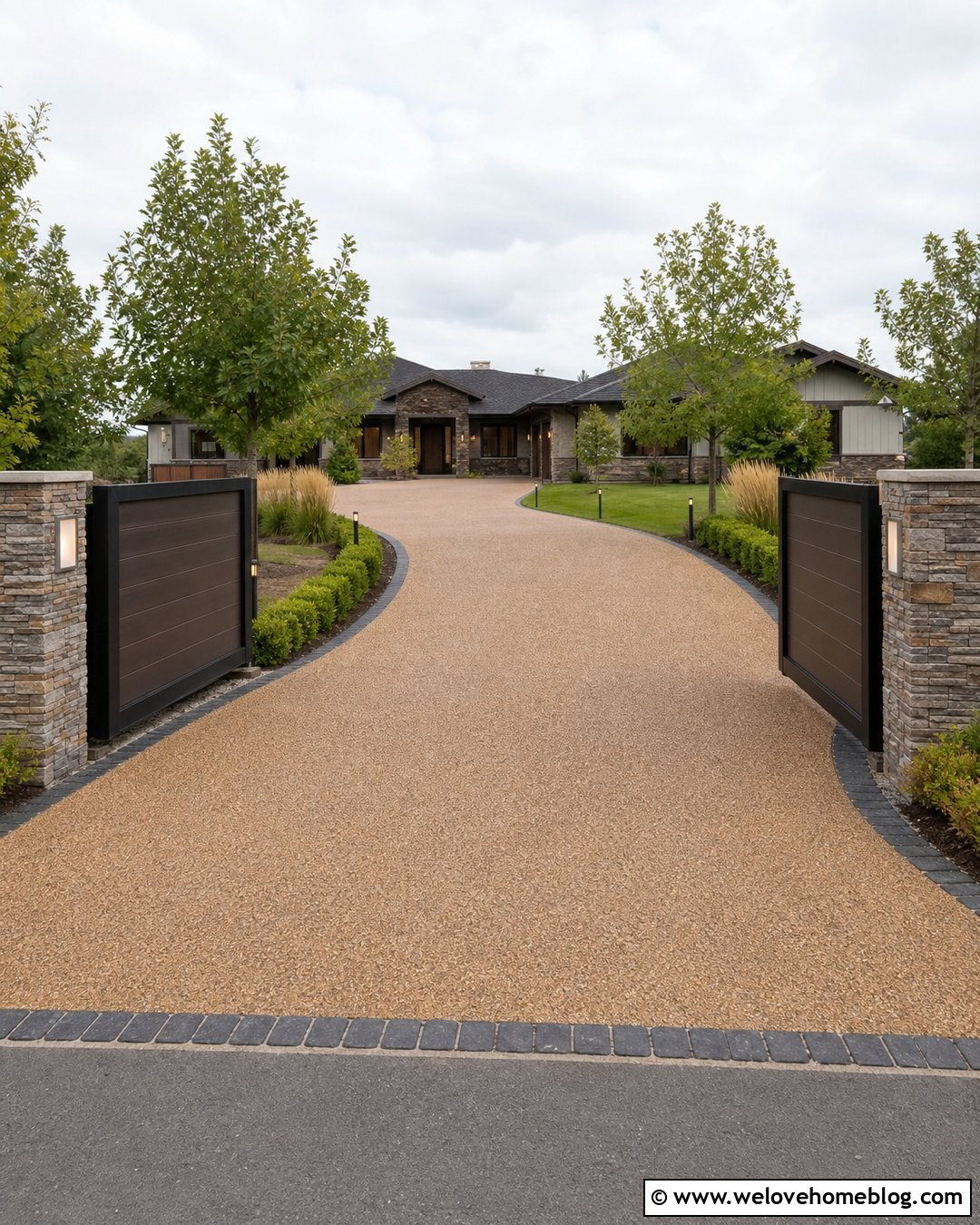
Lighting can be incorporated without changing the clean character of a composite entrance. Select dark brown horizontal composite boards, a black frame, and square stone-clad pillars fitted with simple recessed light panels. During daylight, the fixtures should appear as discreet architectural details rather than decorative lanterns. Pair the gate with a sweeping driveway of warm beige resin-bound gravel bordered by dark stone setts. Layer the surrounding landscape with low hedges, feathery grasses, and small ornamental trees that do not block the fixtures. A contemporary ranch house with natural stone siding can repeat the pillar material. Additional low path lights may follow the driveway edge, but keep their spacing regular and understated. Plan wiring, sensors, and automation during construction so exposed conduits do not interrupt the finished entrance.
18. Curved Top Composite Driveway Gate
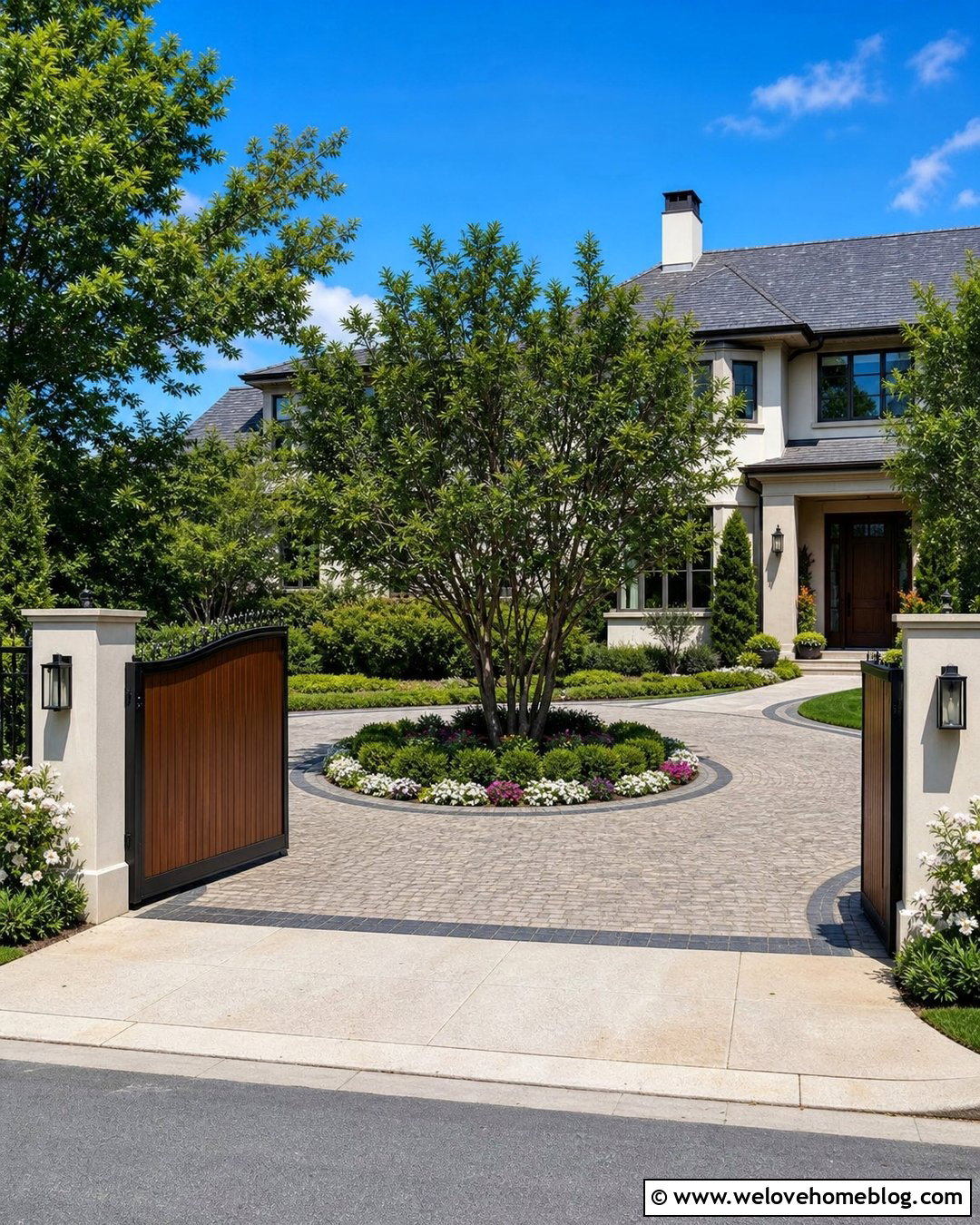
A gently curved top softens a composite gate while retaining an updated, uncluttered profile. Instead of a dramatic traditional arch, use a shallow rise that meets slightly taller pillars at the outer edges. Fill the black metal frame with narrow mahogany-look composite boards arranged vertically. A circular driveway paved with warm gray cobblestone-style concrete pavers complements the subtle curve and creates an inviting approach to a transitional home. Add a darker paver ring around the central island and repeat it along the driveway edges. The island can contain a multi-stem tree, low evergreens, and seasonal flowers. Smooth cream pillars prevent the design from becoming too heavy. Avoid scrollwork or decorative finials; the simple curved silhouette and rich composite texture should provide enough visual interest on their own.
19. Narrow Slat Composite Driveway Gate
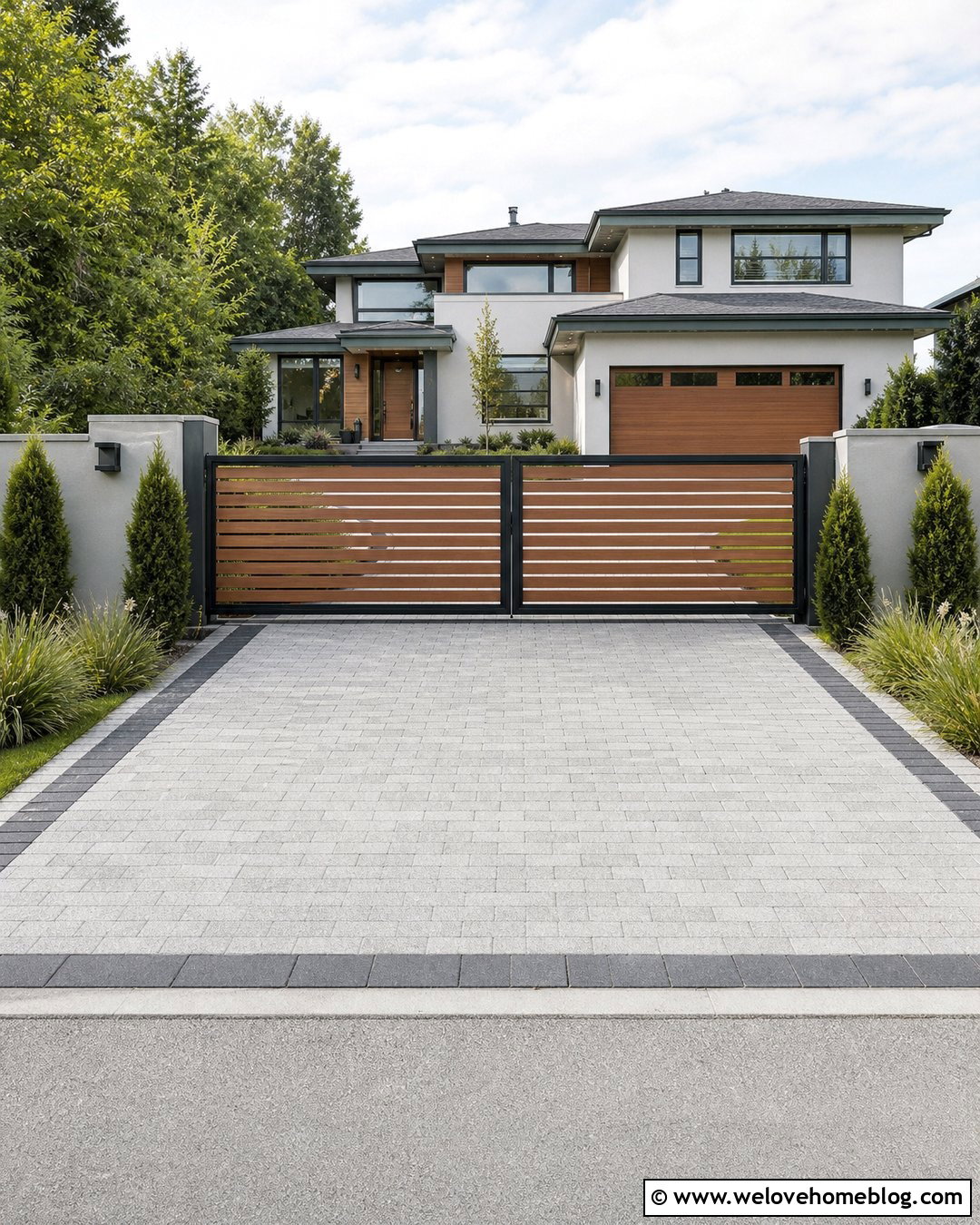
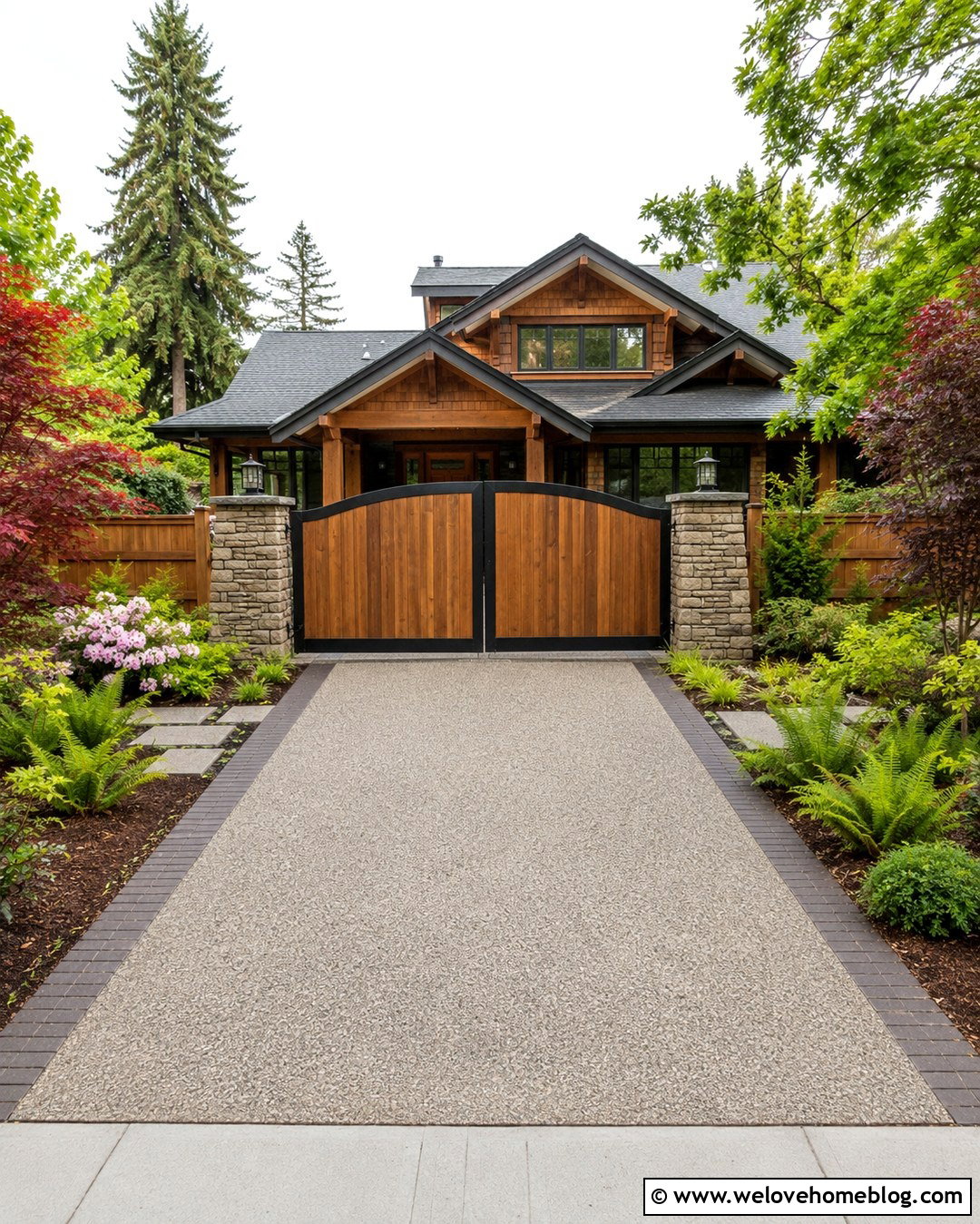
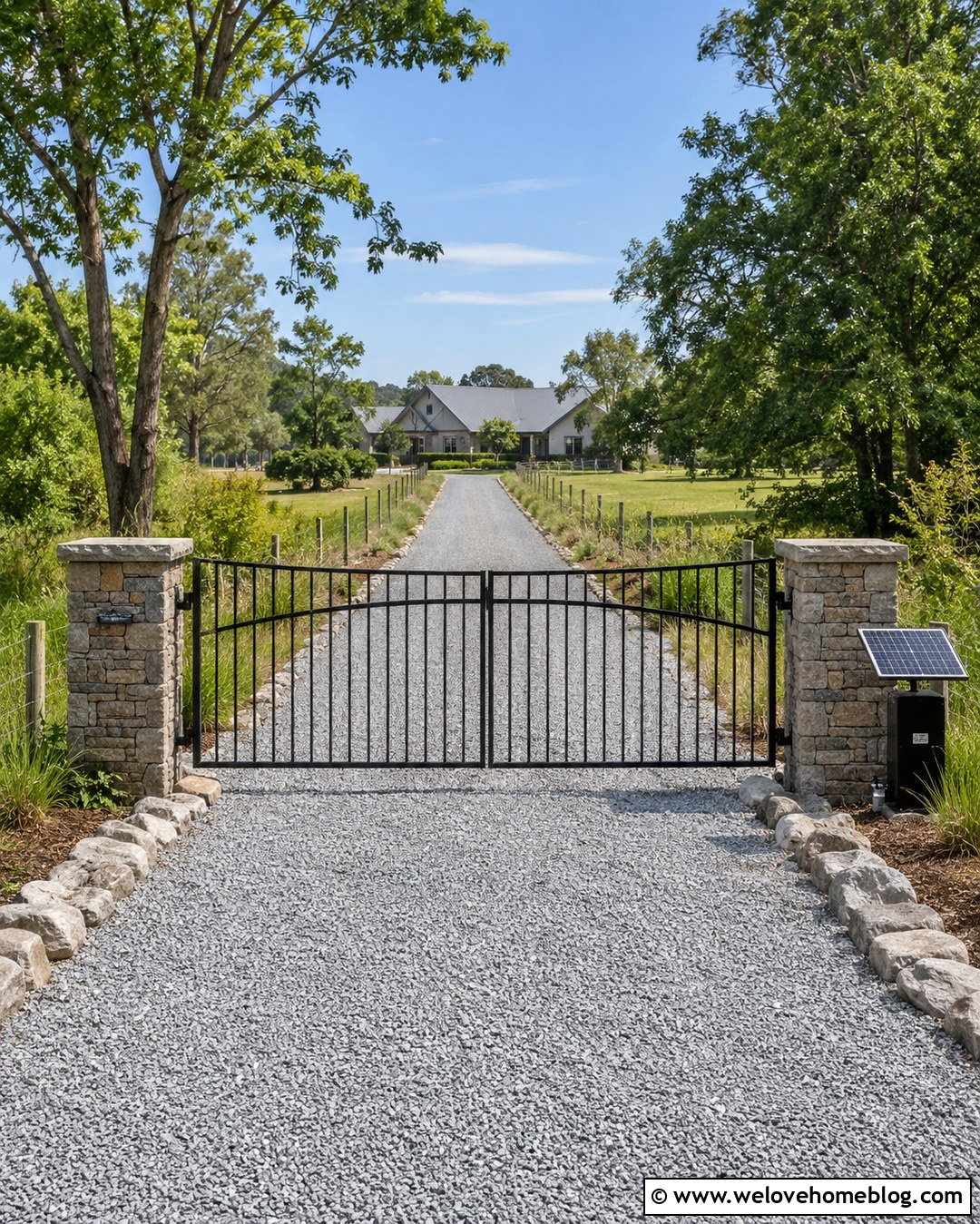
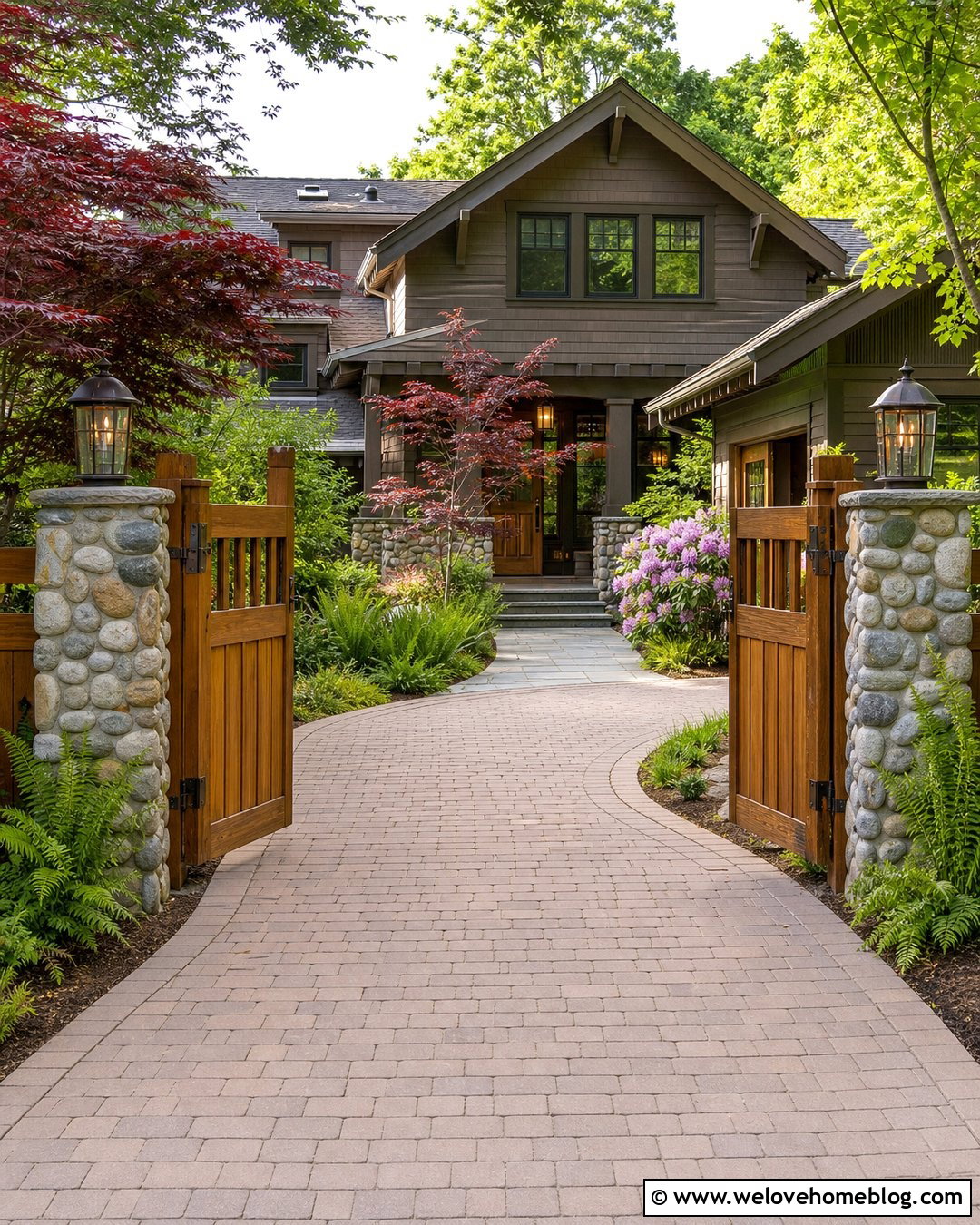
Narrow composite slats introduce fine detail and a lighter visual rhythm across a large gate. Choose slim cedar-tone boards with consistent gaps, supported by a dark aluminum frame and hidden internal bracing. A wide driveway of light gray permeable concrete pavers provides a quiet foreground that does not compete with the repeated lines. Use a straight approach with a contrasting charcoal border and a central grass strip only if the maintenance plan suits the property. Pair the gate with low rendered walls, upright shrubs, and neatly grouped ornamental grasses. A modern split-level house can repeat the cedar color through soffits or garage accents. Carefully chosen gaps allow filtered views while preserving a sense of separation. The final spacing should balance privacy, wind exposure, visibility, and the structural requirements of the entrance.
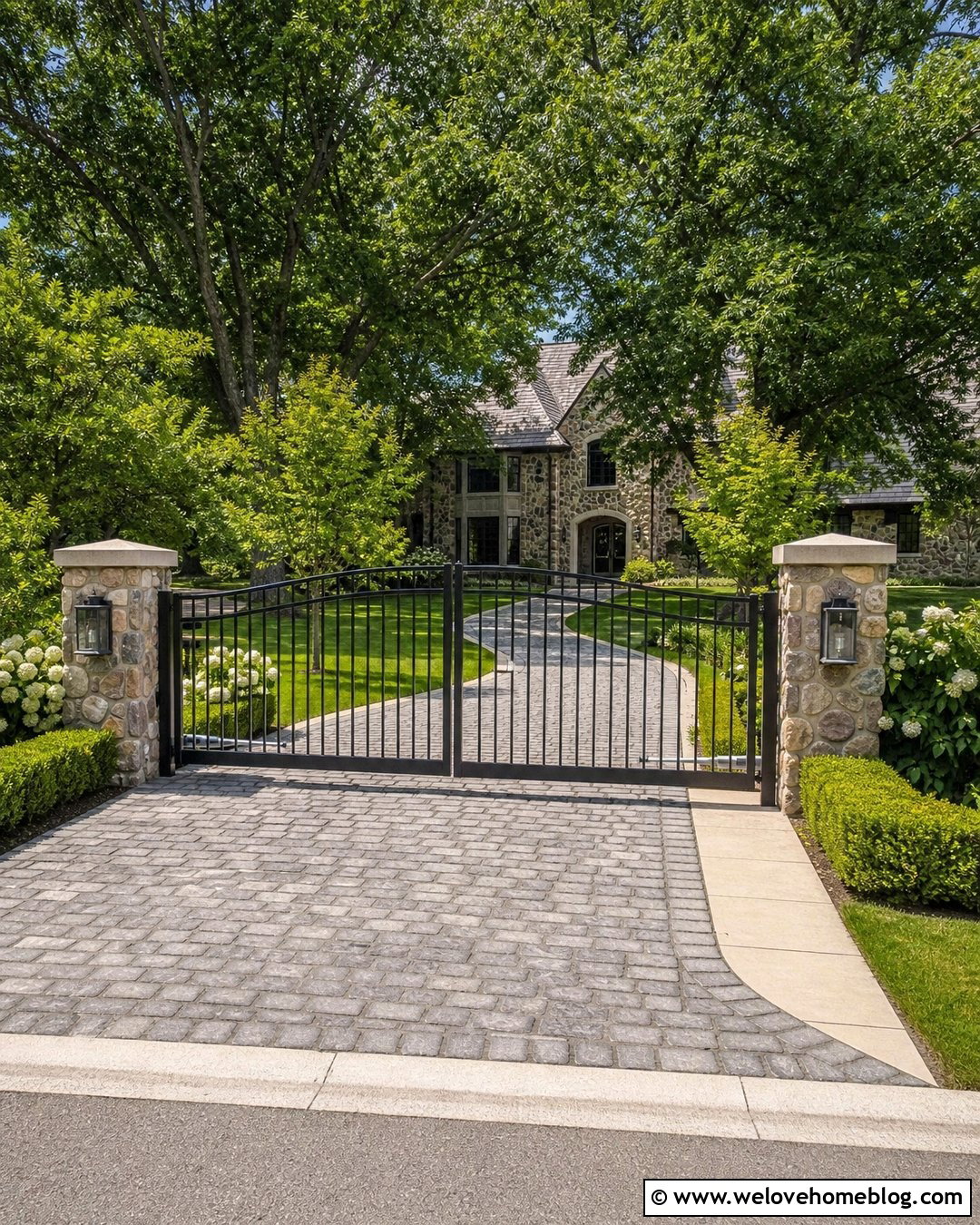
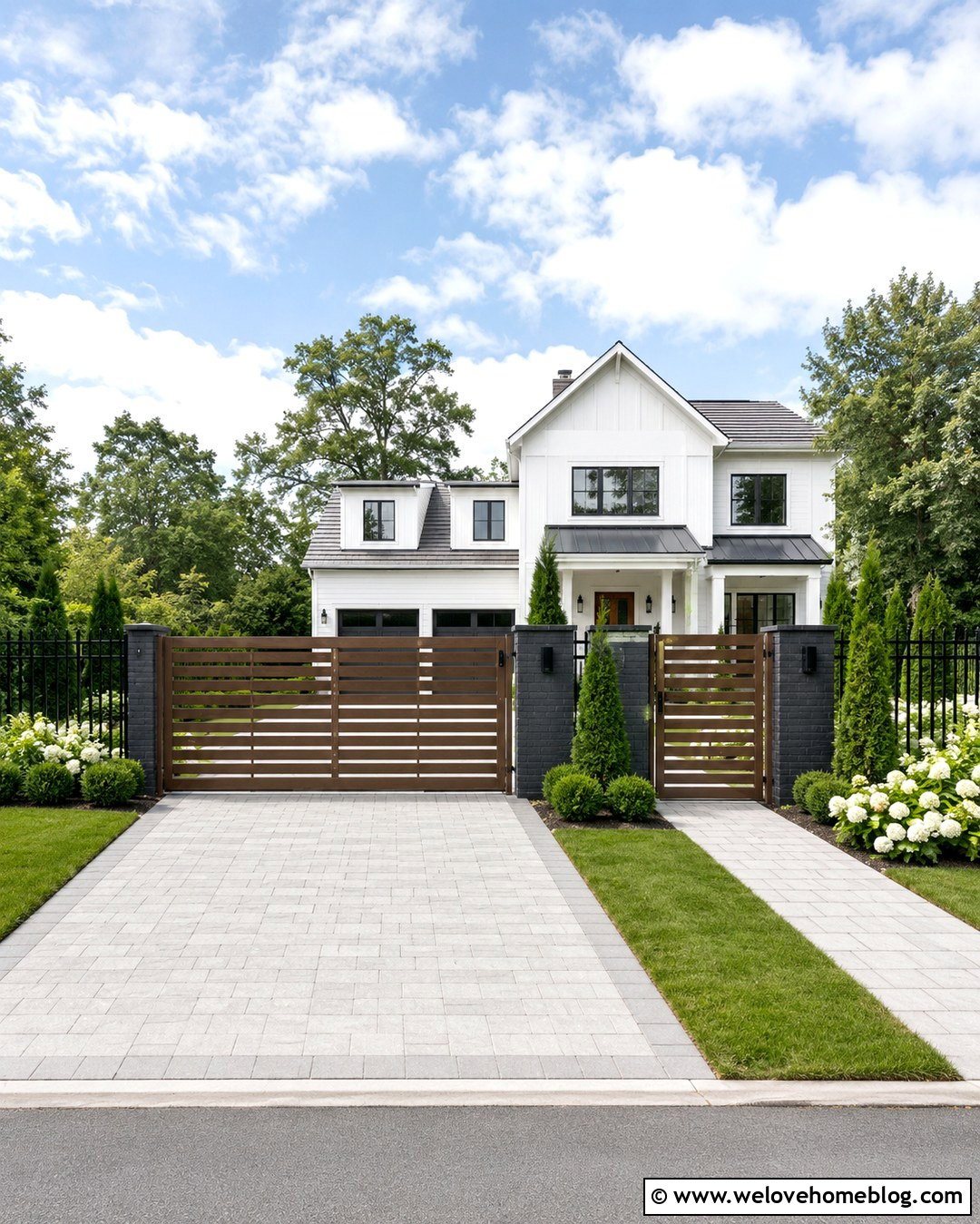
20. Wide Slat Composite Driveway Gate
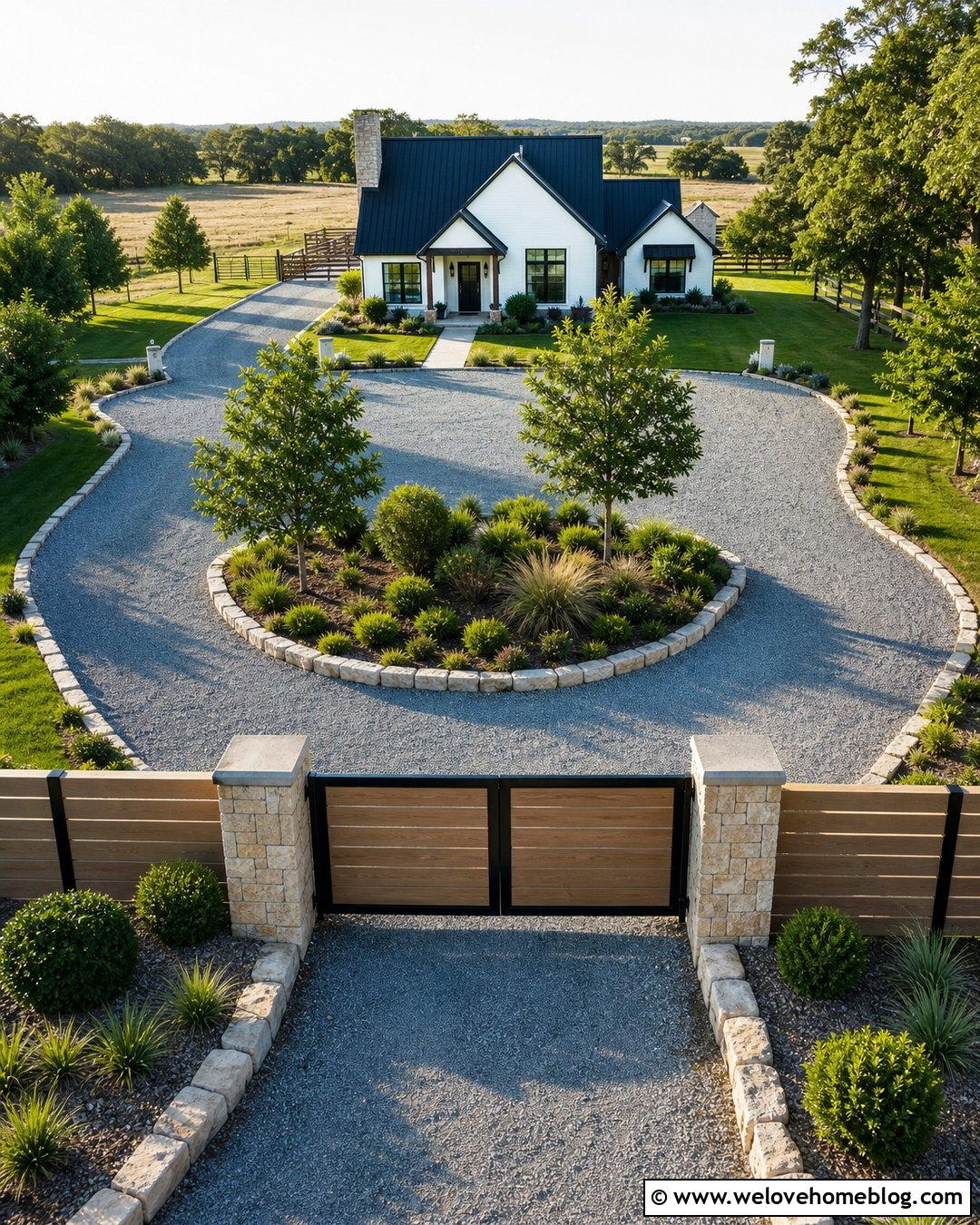
Wide composite boards create a solid, calm gate with fewer horizontal joints. A light oak finish inside a substantial black frame works particularly well beside a modern farmhouse or contemporary craftsman home. Pair the gate with a broad horseshoe driveway surfaced in fine gray gravel and edged with natural limestone blocks. Place the gate on one side of the loop, allowing the opposite opening to function according to the planned entry and exit arrangement. Stone-and-render pillars can connect the modern gate to the house’s warmer architectural materials. Soften the frontage with native grasses, rounded shrubs, and two well-spaced ornamental trees. Because wide boards create larger areas of uninterrupted color, select a composite finish with restrained grain variation. Matching fencing should use the same board proportions for a cohesive perimeter.
Conclusion:
Modern composite gates can suit many properties because their colors, board arrangements, frames, and opening systems are highly adaptable. Start by matching the gate to the house, then coordinate the driveway surface, pillars, borders, fencing, planting, and lighting. Horizontal boards can visually widen an entrance, while vertical boards emphasize height. Solid infill increases privacy, whereas spaced slats create a more open appearance. Sliding and cantilever gates help conserve interior driveway space, while double-swing gates produce a balanced frontage. Always have the dimensions, posts, frame, automation, drainage, wind exposure, and safety features evaluated by qualified professionals. Use these 20 Modern Composite Driveway Gates Ideas to plan a complete entrance that feels practical, welcoming, and visually connected.

Related posts:
Leave a Reply