
A well-planned driveway fence can make an entrance feel safer, more private, and much more connected to the home. The strongest designs do more than place panels beside the pavement. They coordinate the fence material, driveway surface, gate, posts, landscaping, and house facade as one complete composition. Wood brings natural warmth, while aluminum and steel create cleaner lines. Brick or stone pillars add permanence, and low fencing can define the property without hiding the yard. Gate clearance, driveway slope, maintenance, and local rules should also shape the final plan. These 25 Driveway Fencing Ideas include practical looks for modern homes, traditional properties, rural lots, narrow yards, and different budgets. Explore the sections below to find the right balance of beauty and function with these **25 Driveway Fencing Ideas**. ()
1. Modern Horizontal Wood Driveway Fence
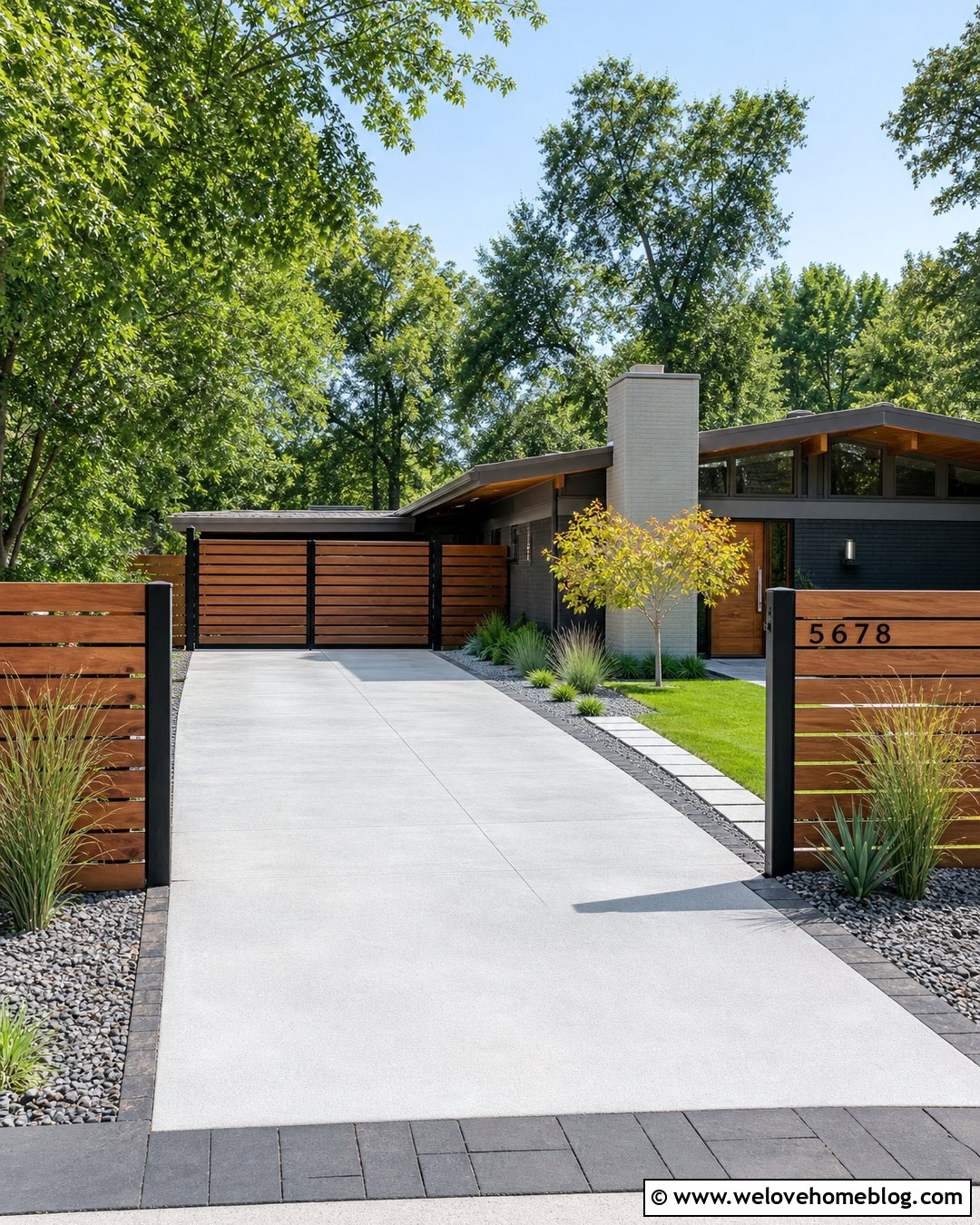
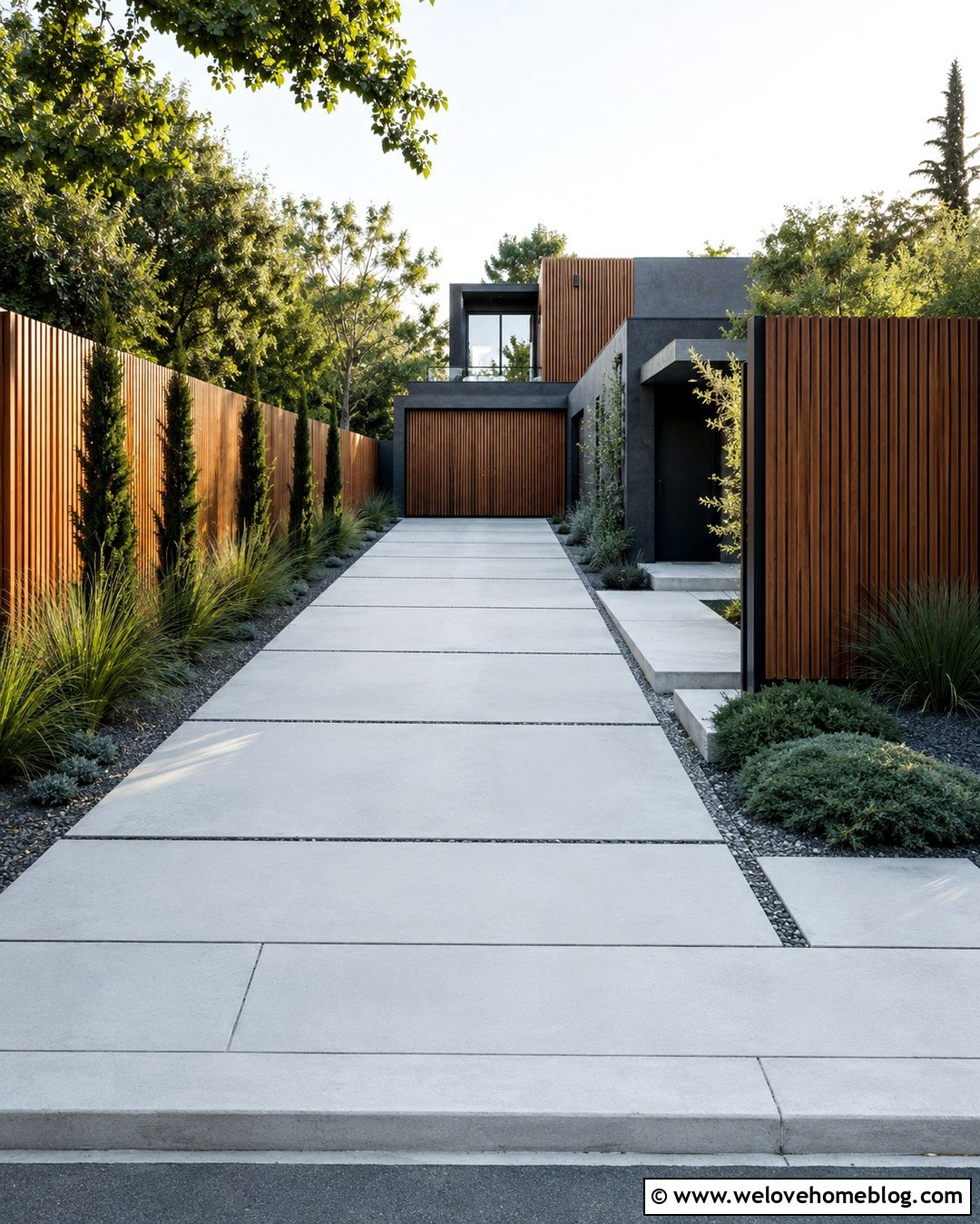
A horizontal wood fence gives a modern driveway warmth without making the entrance feel too traditional. Pair medium-toned cedar boards with a straight gray poured concrete driveway and narrow black steel posts. Small gaps between the boards maintain airflow and create a lighter appearance, while taller sections near the house improve privacy. Continue the clean geometry with rectangular planting beds filled with ornamental grasses, compact evergreen shrubs, and pale decorative gravel. A matching horizontal-slatted gate can mark the entrance without disrupting the design. Use a clear exterior finish if you want to preserve the cedar color, or let the boards weather naturally. This complete look works especially well with modern, midcentury, and contemporary homes featuring wood siding or dark window frames.
2. White Picket Driveway Fence
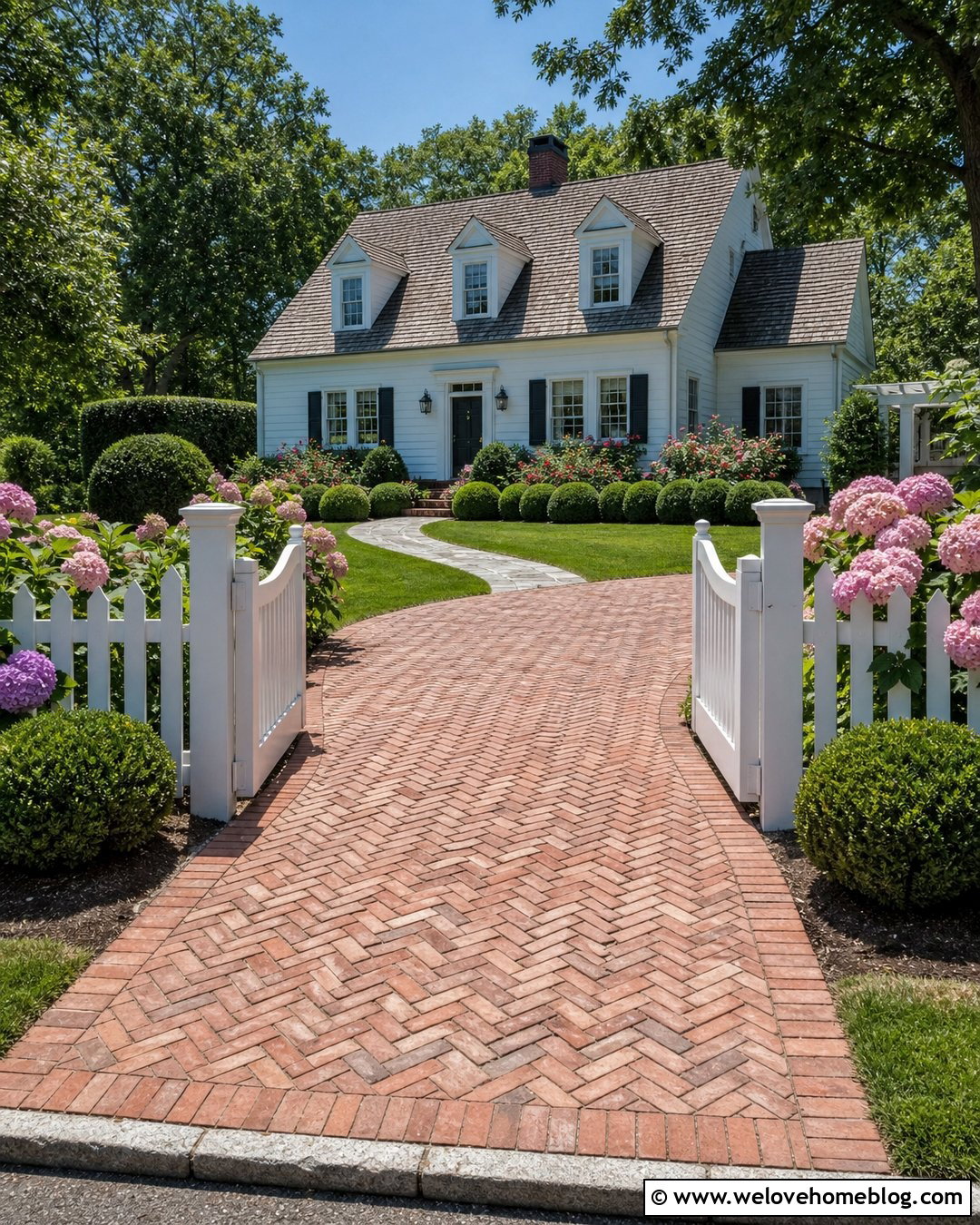
Few combinations feel as welcoming as a white picket fence beside a gently curved brick driveway. Keep the fence around three to four feet tall so the front lawn, flower beds, and house remain visible from the street. Clay brick pavers laid in a herringbone pattern bring texture to the driveway, while a soldier-course border creates a neat transition along the grass. Add a wide white double gate with simple pointed pickets and substantial posts that match the fence. Hydrangeas, boxwoods, roses, and low flowering perennials can soften the fence line without covering it. This driveway fence suits Cape Cod, cottage, Colonial, and traditional suburban homes. Choose weather-resistant paint or low-maintenance vinyl when frequent repainting would be inconvenient.
3. Black Aluminum Driveway Fence
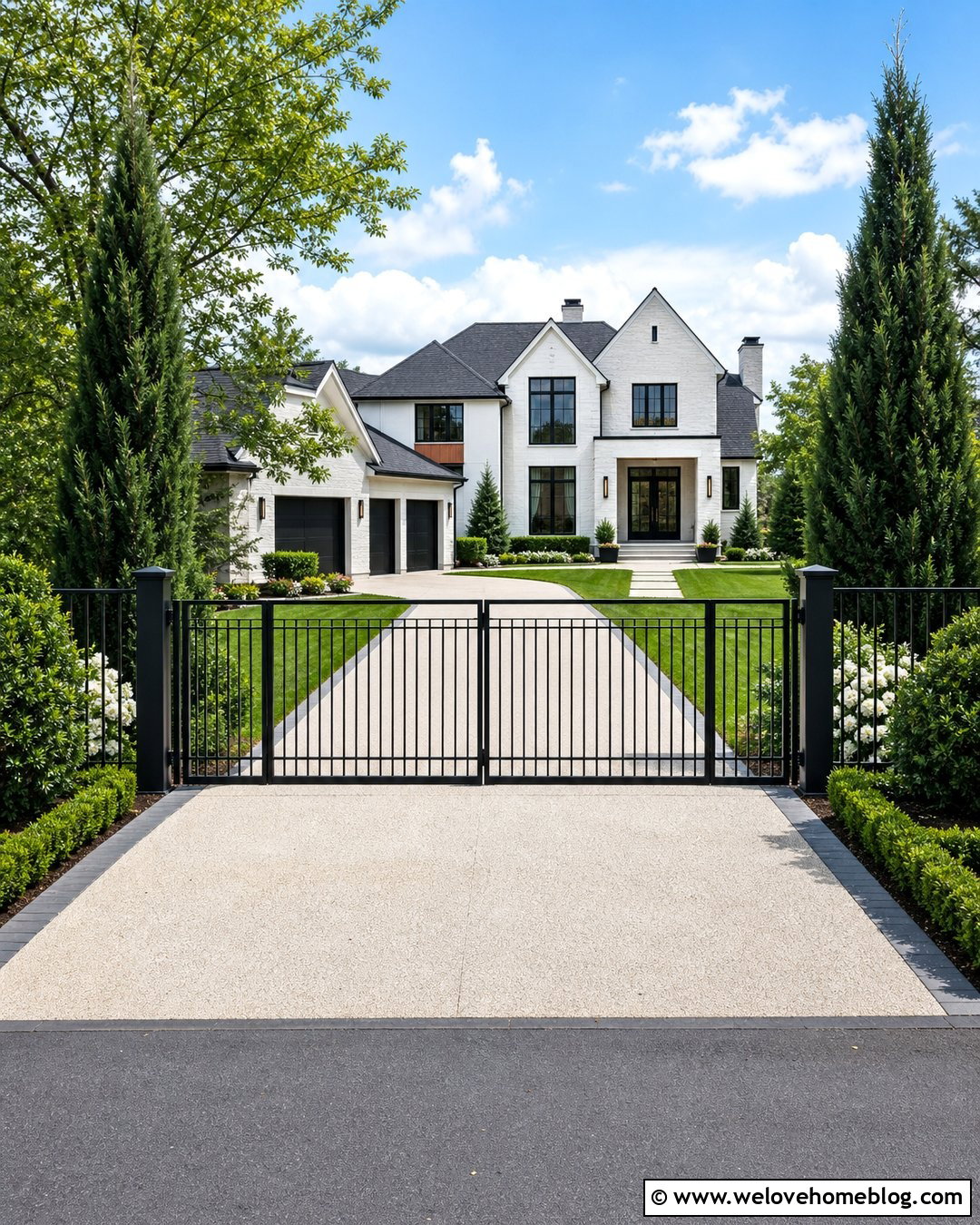
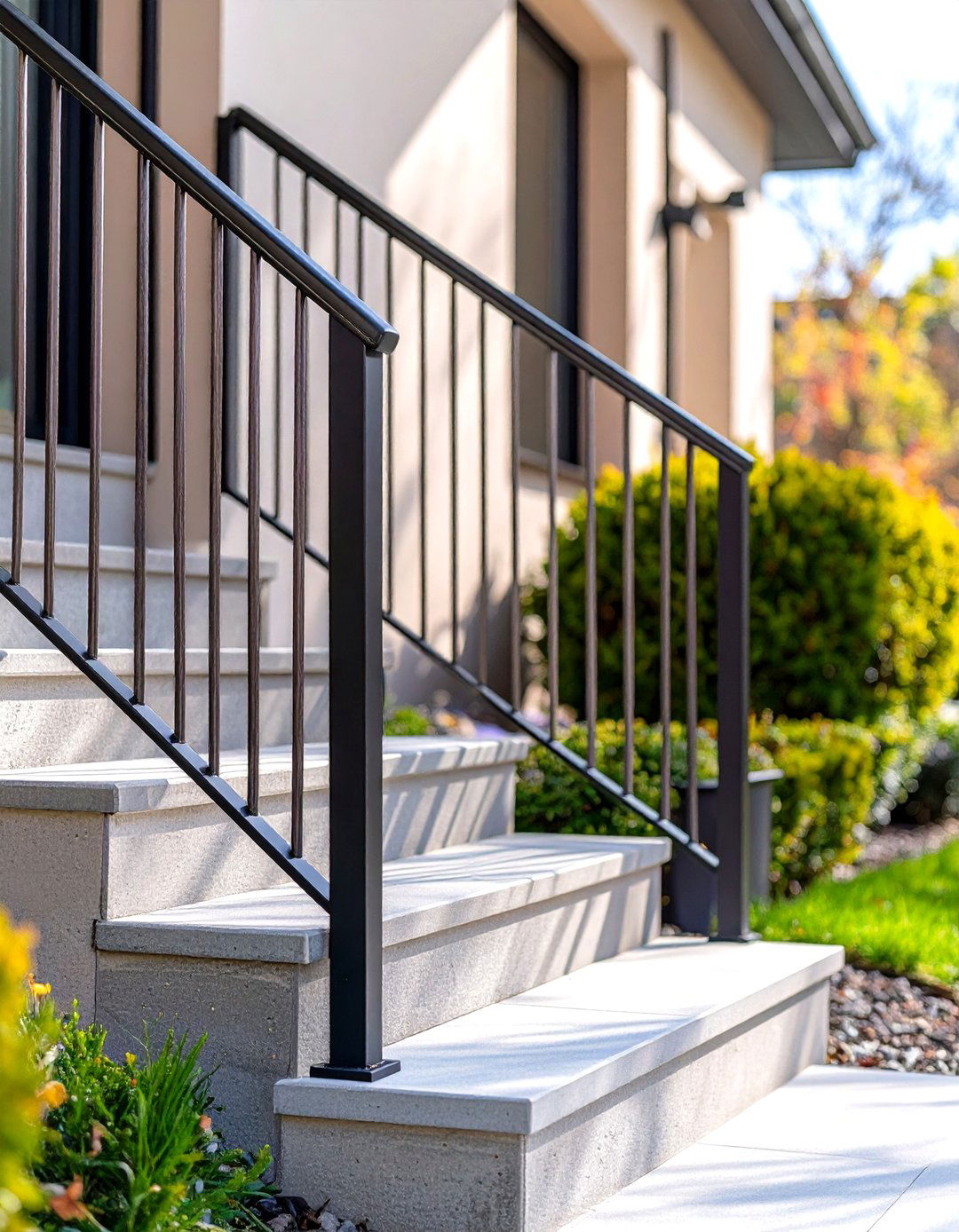
A black aluminum driveway fence creates crisp definition while preserving an open view of the house and landscaping. Combine slim vertical fence panels with a light exposed-aggregate concrete driveway for noticeable contrast. A straight layout keeps the entrance formal, while gently stepped fence sections can follow a sloping lawn. Finish the opening with a matching double-swing gate and square aluminum posts topped with simple caps. Repeating black details on the garage doors, exterior lighting, and window frames makes the fence feel integrated rather than added later. Plant clipped boxwoods, upright junipers, and white flowering shrubs along the inside edge. Aluminum is especially useful when homeowners want the appearance of traditional metal with relatively light construction and low routine upkeep. ()
4. Wrought Iron Driveway Fence
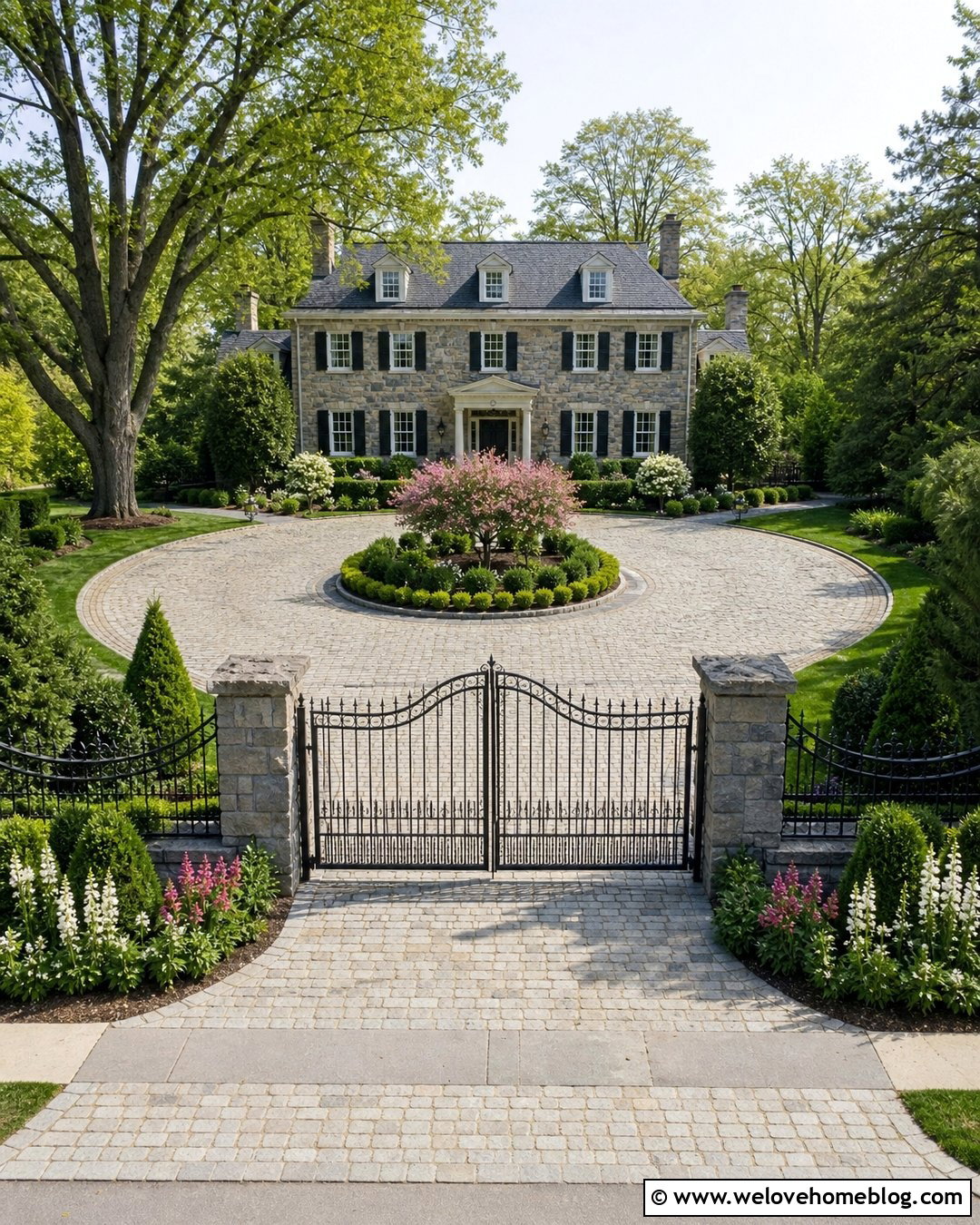
Ornamental wrought iron can turn a wide driveway into a formal, estate-inspired entrance. Use it beside a circular cobblestone driveway where the open metalwork allows visitors to see the home, central planting island, and front garden. An arched double gate creates a clear focal point, while stone pillars give the gate visual weight and provide space for lighting or house numbers. Keep decorative scrollwork restrained so the fence complements the architecture instead of overwhelming it. Layer evergreen hedges behind selected fence sections for privacy, leaving the entrance more open. This complete design works beautifully with Georgian, French country, Mediterranean, and large traditional homes. Dark bronze or matte black finishes coordinate naturally with weathered stone, clay roof tiles, and warm exterior colors.
5. Cedar Privacy Driveway Fence
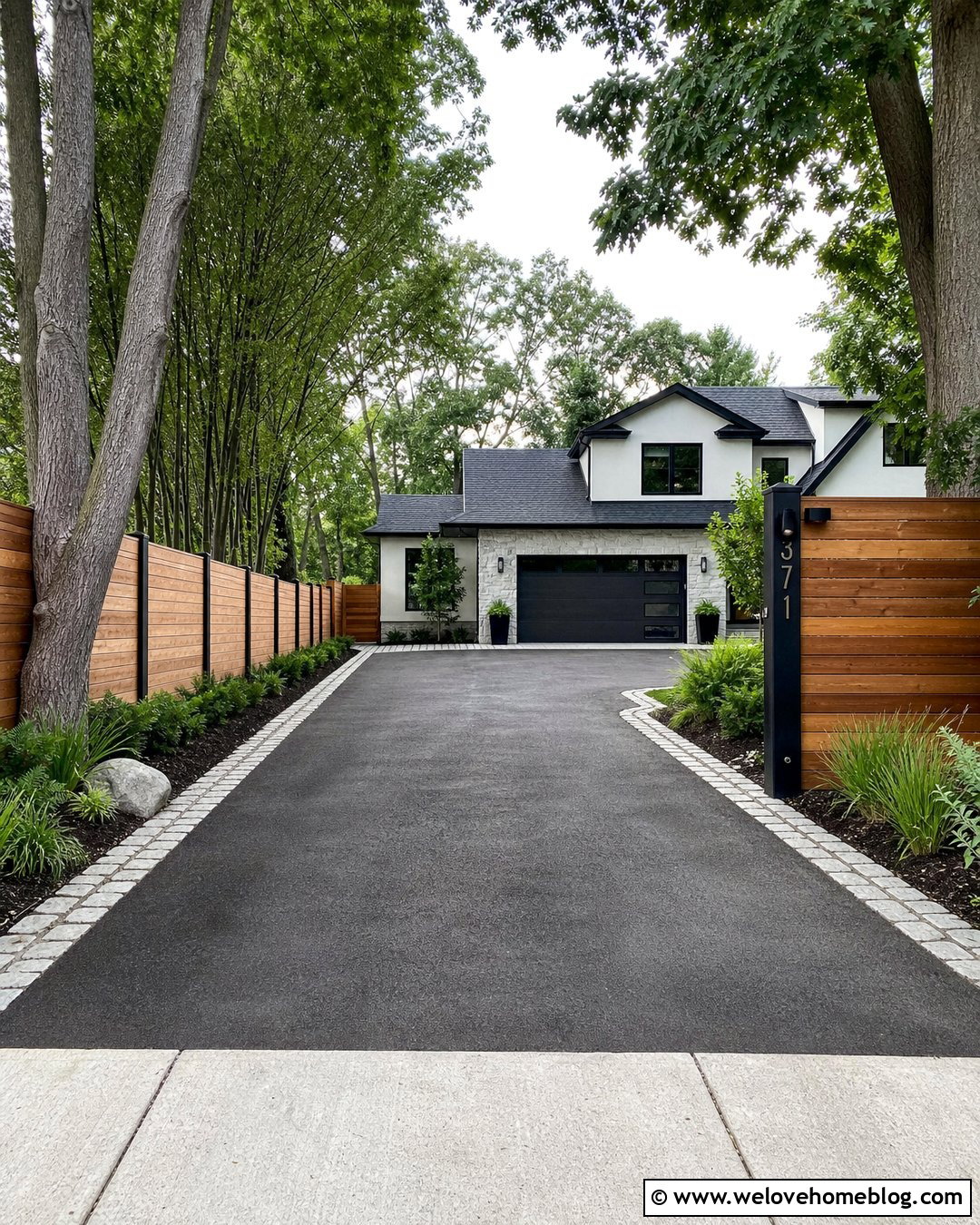
When a driveway runs close to an outdoor living area or neighboring property, a cedar privacy fence can create a calmer boundary. Pair six-foot vertical cedar boards with a black asphalt driveway and a contrasting cobblestone edge. The dark pavement grounds the warm wood and keeps the overall palette simple. Use a stepped fence profile if the yard changes elevation, and position taller panels near patios or side windows. A sliding cedar gate can preserve vehicle space where swinging panels would be awkward. Break up the long wood surface with black posts, climbing greenery, or narrow planting beds containing ferns and shade-tolerant shrubs. Good post placement and a durable finish are important because a large solid fence catches more wind than an open design.
6. Split Rail Driveway Fence
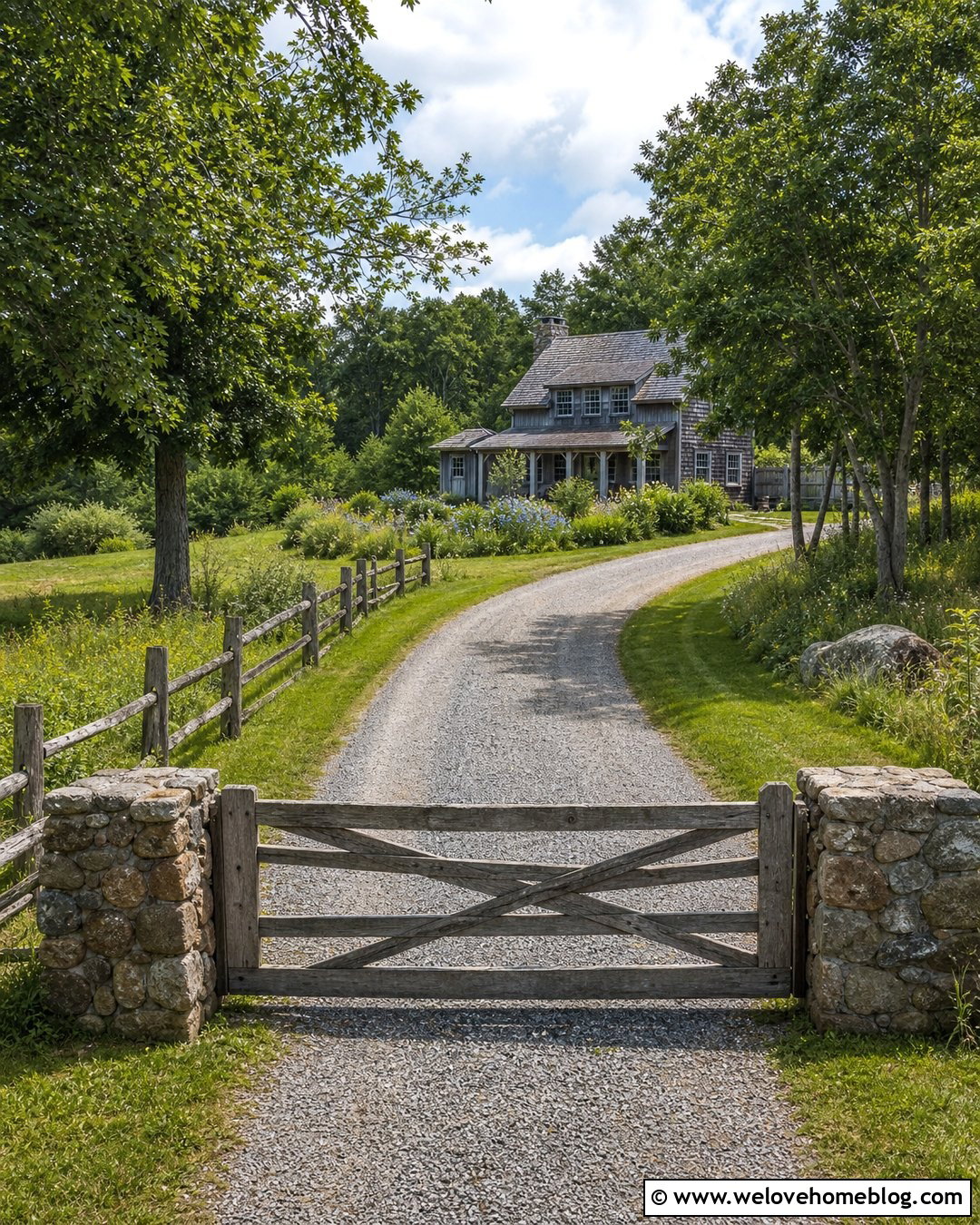
A split rail fence is a natural match for a long gravel driveway and a relaxed rural setting. Run weathered wood rails along both sides of a gently curved gray gravel surface, leaving generous grassy shoulders between the fence and driving area. A traditional five-bar gate can define the entrance, while fieldstone posts make the opening feel more substantial. Continue the informal character with native grasses, wildflowers, shade trees, and clusters of low shrubs rather than highly clipped foundation plants. Wire mesh may be attached discreetly behind the rails when the boundary must contain pets. This driveway fence works well with ranch houses, country cottages, cabins, and modern farmhouses. Its open construction preserves broad views and helps a large property feel organized without appearing heavily enclosed.
7. Stone Pillar Driveway Fence
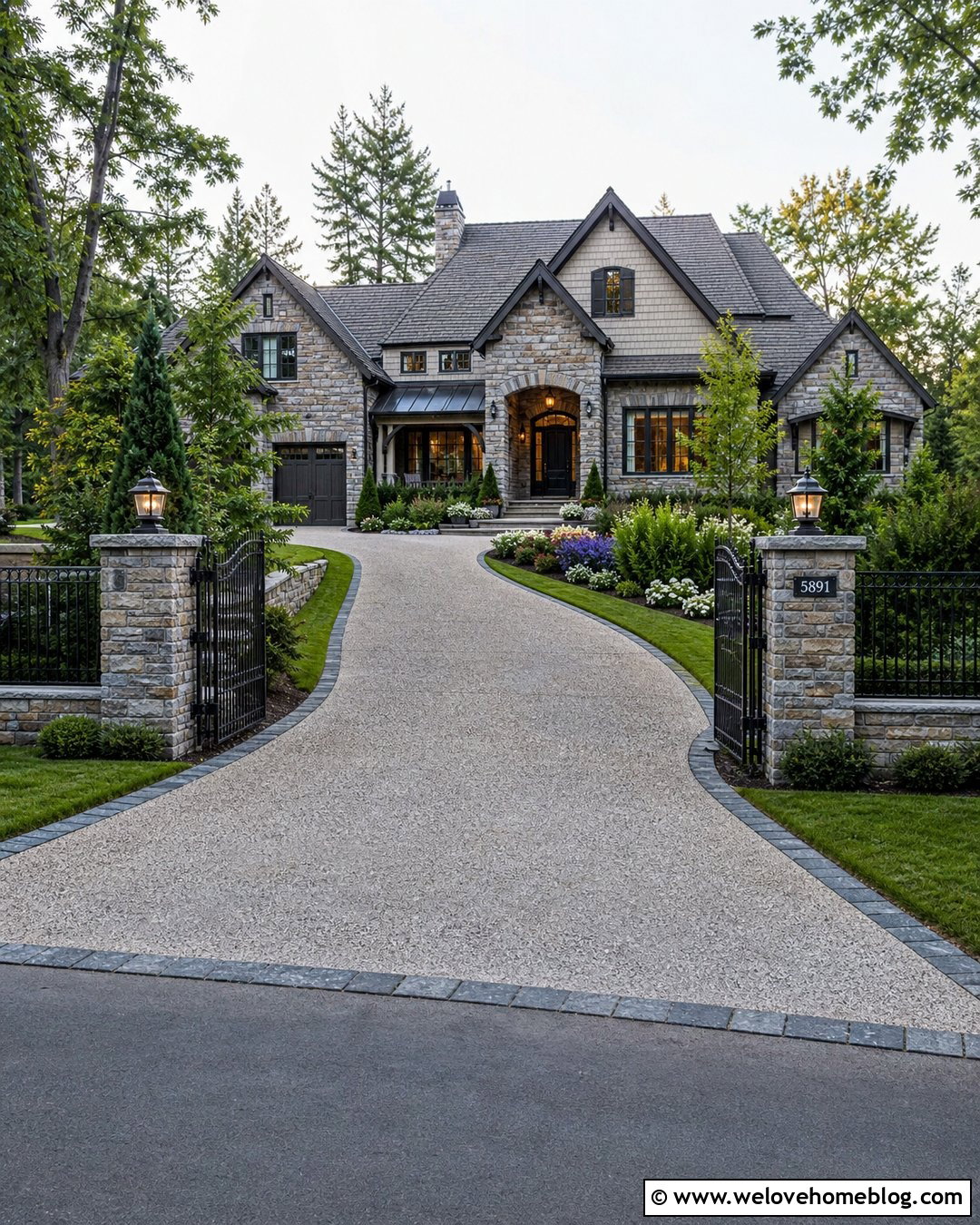
Stone pillars can visually anchor a driveway fence and connect the entrance to a stone-clad home. Frame a curved exposed-aggregate driveway with substantial fieldstone columns, low stone walls, and black metal fence panels. The walls should gradually decrease in height as they move away from the entrance, preventing the structure from feeling bulky. Cap each pillar with a simple flat stone or lantern that complements the home’s exterior fixtures. Add broad planting beds with evergreen shrubs, flowering perennials, and ornamental trees to soften the masonry. A black metal gate keeps the center visually open and balances the heavier stonework. Repeat the same stone around the mailbox, front steps, or garden borders so the entire approach feels deliberate. This design performs best when materials share similar undertones.
8. Brick Pillar Driveway Fence
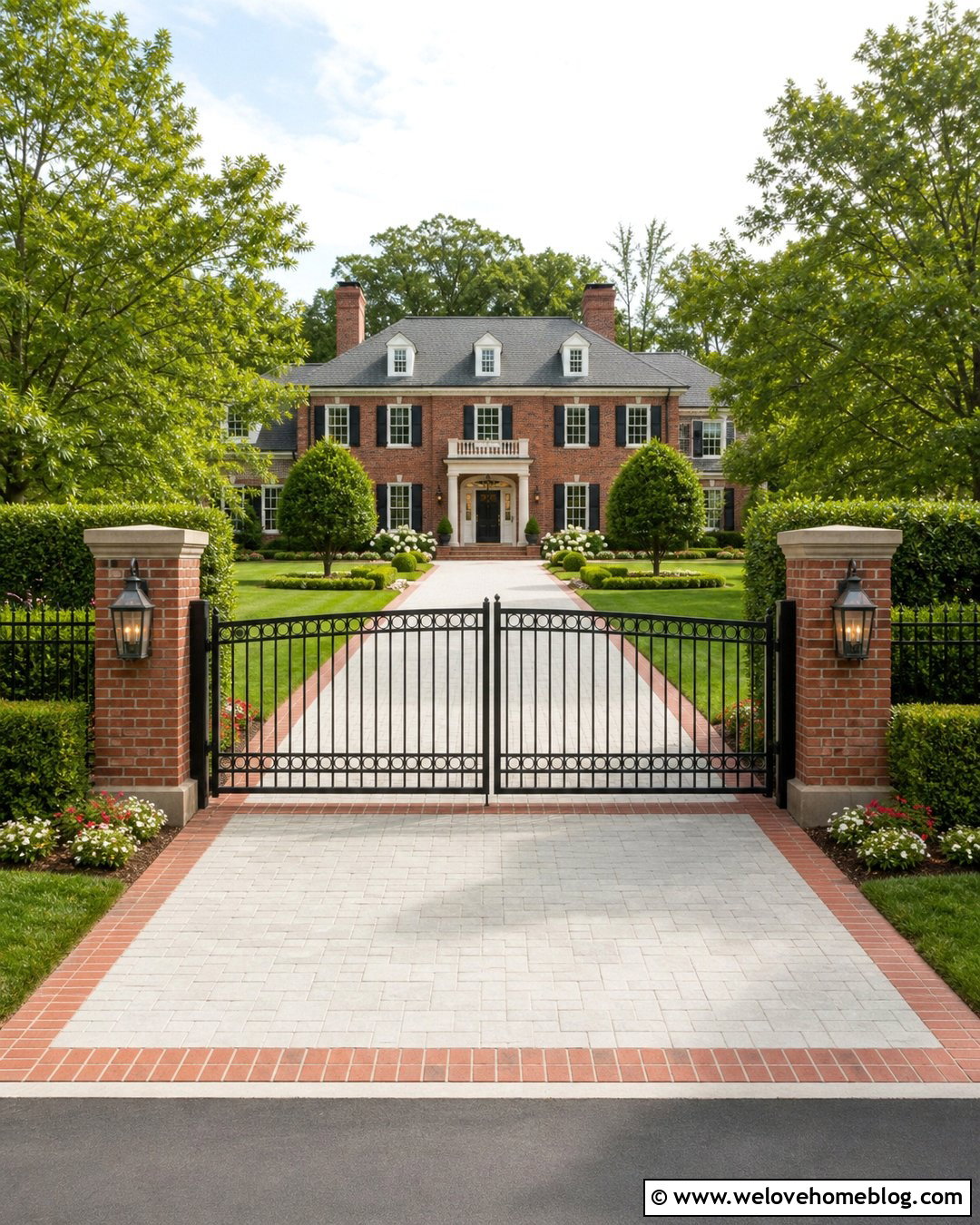
Brick pillars bring structure and traditional character to a straight concrete paver driveway. Select brick that matches or complements the home rather than introducing a competing red or brown tone. Connect the pillars with black aluminum fencing, then install a coordinating double gate across the entrance. A brick ribbon along each driveway edge reinforces the material connection and gives the lighter pavers a finished outline. Formal landscaping works naturally here, including clipped hedges, symmetrical trees, and matching planting beds on both sides. Keep pillars properly scaled to the driveway width; oversized columns can make a modest entrance feel cramped. This driveway fence is particularly effective with Colonial, Georgian, Tudor, and transitional homes because it combines classic masonry with open metal panels and a clearly defined arrival route.
9. Metal And Wood Driveway Fence
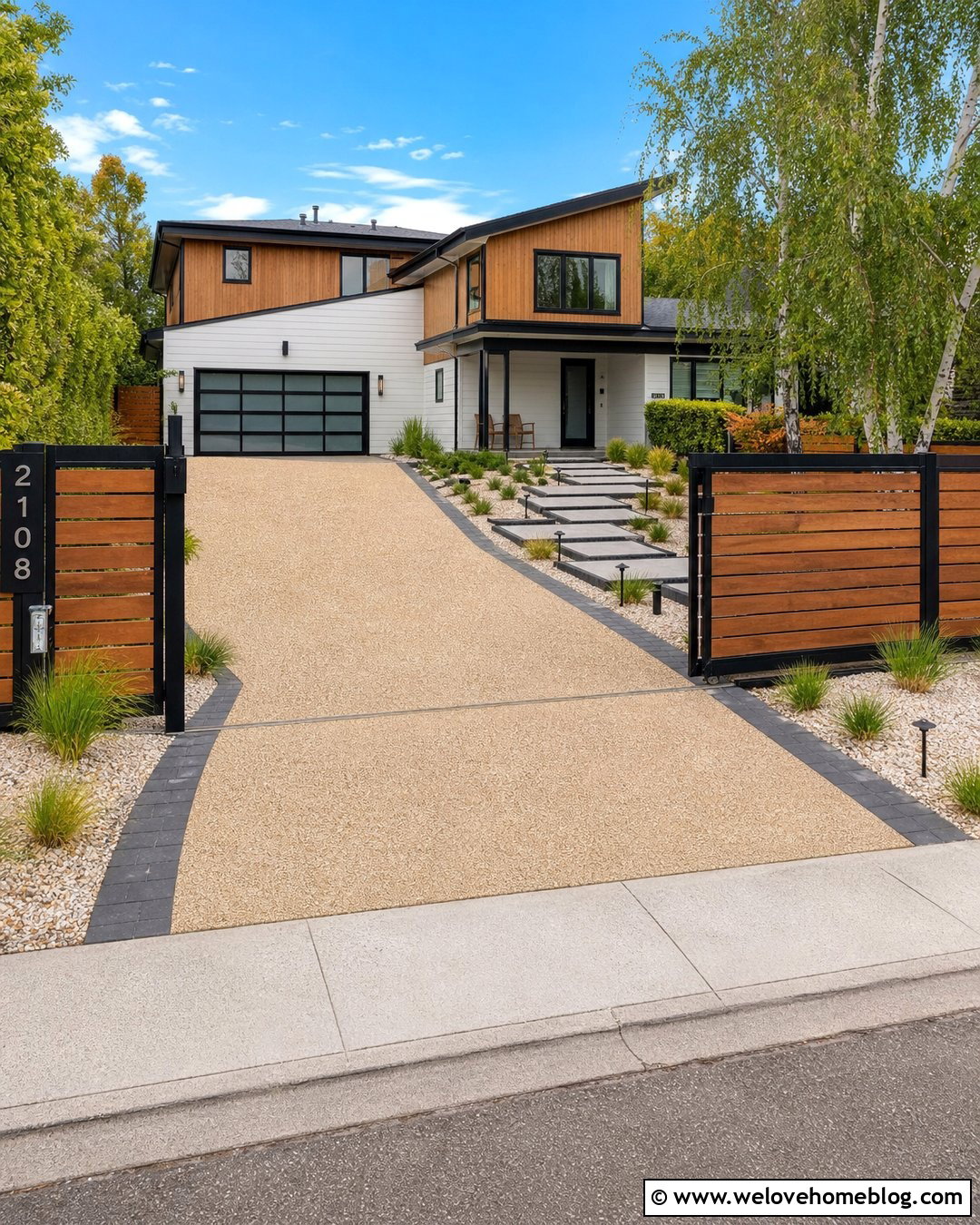
Combining metal and wood creates a balanced driveway fence with both warmth and structural clarity. Use a powder-coated steel frame around horizontal cedar infill panels, then repeat the same construction in a sliding entrance gate. A wide resin-bound gravel driveway in a warm beige tone provides a smooth, understated foreground. Edge it with dark steel strips or charcoal pavers to connect visually with the gate frame. Near the fence, use drought-tolerant grasses, compact shrubs, and architectural plants arranged in broad groups. The design looks especially cohesive when the house has mixed siding, black windows, or timber accents. Maintain small, even spaces between boards to reduce visual heaviness. This hybrid approach fits contemporary, industrial-inspired, and updated ranch homes while offering more screening than an open metal fence.

10. Farmhouse Driveway Fence
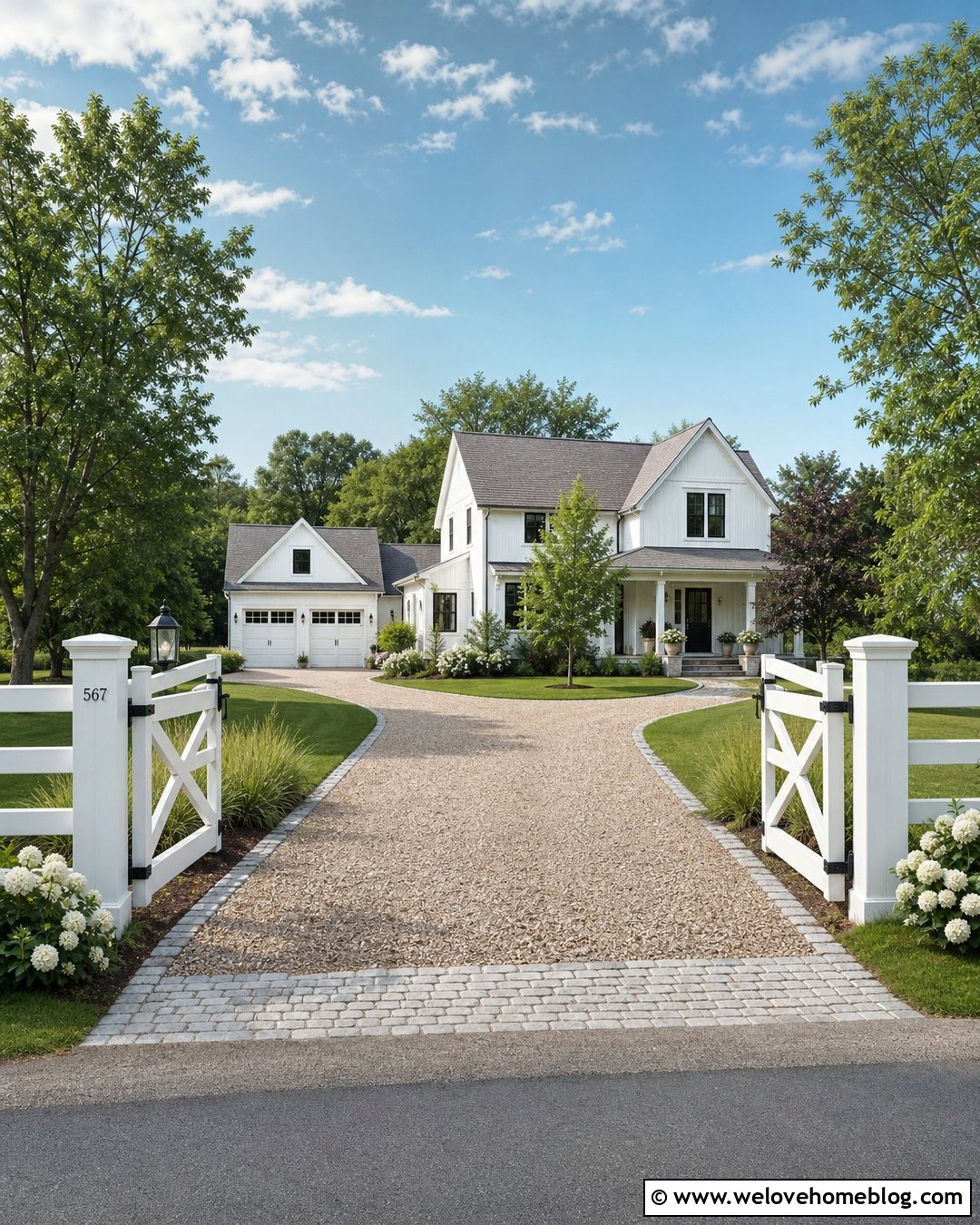
A farmhouse driveway fence should feel practical, welcoming, and connected to the surrounding land. Pair a white three-rail fence with a broad pea gravel driveway that curves gently toward a modern farmhouse. Place a simple white double gate between chunky timber or painted masonry posts, keeping ornamentation minimal. A narrow strip of Belgian block along the gravel helps contain loose stones near the entrance. Frame the approach with deciduous trees, hydrangeas, ornamental grasses, and a mown lawn rather than highly formal hedges. Black gate hardware and gooseneck lights can repeat details found on the house or barn. For a more rustic variation, use natural wood rails instead of white fencing. Allow enough space beyond the gate for vehicles to wait safely without blocking nearby traffic.
11. Ranch Driveway Fence
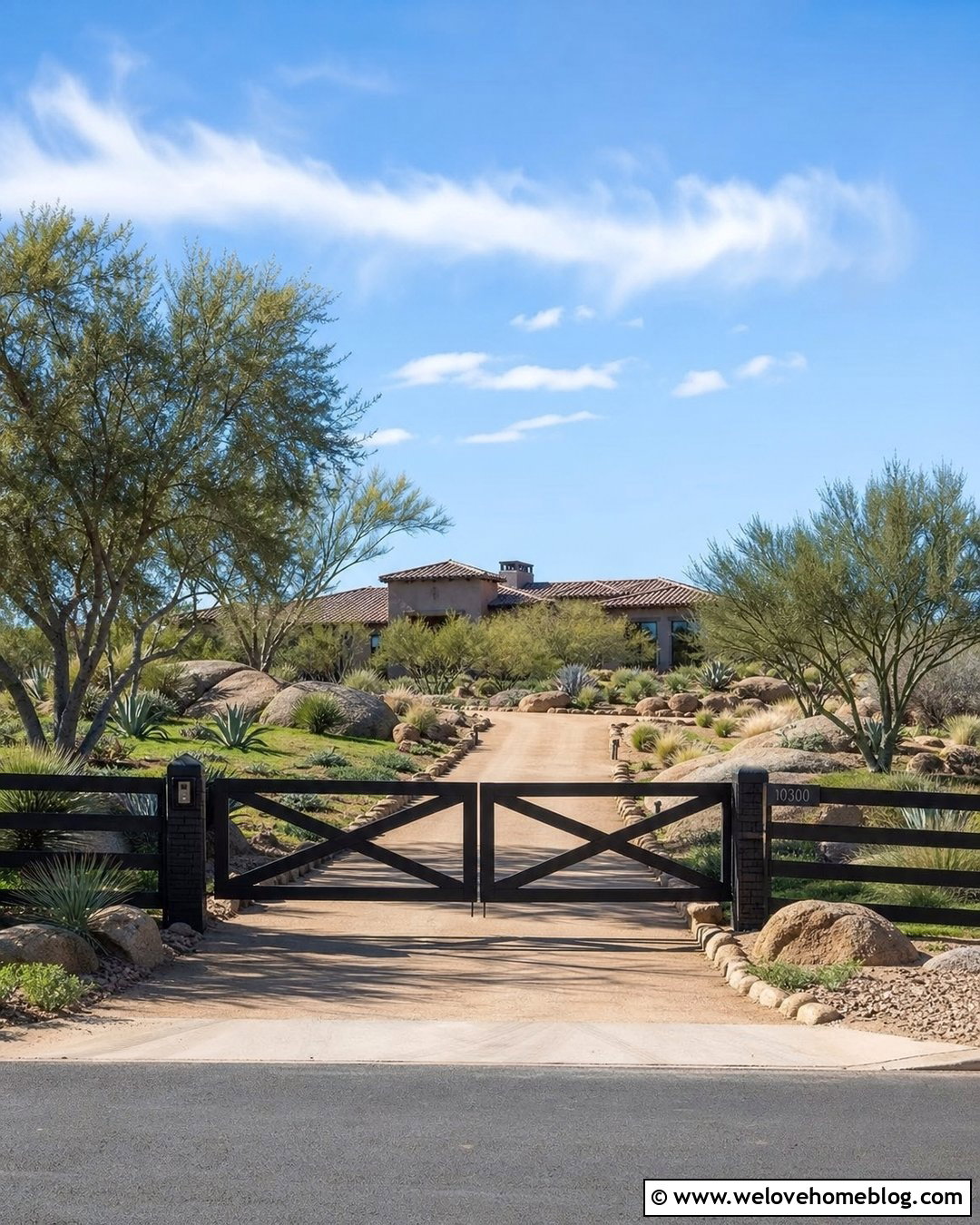
A ranch-style fence gives a wide property boundary without closing off the view. Place dark-stained horizontal rails beside a sweeping decomposed granite driveway leading to a low, single-story ranch house. Square timber posts create a clean rhythm, while discreet wire mesh behind the rails adds practical containment. Use a broad metal farm gate at the entrance for durability, then soften both sides with native grasses, boulders, and drought-tolerant shrubs. A low stone border can prevent driveway material from spreading into the planting beds. Keep the fence line simple and relatively low so it emphasizes the property’s horizontal architecture. This complete driveway look suits Southwestern, Western, rustic, and contemporary ranch homes. Natural earth tones also reduce the visual impact of fencing across a large front yard.
12. Low Driveway Fence
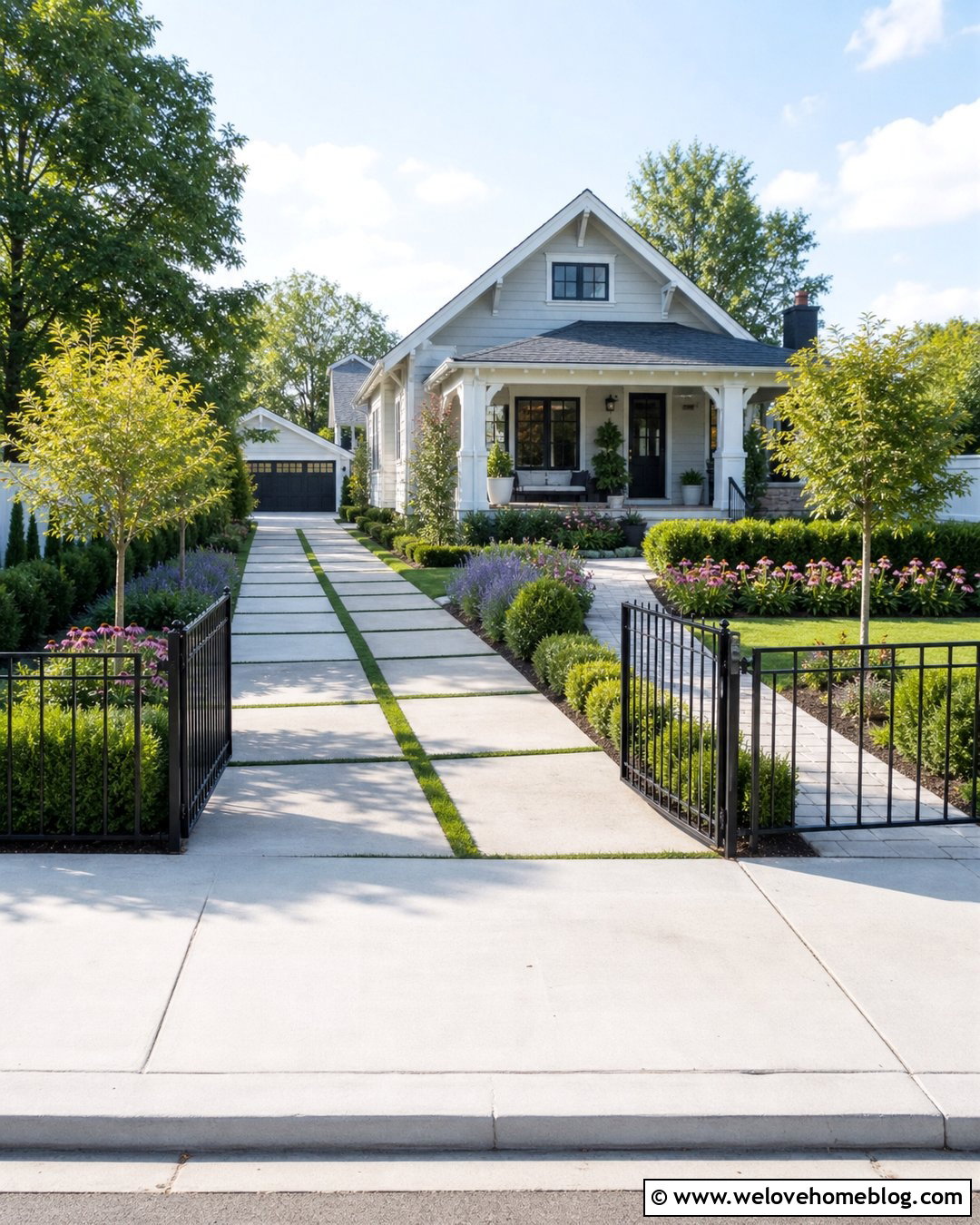
A low driveway fence can define the front boundary while maintaining a friendly, open connection with the street. Pair a three-foot black metal fence with a pale concrete driveway divided by narrow grass strips. The open vertical rails establish a clear edge without hiding a bungalow or craftsman facade. At the driveway opening, use a low double gate or leave the center open if vehicle control is unnecessary. Create layered beds behind the fence with compact boxwoods, salvia, coneflowers, and one or two small ornamental trees. Avoid shrubs that will grow far through the rails and require constant trimming. A coordinating pedestrian gate can connect the sidewalk to the front walkway. This approach is particularly helpful on smaller suburban lots where a tall fence could make the driveway feel narrow or boxed in.
13. Tall Privacy Driveway Fence
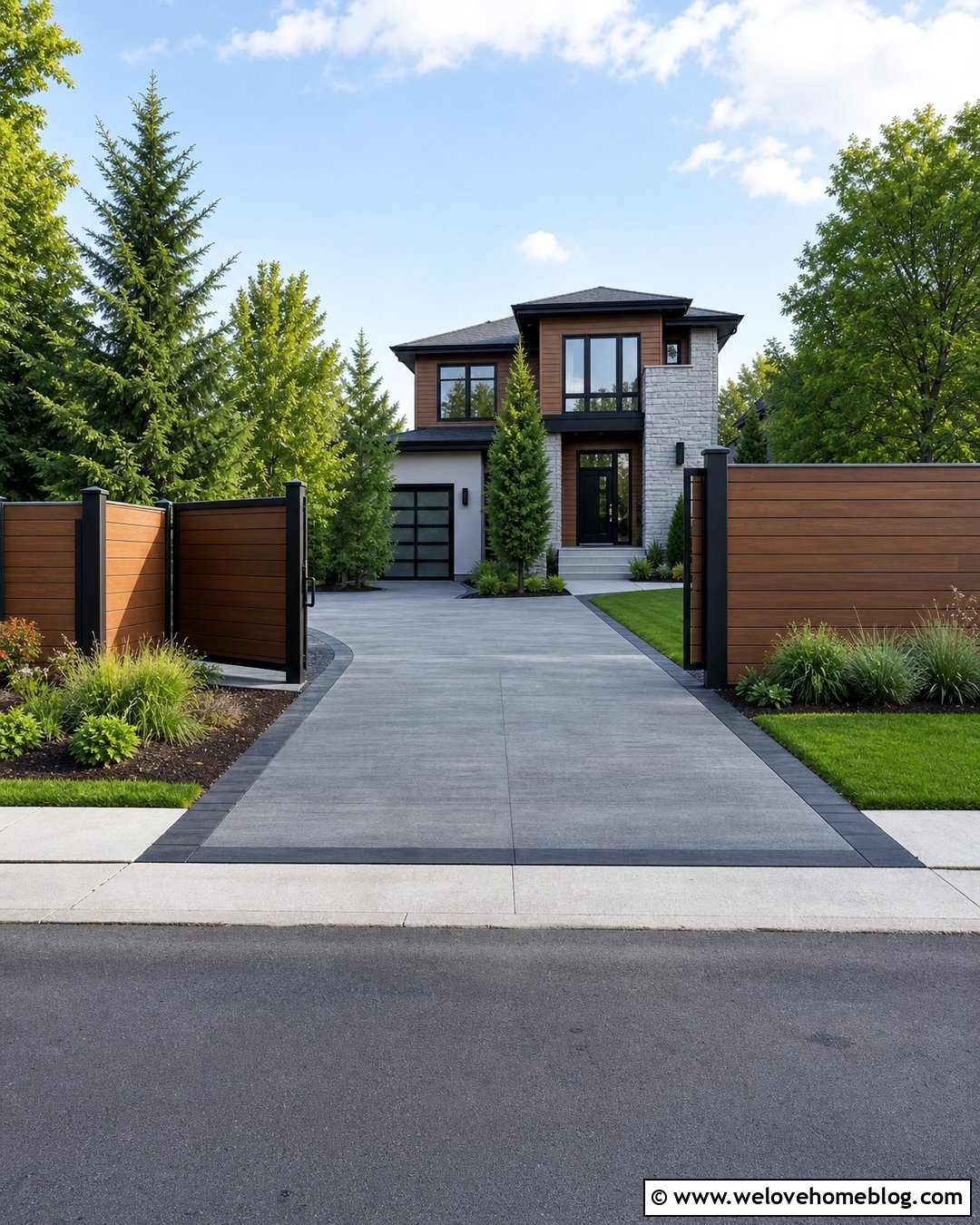
A tall privacy fence works best when its scale is balanced by thoughtful materials and landscaping. Install vertical composite boards beside a straight charcoal concrete driveway, using sections in two subtly different widths to add rhythm. Black metal posts and a matching cap rail sharpen the modern appearance. Instead of continuing solid panels across the driveway, choose a partially open gate with spaced slats so the entrance feels less imposing. Add a generous planting strip between the fence and pavement, then fill it with upright evergreens, grasses, and ground cover. This softens the wall-like surface and protects the boards from vehicle contact. Composite can offer the appearance of wood with reduced concerns about warping and fading, although products and maintenance requirements vary. Always confirm local fence-height and setback rules. ()
14. Slatted Driveway Fence
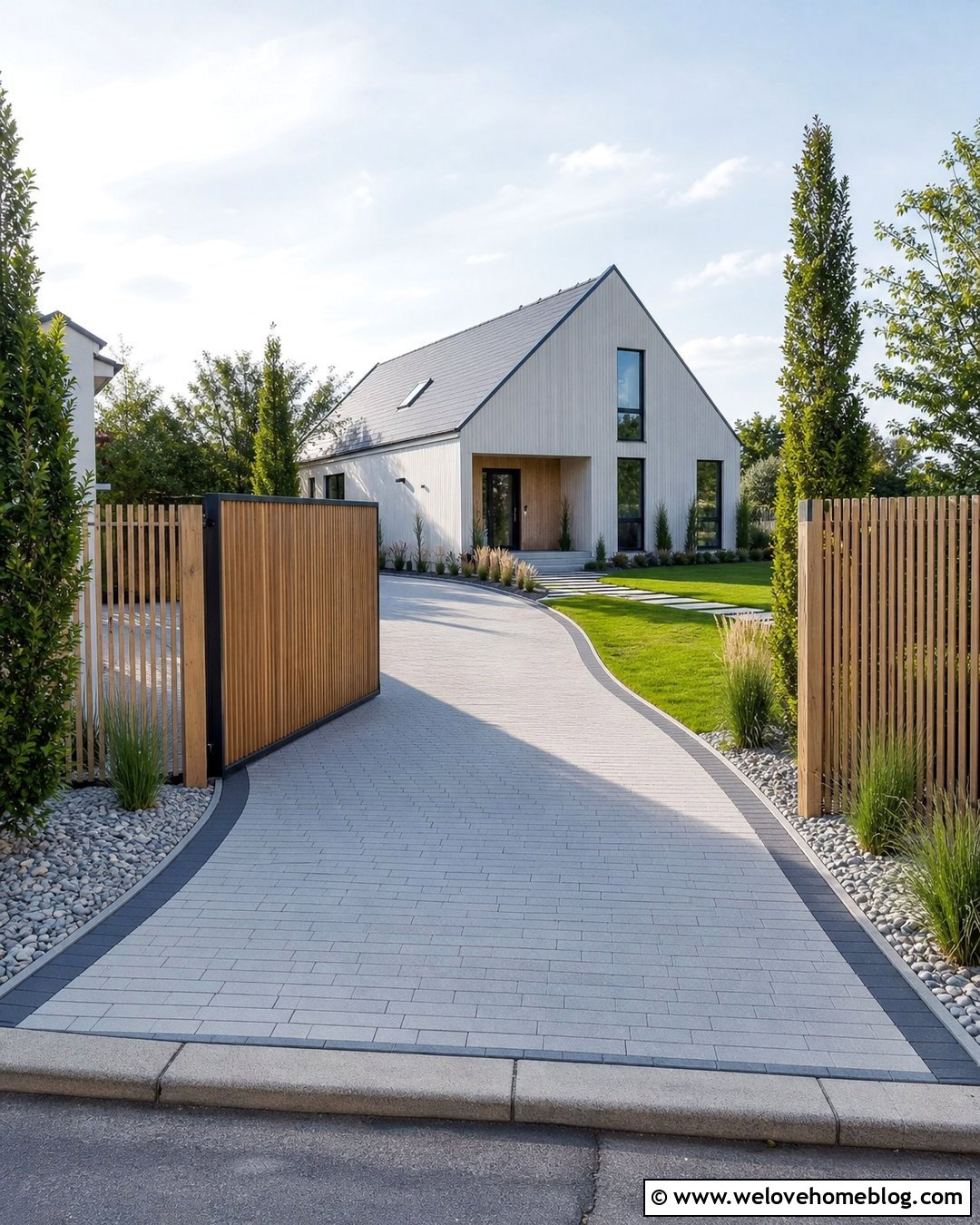
Slim vertical slats can make a driveway fence feel contemporary while providing moderate screening. Pair closely spaced natural wood slats with a light gray concrete paver driveway arranged in a running bond. A gently curved driveway line keeps the modern materials from appearing too rigid. Continue the slats across a cantilever sliding gate, using a hidden or visually quiet frame whenever possible. Behind the fence, plant bamboo alternatives, upright grasses, or columnar evergreens to increase privacy without creating a dense hedge. A narrow river-rock strip between the pavement and fence improves drainage and gives the edge a polished finish. This look complements modern, Japanese-influenced, and Scandinavian-style homes. Varying the slat spacing near the entrance can preserve views needed for safer vehicle movement while making private areas less visible.
15. Curved Driveway Fence
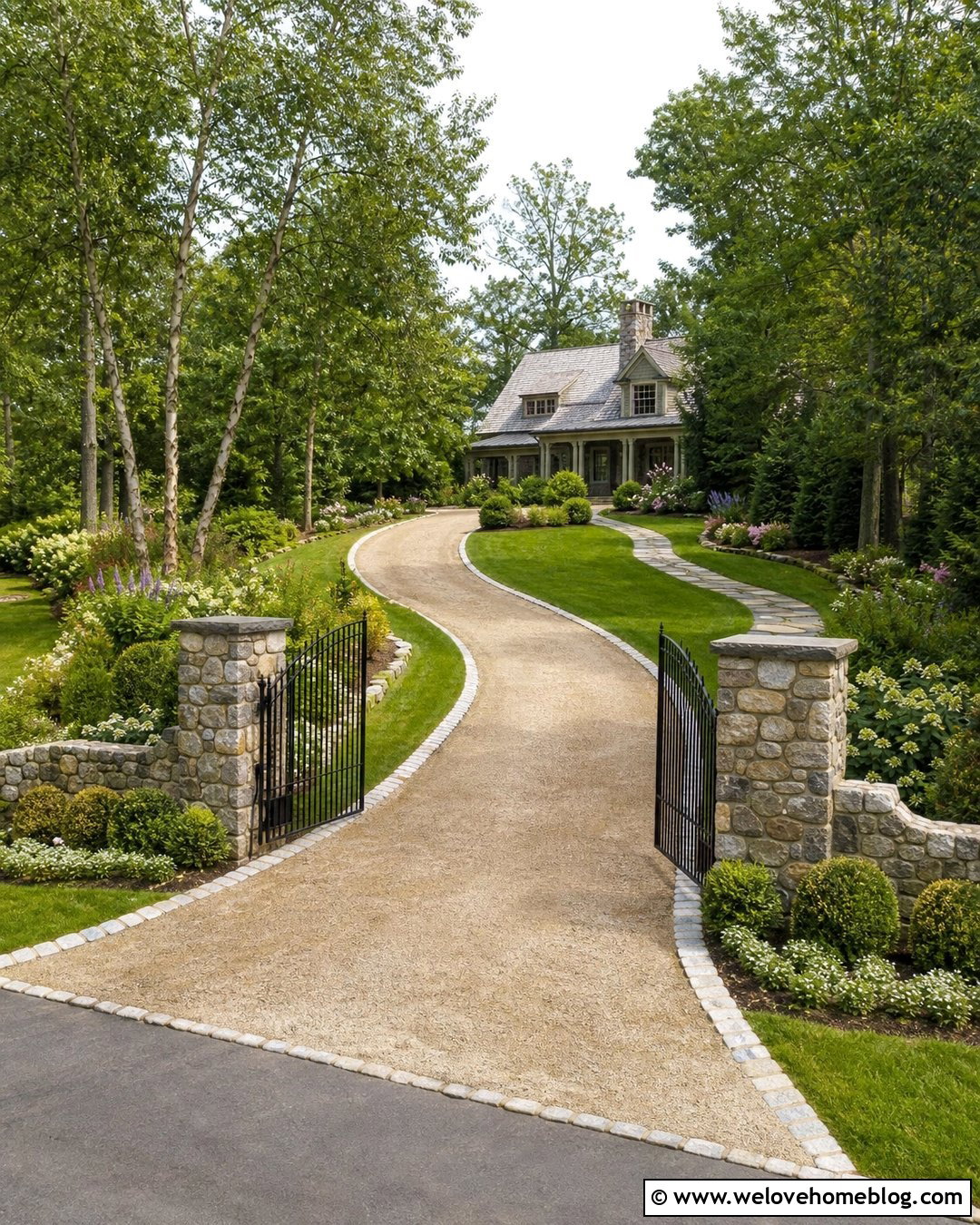
A fence that follows the shape of a curved driveway can guide the eye naturally toward the house. Use low dry-stacked stone walls with short sections of black metal fencing along a sweeping tan gravel driveway. The stone establishes an organic edge, while the metal maintains visibility around bends. At the entrance, taller stone pillars and a gently arched gate create a clear starting point. Echo the curve with layered planting beds containing evergreen shrubs, flowering perennials, and small multi-stem trees. Keep large plants set back from the driving surface so branches do not reduce usable width. This driveway fence arrangement is suitable for large suburban, country, and wooded properties. Repeating curves in the walkway and lawn edge makes the approach feel cohesive rather than shaped only by vehicle requirements.
16. Driveway Fence With Sliding Gate
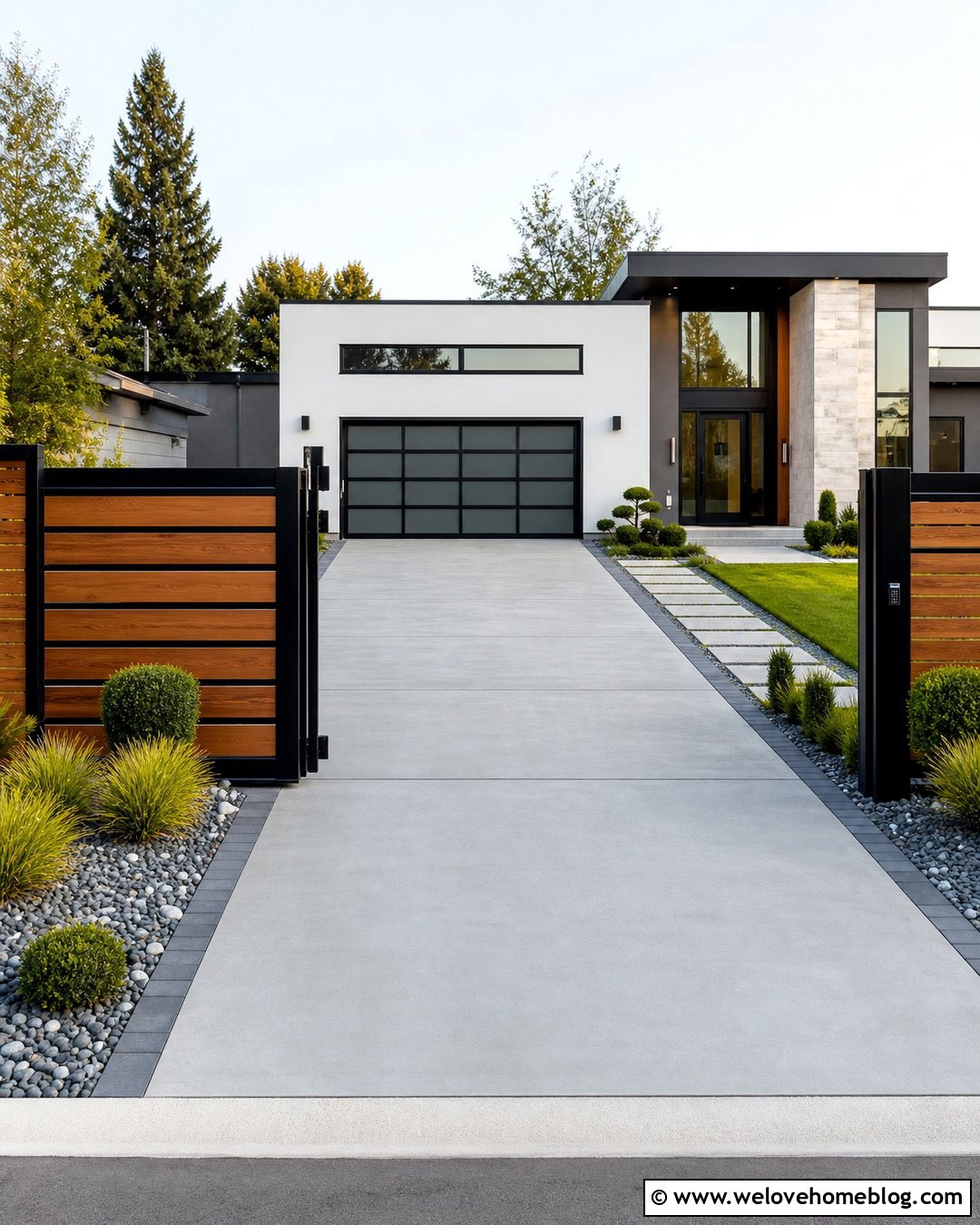
A sliding gate is a practical centerpiece for a driveway fence when there is not enough clear space for swing panels. Combine a black steel sliding gate with matching open fencing and a straight poured concrete driveway. Horizontal cedar inserts can soften the industrial frame and relate it to a contemporary home’s siding. The gate needs adequate unobstructed space beside the driveway, so keep the travel path free of shrubs, walls, and steep grade changes. Use low planting beds and decorative gravel near the mechanism for a clean edge and easier access. A cantilever configuration may be useful where ground tracks would be undesirable, although the final system should be professionally sized for the opening, weight, wind exposure, and site conditions. Sliding gates can also suit sloped approaches where swing clearance is difficult. ()
17. Driveway Fence With Double Swing Gate
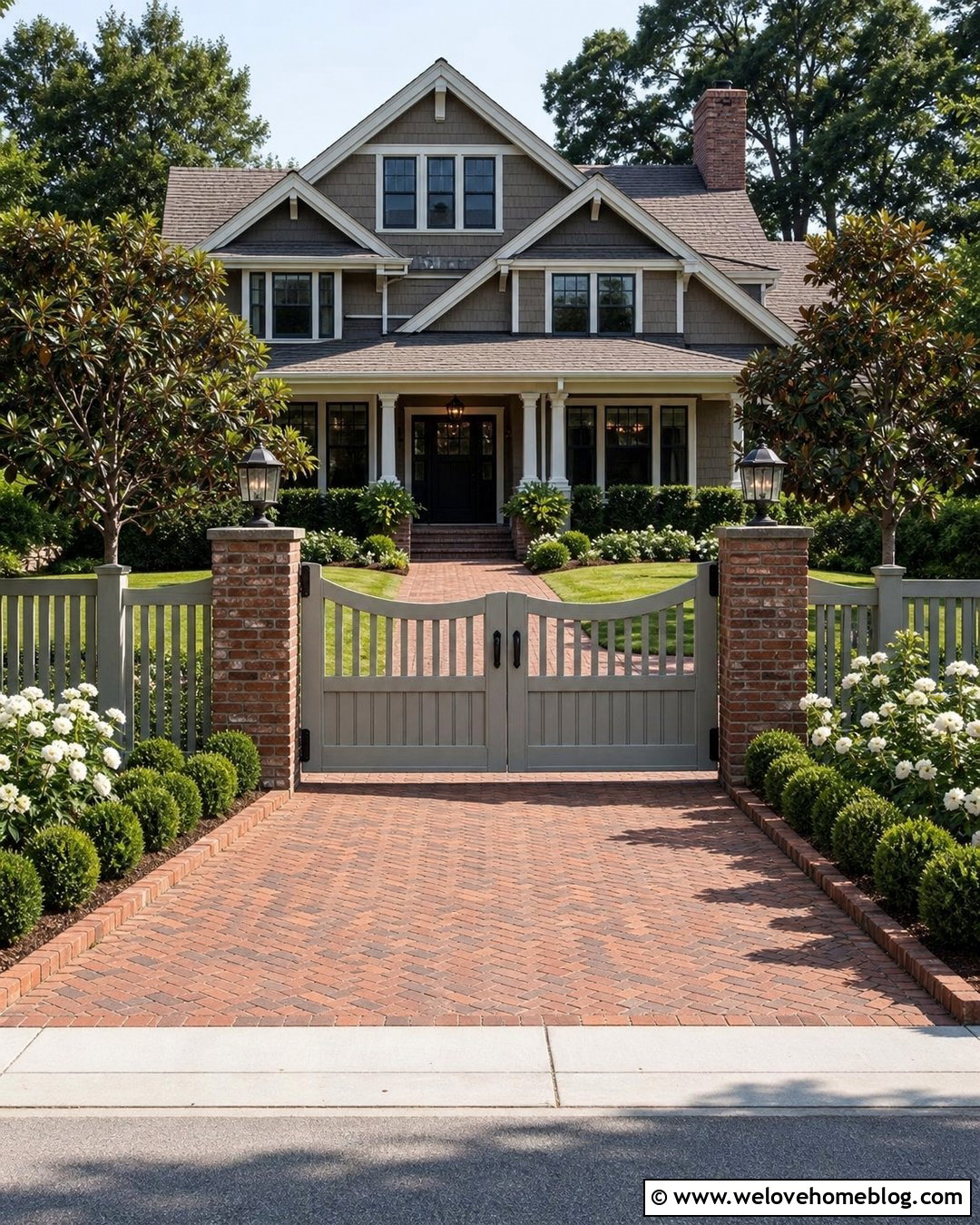
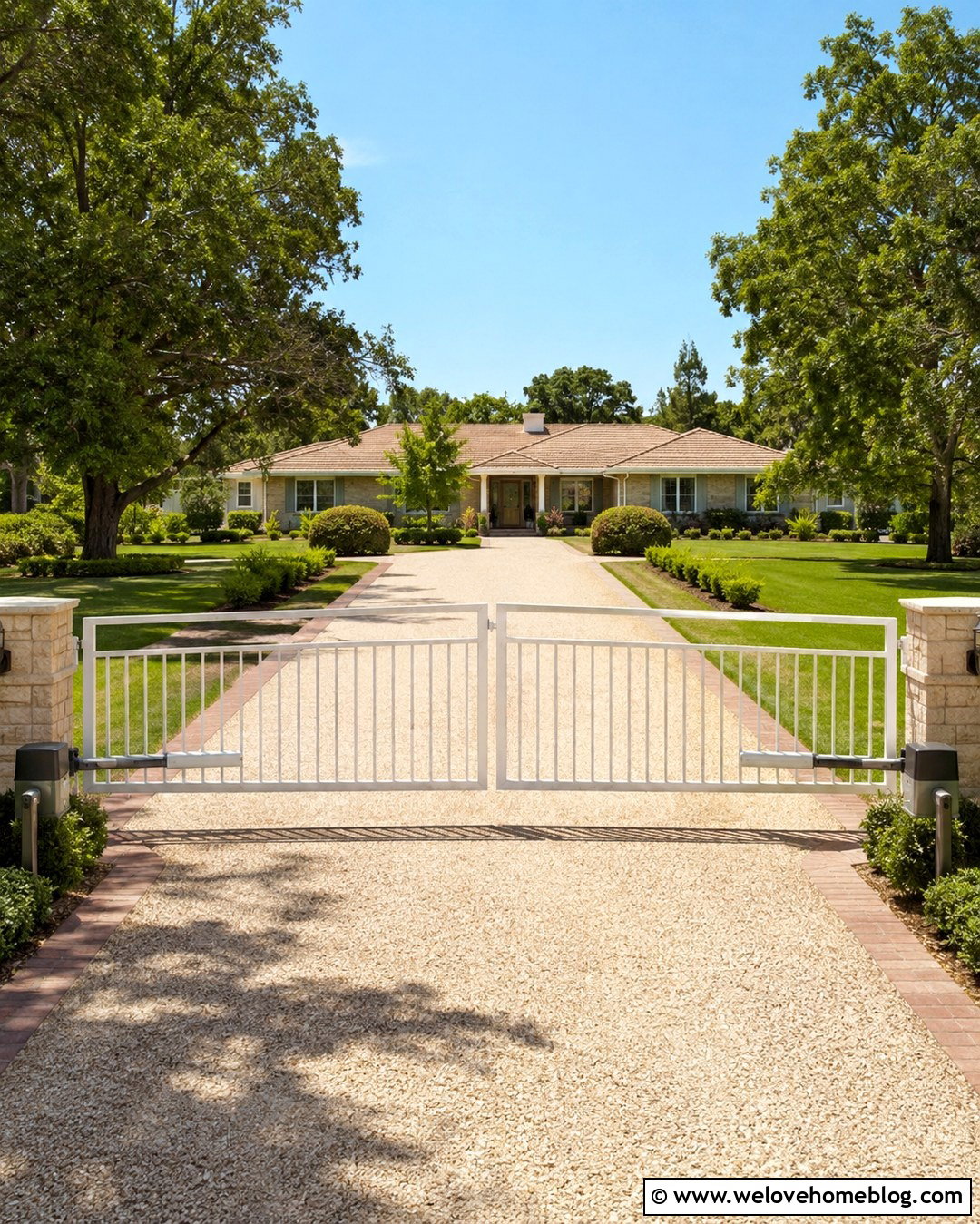
A double-swing gate creates a balanced entrance and requires less swing depth per panel than one extra-wide gate. Frame the opening with painted wood fencing and sturdy masonry pillars beside a warm-toned brick paver driveway. The two gate leaves should repeat the fence’s vertical board pattern, while an arched top can introduce a subtle traditional detail. Position the gate on a level portion of the driveway whenever possible and plan its direction carefully so it does not interfere with vehicles, sidewalks, or landscaping. Use symmetrical planting beds with boxwoods, flowering shrubs, and matching trees to emphasize the centered layout. This complete design fits Colonial, craftsman, and traditional homes. Strong posts, correctly sized hinges, and proper ground clearance help the gate operate smoothly through changing weather conditions.
18. Driveway Fence With Pedestrian Gate
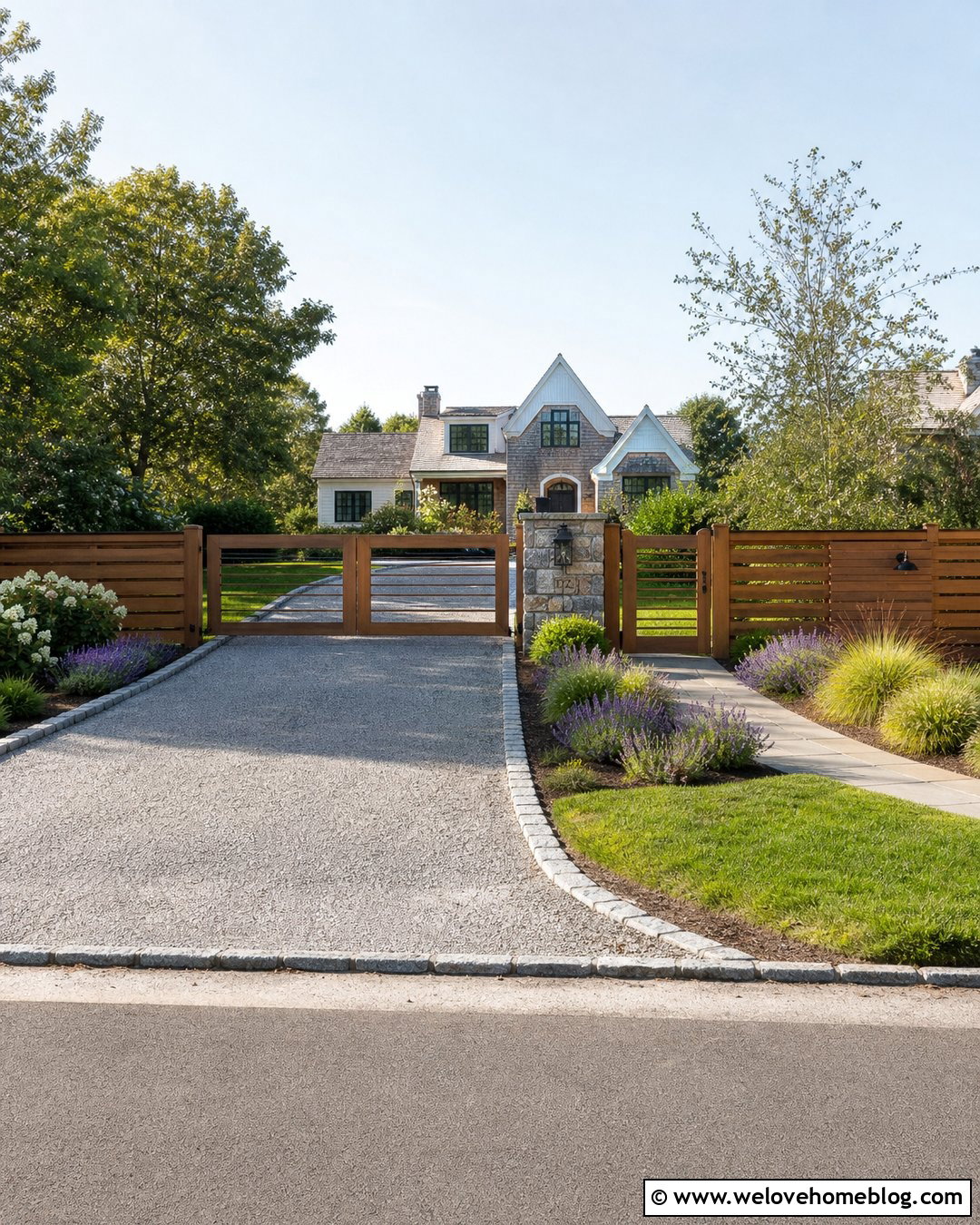
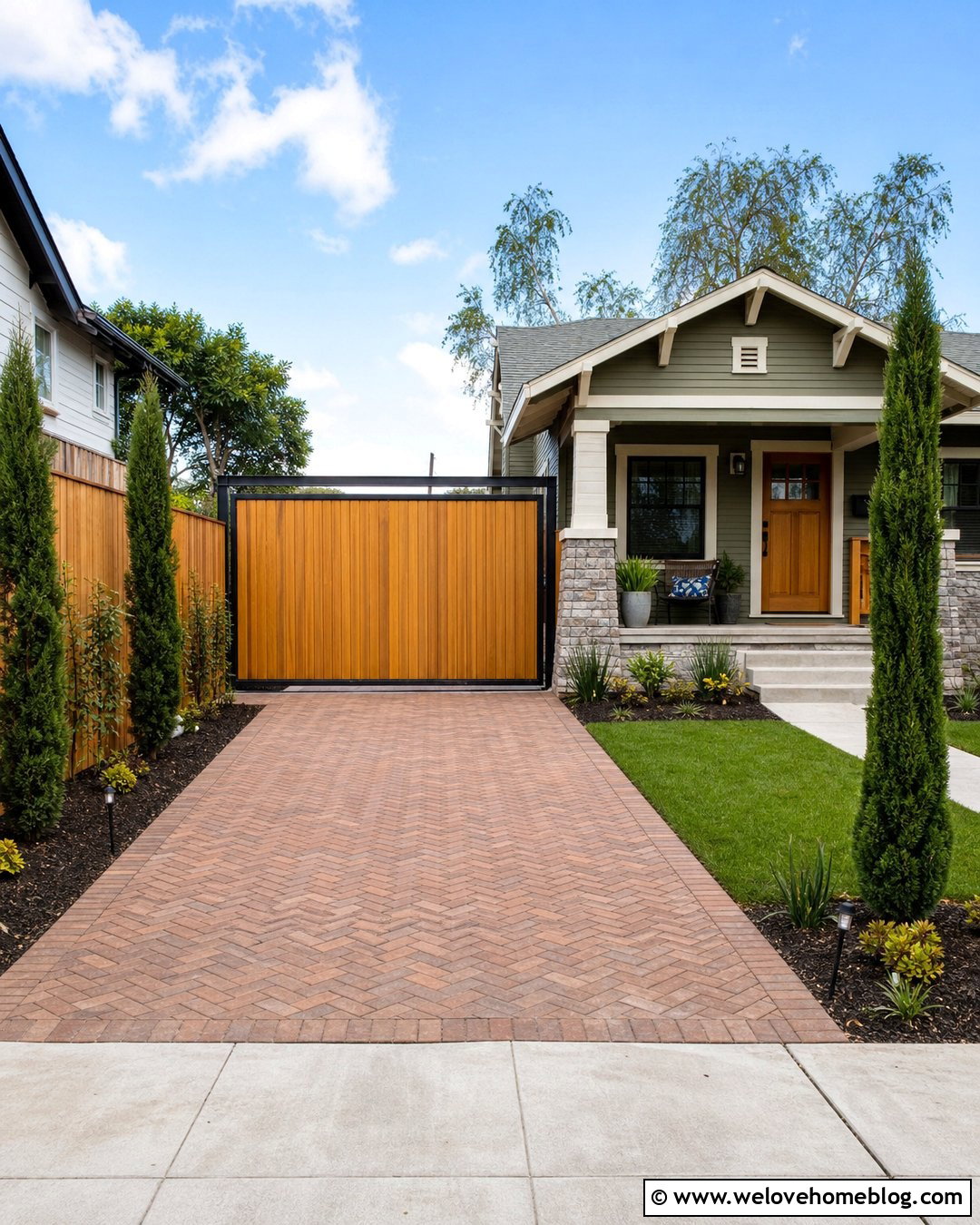
Adding a pedestrian gate prevents visitors from having to use the vehicle entrance. Pair a wide cedar driveway gate with a narrower matching walk gate positioned beside one stone pillar. Use a straight gray gravel driveway with cobblestone edging, then connect the smaller gate to the porch through a separate flagstone walkway. This creates a clear route for deliveries and guests while keeping foot traffic away from moving vehicles. Repeat the cedar in the surrounding privacy fence, but use open metal inserts near the entrance to improve visibility. Low shrubs, lavender, and ornamental grasses can frame both gates without hiding hardware or house numbers. Make the pedestrian opening visually distinct with a small arbor, slightly taller posts, or a change in paving while keeping all materials coordinated.
19. Driveway Fence With Hedge Border
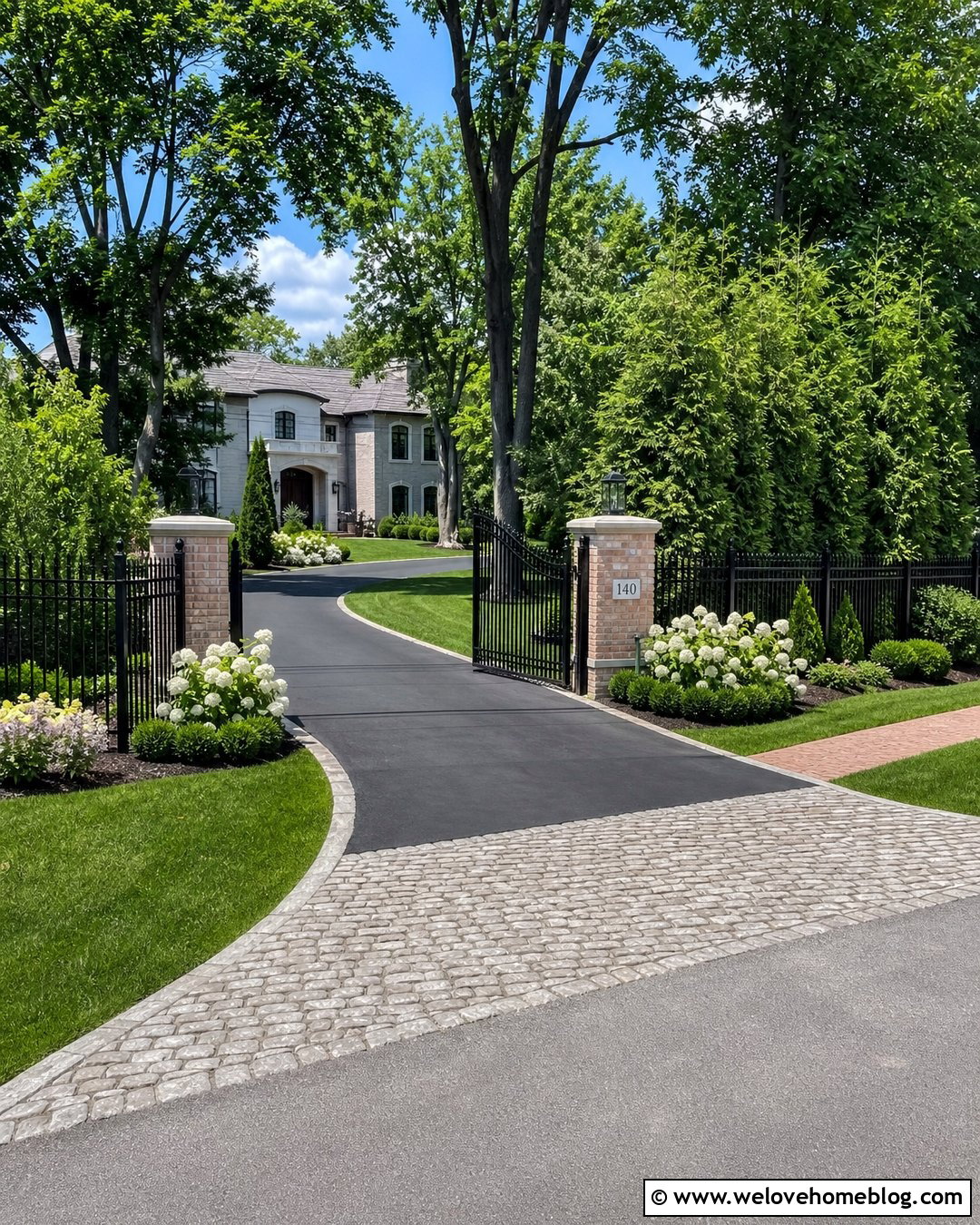
A hedge-lined fence combines dependable structure with the softer appearance of living greenery. Install a simple black aluminum fence along a curved asphalt driveway, then plant an evergreen hedge just inside the property line. The metal remains visible at the entrance, while the mature hedge provides greater screening farther toward the house. Add a matching gate between brick or stone pillars, and use a cobblestone apron where the asphalt meets the street. Select a hedge appropriate for the local climate, sunlight, and available maintenance time. Leave enough space between plants and fencing for pruning and air circulation. Layer flowering shrubs or perennials in front of selected areas to avoid one continuous green wall. This design works with traditional, transitional, and formal homes while maintaining a clear year-round boundary.
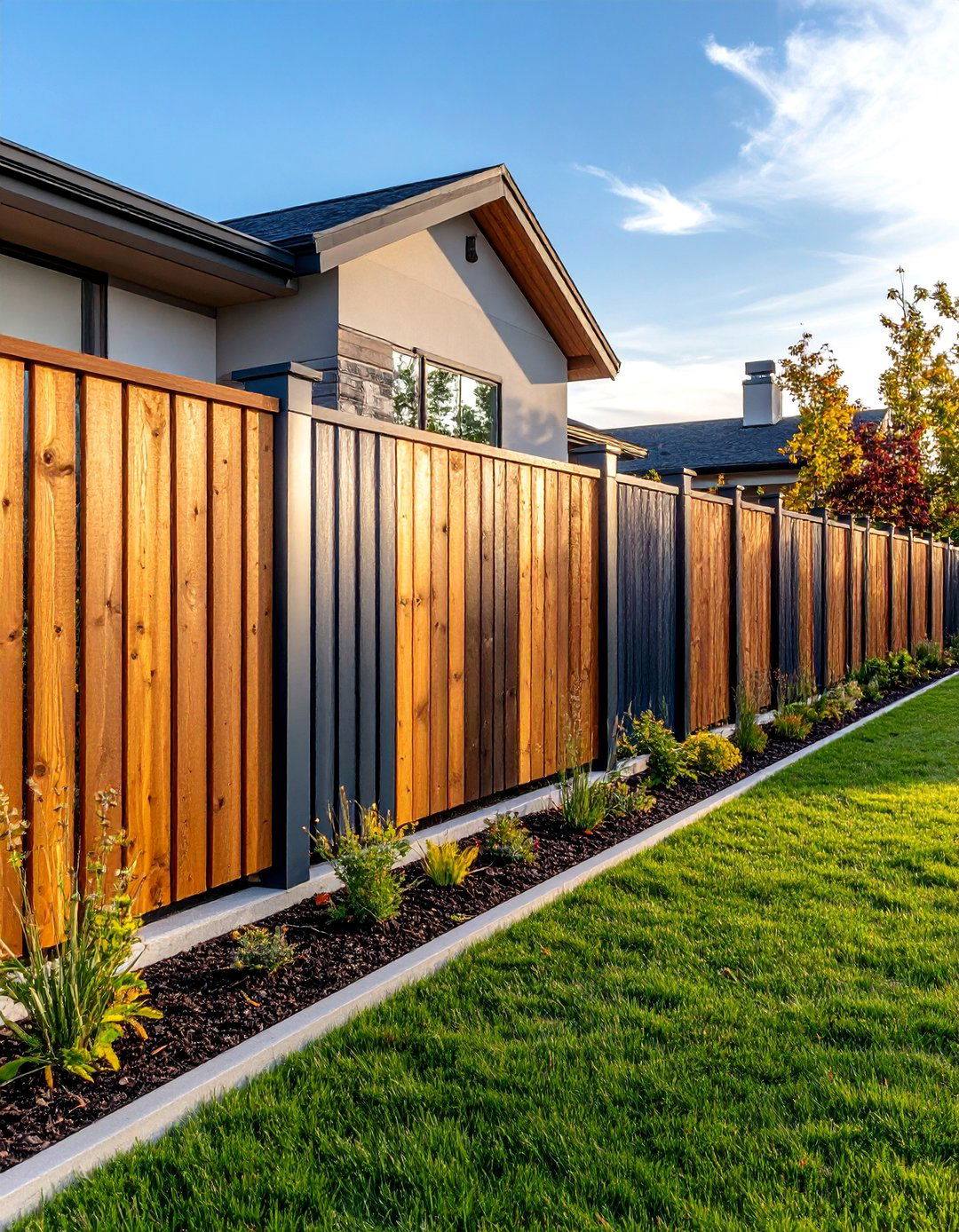


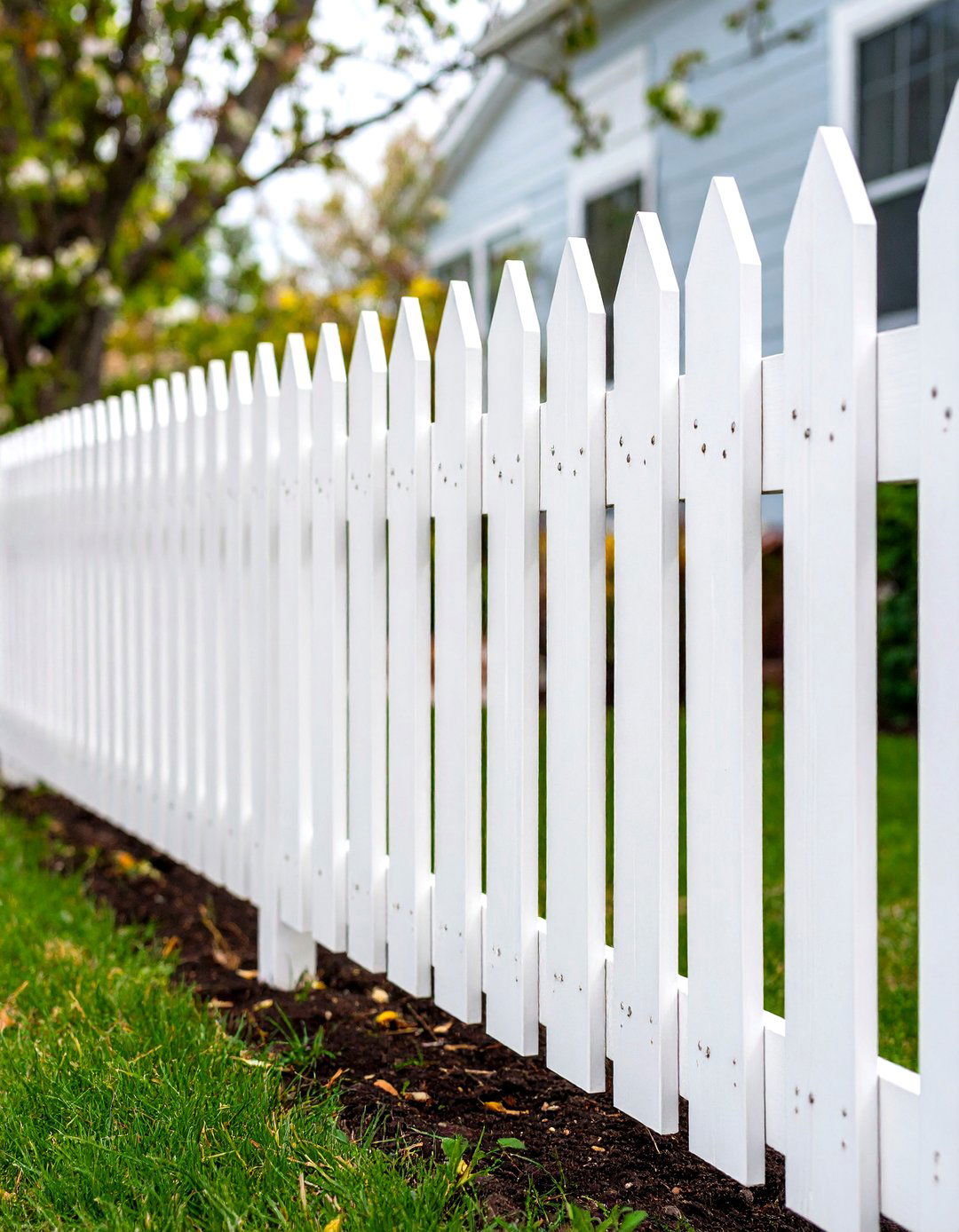
20. Driveway Fence With Retaining Wall
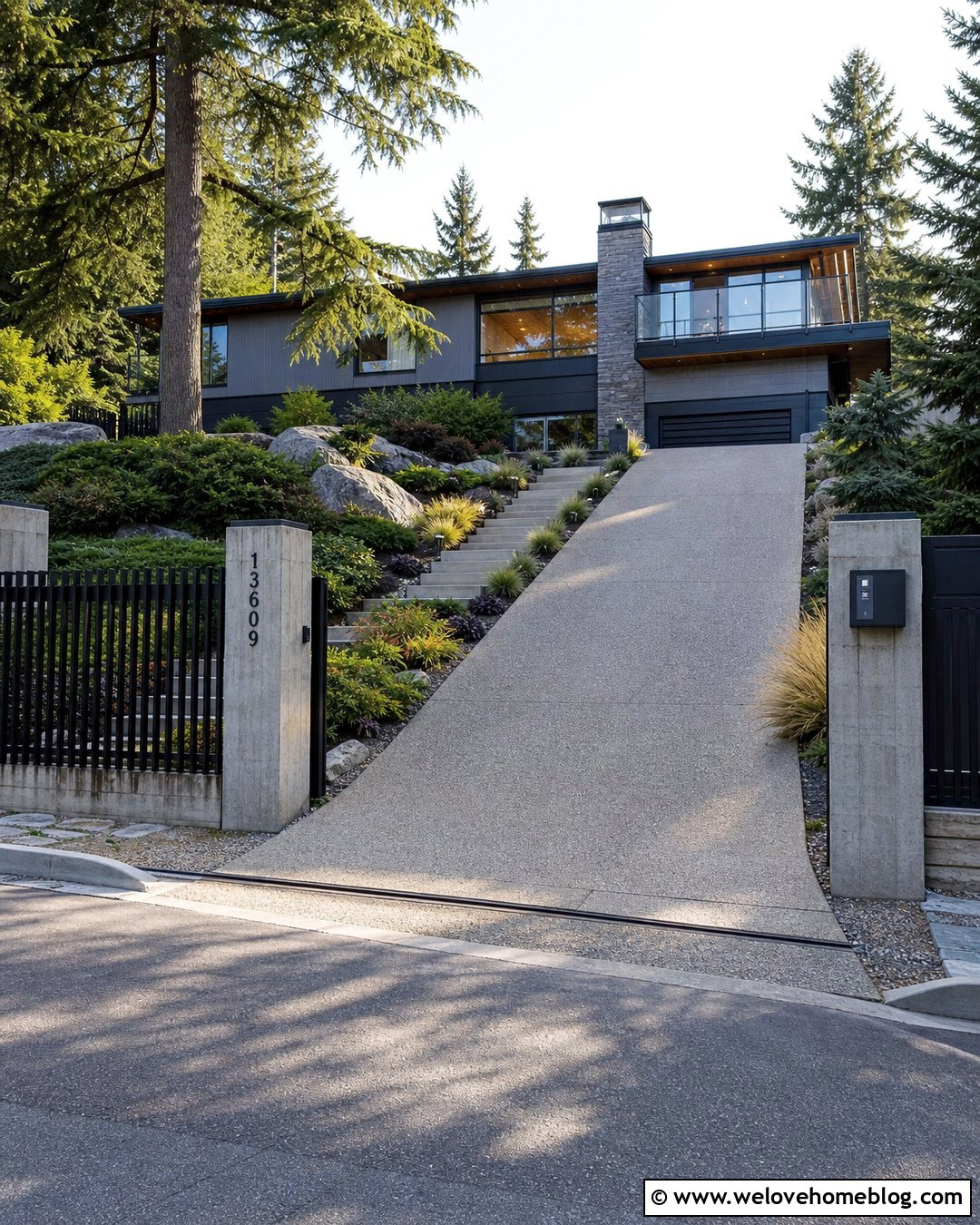
Sloped front yards often benefit from combining the driveway fence and retaining wall into one organized design. Run a low board-formed concrete wall beside an inclined exposed-aggregate driveway, then mount black steel fencing along the top. The wall controls the grade while the open fence provides a safer boundary without visually narrowing the approach. At the street, continue the concrete into square gate pillars and install a minimalist sliding gate. Plant the upper slope with ornamental grasses, spreading evergreens, and erosion-conscious ground covers. A channel drain or professionally planned drainage system may be needed where runoff moves toward the driveway. Keep fence posts and gate foundations coordinated with the retaining structure rather than treating them as separate projects. This complete look pairs especially well with modern hillside and split-level homes.
21. Narrow Driveway Fence
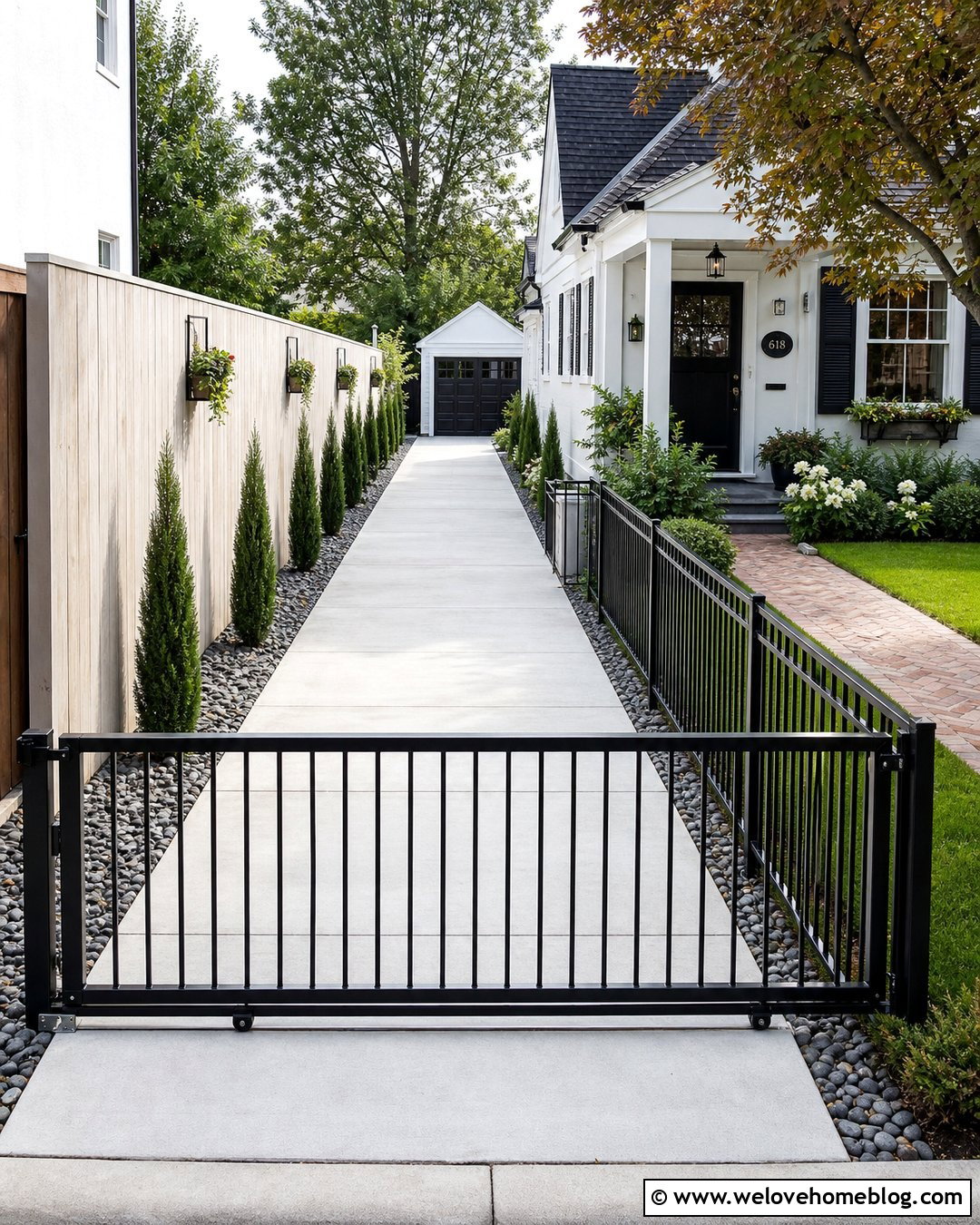
A narrow side driveway needs fencing that provides separation without creating a tunnel-like feeling. Choose pale vertical wood boards on the property side requiring privacy, then use a lower open aluminum fence on the lawn side. A smooth light-gray concrete driveway reflects brightness and makes the passage appear wider. Keep posts aligned and avoid decorative caps that project into the vehicle path. Near the street, install a compact sliding gate rather than swing panels that would consume valuable driveway space. Narrow gravel strips, wall-mounted greenery, and slim upright shrubs add softness without crowding the pavement. Use a different paving material for the adjacent walkway so pedestrians have a clearly readable route. This layout suits urban cottages, duplexes, and suburban homes where the garage sits behind the main building.
22. Long Gravel Driveway Fence
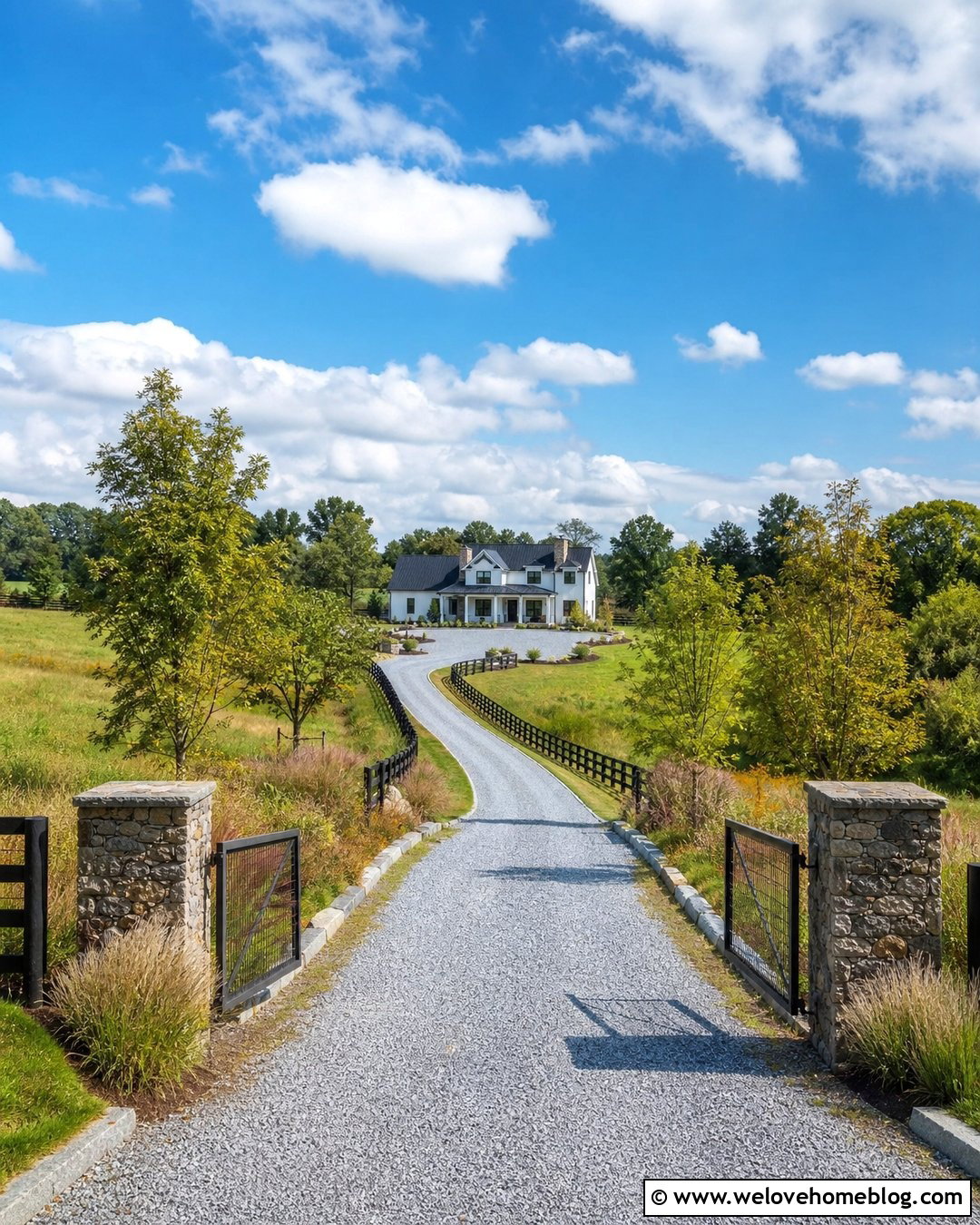
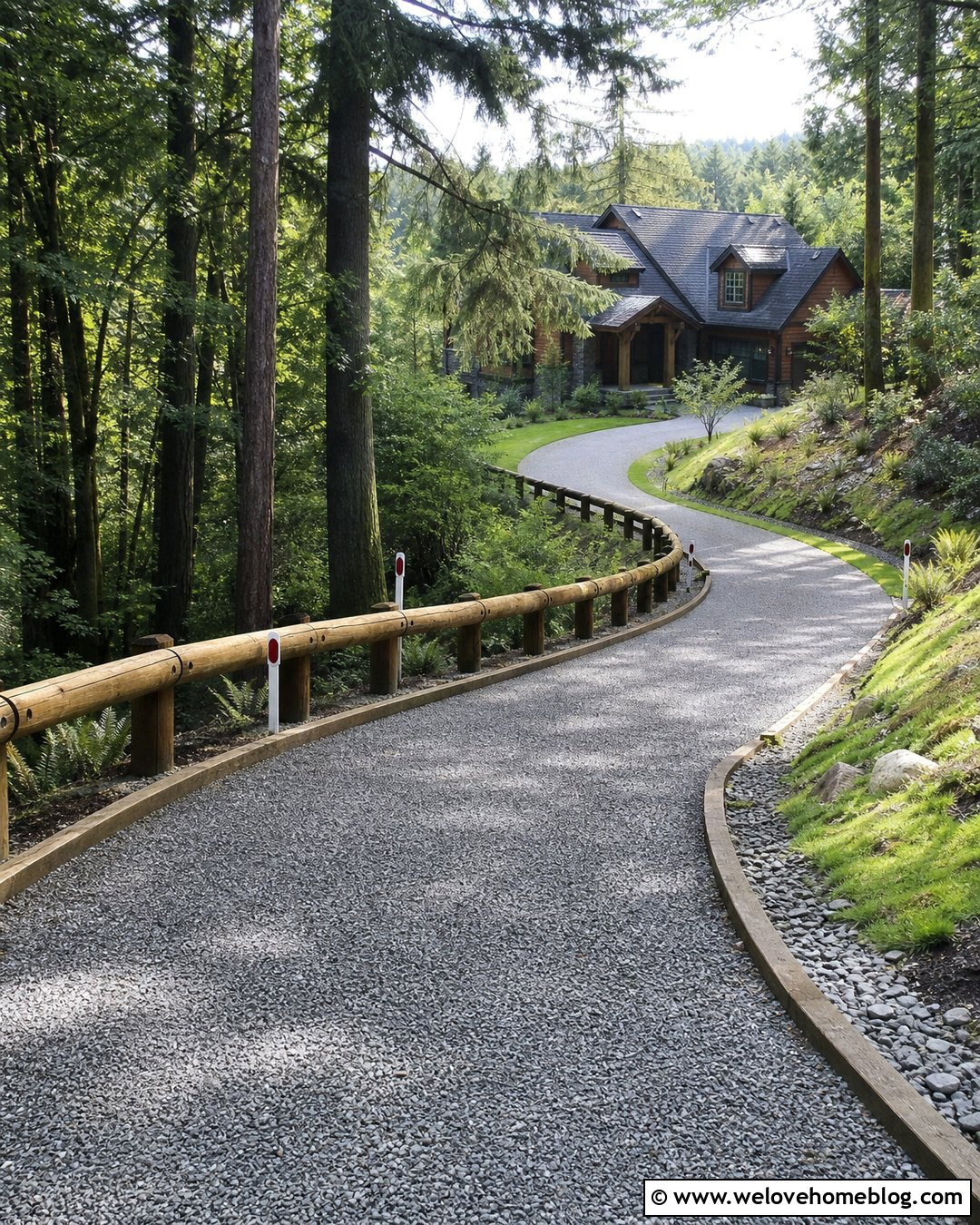
A long gravel driveway gains definition when fencing leads the eye toward the house. Border a gently winding gray crushed-stone surface with black post-and-rail fencing, keeping the rails low enough to preserve views across the yard. At the entrance, use taller stone pillars and a simple black metal gate to signal the transition from road to private property. Plant groups of native trees and grasses at intervals rather than lining the entire route with identical shrubs. This produces a more natural landscape and reduces the amount of trimming required. A compacted gravel shoulder and stone edging can help keep loose material away from fence posts. Finish the approach with a wider parking court near a farmhouse, lodge, or country home so the long drive opens naturally upon arrival.
23. Circular Driveway Fence
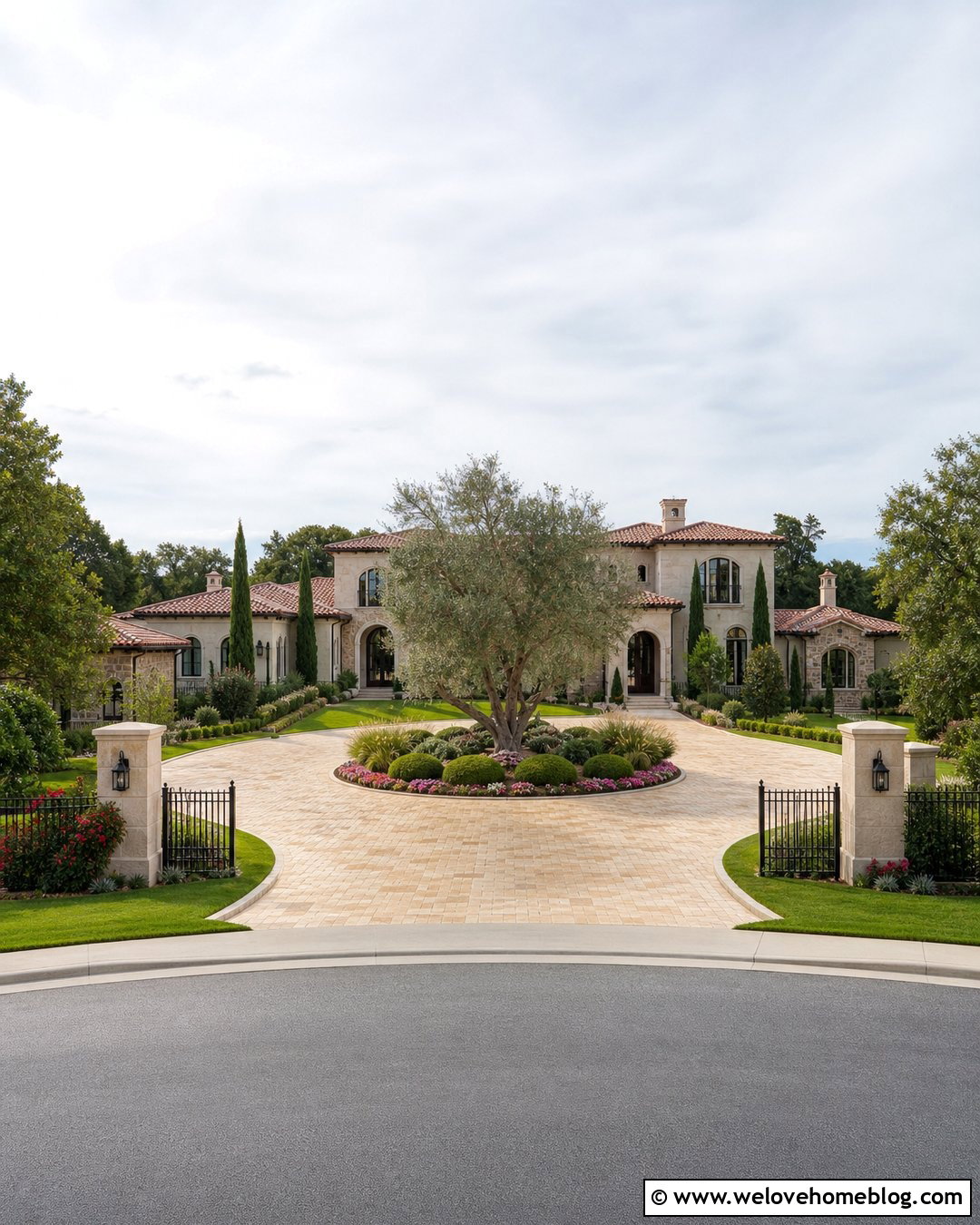
A circular driveway fence should frame both entrances without interrupting the flowing traffic pattern. Use warm limestone pavers for the driveway and low black metal fencing across the front property line. Matching gates at the entry and exit create symmetry, while limestone pillars connect the fencing to the pavement and home facade. In the center island, plant a specimen tree surrounded by clipped shrubs, ornamental grasses, and seasonal flowers. Keep the landscaping near each gate low to maintain clear views of pedestrians and approaching vehicles. Curved fence sections or carefully angled straight panels can follow the outer driveway edge without looking forced. This design is well suited to traditional estates, large Mediterranean homes, and upscale transitional properties. Consistent pillar, gate, and lighting details make the two openings read as one entrance composition.
24. Budget Driveway Fence
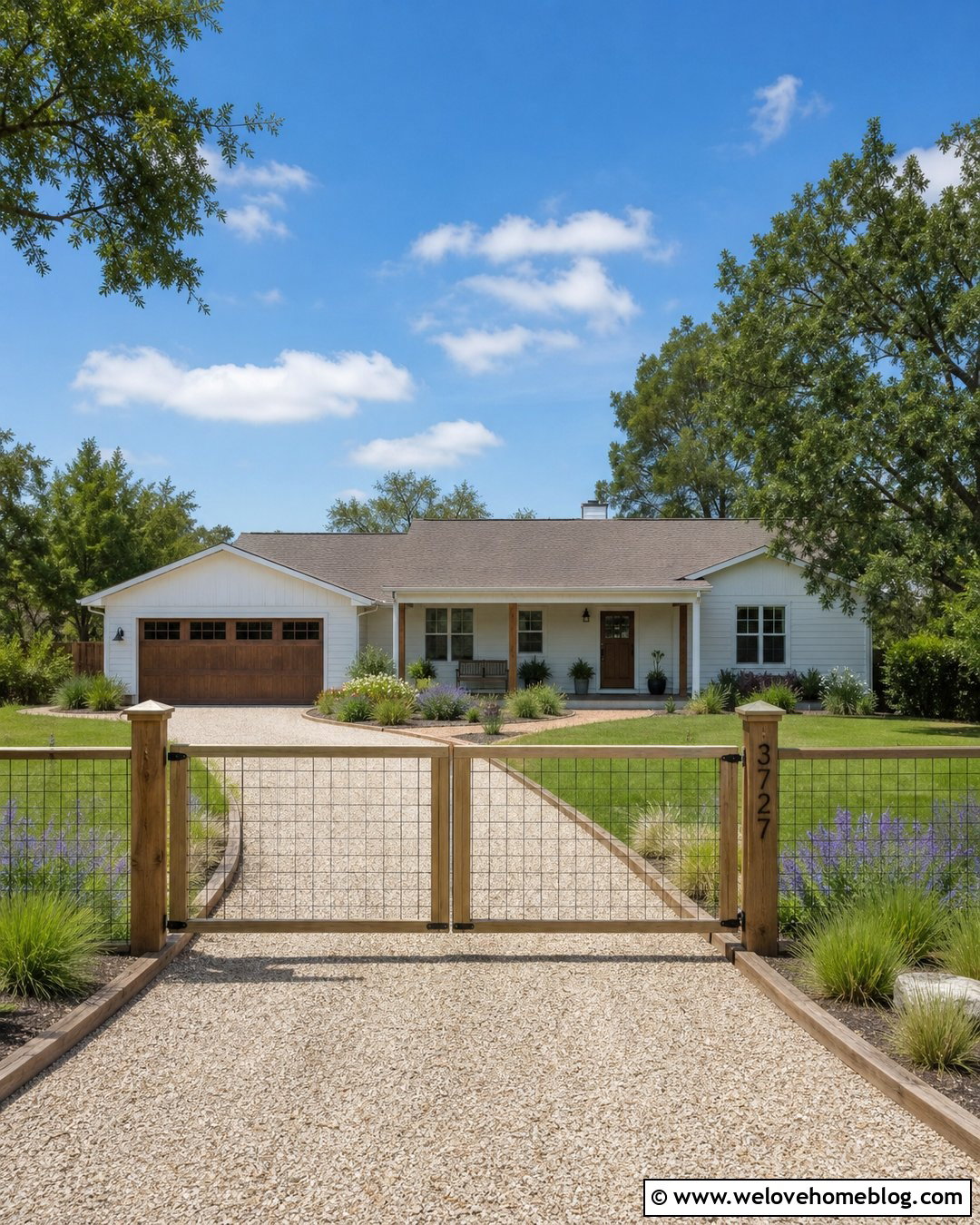
An attractive driveway fence does not require custom masonry or elaborate metalwork. Combine pressure-treated wood posts with black welded-wire panels beside a simple compacted gravel driveway. The dark mesh visually recedes, while wood rails across the top and bottom give each section a finished frame. Use a straightforward metal farm gate or build a lightweight wood-and-wire double gate that repeats the fence materials. Edge the driveway with treated timber or recycled concrete blocks, then add easy-care native grasses and flowering perennials along selected sections. Staining all visible wood one consistent color makes economical materials look more intentional. Concentrate the budget on strong gate posts, dependable hardware, and proper installation. Decorative planting, house numbers, and one well-placed entrance light can supply character without greatly increasing project costs.
25. Driveway Fence With Lighting
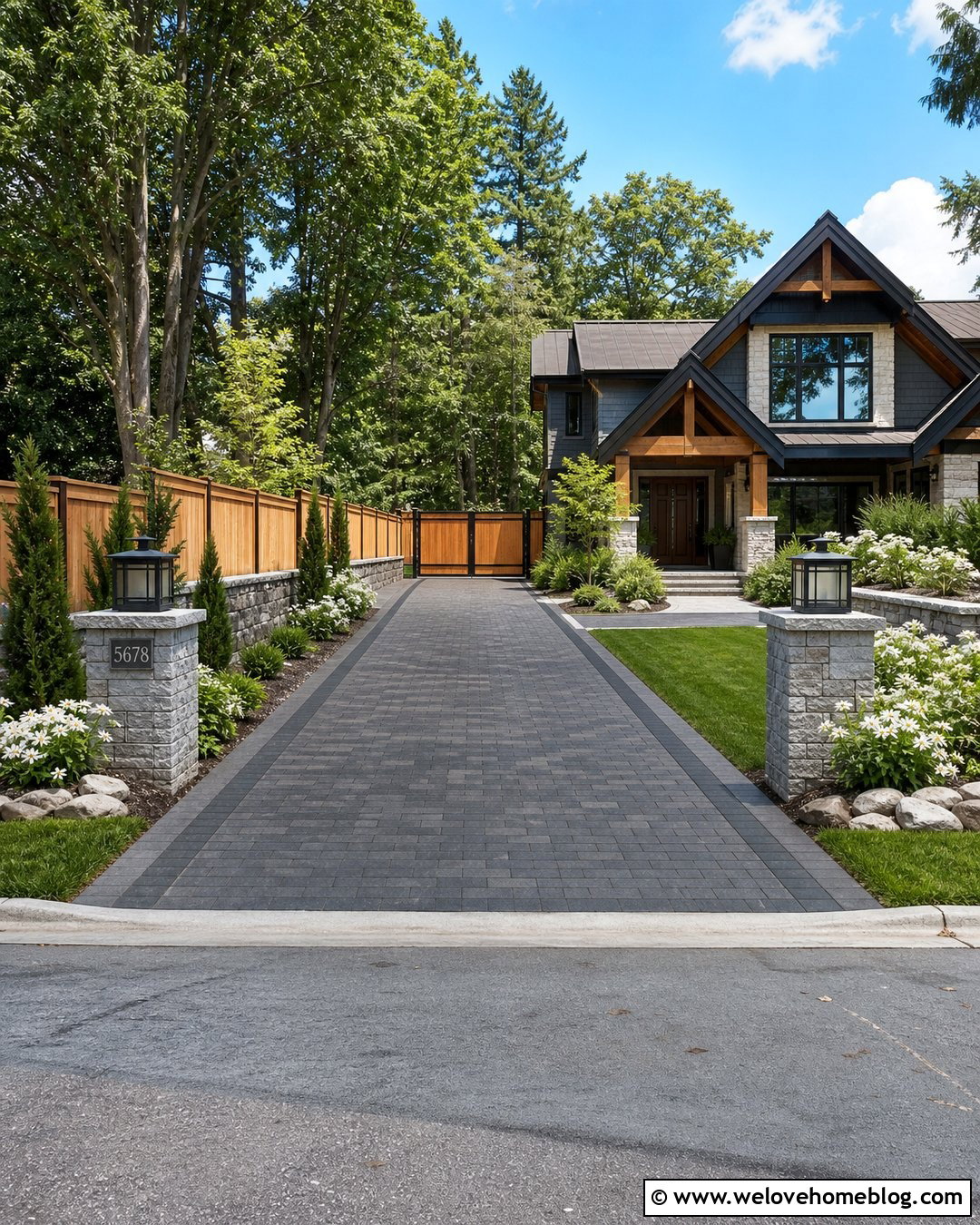
Integrated lighting makes a driveway fence more functional while strengthening its design during the day. Frame a straight charcoal paver driveway with low stone walls, cedar fencing, and square stone entrance pillars. Mount simple shielded fixtures on the pillars, then add low path lights along planting beds rather than placing bright fixtures at every fence post. During daylight, the black metal housings should coordinate with the gate hardware, windows, and garage lights. Layer the landscaping with compact evergreens, white flowering shrubs, and ornamental grasses so the entrance remains attractive without relying on illumination. Keep fixtures positioned where they will not glare into drivers’ eyes or neighboring windows. Before installation, verify property boundaries, utility locations, electrical requirements, fence regulations, and any HOA restrictions that apply to the project. ()
Conclusion:
The best **25 Driveway Fencing Ideas** show how fencing can become part of a complete entrance rather than a separate boundary. Start with the practical needs of the property, including privacy, vehicle access, slope, visibility, and maintenance. Then coordinate the fence with the driveway material, gate, pillars, planting beds, and architecture. Open aluminum suits visible front yards, while wood, composite, and hedges provide stronger screening. Stone and brick can add structure, and thoughtful lighting improves the finished approach. Before building, confirm local rules and plan enough clearance for gates and vehicles. A driveway fence designed around the entire property will look more intentional, operate more smoothly, and create lasting curb appeal.

Related posts:



Leave a Reply