
Modern cobblestone driveway ideas bring natural stone character into clean, contemporary landscapes. Unlike a plain paved surface, cobblestone adds texture, subtle color variation, and patterns that make the entire approach feel thoughtfully designed. The most successful driveways balance the stone with a practical layout, restrained borders, simple planting, and architecture that shares the same color palette. Gray granite can sharpen a minimalist exterior, while warmer sandstone tones soften modern farmhouse facades. Pattern also matters. Straight grids feel orderly, herringbone creates movement, and radial layouts make circular entrances more distinctive. Proper drainage, a stable base, and vehicle-rated stones are equally important. Use the following **20 Modern Cobblestone Driveway Ideas** to find a complete look that fits your house, front yard, and everyday parking needs.

1. Gray Granite Cobblestone Driveway
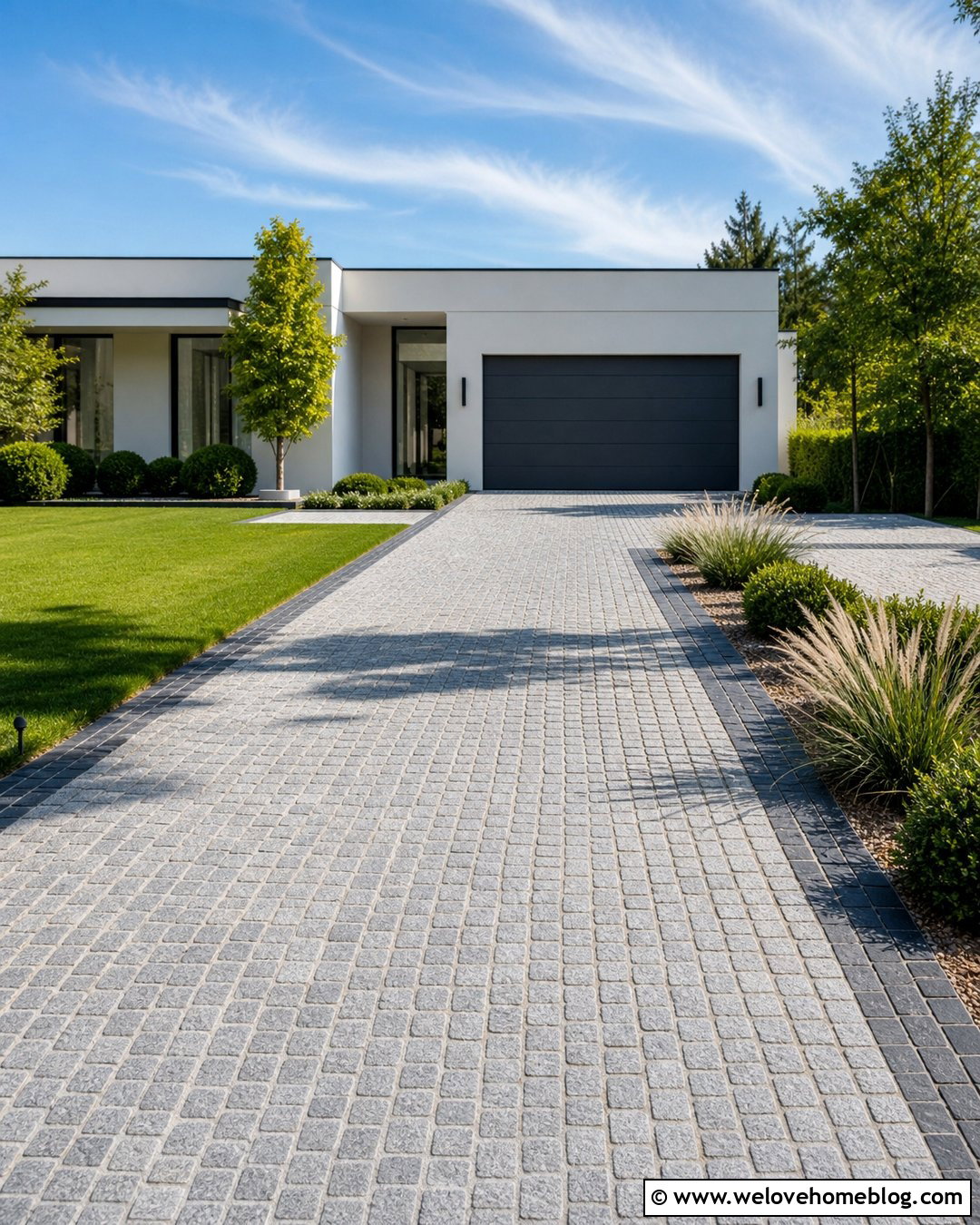
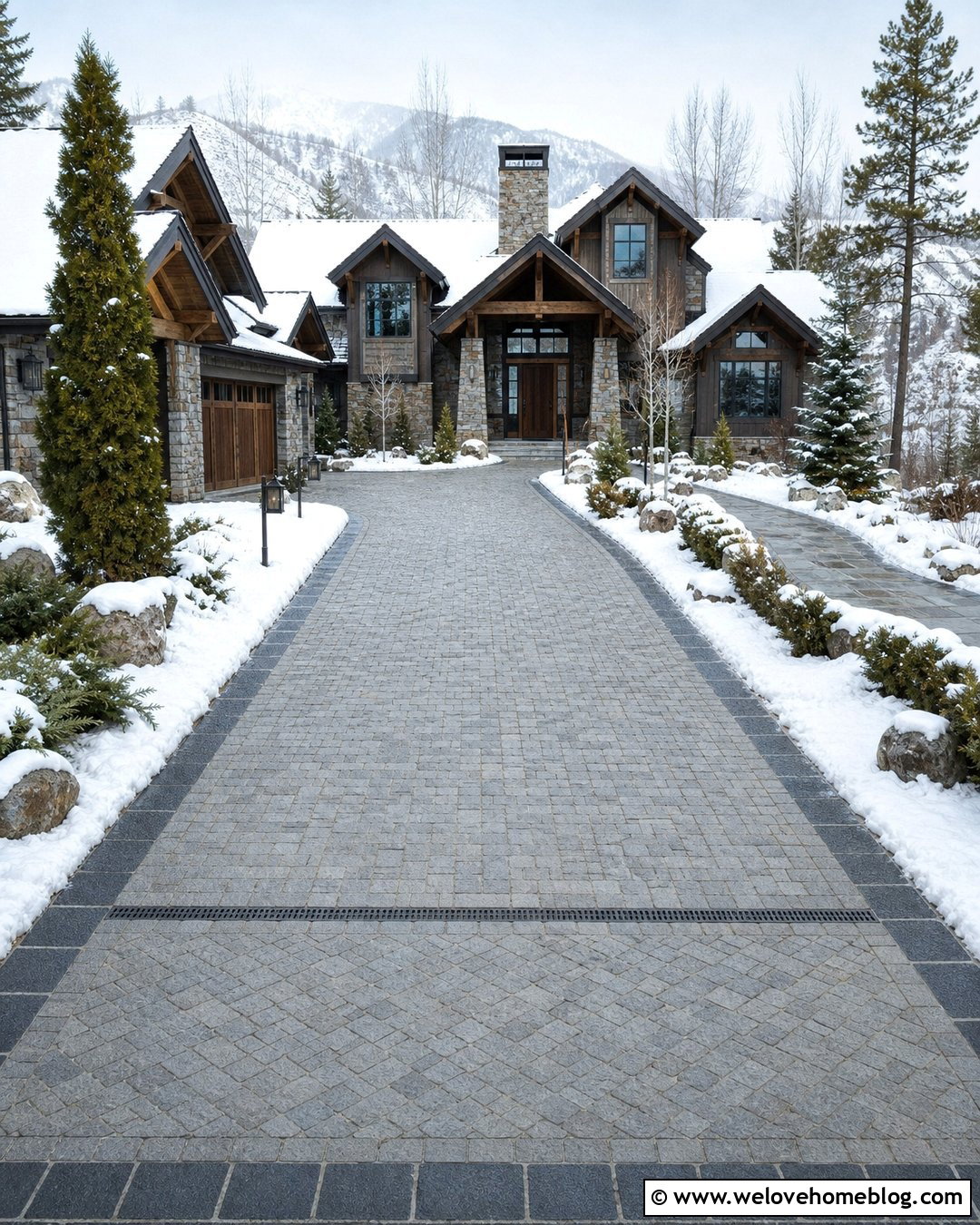
Gray granite cobblestones create a crisp foundation for a modern home with glass, concrete, or dark metal details. Lay uniformly sized stones in straight rows so the driveway follows the strong lines of the architecture. A medium-gray surface offers enough variation to feel natural without becoming visually busy. Frame the driveway with narrow charcoal paver borders and low beds filled with ornamental grasses. A straight layout works especially well for an attached garage because it creates a clear and uncluttered approach. Continue the same granite into a walkway for a connected design. Keep joint colors close to the stone rather than choosing a sharply contrasting filler. This allows the texture to remain visible while preserving the calm, streamlined appearance associated with contemporary landscaping.
2. Charcoal Herringbone Cobblestone Driveway
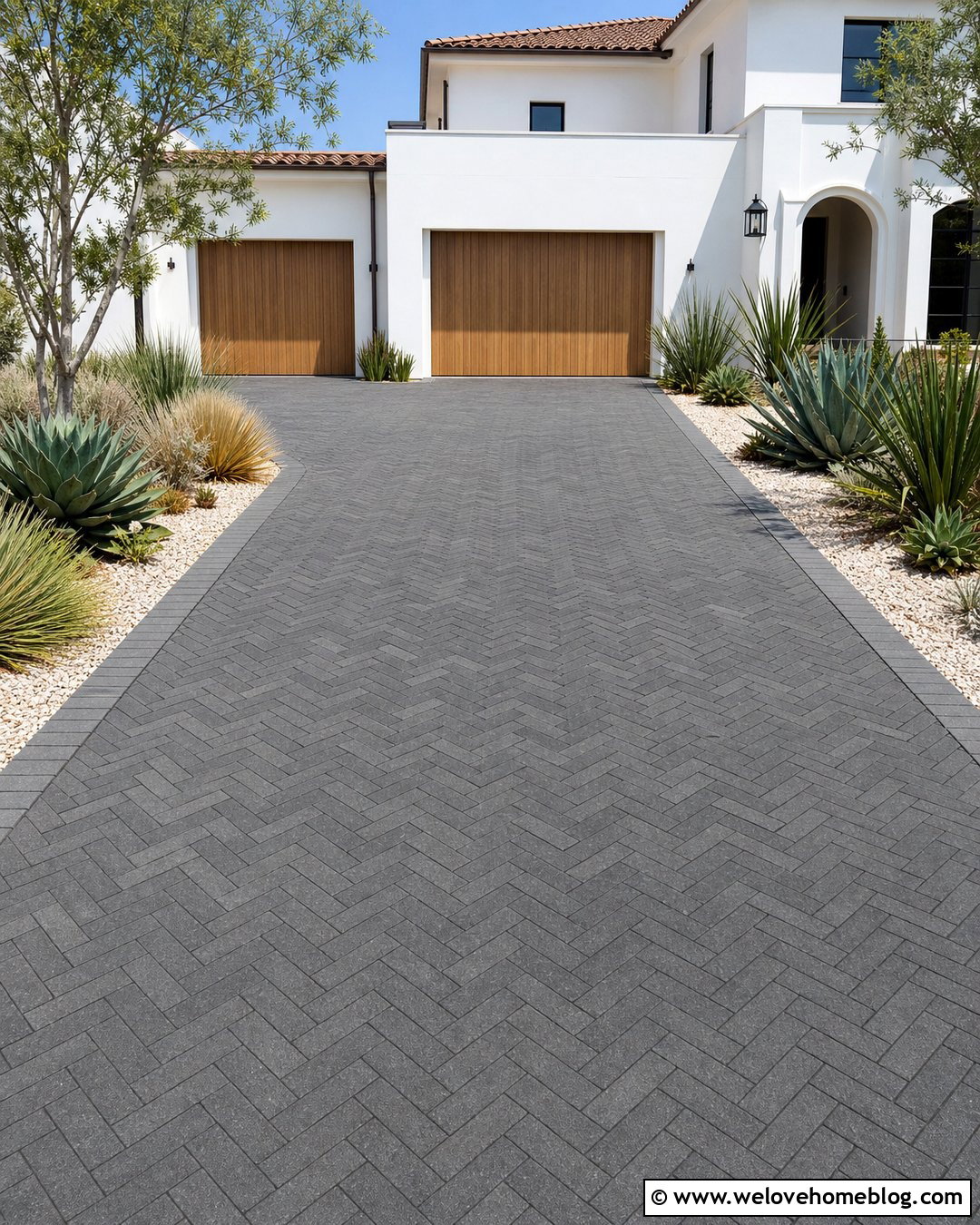
A charcoal herringbone cobblestone driveway makes a strong statement without relying on decorative landscaping. The angled pattern gives a straight driveway movement and helps disguise minor color differences between stones. Dark cobblestones look especially balanced beside a white stucco home, pale brick facade, or light wood garage door. Add a simple border of stones laid in a running bond to contain the pattern and create a clean perimeter. Black steel edging can separate the driveway from gravel planting beds filled with agave, yucca, or upright grasses. Limit the planting palette to a few repeated varieties. This keeps the stone pattern as the main feature. Herringbone is commonly used for areas exposed to vehicle movement because the interlocking arrangement distributes forces across multiple units. ()
3. Mixed Gray Cobblestone Driveway
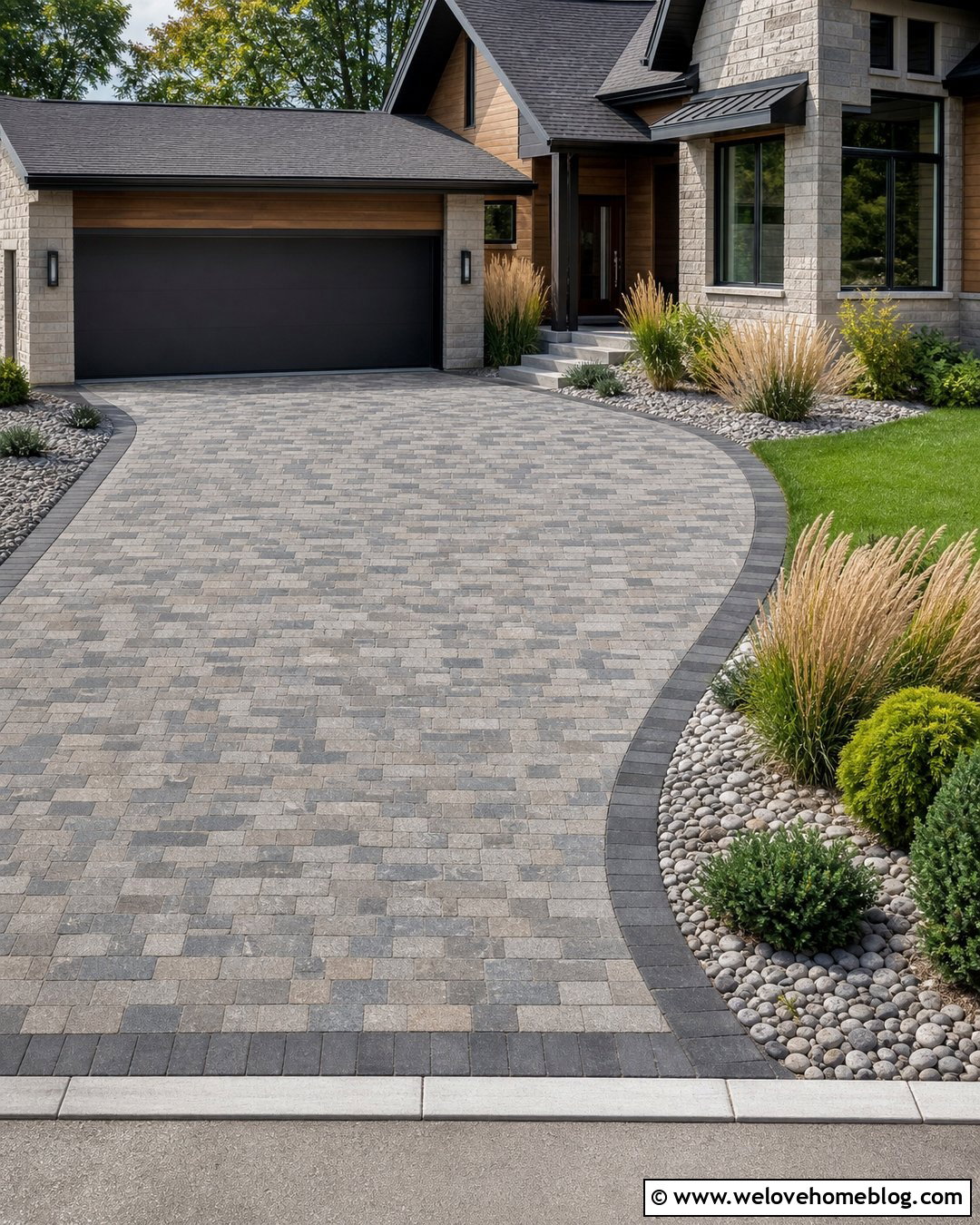
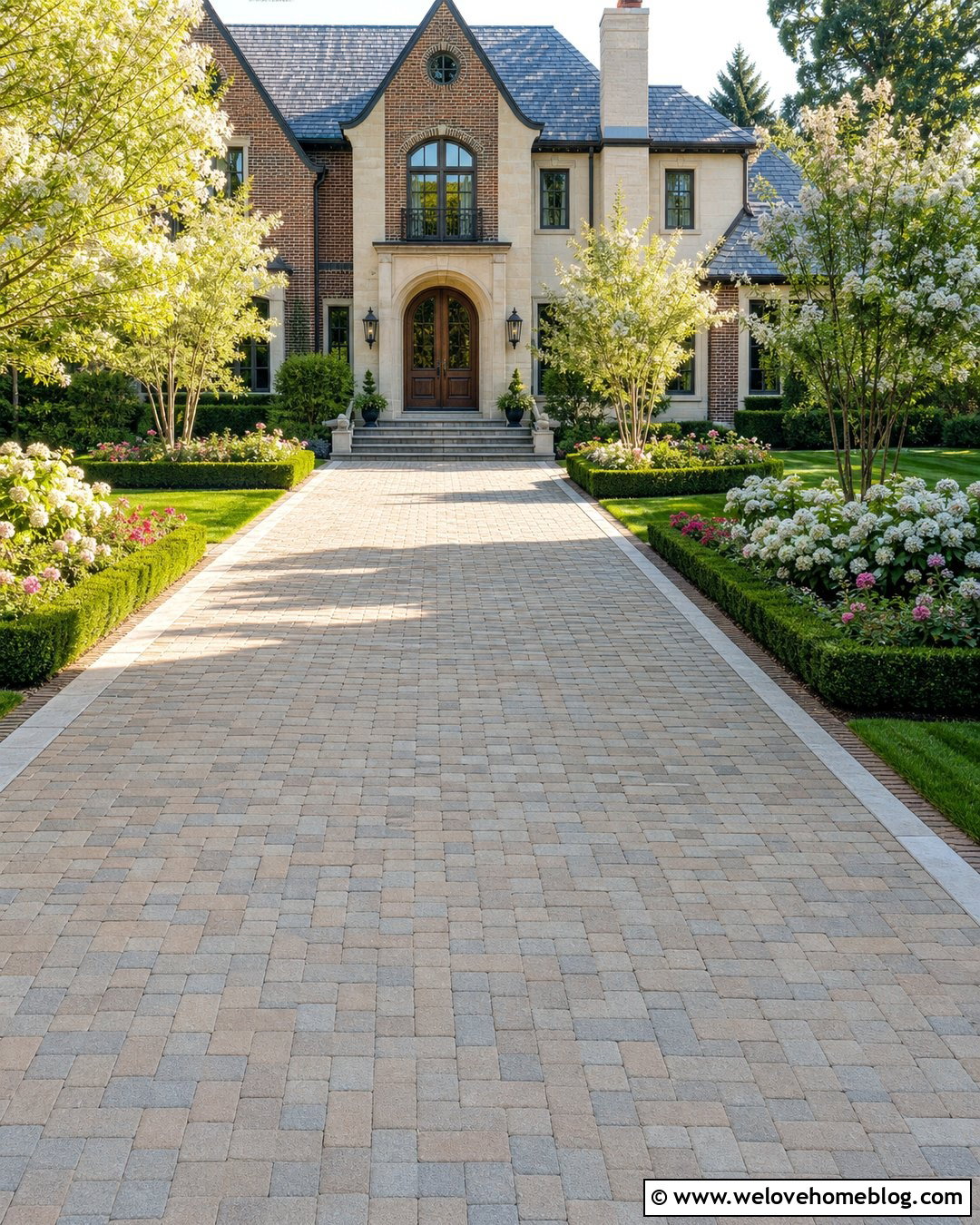
Mixed gray cobblestones introduce depth while maintaining a modern, neutral palette. Combine silver, graphite, and soft blue-gray stones in a random running bond rather than arranging them in noticeable color blocks. The finished driveway should look naturally blended from the street to the garage. Use a single charcoal tone for the perimeter border to give the variation a controlled frame. On each side, install rectangular planting beds with clipped shrubs, feather reed grass, and pale river rock. A smooth concrete walkway can provide a quiet contrast to the textured driveway. This complete look suits modern homes that combine several exterior materials, including stone veneer, wood siding, and metal roofing. Repeat one of the cobblestone colors on the facade or retaining walls to make the driveway feel connected to the house.
4. Permeable Cobblestone Driveway
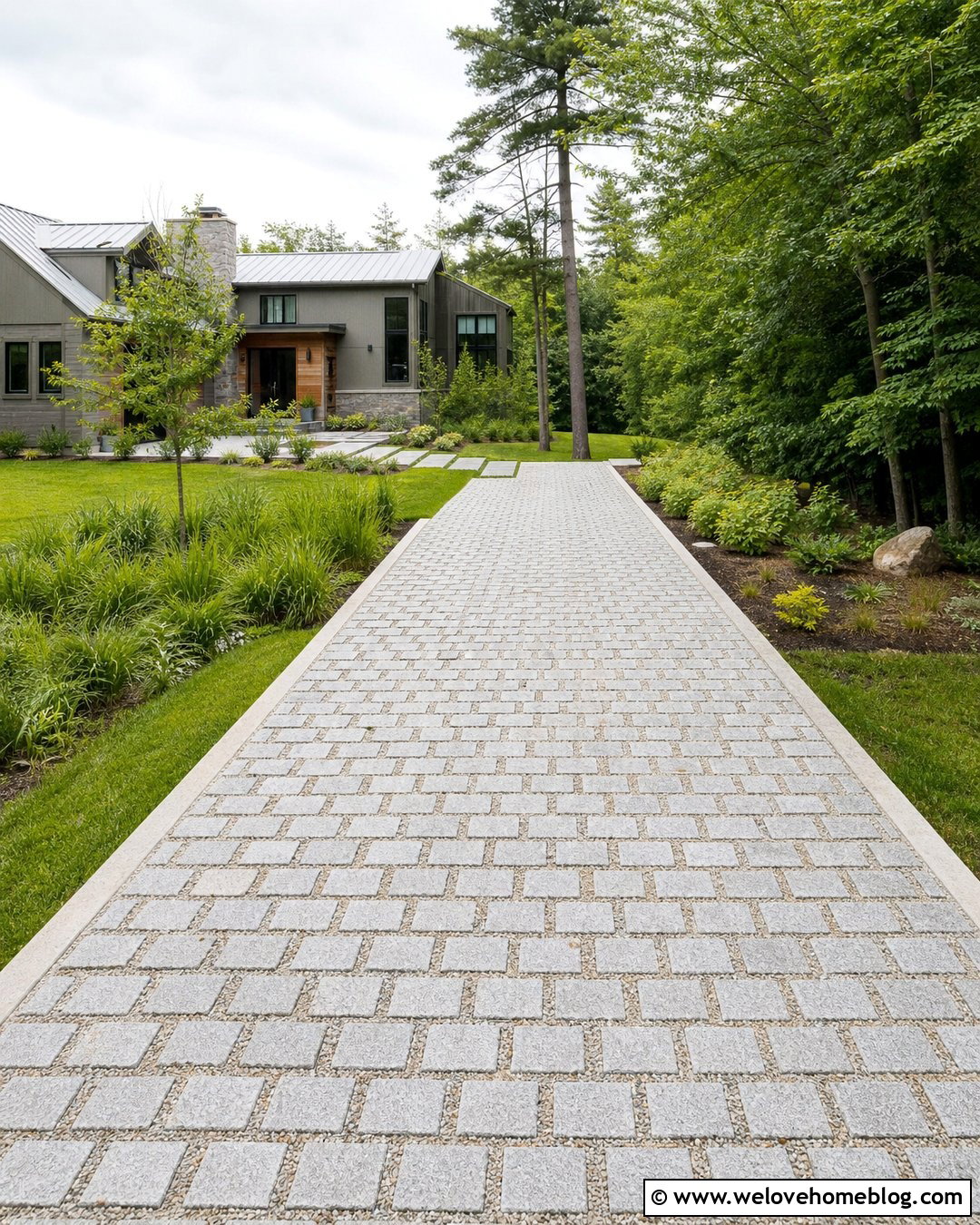
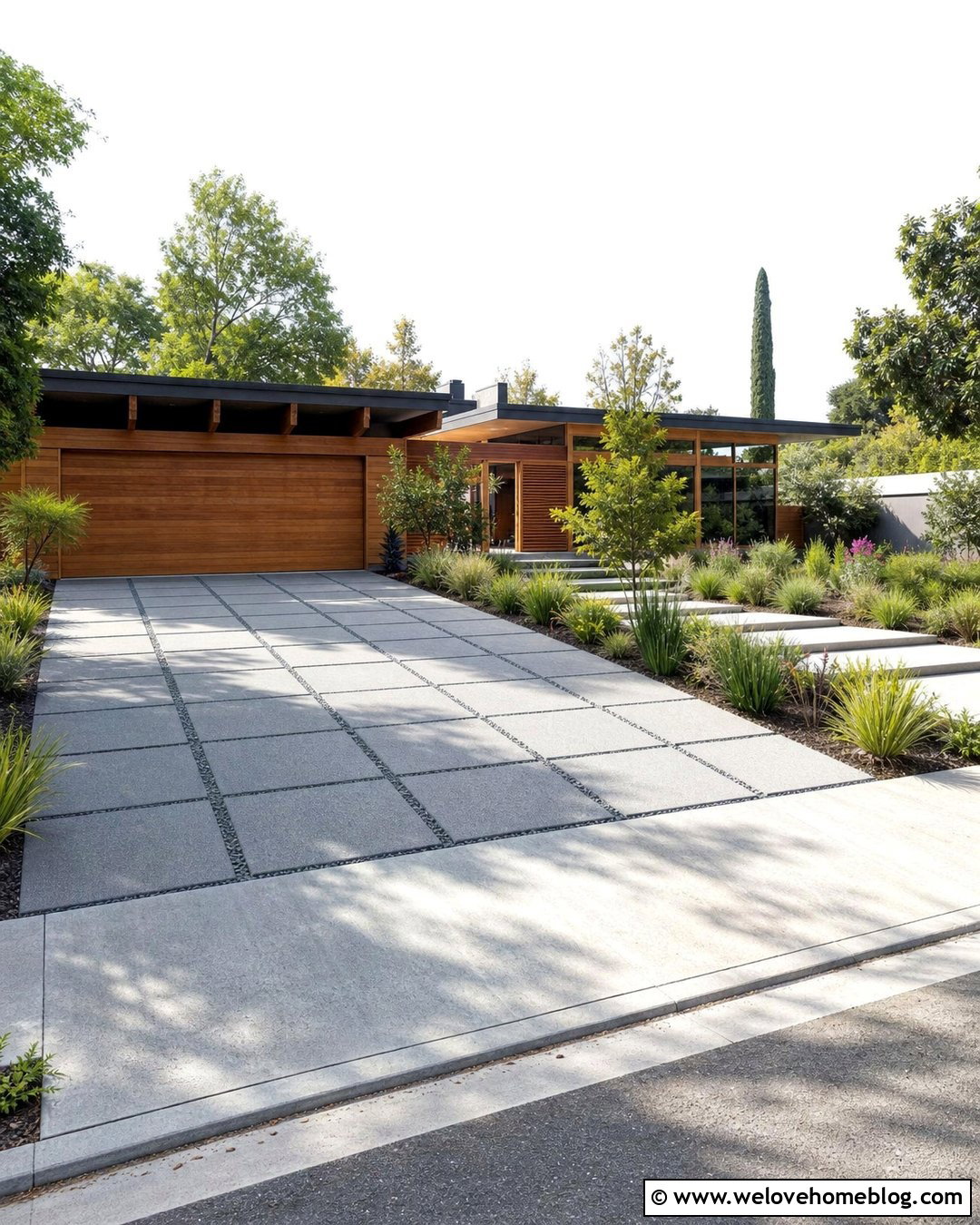
Wide, carefully planned joints can give a cobblestone driveway a lighter appearance while supporting a permeable landscape strategy. Choose squared gray granite cobbles and arrange them in an orderly grid over a professionally prepared, free-draining base. Fill the joints with a suitable permeable aggregate or low-growing greenery where climate, maintenance, and local conditions allow. Crisp concrete curbs help contain the surface and prevent the planted edges from looking untidy. Pair the driveway with rain gardens, native grasses, and shallow planting beds that visually connect the hardscape to the yard. Keep the route straight and avoid excessive patterns so the open joints remain the main detail. Permeable paving is used in contemporary landscapes to encourage water infiltration rather than directing all runoff toward the street. ()
5. Cobblestone Driveway With Concrete Bands
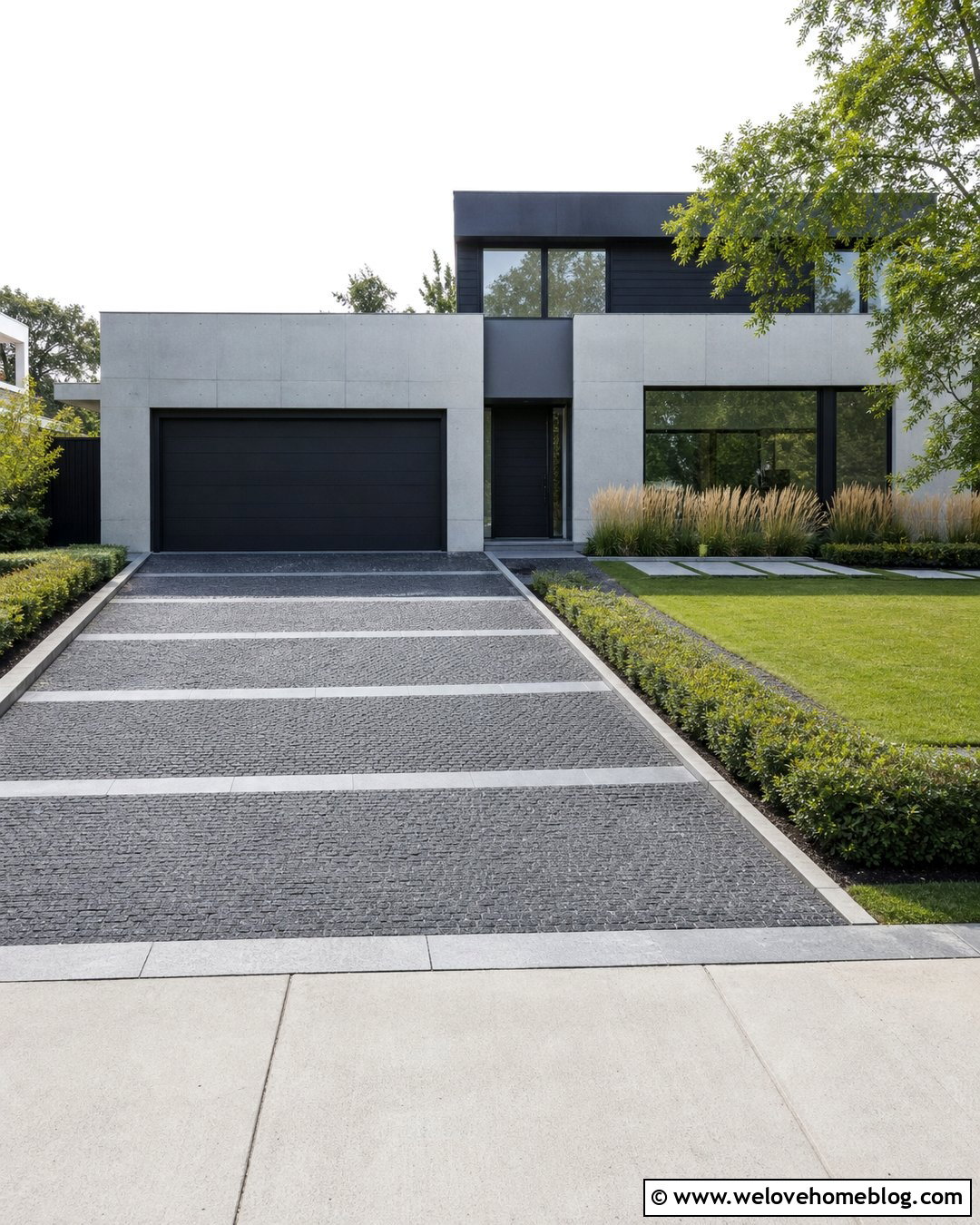
Combining cobblestone with concrete bands creates a modern driveway that feels structured and architectural. Use dark granite cobbles as the primary surface, then place slim bands of light-gray poured concrete across the width at measured intervals. The lines can align with garage doors, windows, or facade panels to extend the house’s geometry into the landscape. Edge the driveway with matching concrete curbs for a unified finish. Low evergreen hedges and rectangular lawn panels soften the hard materials without hiding the pattern. This design works best on a straight, medium-to-wide driveway where the bands can be seen clearly from the curb. Before installation, plan the transitions carefully so all sections sit at an even height. The completed surface should appear intentional rather than like separate materials added at different times.
6. Circular Cobblestone Driveway
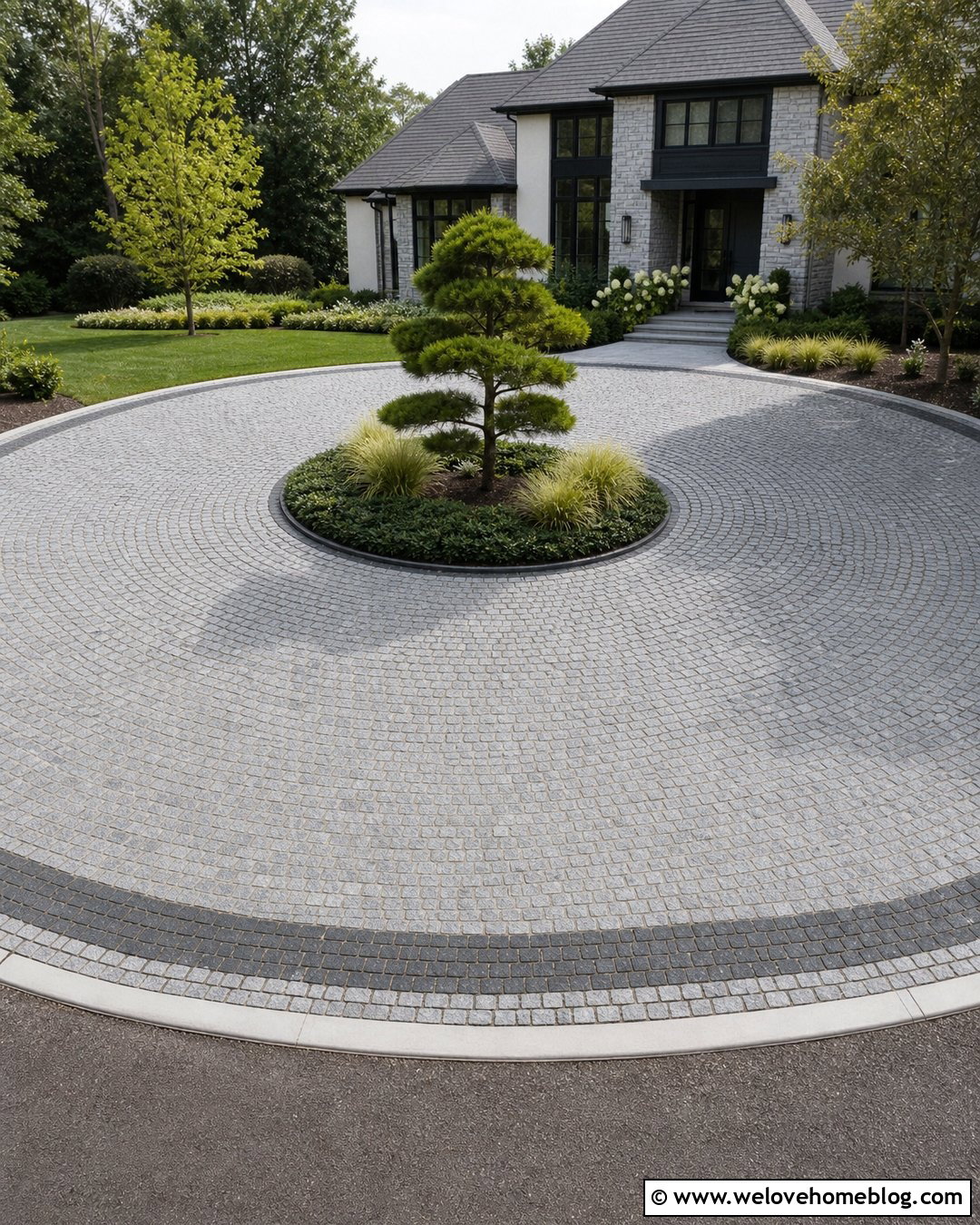
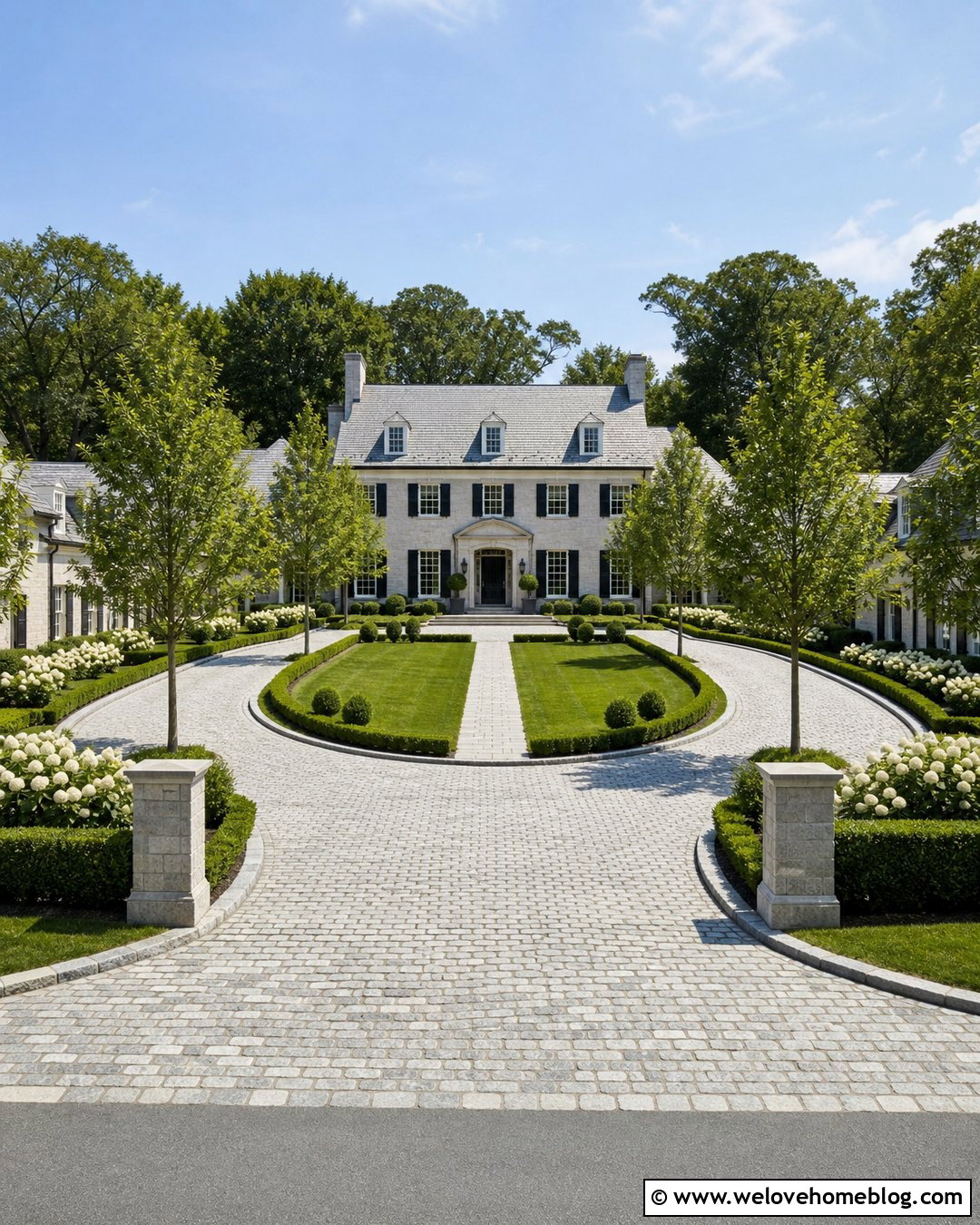
A circular cobblestone driveway can feel surprisingly modern when the shape is simple and the planting is restrained. Choose medium-gray granite cobbles and lay them in a radial pattern that follows the curve of the driving lane. Create a central island with one sculptural tree, clipped ground cover, and a smooth steel or stone edge. Avoid filling the island with too many small plants, which can make the entrance appear traditional or crowded. A darker cobblestone ribbon around the inside and outside curves will sharpen the circle and guide vehicles. This layout suits a broad front yard with enough turning space and a clearly positioned entrance. Radial stonework naturally emphasizes a circle, turning the entire driveway into a coordinated focal point rather than leaving the center island to carry the design alone. ()
7. Curved Cobblestone Driveway
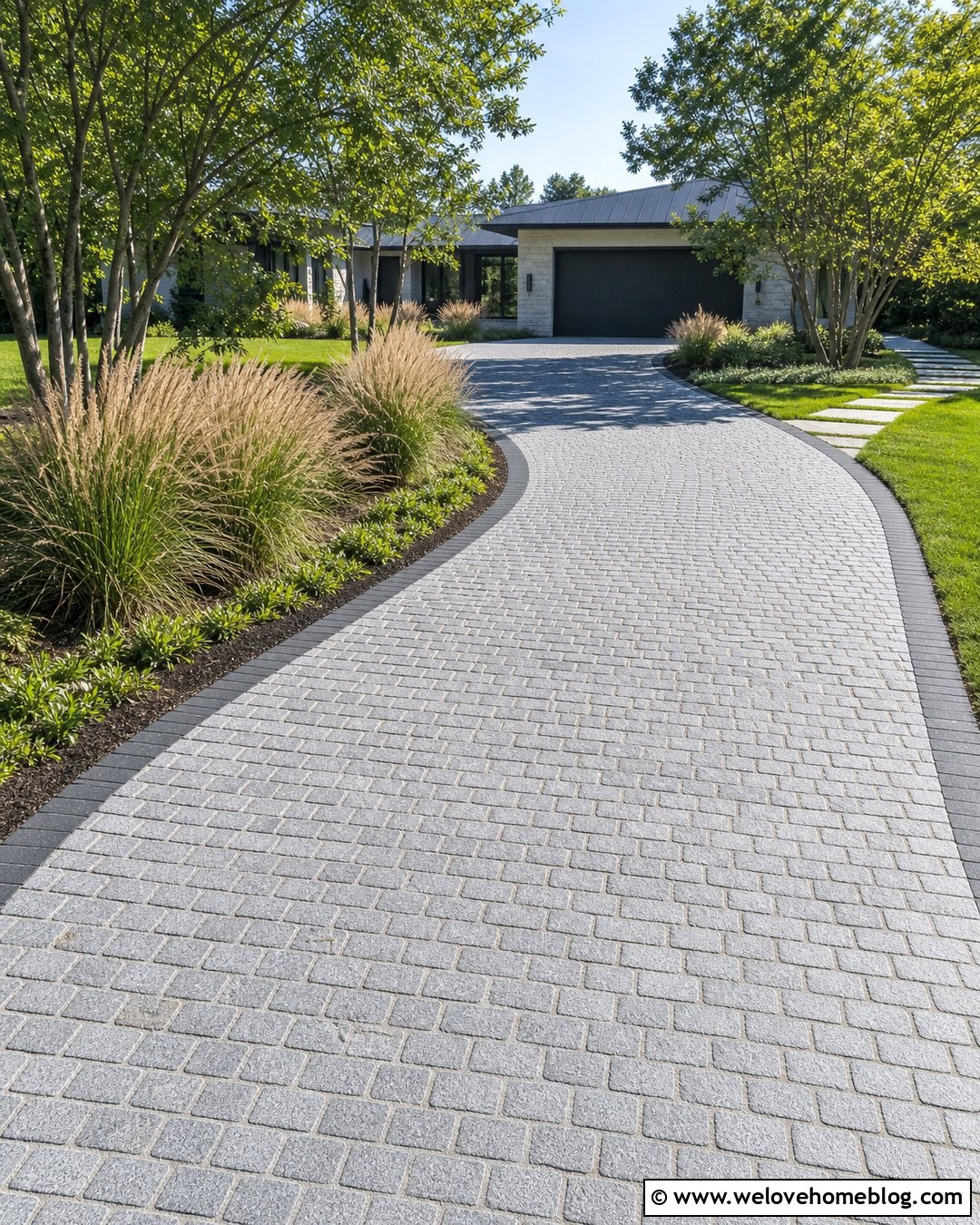
A gently curved cobblestone driveway can guide the eye through the landscape and reveal the home gradually. Use cool gray stones in a running bond that follows the curve instead of cutting across it. A continuous charcoal border will strengthen the outline and keep the shape looking precise. On the outer side, plant airy ornamental grasses and a row of evenly spaced multi-stem trees. Keep the inside of the curve lower with lawn or ground cover so drivers retain clear sightlines. This combination creates movement without making the front yard feel overly formal. It is particularly effective for a modern house positioned away from the street or slightly off-center on the lot. Let the curve respond to existing trees, slopes, and the garage location instead of adding unnecessary bends that complicate navigation.
8. Narrow Cobblestone Driveway
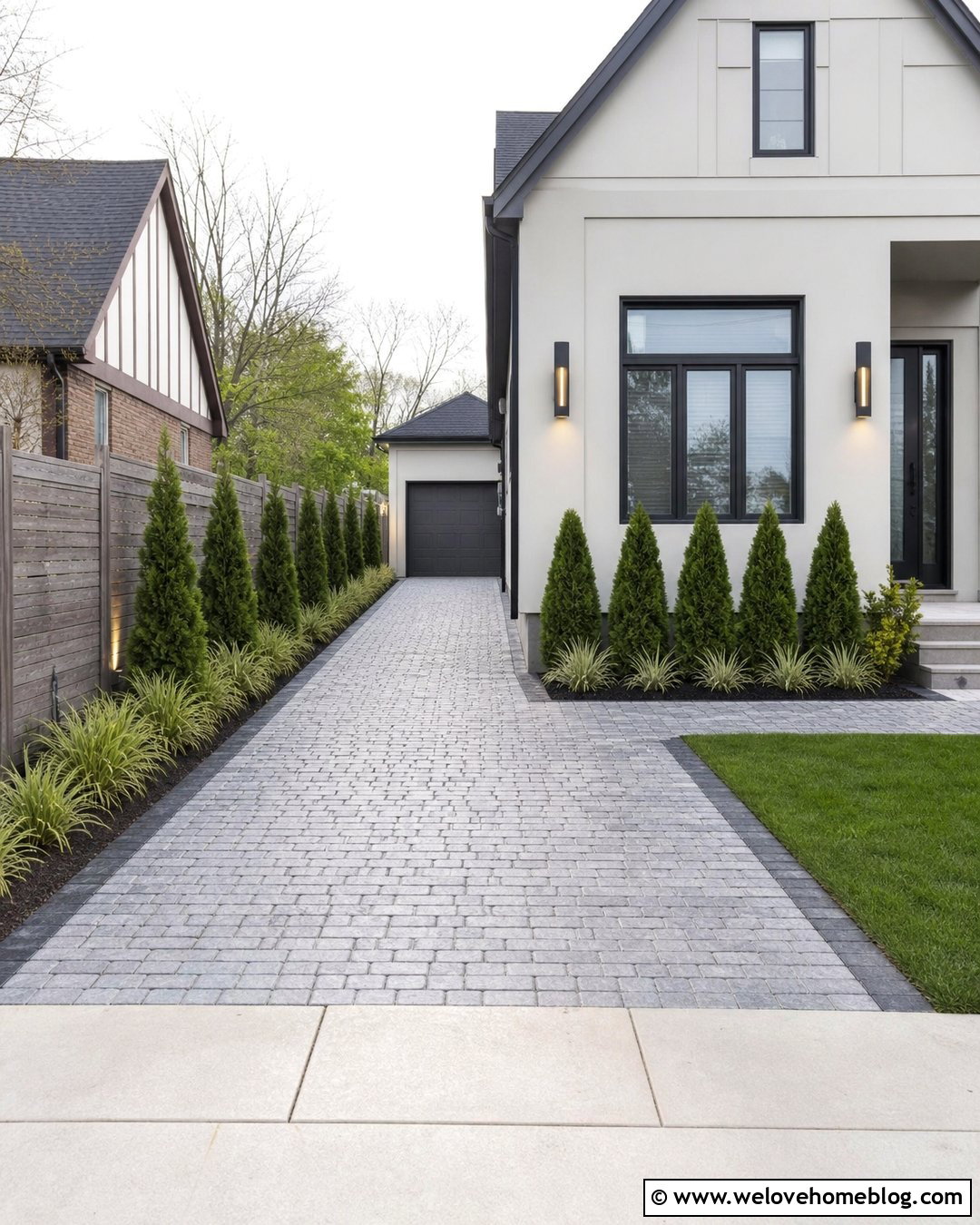
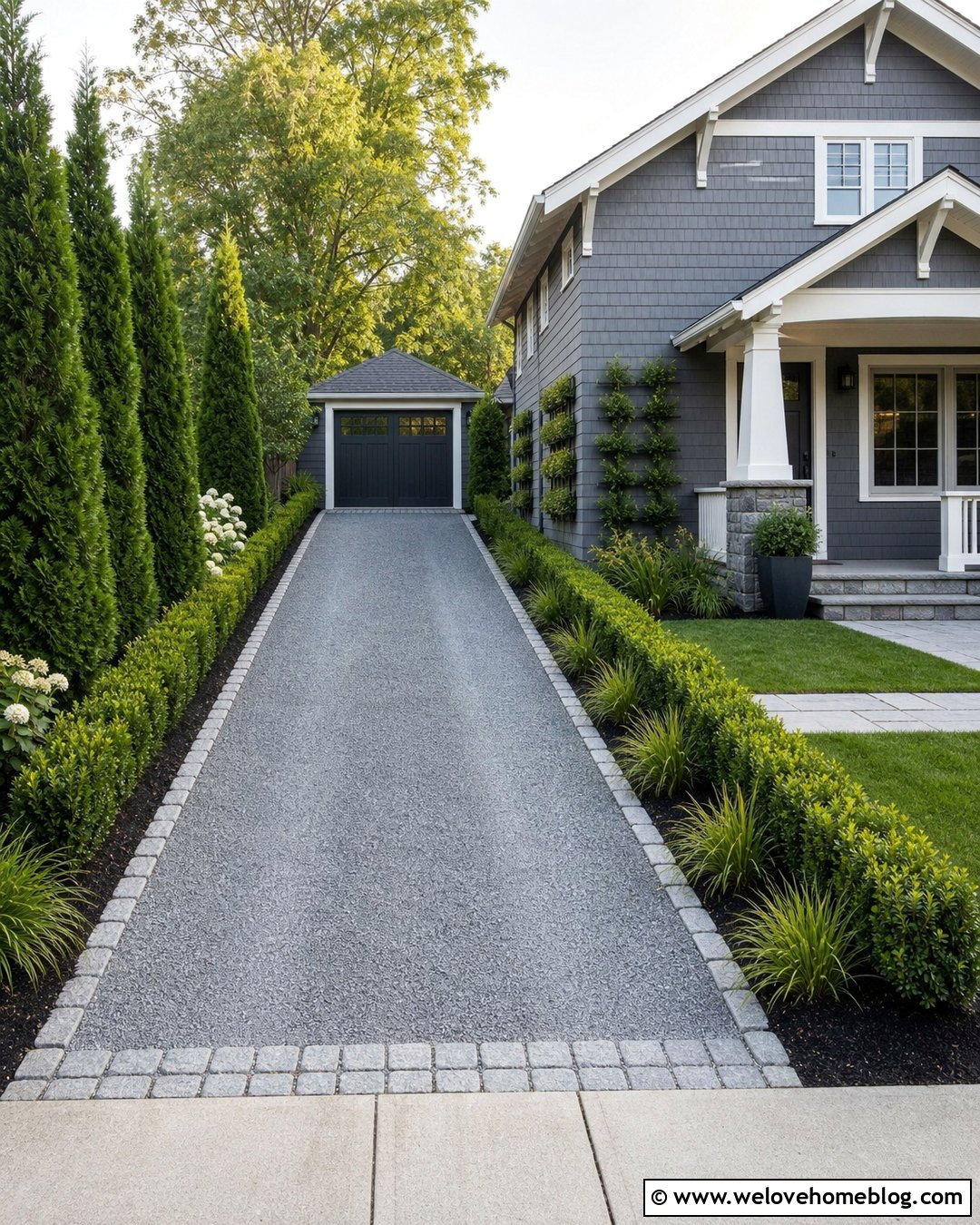
Limited frontage does not prevent a cobblestone driveway from making a polished impression. For a narrow side driveway, select small rectangular granite cobbles and lay them lengthwise to make the route appear longer. Define both sides with slim, dark stone borders rather than wide decorative bands that reduce the visual width. A flush walkway can run beside the driveway using matching cobbles in a different pattern. Add upright shrubs, narrow ornamental grasses, and wall-mounted lighting instead of spreading plants that may interfere with doors or mirrors. At the garage, widen the paving slightly to create a comfortable parking and turning area. Repeating the driveway stone near the front steps will connect this functional side route to the main entrance and make the limited space feel like one complete, carefully planned landscape.
9. Light Cobblestone Driveway
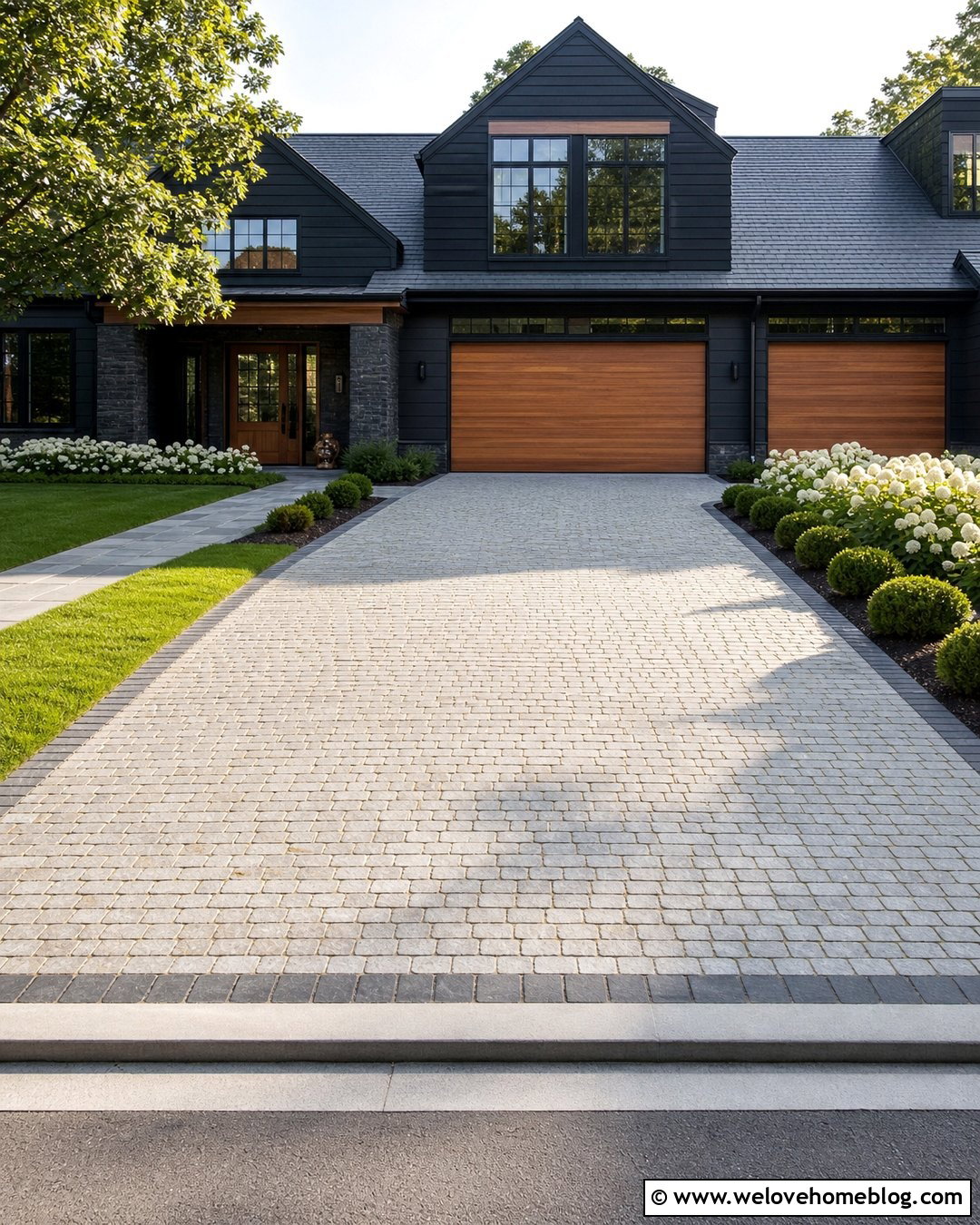
Pale cobblestone can brighten the approach to a dark contemporary home. Choose light-gray granite, limestone-toned cobbles, or cool beige natural stone with restrained variation. Lay the stones in a straight grid to maintain a clean appearance, then surround the driveway with a thin charcoal border for definition. The contrast works beautifully with black siding, dark brick, bronze windows, and warm wood doors. Use deep green shrubs and white flowering plants to repeat the light-and-dark palette across the landscape. Because very pale surfaces can show soil and organic debris, avoid placing messy fruiting trees directly over the parking area. A broad stone walkway in the same color can lead from the driveway to the entrance. Together, the bright paving and dark facade create a balanced, high-contrast curb view.
10. Black Cobblestone Driveway
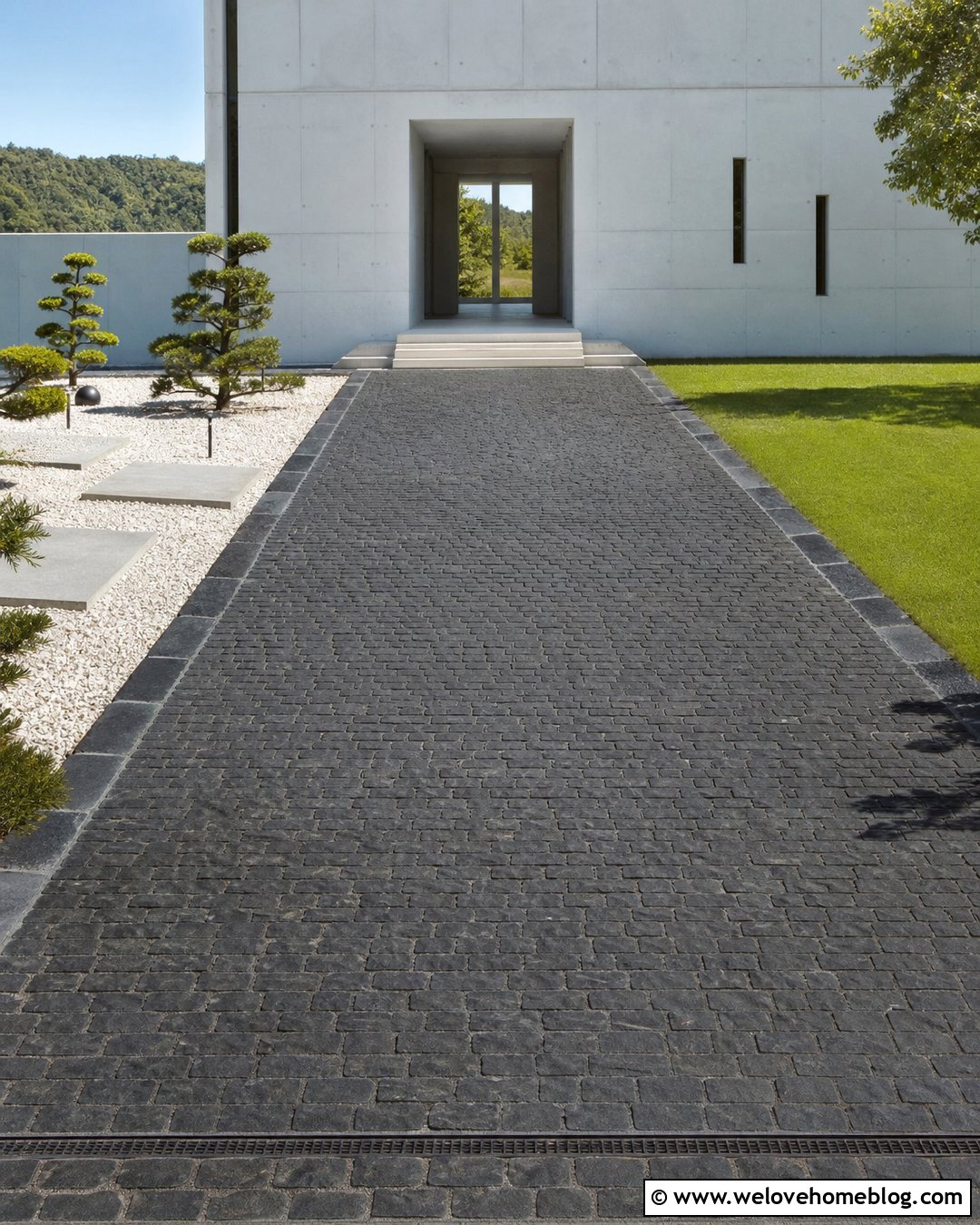
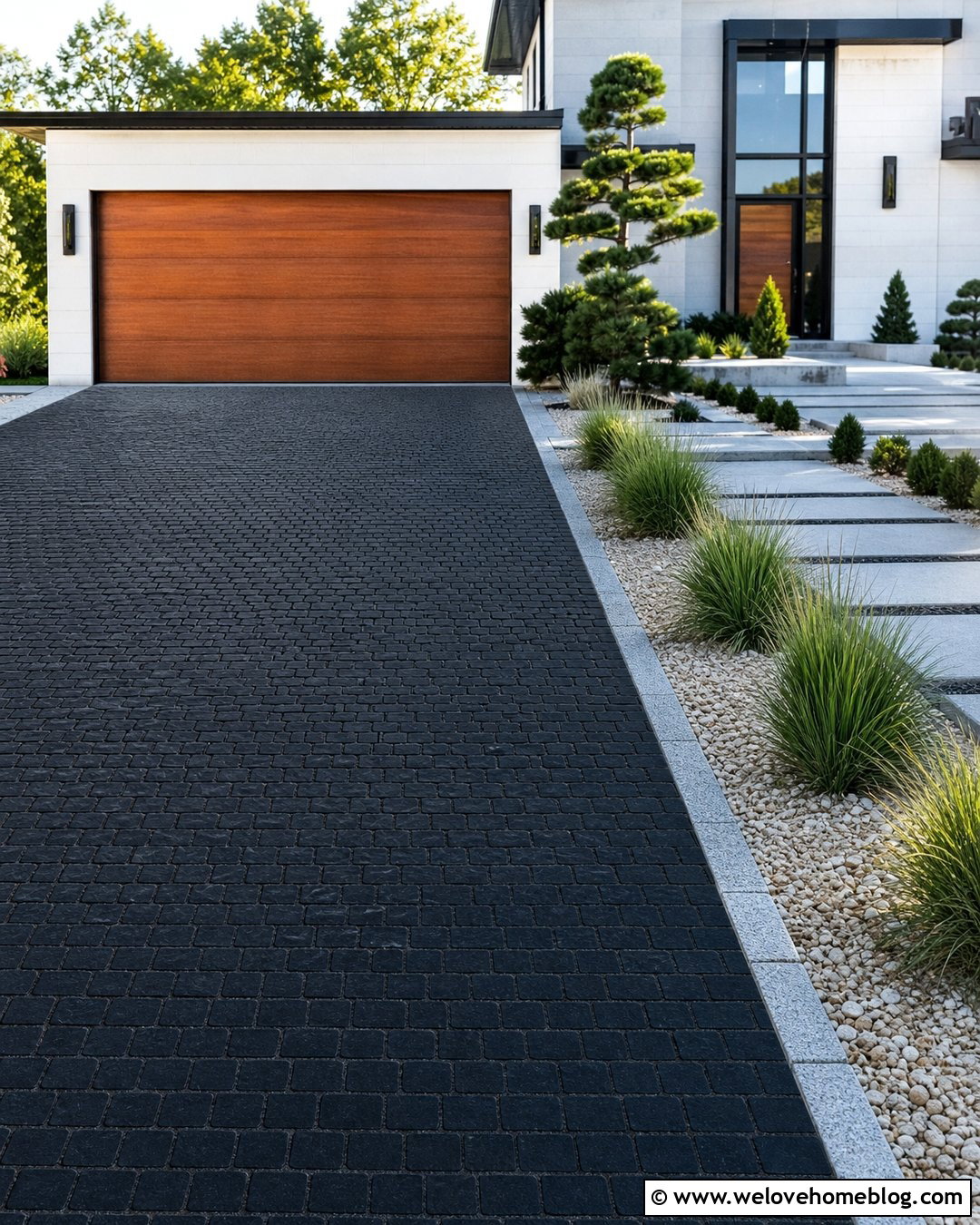
Nearly black cobblestones give a modern driveway a dramatic but grounded look. Basalt-colored or deep charcoal stones work well with pale concrete architecture and minimal landscaping. Arrange the cobbles in a tight running bond, using black jointing material to reduce visual clutter and emphasize the unified surface. A narrow border of larger rectangular stones can frame the driveway without introducing another color. Beside it, use pale gravel beds, sculptural evergreens, and concrete stepping slabs. This combination allows the dark driveway to anchor the yard while the lighter landscaping prevents the frontage from feeling heavy. Add adequate drainage so water does not collect in low spots and change the surface appearance. Dark cobblestone paving has been used successfully to connect traditional stone texture with sharp contemporary architecture and strong exterior color contrasts. ()
11. Cobblestone Driveway With Grass Strips
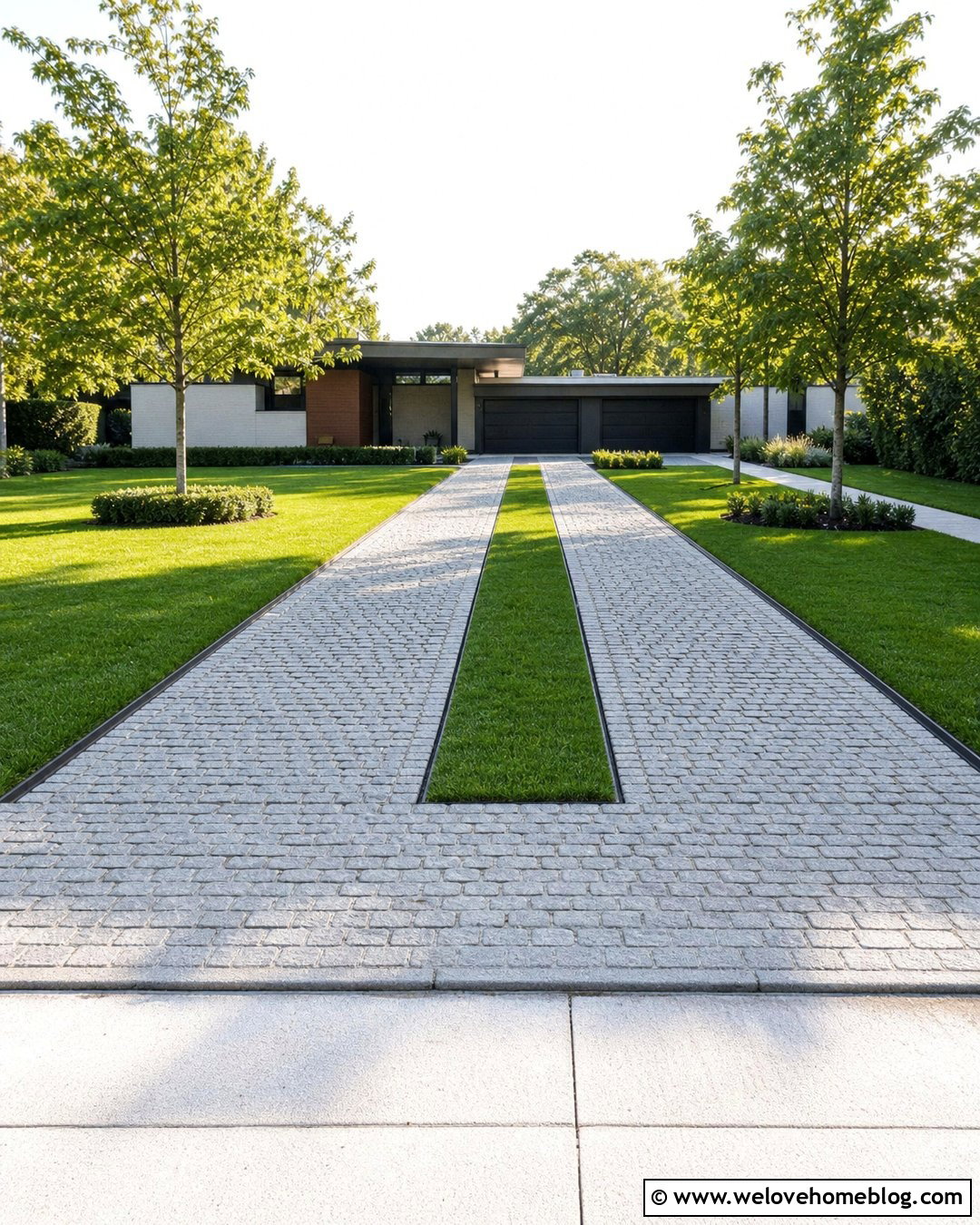
Grass strips can break up a large cobblestone driveway and make the hardscape feel more integrated with the yard. Use squared granite cobbles in two broad driving lanes with a neat green strip running through the center. Continue full-width cobblestone at the street entrance and garage apron so turning and pedestrian areas remain practical. Steel edging can create a sharp division between stone and turf. Choose durable grass suited to the local sunlight and expected traffic, or use low ground cover where regular mowing would be difficult. Frame the complete driveway with simple lawn panels and evenly spaced trees. This layout works best for a straight residential approach where vehicle wheels follow a predictable route. The green center softens the stone while reinforcing the long, clean lines of a modern home.
12. Cobblestone Driveway With a Modern Apron
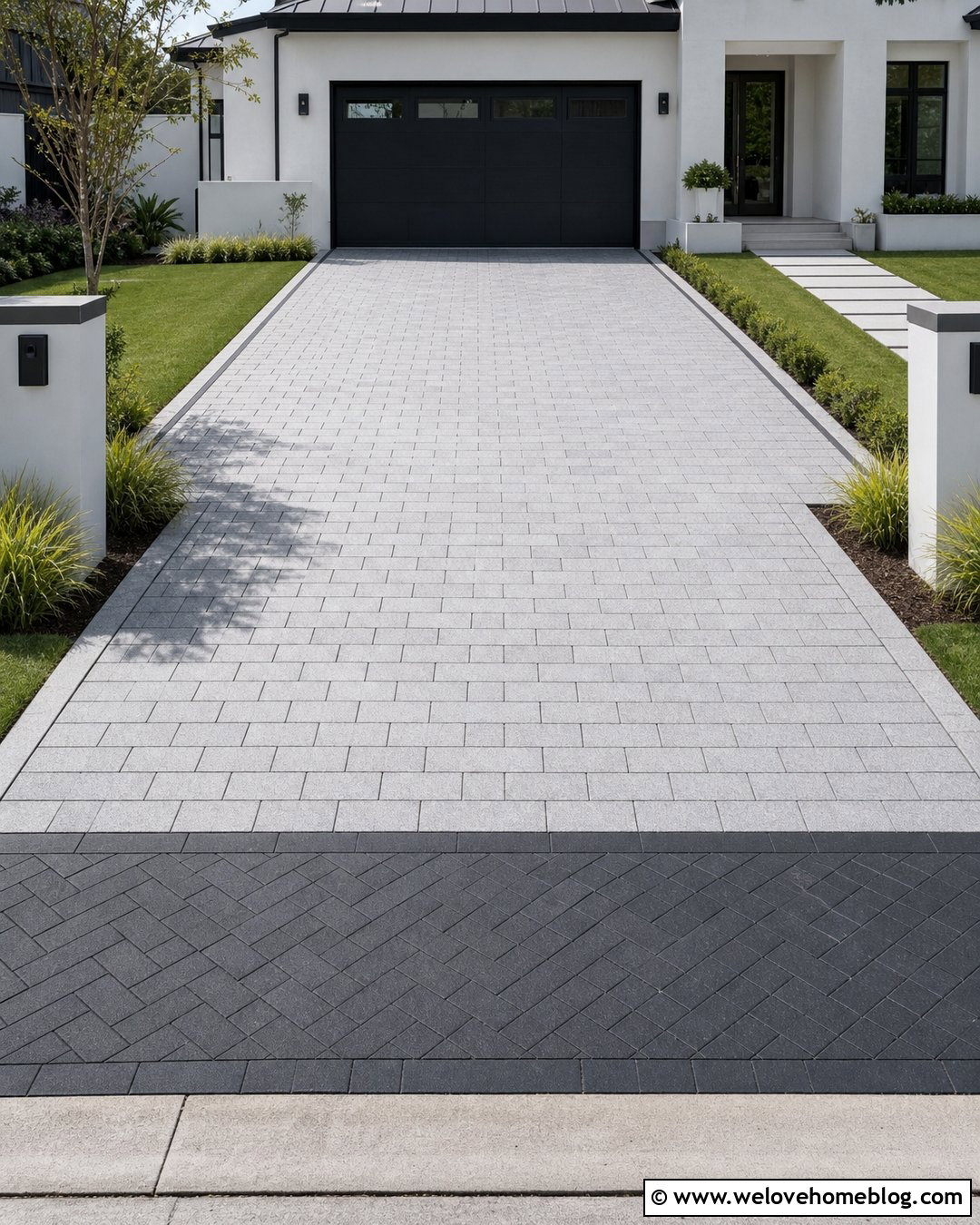
A patterned entrance apron gives a cobblestone driveway a clear beginning and creates interest near the street. Cover the main driveway with rectangular gray cobbles in a simple running bond. At the curb, change to a dark herringbone or fan pattern for the first several feet. Outline this apron with a straight border so the pattern shift looks deliberate. Repeat the darker stone near the garage threshold to visually balance both ends of the approach. Low walls, modern address numbers, and symmetrical grass beds can frame the entrance without blocking visibility. This design is useful when you want decorative detail but prefer a calm surface near the house. The apron acts as a visual transition between the roadway and private landscape while keeping cobblestone consistent across the entire driveway.
13. Fan Pattern Cobblestone Driveway
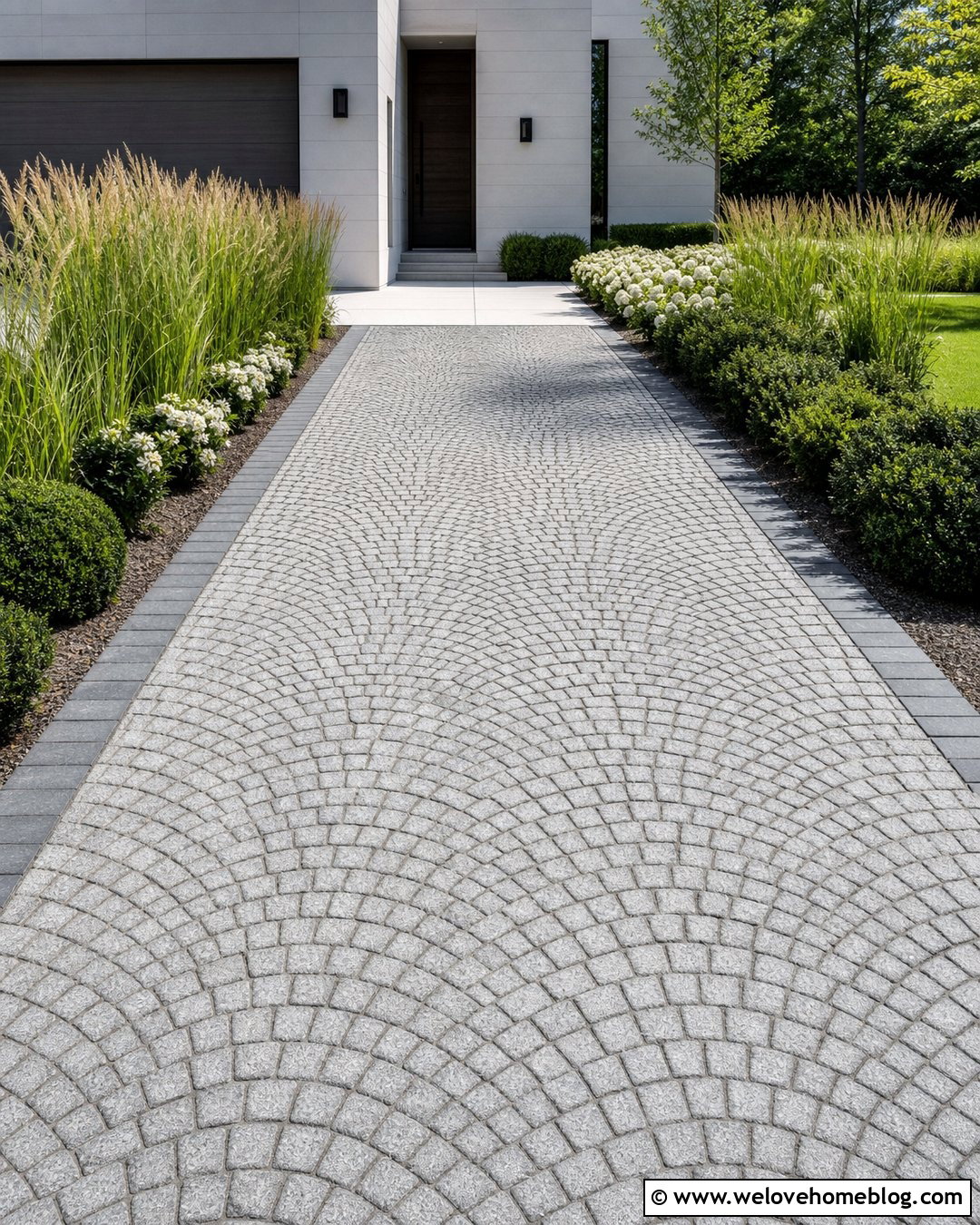
Fan-pattern cobblestone brings curved movement to a rectangular driveway. The key to making it feel modern is using a narrow color range and repeating the pattern consistently. Select silver-gray granite setts with only subtle tonal changes. Arrange each fan so it opens toward the house, creating a natural sense of direction. Use straight charcoal borders to contrast with the arcs and reinforce the driveway’s outer shape. Alongside the paving, place long planting beds with low grasses, clipped boxwood alternatives, and white flowering perennials. A smooth concrete path can intersect the cobblestone near the front door without competing with it. This complete design combines decorative masonry with simple landscaping. It works particularly well in front of a minimal home where the patterned surface can supply texture without requiring ornate architectural details.
14. Large Cobblestone Driveway
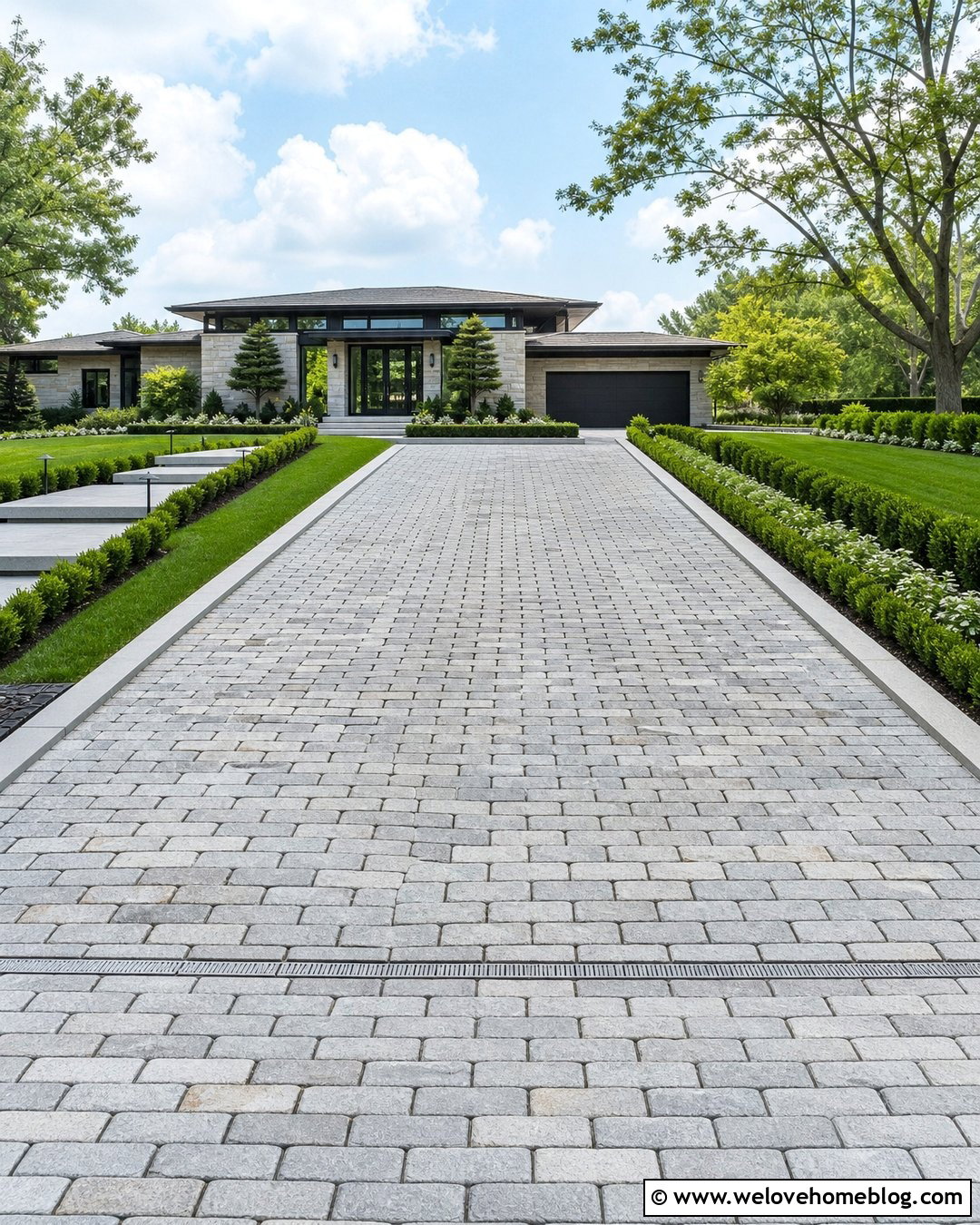
Larger cobblestone setts reduce the number of visible joints and create a bolder, more contemporary scale. Choose oversized rectangular granite pieces with split faces and relatively straight edges. Lay them in long running rows that lead toward the garage, then use full-length stones around the perimeter. The broad units pair naturally with large windows, wide garage doors, and horizontal rooflines. Keep surrounding beds spacious and simple, using groups of grasses, low evergreens, and one or two sculptural trees. Integrate a linear channel drain where needed, positioning it to align with the stone courses. Larger setts still provide the texture associated with cobblestone, but their scale makes the driveway appear less intricate. This is an effective choice for a wide frontage where smaller stones might look overly detailed from the street.
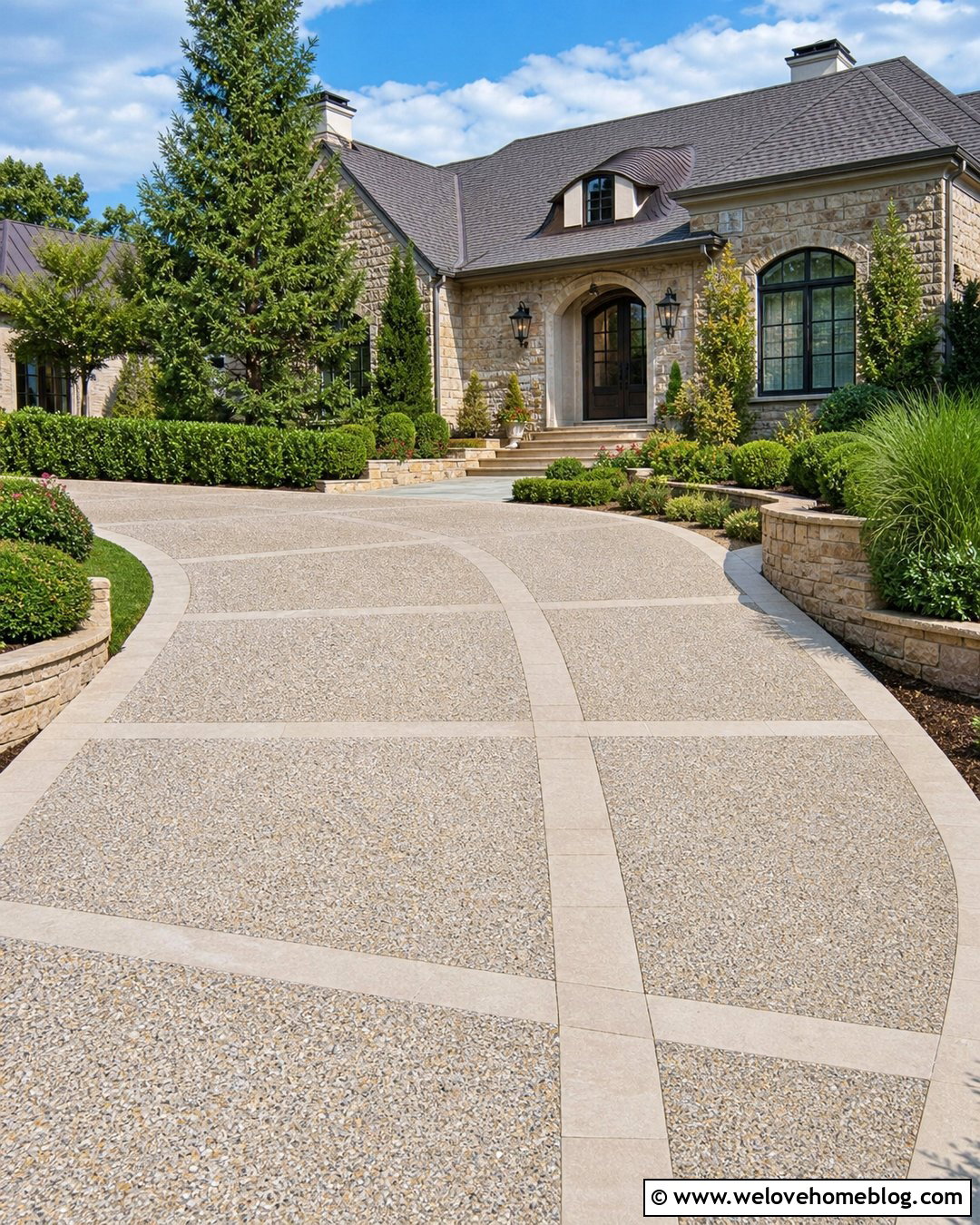
15. Cobblestone Driveway With Raised Planters
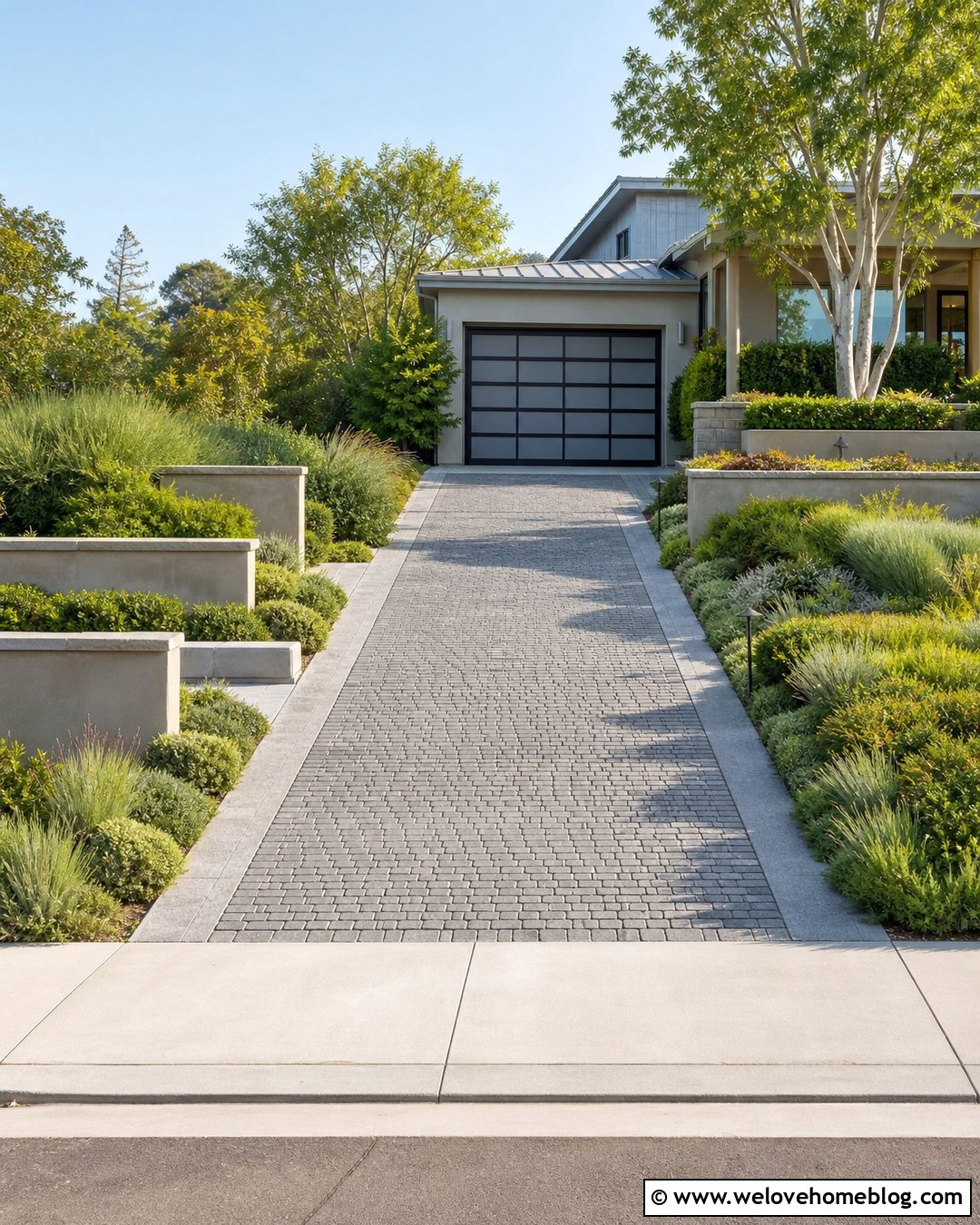
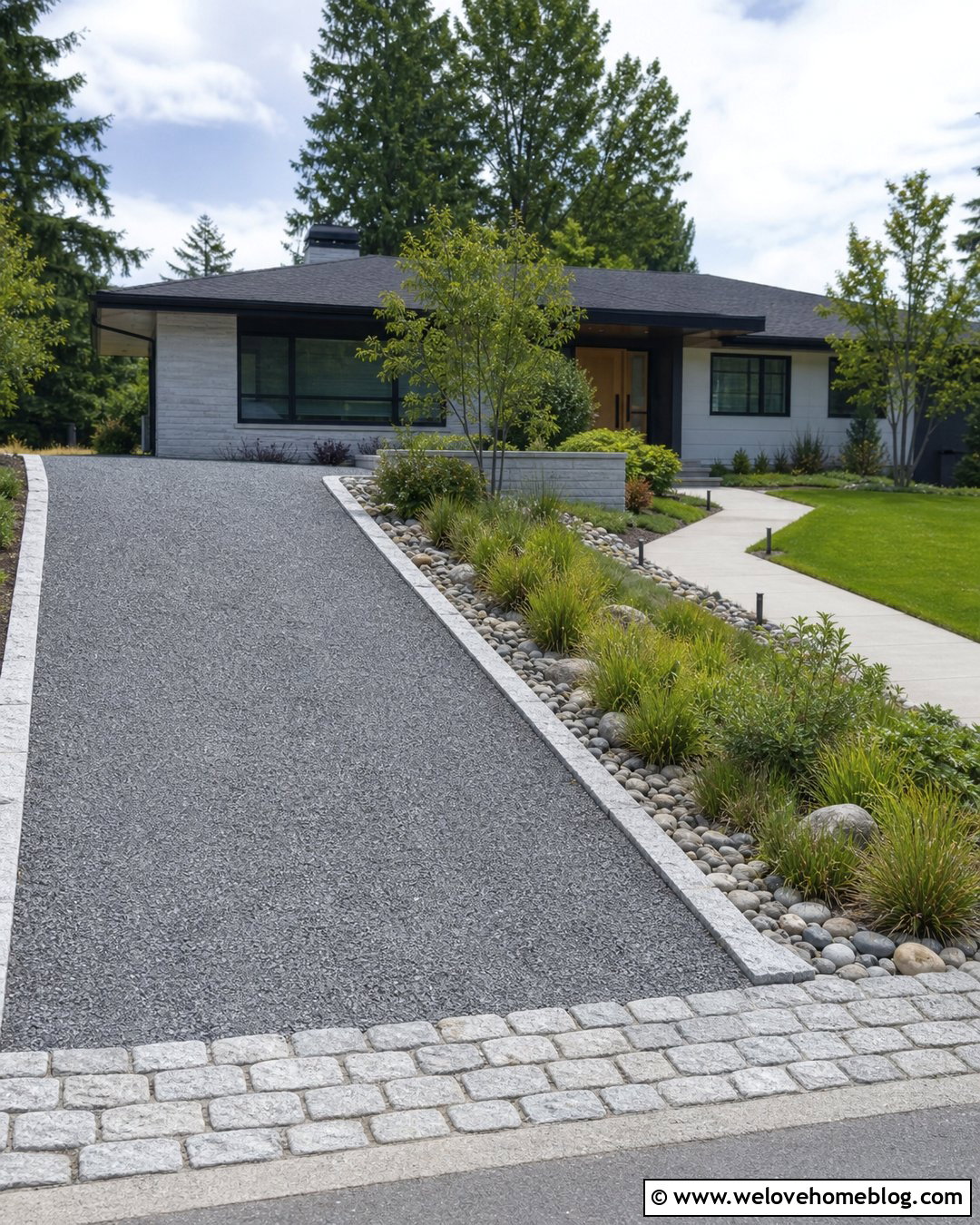
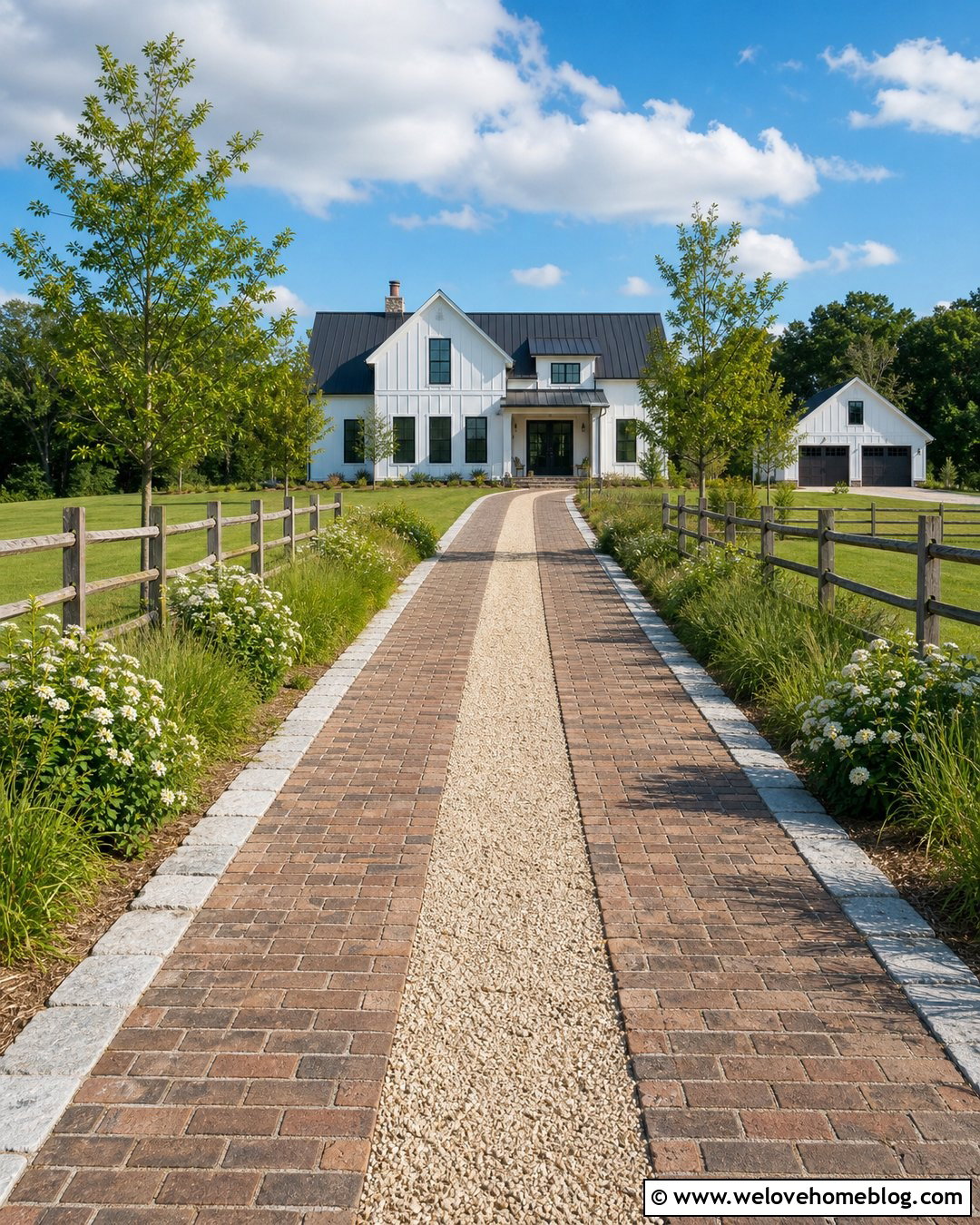
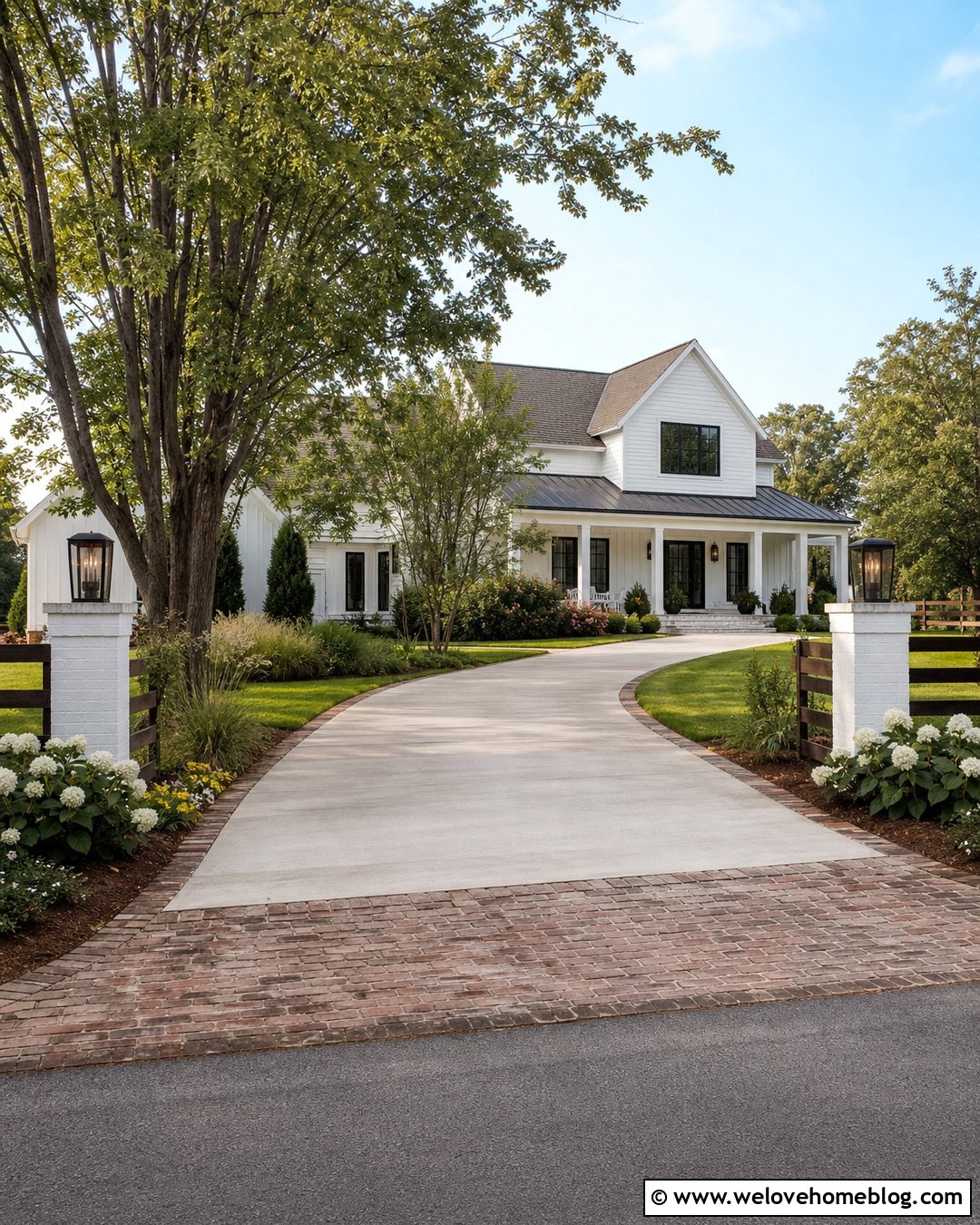
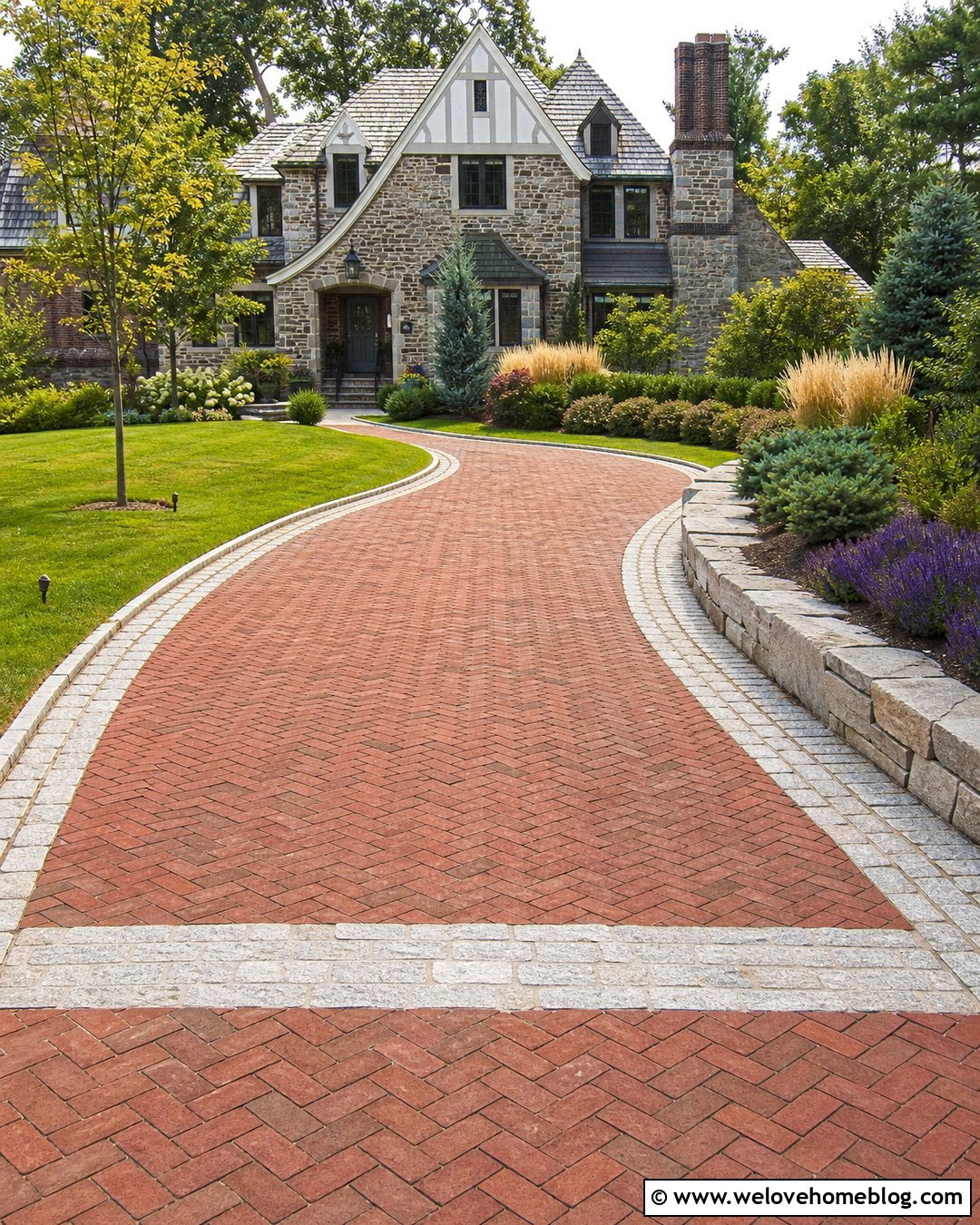
Raised planters can give a cobblestone driveway crisp edges while addressing a sloped or uneven front yard. Use medium-gray cobbles in a straight layout, then flank the approach with low rendered concrete walls. Fill the planters with layered but restrained greenery, placing low ground cover near the driveway and taller grasses or shrubs toward the house. The walls should remain low enough to preserve visibility when entering the street. Cap them with smooth stone or concrete that matches details on the facade. Where the driveway meets the garage, widen the planting gaps to create comfortable pedestrian access. The contrast between rough cobblestone and smooth planter walls feels especially suitable for contemporary architecture. Add integrated drainage behind retaining elements so water and soil pressure are managed as part of the installation.
16. Minimalist Cobblestone Driveway
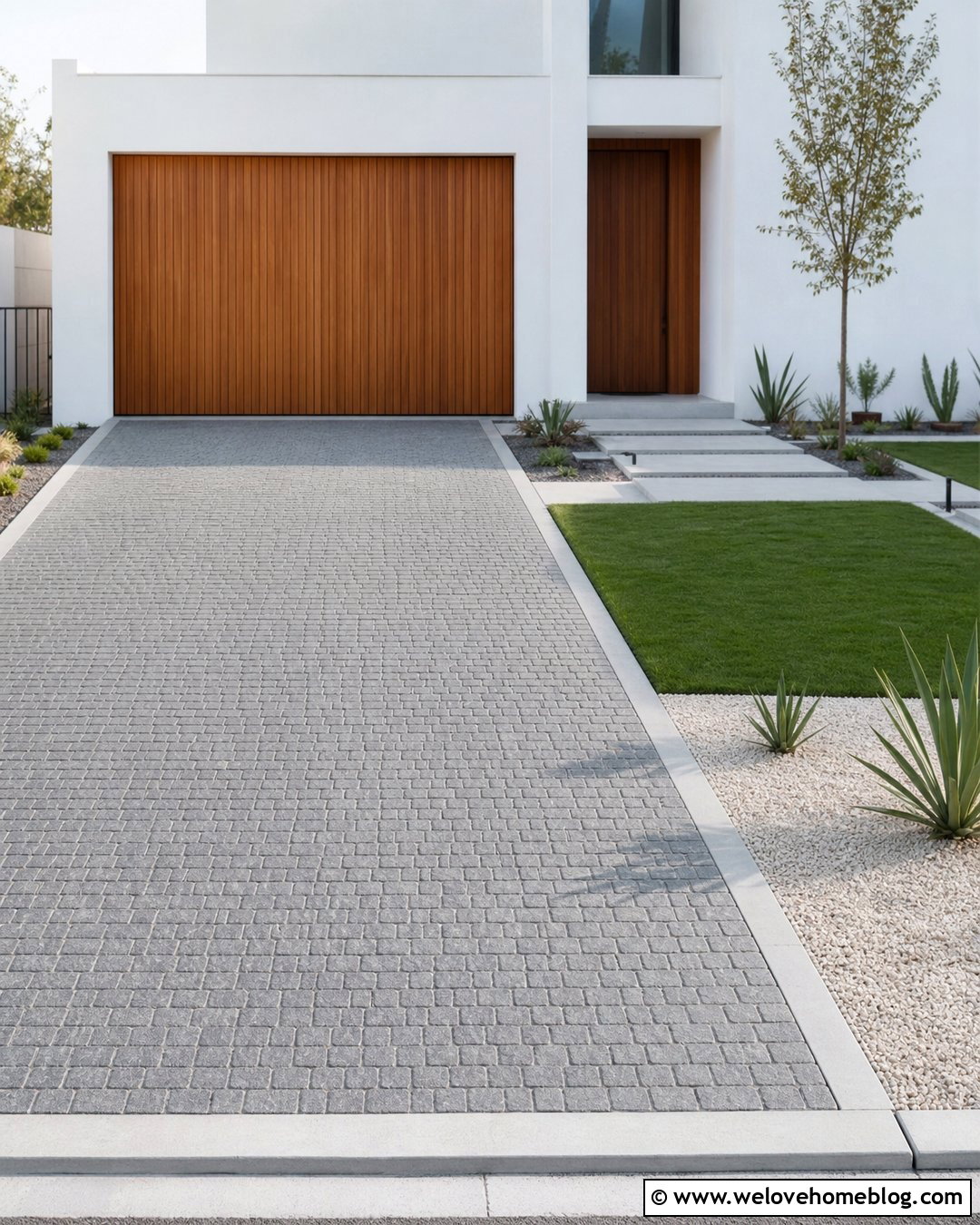
Can a textured material still support minimalist design? Yes, when the color palette, pattern, and landscaping remain controlled. Use one shade of gray granite cobblestone throughout a straight driveway and lay it in precise, parallel rows. Frame the surface with flush borders made from the same stone, eliminating unnecessary contrast. On one side, create a broad lawn panel. On the other, install a gravel bed with three or four sculptural plants placed at generous intervals. Continue a simple slab walkway to the front door and avoid decorative curves that conflict with the house. This approach allows the natural surface texture to provide enough visual interest on its own. The finished driveway should feel spacious and calm, with every material serving a clear purpose and no small details competing for attention.
17. Tree-Lined Cobblestone Driveway
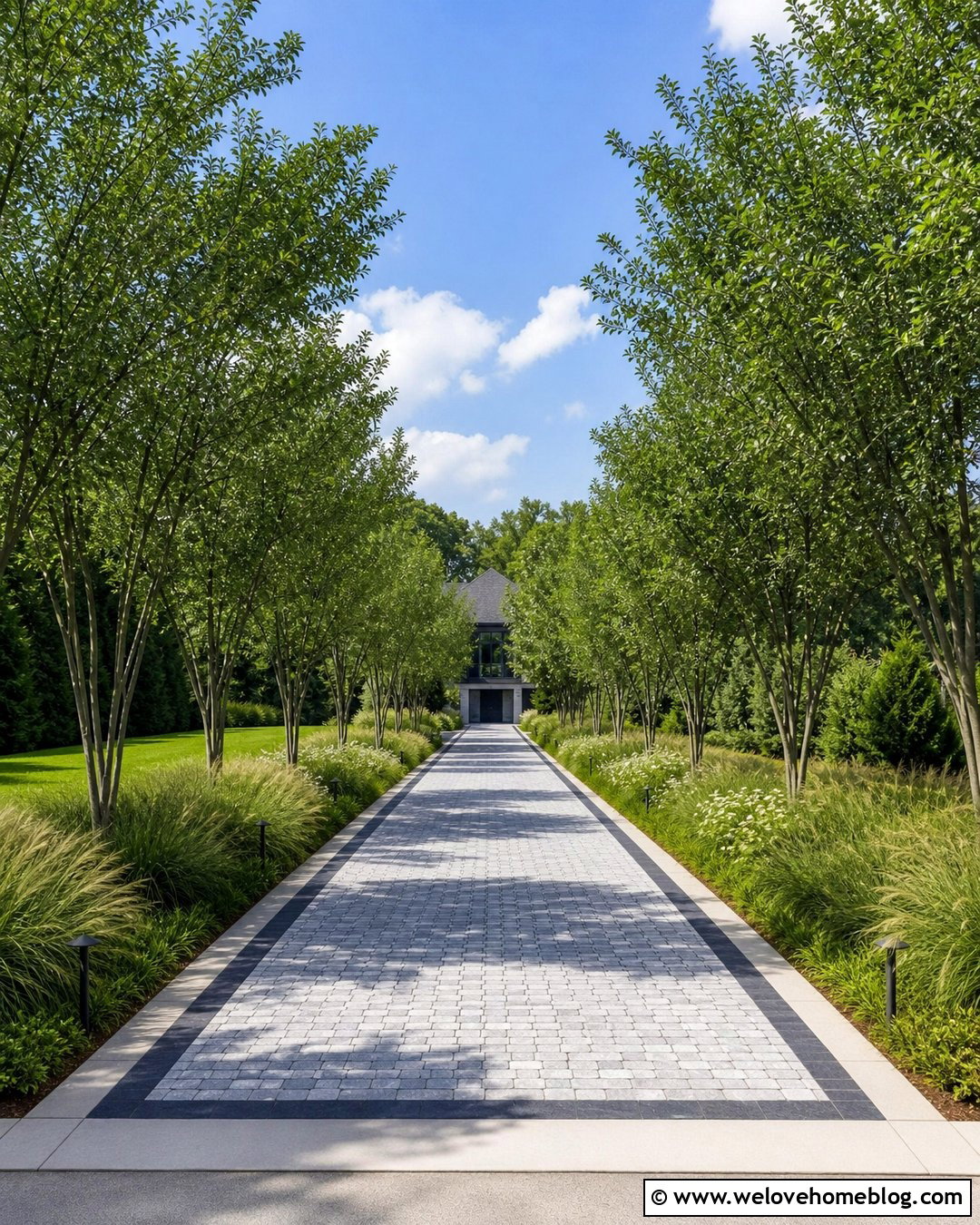
A tree-lined driveway does not need to feel formal or old-fashioned. Begin with cool gray cobblestones arranged in a long running bond. Edge the drive with flush black granite ribbons, then plant evenly spaced multi-stem trees in wide beds of ornamental grass. Choose species appropriate for the local climate, available soil volume, and distance from paving. Their canopies should mature above vehicle height without crowding the approach. Low planting near the street will preserve visibility, while taller trees closer to the house can frame the architecture. Use a few recessed or low-profile lights to mark the edges after dark. This complete layout is best suited to a long driveway where repetition can create rhythm. The natural tree forms soften the stone while the consistent spacing maintains a distinctly modern character.
18. Gated Cobblestone Driveway
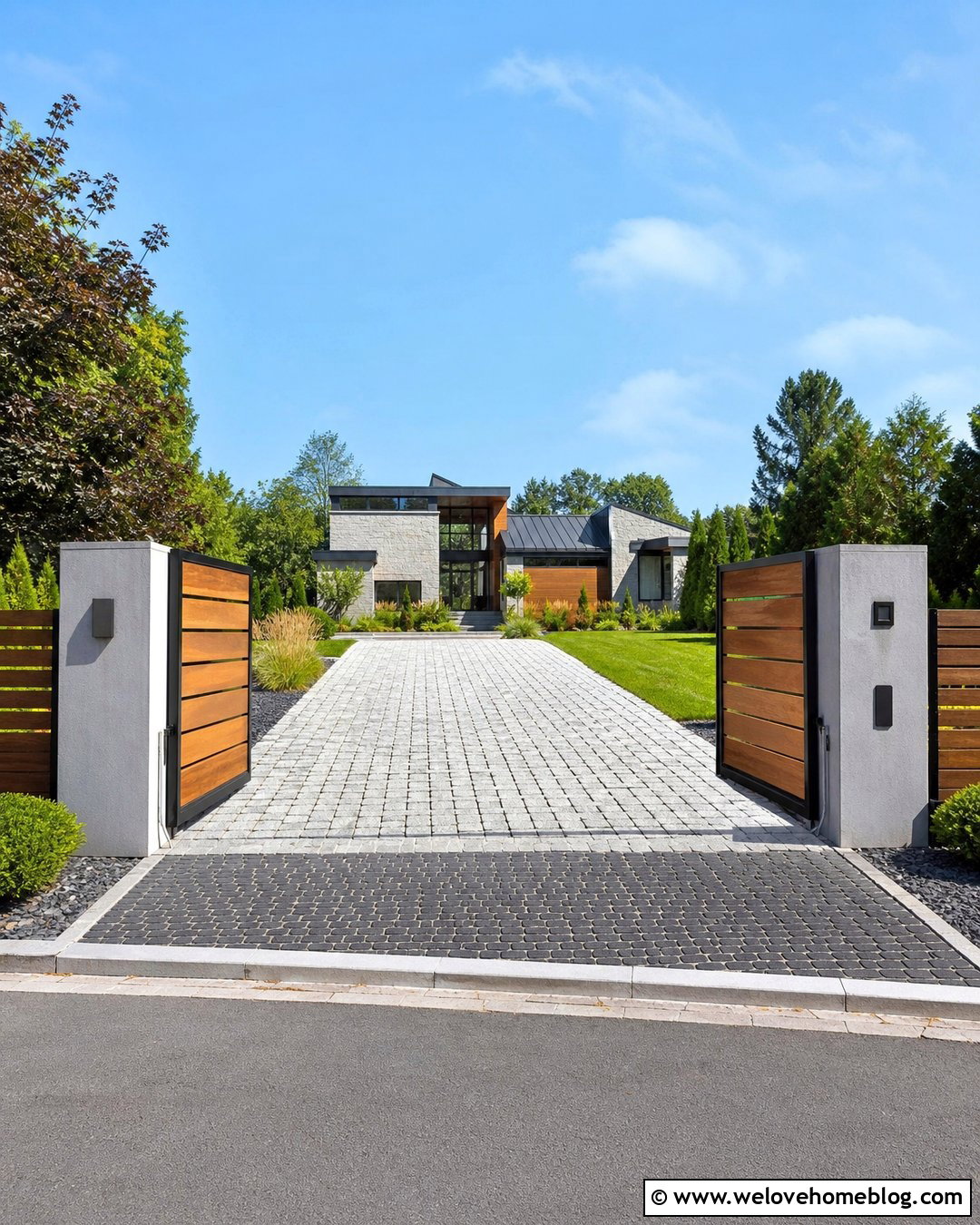
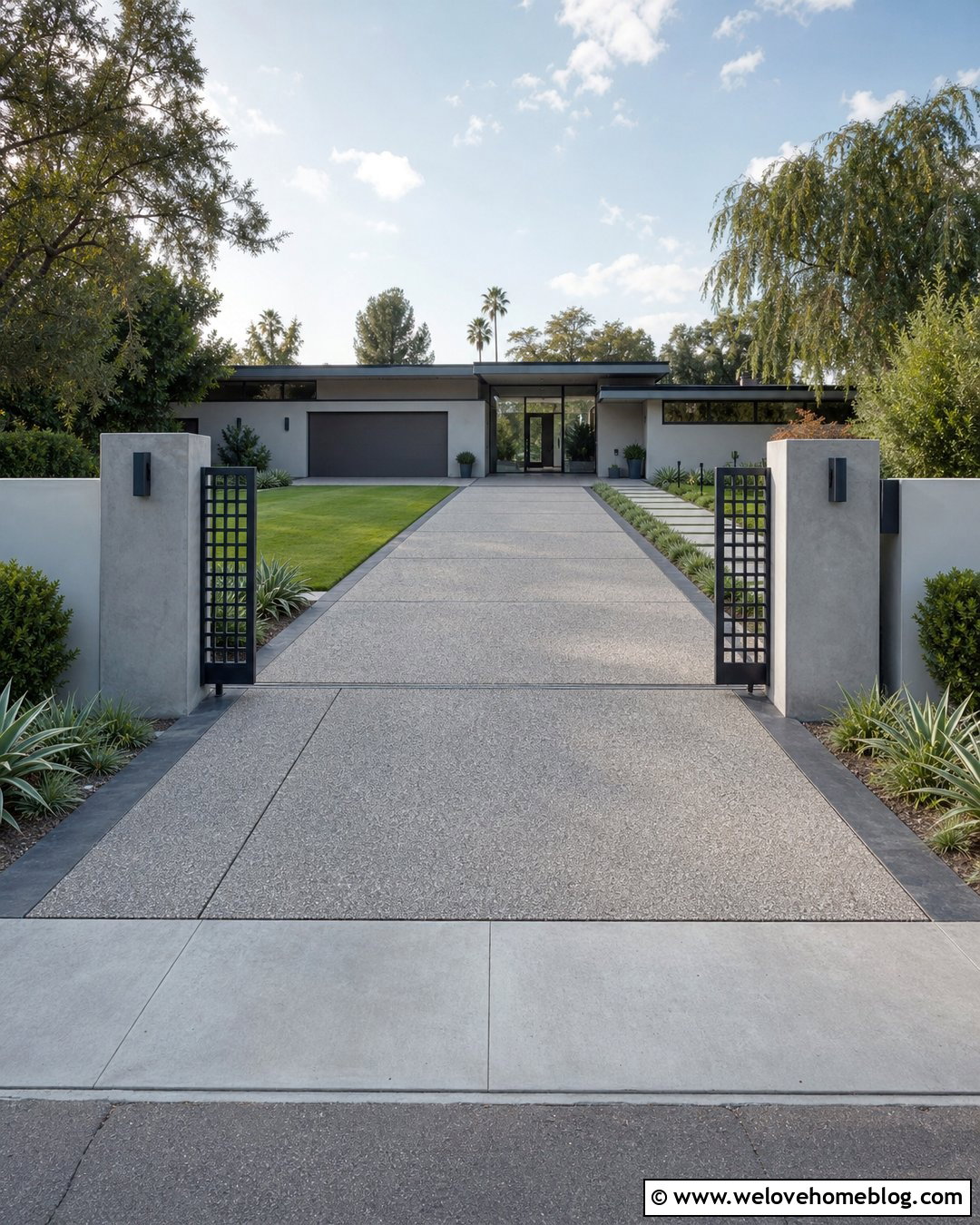
A modern gate can turn a cobblestone driveway entrance into a strong architectural feature. Pair silver-gray granite cobbles with a simple horizontal-slat metal or wood gate. Place the gate far enough inside the property to provide a safe stopping area where required. Smooth concrete pillars or stone-clad walls can support the entrance, while a contrasting cobblestone apron marks the threshold. Beyond the gate, continue the same material in straight rows toward the house. Keep landscaping low around the opening, using clipped shrubs, grasses, and gravel beds that will not interfere with moving parts or visibility. Conceal controls and utilities within the pillars when possible. The gate, paving, border, and facade should repeat the same limited palette, helping the secure entrance appear welcoming, cohesive, and intentionally designed.
19. Cobblestone Driveway With Linear Lighting
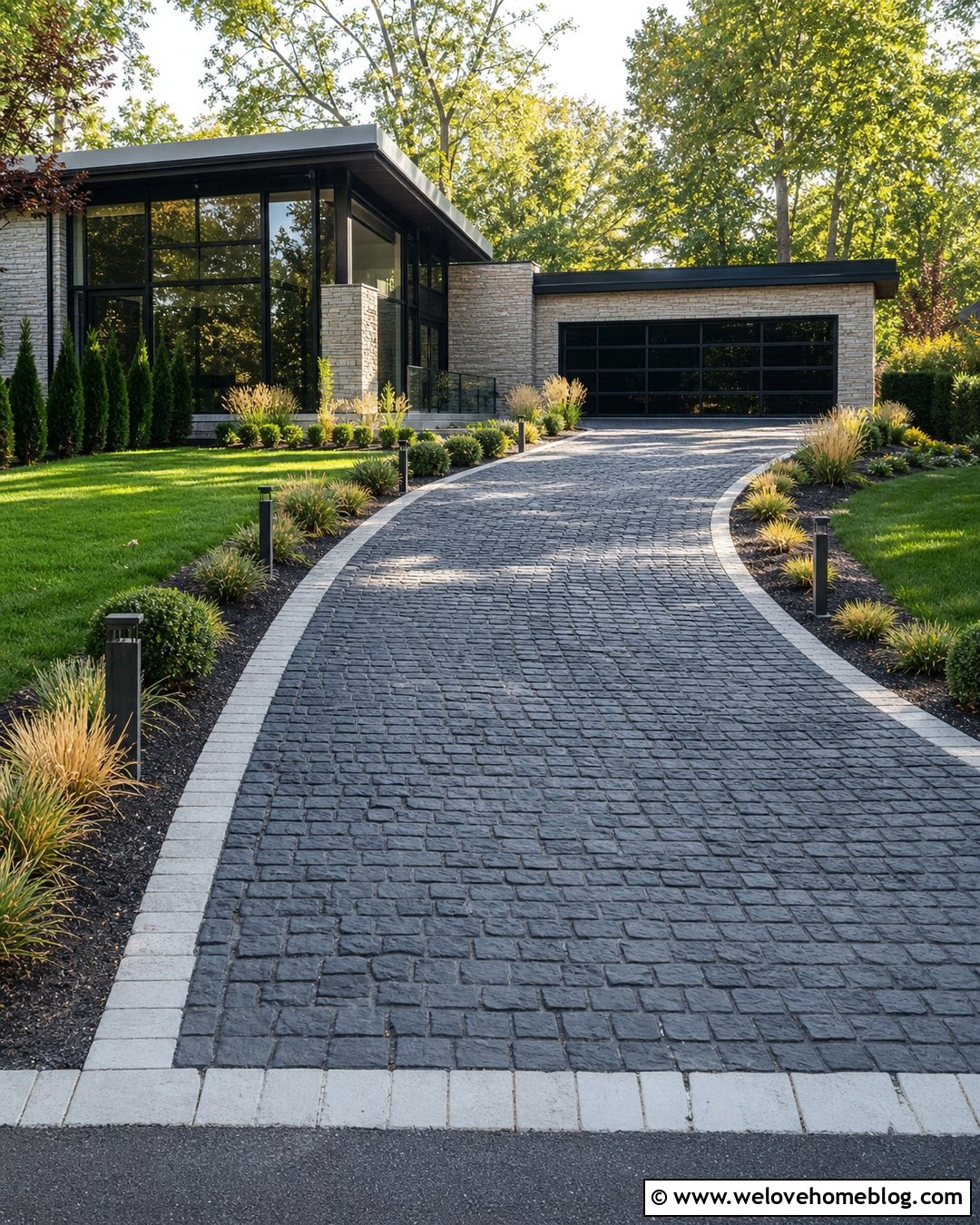
Thoughtfully placed lighting can highlight cobblestone texture while improving the visibility of driveway edges and walkways. Start with a curved or straight charcoal granite surface bordered by pale rectangular stones. Install low, shielded fixtures at regular intervals within adjacent planting beds rather than placing lights in areas exposed to tires. Choose simple black bollards or recessed wall lights that match the home’s metal finishes. During the day, rows of ornamental grass and compact shrubs should hide wiring and soften the fixtures. At night, light should travel across the stone at a low angle instead of shining directly toward drivers or neighboring windows. Plan fixture positions before constructing the base and borders. This avoids disturbing finished stonework later and helps the lighting feel like part of the complete driveway design.
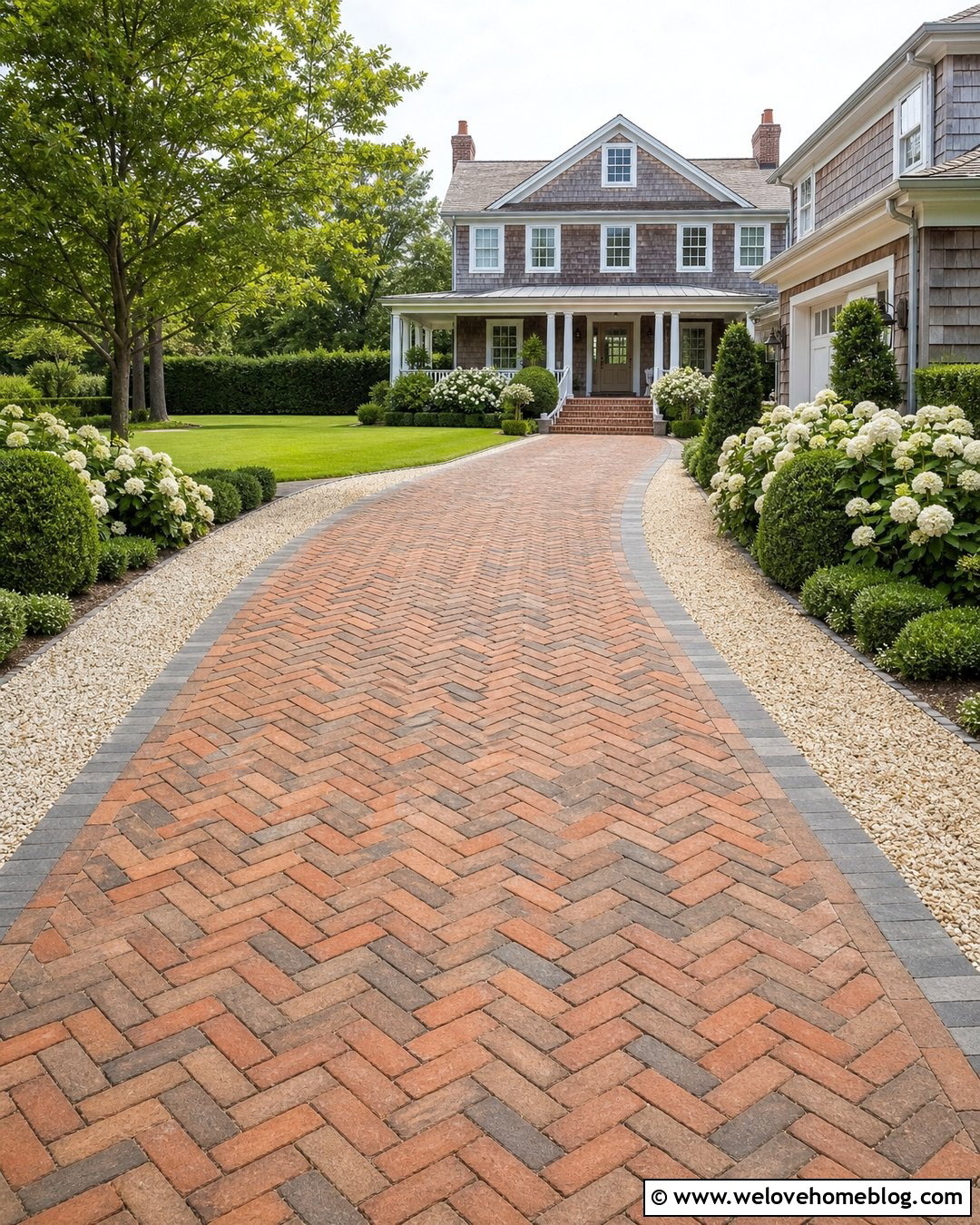
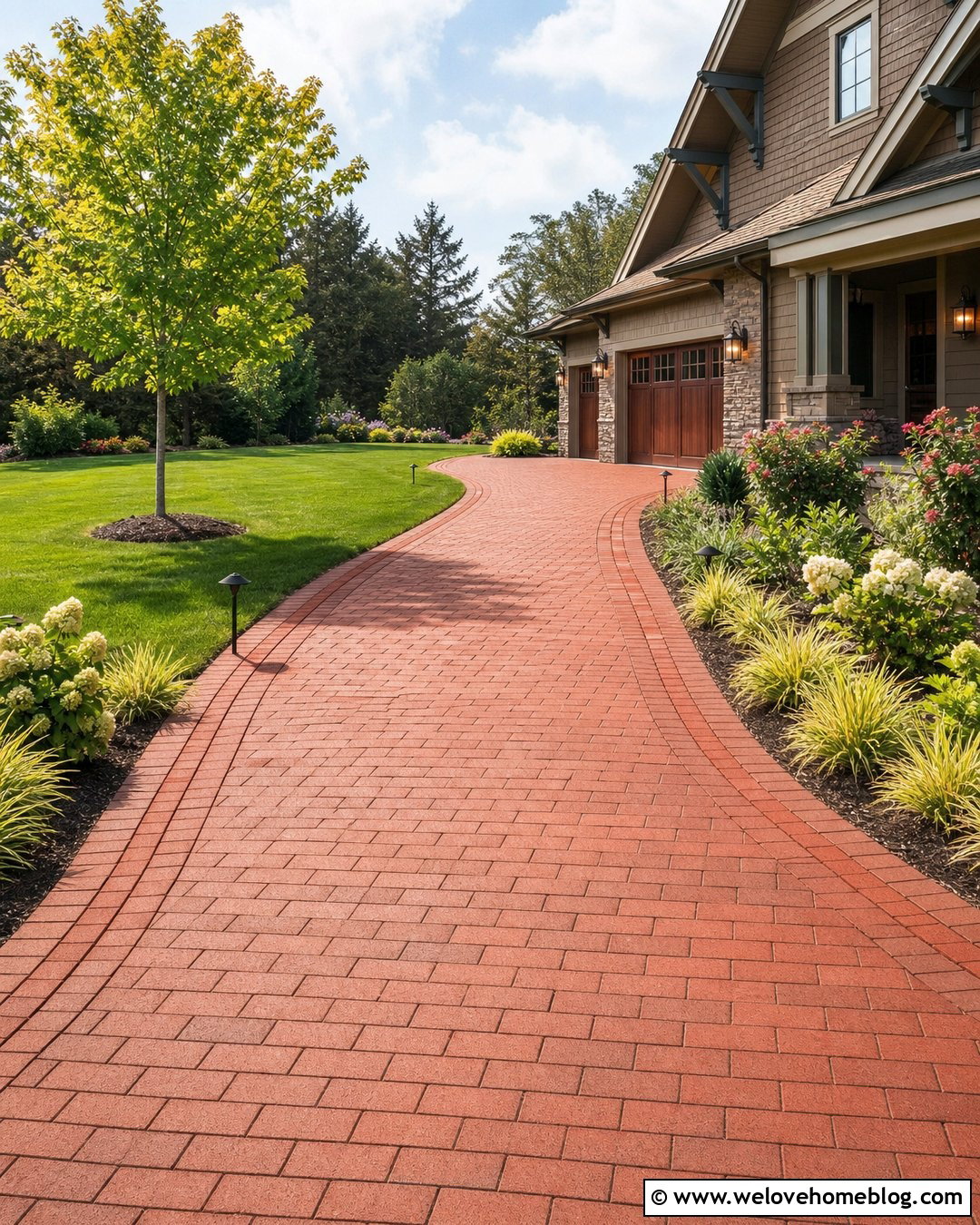
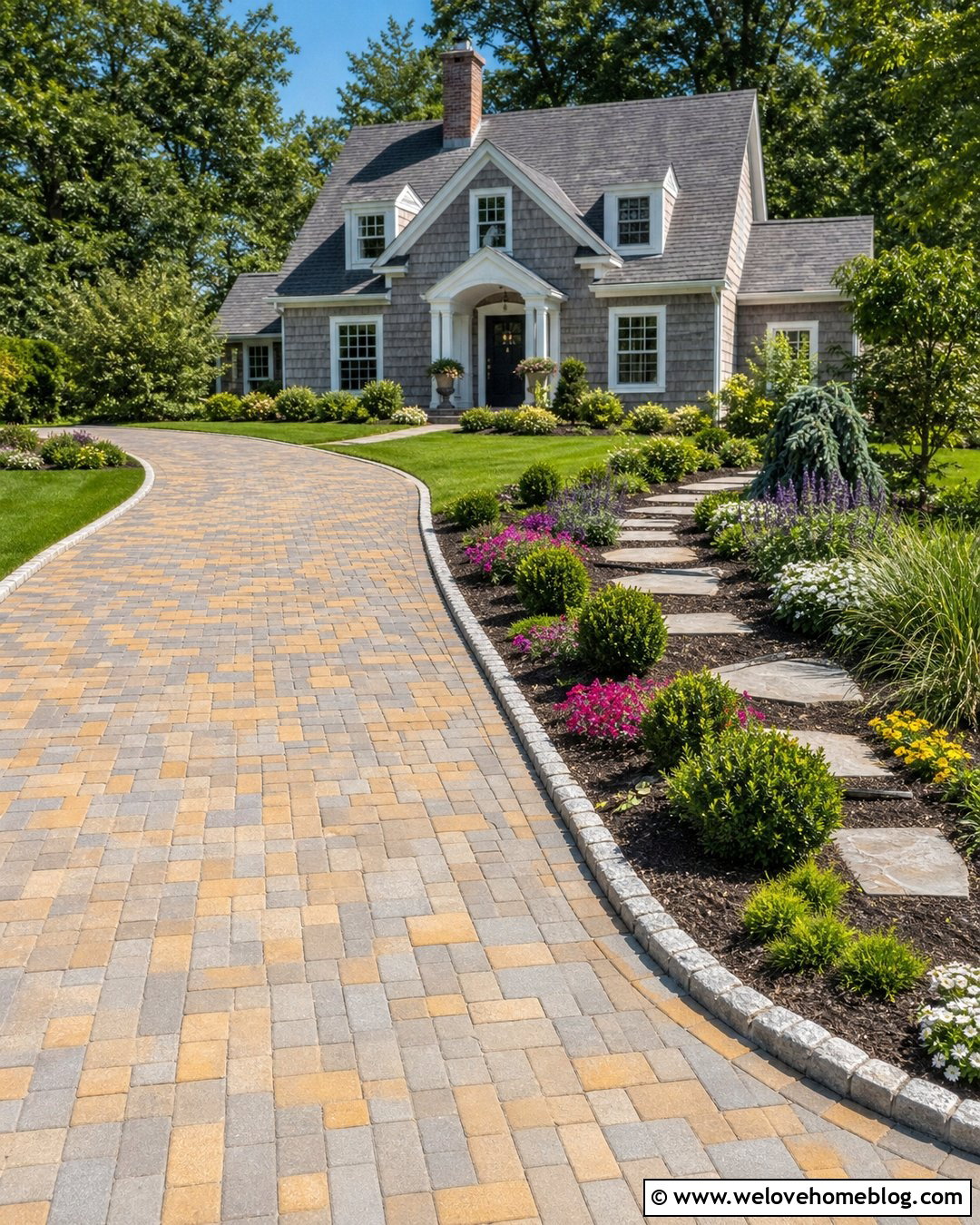
20. Cobblestone Courtyard Driveway
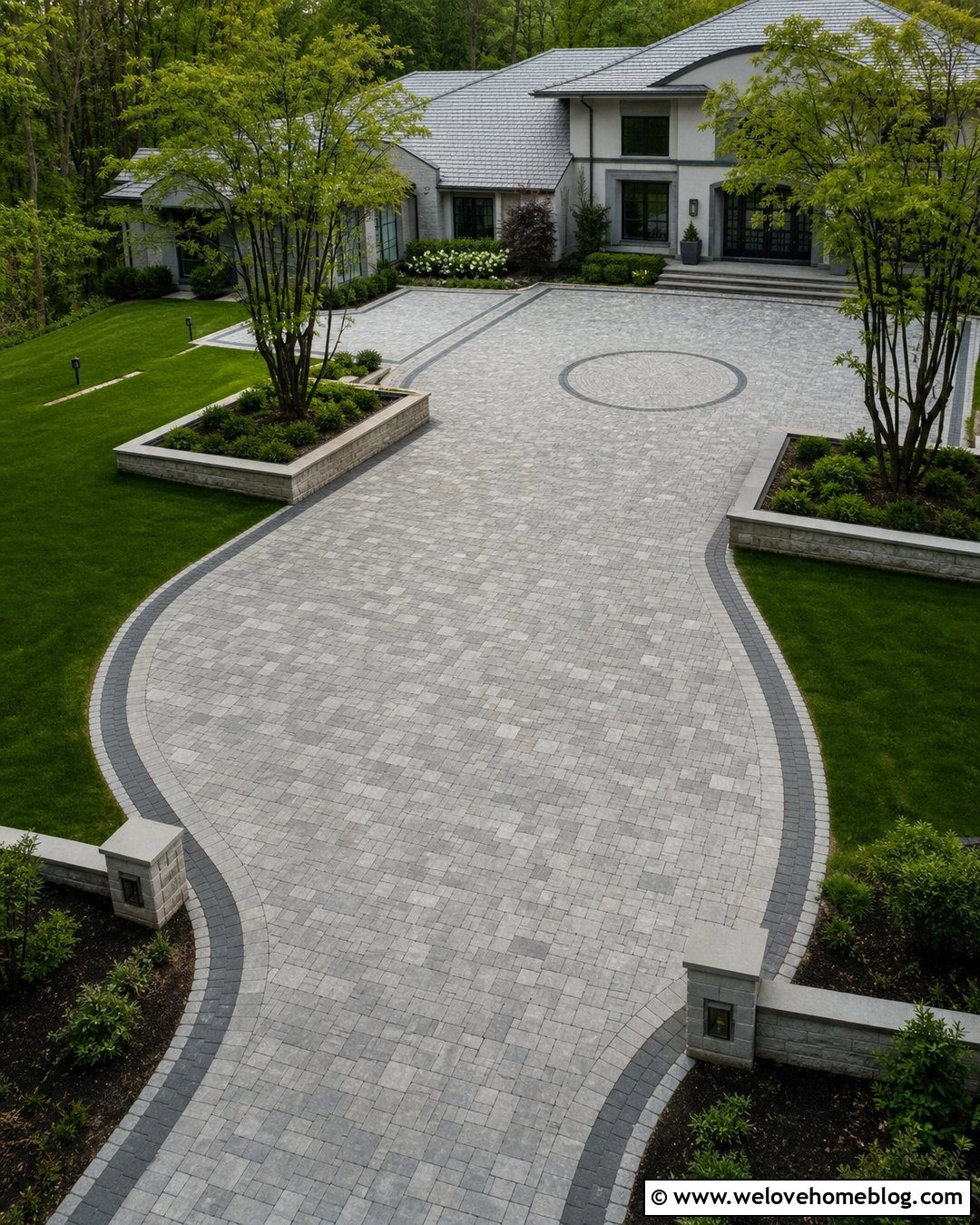
A cobblestone courtyard creates a flexible arrival and parking space in front of a wide modern home. Use mixed-size gray granite cobbles in the central motor court, arranging them in a random modular pattern. Define the driving route with a darker perimeter ribbon and add a subtle circular inlay at the center. Low rectangular planters can separate parking spaces from the front walkway without making the courtyard feel enclosed. Include one clear route to the garage and enough open space for practical vehicle movement. Balance the large paved area with broad planting beds, multi-stem trees, and sections of lawn. Repeating the cobblestone on the front steps or entry path will connect the courtyard directly to the house. The result feels substantial yet contemporary rather than overly decorative or formal.
Conclusion:
The best **20 Modern Cobblestone Driveway Ideas** treat the driveway as part of the entire front landscape, not as an isolated paved area. Stone color should complement the facade, while the pattern should support the driveway’s shape and daily use. Straight grids and larger setts create simplicity. Herringbone and fan layouts introduce controlled movement. Borders, planting beds, lighting, gates, and walkways can then reinforce the chosen look. Before selecting stone, consider drainage, maintenance, turning space, climate, and the strength of the underlying base. Ask an experienced local installer to recommend vehicle-rated materials and an appropriate construction method. With careful planning, cobblestone can deliver natural texture, modern structure, and memorable curb appeal in one cohesive entrance.

Related posts:

Leave a Reply