
Granite cobblestone brings natural texture, lasting character, and a strong sense of craftsmanship to residential driveways. It can complement a historic home, soften a modern facade, or create an elegant transition between the street and landscape. The key is to design the entire approach as one connected space. Consider the cobblestone color, laying pattern, driveway shape, edging, drainage, planting, and architecture together. Gray granite feels classic and versatile, while reclaimed, black, pink, and mixed-tone stones create more distinctive results. You can also combine granite cobbles with gravel, concrete, or asphalt to control cost without losing visual impact. The complete driveway looks below offer practical inspiration for different properties, climates, and budgets. Explore these **25 Granite Cobblestone Driveway Ideas** to find an approach that fits your home.

1. Gray Granite Cobblestone Driveway With Running Bond Pattern
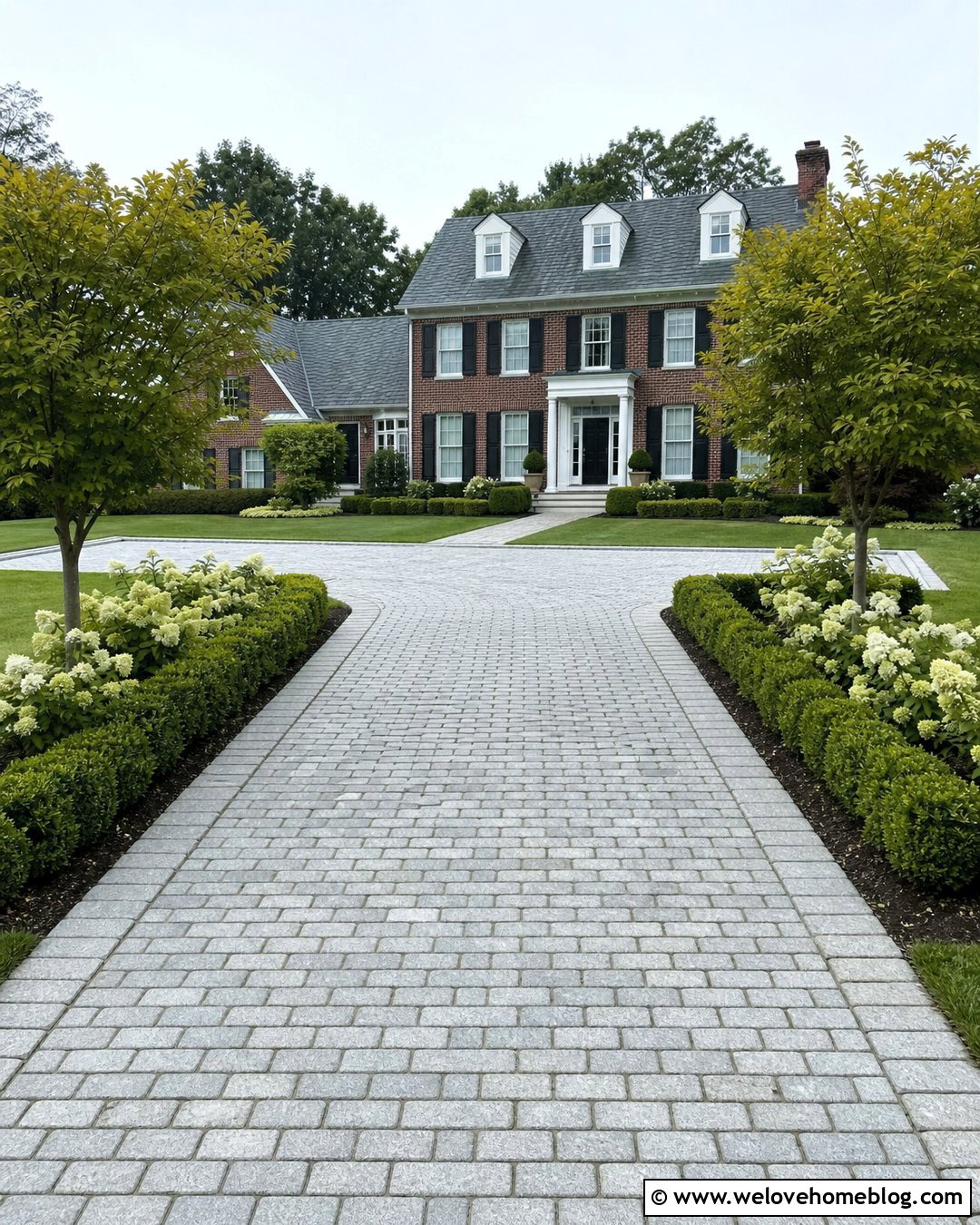
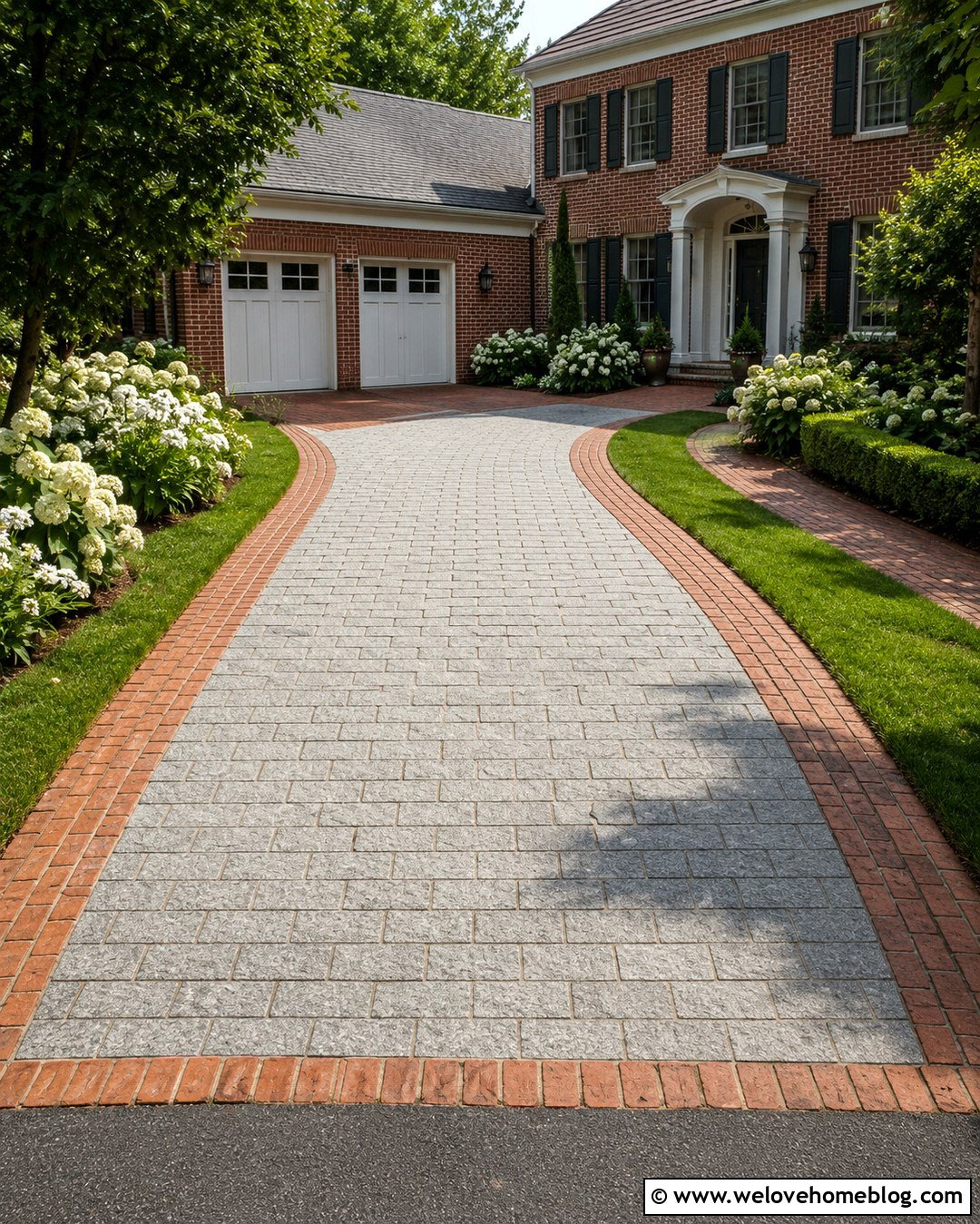
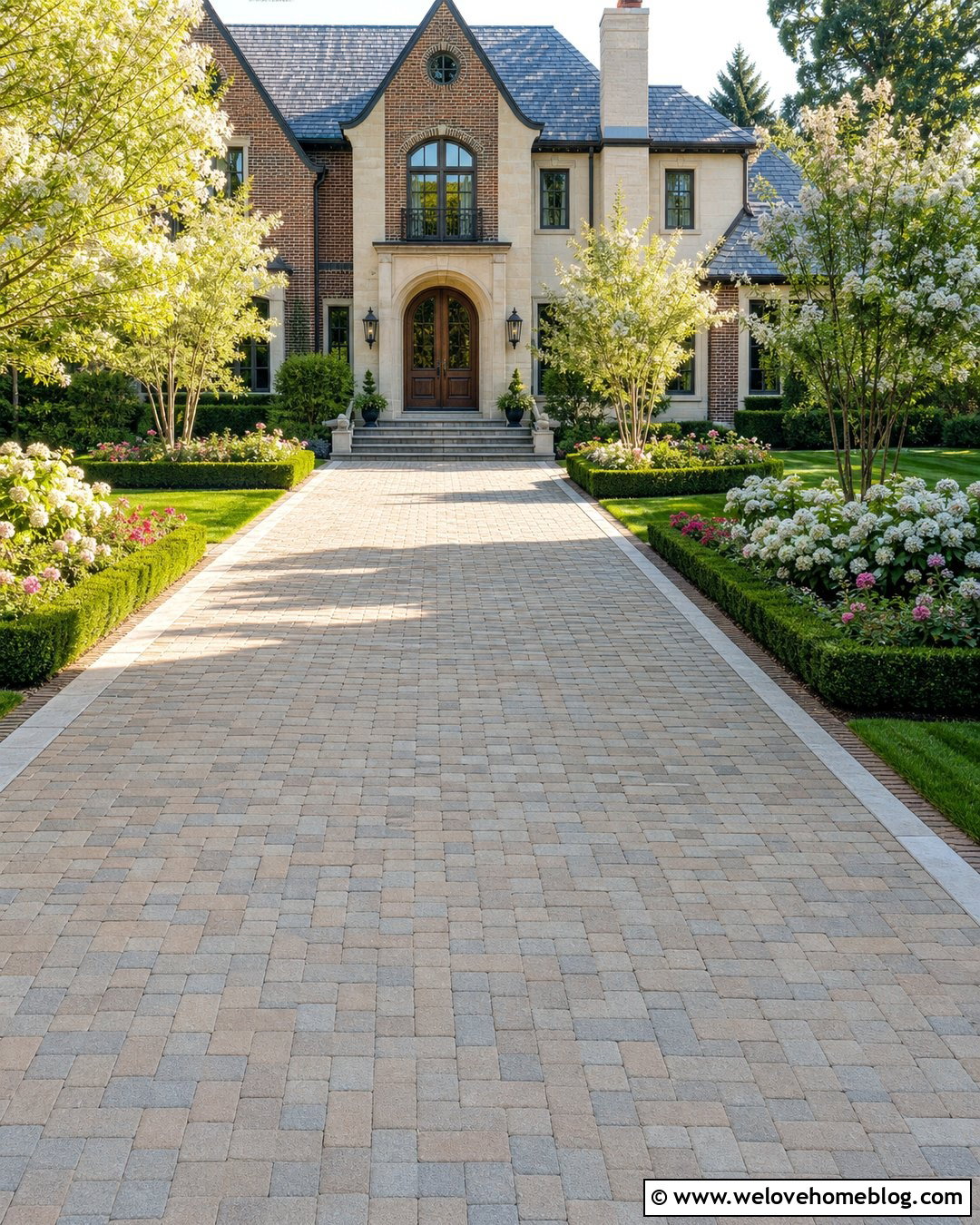
A straight gray granite cobblestone driveway creates a balanced entrance that works especially well with Colonial and traditional homes. Lay rectangular cobbles in a running bond pattern to visually lengthen the approach and keep the surface from appearing overly busy. Slight variations in gray, silver, and charcoal give the driveway depth without competing with the architecture. A flush soldier-course border can define both sides while making lawn maintenance easier. Add symmetrical planting beds with boxwood, hydrangeas, and a pair of small ornamental trees near the house. A coordinating granite walkway should connect the driveway to the front steps. This complete design feels orderly and established, yet the natural stone prevents it from looking too formal or manufactured.
2. Reclaimed Granite Cobblestone Driveway With Curved Layout
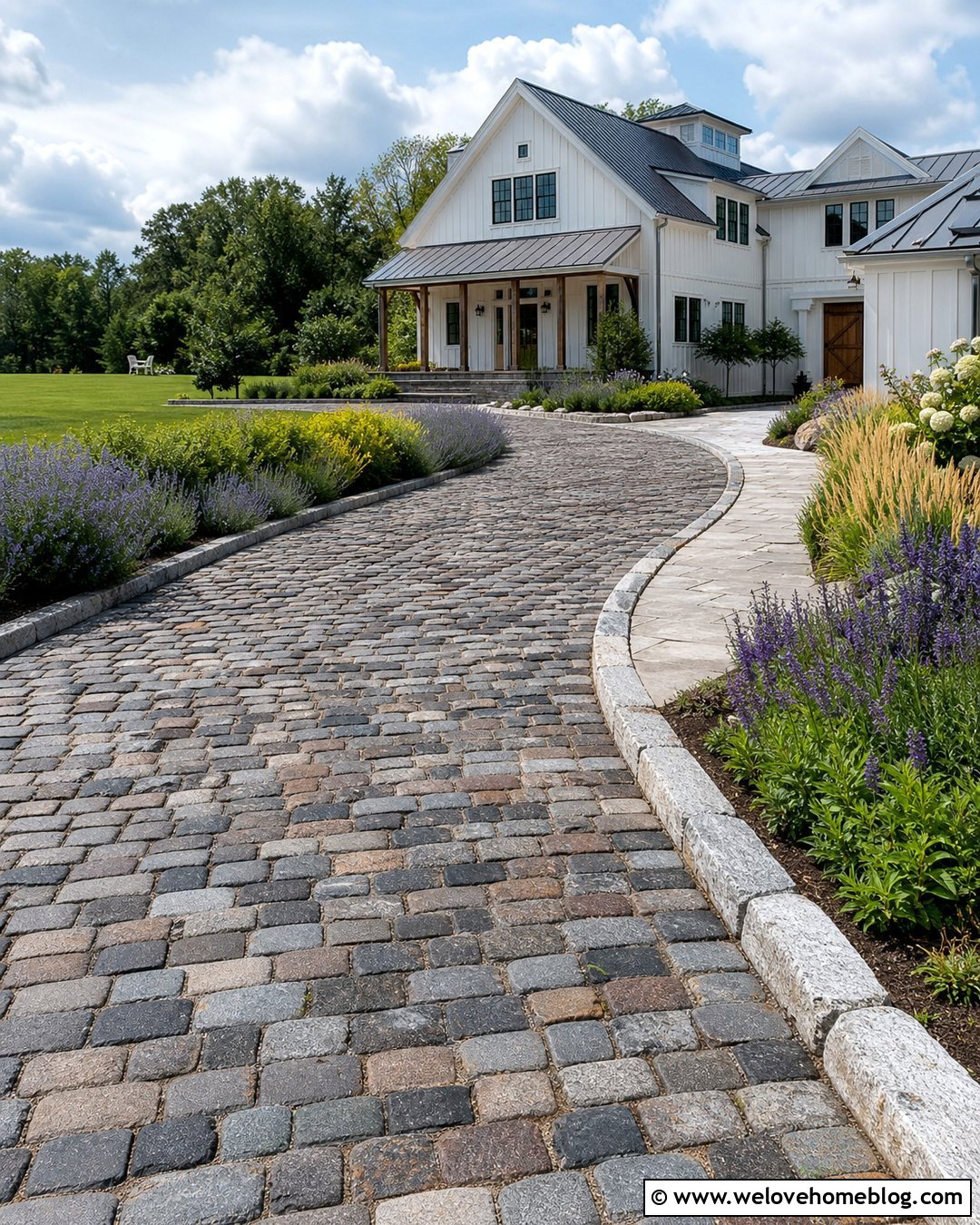
Weathered reclaimed granite gives a curved driveway the relaxed appearance of an entrance that has evolved naturally over time. Mixed gray, brown, charcoal, and muted rose stones work beautifully with a modern farmhouse or renovated country home. Instead of forcing every cobble into a perfectly uniform line, embrace subtle color and surface variations while maintaining consistent joint spacing. Use larger reclaimed granite blocks along the outer curves to create a strong visual boundary. Sweeping beds of ornamental grasses, salvia, catmint, and flowering shrubs can follow the driveway shape. Keep plants lower near the street for clear visibility. The gentle curve reveals the home gradually, while the aged cobblestone texture connects the house, lawn, and surrounding landscape in a warm, cohesive way.
3. Granite Cobblestone Driveway With Herringbone Pattern
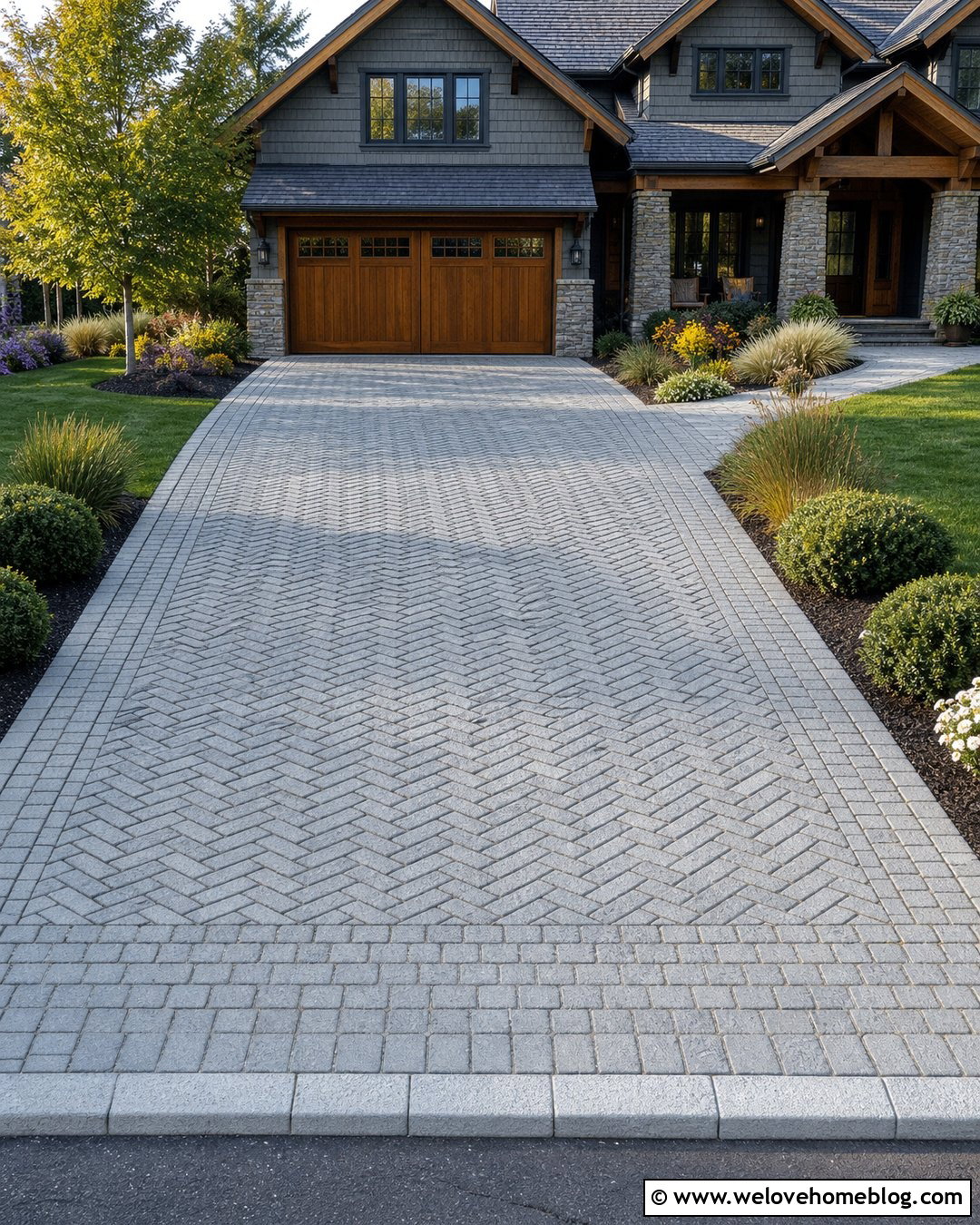
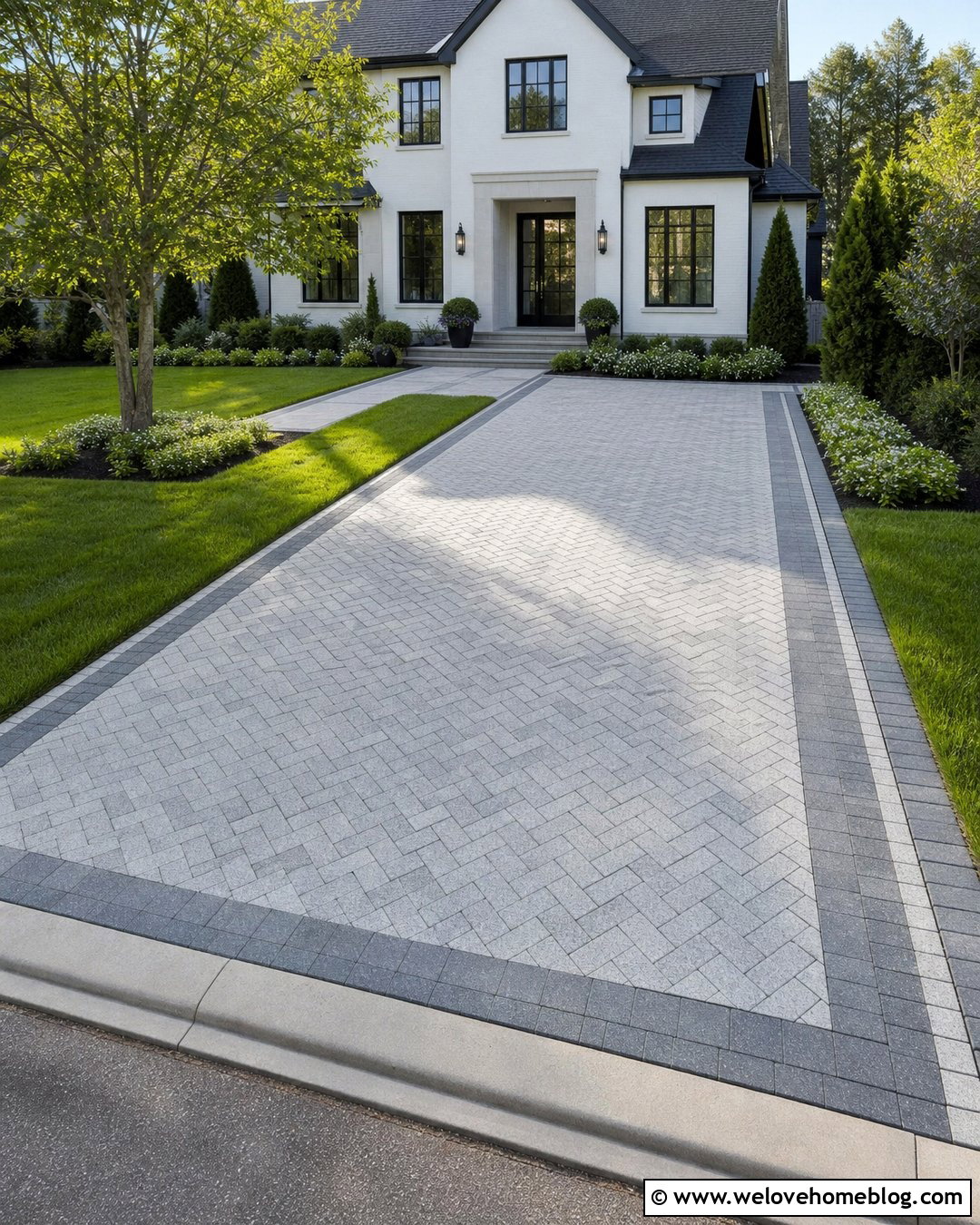
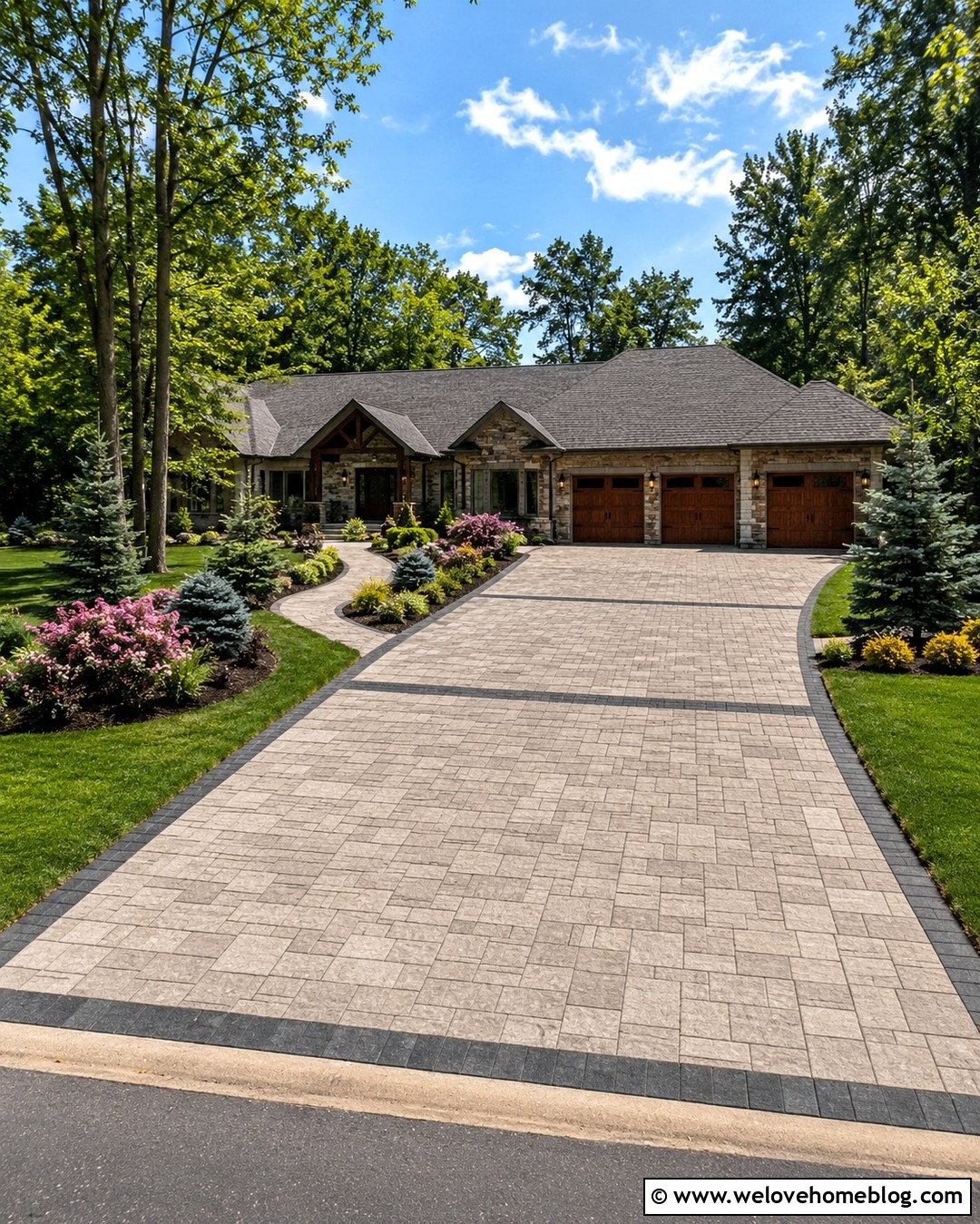
A herringbone pattern gives a granite cobblestone driveway noticeable structure and movement. The angled layout is particularly effective on a wide, straight approach leading to a Craftsman home. Choose medium-gray rectangular cobbles with occasional darker stones for natural contrast. Frame the patterned field with two straight soldier courses so the edges look finished and deliberate. A matching cobblestone apron can make the street transition feel substantial. On both sides, combine clipped evergreen shrubs with looser native grasses and seasonal flowers. Repeat granite in the front walkway or porch steps to connect the hardscape to the house. Because herringbone already creates strong visual interest, keep the surrounding materials simple. The result is detailed and handcrafted without making the front yard feel crowded.
4. Granite Cobblestone Driveway With Fan Pattern
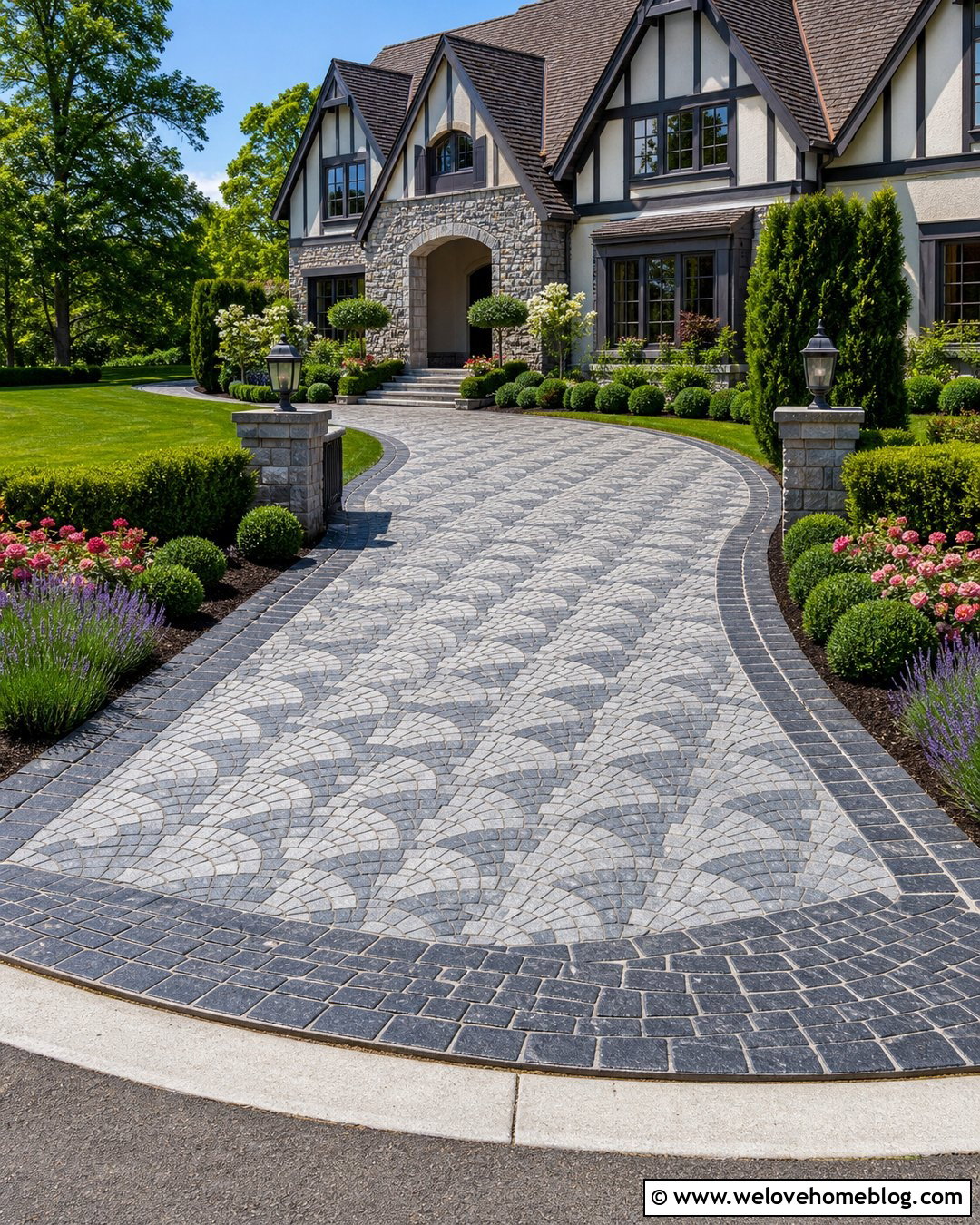
Curved rows arranged in a fan pattern can transform granite cobblestone into a decorative surface that suits Tudor, European-inspired, and stone-front homes. This layout works best where the driveway is wide enough for the repeating arcs to remain visible. Mixed silver and charcoal cobbles emphasize the curves, while a dark granite border provides a calm frame around the active pattern. Continue the fan design across the entrance apron for a finished curb view. Deep planting beds filled with yew, roses, lavender, and rounded shrubs can soften the driveway edges. A gently curved walkway should echo the paving rather than cut across it abruptly. The combination of arched stonework, layered landscaping, and traditional architecture creates a complete entrance with rich texture and an unmistakably handcrafted appearance.
5. Circular Granite Cobblestone Driveway With Center Island
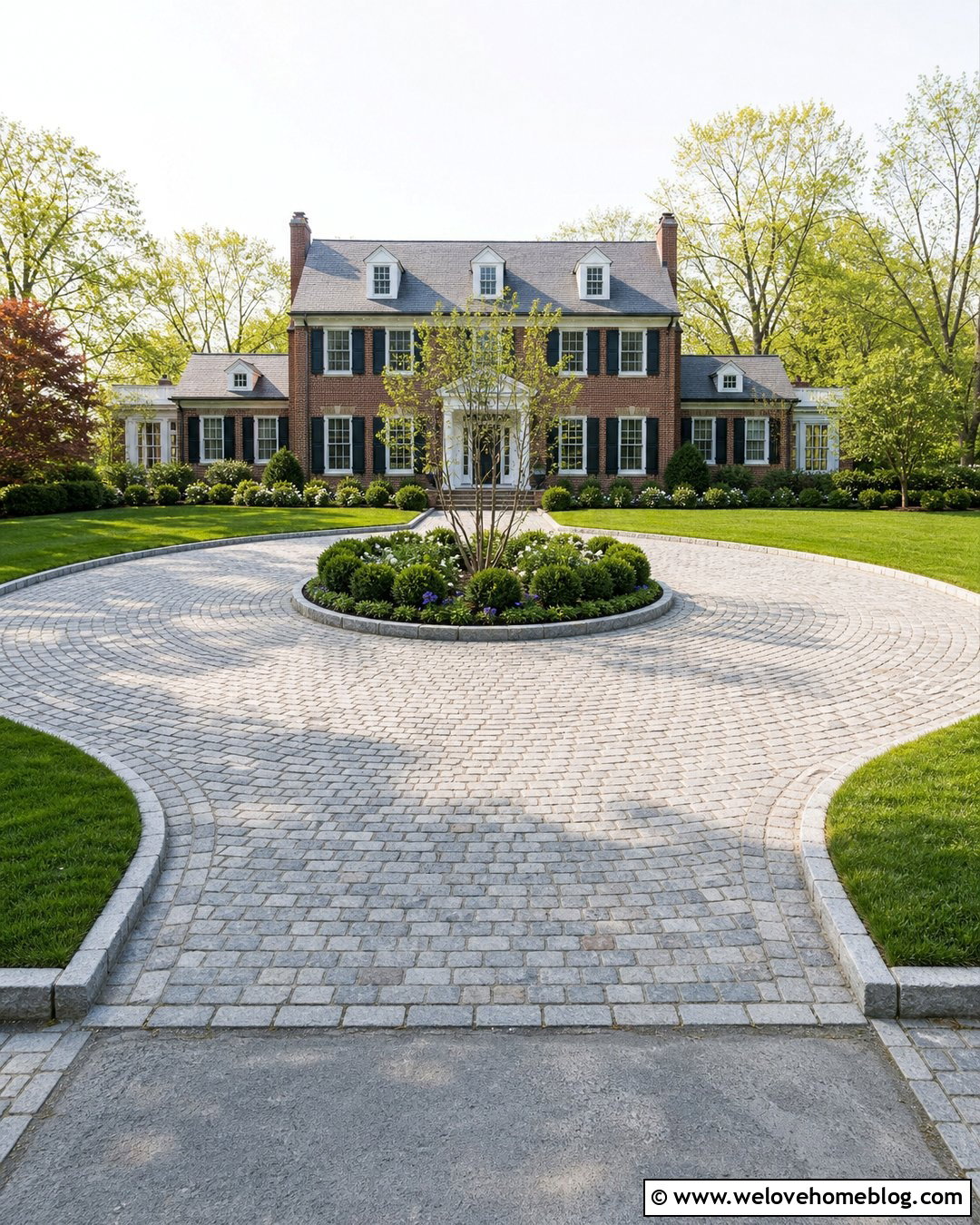
A circular granite cobblestone driveway creates an impressive arrival area while allowing vehicles to move through the property without backing toward the street. Use medium-size gray cobbles in curved running rows that follow the circular shape. A raised granite curb around the center island reinforces the layout and keeps soil away from the driving surface. Plant the island with one sculptural tree, such as a multi-stem serviceberry, surrounded by low evergreen shrubs and seasonal flowers. Avoid tall plantings that block the view across the circle. A second cobblestone border can define the outer edge beside the lawn. This arrangement pairs naturally with Georgian, Colonial Revival, and symmetrical brick homes, especially when the island aligns with the front door and central architectural features.
6. Horseshoe Granite Cobblestone Driveway With Formal Landscaping
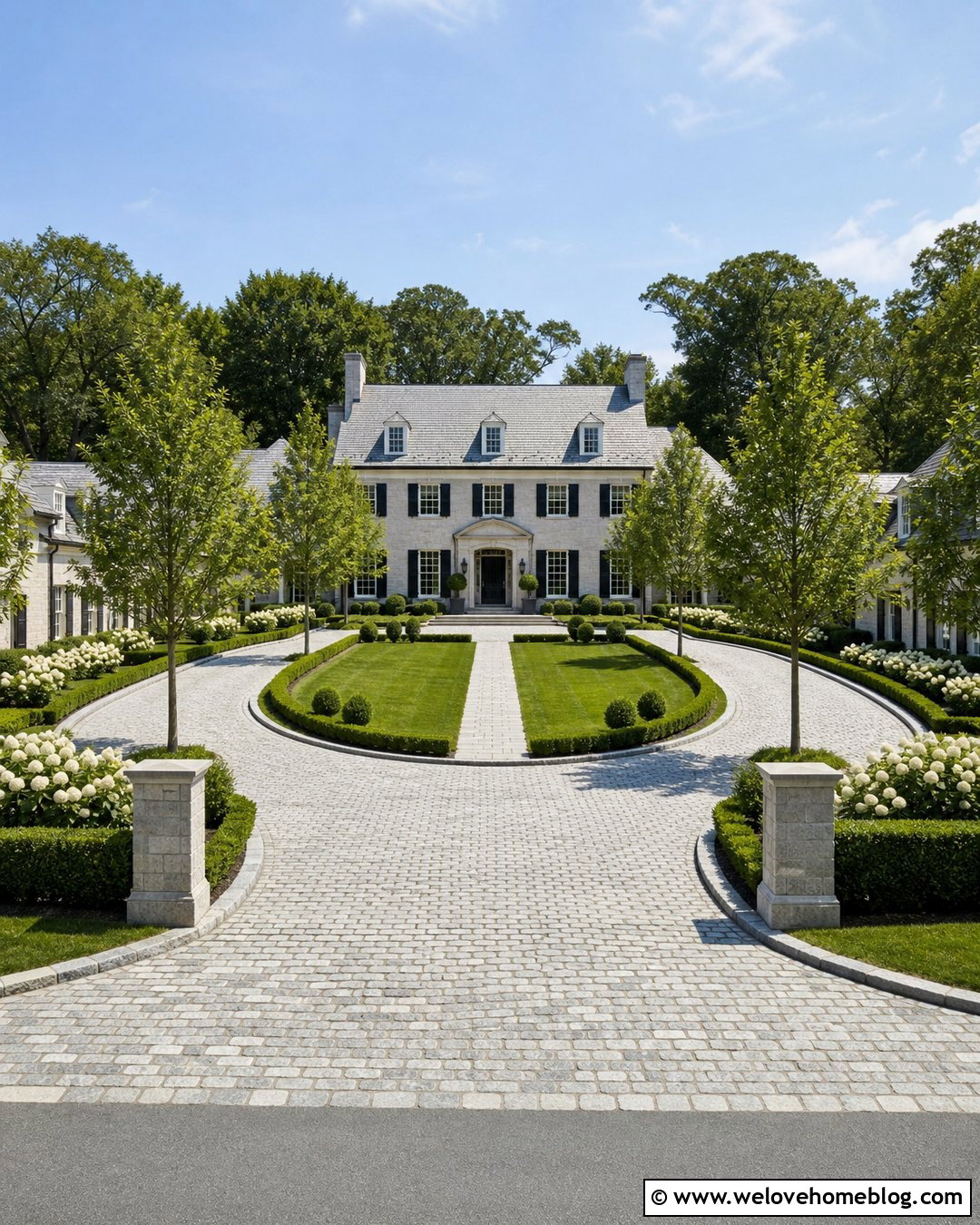
For a wide front yard, a horseshoe granite cobblestone driveway provides two street connections and a polished sense of symmetry. Pale gray rectangular cobbles laid in running bond can keep the large paved area looking calm and organized. Define the entrance and exit with slightly wider cobblestone aprons and simple granite pillars. Inside the horseshoe, create an expansive lawn panel bordered by clipped boxwood, white flowering shrubs, and evenly spaced ornamental trees. Low granite curbing can separate the planting beds from the driveway without becoming visually heavy. Place the walkway near the center of the loop so guests have a direct route to the front door. This complete layout suits traditional estate homes and large suburban properties that need convenient circulation and a formal curb presence.
7. Modern Granite Cobblestone Driveway With Linear Layout
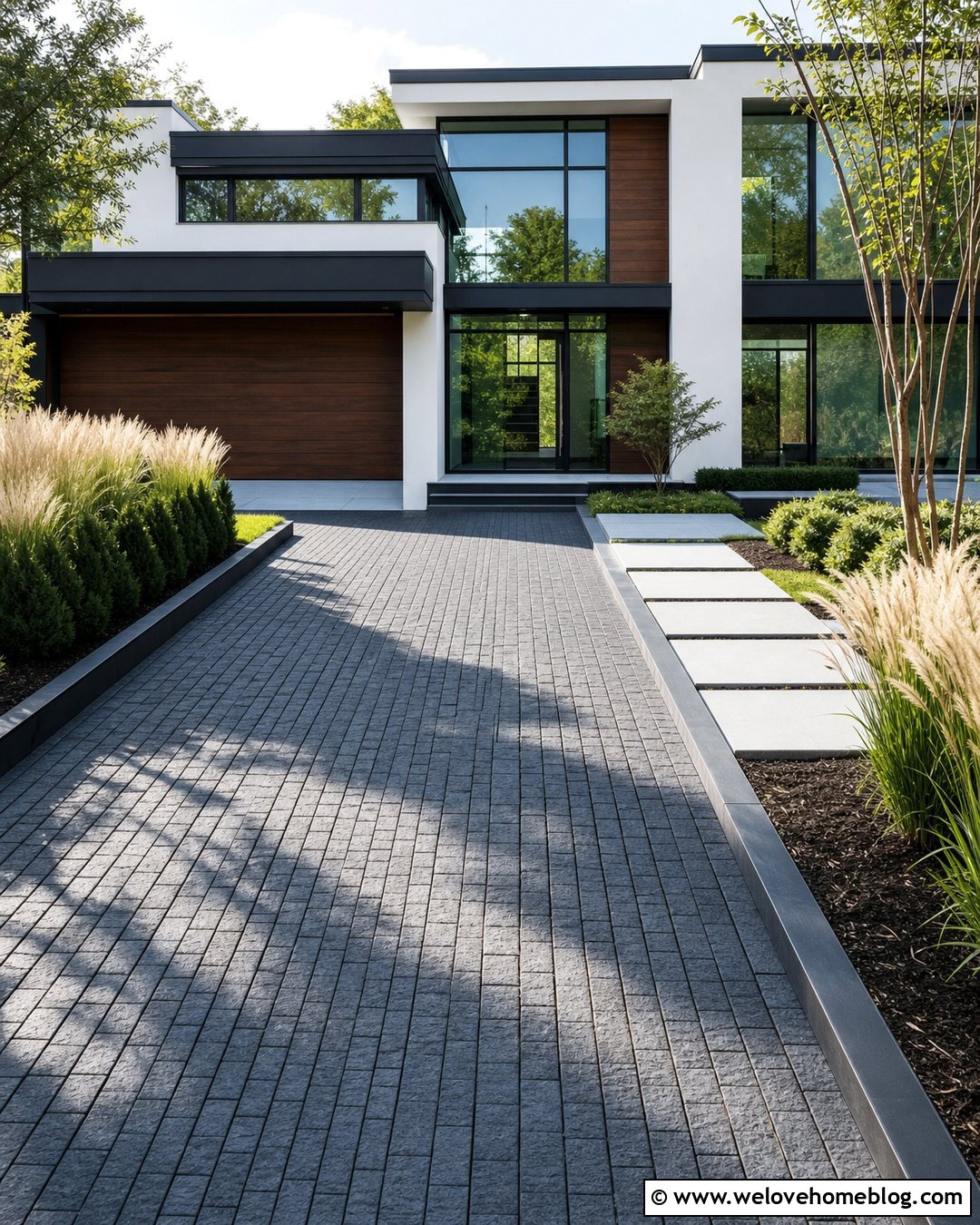
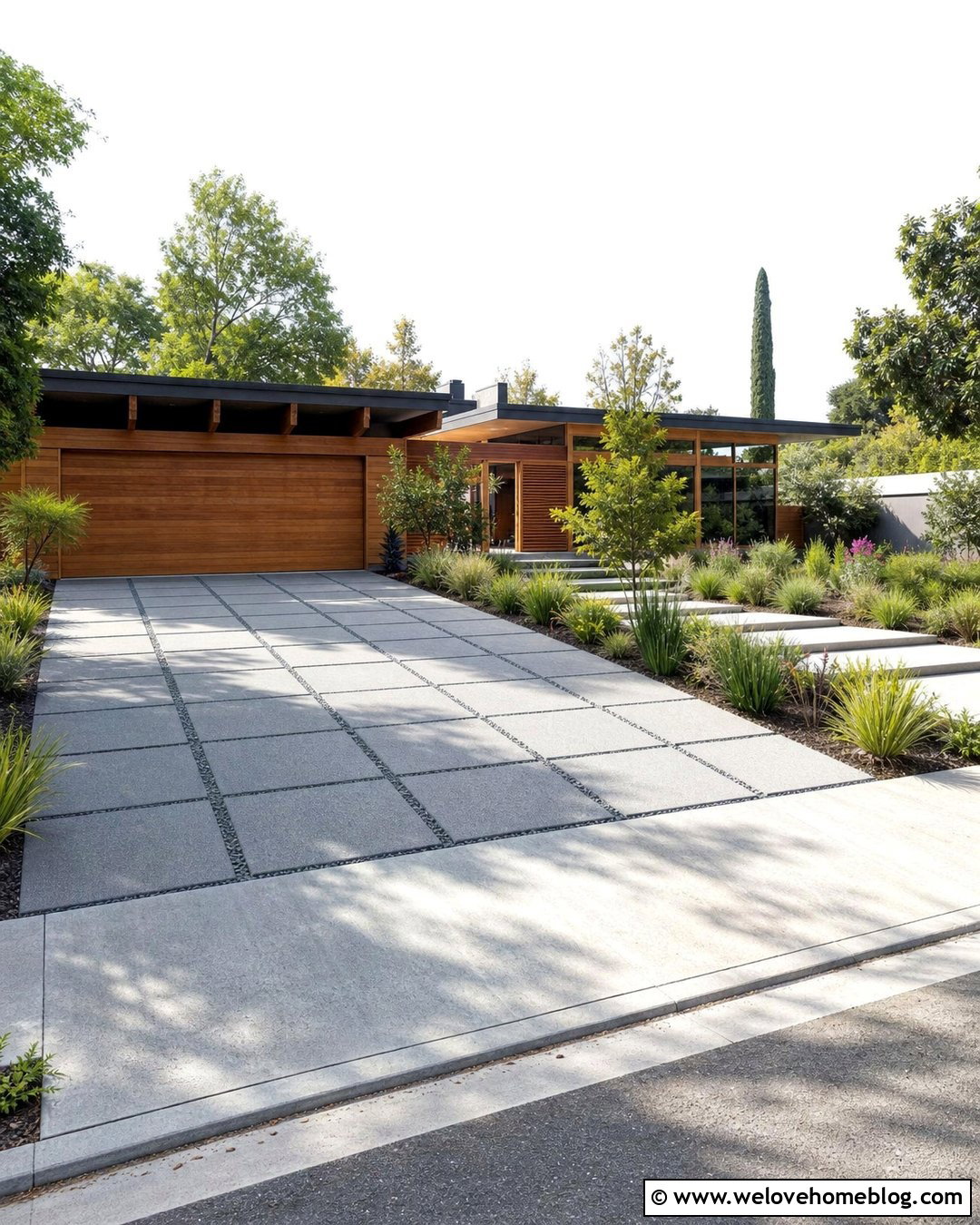
Clean lines can make granite cobblestone feel distinctly modern. Choose sawn or evenly split charcoal-gray stones with relatively consistent dimensions, then install them in long linear rows leading toward a contemporary home. Narrow joints and a restrained color palette reduce the rustic character normally associated with cobbles. Use flush black granite edging to maintain sharp boundaries beside the lawn and planting beds. Large rectangular stepping slabs can form a parallel walkway without competing with the driveway pattern. For landscaping, select architectural plants such as feather reed grass, compact evergreens, and multi-stem trees. Avoid excessive flower colors or decorative borders. The textured granite adds warmth to glass, steel, stucco, and wood facades, while the disciplined layout preserves the simple geometry expected in a modern front yard.
8. Black Granite Cobblestone Driveway With Light Stone Border
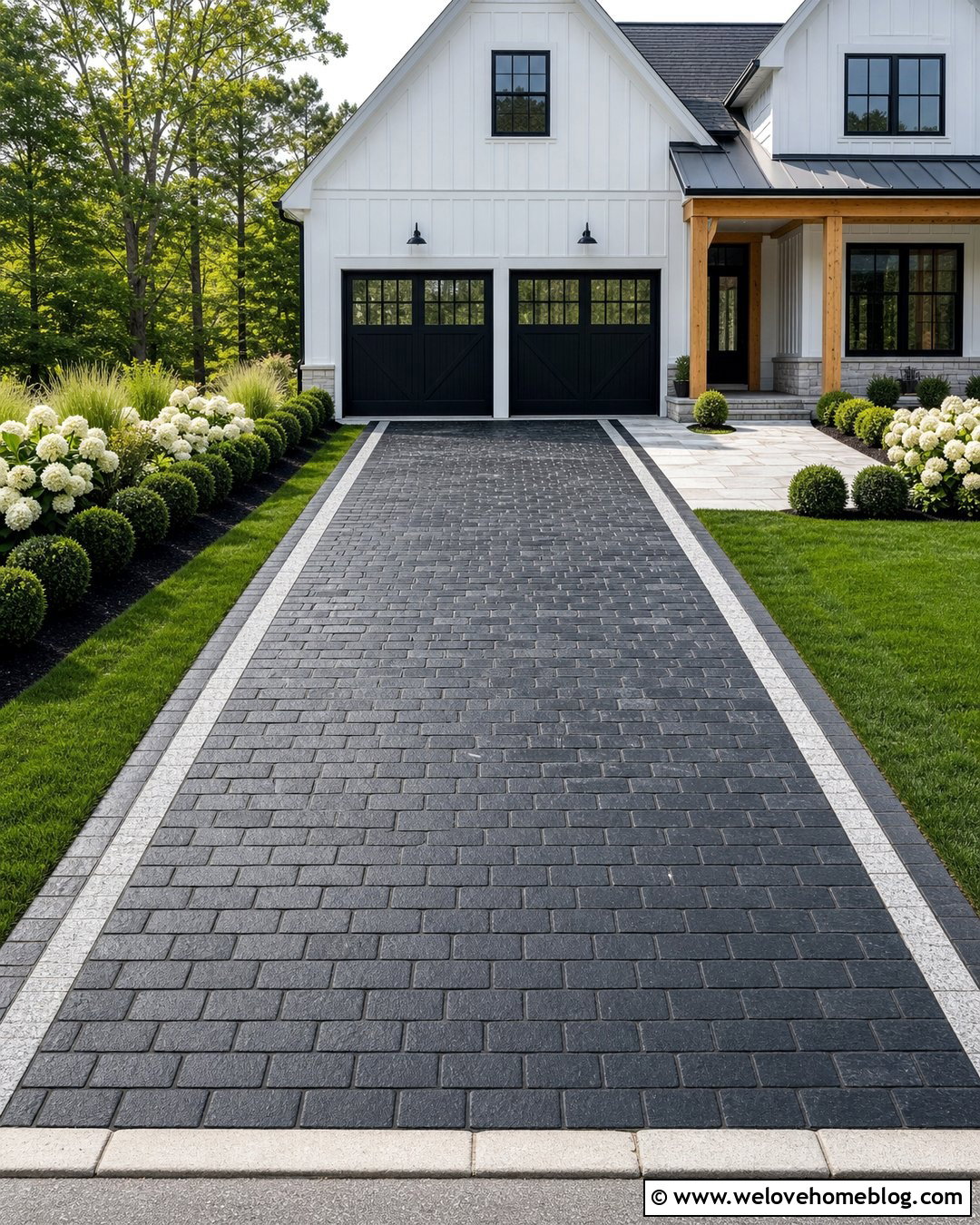
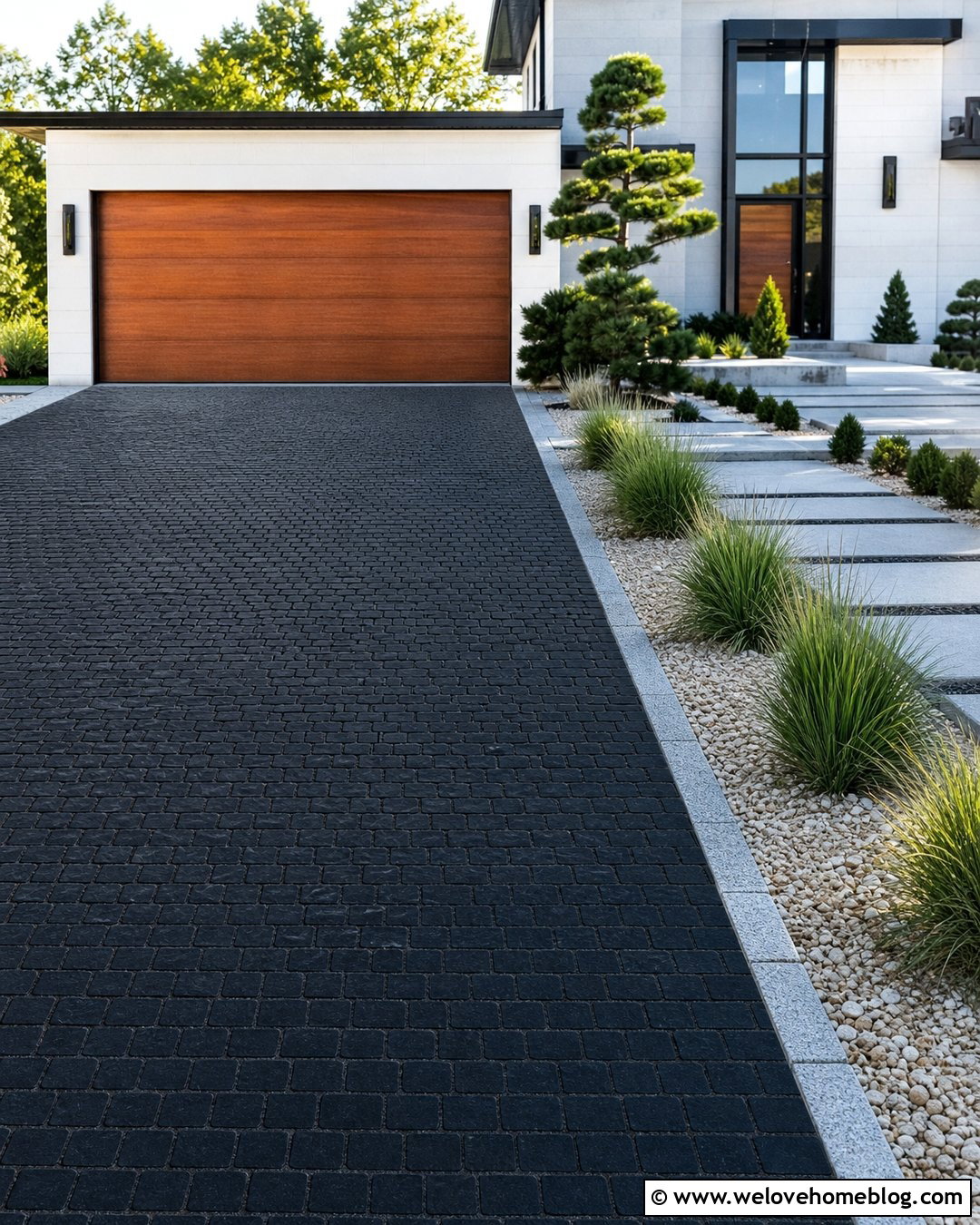
Dark granite cobblestones can create a bold driveway that still feels welcoming when balanced with lighter materials. Install charcoal and black cobbles in a straight running bond layout, then surround the field with a double border of pale gray granite. The contrast outlines the full driveway and helps its shape remain visible from the curb. This combination looks striking beside a white modern farmhouse with black windows and natural wood details. Use green-and-white landscaping to support the limited palette. Boxwood, white hydrangeas, feather grass, and a neat lawn provide softness without introducing distracting colors. A light granite walkway can connect the driveway border to the porch. The finished entrance feels dramatic and tailored, but the irregular stone texture keeps the black surface from appearing flat or severe.
9. Pink Granite Cobblestone Driveway With Cape Cod Landscaping
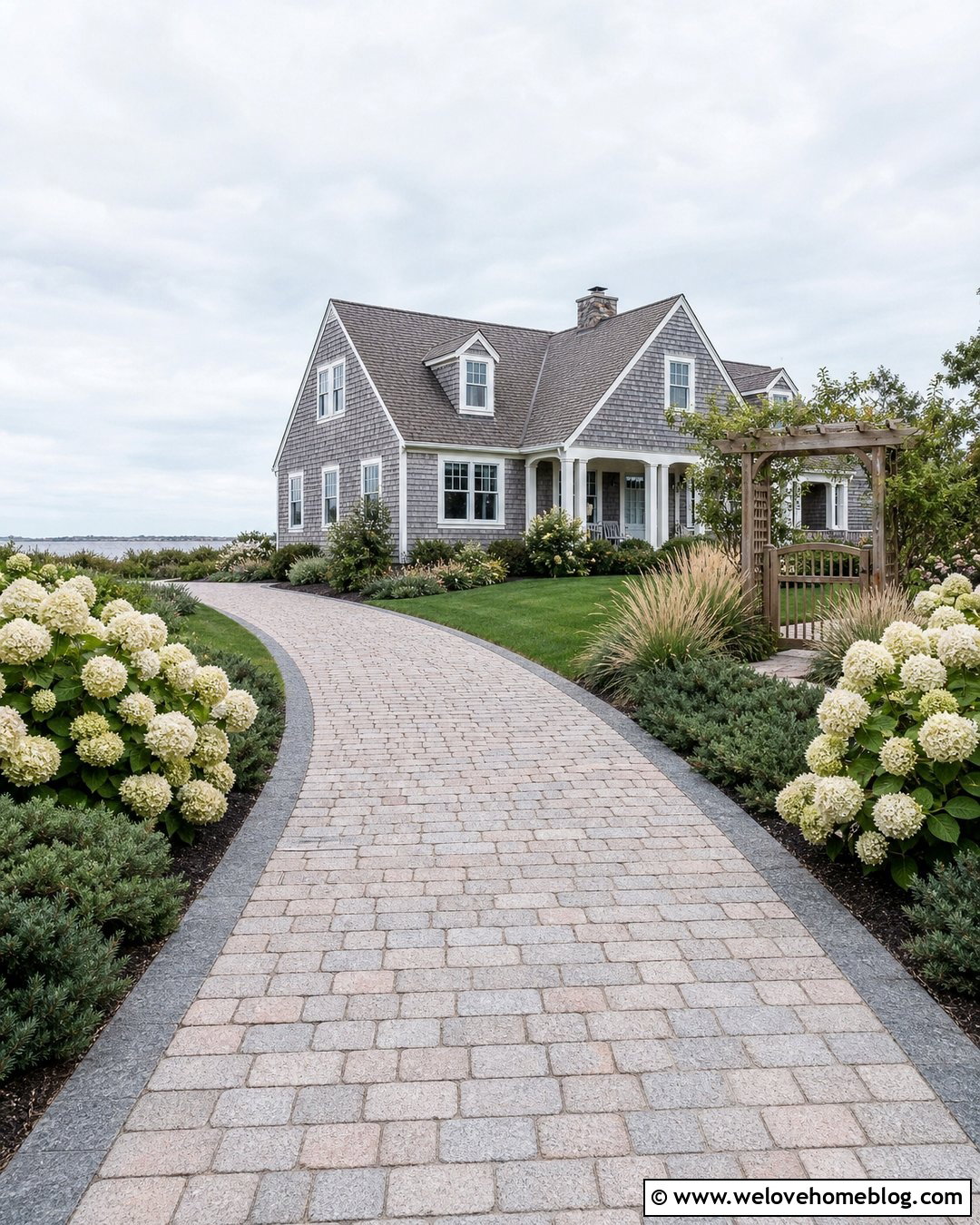
Muted pink and warm-gray granite cobbles add gentle color to a driveway without making the surface look overly decorative. Their rosy undertones pair naturally with weathered shingles, white trim, and soft-blue or gray Cape Cod facades. Lay the stones in a simple running bond pattern and use slightly darker gray granite for the perimeter border. A curved driveway can make the warm tones feel especially relaxed. Frame it with hydrangeas, beach grass, low junipers, and neatly maintained lawn. A white picket gate or cedar arbor can mark the walkway entrance without blocking the driveway. Keep joint colors neutral so the granite remains the focus. This complete design has a coastal character, yet it also works for cottages and suburban homes needing a softer alternative to uniform gray paving.
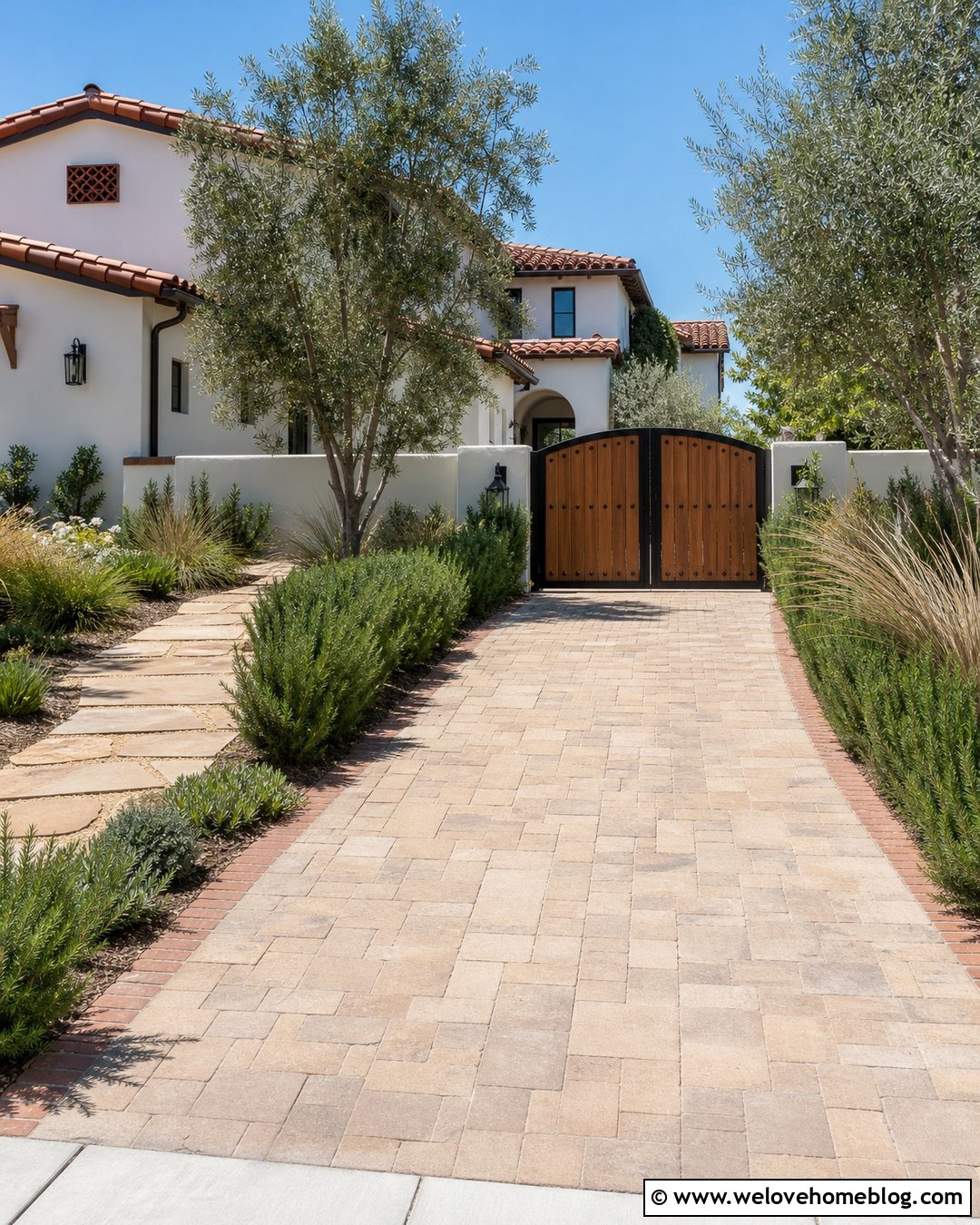
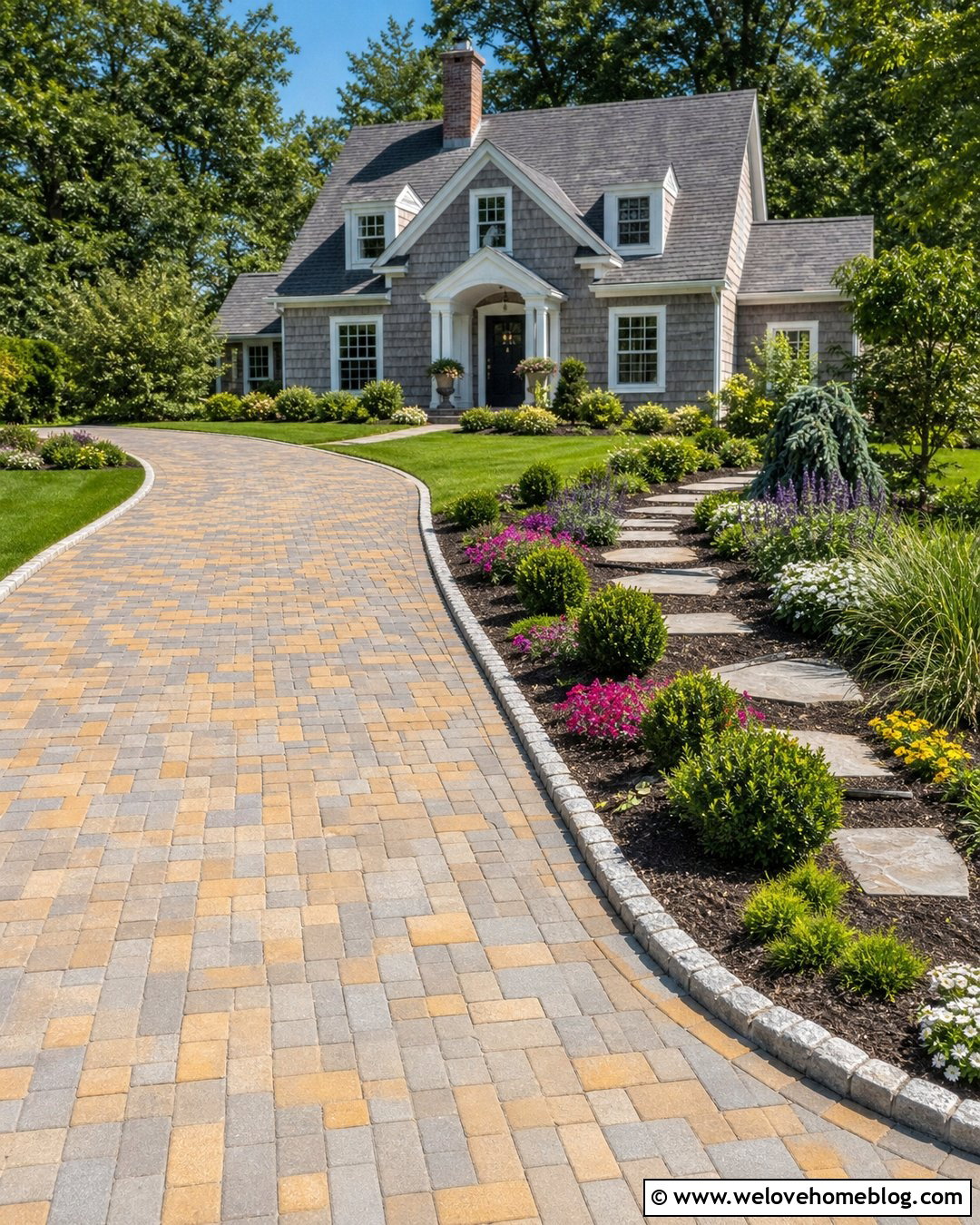
10. Granite Cobblestone Driveway Apron With Pea Gravel
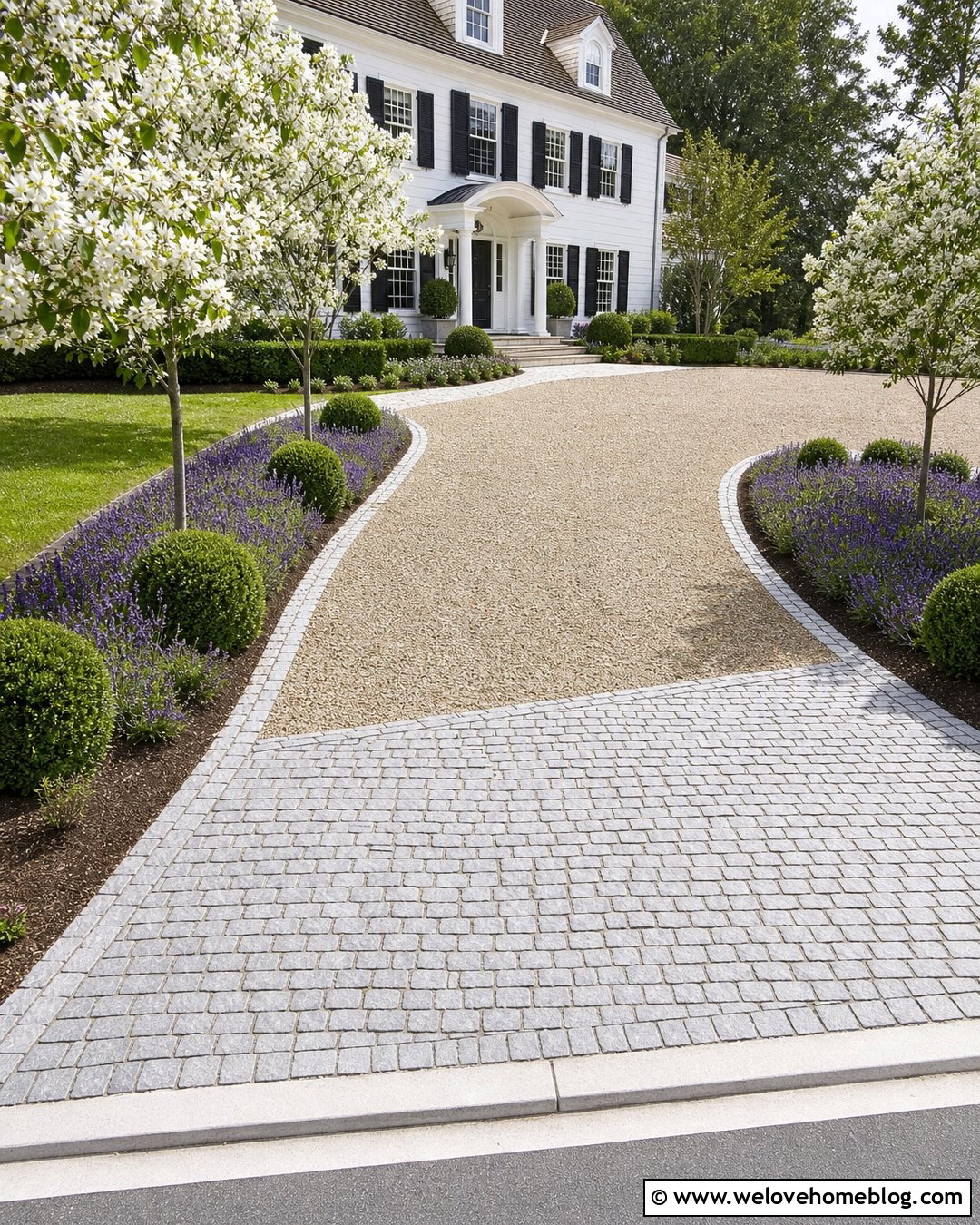
A granite cobblestone apron gives a pea gravel driveway a substantial street entrance while limiting the amount of premium stone required. Use full-depth gray granite cobbles across the first several feet of the driveway, where the patterned surface can create a strong visual threshold. A soldier-course border should continue along both sides to contain the tan or gray pea gravel. For a traditional house, shape the driveway with soft curves and widen it near the garage to form a practical parking area. Plant lavender, low boxwood, and ornamental pear trees beyond the edging. The gravel keeps the overall appearance light and informal, while the granite apron and perimeter create structure. Repeating the cobbles around the walkway entrance makes the combination feel planned rather than budget driven.
11. Granite Cobblestone Driveway Ribbons With Black Asphalt
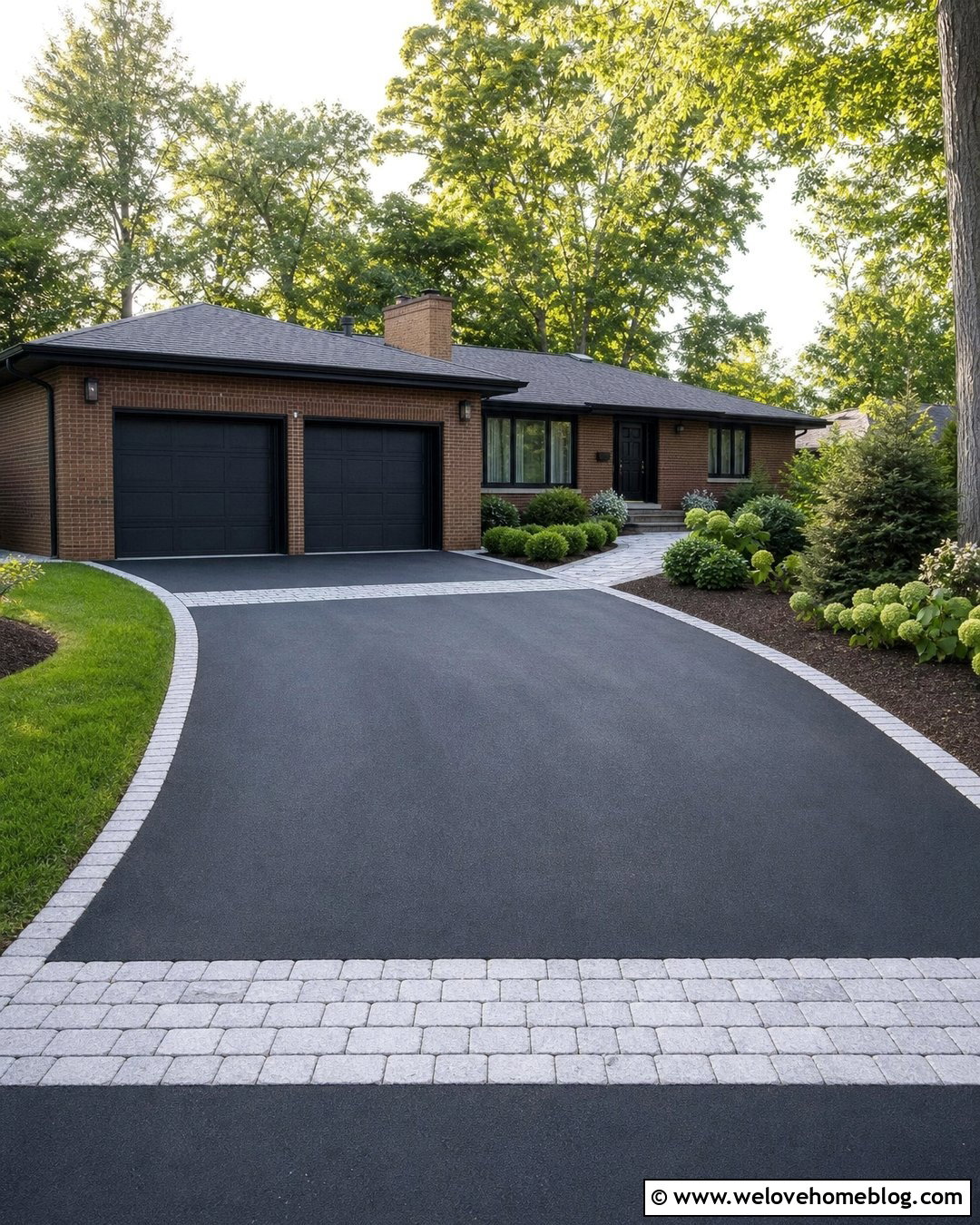
Granite cobblestone ribbons can break up a wide asphalt driveway and make the surface feel more connected to the home. Begin with smooth black asphalt, then install pale gray cobblestone bands across the entrance, near the parking area, and in front of the garage doors. Add matching granite edging along the full perimeter for continuity. The stone strips should follow expansion lines or changes in driveway function so they look purposeful. This approach is well suited to brick ranch homes, renovated Colonials, and large suburban garages. Use curved lawn edges, evergreen foundation shrubs, and one or two shade trees to soften the dark paving. The granite provides texture and visual rhythm, while asphalt keeps the central driving surface simple, smooth, and less labor-intensive than full cobblestone coverage.
12. Granite Cobblestone Border With Poured Concrete Driveway
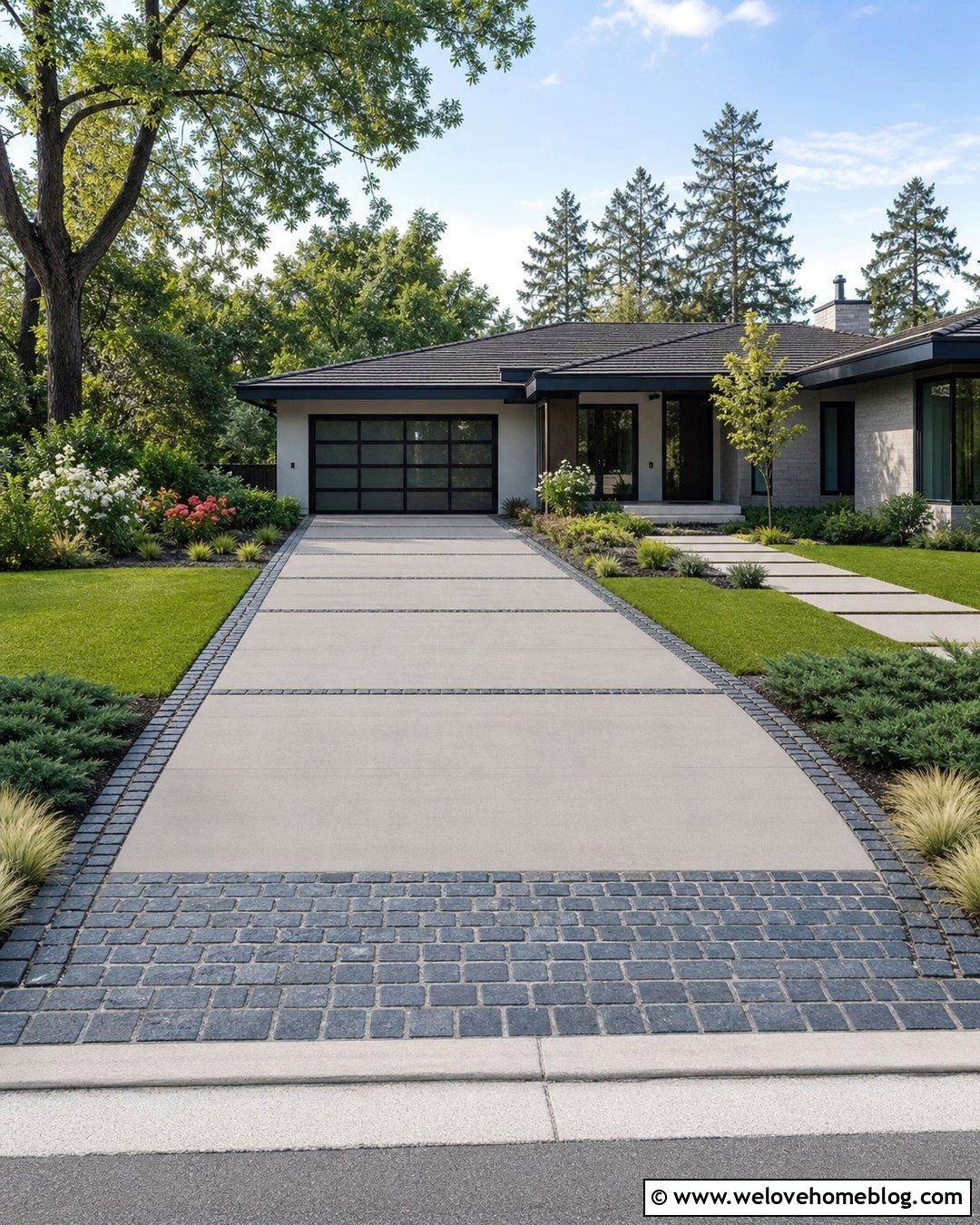
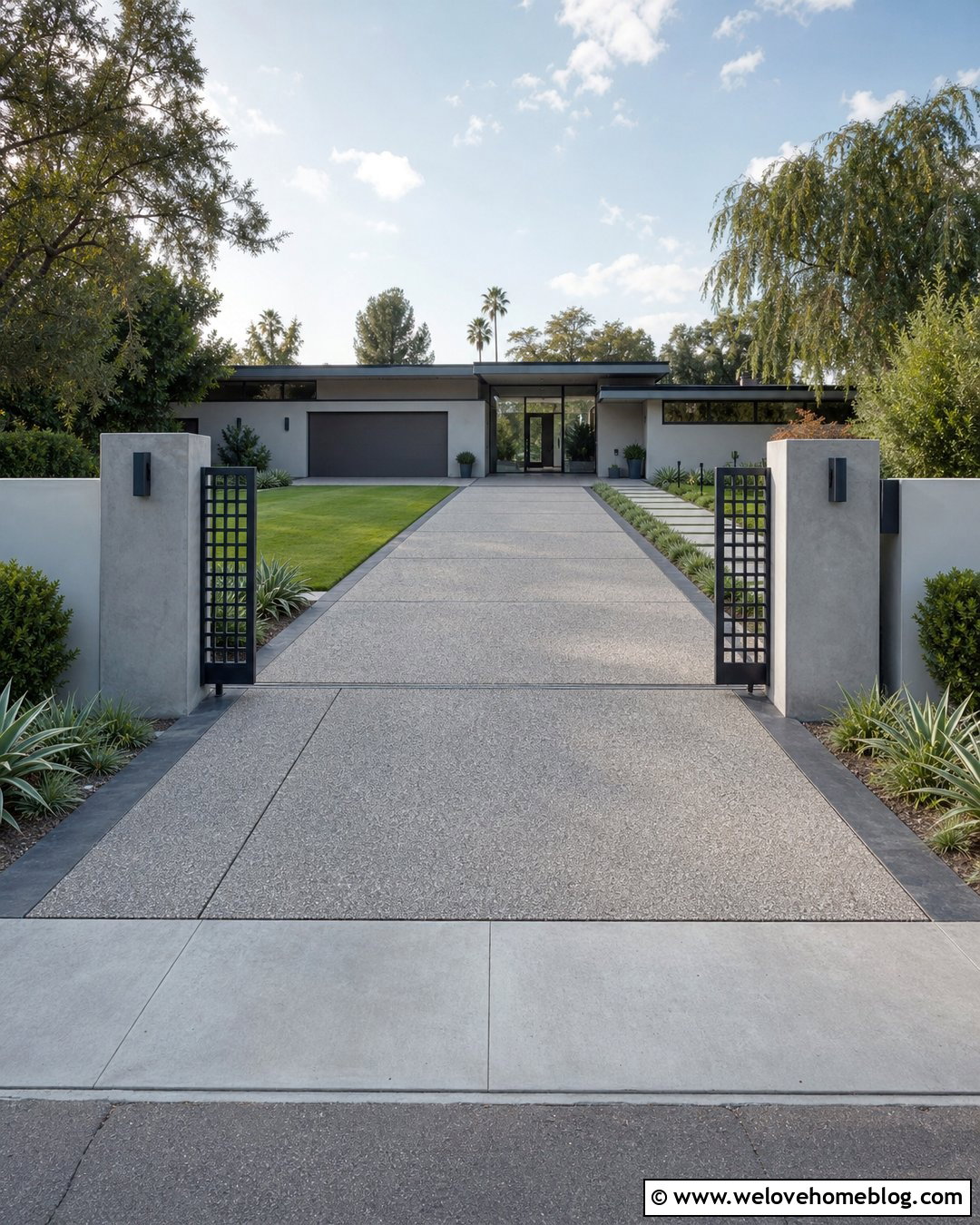
A poured concrete driveway becomes more distinctive when surrounded by a carefully installed granite cobblestone border. Choose warm-gray concrete with a light broom finish, then use charcoal granite blocks to create a strong outline. A double cobblestone row at the street can form an apron, while single rows continue toward the garage. On a contemporary ranch home, introduce narrow granite bands between large concrete sections to create a measured geometric layout. Plant low grasses, spreading junipers, and compact flowering shrubs beside the stone edge. Keep the cobbles nearly flush where people step out of vehicles, while slightly raised sections can help define adjacent beds. This mixed-material design offers the clean surface of concrete and the natural variation of granite, creating an approachable look that fits many budgets and architectural settings.
13. Granite Cobblestone Driveway With Grass Strips
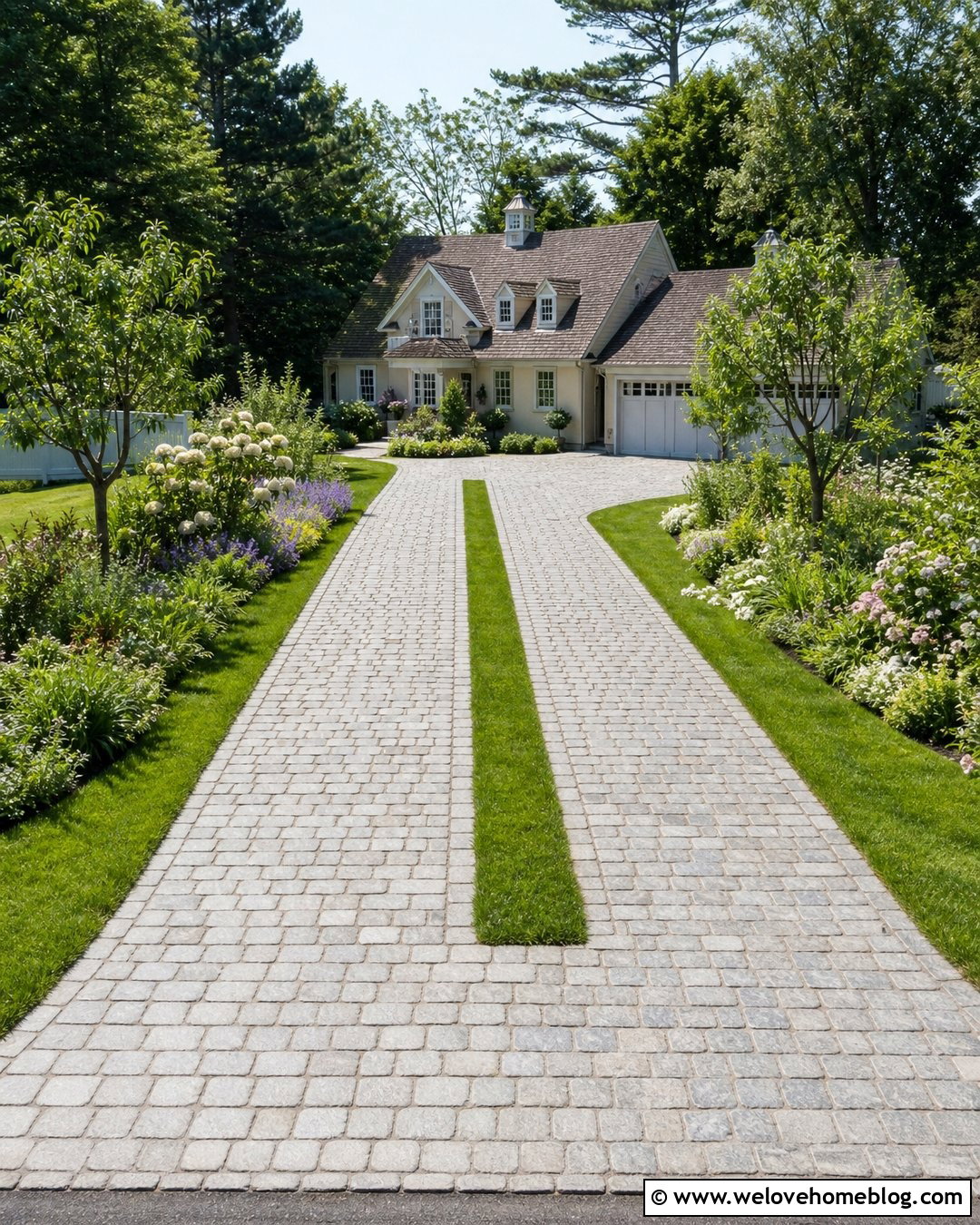
Two granite cobblestone driving tracks separated by a central grass strip can reduce the visual weight of a driveway in a cottage or country setting. Build each track wide enough for vehicle tires, using gray or mixed reclaimed cobbles in a running bond pattern. Repeat grass along the outside edges so the paving appears integrated into the lawn. A full-width cobblestone apron at the street provides a stable entrance and clearly marks the driveway. Near the garage, the tracks can transition into a complete cobblestone parking pad. Surround the route with informal perennial beds, flowering shrubs, and small fruit trees. The center strip needs straightforward access for mowing and irrigation. When properly proportioned, this design feels greener and more relaxed than a solid paved surface while retaining the rich character of natural granite.
14. Permeable Granite Cobblestone Driveway With Rain Garden
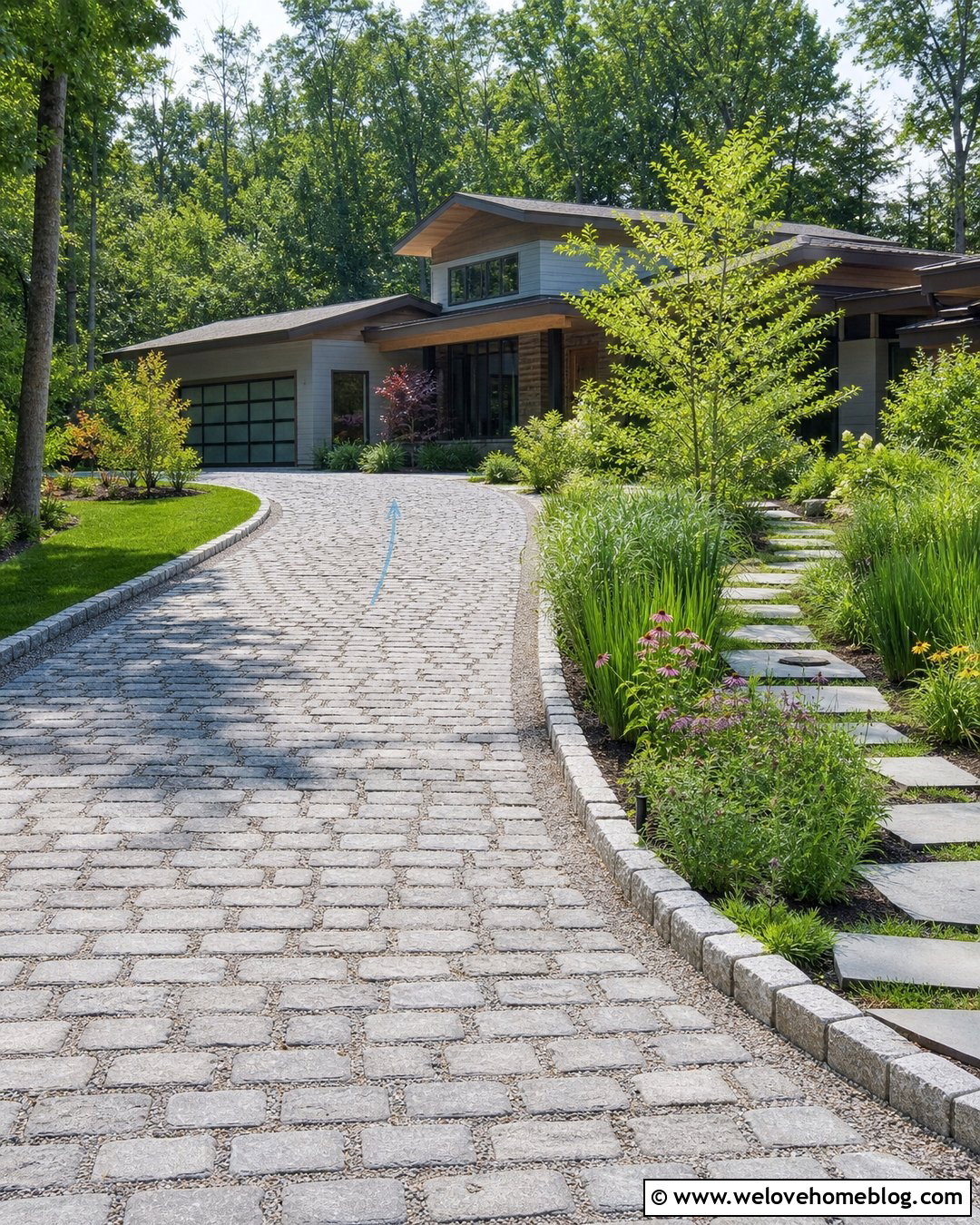
Wide, carefully planned joints can give a granite cobblestone driveway a softer, more permeable appearance. Use tumbled gray cobbles over a suitable open-graded base, with joint material selected for the intended drainage system. Shape the driveway so surface water moves toward a planted rain garden instead of collecting near the garage or foundation. A low granite curb can guide runoff while creating a finished edge. Fill the rain garden with moisture-tolerant grasses, sedges, flowering perennials, and compact shrubs suited to the local conditions. A stepping-stone walkway can bridge the planted area and lead toward the front porch. This complete driveway works well with sustainable contemporary homes and naturalistic landscapes. Local soil, rainfall, grading, and regulations should guide the final drainage design and professional installation details.
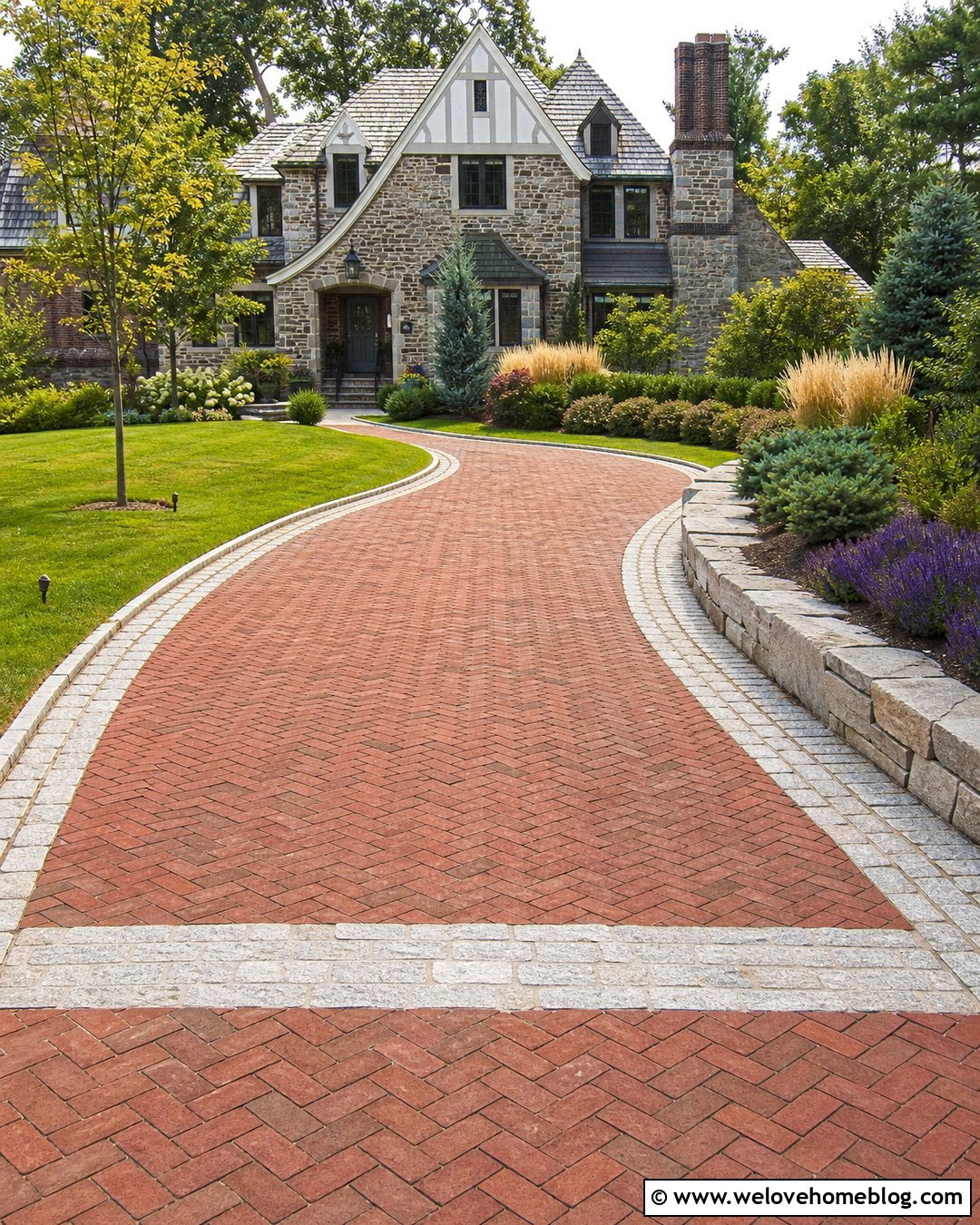
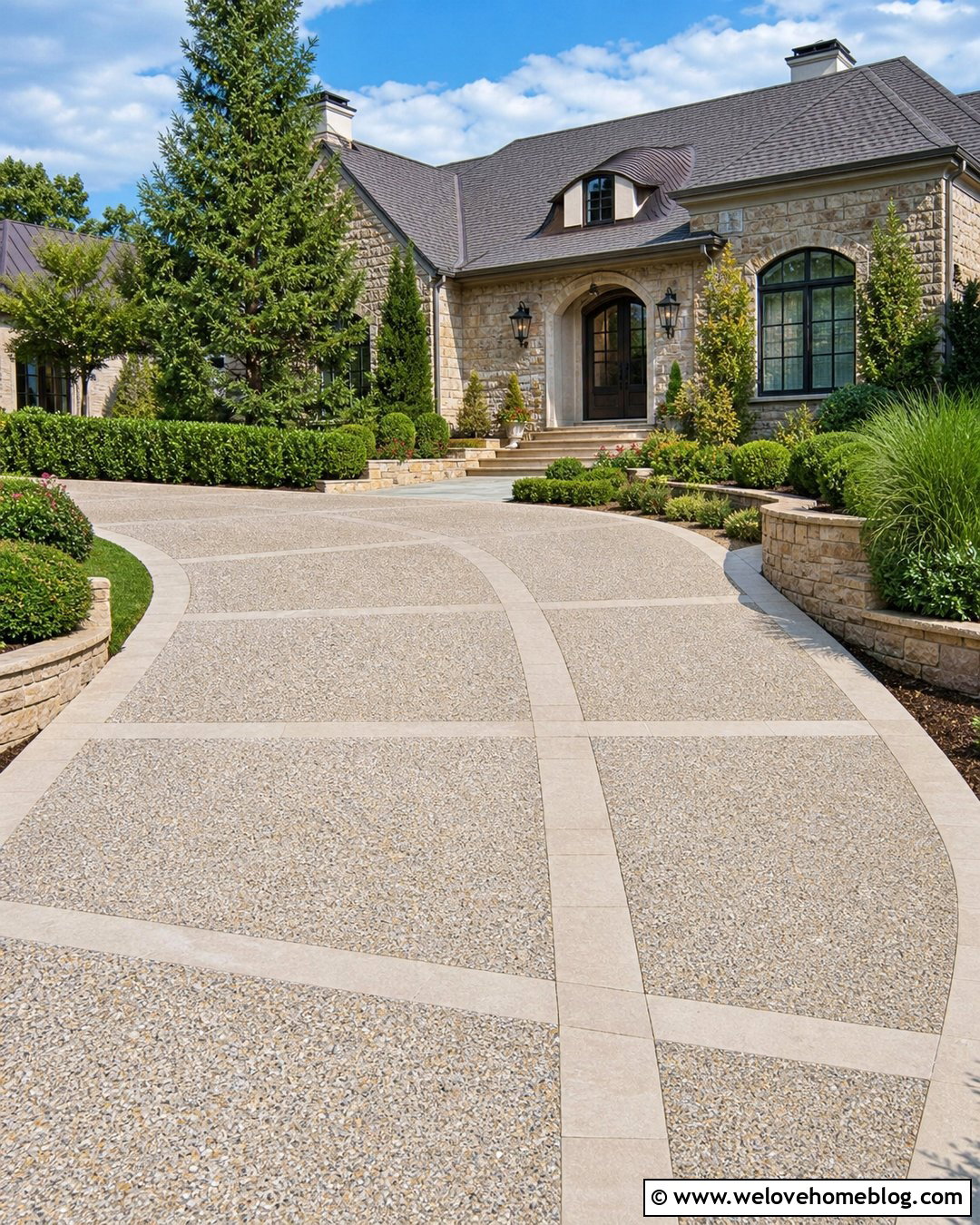
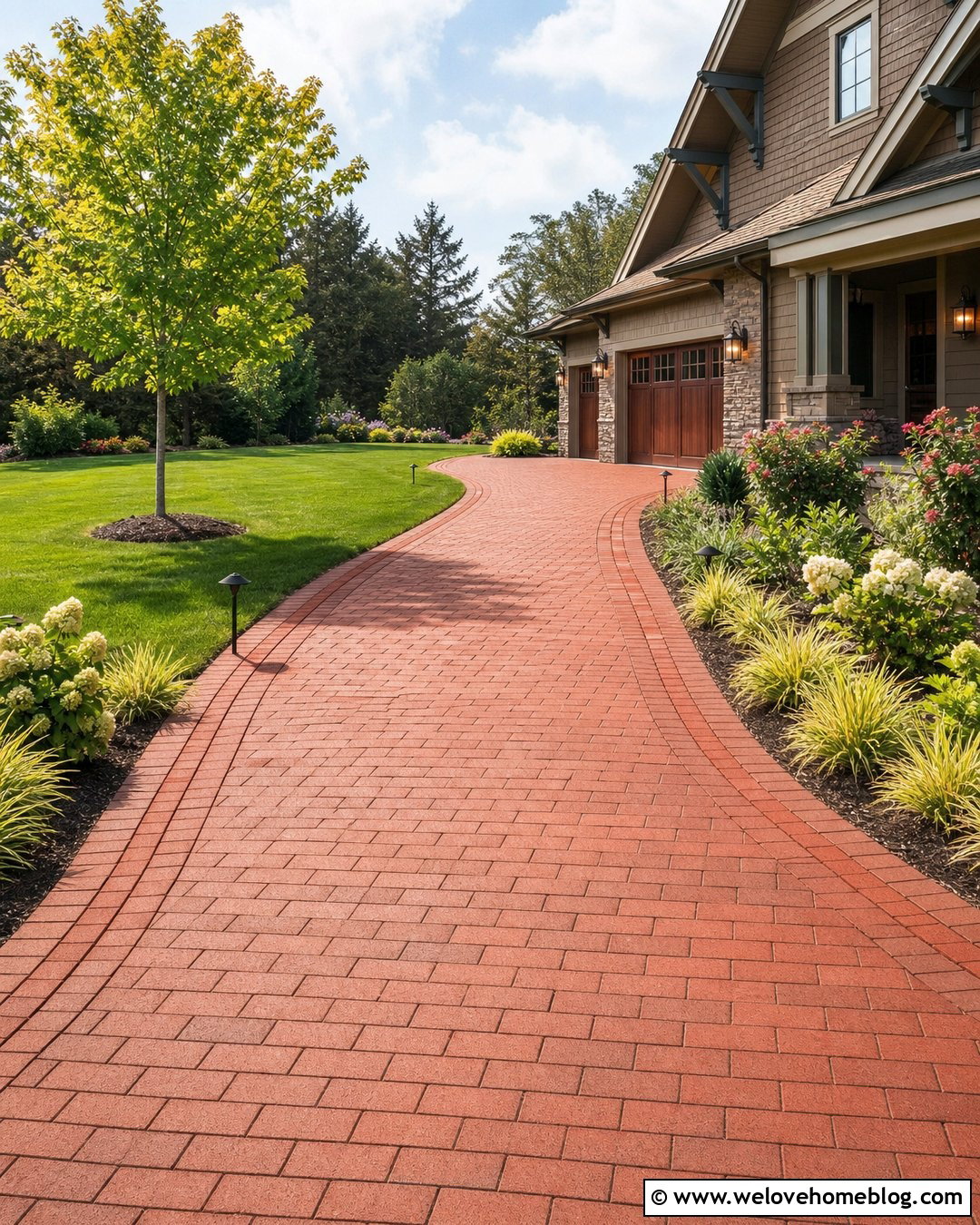
15. Narrow Granite Cobblestone Driveway With Soldier Course Border
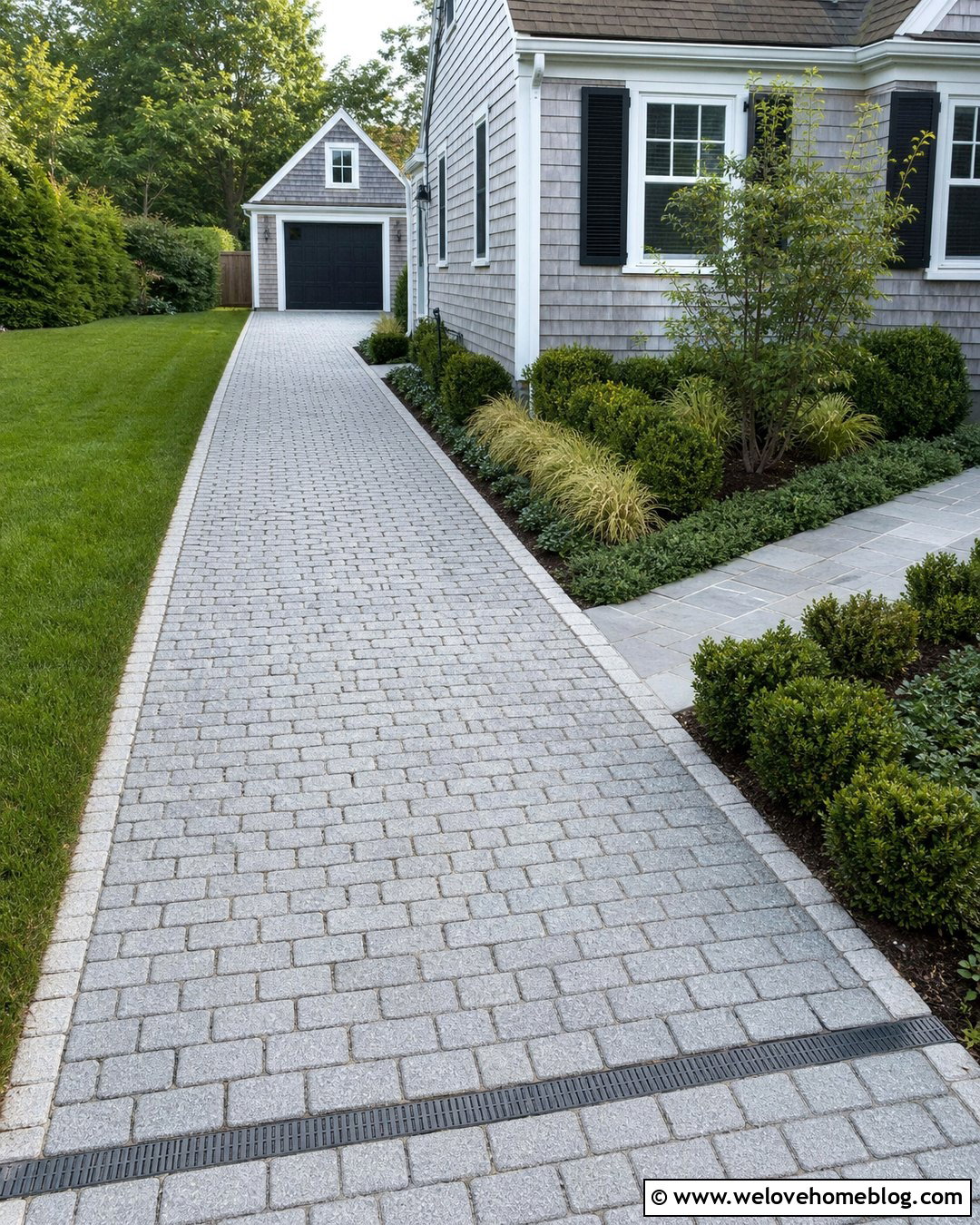
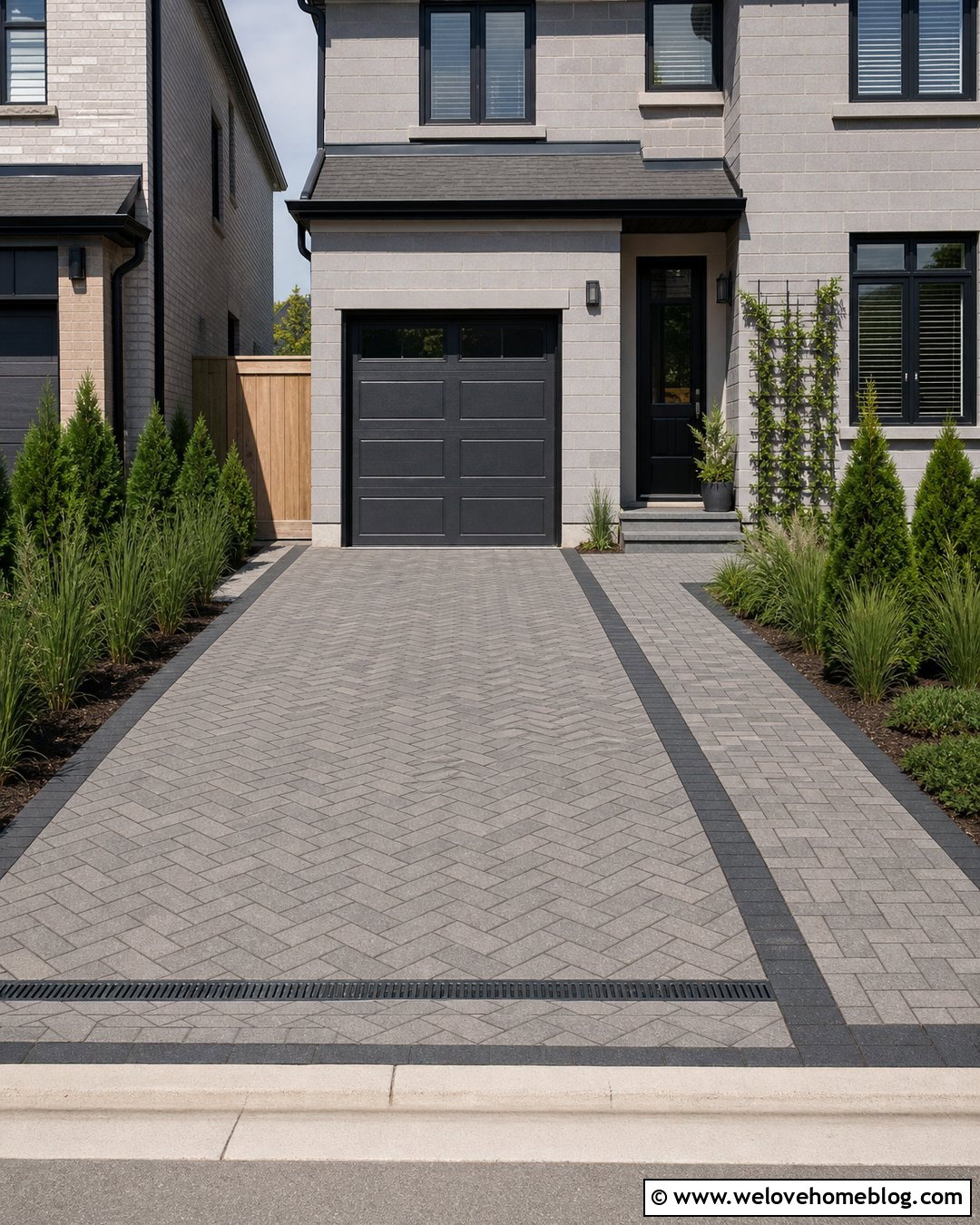
A narrow side-yard driveway needs a simple pattern and clearly defined edges to prevent it from feeling cramped. Lay rectangular gray granite cobbles lengthwise in running bond so the lines draw the eye toward the garage. A single soldier course along each side creates a clean frame without taking up unnecessary width. Where doors open or passengers step out, include a slightly wider landing connected to the house walkway. Keep adjacent planting low and tidy with dwarf boxwood, liriope, compact grasses, or ground cover. A slim drainage channel may be incorporated along the lower edge if the driveway sits between the house and a property boundary. This complete design can add character to urban homes, small Cape Cod houses, and detached garages while making efficient use of limited front-yard space.
16. Sloped Granite Cobblestone Driveway With Drainage Channel
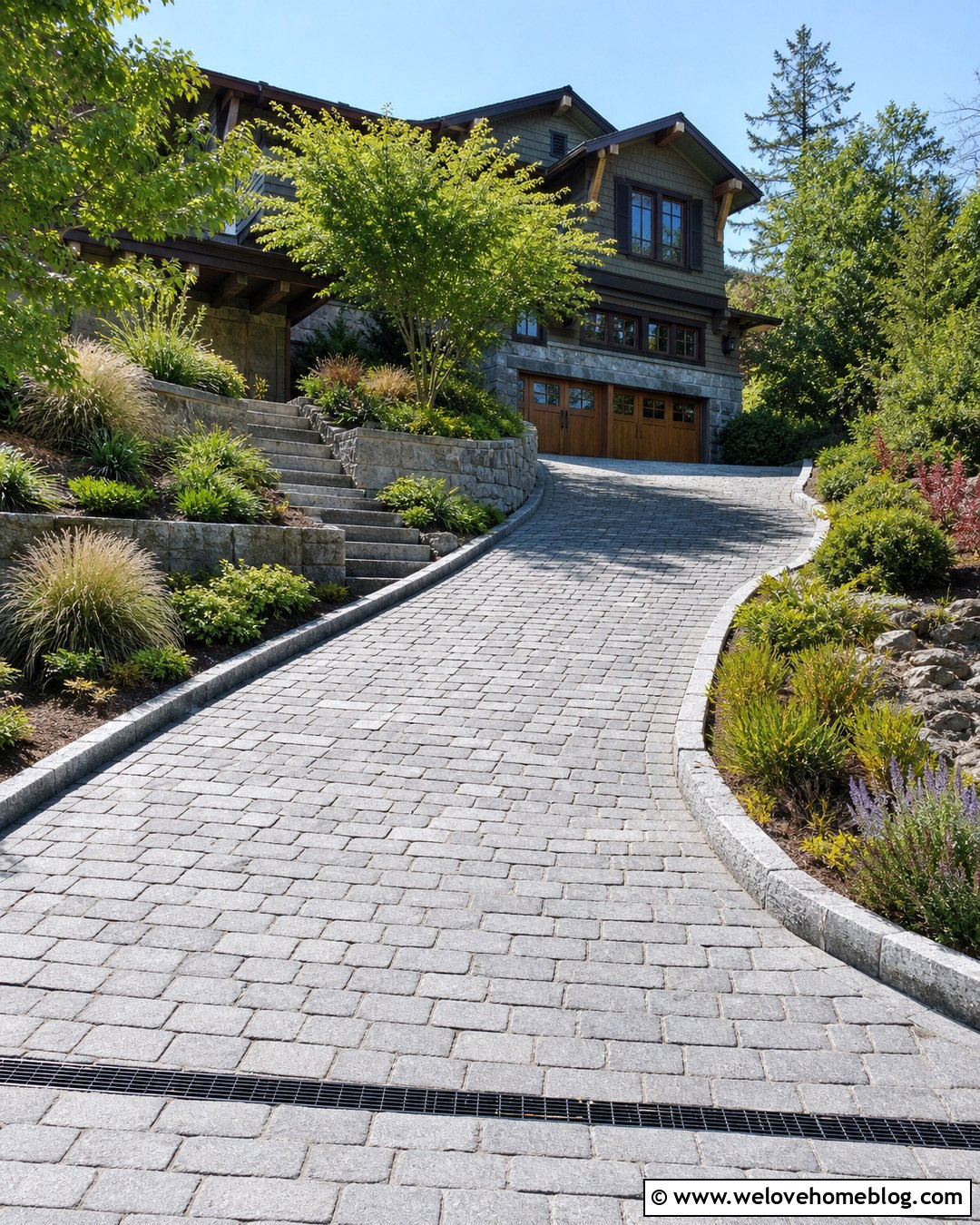
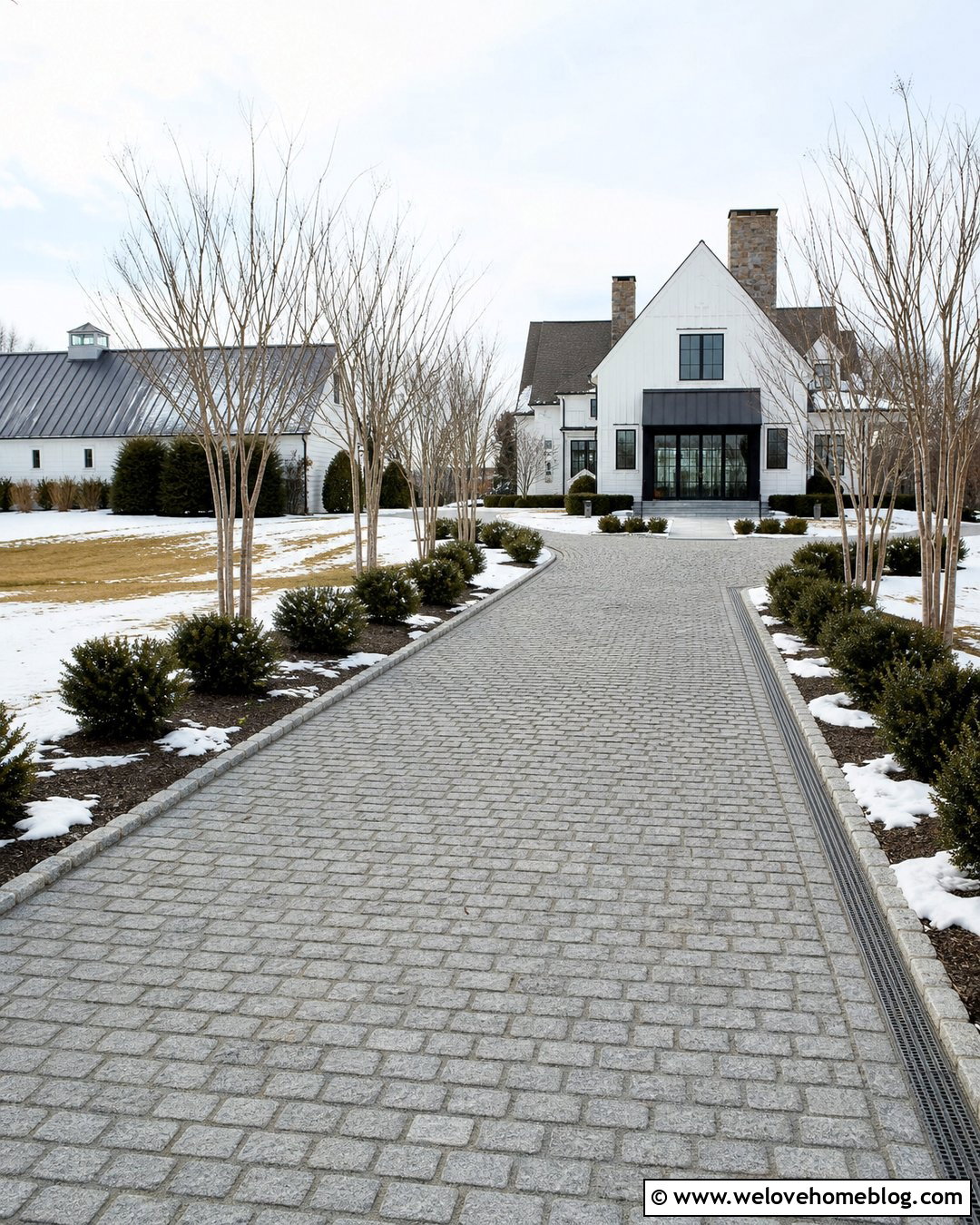
On a sloped property, the granite pattern, edging, and water management should be designed as one system. Textured gray cobbles laid in staggered running bond create a visually grounded surface that follows the incline. Use robust granite curbing on both sides to protect planting beds and define the driving area. Across the lower end or near the garage, install a properly sized drainage channel with a simple dark metal grate. Gentle cross-slopes can direct water toward the intended collection point. Deep-rooted grasses, spreading shrubs, and terraced planting beds help frame the approach without hiding sightlines. Choose shorter plants along the inside of curves. A professional should evaluate the base, grading, drainage capacity, and local freeze conditions before construction. The resulting driveway can look refined while addressing a challenging site practically.
17. Long Granite Cobblestone Driveway With Tree-Lined Entrance
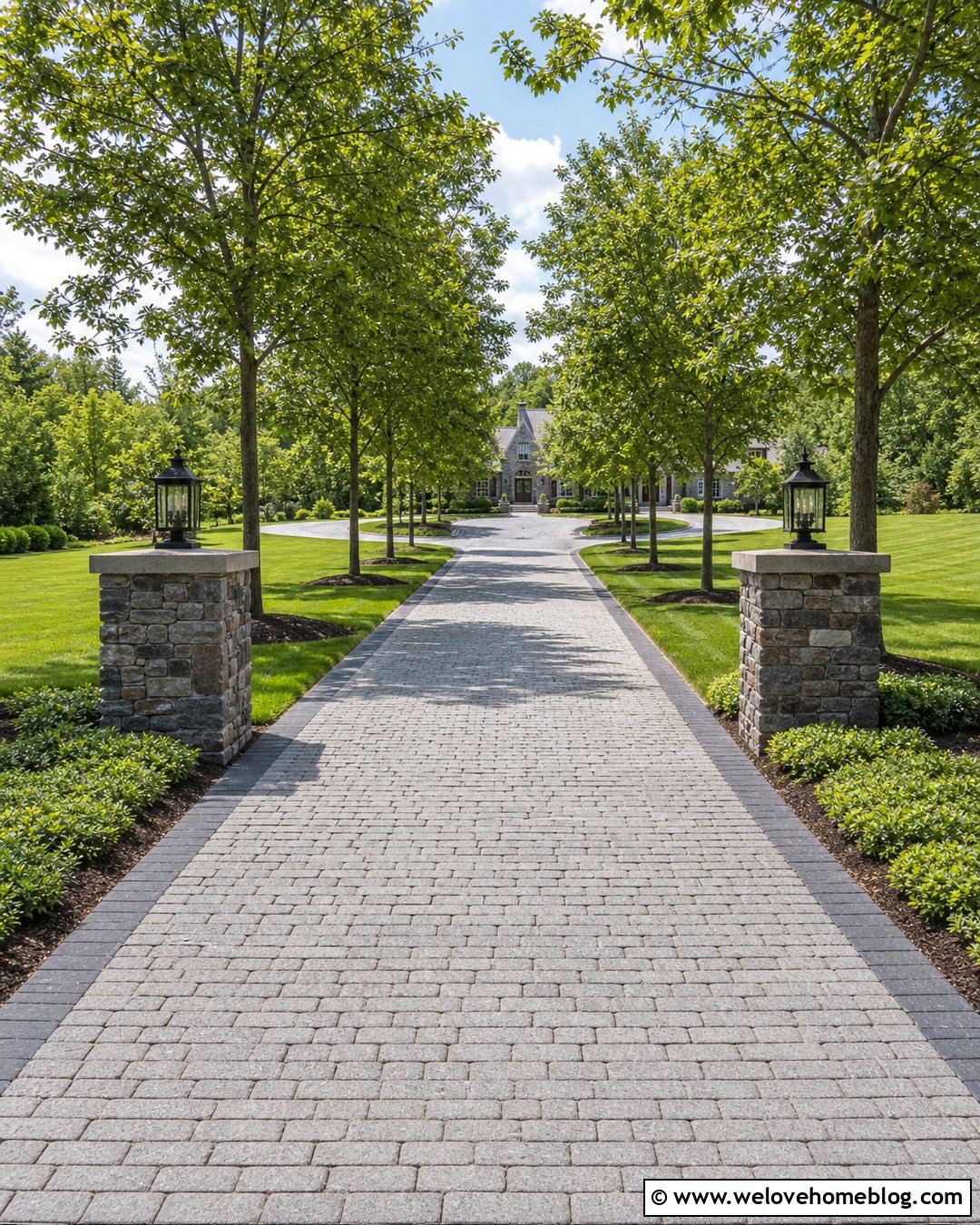
A long granite cobblestone driveway becomes more inviting when the paving and tree placement create a clear visual journey toward the house. Use medium-gray stones in a straightforward running bond pattern so the extensive surface remains calm. A darker granite border can emphasize the driveway’s length and keep adjoining soil or gravel in place. Plant evenly spaced deciduous trees beyond the edge, leaving enough room for mature trunks, branches, and roots. Beneath them, use lawn or simple ground cover rather than crowded flower beds. At the entrance, modest granite pillars and curved planting beds can frame the first view. Widen the driveway gradually near the house to form a turning area. This design suits country homes, traditional estates, and larger suburban lots where the approach is an important part of the landscape.
18. Granite Cobblestone Motor Court With Mixed Patterns
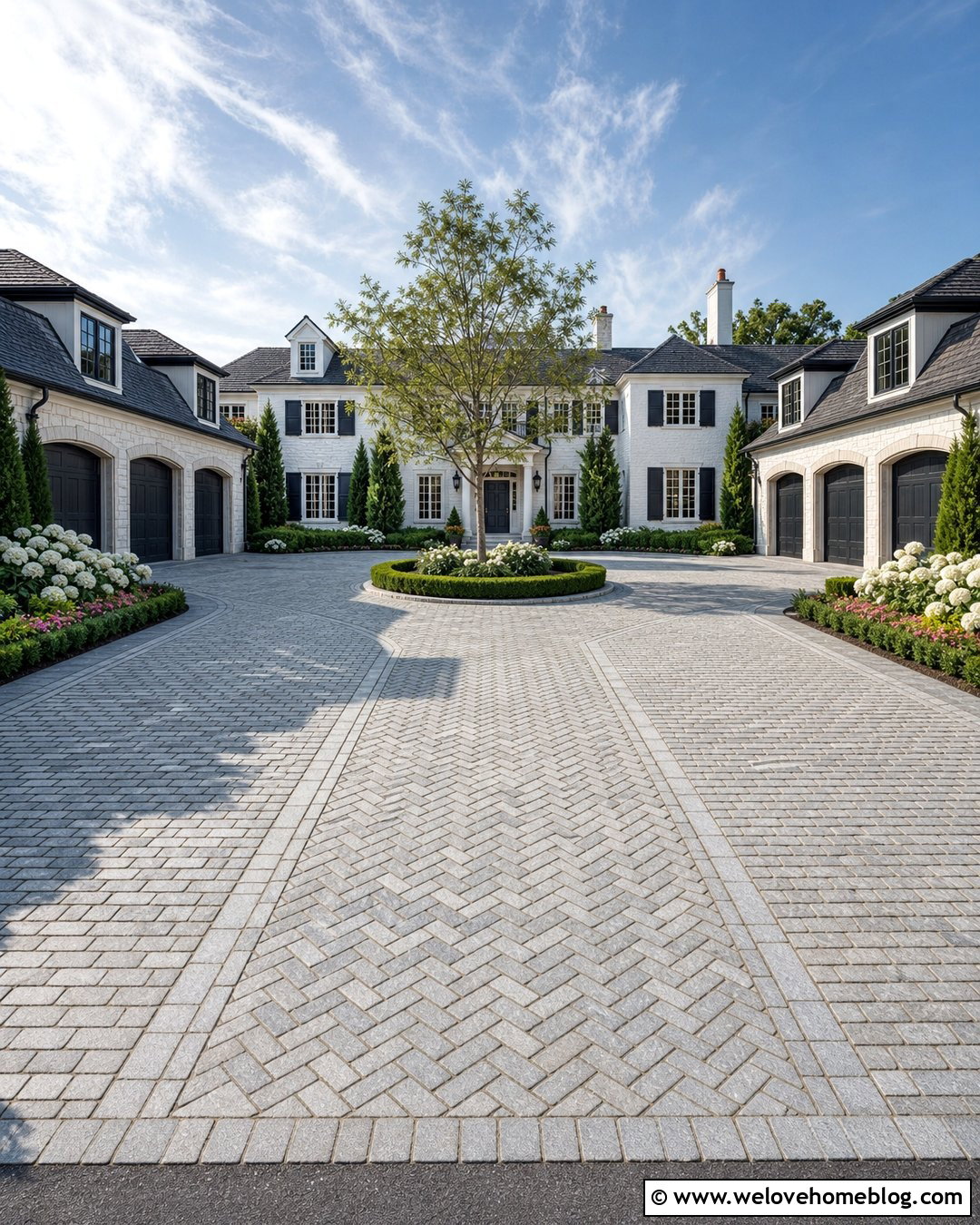
A motor court can accommodate parking and turning without looking like one oversized field of stone. Divide a full granite cobblestone surface into visual zones using coordinated patterns. Running bond can cover the main parking area, while herringbone marks the central turning space and soldier courses frame the edges. Keep all stones within a related gray palette so the different patterns remain cohesive. A circular planting bed or large decorative tree can anchor the court where space allows. Around the perimeter, use clipped evergreens, broad planting beds, and a direct walkway to the front door. Align cobblestone bands with garage doors and major architectural features. This detailed layout works especially well for broad traditional homes, courtyard residences, and properties with multiple garage bays that require an organized arrival area.
19. Granite Cobblestone Driveway With Stone Gate Pillars
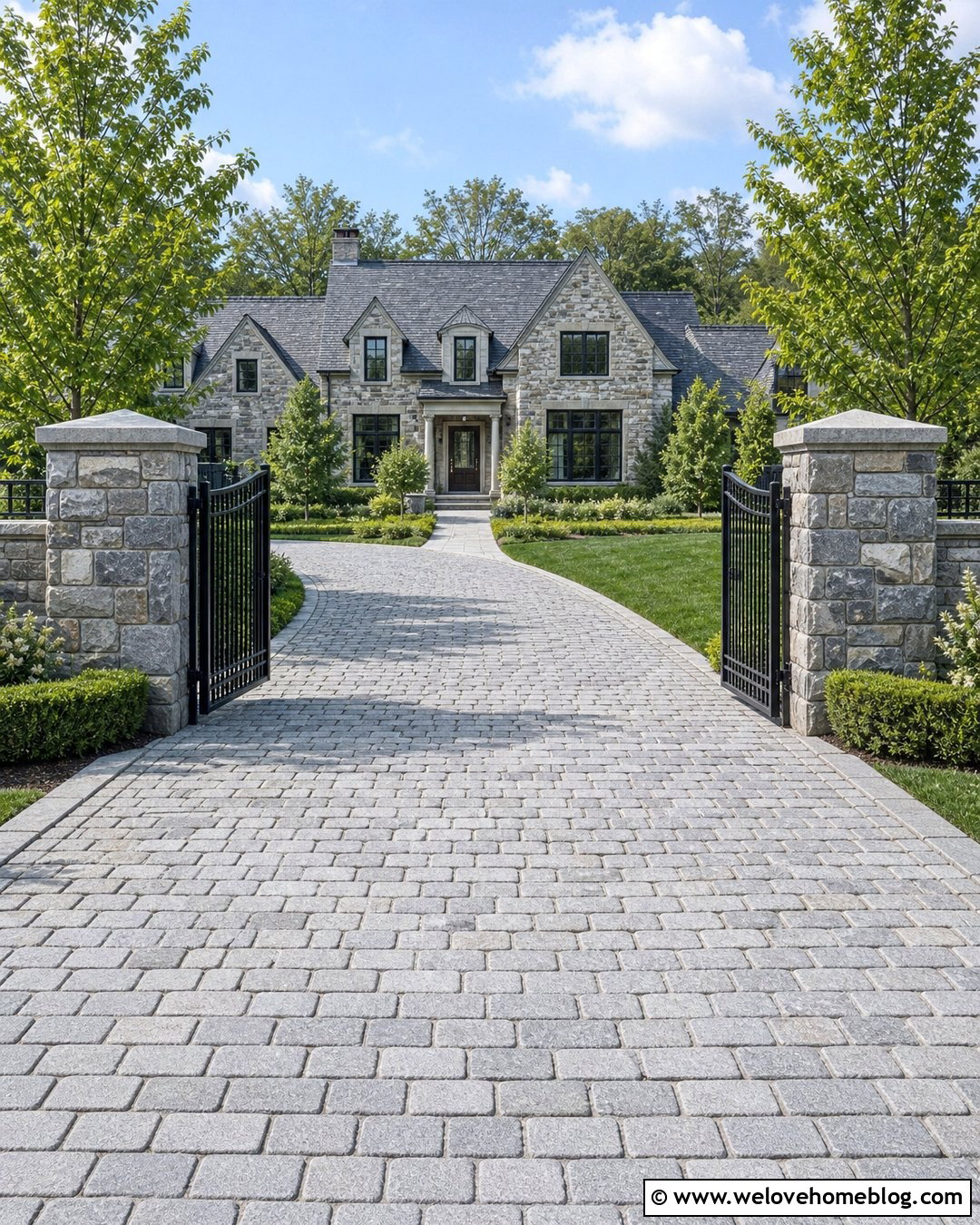
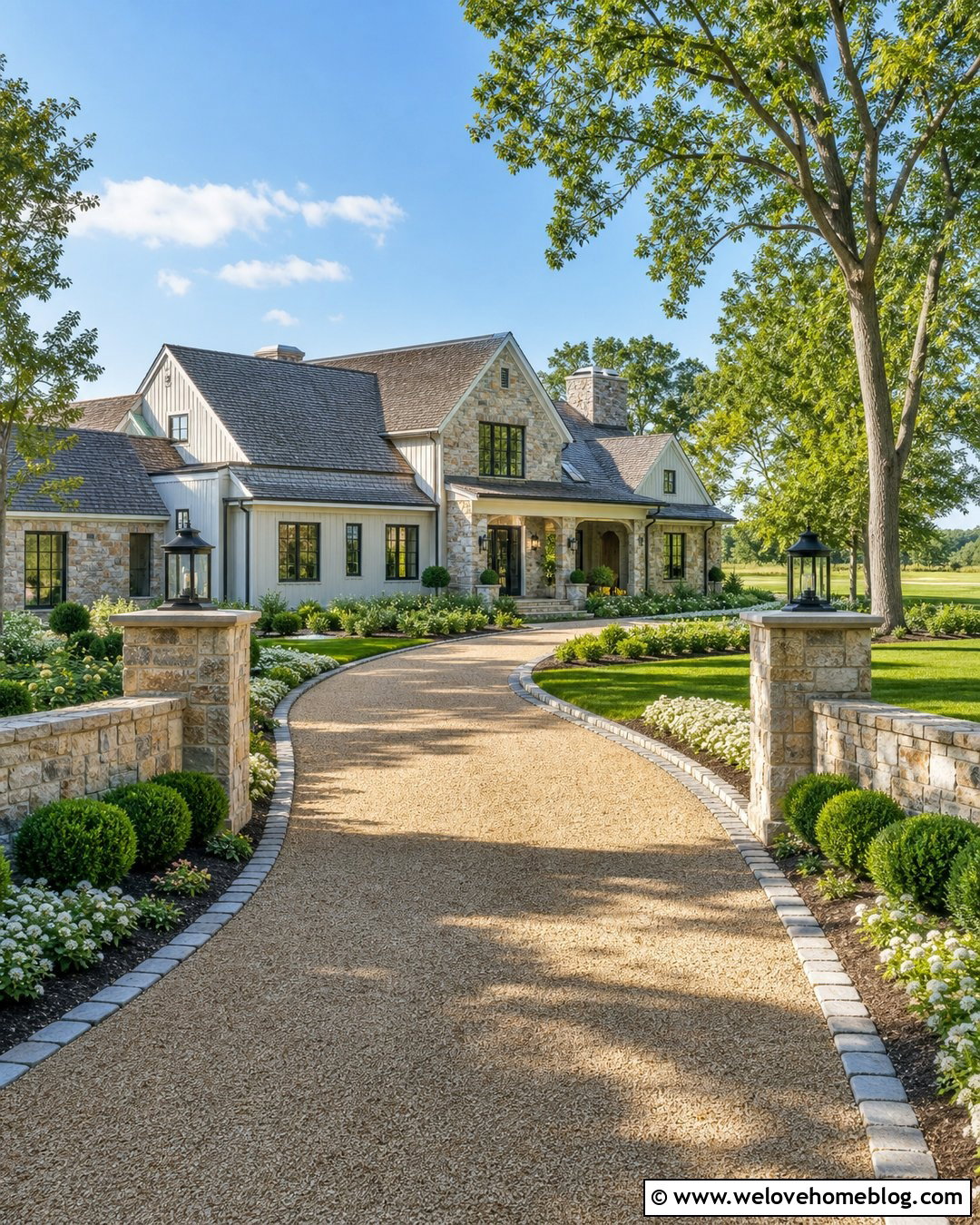
Stone gate pillars can give a granite cobblestone driveway a strong entrance without making the property feel closed off. Begin with a wide cobblestone apron that curves gently between two substantial pillars. Use granite blocks that relate to the driveway color, but vary their scale so the pillars remain visually distinct. A simple metal gate may be included, provided it has adequate clearance and does not overpower the landscape. Continue the driveway in gray running bond toward a traditional or country home. Low hedges, layered shrubs, and matching trees can soften both sides of the gateway. Keep plant growth away from hinges, lights, and visibility areas. Repeating granite in the pillar caps, edging, and walkway creates a unified entrance where the architecture, paving, and landscaping feel intentionally connected.
20. Granite Cobblestone Driveway With Integrated Lighting
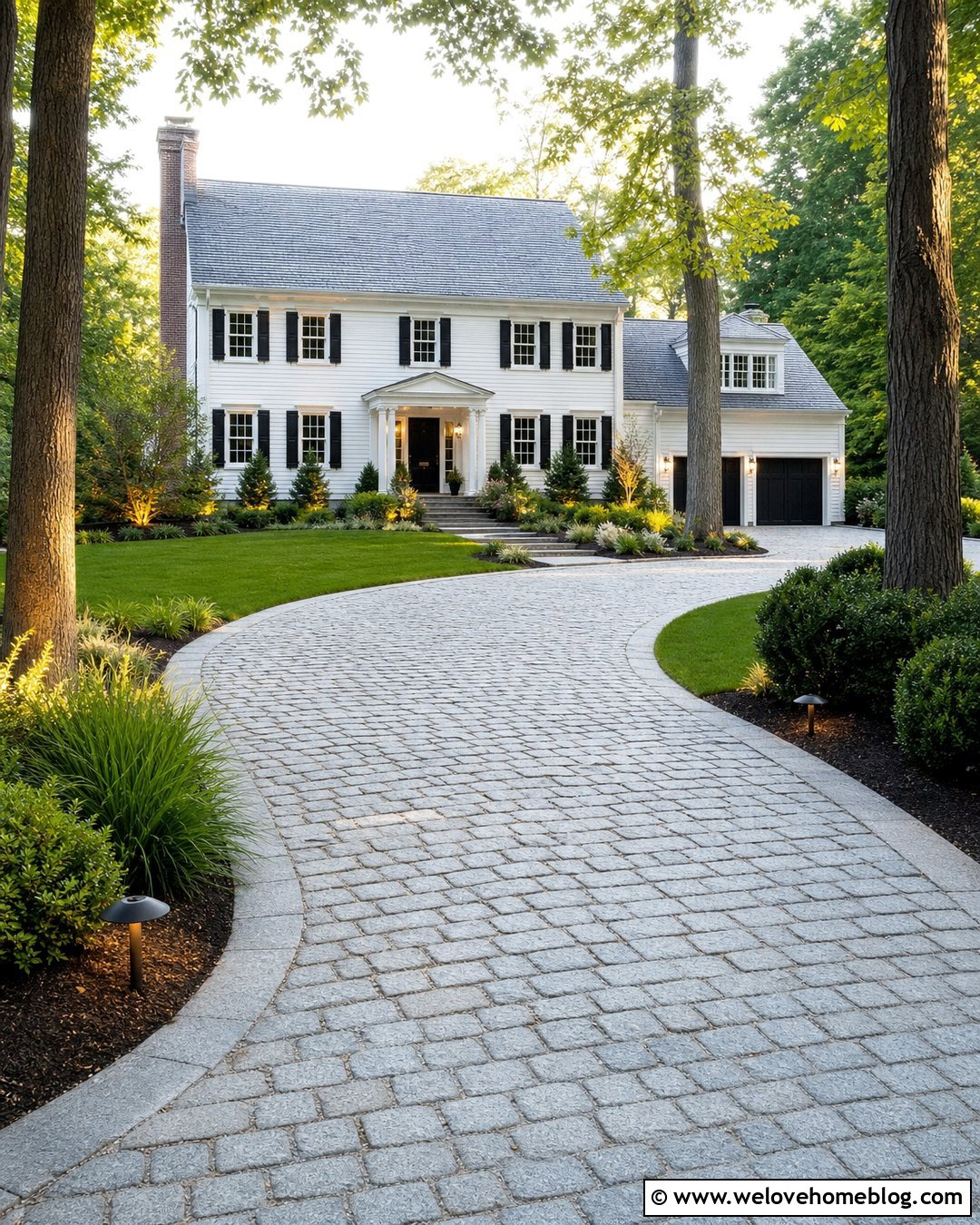
Well-placed lighting can support a granite cobblestone driveway without turning the daytime landscape into a row of visible fixtures. Use low-profile lights along planting beds rather than inserting too many units directly into the stone surface. On a curved gray cobblestone driveway, stagger fixtures to clarify changes in direction and highlight important transitions near the entrance, walkway, and garage. Small downlights mounted in trees can add gentle illumination across broader areas. During the day, dark bronze or black fixtures blend into mulch and foliage. Pair the lighting plan with a flush granite border, evergreen shrubs, and airy ornamental grasses. Electrical components should be positioned where vehicles, snow equipment, and lawn tools will not damage them. The complete design remains attractive in bright daylight while creating a clear, coordinated approach after sunset.
21. Granite Cobblestone Driveway With Cottage Landscaping
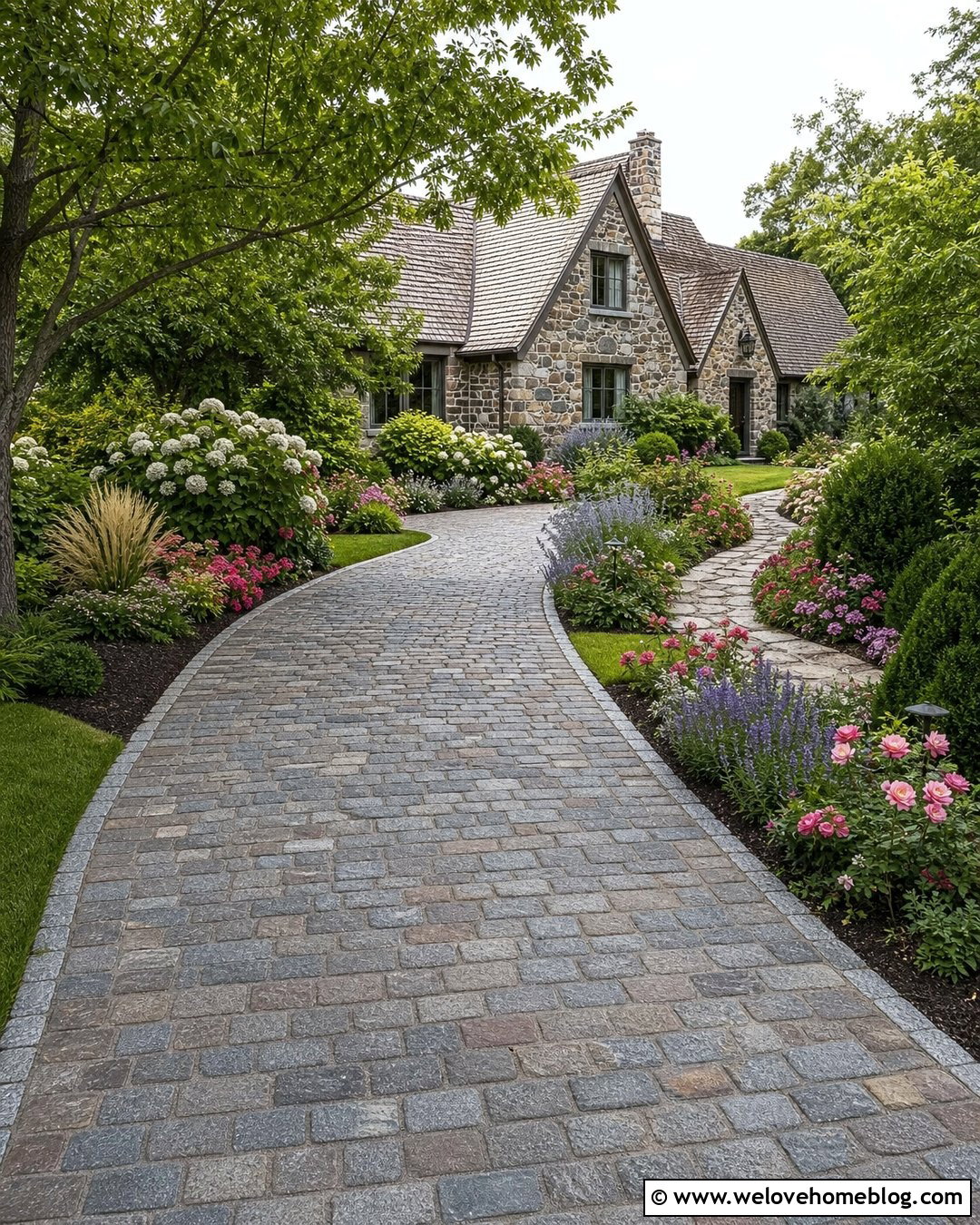
Irregular granite cobbles and abundant planting create a welcoming driveway for cottages, English-inspired homes, and smaller Craftsman houses. Choose reclaimed gray and brown stones in a loose running bond pattern, then shape the driveway with a gentle curve. A narrow granite edge can separate the paving from deep garden beds while allowing selected plants to soften the boundary. Combine roses, catmint, salvia, hydrangeas, ornamental grasses, and compact evergreen shrubs for layered color and texture. Keep sprawling plants away from vehicle doors and reserve the lowest varieties for the driveway entrance. A coordinating cobblestone walkway should branch naturally toward the porch rather than meeting the driveway at a harsh angle. This full design feels romantic and established, yet clear edging and repeated stone tones prevent the landscape from appearing uncontrolled.
22. Granite Cobblestone Driveway With Desert Landscaping
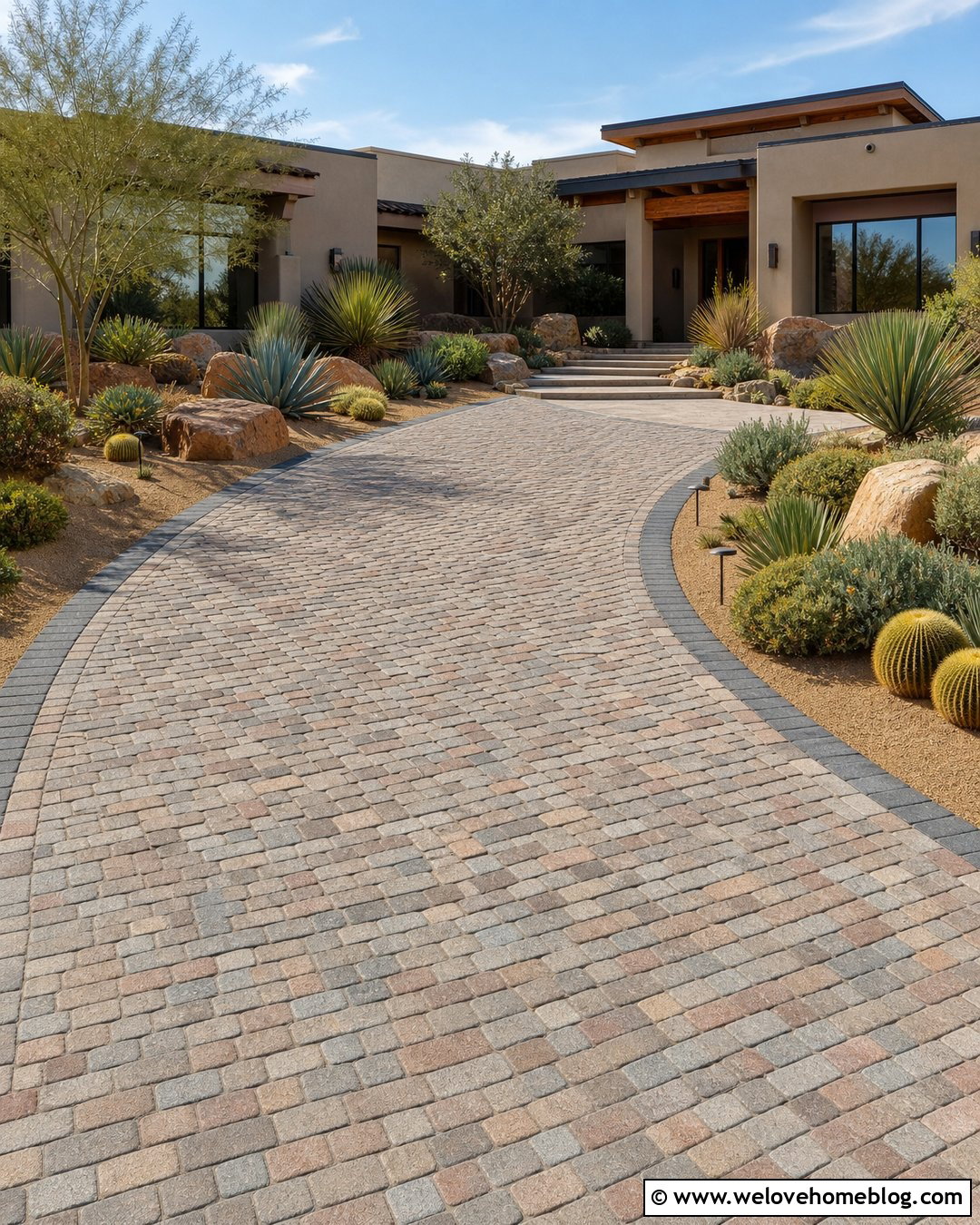
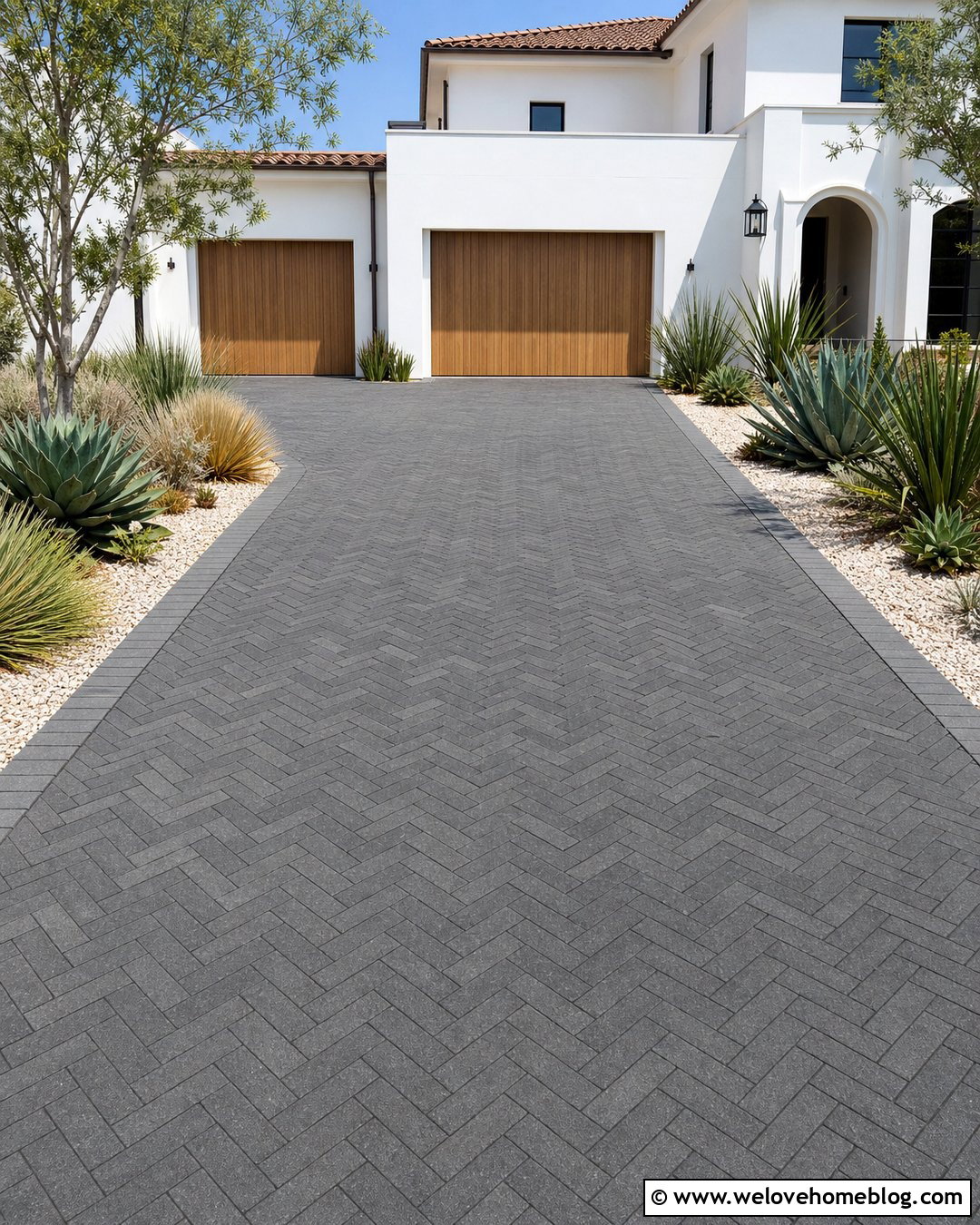
Granite cobblestone also works in dry landscapes when its color relates to the surrounding rock, soil, and architecture. Select warm-gray, tan, and muted rose cobbles for a curved driveway leading to a Southwestern or desert-modern home. Use a darker granite soldier course to define the edges against decomposed granite planting areas. Arrange agaves, yuccas, desert grasses, barrel cacti, and drought-tolerant shrubs in broad groups rather than isolated rows. Include boulders that share the paving’s warm mineral tones, but keep them safely beyond vehicle turning zones. A concrete or large-format stone walkway can provide a smooth route to the entrance. The complete composition should emphasize open space and strong forms. Thoughtful grading and controlled irrigation will help protect the driveway base and nearby planting areas.
23. Granite Cobblestone Driveway With Woodland Landscaping
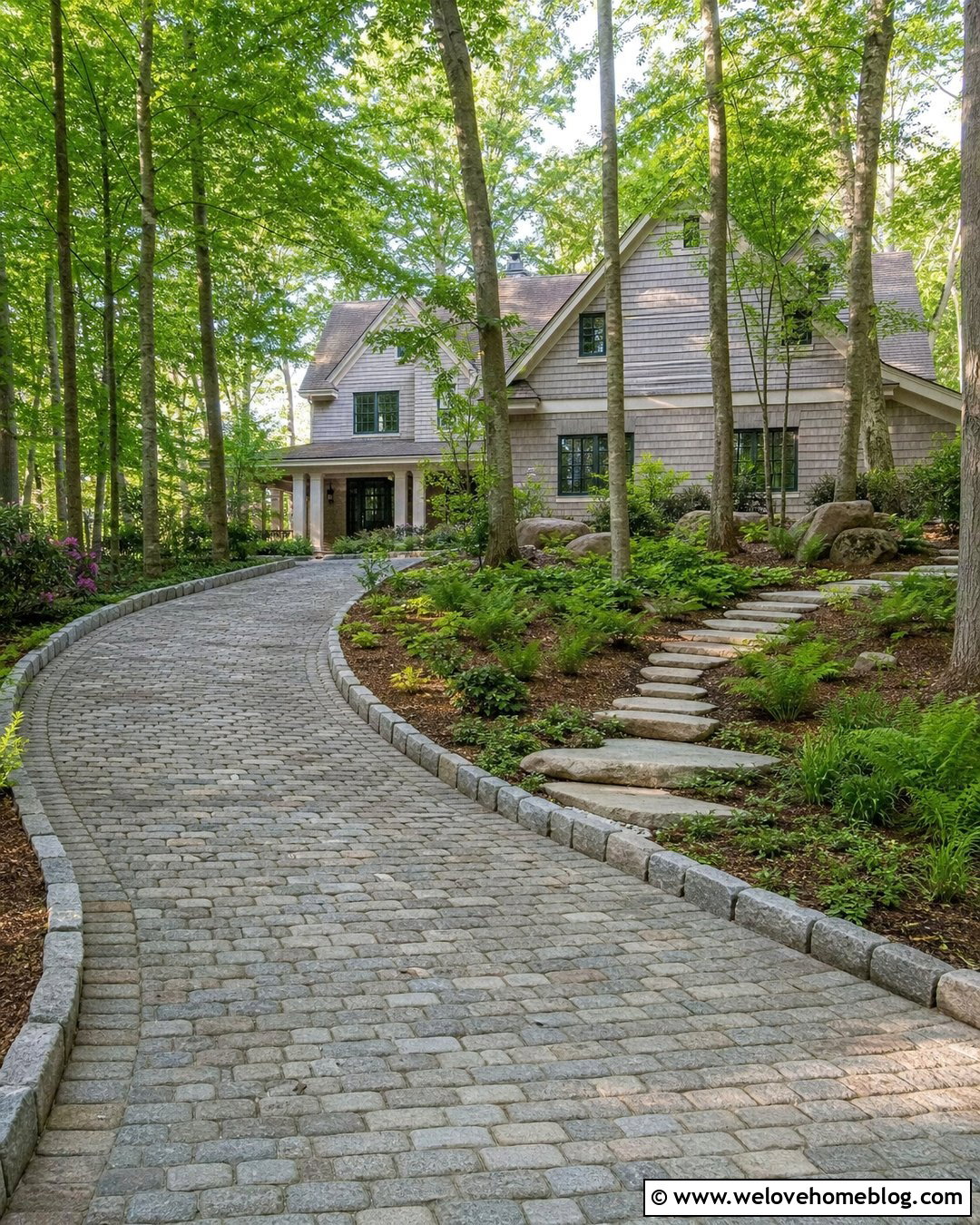
In a wooded setting, mixed gray granite cobbles can blend naturally with tree trunks, stone walls, and filtered greenery. A gently curving driveway is usually more harmonious than a rigid straight route because it can respond to the site and reveal the house gradually. Lay tumbled cobbles in running bond, then use large granite blocks as subtle edging where the paving meets leaf mulch or shaded beds. Plant ferns, native sedges, woodland ground covers, rhododendrons, and shade-tolerant shrubs in relaxed masses. Preserve open sightlines at bends and near the street. A simple stepping-stone path can connect the driveway to a rustic contemporary or shingle-style home. The granite surface brings order and definition, while the restrained border allows the driveway to remain connected to its natural surroundings.
24. Granite Cobblestone Driveway With Coastal Landscaping
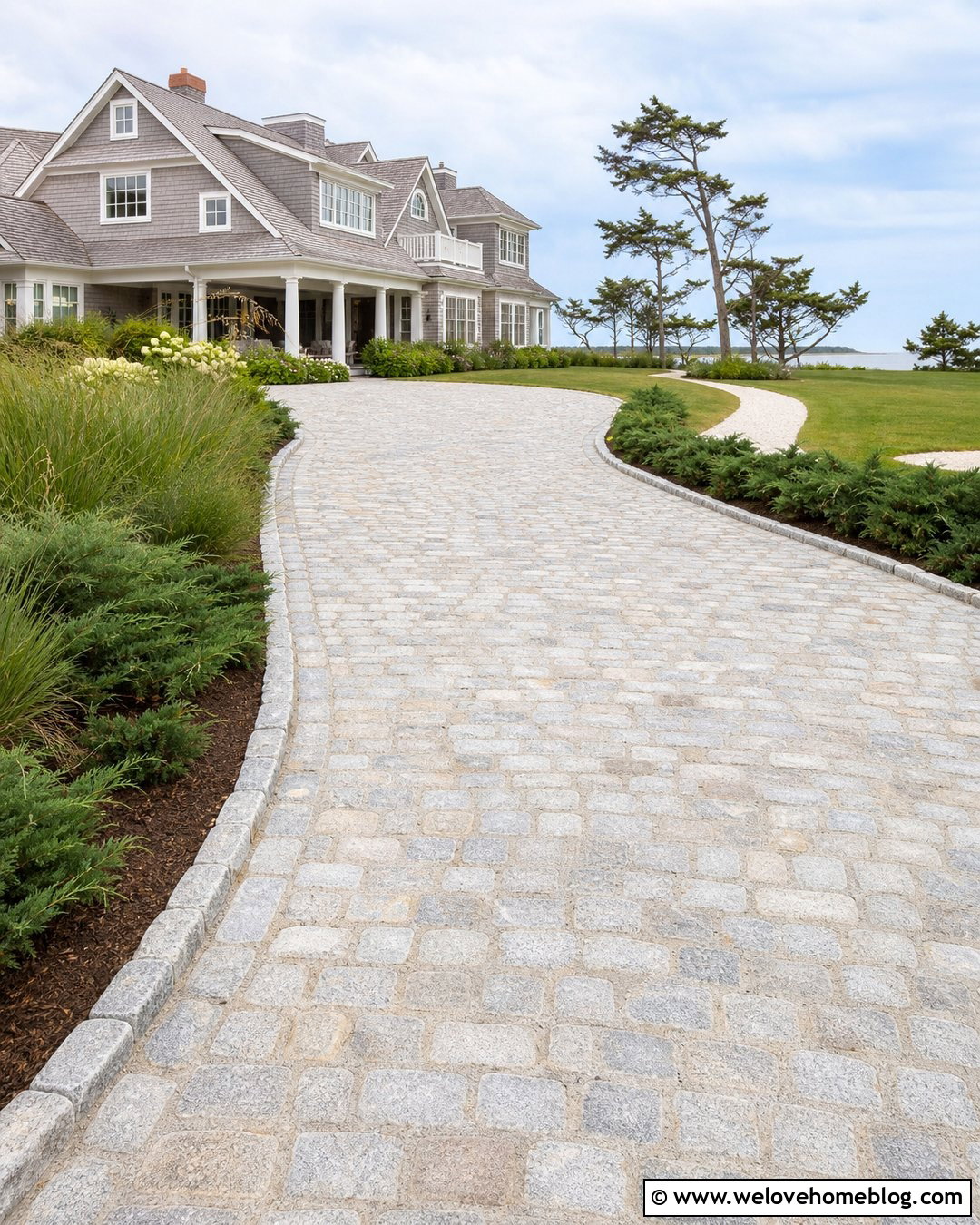
A pale granite cobblestone driveway can echo the soft colors of a coastal landscape while remaining suitable for a polished residential entrance. Choose silver, light gray, and occasional warm-beige cobbles laid in a relaxed running bond. Shape the driveway with a broad curve leading toward a shingle, coastal farmhouse, or beach-inspired home. Low gray granite edging can contain the surface without blocking drainage or views across the yard. Frame the approach with beach grass, bayberry, hydrangeas, low junipers, and wind-tolerant trees appropriate for the location. Crushed shell or pale gravel may be used in secondary paths to introduce another light texture. Keep the planting composition simple and breezy. Together, the bright stone, open lawn, and salt-tolerant landscaping produce a clean coastal entrance without relying on decorative nautical details.
25. Heated Granite Cobblestone Driveway With Snow-Friendly Layout
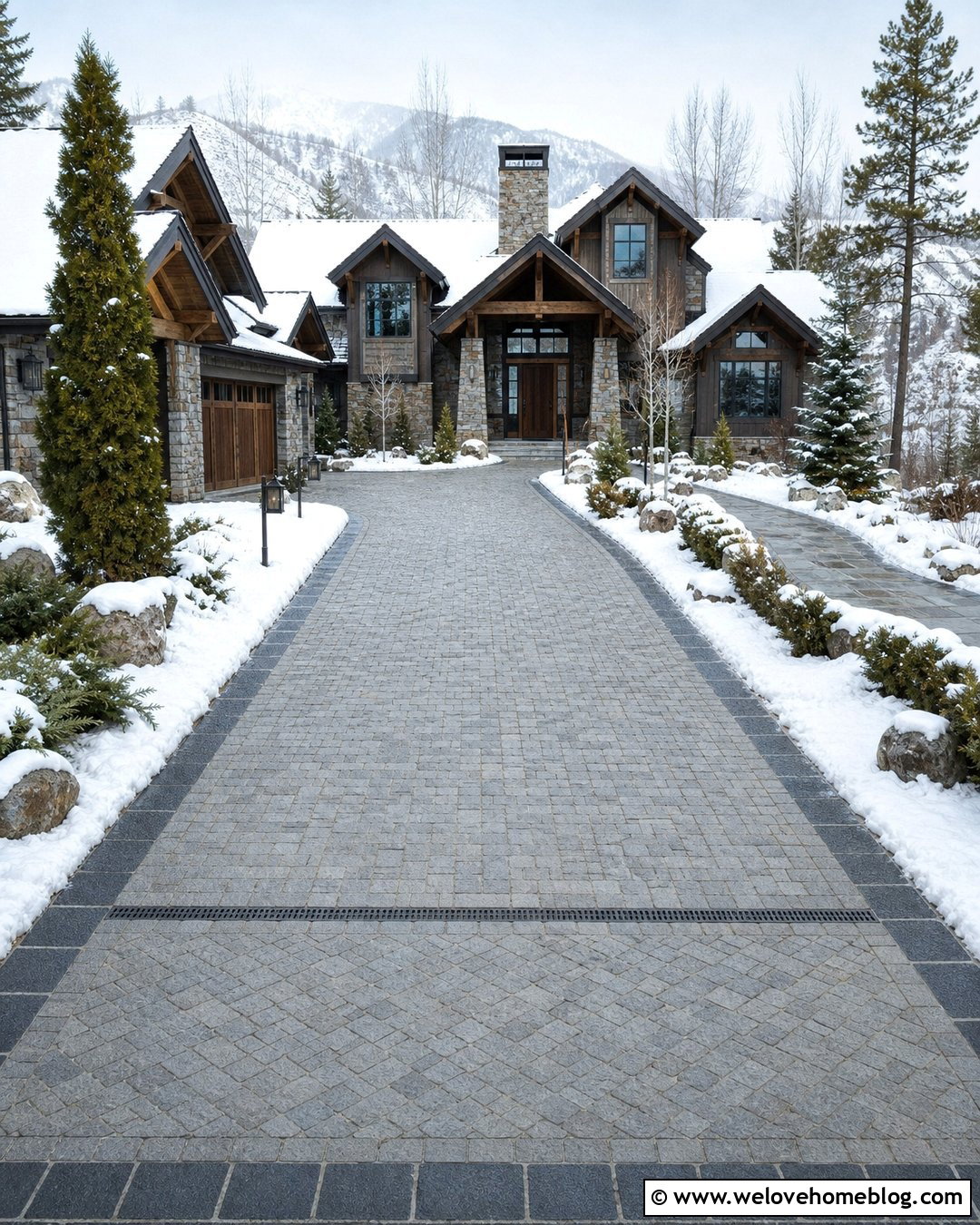
A heated granite cobblestone driveway can be considered for cold-climate homes where snow management is a major part of the design. Use evenly sized, textured gray cobbles in a straightforward pattern that makes transitions and service areas easy to identify. A straight or gently curved layout is simpler than an intricate motor court. Frame the driveway with flush granite edging so plows, shovels, and snow-removal equipment meet fewer raised obstacles. Keep planting beds set back from areas where snow may accumulate, using durable evergreen shrubs and multi-stem trees. Include a clearly defined drainage route for meltwater and avoid directing it toward walkways or the garage. Heating, base preparation, controls, drainage, and stone installation require coordinated professional planning. The final entrance can retain traditional character while supporting easier winter maintenance.
Conclusion:
The most successful **25 Granite Cobblestone Driveway Ideas** treat the driveway as a complete part of the home and landscape. Stone color and pattern matter, but so do grading, borders, drainage, planting, walkways, and the architecture in the background. Full cobblestone paving creates the strongest traditional statement, while granite aprons, ribbons, and edging offer a practical way to upgrade gravel, asphalt, or concrete. Before choosing a layout, consider vehicle movement, maintenance needs, climate, joint design, and the mature size of nearby plants. Use samples to compare granite colors against the house in natural daylight. With thoughtful planning and skilled installation, granite cobblestone can create a distinctive entrance that feels cohesive, useful, and naturally connected to its setting.

Related posts:
Leave a Reply