
Cobblestone and living grass create a driveway that feels established, welcoming, and naturally connected to the yard. The best 20 cobblestone grass driveway ideas go beyond placing greenery between random stones. They combine a stable, vehicle-ready foundation with intentional patterns, durable edging, healthy turf, and landscaping that complements the home. Open joints and properly designed drainage layers can also allow water to move through the surface instead of collecting in low spots. () Whether you prefer an old-world entrance, a clean modern grid, or a simple ribbon layout, the proportions should fit your vehicles and maintenance routine. The complete designs below explore practical, attractive, and distinctive 20 cobblestone grass driveway ideas.

1. Straight Cobblestone Grass Driveway
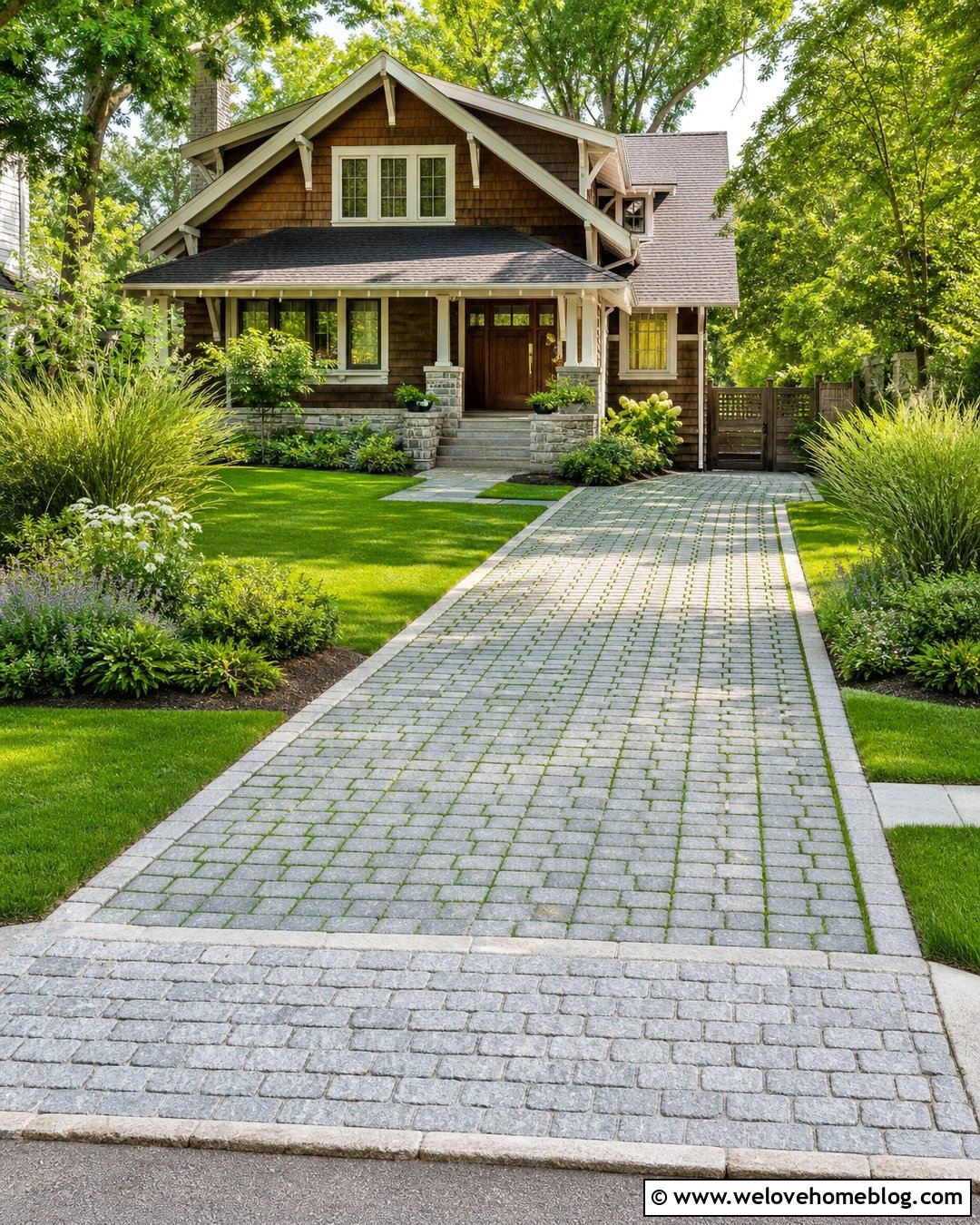
A straight cobblestone grass driveway creates a clean approach that works especially well with ranch, Craftsman, and traditional homes. Use medium-gray granite cobblestones in orderly rows, leaving consistent joints where tough turf can grow. A wider cobblestone apron at the street makes the entrance feel finished and provides extra strength where vehicles turn. Along both sides, install flush stone edging so mower wheels can pass over it without damaging the lawn. Low planting beds with ornamental grasses, compact shrubs, and seasonal flowers soften the straight lines. Keep the center sightline open toward the garage or front entry. This arrangement looks structured without feeling overly formal, and the green joints visually connect the driveway to the surrounding lawn.
2. Cobblestone Grass Ribbon Driveway
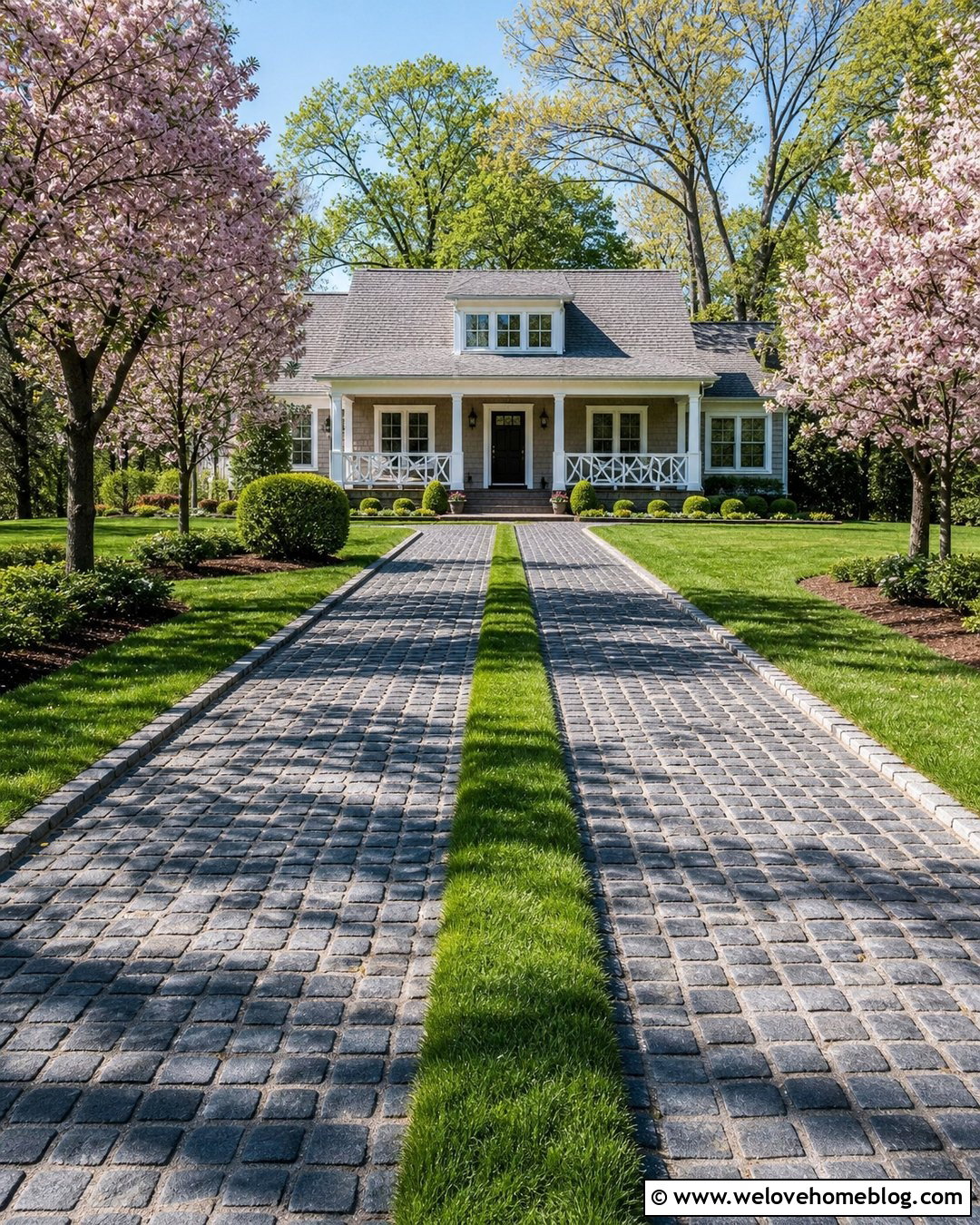
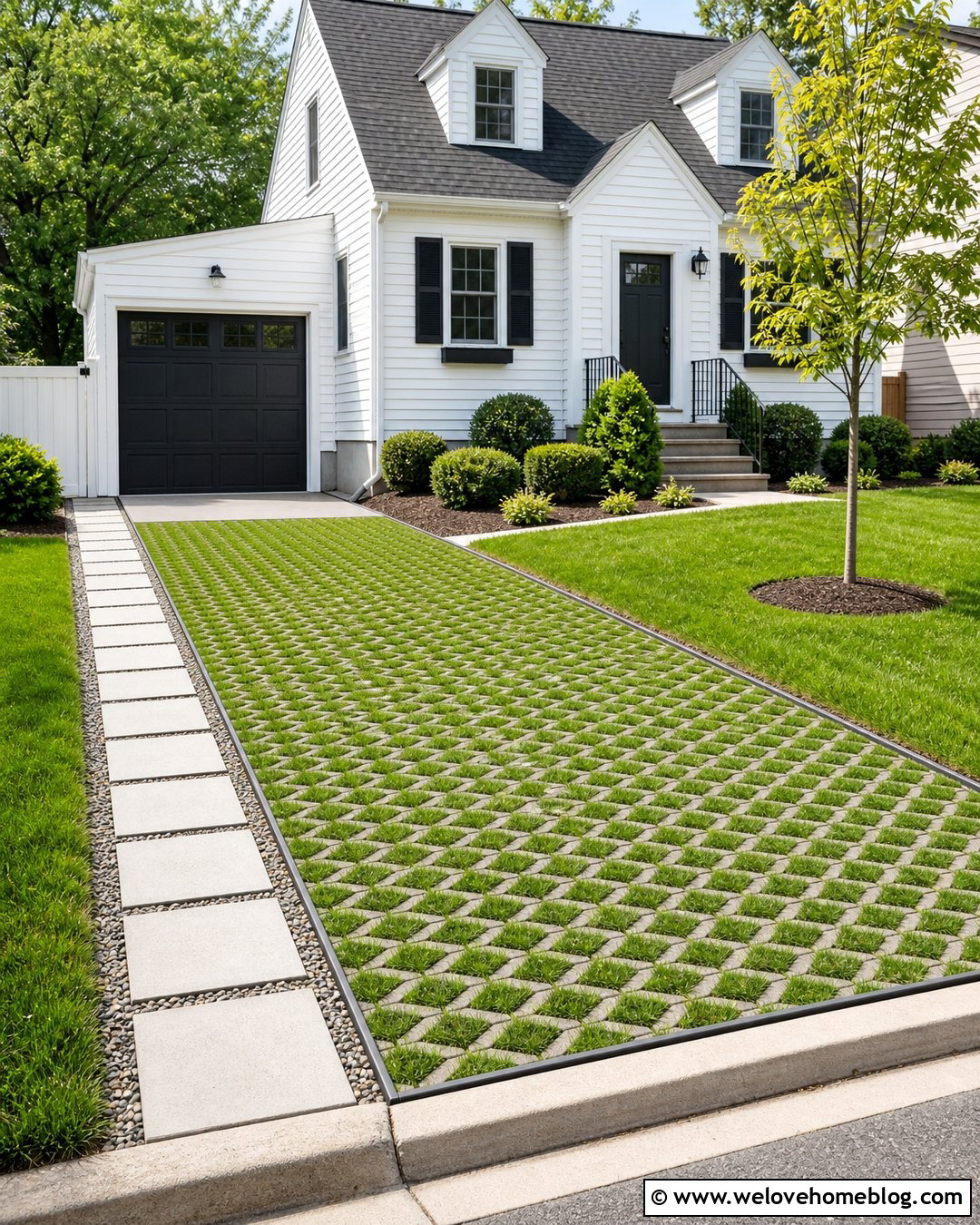
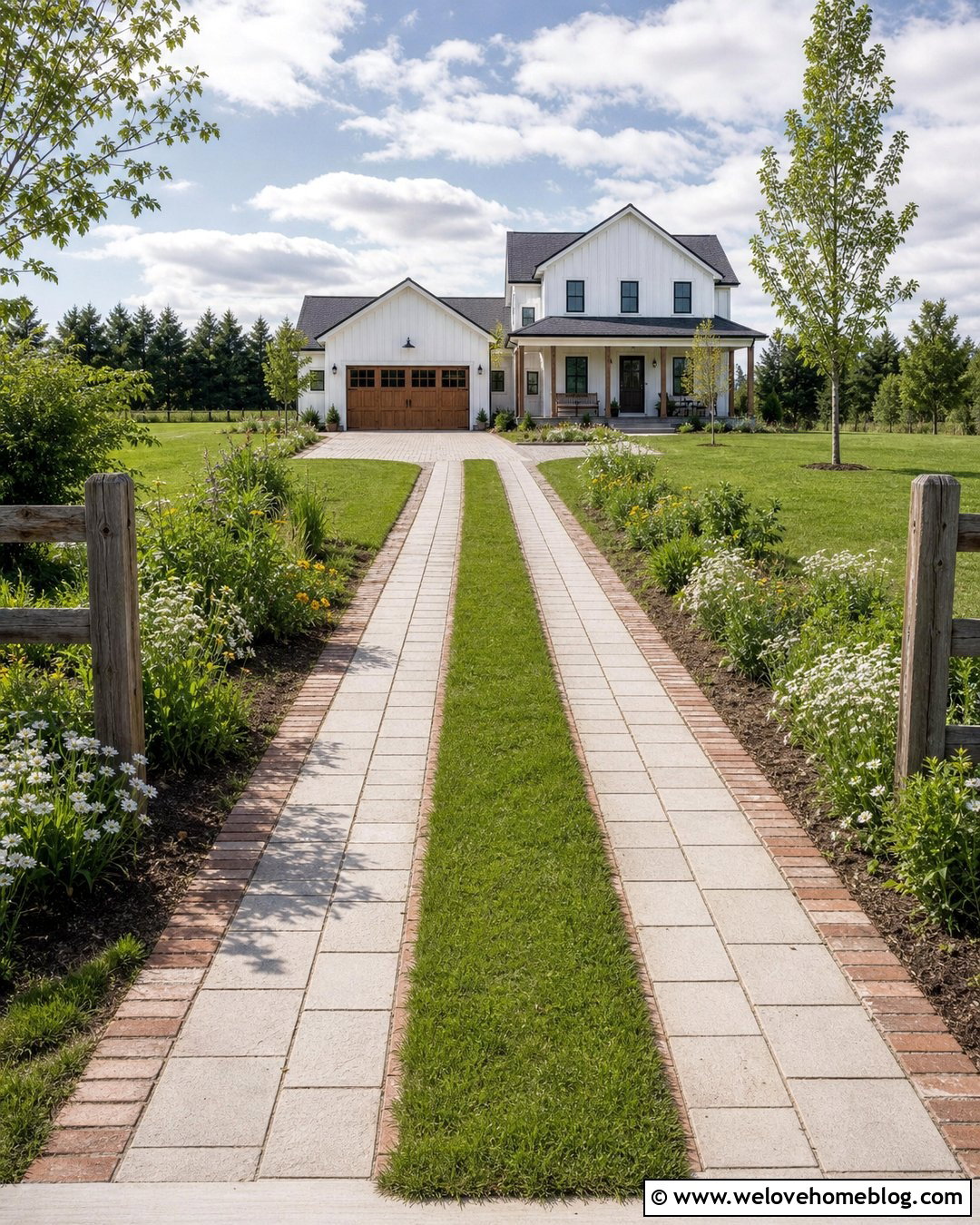
For a lighter, less paved appearance, build two cobblestone wheel tracks with a continuous grass strip through the center. Often called a ribbon or Hollywood driveway, this layout concentrates the hard surface beneath vehicle tires while leaving the middle open for turf or another permeable groundcover. () The tracks should follow the expected wheel path and widen near the garage for easier parking. Dark gray cobblestones create an attractive contrast with bright green grass, while matching cobble edging prevents the outer lawn from creeping inward. Frame the entrance with simple shrubs or small flowering trees. This complete look suits cottages, bungalows, and casual suburban homes because it feels relaxed, efficient, and less visually dominant than full-width paving.
3. Curved Cobblestone Grass Driveway
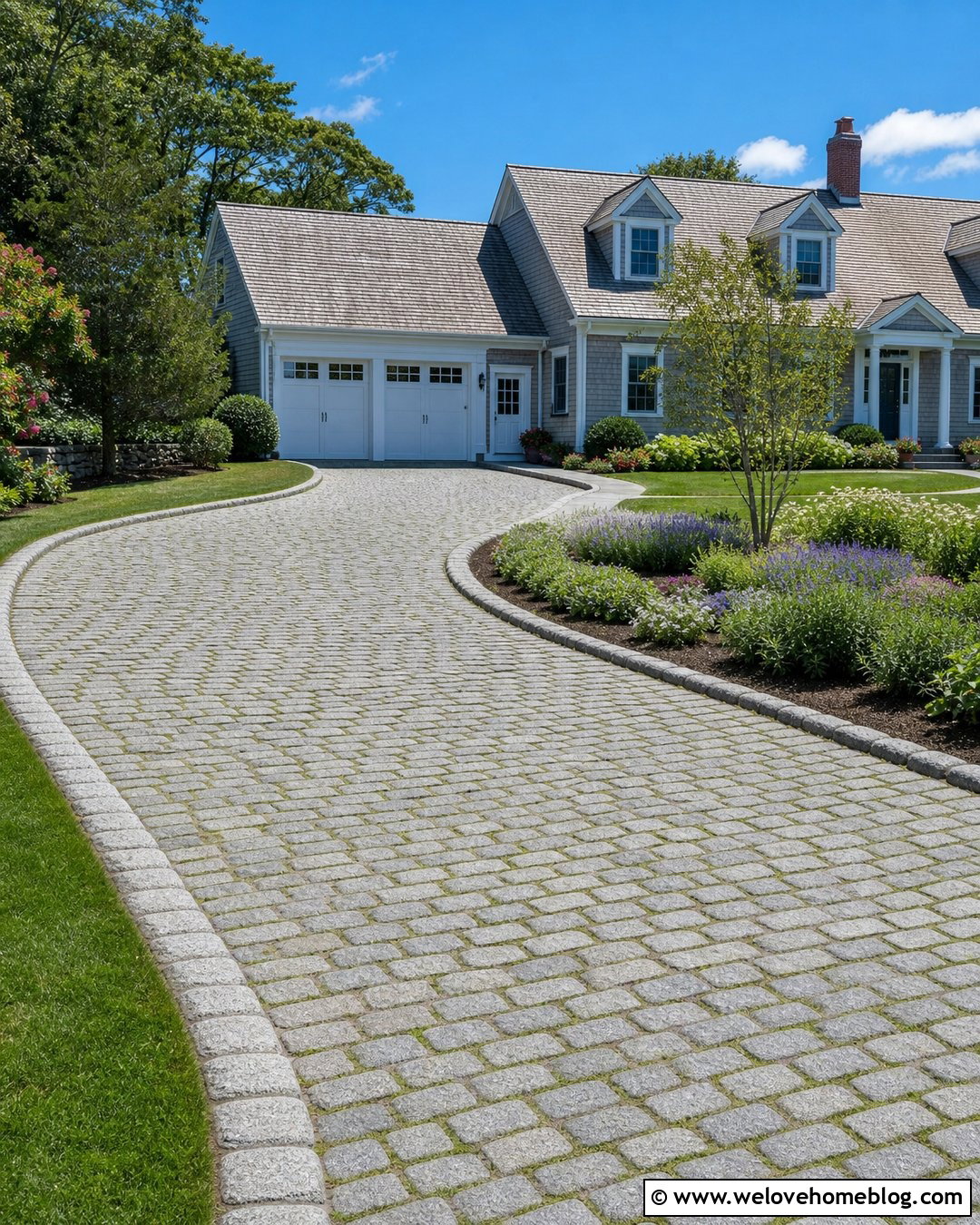
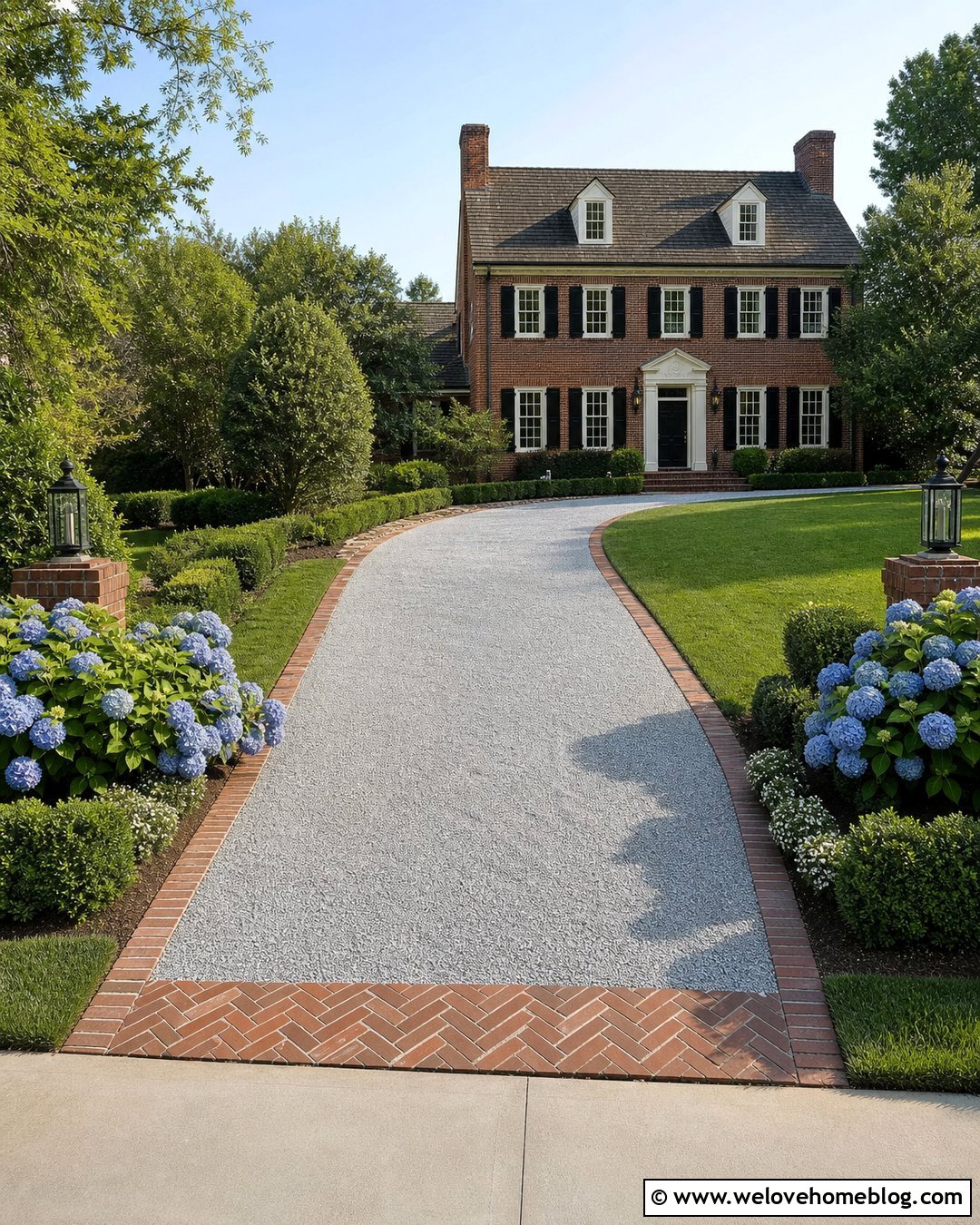
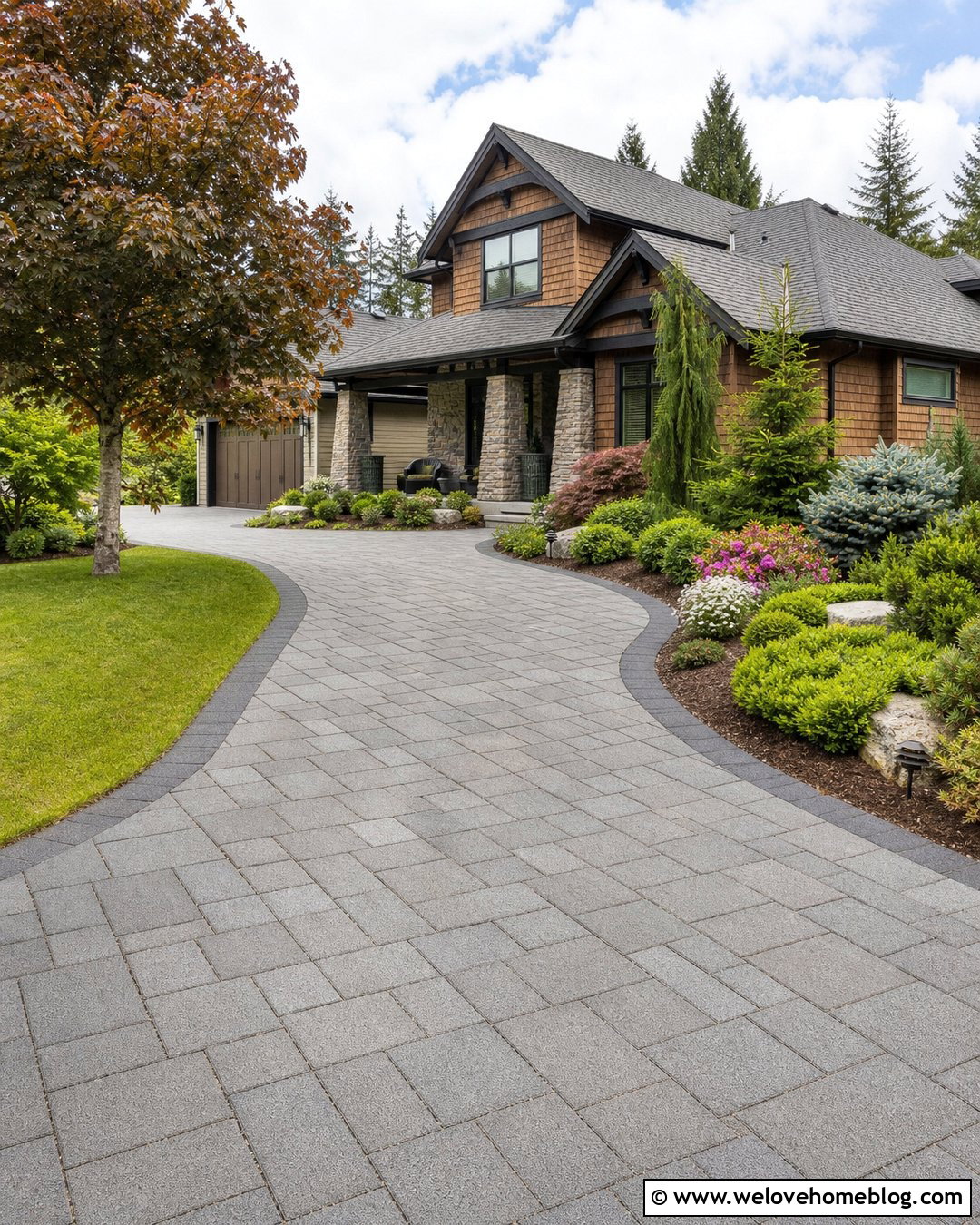
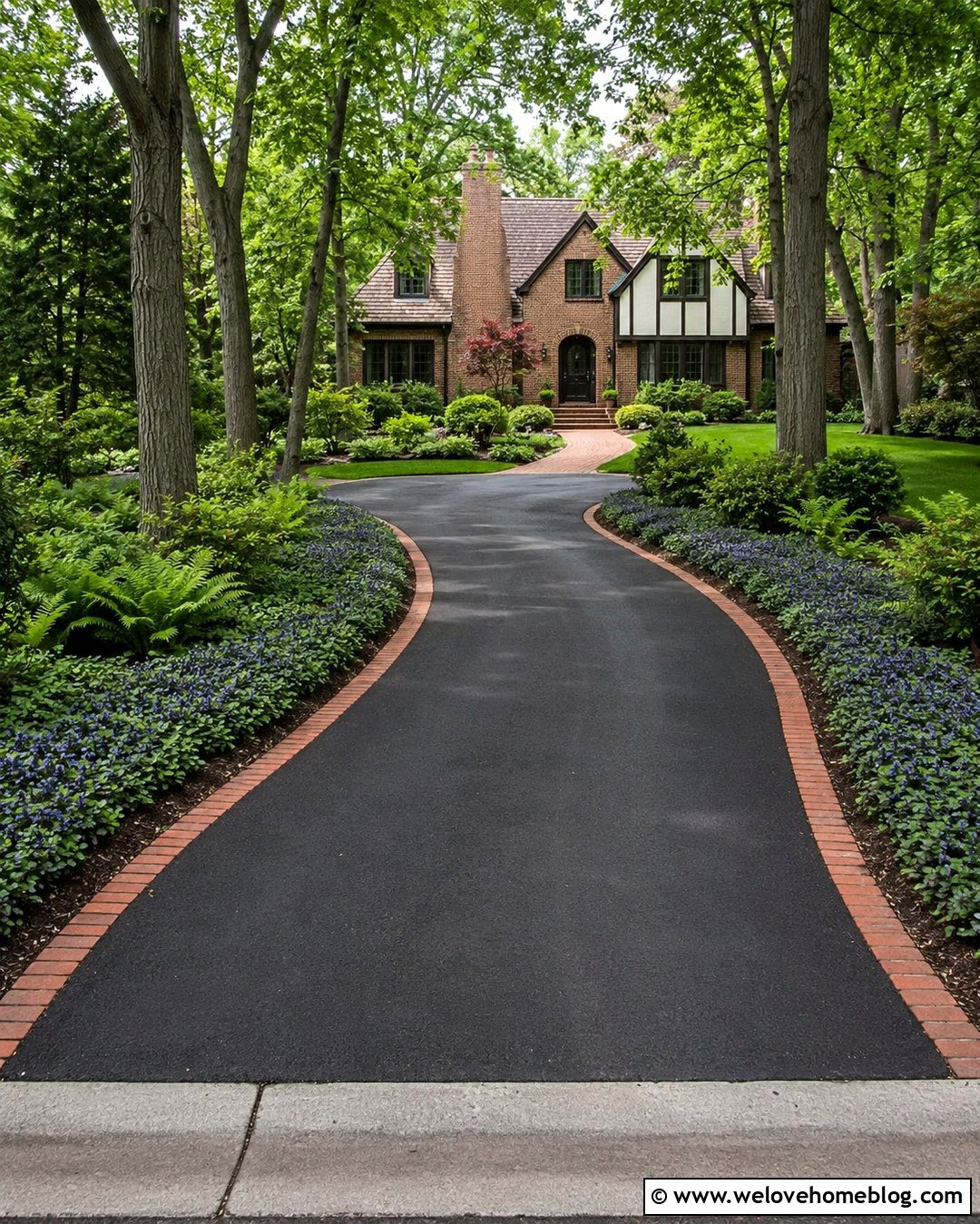
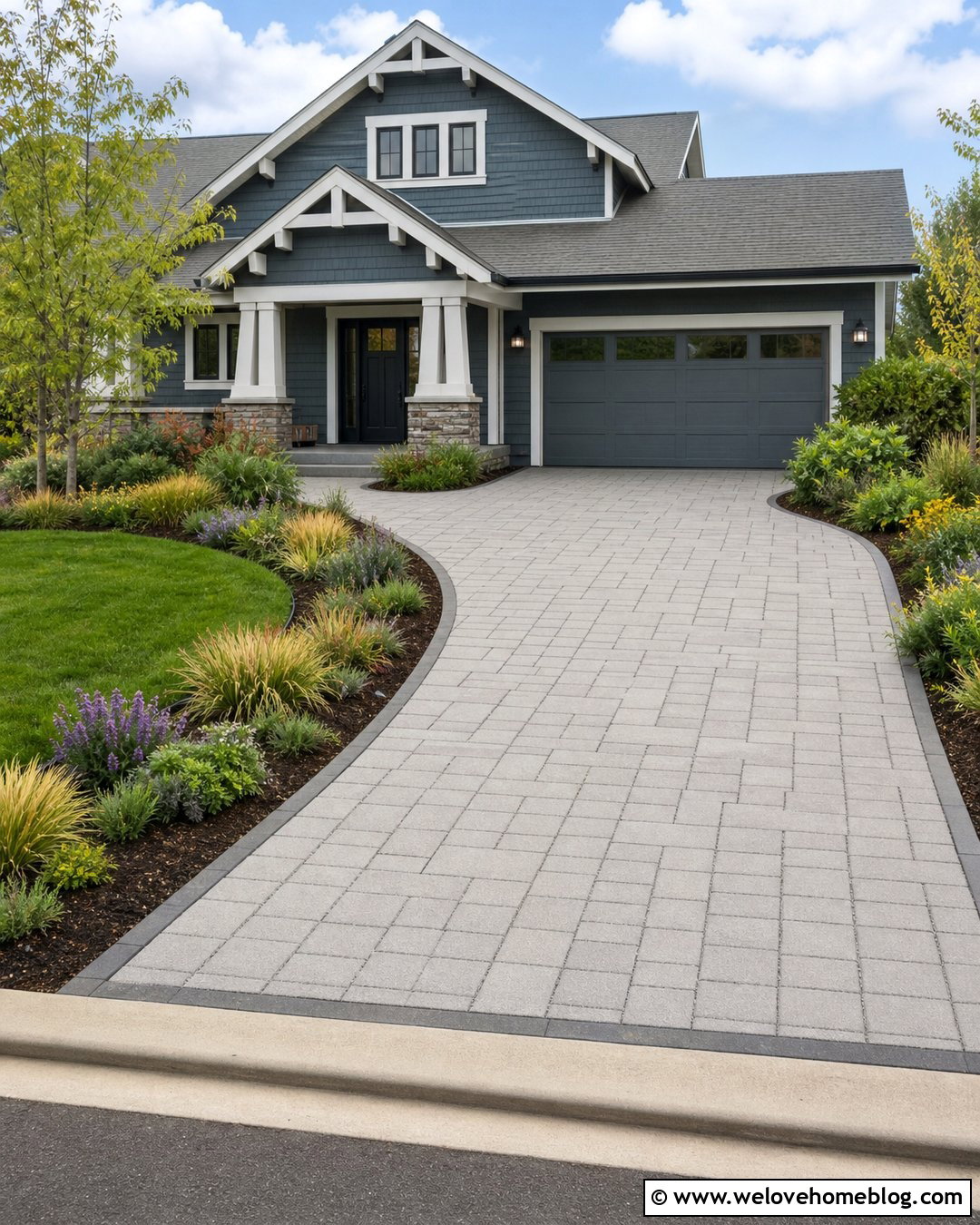
A gentle curve makes a cobblestone grass driveway feel more natural while slowly revealing the house. Set warm gray cobblestones in sweeping rows that follow the bend rather than cutting across it. Narrow grass joints soften the surface, while a wider planted strip along the inside curve emphasizes the driveway’s shape. Use low shrubs, flowering perennials, and one carefully positioned ornamental tree without blocking visibility. A solid cobblestone border helps contain the stones and creates a smooth transition into the lawn. Near the garage, gradually widen the driveway so vehicles have enough turning room. This design works beautifully with Cape Cod, cottage, and wooded suburban properties where a rigid straight approach might feel out of place.
4. Circular Cobblestone Grass Driveway
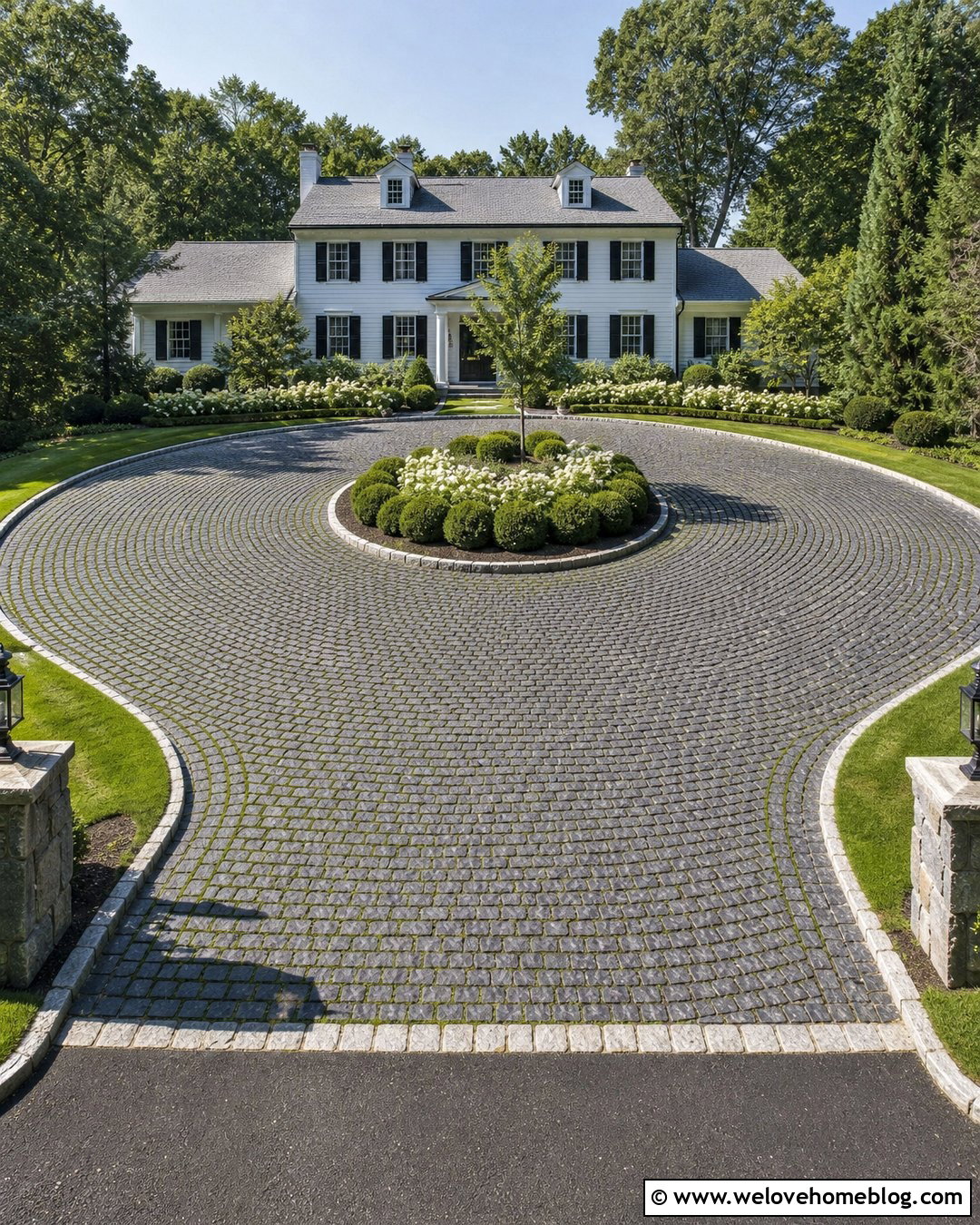
A circular cobblestone grass driveway delivers a convenient arrival area and a strong focal point for a larger front yard. Lay charcoal and silver cobblestones in curved bands, allowing narrow grass joints to highlight the circular geometry. In the center, create a raised or gently mounded island planted with a small tree, clipped evergreen shrubs, and low flowers. A defined cobblestone curb around the island protects the planting bed from tires. Connect one side of the circle to the garage and the other to the street for smooth traffic flow. The green surface reduces the visual weight of the large driveway, helping it blend into the lawn. This layout particularly complements Colonial, Georgian, and substantial traditional homes.
5. Reclaimed Cobblestone Grass Driveway
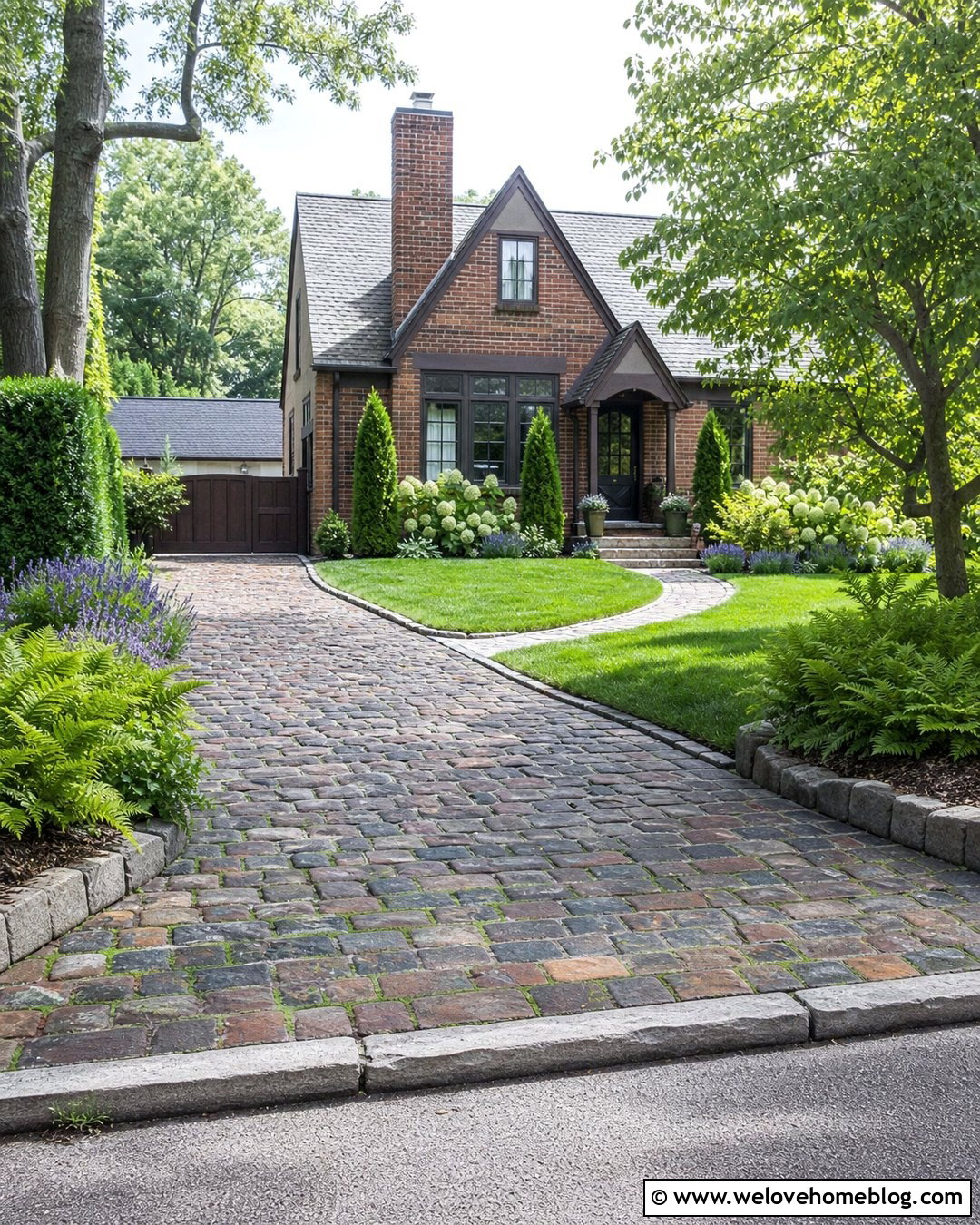
Uneven color and softly worn edges give reclaimed cobblestones an authentic character that new materials cannot easily duplicate. Arrange mixed brown, charcoal, and muted red stones in loose running rows, then establish fine grass joints between them. A slightly irregular edge feels appropriate, but it should still have secure restraints beneath the surface. Pair the driveway with a cottage garden containing hydrangeas, lavender, ferns, and relaxed evergreen shrubs. Near the street, add a wider reclaimed cobblestone apron to establish a clear entrance. The design works best when the stones look intentionally varied rather than randomly installed. Against a brick cottage, renovated farmhouse, or historic home, the weathered paving and fresh grass create a balanced, lived-in appearance.
6. Modern Cobblestone Grass Grid Driveway
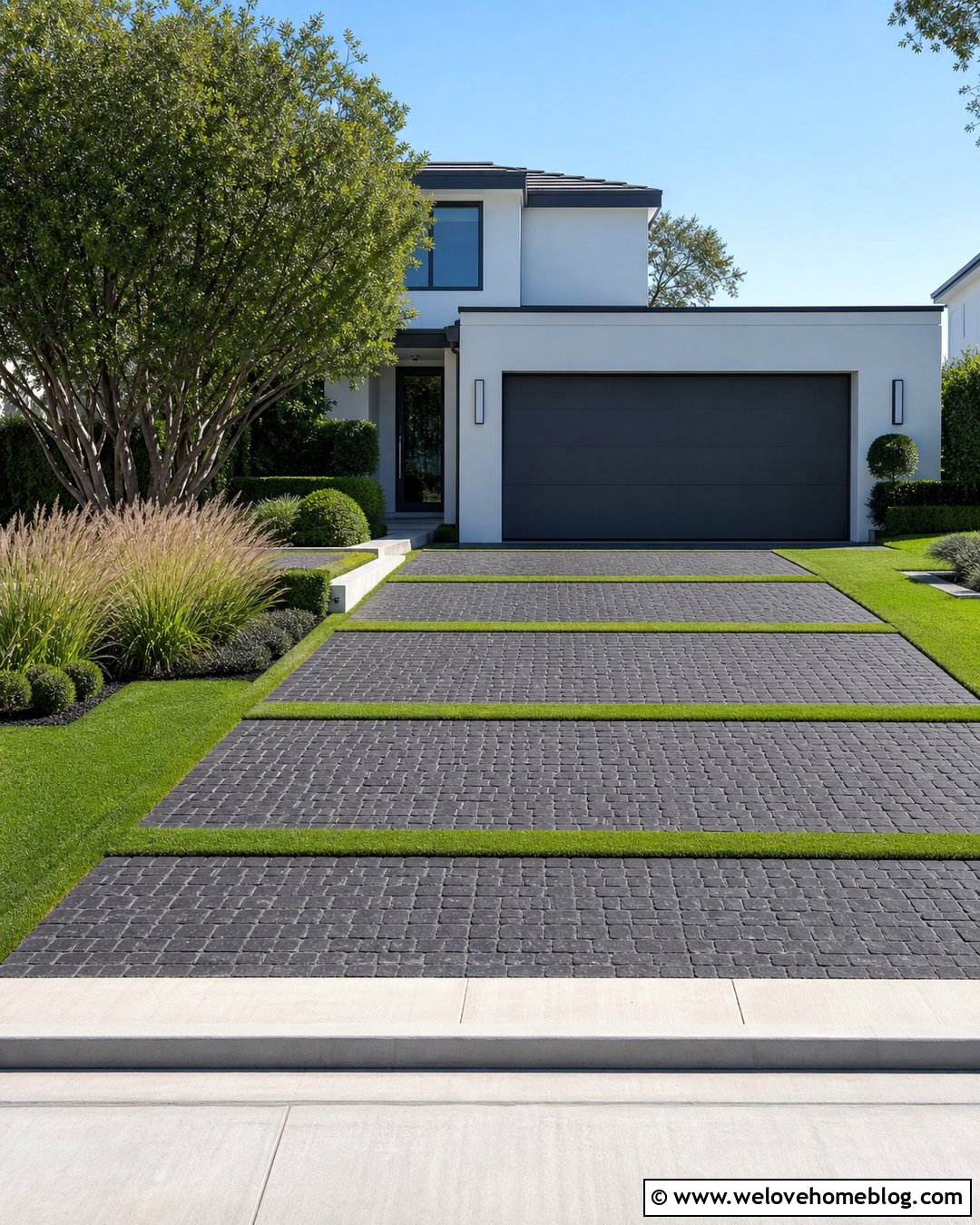
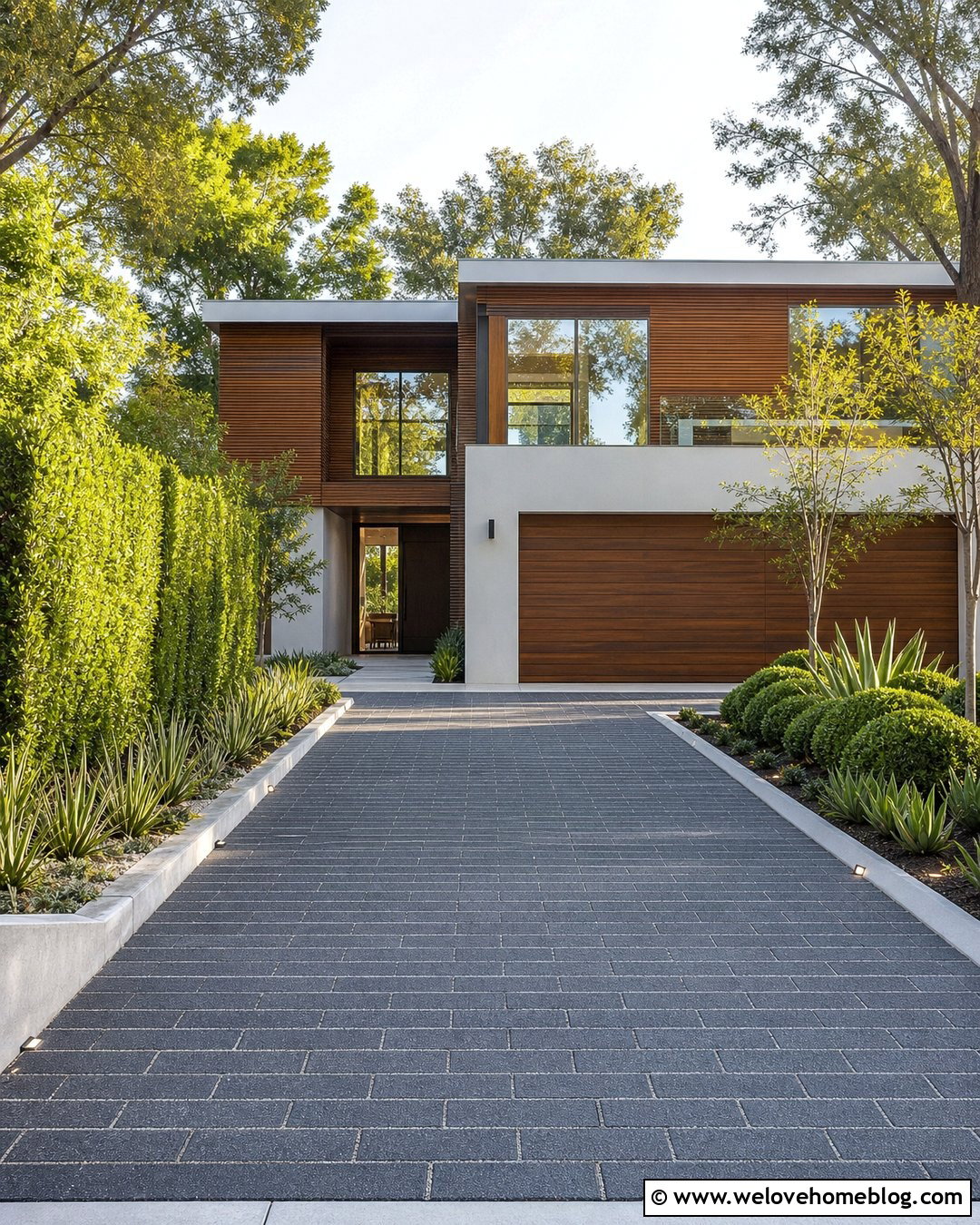
Clean geometry can make cobblestone and grass look surprisingly modern. Choose dark basalt cobblestones with sawn tops and arrange them in large rectangular panels separated by straight grass bands. The crisp grid should align with the garage doors, front walkway, or horizontal lines of the architecture. Use concealed edge restraints for a minimal finish, then surround the driveway with flat lawn areas and restrained planting beds. Sculptural ornamental grasses, clipped shrubs, and one multi-stem tree provide texture without creating clutter. Keep the grass strips wide enough to read clearly from the curb but positioned away from the heaviest turning points. This graphic layout creates a polished transition between a contemporary house and its landscape while retaining natural color.
7. Fan Pattern Cobblestone Grass Driveway
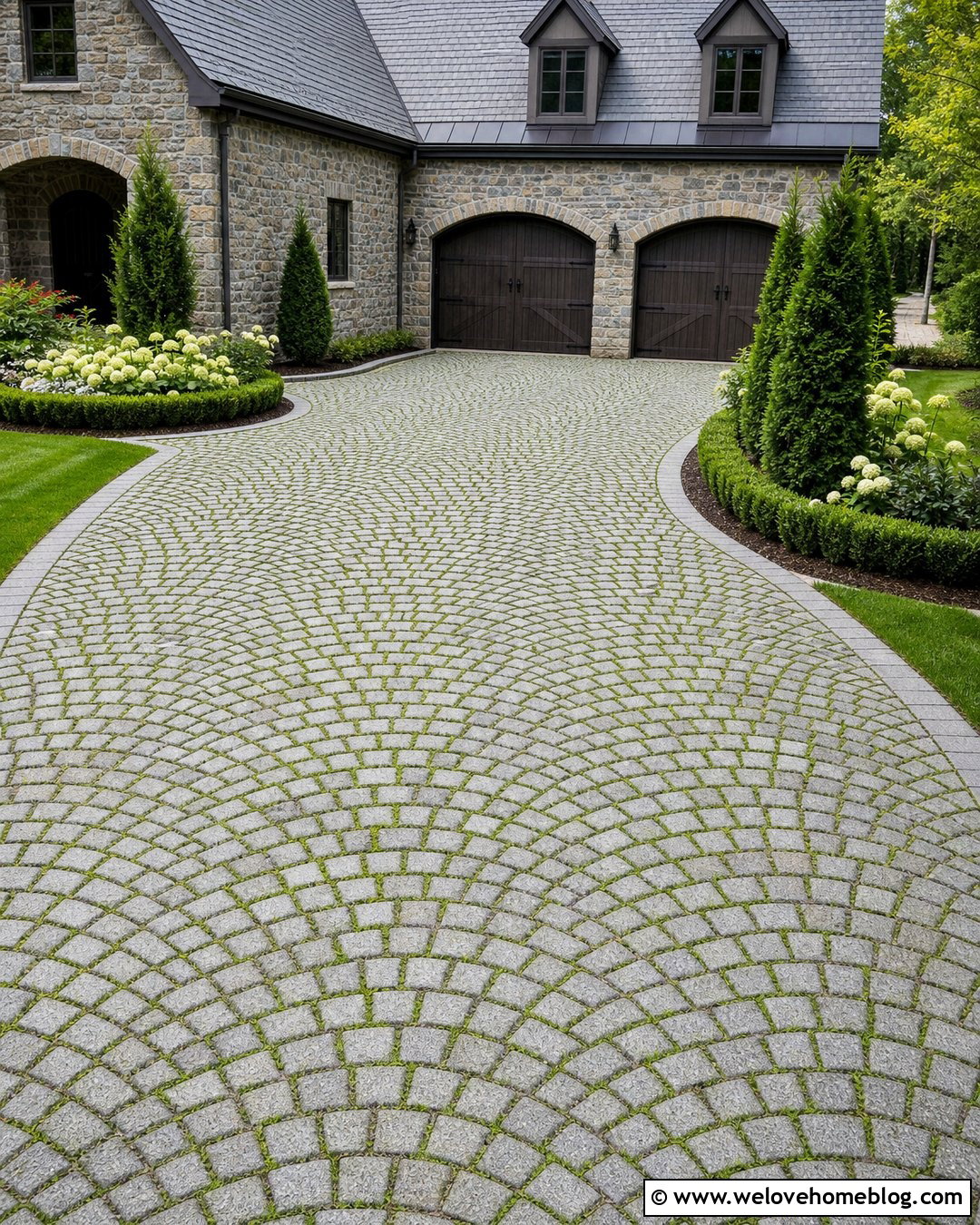
Fan-pattern cobblestones bring movement and traditional European character to a front drive. Use small gray granite cubes arranged in repeating arcs, with fine grass joints tracing every curve. Because the pattern is visually active, keep the perimeter simple with a solid cobblestone border and neatly cut lawn. A pair of rounded planting beds near the house can echo the fan shapes without competing with them. Choose low boxwood, white flowering perennials, and a few upright evergreens for balanced landscaping. The pattern looks particularly attractive on a broad, gently flared driveway leading to an arched garage or stone-faced home. Careful alignment is essential, since consistent fans make the complete surface feel intentional rather than busy or uneven.
8. Cobblestone Grass Checkerboard Driveway
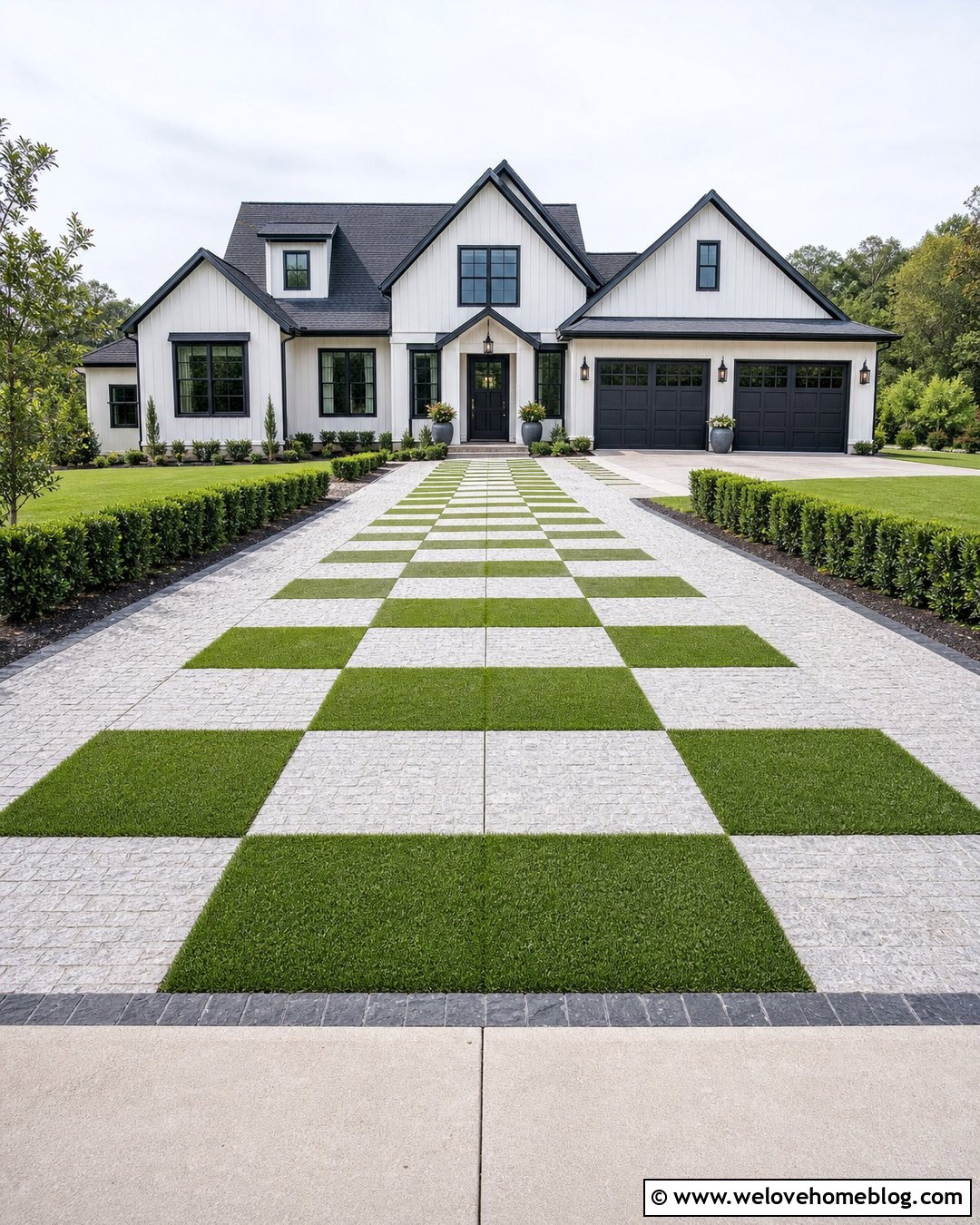
A checkerboard design creates bold curb appeal by alternating square cobblestone panels with blocks of reinforced grass. Select light gray granite cobblestones so the green sections remain the strongest visual contrast. Keep the squares large and evenly spaced, aligning the grid with the width of the garage. The turf areas need a load-supporting system beneath them, especially where vehicle tires regularly pass. Frame the overall driveway with a continuous dark cobblestone border to contain the pattern. Simple lawn, clipped hedges, and a straight front walkway keep the surrounding landscape calm. This arrangement suits a modern farmhouse or transitional home because it combines traditional stone texture with precise contemporary geometry. It also makes a wide driveway appear less like one uninterrupted paved area.
9. Light Cobblestone Grass Driveway
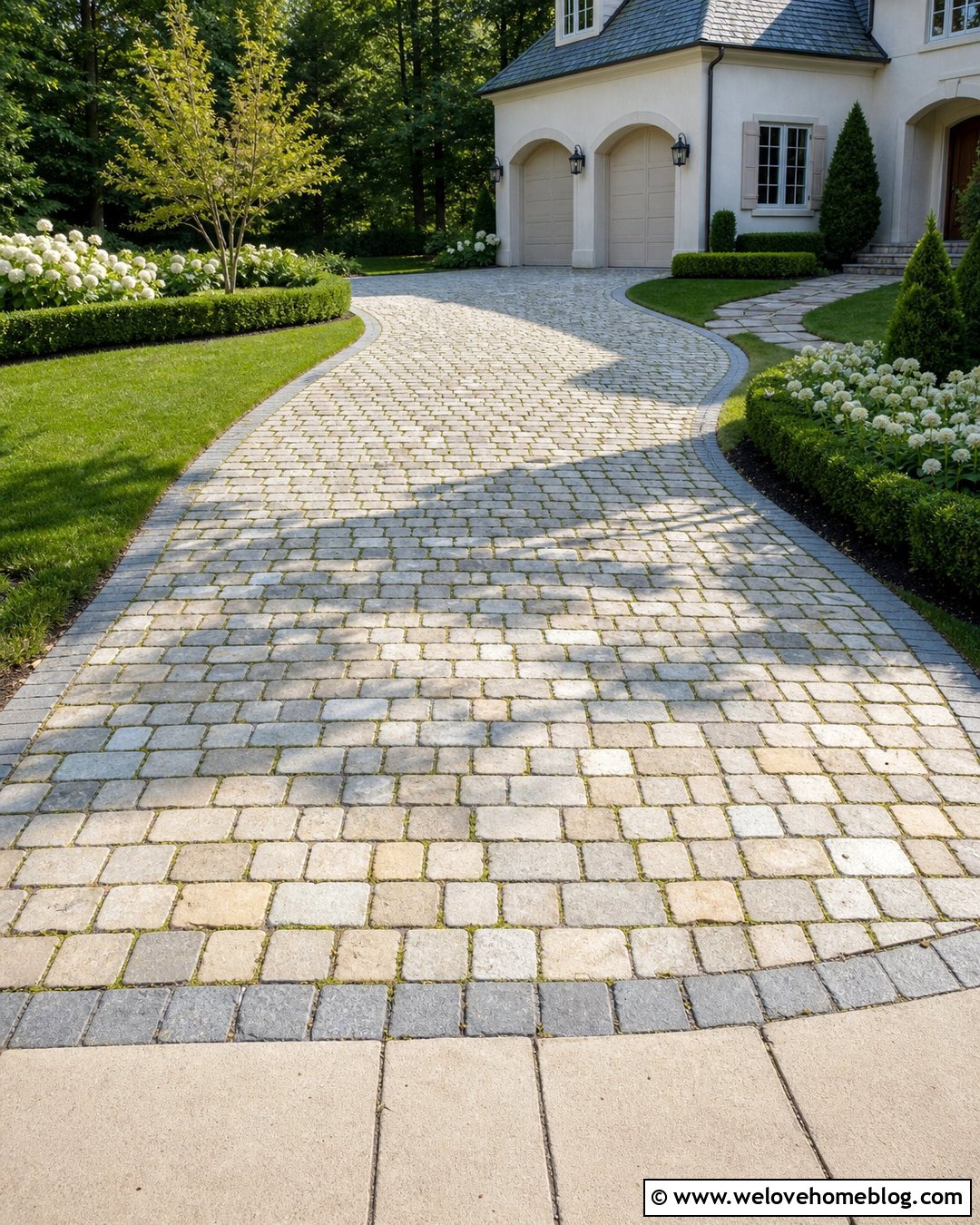
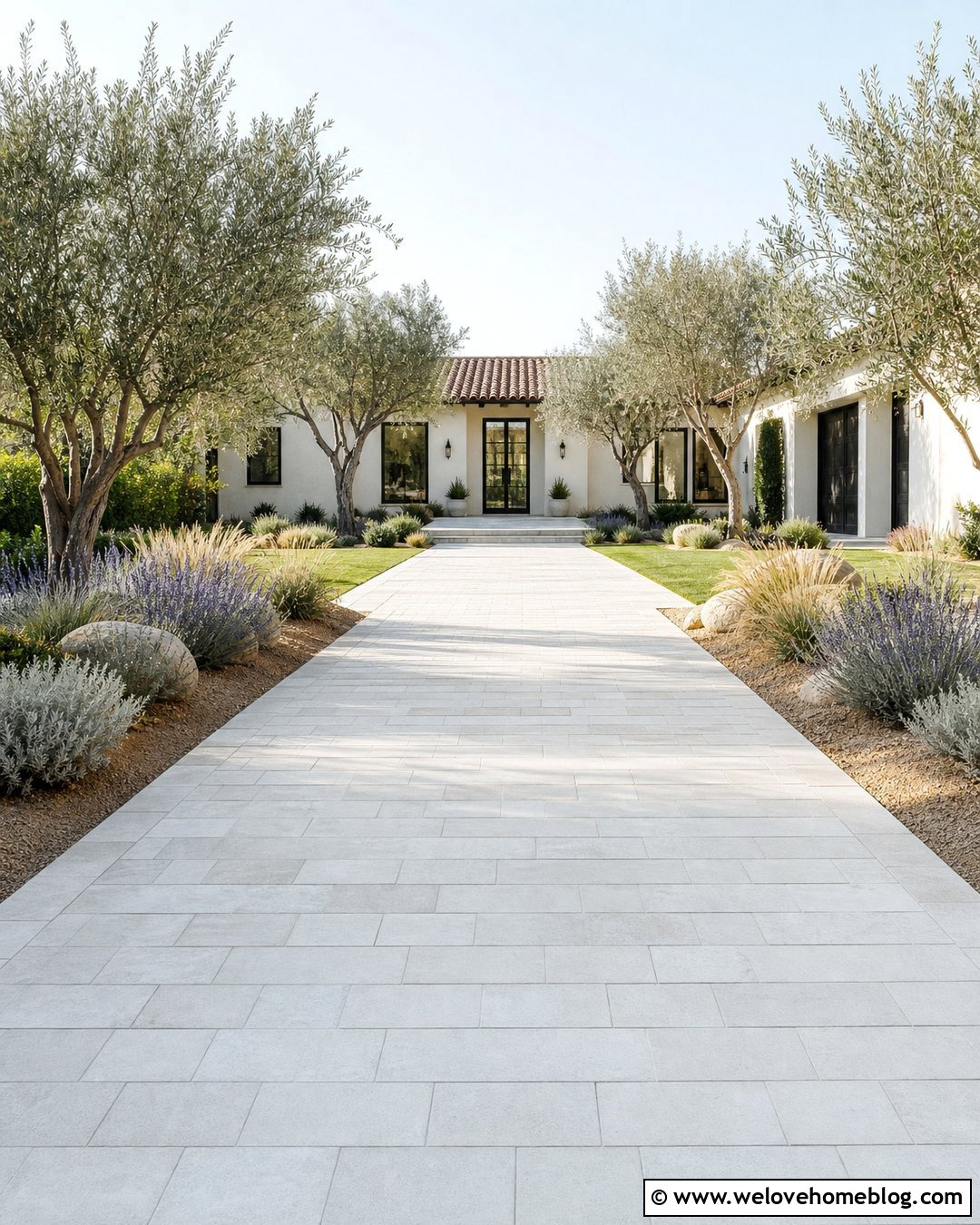
Pale granite or limestone cobblestones can brighten a shaded yard and give the driveway a softer presence. Lay cream, beige, and light gray stones in a staggered pattern with narrow green joints. A slightly darker cobblestone border adds definition without creating a harsh outline. Surround the driveway with deep green shrubs, white flowers, and a healthy lawn to emphasize the light surface. If the house has stucco, pale siding, or natural stone, repeat one facade color in the cobblestone blend. A curved walkway made from matching stones can connect the driveway to the front door. The finished look feels fresh and spacious, making it useful for smaller suburban properties or houses with heavily shaded front elevations.
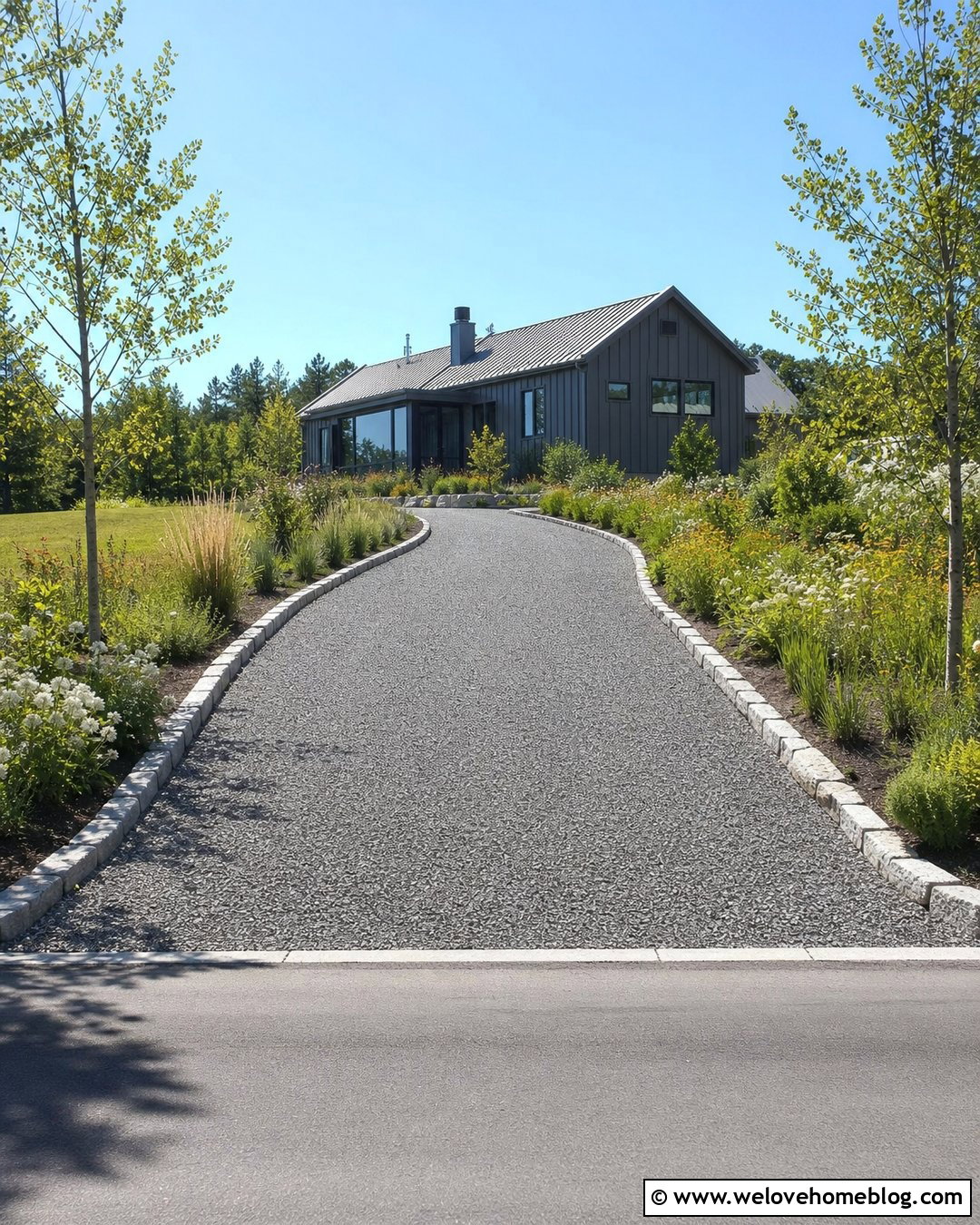
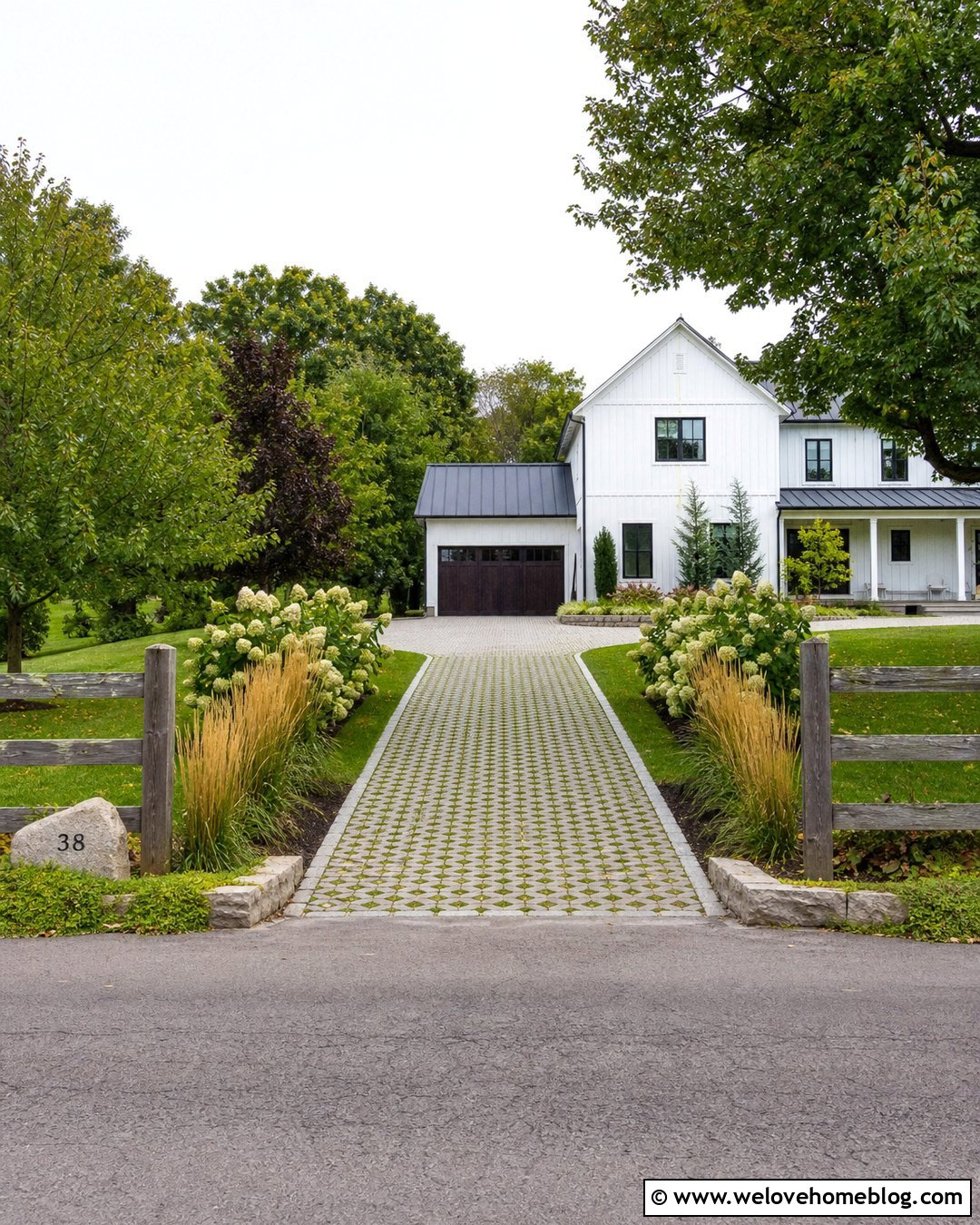
10. Red Cobblestone Grass Farmhouse Driveway
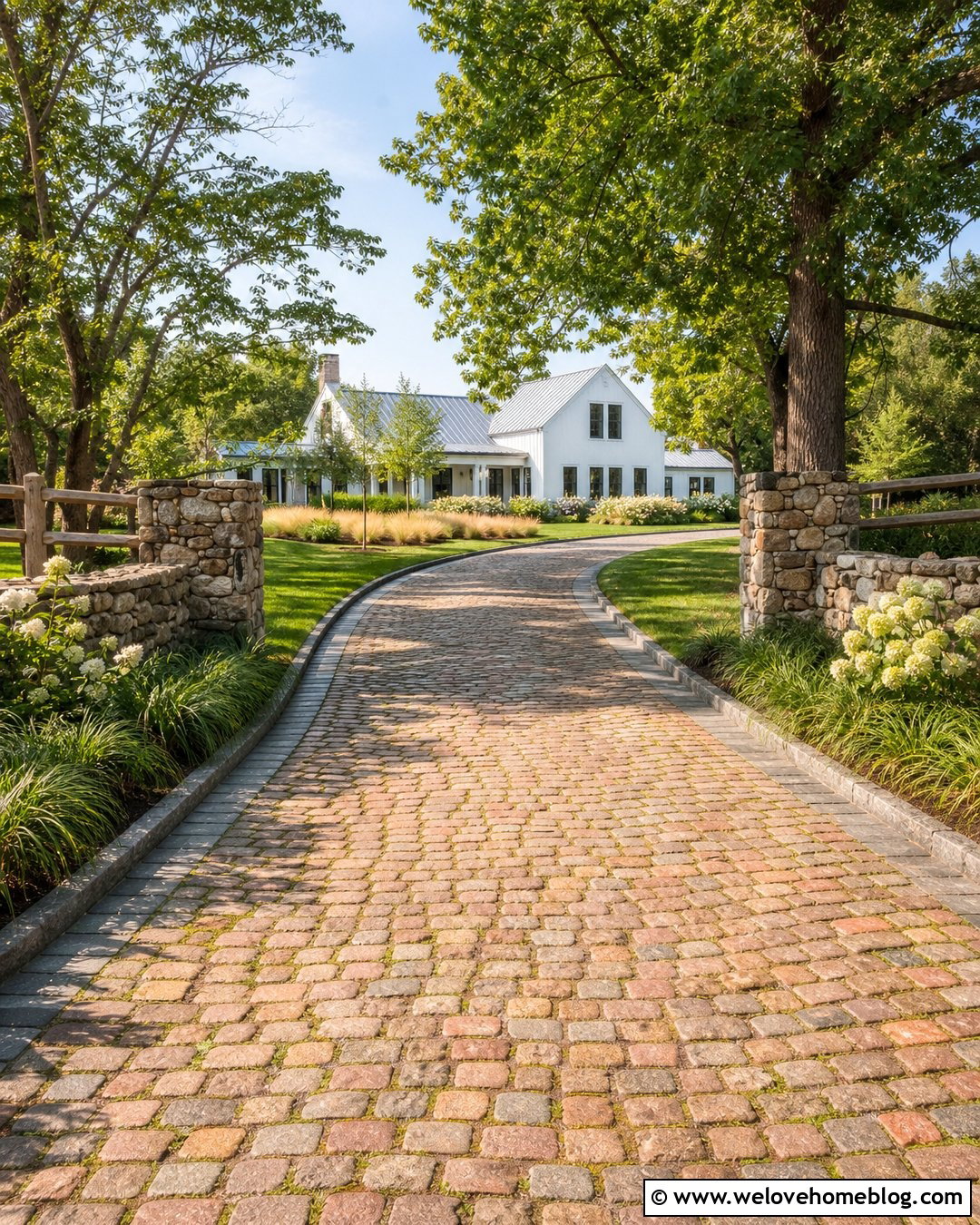
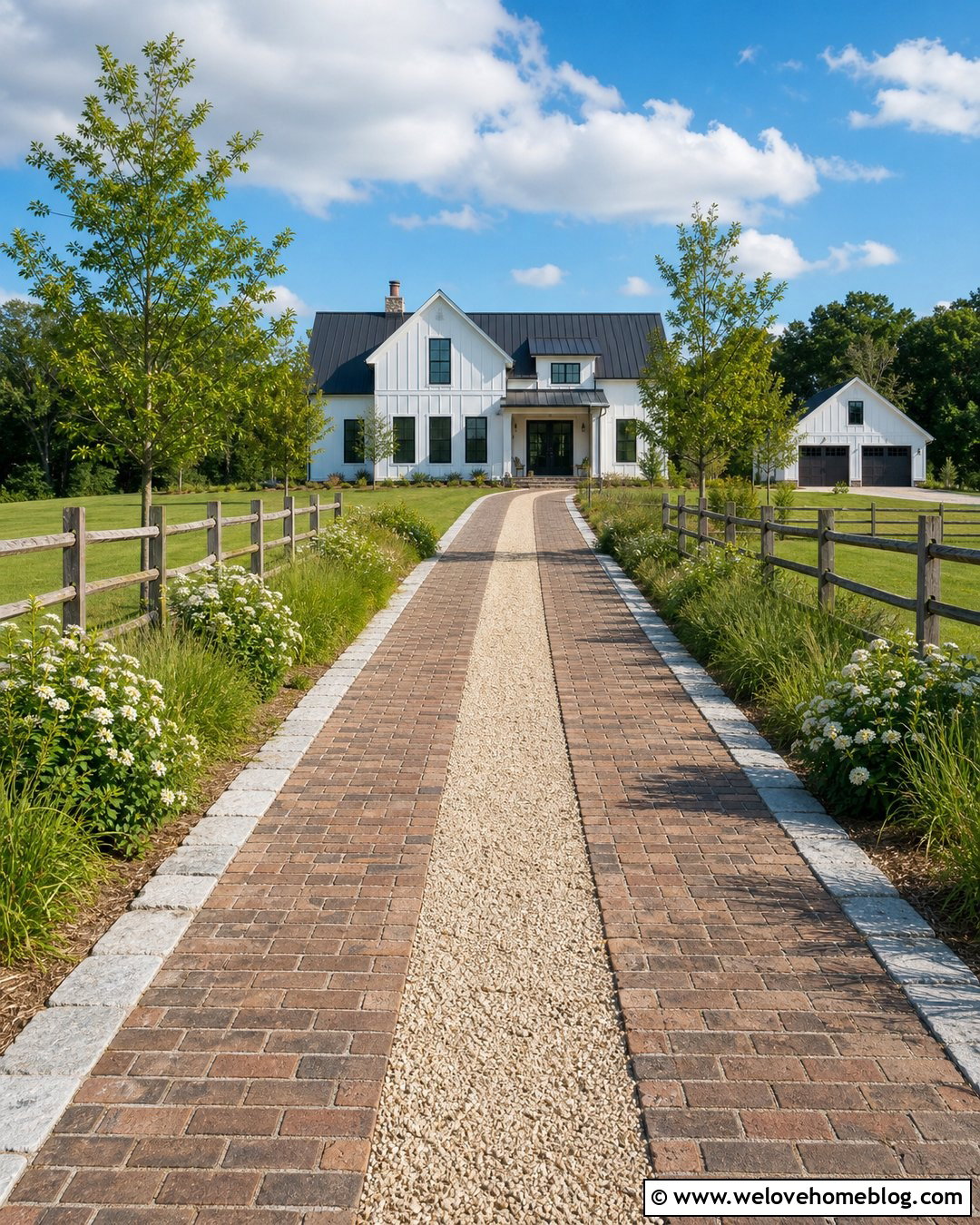
Warm red and brown cobblestones create a comfortable farmhouse entrance that pairs naturally with grass. Install the stones in running rows along a broad, gently curved driveway, leaving modest green joints throughout the surface. Add a darker granite edge to define the curves and provide contrast. Near the road, low fieldstone walls or simple timber fencing can frame the entrance without hiding the view. Use relaxed landscaping with native grasses, hydrangeas, flowering shrubs, and one or two shade trees. A grass verge between the driveway and fence strengthens the country setting. This palette works especially well with white siding, black windows, and natural wood details. The result feels rustic and welcoming while still looking carefully planned and durable.
11. Cobblestone Grass Driveway With Stone Apron
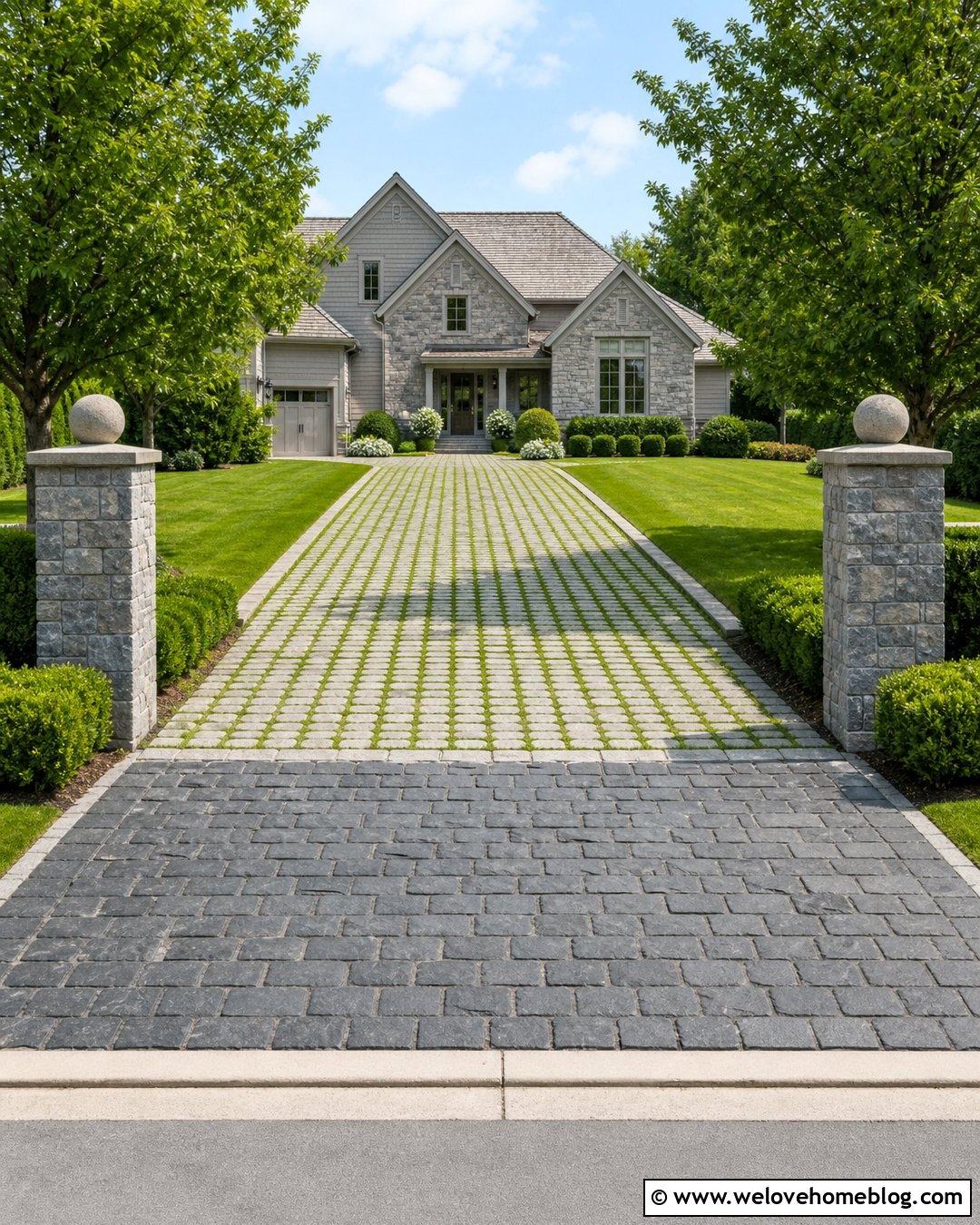
A solid cobblestone apron gives a grass-jointed driveway a stronger and more noticeable entrance. Begin with tightly laid charcoal cobblestones across the first several feet, then transition into gray cobblestones with living grass joints. The denser apron helps visually anchor the driveway at the street, while the greener upper section blends with the yard. Repeat the apron treatment in front of the garage for a coordinated finish. Low stone pillars, compact shrubs, and symmetrical planting beds can mark the entrance without requiring a gate. Use the same stone for the driveway edge and front walkway to connect every hardscape area. This design is ideal when you want an elegant curb view but do not want the entire driveway to look heavily paved.
12. Sloped Cobblestone Grass Driveway
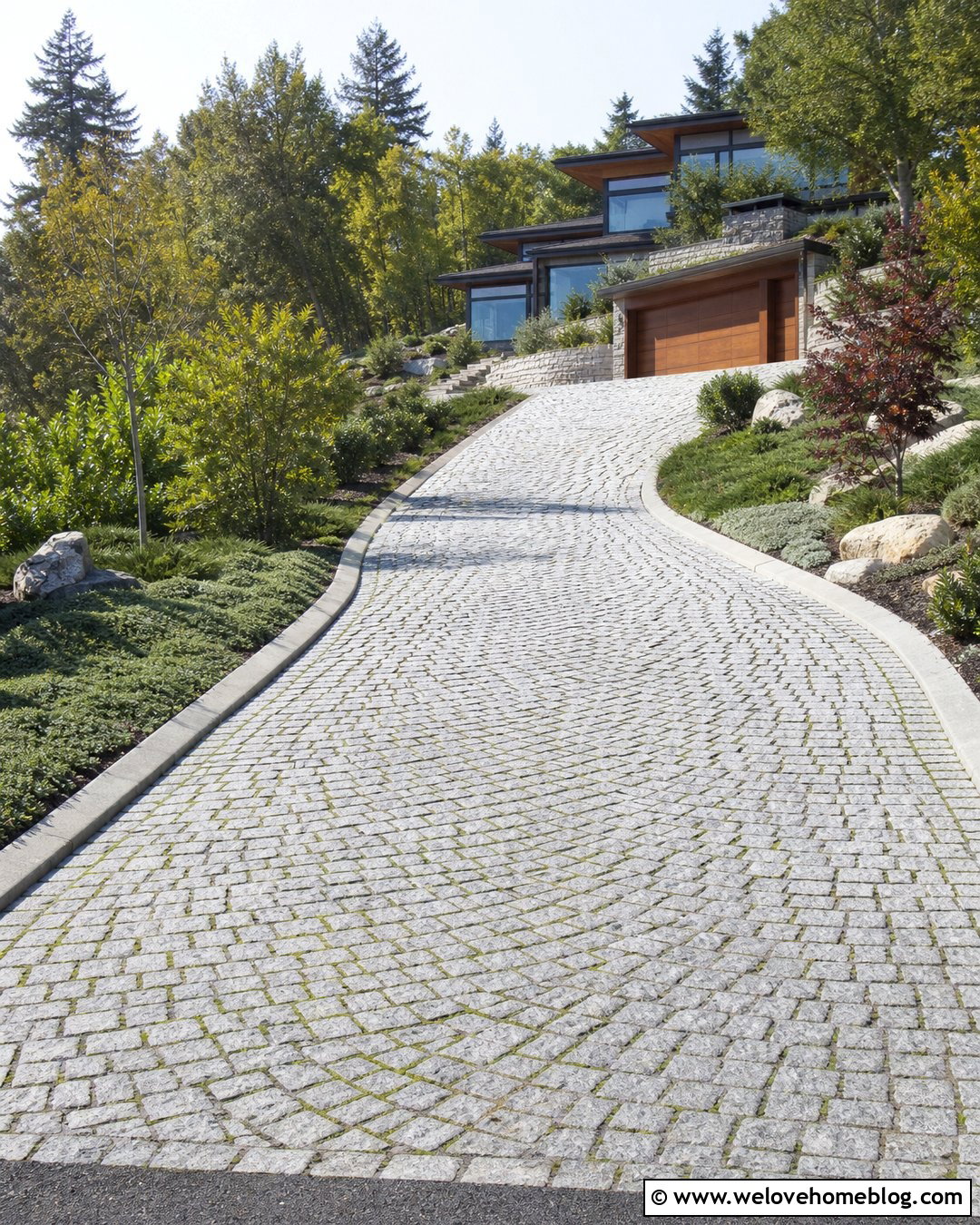
A sloped driveway needs a pattern that looks attractive while addressing water flow, traction, and edge stability. Set textured granite cobblestones in horizontal or gently arcing rows across the slope, rather than creating long channels pointing directly downhill. Keep grass joints narrow in heavy driving zones and slightly wider near the sides. Strong stone edging should follow both boundaries, with planted swales or drainage areas positioned where site conditions allow. Use low-rooted groundcovers and compact shrubs that will not block drivers’ views. At the garage, add a flatter cobblestone landing for easier parking and turning. The layered stone-and-grass surface can make an uphill approach feel softer, but its base, grading, and drainage details should be designed for the specific property.
13. Narrow Cobblestone Grass Driveway
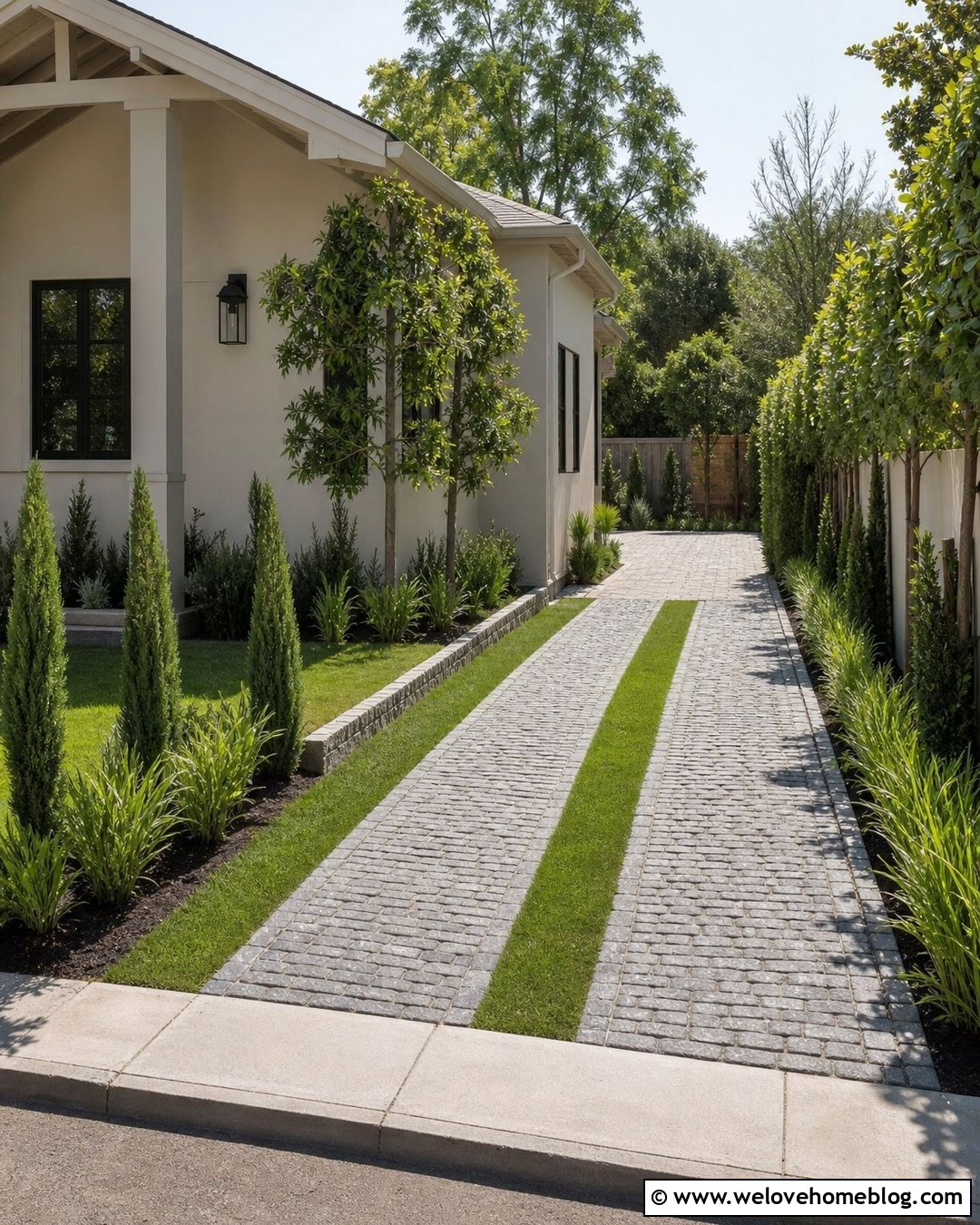
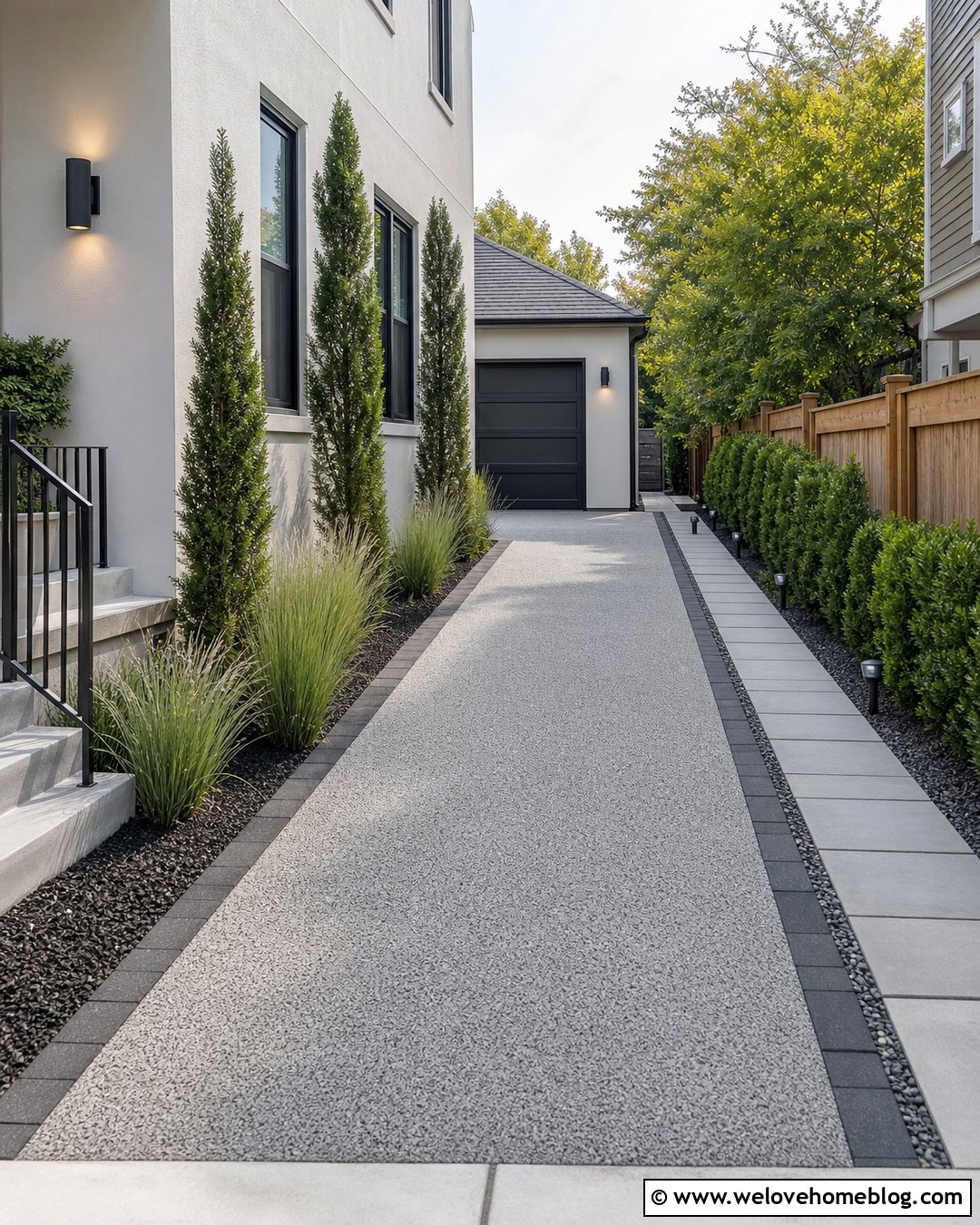
Small side yards can still accommodate a distinctive cobblestone grass driveway. Use two compact cobblestone tracks with a narrow grass center, keeping the overall layout straight and easy to navigate. Medium-gray granite setts provide traditional texture without making the confined space feel too busy. Install flush edging beside the house and lawn so the full usable width remains clear. Slender planting beds can include upright ornamental grasses, columnar shrubs, or espaliered plants that do not extend into the driving area. At the rear parking space, widen the cobblestone surface and reduce the grass joints where tires will turn. Matching stepping stones can form a narrow walkway to the side door. This efficient design makes limited space feel intentional, green, and well organized.
14. Long Tree-Lined Cobblestone Grass Driveway
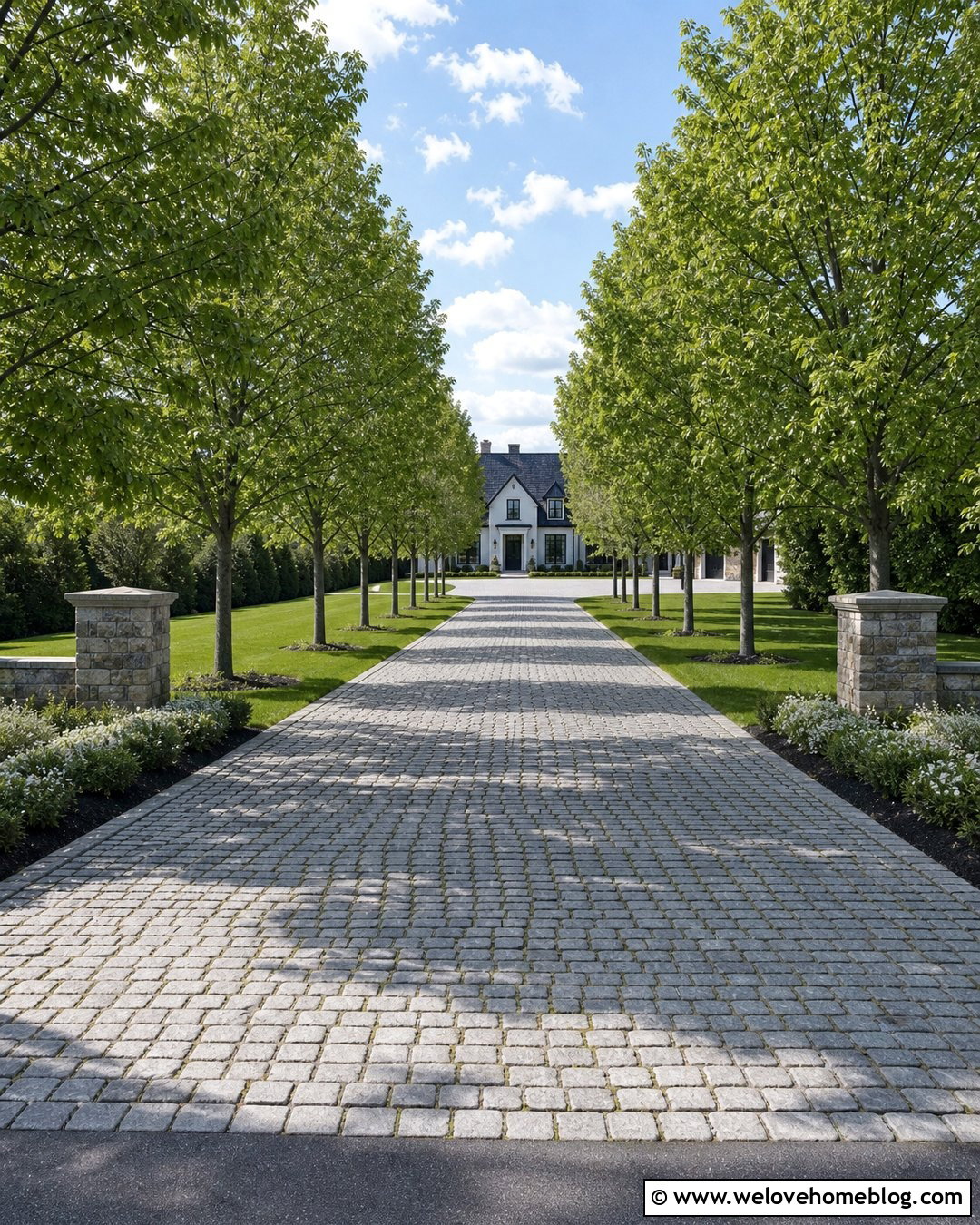
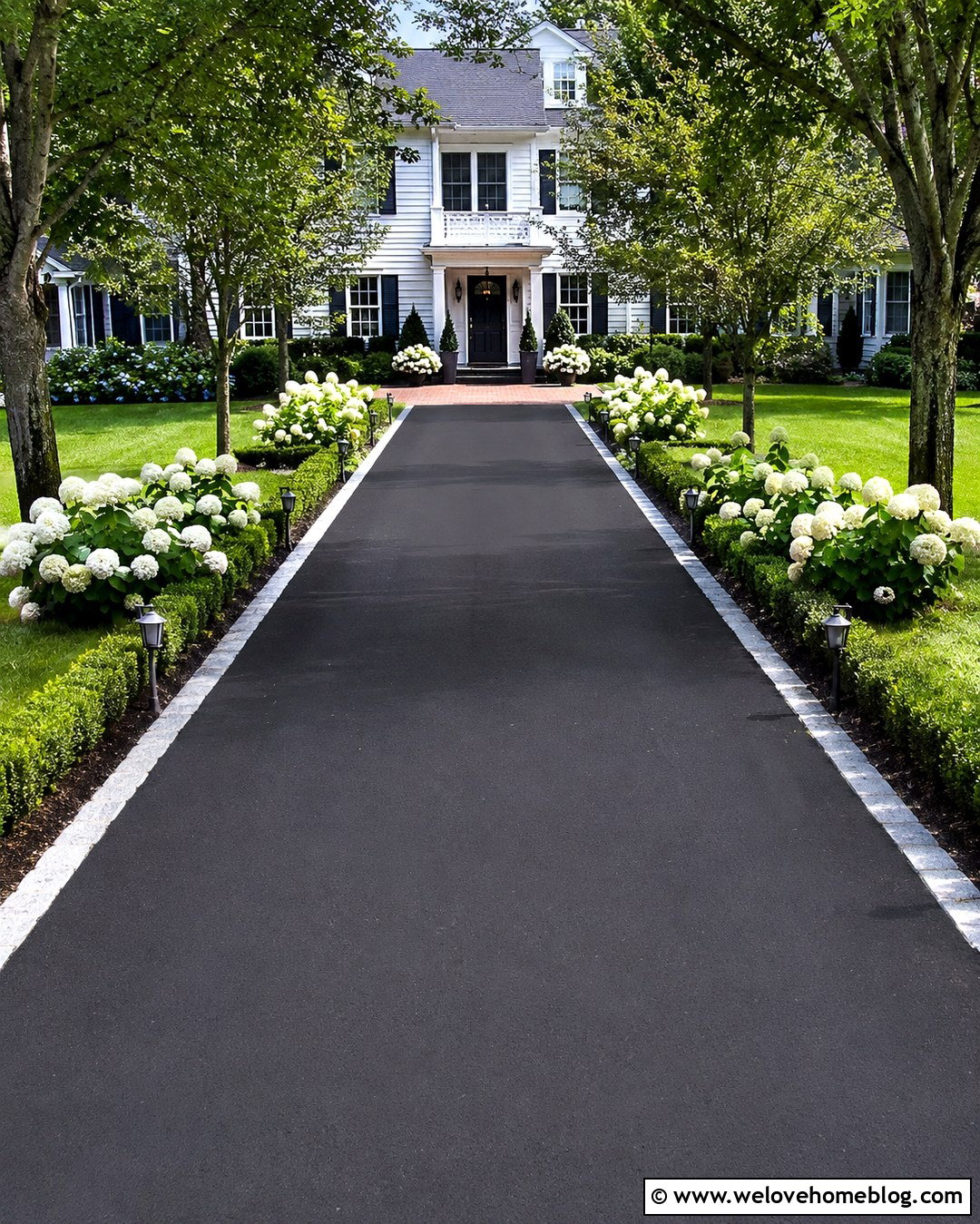
A long cobblestone grass driveway becomes an inviting landscape feature when trees frame the entire approach. Lay weathered gray cobblestones in straight running rows, with fine turf joints creating a continuous green cast. Position evenly spaced deciduous trees beyond the driveway edge, allowing enough room for mature trunks, roots, and clear vehicle access. Beneath them, use simple grass or broad groundcover beds rather than complicated planting. A widened cobblestone entrance and subtle stone pillars establish the beginning of the drive. Closer to the house, transition into a larger cobblestone parking court with tighter joints. This complete design suits country homes, estate-style properties, and modern farmhouses. Repetition along the route creates order, while the natural materials prevent the long driveway from feeling overly formal.
15. Formal Cobblestone Grass Colonial Driveway
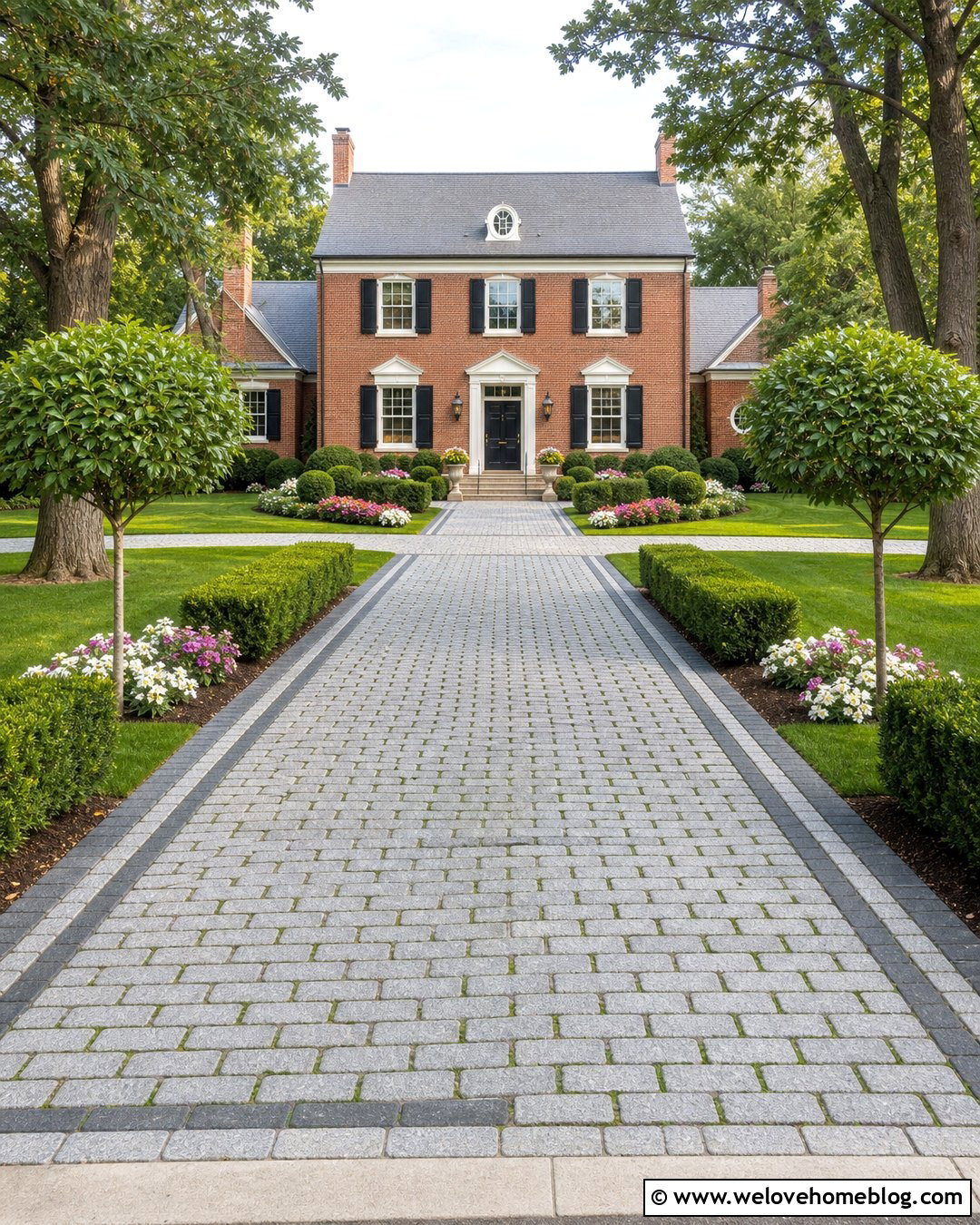
Symmetry is the key to pairing a cobblestone grass driveway with a Colonial home. Center a straight gray granite drive on the main entrance or align it carefully with a side garage. Use precise rows of rectangular cobbles separated by narrow grass joints. A double border in darker stone gives the surface a tailored frame. On both sides, mirror the landscaping with clipped hedges, matching ornamental trees, and balanced flower beds. A brick or cobblestone walkway can cross the driveway and lead directly to the front door. Keep lawn edges crisp and avoid random plant placement. The combination of green joints, traditional stone, and formal planting creates an established look that complements shutters, brick facades, white columns, and other symmetrical architectural details.
16. Drought-Tolerant Cobblestone Grass Driveway
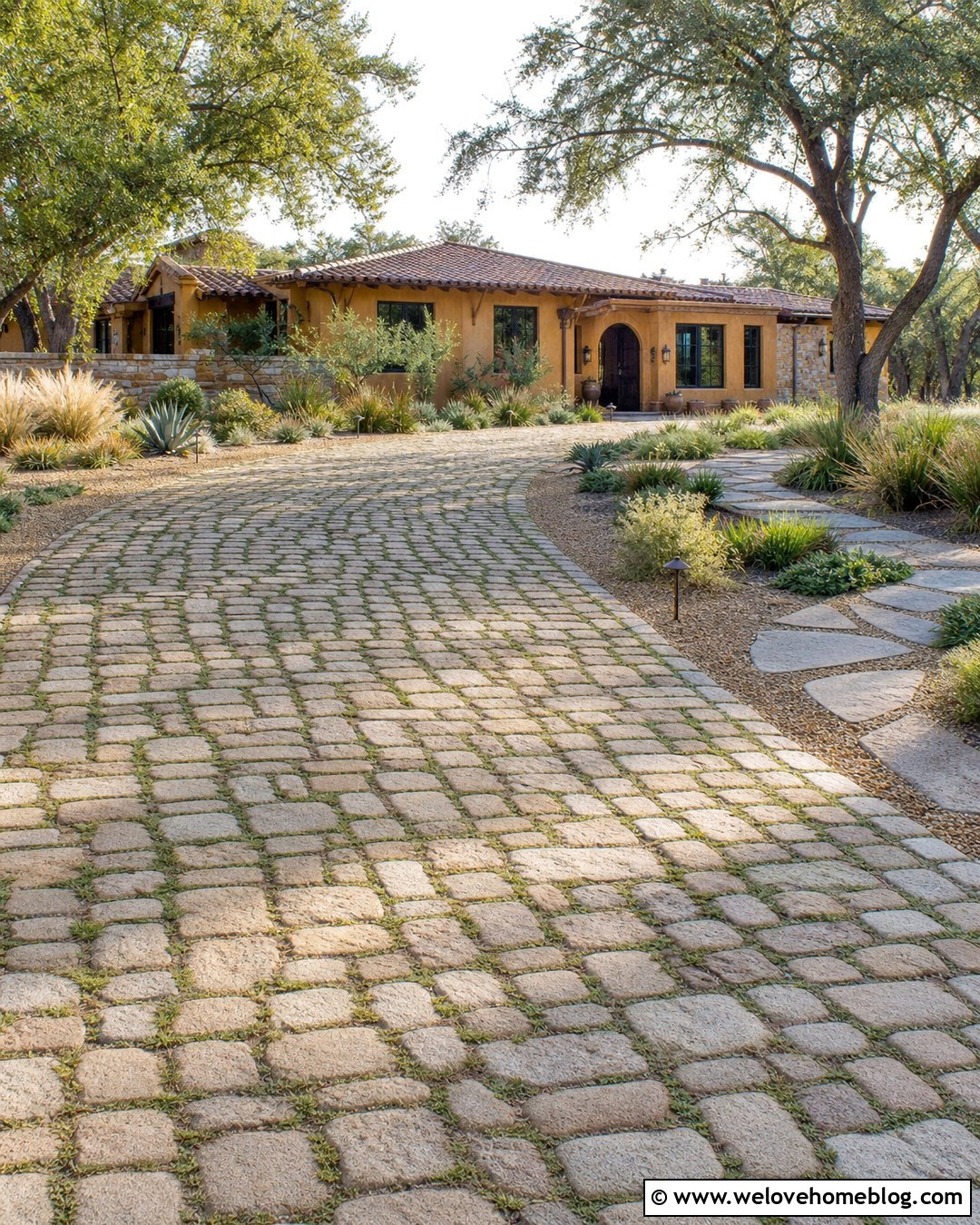
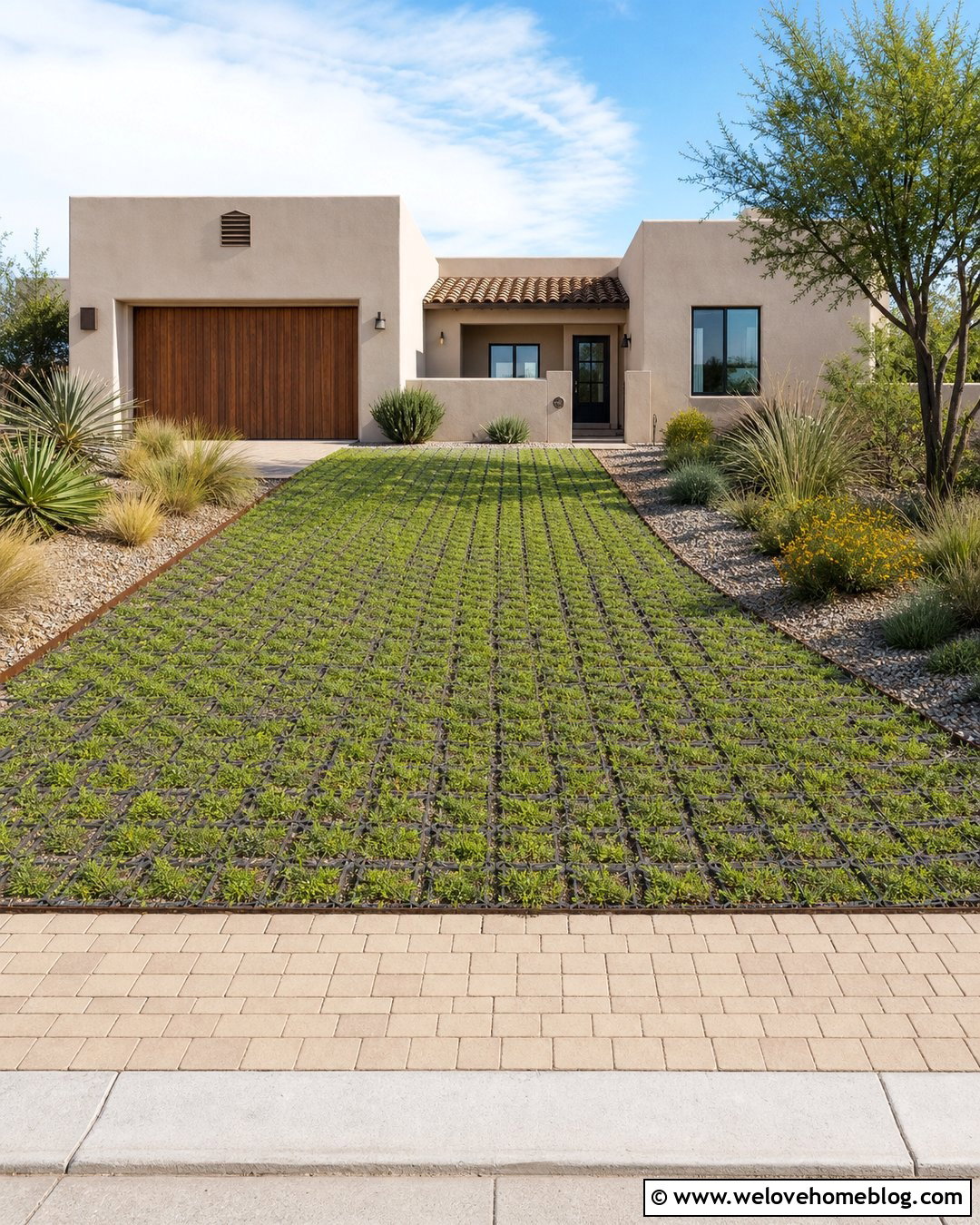
In a hot or water-conscious landscape, the green areas should be selected for the local climate rather than treated like conventional lawn. Pair warm tan cobblestones with a durable, low-growing turf or groundcover suited to sun, heat, traffic, and available irrigation. Arrange the stones in broad rows with restrained planting gaps, concentrating greenery where it can remain healthy. Gravel mulch, native bunch grasses, drought-tolerant shrubs, and a few shade-providing trees can frame the driveway. Use steel or flush stone edging for a crisp transition between cobbles and planting beds. The earthy color palette looks particularly good with Southwestern, adobe-inspired, ranch, and contemporary homes. A targeted irrigation plan can support the living joints without watering the entire paved area excessively.
17. Shaded Cobblestone Grass Driveway
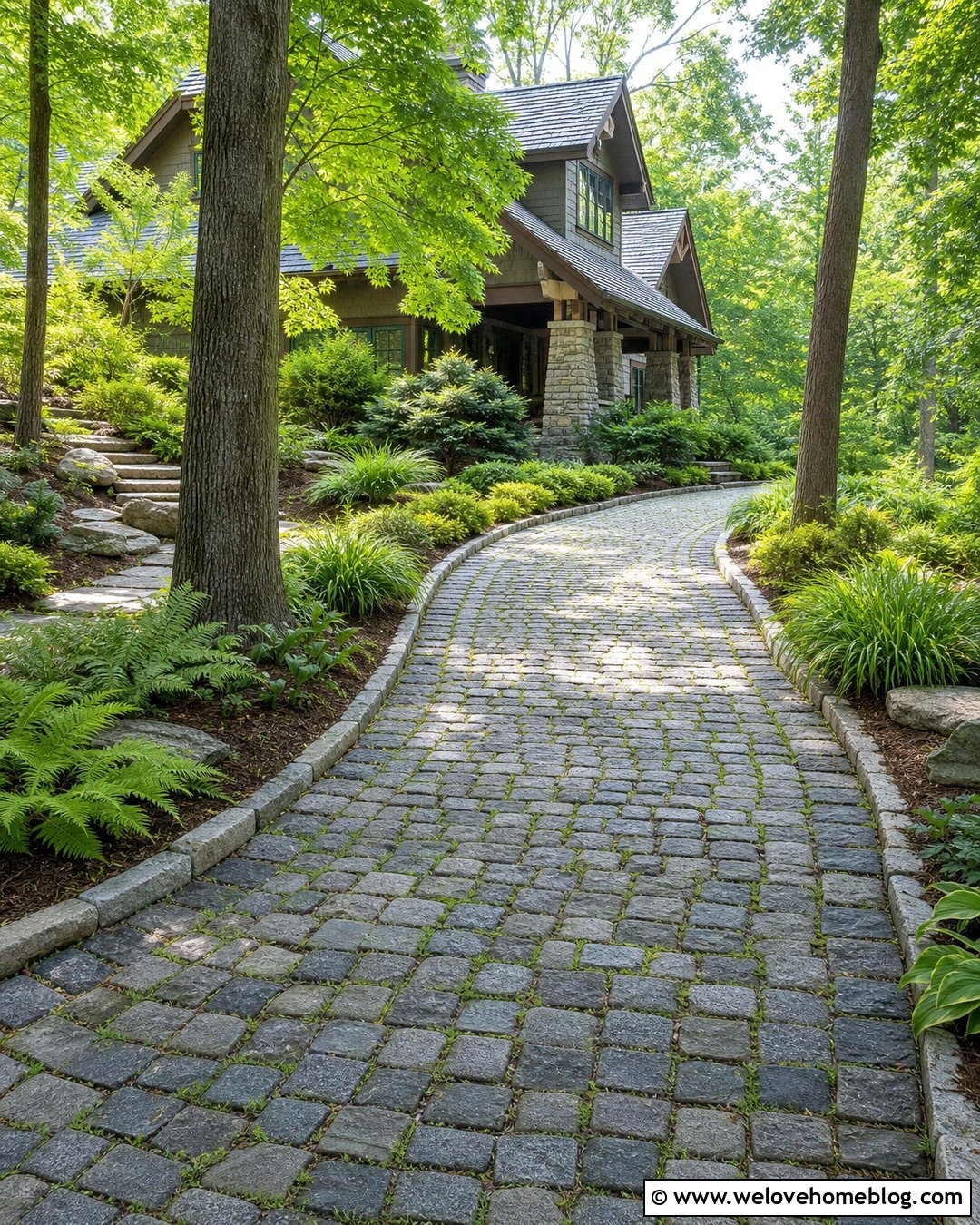
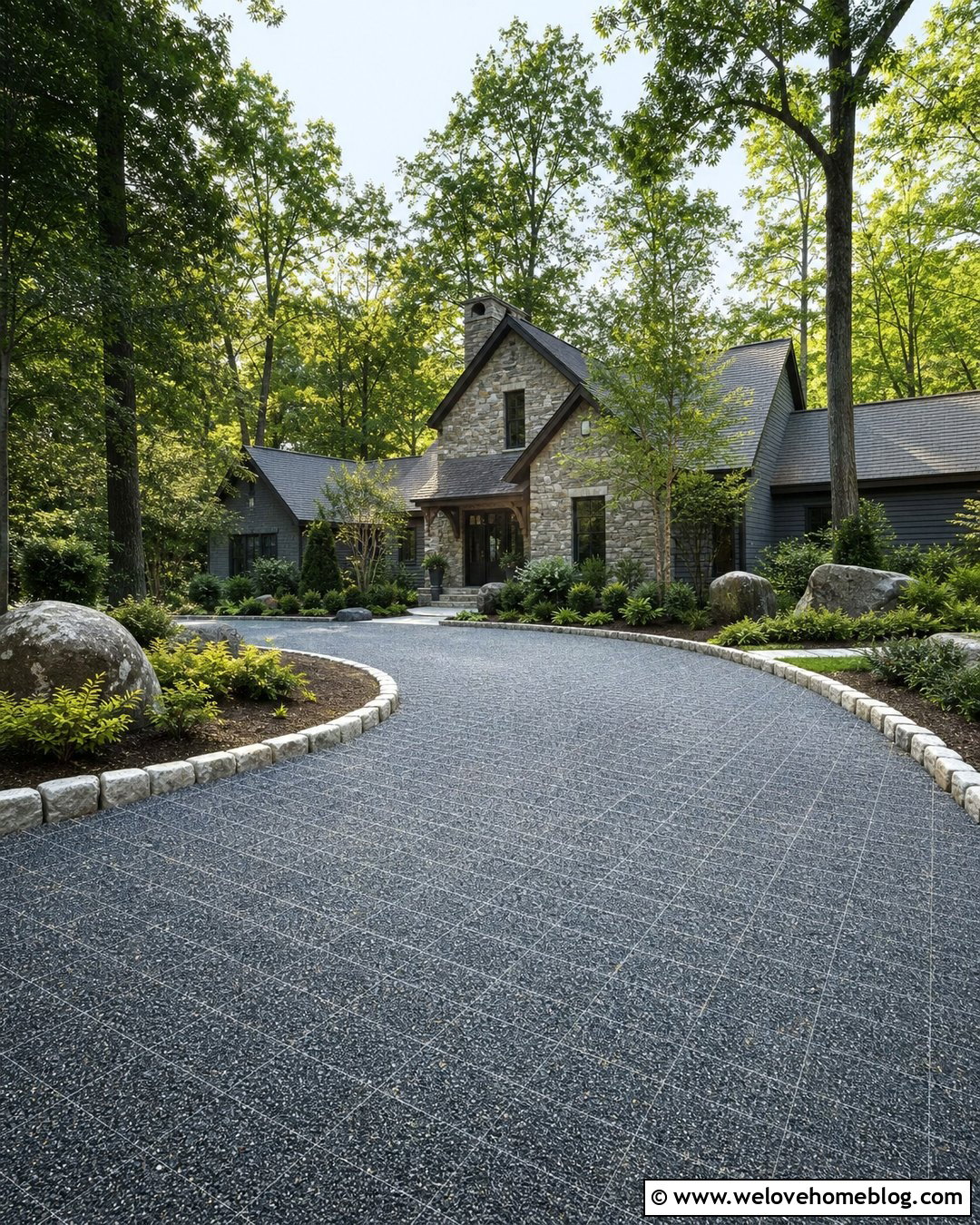
Filtered sunlight gives a cobblestone driveway a quiet woodland character, but the planting plan should reflect the lower light. Use irregular charcoal and gray cobbles with wider joints filled by shade-tolerant turf where conditions permit. In the darkest areas, reduce the planted joints or transition to a compatible low groundcover selected for the site. Follow a gentle curve beneath mature trees while keeping construction away from important roots whenever possible. Ferns, hostas, woodland grasses, and evergreen shrubs can frame the edges. A firm cobblestone border separates the driveway from mulched beds and falling leaves. Against a Craftsman, cottage, or wooded contemporary house, the dark stone and green surface feel naturally integrated rather than imposed on the landscape.
18. Mixed-Size Cobblestone Grass Driveway
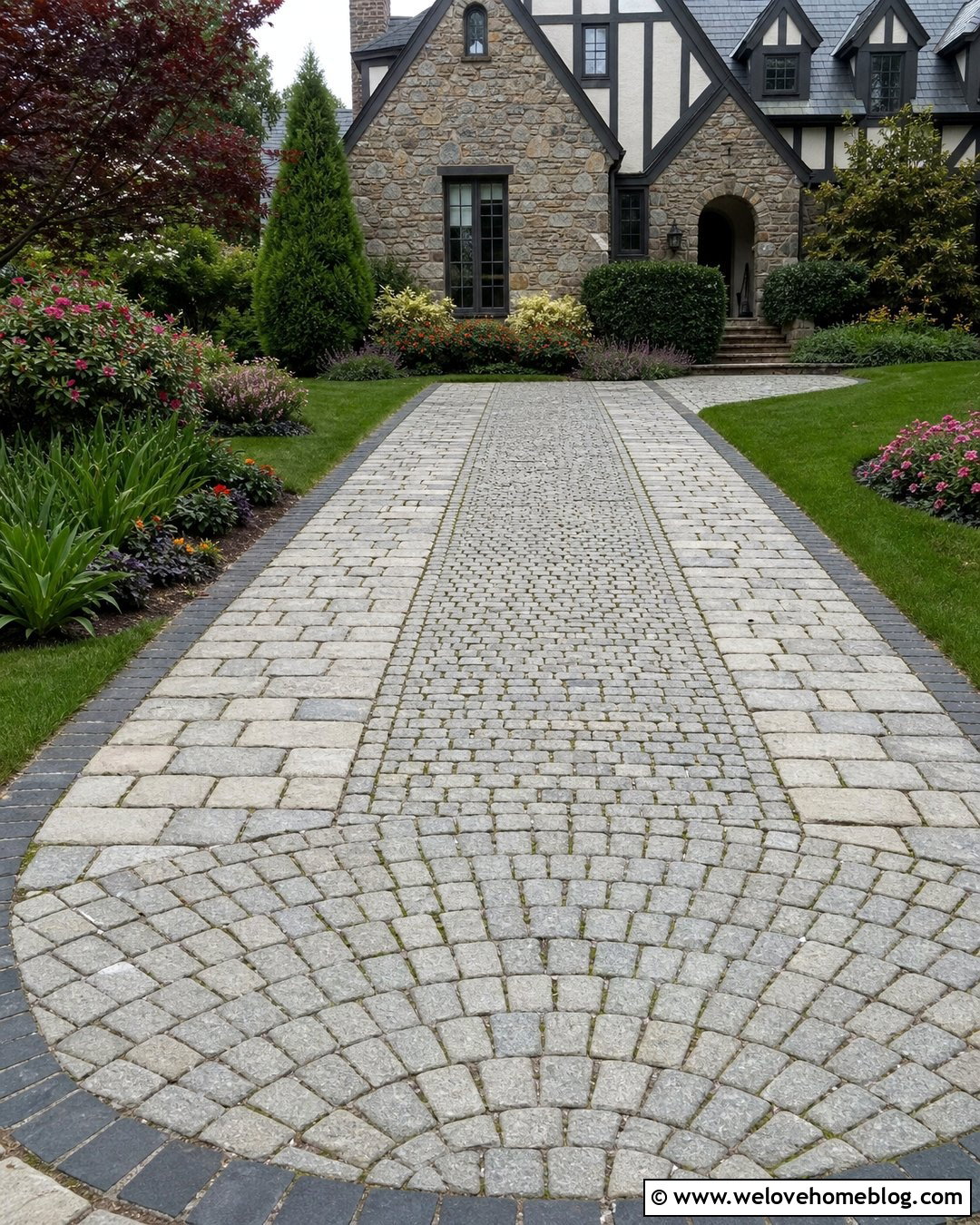
Combining multiple cobblestone sizes gives a driveway handcrafted texture while still allowing an organized layout. Use larger rectangular stones along the tire paths and smaller cubes in the center, edges, and transition zones. Maintain consistent grass joints so the different sizes feel connected. A broad border of uniform dark cobbles keeps the varied field pattern visually contained. Near the street, arrange smaller stones into a subtle fan or curved apron. Surround the drive with relaxed lawn, layered shrubs, and perennial beds that repeat the mixed but balanced character. This design works with Tudor, storybook cottage, rustic stone, and eclectic homes. Careful planning prevents the surface from appearing patched together, while the size changes add depth that remains visible from the curb.
19. Gated Cobblestone Grass Driveway
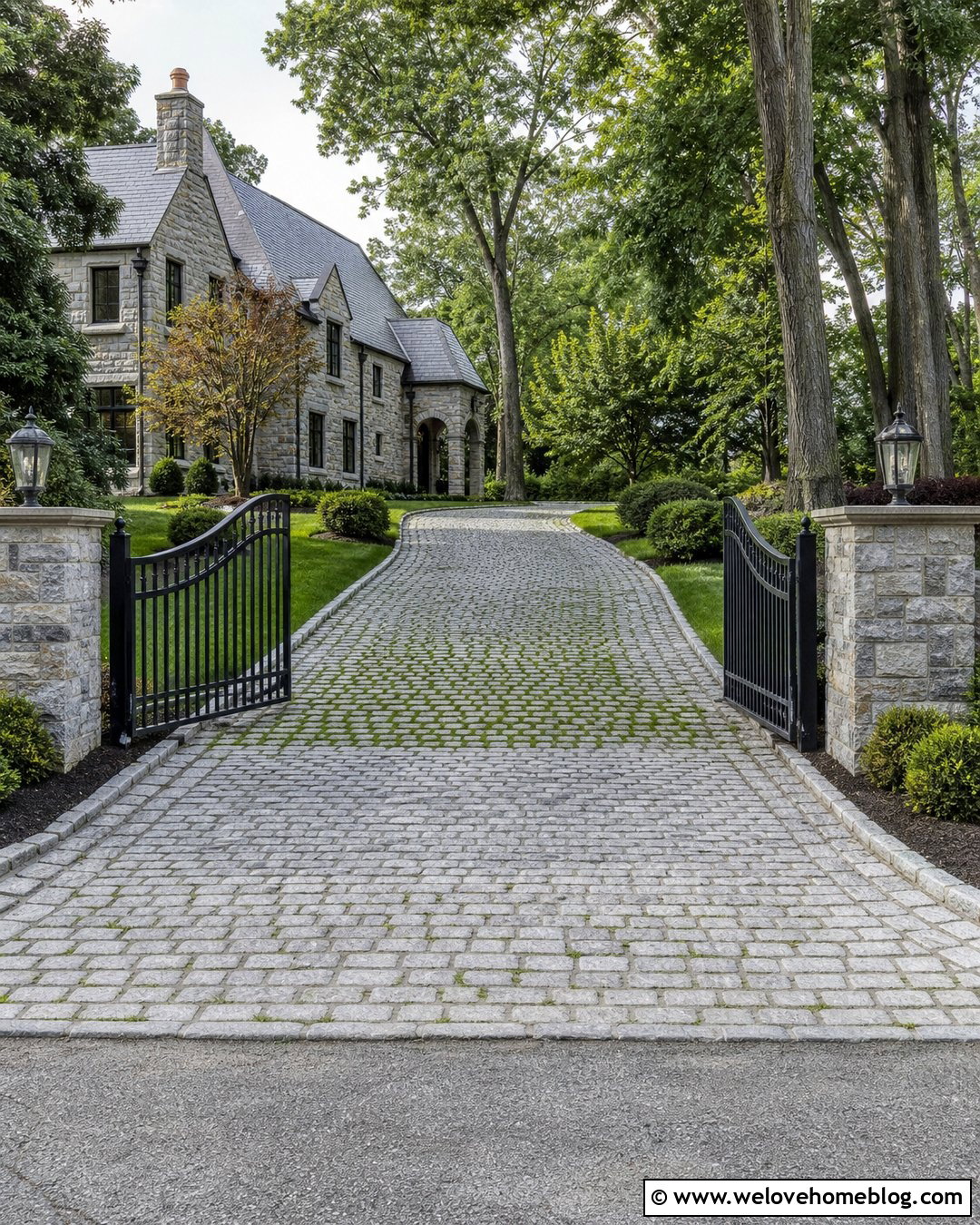
A gate becomes more welcoming when it is integrated into the complete cobblestone and grass layout. Begin with a wide granite cobblestone apron outside the gate, then continue through with orderly grass-jointed paving. Stone or brick pillars should repeat colors found in the house facade and driveway border. Set the gate back far enough for a practical entry area based on the property and local requirements. Beyond it, curve the driveway slightly toward the home and frame the route with lawn, trees, and low planting beds. Keep tall shrubs away from visibility areas and gate mechanisms. Black metal, natural wood, or simple painted gates can all work. The result should feel secure and substantial without making the residential entrance look closed off or overly imposing.
20. Small Cobblestone Grass Parking Driveway
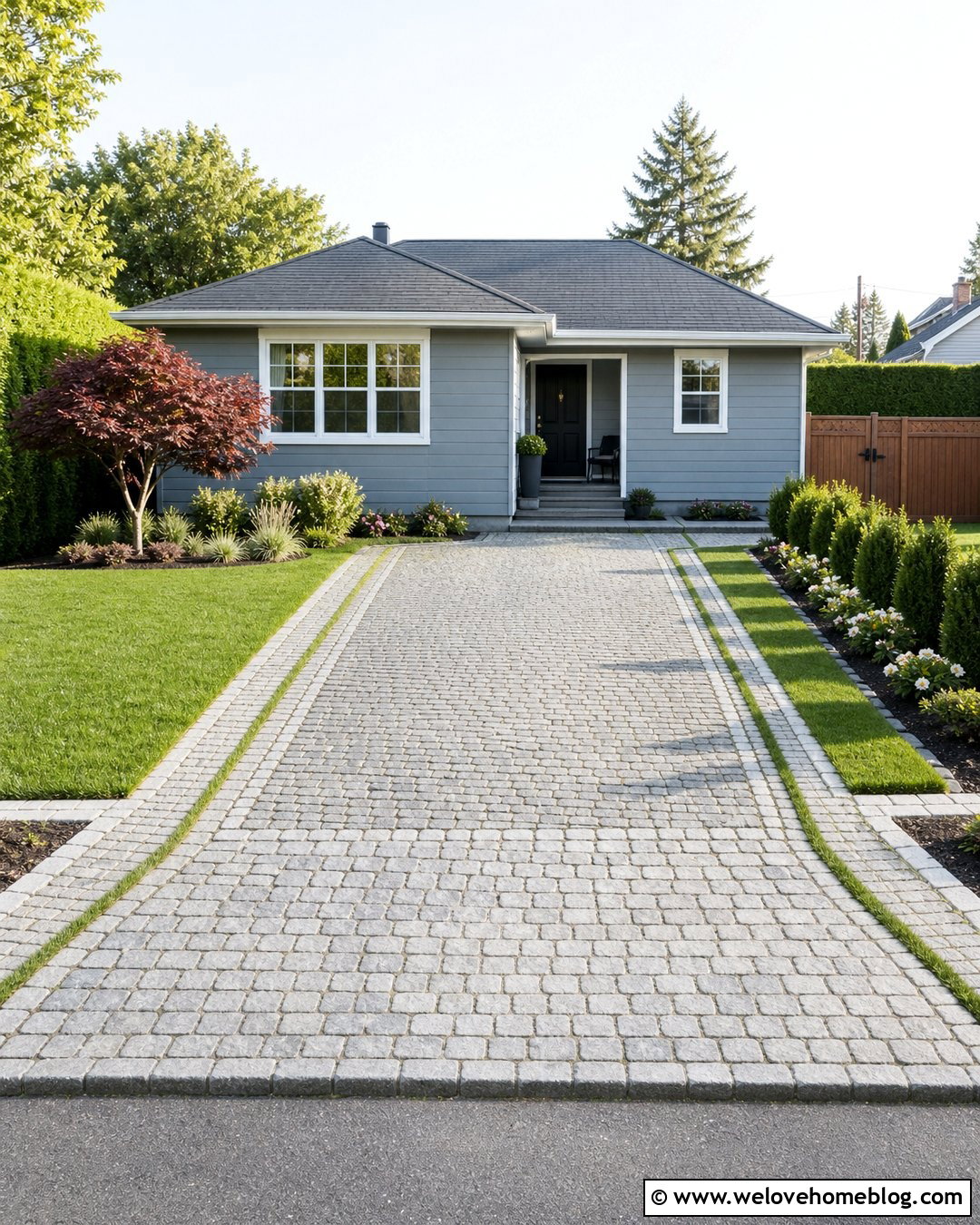
A compact front yard benefits from a driveway that visually merges parking space with landscaping. Cover the main pad with small gray cobblestones and narrow grass joints, then use slightly wider green bands around its perimeter. A short straight approach keeps maneuvering simple, while a flared cobblestone apron provides a smooth transition from the street. Match the driveway border to the front walkway so the hardscape reads as one coordinated plan. Use low shrubs, a small ornamental tree, and slim planting beds to preserve open space. Near the garage or parking position, tighten the stone spacing in turning areas. This layout gives a bungalow, townhouse, or small suburban home practical off-street parking without allowing the driveway to overpower the entire front yard.
Conclusion:
The most successful 20 cobblestone grass driveway ideas balance natural beauty with a carefully planned driving surface. Cobblestone color, joint width, driveway shape, edging, and surrounding plants should all relate to the house and yard. Straight tracks can make a small property feel orderly, while curved and circular arrangements create a more generous arrival experience. Before installation, consider vehicle movement, drainage, sunlight, turf selection, irrigation, snow removal, and local permitting requirements. A qualified landscape or paving professional can help specify the base and restraints for site conditions. With thoughtful construction and routine joint care, a cobblestone grass driveway can provide distinctive curb appeal while maintaining a softer connection to the landscape.

Related posts:
Leave a Reply