
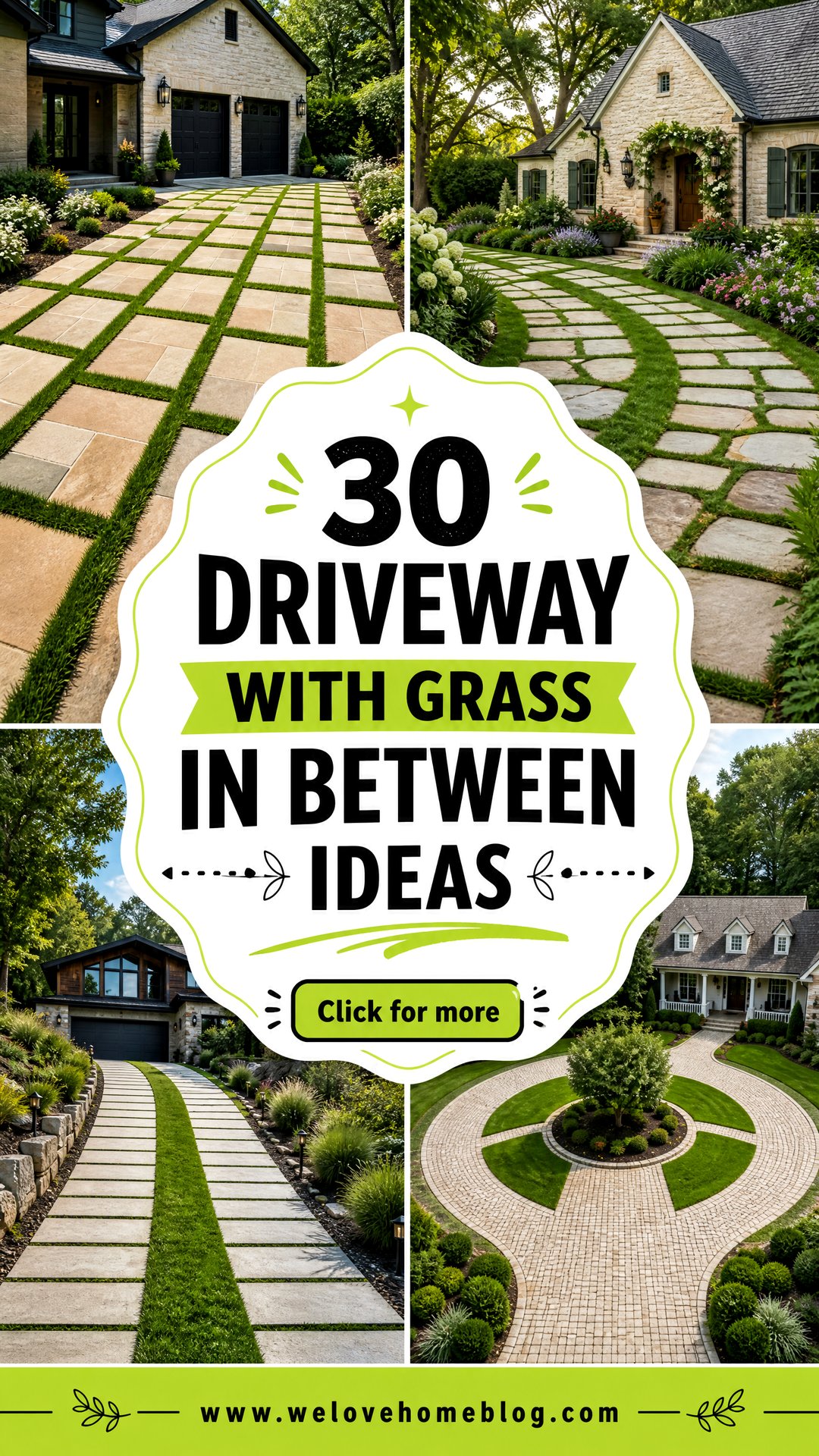
If you are searching for **30 driveway with grass in between ideas**, the best designs balance greenery with a stable, vehicle-ready surface. Grass strips can soften hard paving, create attractive geometric patterns, and help the driveway feel connected to the front yard. Options range from classic concrete ribbon driveways to large-format pavers, brick tracks, stone grids, and reinforced turf systems. Natural grass delivers a lush appearance but needs trimming, watering, sunlight, and suitable drainage. Artificial turf offers a cleaner, more consistent alternative in hot, shaded, or heavily used areas. Before building, choose a layout that matches your vehicle path, climate, house style, and maintenance routine. The complete driveway looks below make it easier to compare **30 driveway with grass in between ideas**.
1. Concrete Ribbon Driveway With Grass Center
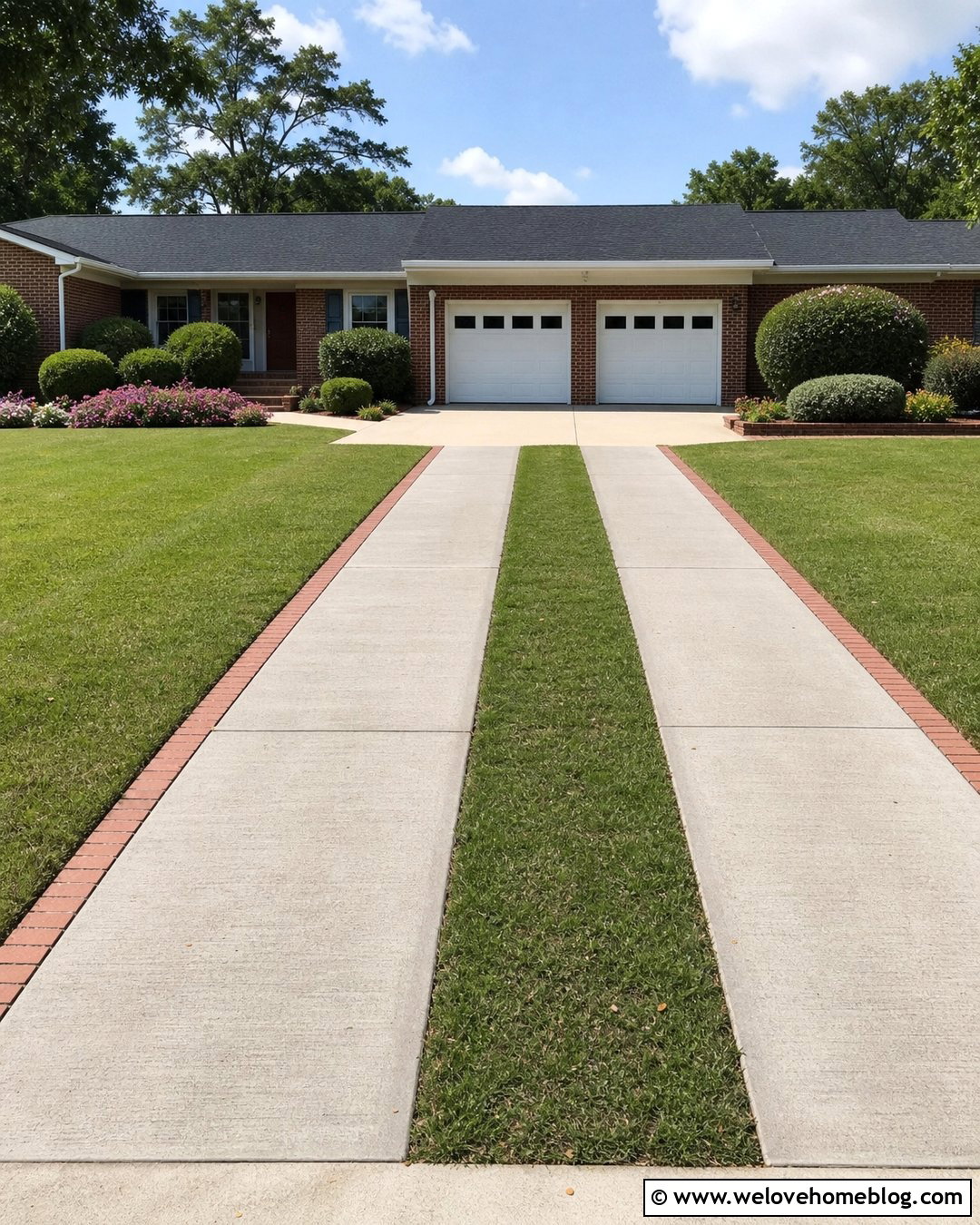
A concrete ribbon driveway is one of the simplest ways to place grass between paved surfaces. Two parallel strips of light gray poured concrete follow the vehicle’s tire path, while a broad green strip fills the center. Keep the outside edges straight for a neat transition into the lawn. This layout works especially well with ranch homes, cottages, and compact suburban properties. Continue the concrete near the garage to create a full-width parking apron where turning and unloading are easier. A narrow brick border can add definition without making the design feel busy. Choose durable turf suited to local sun and traffic conditions. Regular edging prevents the grass from creeping over the concrete and preserves the clean, traditional ribbon shape.
2. Large Concrete Pavers With Grass Strips
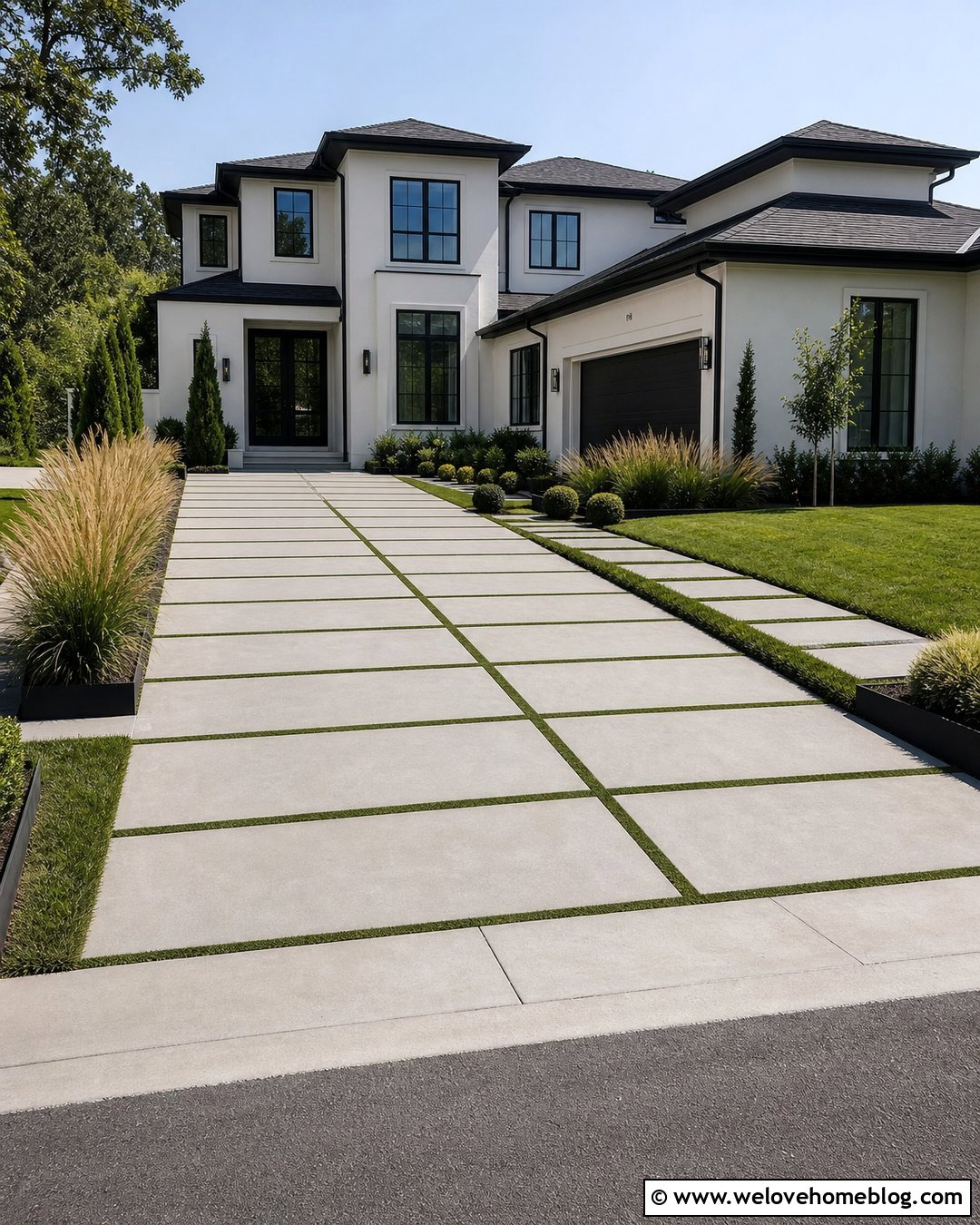
Large rectangular concrete pavers separated by narrow grass strips create a crisp, modern driveway. Choose smooth, pale gray slabs and arrange them in evenly spaced rows from the curb to the garage. The green joints should be wide enough to remain visible but narrow enough to avoid dominating the paved surface. Artificial turf is useful when you want sharp lines and consistent color with less trimming. Natural grass feels softer and blends more naturally into the surrounding lawn. Frame the driveway with simple ornamental grasses, rounded shrubs, and a matching concrete walkway. Dark metal edging can hold the grass lines in place. This complete look complements contemporary houses because the strong geometry repeats modern windows, garage doors, and architectural rooflines.
3. Square Concrete Driveway Grid With Grass
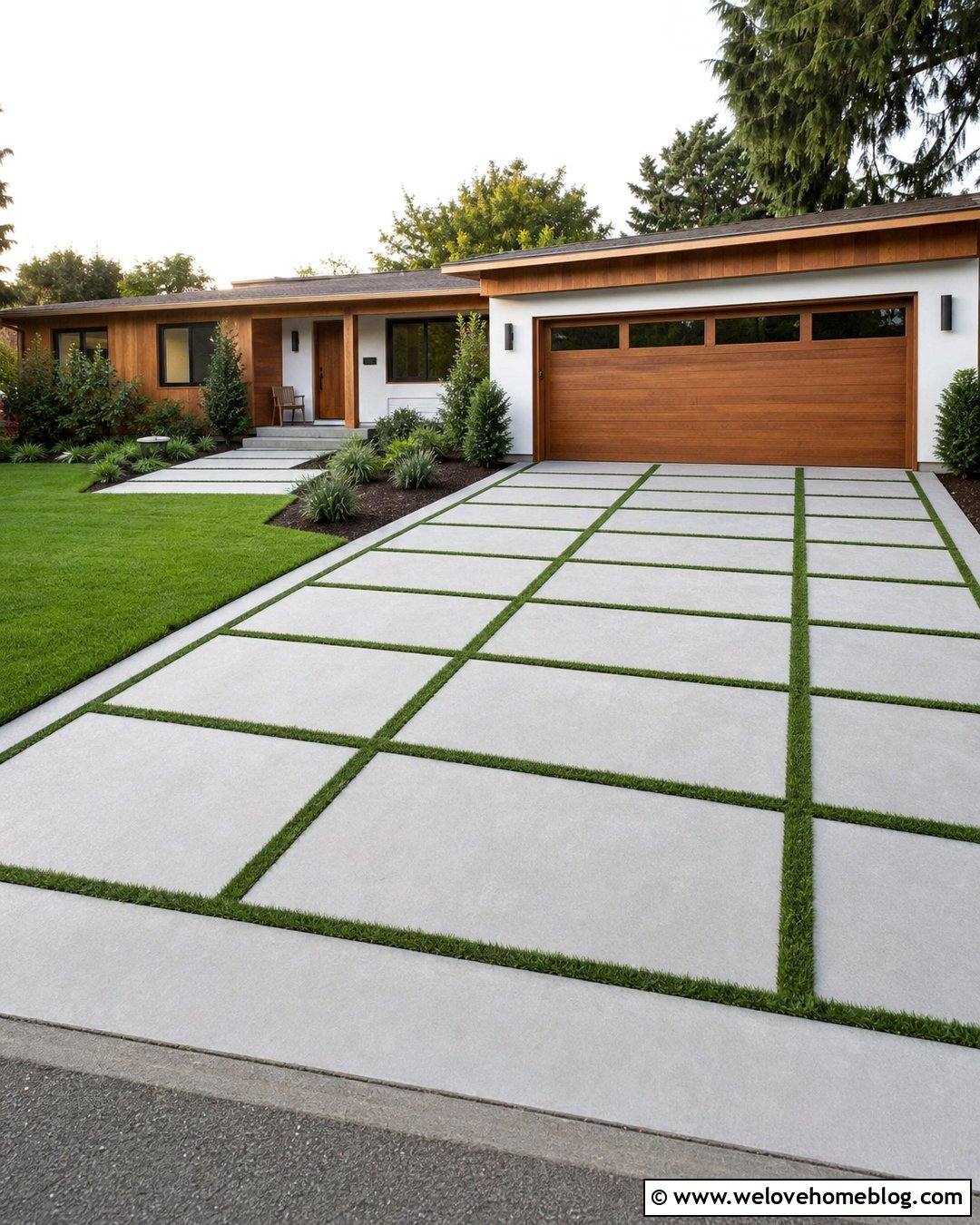
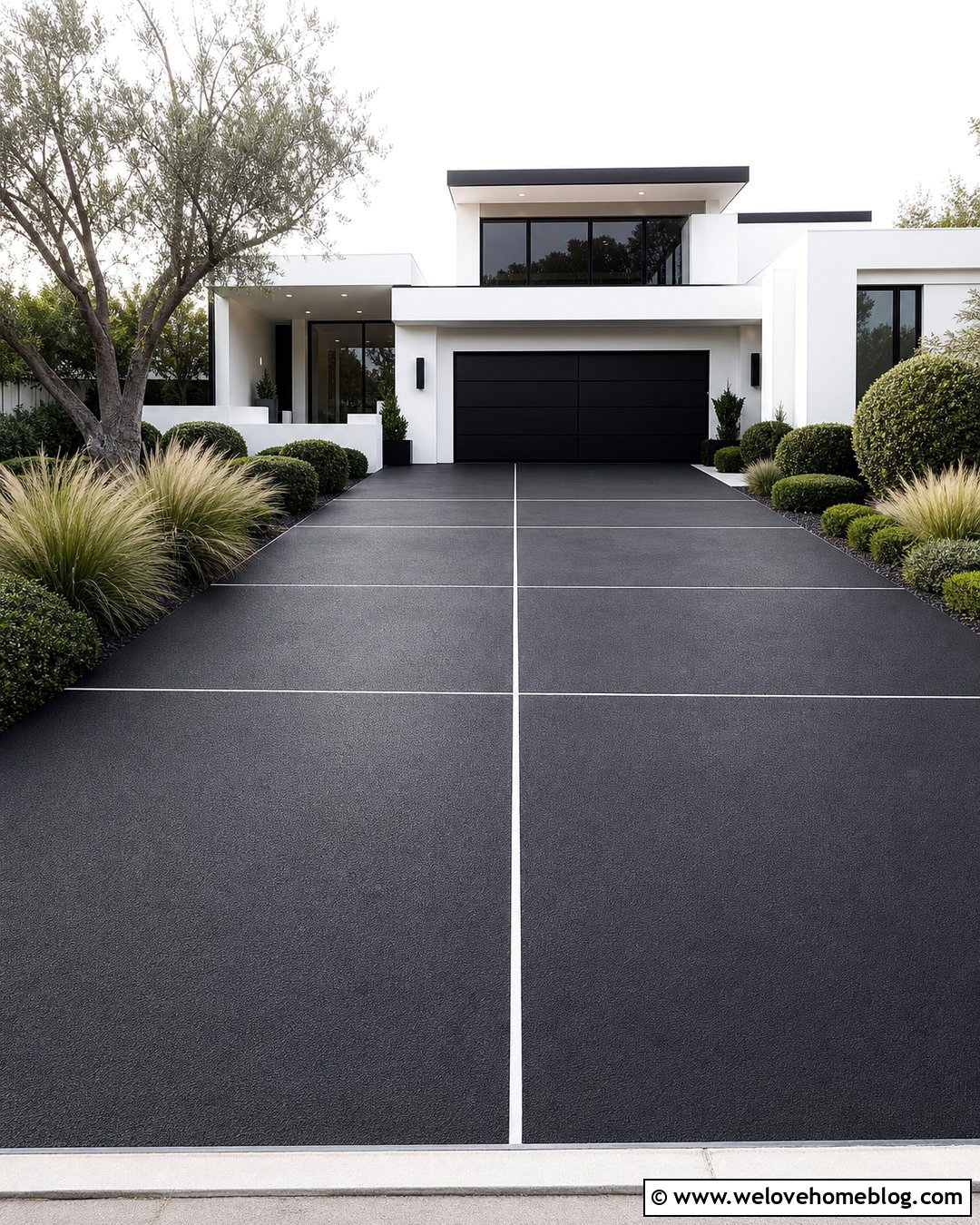
A square concrete grid turns a wide driveway into an organized pattern rather than one large slab. Oversized square pavers form the driving surface, while grass fills the joints in both directions. The result is structured, green, and visually lighter than solid concrete. Align the squares carefully with the garage bays so the pattern looks intentional from the street. A smooth concrete finish creates a minimalist look, while a light broom finish provides more texture. Extend the grid into a small front walkway for a unified entrance. Along the sides, use low evergreen shrubs and simple mulch beds that do not compete with the pattern. This driveway works best when installed over a properly prepared, vehicle-rated base that keeps each square stable and level.
4. Concrete Slab Driveway With Wide Turf Joints
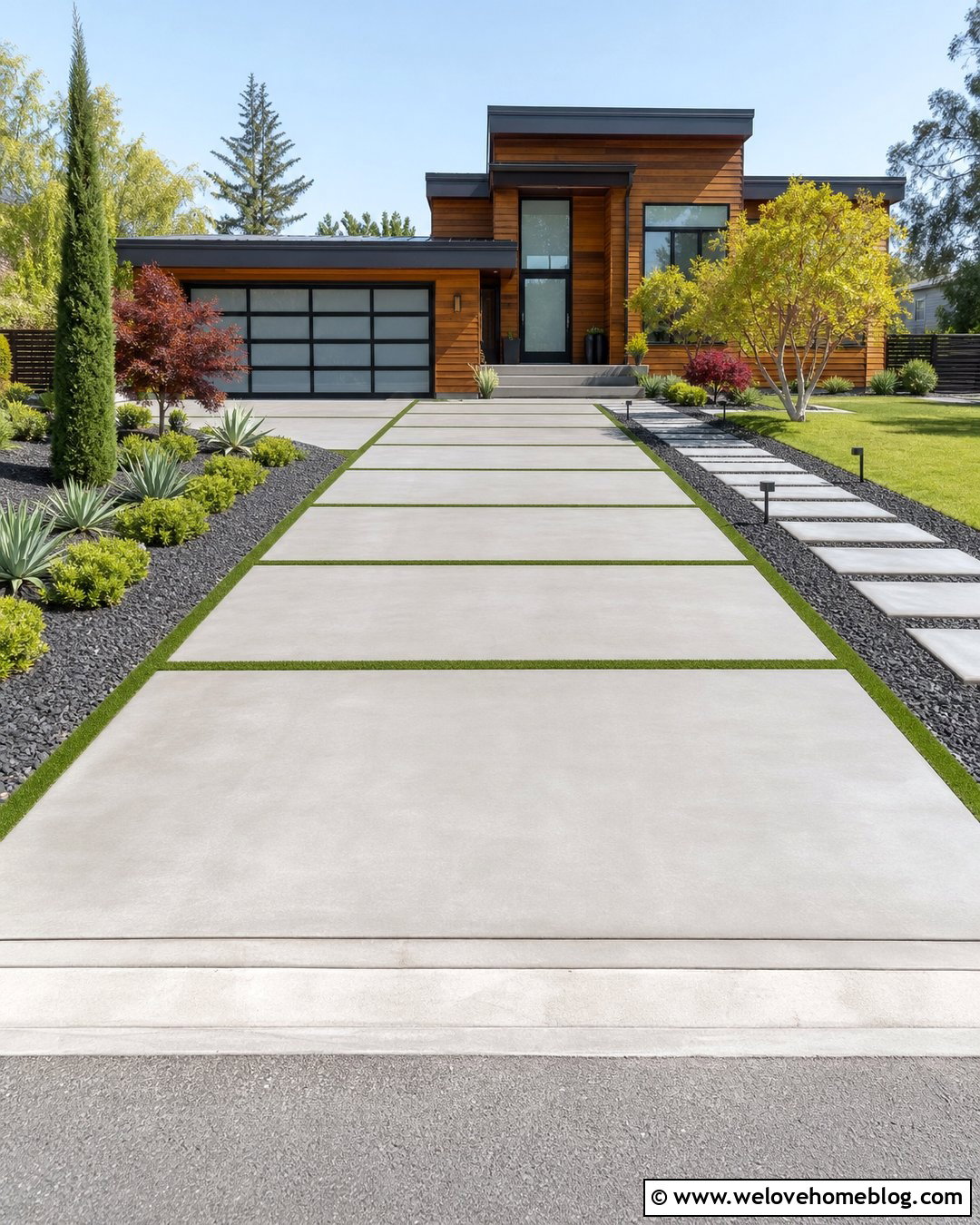
Wide turf joints make a concrete driveway feel greener and more relaxed. Instead of using tiny gaps, divide the surface into broad rectangular slabs with substantial bands of grass between them. The stronger green contrast becomes a major part of the design. This approach looks especially striking in front of a white stucco or warm wood contemporary home. Use artificial turf for highly uniform stripes, or select a tough natural grass where growing conditions are favorable. A dark gravel border can outline the driveway and provide separation from planting beds. Keep surrounding landscaping restrained with sculptural shrubs, small trees, and generous open lawn. The concrete sections should still be large enough to support predictable tire paths without forcing drivers to travel directly over the grass joints.
5. Diamond Concrete Driveway With Grass Lines
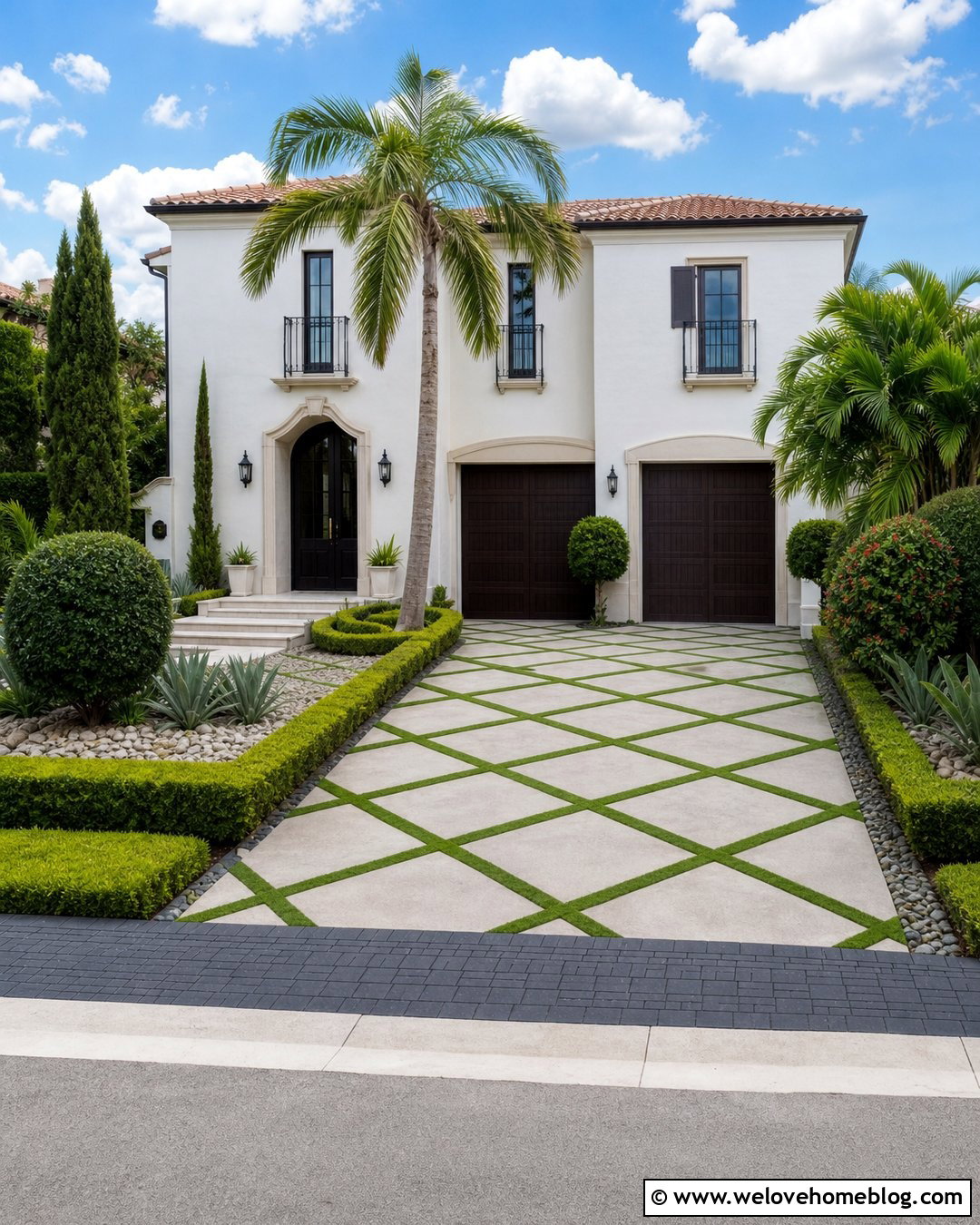
Turn square concrete slabs diagonally to create a diamond driveway pattern with green lines crossing between them. This layout adds movement to a broad front yard and makes a straight driveway look more distinctive. Light gray precast concrete provides a clean background for bright natural or artificial grass. Install a solid paver apron at the curb to protect the patterned section from frequent turning movements. Matching solid concrete near the garage can also simplify parking. Use clipped hedges or evenly spaced shrubs along the sides to reinforce the formal geometry. Because diagonal joints meet at many points, precise spacing is important. A balanced diamond grid works beautifully with modern Mediterranean, transitional, and contemporary homes, especially when the house already includes strong symmetrical features.
6. Staggered Concrete Pavers With Grass
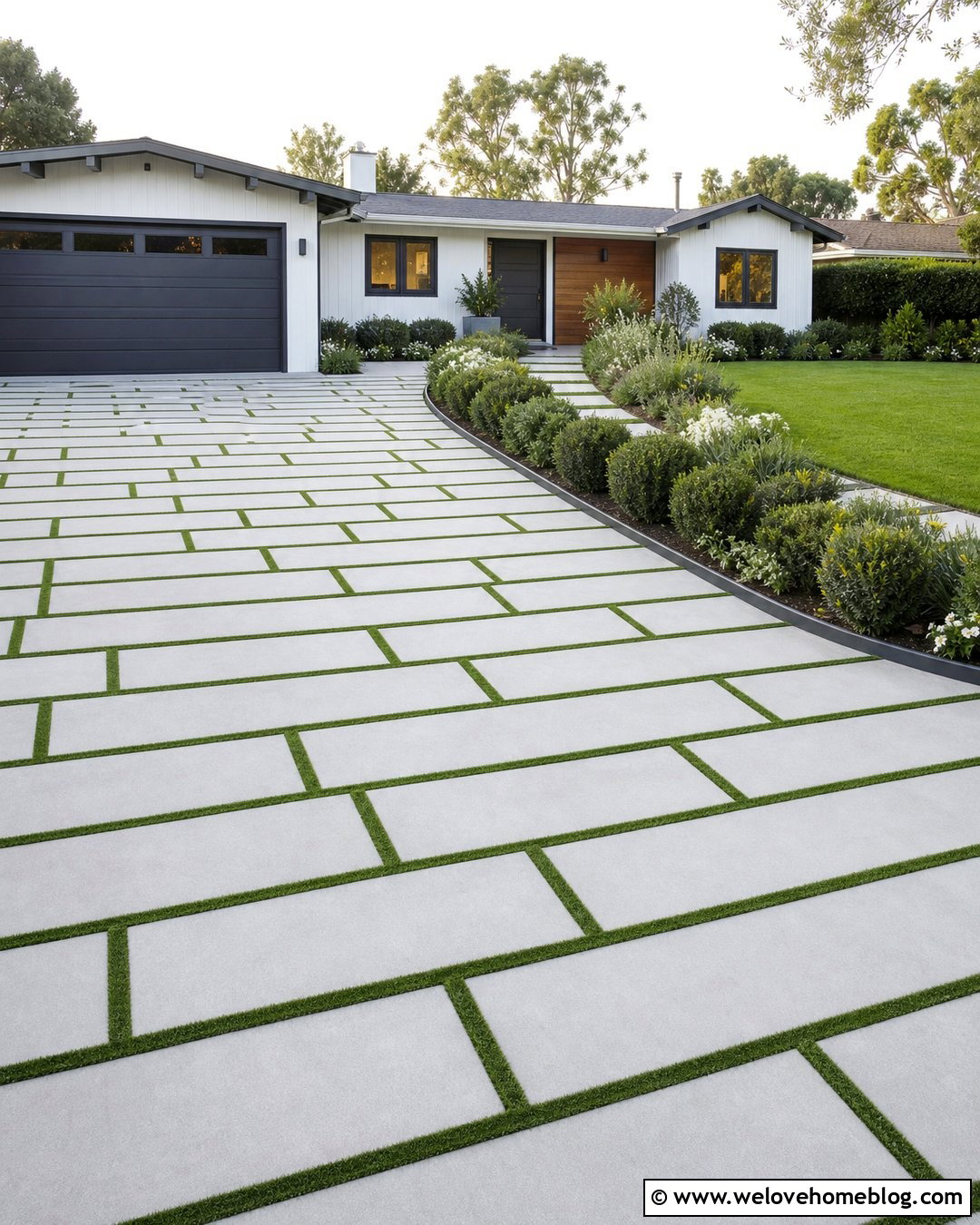
Staggered rectangular pavers create a less formal version of the concrete-and-grass driveway. Lay smooth concrete units in offset rows, leaving continuous green joints around every piece. The broken pattern feels lively while still giving tires a dependable paved route. Use two related paver sizes to create more variation without making the surface appear random. Fine-bladed turf keeps the green spaces neat and prevents the joints from looking bulky. A curved planting bed filled with flowering perennials can soften one side, while a straight lawn edge keeps the opposite side open. This design pairs well with a remodeled ranch or midcentury home. Repeat the same pavers in the front walkway, but reduce their size slightly so the driveway and entrance remain coordinated yet clearly separate.
7. Curved Concrete Driveway With Grass Bands
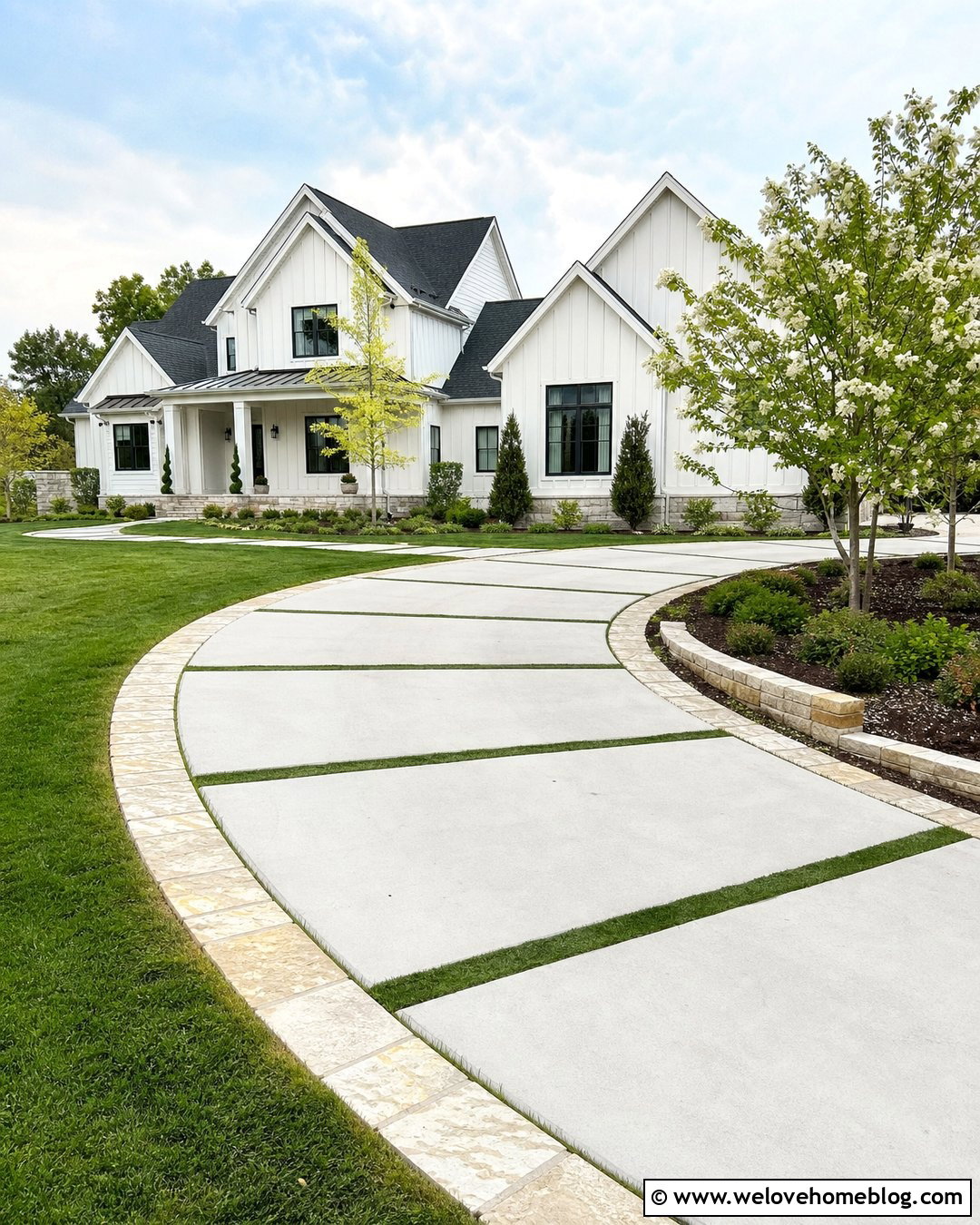
A gently curved concrete driveway can be divided by grass bands that follow the sweep of the approach. Use large, custom-shaped concrete slabs instead of forcing rectangular units around the bend. Continuous green joints will emphasize the curve and guide the eye toward the house. A narrow stone border along the outer edges helps protect nearby planting beds from vehicle tires. Place low shrubs on the inside of the curve so drivers retain clear visibility. Taller ornamental trees can frame the outside edge and make the route feel more established. This flowing layout suits large front yards, modern farmhouse homes, and properties where a straight drive would feel too rigid. Smooth transitions at the curb and garage keep the decorative grass pattern practical for everyday use.
8. Circular Concrete Driveway With Grass Joints
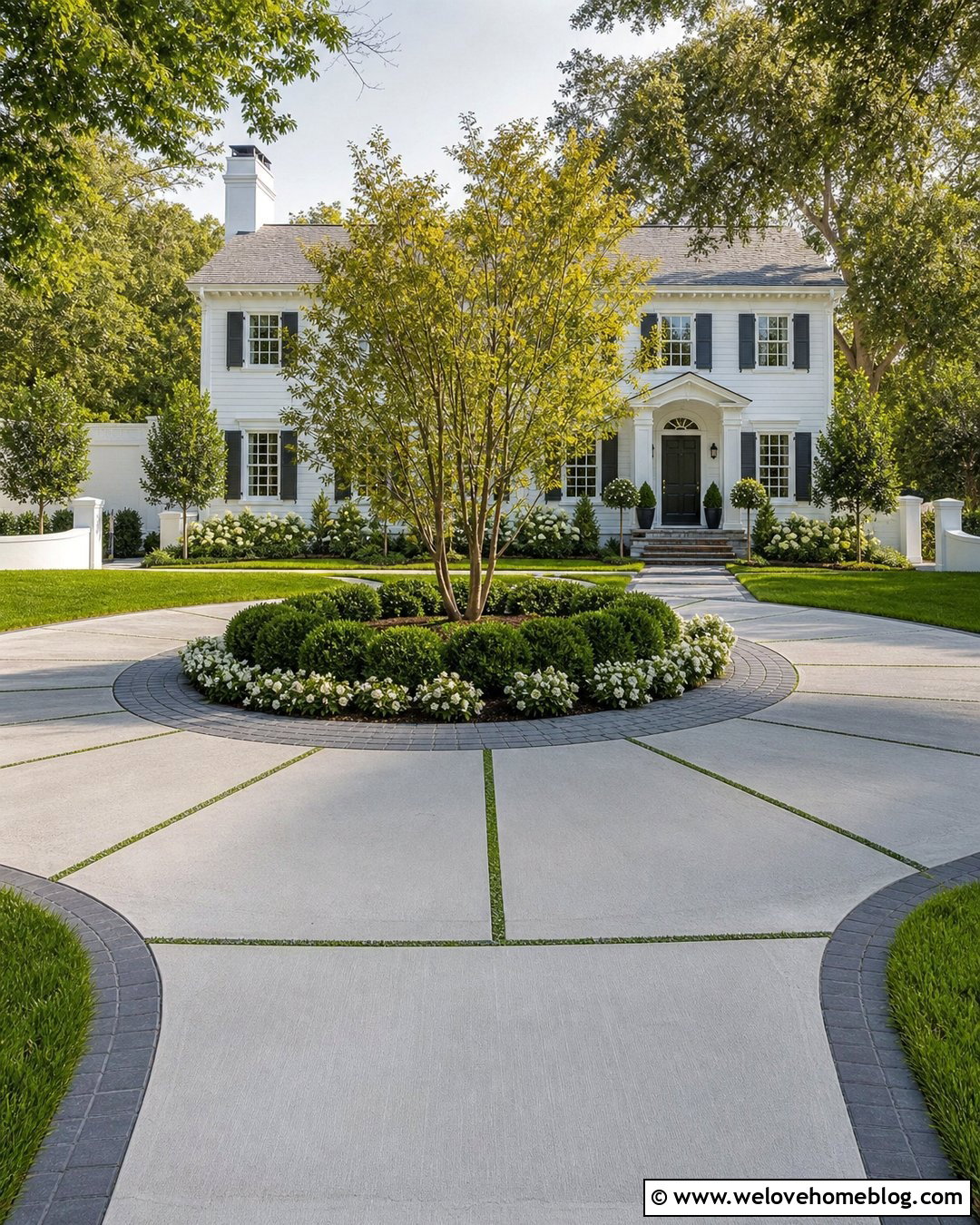
Grass joints can break a circular concrete driveway into wedge-shaped sections that radiate around a central island. The pattern highlights the driveway’s shape while reducing the visual weight of a large paved area. Fill the island with a small ornamental tree, layered shrubs, and low groundcover that will not block views across the circle. Use light broom-finished concrete for the main surface and a darker paver ring around the island. Narrow, consistent grass bands between the concrete wedges provide color without interfering excessively with turning tires. This complete look works well with colonial, Mediterranean, and large transitional homes. Plan the turning radius around the vehicles that regularly use the property, and keep entrances wide enough for comfortable movement from the street.
9. White Concrete Driveway With Artificial Grass
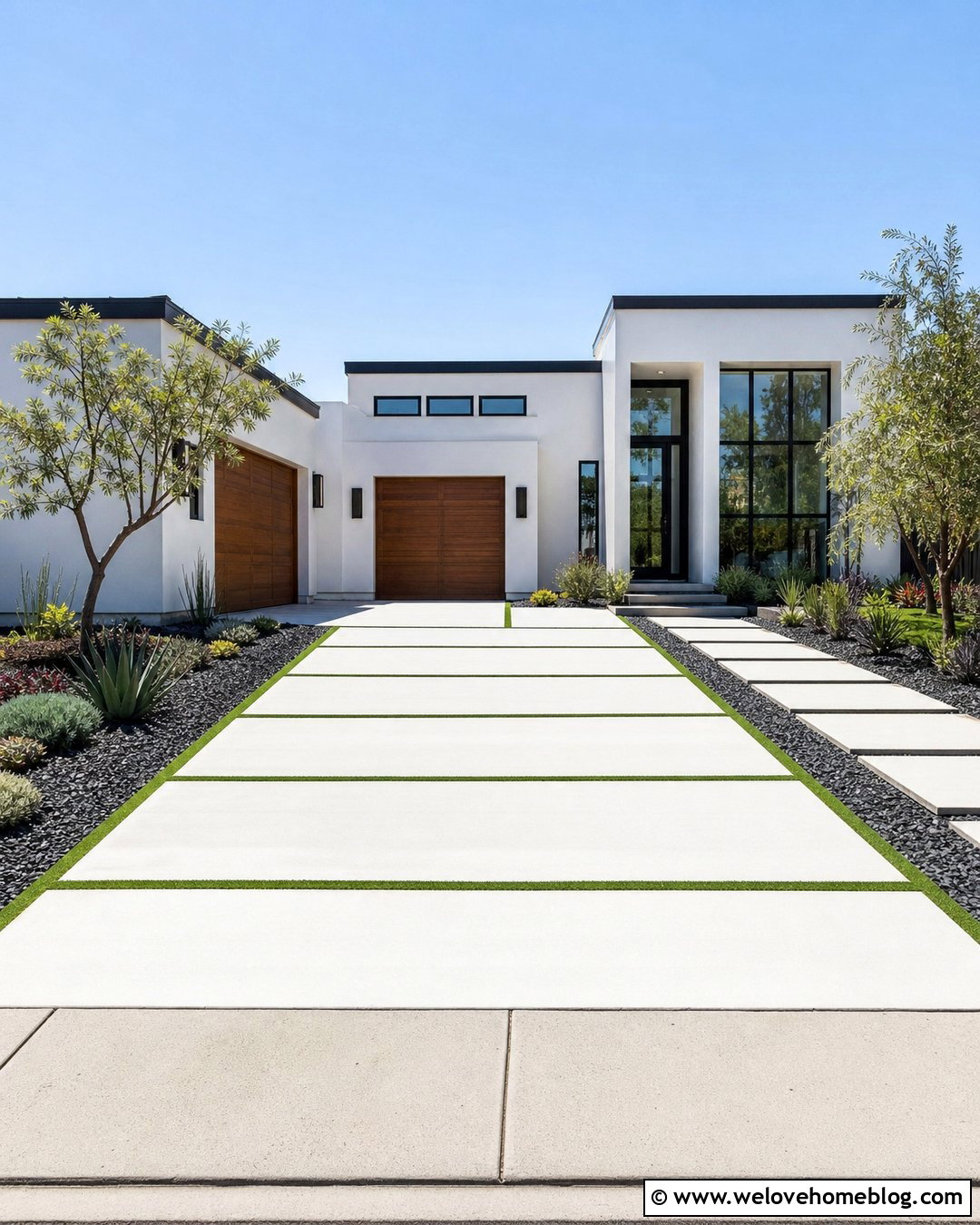
Bright white concrete paired with artificial grass creates a sharp, resort-inspired entrance. Arrange large rectangular slabs in a straight grid, using vivid green synthetic turf between every section. This combination is especially effective beside a modern house with white walls, black windows, and warm wood accents. Artificial turf keeps narrow joints visually consistent where natural grass might be difficult to mow or irrigate evenly. Choose a product intended for outdoor drainage and surrounding heat conditions. Border the driveway with dark decorative gravel to create contrast and reduce maintenance near the slab edges. A row of drought-tolerant shrubs can connect the design to the front yard. Clean the concrete periodically so its pale finish remains bright against the deep green turf ribbons.
10. Exposed Aggregate Driveway With Grass Center
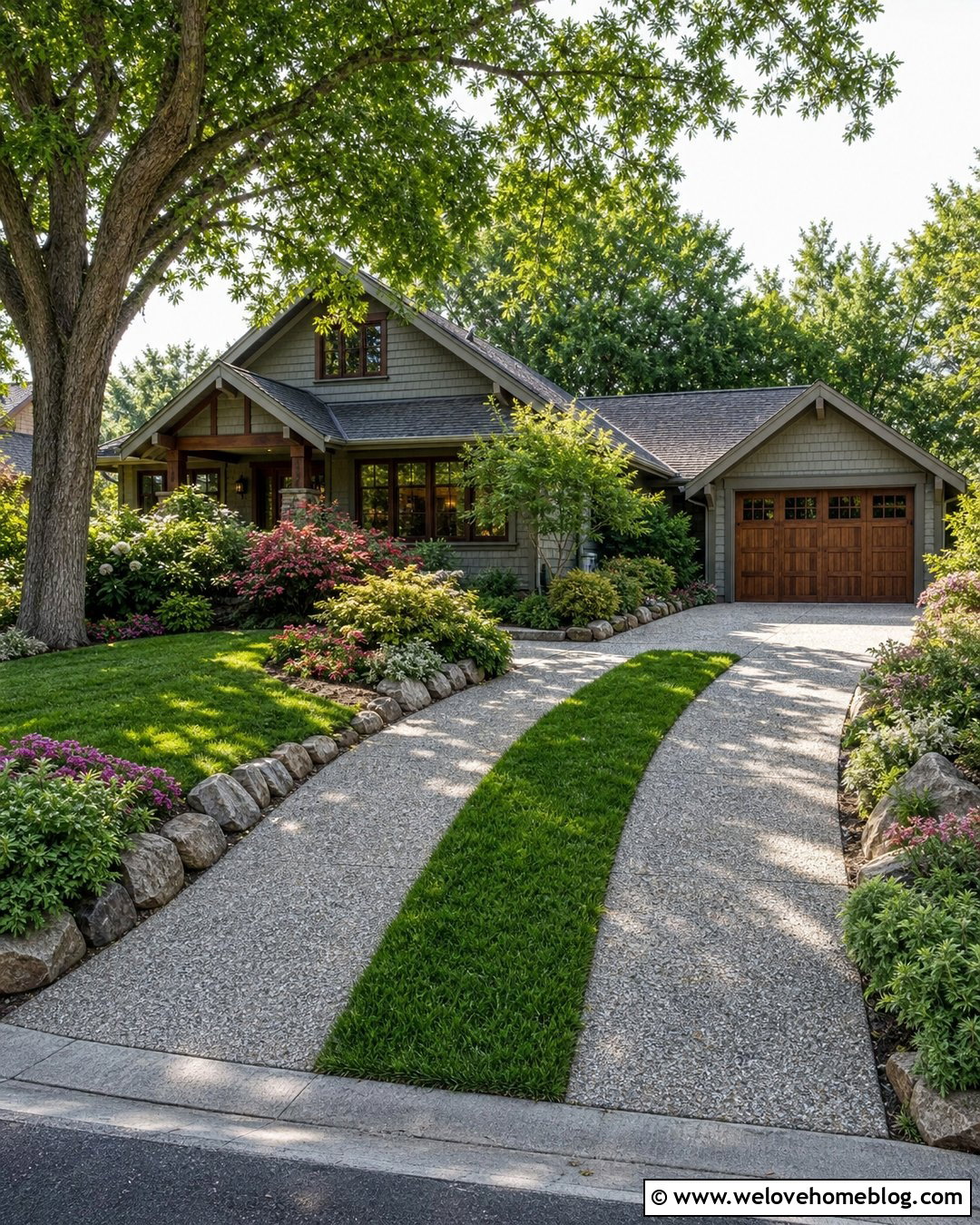
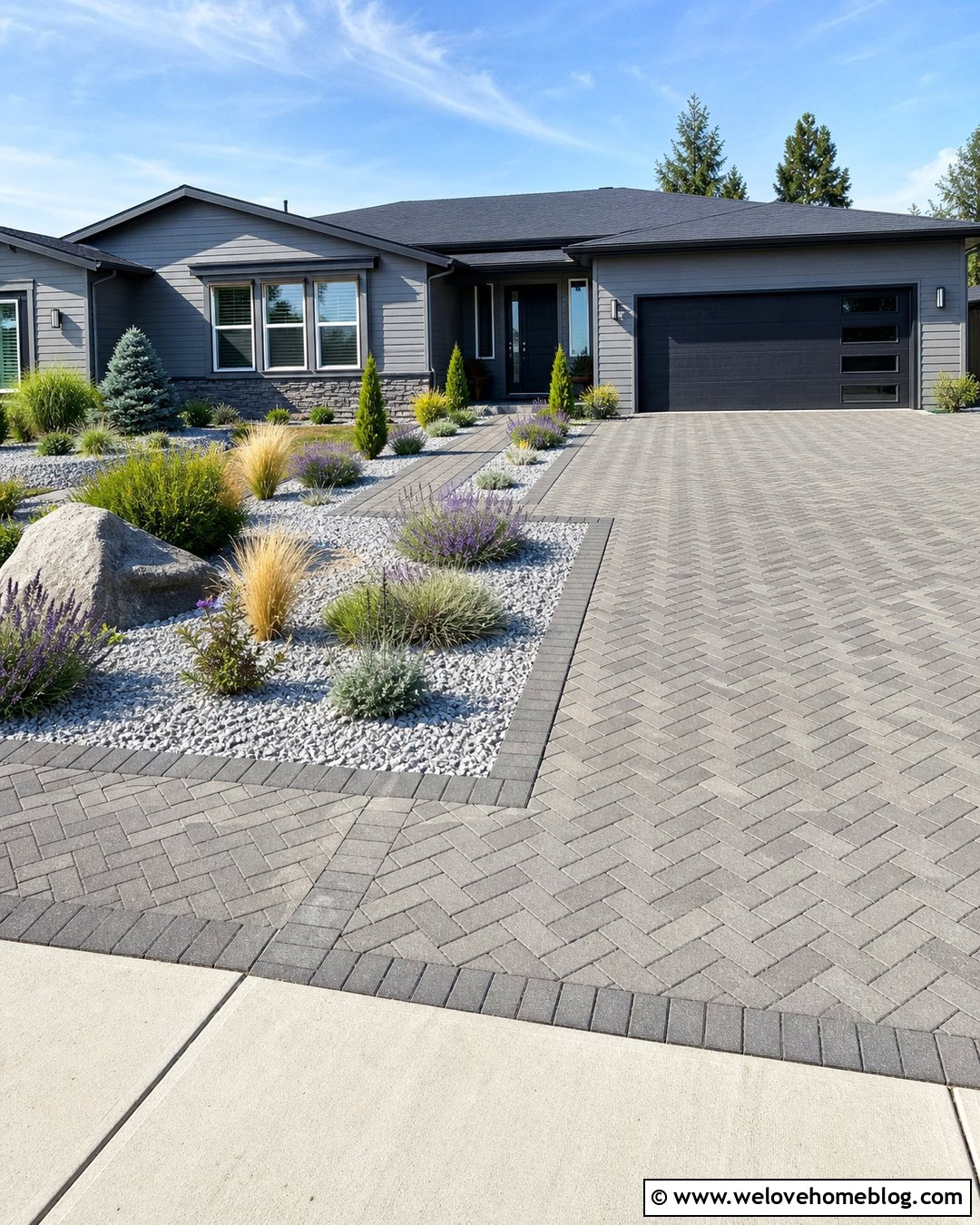
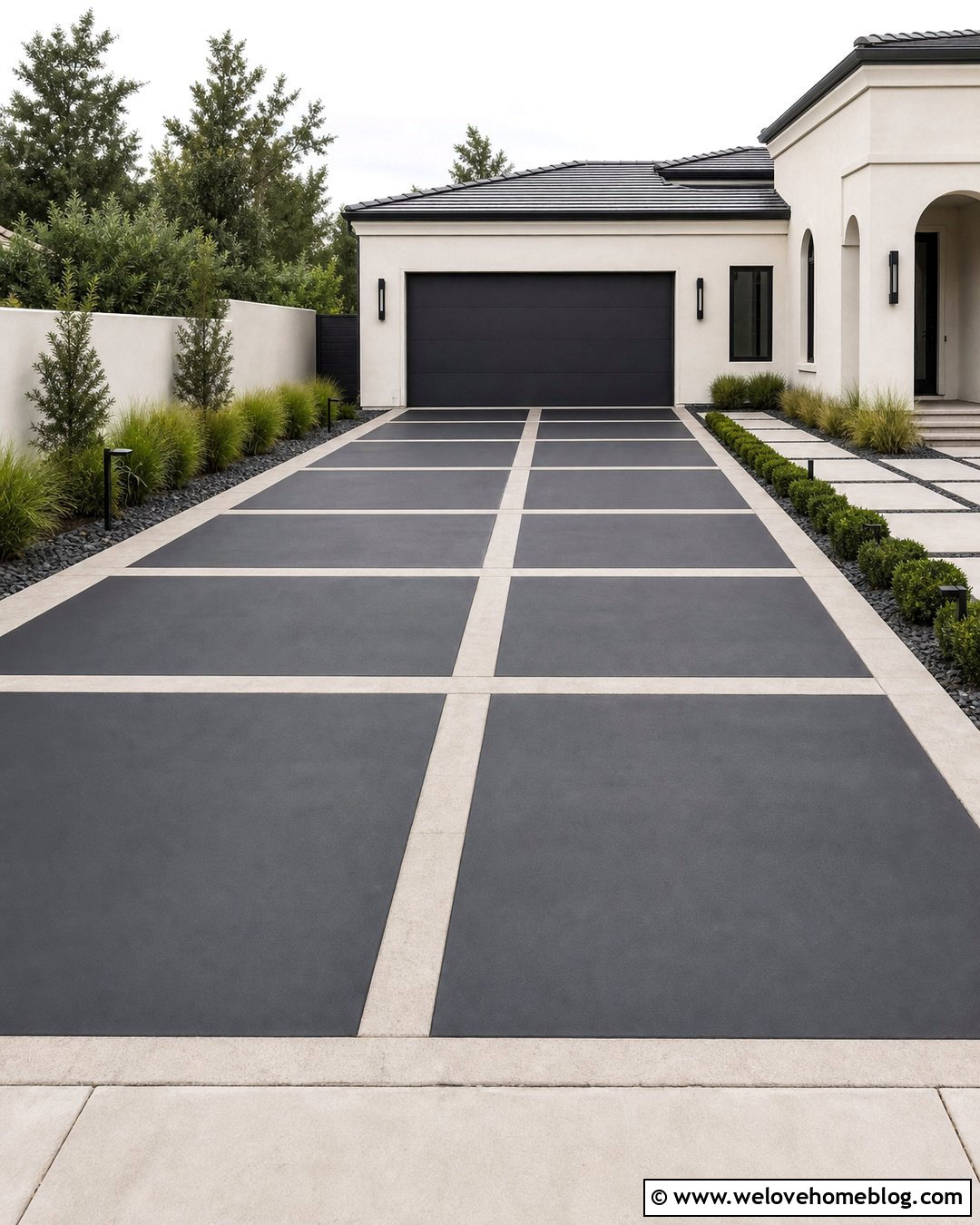
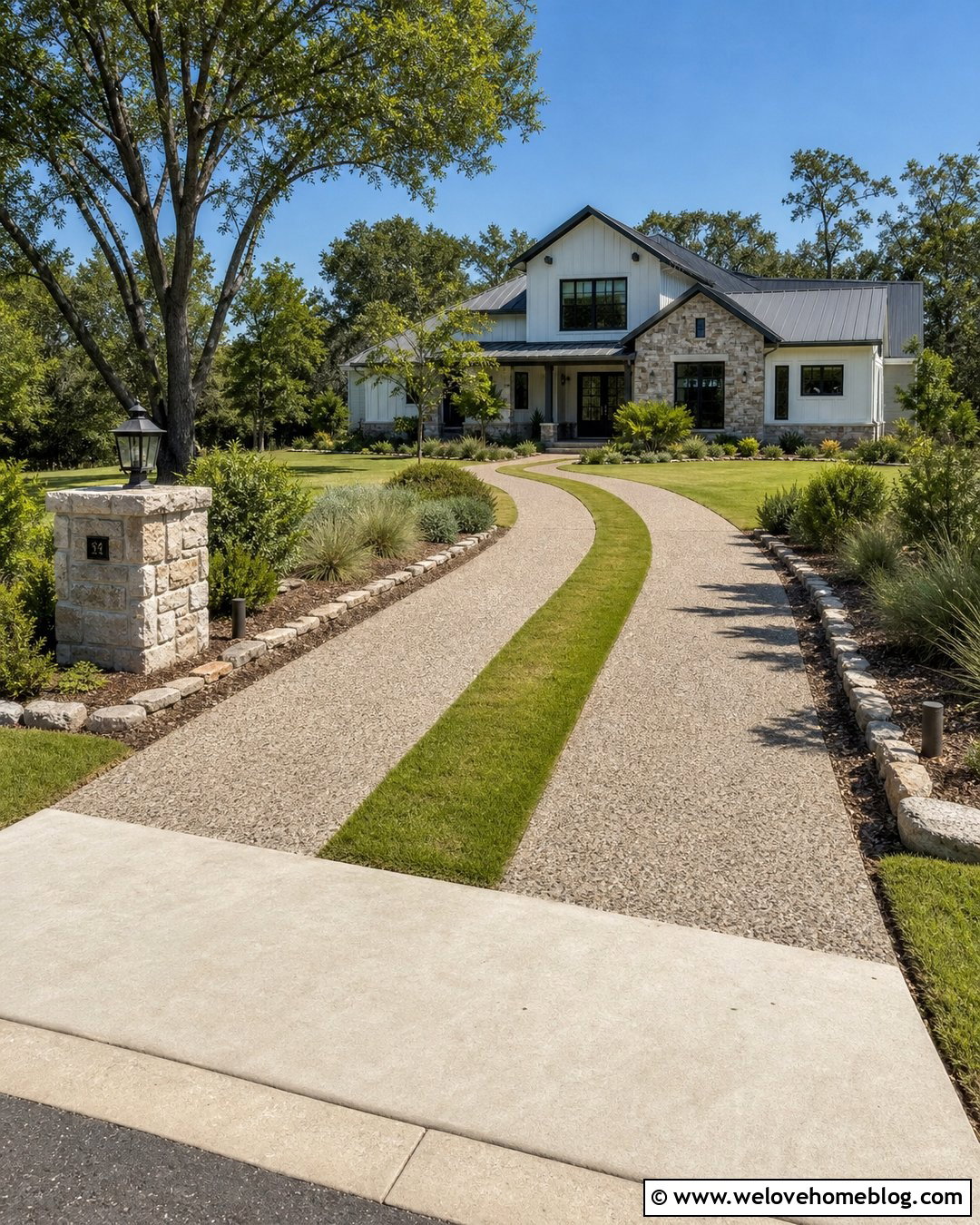
Exposed aggregate gives a grass-center driveway more texture than plain poured concrete. Build two broad wheel tracks with a warm gray or tan pebble finish, then plant a continuous lawn strip between them. The small stones visible in the concrete coordinate naturally with cottage gardens, craftsman homes, and wooded settings. Finish the curb entrance with a full-width exposed aggregate apron so tires can turn onto the tracks comfortably. Natural stone edging can separate the outer concrete strips from flower beds and prevent soil from washing onto the surface. Choose low, spreading plants along the border rather than tall growth that crowds vehicles. The combination of textured paving, living grass, stone edging, and layered landscaping creates a practical driveway that feels established rather than stark.
11. Sandstone Paver Driveway With Grass Joints
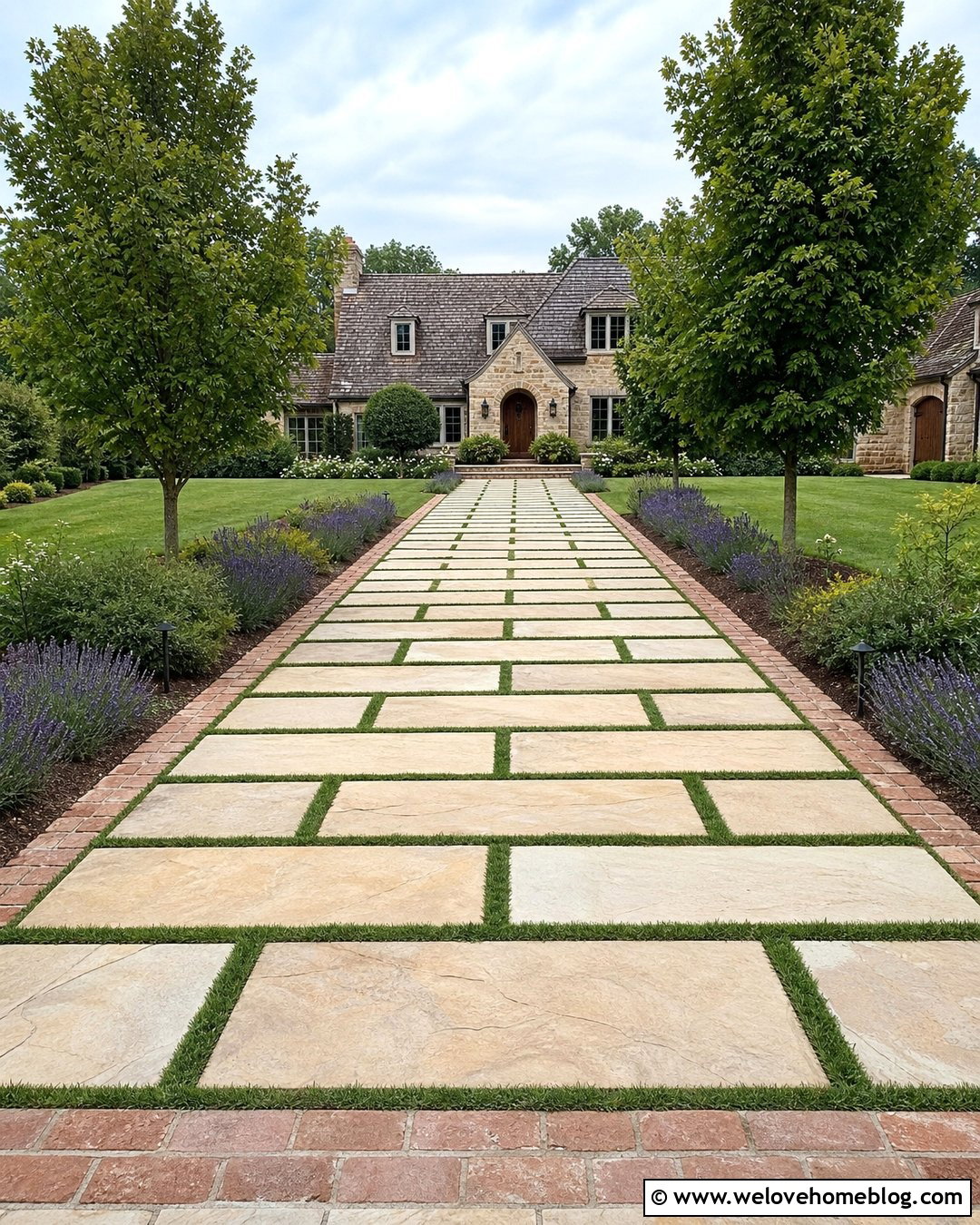
Warm sandstone pavers and green grass create a welcoming driveway for cottage, country, or traditional homes. Use large rectangular sandstone units with a lightly textured finish and leave clear joints between the rows. The stone’s cream, tan, and muted gold tones contrast softly with the turf. Arrange the pavers in a simple running pattern so the natural color variation remains the main feature. A reclaimed brick border can strengthen the edges and connect the driveway to an older facade. Surround the entrance with lavender, catmint, compact shrubs, and a gently curved lawn. Sandstone must be selected and installed for vehicle use, not treated like thin patio stone. Consistent joint spacing and a strong base help the completed surface look orderly and remain functional.
12. Bluestone Driveway With Grass Grid
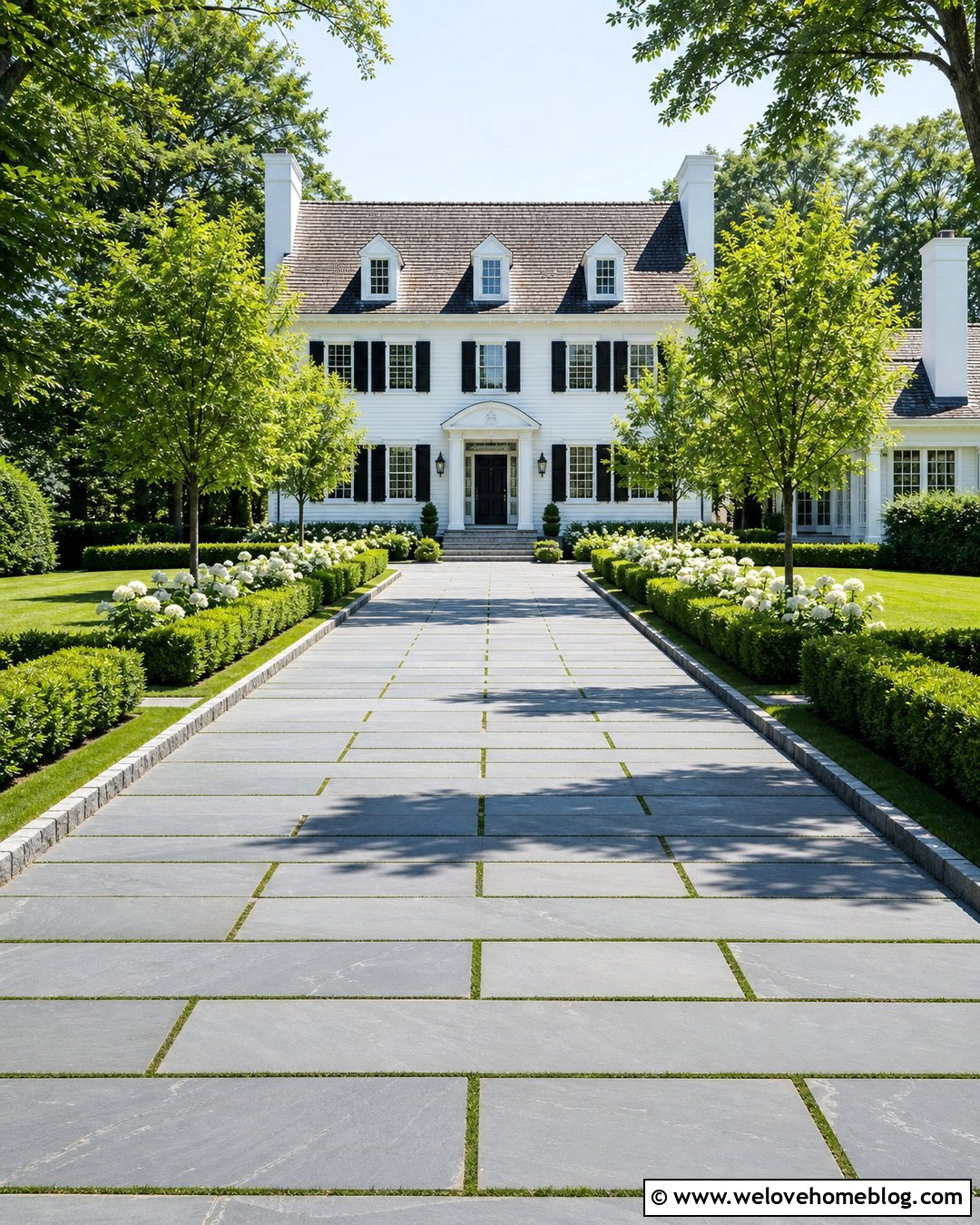
Bluestone slabs separated by fine grass lines bring depth and character to a formal driveway. Choose large blue-gray rectangular stones with a natural cleft or lightly textured finish. Arrange them in a regular grid leading to a gray, white, or stone-faced house. Deep green turf highlights the cool color of the stone, while matching bluestone edging creates a polished outer boundary. Boxwood, hydrangeas, and a tidy lawn can reinforce the classic appearance. For a more contemporary result, replace clipped planting with ornamental grasses and simple gravel beds. Use stone pieces thick and durable enough for driveway traffic, supported by a properly engineered base. A full-width apron near the garage reduces stress on the grass joints where vehicles turn, stop, and maneuver most often.
13. Granite Paver Driveway With Grass Strips
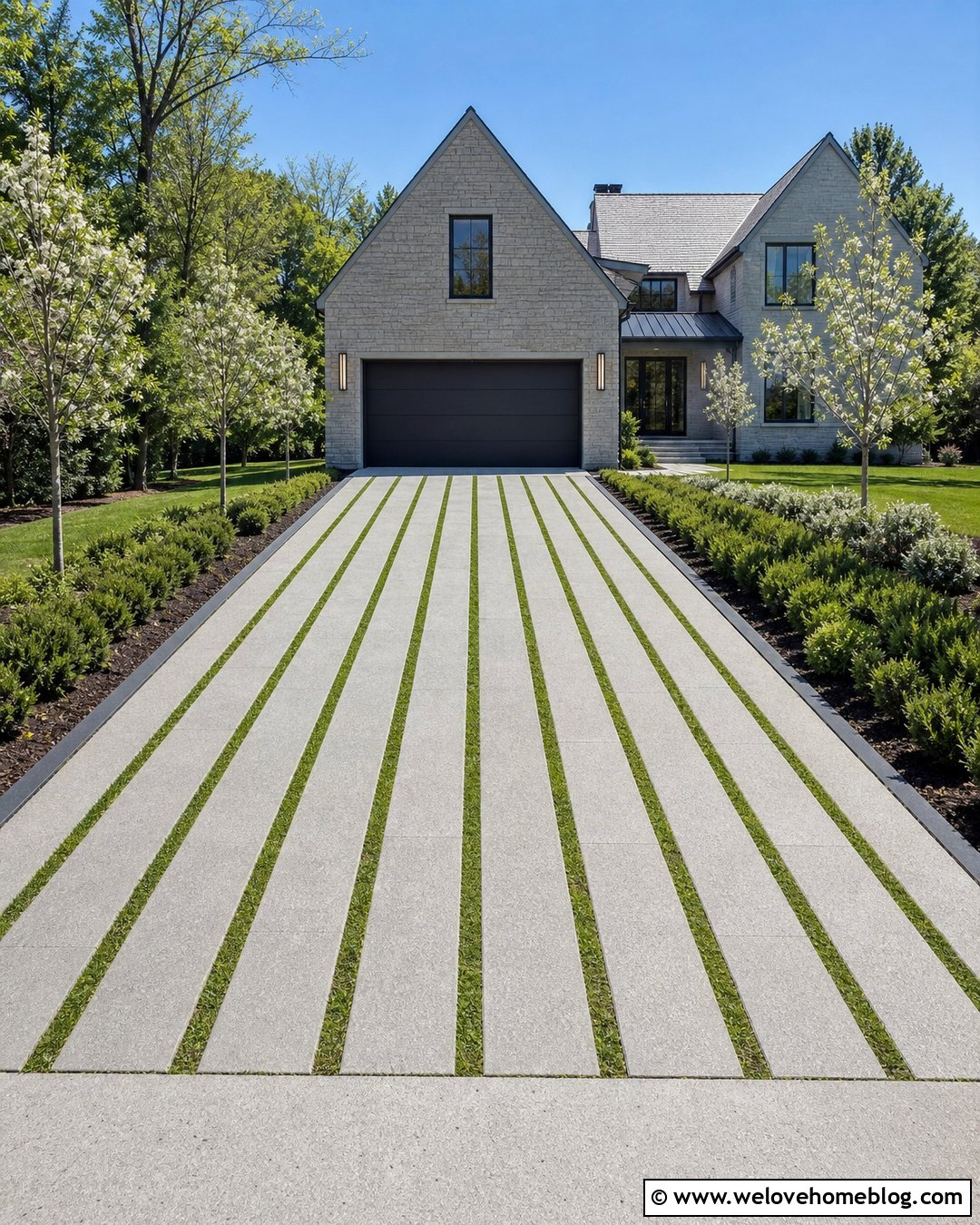
Granite pavers offer a durable-looking surface with natural variation that suits both traditional and modern homes. Lay long rectangular gray granite units in parallel rows, then separate them with narrow strips of dense green grass. The linear arrangement makes a short driveway appear longer and directs attention toward the front elevation. A charcoal granite curb can hold the edges firmly and define the transition to the lawn. Use small flowering trees near the entrance and low evergreen planting closer to the garage. This keeps the curb view attractive without narrowing the driving area. A honed or lightly textured finish gives the stone a refined appearance while preserving visible grain. Carefully aligned strips make the driveway feel tailored rather than rustic or uneven.
14. Cobblestone Driveway With Grass Joints
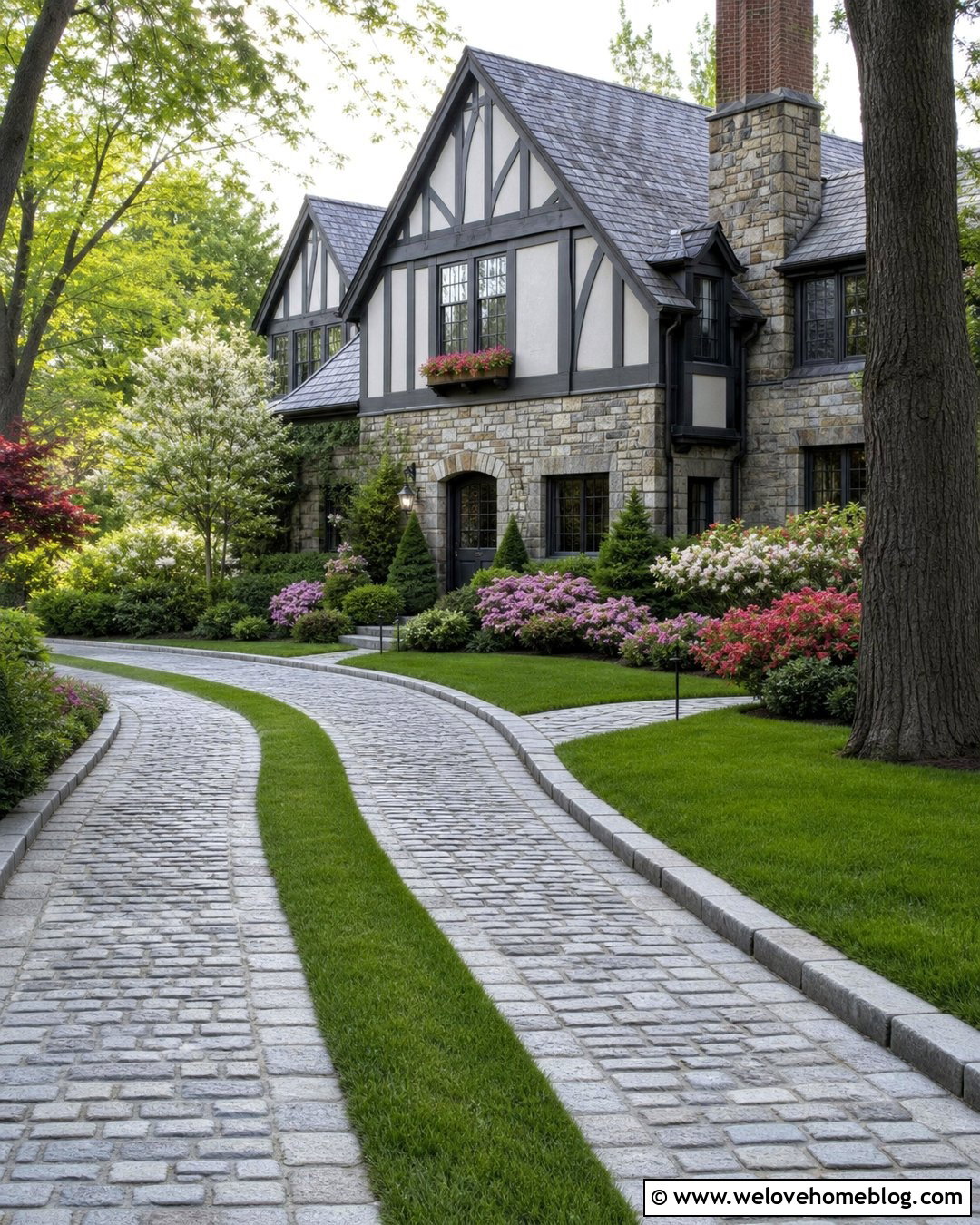
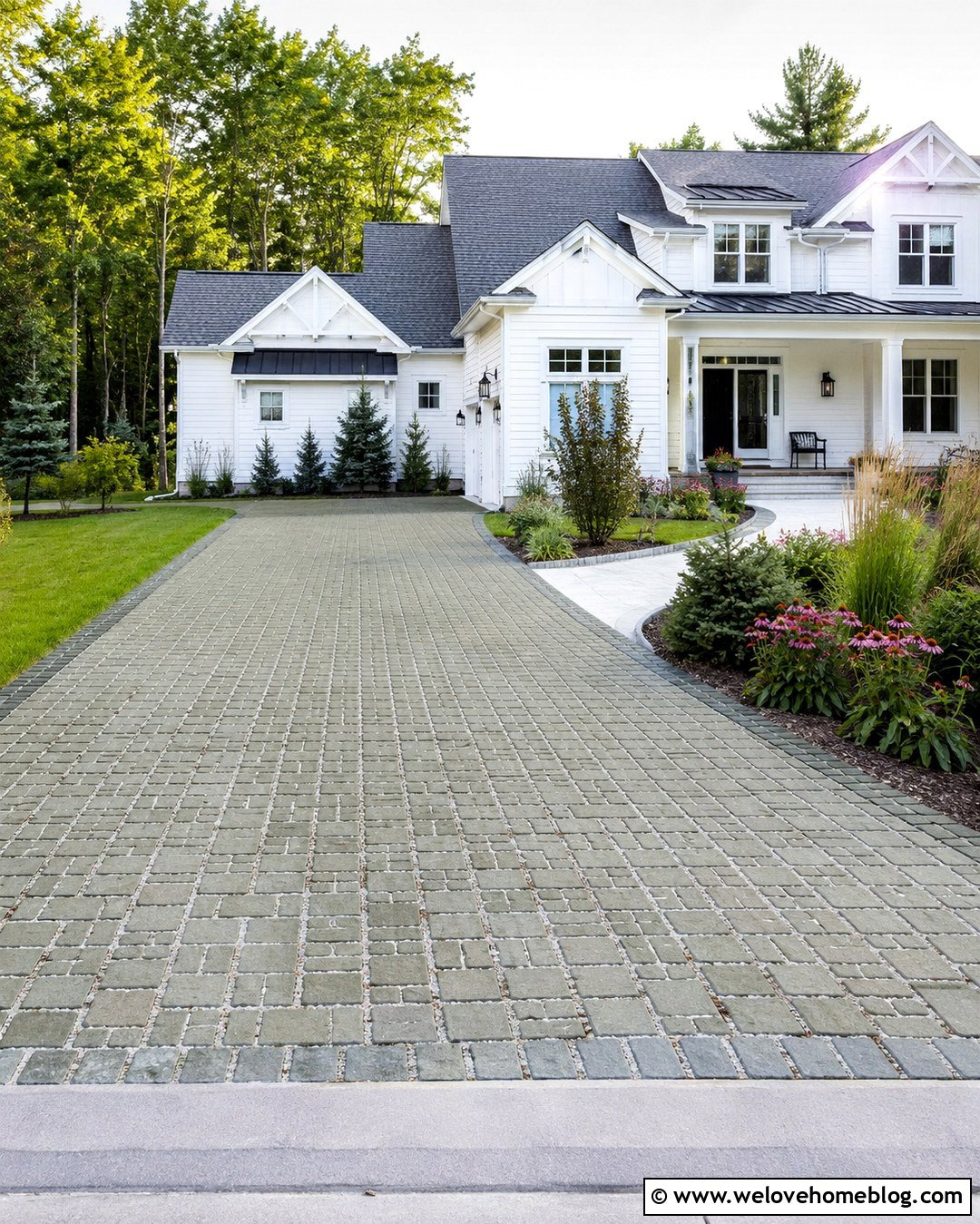
Cobblestone and grass create an old-world driveway that feels softer than a fully paved stone surface. Use rounded or lightly tumbled granite cobbles in broad wheel tracks, with a generous grass strip through the middle. Narrow green joints can also appear between selected rows to connect the paving visually with the lawn. Add sturdy stone curbs along both sides to contain the cobbles and protect nearby planting beds. This look pairs naturally with Tudor, colonial, European cottage, and stone farmhouse architecture. Frame the drive with flowering shrubs, mature trees, and a brick or cobblestone walkway. Keep the curb apron more tightly paved because this area receives frequent turning pressure. The varied stone tones and living greenery create a driveway that looks comfortably aged and integrated with its setting.
15. Brick Ribbon Driveway With Grass Center
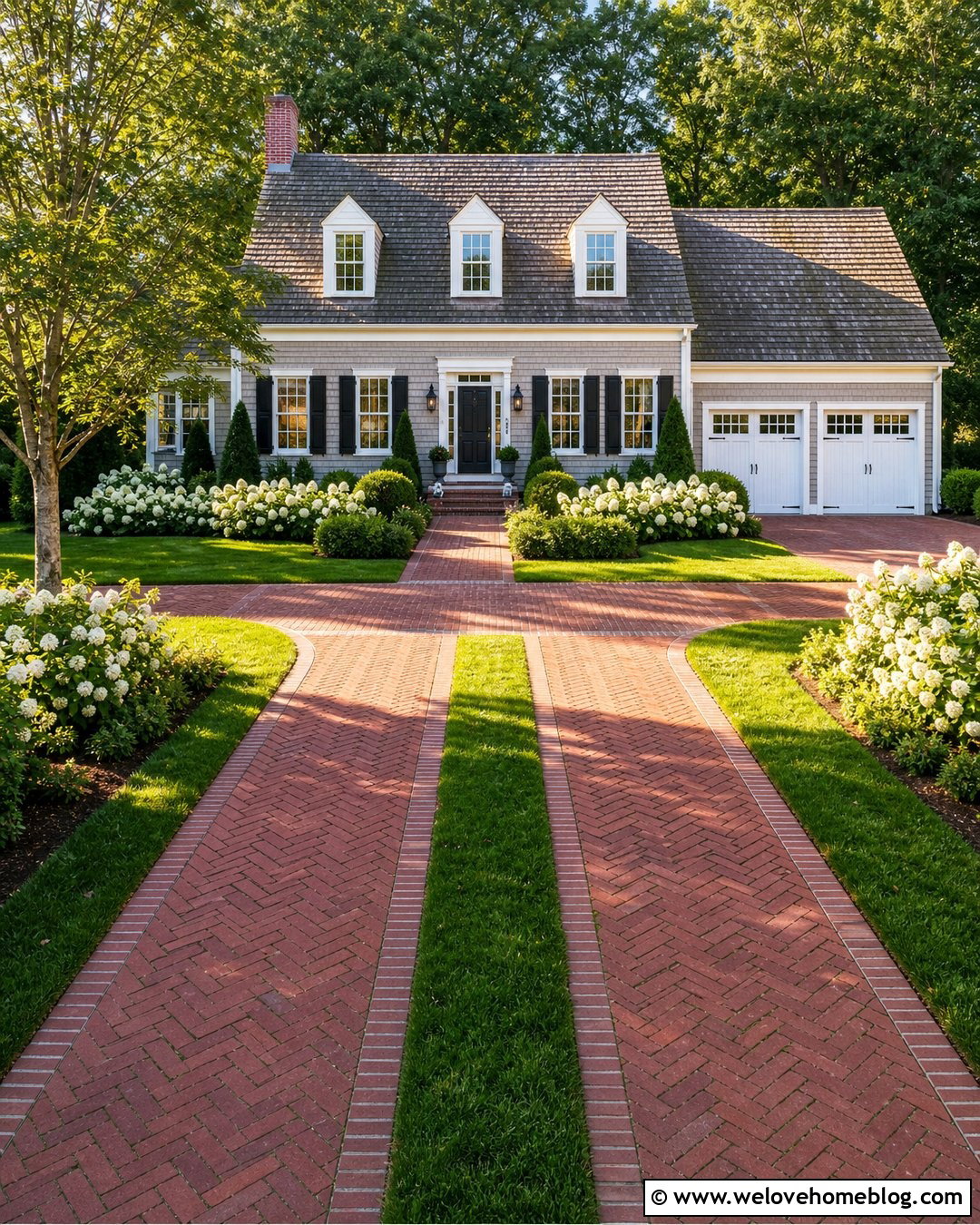
Two brick wheel tracks with grass in the center provide warmth, pattern, and traditional curb appeal. Lay clay brick pavers in a herringbone pattern to create visual texture along each driving strip. A soldier-course brick border can define the tracks and produce clean edges against the lawn. Continue the brick across the curb entrance as a complete apron, then repeat it near the garage for easier turning. This design complements colonial, Cape Cod, Georgian, and craftsman homes, particularly when the brick echoes a chimney or facade detail. White flowering shrubs and clipped evergreen borders keep the overall look fresh. Use driveway-rated pavers and a stable base, since ordinary decorative bricks may not be suitable for repeated vehicle loads or seasonal ground movement.
16. Brick Driveway Grid With Grass Joints
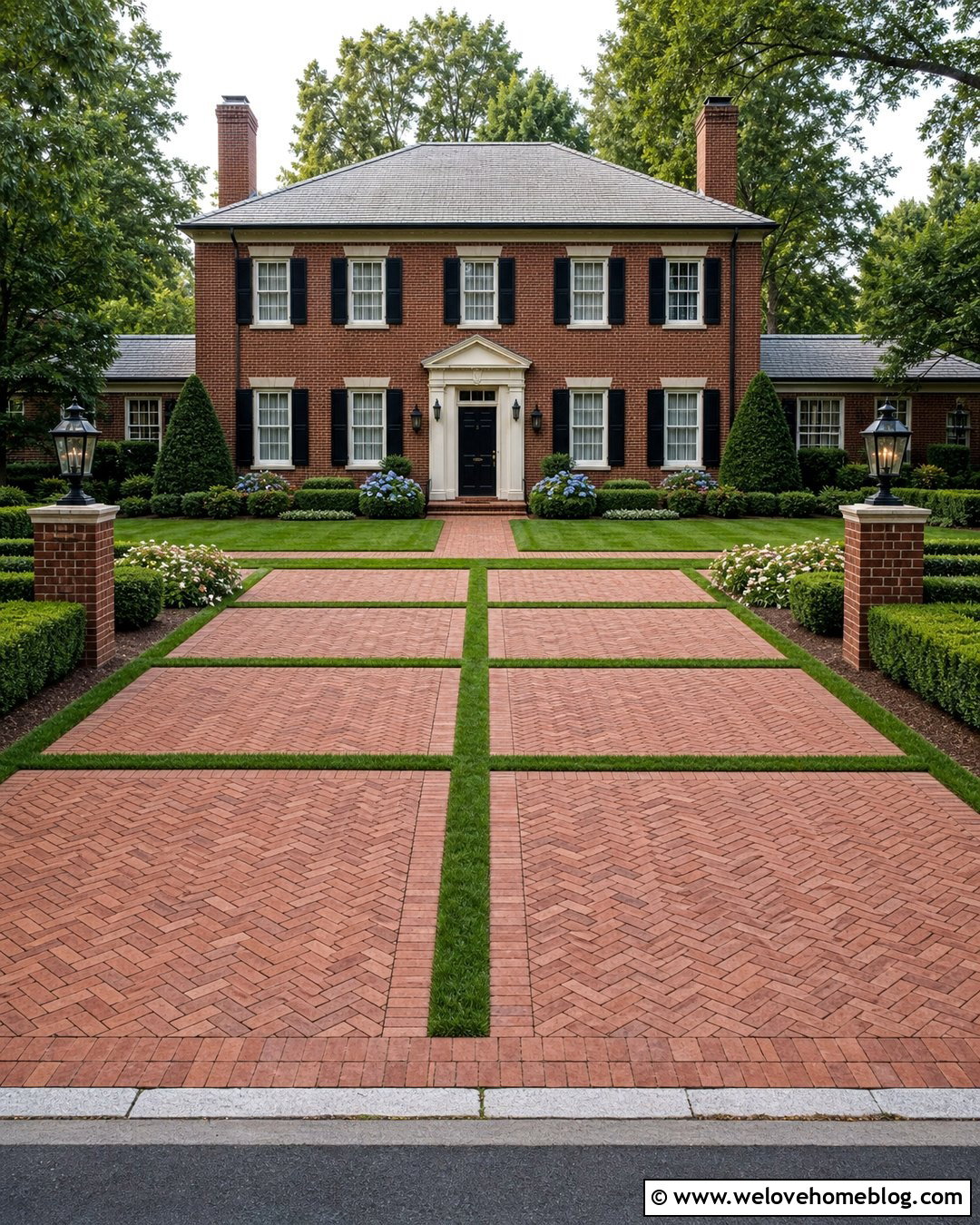
A brick grid provides more paved coverage than a ribbon driveway while preserving strips of green throughout the surface. Divide the driveway into large rectangular brick panels and separate them with straight grass bands. Within each panel, use herringbone clay brick pavers for strength and decorative movement. Dark red, weathered brown, or soft sand-colored brick can be selected to coordinate with the house. A continuous brick border frames the full layout and stops the turf joints at a crisp edge. Pair the driveway with a central walkway, symmetrical planting beds, and traditional lantern-style fixtures. This design is particularly suitable for wider formal entrances. Keep grass bands away from the busiest turning points by using solid brick near the street and directly in front of the garage.
17. Concrete Grass Block Driveway
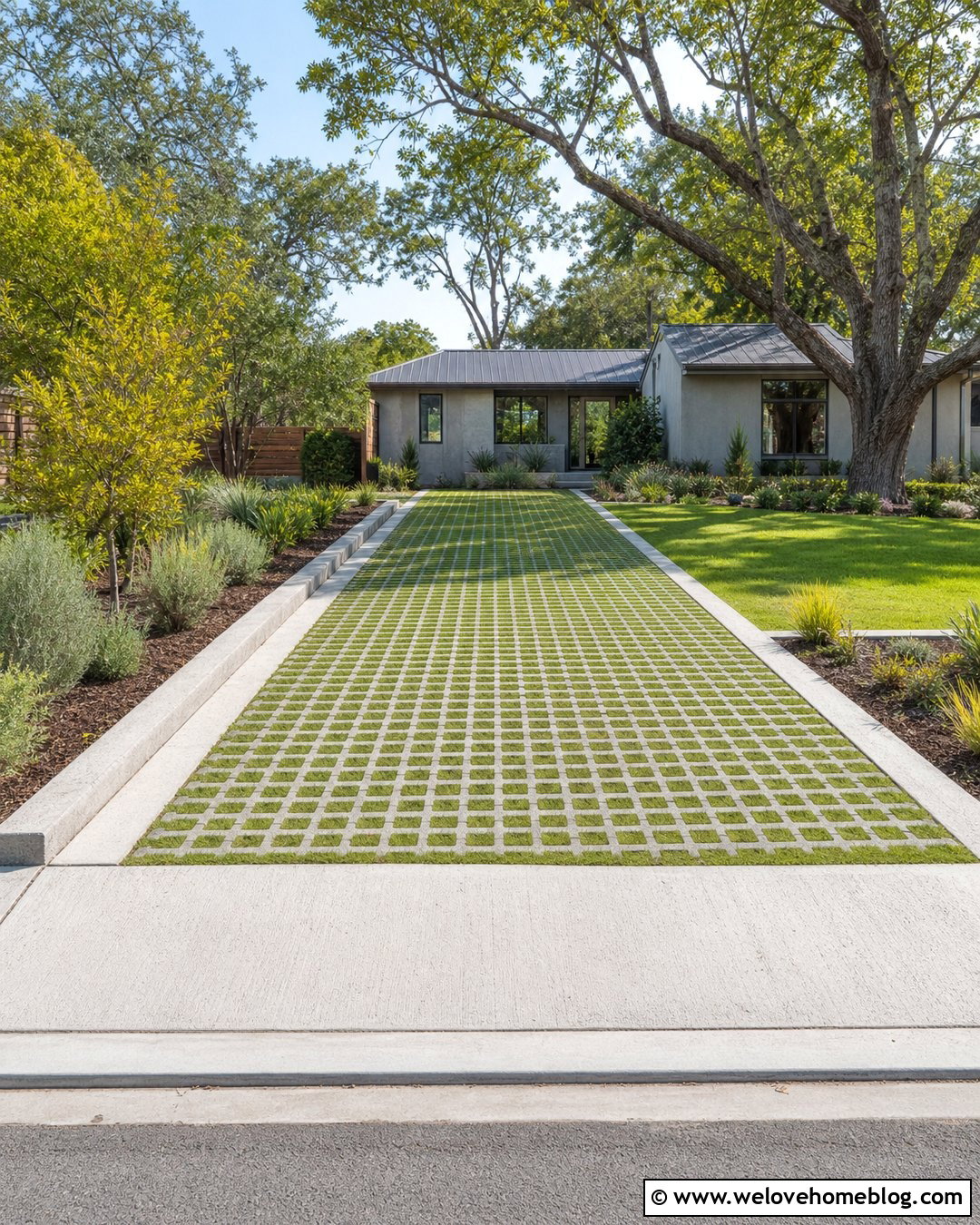
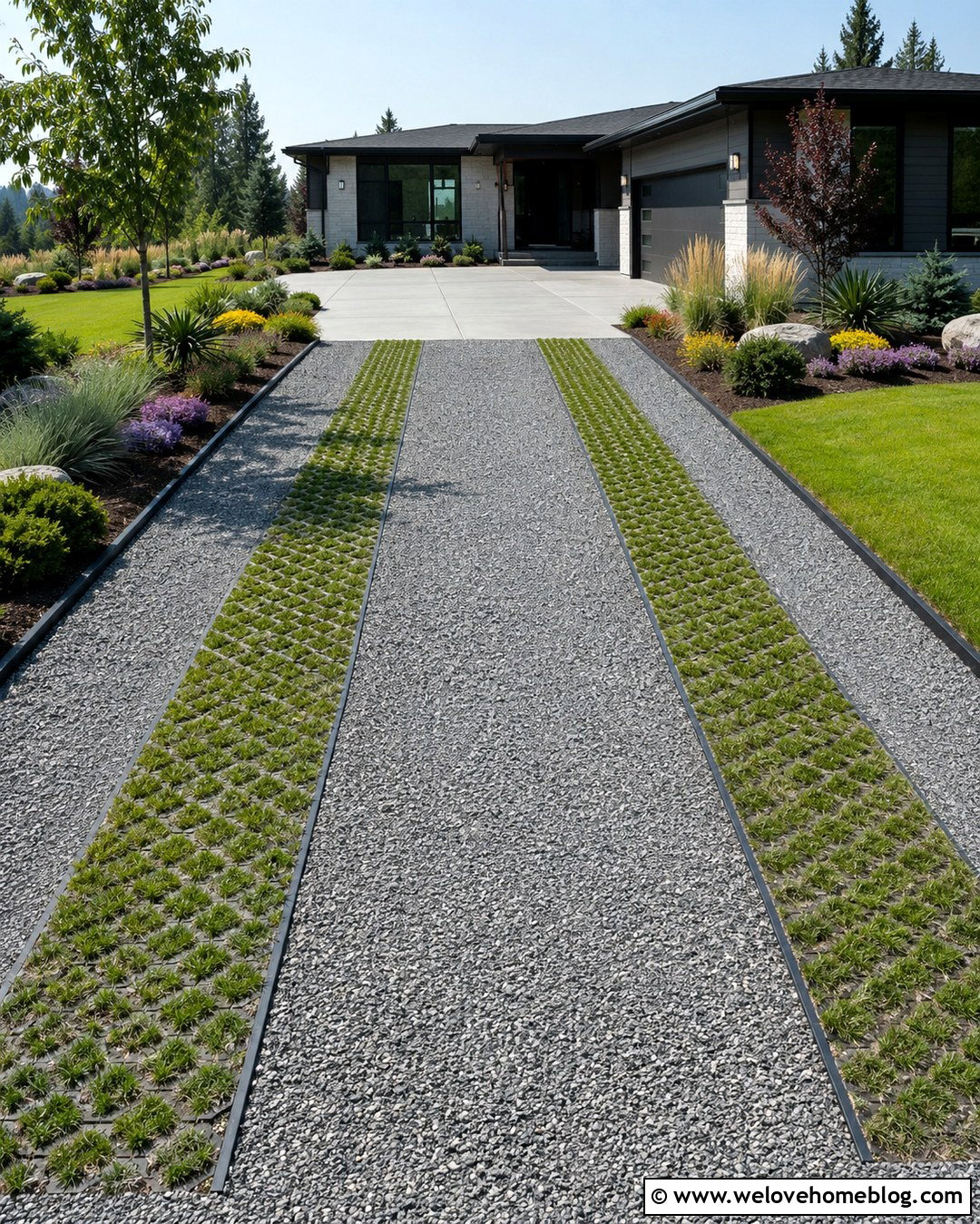
Concrete grass blocks combine structural cells with open spaces where turf can grow. Across a broad driveway, the repeating grid creates a green surface with concrete visible beneath it. This option can make overflow parking or a secondary drive feel more like part of the lawn. Use a solid concrete apron at the street and a matching border around the grid for a clear, finished shape. The planted cells should receive grass suited to the site’s light, moisture, and seasonal conditions. Surround the driveway with informal native planting, shade trees, and a simple walkway to reinforce its landscape-focused appearance. Because cell systems vary, select a product and base assembly intended for expected vehicle loads. Proper soil depth and drainage are essential to maintaining healthy, even greenery.
18. Plastic Grass Grid Driveway
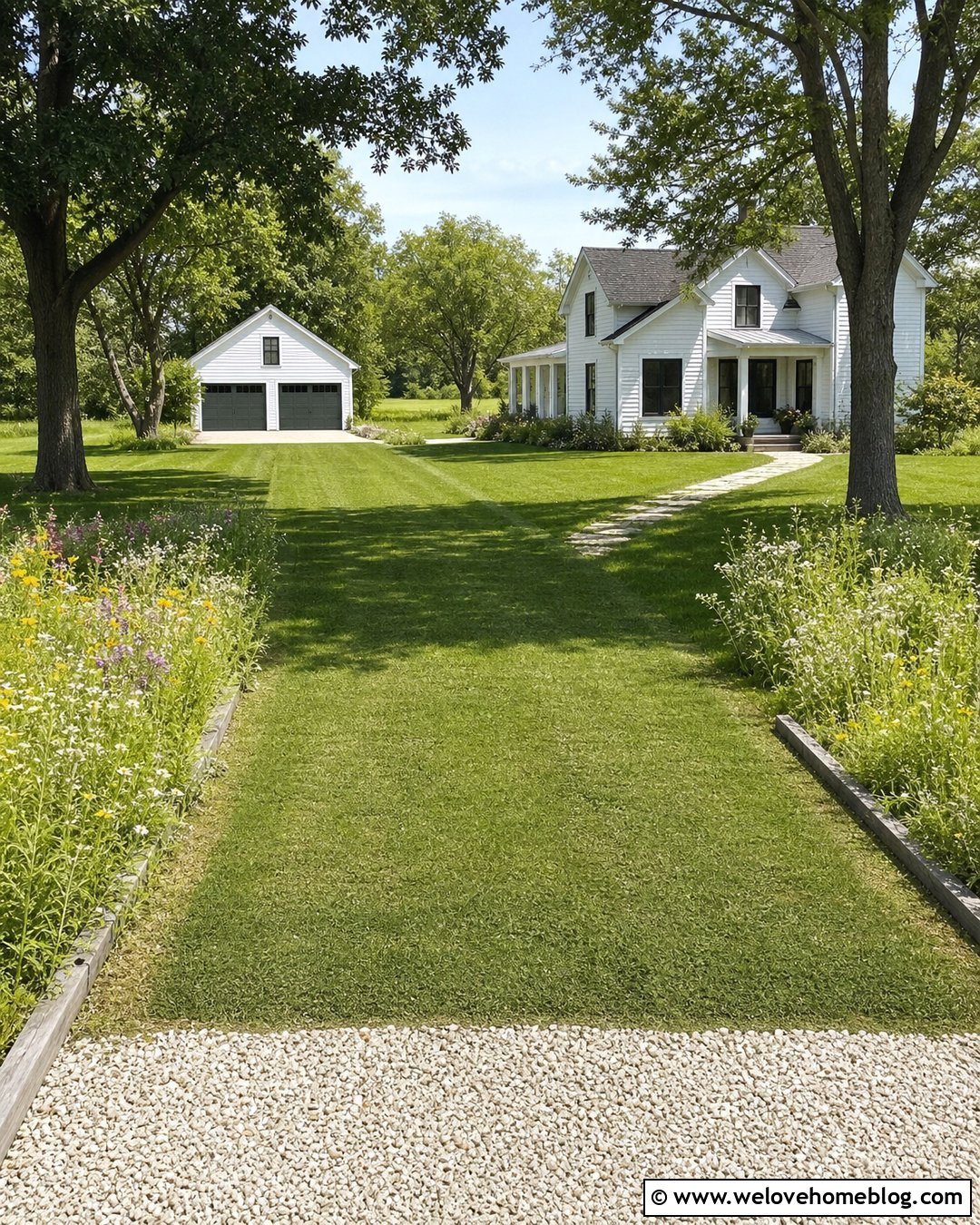
A reinforced plastic grass grid can create the appearance of an almost continuous lawn while supporting occasional vehicle access. The grid sits beneath the turf, helping define the driving area without covering it in visible paving. This solution works well for guest parking, a secondary driveway, or a country property where hard surfaces would feel intrusive. Add a clear stone or concrete apron at the curb so drivers can identify the entrance. Low timber edging can separate the reinforced grass from flower beds and prevent mulch from spreading onto the route. A straight path toward a farmhouse or detached garage keeps the subtle layout easy to follow. Select a vehicle-rated system and maintain the planted area consistently so weak, muddy, or bare patches do not develop.
19. Driveway Pavers With Grass Checkerboard
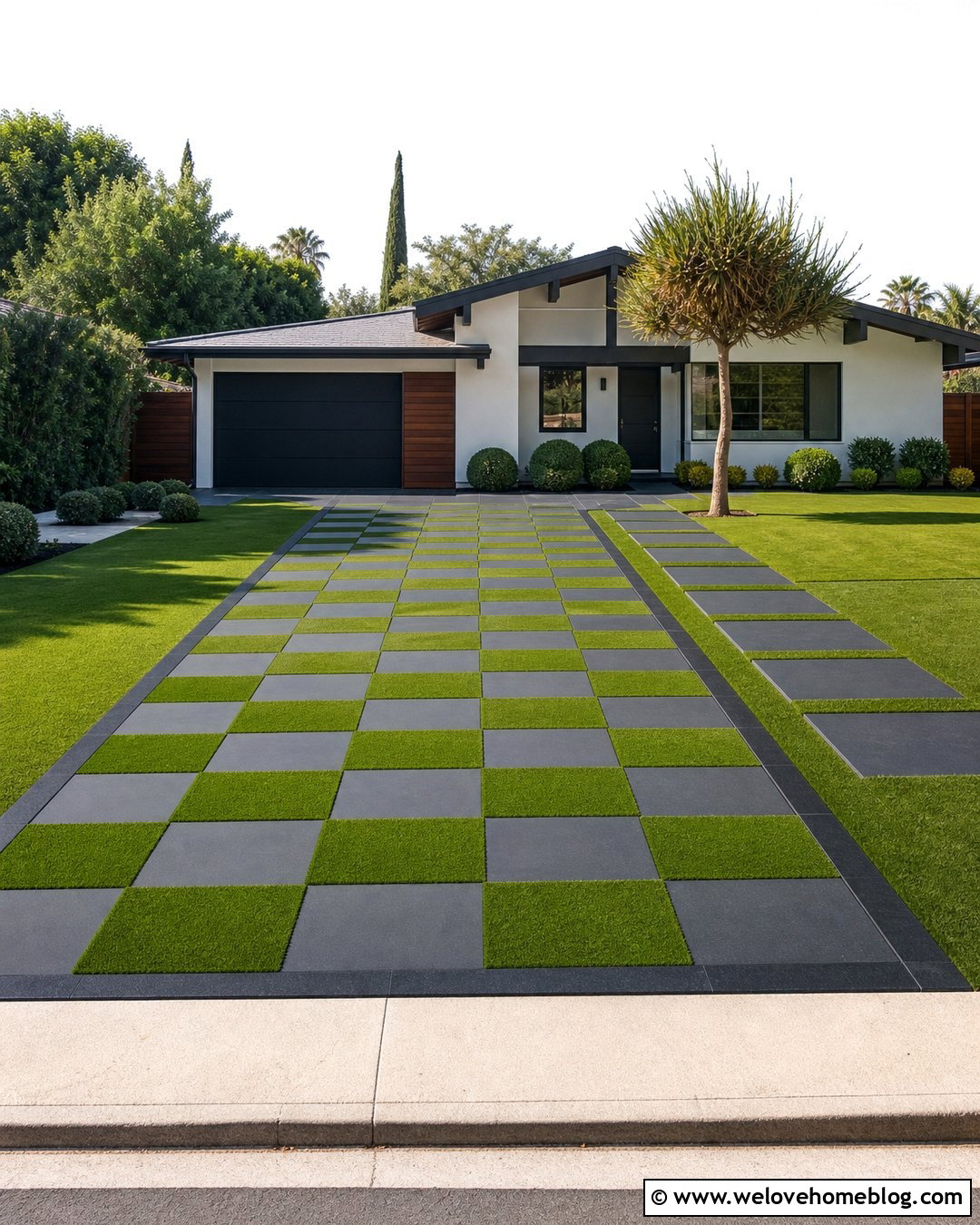
A checkerboard driveway alternates square pavers and green turf blocks for a bold geometric effect. Use large charcoal concrete pavers with grass squares of similar dimensions to create strong contrast. Because the layout is visually active, keep the surrounding landscape simple. Broad lawn panels, a few rounded shrubs, and one architectural tree provide enough framing. The checkerboard can cover a parking court or decorative center zone, while more continuous paving handles the curb entrance and garage approach. Artificial turf offers the cleanest squares and most uniform color. Natural grass creates a softer look but requires more careful edging. This design suits contemporary and midcentury homes with simple facades. Precise alignment is crucial, since uneven rows will be highly noticeable from the street.
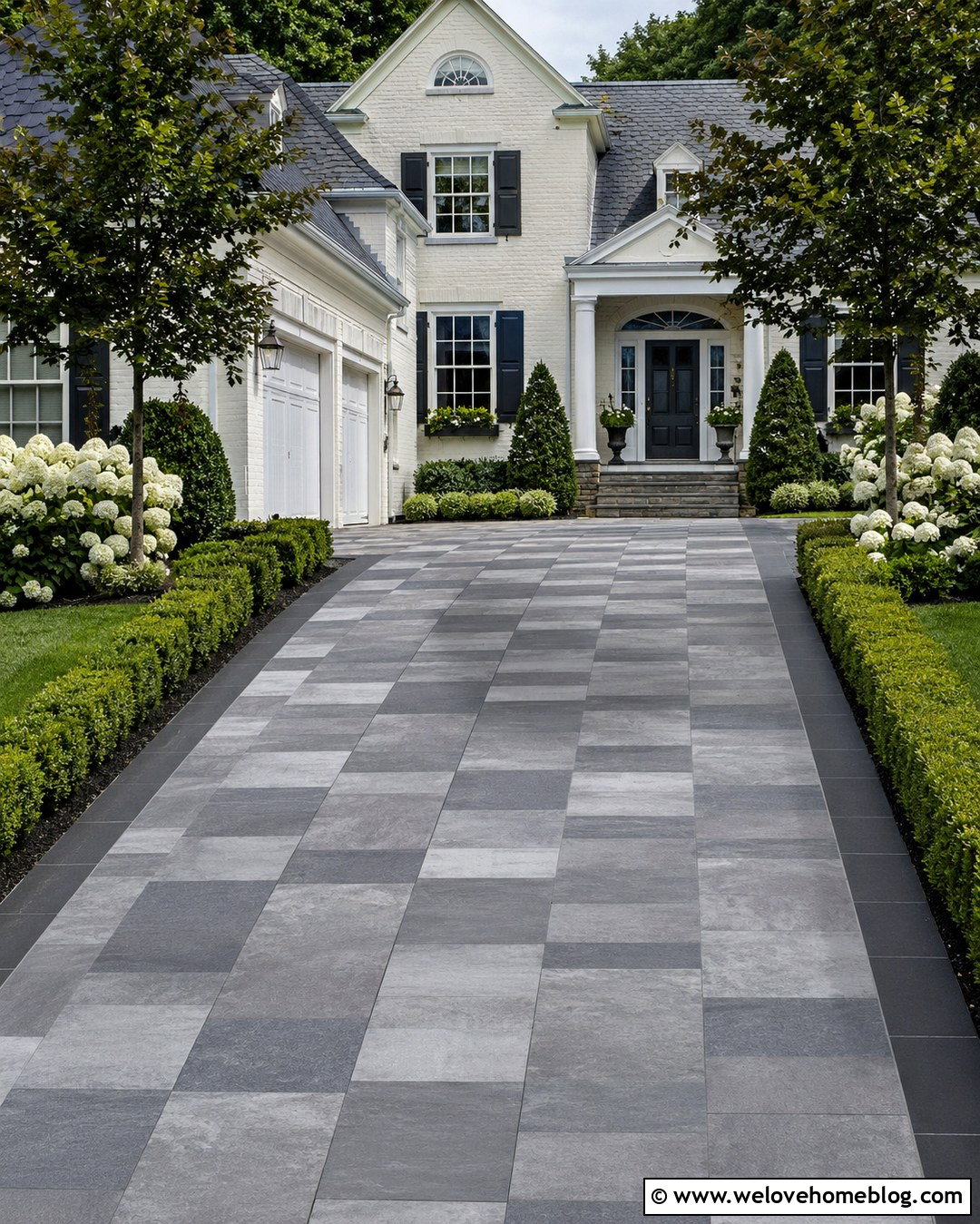
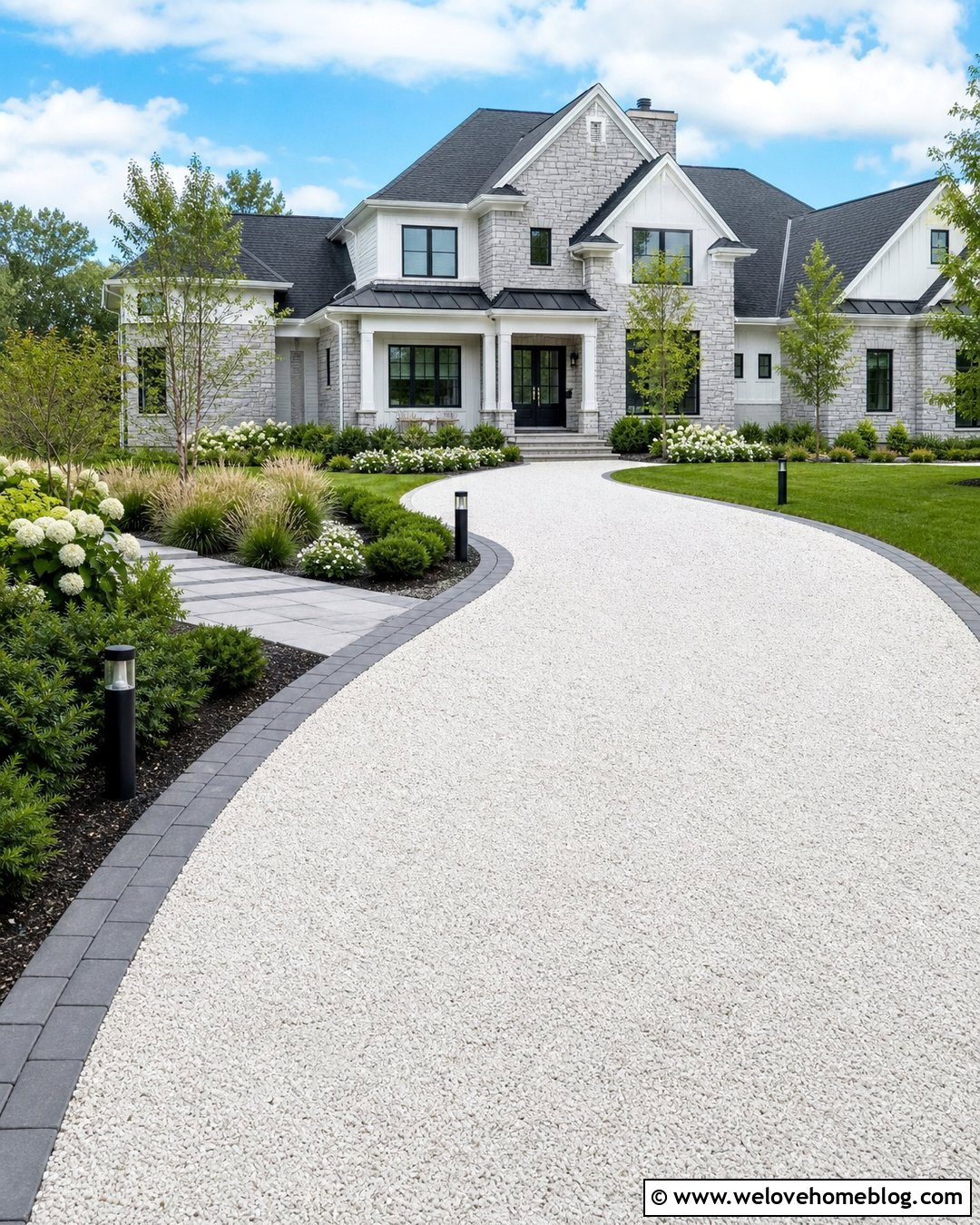
20. Driveway Pavers With Grass Cross Pattern
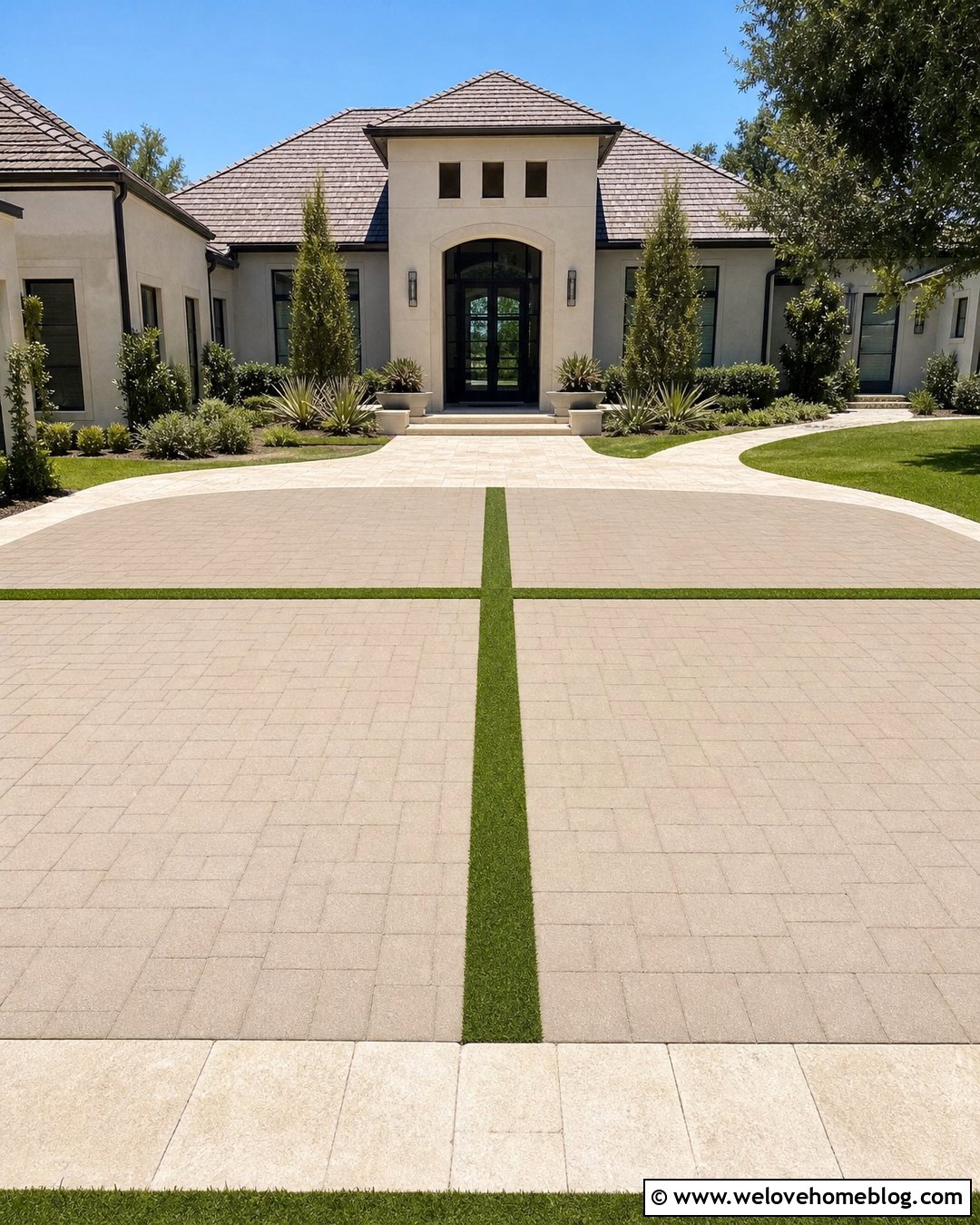
A grass cross pattern places green bands through the middle of a paved driveway, dividing the hardscape into four or more balanced sections. Large beige concrete pavers can form the main surface, while two broad turf strips intersect at the center. The pattern works particularly well in a square parking court or wide driveway entrance. Place a small tree or decorative planter near the crossing only if it remains outside all vehicle paths. Otherwise, allow the green intersection to remain open and uncluttered. Cream stone edging and soft ornamental grasses can frame the design without distracting from its symmetry. A solid paver band around the perimeter gives drivers a dependable turning zone. This complete layout adds greenery while retaining substantial paved space for regular parking.
21. Modern Driveway With Narrow Turf Ribbons
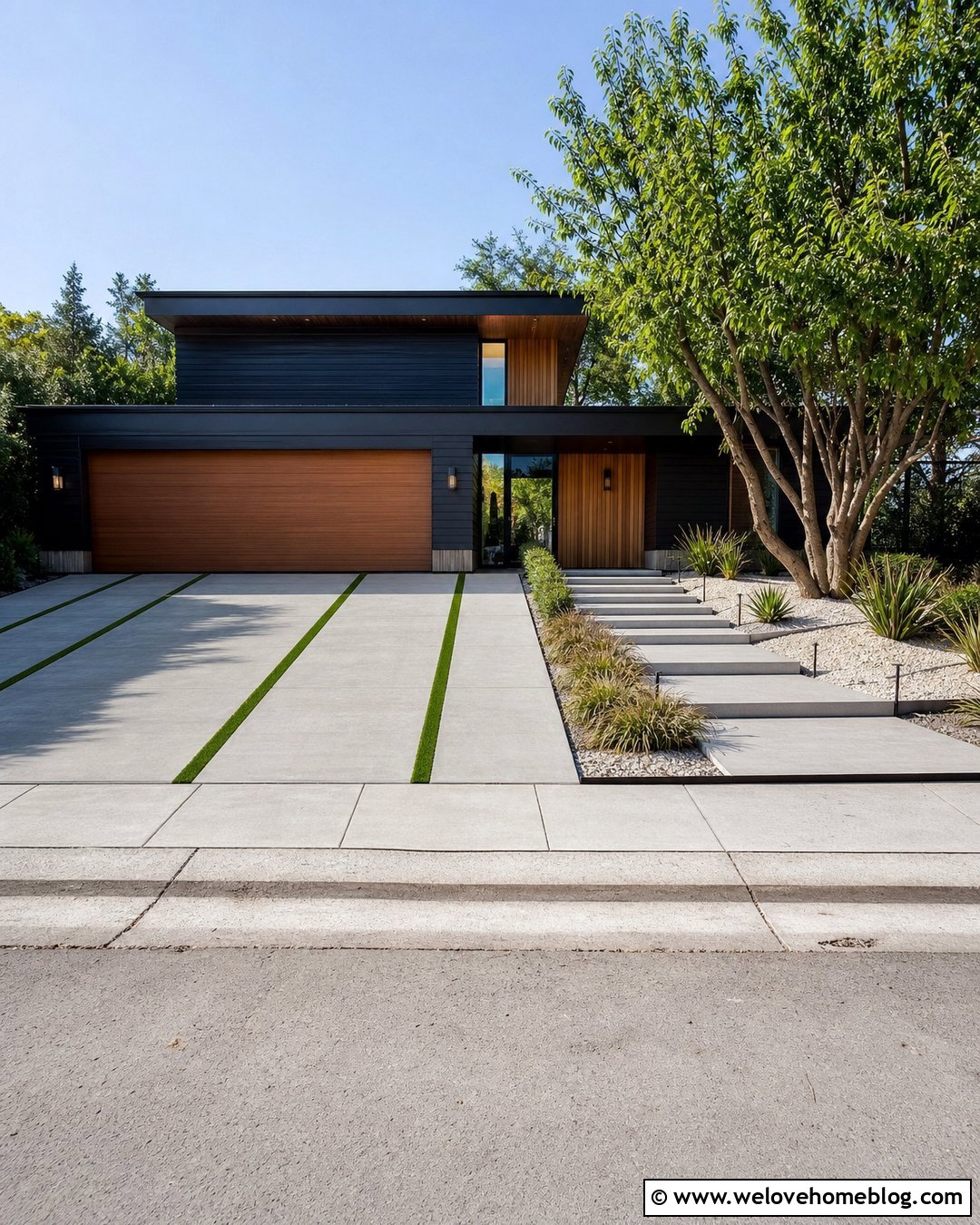
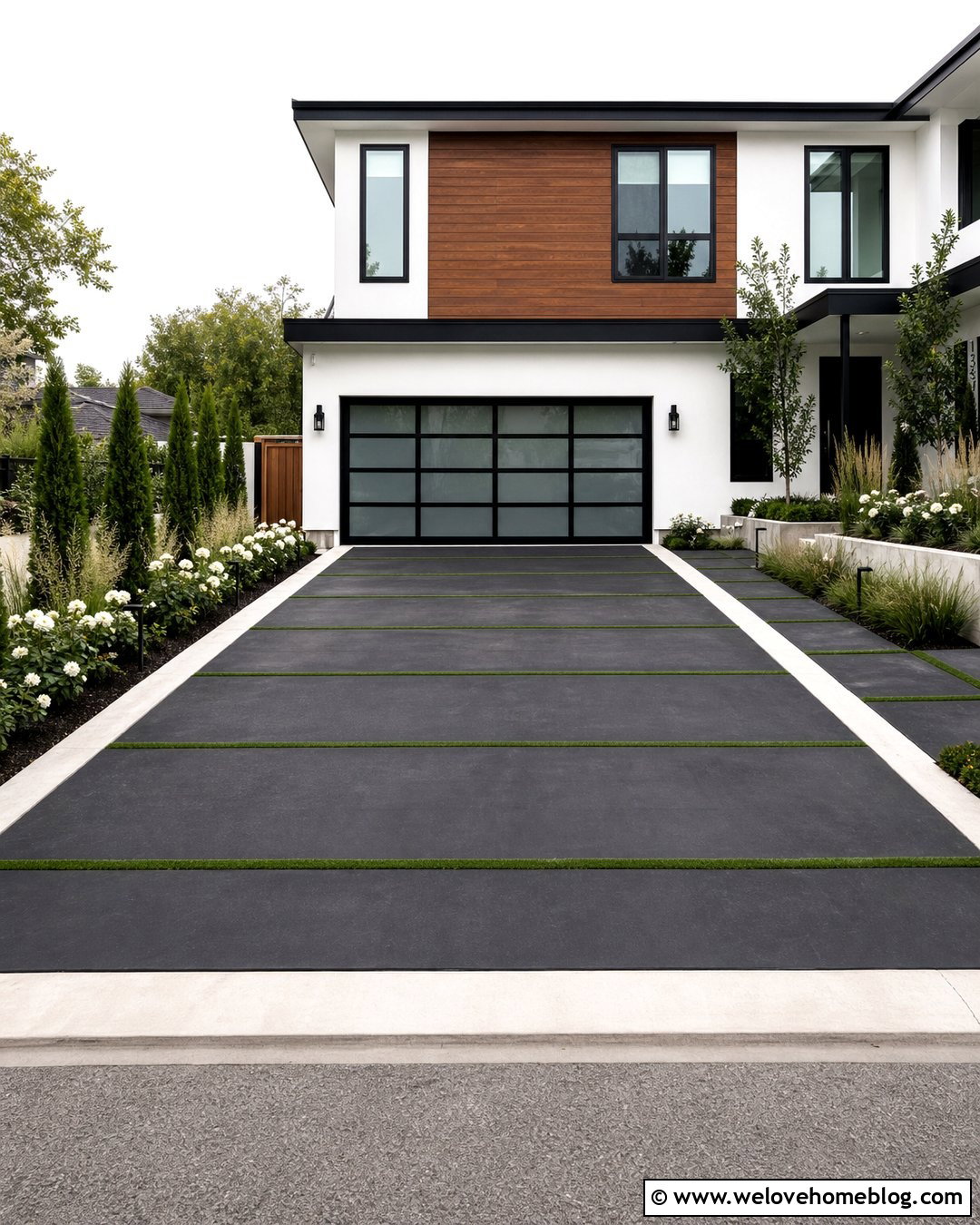
Thin turf ribbons between long concrete slabs create a streamlined driveway for modern architecture. Use smooth medium-gray poured concrete in elongated sections that run toward the garage. Narrow artificial grass joints reinforce the direction of travel and make the driveway appear deeper. Add black metal edging along the outer boundaries, then frame the entrance with minimalist gravel beds, sculptural grasses, and one multi-stem tree. A matching floating concrete walkway can run beside the drive, separated by another green strip. Keep the pattern consistent and avoid adding too many different materials. The strength of this look comes from repetition, contrast, and clean alignment. Extra paving at garage doors and the curb can improve usability while preserving the narrow turf ribbons through the main visible section.
22. Modern Driveway With Wide Grass Stripes
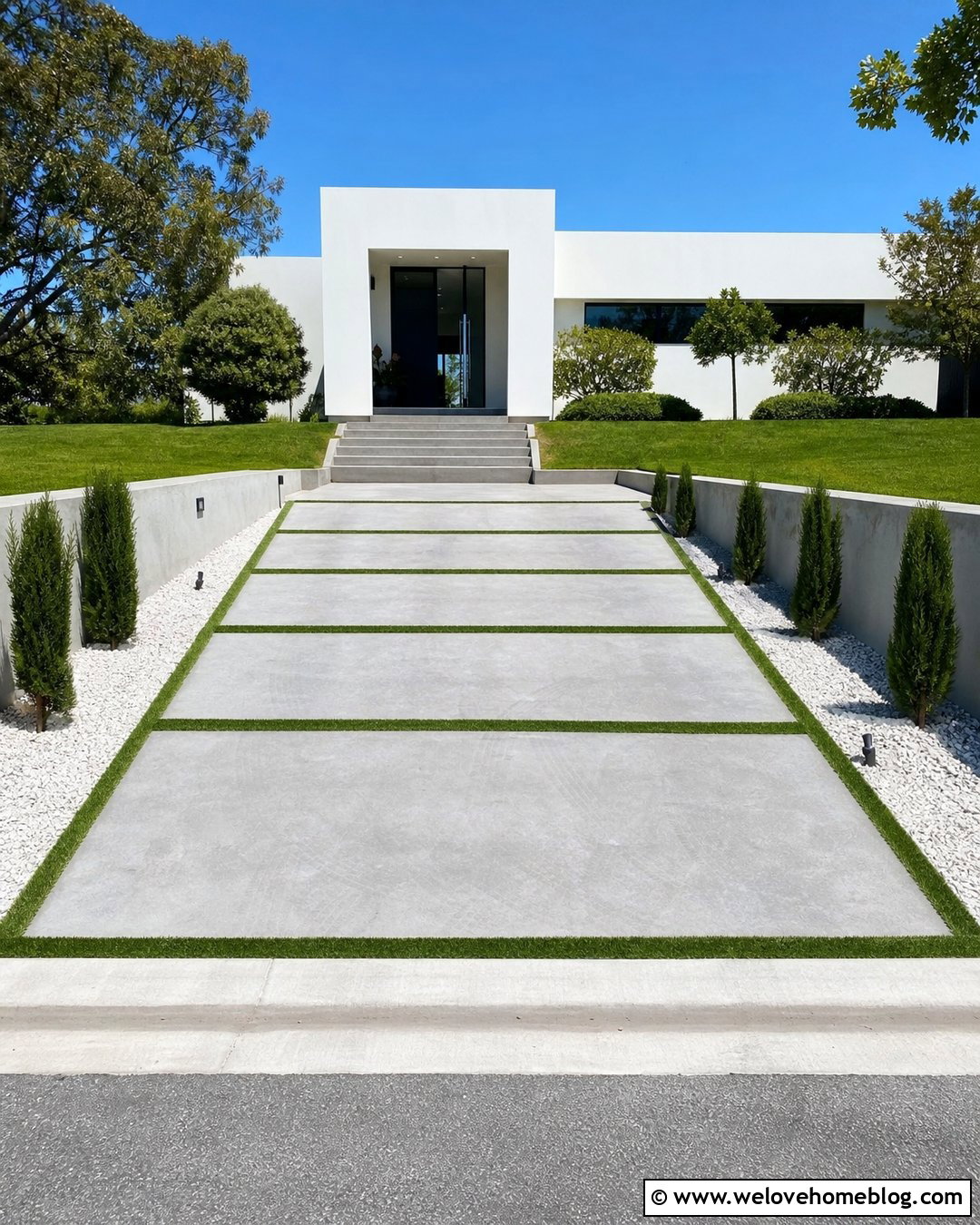
Broad grass stripes create a greener and more relaxed modern driveway than very narrow turf joints. Arrange large concrete rectangles in horizontal rows across the width of the driveway, then place generous green bands between each row. This pattern visually widens a narrow front yard and creates a series of floating paved platforms. Use pale concrete to maximize contrast with the grass. A low retaining wall, white gravel bed, and carefully spaced evergreens can frame the surface. Artificial turf is a practical visual choice for maintaining sharp horizontal bands, particularly where mowing would be awkward. Keep the curb apron solid and repeat the concrete finish in the front steps. The combined paving, turf, and simple planting will feel modern without making the entrance cold or overly industrial.
23. Farmhouse Driveway With Grass Middle
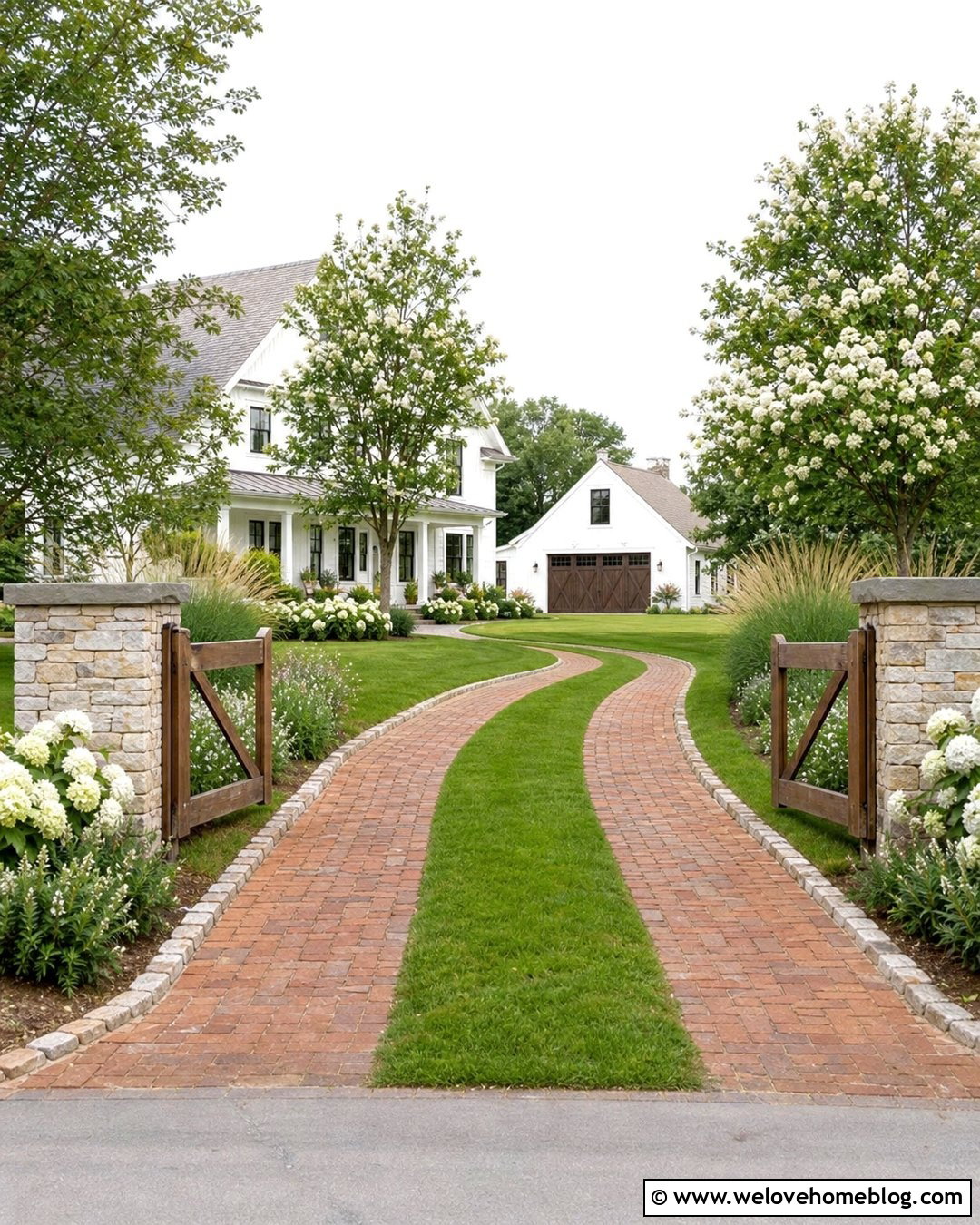
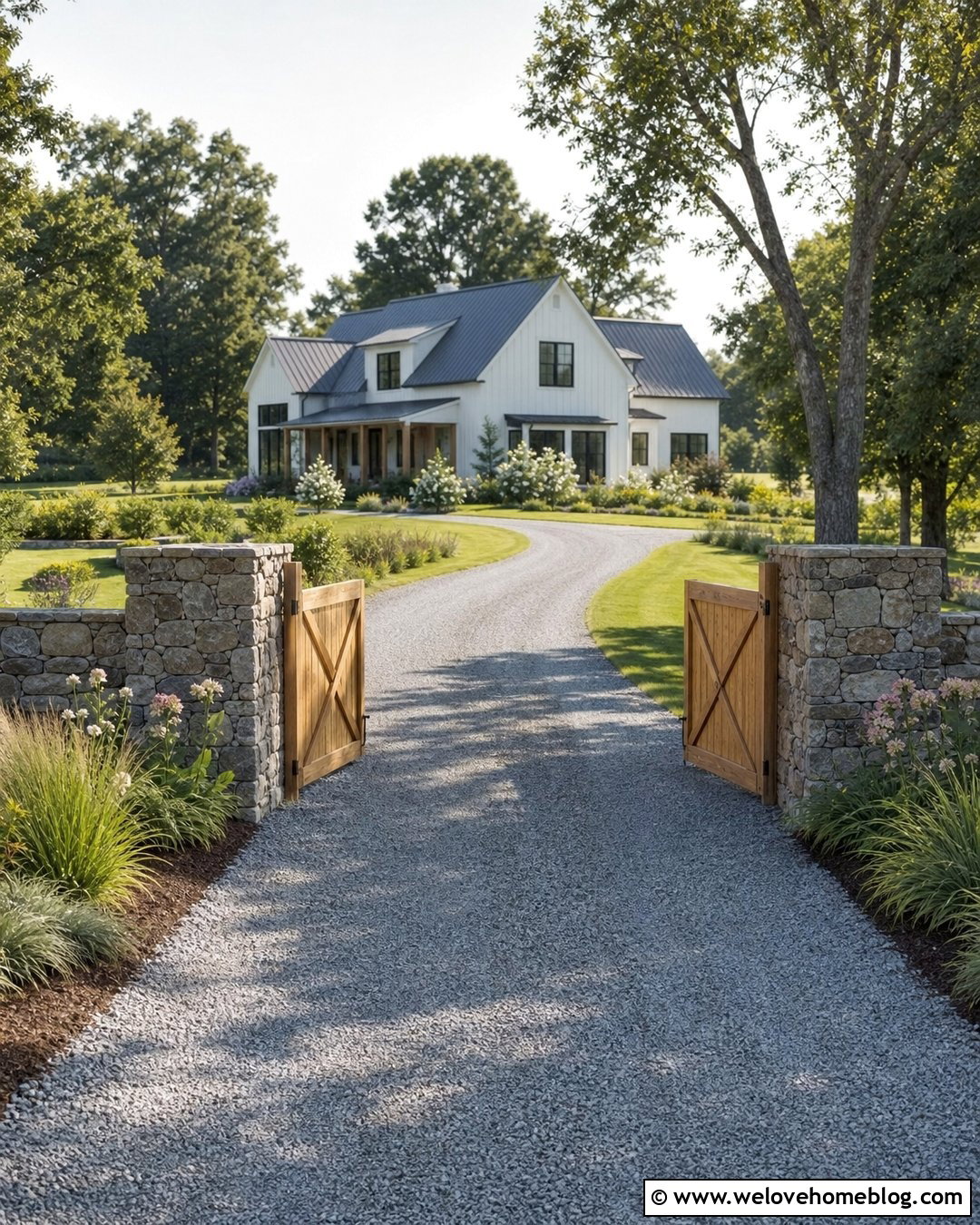
A farmhouse driveway can use two weathered concrete or reclaimed brick tracks with a soft grass strip in the middle. Let the route curve gently toward a white modern farmhouse, detached garage, or barn-style outbuilding. Natural grass supports the informal character, while limestone edging keeps the outer boundaries visible. Plant hydrangeas, panicle grasses, and small flowering trees along one side, leaving the other side more open for wide rural views. A simple wood gate and stone entrance pillars can add definition at the curb. Avoid making the grass center too narrow, since a broader strip looks intentional and is easier to connect visually with surrounding lawn. A full-width paved landing near the garage provides room for parking without weakening the classic country approach.
24. Cottage Driveway With Stone And Grass
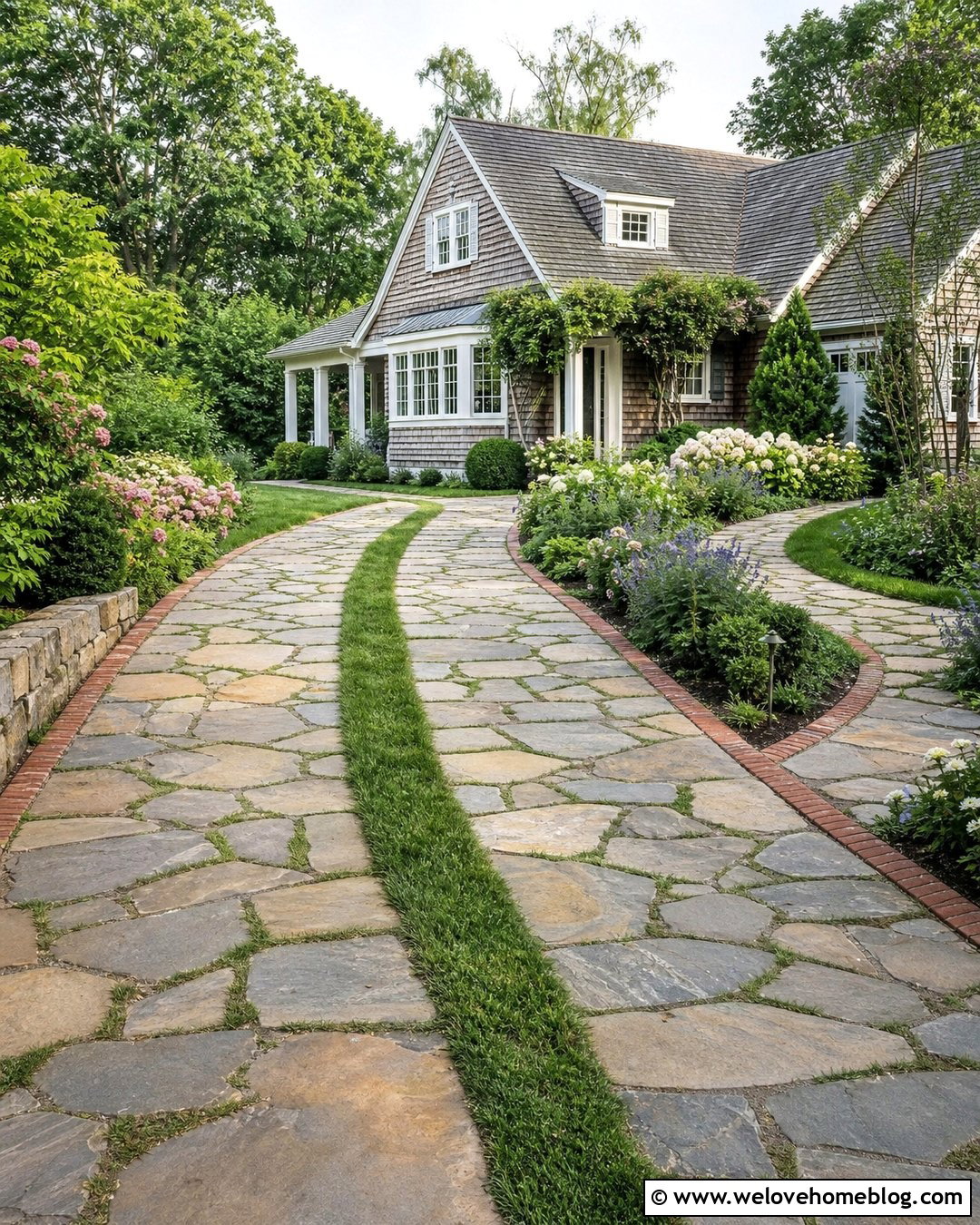
Irregular flagstone with grass between the pieces creates a soft, garden-centered driveway for a cottage home. Use substantial vehicle-rated fieldstone or flagstone in broad, loosely organized wheel tracks rather than scattering thin stepping stones. Fine grass can fill the spaces between stones and continue into the center strip. Curved brick edging gives the route a clear boundary and prevents garden soil from spreading over the paving. Surround the driveway with roses, salvia, catmint, hydrangeas, and compact evergreen shrubs. A matching stone walkway can branch toward the porch through the planting. The irregular pattern should still provide stable tire paths and comfortable access. This complete look feels informal and established, with the driveway appearing to pass through the garden instead of replacing it.
25. Mediterranean Driveway With Turf Joints
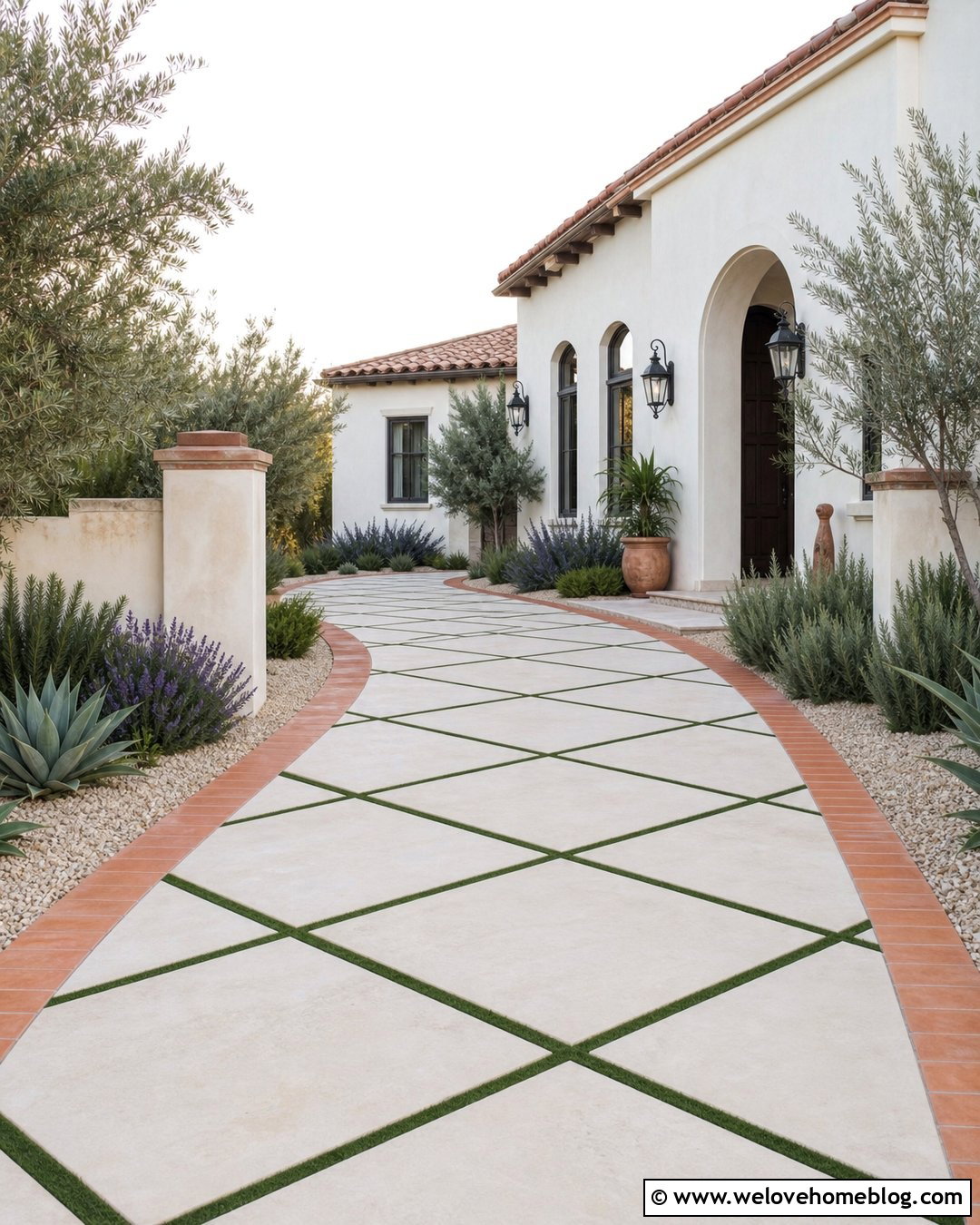
Cream concrete pavers with dark green turf joints complement the warm colors and strong forms of Mediterranean architecture. Choose large rectangular pavers in limestone or sand tones and lay them in an orderly grid. Use artificial turf for precise green bands that remain visually consistent beside sun-loving landscaping. Terracotta-colored edge pavers can connect the driveway to a clay tile roof. Frame the approach with olive-like trees, rosemary, lavender, agave, and pale decorative gravel, selecting plants appropriate for the local climate. Low stucco walls or simple masonry pillars can mark the entrance. A gently curved driveway adds movement without disrupting the grid. The combination of warm paving, green lines, textured planting, and a stucco facade creates a bright, cohesive residential entrance.
26. Shaded Driveway With Artificial Grass Joints
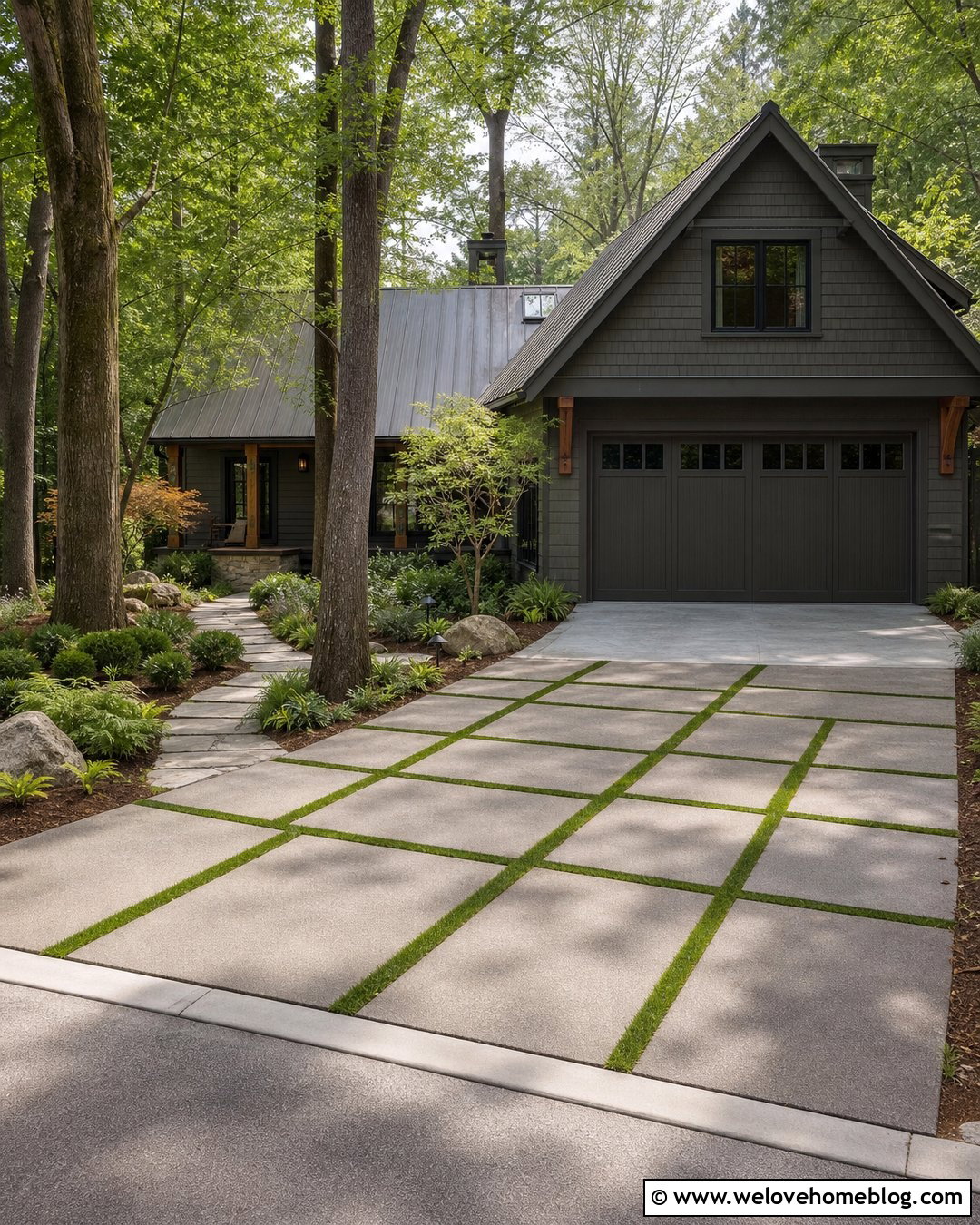
Grass often struggles under dense tree cover, but artificial turf joints can preserve the green appearance of a shaded driveway. Use large warm-gray concrete pavers arranged in a straight or gently curved grid beneath mature trees. Fill each joint with high-quality synthetic turf in a natural mixed-green tone rather than an overly bright color. A steel or stone border can separate the driveway from woodland planting beds. Add shade-tolerant shrubs, ferns, and groundcover around the edges for a layered transition into the yard. Ensure that fallen leaves can be removed easily from both paving and turf. This design works well with craftsman, contemporary woodland, and rustic homes. Light-toned pavers help the full approach remain visible and welcoming beneath the tree canopy.
27. Sloped Driveway With Grass Center Strip
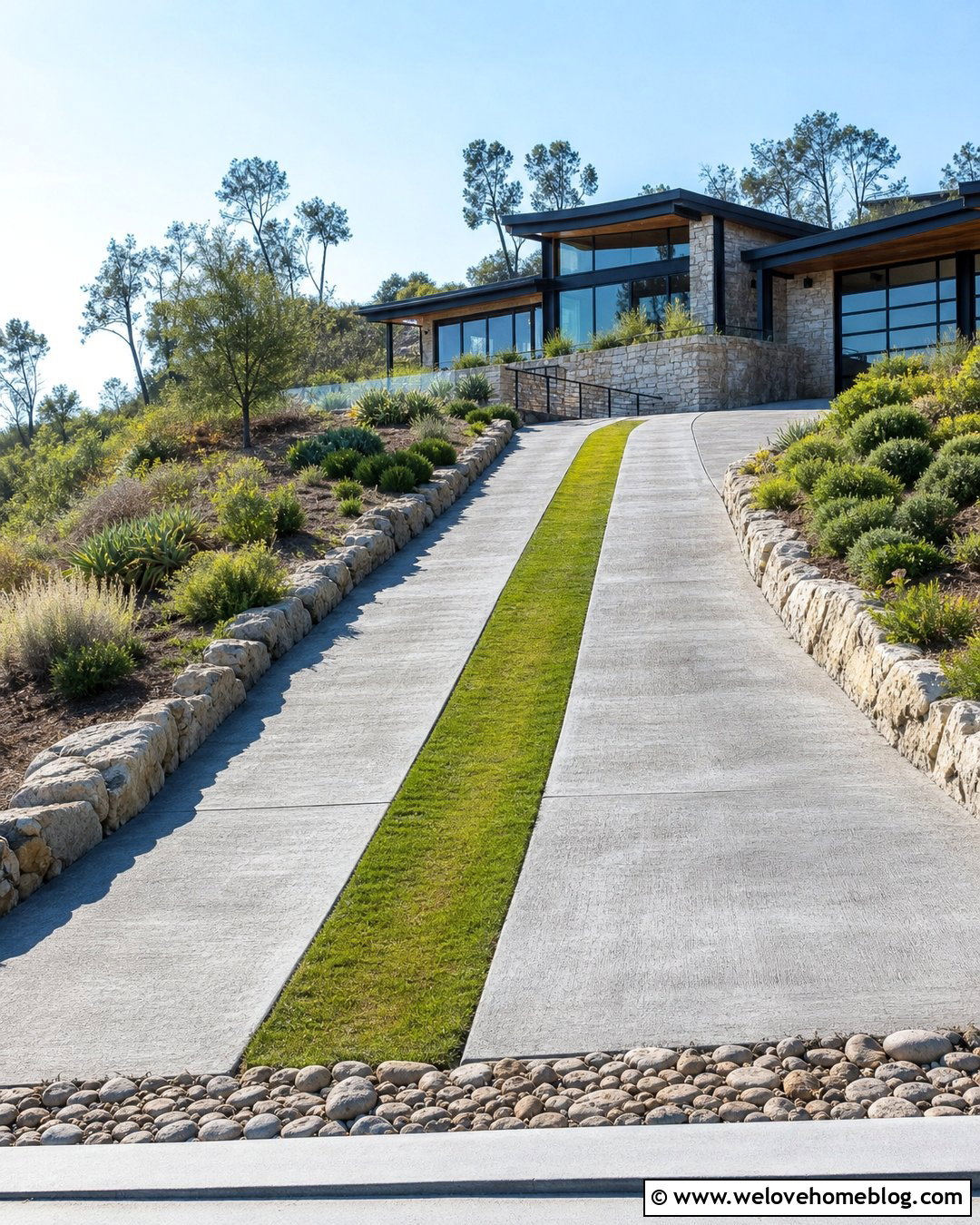
A sloped ribbon driveway needs a clear, stable layout that manages the incline without sacrificing the green center. Use textured poured concrete for two broad wheel tracks, since a smooth finish may look out of place on a steep approach. Keep the center grass strip relatively level across its width and reinforce vulnerable edges so tires do not break them down. A solid concrete apron at the top provides a comfortable transition into the garage. Along the sides, use stone retaining edges and low planting that will not obstruct sightlines. Direct surface water away from the house and confirm that the proposed slope suits a center-strip design. The result can feel natural and attractive, but professional grading and drainage planning should guide the final construction.
28. Short Driveway With Grass Grid
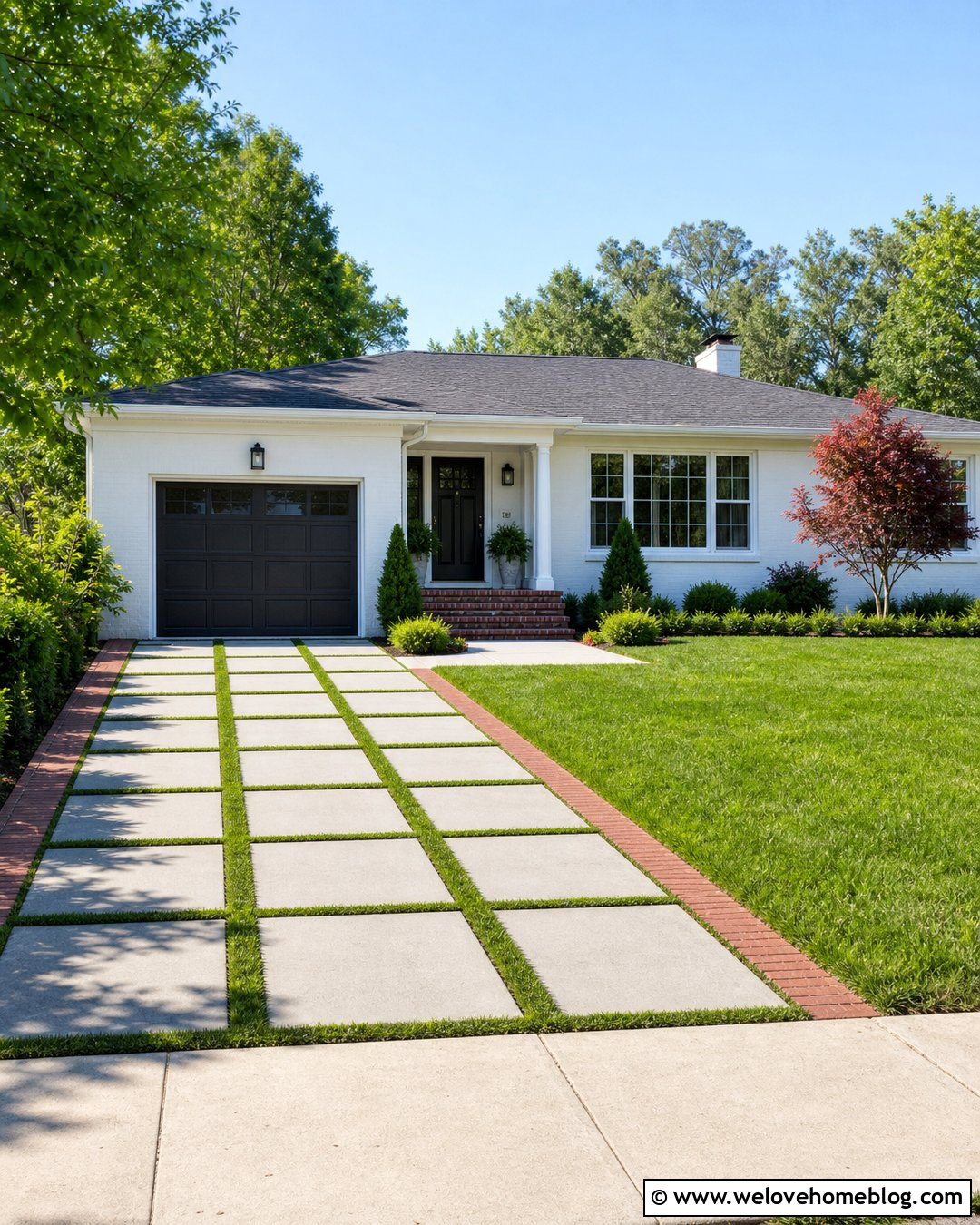
A short driveway can gain depth from a simple grid of concrete pavers and grass. Use three or four rows of large rectangular slabs rather than an overly detailed pattern that makes the small area feel crowded. Green joints create contrast and visually separate the driveway from a nearby sidewalk. Match the paver color to the front steps or porch foundation for a coordinated look. A narrow brick border can outline the surface, while compact shrubs and one small ornamental tree frame the house without reducing parking space. Keep the transition at the curb level and easy to cross. Extending one paver row into the walkway can connect the entrance elements. This approach makes even a shallow suburban front yard feel designed, green, and welcoming.
29. Long Driveway With Grass Wheel Tracks
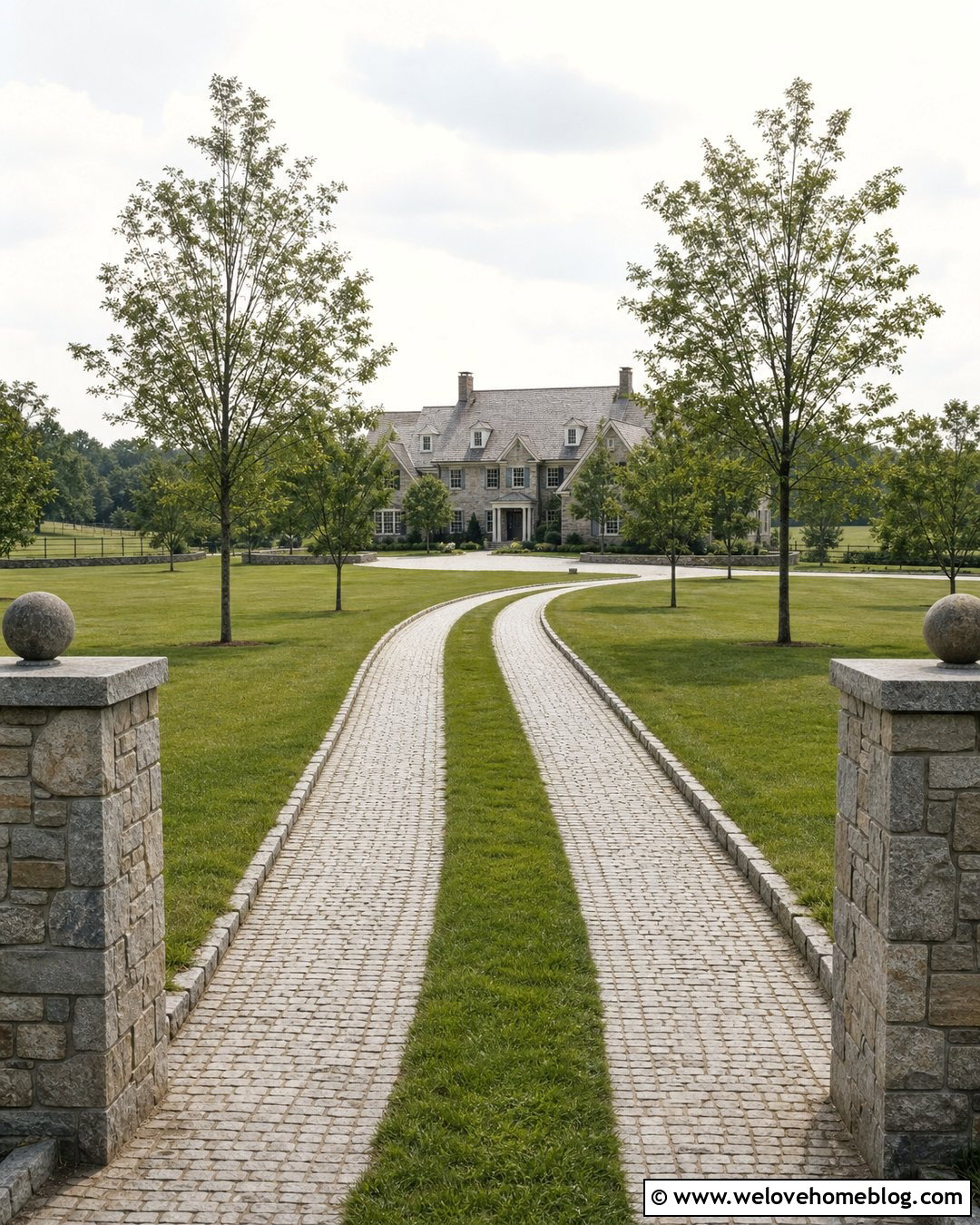
A long driveway becomes less visually overwhelming when the hard surface is limited to two defined wheel tracks. Use long bands of concrete pavers, textured concrete, or granite setts with lawn in the center and along both sides. A gentle curve can reveal the house gradually and reduce the appearance of a rigid paved corridor. Line selected portions with deciduous trees, but preserve open areas so the entrance does not feel enclosed. Low stone edging protects the driving strips and helps guests identify the route. Near the house, widen the paving into a practical parking and turning court. Repeating the same surface material at the entrance pillars and walkway creates continuity. The grass-dominant layout works especially well on spacious country and estate properties.
30. Horseshoe Driveway With Grass Sections
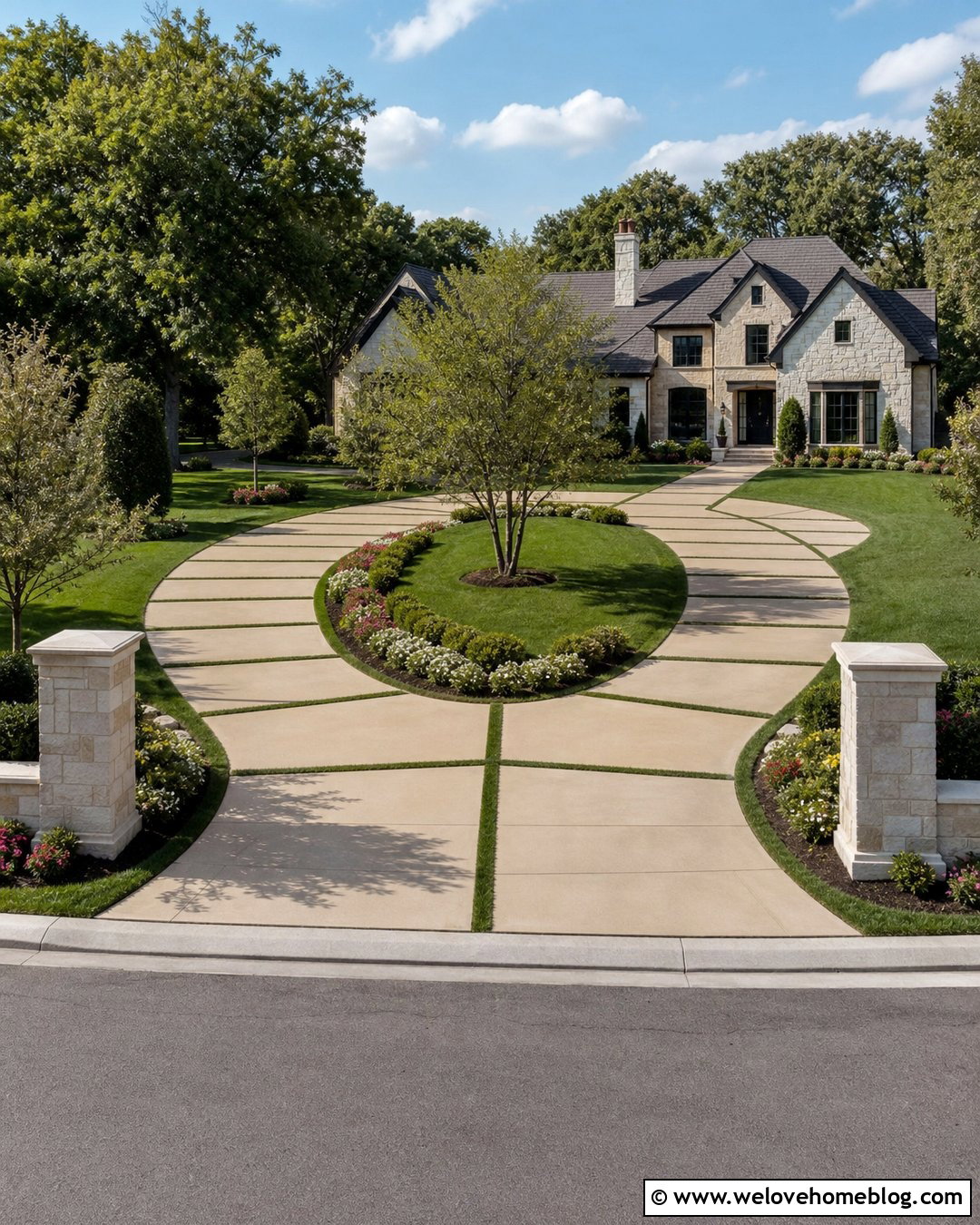
A horseshoe driveway with grass joints combines convenient circulation with a softer front-yard appearance. Use large tan concrete pavers arranged in rectangular panels along the entire curved route. Separate the panels with grass bands that follow the driveway’s arc, then place a generous landscaped lawn island in the center. A small ornamental tree, low shrubs, and seasonal flowers can anchor the island without blocking views toward the street. Mark both entrances with matching stone pillars and low planting. Solid paver aprons at each opening make turning easier and protect the grass joints. This complete design works well for colonial, ranch, and large traditional houses. Consistent paver spacing and carefully planned curves help the patterned surface remain orderly from both curb approaches.
Conclusion:
These **30 driveway with grass in between ideas** show how greenery can become part of the complete driveway rather than an afterthought. Concrete ribbons offer a practical traditional option, while large pavers and turf joints create cleaner modern patterns. Brick, cobblestone, granite, and sandstone can bring warmth or character to older homes. Reinforced grass grids are useful when a more lawn-like surface is preferred. Whatever look you choose, consider vehicle movement, drainage, sunlight, grass maintenance, base preparation, and edge stability. Natural turf works best where growing conditions are favorable. Artificial grass keeps narrow lines more uniform. A well-planned layout should connect the driveway, house, walkway, borders, and landscaping into one attractive entrance.

Related posts:
Leave a Reply