
A narrow strip between neighboring driveways can feel awkward, but it also offers valuable space for improving privacy, drainage, and curb appeal. The best **landscaping between two driveways ideas** treat the entire area as one coordinated design. Driveway surfaces, edging, plant height, maintenance needs, and vehicle clearance should all work together. Before digging, confirm property lines, underground utilities, drainage routes, and any local visibility rules near the street. Choose plants that tolerate reflected heat, compacted soil, winter salt, and occasional tire overhang. Low groundcovers suit tight spaces, while wider dividers can support ornamental grasses, shrubs, or small trees. The complete driveway looks below offer practical inspiration for exploring **landscaping between two driveways ideas**.

1. Driveway Strip With Creeping Thyme
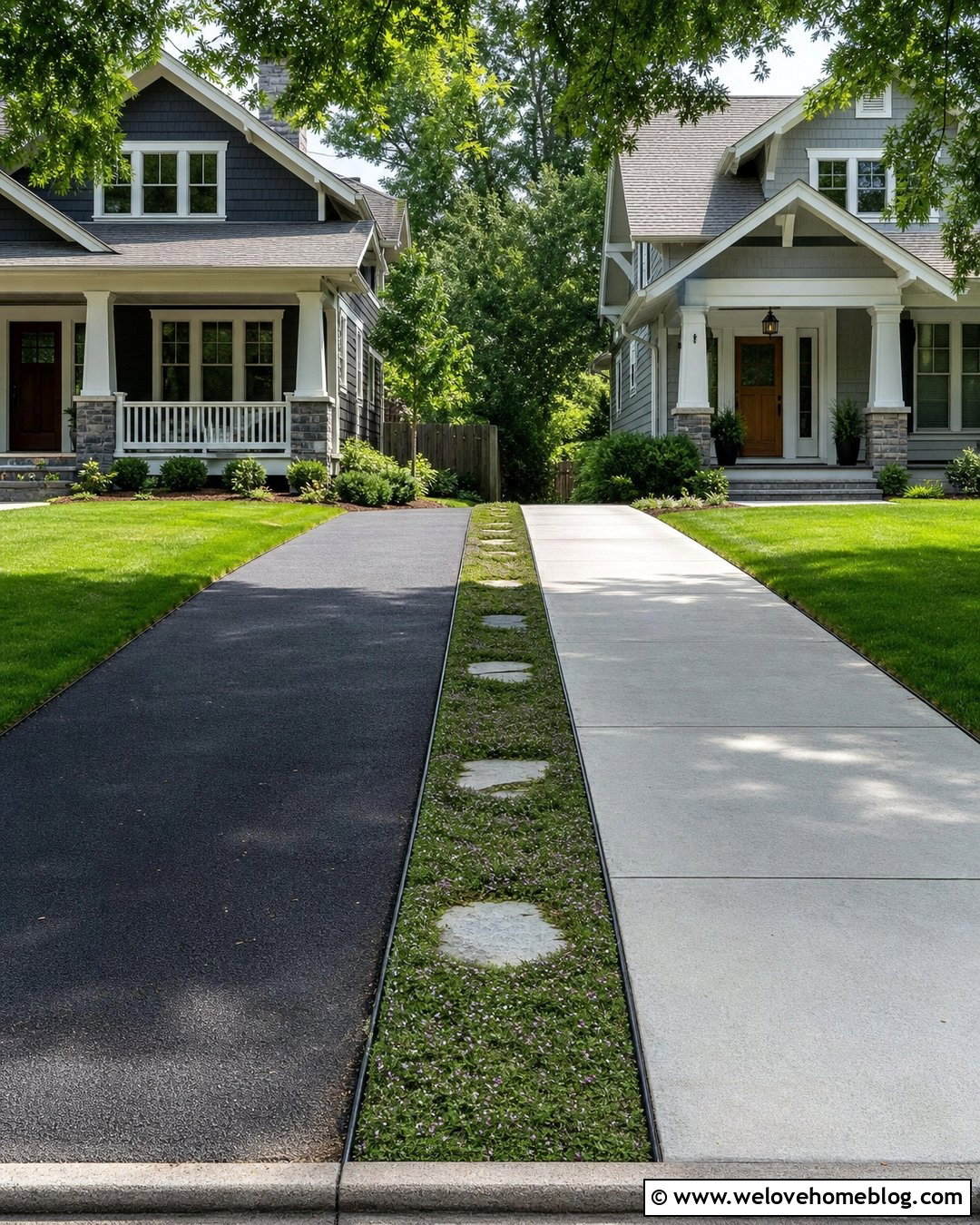
Creeping thyme can transform a narrow divider into a soft green ribbon without crowding either driveway. Pair a black asphalt driveway with a neighboring gray concrete driveway, then define the planting strip with flush steel edging. Plant thyme in closely spaced groups so it gradually forms a continuous carpet. Its low profile preserves sightlines and reduces the chance of branches brushing vehicles. Add several flat stepping stones where people regularly cross between the properties. The stones prevent repeated foot traffic from damaging the plants. This design works especially well in sunny locations with well-draining soil. Choose a groundcover suited to your climate, and avoid placing delicate plants where tires frequently cut across the strip.
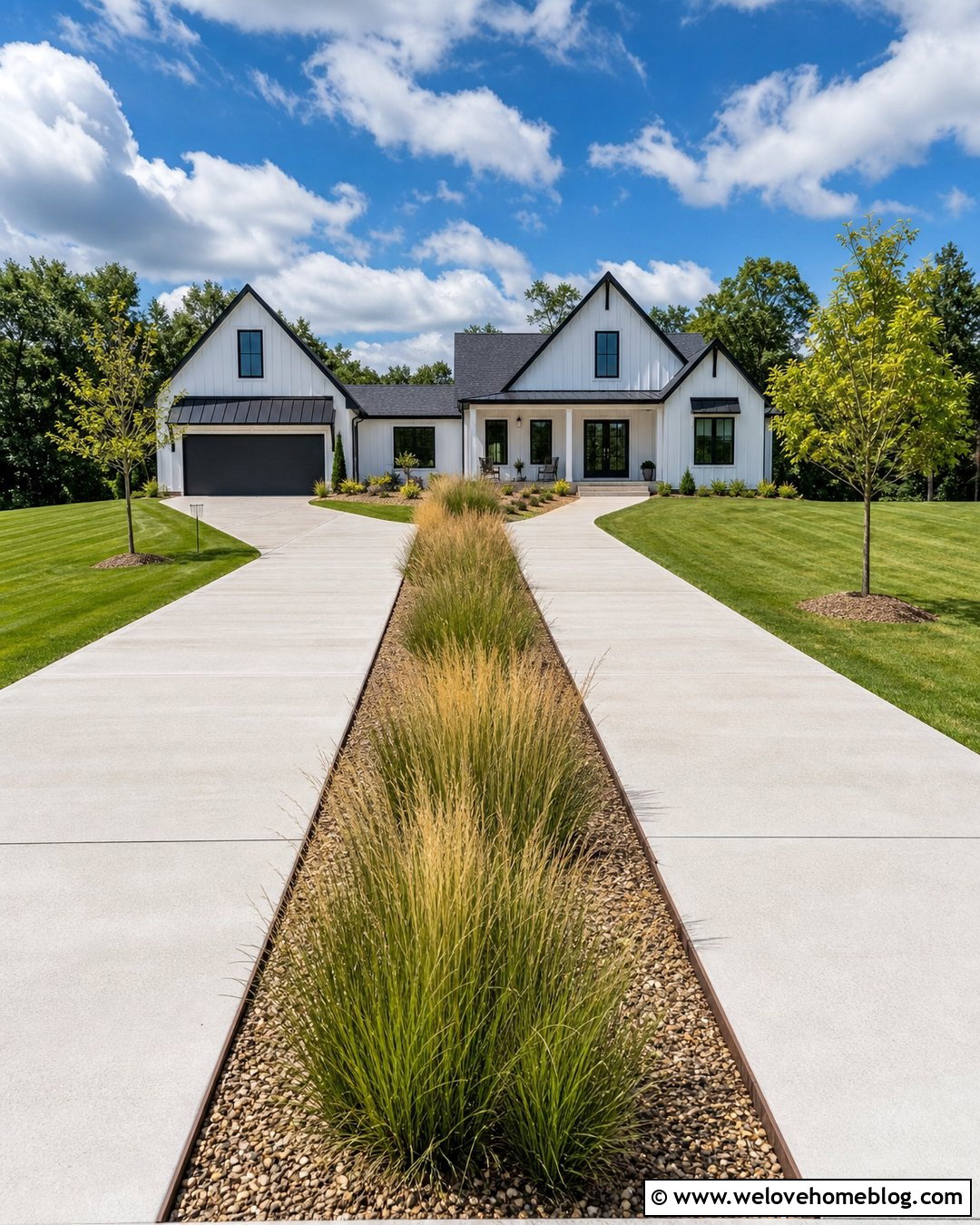
2. Gravel Driveway Divider With Ornamental Grasses
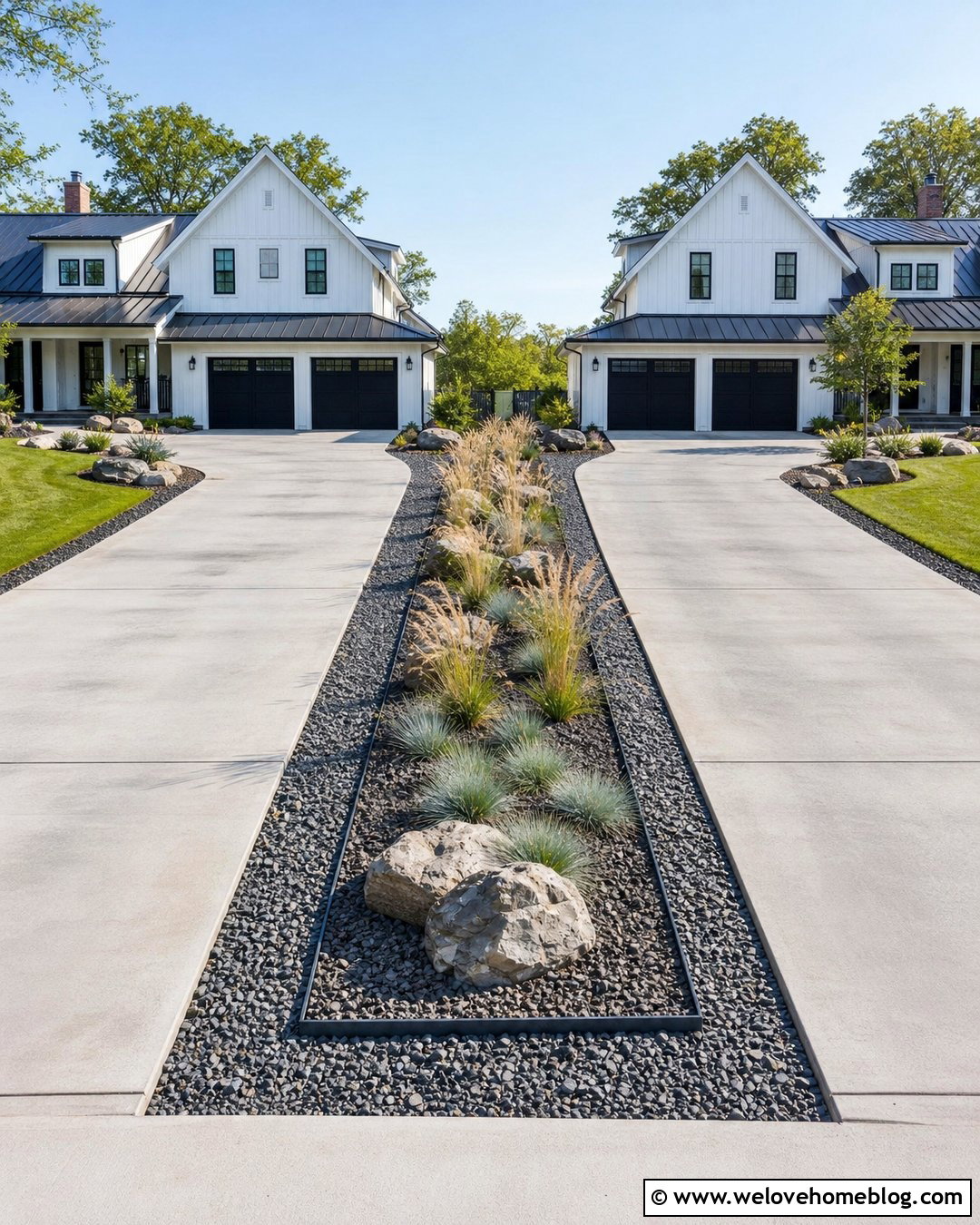
A gravel-covered median with ornamental grasses creates movement while keeping maintenance manageable. Frame the central strip with dark metal edging between two straight concrete driveways. Cover exposed soil with compacted landscape gravel, then repeat compact grasses in staggered clusters rather than planting one rigid row. Blue fescue suits shorter designs, while carefully selected switchgrass or feather reed grass can provide more height. Keep taller plants farther from the sidewalk so drivers have clear views of pedestrians and traffic. A few weathered boulders can anchor the arrangement and prevent the gravel from looking empty. Match the gravel tone to both homes, using warm tan around brick facades or charcoal gray beside modern exteriors.
3. Driveway Privacy Hedge With Gravel Mulch
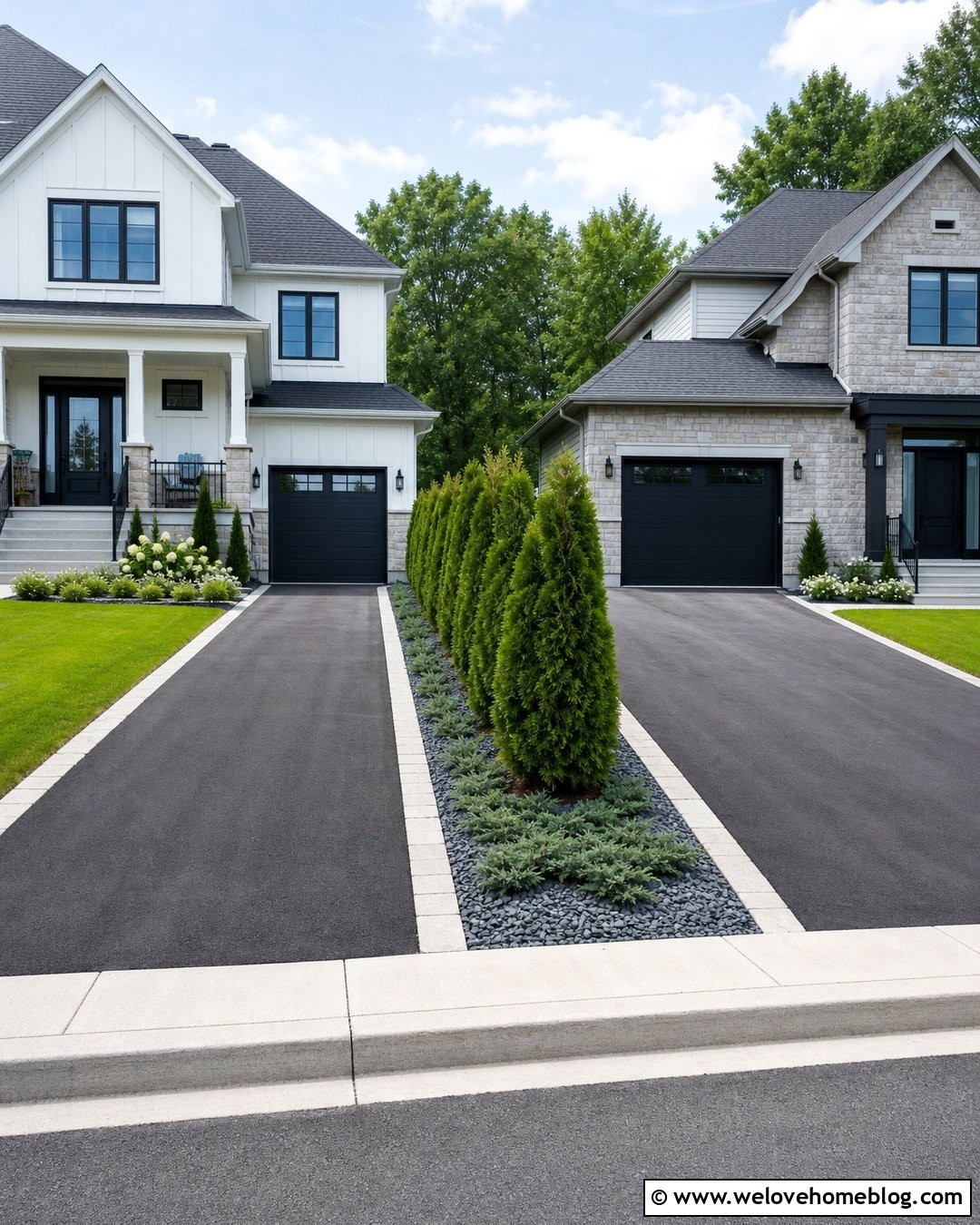
When the space is wide enough, a narrow evergreen hedge can create separation without requiring a solid fence. Use a straight line of compact, upright shrubs between two black asphalt driveways, leaving enough setback for mature growth and open vehicle doors. Dark gravel mulch gives the bed a neat finish and prevents loose organic mulch from washing onto the pavement. Install concrete or metal edging slightly above grade to contain the stones. The hedge can be lightly staggered for a softer appearance, but it should remain consistent from the street to the garages. Select shrubs according to mature width, climate, deer pressure, and winter salt exposure. Regular pruning keeps the screen dense without allowing it to obstruct either driveway.
4. Driveway Median With River Rock
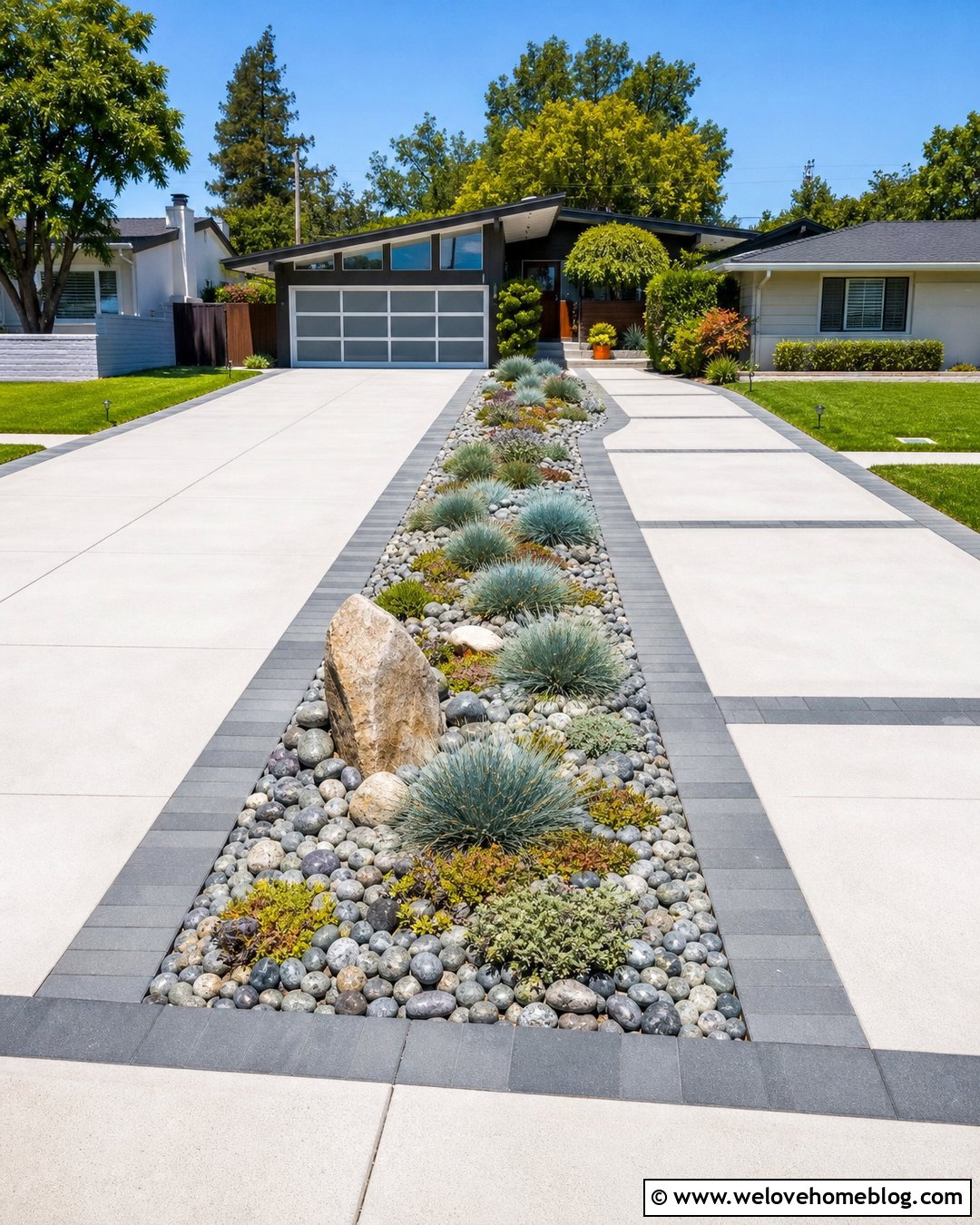
River rock offers a clean solution for a hot, narrow area where turf and thirsty plants struggle. Place mixed gray river stones between two pale poured-concrete driveways and contain them with charcoal paver edging. Instead of covering the median with stone alone, add evenly spaced pockets of drought-tolerant grasses, sedum, or compact flowering perennials. A larger accent rock near the center creates structure without blocking visibility. Install landscape fabric only where appropriate for the chosen plants and drainage conditions, since accumulated debris can eventually support weeds above it. The rounded stones should remain below the edging to prevent them from rolling onto the driveways. This complete look complements ranch, contemporary, and mid-century homes particularly well.
5. Driveway Divider With Raised Planter Beds
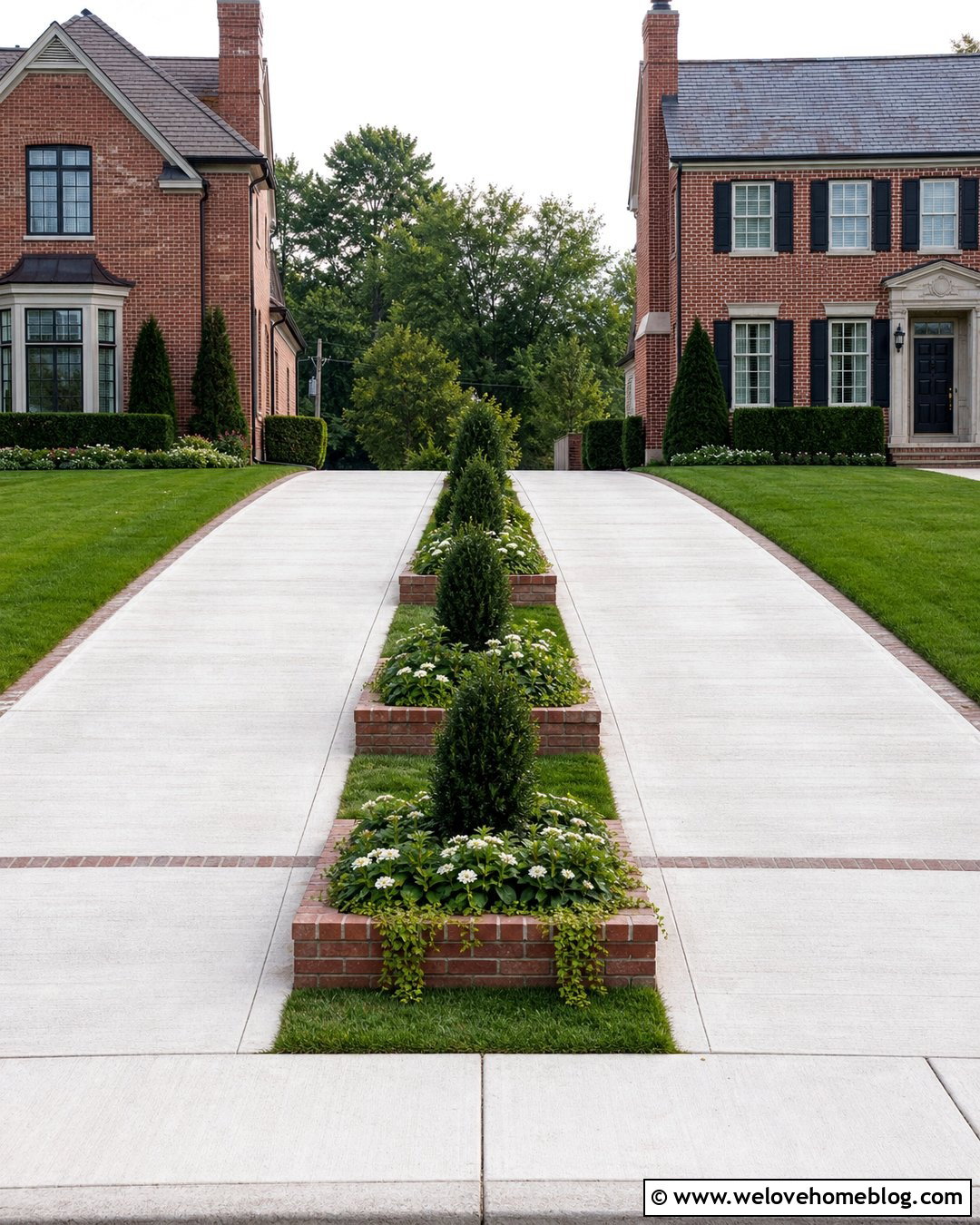
Raised beds can make a wide divider feel intentional while protecting flowers from tires and compacted soil. Position two or three long, low planters between parallel concrete driveways rather than building one continuous wall. Gaps between the beds provide crossing points and allow runoff to move naturally. Use masonry that coordinates with the home, such as red brick beside a colonial facade or smooth concrete blocks near a modern house. Fill the planters with compact evergreen shrubs, seasonal flowers, and trailing plants that soften the edges. Keep walls low near the street and avoid sharp corners beside turning areas. Drip irrigation can reduce overspray on parked vehicles. This structured layout brings color to the driveways without sacrificing usable pavement.
6. Driveway Rain Garden With Native Plants
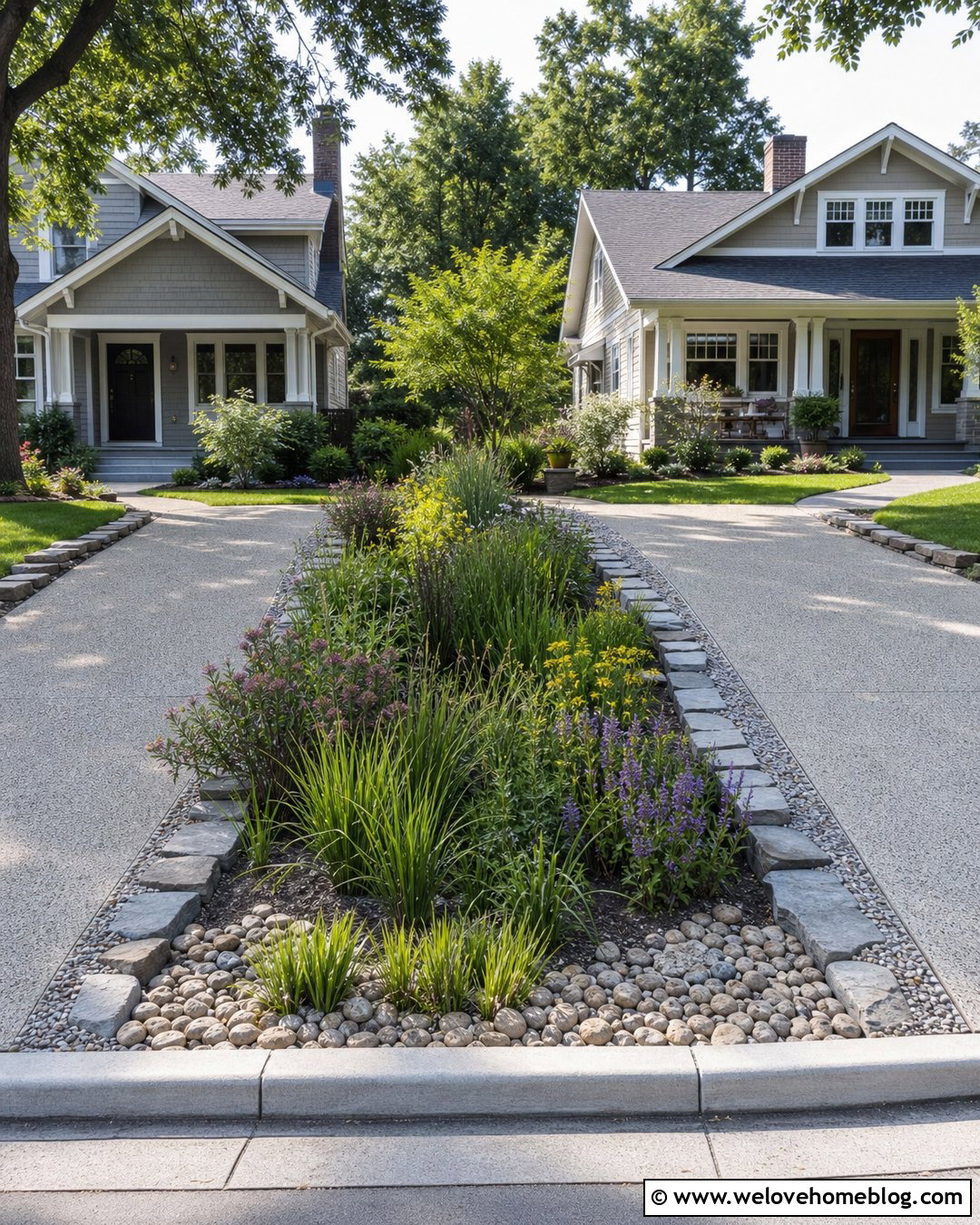
Does water collect between the driveways after heavy rain? A shallow rain garden may turn that drainage problem into an attractive landscape feature. Grade the central bed so runoff can enter gently from both paved surfaces without undermining their foundations. Edge the garden with flat natural stone and use washed gravel at the inlet points to slow erosion. Plant moisture-tolerant native sedges, rushes, flowering perennials, and low shrubs selected for local conditions. Arrange taller plants through the center and shorter varieties along the pavement. An overflow route is essential so extreme rainfall moves safely away from garages and foundations. Before construction, confirm that the soil drains appropriately and that local regulations allow driveway runoff to enter the planted area.
7. Driveway Strip With Stepping Stone Path
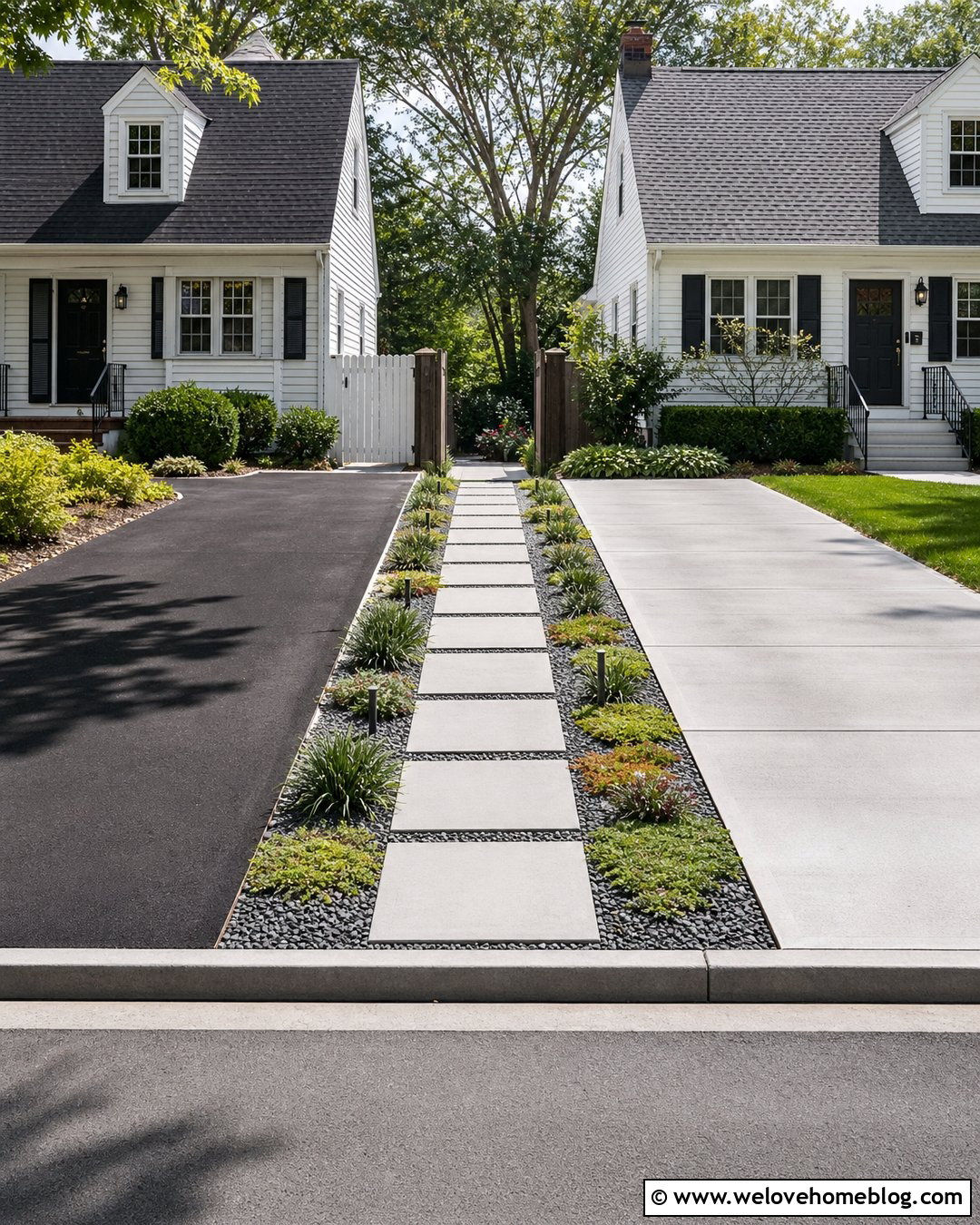
A stepping-stone path adds function when family members or neighbors frequently cross between two driveways. Lay large rectangular concrete slabs through a central bed of low groundcover, decorative gravel, or mulch. Align the path with gates, side doors, walkways, or parking areas instead of placing it randomly. Flush stones reduce tripping hazards and make rolling trash containers easier to manage. On each side, combine compact sedum, liriope, or creeping plants that will not lean into vehicle space. A simple steel edge can separate the bed from one asphalt driveway and one concrete driveway while accommodating their different finishes. Repeating the same stone used on the home’s front walk helps connect the divider to the broader landscape.
8. Driveway Divider With Small Flowering Trees
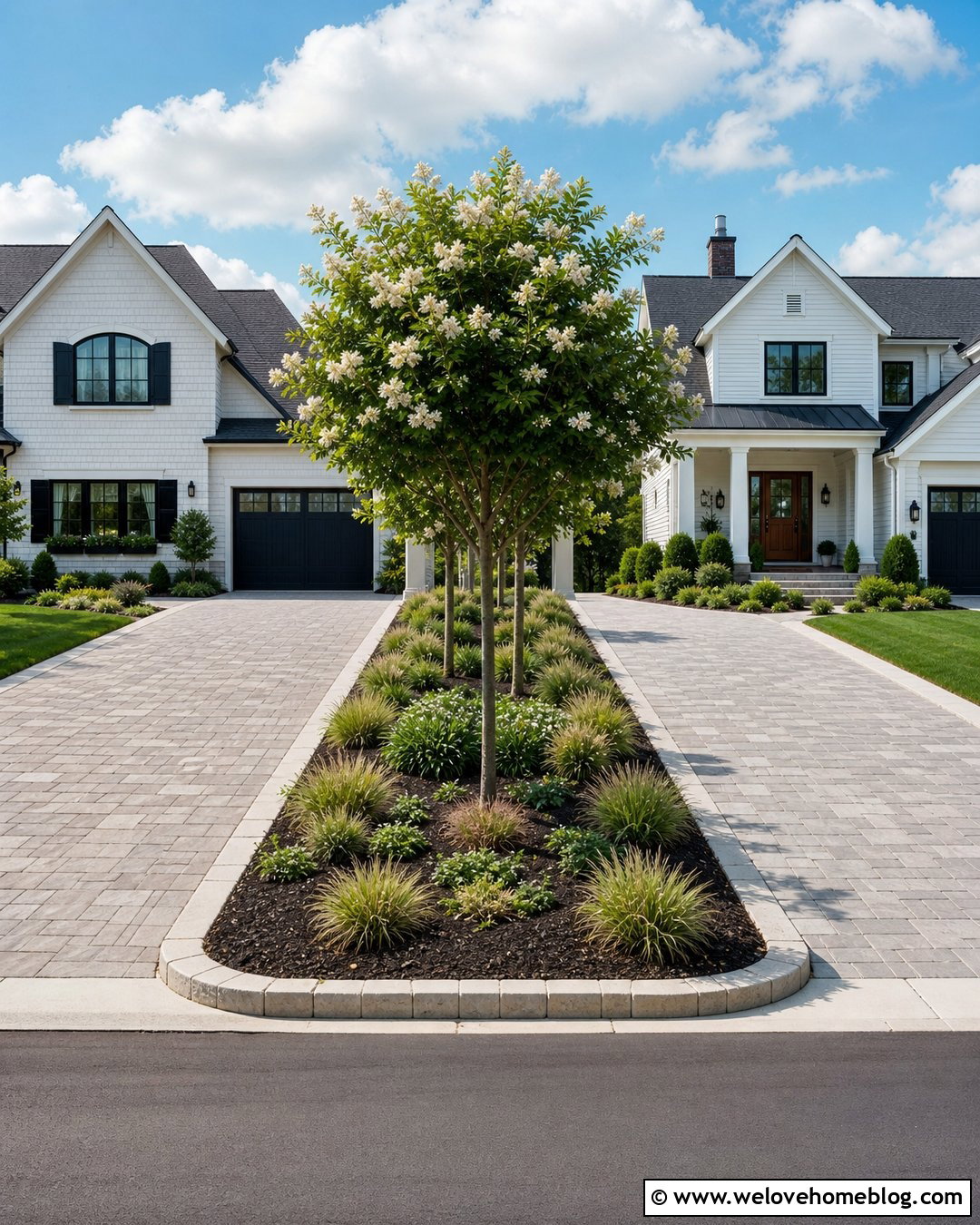
A broad space between driveways may support a row of small flowering trees, provided their roots and mature canopies fit the location. Set the trees along the centerline of a mulched bed between two paver driveways. Underplant them with low grasses or spreading groundcovers to create layers without producing visual clutter. Keep trunks protected from vehicle doors, snowplows, and lawn equipment by providing generous planting areas. Trees should be located well away from underground utilities and street sight triangles. Select species according to local climate, soil, disease pressure, and mature root behavior. Repeating three appropriately spaced trees usually looks more cohesive than mixing several unrelated varieties. The finished design gives both houses seasonal interest and a shared garden-like entrance.
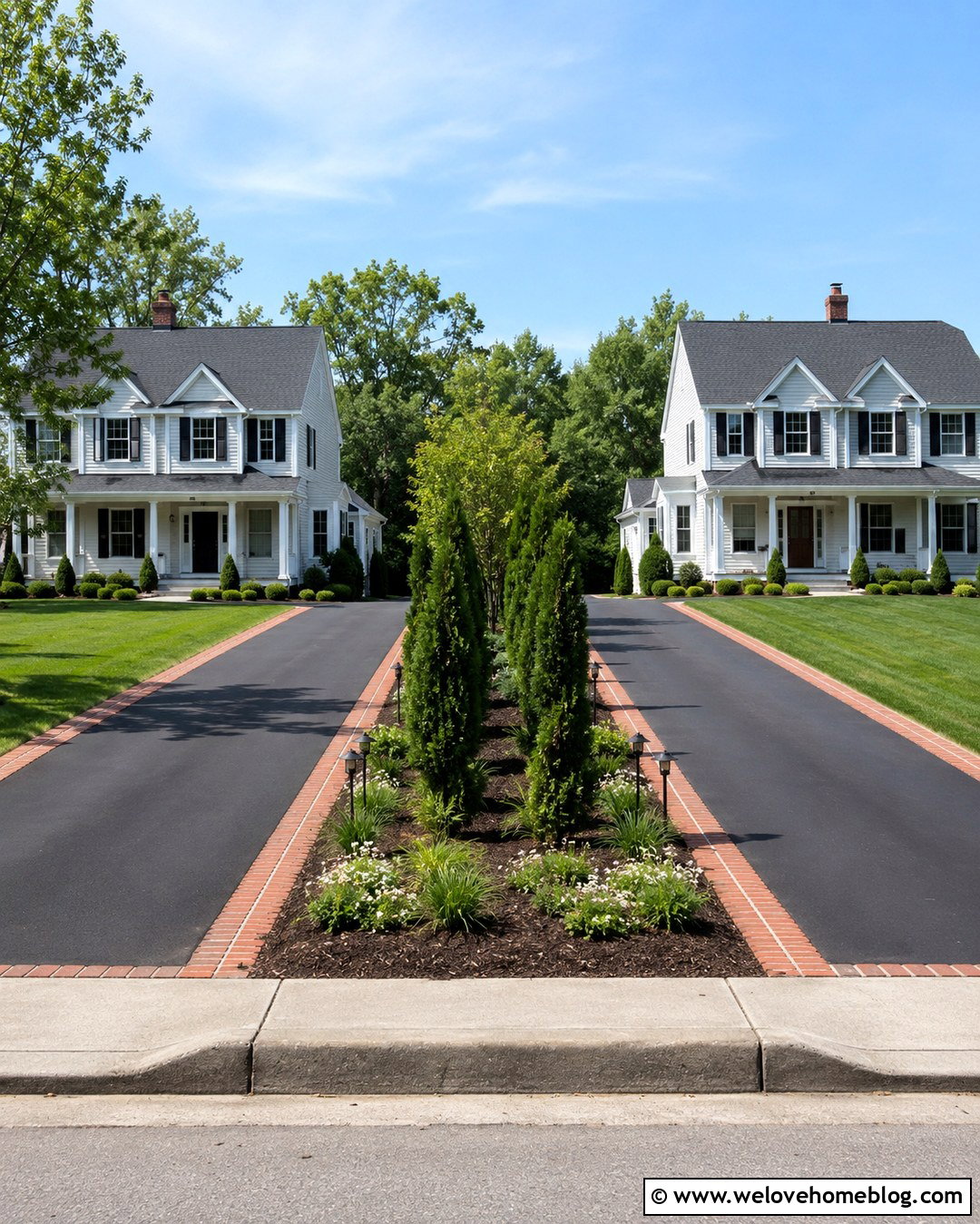
9. Driveway Divider With Columnar Evergreens
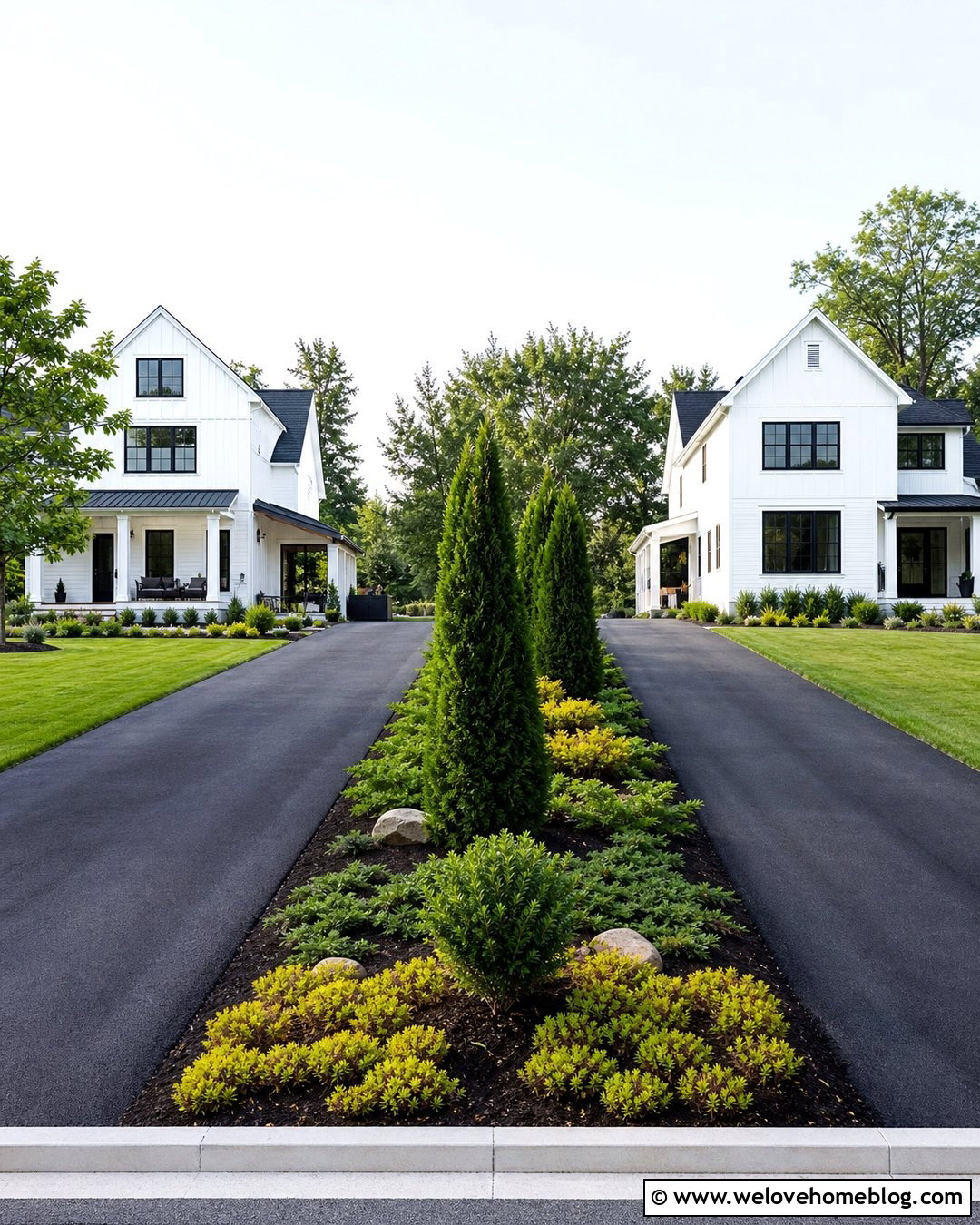
Columnar evergreens provide vertical screening where the divider is long but relatively narrow. Plant a measured row between two straight asphalt driveways, allowing enough room for the plants’ full mature width. Underplant the evergreens with low sedum or creeping juniper and finish the bed with dark brown mulch. A flush concrete curb can protect the soil while visually connecting the two paved areas. Slightly staggered spacing creates depth, although every plant should remain safely inside the bed. Avoid forcing large evergreens into a strip that cannot support them. Snow load, wind exposure, deer, salt spray, and irrigation requirements should guide plant selection. Near the street, replace taller plants with lower shrubs so drivers retain clear views in both directions.
10. Driveway Median With Low Boxwood
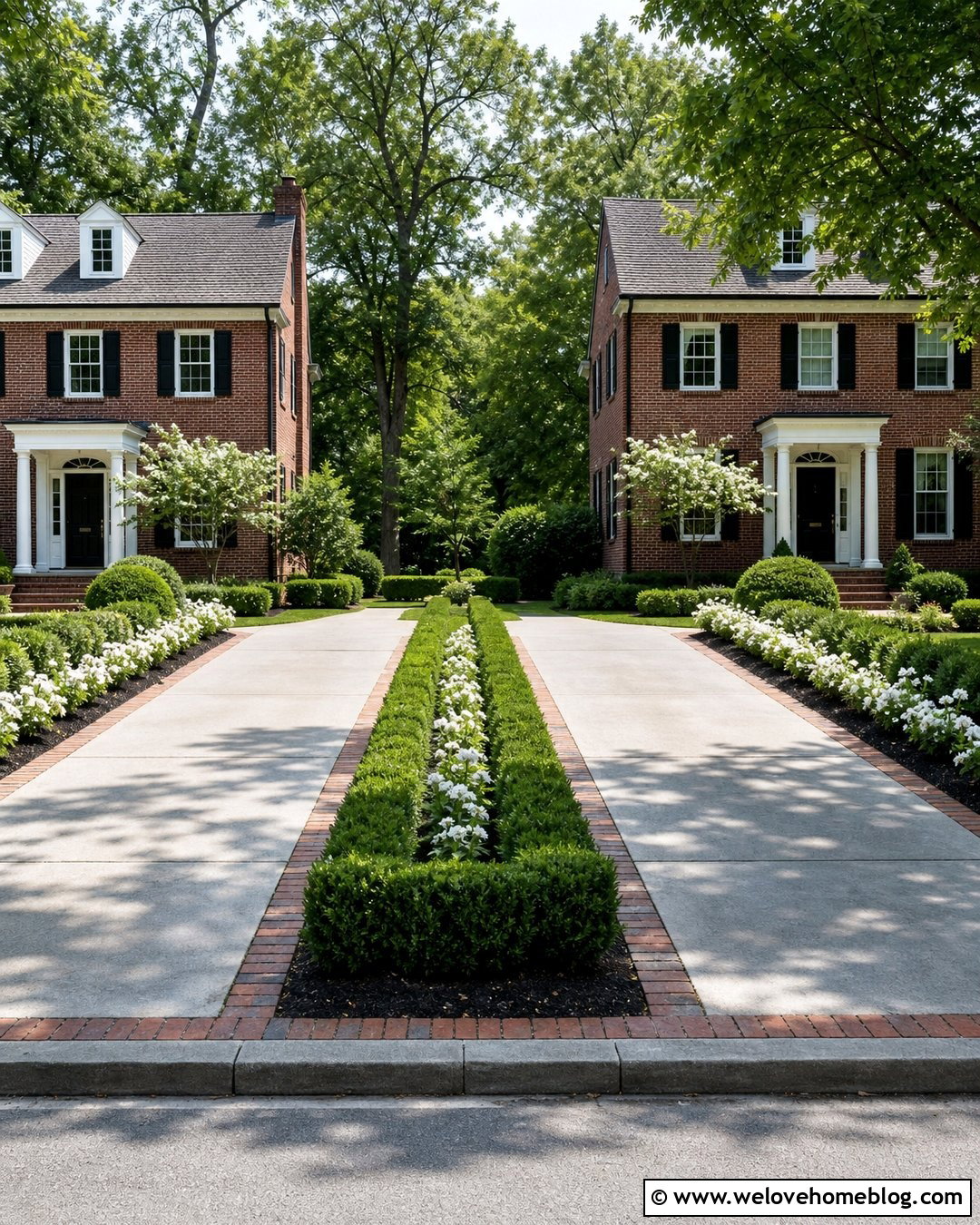
Low clipped shrubs create a formal divider that works beautifully with symmetrical homes. Center a narrow boxwood hedge between two light-gray concrete driveways and frame it with matching brick edging. Small white flowering perennials can be repeated along both sides, while dark mulch provides a crisp background. Maintain a consistent hedge height below vehicle windows, especially near the sidewalk and driveway entrances. The planting should mirror the proportions of a colonial, Georgian, or traditional brick facade without becoming overly elaborate. Where boxwood performs poorly, use a locally suitable compact evergreen with a similar form. Leave a deliberate opening aligned with the front walkway. This opening improves circulation and prevents visitors from stepping over the hedge when moving between parking areas.
11. Driveway Divider With Pollinator Flowers
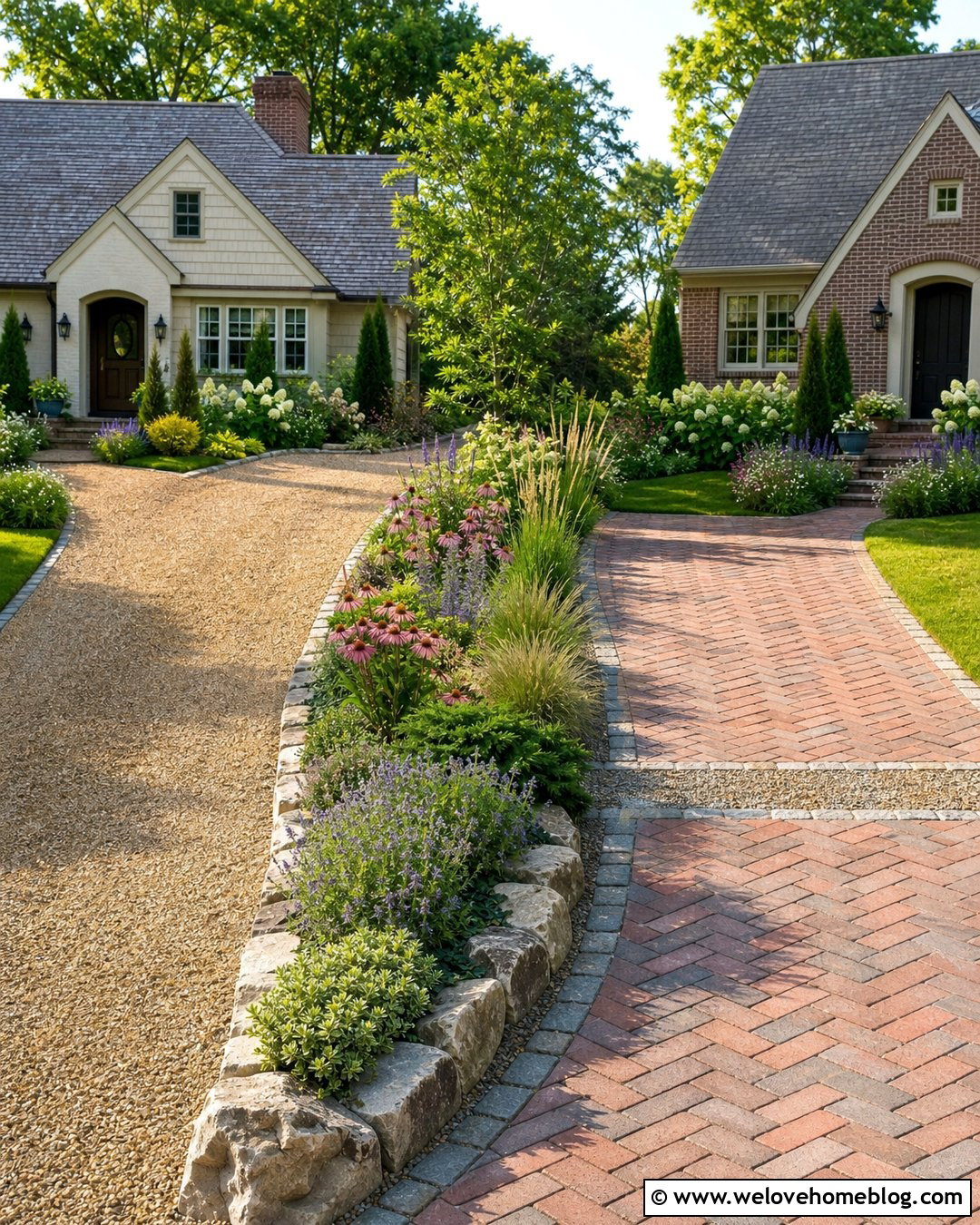
A sunny strip can become a colorful pollinator garden when plant height and seasonal maintenance are carefully controlled. Place a curved planting bed between a gravel driveway and a brick-paver driveway, using natural stone edging to connect the different surfaces. Repeat several locally appropriate native flowers in broad groups rather than installing one of everything. Keep shorter plants along the pavement and position taller blooms toward the middle or rear. Ornamental grasses can provide structure after flowering periods end. A gravel crossing path allows easy access for weeding and cleanup. Because many perennials become untidy during dormancy, include a few compact evergreen plants for year-round form. The result should look abundant yet remain clear of mirrors, doors, and vehicle turning paths.
12. Driveway Strip With Succulents And Stone
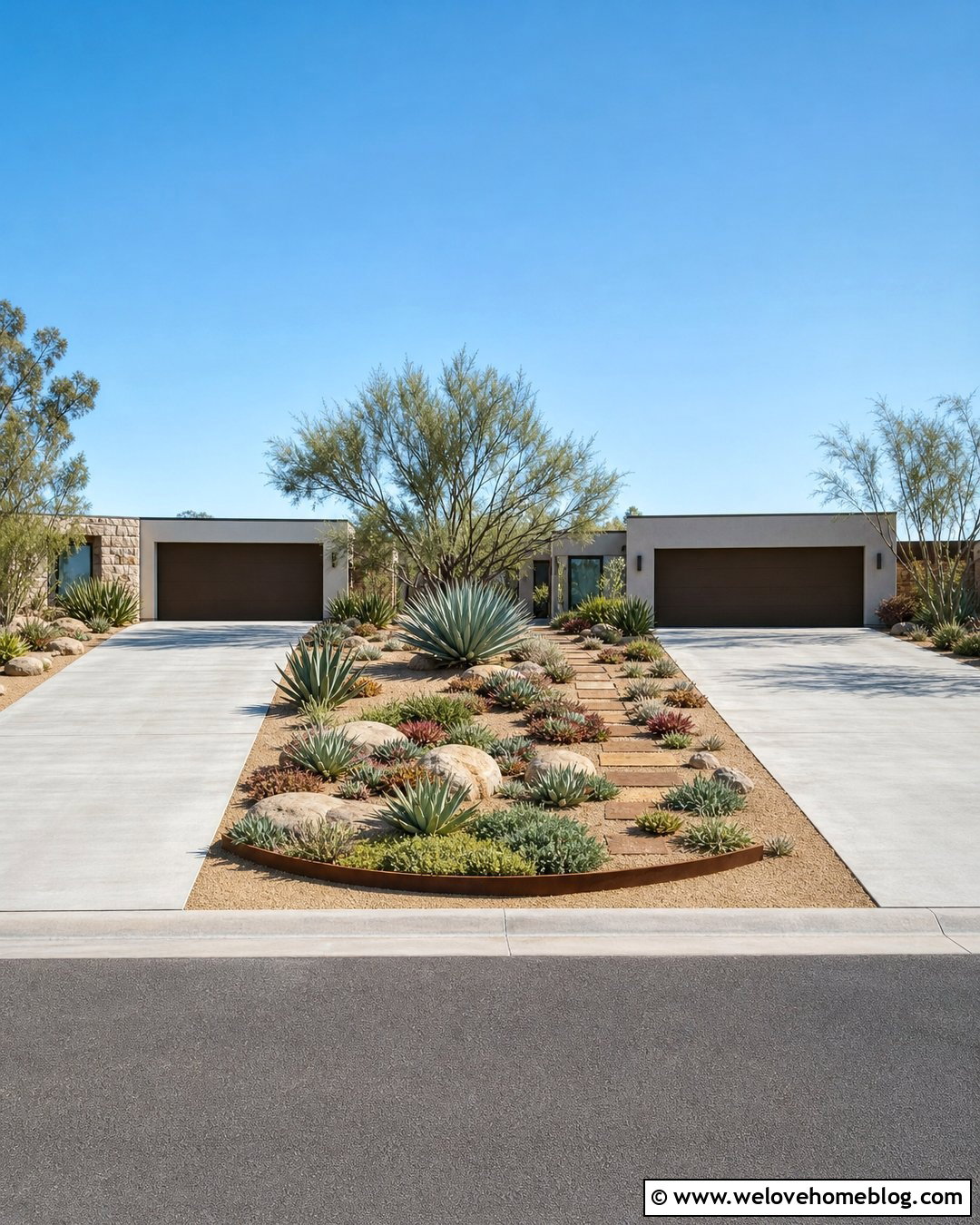
Succulents and decorative stone produce a water-conscious divider for warm, dry climates. Surround sculptural agaves, aloes, echeverias, or climate-appropriate sedums with tan decomposed granite between two smooth concrete driveways. Use a rust-colored steel edge to create a clean boundary and echo warm tones in the home’s exterior. Space plants according to their mature size, leaving open gravel around each form instead of crowding the bed. A few low boulders add scale and help the arrangement feel connected to the landscape. Keep sharp or spiny plants away from car doors, pedestrian routes, and curbside crossing points. This design performs best when drainage is excellent and the selected plants can tolerate the site’s seasonal temperatures and reflected pavement heat.
13. Driveway Divider With Dry Creek Bed
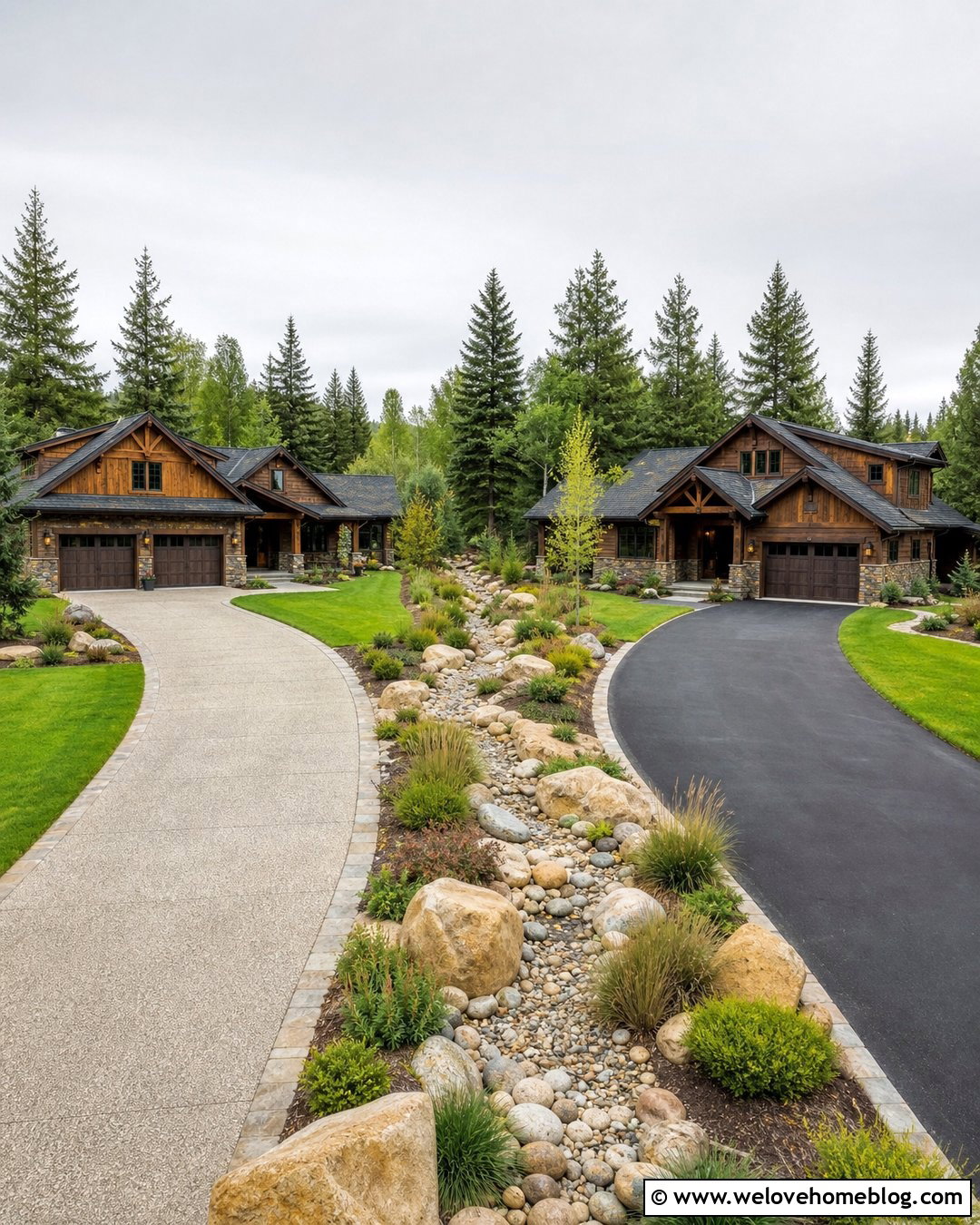
A dry creek bed adds texture while guiding surface water through a low area between two driveways. Shape a shallow, gently curving channel through the median and line it with mixed river rock, cobbles, and several larger boulders. Pair the feature with an exposed-aggregate driveway on one side and black asphalt on the other. Plant ornamental grasses, sedges, and compact shrubs along the upper banks, keeping the center open for water movement. The channel needs a safe outlet and should not direct runoff toward a neighboring foundation. Use stones heavy enough to remain stable during storms. By repeating rock colors found in both houses, the creek bed becomes a visual bridge between the properties rather than appearing like an unfinished drainage ditch.
14. Driveway Median With Lawn And Brick Edging
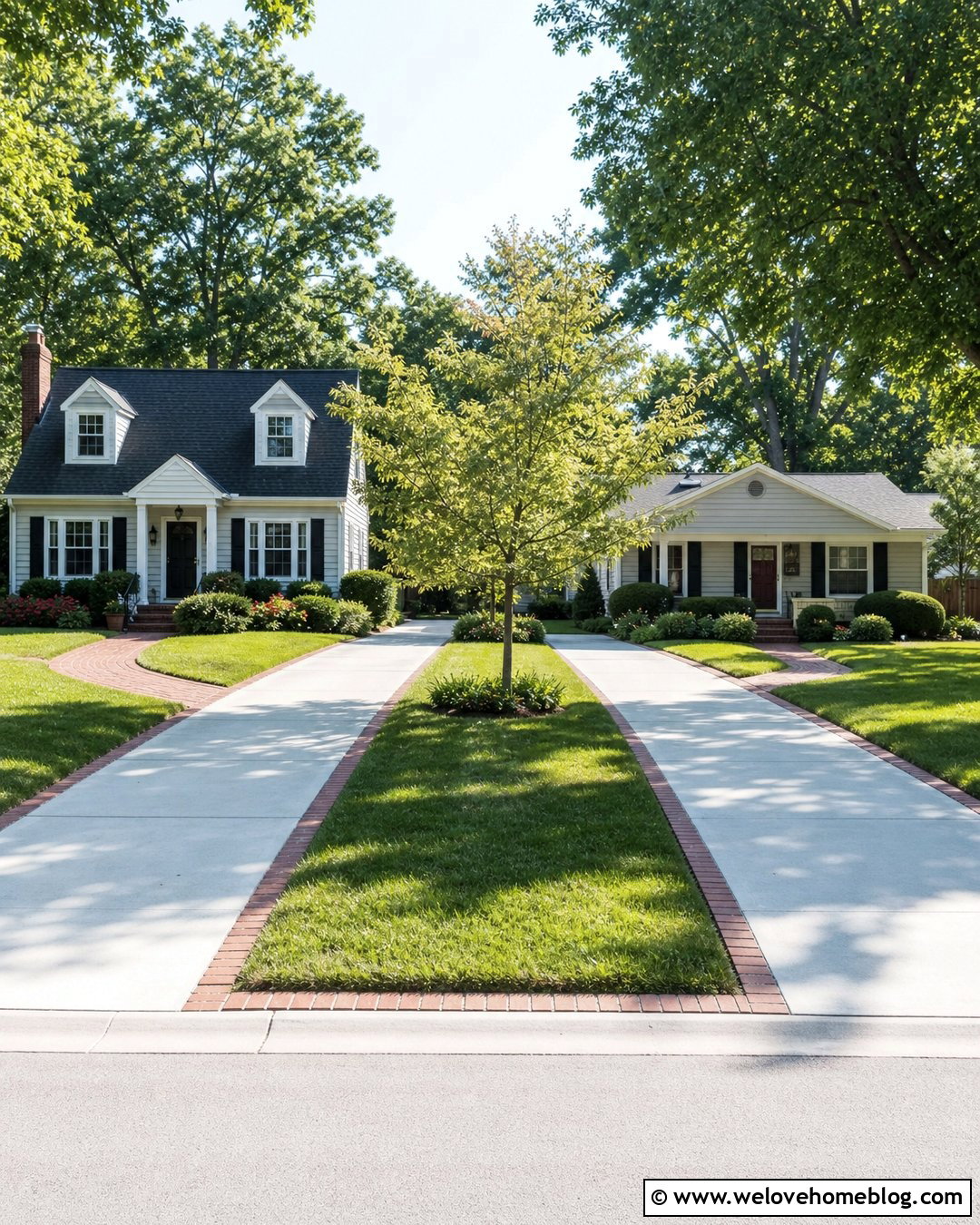
Sometimes a simple lawn strip is the most practical choice, especially when the surrounding front yards already contain healthy turf. Install a level green median between two concrete driveways and outline it with flush clay-brick edging. The bricks create a finished transition while allowing mower wheels to pass over them. Keep the strip wide enough for the available mower; extremely narrow turf can become difficult to trim and irrigate. A small ornamental tree may anchor the wider end near the houses, while the street end stays completely open for visibility. Select grass suited to the region’s sun and water conditions. Avoid frequent sprinkler overspray onto vehicles and pavement. This classic arrangement suits ranch, Cape Cod, craftsman, and traditional suburban homes.
15. Driveway Divider With Cottage Garden Plants
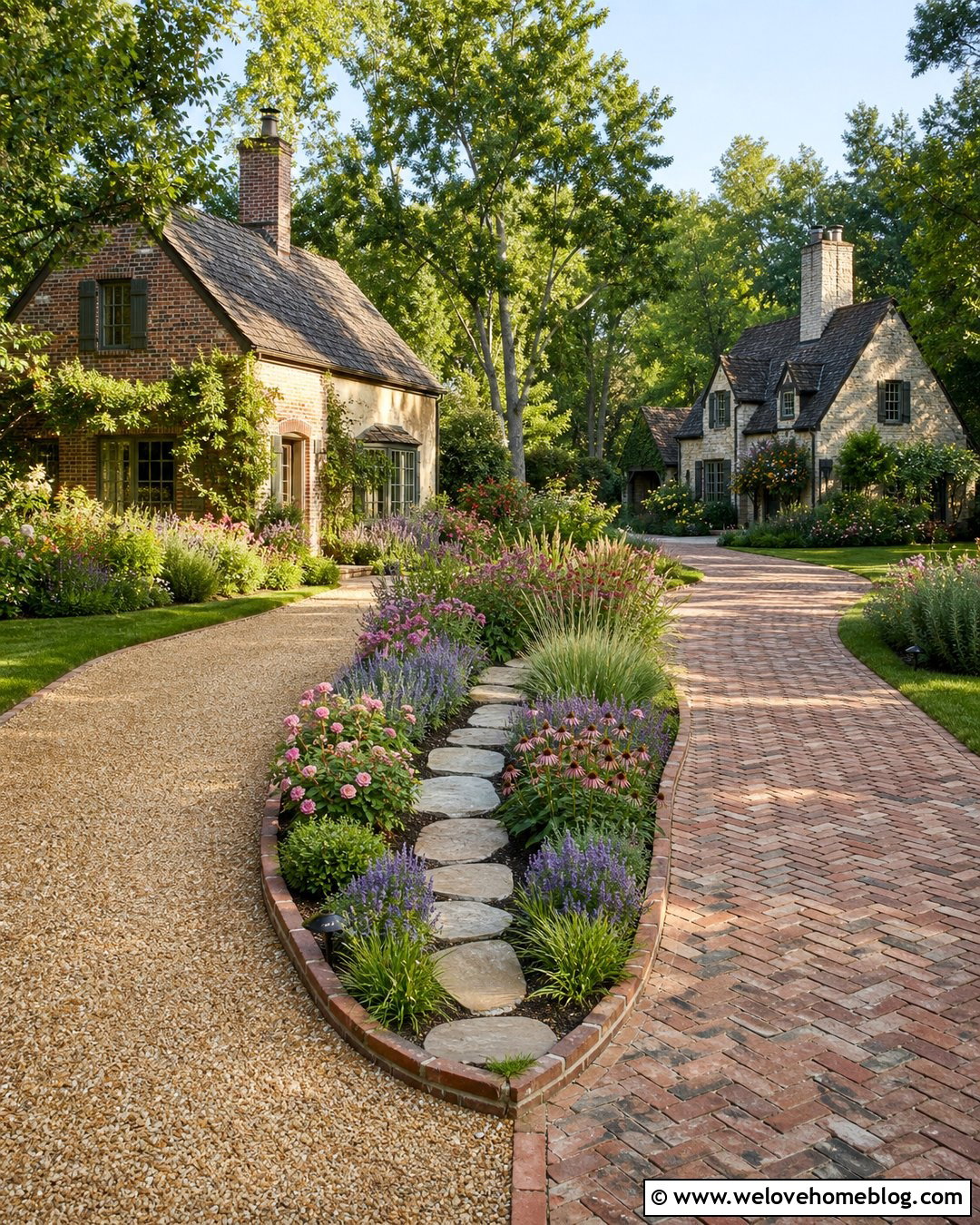
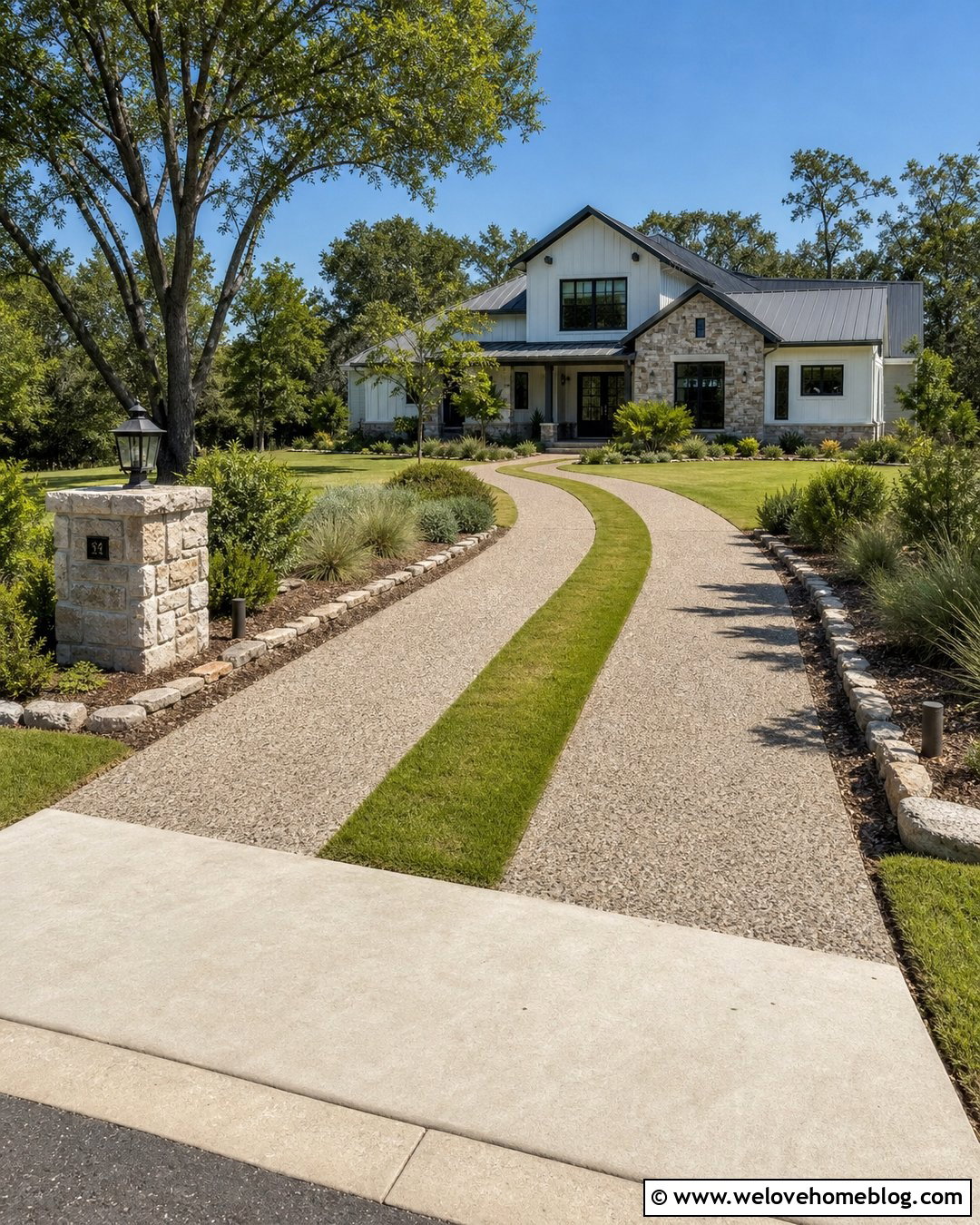
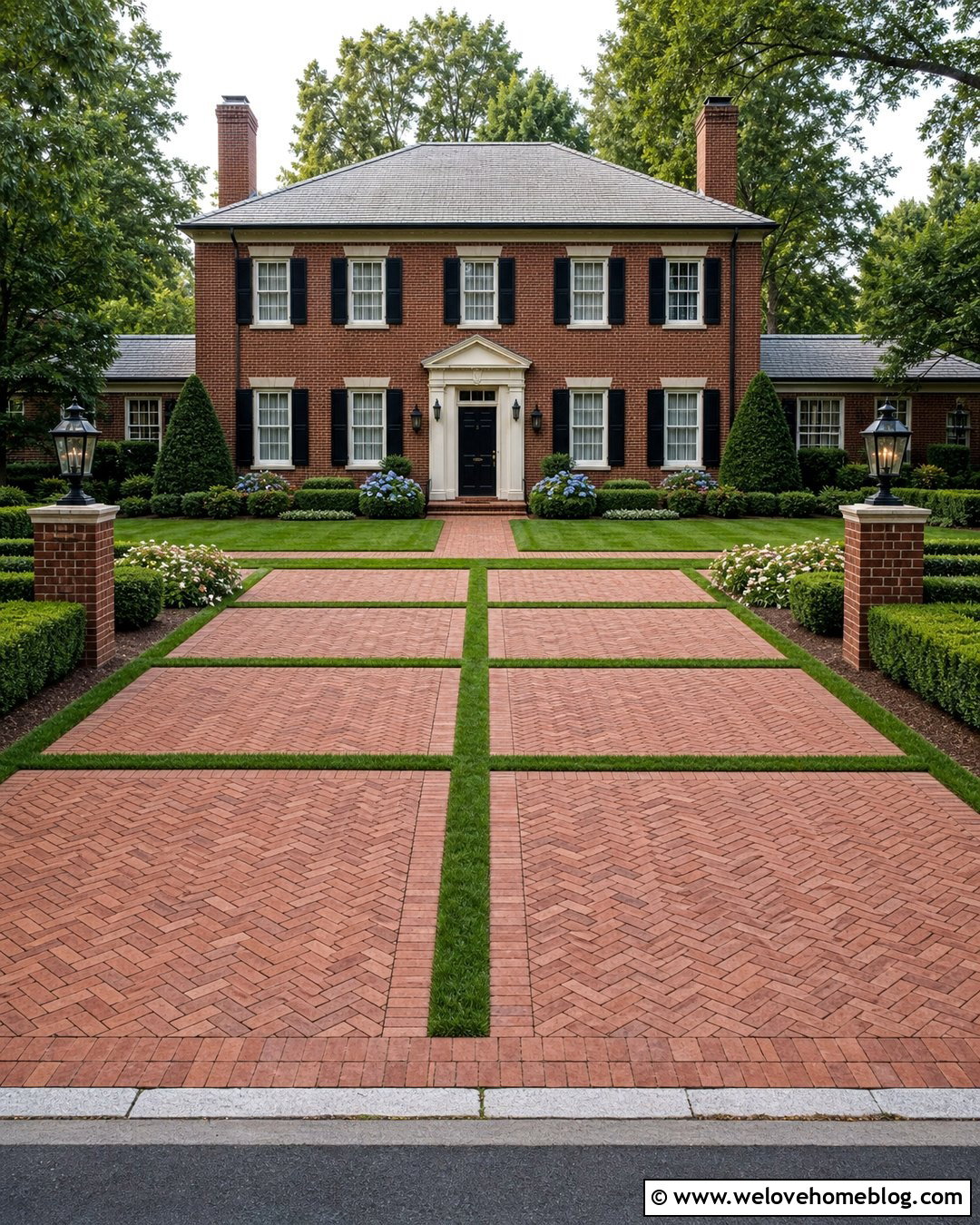
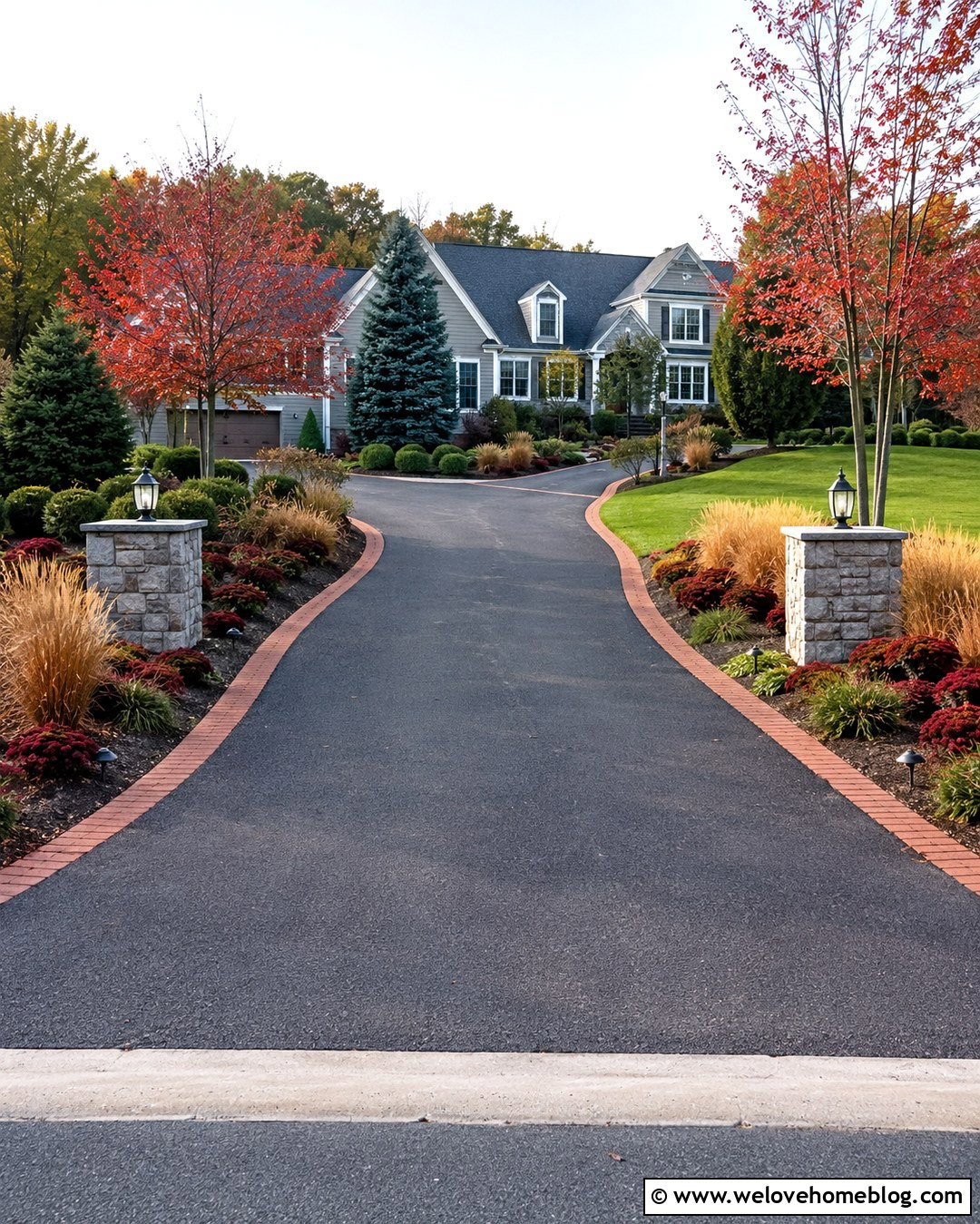
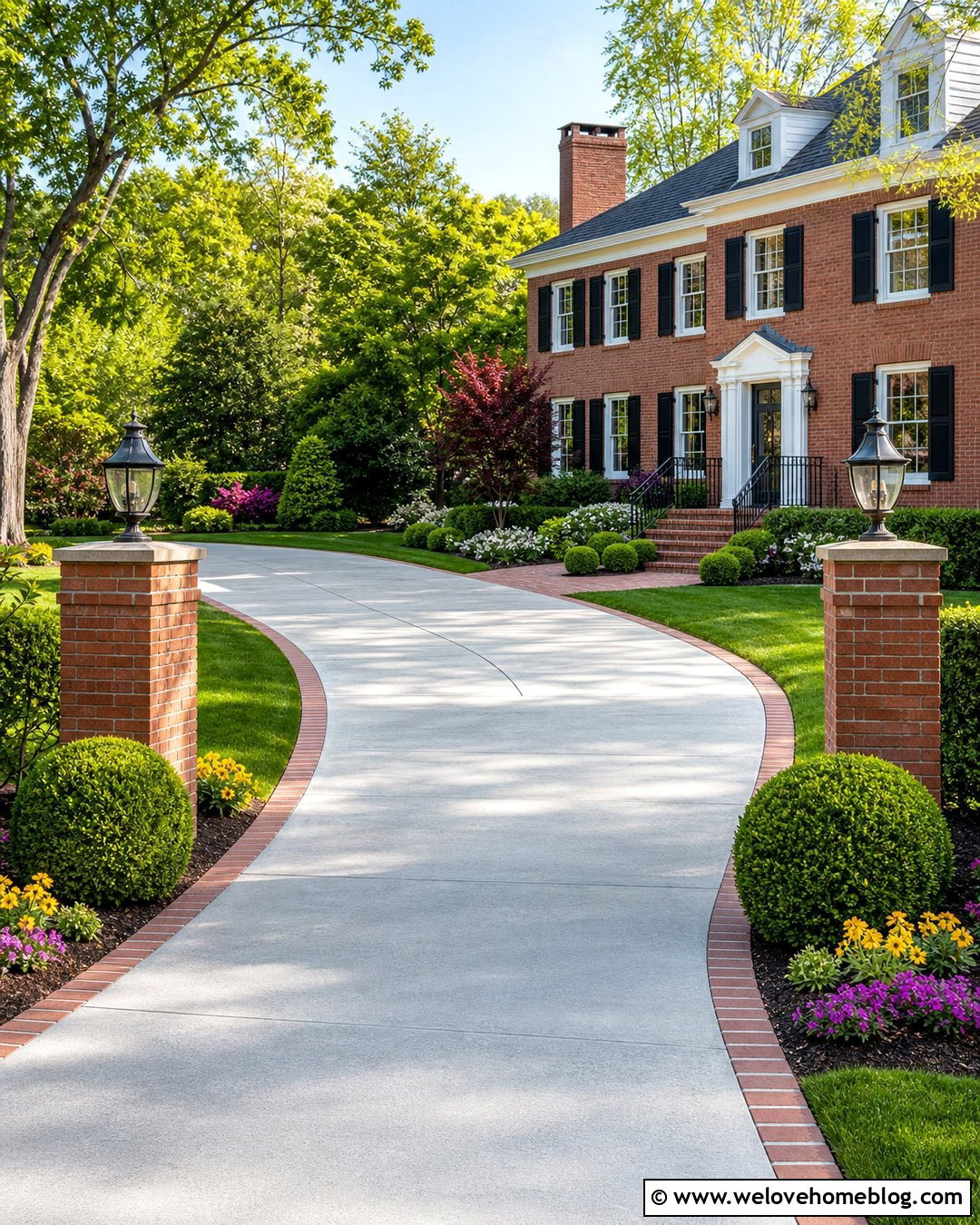
A cottage-inspired bed can soften two hard paved surfaces with layered flowers and relaxed greenery. Create a gently curved planting strip between a pea-gravel driveway and an aged brick driveway. Use reclaimed brick edging to contain the gravel and give the two sides a shared visual detail. Plant compact roses, catmint, salvia, coneflowers, and low ornamental grasses in repeating groups suited to the local climate. Keep loose, arching plants away from vehicle doors and trim spent growth before it falls onto the pavement. Add a narrow flagstone path through the widest part of the bed for maintenance access. The planting can appear informal, but repeated colors and consistent edging prevent the space from looking neglected or disconnected from the neighboring homes.
16. Driveway Divider With Modern Concrete Planters
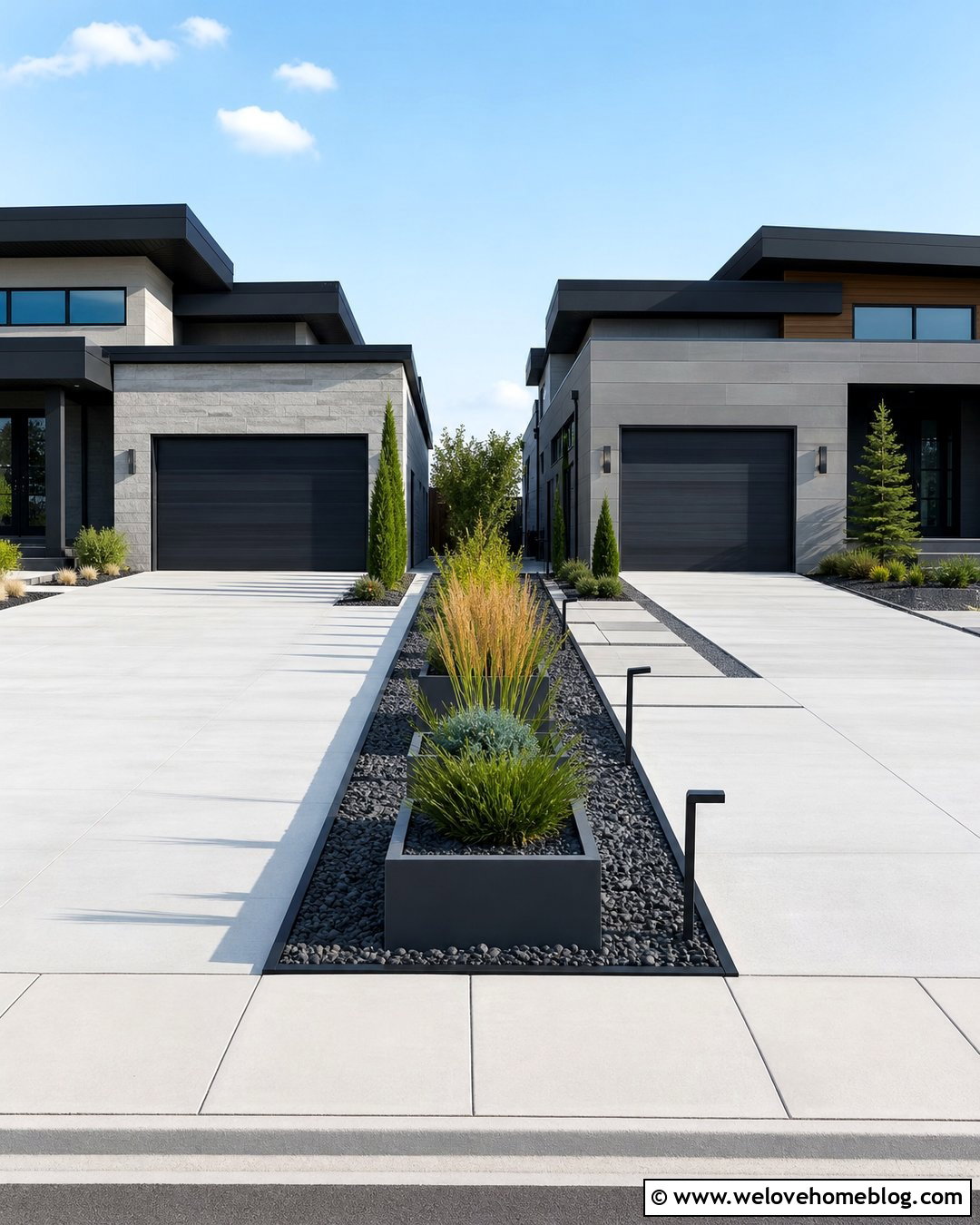
Large geometric planters give a central driveway strip a clean modern appearance without filling the entire area with permanent planting. Arrange several rectangular charcoal concrete planters between two pale-gray poured-concrete driveways. Leave measured gaps for drainage, maintenance, and pedestrian movement. Fill each container with upright grasses, compact evergreens, or drought-tolerant architectural plants. Use black gravel around the planters and straight steel edging to reinforce the simple geometry. Low linear lighting can improve nighttime orientation, although fixtures should not shine toward drivers or neighboring windows. Select frost-resistant containers with adequate drainage for the local climate. The combination of controlled planting, limited colors, and uncluttered pavement works especially well with contemporary and mid-century modern homes.
17. Driveway Divider With Boulder Landscaping
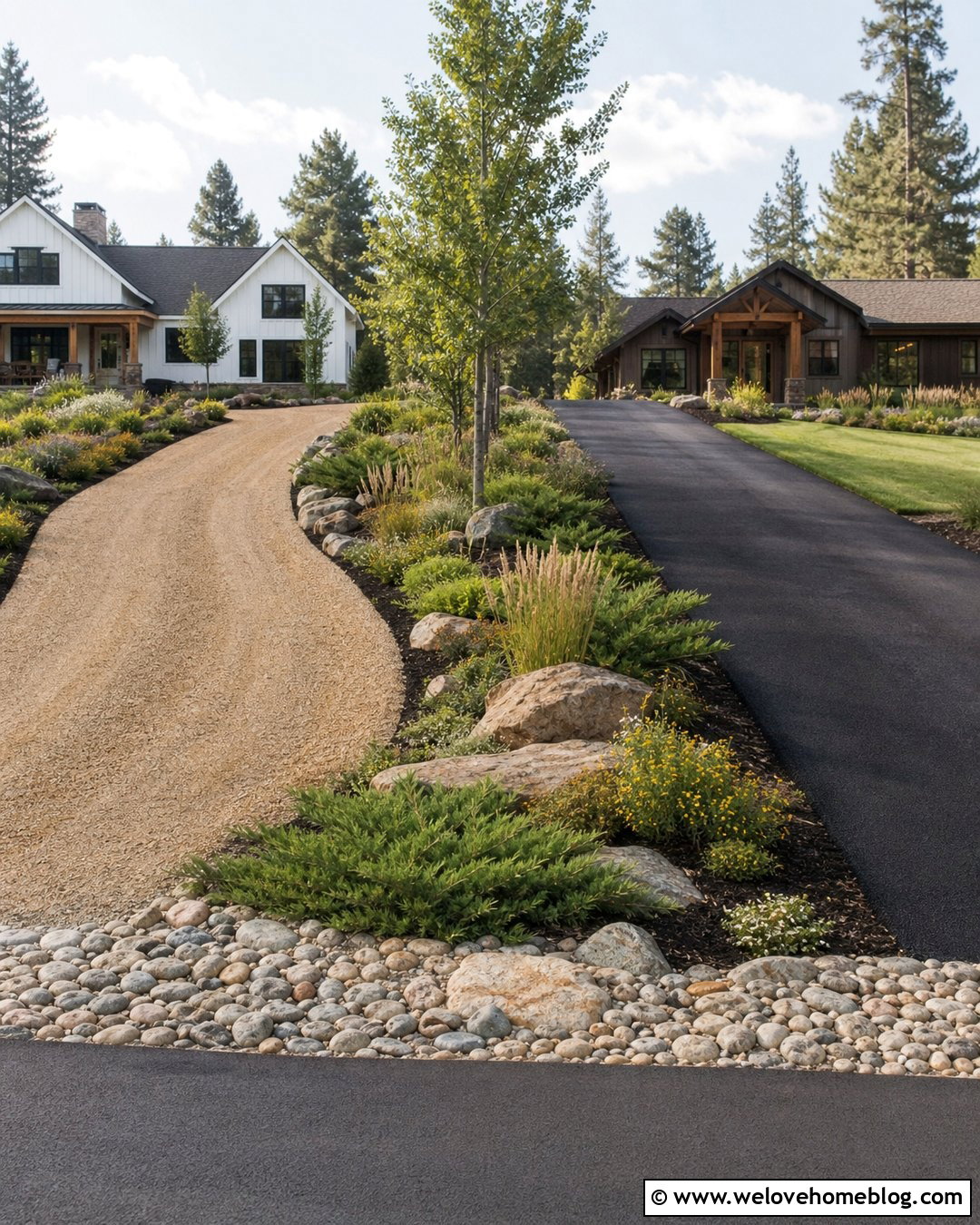
Boulders can protect a wide median and create a natural transition between two driveways, but their placement requires careful planning. Set several varied stones within a mulched bed between a curved gravel driveway and a straight asphalt driveway. Partially bury each boulder so it looks grounded rather than dropped on the surface. Surround the stones with compact native shrubs, spreading juniper, ornamental grasses, and seasonal flowers. Keep boulders well inside the bed to prevent contact with turning vehicles, snow-removal equipment, and open doors. Use smaller stones near the street to maintain clear sightlines. Matching the boulders to local geology creates a more convincing landscape. This rugged arrangement complements mountain, rustic, ranch, and modern farmhouse properties.
18. Driveway Strip With Landscape Lighting
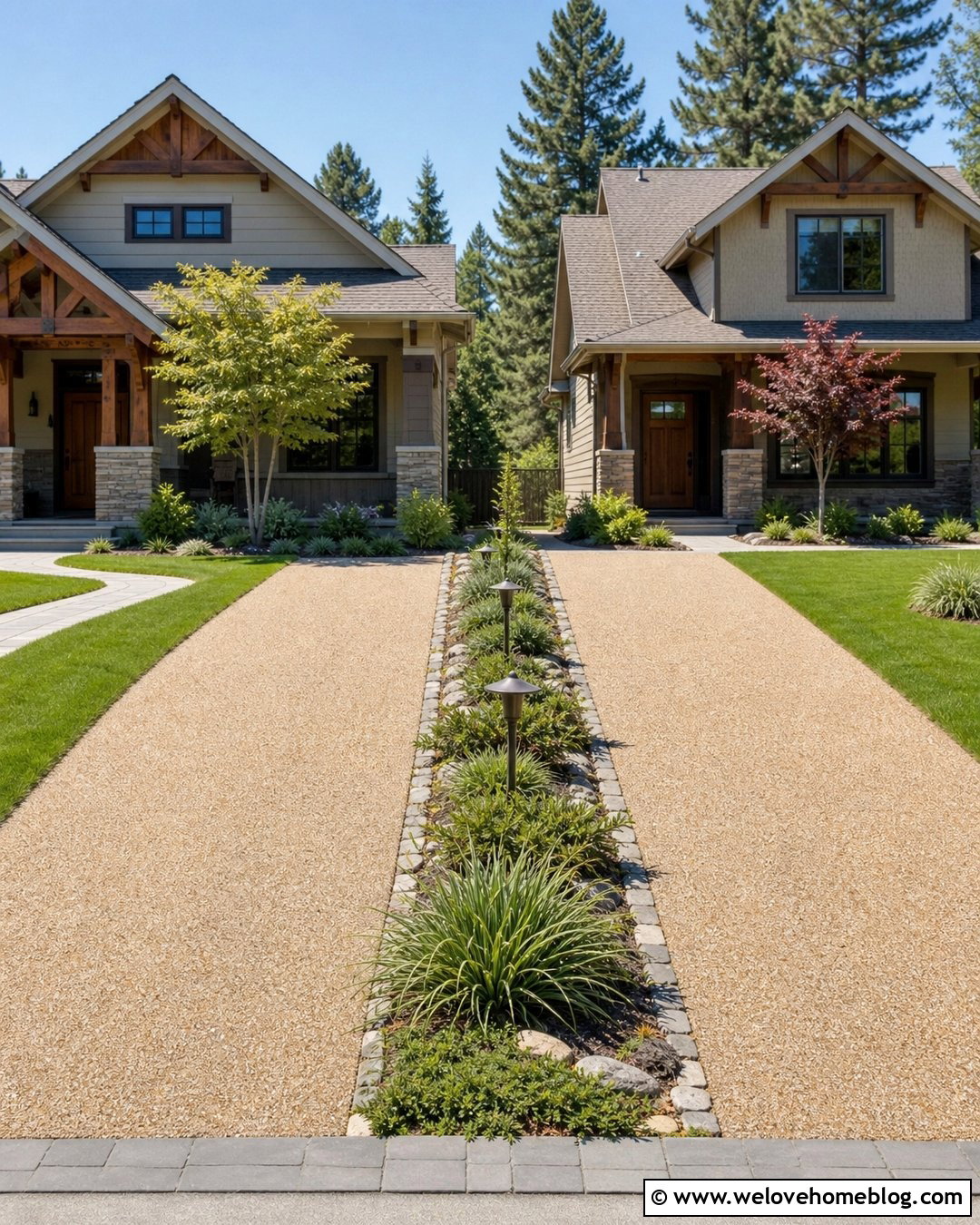
Thoughtfully placed lighting can make a planted divider safer and more polished after sunset. Start with a long bed of low grasses and evergreen groundcover between two resin-bound gravel driveways. Install short, shielded path lights at generous intervals instead of creating an overly bright runway. Aim the fixtures downward so they illuminate pavement edges without producing glare. Natural stone edging can contain the planting and remain visible during the day. Near the houses, one or two subtle uplights may highlight small ornamental trees. Keep cables protected and coordinate installation with irrigation lines and drainage. During daylight, the repeated fixtures provide structure within the bed. At night, they clarify the separation between driveways while keeping the entrances welcoming and easy to navigate.
19. Driveway Divider With Slatted Fence And Plants
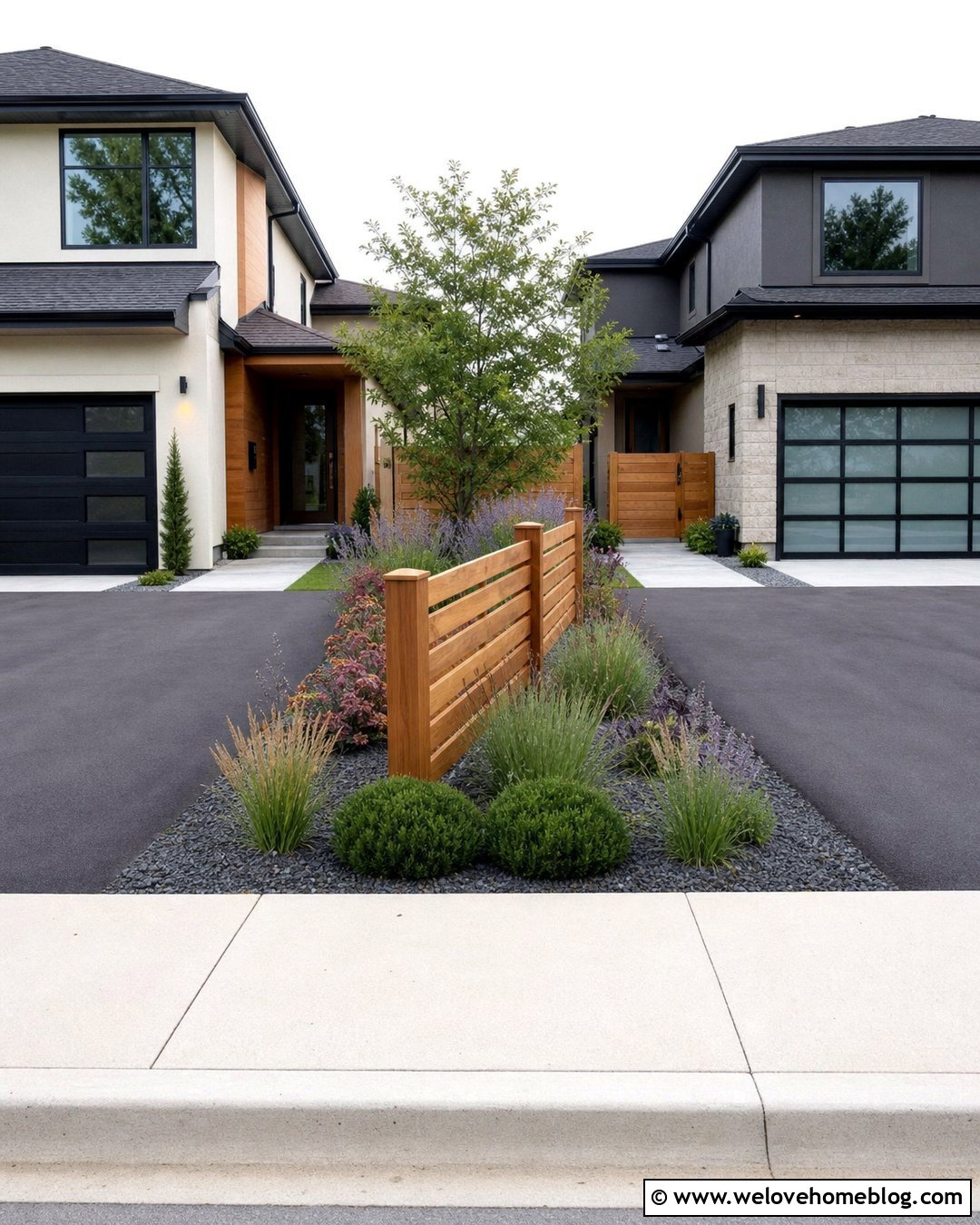
A low slatted fence provides clear separation when privacy is needed but a full-height barrier would overwhelm the space. Center a horizontal cedar screen within a generously sized planting bed between two black asphalt driveways. Add gravel around the posts, then soften both sides with compact grasses, flowering perennials, and low evergreen shrubs. Stop the fence well before the sidewalk to preserve visibility and create a more open entrance. Posts must remain far enough from the pavement to avoid mirrors and car doors. Before building, confirm property ownership, shared access rights, neighborhood rules, and permit requirements. Repeating cedar on a gate, porch, or address feature will make the divider feel connected to the architecture rather than like an unrelated boundary.
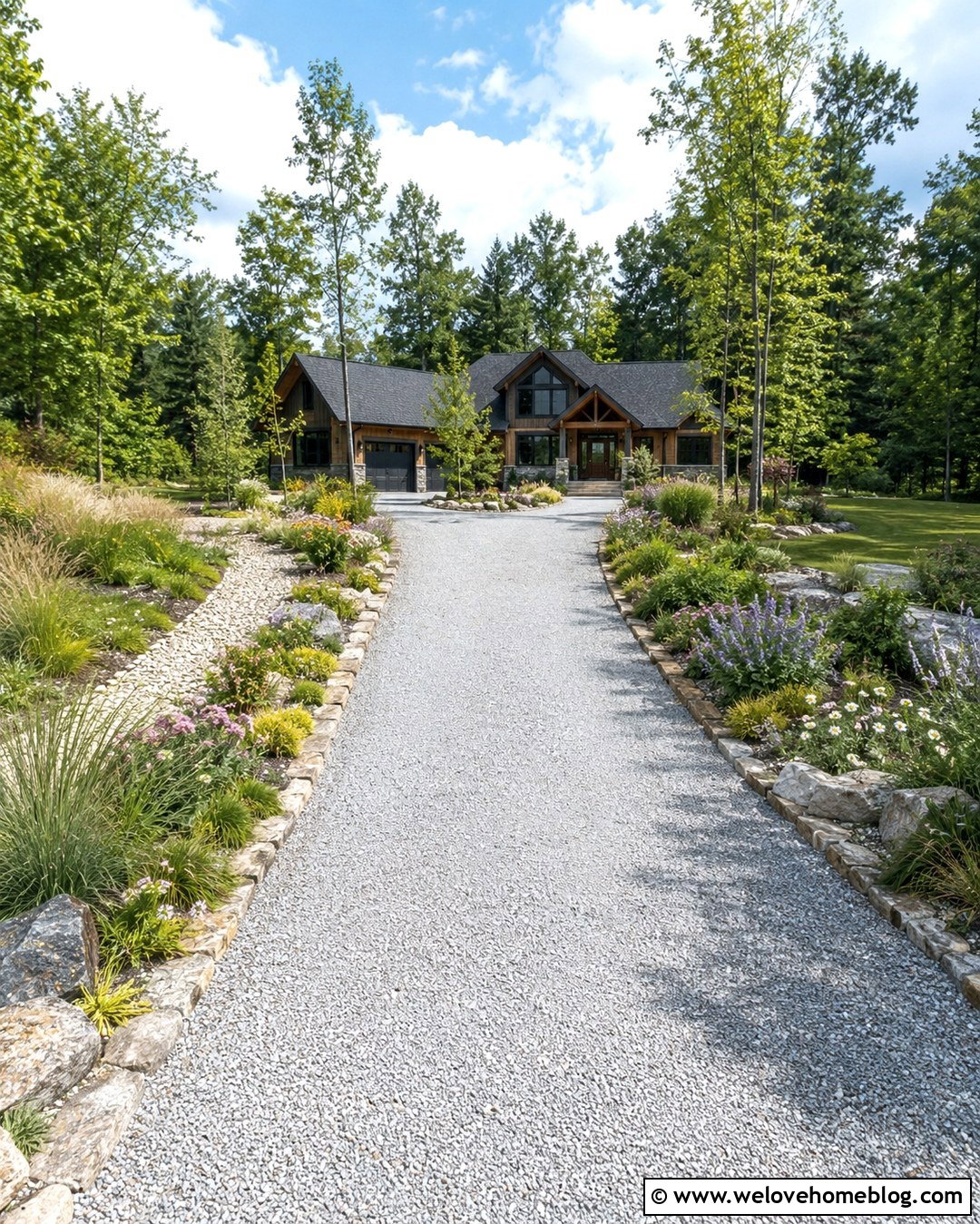
20. Driveway Median With Permeable Pavers
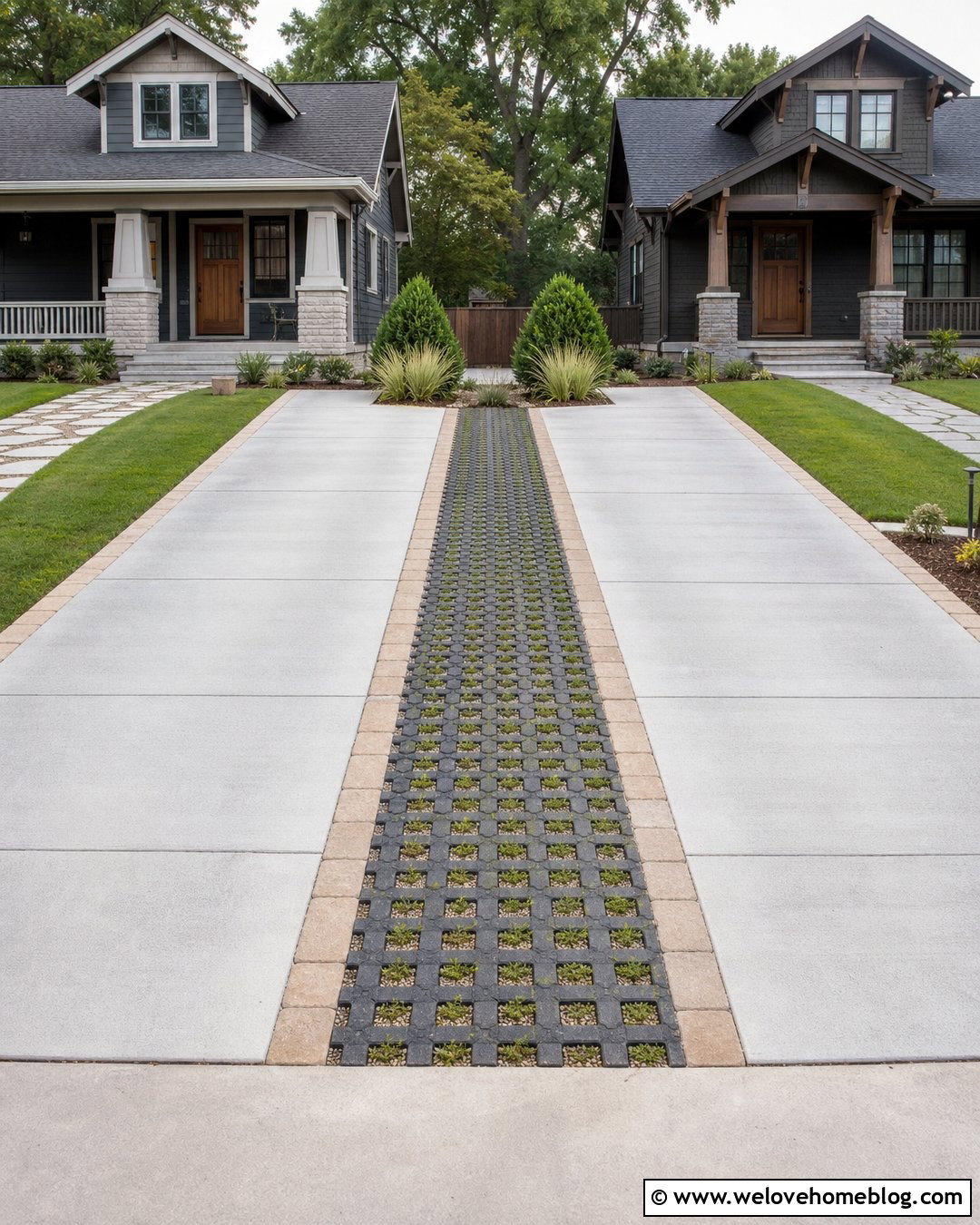
Permeable pavers can create an attractive, durable median where people occasionally walk or vehicle tires sometimes cross. Fill the central strip between two concrete driveways with charcoal grid pavers and low groundcover or small gravel in the openings. Add a narrow band of contrasting tan pavers around the perimeter for a clearly defined edge. At the wider end, incorporate two compact shrubs and a small ornamental grass grouping to soften the hardscape. The base must be prepared for drainage, stability, and expected loads; decorative garden pavers alone may not support vehicles. Keep the surface level with both driveways to reduce trip hazards. This design combines greenery with practical access and works well for contemporary, craftsman, or renovated suburban homes.
Conclusion:
Successful **landscaping between two driveways ideas** should improve the full approach to both homes, not merely fill an empty strip. Begin by measuring the available width and checking ownership, utility, drainage, and visibility requirements. Then choose a complete look that matches the driveway materials and surrounding architecture. Groundcovers and gravel work well in narrow spaces, while wider medians can accommodate shrubs, grasses, rain gardens, paths, or small trees. Allow for mature plant sizes, open car doors, snow removal, and occasional tire movement. Consistent edging and repeated materials will help neighboring driveways feel connected. Most importantly, choose plants adapted to local sunlight, soil, moisture, heat, and winter conditions for a lasting result.

Related posts:
Leave a Reply