
A roadside drainage channel does not have to look muddy, overgrown, or disconnected from your home. The best **driveway ditch ideas** combine reliable water movement with an attractive driveway surface, stable borders, thoughtful planting, and a well-finished entrance. Depending on the property, a ditch can become a river rock creek, broad grass swale, planted rain garden, stone-lined channel, or concealed French drain. Always preserve the natural drainage route and confirm local requirements before modifying a roadside ditch, culvert, or drainage easement. Proper grading and a suitable outlet matter more than decoration because the finished channel still needs to manage runoff safely. () The following **30 Driveway Ditch Ideas** offer complete looks for different homes, climates, budgets, and driveway materials.

1. River Rock Driveway Ditch
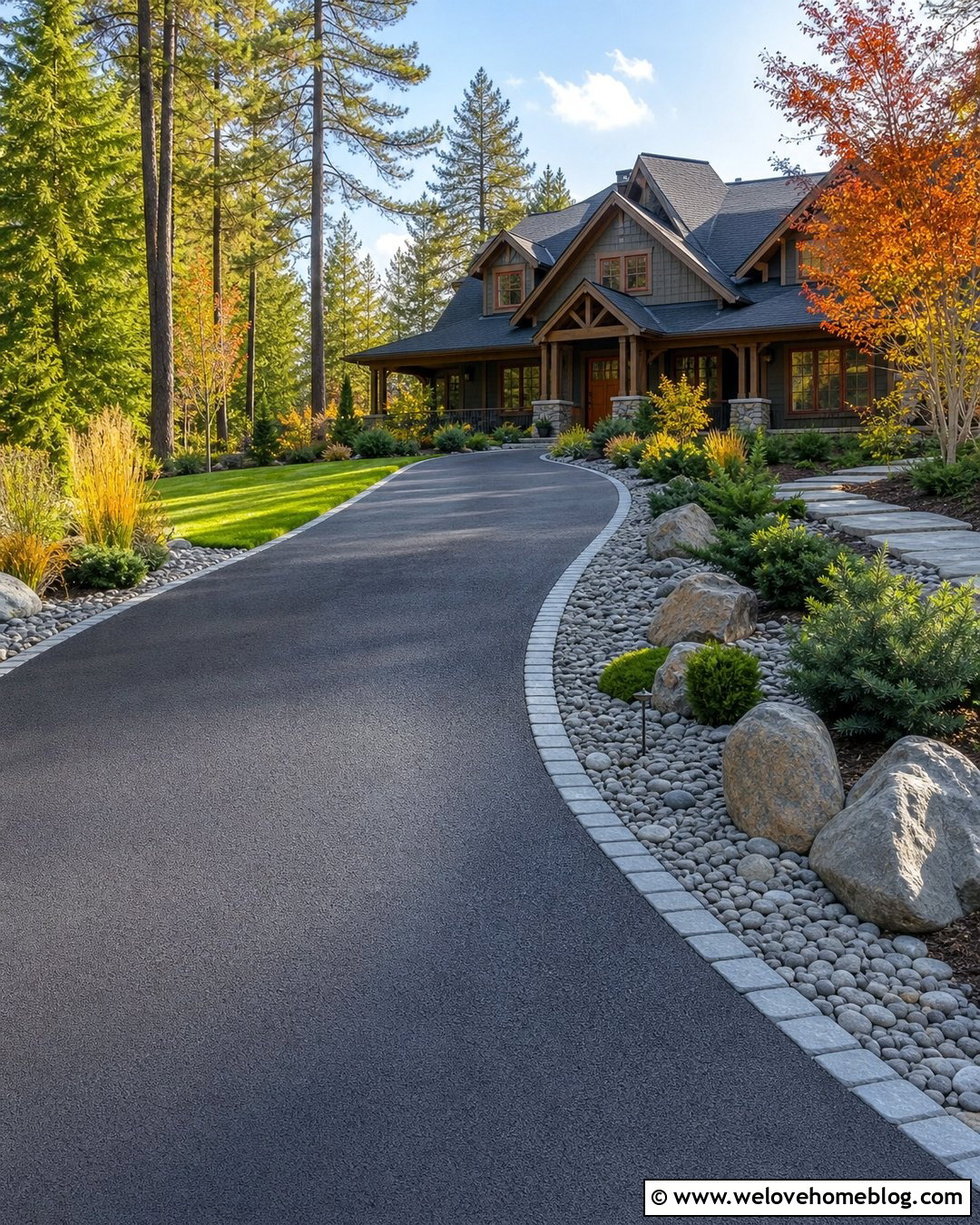
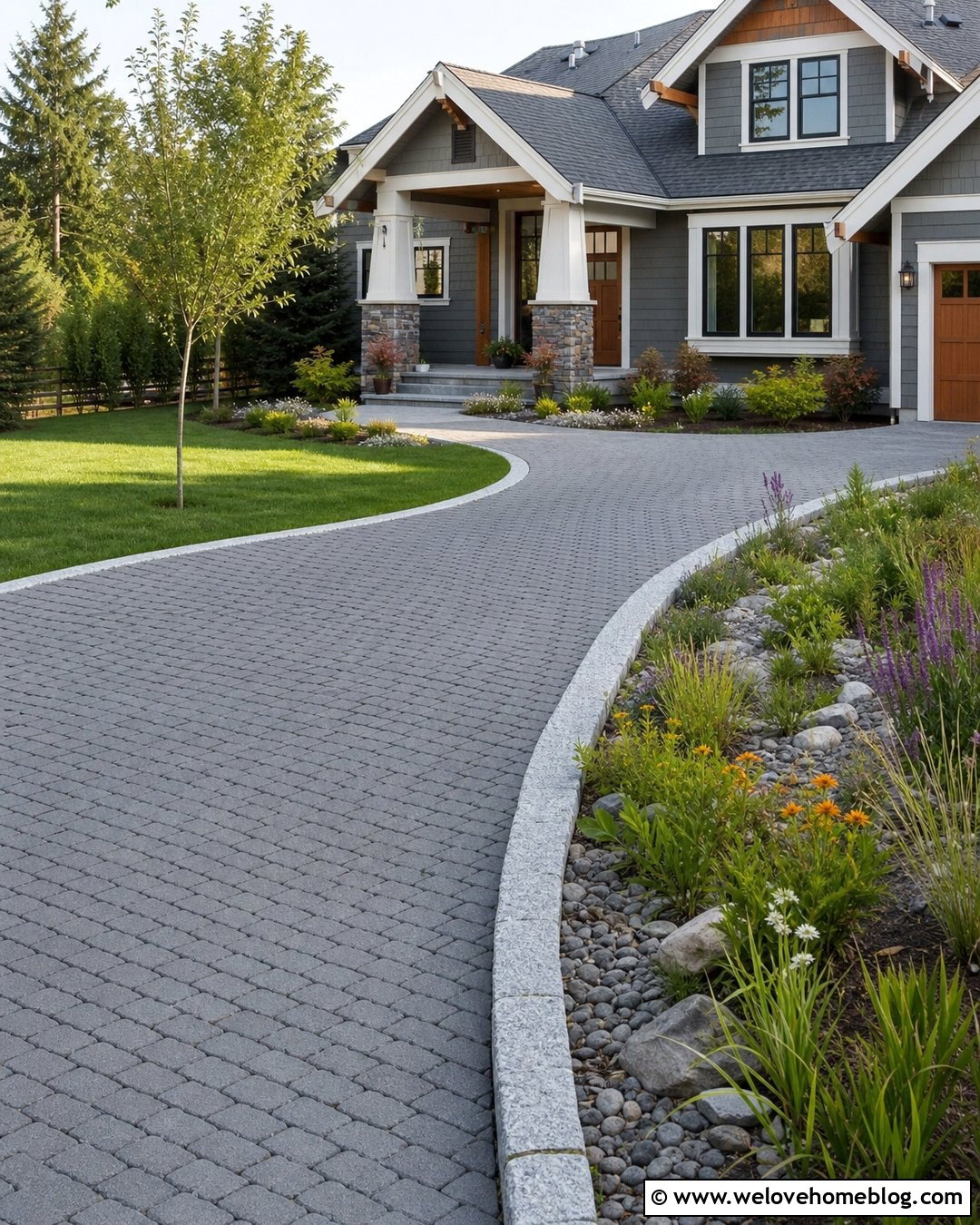
A river rock ditch gives an ordinary asphalt driveway a softer, more natural edge. Shape the drainage channel into a broad, shallow curve instead of a narrow trench. Line it with sturdy landscape fabric, then combine smooth stones in several sizes. Larger rocks can stabilize bends and outlet areas, while smaller stones fill the visible channel. Add a cobblestone border between the asphalt and ditch to stop loose soil from creeping onto the pavement. Clusters of ornamental grass, dwarf evergreens, and flowering perennials can frame the outside bank without blocking water. This complete look works especially well with craftsman, ranch, and woodland homes. Keep the center relatively open so leaves and sediment are easy to remove after storms.
2. Grass Swale Beside A Concrete Driveway
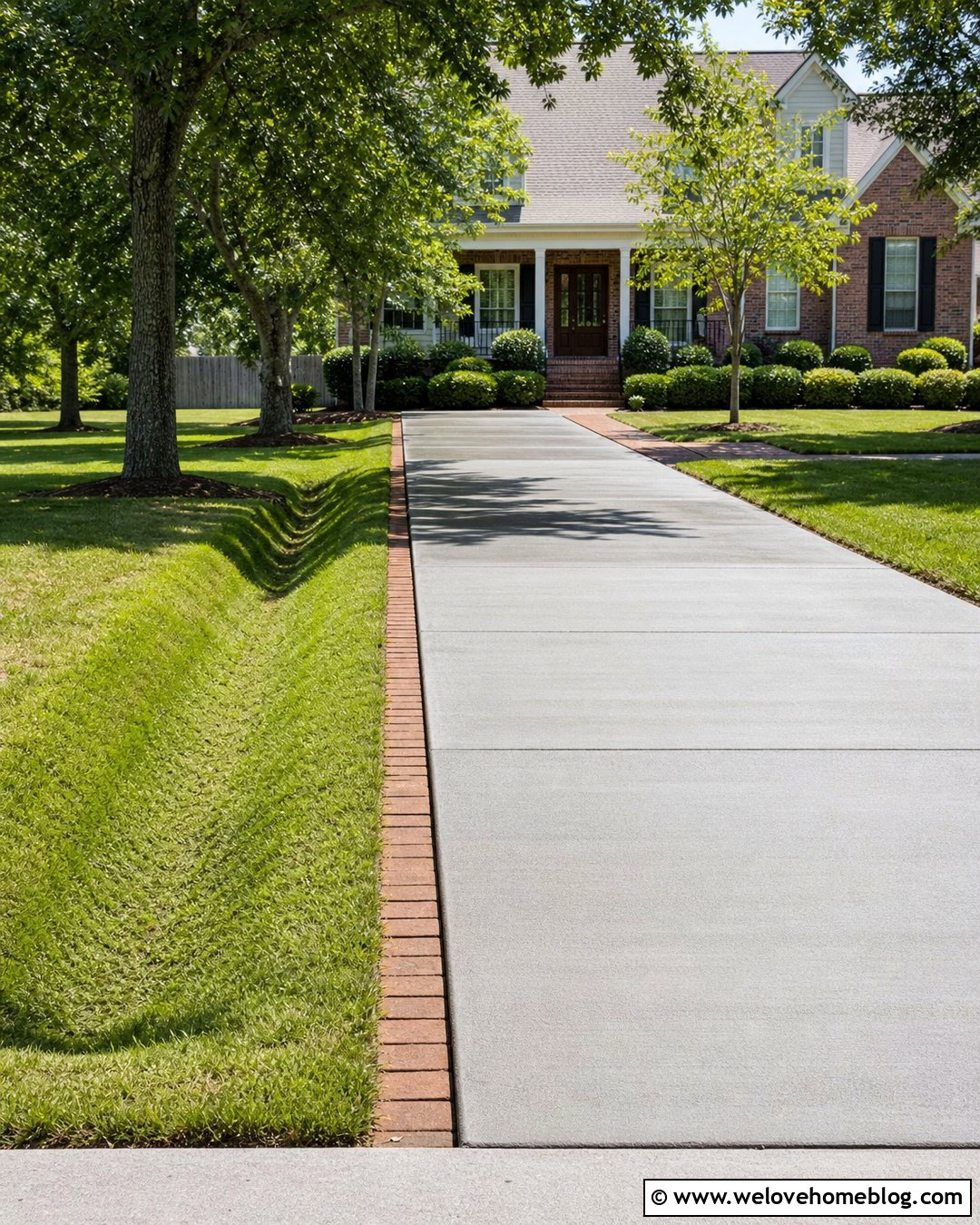
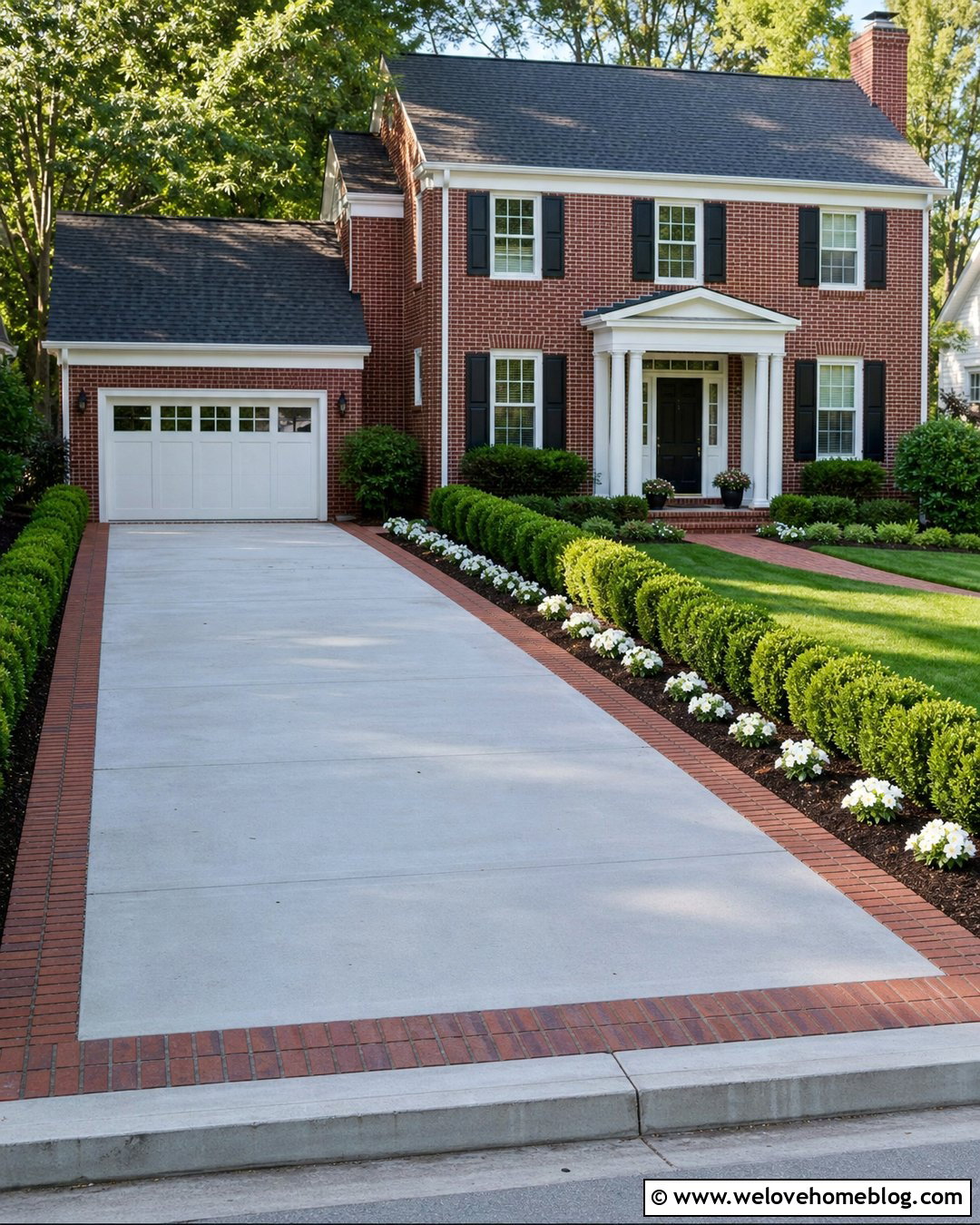
Would you prefer drainage that almost disappears into the lawn? Pair a straight, light gray concrete driveway with a wide grass swale that follows one side of the approach. The gently sloped channel should blend smoothly into the surrounding turf, creating a neat transition rather than a harsh cut. A narrow brick mowing strip along the concrete provides separation and keeps grass from spreading over the driveway. Near the house, repeat the brick around simple planting beds filled with compact shrubs and low perennials. This design suits traditional suburban homes because it feels clean and familiar. It is also easier to mow than a steep ditch. Avoid making the swale so deep that mowing equipment cannot move safely across its sides.
3. Dry Creek Driveway Ditch
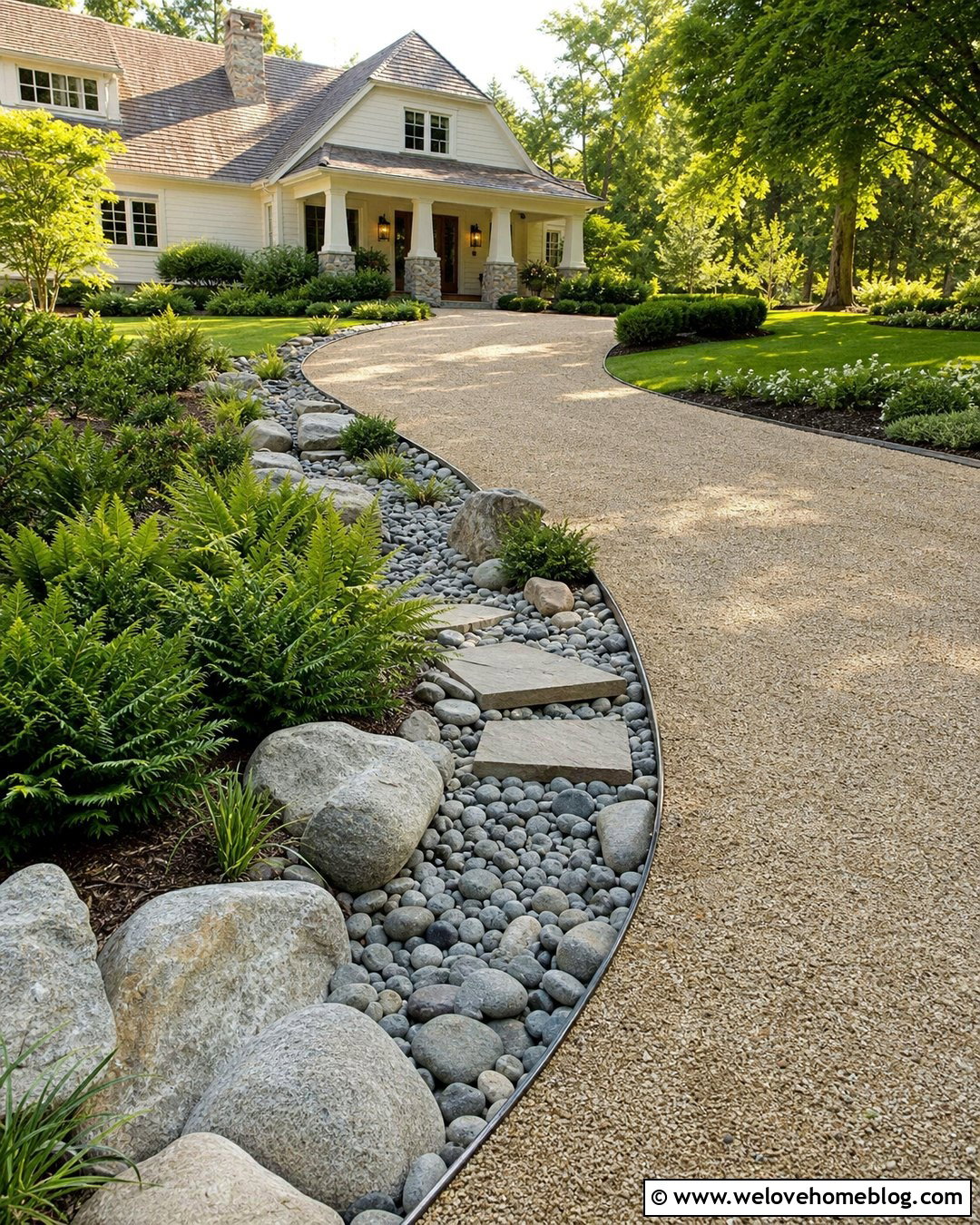
Turn a visible drainage path into a dry creek that looks intentionally connected to the front yard. A curved gravel driveway provides a natural starting point, especially when the creek follows the inside of the bend. Use mixed gray river stone, weathered boulders, and smaller gravel to create a varied streambed. The ditch should gently widen near planting areas and narrow beside the driveway entrance. Steel edging can contain the driveway gravel without competing with the creek. Plant moisture-tolerant sedges, ferns, and low shrubs along the banks, leaving open spaces where flowing water could naturally pass. A stepping-stone walkway across the creek can connect the lawn to the driveway. The result feels relaxed, practical, and suitable for a country or cottage home.
4. Stone Lined Driveway Ditch
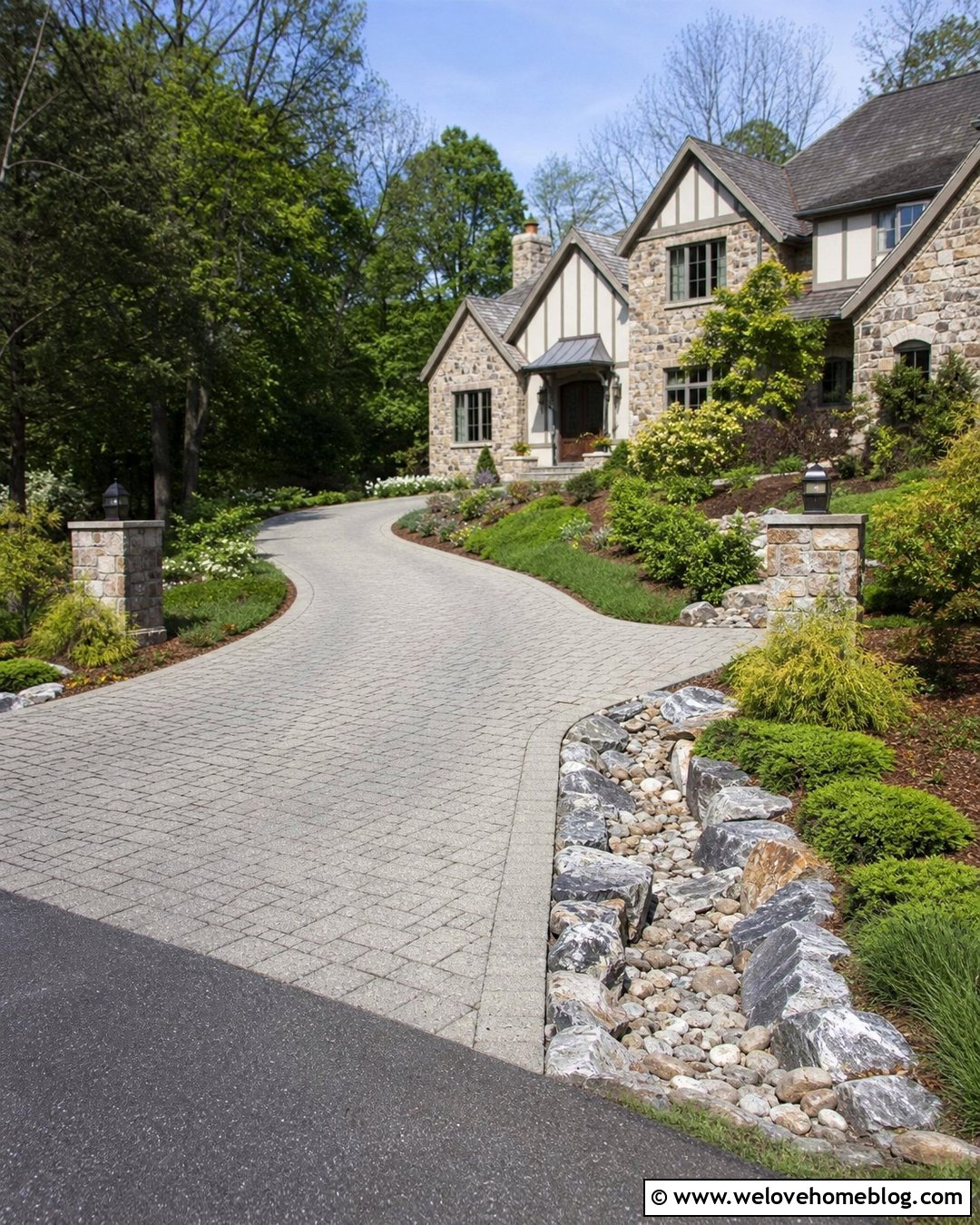
A stone-lined ditch can handle a prominent roadside location while matching a substantial paver driveway. Choose angular fieldstone or locally sourced rock that complements the home’s exterior. Arrange larger stones along the sloped sides and use smaller, tightly fitted material through the bottom. Beside the channel, install a band of permeable concrete pavers in a warm gray tone. This creates a clear edge and gives the entrance a more finished appearance. Low junipers, native grasses, and spreading ground covers can soften the upper bank without hanging into the flow path. Continue the same stone around driveway pillars or a mailbox base for visual consistency. This complete design works beautifully with colonial, Tudor, and stone-front homes where a plain grassy ditch might appear unfinished.
5. Gravel Driveway With A Planted Ditch
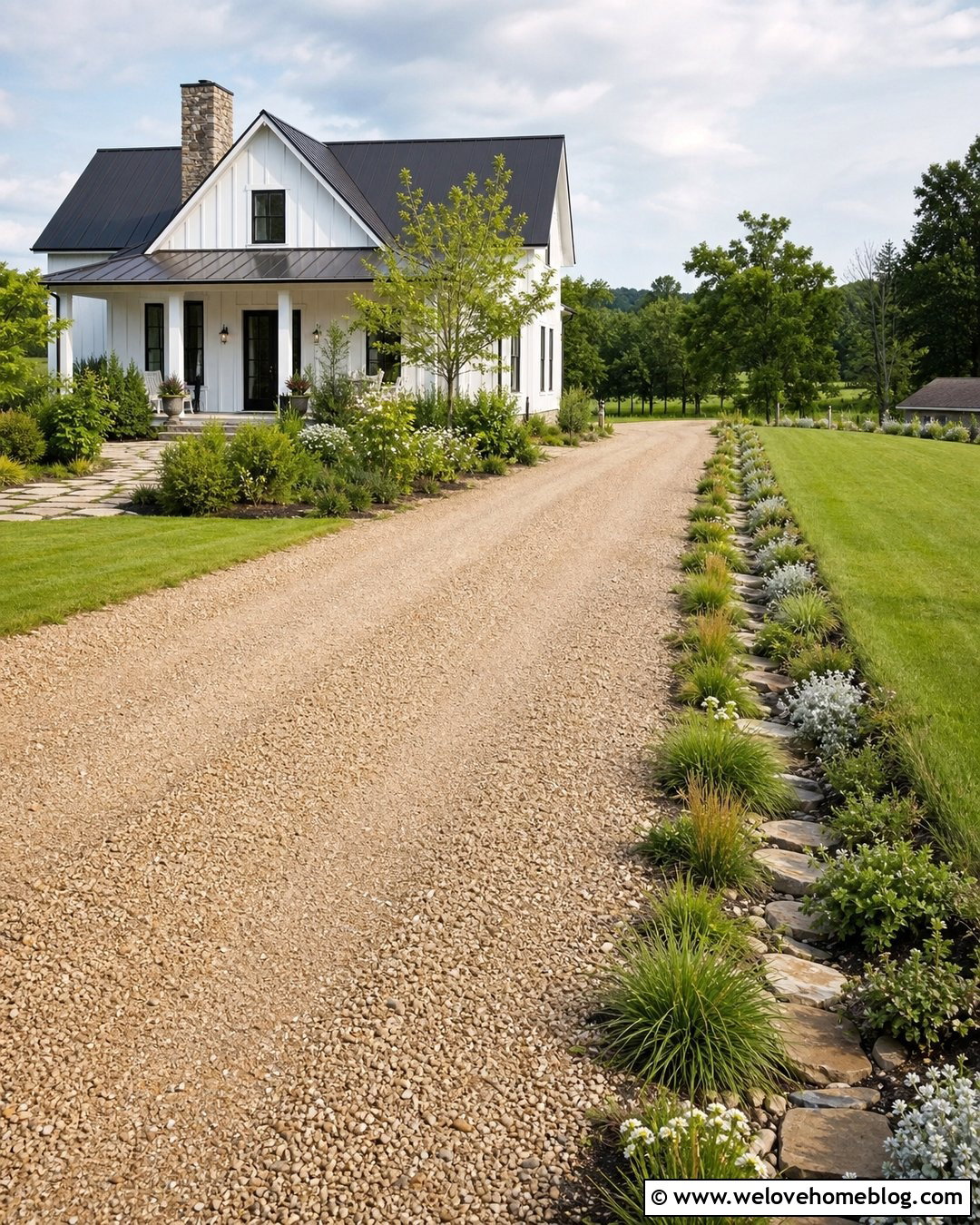
Loose gravel and informal planting naturally belong together. Create a straight tan crushed-stone driveway with compacted edges, then place a shallow planted ditch along the lower side. Use a hidden metal border to prevent driveway aggregate from washing into the drainage area. Cover the ditch banks with native sedges, rushes, flowering ground covers, and other plants suited to occasional wet conditions. Add flat stones at the bottom where concentrated runoff enters from the driveway. The planting can become denser toward the yard, while the section near the culvert remains open and accessible. This approach works well for farmhouse and rural properties because it avoids an overly engineered appearance. Choose plants with different heights, but keep taller growth away from the road to protect entrance visibility.
6. Driveway Ditch With A Culvert Entrance
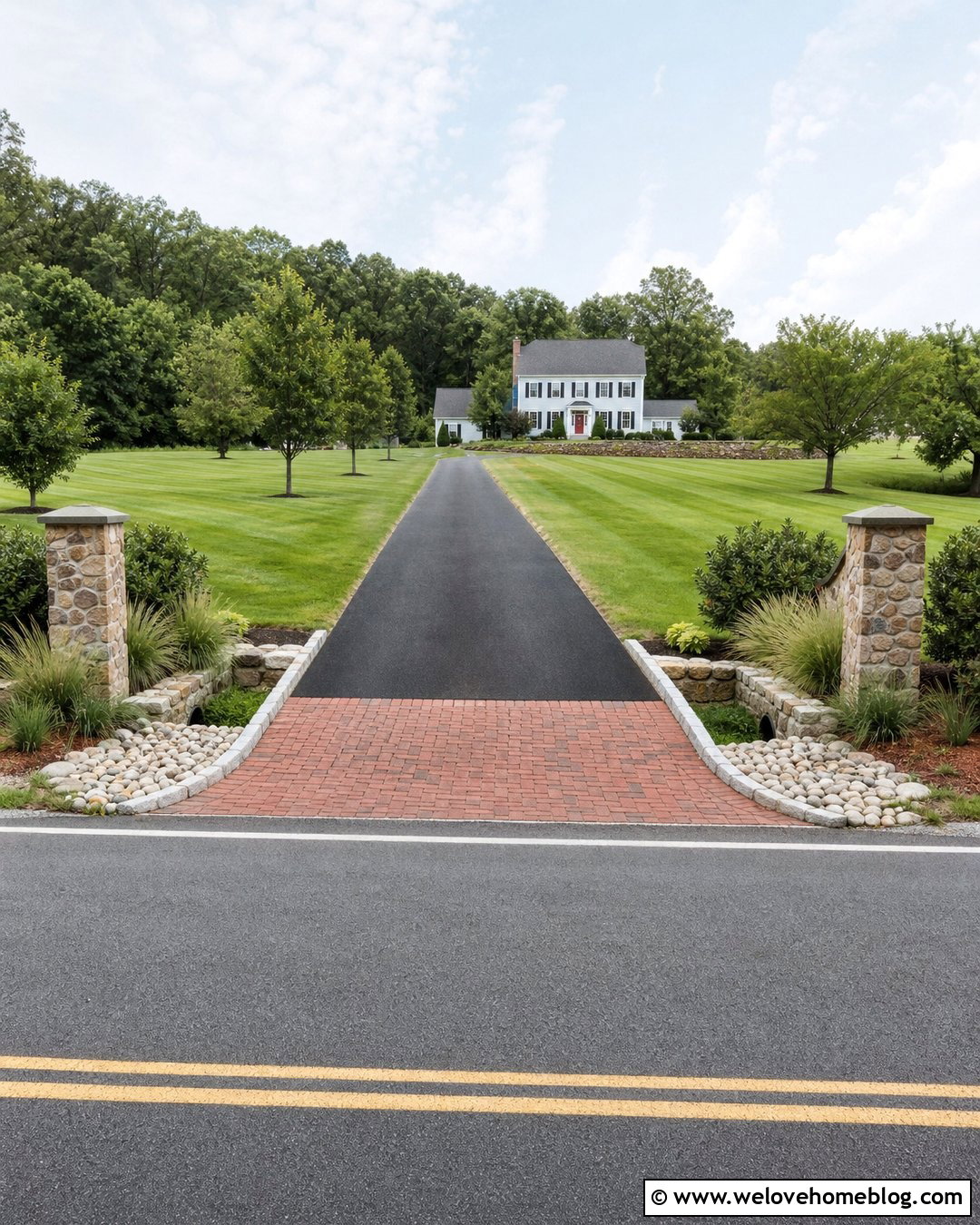
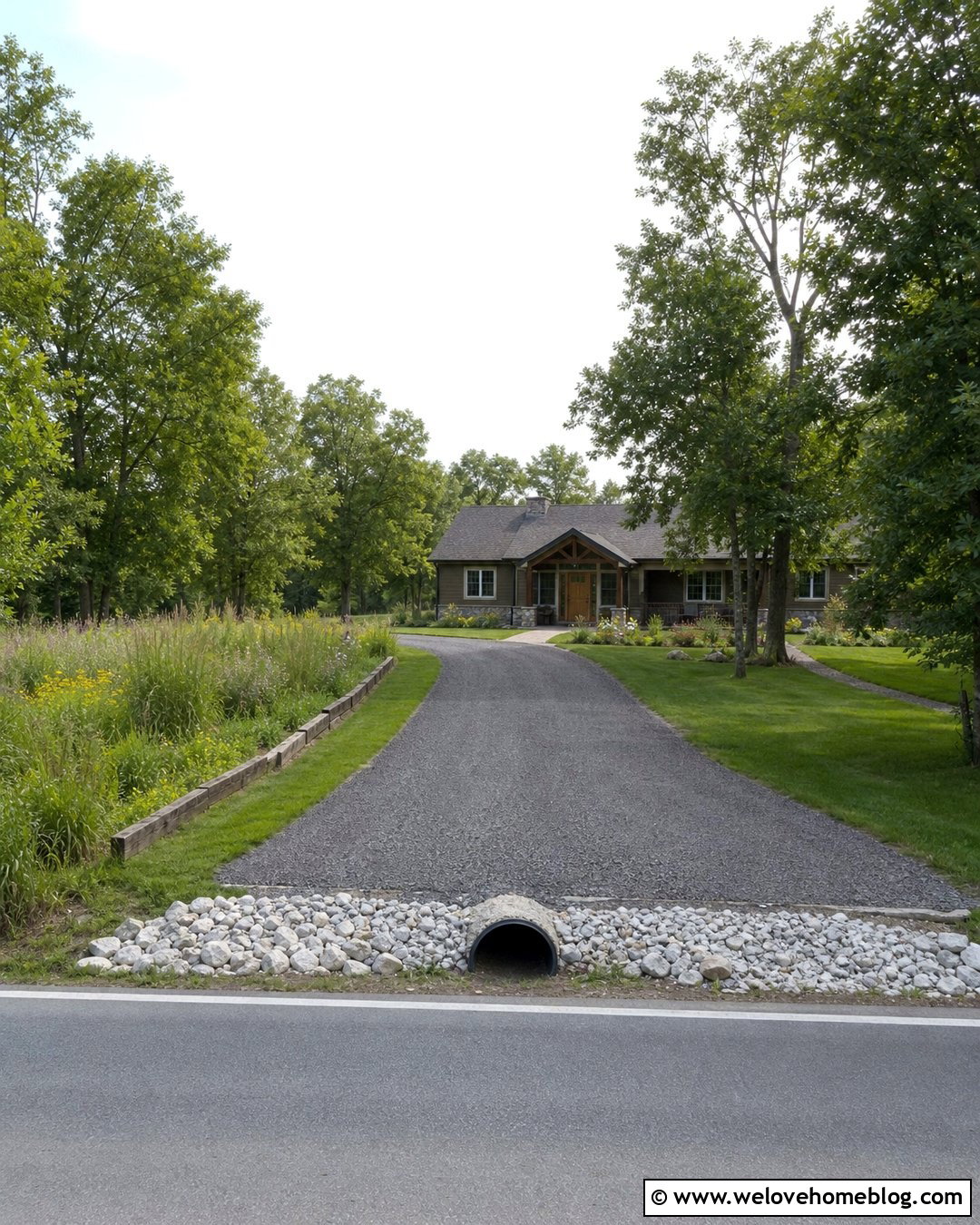
A culvert entrance can look polished when the entire driveway approach is designed around it. Pair a black asphalt driveway with a properly sized culvert beneath the entrance and build symmetrical stone headwalls at both exposed ends. Use durable, tightly placed rock around the inlet and outlet to protect the soil while maintaining an open water route. A brick or concrete paver apron can visually mark the entrance and reduce the abrupt transition from road to asphalt. Frame both sides with low ornamental grasses, spreading shrubs, and matching address pillars set outside the drainage channel. The culvert should remain easy to inspect and clear. This balanced design is especially effective for long driveways leading to colonial, craftsman, or modern farmhouse homes.
7. Rain Garden Driveway Ditch
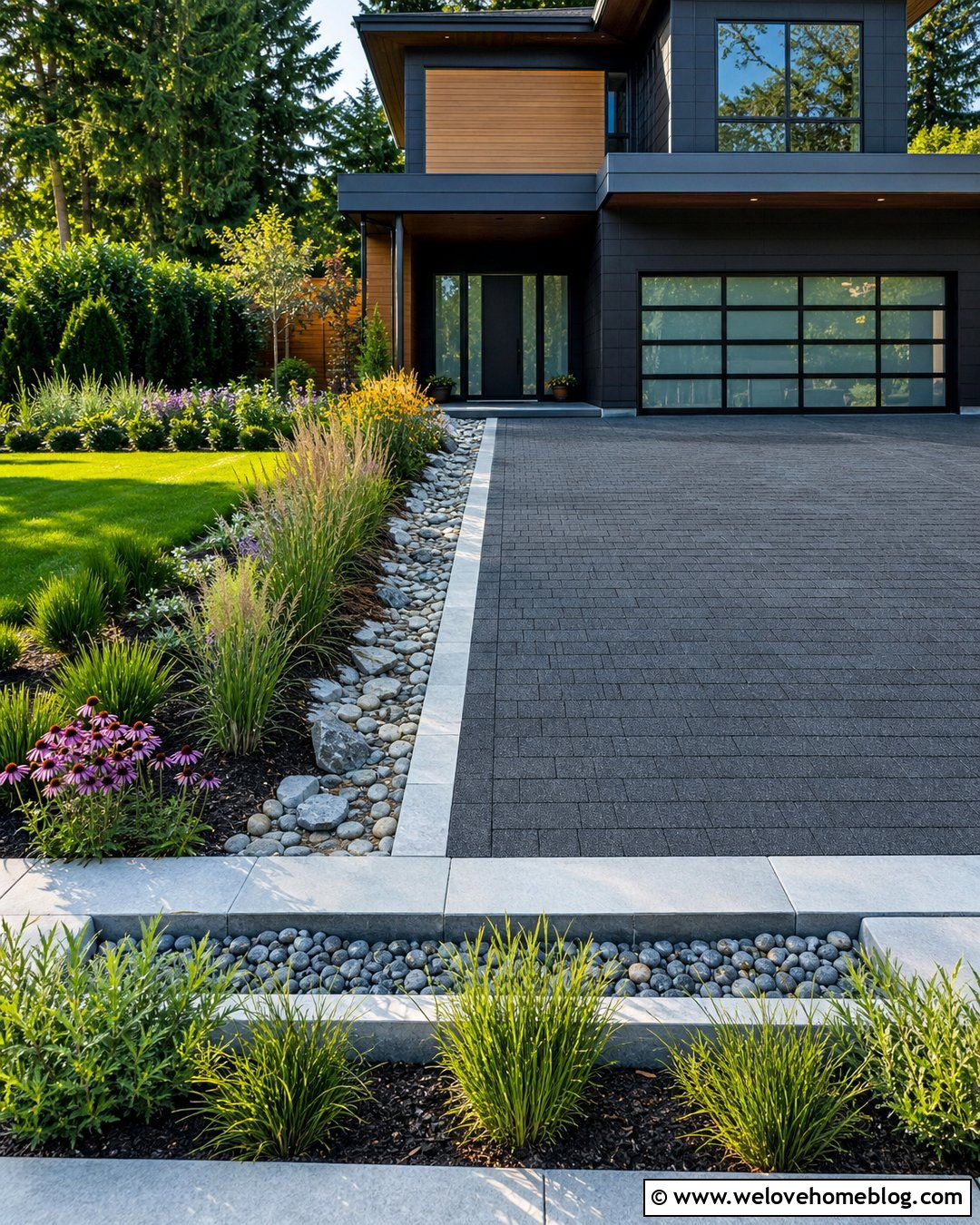
A shallow ditch can flow into a wider rain garden beside a permeable paver driveway. Shape the channel so it guides runoff toward a planted basin located safely away from the house. Use river pebbles through the narrow connecting section, then transition into moisture-tolerant grasses, flowering perennials, and compact shrubs inside the basin. Dark charcoal permeable pavers give the driveway a crisp surface, while a pale stone ribbon separates it from the planting. The rain garden should look like a layered front-yard bed when dry rather than an empty depression. Place taller plants near the back and keep low varieties beside the driveway. This environmentally conscious layout complements contemporary homes and brings movement, seasonal color, and habitat value to a normally overlooked drainage zone.
8. Brick Driveway With A Grass Ditch
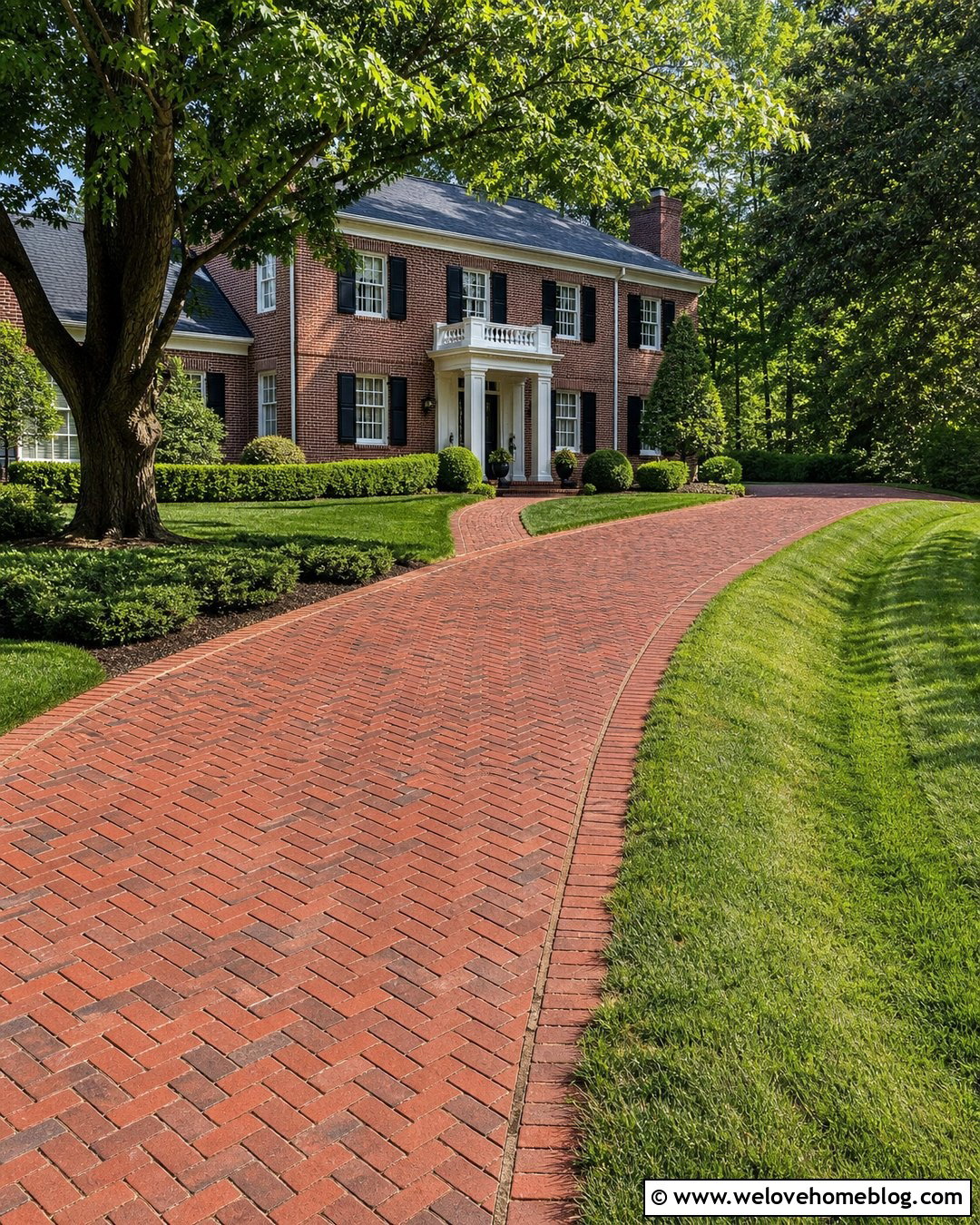
Warm clay brick creates a classic driveway that pairs beautifully with a simple green ditch. Lay the bricks in a herringbone pattern along a gently curved approach, then edge the pavement with a soldier-course brick border. Beyond that edge, form a broad grass-lined channel that follows the driveway without appearing separate from the lawn. A few mature shade trees can frame the outer bank, while clipped boxwood or inkberry beds soften the area near the house. Keep shrubs out of the lowest part of the ditch so runoff has a clear route. This restrained combination suits colonial, Georgian, and Cape Cod homes. It delivers strong curb appeal without filling the drainage channel with decorative materials that may require frequent cleaning or repositioning.
9. Cobblestone Driveway Ditch
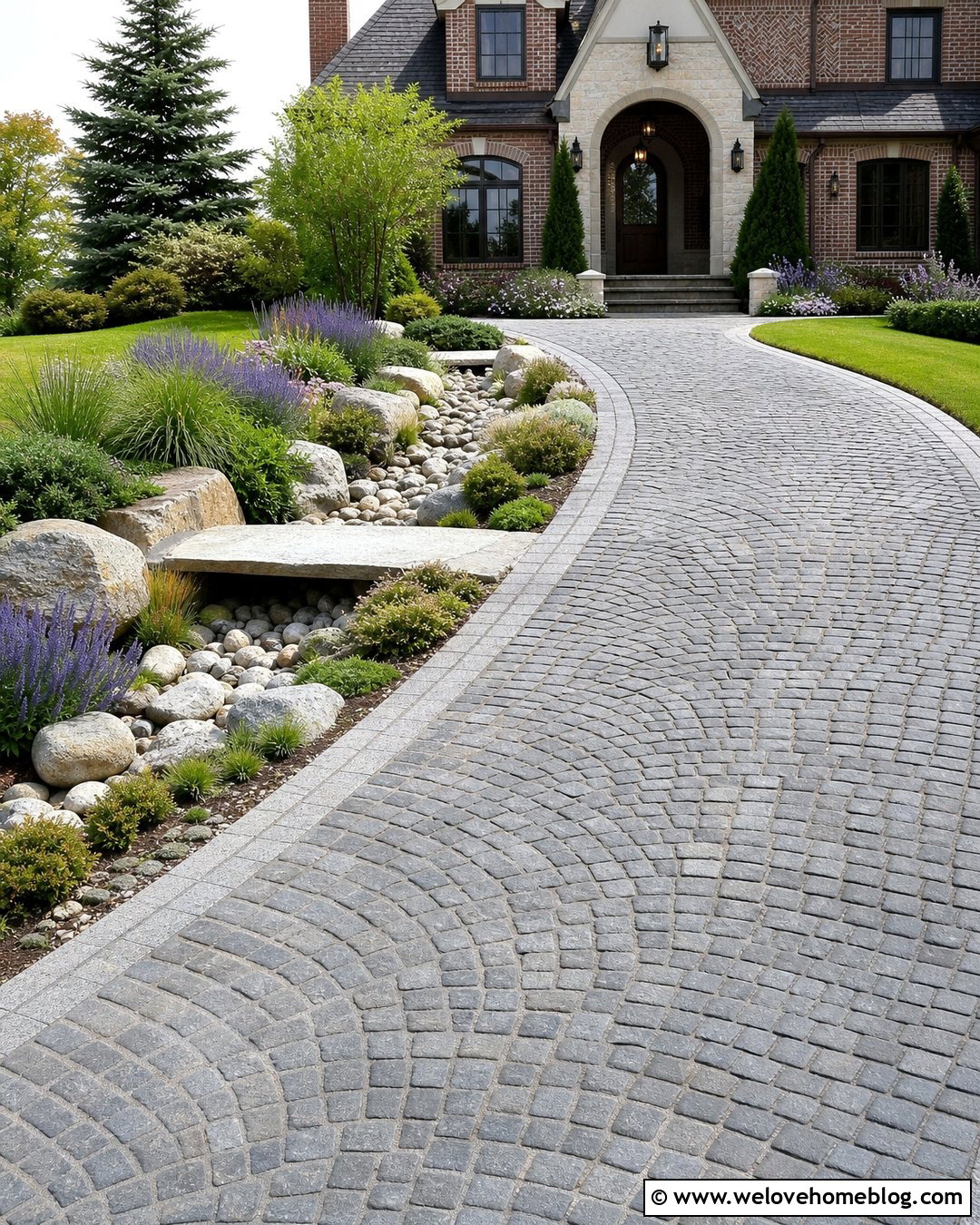
Cobblestone can transform a drainage ditch into an architectural feature with an old-world character. Start with a fan-pattern cobblestone driveway leading toward a brick or European-inspired home. Continue the same stone into a shallow channel, but use a smoother, more open pattern through the center so runoff can follow the slope. Larger cobbles along the banks create definition and help connect the ditch to the driveway apron. Plant lavender, catmint, dwarf evergreens, and ornamental grass above the drainage line for softness and color. A narrow flagstone footbridge can carry the front walkway over the channel. The materials should look coordinated but not overly uniform. This driveway design feels established and elegant while keeping the roadside drainage route visible and accessible.
10. Driveway Ditch With Native Plants
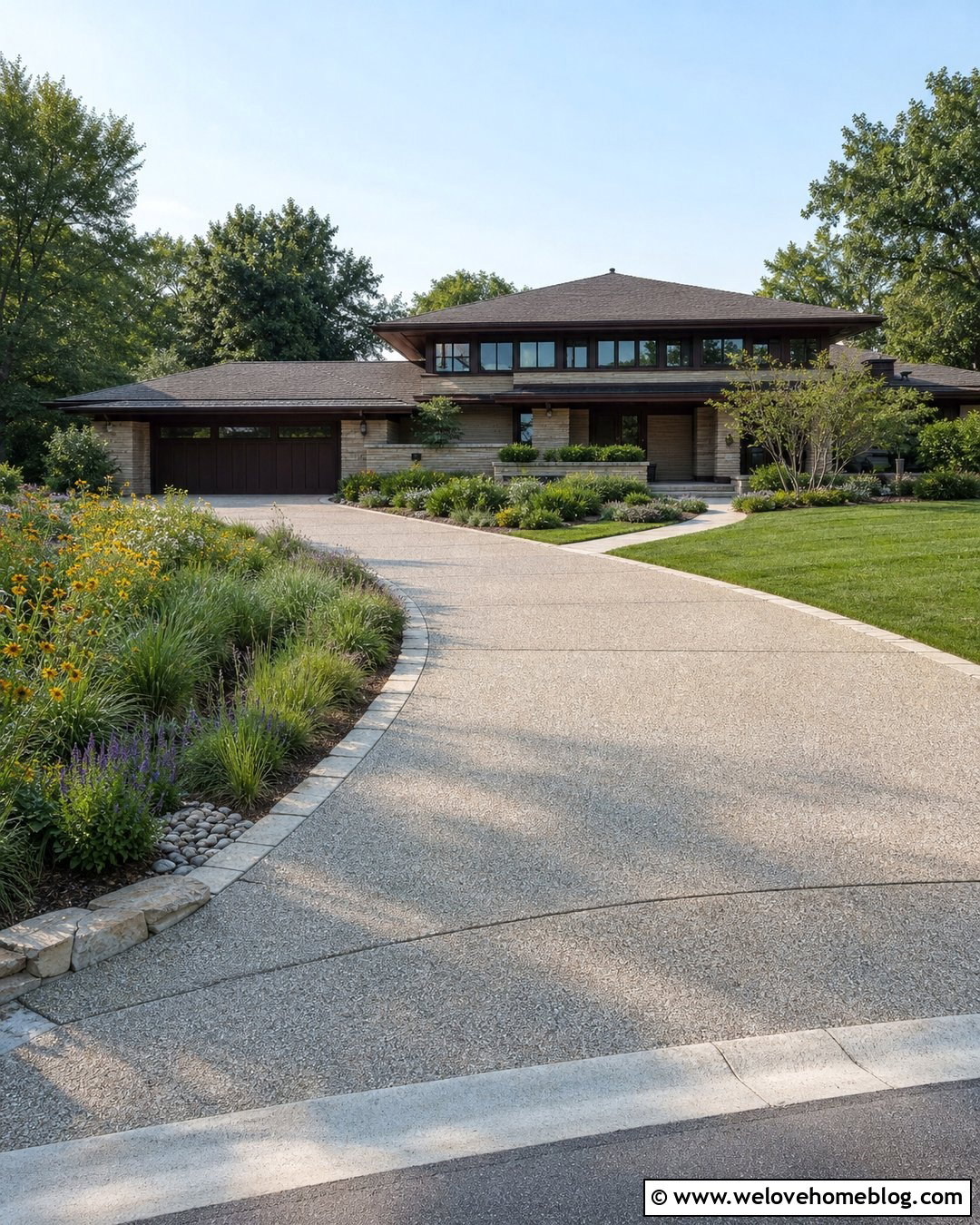
Native planting can make a driveway ditch feel like part of the regional landscape. Pair a light exposed-aggregate concrete driveway with a shallow, curving swale planted in distinct zones. Place moisture-tolerant sedges and rushes through the lowest area, flowering perennials on the middle slopes, and compact shrubs along the dry upper bank. A natural stone curb can separate the driveway from the planting without creating a tall wall. Repeat selected plants near the front walkway and house foundation so the ditch does not look like an isolated garden. This complete arrangement works with ranch, prairie, and contemporary homes. Select locally appropriate plants that can tolerate the ditch’s actual cycle of wet and dry conditions, and preserve clear access to culverts and outlets.
11. Driveway Ditch With Large Boulders
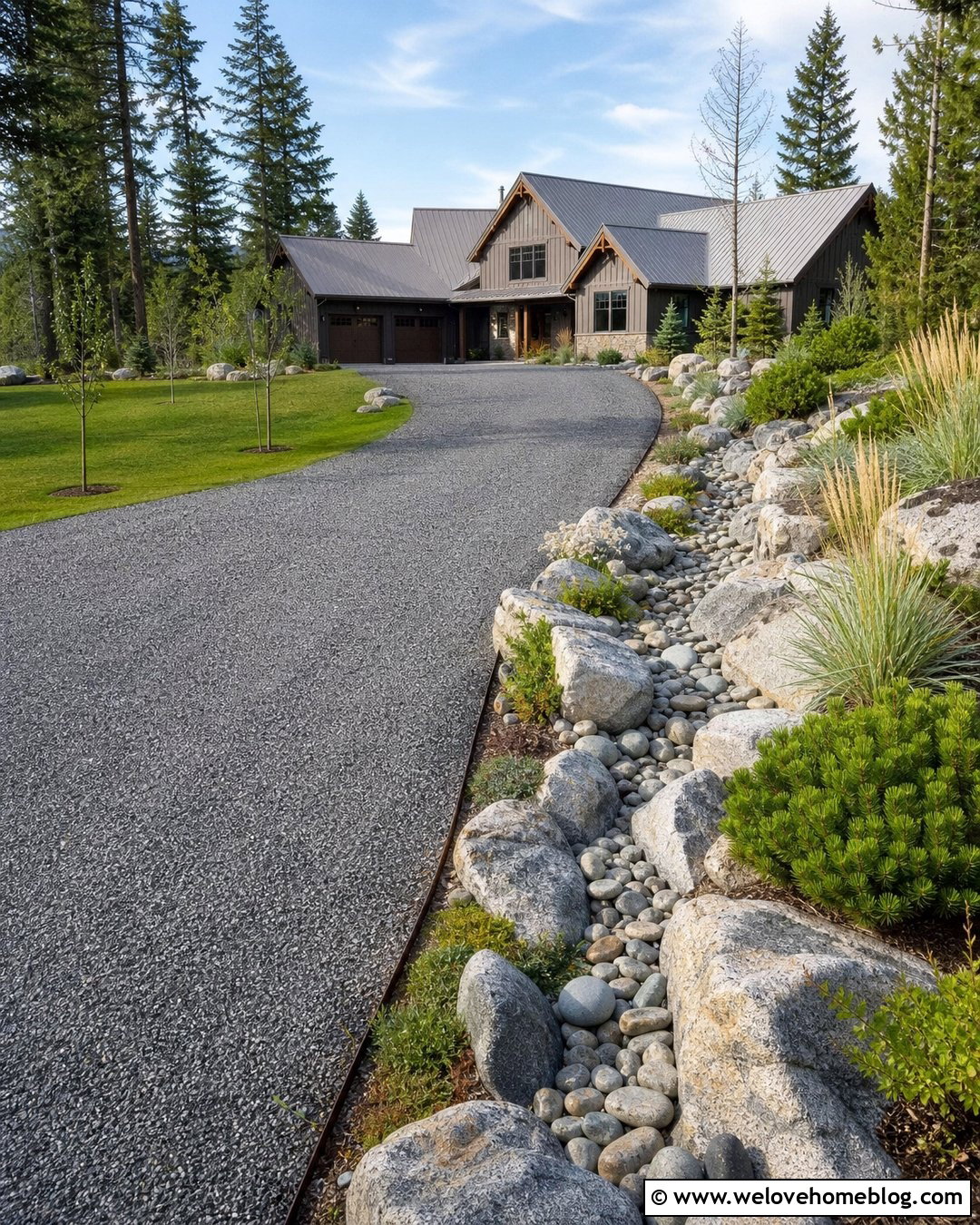
Large boulders bring structure to a wide drainage ditch beside a long rural driveway. Use compacted gray gravel for the driveway and define its outer edge with a low strip of matching crushed stone. In the ditch, place a limited number of substantial weathered boulders along curves and changes in elevation. Fill the spaces between them with river rock and smaller cobbles, leaving the center of the channel open. Native grasses, creeping ground covers, and a few evergreen shrubs can settle the boulders into the landscape. Avoid arranging every rock at equal distances because a more irregular placement feels natural. This rugged design is well suited to mountain homes, cabins, and modern farmhouses surrounded by large yards or wooded property.
12. Driveway Ditch With A Stone Bridge
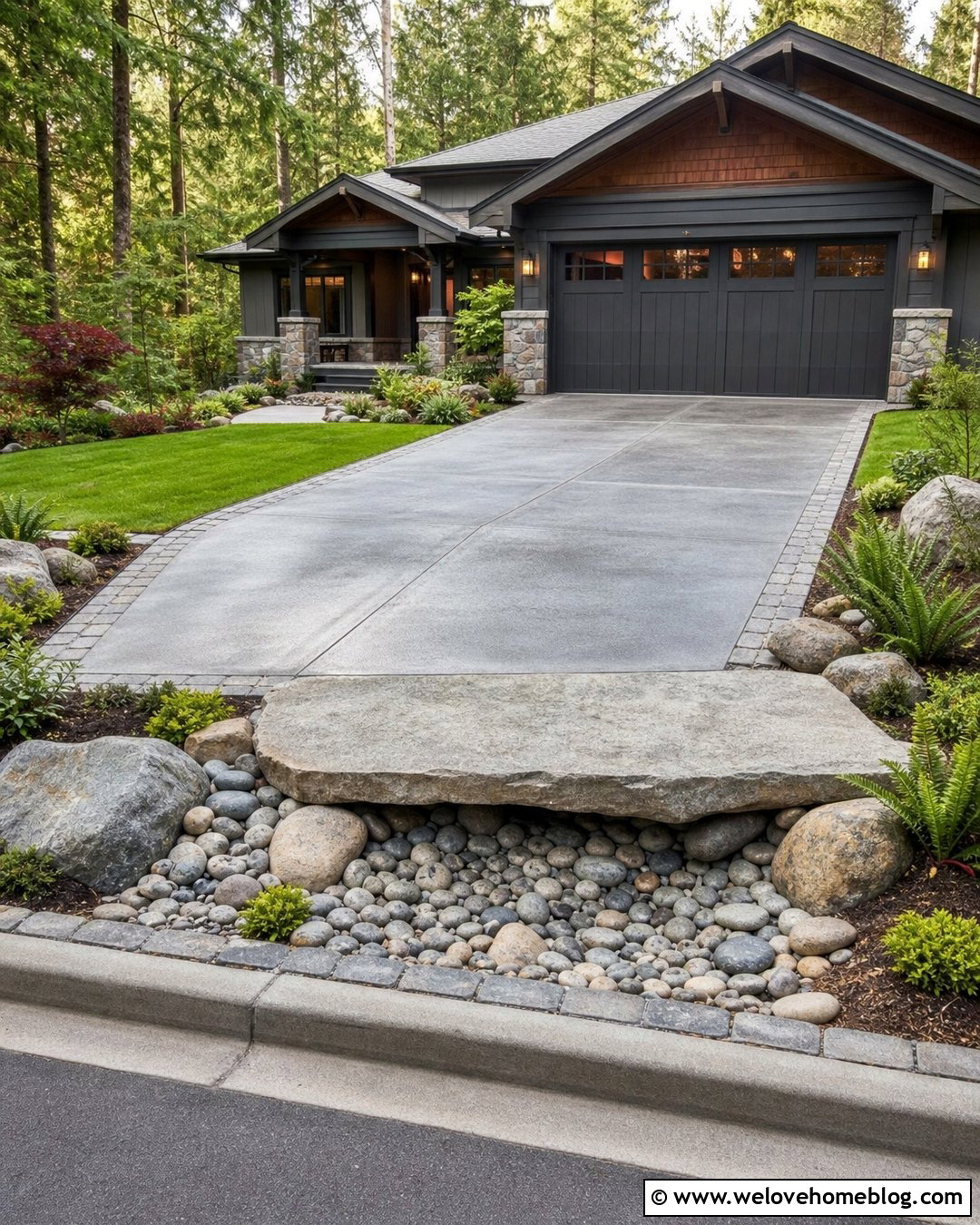
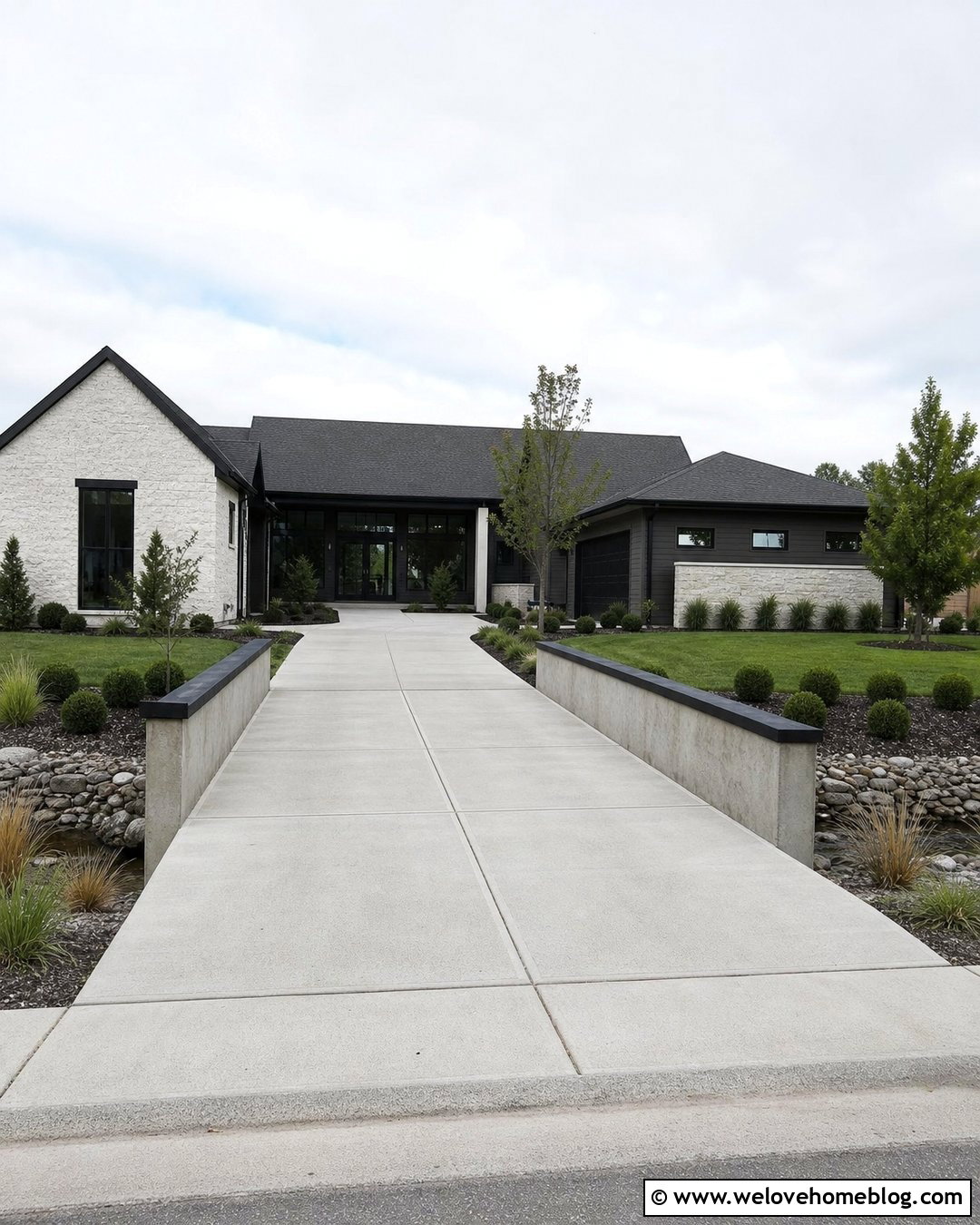
A small stone bridge can create a memorable walkway across a landscaped ditch. Begin with a dark gray poured-concrete driveway and a river rock drainage channel running beside it. Use a broad, flat stone slab or a professionally built masonry crossing to connect the driveway with the front walk. The bridge should span the channel without narrowing its functional opening. Frame the crossing with low ferns, sedges, dwarf shrubs, and a few accent boulders. A flush cobblestone strip along the driveway can visually connect the bridge to the pavement. This feature looks especially appealing in front of craftsman, cottage, and Tudor homes. Keep the composition simple so the bridge remains the focal point instead of becoming hidden by dense vegetation.
13. Modern Driveway Ditch
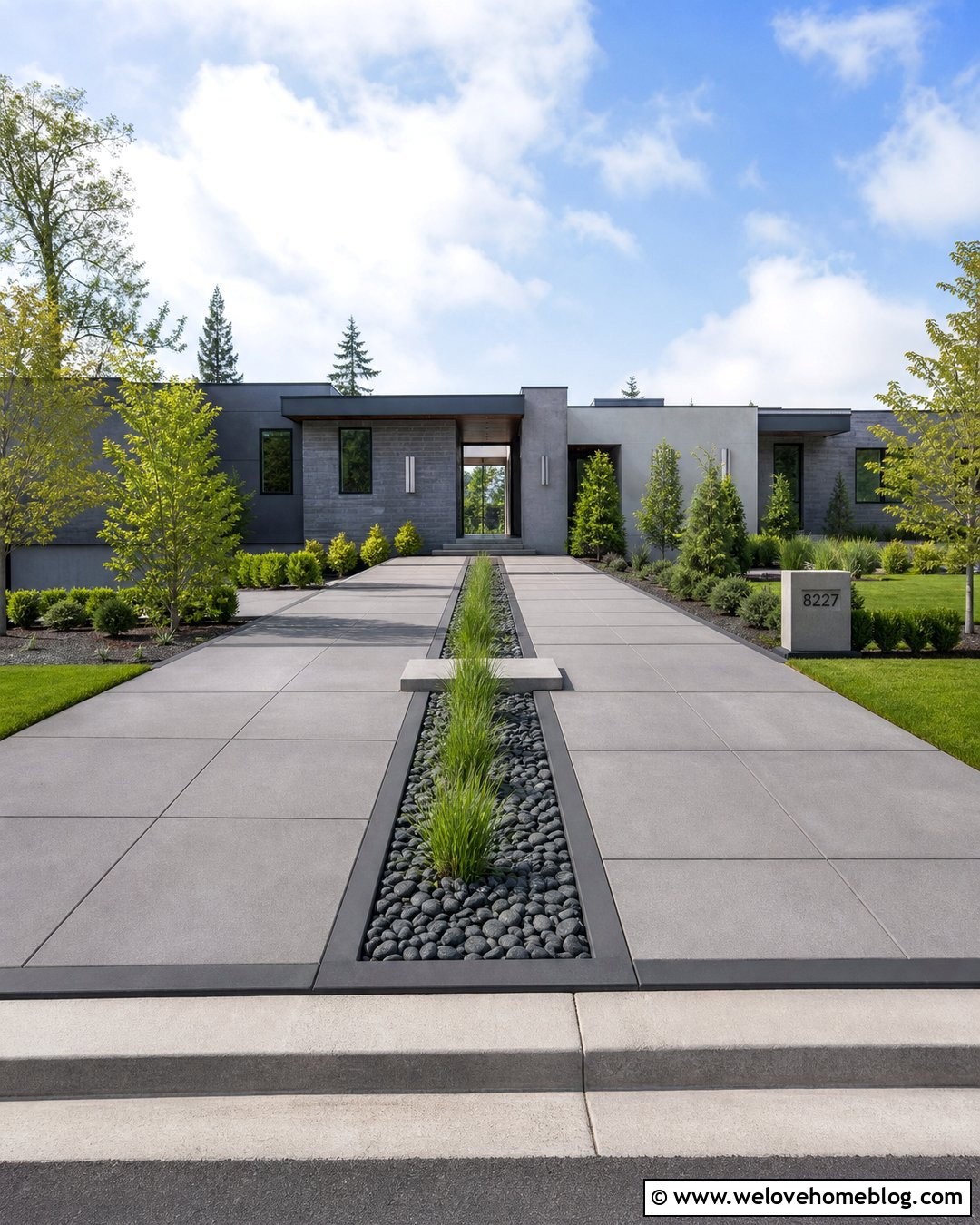
Clean geometry can make drainage part of a modern front-yard design. Pair a straight driveway of large-format charcoal concrete pavers with a wide linear ditch filled with dark gray river stone. Use black steel edging to create a precise transition between the pavers, stone channel, and surrounding lawn. Plant repeated groups of upright ornamental grasses and compact evergreen mounds along the outer bank. Their consistent spacing supports the architecture without obstructing the center of the ditch. A slim concrete walkway can cross the channel near the entrance to the house. Choose only a few materials and repeat them around the address monument and planting beds. The finished look is minimal, structured, and practical rather than resembling an unfinished roadside trench.
14. Farmhouse Driveway Ditch
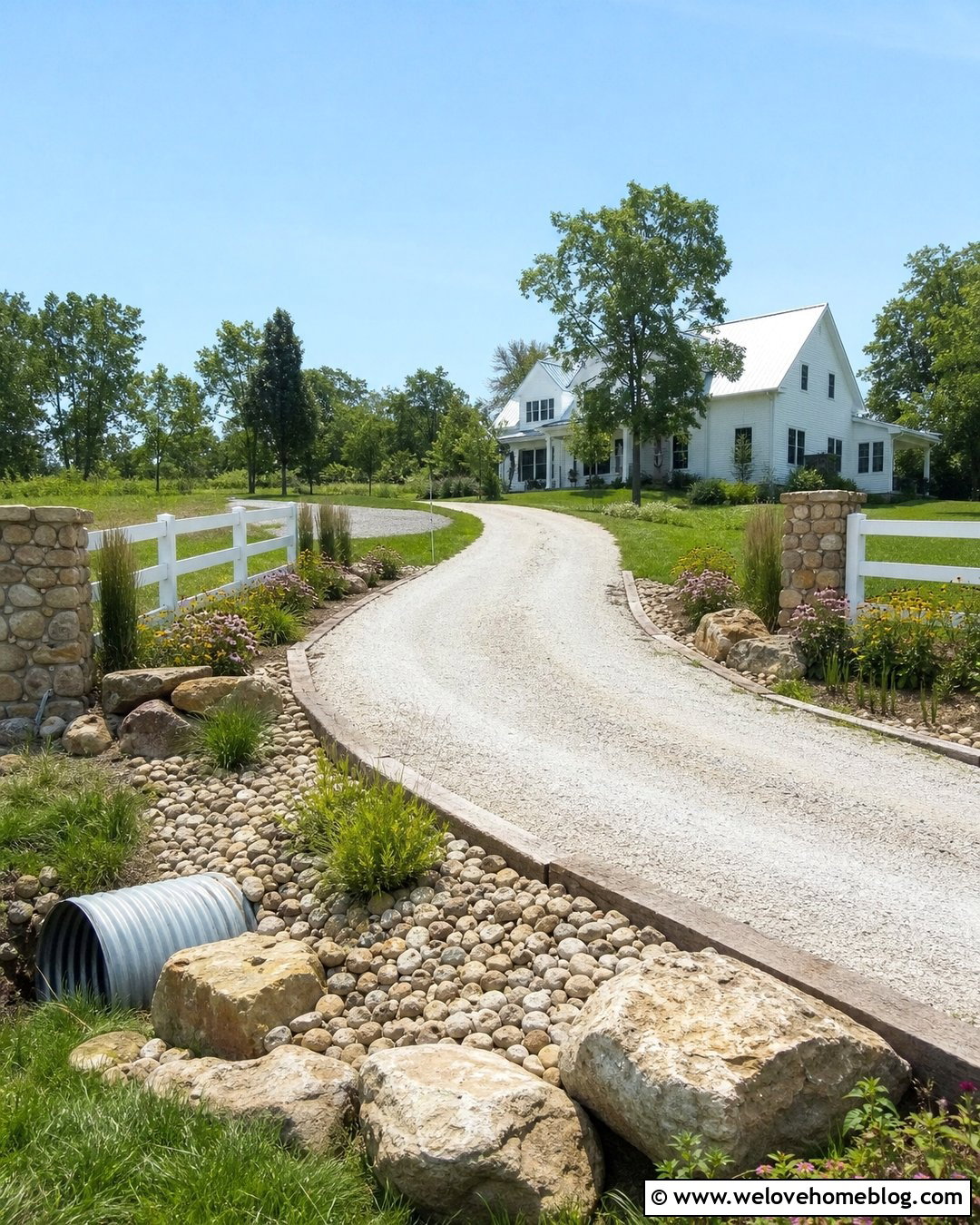
A farmhouse entrance feels welcoming when its drainage features use simple, familiar materials. Build a gently curved driveway from pale limestone gravel and contain it with weathered timber or low fieldstone edging. Along the roadside, shape the ditch like a shallow dry creek using tan river rock, scattered boulders, and small gravel. Plant native grasses, black-eyed Susans, coneflowers, and compact shrubs above the wettest area. A galvanized metal culvert can pass beneath the driveway, with fieldstone placed around each end for a natural transition. Add white fence sections outside the ditch rather than through it. This design complements a white modern farmhouse, traditional barn-style home, or rural cottage while retaining an open and easy-to-maintain drainage path.
15. Driveway Ditch With Gabion Walls
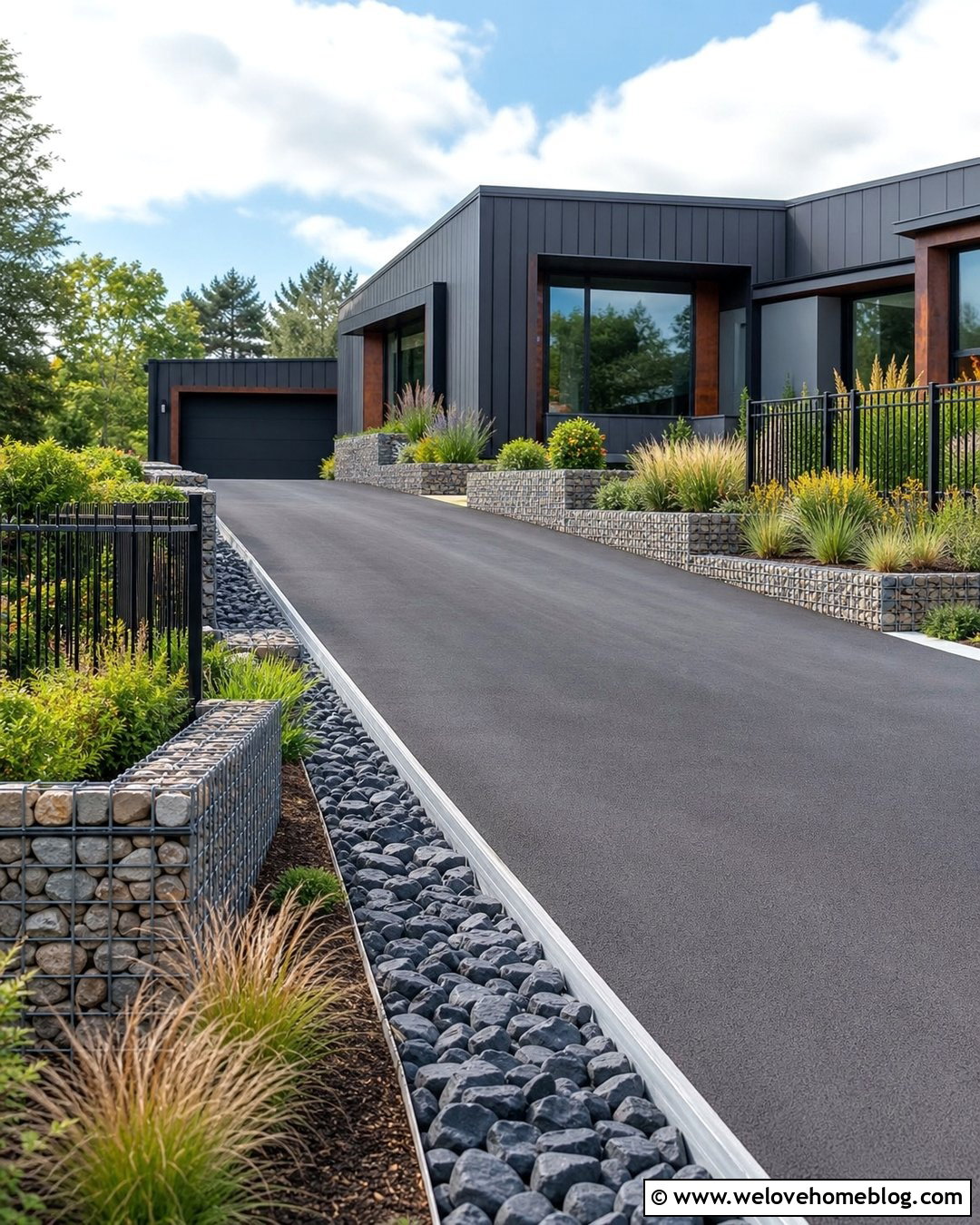
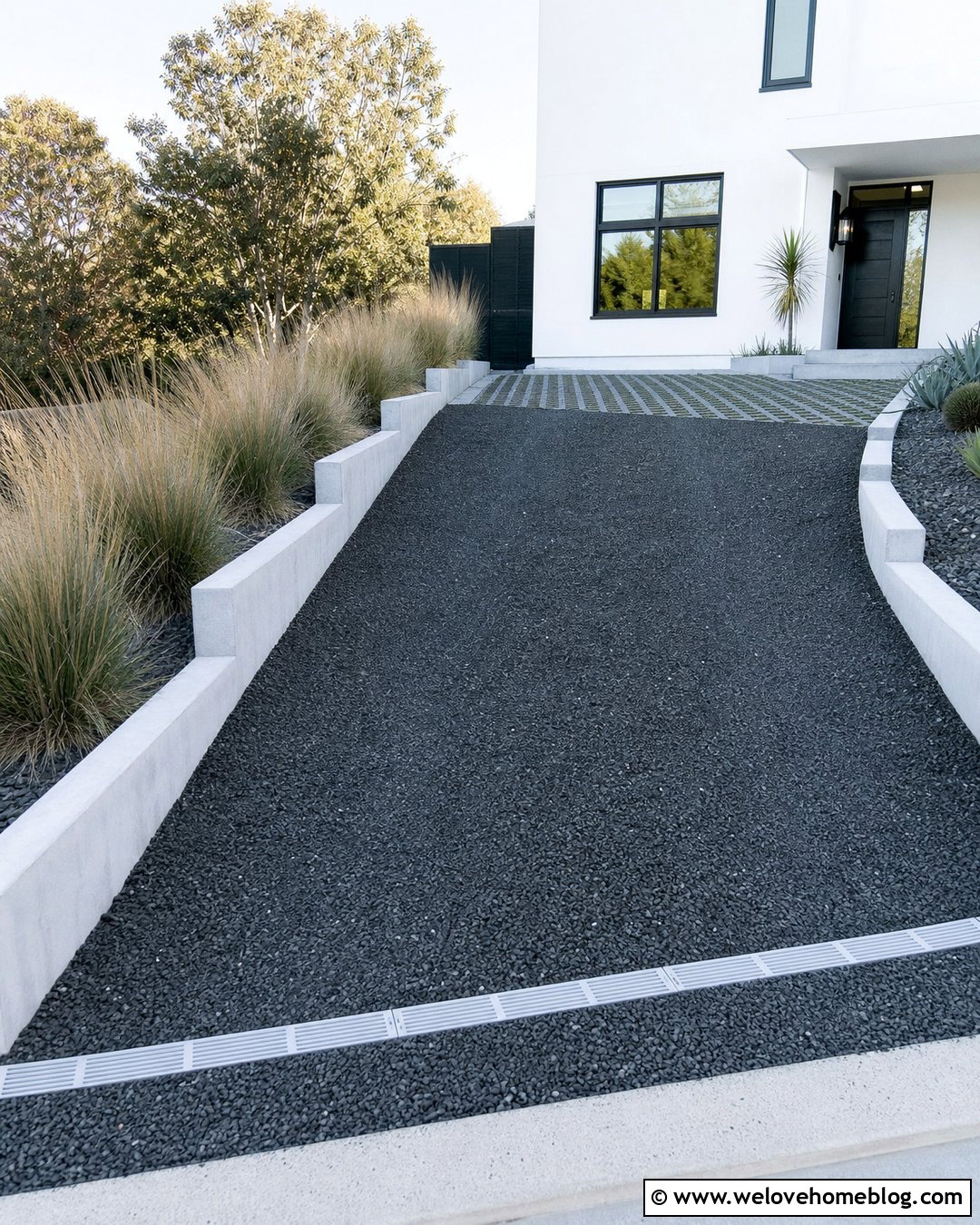
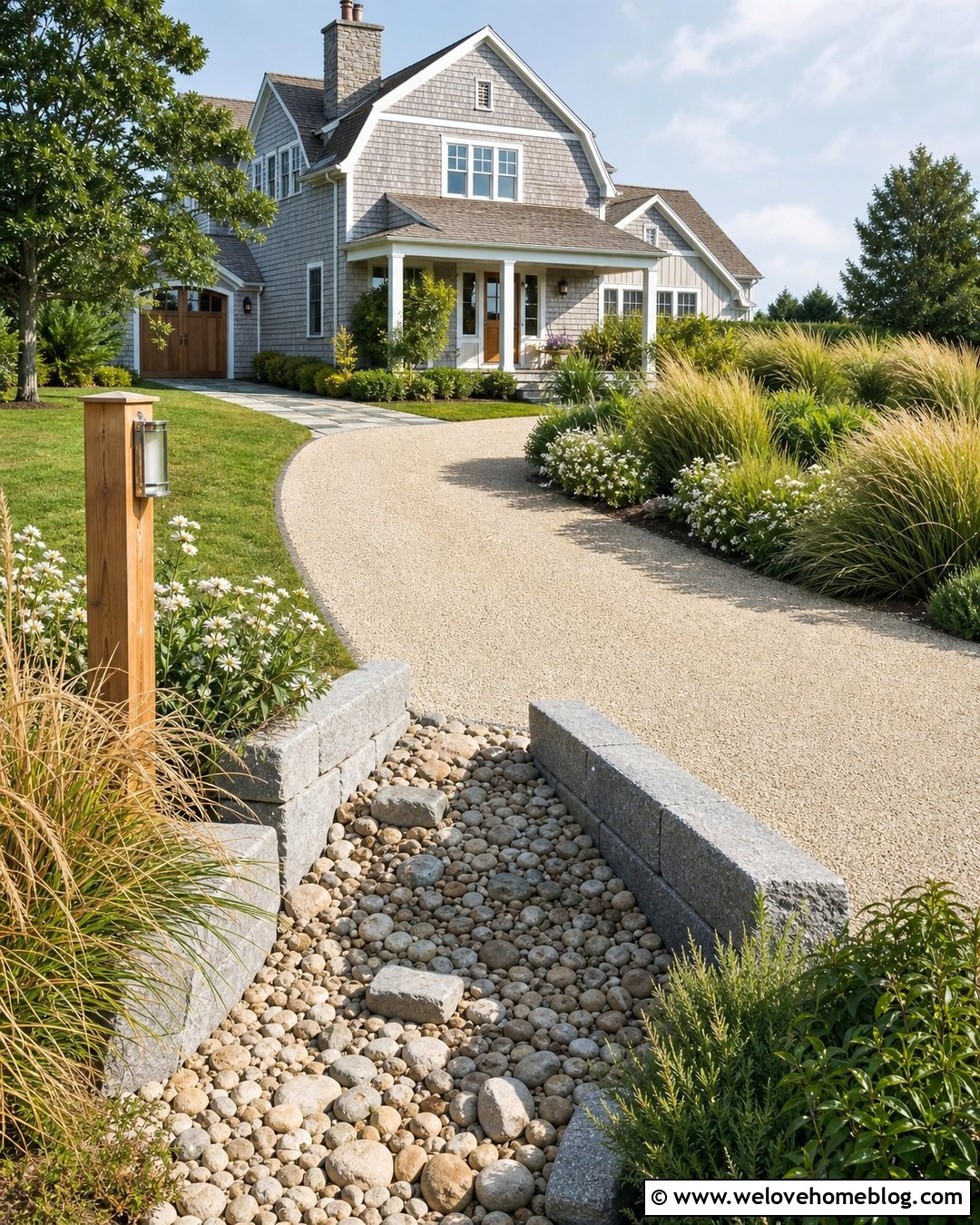
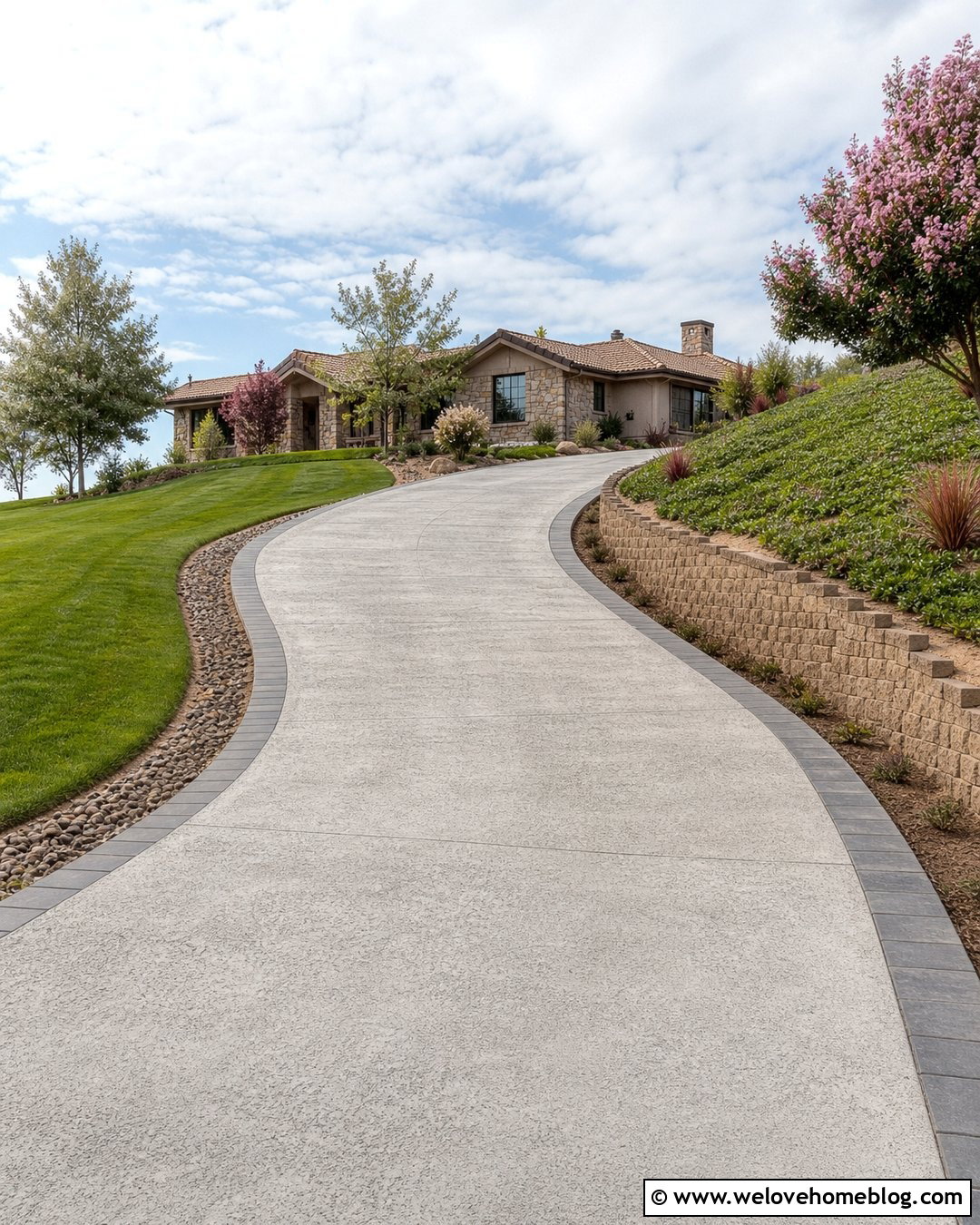
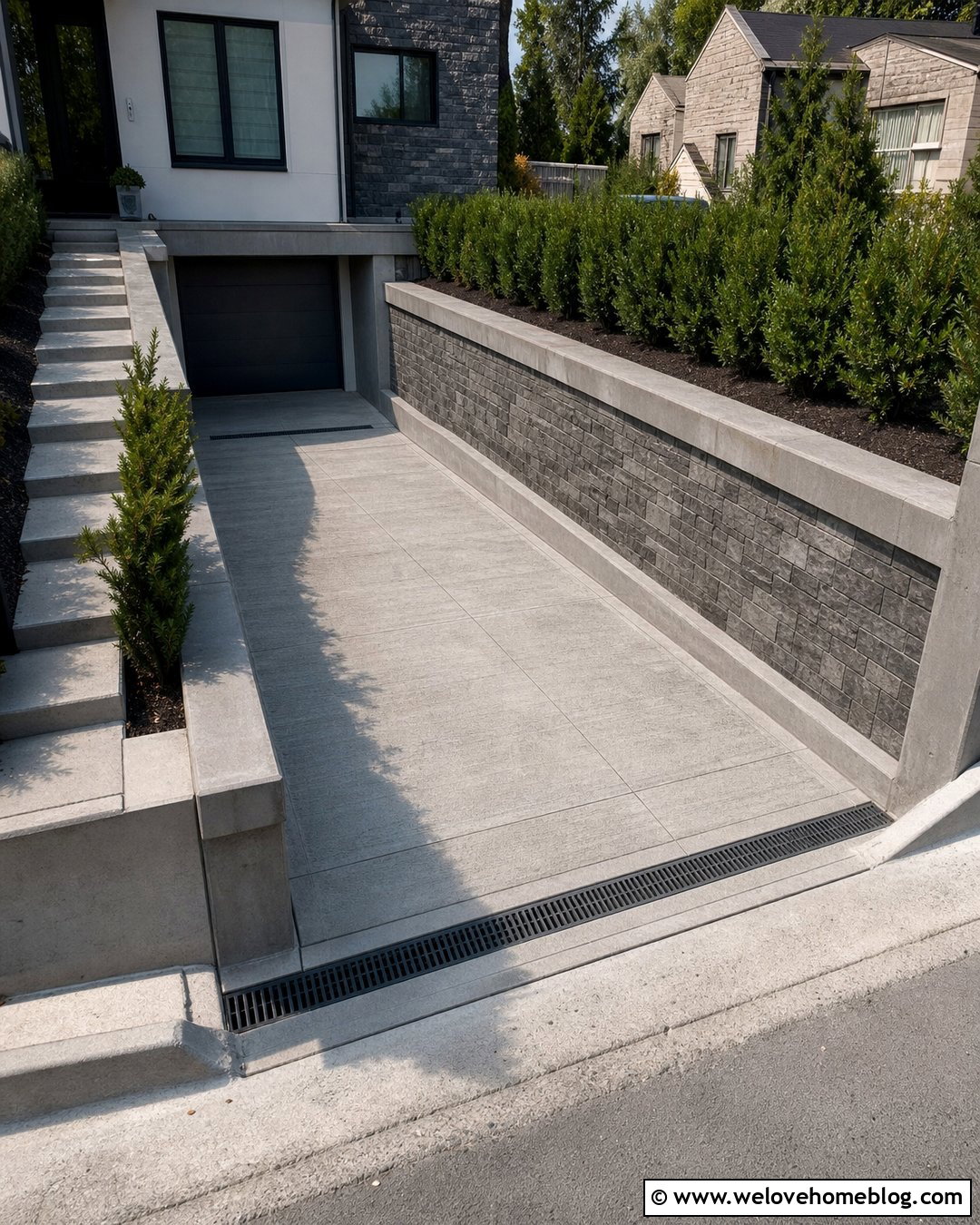
Gabion walls offer a bold solution where a ditch has steep sides or limited space. Combine a smooth black asphalt driveway with low rectangular gabion baskets filled with gray and tan stone. Position them along the upper bank rather than across the flow path, creating a stable visual edge between the driveway and drainage channel. Line the ditch bottom with smaller angular rock that coordinates with the basket fill. Above the opposite bank, plant tough ornamental grasses and low spreading shrubs to balance the hard materials. This design works especially well with industrial-modern, contemporary, and hillside homes. Keep the gabions low enough to preserve entrance visibility. Their crisp shape gives the ditch a deliberate appearance while matching modern gates, metal fencing, and dark exterior finishes.
16. Driveway Ditch With Flagstone Edging
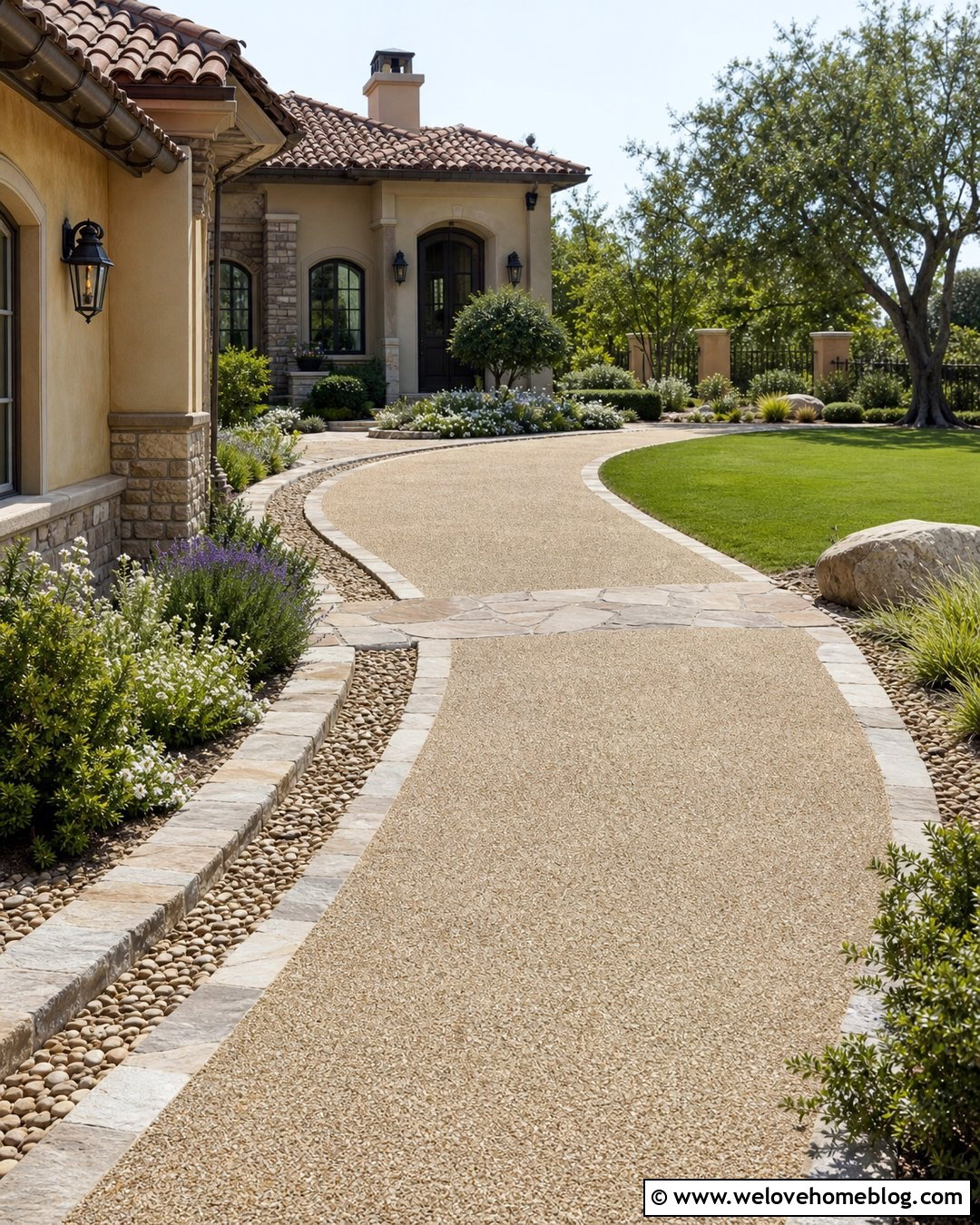
Irregular flagstone can soften the boundary between a driveway and a planted drainage swale. Use warm beige resin-bound gravel for a curved driveway, then create a flush flagstone edge that follows its shape. Beyond the stones, form a shallow ditch with mixed river pebbles in the bottom and low grasses along the banks. Continue several flagstones across the channel as a casual garden crossing, while leaving adequate openings for water. Flowering ground covers and small shrubs can fill the higher planting zones. The colors should relate to the home’s stonework, porch columns, or walkway. This coordinated look suits cottage, Mediterranean, and craftsman homes. Flush edging also creates a smoother visual transition than a tall curb or rigid retaining border.
17. Driveway Ditch With Ornamental Grass
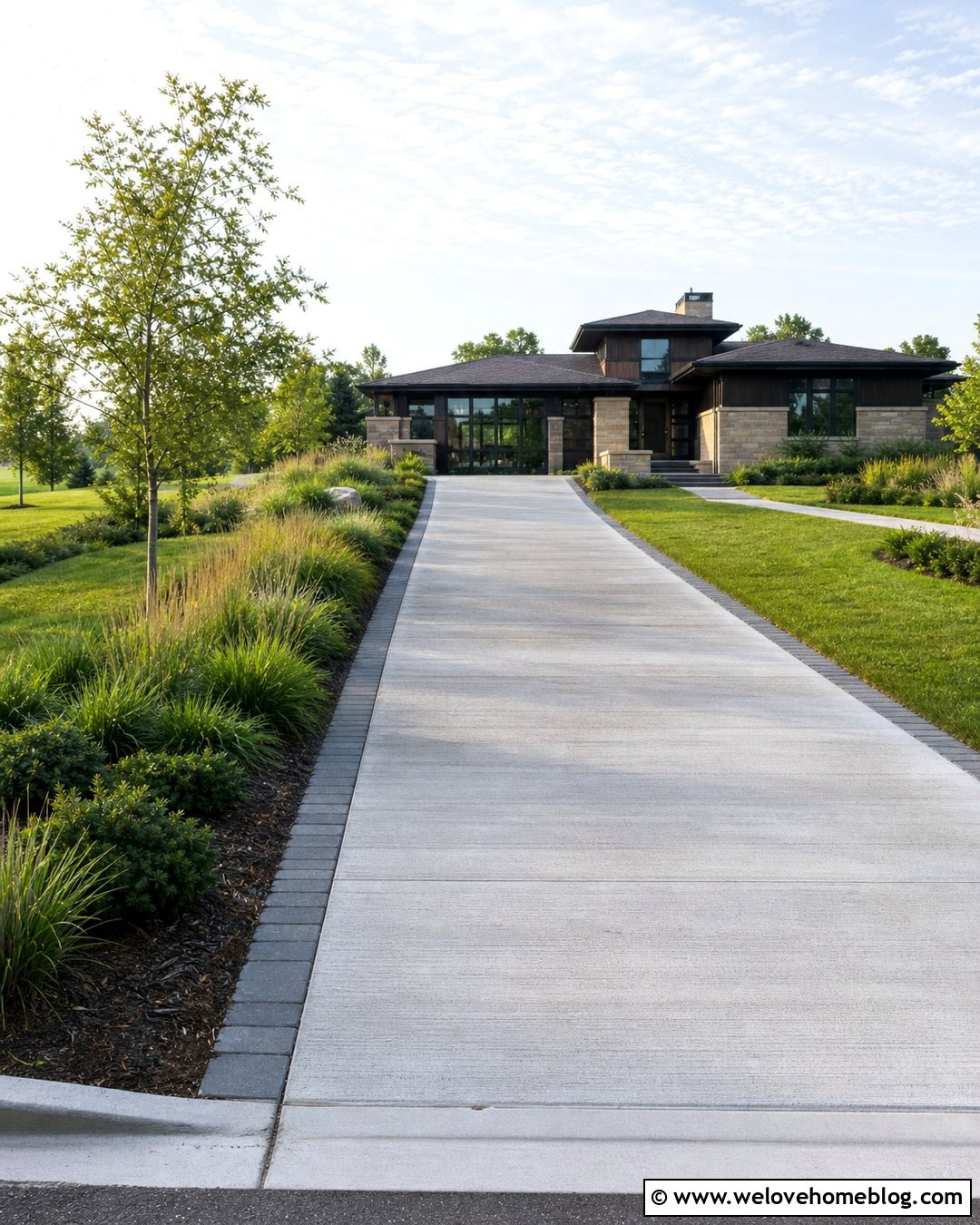
Wind moving through ornamental grass can make a long drainage channel feel soft and animated. Pair a straight broom-finished concrete driveway with a broad swale running toward the road. Install a narrow border of dark concrete pavers between the pavement and planting area. Use repeated drifts of moisture-tolerant sedges in the lower channel and taller ornamental grasses on the outer bank. Add a few low evergreen shrubs near the house to provide winter structure. Vary the grass heights while preserving clear views at the entrance. This low-clutter design works with ranch, prairie, midcentury, and contemporary homes. The ditch remains readable as a drainage route, but the massed planting turns it into a strong landscape feature rather than an empty strip of lawn.
18. Driveway Ditch With A French Drain
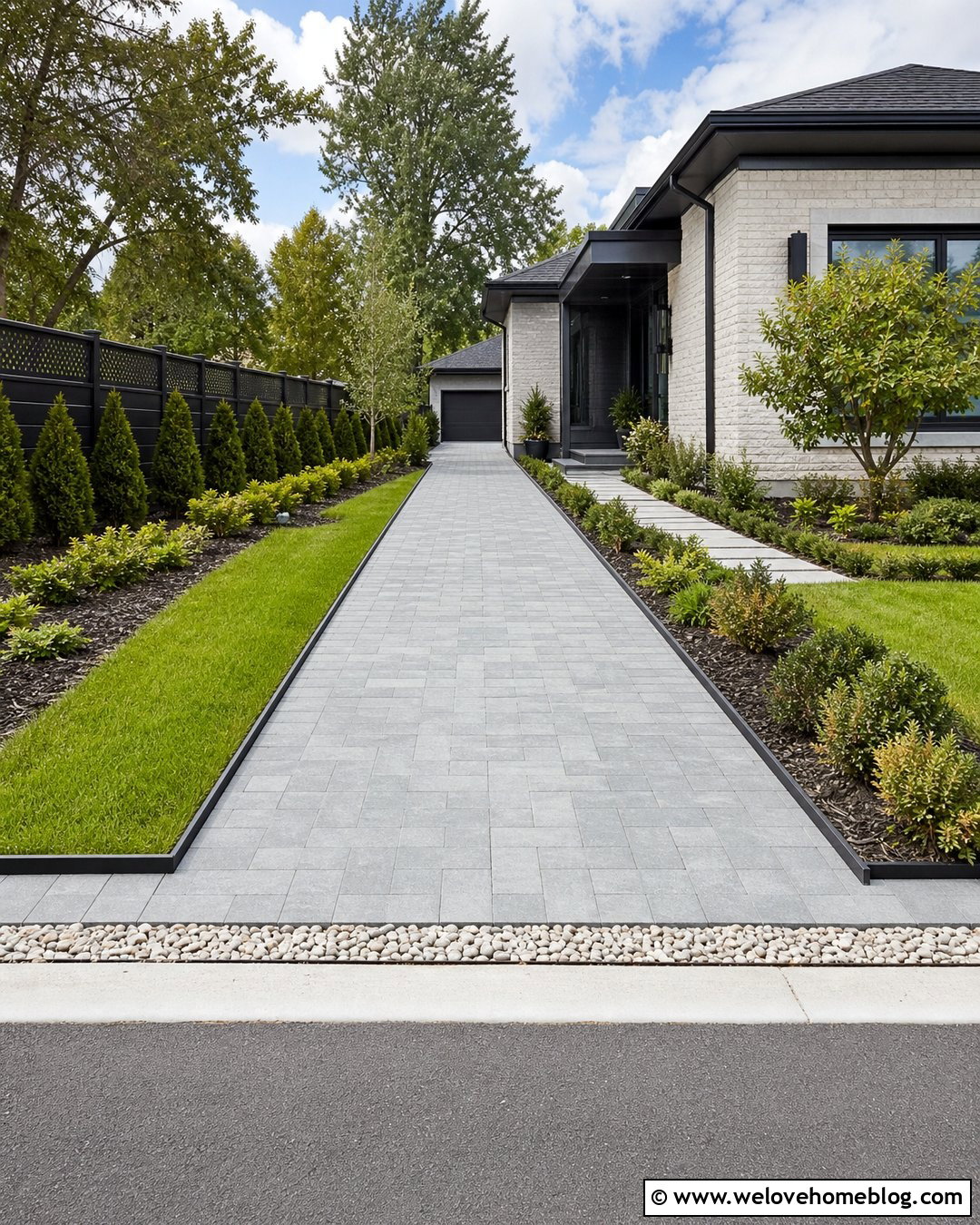
When surface decoration needs to stay minimal, an underground French drain can support a clean driveway edge. Pair a narrow gray paver driveway with a gravel-filled trench containing a perforated drainage pipe that leads to a suitable outlet. Cover the functional system with decorative washed stone rather than soil that could clog the surface. A slim steel edge keeps the pavers separate from the gravel. Beyond the trench, use lawn, low ground covers, and a few compact shrubs to make the area feel landscaped. The visible result resembles a tidy stone ribbon instead of a deep ditch. This treatment is useful beside contemporary homes and small suburban yards, but the drainage route, outlet, soil conditions, and required capacity should be evaluated before installation.
19. Driveway Ditch With A Catch Basin
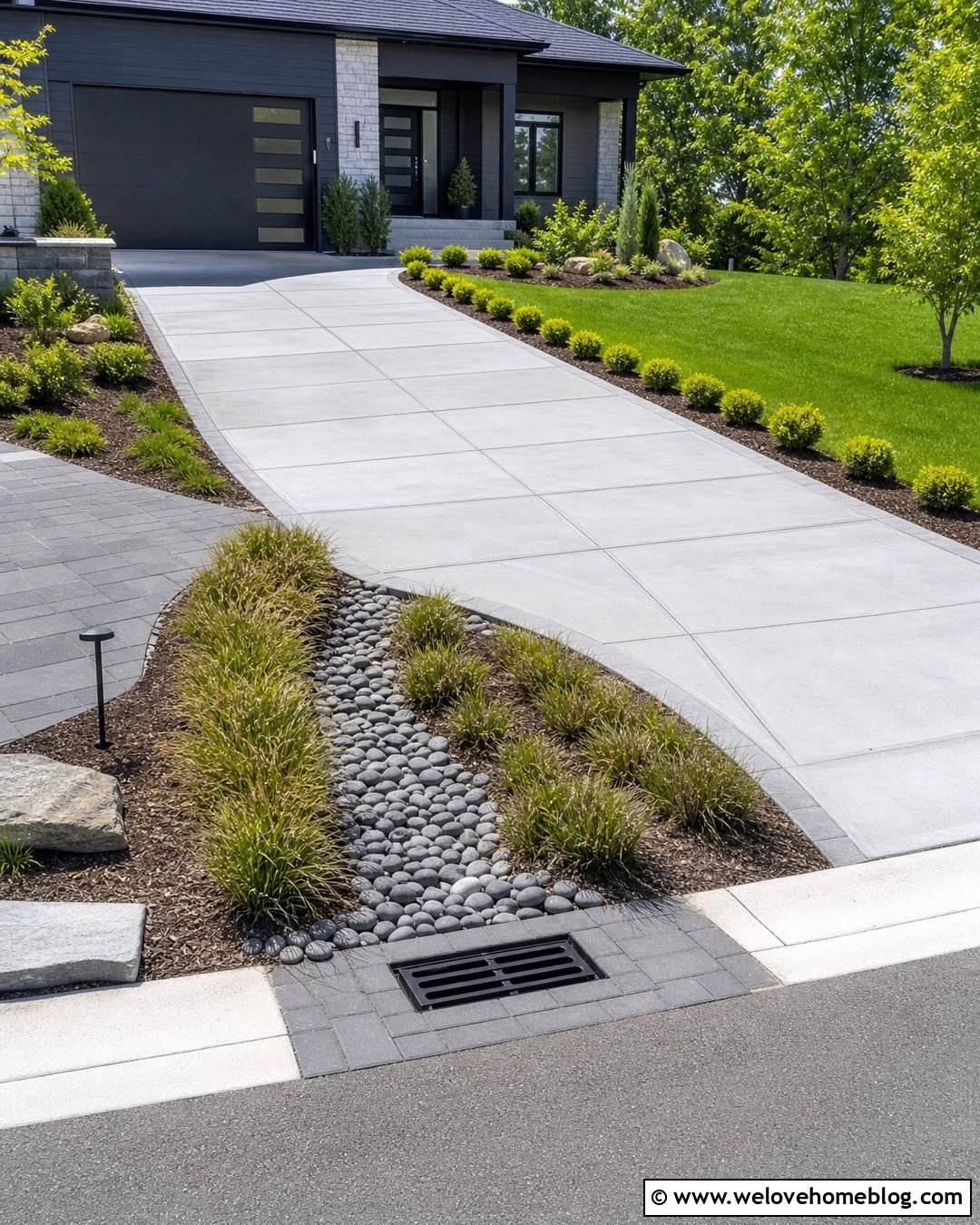
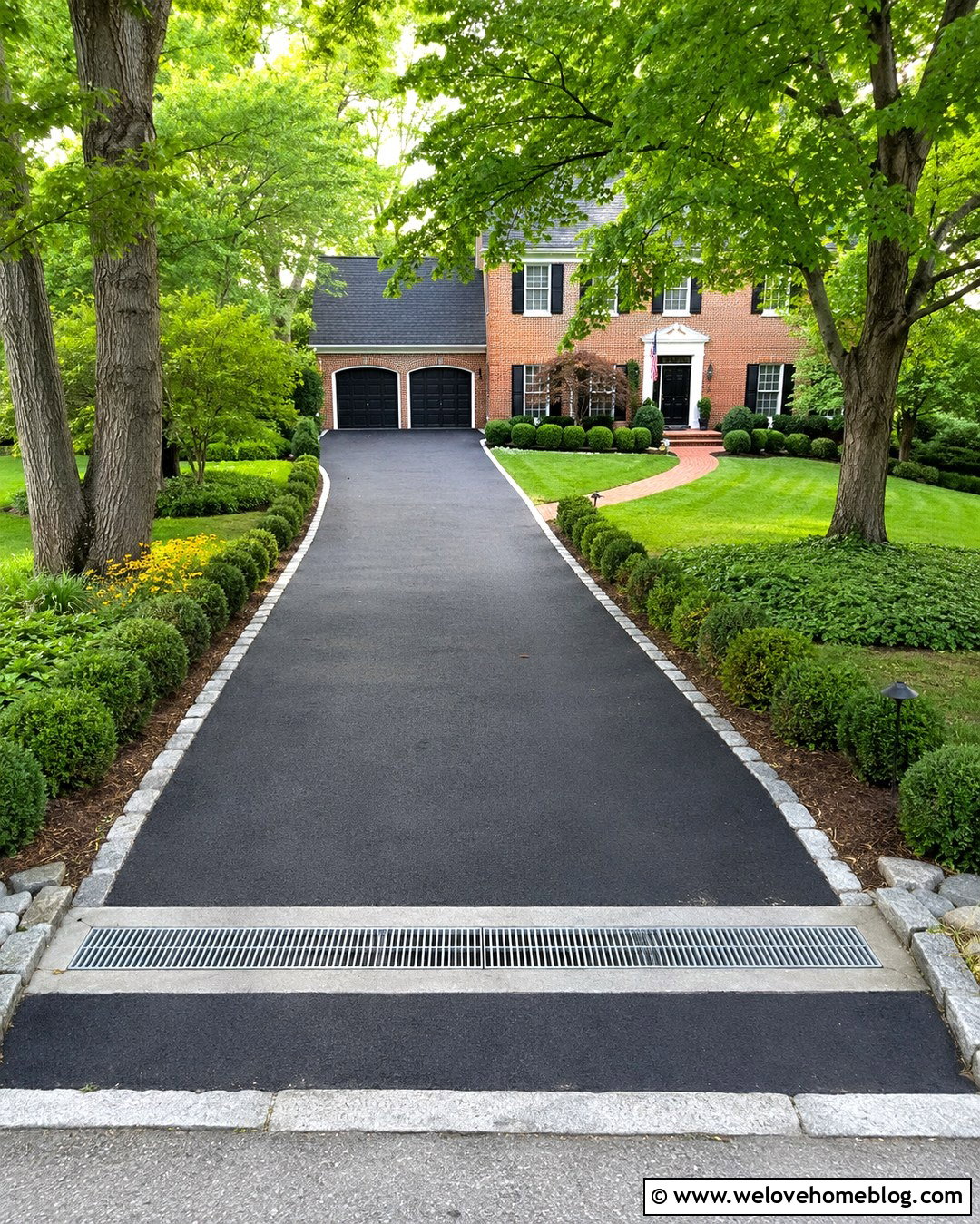
A catch basin can be incorporated into a polished driveway layout instead of being left as an obvious utility feature. Use light gray poured concrete for a sloped driveway and position a dark metal basin grate at the low point where runoff naturally gathers. Connect it to a stone-lined ditch running along the property edge. Surround the grate with a flush border of charcoal pavers so it appears integrated with the pavement. The ditch can contain gray river rock, clipped grasses, and low shrubs set above the main flow area. Continue the charcoal pavers around the front walkway for balance. This organized design suits modern suburban homes where space is limited and an open grass swale would consume too much of the front yard.

20. Driveway Ditch With A Rock Check Dam
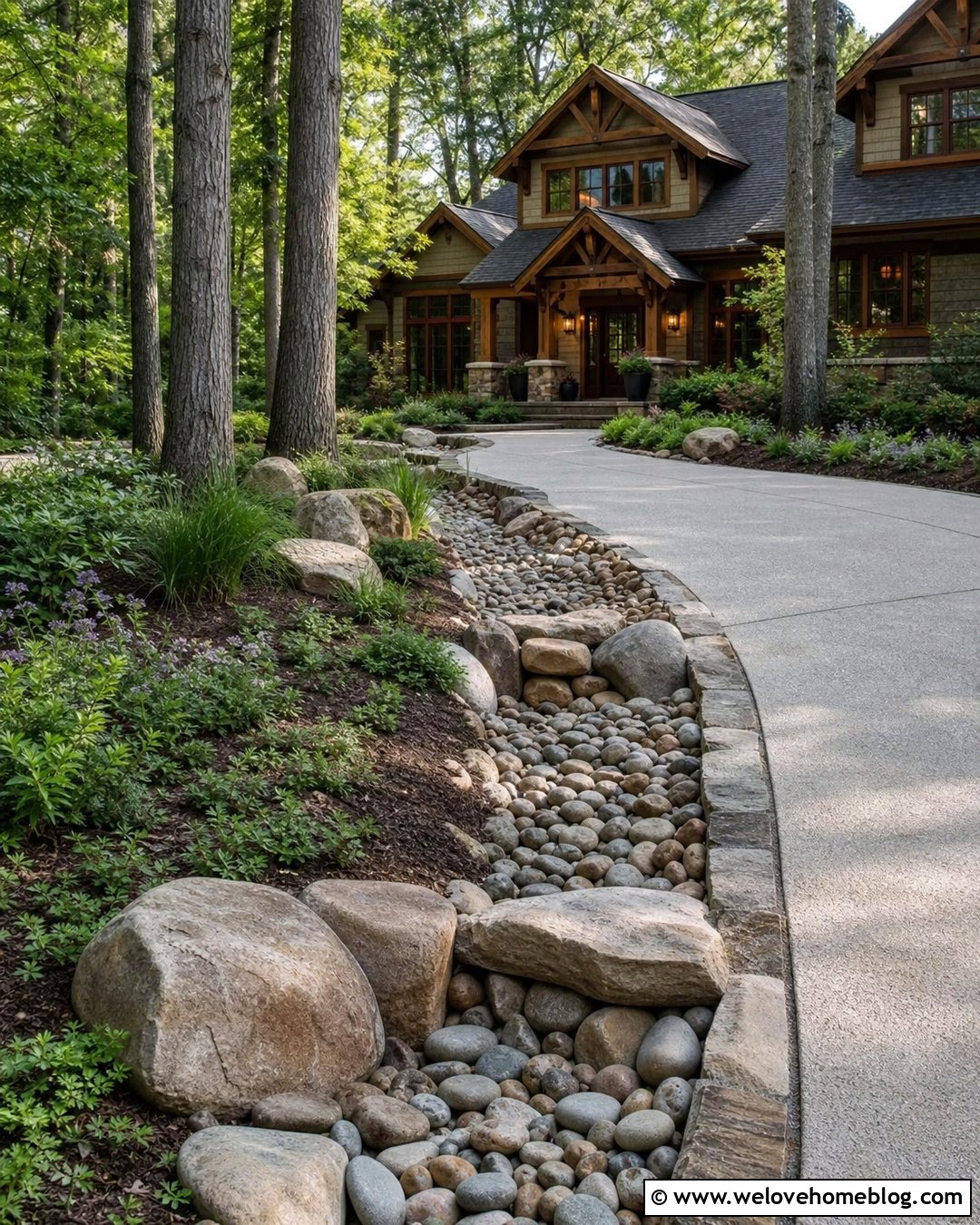
A sloped ditch can look more intentional when small rock check dams are integrated into a dry creek design. Pair a textured concrete driveway with a curving channel made from mixed river cobbles. Place short rows of larger stone across selected points in the ditch, following professional guidance for the site’s grade and runoff. The rows should resemble natural rock shelves rather than rigid walls. Plant sedges, rushes, and spreading ground covers along the banks, then use a flush stone border beside the concrete. A craftsman or woodland home provides a fitting background for this layered landscape. The visual rhythm of stone, planting, and shallow changes in elevation helps the long channel feel connected to the yard instead of appearing like one continuous excavation.
21. Driveway Ditch With Stepping Stones
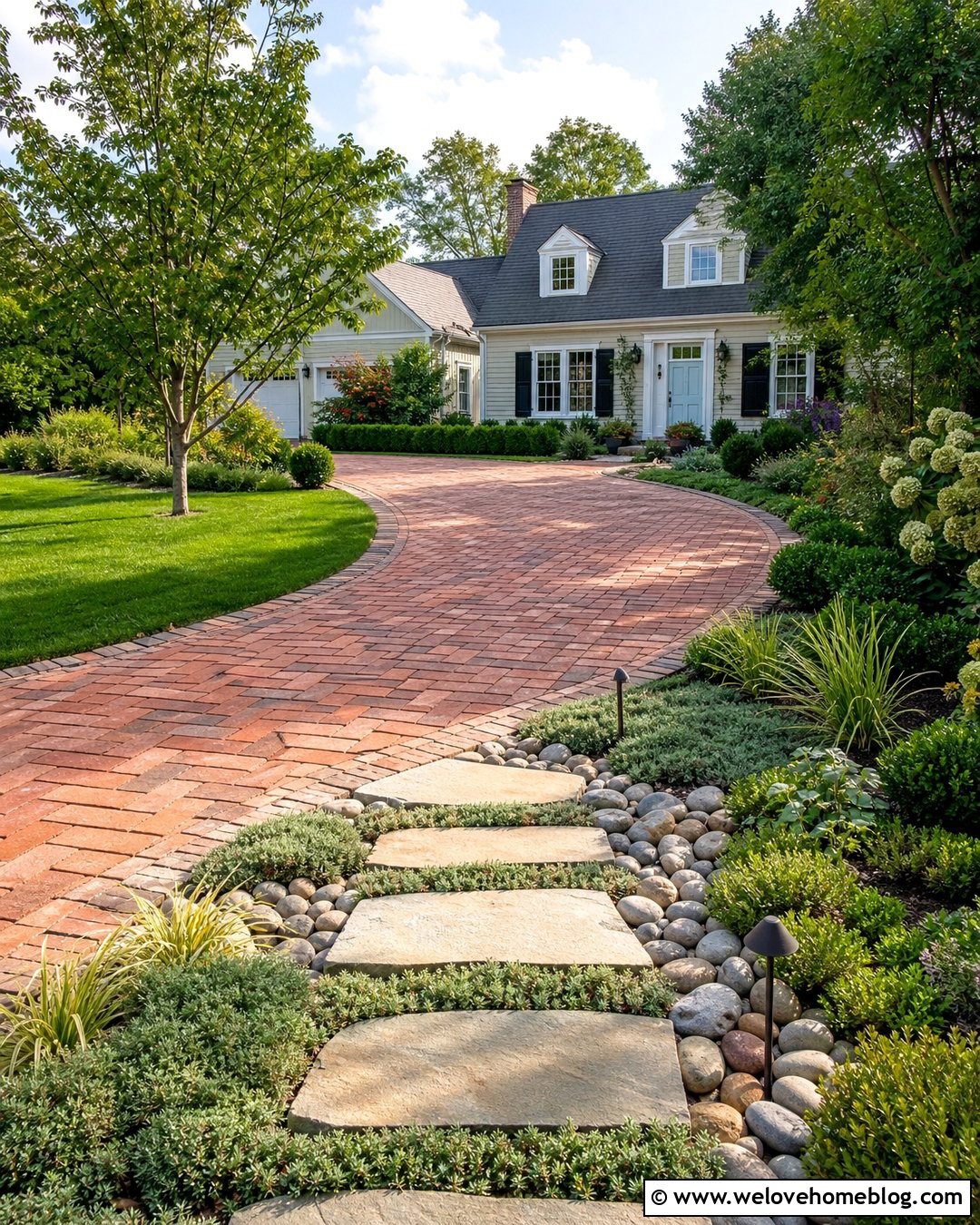
Stepping stones make a shallow drainage ditch easier to cross while adding a useful connection to the yard. Begin with a warm red clay brick driveway and a grass-and-river-rock swale along one side. Install broad, textured stone slabs across the upper part of the channel, leaving space around and beneath them for runoff. Align the crossing with a garden path, side gate, or mailbox route so it has a clear purpose. Low thyme, sedges, and dwarf shrubs can soften the banks without covering the stones. Repeat the same slab material in the front walkway. This charming design works with cottage, Cape Cod, and traditional homes. Keep each stepping surface stable, level, and visible during both dry and wet conditions.
22. Driveway Ditch With Concrete Pavers
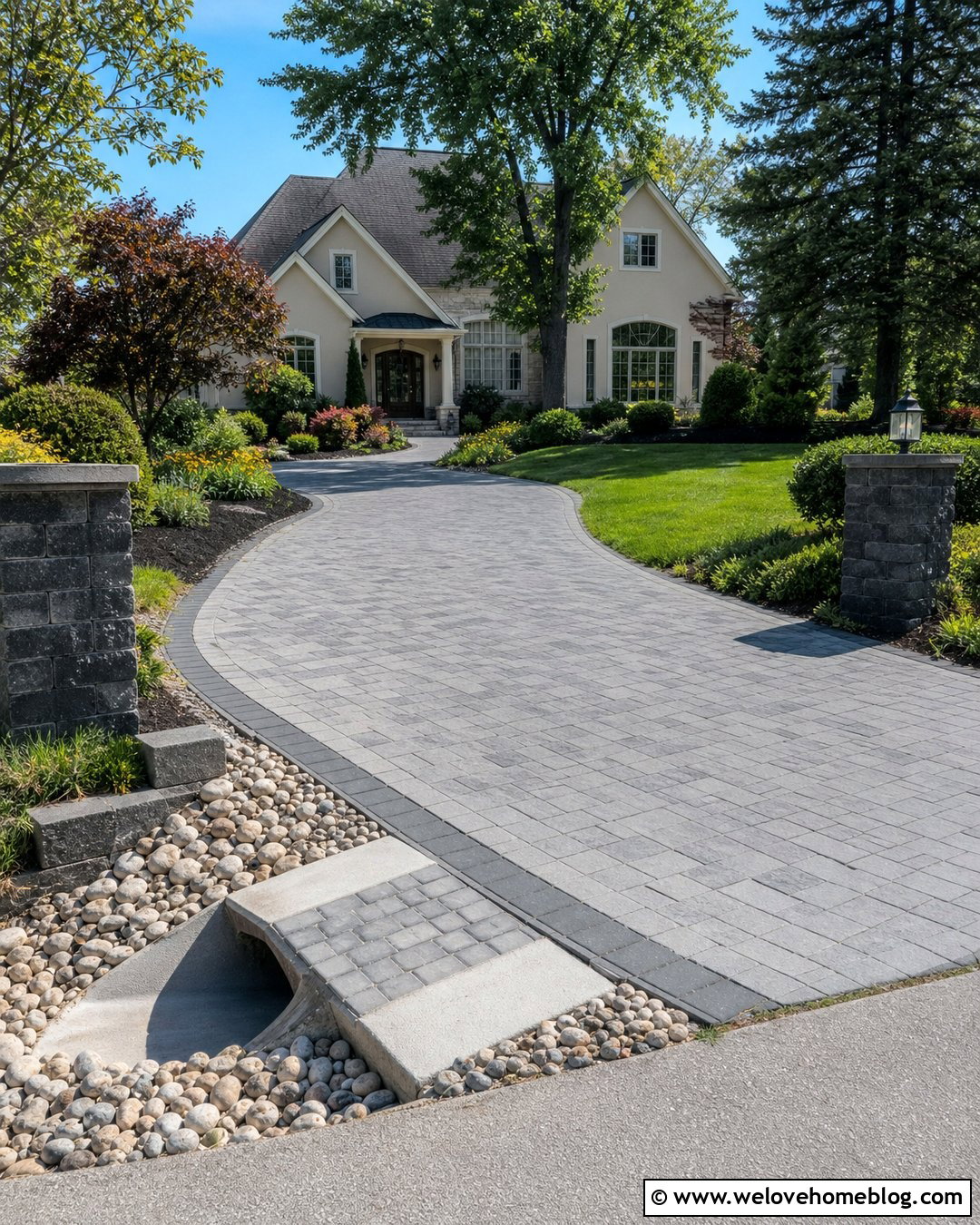
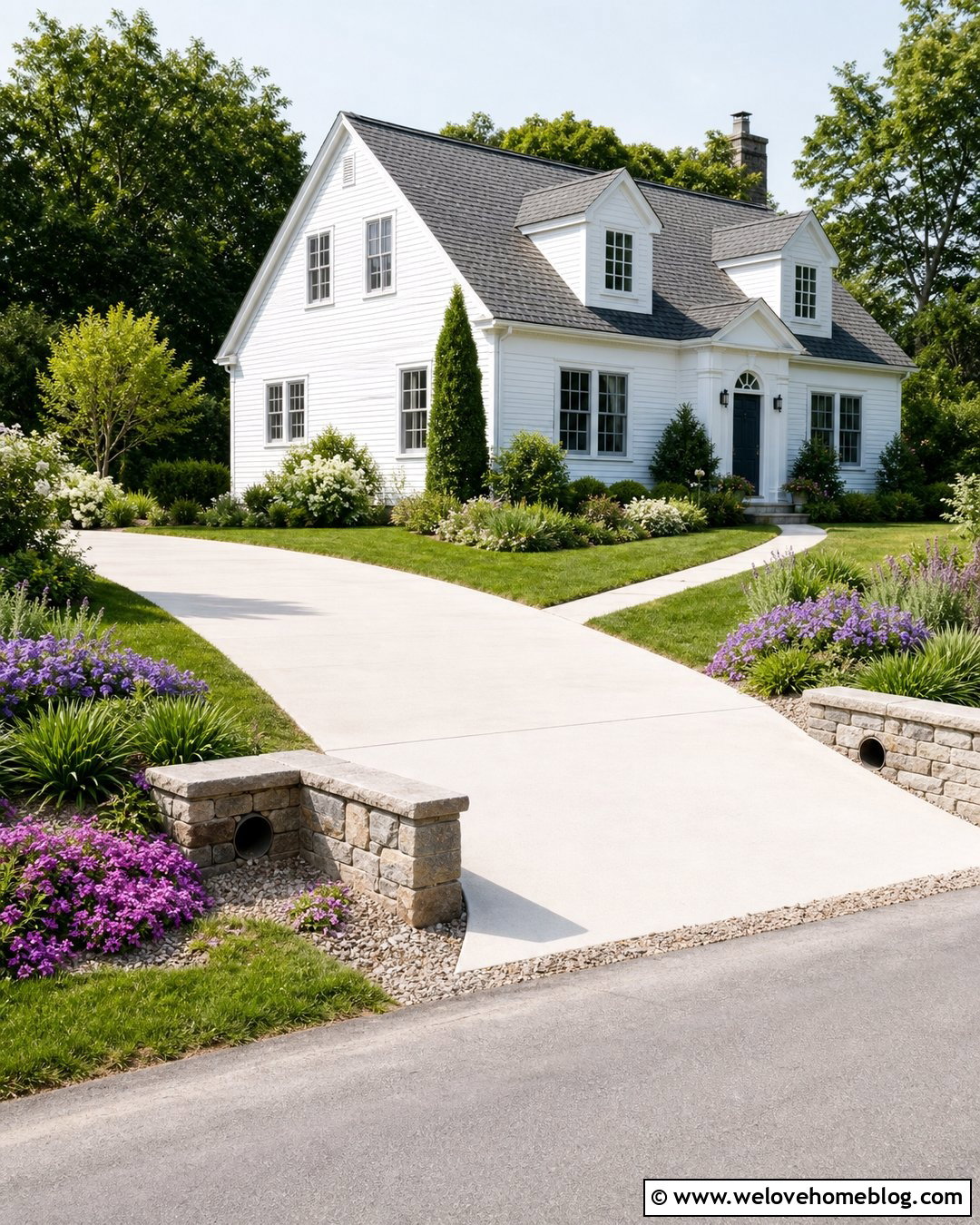
Concrete pavers can create a durable, coordinated border around a roadside ditch. Install a gently curved driveway using medium gray interlocking pavers, then continue a darker paver band along the drainage edge. Shape the ditch into a smooth grass swale with a narrow bed of pale river pebbles at the bottom. At the driveway entrance, use the darker pavers to form a reinforced apron above the culvert. Masses of low flowering perennials and rounded evergreen shrubs can frame the upper banks. Repeat the paver colors in the walkway and porch steps for a unified exterior. This versatile arrangement fits almost any suburban home. The defined edge keeps the driveway visually crisp while the green swale prevents the front yard from becoming dominated by hardscape.
23. Driveway Ditch With Riprap Stone
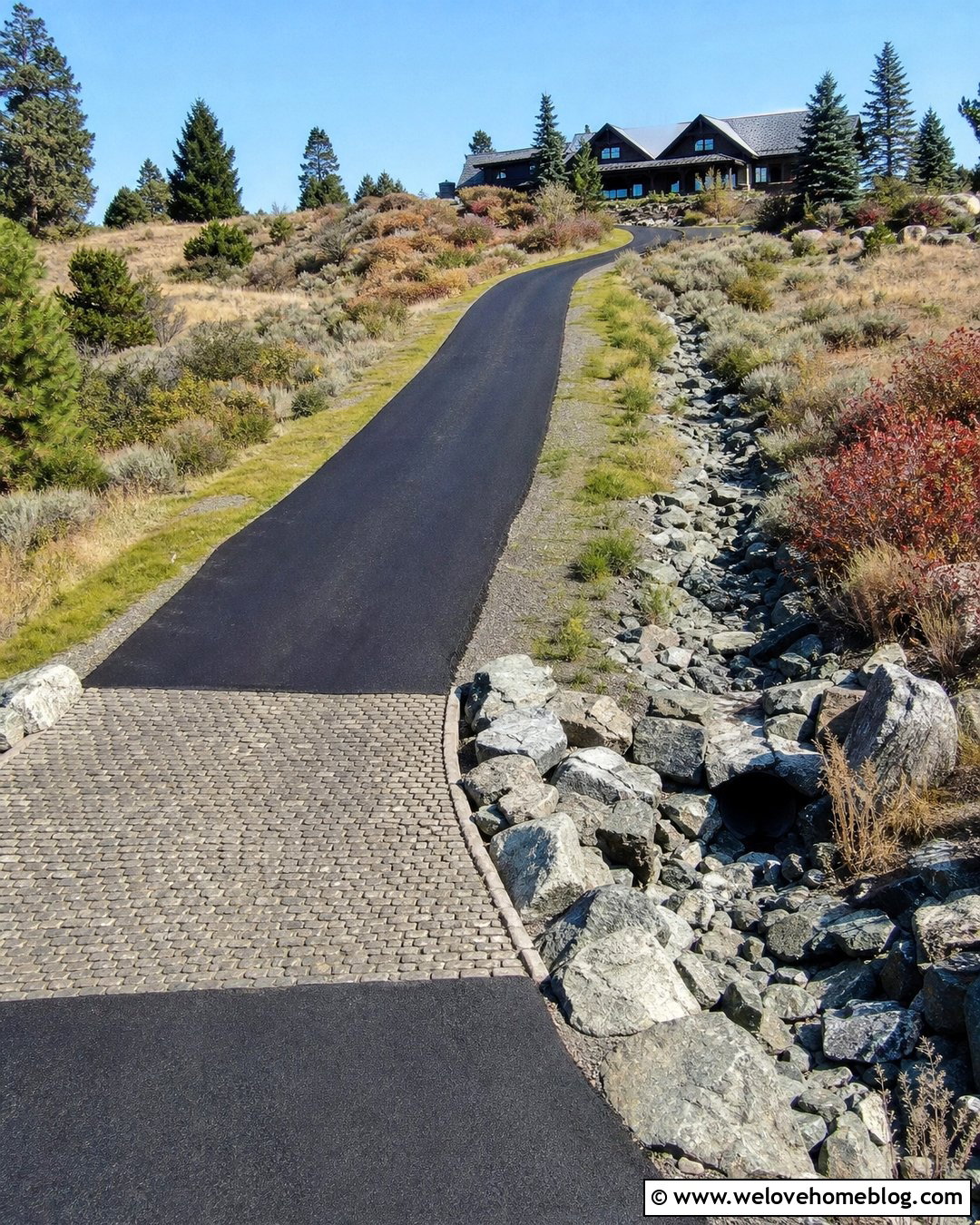
Heavy runoff may call for a more rugged channel, but riprap does not have to look industrial. Pair a wide black asphalt driveway with an armored ditch made from angular gray stone in several coordinated sizes. Concentrate the largest pieces near the culvert outlet and other erosion-prone areas, then transition to smaller rock along calmer sections. A broad cobblestone apron at the driveway entrance helps connect the rough drainage material to the smooth pavement. Plant tough native grasses, sumac, and low shrubs on the upper banks, leaving the armored center open. This strong landscape suits large rural lots, hillside homes, and properties exposed to fast-moving stormwater. Use carefully selected stone colors so the ditch relates to the house facade and surrounding terrain.
24. Driveway Ditch With A Retaining Wall
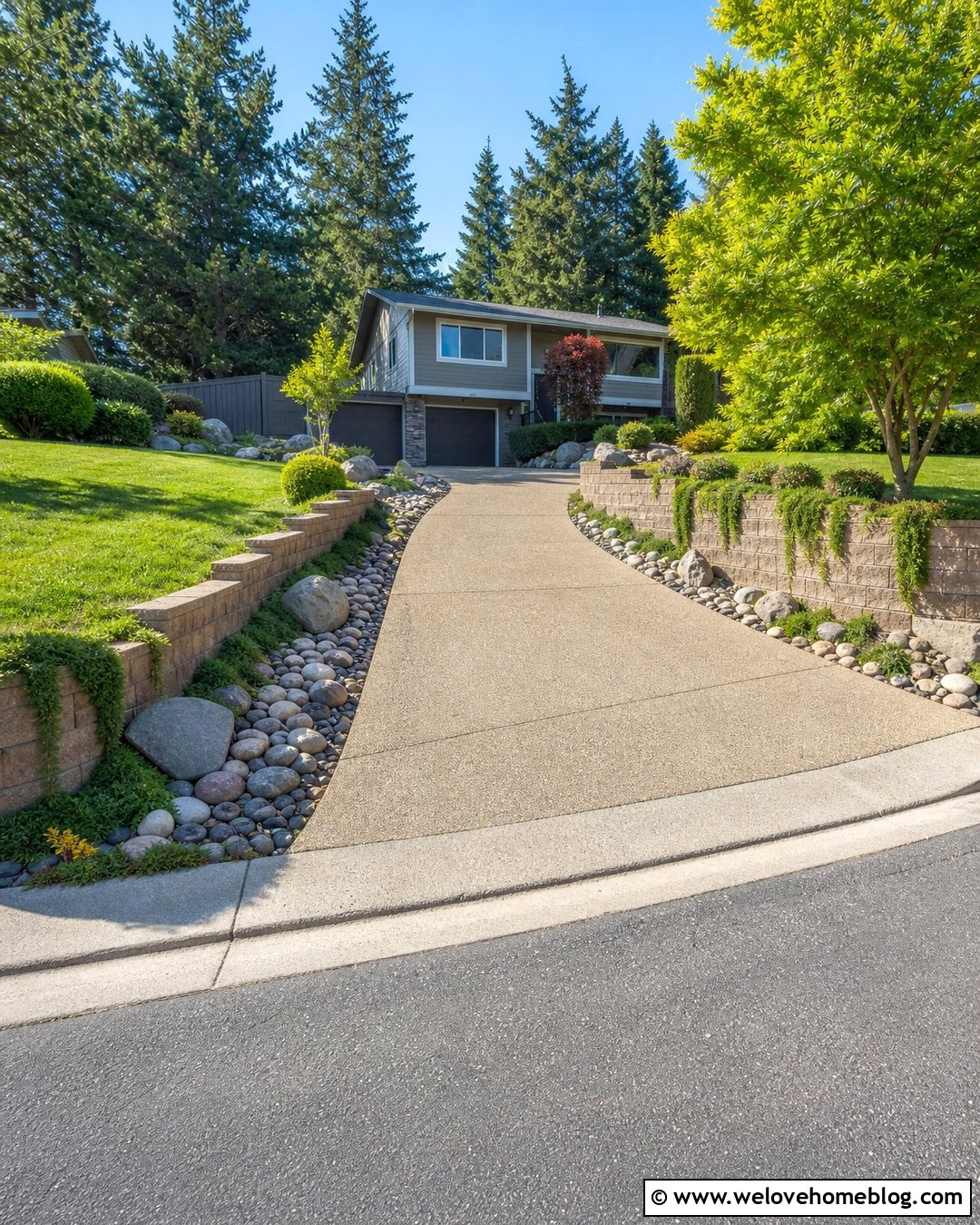
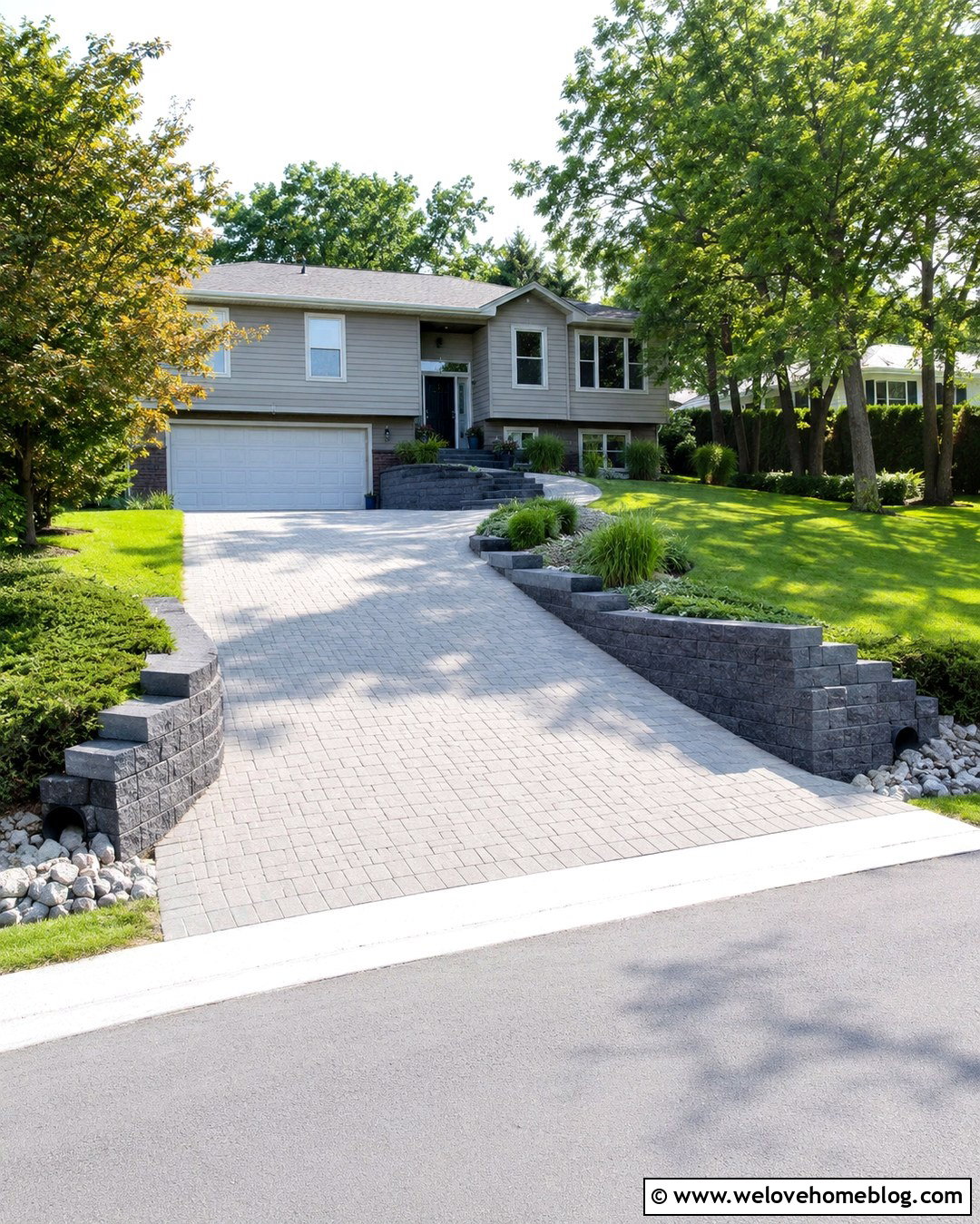
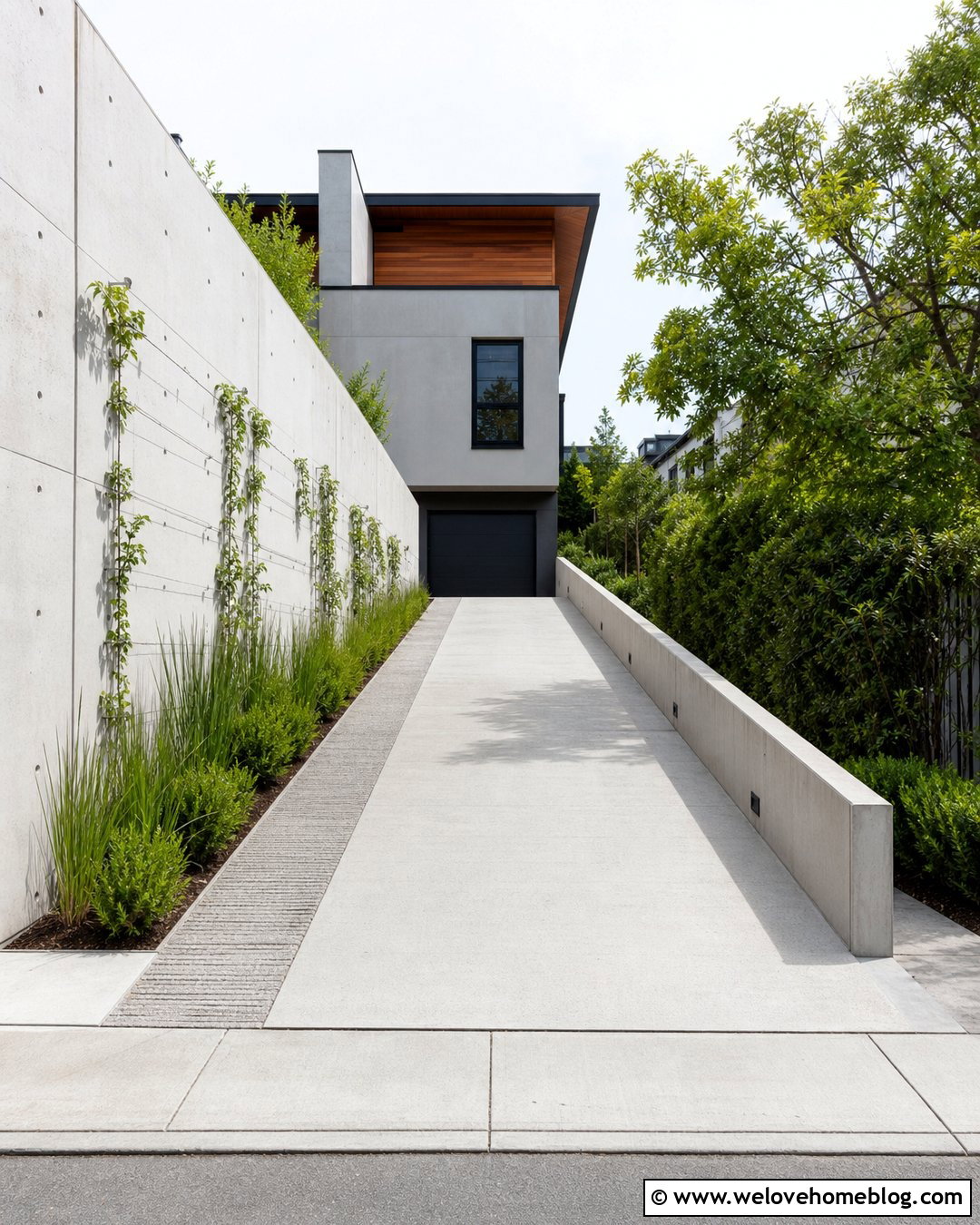
A low retaining wall can define a driveway where the yard rises sharply above the ditch. Use tan exposed-aggregate concrete for the driveway and build a short wall from warm, textured concrete blocks along the upper bank. Below it, create an open channel lined with mixed river rock and several larger anchor stones. Plant trailing ground covers along the top of the wall and place compact shrubs farther back from the edge. At the entrance, transition the wall into a lower stone border around the culvert. This layered design works with split-level, ranch, and hillside homes. Avoid building walls that constrict the drainage route or hide access points. The wall, driveway, ditch, and planting should read as one carefully planned elevation change.
25. Driveway Ditch With Evergreen Landscaping
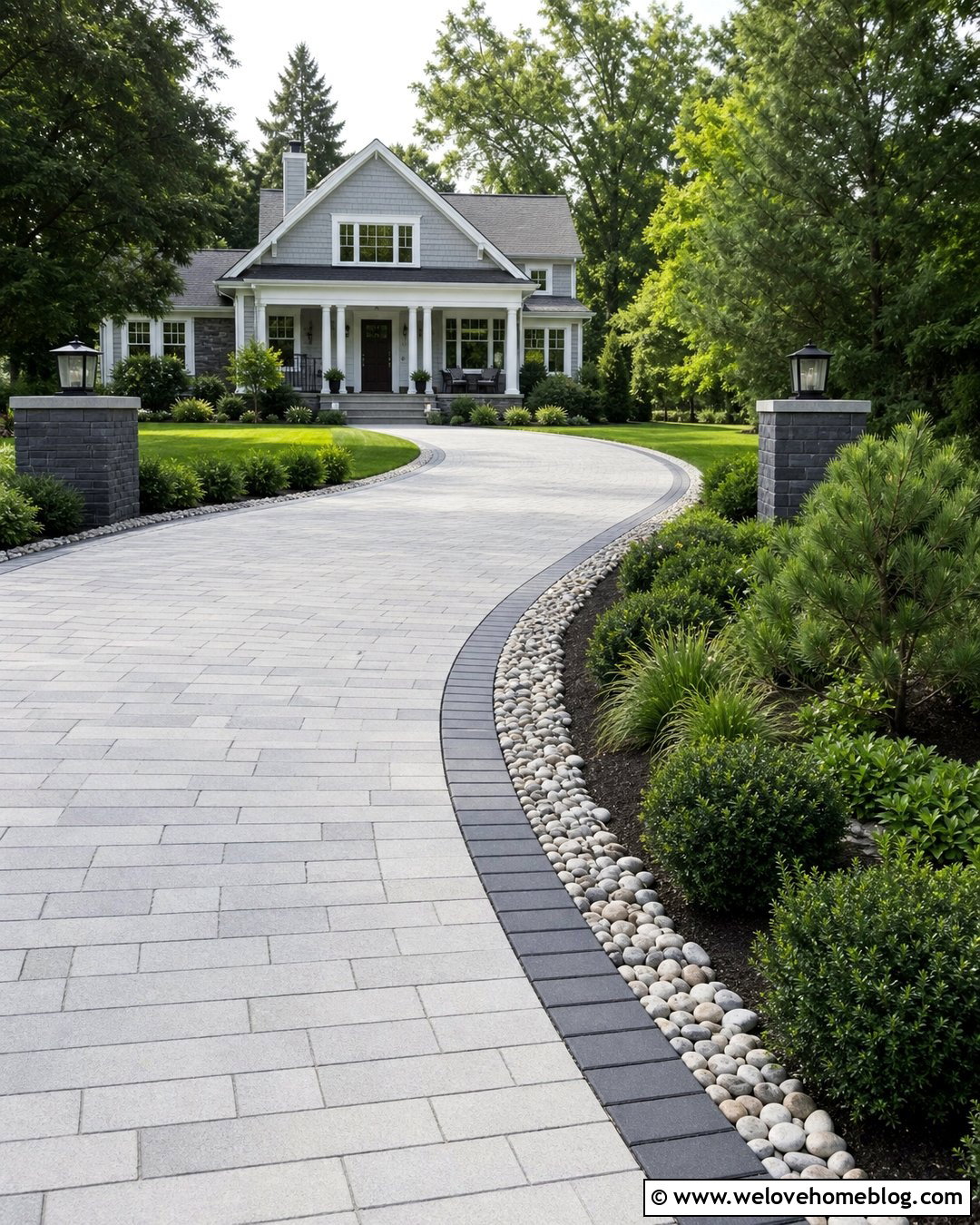
Evergreens provide year-round structure around a ditch without relying entirely on seasonal flowers. Pair a pale gray concrete paver driveway with a broad river pebble swale. Plant compact inkberry, dwarf juniper, low pine, and moisture-tolerant grasses along the upper banks in loose groups. Leave enough open space between plants for maintenance and clear sightlines near the road. A charcoal paver ribbon can define the driveway edge, while matching charcoal columns frame the entrance. Add deciduous ground covers between evergreen masses for changing color and texture. This balanced layout works well with colonial, craftsman, and contemporary homes. Choosing naturally compact varieties helps prevent the ditch from becoming crowded, shaded, or difficult to inspect as the landscape matures.
26. Driveway Ditch With A Mailbox Garden
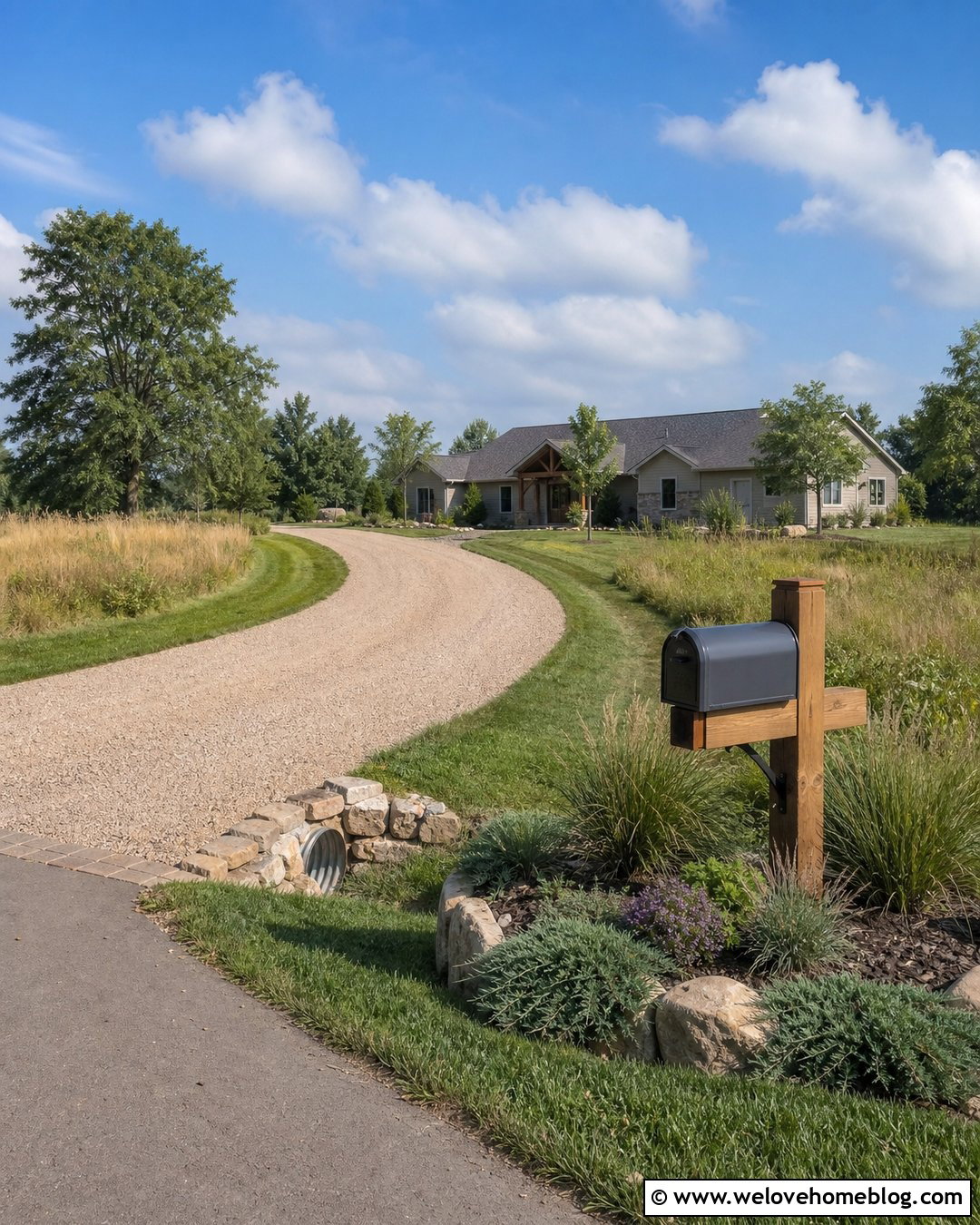
A mailbox garden can turn the most visible section of a driveway ditch into a polished entrance. Start with a curved tan gravel driveway and a shallow grass swale that passes beneath the entrance through a culvert. Set the mailbox on the upper bank, safely outside the active drainage path. Surround it with a small fieldstone bed containing compact ornamental grass, low flowering perennials, and a spreading evergreen. Use matching fieldstone around the culvert ends and as edging along the driveway apron. Keep plants short enough to preserve road visibility and postal access. This friendly composition suits farmhouse, cottage, and ranch homes. Repeating the stone and plant palette near the house helps the mailbox area feel connected to the full property.
27. Driveway Ditch With Landscape Lighting
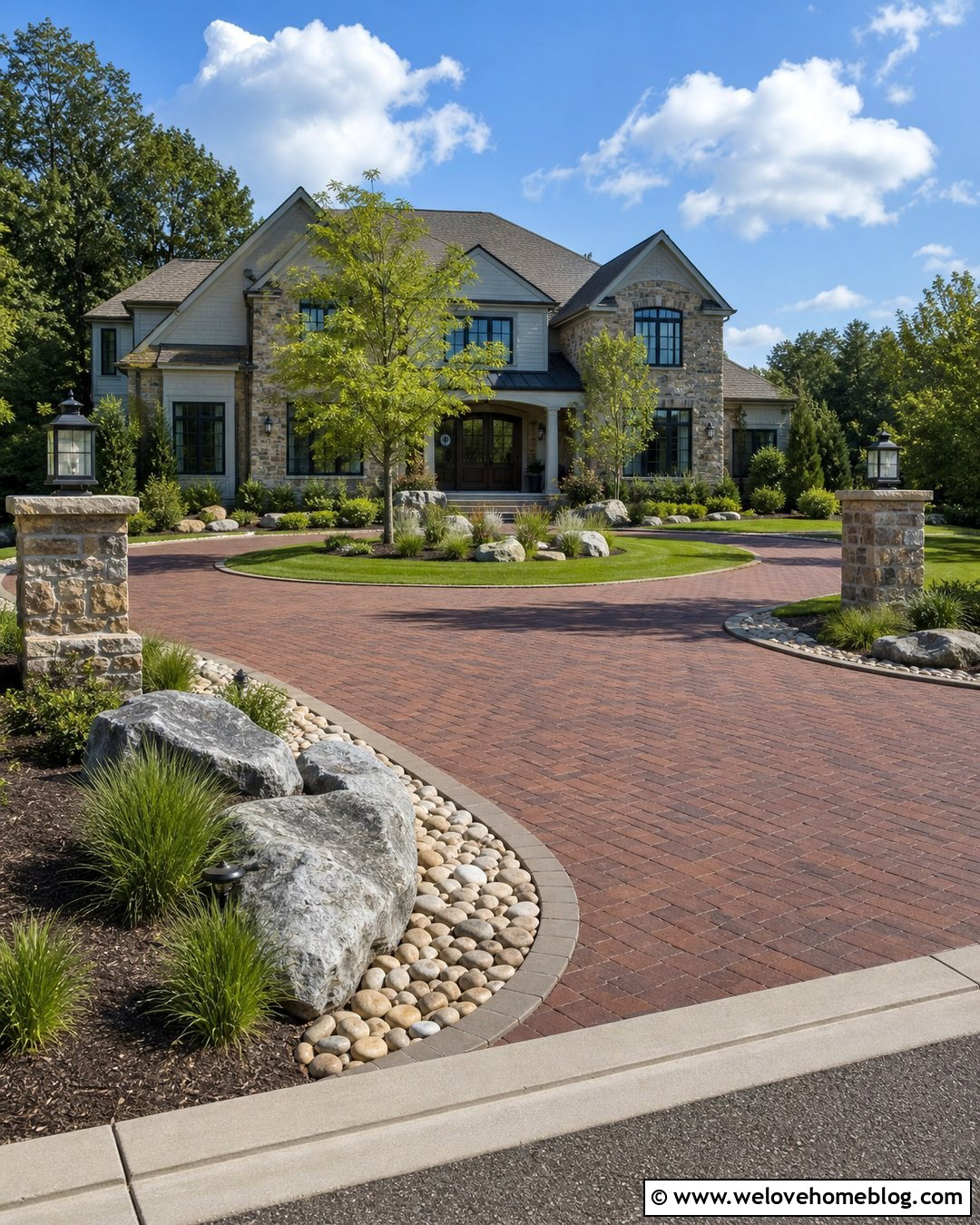
Landscape lighting can be included without placing fixtures directly in the drainage channel. Pair a circular driveway of dark brick pavers with a sweeping dry creek ditch along the roadside. Fill the channel with pale river stone and larger gray boulders, creating contrast with the driveway surface. Install low, shielded fixtures on the upper bank to highlight selected rocks, ornamental grasses, and entrance pillars. During the day, the fixtures should remain discreet and evenly spaced. A matching brick border can outline both the driveway and nearby walkway. This refined design suits large traditional and transitional homes. Keep all electrical components protected and positioned away from standing water, maintenance routes, culvert openings, and areas where fast runoff may move stone or debris.
28. Driveway Ditch With A Split Rail Fence
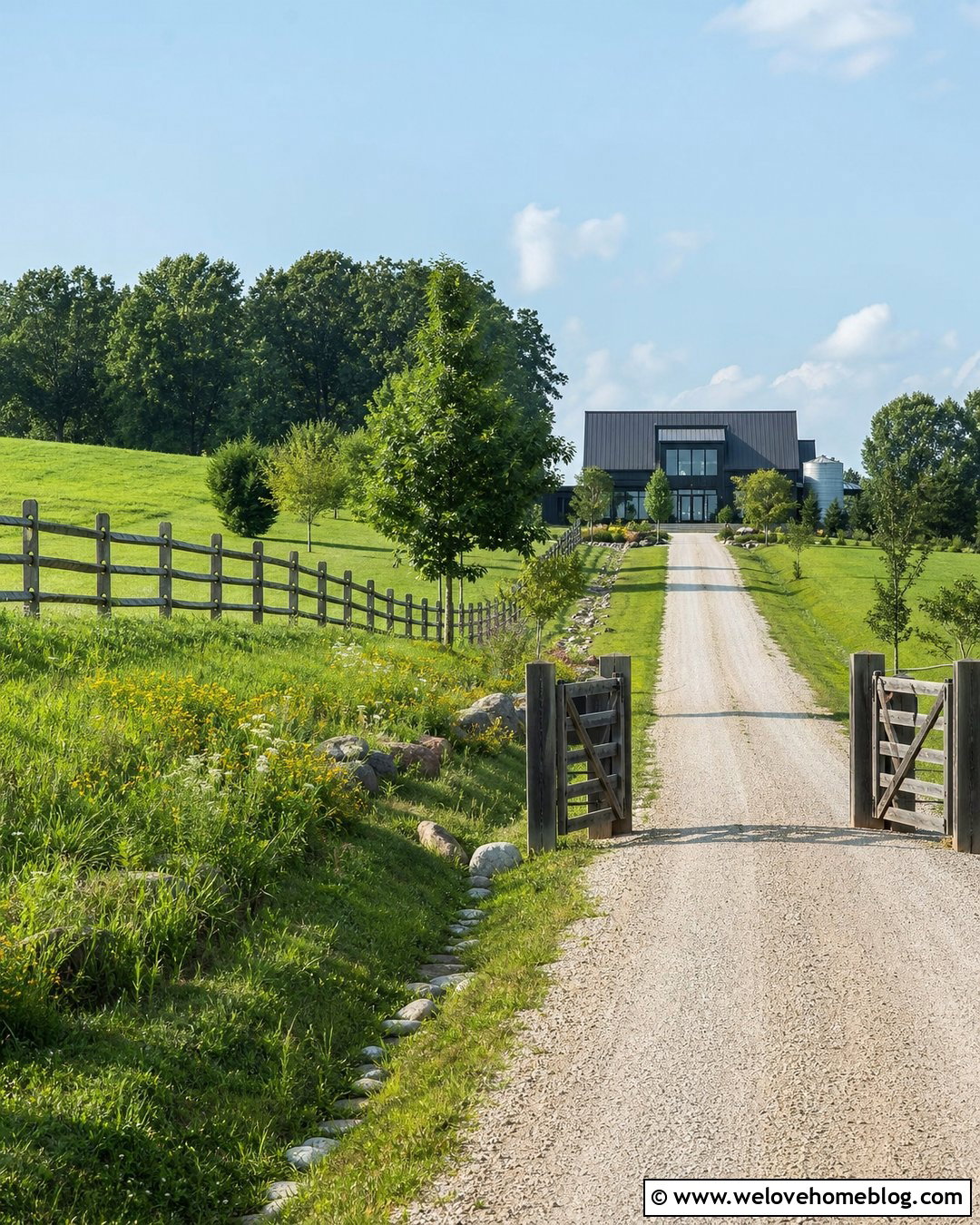
A split rail fence adds rural character when it follows the upper edge of a broad ditch. Combine a compacted crushed-limestone driveway with a grass swale lined by occasional fieldstones. Position the fence well beyond the active channel so posts do not interfere with water movement or maintenance. Plant native wildflowers and meadow grasses in loose drifts between the fence and ditch, keeping the roadside entrance low and open. A timber-edged gravel apron can mark the transition beneath a simple farm gate. Continue the fence toward a barn-style garage or modern farmhouse. This complete look feels relaxed and appropriate for large lots. The repeated wood, pale gravel, grass, and fieldstone create a natural connection between the driveway and surrounding land.
29. Driveway Ditch With A Stone Entrance
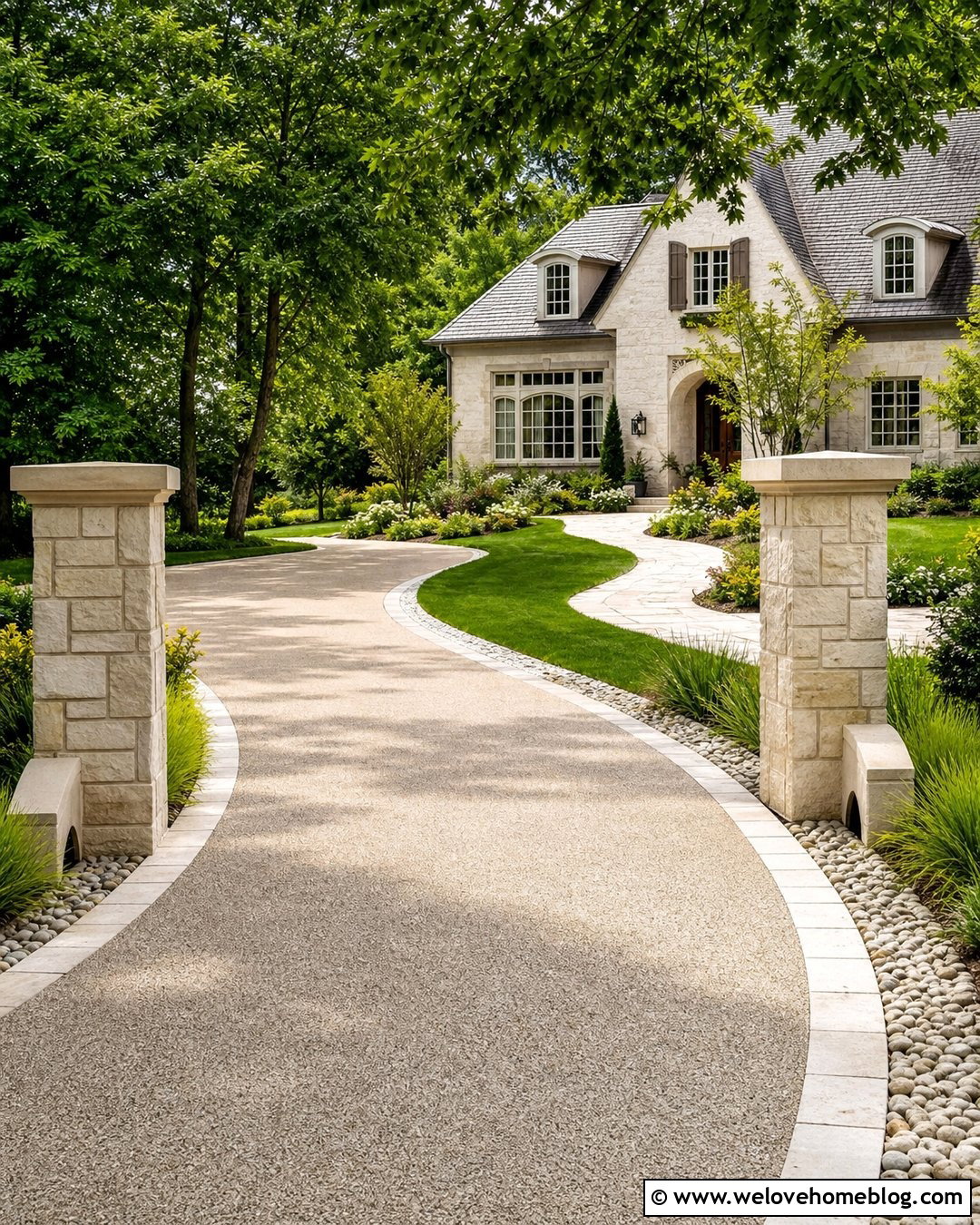
Stone pillars can anchor a driveway entrance while framing, rather than hiding, the drainage system. Use beige resin-bound gravel for a smooth curved driveway and install a properly planned culvert below the entrance. Build two limestone pillars on stable ground beyond the exposed culvert ends. Continue the limestone as low headwalls and a flush driveway border. Shape the adjoining ditch as a pale river rock creek with low grasses and compact flowering shrubs along the banks. An address plaque can be mounted on one pillar where it remains visible from the road. This elegant composition fits Mediterranean, French country, and upscale transitional homes. Matching stone across the entrance, ditch, and house facade gives the entire frontage a cohesive appearance.
30. Low Maintenance Driveway Ditch
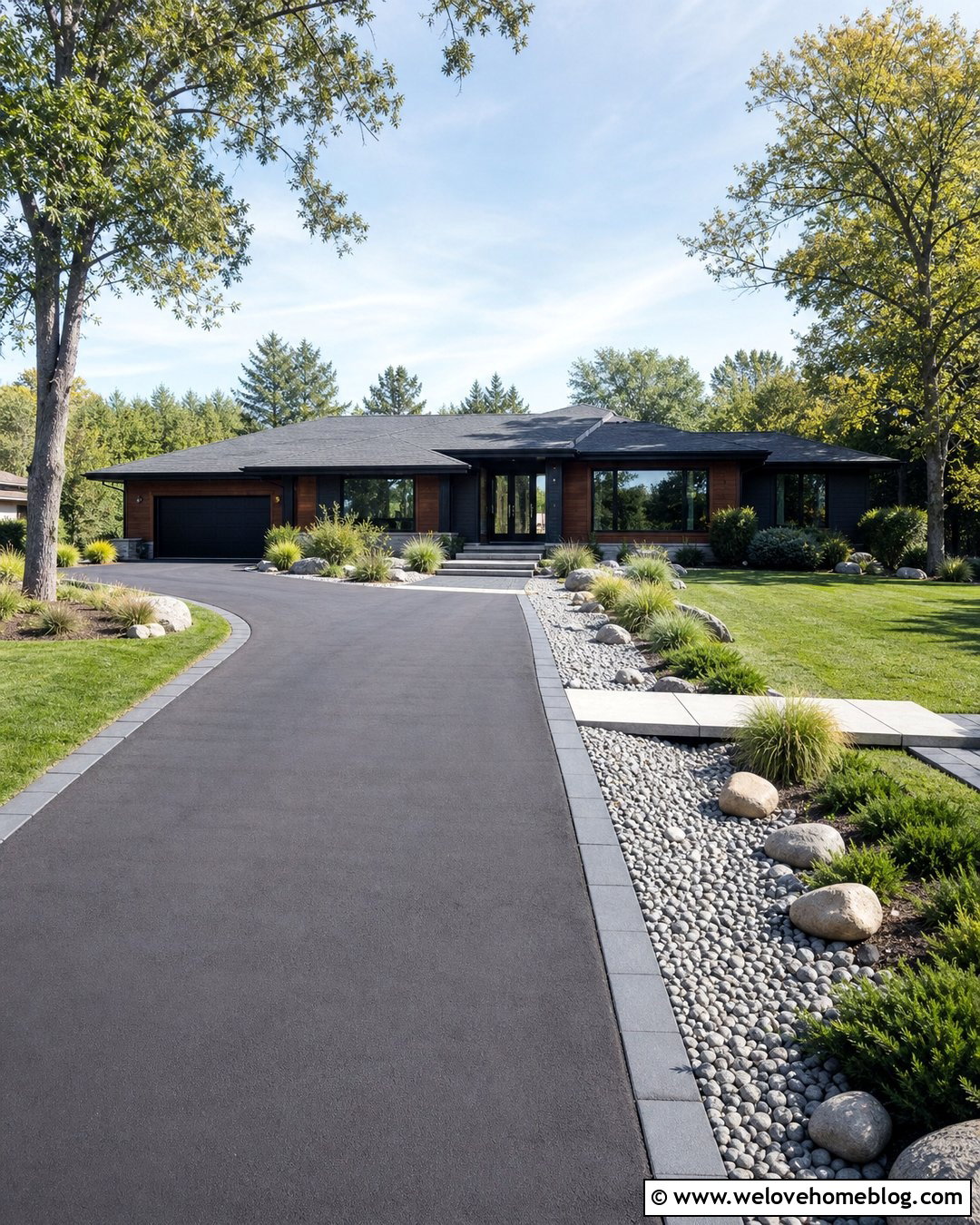
A low-maintenance ditch should use durable materials, open sightlines, and restrained planting. Pair a straight black asphalt driveway with a wide channel of washed gray river rock. Add larger stones at bends, inlets, and outlets, while keeping the center free of dense vegetation. Use a flush concrete curb or dark paver ribbon to stop asphalt edges and loose soil from breaking into the ditch. On the upper bank, plant small groups of dwarf juniper, tough native grass, and spreading ground cover suited to local conditions. A simple concrete walkway can bridge the channel near the house. This practical arrangement complements ranch and contemporary homes. It remains attractive throughout the year and provides straightforward access for removing leaves, sediment, weeds, and storm debris.
Conclusion:
Successful **30 Driveway Ditch Ideas** should improve the entire entrance rather than merely disguise a drainage channel. Start by understanding where runoff begins, how it crosses the property, and where it can leave safely. Then coordinate the ditch with the driveway material, shape, edging, walkway, planting, culvert, and architectural character of the house. A broad grass swale creates a subtle suburban look, while river rock, boulders, native plants, or stonework can turn visible drainage into a landscape feature. Keep culverts open, preserve maintenance access, and avoid placing loose decorations in active flow areas. With sound drainage planning and a consistent material palette, even a basic roadside ditch can contribute to attractive, practical curb appeal.

Related posts:
Leave a Reply