
A well-designed driveway culvert can manage roadside drainage while making the entrance to your home feel more finished and welcoming. The best 35 Driveway Culvert Ideas combine a durable driveway surface, correctly sized drainage pipe, stable end treatment, erosion-resistant ground cover, and landscaping that does not obstruct water flow. Before changing a culvert, confirm local permit rules and consult a qualified drainage professional. Rigid headwalls, exposed pipe ends, steep slopes, and poorly placed decorations can create roadside hazards, while an unsuitable opening can restrict drainage. () Whether your property has a gravel country lane, paved suburban drive, or polished modern entrance, the complete looks below offer practical inspiration for attractive and functional 35 Driveway Culvert Ideas.

1. Driveway Culvert With Stacked Stone Headwalls
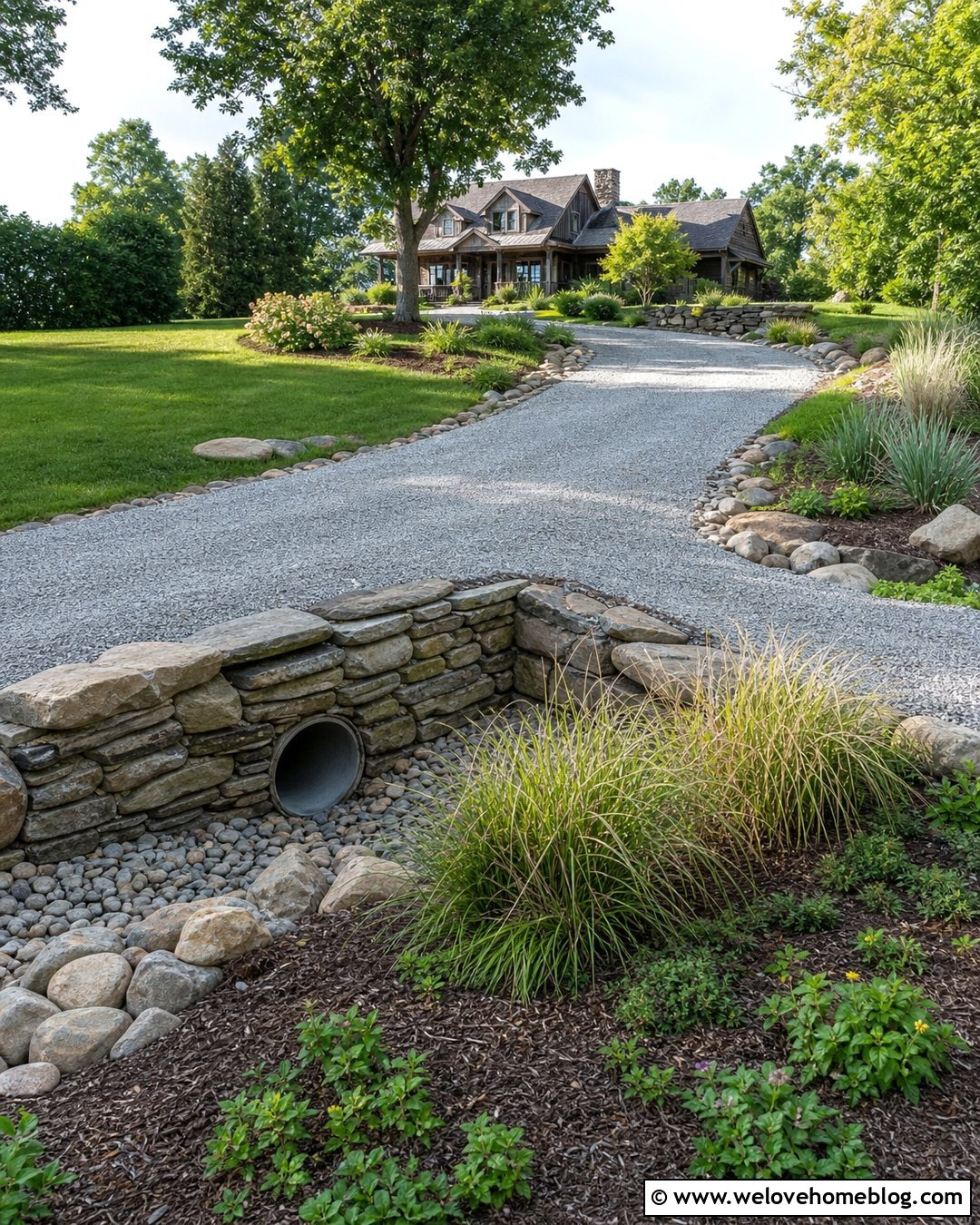
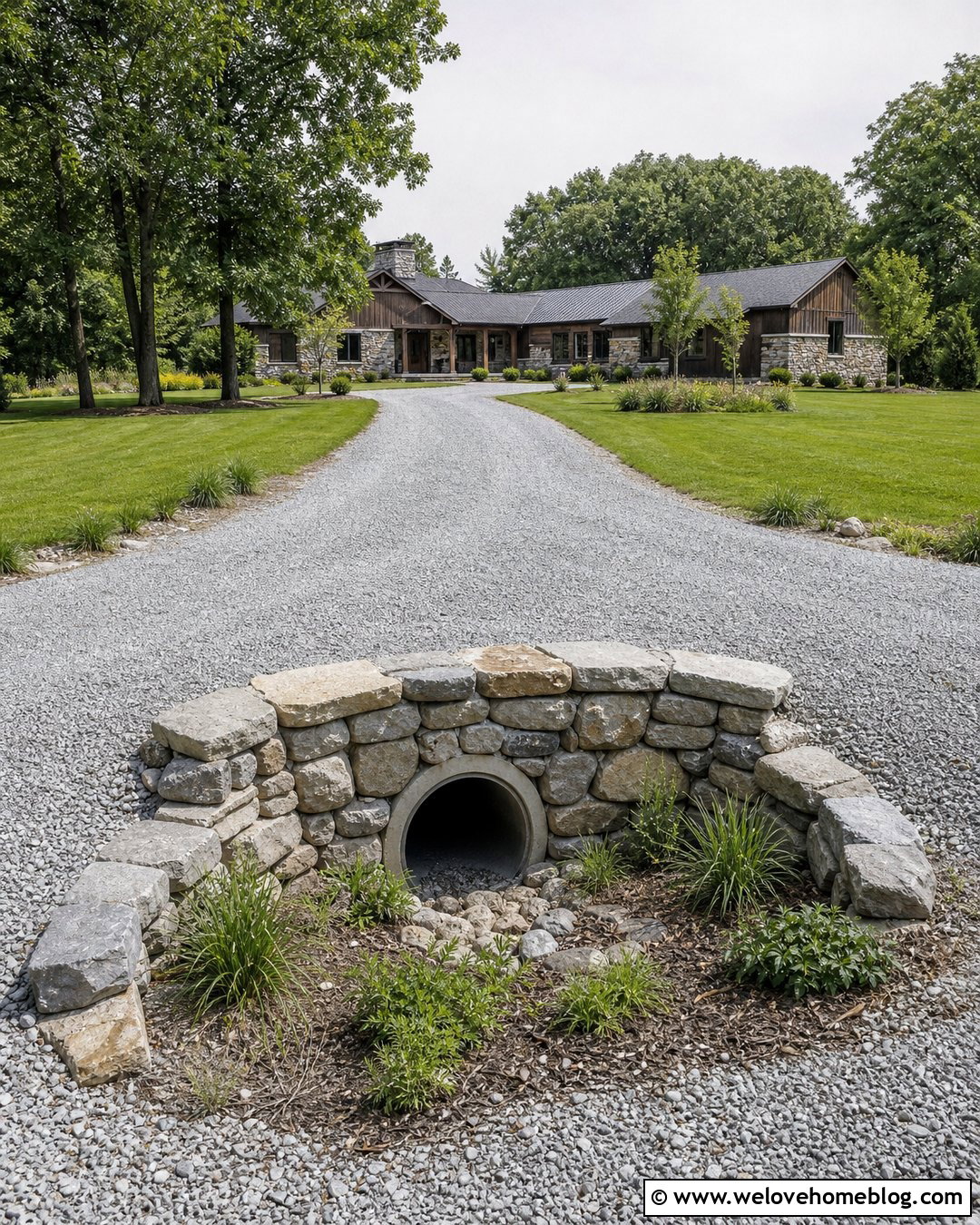
Stacked stone headwalls give a gravel driveway a sturdy, natural-looking entrance that blends beautifully with rural surroundings. Use angular fieldstone or locally sourced ledgestone around both culvert openings, keeping the central waterway completely clear. A gently curved gray gravel driveway can rise behind the stonework and lead toward a farmhouse or country home. Add compact native grasses and low ground covers above the walls, where roots can help hold the soil without hanging over the pipe. A defined gravel shoulder makes mowing and maintenance easier. Keep the walls proportional to the ditch rather than building oversized structures near the road. When professionally designed for stability and drainage, this complete look feels established, practical, and closely connected to the landscape.
2. Driveway Culvert With Brick Headwalls
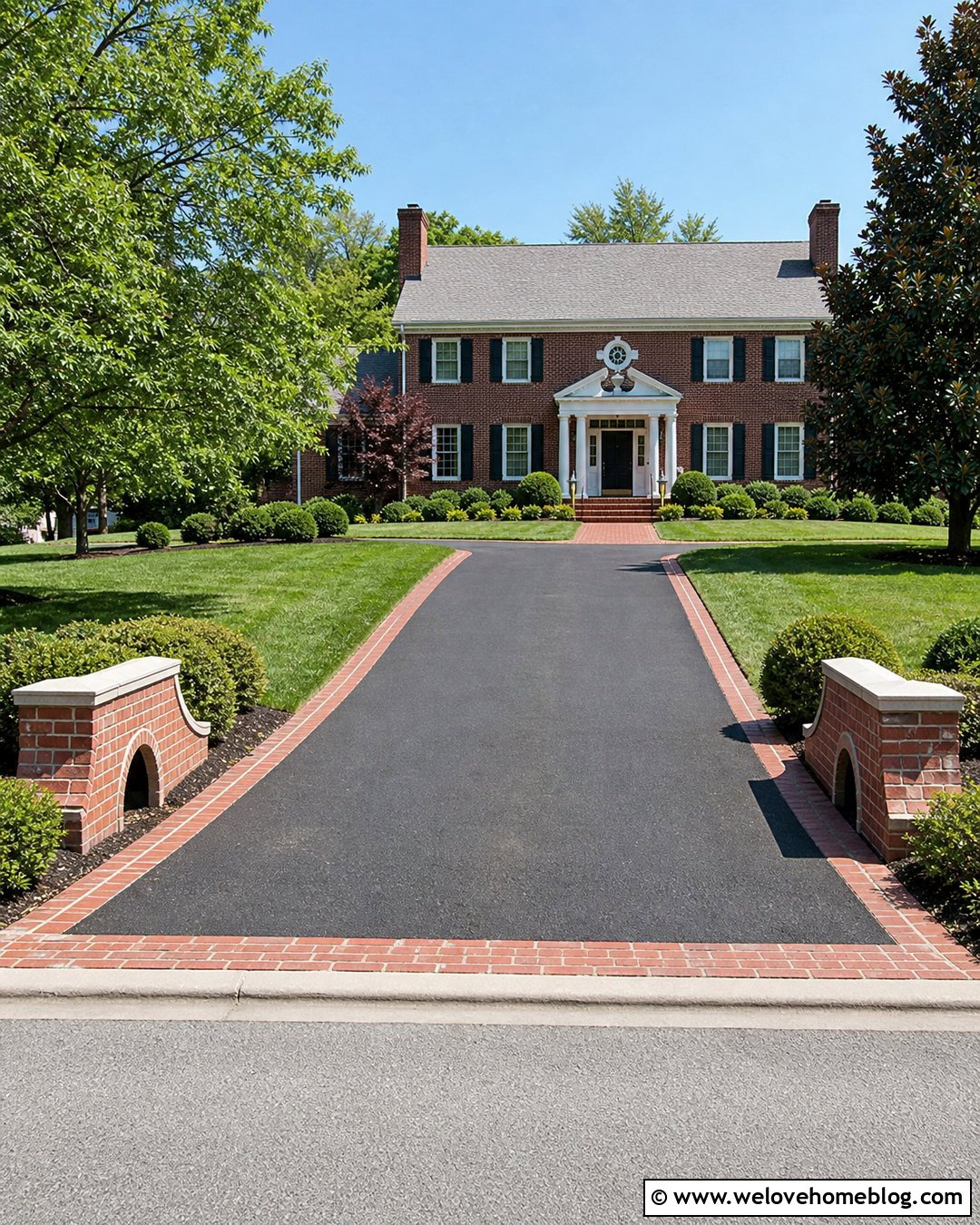
Warm brick headwalls can connect a driveway culvert to a traditional brick home without making the entrance appear overly heavy. Pair red or brown clay brick with a black asphalt driveway and matching brick ribbons along the apron. The driveway can follow a straight layout through clipped lawn and symmetrical planting beds. Build the culvert ends with simple capped walls that frame the openings while leaving enough visible space for inspection and debris removal. Low evergreen shrubs placed behind the headwalls soften the masonry without blocking sightlines. Choose brick and mortar rated for exterior exposure, especially in regions with freezing winters. This coordinated entrance works especially well with colonial, Georgian, and traditional ranch homes because the drainage structure looks like an intentional part of the architecture.
3. Driveway Culvert With Concrete Wingwalls
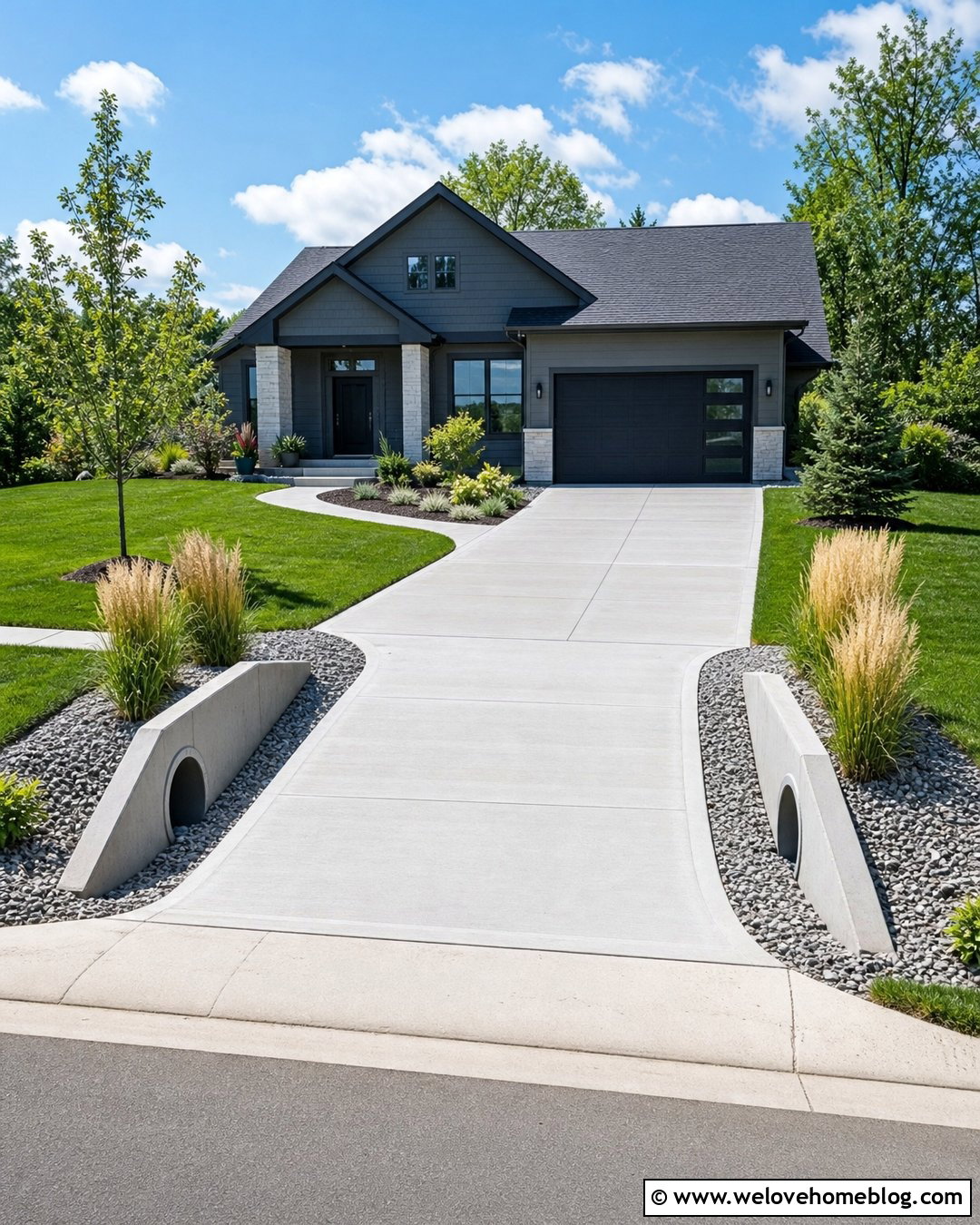
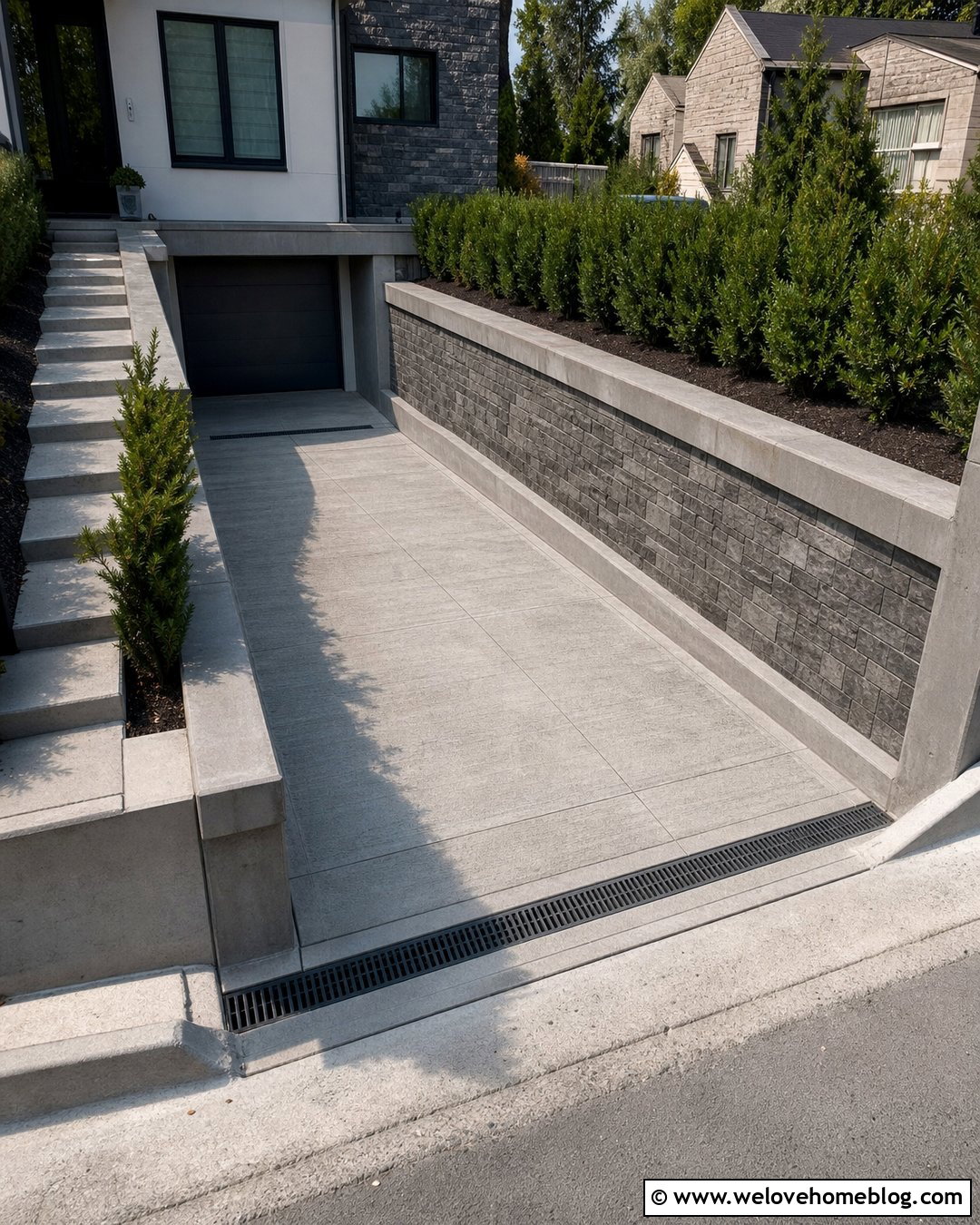
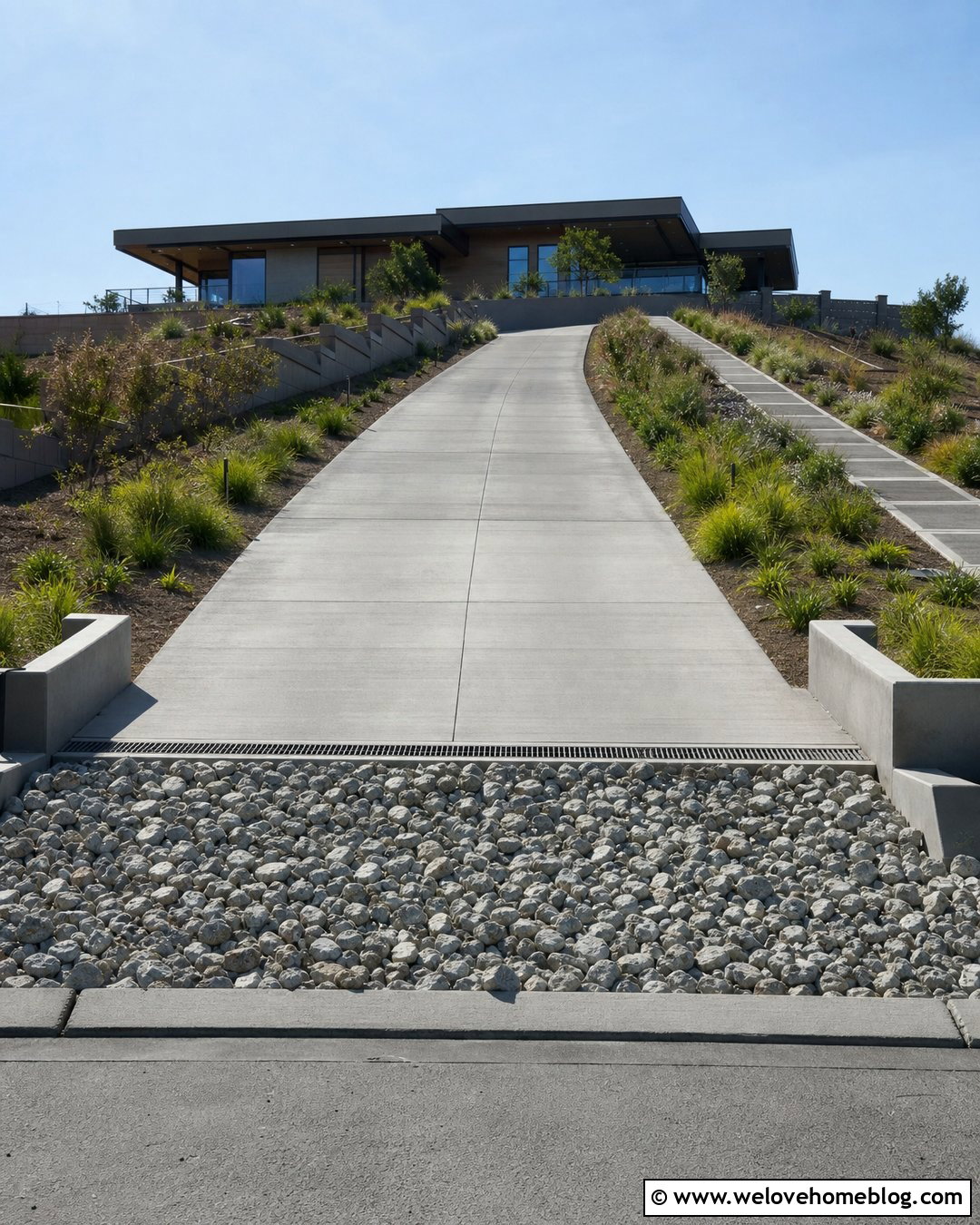
Concrete wingwalls create a clean, durable culvert entrance for properties that need a simple and controlled transition between the roadside ditch and driveway embankment. Match the wingwalls with a light gray poured concrete driveway in a straight or slightly flared layout. Angled walls can guide the eye toward the pipe opening while retaining the surrounding soil. Keep the finish smooth for a modern house or use subtle board-formed texture for a softer architectural look. Narrow planting beds behind the concrete can hold ornamental grasses, dwarf shrubs, and erosion-resistant ground cover. A concrete walkway branching from the drive creates a unified approach to the front door. Because dimensions and reinforcement depend on drainage conditions and vehicle safety, the structure should be professionally designed rather than treated as decorative masonry alone.
4. Driveway Culvert With River Rock Landscaping
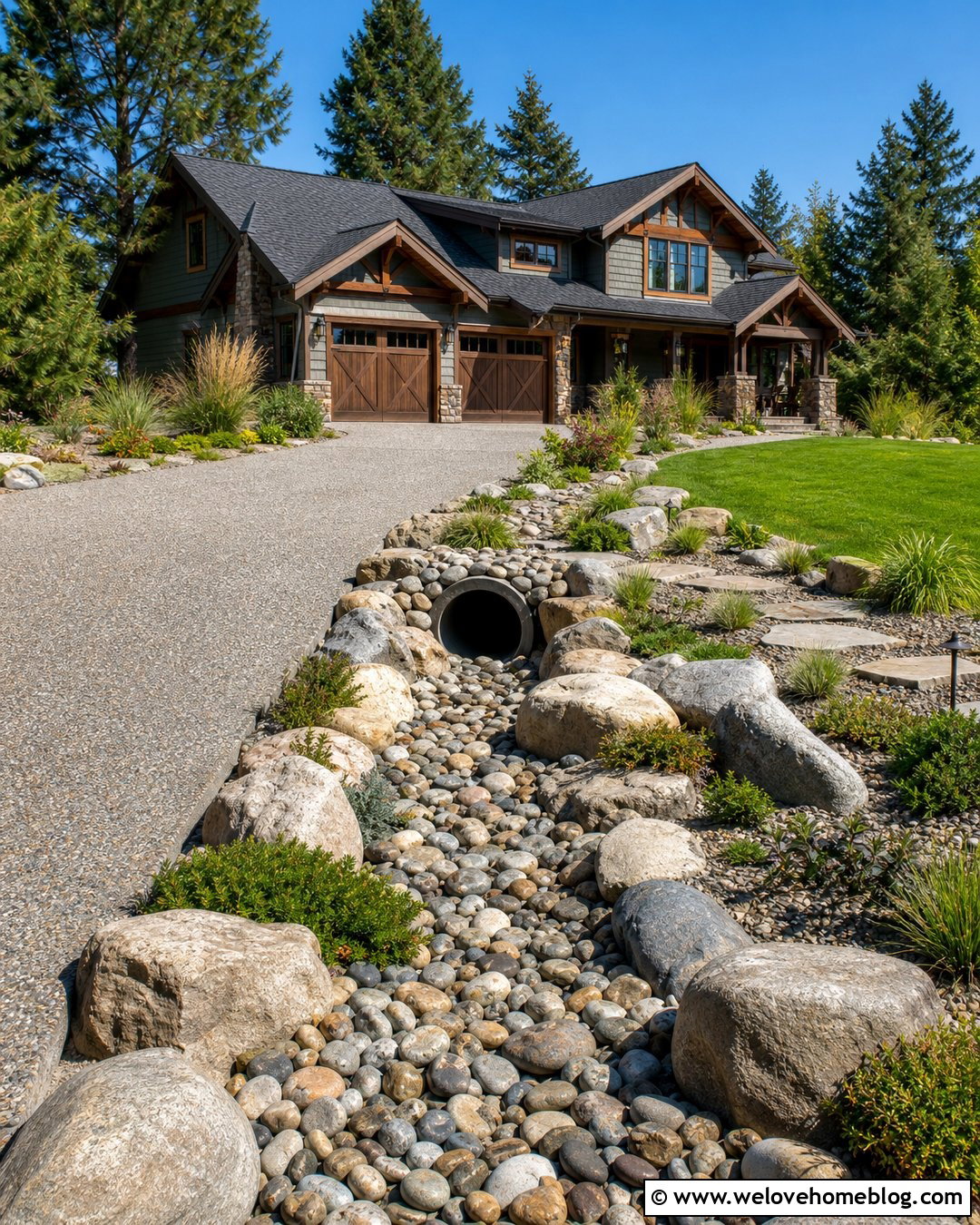
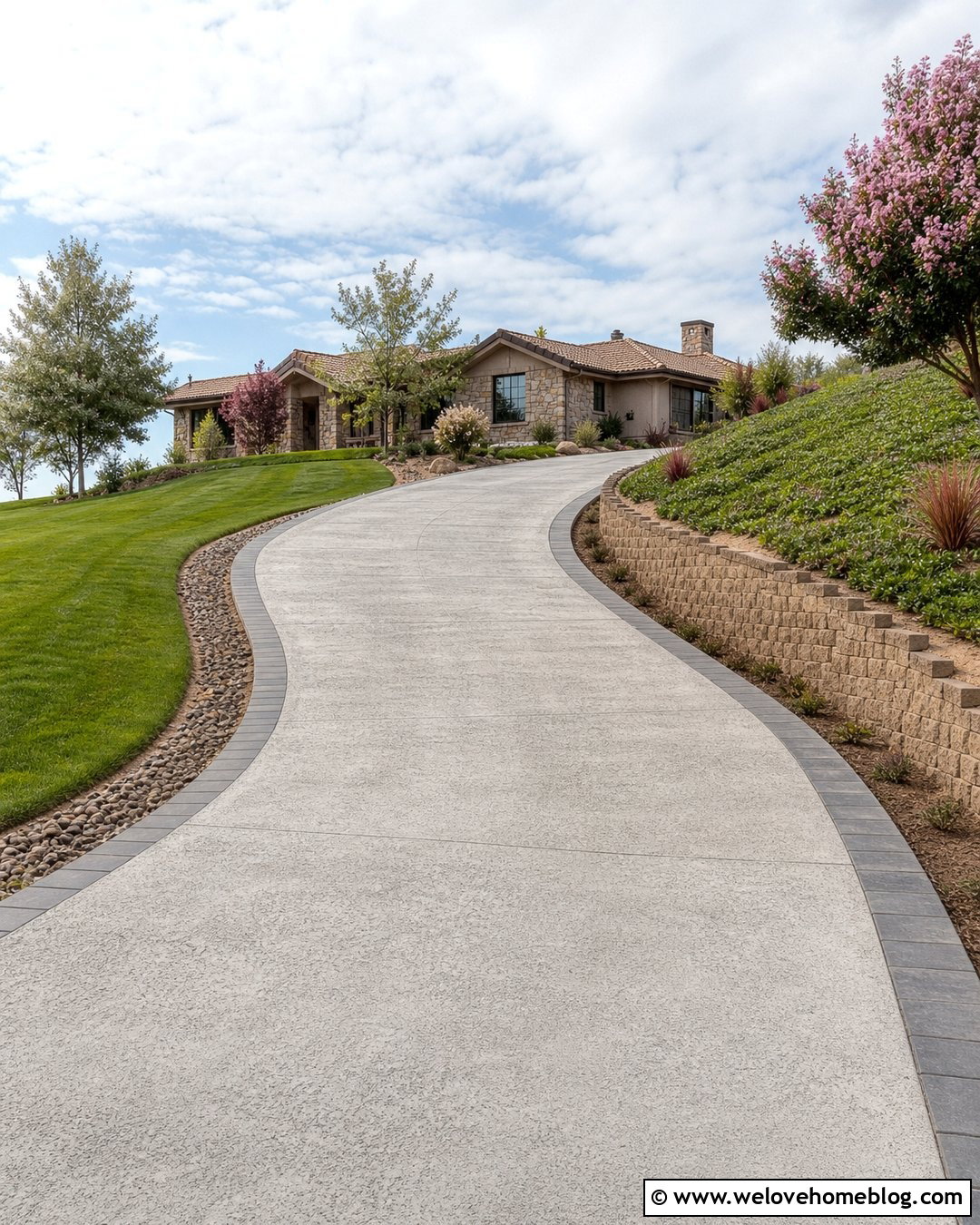
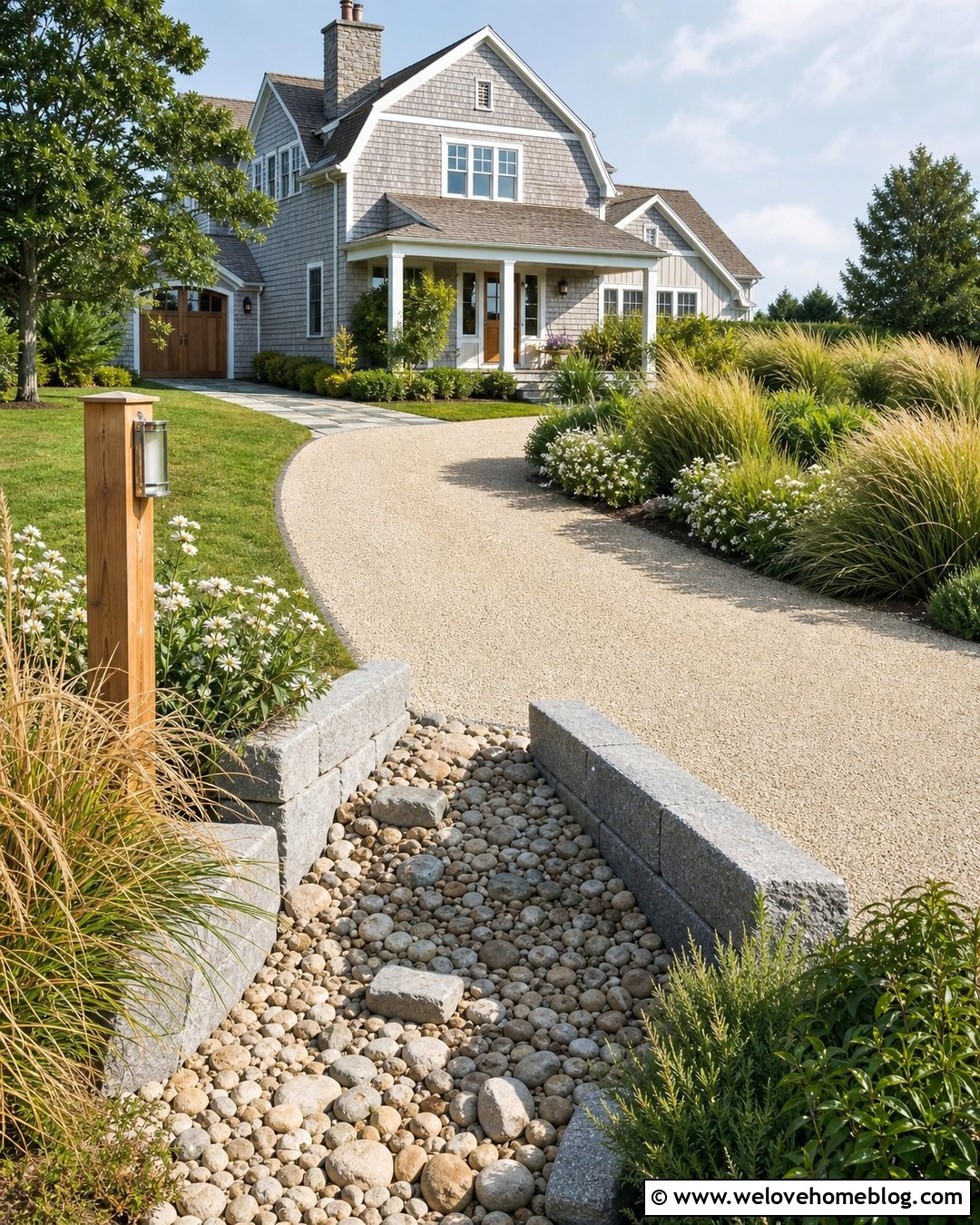
Rounded river rock can turn a visible culvert into a convincing dry creek landscape while helping the ditch look tidy between rainstorms. Start with an exposed aggregate concrete driveway that crosses a shallow swale on a gentle curve. Continue mixed gray, tan, and brown river stones along the ditch and around the culvert openings, using larger rocks near areas exposed to stronger runoff. Group moisture-tolerant sedges, rushes, and compact native grasses above the drainage path instead of directly inside it. Flat boulders placed outside the required clear area can add natural structure. The stones should follow the direction of water rather than creating raised dams. This relaxed design suits craftsman homes, wooded lots, and informal suburban yards where polished masonry might look too formal.
5. Driveway Culvert With Riprap Stone Ends
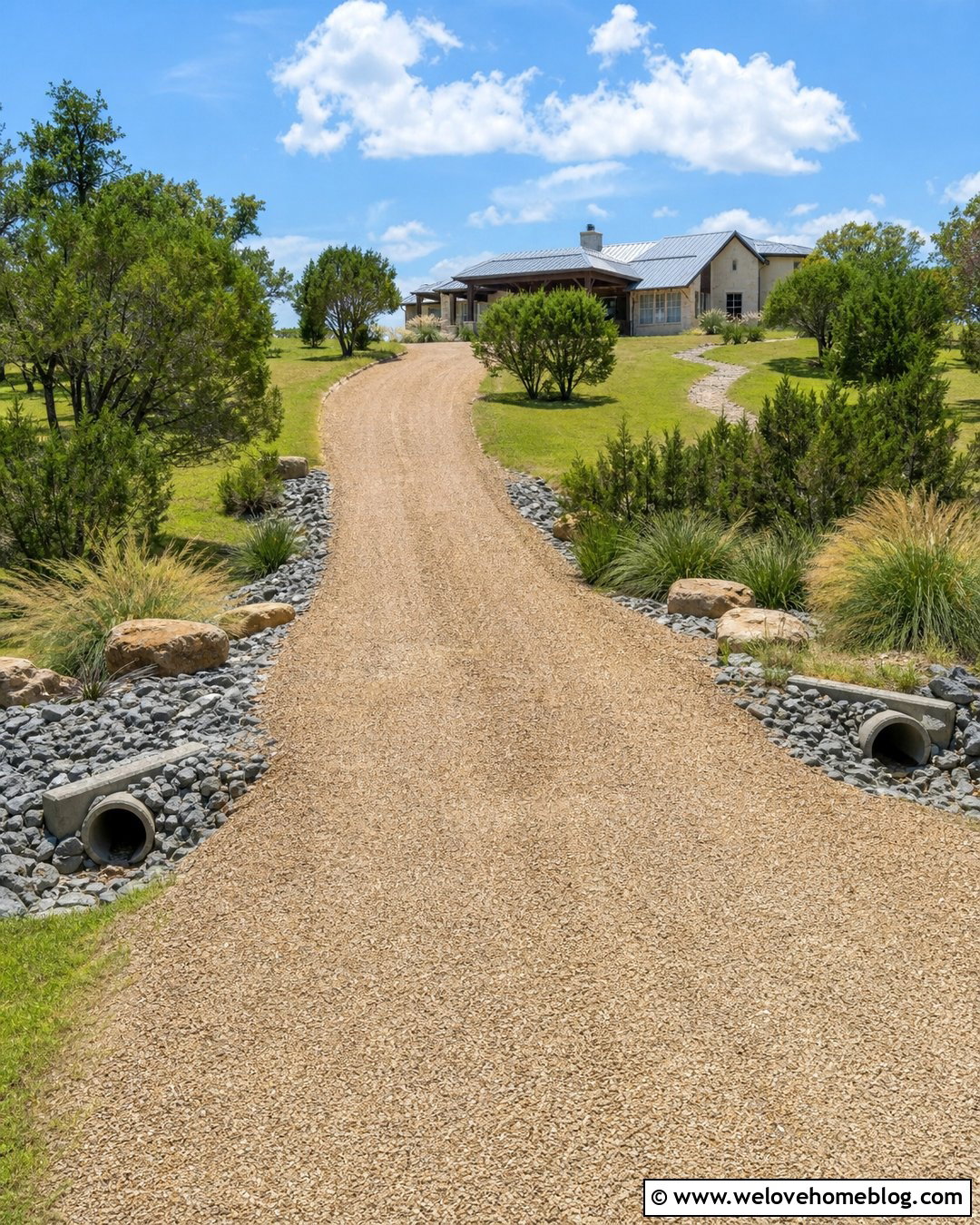
Riprap provides a rugged culvert treatment for a sloped gravel driveway where moving water could wash loose soil away. Use carefully graded angular stone around the inlet and outlet, extending it along the active drainage channel where professional plans recommend protection. A tan crushed-stone driveway with compacted shoulders complements the rough texture. Rather than hiding the riprap, make it part of a broad naturalistic entrance framed by native grasses and low spreading junipers. Larger accent boulders can mark the outer edges without narrowing the ditch or creating roadside obstructions. Keep fine mulch away from flowing water because it can migrate into the pipe. The result is a practical country driveway that looks deliberate, handles muddy conditions more gracefully, and requires less ornamental maintenance than a planted culvert bed.
6. Driveway Culvert With Gabion Headwalls
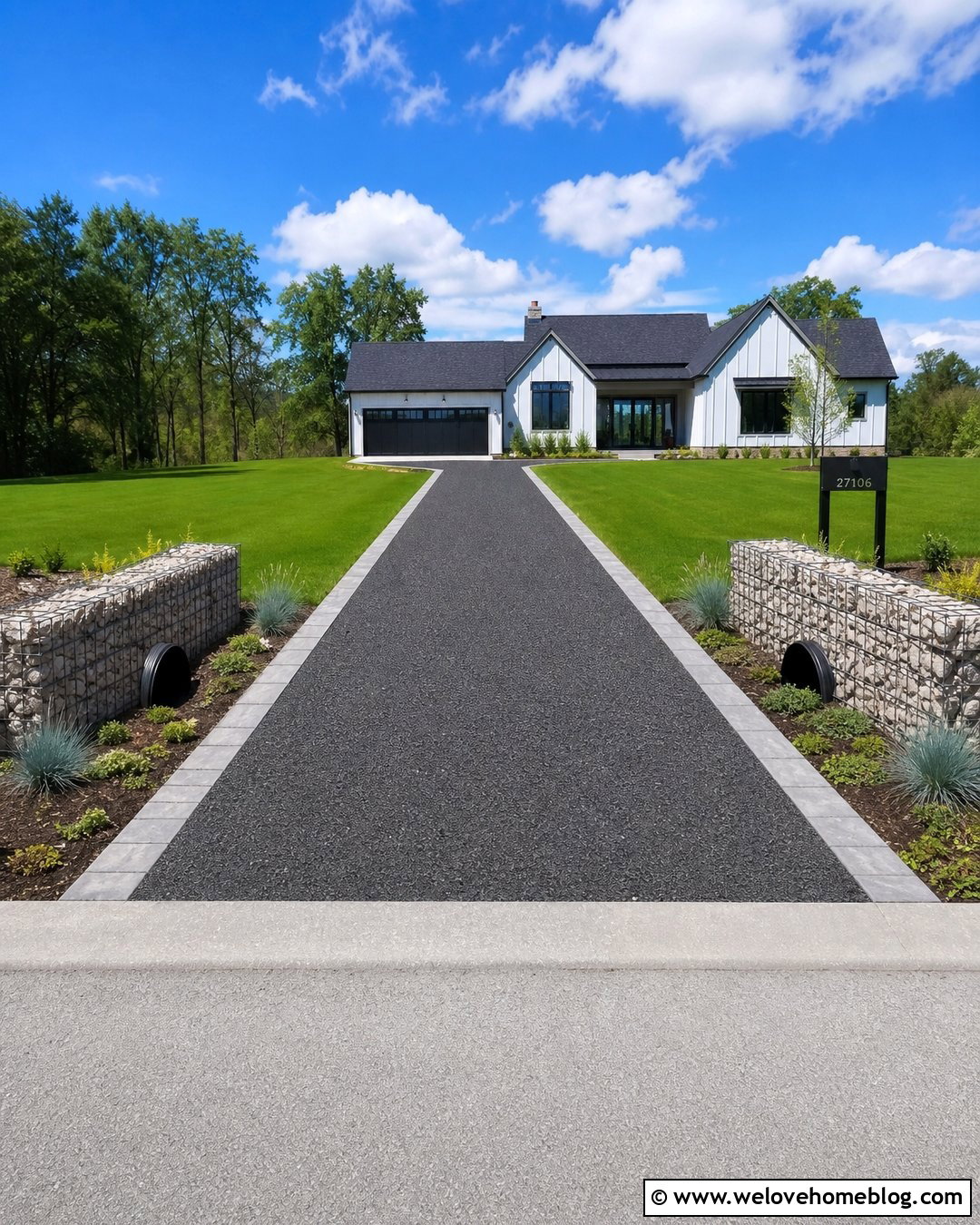
Gabion headwalls bring a contemporary industrial character to a driveway while using stone-filled wire baskets to retain the culvert embankment. Pair them with a charcoal resin-bound gravel driveway that approaches a modern farmhouse in a straight, wide layout. Fill the baskets with consistently sized gray rock for a crisp finish, or blend several natural tones for a more rustic appearance. Position compact grasses and spreading ground covers behind the gabions so planting softens the metal without entering the drainage opening. Black steel address numbers can be installed on a separate sign beyond the ditch, not across the culvert face. The baskets require appropriate foundations, corrosion-resistant materials, and professional sizing. When those practical details are resolved, the textured walls create a distinctive bridge between engineered drainage and modern landscaping.
7. Driveway Culvert With Natural Boulder Walls
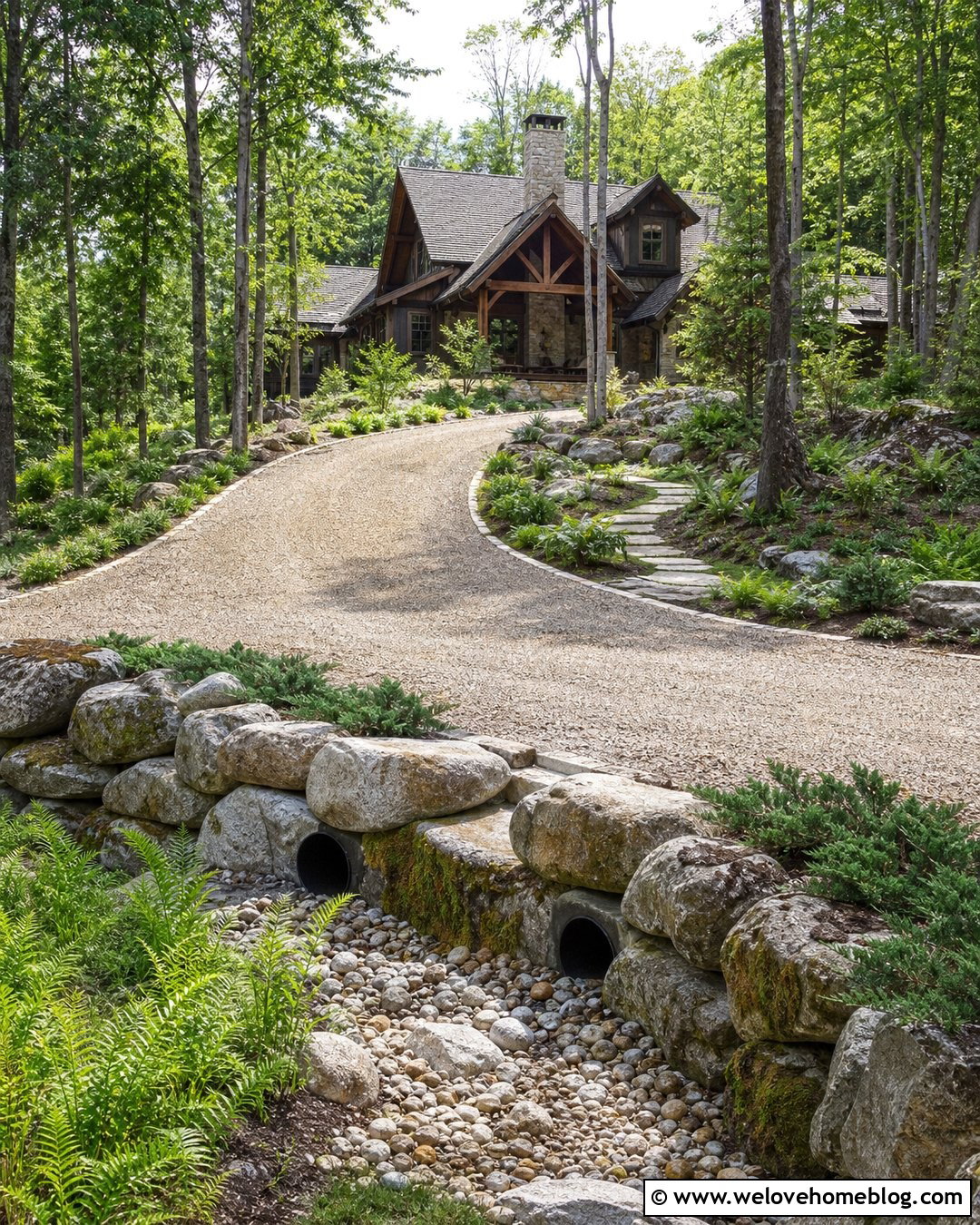
Large natural boulders can frame a driveway culvert without making a wooded property feel overly constructed. This treatment works well beside a curved crushed-granite driveway leading to a cabin, lodge, or rustic craftsman home. Arrange stable boulders along the embankment in stepped layers, with smaller stone filling visual gaps around the outer slopes. Keep the culvert opening visible and accessible instead of covering it with decorative rock. Ferns, sedges, low junipers, and woodland ground covers can soften the upper bank where growing conditions permit. Extend the stone treatment into a short dry creek bed so runoff has a visually clear route through the yard. Each boulder must be positioned securely, particularly near a public road, making professional placement more important than creating a perfectly symmetrical appearance.
8. Driveway Culvert With Limestone Headwalls
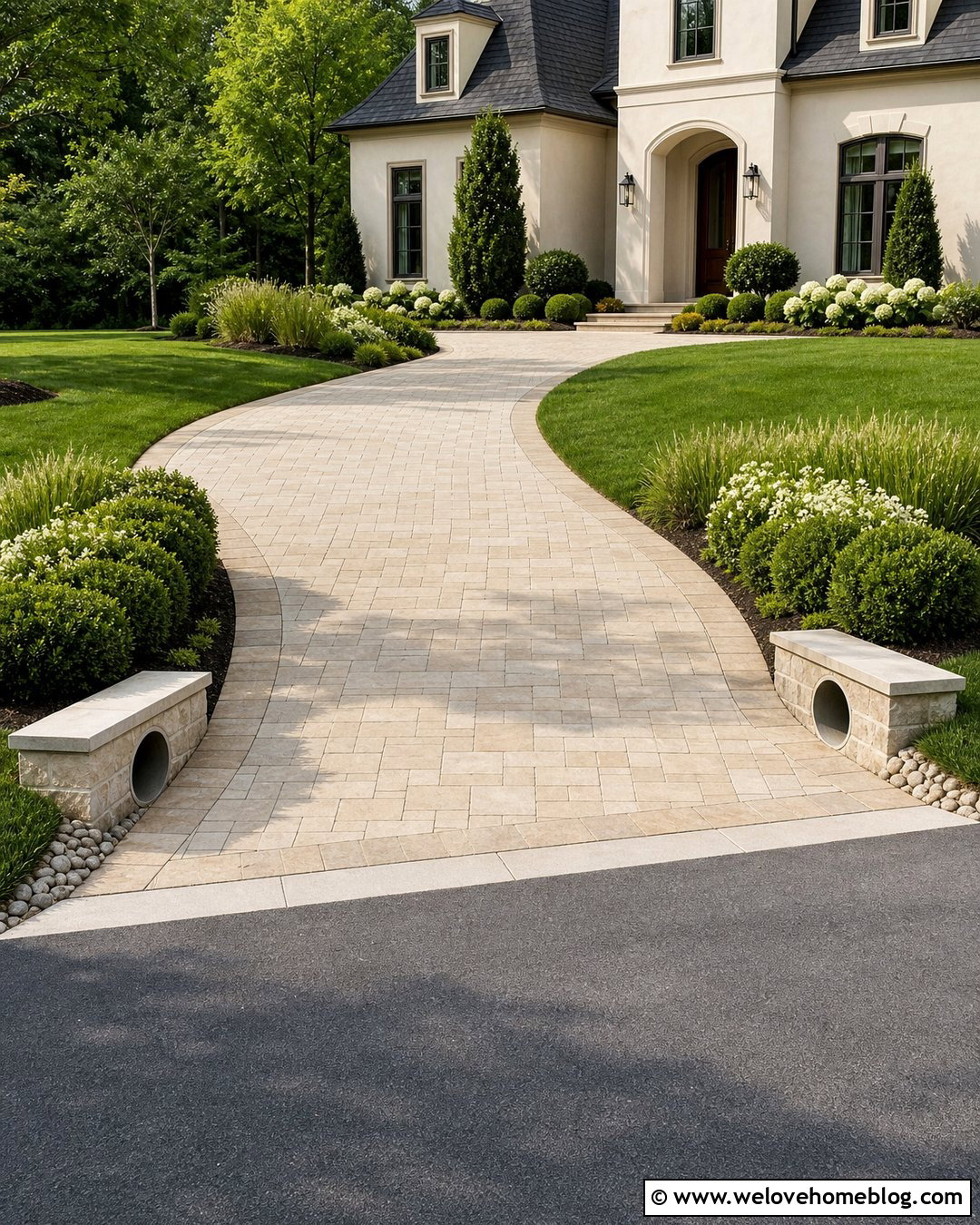
Pale limestone headwalls brighten a driveway entrance and coordinate easily with cream brick, stucco, and light stone houses. Pair rectangular limestone blocks with a beige concrete paver driveway arranged in a running-bond pattern. A softly curved entrance gives the masonry room to sit naturally within broad lawn shoulders. Cap the walls with smooth limestone slabs, but keep their height restrained so drivers can see across the ditch and roadway. Plant compact boxwood alternatives, white flowering perennials, and low ornamental grasses behind the stone. A matching paver walkway can cross the lawn toward the front porch. Limestone color and weathering vary by region, so choose material suited to local exposure. This complete culvert design feels refined without losing the practical simplicity needed at a frequently maintained drainage point.
9. Driveway Culvert With Flagstone End Walls
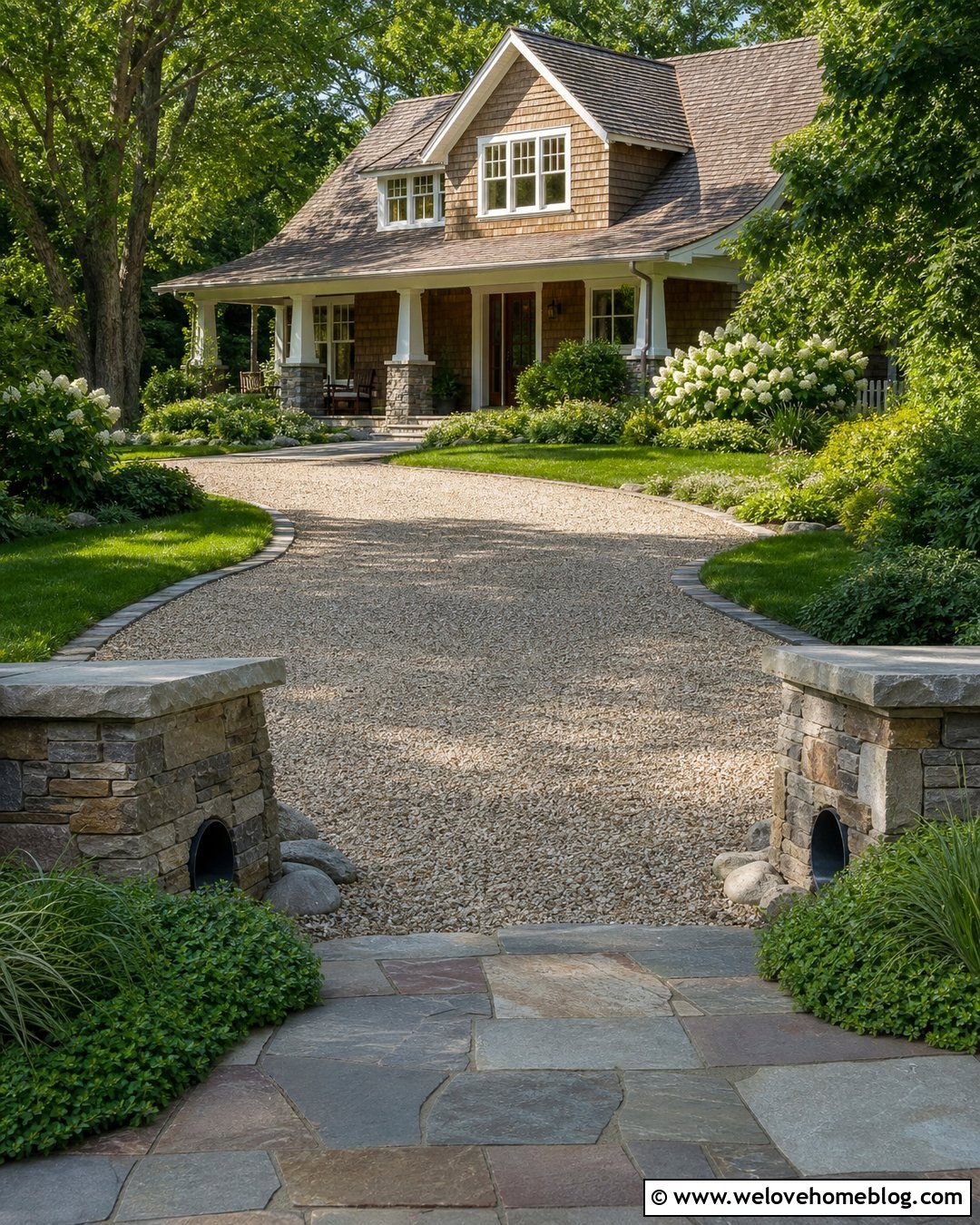
Irregular flagstone end walls add layered texture to a culvert beside a relaxed craftsman or cottage driveway. Use warm gray and brown flagstone around the openings, then repeat those colors in a compacted pea gravel driveway with solid stone edging. A shallow S-curve can make the arrival feel softer while allowing landscaped banks to transition gradually into the ditch. Plant creeping phlox, low sedges, and compact flowering shrubs above the wall, leaving a maintenance gap around the pipe. Flat capstones create a finished edge and help visually organize the irregular masonry. Avoid loose soil pockets where heavy rain can wash material into the drainage channel. When the stonework is properly supported, the entrance looks handcrafted and welcoming while still keeping the culvert easy to inspect and clean.
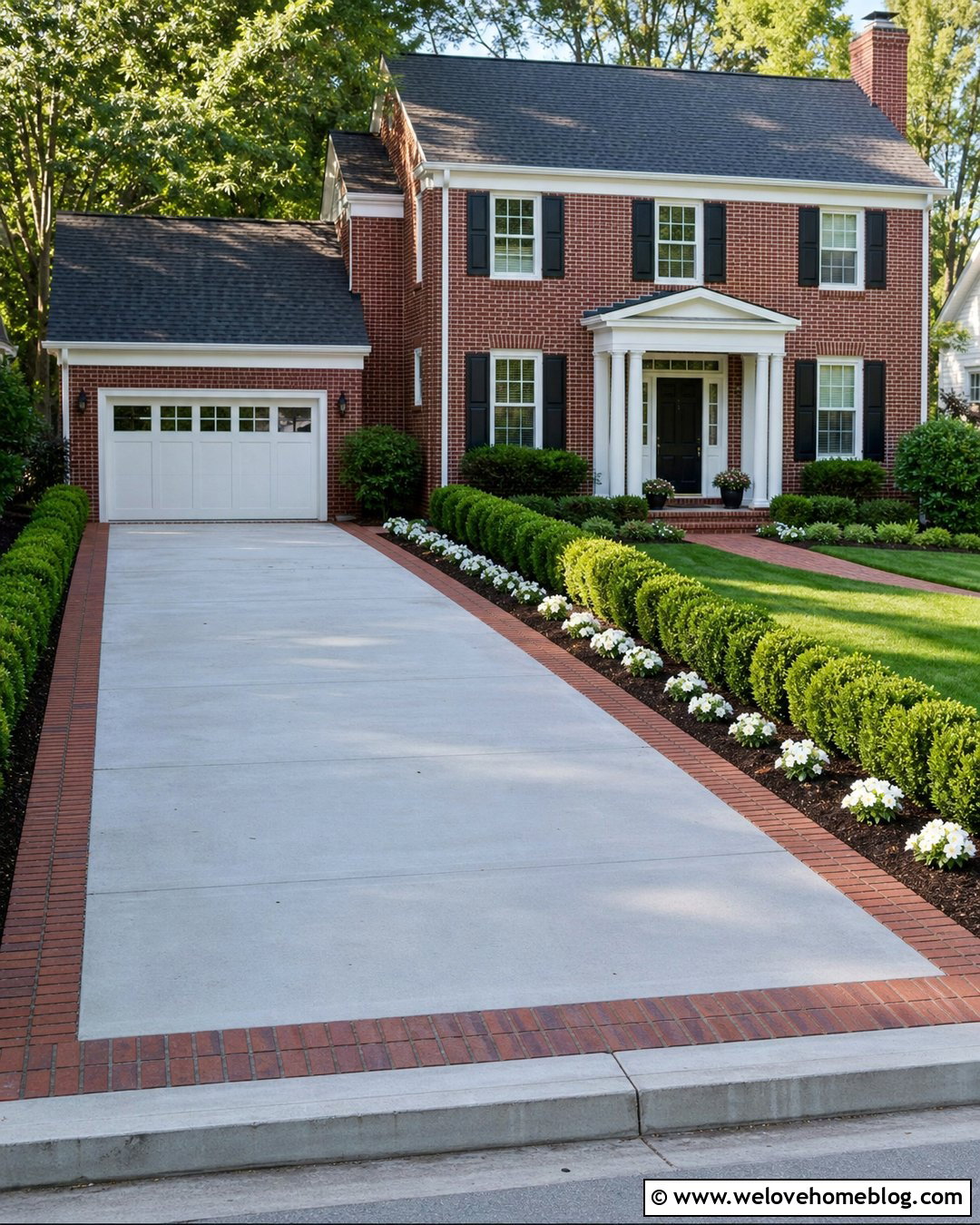
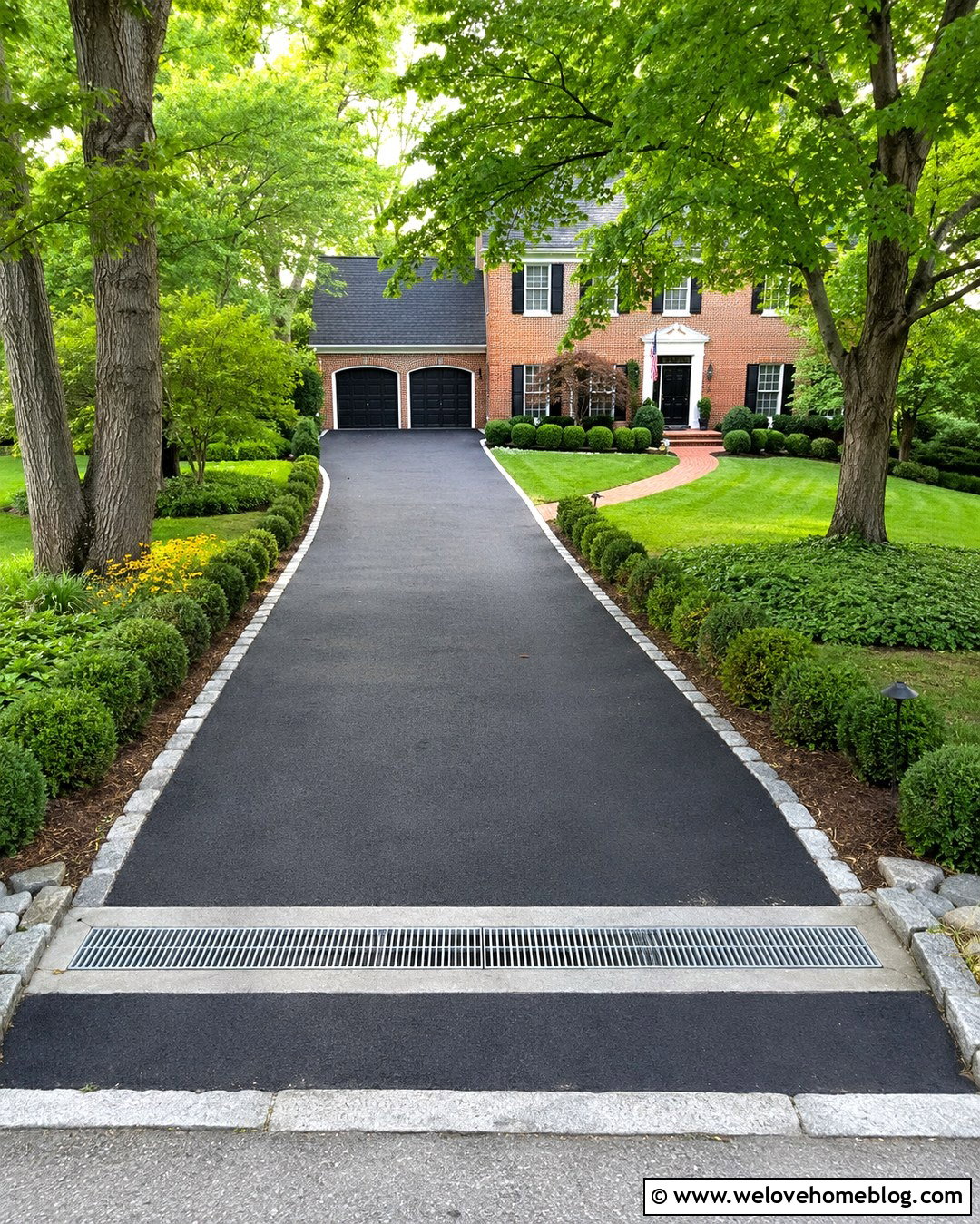
10. Driveway Culvert With Black Asphalt Apron
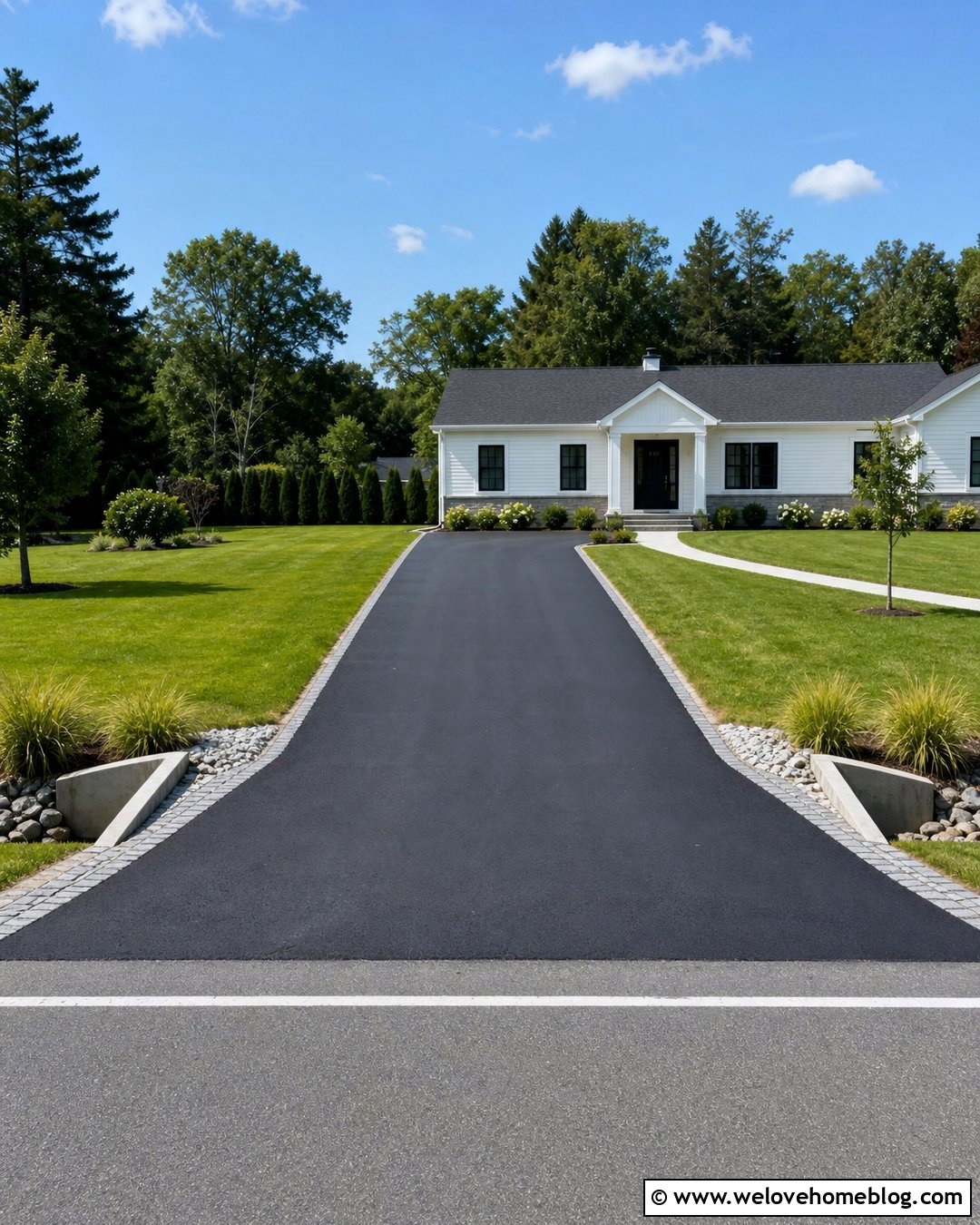
A black asphalt apron gives a driveway culvert entrance a smooth, practical surface that can handle frequent turning movements without distracting from the house. Use a wide flared apron over the culvert, then continue the asphalt in a straight line toward a suburban ranch home. Finish the pipe ends with low sloped end sections or professionally designed concrete treatments that follow the ditch banks. A narrow border of gray cobblestones can define the asphalt edges and connect to a front walkway. Beyond the drainage area, plant mown lawn with clusters of low ornamental grass. The dark pavement creates strong contrast with green landscaping and light-colored masonry. Keeping the entrance open and uncluttered also improves visibility, snow removal, mowing access, and routine inspection of both culvert ends.
11. Driveway Culvert With Gravel Driveway Apron
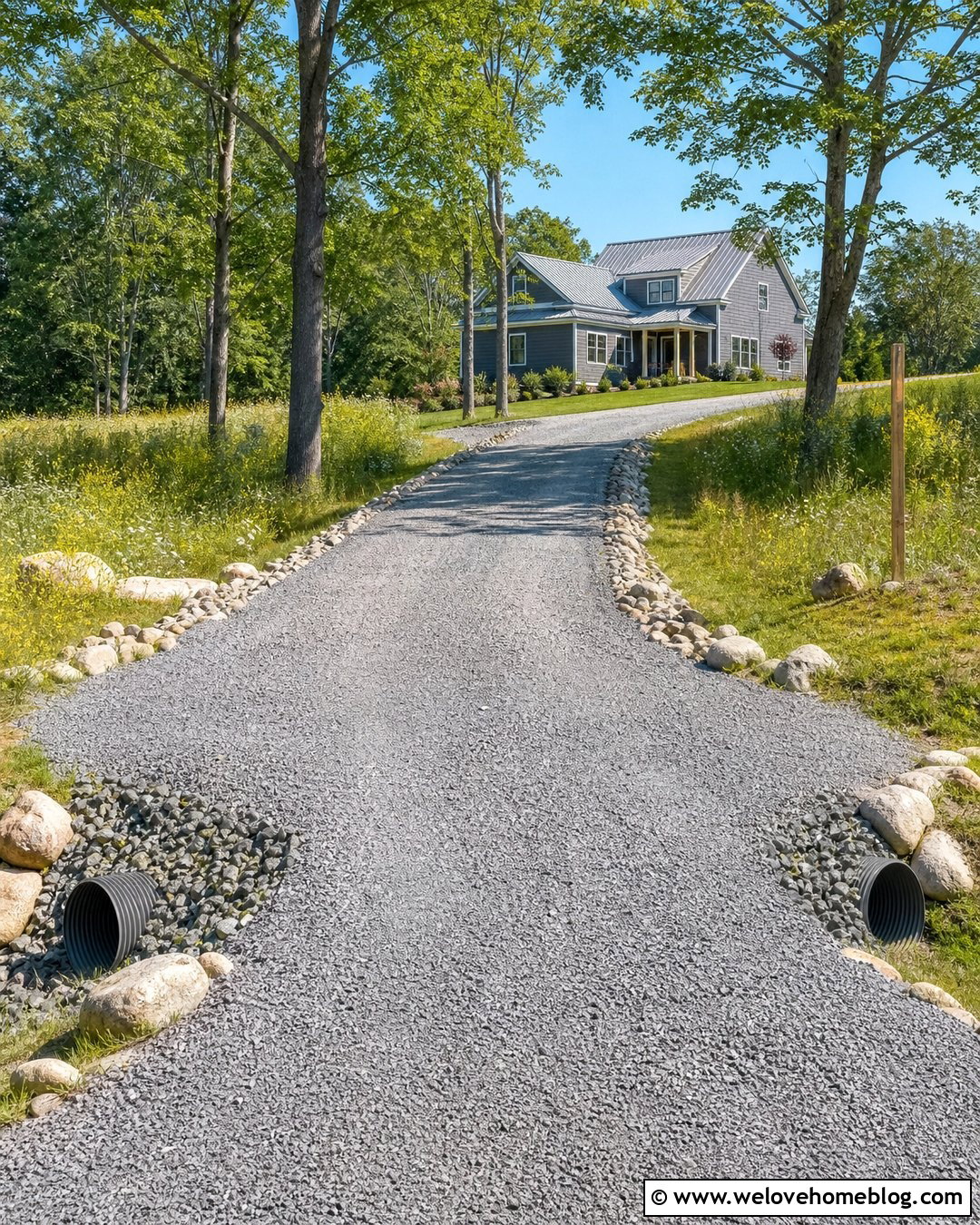
A gravel apron is an affordable match for a culvert on a country property, but the entrance needs strong edge definition to prevent a messy roadside appearance. Choose compacted gray crushed stone rather than loose rounded gravel for the main driving surface. Shape the apron with gently flared sides and use larger cobbles along the ditch-facing shoulders. Corrugated pipe ends can be surrounded by properly placed angular stone, leaving the openings exposed for maintenance. Continue native meadow planting behind the ditch while keeping shorter grass near the road for visibility. A simple timber address post farther up the driveway adds character without crowding the culvert. Regular grading and replenishment will preserve the crown and smooth transition, creating a practical entrance that feels intentionally rustic rather than unfinished.
12. Driveway Culvert With Paver Driveway Entrance
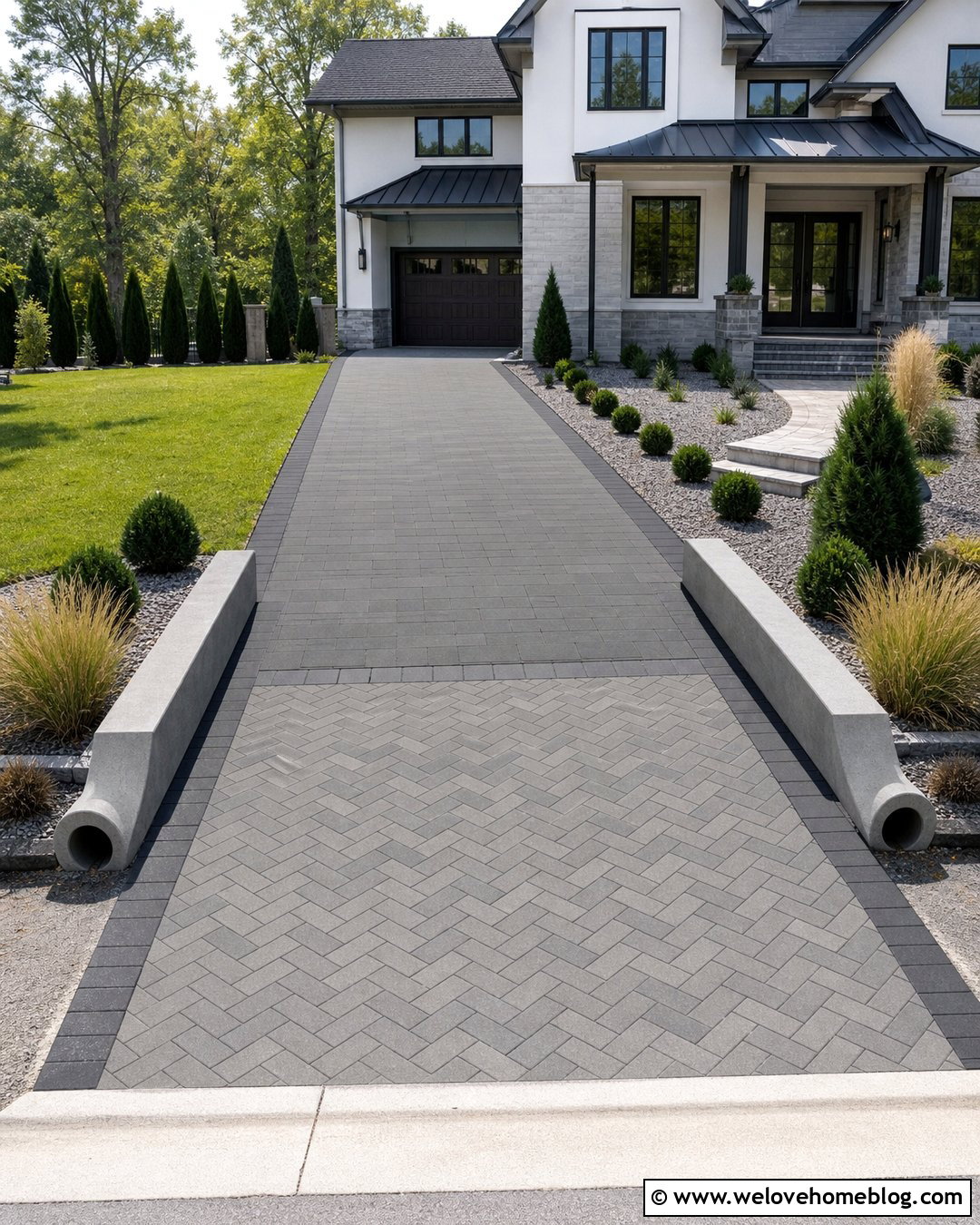
Concrete pavers can transform the area above a culvert into a defined entrance that feels more polished than plain pavement. Select charcoal and medium-gray pavers in a herringbone pattern for the apron, then use a straight running bond farther up the driveway. Finish the culvert with low concrete wingwalls that match the cool color palette. Dark paver soldier courses can trace the driveway edges and clearly separate the surface from planted banks. Use compact evergreen shrubs, tufted grasses, and clean gravel mulch beyond the active ditch. Proper base construction is especially important above a culvert because weak or poorly compacted fill can lead to uneven surfaces. With professional preparation and drainage planning, this layout creates an orderly contemporary entrance that complements modern and transitional homes.
13. Driveway Culvert With Brick Paver Apron
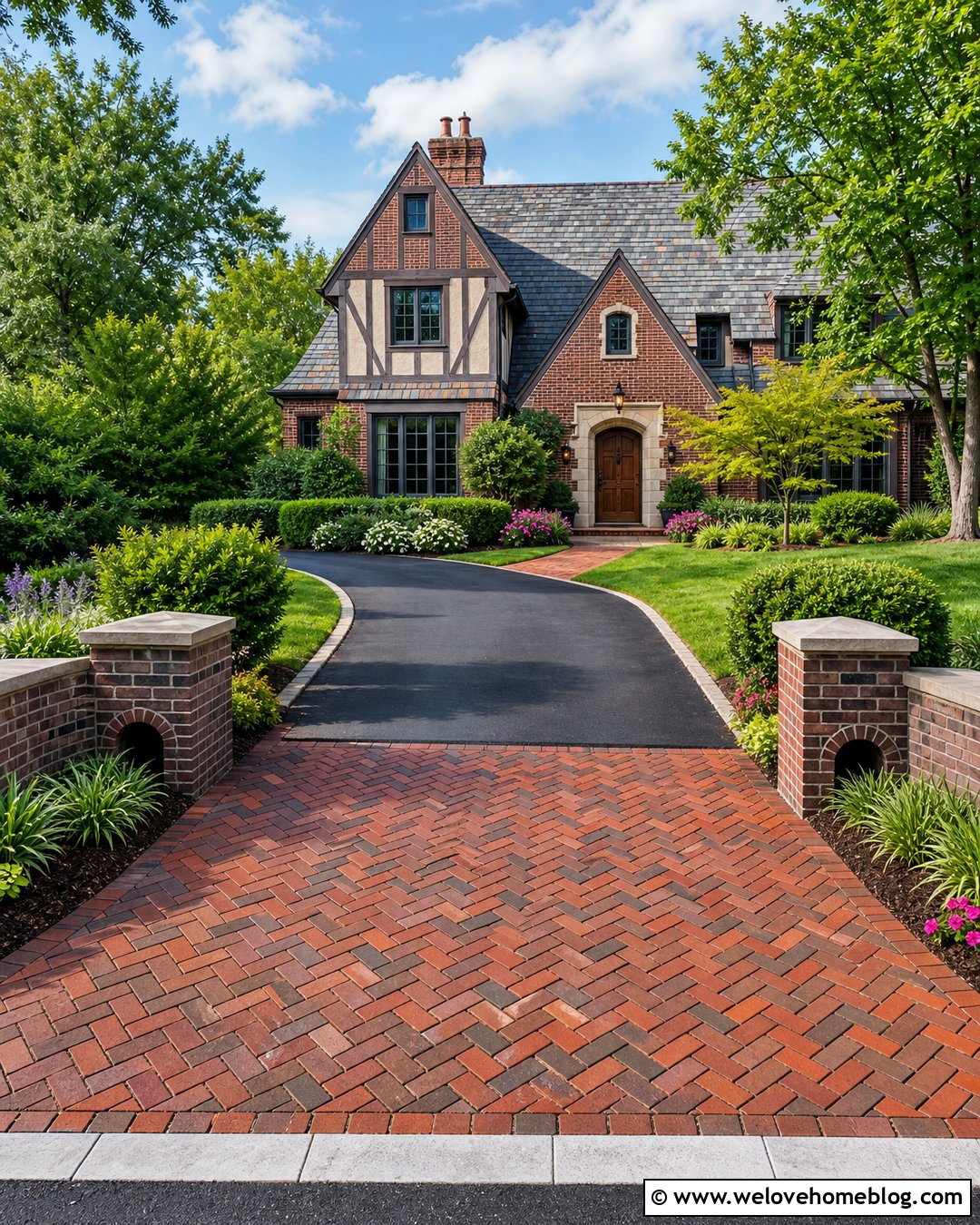
Clay brick pavers create a warm entrance over a driveway culvert and work especially well with colonial, Tudor, and traditional homes. Build the flared apron in a herringbone pattern to emphasize the turning area, then transition to asphalt or matching brick farther up the drive. Use dark brown brick headwalls with simple stone caps around the pipe openings. Low beds of dwarf inkberry, sedges, and seasonal flowers can frame the embankment without hiding the culvert. Repeat the same brick in the front walkway for visual continuity. Select pavers manufactured for vehicular use and install them over an appropriately engineered base. The combination of patterned paving, restrained masonry, and symmetrical planting makes the drainage crossing feel like a planned architectural feature rather than an exposed utility.
14. Driveway Culvert With Cobblestone Borders
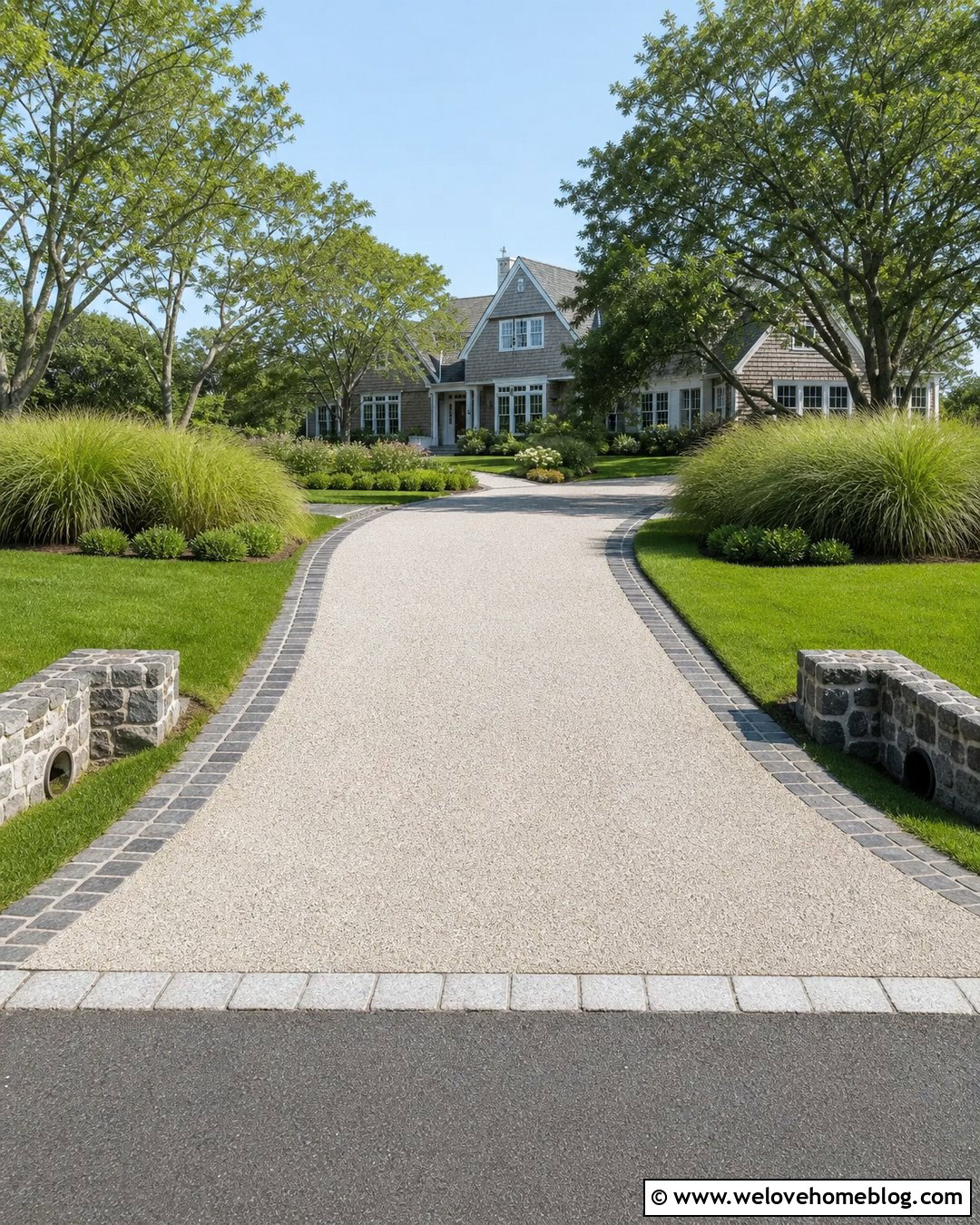
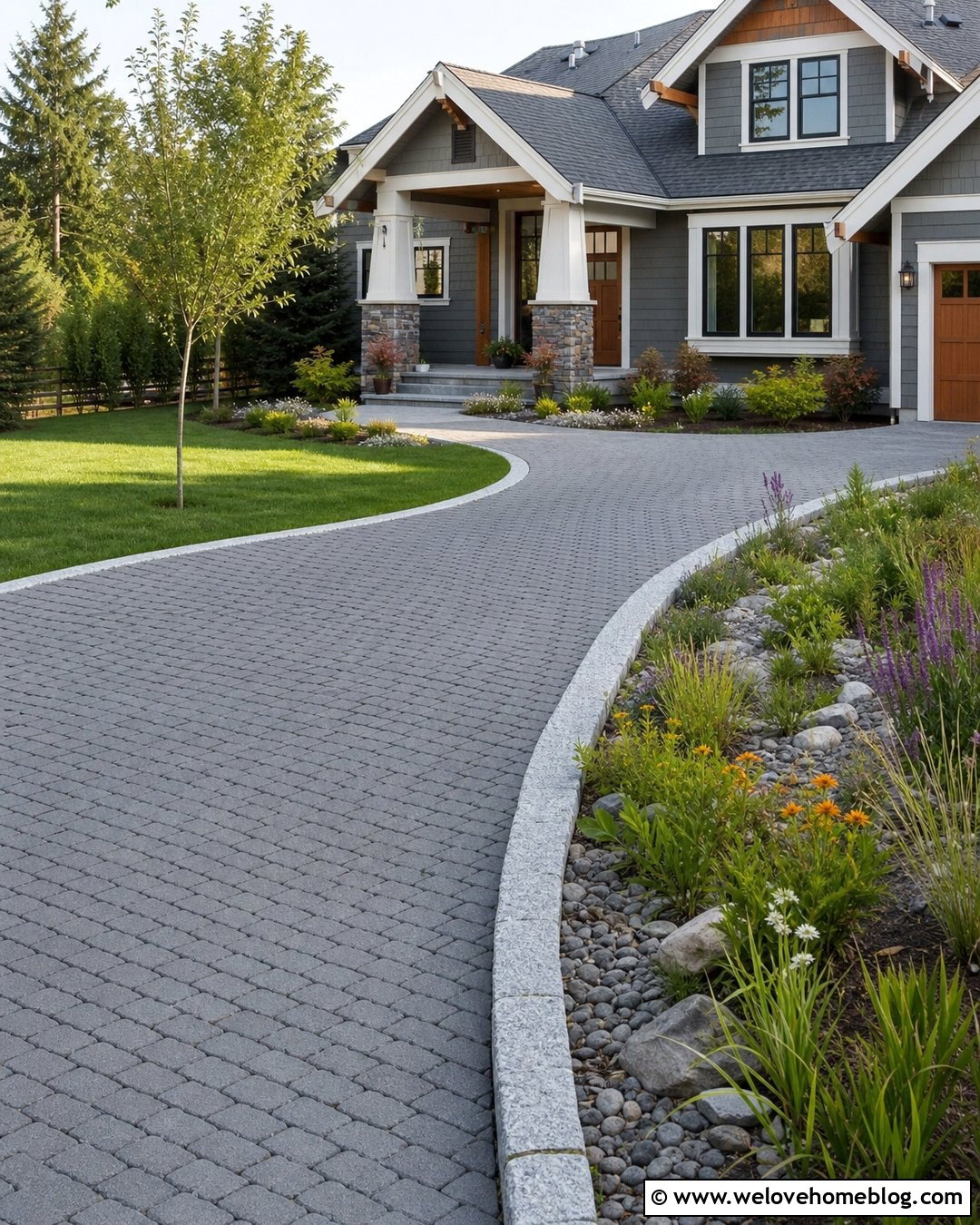
Cobblestone borders bring definition to a driveway culvert entrance while protecting vulnerable pavement edges from crumbling into the ditch. Pair dark granite cobbles with a light exposed aggregate driveway that curves gently toward a shingle-style or traditional home. Continue the cobbles across the front of the apron as a subtle drainage ribbon only where the approved grading allows it. Frame the culvert ends with matching stone walls kept low and open. Broad sweeps of ornamental grasses can follow the upper ditch line, while turf creates a clean transition near the road. The repeated stone makes the driveway, headwalls, and landscaping read as one composition. Use a professional installer to establish stable edge restraints and avoid creating raised borders that redirect runoff to neighboring property or public pavement.
15. Driveway Culvert With Timber Edging
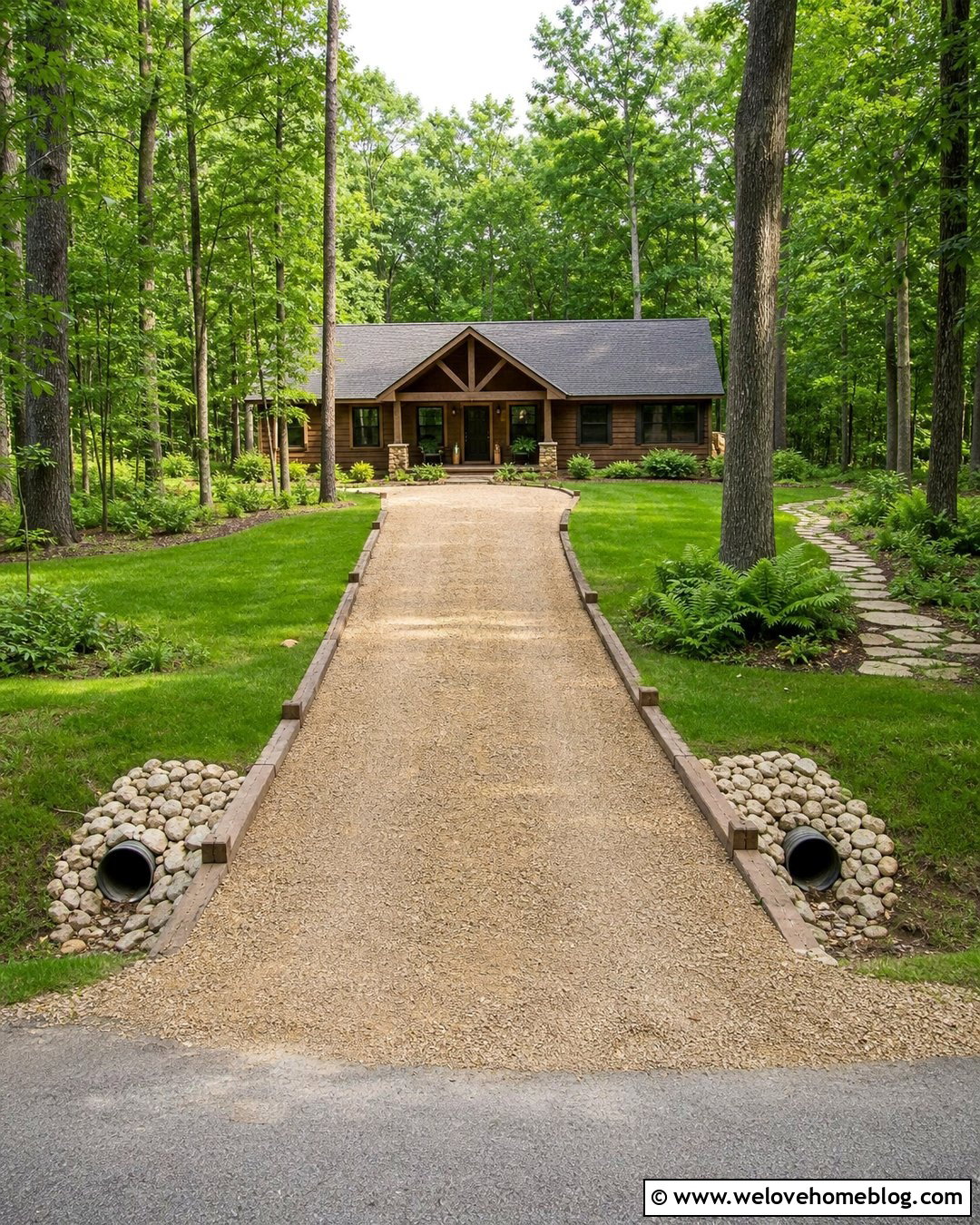
Timber edging offers a casual look for a gravel driveway crossing a shallow culvert on a rural or wooded lot. Use pressure-rated or naturally durable timbers to define a tan crushed-limestone surface, stopping the edging before it interferes with drainage or roadside safety. At the culvert ends, combine low stone stabilization with gently graded grassy banks rather than building tall timber walls. A straight driveway lined with native shade trees can lead toward a simple ranch or cabin-style house. Add woodland ground covers and ferns above the ditch where moisture and light conditions are suitable. Timbers should be securely anchored and positioned away from active water whenever possible. This restrained design provides visual order while allowing the culvert to remain accessible, functional, and easy to monitor after storms.
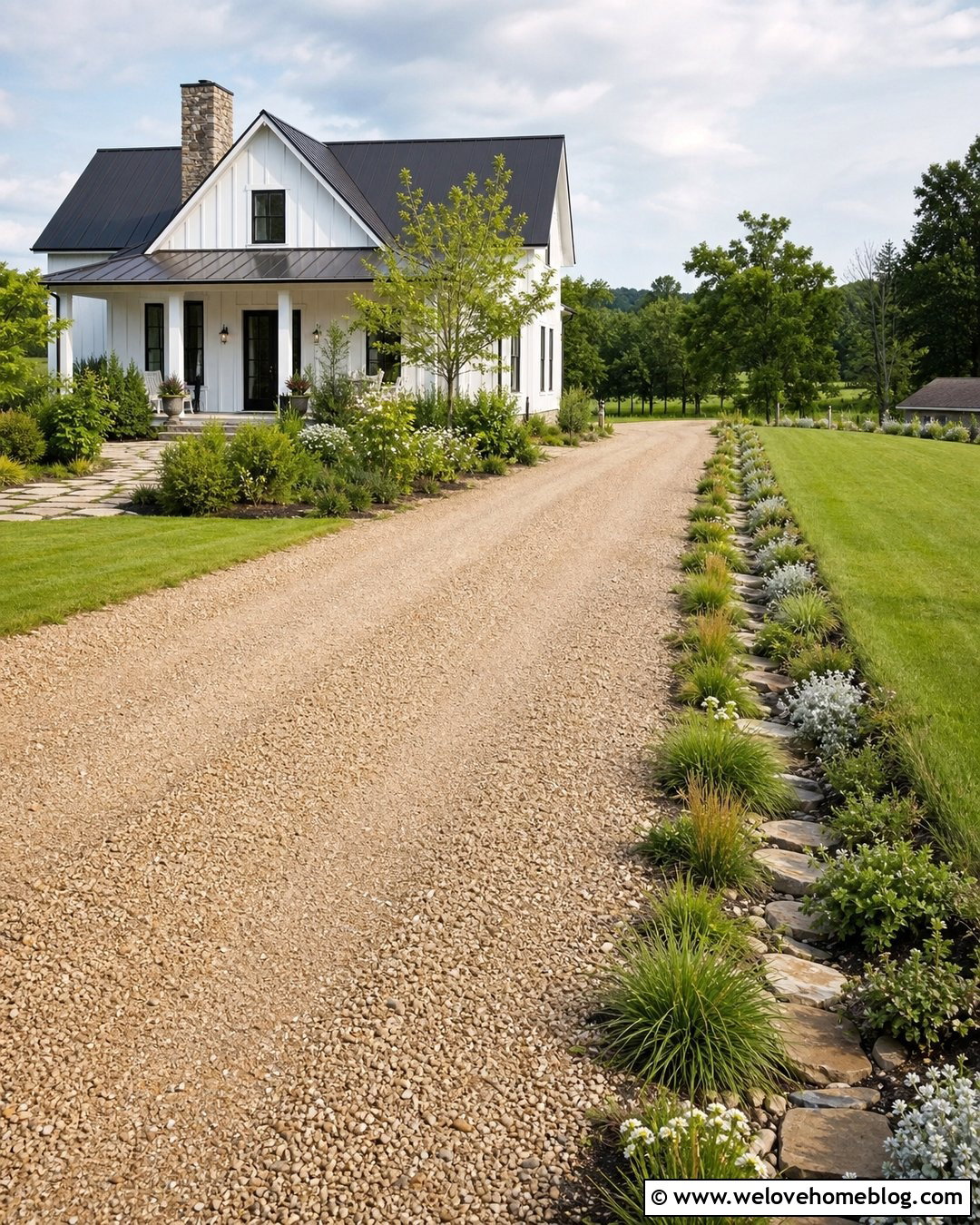
16. Driveway Culvert With Low Retaining Walls
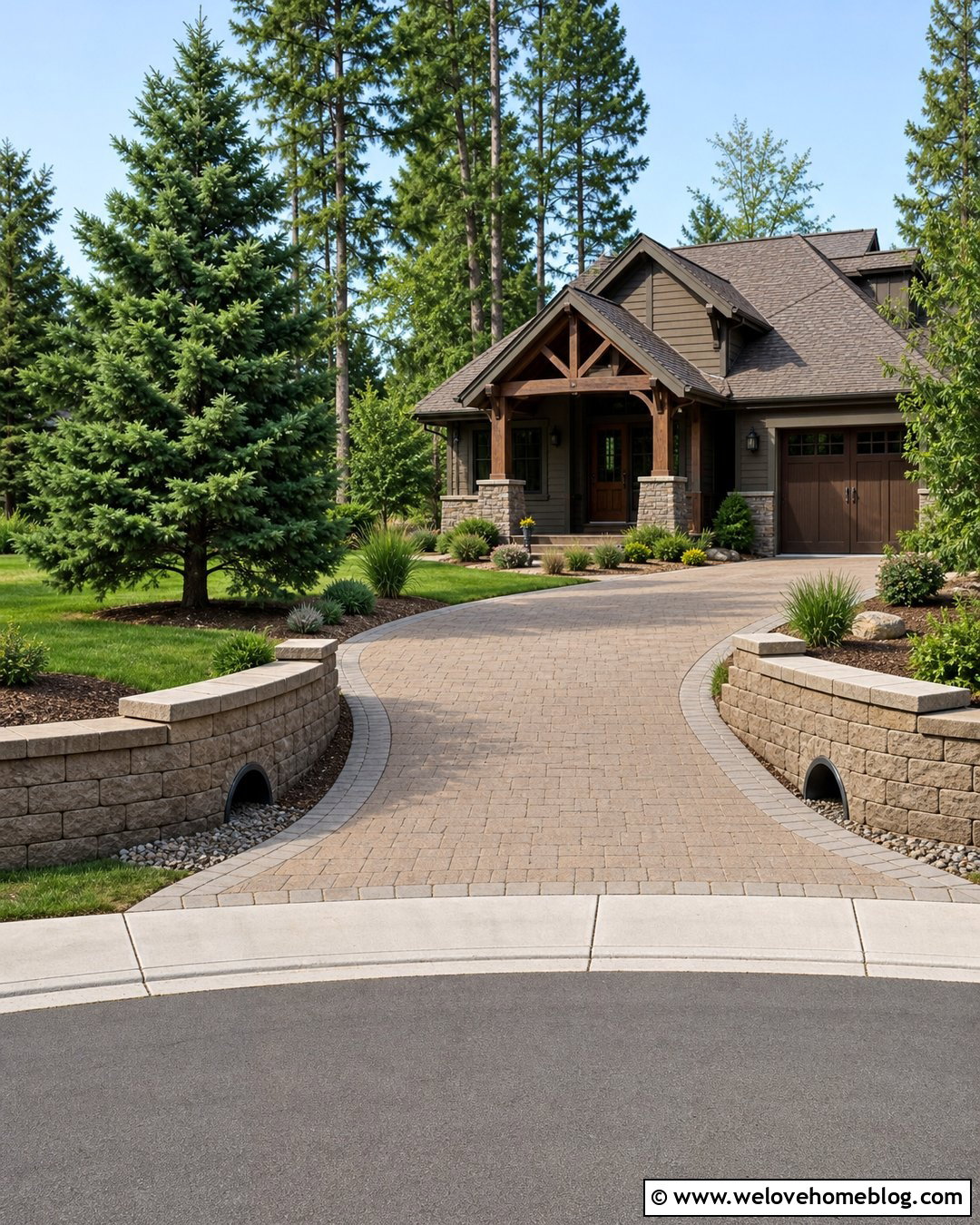
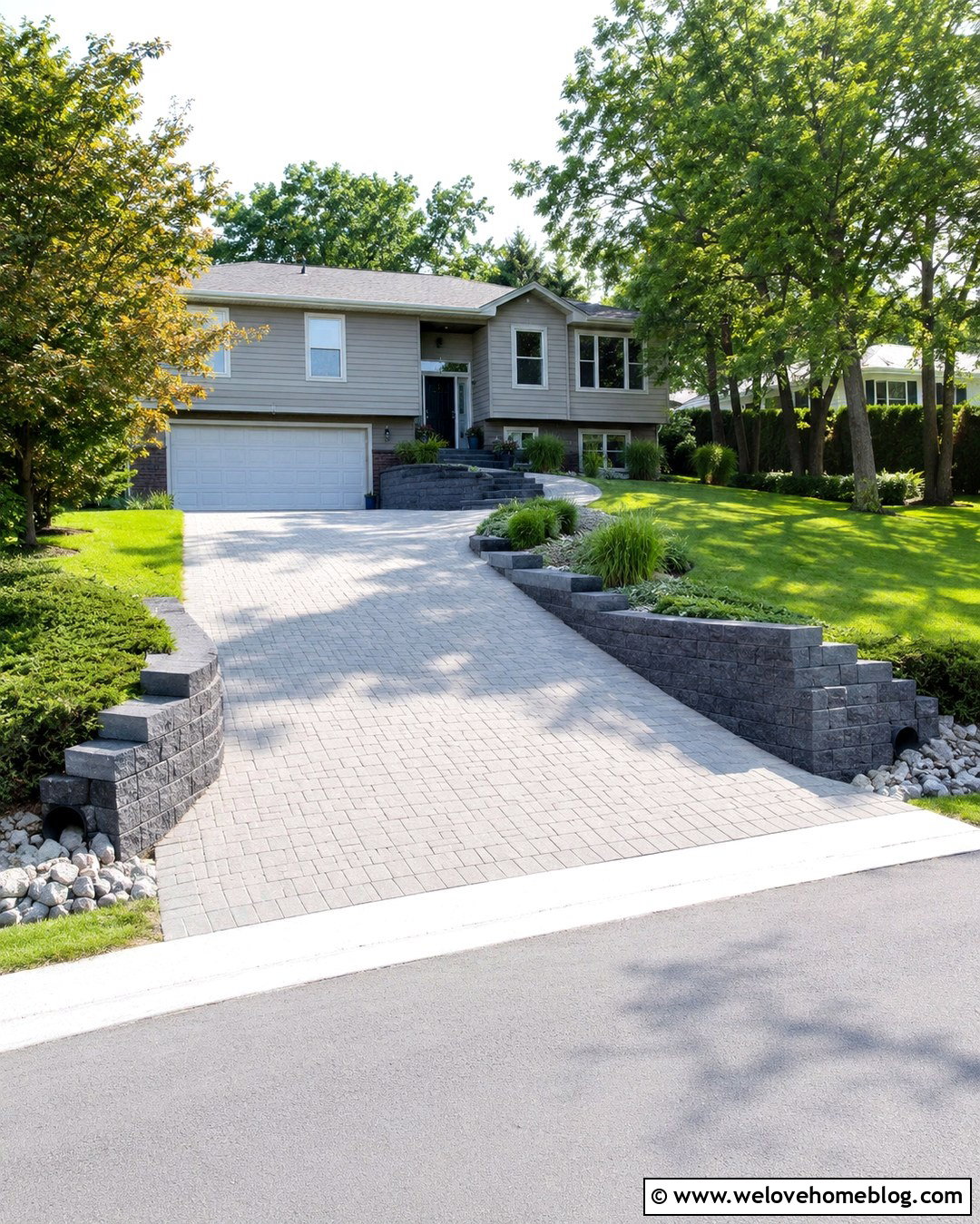
Low retaining walls can hold the driveway embankment neatly in place when a culvert crosses a deeper roadside ditch. Choose segmental concrete wall blocks in a warm taupe tone and coordinate them with a tan interlocking paver driveway. Slightly angled walls on both ends can create a balanced entrance without forming bulky towers beside the road. Add wall caps that match the paver border, then plant compact grasses and spreading evergreens on the upper banks. A curved driveway leading to a craftsman home helps the structured walls settle into the landscape. Drainage behind the retaining material must be considered separately from flow through the culvert. Keeping the walls low, stable, and visually simple produces a tidy solution that combines soil retention, clear water movement, and approachable curb appeal.
17. Driveway Culvert With Dry Creek Bed
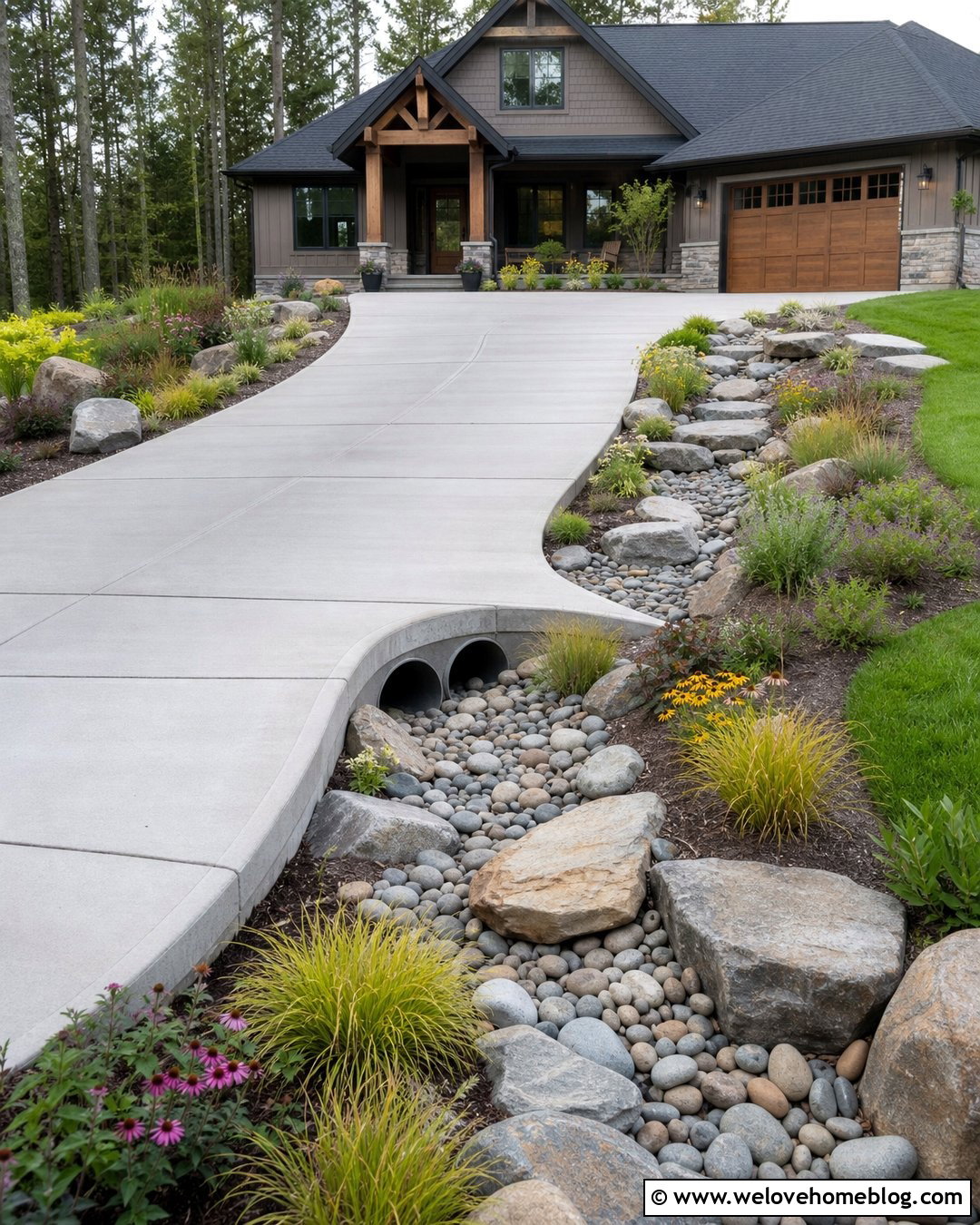
A dry creek bed makes a shallow culvert ditch look like a deliberate landscape feature during both wet and dry weather. Pair a smooth gray concrete driveway with a curved channel of mixed river rock that passes through the culvert and continues into the yard. Use larger stones along the outer bends and around transitions, but keep the pipe opening unobstructed. Plant native sedges, blue flag iris where appropriate, and low grasses above the normal flow line. Flat stepping stones can connect the lawn to a walkway away from the active drainage path. The rock channel should follow existing grades instead of being arranged only for appearance. This natural treatment works well with contemporary craftsman homes because it softens the concrete while visually explaining where runoff is intended to travel.
18. Driveway Culvert With Native Grass Banks
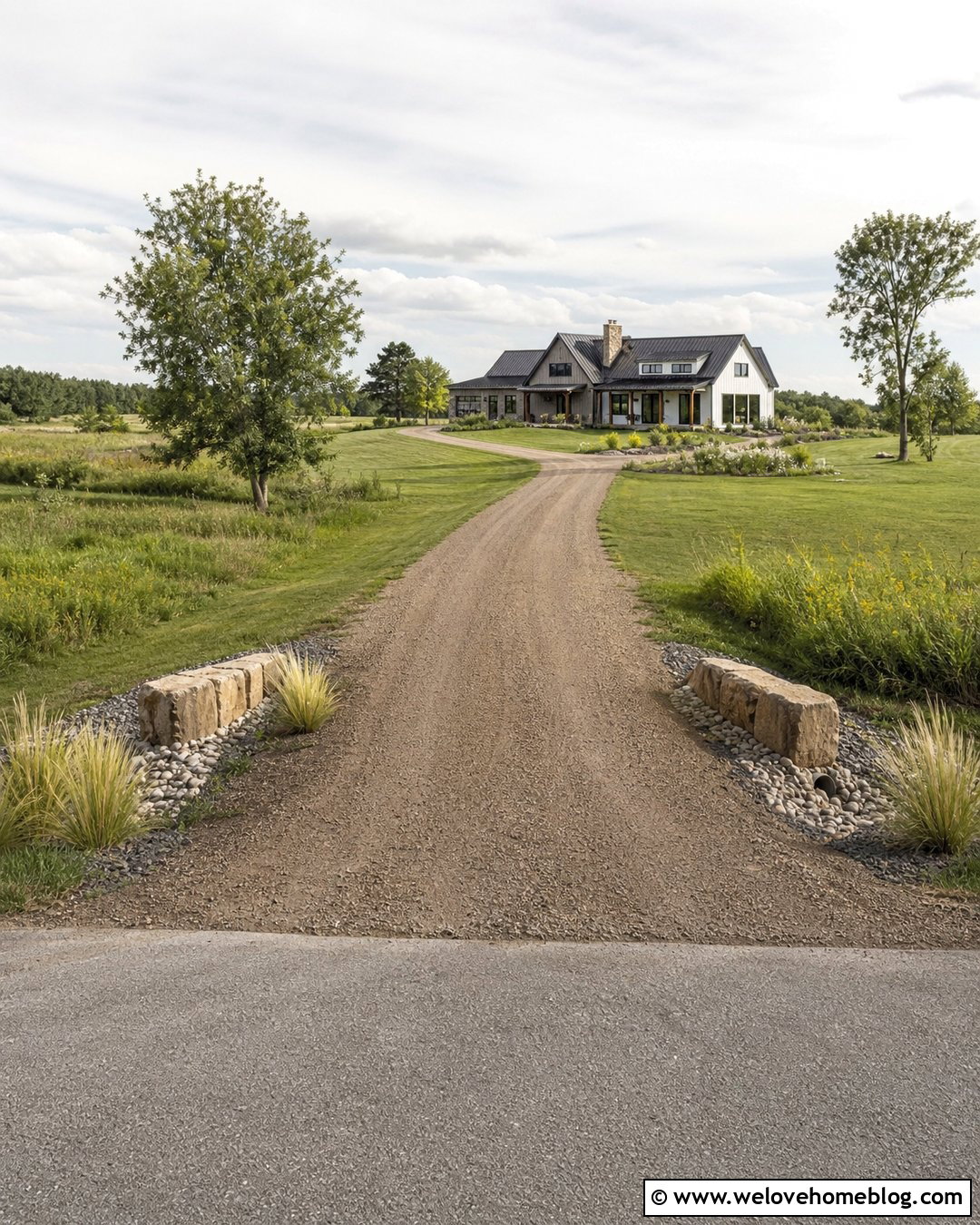
Native grasses can stabilize the visual transition around a driveway culvert while creating a low-maintenance entrance with seasonal movement. Begin with a straight brown gravel driveway crossing a gently contoured ditch. Use modest fieldstone end treatments, then plant short, regionally appropriate grasses along the upper banks in broad drifts. Keep taller species farther from the road and driveway corners so they do not reduce visibility. Gravel mulch near the culvert openings can create a clean maintenance zone and make accumulated debris easier to notice. Add a mown strip between the planting and roadway for a controlled finish. This complete look suits prairie homes, modern farmhouses, and large open lots. Plant selection should reflect local moisture, sunlight, and drainage conditions rather than relying on ornamental appearance alone.
19. Driveway Culvert With Evergreen Landscaping
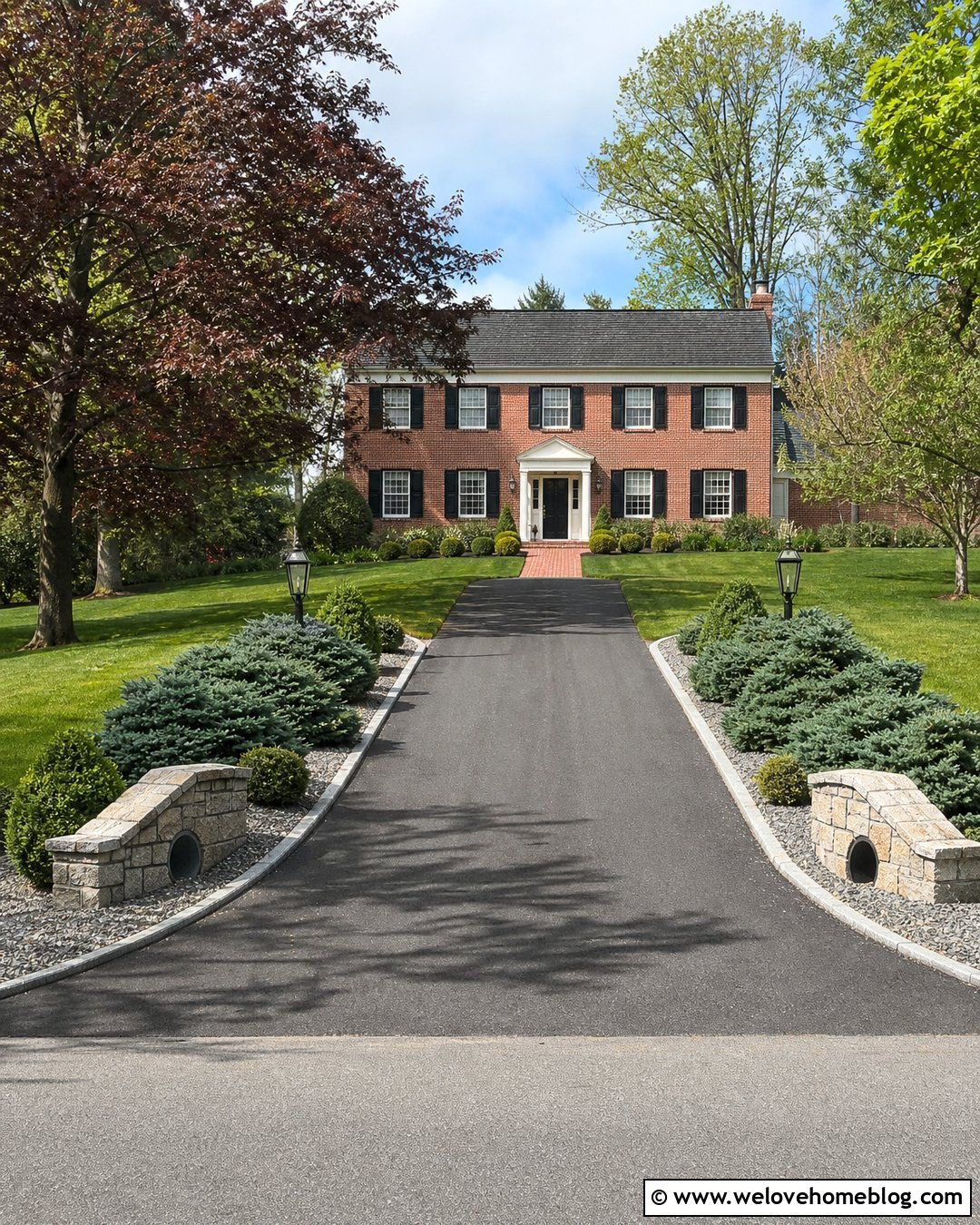
Evergreen landscaping keeps a culvert entrance attractive throughout the year, especially in regions where perennial beds disappear during winter. Pair a charcoal asphalt driveway with low natural-stone headwalls and a straight, symmetrical approach to a colonial home. Use compact junipers, dwarf inkberry, and small spreading conifers on the upper embankments, leaving generous open space around the pipe ends. Gray gravel mulch can reduce weeds and connect visually with the stonework. Keep mature plant size in mind because an innocent-looking shrub may eventually block inspections, trap leaves, or narrow sightlines. A pair of simple driveway lights can stand farther inside the property beyond the ditch. The result is a neat four-season entrance that feels formal enough for traditional architecture but remains practical to prune and maintain.

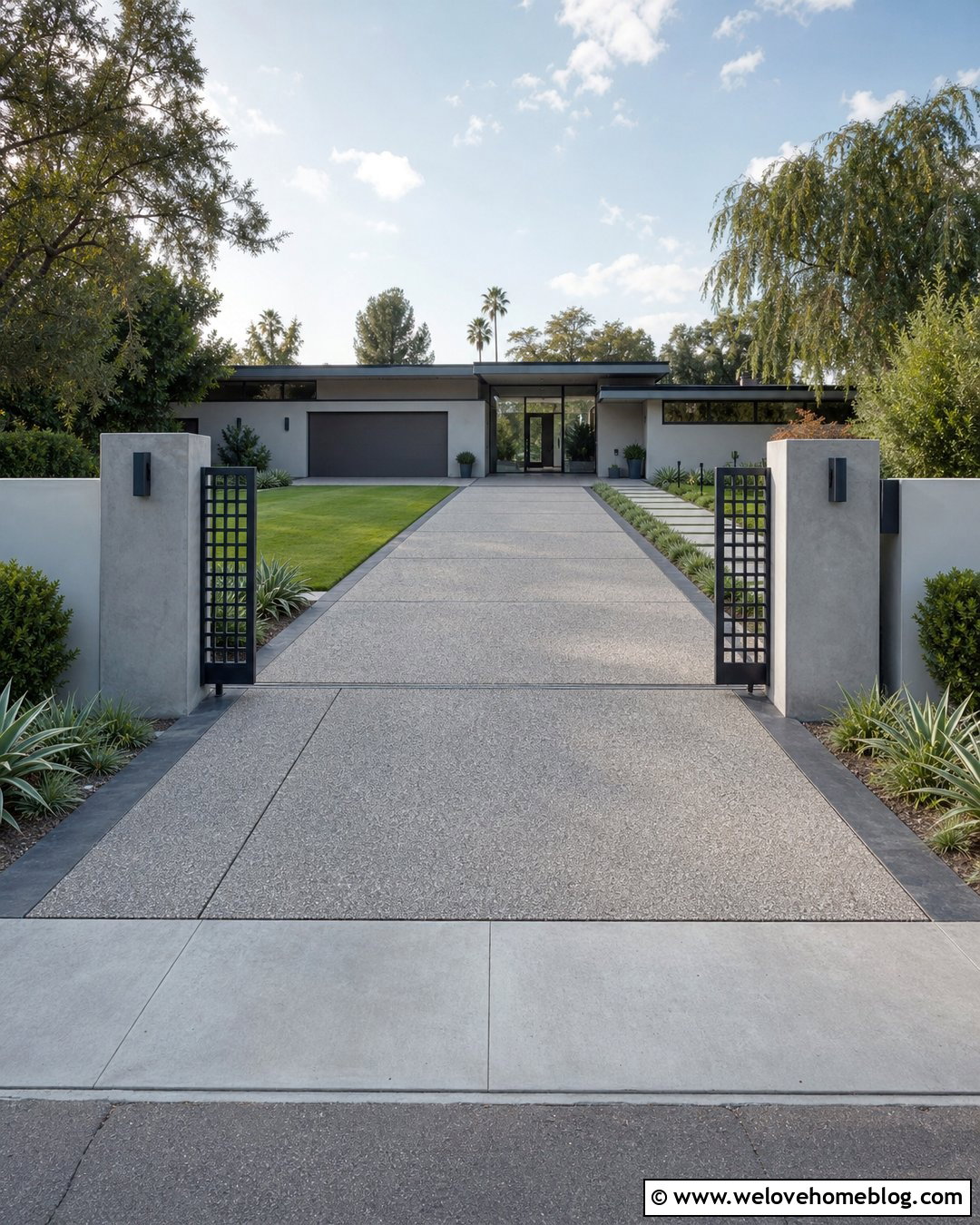
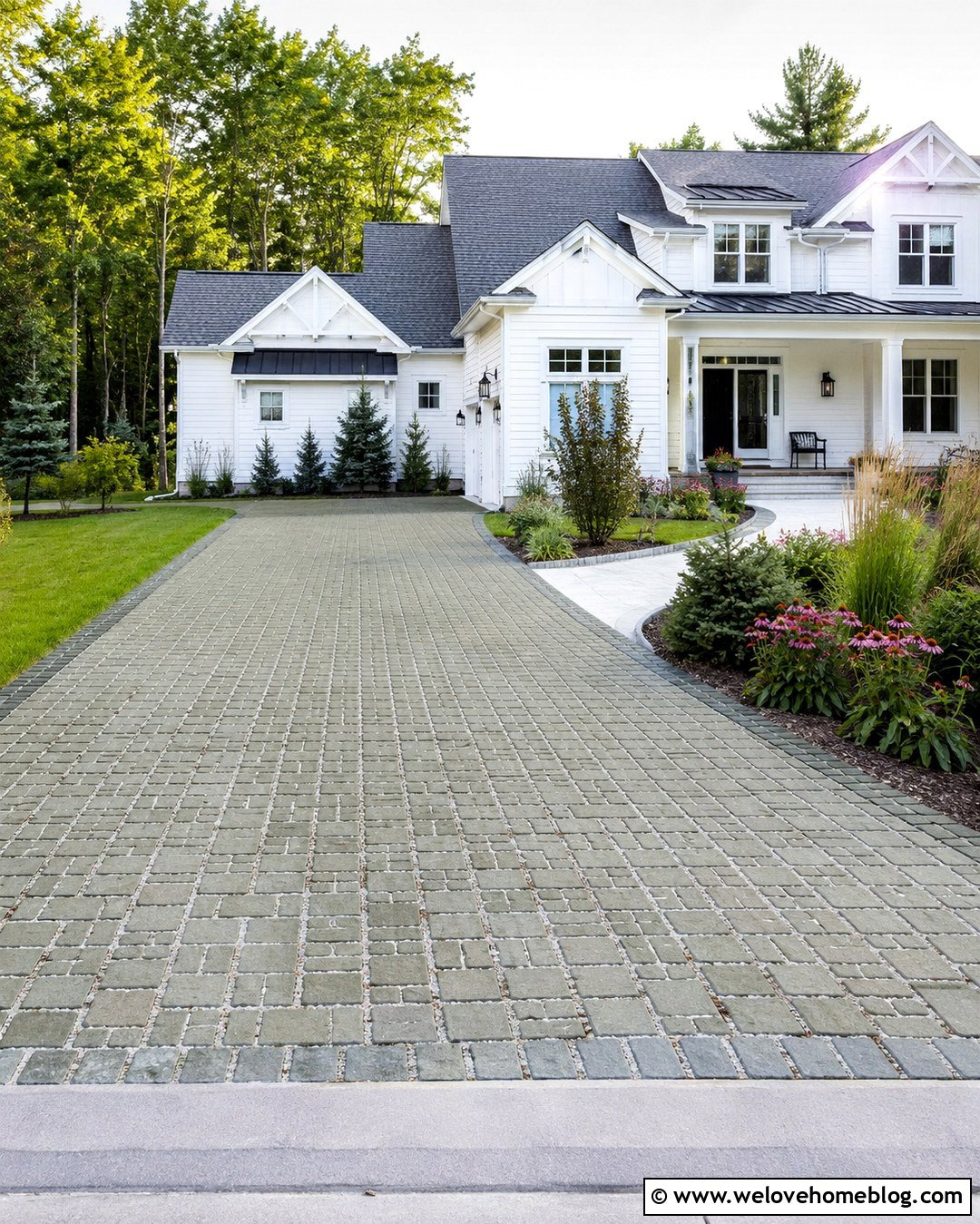
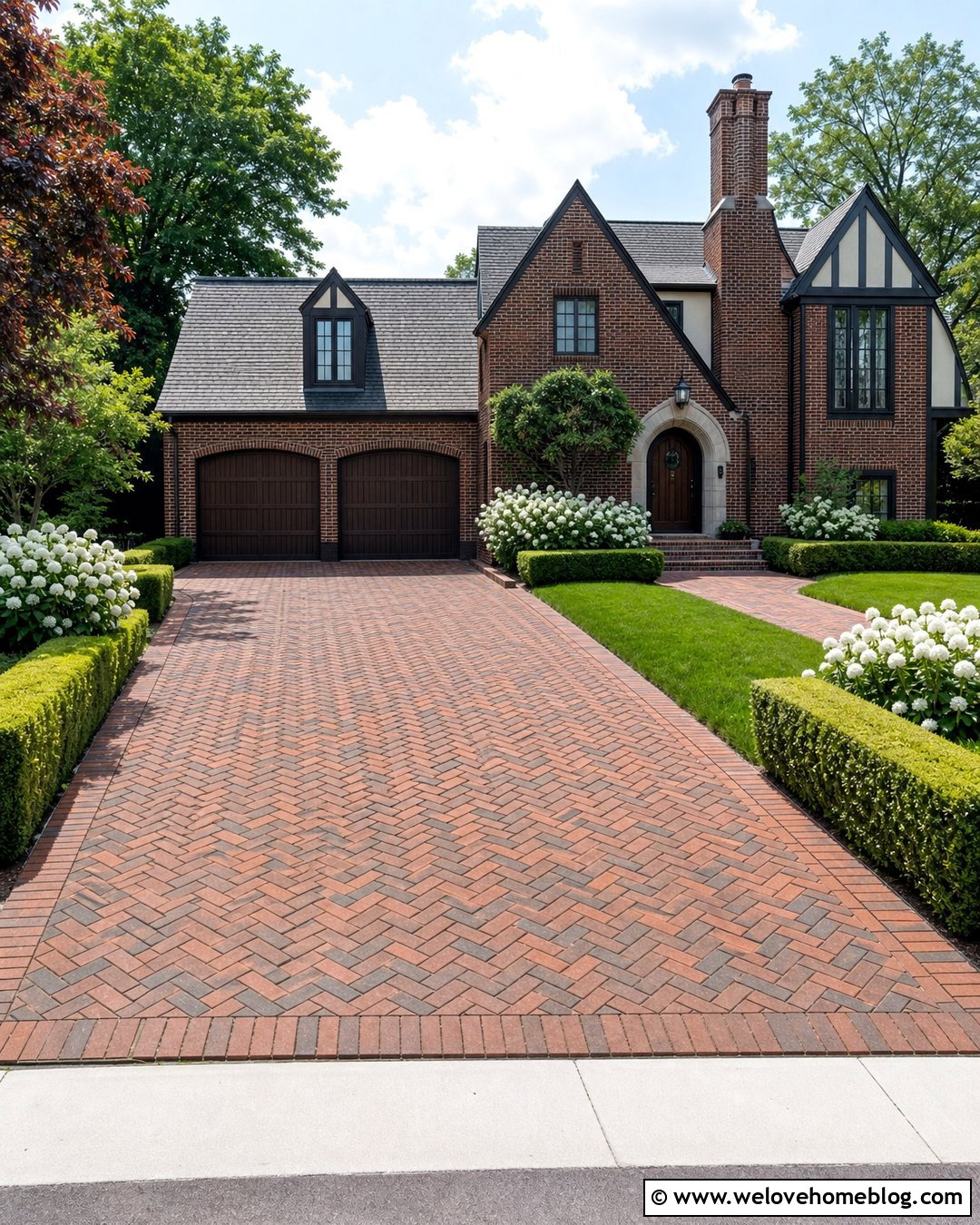
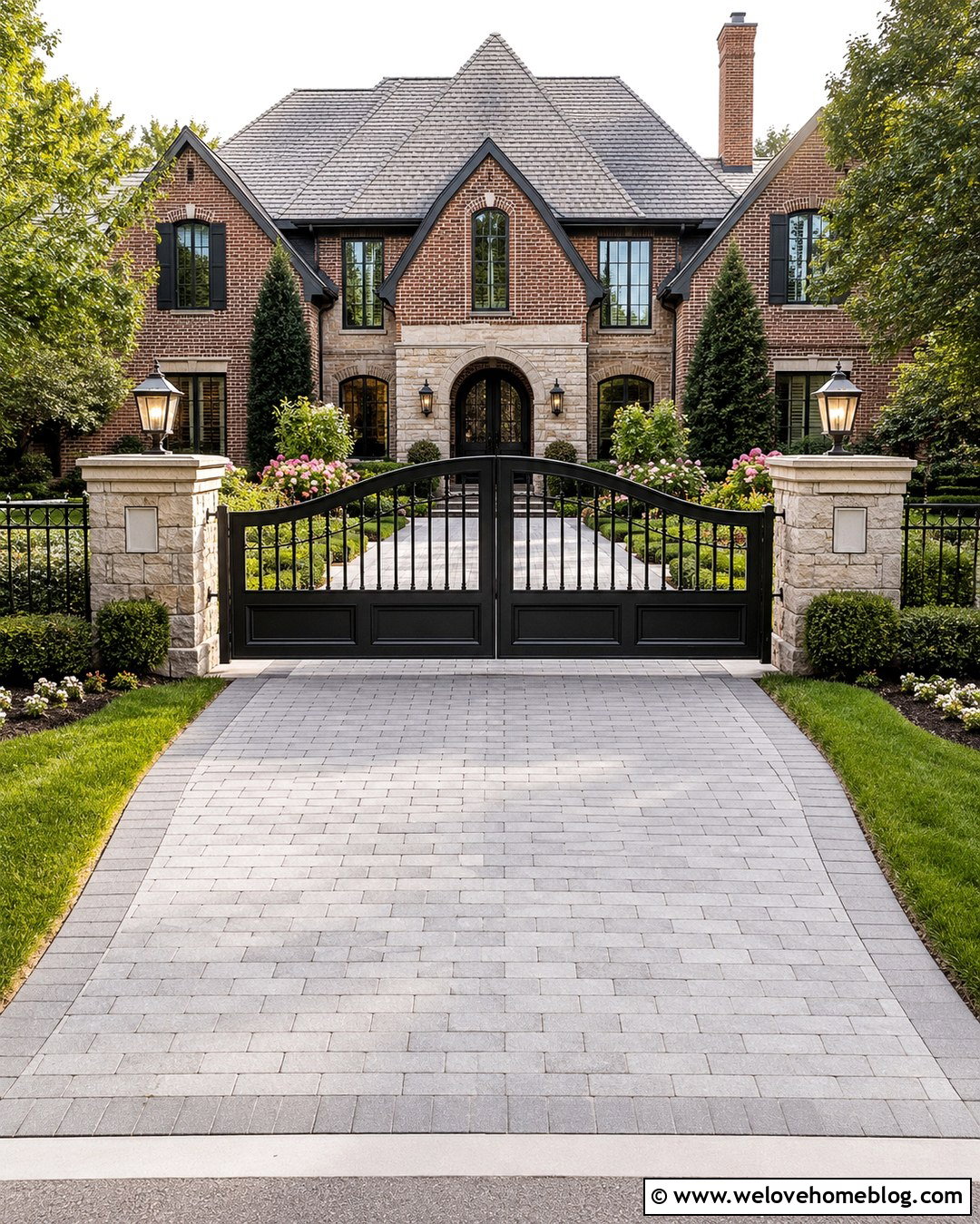
20. Driveway Culvert With Flowering Ground Cover
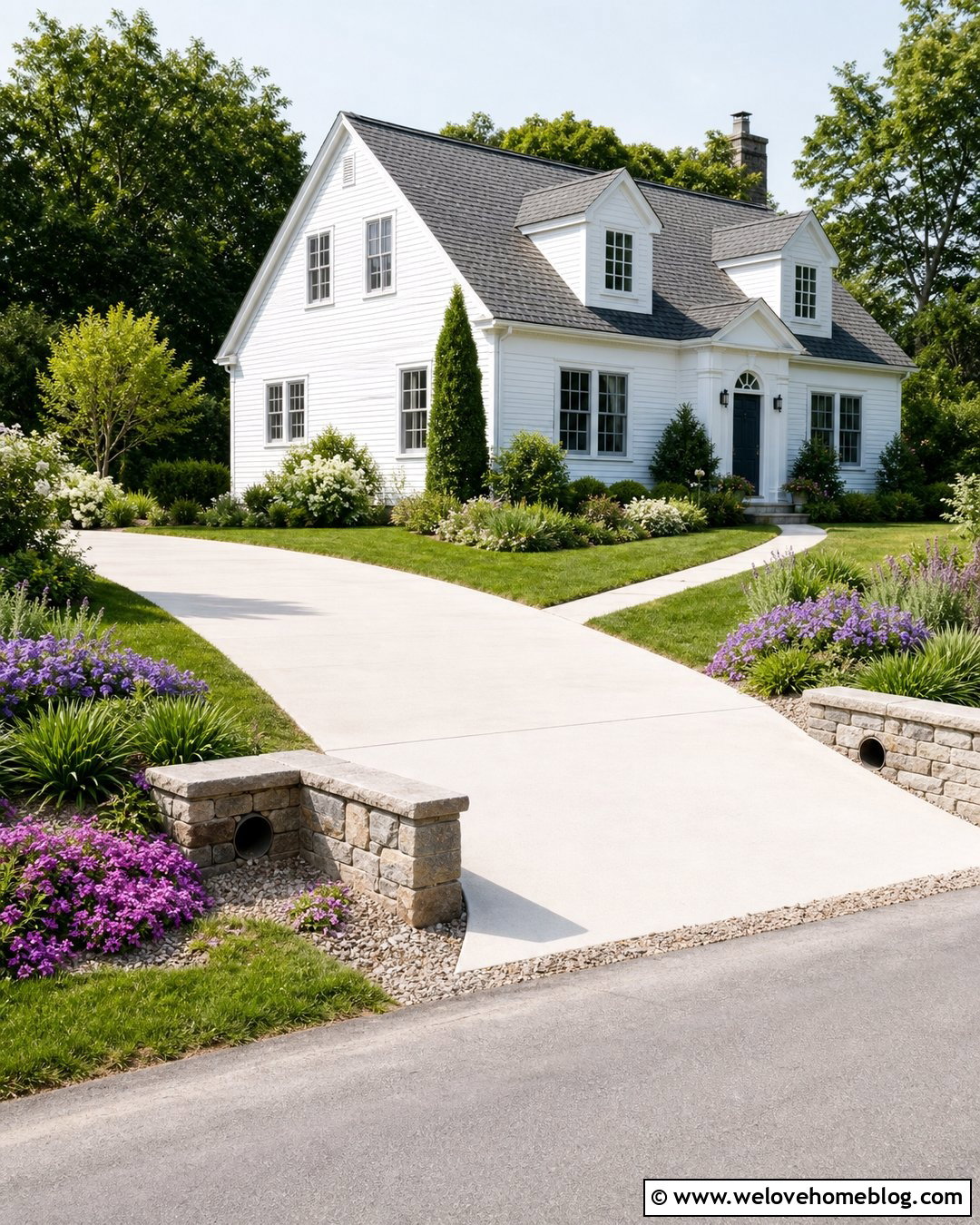
Low flowering ground cover can soften a culvert embankment without creating the bulky mass associated with large shrubs. Use a pale concrete driveway with a gently flared apron and low limestone headwalls. Above the drainage line, plant creeping phlox, hardy geranium, or another regionally suitable ground cover in broad, repeated patches. Combine flowers with sedges and decorative gravel so bare soil is not exposed between plants. A cape cod house with white siding and simple foundation beds makes an inviting background for this colorful treatment. Keep the immediate pipe area free of stems, mulch, and loose garden soil. Choosing plants with manageable roots and growth habits reduces maintenance. This look works best when the planting follows the ditch contours and complements the complete driveway rather than resembling a small isolated flower bed.
21. Driveway Culvert With Ornamental Grass Borders
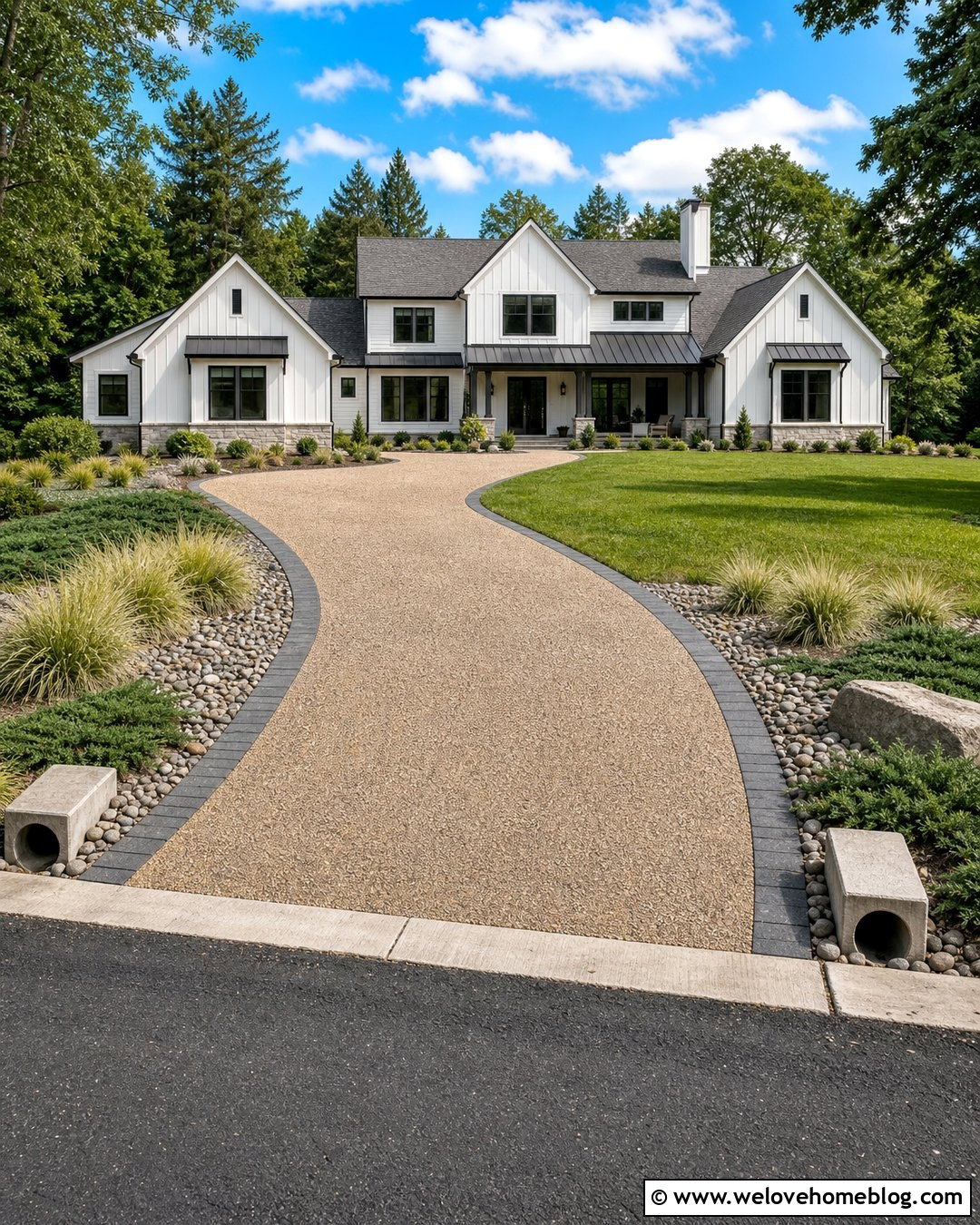
Ornamental grasses can frame a driveway culvert with soft texture while reinforcing the direction of a long driveway. Pair warm beige resin-bound gravel with narrow charcoal paver borders and a shallow curved approach. Use a simple precast concrete end treatment around each culvert opening, then plant compact fountain grass alternatives or native bunchgrasses along the upper ditch. Arrange the plants in repeated groups rather than a solid hedge so workers can access the drainage system. Low stone mulch keeps the bases neat and reduces loose material near the waterway. A modern farmhouse with light siding and black trim ties the palette together. This entrance feels relaxed yet organized, particularly when shorter grasses occupy the roadside corners and taller plants are reserved for positions farther from traffic.
22. Driveway Culvert With Pollinator Planting
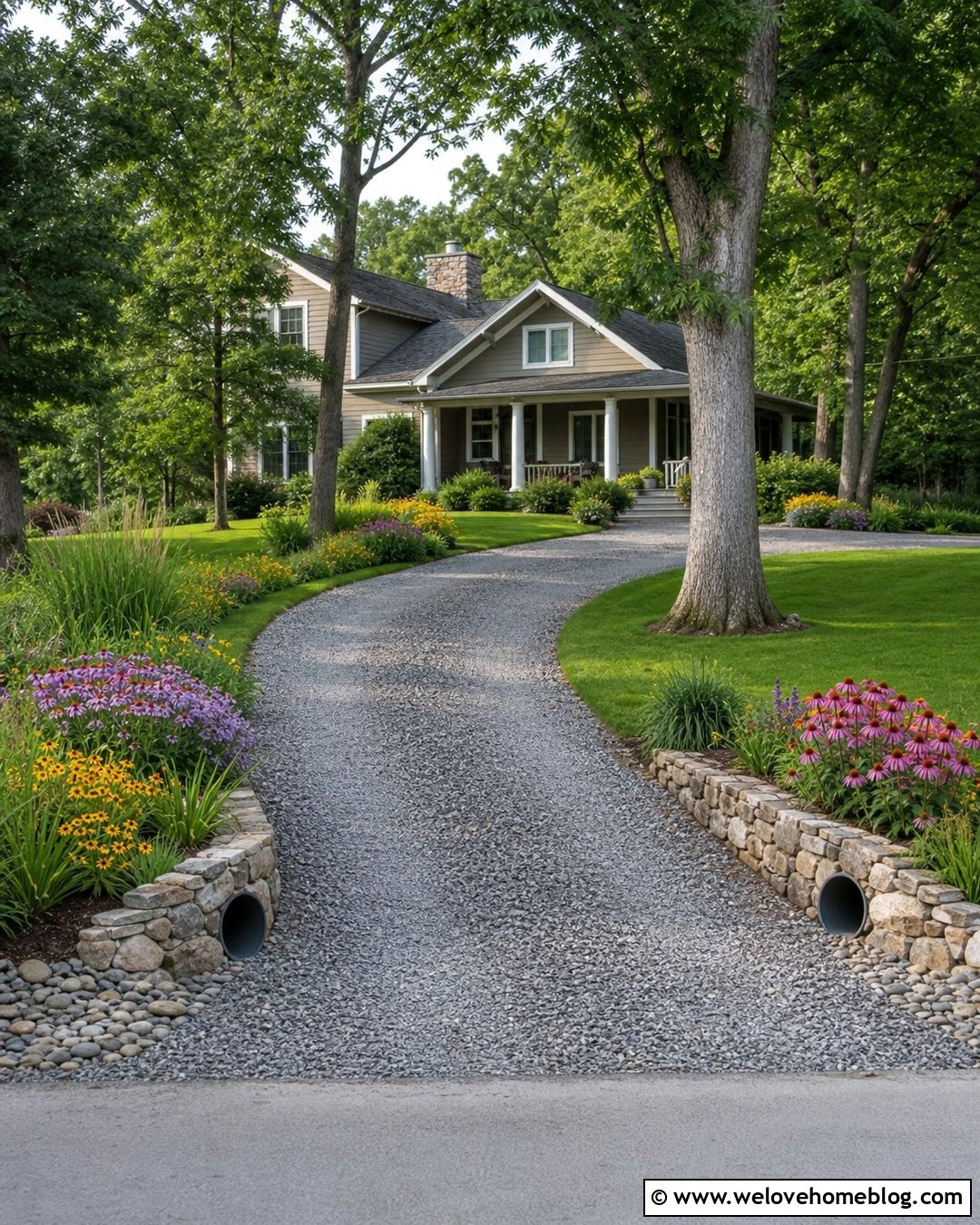
A pollinator-friendly culvert entrance can add color and ecological value when planting is kept safely outside the primary drainage channel. Begin with a curved gray gravel driveway leading to a country cottage or craftsman bungalow. Frame the culvert with low fieldstone walls, then establish drifts of native coneflowers, asters, coreopsis, and compact grasses on the sunny upper banks. Use washed stone around the pipe openings to create a visible maintenance buffer. Keep plants shorter near the road and place taller flowers farther toward the house. A mown lawn edge prevents the bed from looking untidy. Because roadside conditions can include salt, heat, runoff, and occasional flooding, choose durable local species. The combination of natural stone, loose gravel, and layered planting creates an inviting, meadow-inspired driveway entrance.
23. Driveway Culvert With Rain Garden Landscaping
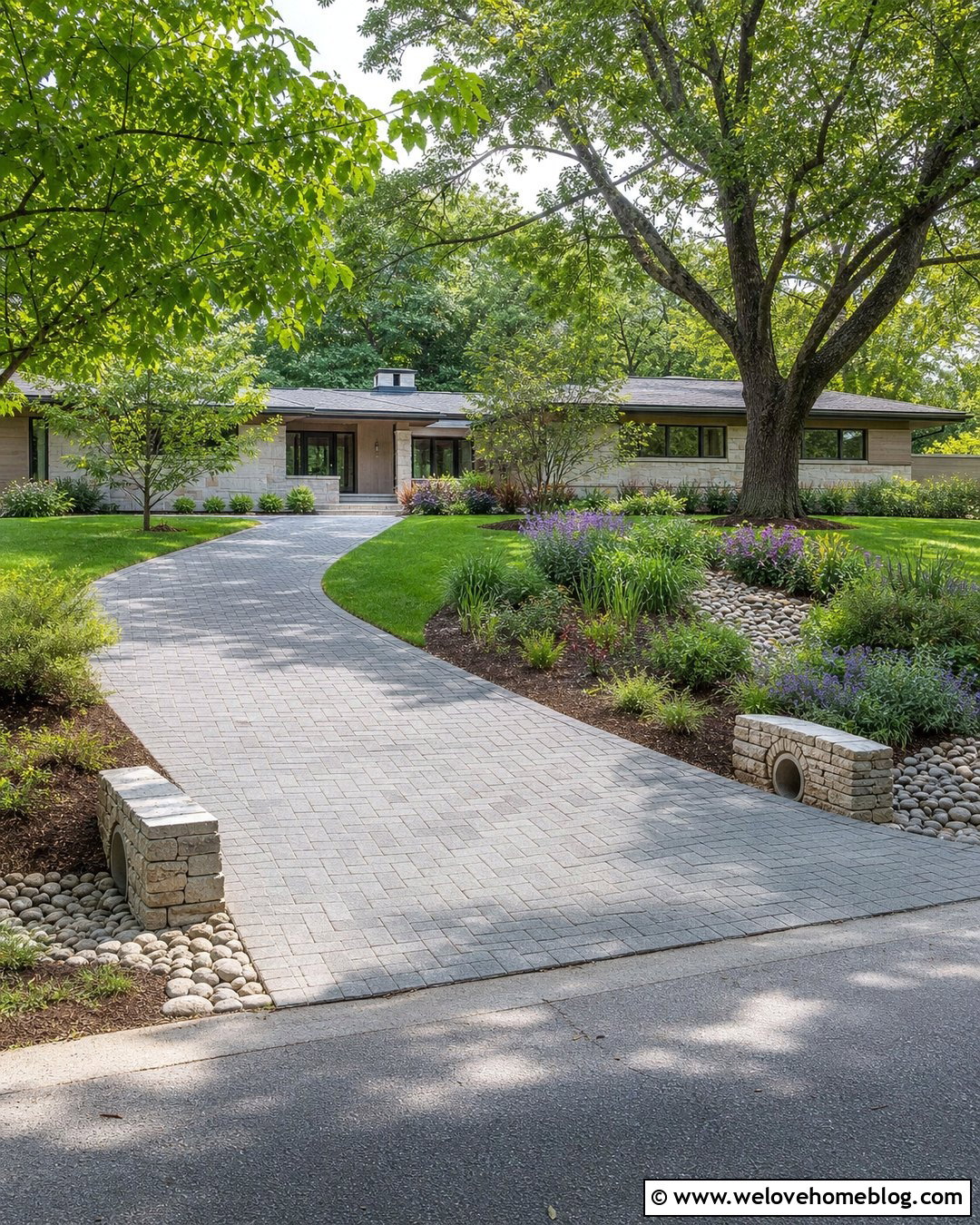
A rain garden near a driveway culvert can temporarily receive runoff from surrounding landscape areas when it is properly located and designed. Pair a permeable concrete paver driveway with a shallow planted basin positioned beyond the structural driveway fill, not directly over the culvert. Finish the pipe ends with understated stone treatments and connect the ditch visually to the basin using river rock. Moisture-tolerant native plants can fill the lower zone, while grasses and flowering perennials occupy the edges. A contemporary ranch home with broad rooflines complements the low horizontal planting. The garden must not block the culvert or reduce required drainage capacity, so grading should be reviewed professionally. Done correctly, the complete layout combines water-conscious landscaping, an attractive paved approach, and a clearly organized roadside drainage system.
24. Driveway Culvert With Modern Concrete Walls
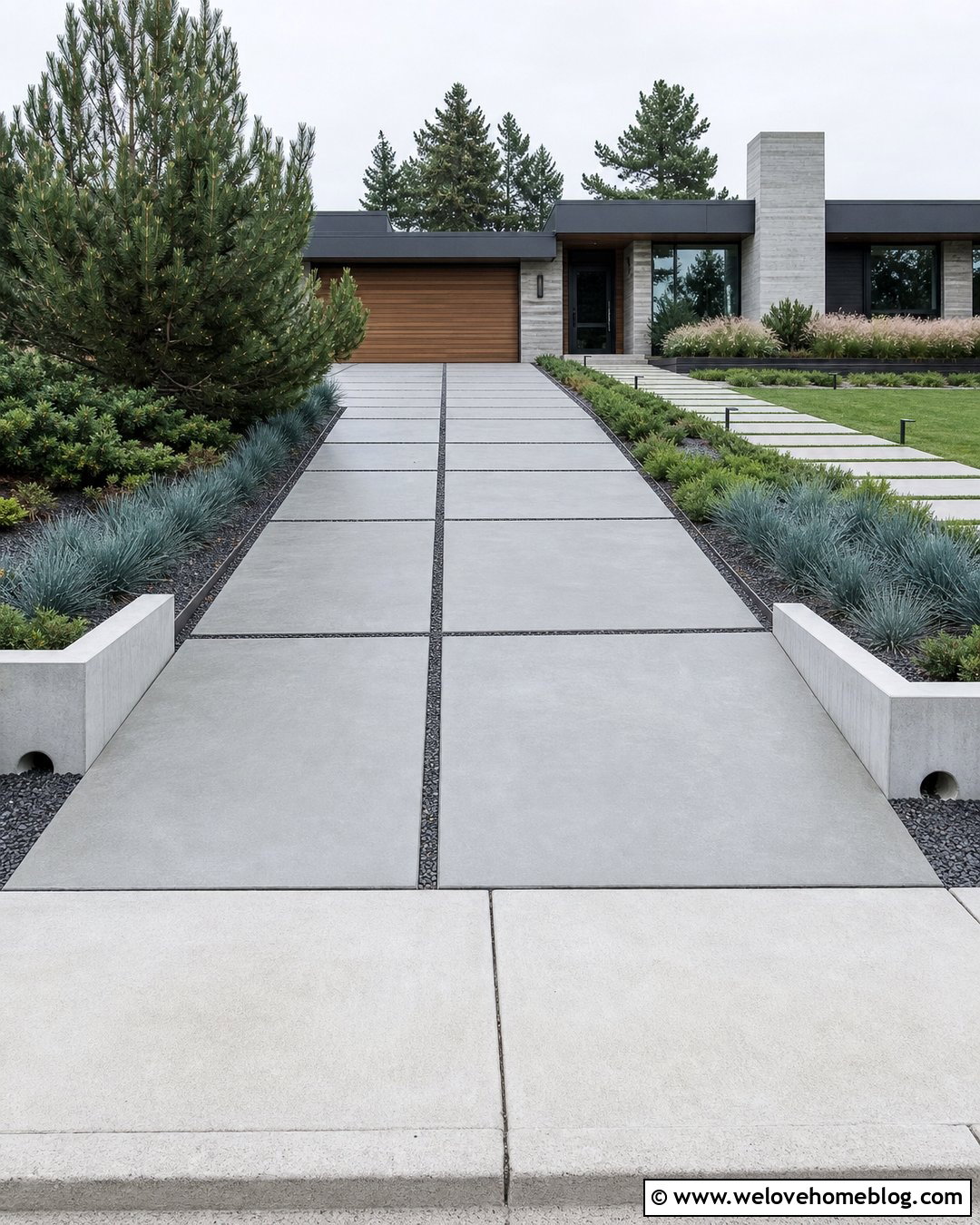
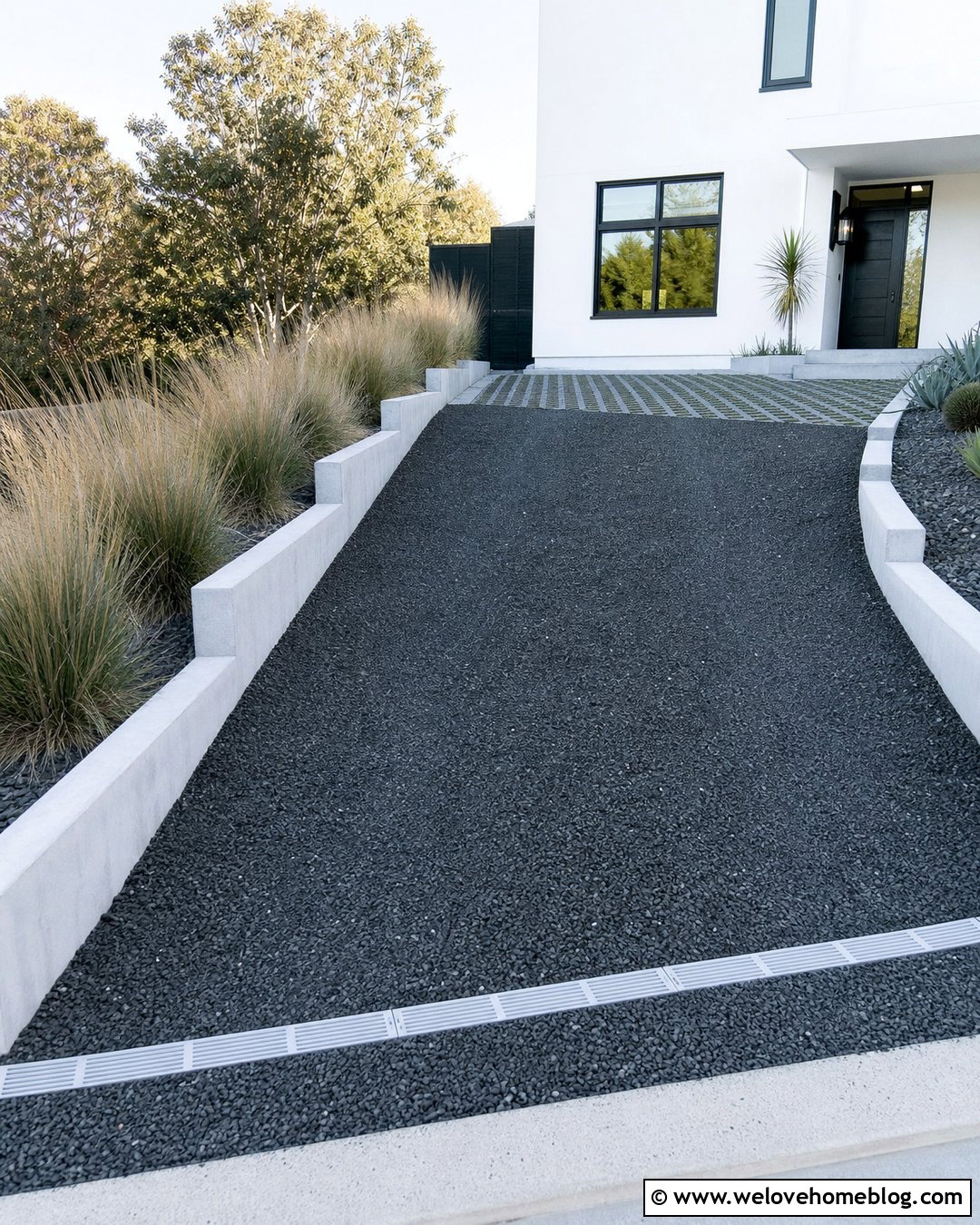
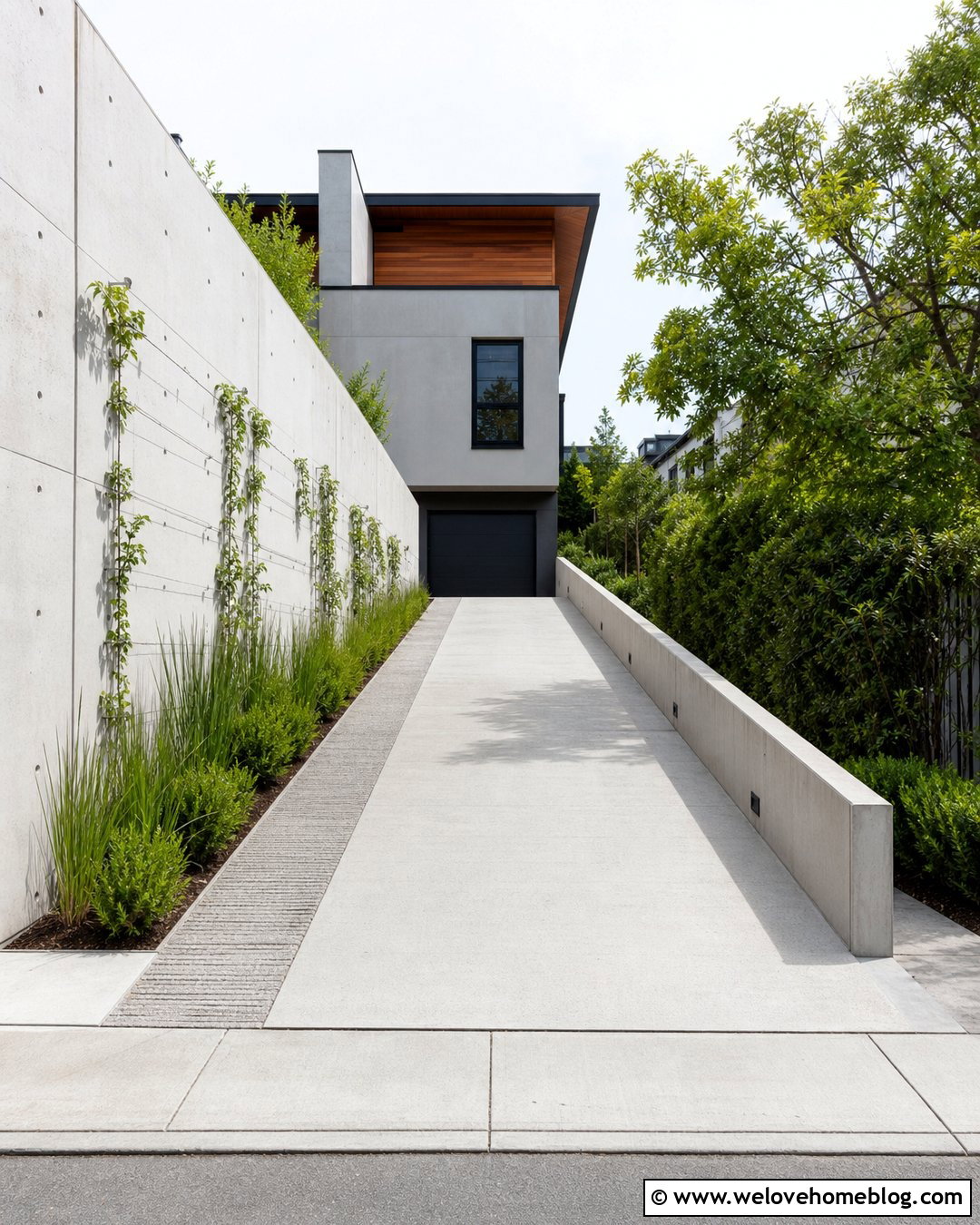
Smooth concrete walls give a culvert entrance a minimalist appearance that suits modern architecture and geometric landscaping. Use large-format gray concrete driveway slabs separated by narrow dark gravel joints, creating a straight approach toward a flat-roofed home. Form low rectangular headwalls around the culvert openings, keeping the surfaces plain and sharply aligned. Add linear beds of blue-green grasses and compact evergreen ground cover above the ditch. Black metal edging can define planting areas farther from active runoff. Avoid placing decorative screens or solid panels across the openings, since the culvert must remain visible and serviceable. The restrained palette allows each material to read clearly: gray concrete, dark gravel, green planting, and white facade. This complete design feels sophisticated because drainage, paving, and landscaping follow the same simple geometry.
25. Driveway Culvert With Rustic Stone Columns
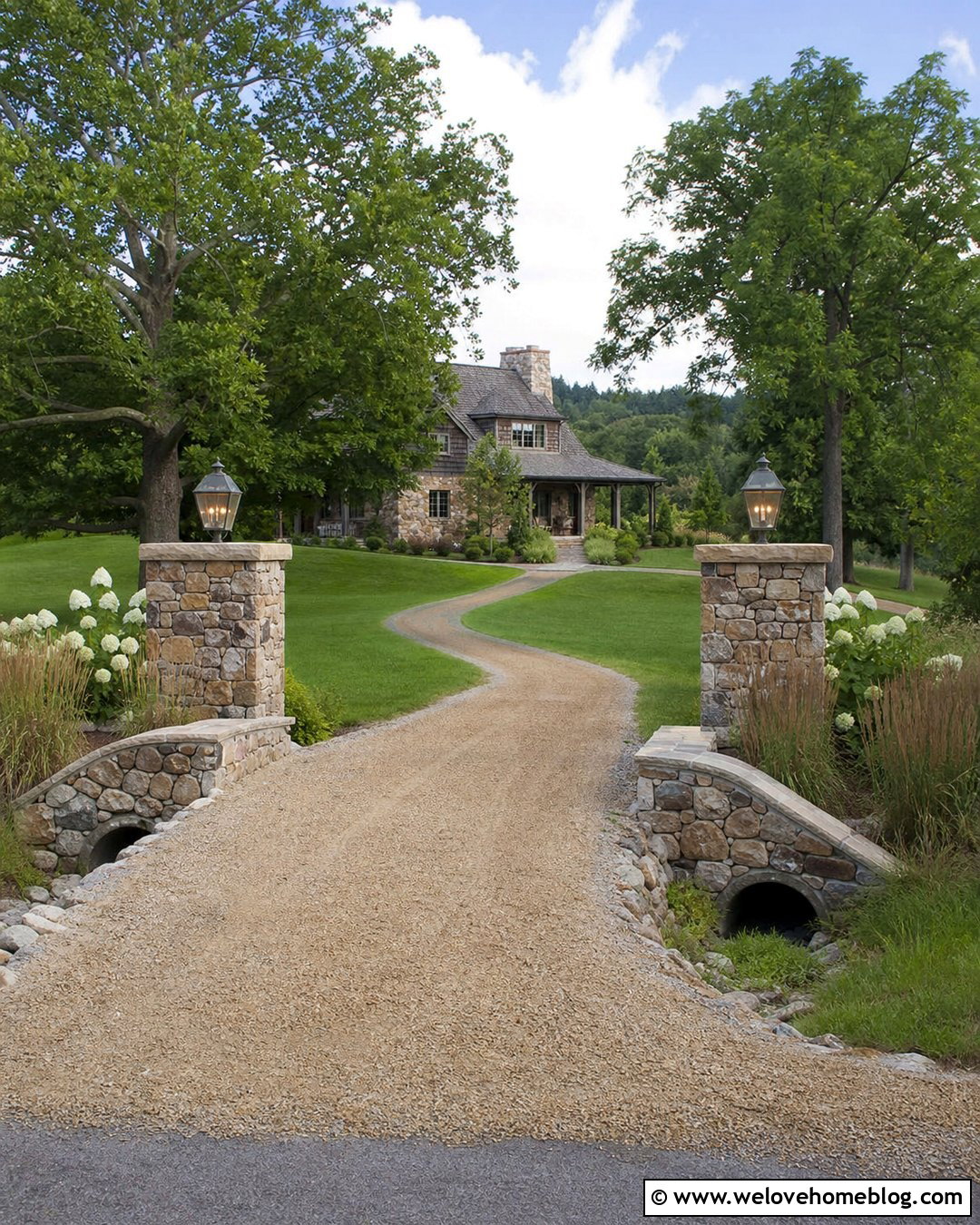
Rustic stone columns can mark a driveway entrance, but they should sit well beyond the culvert ends and outside critical roadside clearance areas. Pair the columns with a wide tan gravel driveway that crosses a stone-lined culvert before curving toward a country home. Use matching fieldstone for low headwalls so the drainage structure and entrance markers feel connected. Mount simple lanterns and an address plaque on the columns without adding gates that crowd the ditch. Native grasses, hydrangeas, and broad lawn areas can frame the approach while leaving the water path open. The columns should be proportional to the house and separated enough for delivery and emergency vehicles. By spacing the vertical features away from the drainage crossing, the entrance gains character without turning the culvert into a cluttered focal point.
26. Driveway Culvert With Farmhouse Entrance Posts
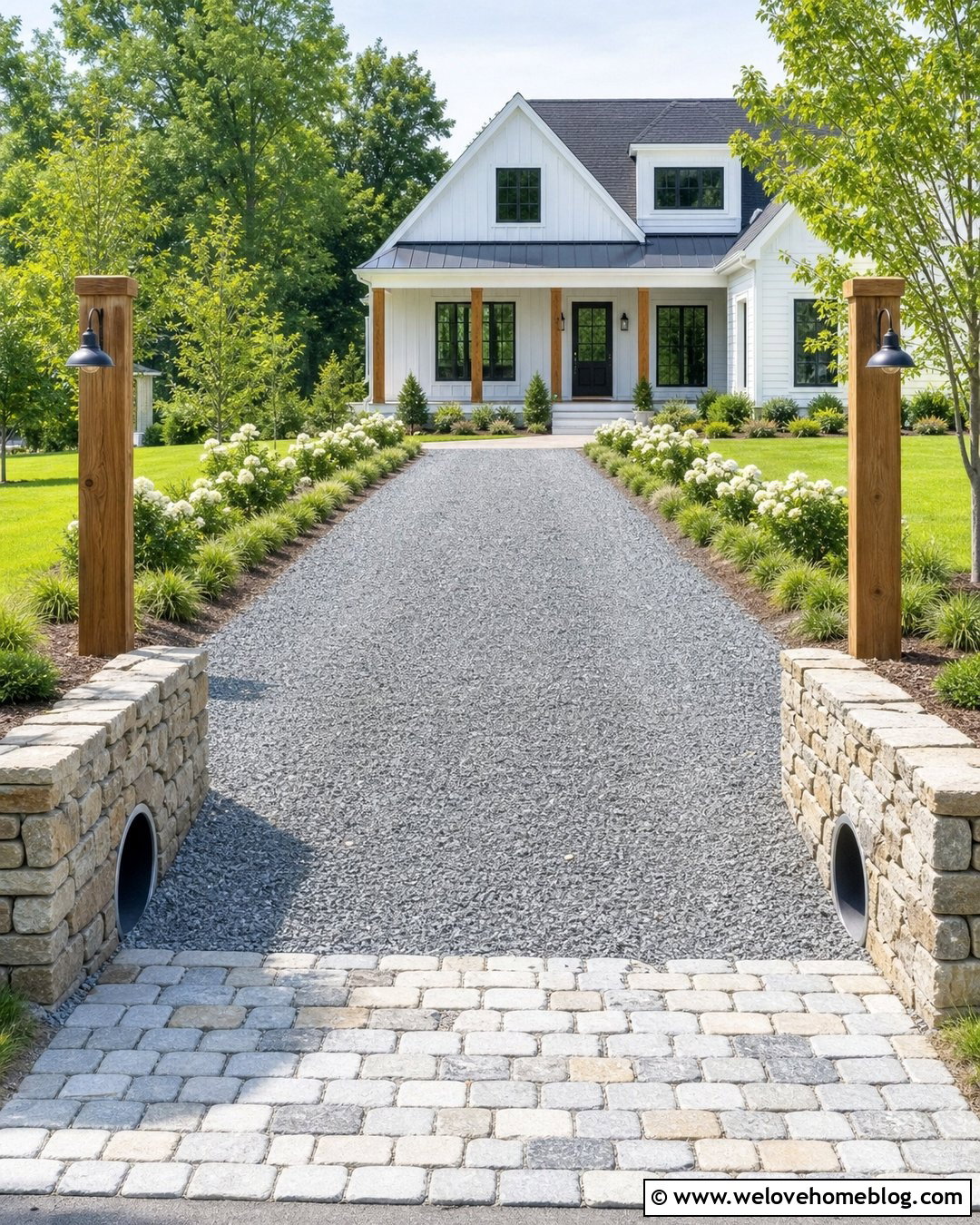
Simple farmhouse entrance posts bring warmth to a culvert driveway without the visual weight of stone pillars. Choose white-painted or natural cedar posts positioned farther up a straight crushed-stone drive, beyond the ditch and pipe openings. Use low stacked-stone culvert walls and a cobblestone apron border to connect the entrance with a modern farmhouse facade. A small address sign can hang between separate posts beside the driveway rather than over it. Frame the culvert banks with clipped grass, white flowering shrubs, and compact native grasses. Black metal lights can repeat the home’s trim color. This arrangement keeps the drainage crossing visually open while still creating a clear sense of arrival. Weather-resistant post construction and comfortable vehicle clearance will help the design remain practical as well as attractive.
27. Driveway Culvert With Solar Entrance Lights
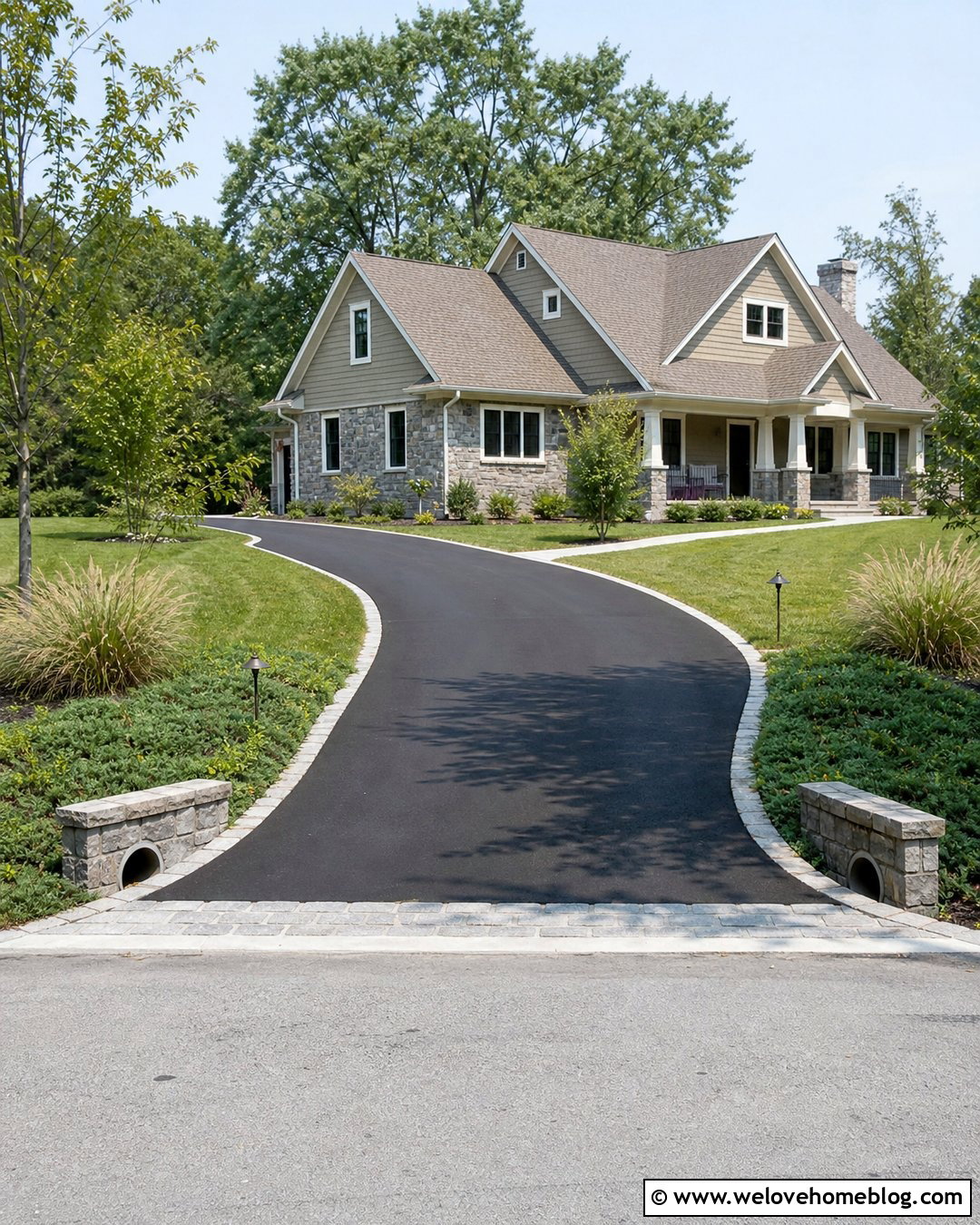
Solar entrance lights can improve the visibility of a driveway culvert without requiring electrical trenching across the drainage area. Pair a black asphalt driveway with low gray stone headwalls and a gently curved suburban approach. Install compact downward-facing lights on short posts set behind the ditch, where they can mark the entrance without occupying the active channel. Keep the fixtures symmetrical and use only enough to define the driveway edges. Low evergreen ground cover and ornamental grasses can soften the bases during daylight. A light-colored ranch or craftsman home provides a balanced background. Select fixtures with bright, neutral illumination rather than decorative amber effects, and make sure vegetation does not shade their solar panels. During routine maintenance, inspect both the lighting and the culvert for damage, debris, or settling.
28. Driveway Culvert With Address Sign Landscaping
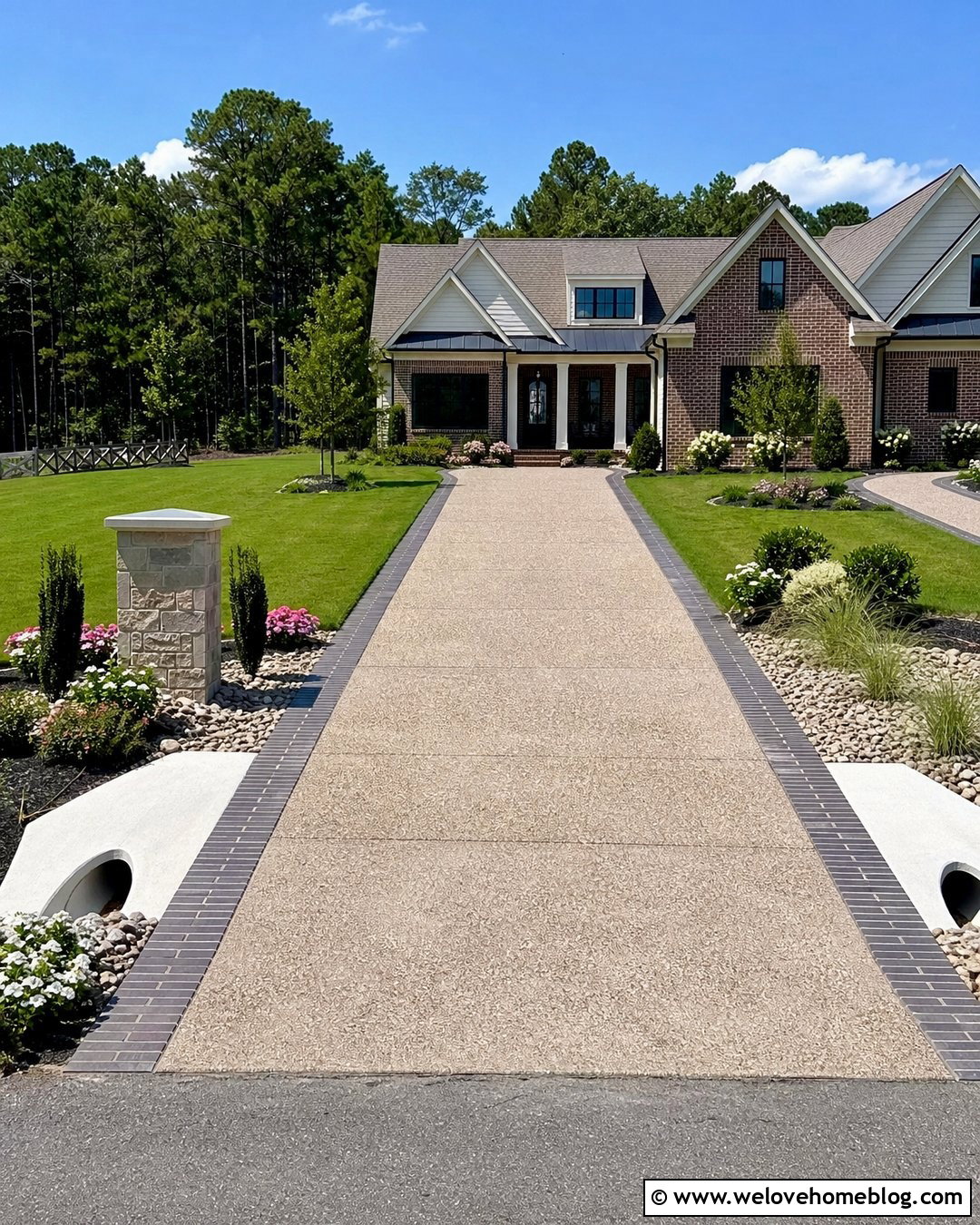
An address sign can make a driveway culvert entrance easier to identify while contributing to the overall landscape design. Use a straight exposed aggregate driveway with dark brick edging and simple concrete end sections. Place a stone or metal sign monument beyond one culvert end, set back from the pipe and roadway. Surround it with low grasses, compact flowering plants, and gravel mulch that will not wash into the ditch. Keep numbers large and visually clear, but avoid positioning the sign where it blocks drivers’ views. Repeat the sign’s material in the driveway border or walkway for a connected appearance. A transitional brick-and-siding home works naturally with this balanced palette. The finished entrance combines visible identification, controlled planting, durable paving, and an accessible drainage crossing.
29. Driveway Culvert With Split Rail Fence
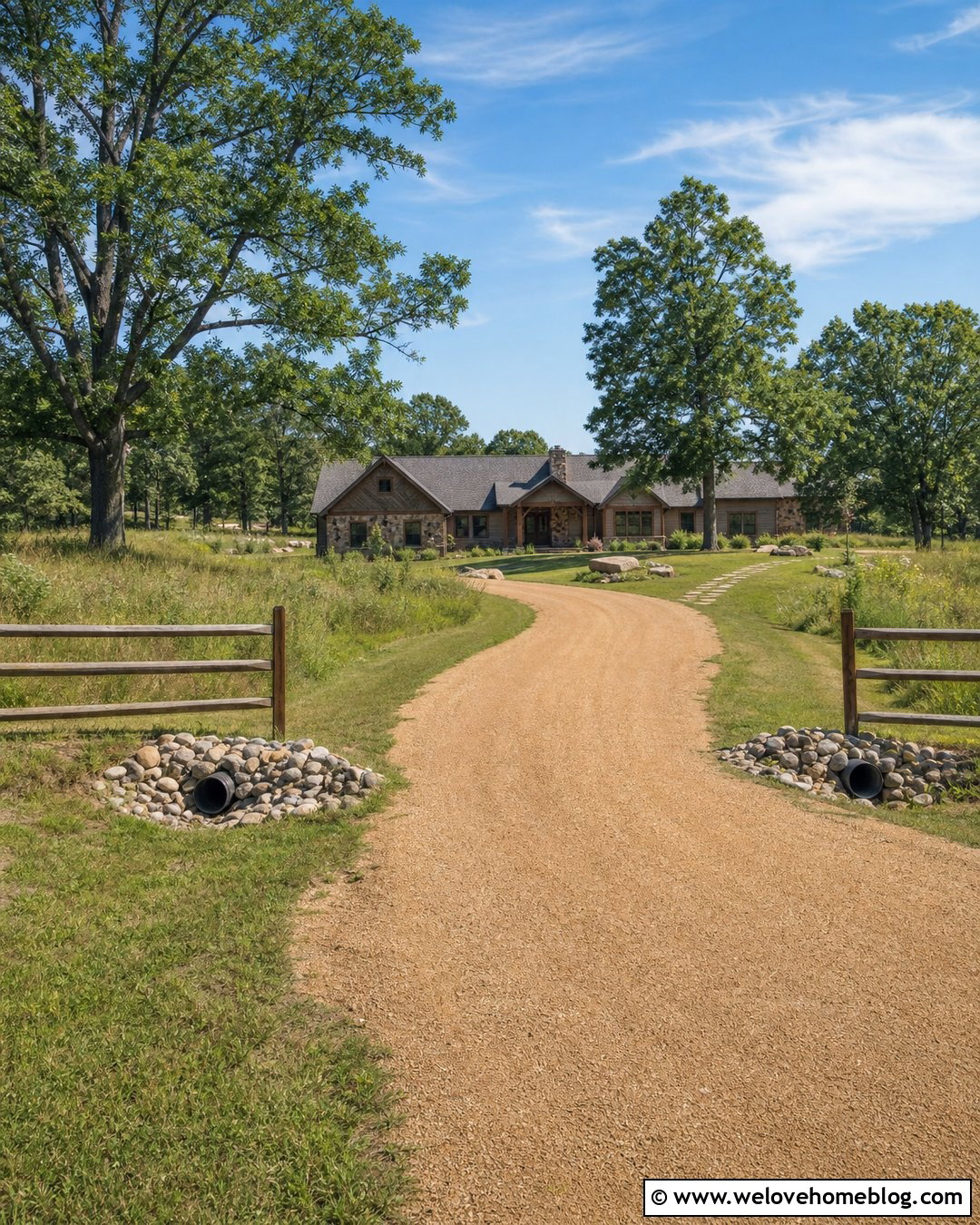
A split rail fence can reinforce the rural character of a driveway culvert when it begins beyond the pipe rather than crossing the drainage channel. Pair a warm brown gravel driveway with natural boulder end treatments and a broad curved entrance. Run the fence along the upper property boundary, leaving a clear maintenance opening near both culvert ends. Native meadow grasses can extend behind the rails, while a short mown strip follows the roadside. Use larger stones sparingly to stabilize the visual edges without creating a crowded entrance. A country ranch or barn-style home in the distance completes the scene. The fence should follow safe setbacks and remain visible to drivers. This design feels relaxed and authentic because the driveway, ditch, fence, and planting all respond to the open landscape.
30. Driveway Culvert With Decorative Metal Fence
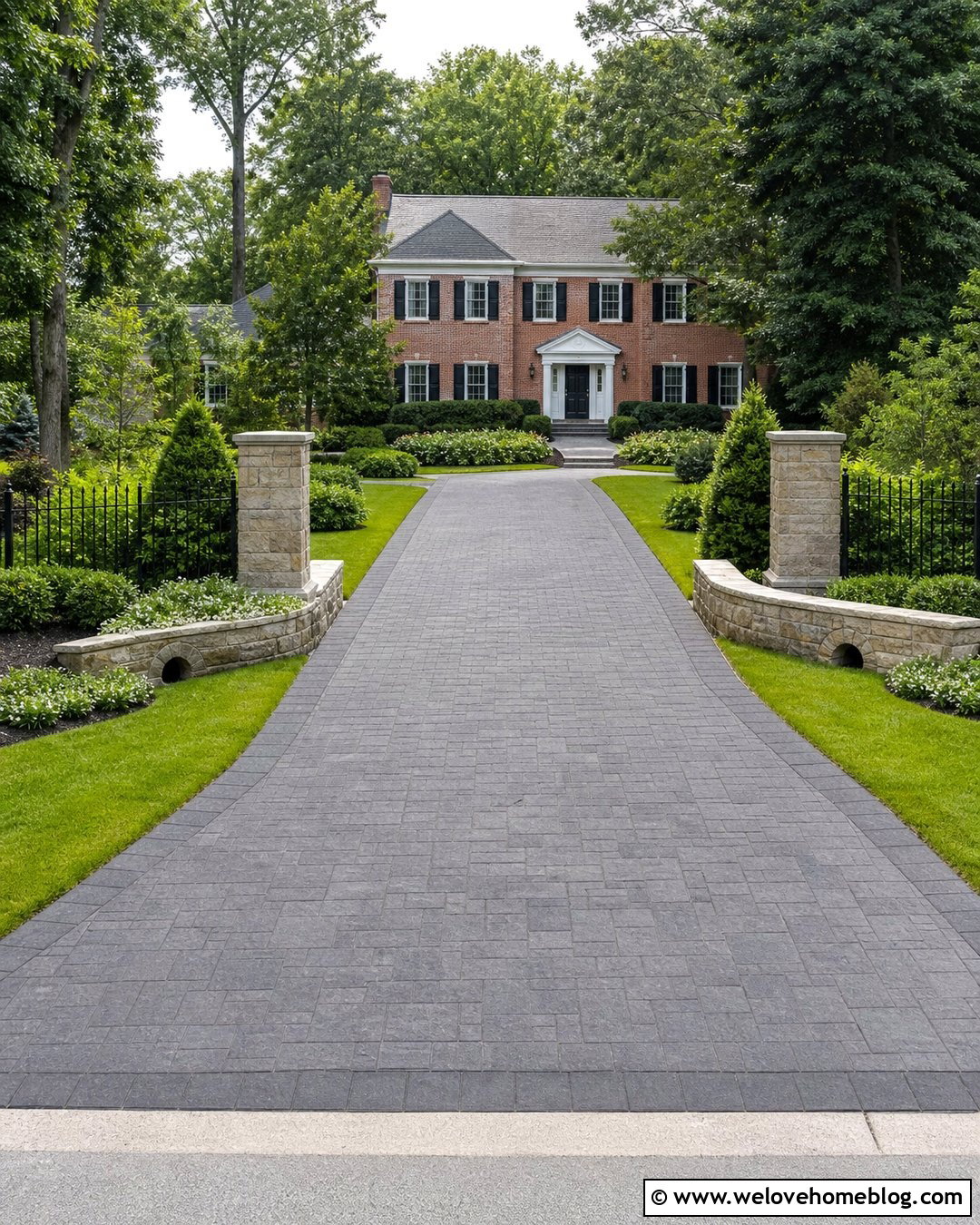
A restrained metal fence can give a driveway culvert a more formal appearance without overwhelming the drainage structure. Use a charcoal concrete paver driveway with a straight, flared entrance and low buff-stone headwalls. Begin black metal fence panels behind the ditch, aligning them with masonry posts positioned safely away from the road. Leave the culvert area open and easy to reach rather than placing rails directly above the pipe ends. Clipped evergreen shrubs and neat grass strips can follow the fence line, while low perennials soften the stone. A brick colonial or French-inspired home provides an appropriate backdrop. Repeating black details in the house lights, walkway edging, and fence creates unity. The complete design remains elegant because every ornamental feature is set back from the working drainage channel.
31. Driveway Culvert With Curved Gravel Entrance
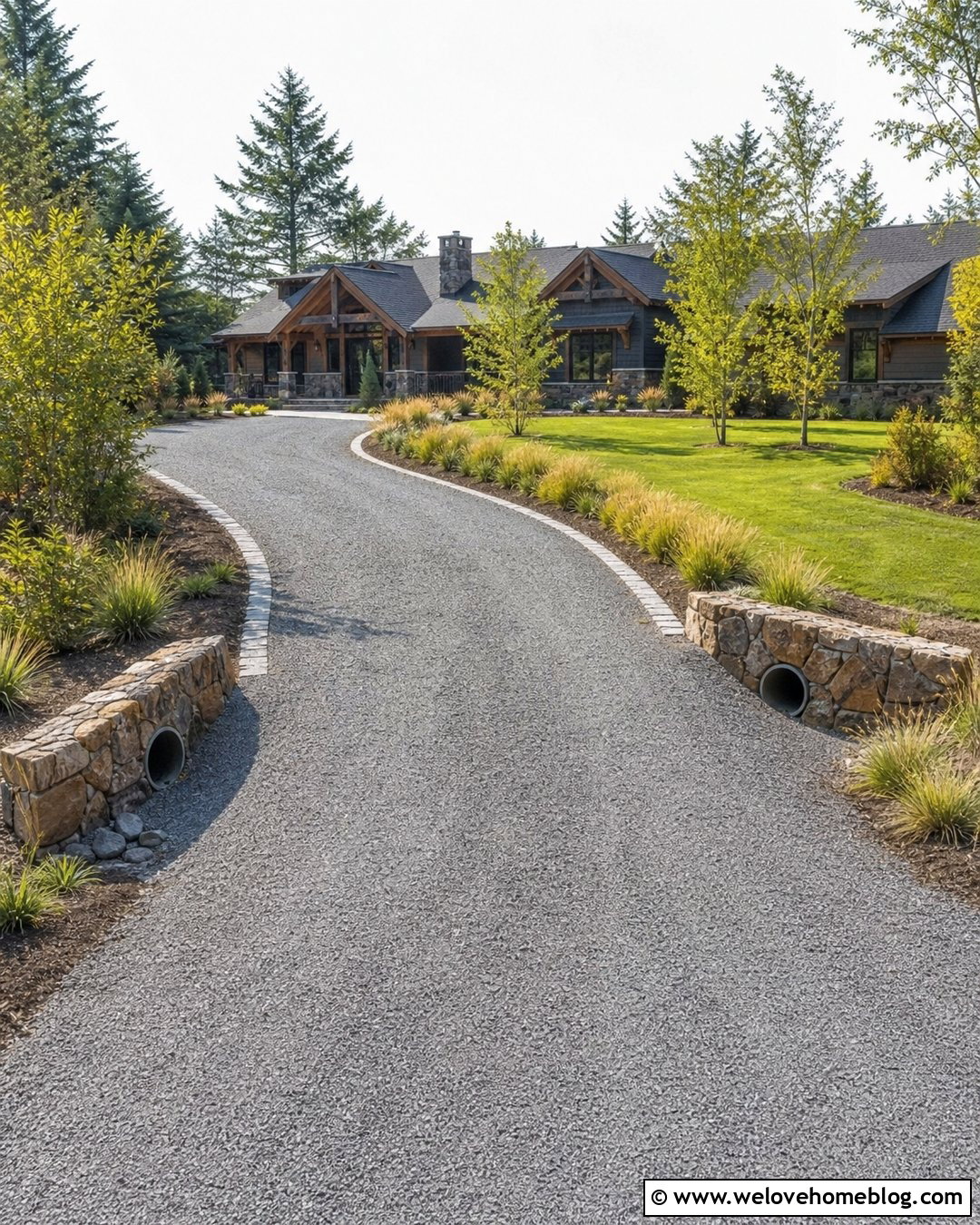
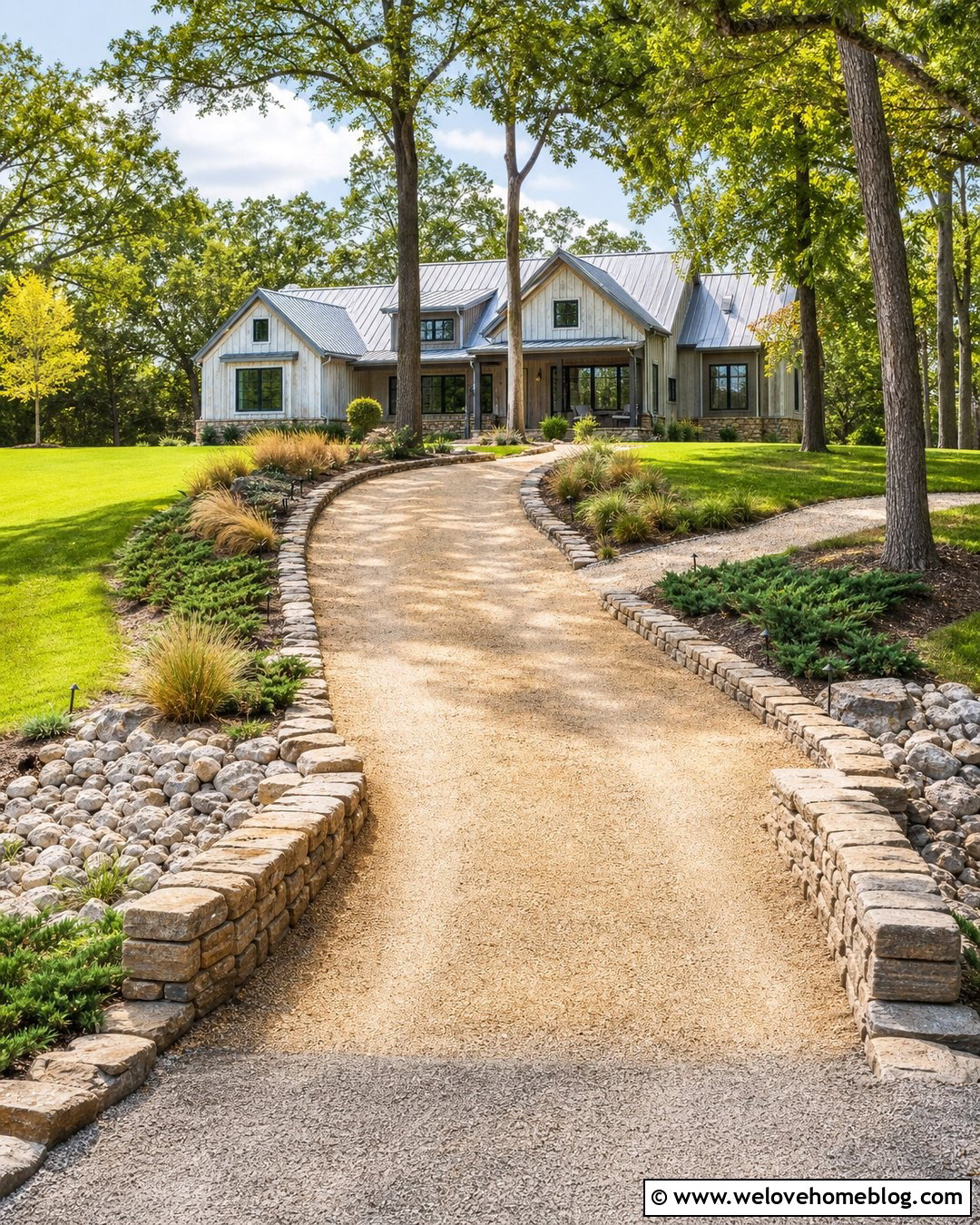
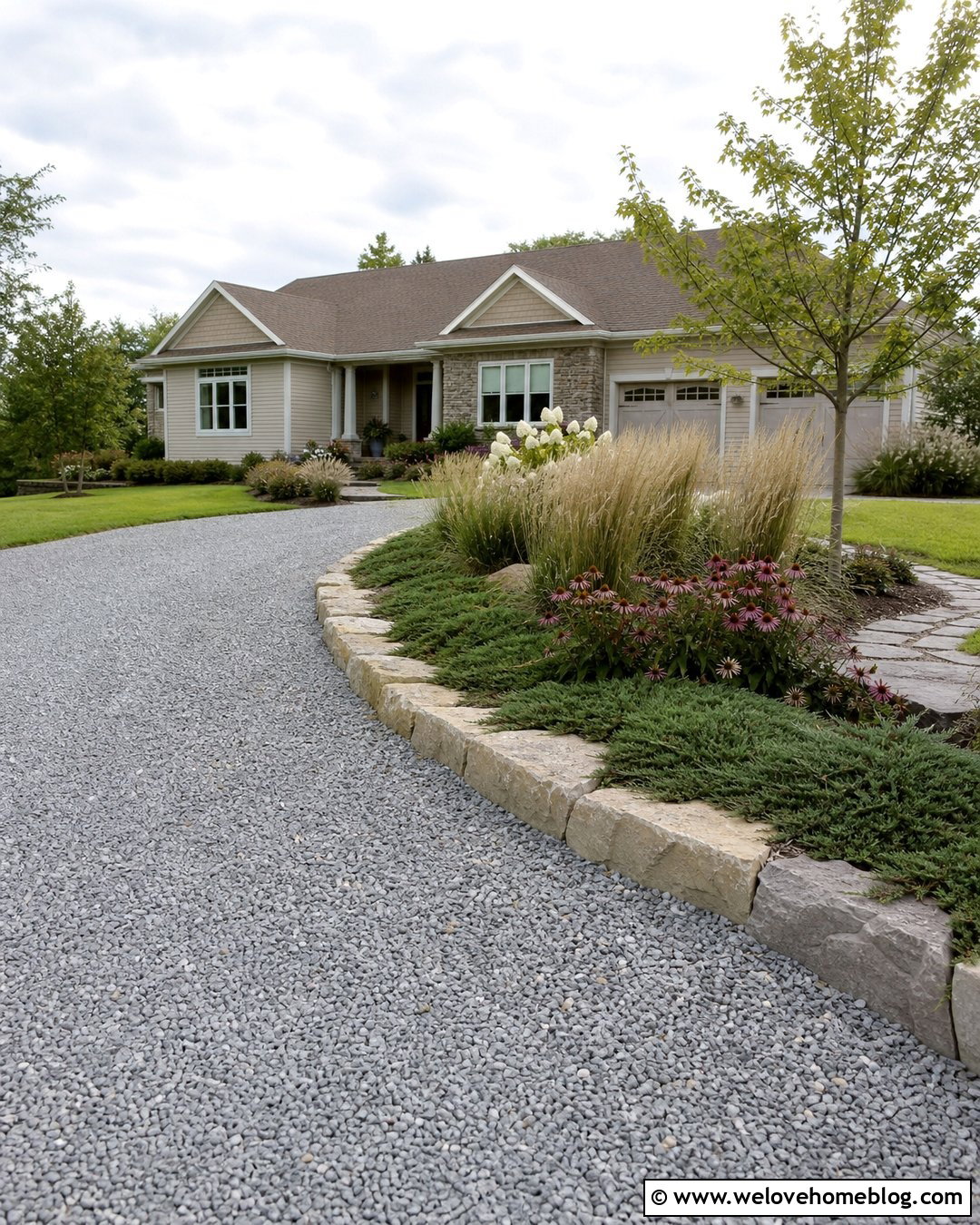
A curved gravel entrance can make a culvert crossing feel more natural on a large property while revealing the house gradually. Use compacted gray crushed granite for the driveway and define the edges with a narrow band of larger stone. Finish both culvert ends with low, gently angled fieldstone walls that follow the ditch slopes. On the outside of the curve, plant layered native grasses and a few small ornamental trees well back from the roadway. Keep the inside corner low and open for better visibility. Continue the gravel drive toward a craftsman or country home surrounded by lawn. The curve should be wide enough for regular service vehicles and designed so runoff does not scour the inner edge. This entrance combines comfortable movement, natural materials, and understated drainage treatment.
32. Driveway Culvert With Circular Driveway Entrance
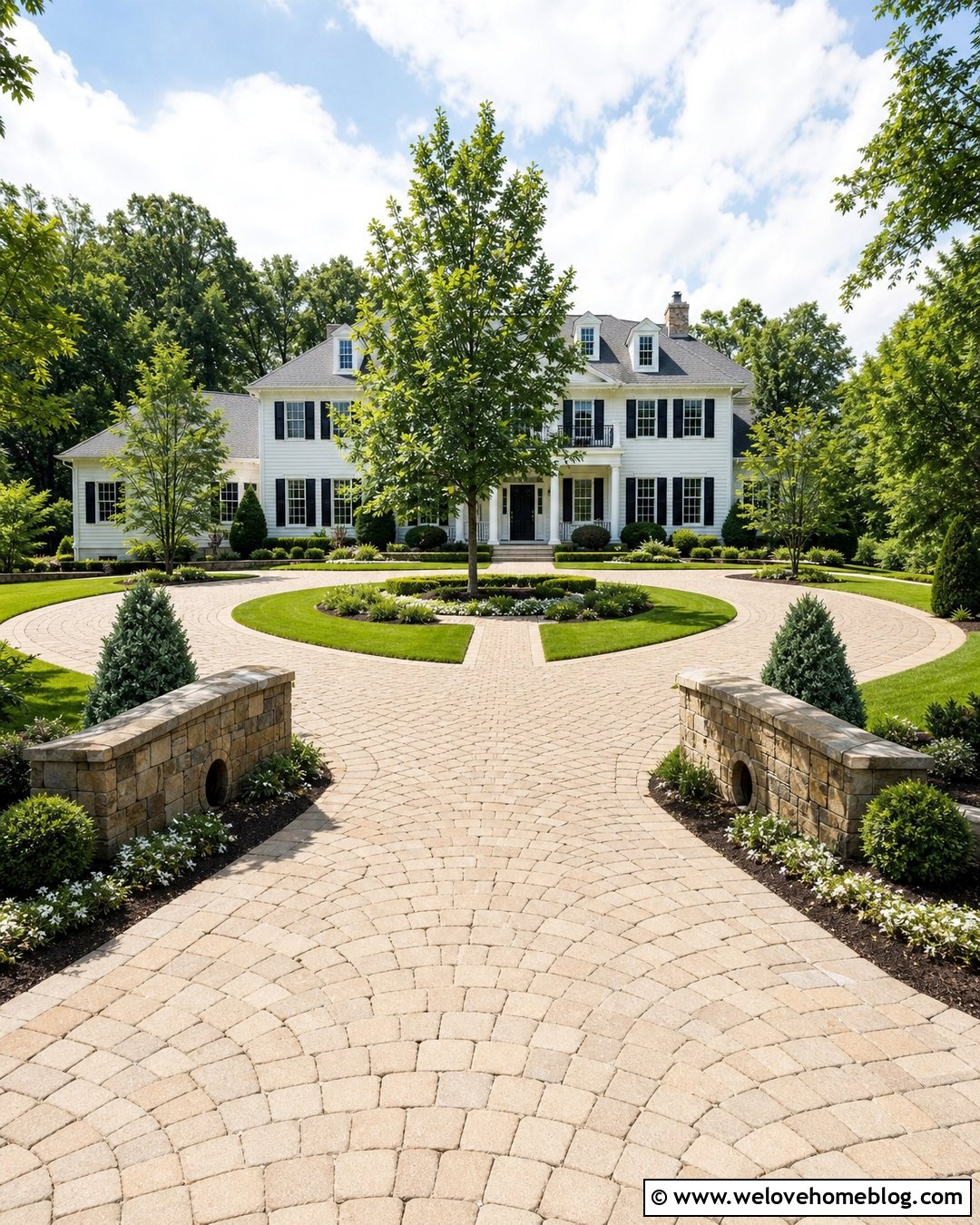
A circular driveway can cross one or two culverts depending on how its entrance and exit connect with the roadside ditch. Use warm-toned concrete pavers in a fan or running-bond pattern, with matching low stone wingwalls at each crossing. The two openings should share the same materials and landscaping so the facade remains balanced. Plant low evergreen masses and flowering ground cover on the upper banks, leaving clear zones around every pipe end. A central lawn island with a specimen tree can guide vehicles toward a large colonial or traditional home. Keep entrance signs and lights inside the property rather than crowding the ditch. Consistent paving, wall caps, and planting turn separate drainage crossings into one coordinated arrival sequence while preserving convenient vehicle circulation.
33. Driveway Culvert With Horseshoe Driveway
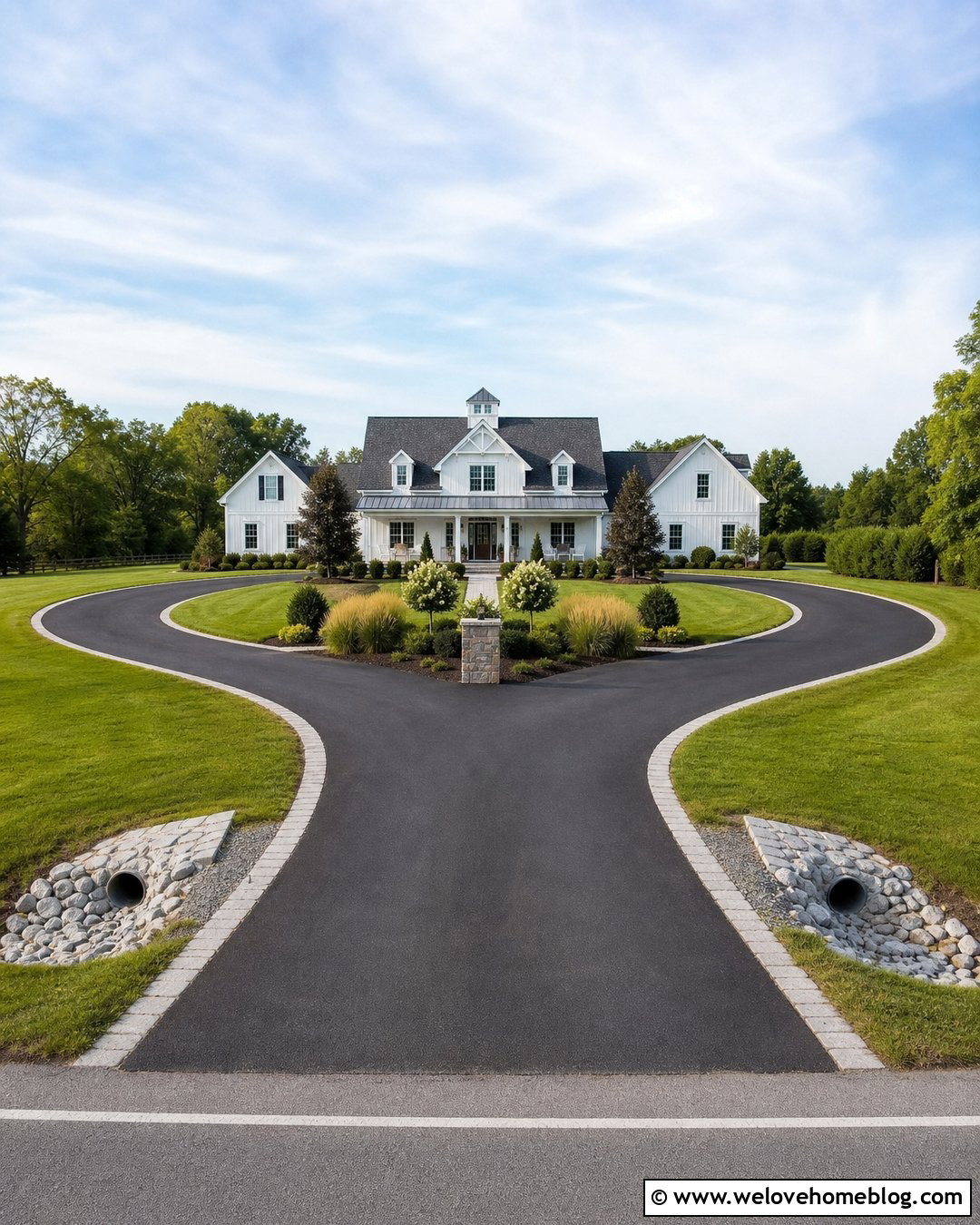
A horseshoe driveway offers a practical in-and-out route for a broad front yard, but each culvert crossing should feel visually connected. Choose dark asphalt for the driving surface and install light granite cobblestone borders along both flared aprons. Use matching sloped stone end treatments around the culverts, keeping them low and symmetrical. Broad lawn shoulders can meet beds of ornamental grasses and compact shrubs farther inside the property. Place address signage at the center between the two entrances, away from active drainage. A white farmhouse or wide ranch home works well behind the sweeping layout. Matching the width, edge treatment, and landscaping at both openings prevents one entrance from feeling secondary. Professional grading will also help direct runoff without creating puddles between the horseshoe drive and roadside ditch.
34. Driveway Culvert With Bridge Style Railings
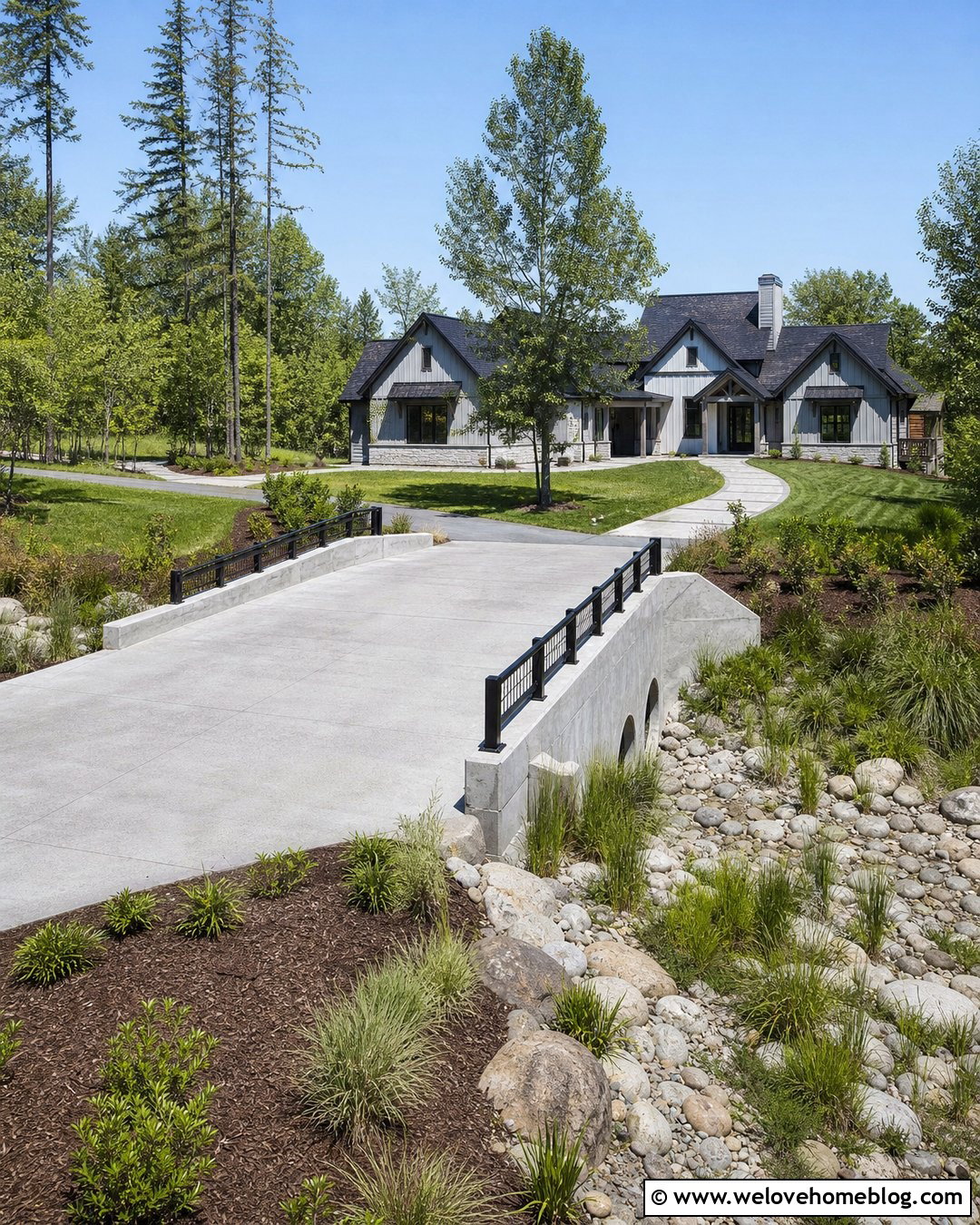
Bridge-style railings can highlight a long culvert crossing, although their placement and structural design require careful professional review. Pair weathered steel or black metal rails with a poured concrete driveway spanning a wide landscaped swale. Use reinforced concrete headwalls and wingwalls below, then keep the visible railing simple and open so it does not obscure the approach. Mixed river rock can line the channel, with native sedges and low shrubs planted above normal flow levels. A modern craftsman or contemporary country home creates a strong architectural backdrop. The railing color can repeat window frames and exterior lighting for consistency. This treatment is most suitable when the crossing genuinely functions like a short bridge, not when decorative rails would create unnecessary roadside obstacles around a small pipe.
35. Driveway Culvert With Stone Veneer Headwalls
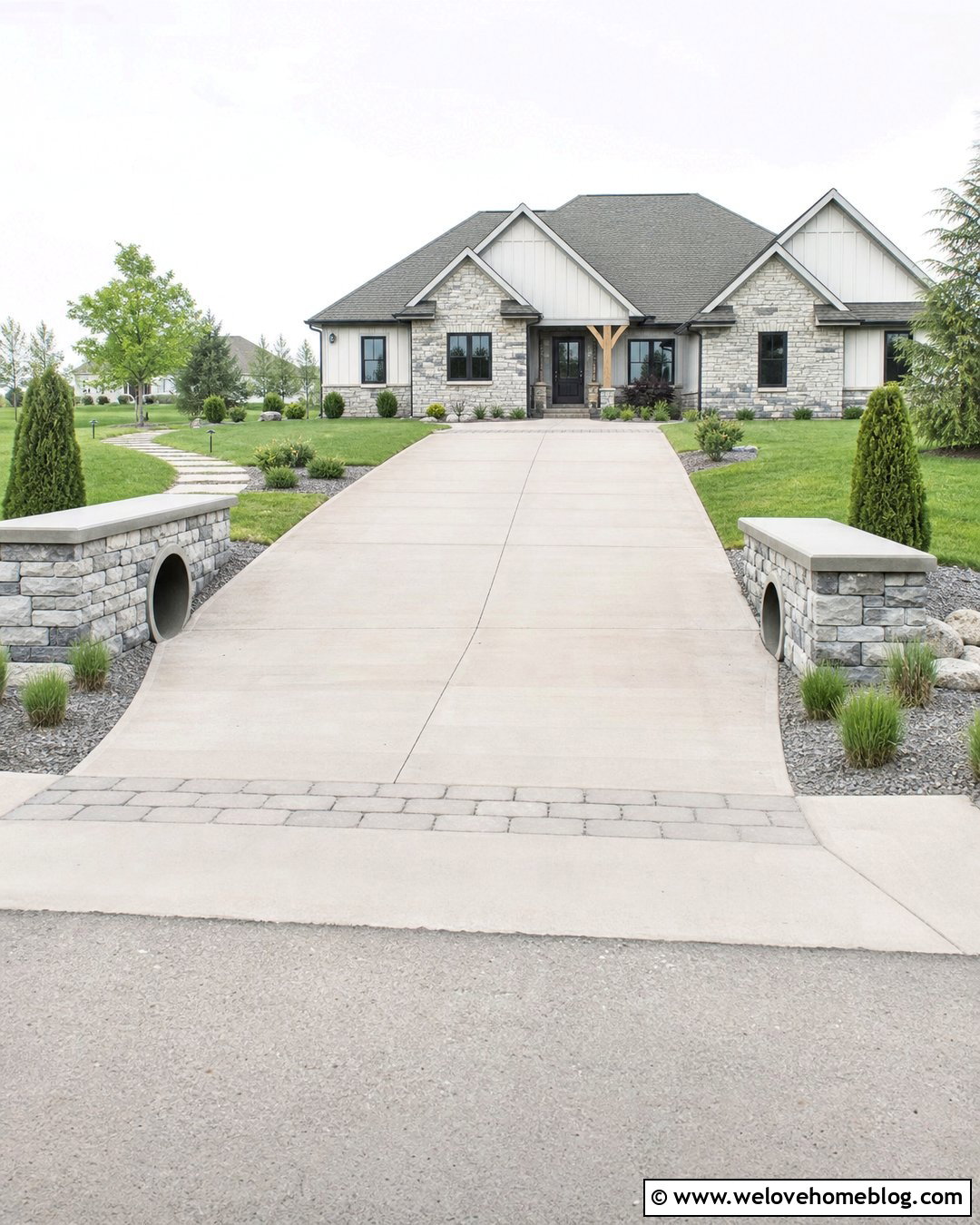
Stone veneer can provide the appearance of full-depth masonry while coordinating a culvert with the home’s exterior facade. Start with structurally appropriate concrete headwalls, then apply an exterior-rated veneer in gray ledgestone, warm fieldstone, or cream limestone. Pair the walls with a light concrete driveway bordered by a matching paver ribbon. A straight entrance leading to a transitional stone-and-siding home keeps the design orderly. Plant low grasses and compact evergreens behind the walls, using gravel mulch near the openings for easy cleanup. Capstones should shed water without projecting unnecessarily into the roadside area. The veneer must be installed for wet, exposed conditions and should never reduce the pipe opening. Repeating the same stone around the porch or walkway makes the complete property feel thoughtfully coordinated.
Conclusion:
The strongest 35 Driveway Culvert Ideas treat drainage, driveway construction, roadside safety, and landscaping as parts of one complete entrance. Stone headwalls can complement rural gravel drives, while concrete wingwalls and clean planting suit modern paved approaches. River rock, riprap, native grasses, and dry creek beds can visually organize drainage areas, provided they do not obstruct water or conceal damage. Before adding walls, columns, fences, railings, or plants, verify permits, utility locations, pipe capacity, safe setbacks, and maintenance access. Culvert end treatments affect both drainage performance and roadside safety, so professional guidance is valuable. () A coordinated plan will deliver better curb appeal without sacrificing reliable water movement.

Related posts:
Leave a Reply