
A well-designed driveway crossing should do more than cover a roadside ditch. It should move stormwater safely, protect the driveway from washouts, and complement the home’s curb appeal. The best **Driveways Culvert Drainage Ditch Ideas** combine a properly sized pipe with stable end treatments, erosion-resistant landscaping, and a driveway surface that suits the property. Culvert dimensions, pipe materials, grading, and right-of-way rules often vary by municipality, so the finished design should be reviewed by the local road or stormwater authority before construction. Headwalls, flared ends, swales, and outlet protection can also help preserve the culvert opening and surrounding soil. () Below are 20 practical Driveways Culvert Drainage Ditch Ideas for creating an attractive, functional entrance.

1. Gravel Driveway Culvert With River Rock Ditch
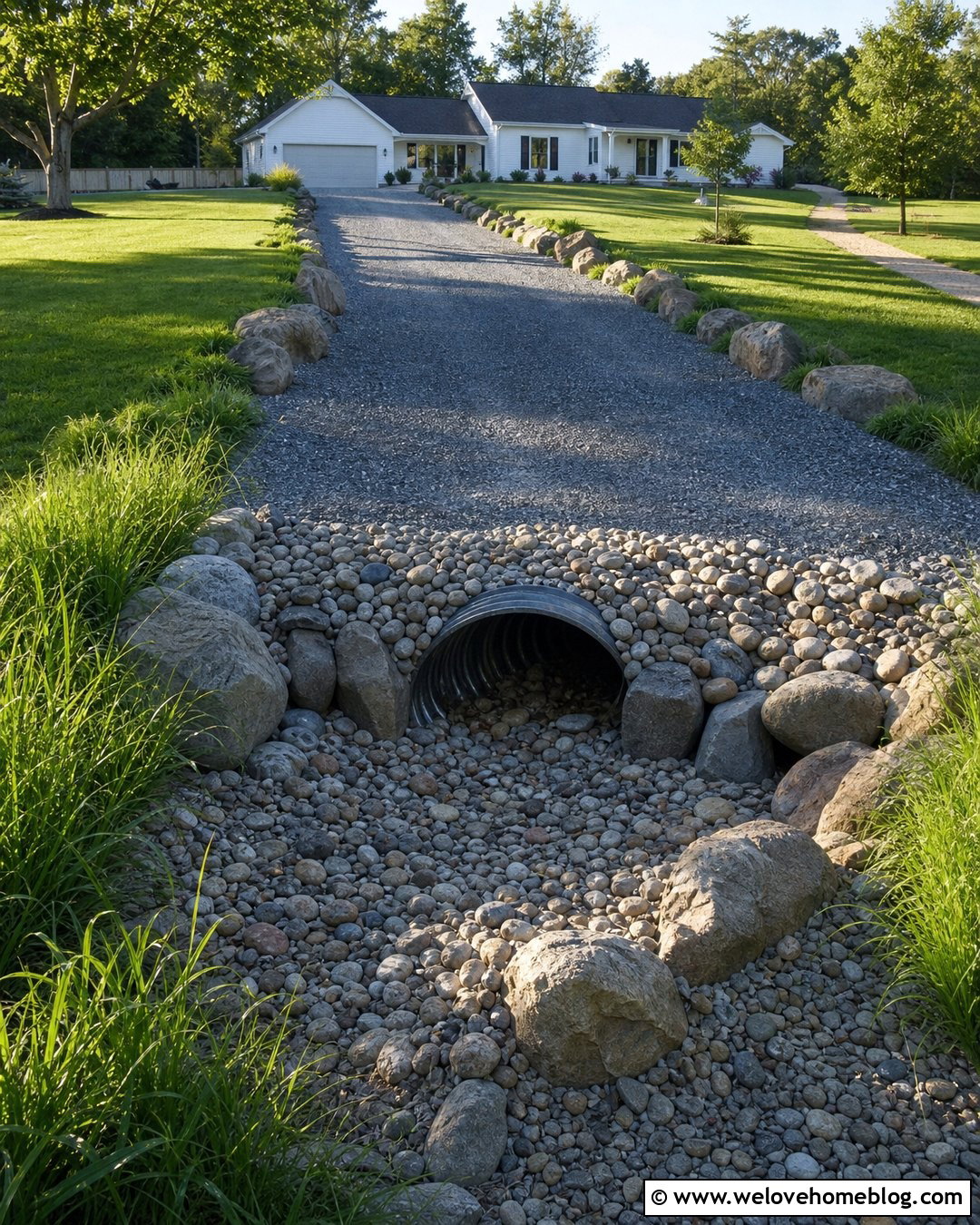
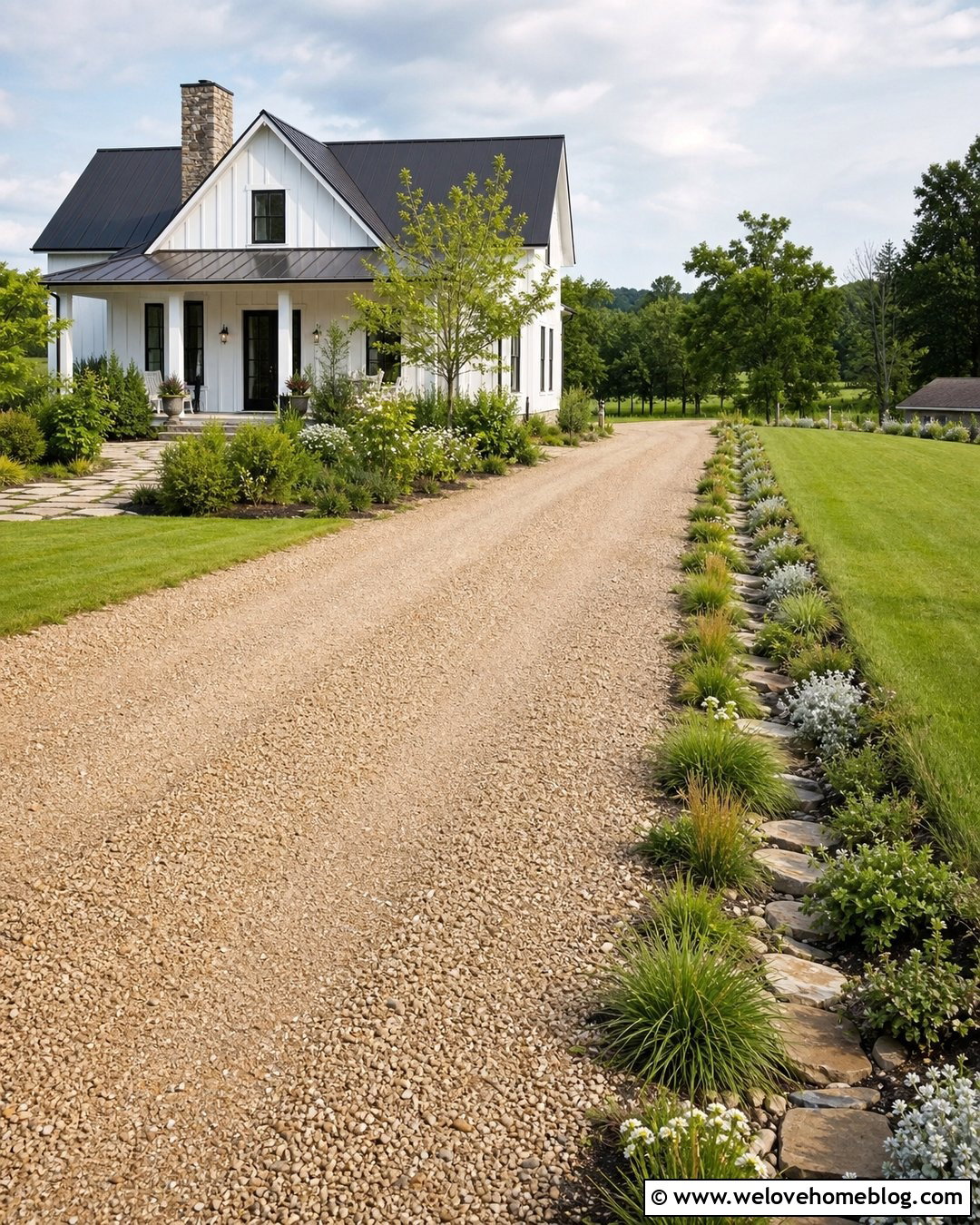
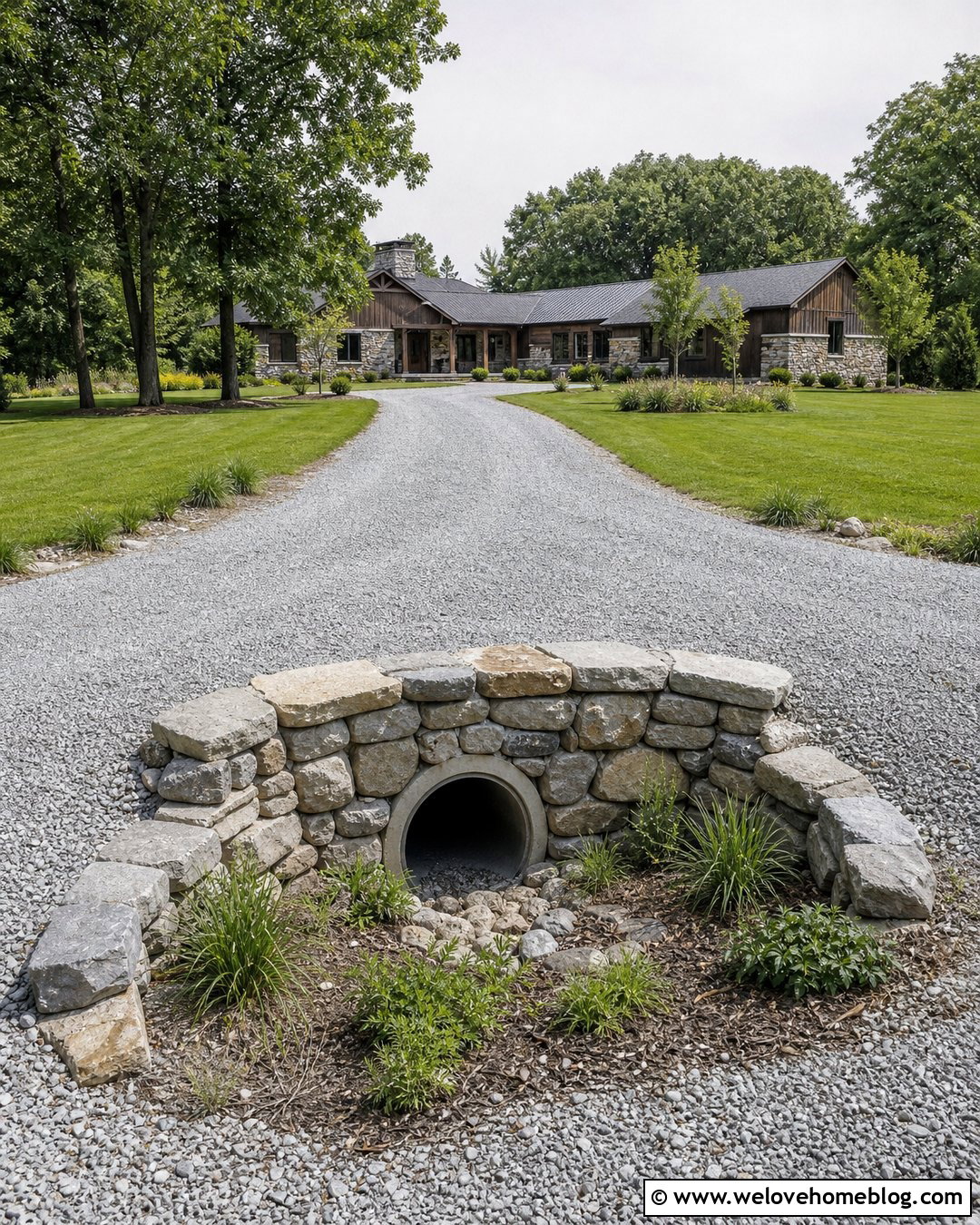
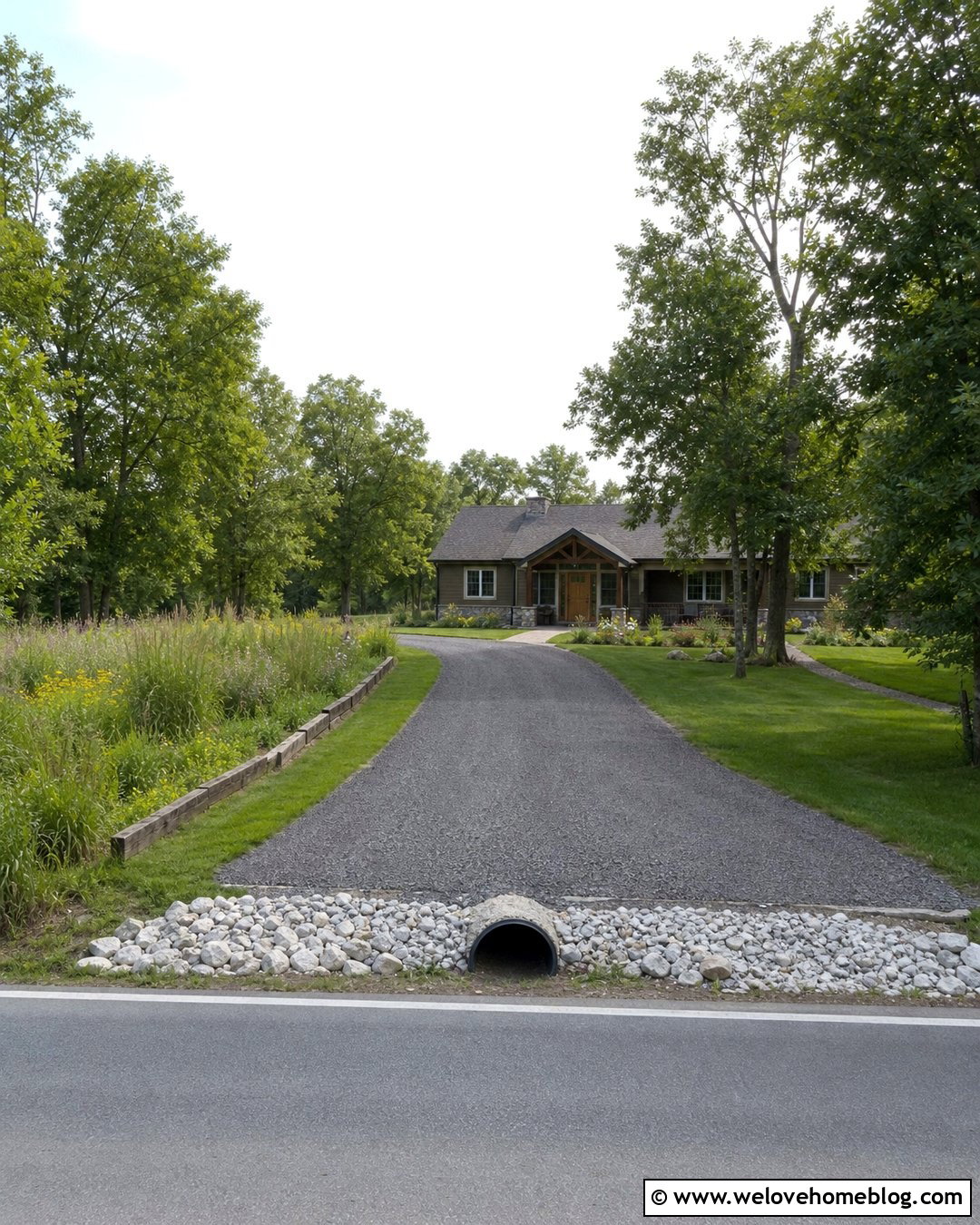
A gravel driveway and river rock ditch create a relaxed entrance that works especially well with ranch, farmhouse, and country homes. Use compacted gray crushed stone for the driving surface, then define both sides with larger natural fieldstones. Beneath the entrance, a properly graded culvert carries water through the roadside ditch without forcing it across the gravel. Rounded river rock can line the inlet and outlet areas, giving runoff a durable path while reducing exposed mud. Continue the rock along the ditch in a shallow, creek-like shape. Ornamental grasses and low shrubs can soften the upper banks without blocking water. Keep the culvert openings visible and accessible so leaves, branches, and sediment can be removed before major storms.
2. Concrete Driveway Culvert With Stone Headwalls

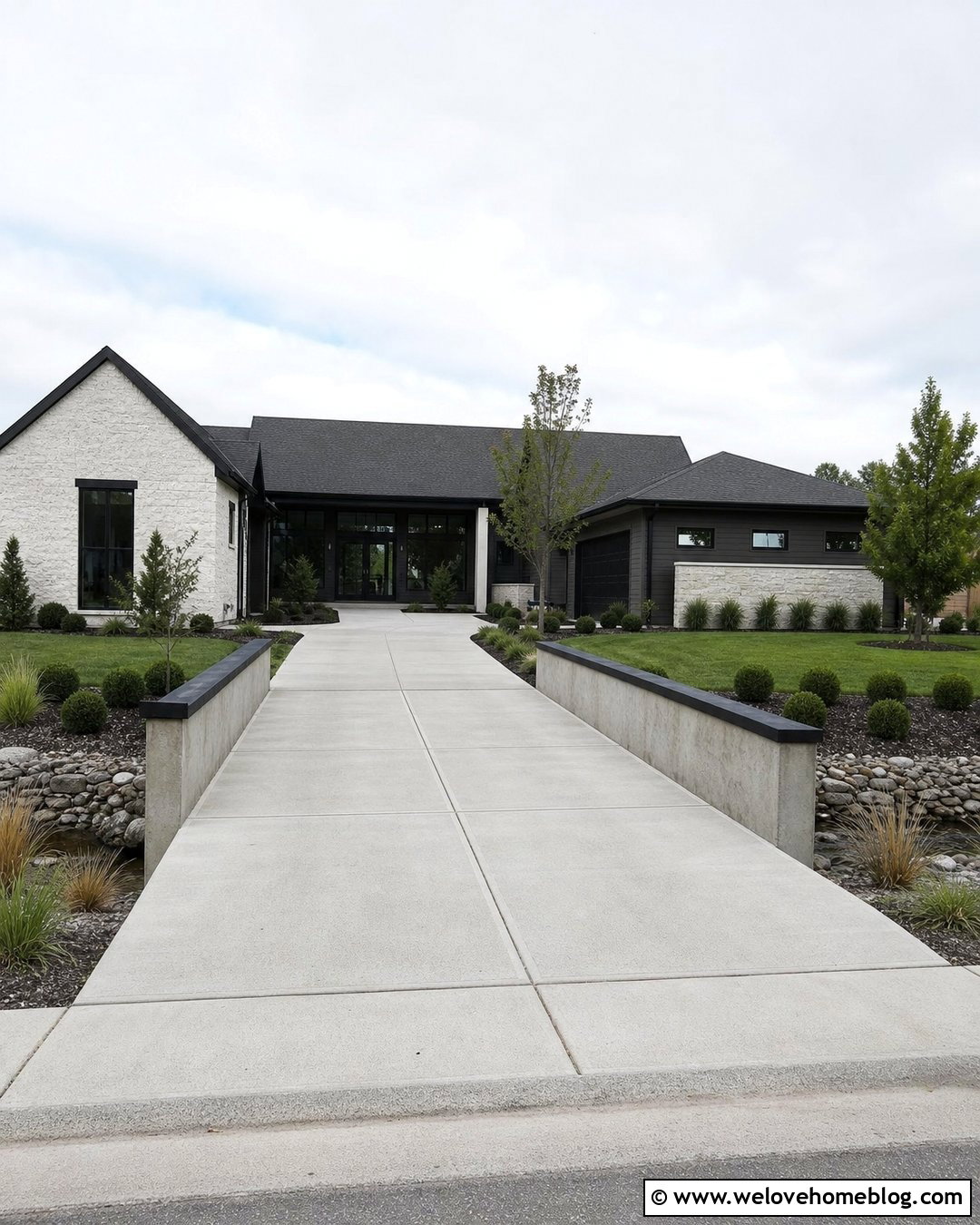
For a polished suburban entrance, pair a light gray poured concrete driveway with matching stone culvert headwalls. The concrete creates a smooth, low-maintenance approach, while the headwalls support the soil around both pipe openings and give the crossing a finished appearance. Choose locally sourced stone that relates to the home’s foundation, chimney, or front walkway. Low wing walls can extend gently into the ditch banks to visually anchor the entrance. Add neatly mowed grass along the shallow channel and plant compact evergreen shrubs farther from the flowing water. A subtle concrete apron at the road transition helps create a clean edge. Keep all masonry outside required clear zones and confirm that the headwalls will not reduce the culvert’s usable opening.
3. Asphalt Driveway Culvert With Riprap Drainage Ditch
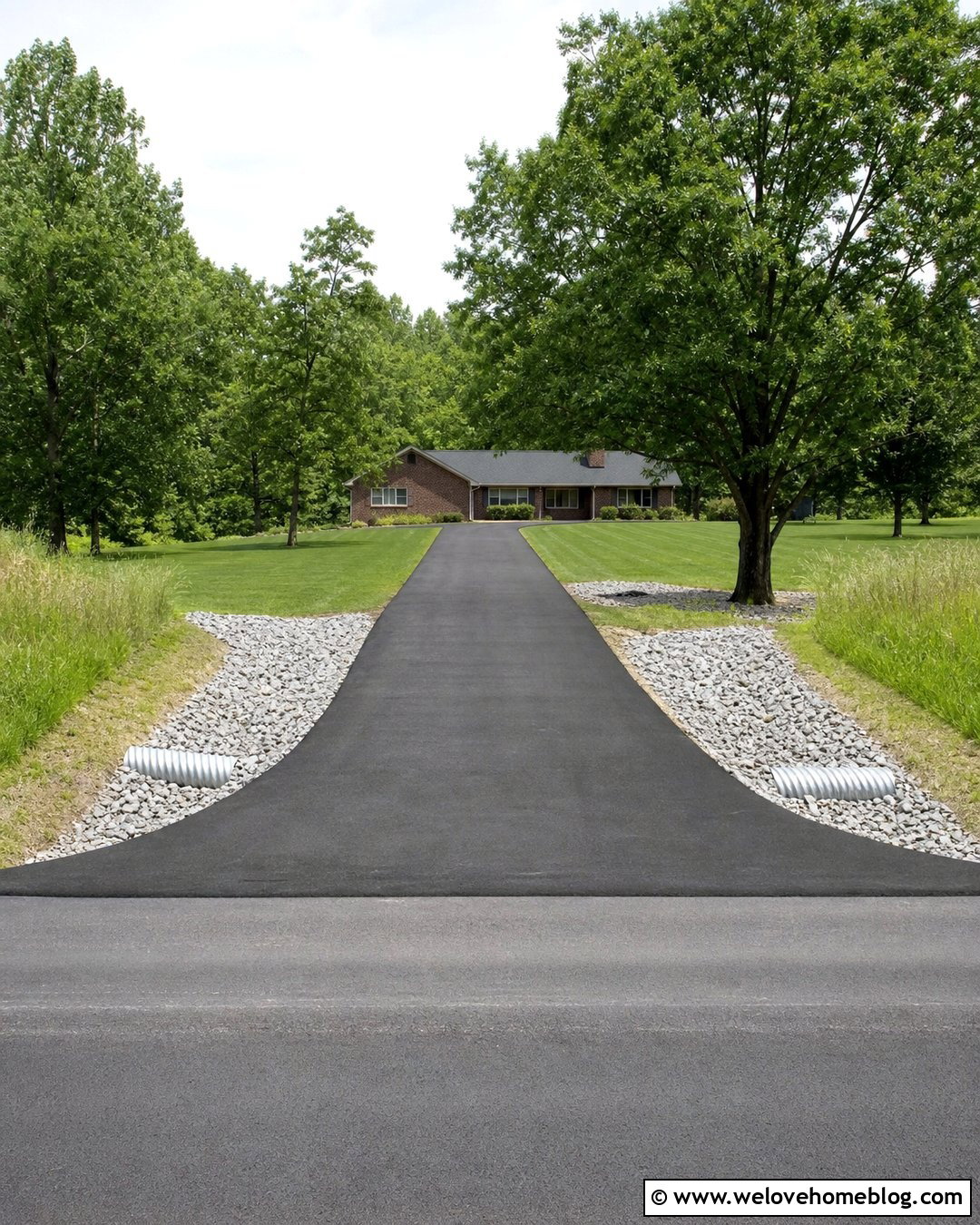
Black asphalt provides a crisp driving surface, but the surrounding ditch needs enough protection to prevent erosion near the entrance. A practical solution is to combine the asphalt driveway with a corrugated culvert and angular riprap around the inlet and outlet. Unlike smooth decorative pebbles, irregular riprap pieces lock together and better resist movement where runoff exits with force. Place the stone in a broad apron that follows the natural direction of water rather than creating a narrow pile at the pipe. A compacted gravel shoulder can provide a clean transition between the asphalt and stone. Beyond the riprap, use turf or erosion-control planting along the ditch banks. The contrasting black surface, gray rock, and green landscape create a tidy rural-suburban look.
4. Paver Driveway Culvert With Grassy Swale

Warm concrete pavers and a softly planted swale can make drainage feel like part of the landscape. Choose durable tan or gray pavers in a running-bond pattern, using a darker paver ribbon to mark the driveway edges. The entrance crosses a culvert hidden beneath the structural base, while a broad grass-lined swale continues on either side. A swale is generally shallower and more gently shaped than a steep ditch, allowing it to blend into the lawn. Keep its bottom slightly lower than the surrounding driveway edge so runoff has a clear route. Moisture-tolerant turf or dense native grasses can stabilize the soil. Where heavy flows are expected, add discreet stone protection near the culvert openings rather than relying on grass alone. ()
5. Brick Driveway Culvert With Brick Headwalls
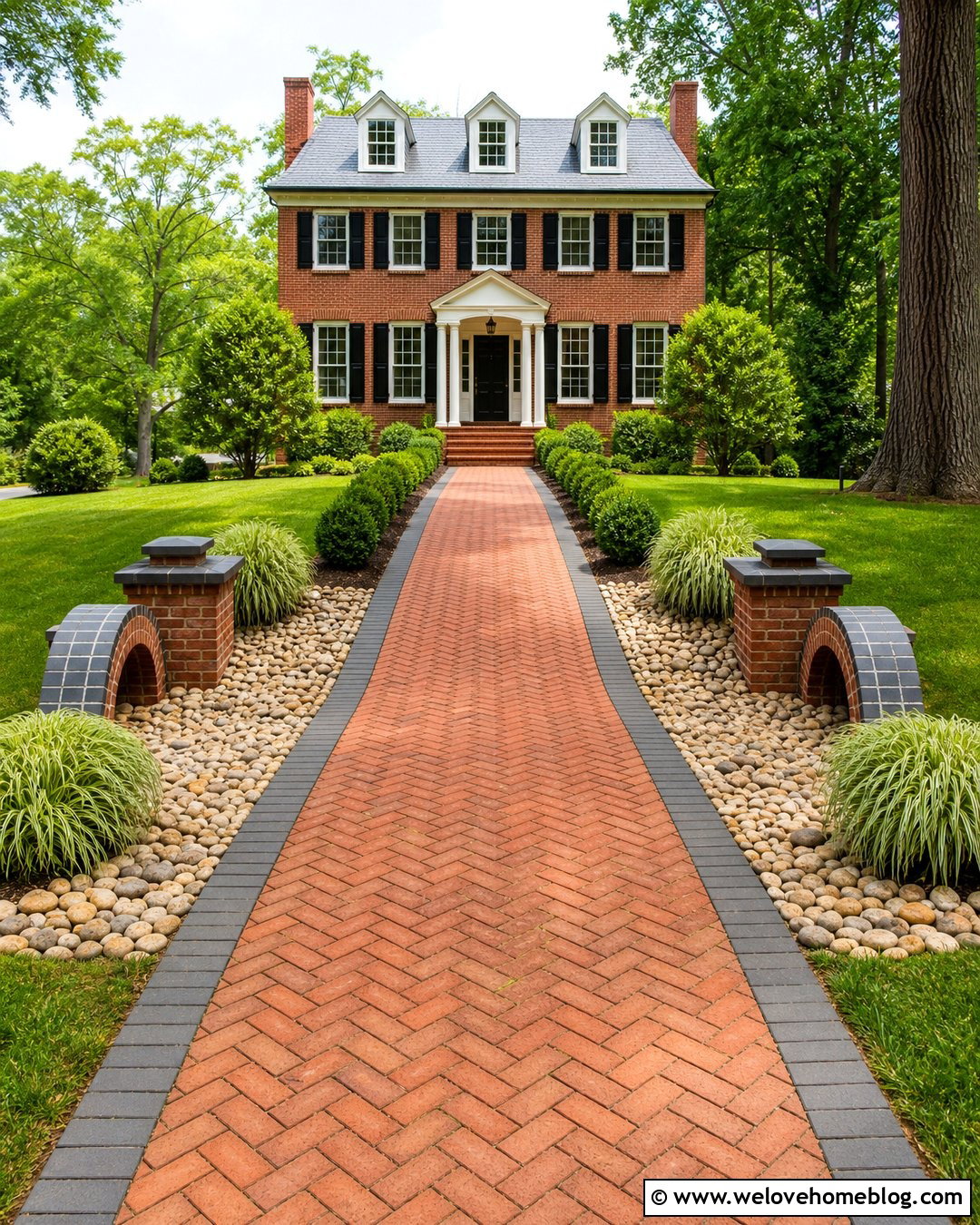
A red clay brick driveway can continue visually into low brick culvert headwalls for a cohesive traditional entrance. Lay the driveway bricks in a herringbone pattern to create texture and use charcoal soldier-course borders along the edges. At the roadside ditch, construct simple headwalls with capped tops that coordinate with the home’s brick facade. The masonry should frame the culvert without narrowing the opening or creating corners that trap debris. Natural river stone placed along the channel bottom provides a softer transition between the formal brickwork and the landscape. Boxwood, dwarf yaupon holly, or compact ornamental grasses can frame the upper banks. This complete design suits Colonial and Georgian-inspired homes, especially when the entrance walkway repeats the same brick color and border pattern.
6. Curved Gravel Driveway Culvert With Dry Creek Bed
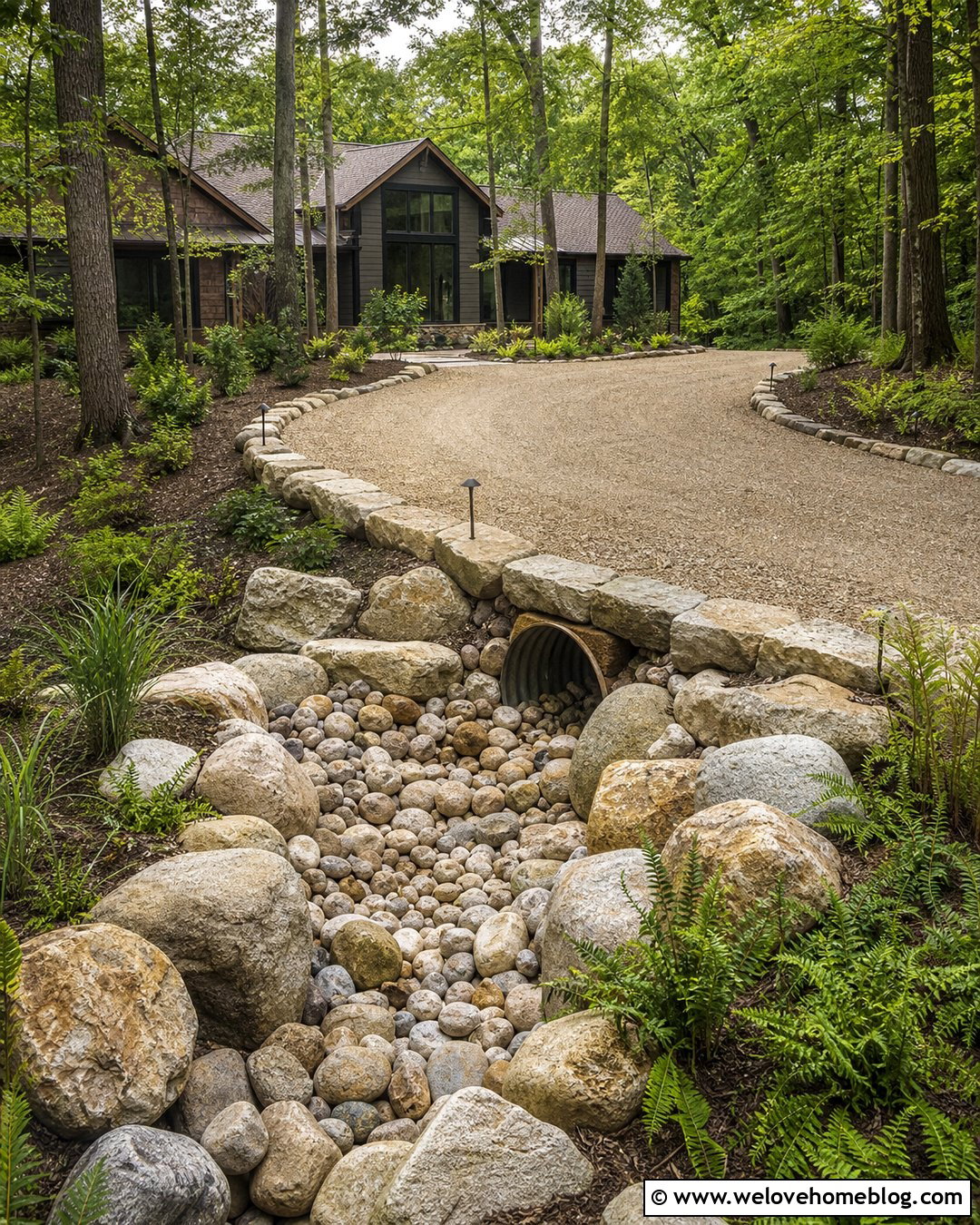
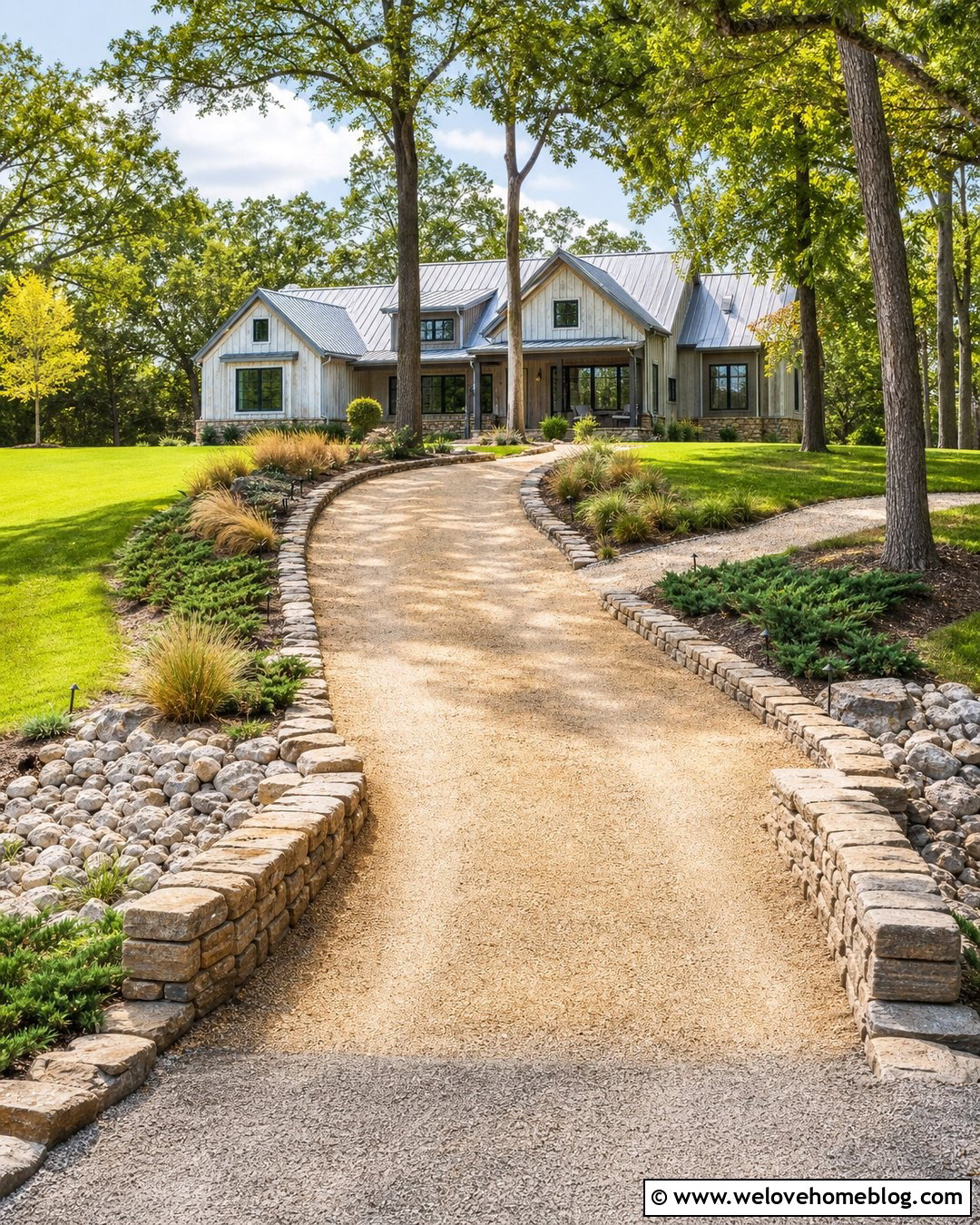
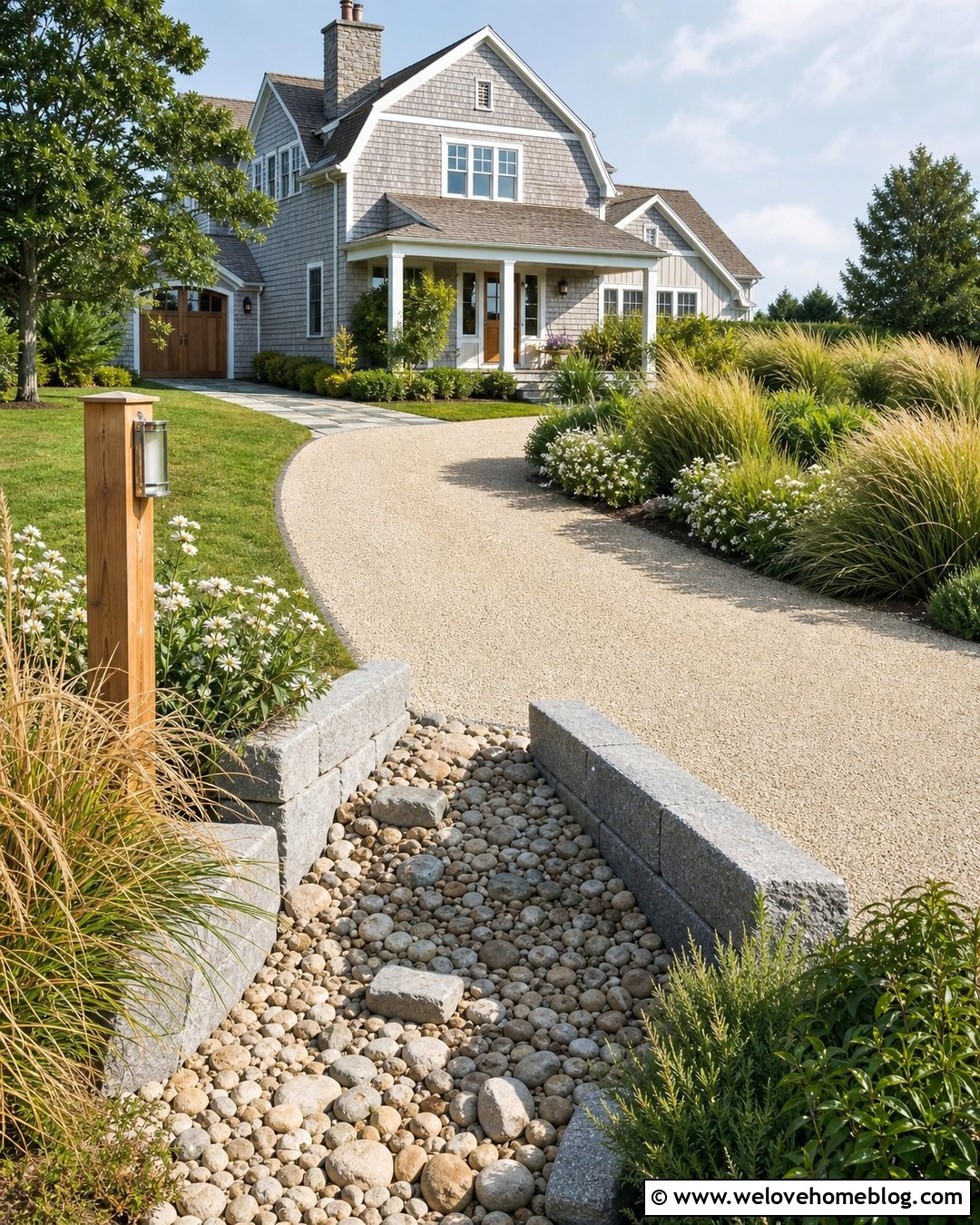
Picture a gently curved gravel driveway passing over a dry creek bed before winding toward a wooded home. This design uses compacted buff gravel, steel or stone edging, and a culvert positioned beneath the entrance crossing. Mixed river rock continues outward from both pipe ends, forming a natural-looking channel through the roadside landscape. Use larger boulders near the culvert openings and gradually reduce the stone size farther along the ditch. The variation makes the drainage feature appear more organic while helping protect vulnerable soil. Plant sedges, rushes, ferns, and moisture-tolerant native grasses above the main flow line. The driveway curve should remain broad enough for comfortable vehicle movement. Regularly remove leaves from the creek bed so water can reach the culvert freely.
7. Concrete Driveway Culvert With Flared End Sections
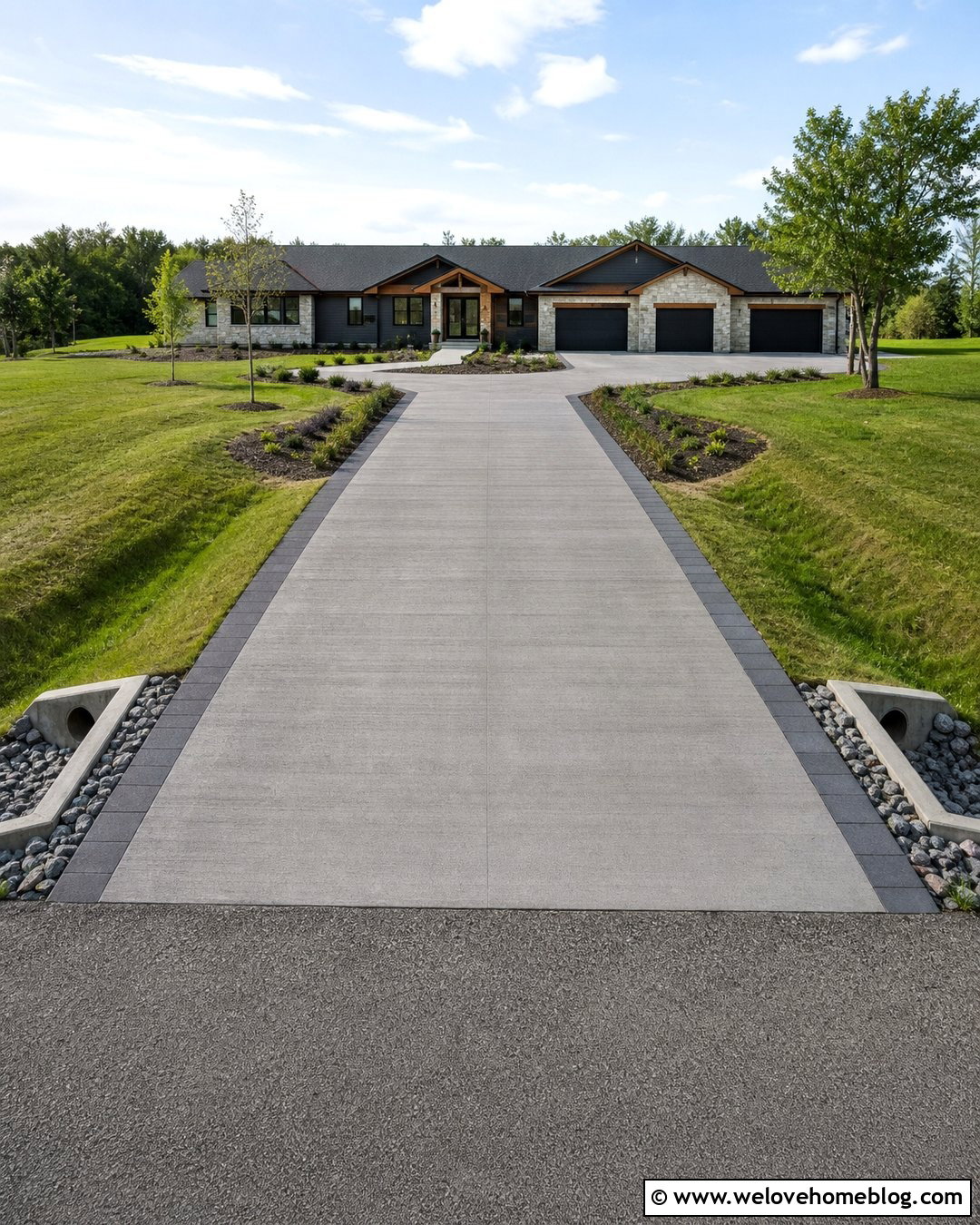
Flared culvert ends create a clean, functional solution for a straight concrete driveway crossing a wide roadside channel. Their tapered shape helps transition water between the open ditch and the pipe while producing a more finished appearance than an exposed pipe end. Use medium-gray brushed concrete for the driveway and coordinate it with precast concrete end sections. A narrow border of dark concrete pavers can define the driving area and keep the overall look from appearing too utilitarian. Line the channel near each end section with angular drainage stone, then transition to neatly maintained turf. Low ground cover can be planted along the upper slopes, provided it does not interfere with inspection. This streamlined arrangement pairs particularly well with modern ranch and contemporary suburban homes.
8. Farmhouse Driveway Culvert With Fieldstone Ditch
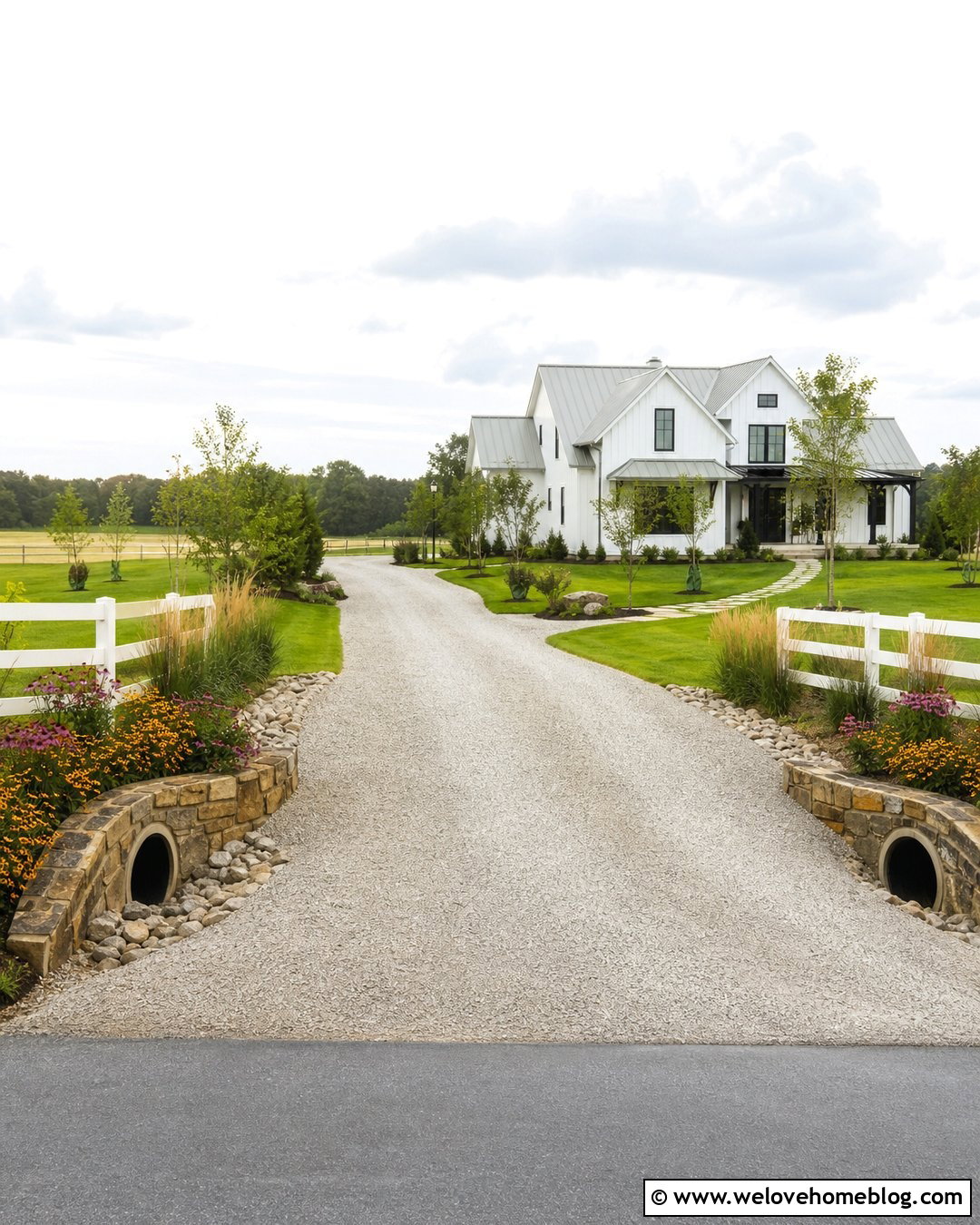
A farmhouse entrance feels more established when its practical drainage components use natural materials. Begin with a broad crushed-limestone driveway that crosses the ditch over a suitably engineered culvert. Build low fieldstone end walls around the pipe openings, using irregular tan and gray stones that match the home’s foundation or garden walls. Continue loose fieldstone and coarse gravel along the ditch bottom to form a durable channel. On the upper banks, plant switchgrass, black-eyed Susans, coneflowers, and other regionally appropriate plants that can tolerate occasional moisture. A white split-rail fence can stop before the drainage area and resume beyond it, keeping the opening uncluttered. The result is informal and welcoming, yet the defined channel still makes maintenance and debris removal straightforward.
9. Modern Driveway Culvert With Concrete Channel

A modern home calls for drainage lines that feel deliberate rather than hidden. Use large-format charcoal concrete pavers for the driveway and carry the entrance over a boxy concrete culvert or round pipe with minimalist concrete headwalls. On both sides, shape the ditch as a smooth, shallow concrete channel bordered by strips of gravel and clipped ornamental grasses. This creates a precise visual connection between the road, driveway, and angular architecture of the house. The concrete channel can be useful where fast runoff or easily eroded soil makes a planted ditch difficult to maintain. However, the outlet still needs appropriate energy control so concentrated water does not damage the downstream landscape. Add a stepping-stone walkway beside the driveway and repeat the same dark gravel in nearby foundation beds.
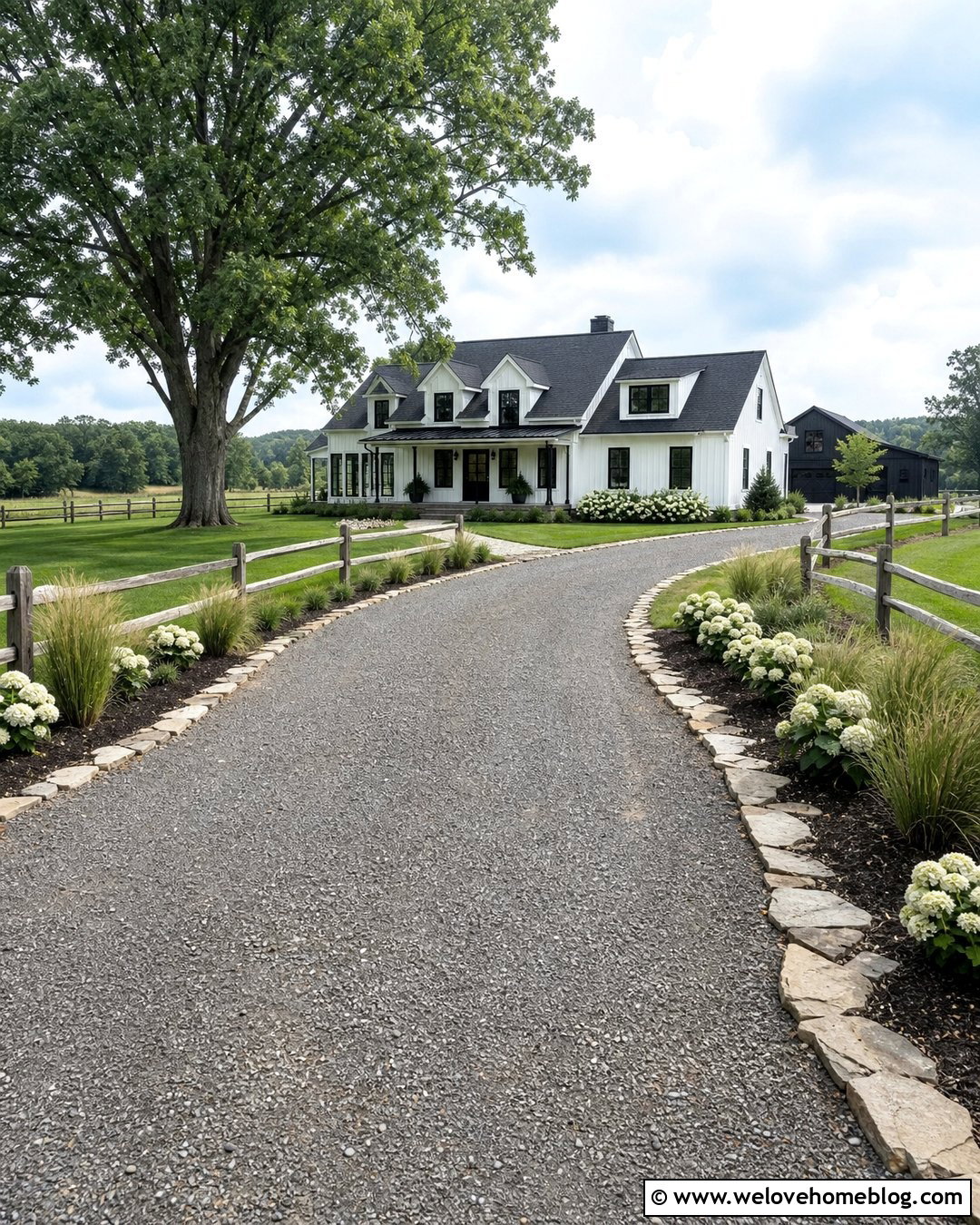

10. Cobblestone Driveway Culvert With Natural Stone Banks
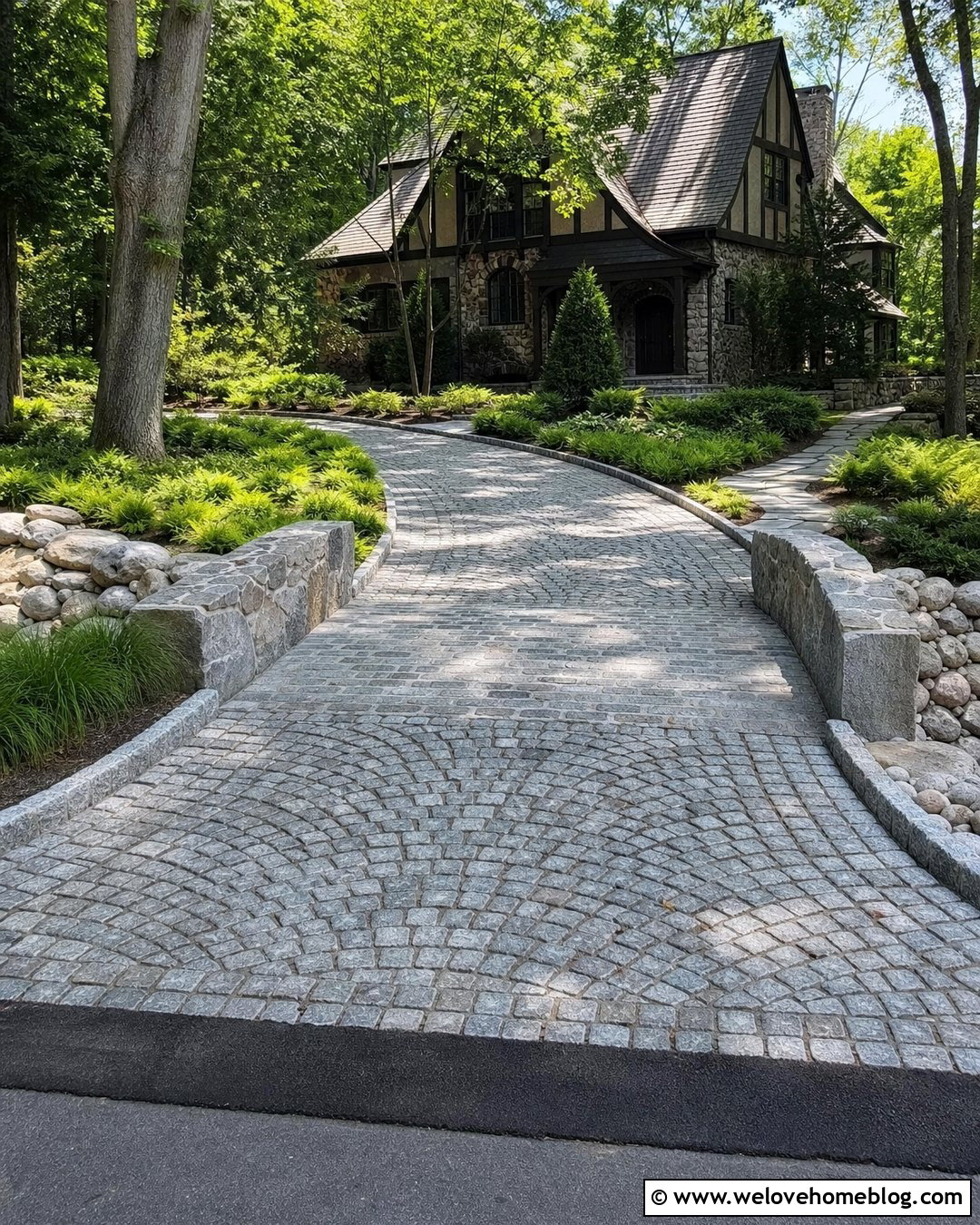
Cobblestone gives a driveway entrance substantial texture and works beautifully with a natural stone drainage crossing. Use gray granite cobbles in a fan or running-bond pattern, bordered by larger rectangular setts. Beneath the entrance, the culvert should align with the existing ditch so water does not need to make a sharp turn before entering the pipe. Stack weathered stone along the banks as low, sloping walls instead of creating tall vertical faces. A river rock channel can connect the inlet and outlet to the surrounding ditch. Ferns, creeping ground cover, and shade-tolerant grasses will soften the stones around a wooded property. Because cobblestone has many joints, the driveway base and edge restraints must be built carefully to prevent settlement near the buried culvert.
11. Circular Driveway Culvert With Landscaped Ditch
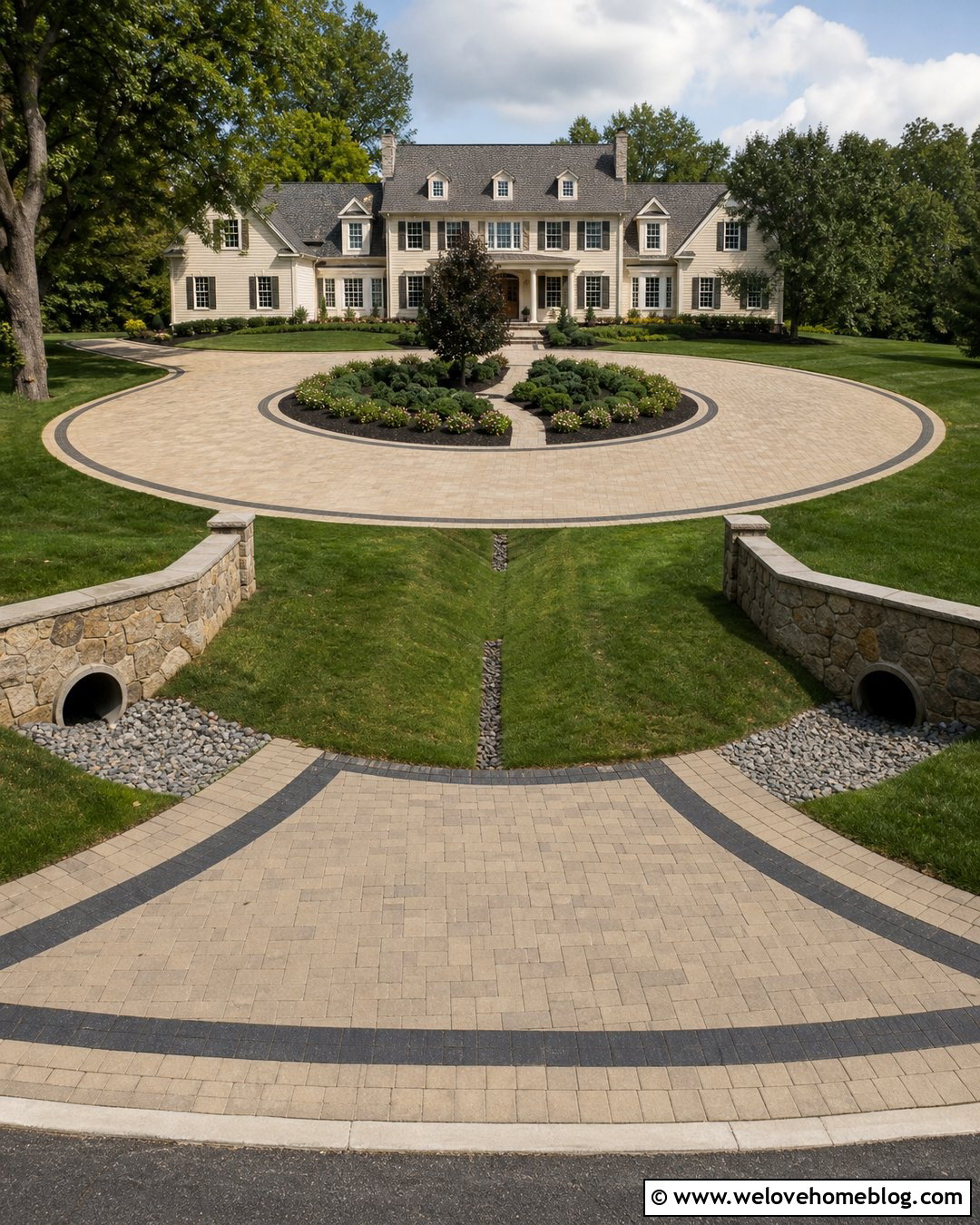
A circular driveway often requires two separate ditch crossings, making coordinated culverts essential to the overall entrance. Use warm beige concrete pavers for both driveway openings and define each crossing with matching stone headwalls. Between the entrances, maintain a continuous grassy swale or stone-lined ditch so runoff can travel without being trapped by the central island. The island can feature a small ornamental tree, low evergreen shrubs, and seasonal flowers, but planting should remain clear of the drainage channel. Repeat the same paver border and stonework at both culverts to create symmetry. If the driveway lies on sloping land, the upstream crossing may experience different flow conditions than the downstream crossing. Each pipe should therefore be evaluated according to its actual location rather than automatically using identical dimensions.
12. Resin-Bound Driveway Culvert With Planted Swale
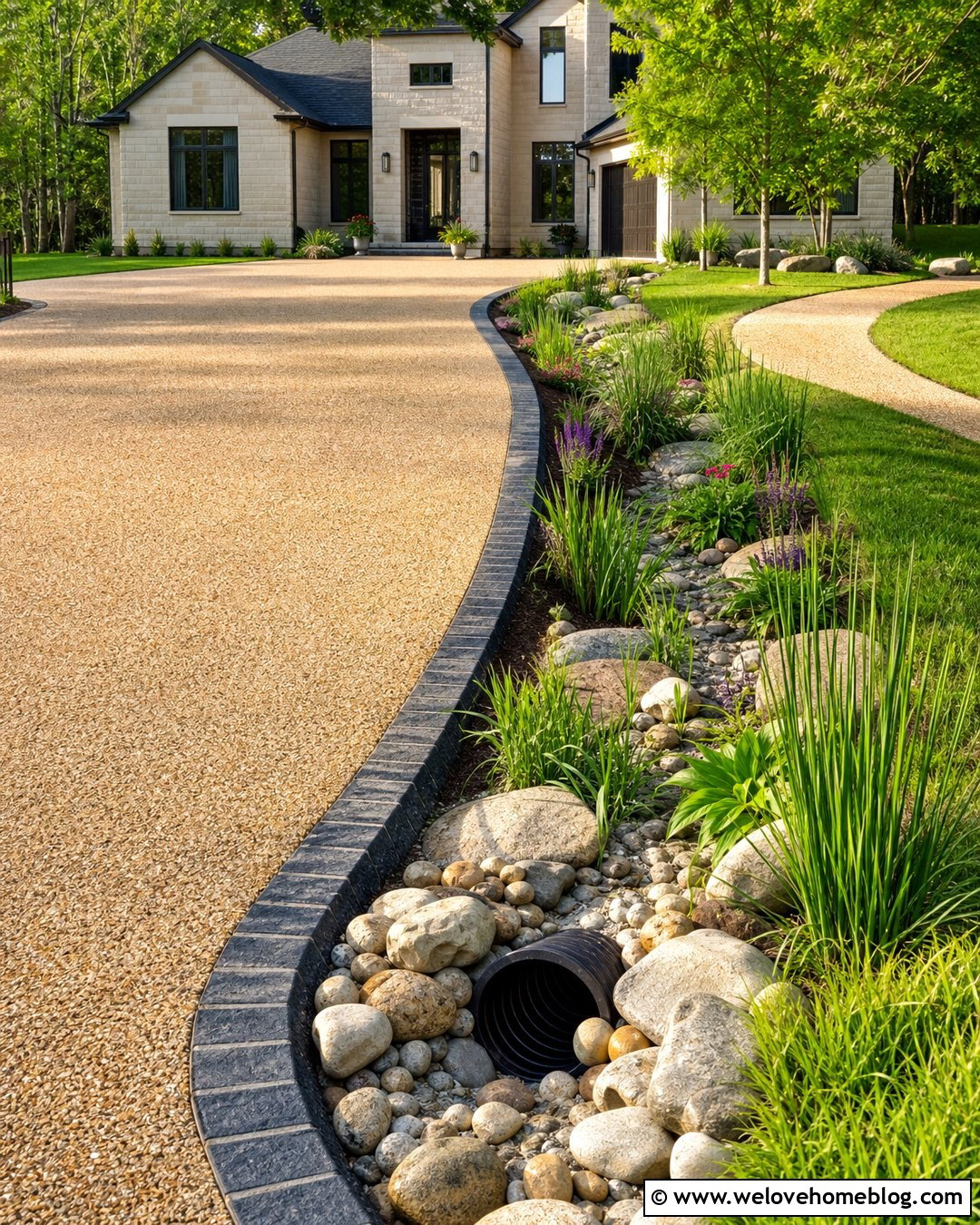
A honey-toned resin-bound gravel driveway offers a smooth, refined surface that pairs naturally with a planted drainage swale. Shape the driveway as a gentle curve over the culvert and use dark granite setts around the entrance edges. Instead of a sharply excavated ditch, create broad, shallow banks planted with sedges, rushes, blue flag iris where appropriate, and moisture-tolerant grasses suited to the local climate. Place rounded drainage stone near the pipe ends to reduce bare soil and visually connect the swale with the driveway’s aggregate finish. The planting should slow and filter shallow runoff without forming a dense barrier in the main water path. Since soil conditions influence how quickly a swale drains, evaluate the site before selecting plants or assuming that all collected water will infiltrate. ()
13. Steep Driveway Culvert With Riprap Outlet
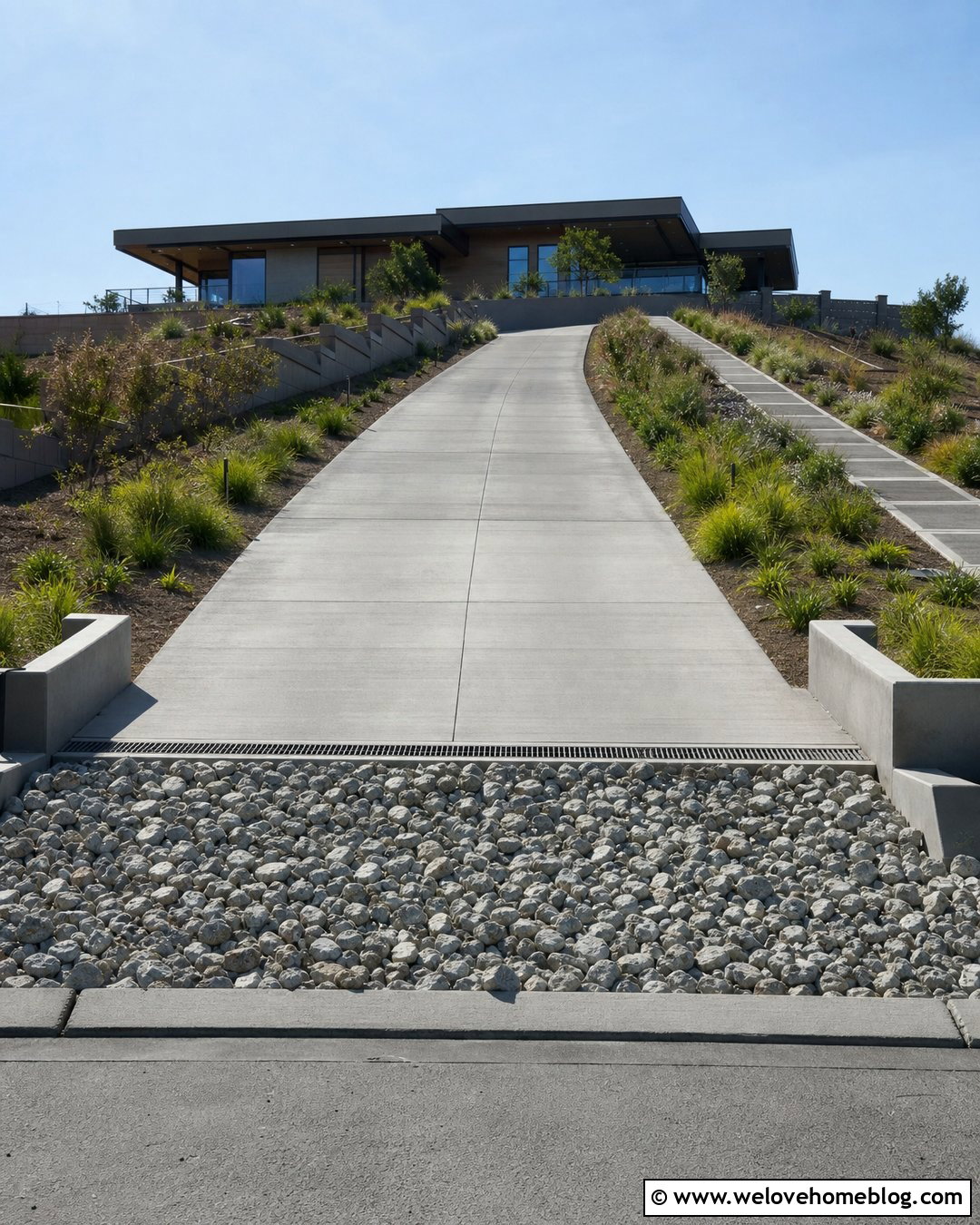
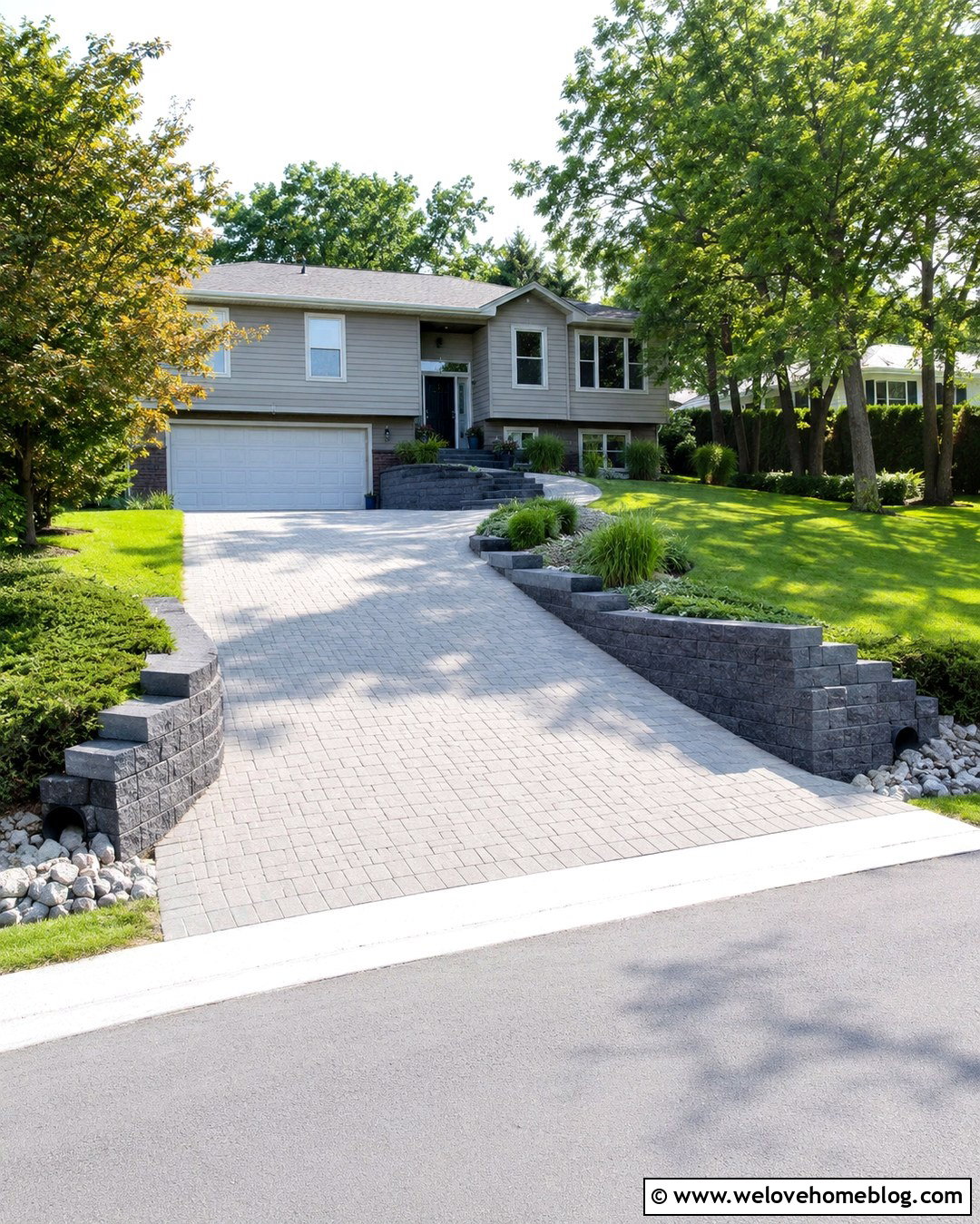
When a driveway slopes sharply toward the road, water management should begin above the culvert crossing. Use textured poured concrete with a broom finish for traction, plus a cross-driveway trench drain near the lower end to intercept runoff. Direct that water toward a stable ditch or approved drainage connection rather than allowing it to rush onto the road. The roadside culvert can be framed with concrete end sections, while a broad riprap apron protects the downhill outlet from concentrated flow. Add terraced planting beds along the driveway, using retaining walls to keep loose soil away from the drainage route. Deep-rooted grasses and low shrubs can stabilize the banks. This layered arrangement addresses runoff from both the roadside ditch and the steep driveway surface, creating a safer and more durable entrance.
14. Long Gravel Driveway Culvert With Grass Ditch
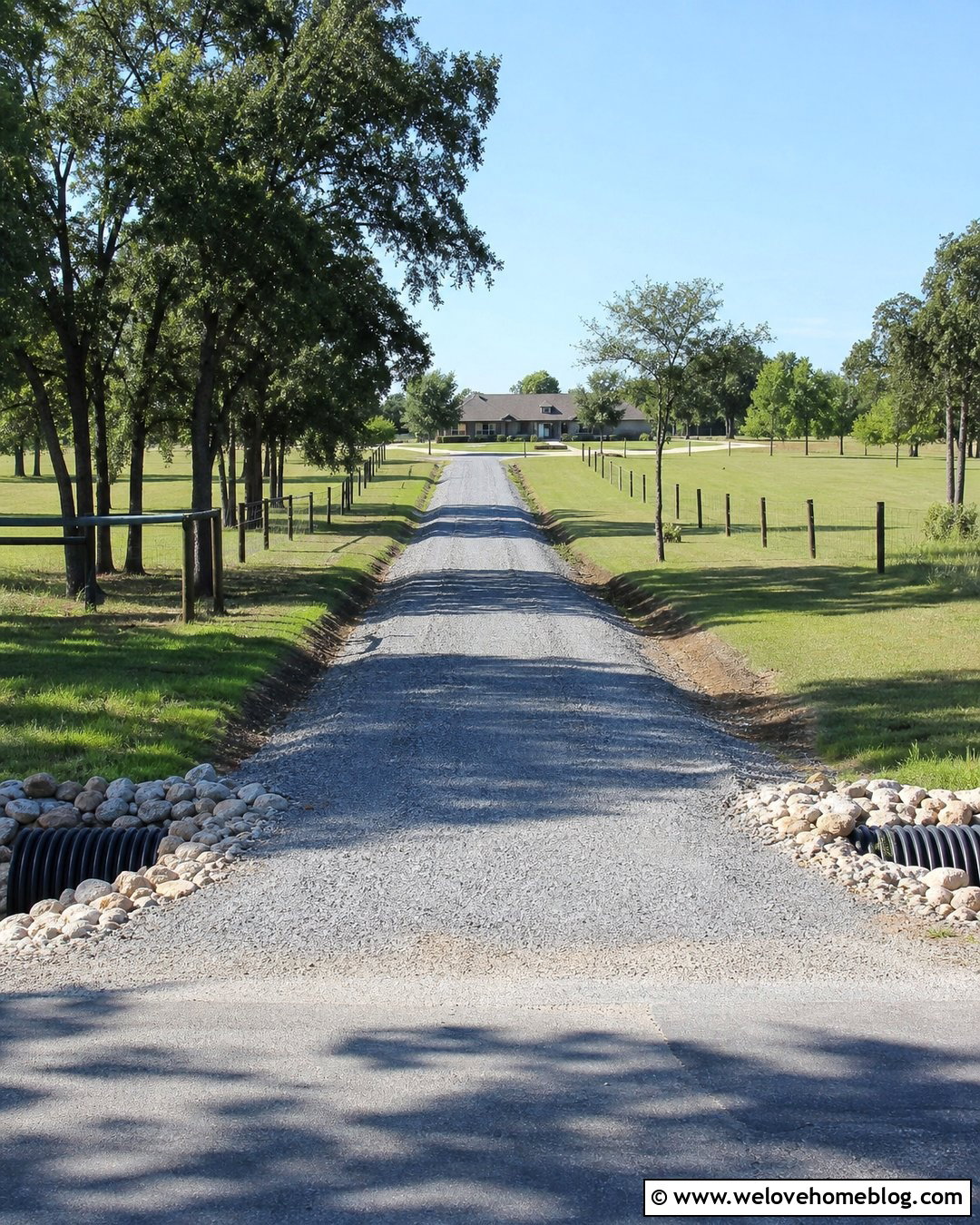
A long gravel approach needs simple drainage features that remain easy to inspect and repair. At the roadside entrance, carry the driveway over a corrugated metal, concrete, or approved plastic culvert using a deep compacted aggregate base. Continue shallow grass ditches along one or both sides of the driveway to collect runoff before it cuts channels through the gravel surface. The ditches should lead water toward a stable outlet rather than ending in low spots beside the drive. Use larger crushed stone on the driving surface, then top it with a tightly graded finish layer for a smoother appearance. Timber posts, native shade trees, and broad lawn areas can frame the route without crowding the channels. Periodic grading will help preserve the driveway crown and keep water moving toward the edges.



15. Driveway Culvert With Gabion Headwalls
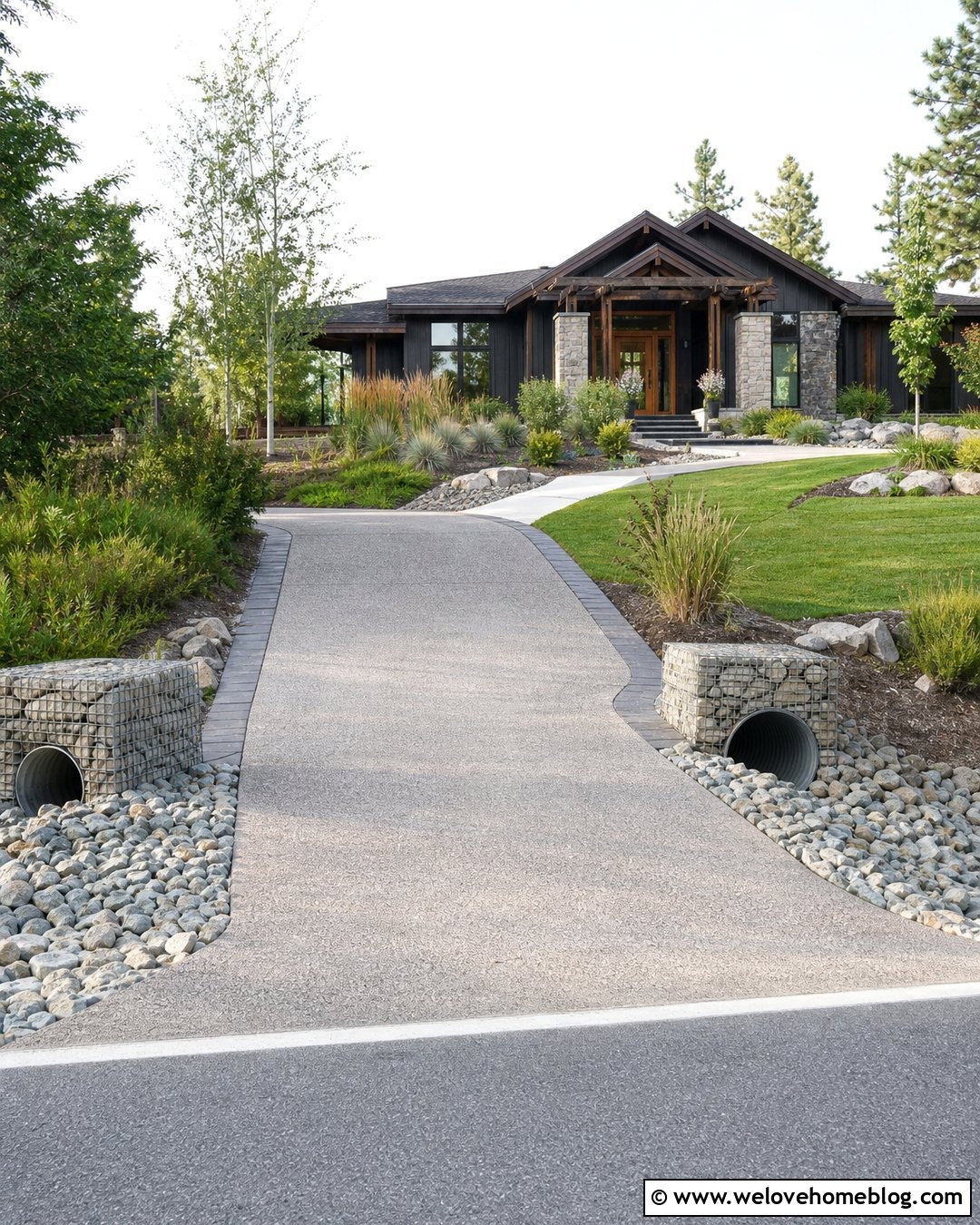
Gabion baskets offer a strong, textured look for properties with broad ditches or rustic contemporary architecture. Fill galvanized wire baskets with angular stone that coordinates with the driveway aggregate and nearby retaining walls. Position the gabions as engineered headwalls or sloped wing walls around the culvert ends, leaving the entire water opening clear. Above the crossing, use exposed-aggregate concrete for the driveway and a dark paver ribbon at the road transition. Extend matching rock into the ditch as an erosion-resistant apron, then soften the upper banks with native grasses and low spreading shrubs. Gabions can visually handle substantial changes in grade without appearing as formal as solid concrete walls. Their placement, foundation, wire specification, and relationship to the pipe should still be professionally designed for the expected water and soil conditions.
16. Driveway Culvert With Timber Edging And Rock Ditch
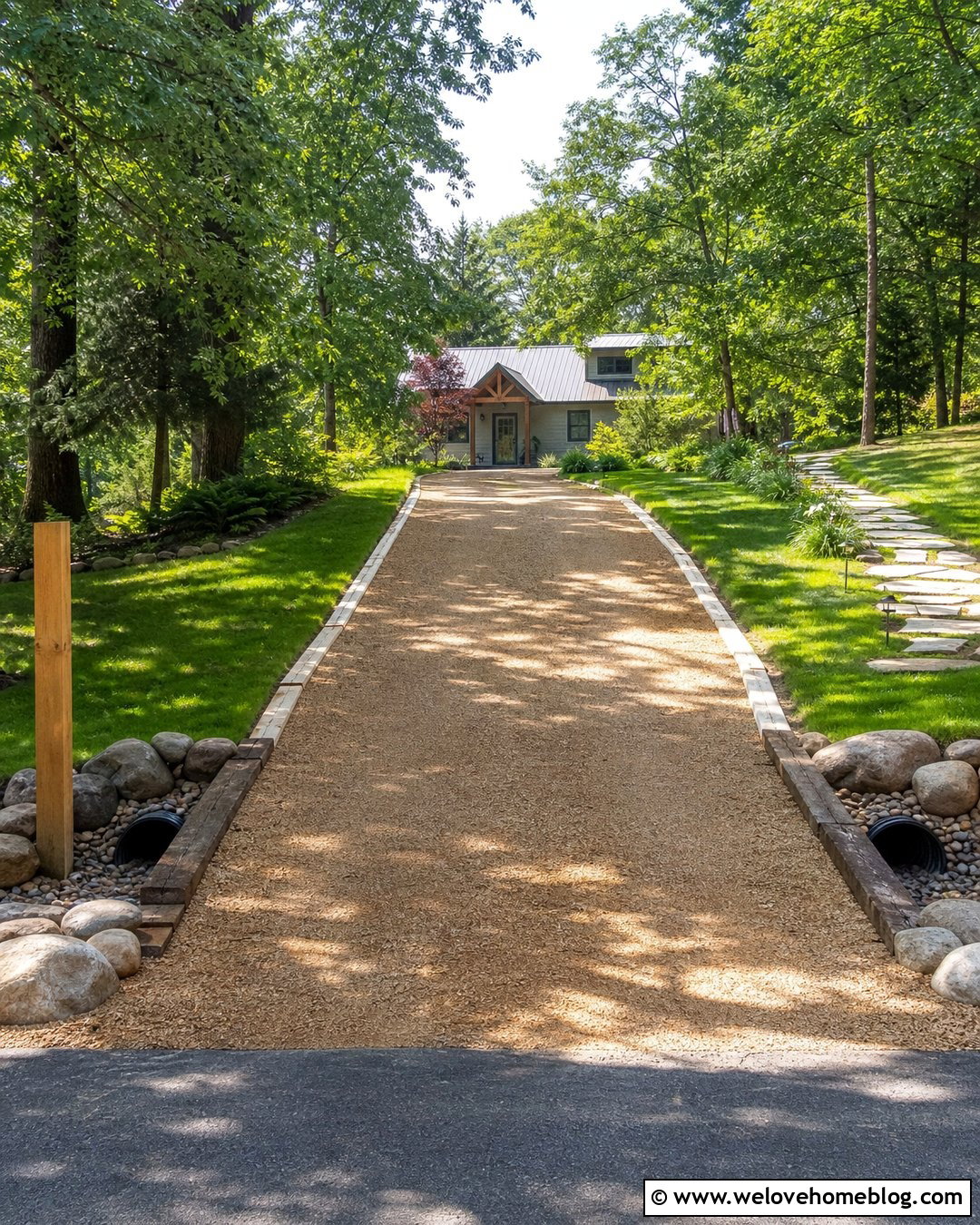
A compact rural driveway can combine crushed gravel, heavy timber edging, and a narrow rock-lined ditch. Use pressure-treated or naturally durable timbers along the upper driveway edges, stopping them well before the culvert openings so they cannot restrict drainage. The entrance crossing should have a stable aggregate base over the pipe, with enough width for vehicles to turn in without breaking down the shoulders. Line the visible ditch with medium river rock over an appropriate separation layer, adding larger stones around the inlet and outlet. Native grasses can fill the banks above the rock, while a simple wood mailbox or address marker complements the edging. This economical look is best for gently sloping properties where the ditch can remain shallow, accessible, and easy to clear by hand.
17. Driveway Culvert With Catch Basin And Trench Drain
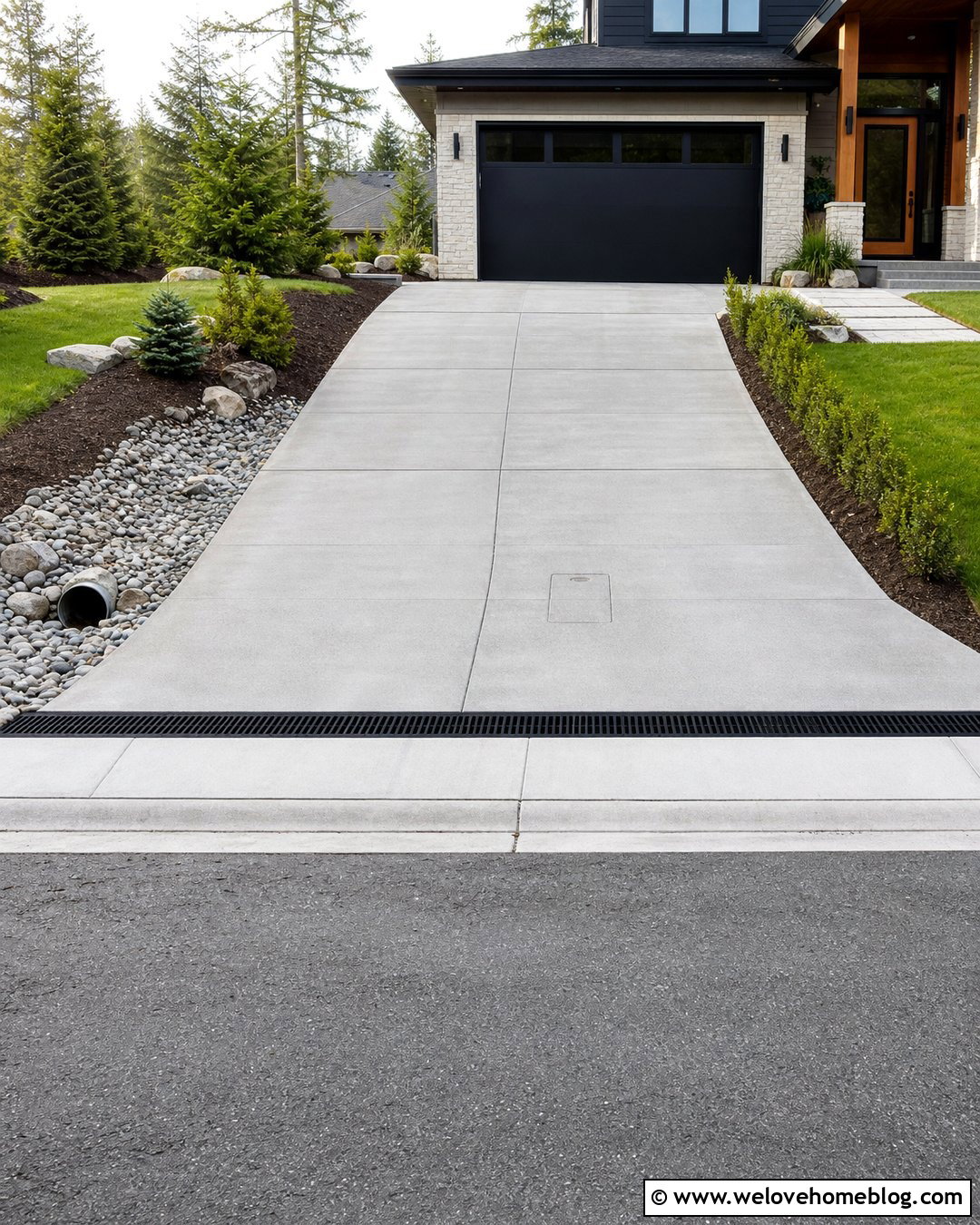
Some properties receive runoff from several directions, so the roadside culvert alone may not solve every drainage problem. Pair a gray concrete driveway with a vehicle-rated trench drain across the entrance and a catch basin beside the lower edge. The surface drain can intercept water flowing down the driveway, while the culvert continues carrying roadside ditch water underneath it. Use black or galvanized grates that sit flush with the concrete and connect the drainage components only through an approved, properly designed outlet system. A stone-lined swale beside the driveway can provide additional conveyance and a clear place for overflow. Frame the area with low evergreen planting and a concrete paver walkway. Grates and basin openings require regular cleaning, especially after leaf fall and intense storms.
18. Driveway Culvert With Native Plant Drainage Ditch
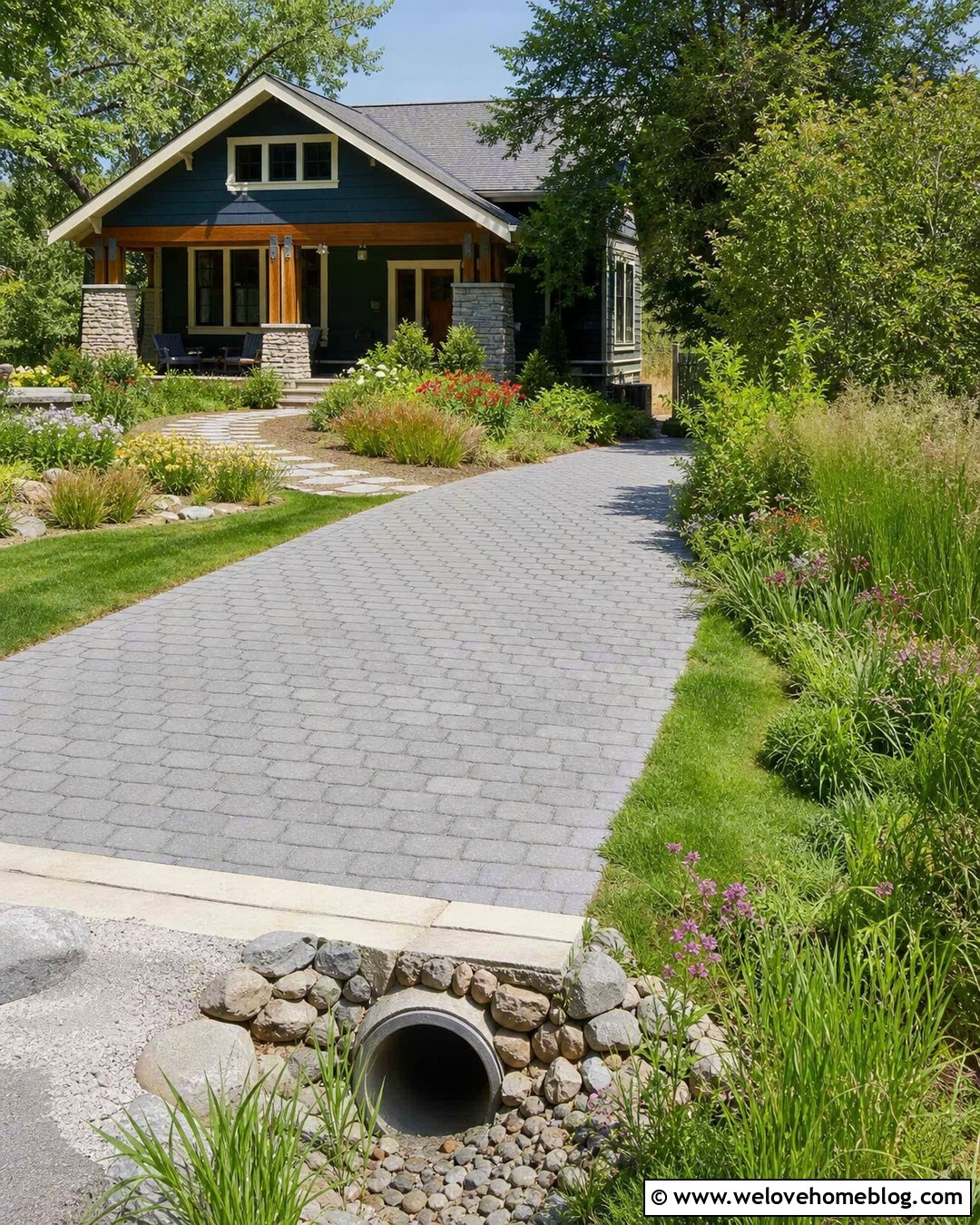
A native planted ditch can turn an exposed drainage feature into a colorful part of the front landscape. Start with a permeable interlocking concrete paver driveway in soft gray, shaped as a wide straight entrance over the culvert. Place erosion-resistant stone around both pipe ends, then plant the higher channel edges with native sedges, rushes, grasses, and flowering perennials selected for local moisture and sunlight conditions. Keep taller plants away from sightlines near the road and avoid planting woody roots directly over the pipe. A mowed strip between the driveway and planting bed creates a tidy boundary and provides maintenance access. During dry weather, the ditch resembles a natural garden. During rain, its broad shape gives runoff a visible route toward the culvert and downstream outlet.
19. Driveway Culvert With Decorative Stone Pillars

Stone entrance pillars can frame a culvert crossing without making the drainage ditch feel like an afterthought. Use light exposed-aggregate concrete for the driveway, bordered with charcoal pavers that sweep outward toward two low stone pillars. Set the pillars well back from culvert openings, ditch banks, required sight triangles, and roadside clear zones. Continue the pillar stone in short, sloping headwalls around the culvert ends to visually connect the architectural and drainage elements. A narrow river rock channel can run beneath the entrance, with clipped grasses and compact shrubs planted along the upper banks. Add a separate pedestrian walkway where space allows, preventing visitors from stepping through the ditch. The balanced arrangement works well with Craftsman, Tudor, and modern farmhouse homes while keeping the pipe accessible for inspection.



20. Wide Driveway Culvert With Split Stone Apron

A wide driveway entrance needs clear boundaries so vehicles do not damage the shoulders above the culvert. Create the main surface with black asphalt, then add a split apron of gray concrete or granite pavers at the road connection. The contrasting apron marks the safe driving area and reinforces the busiest transition. Beneath it, a long culvert spans the entire entrance, with flared ends and broad stone aprons on both sides. Shape the adjoining ditch with gradual banks rather than steep cuts, then use turf and low ornamental grasses to blend it into the front lawn. Reflective address markers can sit beyond the drainage zone for visibility. Before widening an existing crossing, confirm that the added length, pipe condition, cover, and inlet access will still meet local drainage requirements.
Conclusion:
The most successful **Driveways Culvert Drainage Ditch Ideas** treat drainage and curb appeal as one complete design. Gravel, asphalt, concrete, pavers, and cobblestone can all work when the driveway has a stable base and sends runoff toward a dependable drainage route. Headwalls, flared ends, riprap, swales, catch basins, and planted channels each solve different site conditions. The right choice depends on the ditch grade, expected water flow, soil, driveway slope, and local regulations. Before installation, have the culvert size, outlet, cover depth, and right-of-way requirements checked by the appropriate local authority. Then keep pipe openings, grates, and channels clear so the entrance continues working through every season.

Related posts:

Leave a Reply