
A circular driveway can transform an ordinary entrance into a polished, practical focal point. The best 20 driveway front yard landscaping circular ideas coordinate the driving surface, center island, borders, walkways, lighting, and plants as one complete design. This approach keeps the front yard from feeling like a large parking area. It also creates a clear route for visitors while framing the home from the street. Current designs range from formal paver circles with fountains to relaxed gravel drives surrounded by native flowers. Permeable surfaces, drought-tolerant planting, layered greenery, and simple landscape lighting can make these layouts more attractive and functional. () The complete looks below offer practical inspiration through 20 driveway front yard landscaping circular ideas.

1. Circular Paver Driveway With Fountain Island
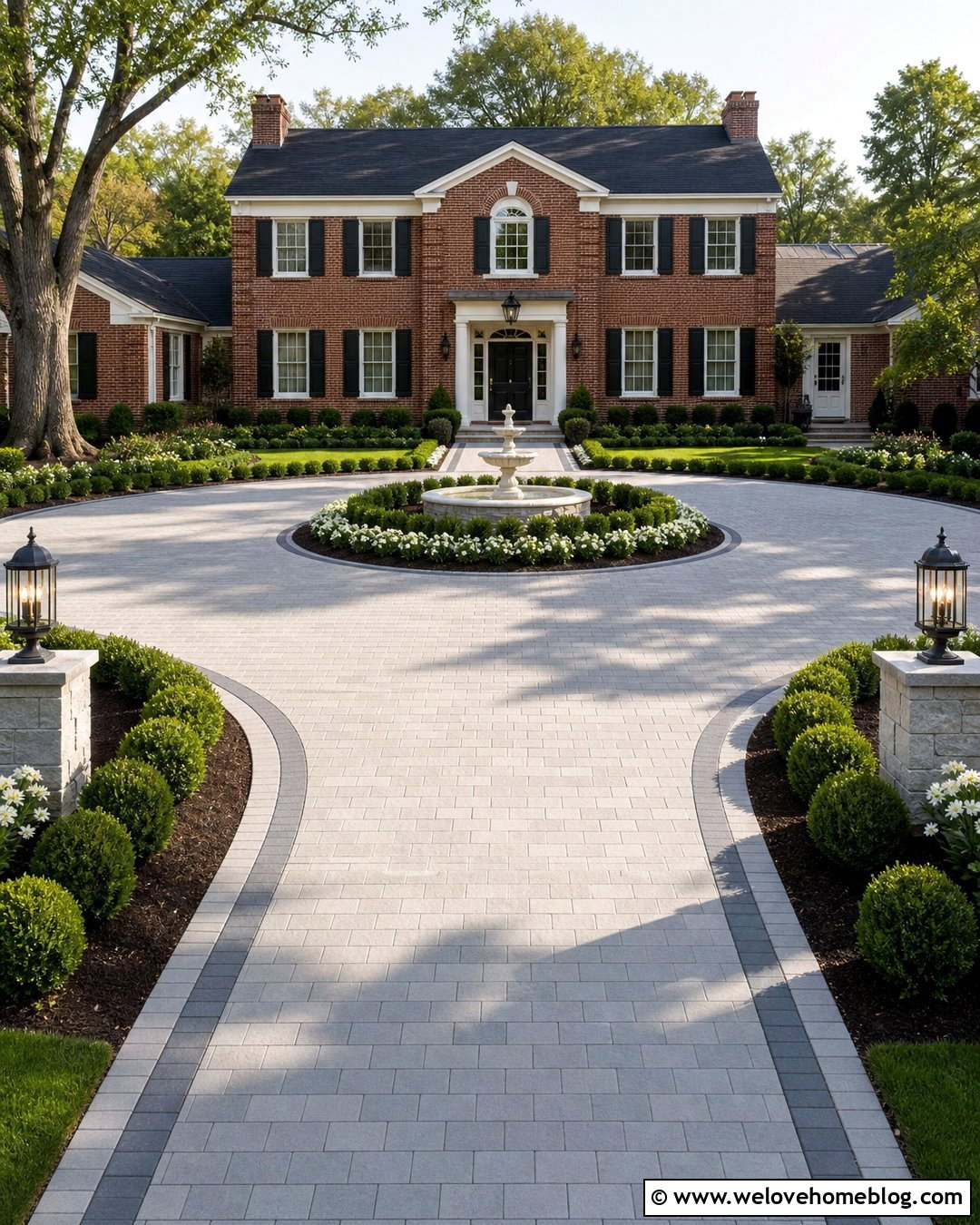
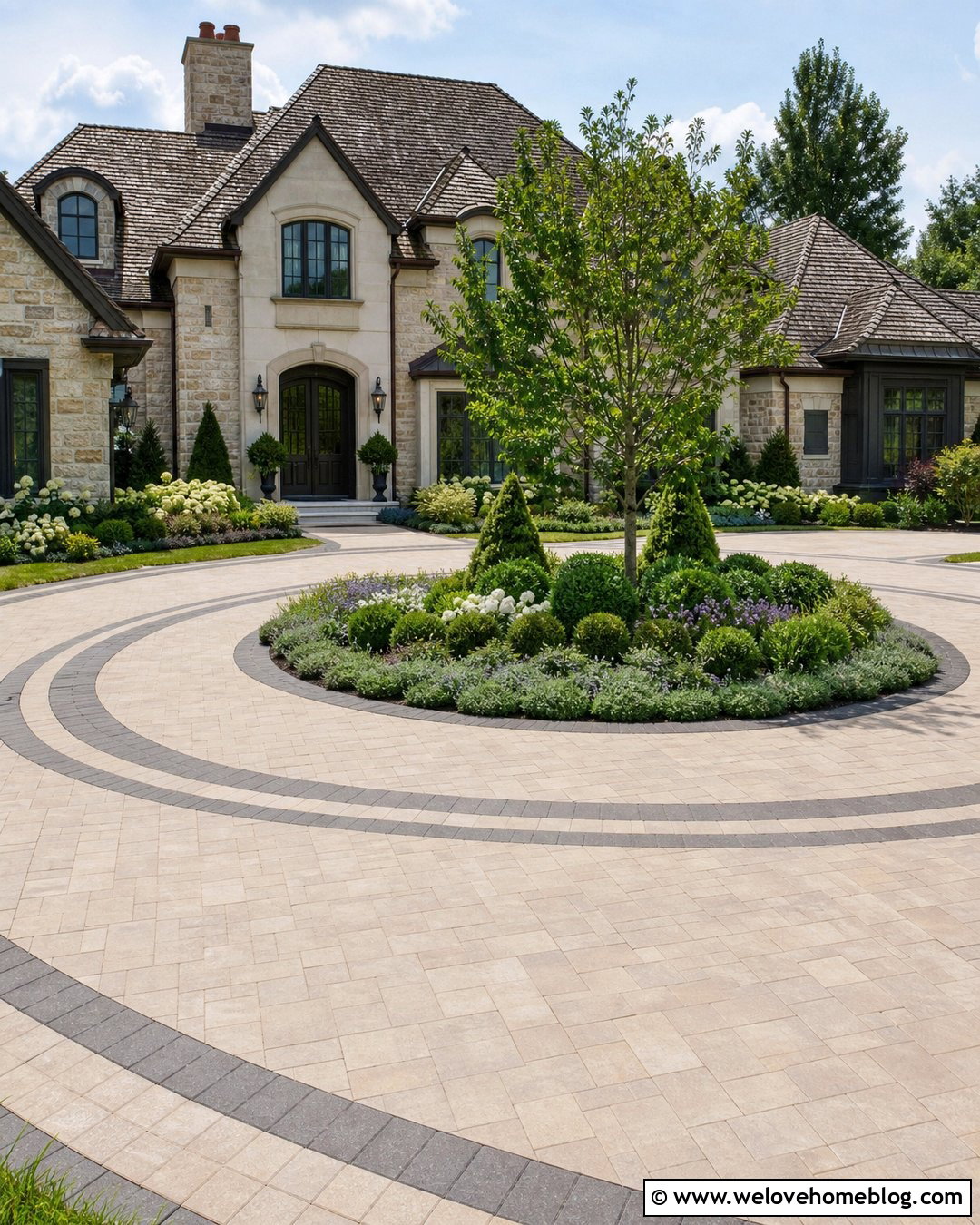
A circular paver driveway wrapped around a fountain creates a formal entrance without requiring complicated landscaping. Choose warm gray concrete pavers in a running-bond pattern and define both edges with a darker charcoal border. In the center island, use a low stone fountain surrounded by clipped boxwoods, white flowering perennials, and dark mulch. Keep the plants below the fountain basin so the water feature remains visible from the street. Matching paver steps can connect the driveway to a straight front walkway. Add low-voltage lights around the island and along the outer curve for safer nighttime navigation. This complete design works especially well with brick Colonial, Georgian, and traditional two-story homes because its balanced layout complements symmetrical architecture.
2. Circular Asphalt Driveway With Native Planting
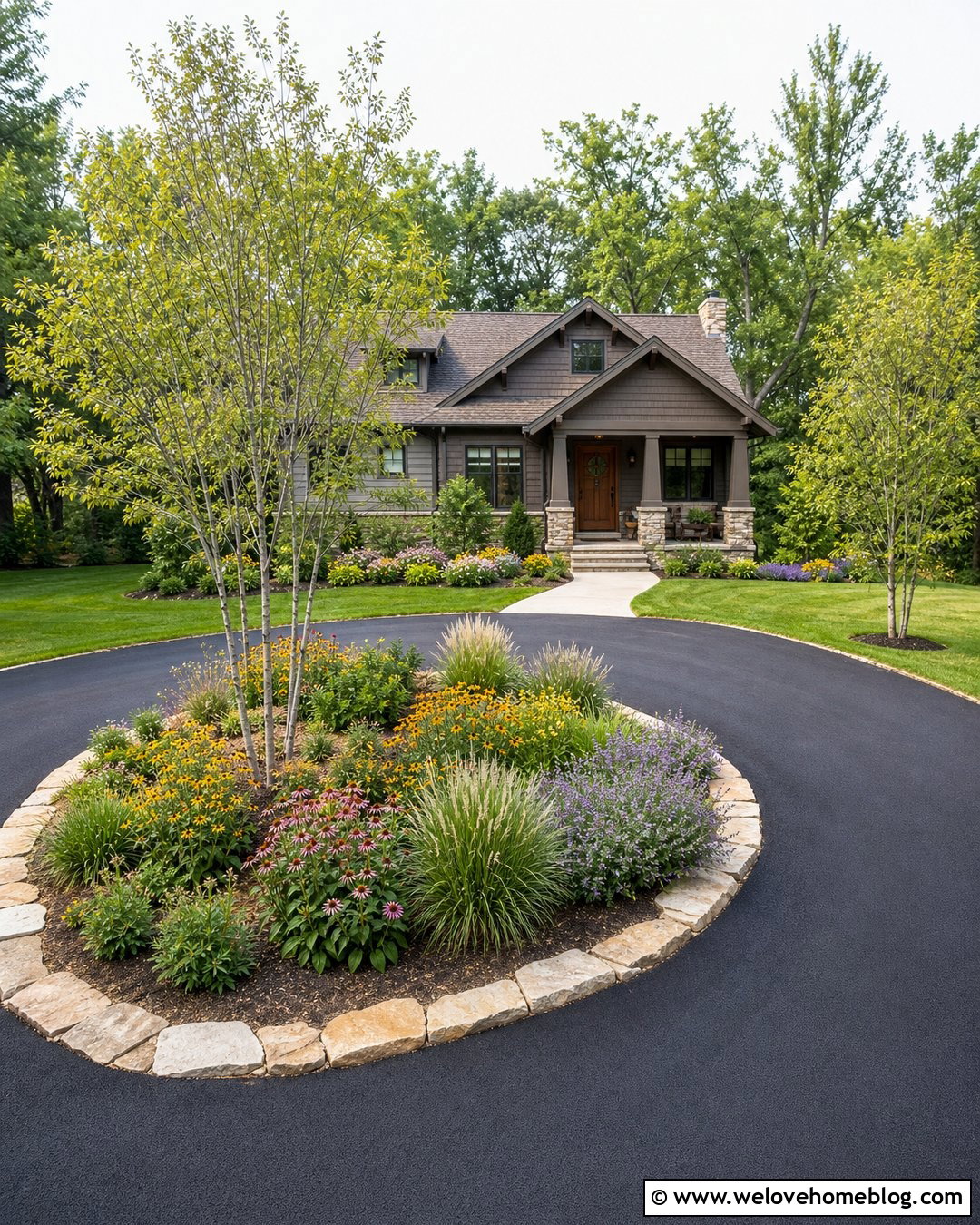
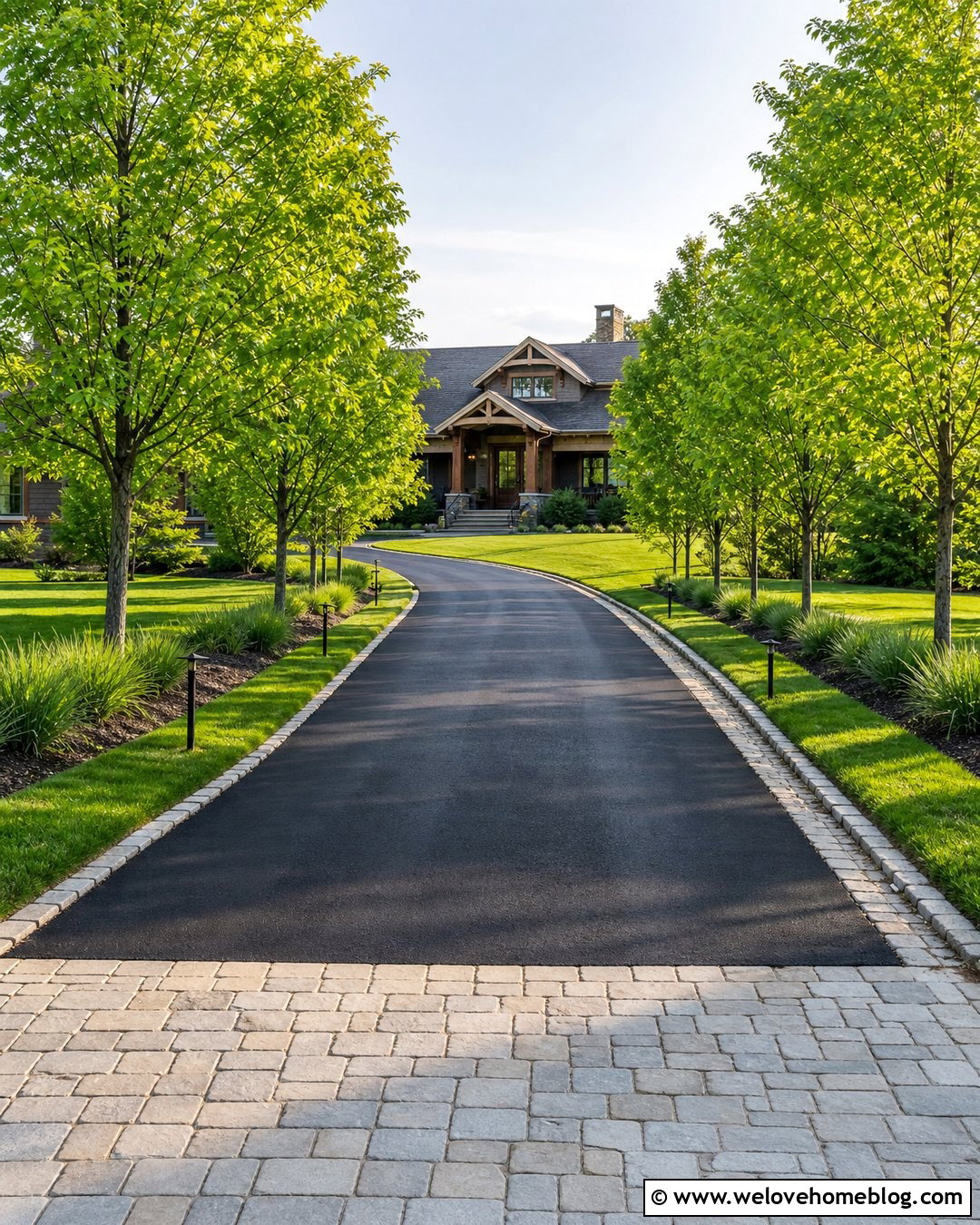
Smooth black asphalt can feel softer and more connected to the yard when it surrounds a naturalistic native garden. Create a wide center island with an irregular stone edge rather than a perfectly rigid border. Fill it with native ornamental grasses, coneflowers, black-eyed Susans, asters, and a small multi-stem serviceberry. Repeat a few of these plants near both driveway entrances to connect the island with the rest of the front yard. A pale concrete walkway crossing the inner curve will provide a visible route to the front door. The contrast between dark asphalt and loose, colorful planting creates a relaxed look suitable for ranch, Craftsman, and woodland homes. Regionally appropriate plants can also support a landscape that suits local growing conditions. ()
3. Circular Gravel Driveway With Ornamental Tree
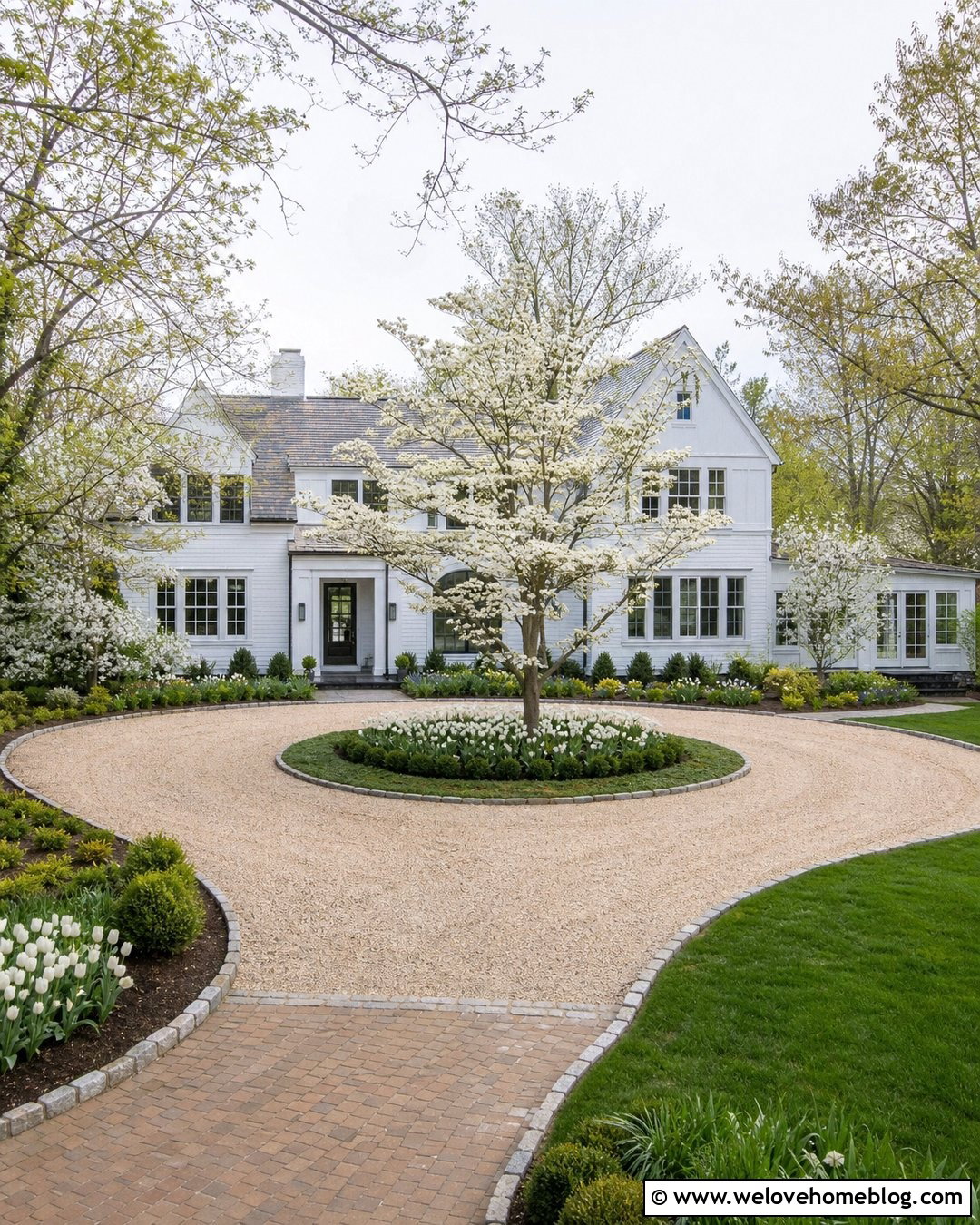
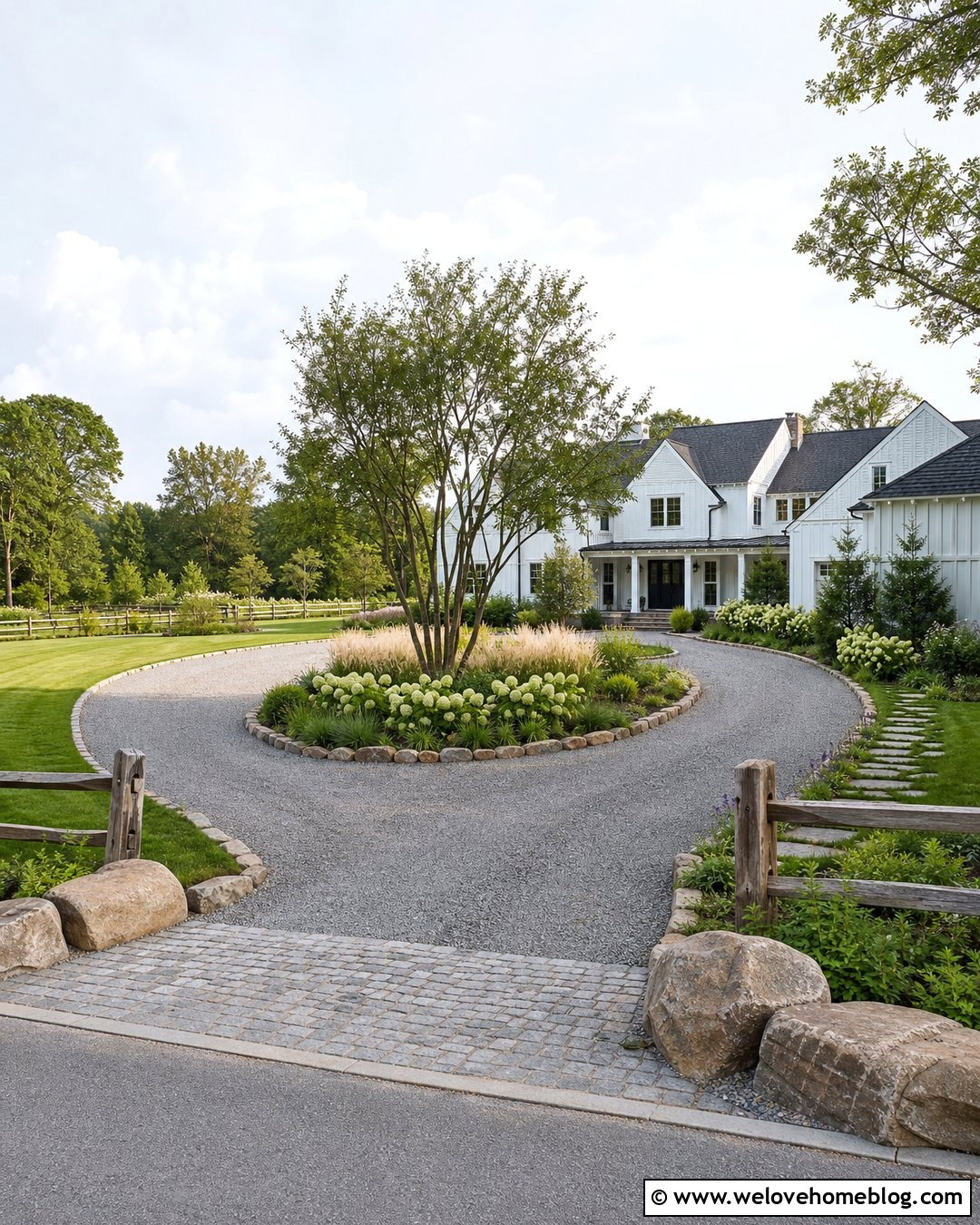
The gentle texture of pea gravel pairs beautifully with a simple center island built around one ornamental tree. Select buff or tan pea gravel and contain it with reclaimed cobblestone edging so loose stones stay away from the lawn. A flowering dogwood, redbud, or crape myrtle can anchor the island, depending on the climate. Underplant the tree with a broad ring of low ground cover and add spring bulbs for seasonal color. Curved planting beds along the outside of the driveway can repeat the same ground cover and cobblestone edge. A brick walkway leading from the inner circle to the porch gives guests a stable walking surface. This complete arrangement feels established and welcoming beside cottages, farmhouses, and traditional country homes.
4. Circular Concrete Driveway With Ornamental Grasses
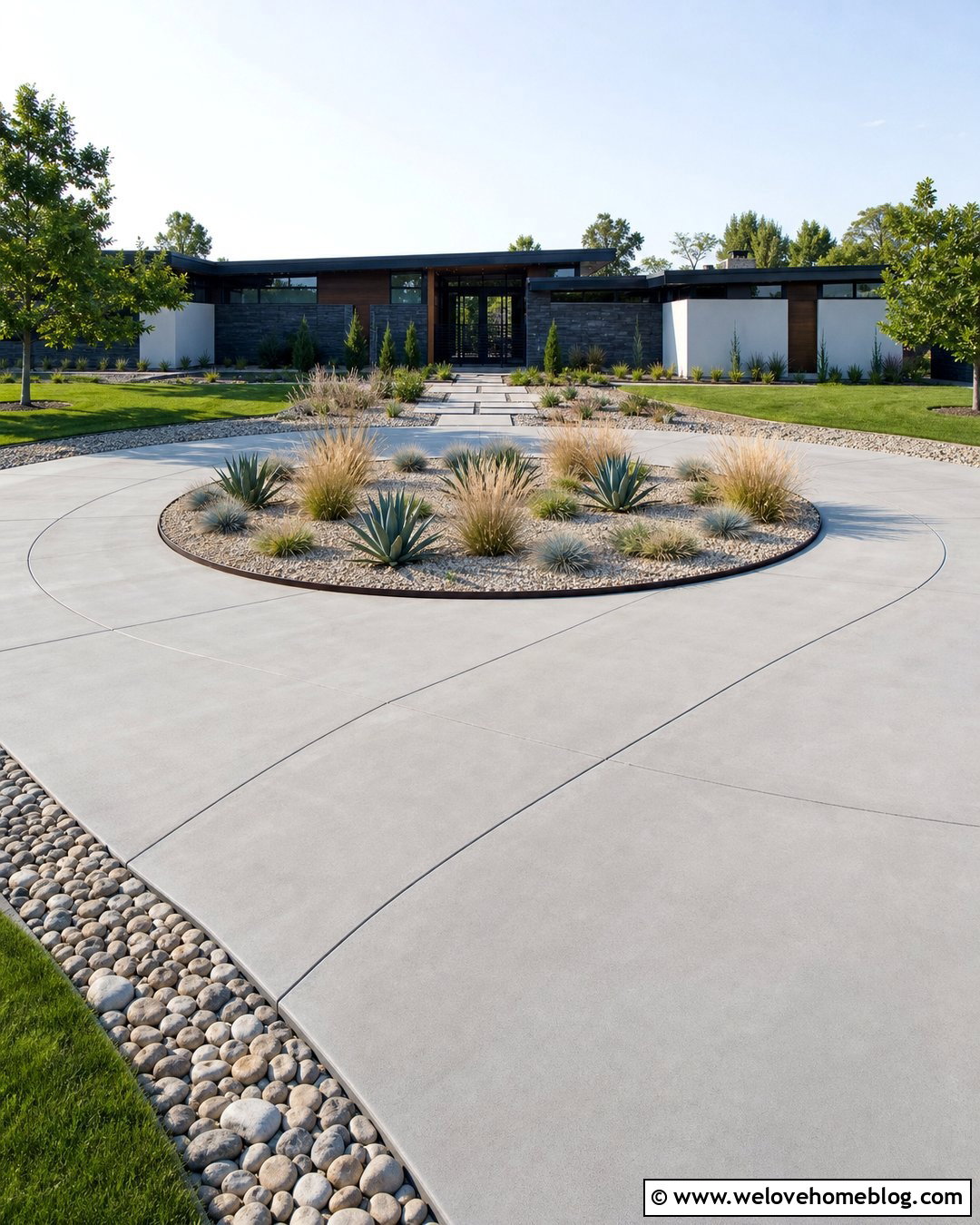
Clean lines and restrained planting can make a circular driveway complement a modern house. Use light gray poured concrete with narrow saw-cut joints that follow the curve. In the center, install a crisp steel-edged island filled with pale gravel, feather reed grass, blue fescue, and several sculptural agaves where the climate allows. Keep the planting asymmetrical but balanced, leaving open gravel between plant groups. Long rectangular concrete stepping pads can cross the island and visually connect the street with the front door. On the outer edge, use a narrow strip of river rock to separate the concrete from the lawn. The limited materials and repeated grass textures produce a modern front yard that feels organized, spacious, and intentionally designed rather than empty.
5. Circular Brick Driveway With Cottage Flowers
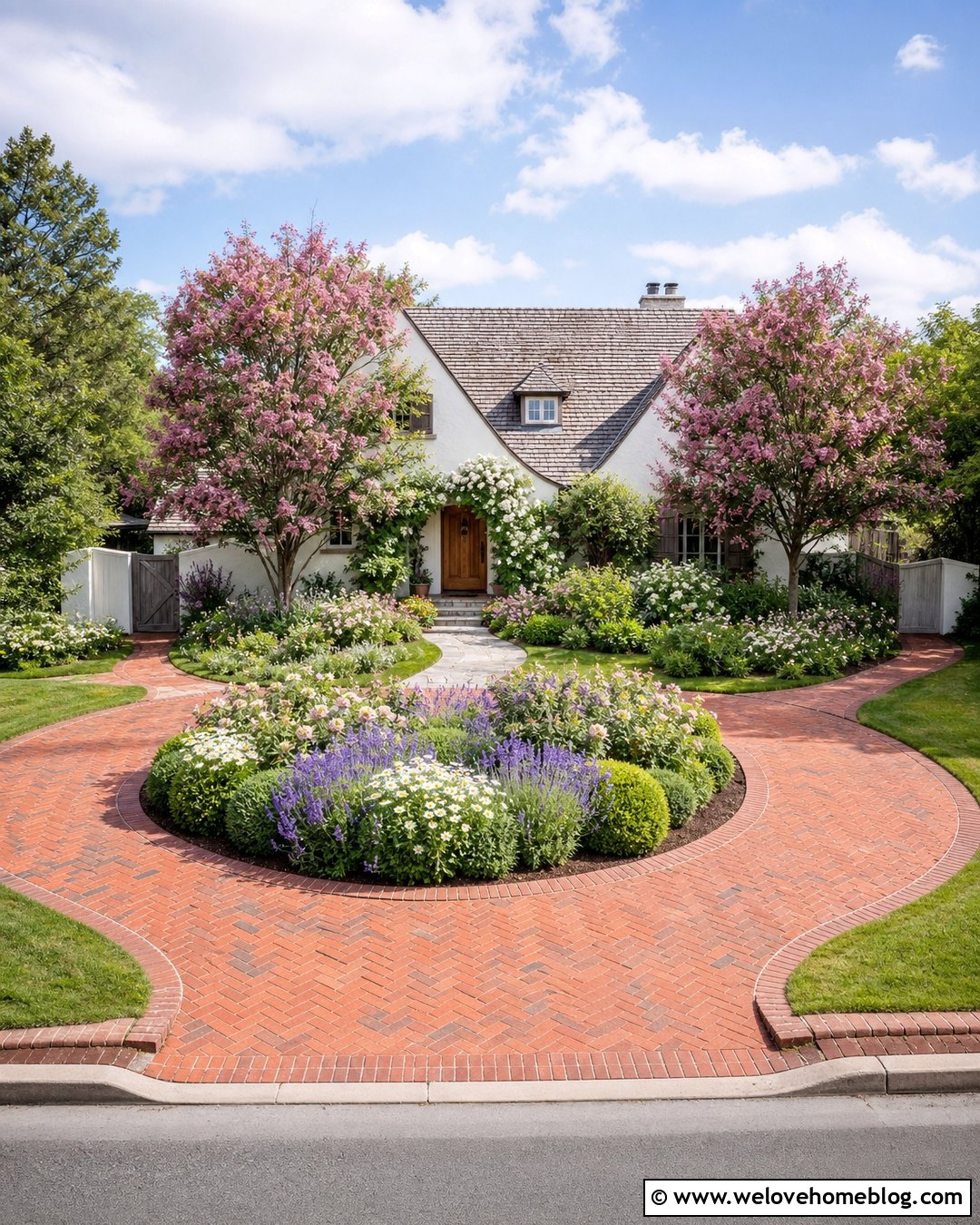
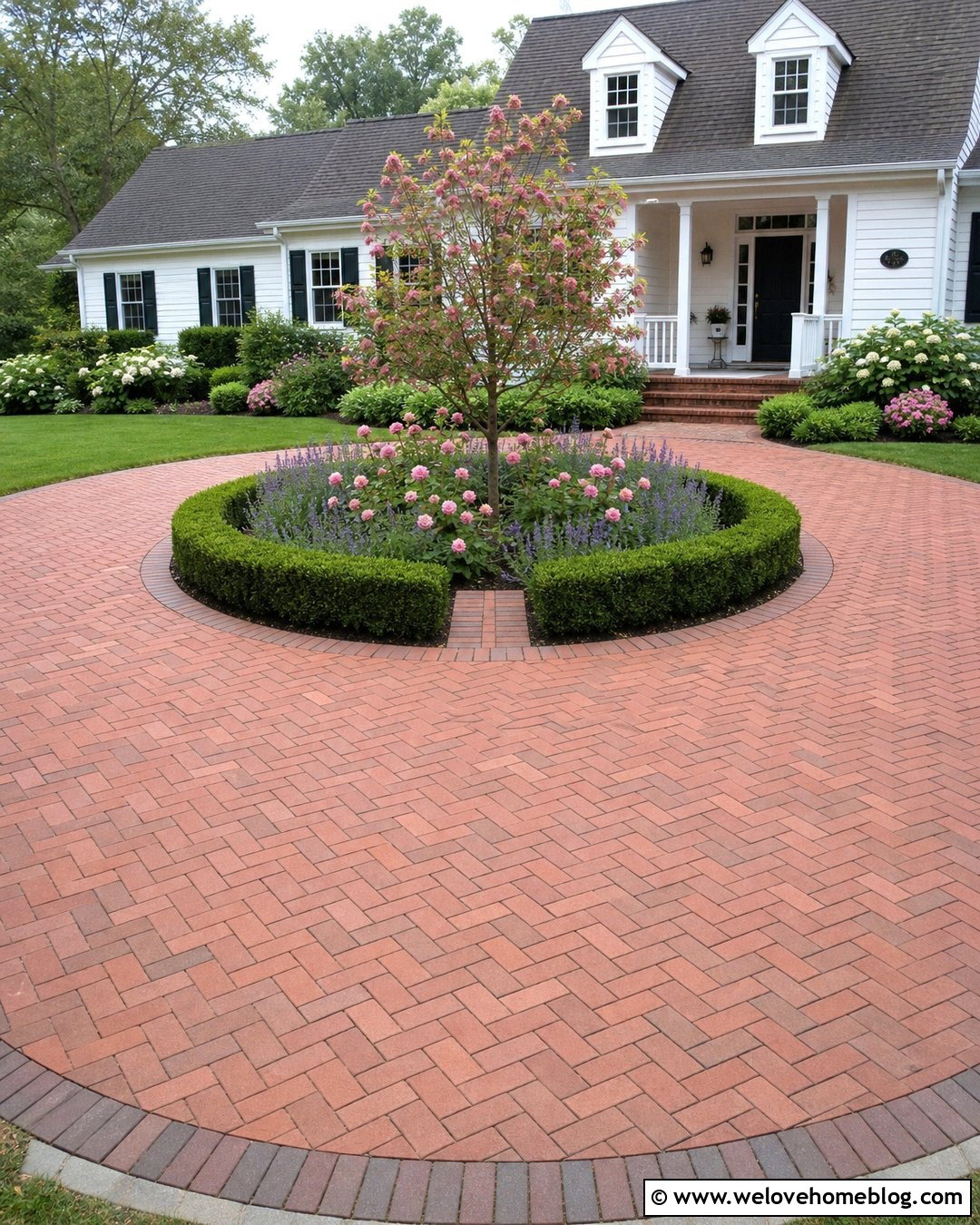
Imagine a warm red brick driveway circling a garden filled with roses, lavender, catmint, and white daisies. Laying clay brick pavers in a herringbone pattern adds character and provides a strong visual connection to a cottage facade. Use a simple soldier-course brick border along the inner and outer edges. In the center island, arrange flowering plants in generous groups instead of mixing many single specimens. Place taller shrub roses near the middle and lower lavender or catmint around the perimeter to preserve visibility. A curved flagstone path can lead through the island to the front porch. Small flowering trees near the driveway entrances frame the approach without hiding the house. This romantic design works best when the colors and materials are repeated near the foundation beds.
6. Circular Exposed Aggregate Driveway With Layered Shrubs
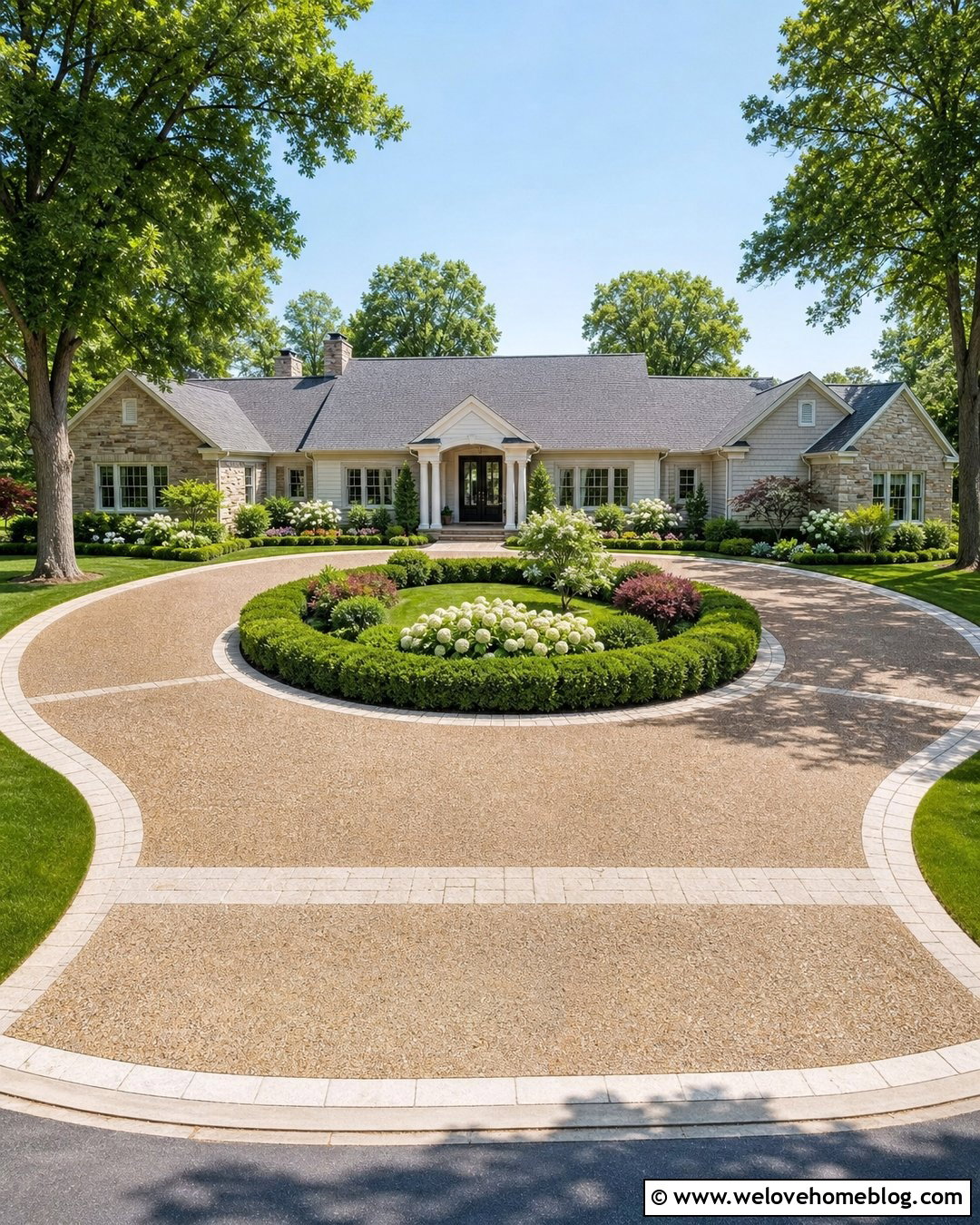
Exposed aggregate concrete offers more texture than standard concrete while remaining visually quiet enough for lush landscaping. Design a broad circular loop around an oval lawn island, then frame the island with layered evergreen and flowering shrubs. Low boxwoods or dwarf hollies can define the edge, while hydrangeas, spirea, and compact viburnums provide height behind them. Leave an open section of lawn near the front door so the entrance remains easy to see. Brick or natural-stone bands placed across the driveway can mark the pedestrian crossing and break up the large concrete surface. Repeat the same shrub layers along the house foundation for continuity. This balanced arrangement complements wide ranch homes and transitional houses, where horizontal plant groupings reinforce the architecture’s long, low proportions.
7. Circular Driveway With Drought-Tolerant Landscaping
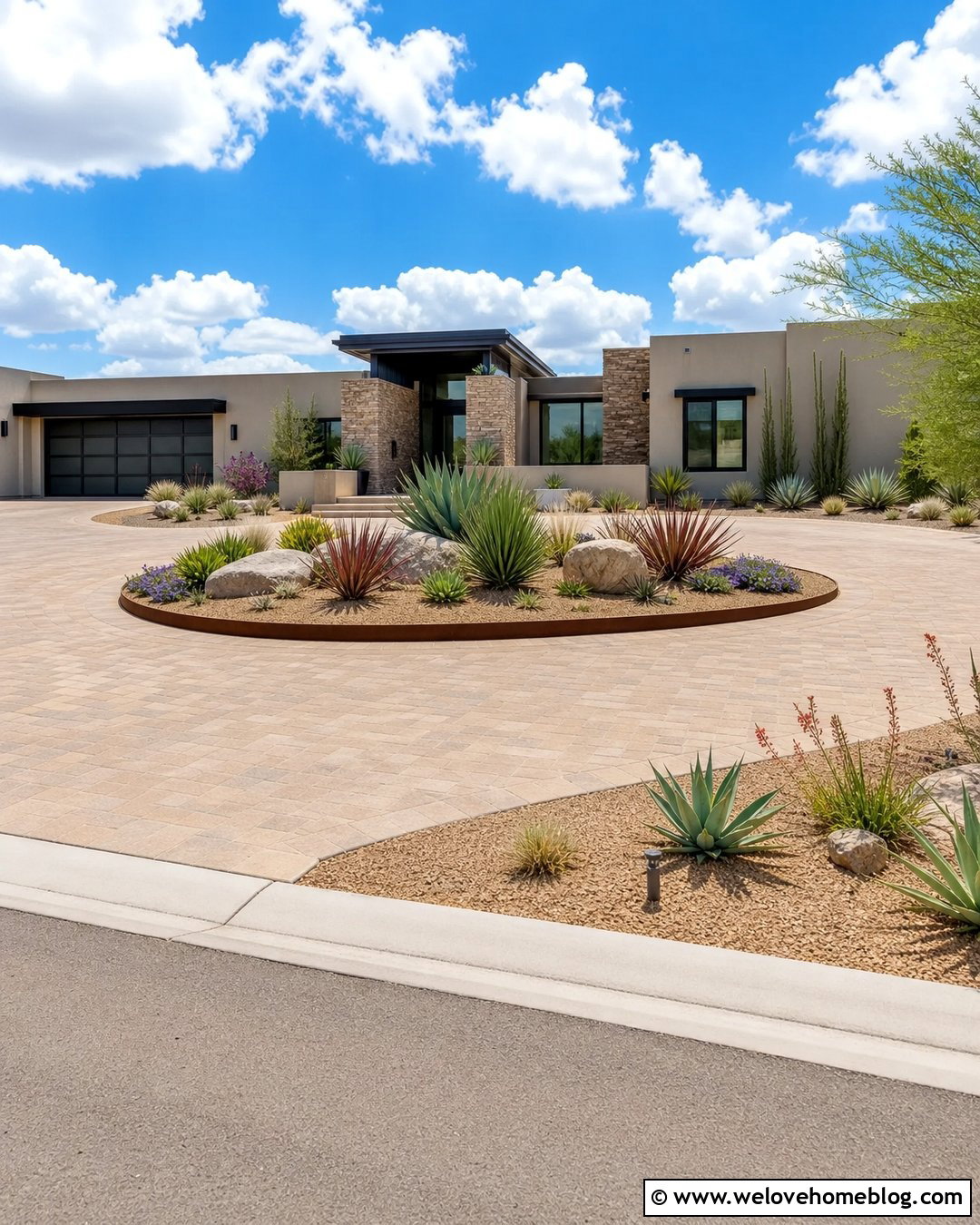
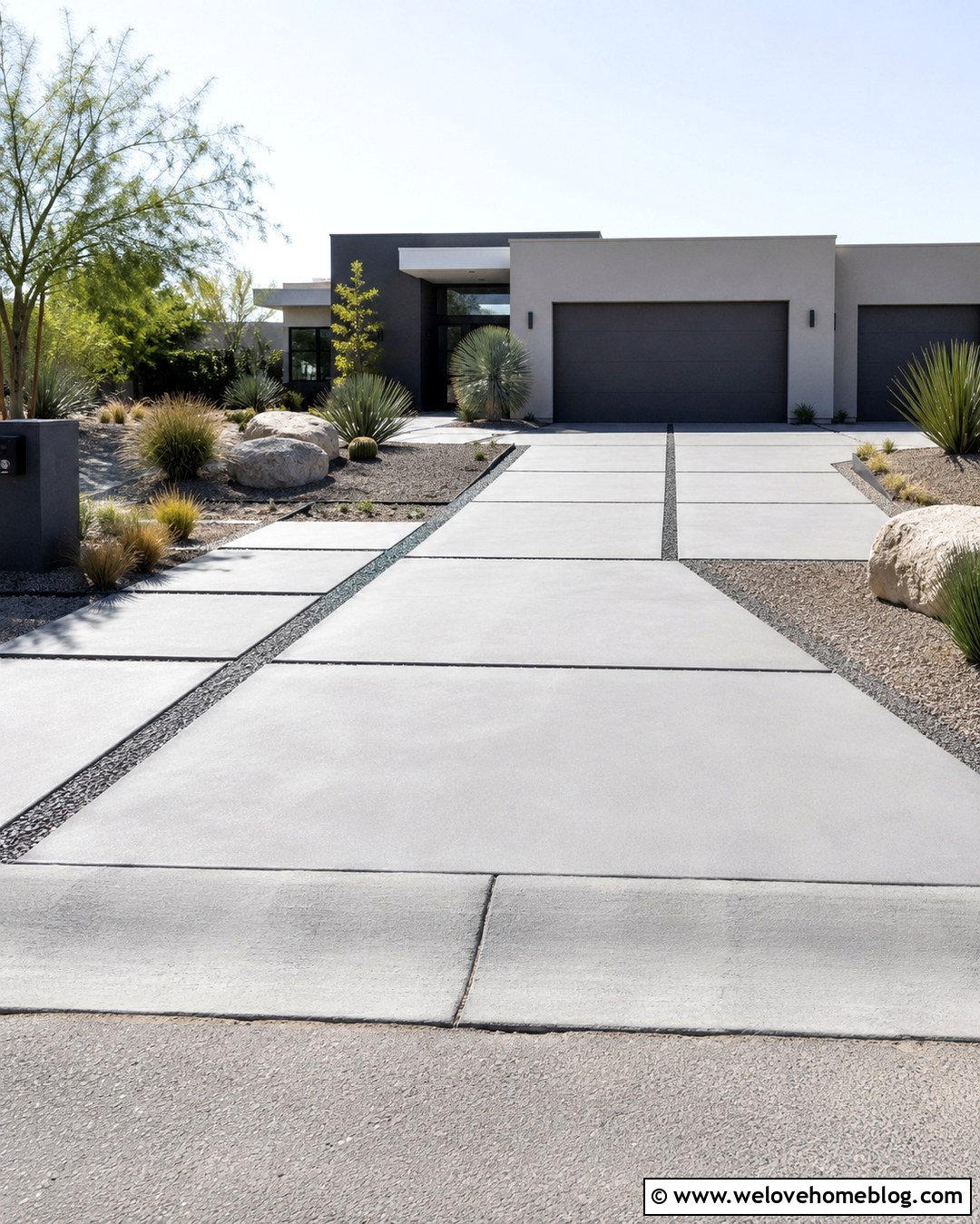
A water-conscious front yard can still feel colorful and inviting. Build the circular driveway with warm beige concrete pavers, then create a center island covered with decomposed granite. Arrange sculptural plants such as agave, yucca, red yucca, salvia, and compact ornamental grasses around several weathered boulders. Use wider spacing between plants so their individual forms remain visible and air can move through the bed. A rust-colored steel edge will hold the decomposed granite in place and create a clean border against the pavers. Extend similar planting beds along the outer driveway curves, using fewer species in larger groups. This design looks especially appropriate beside Southwestern, contemporary stucco, and desert-modern homes. Always select plants suited to the property’s climate, sun exposure, soil, and irrigation limits.
8. Circular Permeable Driveway With Rain Garden
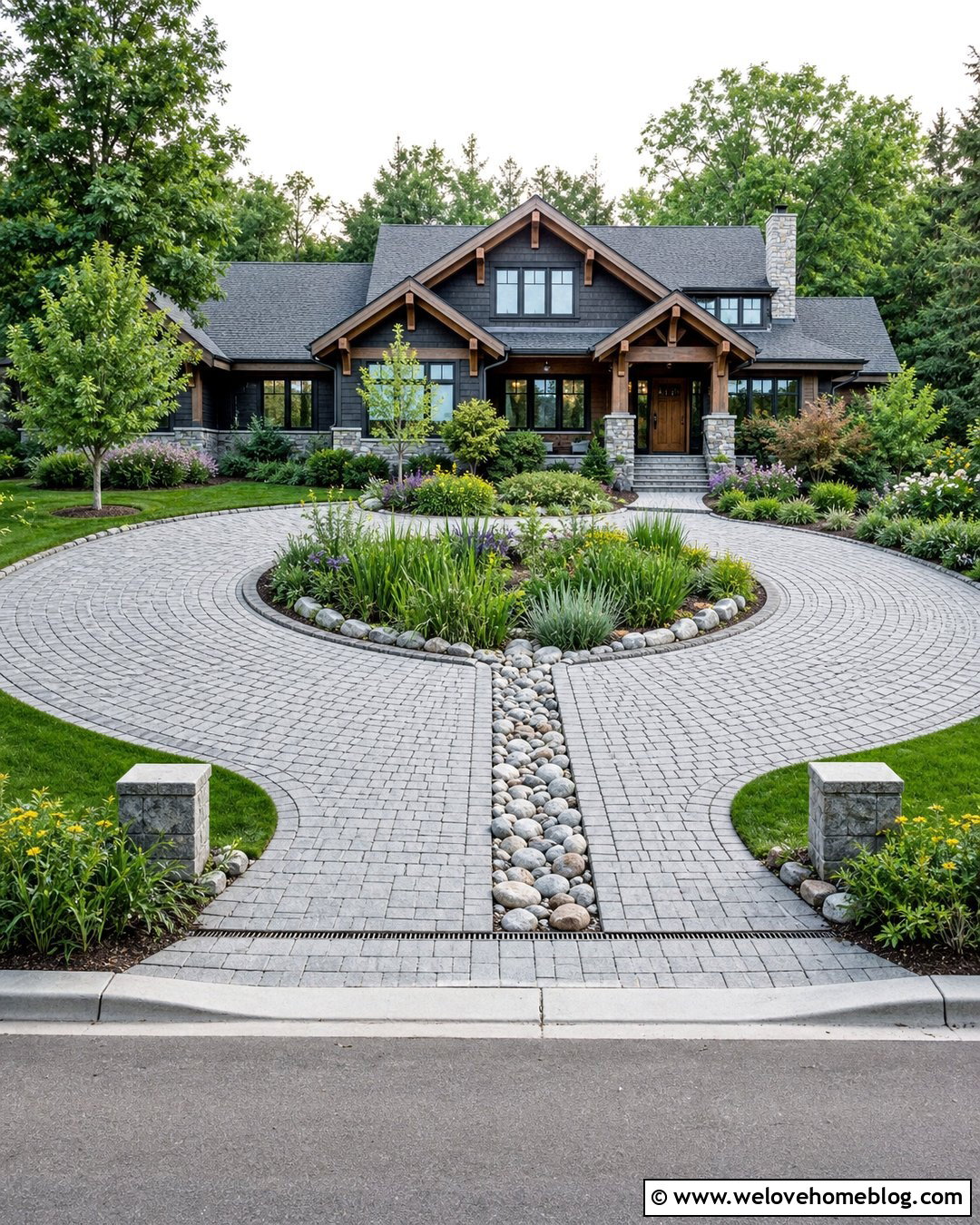
When drainage is a concern, the center of a circular driveway can become an attractive rain garden. Use permeable concrete pavers with gravel-filled joints for the driving surface. Grade the inner island carefully so runoff can move toward a shallow planted basin without collecting against the driveway foundation. Fill the basin with moisture-tolerant native grasses, sedges, iris, and flowering perennials suited to local conditions. Place flat river stones through the lowest area to suggest a dry stream bed and reduce the appearance of bare soil. A slightly raised walkway should connect the driveway to the front entrance without crossing the wettest section. Rain gardens can help capture and infiltrate stormwater when they are properly located and engineered for the site. ()
9. Circular Cobblestone Driveway With Evergreen Landscaping
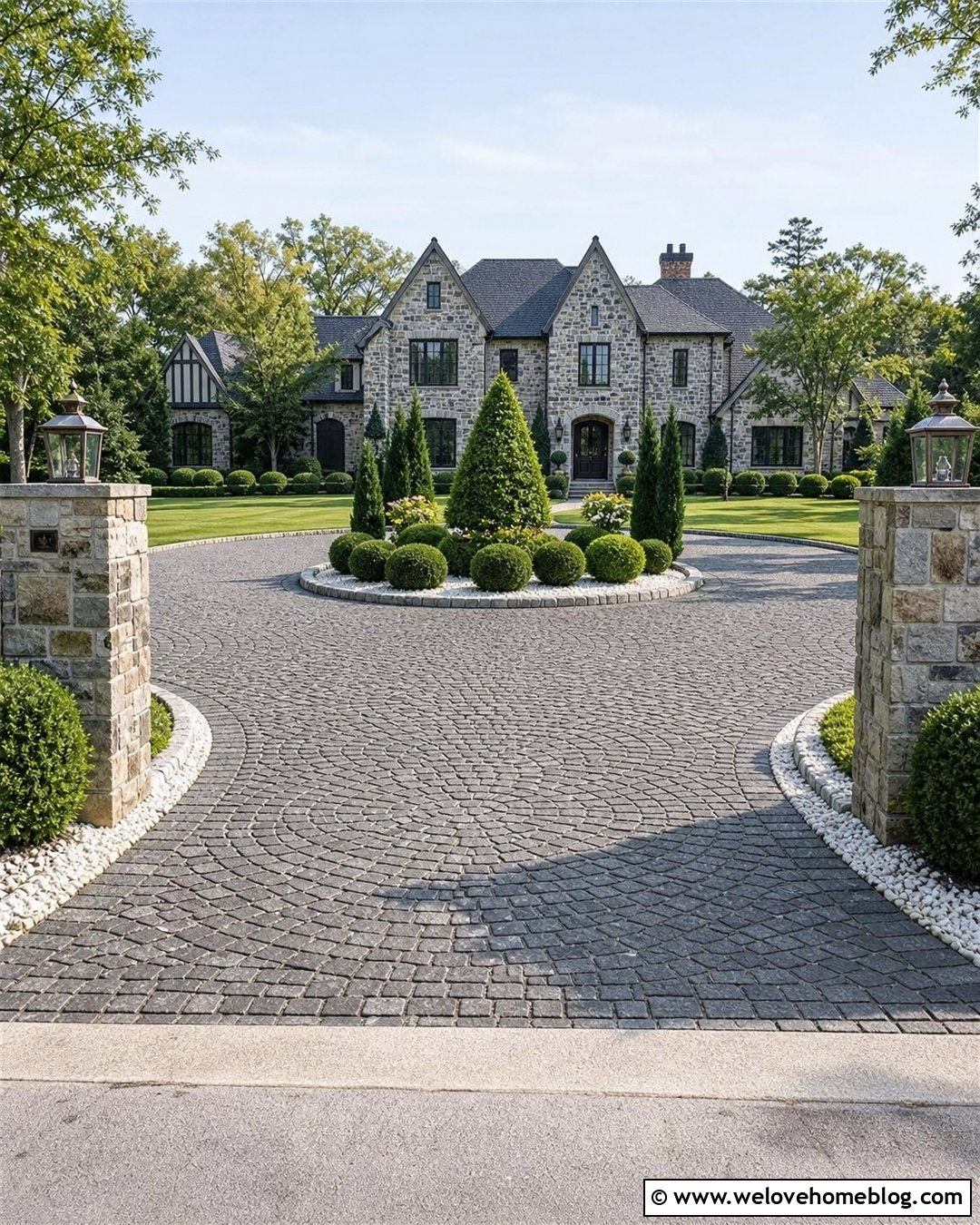
A cobblestone circle surrounded by clipped evergreens creates a structured front yard with year-round appeal. Choose charcoal and gray cobblestones laid in curved fan patterns to emphasize the driveway’s shape. Build a raised center island with matching stone and plant a symmetrical arrangement of boxwood spheres, upright yews, and a single conical evergreen. White gravel between the shrubs keeps the composition crisp and reduces the amount of visible mulch. Along the outside curve, repeat the clipped boxwoods at wider intervals with lawn between them. Stone pillars at both entrances can establish the driveway boundary without requiring a gate. This refined combination suits Tudor, European-inspired, and stone-front homes. Regular pruning will be necessary, but the limited plant palette makes the overall landscape easier to understand and maintain.
10. Circular Gravel Driveway With Wildflower Island
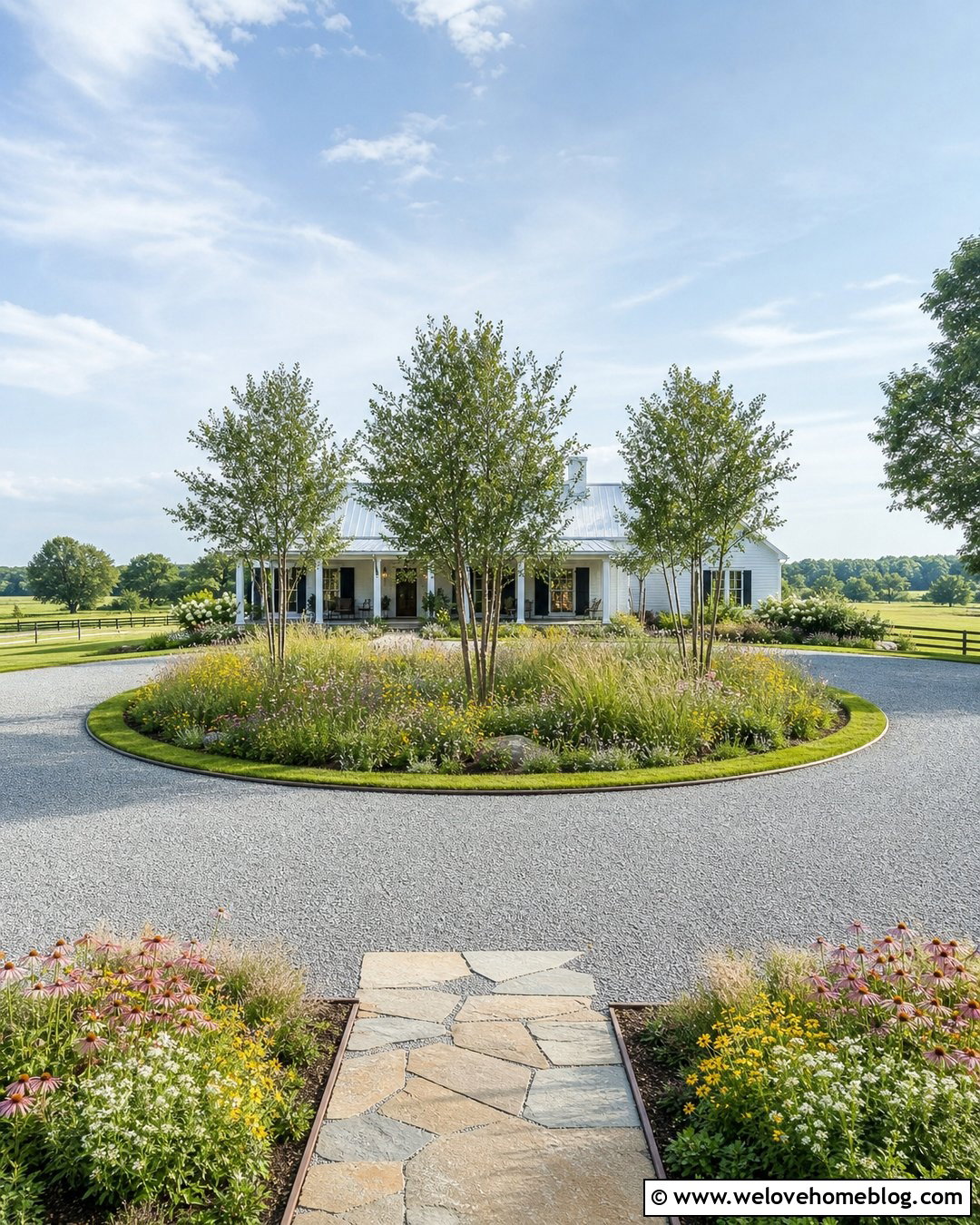
For a relaxed country entrance, circle a large wildflower island with compacted gray gravel. Use a sturdy stone or steel edge to prevent gravel from spreading into the planting area. Sow the center with a regionally suitable mix of native grasses and flowering plants, then add a mown or mulched border around the perimeter. That clean border will keep the meadow from looking accidental. A small grove of three multi-stem trees can provide height without creating one overly dominant centerpiece. At the outer curve, maintain simple lawn and a few repeated wildflowers near the driveway entrances. A broad natural-stone walkway can cross the drive and lead toward a farmhouse porch. The finished landscape feels informal, colorful, and spacious while still giving vehicles a clearly defined circular route.
11. Circular Concrete Driveway With Boulder Garden
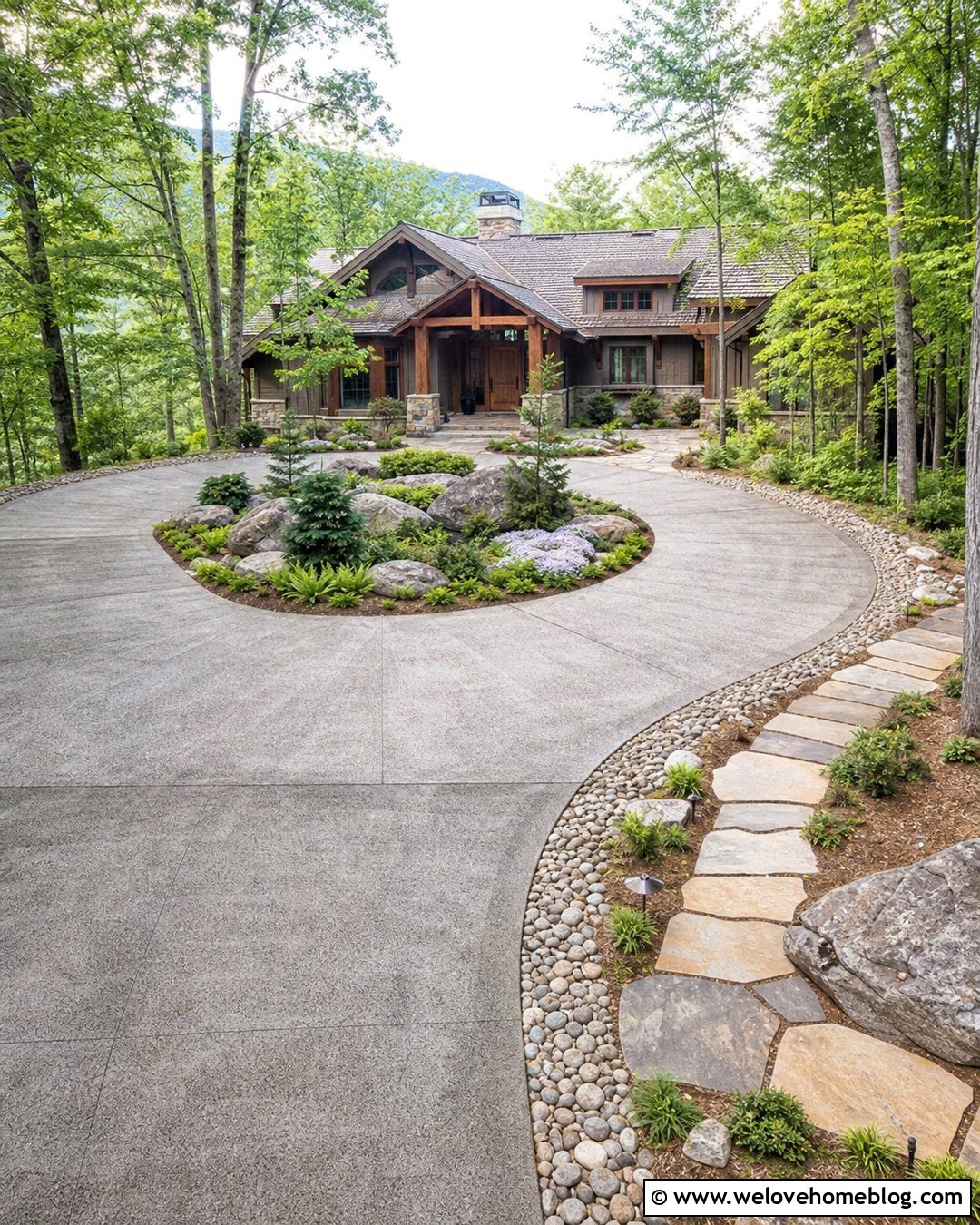
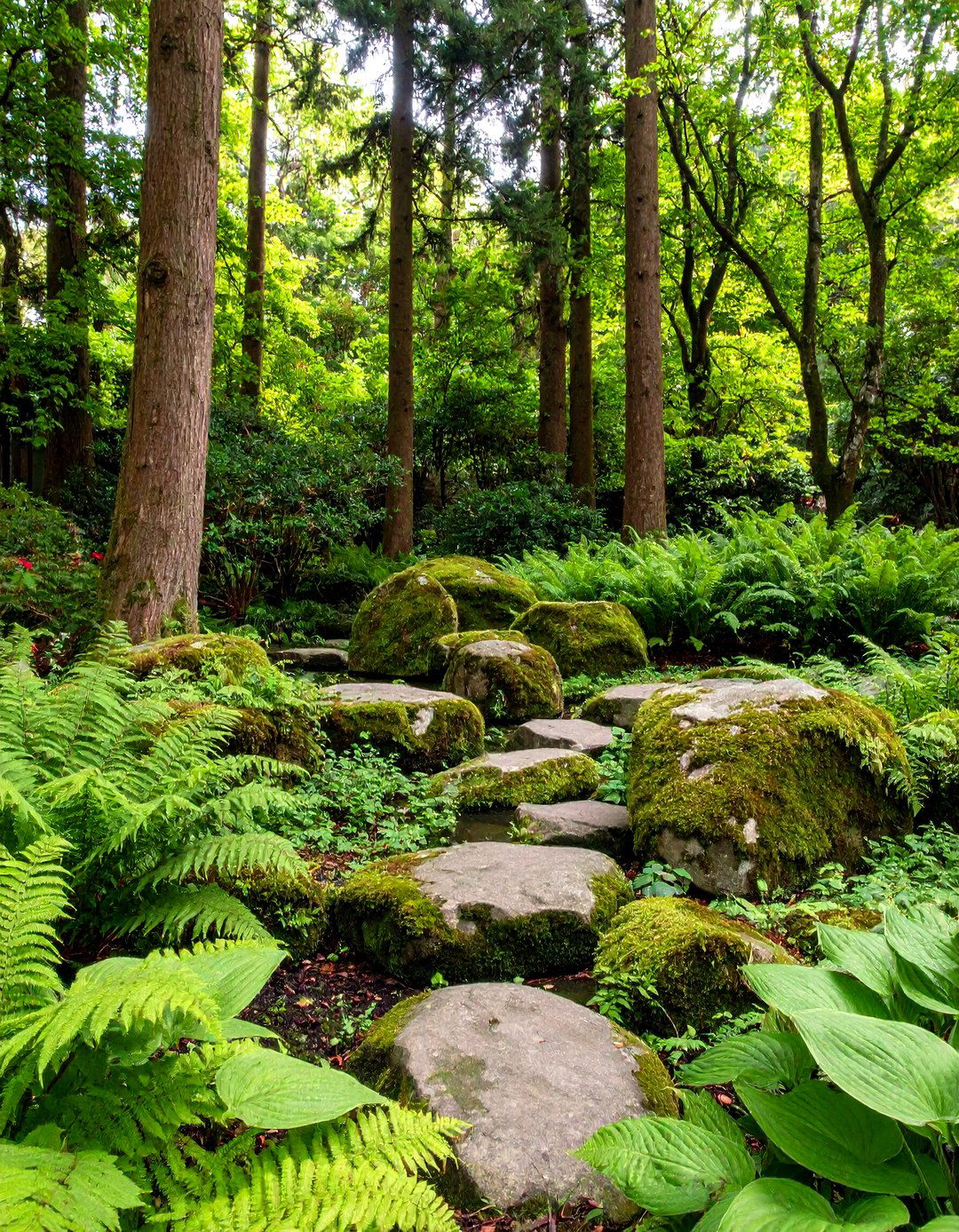
Large natural boulders can give a circular driveway visual weight, especially in a sloped or wooded front yard. Use medium-gray broom-finished concrete for the driveway and edge the center island with irregular fieldstone. Arrange three to five boulders in an offset grouping rather than placing one rock in the exact middle. Soften them with low junipers, ferns, sedges, creeping phlox, and native ground cover selected for the available sunlight. Continue smaller stones and matching plants along the driveway’s outer bank to make the center feel connected to the property. A flagstone walkway can follow a gentle curve from the driveway to the porch. This complete design suits mountain homes, rustic Craftsman houses, and wooded ranch properties where polished formal landscaping might look out of place.
12. Circular Resin Driveway With Birch Tree Island
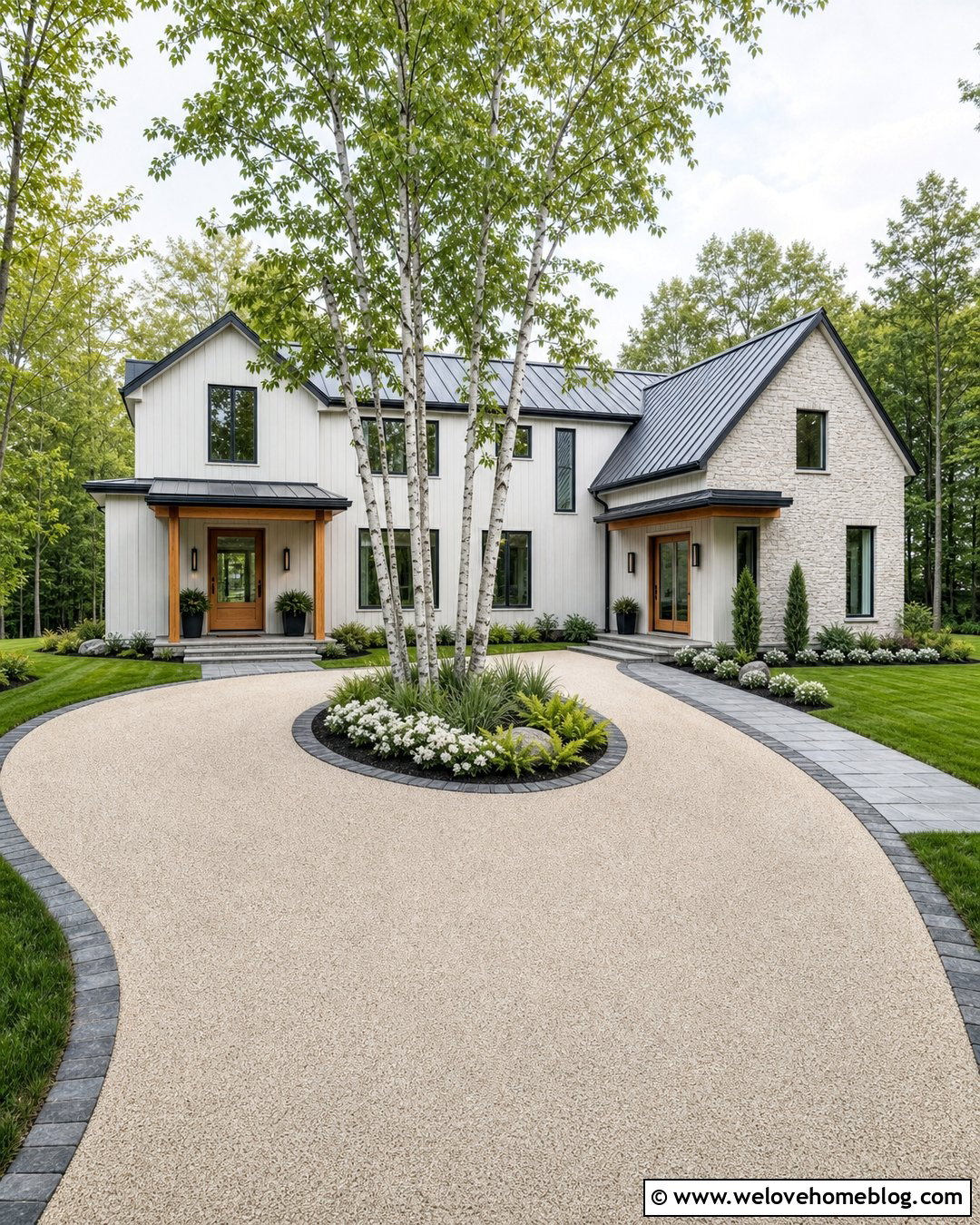
A light resin-bound gravel driveway creates a smooth, contemporary surface that pairs well with delicate tree planting. Form a generous oval loop and define its inner edge with dark granite setts. In the center island, plant a small group of white-barked birch trees with enough spacing for their trunks and canopies to remain distinct. Cover the ground beneath them with shade-tolerant grasses, ferns, and low white-flowering perennials. A dark slate walkway can cross the light driveway, creating a clear route to the entrance. Repeat birch trunks or pale ornamental grasses near the house to strengthen the visual connection. The contrast among cream resin-bound gravel, dark edging, and bright trunks produces a fresh front yard that works with modern, Scandinavian-inspired, and updated mid-century homes.
13. Circular Driveway With Low-Maintenance Rock Landscaping
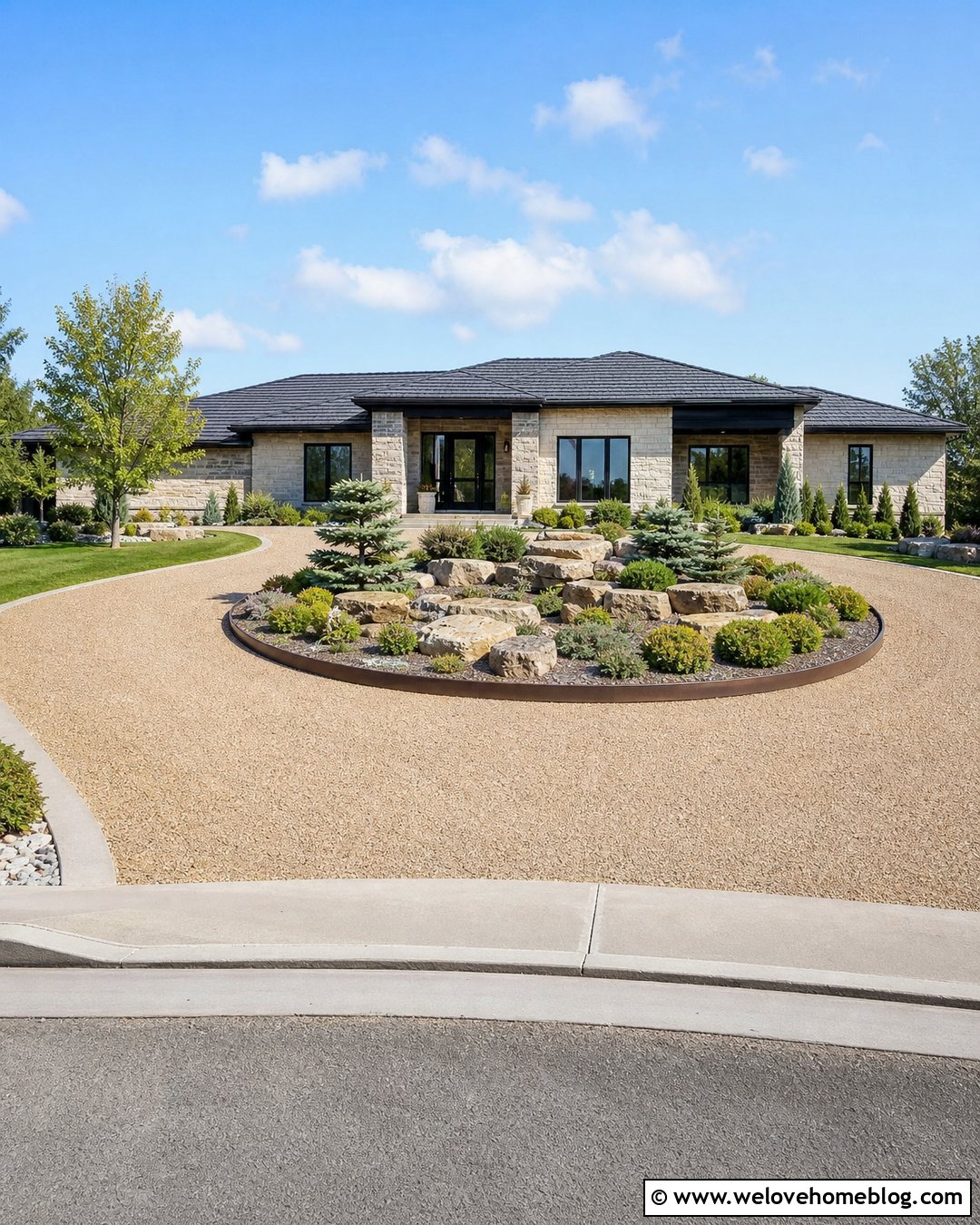
Not every center island needs lawn, flowers, or frequent trimming. A tan gravel driveway can surround a low-maintenance rock garden made with large river stones, dwarf evergreens, and durable ground covers. Begin with landscape fabric or another site-appropriate weed-management system, then layer several stone sizes for a more natural appearance. Use a small number of plants in repeated groups, leaving open stone around each one. A curved steel edge will keep the island materials separate from the driveway gravel. Along the outer loop, create narrow matching rock beds with compact shrubs near the house and clear sightlines at both entrances. This simple layout suits busy households and properties with difficult irrigation access. Occasional weeding, gravel raking, and plant pruning will still be needed to maintain the crisp appearance.
14. Circular Paver Driveway With Hydrangea Beds
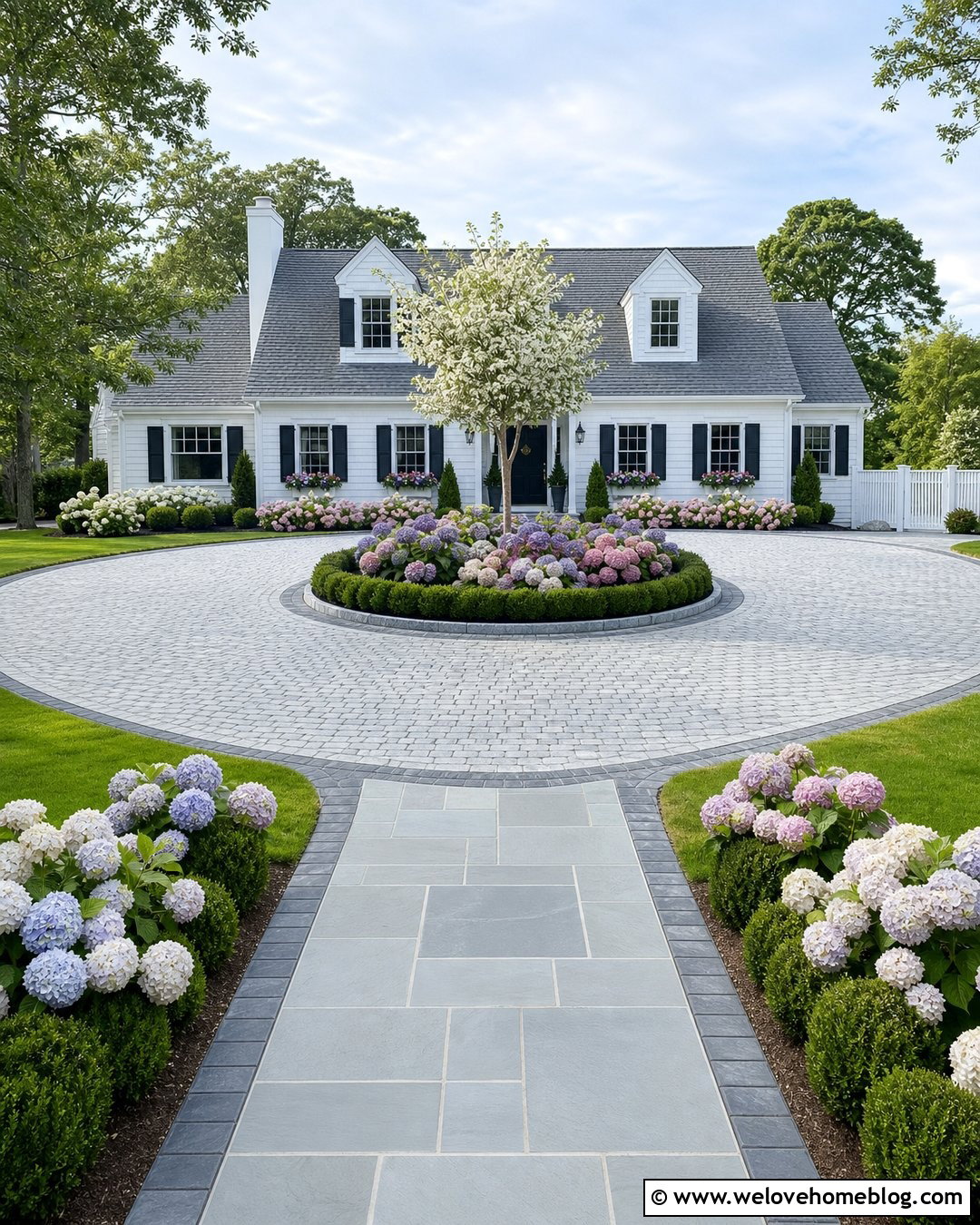
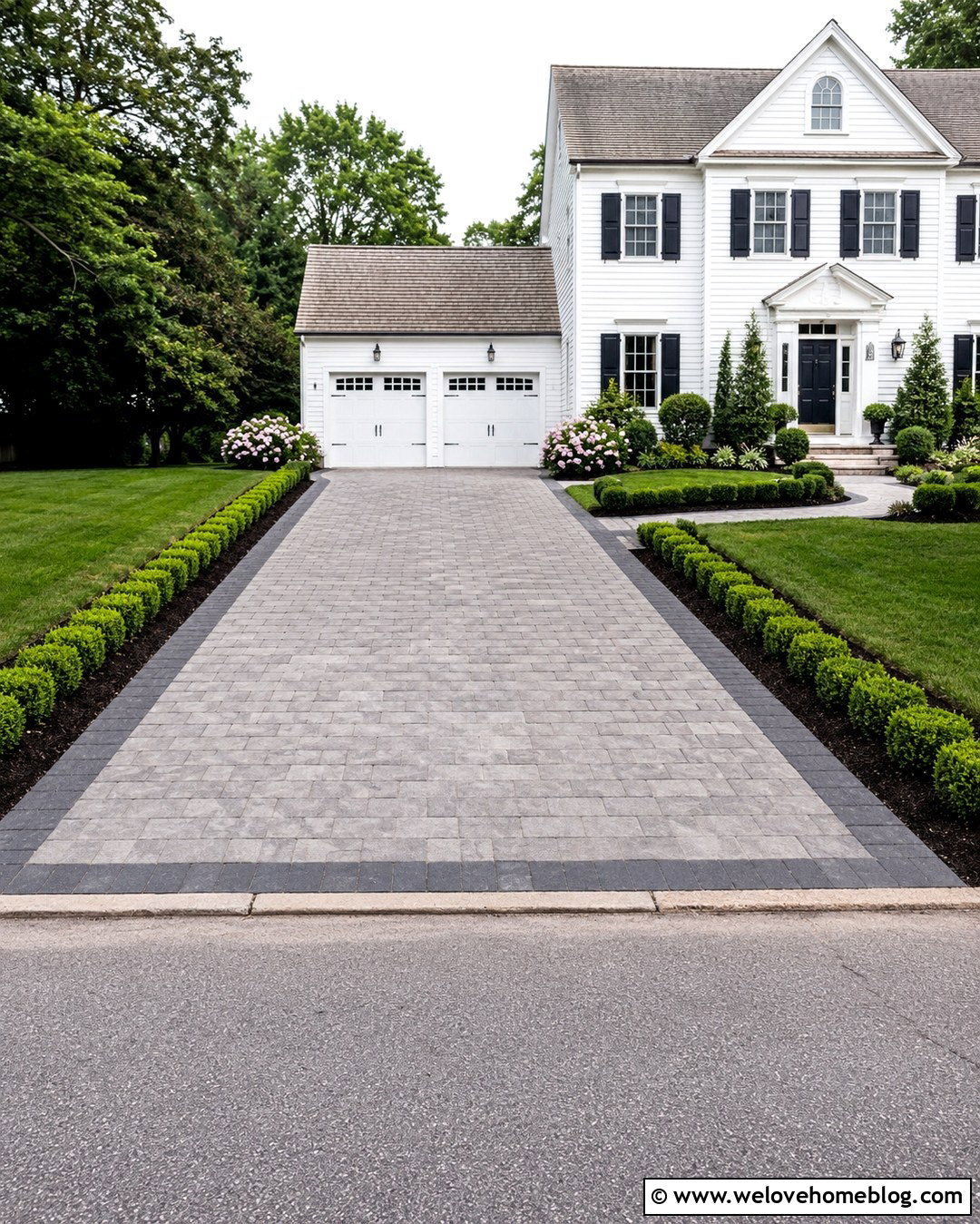
Big hydrangea blooms can soften the broad surface of a circular driveway and bring color closer to the street. Choose cool gray concrete pavers with a charcoal border, then build a center island around a small flowering tree. Plant hydrangeas in a loose ring behind lower boxwoods, keeping both layers set back from the driving edge. Select hydrangea varieties based on local climate, mature size, sunlight, and soil conditions rather than flower color alone. Repeat smaller hydrangea groups near the porch and at the outer curves of the driveway. A wide bluestone walkway should lead directly from the drop-off area to the front steps. This cohesive combination is particularly flattering beside white Colonial, Cape Cod, and coastal-inspired houses because the green foliage and soft flowers complement light facades.

15. Circular Travertine Driveway With Mediterranean Planting
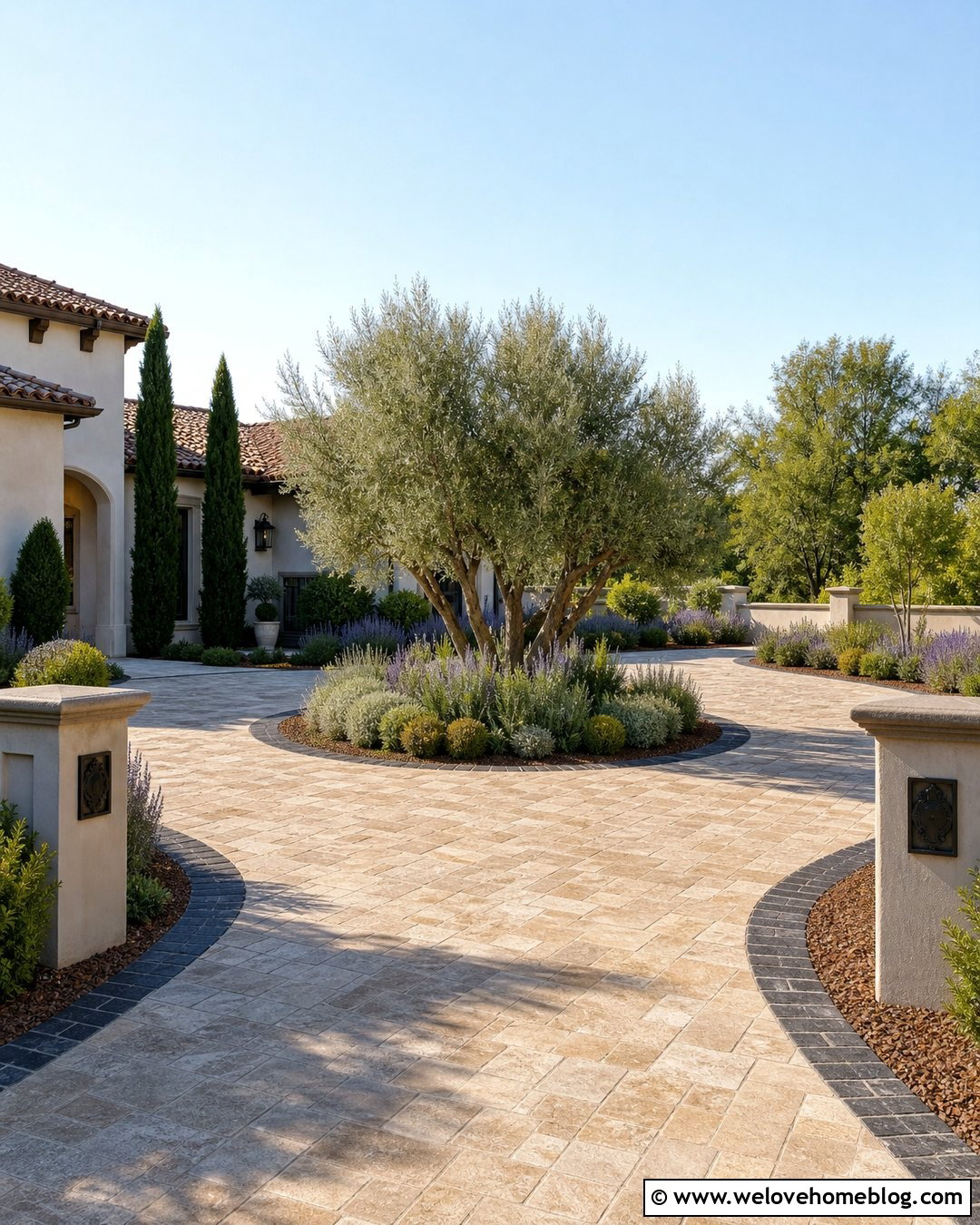
Warm travertine pavers and silver-green foliage can create a sunny Mediterranean-style entrance. Lay tumbled ivory and beige travertine in a random rectangular pattern, using darker stone setts around the inside curve. Fill the center island with a multi-trunk olive tree where it is climate-appropriate, or choose a similar drought-tolerant ornamental tree. Surround it with lavender, rosemary, santolina, and low ornamental grasses planted in broad drifts. Terracotta-toned gravel can cover exposed soil and echo a tiled roof. Add matching stone pillars at the driveway openings and repeat the lavender along the entrance edges. The combination of pale paving, aromatic plants, and disciplined borders works beautifully with stucco, Spanish Revival, Tuscan, and Mediterranean houses while preserving a clear, practical route around the island.
16. Small Circular Driveway With Simple Landscaping
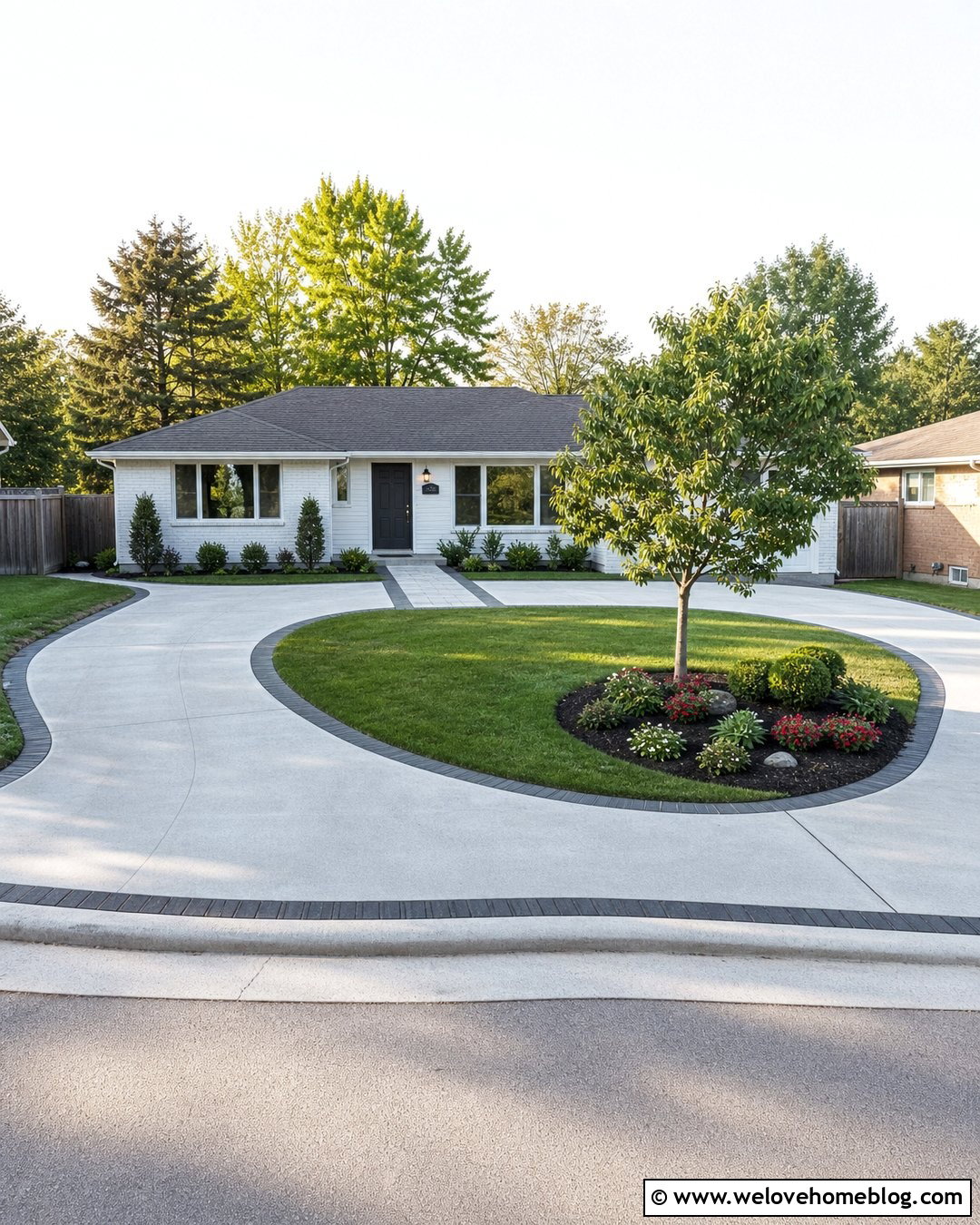
A compact front yard needs a restrained circular layout so paving does not overwhelm the house. Use a narrow horseshoe driveway made from light gray concrete with a single charcoal paver border. Keep the central area mostly lawn and add one small ornamental tree set slightly off-center. A curved mulch bed containing low evergreen shrubs and seasonal flowers can follow the island’s back edge, leaving the street-facing portion open. This makes the yard appear deeper and keeps the house visible. Connect the inner drive to the porch with a straight paver walkway that is wider than the planting borders. Avoid large fountains, tall hedges, and oversized trees in this setting. A limited plant palette and consistent edging will make the entire front yard feel calmer, larger, and easier to navigate.
17. Circular Driveway With Front Walkway
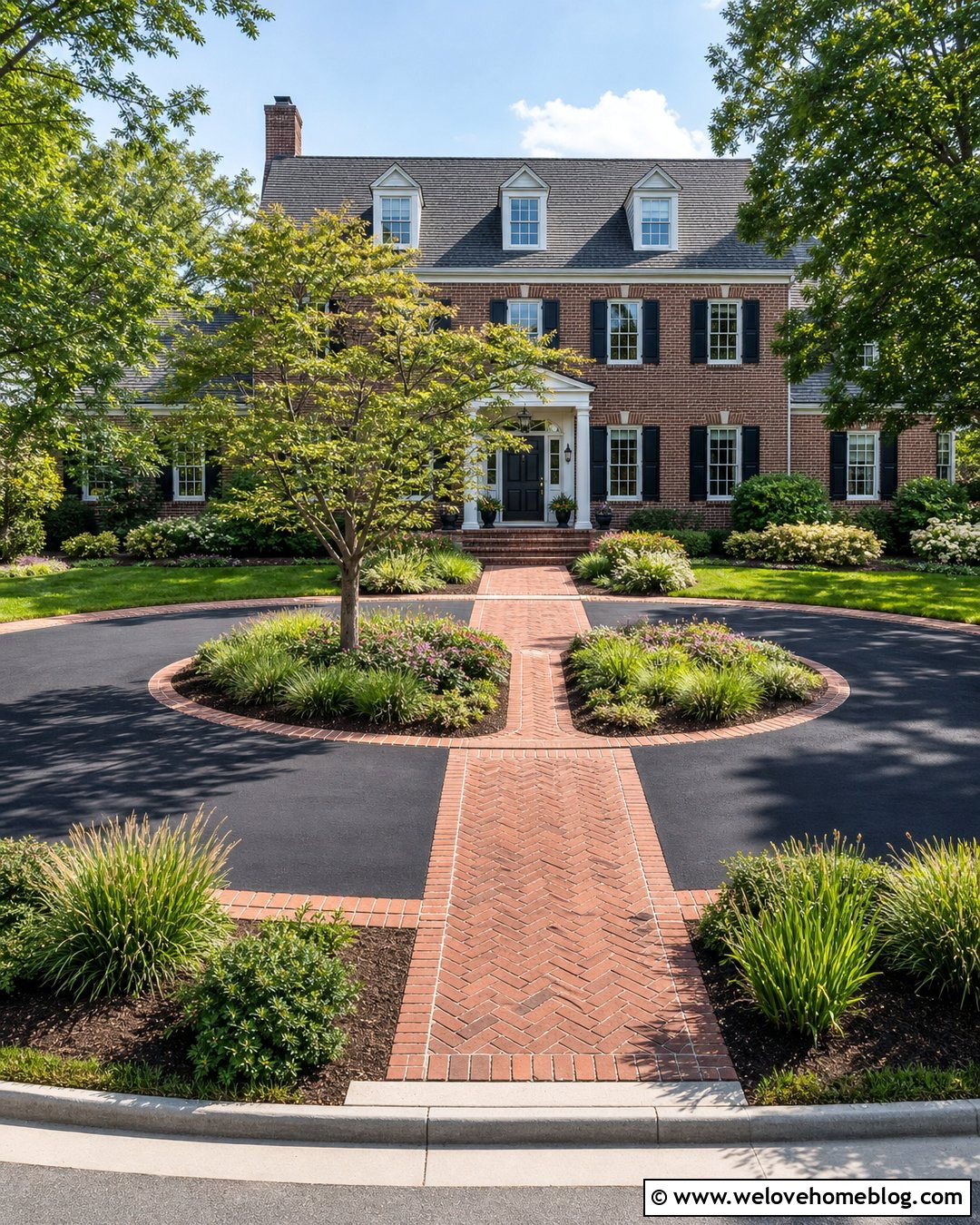
A strong pedestrian path prevents visitors from feeling unsure about how to reach the front door. Construct the circular driveway with charcoal asphalt and add a wide herringbone brick walkway from the inner curve to the porch. Continue the walkway through the center island so it appears connected to the street, but use raised edging or a gentle change in elevation to separate pedestrians from vehicles. Landscape both sides of the path with low grasses, flowering perennials, and compact shrubs that will not spill over the paving. A small ornamental tree can sit to one side, preserving a direct view of the entrance. Brick bands across the asphalt can visually announce the crossing point. The result is a practical, coordinated layout rather than a driveway and walkway that appear to have been planned separately.
18. Circular Driveway With Gate And Stone Pillars
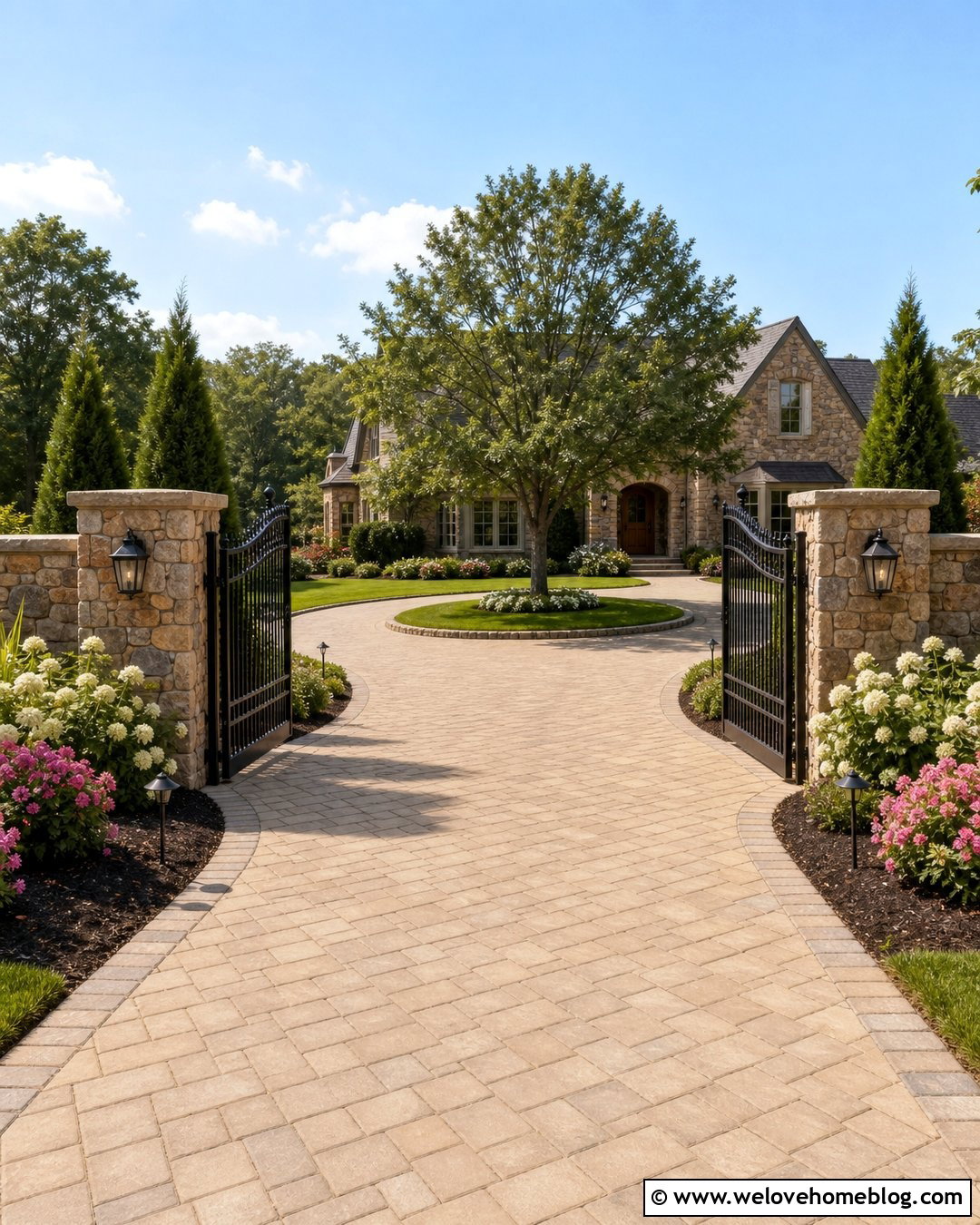
A gated circular driveway can look welcoming when the entrance structure is properly scaled to the house. Use warm-toned concrete pavers for the loop and build low fieldstone pillars at the two street connections. Set the gates back from the road when space allows, providing a safe waiting area that does not block traffic. Plant upright evergreens behind the pillars and lower flowering shrubs along the curved approach. Keep plants away from gate mechanisms, sensors, and sightlines. In the center island, repeat the fieldstone as a low retaining border around a lawn panel and one broad-canopy tree. Low landscape lights can highlight the pillars and guide drivers along the curve. This complete arrangement works with country estates, stone farmhouses, and traditional suburban homes on wider lots.
19. Circular Driveway With Landscape Lighting
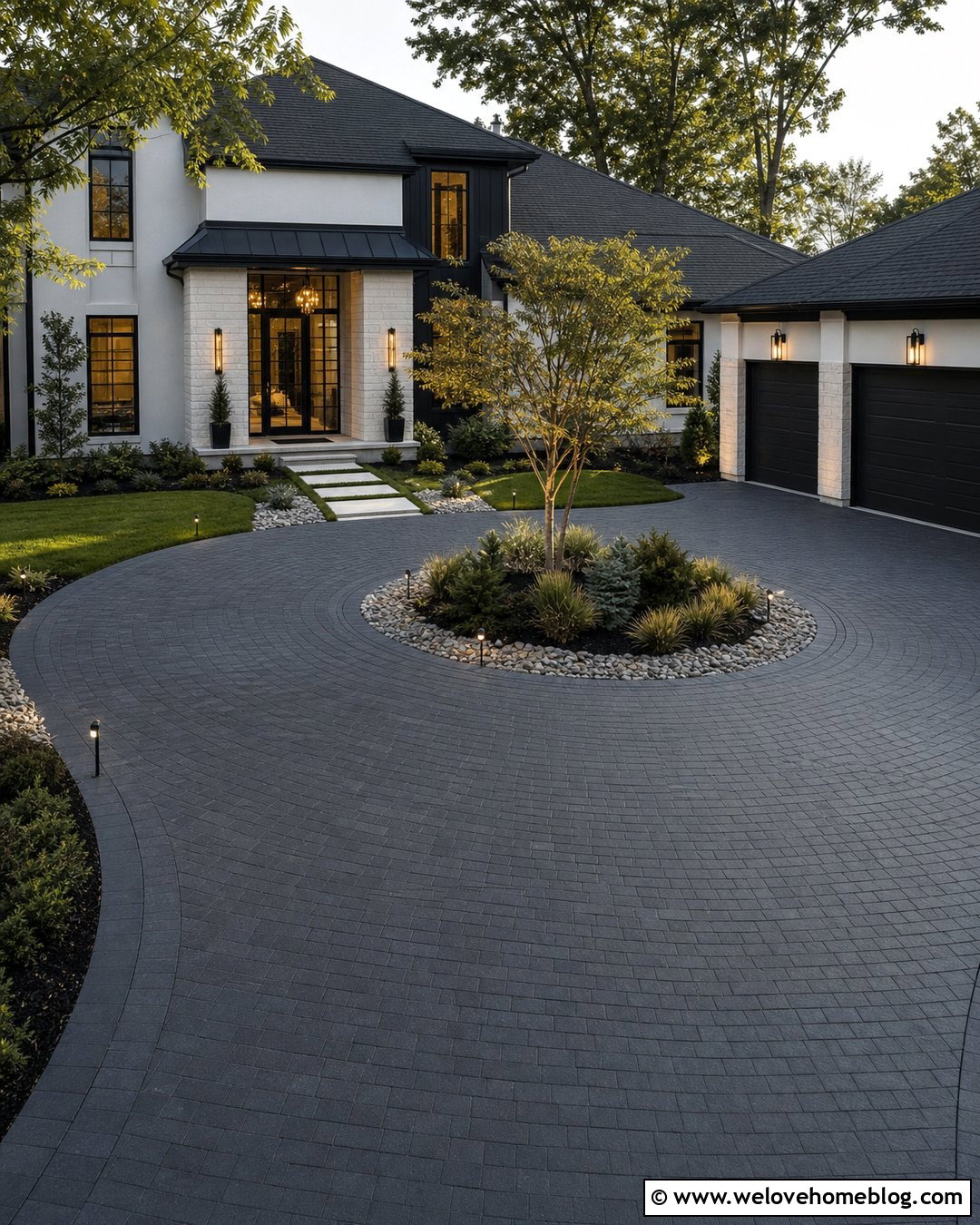
Good lighting should reveal the driveway’s curve without turning the front yard into an airport runway. Start with a dark charcoal paver driveway and install low, shielded path lights at selected points along the inner island. Space fixtures evenly enough to guide movement but leave comfortable gaps between pools of light. Use discreet uplights on a center specimen tree and softer lighting near the entry columns. During the day, the island can feature ornamental grasses, low evergreen shrubs, pale river rock, and a wide stepping-stone path. Keep fixtures out of turning areas and position them where plants will not quickly cover the light. Landscape lighting can improve edge definition and help drivers distinguish pavement from lawn after dark. () Choose bright, glare-free illumination rather than harsh exposed bulbs.

20. Circular Driveway With Four-Season Landscaping
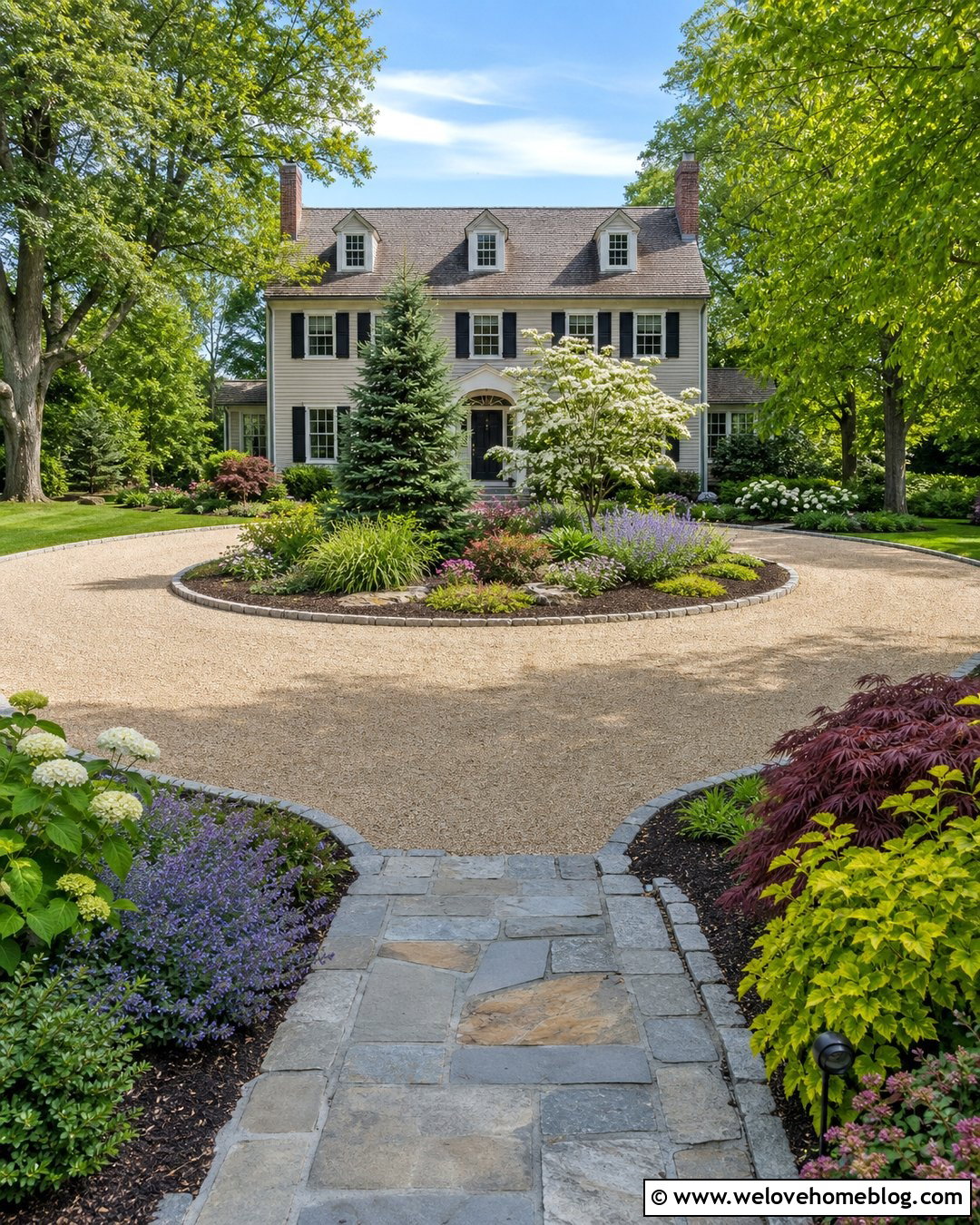
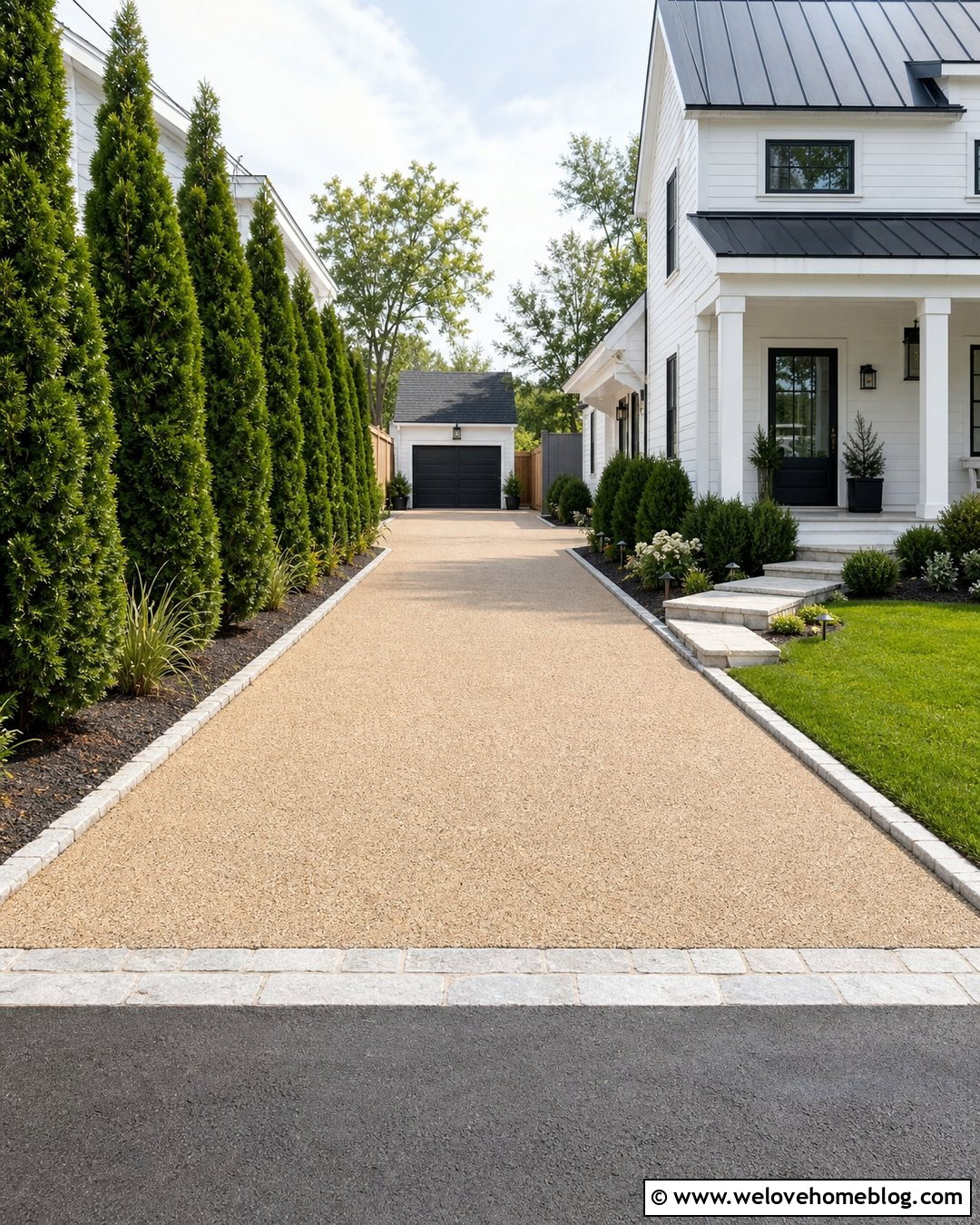
The most dependable front yards combine plants that contribute at different times of year. Surround a buff-colored gravel circular driveway with a center island featuring an evergreen tree, a spring-flowering understory tree, summer perennials, ornamental grasses, and shrubs with colorful fall foliage. Add several plants with berries or textured bark for winter interest. Use a neat cobblestone border to control the gravel and give the mixed planting a consistent frame. Repeat one evergreen and one flowering plant along the driveway’s outer curves so the design does not feel confined to the island. A stone walkway should connect the passenger drop-off point with the porch. Planning around mature plant sizes will prevent branches from narrowing the drive and help the layered landscape remain balanced as it develops.
Conclusion:
Successful circular driveway landscaping is about more than decorating the center island. The driveway material, turning shape, edging, walkway, planting, lighting, and house should form one coordinated scene. Start with practical needs such as drainage, visibility, vehicle clearance, and access to the front door. Then choose a limited group of materials and plants that complement the home’s architecture. Large yards can support fountains, layered trees, or broad perennial beds, while smaller properties benefit from open lawn and low planting. Before construction, confirm local driveway, drainage, setback, and permit requirements. Whether your taste is formal, natural, modern, or low-maintenance, these 20 driveway front yard landscaping circular ideas can help create a more attractive and useful entrance.

Related posts:
Leave a Reply