
The right trees can turn an ordinary driveway into a welcoming, shaded, and polished approach to your home. These 20 Best Driveway Trees Ideas combine attractive tree choices with practical driveway materials, borders, planting beds, and layouts. The best design depends on your climate, available root space, mature canopy width, overhead utilities, and the amount of maintenance you prefer. Trees should have enough room to grow without narrowing vehicle clearance or crowding pavement. In cold regions, planting areas may also need protection from deicing salt and salty runoff. Matching each tree to the site’s soil, sunlight, drainage, and space supports healthier long-term growth. () Explore these complete driveway designs through the 20 Best Driveway Trees Ideas.

1. Flowering Dogwood Driveway
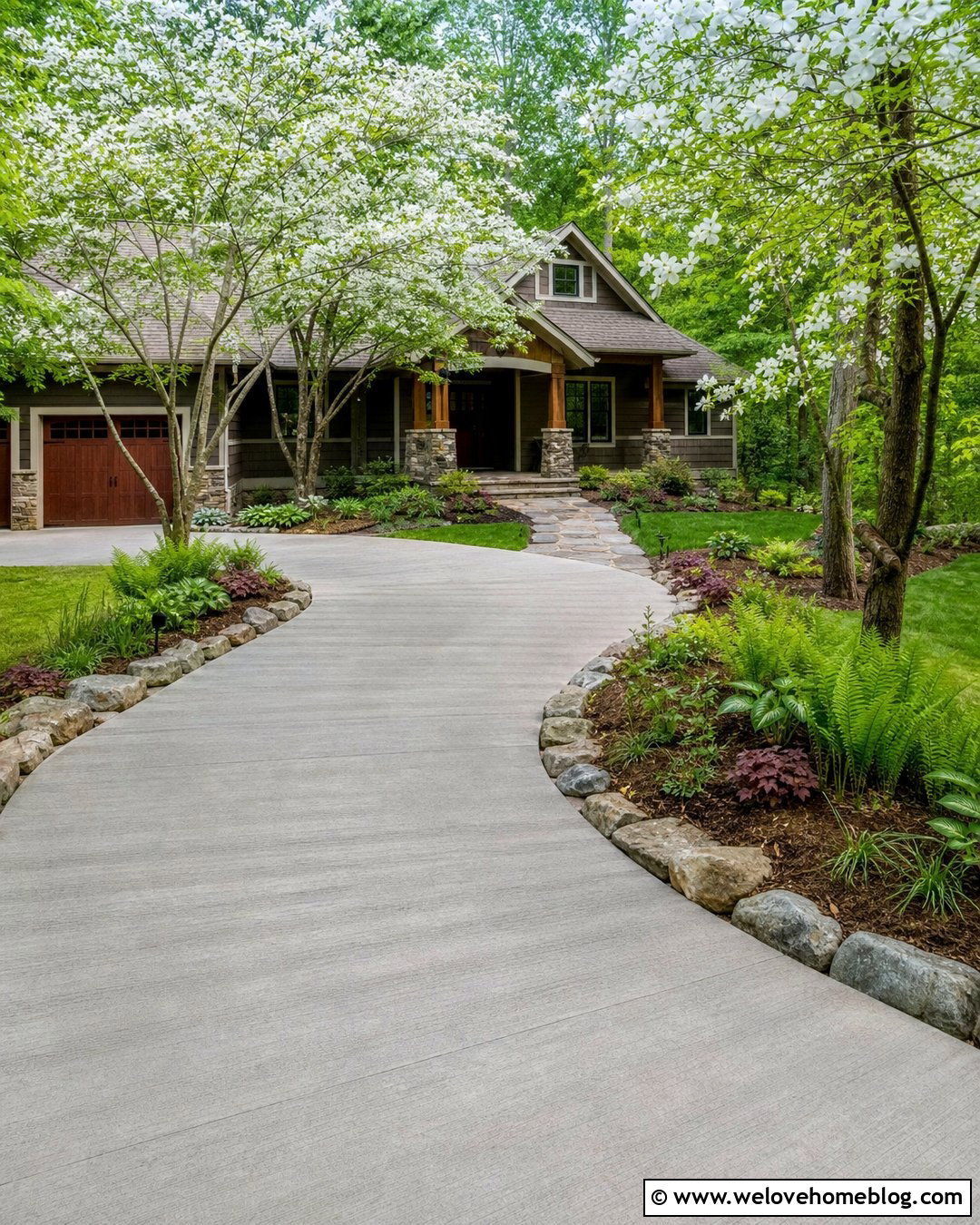
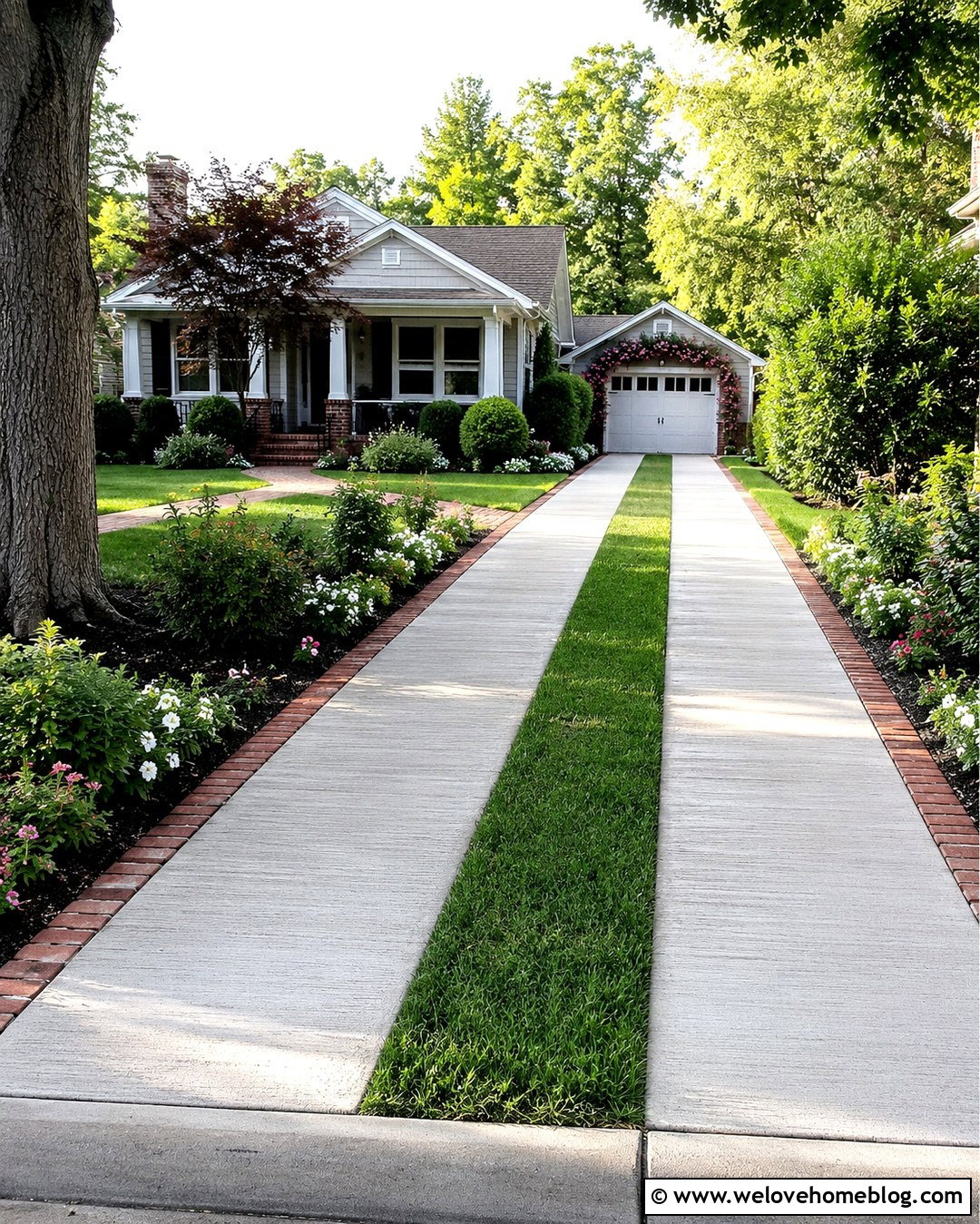
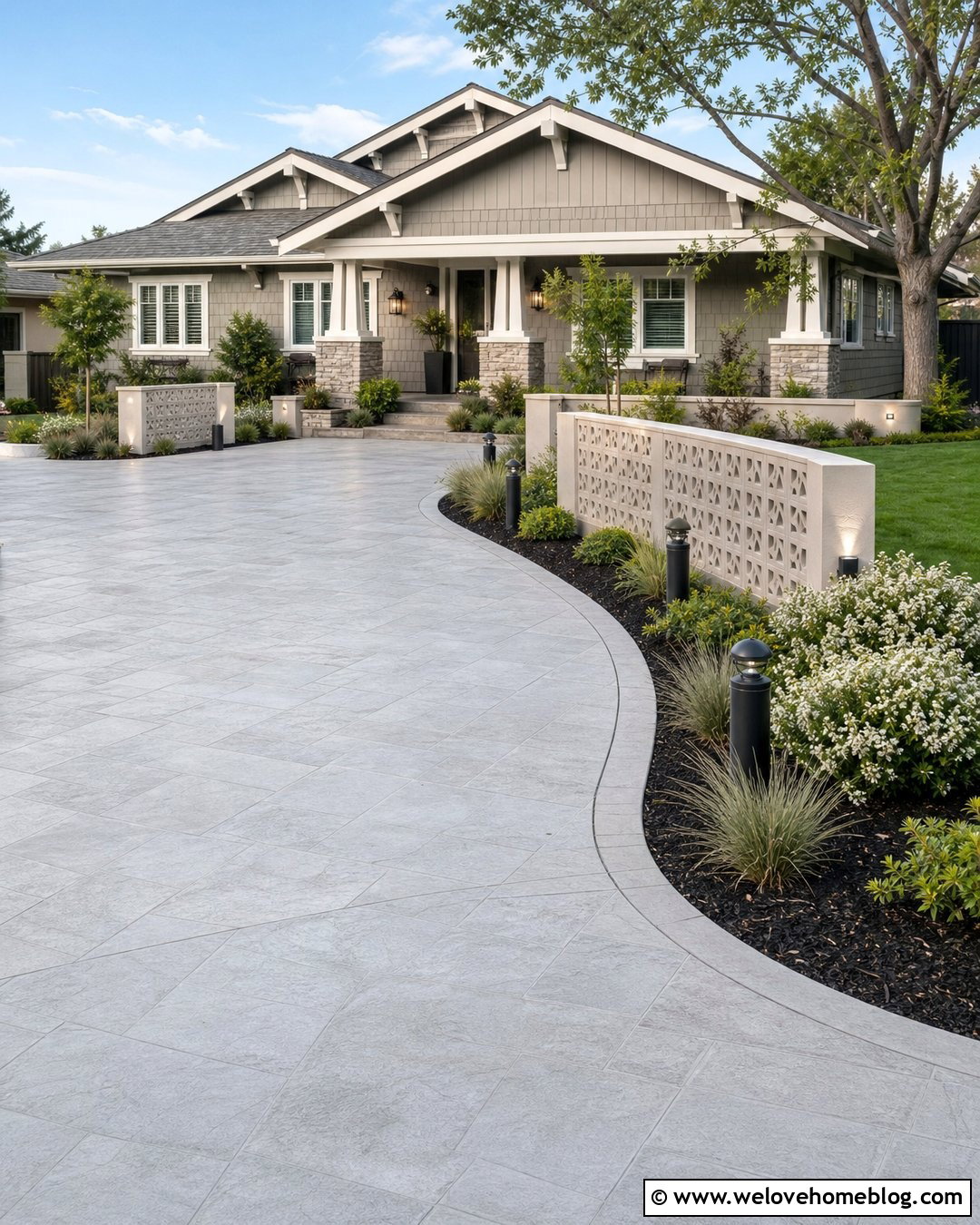
A flowering dogwood-lined driveway creates a graceful entrance without making the landscape feel oversized. Use two staggered rows along a gently curved, light-gray concrete driveway, leaving broad planting beds between the trunks and pavement. Natural fieldstone edging can repeat the colors of a Craftsman facade while keeping mulch away from vehicle tires. Underplant the dogwoods with ferns, sedges, coral bells, and low native shrubs for a layered woodland look. This arrangement works especially well where the trees receive morning sun and some afternoon protection. Keep sightlines open near the street by starting taller planting farther inside the property. White-flowering selections produce a calm, classic appearance, while pink varieties can coordinate with brick, painted shutters, or colorful perennial beds.
2. Crape Myrtle Driveway
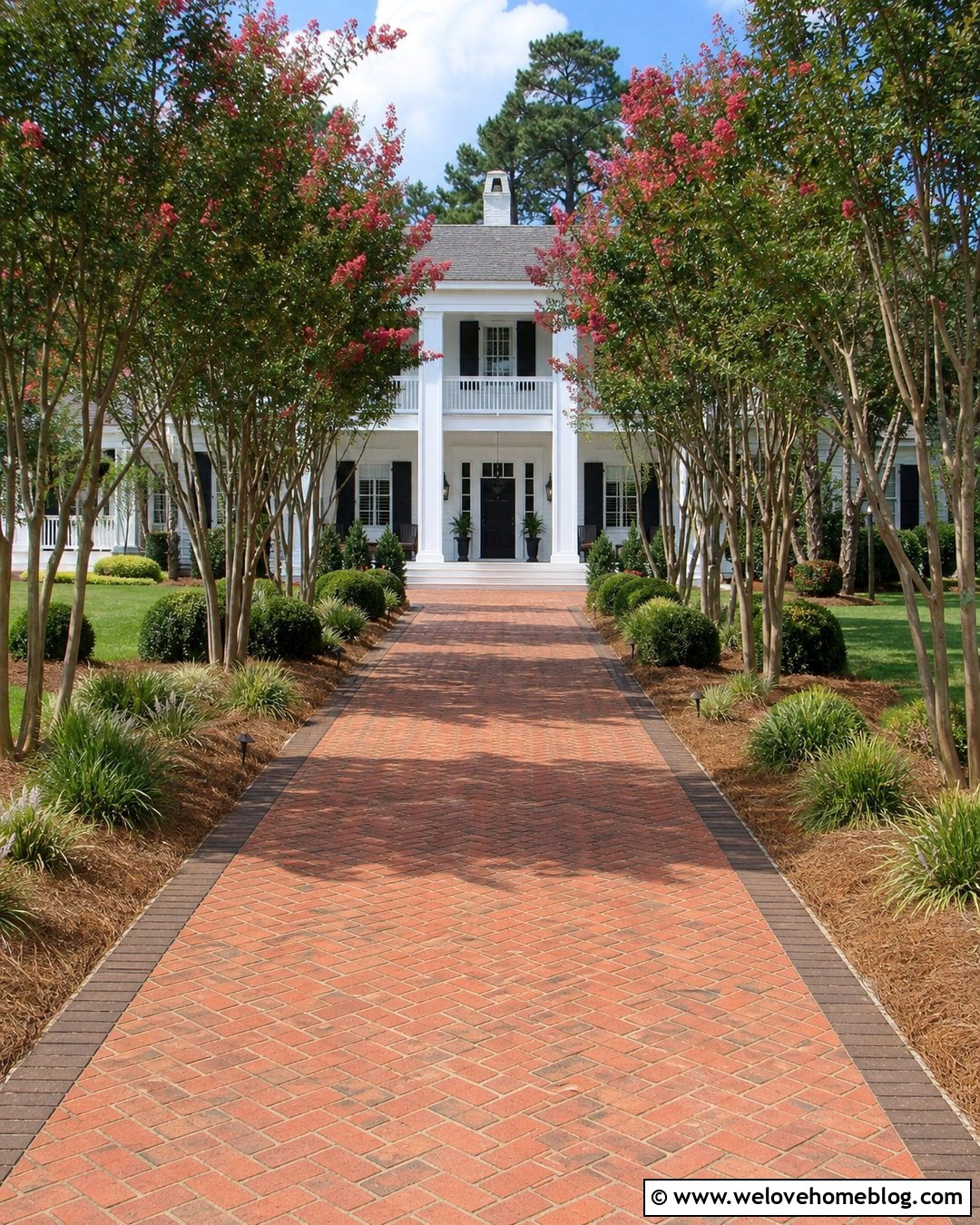
For vivid summer color, consider evenly spaced crape myrtles beside a straight brick-paver driveway. Their sculptural trunks and flowering canopies create an attractive rhythm leading toward a Southern, ranch, or colonial-style home. Choose a mature size that fits the planting strip rather than depending on constant severe pruning. A herringbone surface with a darker soldier-course border gives the driveway a tailored finish. Beneath the trees, use pine-straw mulch, dwarf ornamental grasses, and compact evergreen shrubs to keep maintenance manageable. Allow generous clearance around each trunk and maintain an open view where the driveway meets the road. Repeating one flower color creates a formal effect, while alternating compatible shades feels more relaxed. Confirm that the selected cultivar suits local winters before planting.
3. Eastern Redbud Driveway
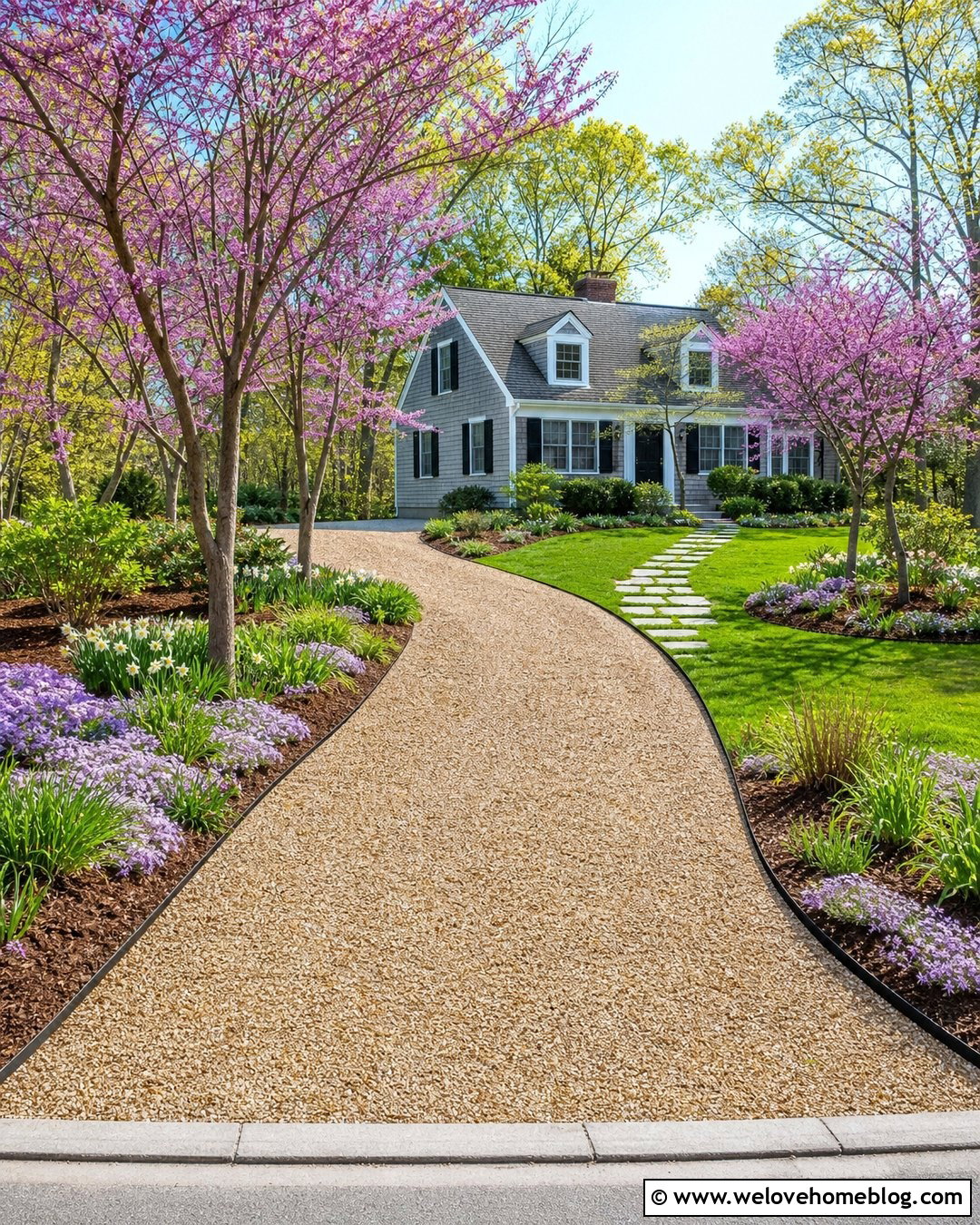
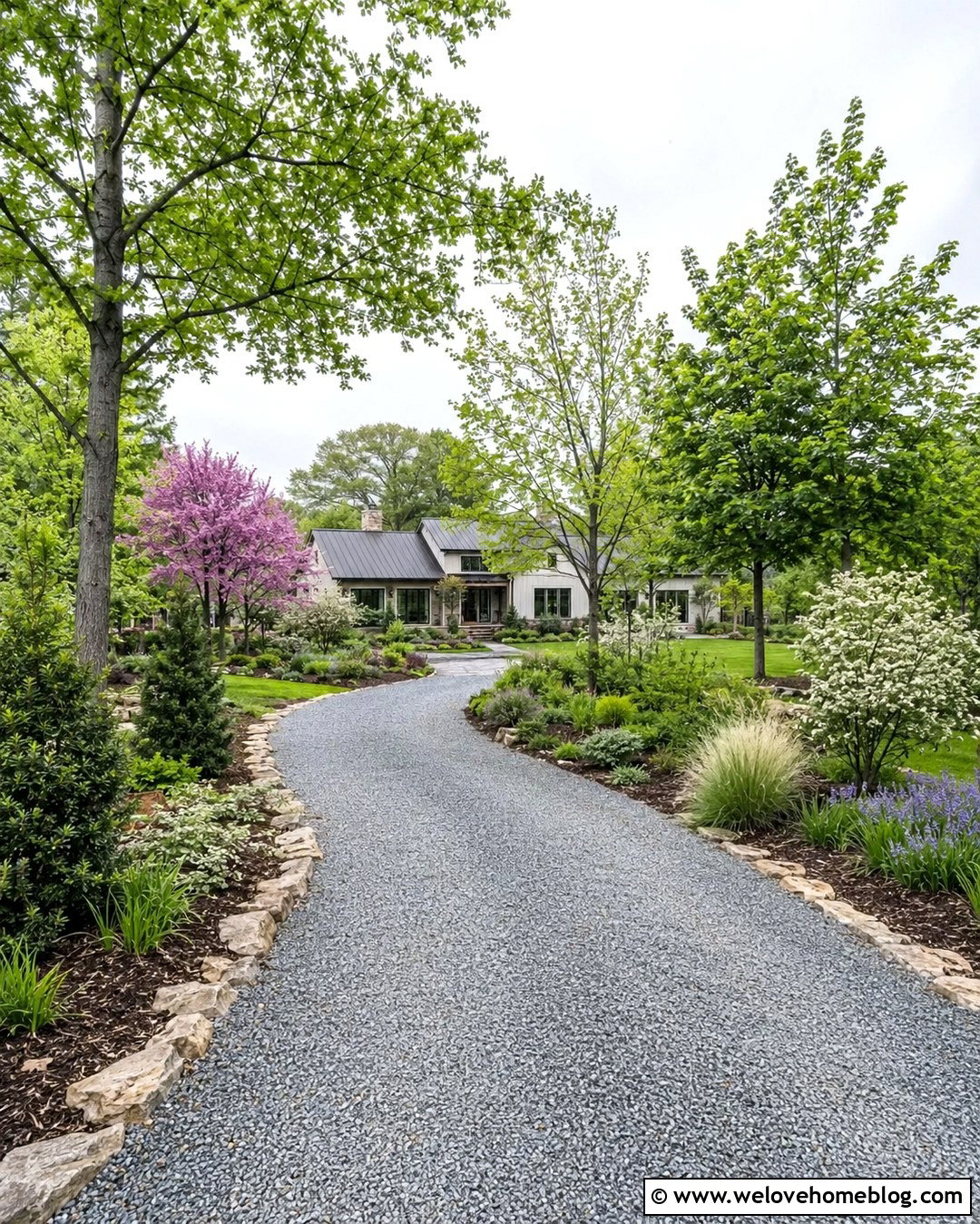
Imagine turning into a driveway framed by clouds of pink spring flowers. Eastern redbuds can deliver that inviting effect along a short pea-gravel driveway leading to a cottage or Cape Cod home. Place the trees in wide, asymmetrical beds instead of rigid rows, allowing their branching forms to look natural. A steel edge keeps the warm beige gravel contained, while drifts of woodland phlox, sedges, and spring bulbs connect the trees to the surrounding yard. Redbuds are especially useful where a massive shade-tree canopy would overwhelm the space. Position them far enough from pavement to accommodate their mature spread and keep lower branches from brushing vehicles. The loose arrangement also makes it easier to vary spacing around utility lines, walkways, and existing landscape features. ()
4. Serviceberry Driveway
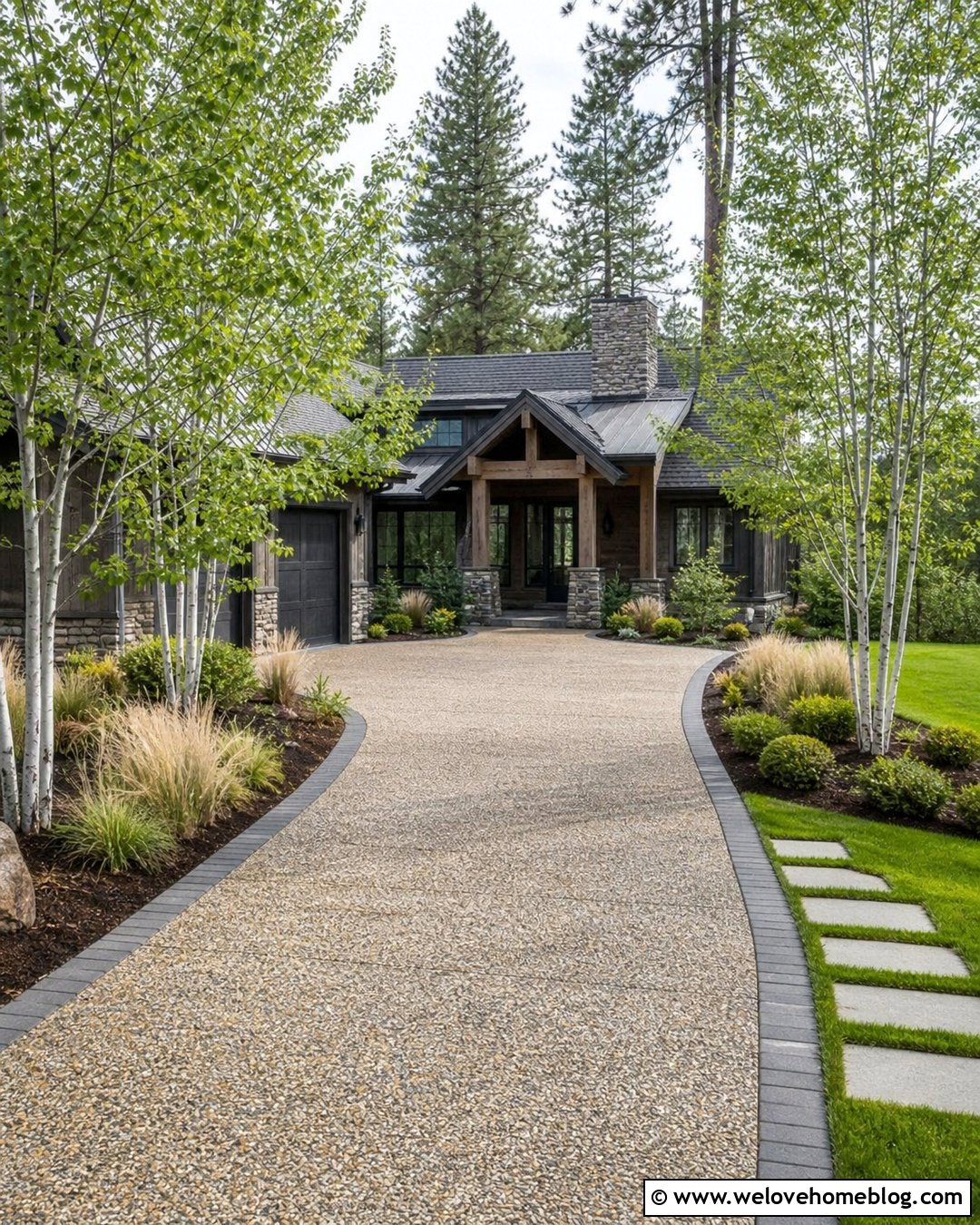
Serviceberry trees bring a softer, natural character to a driveway and can provide interest across several seasons. Pair multi-stem forms with a curved exposed-aggregate driveway, charcoal paver edging, and broad beds of native grasses. The fine texture of the aggregate complements the trees’ delicate branching without competing for attention. This look suits a contemporary cottage, mountain home, or updated ranch surrounded by a less formal yard. Space the trees in loose groups rather than planting an identical row, then repeat a few rounded shrubs to make the arrangement feel intentional. A simple stepping-stone walkway can pass through the planting bed toward the front door. Because serviceberry varieties differ in form and mature dimensions, choose one that provides comfortable vehicle clearance while fitting the available soil area beside the pavement.
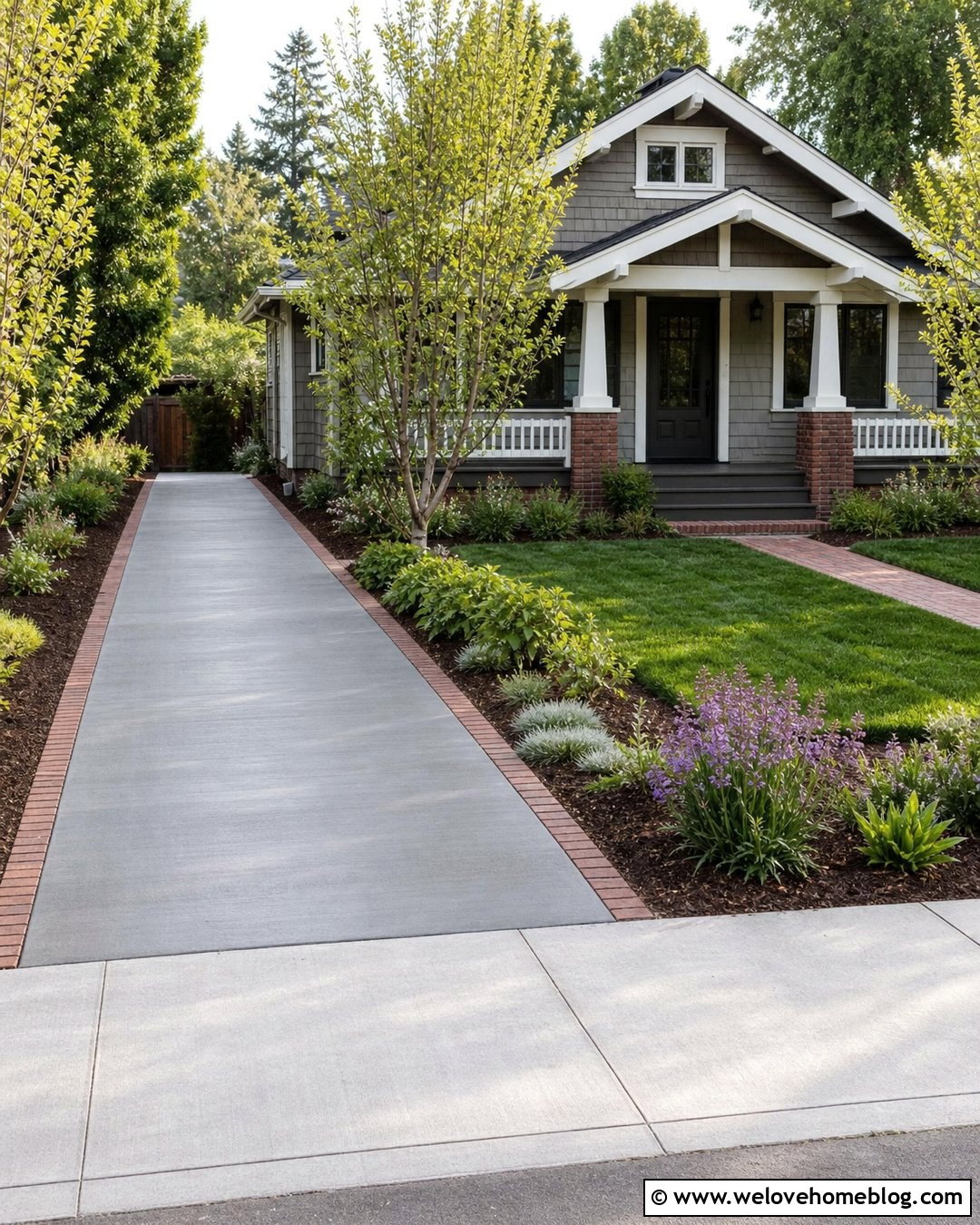
5. Japanese Tree Lilac Driveway
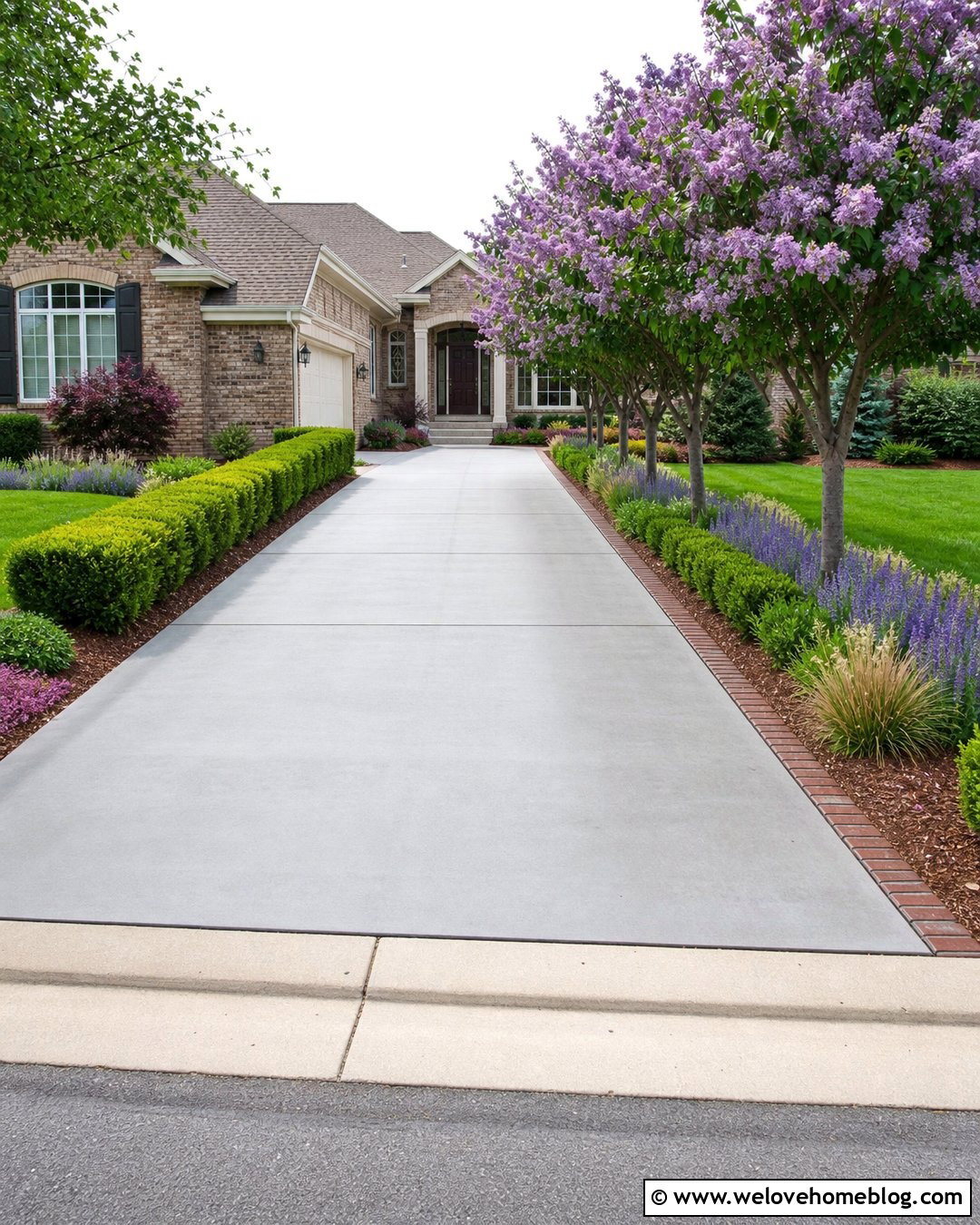
A Japanese tree lilac driveway offers a clean, manageable look for suburban properties with limited planting space. Set single-trunk trees along one side of a straight, medium-gray poured-concrete driveway, then balance them with a low hedge on the opposite side. Wide rectangular control joints make the surface feel modern, while a narrow clay-brick ribbon adds warmth near a traditional home. Beneath each tree, use connected mulch beds instead of small isolated circles. This creates more usable root space and simplifies mowing. Compact catmint, salvia, and ornamental grasses can soften the bed edge without hiding the trunks. Japanese tree lilac appears on extension recommendations for challenging public planting locations, but the final cultivar should still be matched to local climate, soil, and available canopy room. ()
6. Columnar Hornbeam Driveway
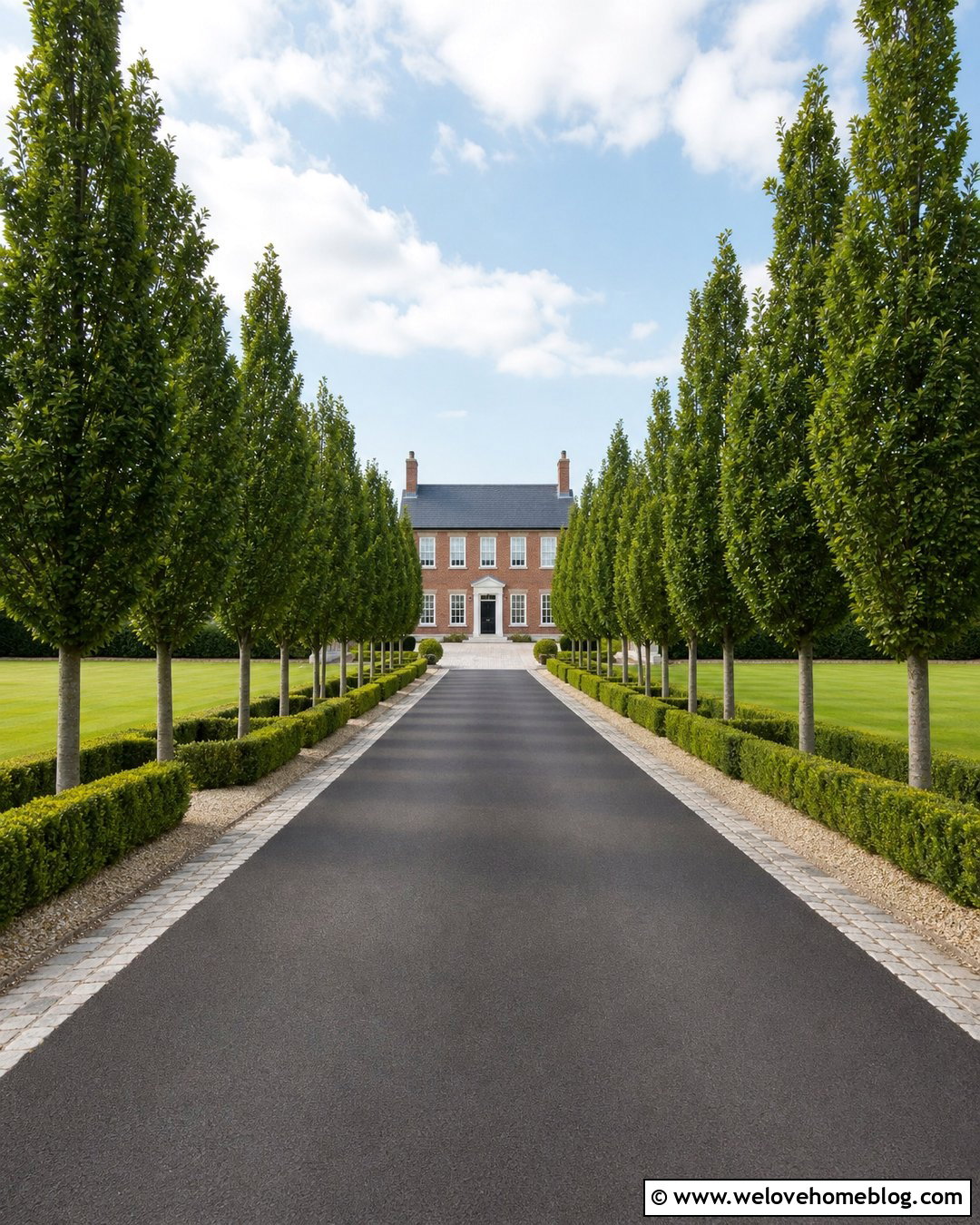
When a formal tree-lined entrance is desired but the side yard is relatively narrow, columnar hornbeams can create strong vertical structure. Plant matching trees at consistent intervals along a long black asphalt driveway with a pale cobblestone border. The contrast between dark pavement, light stone, and green foliage makes the entire route easy to read from the curb. A clipped boxwood hedge behind the trees reinforces the geometry, while gravel mulch keeps the planting strip crisp. This complete design works beautifully with colonial, Georgian, and European-inspired homes. Measure mature canopy width before deciding how close the trees should sit to the driveway or property line. Uniform spacing looks best when trees of the same cultivar and similar size are installed together, producing a balanced avenue as they develop. ()
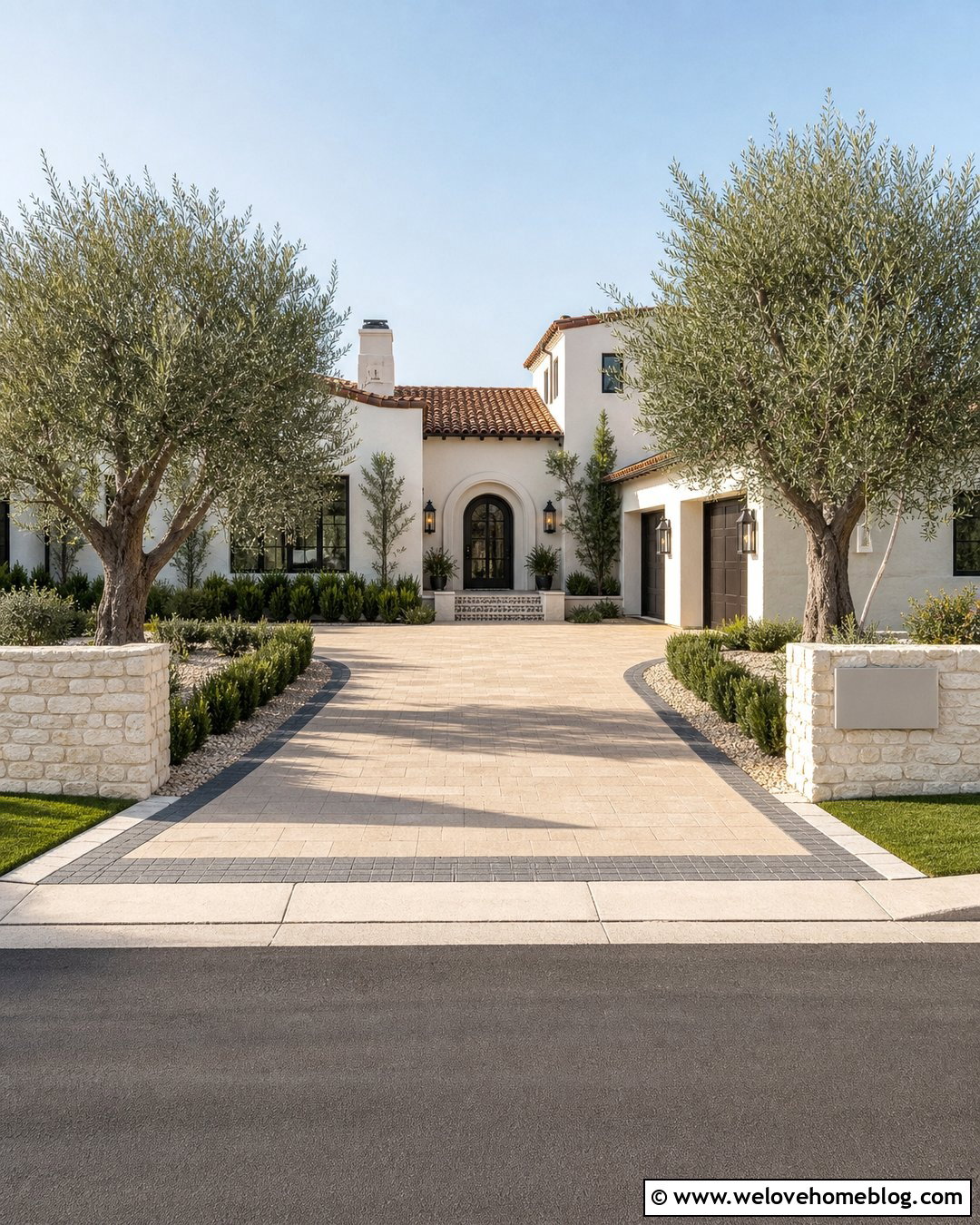
7. Italian Cypress Driveway
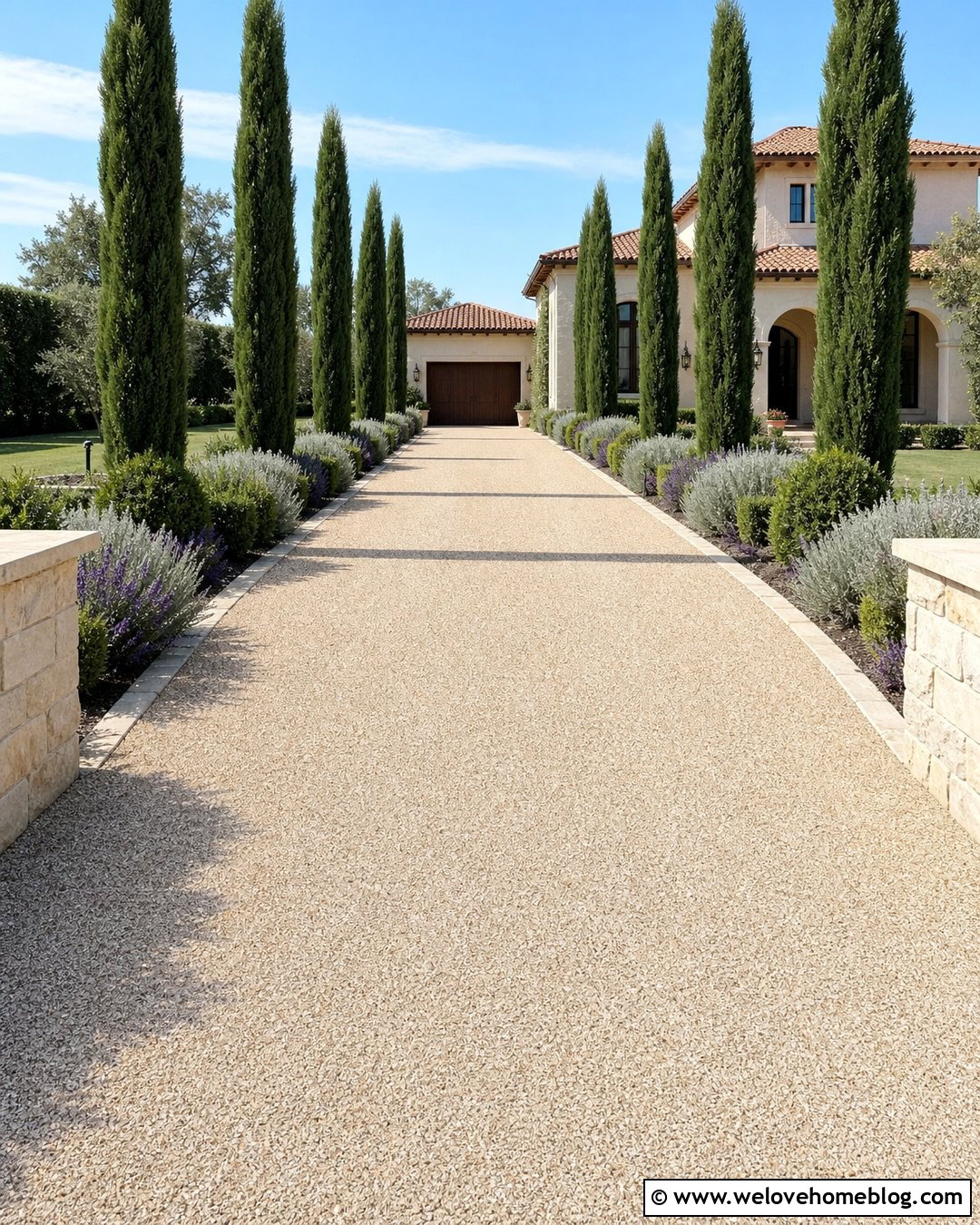
Tall Italian cypress trees can transform a sunny driveway into a dramatic, structured approach. Use them in matched pairs along a straight, cream-colored resin-bound gravel driveway leading to a stucco Mediterranean home. Warm limestone curbs, lavender beds, rosemary, and low silver foliage complete the dry-climate palette. Rather than crowding the entire driveway with trees, place pairs at the entrance, midpoint, and garage approach. This preserves open views while repeating the narrow vertical form. Italian cypress is best associated with warm regions and well-drained, sunny sites, so it should not be treated as a universal choice. Its familiar landscape form is narrow but can become quite tall at maturity. Confirm regional suitability and final dimensions before installation, especially near overhead wires, rooflines, or neighboring properties. ()
8. Arborvitae Driveway
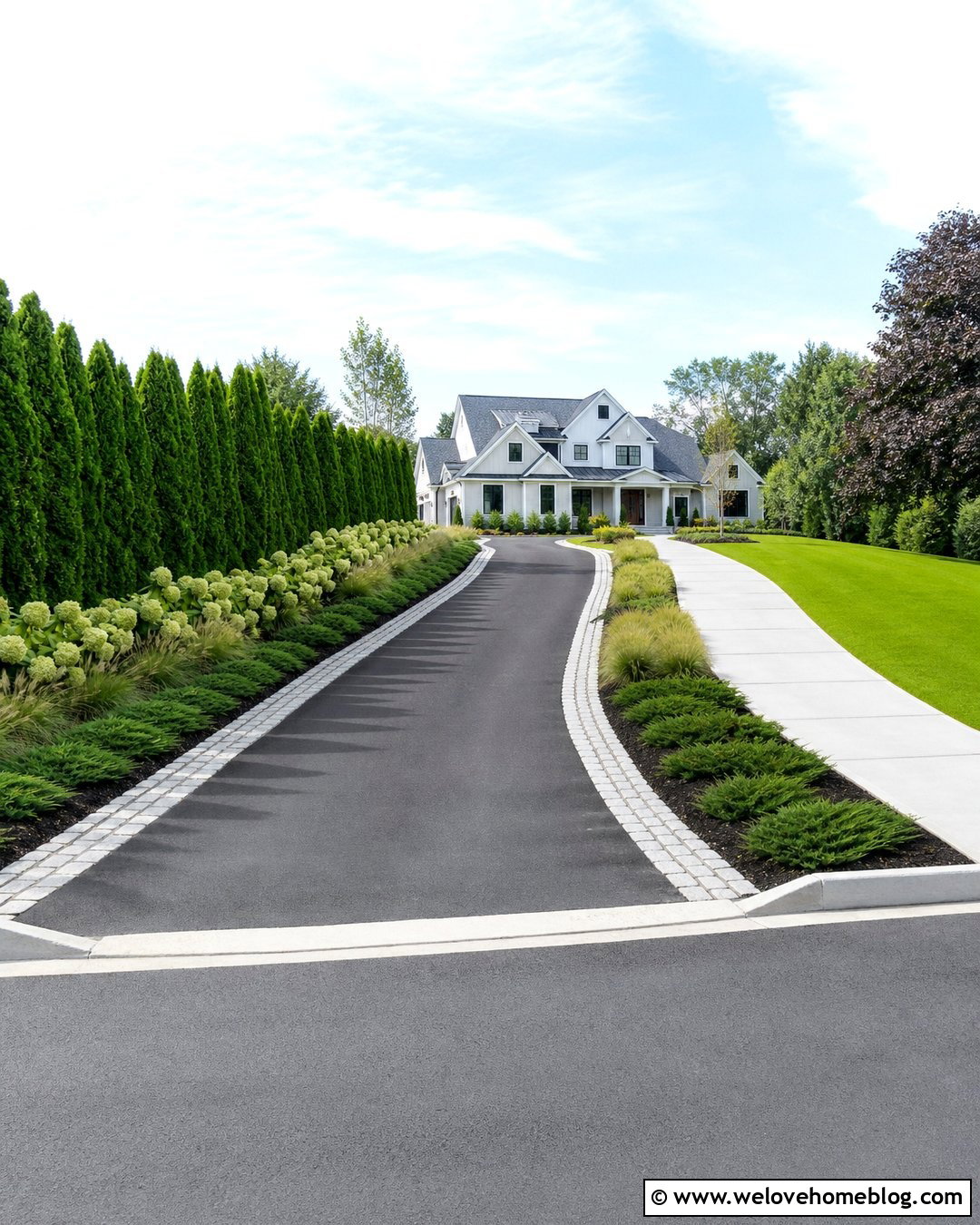
A row of arborvitae can give a driveway year-round screening from neighboring homes, utility areas, or a busy street. Pair the evergreen row with a gently curved gray asphalt driveway and a double border of granite cobbles. Keep the trees on the privacy side only, leaving the opposite edge open with lawn and a broad walkway. This prevents the approach from feeling like a narrow tunnel. Add hydrangeas, dwarf grasses, and ground-covering junipers in front of the arborvitae to soften their upright shapes. The design works well beside a modern farmhouse or traditional suburban home. In snowy regions, provide extra distance from salty runoff and plowed snow. Evergreens can be especially vulnerable to deicing salt exposure, so drainage direction and winter maintenance should be considered before planting. ()
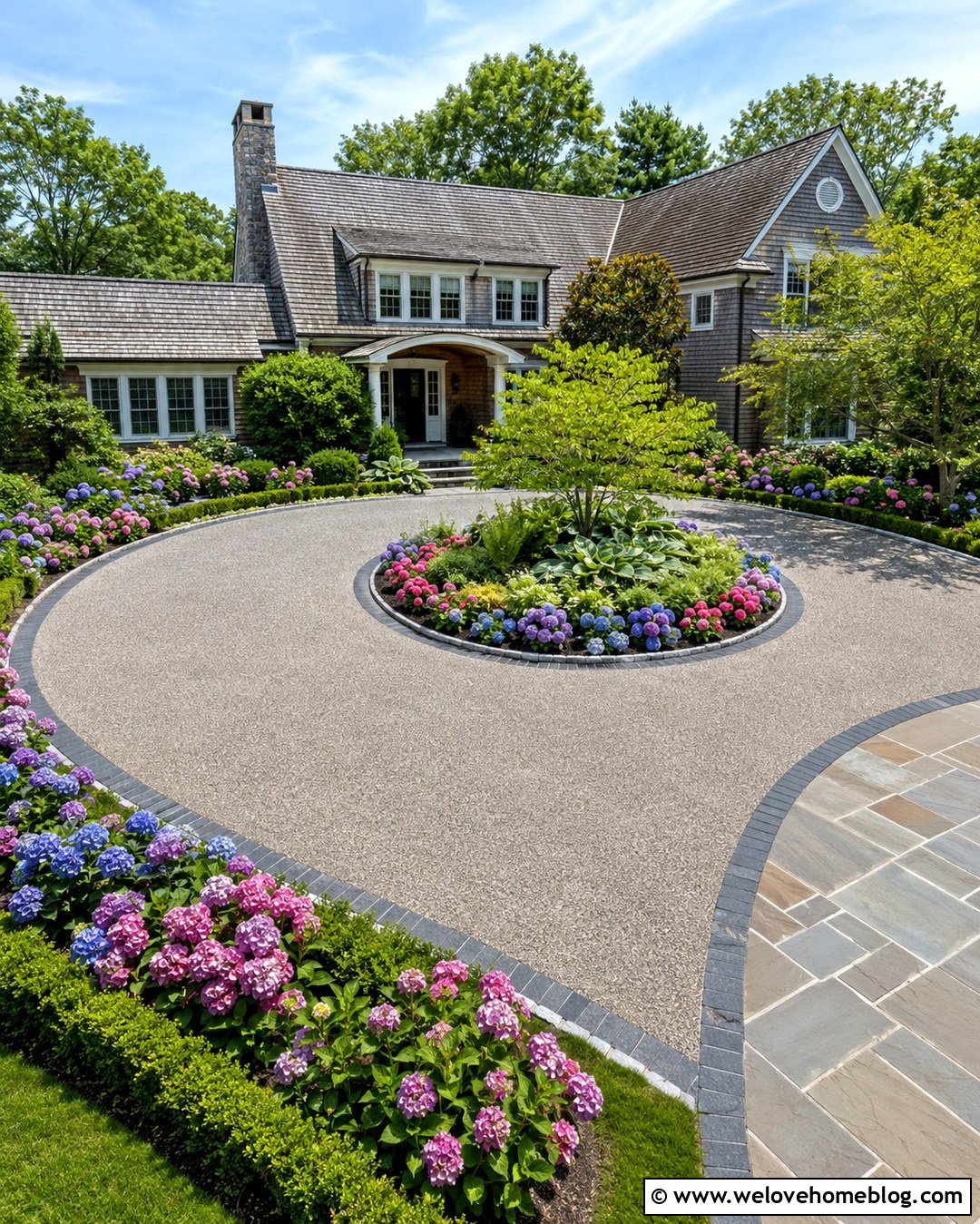
9. Thornless Honeylocust Driveway
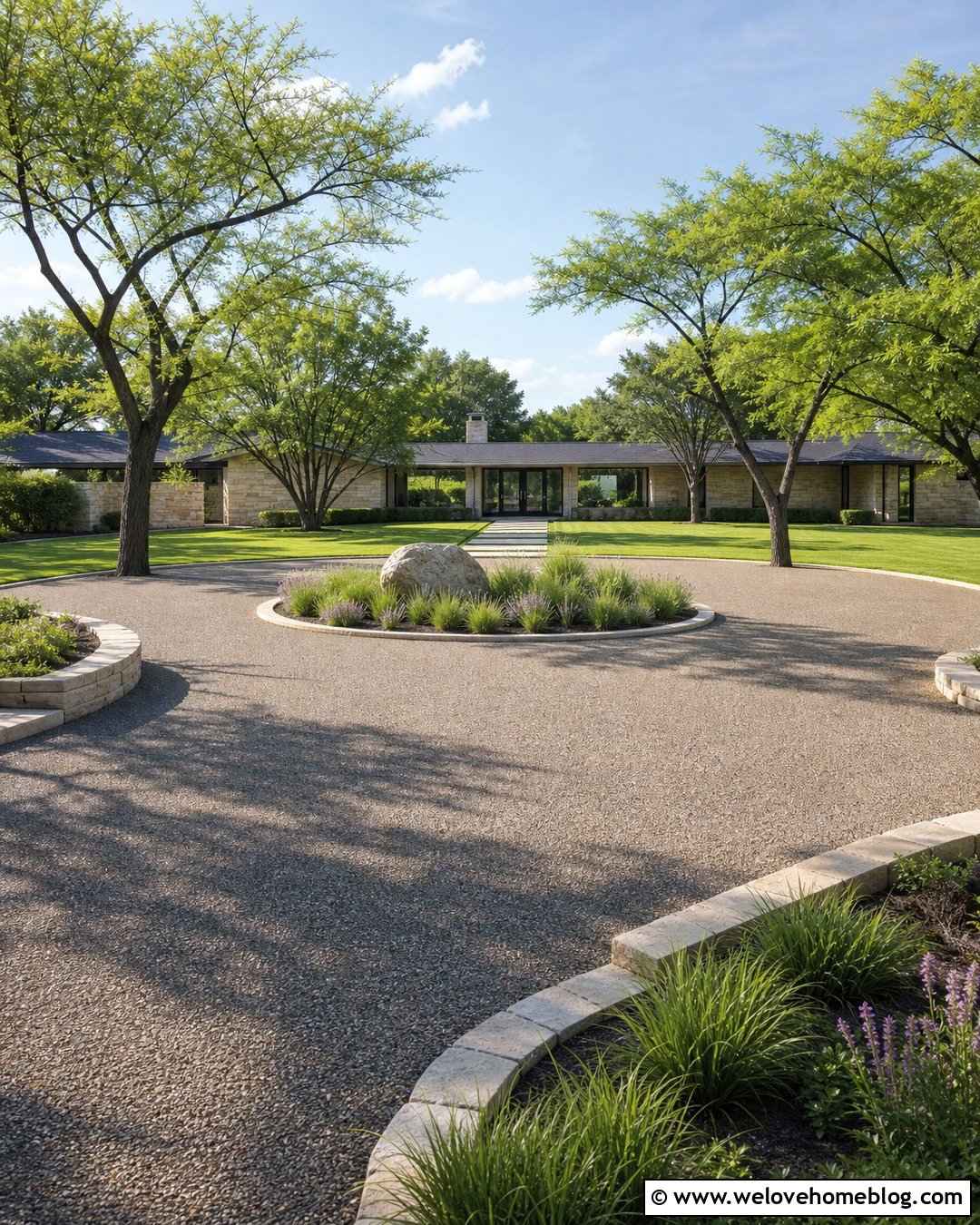
Do you want shade without making the driveway feel dark and enclosed? Thornless honeylocust trees can create a light, filtered canopy over a wide driveway. Place them in broad lawn panels beside a circular exposed-aggregate drive, with buff limestone edging around the center island. Their airy visual character pairs well with a midcentury ranch or large contemporary home. Fill the island with a low ornamental grass mass, seasonal perennials, and one sculptural boulder so approaching drivers retain clear views. Use a thornless, podless cultivar when available to reduce common driveway concerns. The planting zones must be wide enough for mature trunks and roots, rather than narrow openings cut into pavement. Honeylocust is often recommended as a tough landscape tree, including for locations affected by challenging urban conditions. ()

10. Ginkgo Driveway
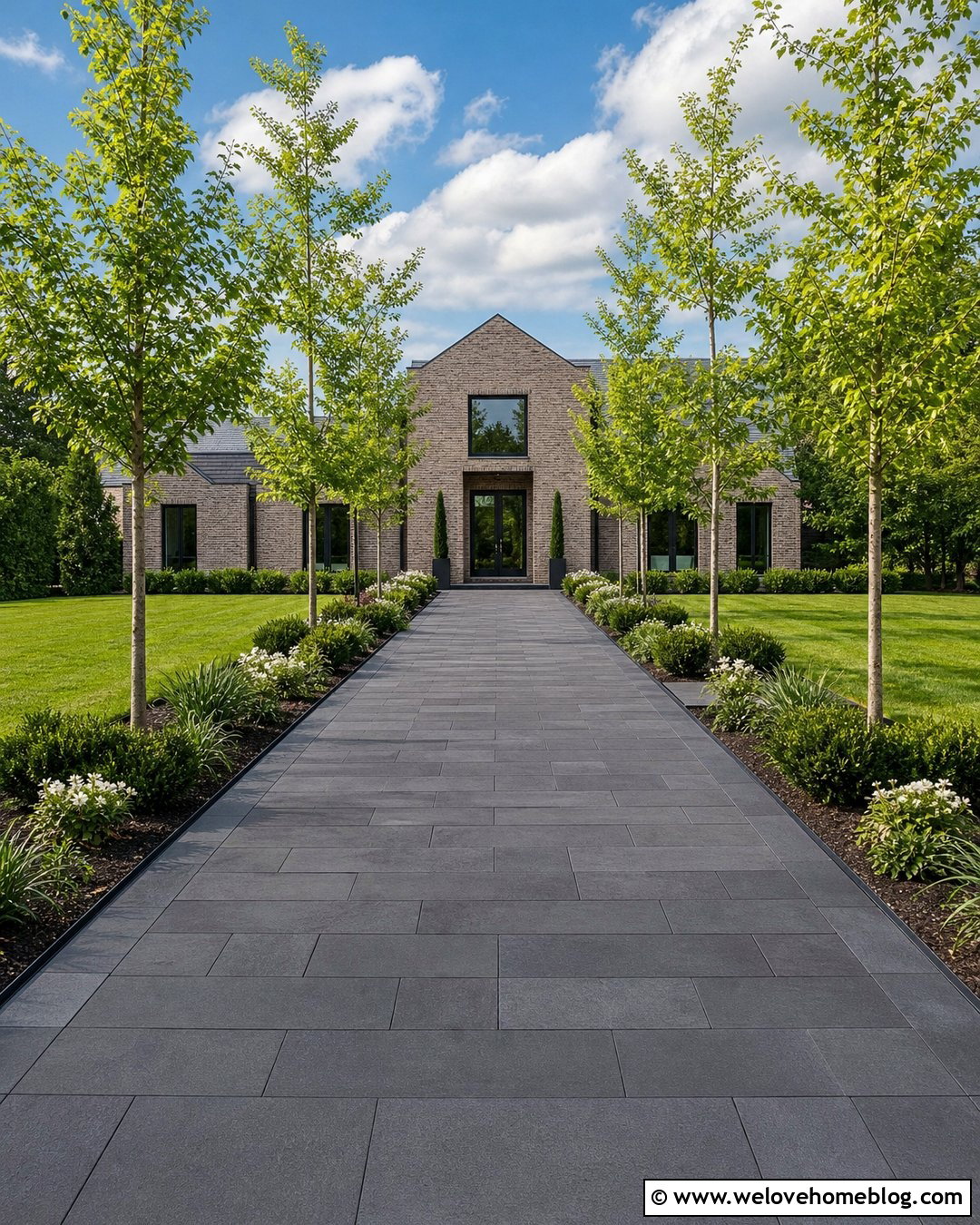
A ginkgo-lined driveway brings bold structure and brilliant seasonal color to a formal front yard. Use male cultivars to avoid messy fruit, and select an upright form when the planting area is narrow. A straight driveway made from large-format charcoal concrete pavers creates a strong contemporary base for the distinctive foliage. Separate the pavers from the trees with wide bands of lawn and rectangular mulch beds bordered in black metal. Low inkberry, liriope, and white-flowering perennials can repeat beneath each tree without distracting from the trunks. This arrangement looks especially polished beside a modern brick or minimalist stone house. Ginkgo appears on extension lists for salt tolerance, but no tree is completely resistant to salt injury. Sensible deicing practices and adequate setbacks remain important in cold climates. ()
11. White Oak Driveway
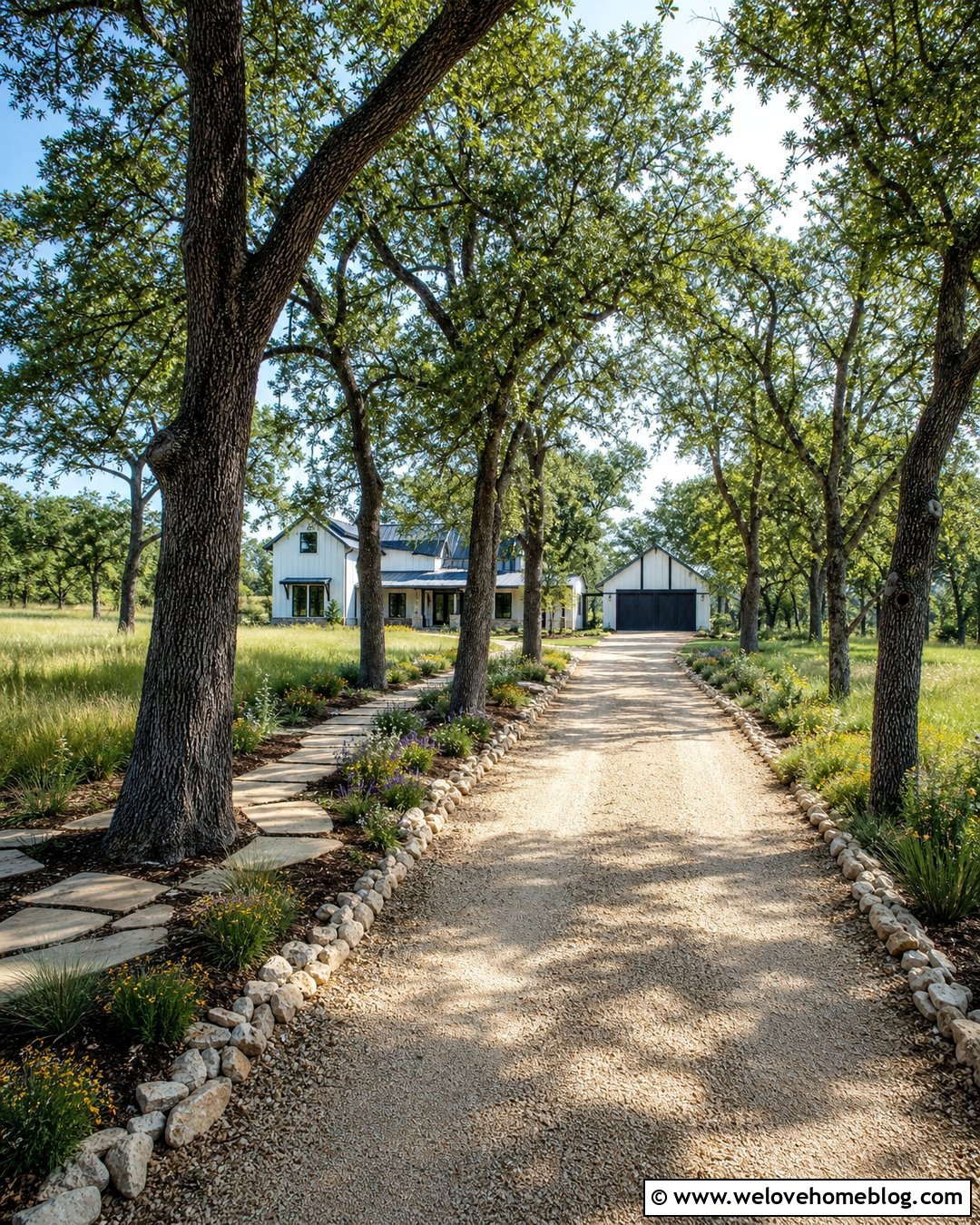
A long country driveway has enough scale to showcase white oaks without crowding their mature canopies. Position the trees well beyond both edges of a tan crushed-stone driveway, creating a spacious avenue rather than a tight row. A compacted gravel surface with natural stone drainage swales suits a farmhouse, barn-style home, or wooded estate. Between the oaks, maintain meadow grass and clusters of native perennials instead of closely mowed turf. This creates a relaxed transition into the surrounding landscape. Allow uninterrupted soil zones around the trees and avoid placing trunks in narrow pavement cutouts. Large trees require significant room for roots, trunks, and crowns, so this design belongs on a broad lot. White oak can also offer better resilience than sensitive species where occasional road-salt exposure is a regional concern. ()
12. Red Oak Driveway
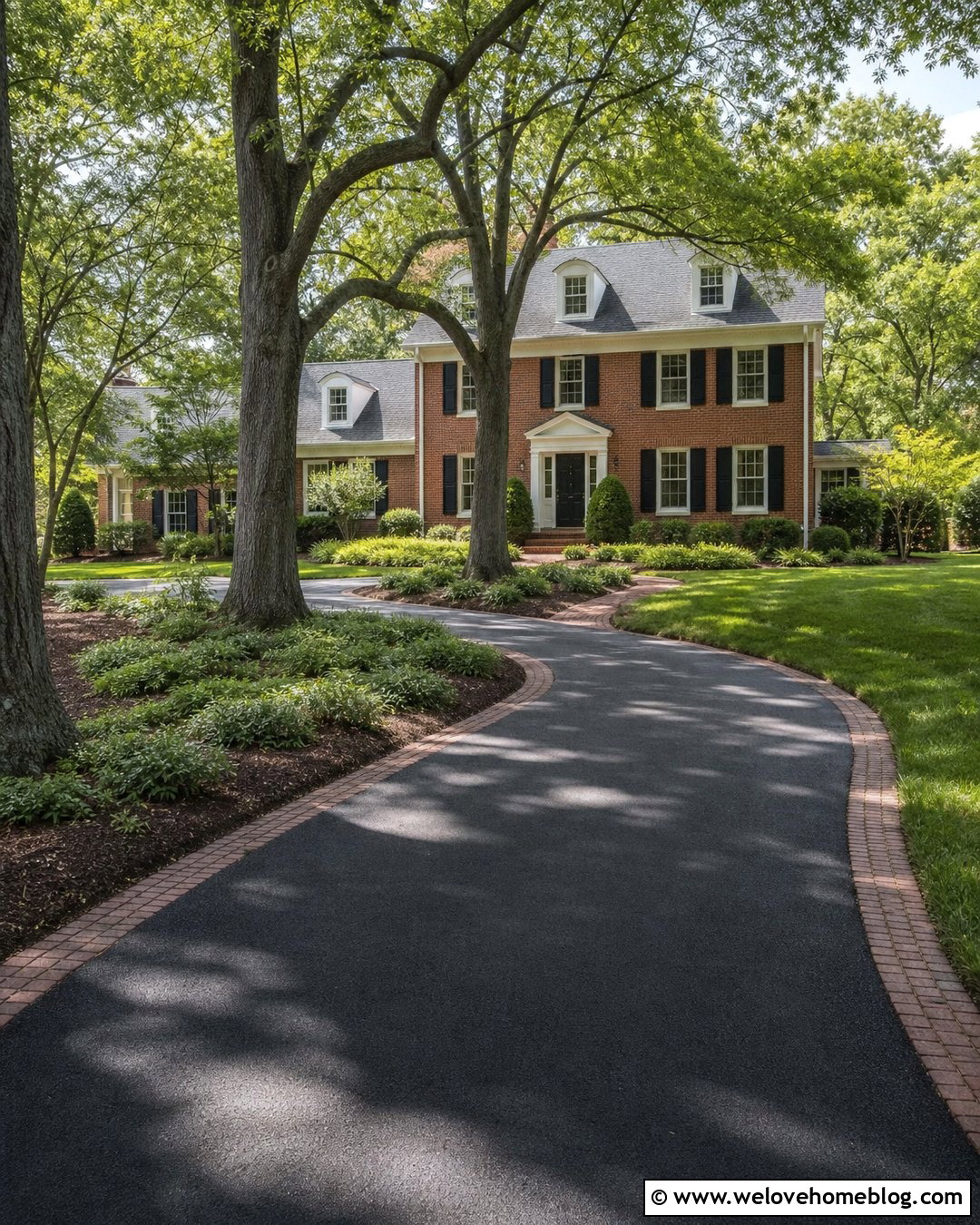
Red oaks can frame a substantial driveway with shade, height, and strong fall presence. Combine them with a sweeping black asphalt drive that curves through a large front lawn toward a brick colonial house. A red-brick ribbon along both pavement edges visually links the driveway to the facade. Plant the oaks in generous mulched beds positioned outside the vehicle clearance zone, then connect those beds with sweeps of shade-tolerant ground cover as the canopies expand. Near the road, use lower shrubs so drivers can see approaching traffic and pedestrians. This is a long-term landscape rather than a solution for a narrow suburban strip. Check the selected oak’s mature dimensions, soil preferences, and regional performance before planting. Northern red oak is among the trees listed as having some salt tolerance, though careful salt use is still necessary. ()
13. Southern Magnolia Driveway
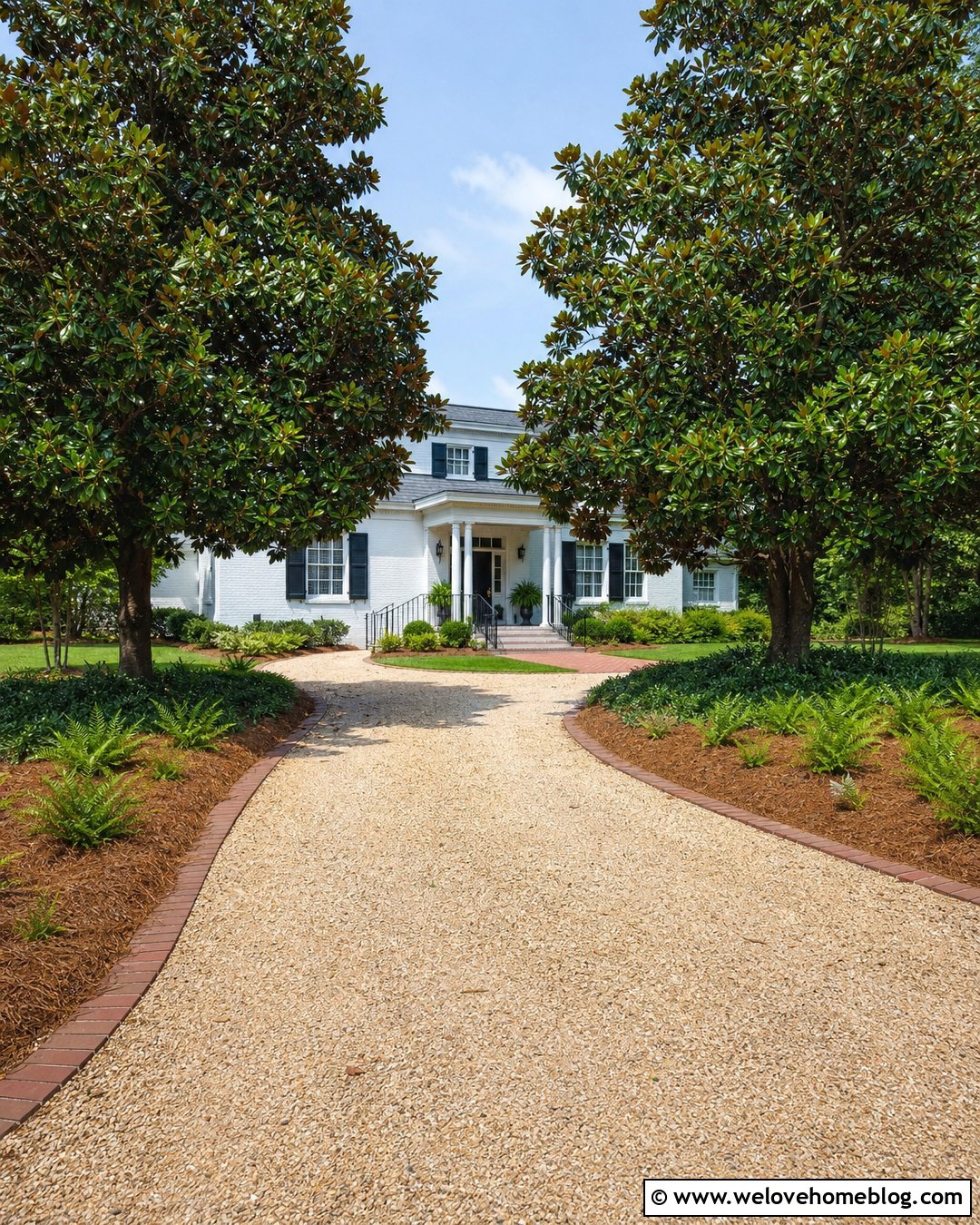
Glossy evergreen foliage and large flowers make southern magnolias an impressive choice for a spacious warm-climate entrance. Set two matching trees near the inner curve of a pale shell-limestone driveway, where they can frame the house without blocking the garage. Brick edging keeps loose material contained and connects the approach to a painted-brick Southern home. Under the magnolias, create wide pine-straw beds with cast-iron plants, ferns, and low shade-tolerant ground covers. Keep the planting simple because the trees already provide strong visual weight. Choose a compact or narrower cultivar when the property cannot accommodate a broad canopy. Fallen leaves and flower debris should be considered when deciding placement, particularly beside parking areas. The result feels established and elegant while still providing practical turning room and open curb visibility.
14. River Birch Driveway
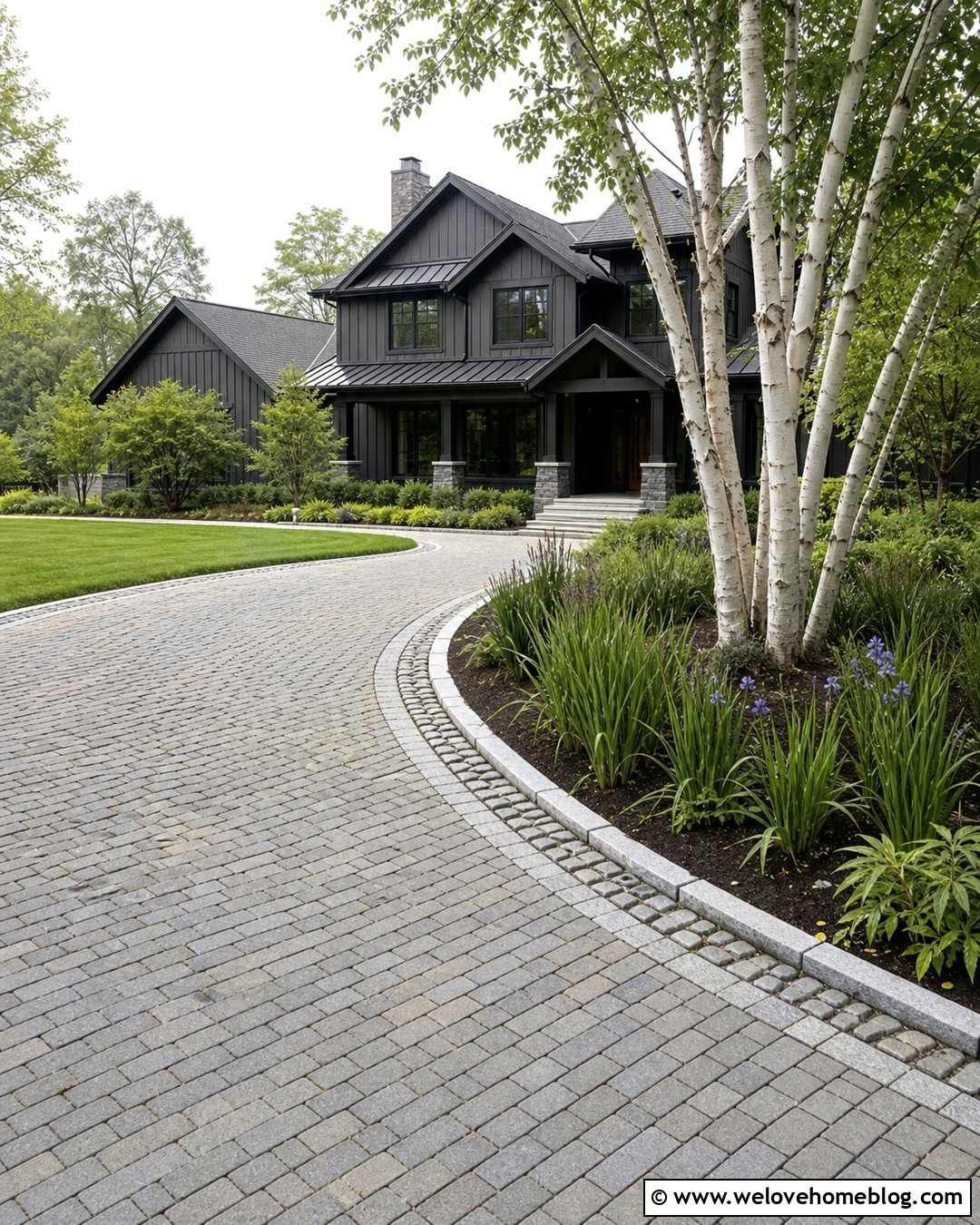
A group of river birches can soften a driveway near a rain garden, drainage swale, or naturally moist part of the yard. Pair three multi-trunk specimens with a curved permeable paver driveway in blended gray and tan tones. A recessed cobblestone channel can guide stormwater toward planted basins filled with sedges, iris, and moisture-friendly shrubs. The peeling bark adds contrast against a dark-sided contemporary farmhouse or woodland home. Keep the trees in broad planting zones beyond the paver edge instead of squeezing them into small islands. The arrangement should appear loose and natural, with varying distances between trunks. Because site drainage, soil moisture, and available root space affect performance, evaluate the property before selecting the exact birch. A landscape professional can also coordinate grading so runoff benefits plantings without undermining the driveway base.
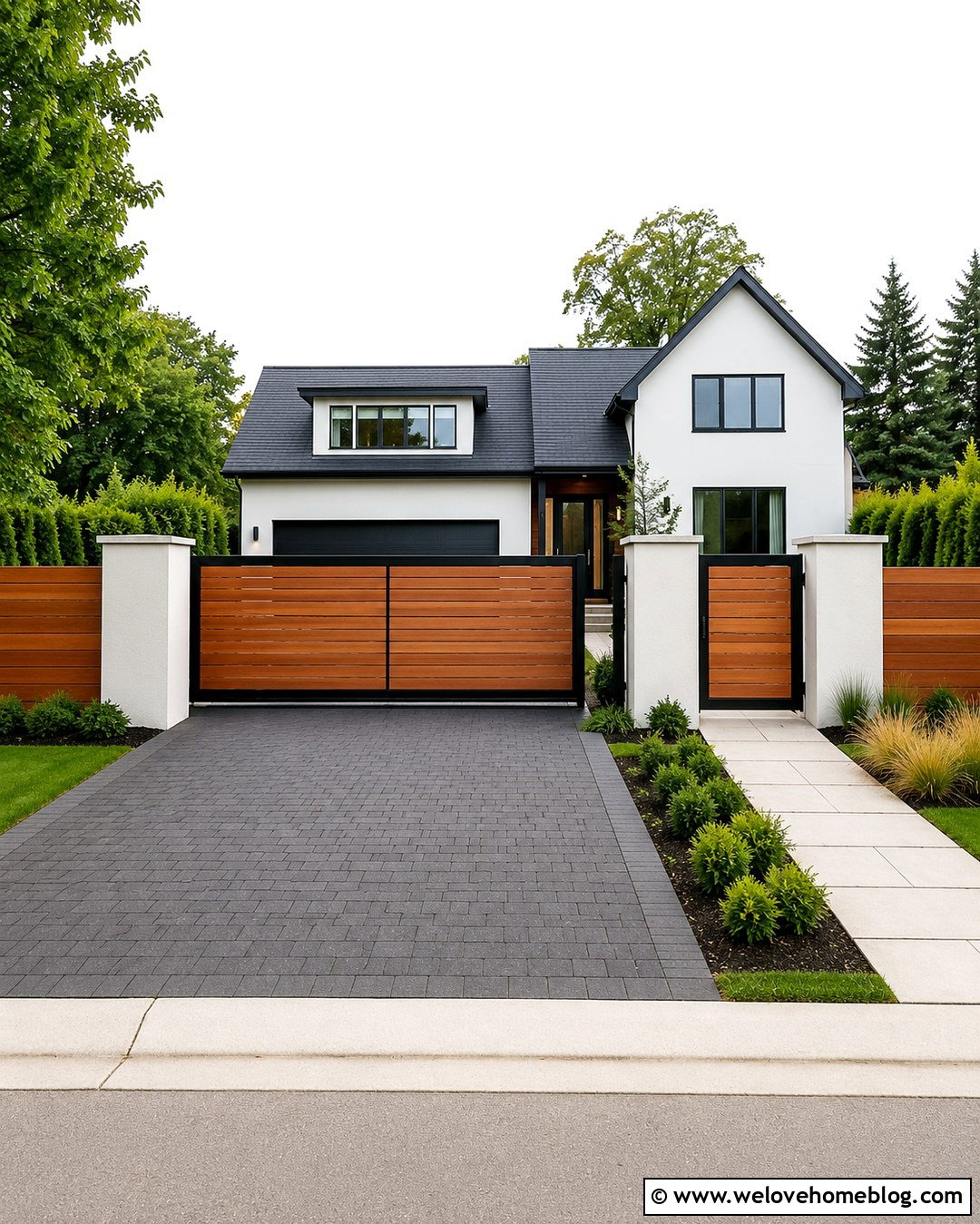
15. Crabapple Driveway
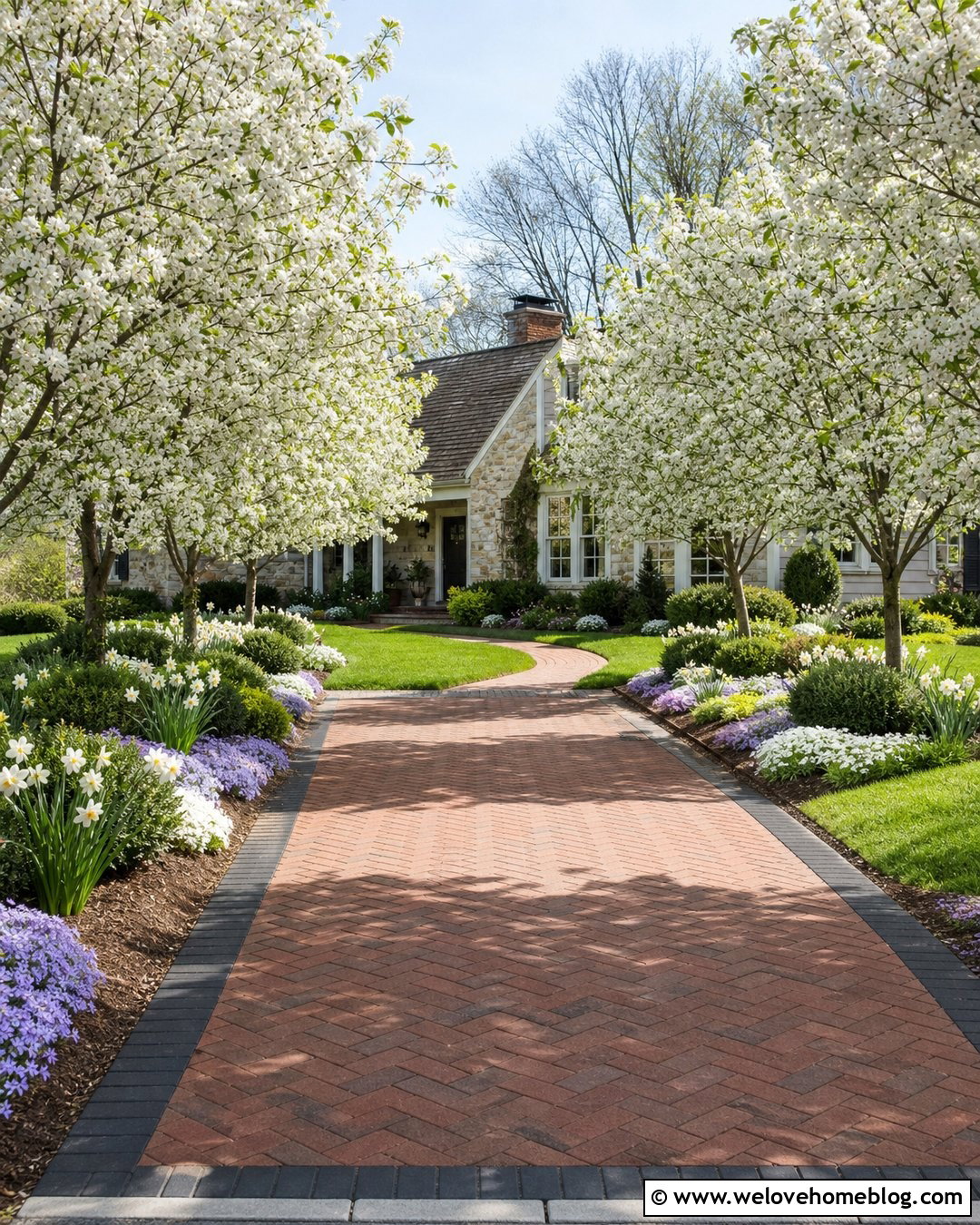
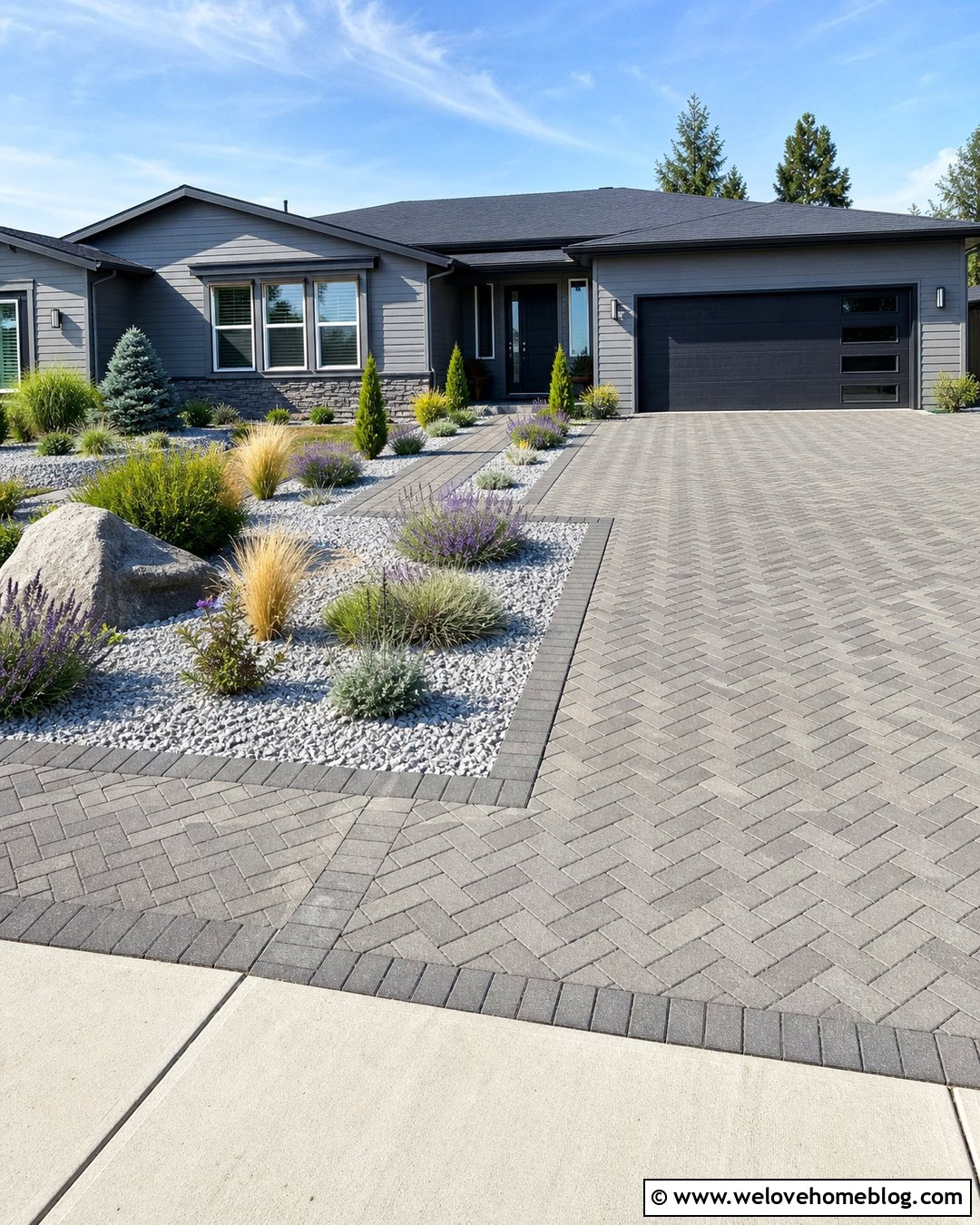
A crabapple-lined driveway can create one of the most memorable spring approaches for a smaller home. Choose disease-resistant cultivars with a mature size suited to the site, then repeat one selection along a short clay-brick driveway. A basketweave or herringbone pattern adds traditional texture, while a dark brick edge clearly defines the parking surface. Plant the trees in wide lawn openings connected by continuous mulched beds. Daffodils, creeping phlox, and compact evergreen shrubs can extend seasonal interest beneath the flowering canopy. For less cleanup near pavement, ask about varieties that produce small, persistent fruit rather than large dropping fruit. Maintain enough trunk and branch clearance for mirrors, delivery vehicles, and snow removal. Crabapple options vary considerably in height and spread, making careful cultivar selection essential near utilities and narrow residential approaches. ()
16. Japanese Maple Driveway
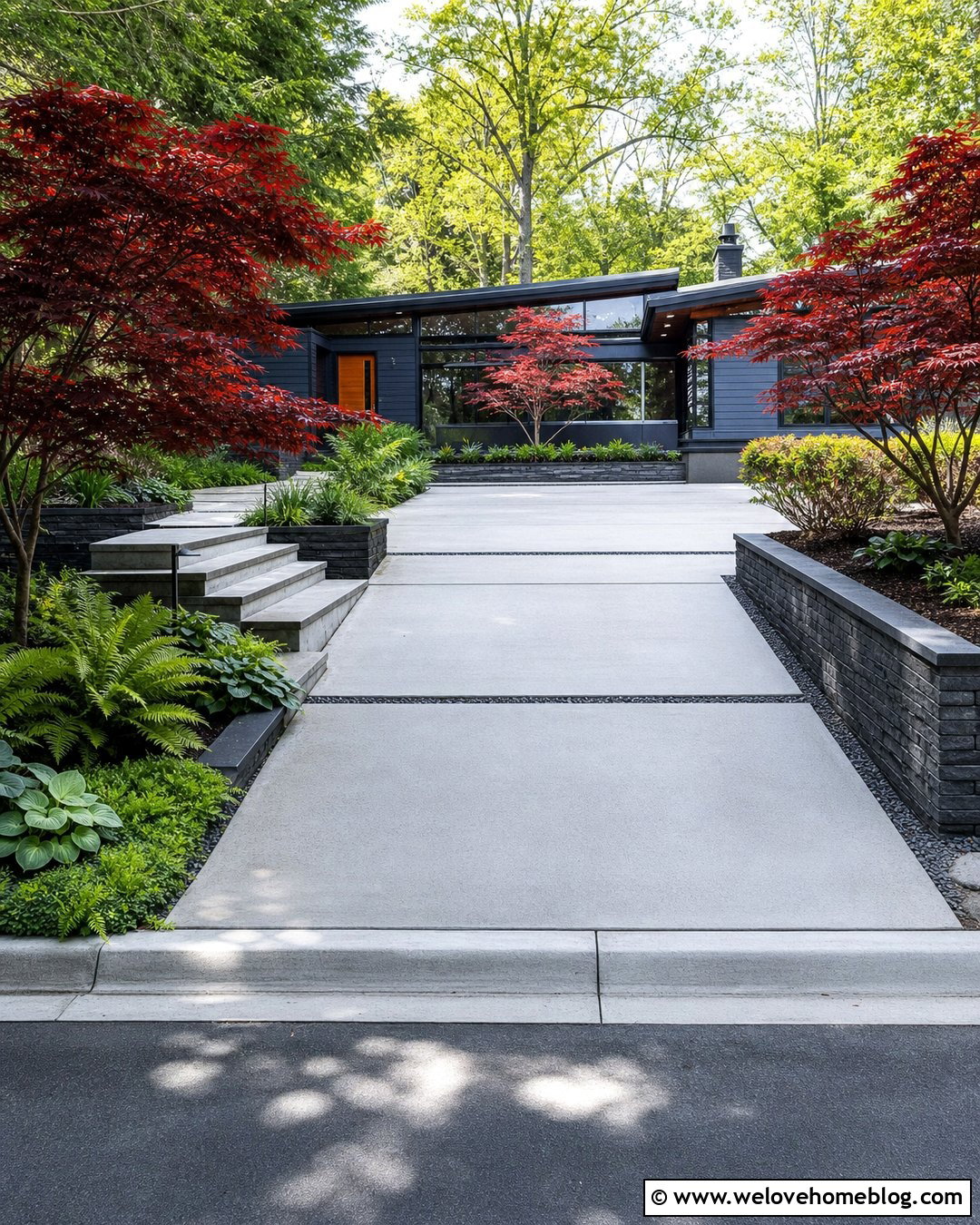
Japanese maples bring detailed foliage and refined color to a shaded driveway close to the house. Rather than lining the full route, use two or three specimen trees around the upper parking court. A smooth light-gray concrete driveway with narrow black pebble joints creates a quiet background for red or green foliage. Build raised planting beds with charcoal stone retaining walls, then add ferns, hostas, sedges, and low evergreen ground cover. This composition suits a modern, Japanese-inspired, or renovated midcentury home. Keep the trees beyond door-swing and vehicle overhang zones, and select forms that fit the site at maturity. Protection from harsh reflected heat may also improve the planting location. The restrained layout makes each tree visible while preserving a broad, clutter-free area for turning, parking, and walking.
17. Desert Willow Driveway
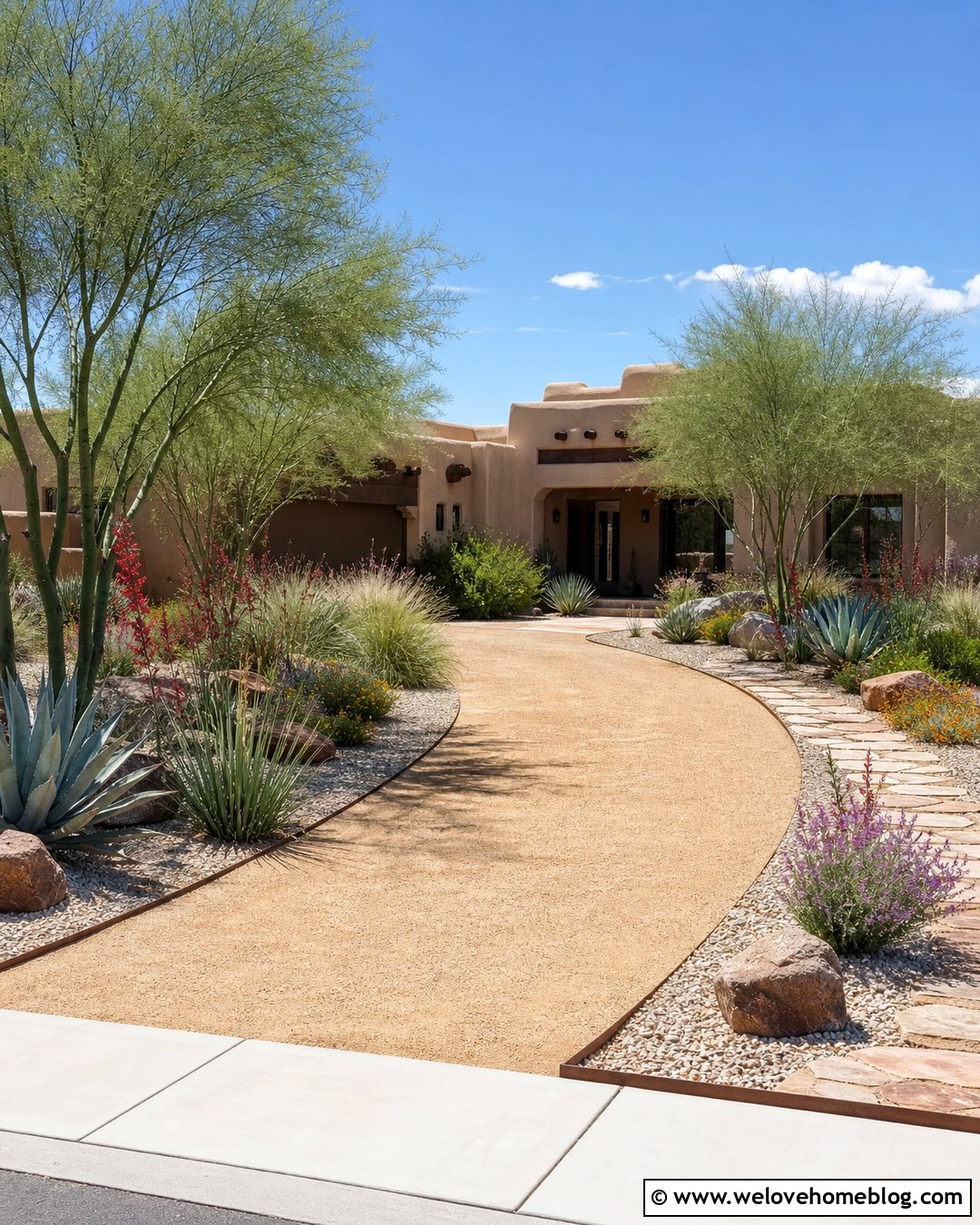
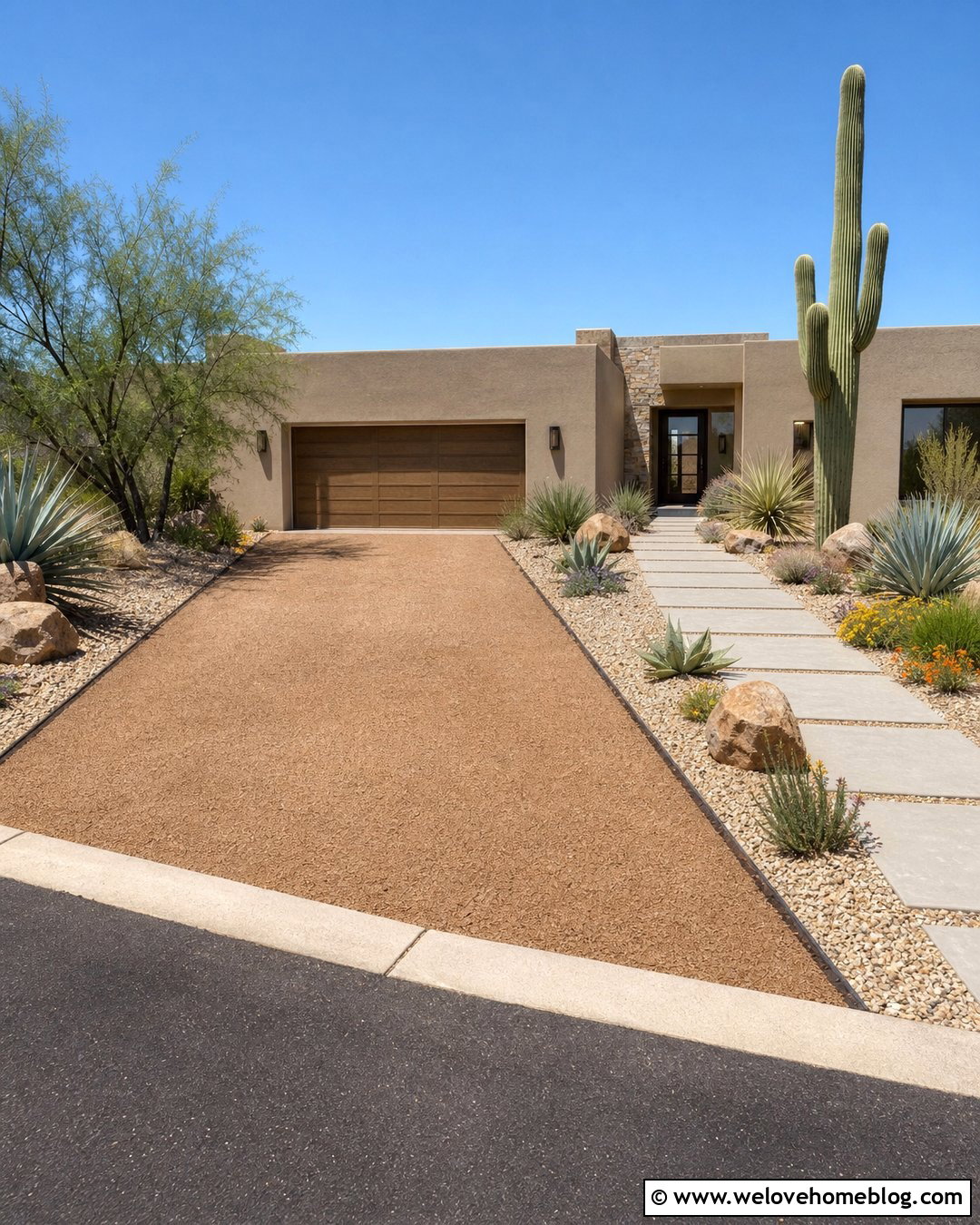
In a hot, dry yard, desert willow can frame a driveway with airy foliage and colorful flowers without creating a thirsty landscape. Place the trees in irregular groups beside a curved tan decomposed-granite driveway leading to a Southwestern adobe or desert-modern home. Steel edging keeps the compacted surface neat, while bands of gravel mulch visually connect the driveway to the planting beds. Add agave, red yucca, penstemon, ornamental grasses, and weathered boulders around the trees. Keep thorny or sharply pointed plants well away from vehicle doors and walkways. The driveway should remain broad and open, with trees positioned where their mature crowns will not obstruct visibility. Confirm cold tolerance and local suitability before planting, since desert landscapes vary widely in winter temperature, soil drainage, and irrigation needs. ()
18. Palo Verde Driveway
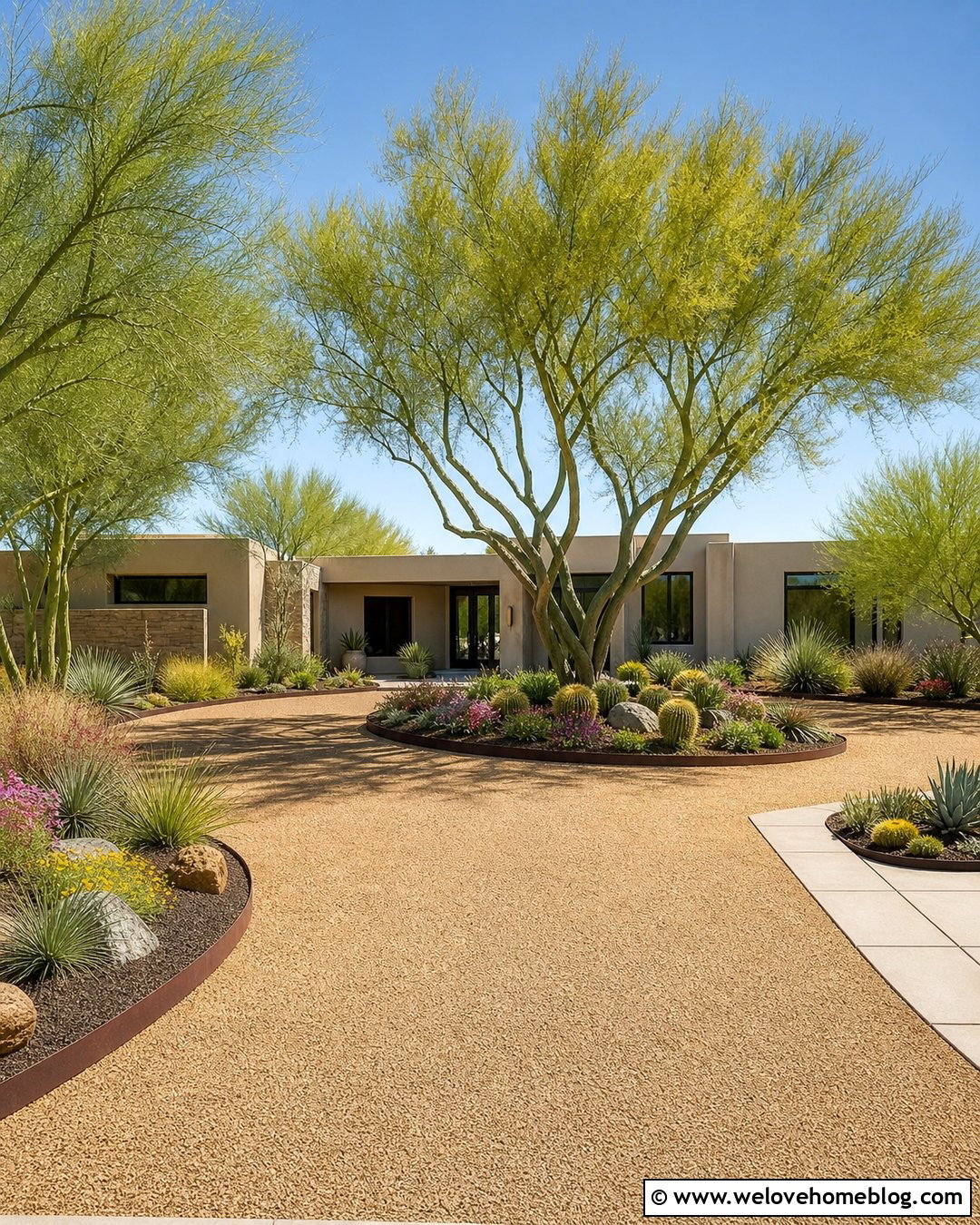
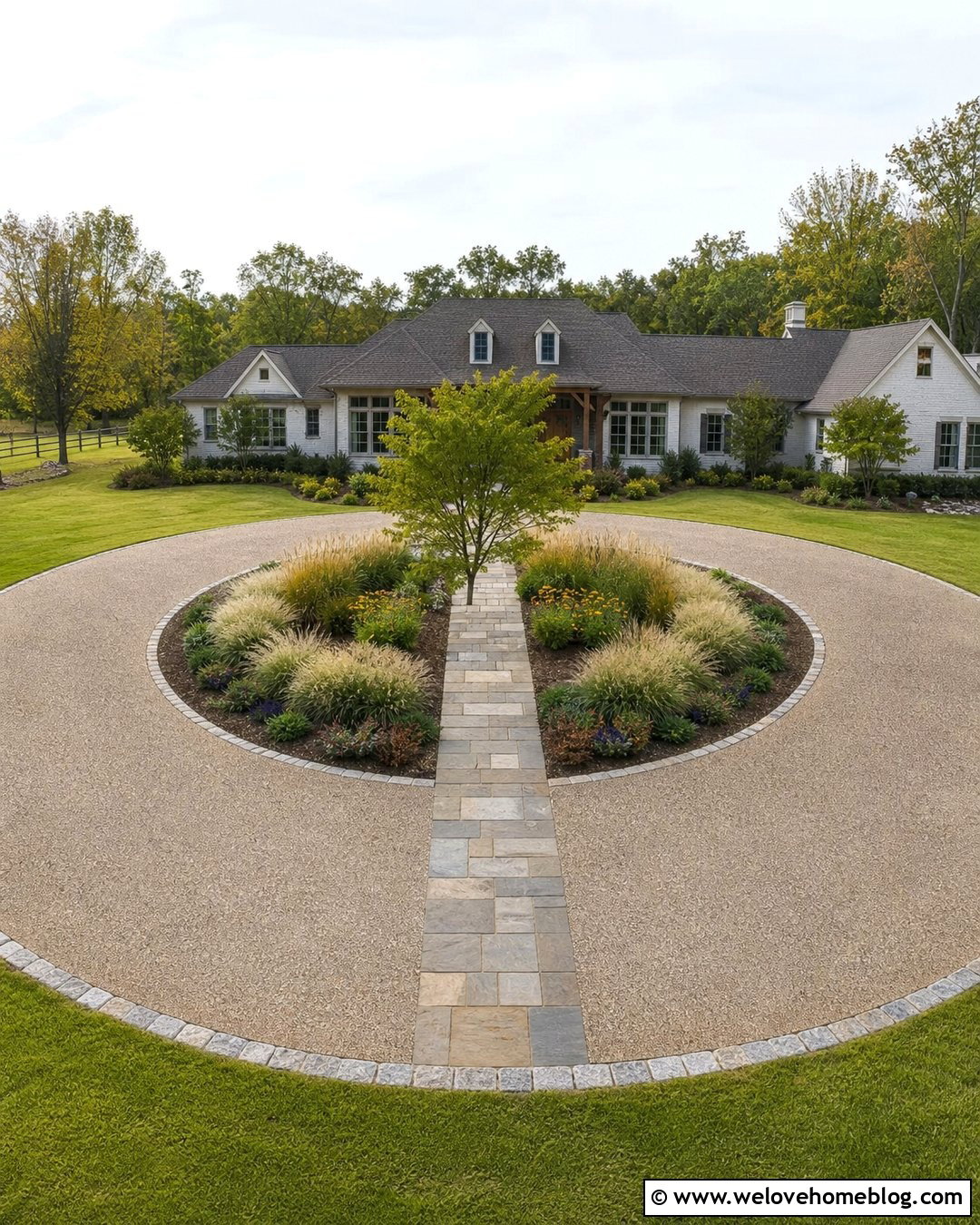
Palo verde trees make a striking focal point around a circular driveway in a Southwestern landscape. Their green trunks and light canopies stand out against a warm beige stabilized-gravel surface. Frame the drive with rust-colored steel edging and place a specimen tree in the center island, surrounded by golden barrel cactus, low flowering perennials, desert grasses, and angular rocks. Additional palo verdes can mark the outer curve without forming a rigid row. A flat-roofed stucco home provides an appropriate architectural backdrop. Maintain clear views across the island so drivers can navigate the circle safely. Choose a cultivated selection suited to residential use and local conditions, and place irrigation where water reaches the root zone without repeatedly soaking the driveway foundation. This complete design feels colorful, open, and regionally connected.
19. Blackgum Driveway
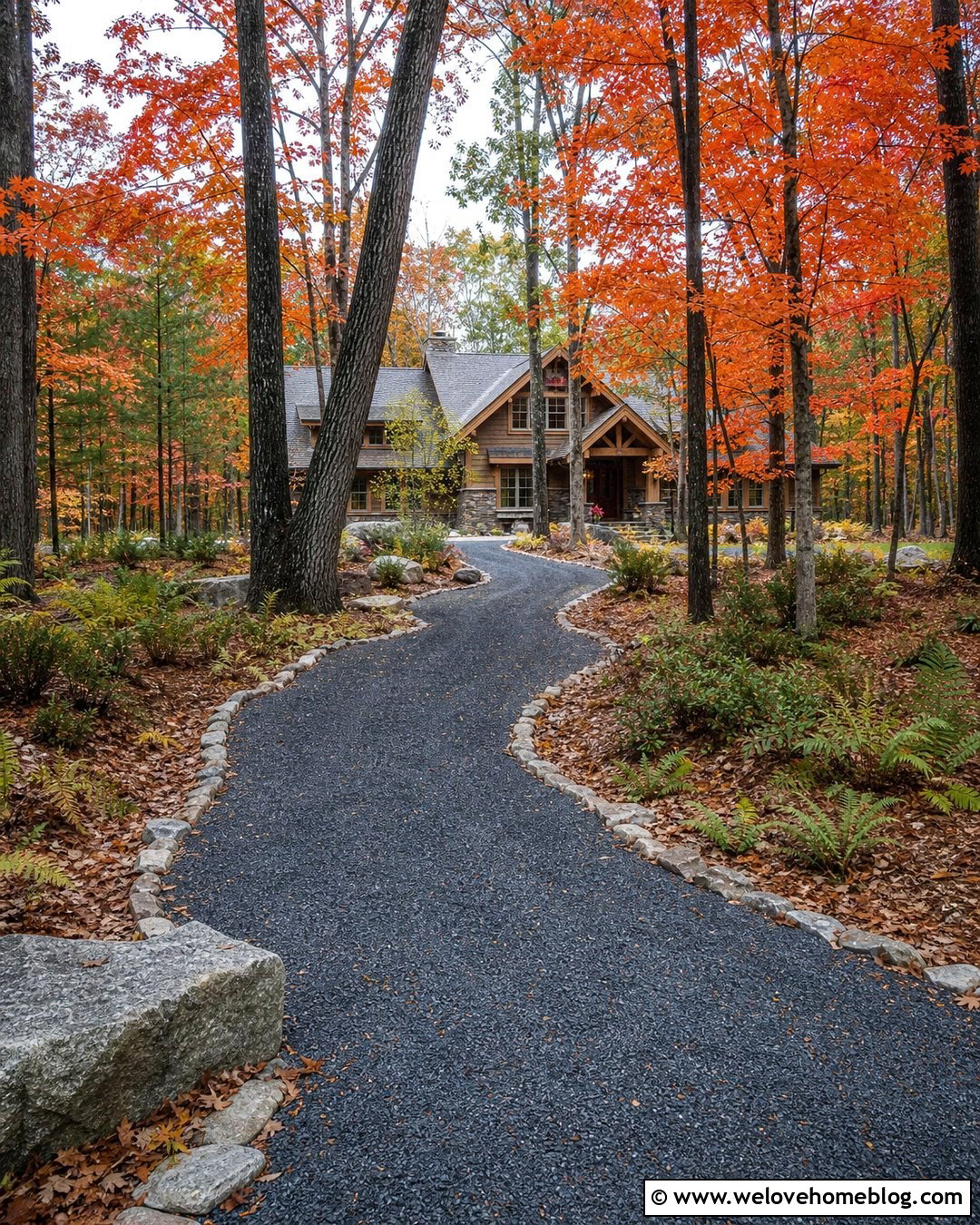
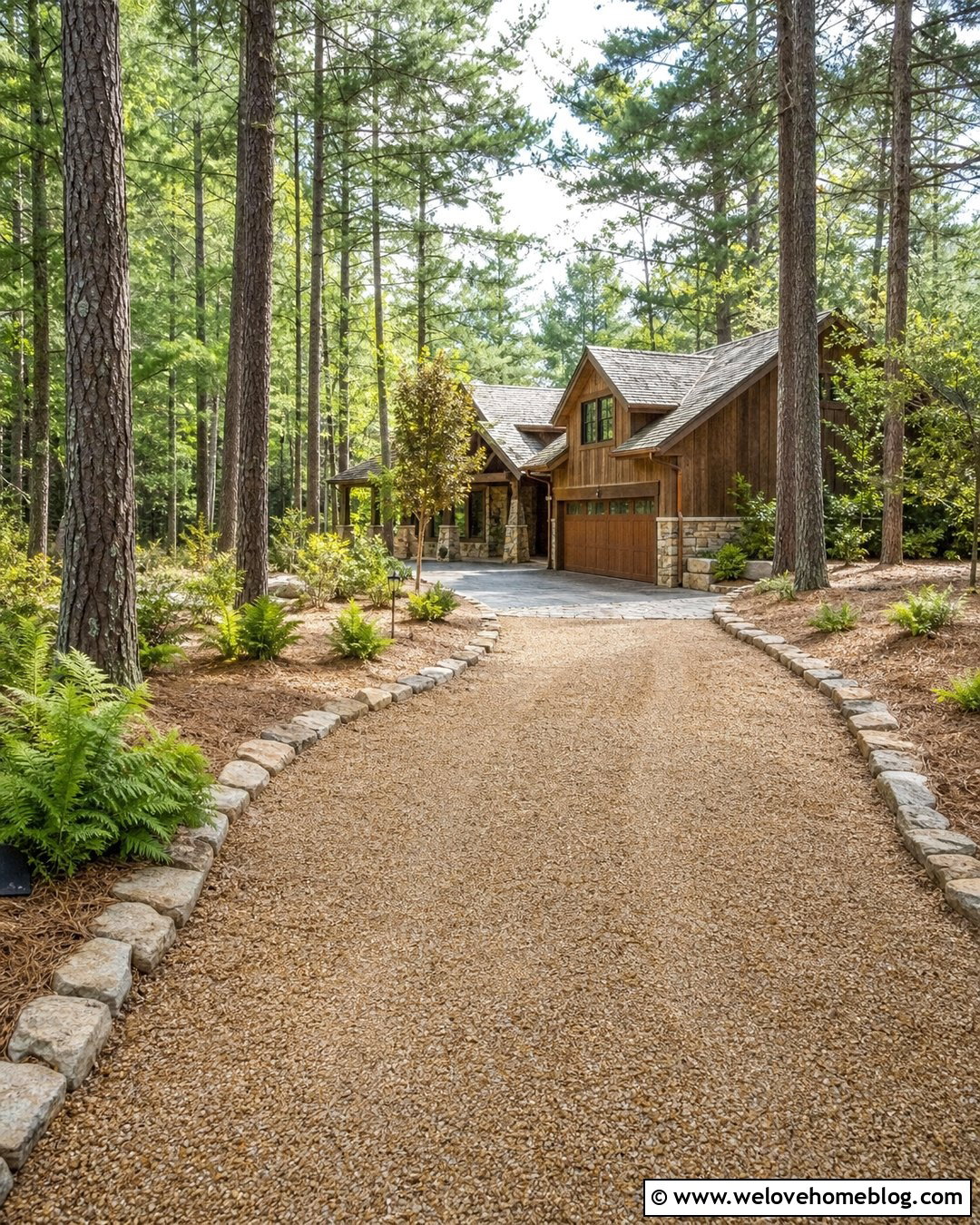
Blackgum can anchor a naturalistic driveway with a strong tree form and rich autumn color. Use widely spaced trees along a winding dark-gray gravel driveway approaching a woodland Craftsman home. Rough-cut granite edging controls the gravel at curves, while broad leaf-mulched beds blend into the surrounding forest floor. Underplant with native ferns, mountain laurel, lowbush blueberry, and shade-tolerant sedges where those plants suit local conditions. Avoid forcing perfect symmetry; offset trees at key bends so each canopy becomes visible as visitors move toward the house. Preserve enough open shoulder for drainage, snow storage, and emergency access. This layout is most successful when the tree is matched to the region’s soil and moisture. The restrained planting palette gives the driveway a settled appearance without making it look overly landscaped.
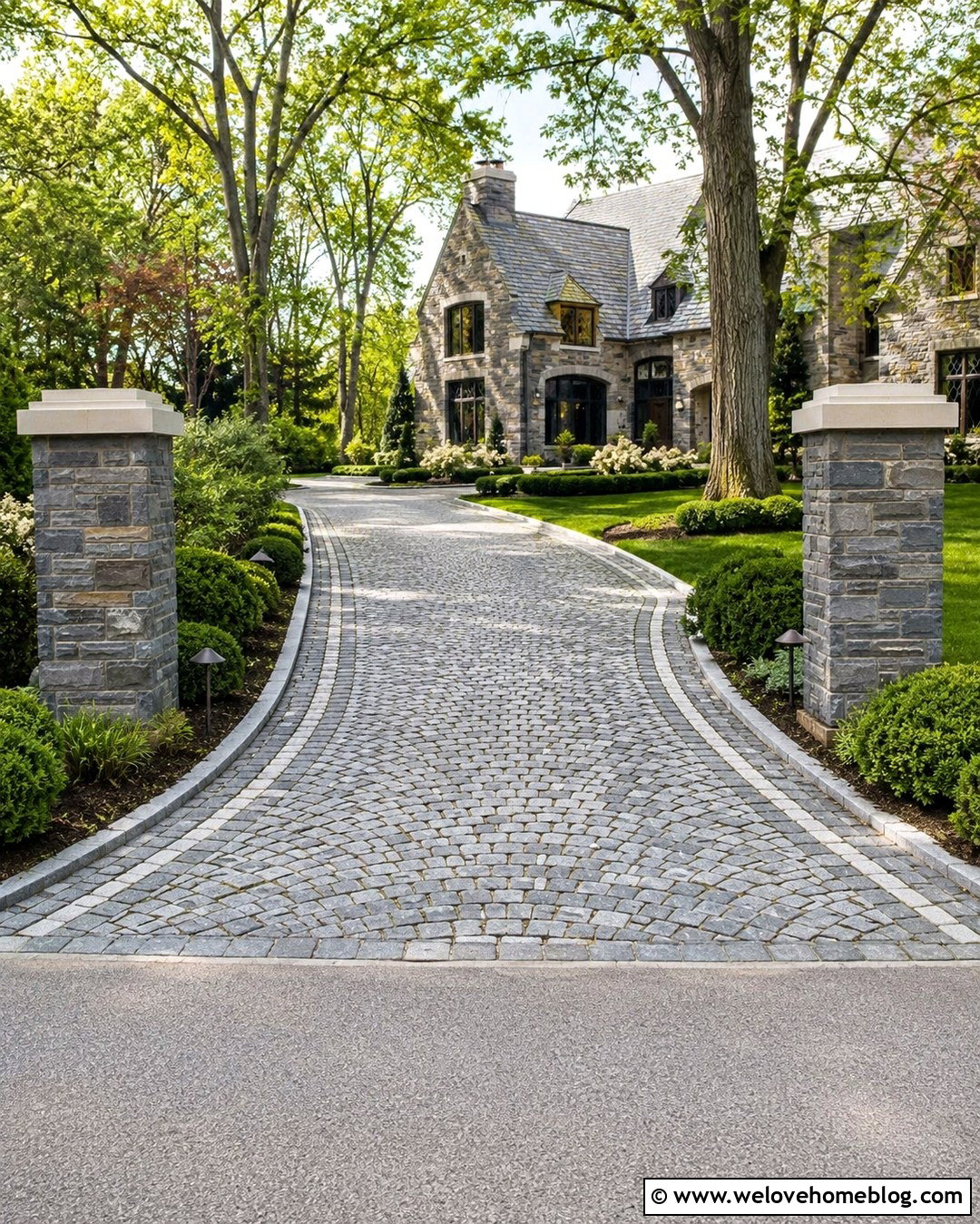
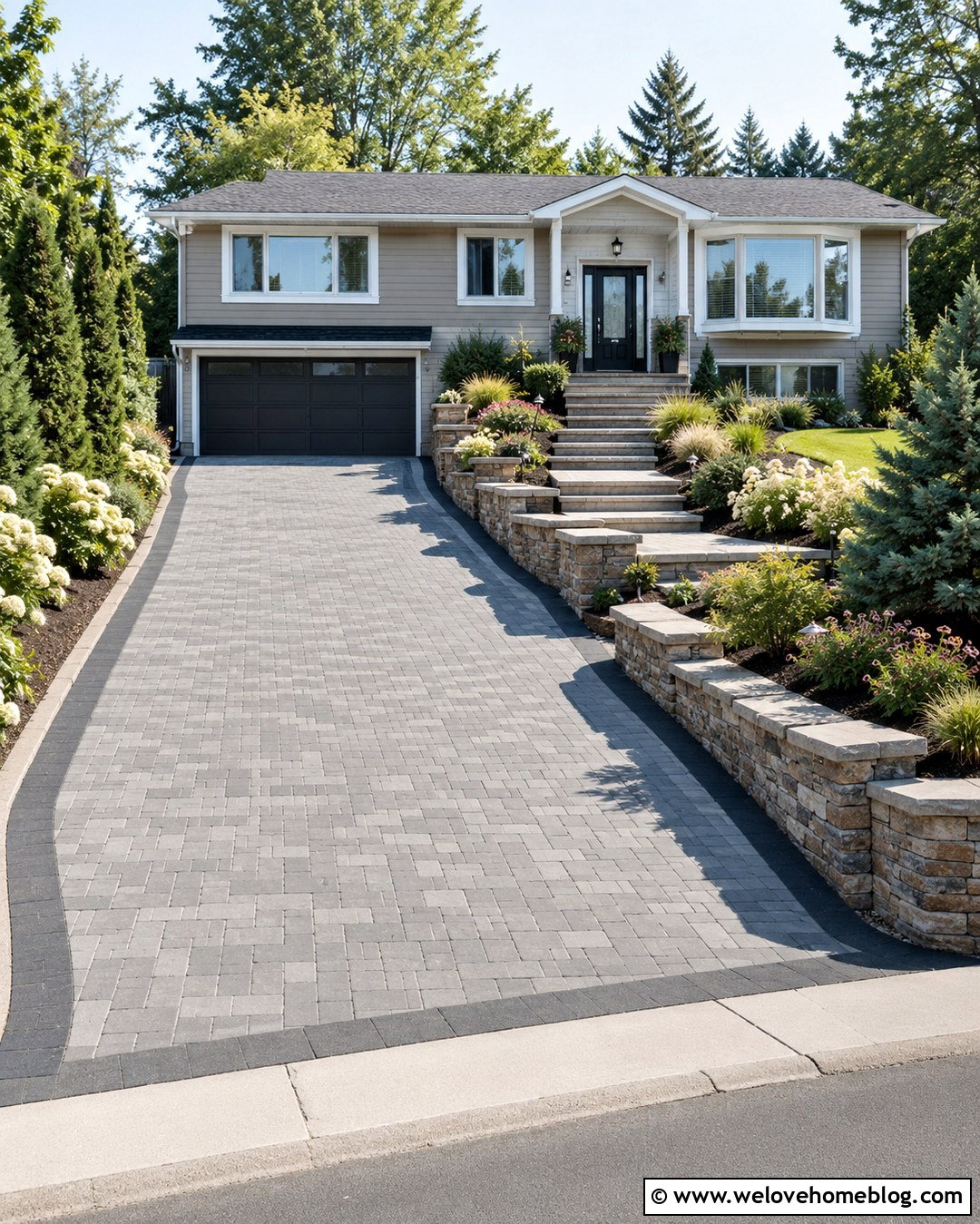
20. Mixed Native Tree Driveway
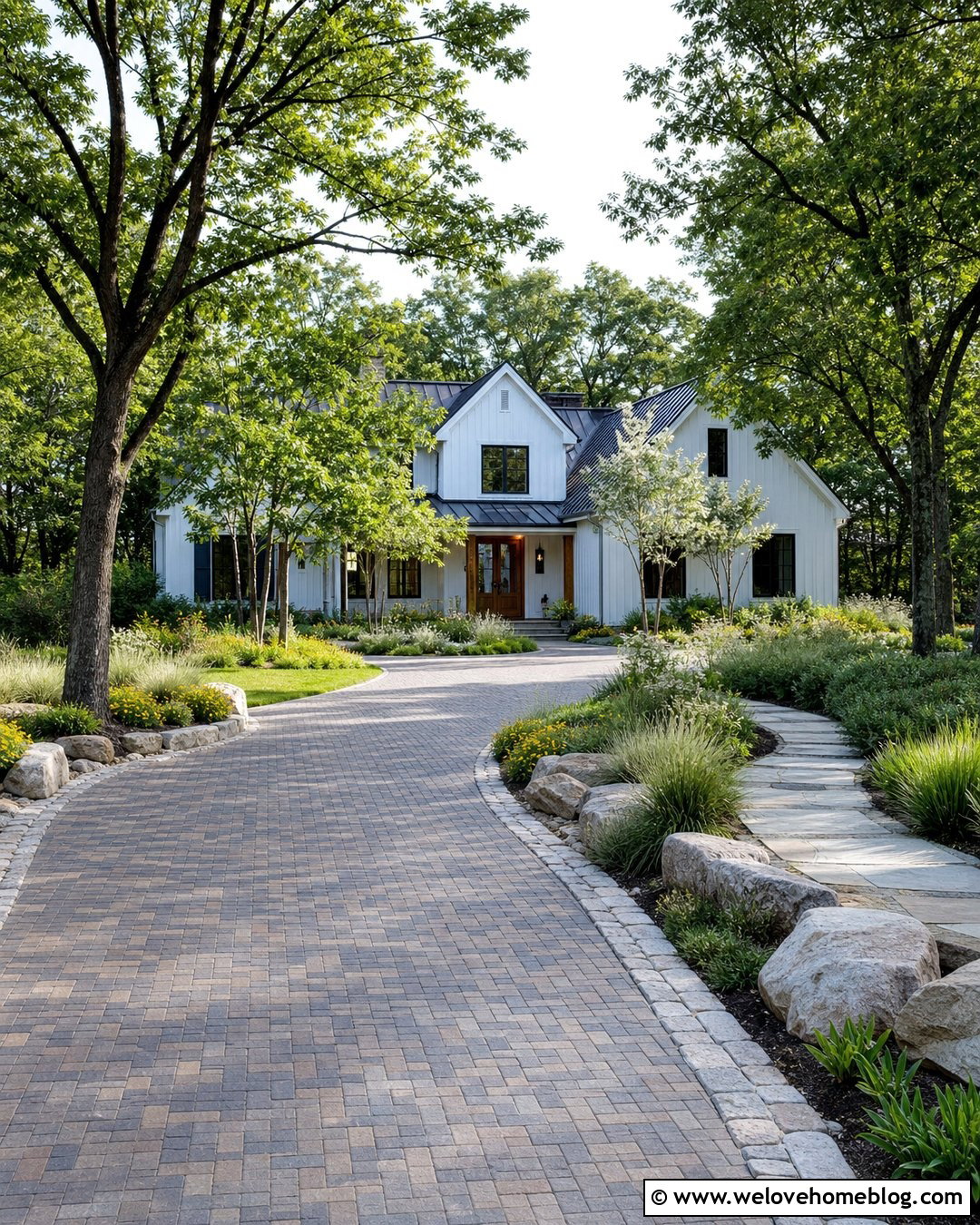
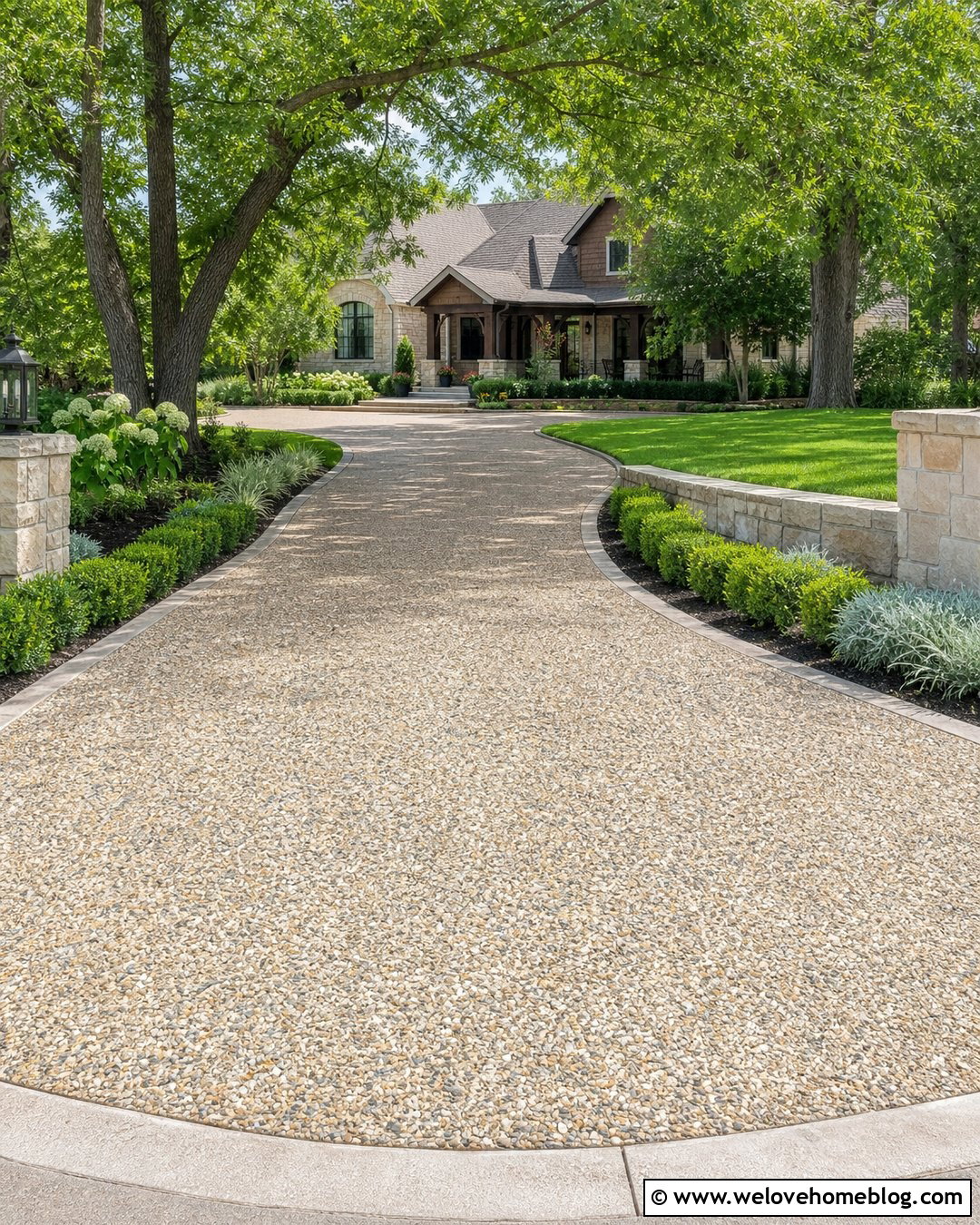
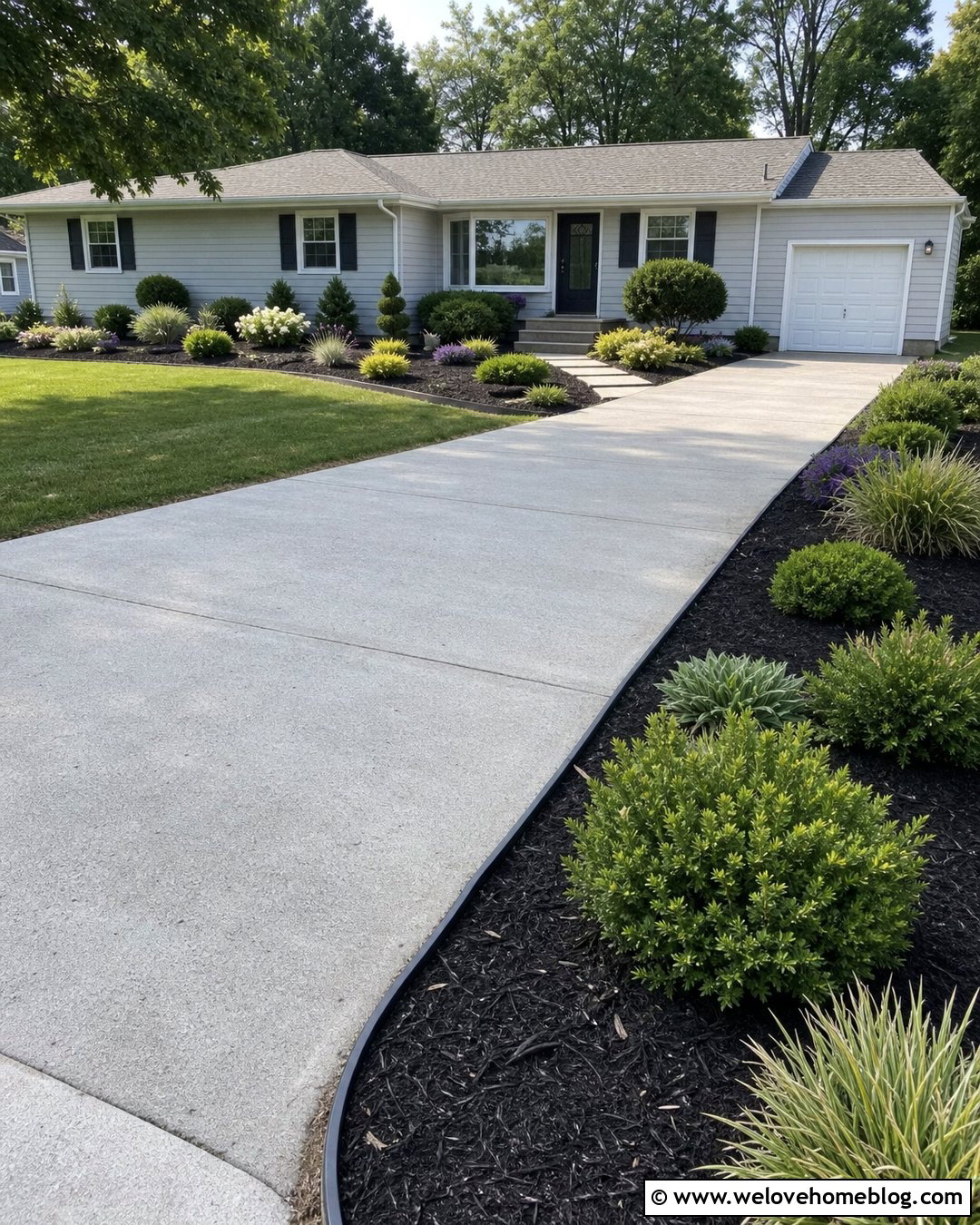
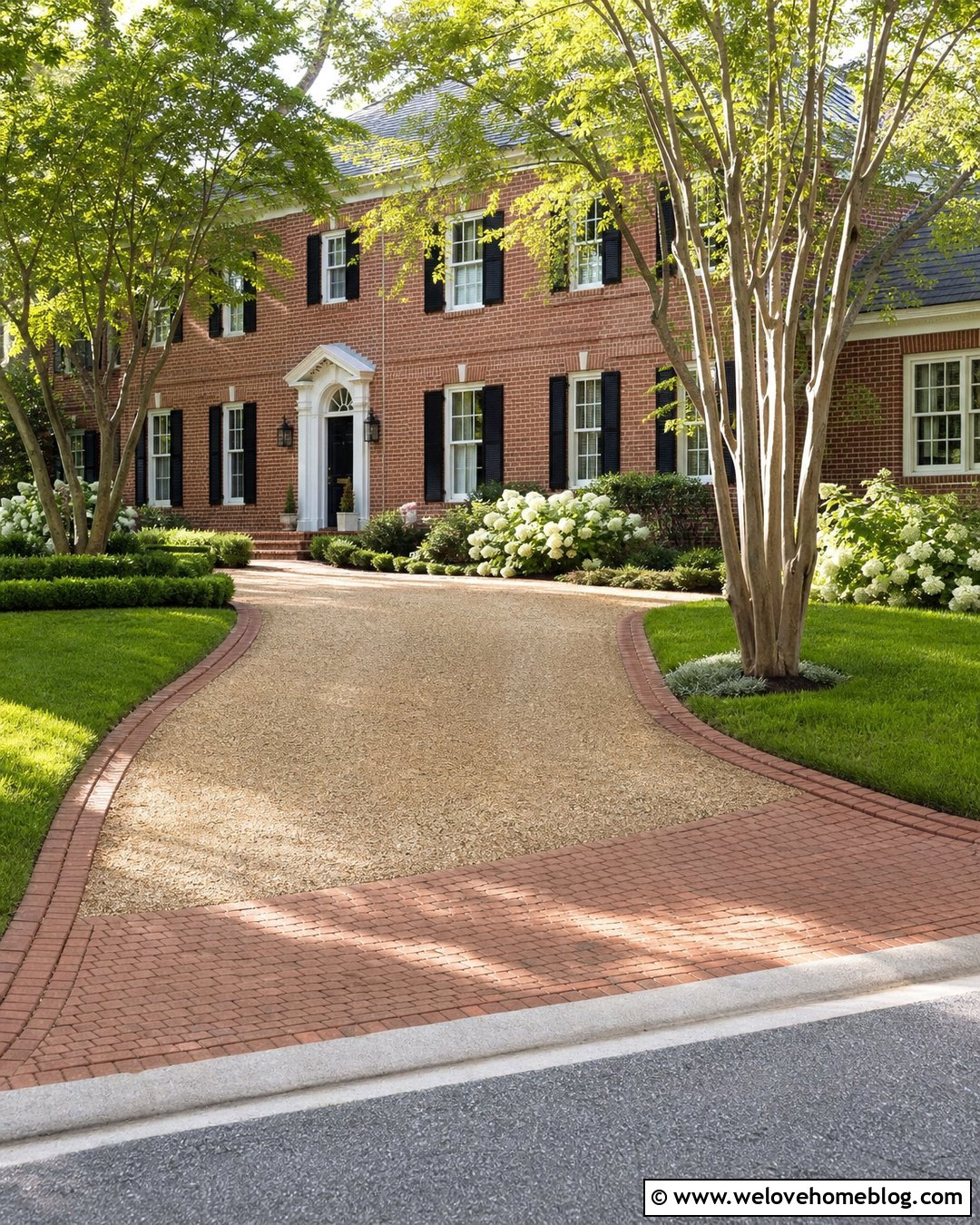
A mixed native tree driveway is ideal for homeowners who want a resilient, natural entrance rather than a formal avenue. Begin with a gently curving permeable concrete-paver driveway and generous planting beds on both sides. Combine locally appropriate canopy trees with smaller flowering understory trees, but repeat several species to prevent the design from looking random. Natural stone edging, native grasses, flowering perennials, and low shrubs can connect the different tree layers. Keep taller trees away from overhead utilities and maintain clear sight triangles at the road. Locally adapted native plants may require fewer inputs, but “native” does not automatically mean suitable for every soil, exposure, or property. Choose species according to actual site conditions and available space. () The varied canopy gives a farmhouse or contemporary home a welcoming, established setting.
Conclusion:
The strongest driveway tree design considers far more than flowers or fall color. It brings together the driveway surface, layout, edging, house architecture, and surrounding planting. Before choosing a tree, check its mature height and width, root space, climate requirements, maintenance needs, and distance from pavement or utilities. Wide connected beds usually provide a more attractive setting than tiny mulch circles. They also create room for shrubs, grasses, and ground covers that unify the landscape. Whether you prefer formal hornbeams, flowering redbuds, evergreen screening, or a mixed native border, these 20 Best Driveway Trees Ideas offer practical ways to build a beautiful entrance that can mature gracefully with your home.

Related posts:


Leave a Reply