
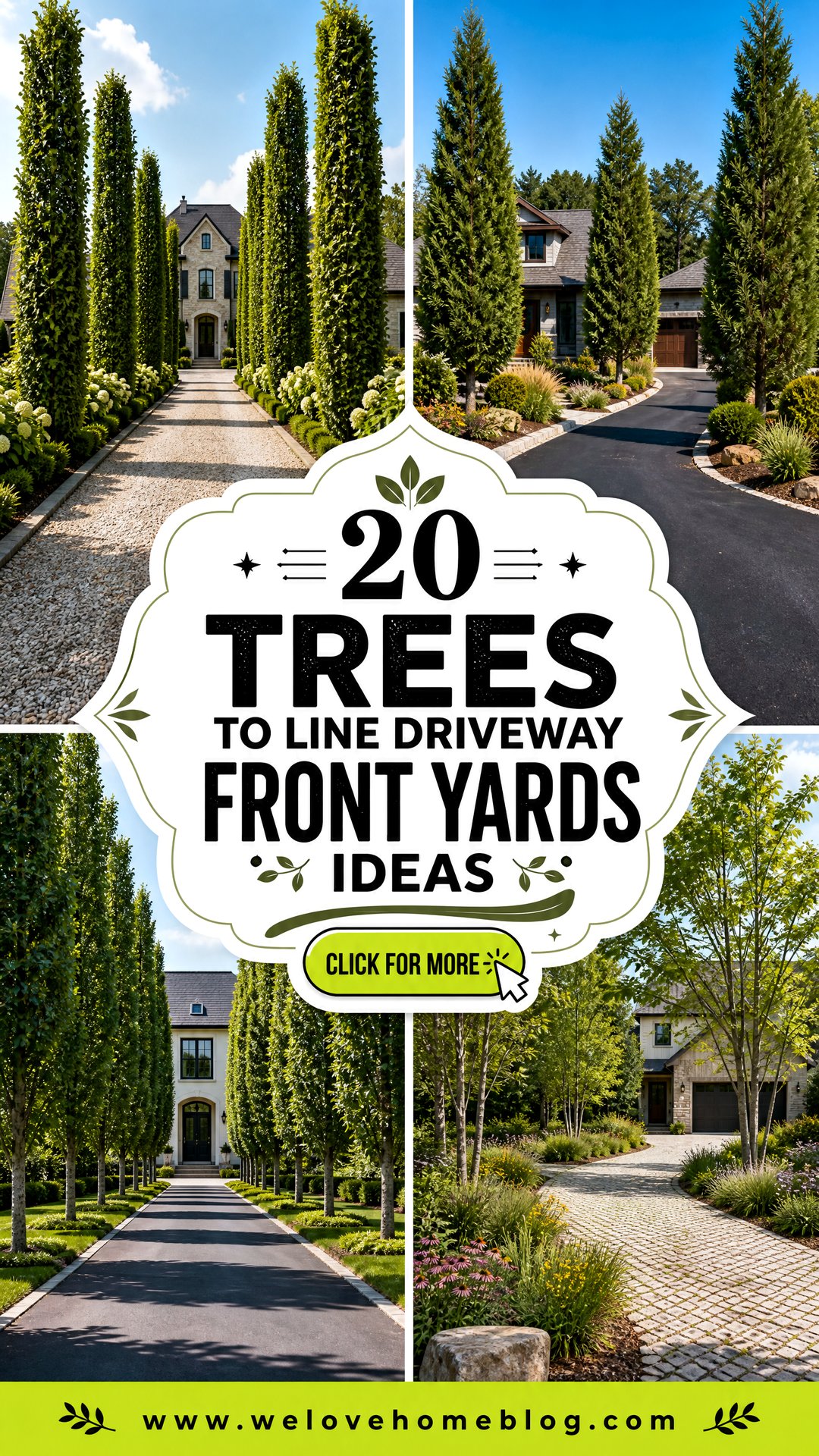
Choosing from these **20 trees to line driveway front yards ideas** can turn an ordinary entrance into a shaded, welcoming part of the landscape. The best design considers more than appearance. Mature tree width, overhead utilities, vehicle clearance, sunlight, drainage, reflected pavement heat, and winter deicing salt can all affect long-term success. Trees should sit far enough from the driving surface for trunks and roots to develop without crowding parked vehicles or damaging pavement. Match each species to your USDA hardiness zone and soil conditions, then repeat trees at consistent intervals for a coordinated look. Mixing the tree line with practical edging, layered planting beds, and a suitable driveway material creates stronger curb appeal. Use these 20 trees to line driveway front yards ideas to plan the complete entrance.
1. Columnar Hornbeam Gravel Driveway
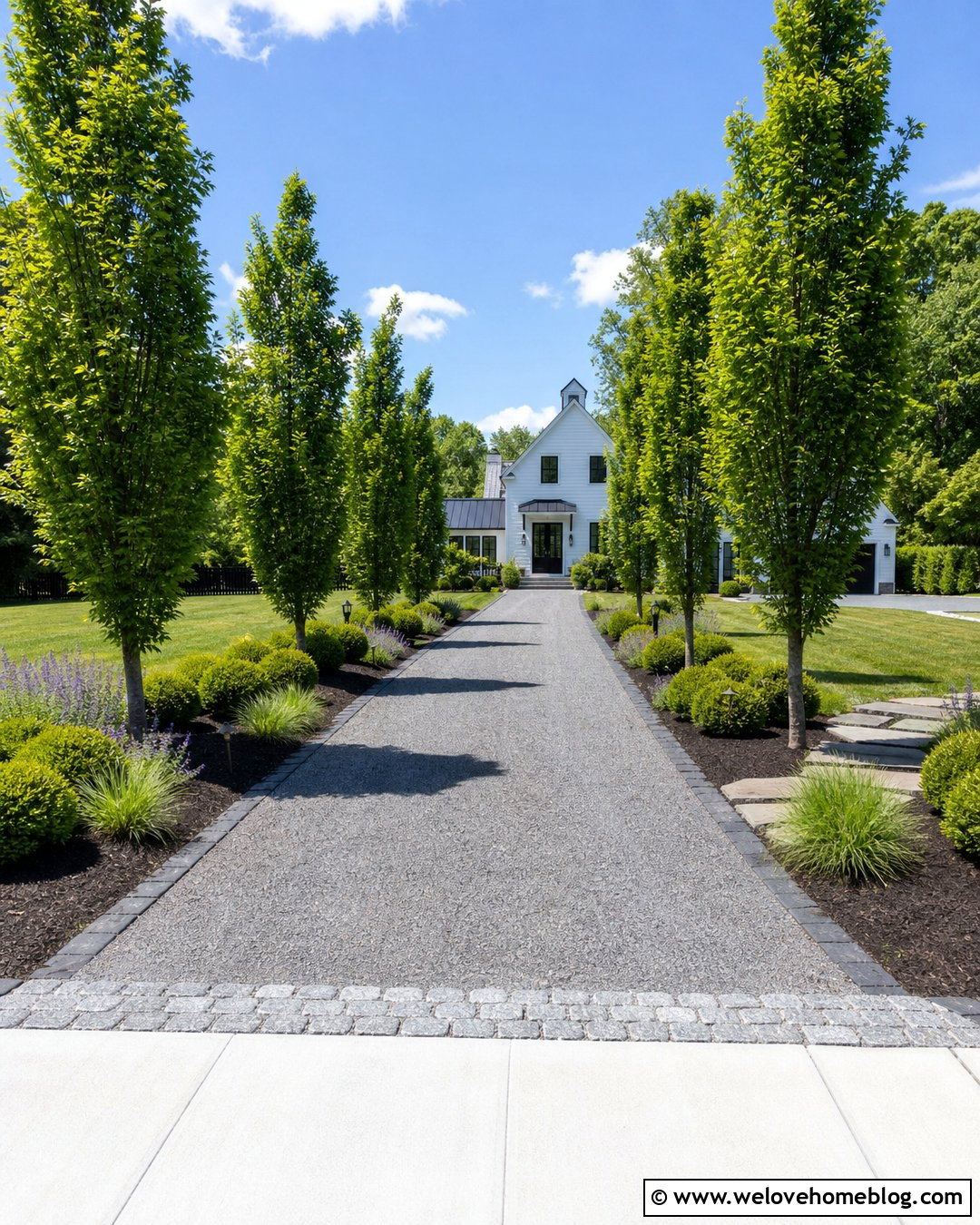
A straight gravel driveway lined with columnar European hornbeams creates a formal entrance without requiring an unusually wide front yard. Their narrow, upright shape works especially well where the driveway runs close to a lawn, walkway, or property boundary. Choose compacted gray gravel for the driving surface and add dark cobblestone edging to keep loose stones contained. Plant the hornbeams in wide mulched beds rather than tiny lawn openings, leaving enough room for their mature trunks and roots. Low boxwood, catmint, or ornamental grasses can soften the ground beneath them. This complete look suits a modern farmhouse, brick colonial, or renovated country home. Even spacing is important because it creates the strong rhythm that makes a tree-lined driveway feel intentional rather than crowded.
2. Crape Myrtle Brick Driveway
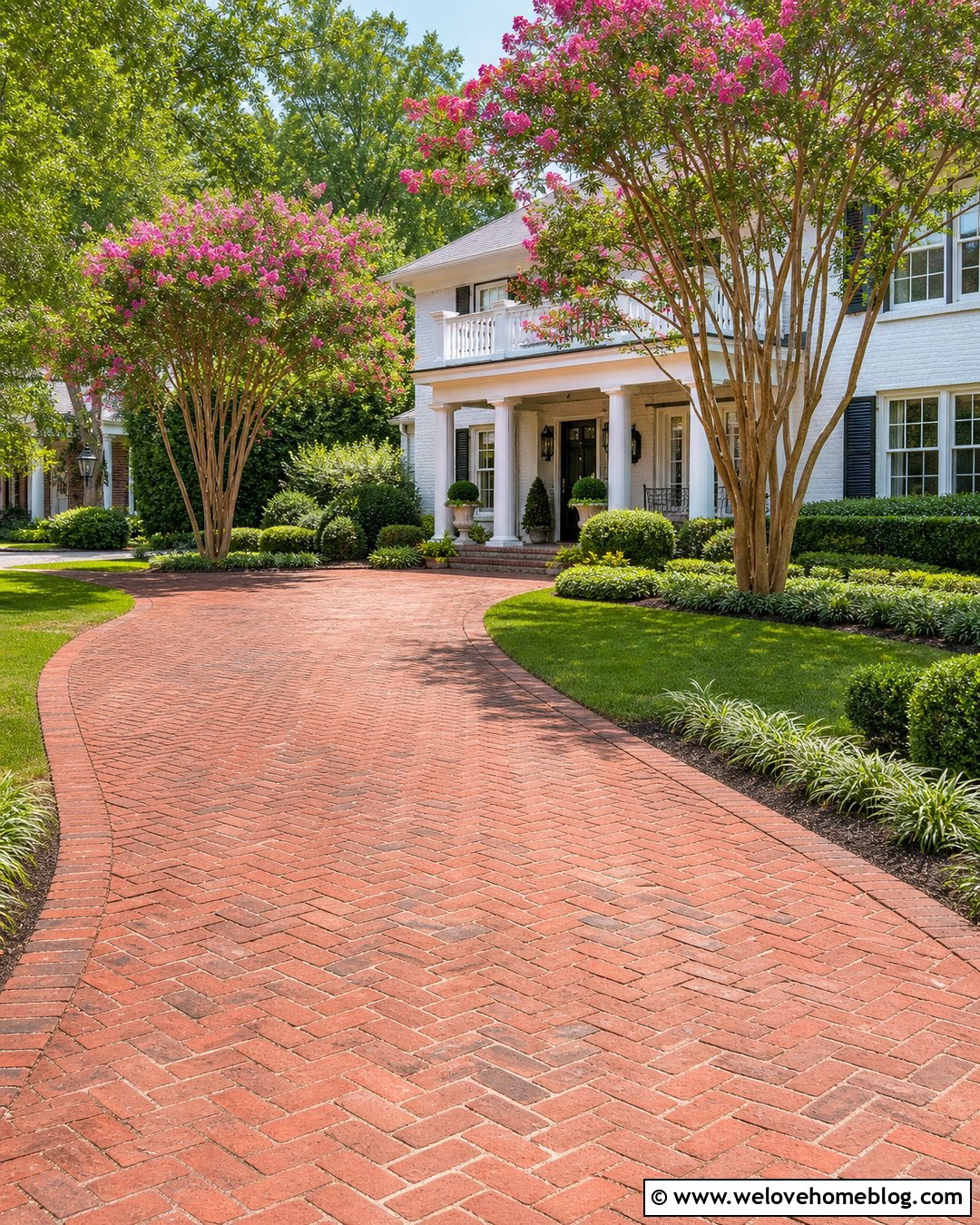
Warm brick paving and flowering crape myrtles create a colorful driveway for Southern and warm-climate front yards. Use single-trunk or carefully trained tree-form crape myrtles so the canopies remain above car doors and sightlines. A gently curved driveway makes the repeated blooms visible in stages as visitors approach the house. Continue the brick into a narrow walkway, then define the planting beds with matching soldier-course brick edging. Beneath the trees, use simple sweeps of liriope, dwarf grasses, or low evergreen shrubs instead of many unrelated plants. The peeling bark also gives the entrance character when the branches are bare. Select a cultivar with a mature size that fits the available space, and avoid aggressive topping, which ruins the natural structure of these useful landscape trees. ()
3. Flowering Crabapple Paver Driveway
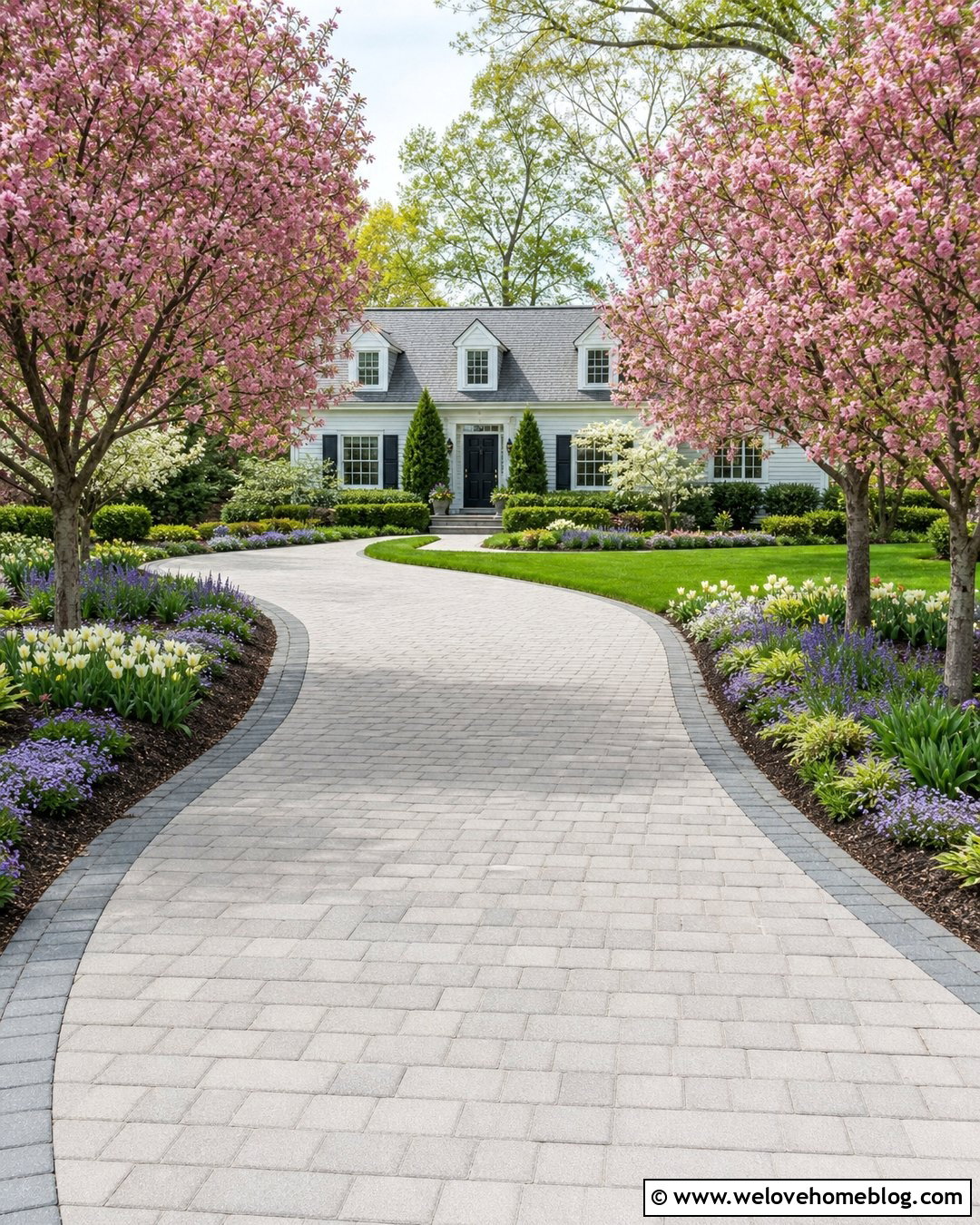
Imagine a cottage-style front yard framed by spring blossoms and a softly curving paver driveway. Disease-resistant flowering crabapples can form a beautiful small-tree allée when there is enough space between the pavement and lawn. Choose a low-fruiting or persistent-fruit cultivar if fallen fruit near the driving surface concerns you. Tumbled concrete pavers in warm gray or beige complement the flowers without competing with them. A contrasting charcoal paver ribbon can outline the curve and make the entrance easier to see. Underplant the trees with neat drifts of salvia, hardy geranium, and spring bulbs. Keep planting beds broad and continuous so roots receive more open soil. This complete driveway look pairs naturally with Cape Cod, cottage, and traditional suburban houses while providing strong seasonal interest.
4. Serviceberry Concrete Driveway
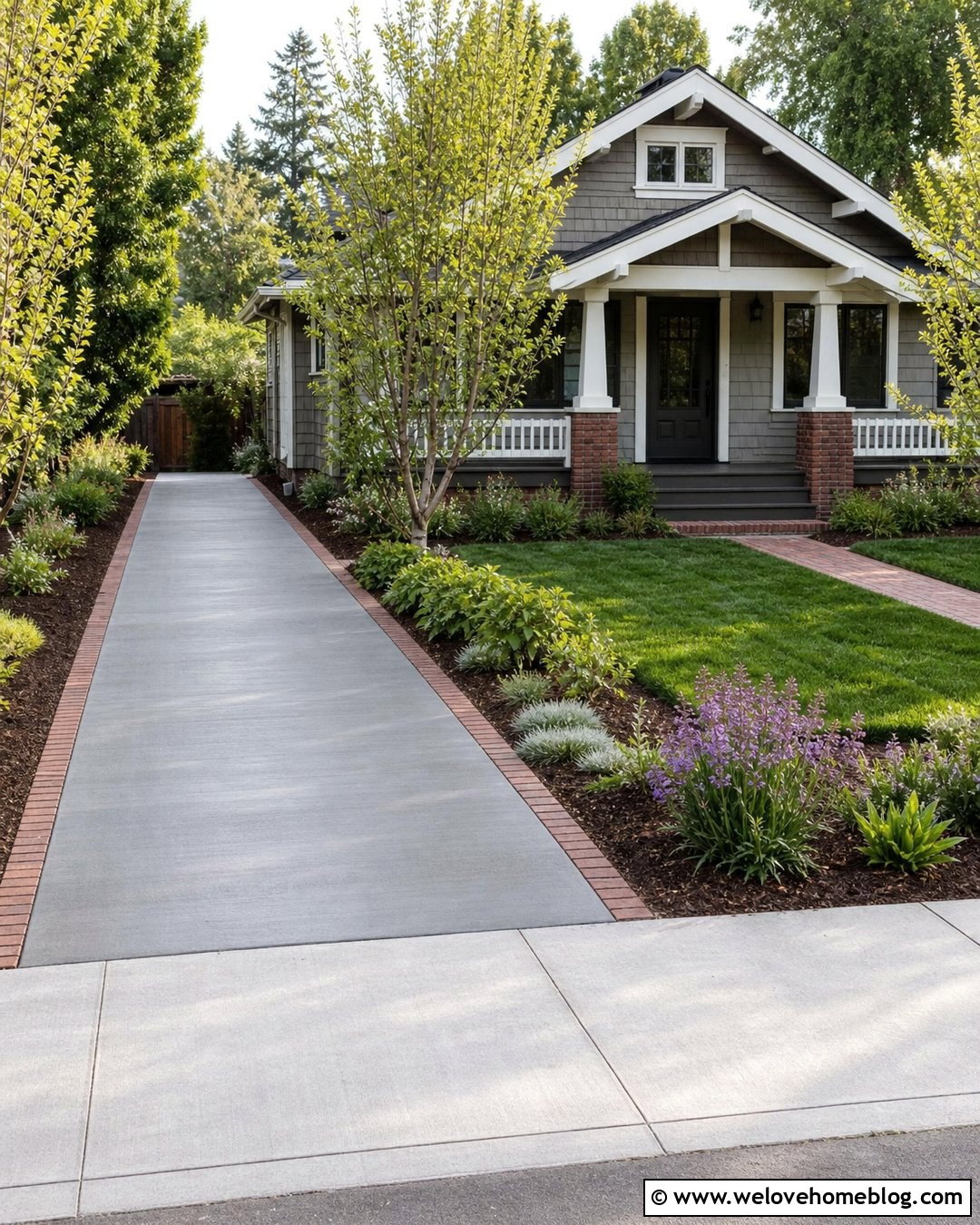
For a smaller front yard, upright serviceberries can line a narrow poured-concrete driveway without overwhelming the house. Their spring flowers, summer foliage, colorful fall leaves, and smooth bark provide interest across several seasons. Select a narrow cultivar and use consistent single-stem specimens if you want a clean, tree-like row. Medium-gray concrete with a light broom finish keeps the surface practical, while a thin clay-brick border adds warmth. Create mulched planting strips along both sides and repeat compact shrubs or native perennials beneath the trees. Because serviceberries produce fruit that attracts wildlife, position trunks far enough from the pavement to reduce staining and cleanup concerns. The restrained scale works well beside a Craftsman bungalow, cottage, or compact ranch home. ()
5. Eastern Red Cedar Asphalt Driveway
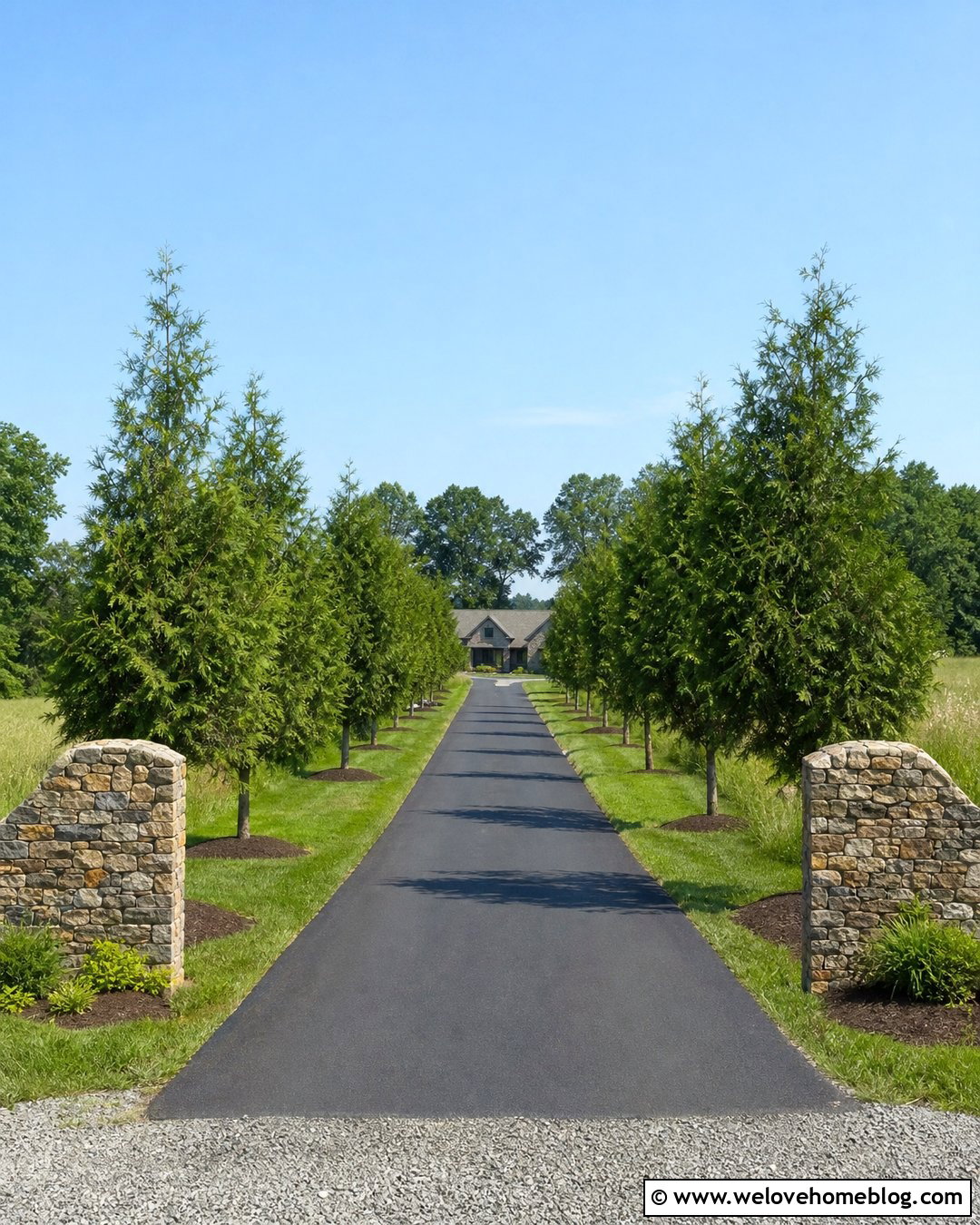
A long black asphalt driveway can feel softer and more private when lined with eastern red cedars. Their dense evergreen foliage creates a strong visual corridor throughout the year, making this approach especially effective for rural acreage, exposed front yards, and homes near busy roads. Set the trees well back from the asphalt so their mature width does not narrow the driving lane. A broad strip of meadow grass or mulch between the pavement and trees provides additional breathing room. Use natural fieldstone markers at the entrance and a simple gravel transition near the road. Eastern red cedar can handle several difficult urban and roadside conditions, although it prefers reasonably well-drained soil. Avoid placing it near apples or crabapples where cedar-apple rust is a concern. ()
6. Italian Cypress Resin Driveway
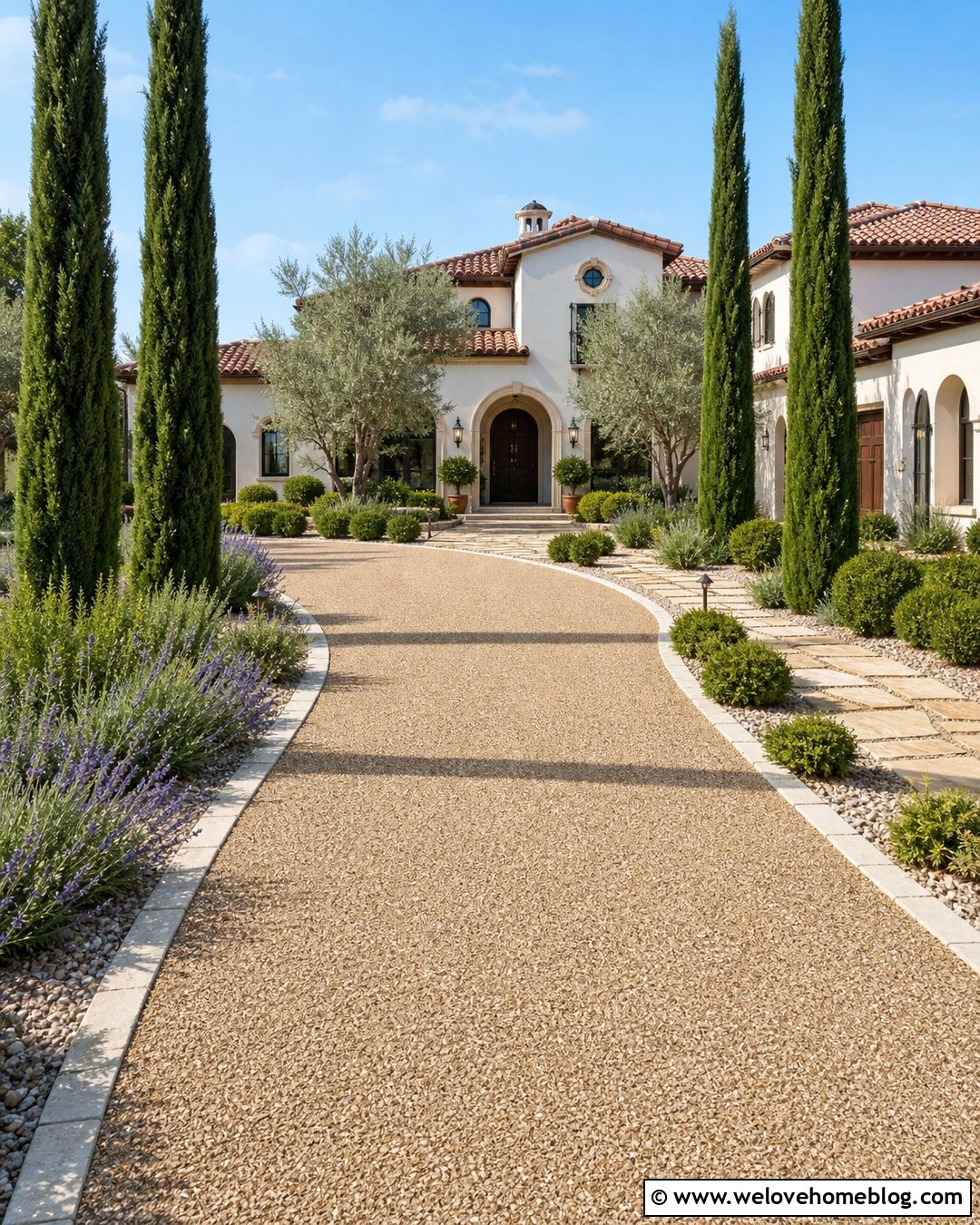
Tall Italian cypress trees can give a resin-bound gravel driveway a crisp, architectural appearance in a warm, suitable climate. This arrangement works best when the narrow trees are used as vertical markers rather than planted so closely that they form a solid wall. Choose tan or pale-gold resin-bound gravel for a bright Mediterranean palette, then finish the edges with limestone setts. A straight or slightly curved layout helps the repeated cypress forms guide attention toward the front door. Between the trees, use gravel mulch, rosemary, lavender, and clipped evergreen mounds for a simple, drought-conscious planting scheme. Stucco walls, terracotta roof tiles, and dark metal details complete the look. Check mature width and local disease pressures before planting, since climate and site conditions strongly influence long-term performance.
7. Red Maple Exposed Aggregate Driveway
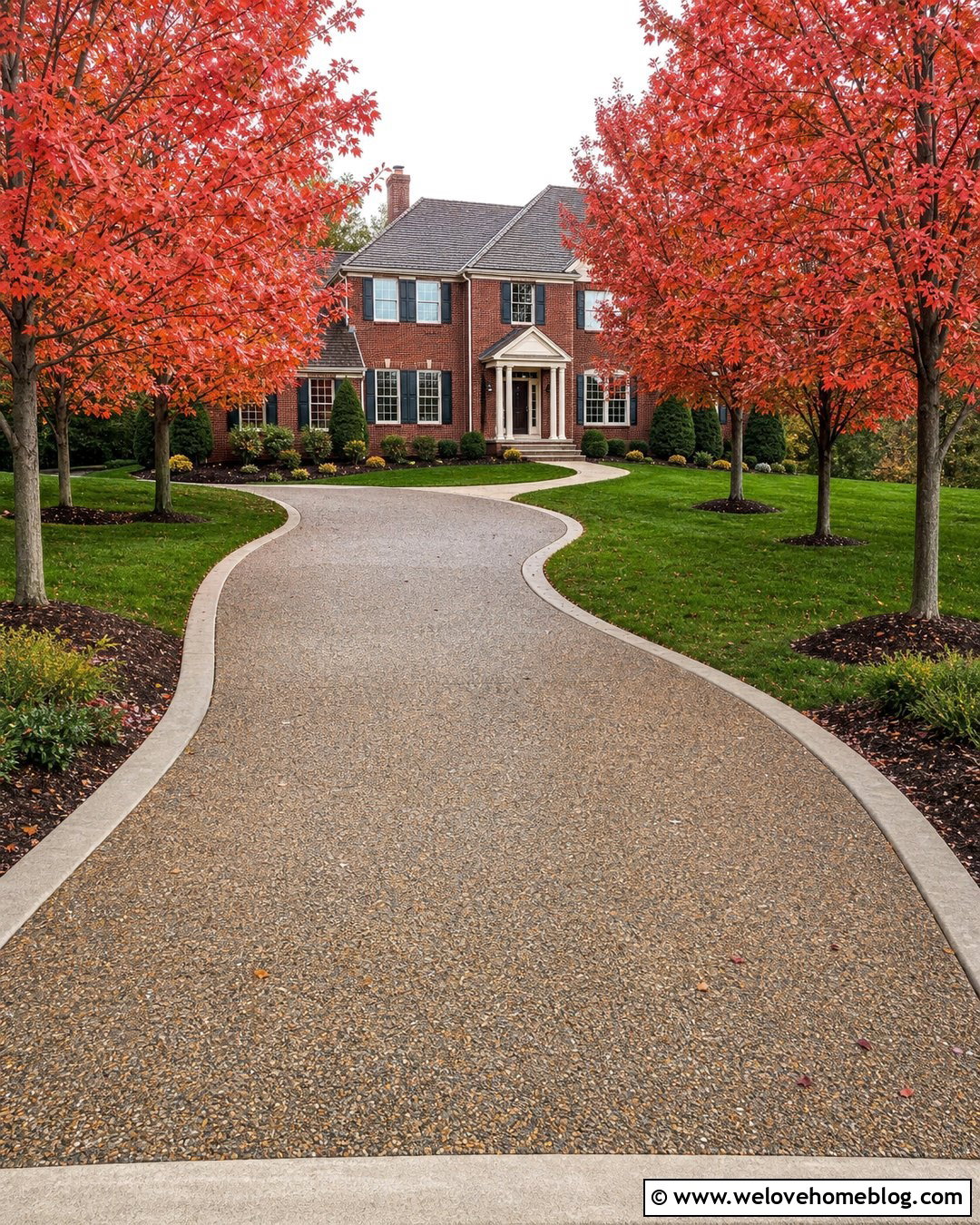
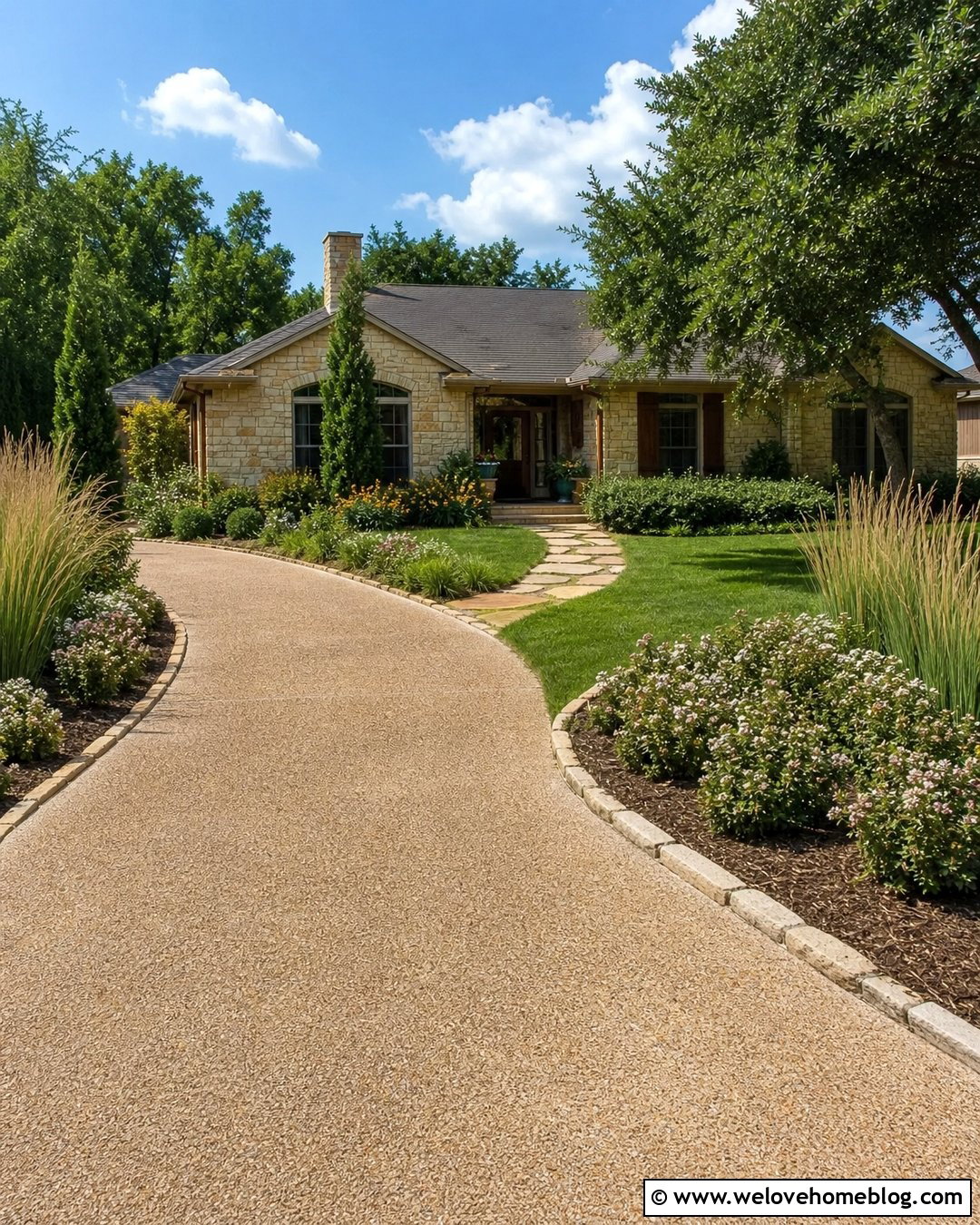
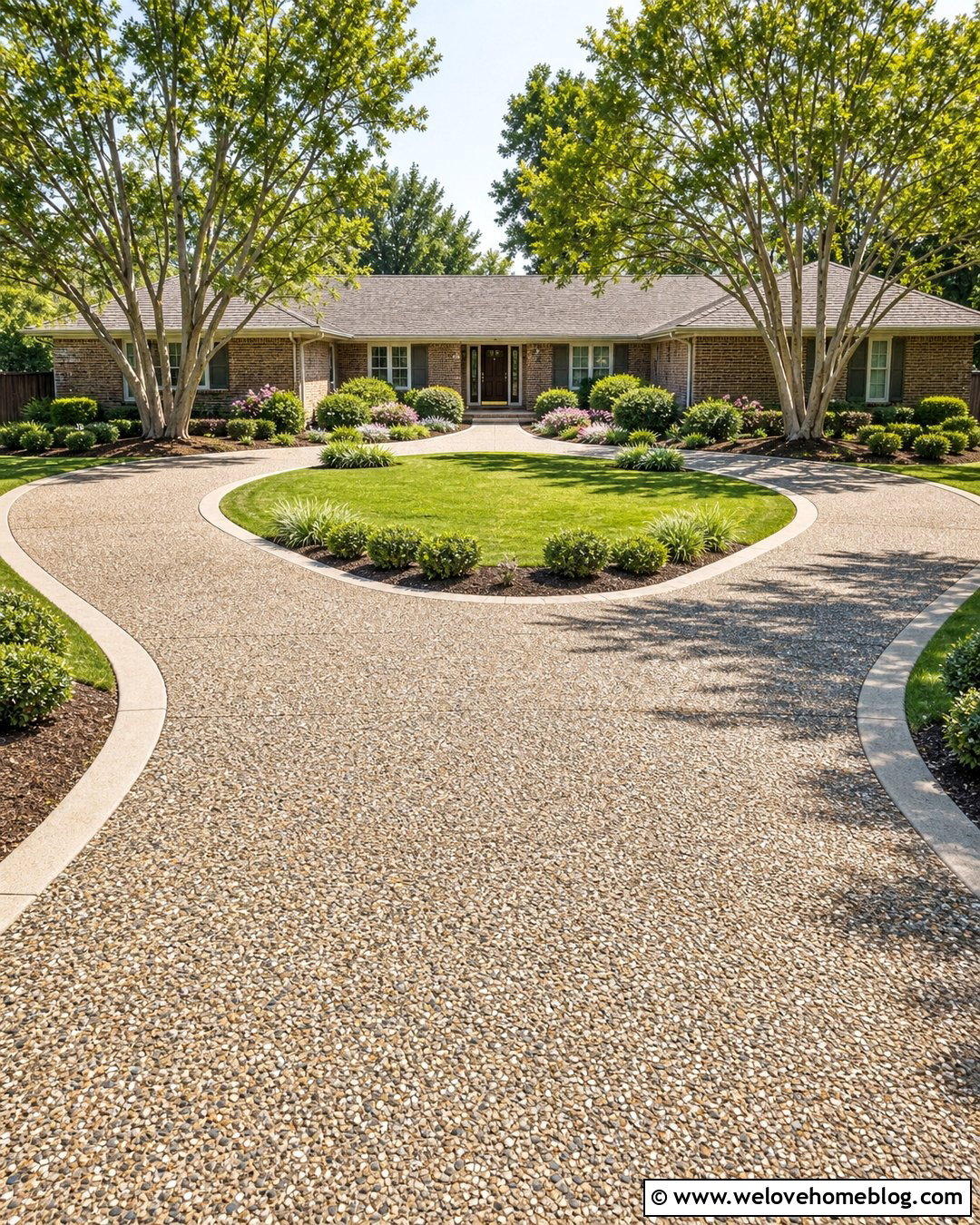
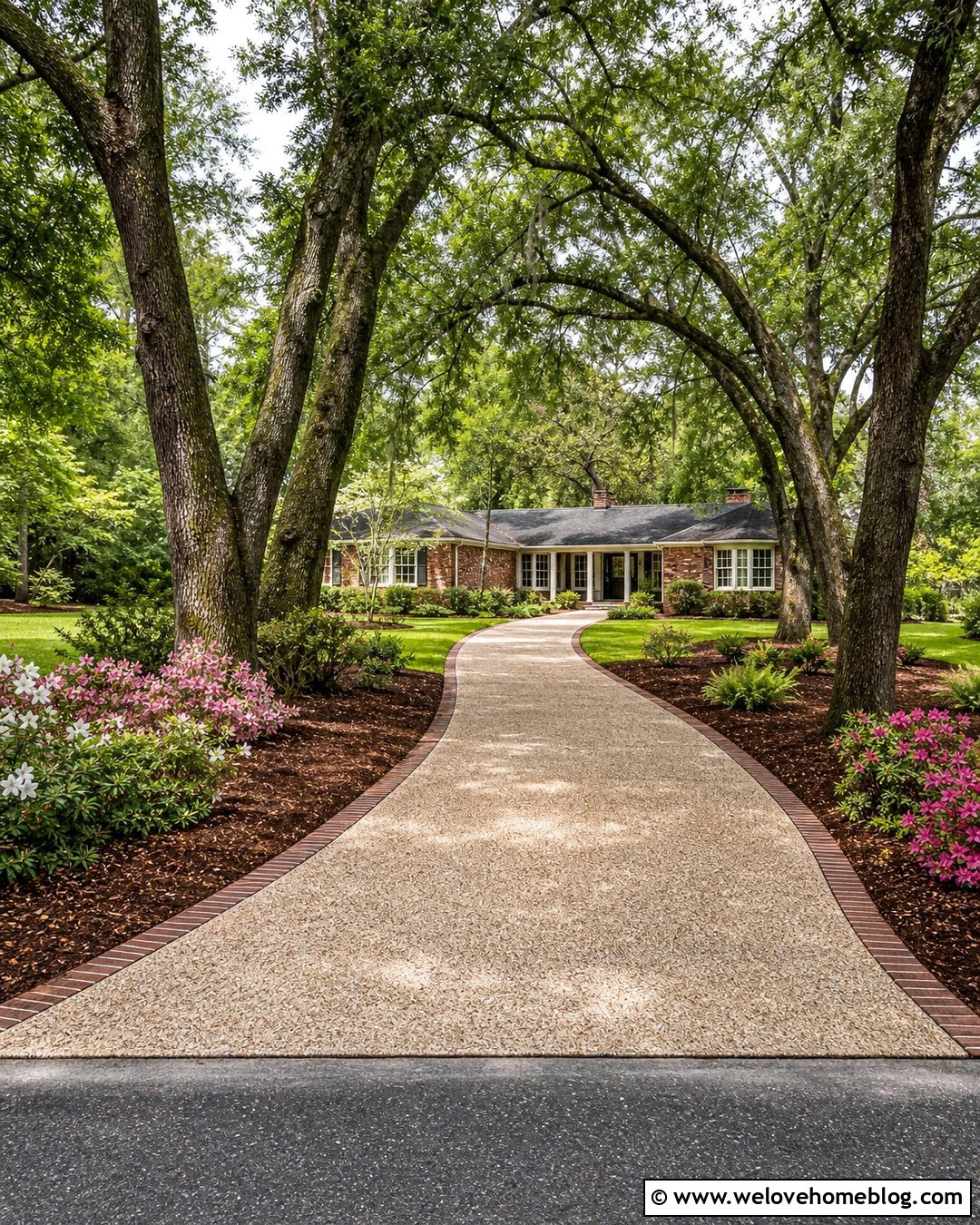
A broad exposed-aggregate driveway lined with red maples creates a dramatic autumn approach to a traditional home. This design needs generous front-yard space because maples develop substantial canopies and should not be squeezed against pavement or foundations. Place the trees in wide lawn panels beyond a contrasting concrete curb, allowing the canopies to frame the driveway as they mature. A subtle S-curve makes the row feel natural while revealing the house gradually. Use an aggregate mix with warm brown and gray stones to coordinate with brick, stone veneer, or painted siding. Beneath the trees, keep landscaping simple with mulch rings that eventually connect into continuous beds. Confirm the selected maple and cultivar suit local soil, drainage, salt exposure, and available rooting space before installation. ()
8. River Birch Circular Driveway
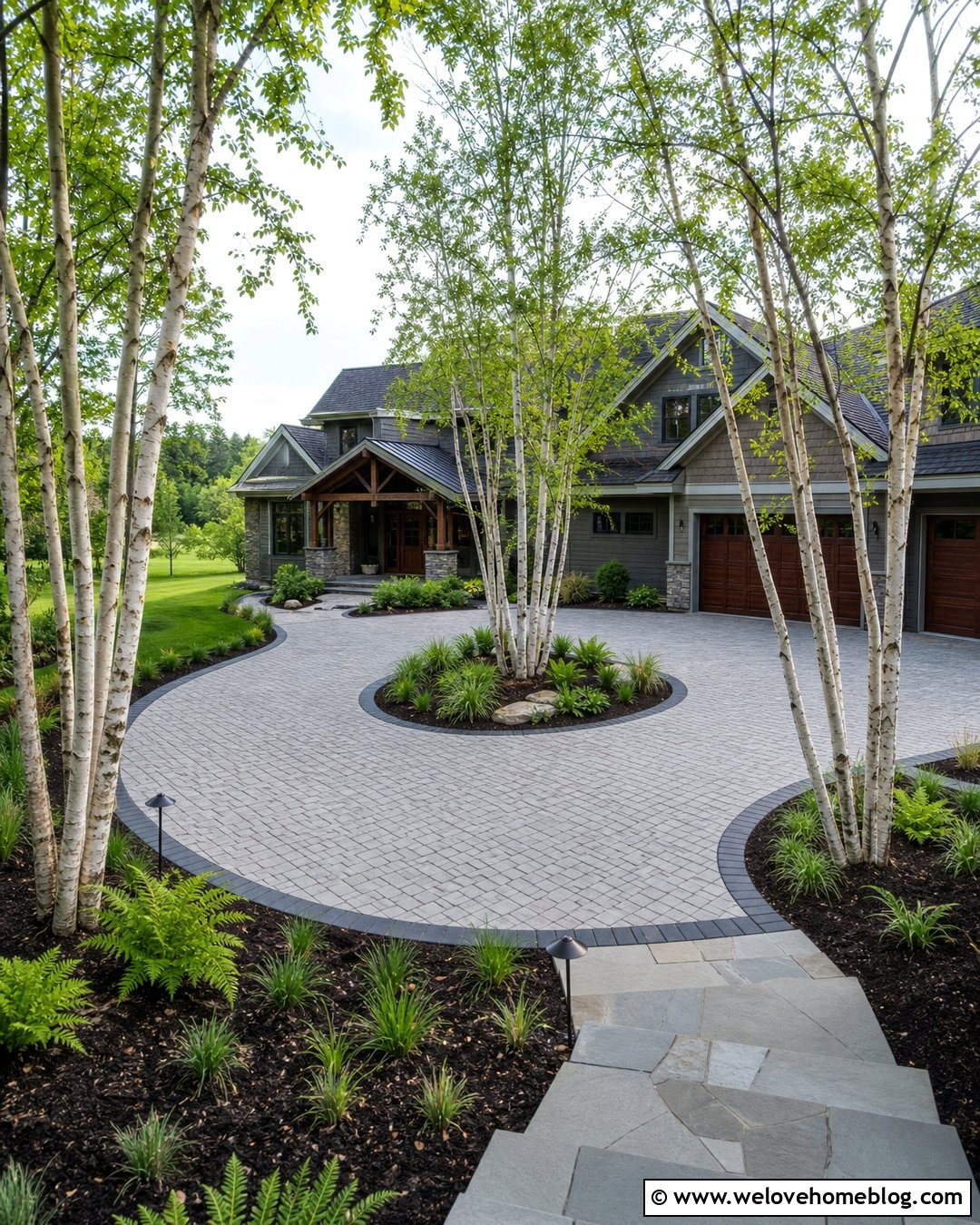
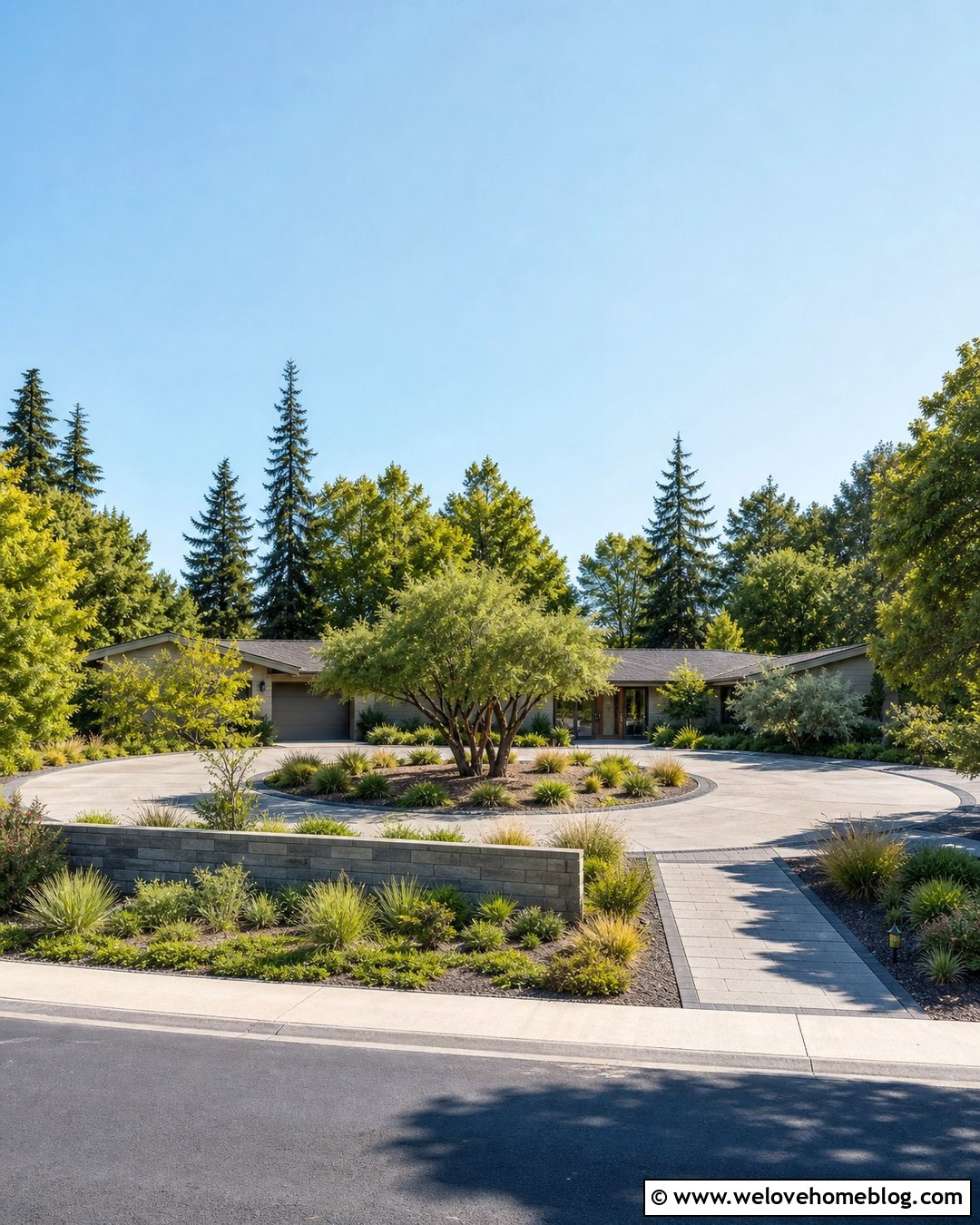
Multi-trunk river birches can soften a large circular driveway while adding distinctive pale, peeling bark to the front yard. Rather than placing them directly beside the pavement, position evenly spaced clusters around the outside curve where their trunks have room to spread. Use warm gray interlocking concrete pavers for the driveway and define the circle with a darker stone border. The central island can hold one additional birch grouping surrounded by moisture-tolerant grasses, ferns, and a clean mulch layer. This arrangement works particularly well on a wooded property or beside a contemporary Craftsman home. Maintain open views near the entrance and keep branches pruned for vehicle clearance. River birches generally look most natural in relaxed clusters, so the spacing should feel balanced without appearing rigid or overly formal.
9. Dogwood Concrete And Stone Driveway
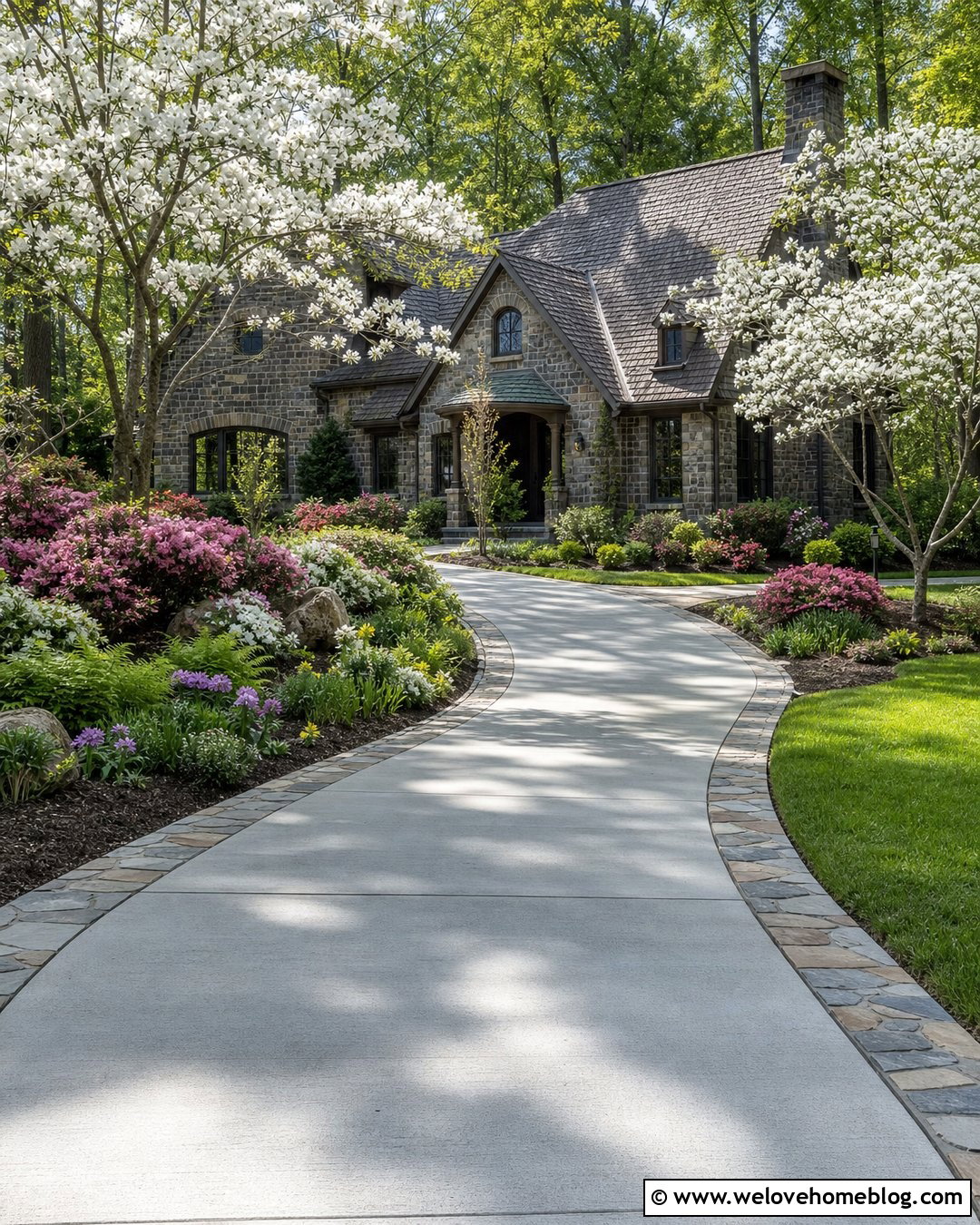
Flowering dogwoods bring a graceful woodland character to a concrete driveway bordered with natural stone. A softly curved layout is preferable because it allows each canopy to appear against layers of lawn and garden rather than forming a stiff corridor. Use light-gray poured concrete with a narrow flagstone ribbon along both edges. Plant dogwoods in generously sized beds where they receive conditions appropriate for the selected species and local climate. Add azaleas, ferns, woodland sedges, and spring bulbs beneath them for a layered front-yard composition. Keep low branches away from parked vehicles and preserve a clear view toward the street. This complete design complements stone cottages, Craftsman homes, and traditional houses surrounded by mature woodland. White-flowering trees also stand out beautifully against darker siding and evergreen foundation planting.
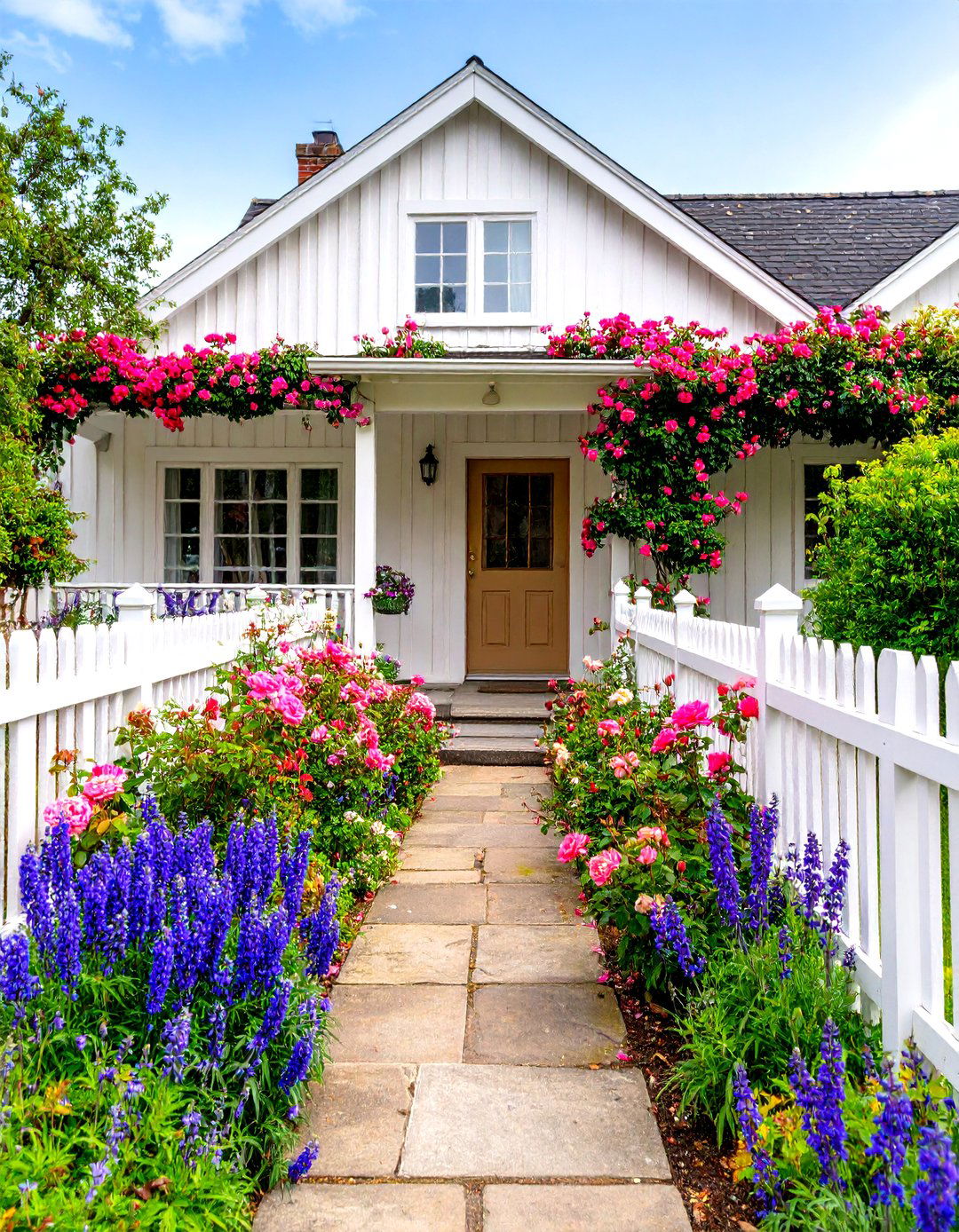
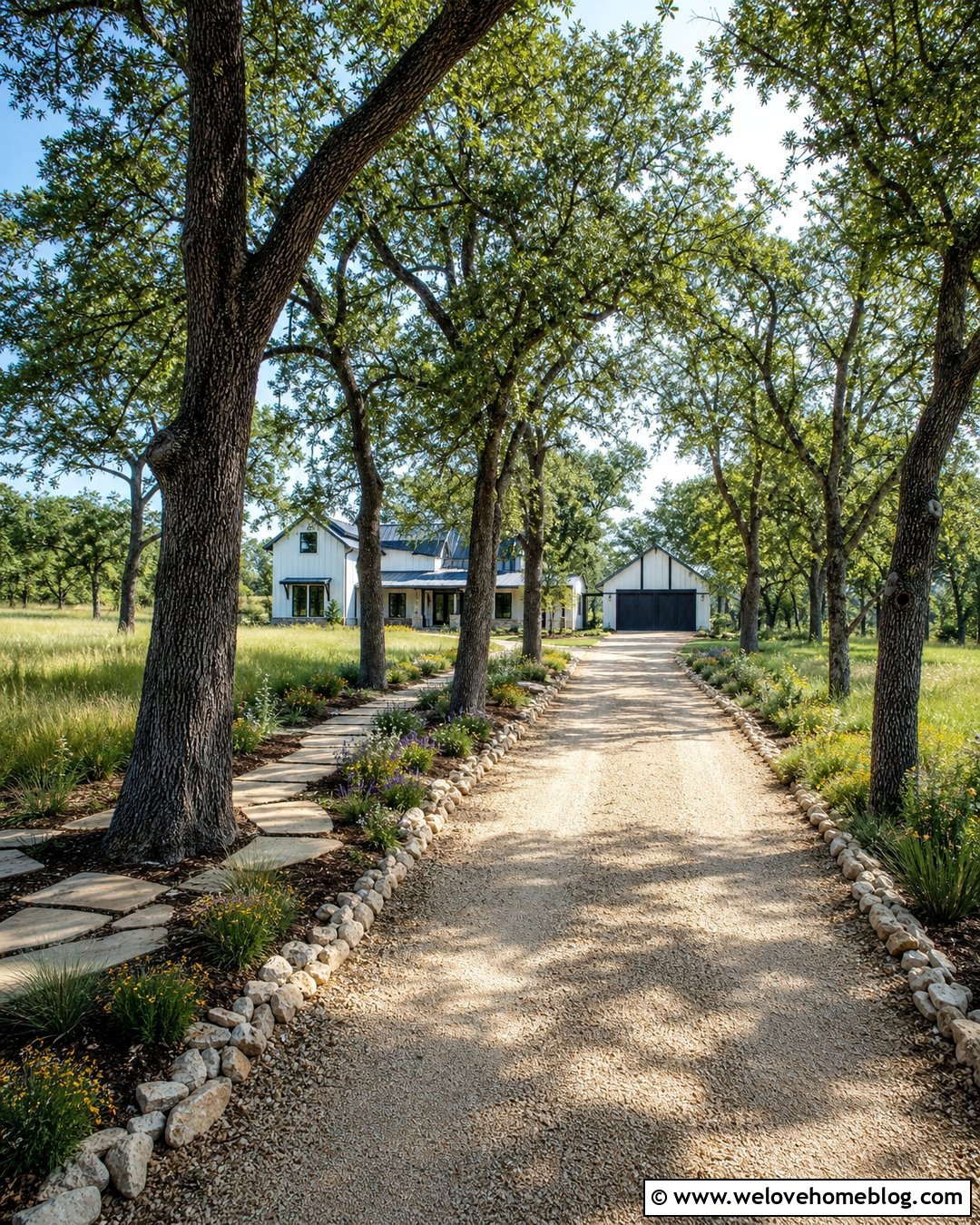
10. Ginkgo Modern Concrete Driveway
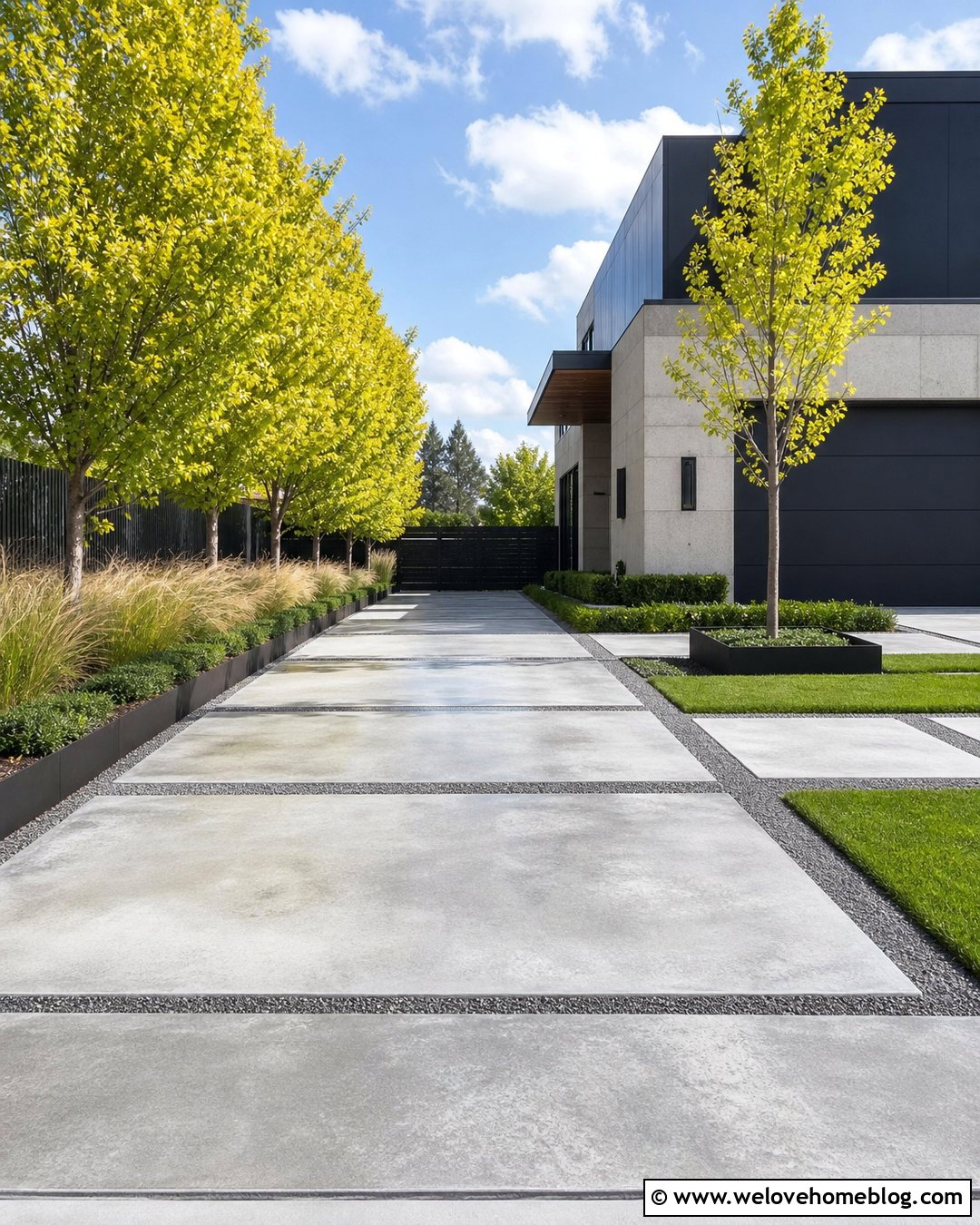
Upright male ginkgo cultivars can create a clean tree-lined entrance beside a modern concrete driveway. Choose male selections to avoid the unpleasant-smelling fruit produced by female trees. Large rectangular concrete slabs with narrow gravel joints reinforce the structured appearance, while a straight driveway emphasizes the repeated vertical trunks. Place each tree in a generous square bed filled with ornamental grasses or low ground cover, keeping the planting pattern consistent from the curb to the house. A black steel edge can separate the beds from the lawn and echo dark windows or garage doors. As the trees mature, their distinctive leaves and yellow fall color soften the architecture without making the front yard feel overly traditional. Ginkgo is also among the trees considered for challenging paved urban settings. ()
11. Thornless Honeylocust Gravel Driveway
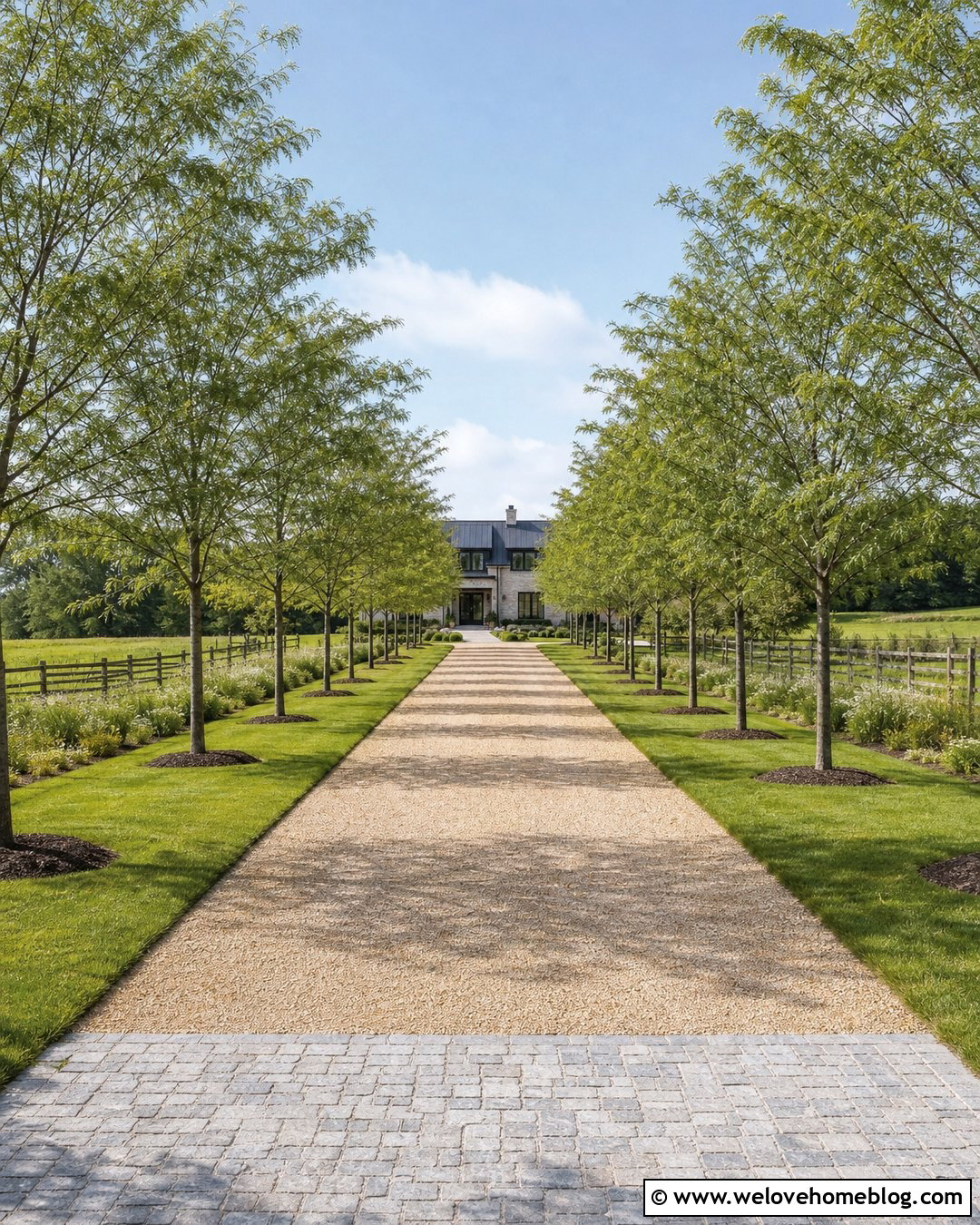
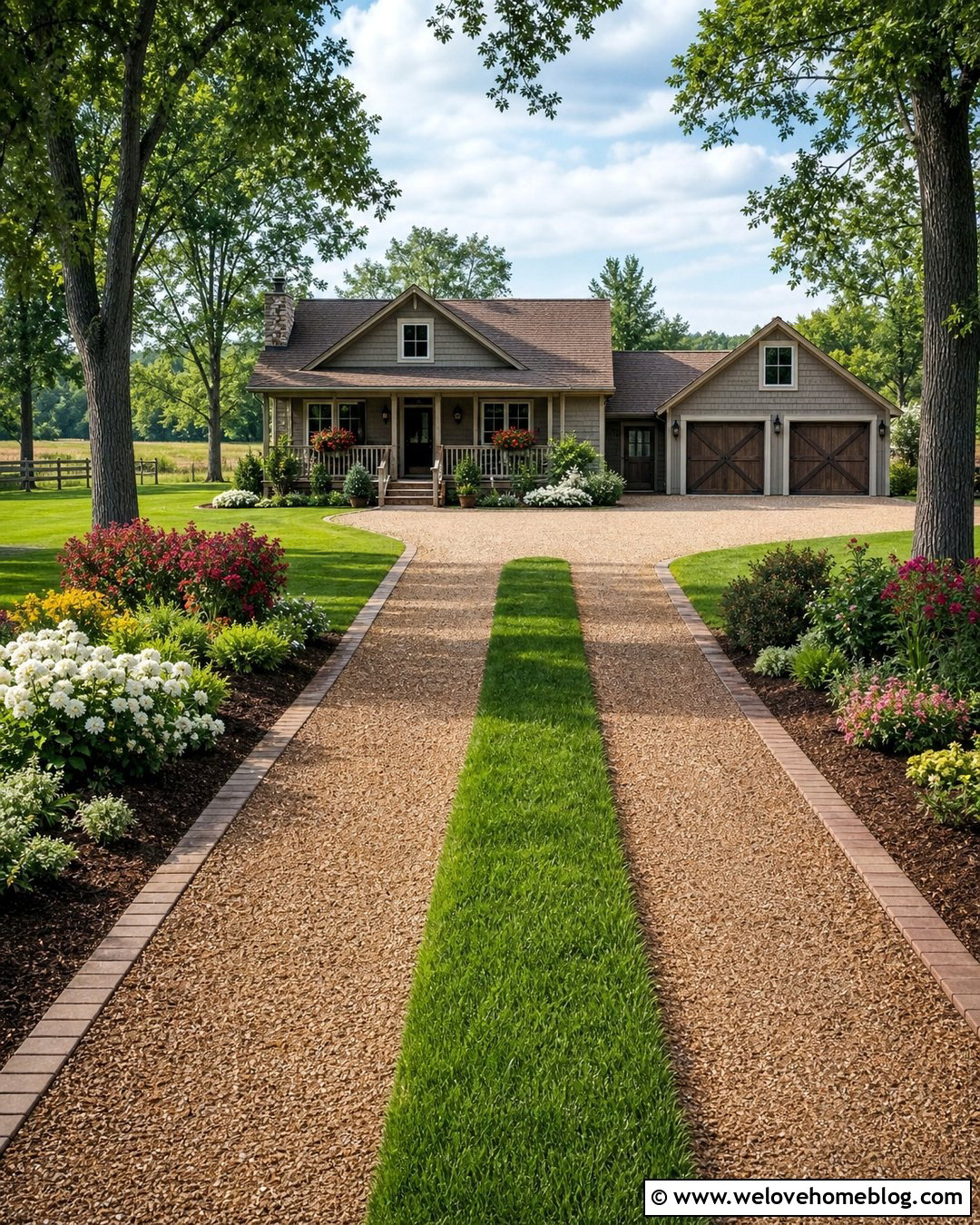
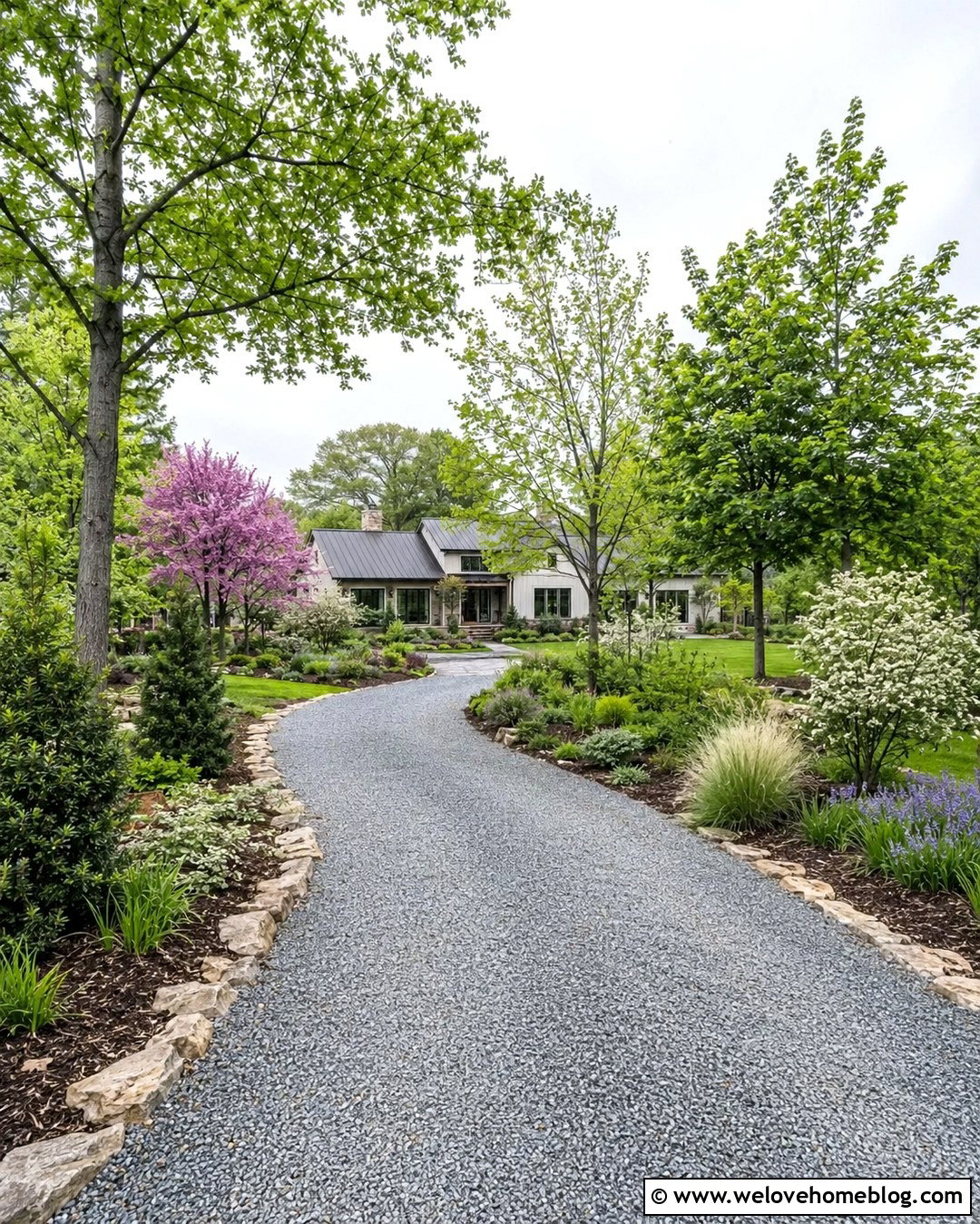
A long country driveway benefits from the light, filtered shade of thornless honeylocust trees. Their open canopies can define the route without creating a dark tunnel or hiding the house completely. Use compacted buff gravel for the surface, stabilized at the entrance with a cobblestone apron. Broad grass verges between the driveway and tree trunks give the composition a relaxed estate appearance and provide room for mature growth. Add low meadow planting beyond the trees rather than installing fussy foundation-style beds along the full drive. Upright cultivars can help maintain a more orderly branching structure, although ongoing pruning is still necessary for safe clearance. This design works well with ranch homes, barns, modern farmhouses, and large suburban lots. Thornless honeylocust is also recognized for handling heat and drought. ()
12. Magnolia Brick Circular Driveway
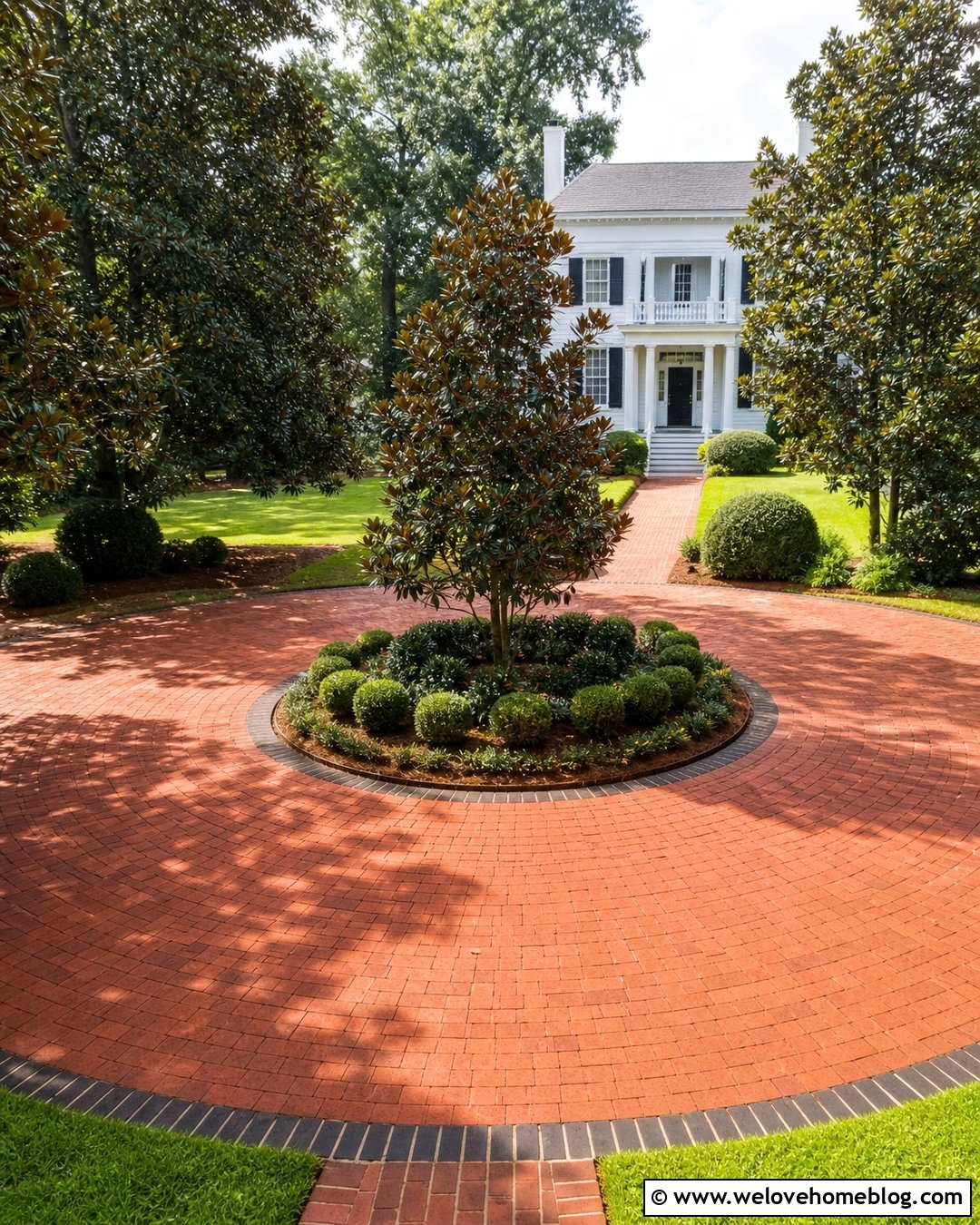
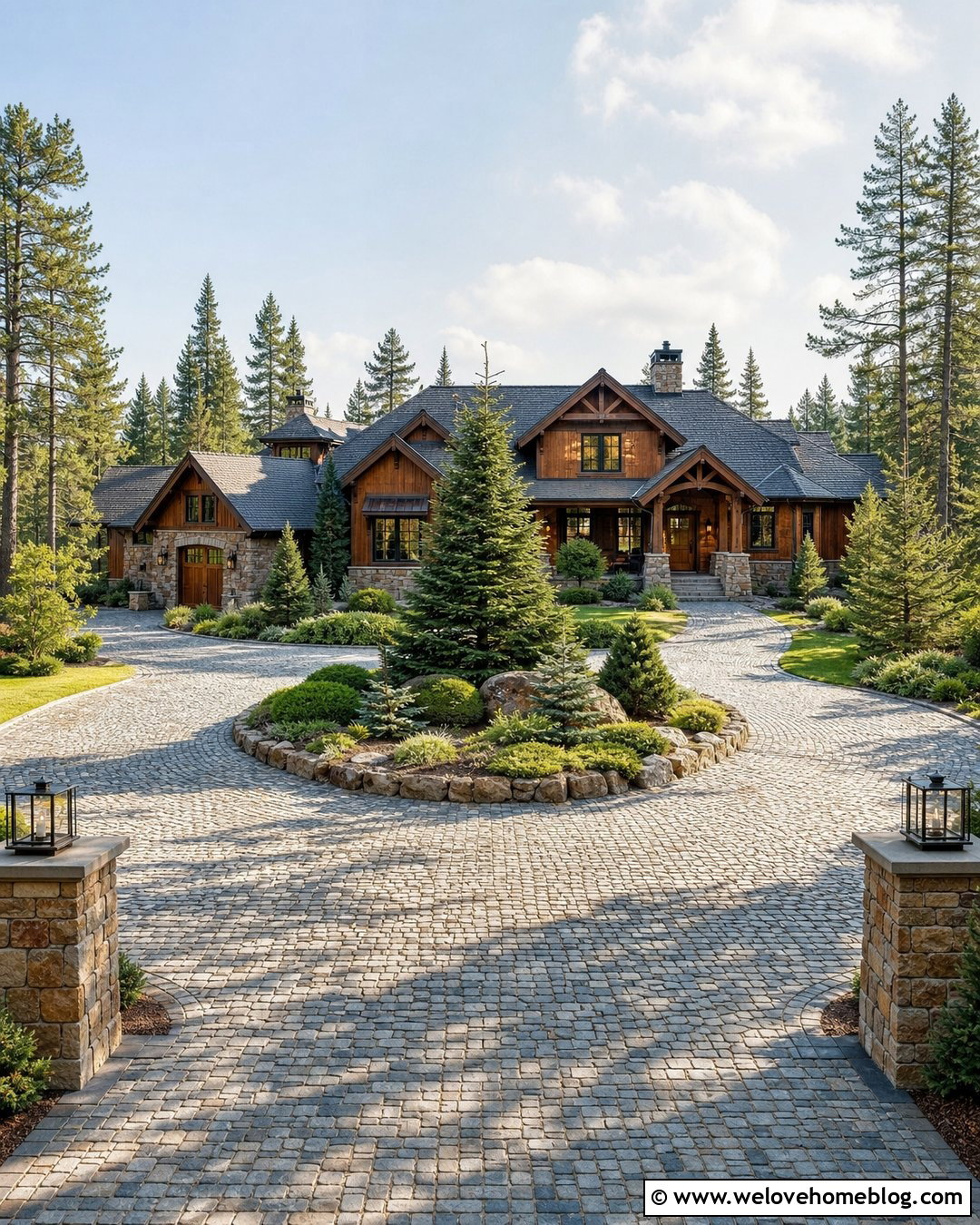
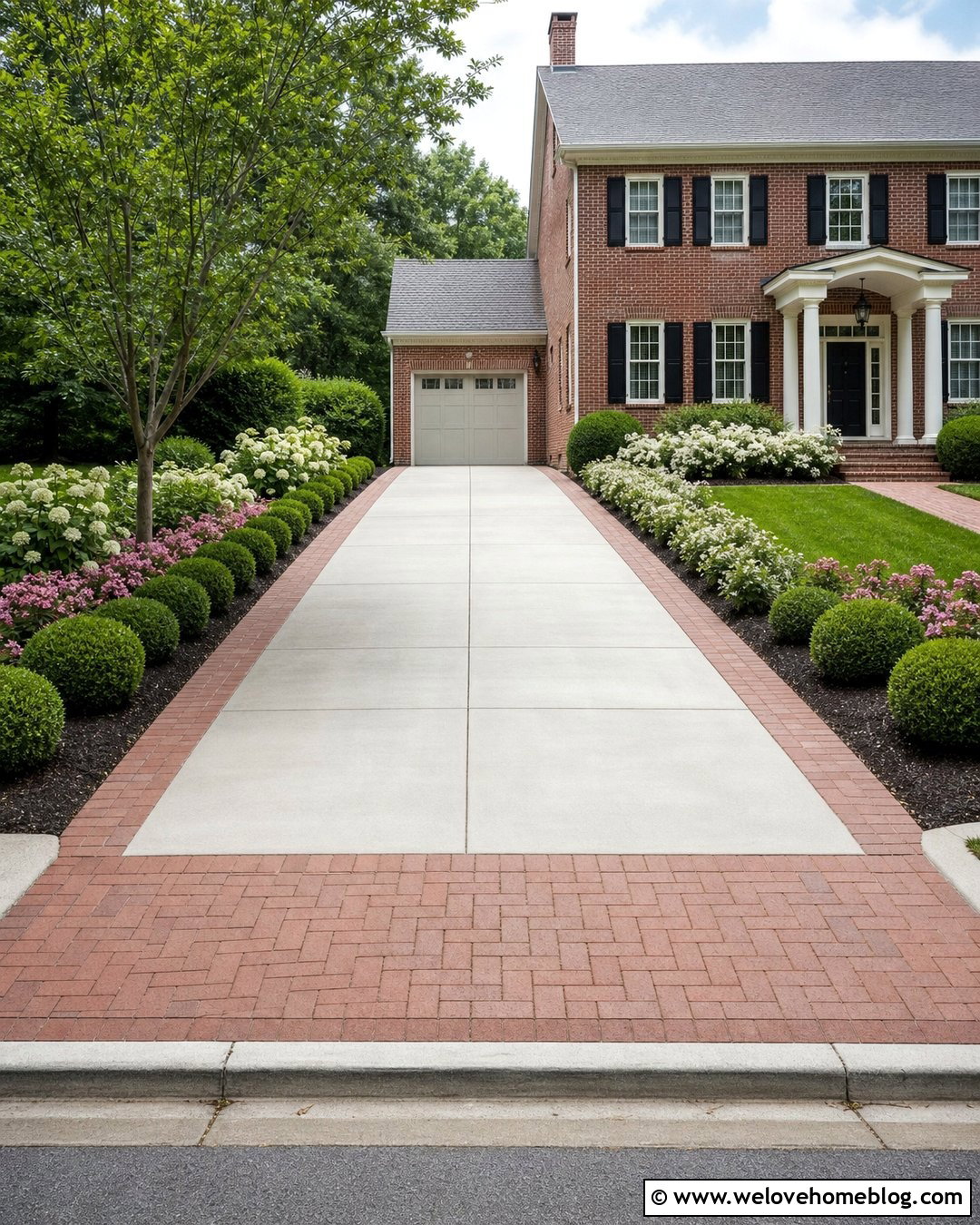
A brick circular driveway lined with magnolias creates a strong Southern-inspired front yard. Use the trees around the outer curve rather than placing them too close to the center island, where broad mature canopies could conceal the house. Red clay brick in a herringbone pattern provides traditional character, while a charcoal soldier-course border defines the driving edge. Fill the central island with one specimen magnolia, clipped evergreen shrubs, and a simple ground cover for a coordinated focal point. Along the outer row, broad mulched beds protect trunks from lawn equipment and create space for shade-tolerant planting. Choose a magnolia species and cultivar with a mature size suited to the property. This substantial design is best for large colonial, Georgian, farmhouse, or Southern traditional homes with adequate turning space.
13. Flowering Cherry Cobblestone Driveway
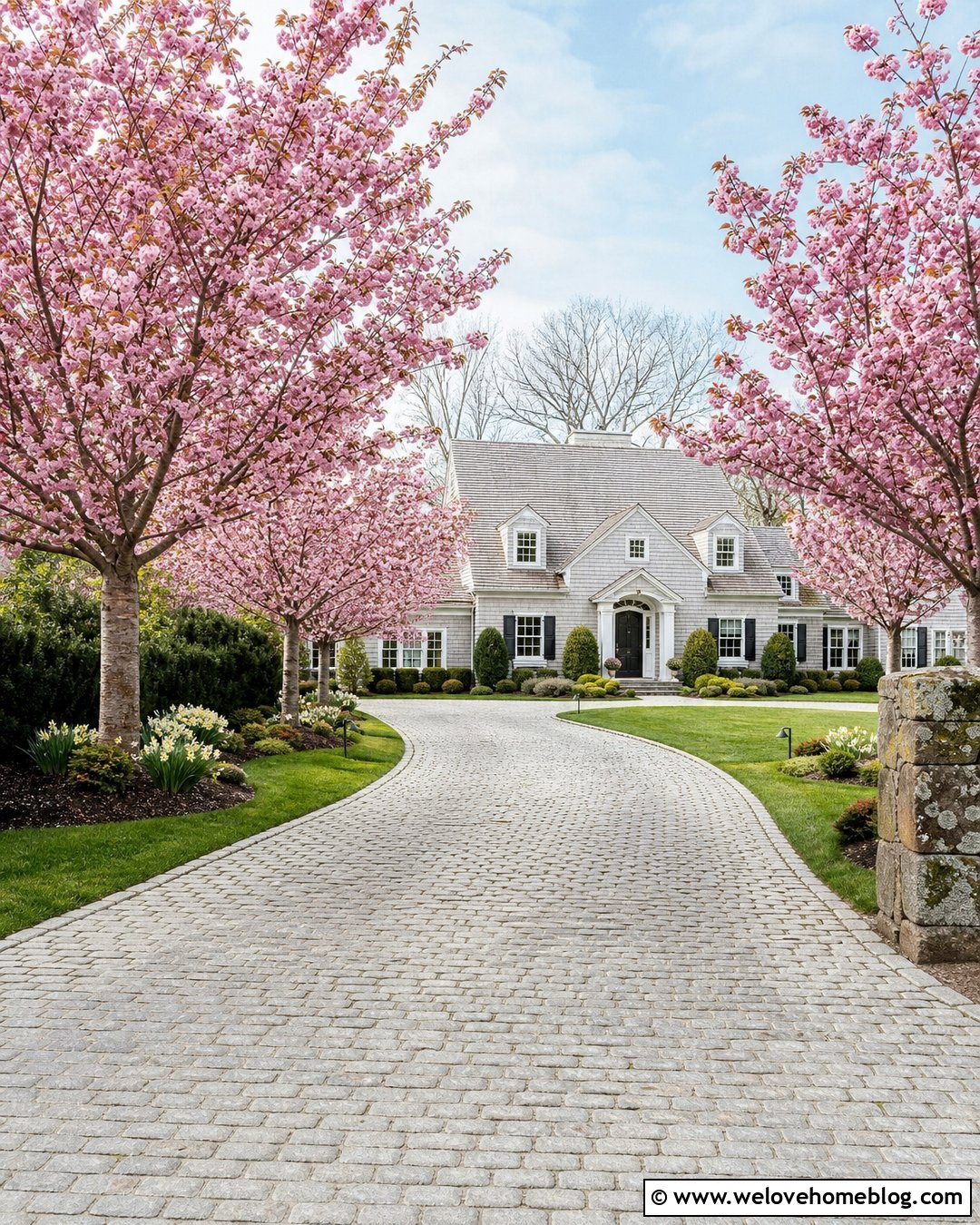
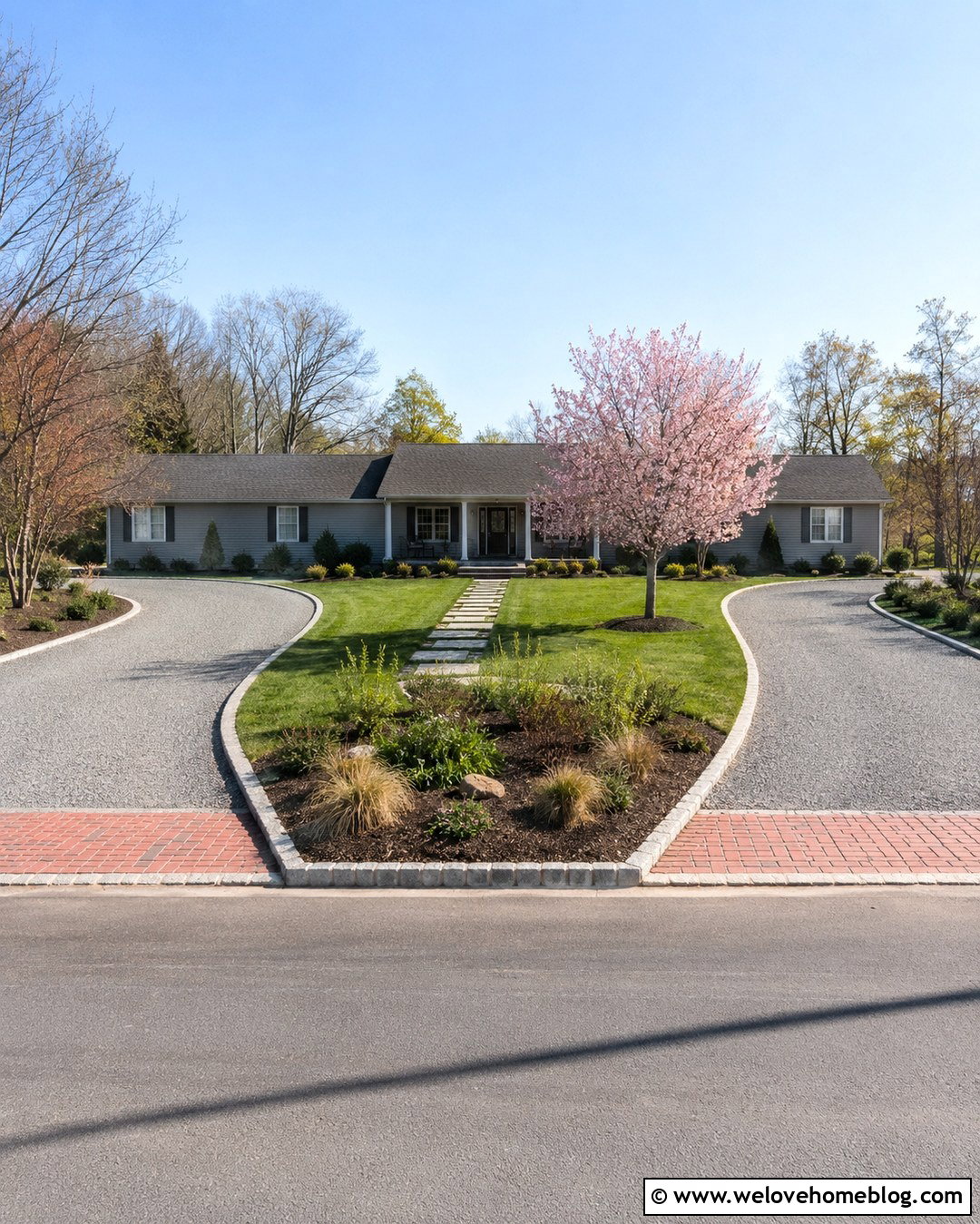
A cobblestone driveway framed by flowering cherry trees creates a memorable spring entrance for a traditional front yard. Keep the layout straight or gently curved, and space the trees far enough apart for individual canopies to develop rather than forming a congested hedge. Gray granite cobblestones provide a durable-looking, old-world surface that balances the delicate blossoms. Install neat lawn strips between the cobblestones and planting beds to keep the approach bright and open. Low evergreen shrubs and spring bulbs can continue the seasonal display without blocking views beneath the branches. Select a cherry suited to local climate and disease conditions, and plan for regular cleanup of petals and leaves. The combination is especially attractive with Cape Cod, Tudor, cottage, and painted-brick houses featuring simple, symmetrical facades.
14. Live Oak Shell Gravel Driveway
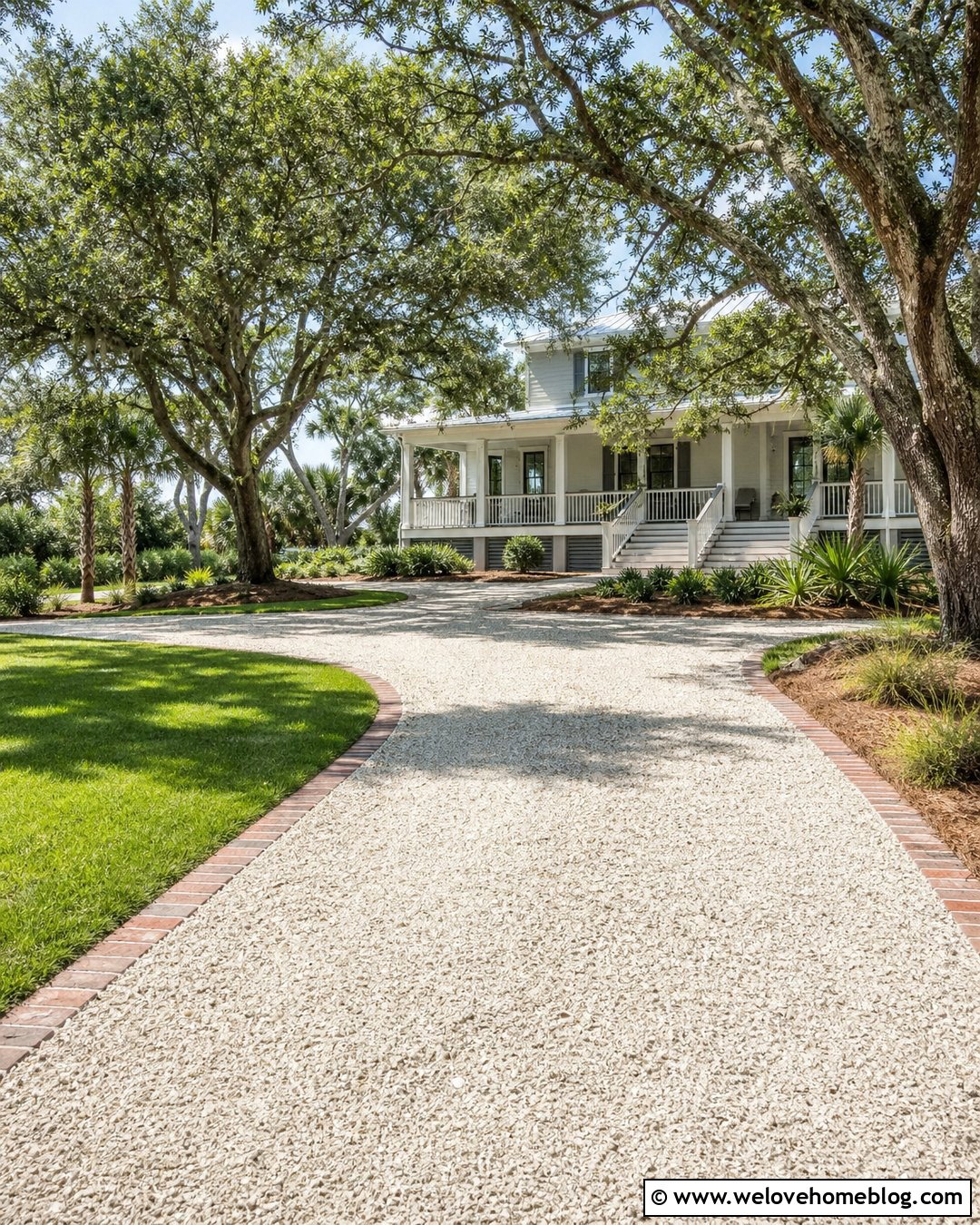
Southern live oaks can frame a sweeping shell gravel driveway on a large coastal or low-country property. These trees need considerable room, so place them well beyond the pavement and allow their canopies to become the dominant landscape feature. A pale crushed-shell surface reflects light and contrasts with dark trunks and evergreen foliage. Edge the driveway with flush-set brick to control loose material while preserving a relaxed appearance. Beneath the trees, use broad areas of lawn, pine-straw beds, native grasses, or shade-tolerant ground covers. A curved approach works better than a tight formal row because it responds naturally to the wide branching structure. Keep the entrance open and confirm there is sufficient clearance from buildings, utilities, and neighboring property. This complete look complements coastal cottages, raised Southern homes, and expansive ranch houses.
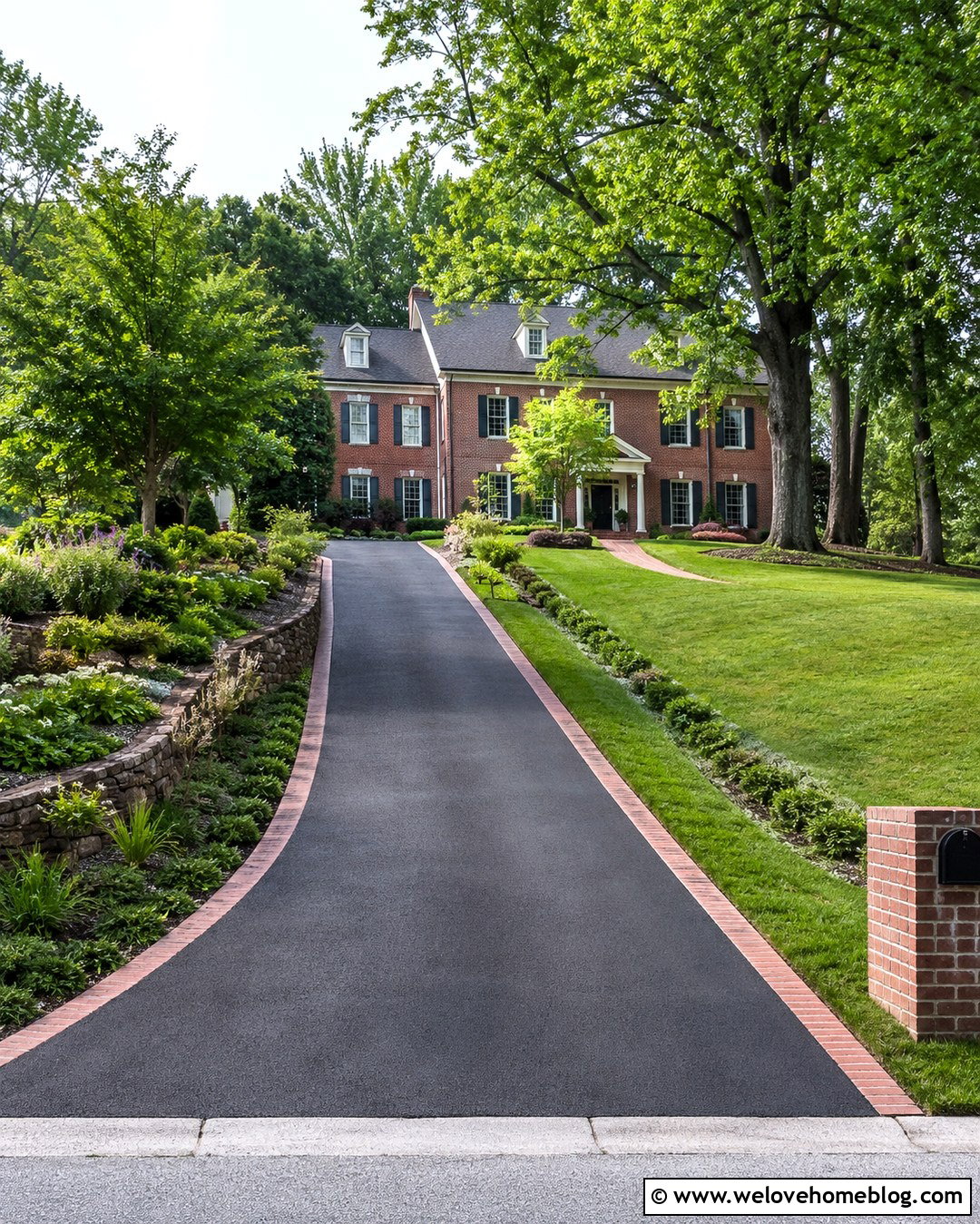
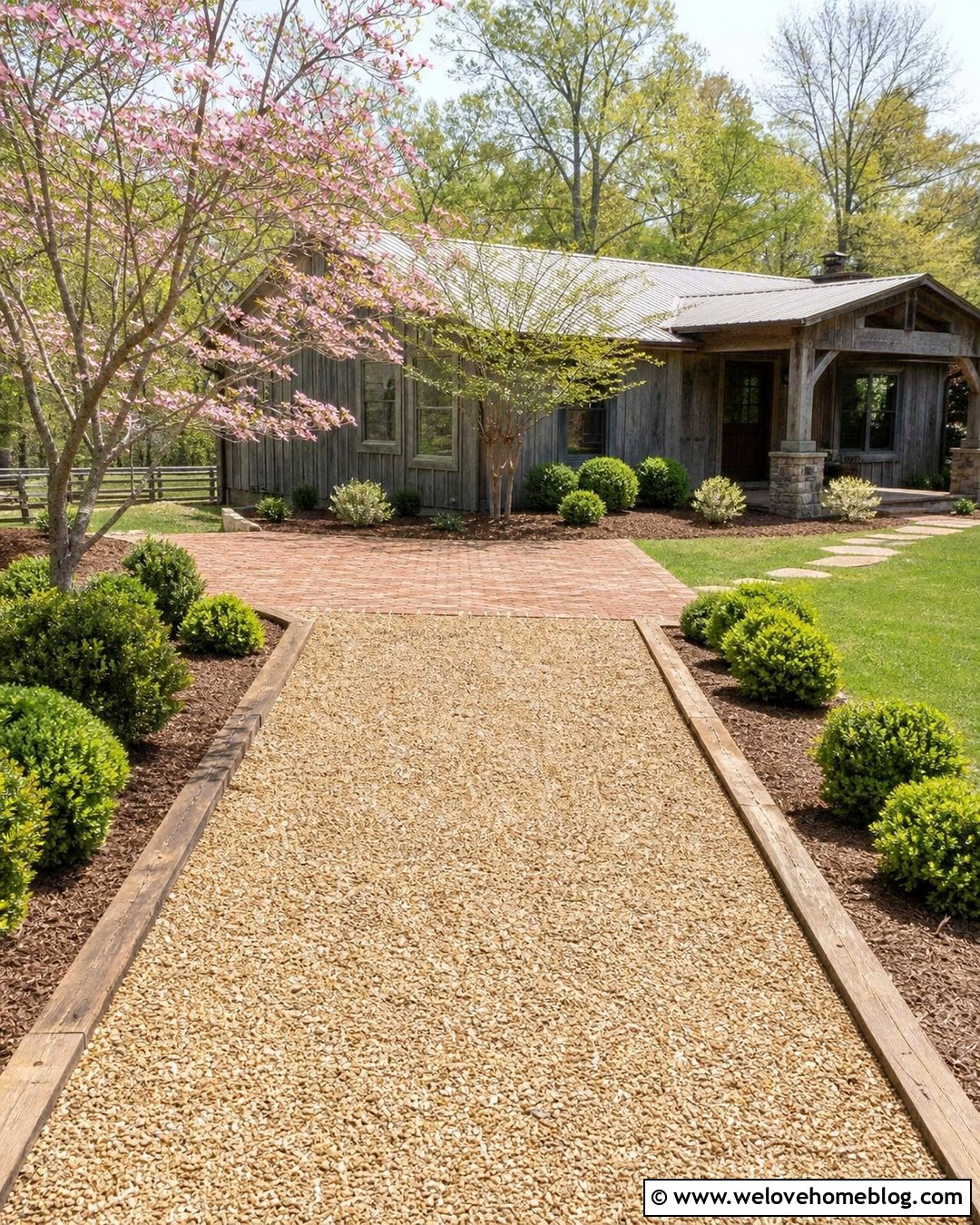
15. Palm Tree Concrete Driveway
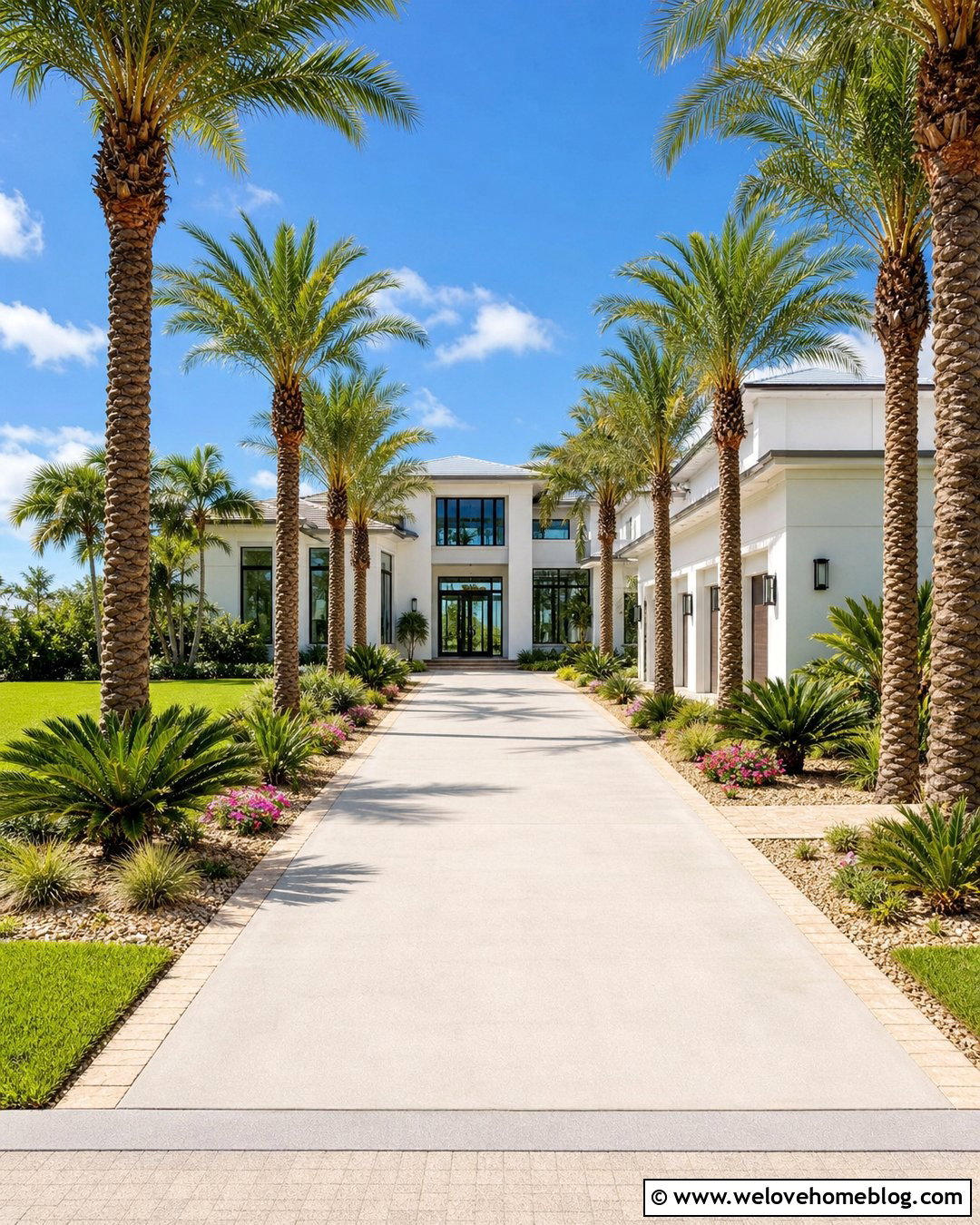
A palm-lined concrete driveway can create a bright, resort-like entrance in frost-free and warm-climate front yards. Select one palm species with an appropriate mature height and trunk size, then repeat it at measured intervals for a unified appearance. Use pale poured concrete with a subtle sand finish to reflect heat visually, bordered by warm limestone or coral-toned pavers. A straight driveway provides the strongest formal effect, while a gentle curve feels more relaxed around a coastal house. Fill planting beds with compact cycads, ornamental grasses, flowering ground covers, and clean gravel mulch. Keep thorny plants away from passenger areas and preserve open sightlines where the driveway meets the street. Regular frond maintenance is essential so dead material does not hang above vehicles, walkways, or the driveway entrance.
16. Palo Verde Decomposed Granite Driveway
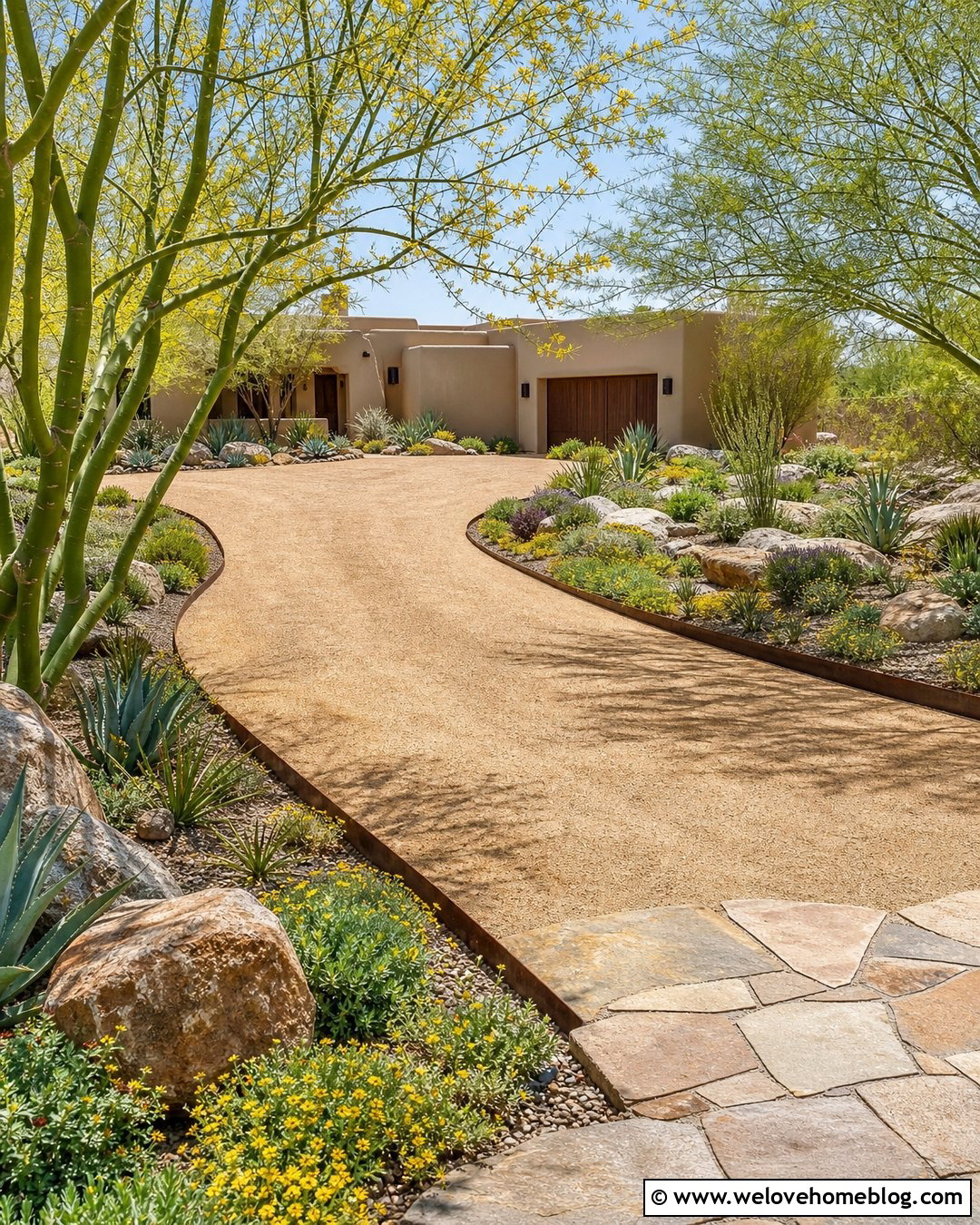
In a Southwestern front yard, palo verde trees can line a decomposed granite driveway with airy shade, green bark, and bright seasonal flowers. Use a warm gold or rust-colored stabilized granite surface and define it with weathered steel edging. The trees should sit in broad, shallow planting basins beyond the edge, where rainwater can be directed without flooding the driving surface. Repeat agaves, desert spoon, boulders, and low flowering perennials beneath the canopies, leaving generous open gravel areas between plants. A gently curved driveway suits the irregular forms of the trees and creates a natural desert approach. Choose a suitable palo verde species or cultivar because mature size, thorns, litter, and branching structure vary. These trees favor sunny, well-drained landscape settings. ()
17. Desert Willow Paver Driveway
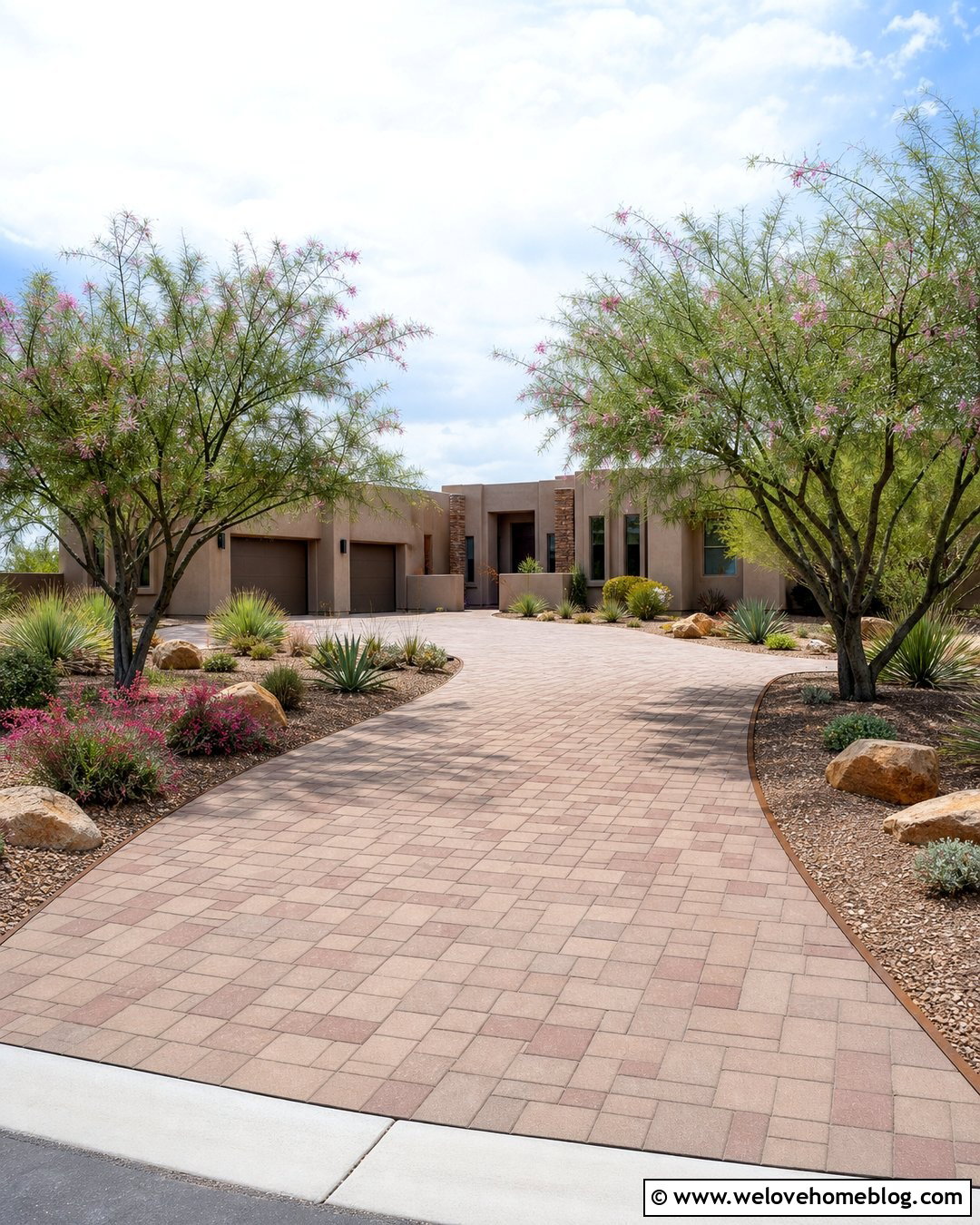
Desert willows offer a colorful, lighter-scale option for lining a driveway in a hot, dry front yard. Pair them with permeable concrete pavers in tan and muted terracotta tones, arranging the driveway in a gentle curve toward a stucco or contemporary desert house. Place each tree in a wide gravel-mulched bed set back from vehicle doors. Native grasses, penstemon, agave, and small accent boulders can connect the separate beds into one continuous landscape. Their relatively open canopies allow filtered light to reach plants underneath, preventing the border from becoming a bare shaded strip. Select seedless or low-litter cultivars where available if cleanup is a priority. Desert willow is valued for showy flowers and its ability to handle challenging desert conditions when properly sited. ()
18. Columnar Oak Asphalt Driveway
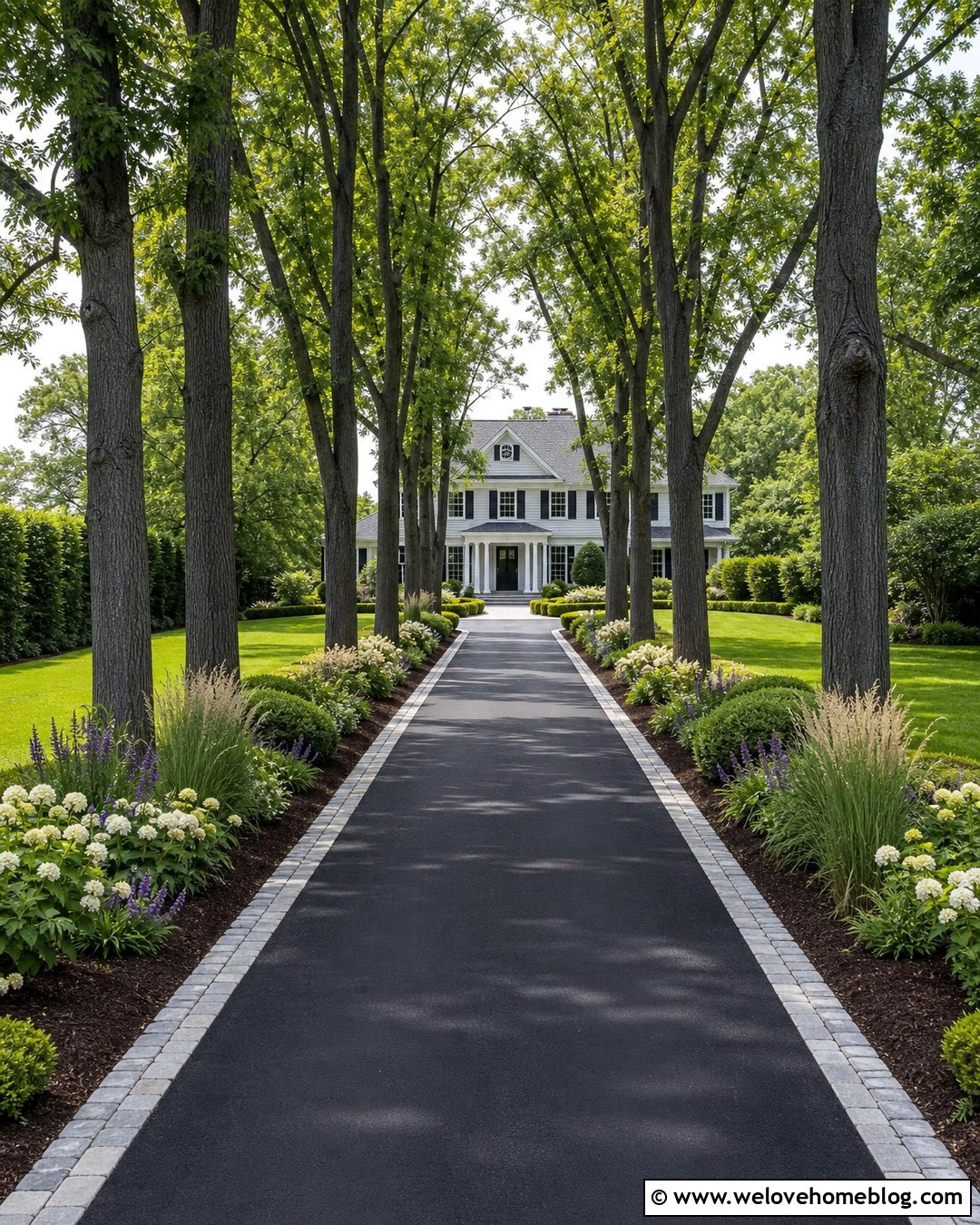
Columnar oaks can give a narrow suburban asphalt driveway the presence of larger shade trees without allowing branches to spread as widely across neighboring yards. Use a clean black asphalt surface with a double border of light-gray concrete pavers to sharpen the edges. Plant the trees in continuous mulched strips beyond the border, then repeat low grasses, flowering perennials, or clipped shrubs between the trunks. A straight layout emphasizes the upright growth and directs attention toward the garage and front entry. This approach works well with contemporary colonials, two-story brick houses, and modern suburban homes. Confirm the mature height, width, root space, and utility clearance of the exact cultivar before planting. The trees may look widely spaced at first, but planning for mature dimensions prevents future crowding and excessive pruning.
19. Arborvitae Paver Driveway
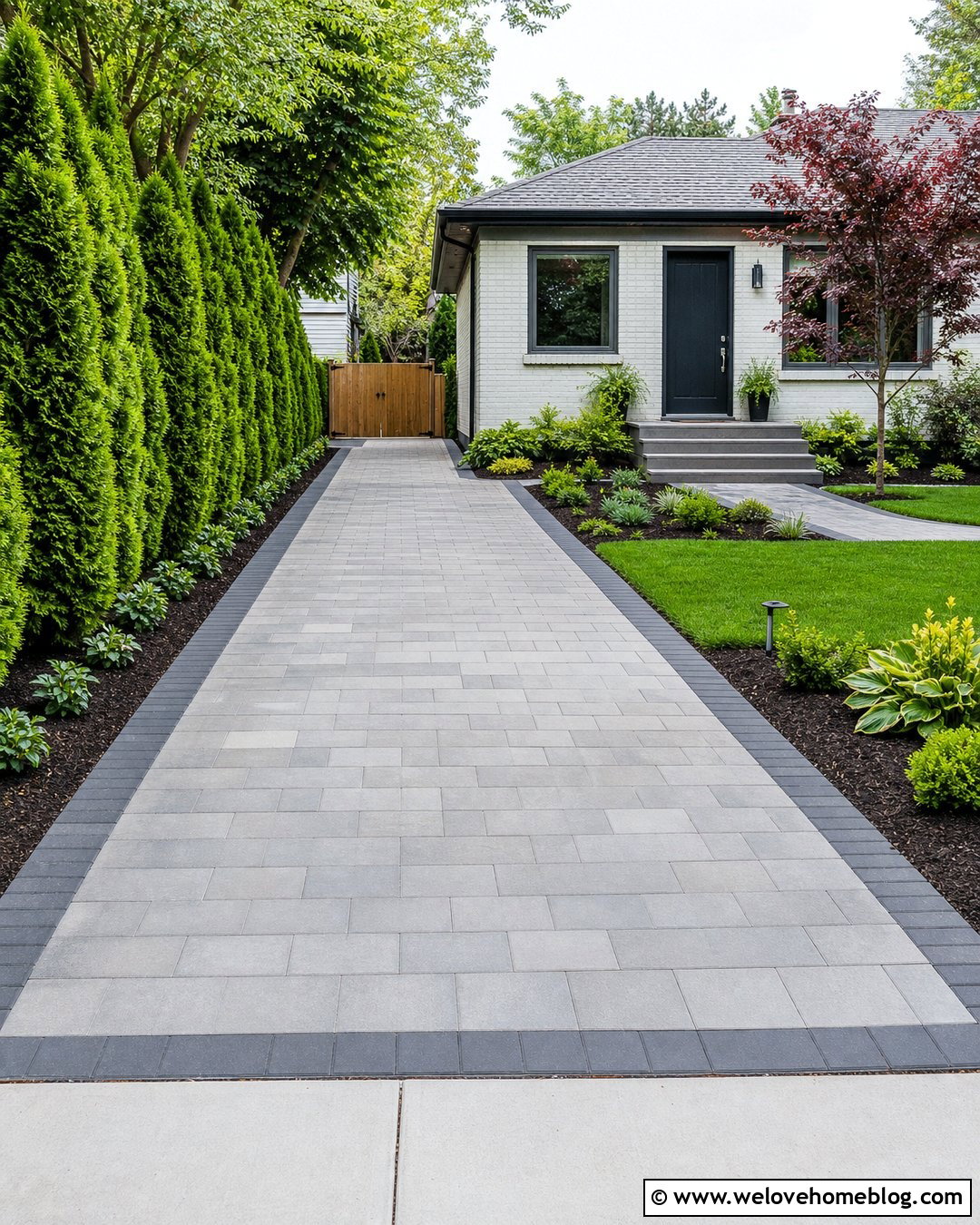
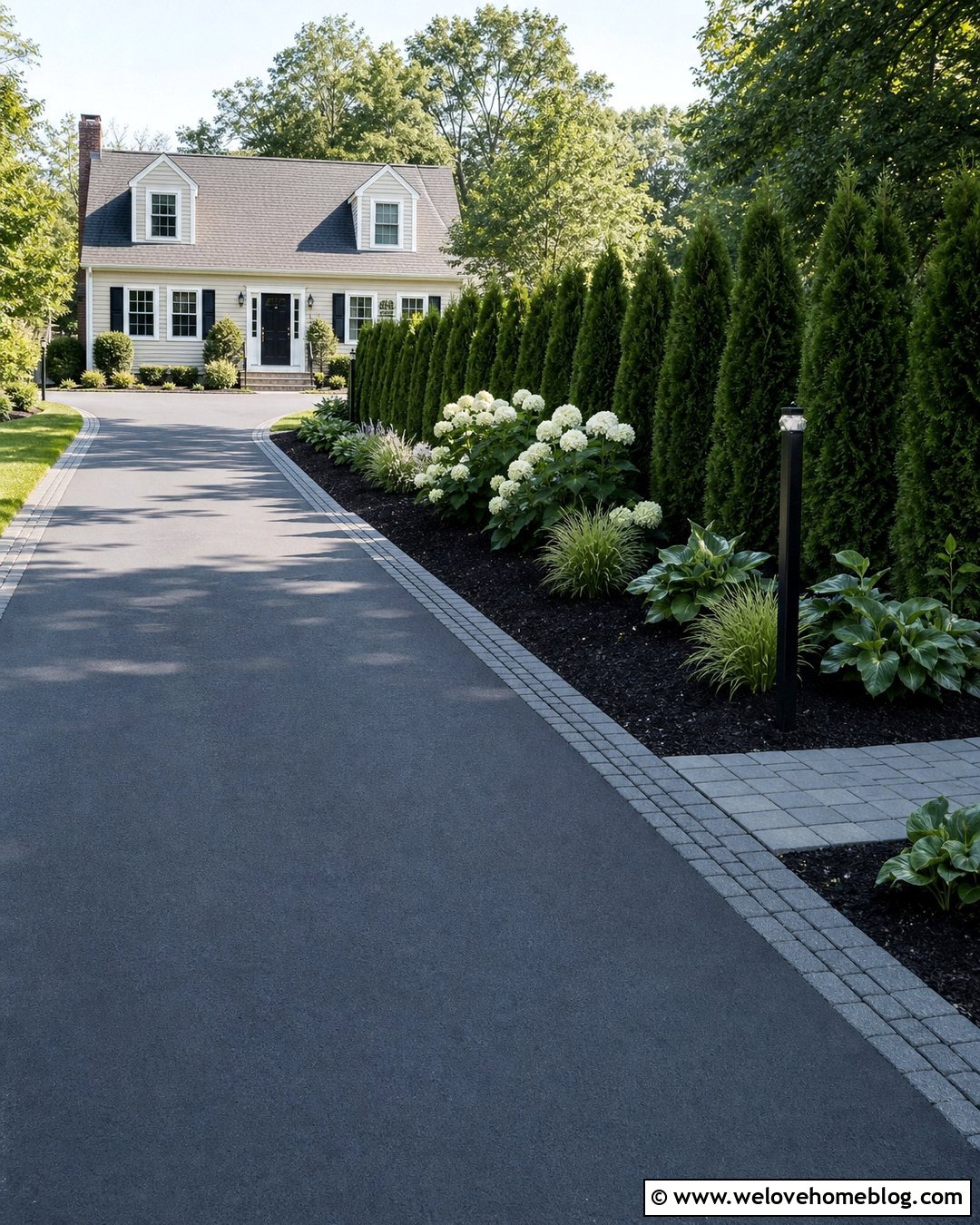
A paver driveway bordered by upright arborvitae can provide year-round screening where a front yard feels exposed to neighboring properties. Instead of enclosing both sides with a dense green wall, place the trees along the more public boundary and use smaller ornamental trees or shrubs on the house side. Gray concrete pavers in a running-bond pattern keep the surface understated, while charcoal edging creates a finished line. Give every arborvitae enough room to maintain its natural form without growing into the driveway. Mulch the planting bed and add low shade-tolerant ground covers for a neat transition. This look fits townhouse entrances, compact suburban lots, and modern homes. In regions where deicing salt is heavily used, assess exposure carefully because arborvitae may be sensitive to salt damage. ()
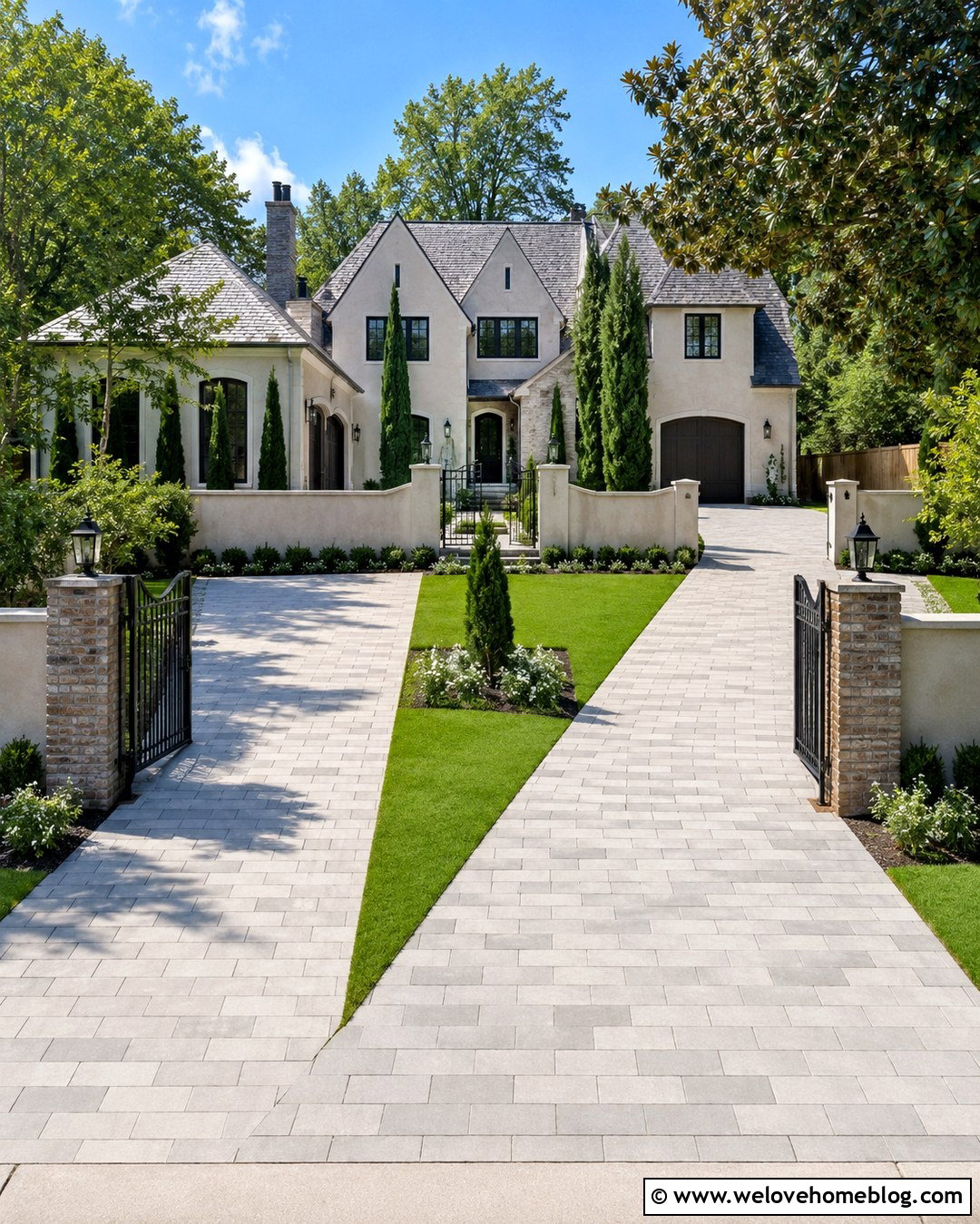

20. Mixed Native Tree Permeable Driveway
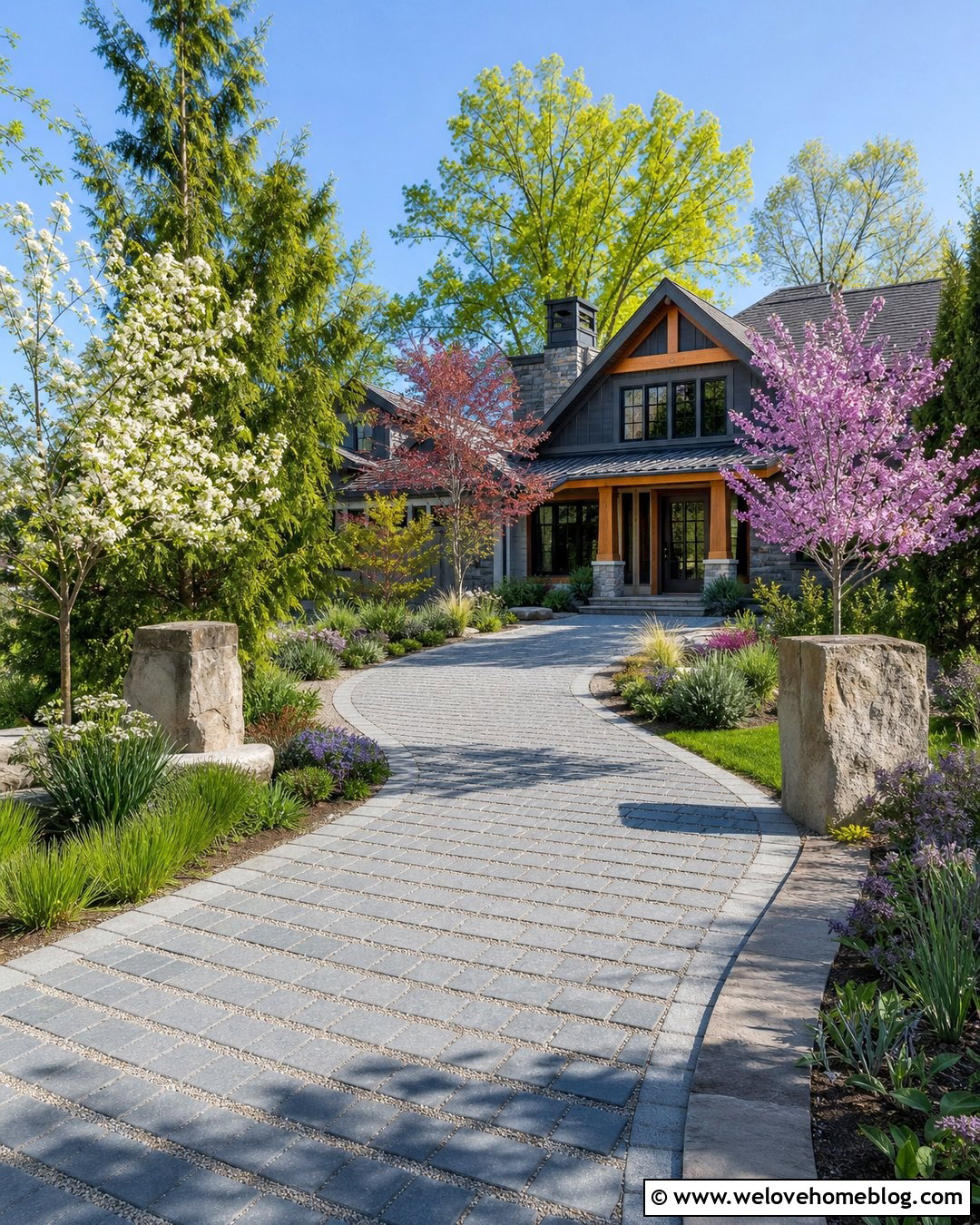
A mixed native tree line gives a permeable paver driveway a relaxed, resilient character while avoiding the risk of relying on one species throughout the entire front yard. Choose three or four locally suitable trees with compatible mature sizes and alternate them in a repeating pattern. Serviceberry, redbud, oak, cedar, or other regional natives may be appropriate depending on climate, soil, utilities, and available space. Use permeable gray pavers with planted joints or gravel-filled openings to support the natural design. Broad native perennial beds can connect the trees, while a mown lawn edge keeps the entrance looking intentional. Repeat colors and plant masses instead of scattering individual plants. This approach complements contemporary, Craftsman, farmhouse, and woodland homes while creating more seasonal variety than a single-species row. ()
Conclusion:
These **20 trees to line driveway front yards ideas** show how tree selection, pavement, spacing, borders, and supporting plants can work together as one complete design. A successful tree-lined driveway should look attractive now while leaving enough room for future trunks, branches, and roots. Before buying trees, measure the planting area and check drainage, sunlight, utilities, road visibility, local restrictions, and winter salt exposure. Compare each tree’s mature dimensions with the available space rather than choosing by nursery size alone. Consistent spacing creates a formal entrance, while grouped or mixed planting produces a softer effect. With thoughtful planning and locally suitable species, the driveway can become an inviting landscape feature instead of simply a route to the garage.

Related posts:
Leave a Reply