
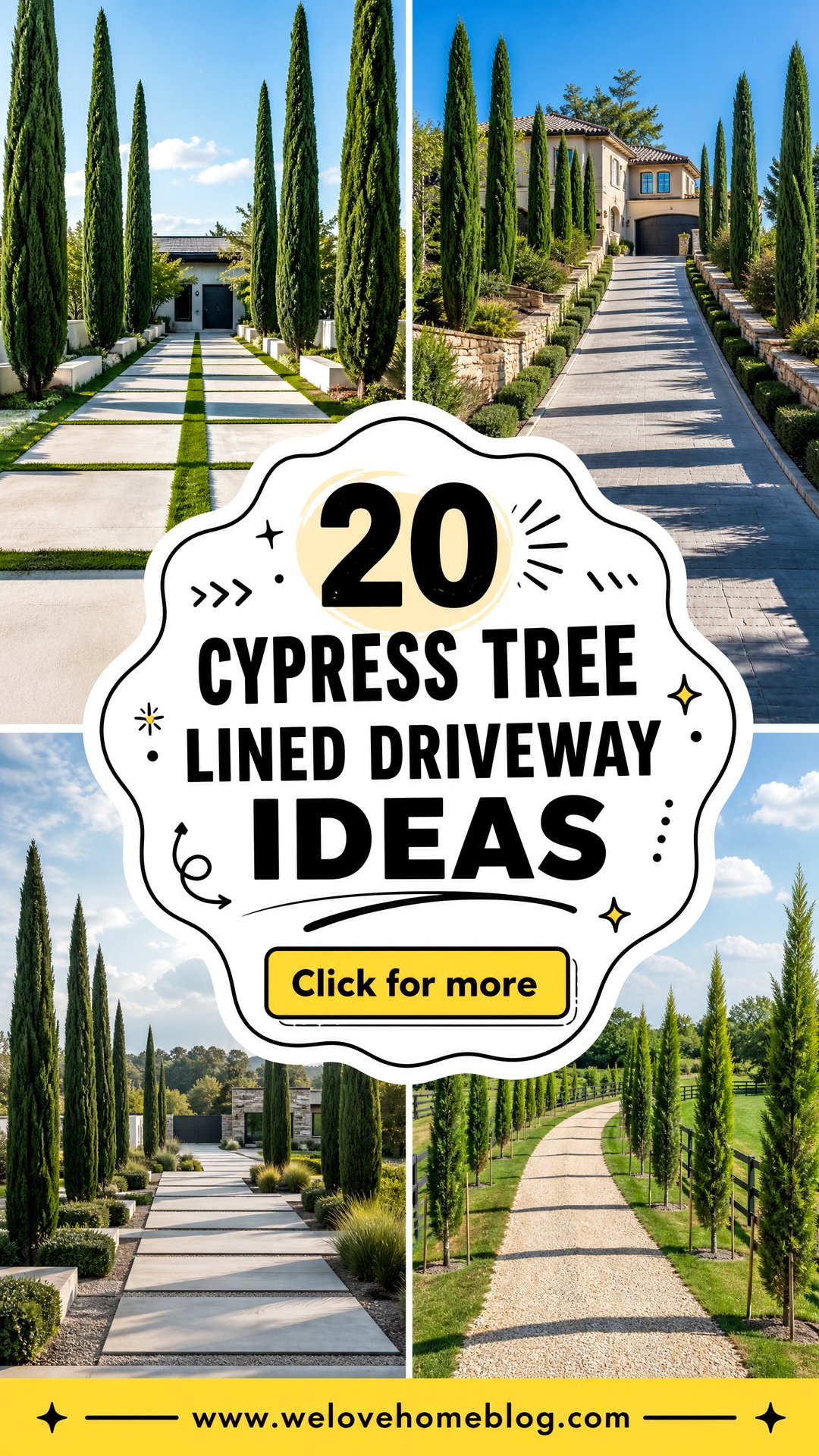
A cypress-lined driveway can turn an ordinary entrance into a strong architectural feature. The trees create height, rhythm, privacy, and a clear visual path toward the house. Although Italian cypress is closely associated with Mediterranean landscapes, its narrow evergreen form also complements modern, farmhouse, Spanish, colonial, and country homes. () The best designs coordinate the trees with the driveway material, layout, borders, lighting, and surrounding plants. Proper spacing is equally important because each tree needs room for healthy growth, airflow, and maintenance access. Before planting, confirm that your chosen cypress variety suits your climate, soil, and available space. Explore these complete and practical **20 cypress tree lined driveway ideas** for creating a more polished, welcoming approach.
1. Straight Gravel Driveway With Cypress Trees
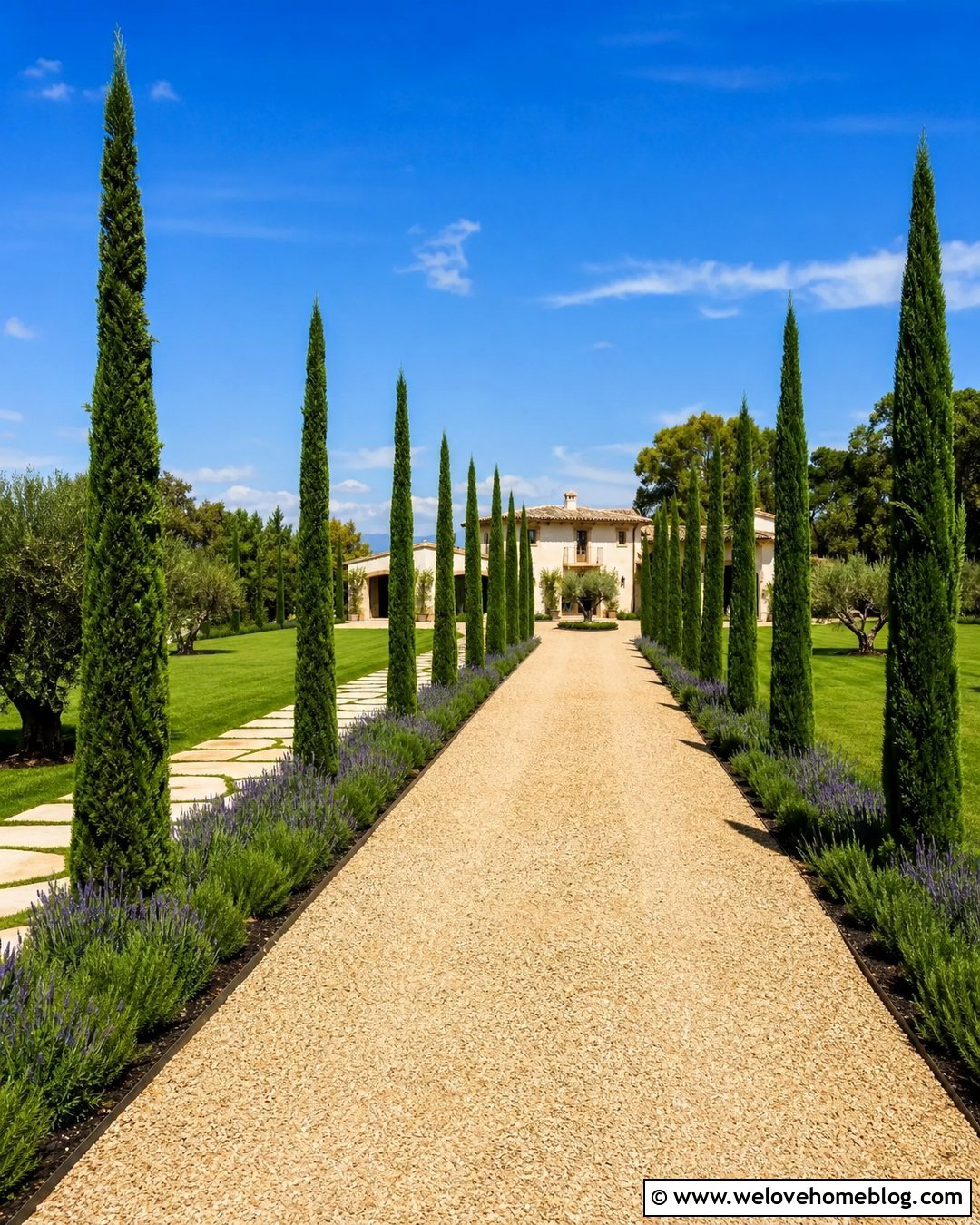
A straight gravel driveway becomes much more formal when evenly spaced cypress trees frame both sides. Choose warm beige crushed gravel for a Mediterranean look or gray gravel for a quieter, more contemporary finish. Steel edging keeps the loose material from spreading into the planting beds. Position the trees in matching pairs to create a clear sightline toward the front door or garage. Low rosemary, lavender, or ornamental grasses can fill the ground beneath them without hiding their narrow shapes. Leave generous planting strips between the gravel and trunks so roots are not crowded by compacted soil. This complete layout works especially well for long properties because the repeated trees strengthen perspective and make the house feel like the natural destination.
2. Cobblestone Driveway With Italian Cypress Trees
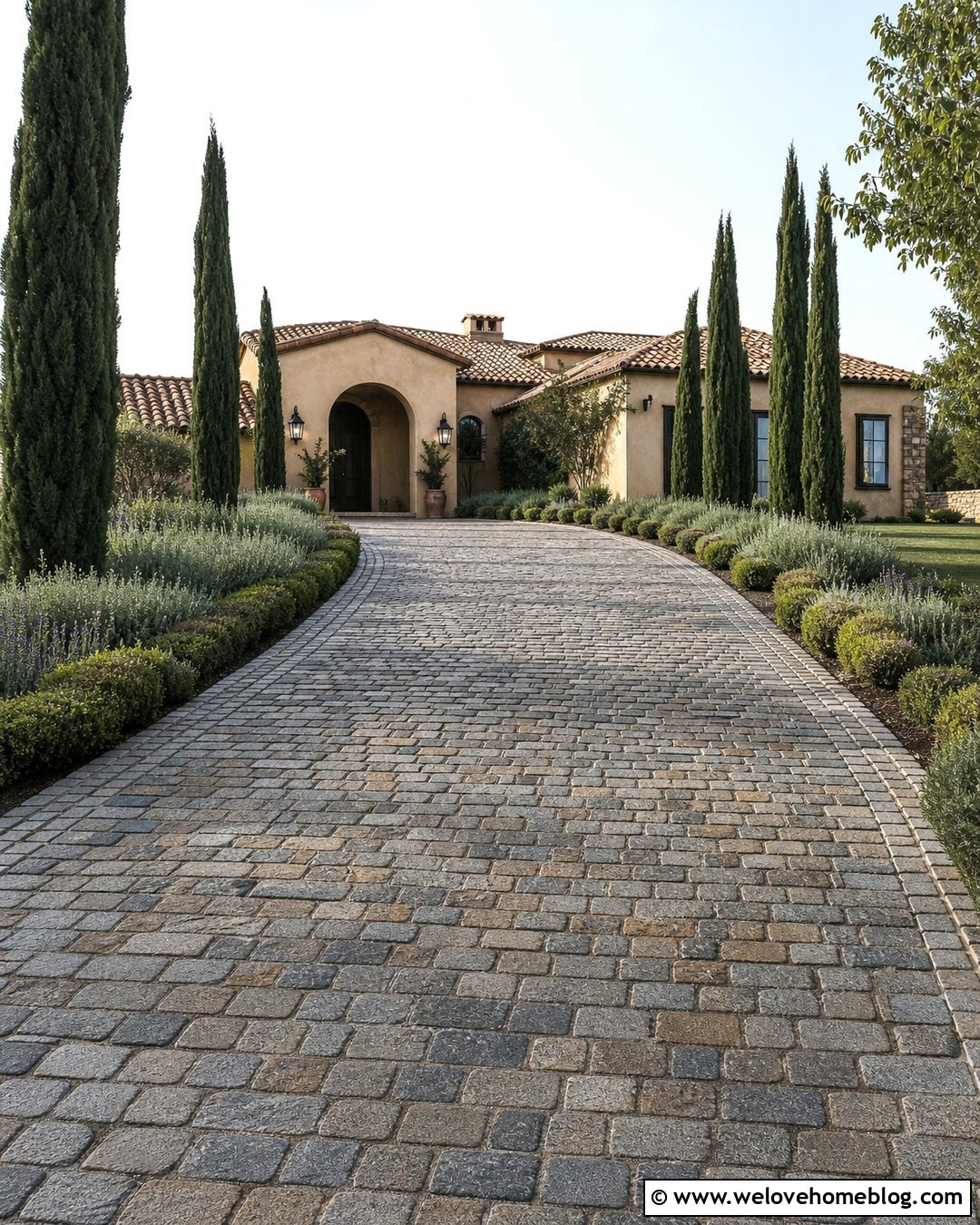
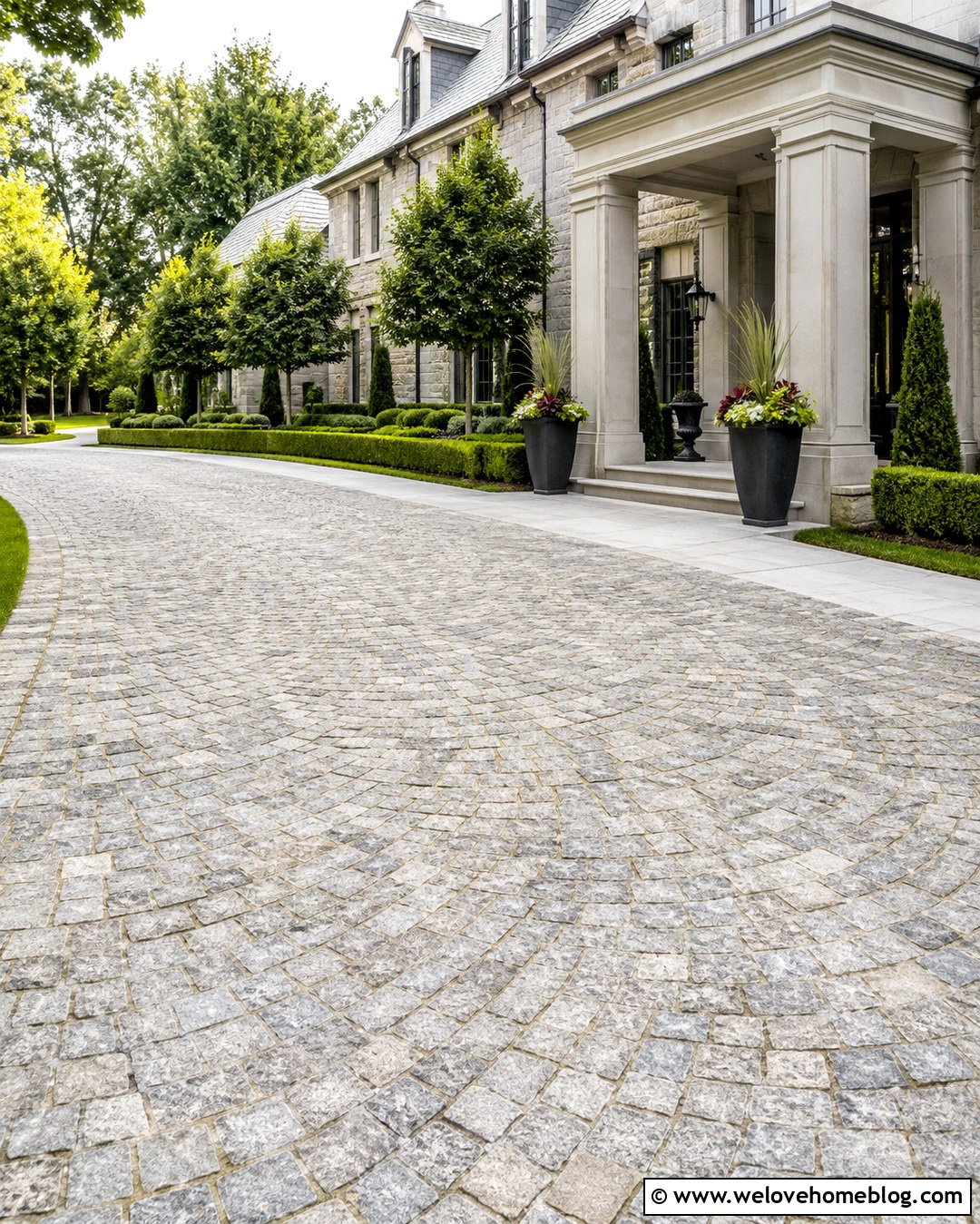
Old-world cobblestone and tall Italian cypress trees create a convincing Tuscan-inspired entrance. Use weathered gray or warm brown cobblestones in a gently curved layout that reveals the house gradually. A soldier-course cobblestone border gives the driveway a finished edge while protecting the adjoining beds. Plant the cypress trees at consistent intervals, then soften their strong vertical lines with lavender, sage, and clipped evergreen shrubs. A cream stucco home with terracotta roofing completes the Mediterranean character. Because cobblestone has a highly textured surface, keep the surrounding planting relatively simple. This prevents the entrance from appearing too busy. The combination feels established and substantial, making it a strong option for larger homes or properties where the driveway is a major part of the front landscape.
3. Circular Paver Driveway With Cypress Trees
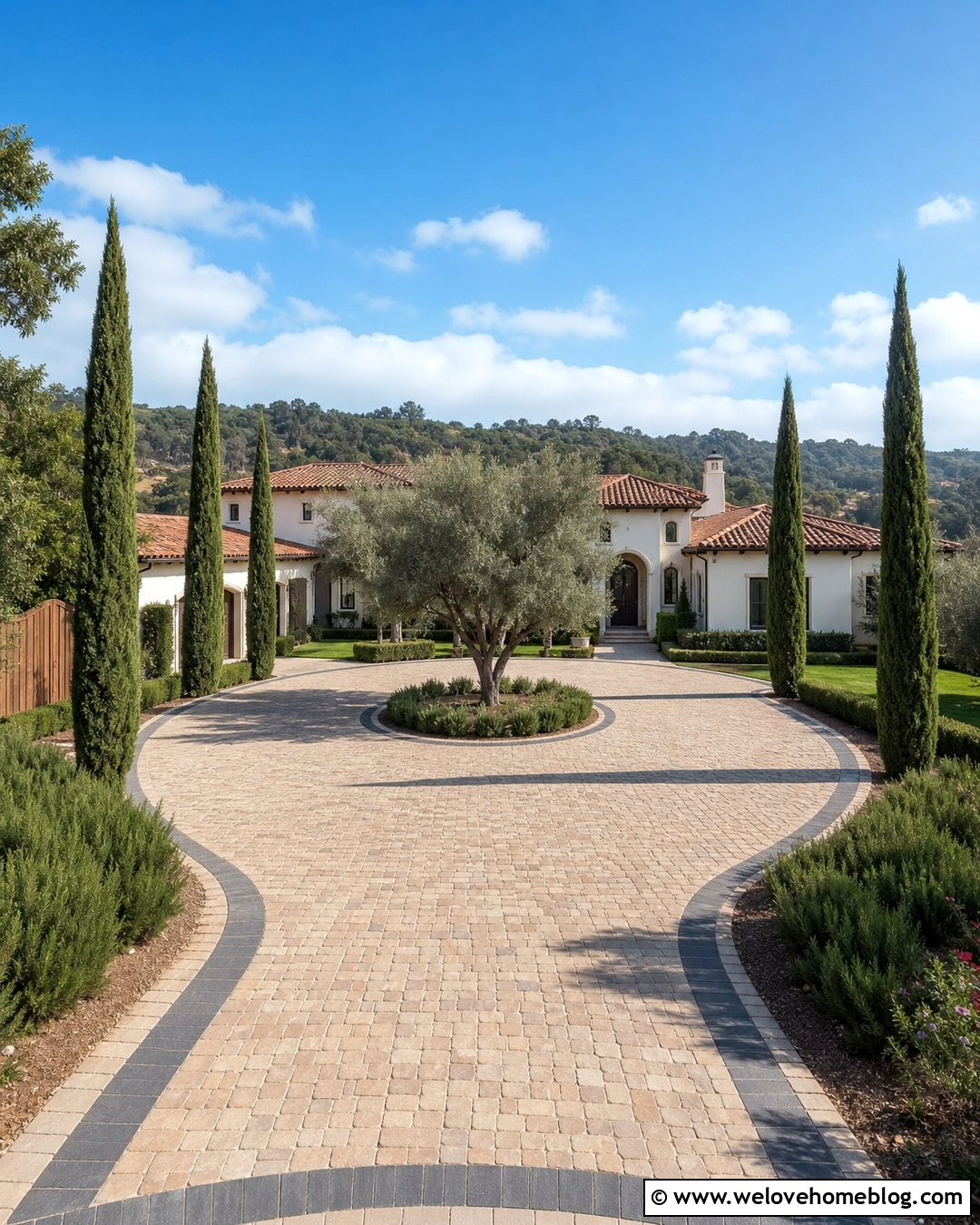
A circular paver driveway offers convenient vehicle movement while creating a natural centerpiece for landscaping. Frame the outer curve with Italian cypress trees planted at measured intervals. Inside the circle, use an olive tree, a small fountain, or a simple lawn panel as the focal point. Warm sand-colored concrete pavers laid in a running bond pattern complement the deep green foliage without competing with it. A darker paver ribbon can define the driveway edges and emphasize the circular shape. Keep the cypress trees slightly farther apart near the entrance so the opening feels welcoming rather than enclosed. This complete arrangement suits Mediterranean, Spanish, and large transitional homes. It also gives guests an impressive view of the landscaping before they reach the front entrance.
4. Modern Concrete Driveway With Cypress Trees
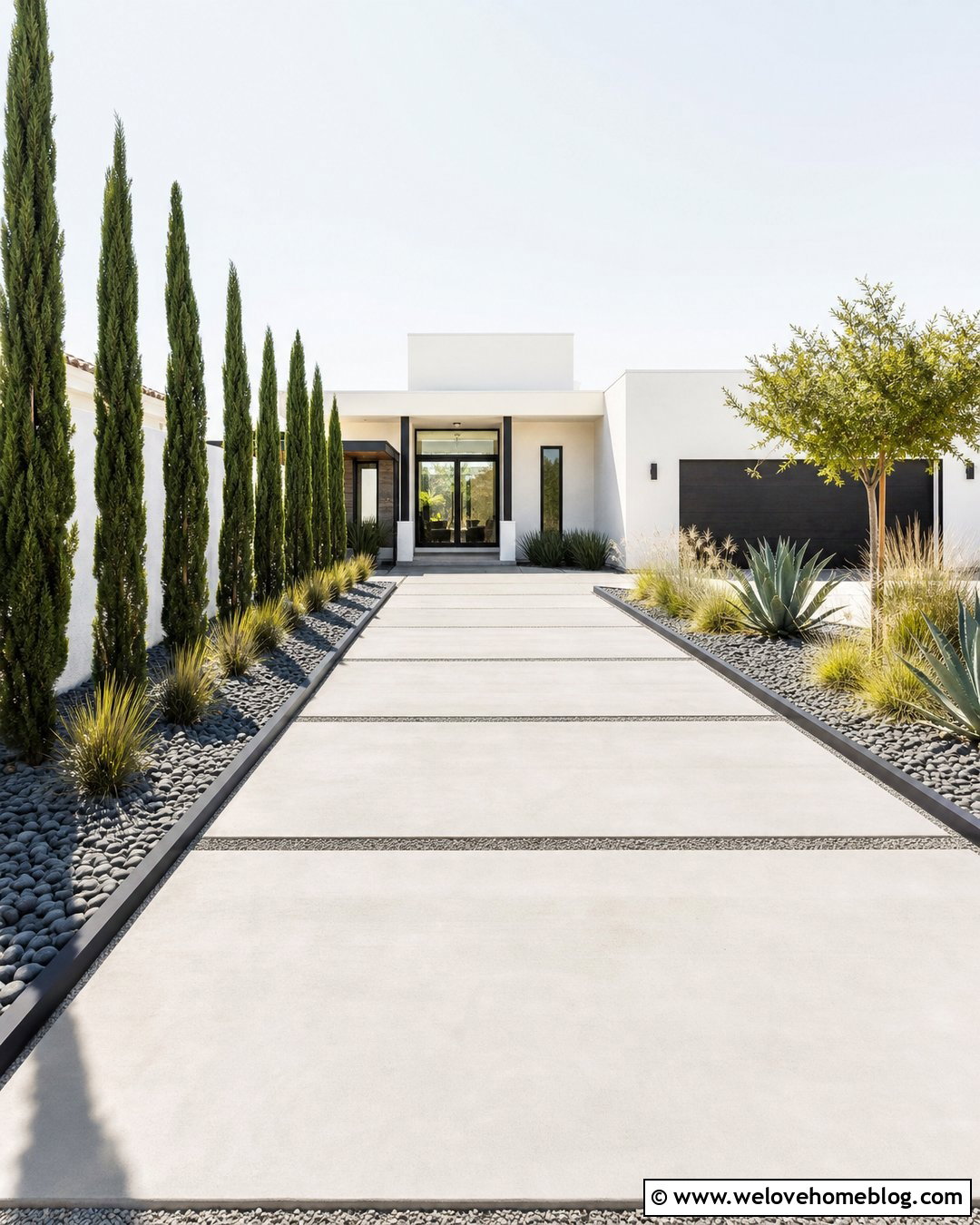
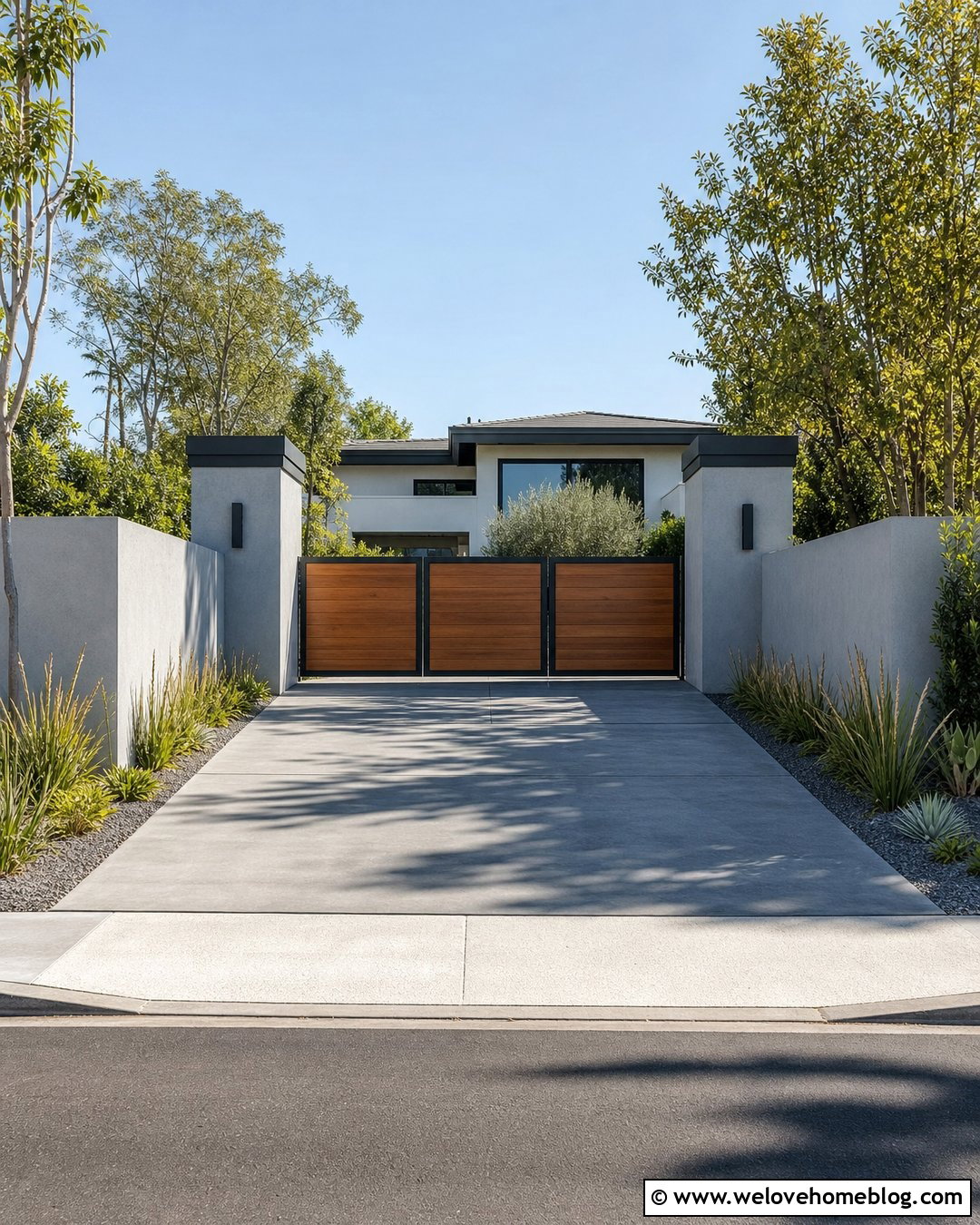
Can cypress trees work with contemporary architecture? Their slim, geometric profiles make them especially effective beside a modern concrete driveway. Use large-format light gray concrete slabs with narrow gravel joints to establish clean horizontal lines. Then plant a limited row of cypress trees along one or both sides for strong vertical contrast. Black steel edging, rectangular planting beds, and smooth river rock reinforce the streamlined look. Instead of adding many colorful flowers, use restrained groups of agave, ornamental grass, or low evergreen ground cover. A flat-roofed house with white stucco, glass, and charcoal accents provides an ideal background. The finished design feels crisp but not bare because the trees add living texture, year-round color, and a clear sense of arrival.
5. Black Asphalt Driveway With Cypress Trees
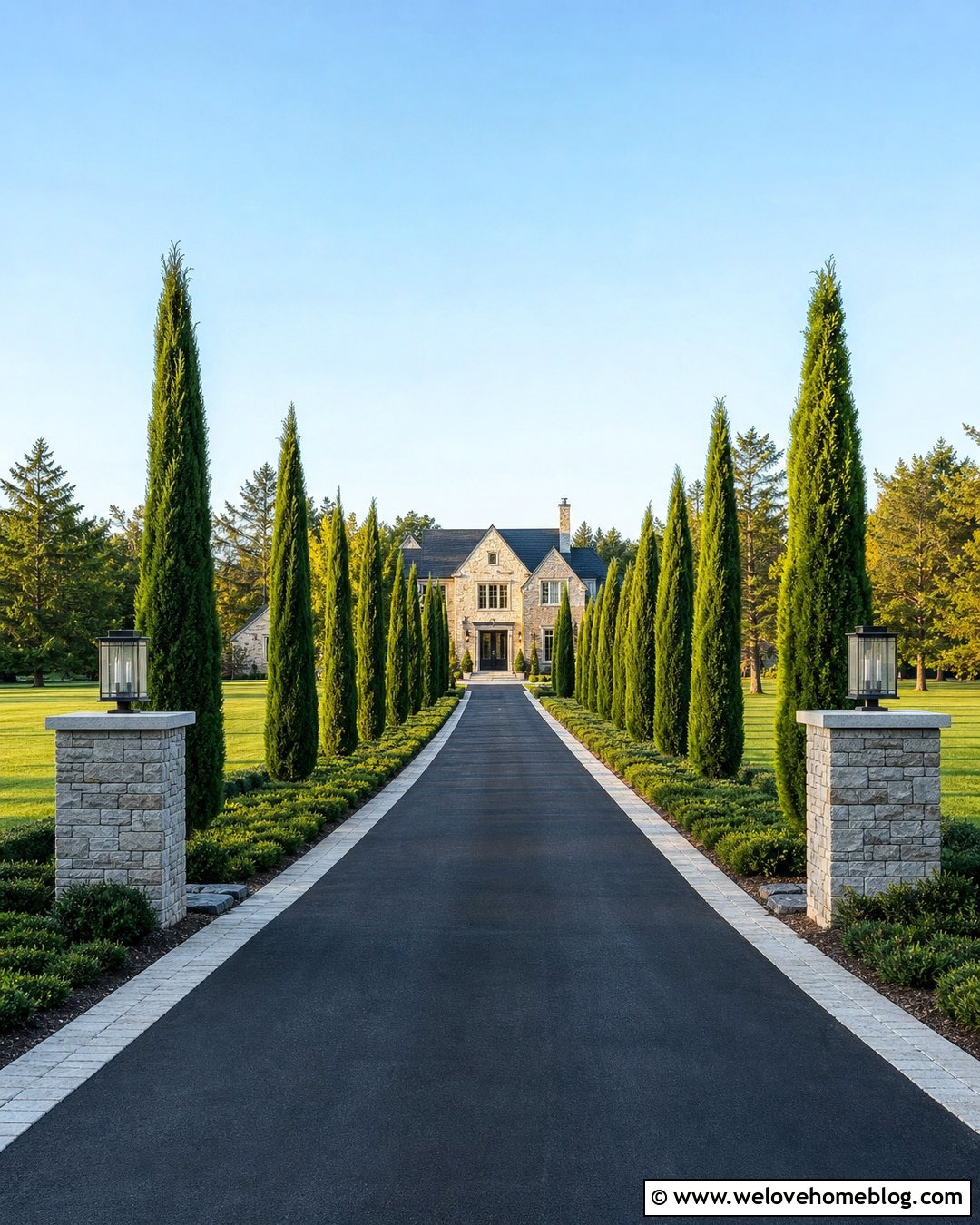
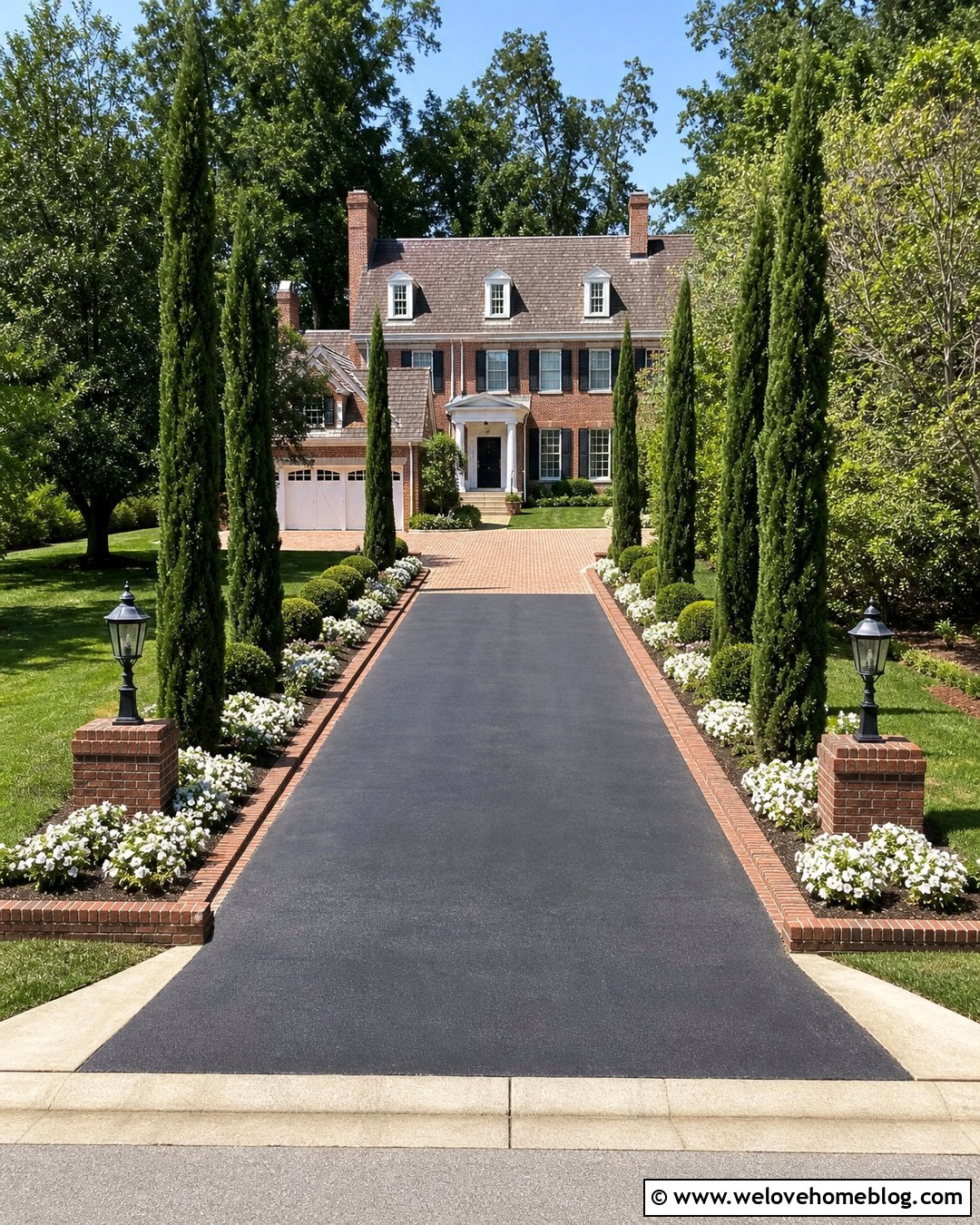
Fresh black asphalt creates a dramatic base for the rich green color of cypress trees. This pairing works particularly well on long estate driveways where a durable, visually simple surface is needed. Add a pale granite or concrete paver border to separate the asphalt from the planting beds and brighten the overall composition. Arrange the cypress trees symmetrically, allowing open lawn or low ground cover between each trunk. At the street, widen the planting beds and add matching stone markers to establish a more noticeable entrance. The dark surface visually recedes, directing attention toward the tree line and house. For a cohesive result, repeat the pale border material around the front walkway or entry steps. The contrast feels formal, clean, and suitable for both traditional and transitional architecture.
6. Brick Driveway With Cypress Trees
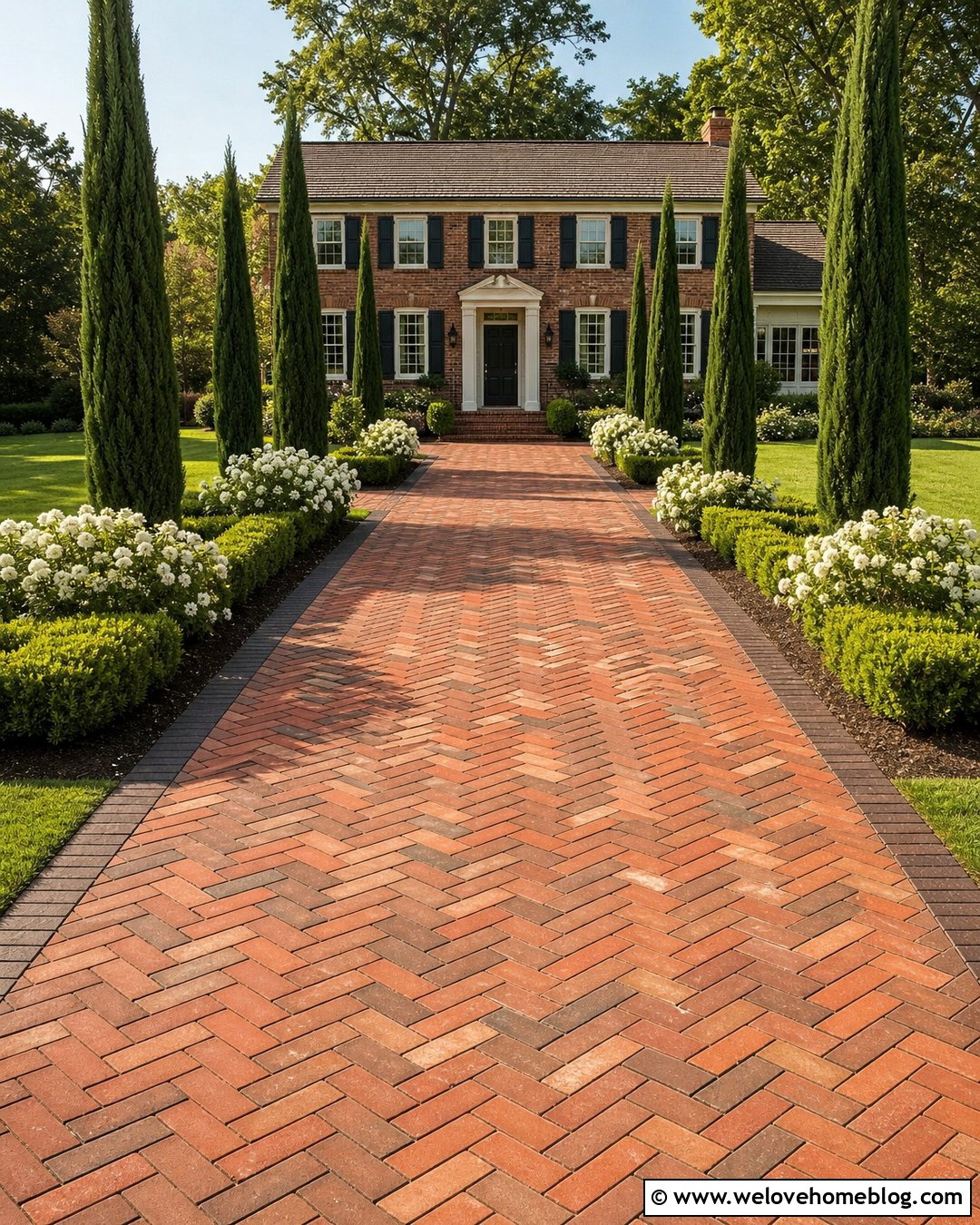
Red and brown brick pavers bring warmth to the structured shape of a cypress-lined driveway. A herringbone pattern is practical for a high-visibility entrance because it gives the surface movement and traditional character. Use darker bricks along the edges to frame the layout and create a neat transition into the planting beds. Tall cypress trees can be paired with clipped boxwood, white flowering shrubs, and green lawn for a balanced colonial or European-inspired landscape. Avoid placing large plants directly beside the brick, where they could hide the attractive paving pattern. Instead, maintain open mulch rings around the cypress trunks. Repeating the driveway brick in the front walkway ties the entire approach together. The result feels formal and established without requiring an oversized property.
7. Pea Gravel Driveway With Cypress Trees
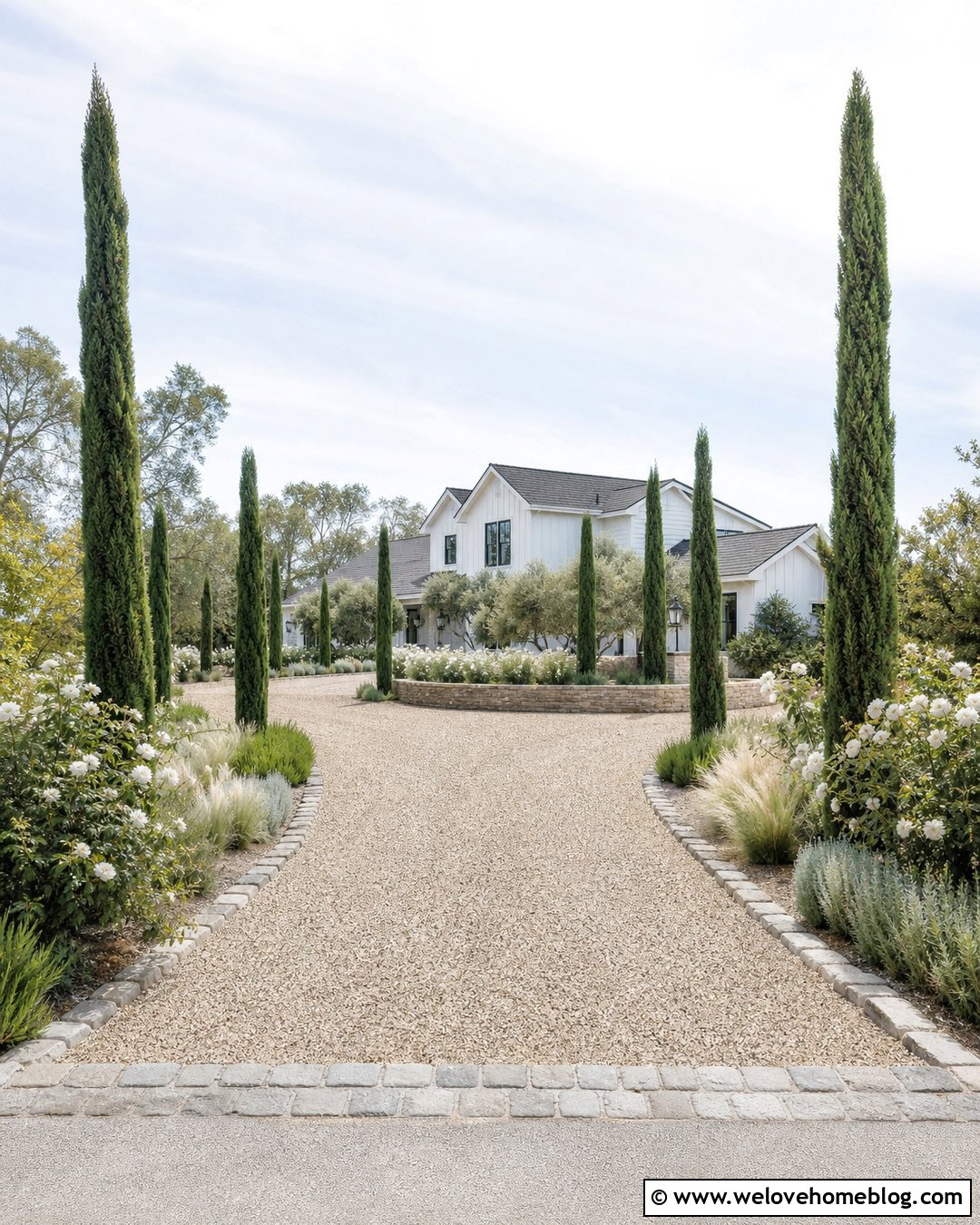
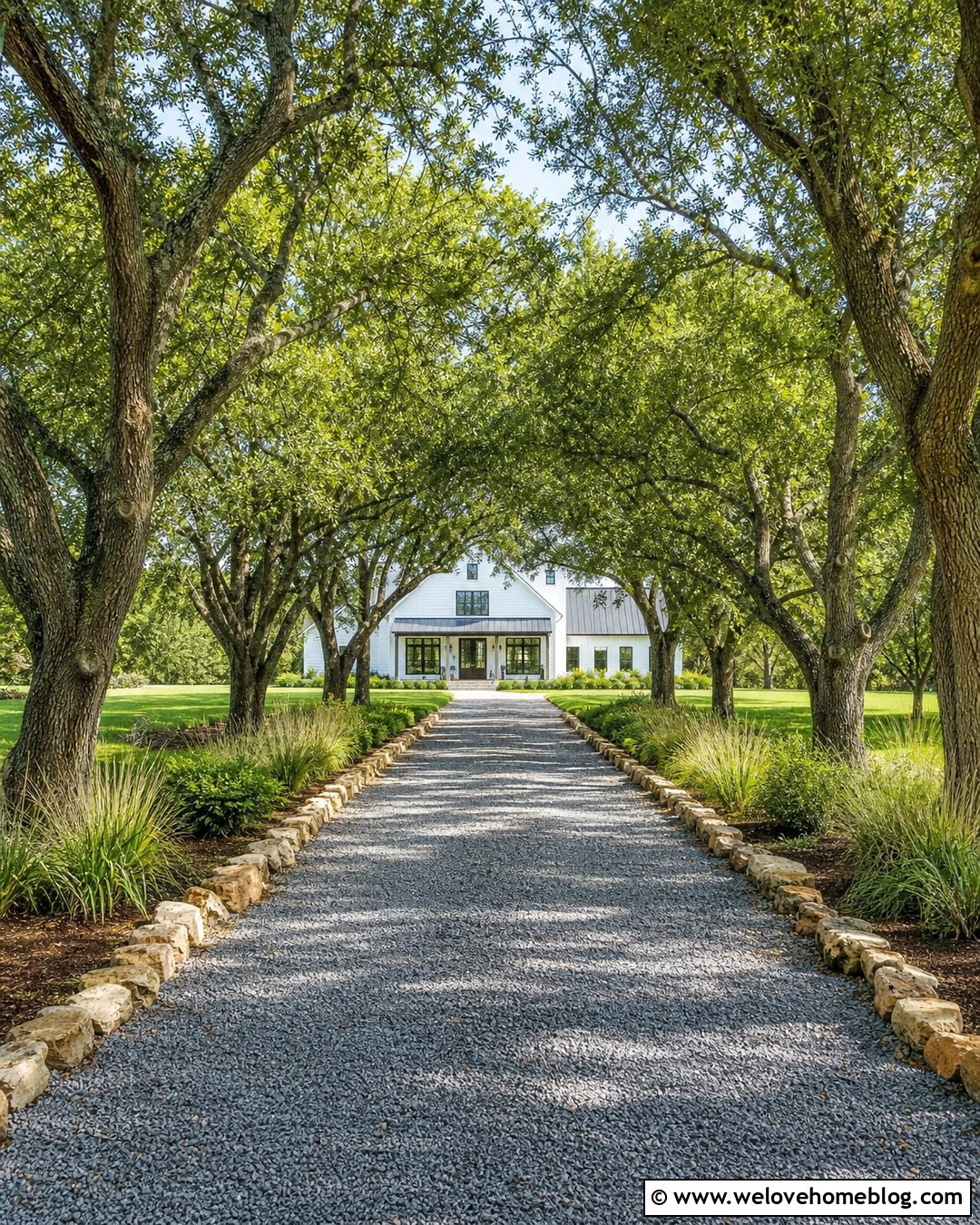
The gentle crunch of pea gravel creates a relaxed arrival that works beautifully with cypress trees and farmhouse architecture. Select tan, cream, and soft gray gravel to coordinate with natural stone or painted siding. A sturdy cobblestone edge helps contain the rounded gravel and gives the driveway a more permanent appearance. Rather than creating a rigid allée, space the cypress trees slightly farther apart and layer them with airy ornamental grasses, white roses, and low herbs. This approach preserves the trees’ vertical rhythm while making the surrounding landscape feel softer. A broad turnaround near the house can be defined with a circular brick or stone border. The combination feels casual, elegant, and appropriate for homeowners who want Mediterranean influence without making the property look overly formal.
8. Curved Limestone Driveway With Cypress Trees
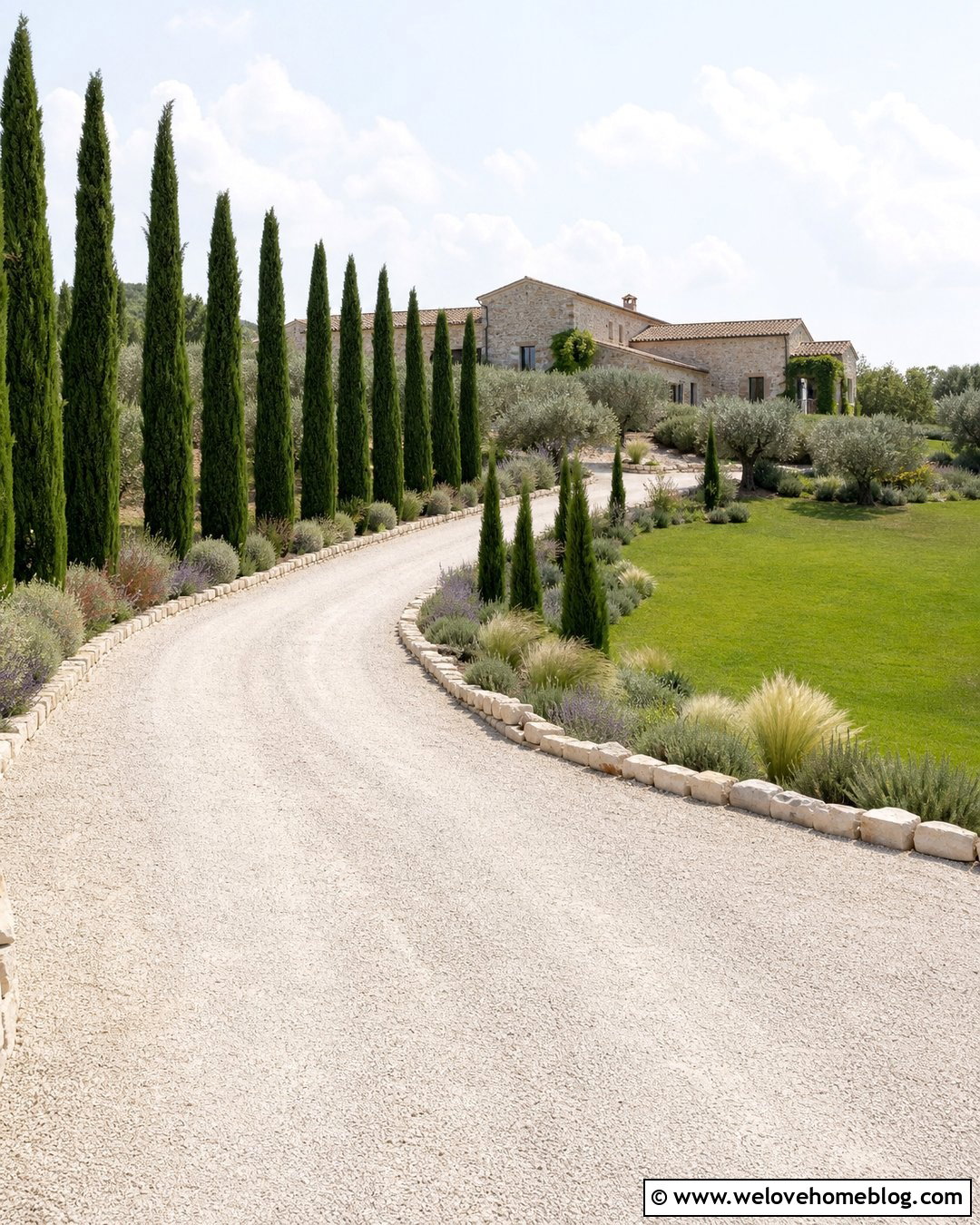
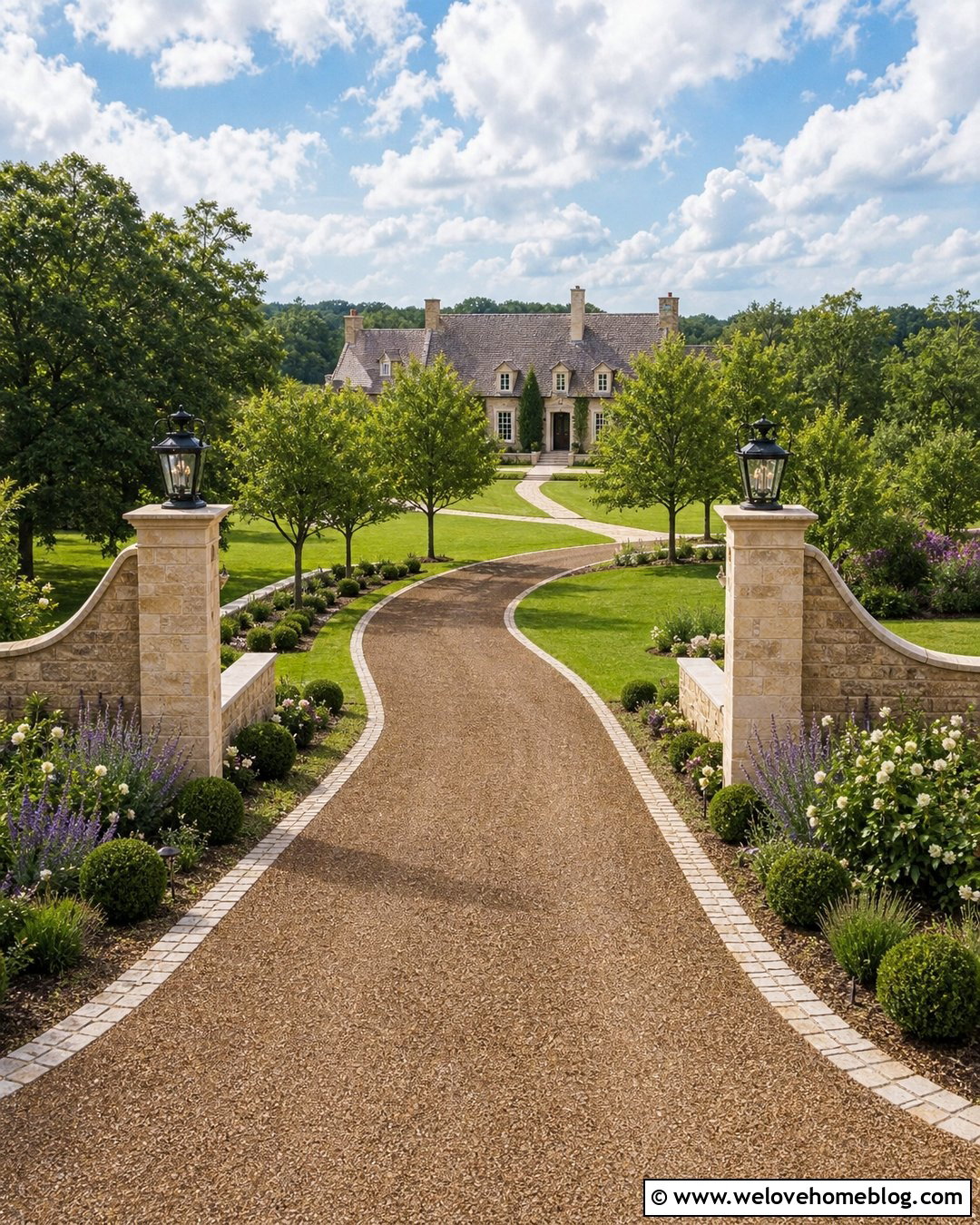
A curved limestone driveway creates a slower, more scenic approach to the home. Pale crushed limestone reflects light and contrasts strongly with the dark foliage of Italian cypress trees. Follow the outside curve with a repeated row of trees, while using smaller groups on the inside to preserve visibility around bends. Natural limestone blocks make durable edging and connect the loose driveway material to the landscape. Between the cypress trees, add rosemary, catmint, or drought-tolerant ornamental grasses for low color and texture. The curve should feel broad and purposeful rather than tight or complicated. This layout is particularly effective on deep lots, where the house can appear gradually through the trees. It creates a welcoming sense of movement while maintaining a refined, cohesive entrance.
9. Resin-Bound Driveway With Cypress Trees
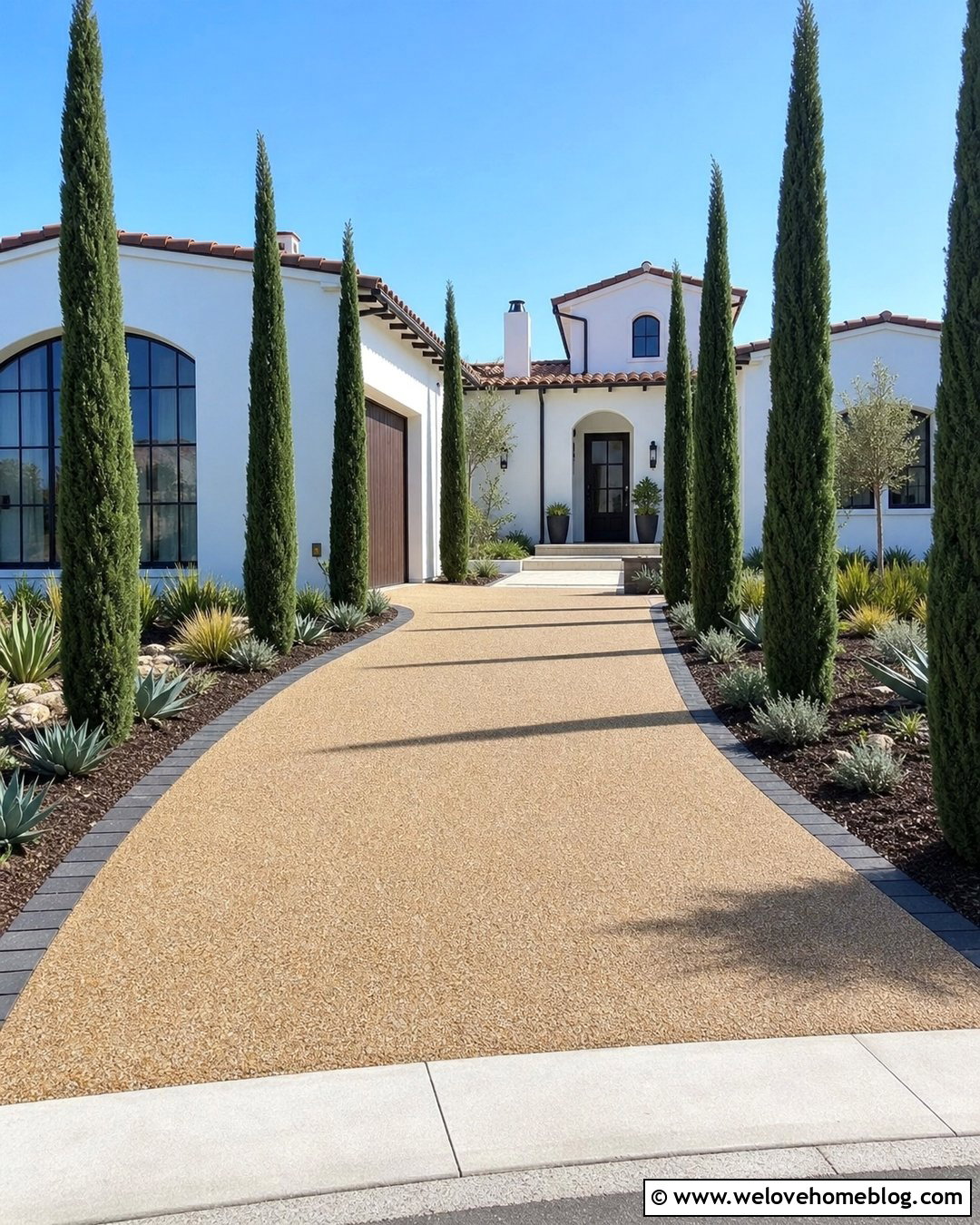
A resin-bound gravel driveway provides a smooth, contemporary-looking surface while preserving the natural appearance of small stone. Choose a warm buff blend for a Mediterranean home or a cool silver blend for modern architecture. Thin charcoal paver borders can sharpen the driveway edges and visually connect them to window frames, gates, or exterior lighting. Plant cypress trees in long, uncluttered beds filled with gravel mulch and small groups of drought-conscious plants. Their narrow form prevents the planting from overwhelming the clean surface. A gentle sweep in the driveway adds movement without weakening the modern composition. Because the material and planting both look orderly, this design is ideal for homeowners who want a polished entrance with fewer loose stones and less visual clutter than a traditional gravel driveway.
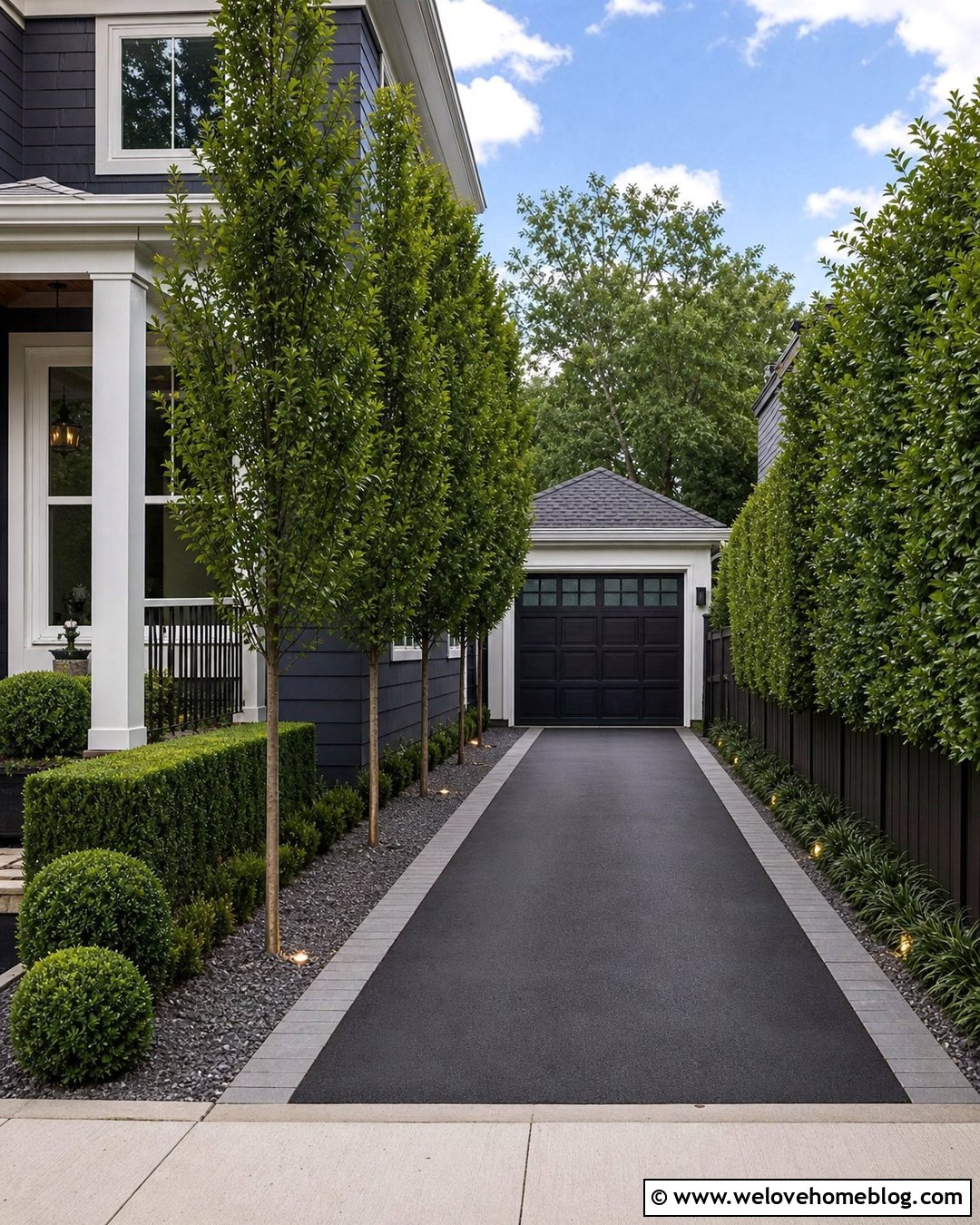
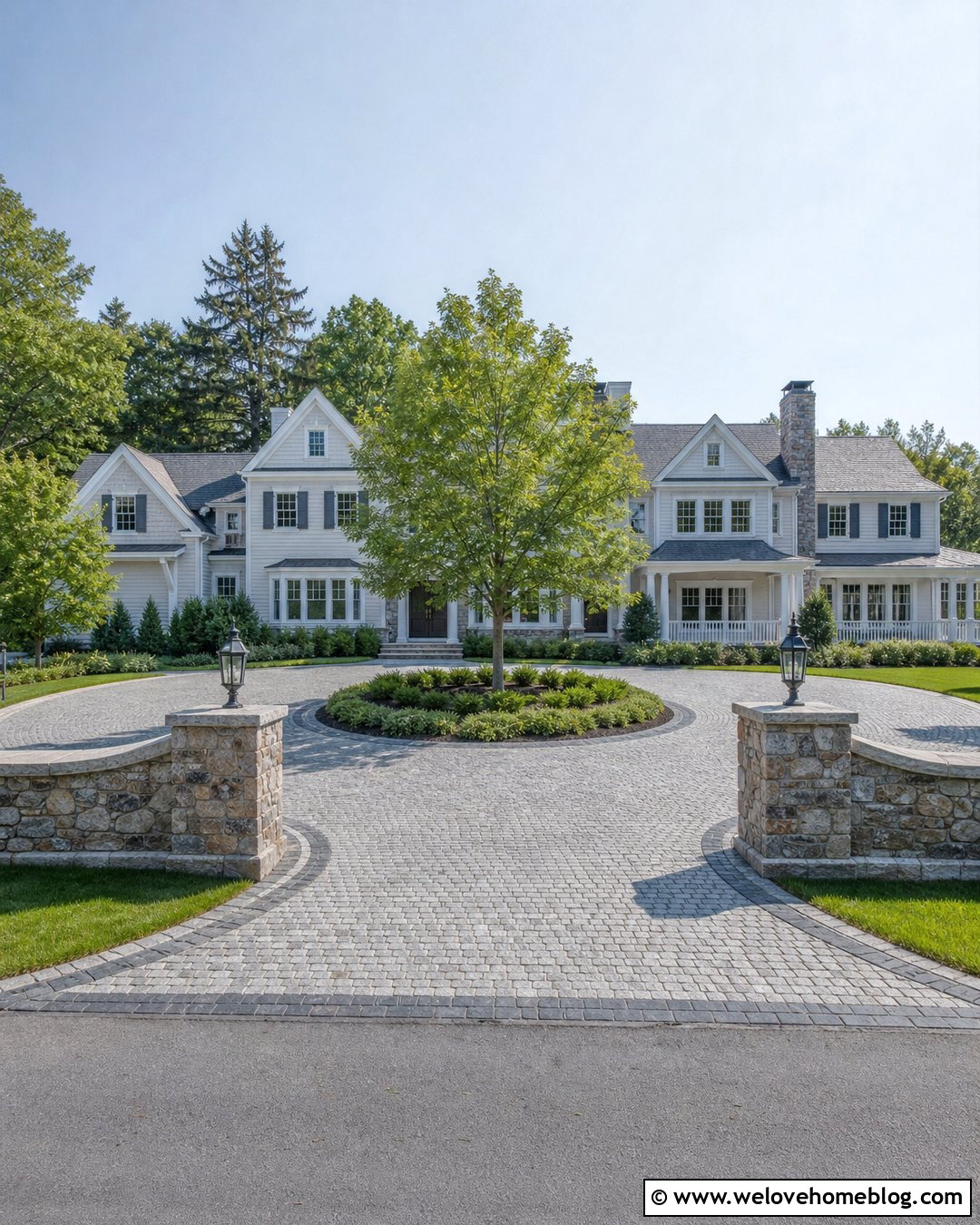
10. Concrete Driveway With Grass Strips And Cypress Trees
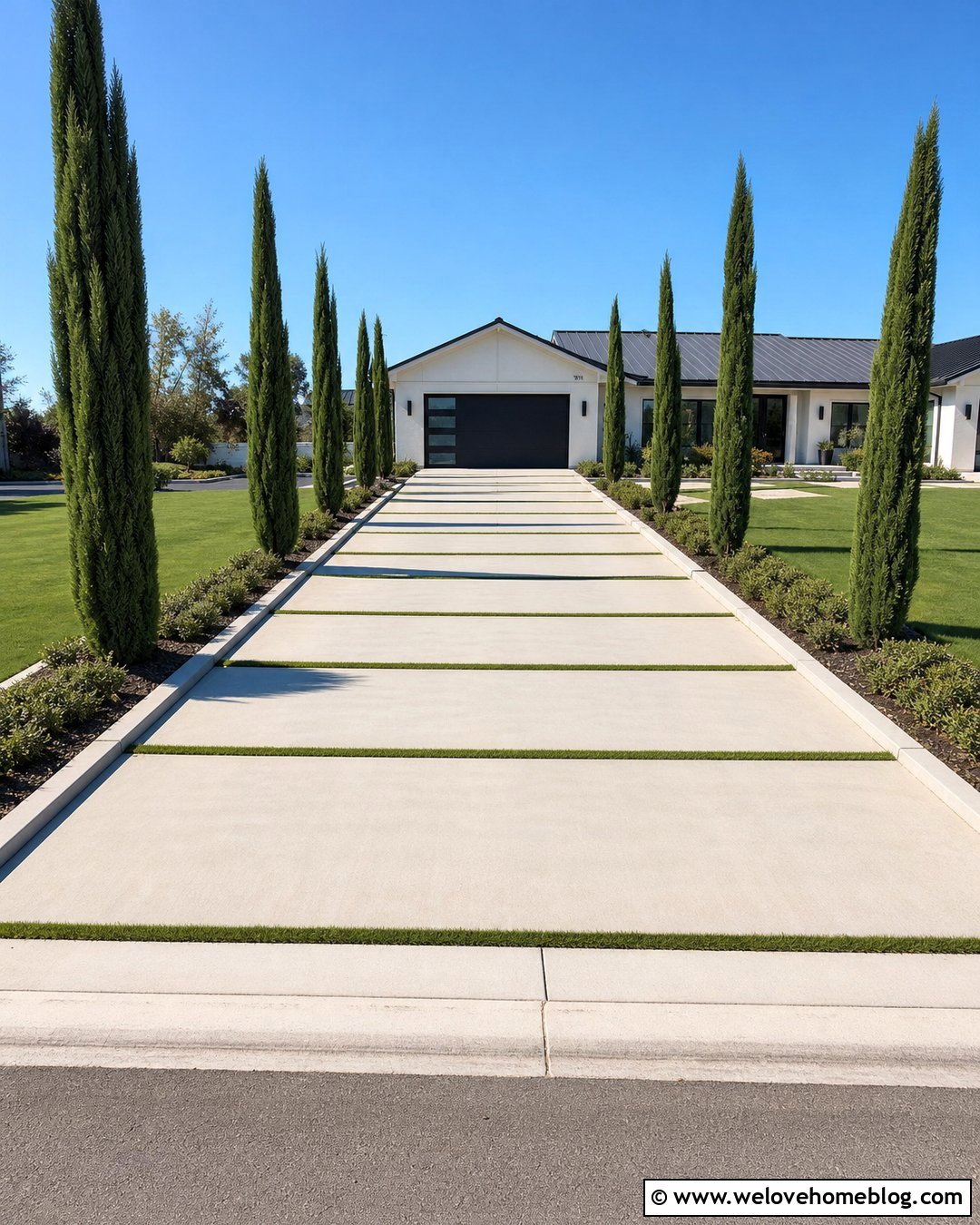
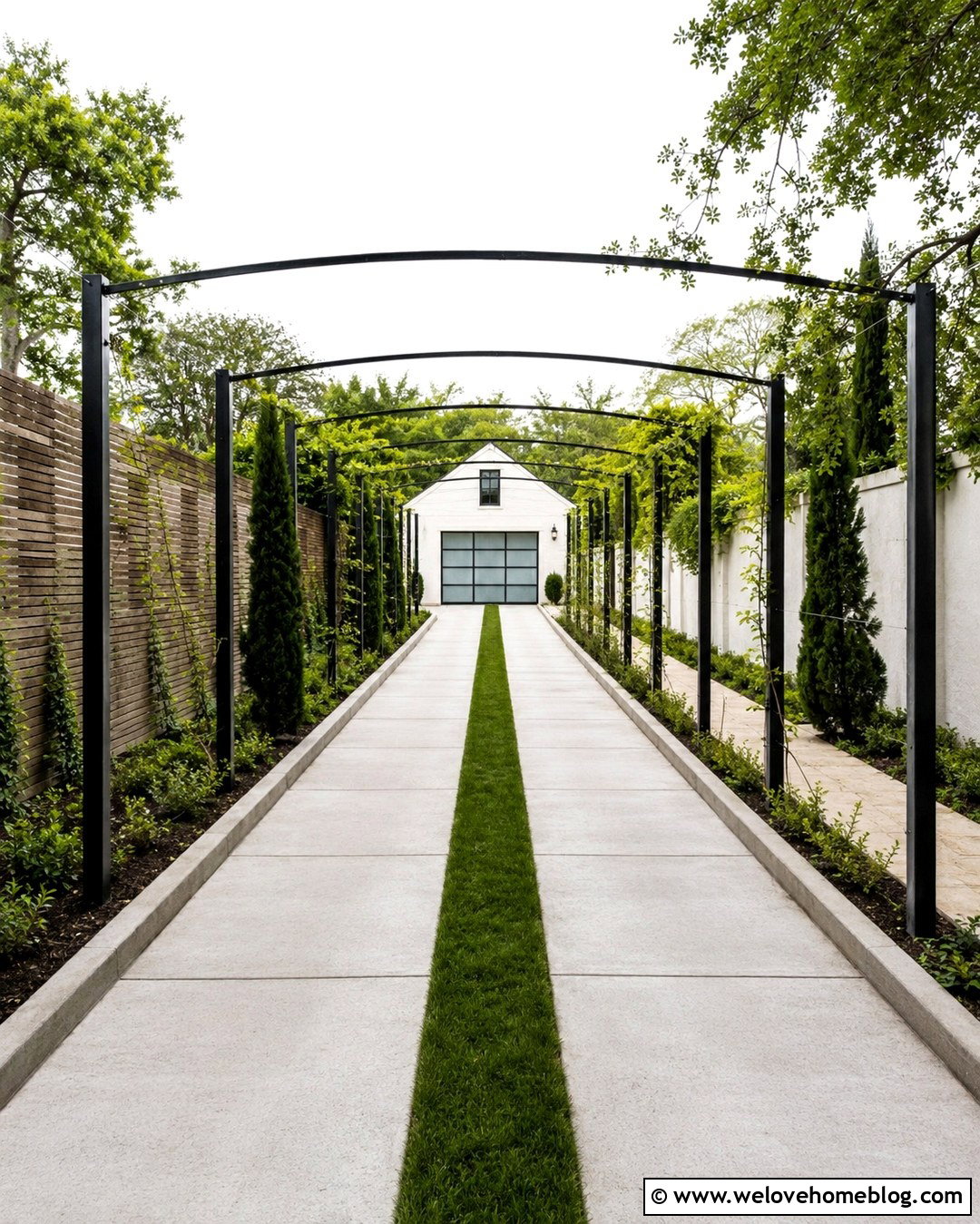
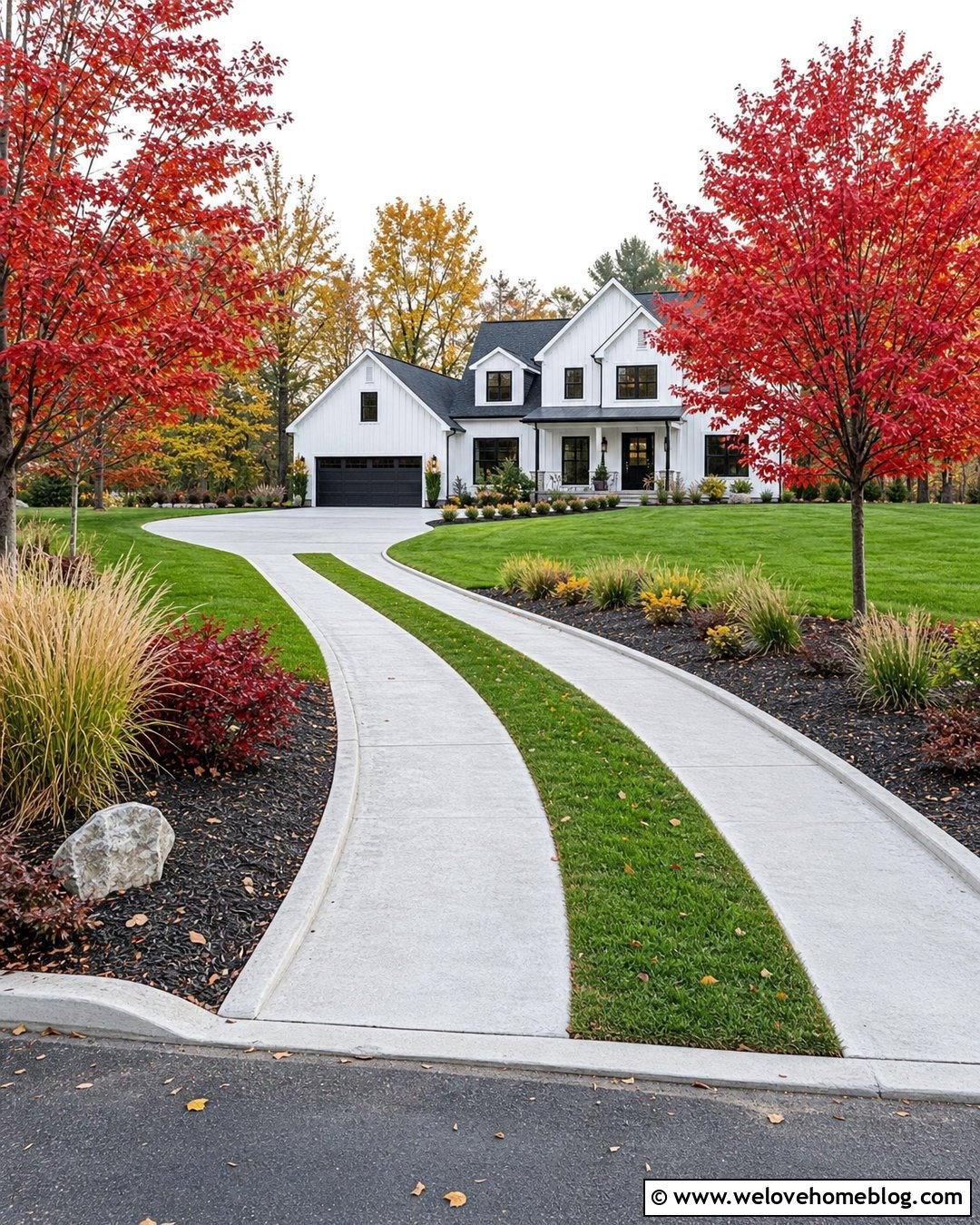
Grass strips can soften a large concrete driveway and help it blend naturally into the front yard. Use pale poured-concrete wheel tracks or rectangular concrete panels separated by narrow bands of turf. Line the approach with regularly spaced cypress trees, leaving enough open lawn around them to maintain the airy appearance. Simple concrete curbs keep soil and roots separate from the driving surface. This design works well with modern farmhouse, ranch, and contemporary homes because it balances hard surfaces with generous greenery. If maintaining turf between the panels would be difficult, use low ground cover suited to local conditions. Keep flower beds concentrated near the house so the long tree-lined section remains visually calm. The finished driveway feels structured, green, and less imposing than one continuous concrete slab.
11. Gated Driveway With Cypress Trees
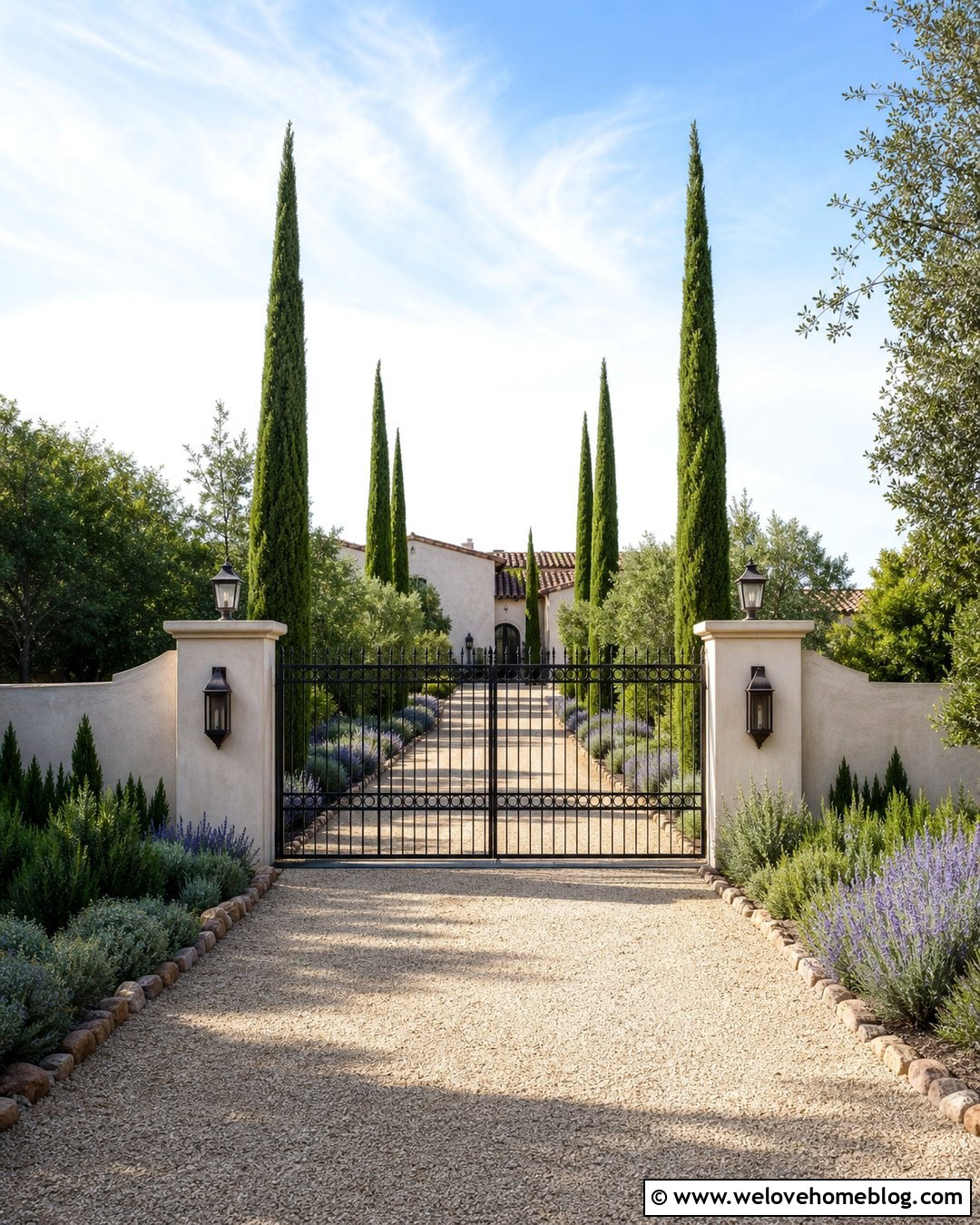
A gate becomes more impressive when cypress trees connect it visually to the rest of the driveway. Begin with matching pairs immediately behind the gate, then continue the trees at regular intervals toward the house. Black metal gates look crisp against pale gravel, light concrete pavers, or cream-colored stone. Flanking stucco walls can carry lanterns, address numbers, or simple stone caps without making the entrance feel crowded. Keep the first trees far enough from the gate mechanism and vehicle path to preserve safe operation and clear visibility. Inside the property, low lavender and rosemary beds can guide the eye without blocking the tree trunks. This complete entrance feels secure yet welcoming, especially when the gate design repeats architectural details found on the home.
12. Stone Pillar Driveway With Cypress Trees
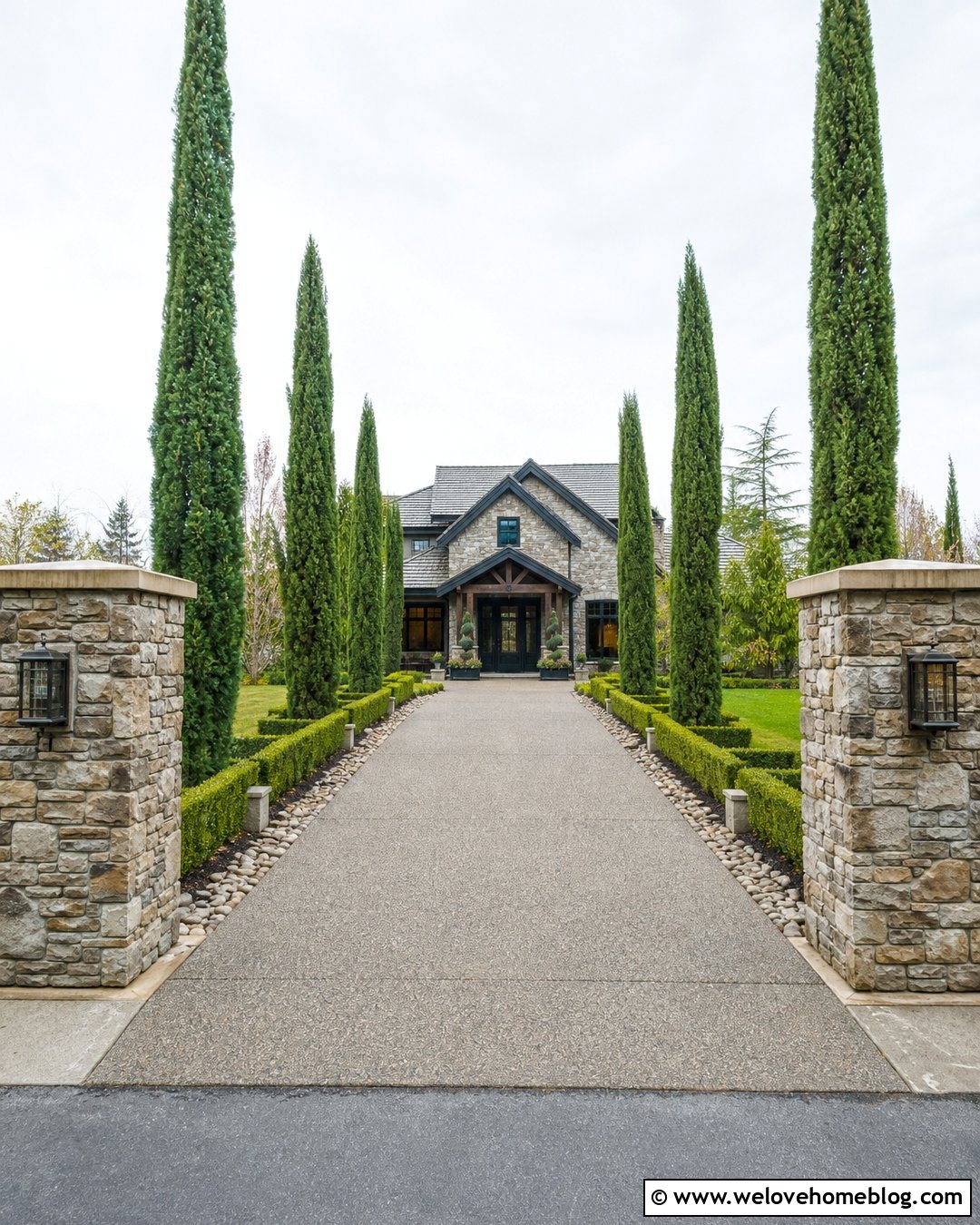
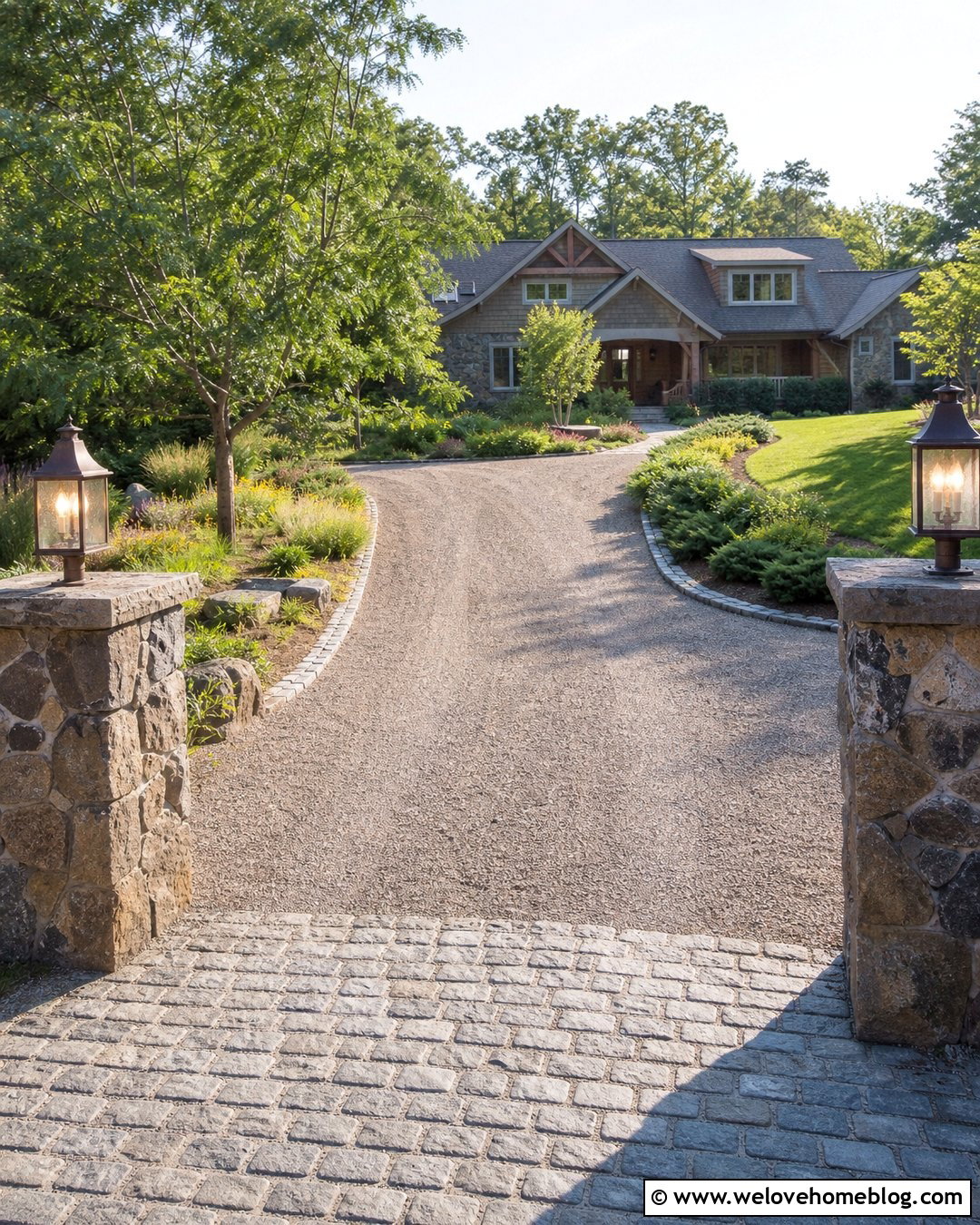
Stone pillars give a cypress-lined driveway a strong starting point and help the entrance remain visible from the street. Choose locally appropriate stone in beige, gray, or warm brown, then repeat it in the driveway edging or house facade. A broad driveway of exposed aggregate concrete complements the textured masonry without appearing overly decorative. Place one tall cypress behind each pillar and continue matching rows along the approach. Low hedges can connect the pillars to the tree line while keeping sightlines open. Use capped pillars with simple lantern fixtures for daytime architectural interest, even when the lights are not operating. This design suits craftsman, European, and country homes. The coordinated stone, paving, and evergreen planting make the entrance feel substantial and intentionally planned.
13. Narrow Driveway With Cypress Trees
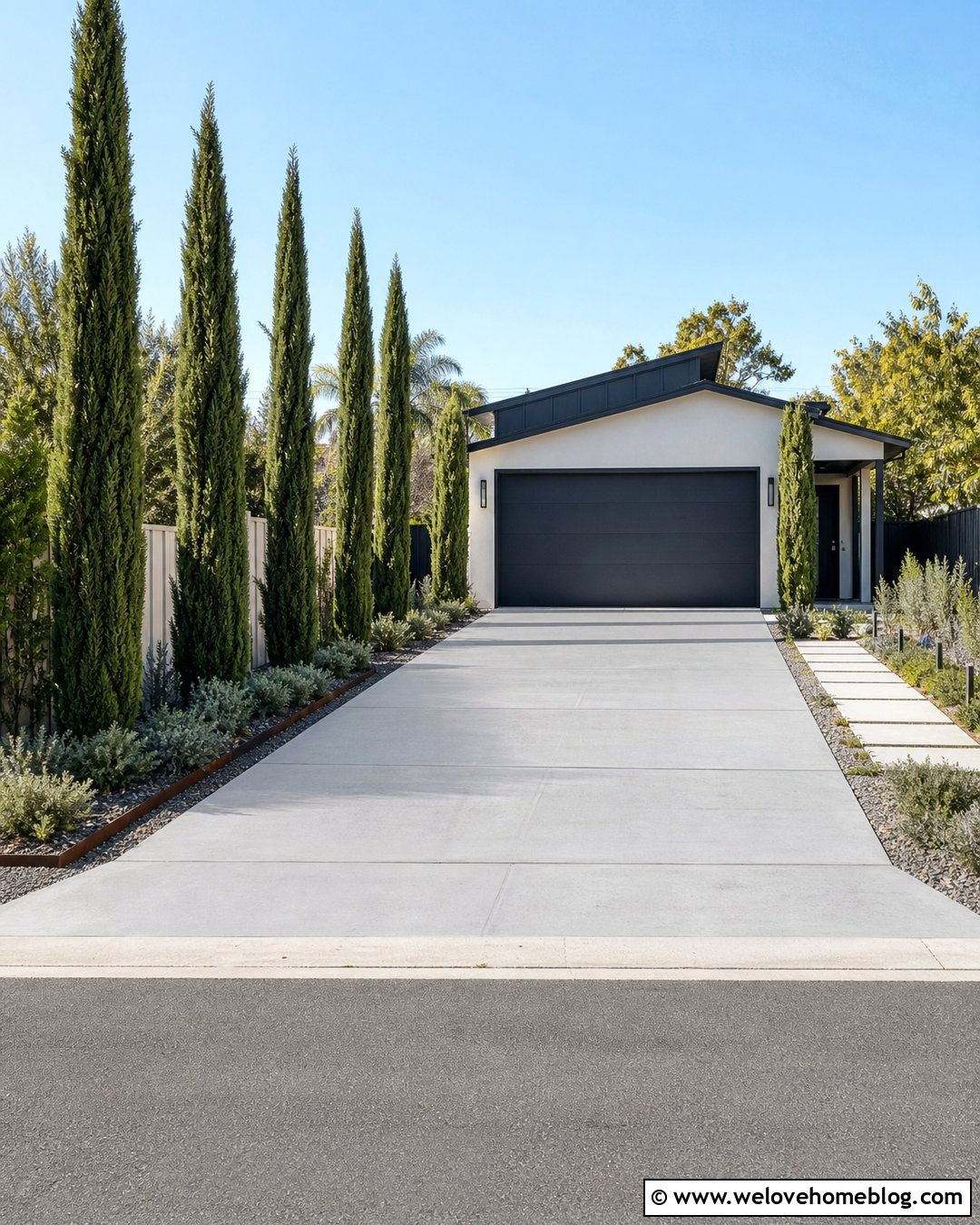
Limited width does not automatically rule out a cypress-lined entrance. A narrow straight driveway can use compact or slower-growing columnar cultivars positioned in dedicated beds on one side. On the opposite side, repeat the vertical effect with only two or three trees near key points, such as the street and garage. Smooth gray concrete or fine gravel keeps the surface visually simple, while slim steel edging conserves valuable planting space. Avoid dense underplanting that spills into the driving area. Instead, use gravel mulch, compact herbs, or a low evergreen ground cover. Confirm the mature width of each selected tree before planting and preserve room for vehicle doors, mirrors, utilities, and drainage. Thoughtful spacing creates the cypress effect without turning a small driveway into a tight corridor.
14. Sloped Driveway With Cypress Trees
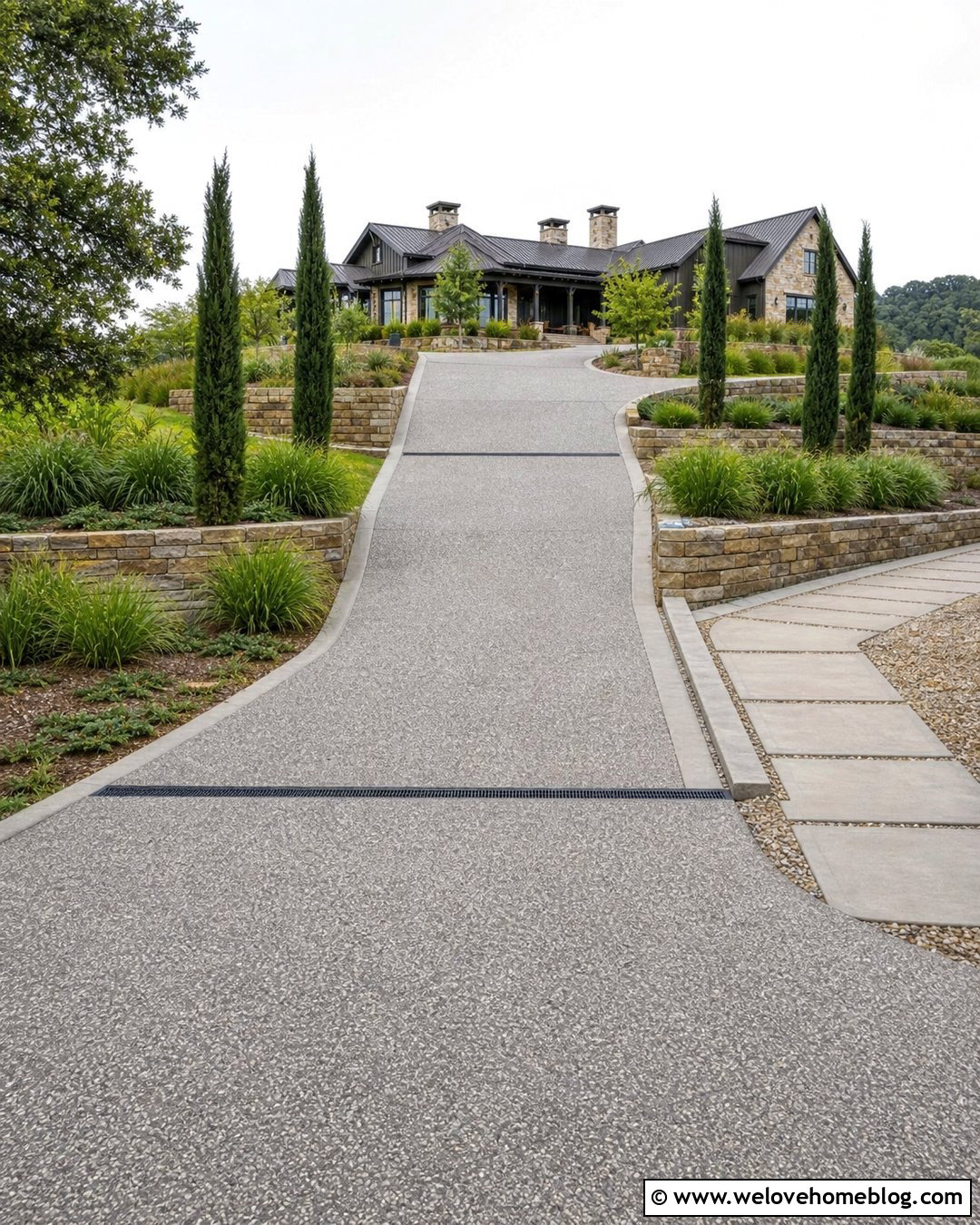
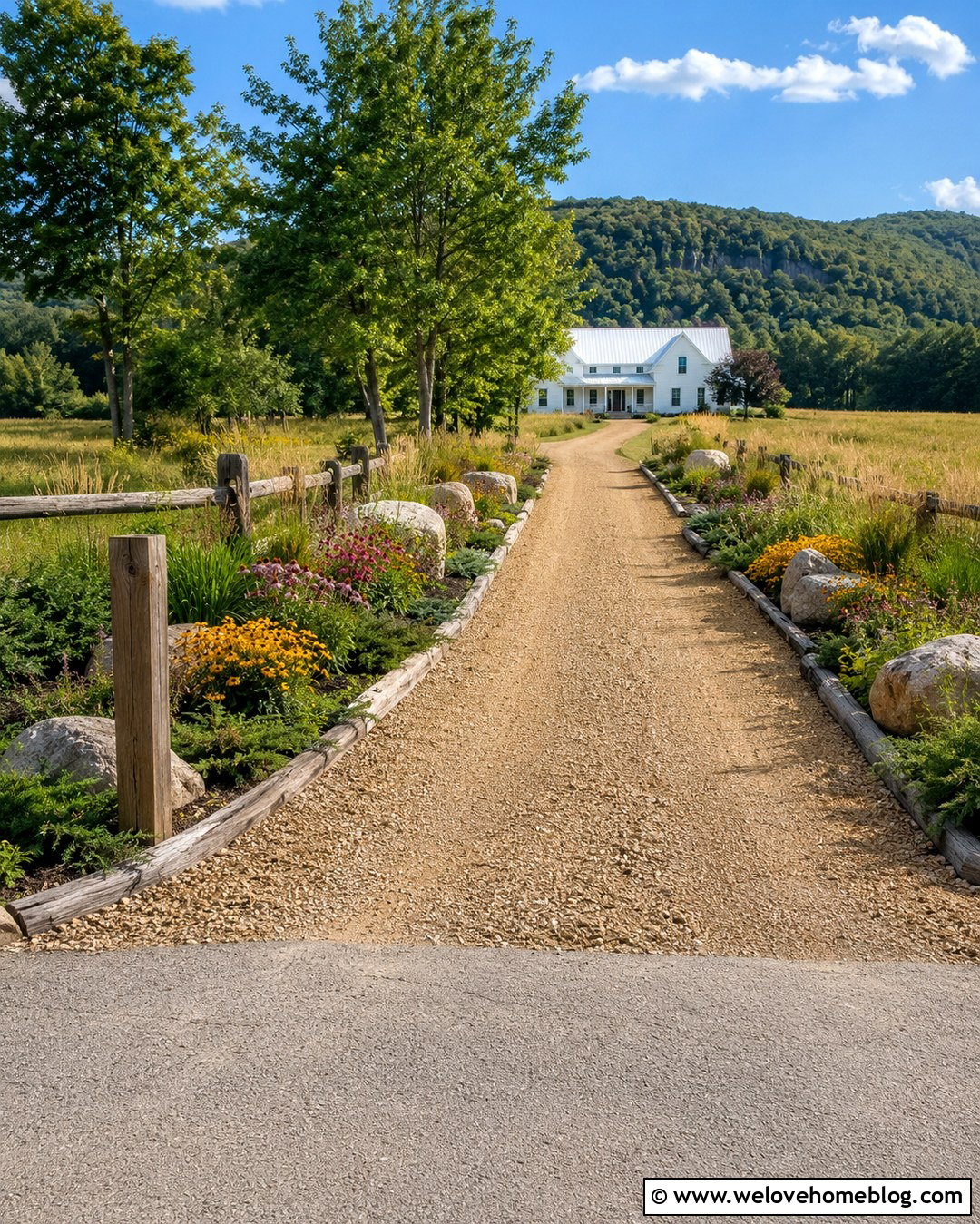
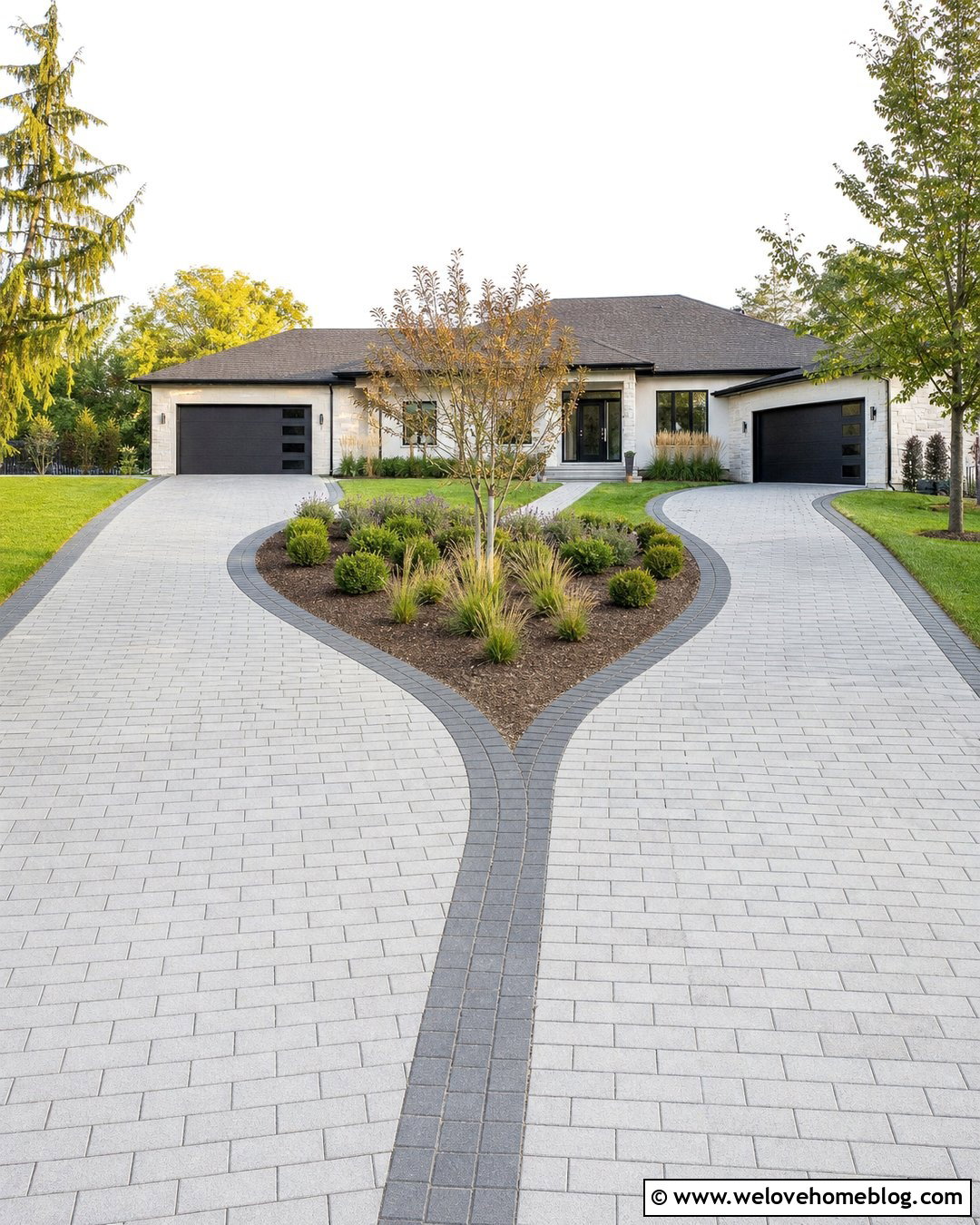
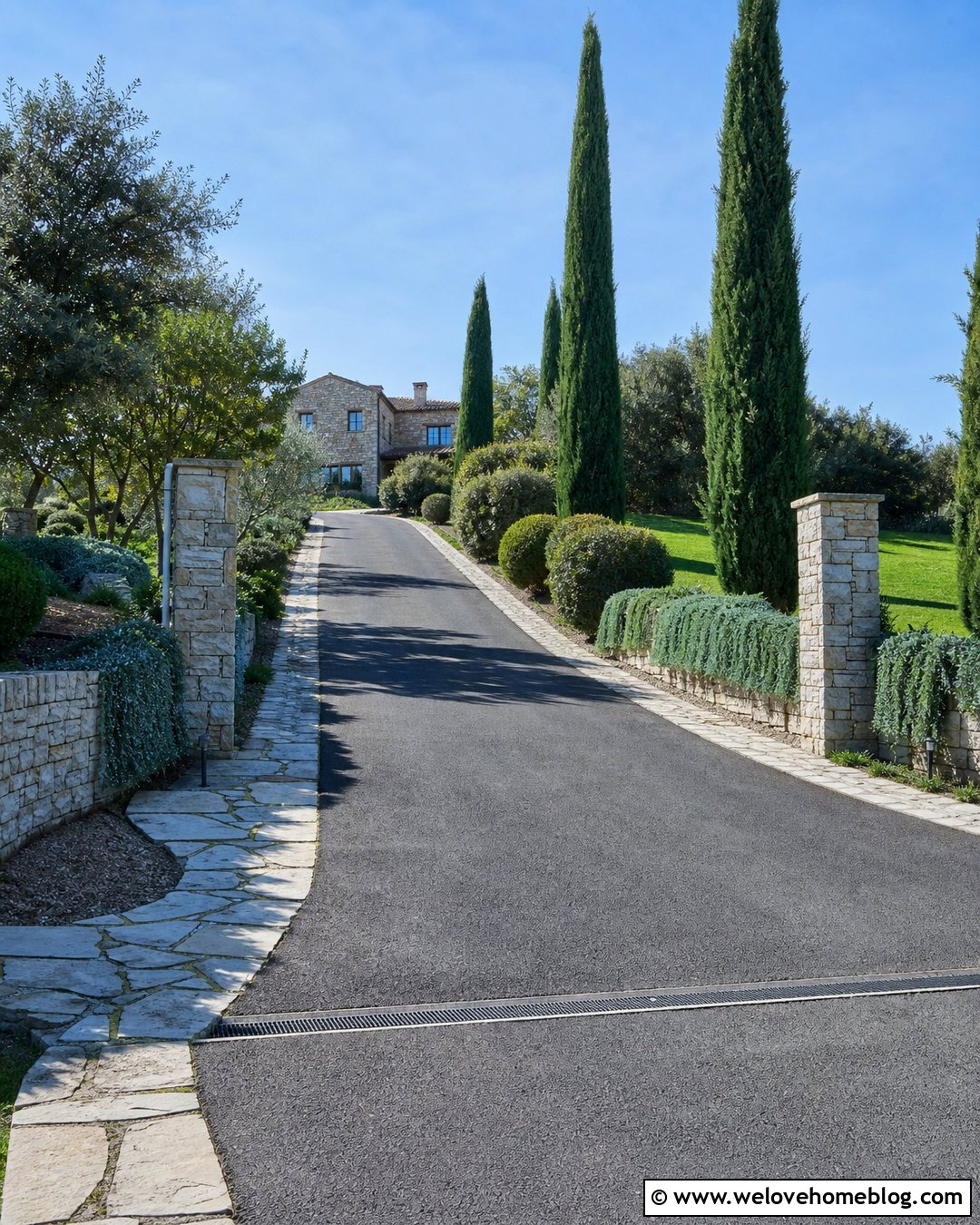
On a sloped driveway, cypress trees can visually steady the incline and guide attention uphill toward the house. Use textured exposed aggregate concrete or interlocking pavers that complement the grade and provide a clearly defined surface. Plant the trees in level terraced beds rather than forcing them into sharply sloped soil. Low stone retaining walls can support those beds and repeat the architecture of the home. Arrange the trees in staggered pairs so the design still appears rhythmic from the curb. Between them, use compact ground covers that help cover bare soil without obscuring drainage features. Proper water movement is essential, so keep planting, irrigation, and runoff controls coordinated. The finished approach should look integrated with the hillside rather than placed on top of it.
15. Drought-Tolerant Driveway With Cypress Trees
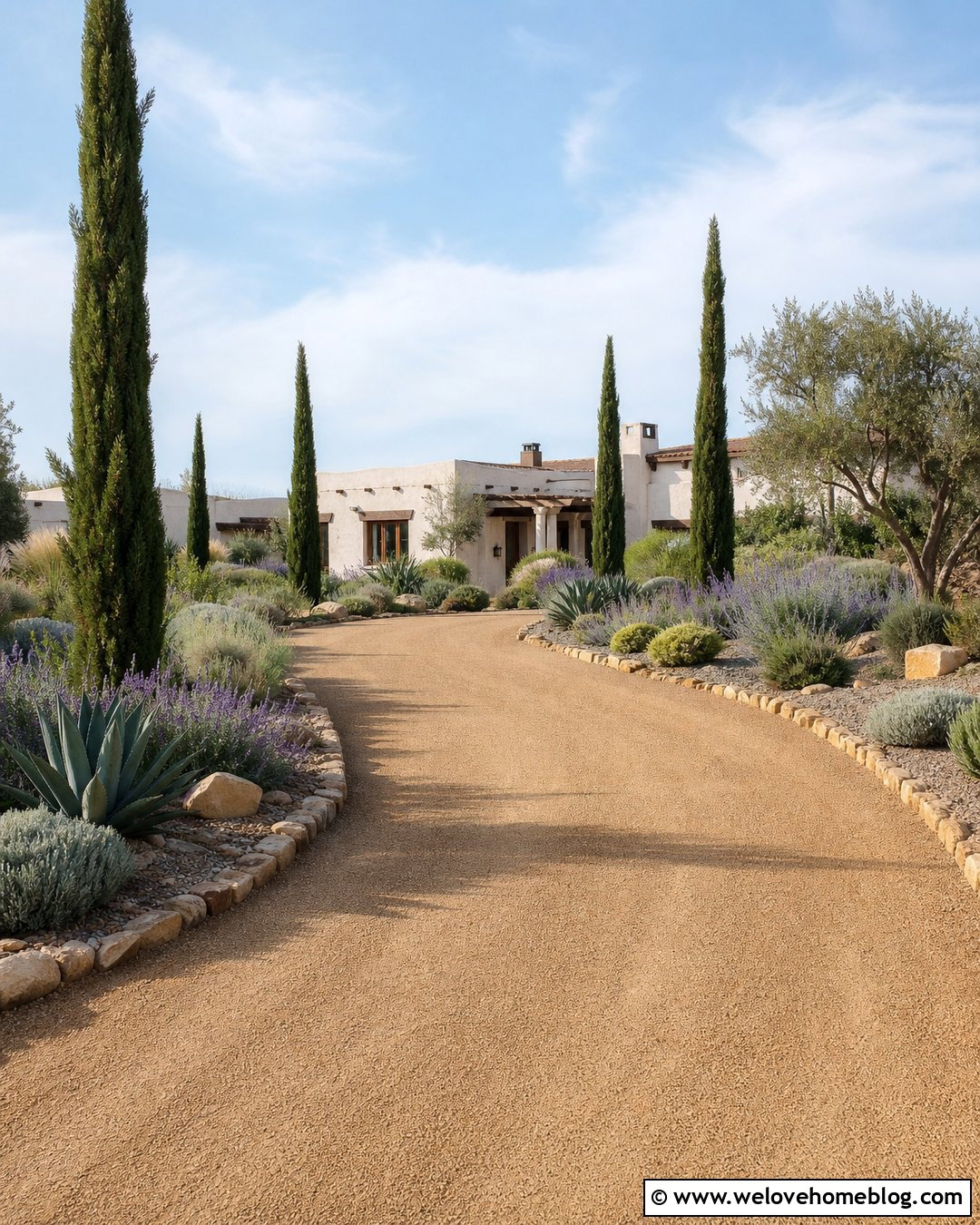
A water-conscious driveway landscape can still feel lush when its structure is carefully planned. Start with a warm gravel or decomposed-granite driveway edged in natural stone. Plant Italian cypress trees at deliberate intervals, then fill the surrounding beds with lavender, rosemary, santolina, agave, and ornamental grasses suited to local conditions. Gravel mulch gives the design a unified appearance and reduces the amount of exposed soil. Run drip irrigation within the planting areas so water reaches individual root zones instead of the driveway surface. Allow generous airflow around the cypress foliage and avoid constantly wet soil. A light stucco or adobe-inspired house makes an attractive background. This design uses shape, repetition, and foliage contrast to create impact rather than relying on water-intensive lawn or large flower beds.
16. Cypress Driveway With Lavender And White Roses
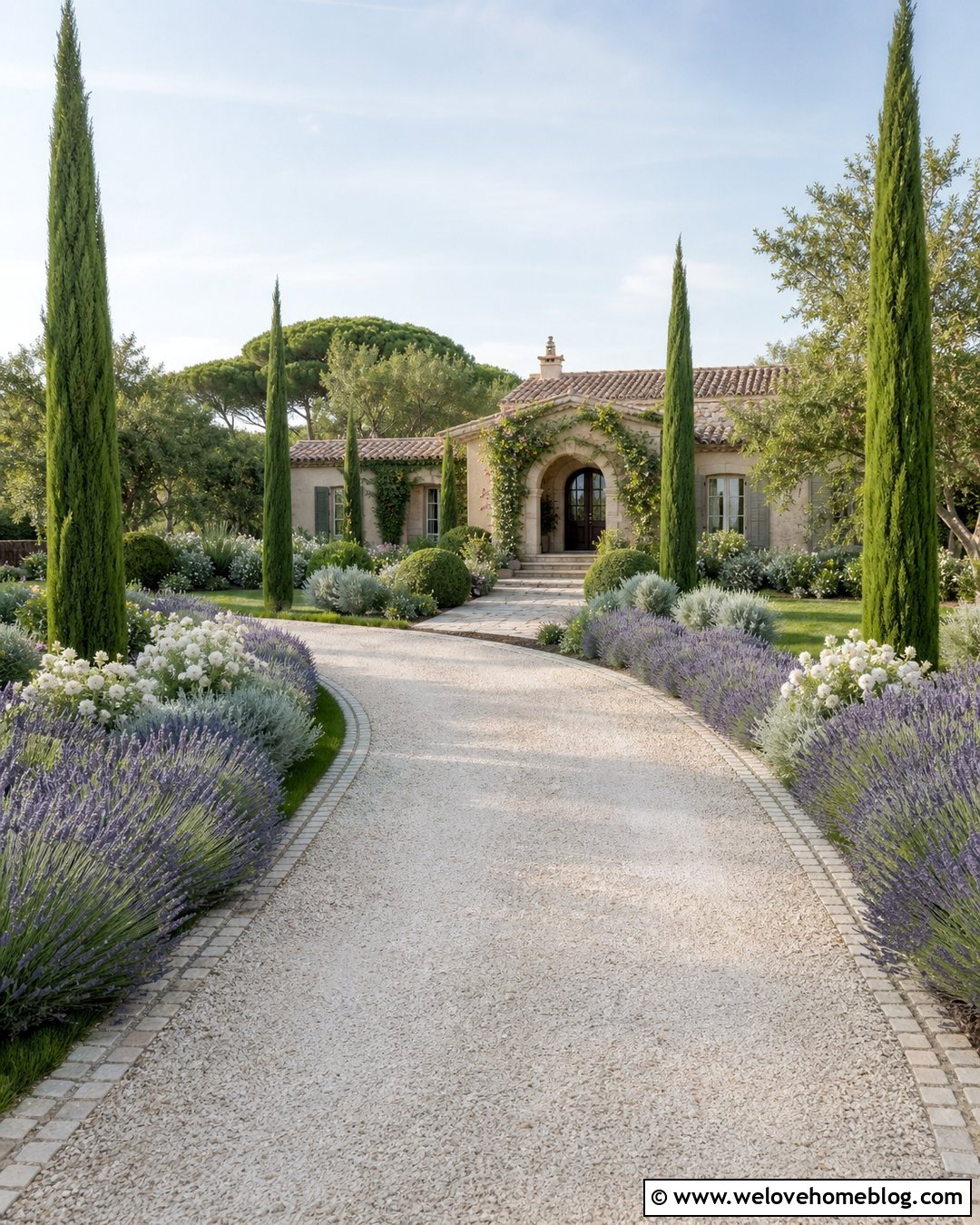
Dark cypress foliage looks especially rich above a lower border of lavender and white roses. Use a pale gravel driveway with a warm cobblestone edge to support the romantic Mediterranean character. Plant the cypress trees in a consistent rhythm, then repeat broad drifts of lavender between them. Place the roses nearer the entrance or house, where their flowers can become focal points without filling every section of the driveway. Maintaining distinct planting layers keeps the tall trees visible and makes routine care easier. A curved layout can strengthen the garden-like feeling, while a straight layout produces greater formality. Choose rose and lavender varieties suited to your climate and sunlight. Together, the evergreen columns, silvery foliage, flowers, and natural stone create a complete seasonal landscape.
17. Olive And Cypress Tree Lined Driveway
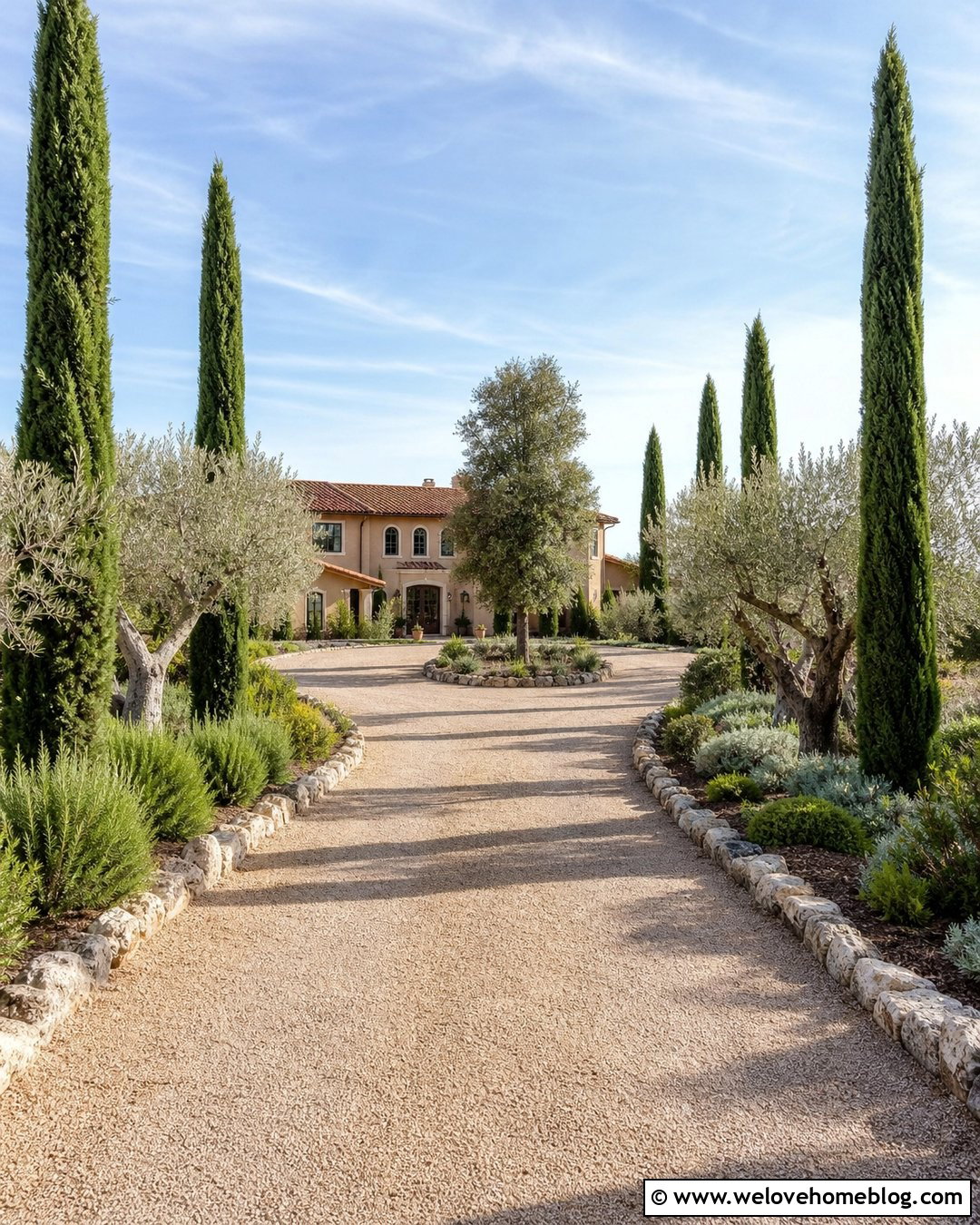
Mixing olive and cypress trees creates a layered Mediterranean driveway rather than a single repetitive row. Tall cypress trees establish the main rhythm, while sculptural olive trees provide wider canopies and silver-toned foliage at selected points. Use cypress in matching pairs along the straight portions and place olives near a bend, turnaround, or front courtyard. A tan crushed-gravel driveway with rough limestone edging connects naturally to both tree types. Keep understory planting simple with rosemary, sage, and low ornamental grasses. The contrasting tree shapes make the landscape feel collected over time, yet repeating the same gravel and border throughout maintains unity. Before planting, verify that both species are appropriate for the site. This combination works best where there is enough space for the olive canopies to develop comfortably.
18. Cypress Driveway With Landscape Lighting
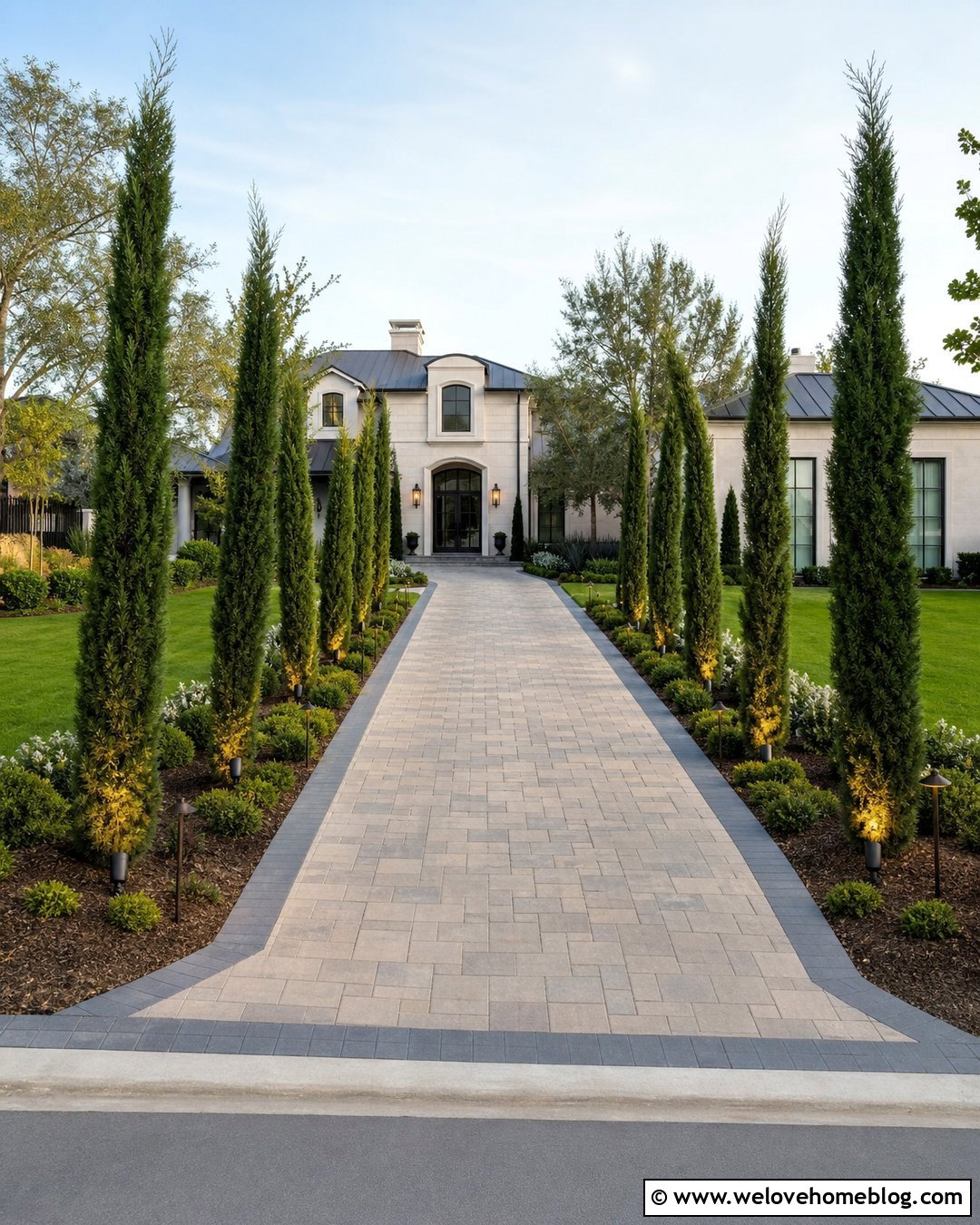
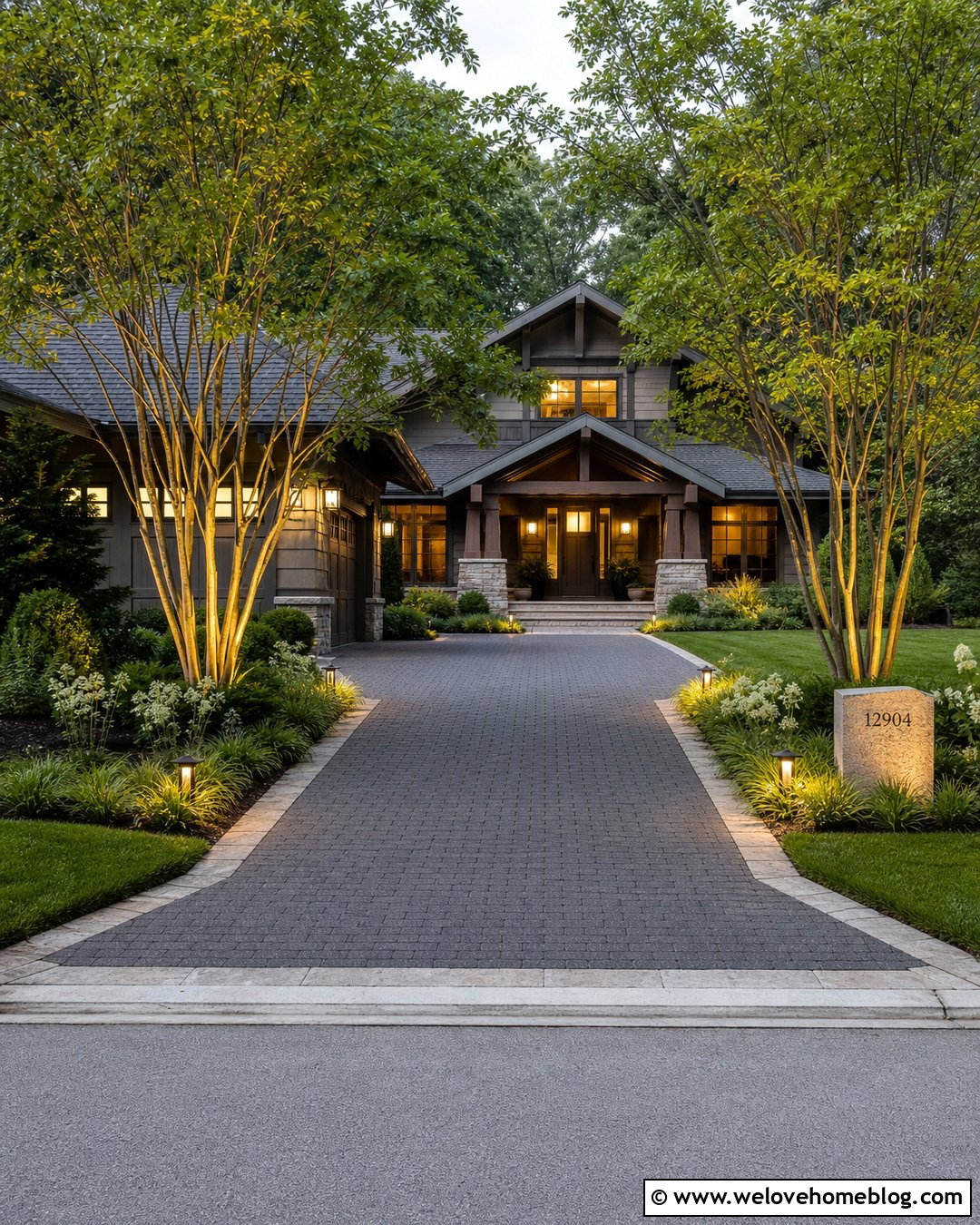
Landscape lighting should support a cypress-lined driveway without filling the entrance with visible hardware. Install compact directional fixtures near selected trunks and low path lights near turns, walkways, or driveway edges. During the day, dark bronze or matte black fixtures blend into mulch and planting beds. A warm gray paver driveway provides a clean background, while a charcoal border defines the route to the house. Keep fixtures outside areas where tires, lawn equipment, or runoff could damage them. Rather than lighting every tree equally, concentrate fixtures near the gate, midpoint, and house to establish a comfortable visual sequence. The cypress trees remain the main architectural feature, while the coordinated paving, discreet fixtures, and low planting create a polished design in daylight as well as after sunset.
19. Staggered Cypress Tree Lined Driveway
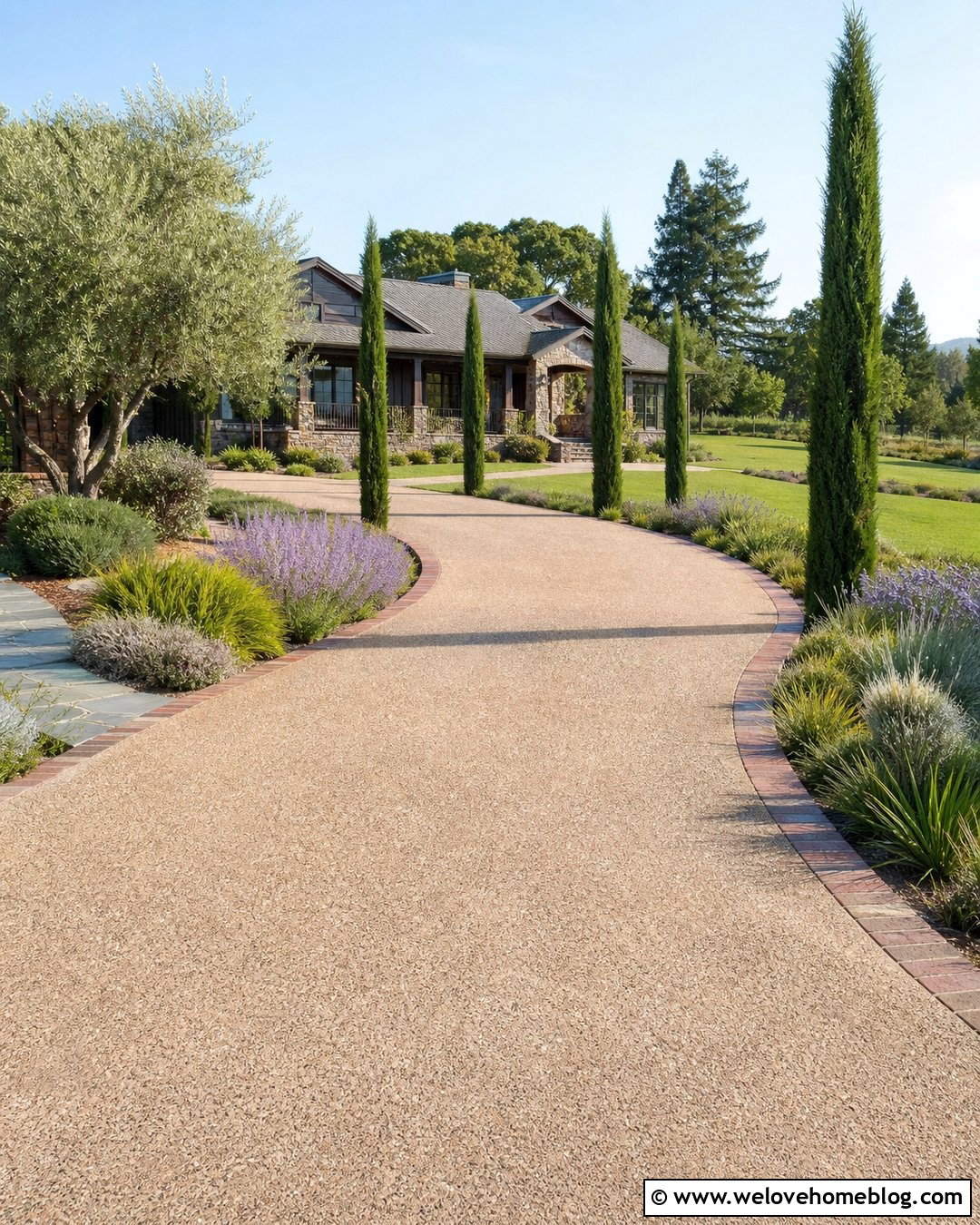
Perfectly matched rows are not the only way to use cypress trees. A staggered arrangement can make a curved or informal driveway feel more natural while maintaining strong vertical repetition. Begin with a pair at the entrance, then position individual trees at alternating points along each side. Use warm exposed aggregate concrete with a narrow brick border to provide consistency beneath the varied planting pattern. Fill wider spaces with olive shrubs, ornamental grasses, flowering perennials, or open lawn. Keep smaller plants grouped in masses instead of scattering many varieties throughout the beds. This approach suits ranch, craftsman, and country homes that might look uncomfortable behind a highly formal allée. The trees still mark the route clearly, but the staggered rhythm feels relaxed and better connected to an informal yard.
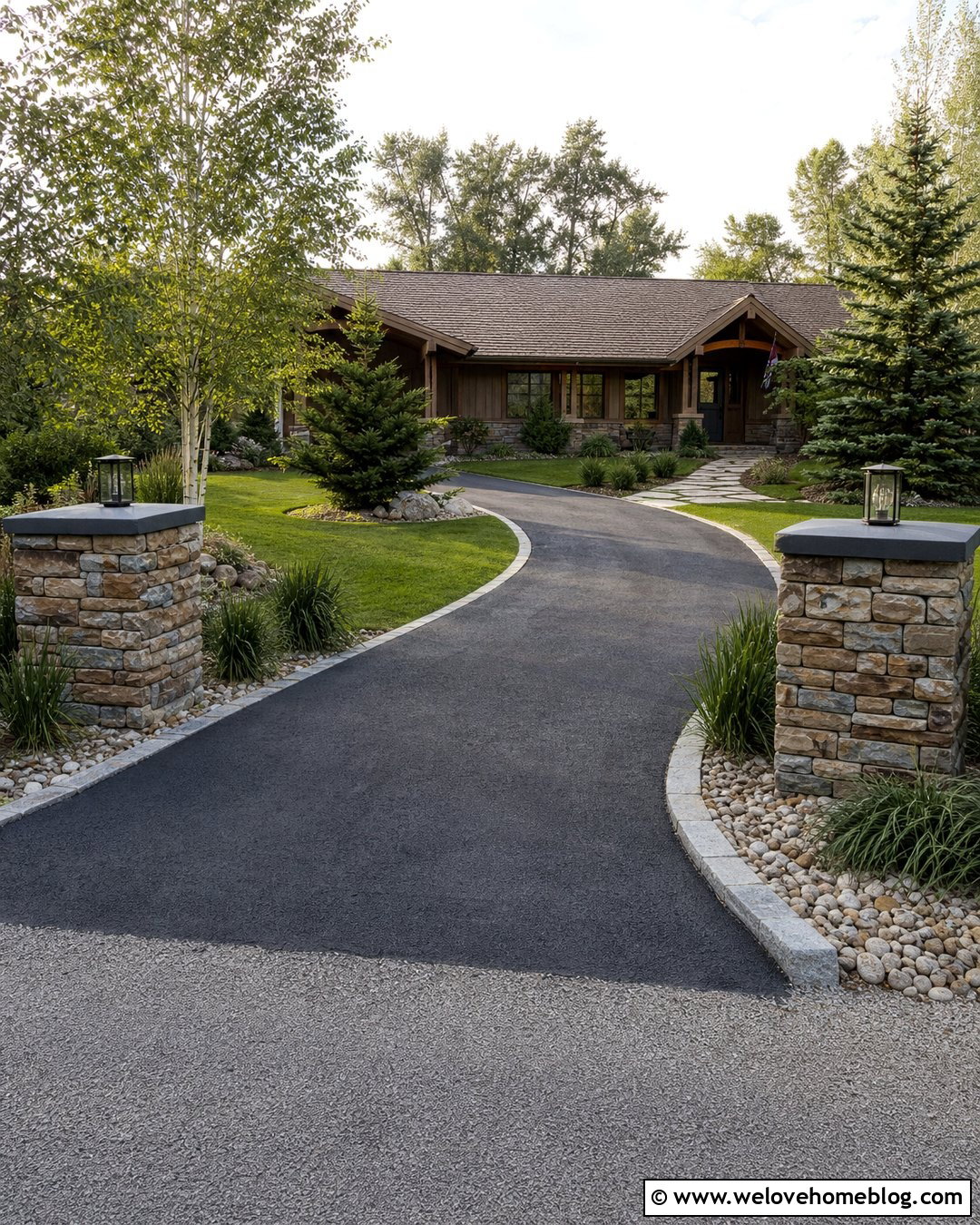
20. Young Cypress Tree Lined Driveway
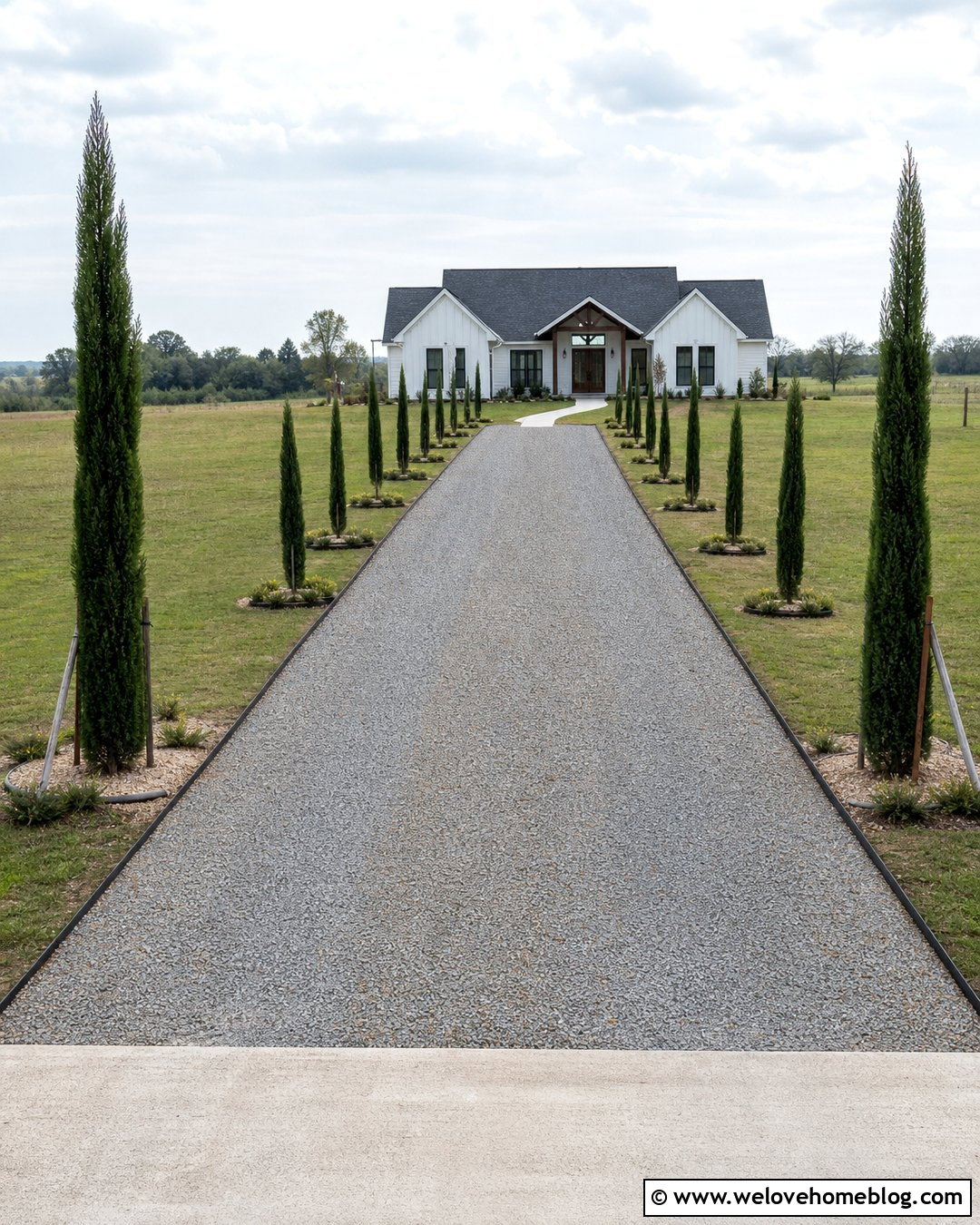
Planting smaller cypress trees can make a long driveway project more manageable while allowing the landscape to develop gradually. Use a simple crushed-stone driveway with steel or pressure-treated timber edging to control initial costs. Set the young trees according to their expected mature size rather than placing them close together for an immediate screen. Temporary stakes may help newly installed trees remain upright, but they should be unobtrusive and managed correctly. Add low ground cover or gravel mulch around each planting area for a neat appearance while the trees grow. A pair of larger specimens at the entrance can provide instant impact, with smaller trees continuing toward the house. Always confirm local climate suitability, irrigation needs, and mature dimensions before purchasing an entire row of one cultivar. ()
Conclusion:
The strongest **20 cypress tree lined driveway ideas** treat the trees, surface, borders, house, and surrounding landscape as one coordinated design. Straight rows create formality, while curved and staggered arrangements feel more relaxed. Gravel and cobblestone support Mediterranean character, whereas concrete, asphalt, and resin-bound surfaces can produce a cleaner modern appearance. Whatever layout you choose, plan for mature tree size, safe vehicle clearance, drainage, irrigation, and maintenance access. Confirm that the selected cypress variety performs well in your region before committing to a full row. With thoughtful spacing and a driveway material that complements the home, cypress trees can create an entrance that feels established, welcoming, and visually memorable.

Related posts:
Leave a Reply