
A generous front yard gives you room to make the driveway feel like part of the home rather than a plain parking surface. The best **35 Large Driveway Ideas** combine durable materials, comfortable vehicle movement, clear walkways, attractive borders, and landscaping that suits the property’s scale. You might choose a sweeping gravel approach for a country home, structured pavers for a traditional facade, or oversized concrete slabs for modern architecture. Circular layouts, parking courts, planted islands, and defined entrances can make a broad area feel organized instead of empty. Coordinating the driveway’s surface, shape, edging, and planting creates a more complete and intentional landscape. () Use the following 35 Large Driveway Ideas to plan a practical entrance with memorable curb appeal.
1. Large Circular Paver Driveway
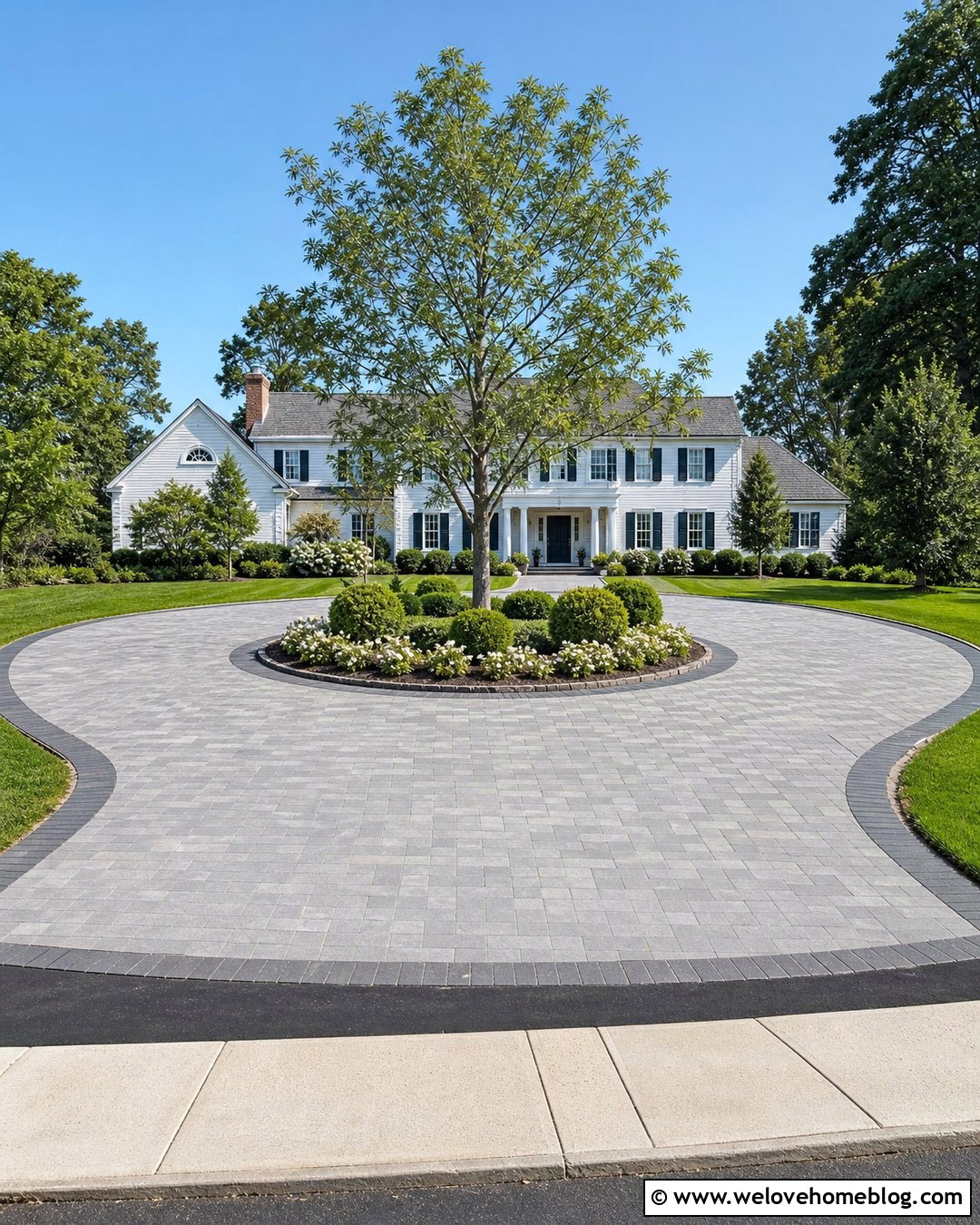
A large circular driveway creates an impressive approach while allowing vehicles to move through the property without backing toward the street. Use concrete pavers in soft gray or warm beige to define the entire loop. A contrasting charcoal paver border will make the curve appear crisp and intentional. In the center, build a wide landscaped island with a specimen tree, clipped shrubs, and low flowering perennials. Keep taller plants away from the entrance and exit points so drivers have clear views. A matching paver walkway can branch from the circle toward the front door. This design works especially well with colonial, Georgian, and traditional homes because its balanced shape complements symmetrical architecture without making the landscape look overly formal.
2. Large Gravel Driveway With Stone Edging
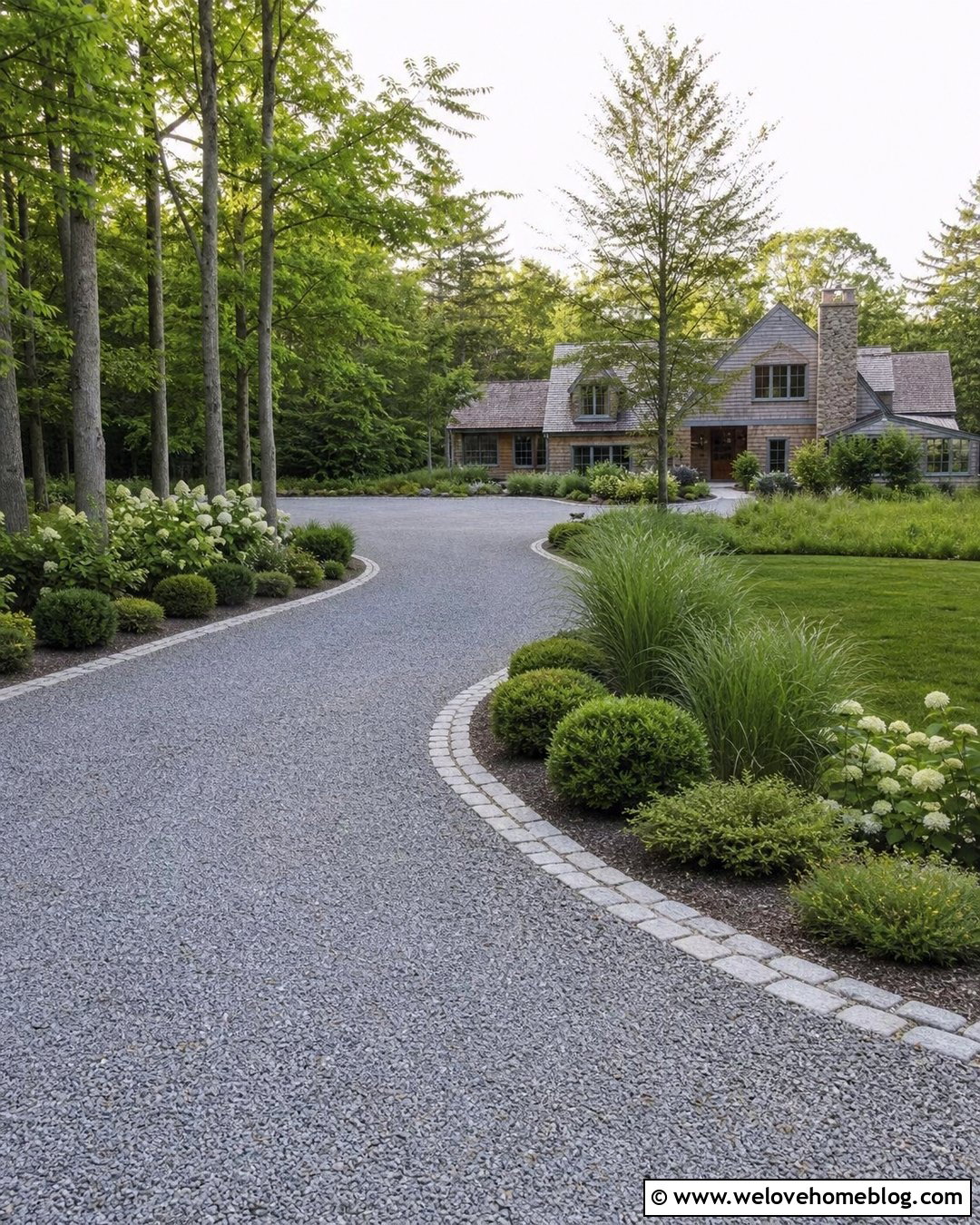
The gentle crunch of gravel creates a welcoming entrance that feels relaxed yet substantial. Choose compacted gray crushed stone for the main surface because its neutral color pairs easily with brick, siding, or natural stone. Define both sides with granite cobblestones or chunky fieldstone edging to keep the loose material contained. A long, softly curved layout will make the approach feel more natural than a perfectly straight lane. Plant ornamental grasses, evergreen shrubs, and repeating groups of flowering perennials along the outer borders. Near the house, widen the gravel into a practical parking court. This complete design suits country homes, farmhouses, and wooded properties, where the textured surface and natural edging blend comfortably with the surrounding landscape.
3. Large Modern Concrete Driveway
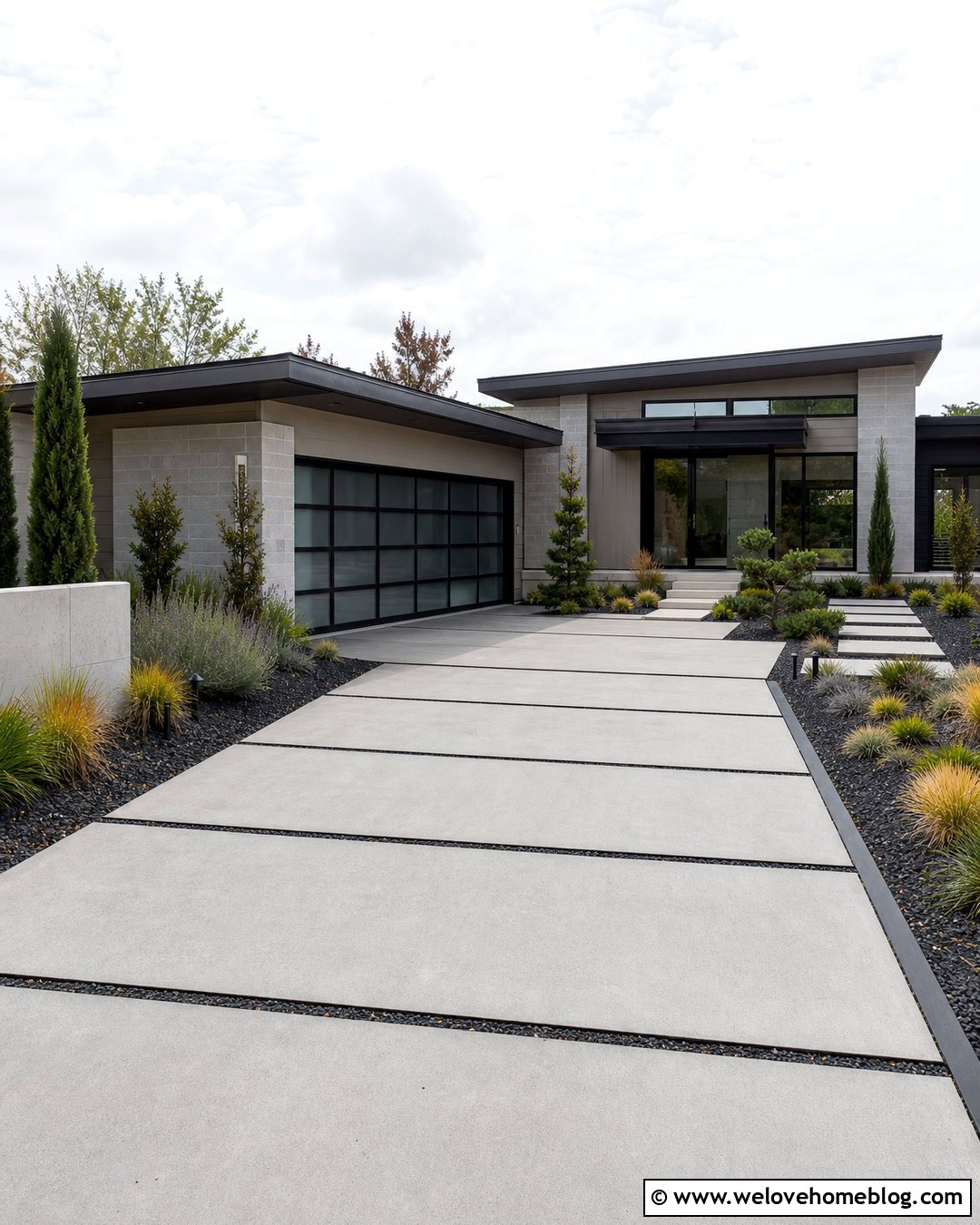
Crisp geometry can keep a broad driveway from looking like one oversized slab. Divide light gray poured concrete into large rectangular sections with narrow gravel joints or dark stone bands. A straight layout works well when it aligns with a modern home’s garage, windows, and front walkway. Frame the driveway with simple beds containing ornamental grasses, compact evergreens, and sculptural plants. Black steel edging creates a clean transition between the concrete and landscaping. Consider extending one concrete band toward the front door to connect the vehicle and pedestrian routes visually. Avoid unnecessary curves or complicated patterns. The strength of this design comes from restrained materials, generous proportions, and careful alignment with the architecture, resulting in a large driveway that feels modern and organized.
4. Large Horseshoe Asphalt Driveway
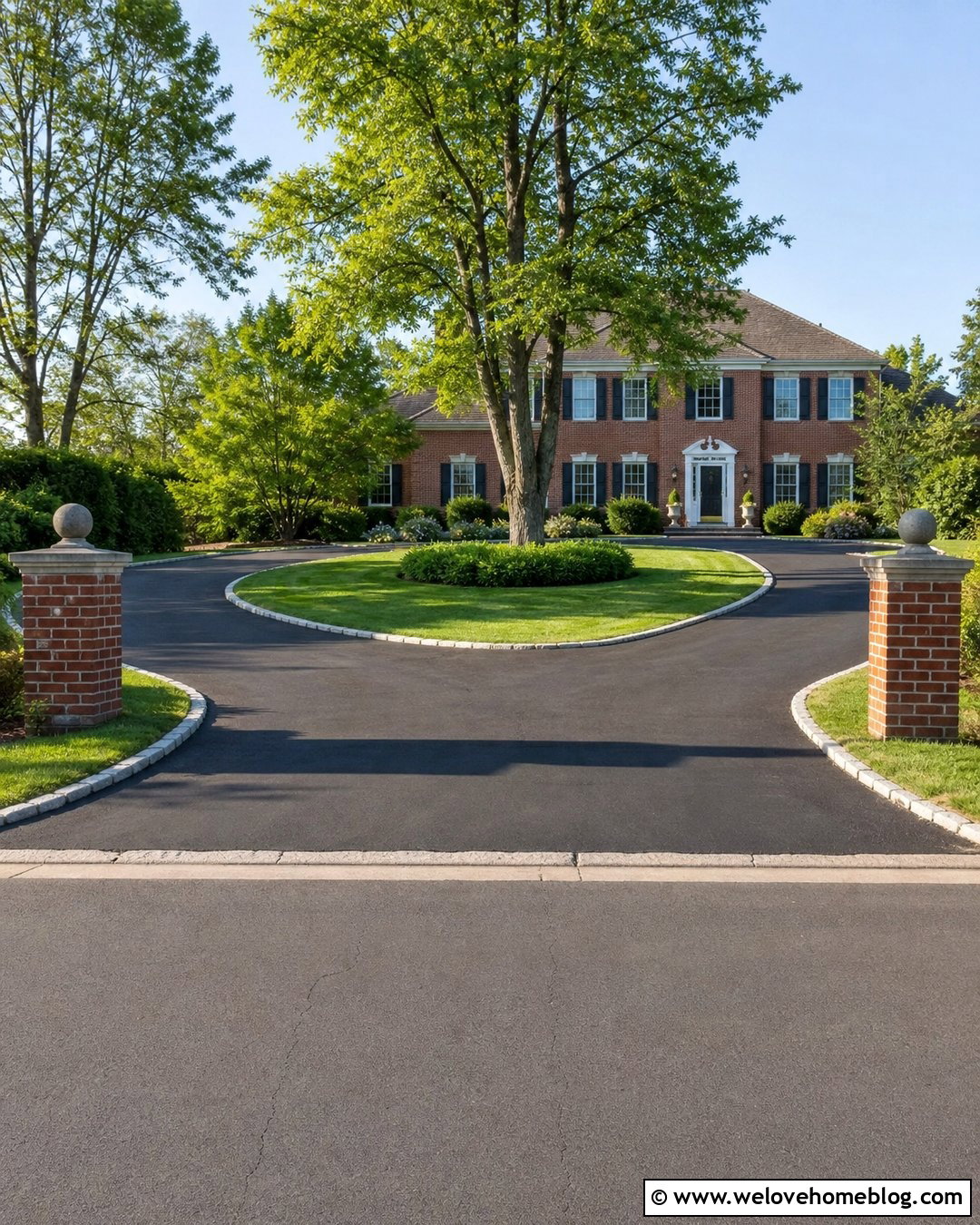
A horseshoe layout brings convenient circulation to a large suburban or rural front yard. Smooth black asphalt offers a practical, visually consistent surface that can handle the expansive shape without creating a busy pattern. Add a border of light gray concrete pavers or granite blocks to sharpen the edges and introduce contrast. The open center can remain lawn or become a broad garden filled with a shade tree, layered shrubs, and seasonal flowers. Use matching masonry pillars at both street entrances to make the layout easy to recognize. Near the garage, allow the asphalt to widen into a comfortable turning and parking area. This design pairs especially well with ranch, colonial, and traditional homes surrounded by open lawns.
5. Large Brick Driveway With Herringbone Pattern
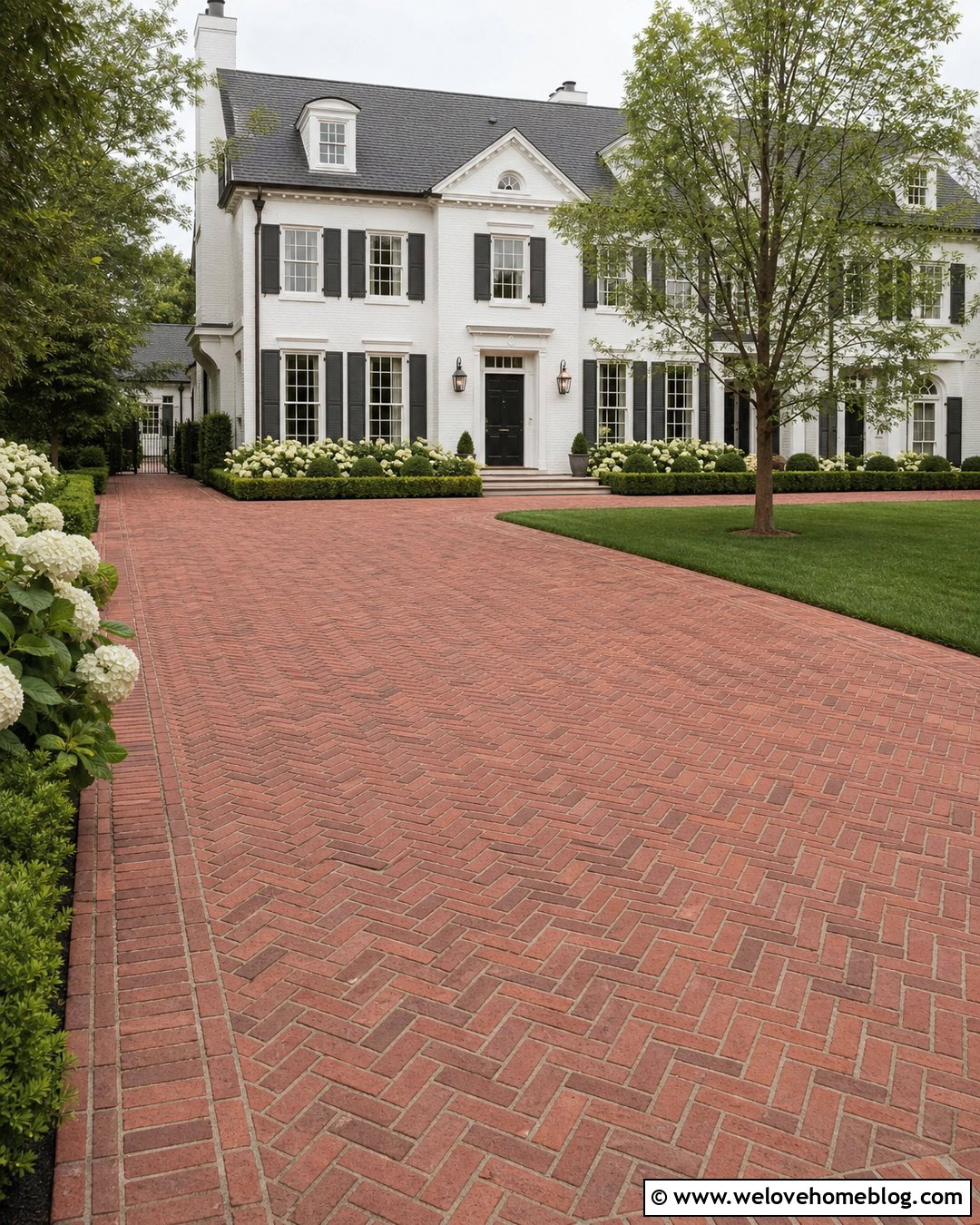
Warm clay brick pavers can give a large driveway rich color and traditional character. Lay the main surface in a herringbone pattern so the expansive area gains texture without relying on multiple materials. A soldier-course brick border will create a neat frame and strengthen the driveway’s visual outline. For a stately approach, use a straight driveway that widens near the house into a rectangular parking court. Border it with clipped boxwood, hydrangeas, and small ornamental trees spaced in a balanced arrangement. Connect the court to the front steps with a matching brick walkway. The earthy red and brown tones look especially attractive beside white colonial facades, painted brick homes, and craftsman houses with warm wood details.
6. Large Cobblestone Estate Driveway
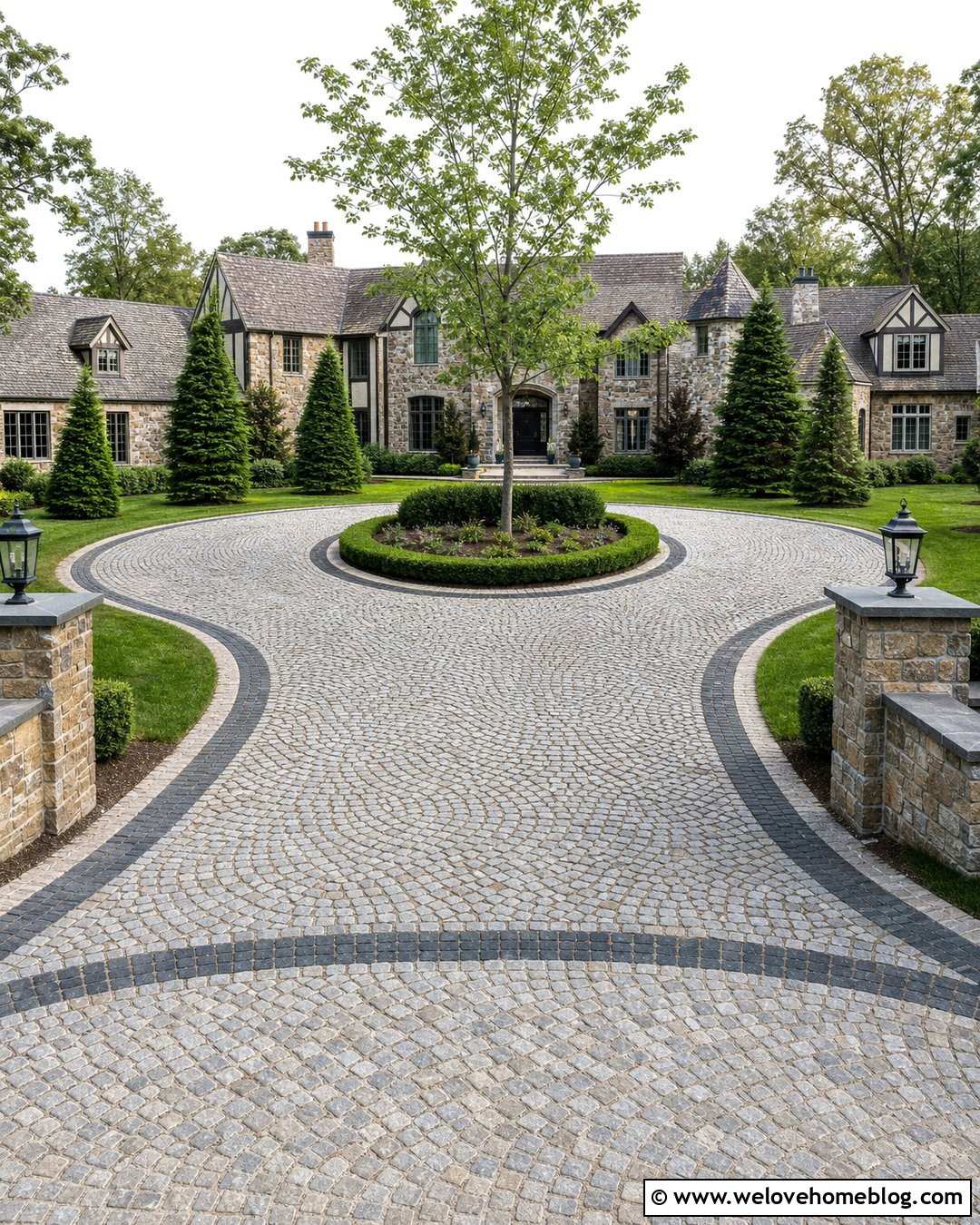
Few surfaces create an established estate appearance as effectively as full cobblestone. Select granite cobbles in mixed gray tones and arrange them in gentle fan patterns across a wide circular or curved driveway. Darker stone borders can outline the driving lanes and make the layout easier to read. A formal center island with a mature tree, low hedges, and a stone urn provides an appropriate focal point without blocking the home. Repeat the cobblestone at the entrance apron and front walkway for continuity. Because the material has strong visual texture, keep the surrounding planting structured and relatively simple. Broad lawns, symmetrical evergreens, and restrained flower beds help this substantial driveway complement Tudor, European, and stone-clad estate homes.
7. Large Driveway With Landscaped Center Island
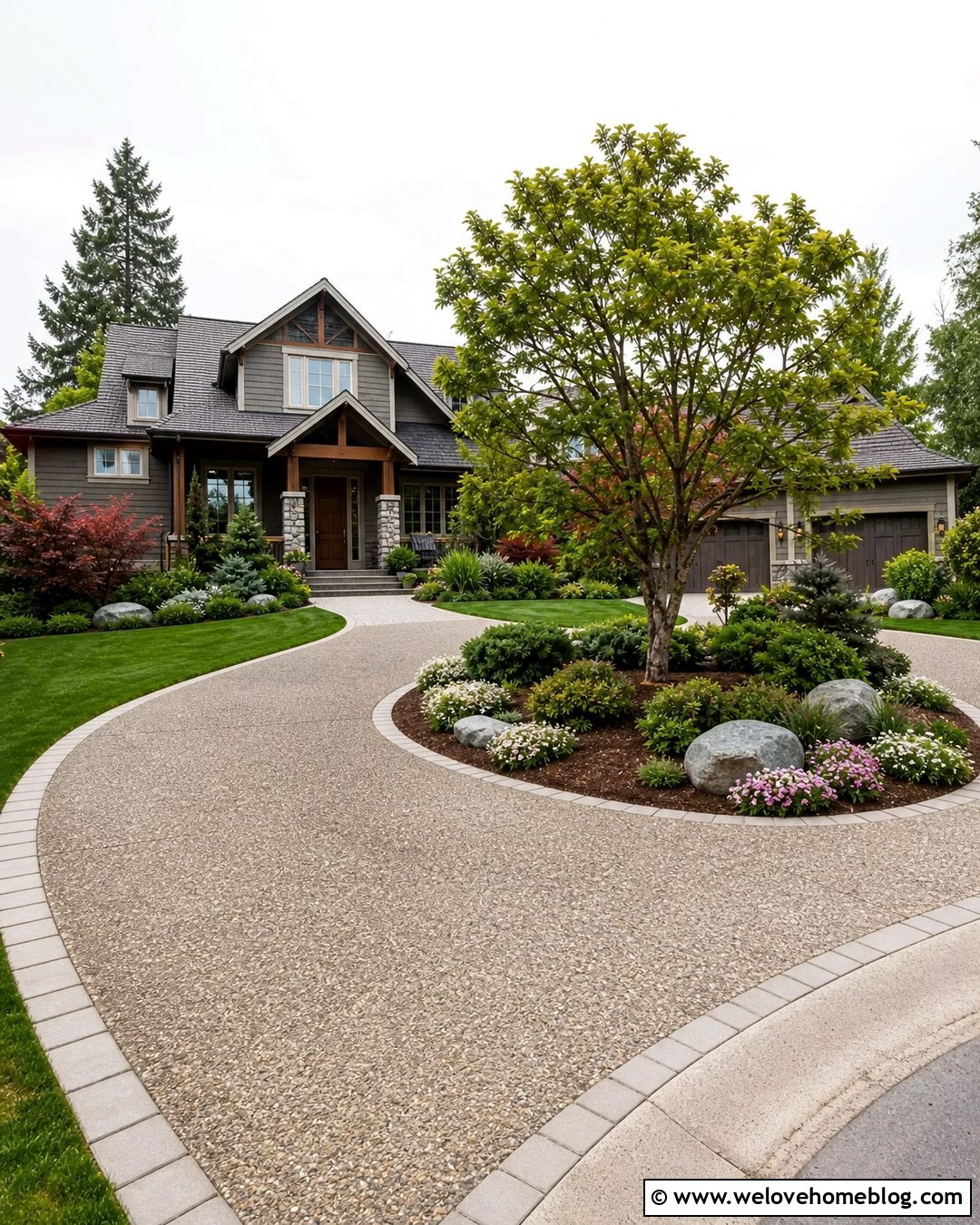
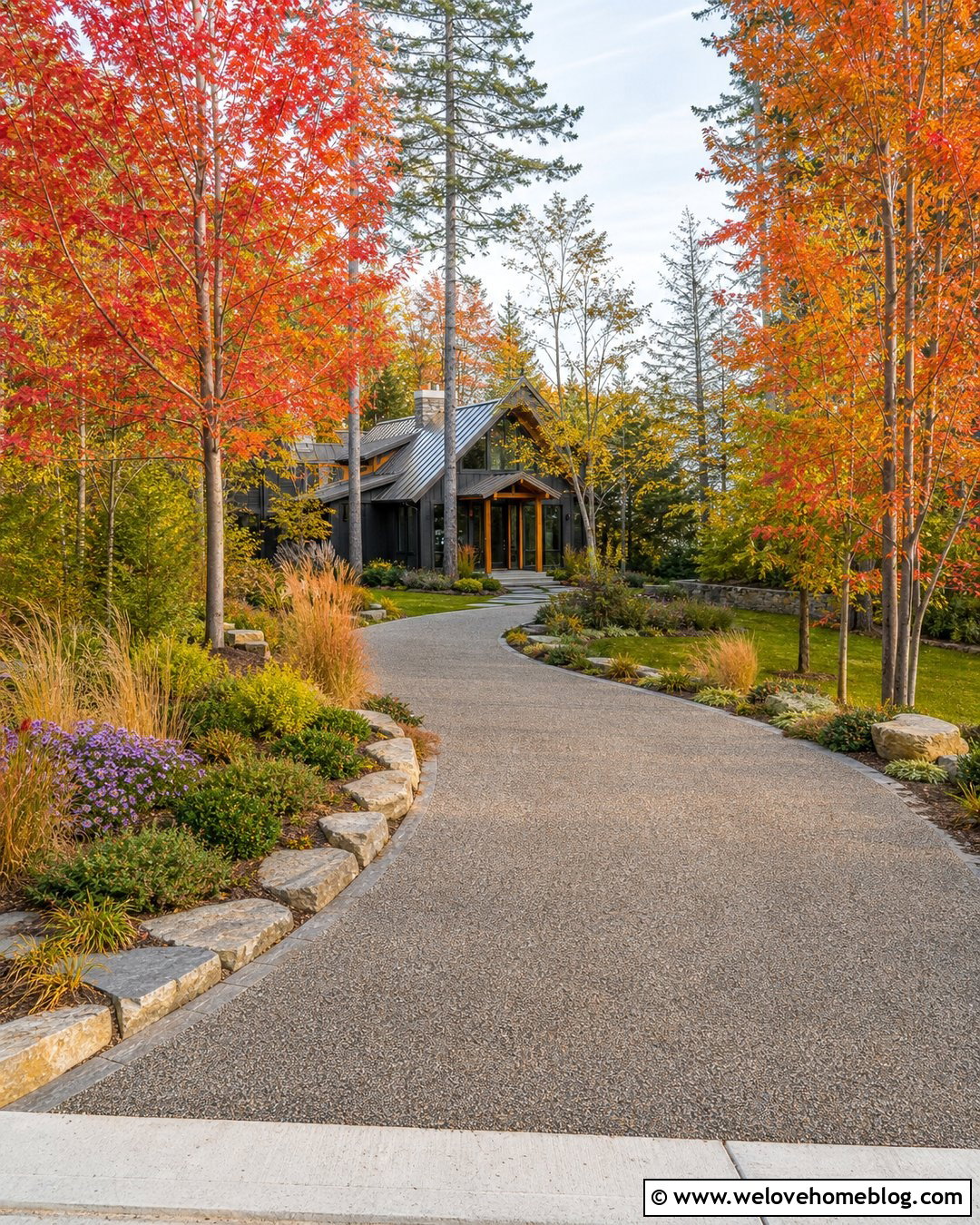
Does a broad expanse of paving make the front yard feel empty? A landscaped center island can break up the hard surface and organize vehicle movement. Surround a large oval planting bed with exposed aggregate concrete or neutral concrete pavers. Inside the island, combine one feature tree with layered evergreen shrubs, flowering ground covers, and decorative boulders. Keep the plants closest to driving lanes low for better visibility. Use the island’s shape to guide cars toward the garage, guest parking, and exit. A narrow paver border around the bed will protect the soil while creating a finished transition. This arrangement works with many house styles and gives a large driveway a stronger connection to the garden.
8. Large Driveway With Double Entrance Gates
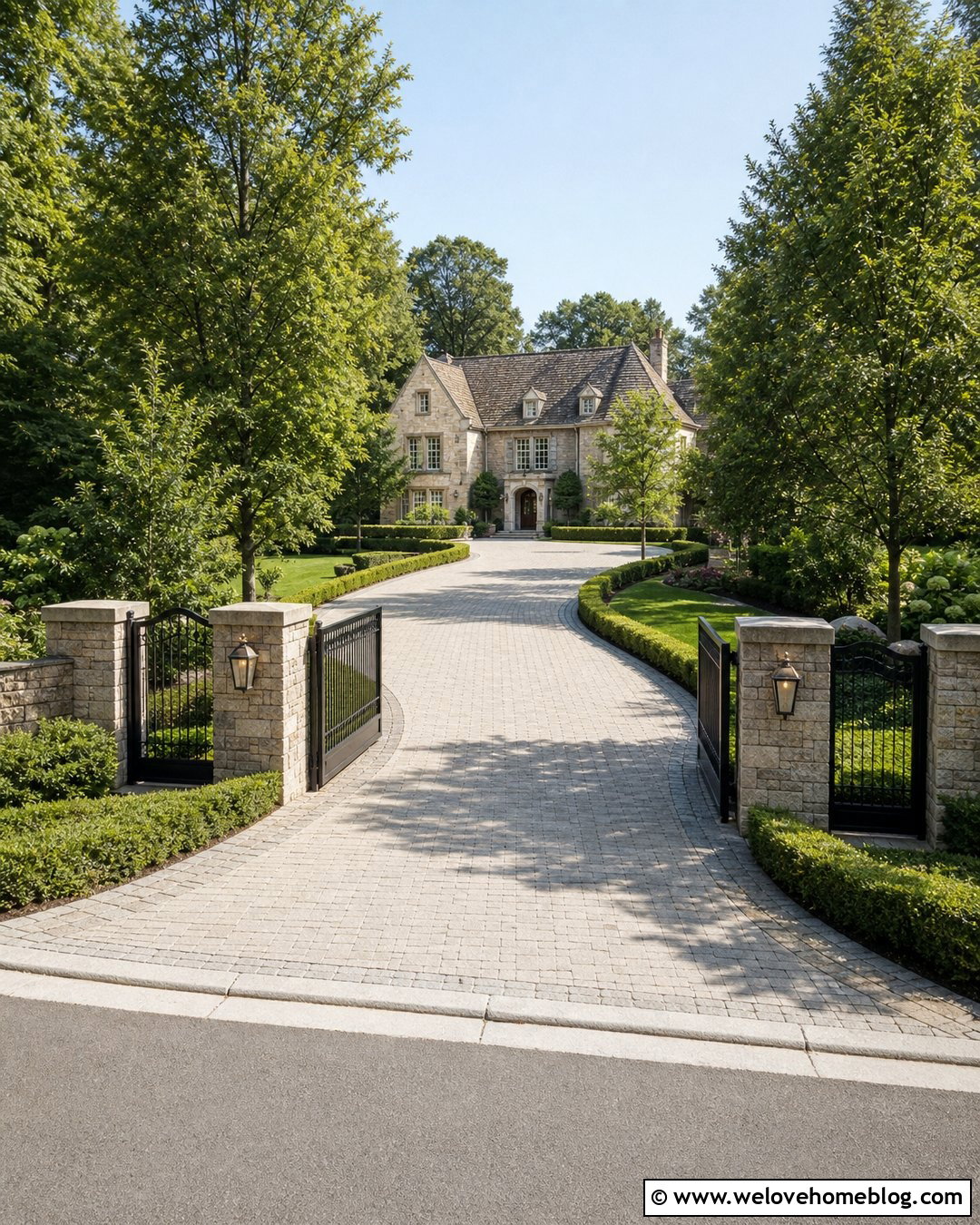
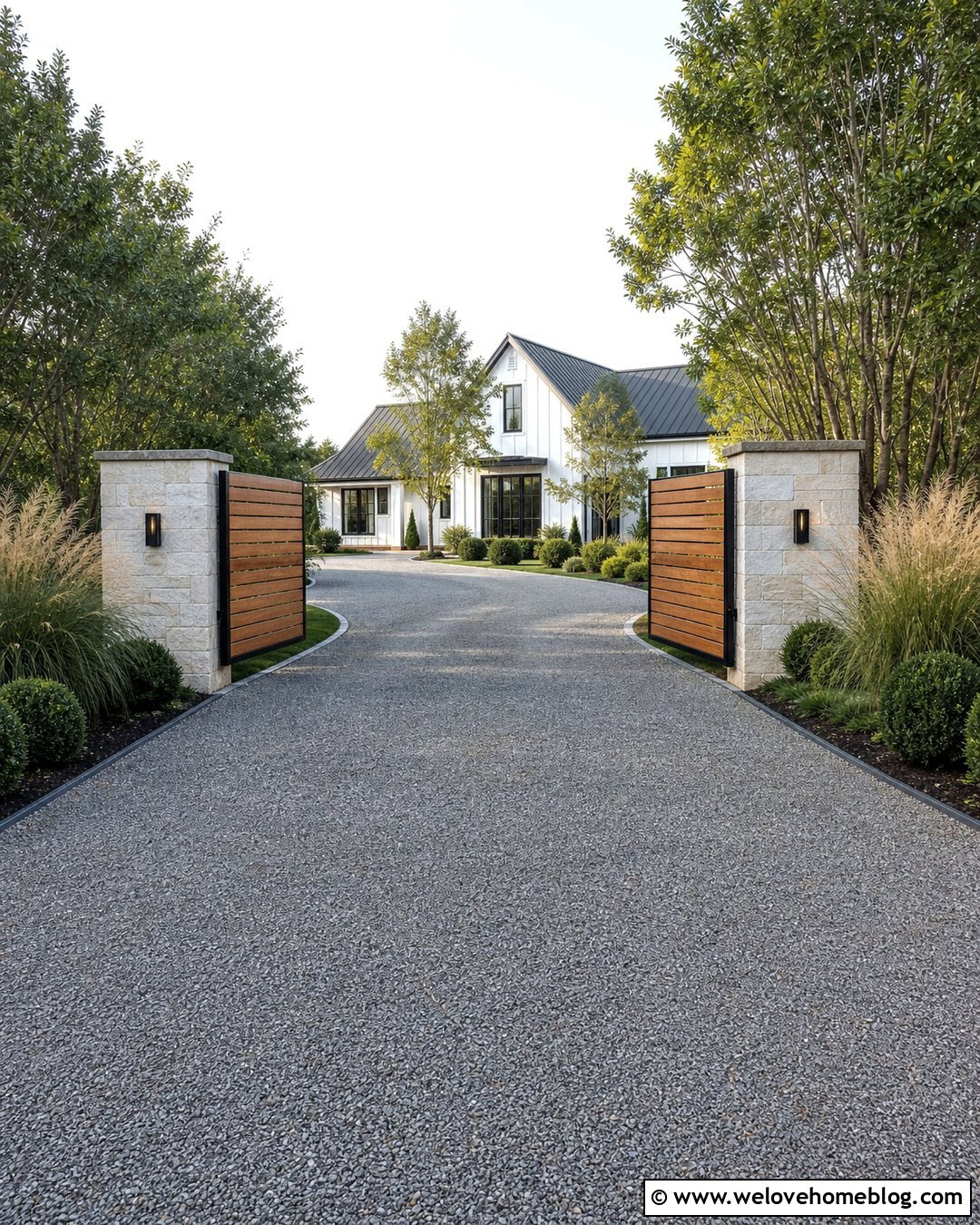
Two gated entrances can transform a horseshoe or circular driveway into a clearly defined private approach. Use black steel swing gates between substantial stone or brick pillars, with one gate serving as the entrance and the other as the exit. Behind them, a broad asphalt or concrete paver driveway can curve around a landscaped front lawn. Repeat the pillar masonry along the driveway border or house facade to create visual unity. Low evergreen hedges and evenly spaced trees can frame both approaches without hiding the gates. Include practical lighting on the pillars and a separate pedestrian gate when space allows. The result feels secure and polished while preserving the easy circulation expected from a large residential driveway.
9. Large Pea Gravel Driveway With Brick Border
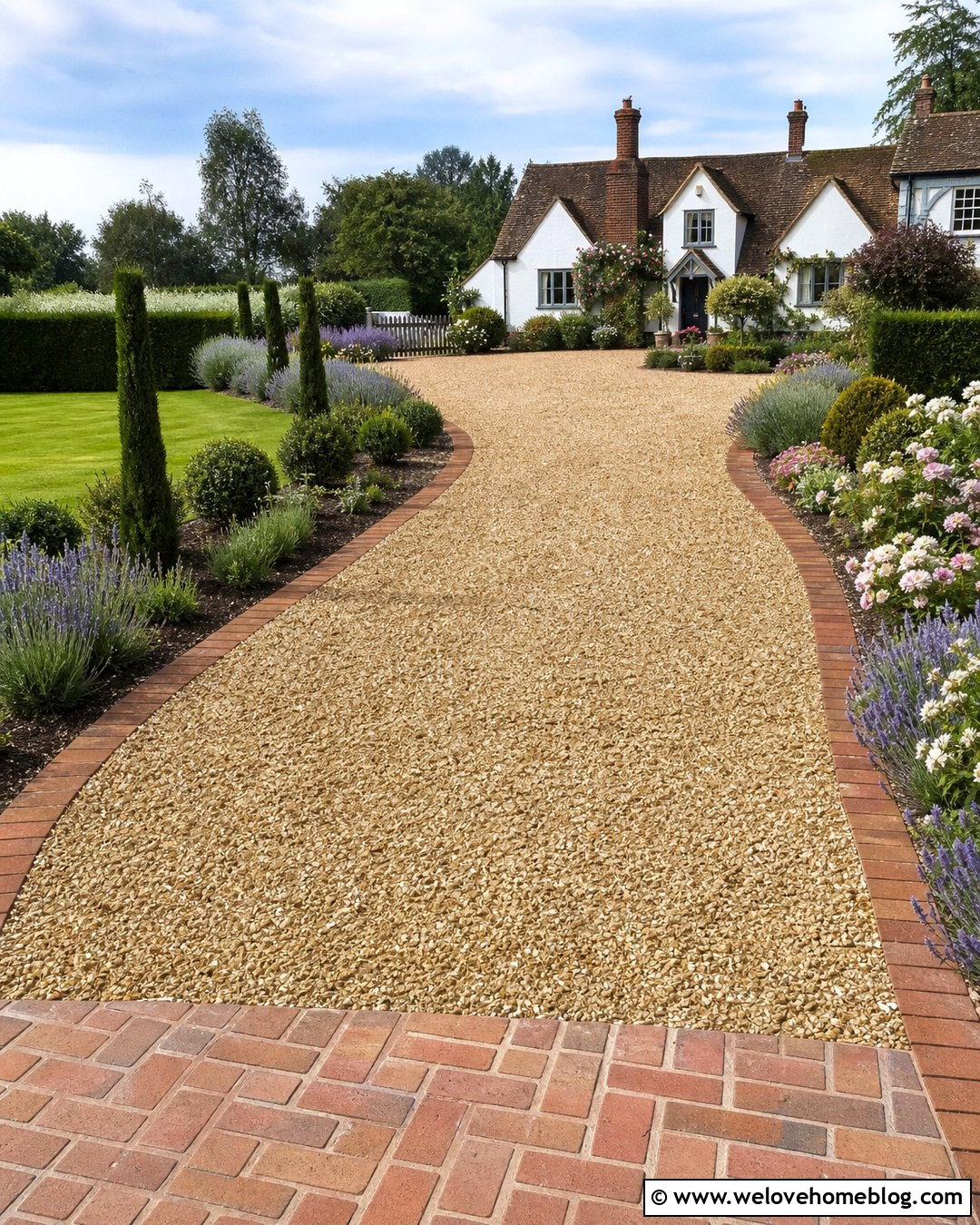
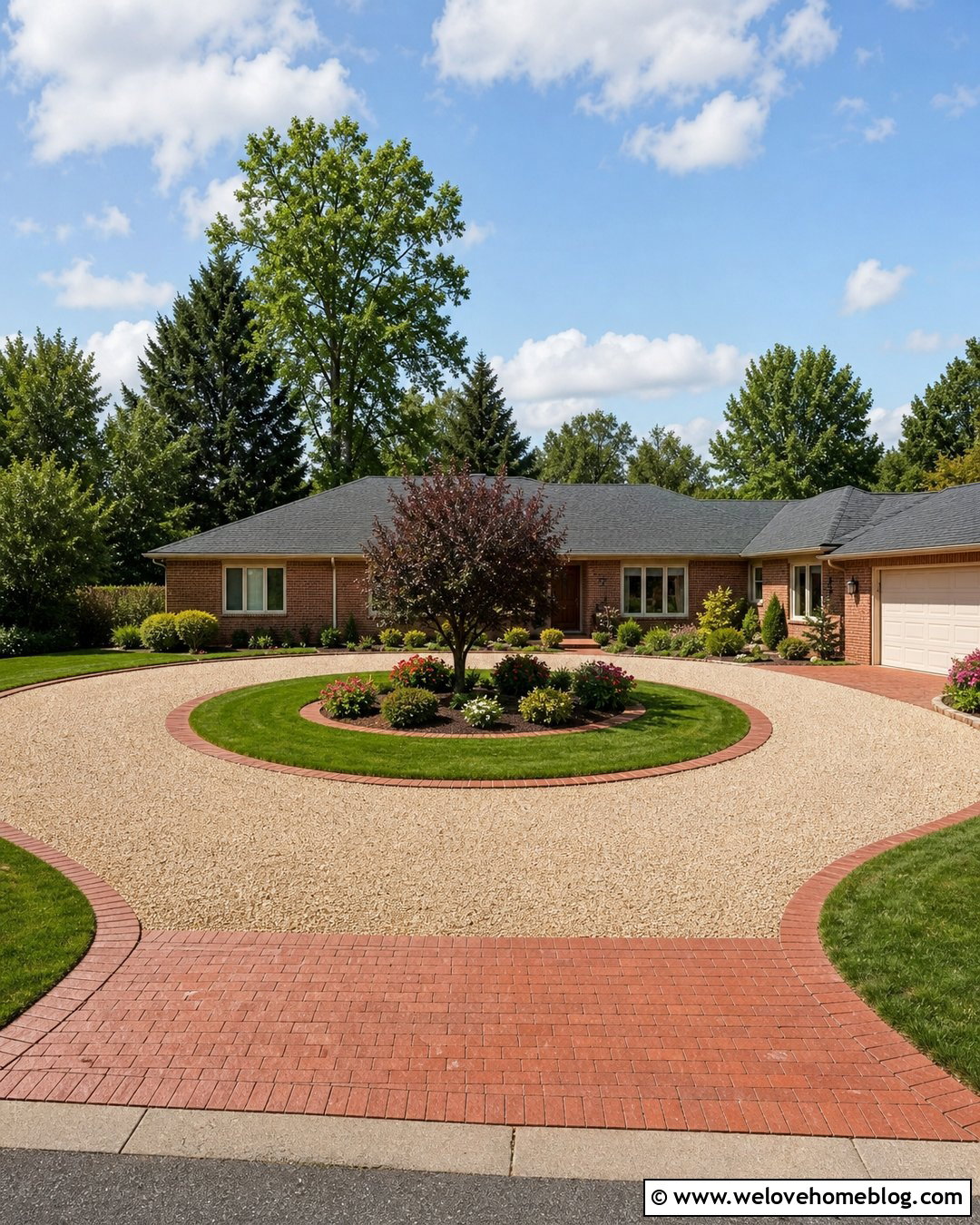
Golden pea gravel brings warmth and softer texture to an expansive front yard. To keep it from feeling informal, contain the surface with a wide red brick border laid in a simple running bond. A curved driveway can sweep past a lawn and arrive at a spacious gravel parking court in front of a farmhouse or cottage-style home. Add deeper planting beds along the outer curve, using lavender, roses, compact shrubs, and ornamental grasses. Place larger brick aprons at the street and garage transitions where clean edges matter most. The combination of warm gravel, aged brick, and abundant planting creates an approachable design. It feels refined enough for a large property without losing its relaxed country character.
10. Large Driveway With Paver Parking Court
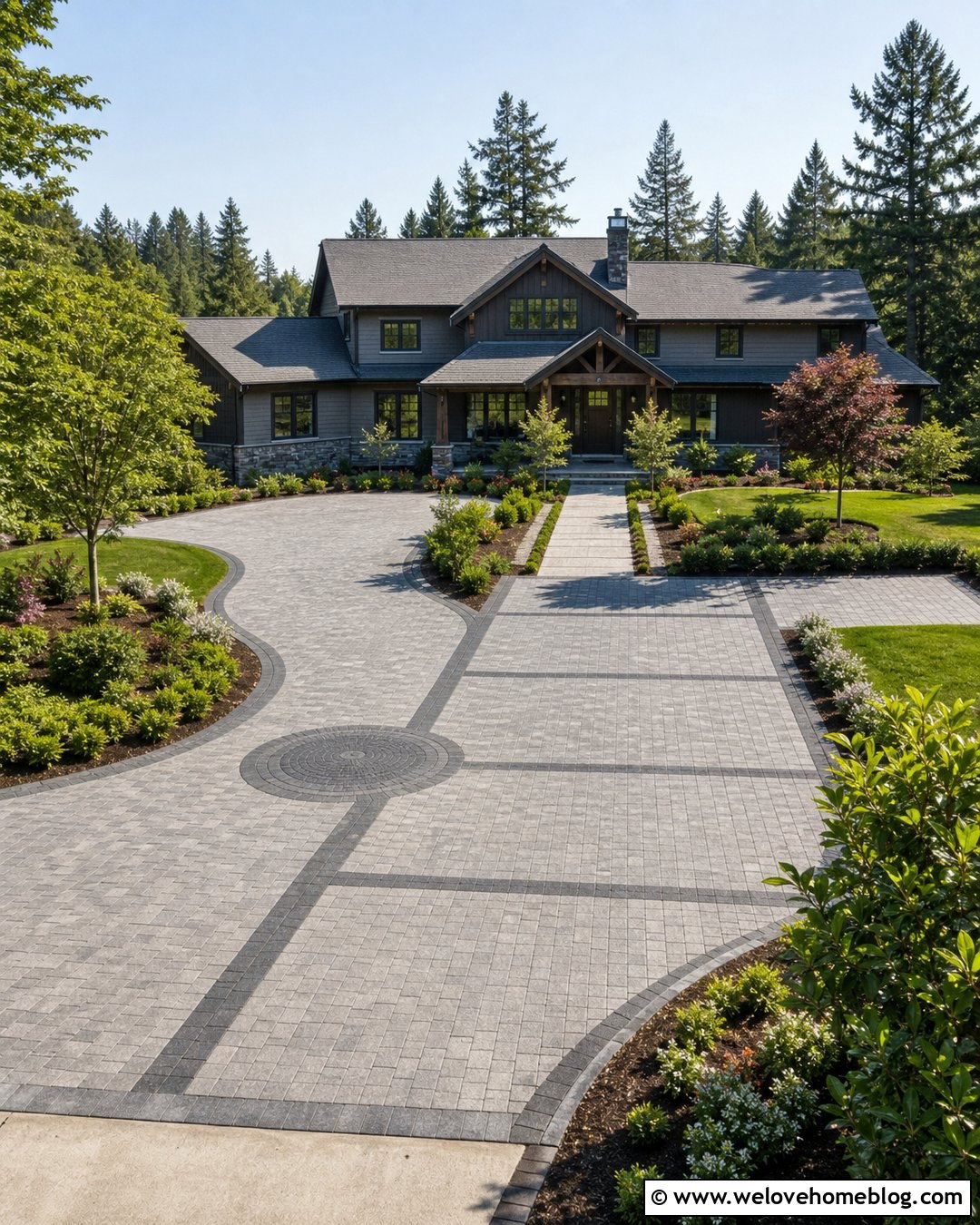
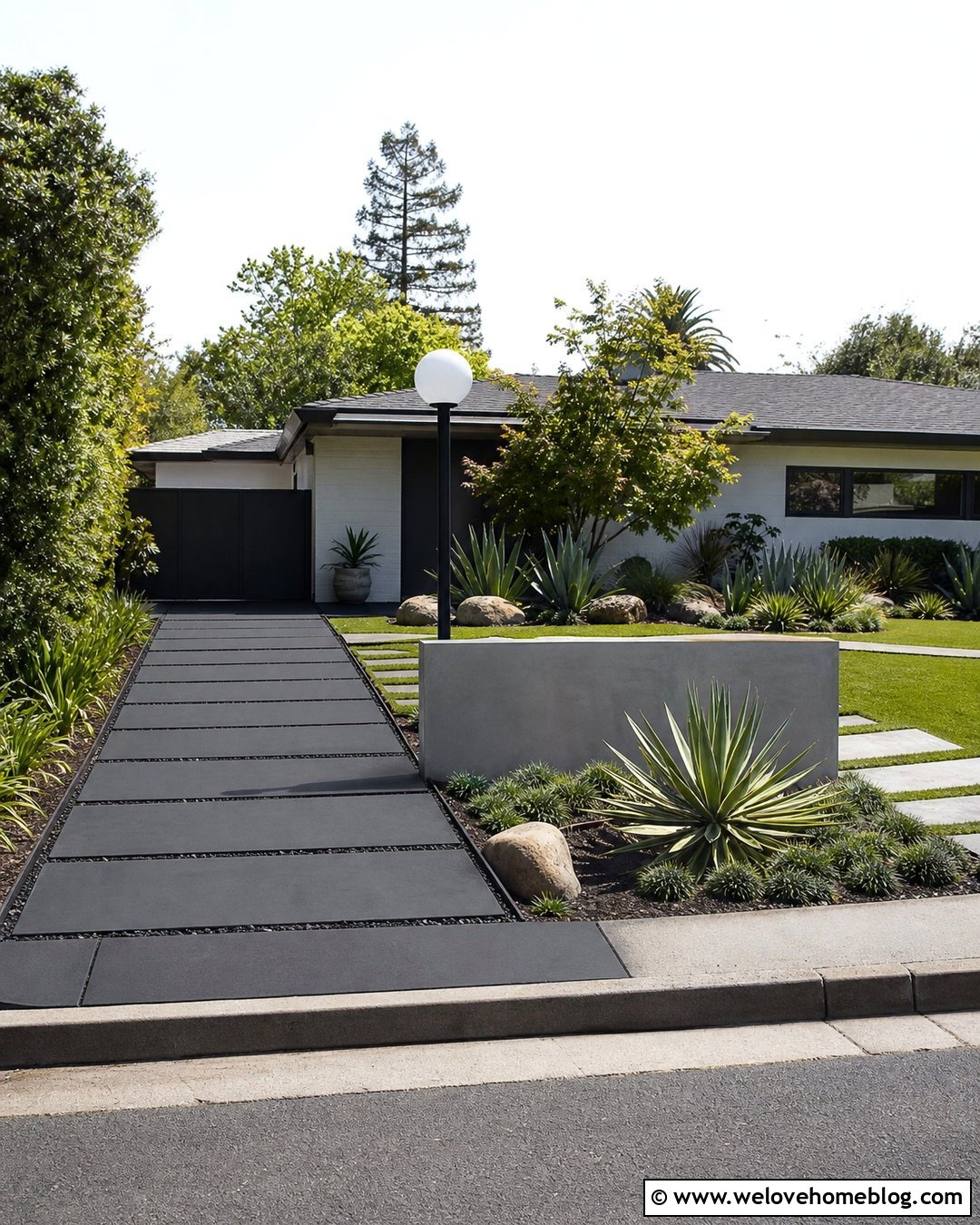
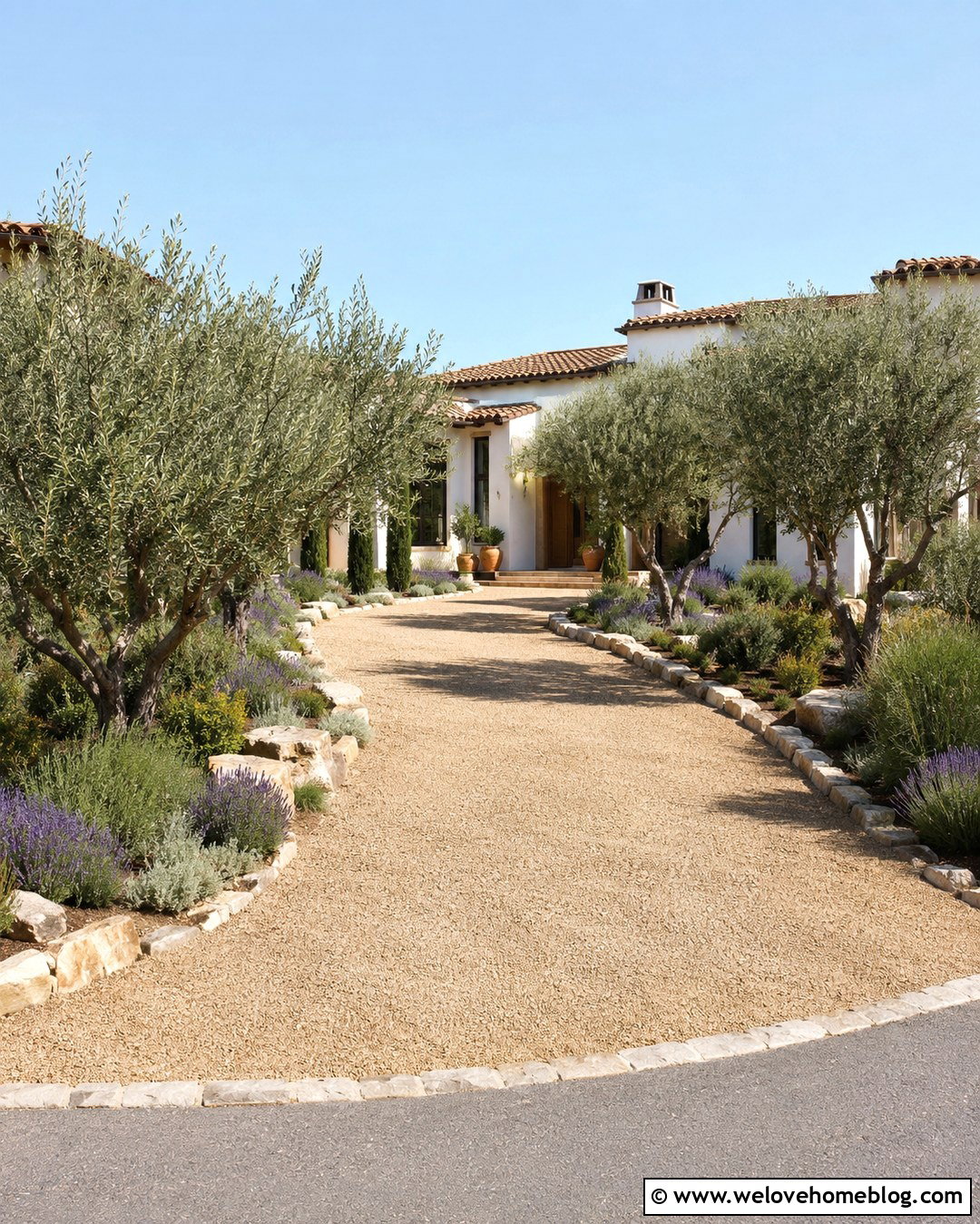
A dedicated parking court makes a large driveway easier to navigate when guests or multiple vehicles regularly use the property. Create a straight or gently curved approach that opens into a broad rectangular court near the house. Use mid-gray concrete pavers for the main surface and charcoal paver ribbons to mark parking positions subtly. A circular medallion or contrasting band can define the turning area without adding painted lines. Frame the court with low hedges, planting beds, and a clear walkway to the front entrance. Leave comfortable open space beside garage doors and avoid placing trees where branches could overhang parked vehicles. This organized layout fits large craftsman, transitional, and suburban homes with multi-car garages.
11. Large Curved Driveway Through Trees
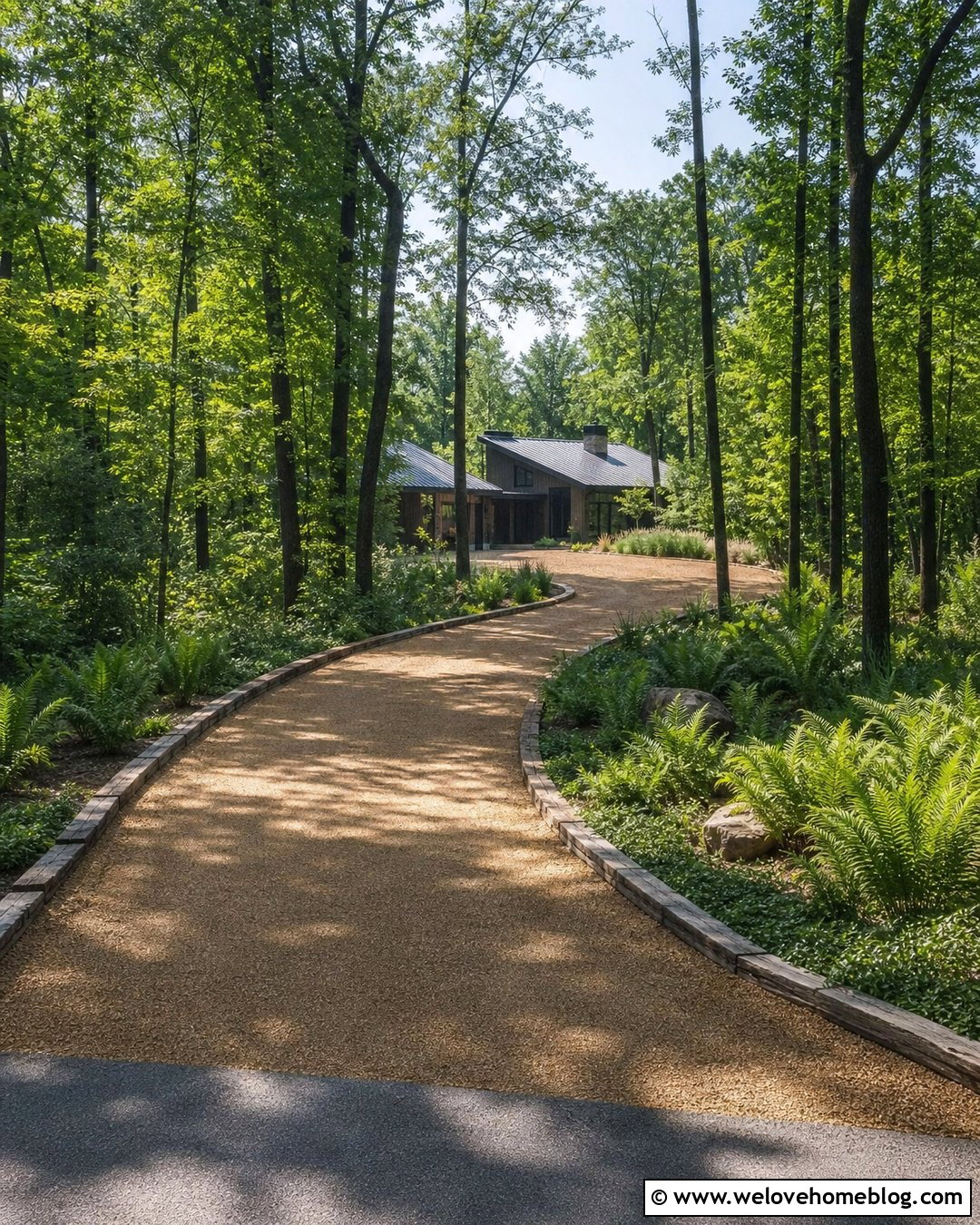
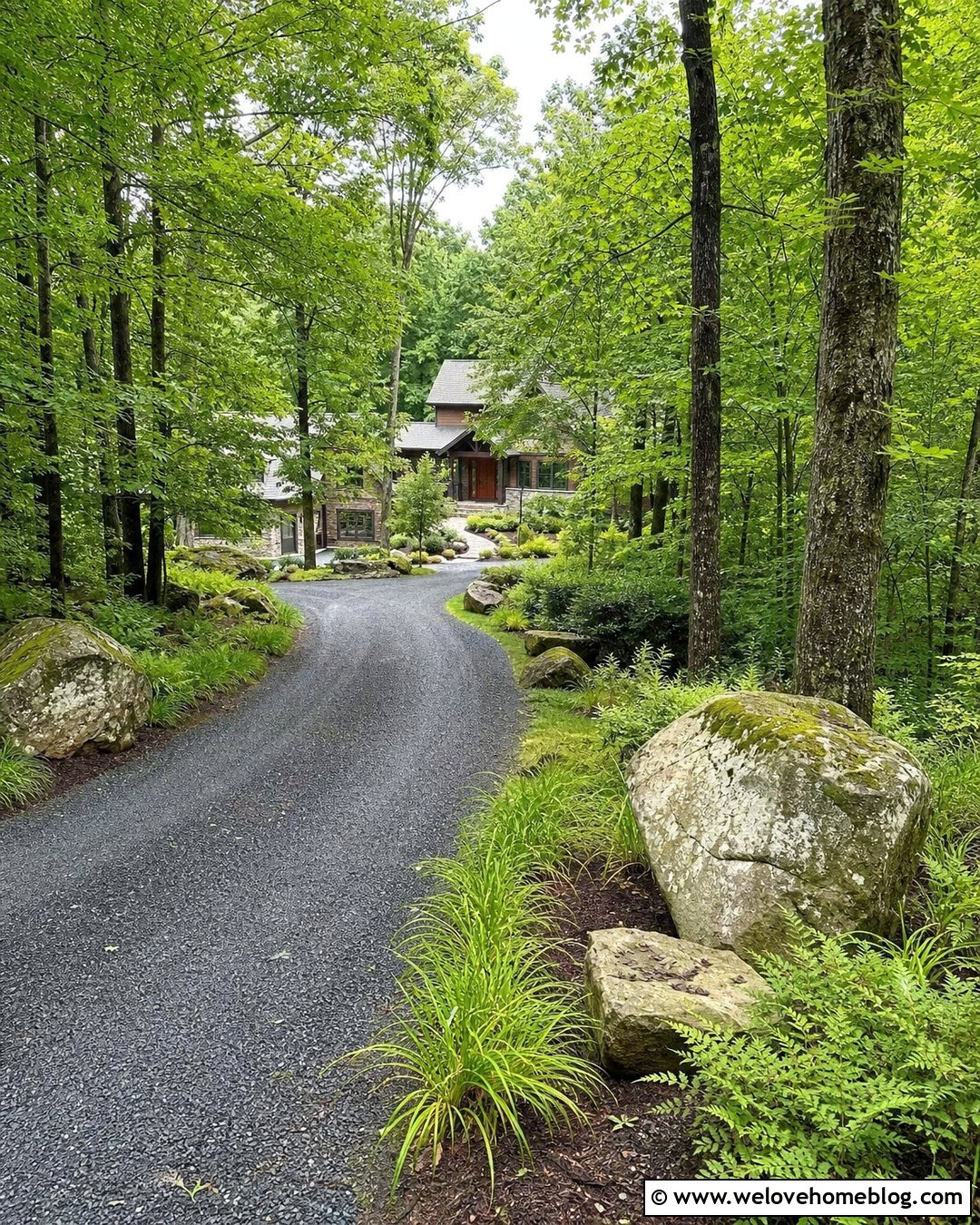
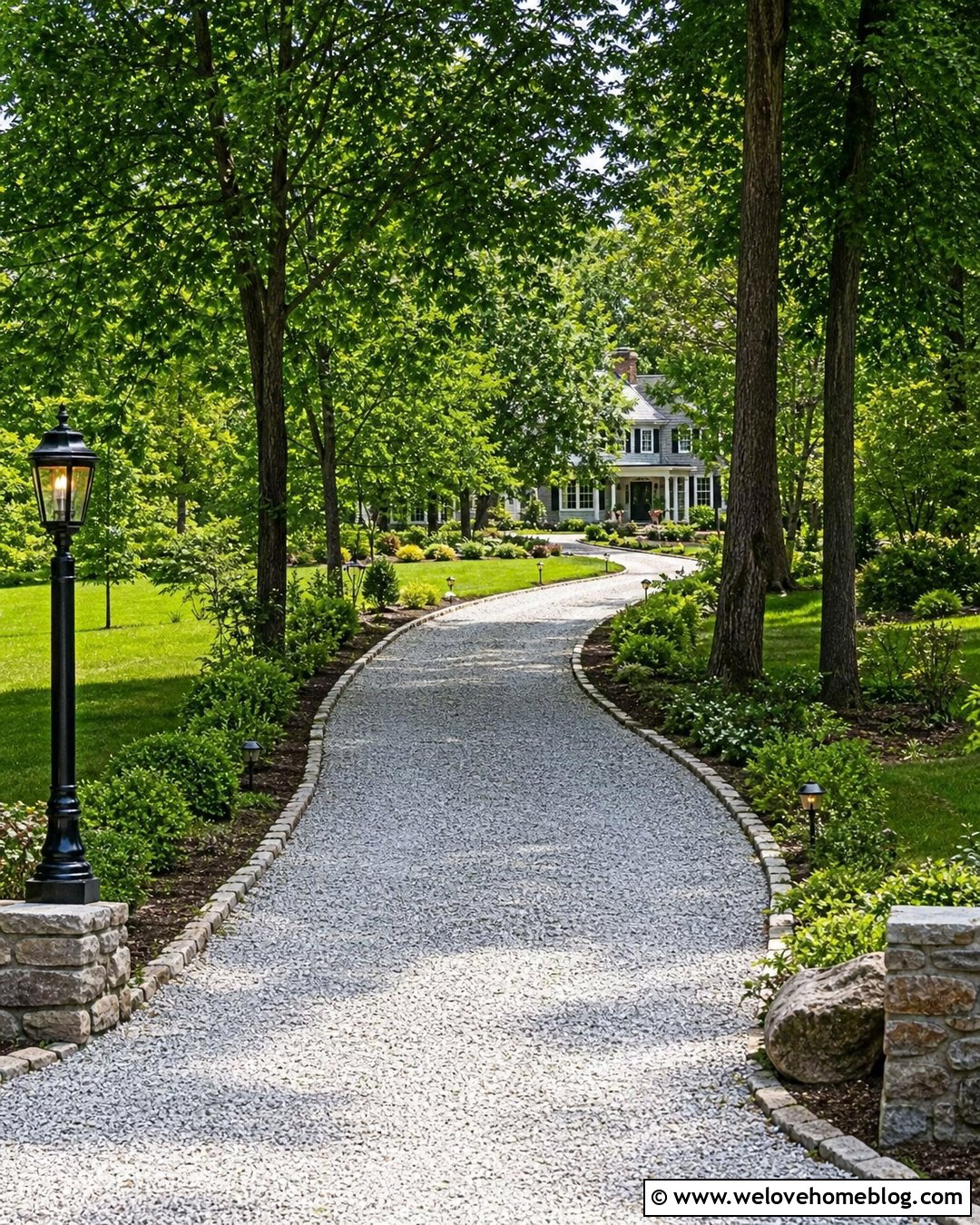
A curved driveway can make a deep property feel more scenic and private. Use compacted tan gravel or muted asphalt for a surface that sits quietly beneath mature trees. Follow the natural contours of the land instead of forcing an artificial-looking curve. Along the edges, install granite blocks or weathered timber to separate the driveway from woodland planting. Ferns, shade-tolerant ground covers, native shrubs, and clusters of ornamental grasses can soften the route while preserving clear sightlines. As the driveway approaches the house, gradually widen it into a paved or gravel parking area. Subtle changes in planting can reveal the home in stages, creating a memorable arrival that works especially well for cabins, contemporary woodland homes, and country properties.
12. Large Driveway With Grass Pavers
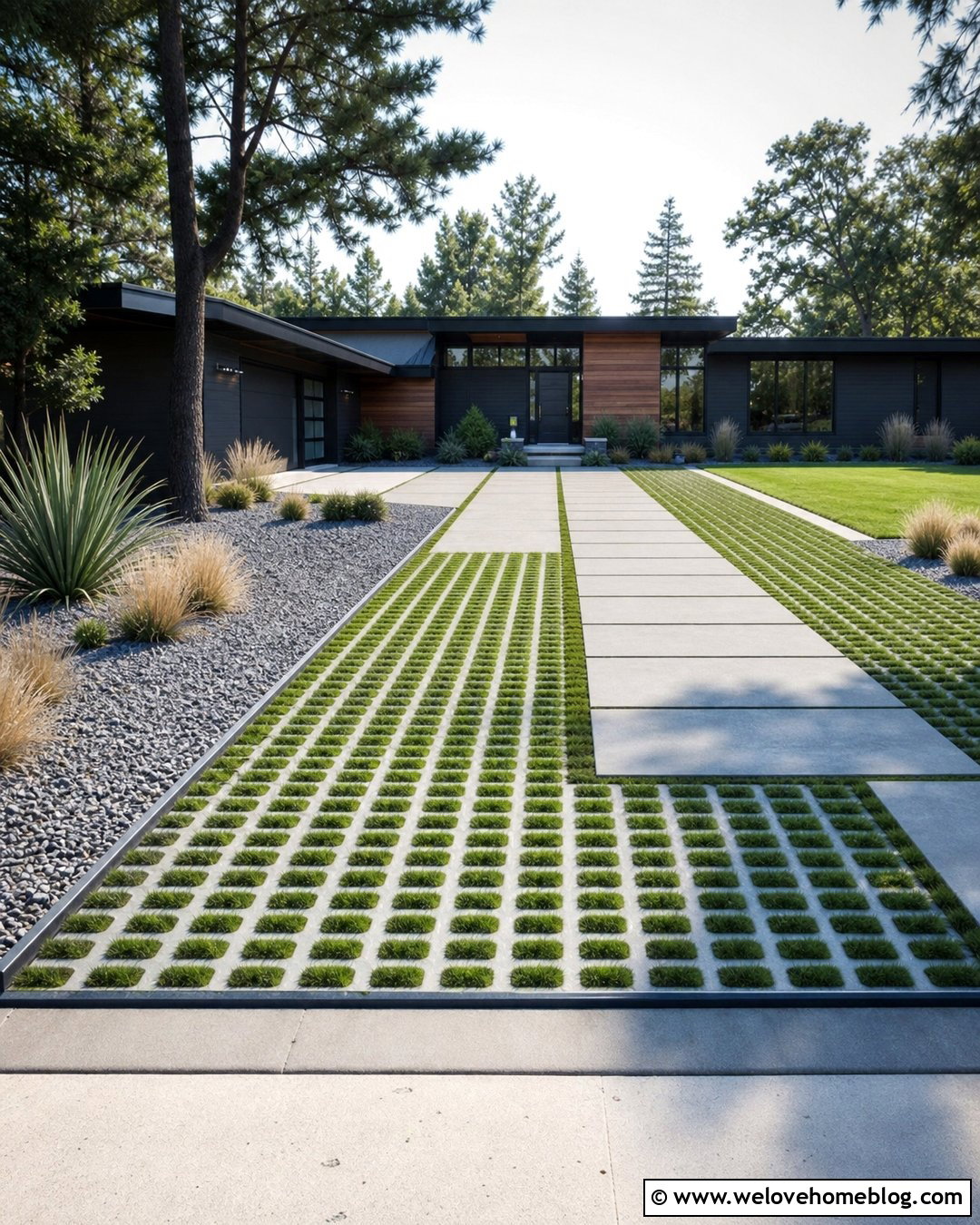
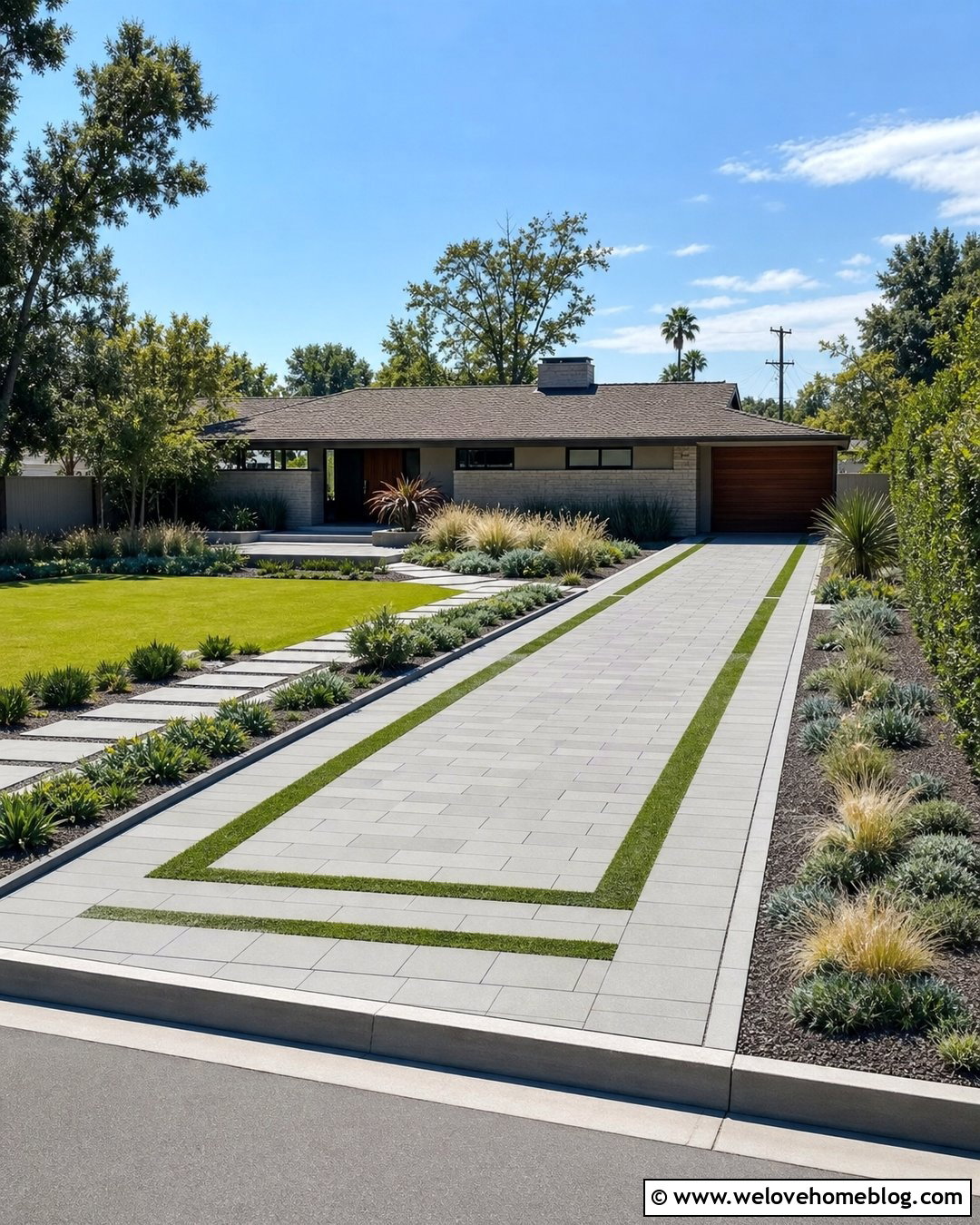
Grass pavers can visually reduce the amount of hard paving across a generous driveway. Use concrete grid pavers filled with healthy turf for overflow parking, secondary driving lanes, or the center of a wide courtyard. Combine them with solid concrete pavers in the most frequently traveled tire paths and near the garage. A straight layout with broad green sections feels clean and architectural beside a modern or midcentury home. Keep the borders simple with steel edging, gravel beds, and drought-tolerant ornamental grasses. The repeating grid provides clear structure, while the planted openings connect the driveway to the lawn. This look is most successful when the grass receives suitable light, irrigation, and routine care for the local growing conditions.
13. Large White Gravel Driveway
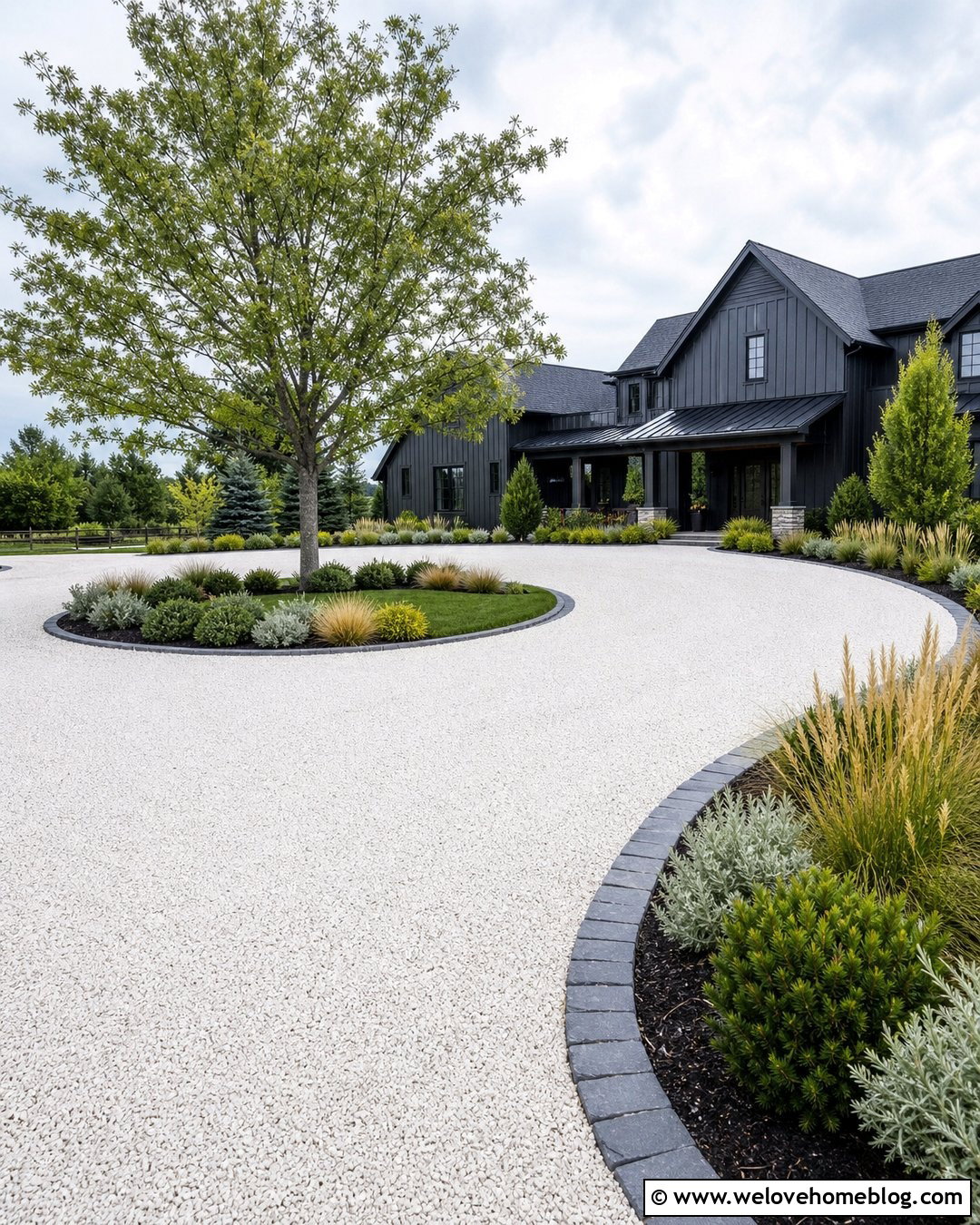
Bright white or pale limestone gravel can give a large home a fresh, high-contrast entrance. Use the material across a sweeping semicircular driveway and contain it with charcoal granite blocks. The darker edging prevents the pale surface from visually blending into adjacent walkways and planting beds. In the center, create a simple lawn island with one broad-canopy tree and a ring of low evergreen shrubs. Mediterranean plants, silvery foliage, and ornamental grasses complement the light-colored gravel without overwhelming it. Near the garage, use a slightly wider turning court with clearly defined edges. This design looks particularly striking with dark siding, white stucco, Mediterranean architecture, or modern farmhouse exteriors featuring black windows and doors.
14. Large Stamped Concrete Driveway
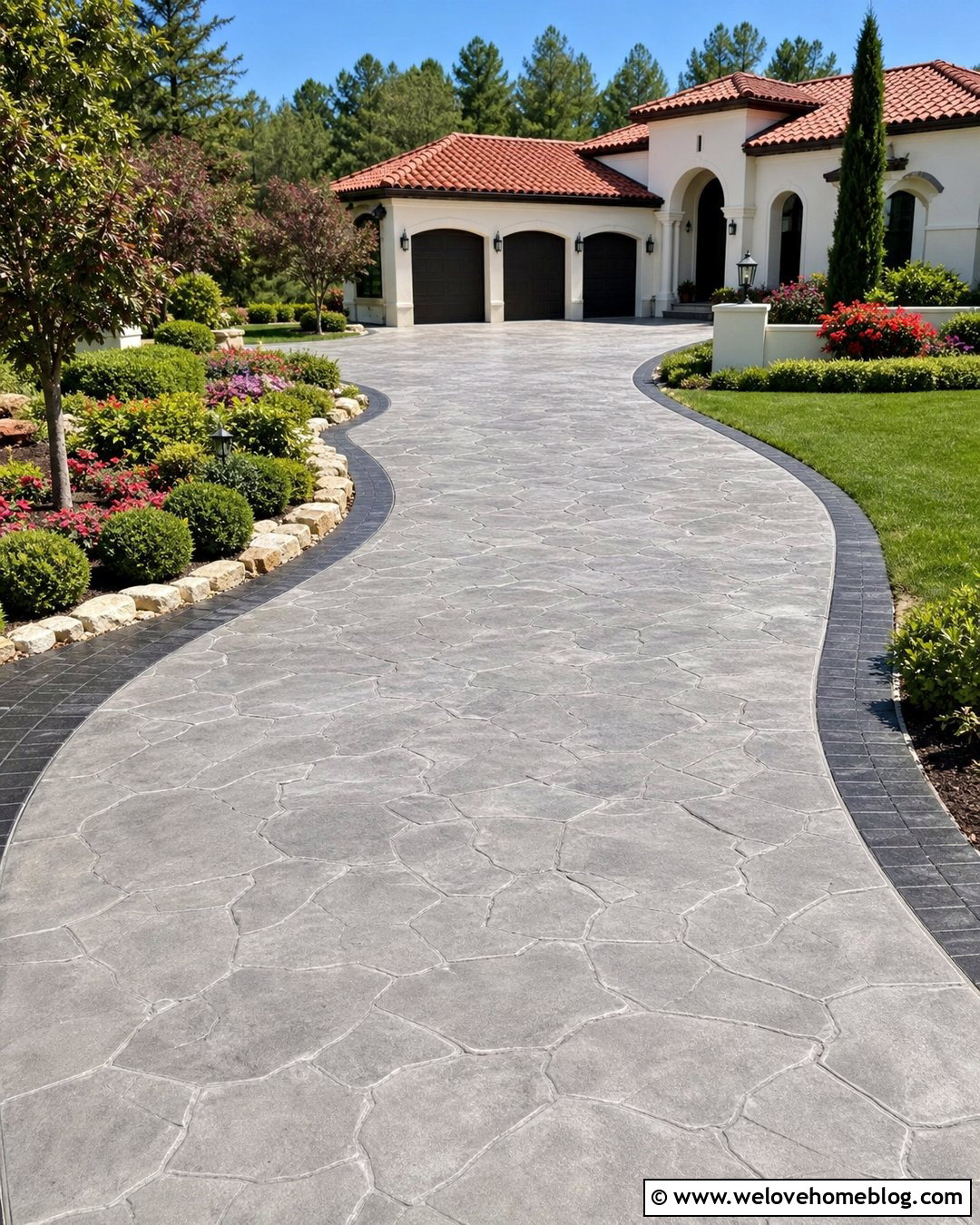
Stamped concrete can introduce pattern across a wide driveway without dividing the surface into hundreds of individual units. Choose a natural stone pattern in medium gray, warm taupe, or muted brown, then use a darker border to outline curves and parking areas. A broad S-shaped approach can soften a large open front yard before expanding near the garage. Pair the driveway with layered planting beds, rounded shrubs, ornamental trees, and a coordinating stamped walkway. Keep the color variation subtle so the expansive surface does not appear overly busy. Control joints should be incorporated into the pattern rather than treated as an afterthought. This complete look works well with Mediterranean, traditional, and large suburban homes.
15. Large Exposed Aggregate Driveway
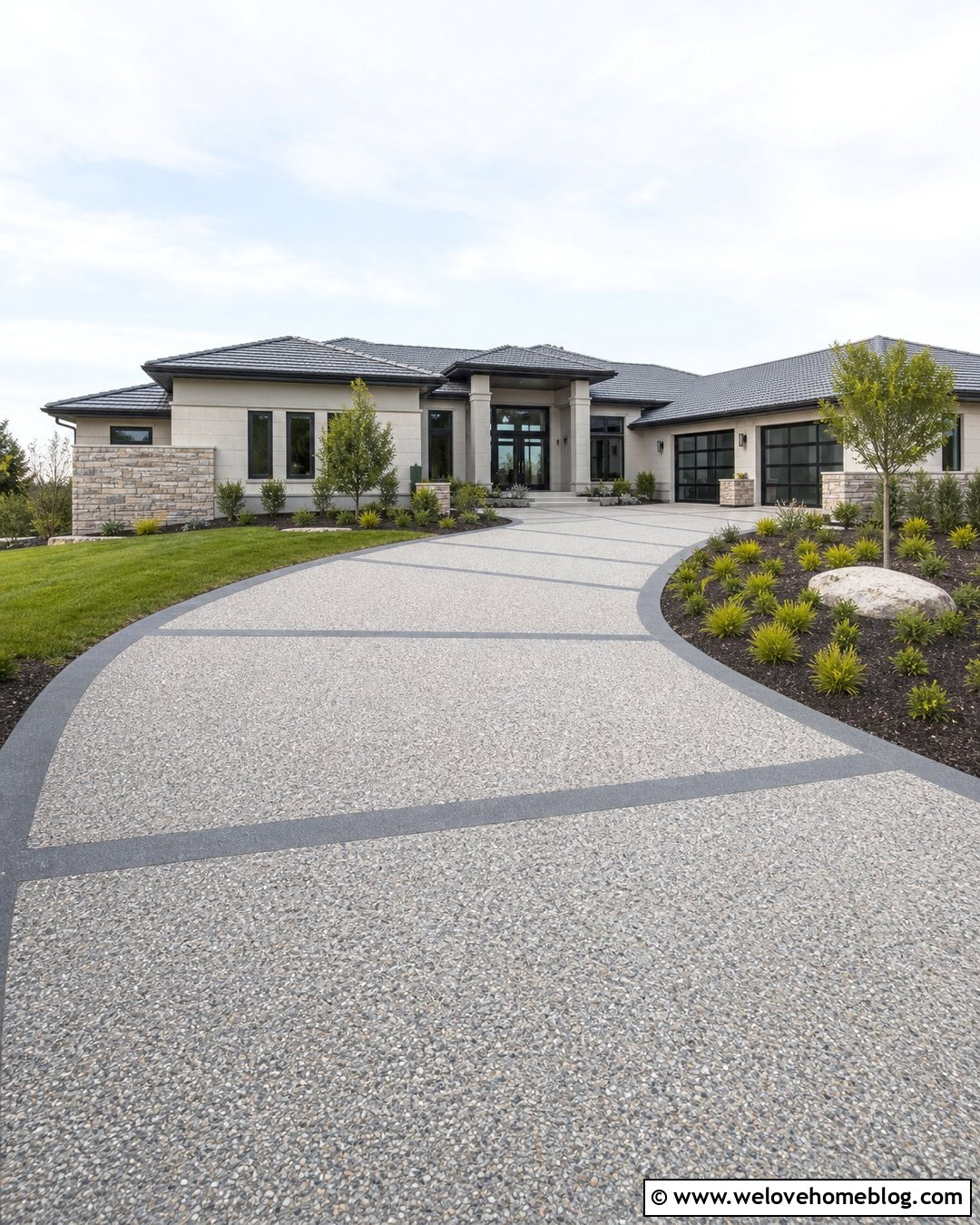
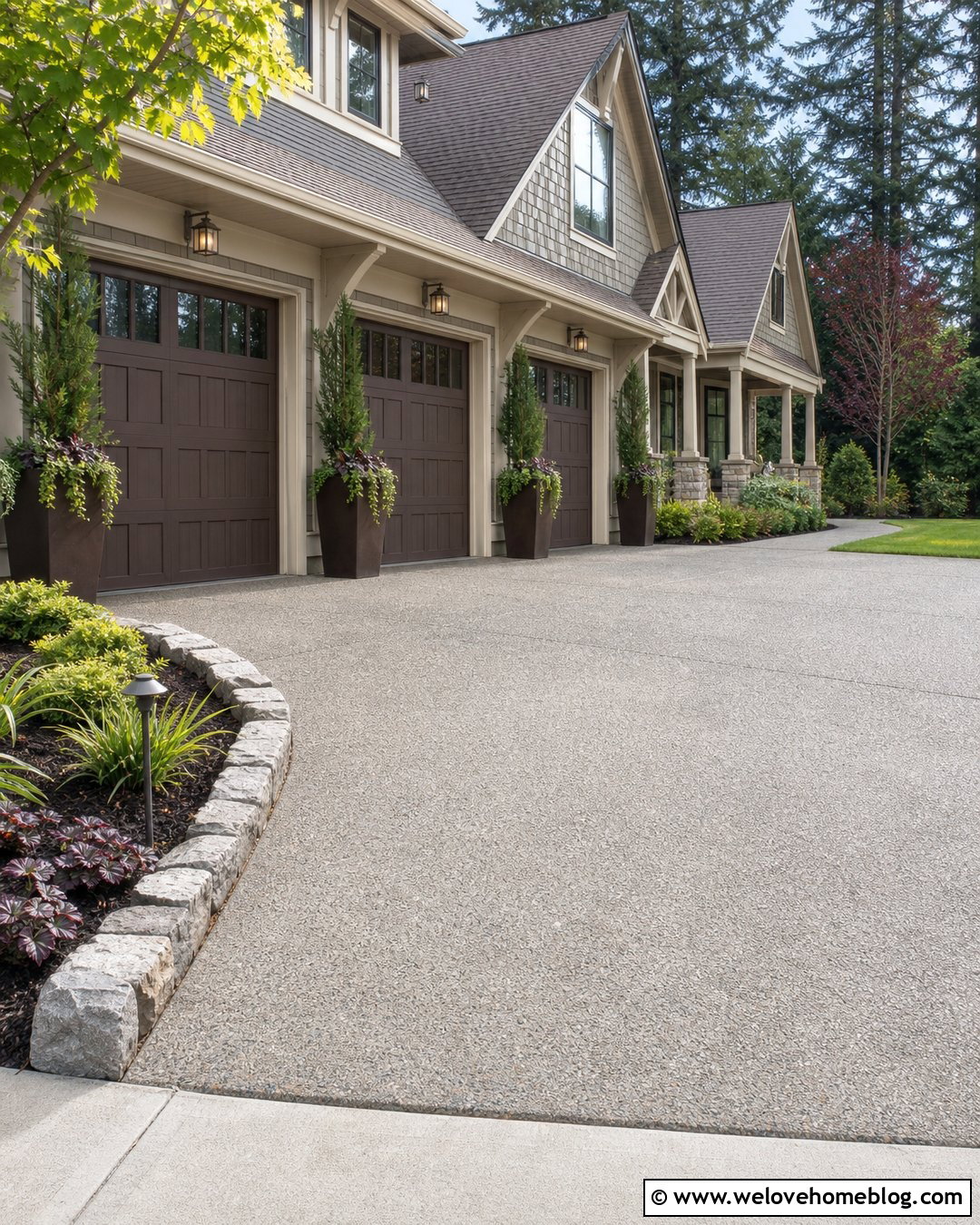
Exposed aggregate adds fine texture and color while maintaining the clean appearance of a poured surface. Select a mix containing gray, tan, and cream stones that coordinate with the house facade. For a large driveway, create broad concrete panels divided by smooth border strips or darker paver bands. A gently curved layout can lead to a three-car garage while leaving room for a landscaped island near the entrance. Repeat the aggregate finish on the front walkway or porch steps to tie the exterior together. Low shrubs and broad planting beds soften the pavement’s edges. Because the surface already contains visual variation, simple landscaping and restrained borders usually create the most balanced result for ranch, craftsman, and contemporary homes.
16. Large Driveway With Belgian Block Border
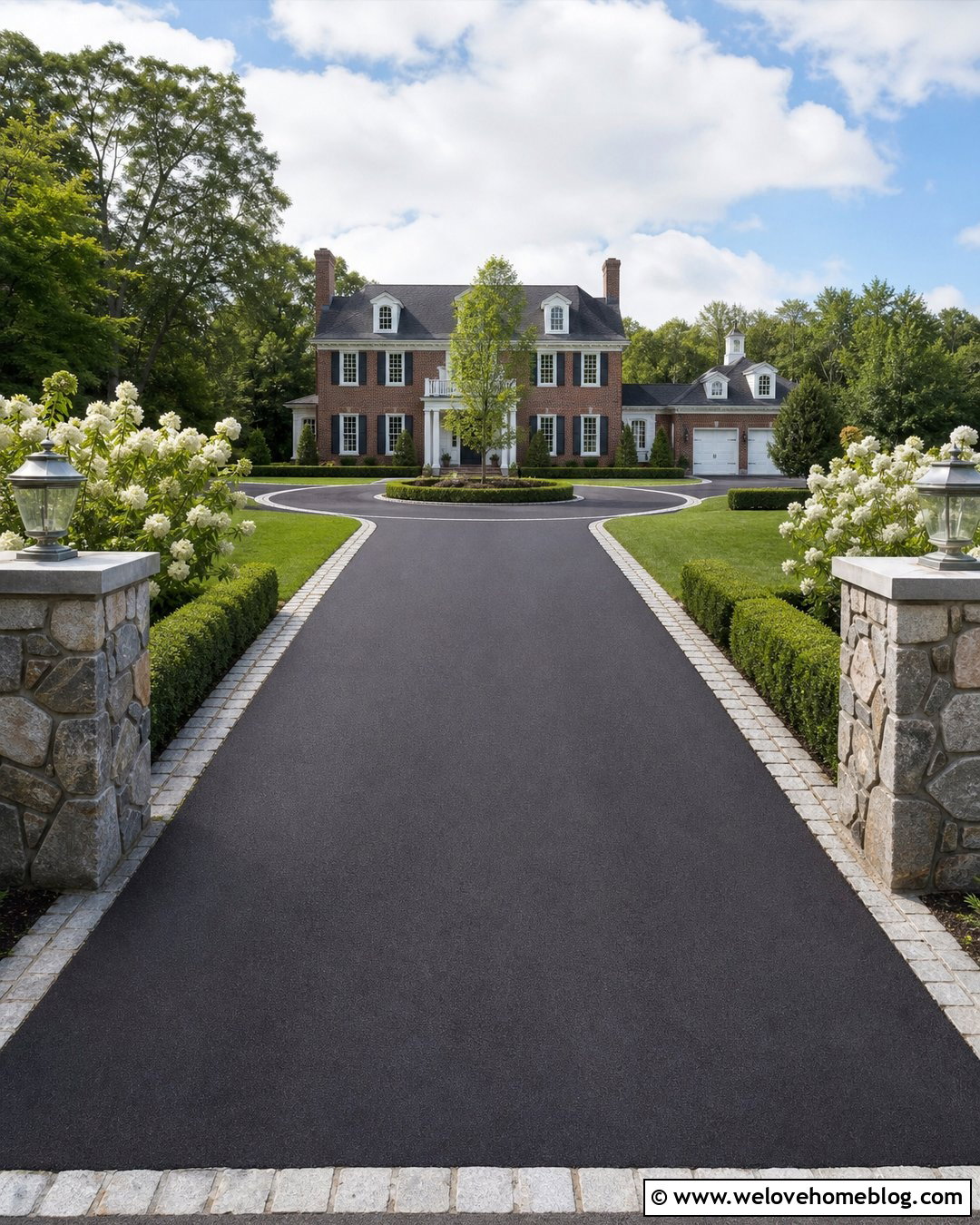
Belgian block gives a broad driveway a strong, tailored outline. Install gray granite blocks along both sides of a black asphalt surface, then repeat them around planting beds and the entrance apron. A long straight approach can look especially polished when the blocks align with rows of trees or clipped hedges. Near the house, widen the driveway into a turning court and use additional granite bands to separate parking areas. The stone border helps the dark surface feel connected to masonry details on the house rather than appearing purely functional. Add low flowering shrubs between the driveway and lawn for a softer transition. This classic combination suits colonial, Georgian, brick, and traditional suburban homes with generous front yards.
17. Large Driveway With Fountain Island
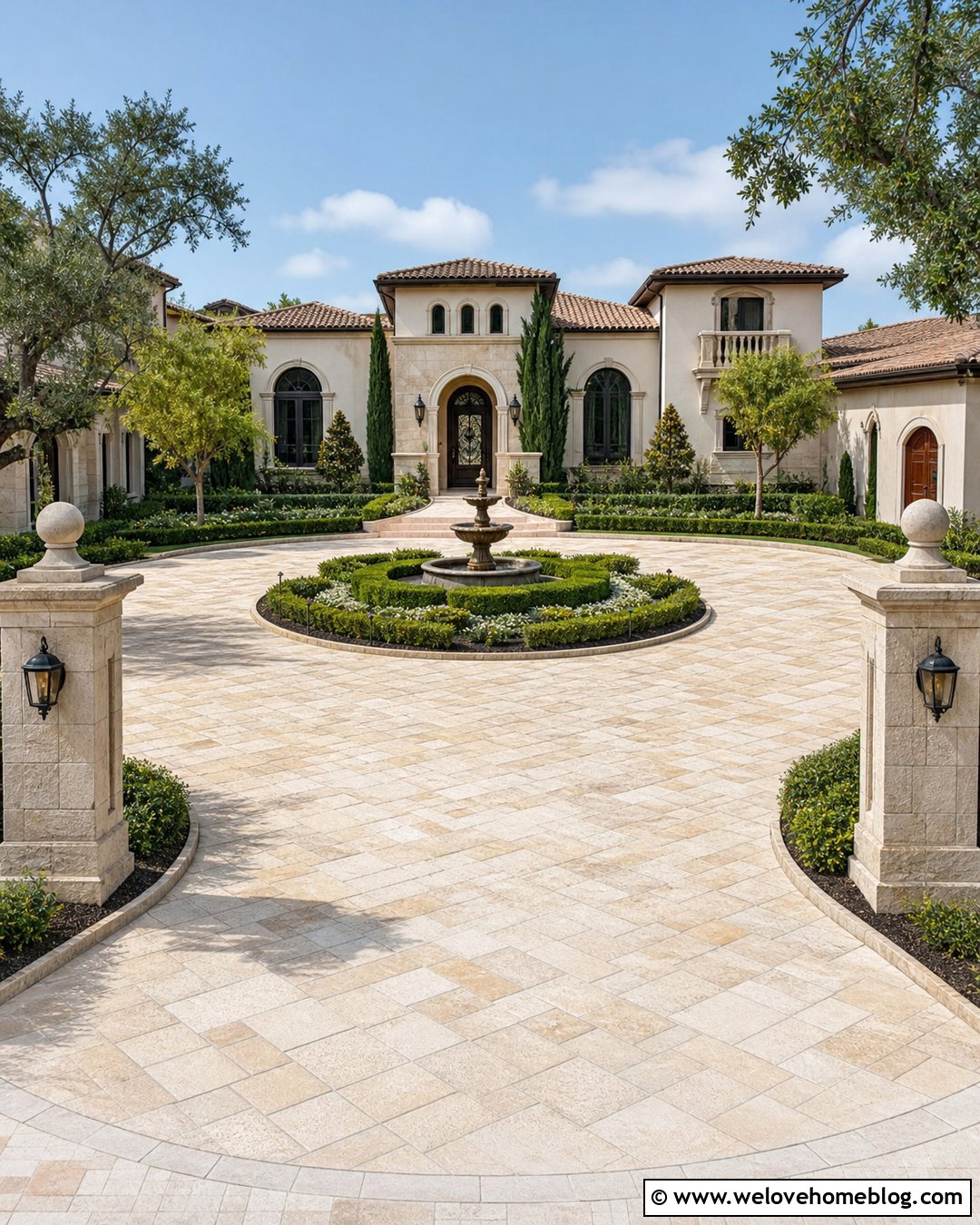
A fountain creates a dramatic focal point when it is properly scaled to a large circular driveway. Surround the center island with neutral limestone pavers, cobblestone, or warm concrete pavers arranged to emphasize the curve. Place a simple tiered or basin-style fountain in the middle, leaving enough planted space around it for clipped hedges and low seasonal flowers. Avoid dense or tall landscaping that could hide the water feature or restrict driver visibility. Repeat the island’s stone on entrance pillars and the walkway to the house. Soft landscape lighting can be planned around the feature, while daytime views remain open and bright. This formal arrangement complements Mediterranean villas, French-inspired homes, and substantial traditional residences.
18. Large Farmhouse Gravel Driveway
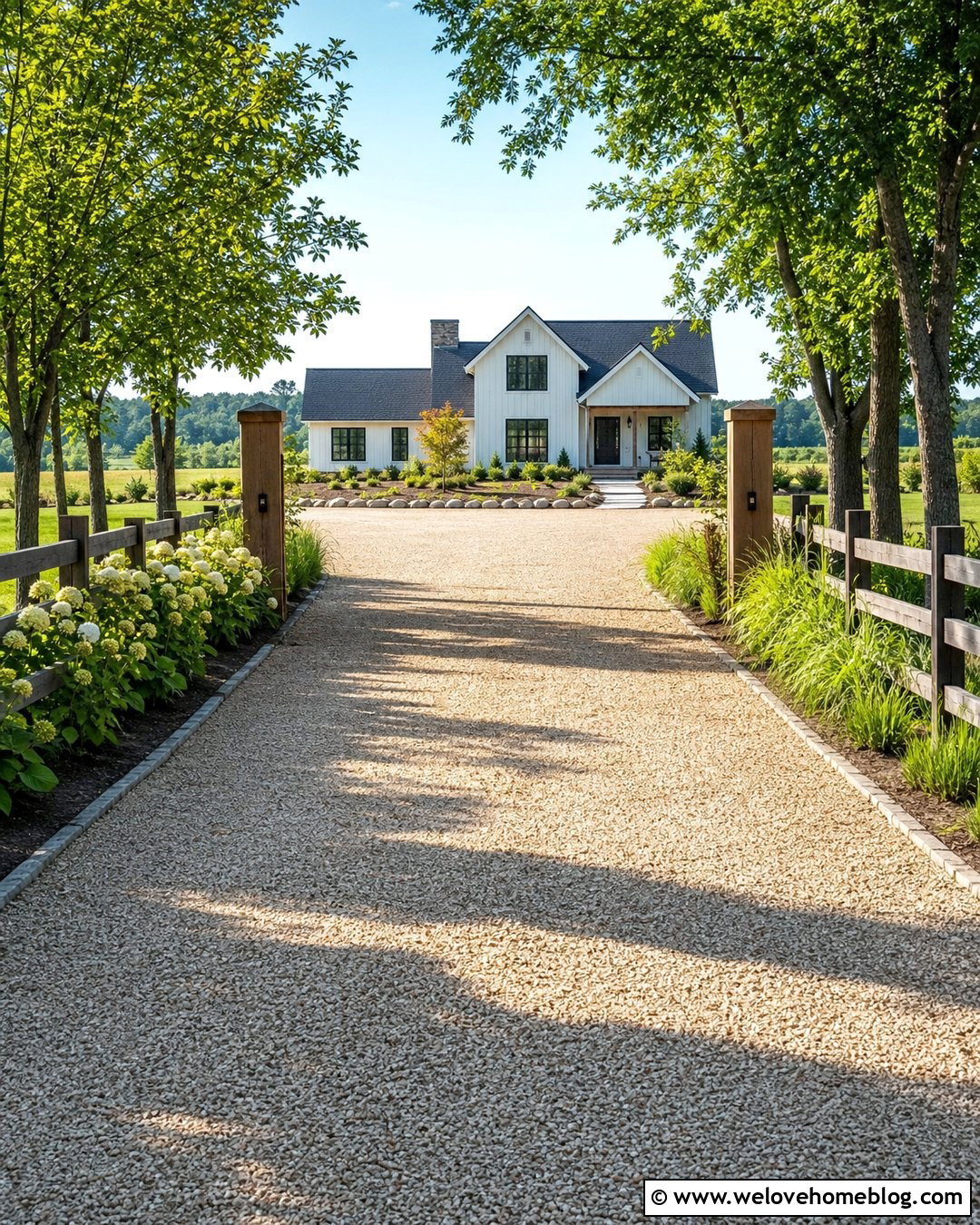
A farmhouse driveway should feel practical, welcoming, and connected to the surrounding land. Choose compacted gray or tan crushed gravel for a broad straight approach that opens into a casual parking court. Use natural fieldstone edging near the house, but allow the outer sections to transition more softly into grass. A row of deciduous trees or simple post-and-rail fencing can frame the drive without making it feel formal. Near the entrance, add timber posts, a modest address sign, and generous beds of hydrangeas or ornamental grasses. A brick or stone walkway can lead from the parking area to the porch. The mix of durable gravel, relaxed planting, and honest materials complements both historic and modern farmhouse architecture.
19. Large Driveway With Tree-Lined Entrance
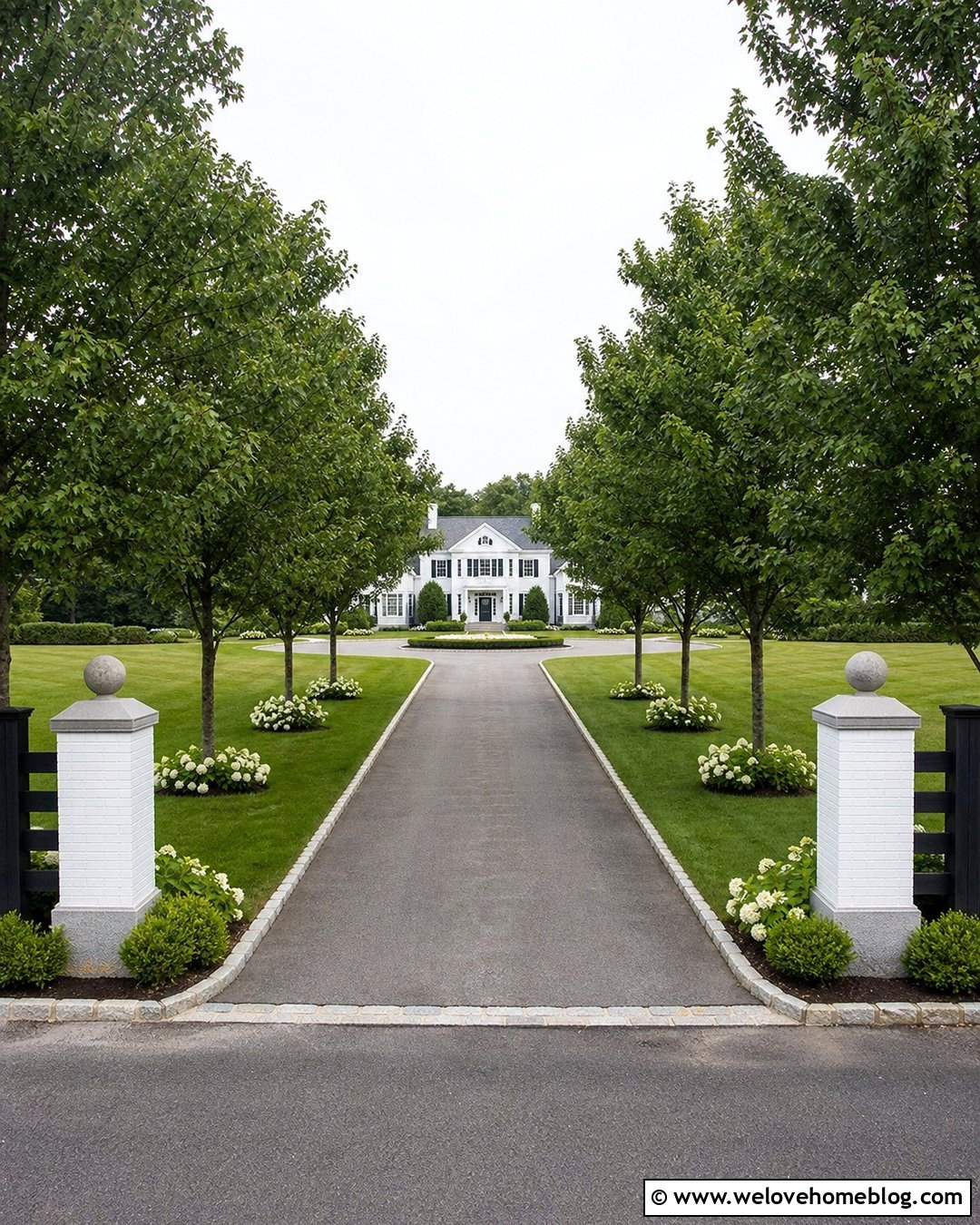
Rows of trees can bring scale and rhythm to a long driveway, making the journey toward the house feel intentional. Use a smooth asphalt or compacted gravel surface with clean stone edging, then plant matching trees at consistent intervals along both sides. Select species suitable for the property’s climate, available space, and overhead clearance. Leave a broad setback between trunks and the driving surface so roots, branches, and snow management remain easier to handle. Underplant the trees with lawn, low ground covers, or simple flowering bulbs rather than dense shrubs. At the house, allow the driveway to open into a circular court. This composition works beautifully for large colonial, farmhouse, and estate-style properties.
20. Large Driveway With Brick Apron
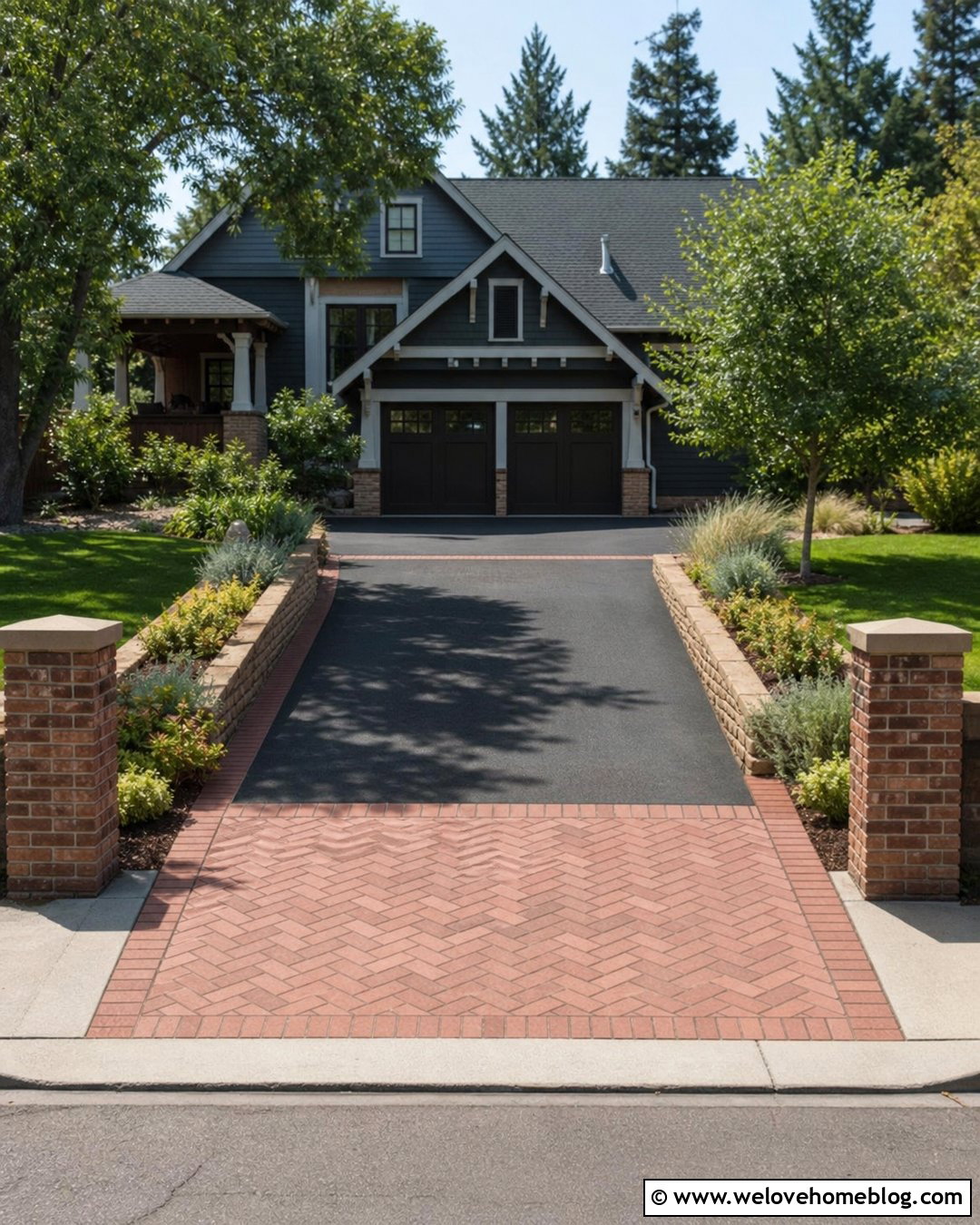
A brick apron can give a wide driveway a more decorative and finished entrance without covering the entire area in brick. Begin with a substantial band of clay brick pavers where the driveway meets the street, then continue with black asphalt, poured concrete, or compacted gravel. Repeat a narrower brick band near the garage and along the front walkway. Herringbone brick creates texture, while a soldier-course border keeps the edges orderly. Frame the entrance with low masonry walls, ornamental grasses, and matching address pillars. The brick should coordinate with the home’s chimney, foundation, or facade. This approach is especially useful when you want a traditional focal point while keeping the main driveway surface visually simple.
21. Large Resin-Bound Gravel Driveway
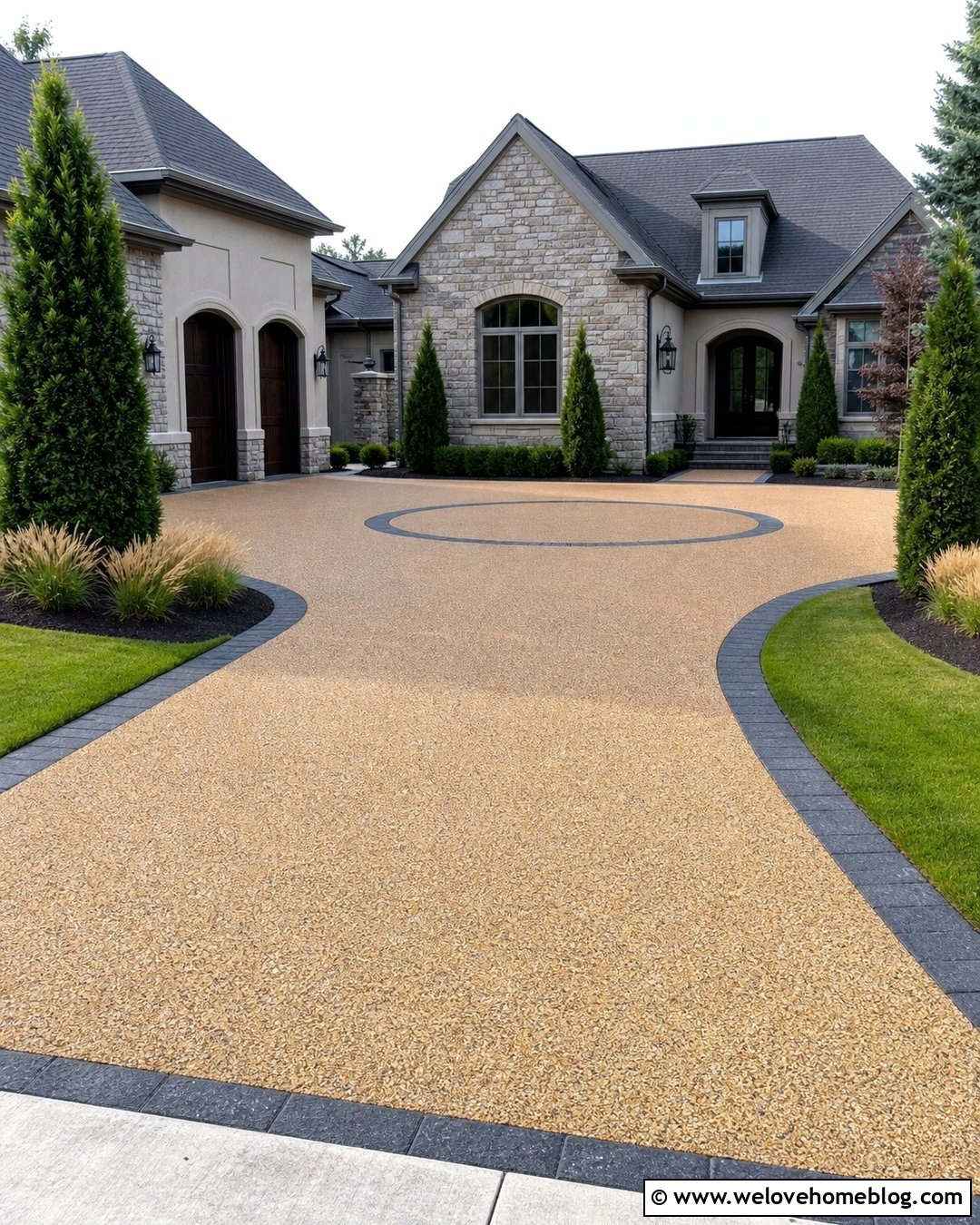
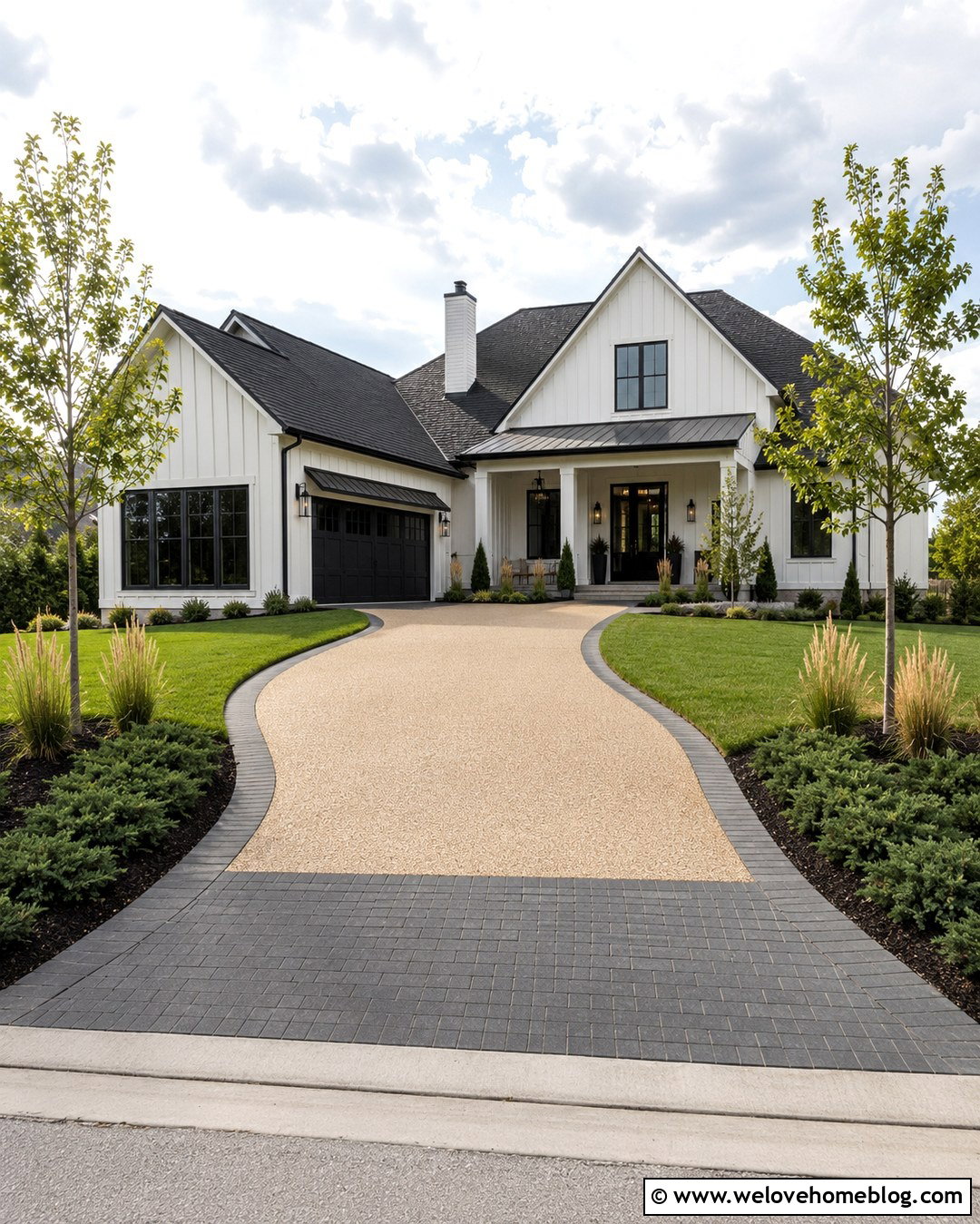
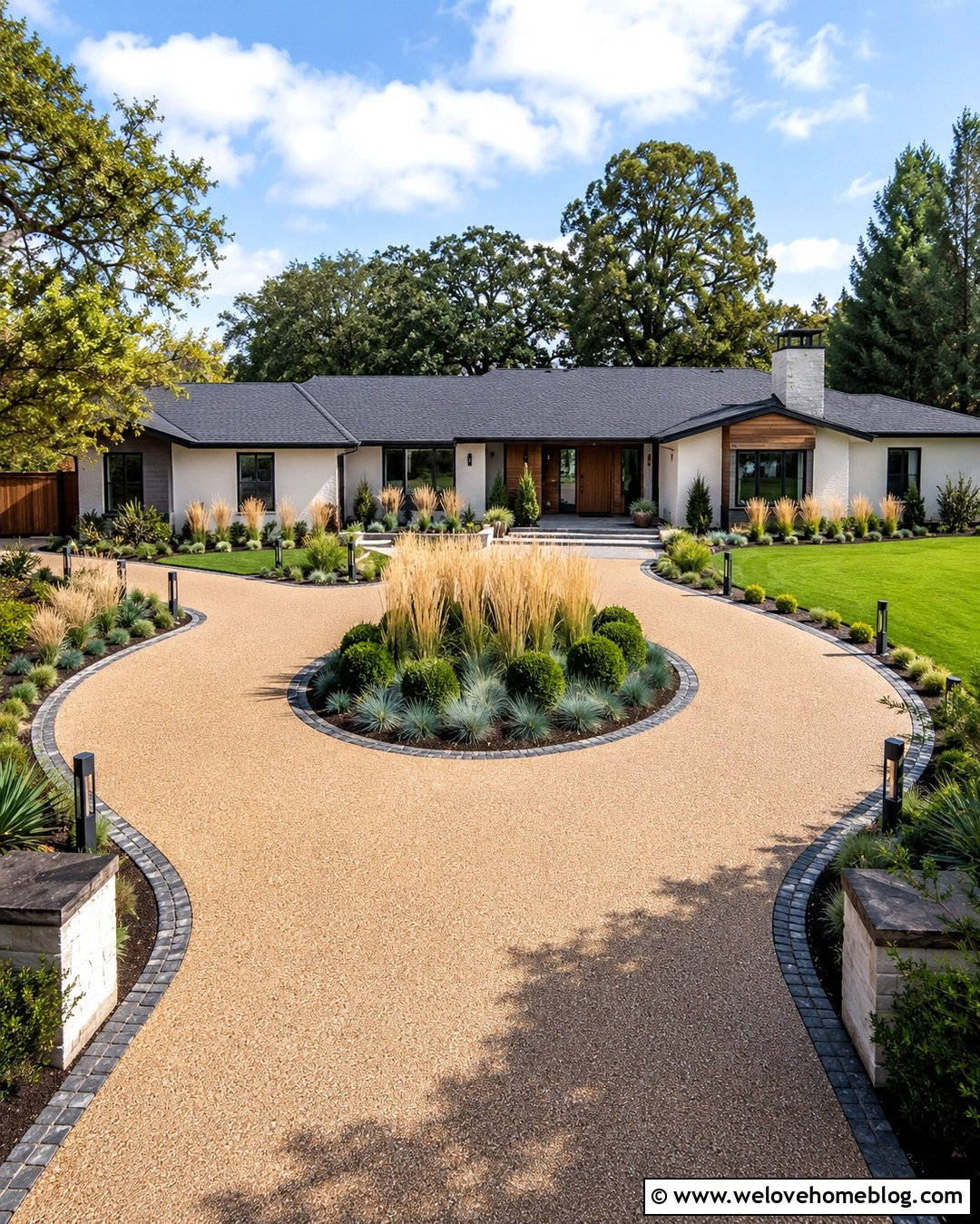
A resin-bound gravel surface offers a smooth, contemporary appearance while preserving the textured look of small stone. Choose a warm beige, soft gray, or mixed natural aggregate and use it across a broad curved driveway. Dark concrete or granite borders can sharpen the outline and separate the drive from planting beds. Near the house, incorporate a circular turning area marked by a subtle contrasting aggregate band. Frame the approach with sculptural evergreens, airy grasses, and clean lawn panels. A matching path can connect the parking court to the front door without introducing another material. The seamless-looking surface works well beside modern, transitional, and renovated traditional homes where understated color and a neat finish are central to the design.
22. Large Driveway With Side Parking Bay
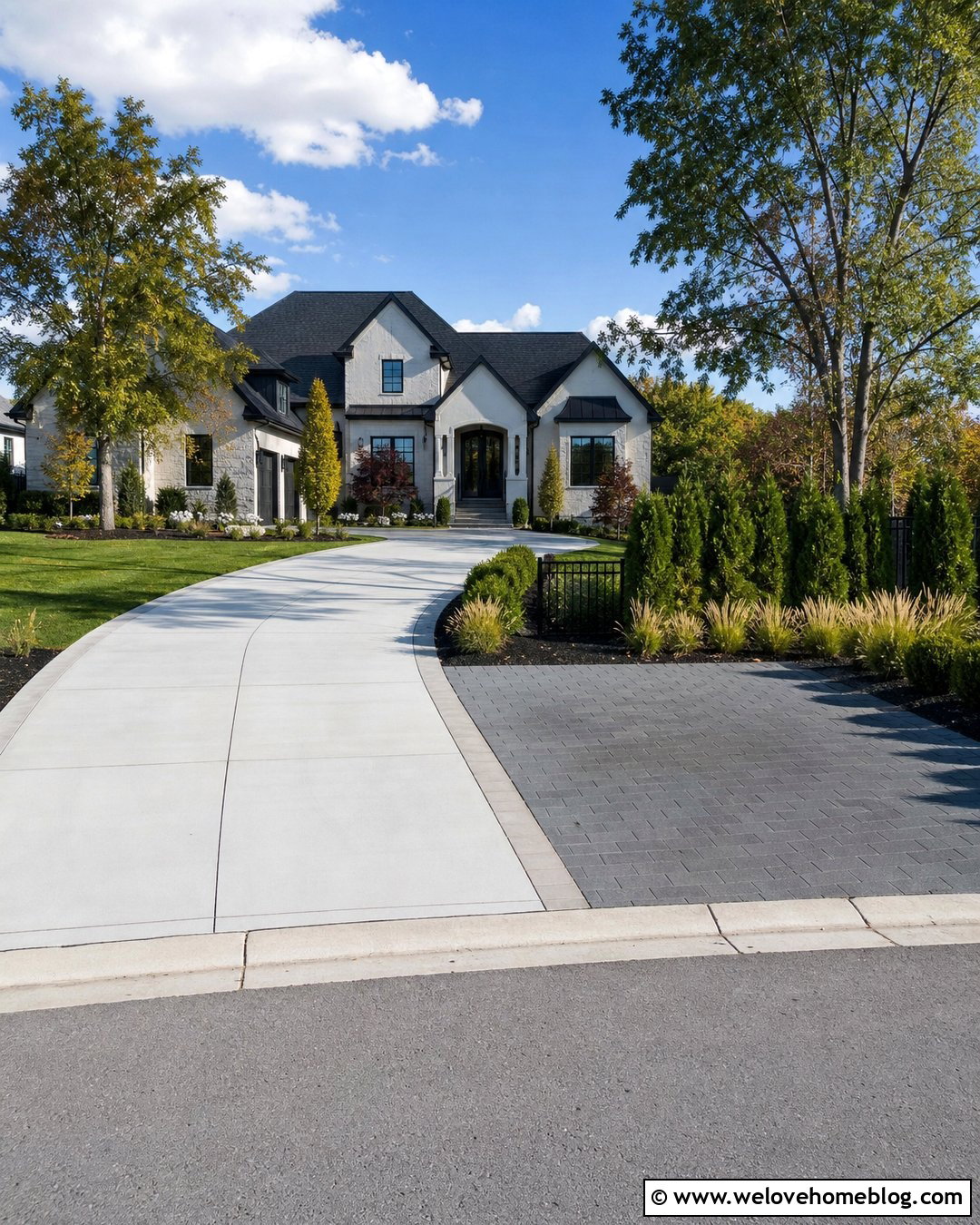
A separate parking bay keeps guest vehicles away from the main approach and garage doors. Build a wide asphalt or concrete driveway, then branch one side into a clearly defined paver parking area. Use a contrasting surface, such as charcoal concrete pavers beside light gray poured concrete, so the bay reads as a planned space. Screen it lightly with ornamental trees, tall grasses, or a low evergreen hedge, but keep the entrance visible for drivers. Add a safe walkway from the bay to the front door or porch. The main driveway can continue toward a turning court near the garage. This practical arrangement works for large family homes, properties with frequent visitors, and residences with multiple drivers.
23. Large Driveway With Stone Pillars
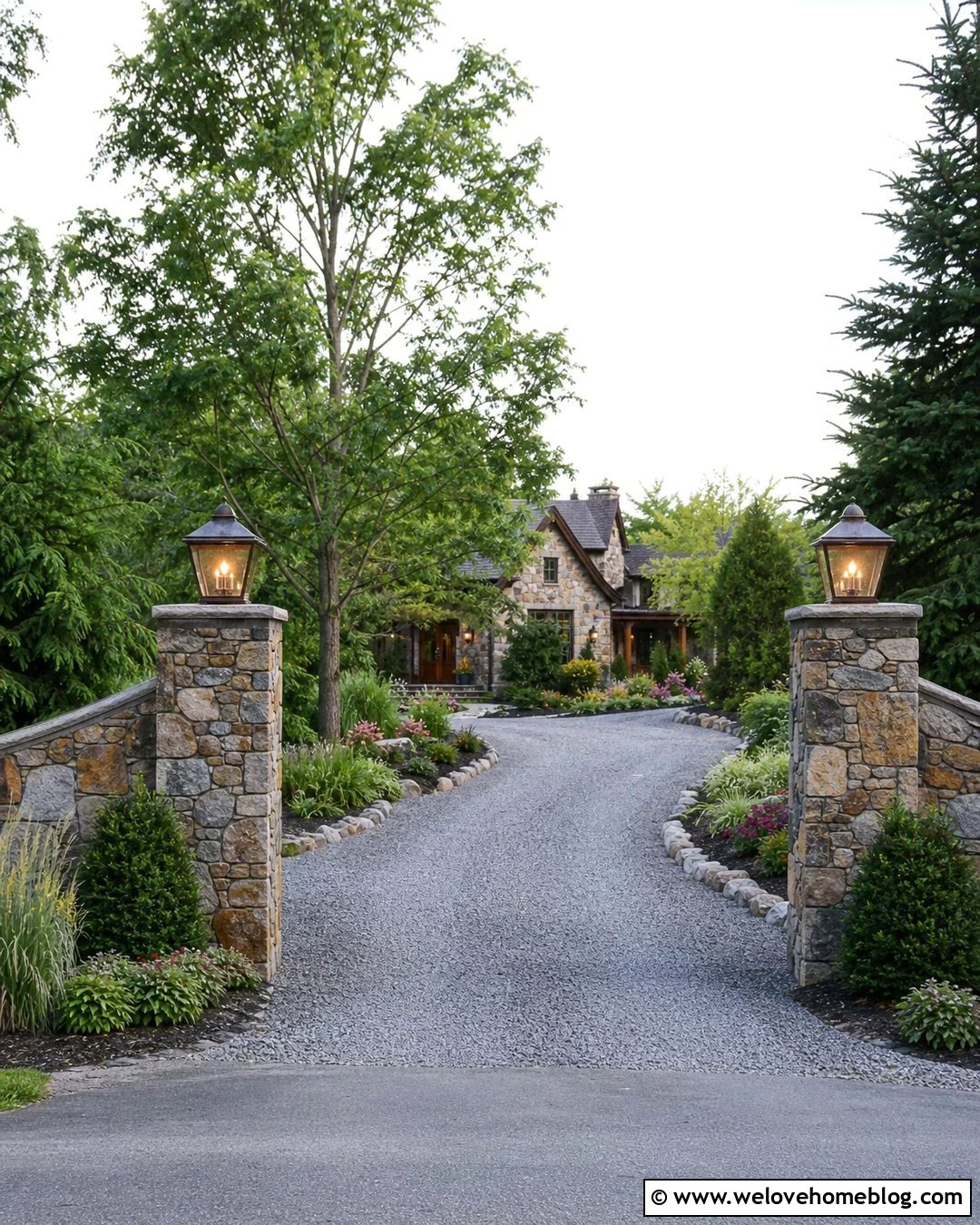
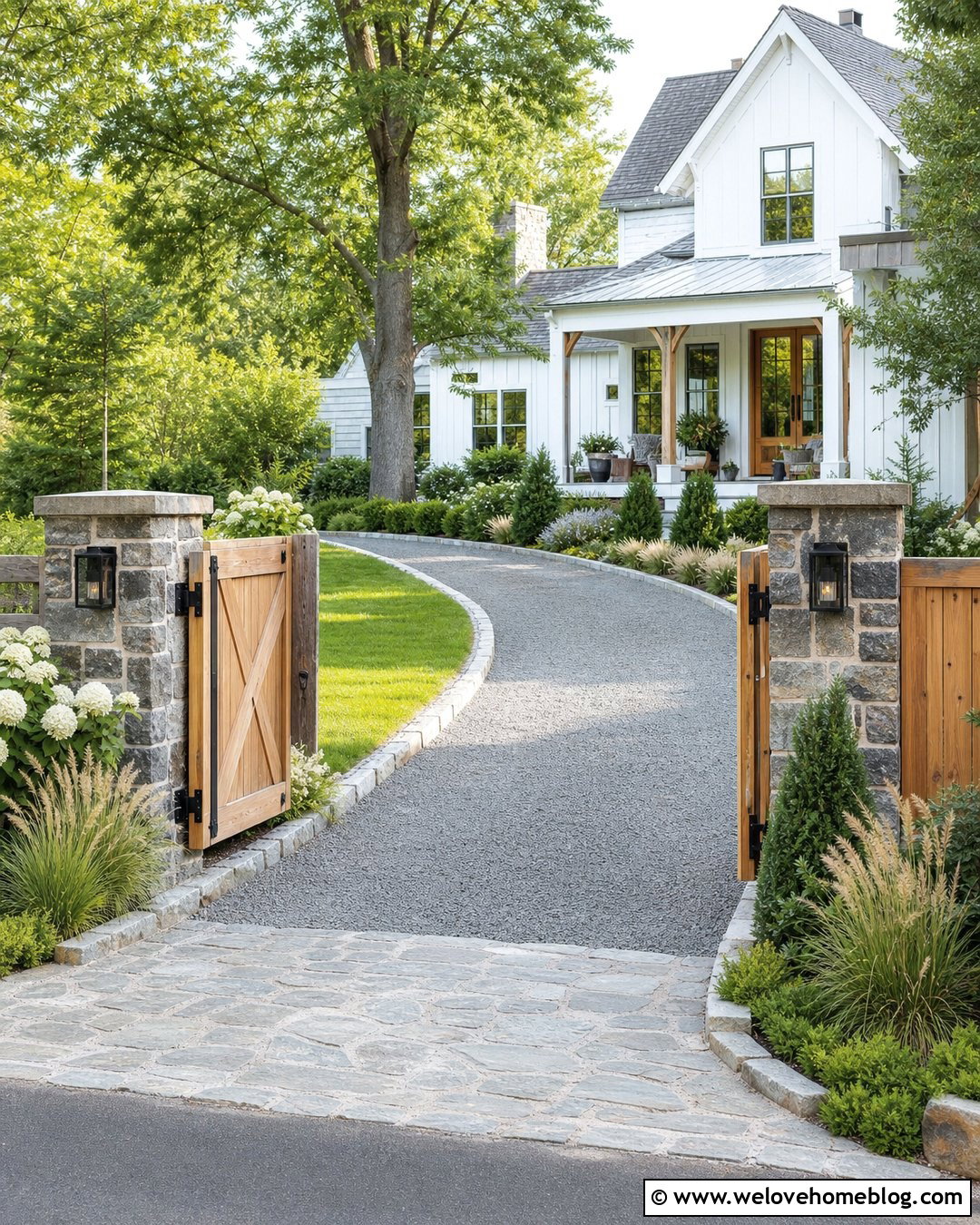
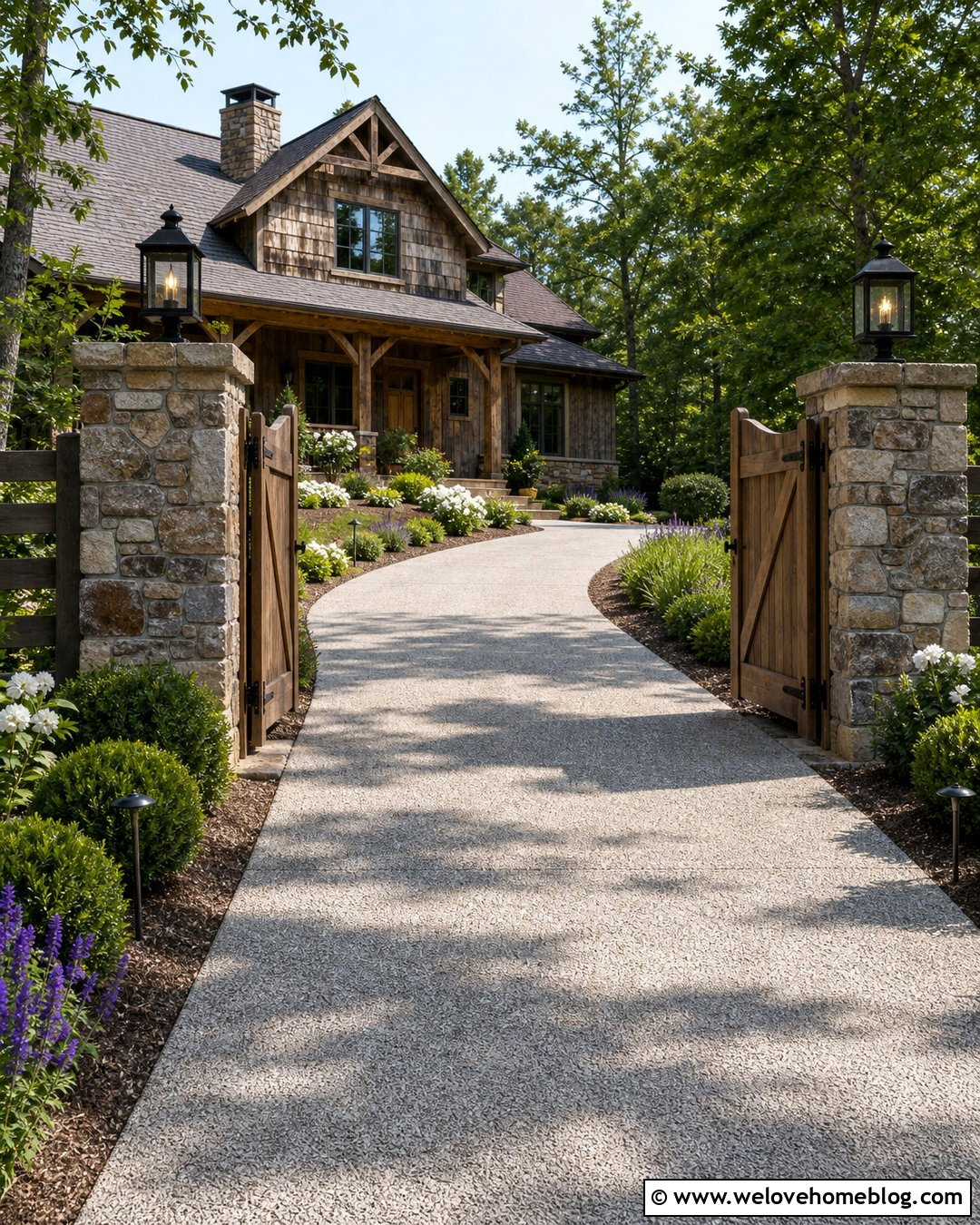
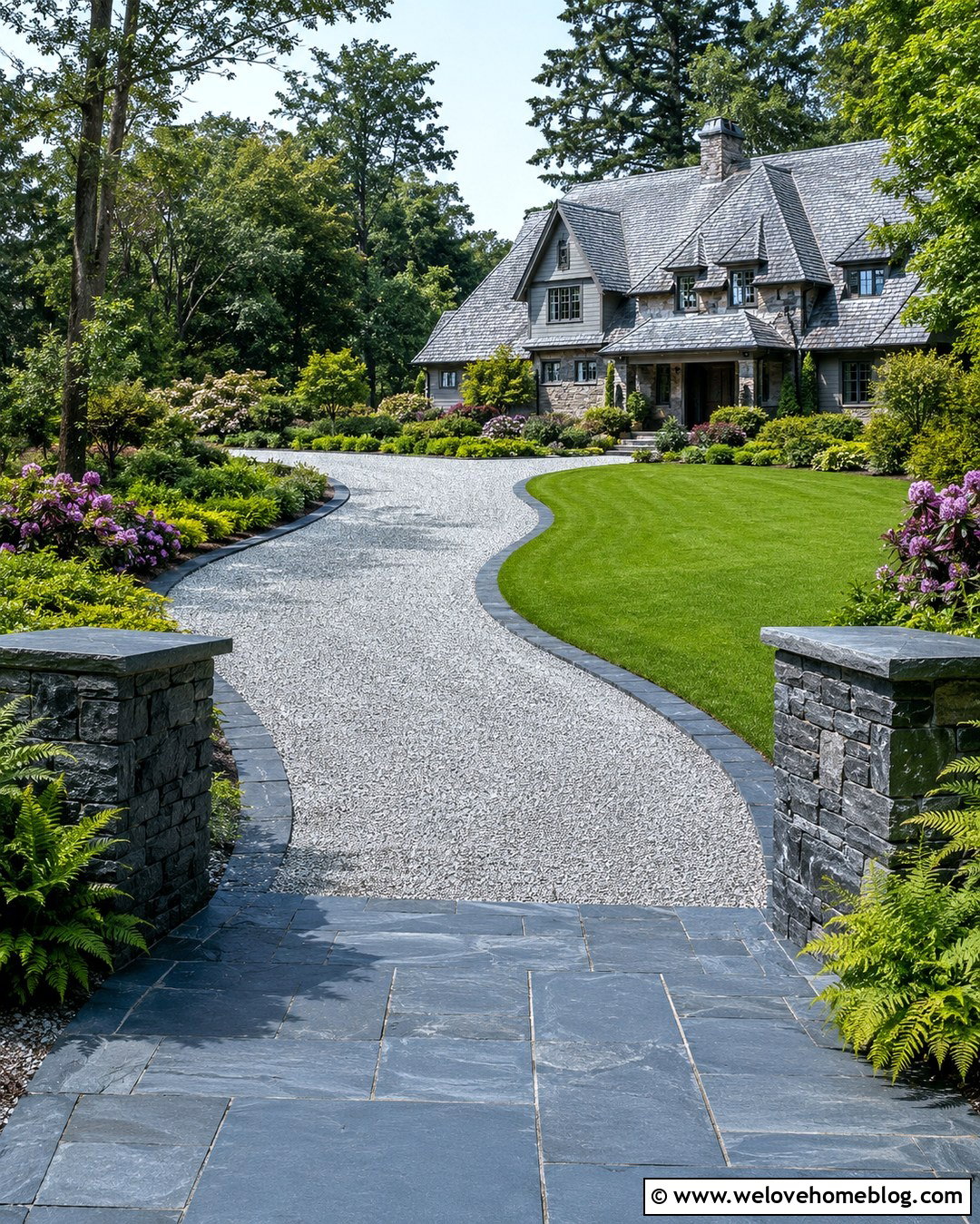
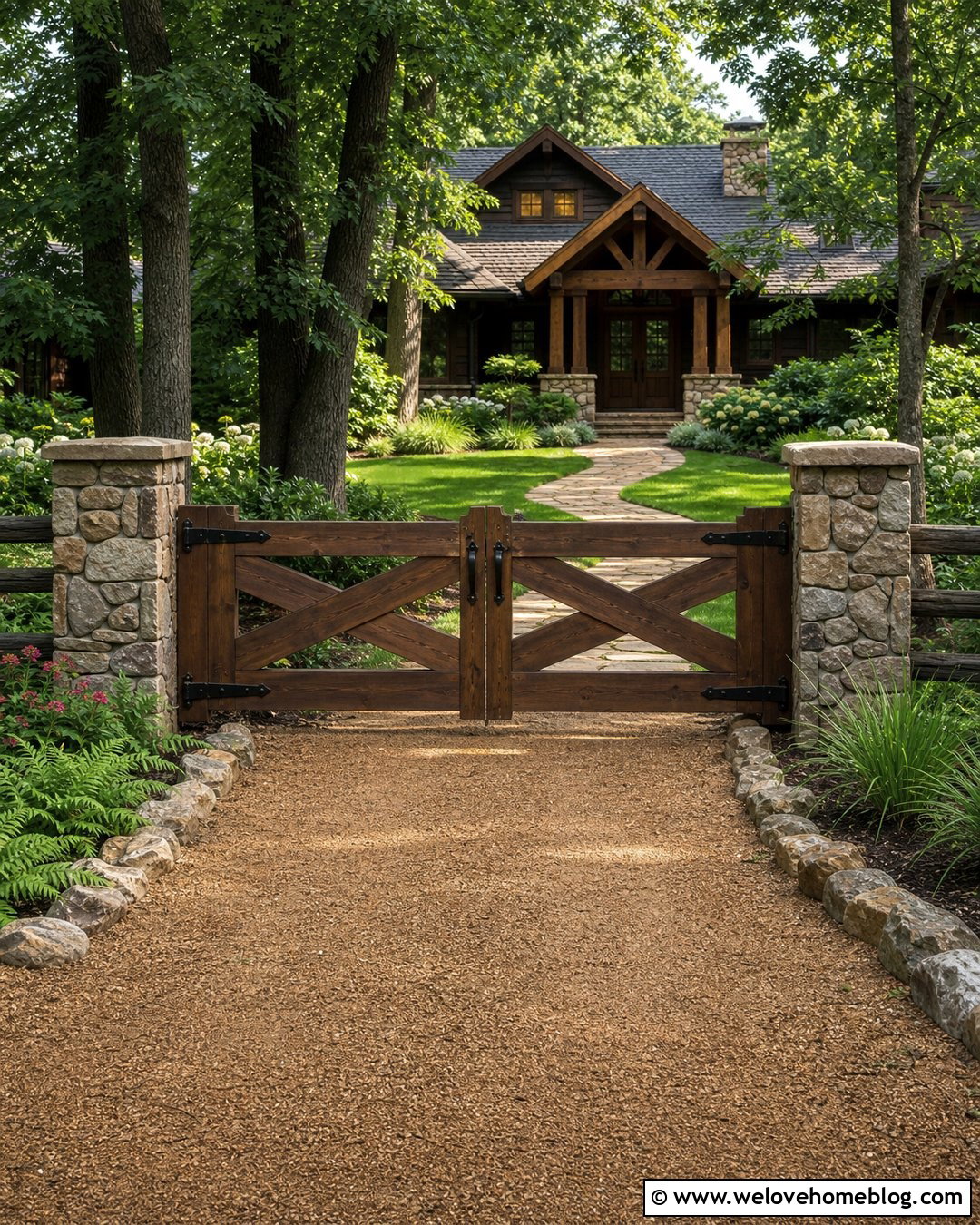
Stone pillars can anchor a broad driveway entrance and make it feel proportional to a large house. Build substantial columns from natural fieldstone, limestone, or stone veneer that repeats materials used on the facade. Between the pillars, use a wide gravel, paver, or asphalt driveway with a gentle curve toward the house. Low wing walls can extend into planting beds filled with evergreen shrubs, flowering perennials, and ornamental grasses. Include integrated lights and a clearly visible address plaque without overcrowding the masonry. If gates may be added later, plan the pillar spacing and utilities in advance. Matching stone edging near the parking court will carry the entrance material through the landscape and create a cohesive, estate-like approach.
24. Large Driveway With Mixed Pavers
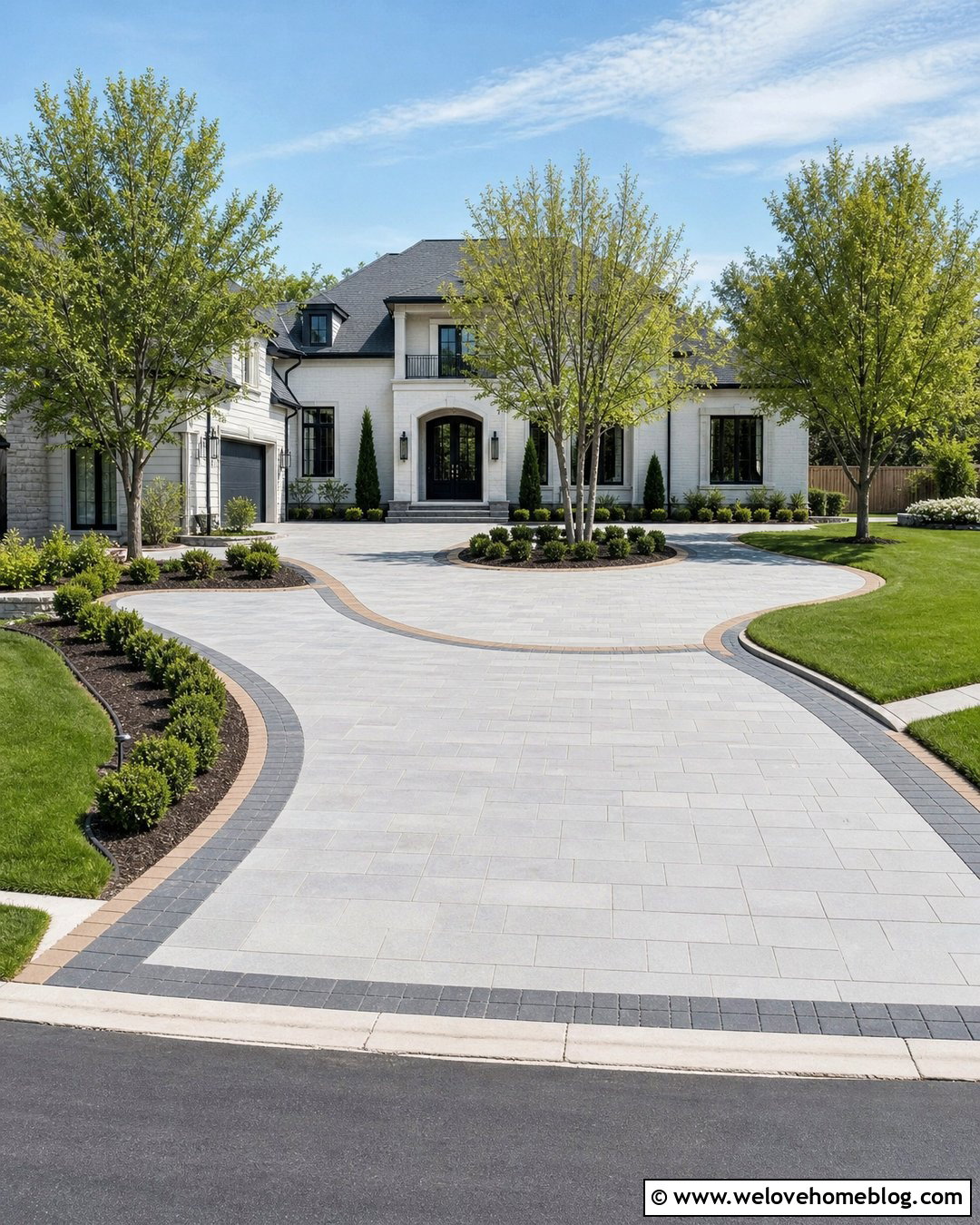
Mixing paver colors and sizes can prevent a large paved area from feeling flat, but the palette should remain controlled. Use large-format light gray concrete pavers for the main driveway and smaller charcoal units for borders, turning circles, and parking divisions. A subtle tan band can connect the surface to warm brick or stone on the house. Arrange the driveway in a wide curved layout with a clear pedestrian path running toward the entrance. Frame it with structured shrubs, lawn panels, and one or two ornamental trees. Repeating each paver type in more than one location makes the combination feel planned. This layered surface is particularly effective for transitional, contemporary, and upscale suburban homes.
25. Large Driveway With Natural Stone Pavers
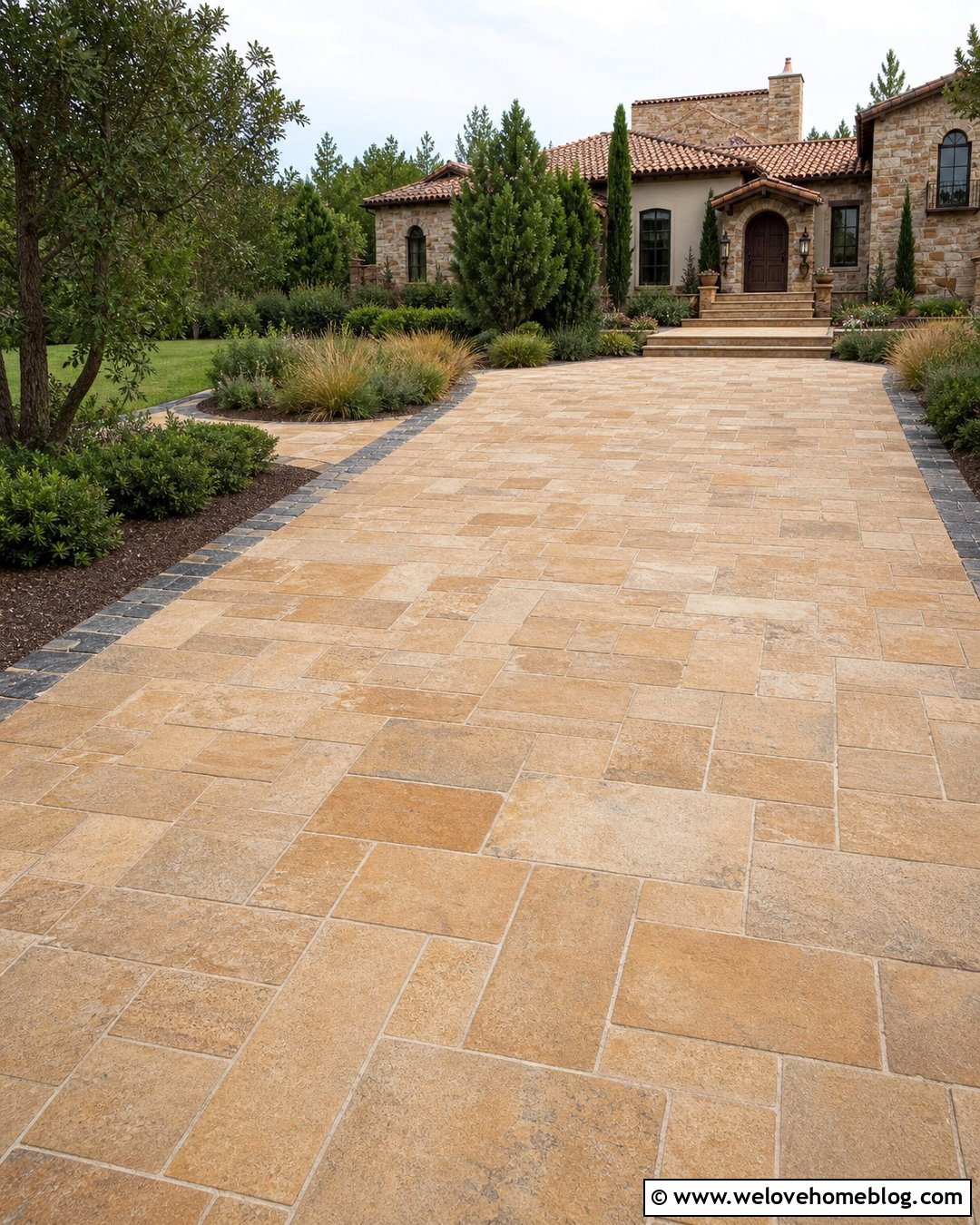
Natural stone pavers give a large driveway organic color variation that becomes more noticeable across a broad surface. Choose thick limestone, sandstone, or granite units designed for vehicle use and arrange them in a random rectangular pattern. A straight approach with gently flared edges can lead into a generous parking court. Define the perimeter with a darker stone course and soften it with layered beds of evergreen shrubs and native grasses. Repeat the driveway stone on the front steps or walkway to strengthen the connection to the house. Warm sandstone suits rustic and Mediterranean architecture, while cooler limestone and granite complement traditional or contemporary facades. Keep surrounding materials simple so the stone remains the main feature.
26. Large Driveway With Formal Hedges
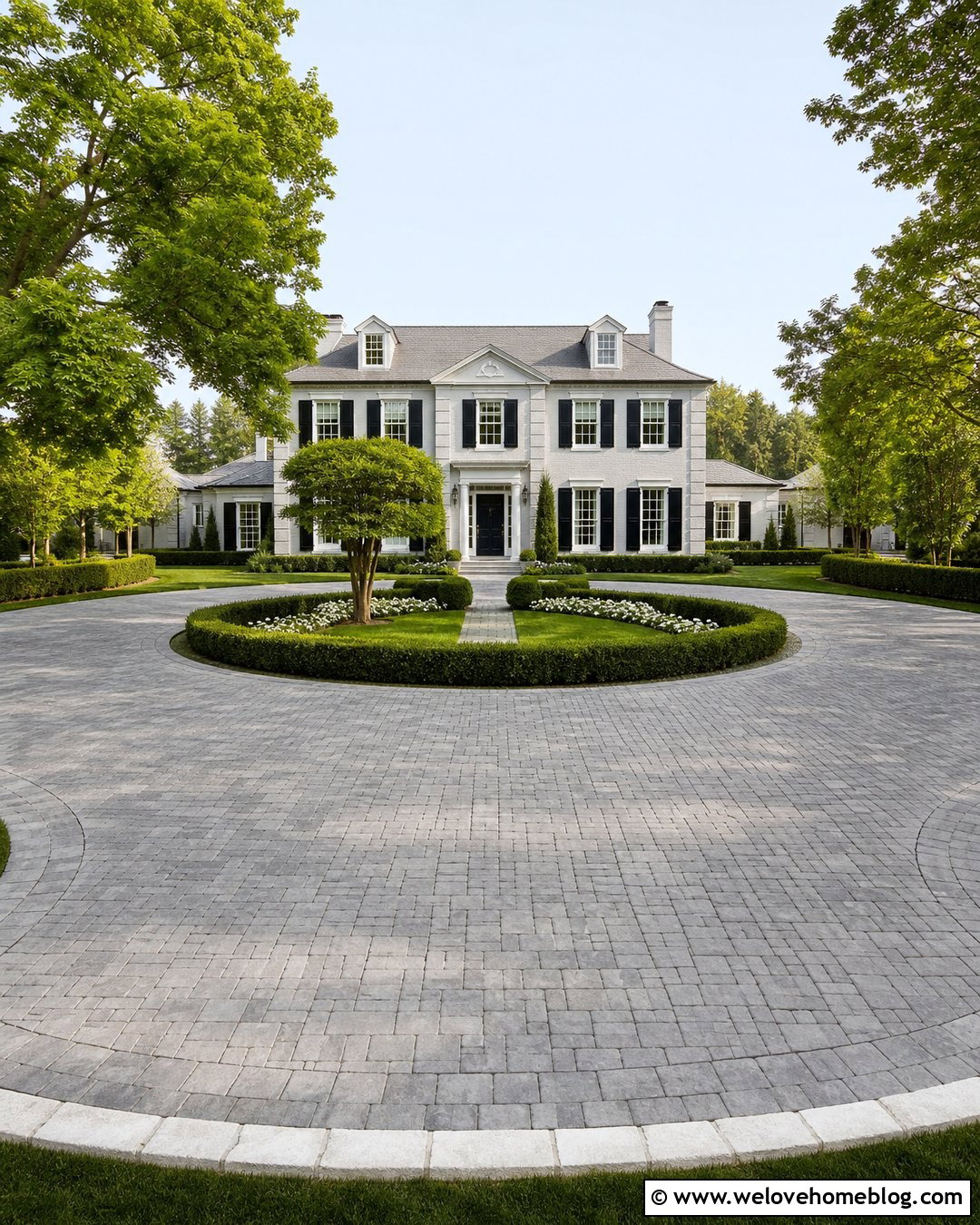
Formal hedges can turn an expansive driveway into a structured landscape rather than a floating area of pavement. Pair a circular gray paver drive with low clipped hedges around the center island and along the outer borders. Use taller upright evergreens near the house to frame the facade, while preserving open views at the street entrance. Inside the island, add one sculptural tree or a restrained bed of white flowers. A matching paver walkway can cross the hedge through a clearly defined opening toward the front door. Regular lines and limited plant varieties help maintain the formal appearance. This organized composition is a natural match for Georgian, colonial, French-inspired, and symmetrical traditional homes.
27. Large Driveway With Desert Landscaping
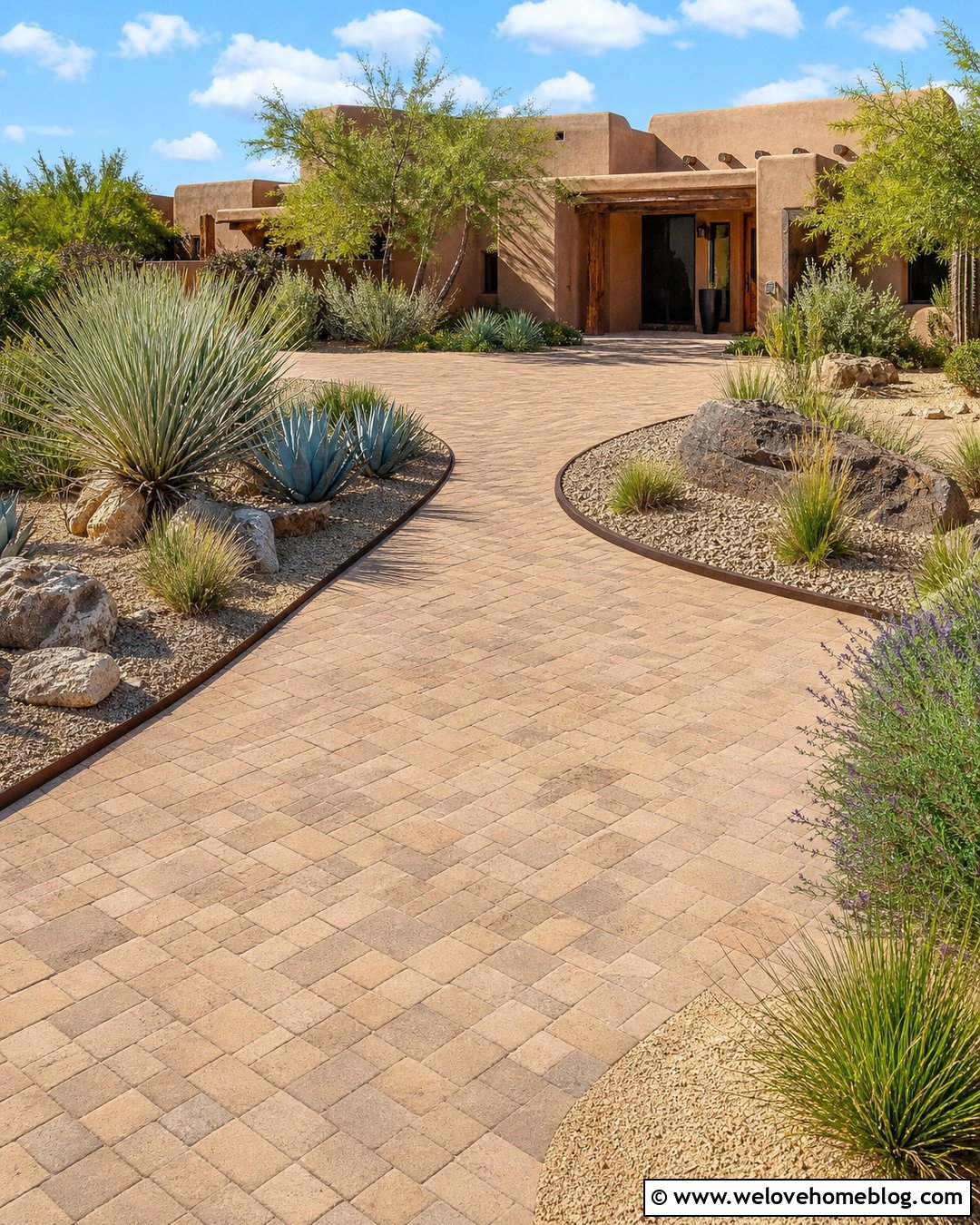
In a dry landscape, a wide driveway can feel integrated with the property through coordinated stone colors and drought-conscious planting. Use warm tan concrete pavers, decomposed granite, or exposed aggregate for a gently curved approach. Edge the surface with weathered steel or darker stone to create a precise boundary. Build wide planting beds containing agave, yucca, desert spoon, ornamental grasses, and carefully placed boulders. Leave generous spacing between plants so their shapes remain visible and the design does not look crowded. A gravel center island can organize a circular turning area near the house. This complete look complements Southwestern, adobe, desert modern, and low-profile contemporary homes surrounded by open, sun-filled terrain.
28. Large Driveway With Retaining Walls
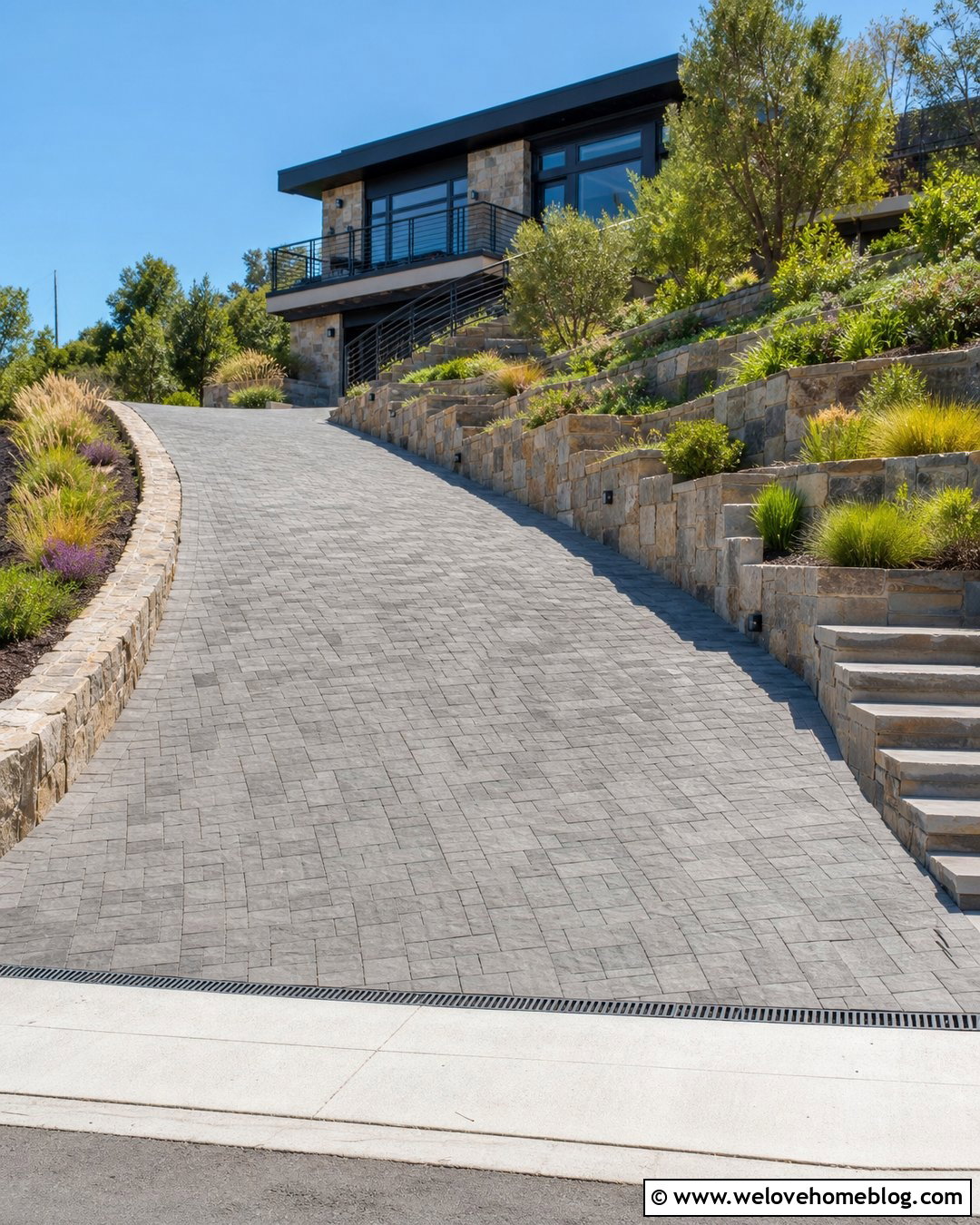
A sloped front yard often needs more structure than a flat expanse of paving. Use textured concrete pavers or broom-finished concrete for a wide driveway that rises gradually toward the house. On the uphill side, construct tiered retaining walls from natural stone or matching concrete wall blocks. Plant the terraces with spreading shrubs, ornamental grasses, and ground covers that visually soften the masonry. Add a defined curb or drainage channel along the driveway edge, and keep planting away from key sightlines. Wall-mounted or low landscape lights can mark the route without cluttering the pavement. Repeating the retaining-wall material at the entry steps or house foundation will make this practical solution feel like a deliberate part of the architecture.
29. Large Driveway With Split Garage Access
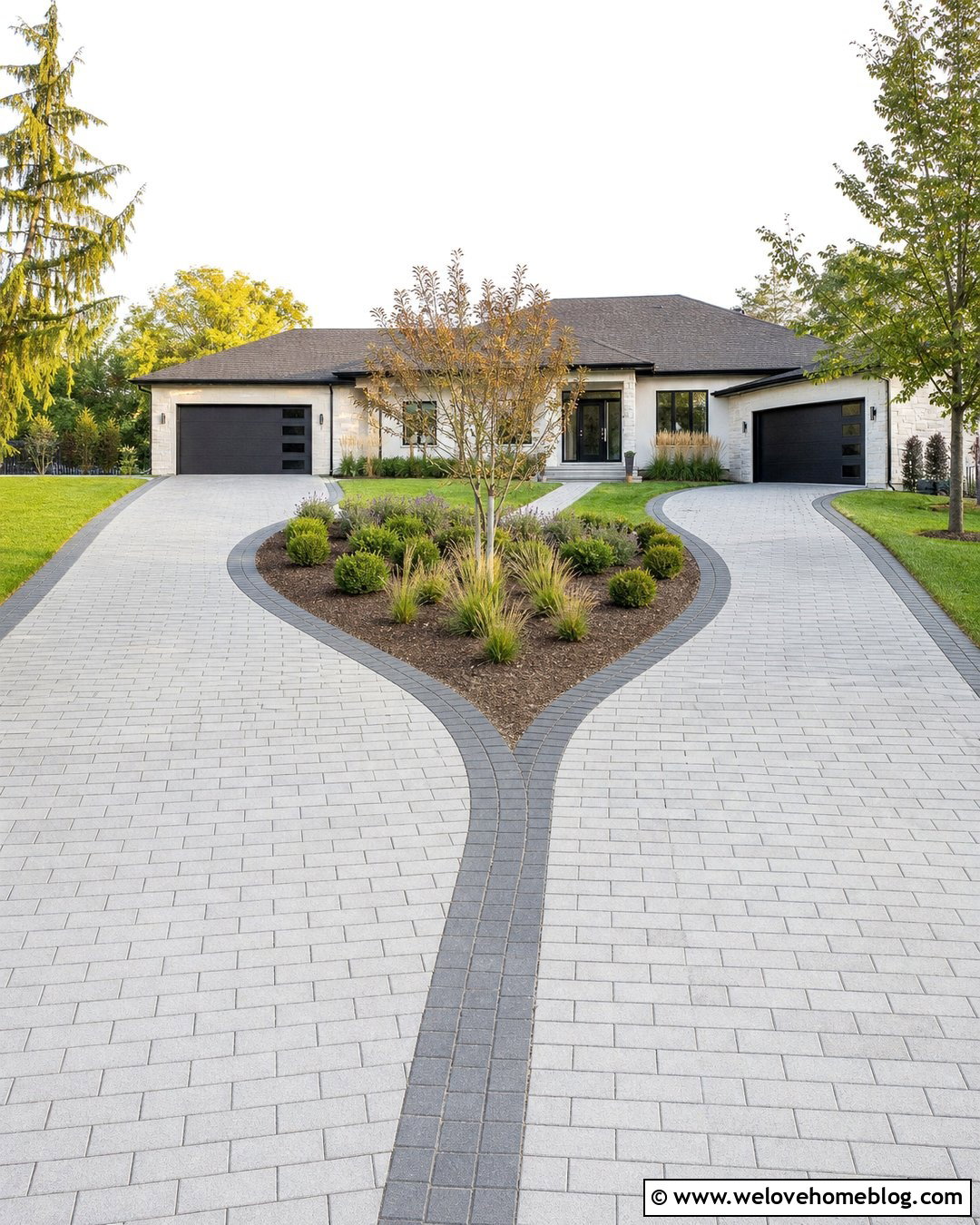
A home with separated garage bays benefits from a driveway that divides clearly before reaching the building. Begin with one broad paver or concrete approach, then split it into two branches around a central landscaped island. Use a low tree, ornamental grasses, and compact shrubs in the island so drivers can see across the turning area. Contrasting paver ribbons can trace each branch and make circulation easy to understand. Add a walkway through or beside the island leading toward the front entrance. Keep enough open pavement in front of each garage for turning and parking. This balanced layout works particularly well with large ranch, contemporary, and estate homes featuring side-entry or detached garage arrangements.
30. Large Driveway With Porte Cochere
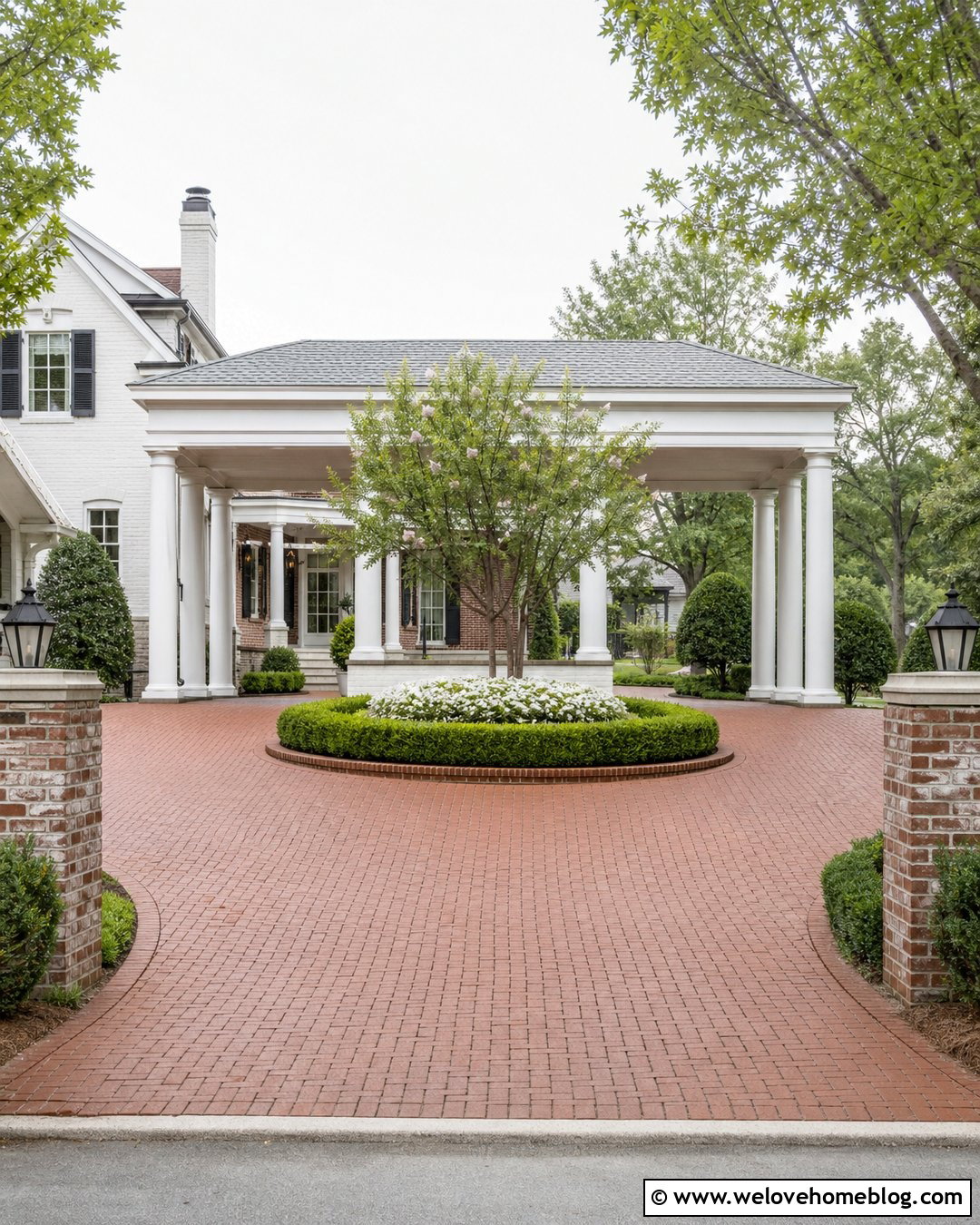
A porte cochere creates a sheltered arrival point and gives a large driveway a clear architectural destination. Use clay brick pavers, cobblestone, or refined concrete pavers for a circular drive that passes beneath the covered structure. Continue the same material toward the garage so the route remains visually unified. Define the central island with low hedges, seasonal flowers, and a small ornamental tree. Columns supporting the porte cochere should coordinate with the house facade and entrance pillars. Include a generous pedestrian zone near the front door so guests do not have to cross active driving lanes. This stately arrangement suits Mediterranean, Southern, French country, and traditional homes with enough frontage for comfortable circulation.
31. Large Black Asphalt Driveway With White House
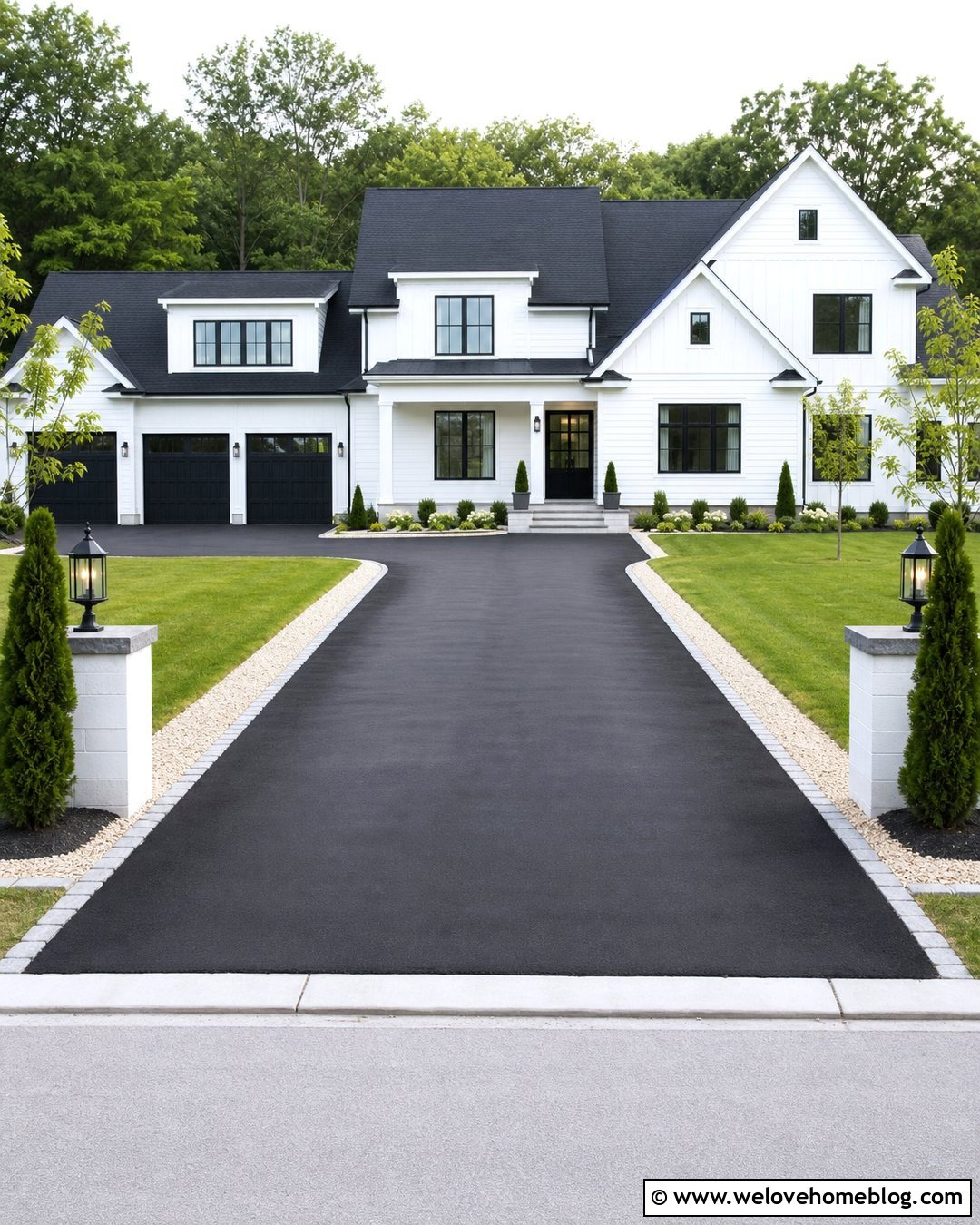
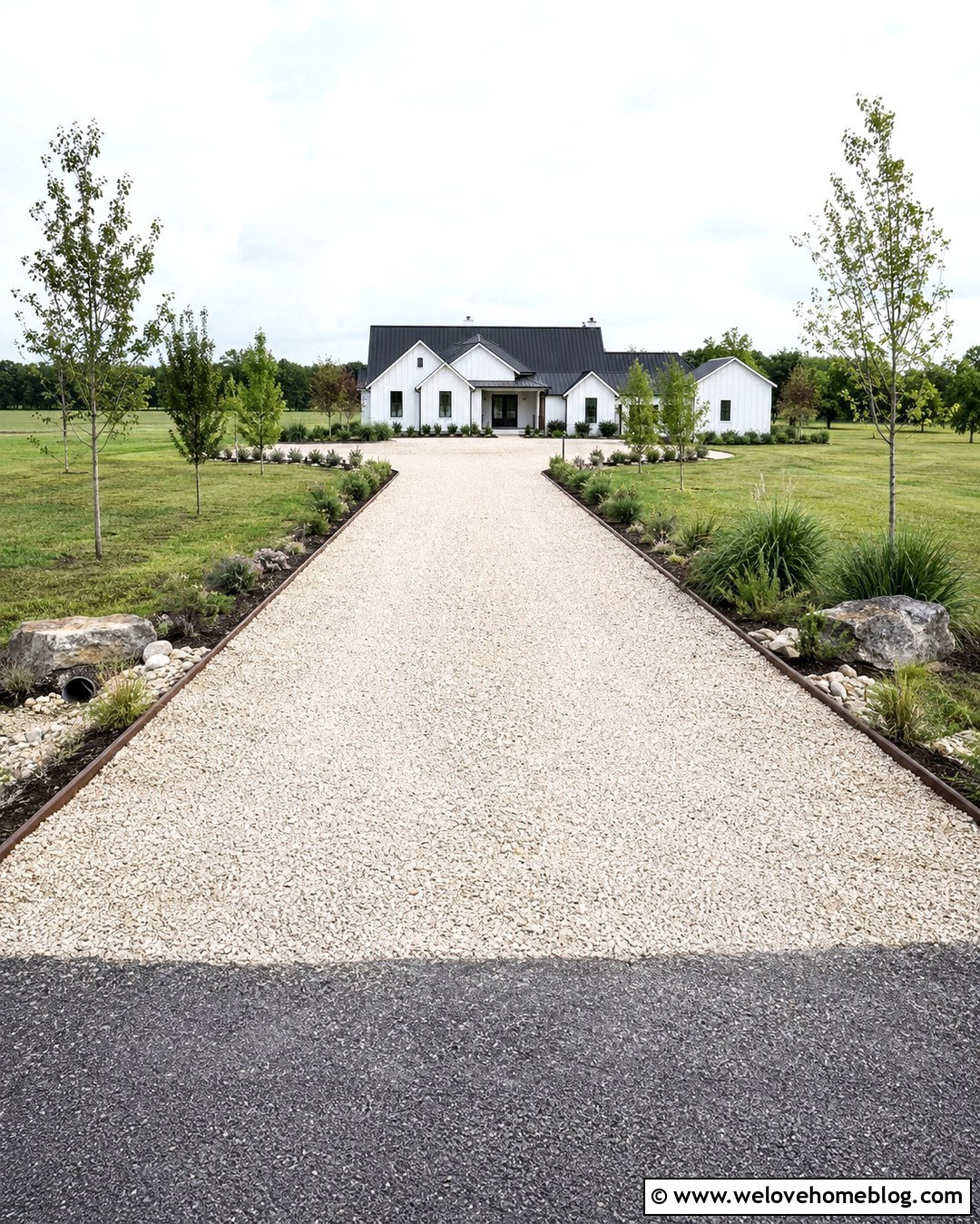
The contrast between fresh black asphalt and a white exterior creates a bold but uncomplicated driveway design. Use a broad straight approach that expands into a rectangular court in front of a modern farmhouse or colonial home. Edge the asphalt with light granite blocks, pale concrete pavers, or a narrow strip of cream gravel. Deep green lawns and simple evergreen planting will reinforce the clean color palette. Add black metal lights, matching garage doors, and restrained entrance pillars for continuity. If the paved area is especially wide, use stone bands to mark parking or turning zones without interrupting the smooth surface. The result feels crisp, practical, and visually strong from the street.
32. Large Driveway With Outdoor Lighting
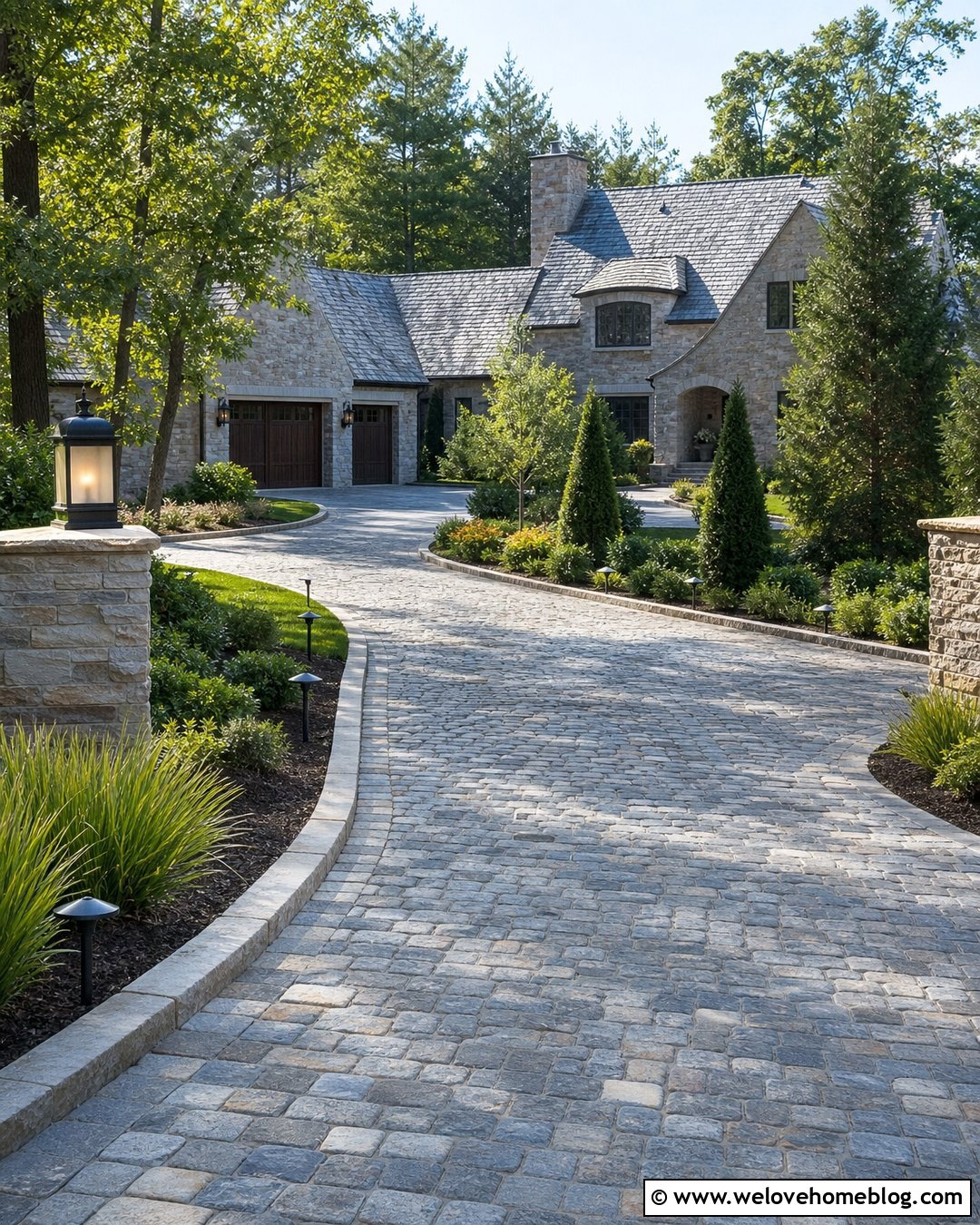
Lighting should support the driveway’s complete layout instead of appearing as scattered decorative fixtures. Pair a broad cobblestone, paver, or asphalt approach with low path lights positioned along planting beds rather than directly in the driving surface. Add brighter fixtures to entrance pillars, garage walls, and key walkway intersections. During the day, simple black or bronze fixtures should blend with the edging and house details. Use trees, low shrubs, and grasses to frame the route while keeping lights visible and protected. On a circular driveway, illuminate the center island evenly rather than relying on one intense focal light. Plan fixture placement, wiring, and beam direction with the driveway design so navigation feels clear and the landscape remains uncluttered.
33. Large Driveway With Wide Grass Median
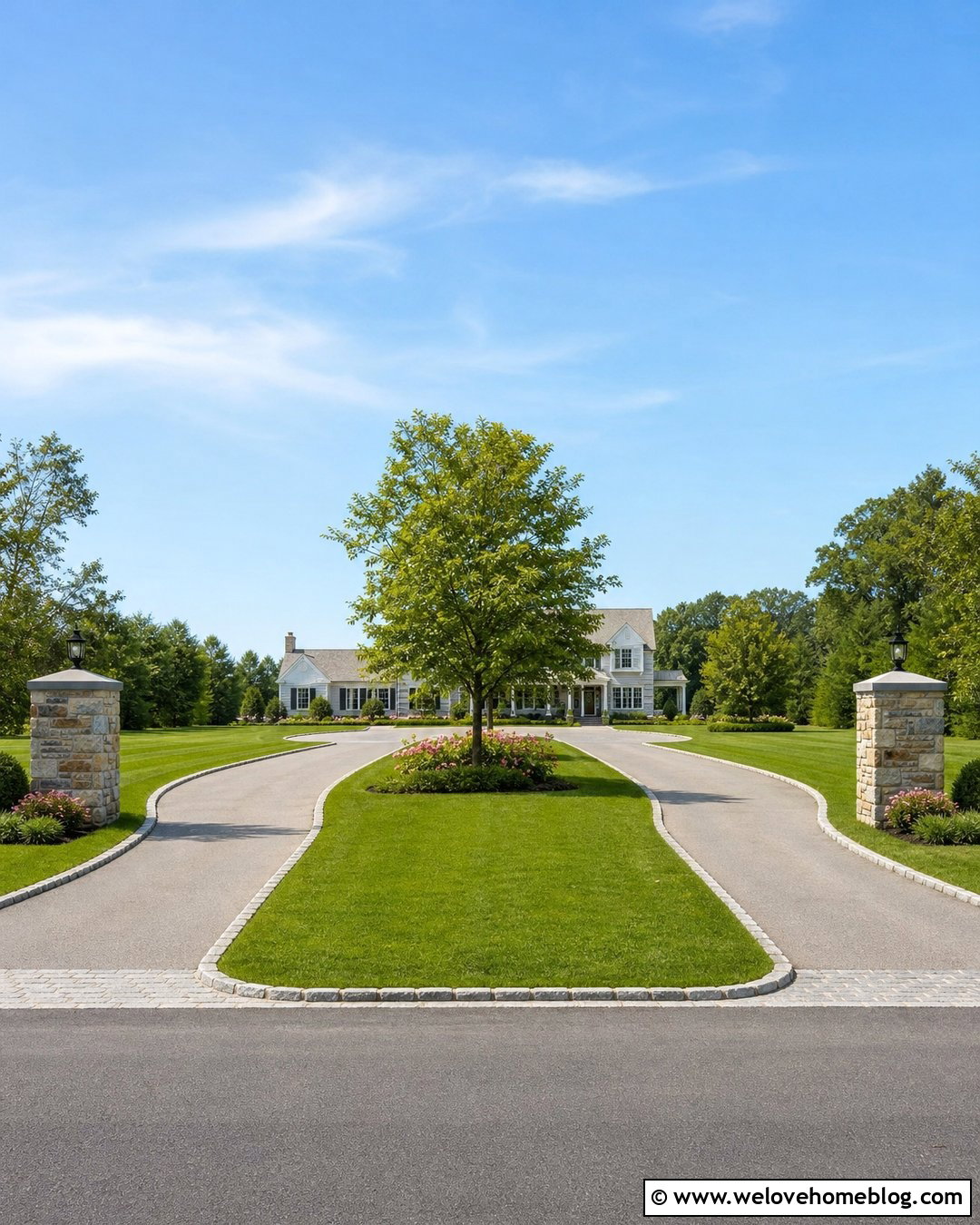
A wide grass median can divide an expansive driveway into clear entrance and exit lanes. Use concrete, asphalt, or gravel for two parallel driving surfaces arranged in a long oval or elongated horseshoe. Keep the central lawn broad enough to look intentional, then add a row of small trees, one large specimen tree, or restrained flower beds. Stone curbing around the median will protect the grass and define the curves. Near the house, connect the lanes through a spacious turning court or circular parking area. Matching entrance pillars can mark each lane at the street. This design suits very wide properties and creates a park-like approach without covering the entire front yard in a single hard surface.
34. Large Driveway With Patterned Concrete Bands
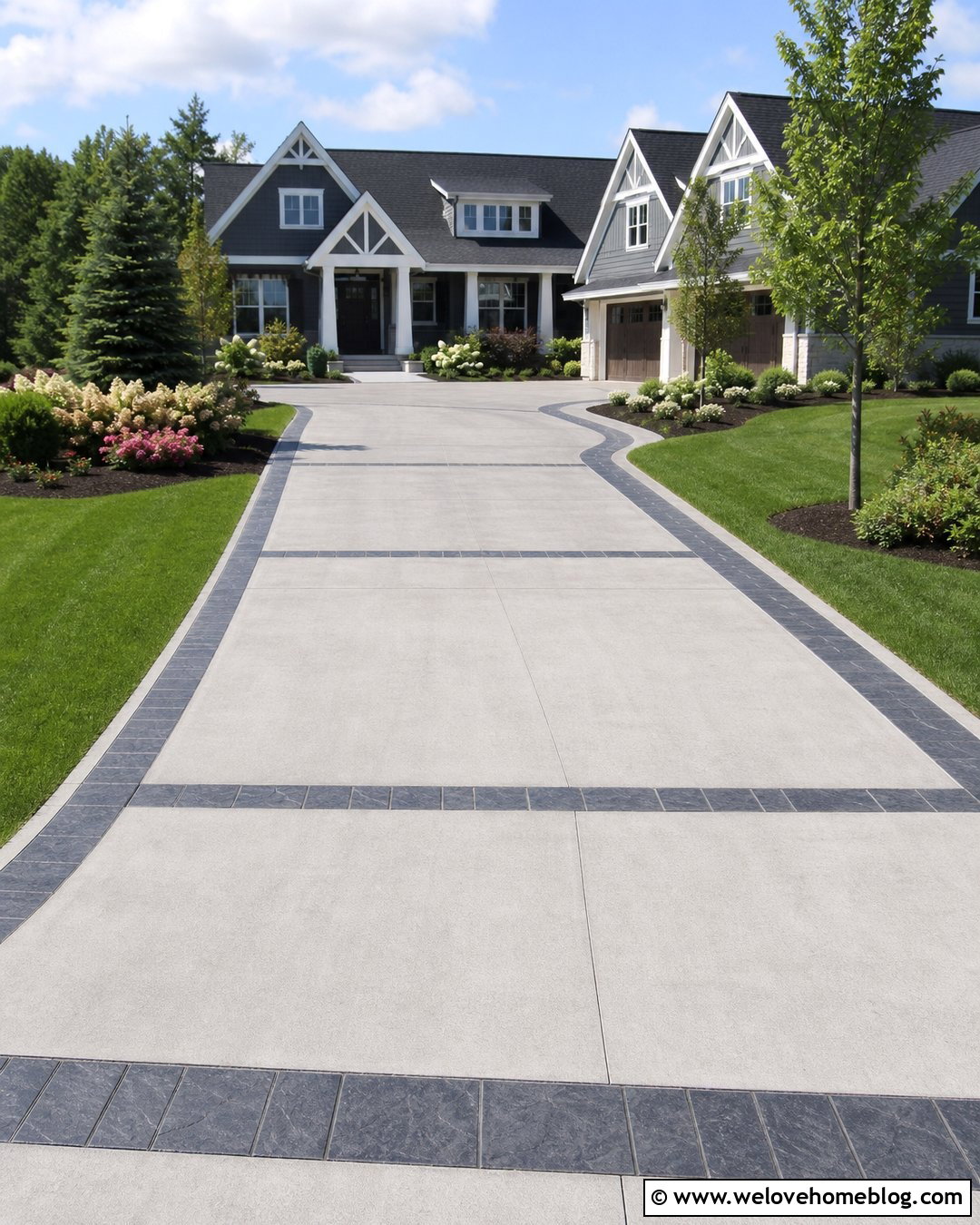
Decorative bands can organize a large concrete driveway without changing the main surface material. Pour the central areas in light gray concrete, then add stamped charcoal bands across the entrance, around curves, and between parking spaces. The bands can also outline a circular turning zone or connect visually with the front walkway. Keep the pattern simple, such as rectangular stone or running-bond brick, so it does not compete with the house. Frame the driveway with broad lawn sections, low evergreen beds, and evenly spaced ornamental trees. This approach can make an expansive poured surface appear more detailed and carefully scaled. It works well with contemporary, craftsman, and transitional homes that combine clean lines with traditional exterior materials.
35. Large Driveway With Guest Turnaround
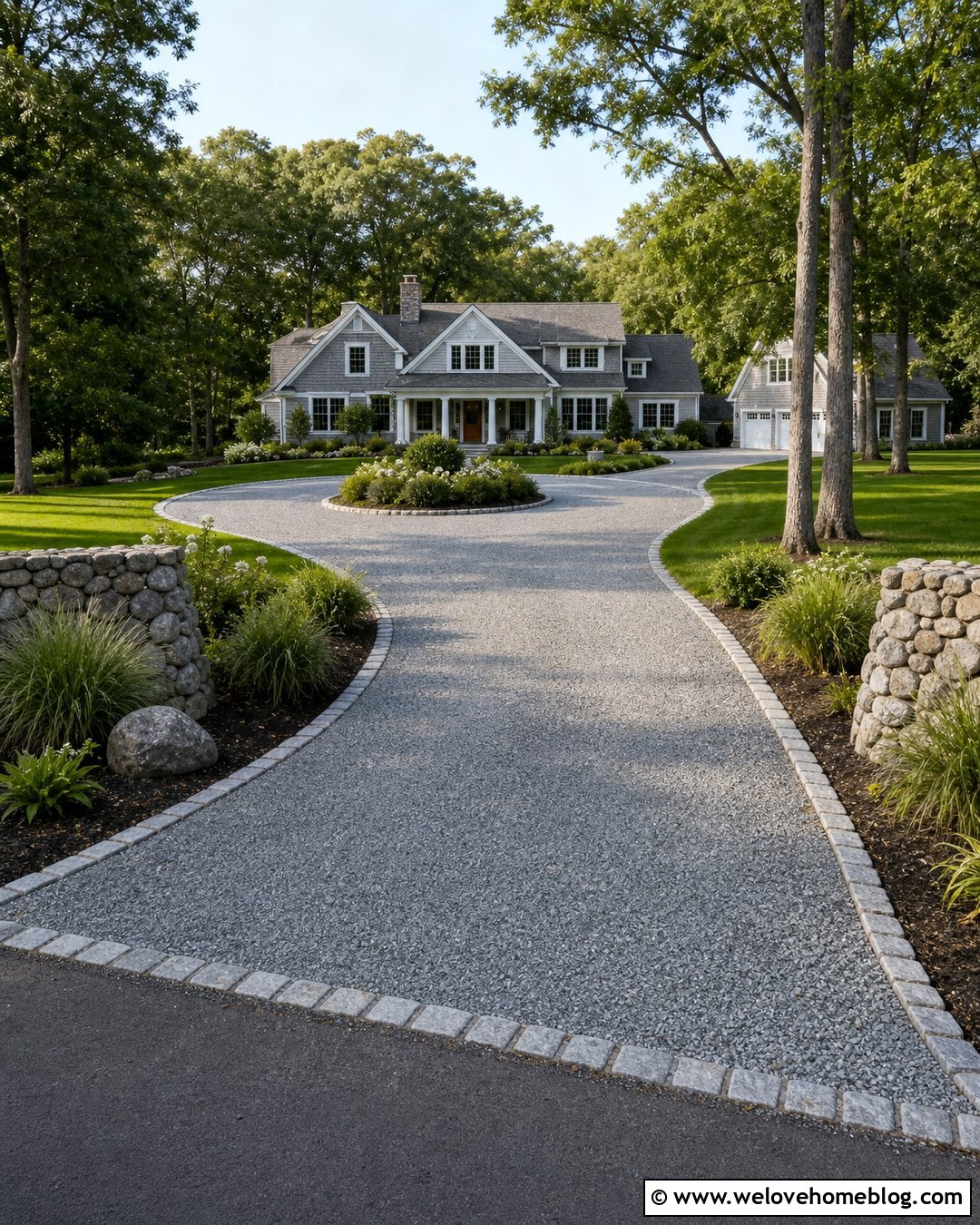
A guest turnaround provides a clear place to reverse direction without using the garage court. Add a circular or T-shaped extension along a long gravel, asphalt, or paver driveway, positioning it where visitors can find it easily. Define the area with a contrasting paver border, a small central planting bed, or low directional landscaping. Keep shrubs below driver sightlines and connect the turnaround to a well-lit walkway toward the house. The main drive can continue privately toward side-entry garages or service areas. Repeating the same surface and edging throughout the route prevents the turnaround from looking like an afterthought. This practical layout is especially useful on deep lots where backing toward the road would feel inconvenient.
Conclusion:
Large properties offer exciting possibilities, but every surface, curve, border, and planting area should serve a clear purpose. The most successful **35 Large Driveway Ideas** balance visual scale with easy vehicle movement, safe pedestrian access, and a strong connection to the home. Choose materials that suit your architecture, climate, maintenance preferences, and overall budget. Then use borders, planting beds, islands, gates, or patterned bands to break the surface into understandable zones. Before construction, review grading, drainage, utilities, visibility, and local permit requirements with qualified professionals. A thoughtful plan will help your driveway function comfortably while giving the entire property a polished, welcoming, and cohesive first impression.

Related posts:
Leave a Reply