
A planted driveway can turn a practical parking area into a welcoming garden entrance. The strongest designs treat the paving, borders, planting beds, drainage, and house facade as one connected landscape. These 20 Planted Driveway Ideas include formal hedges, native flowers, ornamental grasses, ground-cover joints, flowering trees, and drought-tolerant beds. Materials range from gravel and brick to concrete, asphalt, cobblestone, and permeable pavers. Before choosing plants, consider sunlight, mature size, reflected heat, winter salt exposure, and how much clearance vehicles need. Keep taller growth away from street sightlines and reserve low plants for narrow edges. Whether your home is traditional, modern, rural, or coastal, the complete looks below offer practical inspiration through these 20 Planted Driveway Ideas. ()

1. Planted Gravel Driveway With Lavender Borders
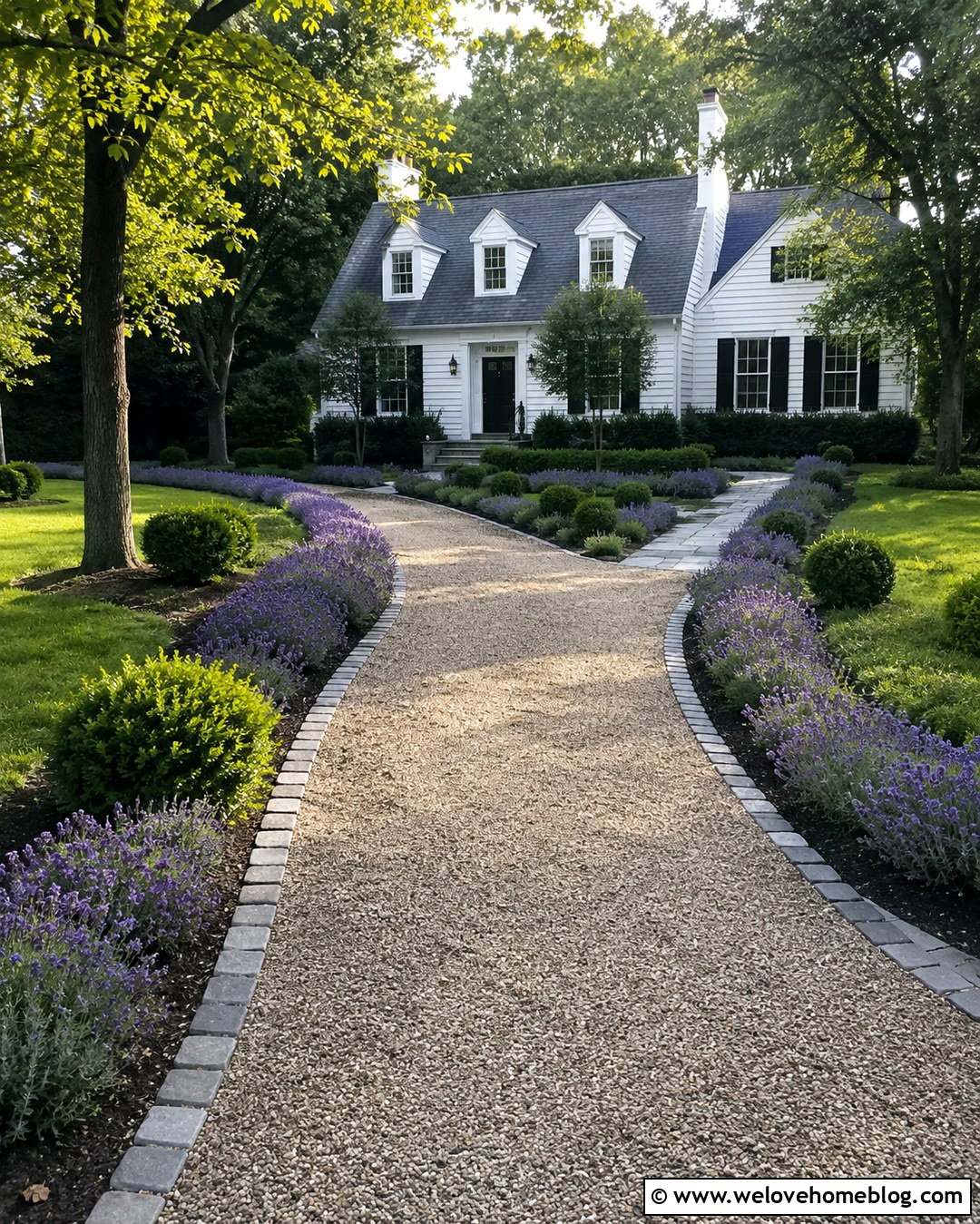
Warm pea gravel and rows of lavender create a relaxed driveway that feels polished without appearing overly formal. Use a straight or gently curved layout, then contain the loose gravel with cobblestone edging. A generous planting strip on each side gives the lavender enough room to spread without leaning into the driving surface. Add compact evergreen shrubs near the house to maintain structure after the flowers fade. This combination suits cottages, Cape Cod homes, and light-colored farmhouses particularly well. Lavender performs best in sunny locations with freely draining soil, so choose another locally adapted flowering perennial if the site remains damp. Position simple path lights behind the planting rather than beside the tires. The result is fragrant, colorful, and visually connected to the garden. ()
2. Planted Concrete Driveway With Grass Strips
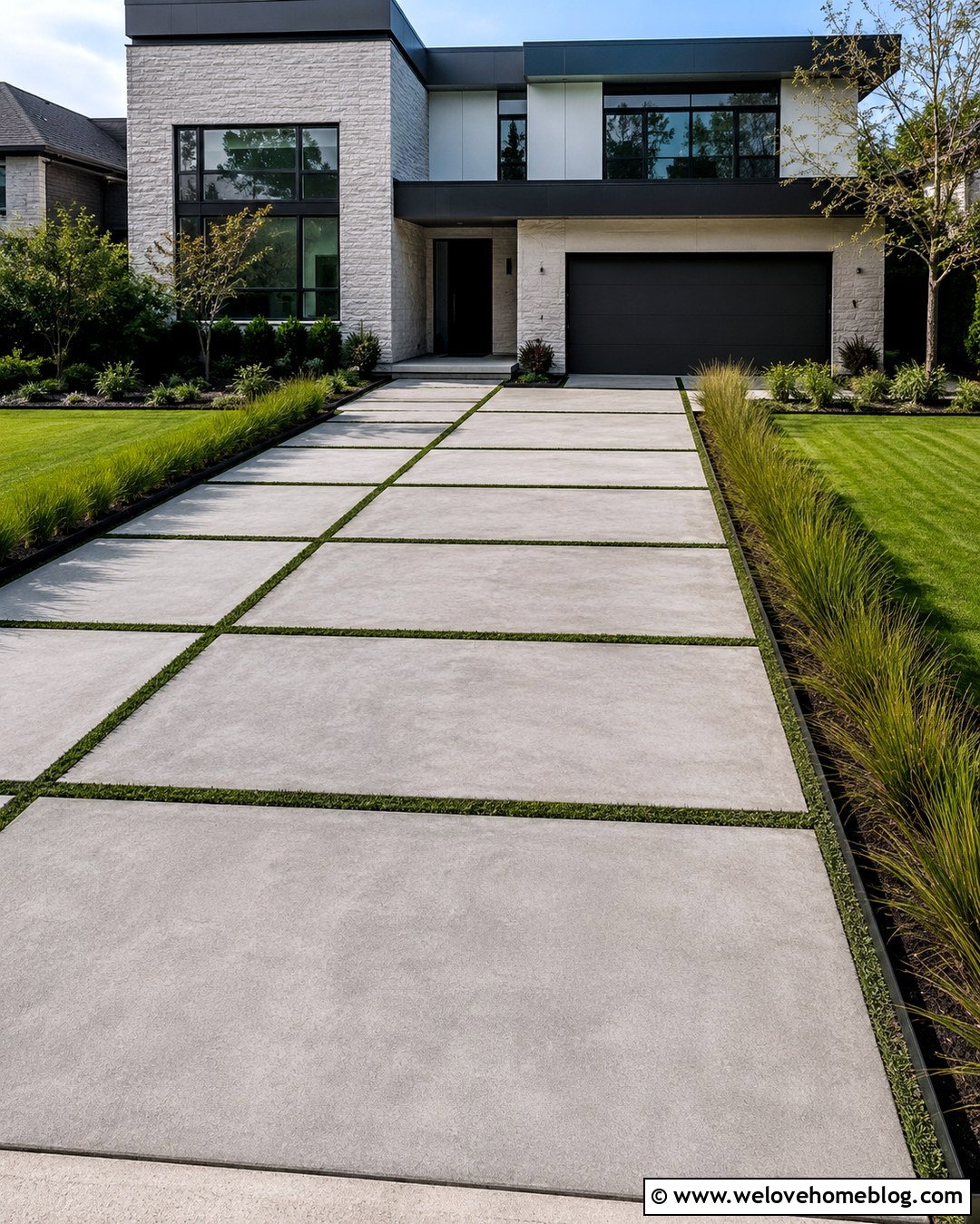
Large concrete slabs separated by narrow planted joints give a driveway a greener, less paved appearance. Choose tough, low-growing grass or ground cover that tolerates occasional foot traffic, local temperatures, and the moisture conditions between slabs. Keep the joints consistently spaced so the design looks intentional rather than overgrown. On both sides, repeat the linear pattern with clipped shrubs, ornamental grasses, and rectangular planting beds. A straight driveway works especially well because the green strips emphasize the approach to a modern home. Proper preparation is essential since planted joints still need stable paving support and suitable drainage. Leave the areas where tires regularly turn fully paved to reduce wear. This complete look combines clean architecture with enough greenery to soften a broad concrete surface. ()
3. Planted Brick Driveway With Cottage Flowers
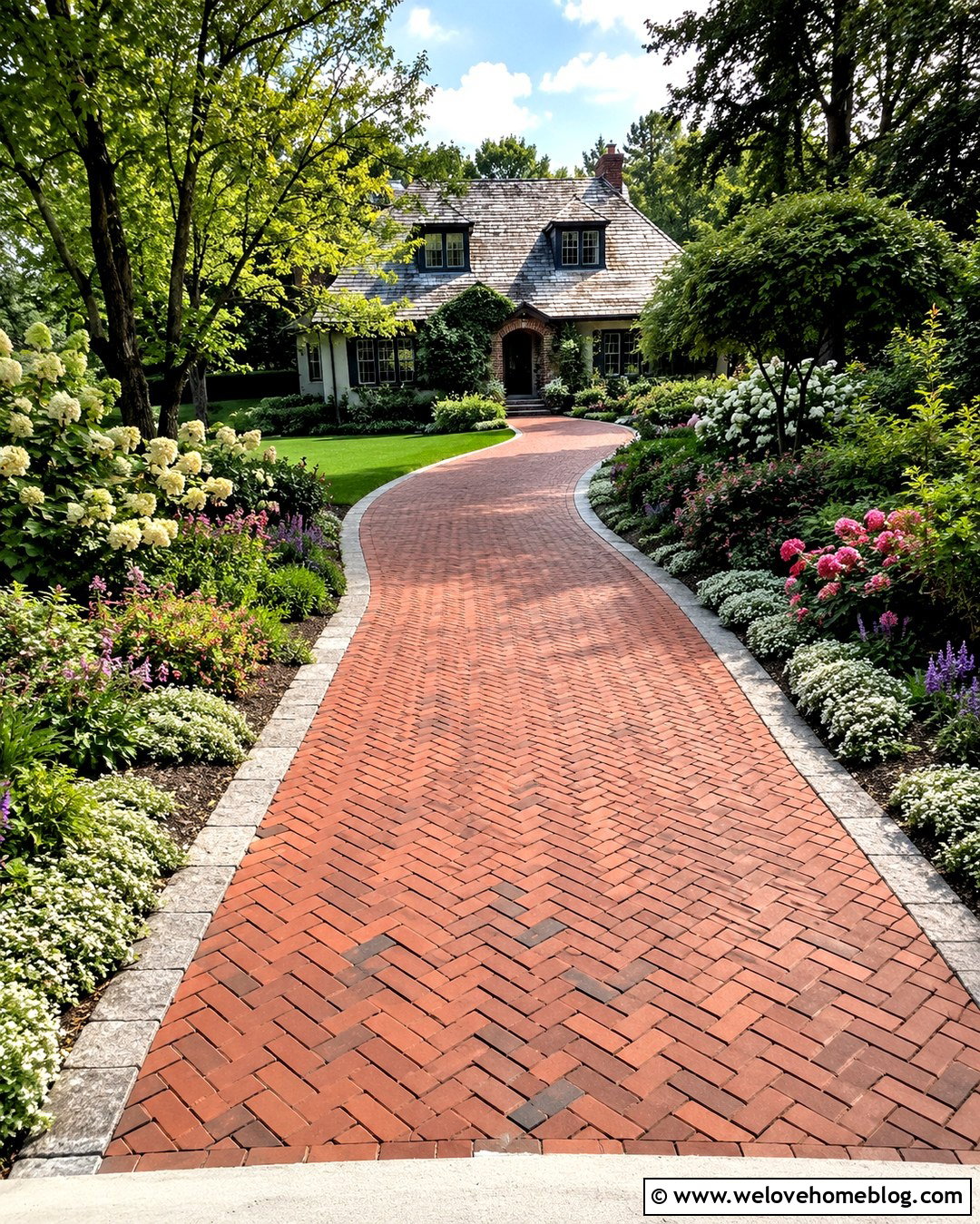
A herringbone clay brick driveway framed by abundant flowers gives a cottage home an inviting, established appearance. Build curved beds beside the paving and use a layered arrangement with low ground covers at the edge, medium perennials behind them, and flowering shrubs near the lawn. Repeating a few flower colors along both sides keeps the display cohesive even when the planting feels informal. A narrow stone curb can prevent soil and mulch from washing onto the brick. Include evergreen mounds so the driveway remains attractive outside the main flowering season. Avoid plants with stiff branches or thorns where passengers open car doors. This planted driveway works best when the brick tones echo the house, front walkway, chimney, or entrance steps, creating one coordinated cottage landscape.
4. Planted Asphalt Driveway With Evergreen Hedges
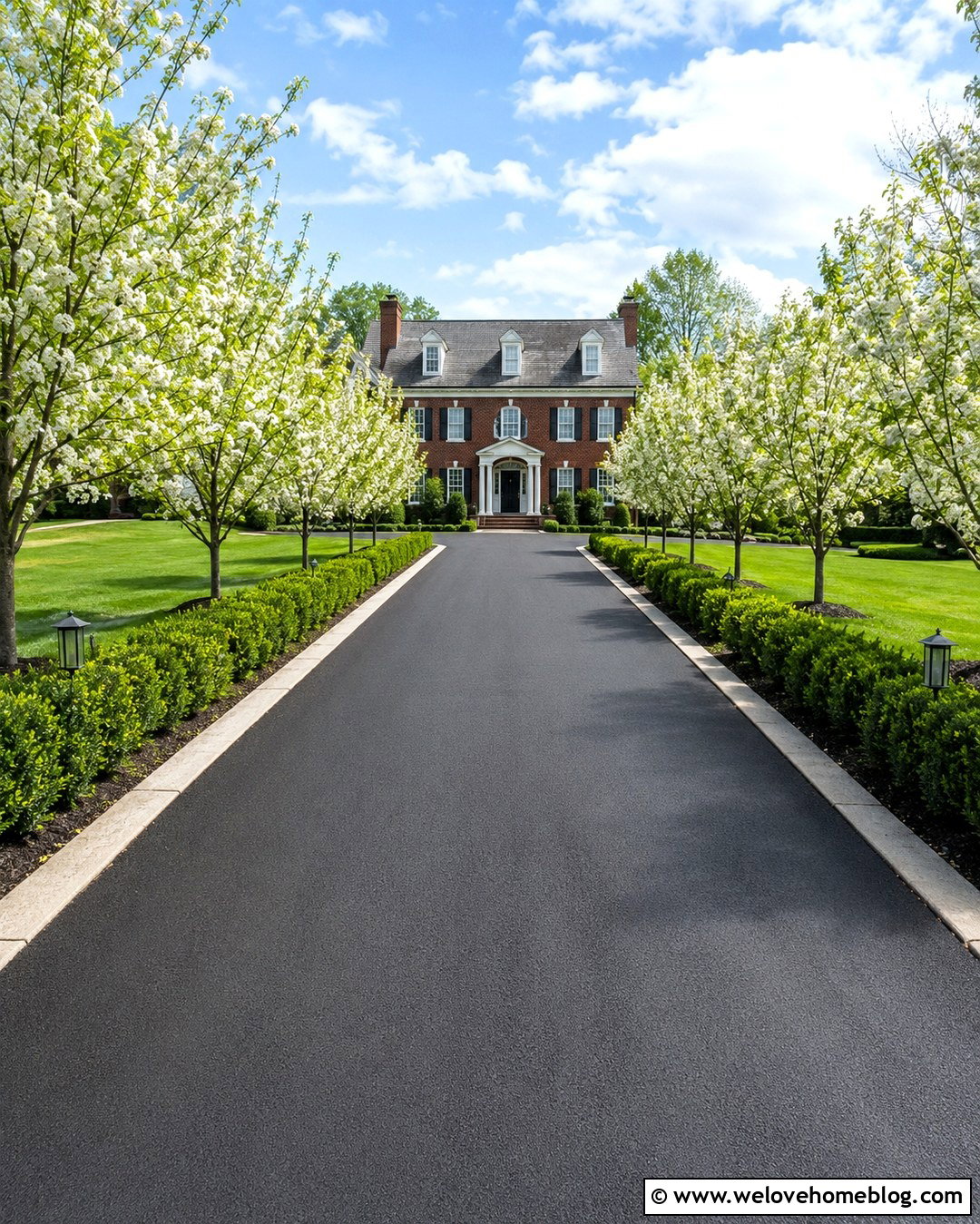
Black asphalt becomes much more attractive when bordered by orderly evergreen planting. A low clipped hedge creates a crisp green frame, while small flowering trees positioned farther from the pavement add height and seasonal interest. Use a light cobblestone or concrete curb between the hedge and asphalt to brighten the dark surface and protect plant roots from vehicle traffic. The hedge should remain low near the street so drivers can see pedestrians and approaching vehicles. Farther up the driveway, it can gradually become taller and merge with foundation planting. This formal arrangement complements colonial, Georgian, and traditional brick homes. Select an evergreen species suited to the site rather than assuming one hedge plant works everywhere. Regular spacing and restrained planting colors make an economical asphalt driveway look carefully designed. ()
5. Circular Paver Driveway With Central Garden

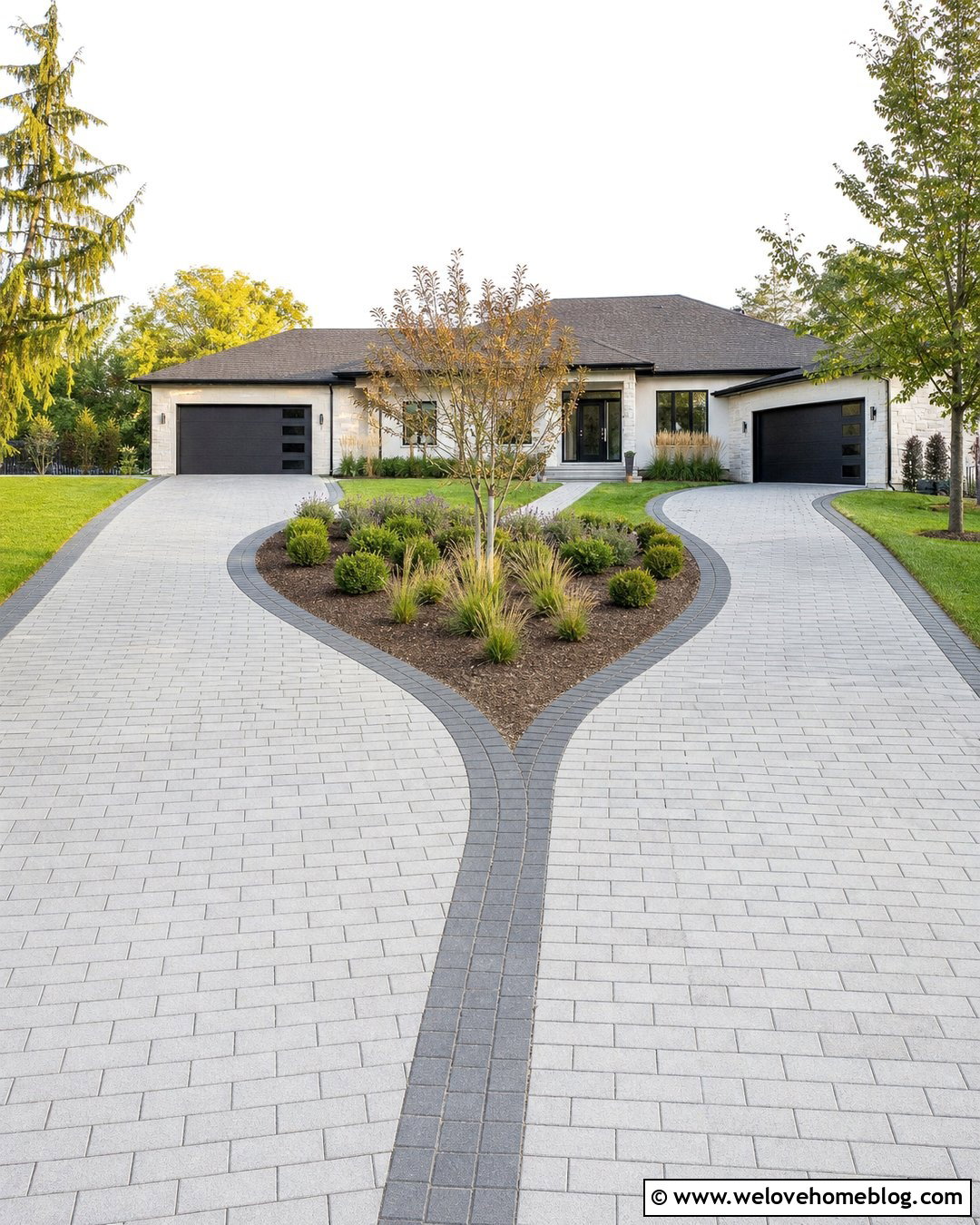
A circular driveway naturally creates space for a planted island that can become the front yard’s focal point. Install warm gray concrete pavers in a running-bond or fan pattern, then define the central bed with a contrasting paver border. Anchor the island with one appropriately sized ornamental tree and surround it with low shrubs, perennials, and ground cover. Keep plants shorter around the outer edge so the circle remains visible and easy to navigate. Repeating two or three plants from the island beside the house helps connect the driveway to the wider landscape. Before planting, confirm that the tree’s mature canopy and root system suit the available space. A clear ring of paving around the island also prevents branches and foliage from brushing passing vehicles. ()
6. Curved Resin Driveway With Ornamental Grasses
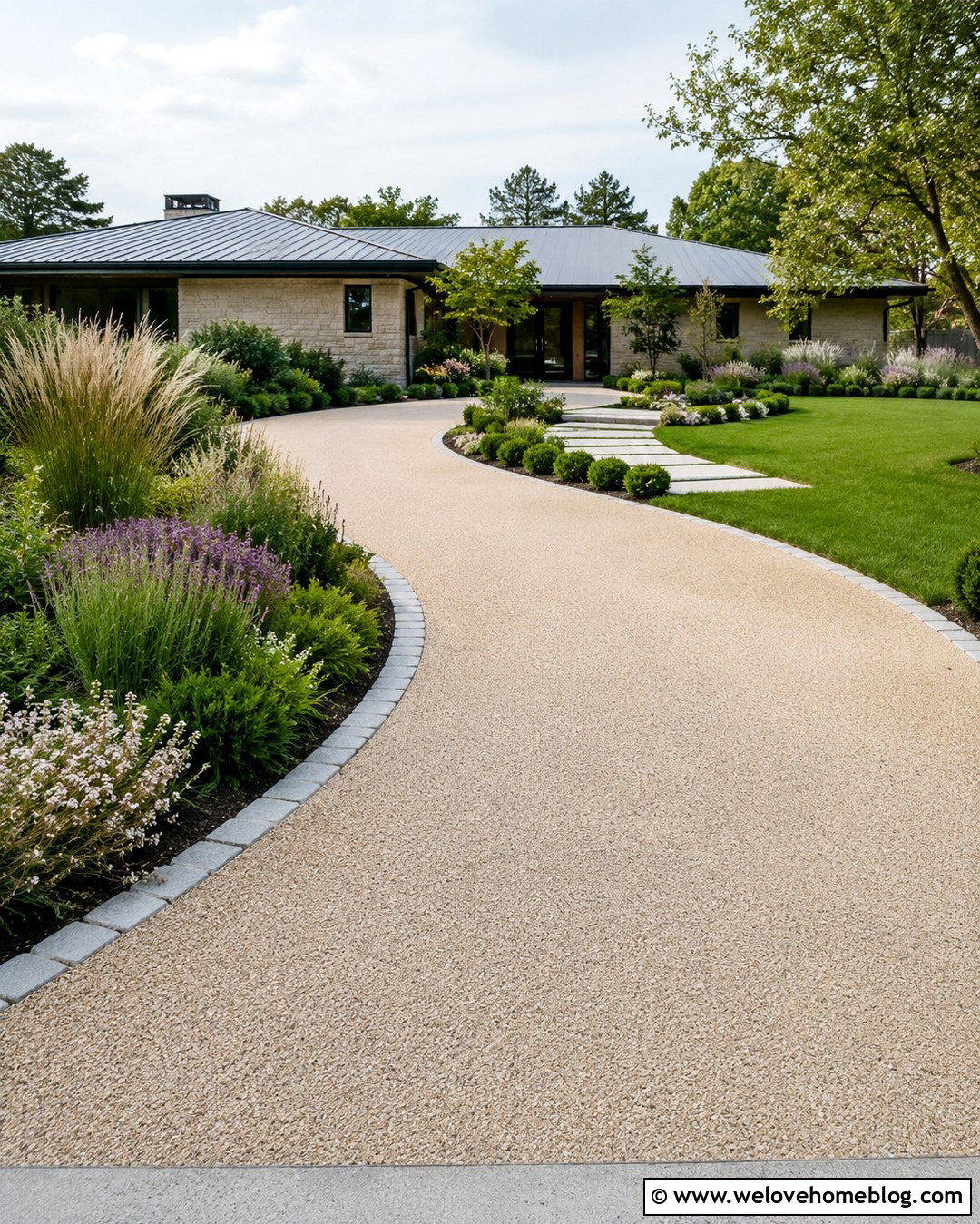
A pale resin-bound gravel driveway can follow a smooth curve through flowing beds of ornamental grasses. The fine, even surface provides a contemporary foundation, while repeated grass clumps soften the edges and reinforce the driveway’s movement. Combine grasses of different heights, but keep the tallest varieties set well back from intersections and parking areas. Low flowering perennials can fill the front of each bed without hiding the clean resin border. Use steel edging or a narrow granite sett band to create a precise transition between paving and soil. This look is especially effective with modern ranch houses and contemporary homes surrounded by open lawn. Choose noninvasive, climate-appropriate grasses and allow space for their mature width. The finished landscape feels airy, natural, and organized rather than wild.
7. Cobblestone Driveway With Flowering Trees
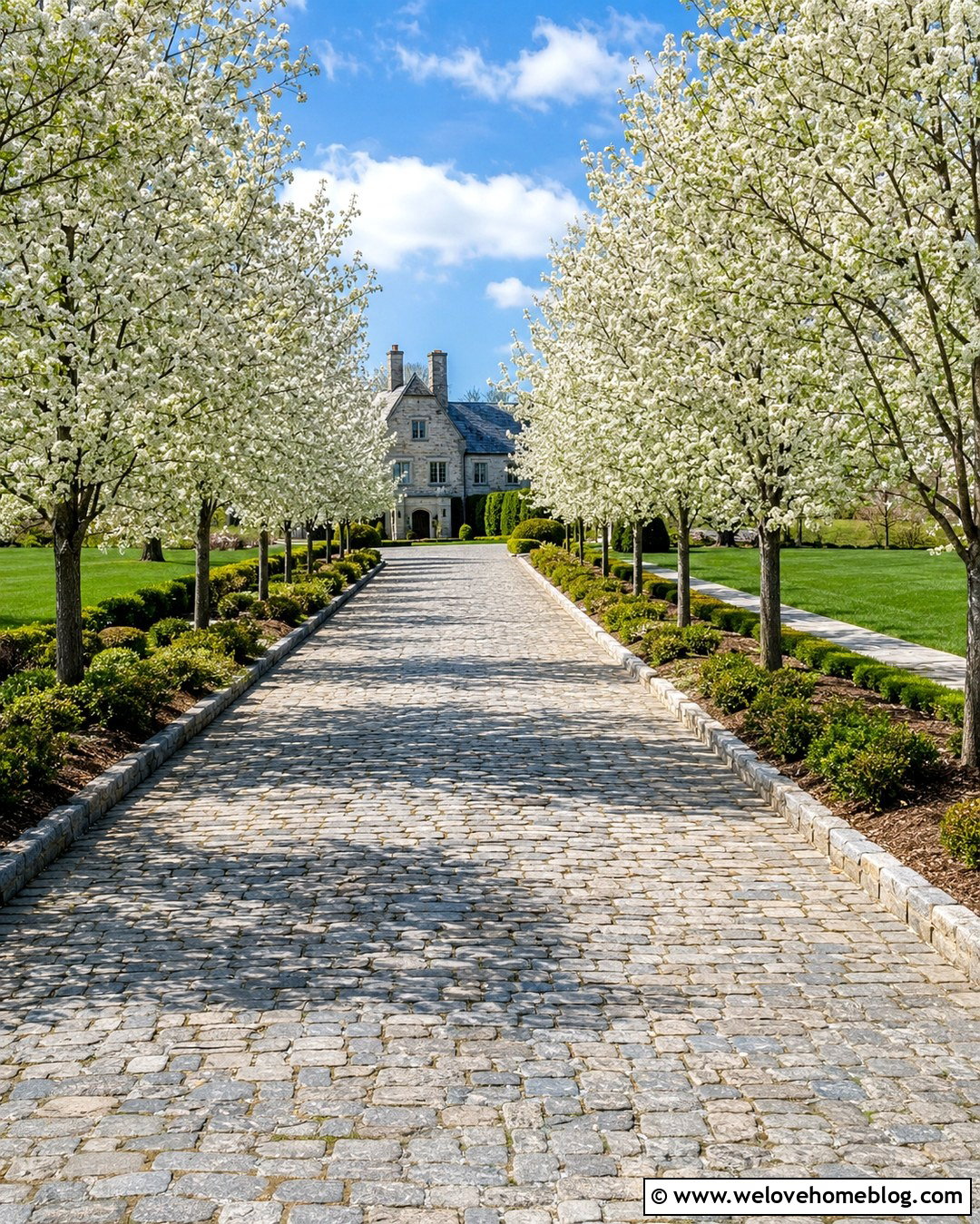
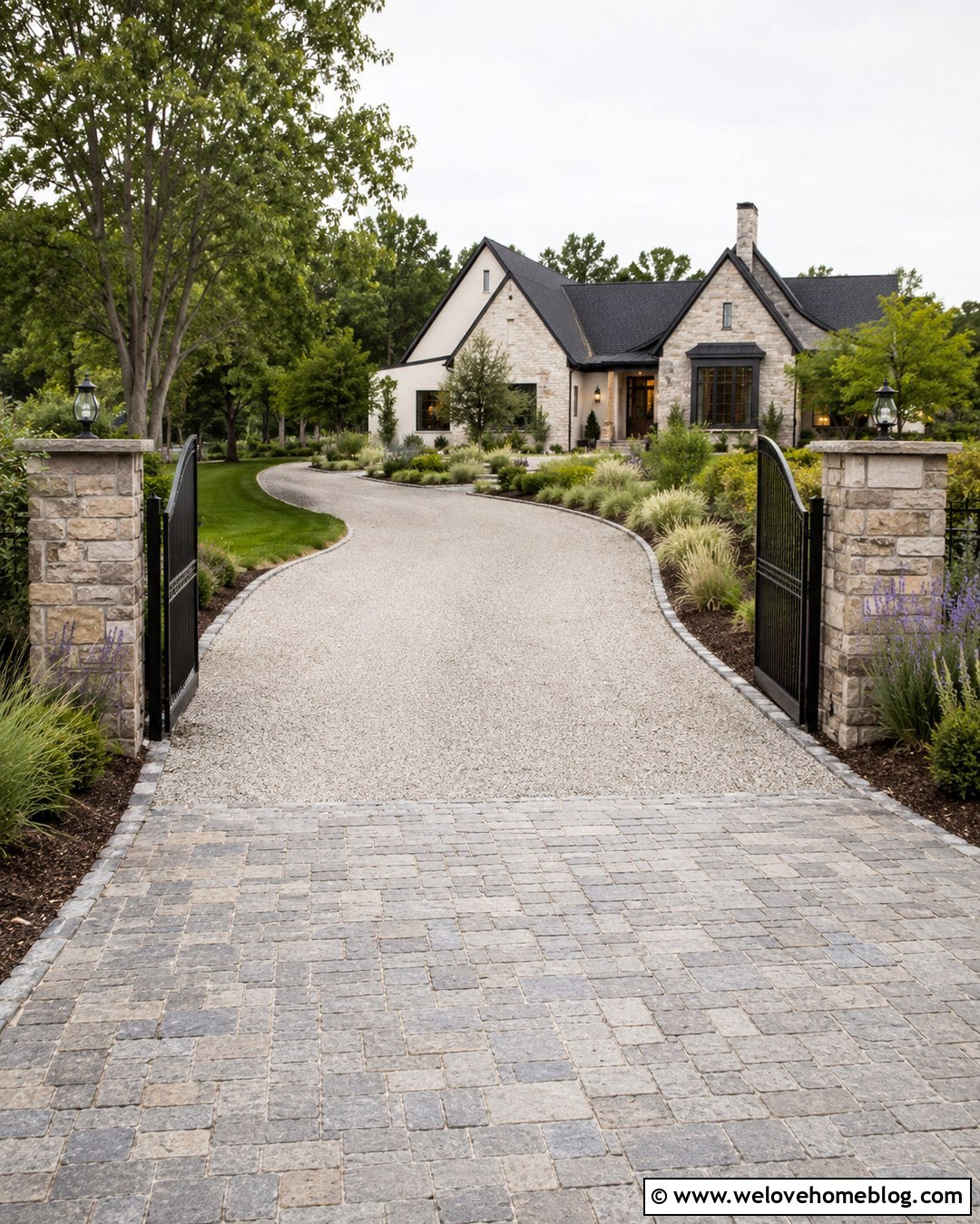
Few approaches feel as established as a cobblestone driveway lined with evenly spaced flowering trees. Place the trees in broad beds beyond a low stone curb, leaving enough clearance for open car doors, delivery vehicles, and the mature canopy. Underplant them with restrained sweeps of shade-tolerant ground cover or low evergreen shrubs. The repeated trunks create rhythm along a long driveway, while seasonal blossoms mark the arrival of spring. Irregular gray cobblestones suit traditional stone houses, country homes, and renovated historic properties. Consult local guidance before selecting trees because root behavior, overhead wires, winter conditions, and mature size all matter. Rather than planting many unrelated species, repeat one primary tree and a limited underplanting palette. This makes the entire approach appear longer, calmer, and more intentional. ()
8. Permeable Paver Driveway With Creeping Thyme
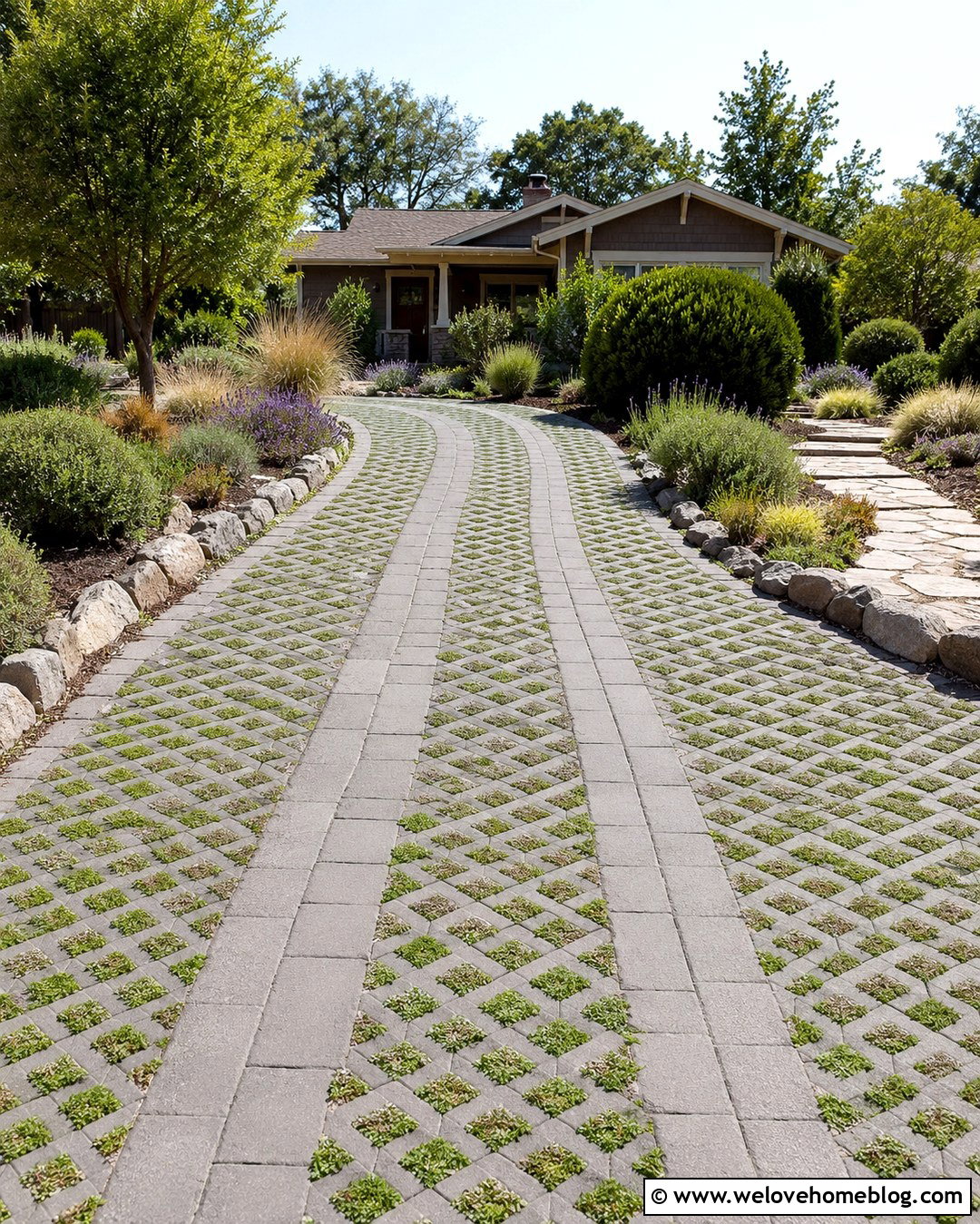
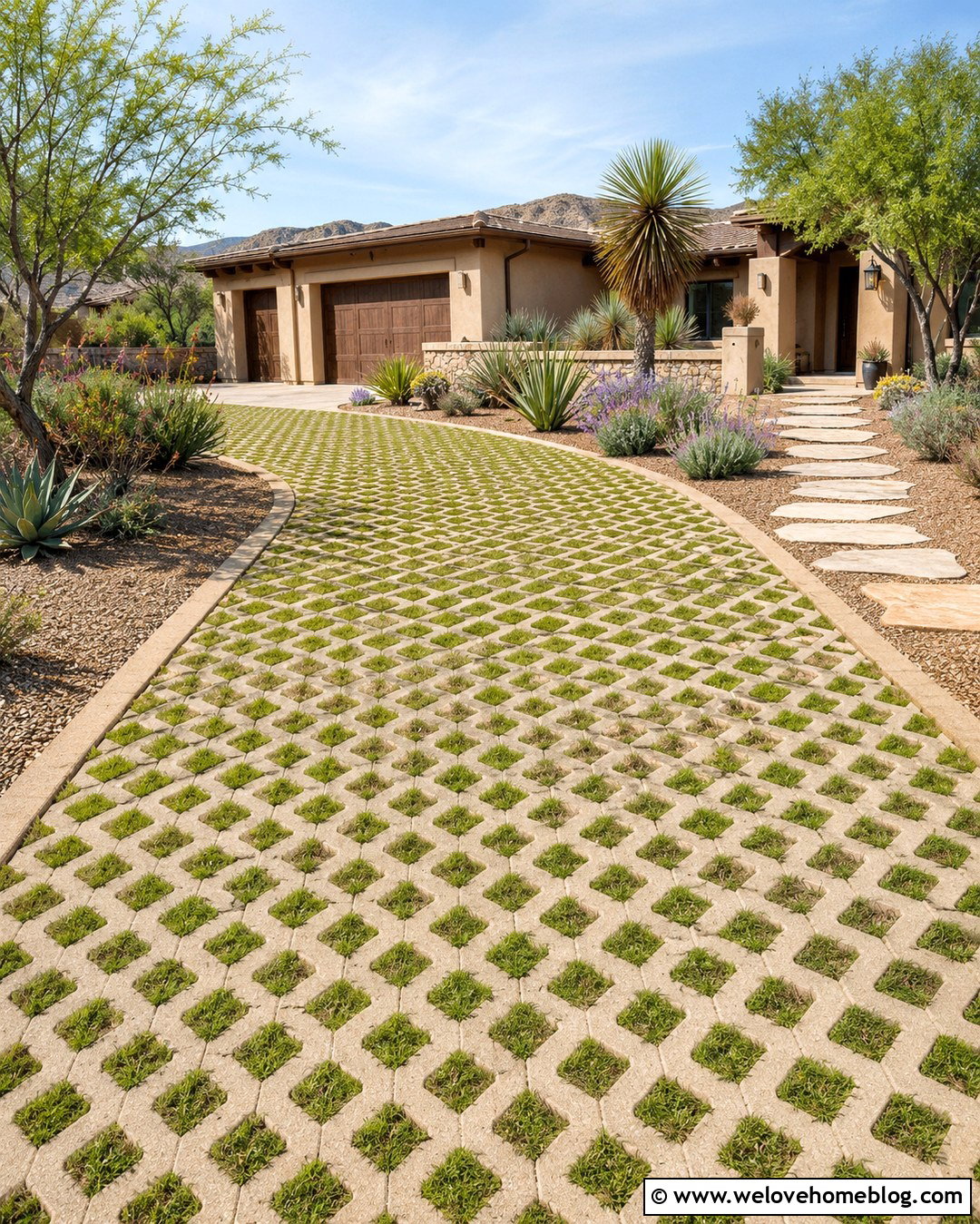
Concrete grid pavers filled with creeping thyme create a planted driveway where greenery becomes part of the surface. Use the reinforced pavers across lightly traveled areas and consider solid paver tracks where vehicle tires pass most often. Thyme generally favors sun and fast drainage, but the final ground cover should always match the region and expected traffic. Border the driveway with natural stone and continue the informal character through drought-tolerant herbs, small grasses, and rounded shrubs. A gently curved layout keeps the grid from looking too commercial. This design pairs beautifully with craftsman houses and compact cottages. Plan irrigation carefully during establishment, then reduce it according to plant needs. Regular trimming around the edges keeps the planted cells visible and prevents growth from obscuring nearby walkways or drainage points. ()
9. Exposed Aggregate Driveway With Desert Planting
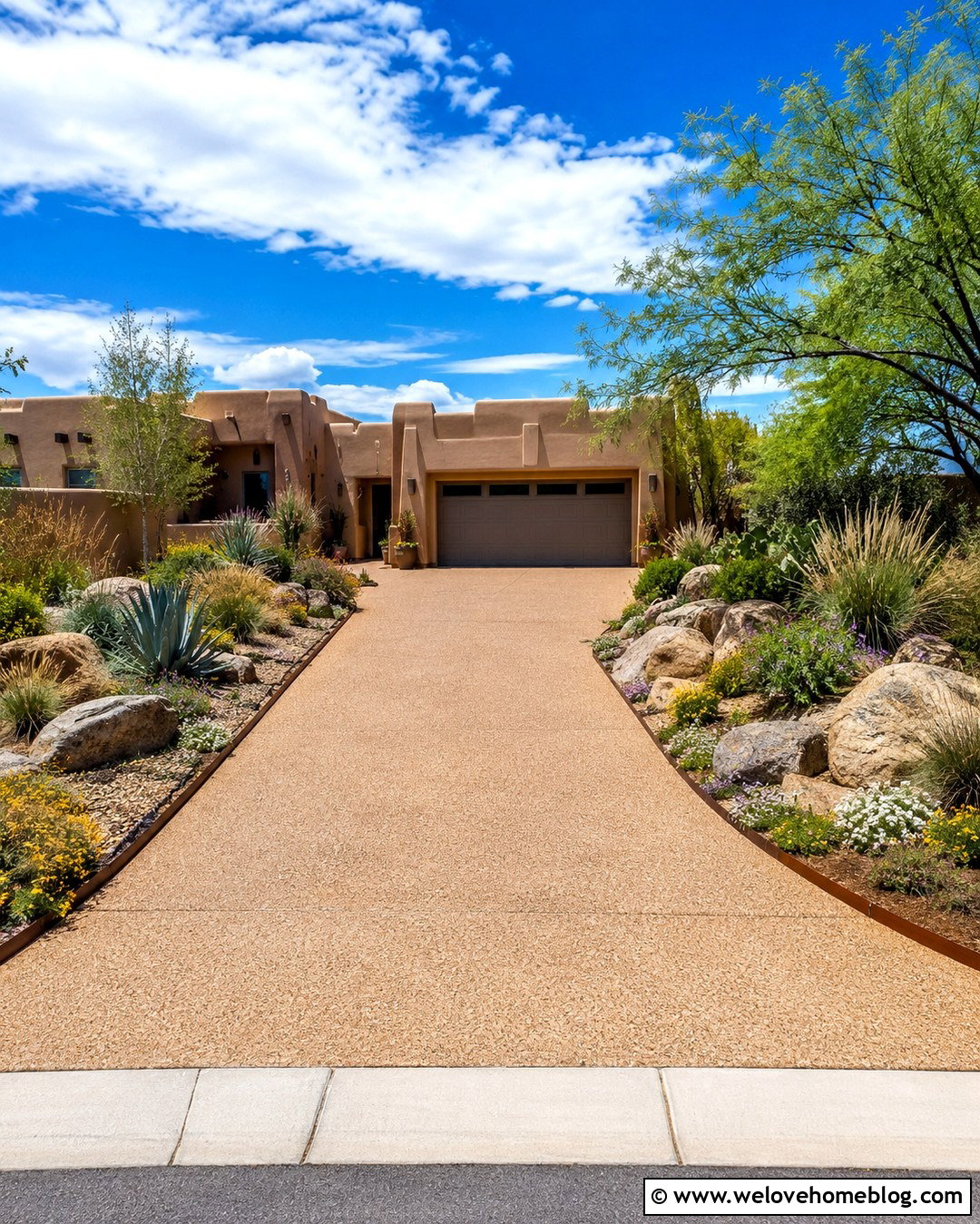
An exposed aggregate driveway surrounded by sculptural desert planting offers color and texture without requiring a lush lawn. Choose a warm sand-colored aggregate and frame it with weathered steel edging or broad bands of coordinating concrete. Arrange succulents, architectural grasses, flowering desert perennials, and decorative boulders in asymmetrical groups. Gravel mulch between plants visually connects the beds to the driveway while helping the composition remain clean. Keep sharp or spiny specimens away from passenger doors, walkways, and areas used by children. Low planting near the curb protects visibility, while taller accents can stand closer to the house. This planted approach complements Southwestern ranch homes, desert modern architecture, and stucco facades. Use locally appropriate plants and preserve natural drainage patterns instead of relying on a decorative design that ignores site conditions.
10. Crushed Limestone Driveway With Native Flowers
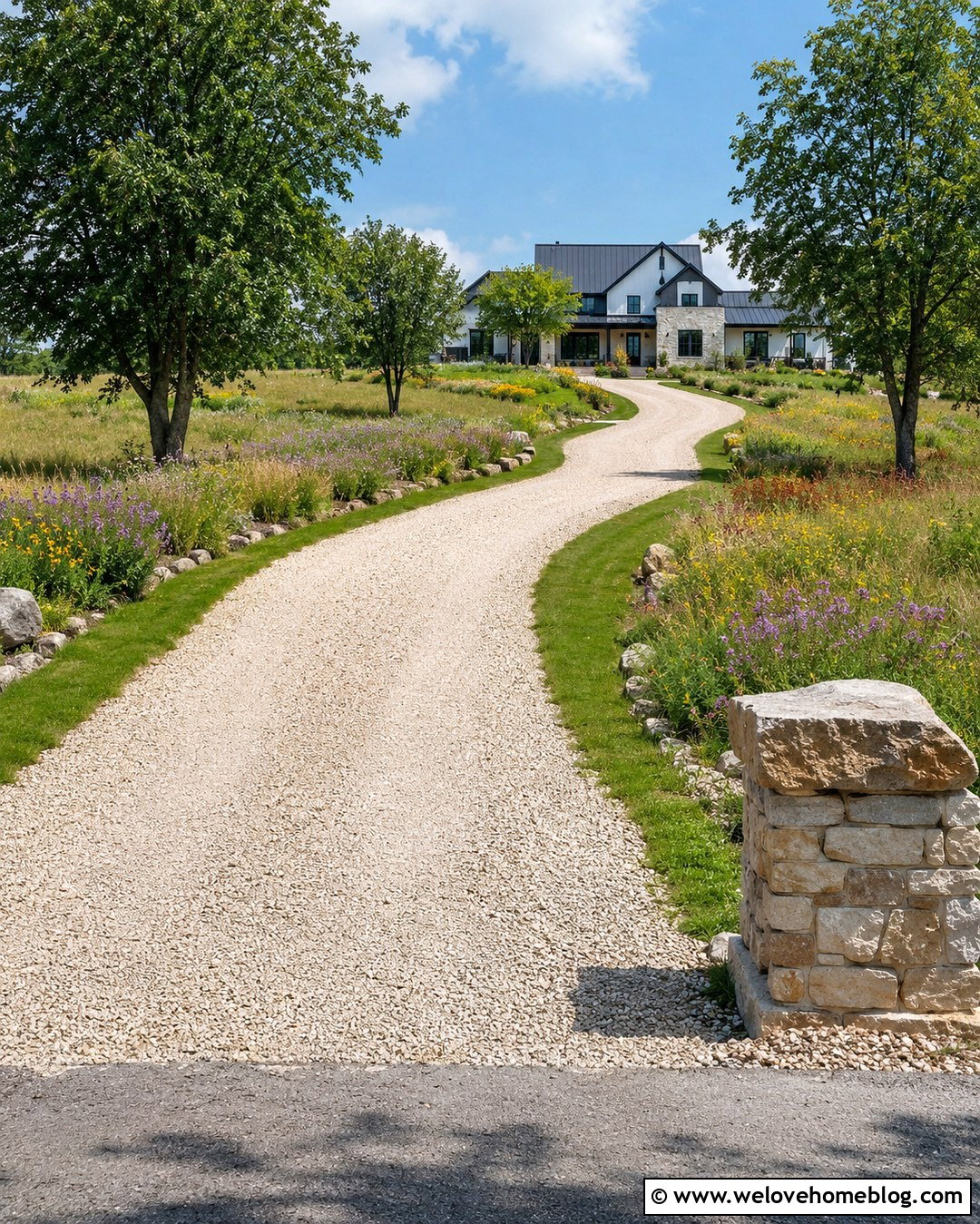
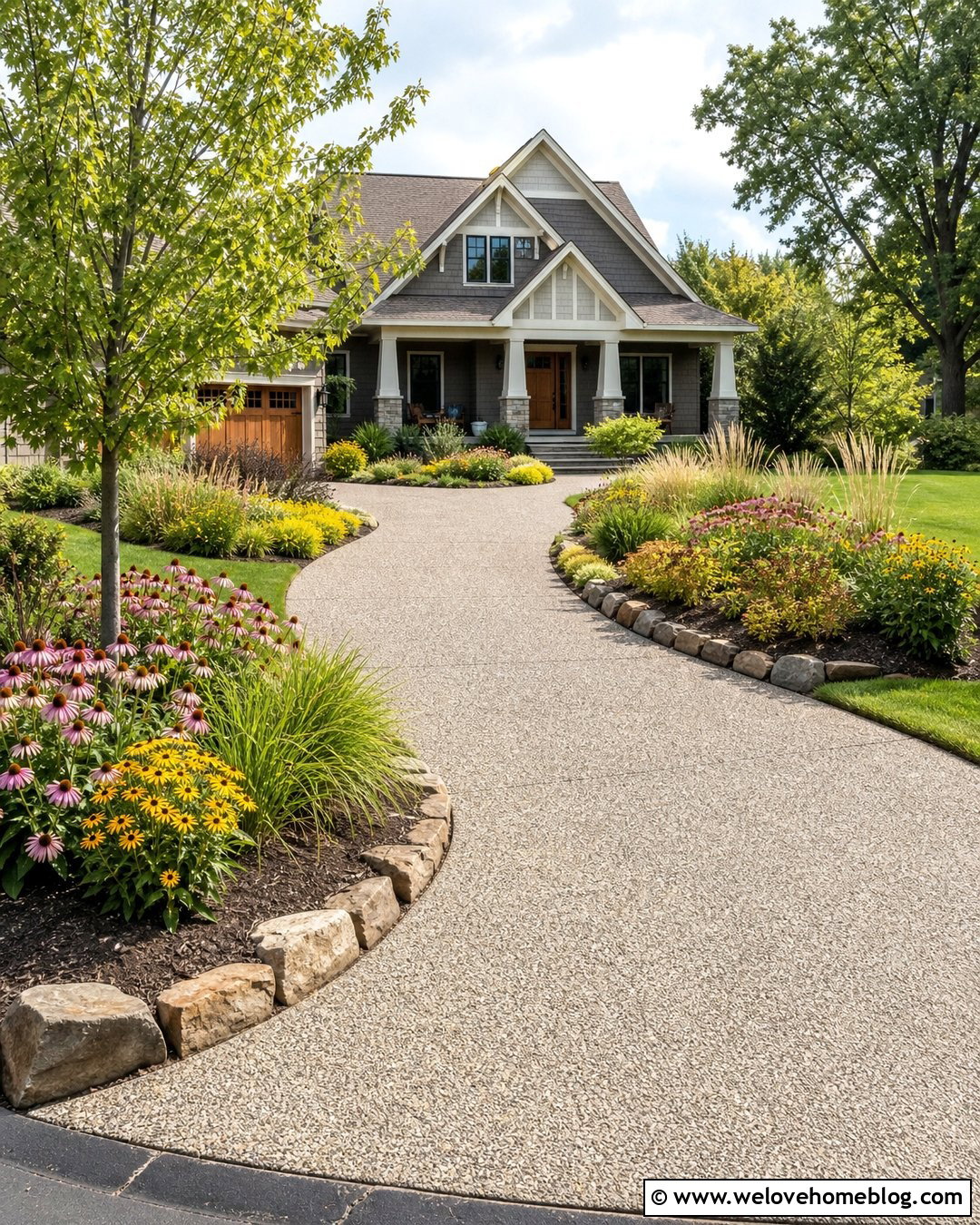
A crushed limestone driveway bordered by native wildflowers feels right at home on a rural property. Follow a gently winding route and contain the pale stone with timber, steel, or rough fieldstone edging. Instead of scattering seed directly beside the driving area, create defined beds with repeated groups of grasses and flowering plants. This keeps the border readable and reduces the chance of tall stems falling across the driveway. Mow or trim a narrow maintenance strip along the edge for additional separation. Near the entrance, use shorter species and a simple stone address marker to maintain clear sightlines. Plants native to the region can be selected for the property’s actual soil, rainfall, and sun exposure. The combination gives a farmhouse or country home a natural approach that still looks planned. ()
11. Modern Concrete Driveway With Raised Planters
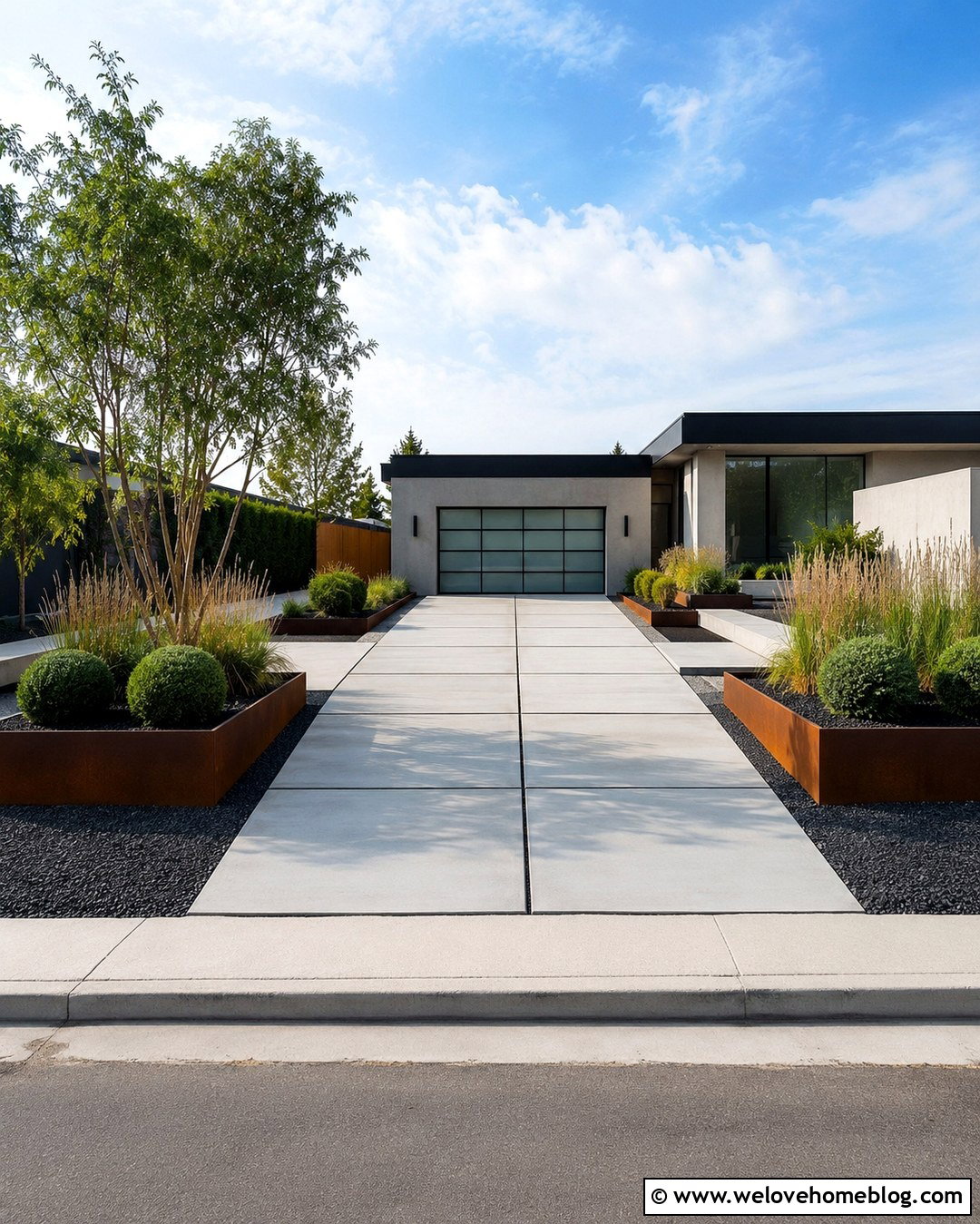
Wide gray poured-concrete panels gain dimension when paired with raised planters in a modern front yard. Position long rectangular planters beside the driveway rather than narrowing the vehicle path. Corten steel, smooth stucco, or dark masonry can provide a strong contrast with the concrete. Fill the beds with a limited palette, such as rounded evergreen shrubs, upright grasses, and one sculptural multi-stem tree. Repeating the same plants is usually more effective than introducing a different specimen in every section. Match the driveway control joints with the lines of the planters and front walkway for a unified layout. Include drainage outlets so water does not collect behind the walls. The finished look works best with contemporary architecture, where clean geometry, open space, and carefully restrained planting support the house instead of competing with it. ()
12. Farmhouse Gravel Driveway With Hydrangeas
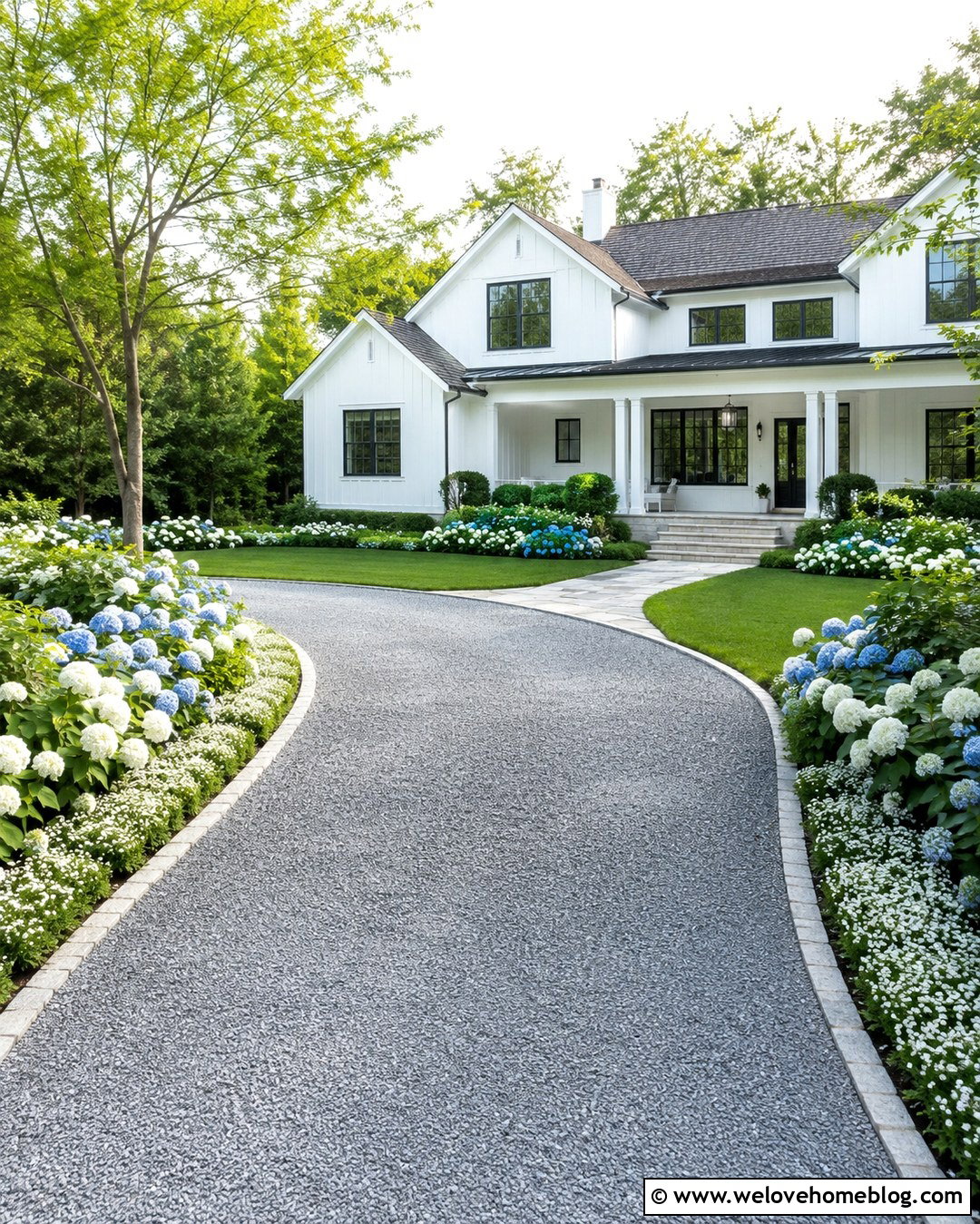
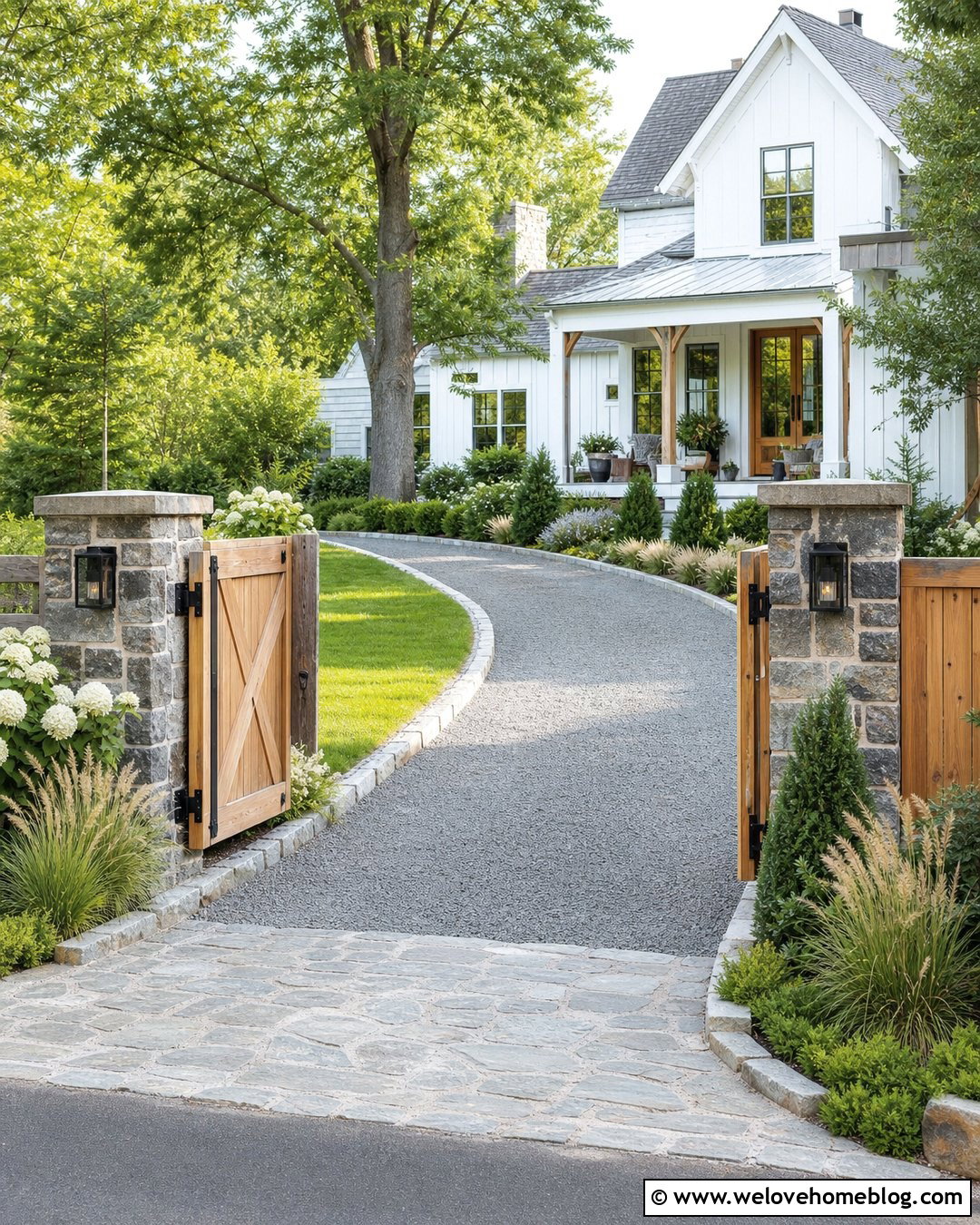
A gray gravel driveway bordered by hydrangeas creates a soft, welcoming approach to a modern farmhouse. Use brick or granite setts along the edge to contain the gravel and provide a neat line beside the planting beds. Place the shrubs far enough back to accommodate their mature width and prevent flowers from brushing vehicles. Lower perennials or ground cover can fill the space between the border and the hydrangeas. Near the road, switch to compact planting so the entrance remains open and visible. White, green, or muted blue flowers coordinate naturally with pale siding, dark windows, and timber accents. Hydrangea performance varies by species, climate, sunlight, and soil, so select a suitable local variety. Repeating the same shrubs near the porch helps the driveway and house feel like one landscape.
13. Colonial Brick Driveway With Boxwood Borders
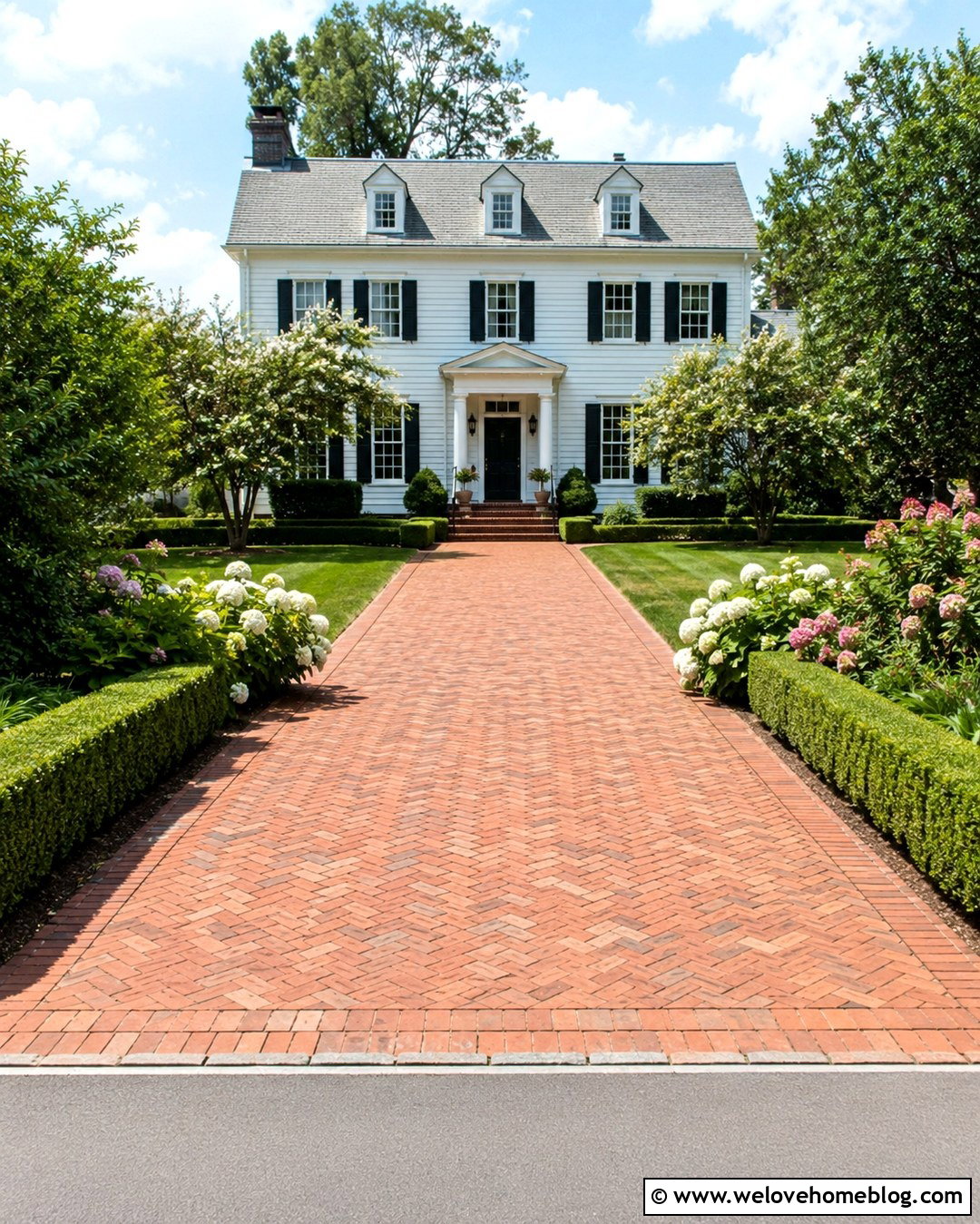
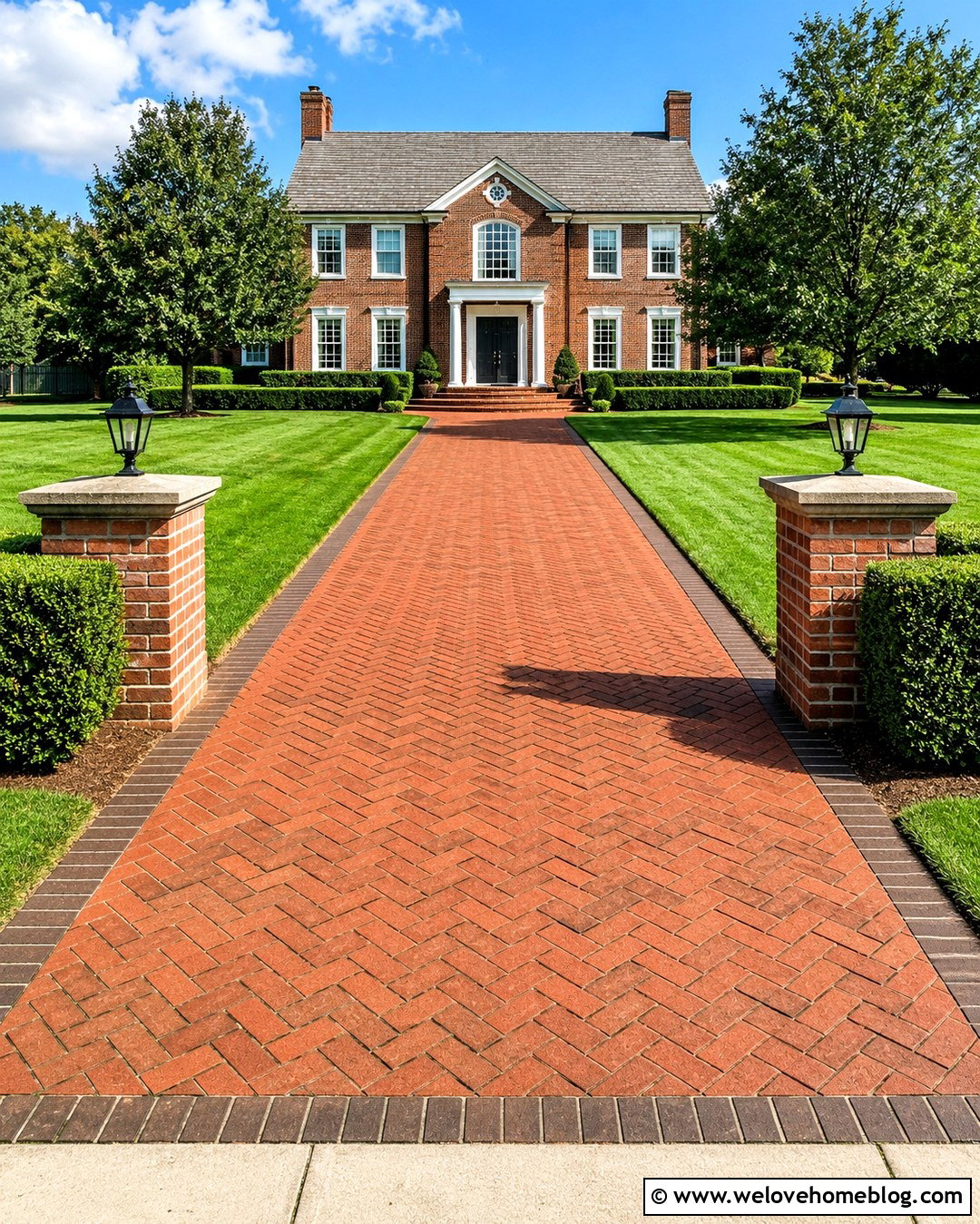
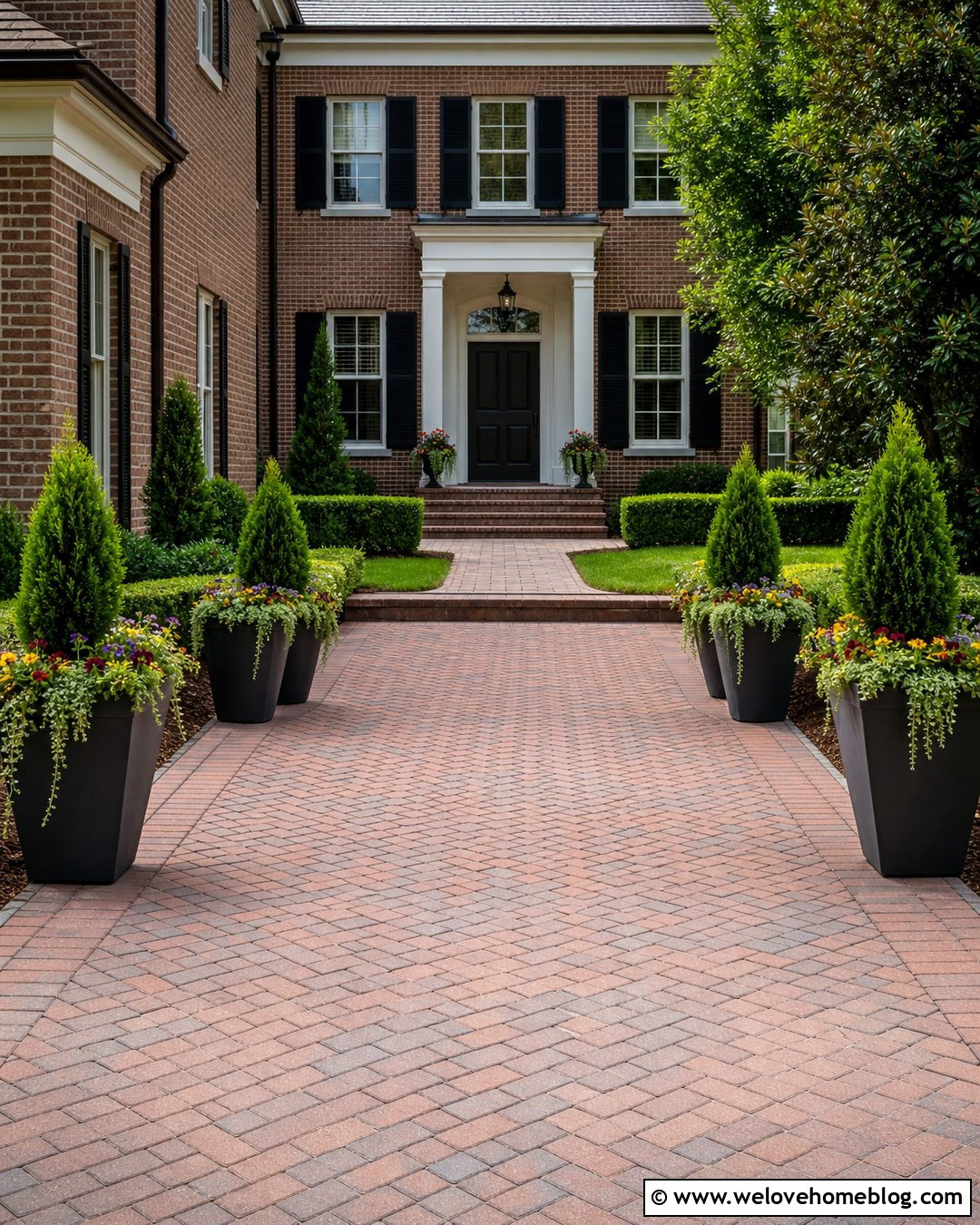
Red clay brick pavers and clipped evergreen borders create a formal planted driveway for a colonial home. Lay the brick in herringbone and add a soldier-course edge to strengthen the visual outline. Run a low hedge along each side, leaving practical breaks for the front walkway, utility access, and passenger doors. Behind the hedge, plant small flowering shrubs and restrained seasonal perennials in symmetrical groups. Matching beds on both sides reinforce the balanced architecture commonly associated with colonial facades. Keep the plants around the street entrance low enough to preserve safe views in both directions. Since hedge suitability varies by climate and pest pressure, choose a locally reliable evergreen rather than focusing on appearance alone. Crisp edging, repeated planting, and traditional brick colors give this driveway structure throughout the year. ()
14. Ranch Asphalt Driveway With Native Shrubs
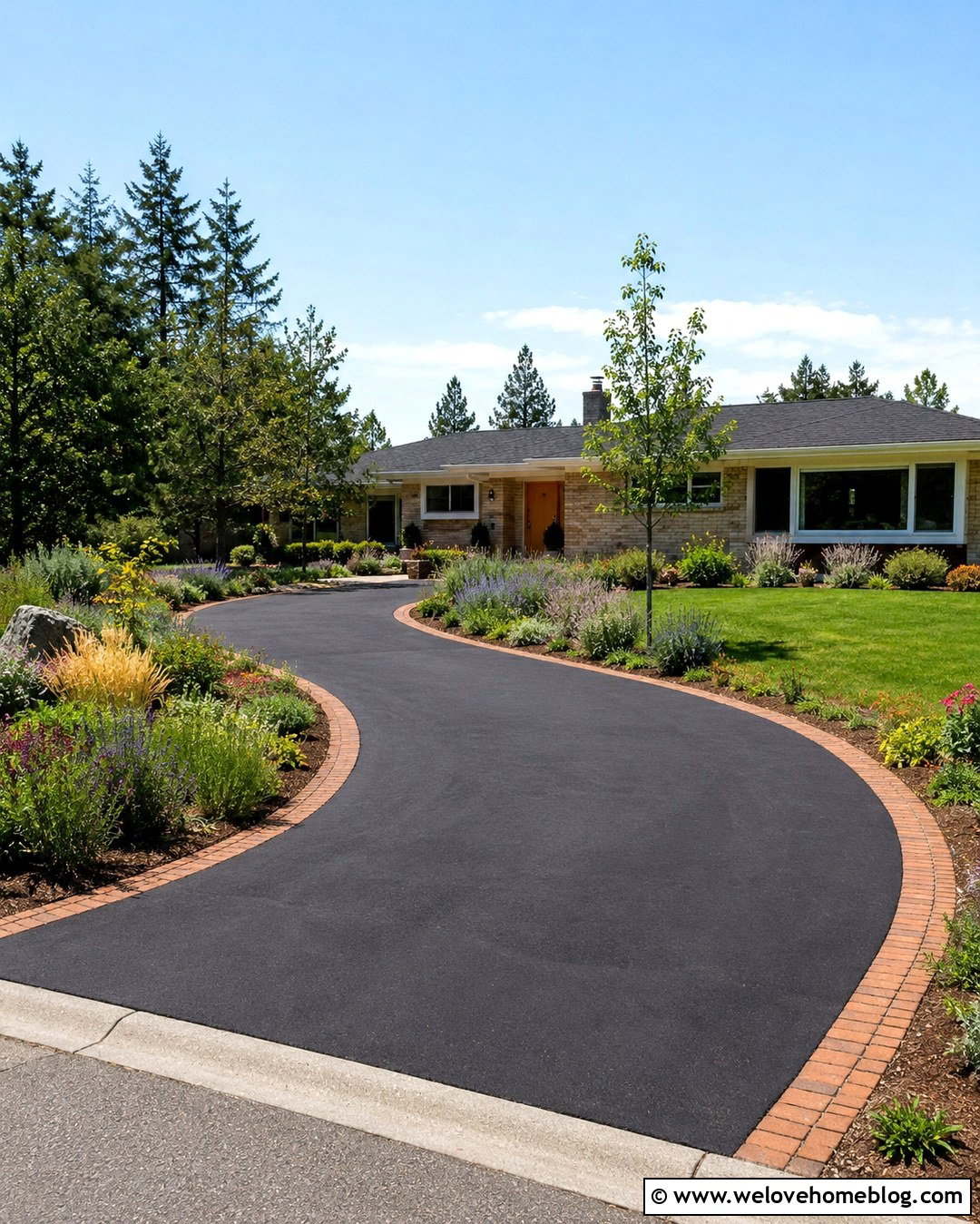
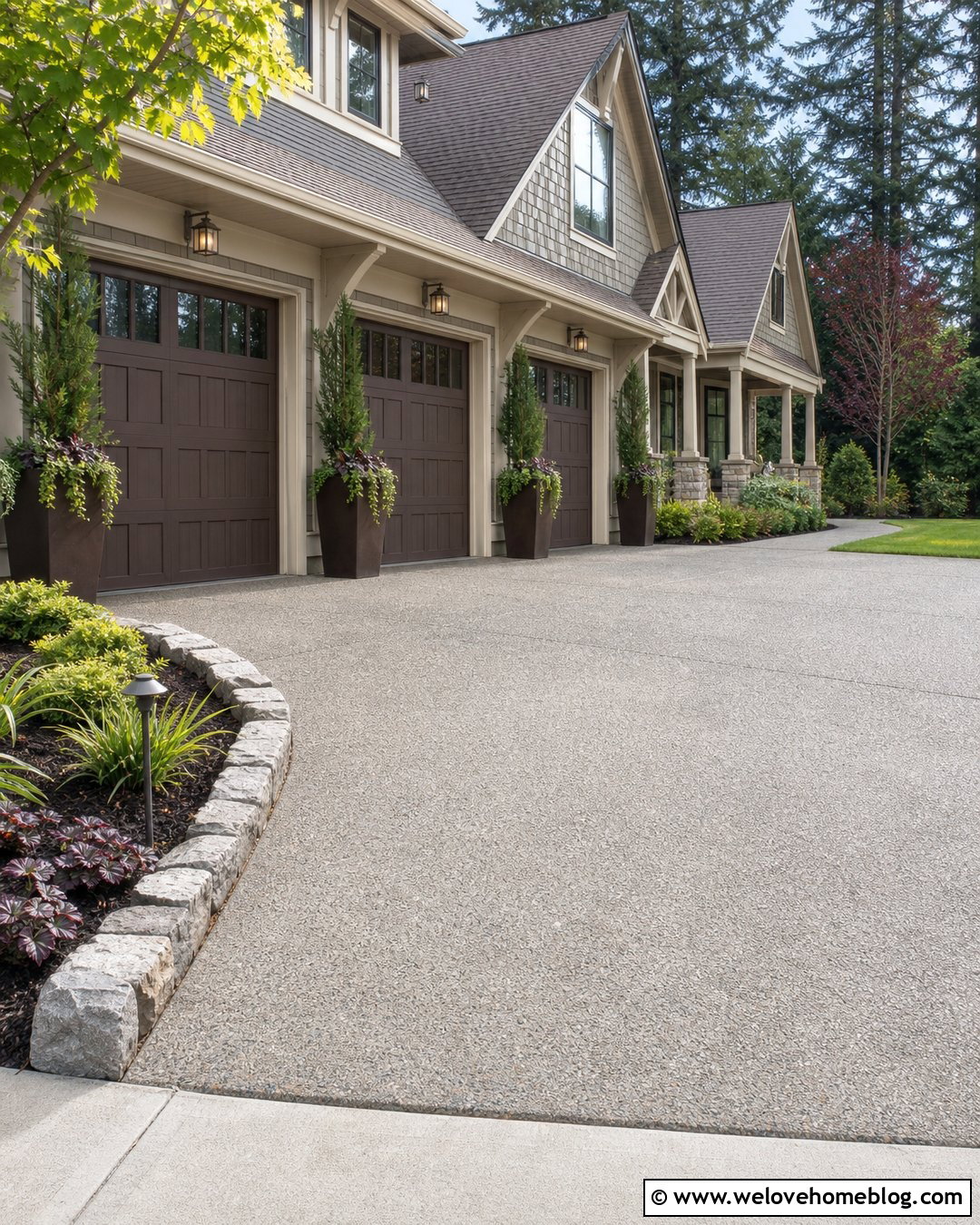
A broad asphalt driveway beside a ranch house can feel less dominant when surrounded by sweeping native shrub beds. Add a warm-toned concrete or brick ribbon around the asphalt, then shape the beds into wide curves that reflect the home’s low horizontal lines. Use compact evergreen shrubs as the backbone, with flowering natives and ornamental grasses placed in repeated clusters. Avoid narrow beds filled with oversized plants, as they can quickly crowd the driveway. A small specimen tree near the garage can balance the composition without blocking the house. Gravel mulch provides a tidy transition in dry climates, while organic mulch may be appropriate elsewhere. The goal is not to hide the asphalt completely. Instead, the planting should frame it, reduce its visual weight, and connect the practical surface to the surrounding yard.
15. Narrow Concrete Driveway With Trellis Planting
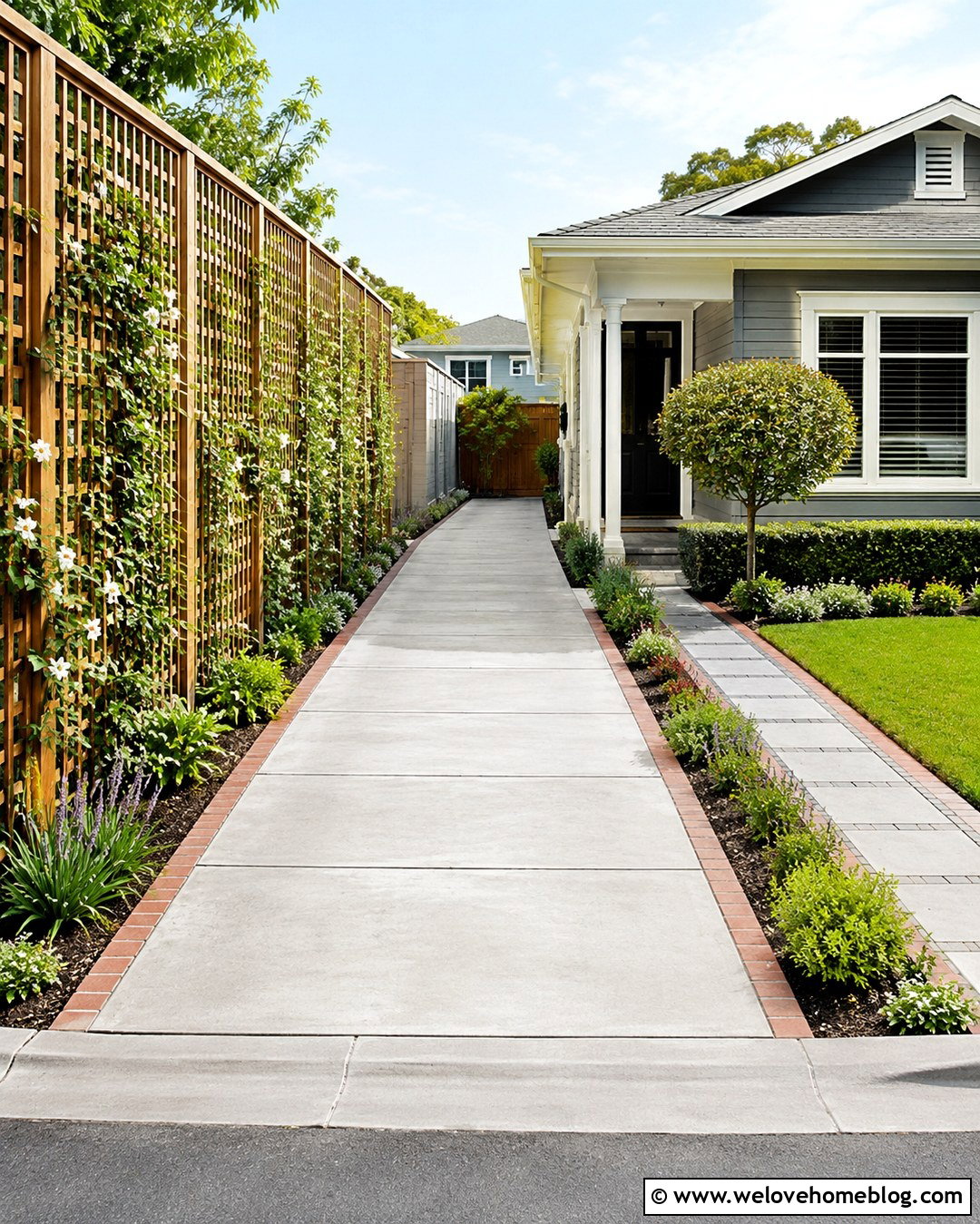
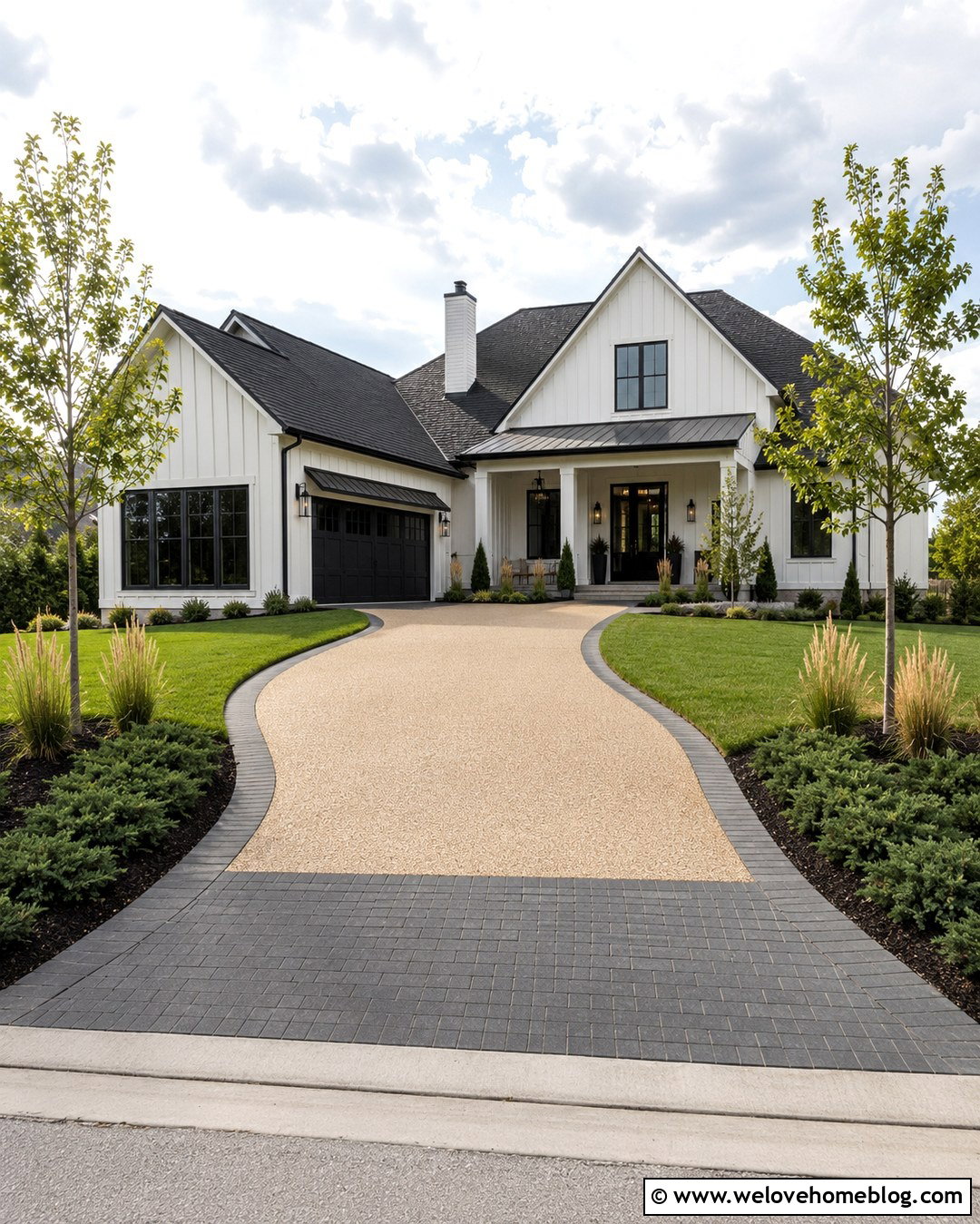
When side space is limited, a narrow concrete driveway can use vertical planting instead of deep garden beds. Install a sturdy trellis along a fence or blank garage wall, keeping the structure and mature vines safely outside the vehicle clearance zone. Select a manageable, noninvasive climbing plant suited to the sun exposure and local climate. At ground level, create a slim border of low grasses or compact perennials behind a flush brick edge. Scored concrete panels can visually widen the driveway, while a contrasting walkway separates pedestrians from parked vehicles. This arrangement is useful for small urban homes, bungalows, and properties with close side boundaries. Maintain access to utility equipment and keep foliage away from exterior vents. Vertical greenery delivers softness without sacrificing the limited width needed for parking and movement.
16. Sloped Driveway With Terraced Planting Beds
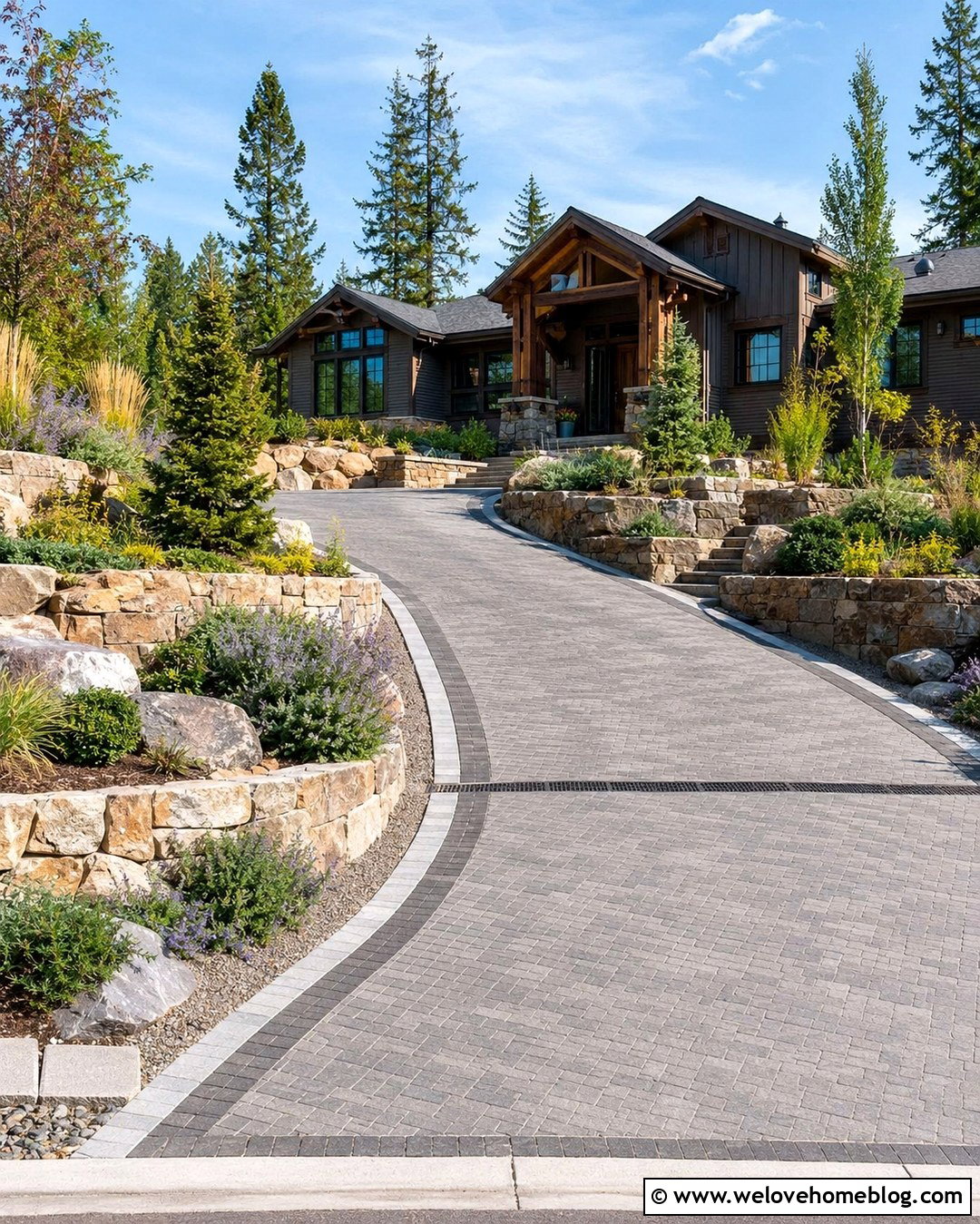
A sloped driveway benefits from terraced planting that makes the grade change look deliberate. Use textured concrete or concrete pavers for reliable visual definition, then build low retaining walls parallel to the driveway. Set each wall back from the pavement so runoff, soil, and mulch do not spill onto the driving surface. Plant the terraces in layers, with low ground covers near the edge, spreading shrubs in the middle, and small trees or taller grasses at the top. Repeating plants across multiple levels ties the slope together. Drainage should be designed before planting because walls and beds can redirect water in unexpected ways. Natural stone walls suit craftsman or mountain homes, while smooth block walls complement modern architecture. The result is a stable-looking, garden-rich entrance rather than an exposed bank. ()
17. Woodland Gravel Driveway With Fern Borders
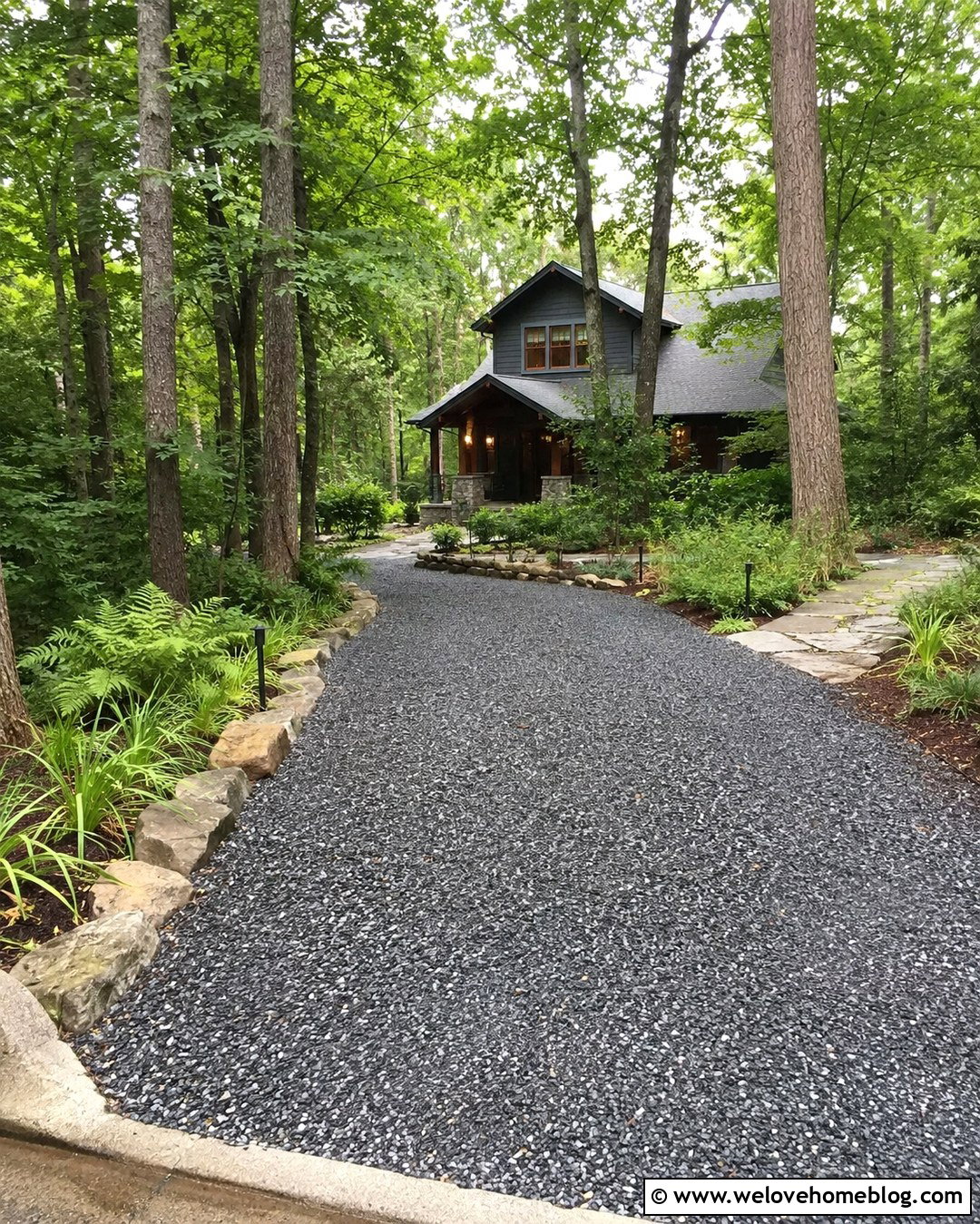
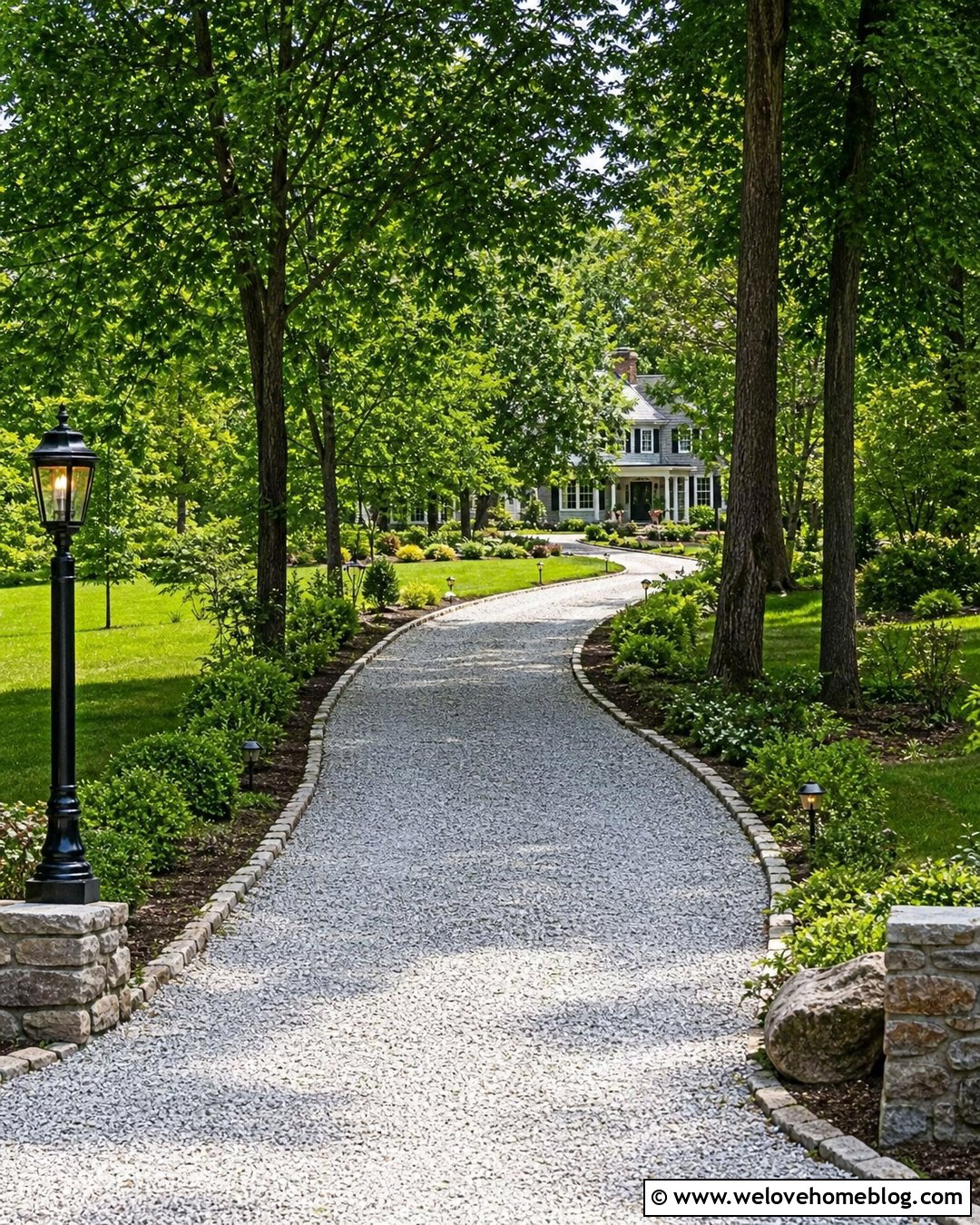
A shaded gravel driveway can blend into a wooded property through broad beds of ferns, sedges, and shade-tolerant shrubs. Use charcoal or brown crushed gravel so the surface feels connected to tree bark and forest soil. Natural stone edging provides definition without introducing a harsh, highly polished border. Follow a gentle curve around established trees rather than placing paving too close to major trunks. Layer low ground cover at the driveway edge, ferns through the middle, and shrubs toward the wooded background. The planting should reflect actual moisture levels, since not every shade plant tolerates dry soil under mature trees. Add discreet bollard lighting where the approach needs greater visibility. This complete look works beautifully with cabins, craftsman homes, and dark-sided contemporary houses, creating a quiet transition from road to residence.
18. Coastal Shell Driveway With Beach Grasses
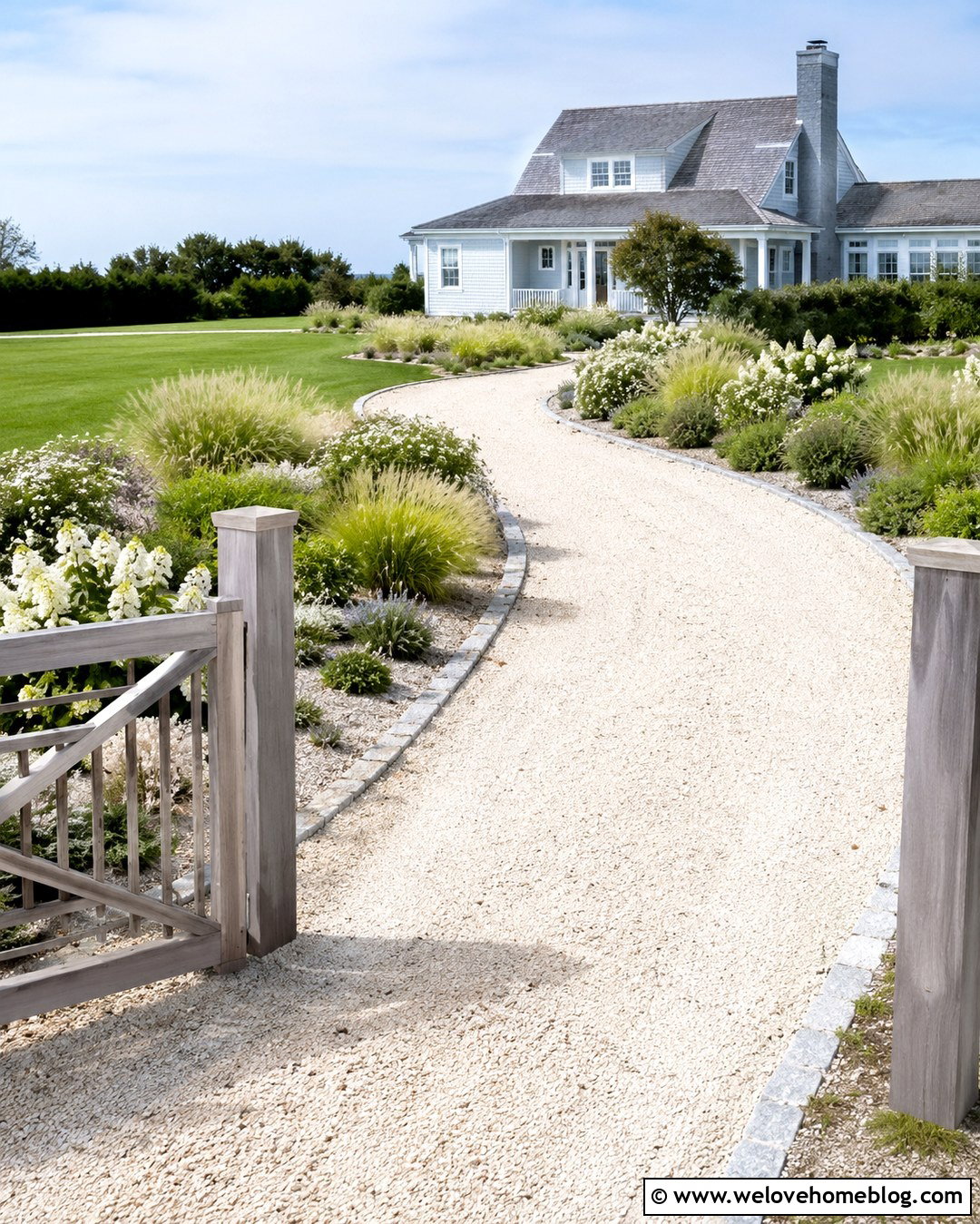
A crushed-shell driveway framed by airy coastal planting creates a bright approach for a beach house or coastal cottage. Keep the driveway straight or softly curved and contain the shell with pale granite setts. Plant salt-tolerant grasses, compact flowering shrubs, and low ground covers in broad drifts rather than formal rows. Their movement softens the hardscape while preserving the open feeling associated with coastal landscapes. Use a sandy gravel mulch to unify the beds and reduce the visual contrast between planting and driveway. Near the entrance, a simple timber gate or stone pillar can add definition without feeling heavy. Confirm that crushed shell is permitted and practical in the local area before installation. Choose plants according to wind, salt exposure, drainage, and regional growing conditions so the landscape remains durable as well as attractive.
19. Mediterranean Gravel Driveway With Olive Trees
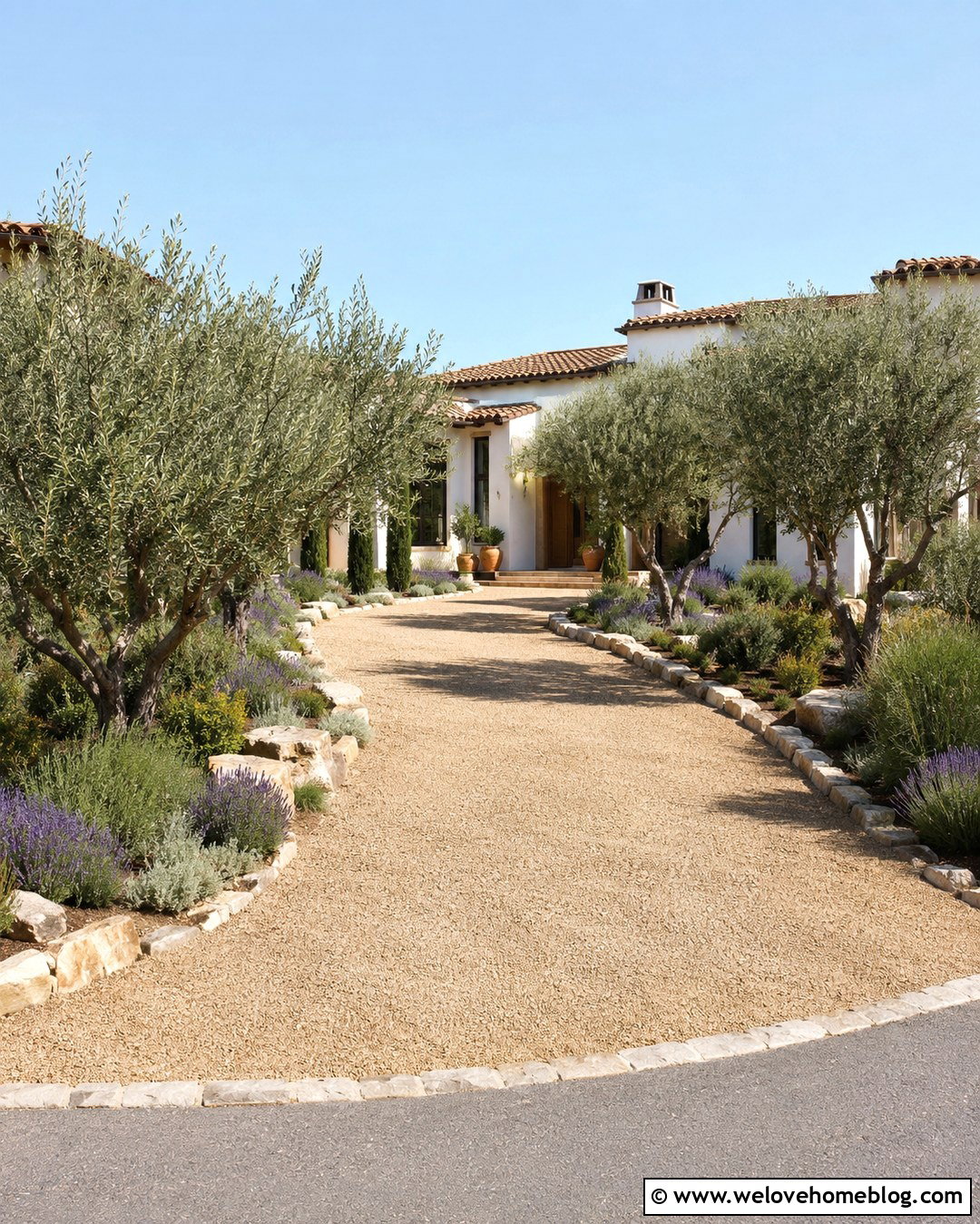
A buff gravel driveway lined with silvery planting creates a warm Mediterranean-inspired entrance. Use a curved layout leading to a stucco house and define the edges with weathered limestone or terracotta brick. Place olive trees or suitable regional substitutes in spacious beds, then underplant them with lavender-like perennials, rosemary-like shrubs, ornamental grasses, and pale gravel mulch. Keep woody herbs trimmed away from the vehicle path and allow plenty of room for mature tree crowns. Large clay planters can mark the transition from driveway to front walkway without obstructing movement. The restricted palette of silver foliage, muted green, purple flowers, and warm stone makes the design feel cohesive. In colder or wetter regions, recreate the appearance with hardy plants that provide similar foliage, texture, and structure rather than forcing unsuitable Mediterranean species.
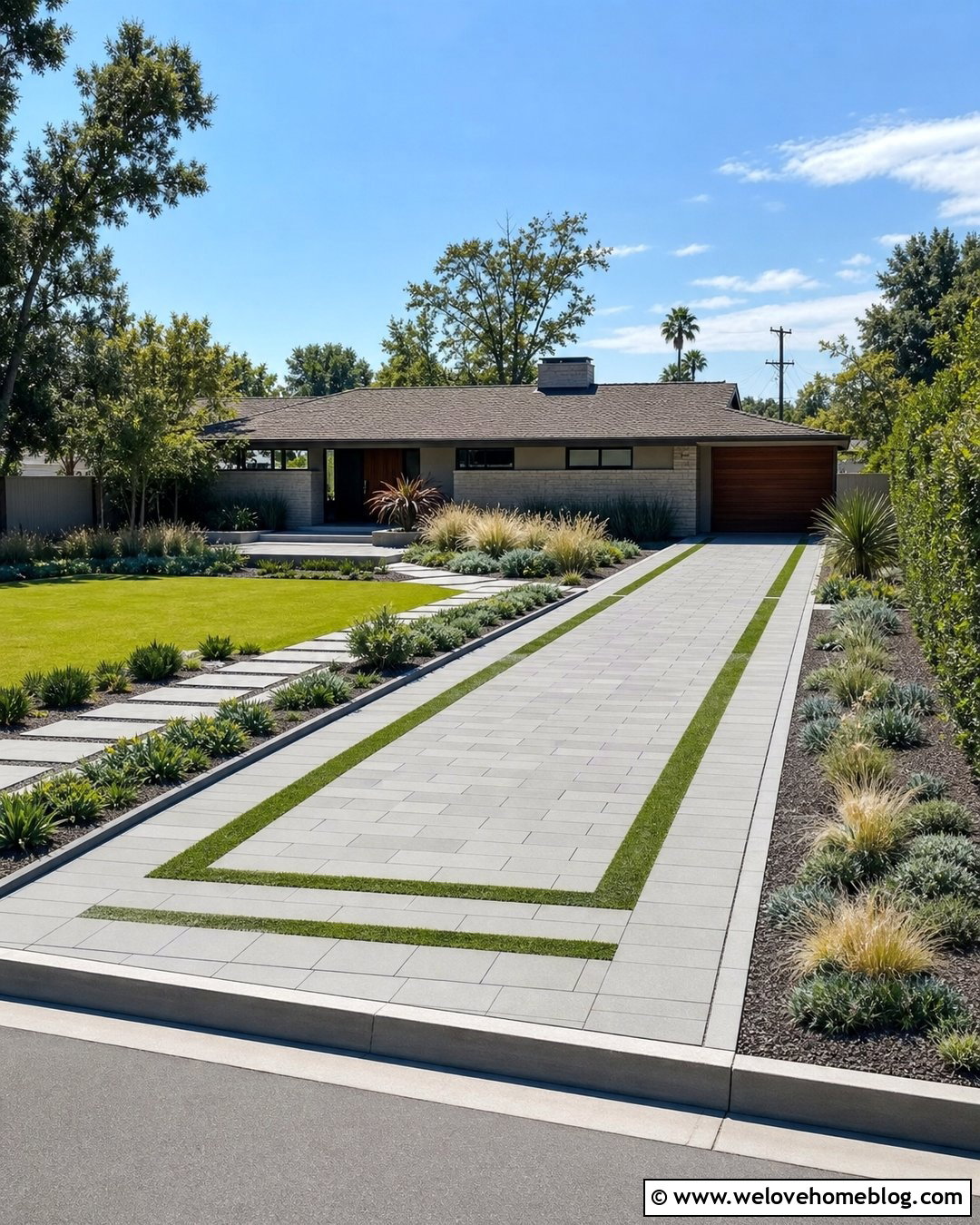
20. Tropical Paver Driveway With Layered Planting
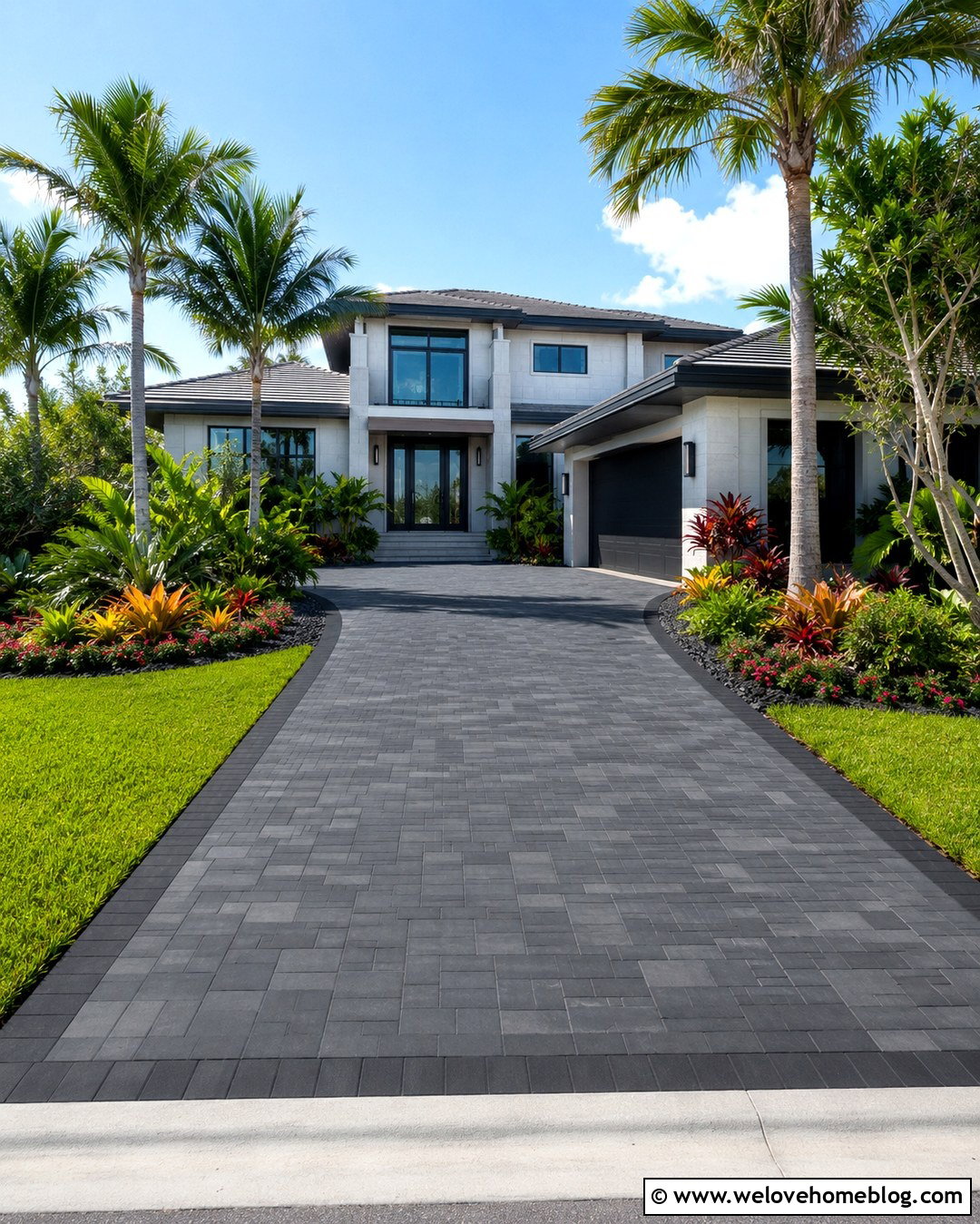
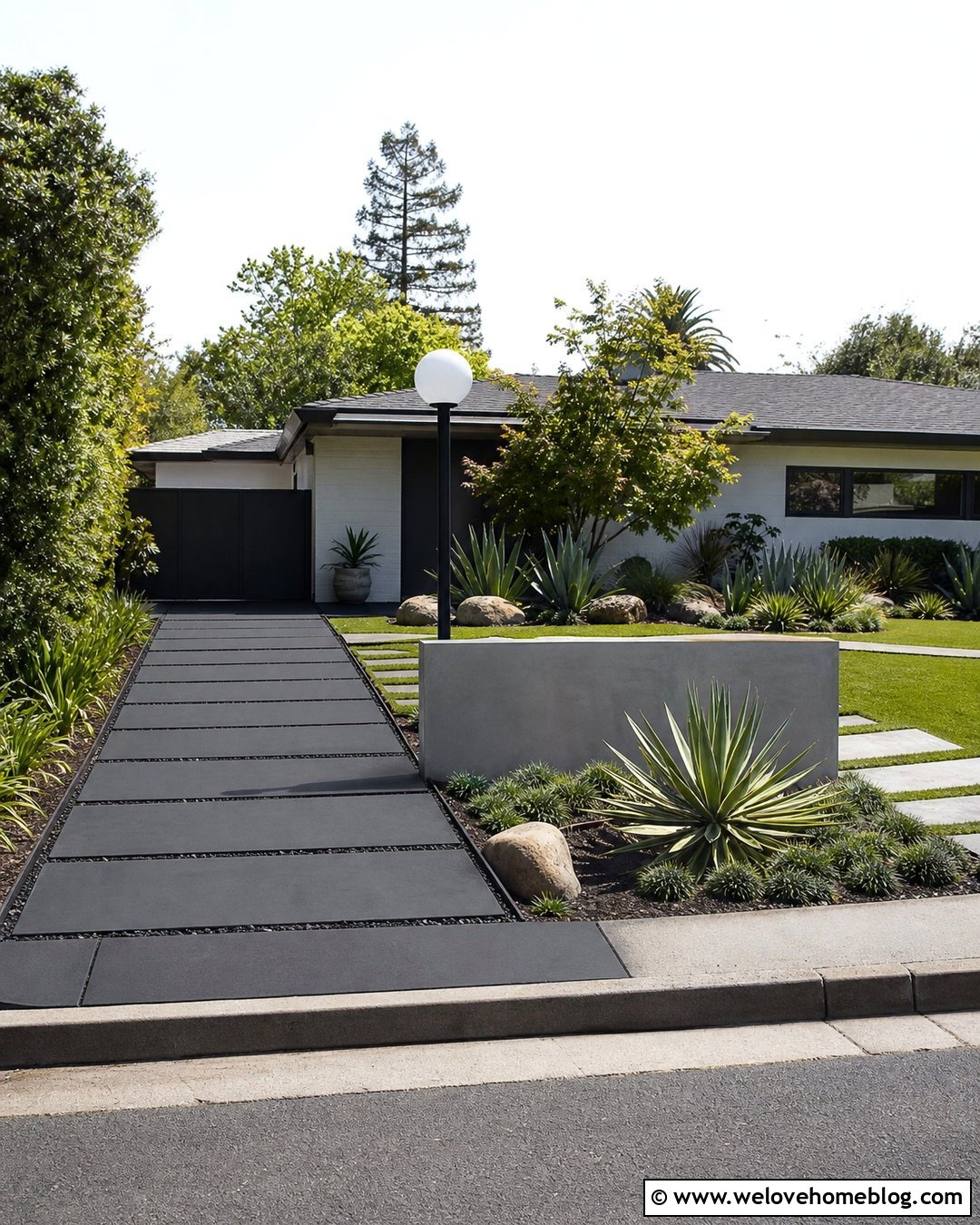
A charcoal paver driveway surrounded by layered tropical planting makes a bold entrance to a modern or coastal home. Use large-format concrete pavers in a straight layout, then soften them with curved beds containing palms, broad-leaved shrubs, flowering perennials, and low ground cover. Place the tallest specimens near the house or outer lawn, not where they can hide pedestrians and traffic at the curb. Dark steel edging creates a clean boundary and prevents soil from spreading across the pavers. Repeating a few foliage shapes on both sides avoids a crowded botanical-garden effect. In cooler climates, hardy plants with large leaves can create a similar mood. Plan for fallen fronds, rapid growth, irrigation, and storm exposure when selecting species. The final driveway should feel lush while remaining open, usable, and easy to navigate.
Conclusion:
The most successful 20 Planted Driveway Ideas combine dependable paving with planting that suits the property’s architecture, climate, and daily traffic. Start with the driveway’s required width, drainage, turning space, and visibility. Then add borders and beds without interfering with vehicle doors or pedestrian routes. Repeating a limited plant palette generally creates a stronger design than using many unrelated varieties. Trees provide scale, shrubs create structure, and lower flowers or grasses soften the pavement. Always check mature plant dimensions, roots, irrigation needs, and local growing conditions before installation. Whether you prefer formal brick, rural gravel, modern concrete, or permeable pavers, thoughtful planting can make the entire arrival feel greener, more welcoming, and intentionally connected to your home.

Related posts:
Leave a Reply