
Gravel driveways offer a relaxed, attractive look, but loose stone can quickly migrate into lawns, planting beds, and walkways. Well-planned edging creates a stronger boundary while making the entire approach feel intentional. The best border depends on the driveway’s slope, traffic level, gravel size, home style, drainage, and maintenance needs. Brick and cobblestone provide traditional character, while steel or poured concrete creates cleaner modern lines. Timber, fieldstone, and planted borders work especially well in natural settings. Each option below considers the complete driveway, including its surface, shape, entrance, landscape, and connection to the house. Use these practical **25 Gravel Driveway Edging Ideas** to find a border that improves containment, durability, and curb appeal.

1. Brick Gravel Driveway Edging
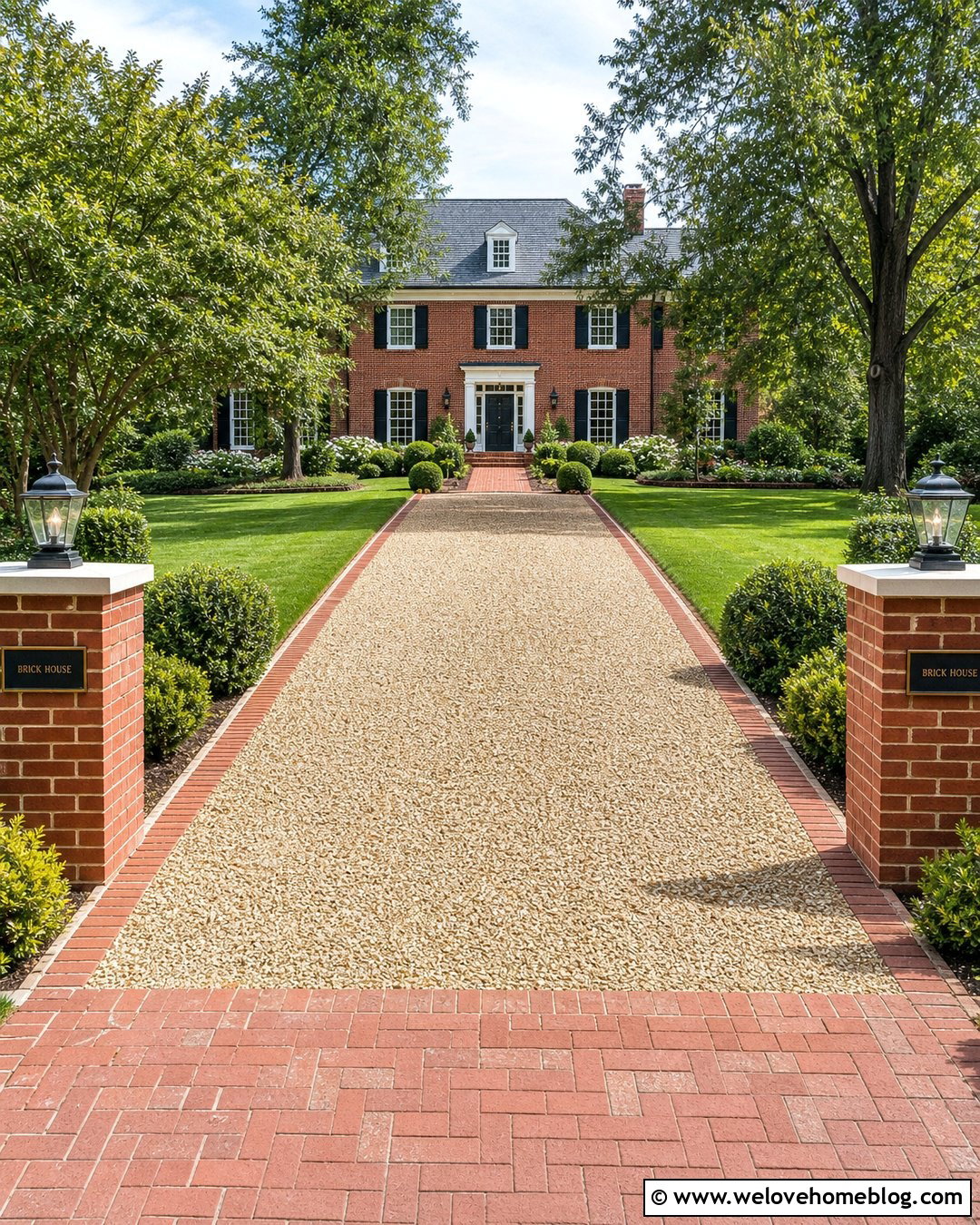
Warm red brick gives a pale gravel driveway a crisp, traditional frame. This complete look works especially well with a straight driveway leading to a Colonial, Cape Cod, or traditional brick home. Set the bricks lengthwise for a narrow border or install two rows for more visual weight. A compacted base and secure edge restraint help prevent the bricks from shifting under occasional tire pressure. Pair the border with clipped lawn, simple foundation shrubs, and a matching brick walkway. Keep the gravel slightly below the top of the bricks so stones remain contained without creating an awkward raised edge. At the street, widen the brickwork into a small apron that visually strengthens the entrance and handles frequent turning movements.
2. Cobblestone Gravel Driveway Edging
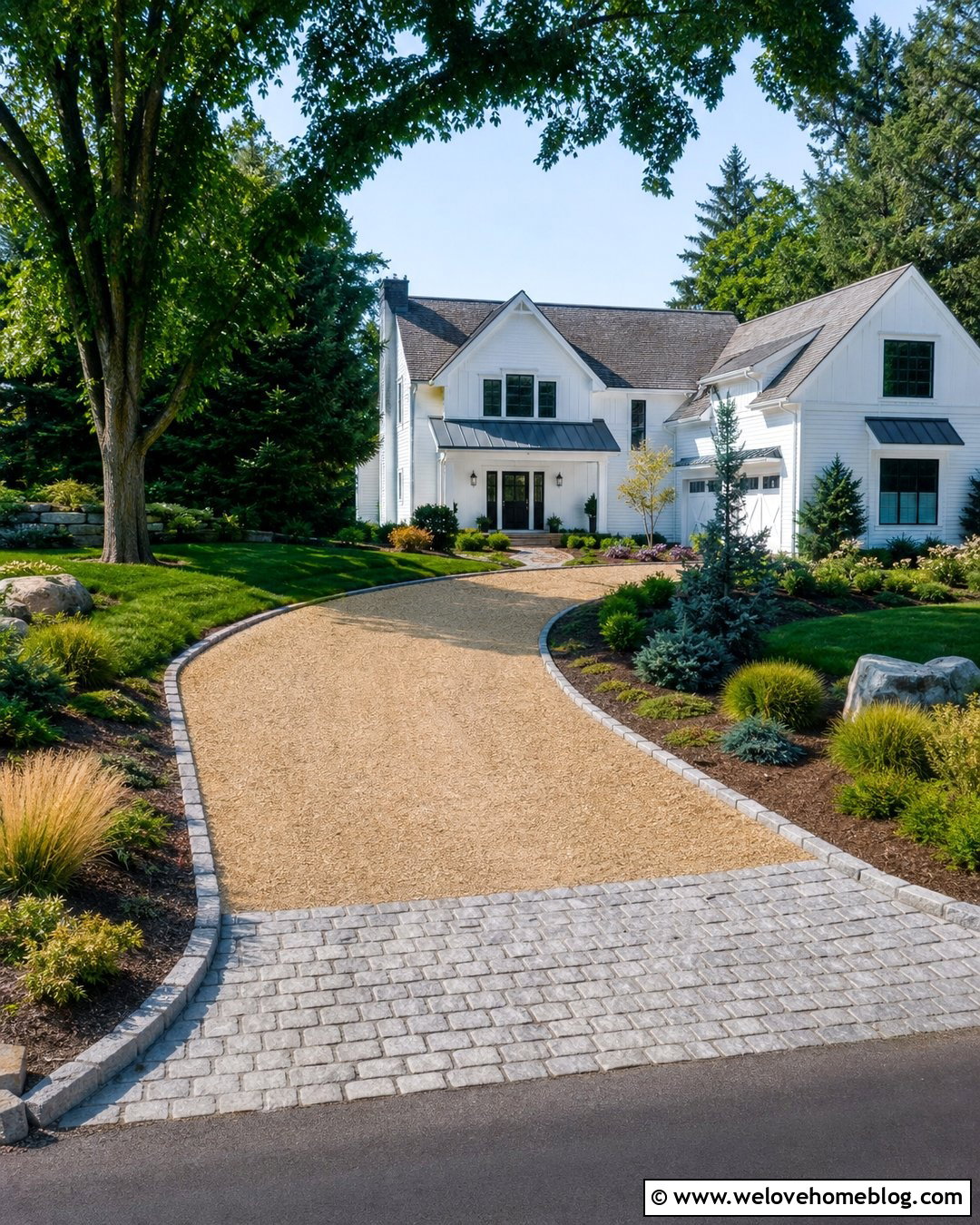
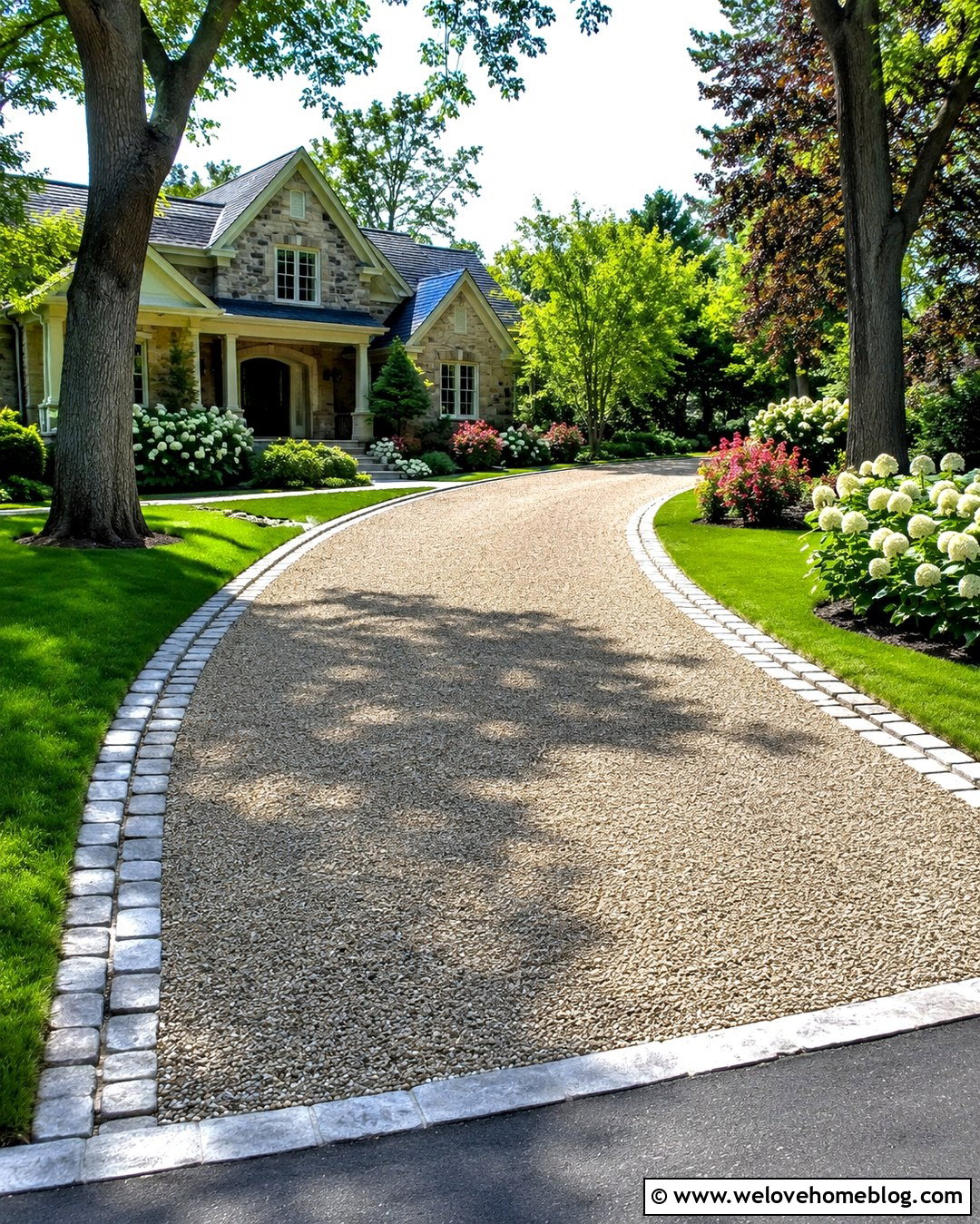
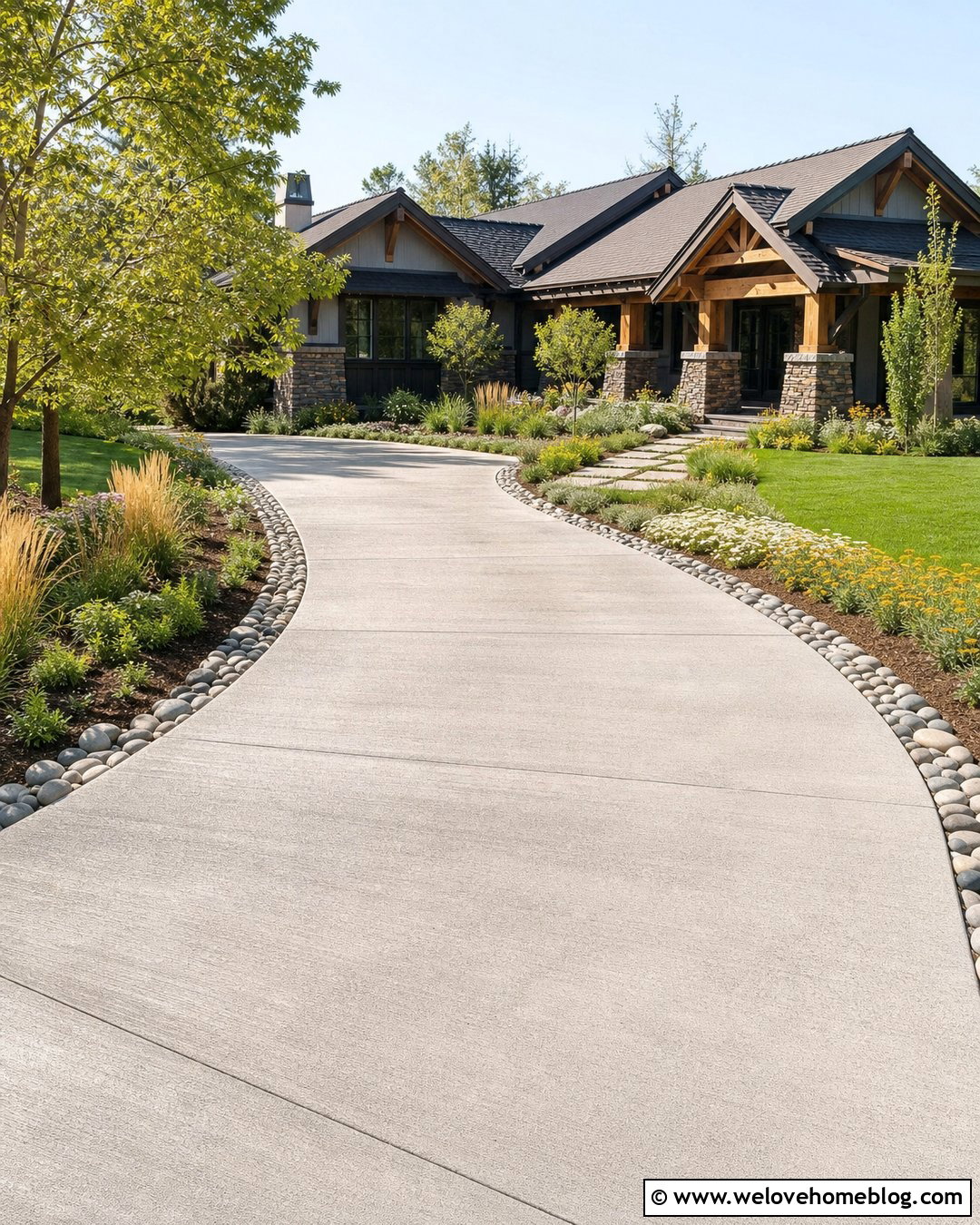
A curved gravel driveway framed with cobblestones creates an established, high-end appearance without making the landscape feel overly formal. Gray or charcoal cobbles contrast beautifully with buff gravel and complement stone, stucco, or painted farmhouse exteriors. Install the stones in a sturdy bedding layer, especially around curves where tires may cross the edge. A slightly raised cobblestone border provides better gravel containment, while a flush installation creates an easier mowing transition. Complete the design with layered evergreen shrubs, ornamental grasses, and one or two canopy trees near the entrance. Repeating the cobblestone around nearby planting beds or the front walkway ties everything together. This border is particularly effective for broad driveways where a thin edging material might disappear visually.
3. Concrete Curb Gravel Driveway Edging
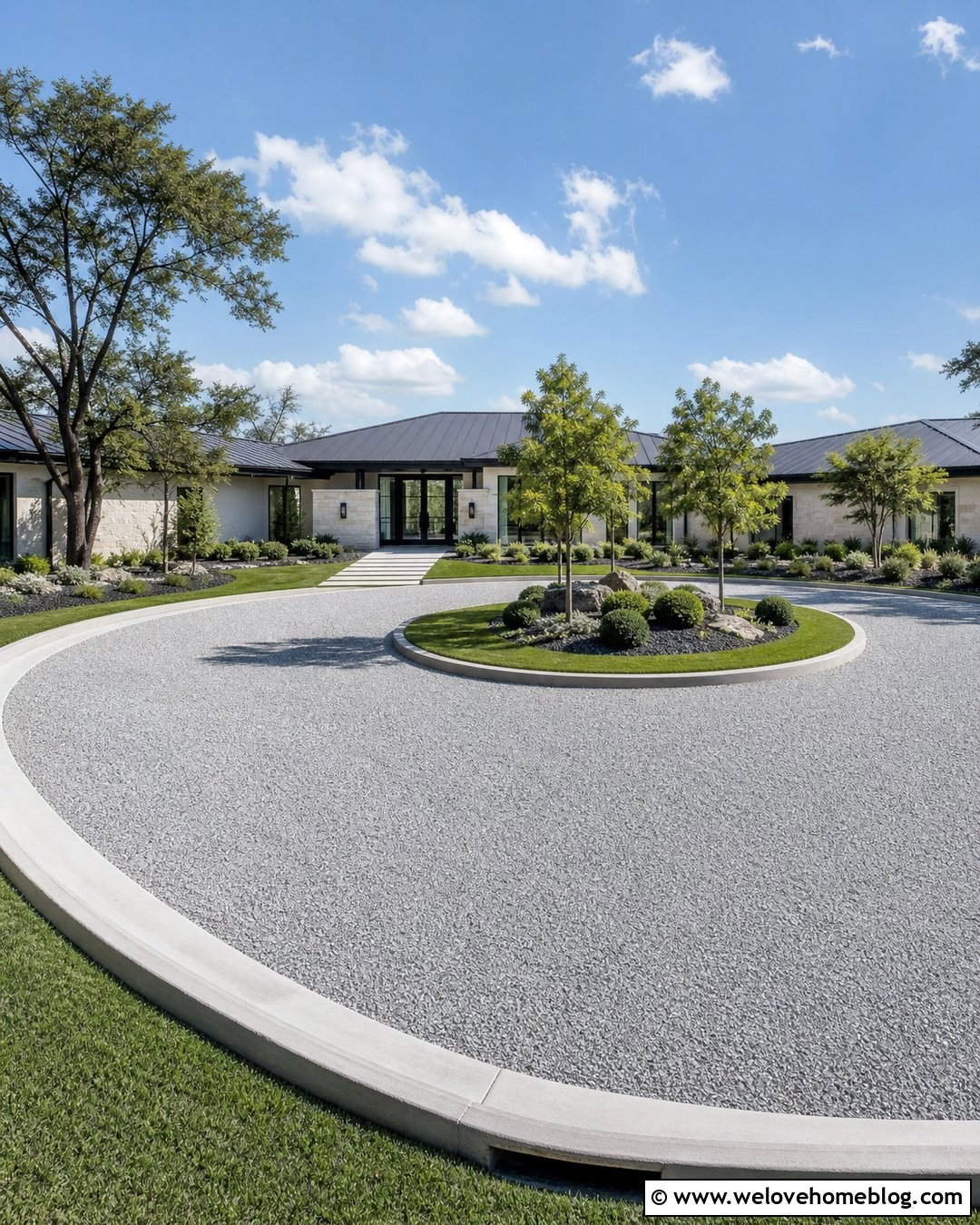
Poured concrete curbing gives a gravel driveway a clean boundary that can follow straight lines, gentle curves, or a circular layout. It is especially suitable for busy family driveways because the continuous edge has fewer pieces that can loosen or separate. Choose natural gray concrete for a modern home or a warmer tinted finish for a ranch or Mediterranean-style property. The curb should be low enough to avoid becoming a vehicle hazard but high enough to contain the finished gravel layer. Surrounding lawn can meet the outside edge for simple maintenance, while mulched beds soften the concrete near the house. Include planned openings where runoff needs to reach a drainage swale instead of trapping water along the driveway.
4. Black Steel Gravel Driveway Edging

Slim black steel edging creates a sharp, understated frame around light gray gravel. The narrow profile makes it an excellent match for a straight modern driveway, geometric planting beds, and a home with dark windows or metal accents. Install the steel securely so the upper edge remains consistent and does not lean toward the driveway. Most of the edging can sit below sight level, leaving only a thin black line visible between gravel and lawn. Repeat the material around rectangular beds filled with ornamental grasses, low evergreens, or drought-tolerant plants. Near the sidewalk or road, transition to a stronger paver apron because thin steel should not receive regular tire impact. The finished combination feels polished while allowing the gravel texture to remain the main feature.
5. Corten Steel Gravel Driveway Edging
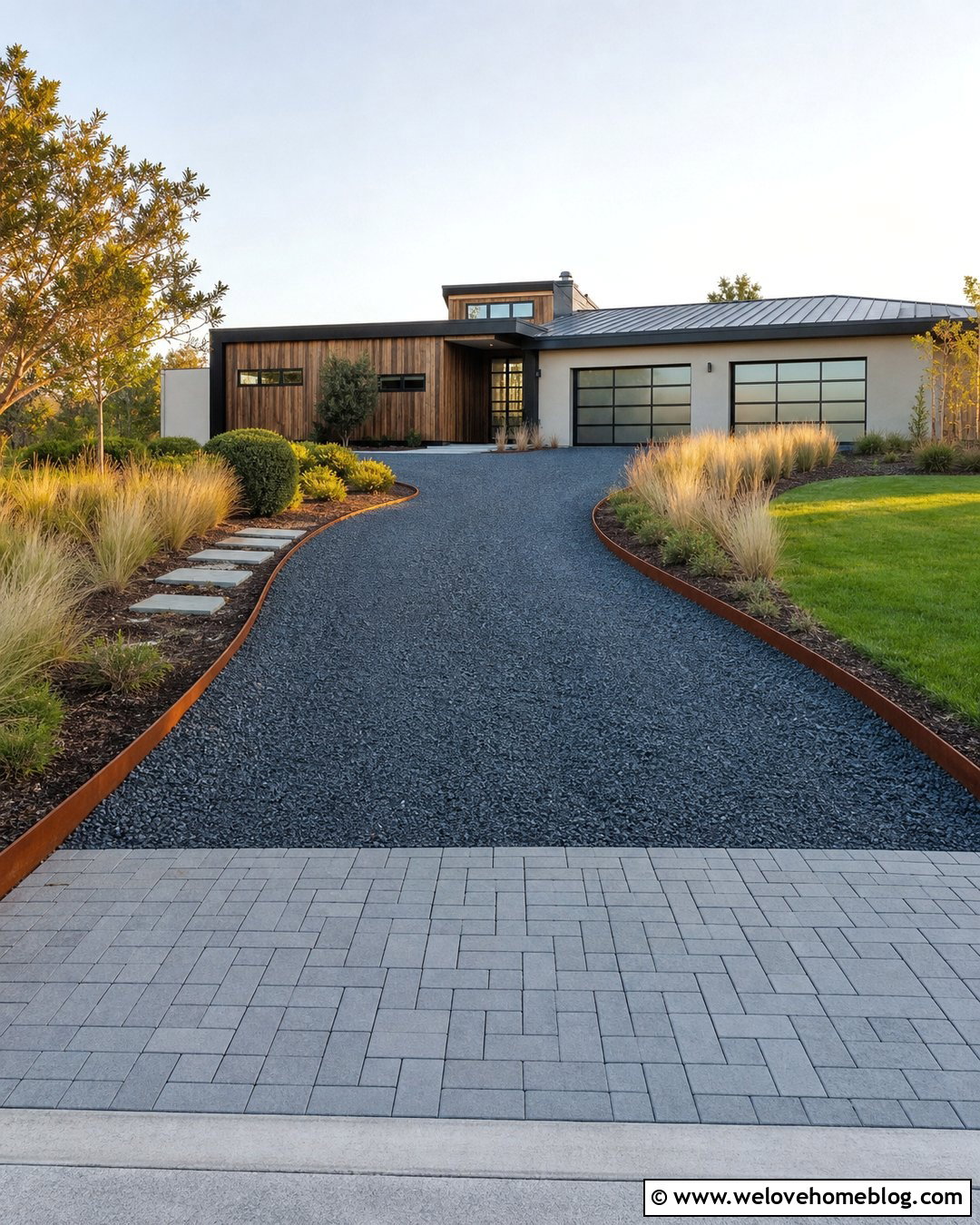
Corten steel brings warm rust-colored definition to a curved gravel driveway and contemporary landscape. Its earthy surface pairs particularly well with charcoal crushed stone, tan architectural gravel, and homes featuring wood or weathered metal details. Use a continuous steel border to shape broad curves around lawn panels and sculptural planting beds. The edging should be anchored firmly and positioned where tires are unlikely to repeatedly cross it. Complete the driveway with airy ornamental grasses, rounded shrubs, and a concrete stepping-stone walkway. The contrast between dark gravel, reddish steel, and green planting creates depth without requiring a complicated color palette. Protect nearby pale paving during the material’s initial weathering period, and use a more substantial entrance apron where the driveway meets the street.
6. Timber Gravel Driveway Edging
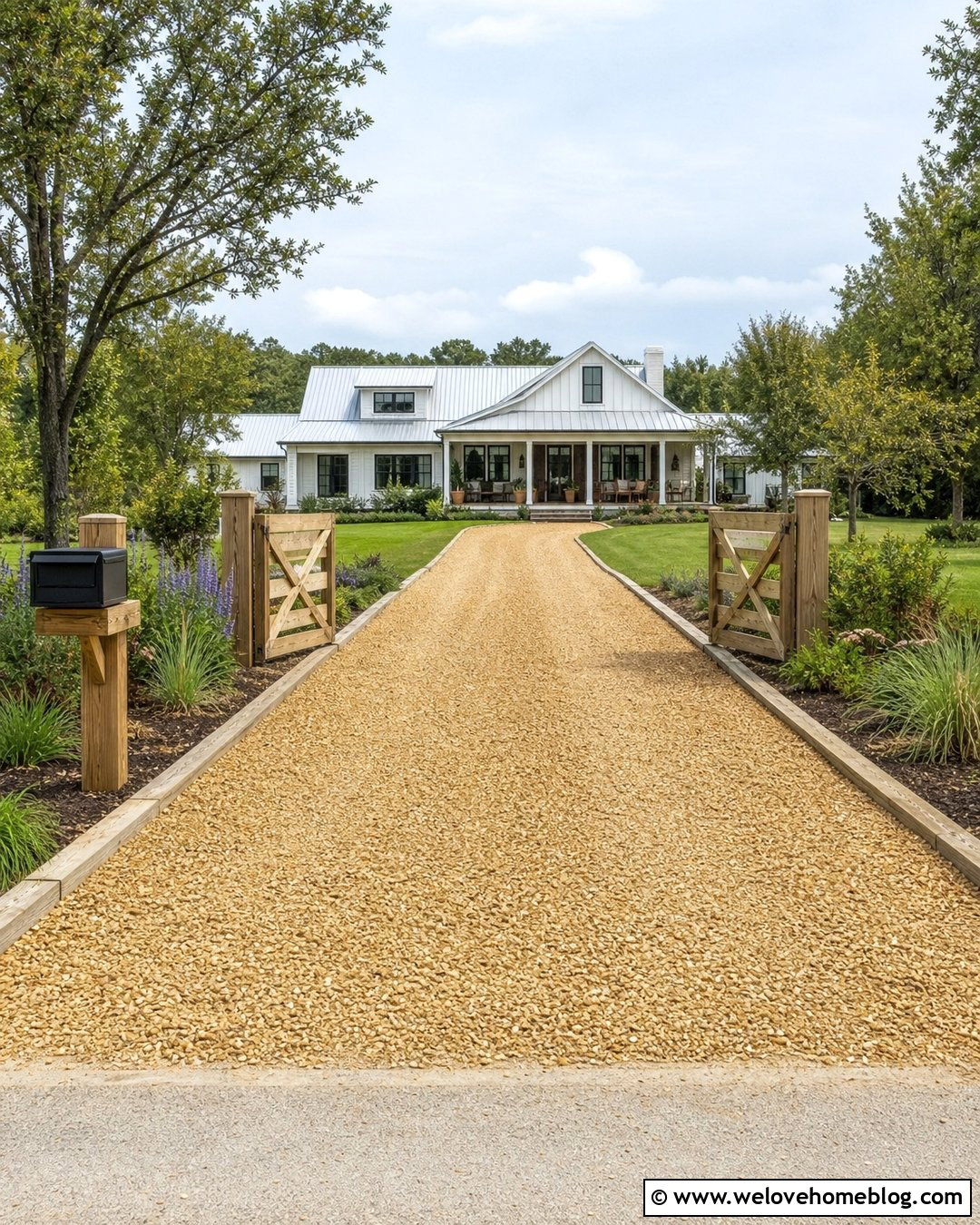
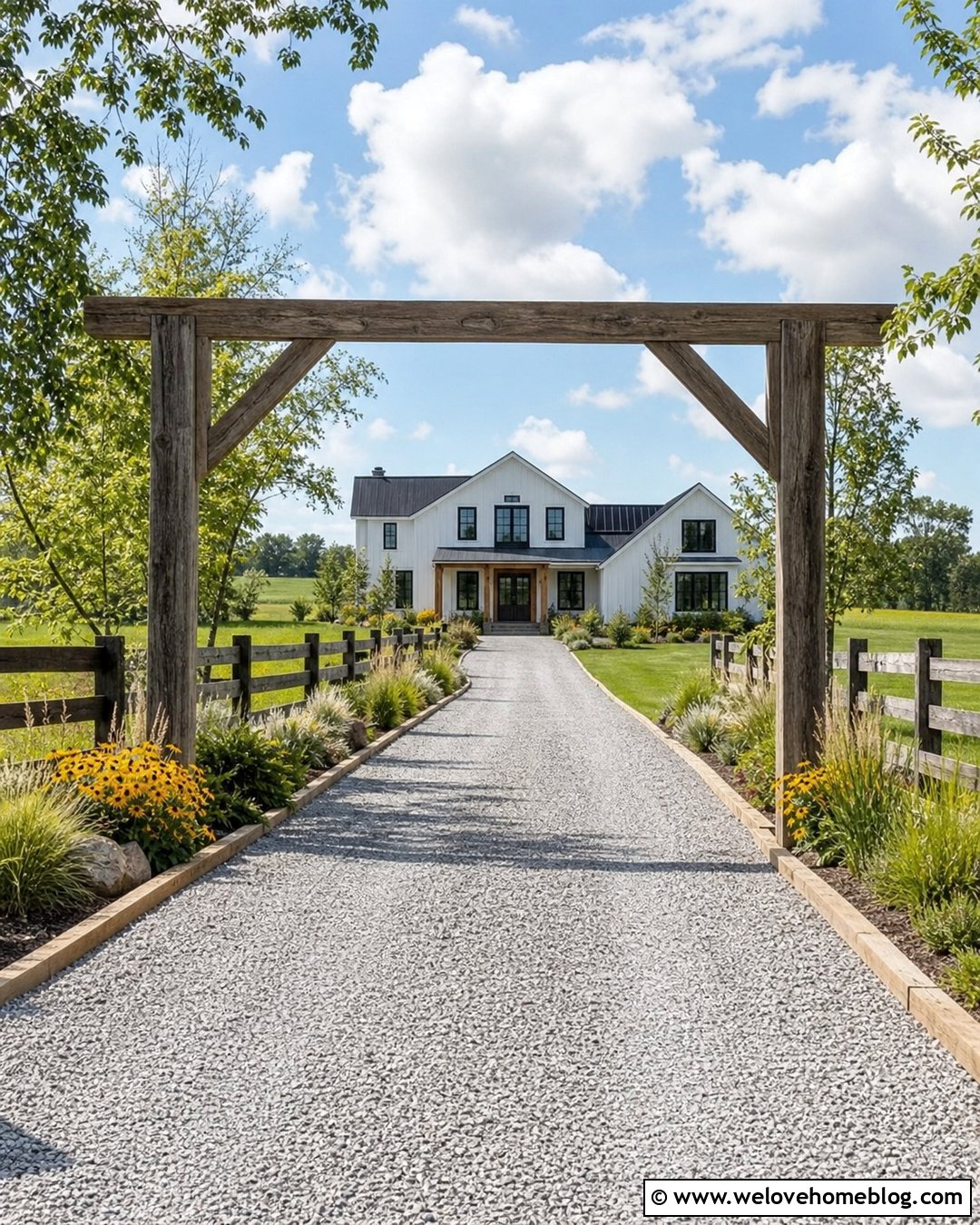
Pressure-treated landscape timbers create a practical frame for a relaxed gravel driveway leading to a ranch, cabin, or modern farmhouse. Their straight shape makes them easiest to use along a linear driveway, although short sections can form gentle angles around wider parking areas. Secure each timber to a properly prepared base rather than placing it loosely on the soil. The top can sit just above the gravel to limit spreading while remaining low enough for comfortable access. Add native grasses, flowering perennials, and informal shrubs outside the border to soften the long wooden lines. A matching timber mailbox post or simple farm-style gate strengthens the coordinated look. Inspect the wood periodically and plan for eventual replacement in damp or poorly drained locations.
7. Granite Block Gravel Driveway Edging
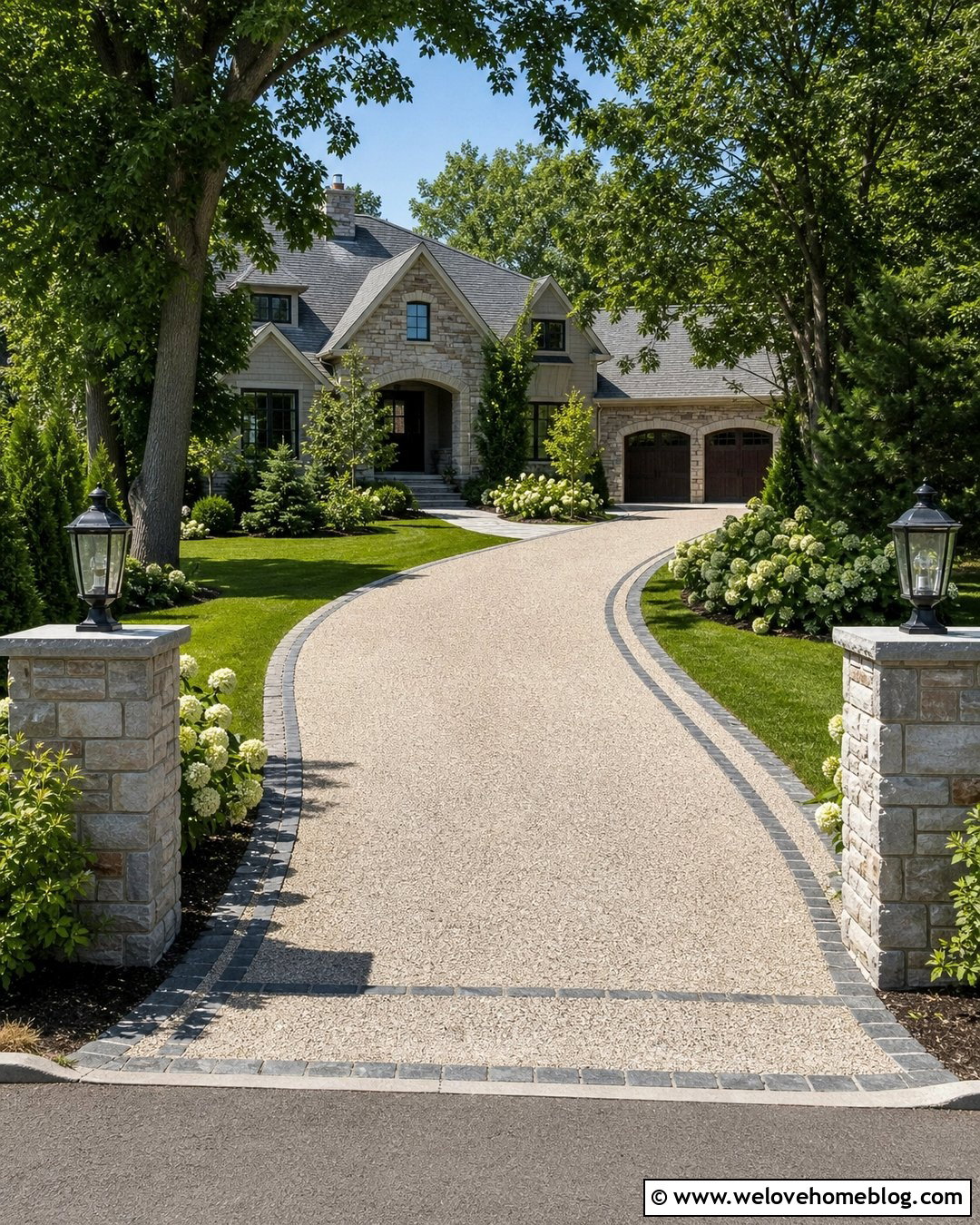
Granite blocks provide a substantial edge for a wide gravel driveway serving a Craftsman, Tudor, or stone-front home. Their weight and textured finish create a strong visual boundary that suits areas exposed to frequent traffic. Use dark gray blocks beside pale crushed granite, or choose lighter granite against deep charcoal gravel. A single row can follow the full driveway, while a double row near the garage creates a broader transition for turning tires. Bed the blocks securely so they remain aligned through seasonal ground movement. Complete the look with a flagstone walkway, broad lawn, and planting beds containing hydrangeas, compact evergreens, and shade trees. Granite entrance pillars or mailbox details can repeat the stone without making the property feel too heavily landscaped.
8. Fieldstone Gravel Driveway Edging
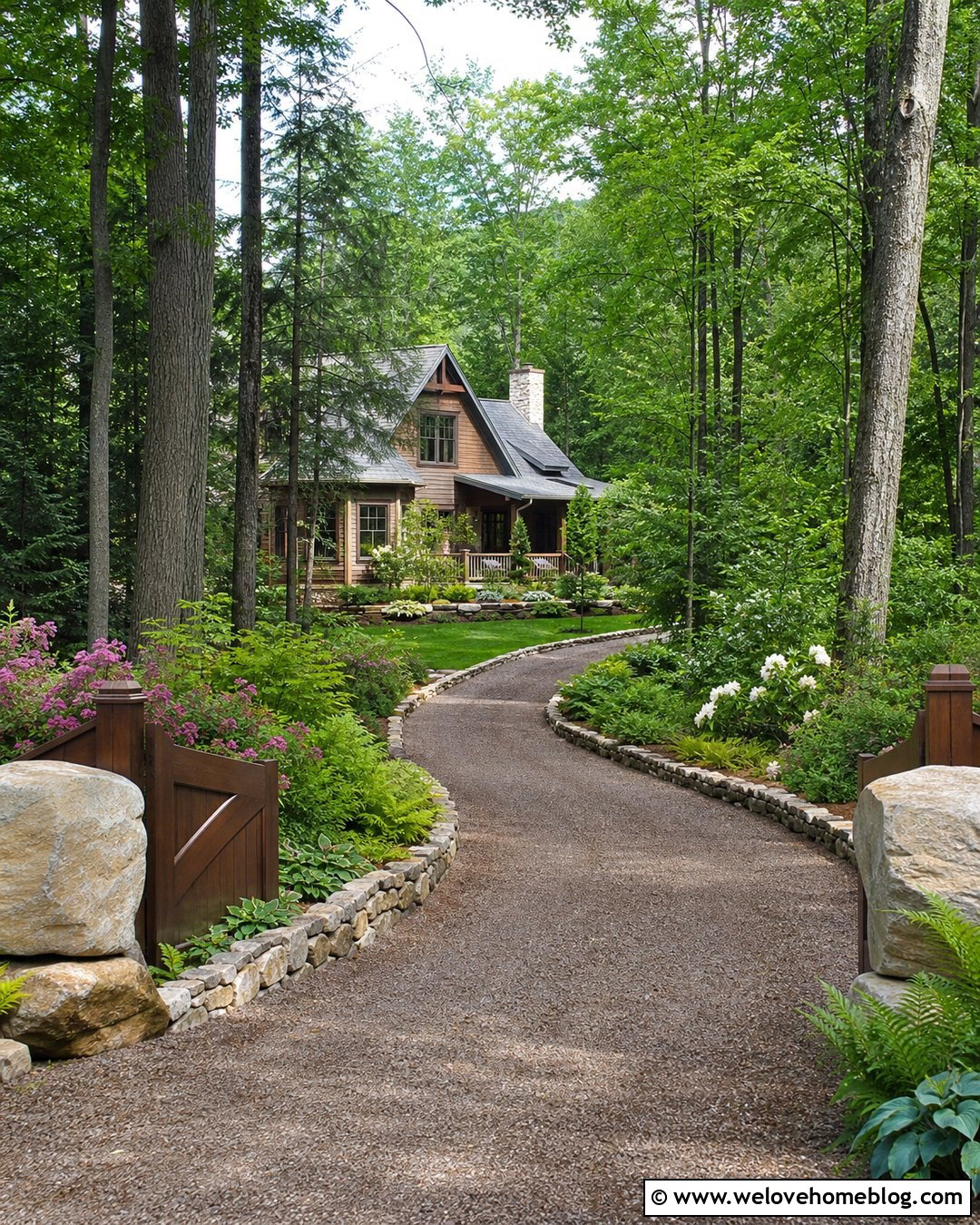
Irregular fieldstone edging helps a winding gravel driveway blend naturally into a wooded or country setting. Choose locally compatible stone colors so the border appears connected to the surrounding landscape and house foundation. Larger stones should form the main edge, with smaller pieces filling distracting gaps. Keep the driveway side relatively even so loose gravel does not collect in deep pockets between stones. This approach looks best when paired with informal planting rather than sharply clipped beds. Ferns, native grasses, ground covers, and flowering shrubs can flow behind the border without covering it completely. At the entrance, use two larger anchor stones or simple timber posts. The combination produces a rustic driveway that feels intentionally designed rather than merely lined with scattered rocks.
9. Limestone Gravel Driveway Edging
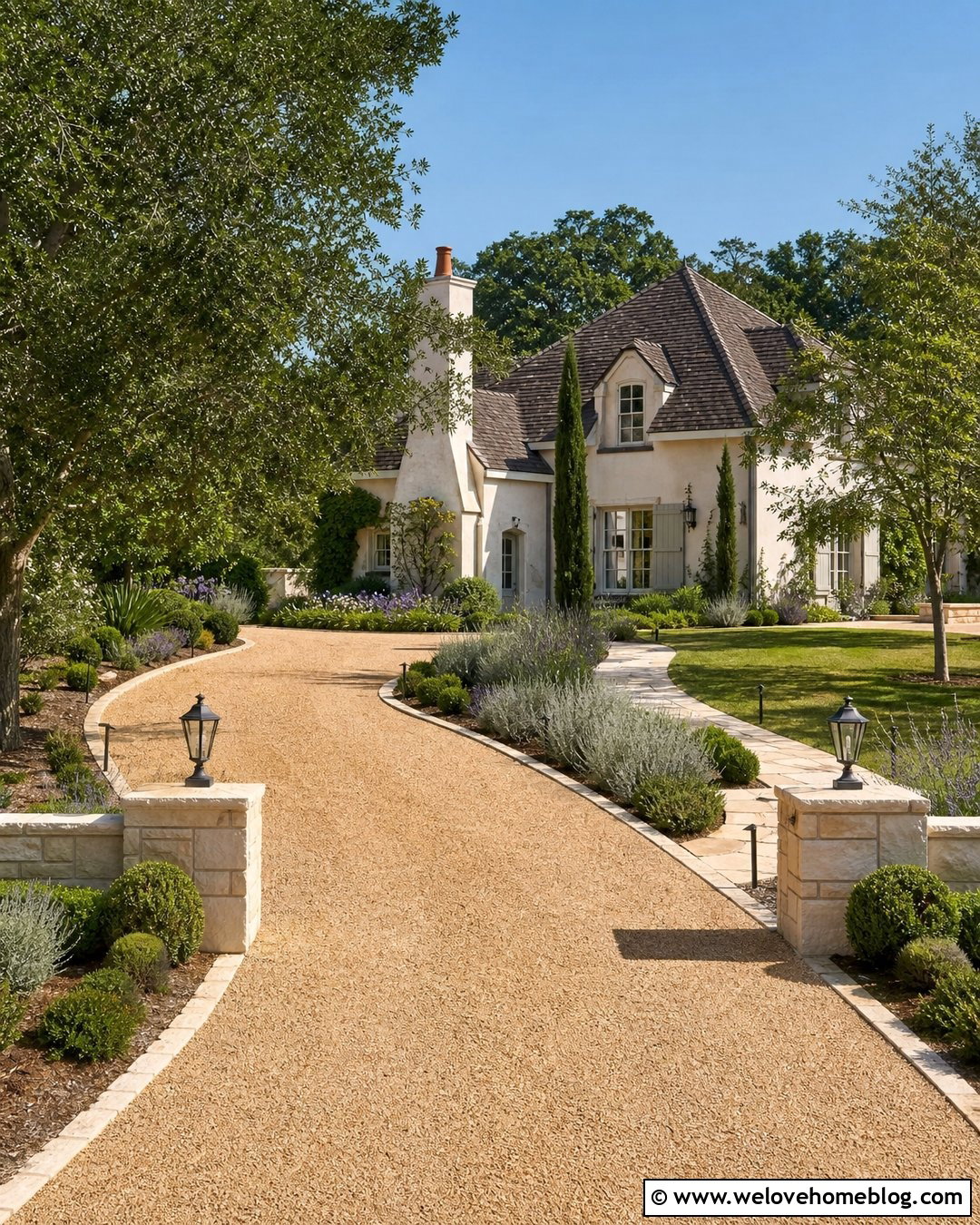
Cream or honey-colored limestone edging creates a soft, coordinated frame around tan gravel. This palette suits cottages, French country homes, light brick facades, and warm stucco exteriors. Cut limestone blocks produce a cleaner appearance than irregular rubble and can outline either a straight driveway or a broad sweeping curve. Set the blocks on a compacted foundation so their upper surfaces remain consistent. Pale materials can show soil and leaf staining, so avoid placing messy fruiting plants directly beside the edge. Instead, use lavender, catmint, compact grasses, and silvery foliage to reinforce the warm landscape palette. A limestone walkway or low entrance wall can extend the material toward the front door. Dark metal lights provide a useful contrast and keep the overall design from appearing washed out.
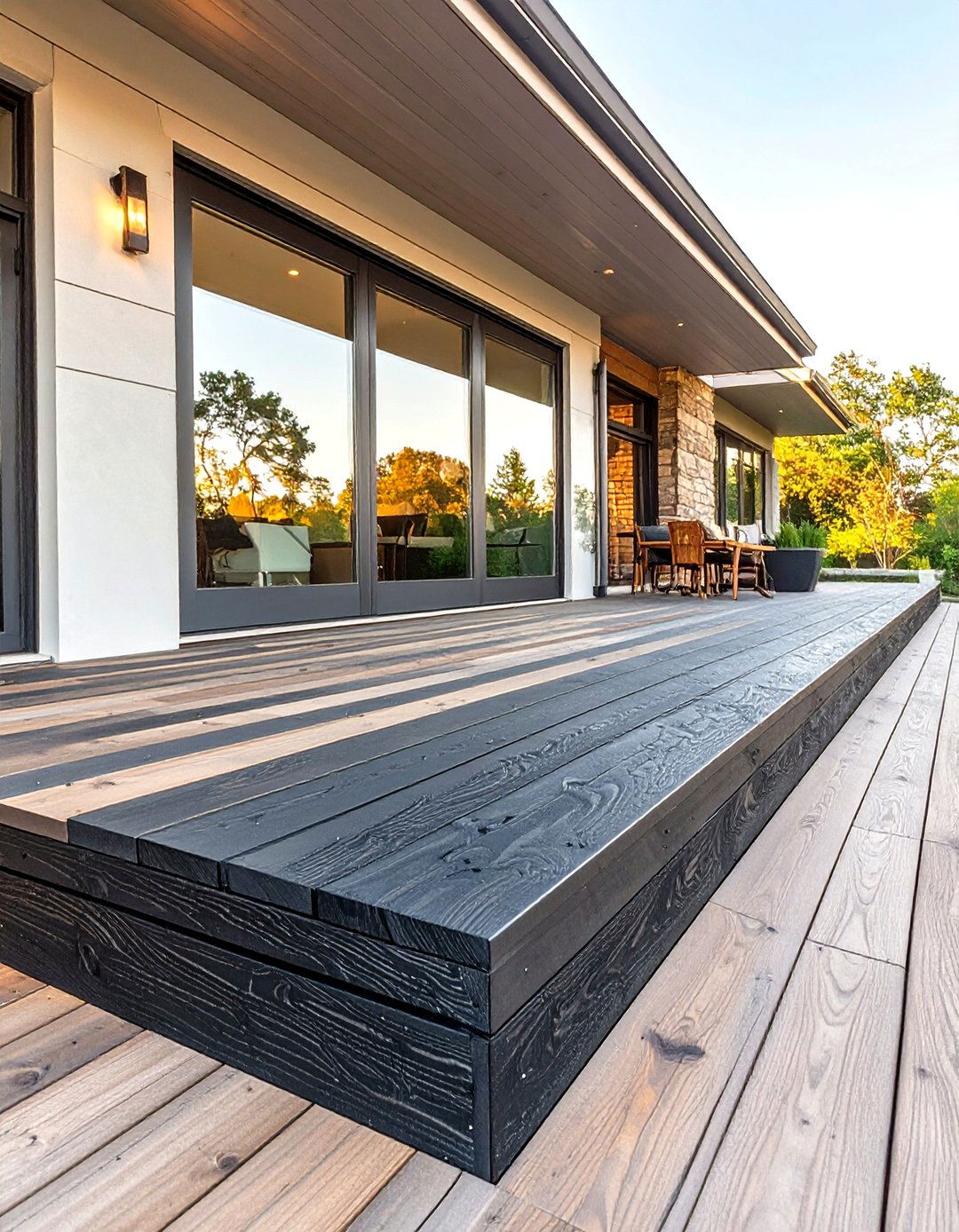

10. Paver Ribbon Gravel Driveway Edging
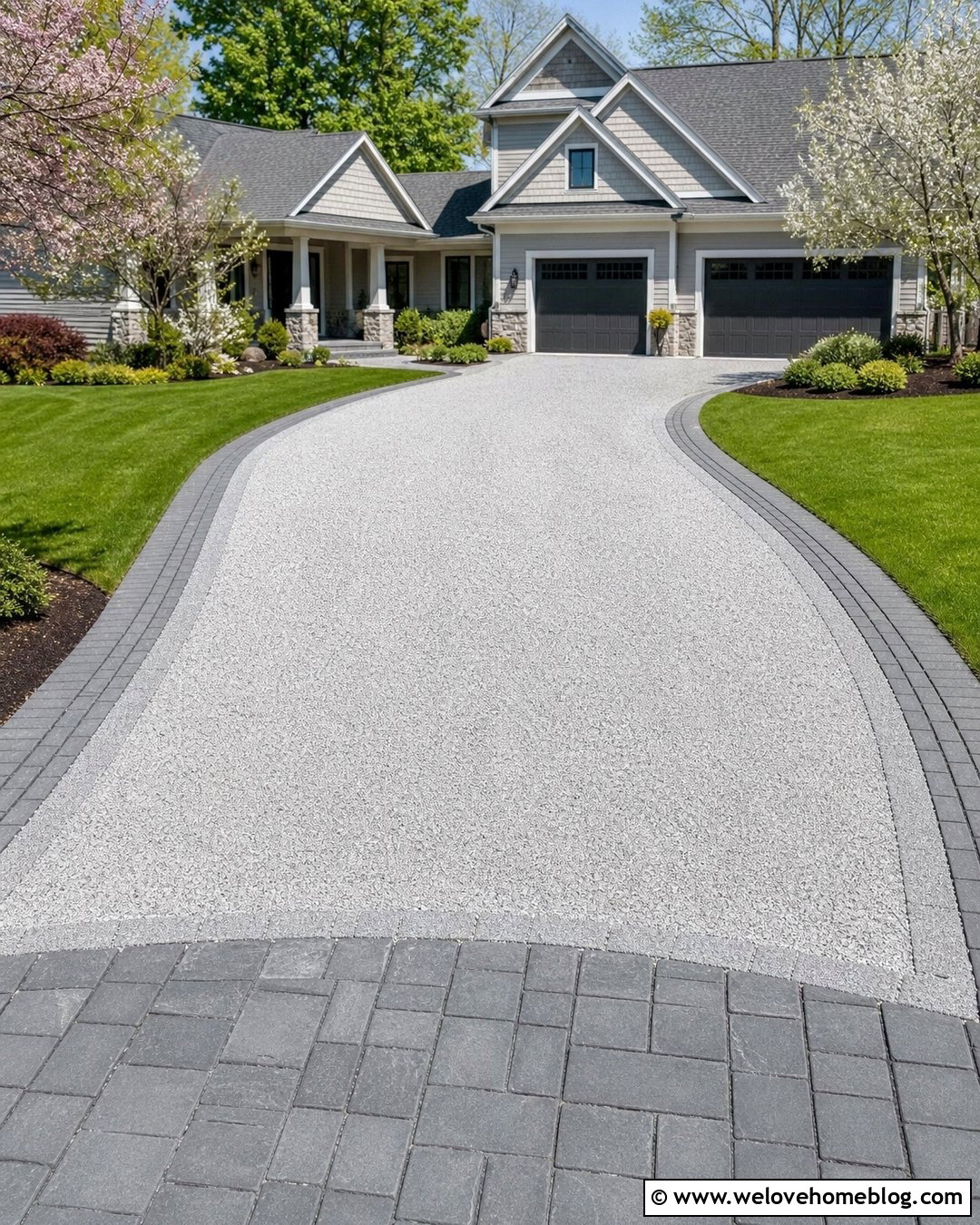
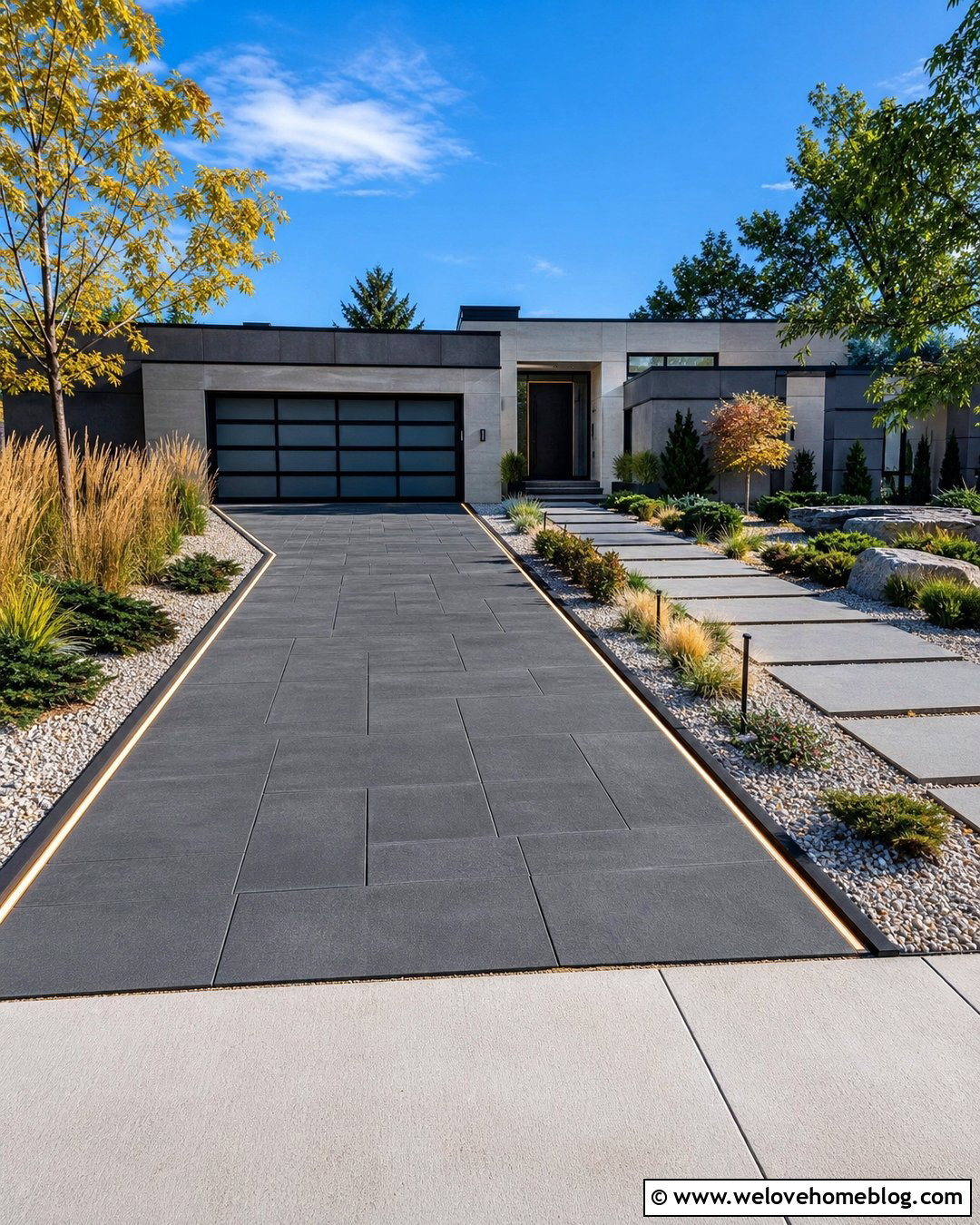
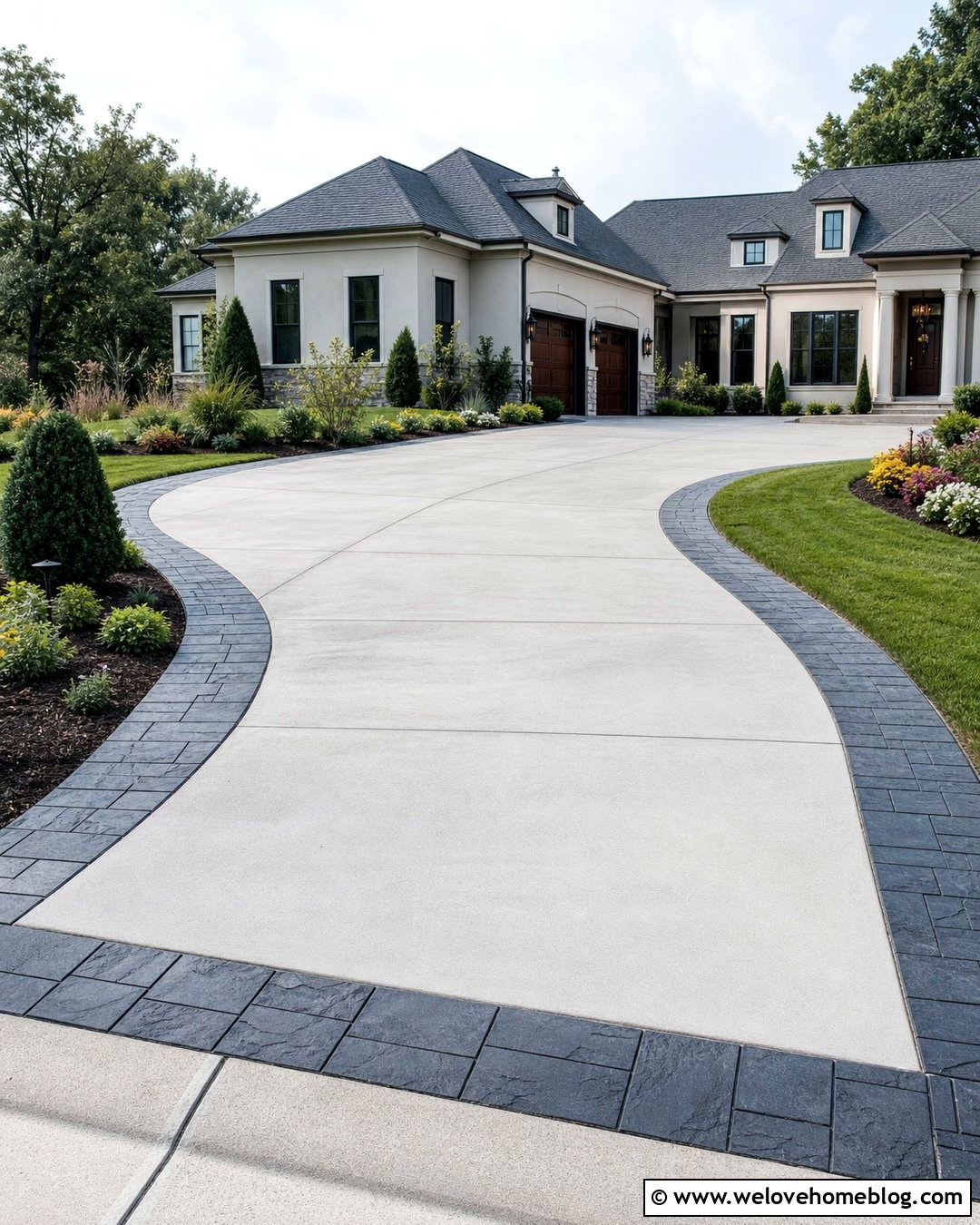
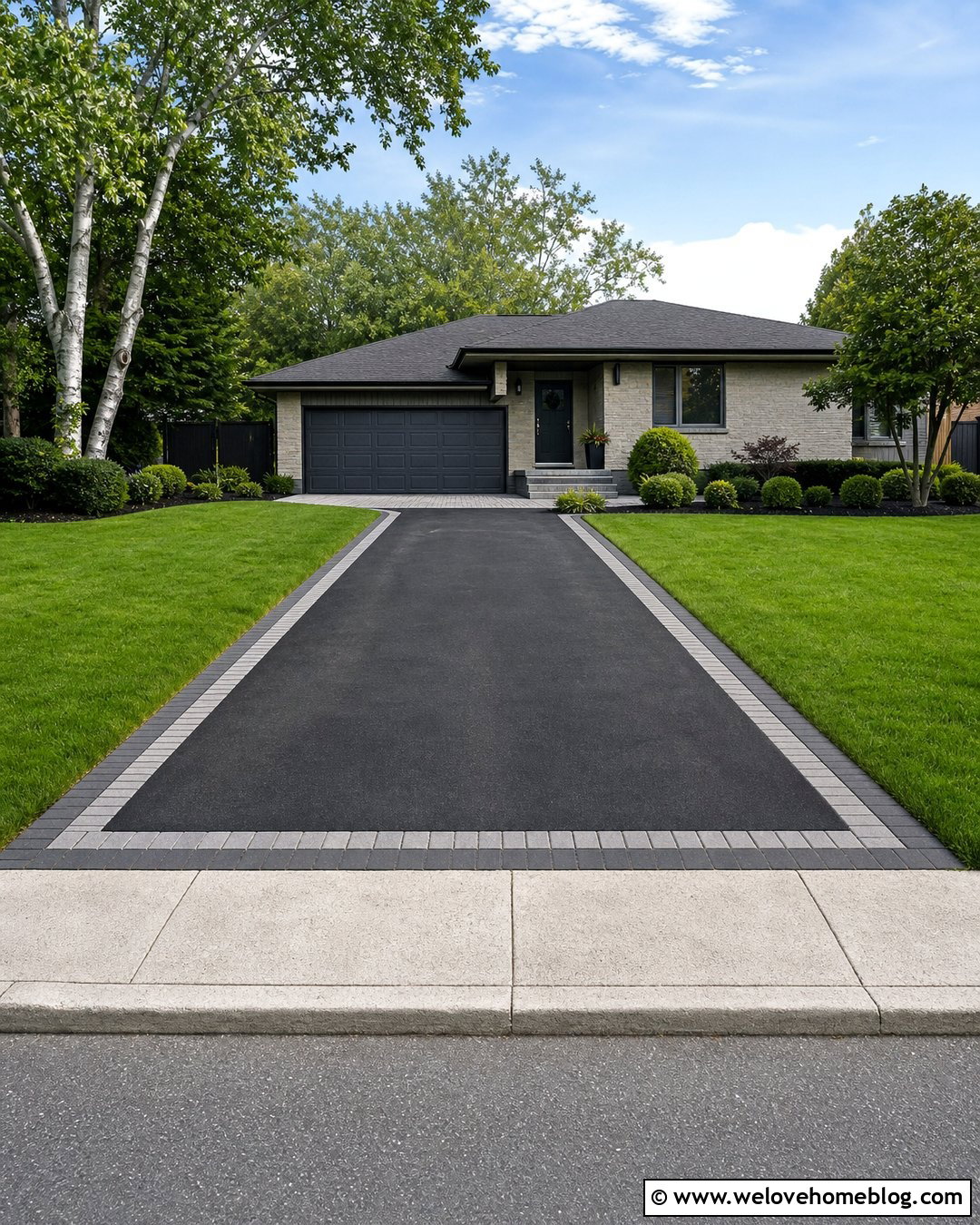
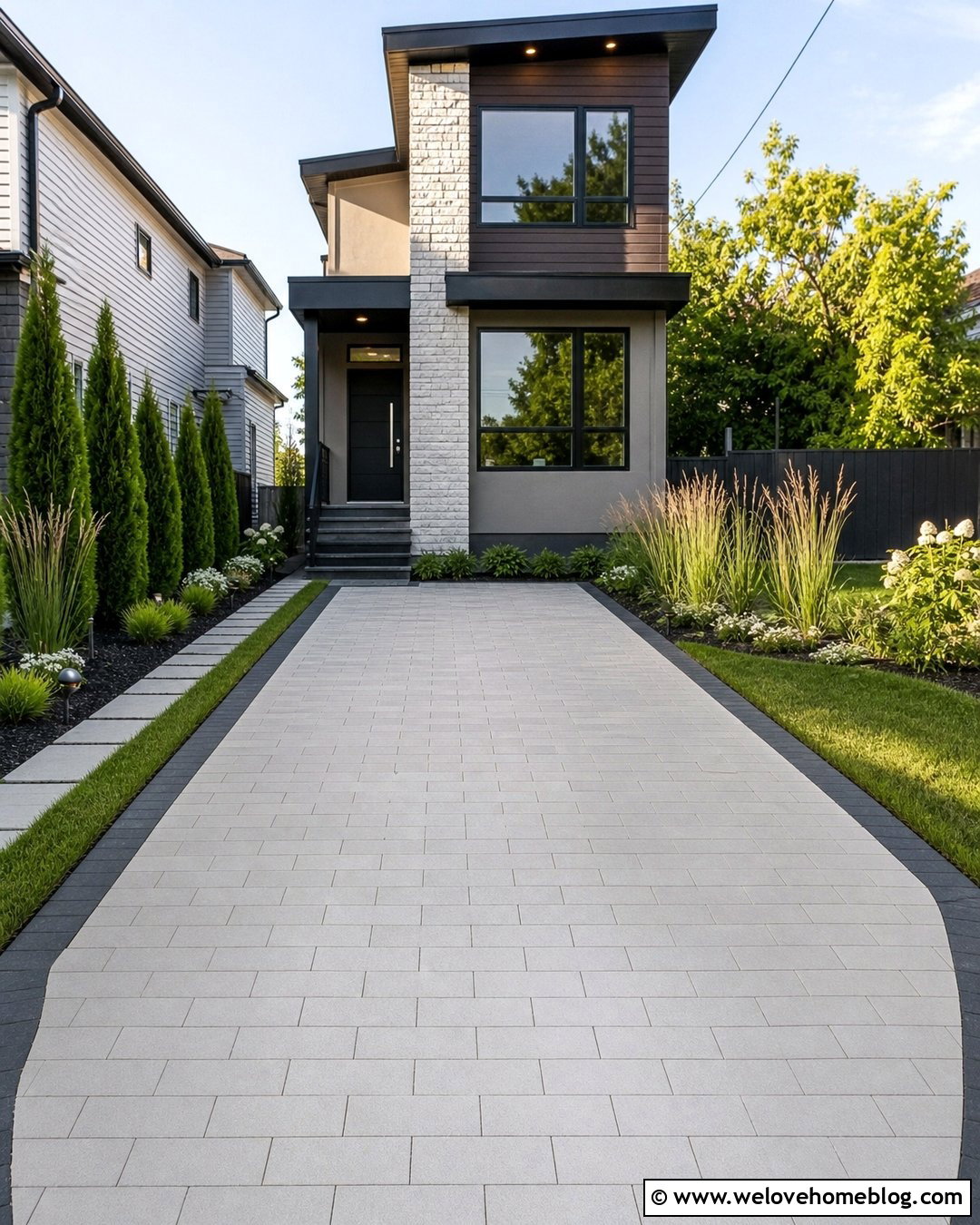
A wide paver ribbon gives loose gravel a structured border and provides a forgiving surface where tires approach the edge. Choose concrete pavers in charcoal, taupe, or warm gray, then install two or three rows along both sides of the driveway. This treatment is ideal for a suburban home where a narrow metal edge may feel too delicate. Use the same pavers to create an entrance apron and a clean transition in front of the garage. The gravel can be pale gray, golden, or a balanced mix that picks up tones from the pavers. Frame the complete design with lawn, foundation beds, and a connected paver walkway. Gentle curves will prevent the wide border from making a long driveway feel rigid or visually narrow.
11. Belgian Block Gravel Driveway Edging
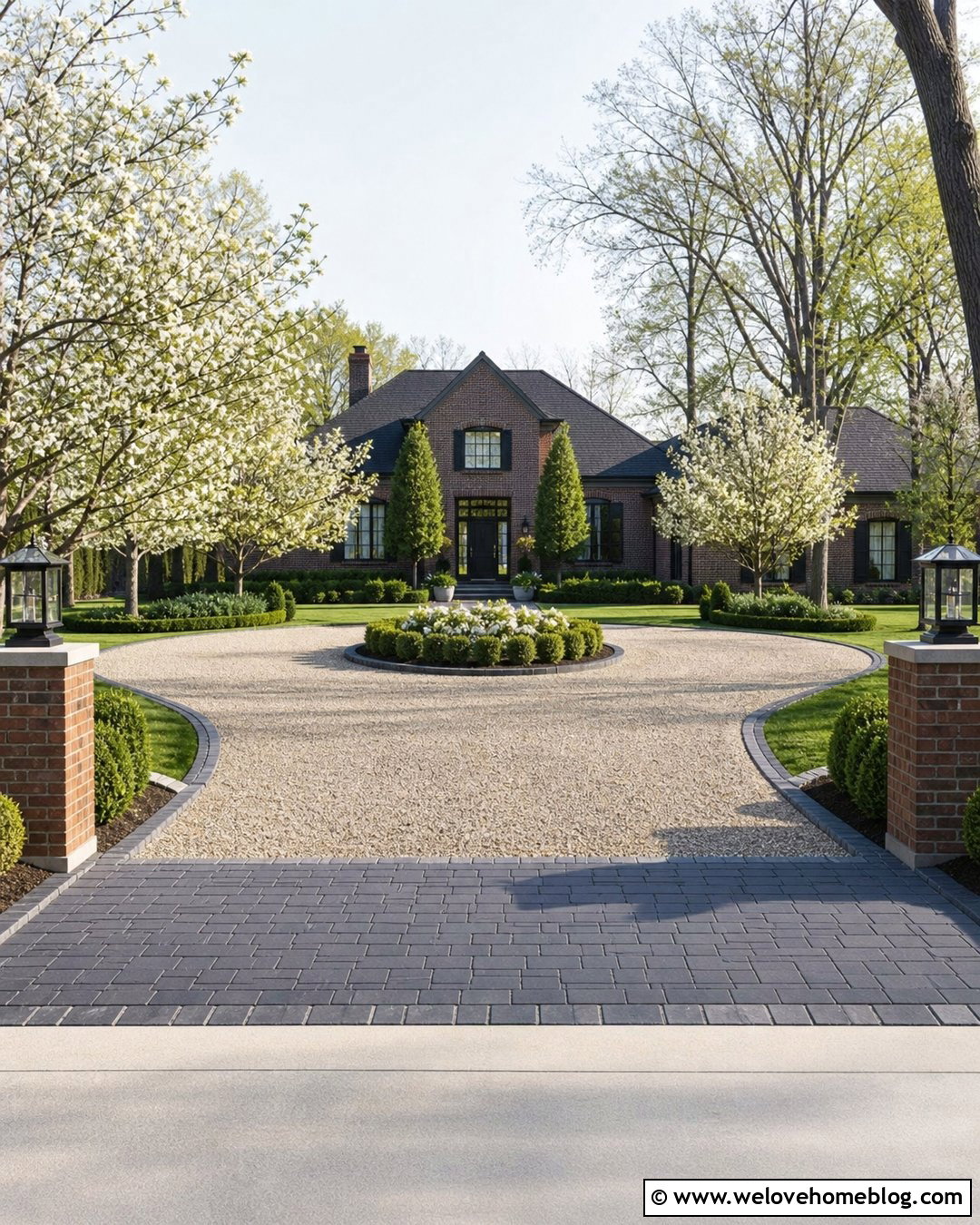
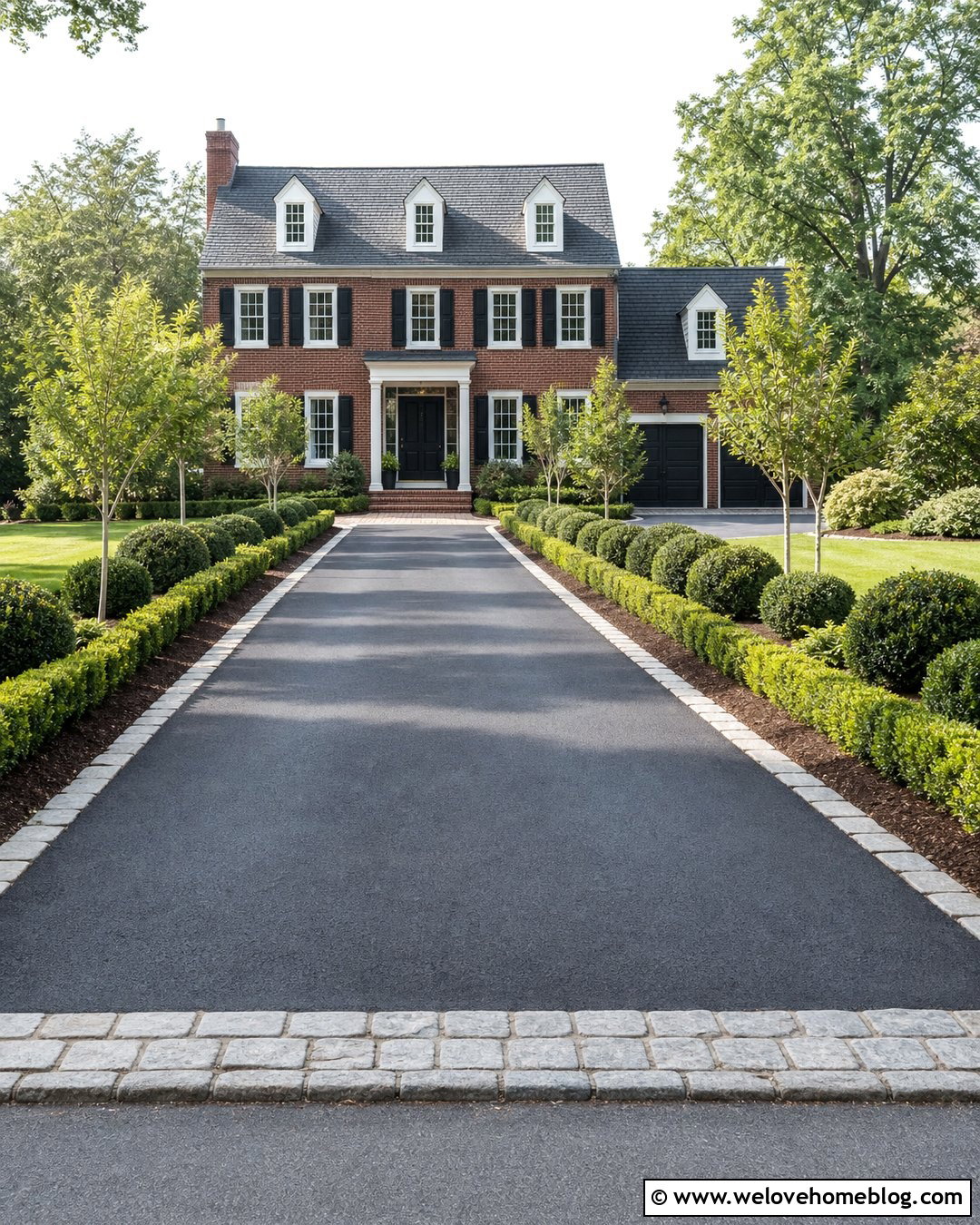
Belgian block creates a strong, architectural outline around a pea gravel or crushed-stone driveway. Its chunky proportions work well with traditional homes, older neighborhoods, and properties with substantial masonry details. Dark blocks provide an especially clear boundary beside pale beige gravel. Install the blocks vertically for a raised curb or horizontally for a broader, lower edge that is easier to cross. A flush Belgian block apron at the street helps capture gravel that might otherwise scatter during vehicle turns. Continue the blocks around a circular island or front planting bed for a unified plan. Boxwood, flowering trees, and neatly defined lawn reinforce the formal character. Proper base preparation is important because uneven blocks can interrupt the smooth outline and create uncomfortable transitions near walkways.
12. River Rock Gravel Driveway Edging
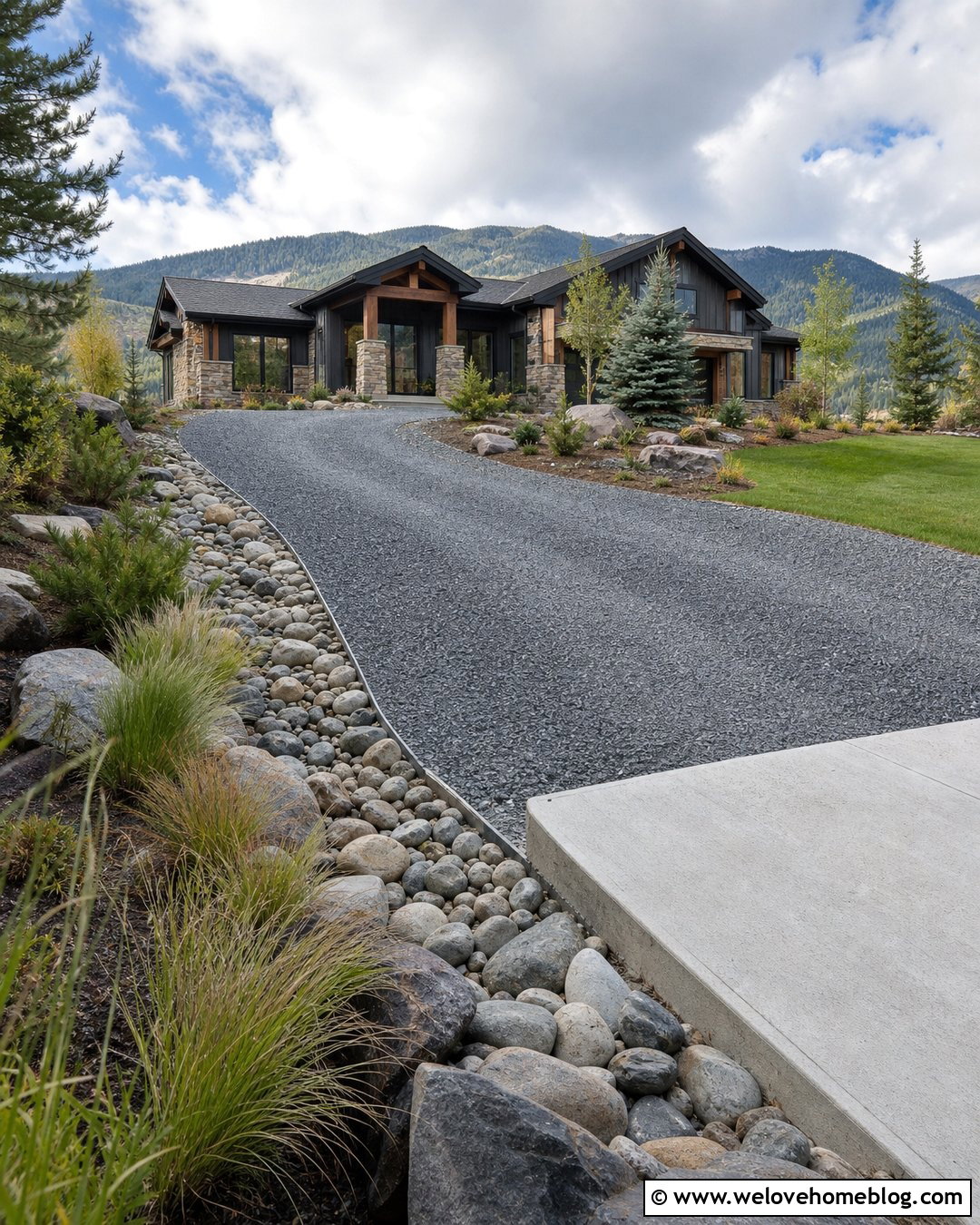
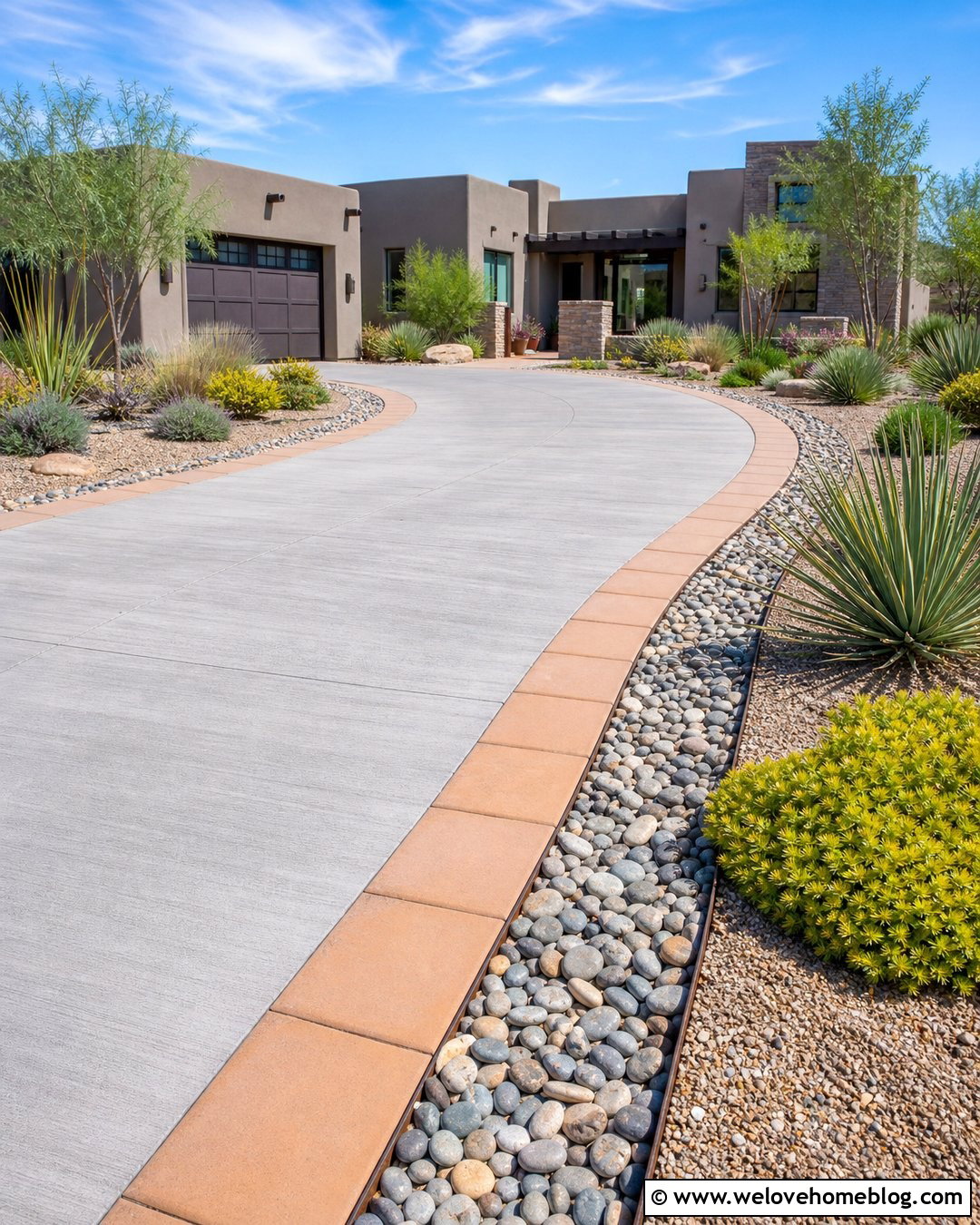
A river rock trench can define a gravel driveway while creating space for water to move away from the driving surface. Use larger, rounded river stones that clearly contrast with the smaller angular driveway gravel. A hidden steel or composite restraint between the two materials can prevent them from gradually mixing. This border works beautifully along a gently sloped driveway leading to a contemporary ranch, mountain home, or natural-style residence. Shape the trench into subtle curves and direct it toward an appropriate drainage area. Plant moisture-tolerant grasses and low shrubs outside the border where conditions allow. Avoid placing loose rounded stones in areas that vehicles regularly cross. A stable paver or concrete apron should handle the entrance and garage transitions while the river rock remains along the sides.
13. Grass Strip Gravel Driveway Edging
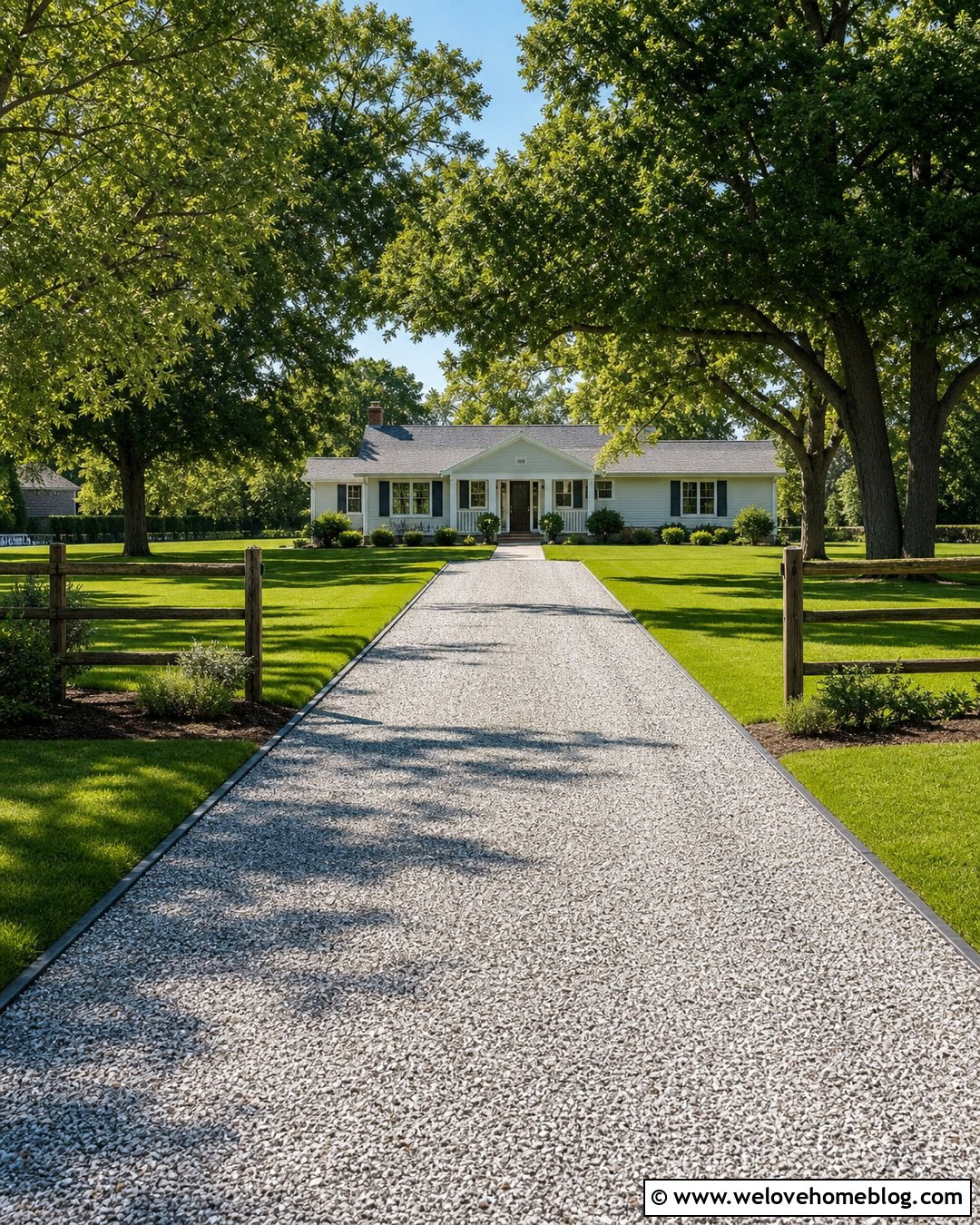
A narrow grass strip creates a fresh, simple transition around a gravel driveway without introducing a visually heavy border. For better containment, install a hidden metal restraint between the gravel and turf. This keeps the edge crisp while preserving the appearance of gravel meeting lawn naturally. The design suits long rural driveways, modest ranch homes, and properties where extensive masonry would be too expensive. Choose durable turf suited to the local climate and keep the strip wide enough for convenient mowing. Near the house, widen the lawn into larger green panels separated by planting beds and a front walkway. A compacted gravel surface and properly graded shoulders are important because grass alone will not stop severe washout. Regular trimming maintains the sharp, intentionally landscaped finish.
14. Hedge Gravel Driveway Edging
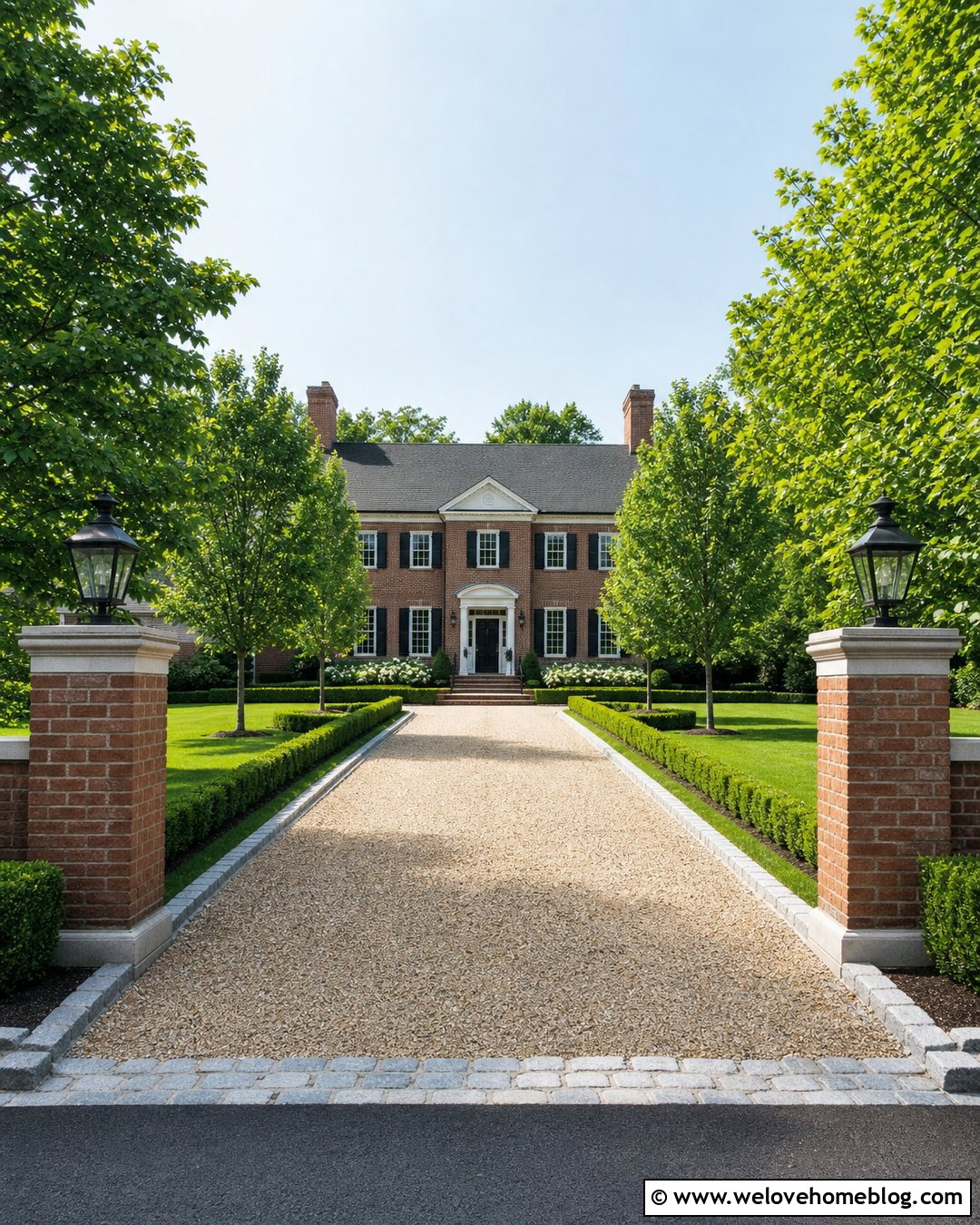
Low hedges can turn a broad gravel driveway into a formal approach, particularly when they sit behind a durable stone or concrete restraint. Boxwood-like shrubs, compact hollies, or other locally suitable evergreens provide year-round structure without spilling excessively into the driving area. Use the hedge to frame a straight driveway leading to a Colonial or symmetrical brick house. Keep plants far enough from the gravel to allow for mature growth, snow storage, and comfortable vehicle clearance. A low cobblestone curb at the base prevents stone migration and protects plant roots from repeated raking. Repeat the hedging around the front walkway or central circular bed. Entrance pillars, simple lanterns, and evenly spaced trees complete the orderly composition without introducing too many competing materials.
15. Flower Bed Gravel Driveway Edging
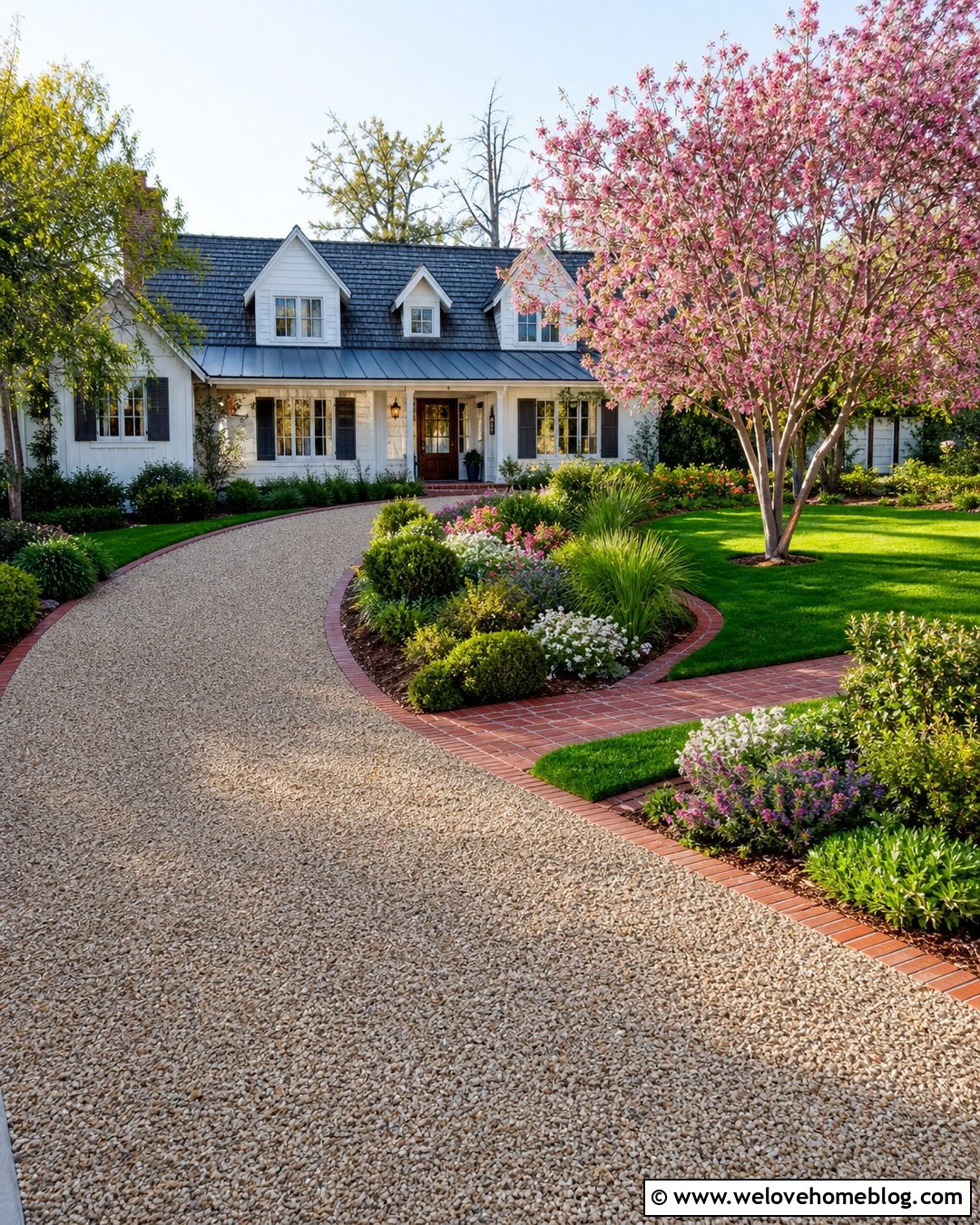
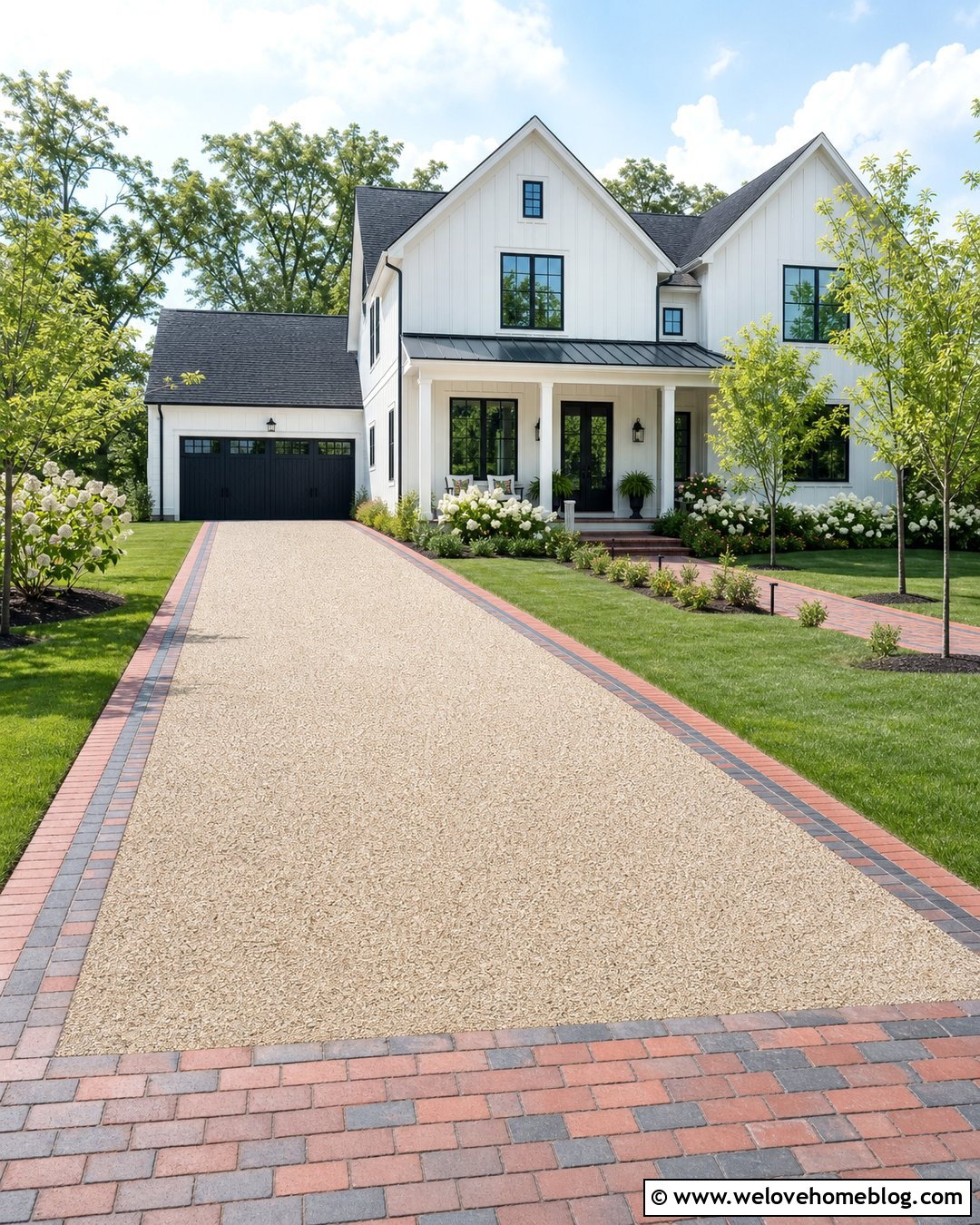
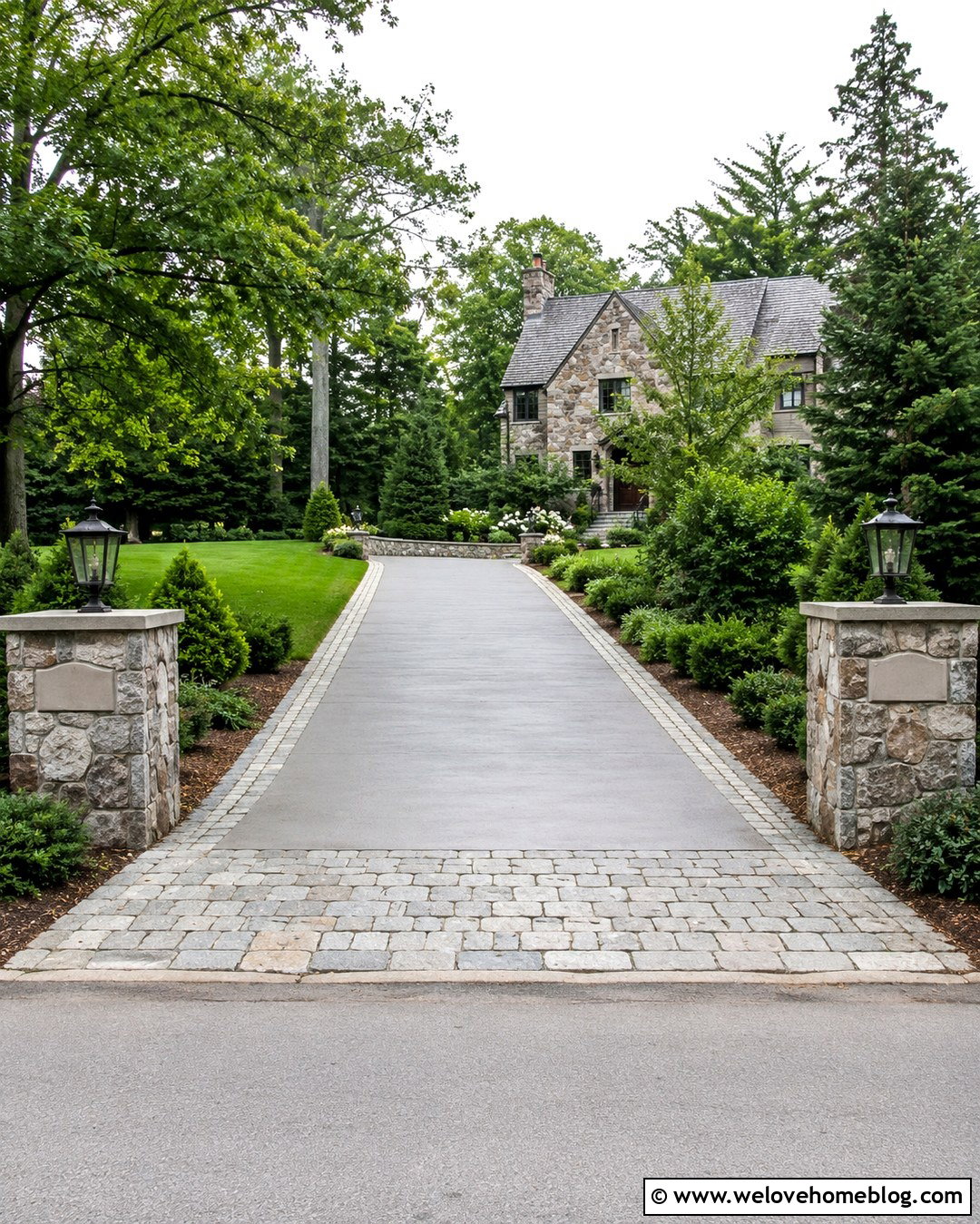
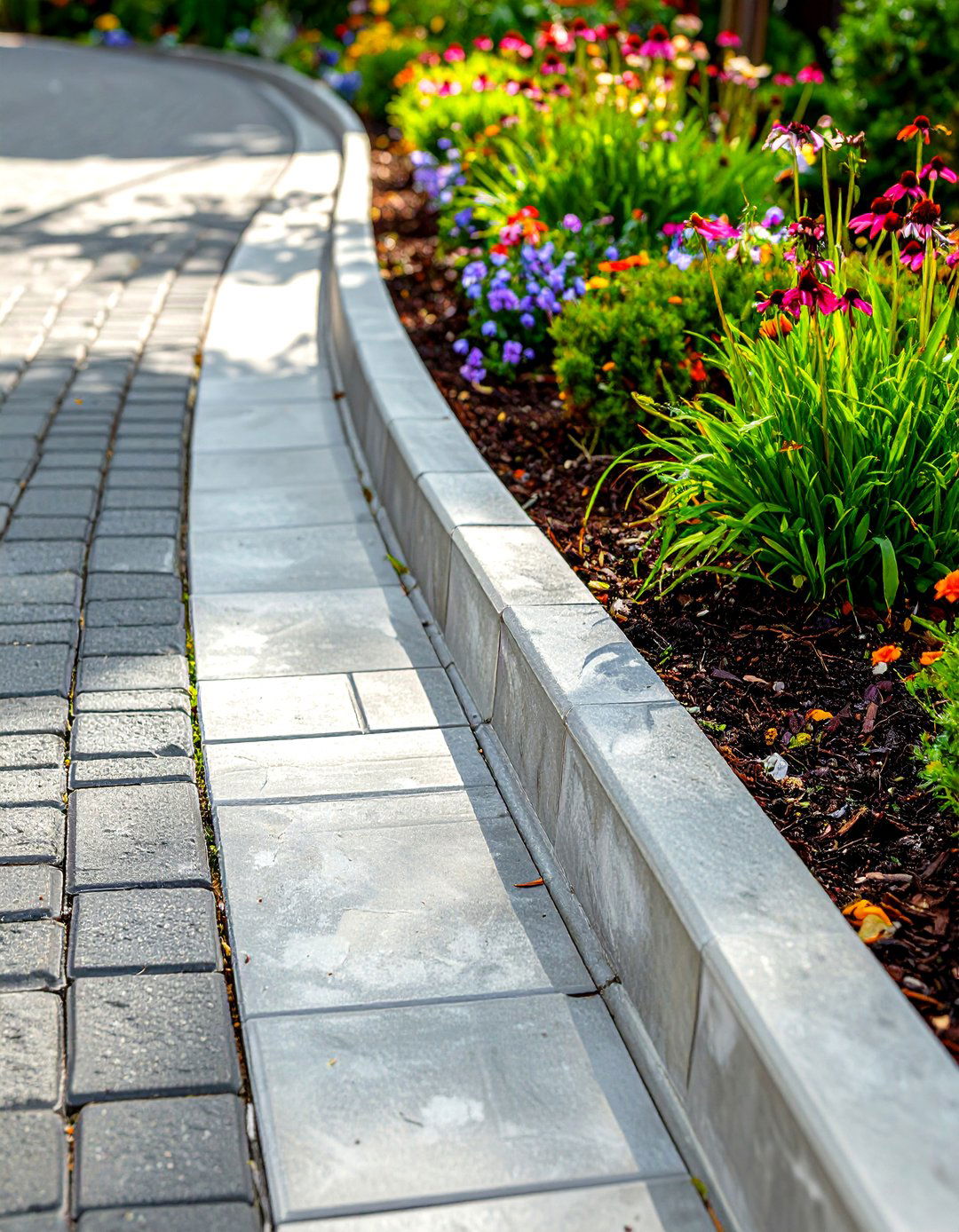
Colorful planting beds can soften a gravel driveway when they are supported by a functional brick or stone edge. Rather than allowing flowers to meet loose gravel directly, install a low border that keeps soil, mulch, and driveway stone separated. A curved driveway is ideal for this treatment because the beds can widen naturally at key viewing points. Combine long-blooming perennials with compact shrubs and ornamental grasses instead of relying on one flower type. Keep taller plants away from the street entrance so drivers maintain clear sightlines. Select gravel and edging colors that connect with the house facade, such as buff gravel with warm brick or gray gravel with bluestone. A matching walkway through the planting bed creates a welcoming route from the driveway to the front door.
16. Gabion Gravel Driveway Edging
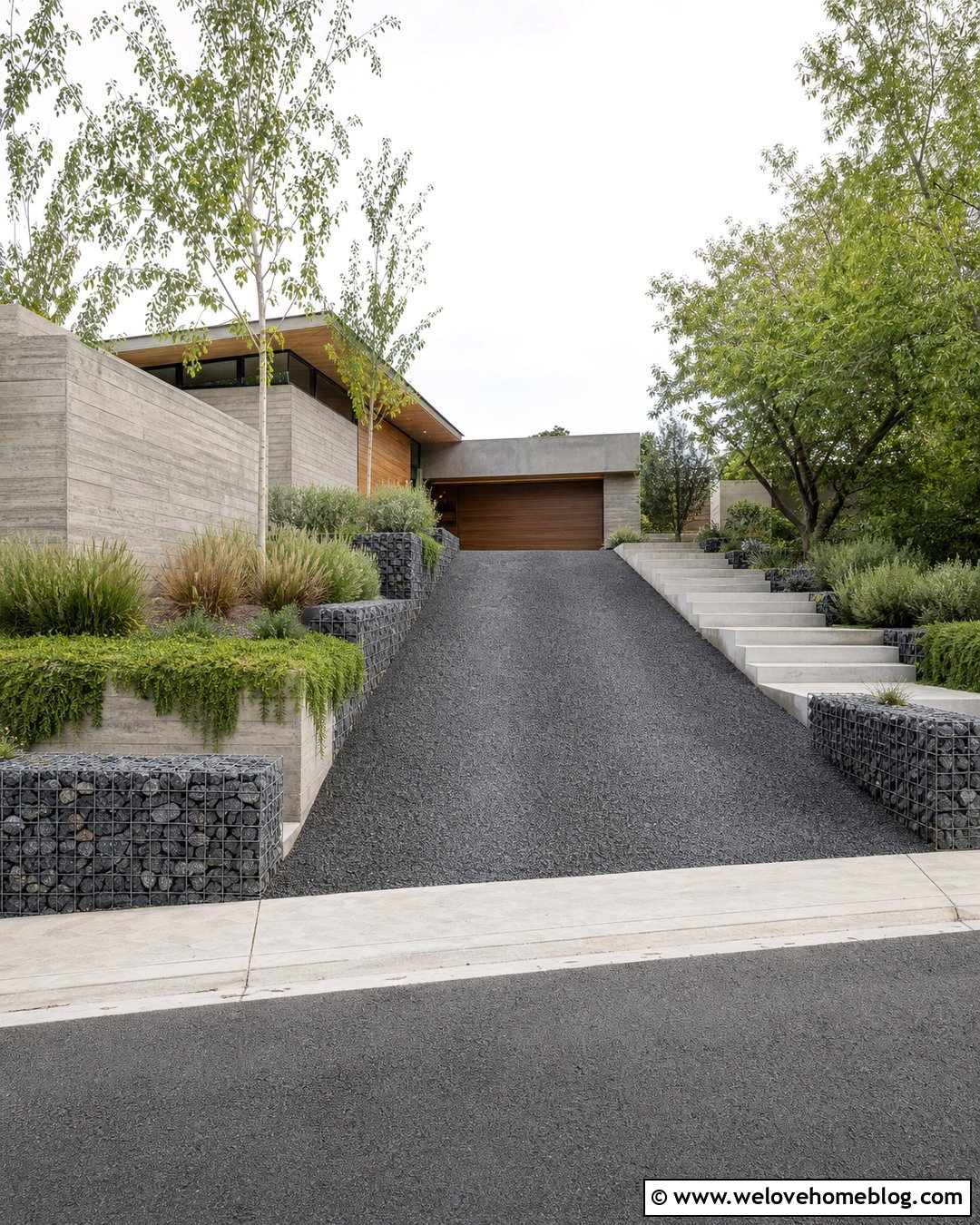
Gabion edging offers a bold solution for a gravel driveway crossing a sloped contemporary property. Low wire cages filled with angular stone can retain raised planting beds while establishing a clear boundary beside the driveway. Match the gabion fill to the house facade or use a contrasting stone that still relates to the driveway gravel. Keep the walls low along vehicle areas, reserving taller sections for locations where grade retention is necessary. Ornamental grasses, trailing plants, and drought-tolerant shrubs soften the industrial geometry. A straight or gently angled driveway reinforces the modern character better than tight decorative curves. Include a smooth concrete or large-format paver walkway to balance the rough textures. Professional planning may be appropriate wherever the edging also functions as a retaining structure.
17. Dry-Stacked Stone Gravel Driveway Edging
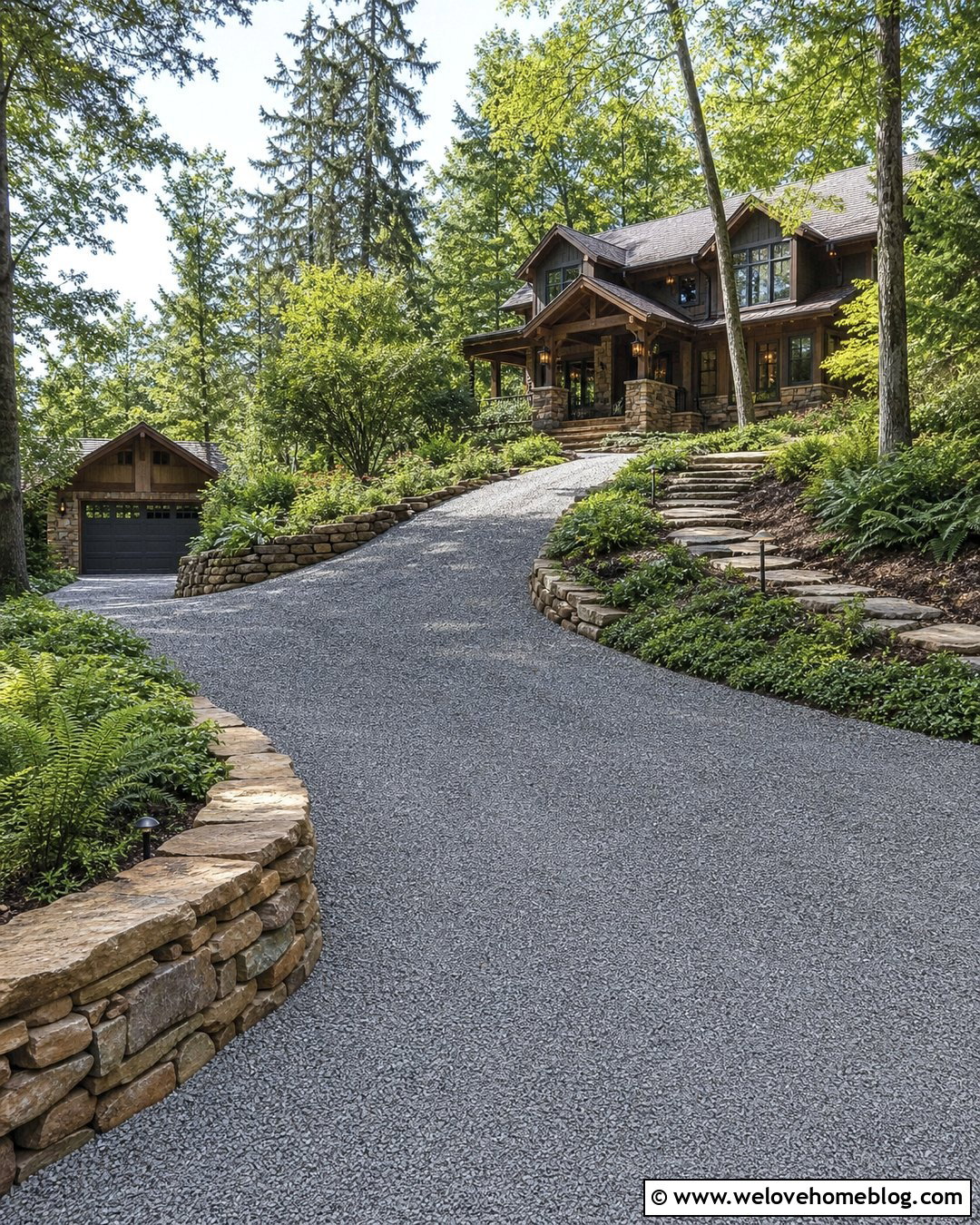
A low dry-stacked stone wall creates a graceful boundary where a gravel driveway sits below a lawn or planting bed. This complete design is particularly attractive beside a Craftsman, cottage, or wooded hillside home. Choose flat stones that stack securely and keep the wall proportional to the driveway. Taller construction requires careful attention to stability and drainage, while a short decorative wall can follow broad curves with less visual weight. Plant creeping ground covers, ferns, and compact shrubs above the wall to soften its upper edge. Use angular gravel in a compatible color so the driveway and wall appear related. Near the garage, lower the edging or transition to flush stone paving. This gives vehicles more turning room and creates a comfortable walking connection to the house.
18. Slate Gravel Driveway Edging
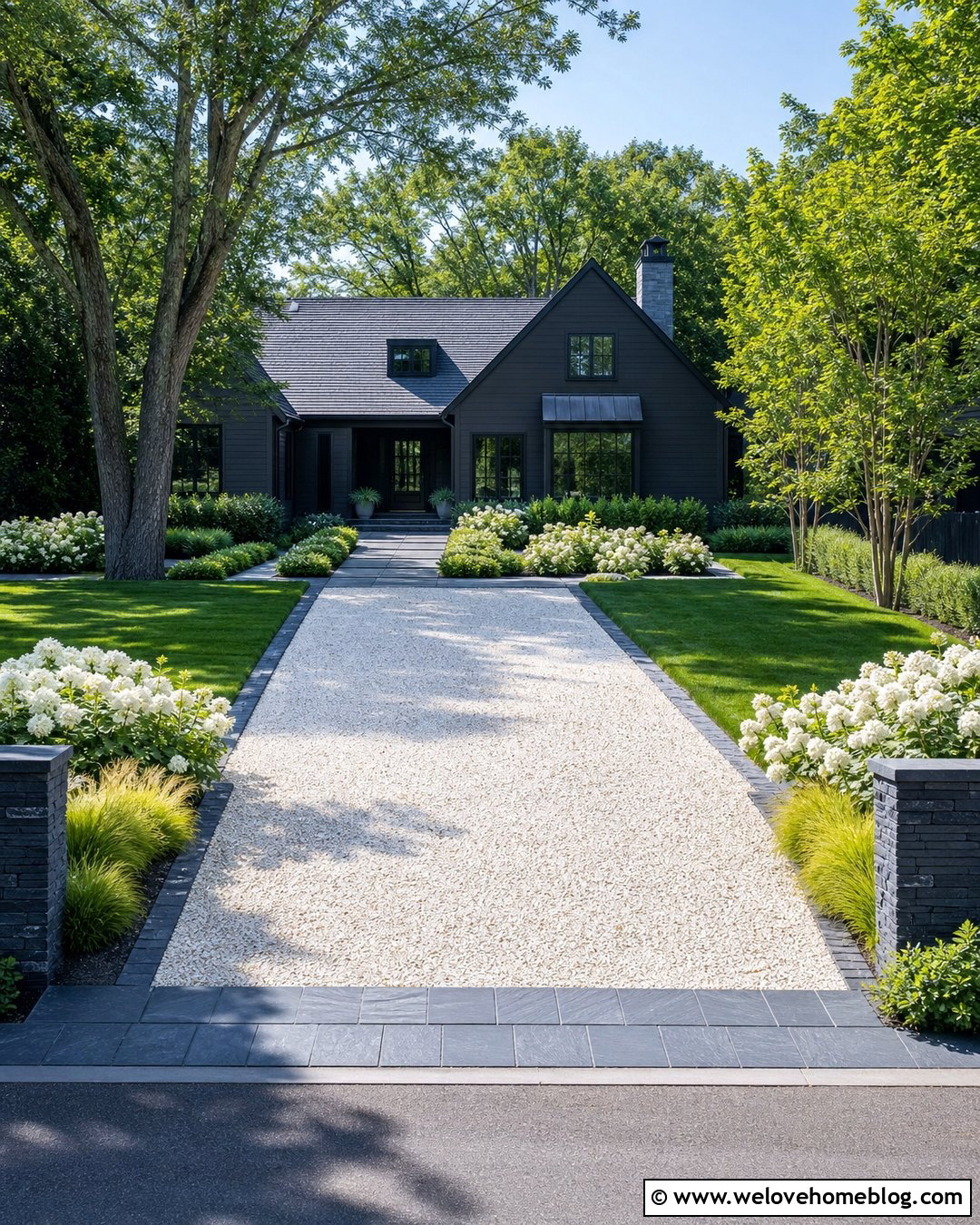
Dark slate edging produces a sophisticated contrast around silver, white, or light gray gravel. Use rectangular slate setts or thick pieces rather than thin decorative tiles that may not tolerate driveway conditions. The border can follow a straight approach to a modern home or form sweeping curves around a contemporary cottage. Repeat the slate in the front walkway, porch steps, or address marker to connect the driveway with the architecture. Soft green grasses and white-flowering shrubs prevent the dark border from looking severe. Because wet slate may become slippery, keep walking transitions level and select an appropriate textured finish. A secure foundation reduces movement and protects the clean line. The completed driveway feels refined but still retains the relaxed texture and permeability associated with gravel.
19. Recycled Brick Gravel Driveway Edging
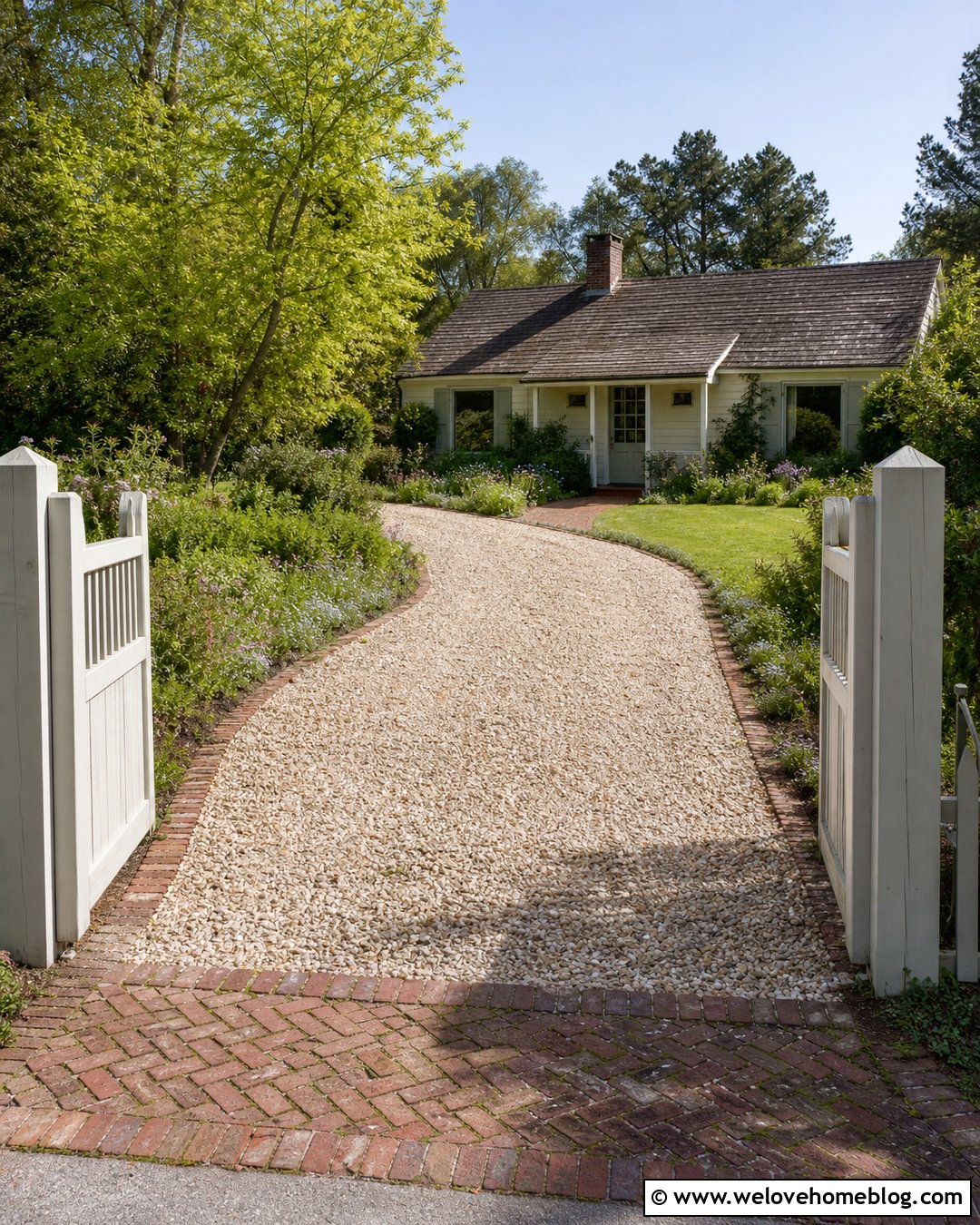
Reclaimed brick introduces variation, age, and warmth to a light gravel driveway. This look complements older homes, garden cottages, and casual farmhouses where perfectly uniform materials might feel out of place. Sort the bricks by thickness before installation so the finished border remains reasonably level. Lay them in a running bond for a simple edge or create a wider basketweave ribbon near the entrance. A stable base and external restraint help keep older units from spreading apart. Allow thyme or another suitable low ground cover to soften selected outer joints without letting plants invade the driving surface. Pair the driveway with informal flowering beds, a painted wooden gate, and a brick path. Use sound, durable bricks, and reserve heavily damaged pieces for non-traffic landscape accents.

20. Composite Gravel Driveway Edging
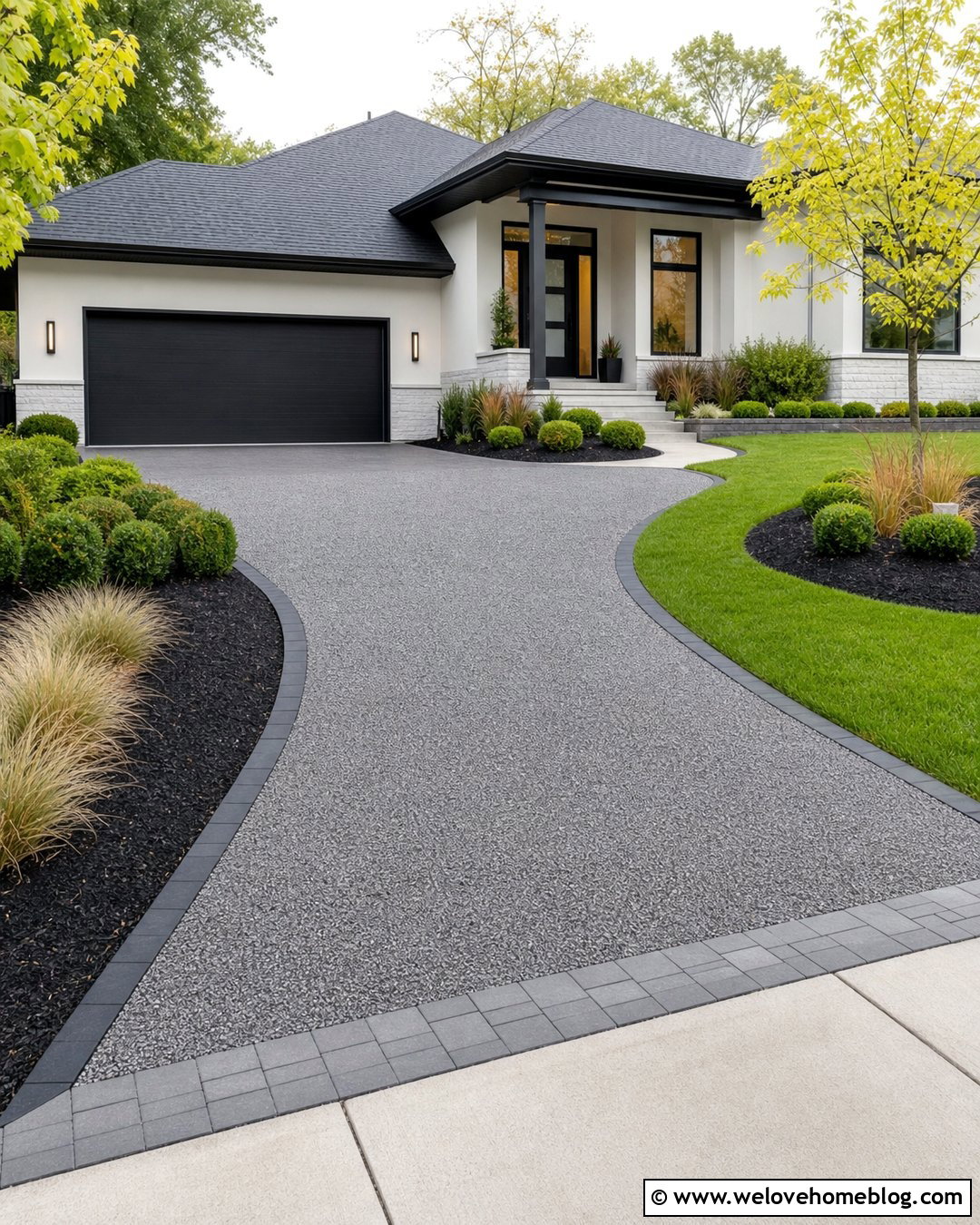
Flexible composite edging provides a low-profile option for homeowners who want gravel containment without a prominent masonry border. It can shape straight runs, broad curves, and small parking extensions while remaining visually discreet. Choose a heavy-duty product intended for landscape or hardscape use, then anchor it according to the installation requirements. This border looks best with compacted gray gravel, simple lawn, and clean planting beds around a contemporary suburban home. Keep most of the material below the gravel surface so only a subtle line remains visible. At vehicle crossing points, replace flexible edging with a stronger concrete or paver transition. The result is an affordable, uncluttered driveway design. Dark edging also visually disappears beside mulch beds, allowing nearby shrubs and grasses to become the main decorative features.
21. Aluminum Gravel Driveway Edging
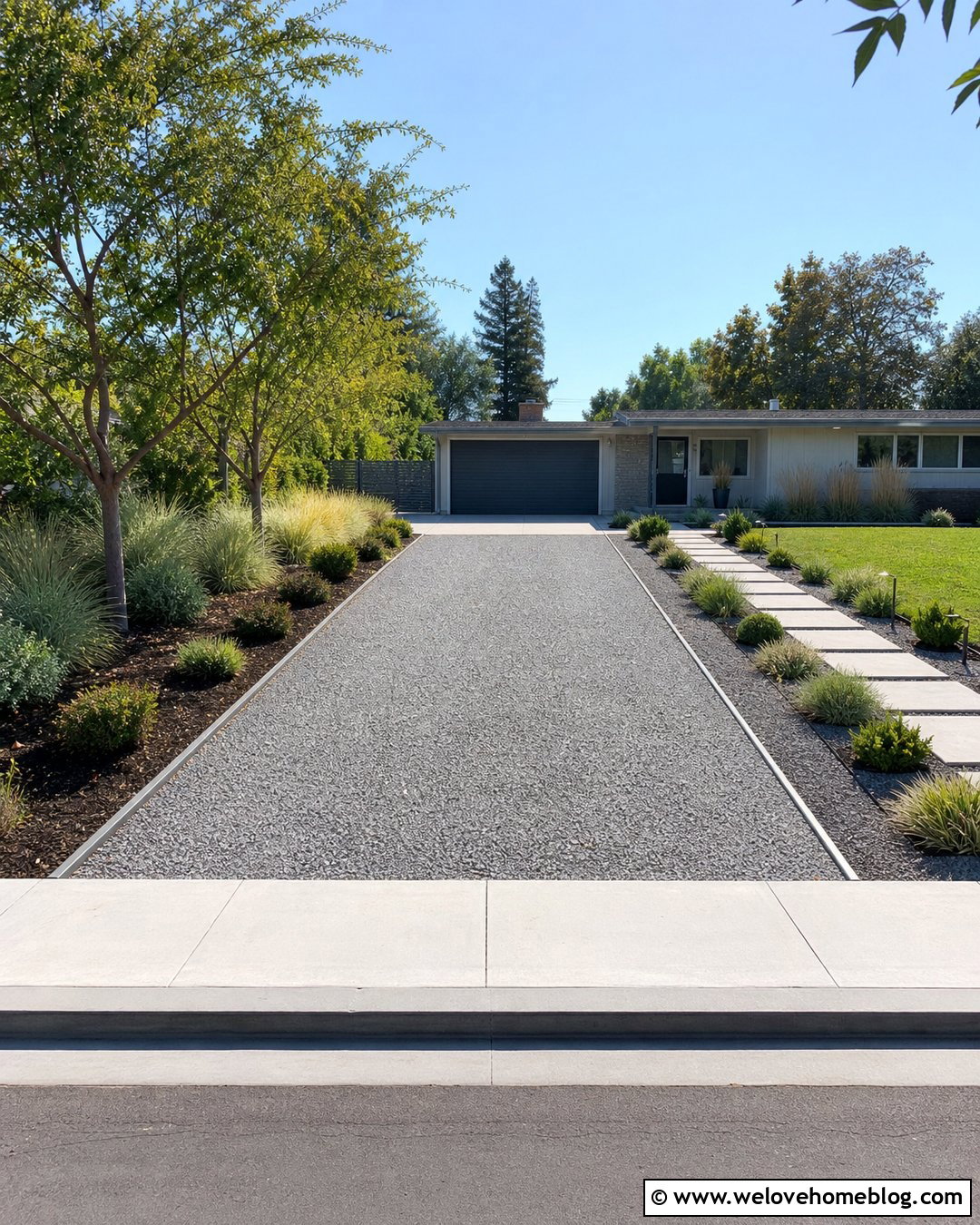
Aluminum edging creates precise lines without the heavy appearance of stone or concrete. It is a good match for a narrow gravel driveway beside a modern townhouse, midcentury ranch, or minimalist home. Use it to separate fine gray crushed gravel from lawn, ground cover, or geometric planting beds. Secure anchoring is essential along curves and locations exposed to routine raking. Keep the top nearly flush to reduce trip risks and prevent tires from bending the border. A concrete apron at the street and garage handles heavier impact while the aluminum defines the quieter side edges. Complete the look with rectangular walkway slabs, clipped shrubs, and a limited plant palette. The slim metallic line should support the overall layout rather than becoming the driveway’s most noticeable feature.
22. Concrete Mow Strip Gravel Driveway Edging
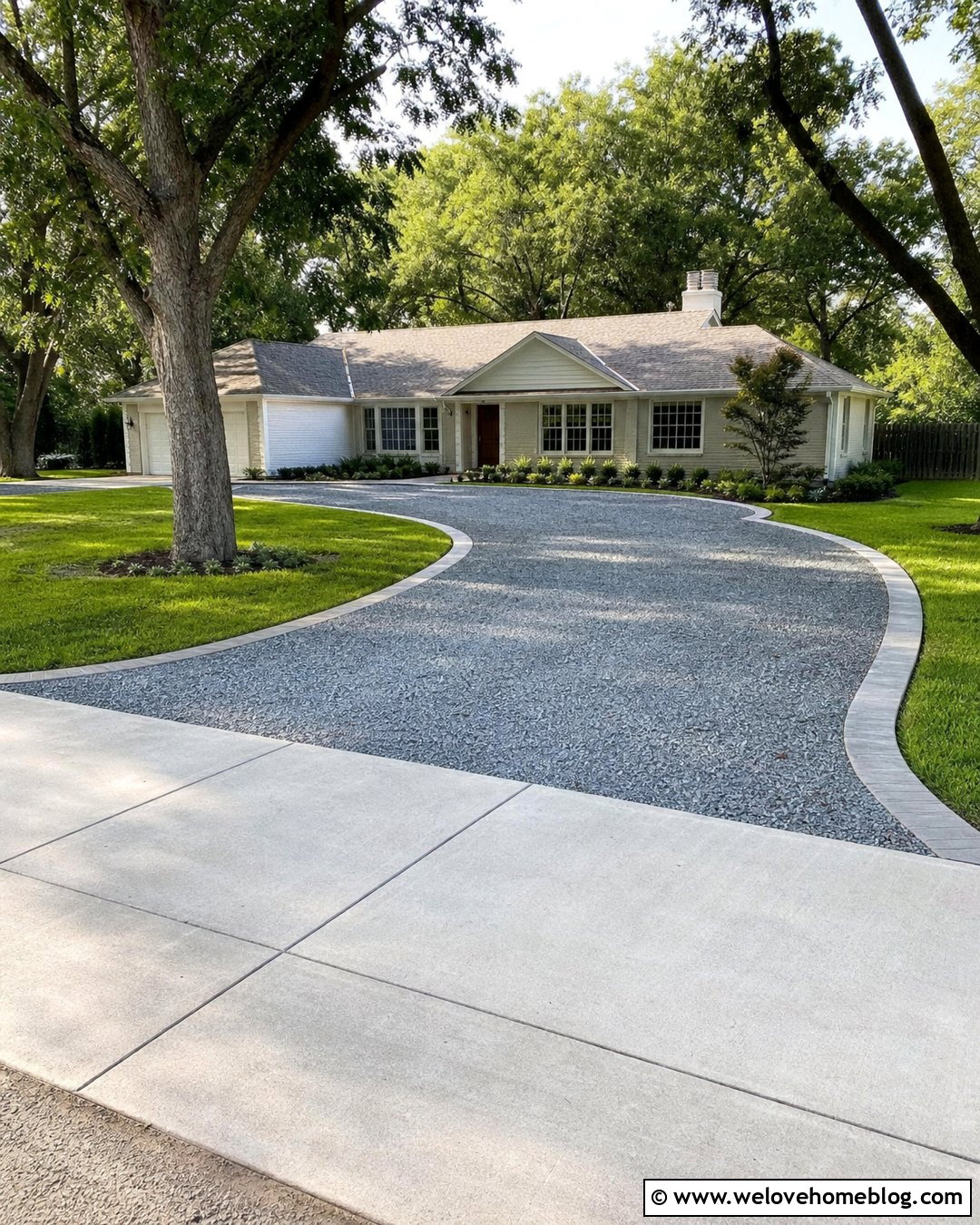
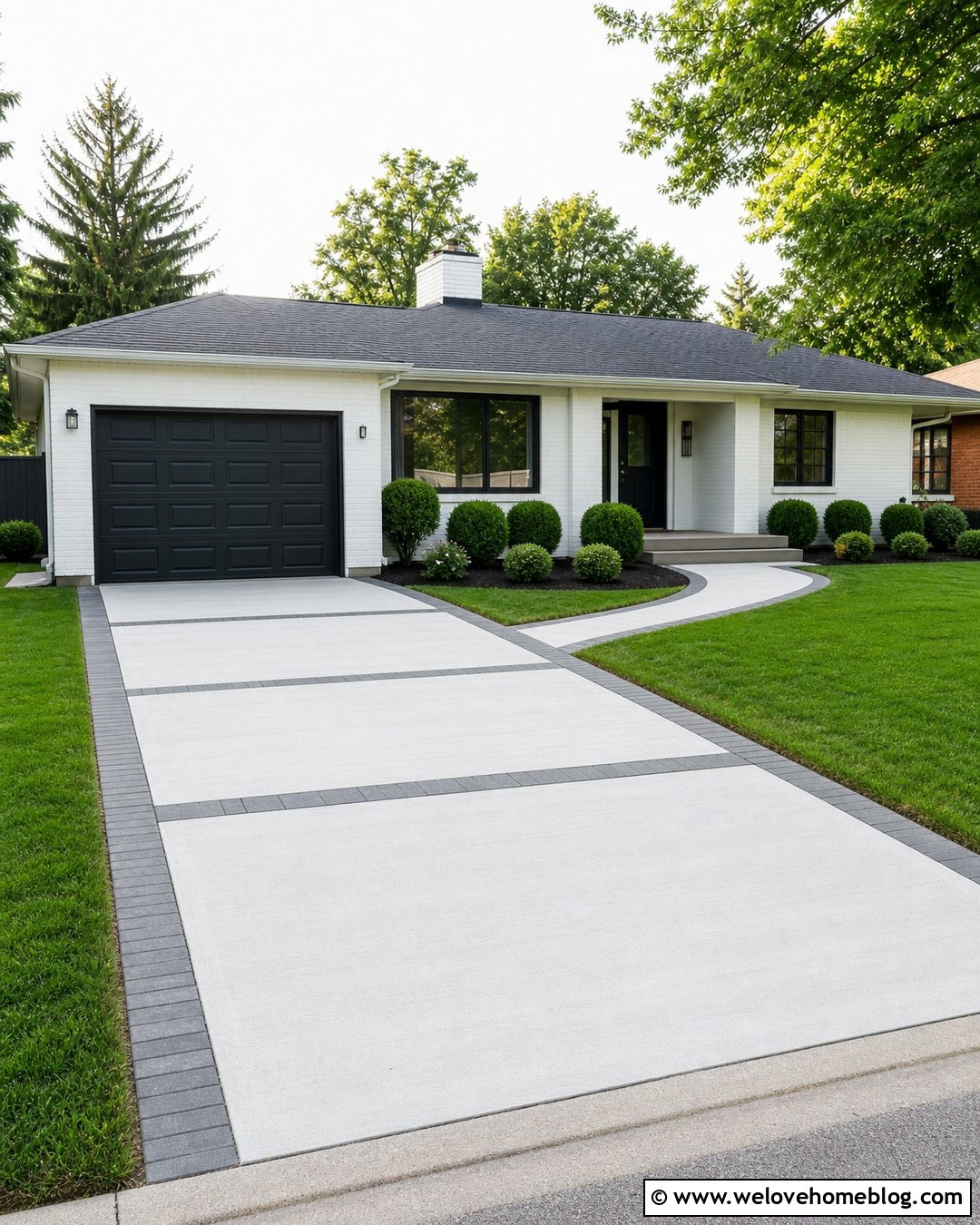
A flush concrete mow strip creates a broad, practical edge between gravel and lawn. Unlike a raised curb, this border allows mower wheels to travel across the surface and gives pedestrians a stable place to step. It also helps collect gravel before stones migrate deeply into the grass. Use a straight strip for a simple ranch driveway or form gentle curves around a circular suburban layout. Light broom-finished concrete coordinates with gray gravel, while integral color can complement warmer stone and brick exteriors. Keep control joints consistent and align key breaks with walkway connections or landscape features. Add tidy lawn, shade trees, and low foundation planting for a balanced setting. A matching concrete apron can create a smooth entrance without replacing the gravel’s softer residential character.
23. Wood Sleeper Gravel Driveway Edging
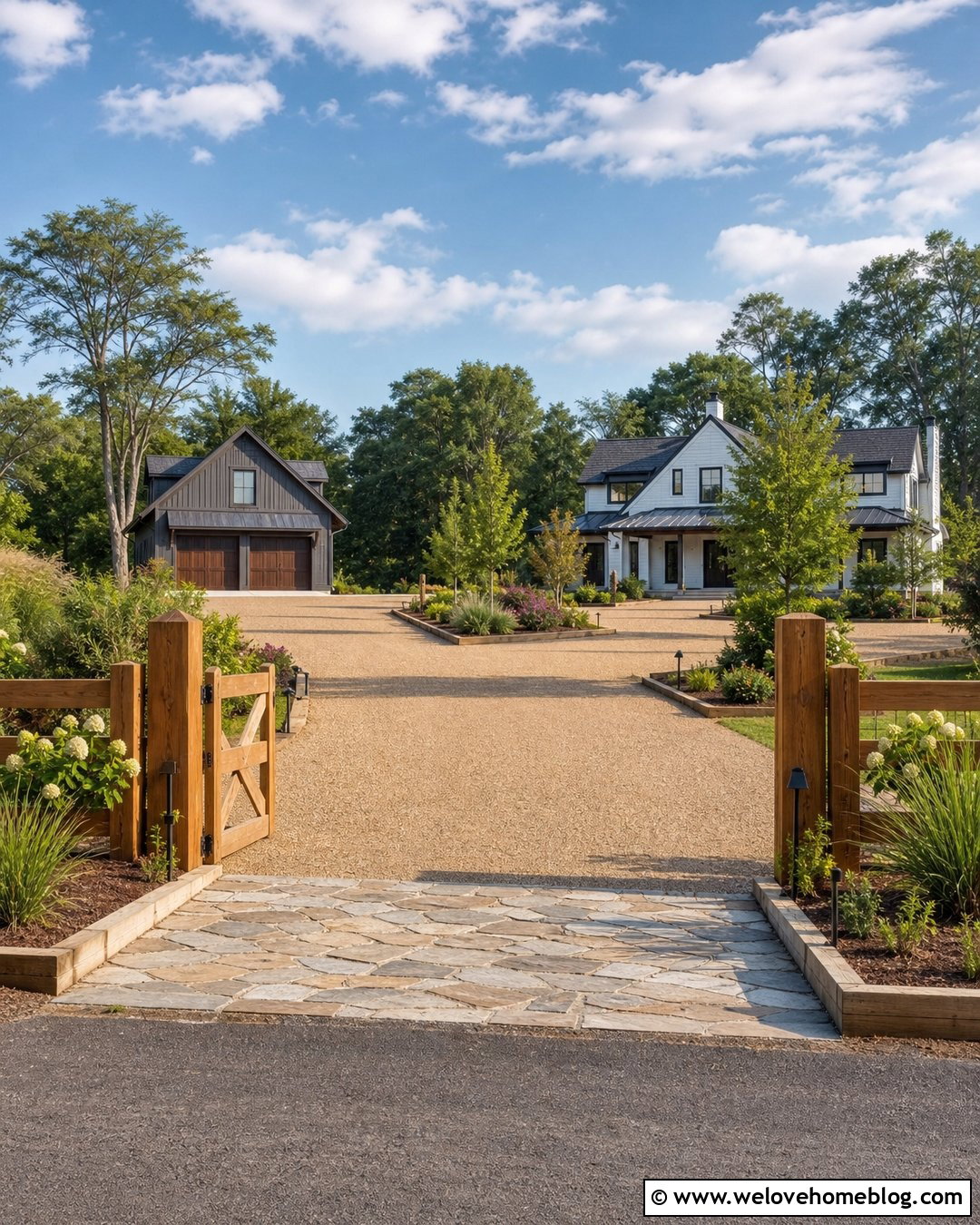
New landscape sleepers deliver the substantial appearance of railroad ties without relying on heavily weathered reclaimed materials. They work especially well along a wide gravel driveway beside a modern farmhouse, barn-style garage, or rural ranch. Lay the sleepers lengthwise for a clean linear border and anchor them securely to resist movement. On sloped sites, short stacked sections can support shallow planting beds, provided the construction is designed for the soil pressure involved. Pair warm wood with golden crushed gravel, native grasses, and informal clusters of flowering shrubs. Black post lights or a simple timber gate can repeat the driveway’s strong lines. Keep the sleepers away from constant standing water and inspect them regularly. A stone apron will protect the wood near high-impact entrance and turning areas.
24. French Drain Gravel Driveway Edging
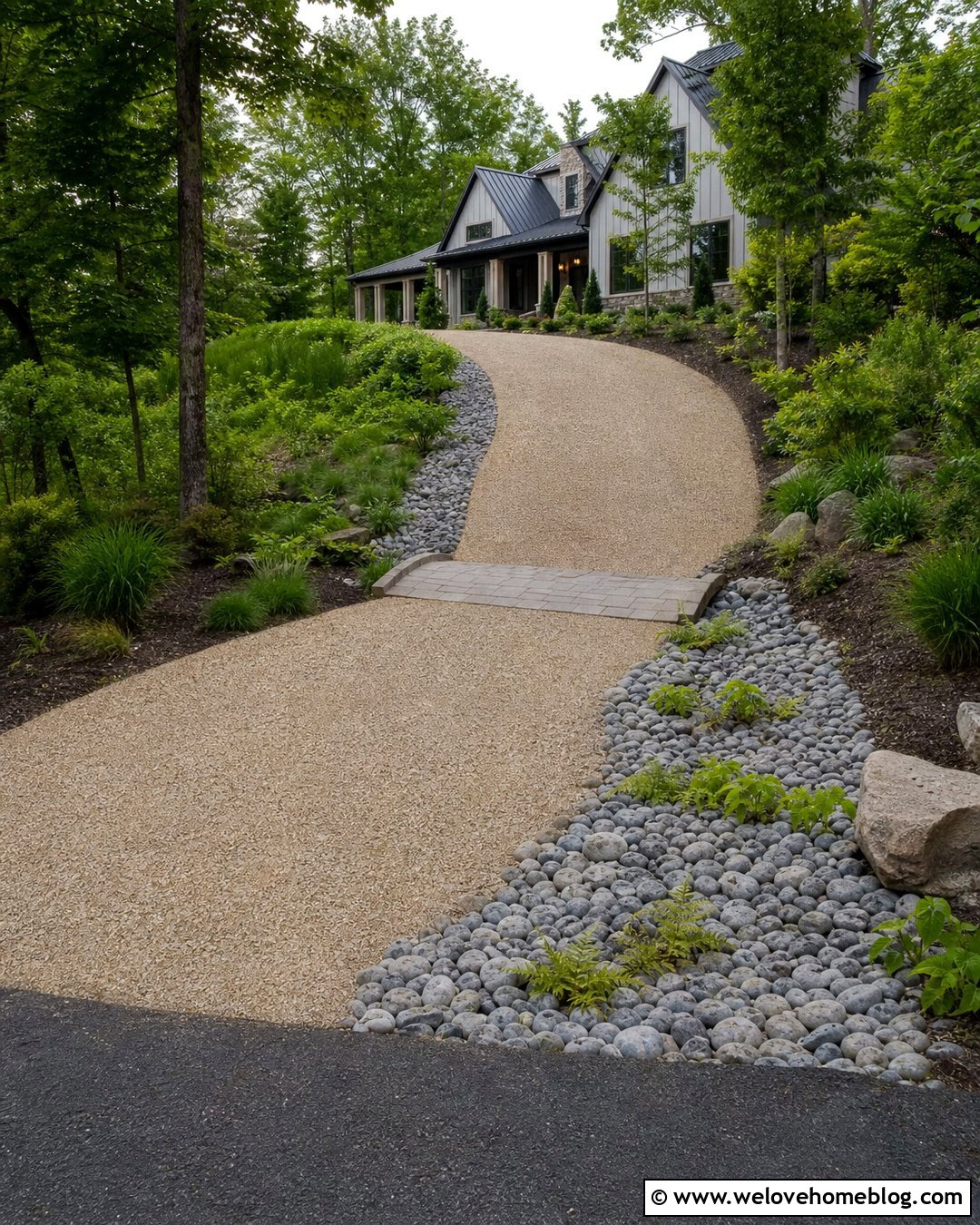
A stone-filled French drain can become part of the driveway design instead of looking like a separate utility feature. Position a narrow drainage trench along the lower side of a sloped gravel driveway, then fill the visible surface with clean river stone or angular drainage rock. A hidden rigid restraint keeps the decorative drainage stone separate from the smaller driveway gravel. Use moisture-tolerant planting beyond the trench and guide runoff toward an appropriate outlet or absorption area. The approach suits modern farmhouses, woodland homes, and properties that experience water movement along the driveway edge. A small bridge of pavers can carry the front walkway across the drain. Correct grading and drainage planning remain essential, since decorative stone alone will not solve every runoff or erosion problem.
25. Mixed Brick And Steel Gravel Driveway Edging
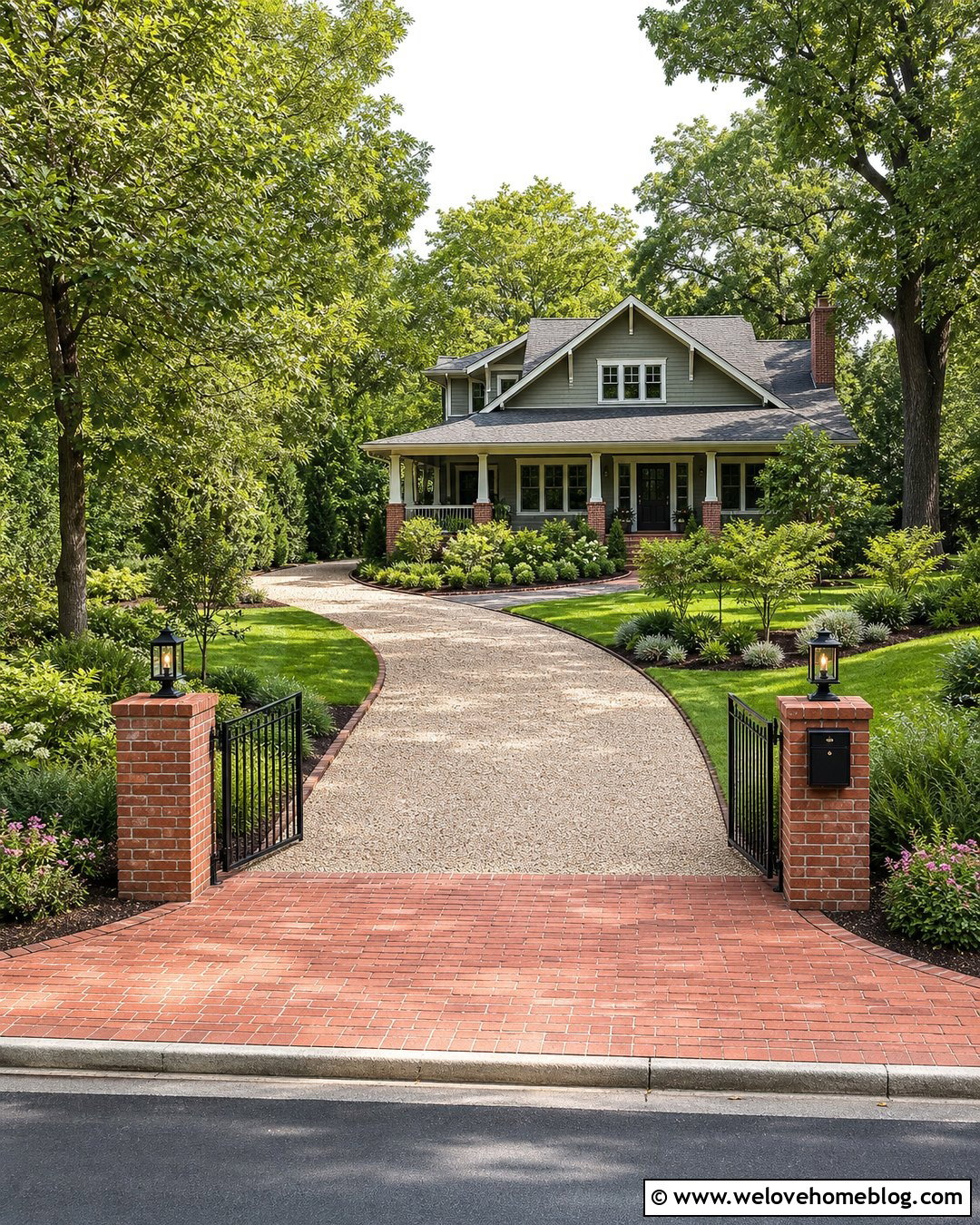
Combining brick and steel allows each edging material to serve the area where it performs and looks best. Use a broad brick apron at the street, continue brick around the most visible entrance beds, and install slim steel edging along the remaining driveway. This creates a durable transition where vehicles turn while keeping long side borders affordable and visually light. Warm brick can frame pale pea gravel leading to a Craftsman or updated traditional home. Black steel then separates the gravel from lawn and curved planting beds farther inside the property. Repeat brick in the walkway and use black metal for lights, the mailbox, or a simple gate. Careful alignment between materials is important. The transitions should feel deliberate rather than like separate edging projects completed at different times.
Conclusion:
Effective gravel edging should do more than decorate the sides of a driveway. It needs to contain loose stone, support the driveway’s shape, accommodate drainage, and complement the surrounding home and landscape. Brick, cobblestone, and granite offer durable traditional character, while steel, aluminum, and concrete create cleaner modern boundaries. Timber and fieldstone suit relaxed rural settings, and planted borders can soften harder materials. Before choosing an option, consider vehicle movement, maintenance, climate, slope, and how the border will meet the street and garage. The strongest designs use practical transitions and repeat key materials elsewhere in the yard. These **25 Gravel Driveway Edging Ideas** offer a useful starting point for building a complete, cohesive entrance.

Related posts:

Leave a Reply