
A well-paved driveway should handle daily traffic, drain correctly, and strengthen your home’s curb appeal. These 20 How To Pave Driveway Ideas explore complete designs rather than treating paving as an isolated surface. You will find practical combinations of driveway materials, laying patterns, borders, shapes, entrances, and landscaping. Before choosing a look, consider your climate, soil, slope, vehicle load, maintenance expectations, and local permit requirements. Strong paving also depends on proper excavation, a compacted subbase, stable edge restraints, and drainage that directs water away from the house. Whether you prefer classic brick, affordable asphalt, modern concrete, or permeable pavers, the following 20 How To Pave Driveway Ideas can help you create a durable and welcoming approach. ()

1. Herringbone Paver Driveway
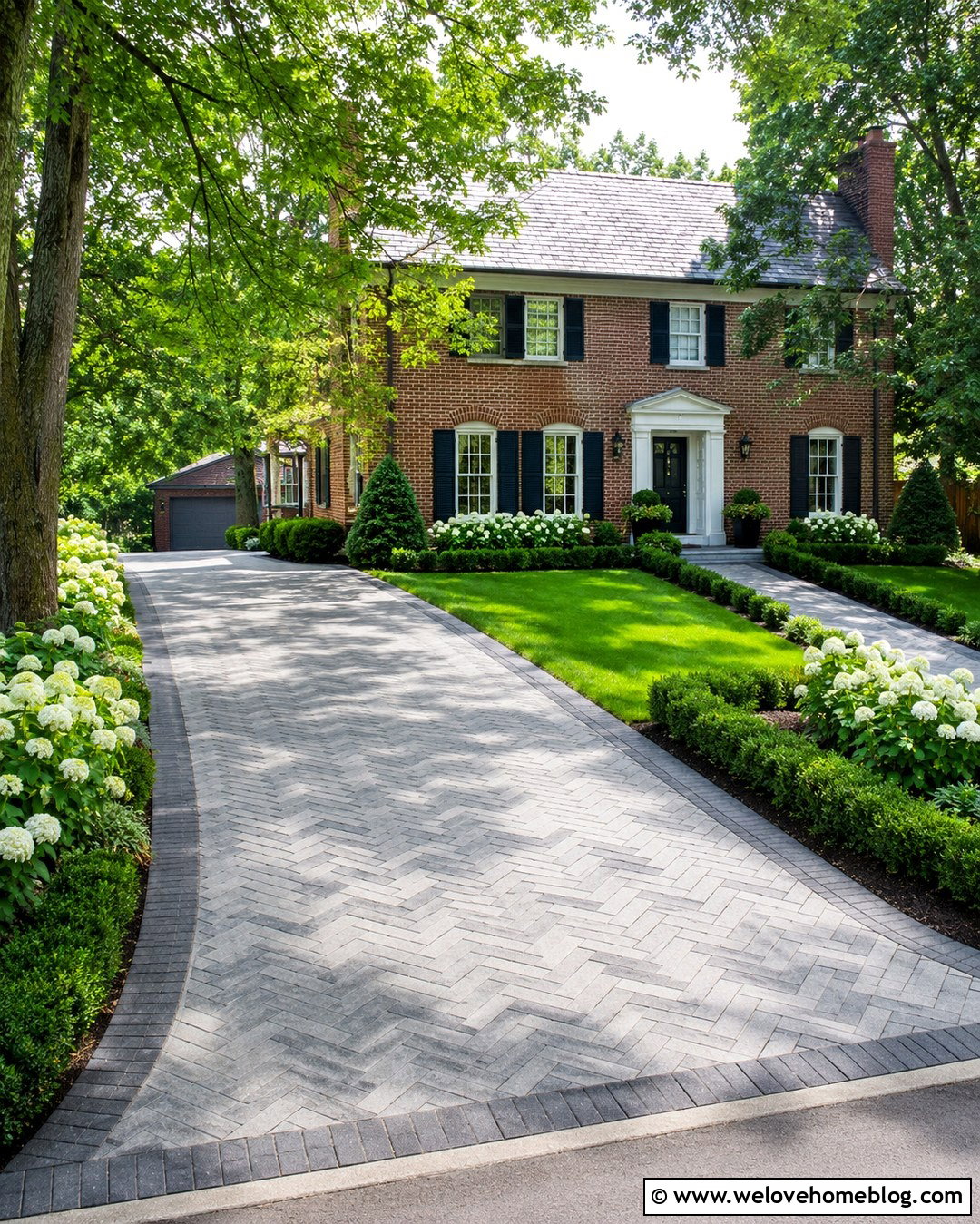
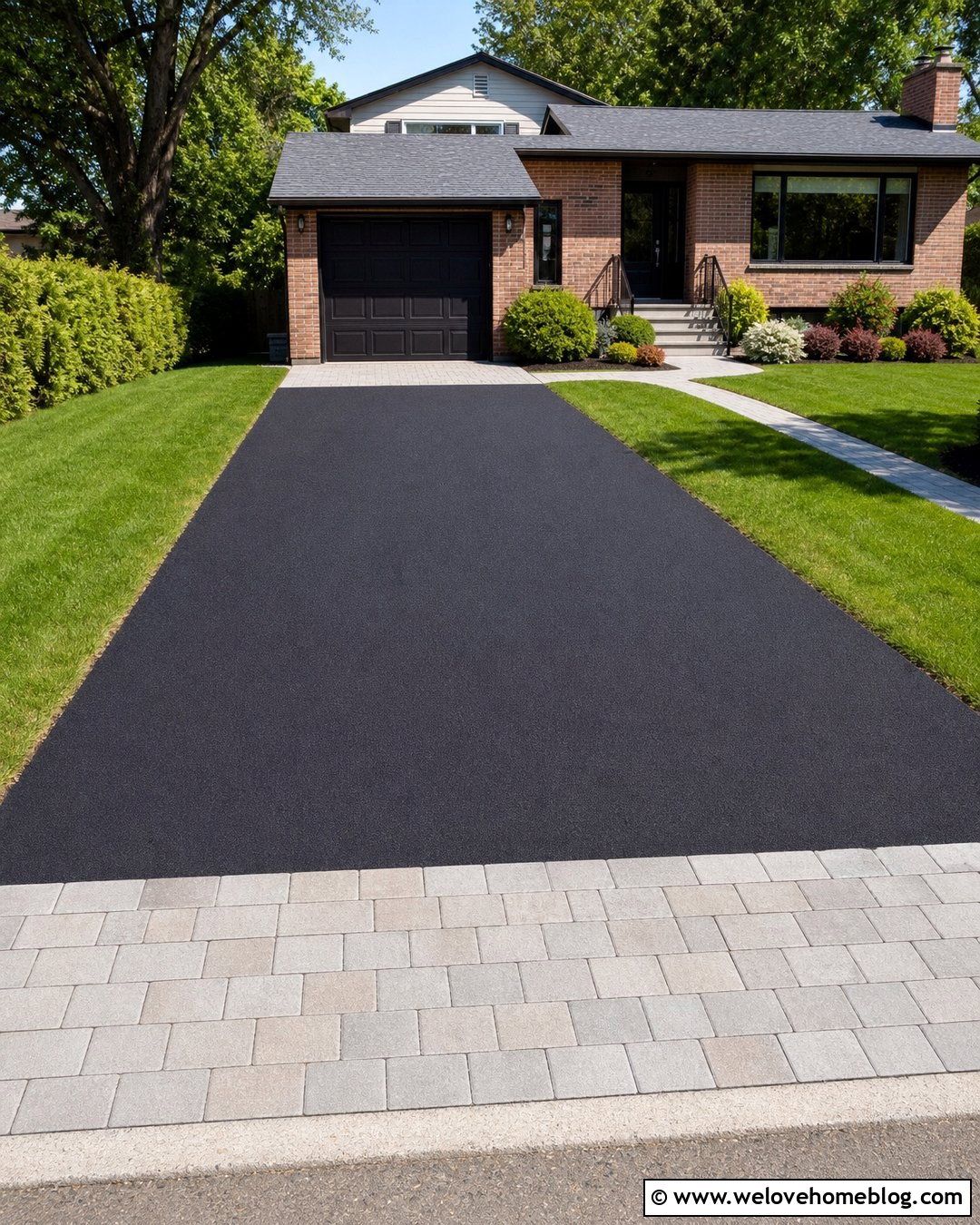
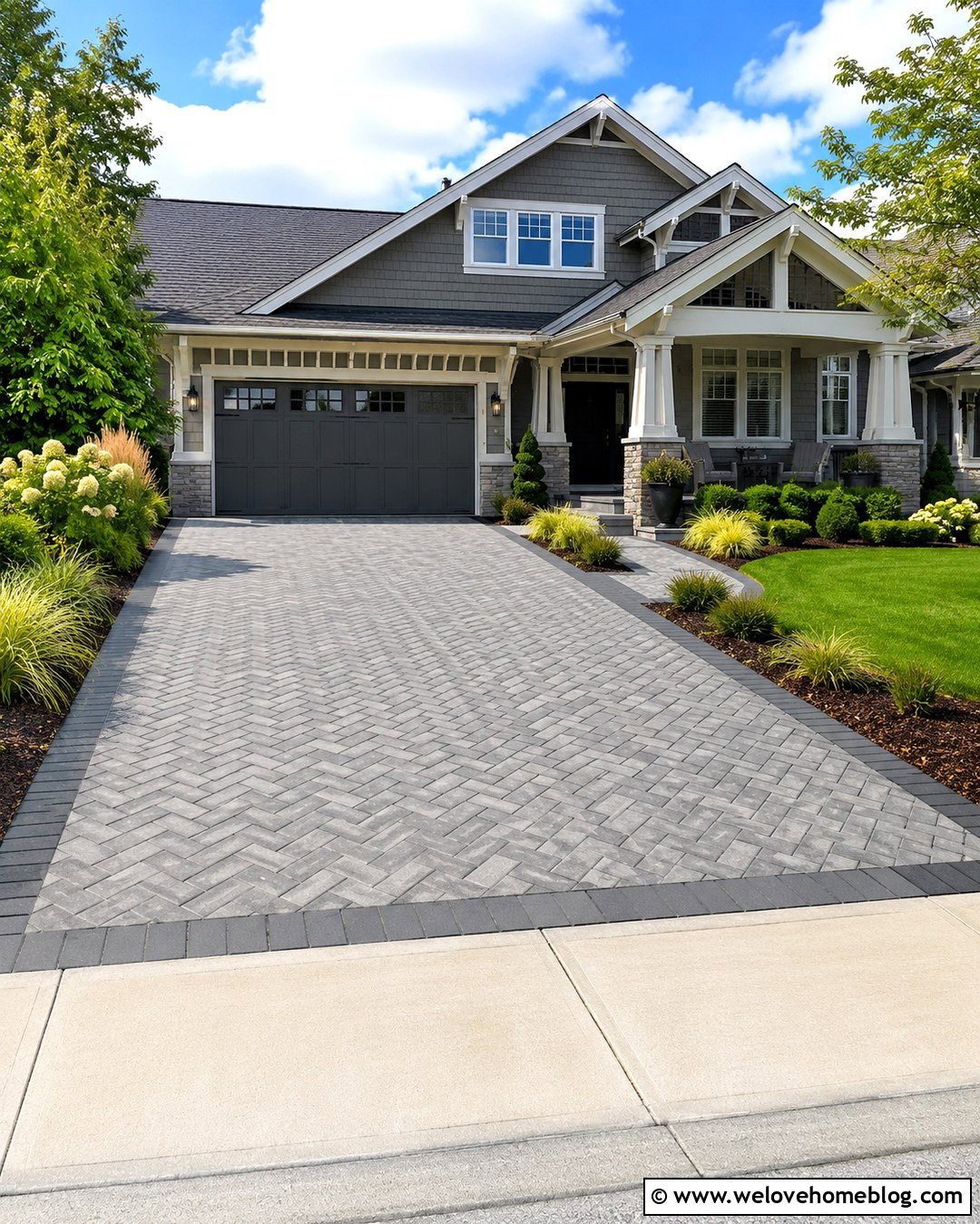
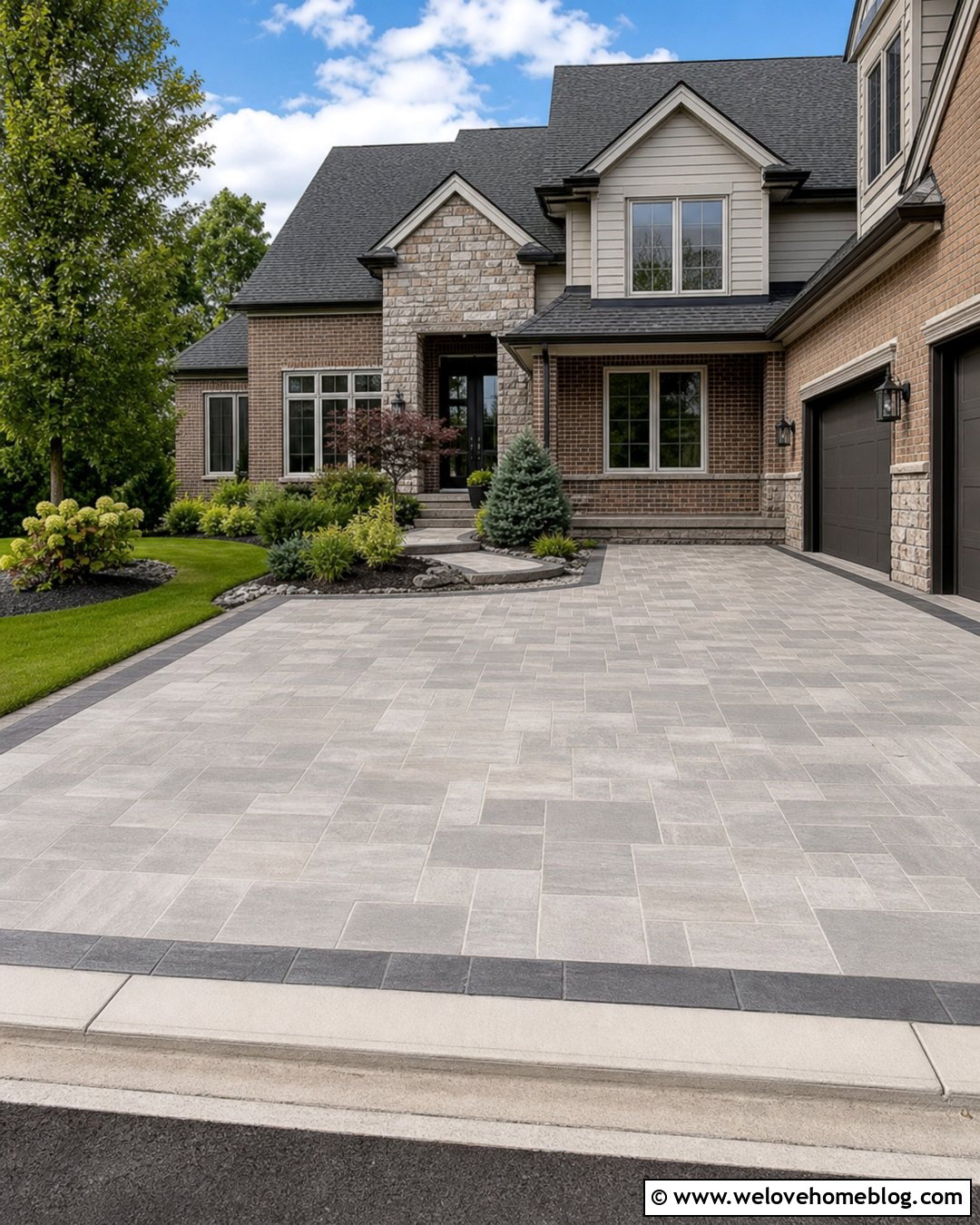
A herringbone paver driveway provides a strong, traditional surface that suits frequent vehicle traffic. Lay rectangular concrete pavers at a 45- or 90-degree angle so the interlocking pattern resists movement while adding visual texture. Warm gray pavers work beautifully with a red brick house, especially when framed by darker charcoal border blocks. Keep the layout straight for a compact suburban lot, then soften both sides with lawn, low shrubs, and a paved walkway to the front door. Proper excavation and a compacted aggregate base are essential before adding the bedding layer. Finish with durable edge restraints and joint sand. This complete design feels polished without appearing overly formal or difficult to maintain. ()
2. Running Bond Paver Driveway
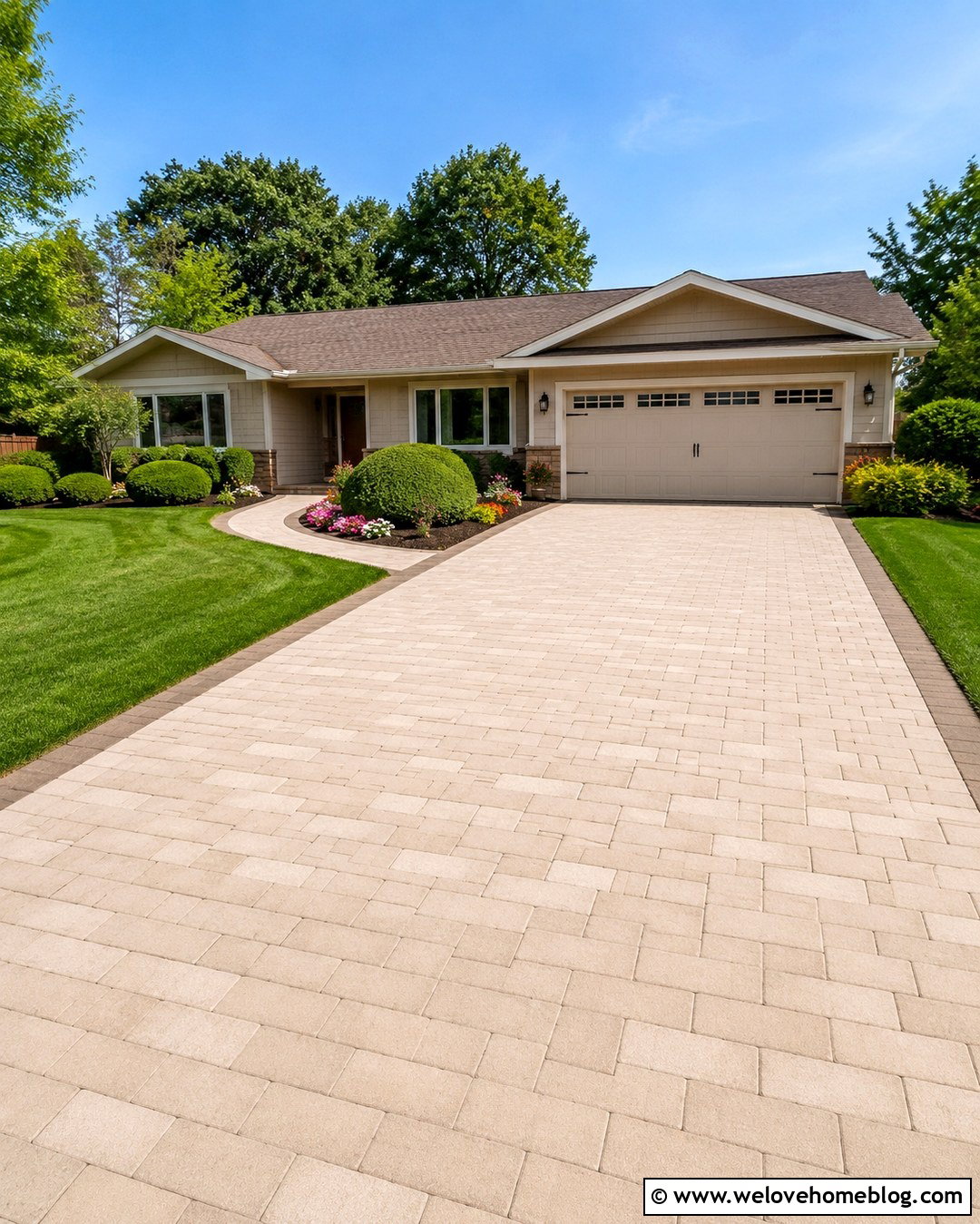
Running bond is a practical pattern for homeowners who want a clean driveway without complicated installation details. Arrange rectangular concrete pavers in offset rows running toward the garage. This direction visually lengthens a short driveway and helps guide the eye toward the house. Choose light beige pavers for the main surface and add a narrow brown paver border for definition. A straight layout looks especially balanced beside a ranch or Cape Cod home. Complete the design with trimmed lawn, rounded foundation shrubs, and a matching paver walkway. Running bond generally involves fewer intricate cuts than decorative patterns, making it approachable for simple layouts. Still, the driveway requires accurate grading, a vehicle-rated base, firm edging, and carefully filled joints. ()
3. Permeable Paver Driveway
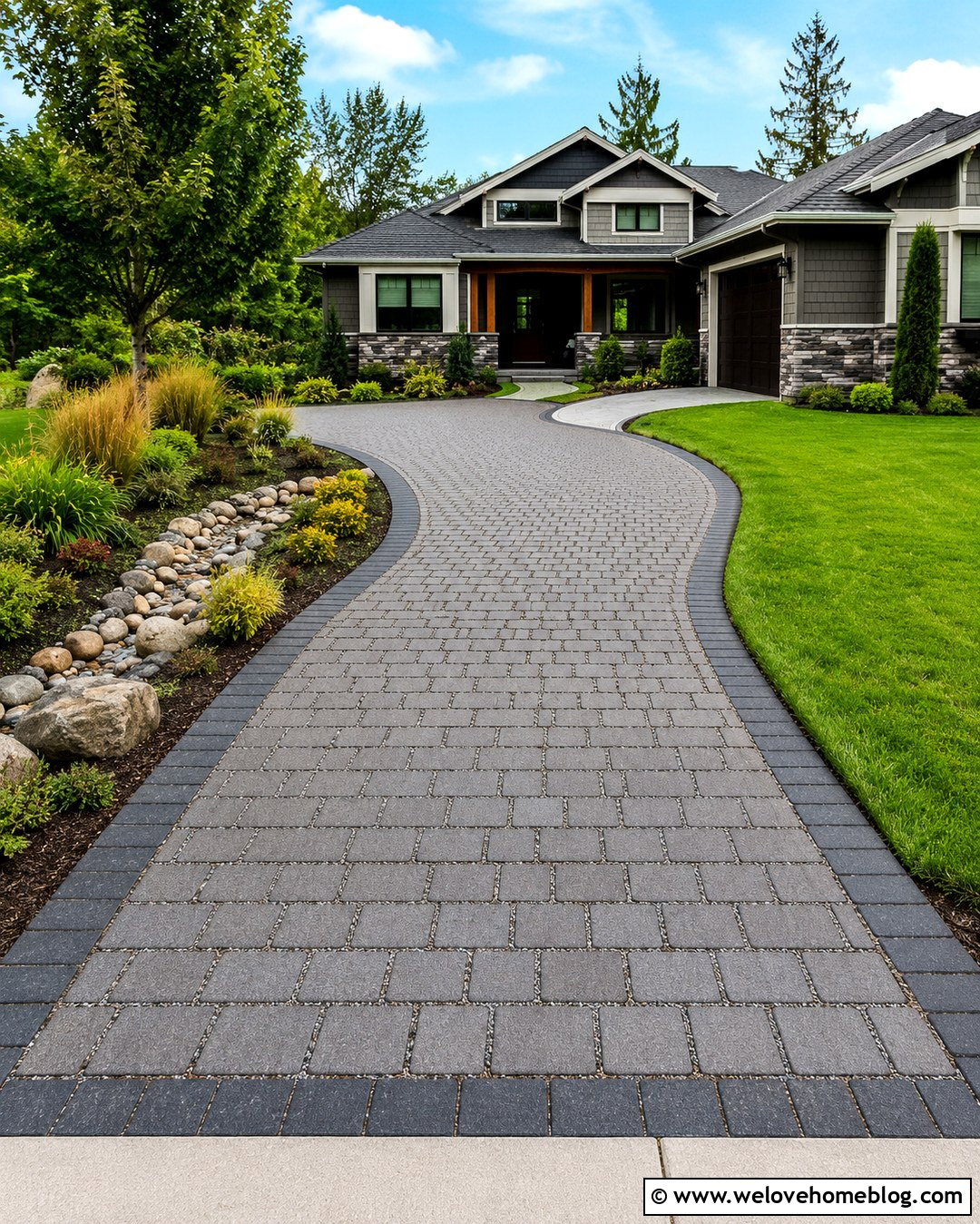
Does water collect near your garage or driveway entrance after heavy rain? A permeable paver driveway can create an attractive surface while allowing water to filter through open joints into a prepared stone base. Use medium-gray permeable concrete pavers in a straight or gently curved layout. Fill the wider joints with clean, small aggregate rather than ordinary joint sand. Dark stone edging can hold the field in place and provide crisp contrast. Rain gardens, ornamental grasses, and moisture-tolerant shrubs make the surrounding landscape feel intentional. The underlying aggregate layers must be designed for drainage and local soil conditions. Check local rules before construction, because runoff, excavation depth, and connection to the public street may be regulated. ()
4. Clay Brick Driveway
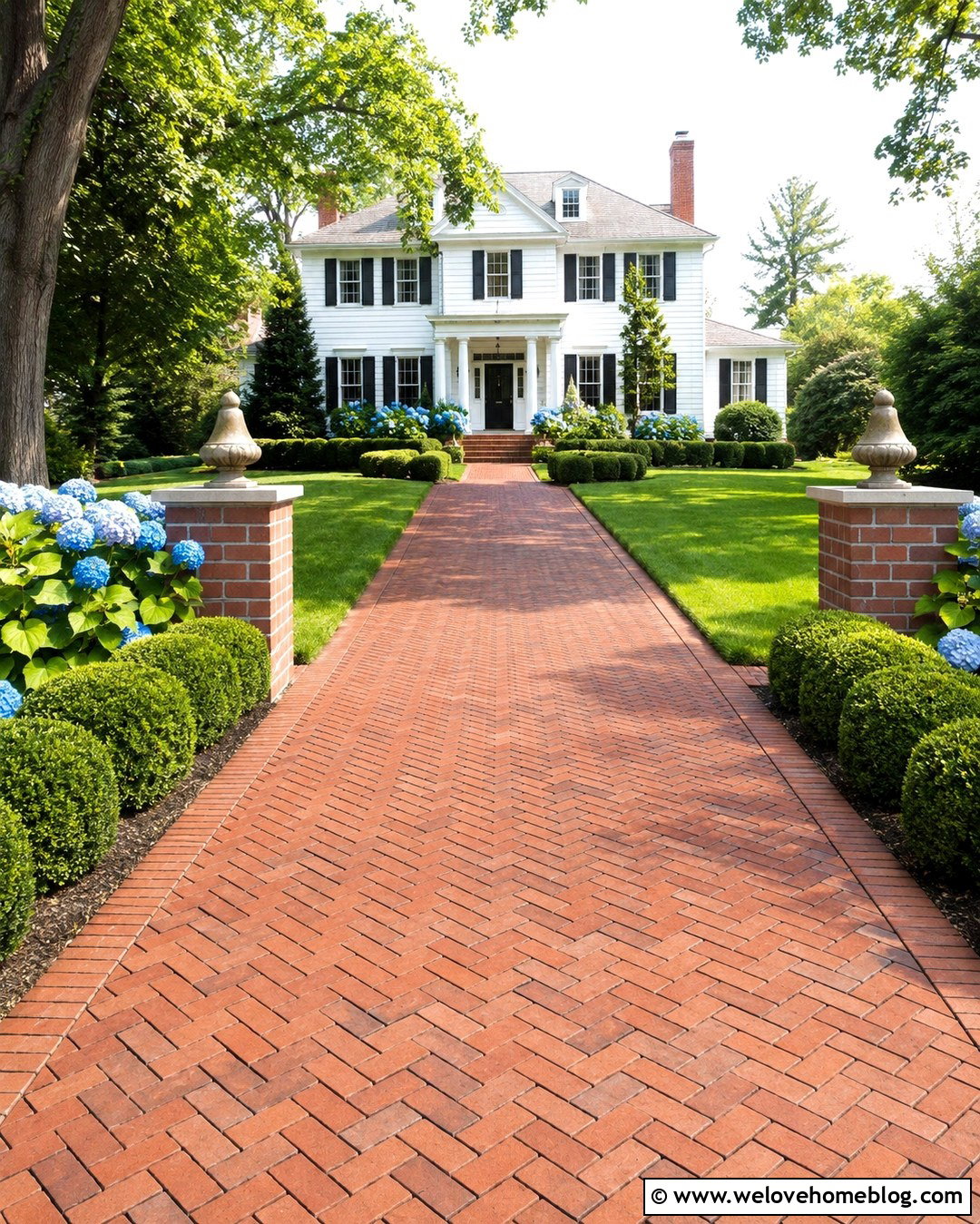
Rich red clay brick creates a warm driveway that naturally complements Colonial, Georgian, and traditional farmhouse architecture. Use brick pavers rated for exterior vehicular applications rather than ordinary wall brick. A basket-weave or herringbone field can fill the main parking area, while bricks laid on edge create a sturdy perimeter. Slight variations in red, brown, and charcoal tones give the surface an established appearance. Frame the driveway with clipped boxwood, hydrangeas, and a simple brick walkway leading toward the entrance. A compacted aggregate foundation helps reduce settling, while properly installed edge restraints prevent spreading. Because brick color already adds strong character, keep the driveway shape simple and repeat the masonry tone on steps, pillars, or garden borders. ()
5. Cobblestone Driveway
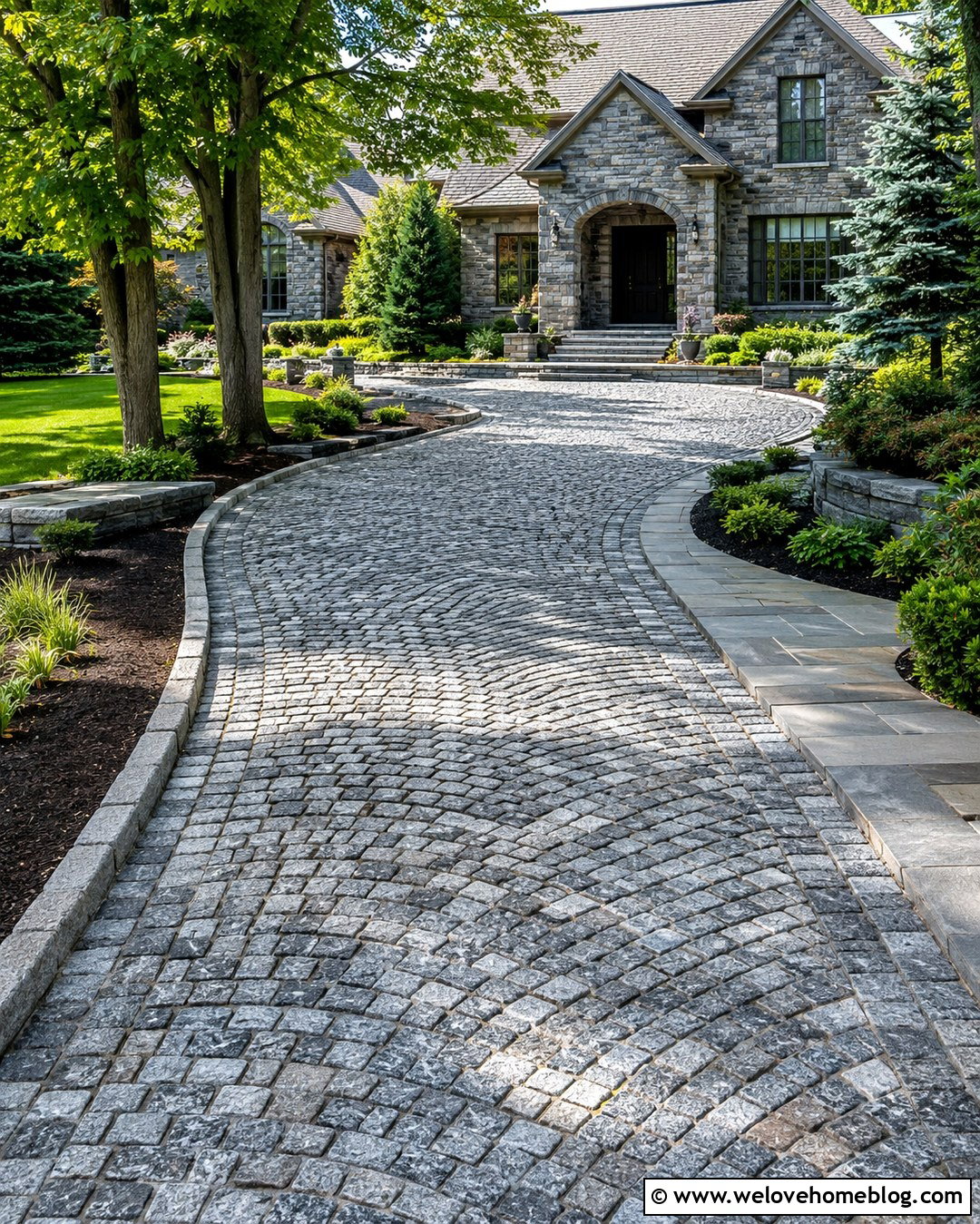
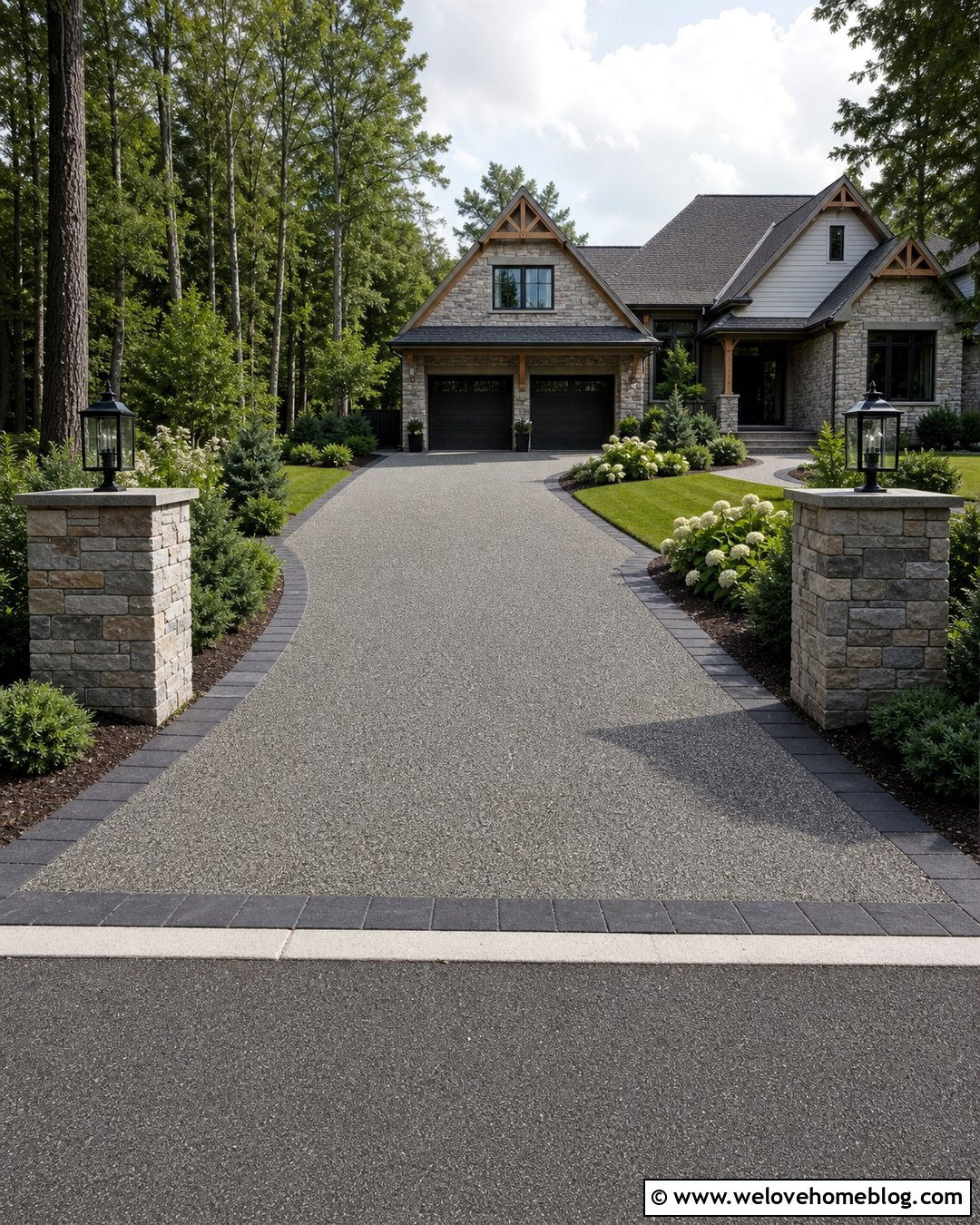
A full cobblestone driveway creates an enduring, old-world entrance, but it works best when every supporting detail receives equal attention. Choose granite cobbles in blended gray tones and arrange them in gentle arches across a curved driveway. Larger stones along the edges can strengthen the outline and separate the paving from lawn or planting beds. Pair the surface with a stone-clad house, traditional lantern-style fixtures, and layered evergreen landscaping. Because natural cobbles vary in size, installation requires careful sorting, fitting, and leveling. The base must support vehicle weight without creating deep depressions between stones. For easier walking, add a smoother stone walkway beside the driveway. The finished entrance feels substantial, textured, and connected to the surrounding architecture.
6. Concrete Paver Driveway With Dark Border
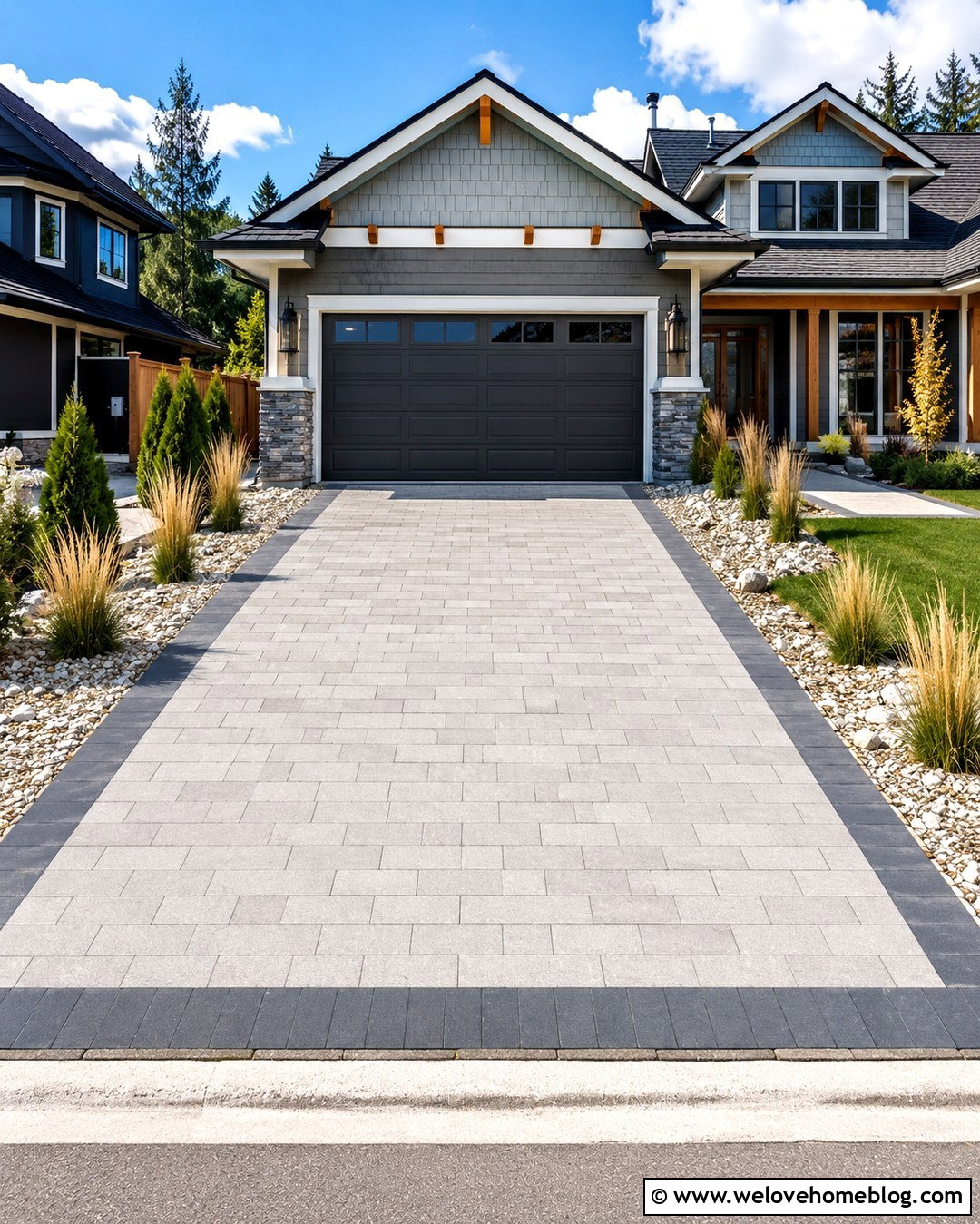
A contrasting border can transform a basic concrete paver driveway into a clearly organized design. Fill the center with light gray rectangular pavers laid in a simple running bond. Then outline the complete driveway with charcoal pavers in a soldier-course arrangement. The darker frame makes the shape easier to read from the curb and can visually connect the driveway to a dark roof, garage door, or window trim. Use this treatment on a straight driveway leading to a modern craftsman house. Add structured planting beds with evergreen shrubs, fountain grass, and pale decorative stone. The border should be installed with reliable edge support, not treated as decoration alone. Continue the charcoal accent across the driveway apron for a unified entrance. ()
7. Poured Concrete Driveway With Paver Border
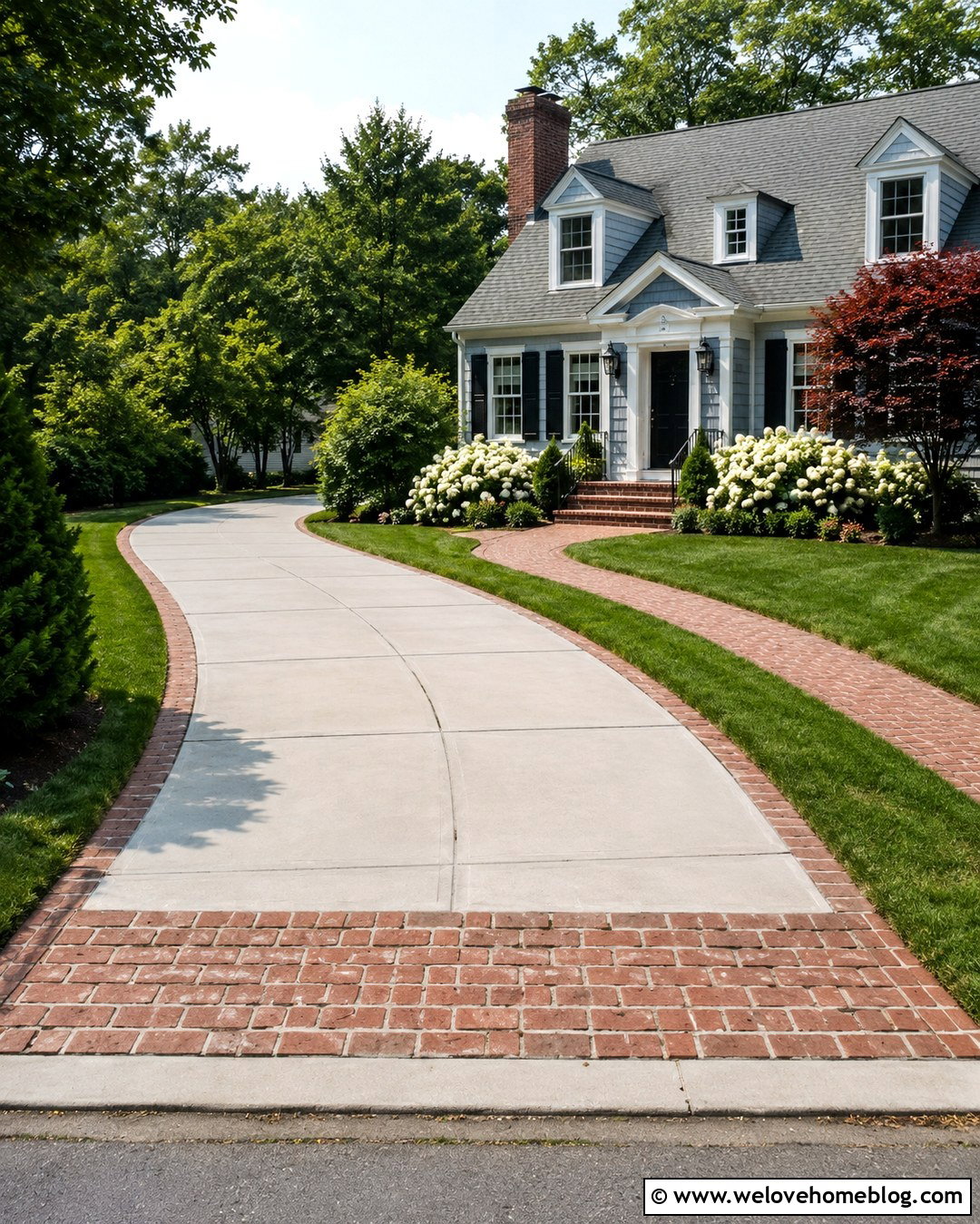
Poured concrete offers a simple driving surface, while a paver border adds color and architectural detail. Divide light gray concrete into balanced rectangular panels with control joints, then frame the perimeter with red brick or charcoal concrete pavers. This combination is useful when you want a restrained design that is less visually busy than a fully paved surface. A gently curved layout can soften a wide front yard and create room for planting beds near the entrance. Coordinate the border with the home’s masonry, front steps, or walkway. The concrete should slope away from the foundation and toward an approved drainage area. Keep planting low near the street so drivers have a clear view when leaving the property.
8. Exposed Aggregate Driveway
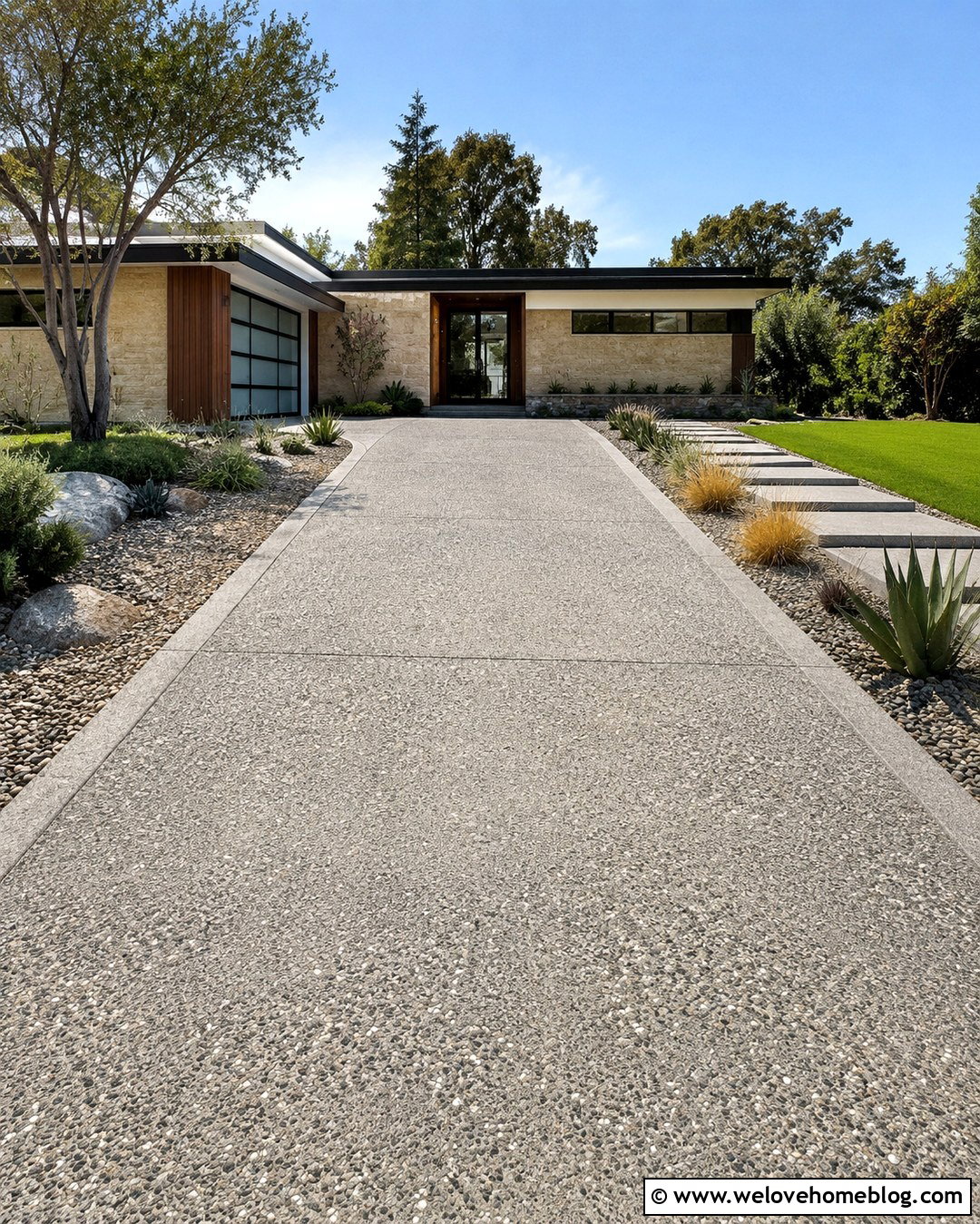
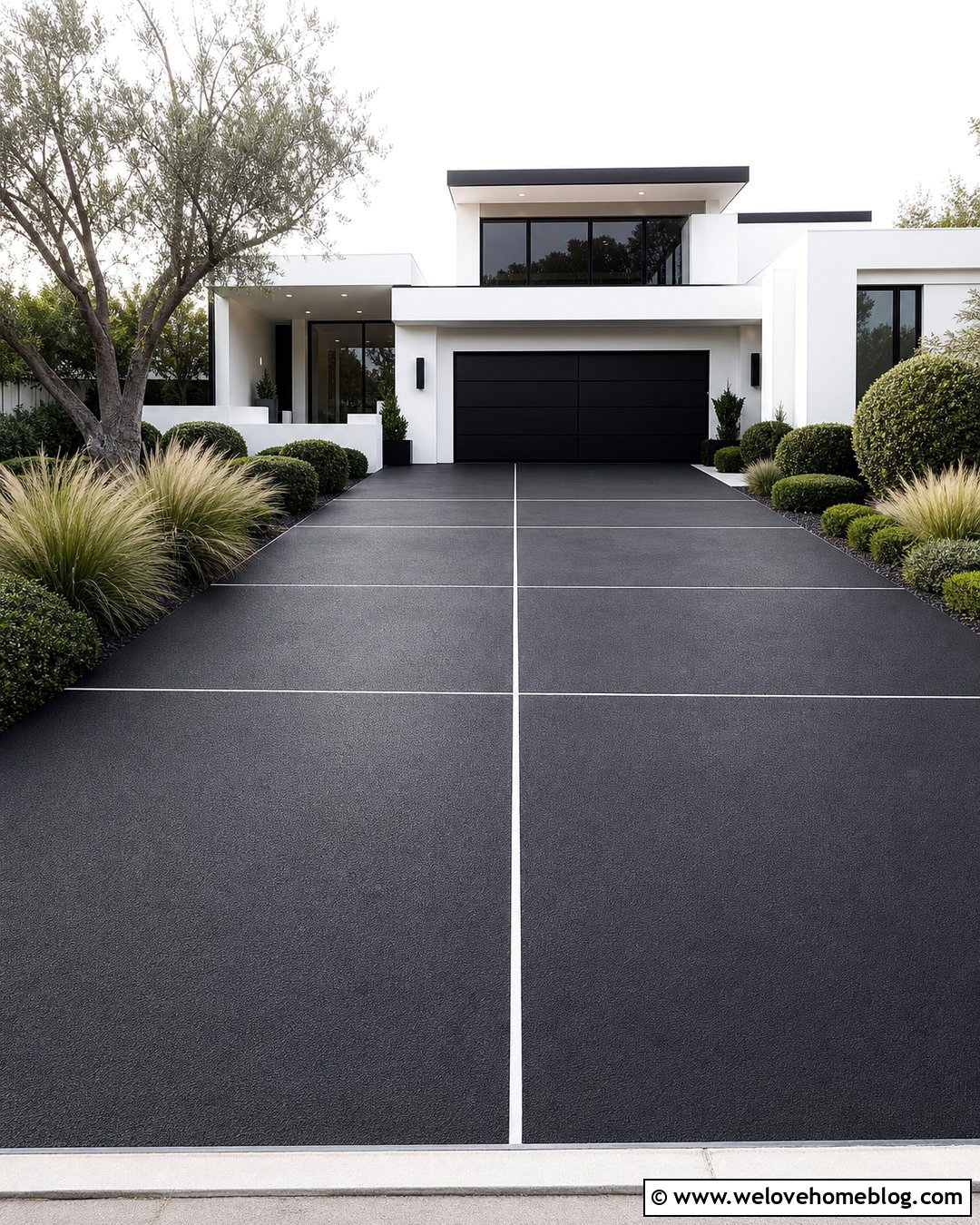
Sunlight brings out the natural texture of an exposed aggregate driveway, making it an appealing option for midcentury, contemporary, and coastal homes. Select a warm gray concrete mix with small tan, cream, and charcoal stones visible across the surface. Use broad rectangular sections to keep the design orderly, then add a smooth poured-concrete border around the perimeter. A straight driveway works well with this finish because the subtle aggregate already supplies visual movement. Surround it with drought-tolerant grasses, compact shrubs, and gravel-mulched planting beds. Carefully planned control joints can complement the home’s architectural lines. Since texture and slip resistance can vary, request a sample before installation. Seal the finished surface when appropriate for the selected system and climate.
9. Stamped Concrete Driveway
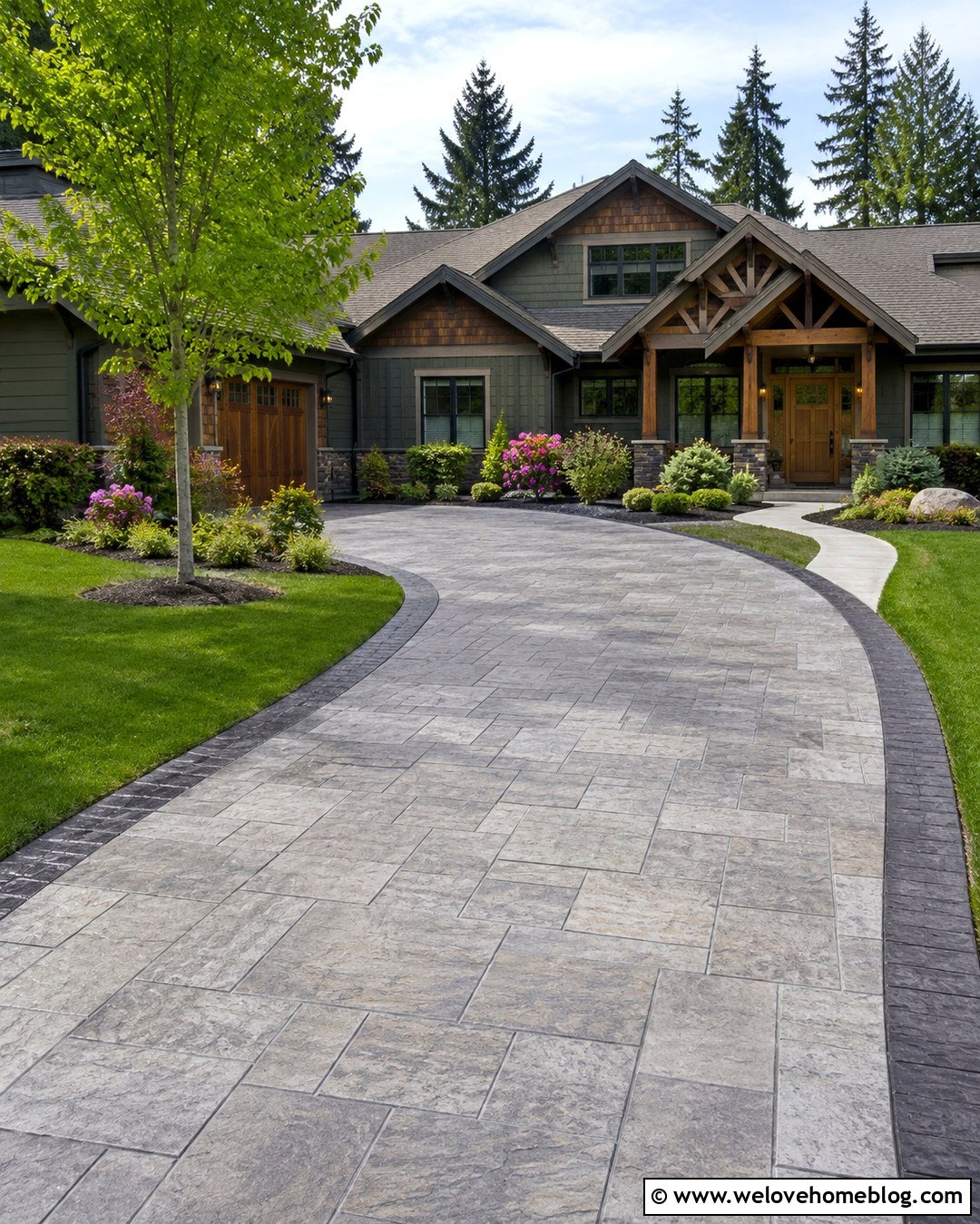
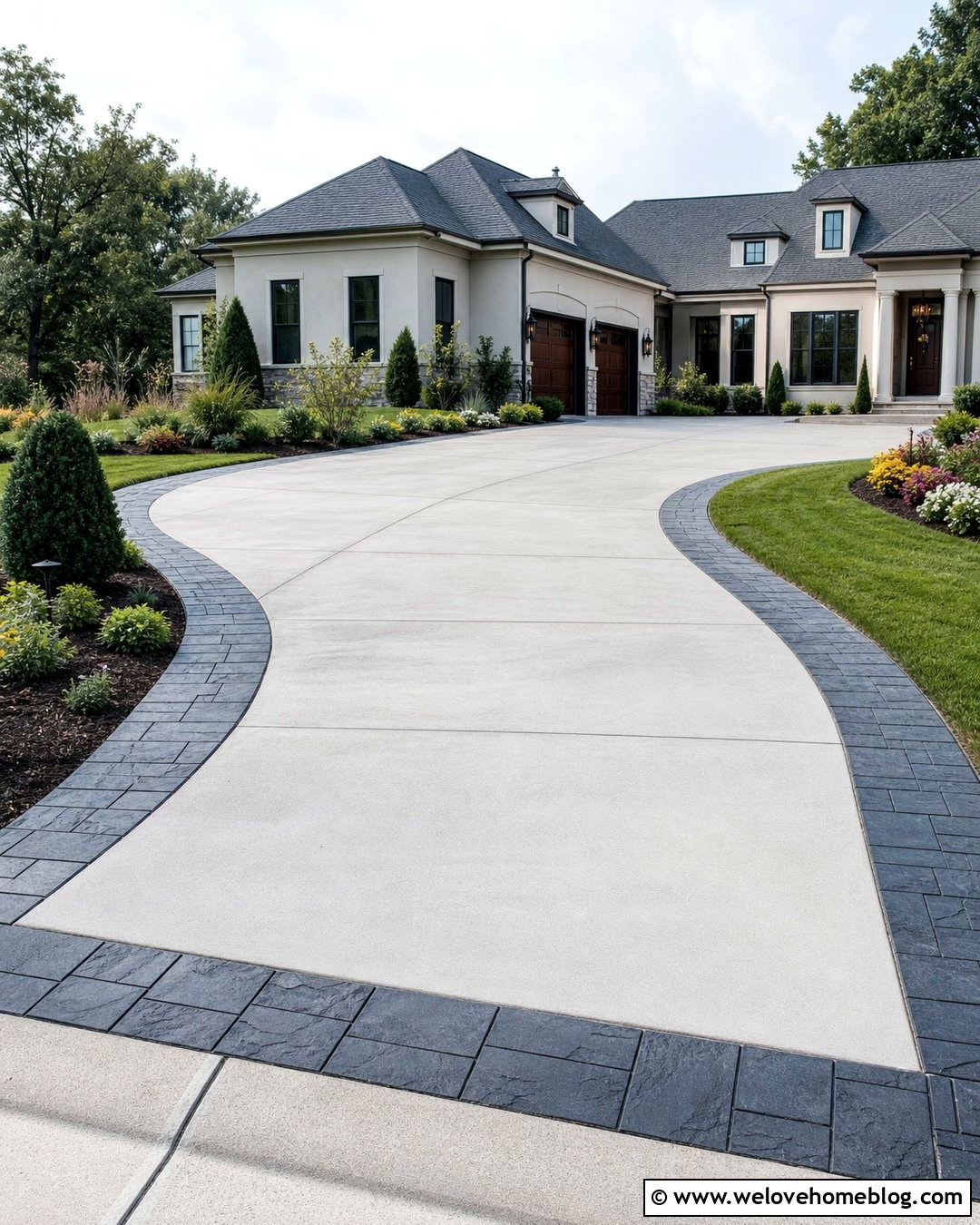
Stamped concrete can create the appearance of individual stones while maintaining a continuous concrete surface. Choose a large ashlar-slate pattern in soft gray and taupe tones for a curved driveway leading to a craftsman home. A darker stamped border can define the edges and repeat colors found on the roof or stone veneer. To prevent the surface from overwhelming the yard, include lawn strips, flowering shrubs, and a separate smooth walkway. The stamping pattern, concrete color, control joints, and drainage slope should be planned together before pouring begins. Use a texture that provides dependable traction without becoming uncomfortable to walk across. Thoughtful coloring is important because overly strong contrasts can make a large driveway look artificial or visually crowded. ()
10. Asphalt Driveway With Brick Border
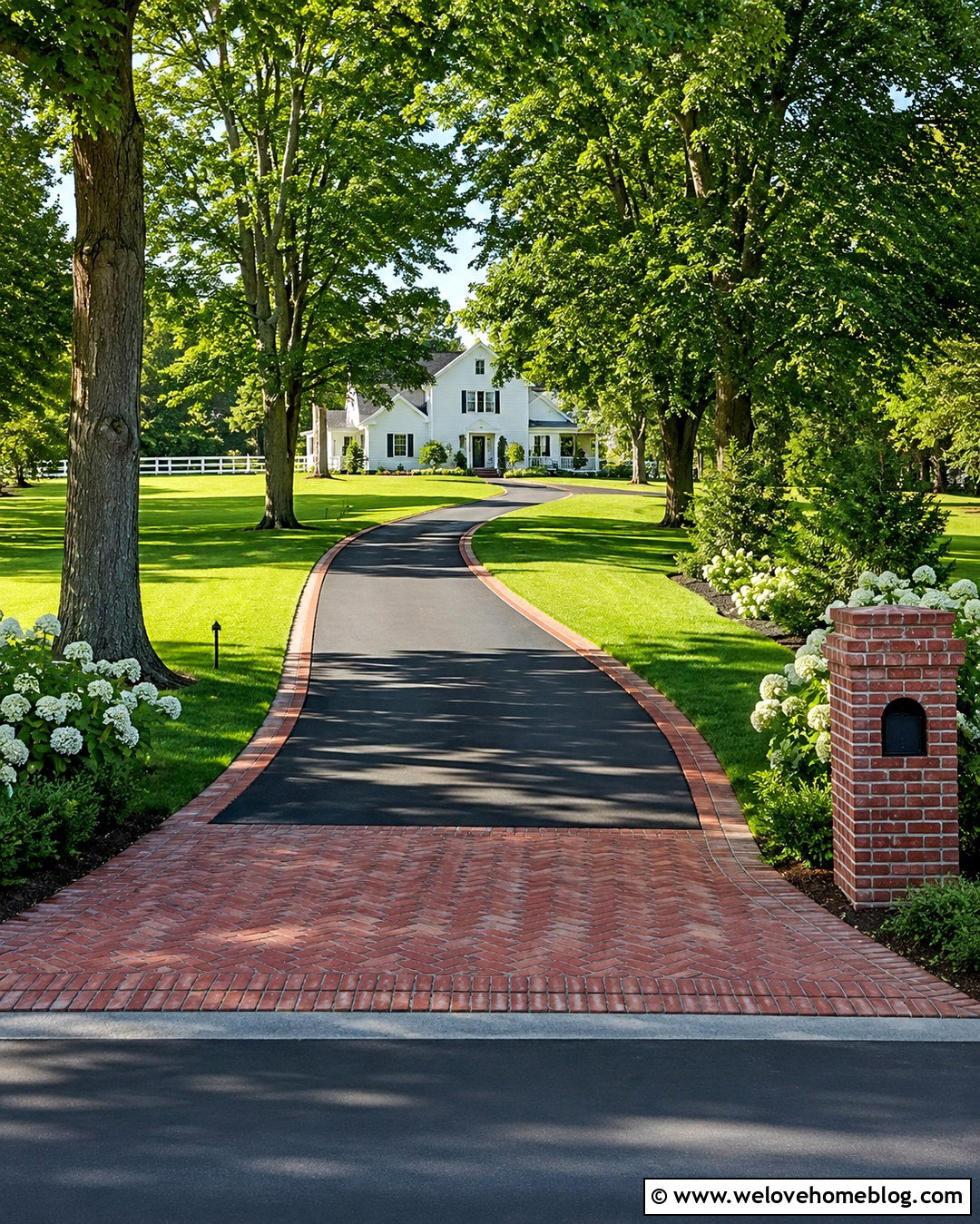
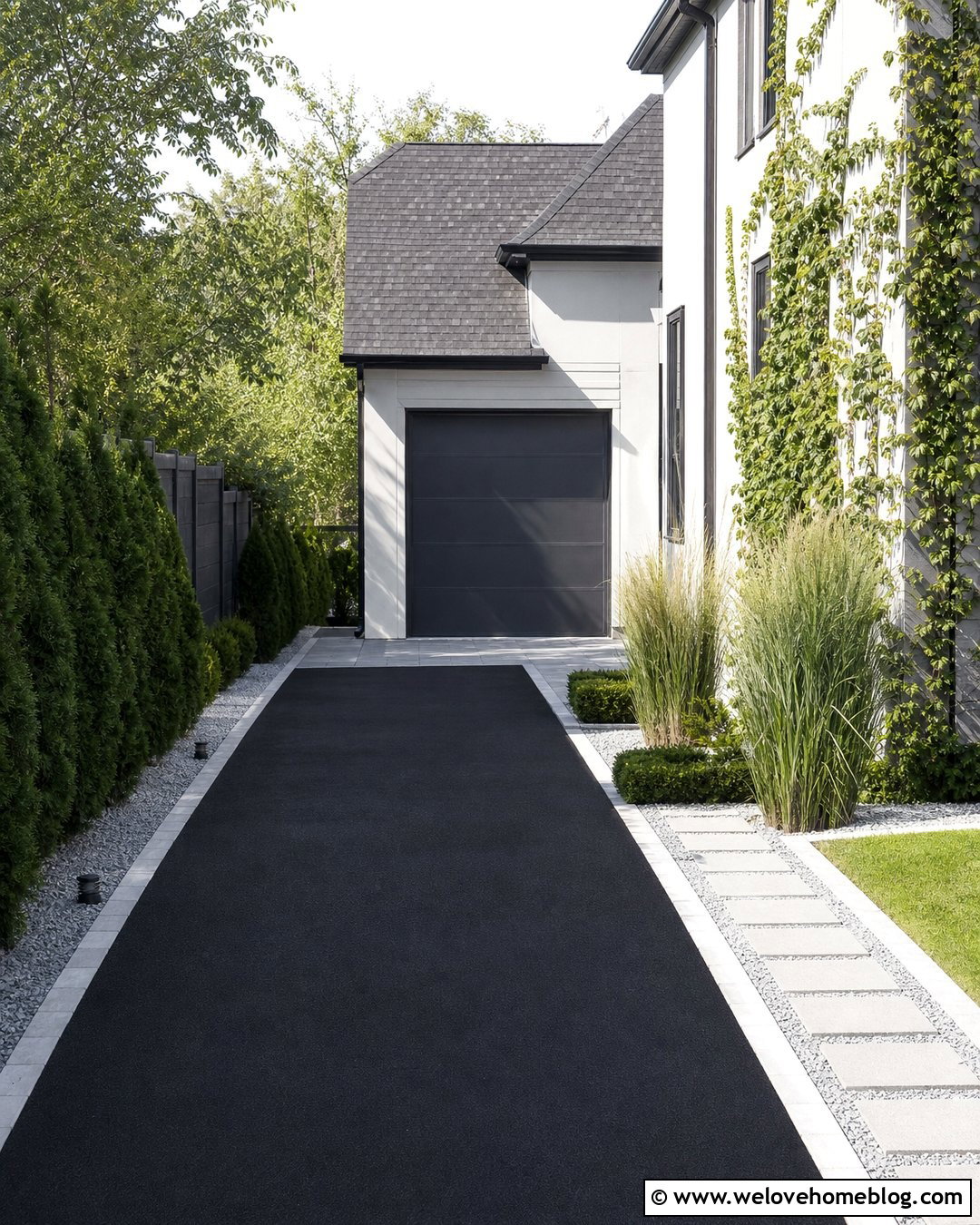
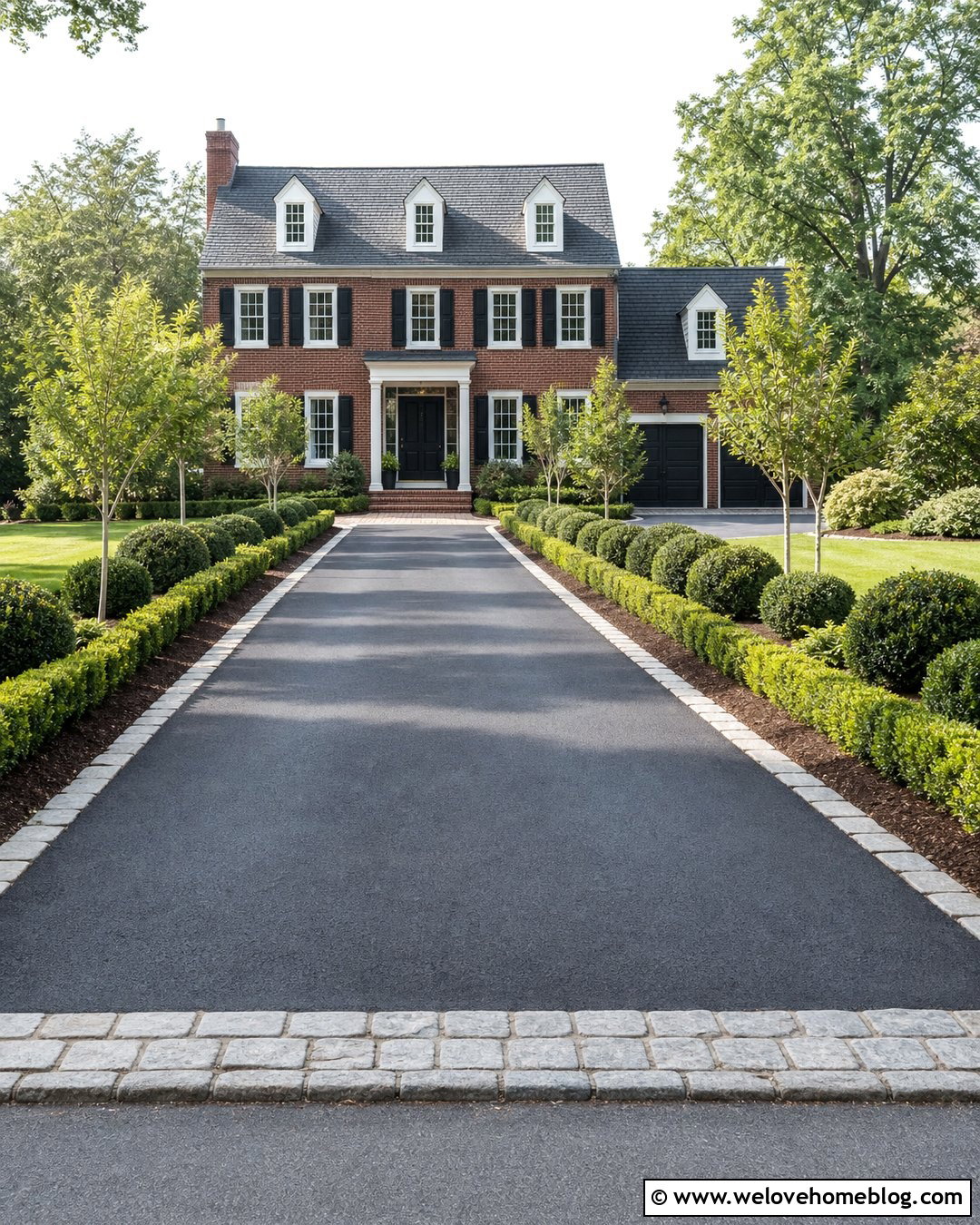
Black asphalt becomes more welcoming when framed by a carefully installed brick border. Use smooth black asphalt for a long, gently curved driveway, then line both sides with red or brown clay pavers. Add a wider brick apron at the street to make the entrance visible and connect the driveway to a traditional home. The dark center creates a clean backdrop for bright lawn, shade trees, and white flowering shrubs. Good base preparation and drainage remain more important than decorative details, particularly on long driveways. Protect unsupported asphalt edges from crumbling by bringing the border or compacted shoulder close to the paved surface. Repeating the brick on the front walkway or mailbox base will make this affordable combination feel coordinated rather than pieced together. ()
11. Resin-Bound Gravel Driveway
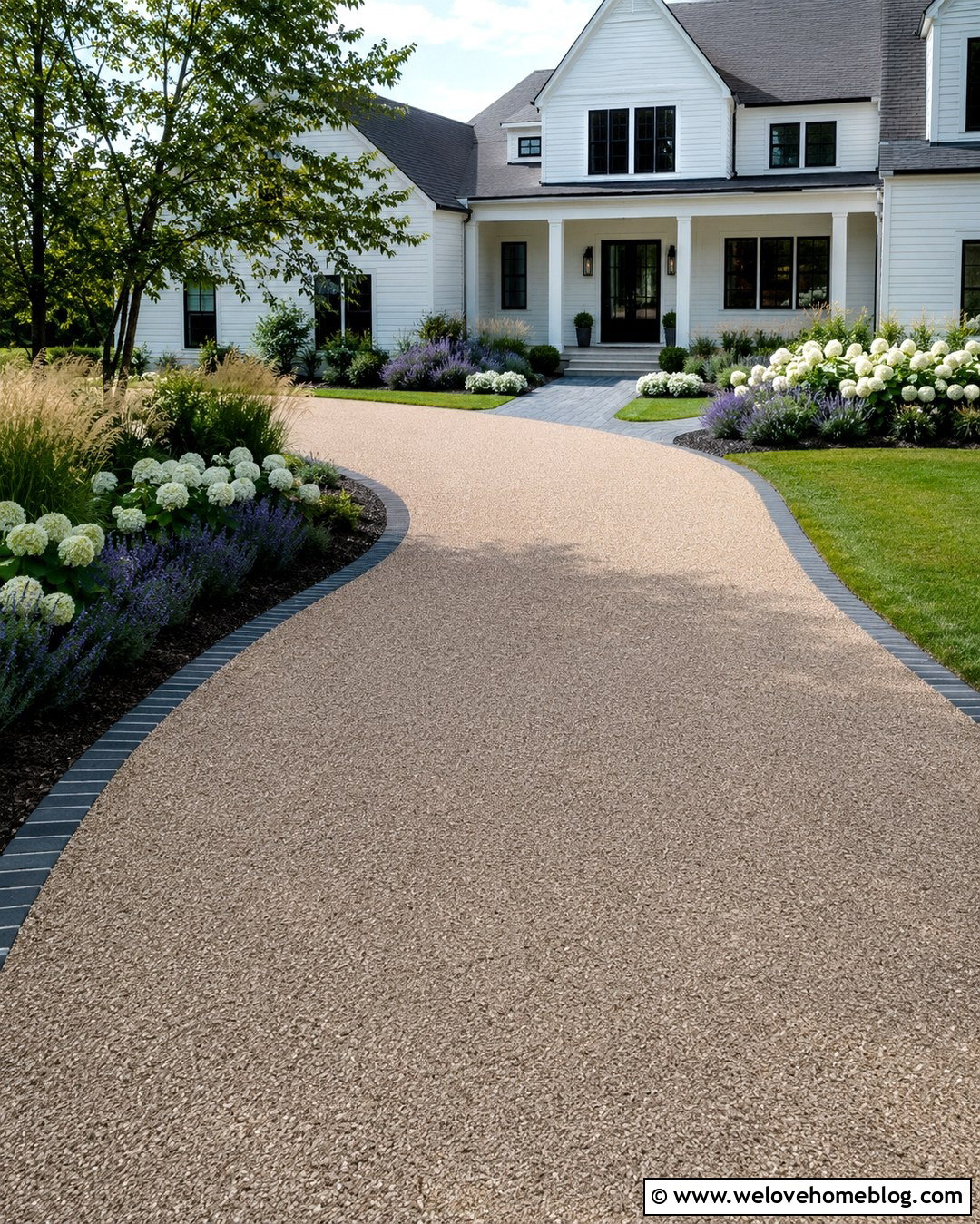
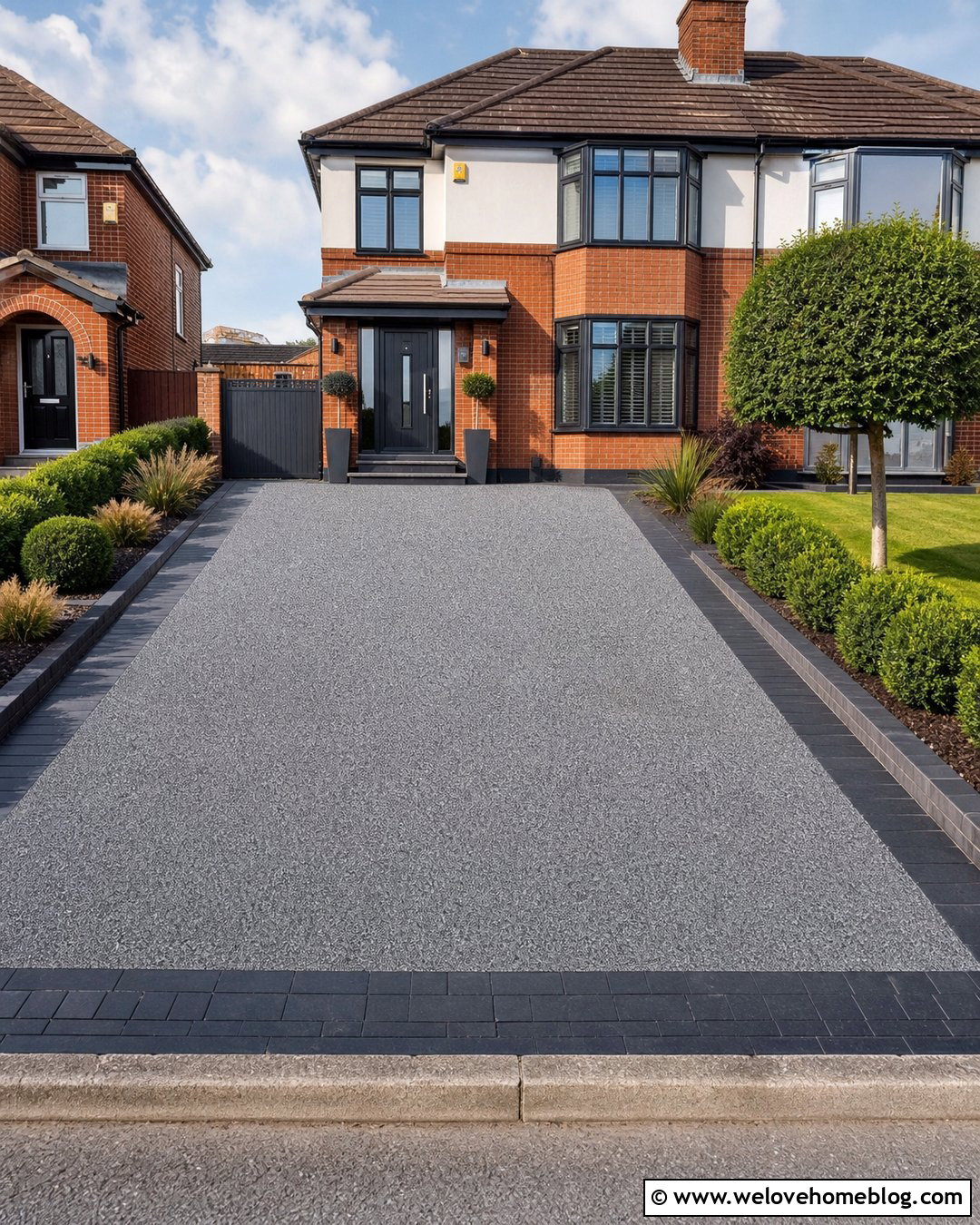
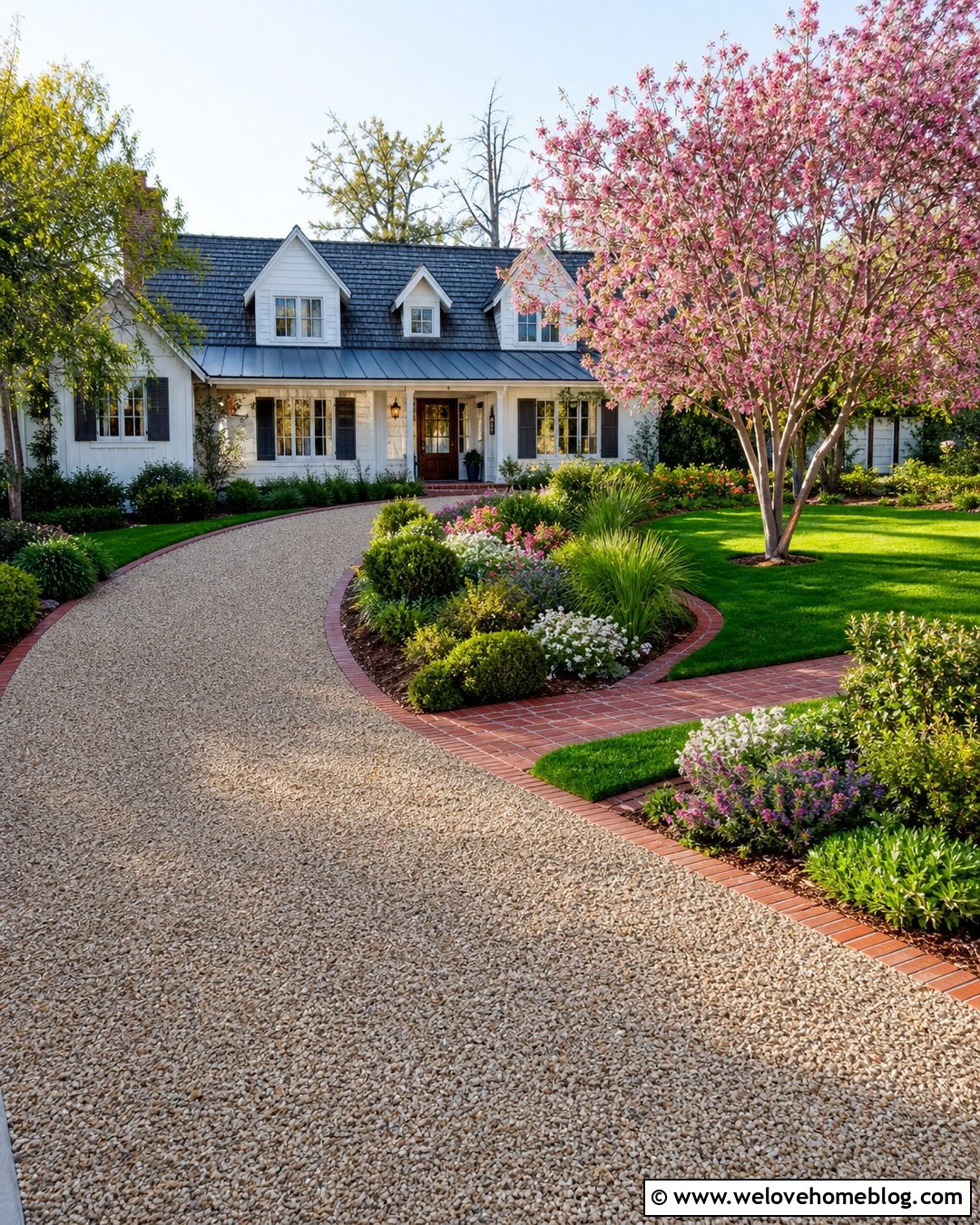
A resin-bound gravel driveway provides a smooth, contemporary appearance with the natural color variation of small stones. Choose a warm beige aggregate blend for a curved driveway approaching a modern farmhouse. Add charcoal block edging to hold a precise outline and visually connect the surface with black windows or exterior fixtures. The uniform finish works well beside relaxed landscaping, including lavender, ornamental grasses, white hydrangeas, and young shade trees. Include a defined apron and a paved walkway so every transition appears intentional. The existing base, drainage requirements, product specifications, and installer experience all affect long-term performance. Confirm that the selected resin-bound system is suitable for vehicles and local weather. Avoid confusing resin-bound paving with loose gravel or resin-bonded surface treatments.
12. Concrete Slab Driveway With Grass Strips
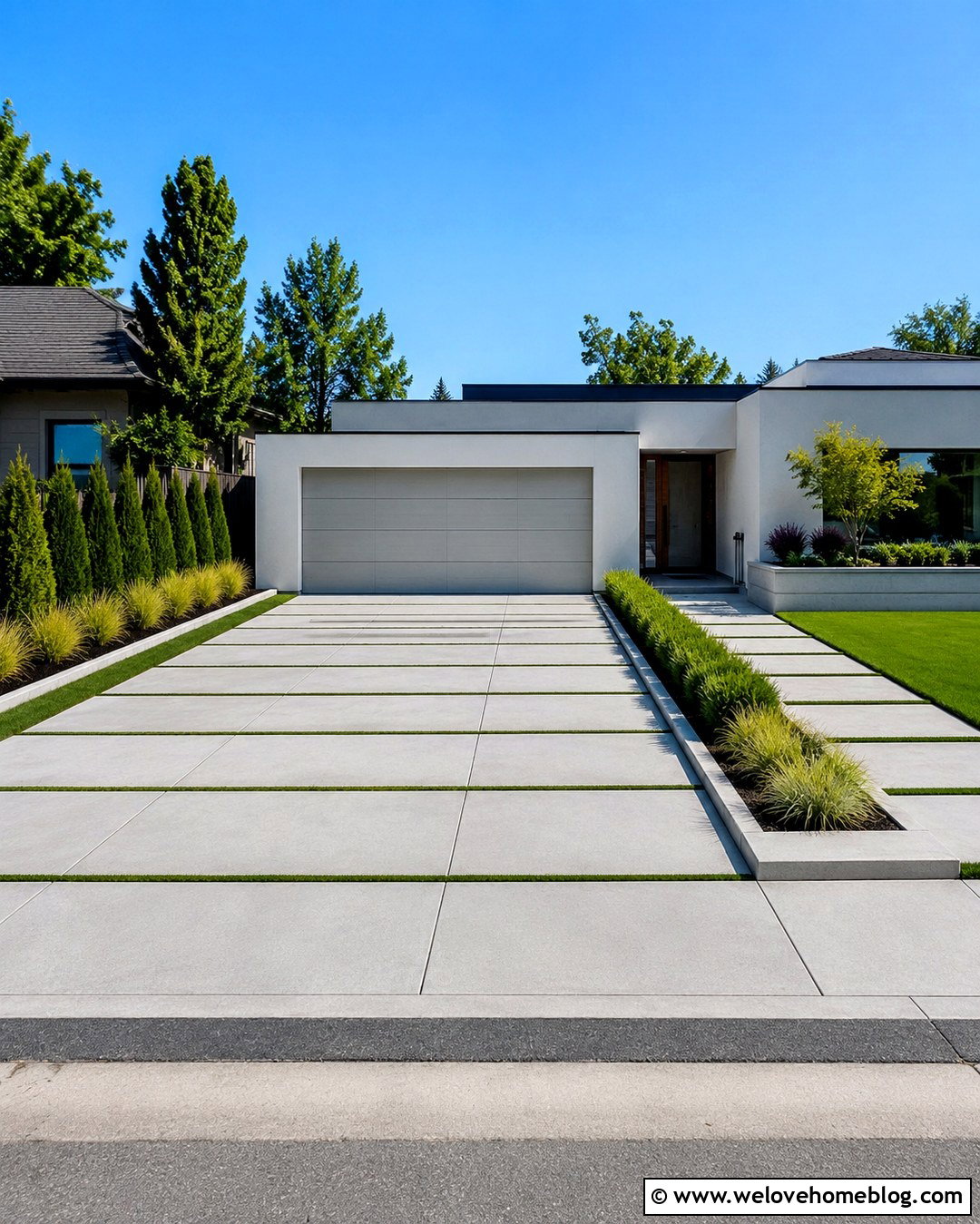
Wide concrete slabs separated by narrow grass strips produce a modern driveway with less visual heaviness than one uninterrupted surface. Arrange large light-gray concrete panels in two driving lanes or across the entire driveway, depending on turning and parking needs. Use reinforced, vehicle-ready construction rather than treating the slabs like garden stepping stones. The green joints can connect the driveway to the surrounding lawn, while linear planting beds reinforce the clean geometry. This look pairs especially well with a low-profile modern house and a straight approach. Irrigation, mowing access, joint width, drainage, and local growing conditions should be considered early. Where living grass is impractical, substitute compact gravel or low-maintenance planted joints that tolerate occasional heat and traffic.
13. Grass Grid Paver Driveway
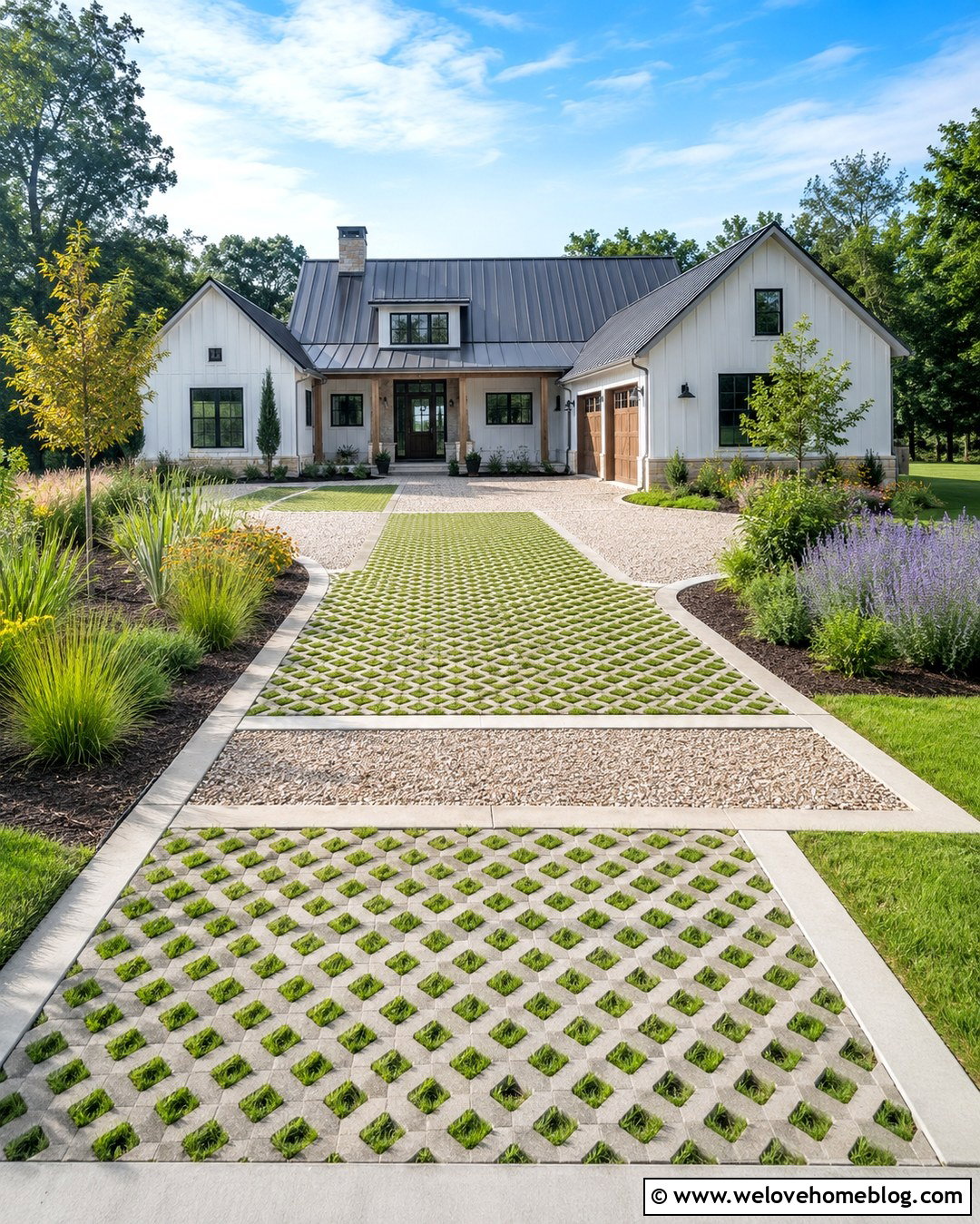
Concrete grass grid pavers combine a load-supporting paved framework with open cells that can hold grass or aggregate. Use them across a straight driveway leading to a cottage, modern farmhouse, or environmentally focused suburban home. Fill the cells with healthy turf where sunlight and irrigation are dependable. Near the garage and street apron, consider gravel-filled cells to reduce wear in areas with frequent turning. Frame the driveway with flat concrete curbing and wide planting beds filled with native grasses and flowering perennials. The green surface blends into the front yard and reduces the appearance of a large parking area. Successful installation still requires excavation, a stable permeable base, correct soil placement, and a maintenance plan for the living sections. ()
14. Circular Paver Driveway
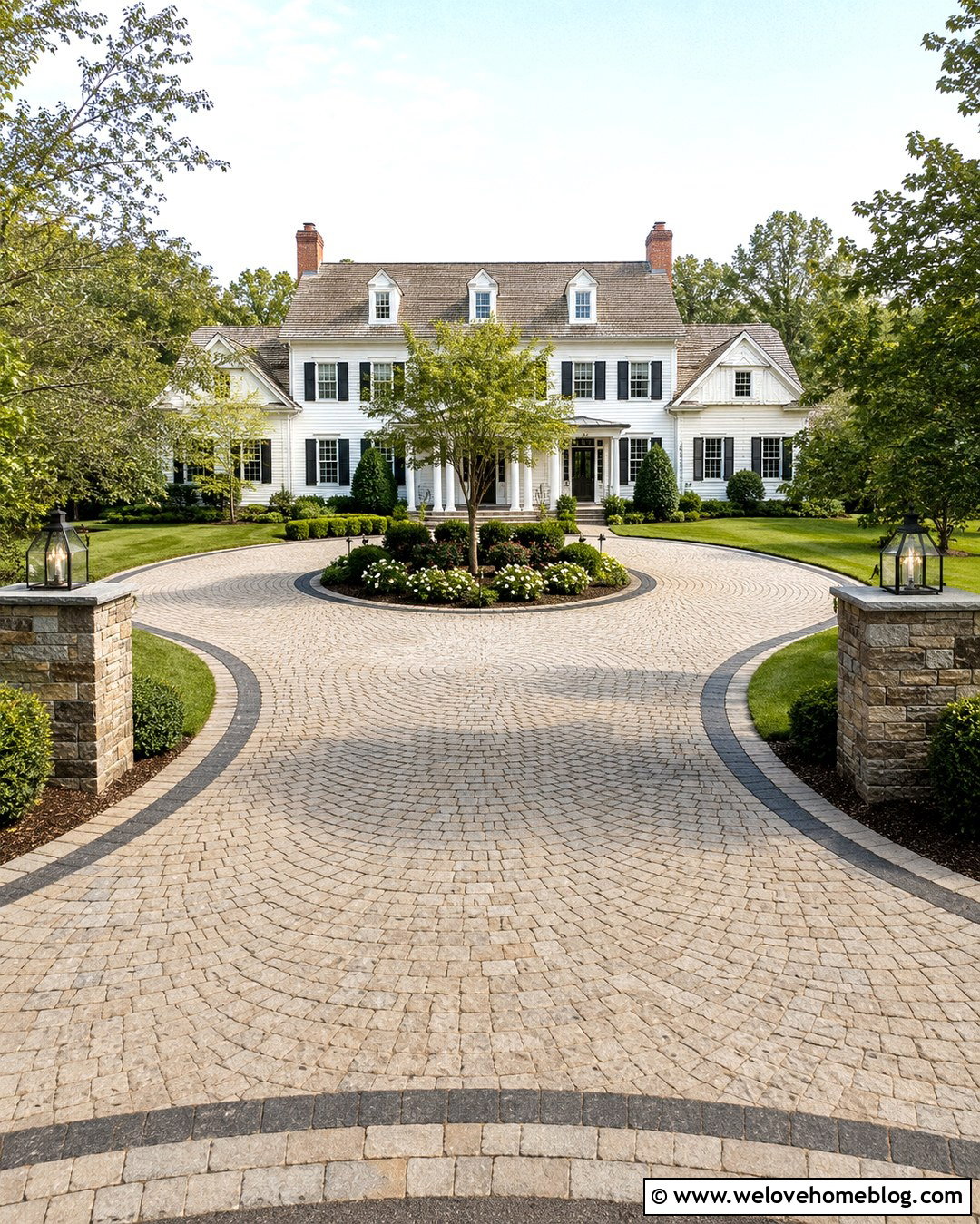
A circular paver driveway creates a convenient arrival route while giving the front landscape a strong focal point. Use tumbled concrete pavers in blended tan and gray tones, arranged in a fan pattern around a central planting island. A darker double border can emphasize the circle and help organize the entrance and exit lanes. Fill the island with a small ornamental tree, low evergreen shrubs, and seasonal flowers that will not block sightlines. Match the paving colors to a large Colonial or country house in the background. The turning radius must suit the vehicles that regularly use the property. Before paving, plan runoff, walkway connections, lighting, and access to the garage so the circle functions as a practical route rather than decorative paving alone.

15. Curved Paver Driveway
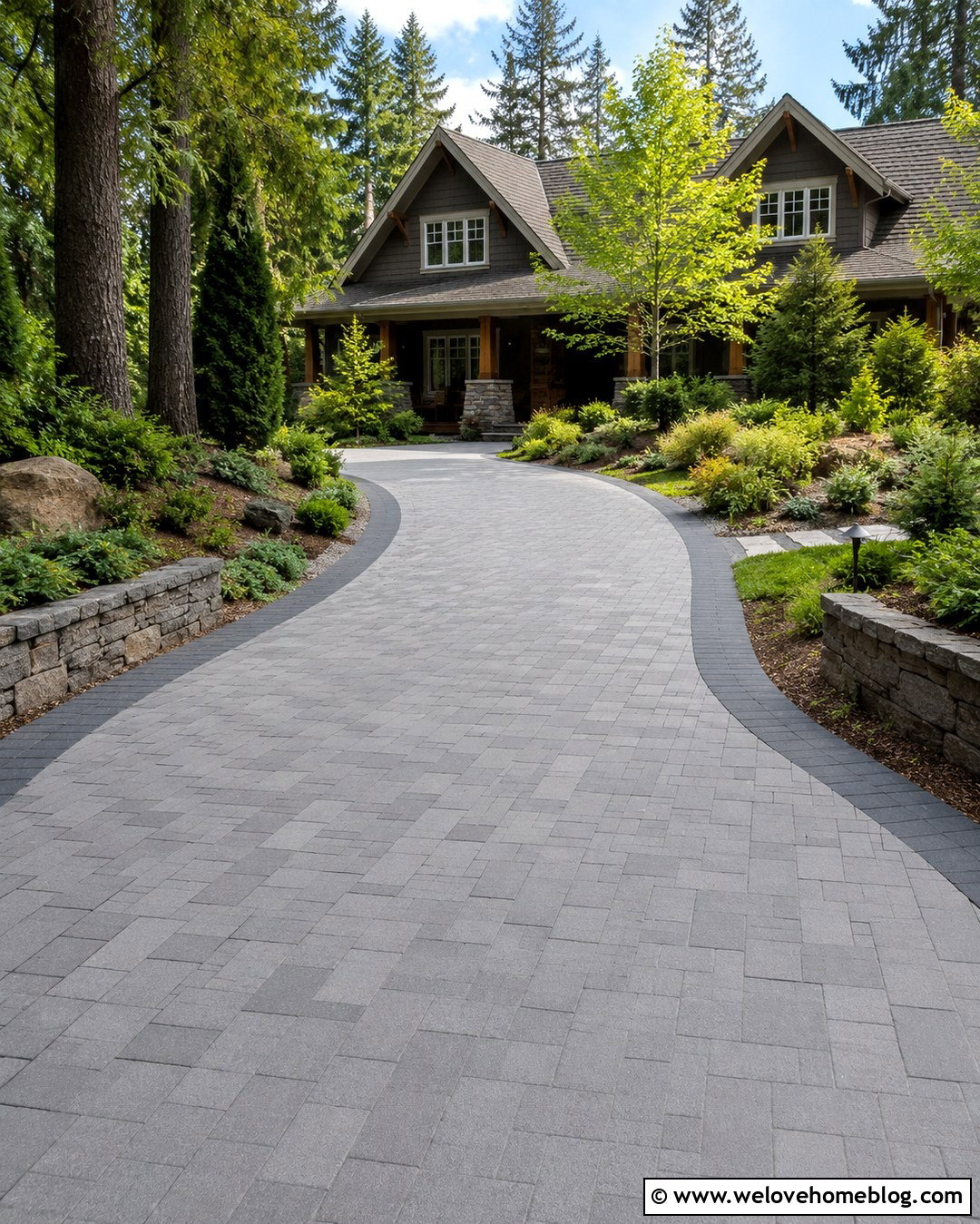
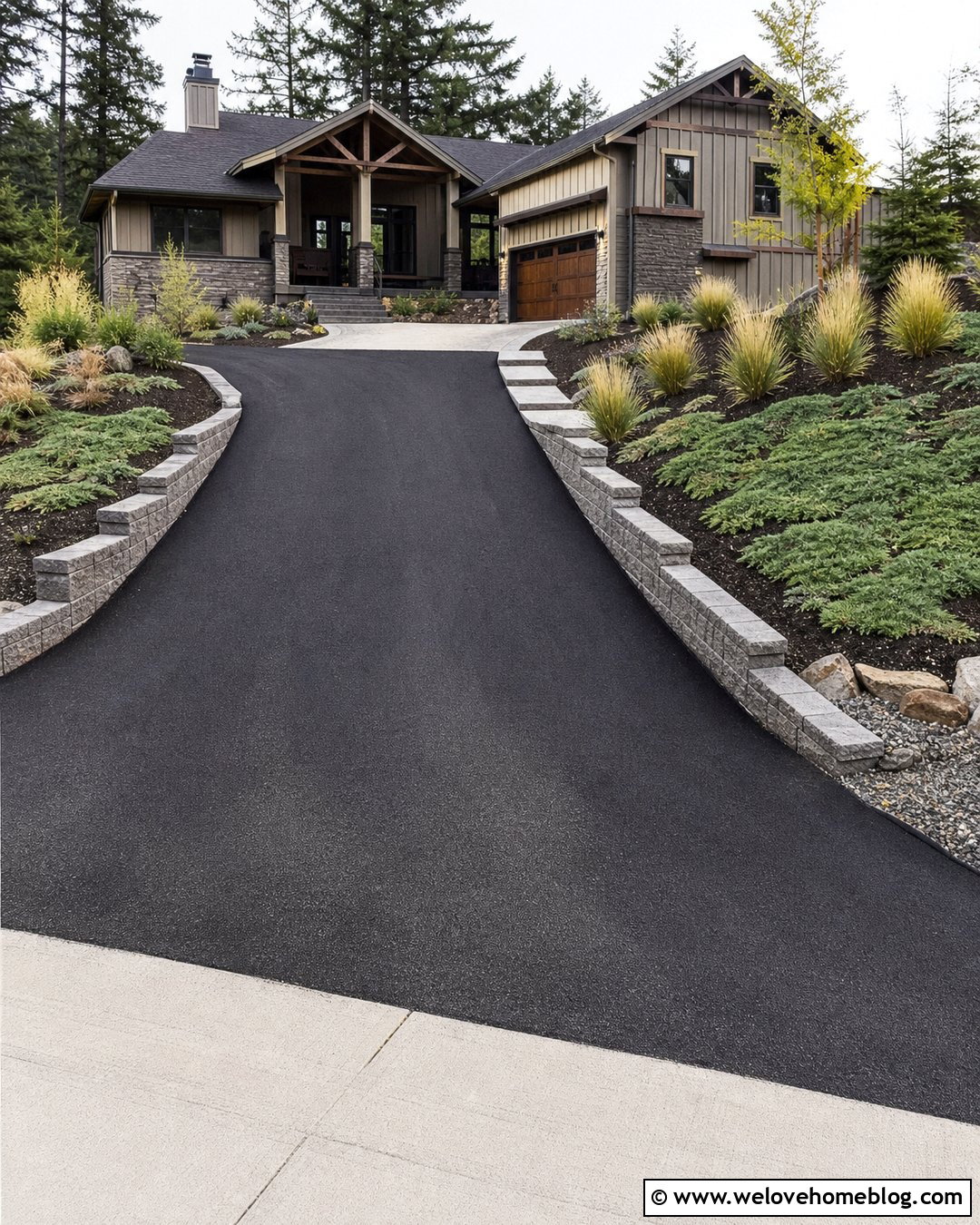
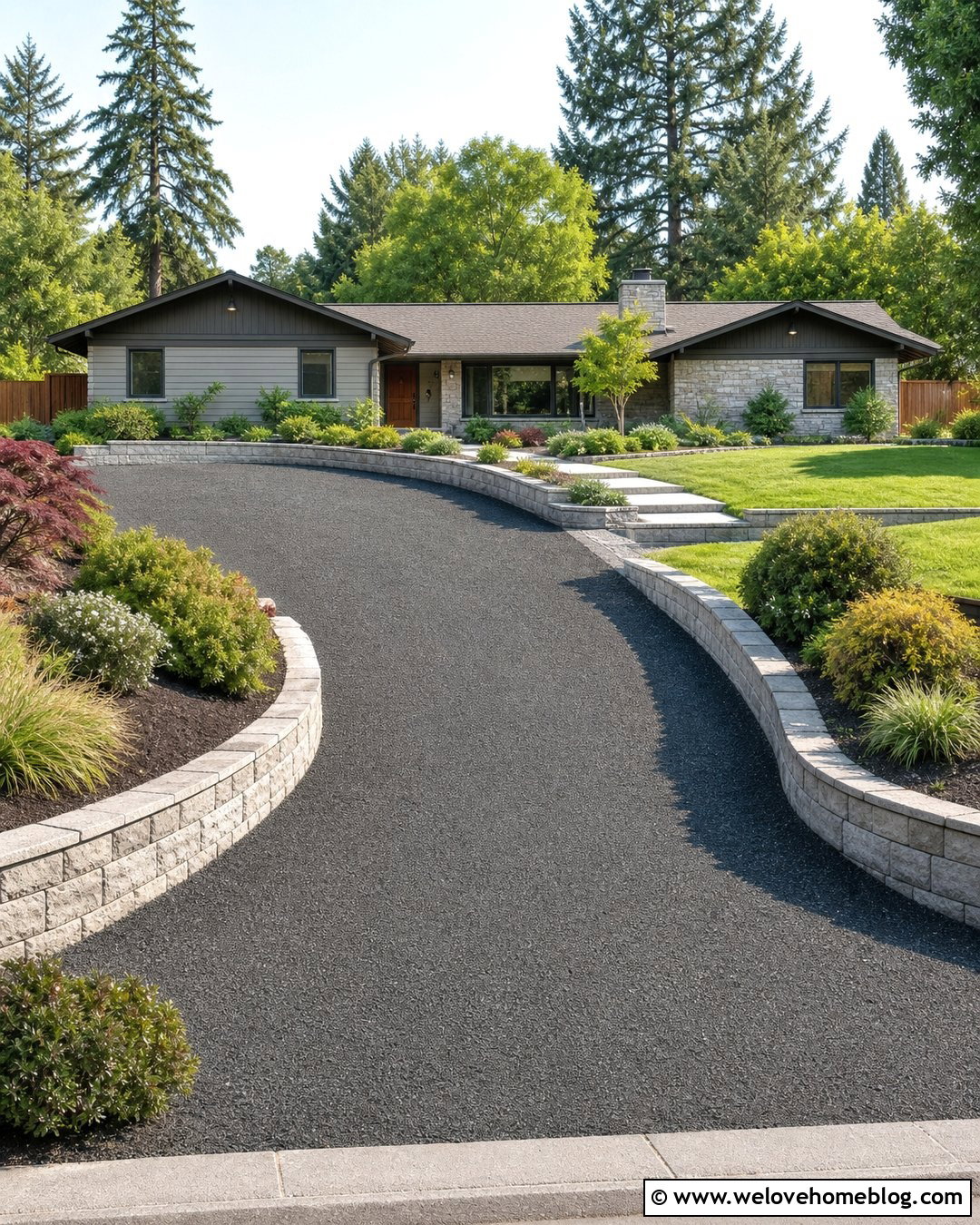
A curved paver driveway can follow the natural contours of a sloped or wooded lot while creating a softer approach to the house. Choose medium-gray concrete pavers laid in a flexible running bond, then use darker pavers along both edges to keep the curve visually crisp. Position trees, shrubs, and ground covers outside the driver’s clear sight area. Low retaining walls may help manage grade changes, but they should be integrated with drainage and the driveway foundation. A craftsman or woodland-style house feels especially appropriate at the end of this layout. Mark the proposed curve before excavation and test it with your largest vehicle. Smooth transitions are easier to navigate and generally require fewer awkward paver cuts than tight, irregular bends.
16. Two-Tone Paver Driveway
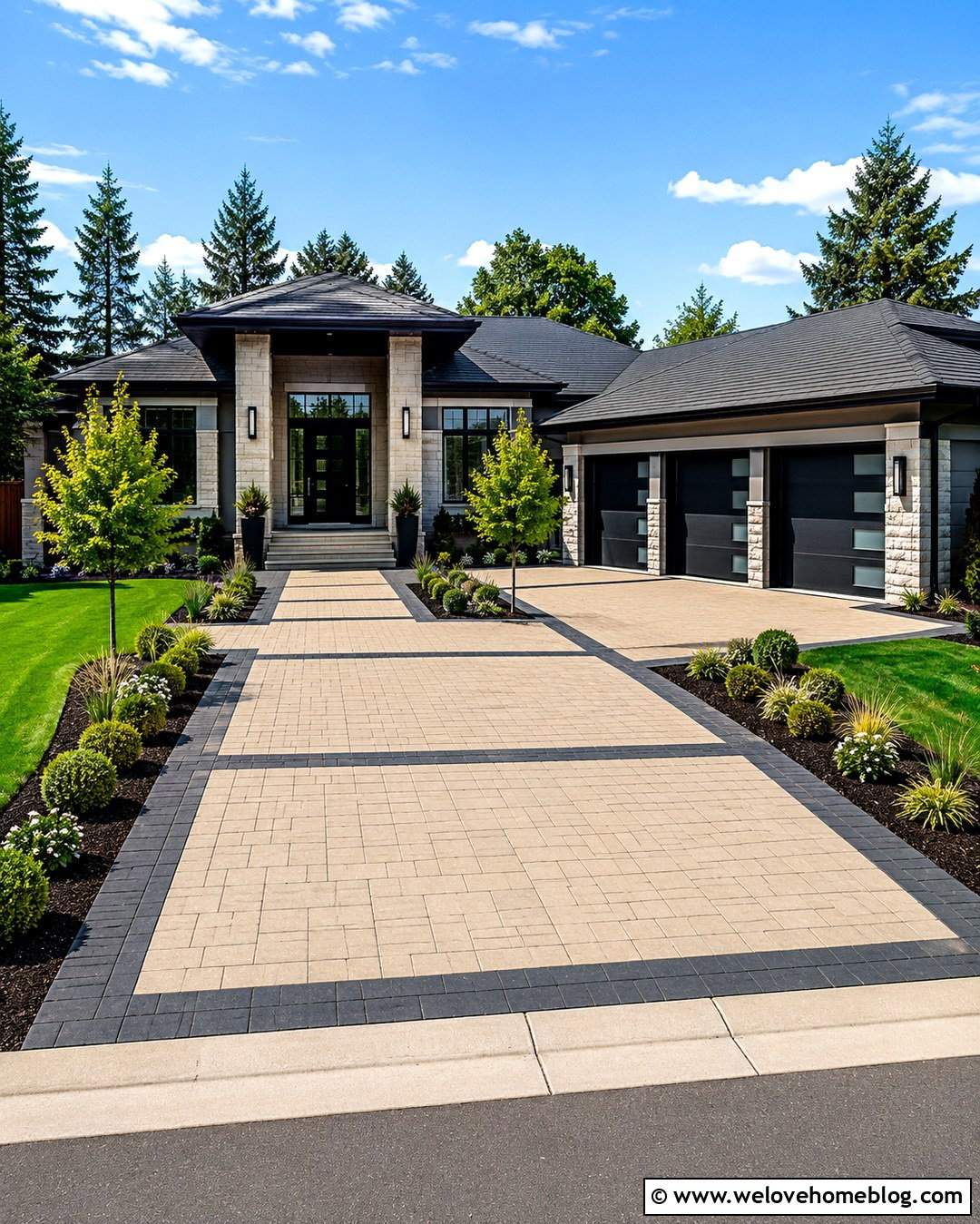
Two-tone paving can divide a broad driveway into clear visual zones without adding physical barriers. Use warm beige concrete pavers across the main field, then introduce charcoal bands along the perimeter and between parking spaces. Keep the pattern straightforward so the color layout remains easy to understand. A wide straight driveway leading to a three-car garage benefits from this approach because accent bands break up the large paved area. Balance the geometry with symmetrical planting beds, small ornamental trees, and a central walkway. Choose colors that relate to the house facade, roof, and trim instead of selecting unrelated contrasts. Lay out every band before installation begins, since poorly positioned lines can make garage bays look uneven or create unnecessary cuts. ()
17. Mixed-Size Paver Driveway
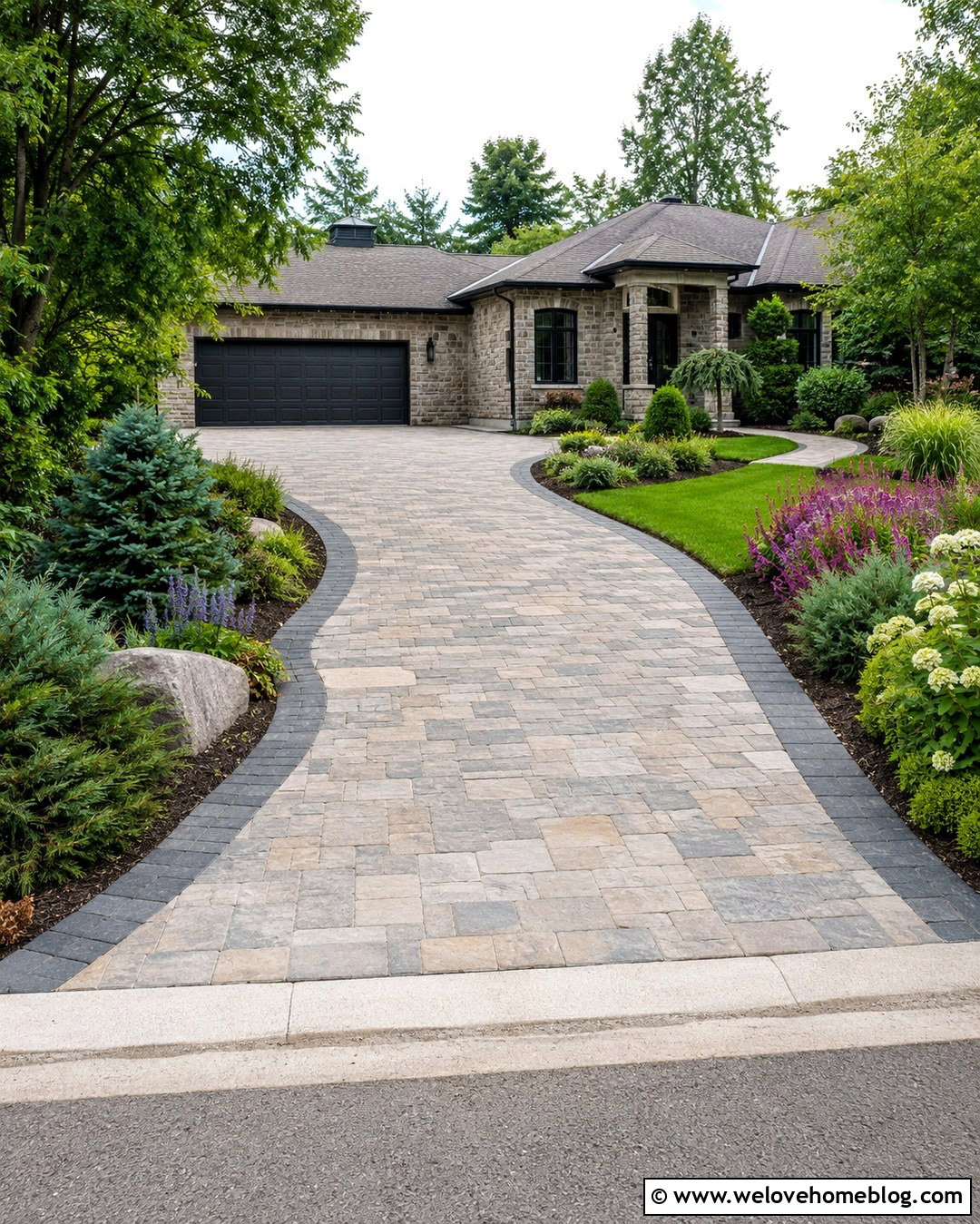
Mixed-size pavers bring natural variation to a driveway while maintaining a durable, organized surface. Combine square and rectangular concrete pavers in a repeating modular pattern using soft gray, beige, and muted brown tones. A simple single-color border will keep the varied field from looking chaotic. This paving works well on a broad, gently curved driveway in front of a stone ranch or craftsman house. Add informal planting beds with evergreen shrubs, flowering perennials, and ornamental grasses to complement the relaxed pattern. Before laying the pavers, map the manufacturer’s recommended module and blend pieces from multiple pallets for balanced color distribution. Avoid long continuous joints or clusters of one size. Finish with secure edging and joint material designed for the selected paving system.
18. Driveway With Cobblestone Apron
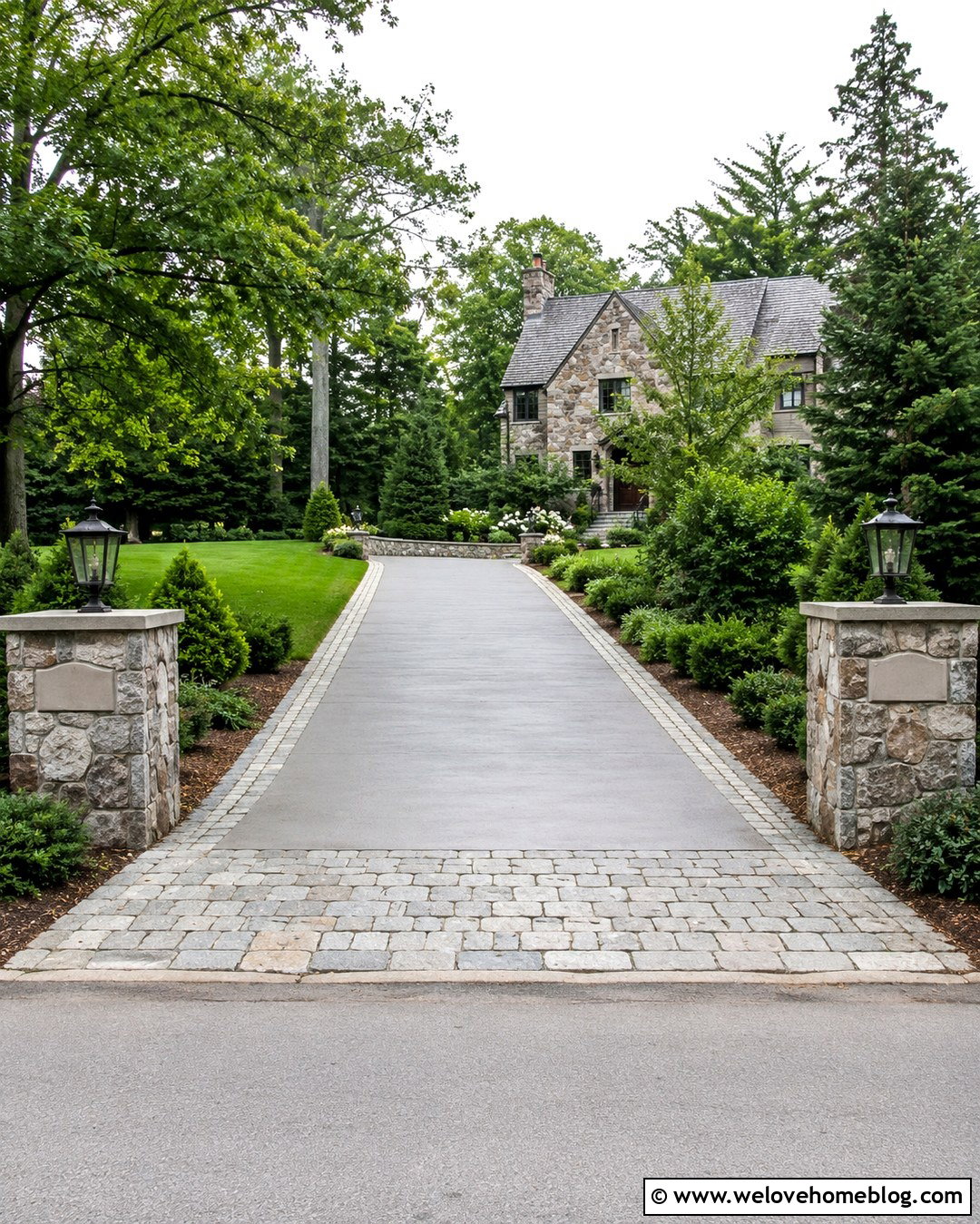
If a full cobblestone driveway exceeds the budget, use cobbles where they will make the greatest visual impact. Pave the main driveway with smooth gray concrete or asphalt, then install a generous granite cobblestone apron where the driveway meets the street. Continue a narrow cobblestone ribbon along both sides to connect the entrance with the house. This arrangement creates a distinct threshold and adds texture without covering the entire driving surface. Stone pillars, a classic address marker, and layered evergreen planting can reinforce the entrance. The apron must meet the road cleanly and comply with local requirements for work near the curb or right-of-way. Make sure its base can withstand turning, braking, runoff, and repeated vehicle loads. ()
19. Driveway With Paver Parking Pad
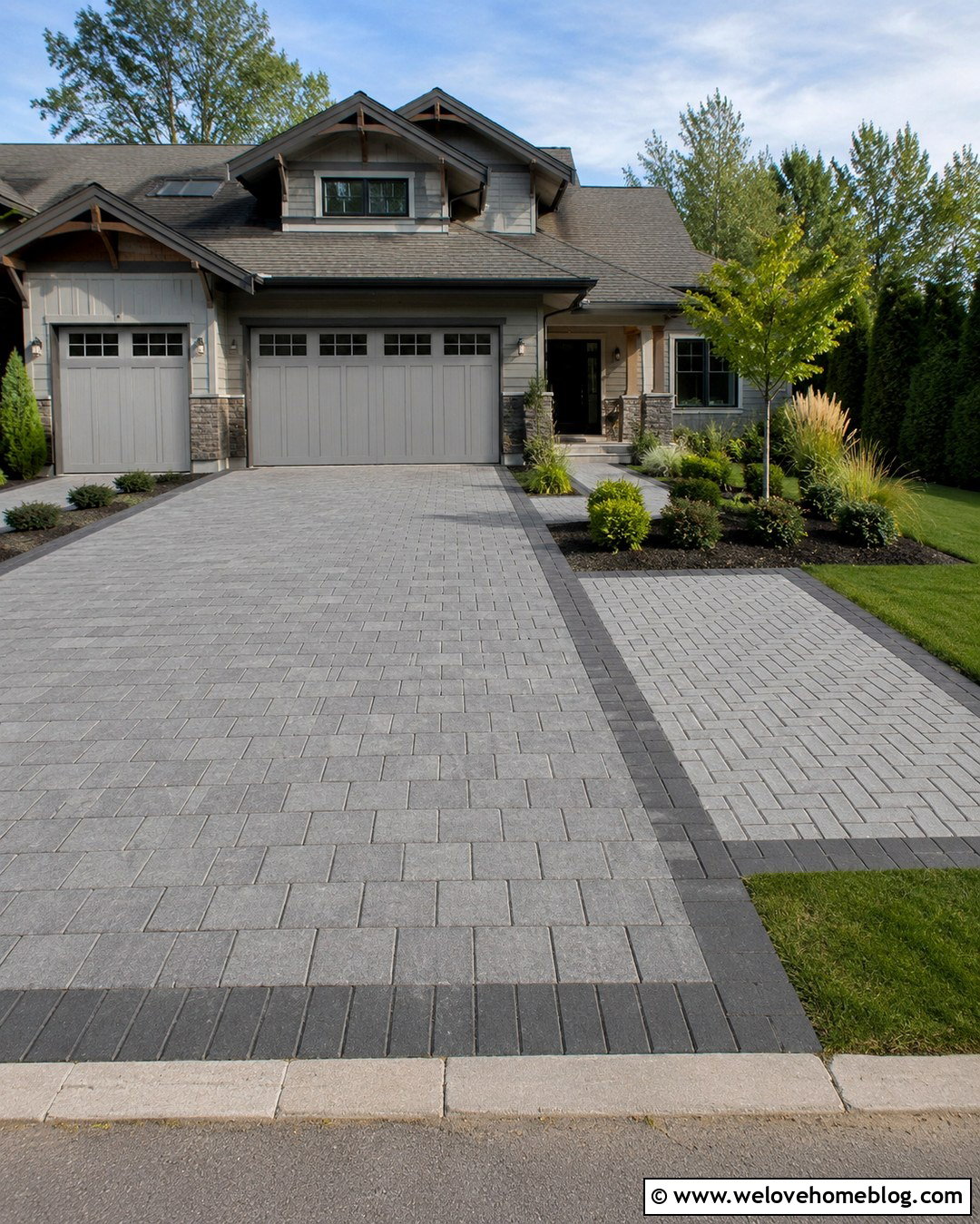
A side parking pad can add useful space without making the driveway appear unnecessarily wide from the street. Pave the main straight driveway with medium-gray concrete pavers in running bond, then use a subtle herringbone pattern for the adjoining parking bay. Outline both areas with the same charcoal border so they read as one coordinated design. Place the pad near the garage and screen its outer edge with low shrubs, ornamental grasses, or a small tree. Keep plants clear of doors and vehicle overhang. The new section needs the same excavation depth, compacted base, drainage planning, and edge support as the primary driveway. A narrow matching walkway can connect the parking pad to a side or front entrance.
20. Driveway With Paver Lighting Border
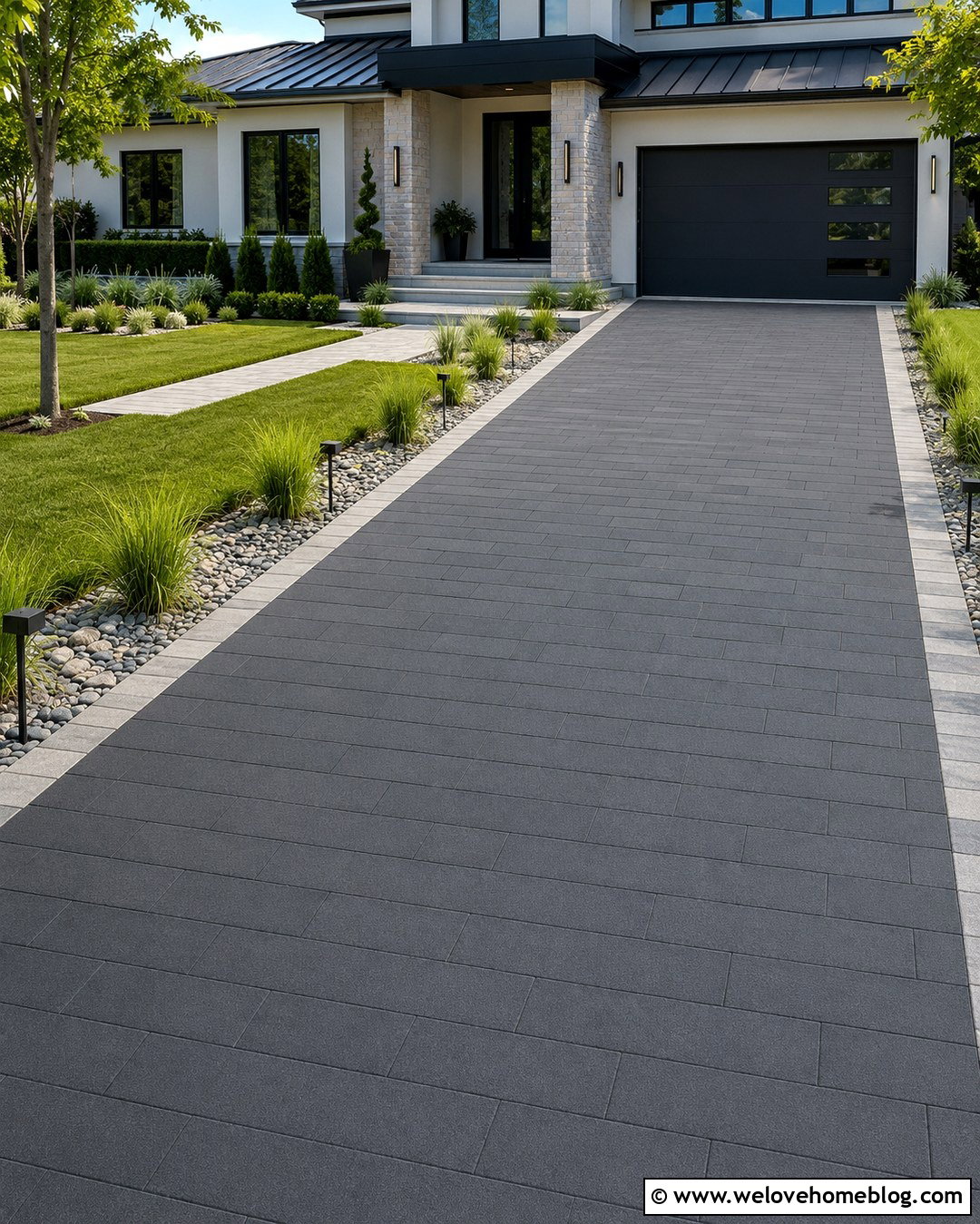
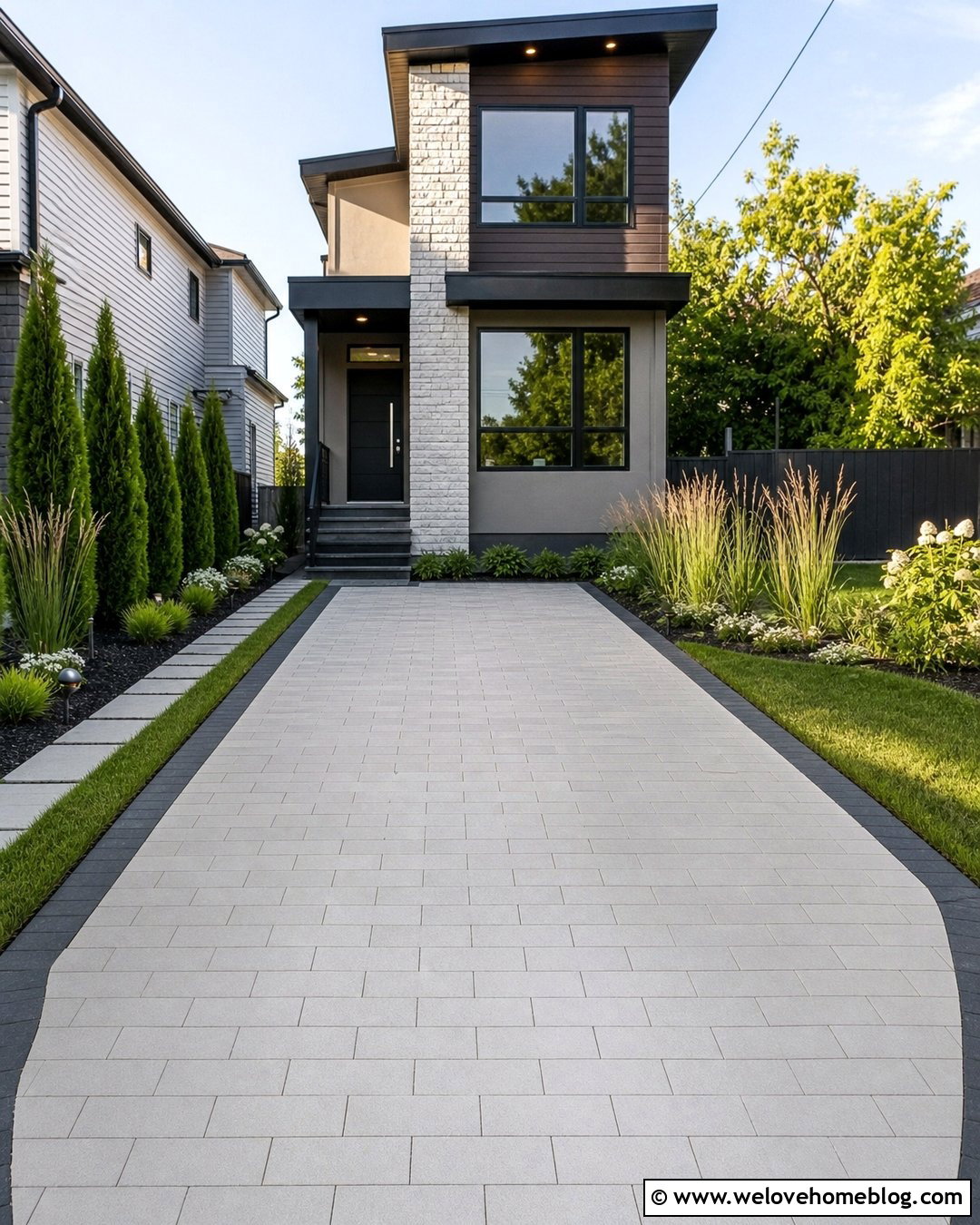
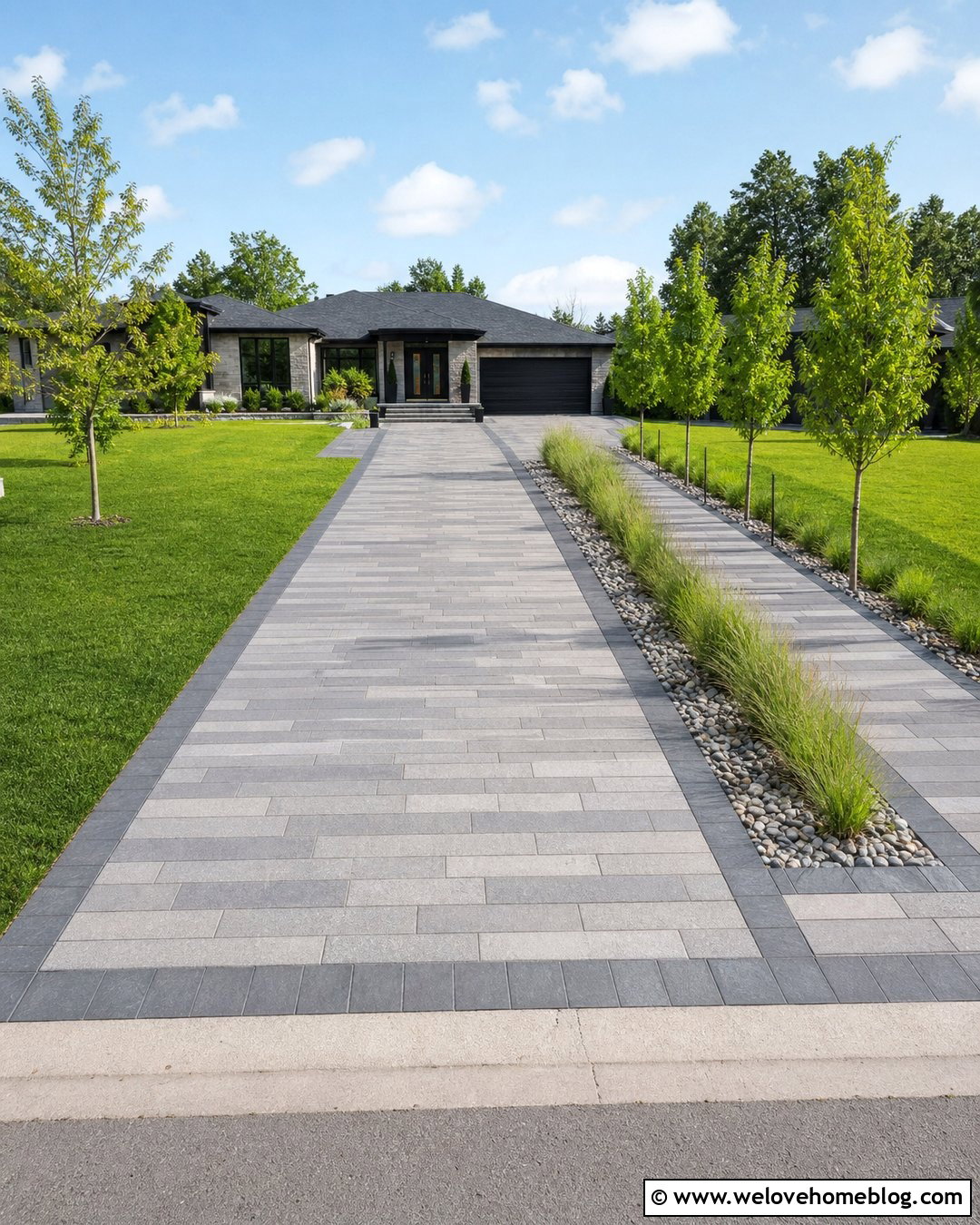
Integrated lighting can make a paved driveway easier to follow while sharpening its design during the day. Use large-format charcoal concrete pavers in a straight layout leading to a contemporary home. Border the surface with lighter gray pavers, then place low, shielded fixtures at measured intervals within the adjoining planting beds. This keeps electrical components away from primary tire paths while illuminating the driveway edges. Repeat the light-gray paving around the apron and front walkway for continuity. Upright grasses, compact evergreens, and pale river rock can soften the dark surface. Plan wiring, drainage, fixture spacing, and future maintenance before completing the paving. During daylight, the border should remain attractive enough to define the driveway without depending on the lights for visual interest.
Conclusion:
The best 20 How To Pave Driveway Ideas balance appearance with reliable construction. Start by choosing a material that suits your climate, budget, home, and expected vehicle traffic. Then select a shape, paving pattern, border, and landscape treatment that work as one complete entrance. Even beautiful pavers can fail when installed over a weak base or surrounded by poor drainage. Confirm local requirements, mark underground utilities, and hire qualified professionals for complicated excavation, grading, concrete, or electrical work. Samples and a simple scaled plan can also prevent costly design mistakes. With careful preparation, your new paved driveway can improve access, manage runoff, reduce maintenance problems, and give the entire property a more finished appearance.

Related posts:
Leave a Reply