
A steep driveway can look dramatic, but it must also provide safe traction, controlled drainage, smooth vehicle clearance, and stable edges. If you are searching for **20 How To Make A Steep Driveway Ideas**, begin by measuring the grade and identifying where water, ice, erosion, or scraping problems occur. The best solution may involve reshaping the route, choosing a textured surface, installing drains, or supporting the surrounding slope with retaining walls. Local requirements vary, so major grading work should be planned with a qualified contractor or civil engineer. This is especially important where the driveway meets a public road, sidewalk, garage, or steep drop-off. The complete designs below offer practical inspiration through **20 How To Make A Steep Driveway Ideas**.

1. Curved Concrete Steep Driveway
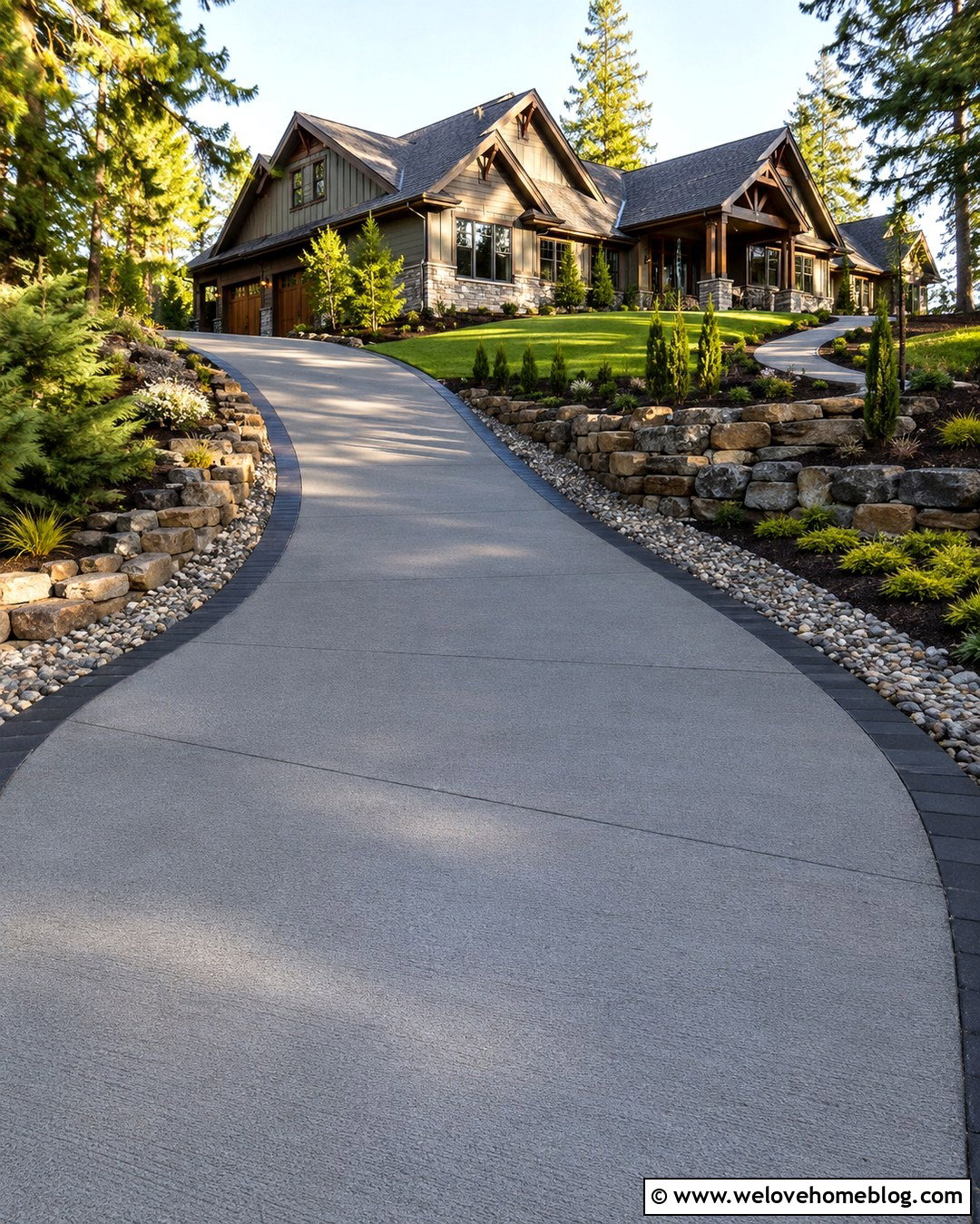
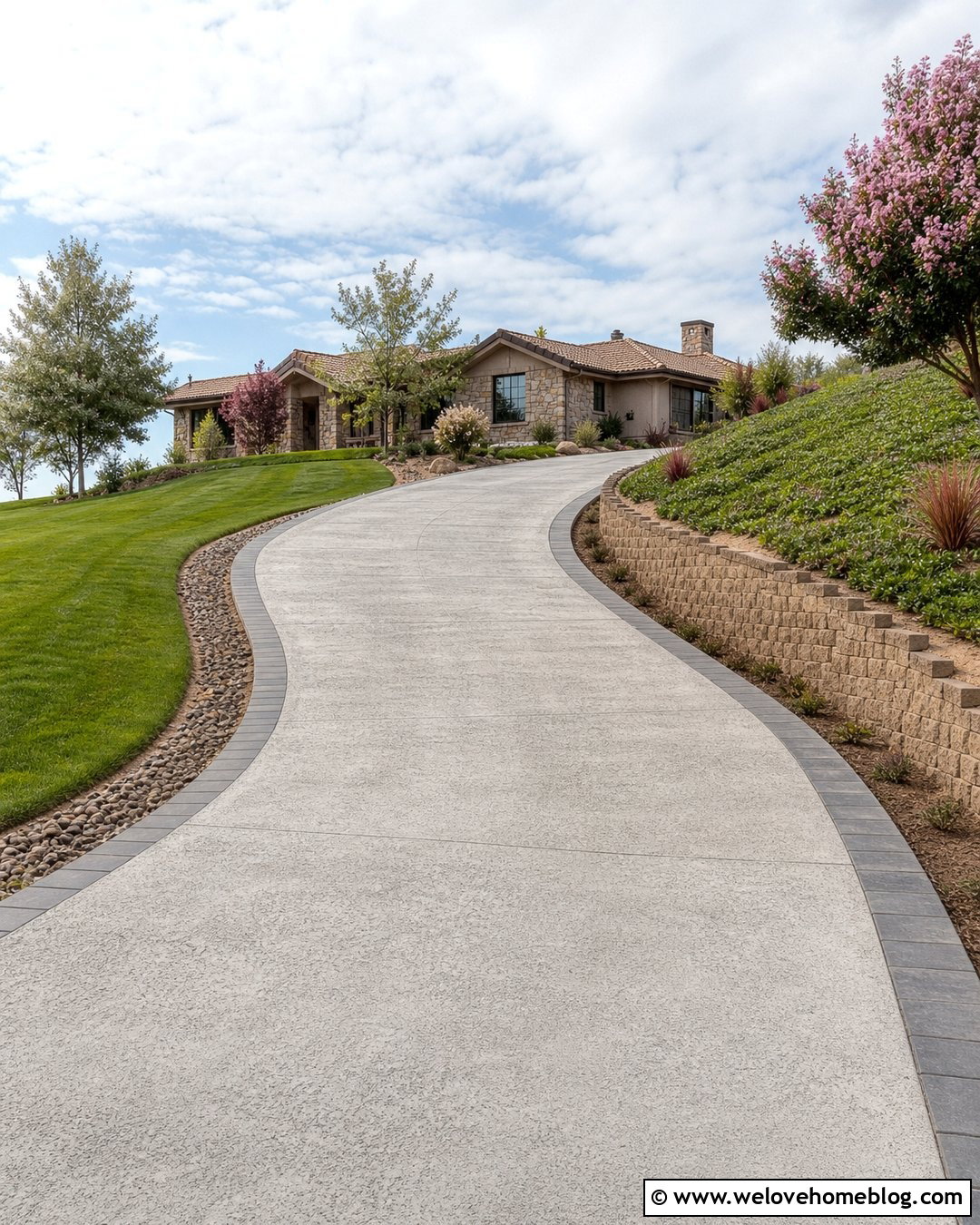
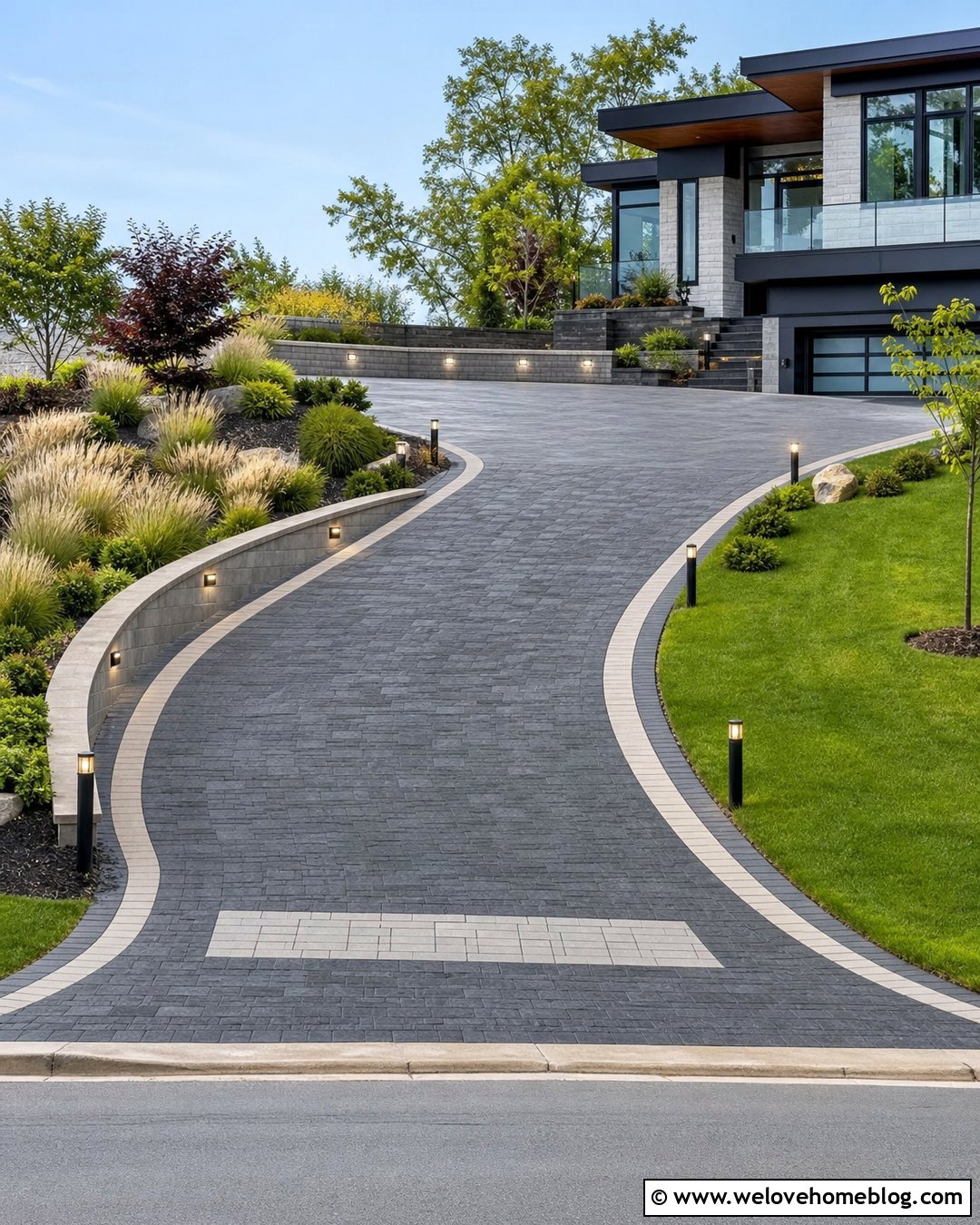
A curved route can make a steep concrete driveway easier to climb by spreading the elevation change across a longer distance. Instead of pointing the driveway directly uphill, sweep it gently across the property before turning toward the garage. Use broom-finished concrete for reliable tire grip, plus dark concrete paver edging to define the curves. A low retaining wall on the uphill side can hold back soil, while a planted drainage swale on the lower side manages runoff. Keep the bends wide enough for regular vehicles, service trucks, and emergency access. Smooth vertical transitions are also essential because sudden grade changes can cause bumpers or undercarriages to scrape. Have the curve, slope, drainage, and retaining structure professionally designed for the site. ()
2. Switchback Asphalt Steep Driveway
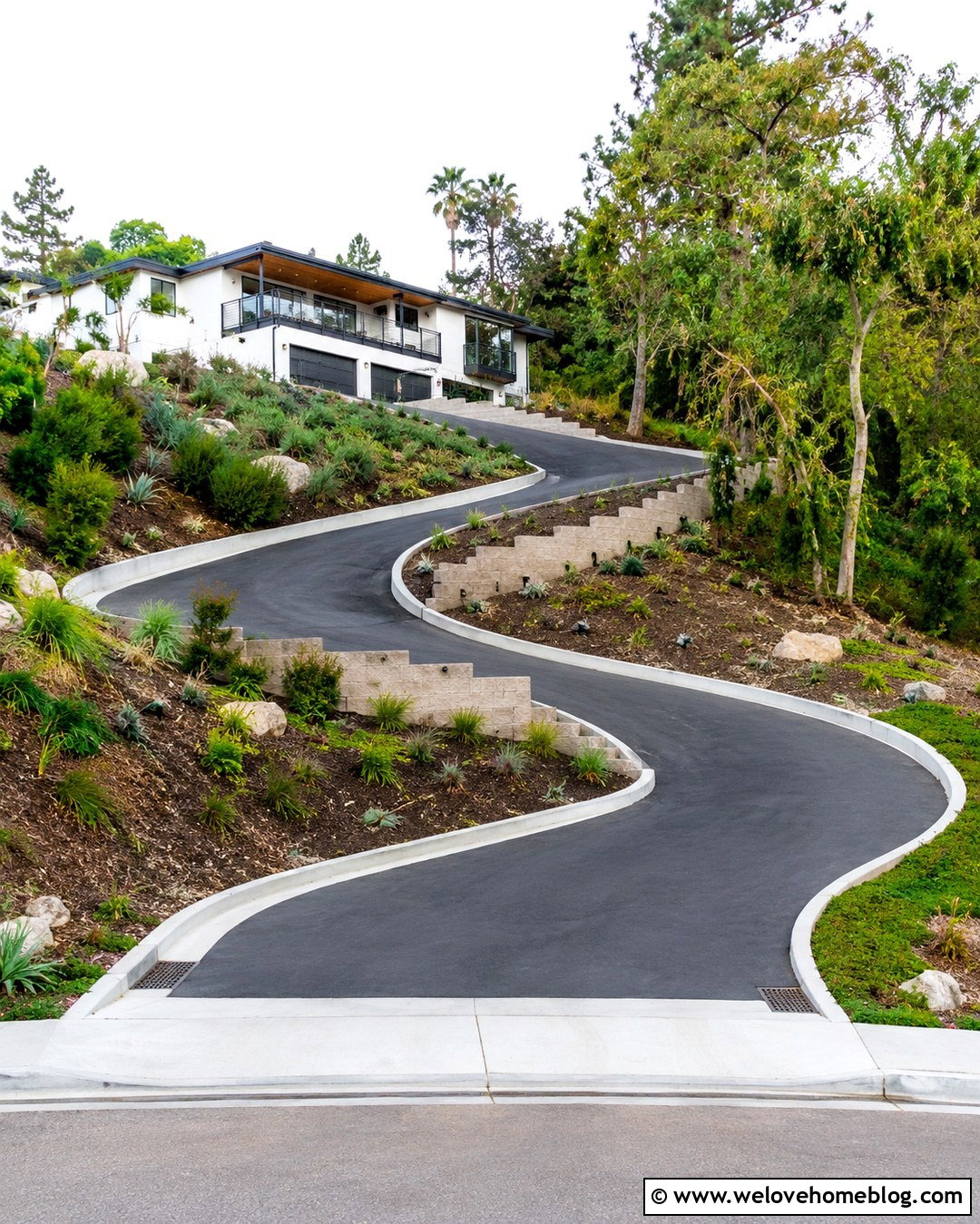
When a property has enough side-to-side space, a switchback can transform an extremely direct climb into two more manageable runs. Black asphalt provides a clean, durable surface, while broad turning areas connect each section. Frame the downhill edge with a reinforced concrete curb and use an engineered retaining wall against the cut slope. The switchback corner should include enough room for vehicles to turn without repeated reversing. Add catch basins at low points so stormwater does not rush across the bend or undermine the pavement. Native shrubs and erosion-resistant ground covers can soften the retaining walls without blocking visibility. A switchback consumes more land, but its extended route can reduce the effective grade and improve everyday access on a difficult hillside property. ()
3. Textured Concrete Steep Driveway
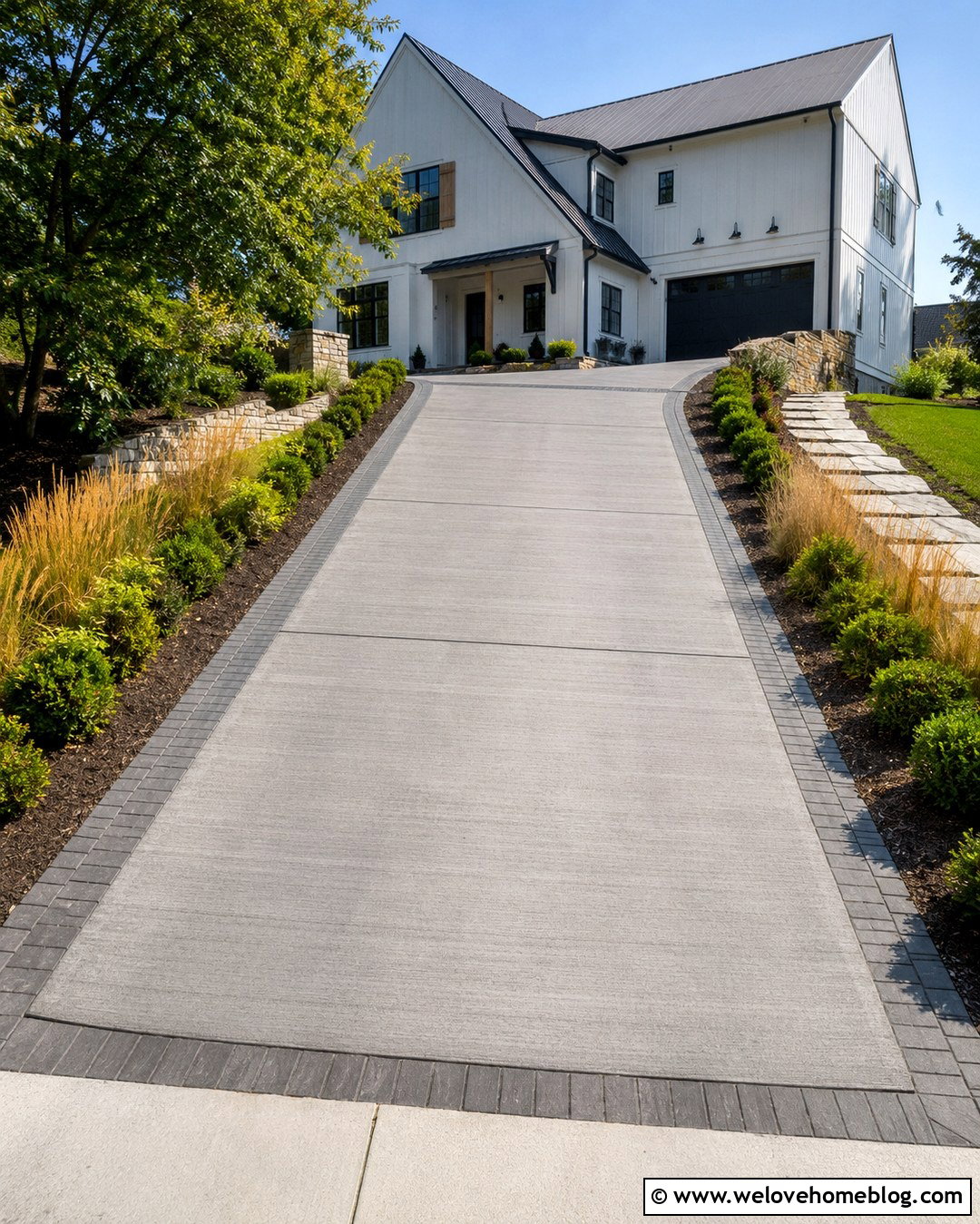
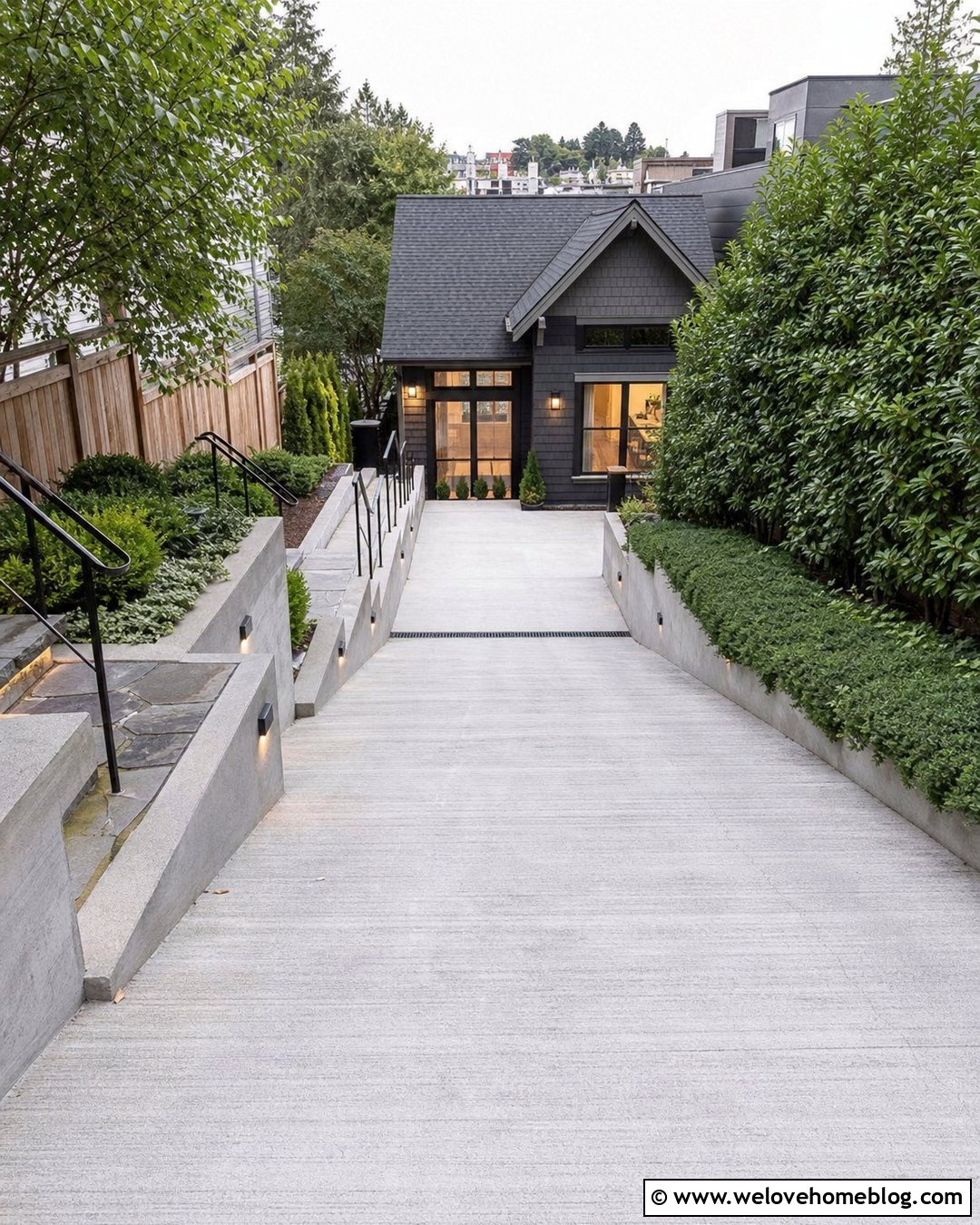
A coarse broom finish gives a concrete steep driveway more tire-friendly texture than a polished or overly smooth slab. Run the broom marks across the driveway rather than downhill so the surface offers additional resistance in the direction of travel. Divide the concrete into properly planned sections with control joints, but avoid decorative grooves deep enough to catch snow-removal equipment. A straight layout can work when the grade is not extreme and the transitions are gradual. Add charcoal paver borders, low planting beds, and a channel drain near the garage. The finished driveway should slope away from foundations and direct water toward an approved outlet. In freezing regions, ask the contractor about a suitable concrete mix, curing process, and surface treatment for local weather conditions.
4. Exposed Aggregate Steep Driveway
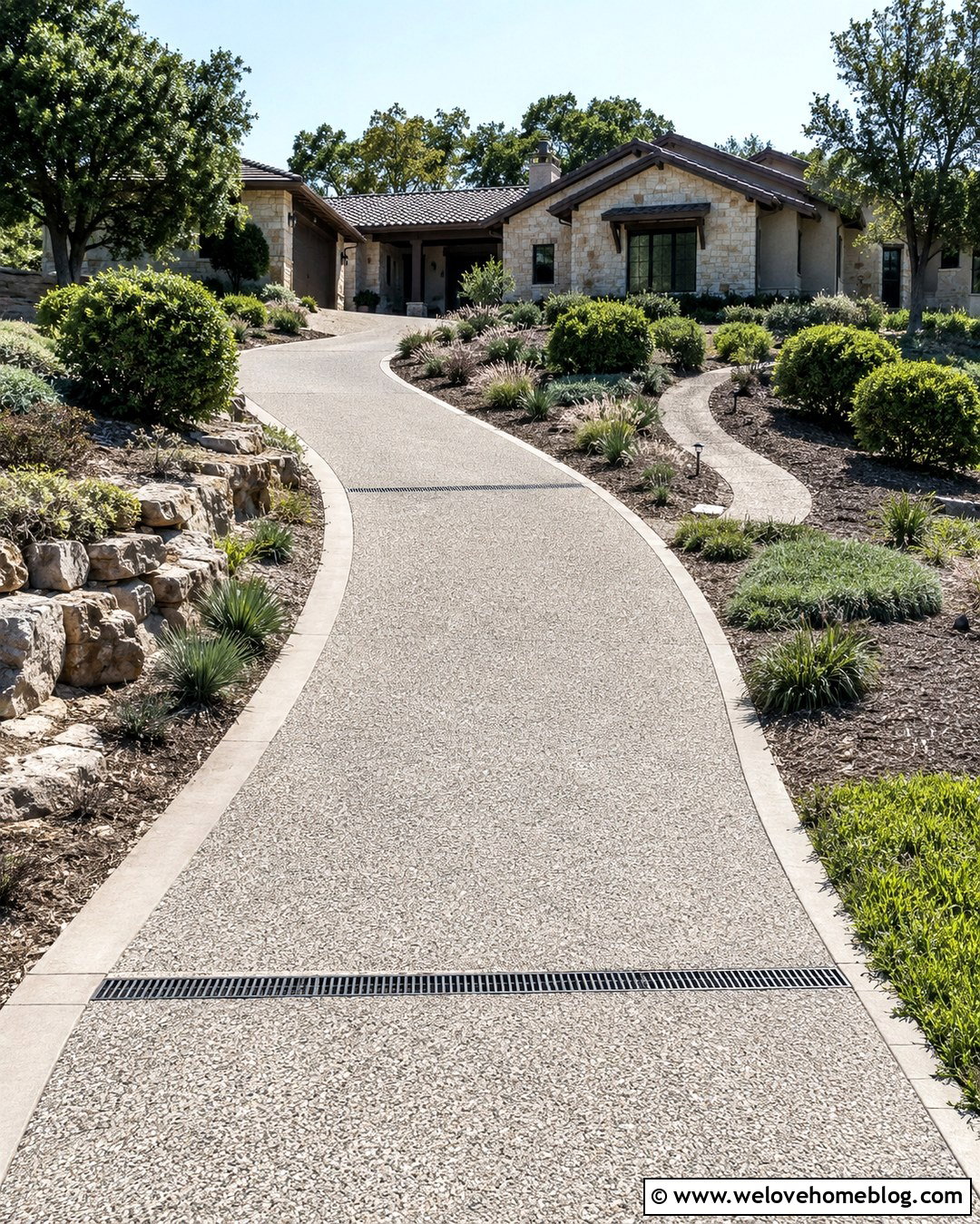
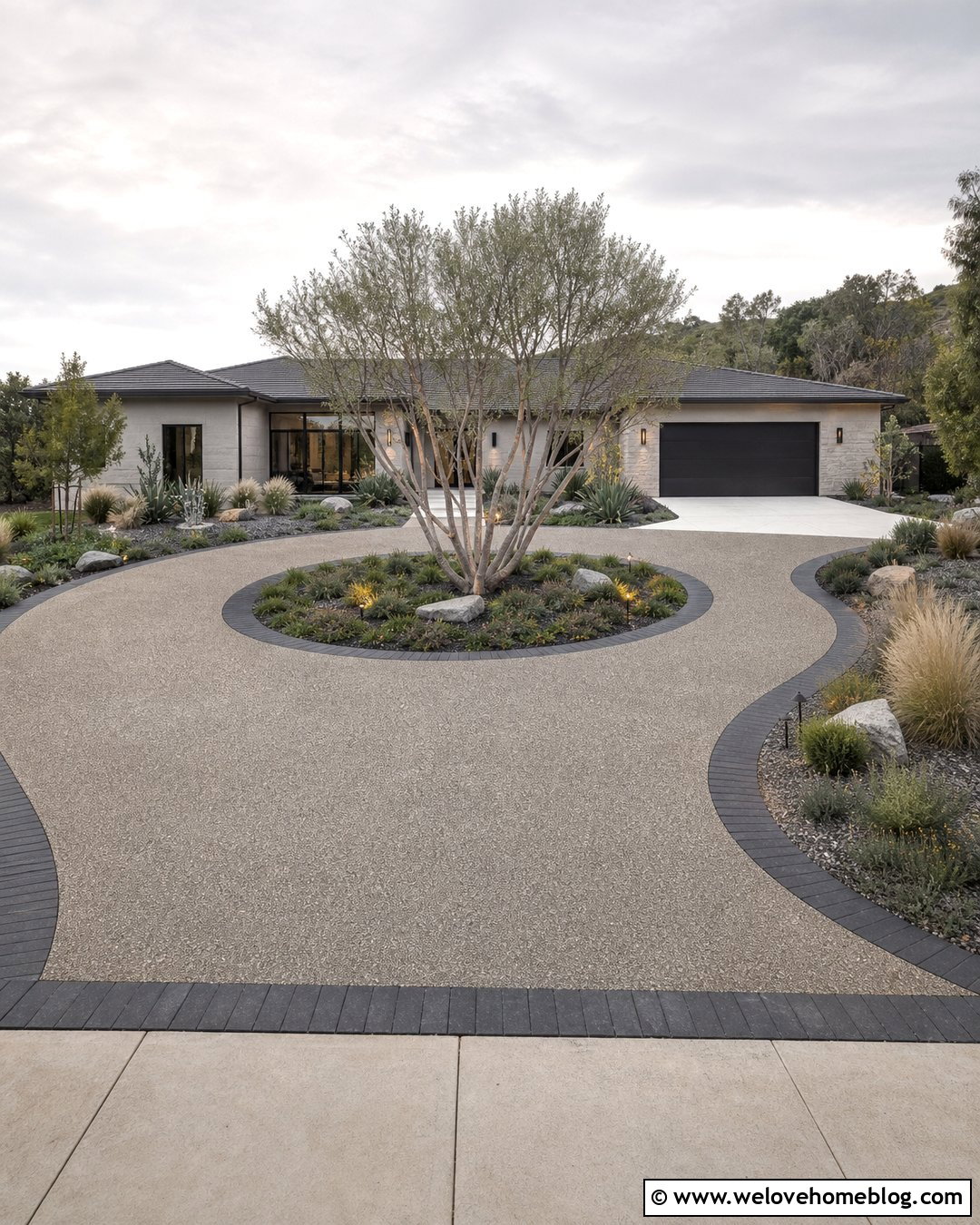
Exposed aggregate creates a naturally textured driving surface with more visual depth than plain concrete. Choose a medium aggregate blend with rounded gray, tan, and charcoal stones, then pair it with smooth concrete borders that contain the edges. A gently curved layout can reduce the harsh appearance of a steep approach and provide room for landscaped banks. Use compact shrubs, ornamental grasses, and deeply rooted ground covers that will not spill into the driving lane. Because water gains speed on a slope, include a trench drain at the lower entrance and another interception drain before the garage when needed. The aggregate exposure should be consistent rather than excessively deep. This keeps the driveway comfortable to walk on while retaining the practical texture required for a sloping residential approach.
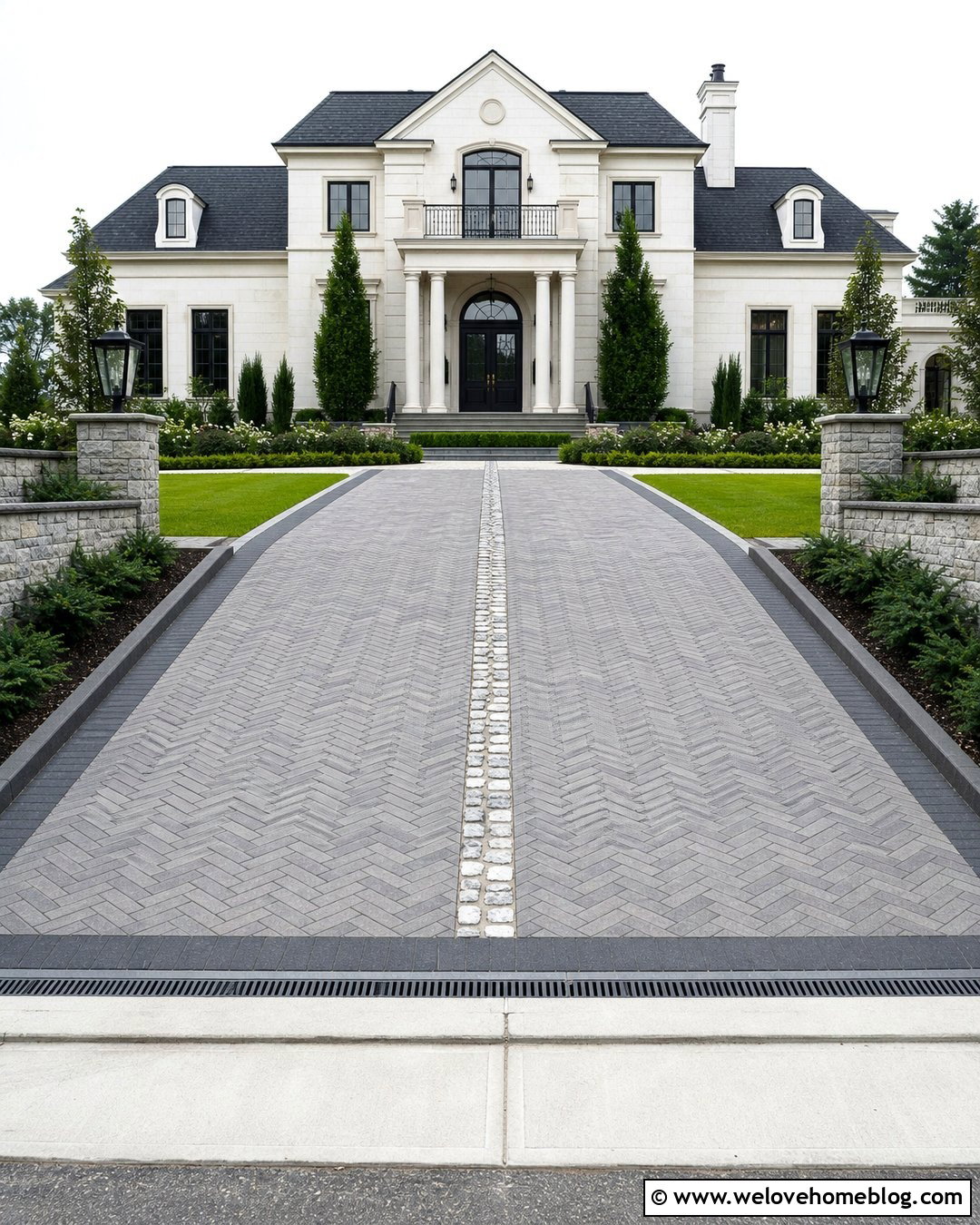
5. Herringbone Paver Steep Driveway
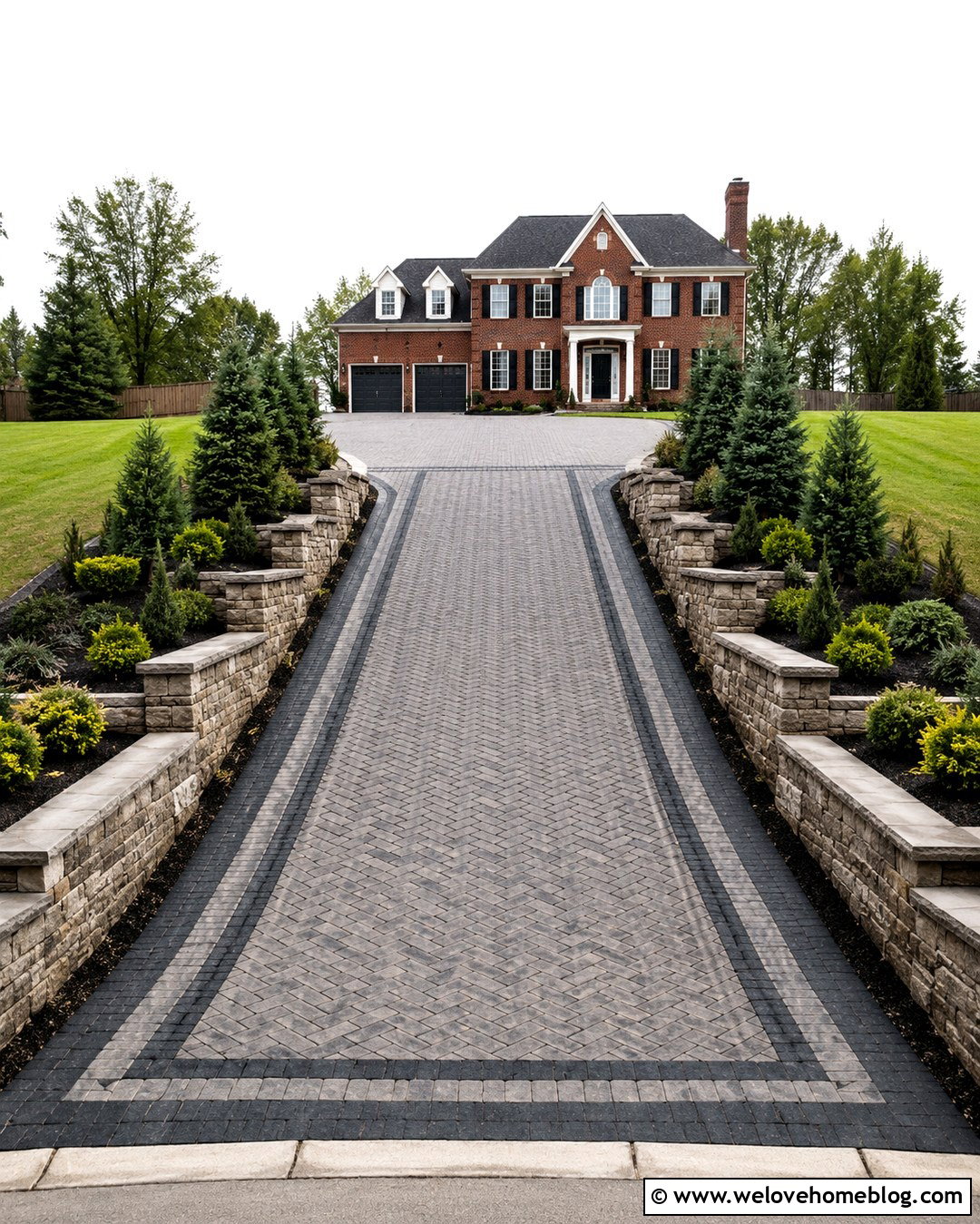
Interlocking concrete pavers laid in a herringbone pattern create a strong, visually active surface for a steep driveway. The angled pattern helps distribute vehicle forces across multiple units, while rigid edge restraints prevent the field from spreading. Choose textured pavers rather than smooth, sealed products that may become slippery when wet. A straight driveway can be divided by subtle contrasting bands that make its length feel more balanced. Install the pavers over a carefully engineered, compacted base suited to the soil and drainage conditions. On steeper sites, the contractor may recommend structural details that prevent downward movement. Finish the complete look with stone retaining walls, tiered evergreen beds, and a wide level apron near the garage. Regular joint maintenance will help the paved surface remain stable and attractive.
6. Resin-Bound Steep Driveway With Stone Edging
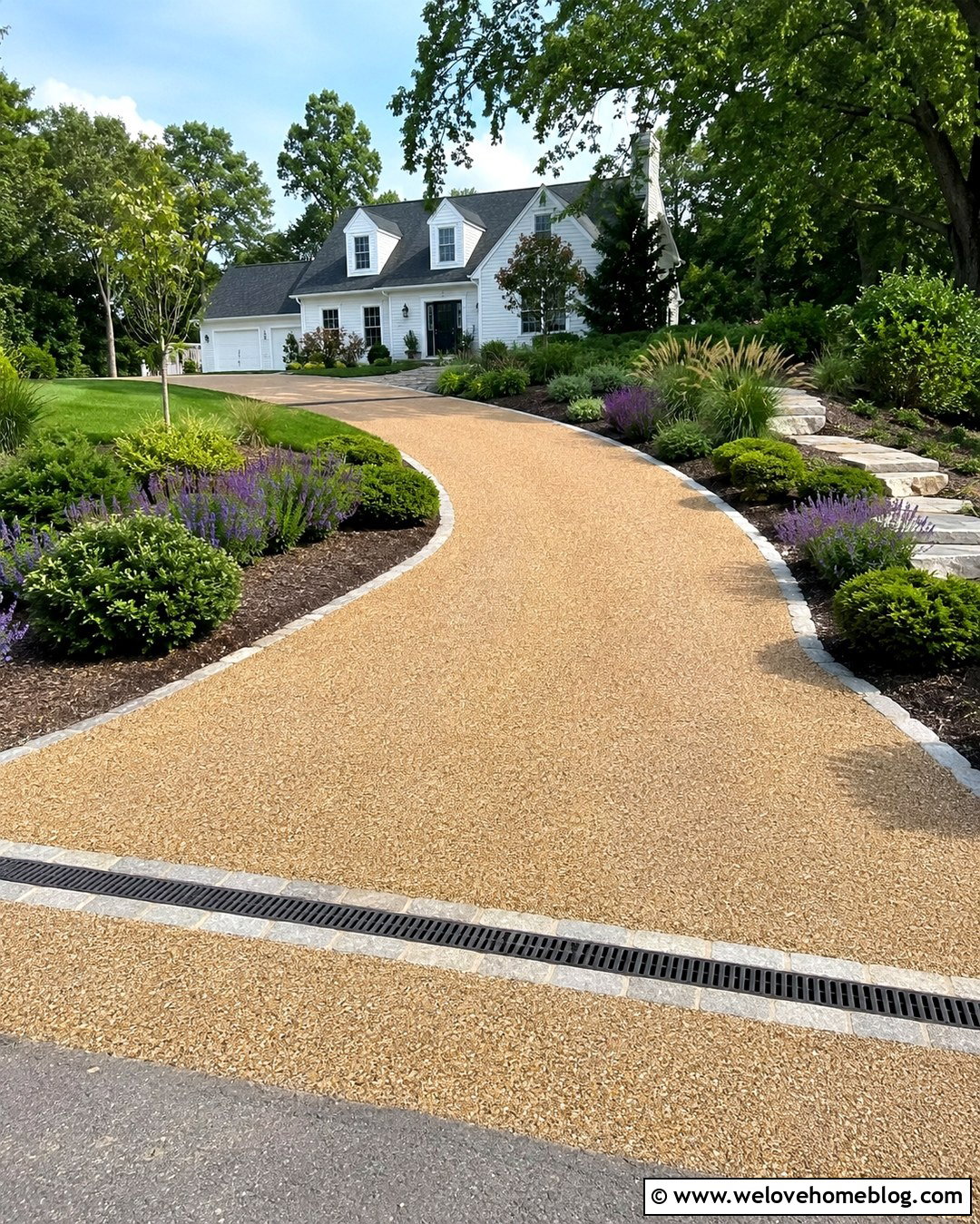
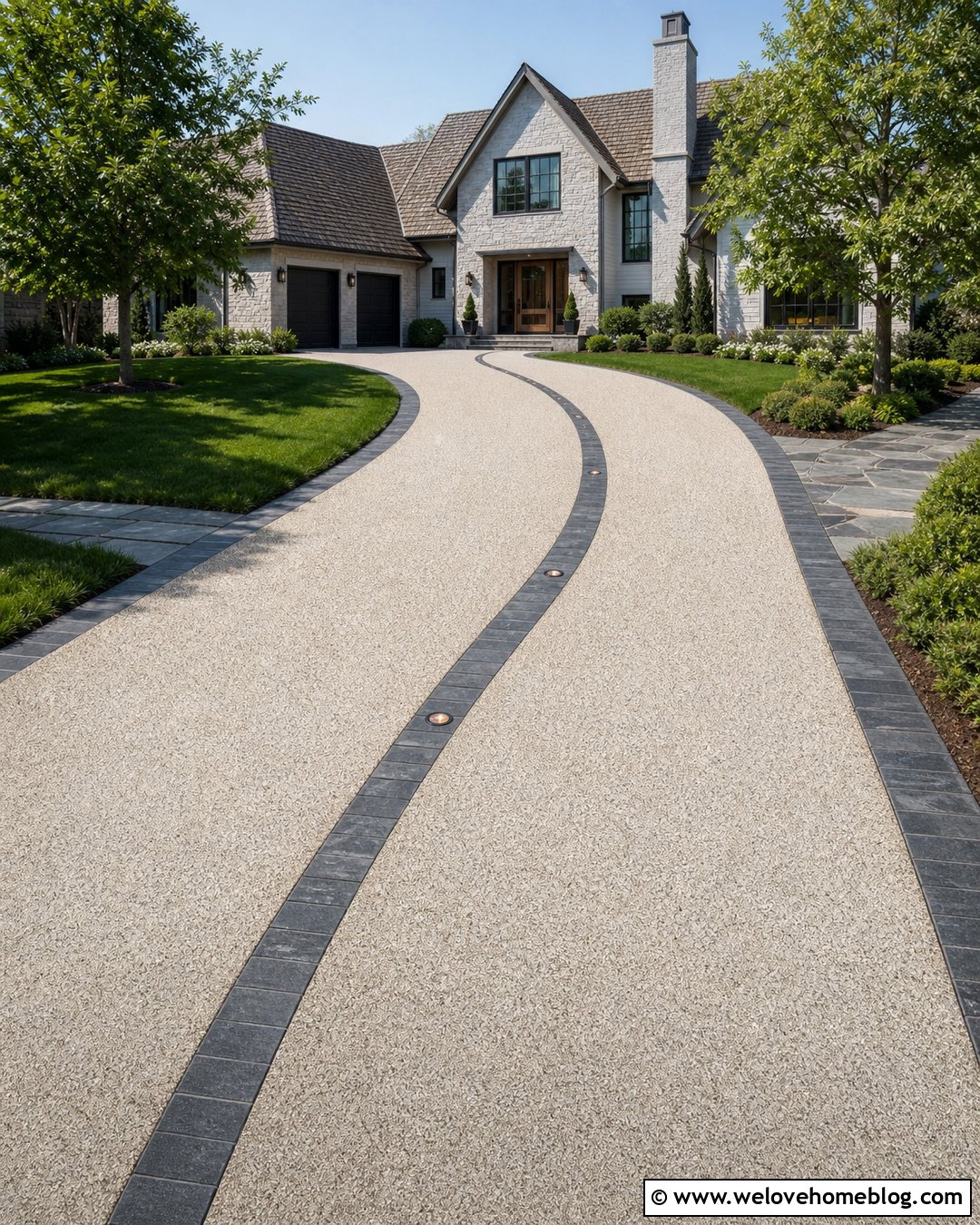
A resin-bound gravel driveway can provide a seamless appearance without the loose stones associated with traditional gravel. For a sloping site, select an exterior system specifically approved by its manufacturer for the measured grade, climate, and expected vehicle loads. A warm tan aggregate blend works well with natural stone edging and a gently curved approach. Install strong restraints along both sides because unsupported edges are vulnerable to damage. Drainage must be designed as part of the complete system rather than assumed from the surface alone. Add a channel drain where the driveway meets the sidewalk or road, and keep runoff away from the house. Low lavender-like perennials, evergreen mounds, and ornamental grasses can frame the route while preserving clear sightlines around the entrance and curve.
7. Gravel Grid Steep Driveway
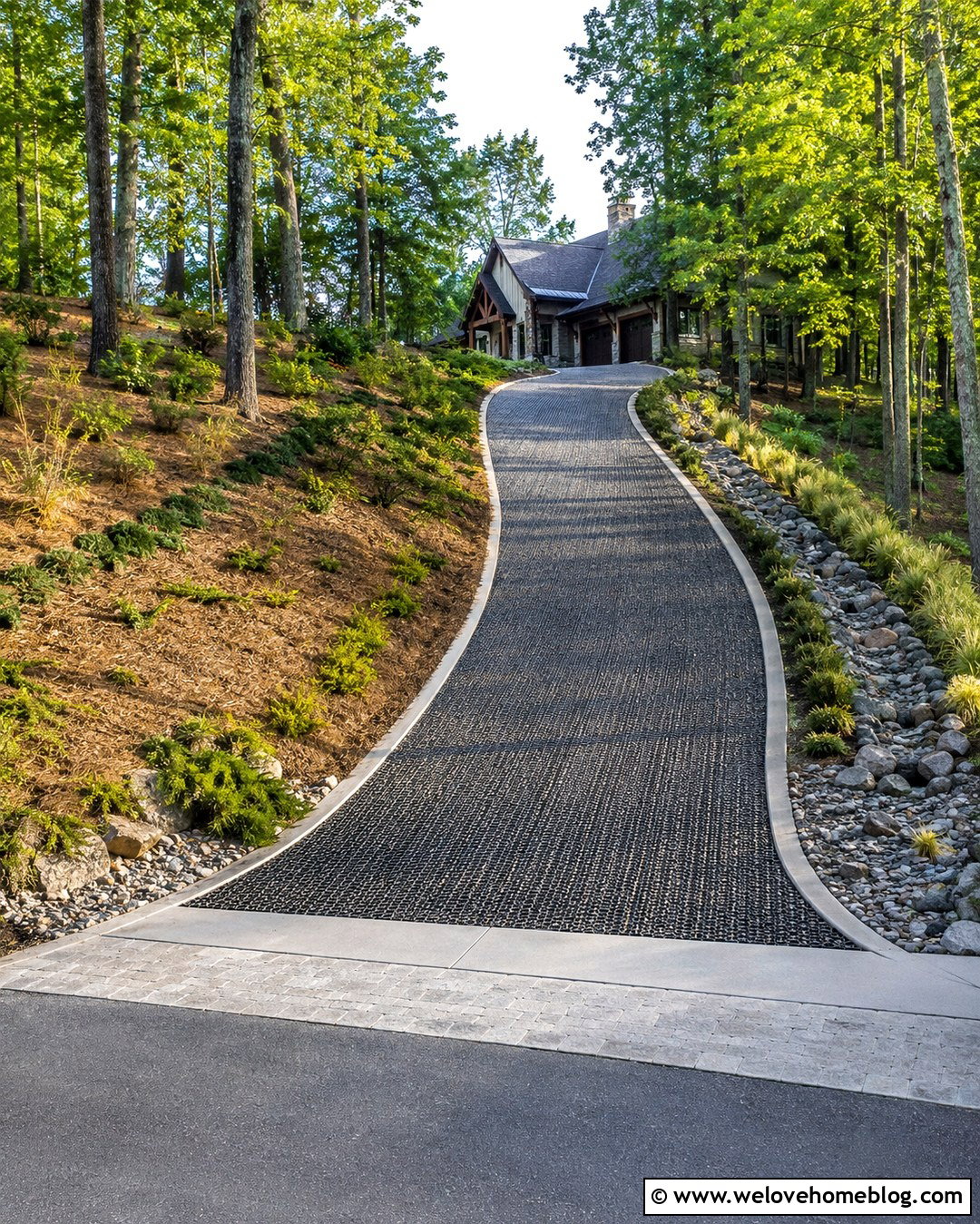
Loose gravel can wash downhill, form ruts, and collect at the bottom of a steep driveway. A cellular stabilization grid helps hold angular gravel in place and spreads vehicle loads across the prepared base. Choose compactable crushed stone rather than rounded pea gravel, which moves more easily under tires. Create a subtly curving route with concrete or stone edge restraints and a reinforced apron at the street. On the uphill side, a shallow swale can intercept runoff before it crosses the driving surface. Plant the banks with low, erosion-resistant ground covers and deep-rooted native grasses. Grid systems have slope and installation limits, so product approval and base preparation are critical. Long or unusually steep applications may need check barriers, additional drainage, or another professionally engineered paving solution. ()
8. High-Traction Asphalt Steep Driveway
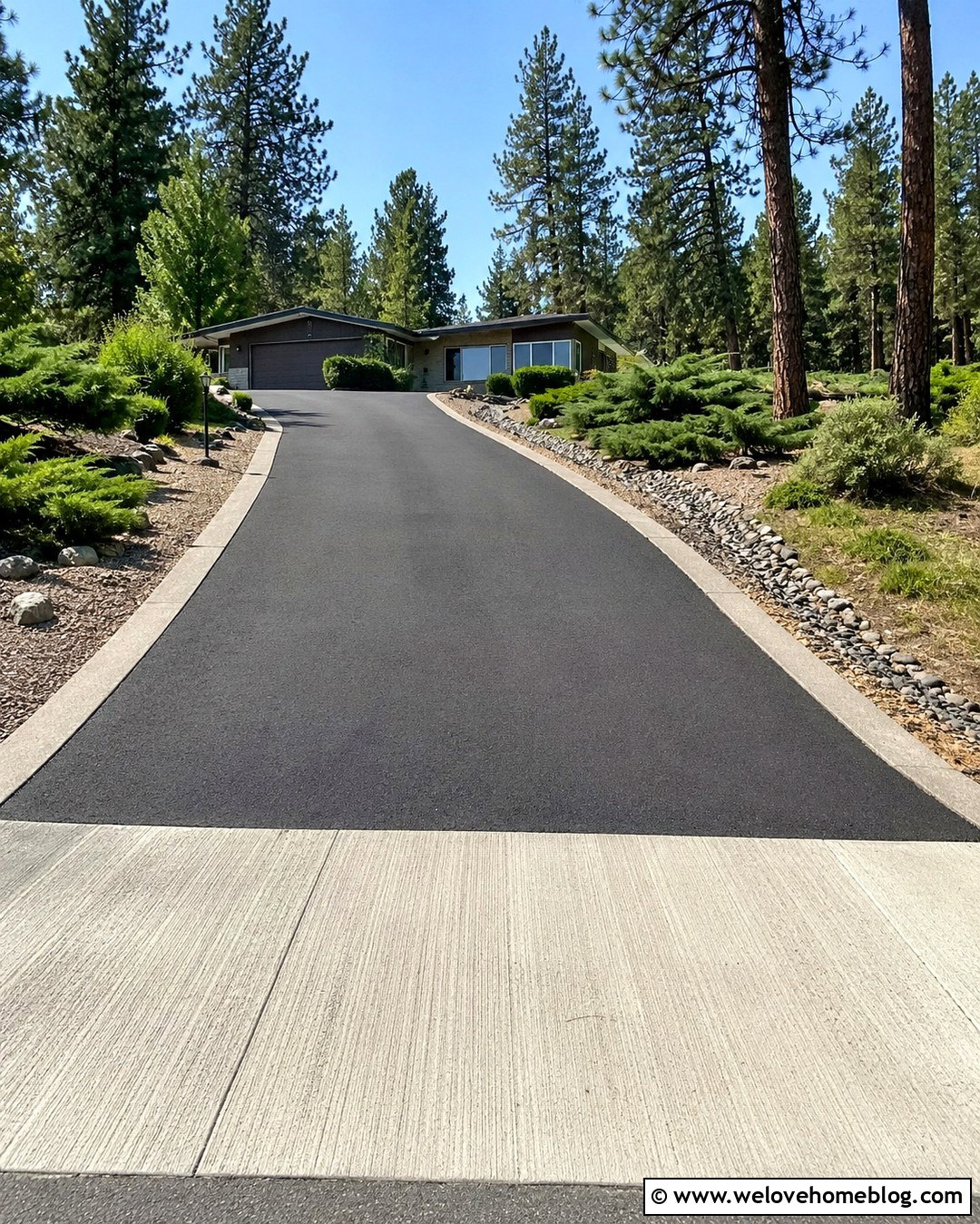
Fresh black asphalt creates a practical, understated surface for a steep suburban driveway. Ask for a mix and finish appropriate for residential slopes rather than adding a glossy coating that could reduce traction. A broad concrete apron at the street can create a cleaner transition, while concrete curbs contain the asphalt beside raised planting beds. Give the driveway a mild crown or planned cross slope so water moves toward side drainage instead of flowing directly into the garage. Evergreen shrubs, spreading junipers, and stone mulch can stabilize the adjacent banks without requiring frequent mowing. Asphalt on a steep grade depends heavily on a stable, well-compacted base. Address weak soil, groundwater, and erosion before paving, because a beautiful surface cannot compensate for movement or washout underneath it.
9. Heated Concrete Steep Driveway
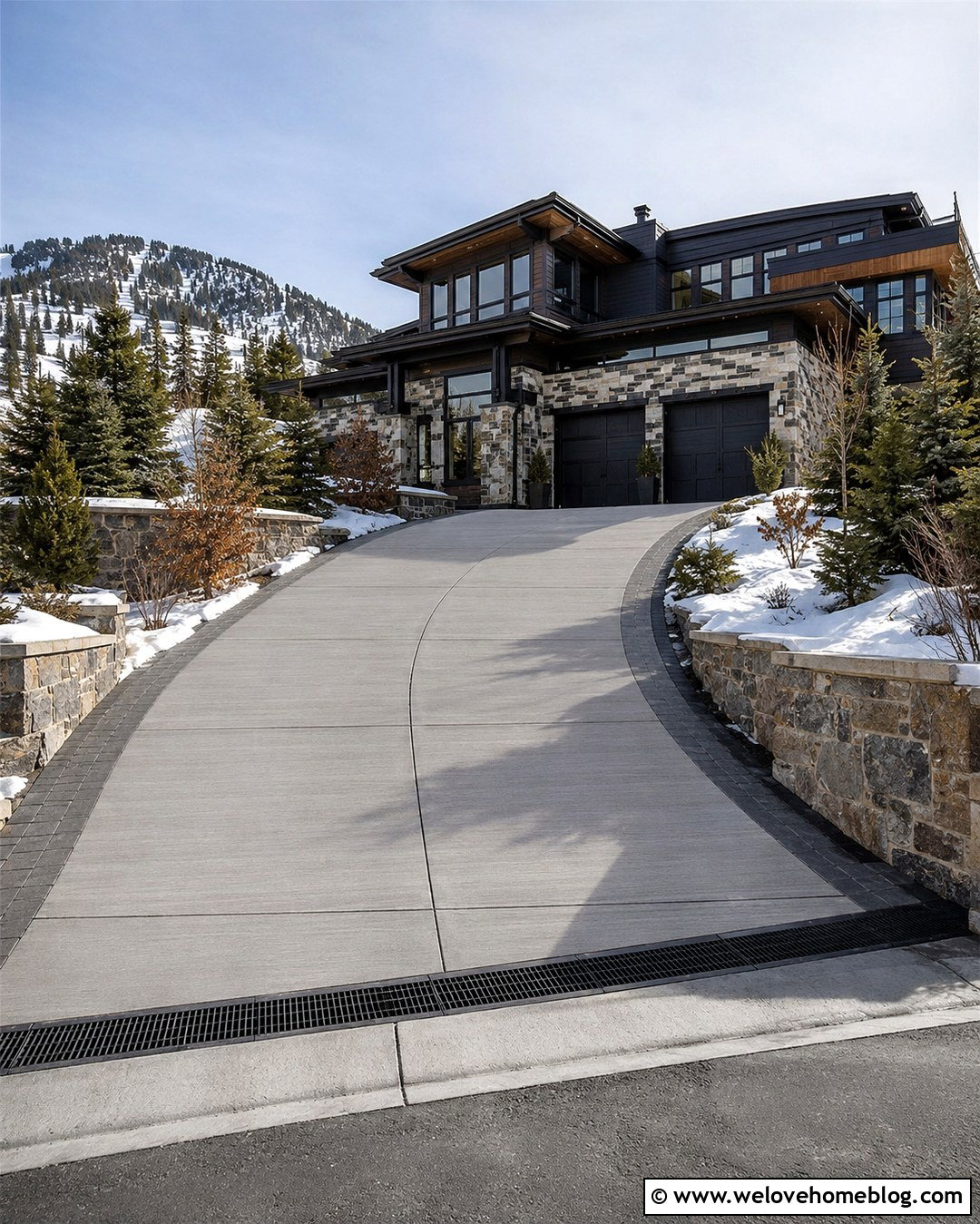
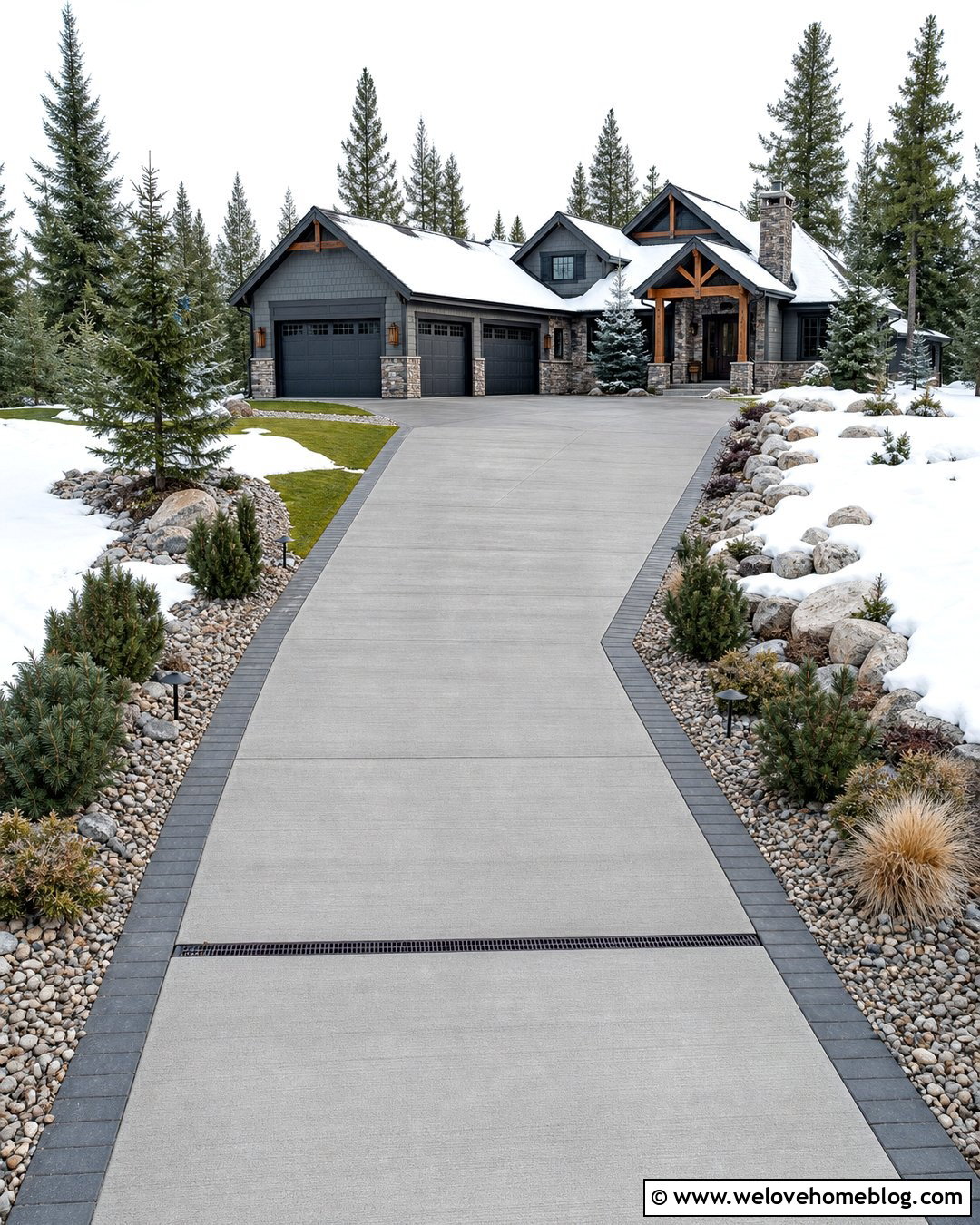
In a snowy climate, a heated driveway system can reduce ice accumulation on the most critical portions of a steep approach. Install hydronic tubing or electric heating elements beneath textured poured concrete, focusing on tire tracks, the street apron, sharp curves, and the area near the garage. The system should be designed before the slab is poured so heating zones, sensors, drainage, and maintenance access work together. Use medium-gray broom-finished concrete with contrasting paver edges for a clear, polished appearance. Snowmelt still produces water, so trench drains and open discharge routes remain necessary. Heating can be costly to install and operate, making targeted coverage a sensible alternative to heating the entire driveway. Pair it with good grading, traction, and manual winter maintenance rather than treating it as a complete safety guarantee.
10. Steep Driveway With Trench Drains
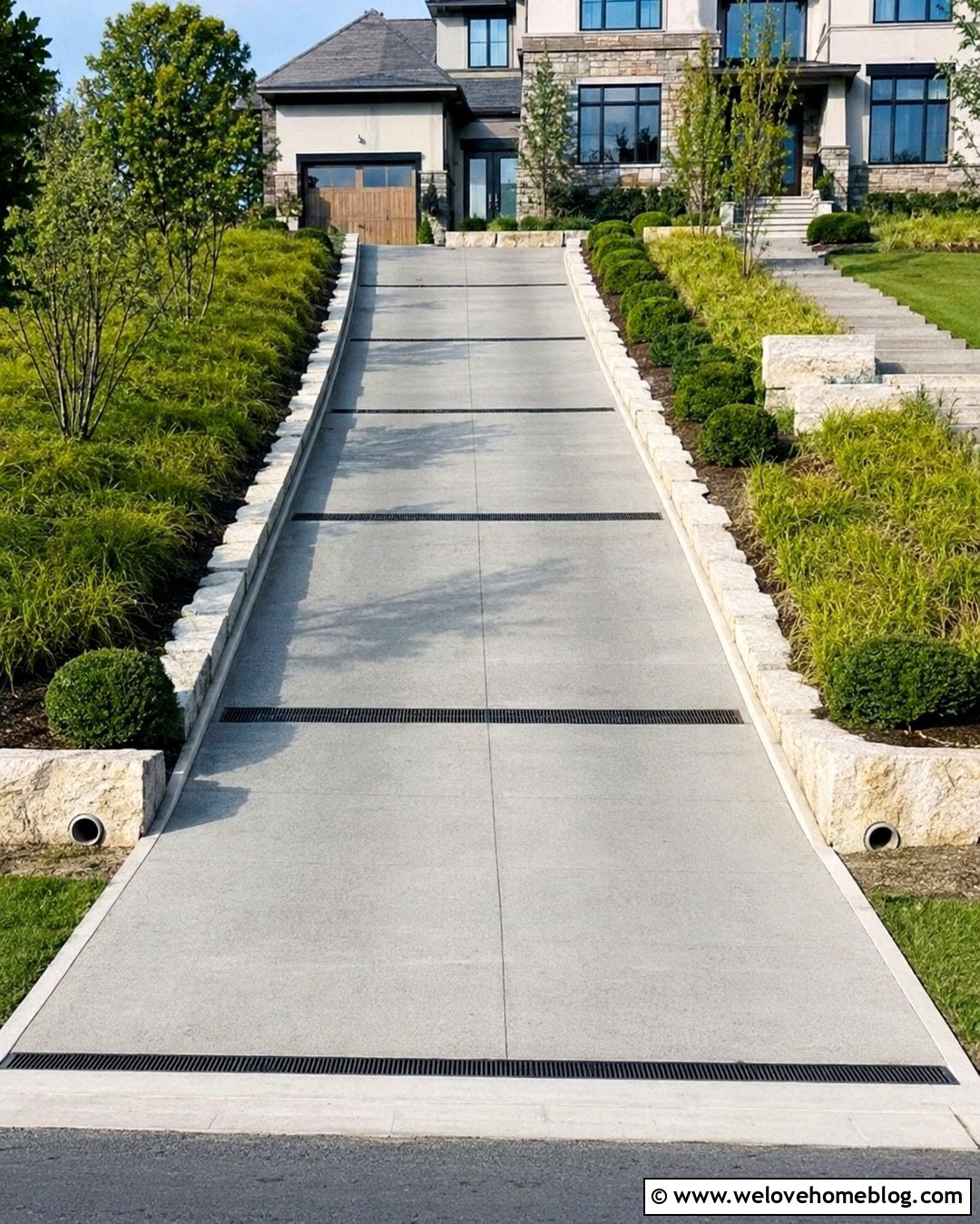
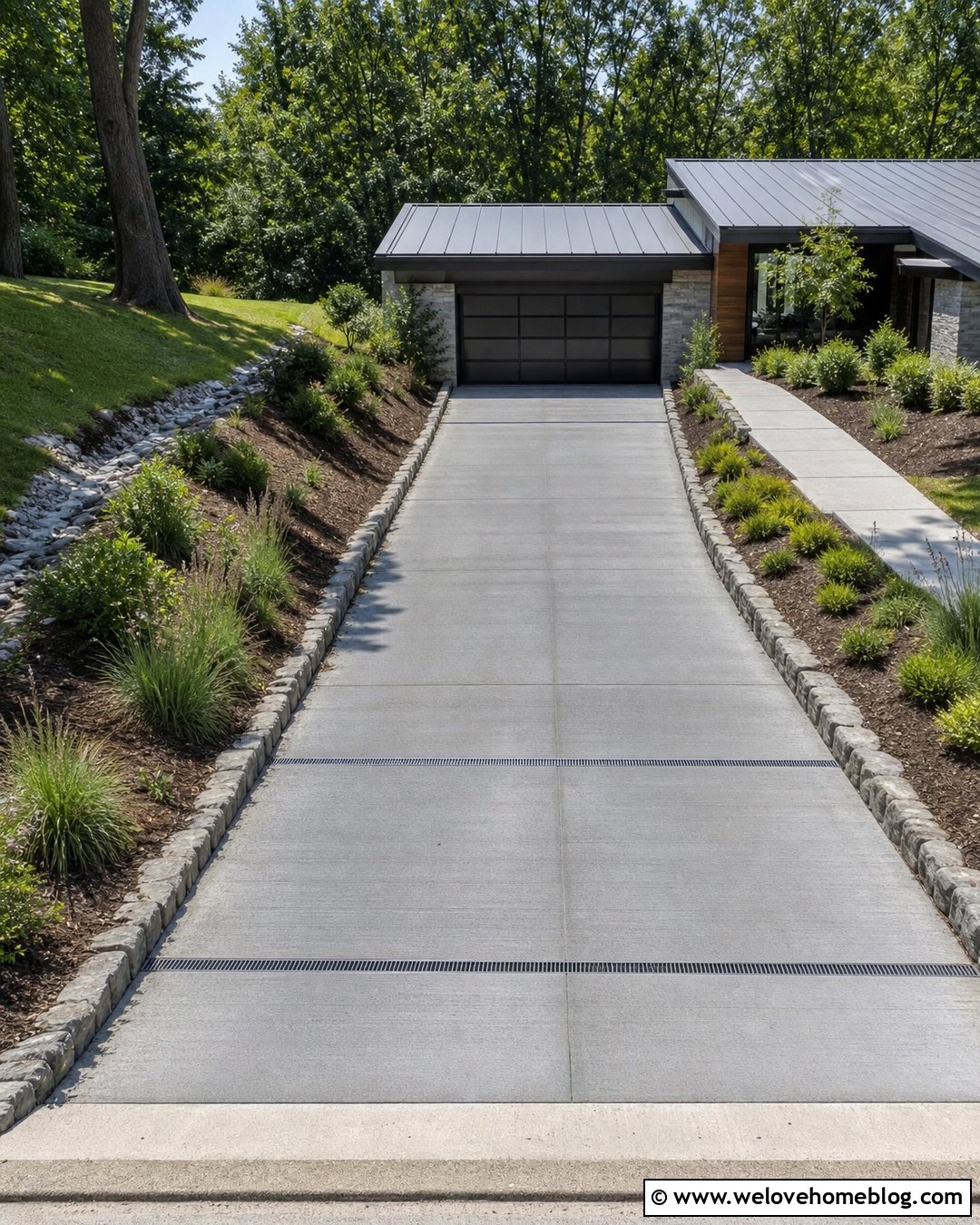
Fast-moving water is one of the biggest threats to a sloping driveway. Install grated trench drains across the full width at carefully selected locations, such as above the garage, before a major grade change, or near the street entrance. The drains should empty into an approved stormwater system, dry well, or engineered outlet rather than releasing water onto neighboring property. A broom-finished concrete surface with stone borders creates a clean setting where the drain grates appear intentional. Add uphill swales to capture landscape runoff before it reaches the pavement. Keep soil, mulch, and leaves away from every grate, and provide accessible cleanouts. Drain size and placement should be based on the contributing drainage area and local rainfall, not appearance alone, because undersized systems can overflow during intense storms. ()
11. Crowned Steep Driveway With Side Swales
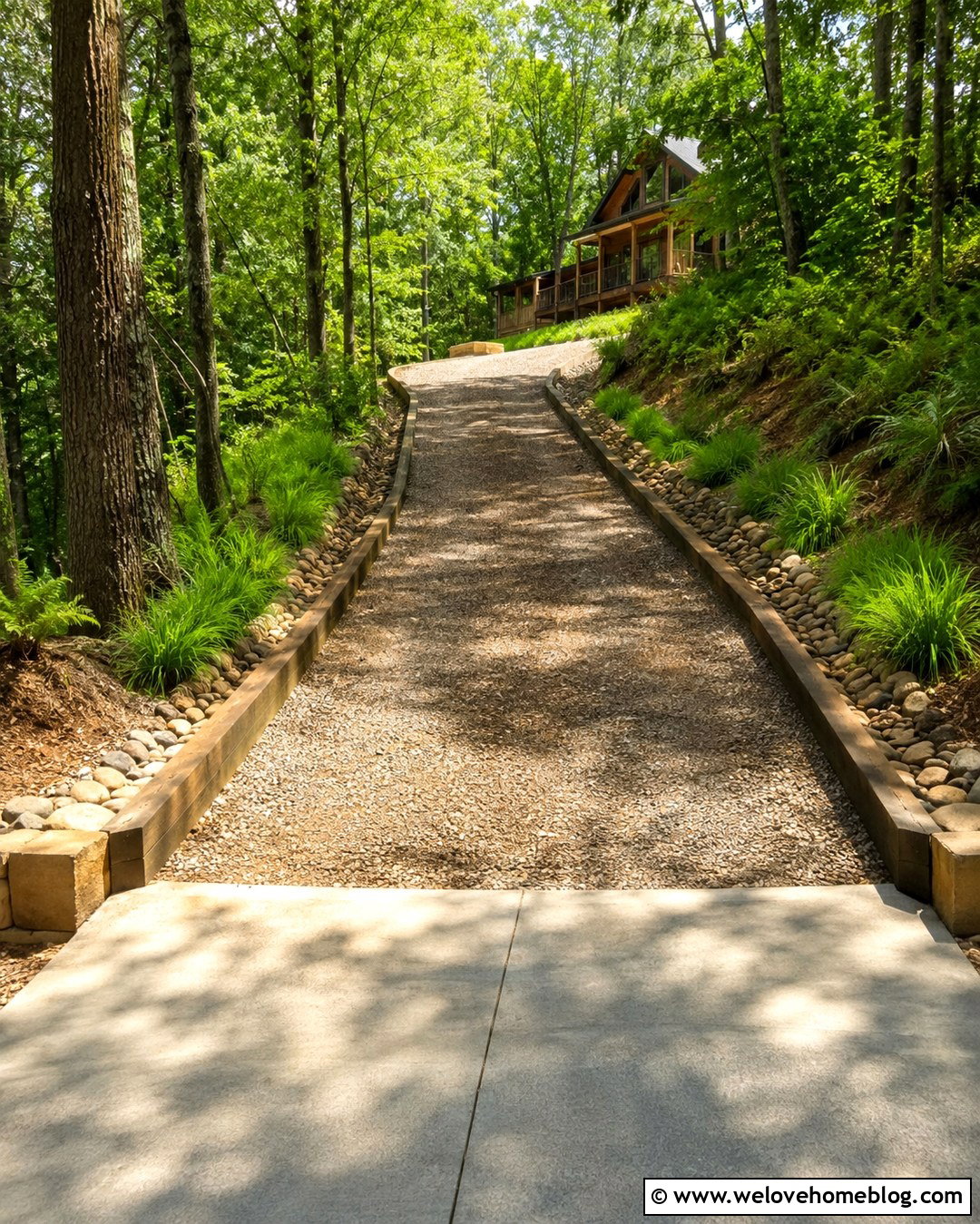
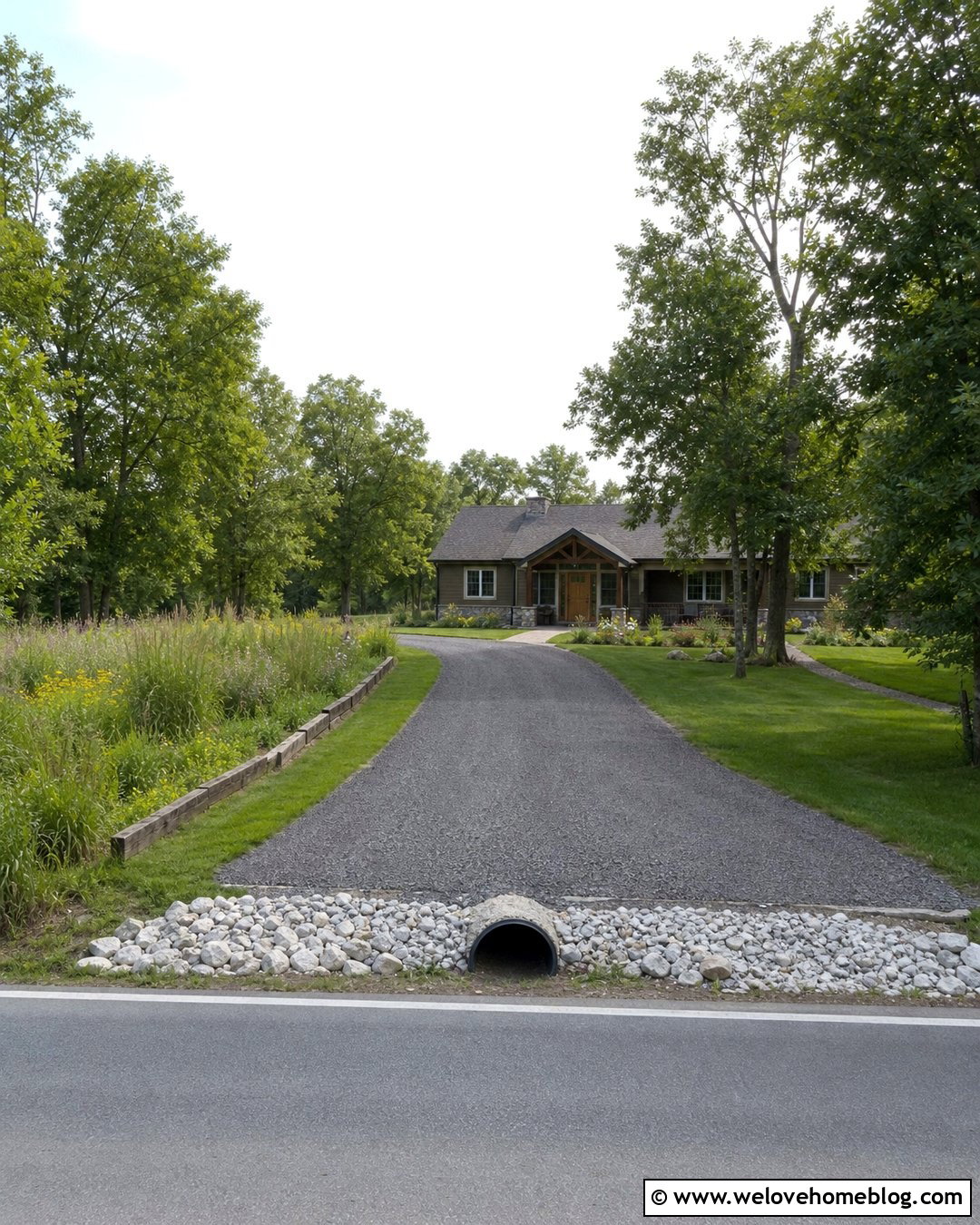
A crowned driveway is slightly higher through the center, encouraging water to move toward both sides instead of racing down one concentrated channel. This approach works especially well for a long crushed-stone driveway in a rural or wooded setting. Use compacted angular gravel over a properly built base, then reinforce the edges with timber, stone, or concrete restraints. Shallow vegetated swales along both sides can slow runoff and carry it toward stable outlets. Line vulnerable sections with rock where flowing water could erode the soil. The entrance can transition to a paved apron that prevents gravel from spreading onto the road. Keep the crown moderate so vehicles remain balanced and doors can open safely. Periodic grading and gravel replenishment will be necessary to preserve the profile after storms and regular traffic.
12. Smooth Steep Driveway Street Transition
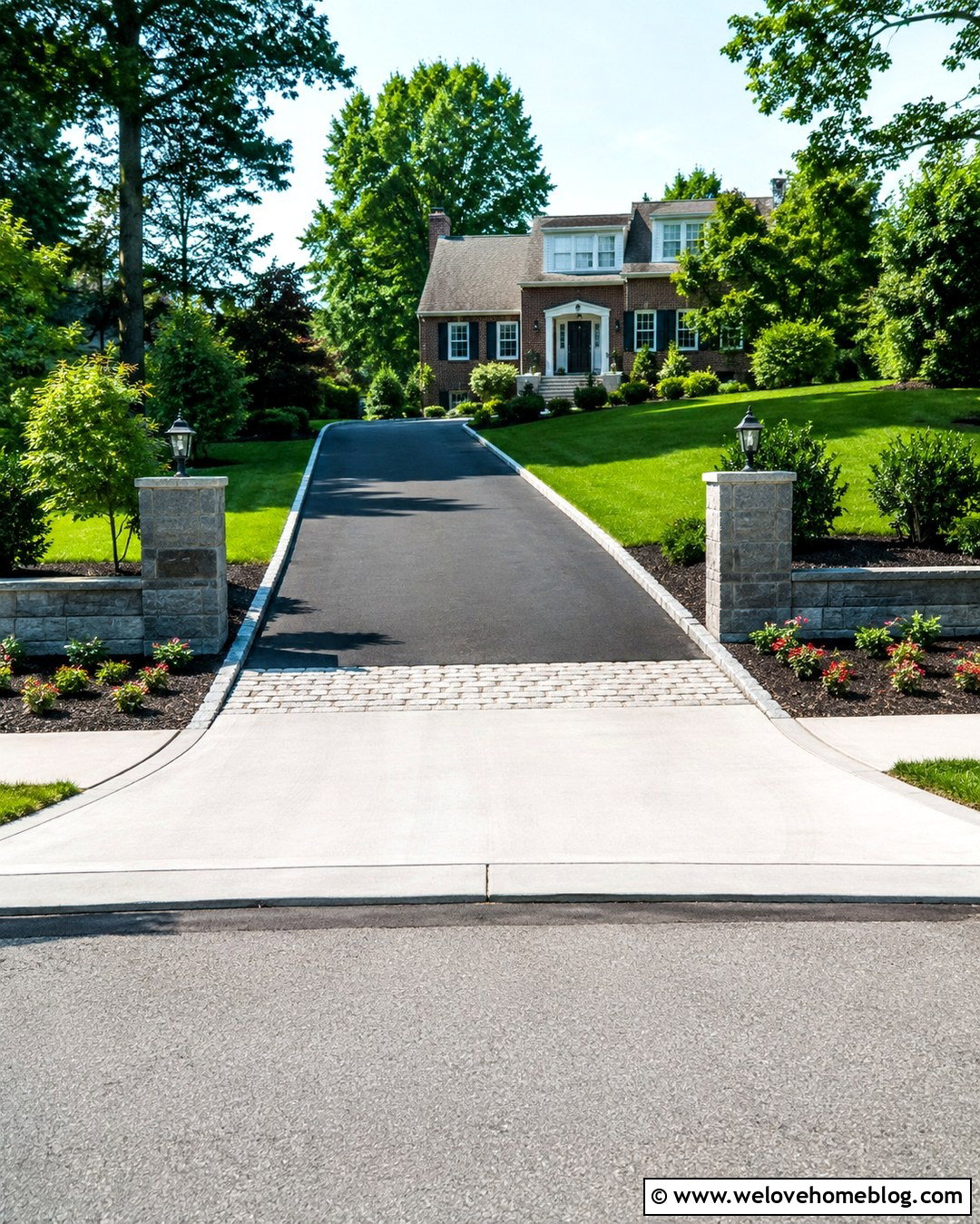
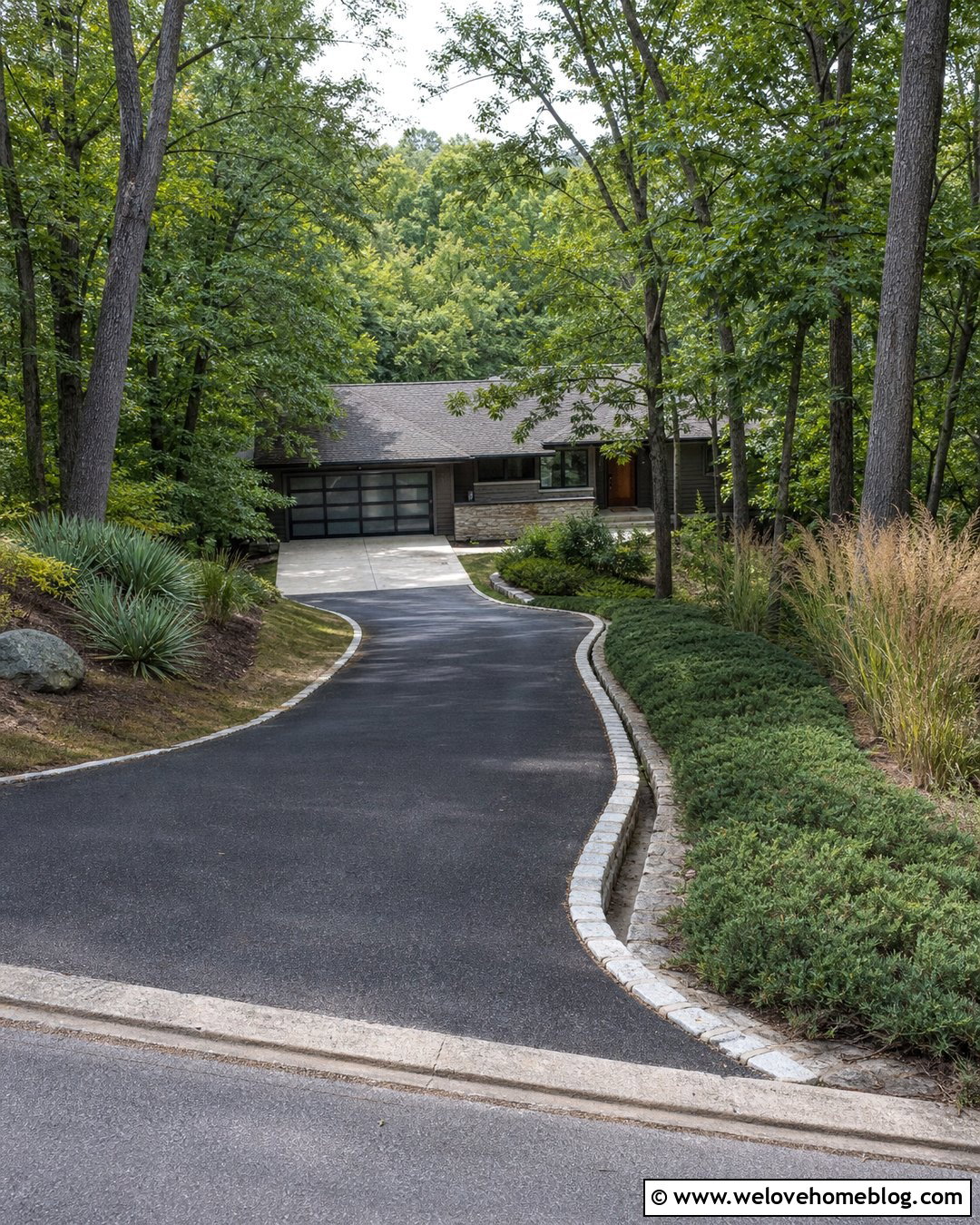
A driveway can have a manageable overall slope and still scrape vehicles where it meets the street. Replace the abrupt angle with a longer, rounded transition shaped around the expected vehicle clearance. A concrete apron can connect a black asphalt driveway to the public roadway while creating a crisp, durable entrance. Use a cobblestone border, low masonry pillars, and open planting beds to improve curb appeal without restricting sight distance. The apron must also work with the gutter, sidewalk, and existing street drainage. Avoid creating a raised strip that sends public runoff toward the house or interferes with pedestrians. Work within the public right-of-way may require permits and approved details. A contractor should evaluate the profiles of low cars, SUVs, delivery vehicles, and trailers before final elevations are established. ()
13. Level Landing At The Top Of A Steep Driveway
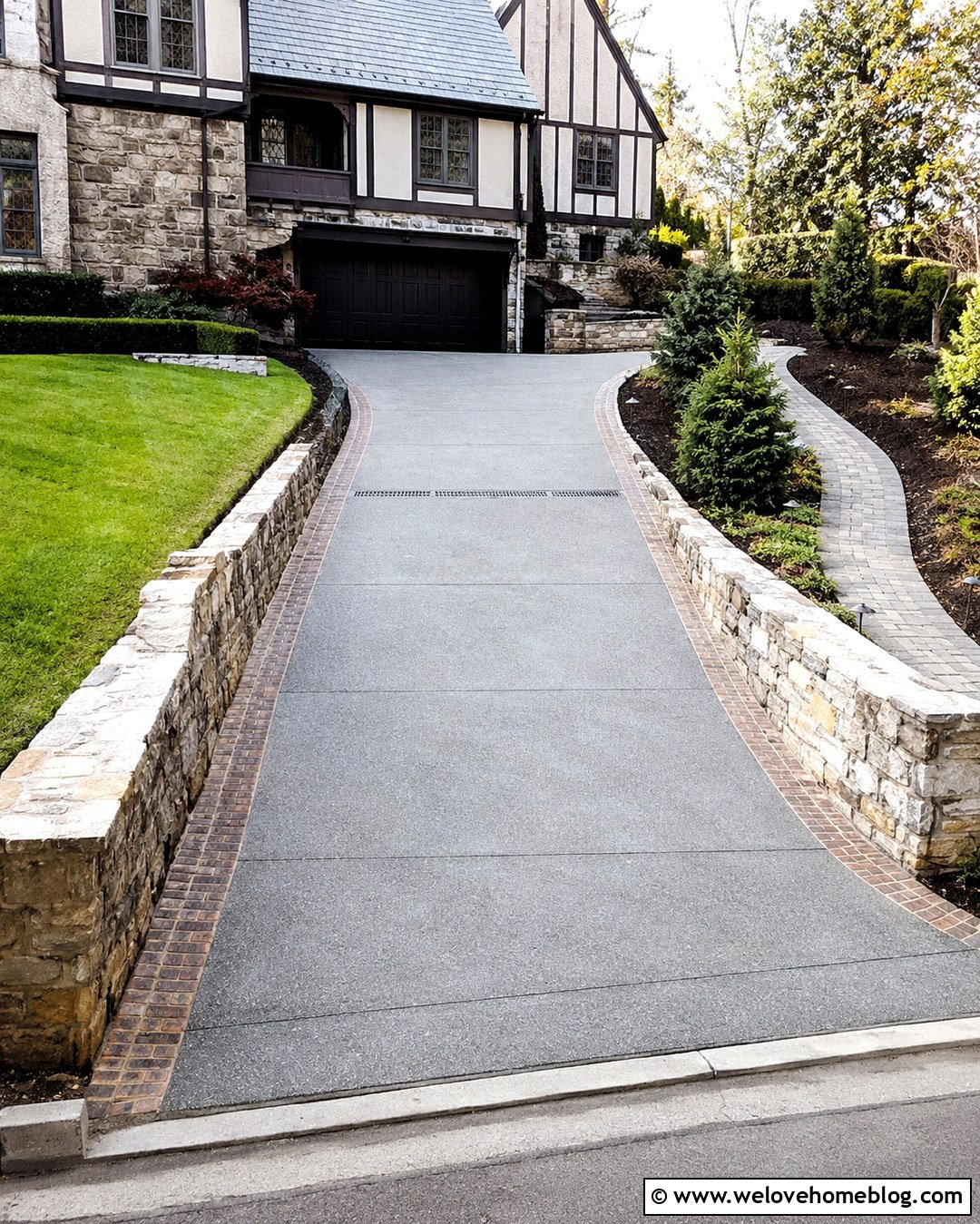
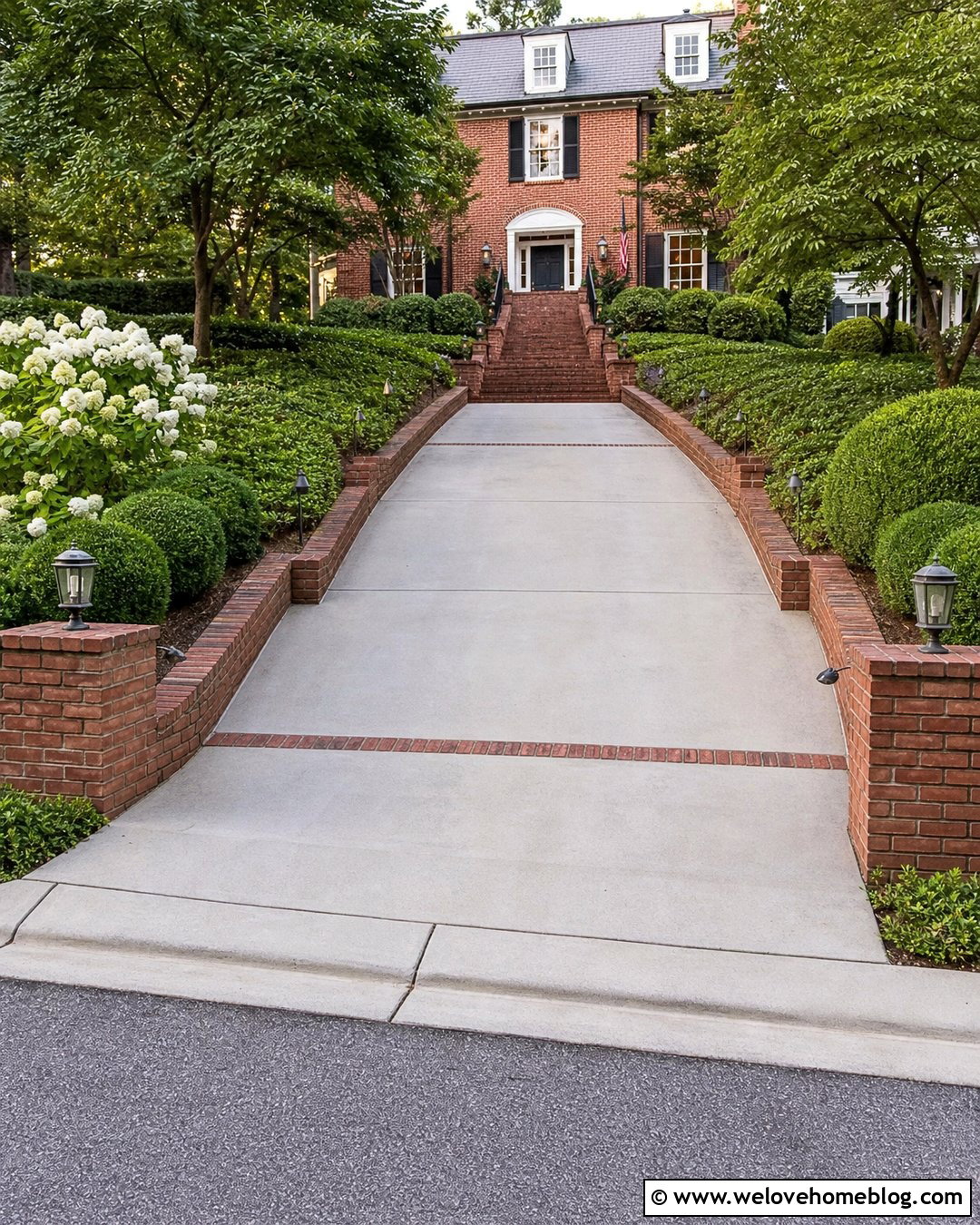
A flatter landing near the garage gives drivers a more comfortable place to stop, park, unlock doors, and transition indoors. Regrade the upper portion of the site to create a generous concrete parking pad while maintaining the steeper approach below. Connect the two areas with a smooth vertical curve rather than a sudden crest. Textured gray concrete, brick soldier-course borders, and low retaining walls can make the landing feel integrated with a traditional home. Place a trench drain just before the flatter zone so downhill runoff does not collect against the garage. The parking area should still have enough fall to drain without feeling noticeably tilted. Confirm that garage-door clearance, vehicle undercarriage clearance, and retaining-wall loads are addressed. Design guidance commonly recommends a flatter landing where a driveway connects with another critical area. ()
14. Wide Steep Driveway With Safety Shoulders
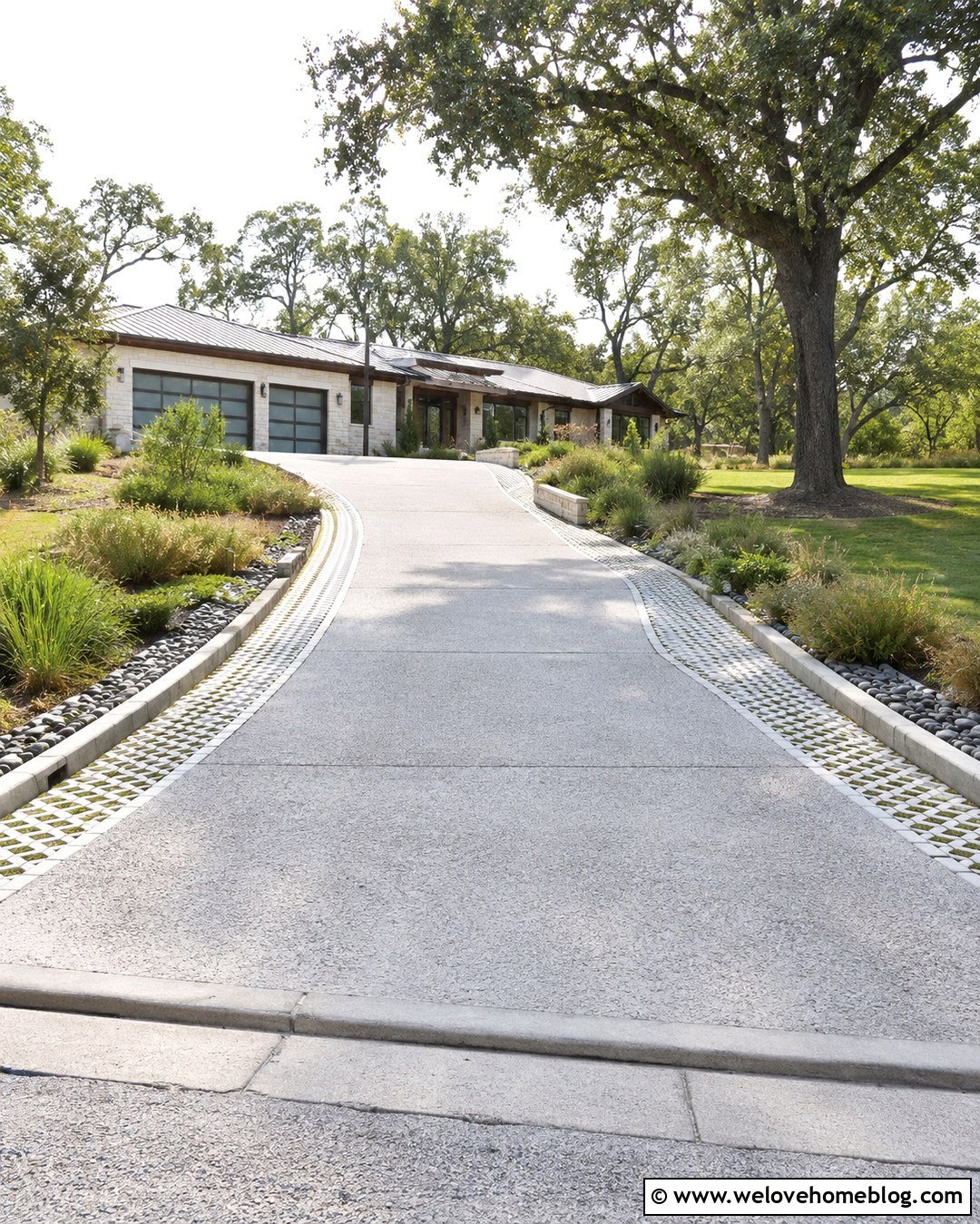
Widening a narrow steep driveway gives drivers more room to correct their path, pass obstacles, and avoid soft edges. Use textured concrete for the central driving surface and add reinforced permeable paver shoulders along both sides. The shoulders should be structurally capable of supporting an occasional tire rather than serving as decorative strips only. A subtle curve can follow the hillside while stone curbs mark the downhill edge. Keep shrubs low around bends so drivers can see oncoming vehicles and pedestrians. If the driveway is long, include a properly sized pull-off or passing bay. Widening can increase runoff and excavation, so drainage and slope stability must be reconsidered for the entire design. Avoid creating an oversized paved area where a targeted shoulder, passing point, or turning zone would solve the problem with less disturbance.
15. Steep Driveway With Retaining Walls
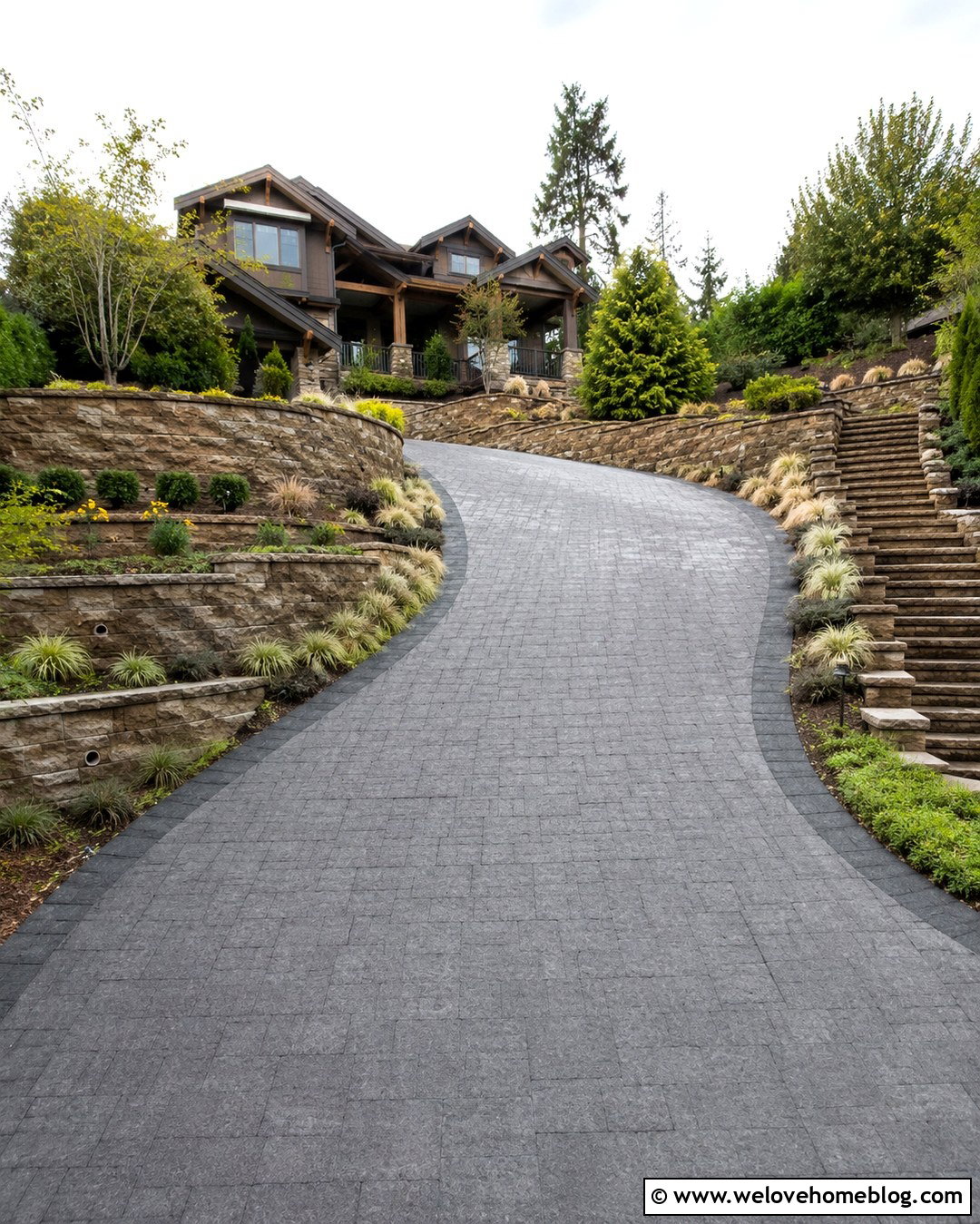
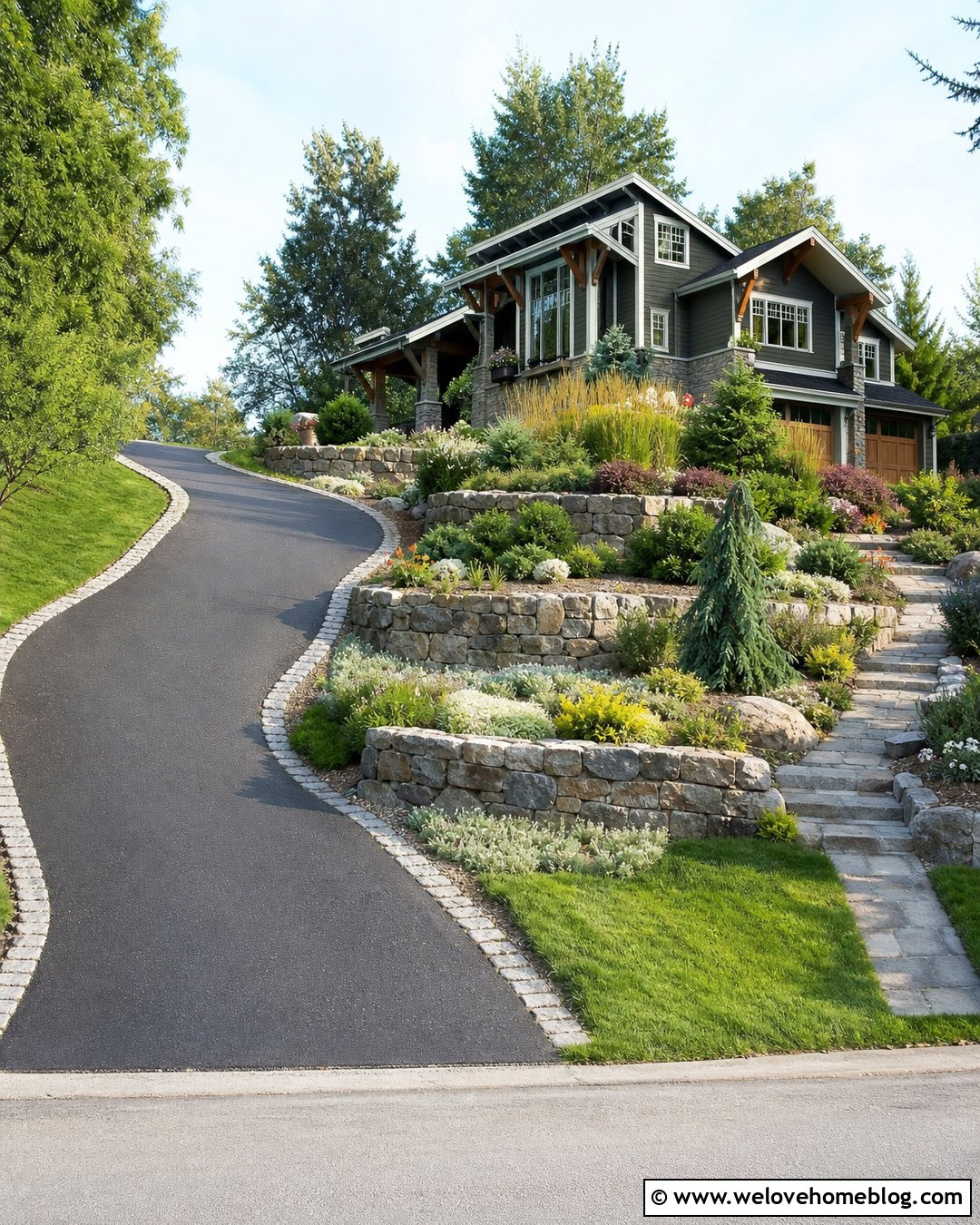
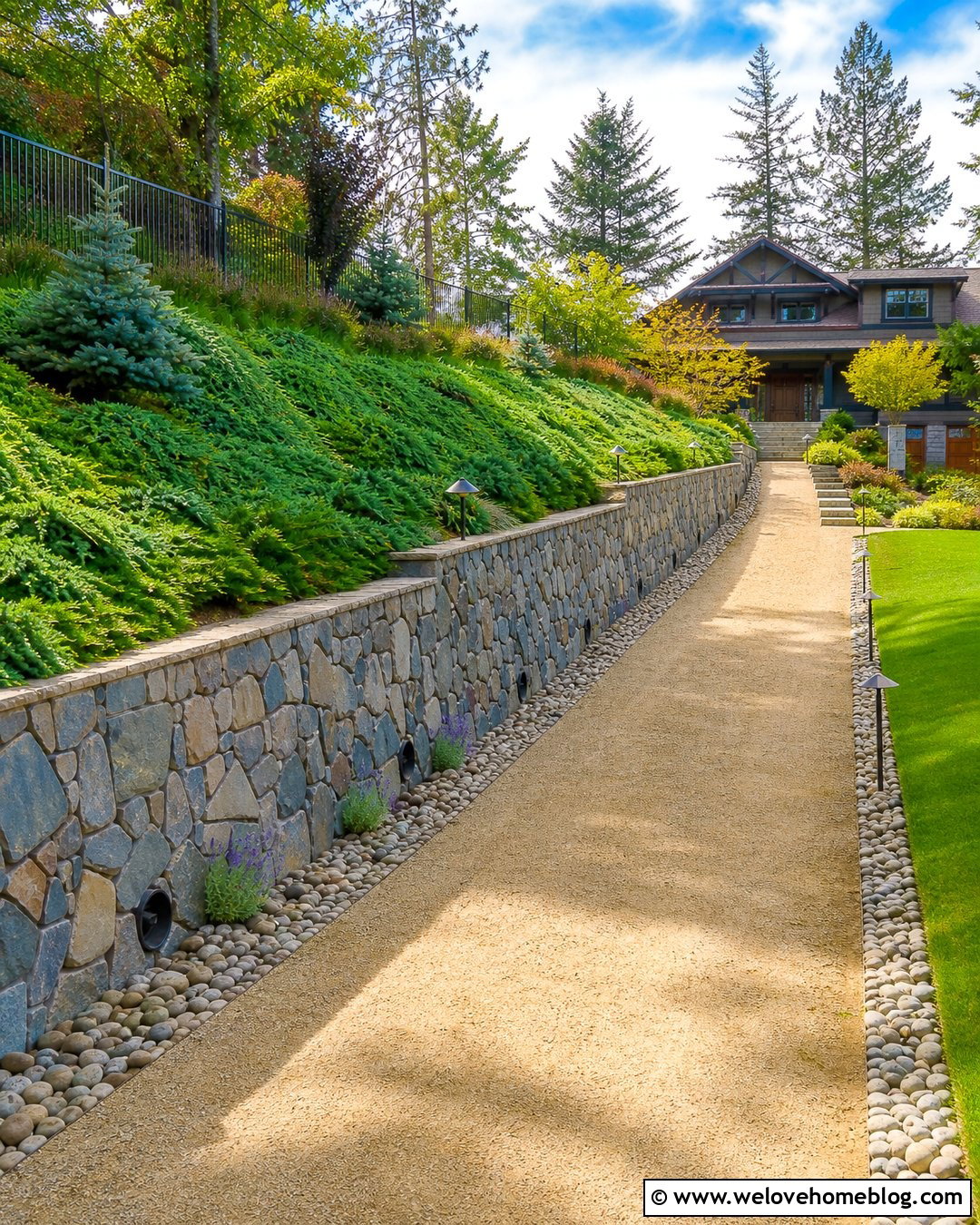
Retaining walls can create room for a longer, better-aligned driveway by cutting into an uphill bank and supporting fill on the lower side. A curved concrete paver driveway between tiered stone walls offers a polished solution for a hillside home. Include structural drainage behind each wall so trapped water does not increase pressure or stain the finished face. The downhill wall may require a guard or barrier depending on its height and local regulations. Step the wall tops with the terrain instead of forcing one massive structure across the property. Plant the terraces with low shrubs and ground covers whose roots will not damage drainage components. Retaining walls supporting a driveway carry significant soil and vehicle loads, so they require proper engineering, footings, reinforcement, backfill, and permits rather than landscape edging construction.
16. Terraced Landscaping Beside A Steep Driveway
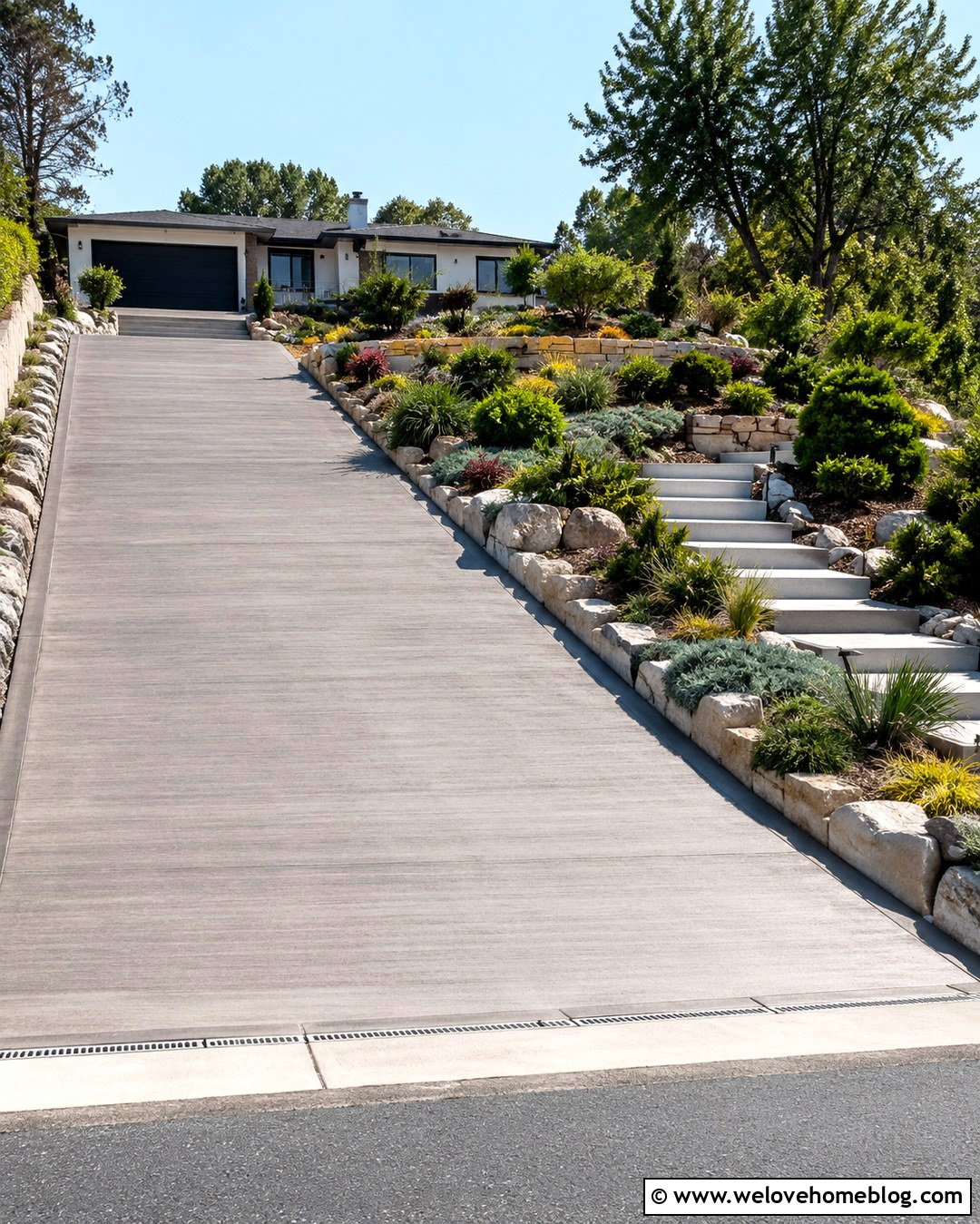
Bare banks beside a steep driveway can erode, shed mud, and make the entire approach feel unfinished. Break the slope into planted terraces using low natural-stone retaining walls beside a textured concrete driveway. Each terrace can contain compact evergreens, ornamental grasses, spreading ground covers, and stone mulch that is less likely to wash onto the pavement. Use stairs in a separate walkway rather than expecting pedestrians to walk along the driving lane. Small drainage channels behind the terraces should direct water toward controlled outlets. Keep tall plants away from the street and inside curves where they could block visibility. The driveway, walls, planting, and drainage should be planned together. This creates a layered hillside landscape while protecting the pavement from soil movement, uncontrolled runoff, and encroaching vegetation.
17. Steep Driveway With A Protective Edge
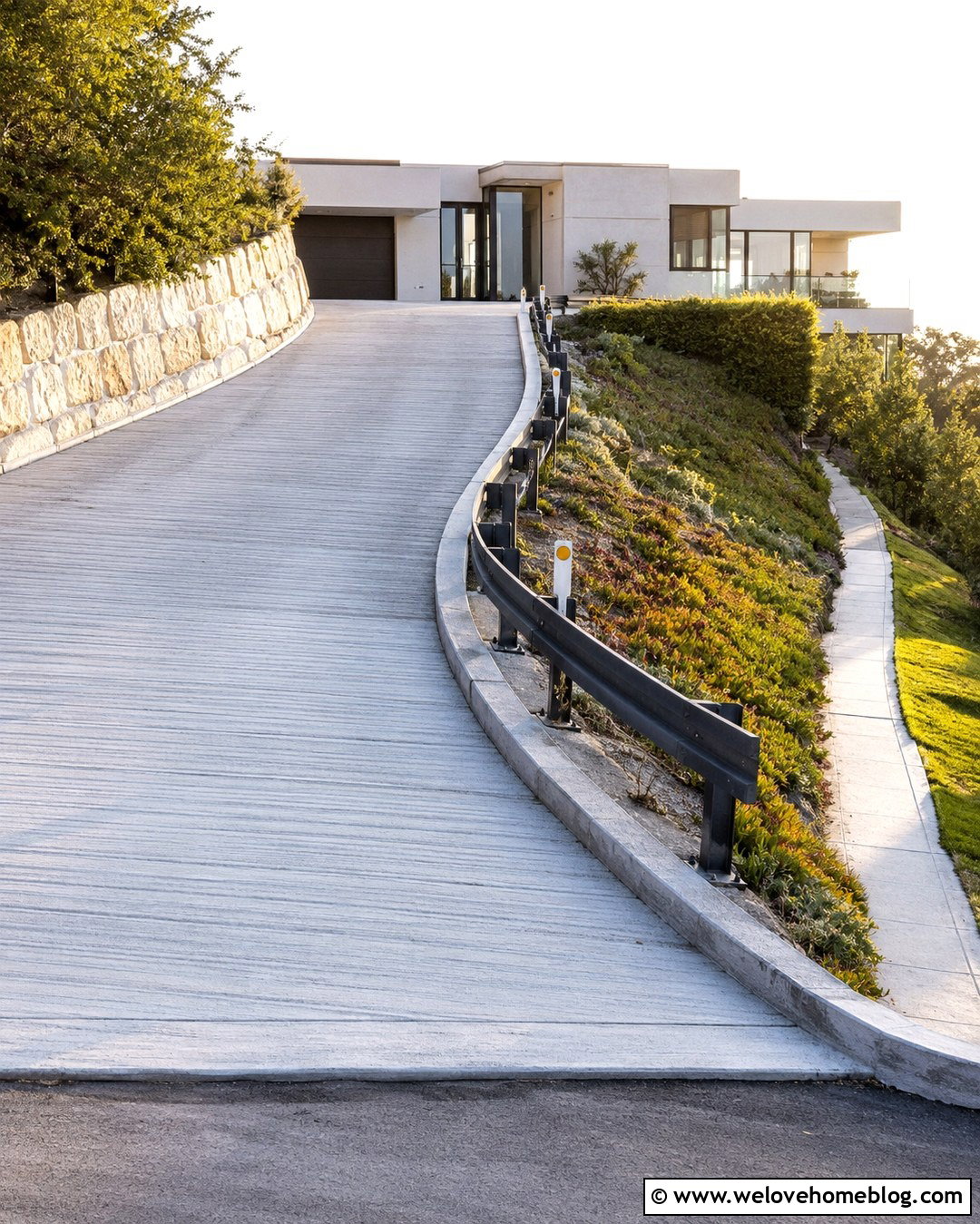
A steep driveway beside a drop-off can feel uncomfortable even when the pavement is wide enough. Add an engineered concrete curb, low masonry barrier, guardrail, or closely spaced protective posts along the exposed side. The correct solution depends on the drop height, driveway geometry, vehicle movement, and local code. For a modern home, combine grooved concrete with a slim dark metal barrier and a pale stone retaining wall. Ground covers below the edge can soften the structure without hiding it. The protective feature should remain visible in rain or snow and continue through vulnerable curves. Avoid decorative boulders placed where a vehicle could strike them suddenly. Reflective markers may improve recognition, but they do not replace a load-rated barrier where one is required. Preserve adequate drainage openings around the reinforced edge.
18. Lighted Steep Driveway With Clear Edges
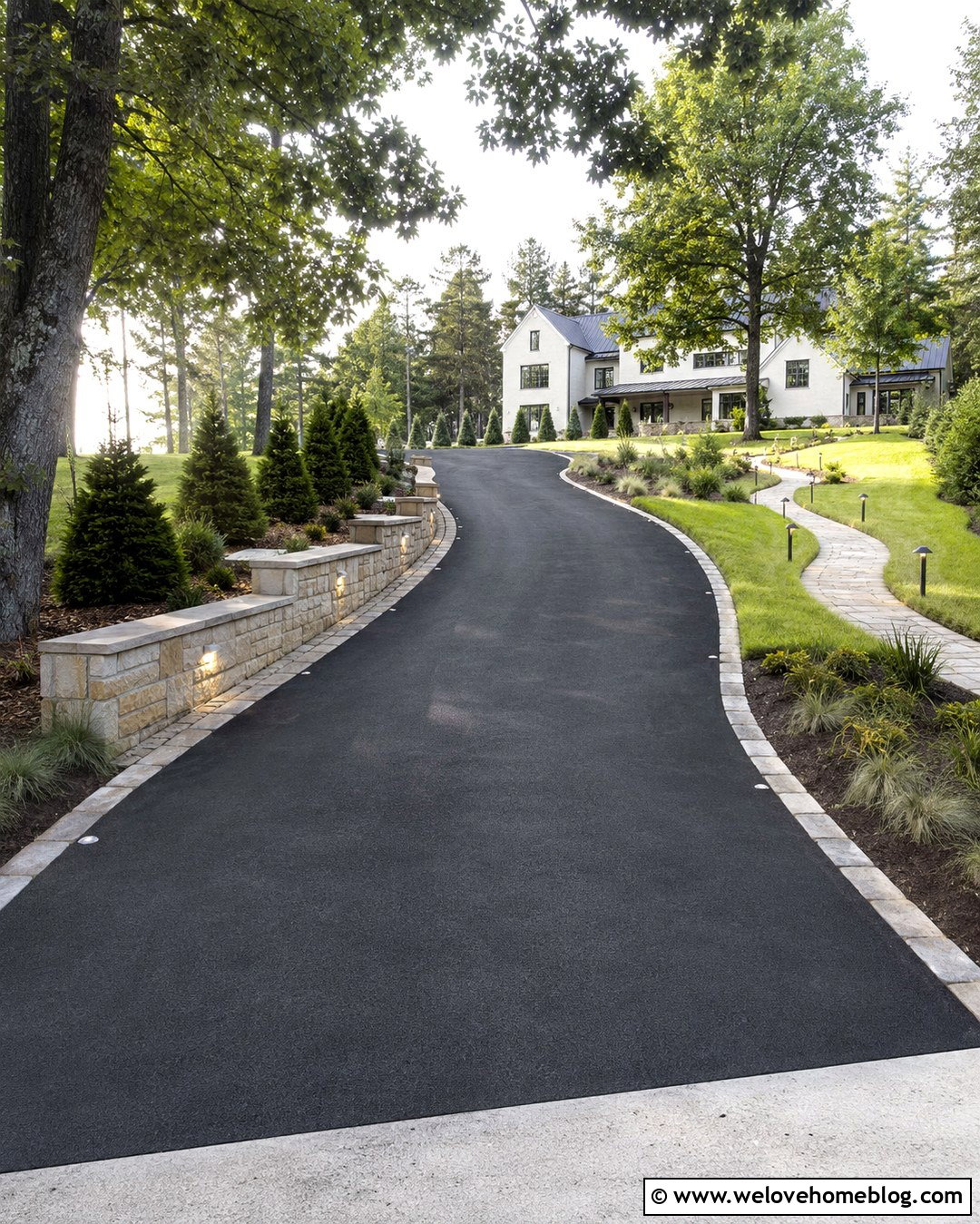
Good lighting makes the slope, curves, drains, walls, and driveway edges easier to read after sunset. Install low, shielded fixtures along a textured asphalt or concrete approach, spacing them consistently instead of creating isolated pools of brightness. Place stronger illumination at the street entrance, switchback turn, pedestrian crossing, and garage landing. Recessed wall lights can define retaining structures without shining into drivers’ eyes. Reflective driveway markers provide an additional guide during heavy rain or snow, especially where landscaping may cover the pavement edge. Use a separate illuminated walkway when space allows so guests do not have to climb the driveway itself. Electrical components should be rated for wet outdoor conditions and protected from snow equipment. Brightness, glare control, energy use, and neighboring properties should all influence the lighting plan.
19. Steep Driveway With A Turnaround Pad
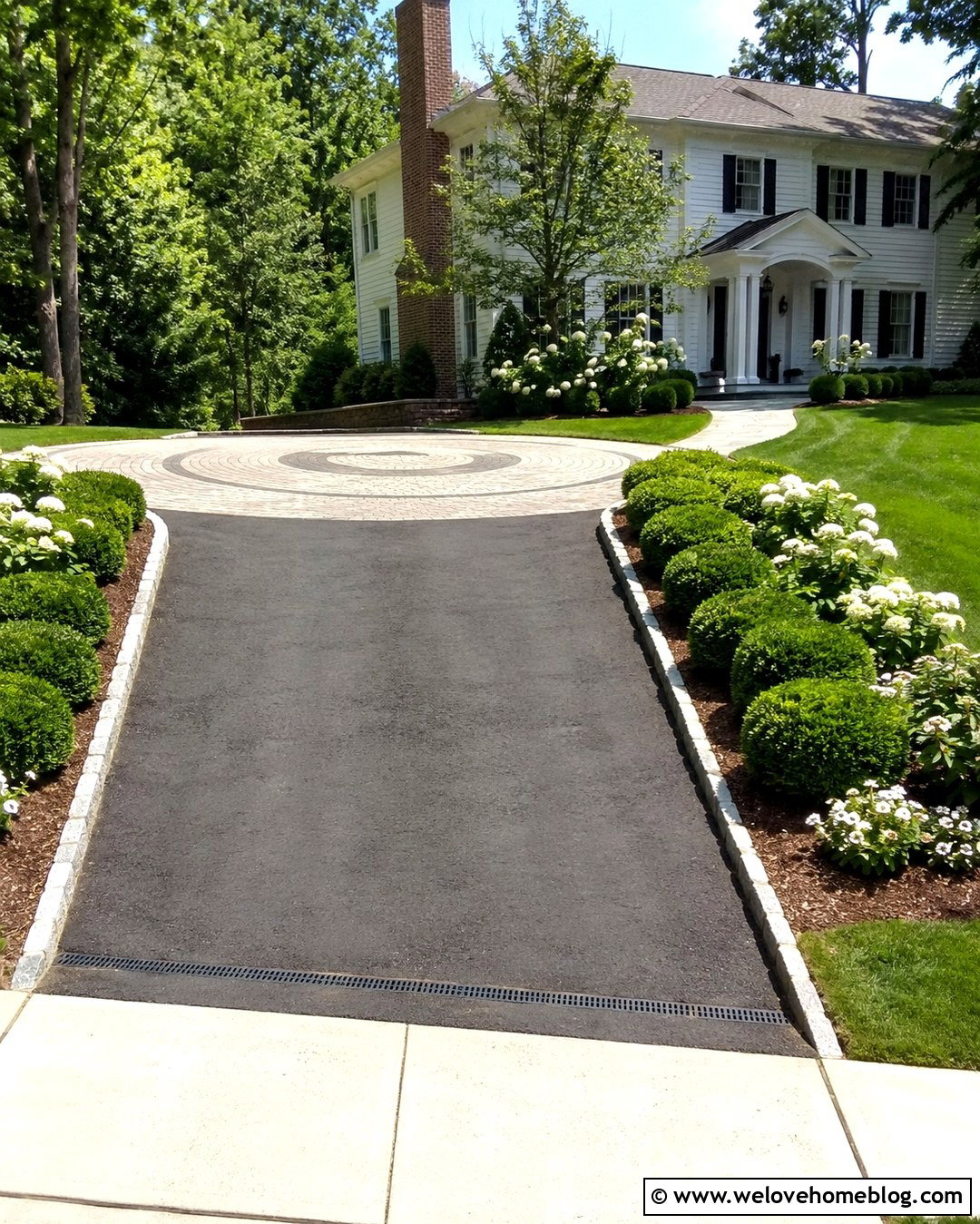
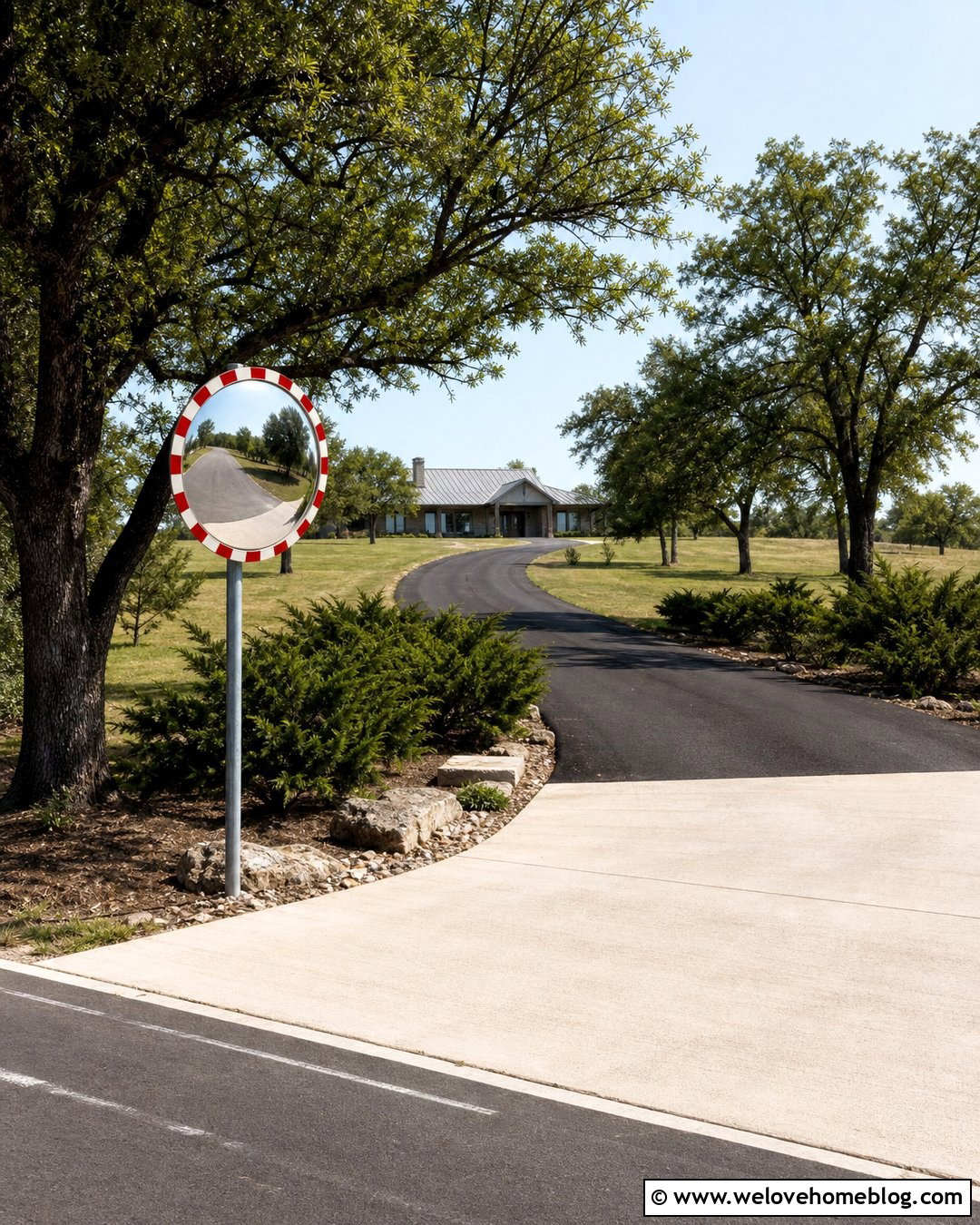
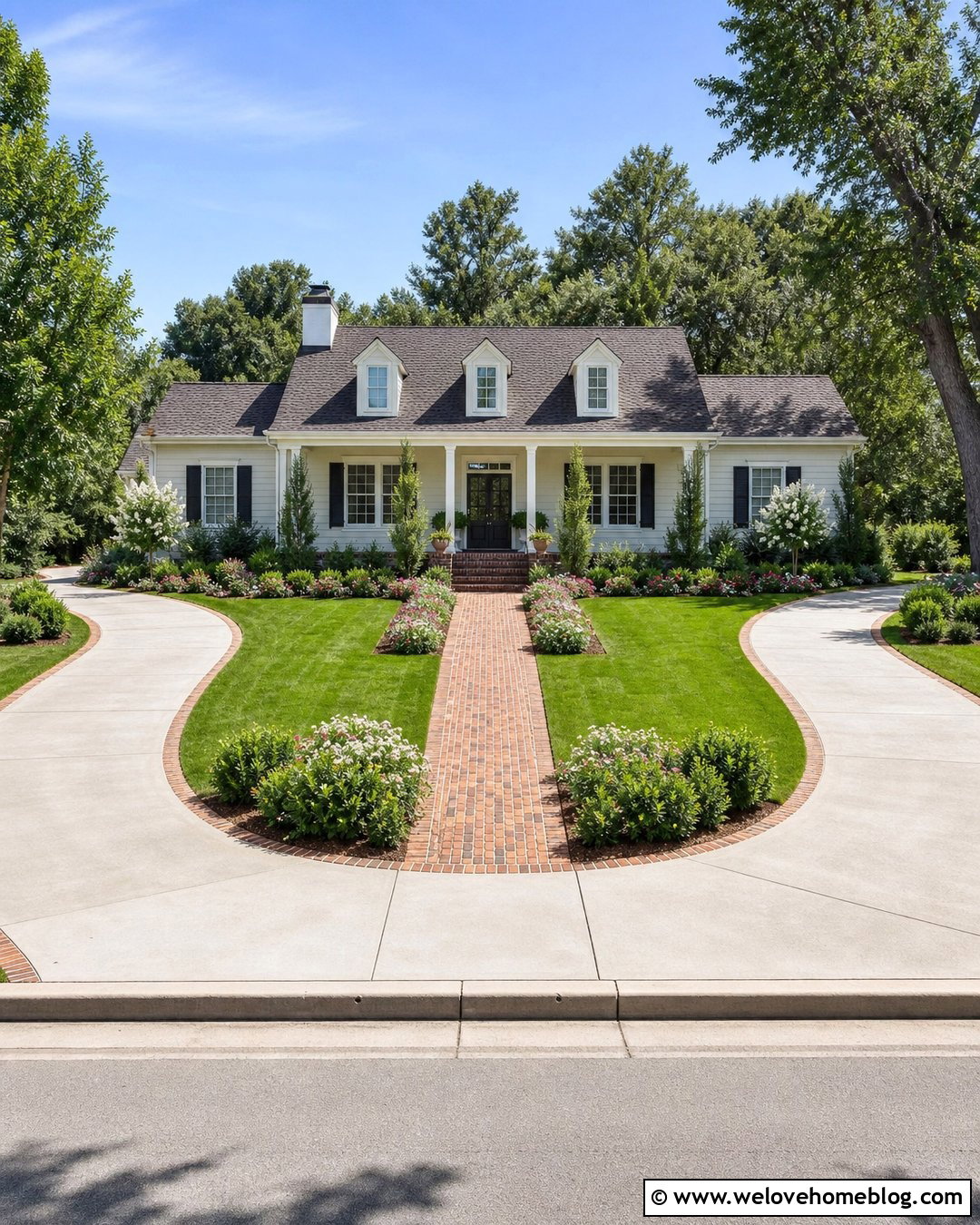
Backing down a steep driveway can be stressful and may limit visibility when entering the road. Add a level or gently sloped turnaround pad near the house so vehicles can reverse direction before descending. A circular concrete paver pad can connect to a narrower asphalt approach, combining an attractive arrival area with an economical main surface. Use contrasting paver bands to show the intended turning path and keep planting beds outside the required vehicle envelope. The pad must accommodate the vehicles that regularly use the property, including delivery or maintenance vehicles when practical. Direct runoff away from the house with a channel drain and controlled cross slope. If space is limited, a hammerhead layout may work better than a full circle. Test the proposed dimensions with accurate turning templates before construction begins.
20. Side-Entry Garage Steep Driveway
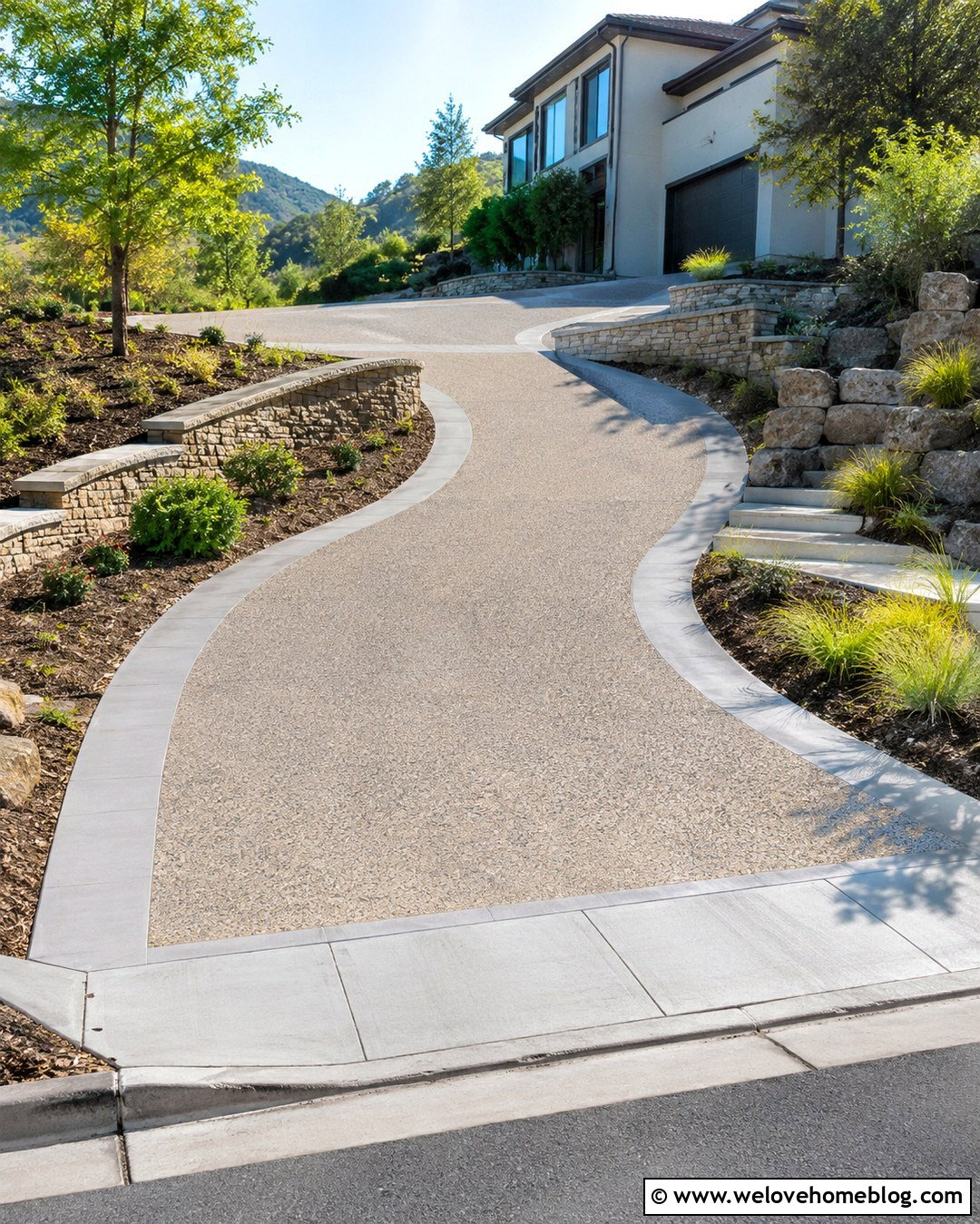
Sometimes the most effective solution is changing where the driveway reaches the house. A side-entry garage allows the approach to travel diagonally across the slope, increasing its length and reducing the direct climb. Use a curved exposed-aggregate driveway with concrete borders, an upper parking court, and retaining walls integrated into the landscaping. The final turn should provide adequate visibility and enough space for vehicles to align with the garage doors. Install an interception drain before the parking court and direct roof water away from the driveway system. This option may require substantial excavation or changes to the building, but it can produce a safer and more attractive layout than forcing a short route straight uphill. Compare driveway redesign, garage modification, and retaining costs during the earliest planning stage.
Conclusion:
The best steep driveway combines manageable geometry, dependable traction, controlled drainage, stable edges, and smooth transitions. Surface material alone cannot solve problems caused by poor grading, erosion, weak soil, or an abrupt street connection. Consider curves, switchbacks, textured paving, retaining walls, drains, landing areas, and turnarounds as parts of one coordinated design. Before construction, measure the grade and have vehicle clearance, stormwater flow, soil conditions, and local permit requirements evaluated. Professional planning is especially valuable when walls, public sidewalks, utilities, or major excavation are involved. Use these **20 How To Make A Steep Driveway Ideas** to create an approach that feels safer, performs better, and complements the architecture and landscaping around your home.

Related posts:
Leave a Reply