
A well-placed driveway mirror can make a blind entrance easier to navigate without damaging your home’s curb appeal. The best 20 driveway mirror ideas treat the mirror as part of the whole exterior design. Its rim, mounting post, driveway surface, entrance landscaping, and house should feel visually connected. Outdoor convex mirrors are especially useful where fences, hedges, walls, slopes, or road curves restrict the driver’s view. Correct size and positioning matter because the mirror must clearly reveal approaching vehicles, cyclists, and pedestrians from the stopping point. () Before installing anything near a public road, confirm local rules and obtain permission for property you do not own. Use the complete looks below to plan 20 driveway mirror ideas.
1. Black Driveway Mirror On A Metal Post
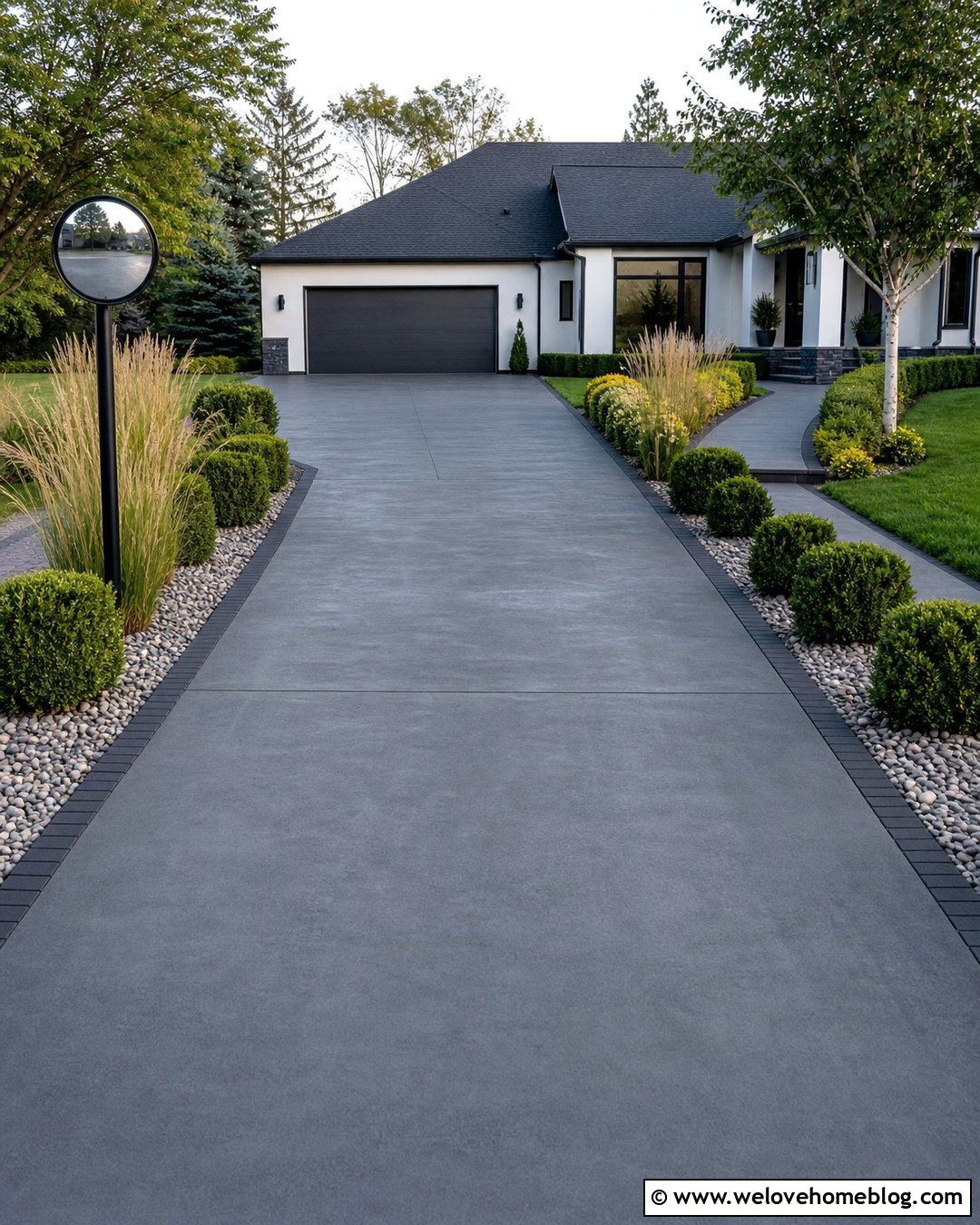
A black-rimmed convex mirror on a matching metal post offers a clean look for a modern residential entrance. Pair it with a straight charcoal concrete driveway and narrow black paver borders. Low ornamental grasses, clipped boxwoods, and pale river stones can soften the dark materials without hiding the mirror. Position the post just beyond the landscaping bed so branches cannot interrupt the reflected view. A matte black finish also coordinates easily with contemporary house numbers, pathway lights, gates, and exterior window frames. Select weather-rated mounting hardware that allows careful adjustment after installation. This complete design is particularly effective for a modern home where the driveway meets a road beside a tall privacy fence or dense boundary planting.
2. Driveway Mirror On A Wood Post
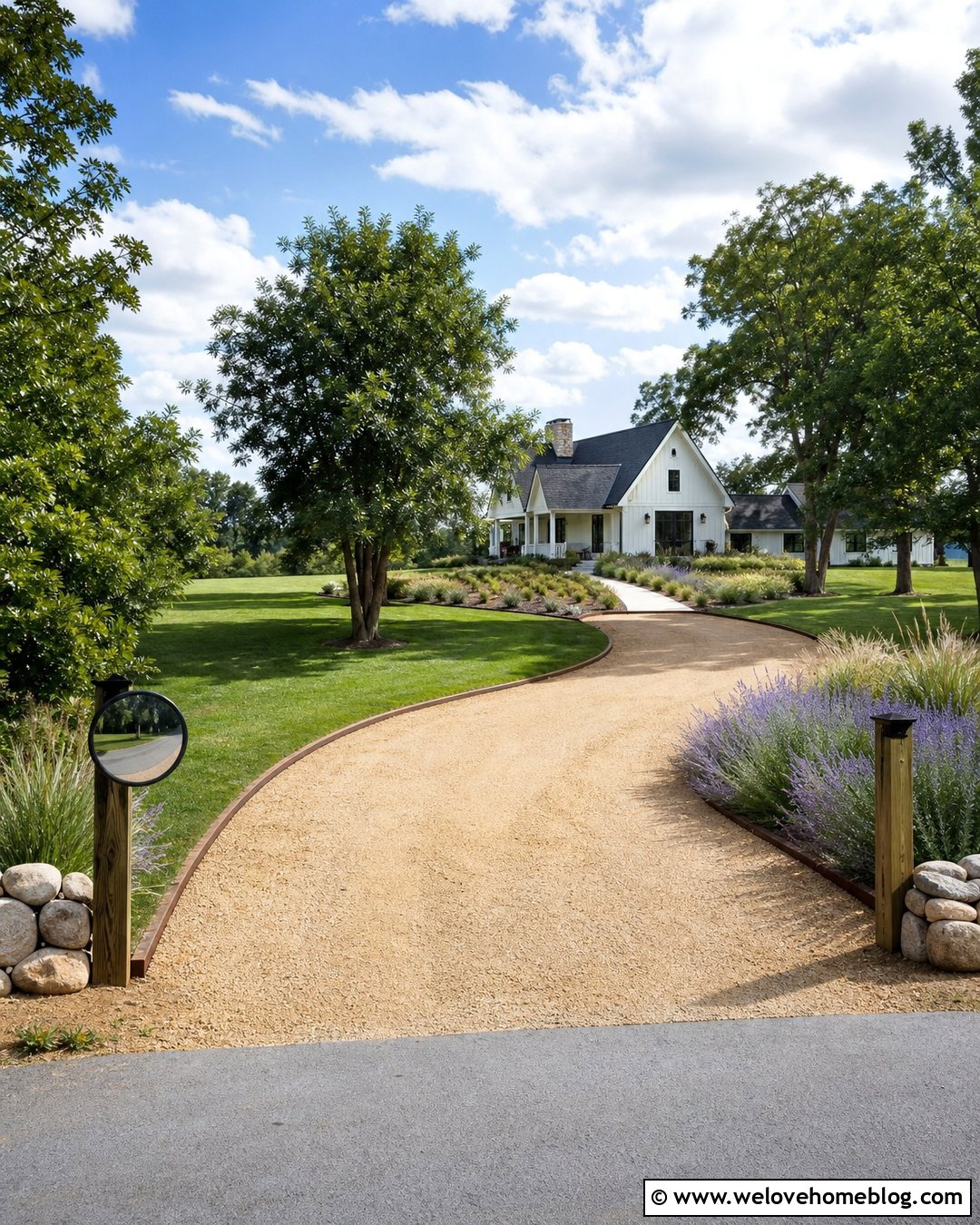
A treated wood post helps a driveway mirror blend naturally into a rustic or country setting. Use it beside a curved tan gravel driveway edged with sturdy timber or irregular fieldstone. Plant lavender, salvia, feather reed grass, or low evergreen shrubs around the base while keeping the mirror face and sightline completely open. The wood can be stained to coordinate with a farmhouse porch, fencing, or entrance gate. Choose a simple black or dark green mirror rim rather than a bright industrial border. Set the post securely so wind cannot twist the mirror away from its intended angle. This approachable arrangement provides practical visibility while preserving the relaxed character of a farmhouse, cottage, or wooded residential property.
3. Driveway Mirror On A Stone Pillar
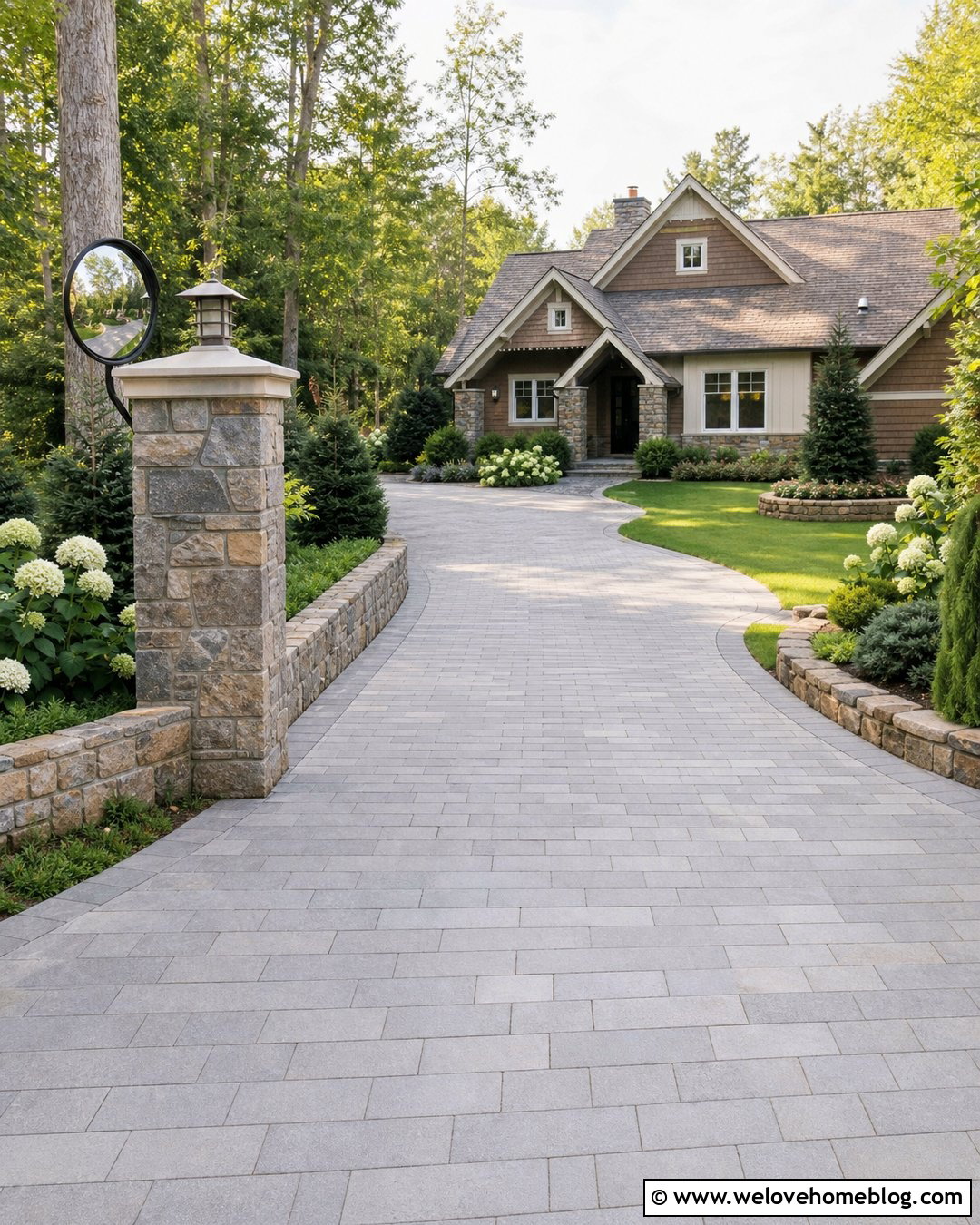
Could a safety mirror feel like part of an upscale entrance? Mounting it beside or on a stone pillar creates a more permanent, architectural appearance. Pair the feature with a wide driveway made from warm gray concrete pavers in a running-bond pattern. Use matching stone on both entrance pillars, then add restrained beds of hydrangeas, dwarf evergreens, and ground cover. A black-framed convex mirror will coordinate with dark lanterns and metal gate hardware. The pillar must offer a suitable mounting surface and a clear angle toward the blind approach. Avoid placing oversized decorations near the lens. This complete look works beautifully with craftsman, European-inspired, and transitional houses where stone already appears on the facade or landscape walls.
4. Driveway Mirror Beside A Brick Entrance
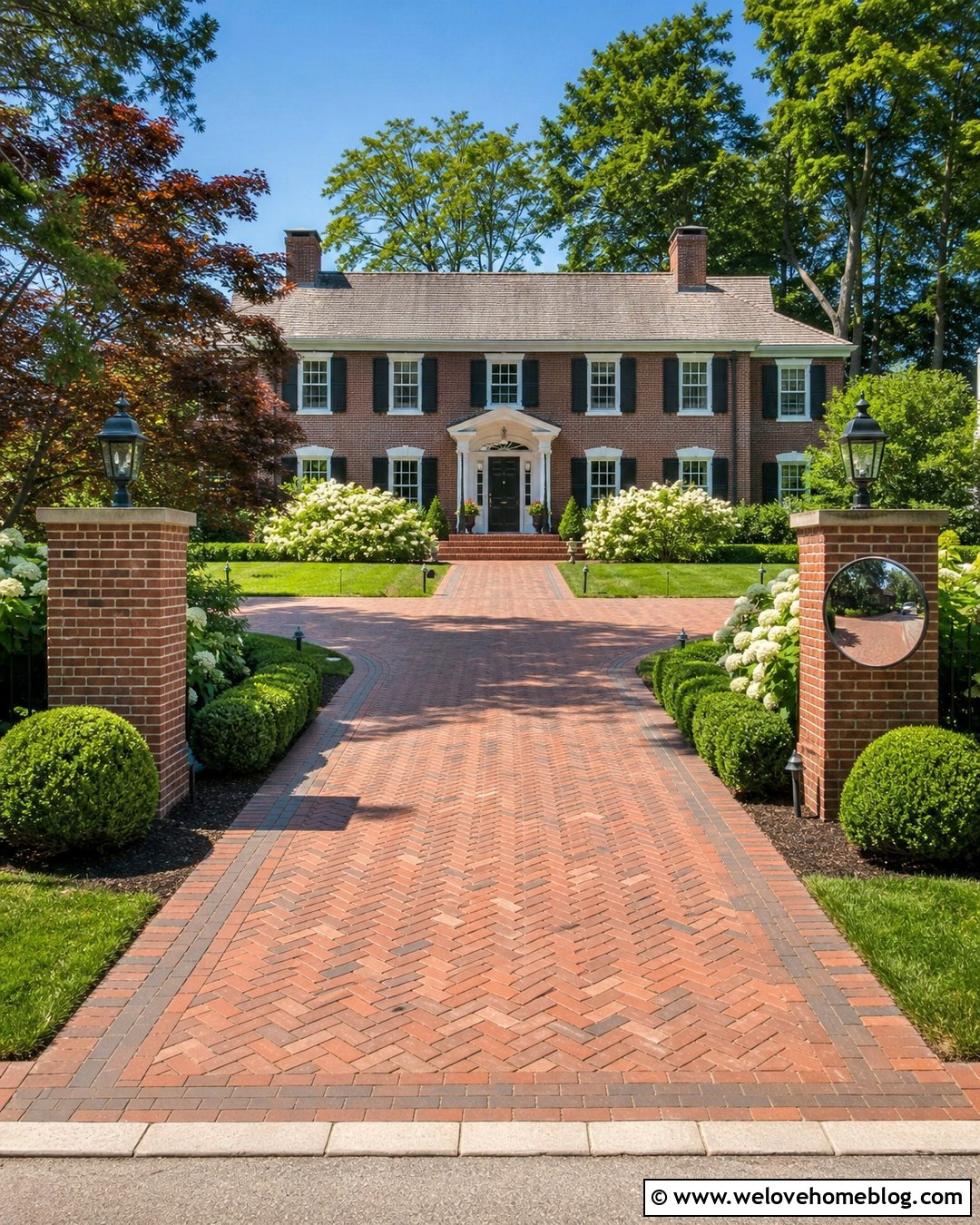
Red brick can turn a basic driveway entrance into a polished extension of a traditional home. Install a black-rimmed driveway mirror on a slim post beside a brick entrance column, rather than letting the mirror compete with the masonry. Continue the color through a red clay brick driveway laid in herringbone, with a darker soldier-course border defining the edges. Neatly clipped hollies and white flowering shrubs keep the entrance formal but welcoming. A black address plaque and lantern can visually connect the mirror to the pillar. Keep plants below the reflected sightline and regularly trim new growth. This coordinated design feels especially appropriate for colonial, Georgian, and traditional suburban homes with matching brick walls or facade details.
5. Driveway Mirror With A Red And White Border
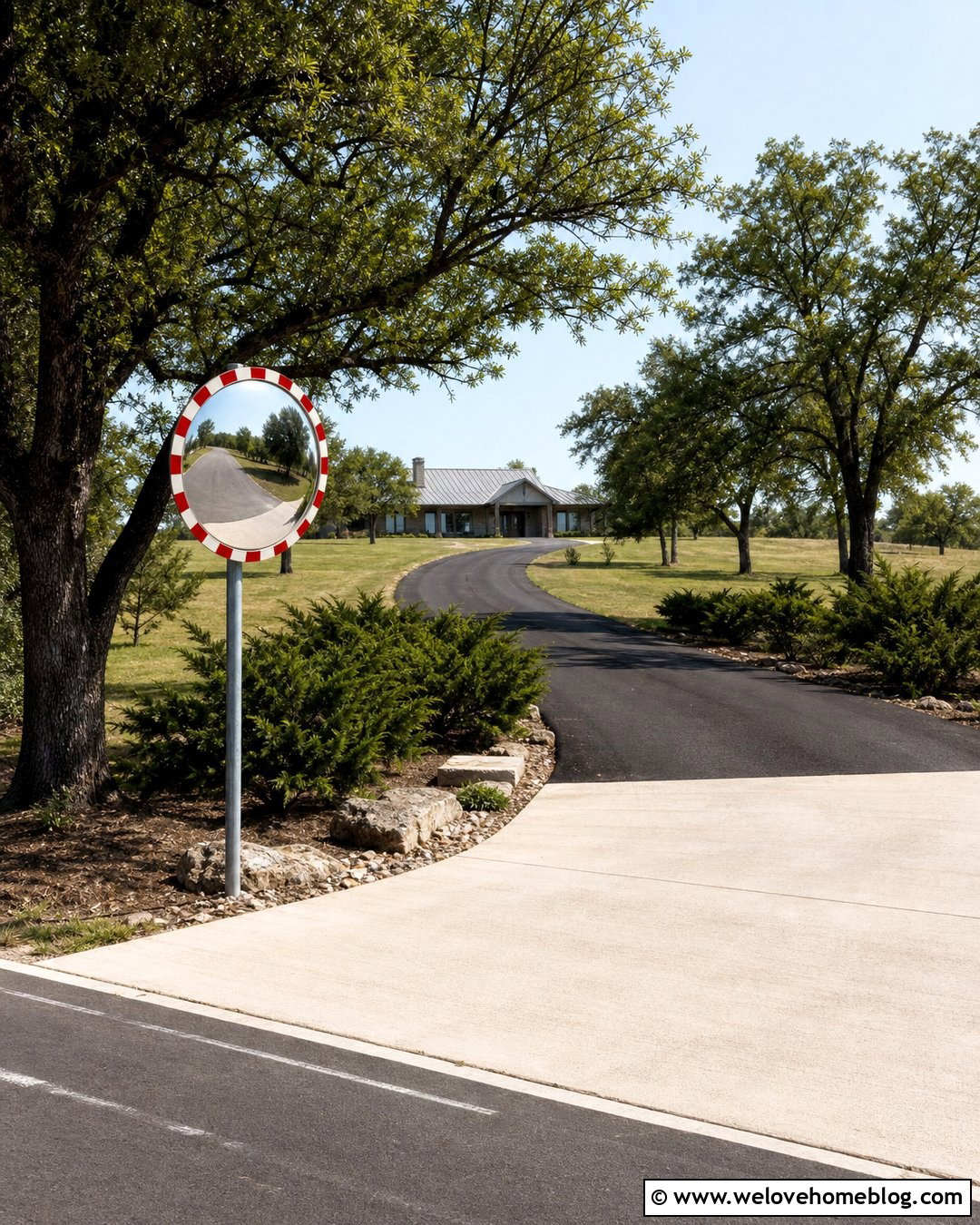
A red-and-white safety border makes a driveway mirror highly noticeable at an especially difficult exit. Use this option where a long black asphalt driveway reaches a road near a sharp curve, tall wall, or heavy vegetation. A galvanized pole provides a straightforward mounting point, while a pale concrete apron creates a clear stopping zone at the entrance. Keep surrounding landscaping simple with mowed grass, low junipers, and a few well-spaced shade trees. The bold border should remain the only strong warning feature so the area does not become visually confusing. This is a practical rather than decorative look, but the clean layout prevents it from feeling cluttered. Check local requirements before placing any mirror within a public right-of-way.
6. Driveway Mirror With A Black And Yellow Border
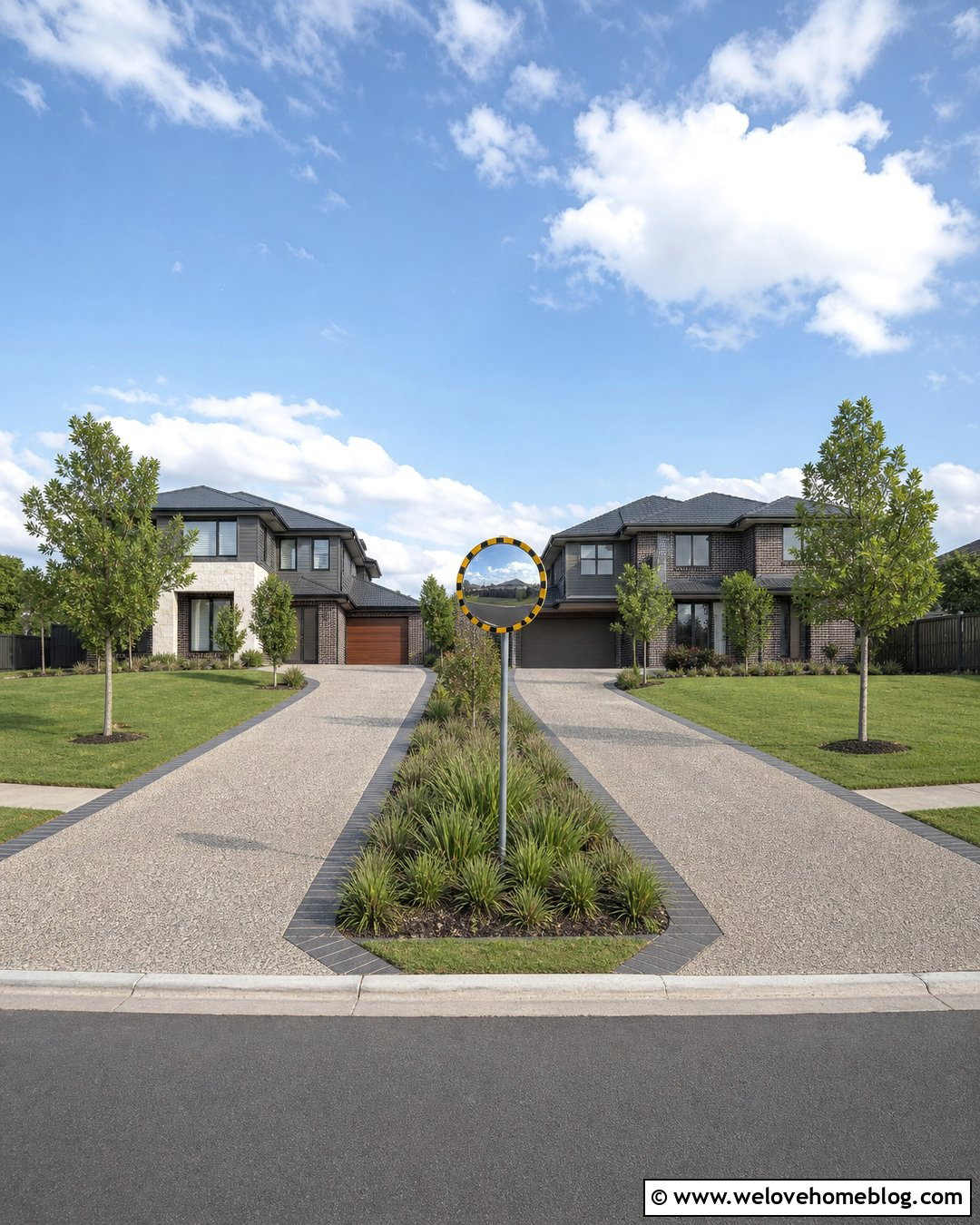
For a shared driveway or busy residential lane, a black-and-yellow mirror border provides strong visual contrast. Pair the mirror with a wide exposed aggregate concrete driveway that divides near two homes. Dark concrete paver bands can guide each branch, while low grasses and open lawn preserve clear visibility through the junction. Mount the mirror on a galvanized steel pole at the point where drivers need to check cross-traffic. The striped border suits functional entrances, but surrounding it with orderly landscaping makes the installation appear intentional. Keep lighting, signs, and decorative objects minimal around the post. Convex mirrors can make reflected objects appear smaller or farther away, so drivers should still stop, look carefully, and proceed slowly rather than relying on the mirror alone.
7. Small Driveway Mirror Beside A Garage
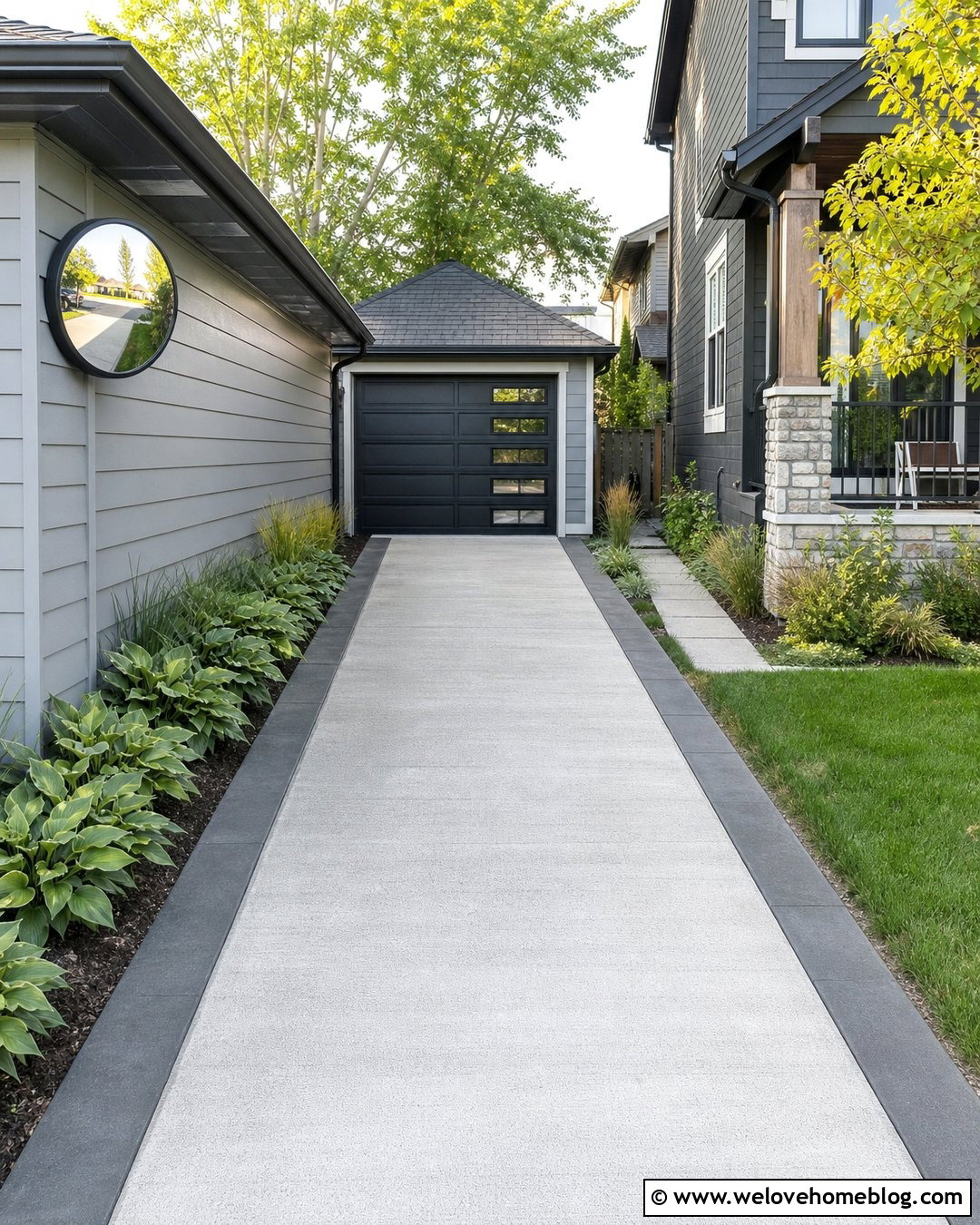
Tight side driveways often have blind corners where the garage wall blocks the view of a walkway or parking area. A compact outdoor convex mirror mounted to the building can address this space without dominating the exterior. Pair it with a narrow light gray poured concrete driveway and a darker broom-finished border. Add a slim planting strip with low hostas or ornamental sedges, ensuring leaves cannot cover the mirror. Select a rim color that matches the garage door hardware, downspouts, or exterior lights. An adjustable wall bracket allows the reflection to be directed toward the driver’s normal approach. This complete setup works well for urban homes, detached garages, and side-yard driveways where turning space is limited and every inch matters.
8. Large Driveway Mirror For A Blind Road
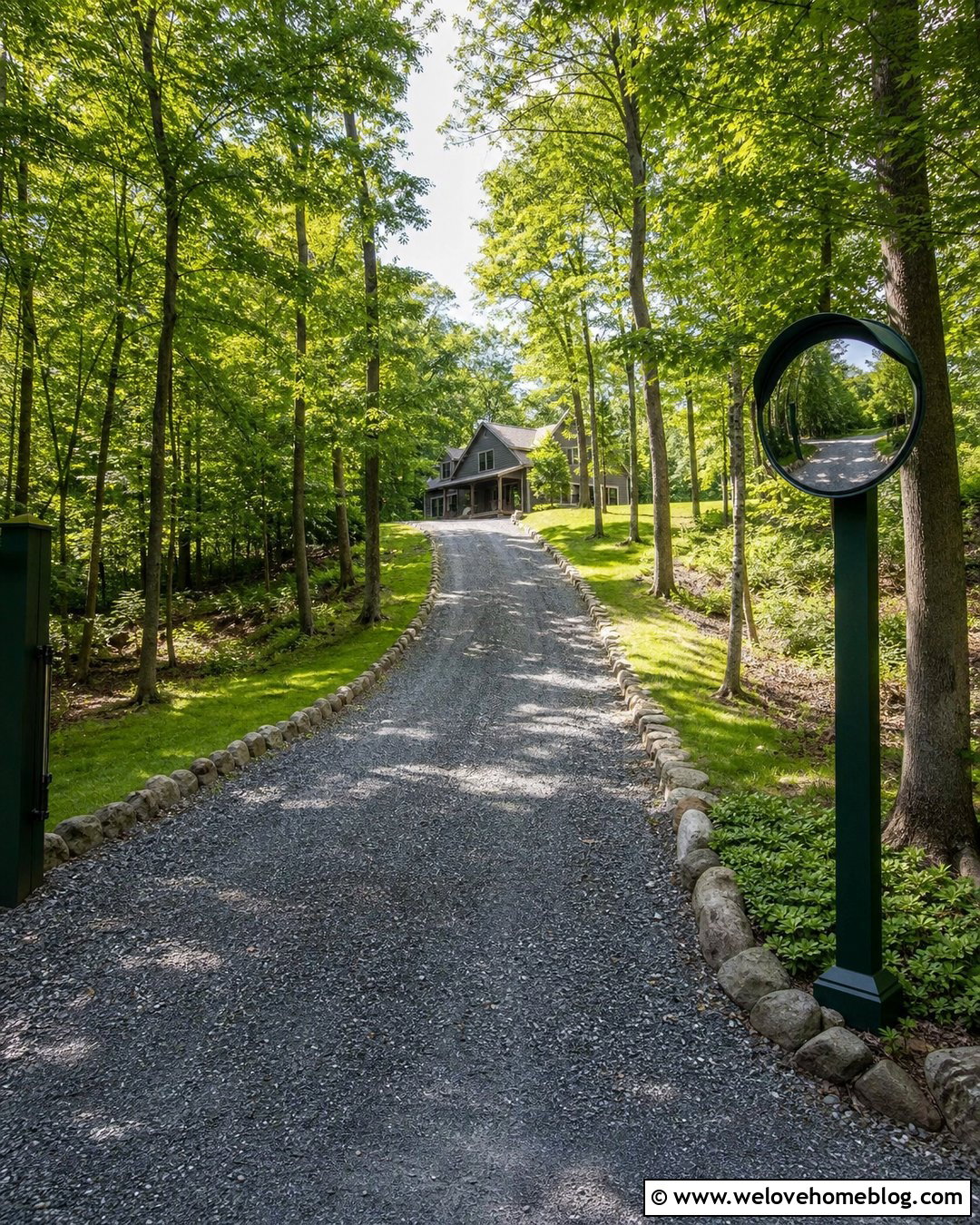
When the mirror sits farther from the driver, a larger diameter can provide a more readable reflected image. Use this arrangement at the end of a long, gently sloping gravel driveway that reaches a tree-lined road. Mount a large outdoor convex mirror on a heavy-duty steel post, with a dark green or black rim that recedes into the landscape. Frame the driveway with broad fieldstone edging, open grass shoulders, and high-canopy trees. Remove low branches and shrubs that restrict the actual view whenever possible. Mirror sizing should be based on the distance between the driver’s viewing position and the planned mounting point, following the manufacturer’s guidance. () A stable, adjustable bracket is also important in windy, exposed locations.
9. Dual Driveway Mirrors For Both Directions
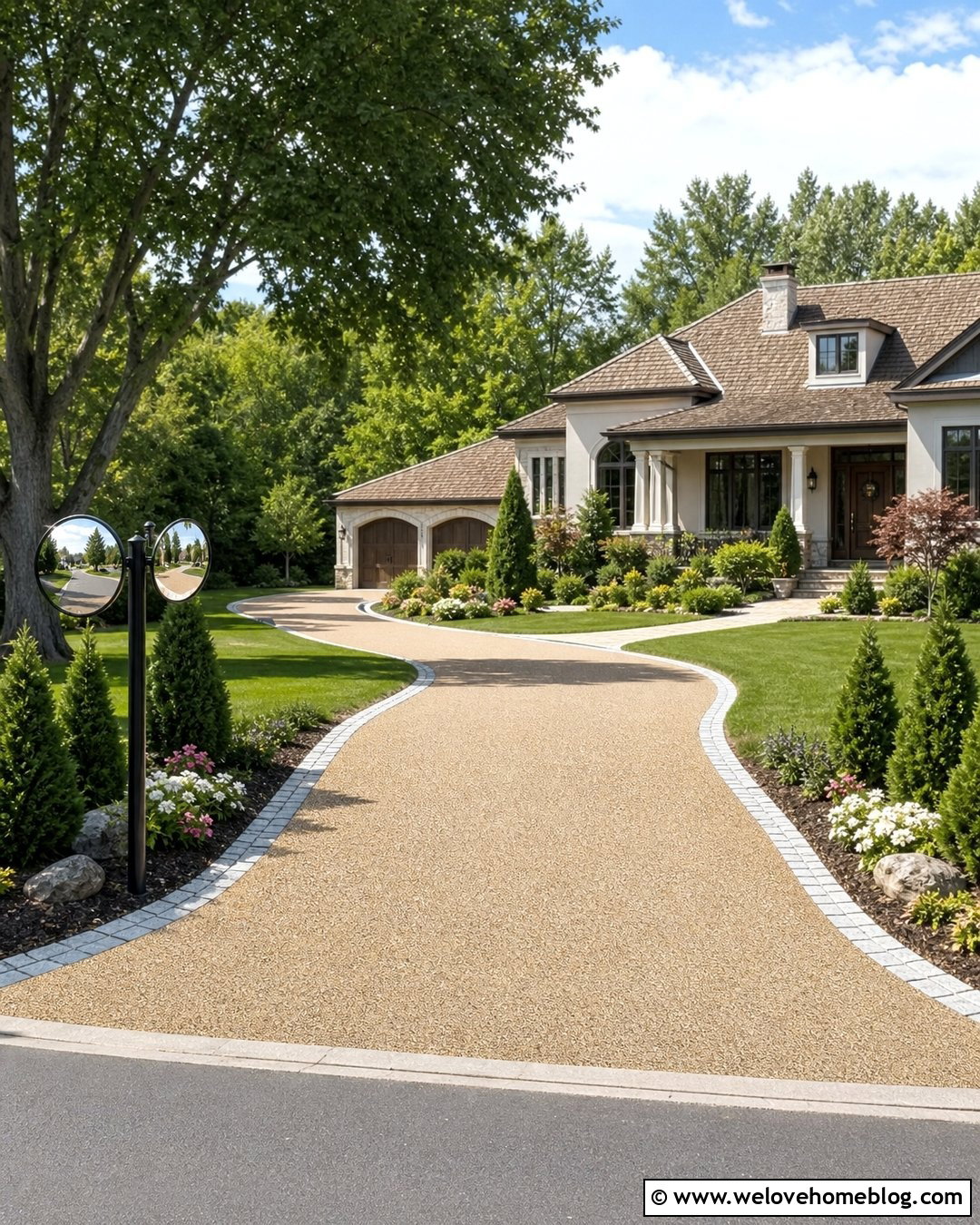
Two convex mirrors can be useful when vegetation, walls, or road geometry obstruct traffic approaching from both directions. Place the mirrors together on a sturdy central pole, then angle each one toward a different side of the road. Pair this practical feature with a wide resin-bound gravel driveway in a warm beige tone. Cobblestone edging, symmetrical entrance beds, and low evergreen mounds can create a balanced setting around the post. Keep the mirrors separated enough that their rims and reflections are easy to distinguish from the stopping position. This design works particularly well for a concealed entrance on a winding road. Two carefully aimed mirrors may offer clearer directional information than trying to cover a complicated approach with one poorly positioned lens. ()
10. Driveway Mirror On A White Fence
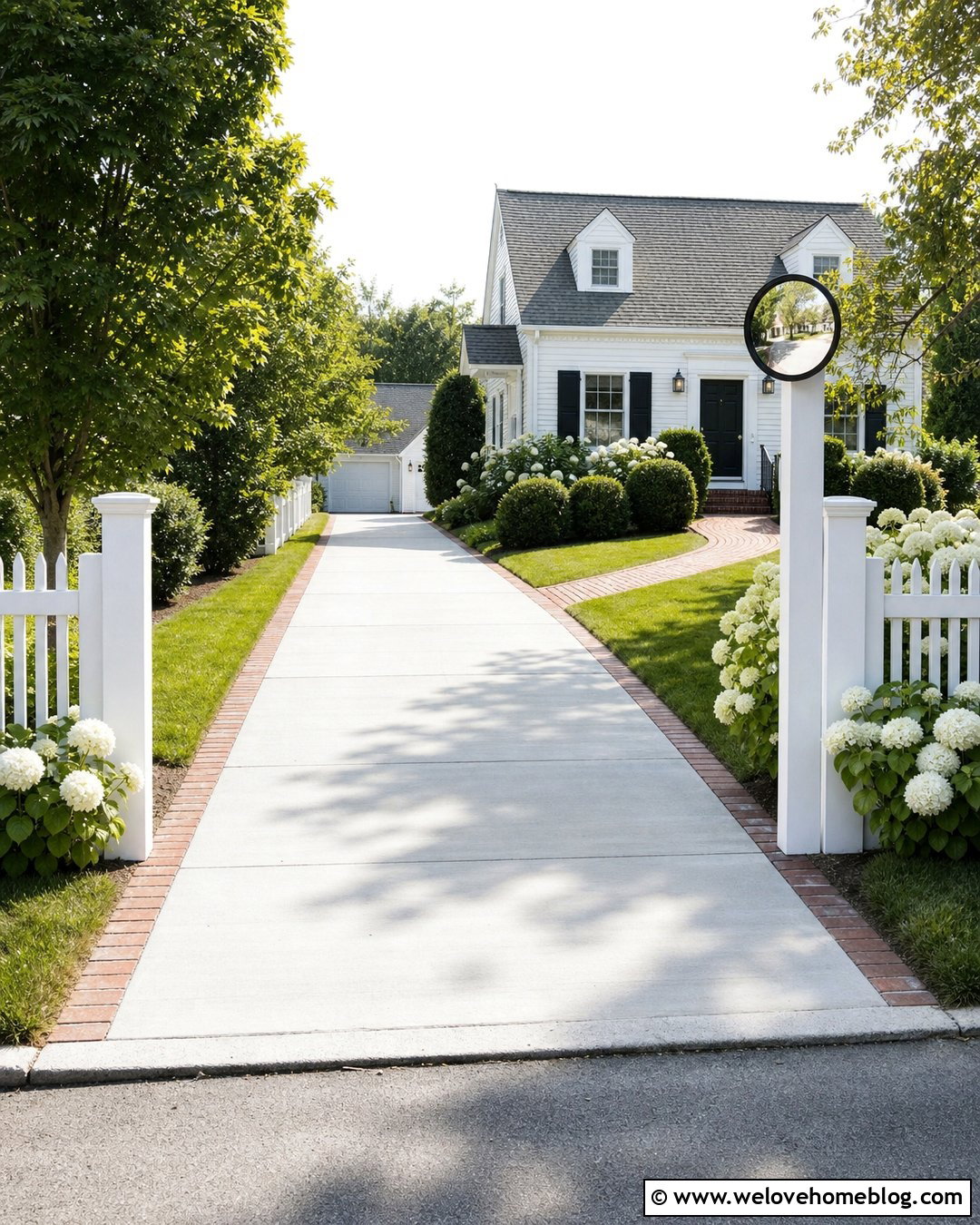
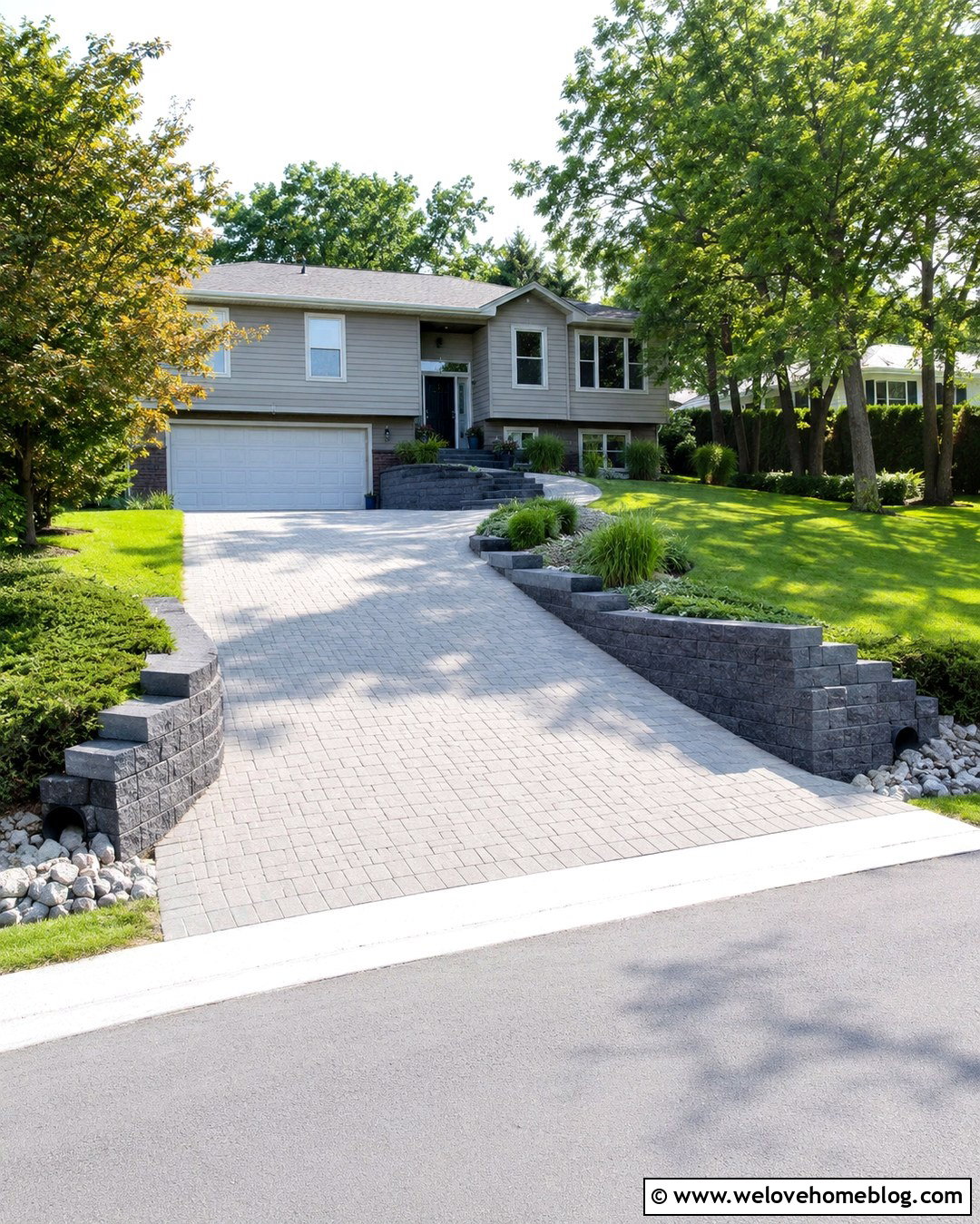
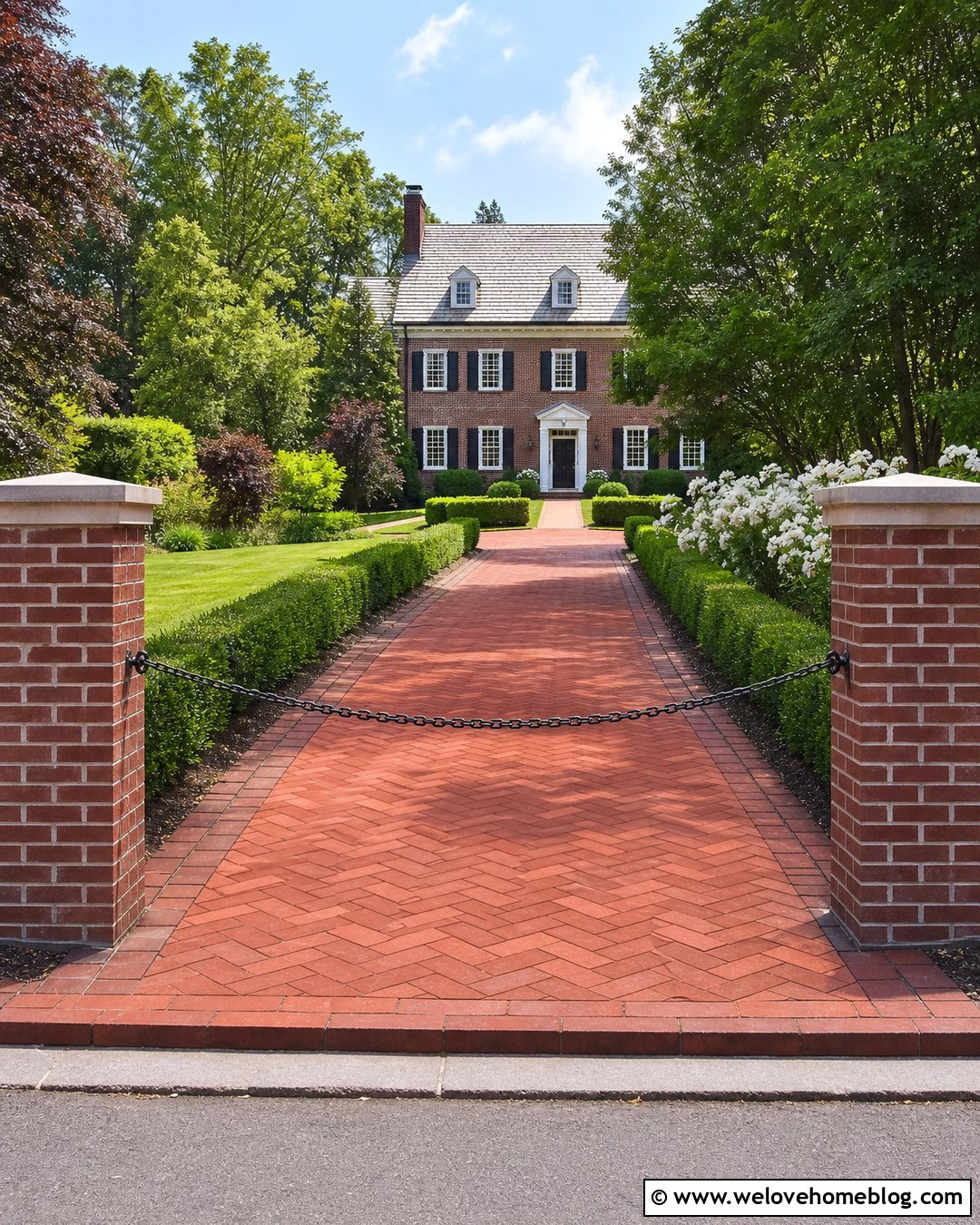
A mirror mounted near a white fence can look neat and residential when the colors and proportions are carefully coordinated. Choose a white-rimmed or simple black-rimmed convex mirror and attach it to a dedicated post beside the fence rather than to a weak rail. Use a straight light gray concrete driveway with a brick ribbon along each side. A narrow lawn strip, white hydrangeas, and clipped green shrubs can connect the entrance to a Cape Cod or colonial house. Keep the planting low near the road so the fence does not become an even larger visual obstruction. Matching white posts help disguise the supporting structure, while black hardware adds definition. The result is functional, bright, and less industrial than a standard roadside installation.
11. Driveway Mirror Beside A Privacy Hedge
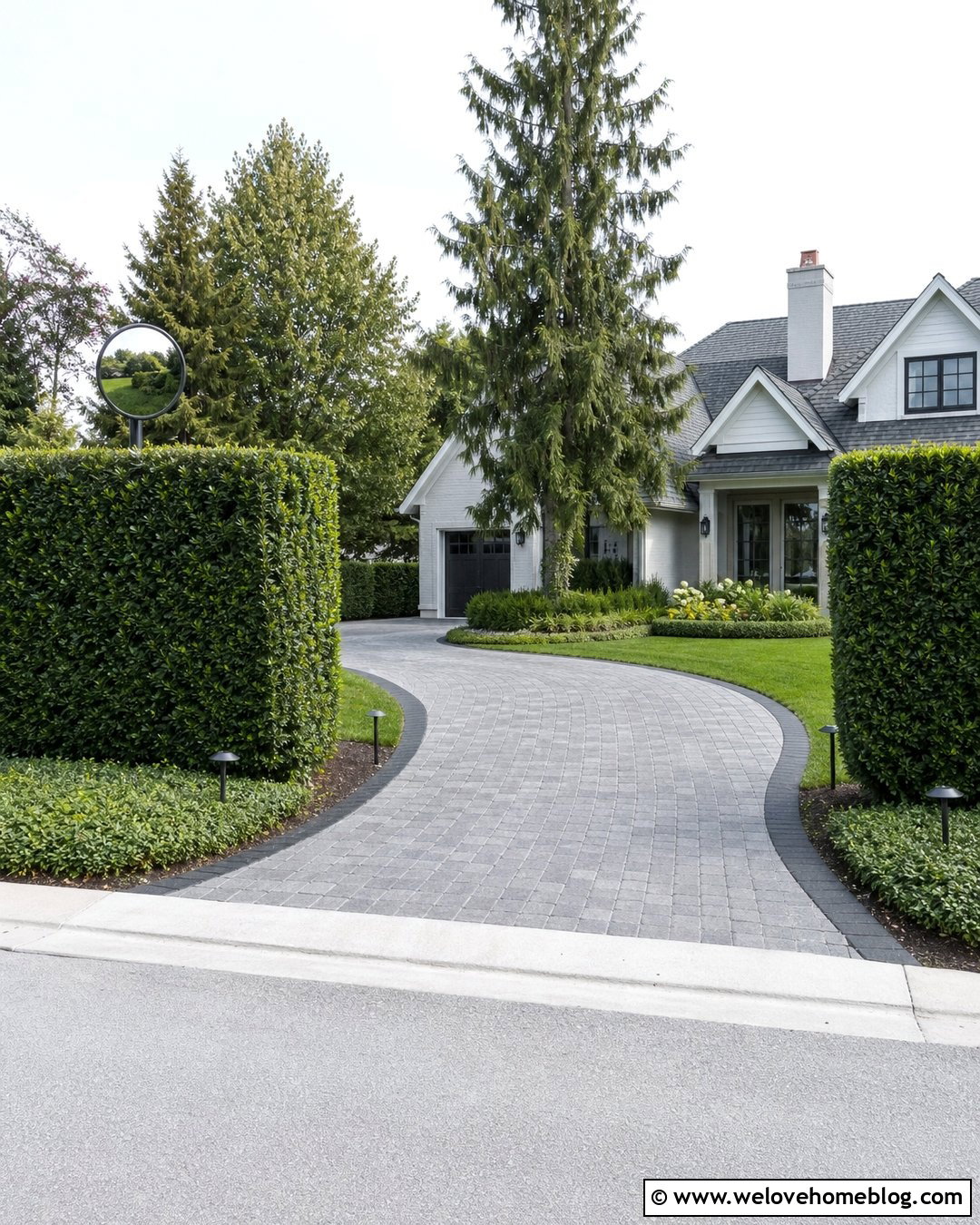
Dense hedges create privacy, but they can also block the view where a driveway meets a sidewalk or street. Install a green- or black-rimmed driveway mirror on a post positioned just beyond the hedge’s outer edge. Pair it with a curved gray concrete paver driveway and a neat charcoal border. Shape the hedge back from the entrance to create an open visibility triangle, then fill the lower beds with ground cover instead of tall flowers. The mirror should complement trimming and better sightlines, not compensate for unchecked growth. A small pathway light can mark the post without producing glare on the lens. This complete look suits manicured suburban properties where homeowners want to retain a strong green boundary while making the entrance easier to navigate.
12. Driveway Mirror With A Weather Hood
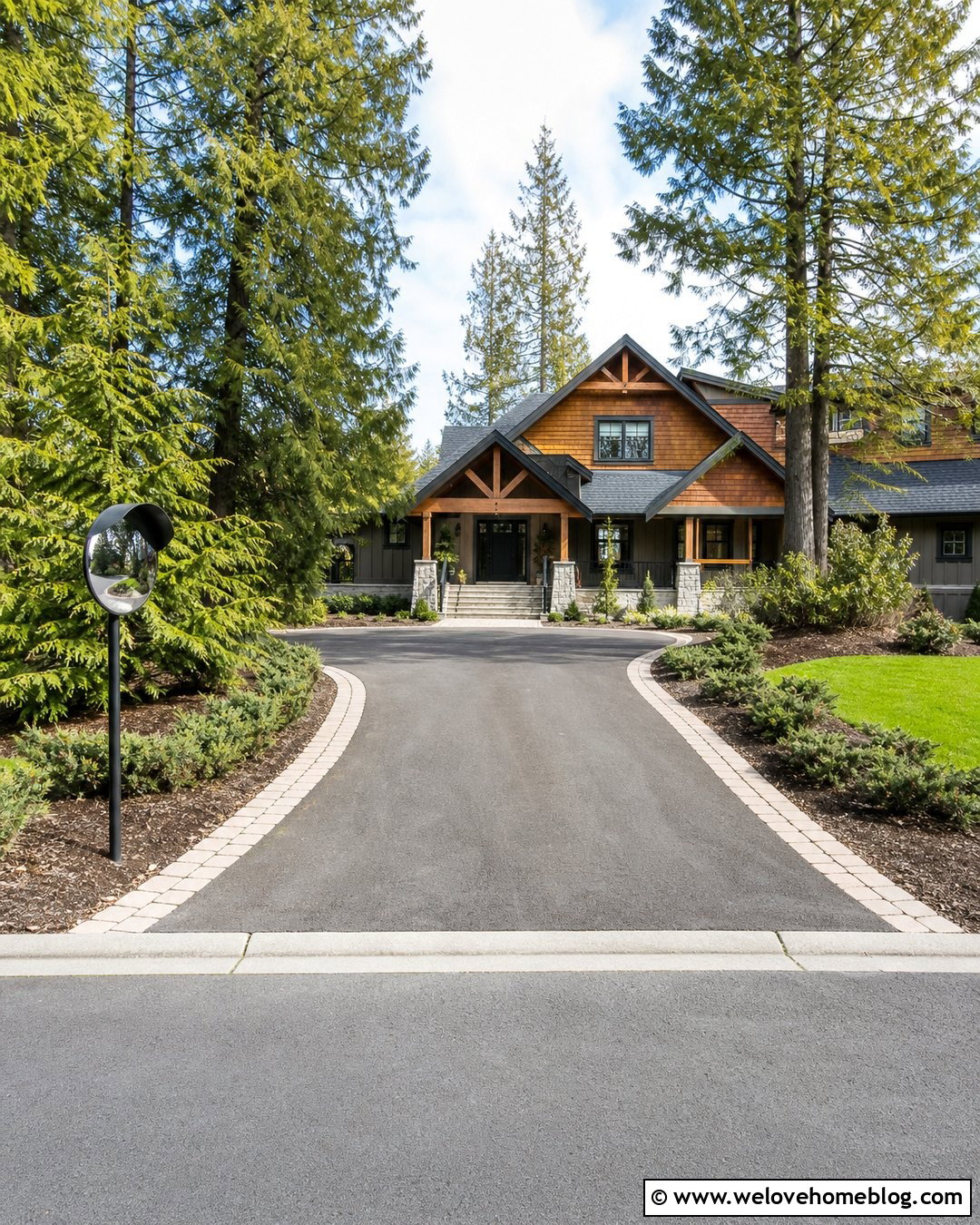
Rain, snow, and direct sunlight can make an exposed mirror harder to use, so a model with an integrated weather hood is worth considering. Set it beside a dark gray asphalt driveway with pale Belgian block edging and a slightly flared entrance. Evergreen trees, low junipers, and mulched beds create a durable landscape for a colder climate. Choose a black hood and rim to coordinate with a craftsman home’s roof, gutters, and exterior trim. The hood should protect the upper portion of the lens without blocking the reflected roadway. Use corrosion-resistant brackets and a secure pole suited to local wind and weather conditions. Regularly clean the face and inspect its angle after storms, ground movement, or accidental contact.
13. Rectangular Driveway Mirror At A Narrow Exit
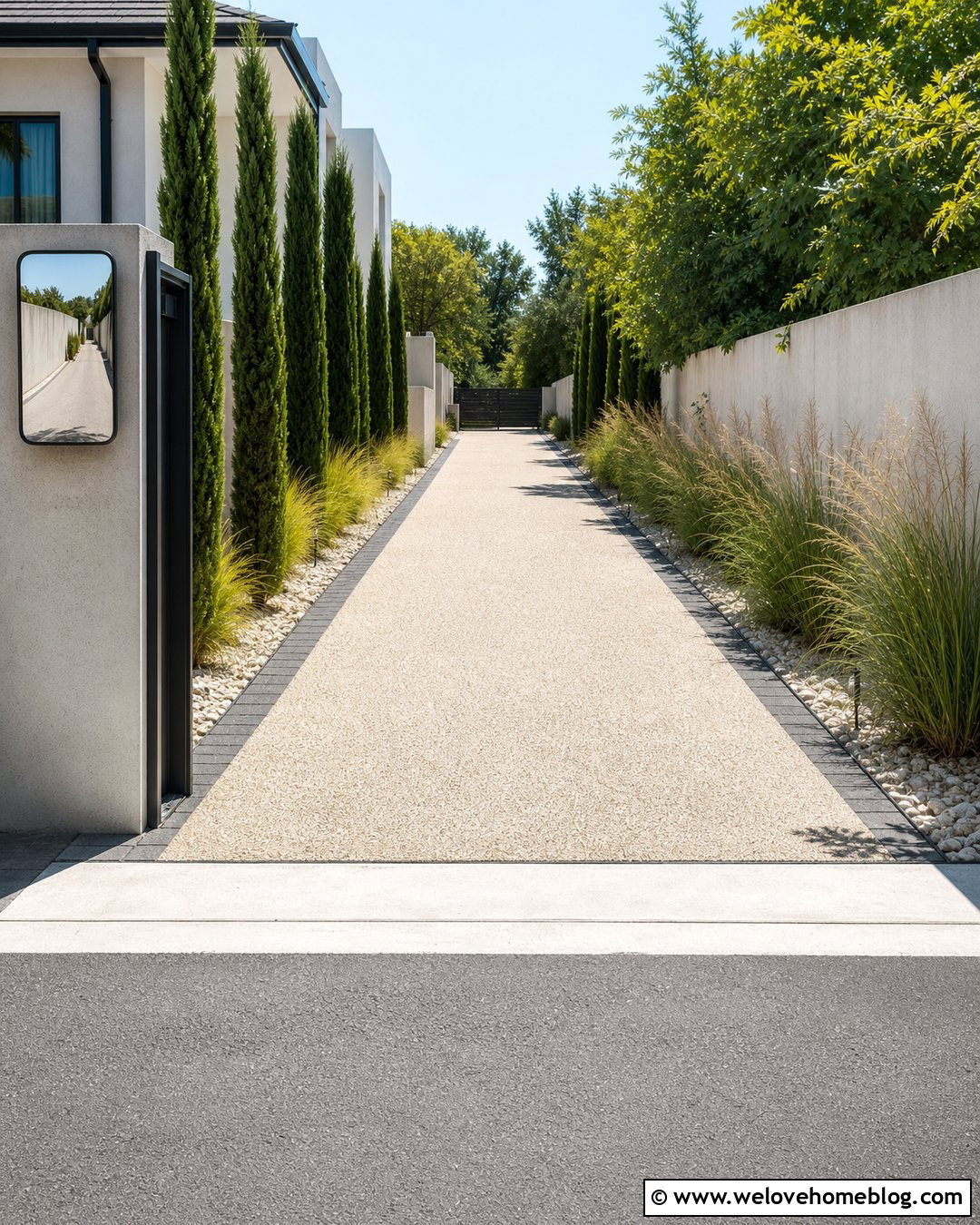
A rectangular convex mirror has a streamlined profile that can suit a narrow driveway between a building and a boundary wall. Combine it with a straight cream resin-bound gravel surface and thin charcoal paver edging. Mount the mirror on the opposite wall or a dedicated post where it captures the hidden sidewalk and road approach. Vertical ornamental grasses and columnar evergreens can soften the confined space without spreading across the driveway. A dark rectangular rim will echo modern windows, address signs, and wall lights. Before fixing the bracket permanently, test the reflection from the actual driver position. This design works best when the mirror’s wider horizontal format aligns with the direction of the hidden traffic rather than reflecting unnecessary sky, wall, or ground.
14. Driveway Mirror With A Decorative Post
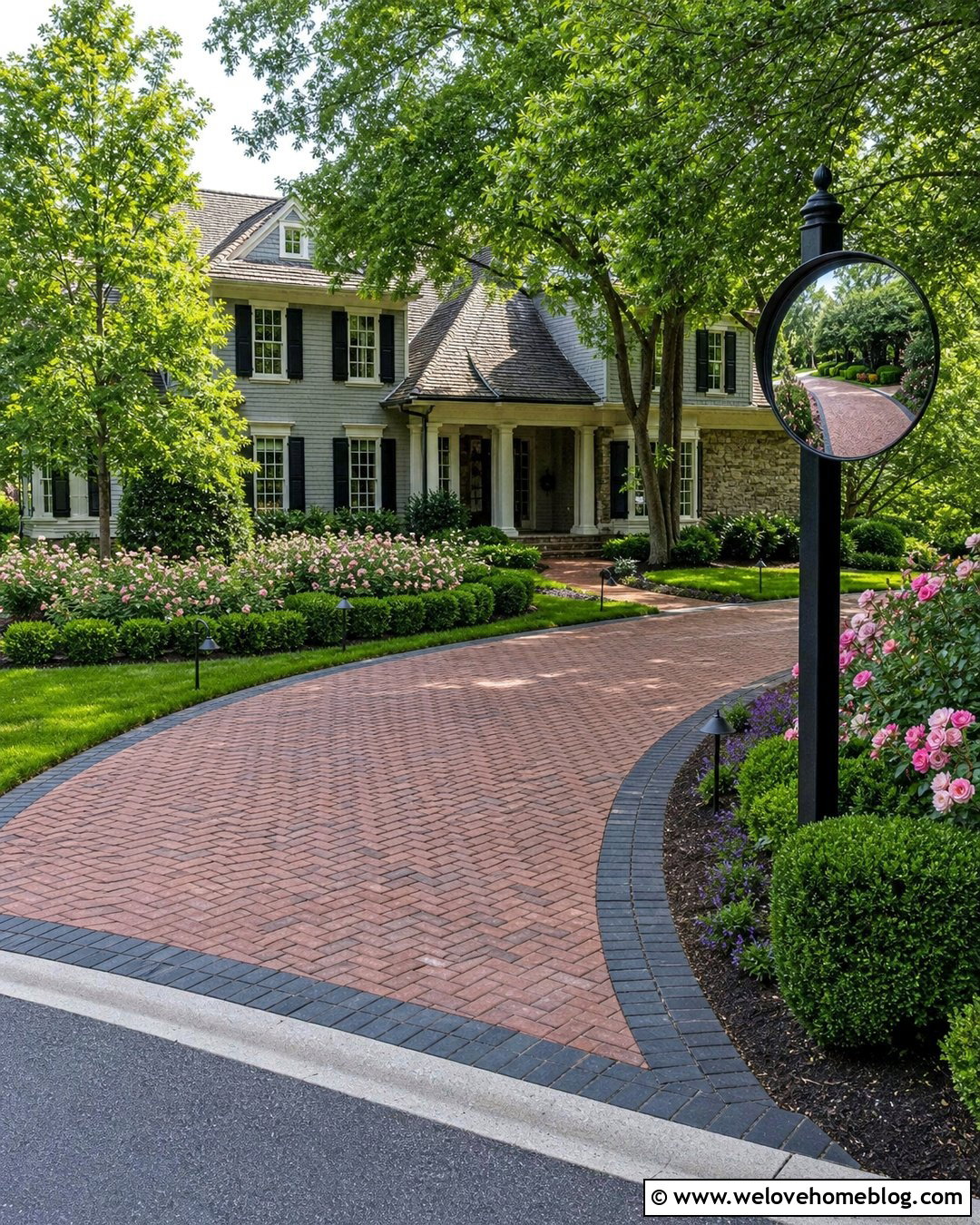
A decorative post can make a driveway mirror feel more compatible with a traditional front yard. Choose a powder-coated black post with a simple cap and restrained base details. Pair it with a curved clay brick paver driveway, a dark brick border, and layered beds of roses, boxwoods, and low perennials. A round black-rimmed mirror will repeat the curves of the driveway and planting beds. Keep decorative metalwork away from the lens so it does not interrupt the view or complicate adjustment. Matching pathway lights and an address plaque can tie the post into the broader entrance design. This solution provides an attractive alternative to an exposed galvanized pole without disguising the mirror so completely that approaching visitors fail to notice it.
15. Driveway Mirror At A Curved Stone Wall
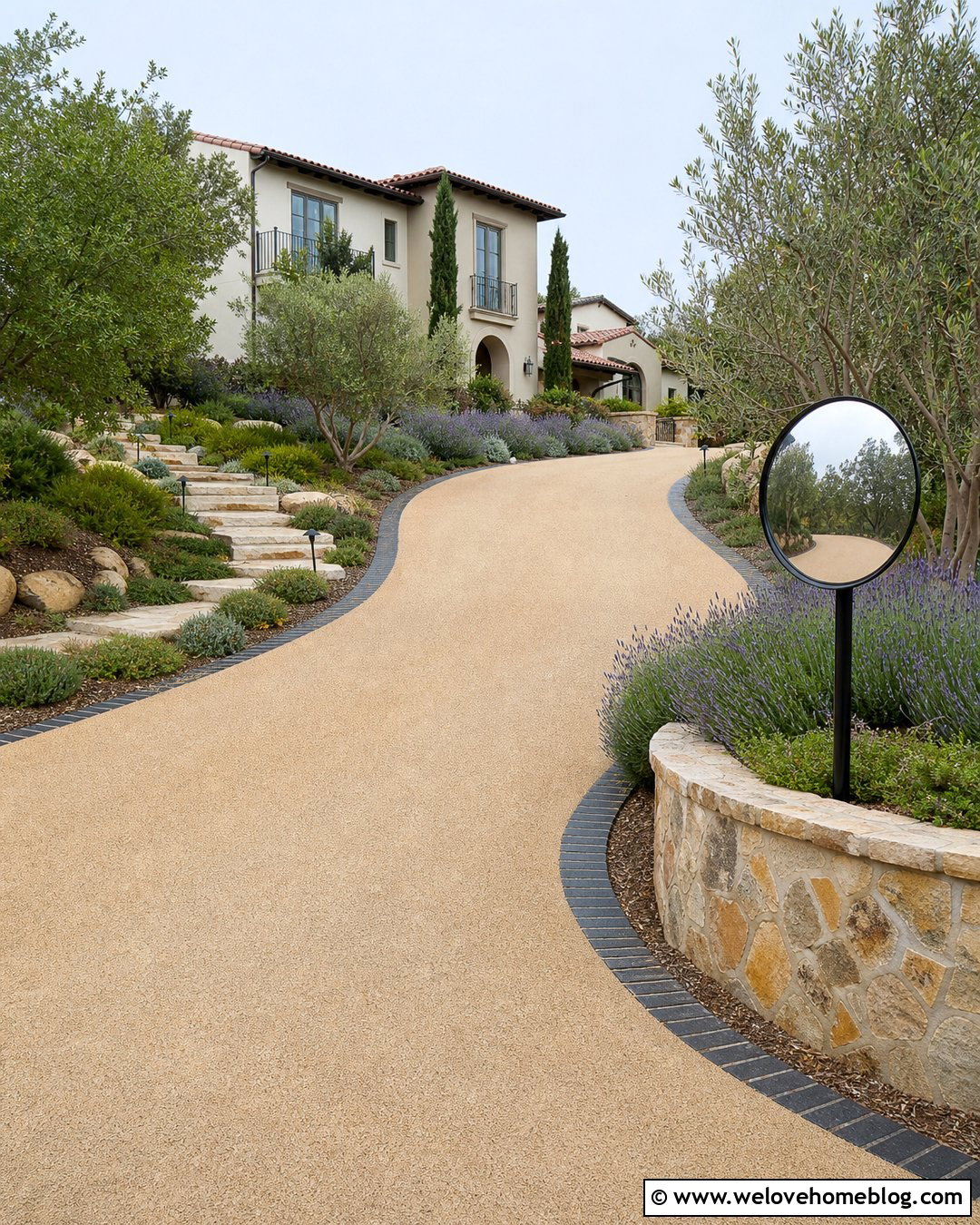
The warm texture of natural stone can create a beautiful entrance, but a curved wall may conceal pedestrians or traffic. Place an outdoor convex mirror on a black metal post just inside the end of the wall. Continue the curve with a light tan decomposed granite driveway stabilized for vehicle use. A row of dark cobblestones can reinforce the edge and protect nearby planting beds. Use drought-tolerant shrubs, lavender, and small ornamental trees to complement a Mediterranean or Southwestern house. Keep the plants nearest the mirror low and open. The mirror angle should show what lies beyond the wall from the driver’s stopping position. This complete layout blends a practical visibility feature into a warm, carefully composed landscape rather than treating it as an afterthought.
16. Driveway Mirror Beside A Modern Gate
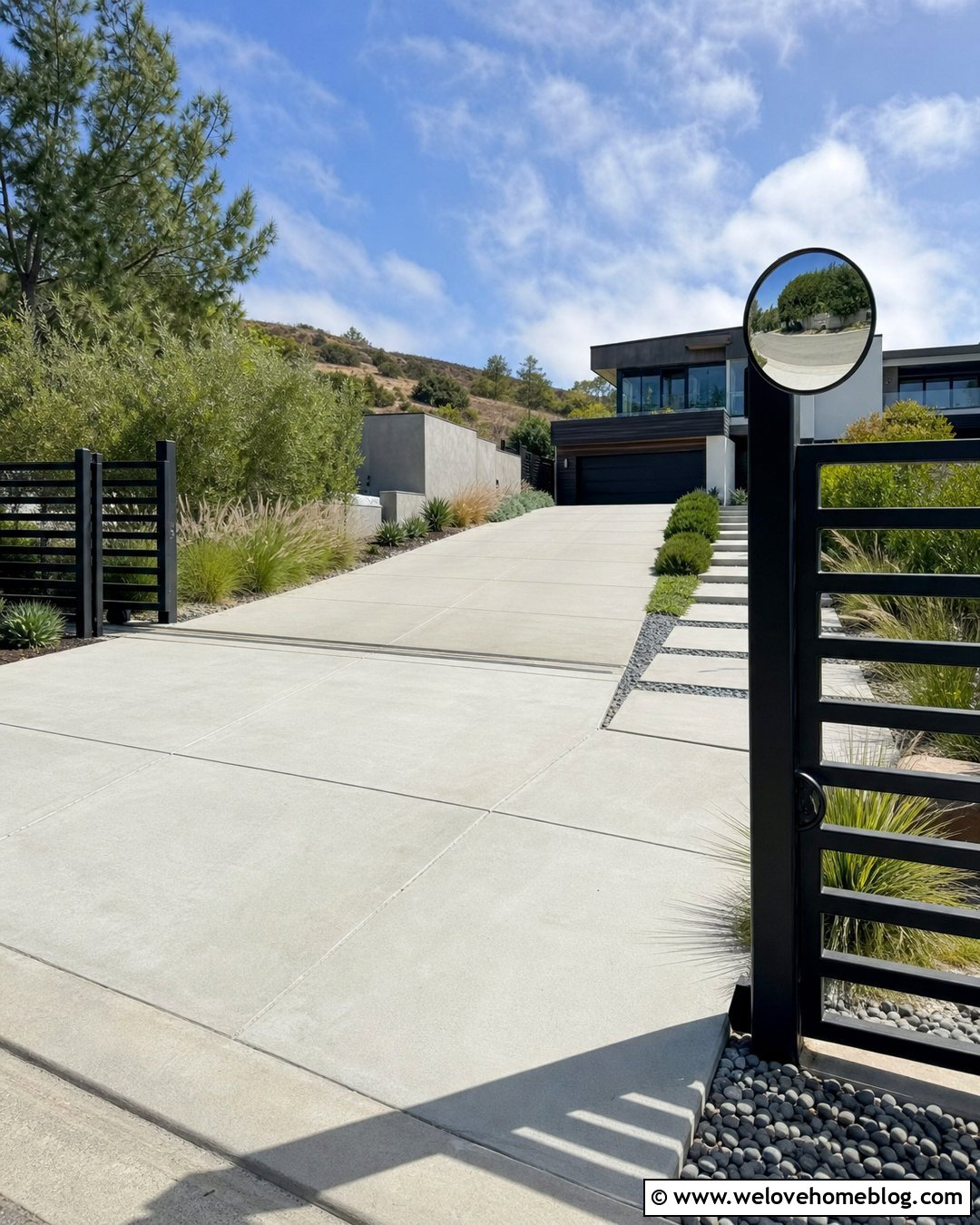
A minimalist gate and driveway mirror can share the same clean visual language. Pair a black-framed convex mirror with a horizontal-slat aluminum gate and slim square posts. A wide pale gray poured concrete driveway with saw-cut joints reinforces the modern geometry. Add linear beds filled with ornamental grasses, compact evergreen shrubs, and light decorative gravel. Position the mirror outside the gate’s swing or sliding path and confirm that an open gate will not block the reflected view. The mounting post can match the gate frame, creating a coordinated installation. Recessed entrance lighting should illuminate the general area without shining directly onto the mirror. This sharp, uncluttered design works well with contemporary houses featuring flat roofs, dark trim, and large geometric windows.
17. Driveway Mirror At A Tree-Lined Entrance
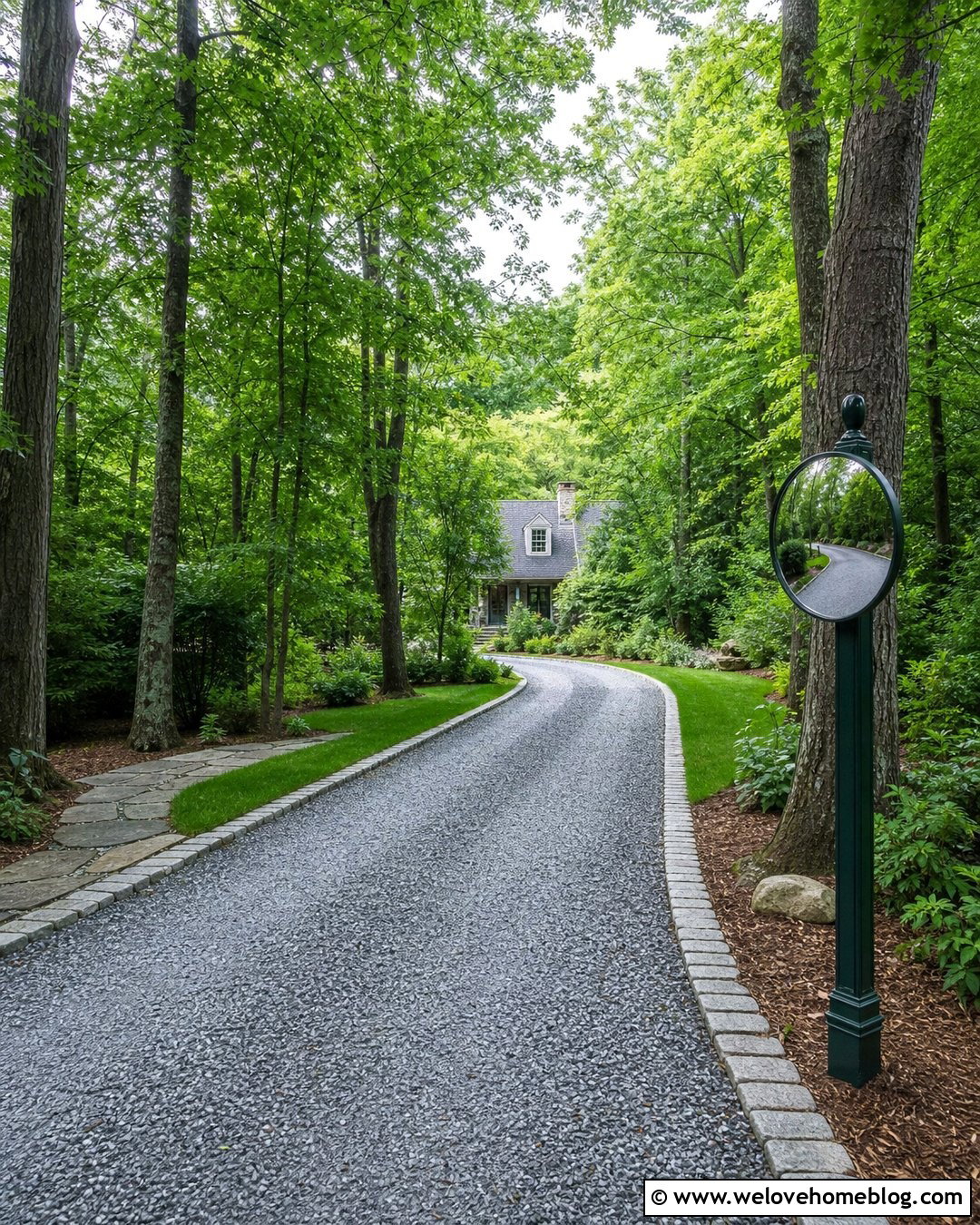
A tree-lined driveway feels private and established, yet trunks and low branches can create blind spots near the entrance. Use a dark green convex mirror on its own metal post rather than fastening hardware directly to a living tree. Pair it with a long gray crushed-stone driveway edged by larger granite setts. Raise tree canopies where appropriate and maintain open grass or low ground cover near the road. The mirror post can sit within a mulched bed, where its color blends with foliage while the lens remains clearly visible. This arrangement suits country homes, woodland cottages, and large ranch properties. Leave enough clearance for natural plant growth, maintenance equipment, and seasonal movement so the reflected view does not gradually disappear behind leaves.
18. Driveway Mirror With An Address Sign
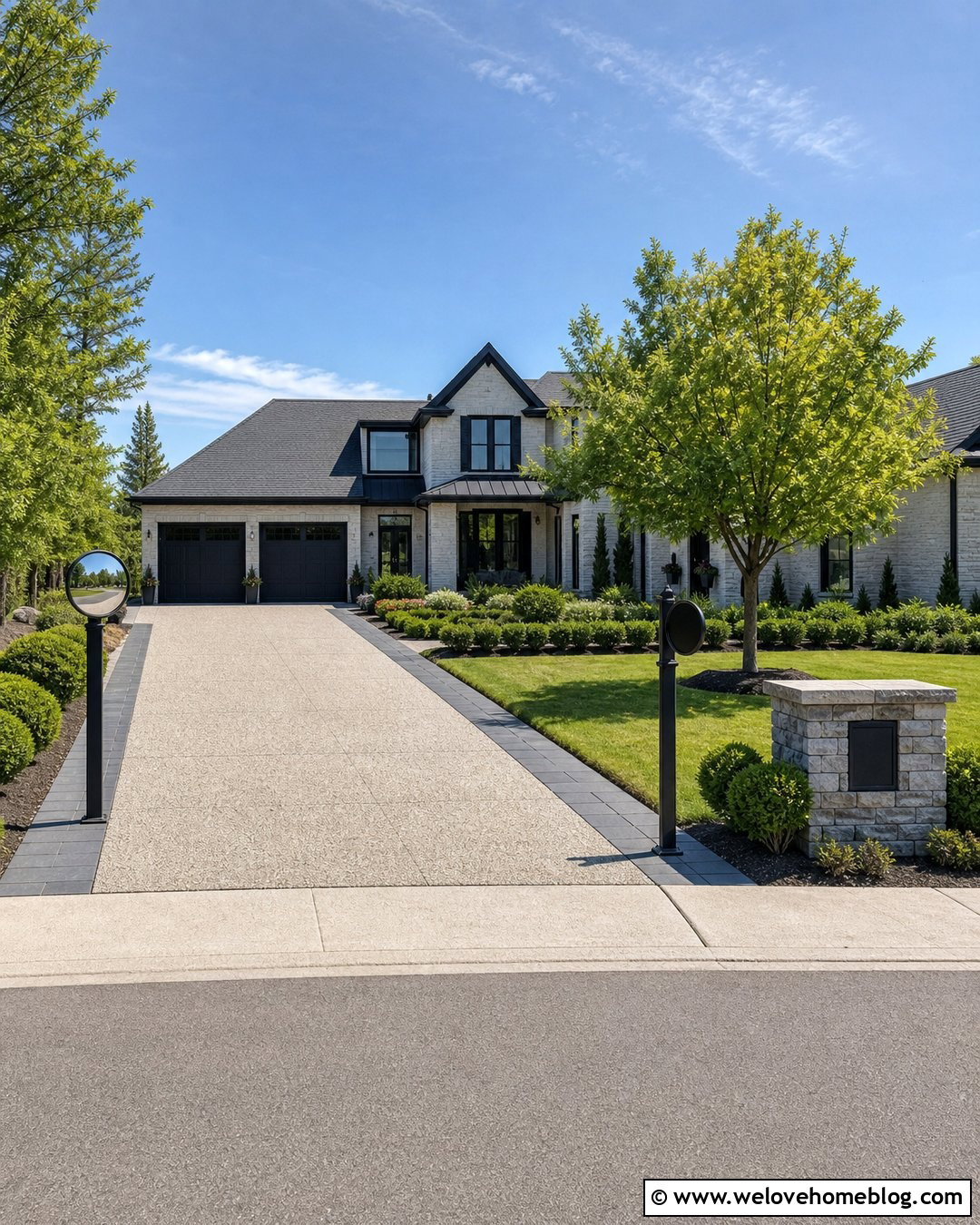
Combining a driveway mirror and address marker within one coordinated entrance can reduce visual clutter. Mount each element separately on matching posts so the mirror remains fully adjustable. Pair them with a straight exposed aggregate driveway and a broad border of dark concrete pavers. Use a low stone mailbox wall, clipped shrubs, and a small ornamental tree to create a clear entrance sequence. The address sign should be readable from the road but must not cover the mirror or appear inside its critical sightline. Black powder-coated frames provide a consistent finish across the mirror, numbers, lighting, and mailbox. This complete look is useful for a suburban property where visibility, wayfinding, and curb appeal all need to work within a relatively compact frontage.
19. Driveway Mirror At A Shared Courtyard
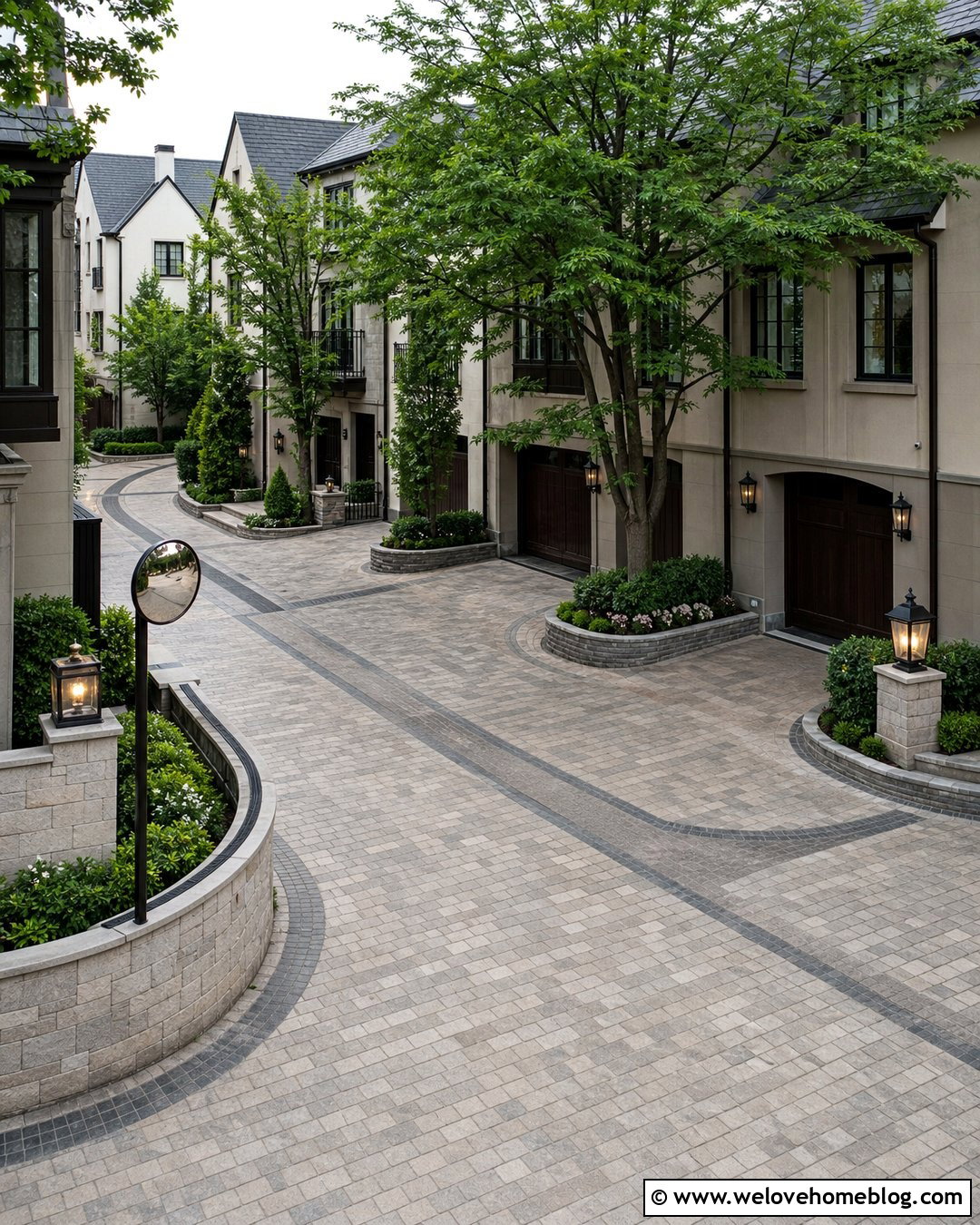
A shared courtyard can contain several overlapping movements, especially where garages, walkways, and narrow access lanes meet. Install a weather-rated convex mirror at the principal blind corner and aim it toward the crossing route. Use warm gray cobblestone pavers across the courtyard, with a darker stone band distinguishing the main driveway. Raised planting beds, compact trees, and low shrubs can frame the space while leaving corners open. A dark bronze mirror rim will coordinate with traditional lanterns and garage hardware. If the courtyard contains more than one independent blind spot, assess each conflict point rather than expecting one mirror to reveal everything. The finished space should remain calm and residential, with the safety feature clearly visible but not visually overpowering.
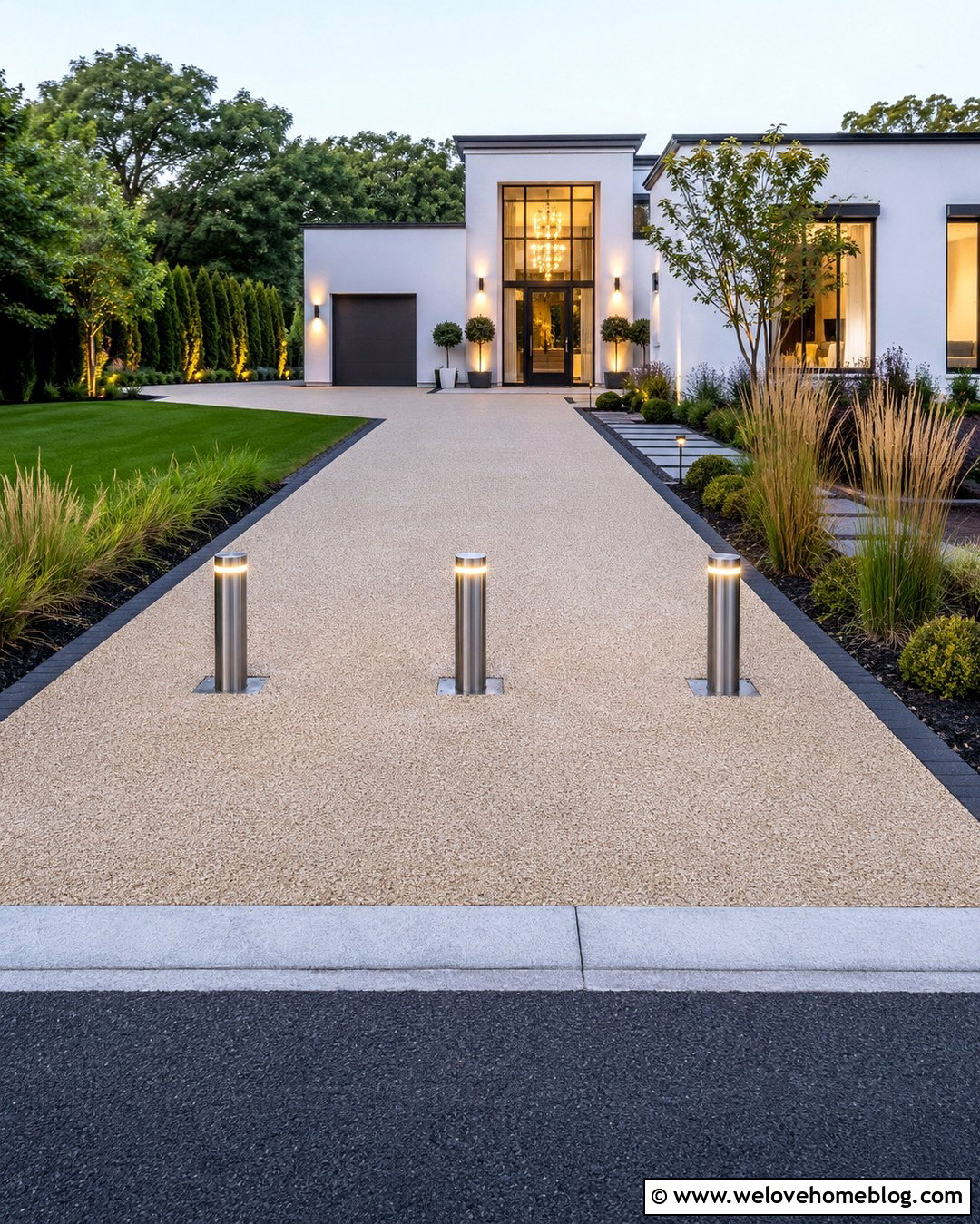
20. Driveway Mirror With Solar Entrance Lighting
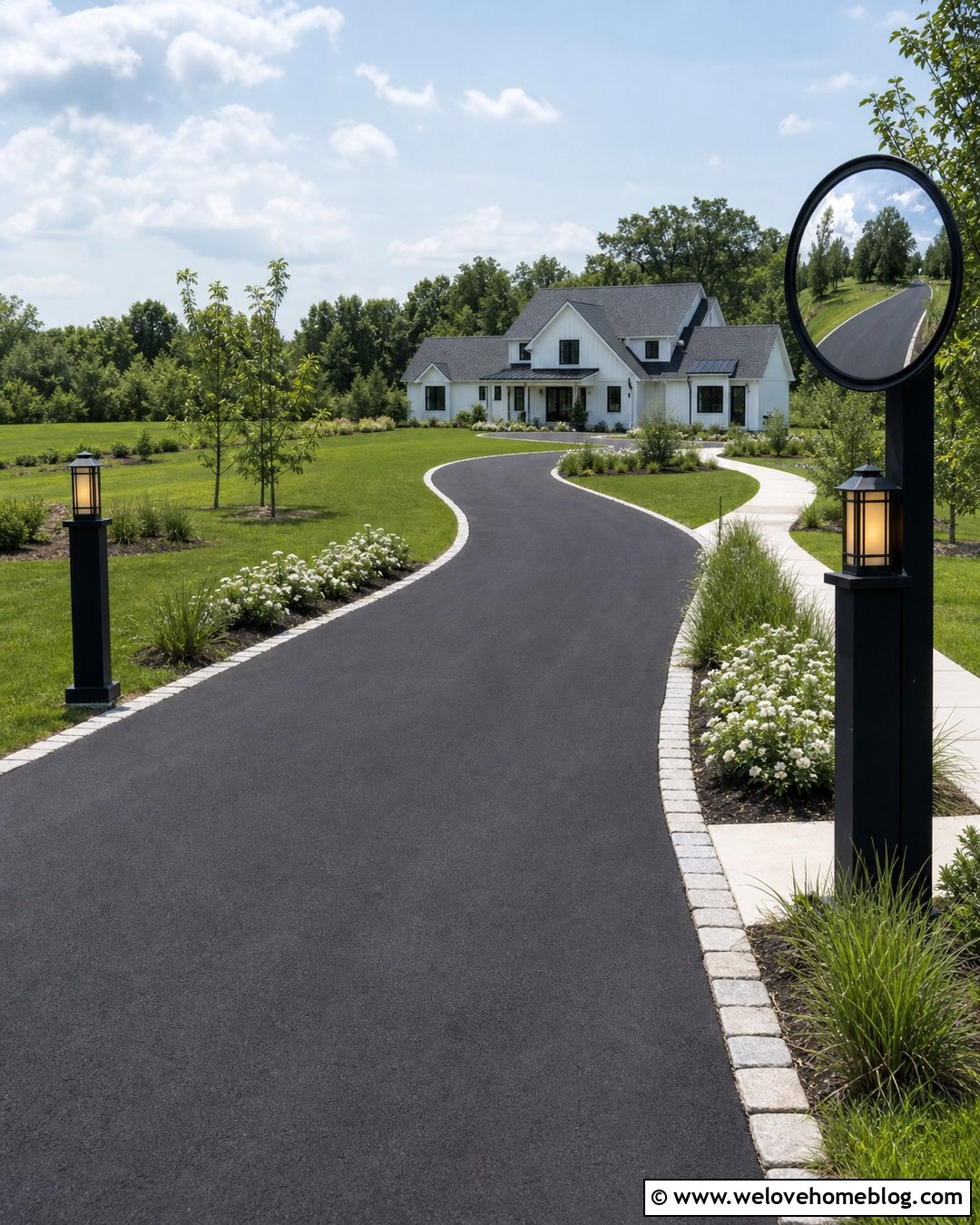
Bright, even entrance lighting can make a driveway mirror easier to locate after sunset, although the mirror should not be treated as a substitute for direct observation. Pair a black-rimmed convex mirror with a gently curved charcoal asphalt driveway and a light granite block border. Install shielded solar path lights along the entrance beds, directing illumination toward the ground rather than the lens. Low grasses, white flowering perennials, and open lawn will keep the setting bright and uncluttered. A simple black post can coordinate with the lights and a modern farmhouse facade. Test the arrangement at different times because glare, shadows, and seasonal sun angles can affect visibility. Reflective performance and lighting should be evaluated from the driver’s actual stopping location.
Conclusion:
The strongest driveway mirror designs combine safer sightlines with materials already present around the home. A black post may complement a modern gate, while wood, brick, or stone can help the installation settle into a traditional landscape. Whatever look you choose, prioritize a weather-rated convex lens, stable hardware, an unobstructed reflection, and an angle tested from the driver’s normal stopping point. Remove avoidable obstructions before relying on a mirror, and continue to stop and check for traffic directly. Obtain permission before installing anything on another person’s land, a utility pole, or a public roadside area. With thoughtful planning, these 20 driveway mirror ideas can improve visibility while maintaining attractive, organized curb appeal.

Related posts:
Leave a Reply