
The best **20 Driveway Markers Entrance Solar Lights Ideas** combine clear nighttime guidance with a polished daytime appearance. Solar markers can define the driveway opening, highlight curves, frame gates, and make an address easier to locate without requiring extensive electrical wiring. Current designs range from tall reflective stakes and classic post-cap lanterns to sleek bollards and flush solar studs. Placement matters just as much as appearance. The lights should follow the driveway shape, remain visible from the road, and avoid creating glare for drivers. Their finish should also coordinate with the surface, edging, landscaping, and architecture. From rural gravel lanes to modern concrete entrances, the following complete designs offer practical inspiration for **20 Driveway Markers Entrance Solar Lights Ideas**. ()

1. Gravel Driveway Entrance With Tall Solar Marker Lights
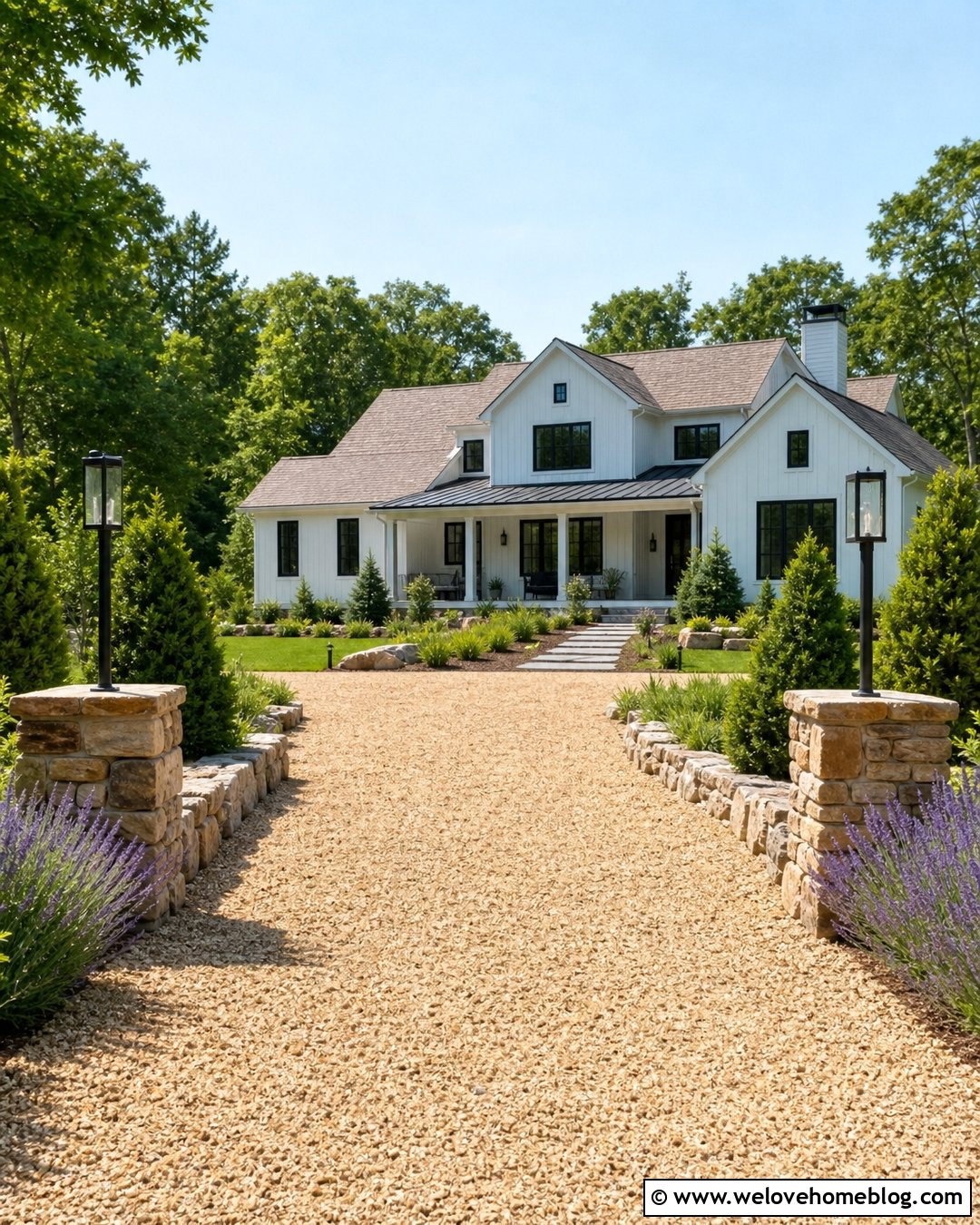
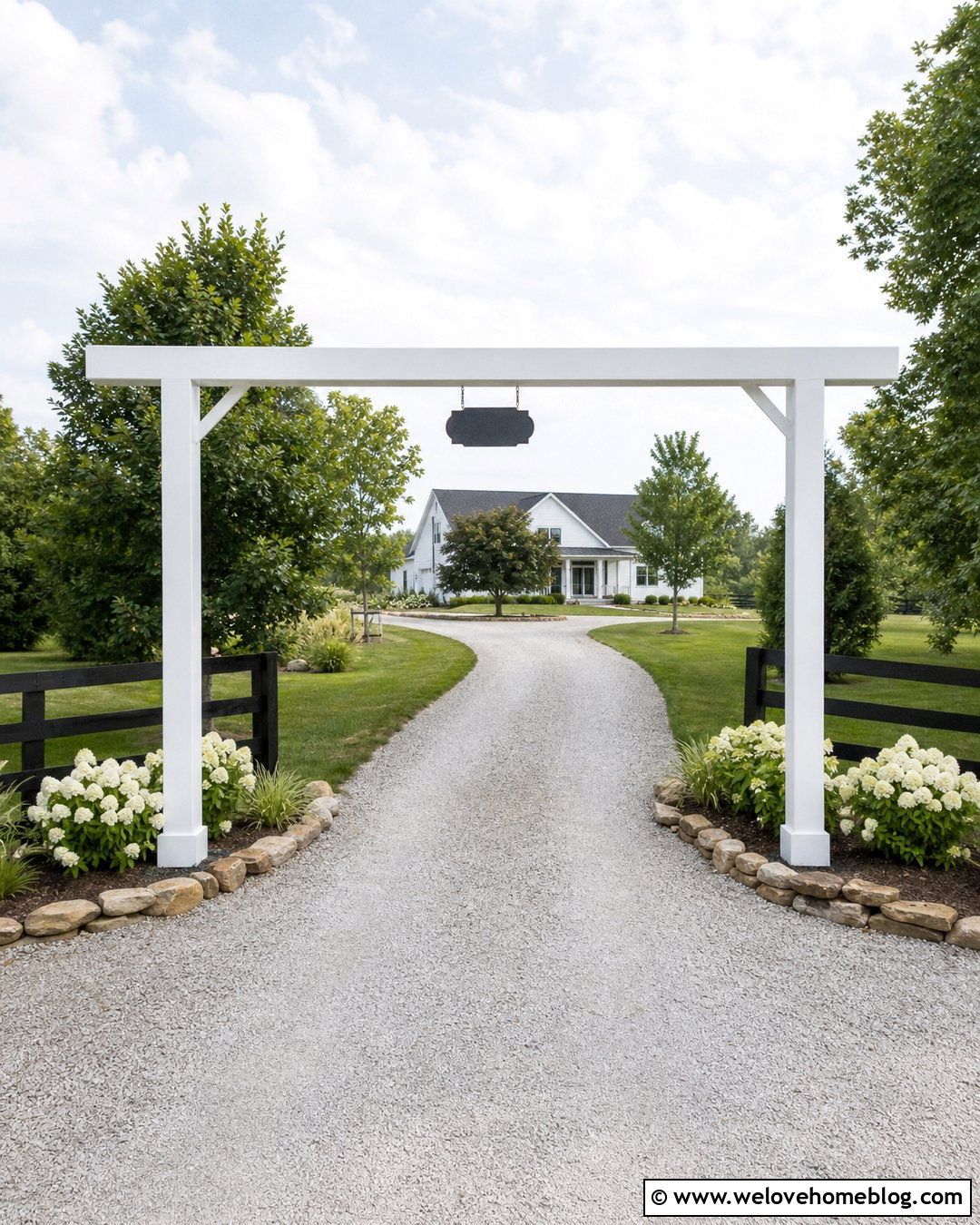
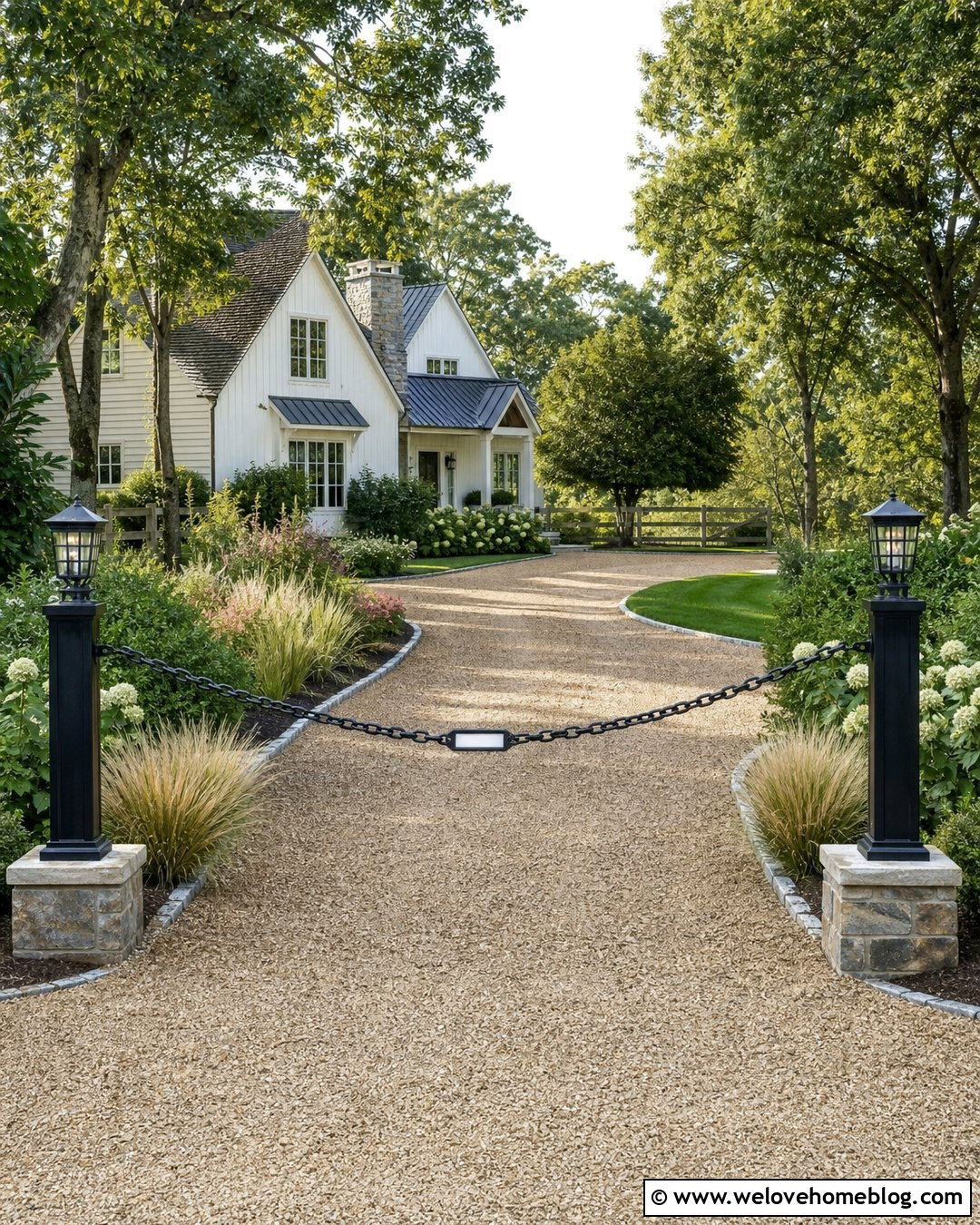
A wide gravel entrance becomes much easier to recognize when tall solar marker lights stand at both corners. Start with warm beige crushed gravel and define the opening with chunky fieldstone edging. Black solar stakes with bright white lenses will contrast against the pale surface while remaining visible above low plants. Continue smaller matching markers along the first section of the driveway to establish its direction. Ornamental grasses, lavender, and compact evergreens can soften the edges without hiding the lights. This complete look suits a farmhouse, ranch, or country home. Keep the entrance markers perfectly symmetrical, but space the remaining lights according to curves and grade changes. The balanced arrangement feels intentional during the day and provides a clear visual path after sunset.
2. Asphalt Driveway Entrance With Reflective Solar Stakes
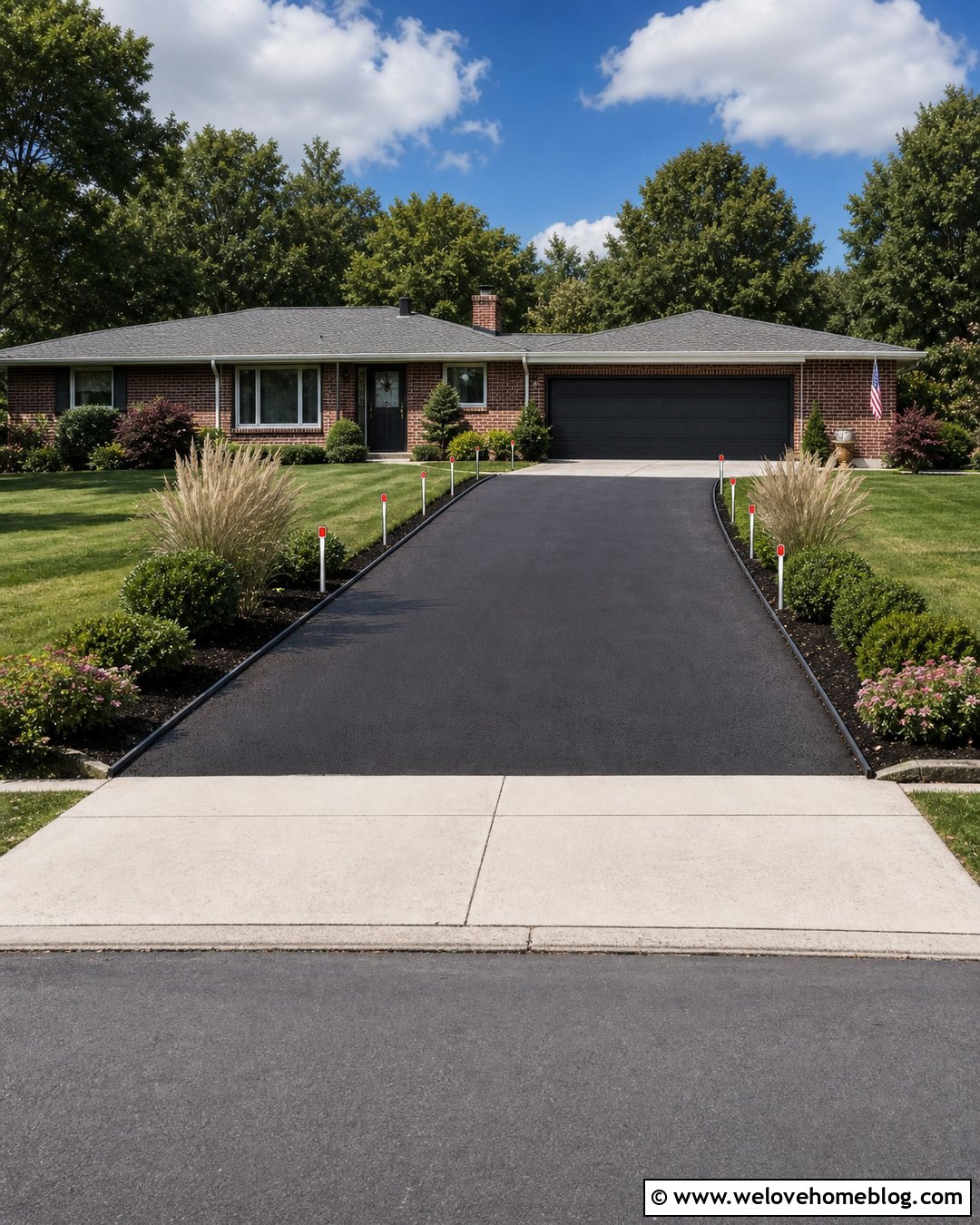
Black asphalt creates a clean background for reflective solar stakes in white, red, or amber. Position one marker on each side of the entrance, set slightly behind the road shoulder so they remain noticeable without appearing intrusive. A light-gray concrete apron can create a tidy transition between the street and asphalt. Add narrow planting beds with boxwoods, feather reed grass, and low flowering perennials. Reflective bands provide additional visibility when vehicle headlights reach the entrance, while the solar LEDs identify it from farther away. Choose taller stakes if roadside weeds or snowbanks could hide shorter fixtures. This design works especially well for a straightforward suburban driveway leading to a brick ranch house. Matching black edging keeps the overall entrance practical, simple, and visually connected.
3. Concrete Driveway Entrance With Solar Bollard Markers
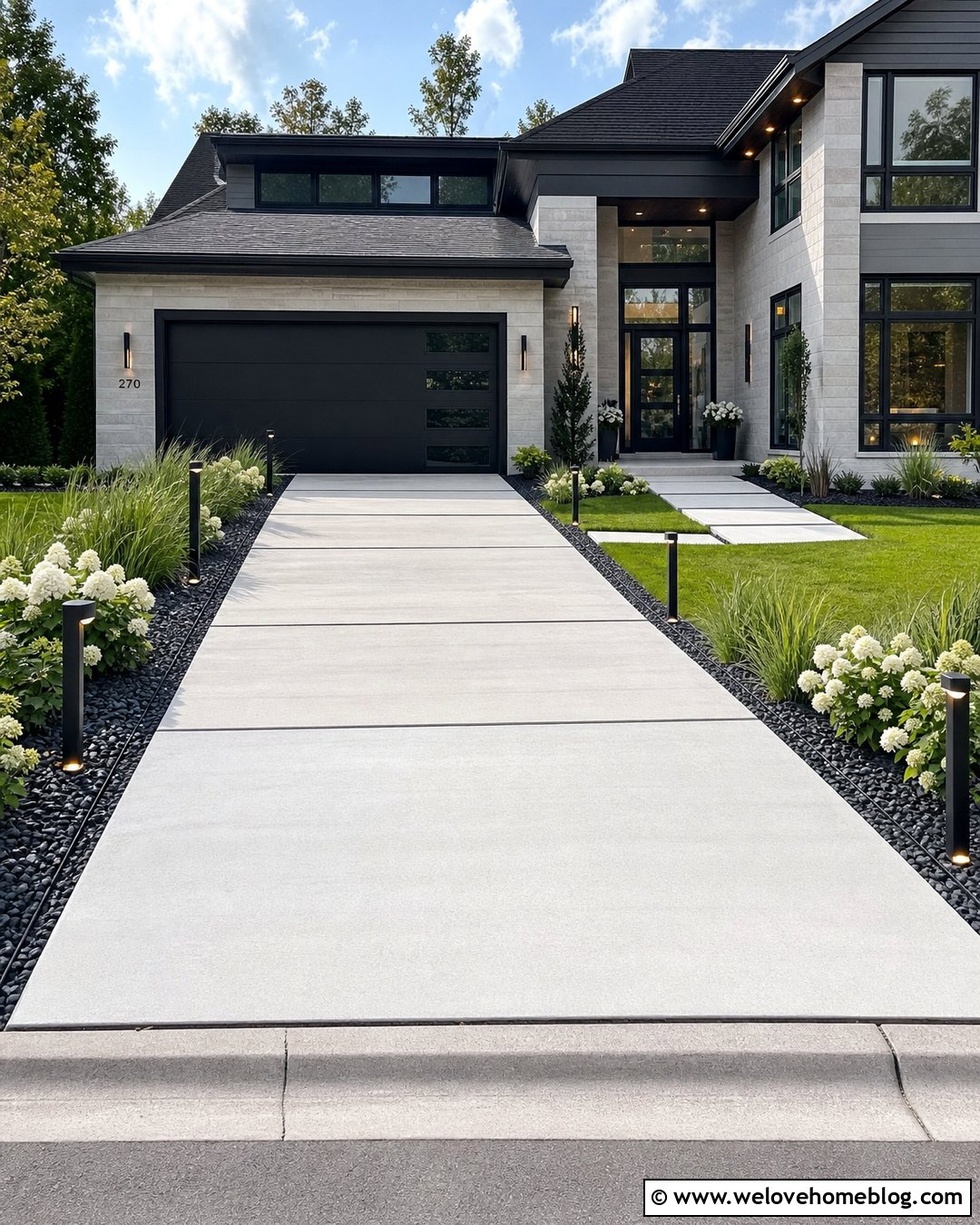
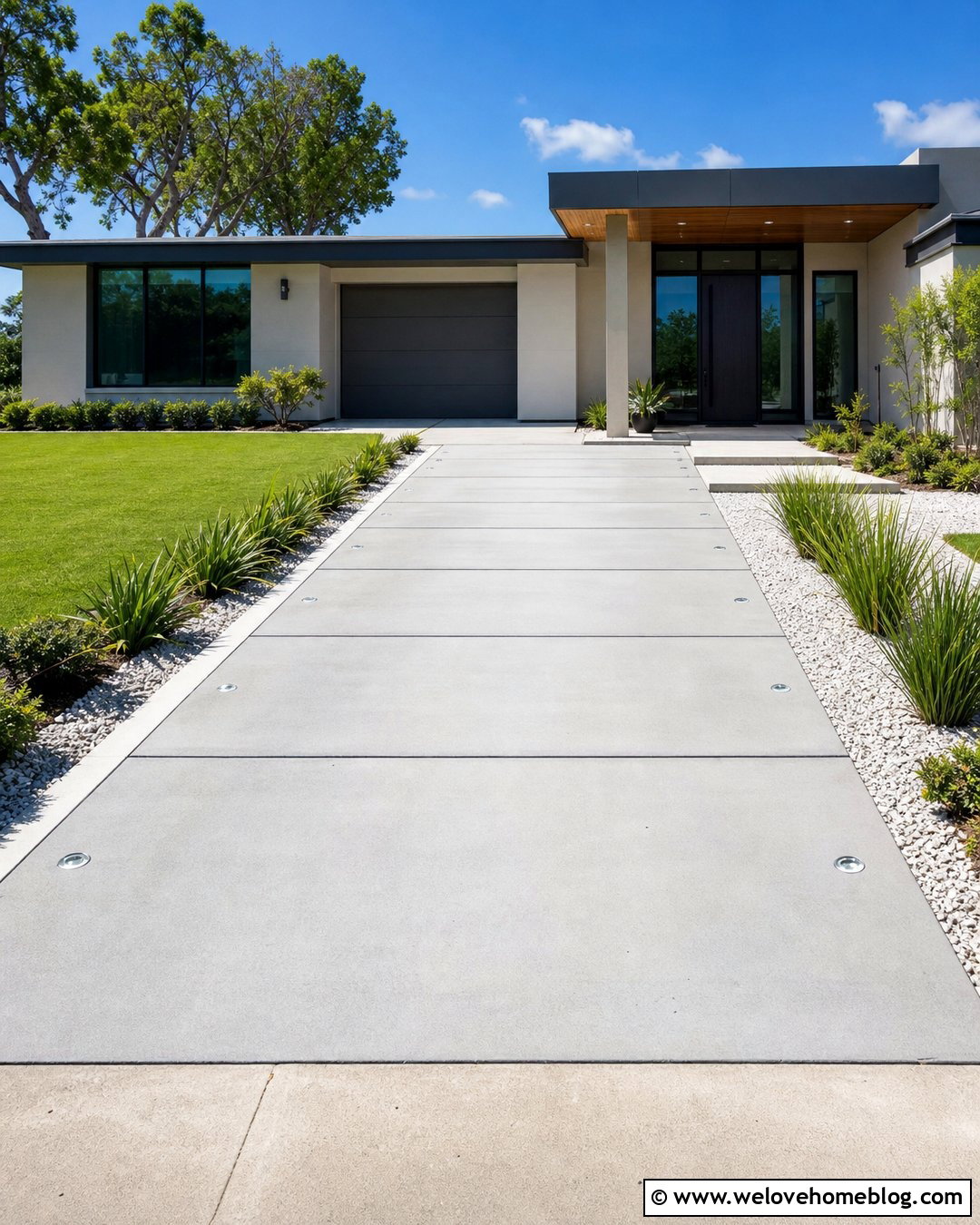
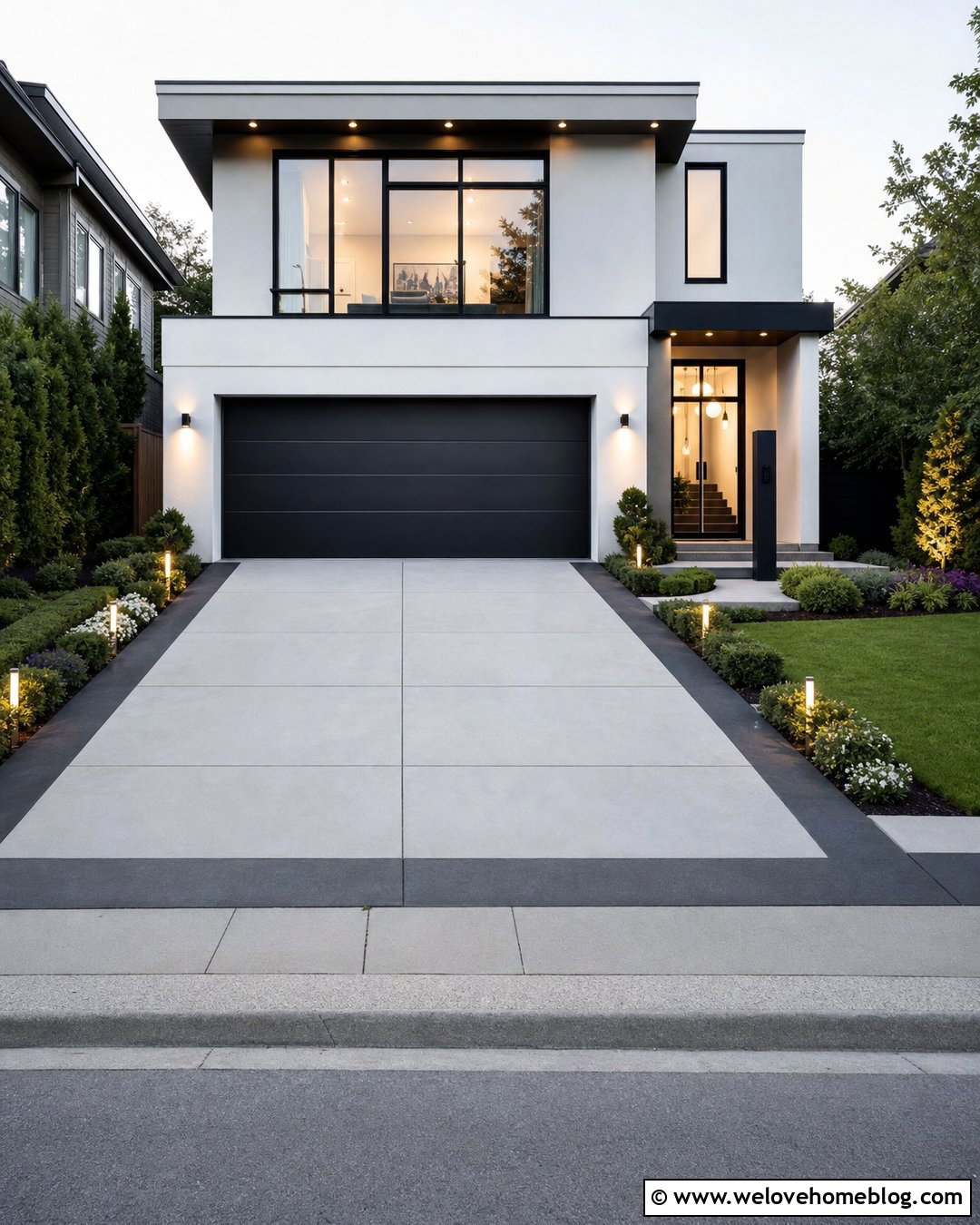
Picture a smooth concrete driveway framed by slim black solar bollards instead of traditional plastic stakes. The taller fixtures give the entrance a modern, architectural appearance, especially when paired with straight planting beds and crisp metal edging. Use light-gray poured concrete with subtle saw-cut joints to complement a contemporary house. Place two bollards at the curb opening, followed by additional fixtures near the walkway and parking area. Select models that direct light downward, helping define the driveway edge without sending harsh brightness toward the street or neighboring windows. Low ornamental grasses, white hydrangeas, and dark landscape gravel complete the restrained palette. This arrangement makes the entrance feel structured from curb to garage while allowing the lights, driveway surface, and landscaping to function as one coordinated composition.
4. Paver Driveway Entrance With Solar Post Cap Lights
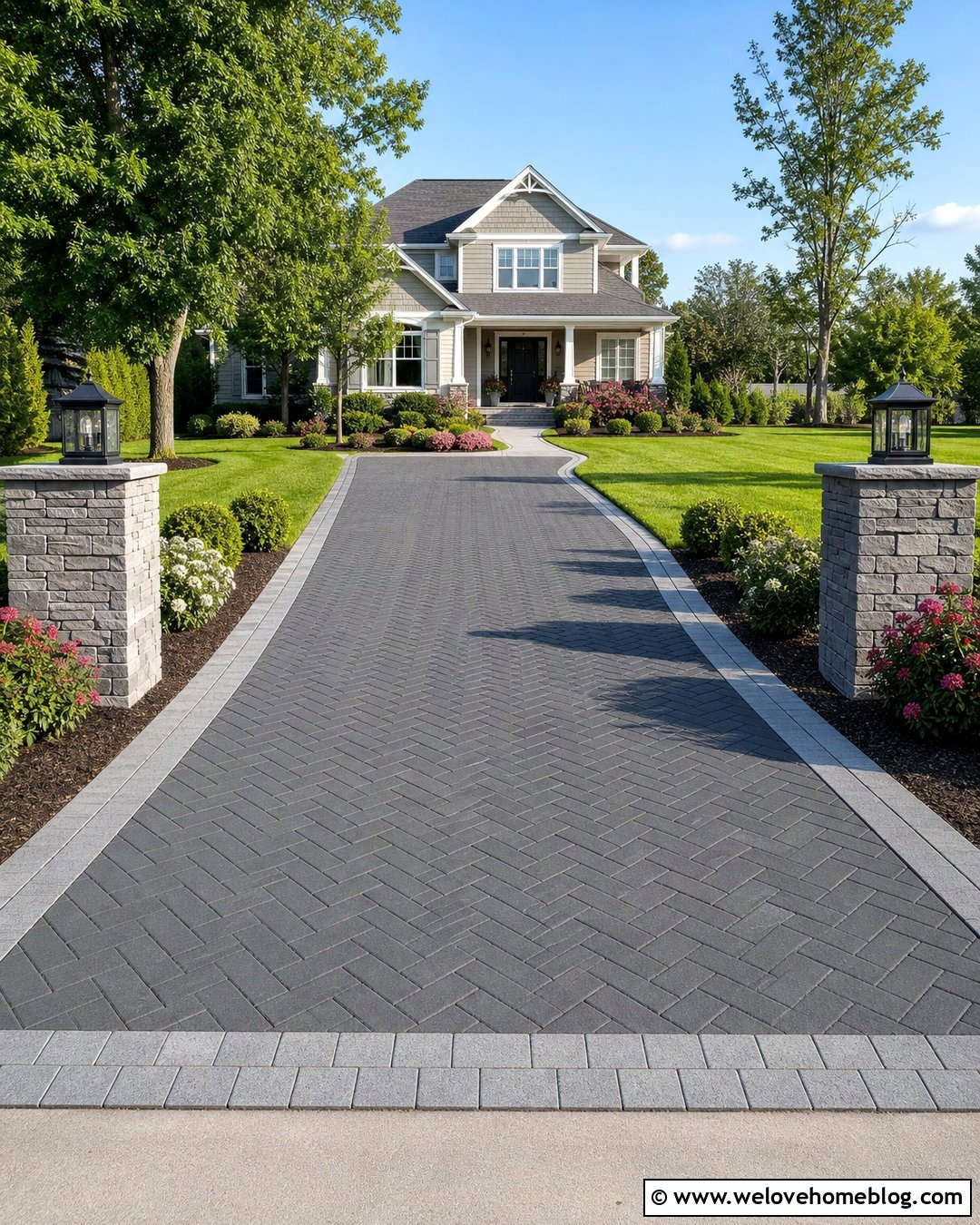
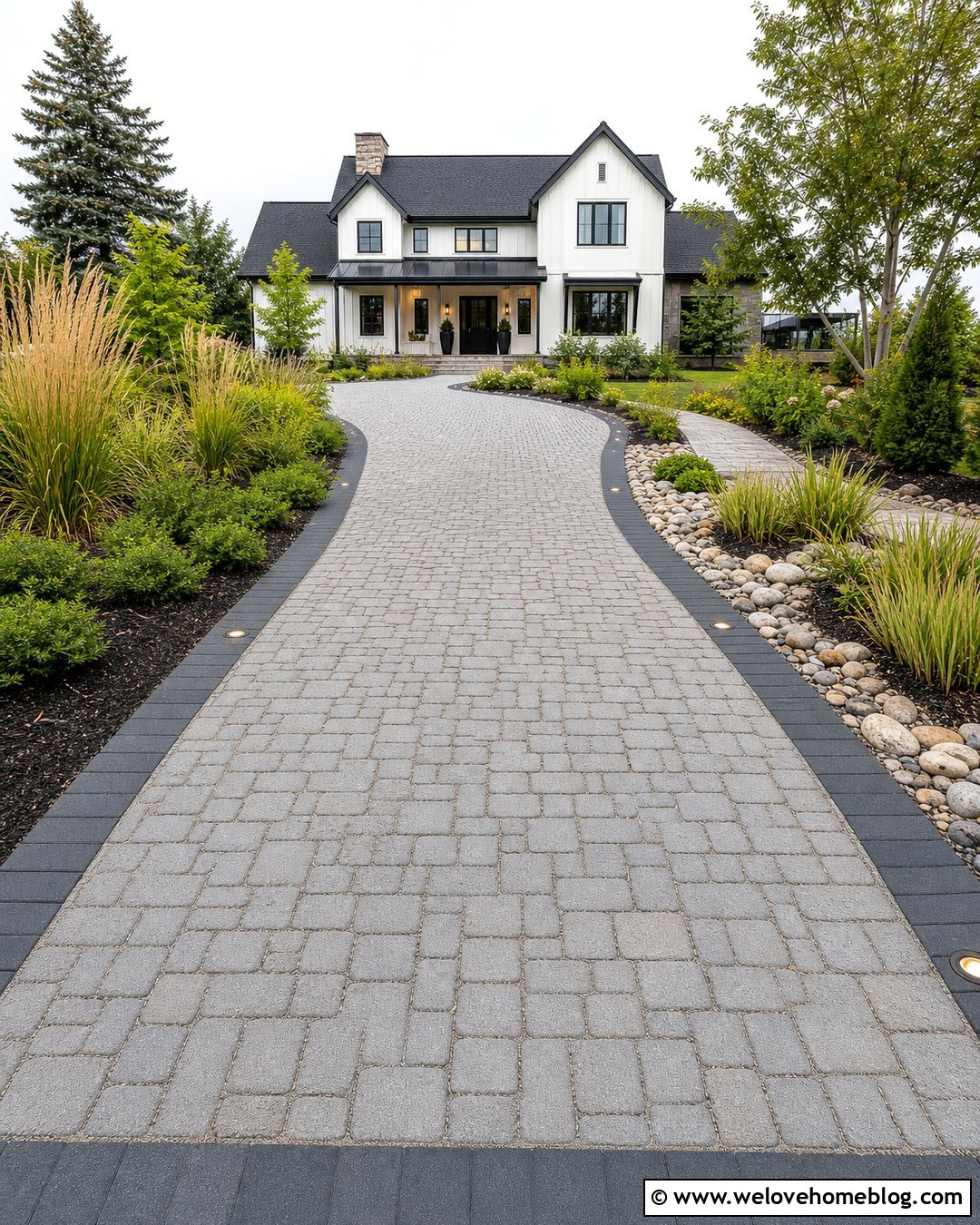
An entrance built with brick or concrete pavers looks more substantial when low masonry columns carry solar post-cap lights. Use charcoal pavers in a herringbone pattern, then outline the driveway with a contrasting light-gray soldier course. Place one short stone column on each side of the opening and top both with square black solar lanterns. The columns create dependable visual anchors, while the contrasting border clearly defines where vehicles should enter. Curved planting beds filled with dwarf hollies, roses, and seasonal flowers can connect the pillars to the front yard. This complete treatment complements colonial, craftsman, and traditional homes. Match the column stone to materials already visible on the facade. Coordinated finishes prevent the solar fixtures from looking like unrelated accessories added after the driveway was completed.
5. Curved Driveway Entrance With Blue Solar Edge Markers
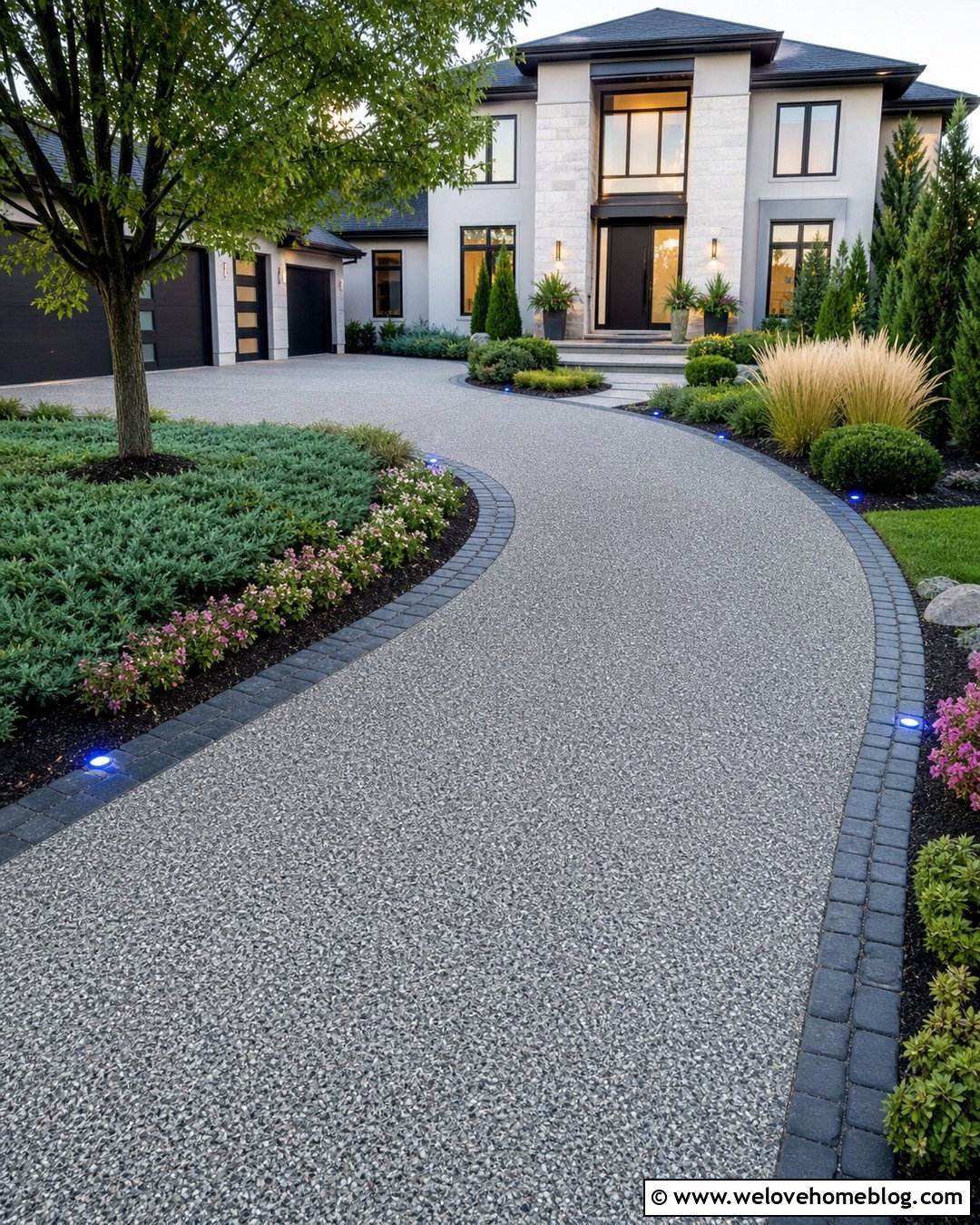
A curved driveway requires lighting that communicates its direction immediately. Begin with gray exposed-aggregate concrete and a dark cobblestone border that follows every bend. Install cool blue solar markers at the entrance and continue them around the outer curve. Use warm white landscaping lights on the house and walkway so the blue markers remain a distinct navigational feature rather than the dominant color throughout the yard. Rounded planting beds with juniper, fountain grass, and flowering ground cover can echo the sweeping layout. Avoid placing tall shrubs directly beside important markers because foliage may block their light. This design is useful for a large suburban property where the garage cannot be seen clearly from the road. The repeating lights visually pull drivers around the curve toward the house.
6. Long Rural Driveway With Red Solar Marker Lights
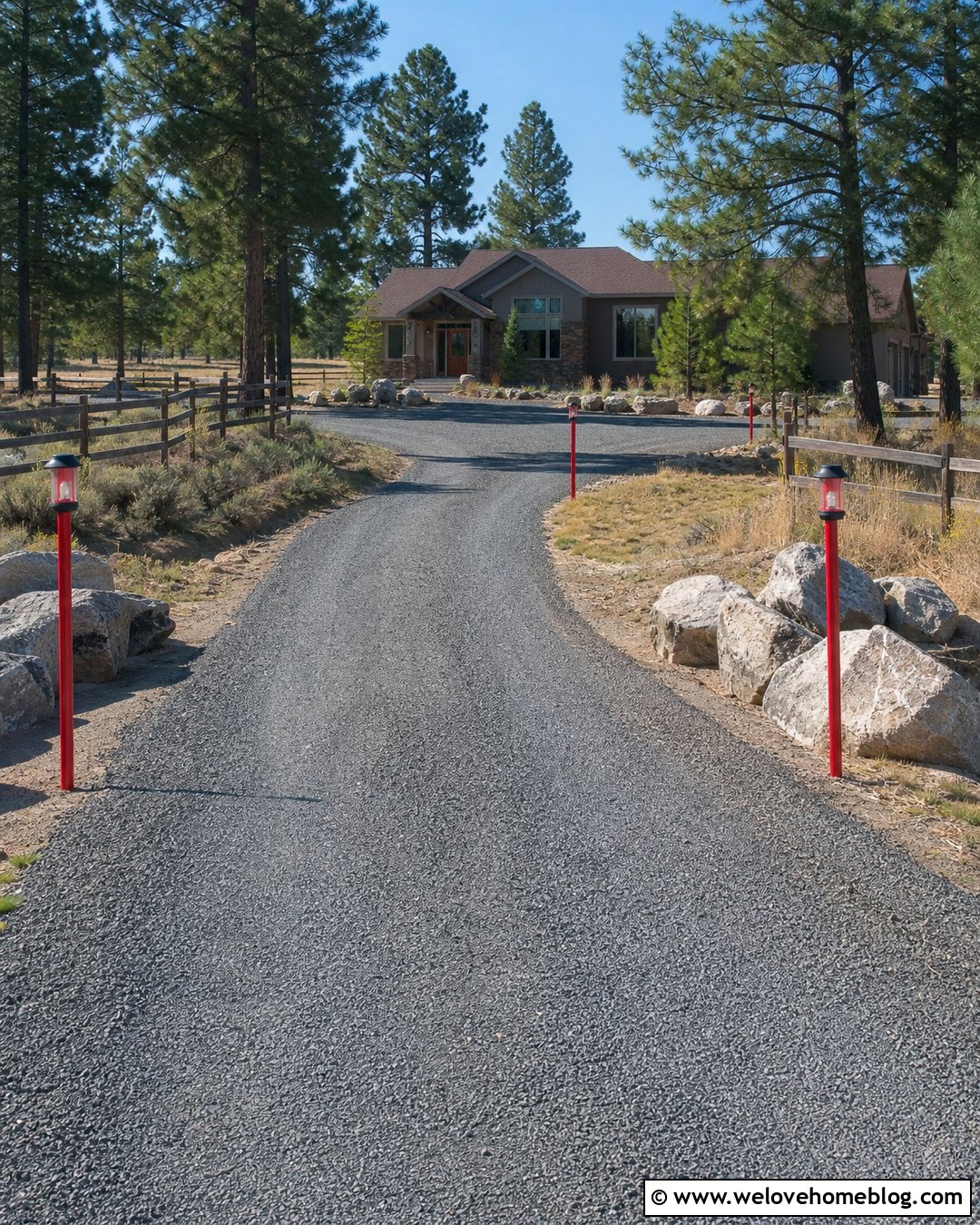
A long rural entrance can disappear into the landscape after dark, particularly where there are no nearby streetlights. Make it unmistakable with tall red solar marker lights positioned at the roadside and repeated at major changes in direction. Use compacted gray gravel for the driveway, with rough granite boulders protecting both corners from accidental tire damage. Split-rail fencing, native grasses, and clusters of pine trees will maintain the country setting. The markers should be high enough to remain visible above roadside vegetation, but not so bright that they resemble traffic signals. Keep the first pair symmetrical and reserve additional lights for curves, culverts, and narrow sections. This practical arrangement suits farmhouses, barns, ranch homes, and wooded properties where entrance visibility matters more than decorative garden lighting.
7. Snow Country Driveway With Tall Orange Solar Markers
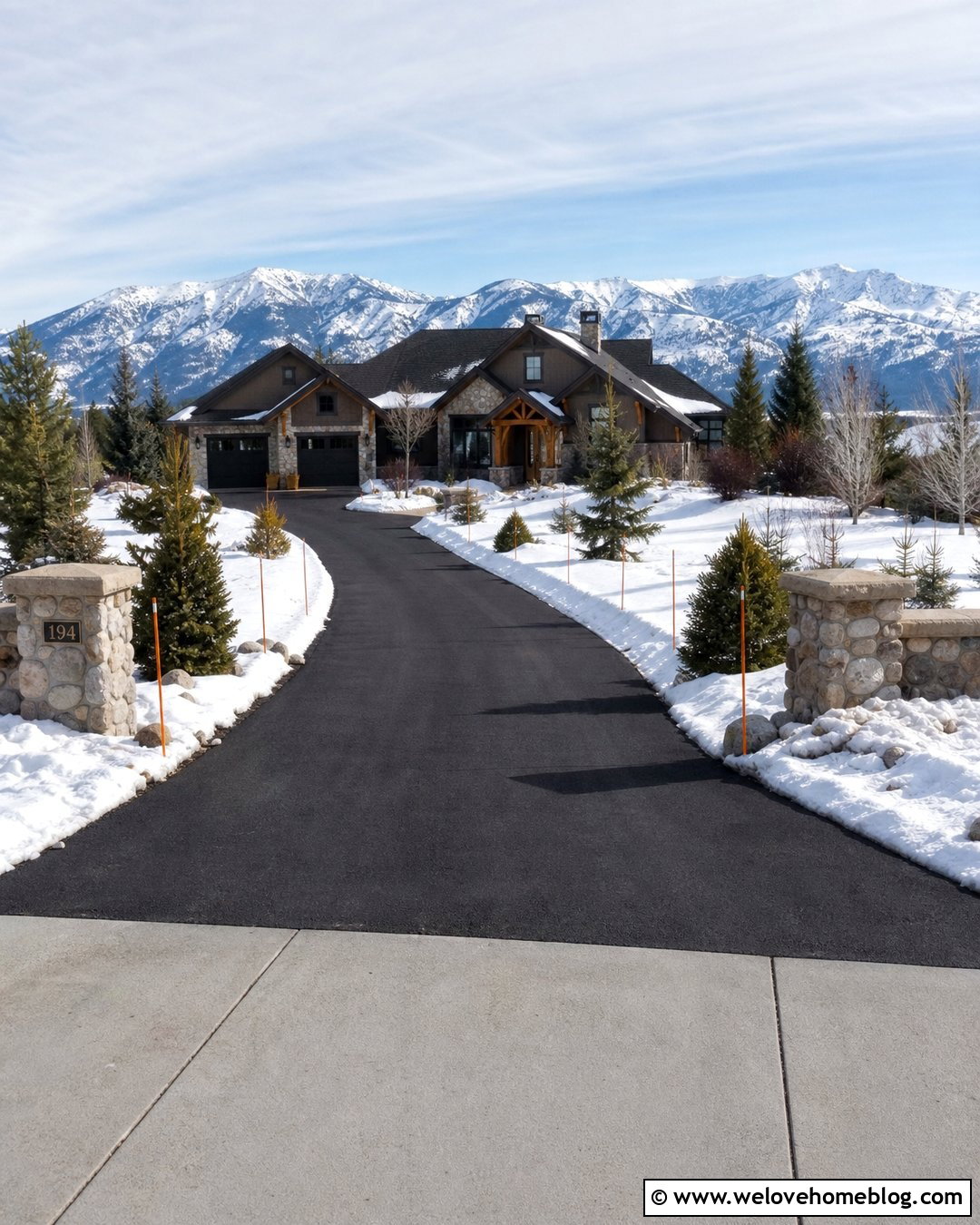
Snow can conceal driveway edges, so a cold-climate entrance benefits from tall orange solar markers mounted well above the expected ground level. Pair them with a durable black asphalt driveway and a broad concrete apron that provides a clean connection to the road. Flexible marker poles are preferable near plowing areas because rigid decorative fixtures may be vulnerable to snow equipment. Keep lights several inches outside the usable pavement while still aligning them closely enough to show the entrance width. Low stone walls and hardy dwarf conifers create year-round structure without crowding the markers. Continue a few matching poles around curves or drainage ditches. Tall stake markers are generally easier to see from a distance, although their placement should account for plows and other maintenance equipment. ()
8. Circular Cobblestone Driveway With Solar Lantern Markers
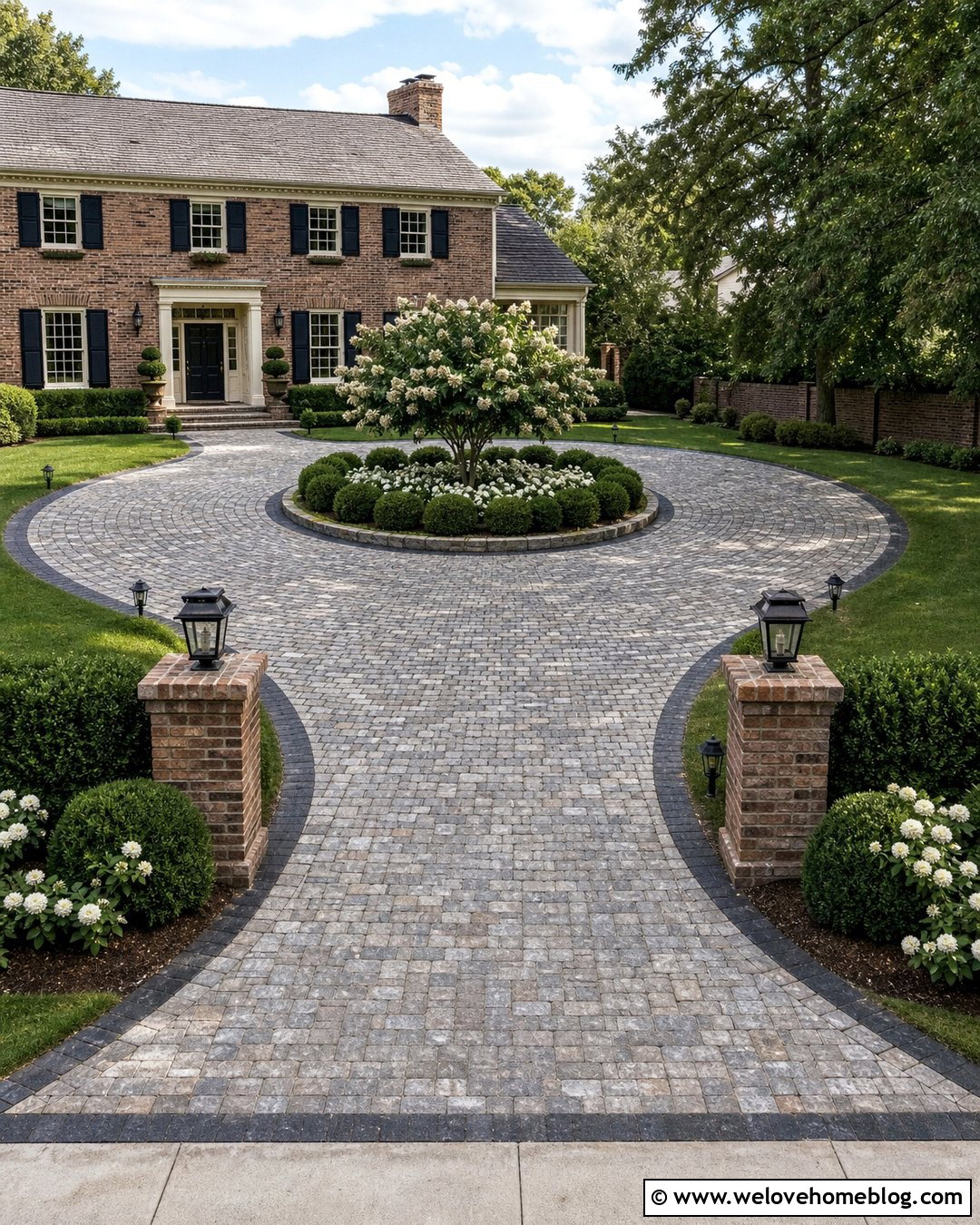
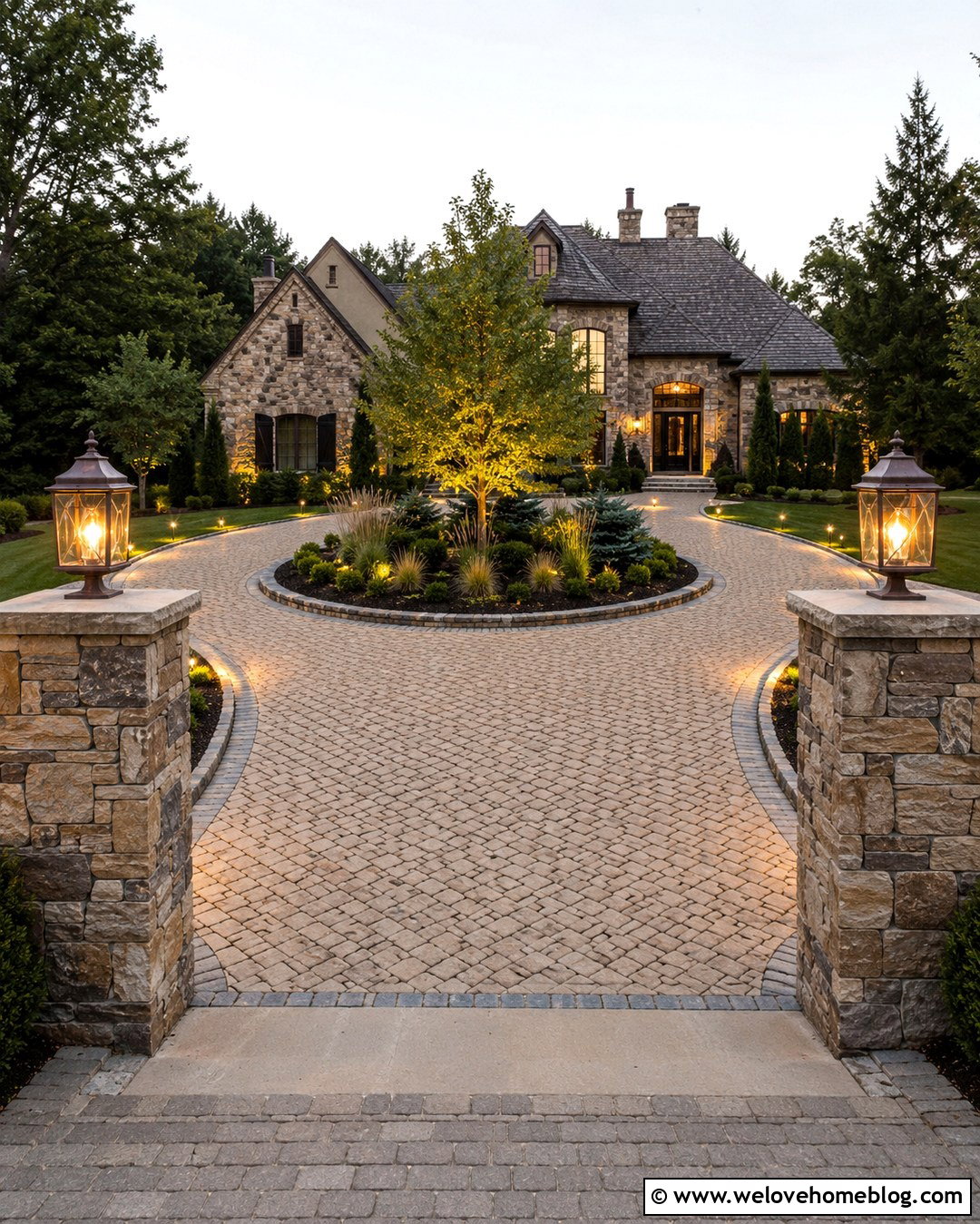
A circular cobblestone driveway calls for entrance lighting that feels substantial but not oversized. Frame the two openings with short brick pillars topped by traditional solar lanterns. Use weathered gray cobblestone for the driving surface and a dark granite border around the entire loop. The central island can hold a small ornamental tree, clipped boxwoods, and low white flowers, creating a focal point visible from both entrances. Add smaller solar path markers along the inner curve to clarify the driving route. This design works beautifully with a colonial or Tudor-inspired house because the materials carry a sense of permanence. Keep every lantern in the same finish and color temperature. Repeating those details produces a cohesive circular layout rather than making the two entrances appear disconnected from each other.
9. Resin Driveway Entrance With Flush Solar Studs
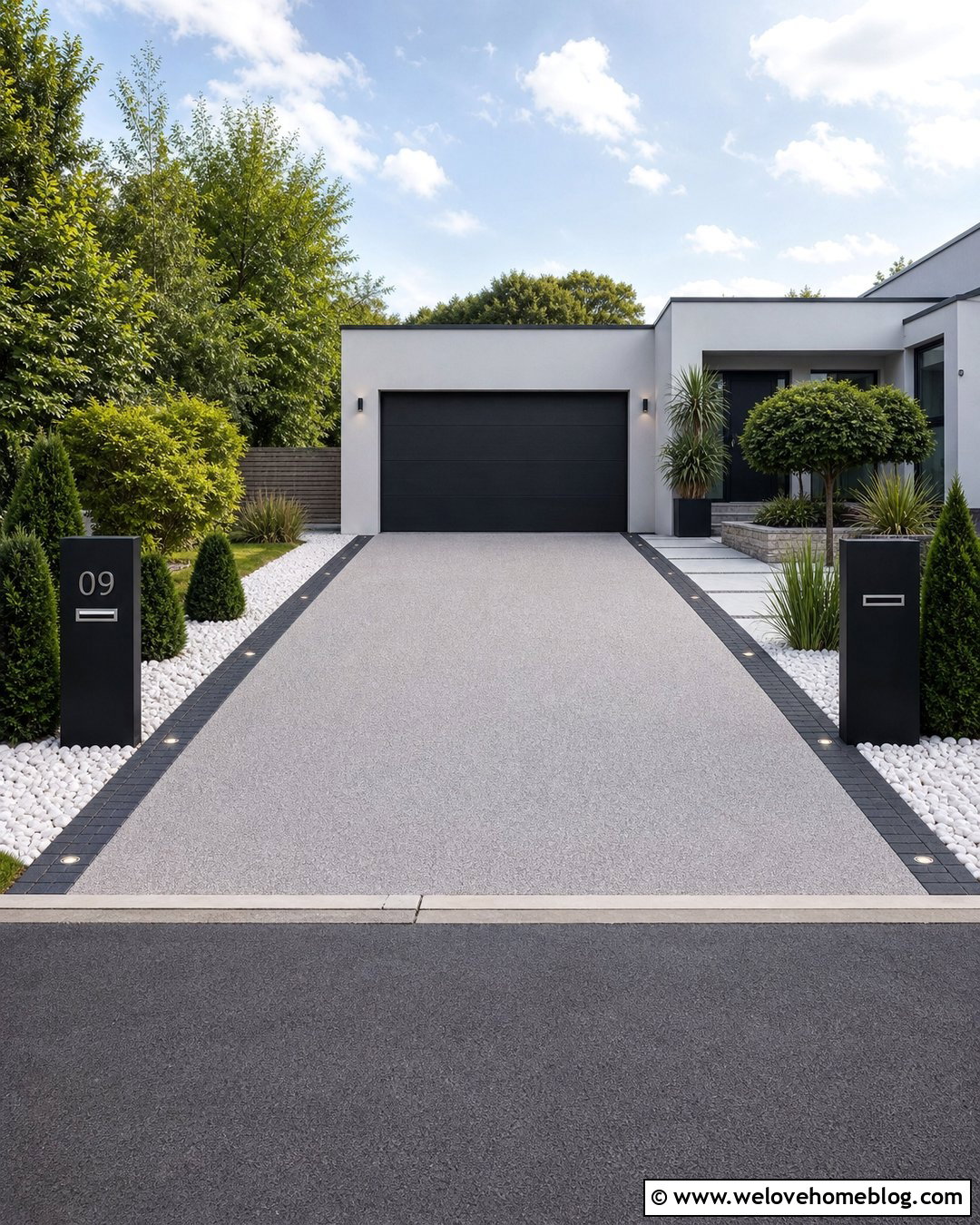
For a sleek entrance, install flush solar studs beside a light-gray resin-bound gravel driveway. Their low profile works well with contemporary architecture because the fixtures do not interrupt the clean sightline from the curb to the garage. Place the studs within a dark border rather than in the main wheel tracks. This helps define the surface while protecting the lights from unnecessary vehicle contact. Add two taller black markers at the street so drivers can locate the opening before the flush lights become visible. Straight beds of ornamental grass, white gravel, and clipped evergreens reinforce the minimalist layout. Select fixtures specifically designed for pavement or driveway conditions, not lightweight garden discs. Flush marker designs can provide edge guidance while reducing the obstruction created by raised stakes. ()

10. Farmhouse Driveway With Wood Post Solar Lights
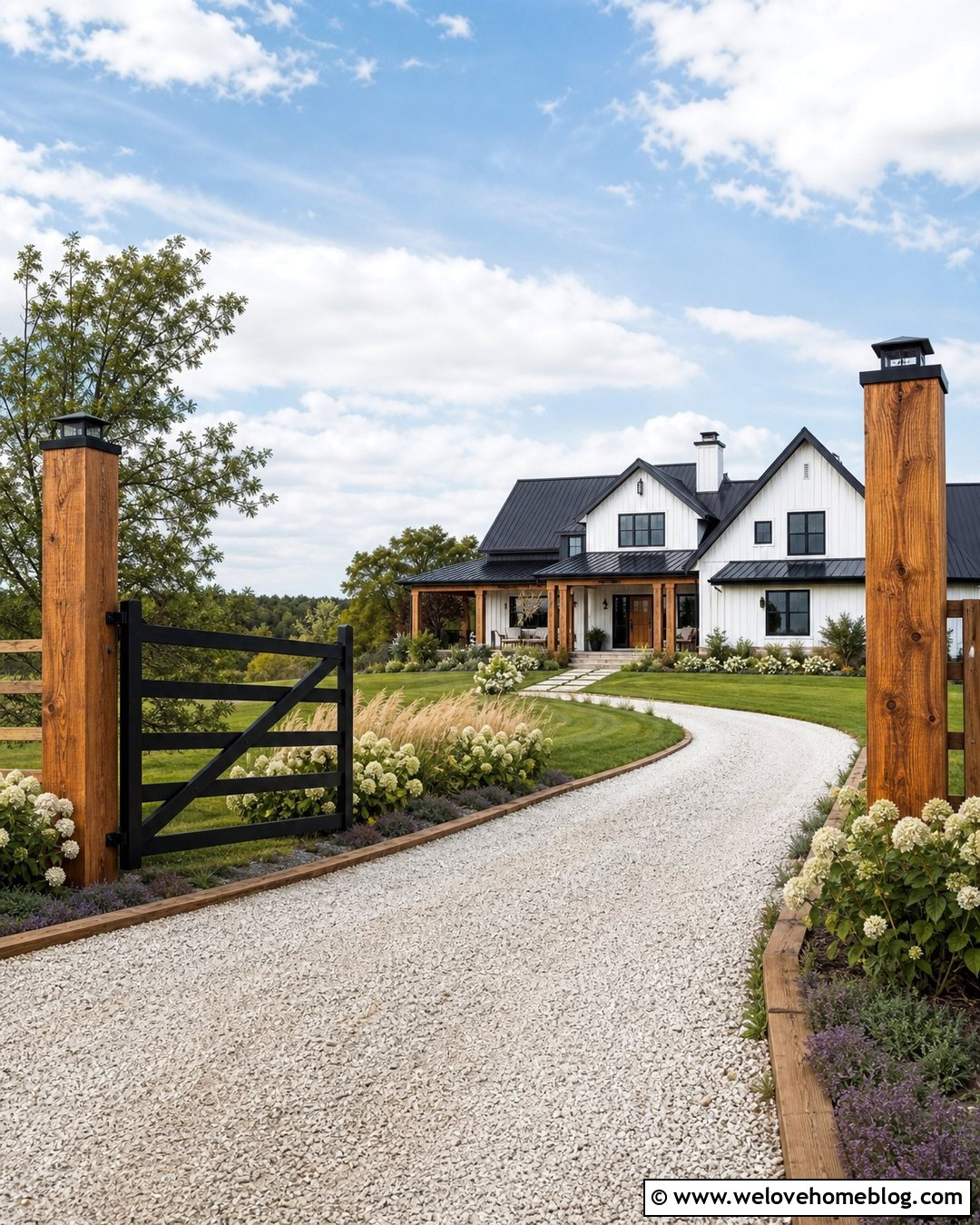
Natural wood posts topped with solar cap lights can turn a plain farmhouse entrance into a warm, recognizable gateway. Use pale crushed-limestone gravel for the driveway and install substantial cedar posts outside each corner. Black metal caps will coordinate with a black farm gate, mailbox, and exterior house fixtures. Continue shorter solar markers along a gently curving timber border, but leave enough open space for farm equipment or delivery vehicles. Plant panicle hydrangeas, fountain grass, and creeping thyme around the post bases without blocking the solar panels. The cedar will weather naturally, giving the entrance a relaxed rural appearance. For stronger symmetry, keep both main posts the same height and align them with the driveway opening. This combination feels welcoming while still serving as a practical vehicle guide.
11. Driveway Entrance With Solar Address Marker Lights
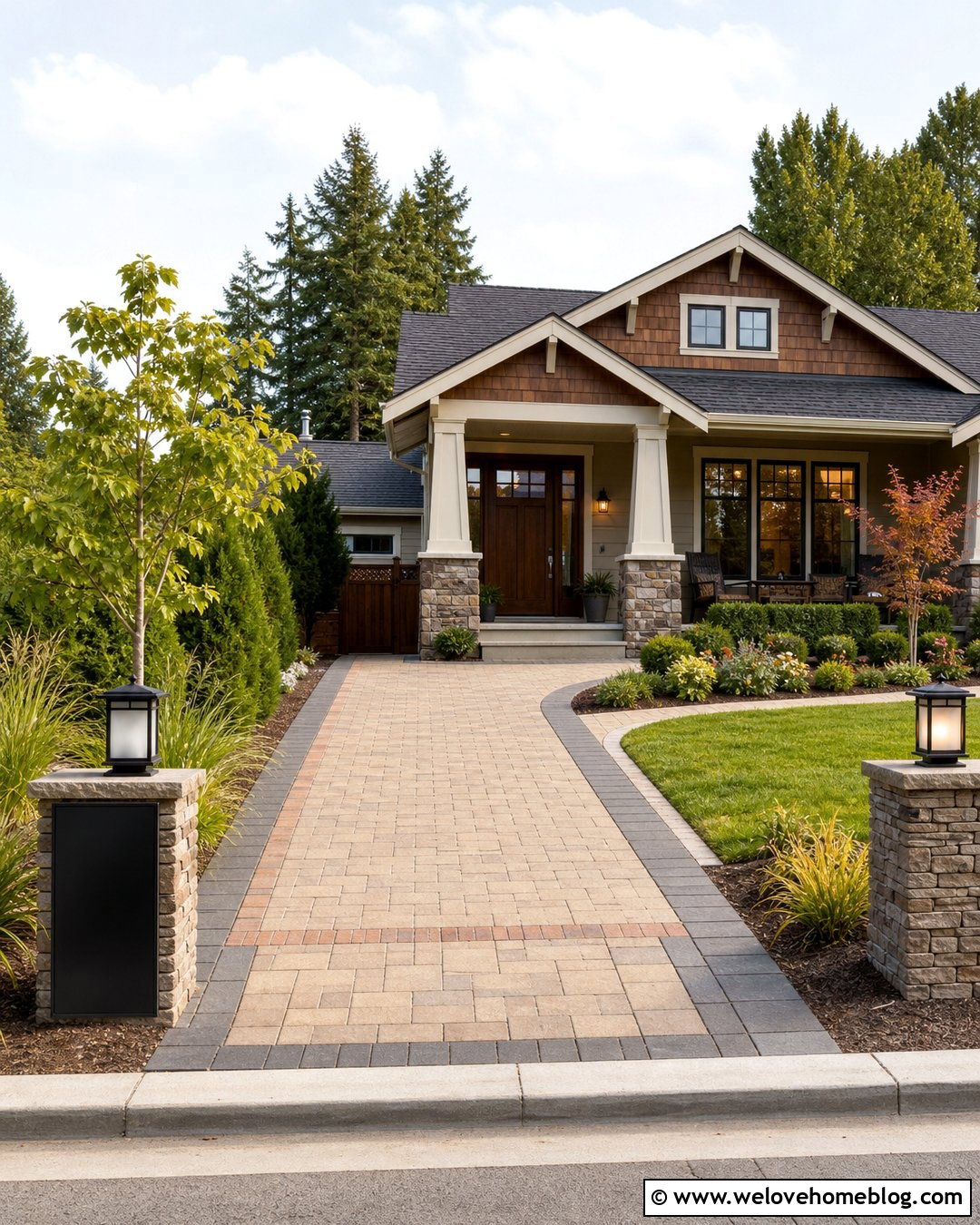
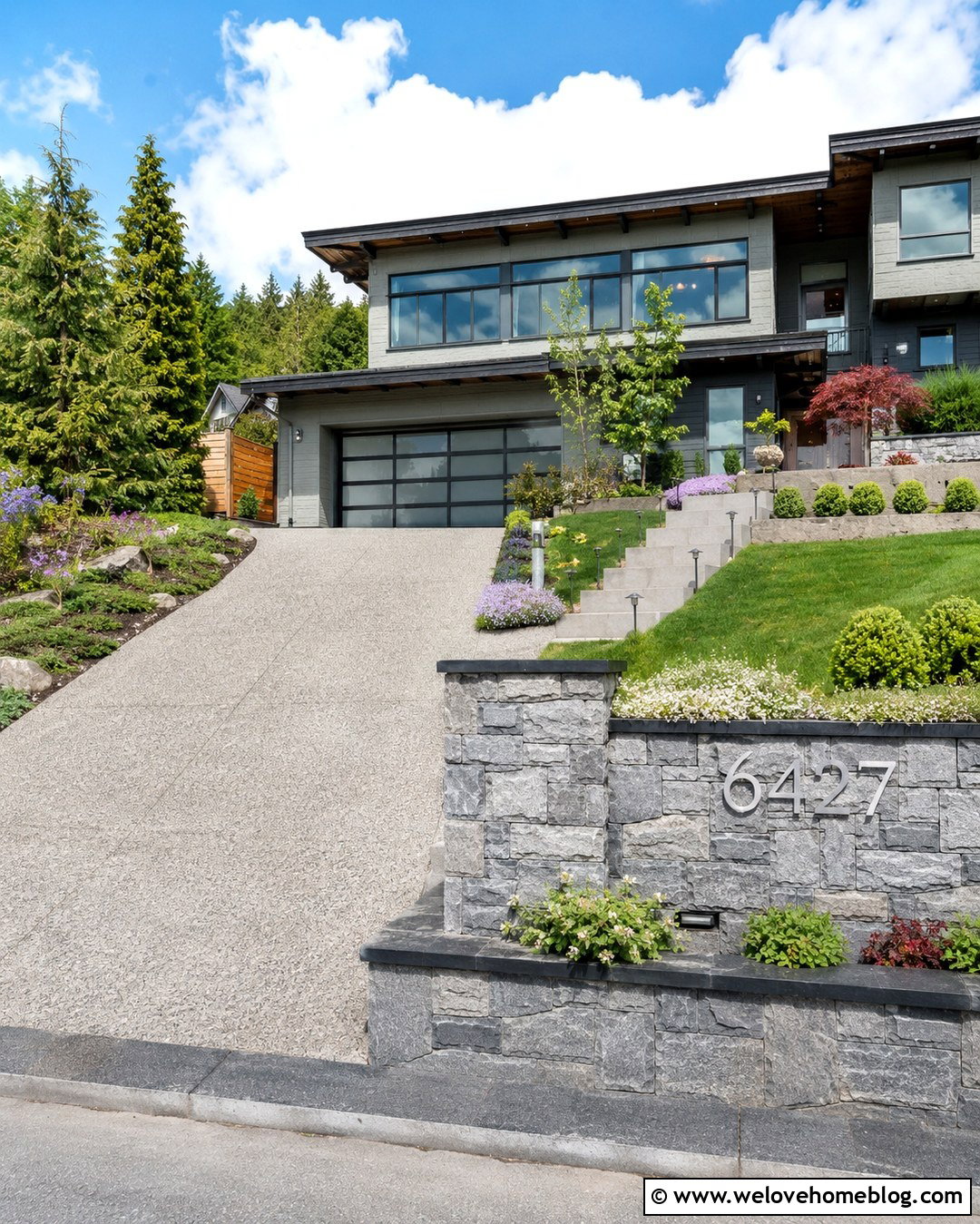
A solar address marker can make the entrance easier for guests and delivery drivers to identify. Build the design around a straight tan concrete-paver driveway with dark charcoal edging. Place an illuminated address sign on one side and a matching solar marker on the opposite side to balance the opening. The numerals should be large, simple, and directed toward approaching traffic rather than facing straight across the road. Add low shrubs behind the sign so foliage does not obscure the address. A narrow brick ribbon can connect the entrance treatment visually to a craftsman-style house. Choose a solar panel location that receives reliable daylight, especially if mature trees shade the roadside. Illuminated house-number features combine entrance visibility with decorative curb appeal when their scale and placement suit the property. ()
12. Sloped Concrete Driveway With Motion Solar Markers
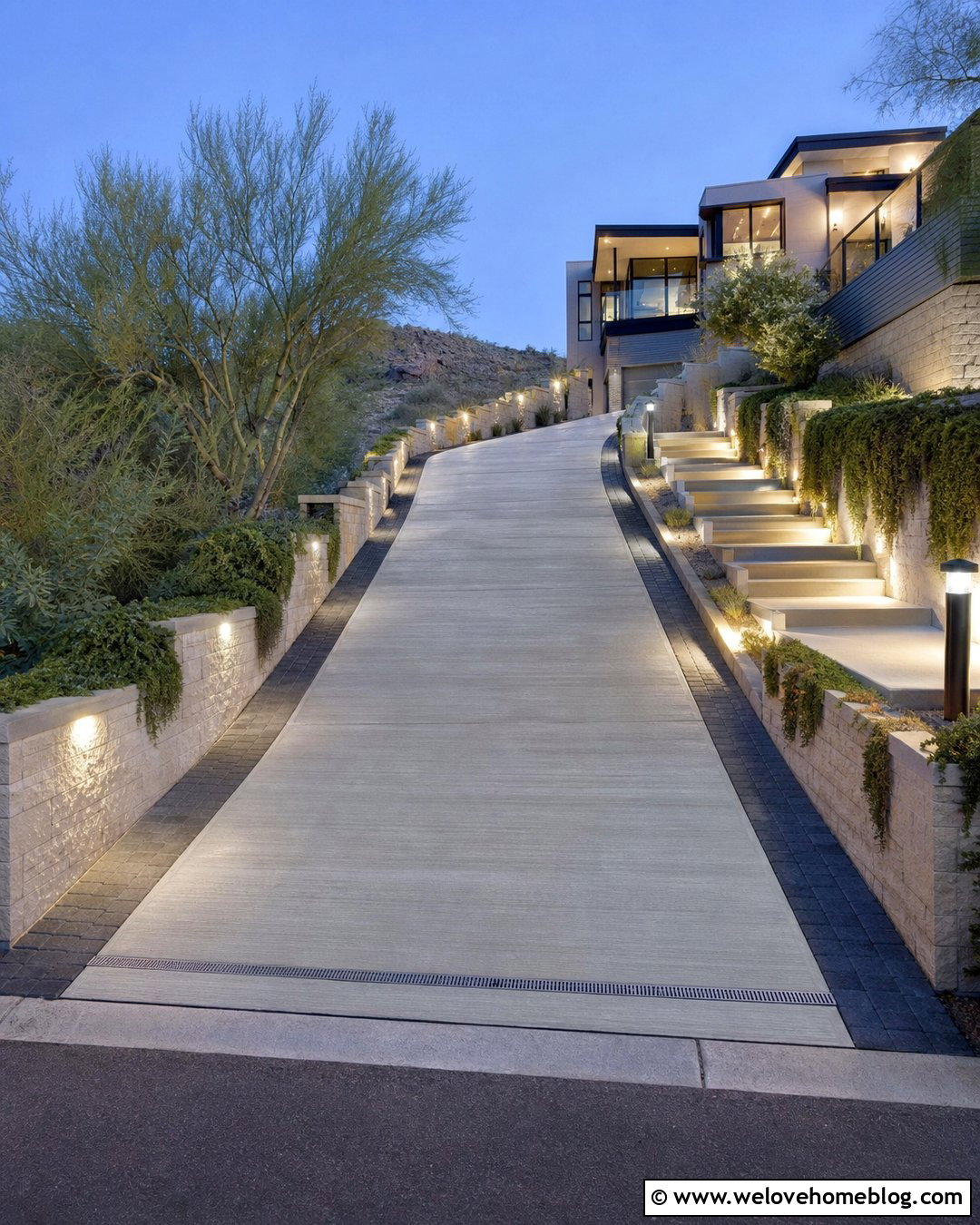
A sloped entrance needs stronger visual guidance because the upper driveway and garage may be hidden from the street. Use broom-finished concrete for traction and border it with textured charcoal pavers. Place steady solar markers at the curb, then add brighter motion-activated fixtures near the steepest section and garage approach. The layered lighting keeps the entrance identifiable while providing extra illumination only when movement occurs. Retaining walls built from pale stone can hold drought-tolerant shrubs and trailing ground cover beside the slope. Keep the fixtures above runoff channels and away from areas where water or debris regularly collects. Aim motion sensors toward the driveway rather than the street to reduce unnecessary activation. Solar motion lighting is commonly used near gates, garage entrances, and other locations where temporary brighter coverage is useful. ()
13. Narrow Driveway With Staggered Solar Marker Lights
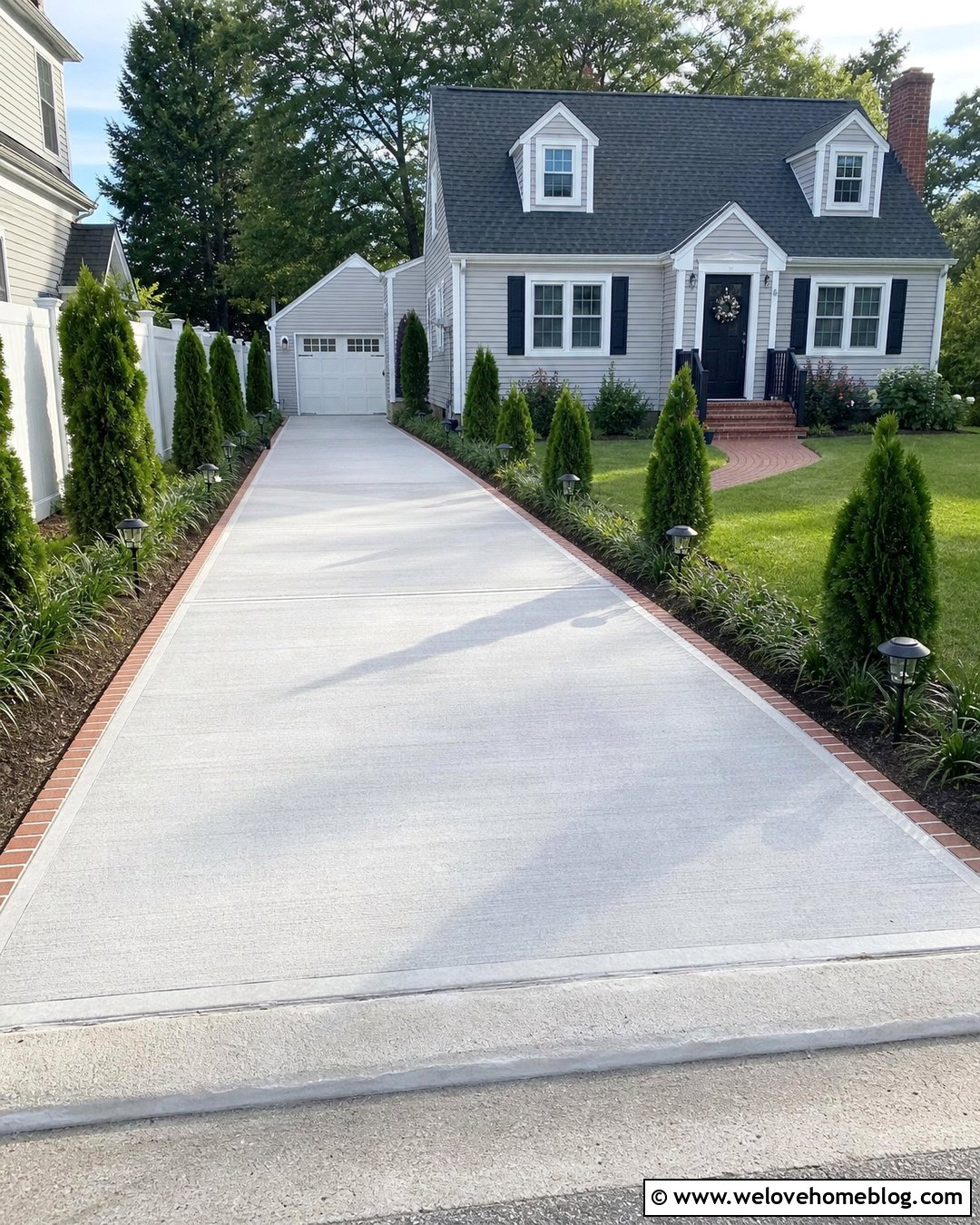
A narrow driveway can feel cramped when tall lights are installed in matching rows. Instead, use staggered solar markers to create guidance without producing a tunnel effect. Pair a light broom-finished concrete surface with a thin clay-brick border that clearly separates the driveway from the lawn. Start with one taller marker on each side of the entrance, then alternate smaller fixtures farther up the drive. Keep every light beyond the vehicle clearance zone and away from doors that may open over the border. Slender planting beds with liriope, compact grasses, and columnar evergreens will preserve usable space. This layout works well beside a cottage, Cape Cod, or compact suburban house. The alternating rhythm provides visual movement and makes the driveway appear longer, while the consistent fixture finish keeps the arrangement orderly.
14. Split Driveway Entrance With Color-Coded Solar Markers
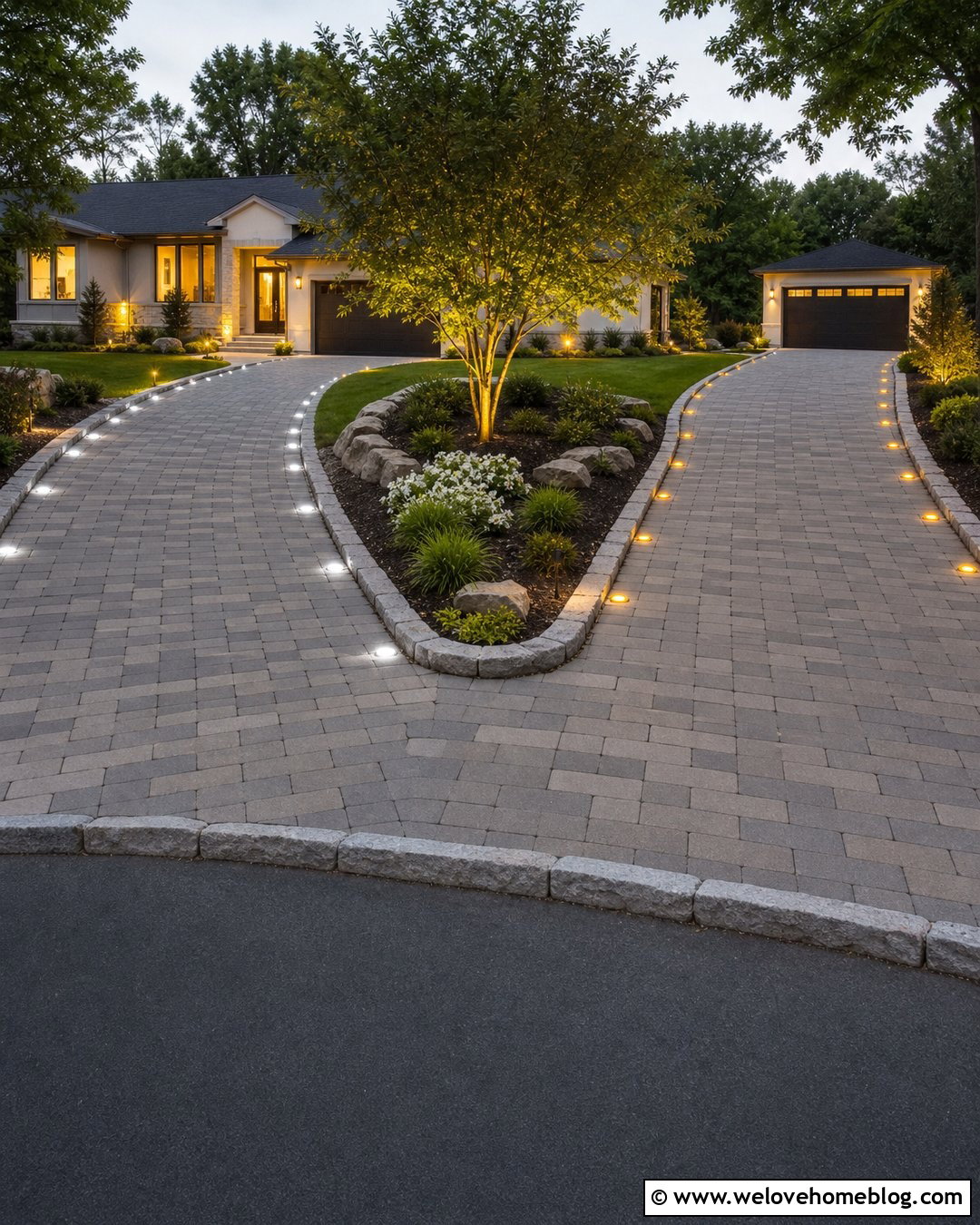
A split driveway can confuse visitors unless each route is immediately understandable. Use warm gray concrete pavers across the entrance, then divide the lanes with a landscaped island containing a small tree and low ground cover. Install white solar markers along the primary route to the house and amber markers along the secondary route to a detached garage or parking pad. Keep the colors subtle and consistent rather than introducing several decorative tones. A low stone curb around the island will protect plants and make the split visible during the day. Add a simple directional sign only if the layout still feels unclear. This solution works best when both branches share the same driveway material and edging. The color-coded lights provide nighttime guidance while the central island explains the circulation pattern in daylight.




15. Stone Pillar Entrance With Solar Lantern Markers
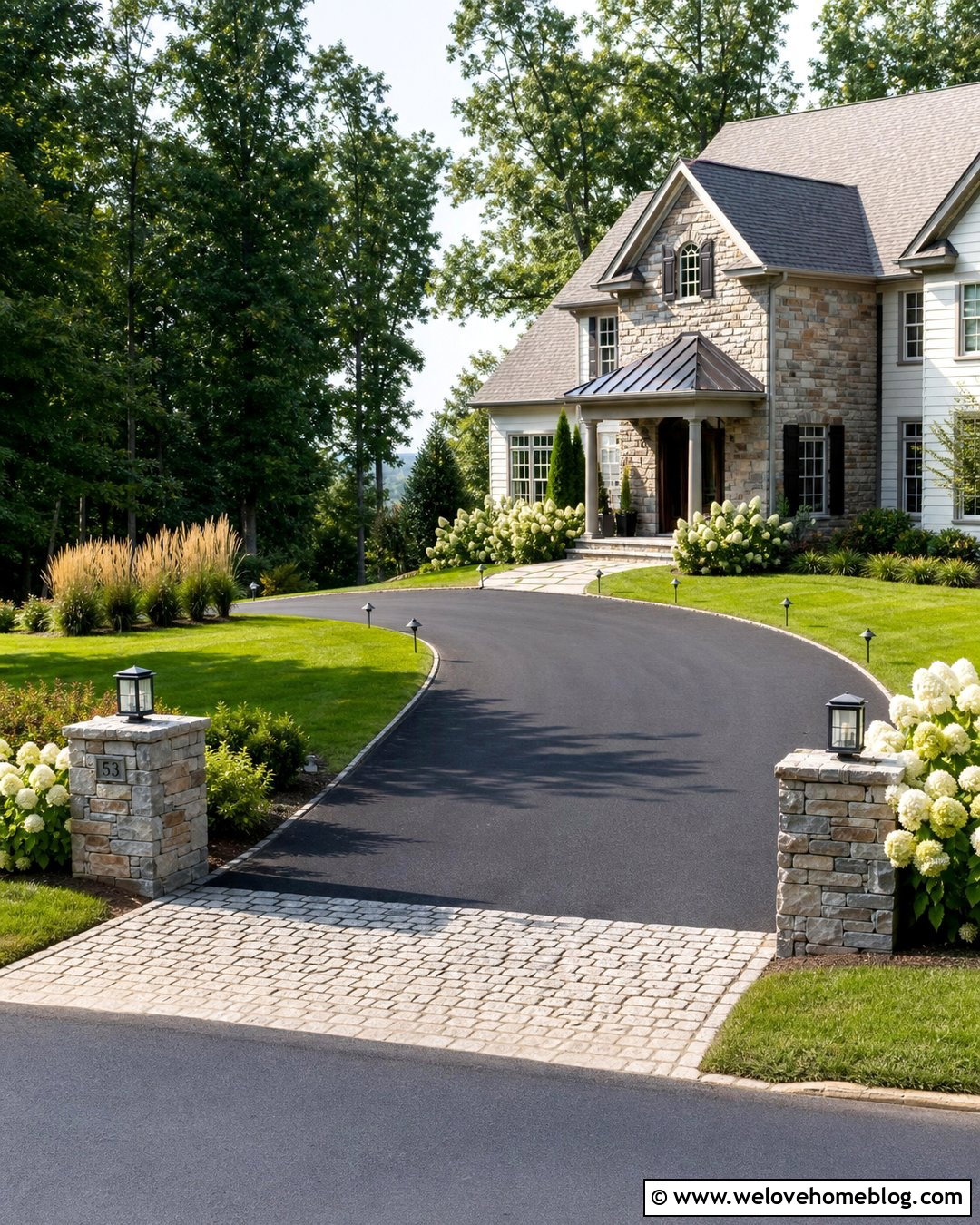
Stone pillars create a strong entrance even when a property does not have a gate. Build two medium-height columns from stacked ledgestone and top them with appropriately scaled solar lanterns. A curved black asphalt driveway with a cobblestone apron will provide an elegant but durable foundation for the design. Continue low solar markers beyond the pillars, spacing them around the first curve instead of lining the entire driveway. Large hydrangeas, clipped hollies, and layered ornamental grasses can connect the stonework to the lawn. Leave clear space around every panel so nearby branches do not reduce sunlight exposure. Match the lantern finish to the mailbox, front-door hardware, and garage lights. When all materials repeat across the property, the entrance feels original to the house rather than like a separate decorative installation.
16. Coastal Gravel Driveway With Low Solar Markers
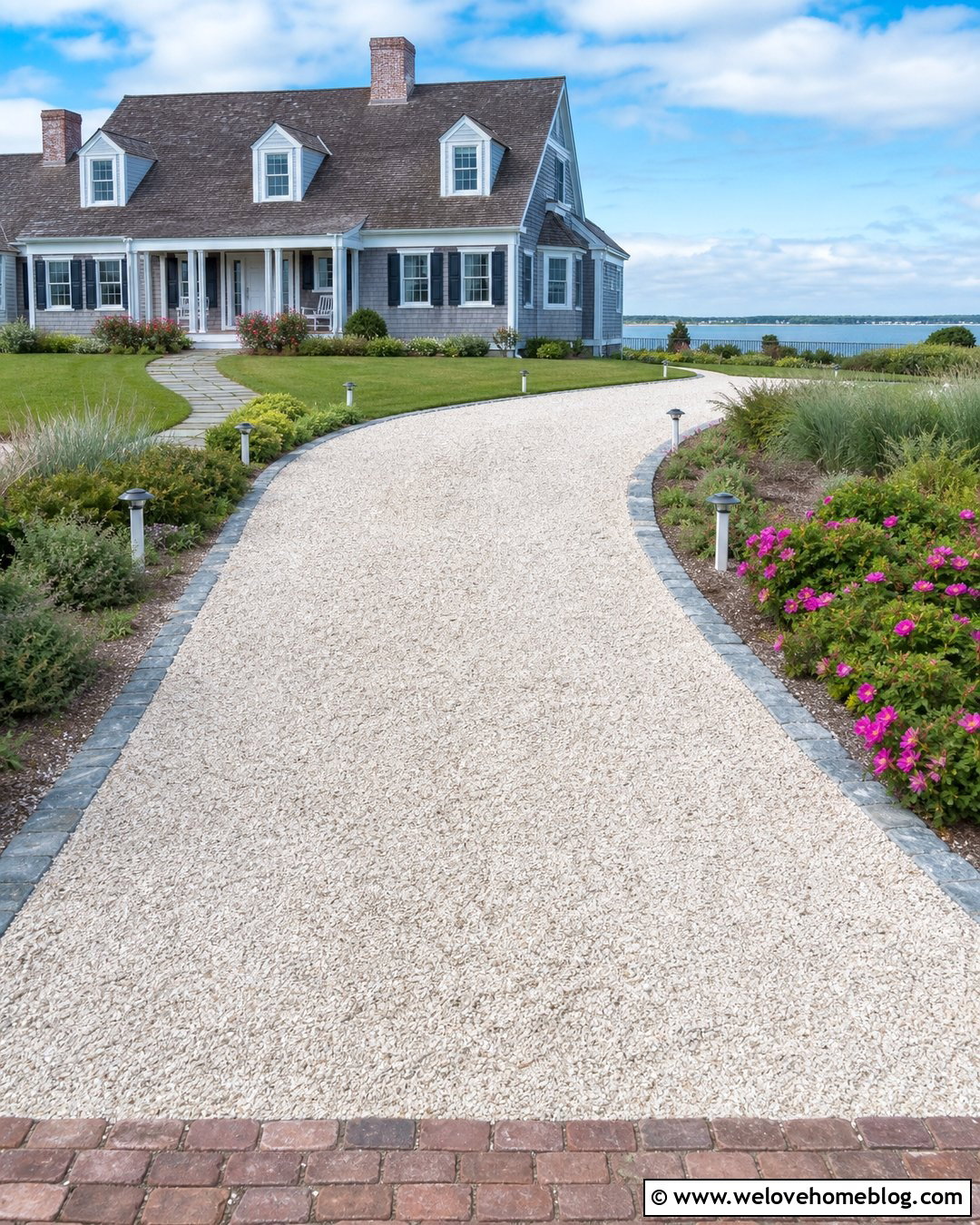
A coastal entrance looks fresh with pale shell gravel, low white solar markers, and soft blue-gray edging stones. Shape the driveway into a broad, gentle curve leading toward a shingle-style or Cape Cod house. Place the brightest markers at the road and use smaller fixtures along the inside curve, where drivers need the most directional help. Salt-tolerant grasses, beach roses, and creeping juniper can frame the surface without requiring formal planting beds. Keep the marker design simple so it does not compete with the natural textures. Dark bronze or white fixtures both work, depending on the house trim. A short paver apron at the street will help contain loose gravel. Together, the bright surface, understated lights, and wind-tolerant landscaping create a relaxed but clearly organized approach.
17. Woodland Driveway With Warm Solar Marker Lights
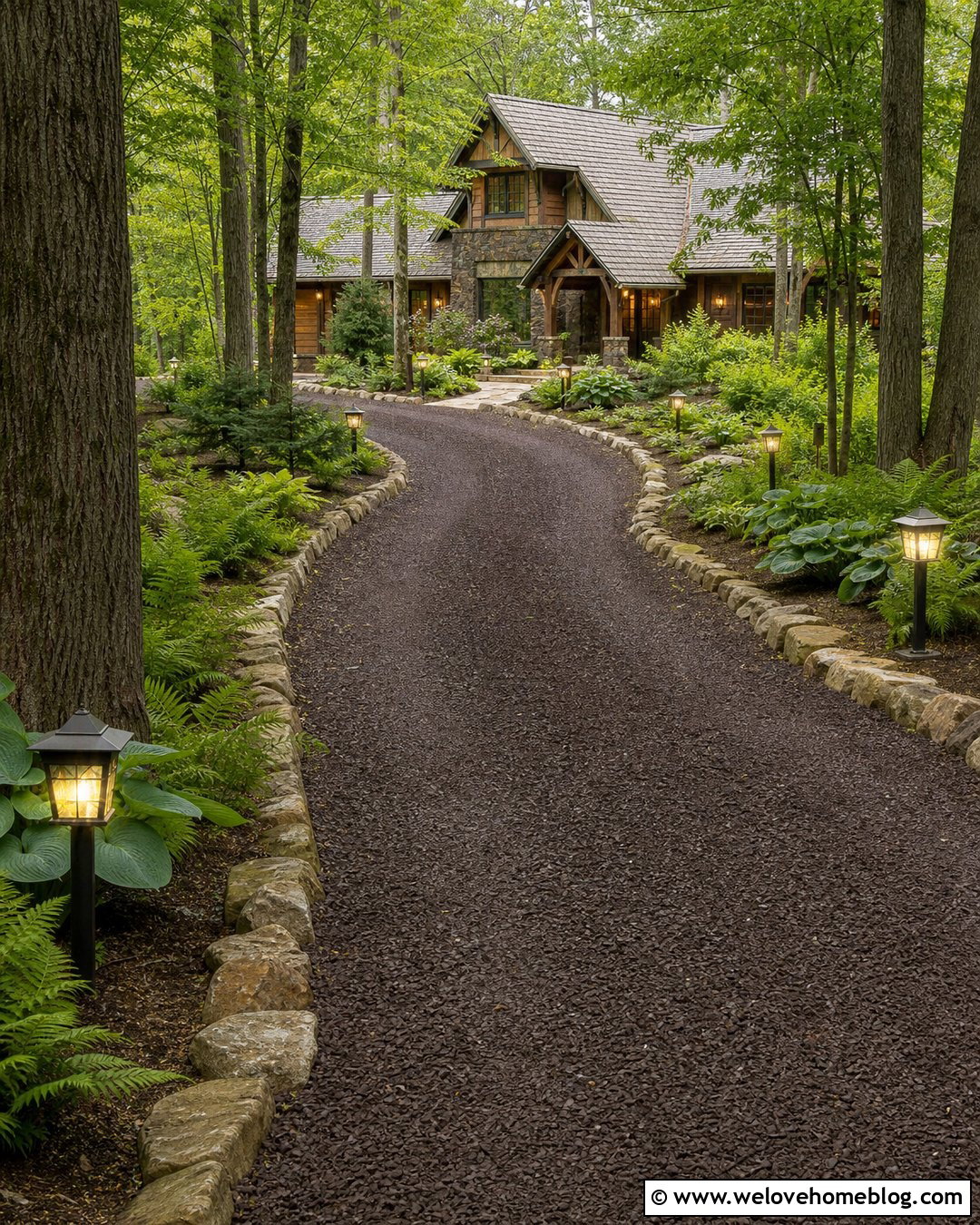
Soft warm-white markers can help a woodland driveway feel welcoming without overpowering the natural setting. Use dark brown crushed stone for a gently curving surface and edge it with rough logs or irregular fieldstone. Install tall fixtures at the road entrance, then place smaller lights only at curves, bridges, and changes in elevation. Ferns, hostas, native shrubs, and existing tree trunks will frame the driveway, but plants must not cover the solar panels. Look for the sunniest pockets when selecting each position. A rustic craftsman or cabin-inspired house fits naturally at the end of this approach. Warm light complements bark, stone, and earthy gravel tones. Keeping the number of fixtures restrained also preserves the wooded atmosphere while still making the route understandable for nighttime arrivals.
18. Desert Gravel Driveway With Solar Bollard Markers
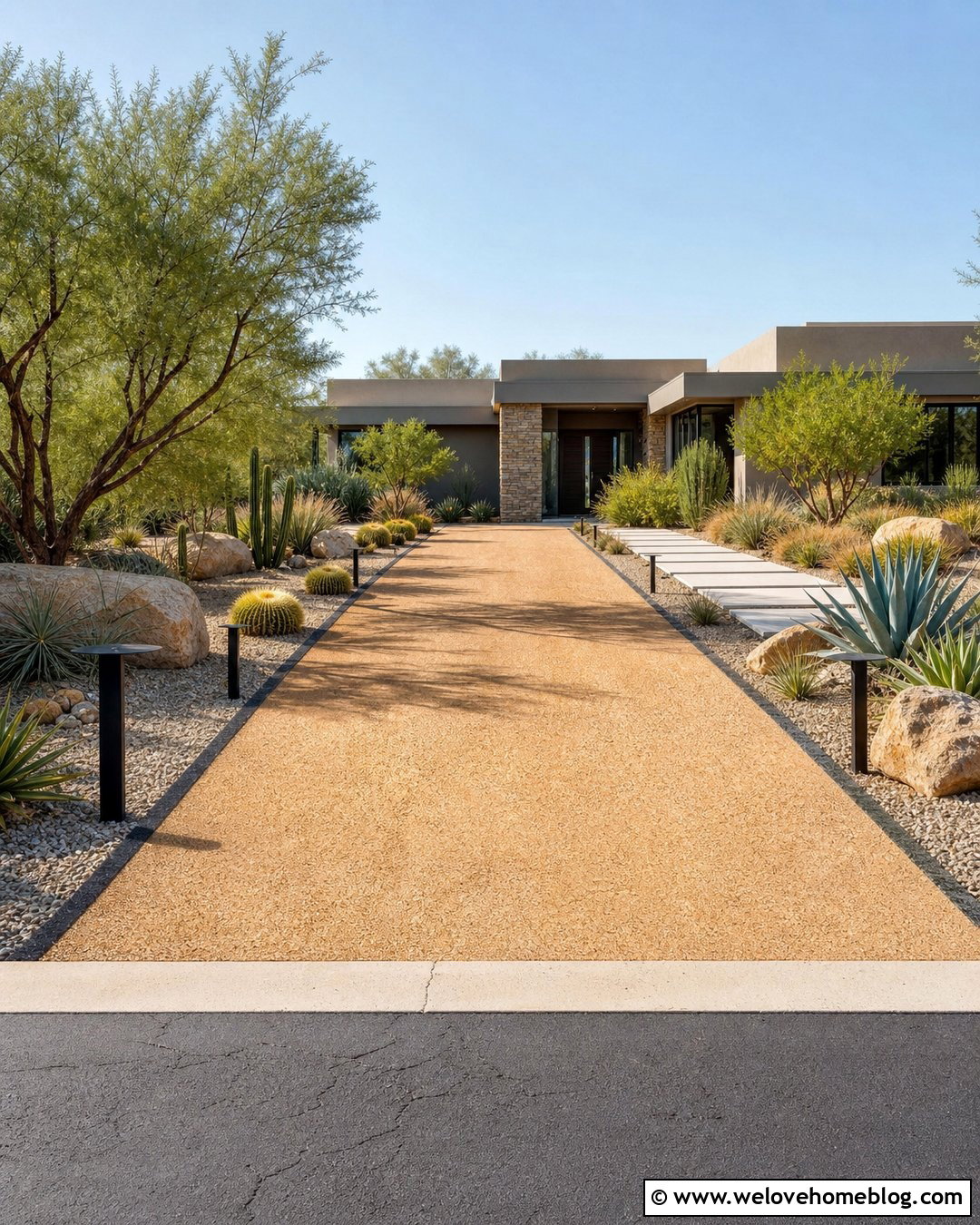
Desert landscaping provides an ideal backdrop for sculptural solar bollards. Build the driveway from compacted decomposed granite in a warm tan shade and define both sides with dark steel edging. At the entrance, use two tall black bollards that direct light downward across the gravel. Repeat shorter versions near the walkway and parking court. Agave, yucca, barrel cactus, and decorative boulders can create bold planting groups while preserving open views of every marker. A straight layout suits a low modern or Southwestern house with stucco walls and wood accents. Avoid scattering small fixtures throughout the rock beds. A limited number of well-positioned lights will create a cleaner composition. The contrast between black fixtures, golden gravel, and architectural plants makes the entire driveway visible and visually distinctive.
19. Budget Asphalt Driveway With Simple Solar Stakes
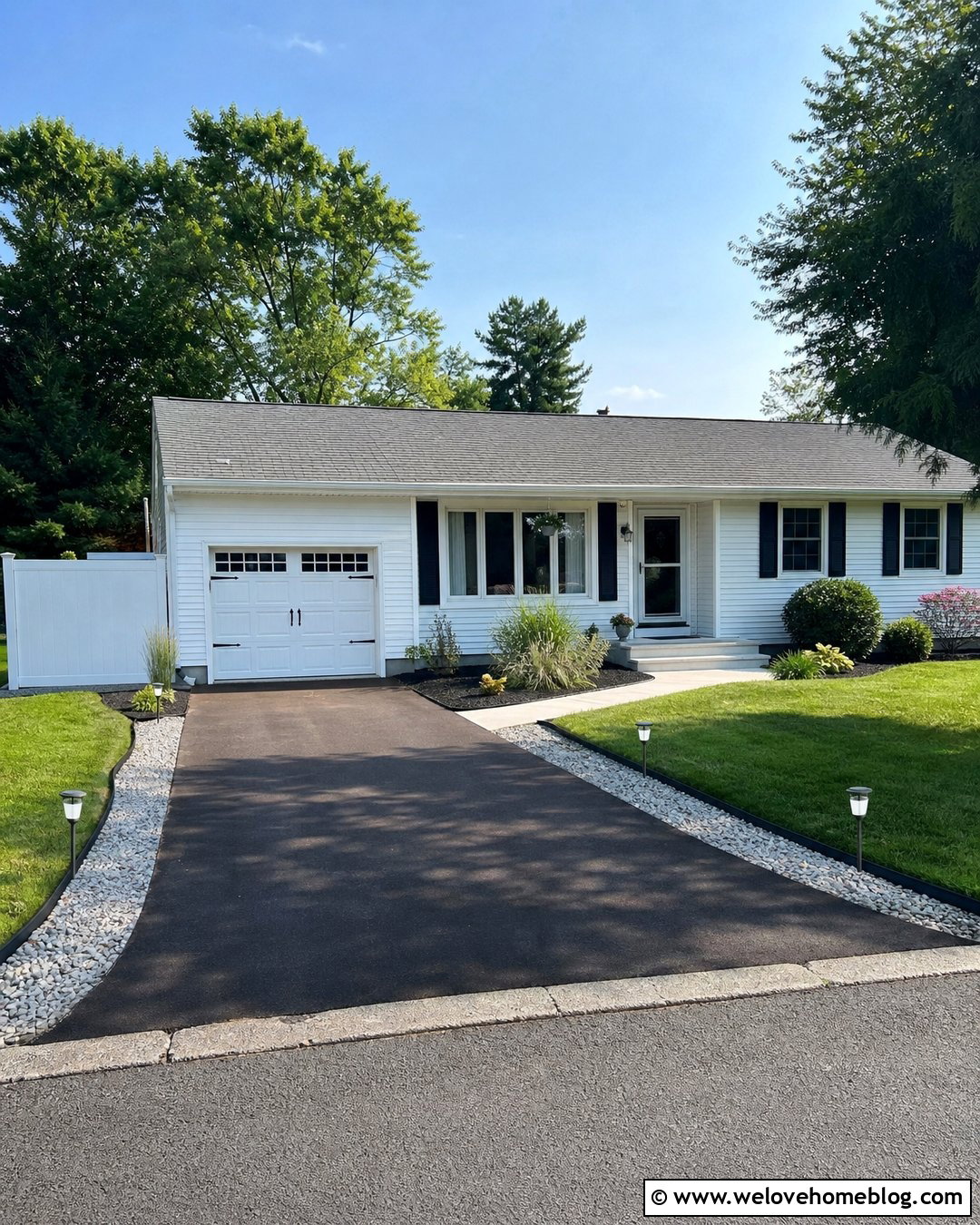
An affordable entrance can still look organized with basic solar stakes placed in a deliberate pattern. Start with a black asphalt driveway, a neat gravel shoulder, and two matching white markers at the road. Continue the same lights along one side where the driveway meets the walkway or lawn. Keeping the opposite edge open can reduce visual clutter on a short suburban lot. Create small mulch beds around the entrance markers and add hardy shrubs or ornamental grasses for a finished appearance. Select simple fixtures with replaceable rechargeable batteries when possible, then clean the panels periodically so dirt does not block sunlight. Straight spacing and consistent height matter more than ornate construction. This design offers a practical update for a ranch or starter home without requiring pillars, masonry, trenching, or major landscape work.
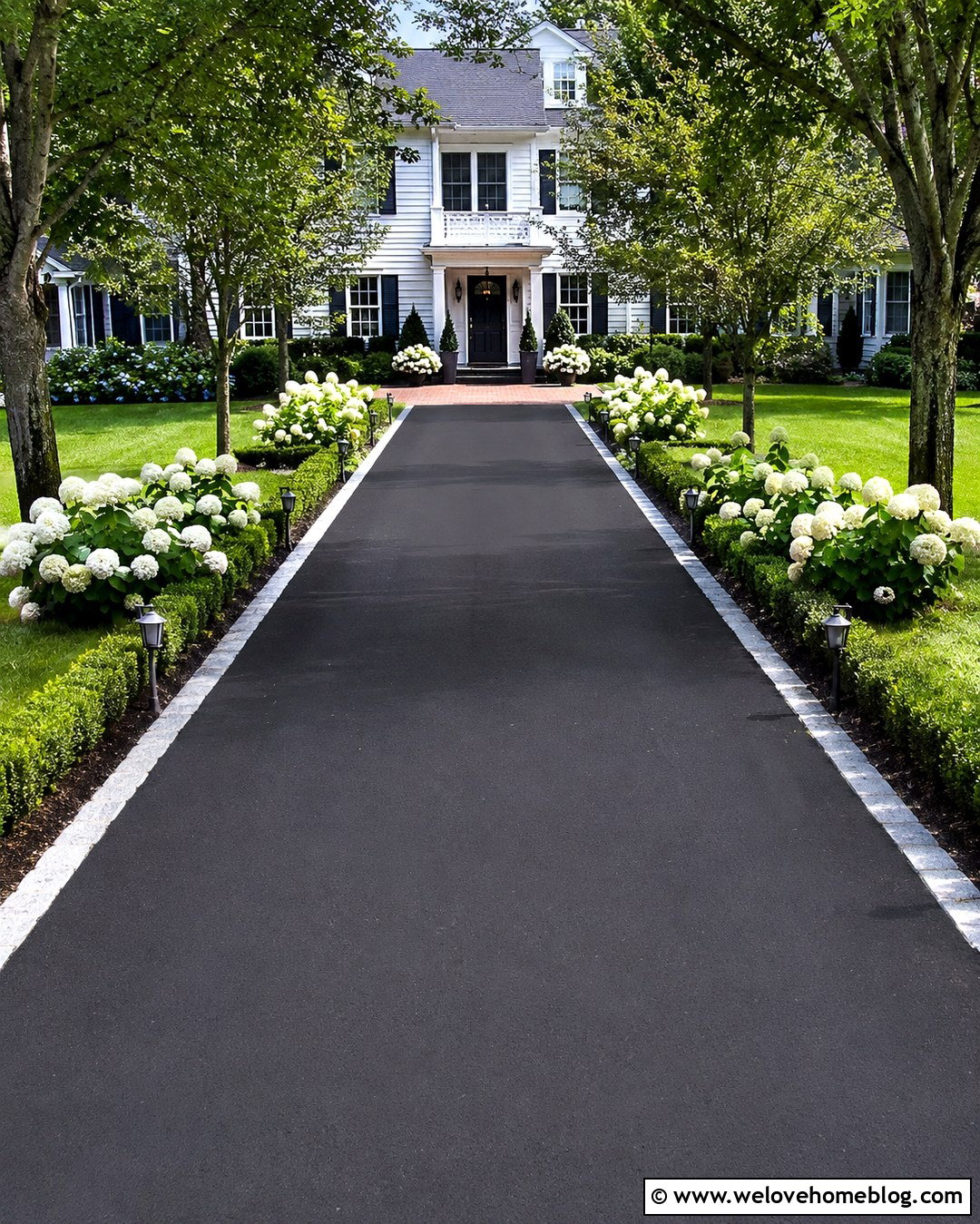
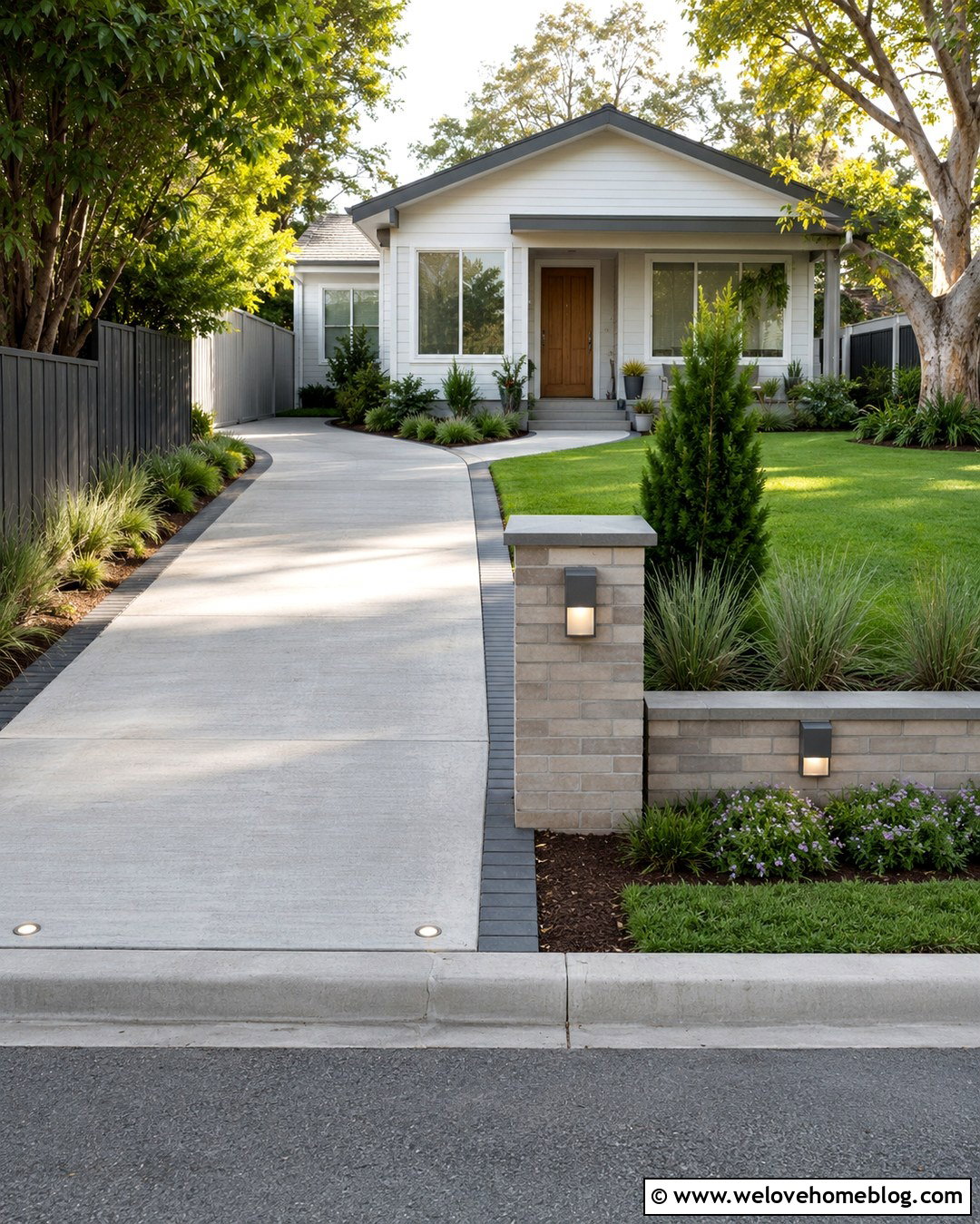
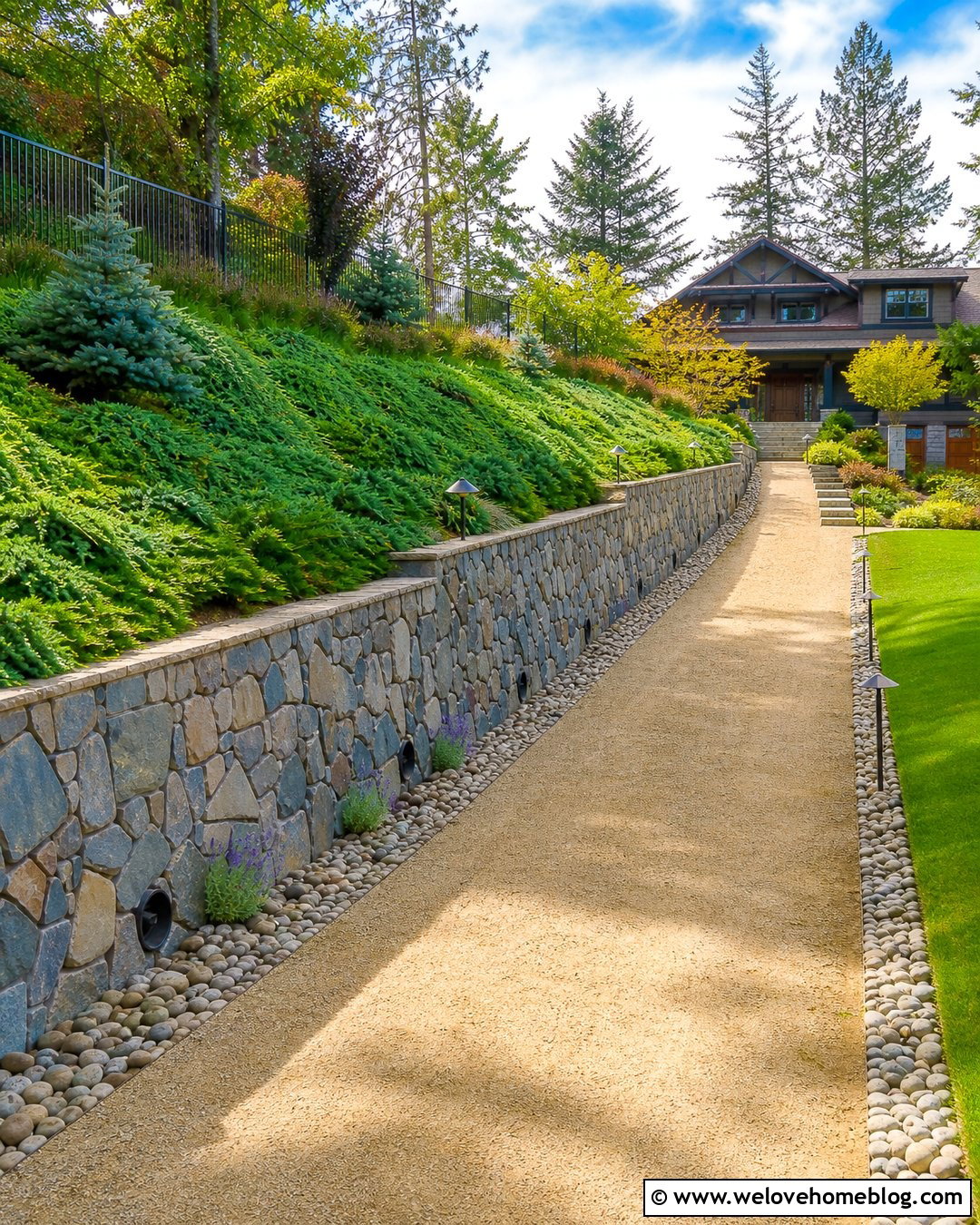
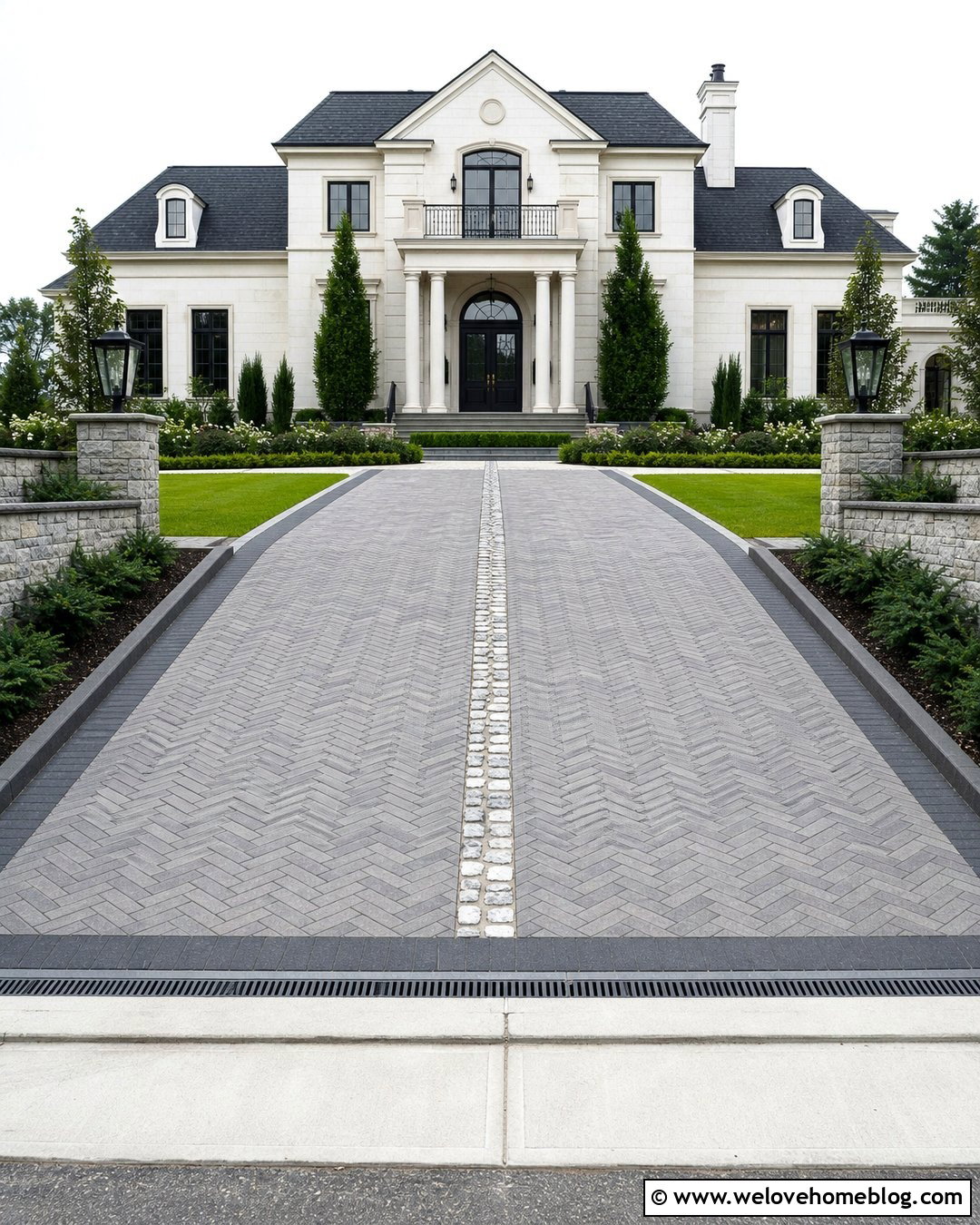
20. Gated Driveway With Solar Gate And Marker Lights

A gated entrance works best when the gate, posts, driveway markers, and surrounding landscape are planned together. Use dark clay brick pavers in a herringbone pattern, framed by a charcoal border and two stone-clad gate pillars. Mount solar lanterns on the pillars and add low marker lights just beyond the gate to reveal the driveway direction. Black metal fencing should remain visually open enough for the house and landscape to be seen from the street. Rounded beds with boxwoods, white roses, and small ornamental trees can soften the masonry. If stronger security lighting is needed, include a motion-activated solar fixture aimed toward the vehicle approach. The layered setup identifies the entrance, emphasizes the gate, and guides drivers forward without relying on a single fixture to perform every lighting task.
Conclusion:
These **20 Driveway Markers Entrance Solar Lights Ideas** show how lighting can become part of a complete entrance rather than an afterthought. Begin with the driveway material and shape, then select markers that suit the property’s scale, architecture, climate, and visibility needs. Tall stakes work well beside gravel lanes and snowy roads, while post-cap lanterns complement pillars, gates, and traditional homes. Bollards and flush studs offer a cleaner choice for contemporary driveways. Whatever design you choose, keep solar panels clear of heavy shade and place fixtures beyond normal tire paths and snow-removal areas. Consistent finishes, balanced spacing, and coordinated landscaping will create an entrance that feels attractive during the day and easier to navigate after dark.

Related posts:

Leave a Reply