
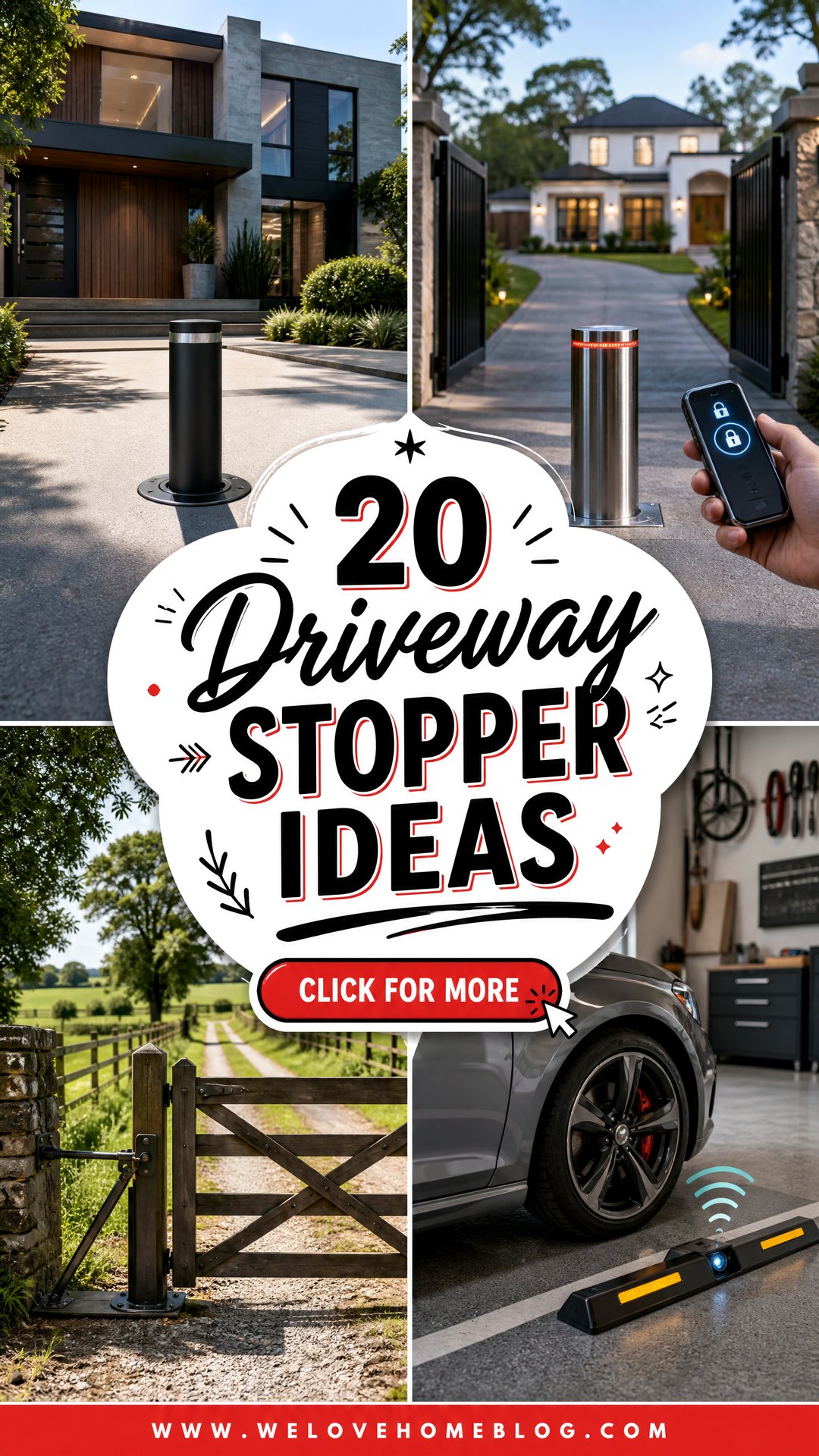
A well-planned driveway stopper can make parking easier, protect landscaping, control access, and give the front of your home a more finished appearance. The best 20 Driveway Stopper Ideas go beyond a basic concrete block. They combine the stopper with the driveway material, parking layout, edging, lighting, and house style. Options range from rubber and stone wheel stops to folding bollards, decorative gates, chains, planters, and smart parking systems. Parking stops are commonly made from concrete, rubber, or plastic, while bollards and gates can provide stronger access control at the driveway entrance. () Before installing anything, consider visibility, drainage, snow removal, pedestrian movement, and vehicle clearance. The complete designs below offer practical and attractive 20 Driveway Stopper Ideas.
1. Concrete Driveway Stopper With Paver Border
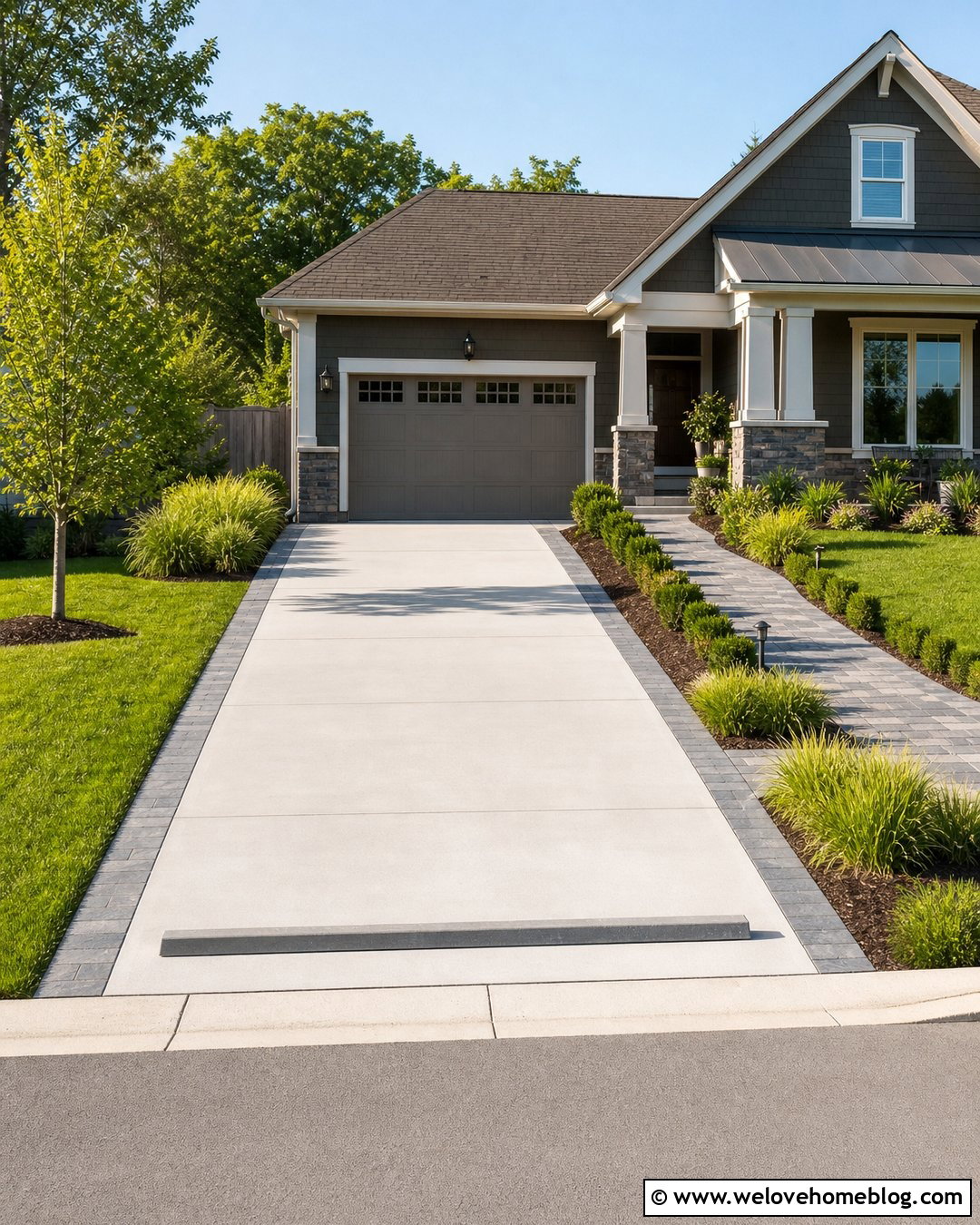
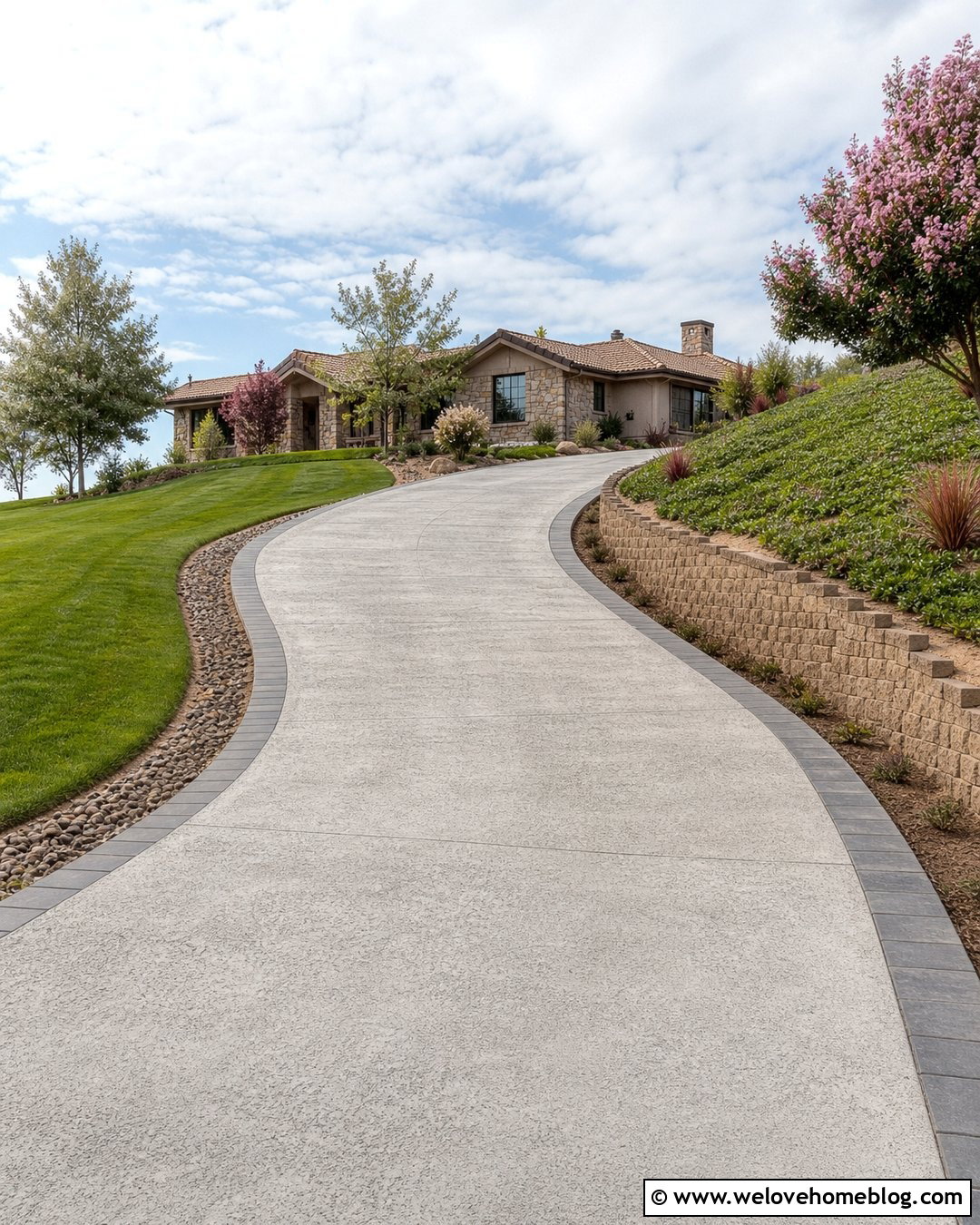
A precast concrete driveway stopper creates a clear parking limit without looking out of place on a traditional poured concrete surface. Choose a low-profile model in a light gray tone that blends with the driveway rather than using a bright commercial finish. A dark charcoal paver border along both sides adds contrast and helps define the parking bay. Position the stopper far enough from the garage to leave room for walking, storage access, and the vehicle’s front overhang. Low planting beds with boxwood, ornamental grass, or compact hydrangeas soften the hard surfaces. Reflective inserts can improve visibility without dominating the design. This complete look works especially well with a suburban ranch or Craftsman home where simple materials and clean boundaries feel natural.
2. Rubber Driveway Stopper On Black Asphalt
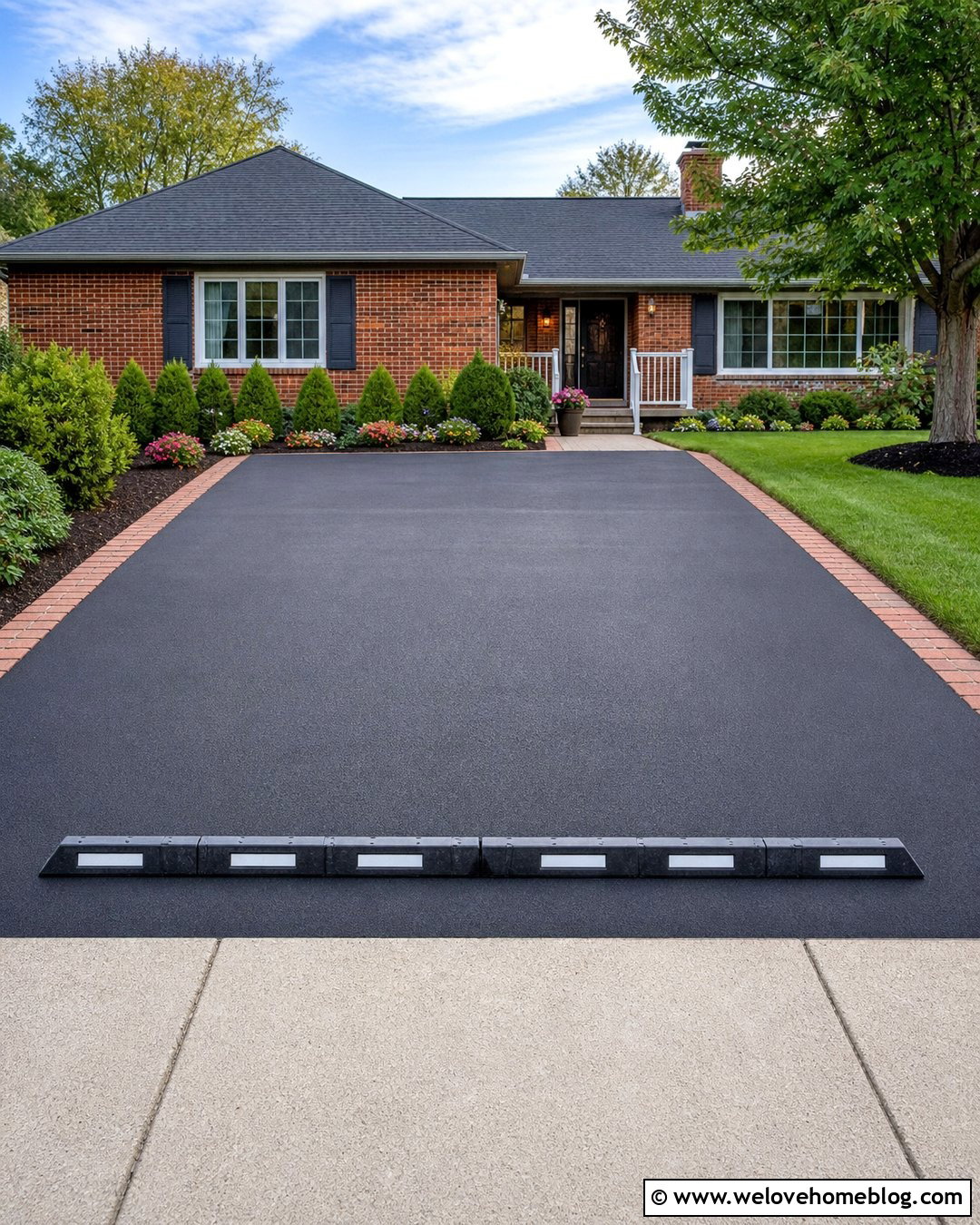
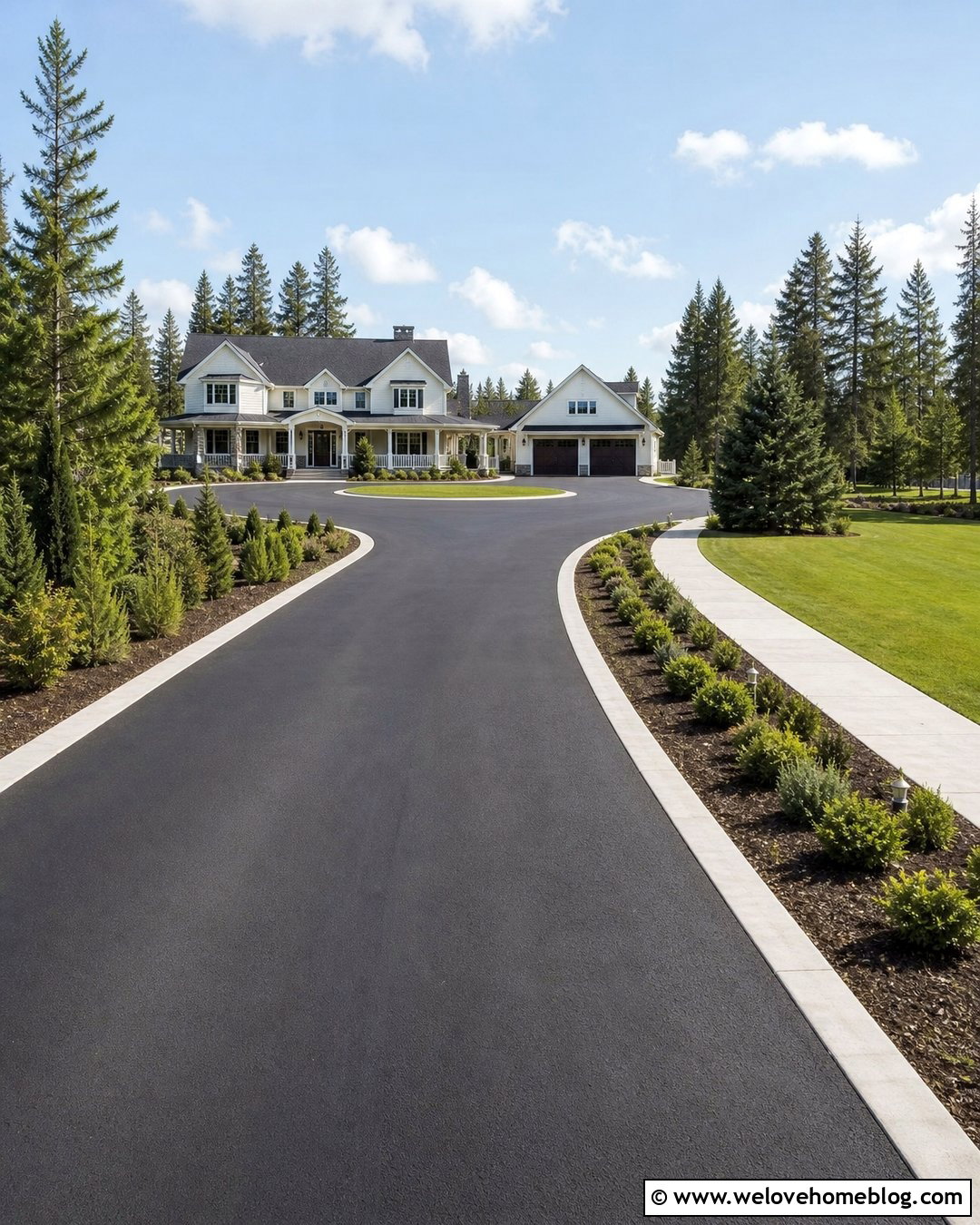
Black asphalt provides a practical background for a recycled rubber driveway stopper, especially when durability and easy visibility matter. Select a black wheel stop with molded yellow or white reflective panels, then install it across a designated parking position near the garage. A soldier-course border of red or charcoal brick gives the asphalt a cleaner residential finish. On either side, narrow mulch beds can hold evergreen shrubs and low flowering perennials without reducing usable driveway width. The stopper should be securely anchored according to its manufacturer’s instructions so it does not slide or twist. This arrangement suits a double driveway where one bay needs a reliable stopping point. The dark materials create a cohesive appearance, while the reflective details help drivers identify the parking limit in rain or low light.
3. Recycled Plastic Driveway Stopper With Gravel Parking Pad
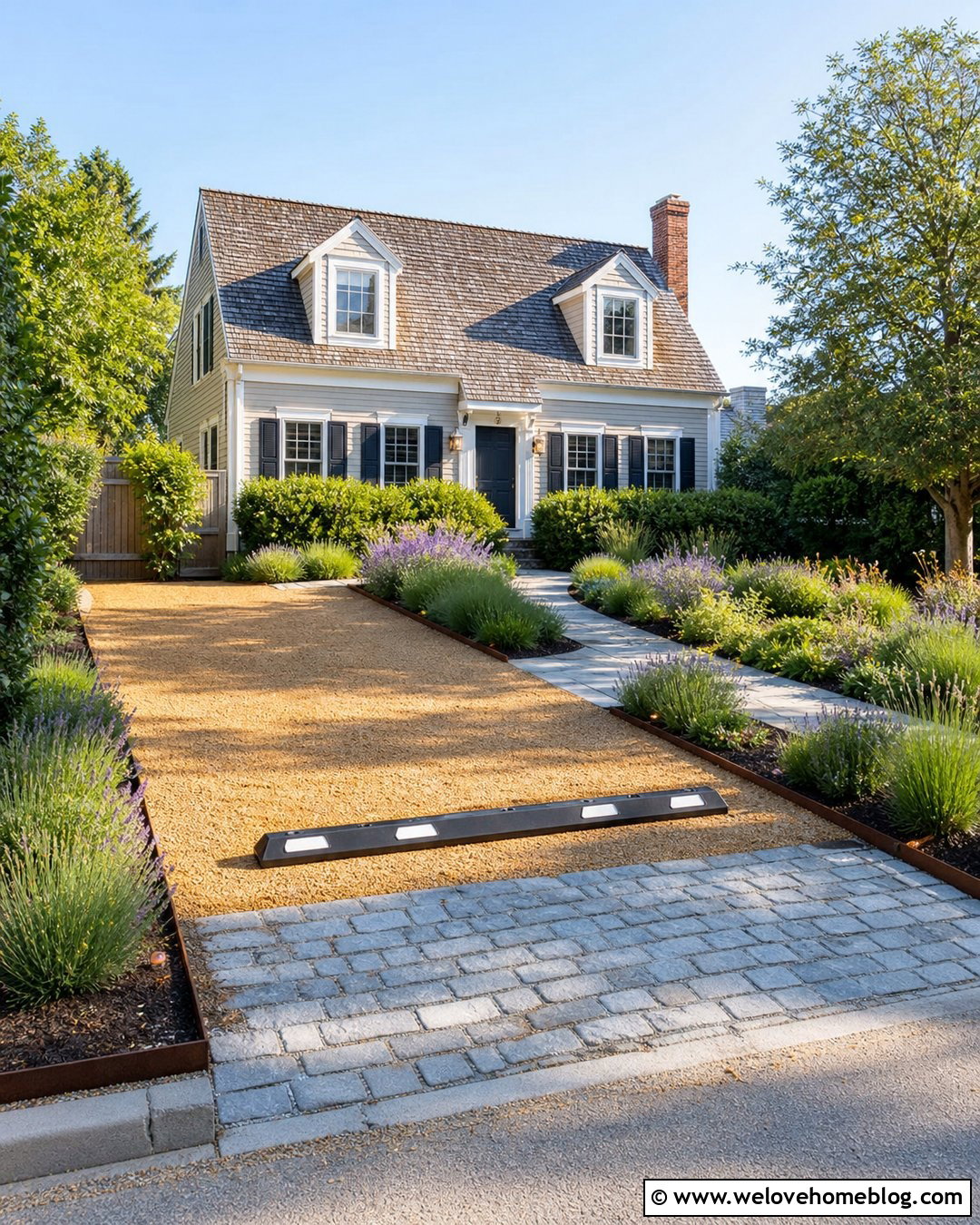
For a lighter installation, consider a recycled plastic driveway stopper placed at the end of a compacted gravel parking pad. The driveway can use warm tan crushed stone contained by steel edging, with the stopper mounted on a properly prepared base rather than loose surface gravel alone. A short cobblestone transition at the entrance helps keep gravel from migrating toward the street. Surrounding beds filled with drought-tolerant grasses, lavender, and small evergreen shrubs give the parking area a deliberate landscape design. This stopper type can be easier to handle than concrete while still creating a noticeable tire contact point. The complete look fits a cottage, Cape Cod, or casual country home. Use contrasting reflective strips so the stopper remains visible against the varied texture of the gravel.
4. Timber Driveway Stopper For A Rustic Home
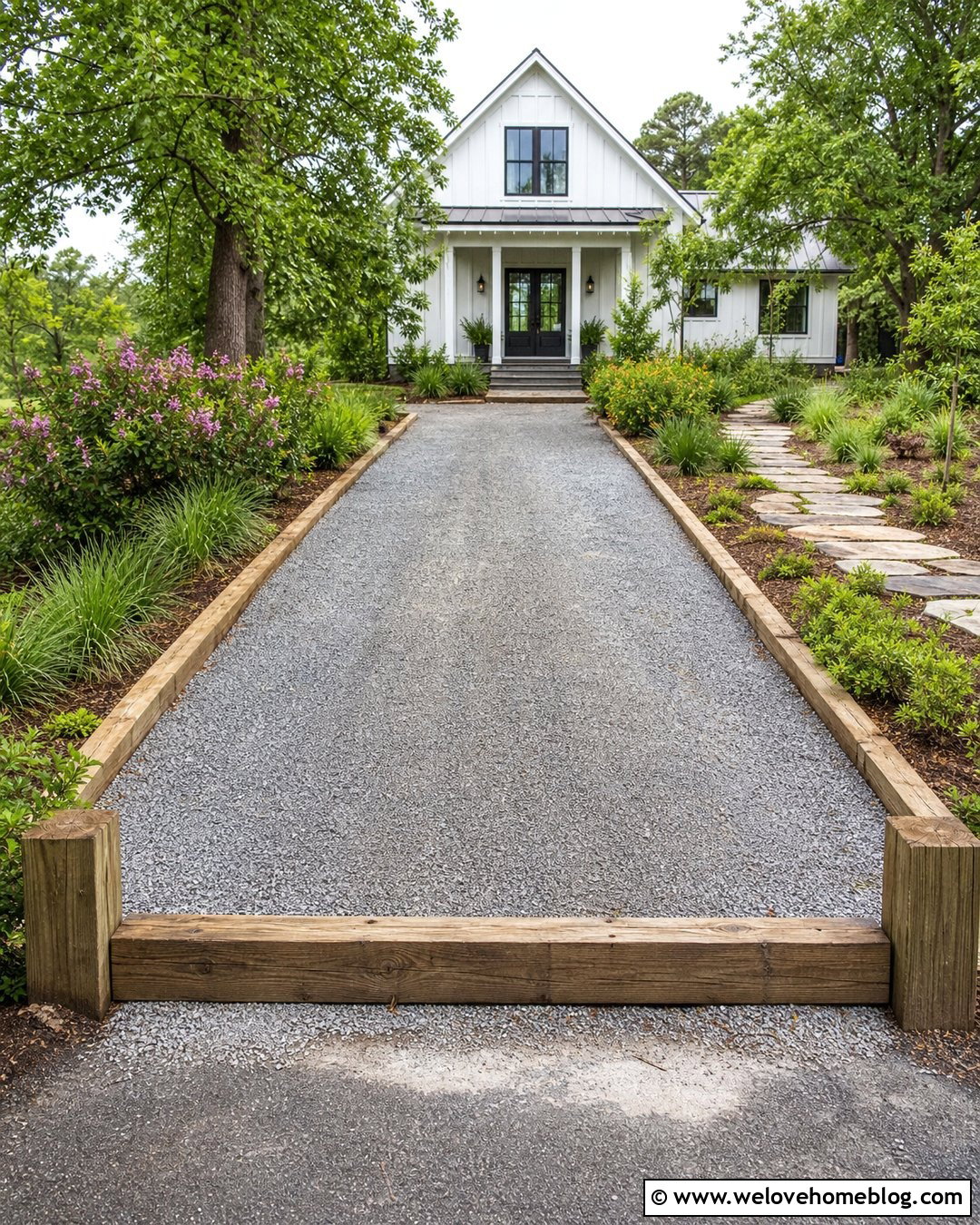
A heavy timber driveway stopper can complement a rustic property when it is designed as part of the entire parking area. Start with a compacted gray gravel driveway in a straight layout, then contain it with pressure-treated timber edging. A substantial horizontal beam can form the wheel stop at the head of the parking bay, supported and anchored so it cannot roll or shift. Choose naturally durable or exterior-rated wood, and keep the finished edges smooth and easy to see. Native grasses, flowering shrubs, and a stone walkway can connect the driveway to a modern farmhouse or cabin-style home. The repeated wood elements create visual unity from the entrance to the parking point. This option looks warmer than a commercial parking curb, although periodic inspection and refinishing may be necessary.
5. Granite Driveway Stopper With Cobblestone Edging
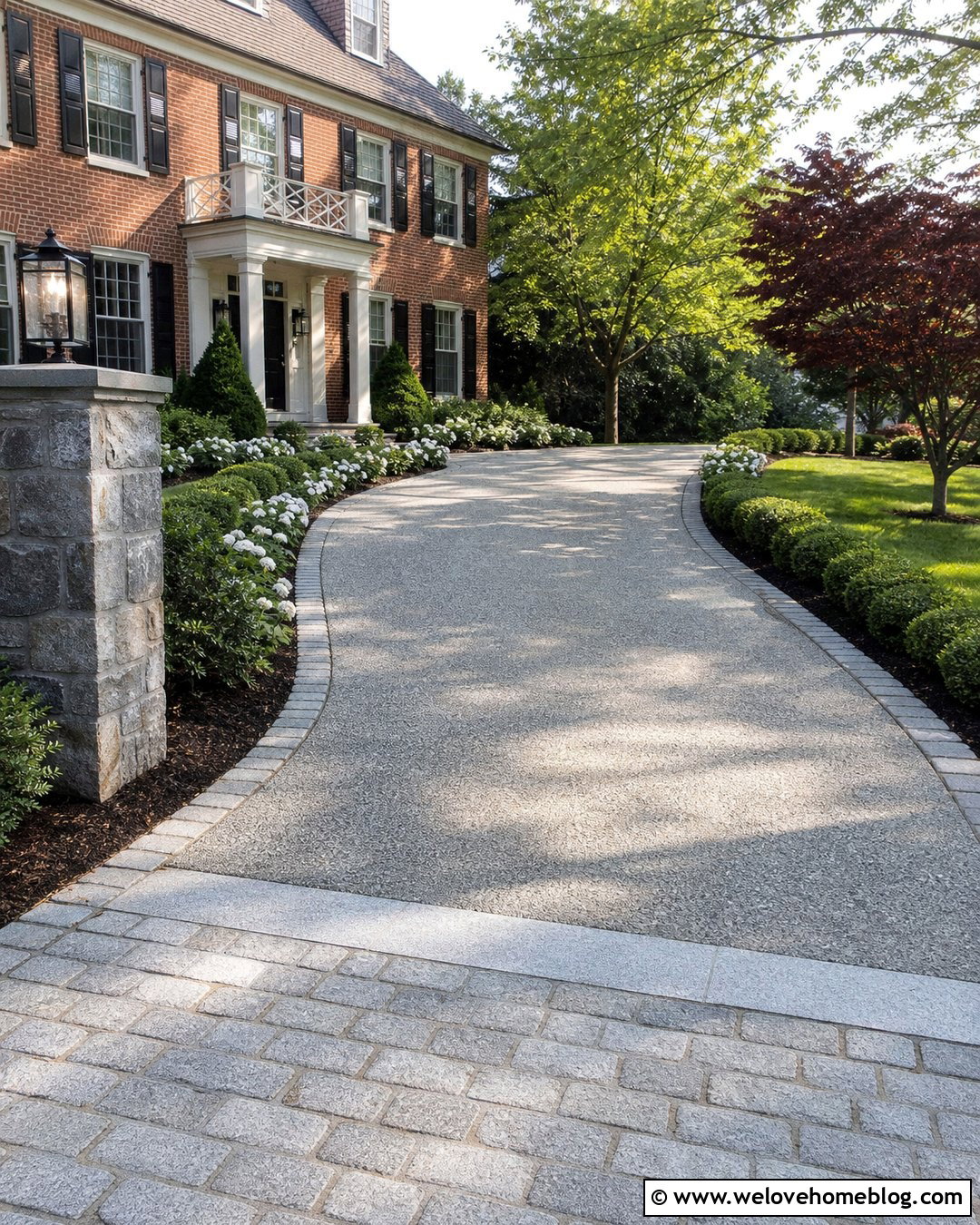
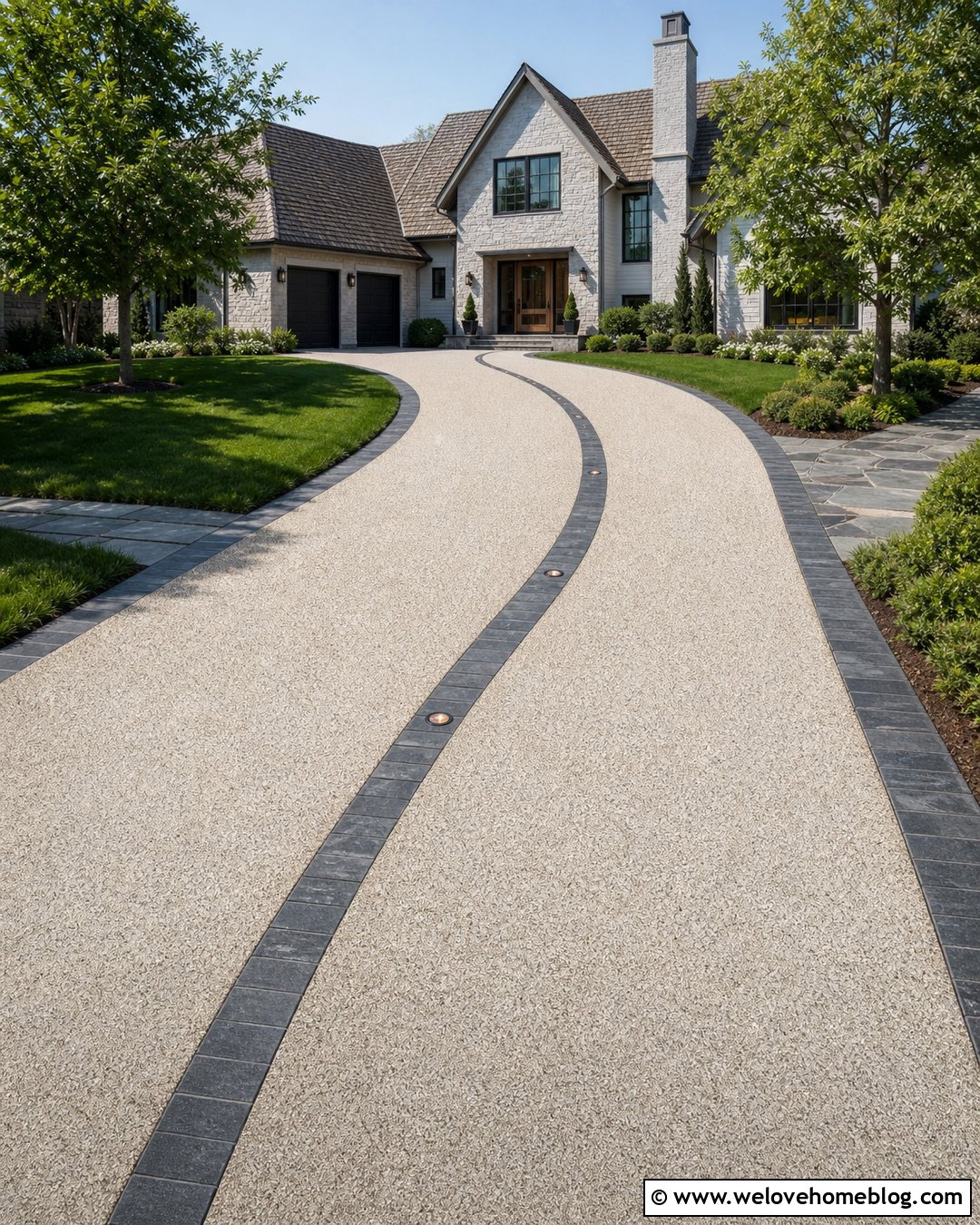
Granite creates an upscale driveway stopper that can feel like permanent landscape architecture rather than parking equipment. Pair a smooth, elongated granite wheel stop with a light exposed-aggregate driveway and matching granite cobblestone edging. The stone should have a defined shape and enough color contrast to remain visible to drivers. On a curved driveway, place it at the final parking position where the vehicle is straight and aligned with the garage. Formal planting beds with clipped shrubs, white flowering perennials, and small ornamental trees reinforce the refined appearance. A bluestone walkway can repeat the cool gray tones near a Colonial or traditional brick home. Because natural stone is extremely heavy, the base and anchoring method should be professionally planned. The result is durable, restrained, and highly integrated.
6. Brick Driveway Stopper With Herringbone Pavers
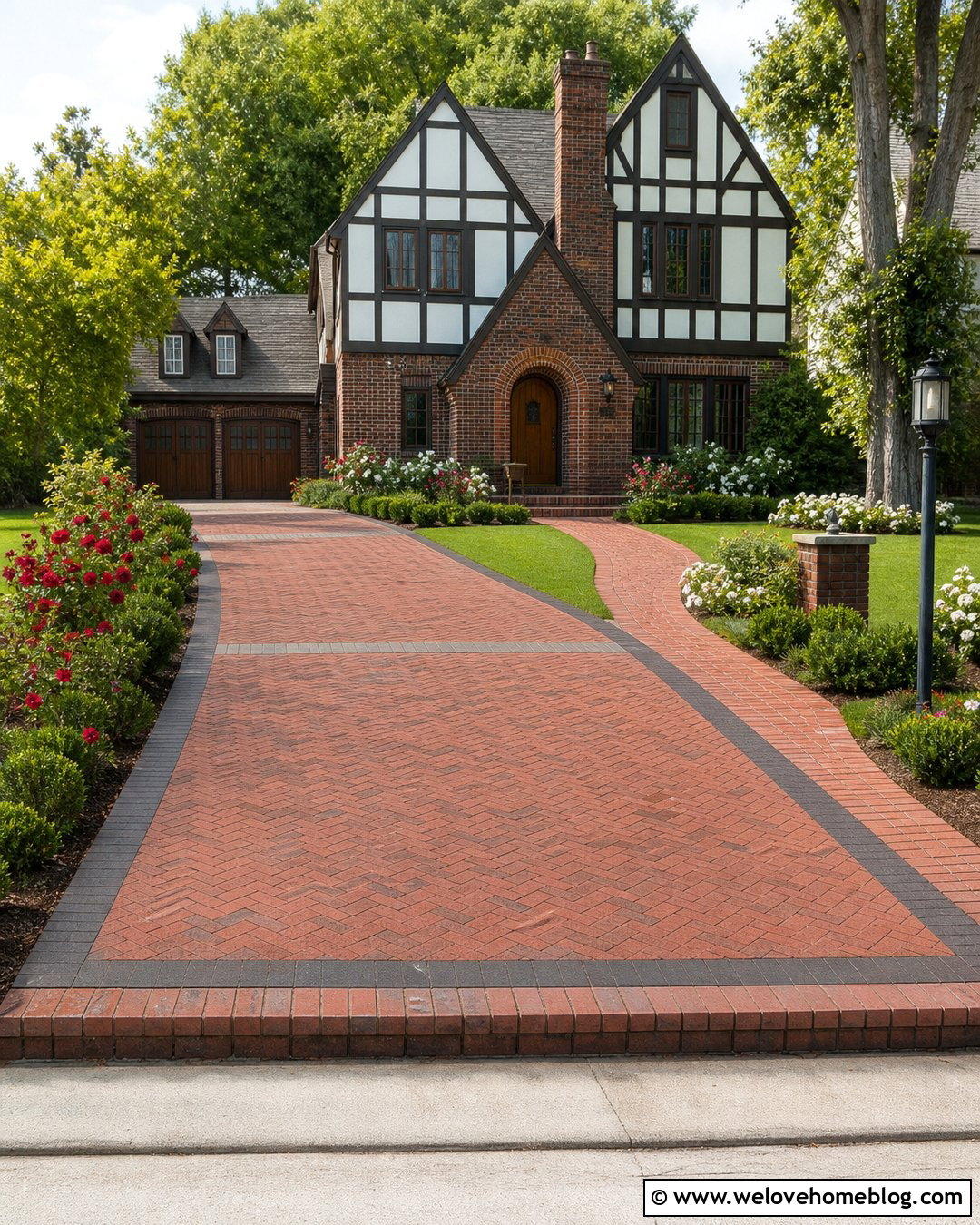
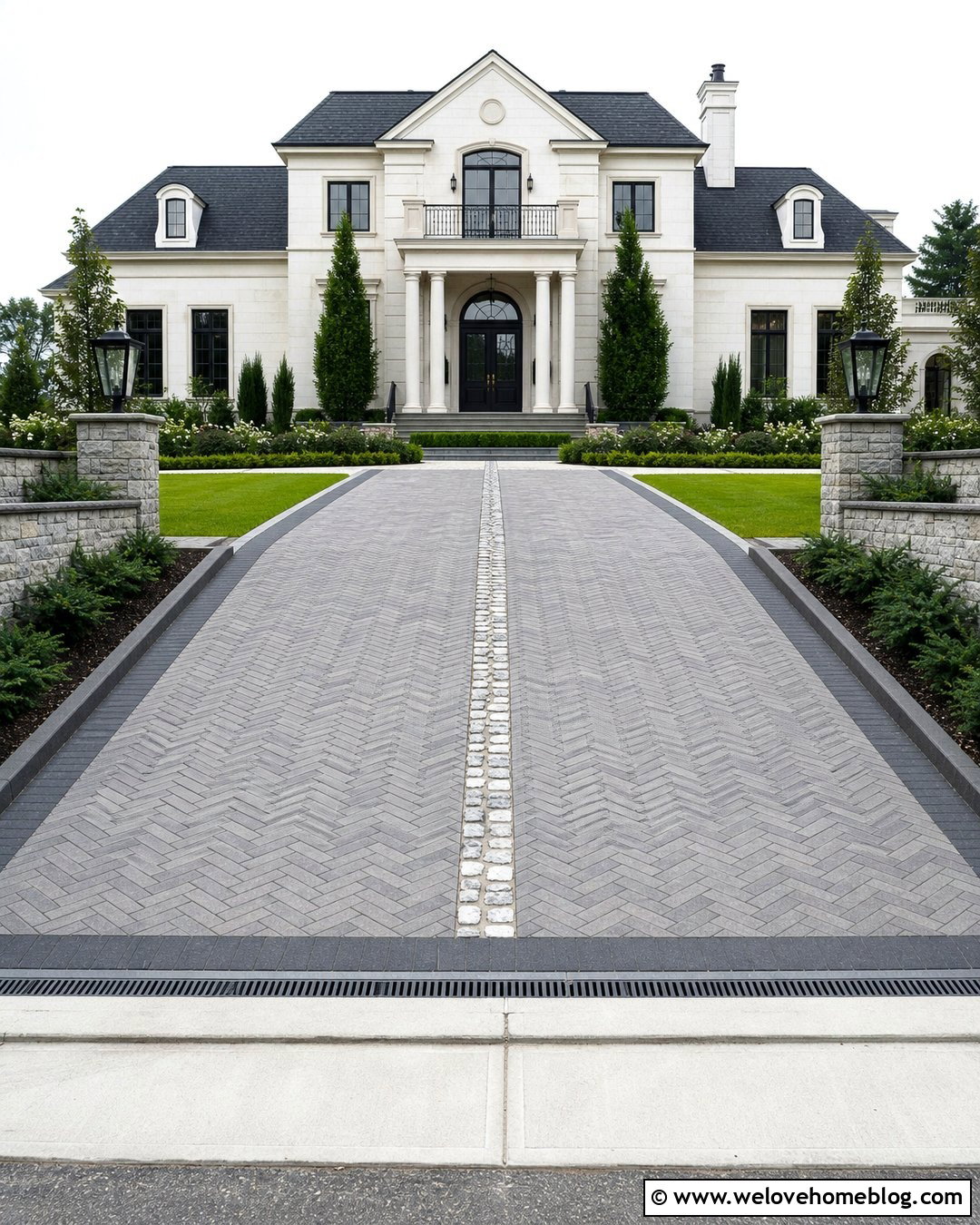
A raised brick driveway stopper works best when it repeats the material and pattern of the surrounding driveway. Use clay brick pavers in a herringbone pattern for the main surface, then create a gently raised soldier-course strip at the parking limit. The stopper should be noticeable under the tires without becoming an awkward obstacle in a primary walking route. Dark brick edging can frame the driveway, while a wider contrasting band near the garage visually announces the stopping zone. Planting beds with compact hollies, roses, and seasonal flowers give the brick a softer setting. This complete design is particularly attractive beside a Georgian, Tudor, or traditional Colonial home. Proper bedding, restraint, and drainage are important because loose or uneven bricks can become a maintenance problem where tires repeatedly make contact.
7. Cobblestone Driveway Stopper On A Gravel Driveway
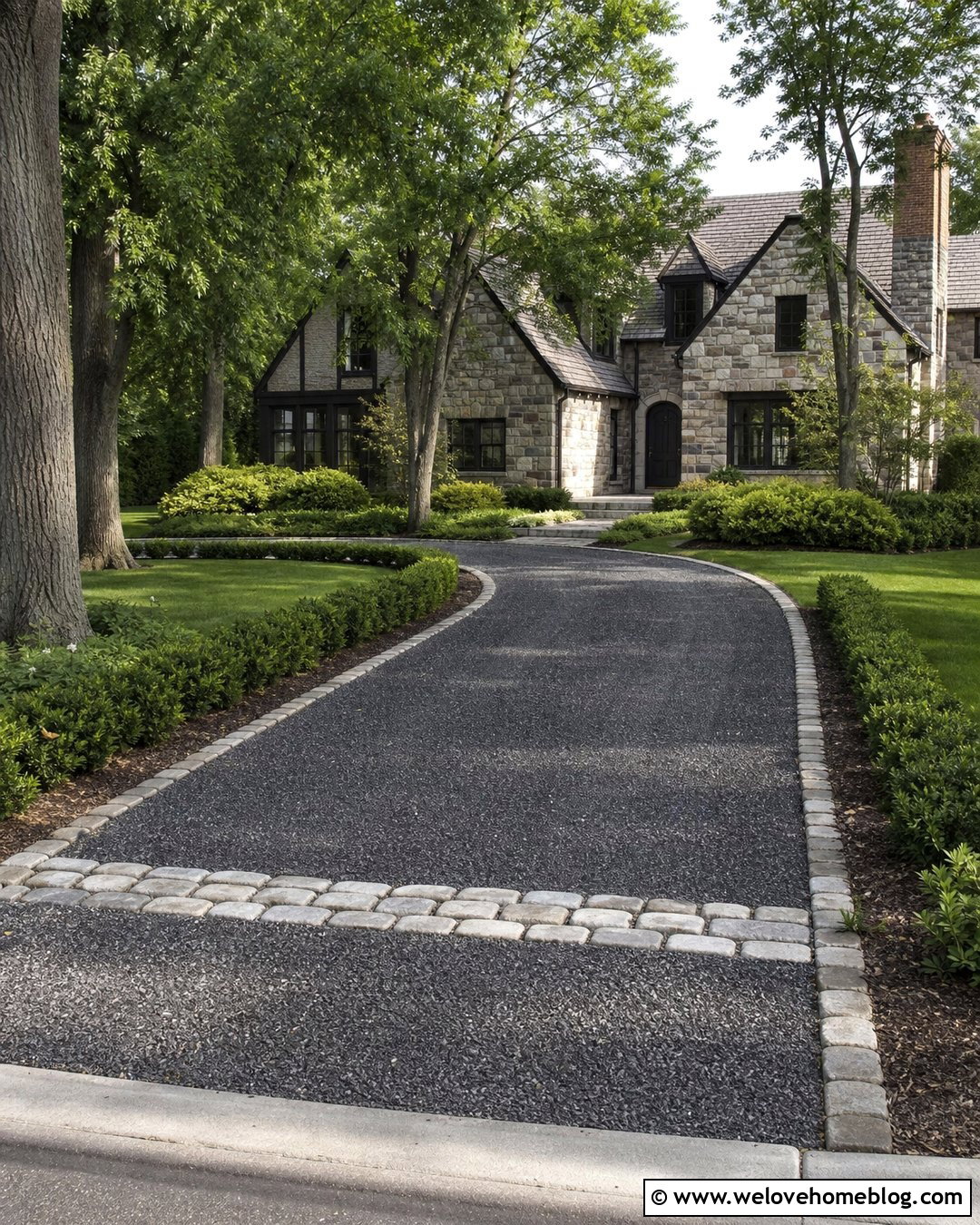
A cobblestone driveway stopper can create a subtle parking boundary on a loose gravel driveway. The main surface might use charcoal crushed gravel in a straight or gently curved approach, contained by matching cobblestone borders. At the parking point, install a raised row of large cobbles across each tire path rather than scattering individual stones. This makes the stopping location easier to understand and visually connects it with the edging. A stabilized base beneath the cobbles helps prevent settlement from repeated vehicle pressure. Frame the driveway with lawn, clipped hedges, and shade trees for a classic estate-like appearance. Near the house, a stone walkway can cross behind the parking area with sufficient clearance. The combination feels established and natural, making it suitable for a country, Tudor, or stone-faced home.
8. Paver Driveway Stopper With Contrasting Parking Bands
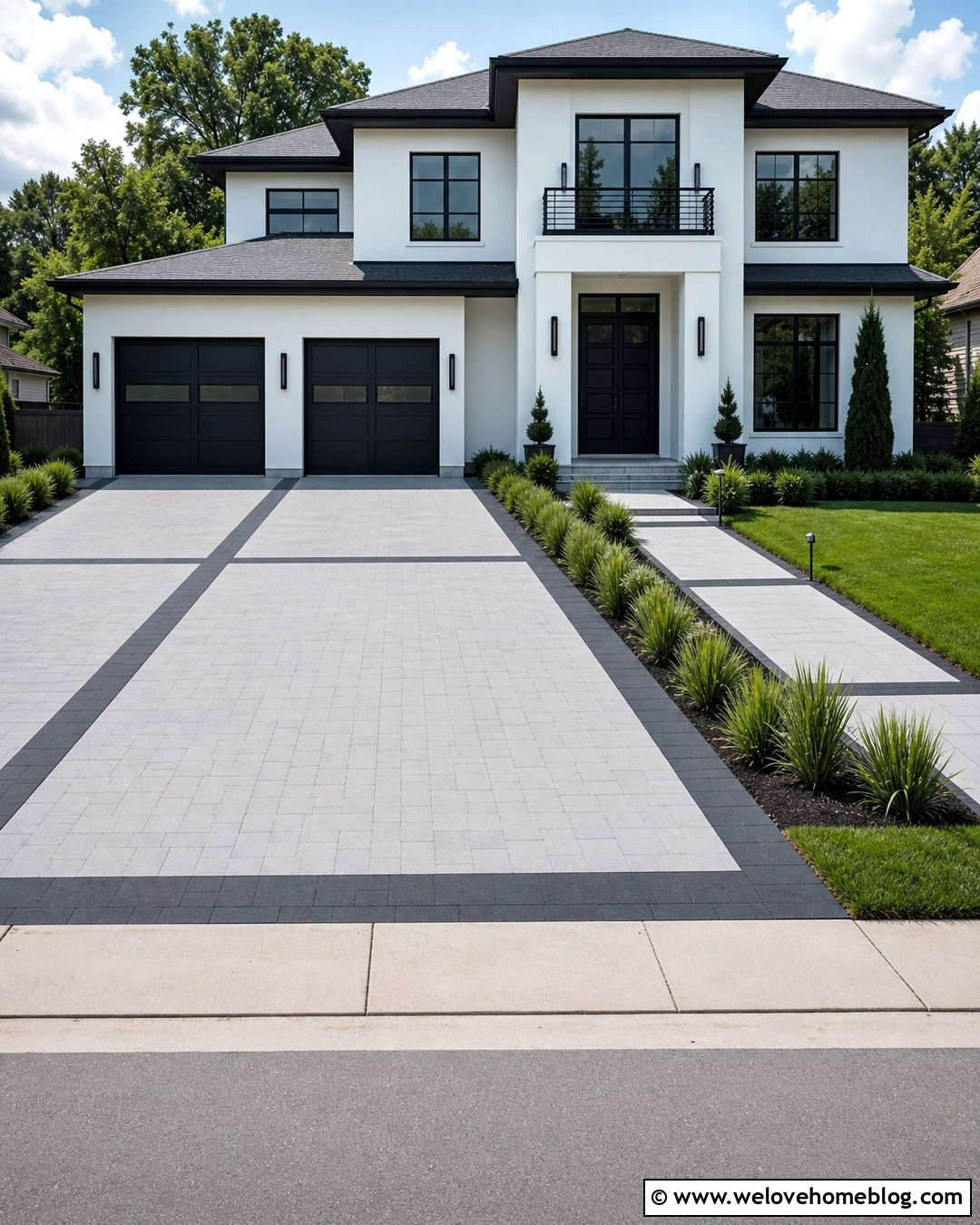
You do not always need a separate commercial wheel stop to mark where a vehicle should stop. On a concrete paver driveway, combine a low-profile physical stopper with bold contrasting parking bands. Use light gray rectangular pavers for the main driveway and dark charcoal pavers to outline each bay. Position a matching charcoal precast stopper at the end of the selected space so it appears connected to the design. Linear planting beds, upright ornamental grasses, and a simple concrete walkway support the clean geometry. This layout is a strong match for a contemporary home with a white, gray, or wood-accented facade. The contrasting bands guide drivers before the tires reach the stopper, reducing guesswork. Repeating the same dark paver around the perimeter makes the practical parking feature look intentional.
9. Folding Bollard Driveway Stopper At The Entrance
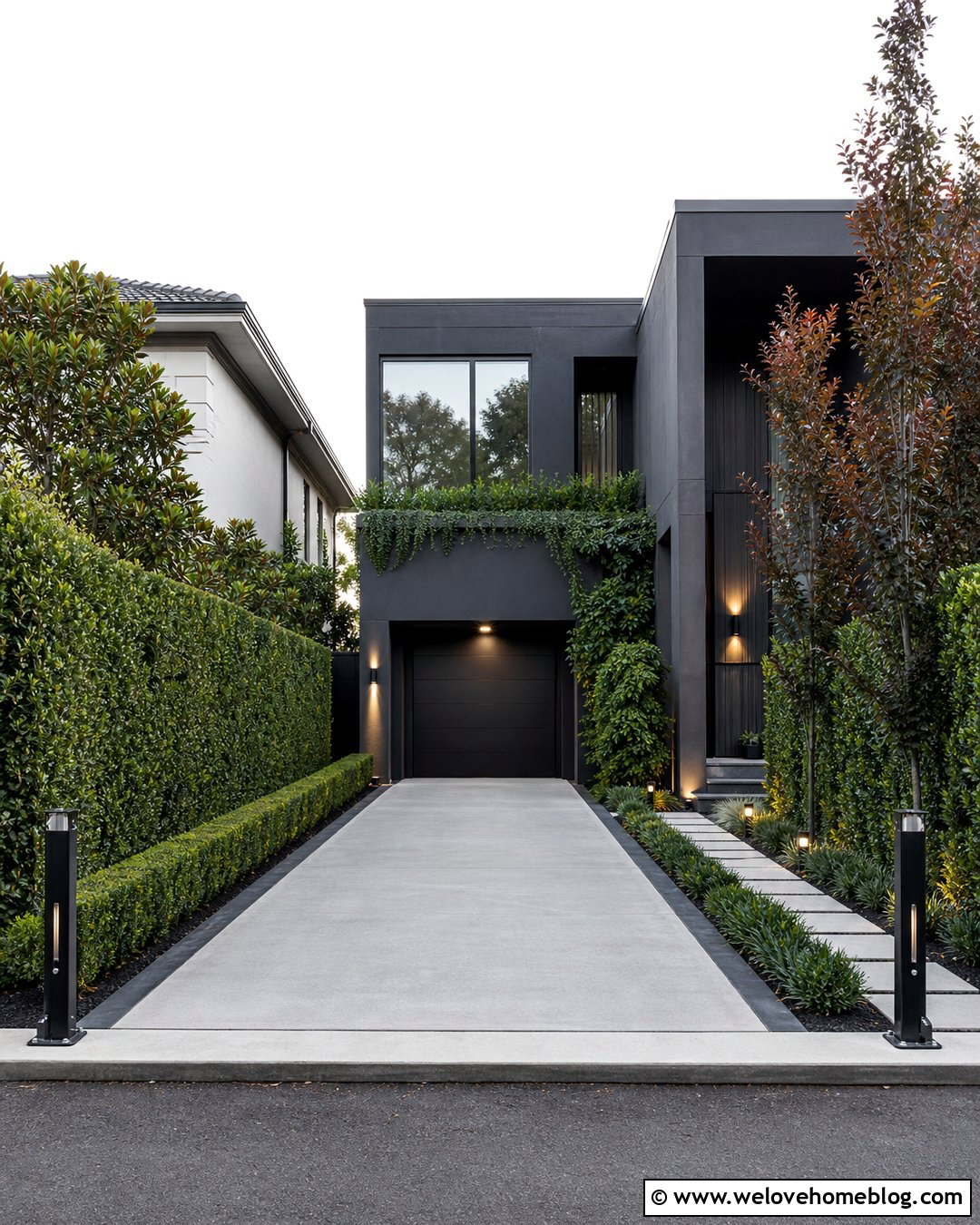
A folding bollard is a useful driveway stopper when you need occasional access control without installing a full gate. Center one or more powder-coated steel bollards across a straight poured concrete driveway, depending on its width and the required passage. When raised and locked, they discourage unauthorized vehicle entry. When lowered, their position should be easy to see and designed so approved vehicles can cross safely. Charcoal concrete edging, neatly trimmed hedges, and symmetrical planting beds can make the bollards feel less industrial. Select a finish that matches the house hardware, mailbox, and exterior lighting. This complete entrance works well with a compact urban home or modern townhouse where swinging gates would consume too much space. Confirm underground utilities, drainage, anchoring needs, and local requirements before drilling or excavating.
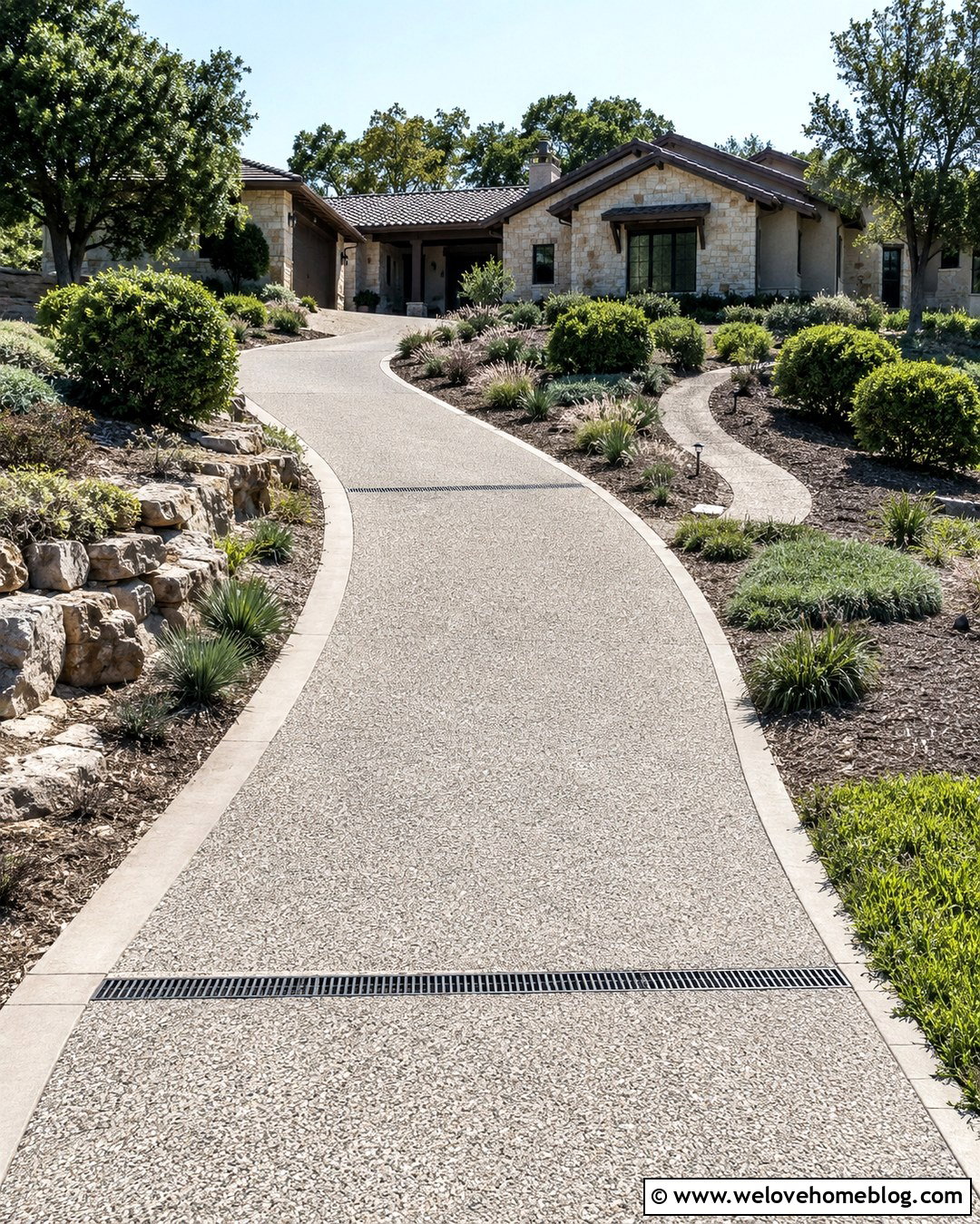
10. Removable Bollard Driveway Stopper With Stone Pillars
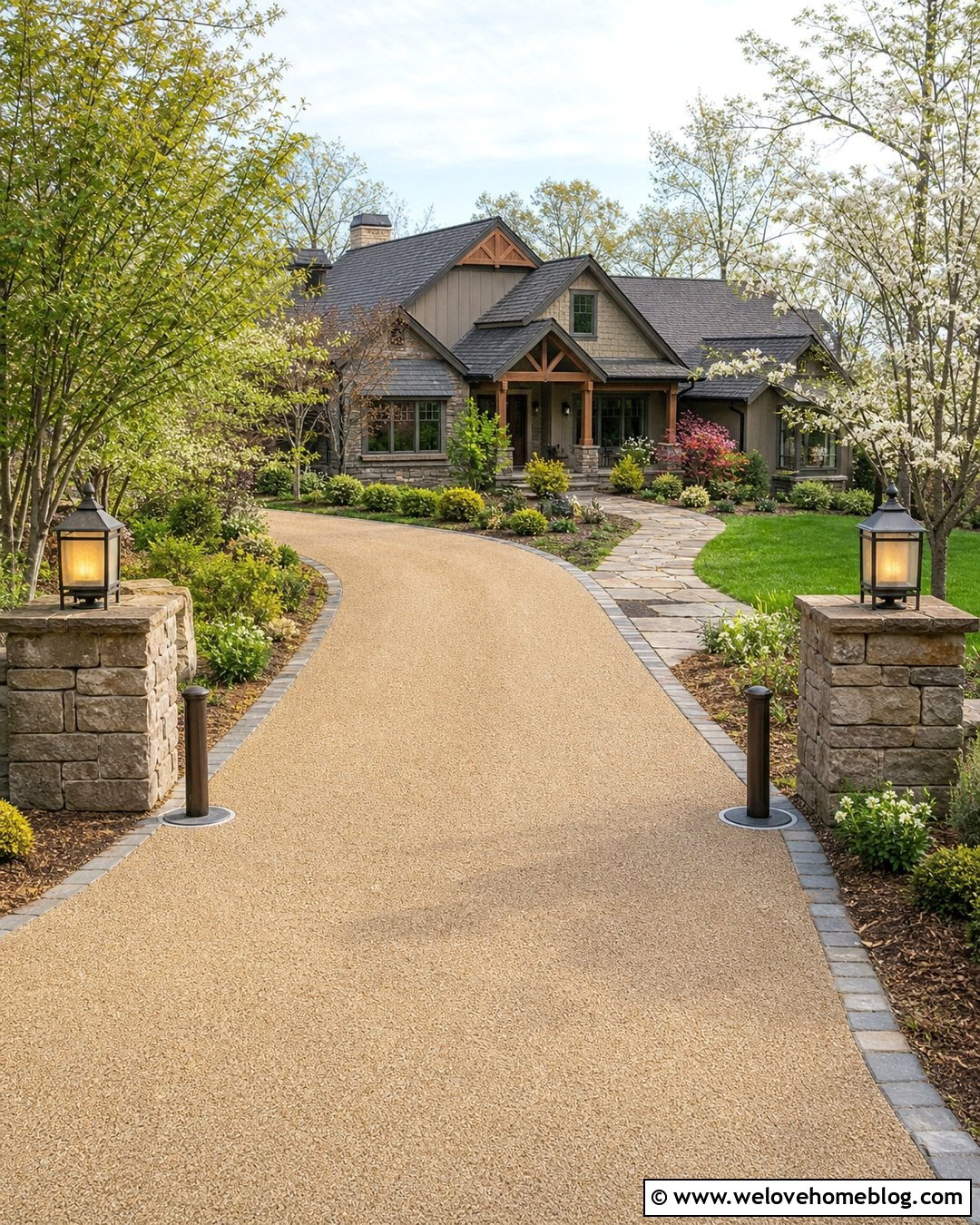
Removable bollards offer flexibility for a driveway that is usually closed but occasionally needs a fully open entrance. Place dark bronze or black posts between low stone pillars at the mouth of a resin-bound gravel driveway. The pillars establish a substantial entry, while the bollards provide the actual removable barrier. Use recessed sleeves with suitable covers so the empty openings remain neat when the posts are stored. A warm beige resin-bound surface, curved layout, and natural stone edging can lead toward a Craftsman or country home. Layered shrubs and small flowering trees should frame the entrance without hiding the barrier from approaching drivers. Match the bollard finish to the lanterns and house hardware for a coordinated result. Plan secure, convenient storage so the removed posts are not left beside the driveway.
11. Retractable Bollard Driveway Stopper For A Modern House
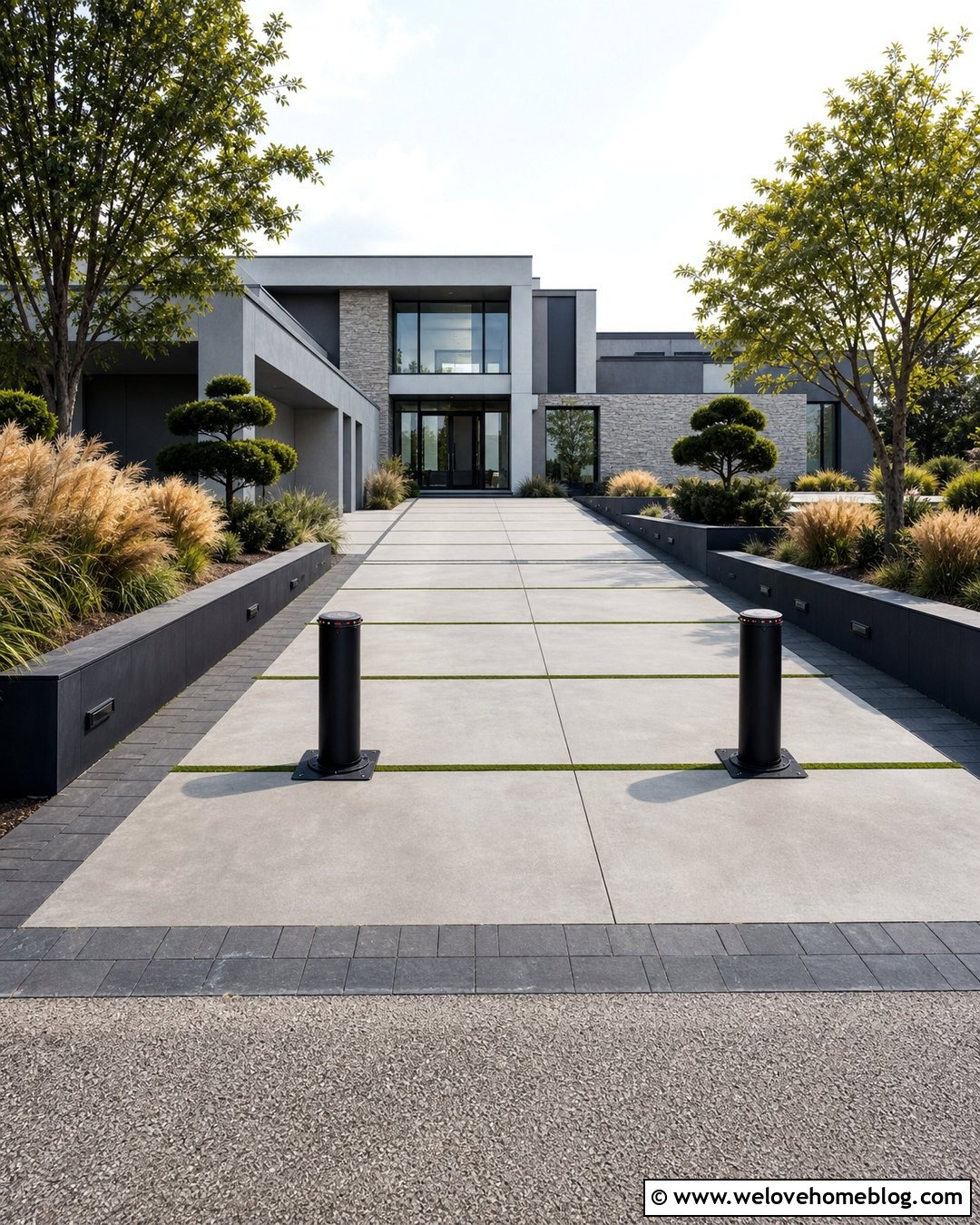
A retractable bollard provides a cleaner appearance when the driveway needs frequent opening and closing. Stainless steel or matte black bollards can lower into the ground, leaving the entrance visually open when access is permitted. Pair them with large-format gray concrete pavers arranged in a straight driveway leading to a modern house. Slim grass joints or charcoal paver borders can emphasize the linear design. Keep planting simple with sculptural evergreen shrubs, ornamental grasses, and one or two architectural trees. Integrated drainage around the bollard sleeves is especially important because the mechanism sits below the surface. Manual versions may suit occasional use, while powered systems offer greater convenience for daily operation. The finished entrance should maintain safe pedestrian clearance and clearly show the bollards whenever they are in the raised position.
12. Automatic Bollard Driveway Stopper With Smart Access
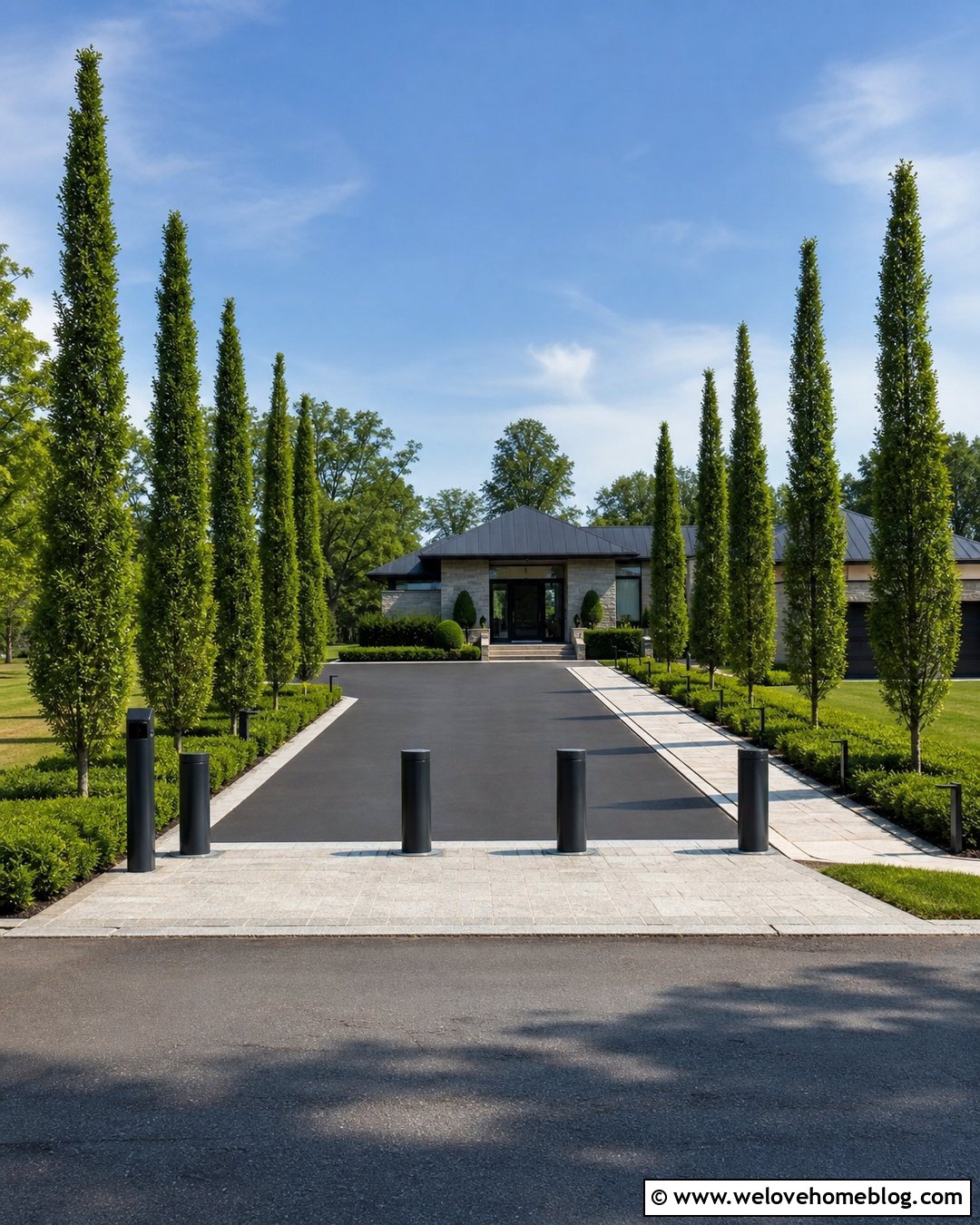
For a high-use entrance, automatic bollards can create a streamlined driveway stopper system controlled by a remote, keypad, or other authorized access method. Use a row of matching dark steel bollards across a wide black asphalt driveway with a pale granite apron. Stone edging and evenly spaced columnar trees can visually connect the barrier to the landscape. Near the house, transition the asphalt into a generous parking court with clear turning space. This arrangement works well for a larger contemporary or transitional property where a conventional gate would require a long swing or sliding track. Automatic equipment requires careful planning for power, drainage, controls, emergency access, and ongoing maintenance. Choose a professional system appropriate for the site’s intended security level rather than assuming that every decorative bollard provides the same stopping capability.
13. Chain Driveway Stopper Between Decorative Posts
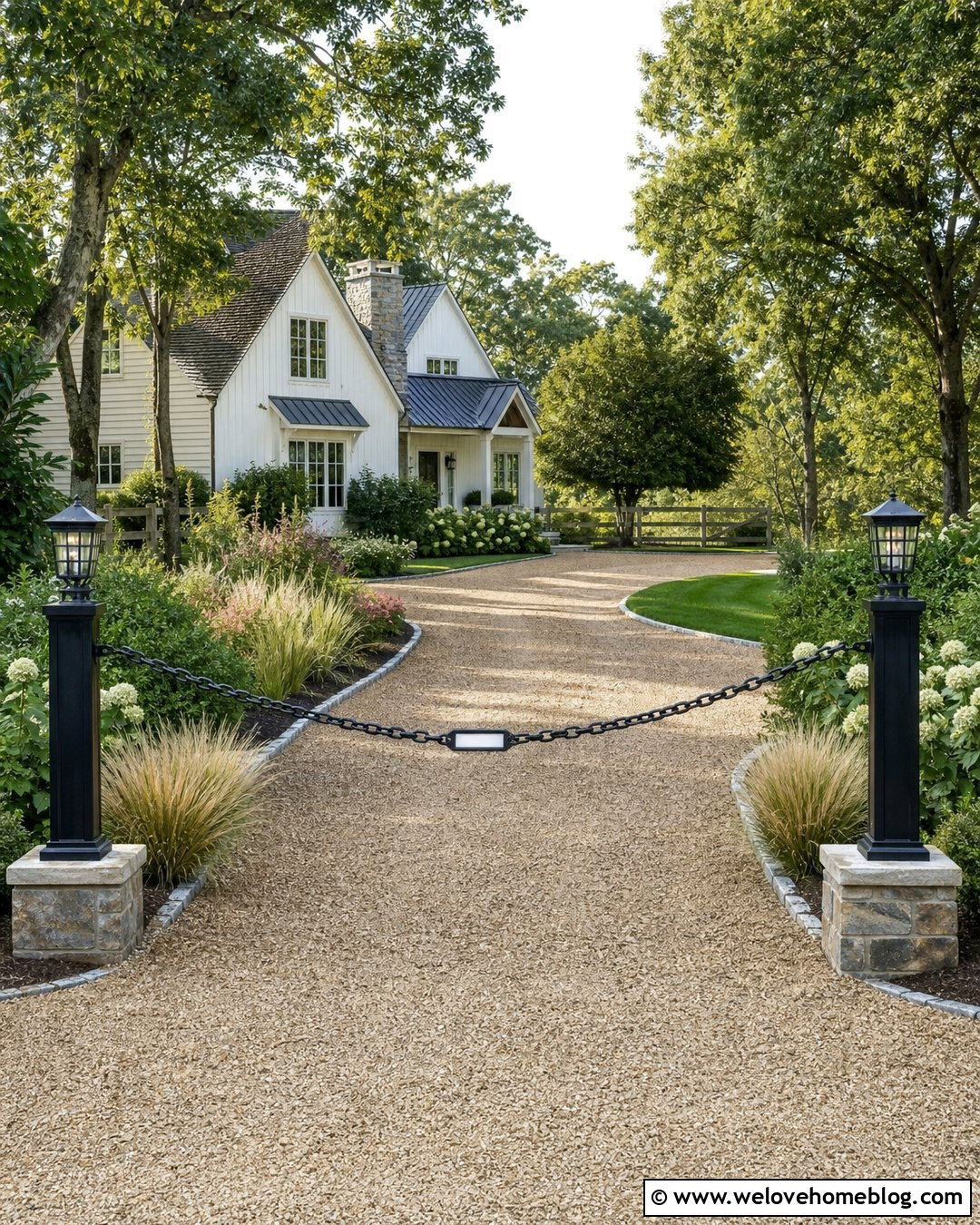
A chain stretched between two posts is a simple driveway stopper for discouraging casual entry into a private drive. Use substantial black metal posts set on either side of a tan gravel driveway, then attach a visible coated chain with a central reflector. Low brick or stone bases can make the posts appear connected to the home’s architecture. A gently curved driveway bordered with ornamental grasses, flowering shrubs, and mature trees creates a relaxed country entrance. The chain should be easy for authorized users to release and positioned where approaching drivers have enough room to stop safely. Avoid placing a hard-to-see dark chain in an unlit area. This design is best treated as a visible access cue rather than a high-security vehicle barrier. Coordinated lanterns can improve visibility while strengthening the entrance composition.
14. Swing Gate Driveway Stopper With Brick Pillars
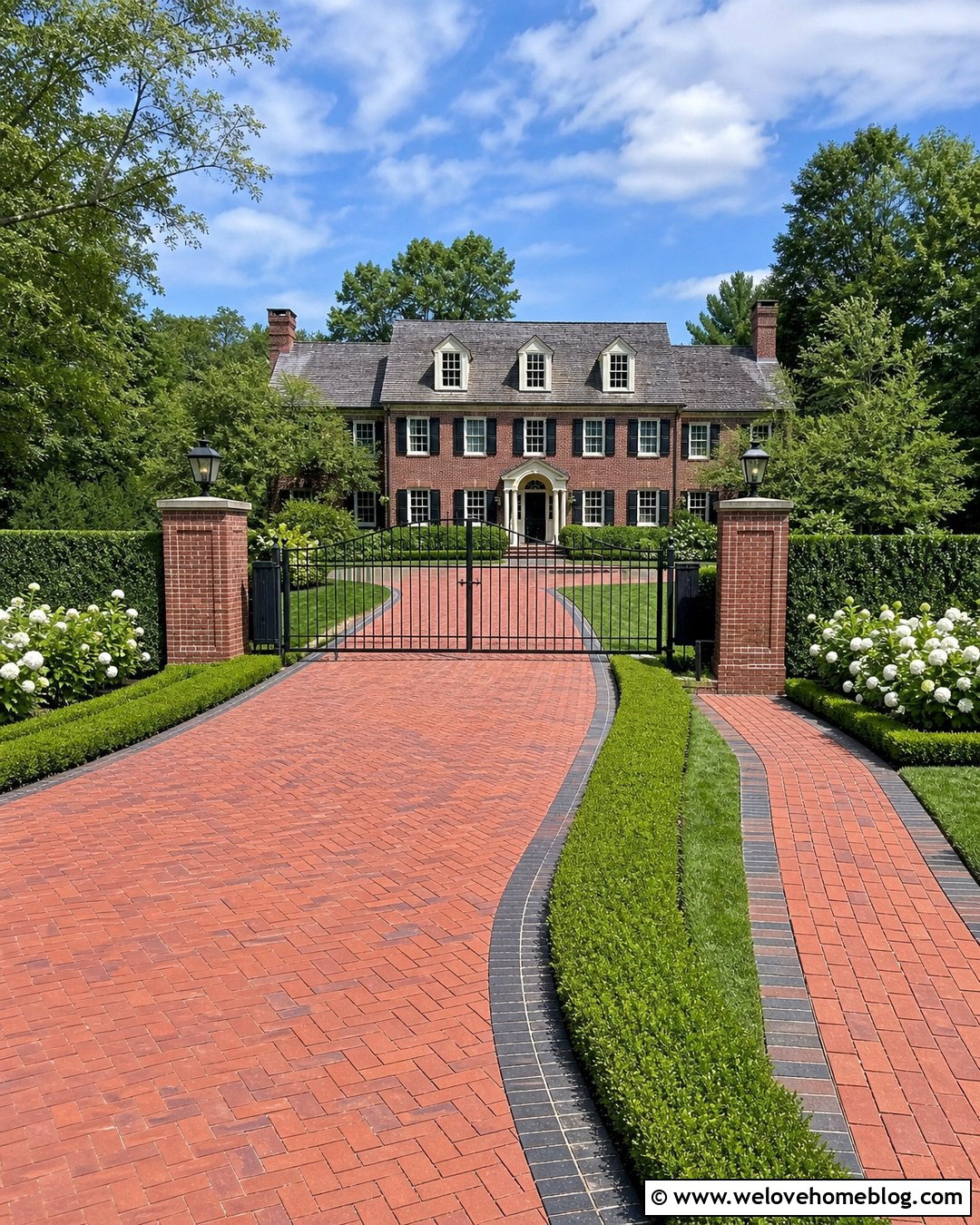
A traditional swing gate can function as both a driveway stopper and a strong architectural feature. Pair a black metal double gate with substantial red brick pillars at the entrance to a clay brick paver driveway. A herringbone surface, dark border course, and gently curved approach create a formal view toward a Colonial or Georgian home. Plant low hedges and white flowering shrubs around the pillars, but preserve clear sightlines for vehicles leaving the property. The gates need adequate room to open without blocking sidewalks, streets, parked vehicles, or the driveway’s turning path. On a sloped site, the grade may affect the direction and clearance of the leaves. Add matching pedestrian access when possible so walkers do not need to use the vehicle gate. Lighting on the pillars completes the balanced, welcoming entrance.
15. Sliding Gate Driveway Stopper For A Narrow Lot
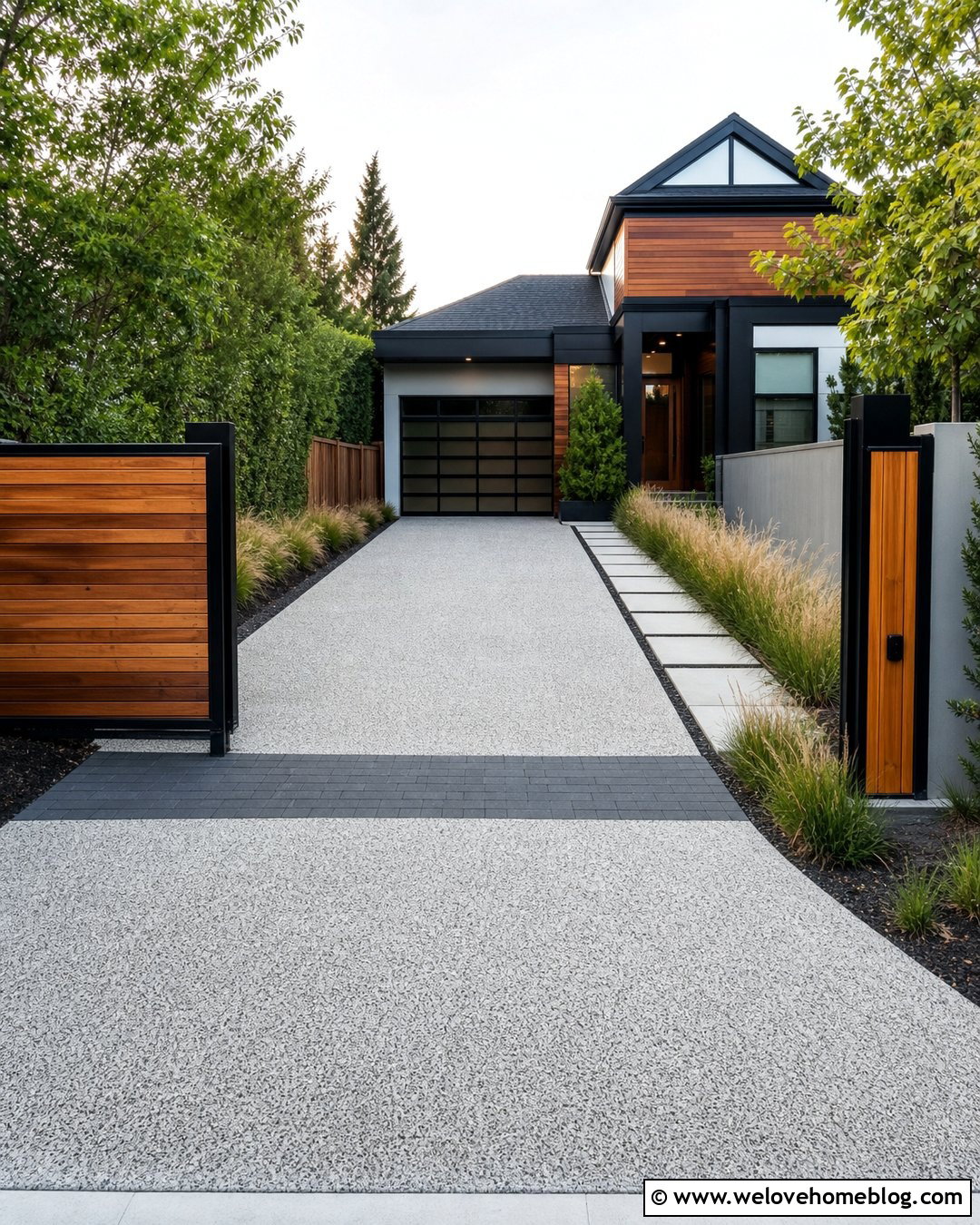
When a driveway lacks room for swinging gate leaves, a sliding gate can provide access control without taking up the parking approach. Use a horizontal cedar-and-black-steel gate across a straight exposed-aggregate concrete driveway. A dark paver ribbon can define the entrance and visually align with the gate track or cantilevered structure. Narrow planting beds filled with upright grasses and compact evergreen shrubs preserve usable width on a small suburban lot. Behind the gate, the driveway can lead directly to a contemporary garage with a separate walkway along one side. The gate needs enough lateral space to open fully, along with carefully planned drainage, safety devices, and operating hardware. Keep plants away from moving parts. Repeating cedar on the house facade, address sign, or fence gives the complete design a cohesive modern appearance.
16. Farm Gate Driveway Stopper On A Country Driveway
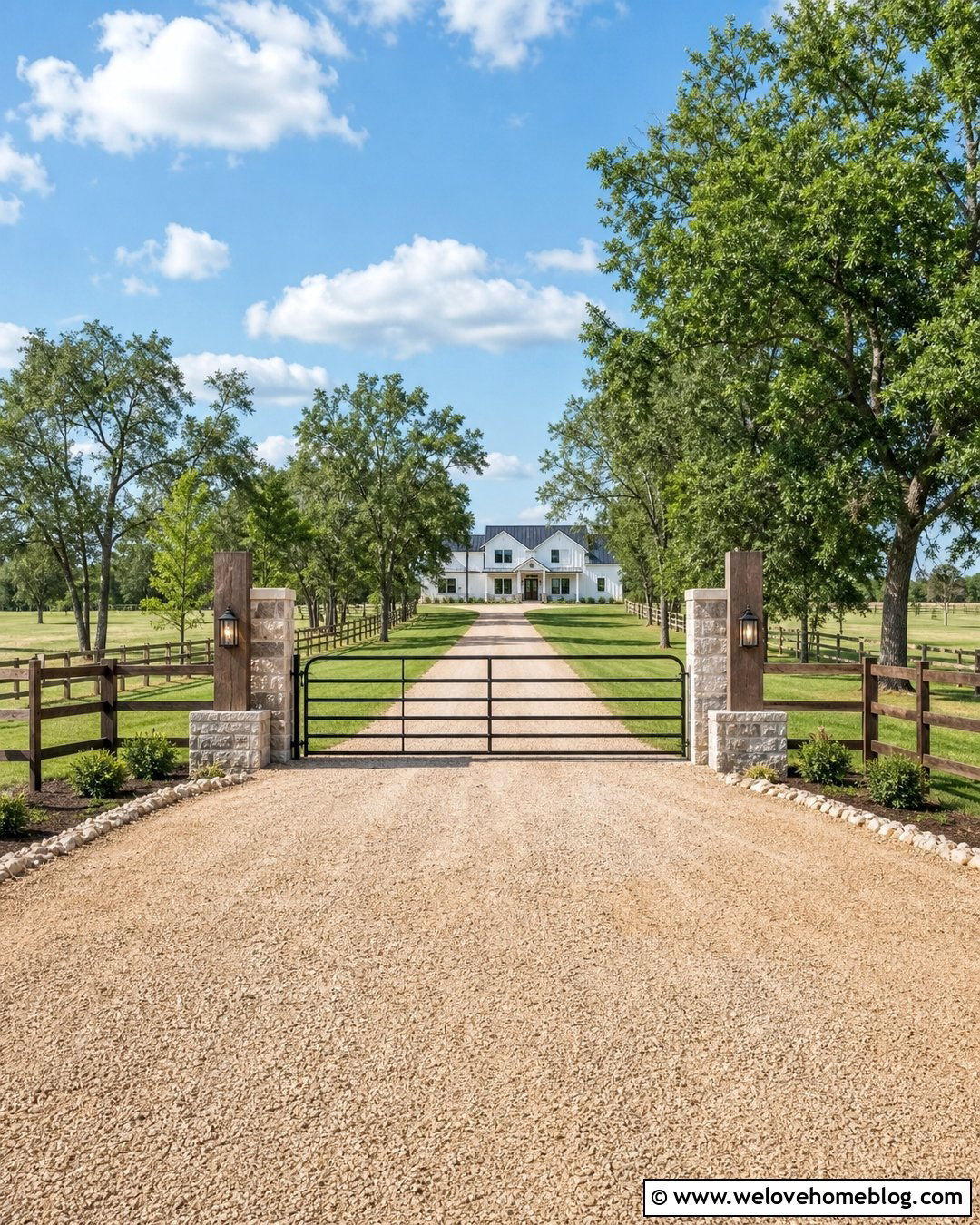
A simple farm gate can be an attractive driveway stopper for a rural or modern farmhouse property. Set a black tubular steel gate between stone-and-timber posts at the entrance to a long tan gravel driveway. Use broad grass shoulders, split-rail fencing, and groups of native trees to frame the approach without making it feel overly formal. A compacted gravel apron at the gate gives vehicles a stable place to pause while the entrance is opened. The gate should swing into a clear area and remain secured when open so wind cannot move it into the vehicle path. Solar or low-voltage lighting can make the posts easier to recognize after dark. This complete design feels practical and consistent with a country setting, especially when the house combines white siding, dark roofing, and natural wood details.
17. Planter Driveway Stopper For A Parking Bay
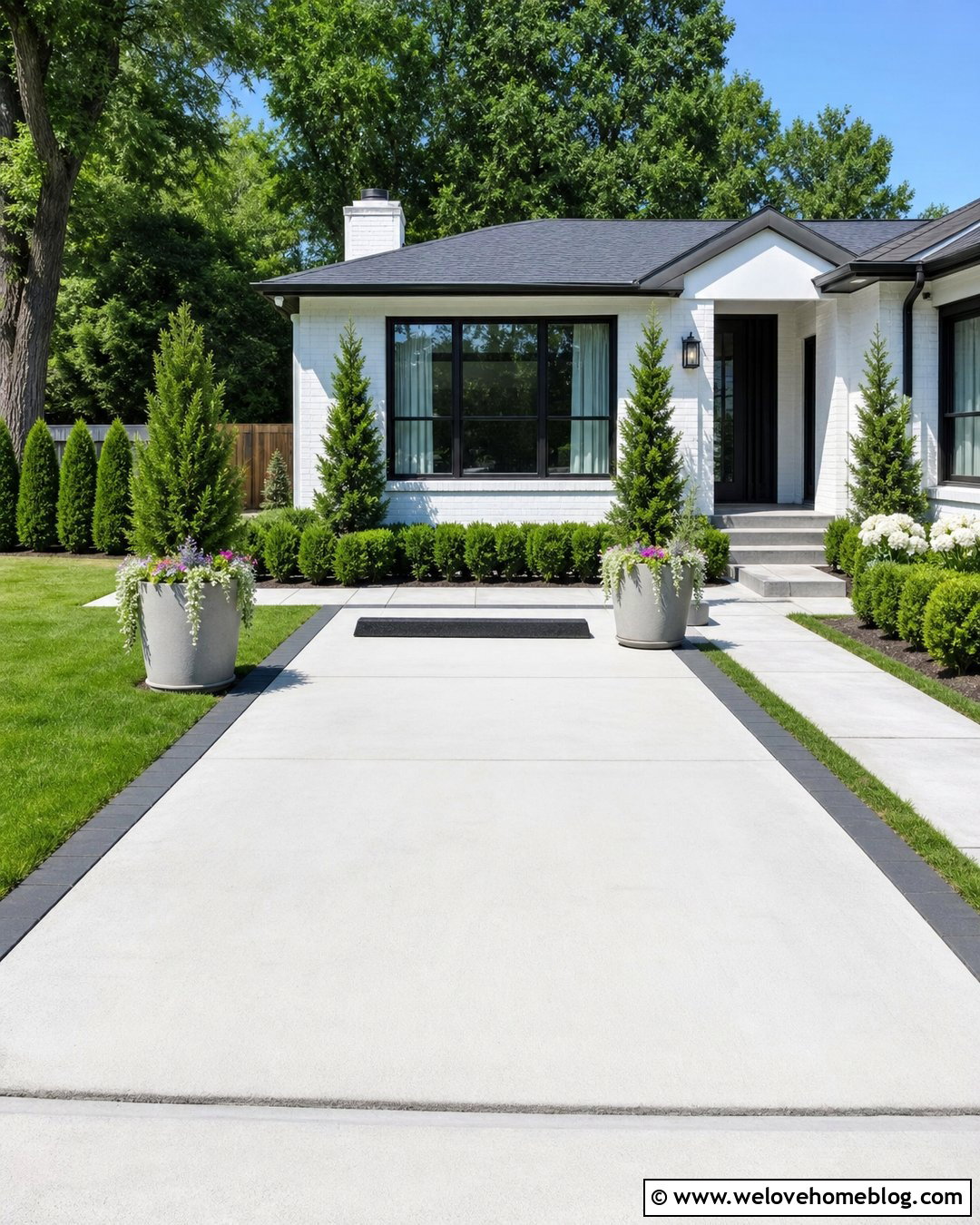
Large planters can help define the end of a parking bay, but they should frame a proper wheel stop rather than serve as the only object stopping a vehicle. Use a light gray poured concrete driveway with a slim recycled rubber stopper centered between two substantial concrete planters. Fill the planters with upright evergreen shrubs and trailing seasonal plants, keeping foliage away from mirrors and doors. A charcoal paver border can outline the parking space and continue toward the front walkway. This arrangement suits a modern ranch or compact suburban home where the parked vehicle sits close to a patio, wall, or garden. The planters soften the utilitarian stopper and make the parking position easy to read. Leave enough open space for walking and choose stable containers that will not tip into the driveway.
18. Landscape Boulder Driveway Stopper With Gravel
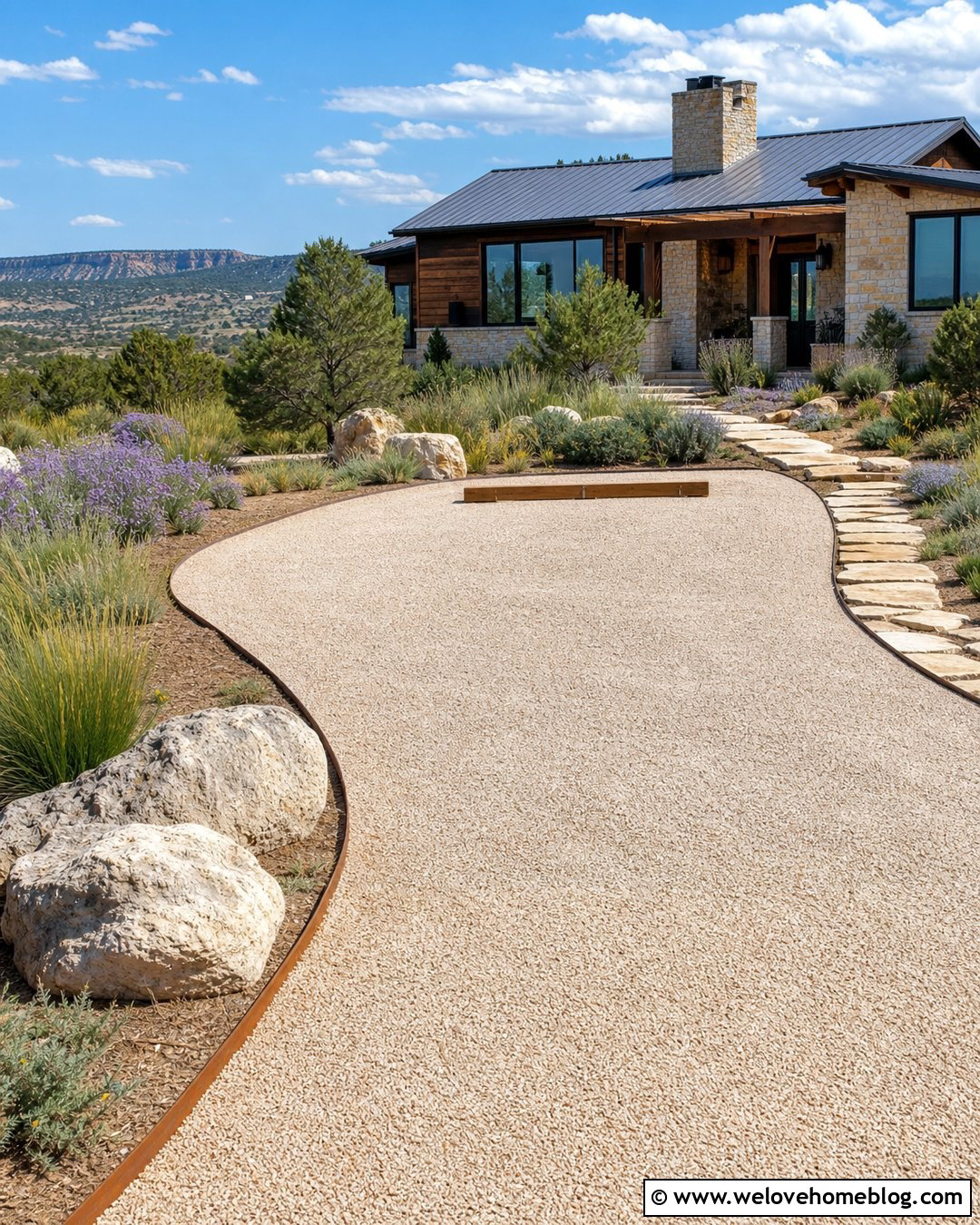
Landscape boulders can protect the edges of a driveway and discourage vehicles from crossing into planting beds, but they should not be used as hidden wheel stops. Place large, visible boulders outside the normal travel path along a wide crushed granite driveway. Add a purpose-made timber or rubber stopper at the actual parking position near the house. Continue the boulders through surrounding beds with native grasses, low junipers, flowering perennials, and smaller companion stones. Steel edging can contain the gravel while preserving the natural appearance. This complete design suits a desert contemporary, mountain, or rustic ranch home. Maintain generous clearance around turns and driveway entrances so the stones do not become hazards. The boulders guide movement and protect landscaping, while the correctly positioned stopper provides a predictable place for the vehicle’s tires.
19. Illuminated Driveway Stopper With Solar Markers
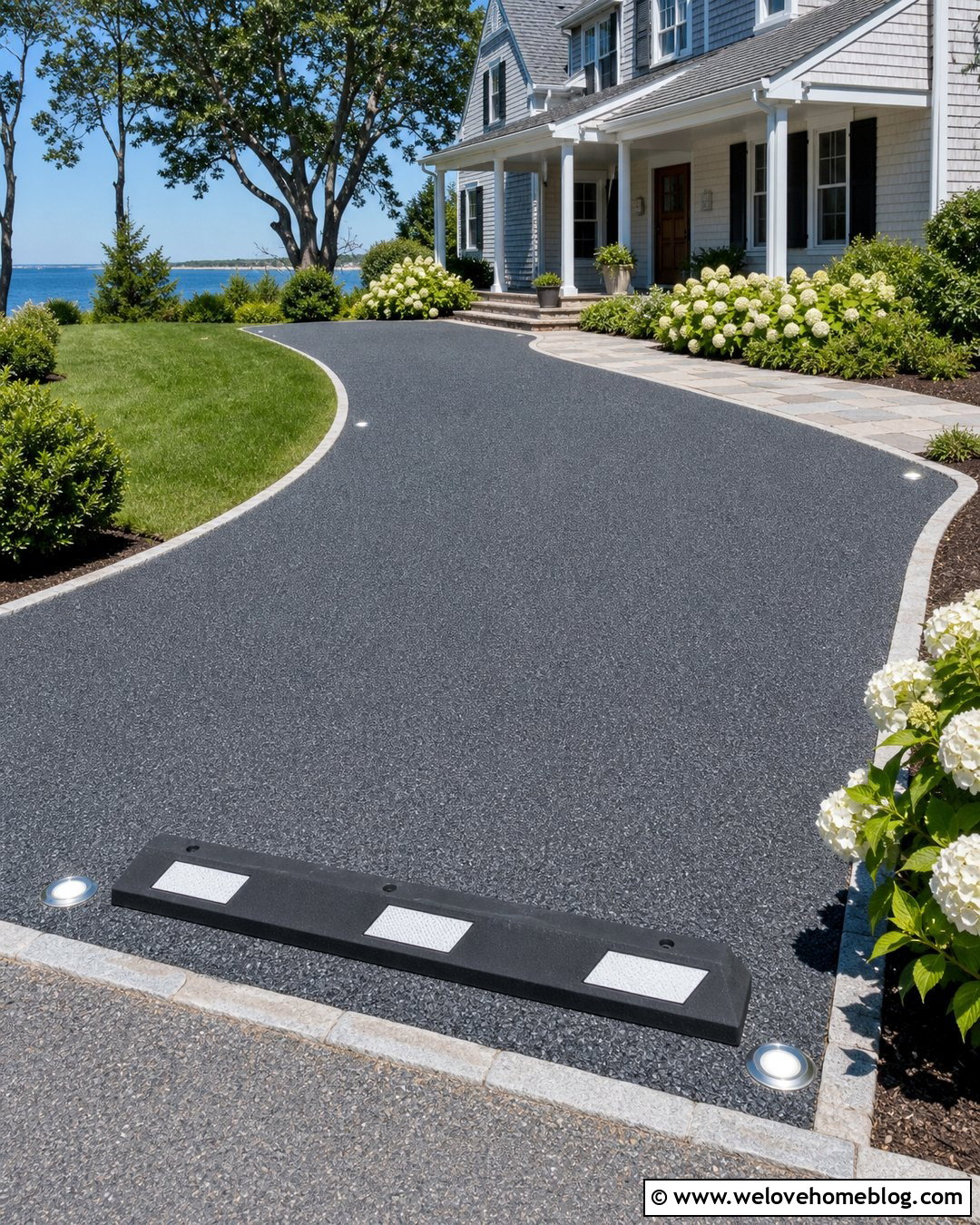
A driveway stopper becomes easier to use when lighting identifies both the parking bay and the stopping point. Begin with a dark gray resin-bound gravel driveway edged in pale limestone. Install a low-profile rubber wheel stop with reflective panels near the garage, then add bright, shielded solar or low-voltage markers along the adjacent border. The lights should reveal the driveway’s shape without creating glare for drivers or neighboring homes. Curved planting beds with compact shrubs and white flowers can reflect light and soften the paved area. This design works with a Cape Cod, coastal, or transitional house where subtle fixtures feel more appropriate than commercial markings. Keep each fixture outside the tire path and snow-clearing zone. During the day, the limestone border and reflective stopper continue to provide clear visual guidance.
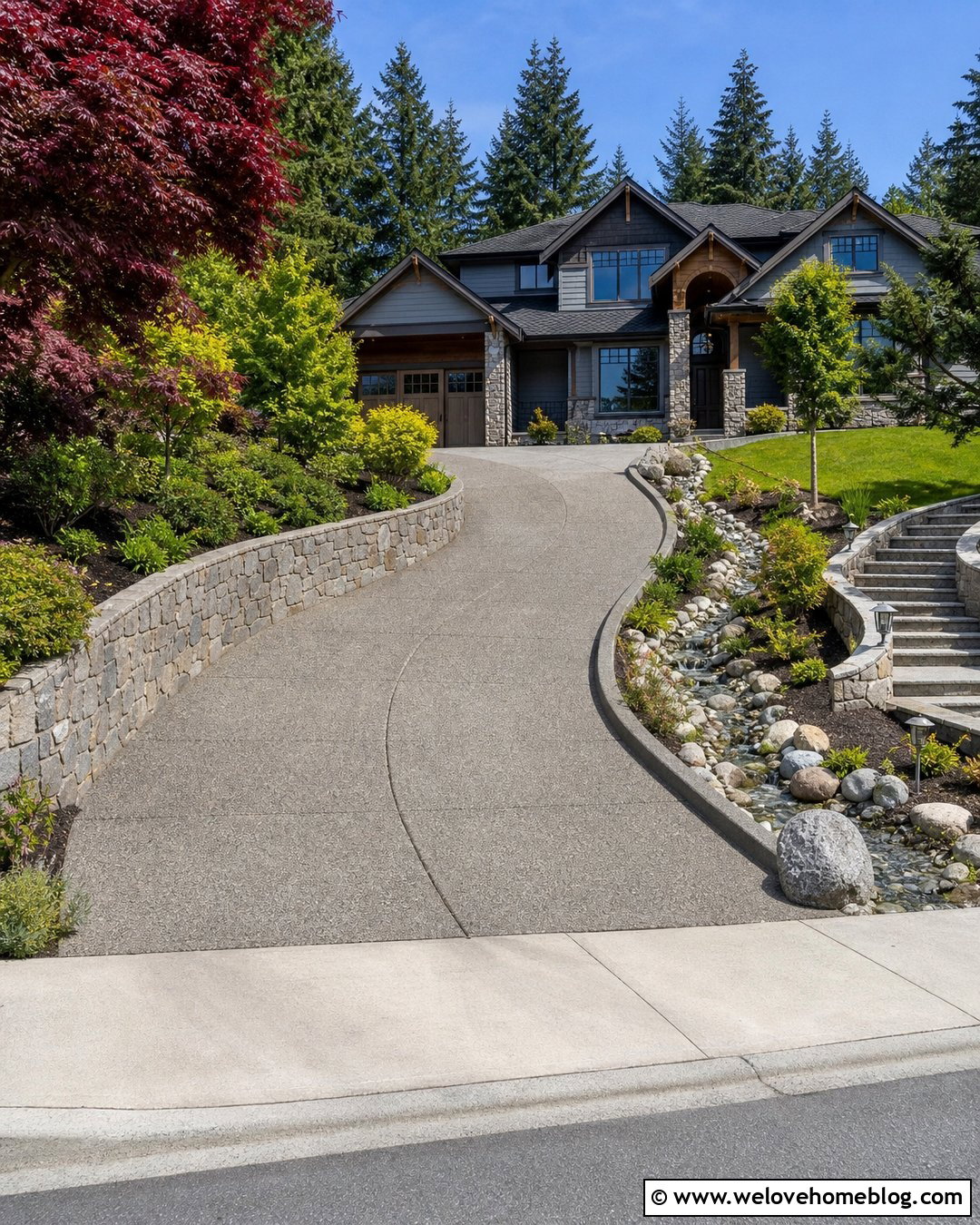
20. Garage Parking Stopper With A Sensor System
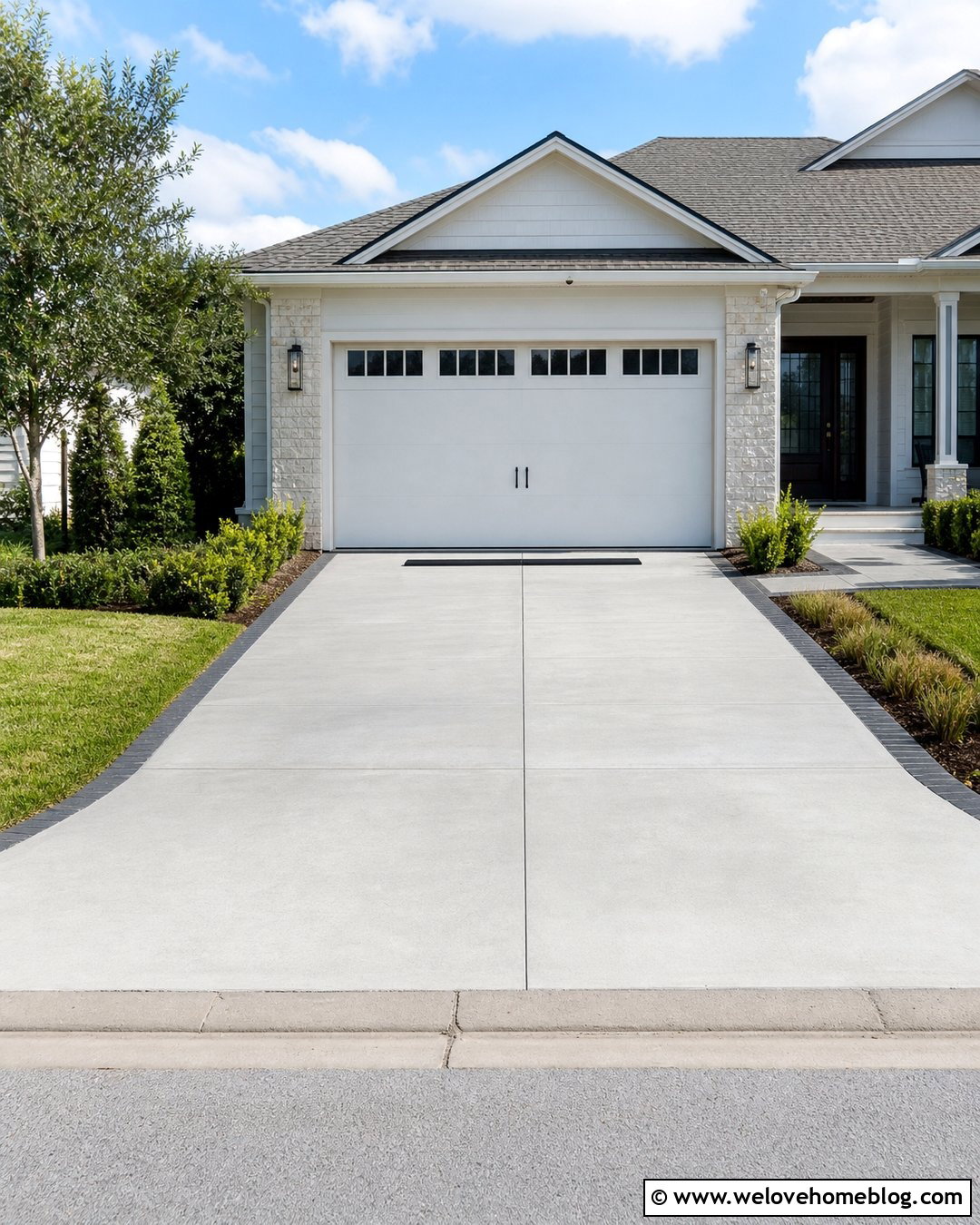
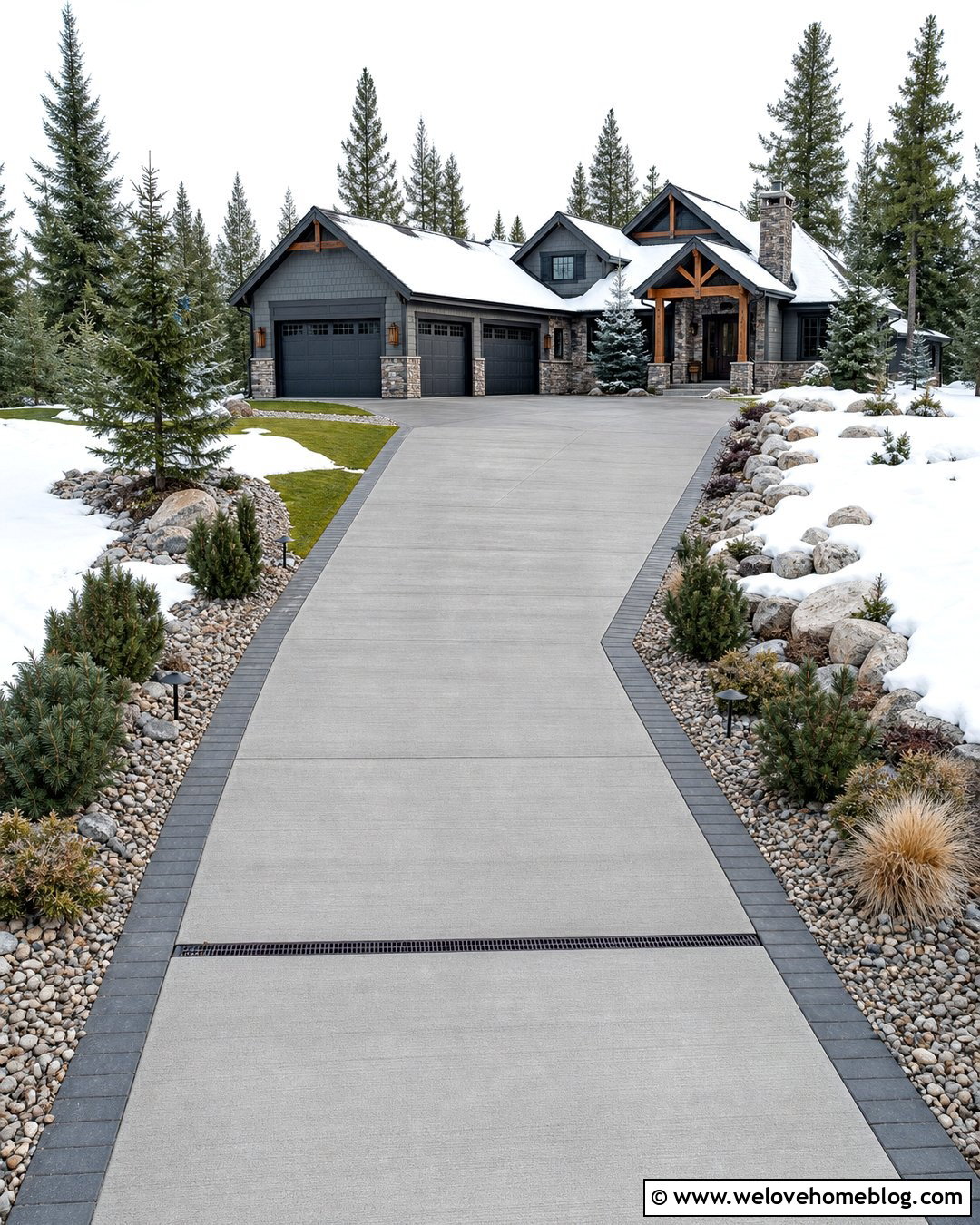
Combining a physical driveway stopper with a parking sensor provides two layers of guidance near a garage. Use a smooth light gray concrete driveway with a straight double-width layout and dark paver borders. In one parking bay, install a low rubber wheel stop at the correct tire position. Pair it with a weather-appropriate visual parking indicator or garage-mounted sensor that alerts the driver before the vehicle reaches storage, steps, or the back wall. Keep the walkway and garage threshold clear so the stopper does not create an unnecessary tripping point. Minimal planting beds with boxwood and ornamental grass maintain a tidy suburban appearance. This system is especially helpful where different drivers use the same space, although vehicle lengths may require separate settings or carefully selected stopper placement.
Conclusion:
The best 20 Driveway Stopper Ideas combine practical vehicle control with materials that suit the home and landscape. Concrete, rubber, plastic, timber, brick, and stone wheel stops can define parking positions, while bollards, chains, and gates manage access at the entrance. Visibility is just as important as appearance, so use contrasting colors, reflectors, lighting, or paving bands where appropriate. Avoid placing improvised obstacles in travel lanes, and preserve space for pedestrians, drainage, turning, deliveries, and emergency access. Secure installation is particularly important for wheel stops exposed to repeated tire contact. Local rules, HOA requirements, utility locations, and manufacturer instructions should be checked before construction. With thoughtful planning, a driveway stopper can improve safety, convenience, and overall curb appeal.

Related posts:
Leave a Reply