
Driveway strips can turn a large paved area into a lighter, more attractive part of the landscape. These 20 Driveway Strip Ideas explore complete designs that combine durable wheel tracks with grass, gravel, ground cover, stone, or contrasting paver bands. Often called ribbon driveways, traditional versions use two reinforced tracks beneath the vehicle’s tires while leaving the center open for planting or decorative material. Modern layouts also place narrow strips between concrete slabs or oversized pavers, creating clean geometric patterns. () The best option should suit your home, climate, maintenance routine, drainage needs, and expected vehicle weight. From cottage brick to streamlined concrete, the following 20 Driveway Strip Ideas offer practical inspiration for creating a cohesive entrance.

1. Concrete Driveway Strips With Grass Center
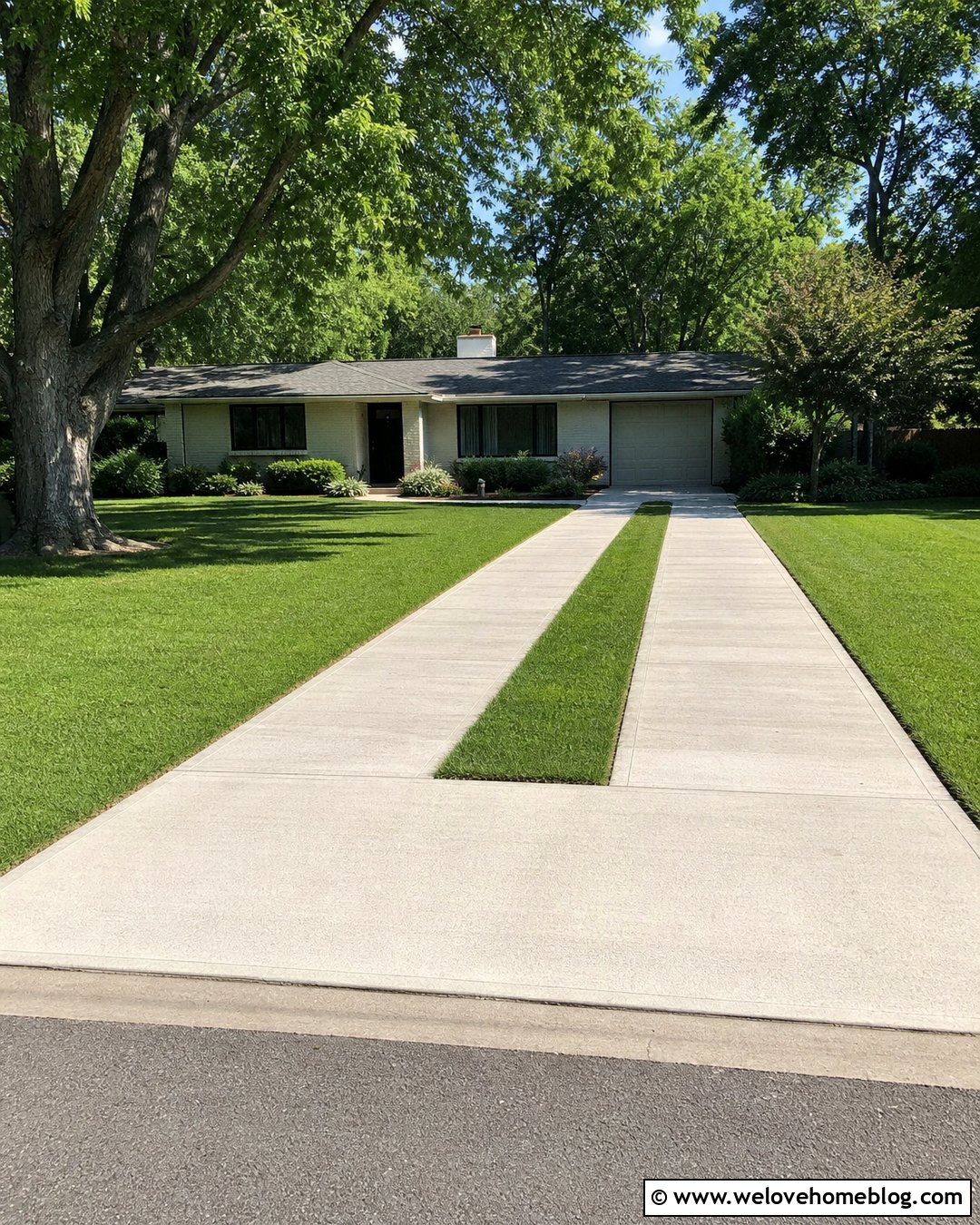
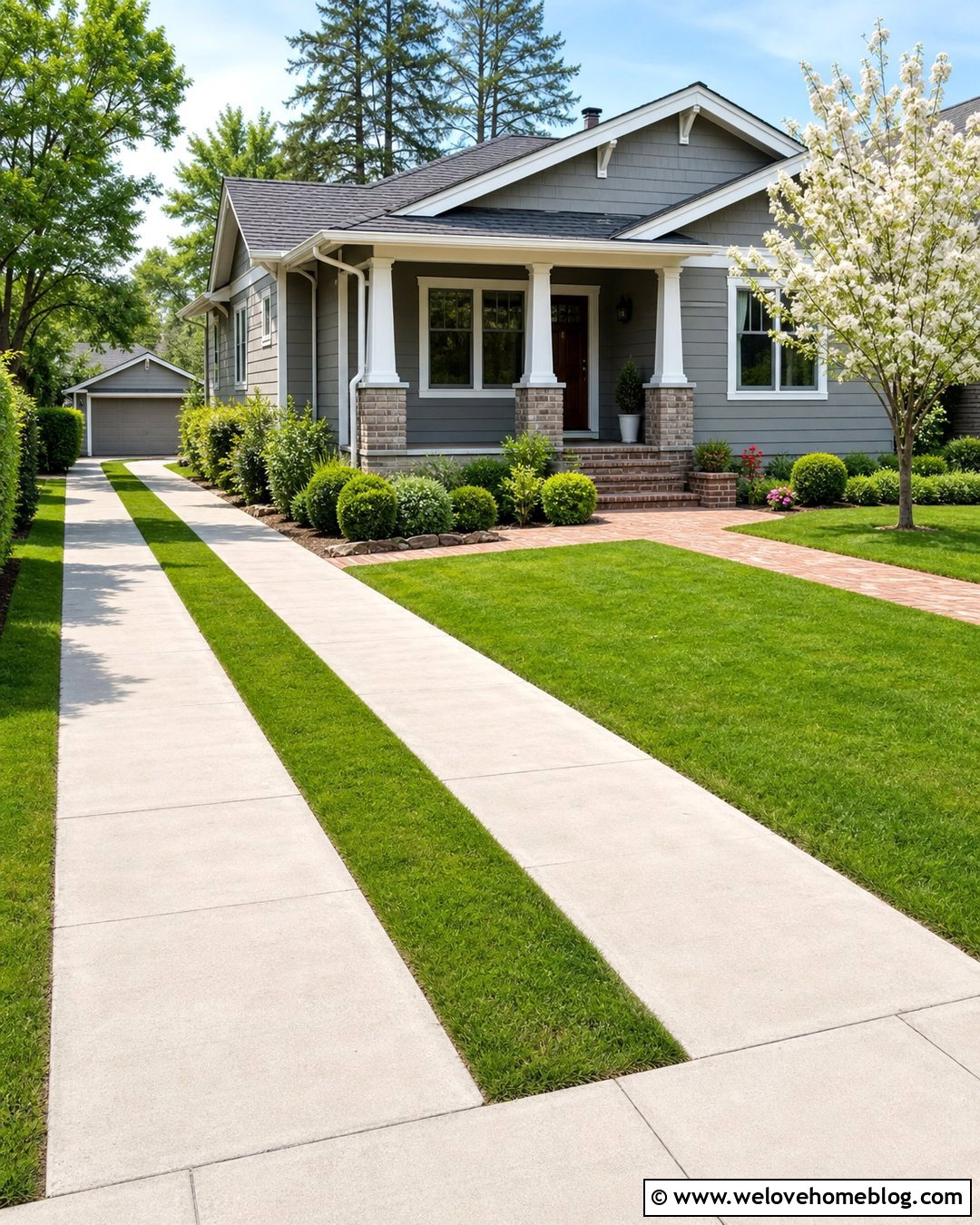
Two parallel strips of light gray poured concrete create a simple ribbon driveway that feels less imposing than one solid slab. A wide grass center connects visually with the surrounding lawn, while matching grass shoulders soften both outer edges. This layout works especially well for ranch homes, cottages, and properties with long front yards. Position the concrete tracks to match the vehicles that use the driveway most frequently, but allow enough paved width for comfortable steering. A compacted base and reinforced concrete will help the tracks handle regular traffic. Choose durable turf suited to your sunlight and climate, then provide accessible irrigation. At the street, connect the strips with a full-width concrete apron so turning vehicles do not damage the grass.
2. Concrete Slab Driveway With Artificial Turf Strips
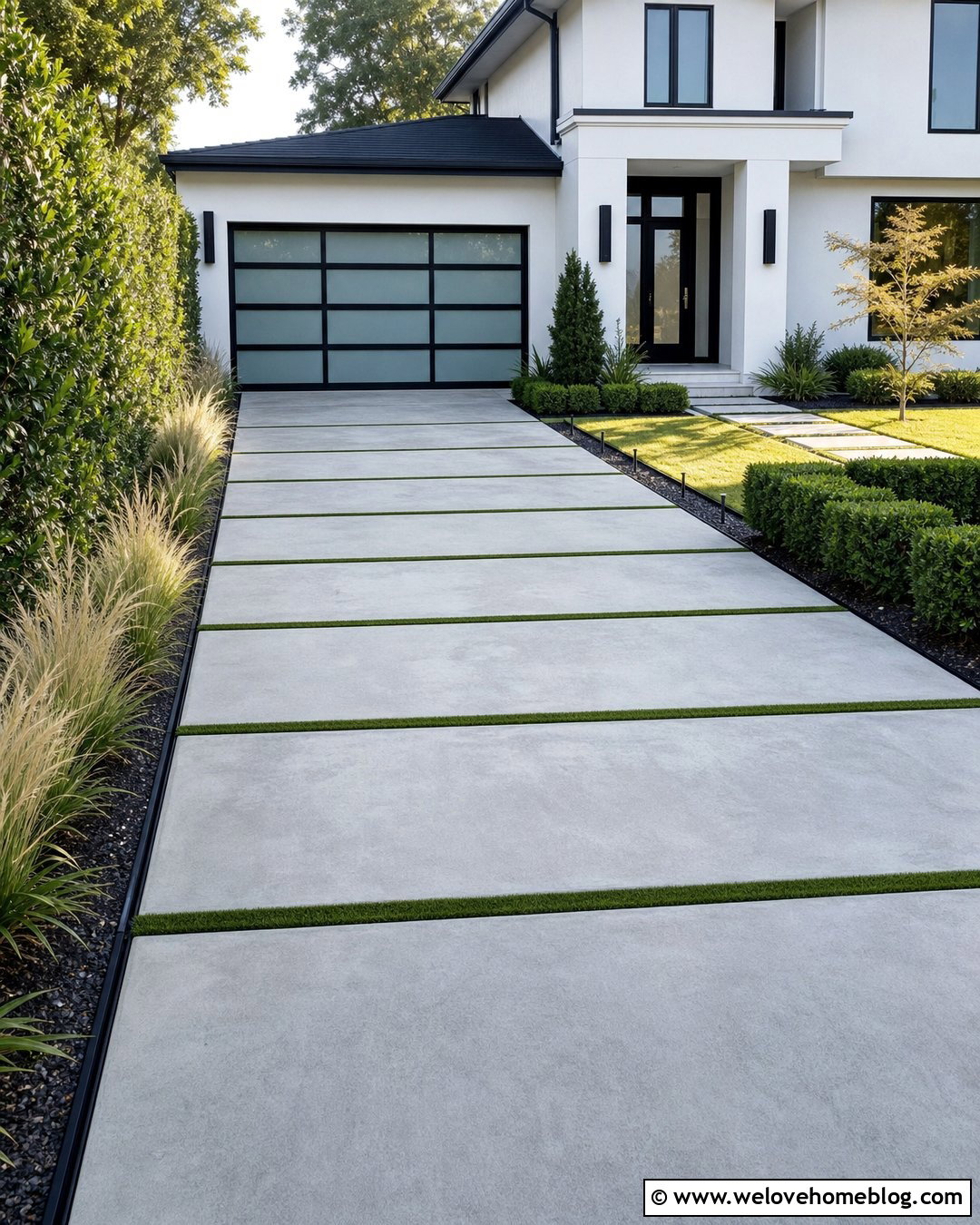
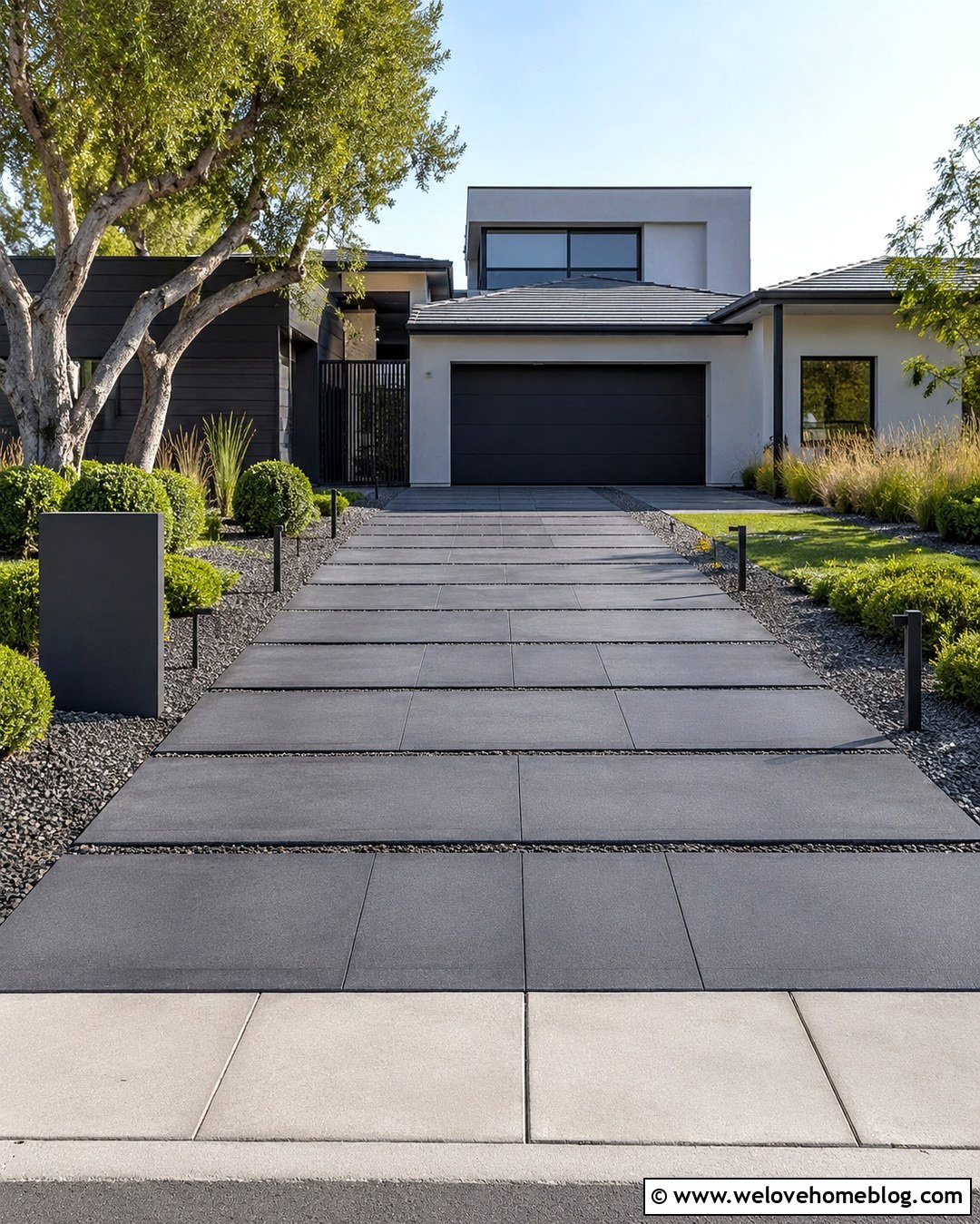
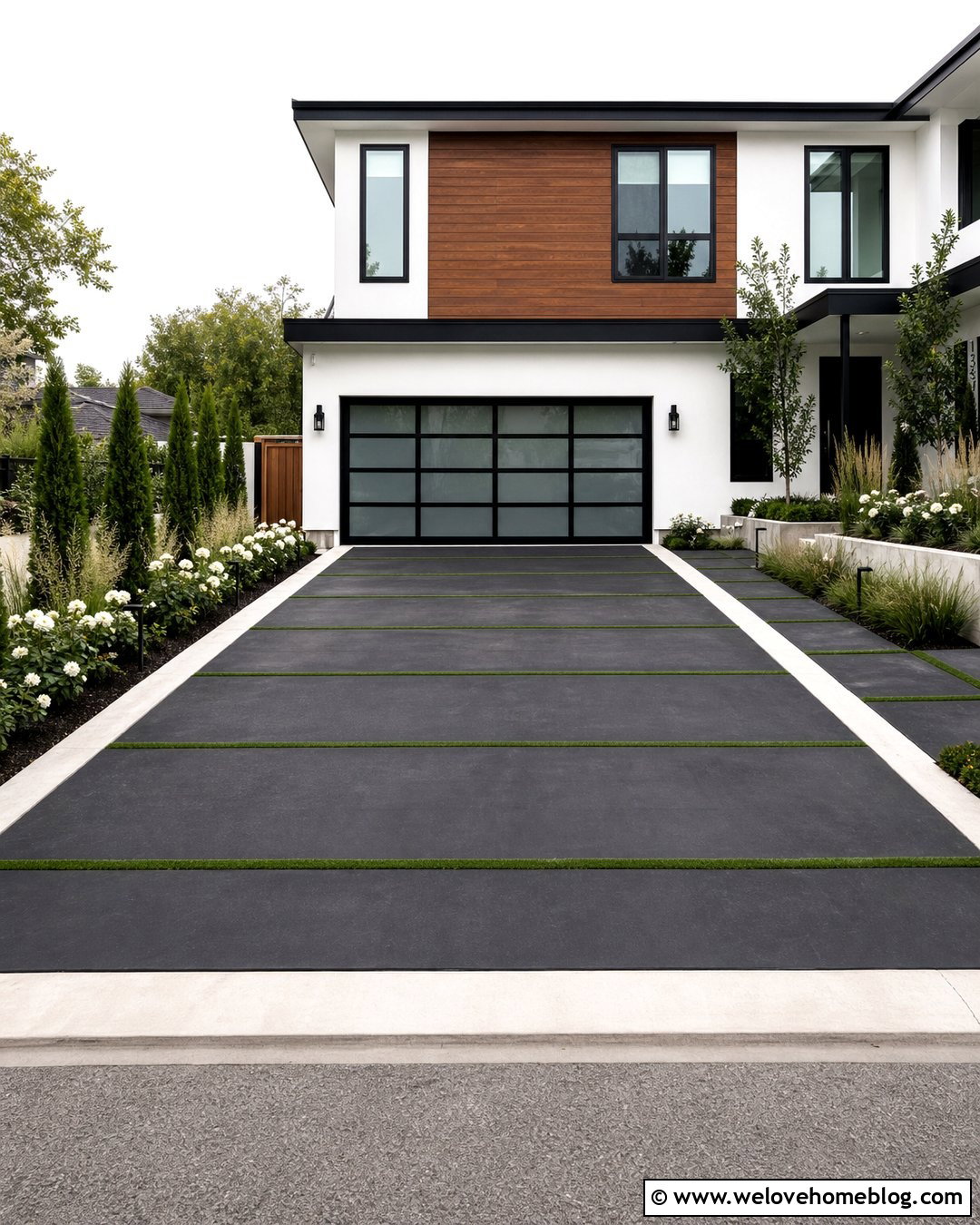
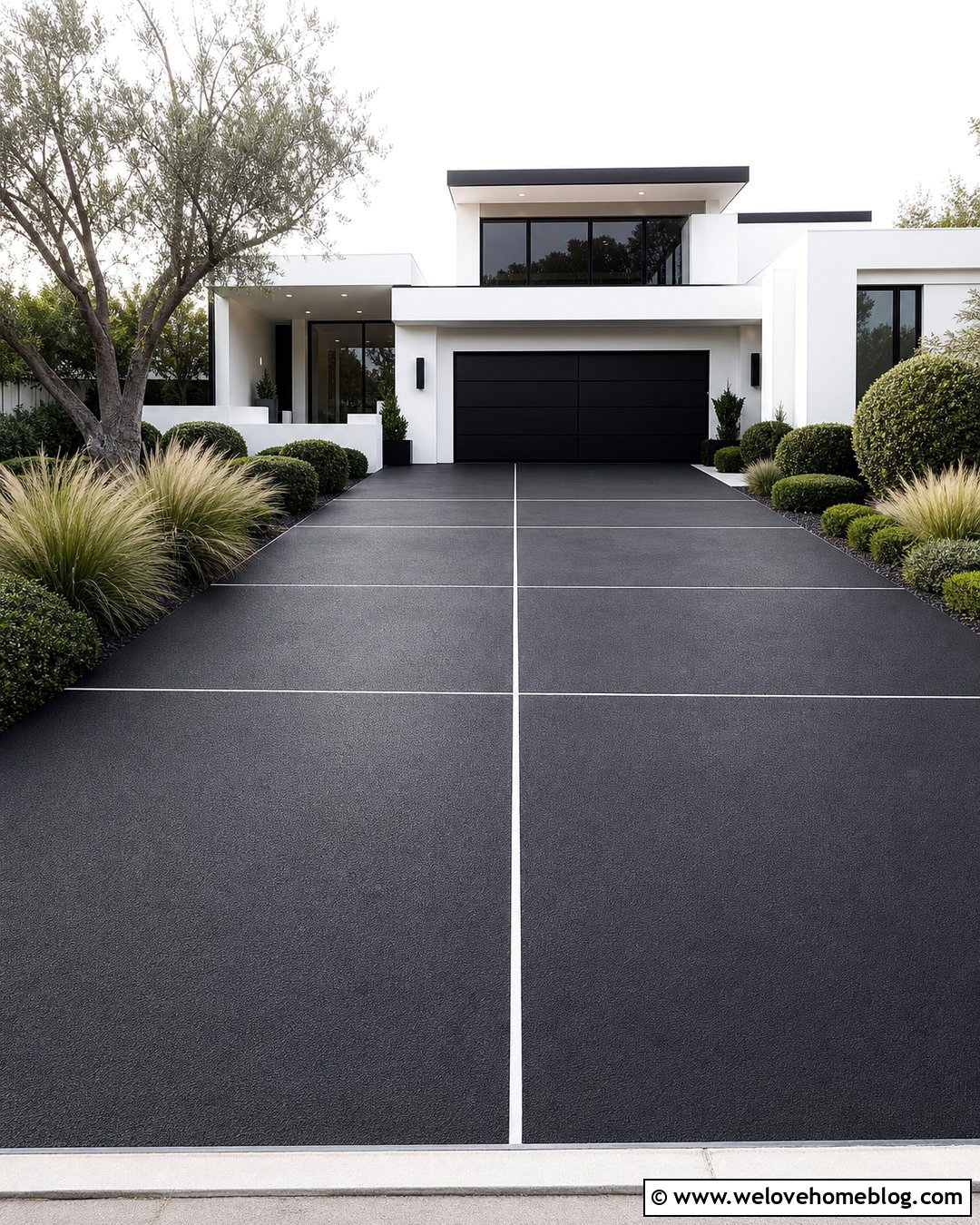
Large rectangular concrete slabs separated by narrow artificial turf strips create a crisp, modern driveway. The green lines break up the hard surface and emphasize the direction of travel toward the garage. Choose smooth or lightly sandblasted gray concrete rather than a highly polished finish, which may become slippery when wet. Exterior-rated turf should be short, dense, UV-resistant, and installed over a properly prepared drainage base. Keep the turf slightly below the concrete surface so tires and snow-removal tools are less likely to catch its edges. Black steel edging can create precise transitions along planting beds. Complete the look with architectural grasses, compact evergreen shrubs, and a straight concrete walkway leading to a contemporary front door.
3. Large Paver Driveway With Narrow Grass Strips
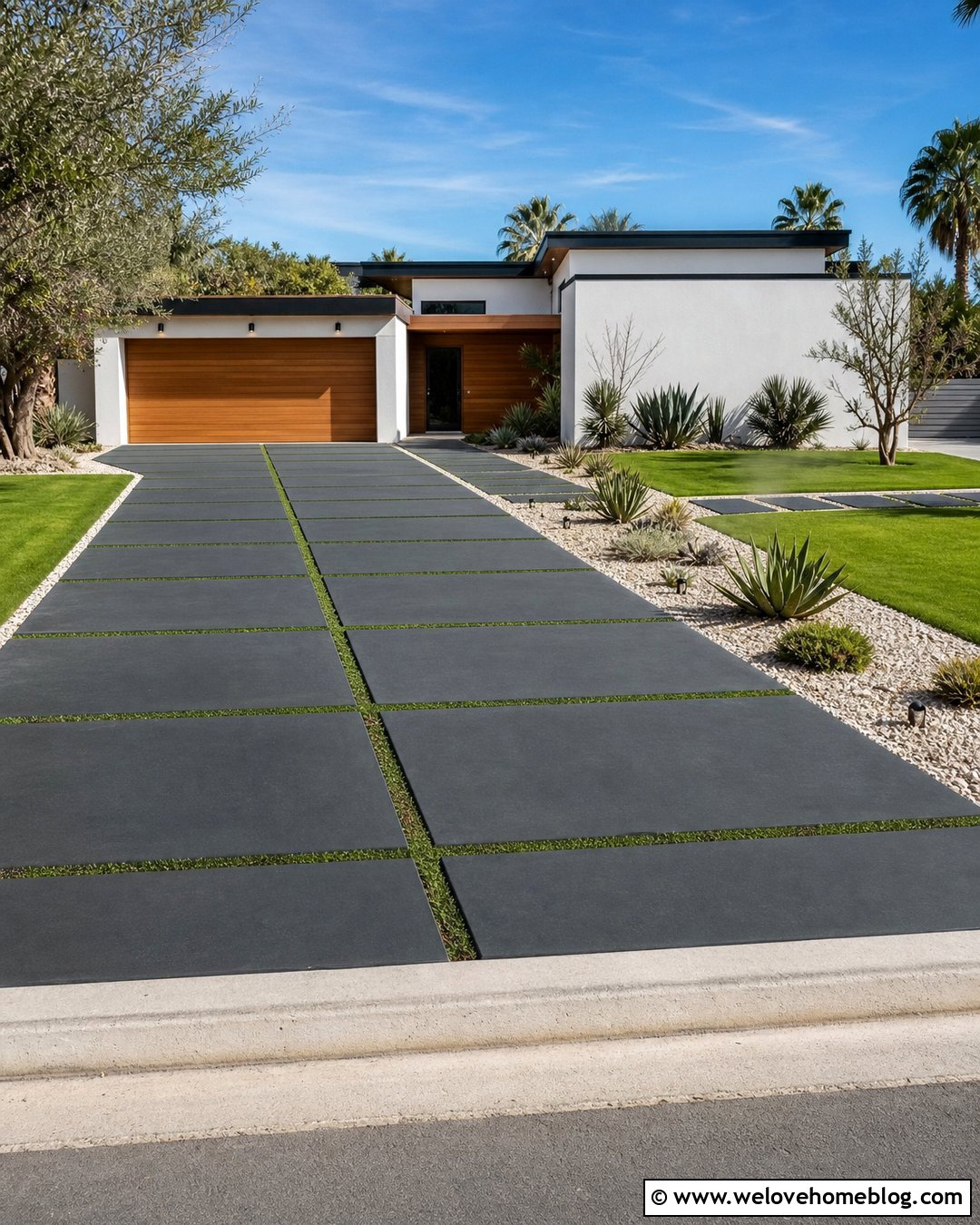
Oversized concrete pavers and slim grass joints give a broad driveway a more landscaped appearance. Use rectangular charcoal or warm gray pavers in evenly spaced rows, allowing the green strips to form a clean grid across the full approach. This complete look pairs naturally with a midcentury modern or minimalist house. Because driveway pavers must support vehicle loads, select products rated for vehicular use and install them over the base recommended for local soil and weather conditions. Real grass creates a softer finish but requires trimming, watering, and occasional repair. A reinforced planting system can help protect the roots. Frame the driveway with simple gravel beds, sculptural shrubs, and low lighting rather than dense planting that competes with the geometric pattern.
4. Brick Driveway Strips With Gravel Center
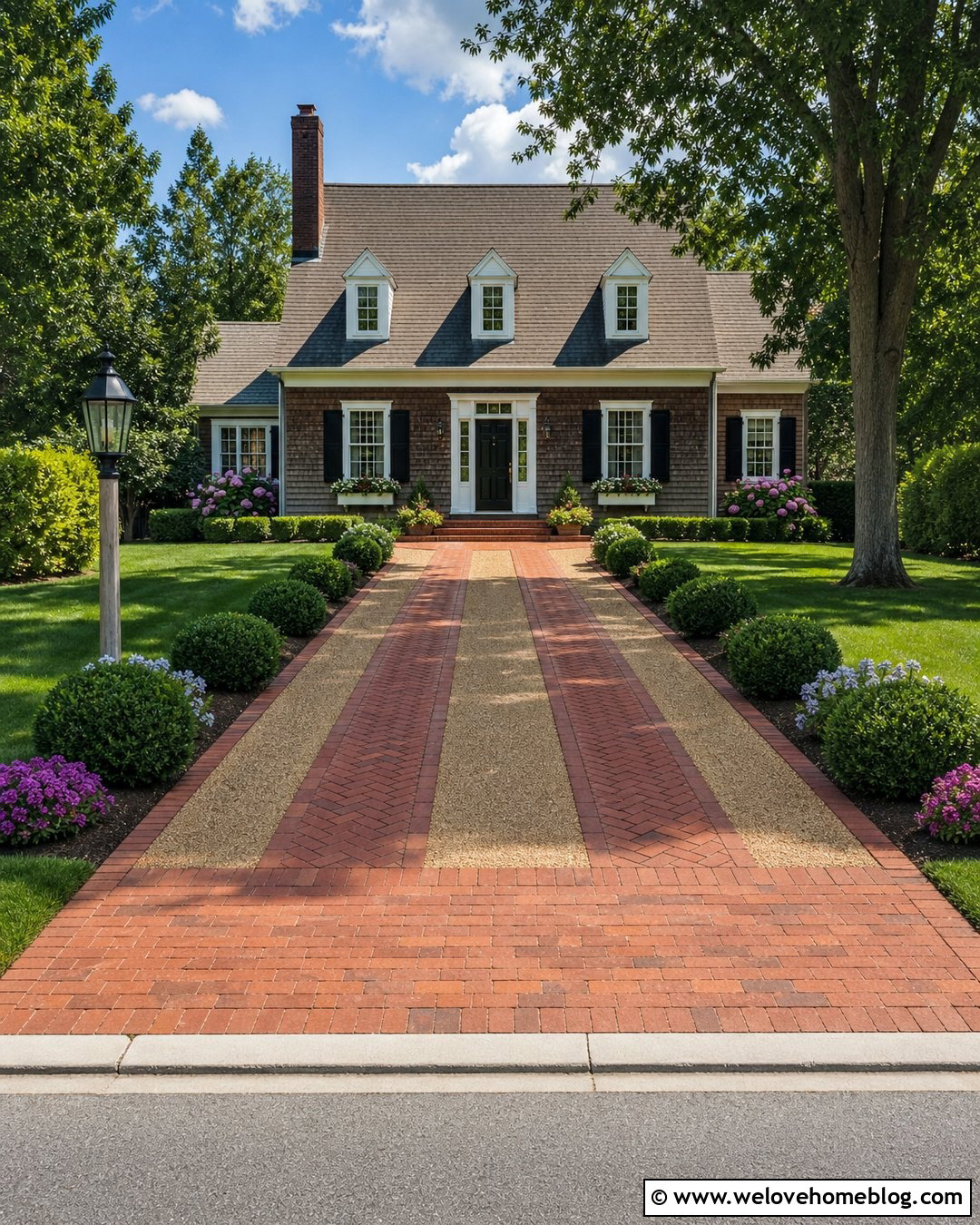
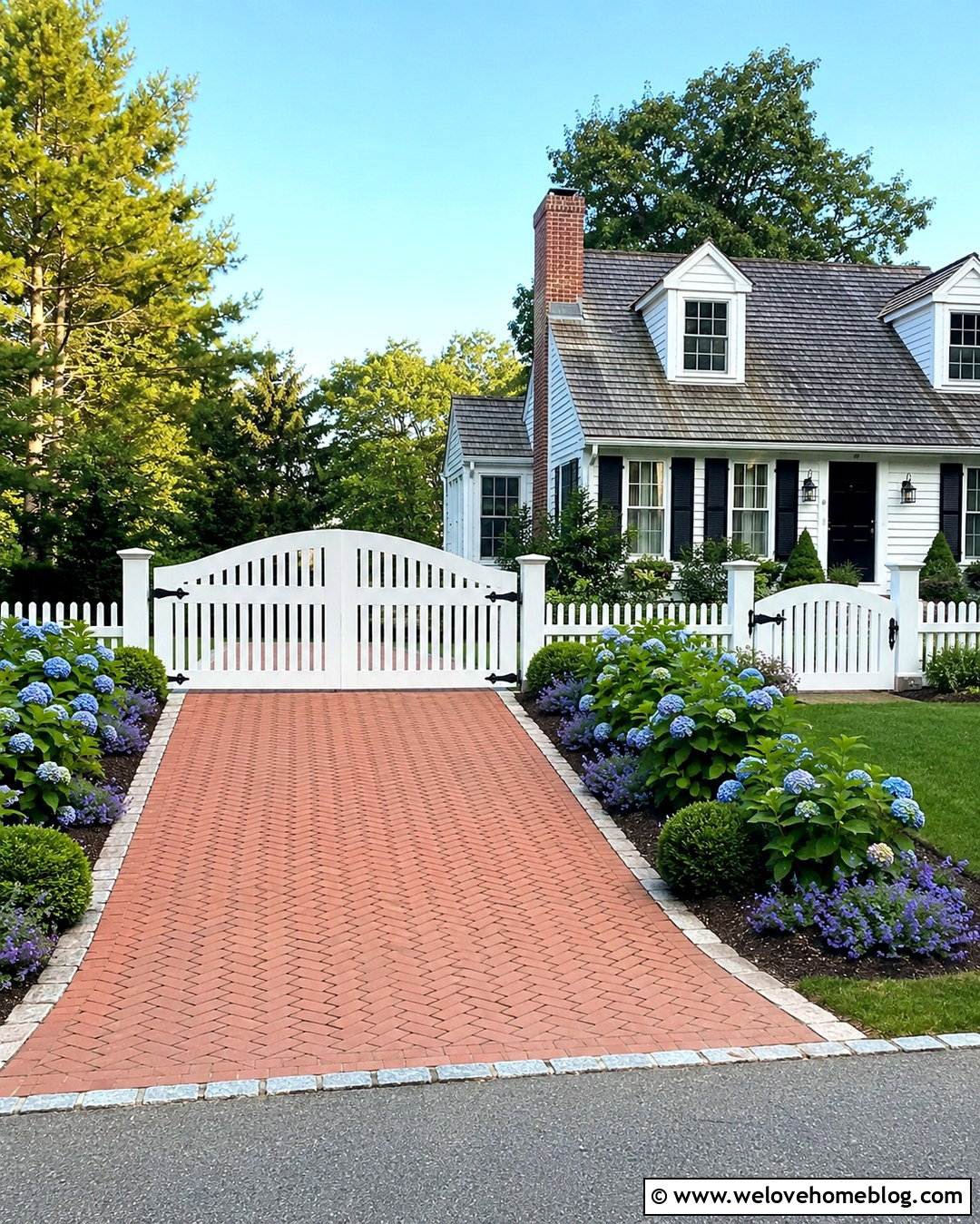
Clay brick pavers laid in herringbone make strong, traditional wheel strips for a welcoming cottage driveway. Fill the central strip and outer shoulders with compacted tan gravel to add drainage, texture, and a pleasing color contrast. A soldier-course brick border keeps the gravel contained and gives the entire driveway a finished outline. The combination suits Cape Cod, colonial, and English-inspired houses, particularly when the brick tones relate to the facade or front steps. Use driveway-rated bricks rather than thin walkway products. The base beneath both materials should be prepared carefully to prevent settlement and spreading. Along the sides, add clipped boxwood alternatives, flowering perennials, and a brick walkway. A wider brick apron at the garage makes parking and turning easier.
5. Cobblestone Driveway Strips With Creeping Thyme
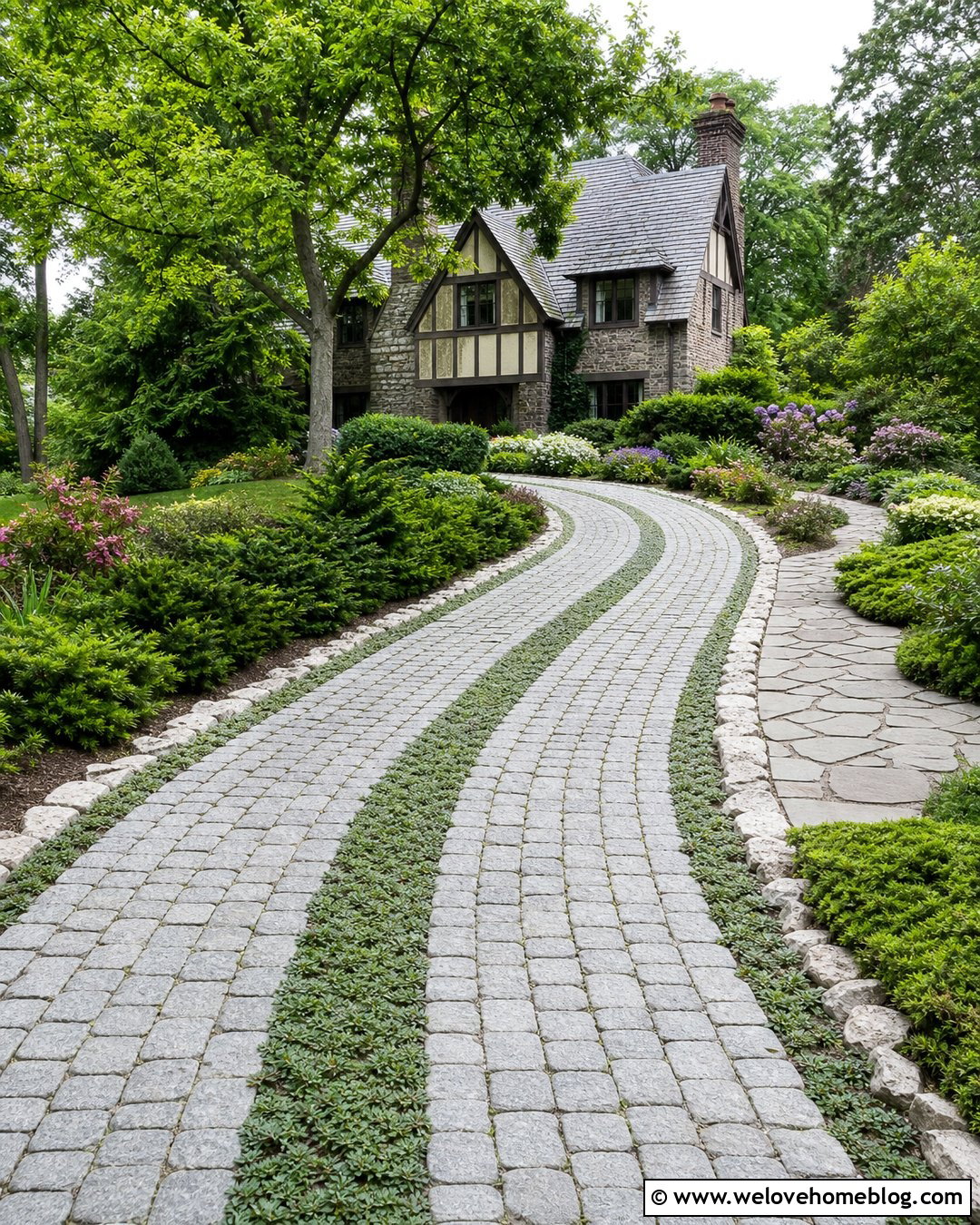
Granite cobblestone wheel tracks surrounded by creeping thyme create a driveway with an established, garden-centered character. The stone ribbons can follow a gently curved approach, while low-growing thyme fills the center and outer gaps with fine texture and seasonal flowers. This look works beautifully beside a stone cottage, Tudor home, or wooded craftsman house. Choose a ground cover that tolerates your climate, sunlight, and occasional tire contact. It should not be treated as a substitute for a properly engineered vehicle base. Set the cobblestones on a stable foundation with secure edge restraints to limit movement. Irregular stone borders, layered shrubs, and a flagstone walkway can extend the natural theme. Keep taller plants away from the wheel tracks to preserve visibility and usable width.
6. Pea Gravel Driveway With Concrete Wheel Strips
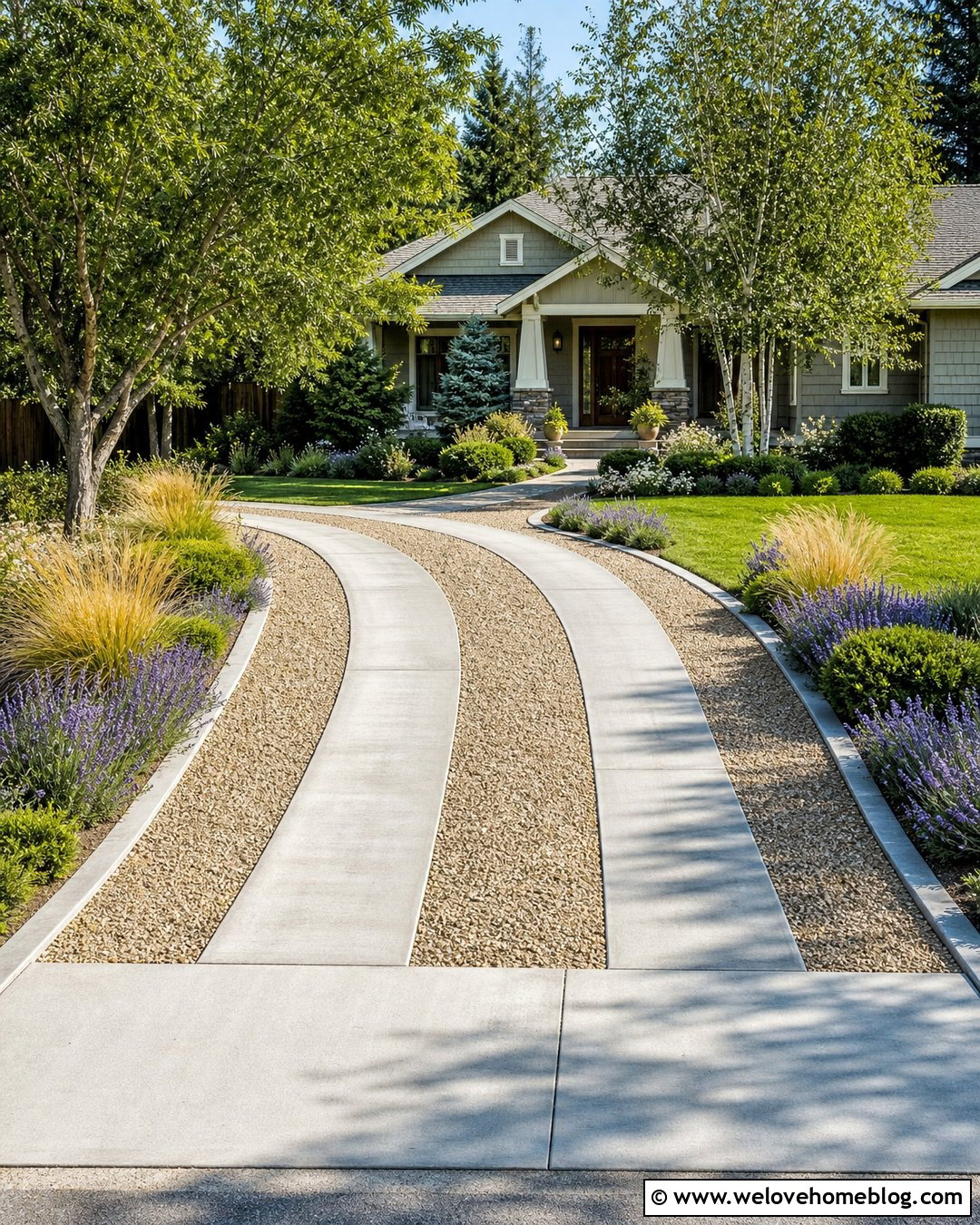
A pea gravel driveway becomes easier to navigate when smooth concrete wheel strips create a stable path from the curb to the garage. Warm gray poured concrete works well with buff, cream, or mixed-earth gravel. Use a straight layout for a narrow suburban property or introduce a gentle curve on a larger lot. Metal or concrete edging should contain the loose aggregate along the shoulders and center. Because rounded pea gravel can shift, a stabilizing grid or carefully specified base may improve performance in frequently used areas. Finish the entrance with a full-width concrete apron that captures turning movements. Lavender, catmint, ornamental grasses, and compact shrubs can line the driveway without crowding it. The finished design feels relaxed while retaining a clear, practical driving route.
7. Crushed Granite Driveway With Steel Strips
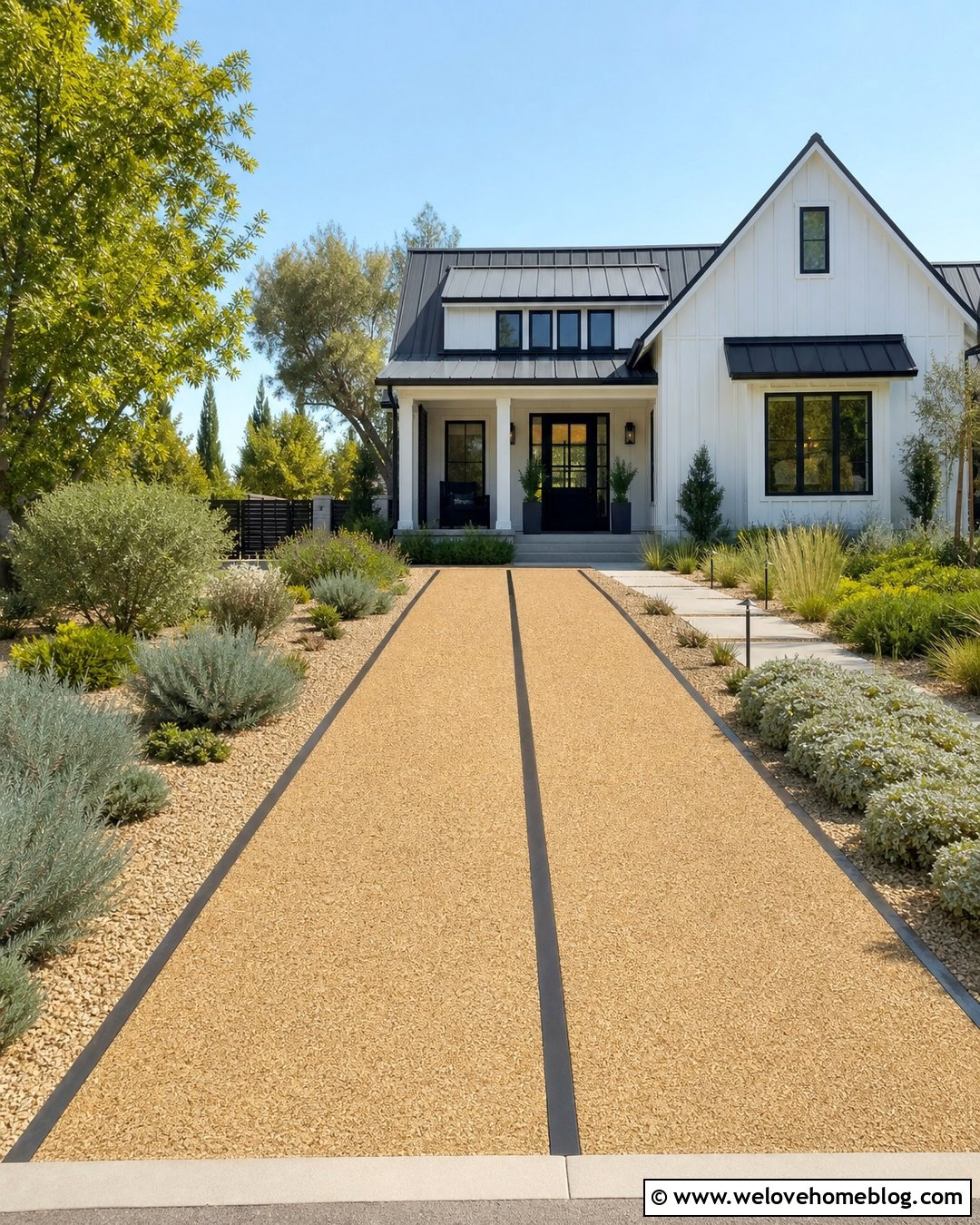
Compact crushed granite creates a firm-looking, natural surface, while dark steel bands add sharp linear detail. Run the metal strips lengthwise to separate two tire zones, a narrow center channel, and the outer gravel shoulders. The result is understated enough for a modern farmhouse but structured enough for contemporary architecture. Select steel edging designed for landscape use and install it nearly flush with the finished aggregate. Raised edges could become tire, walking, or maintenance hazards. A properly compacted base is essential because the decorative lines alone will not control settlement. Match the warm granite with drought-tolerant shrubs, silvery foliage, and a simple concrete entry walk. At the garage, use a paved transition strip to prevent loose particles from being carried into the interior.
8. Resin-Bound Driveway With Paver Strips
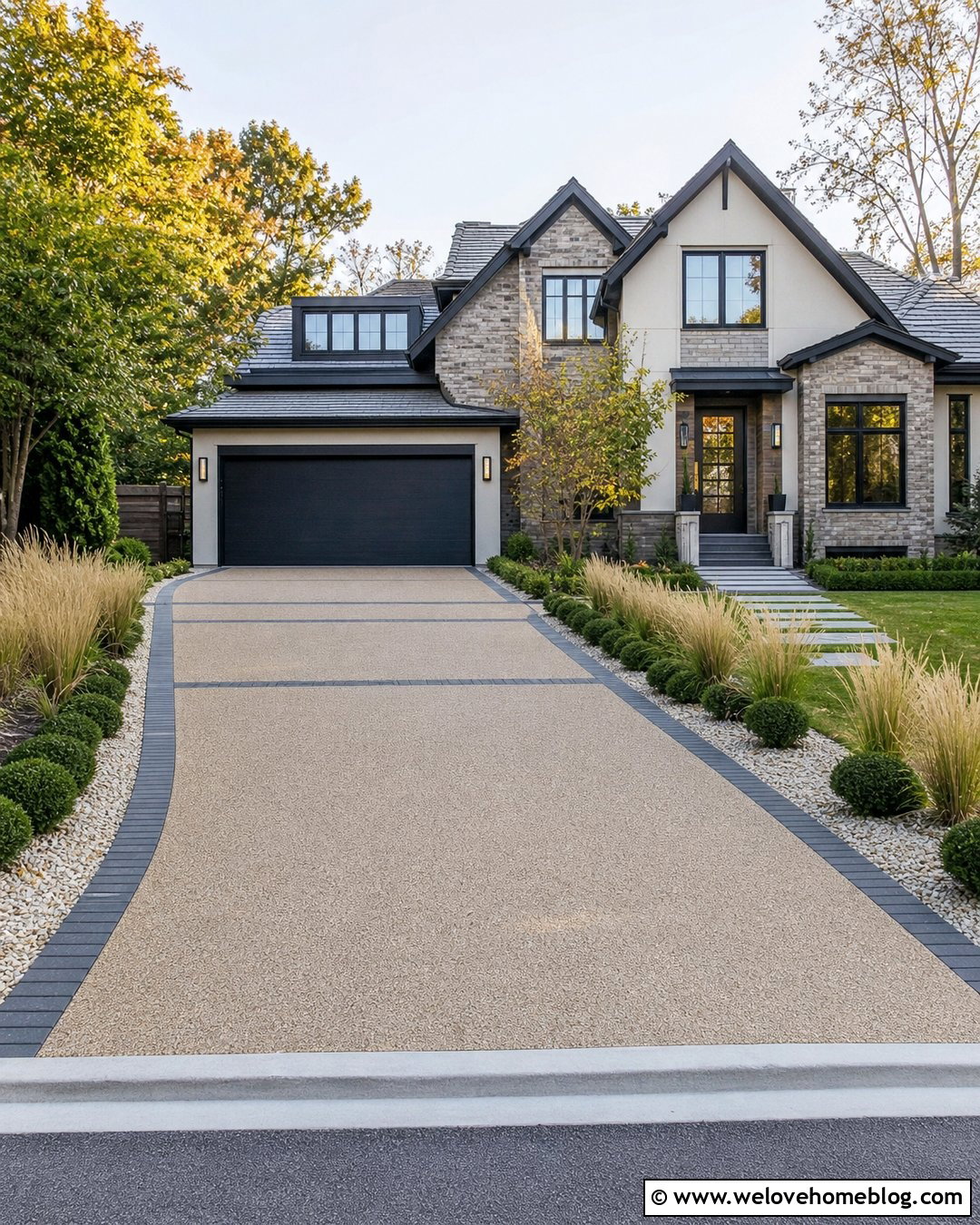
A resin-bound gravel driveway can gain definition from narrow paver strips crossing the surface at regular intervals. Choose a warm beige aggregate blend with charcoal concrete pavers for a clear but balanced contrast. The bands can visually divide a long straight driveway into smaller sections and align with architectural details such as windows, garage doors, or walkway joints. Continue the charcoal pavers around the perimeter to create a cohesive border. Resin systems require compatible materials, careful base preparation, and installation under suitable conditions, so follow the manufacturer’s specifications closely. Simple planting beds filled with evergreen spheres, feathery grasses, and pale gravel reinforce the clean appearance. This design works especially well with contemporary homes that need warmth without losing a controlled, geometric layout.
9. Asphalt Driveway With Brick Accent Strips
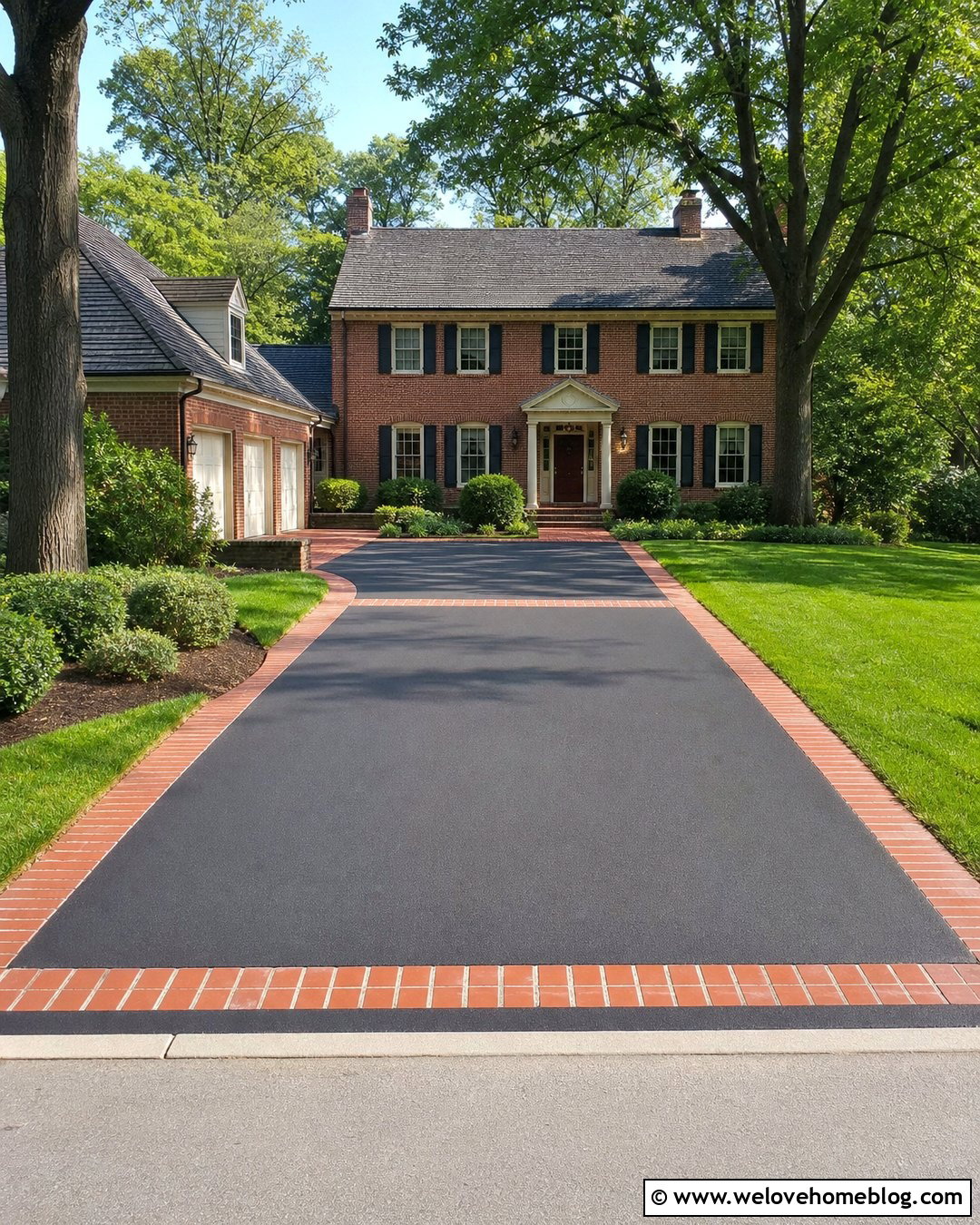
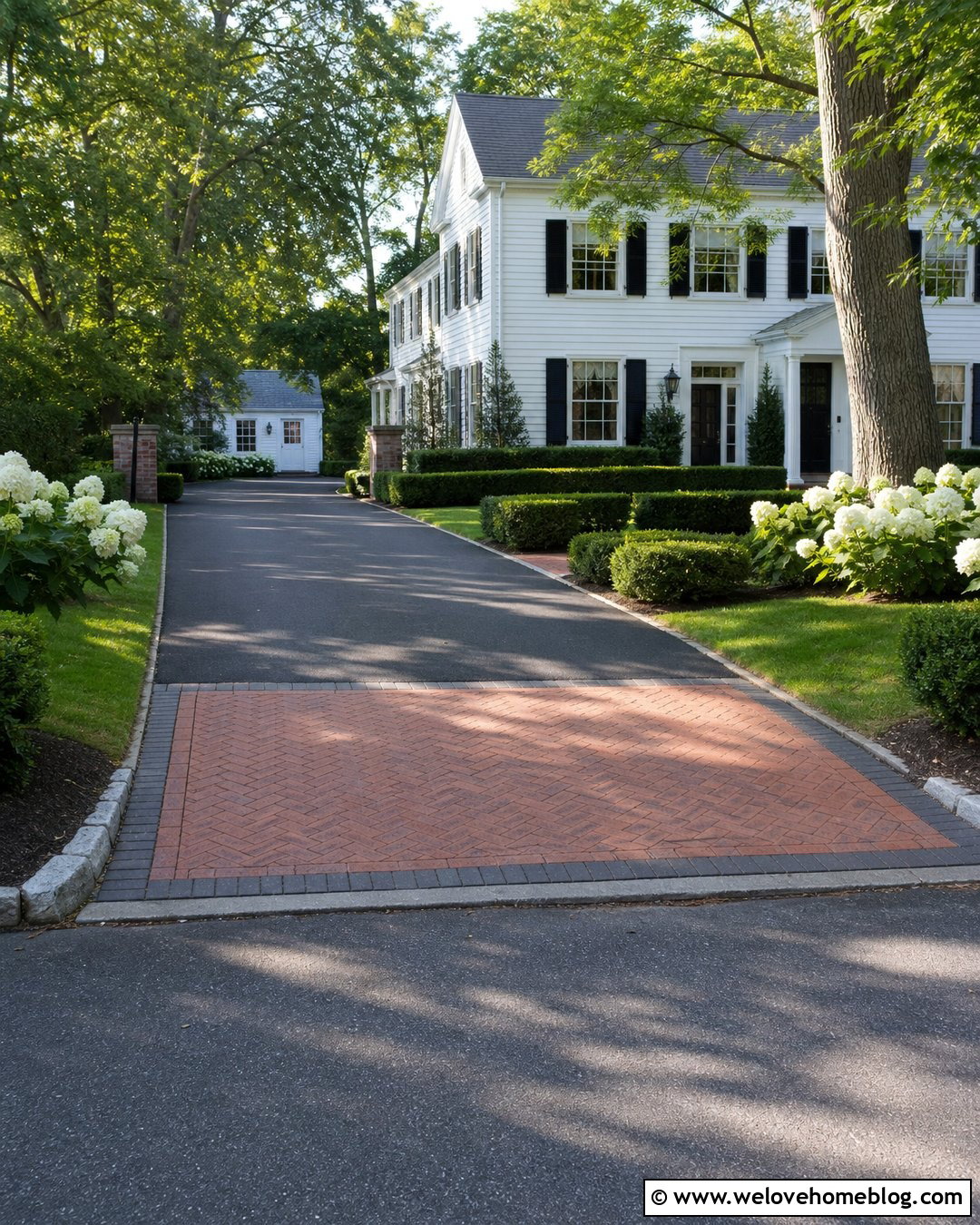
Black asphalt becomes more distinctive when red or brown brick strips are incorporated as functional-looking accents. Place one brick band near the street, another before the garage, and a narrow longitudinal ribbon along each edge. The warm masonry visually connects the driveway to a traditional brick house and makes the dark asphalt feel more intentional. Use pavers rated for driveway traffic and build each strip on a stable base so the materials settle evenly. The transition should remain smooth enough for vehicles, bicycles, strollers, and snow equipment. Add a curved planting bed on one side to soften the straight surface. Repeating the same brick around the walkway or front steps helps unify the property. Low evergreen shrubs maintain visibility and provide year-round structure.
10. Permeable Paver Driveway With Grass Bands
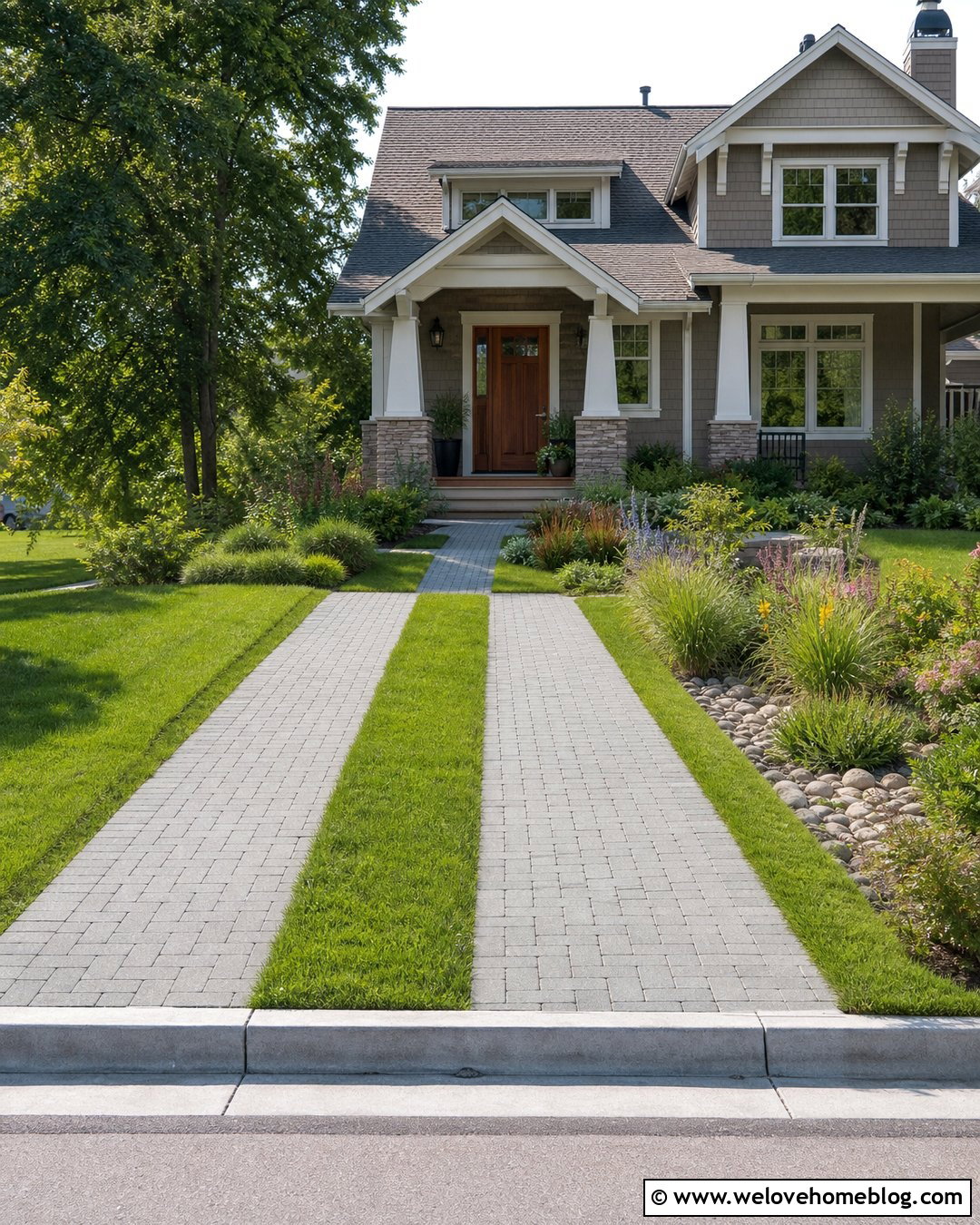
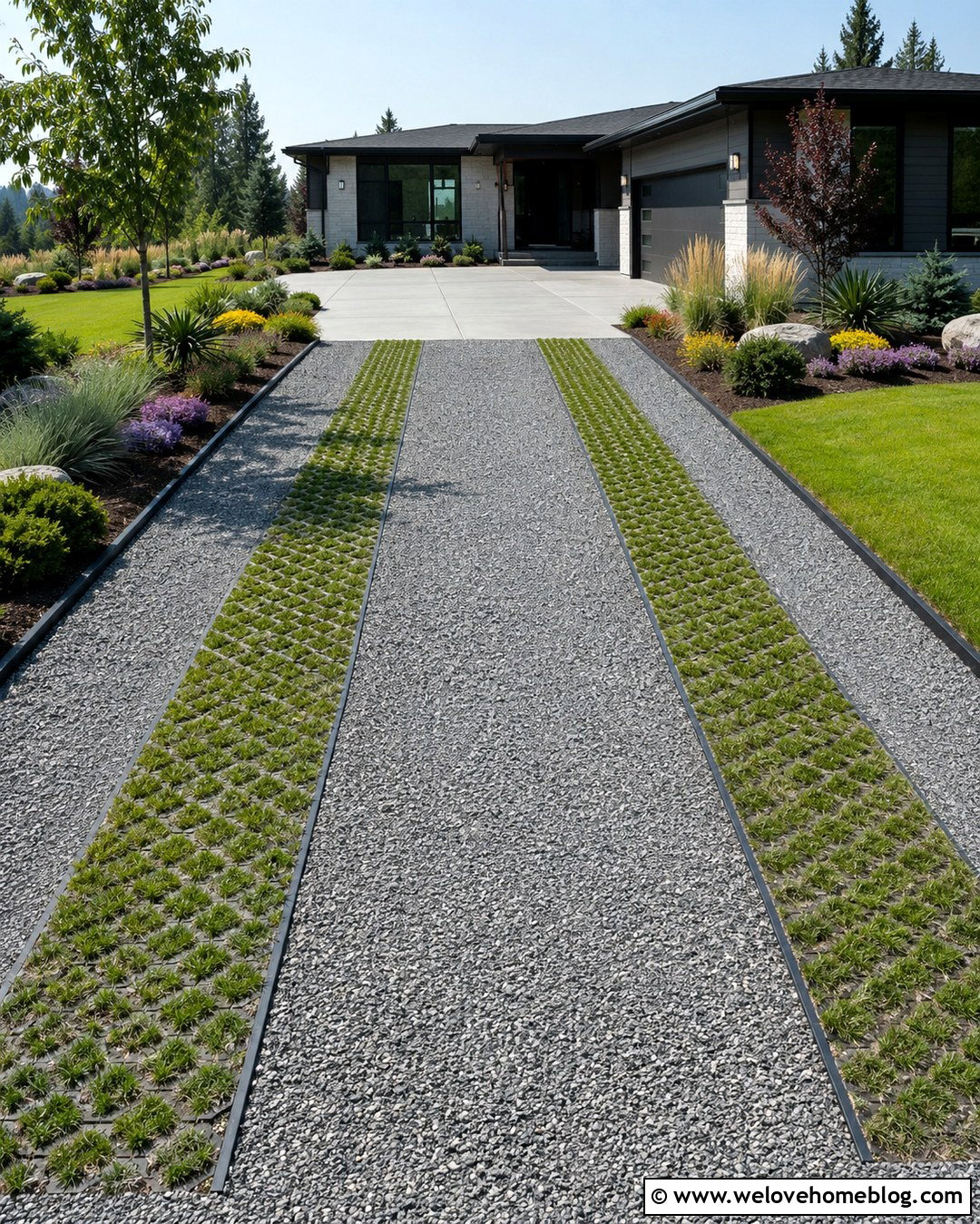
Permeable concrete pavers with reinforced grass bands can produce a green driveway without relying on unsupported lawn beneath regular vehicle traffic. Lay the pavers in two broad wheel zones and use a compatible cellular grid in the center and along the shoulders. The repeated bands create a calm, linear appearance leading toward a craftsman or contemporary house. Effective stormwater performance depends on the complete system, including surface openings, bedding, base layers, soil conditions, and overflow planning—not simply the visible grass. () Choose turf suited to local conditions and provide a practical way to mow or trim it. Rain gardens, native shrubs, and a permeable walkway can extend the landscape-focused approach while keeping the entrance polished.
11. Flagstone Driveway Strips With Gravel Infill
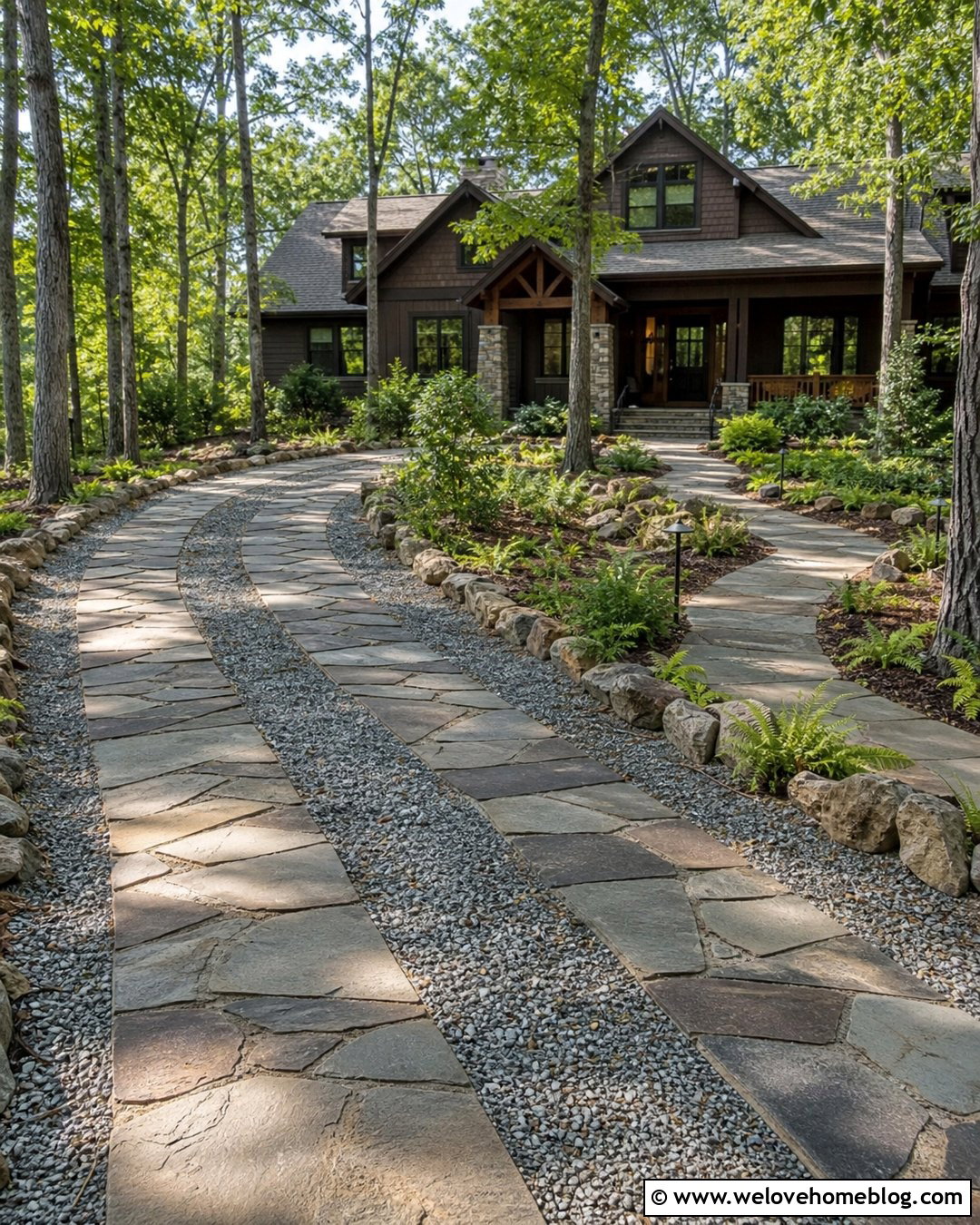
Thick, vehicle-rated flagstone strips can create an informal driveway that blends naturally into a wooded property. Use broad pieces of gray or brown stone for the tire tracks, then fill the center and shoulders with compacted angular gravel. Irregular edges make the driveway feel organic, but the driving path should remain consistently wide and level. A robust base and correct stone thickness are especially important because thin flagstone may crack beneath vehicle loads. Continue the same stone into a curved front walkway for a coordinated transition. Ferns, shade-tolerant grasses, low shrubs, and mature trees can frame the approach without hiding its edges. Instead of formal lighting, install small dark fixtures among the plantings. The complete design feels quiet, natural, and appropriate for a rustic home.
12. Crushed Shell Driveway With Brick Strips
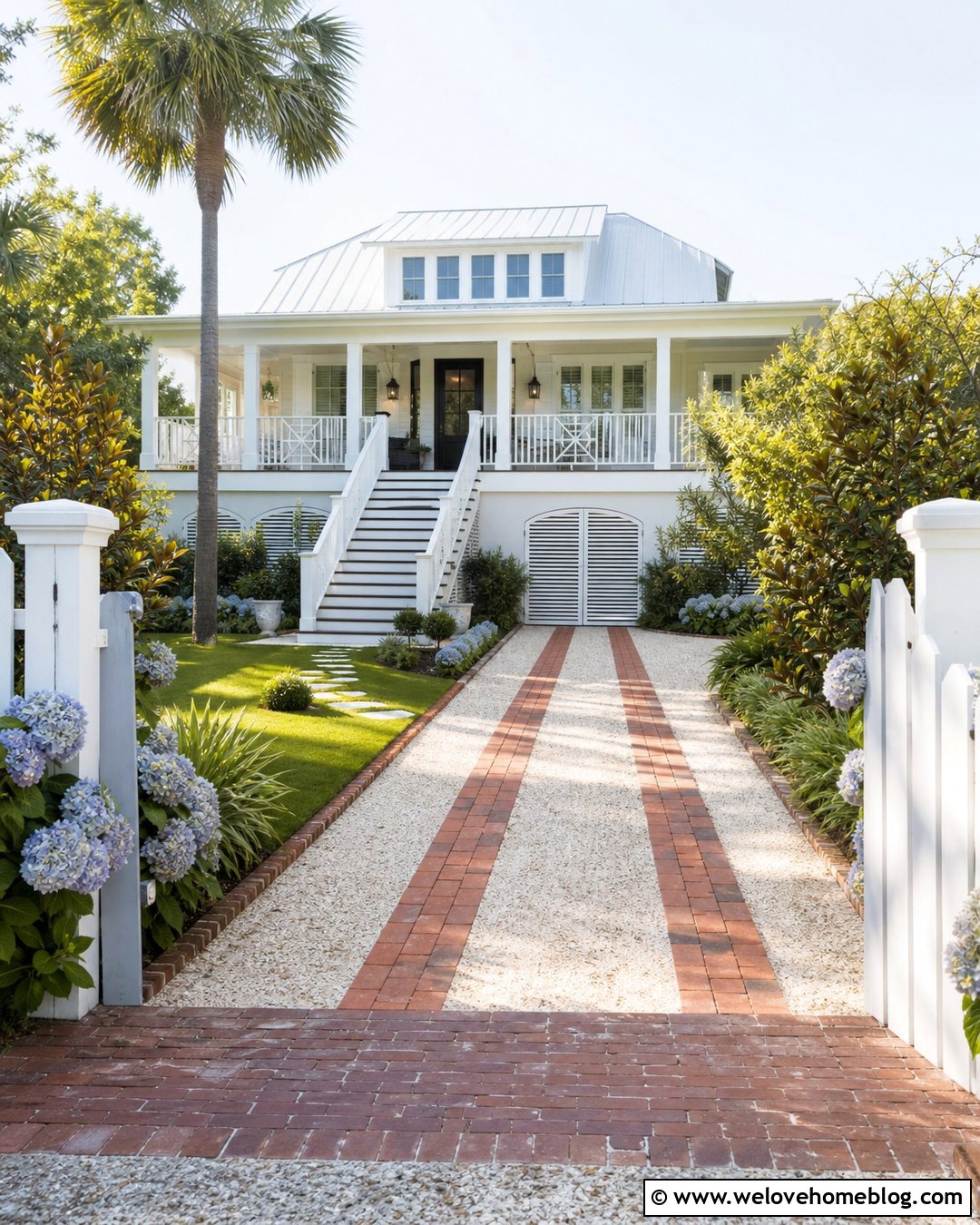
A pale crushed shell driveway with red clay brick wheel strips brings coastal character to a cottage or low-country home. The shell provides a bright, textured background, while the brick tracks create a clear route and relate naturally to porch steps or foundation details. Install a full-width brick apron near the road to protect the entrance from turning tires. Brick edging along the outer boundaries helps hold the shell in place and gives the layout a deliberate shape. Material availability and suitability vary by region, so confirm that locally sourced shell is appropriate for residential driveway use. Surround the design with salt-tolerant grasses, hydrangeas, wax myrtle, or other climate-compatible plants. A simple white fence and shell walkway can complete the relaxed coastal setting.
13. Curved Concrete Driveway Strips With Gravel Center
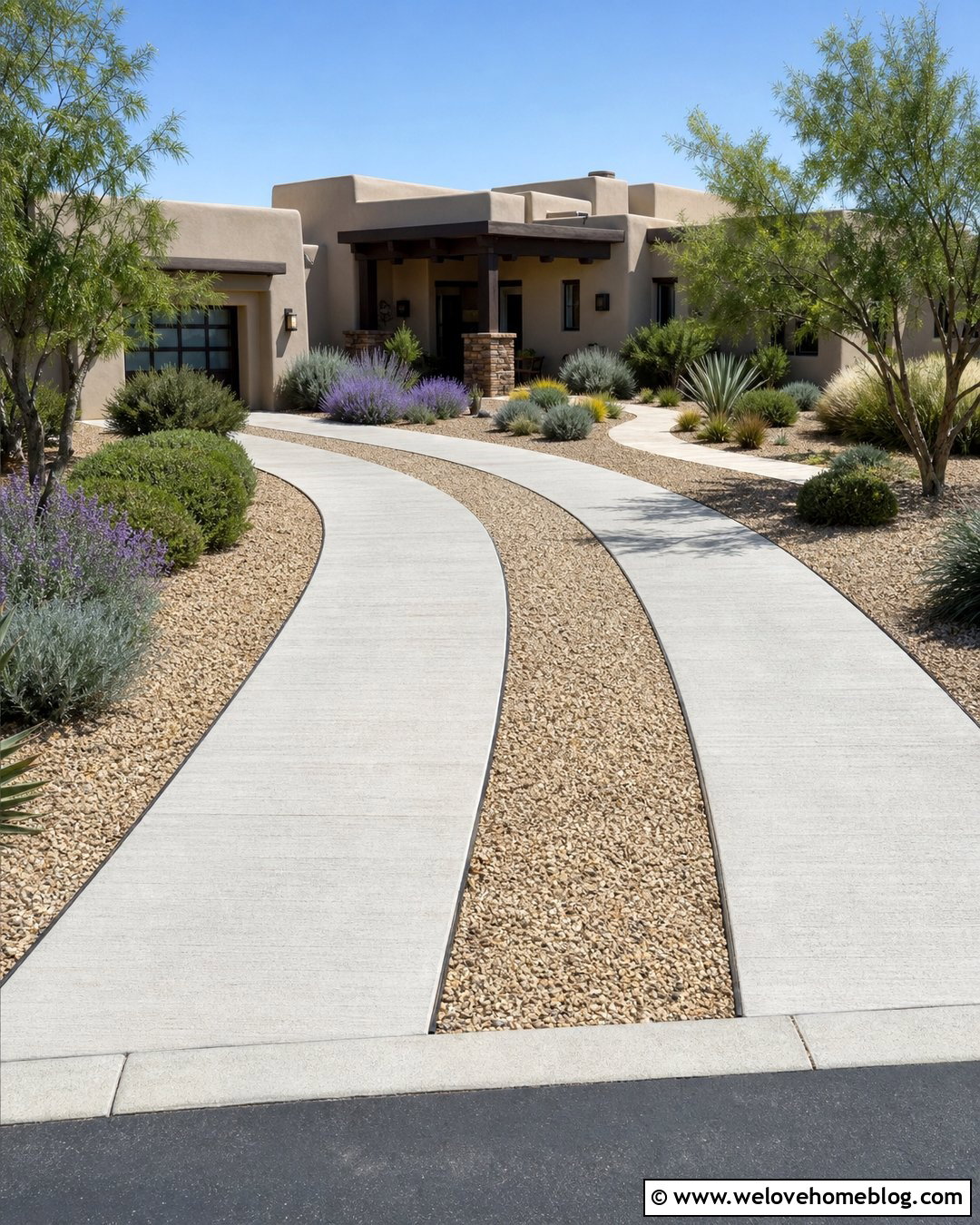
A curved ribbon driveway feels softer than a direct paved line, especially across a wide front yard. Form two broom-finished concrete tracks in a gentle arc and fill the center with compacted decorative gravel. The concrete provides dependable wheel paths, while the contrasting center emphasizes the curve. Use matching gravel along the outer shoulders, contained by steel or stone edging. On dry, sunny properties, combine the driveway with drought-tolerant plants such as ornamental grasses, salvias, low succulents, and rounded evergreen shrubs suited to the region. Keep plants low near the road so drivers can see pedestrians and approaching traffic. The concrete tracks should widen at sharp turns, parking areas, and the garage entrance. A coordinated concrete walkway can branch naturally toward the front door.
14. Circular Paver Driveway With Center Strip Garden
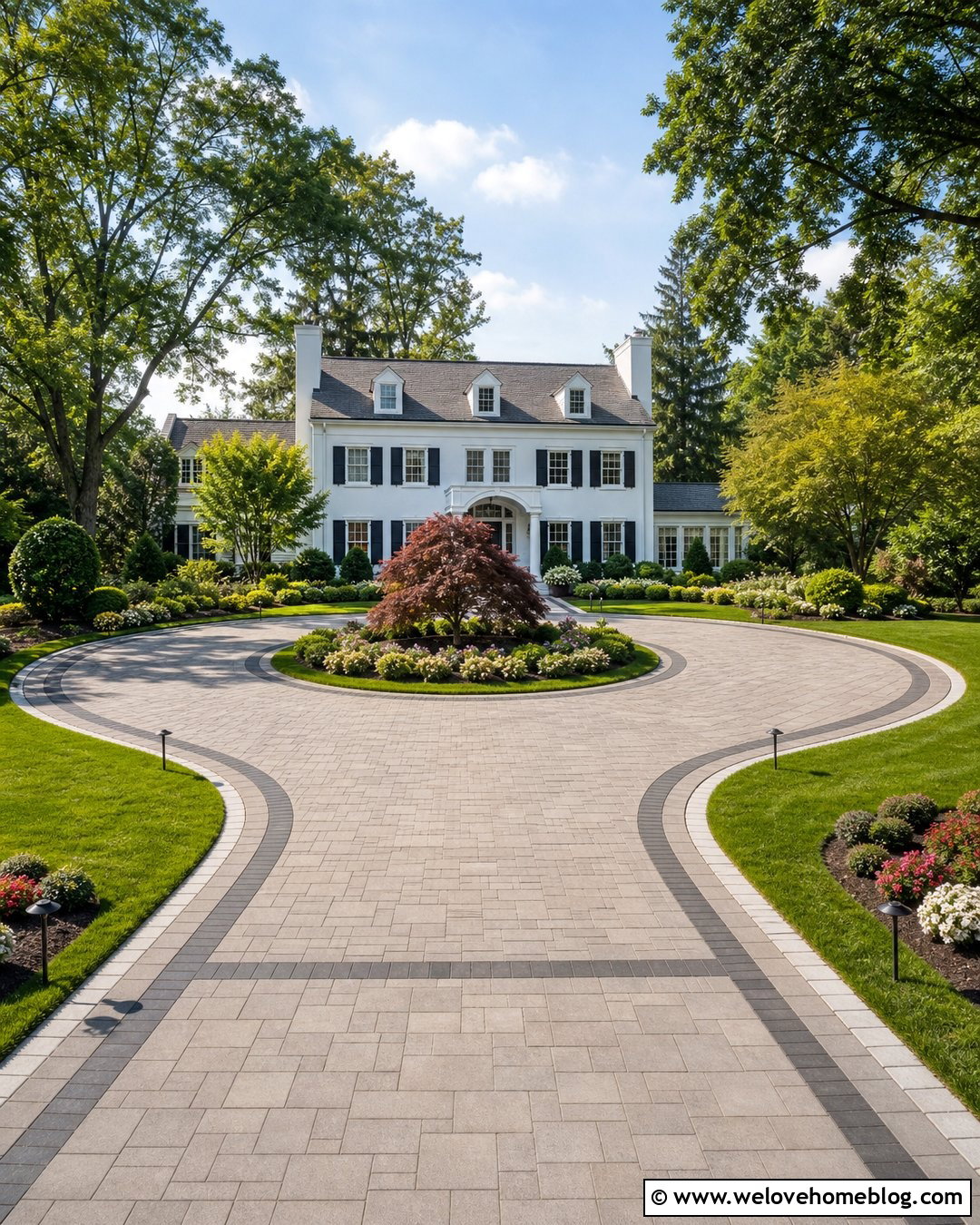
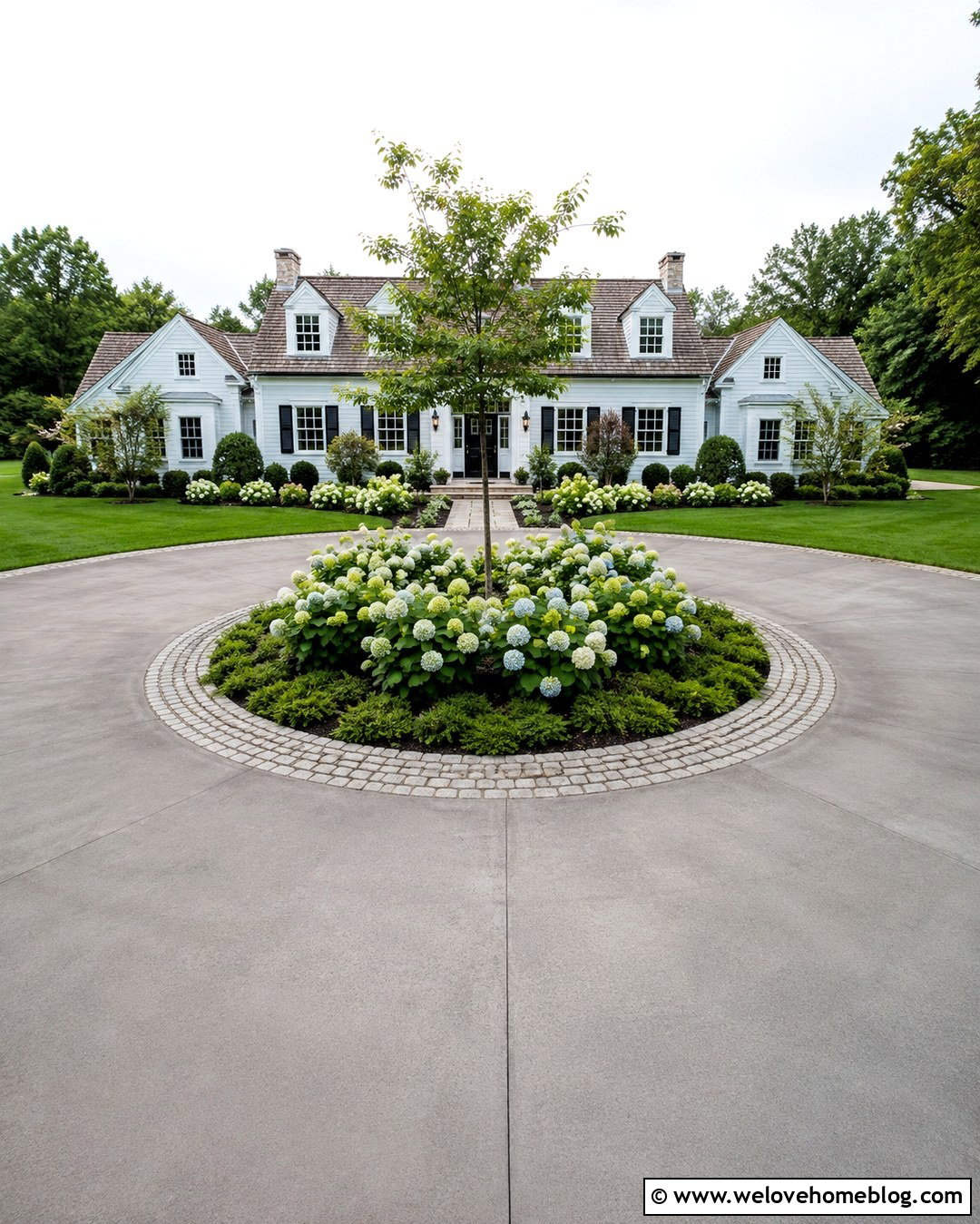
A circular driveway can incorporate strip detailing without losing the convenience of its looped layout. Use warm gray concrete pavers for the main driving surface, then add two darker paver ribbons that follow the complete curve. The bands guide the eye around a central garden filled with a small ornamental tree, low shrubs, and seasonal flowers. A matching dark border around the island ties the entire design together. Keep the planting low enough to preserve sightlines across the loop. Where the driveway meets the street, widen both entrances and use a strong contrasting apron. This approach complements colonial, Georgian, and large craftsman homes because it feels organized rather than overly decorative. Low path lights around the island can define the curve without obstructing vehicles.

15. Black Paver Driveway With White Gravel Strips
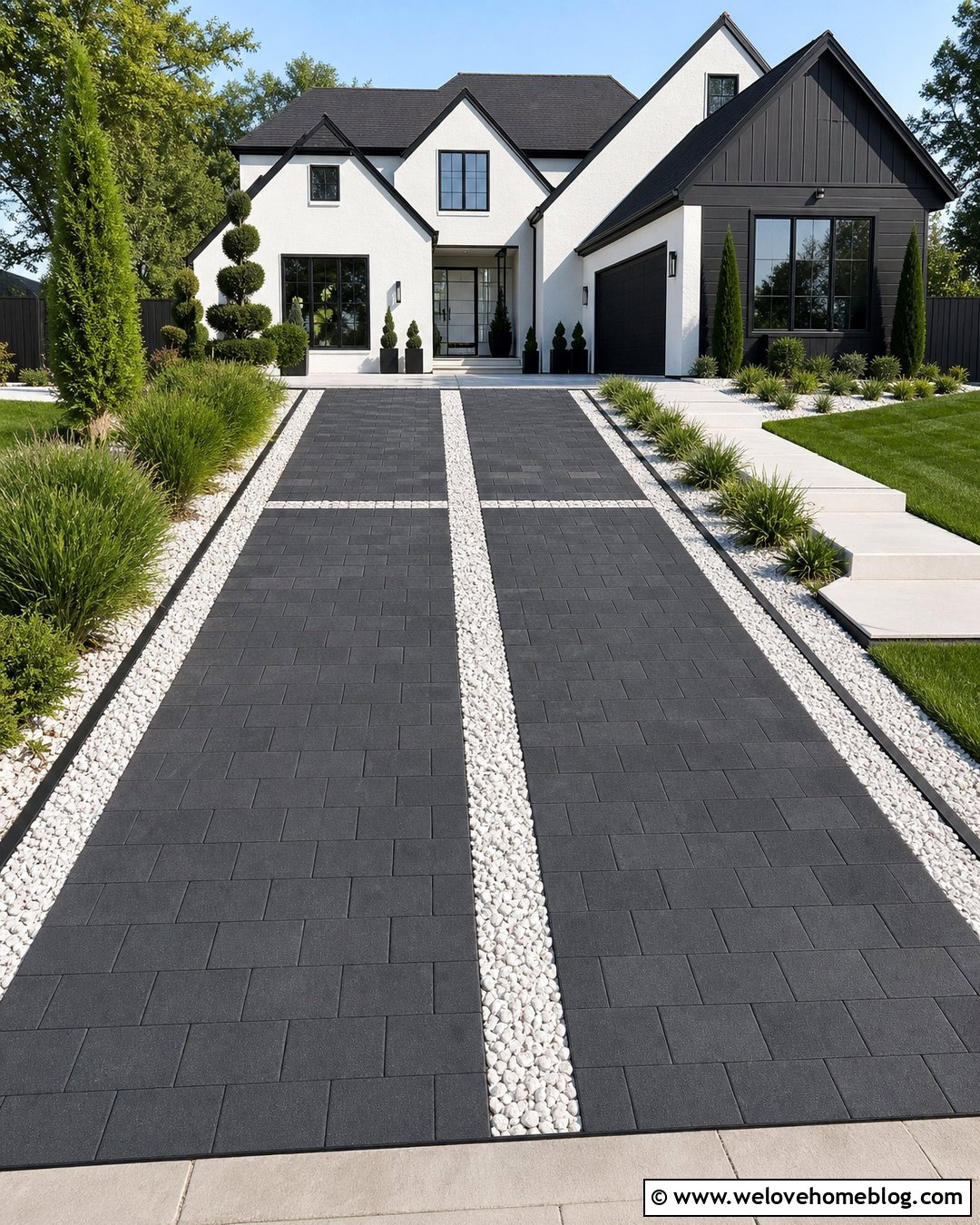
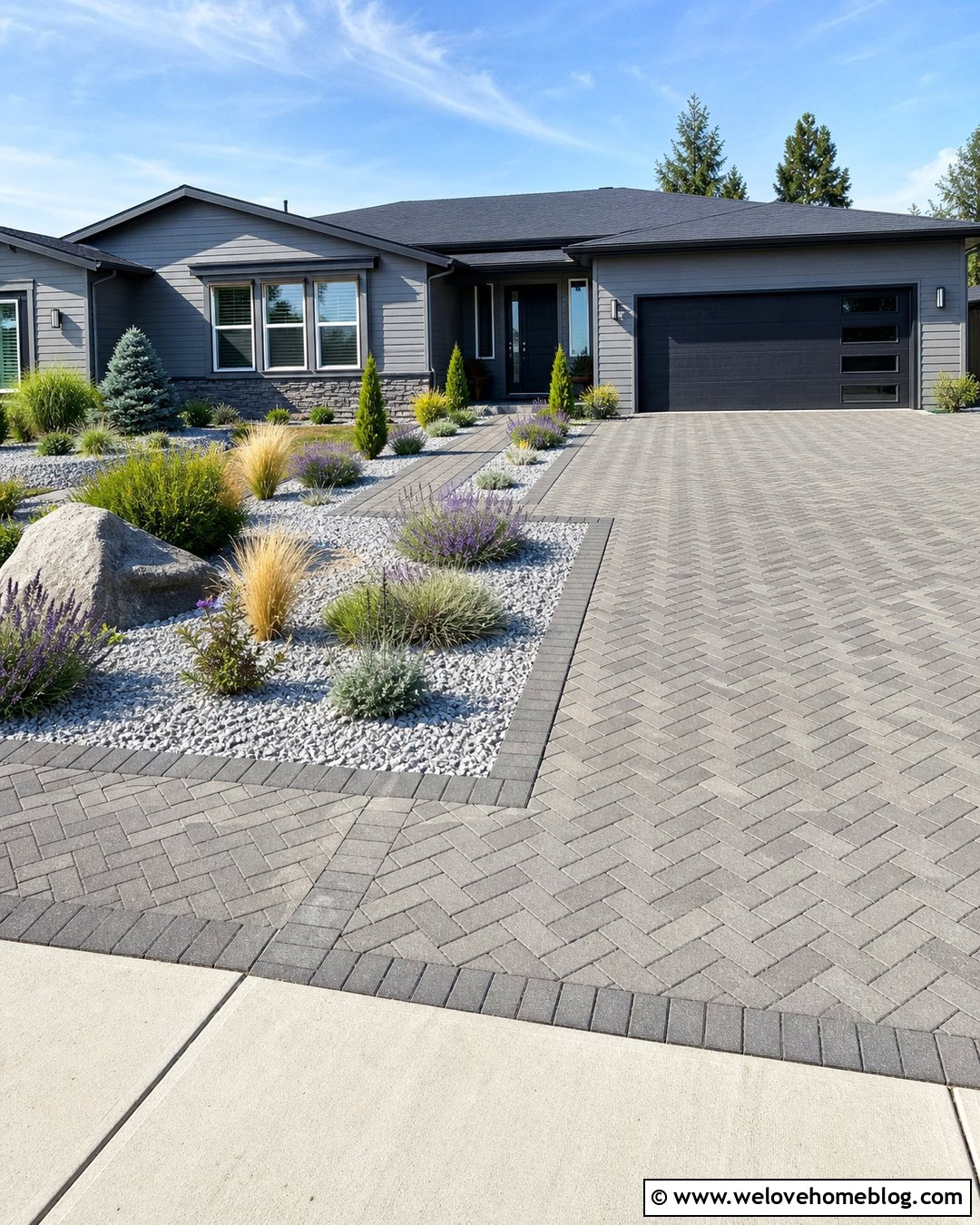
Dark concrete pavers paired with white gravel strips create a bold driveway for a modern house. Arrange the pavers in two broad linear lanes and use stabilized white gravel in a narrow center strip, along the outer edges, and within selected cross bands. The contrast highlights the driveway’s geometry and relates well to black window frames or a monochrome facade. Gravel containment is critical, so use flush metal edging and a stabilization system where appropriate. Avoid loose bright stone in areas where tires turn sharply, since it may scatter onto neighboring surfaces. Balance the strong hardscape with green lawn panels, sculptural evergreens, and simple ornamental grasses. A light concrete walkway can echo the gravel color and guide visitors clearly toward the main entrance.
16. Farmhouse Gravel Driveway With Grass Center
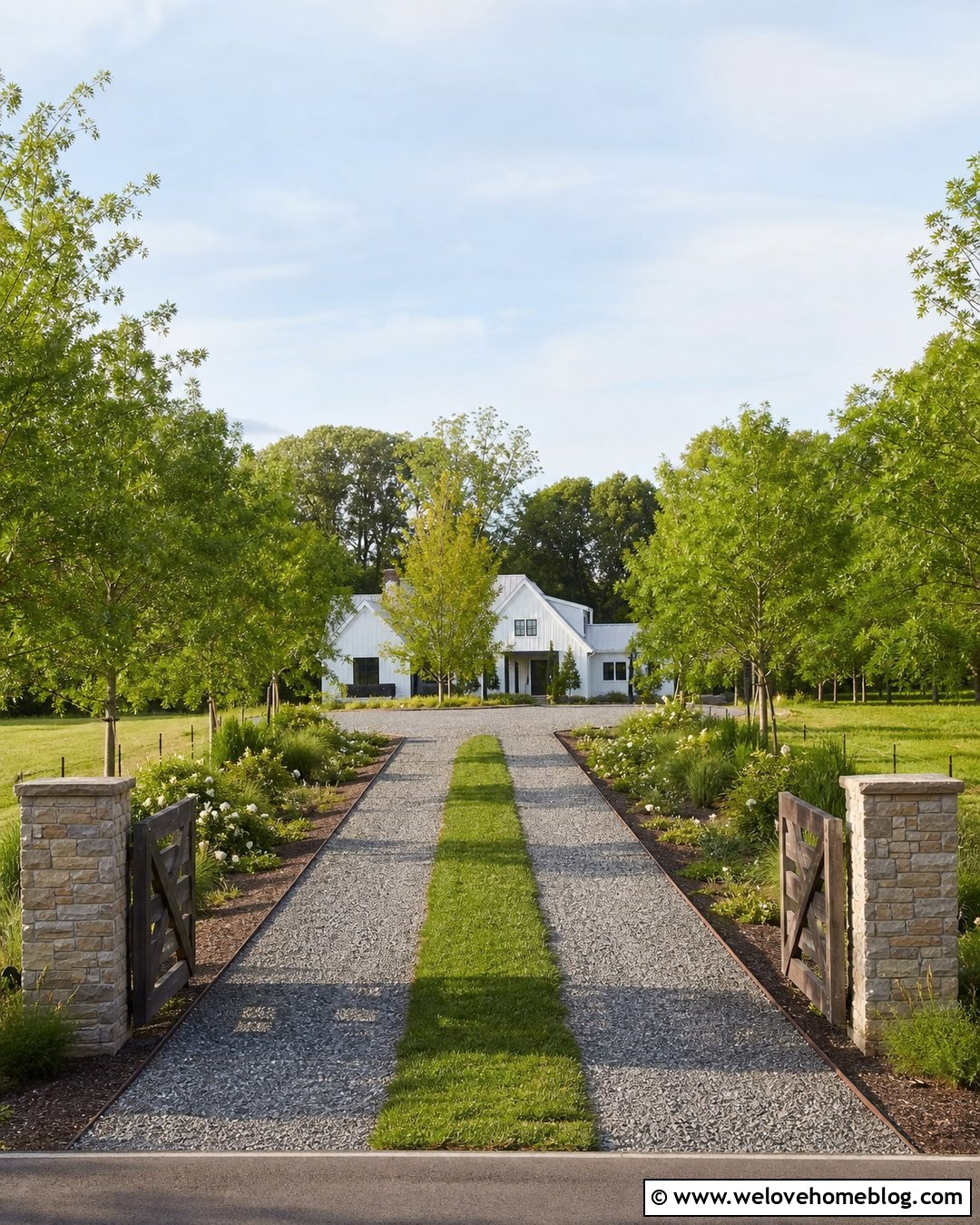
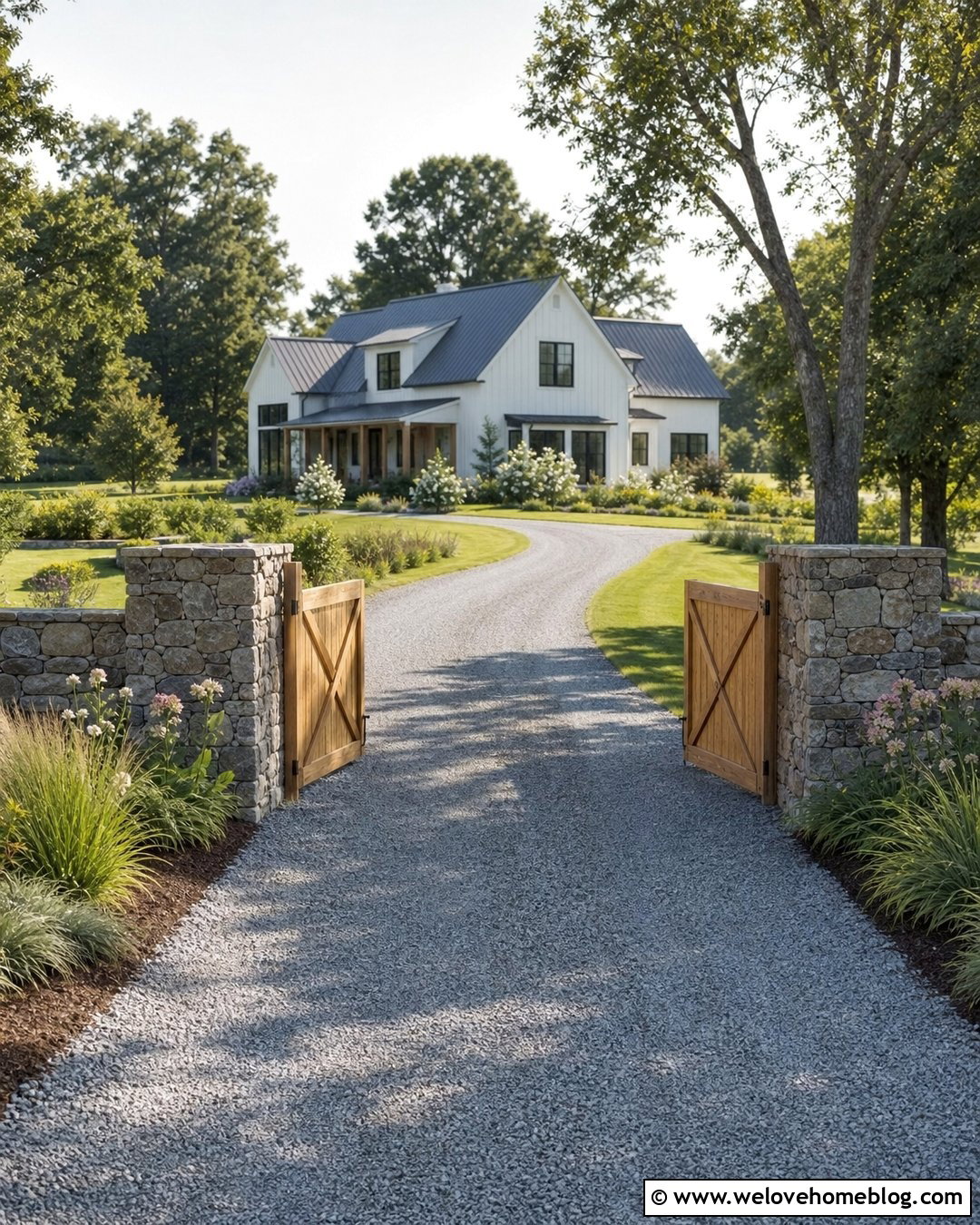
A farmhouse ribbon driveway can combine two compacted gravel wheel tracks with a broad grass center and gently planted shoulders. Choose angular gray or warm tan gravel that settles more securely than highly rounded stone. Timber or weathered steel edging can define the tracks while preserving the relaxed rural appearance. Near the house, widen the gravel into a practical parking court and continue the center grass only where vehicles travel straight. A simple gate, wood fence, and stone pillars can mark the entrance without making it feel formal. Plant native grasses, flowering shrubs, and small deciduous trees along the outer edges. Maintain generous clearance for delivery vehicles and trailers. The finished driveway should look connected to the fields and garden while remaining clearly organized for daily use.
17. Narrow Paver Driveway Strips For Side Yards
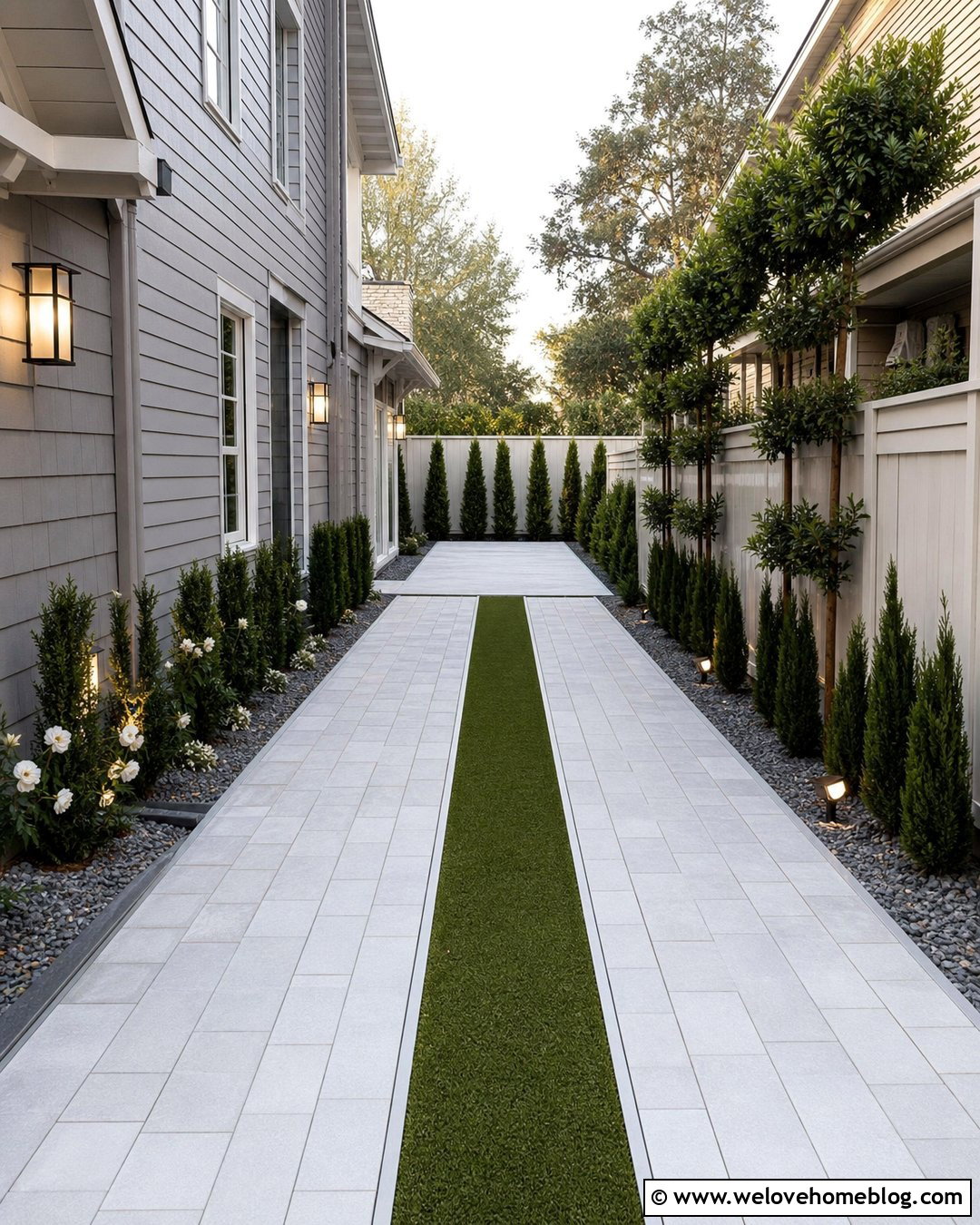
A tight side-yard driveway needs a design that feels open without sacrificing usable vehicle space. Two straight strips of light gray concrete pavers can define the tire path, while a slim band of artificial turf or compact gravel fills the center. Keep the outer edges simple with flush metal restraints and narrow planting beds. Upright shrubs, espaliered trees, or columnar evergreens add greenery without pushing into the driving area. A matching paver parking pad near the rear of the house provides space for turning or unloading. Before construction, confirm gate width, roof overhangs, utility locations, drainage routes, and required property-line clearance. Bright wall-mounted lighting and a pale fence can make the corridor feel wider. This complete design turns an awkward side space into a polished secondary entrance.
18. Sloped Concrete Driveway With Drainage Strips
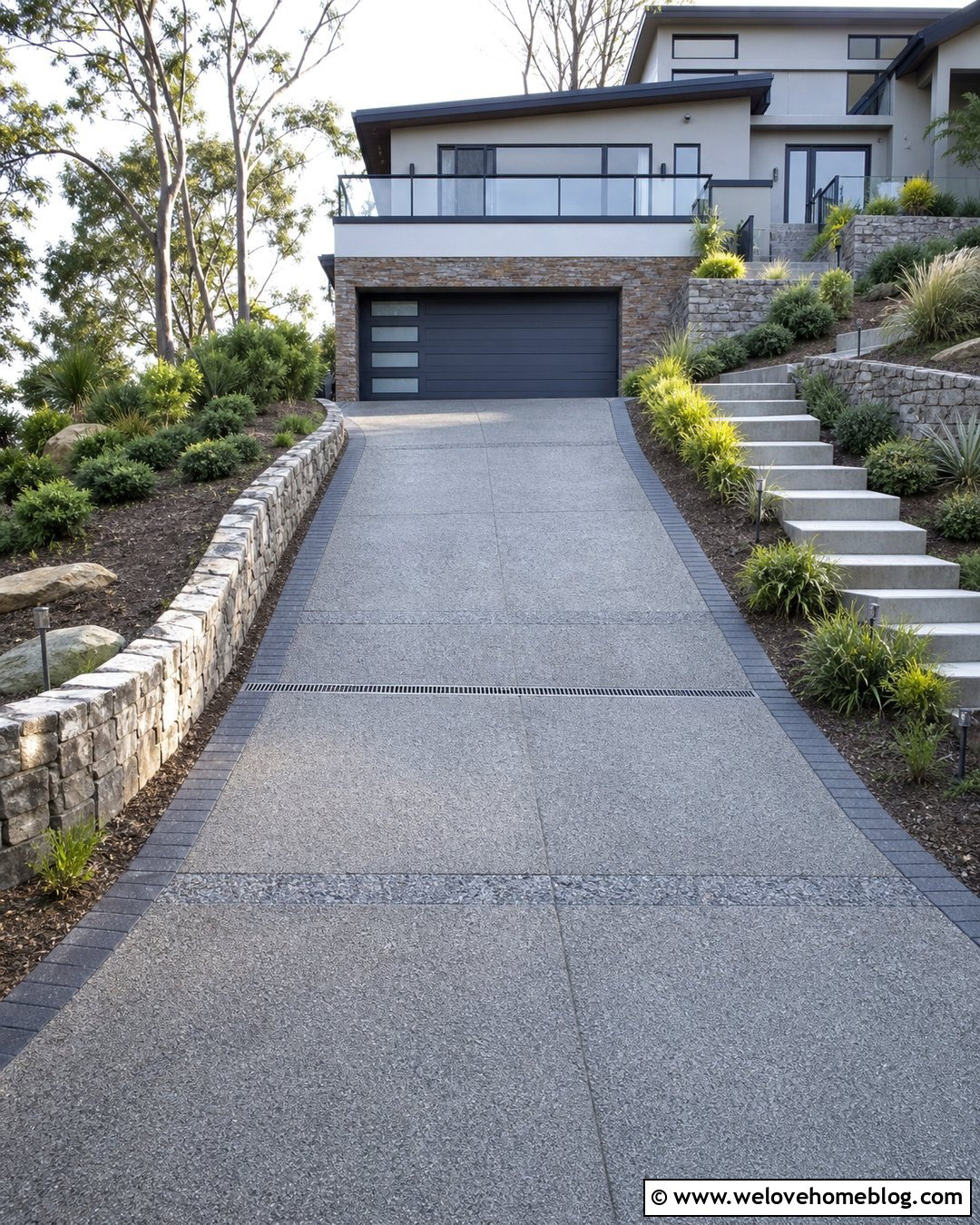
On a sloped driveway, decorative strips should work with safe water management rather than interrupt it. Use textured poured concrete for the main surface and install contrasting exposed-aggregate bands across the slope at measured intervals. A professionally designed channel drain near the garage can form another clean visual strip while intercepting runoff before it reaches the building. Dark paver borders along the sides help contain planting beds and emphasize the driveway’s direction. Choose low, erosion-resistant landscaping that will not spill onto the pavement. The concrete finish should provide traction, and all transitions should remain smooth. Because slope, freeze-thaw exposure, soil, and drainage requirements vary, this layout benefits from site-specific professional planning. The result can look modern while addressing a difficult property condition.
19. Stone Driveway Strips With Ground Cover
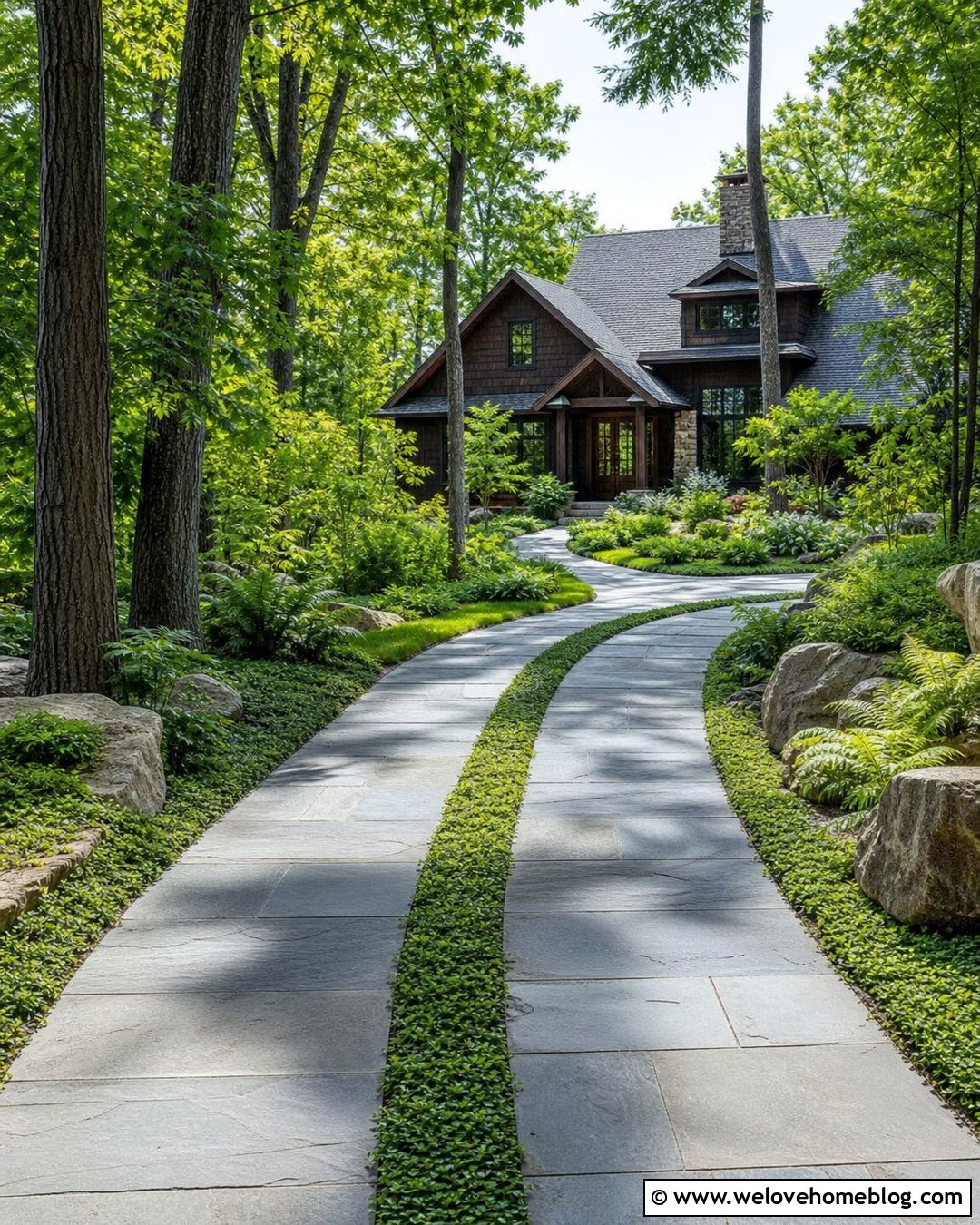
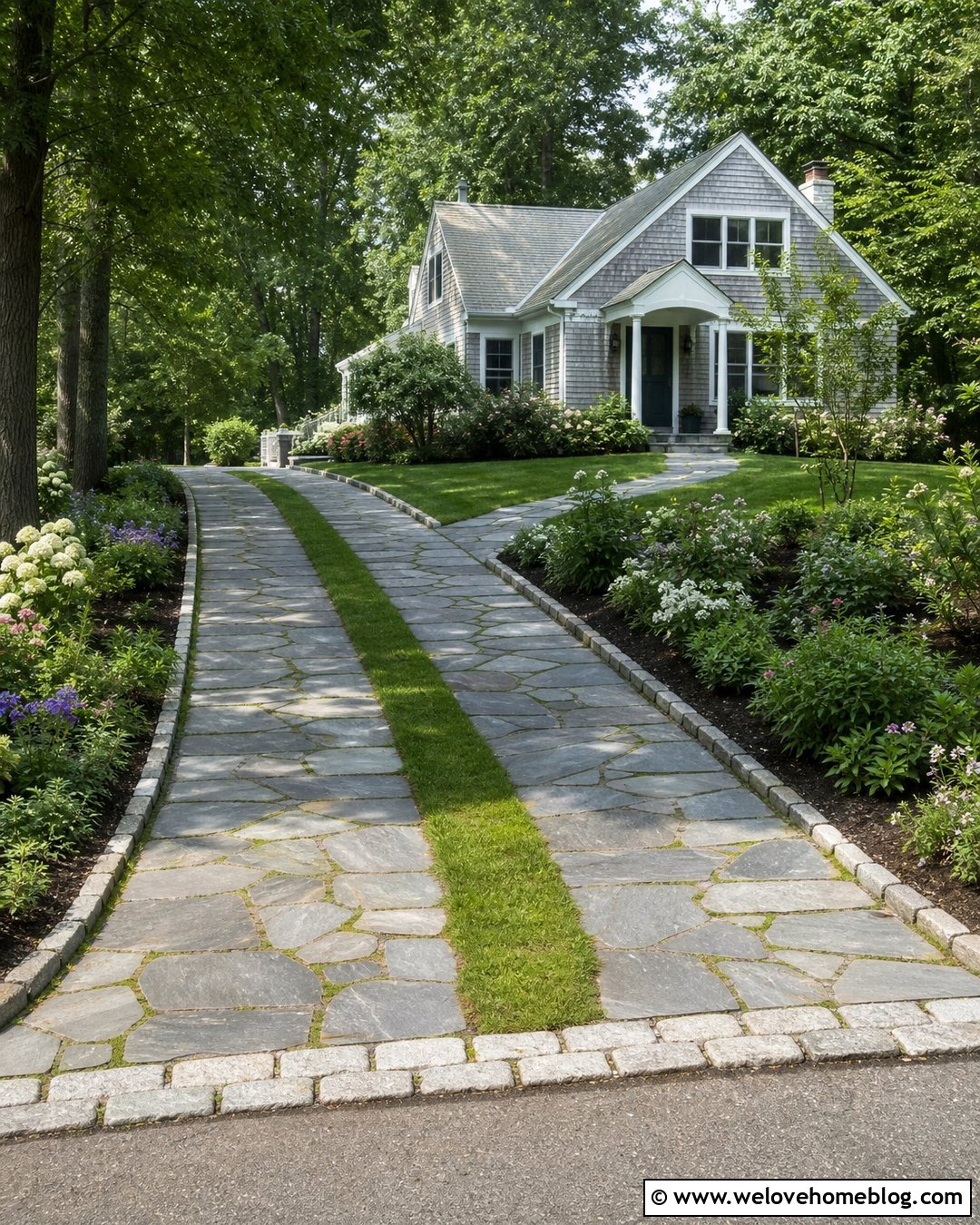
Natural stone wheel strips surrounded by low ground cover create a gentle transition between a driveway and a woodland garden. Use thick rectangular granite or bluestone units for the driving lanes, then plant a durable, climate-appropriate ground cover in the center and outer joints. Creeping thyme may suit sunny, well-drained sites, while other selections may perform better in partial shade. The plants should remain low and must not hide the stone edges. A concealed reinforced base carries the vehicle load and keeps the visible design from becoming muddy or uneven. Frame the approach with ferns, woodland shrubs, boulders, and a curved stone walkway. This layout pairs especially well with craftsman, cabin-inspired, and contemporary homes finished in wood, stone, or dark siding.
20. Concrete Block Driveway Strips With Gravel
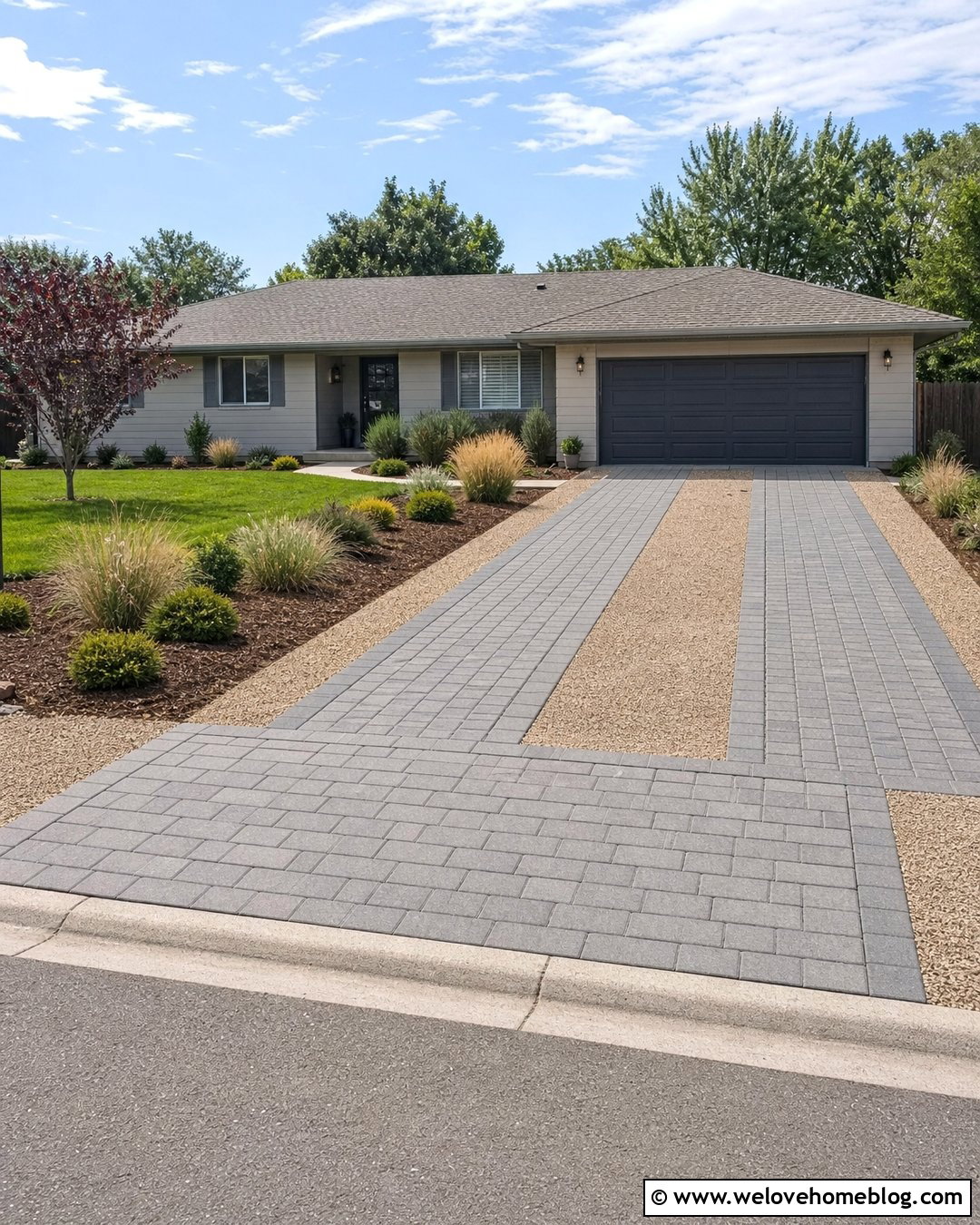
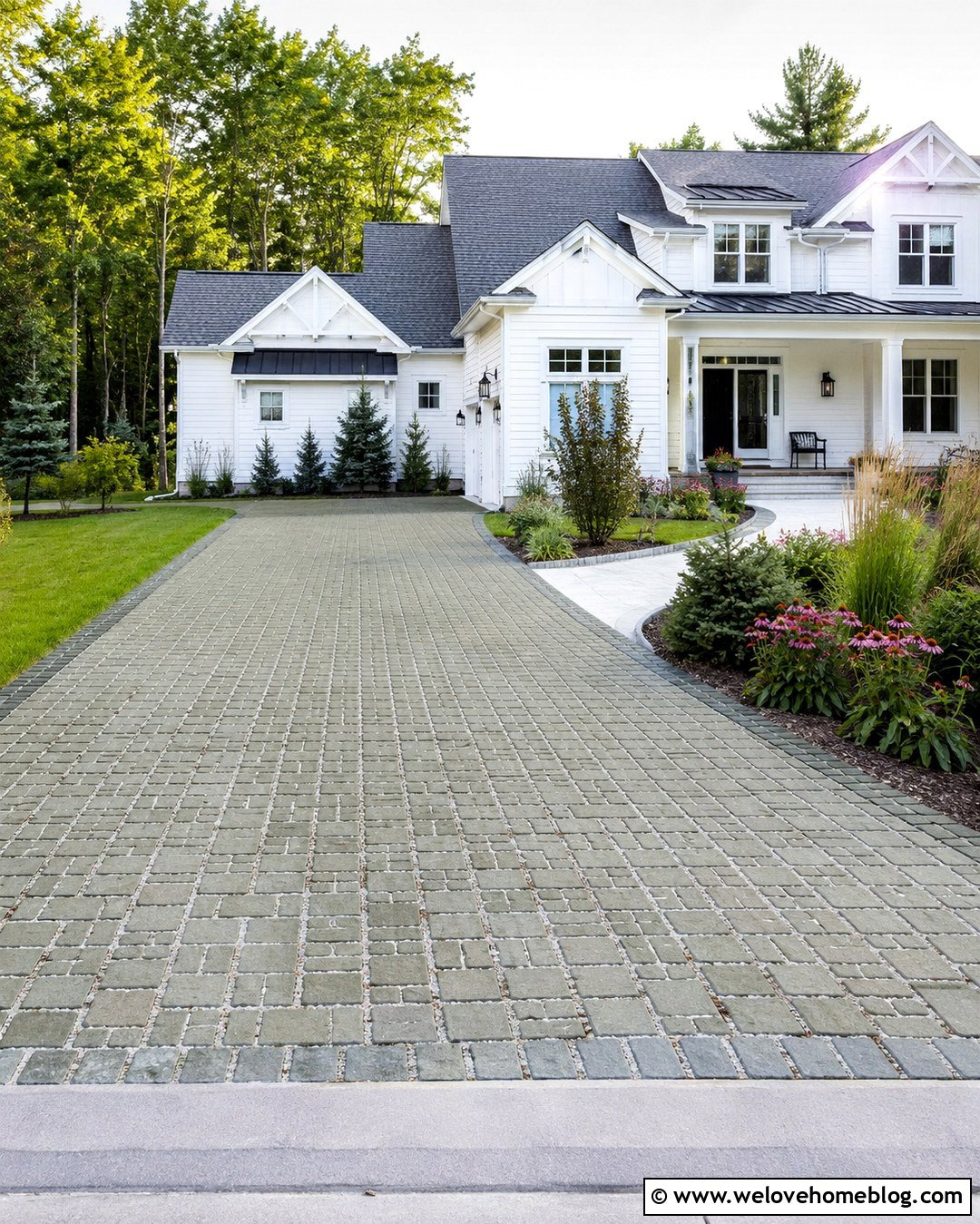
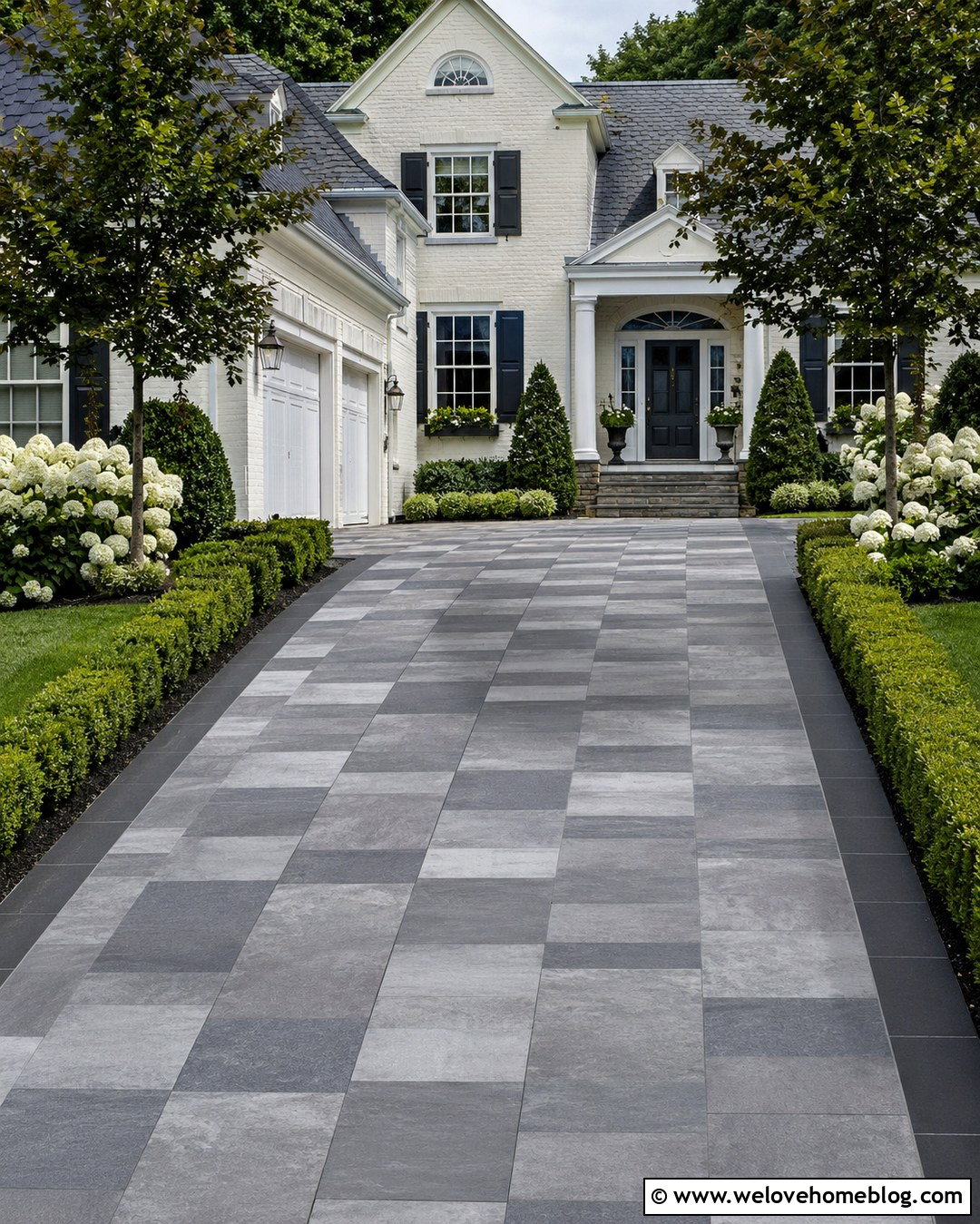
Standard concrete driveway pavers arranged as two simple wheel strips offer a practical look for a modest budget. Fill the center and outer shoulders with compacted crushed gravel rather than loose round pebbles. Gray blocks and tan gravel create a neutral combination that works with nearly any house color. A single contrasting paver course around the perimeter can make economical materials appear more finished. Keep the layout straight to reduce cutting, waste, and installation complexity. At the garage and street, widen the pavers into full-width aprons that handle steering and braking. Plant easy-care shrubs and ornamental grasses in mulched beds along one side, leaving the other side open lawn. Careful excavation, compaction, drainage, and edge restraint remain important even when the surface materials are affordable.
Conclusion:
These 20 Driveway Strip Ideas show how wheel tracks, planting bands, gravel channels, and contrasting paver ribbons can shape a complete entrance. Traditional grass-centered ribbons feel at home beside cottages and farmhouses, while geometric concrete slabs and artificial turf suit modern architecture. Brick, shell, cobblestone, resin-bound gravel, asphalt, and permeable pavers provide even more ways to match the driveway to the house. Before selecting a design, consider vehicle movement, turning areas, climate, maintenance, drainage, and material availability. Confirm local permit and runoff requirements, then use a properly prepared base and driveway-rated materials. With thoughtful proportions and coordinated landscaping, strip detailing can make a functional driveway feel lighter, greener, and more connected to the property.

Related posts:

Leave a Reply