
The right driveway can make the entire front of your home feel more polished, welcoming, and intentional. These front of house driveway ideas combine practical surfaces with attractive layouts, defined borders, walkways, lighting, and landscaping. The goal is not simply to create a place for vehicles. A successful driveway should guide attention toward the entrance, complement the home’s architecture, and fit naturally within the available yard. Materials such as concrete, asphalt, gravel, brick, cobblestone, and permeable pavers offer options for different budgets and maintenance needs. Whether you have a compact suburban lot or a spacious country property, thoughtful details can transform the approach to your home. Explore these 20 Front Of House Driveway Ideas to find a complete look that suits your space.

1. Straight Concrete Driveway With Brick Border
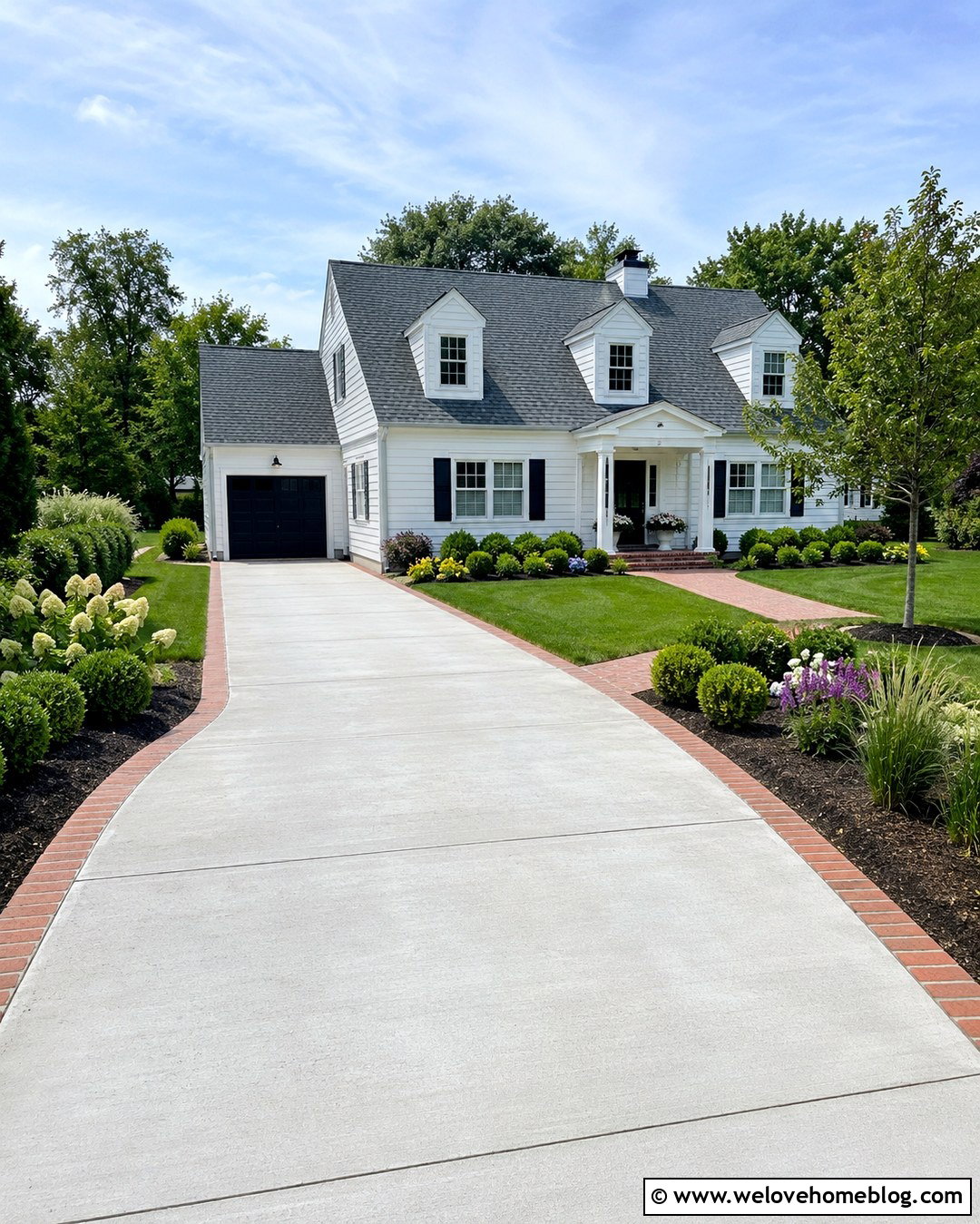
A straight concrete driveway is practical for a narrow front yard, but it does not need to look plain. Choose light gray poured concrete with subtle control joints for a clean, orderly surface. Add a red or charcoal brick border to create contrast and give the driveway a more finished appearance. A matching brick walkway can branch toward the front porch, visually connecting the parking area with the main entrance. Keep landscaping low along both sides so drivers have clear visibility. Rounded shrubs, ornamental grasses, and seasonal flowers soften the long lines without crowding the pavement. This complete design works especially well with ranch, Cape Cod, and traditional suburban homes. Repeat the brick color around planting beds or porch steps to unify the front exterior.
2. Curved Paver Driveway With Layered Landscaping
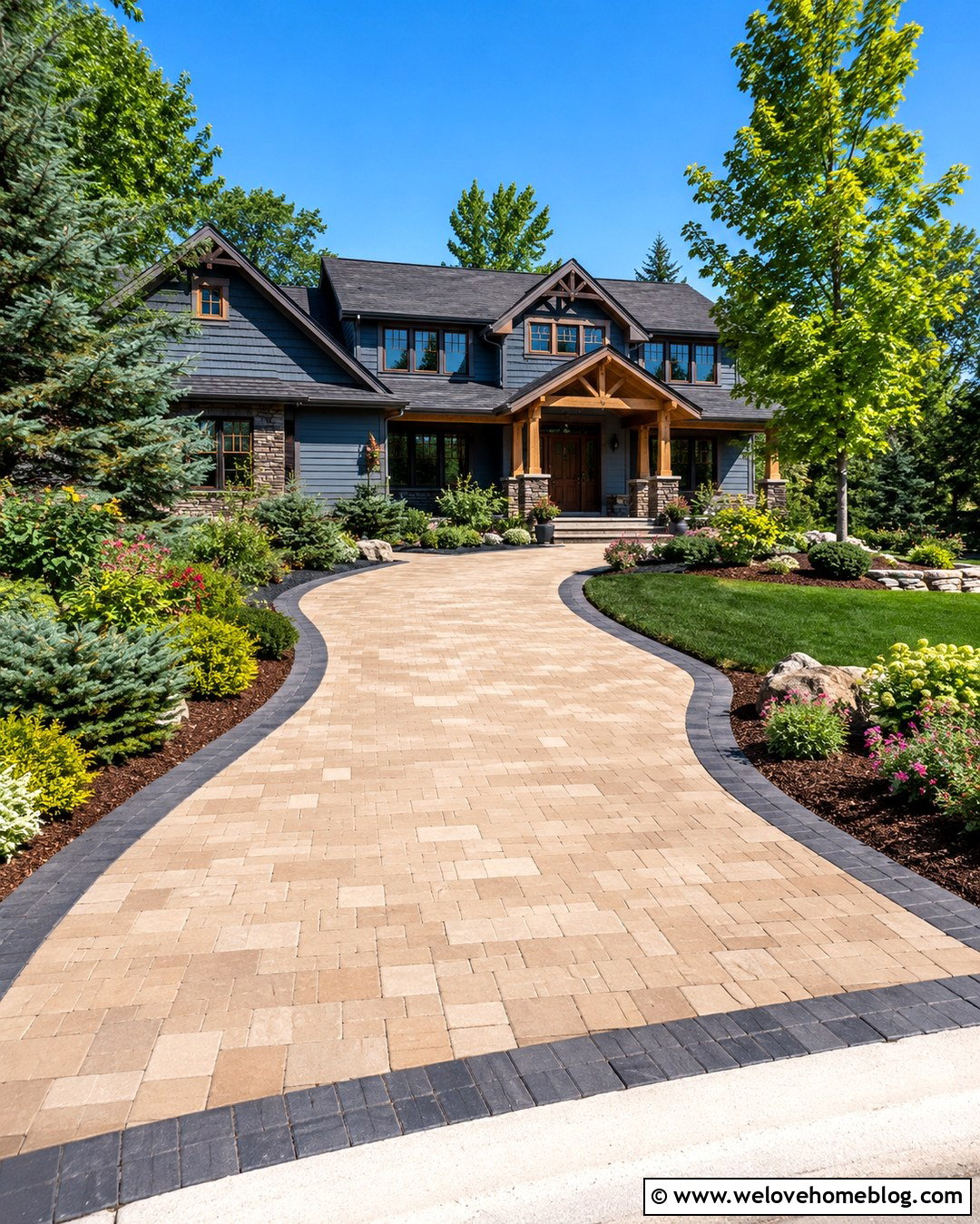
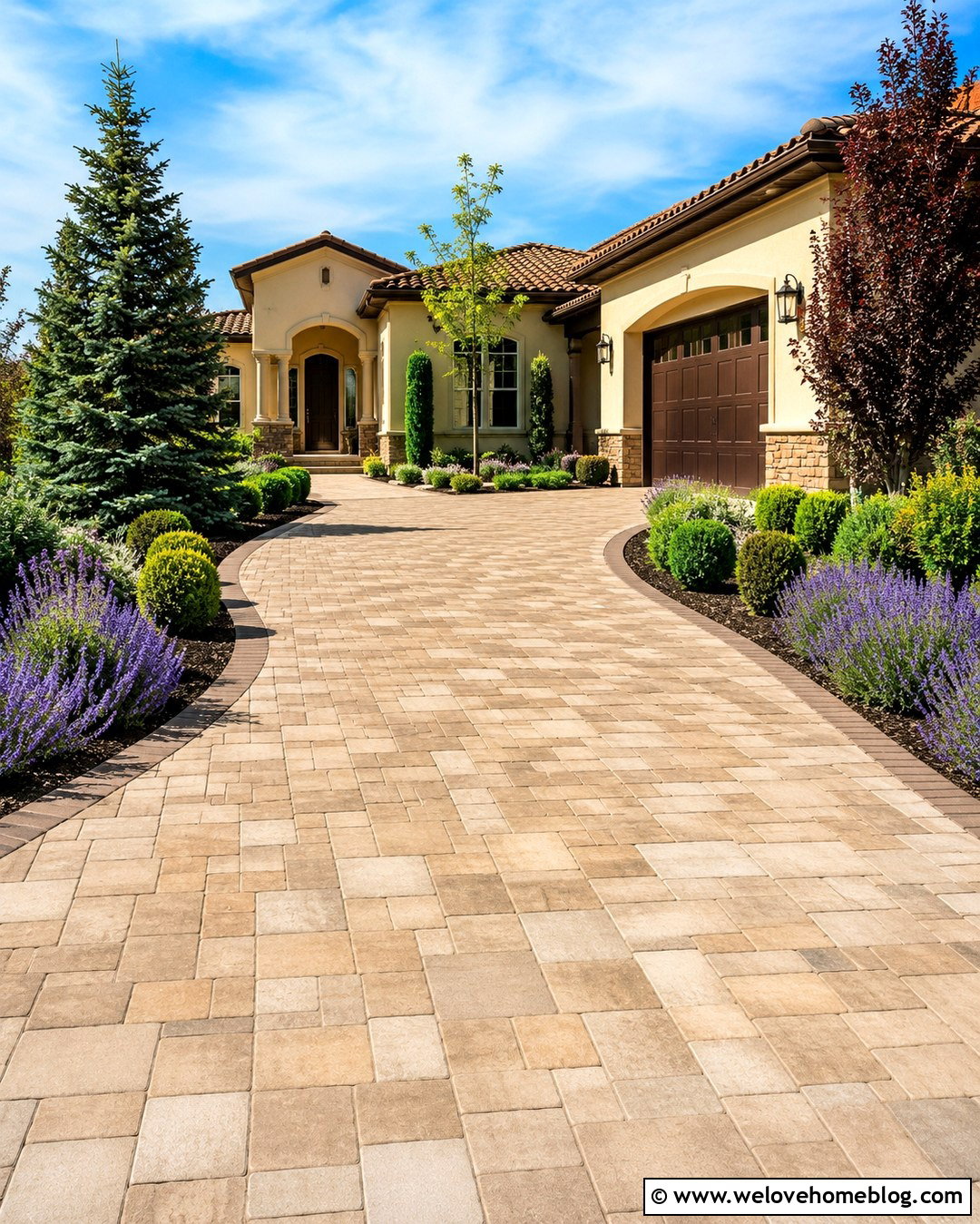
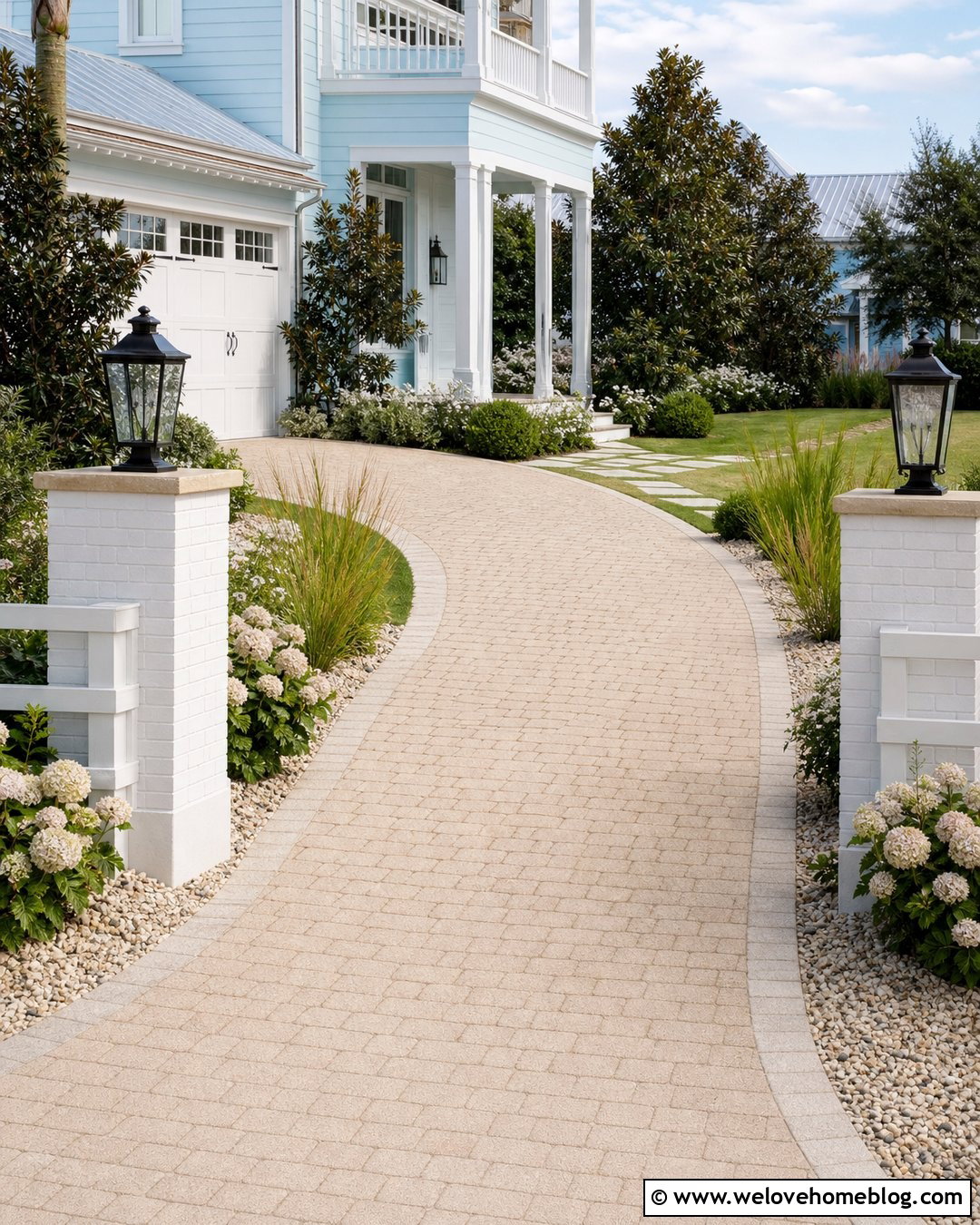
Gentle curves can make the approach to a home feel softer and more natural. Use warm beige concrete pavers in a running bond pattern to create a driveway that bends gradually toward the garage. A darker paver border will emphasize the curve while helping the surface look tailored. Along the outer edge, build layered planting beds with evergreen shrubs in back, flowering perennials in the middle, and low ground cover near the pavement. Keep mature plant sizes in mind so branches do not extend into driving space. A wide walkway can follow the inner curve and lead guests toward the front door. This arrangement works beautifully for craftsman and transitional homes because the paving and landscaping create movement without making the yard feel overly formal.
3. Circular Gravel Driveway With Central Garden
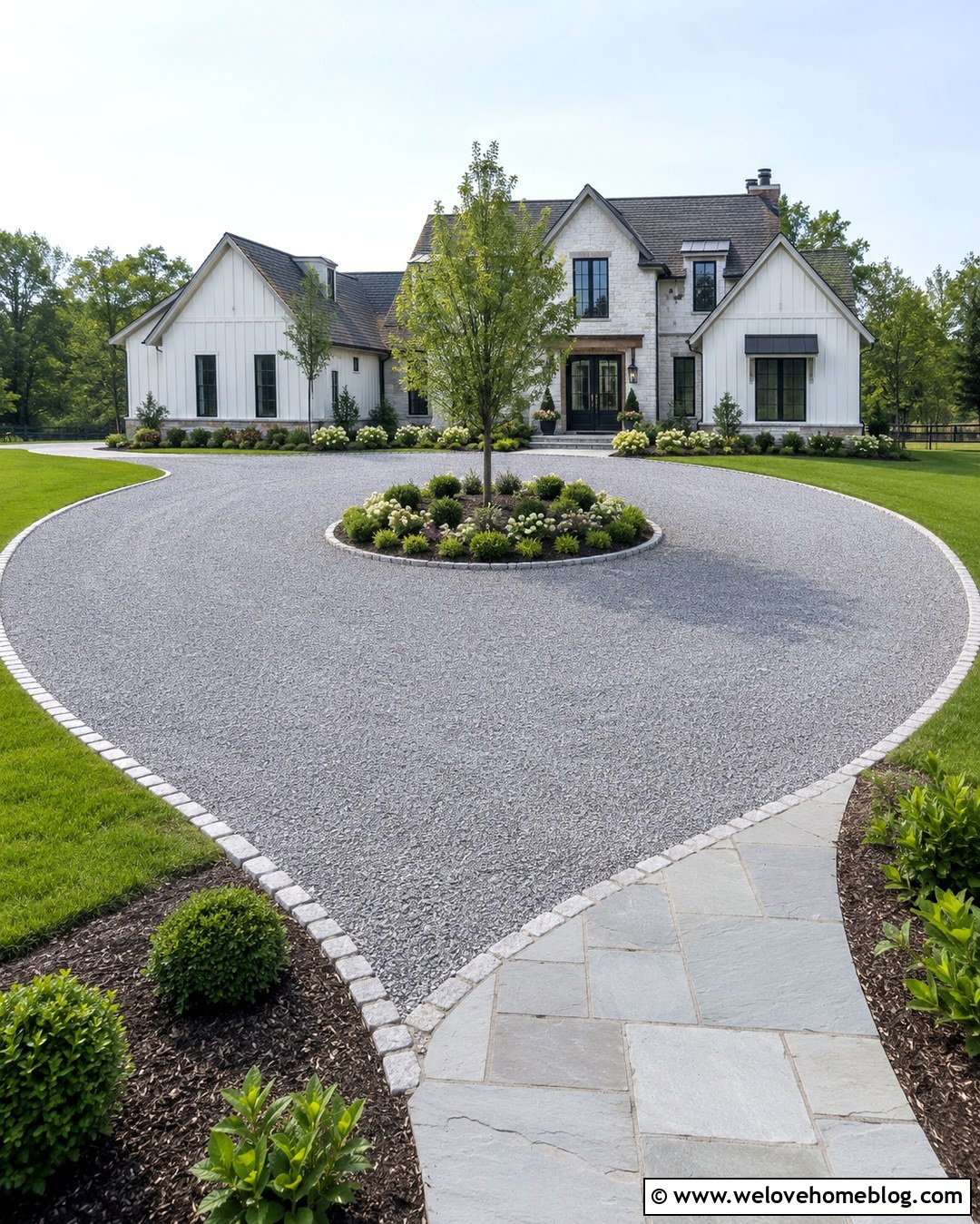
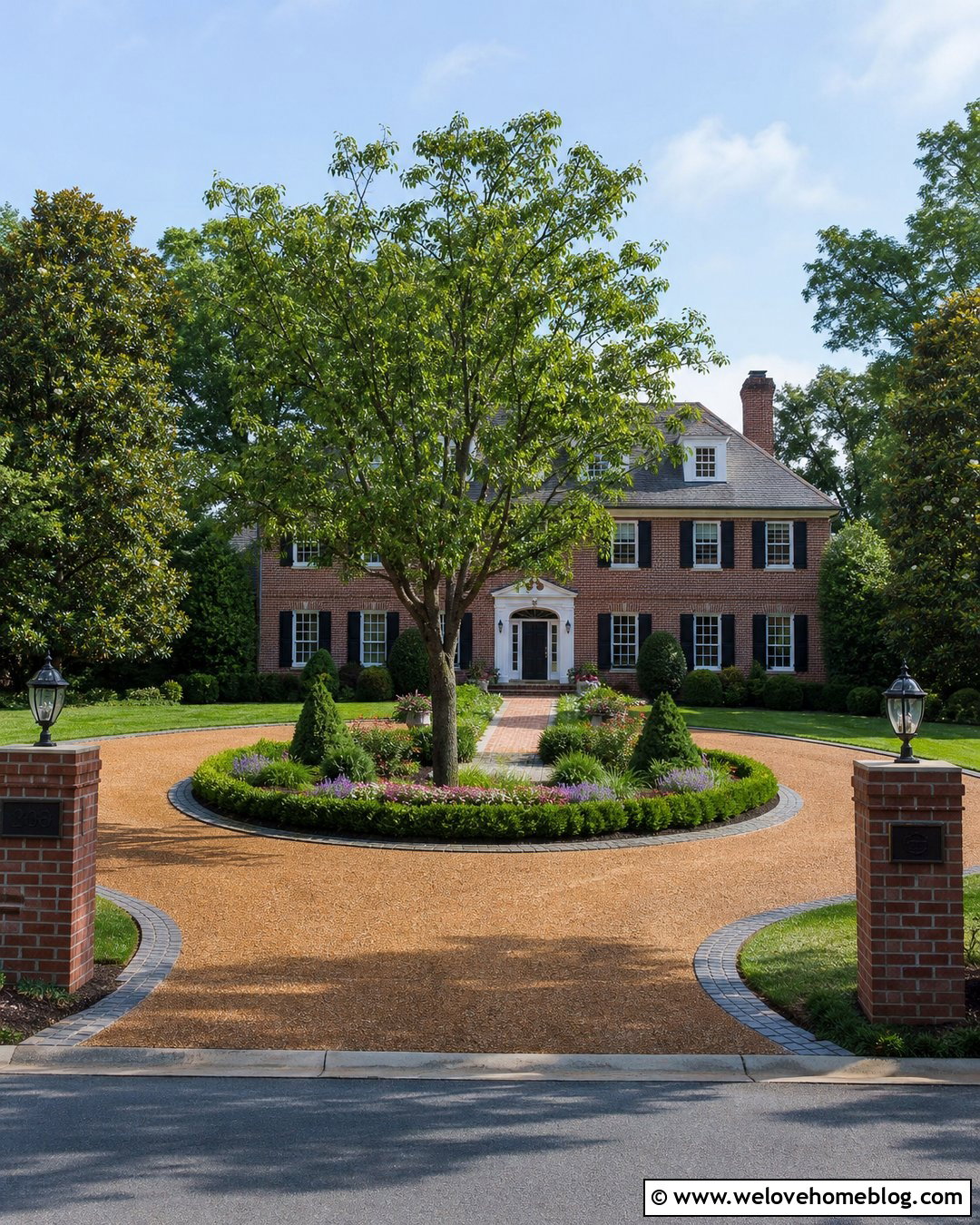
A circular gravel driveway provides a convenient arrival and departure route while turning a large front yard into a memorable entrance. Use compacted gray crushed stone rather than loose, rounded gravel to create a firmer driving surface. Define the outer and inner edges with cobblestone or steel edging so the gravel stays contained. In the center, create a landscaped island with one appropriately sized ornamental tree, low evergreen shrubs, and simple seasonal flowers. Avoid tall or dense planting that could block views across the circle. A stone walkway from the driveway to the porch makes the entrance easy to identify. This complete front-of-house design suits country homes, farmhouses, and traditional properties with generous setbacks. Proper base preparation will reduce rutting, weeds, and uneven areas.
4. Black Asphalt Driveway With Stone Edging
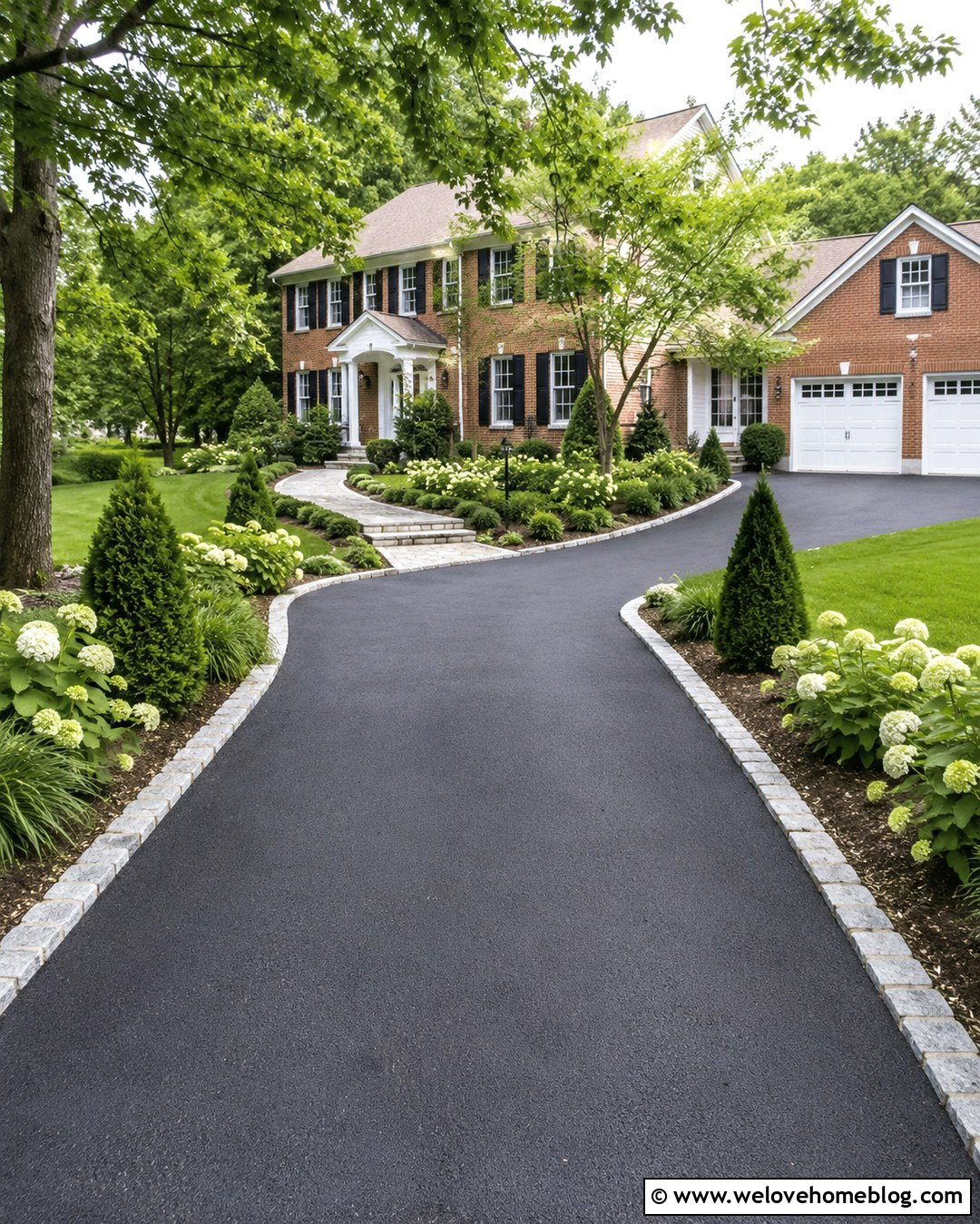
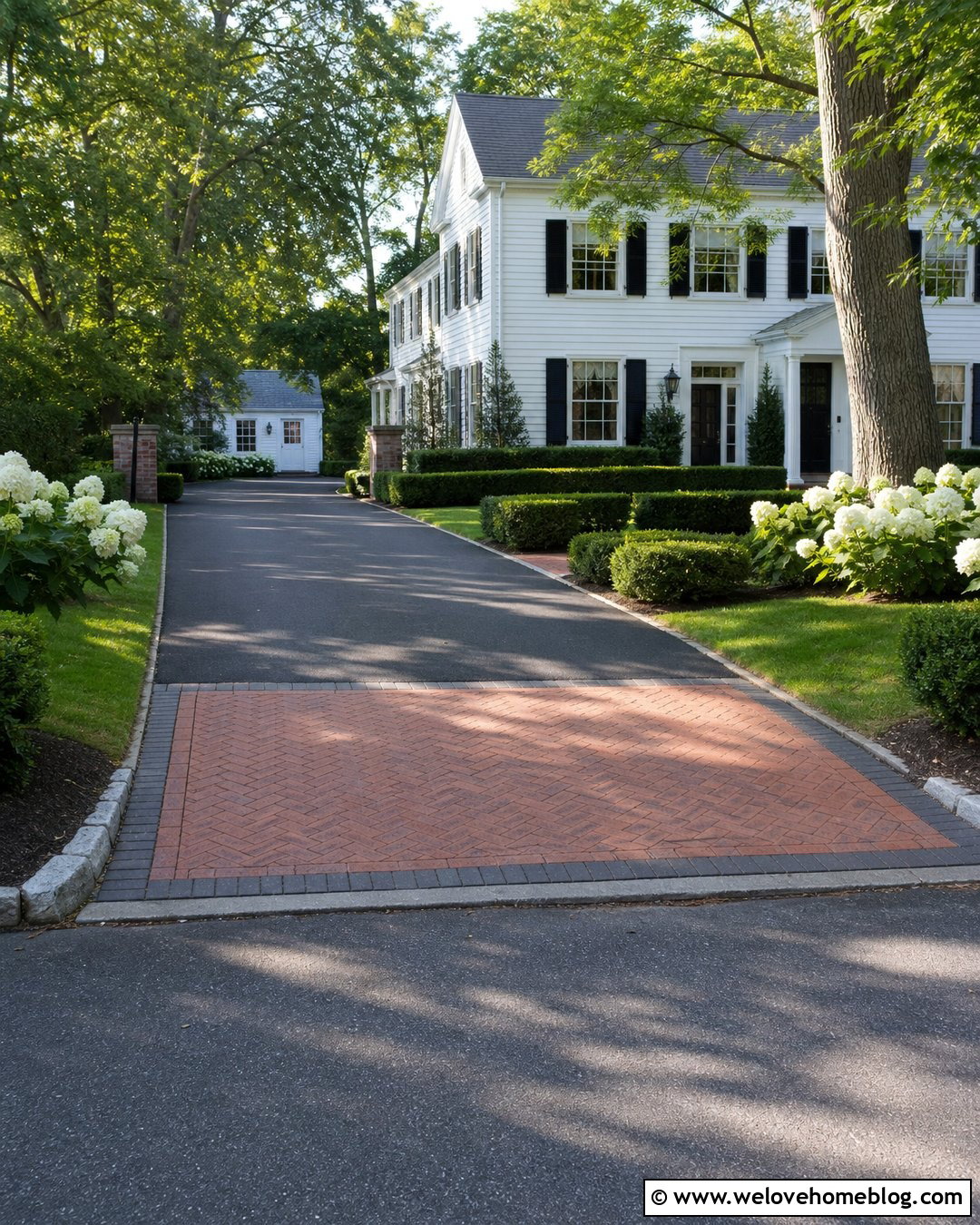
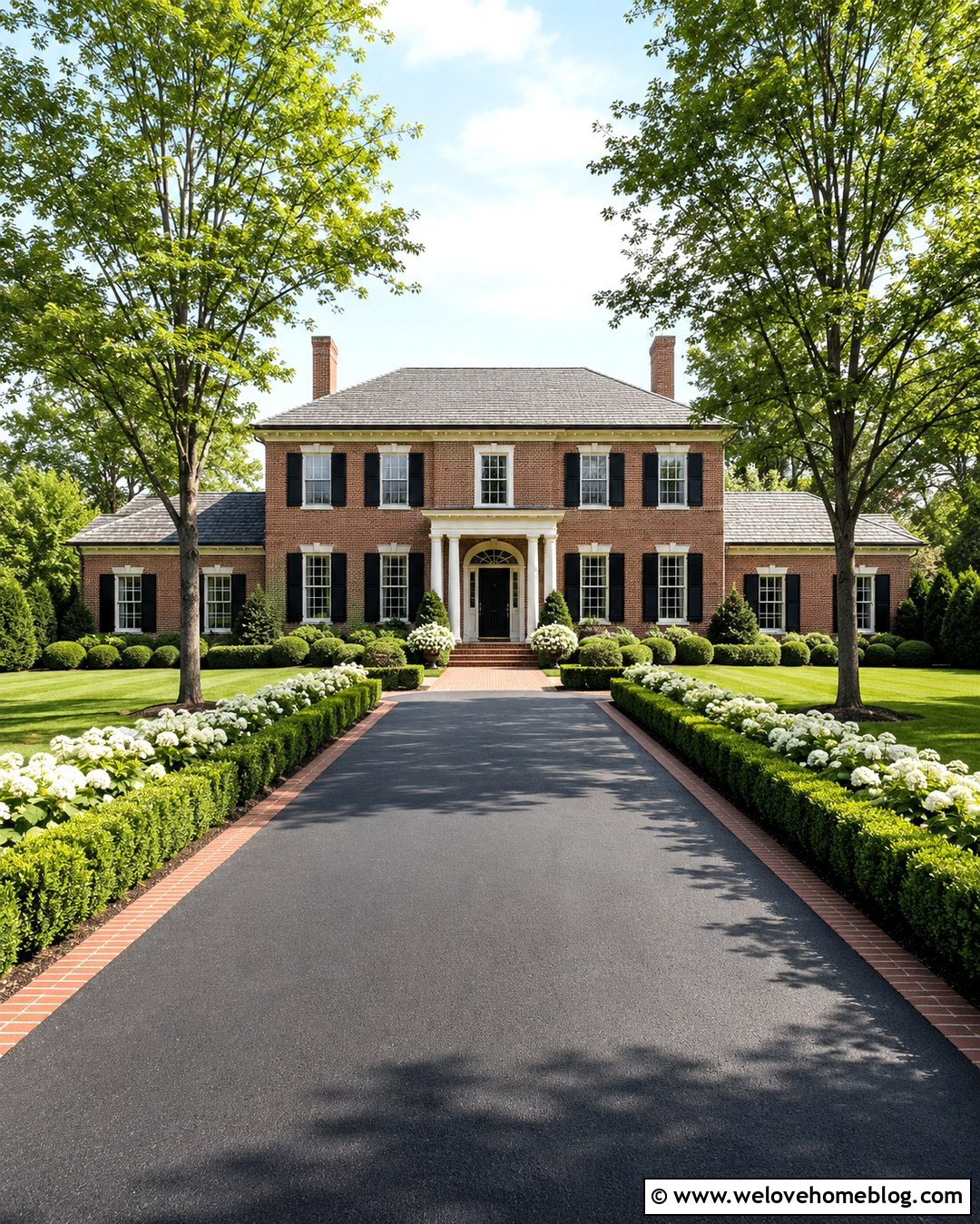
Fresh black asphalt creates strong contrast against green lawn, light siding, and pale masonry. To make the surface feel integrated with the house, frame it with natural stone set flush or slightly above the asphalt. Granite cobbles are durable, while irregular fieldstone gives the design a more relaxed character. Shape the planting beds with broad curves instead of narrow strips that are difficult to maintain. Low hydrangeas, compact evergreens, and ornamental grasses can soften the dark pavement while leaving adequate room for doors and vehicle overhang. Add a stone-paved walkway near the house so guests do not have to walk through the parking area. This driveway look is a sensible choice for colonial, split-level, and cottage homes where affordability, durability, and classic curb appeal are equally important.
5. Modern Concrete Driveway With Grass Strips
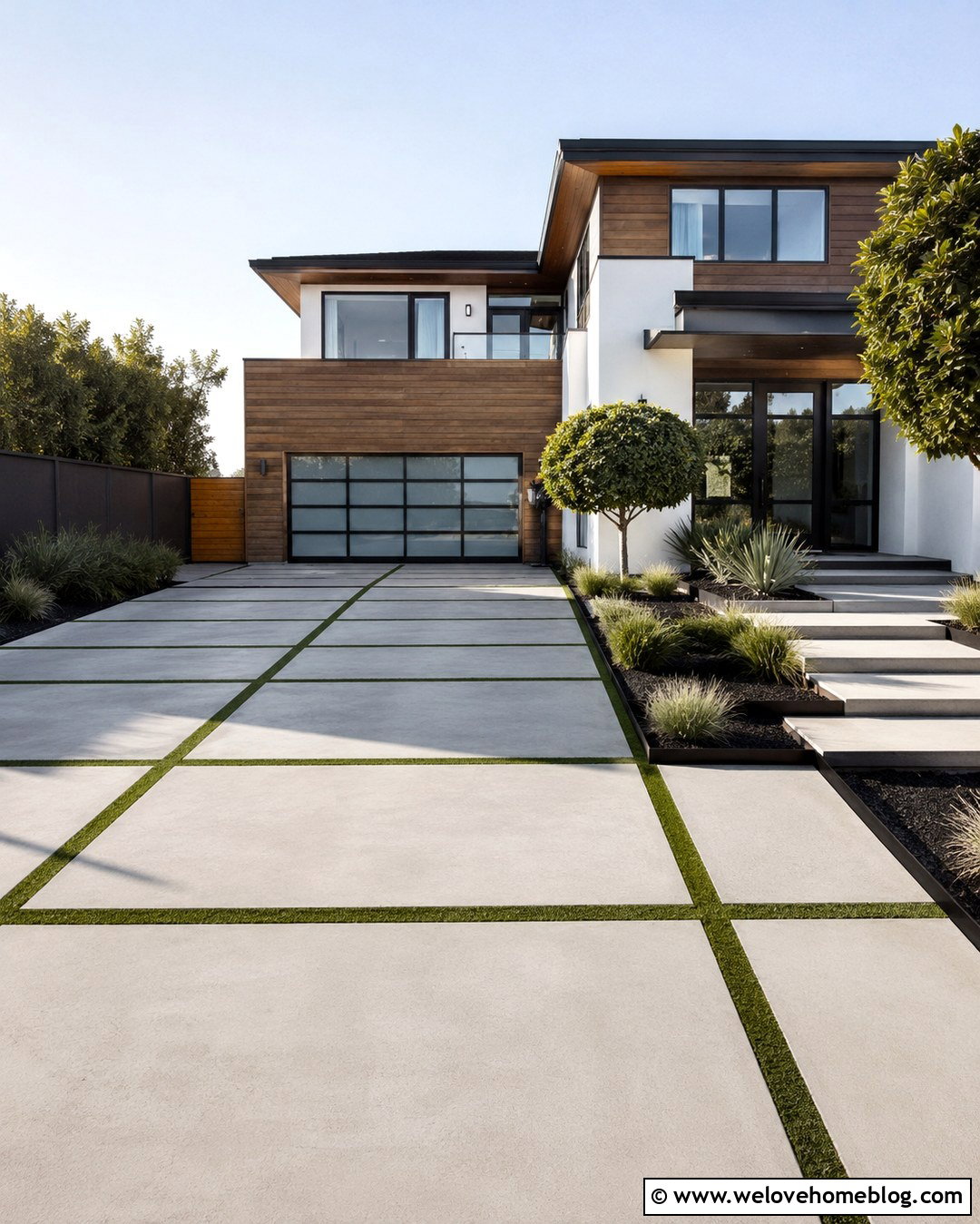
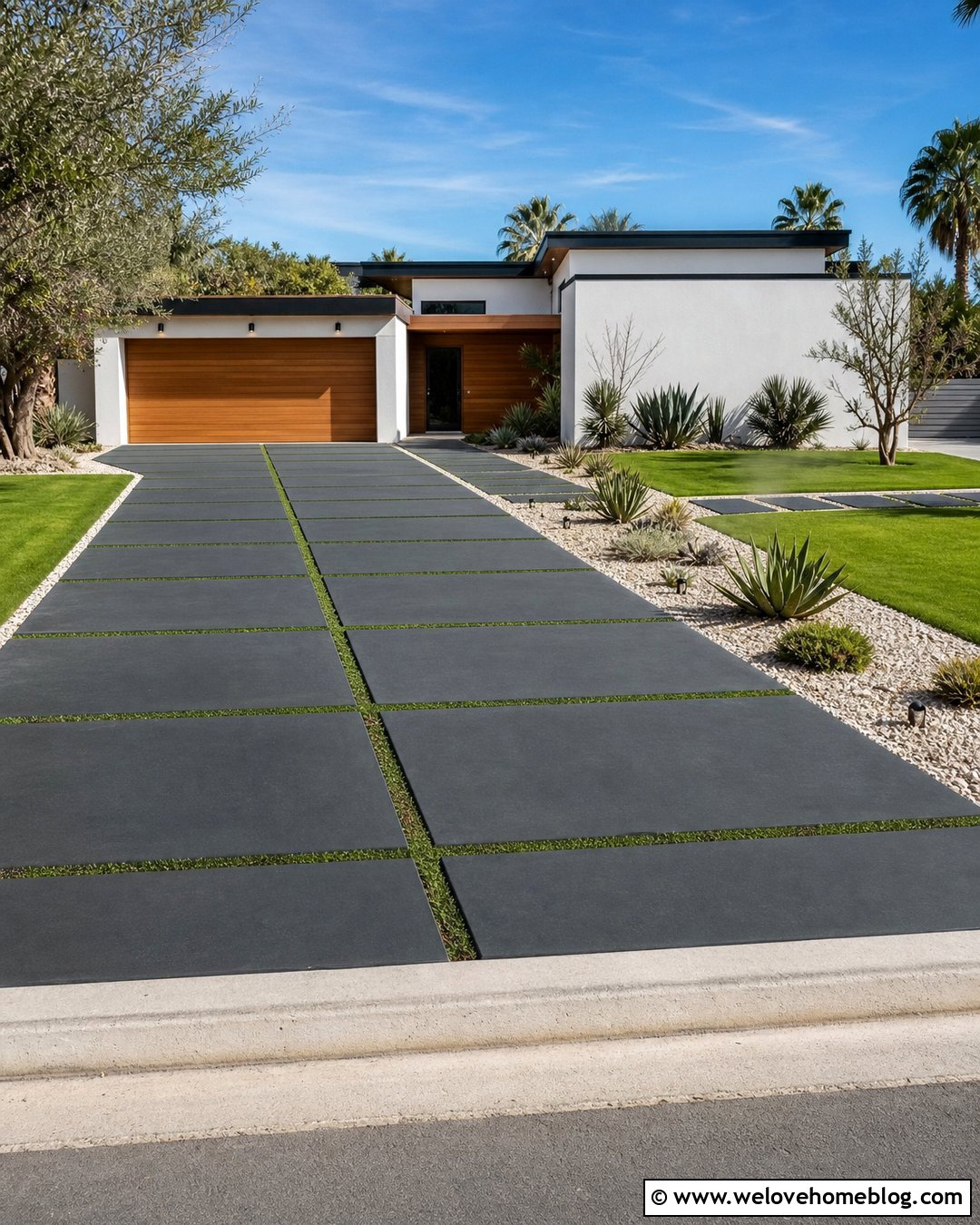
Large concrete panels separated by narrow grass strips can reduce the visual weight of a wide driveway. Use smooth, medium-gray poured concrete with straight joints arranged to align with the garage doors and architectural lines of the house. The green strips should be positioned where tires are unlikely to cause repeated damage. In dry regions, low ground cover or decorative gravel may be more practical than turf. Continue the geometric theme with rectangular planting beds, clipped shrubs, and a broad slab walkway leading to the entrance. Black metal edging keeps every transition sharp and controlled. This complete driveway design pairs naturally with a modern home featuring flat rooflines, large windows, or mixed wood and stucco finishes. Limit the planting palette to maintain the clean, uncluttered appearance.
6. Brick Driveway With Matching Front Walkway
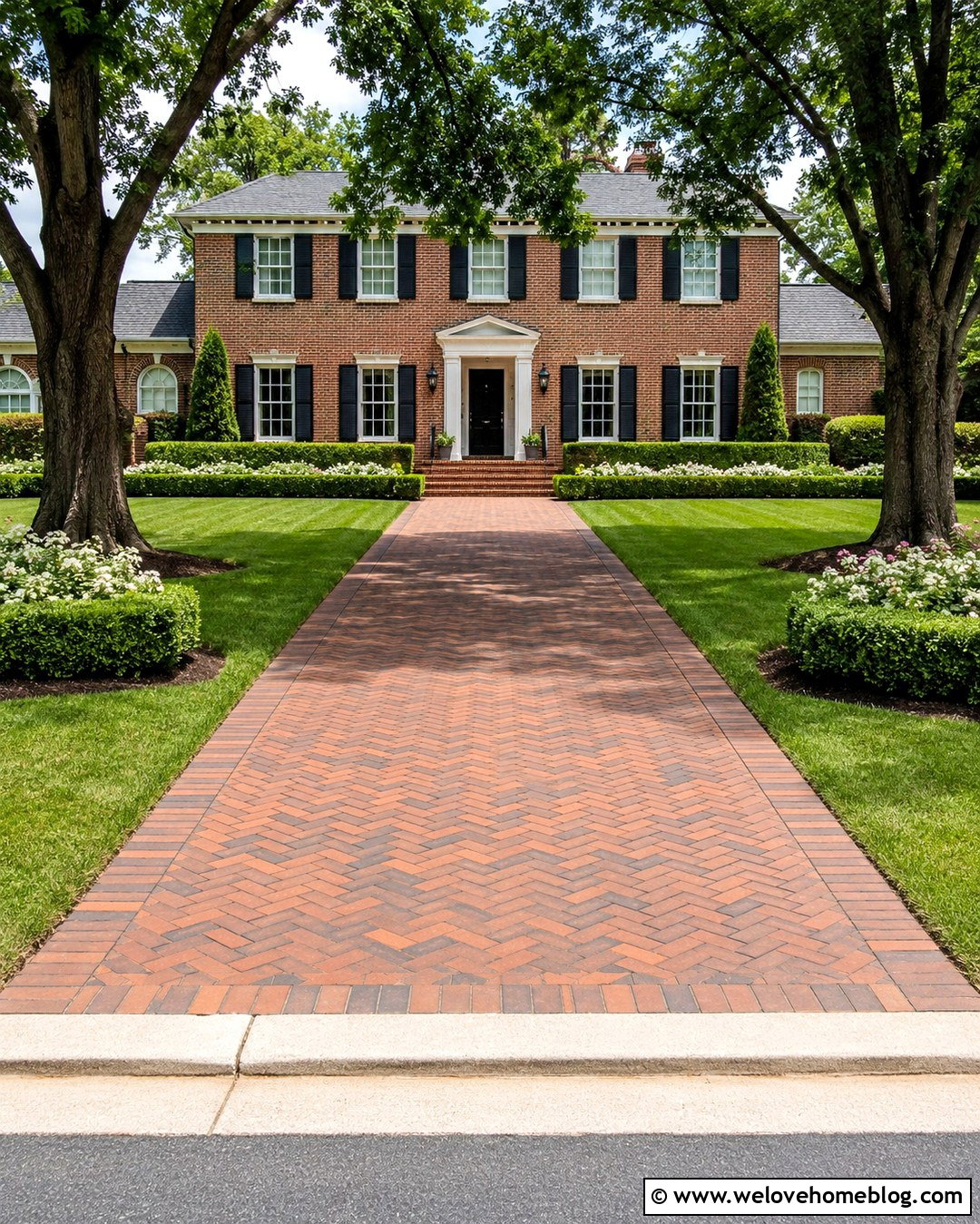
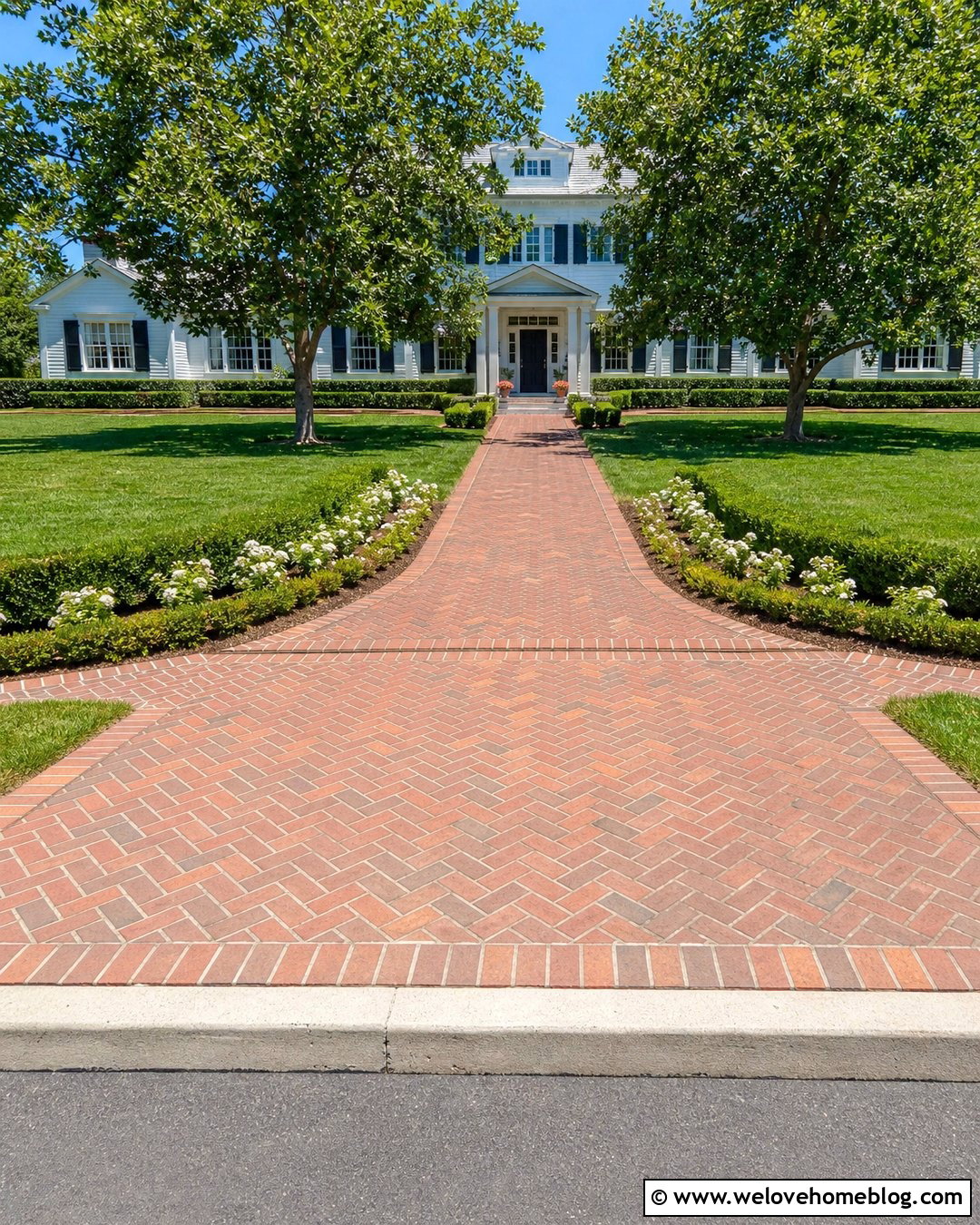
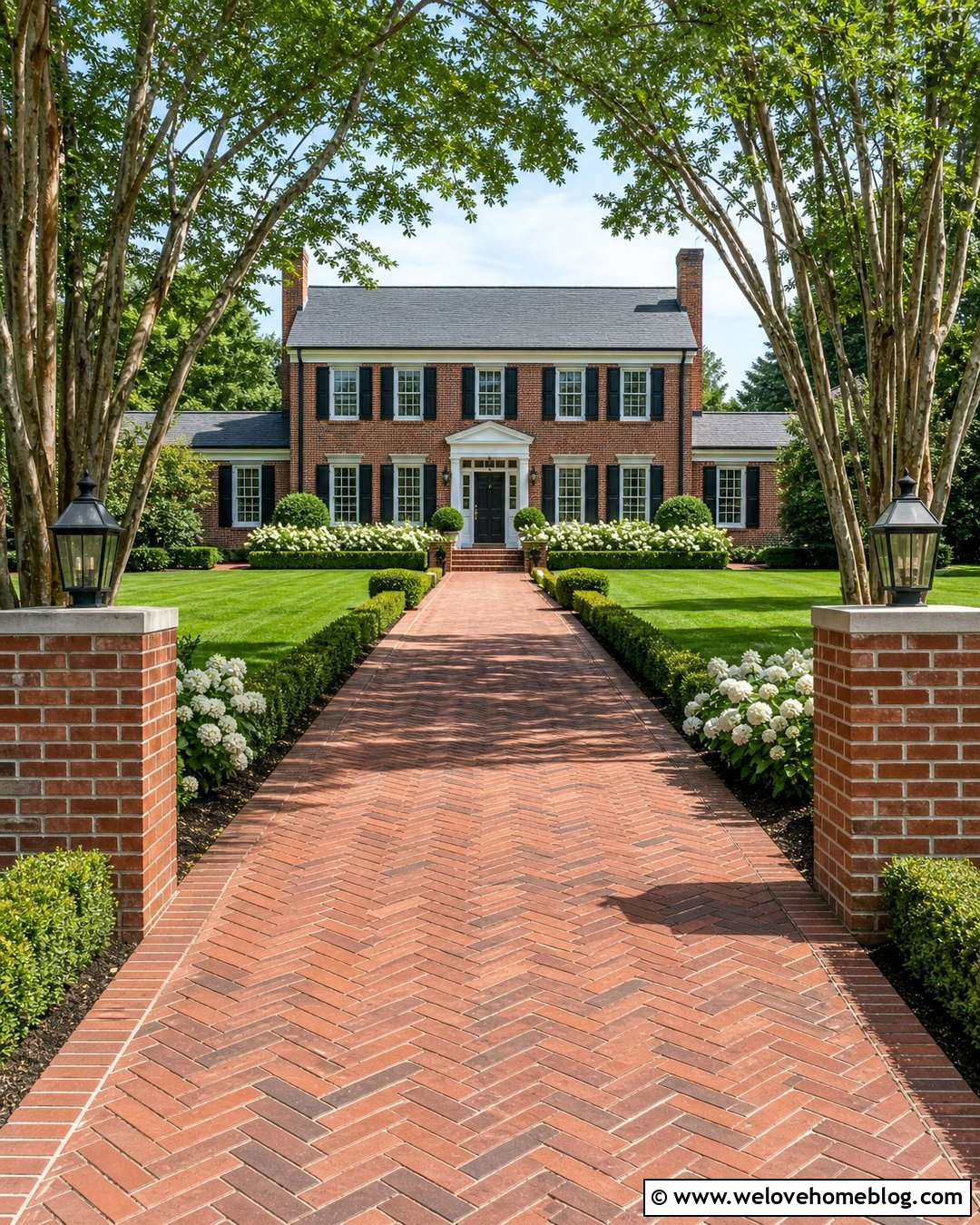
Clay brick pavers bring warmth and texture to the front of a house, especially when the driveway and walkway are designed together. Choose bricks in blended red, brown, and charcoal tones to complement traditional siding or masonry. A herringbone pattern is visually attractive and handles directional movement well, while a soldier-course border provides a crisp perimeter. Extend the same brick toward the porch, but make the walkway slightly more detailed with a contrasting edge. Balanced planting beds can frame both the driveway and the home without hiding the facade. Consider boxwood, dwarf flowering shrubs, and tidy perennial groupings for a classic look. This complete arrangement works especially well with colonial and Georgian homes. Proper edge restraints and a well-compacted base will help prevent spreading and uneven pavers.
7. Cobblestone Driveway With Formal Planting
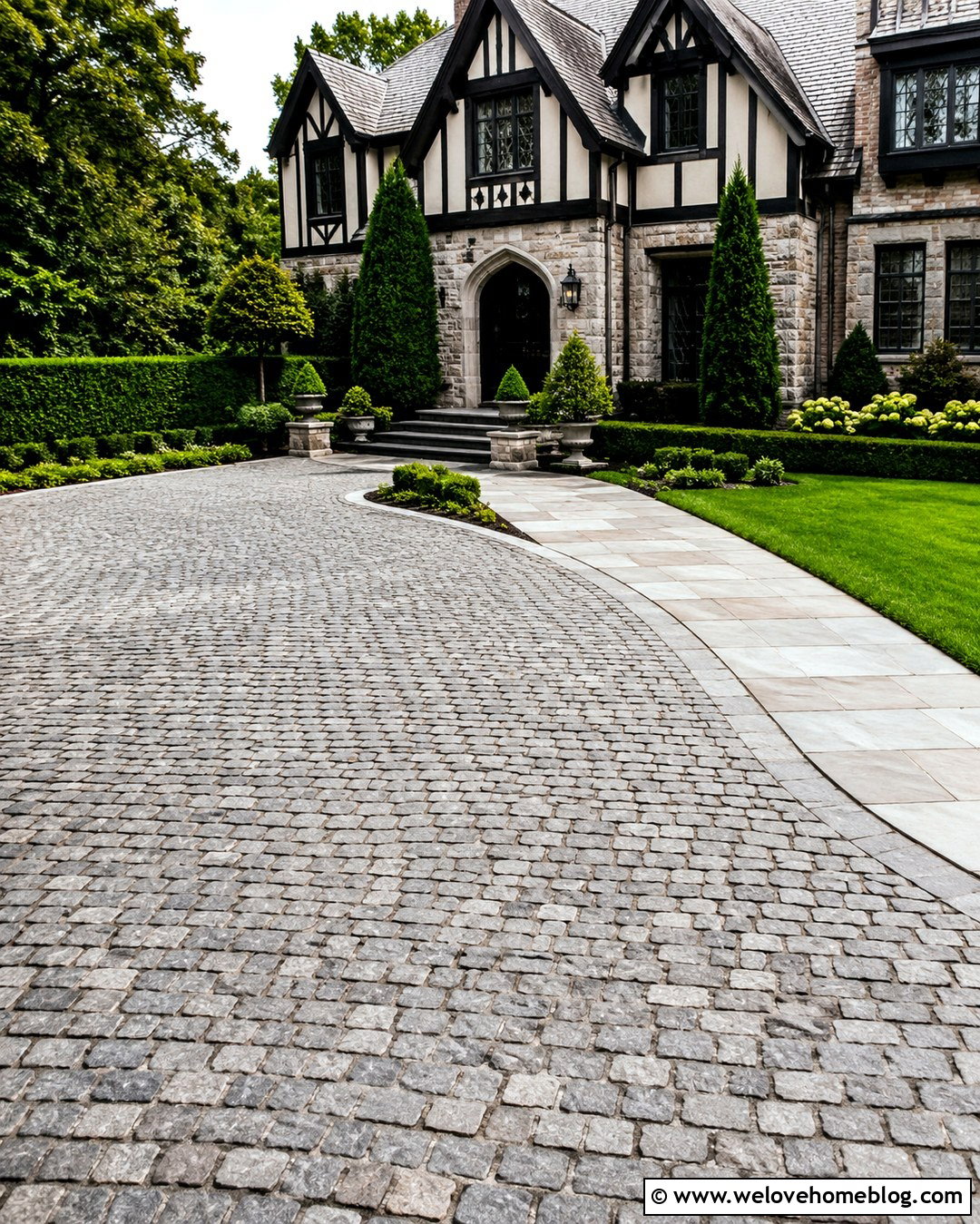
Cobblestone creates an established, old-world appearance that can make a traditional home feel especially distinctive. Use full cobbles for a premium driveway or cobblestone bands with a smoother central surface for easier walking and driving. Gray granite stones offer subtle color variation and pair well with brick, stucco, or natural stone facades. Keep the layout straight or gently curved, then frame it with symmetrical planting beds. Clipped hedges, upright evergreens, and matching planters near the entrance reinforce the formal character. A smooth stone walkway should connect the driveway with the front steps for comfortable foot traffic. Because the surface has pronounced texture, careful installation is essential. This front-of-house driveway is best suited to Tudor, European-inspired, colonial, and other substantial traditional homes.
8. Resin-Bound Driveway With Clean Borders
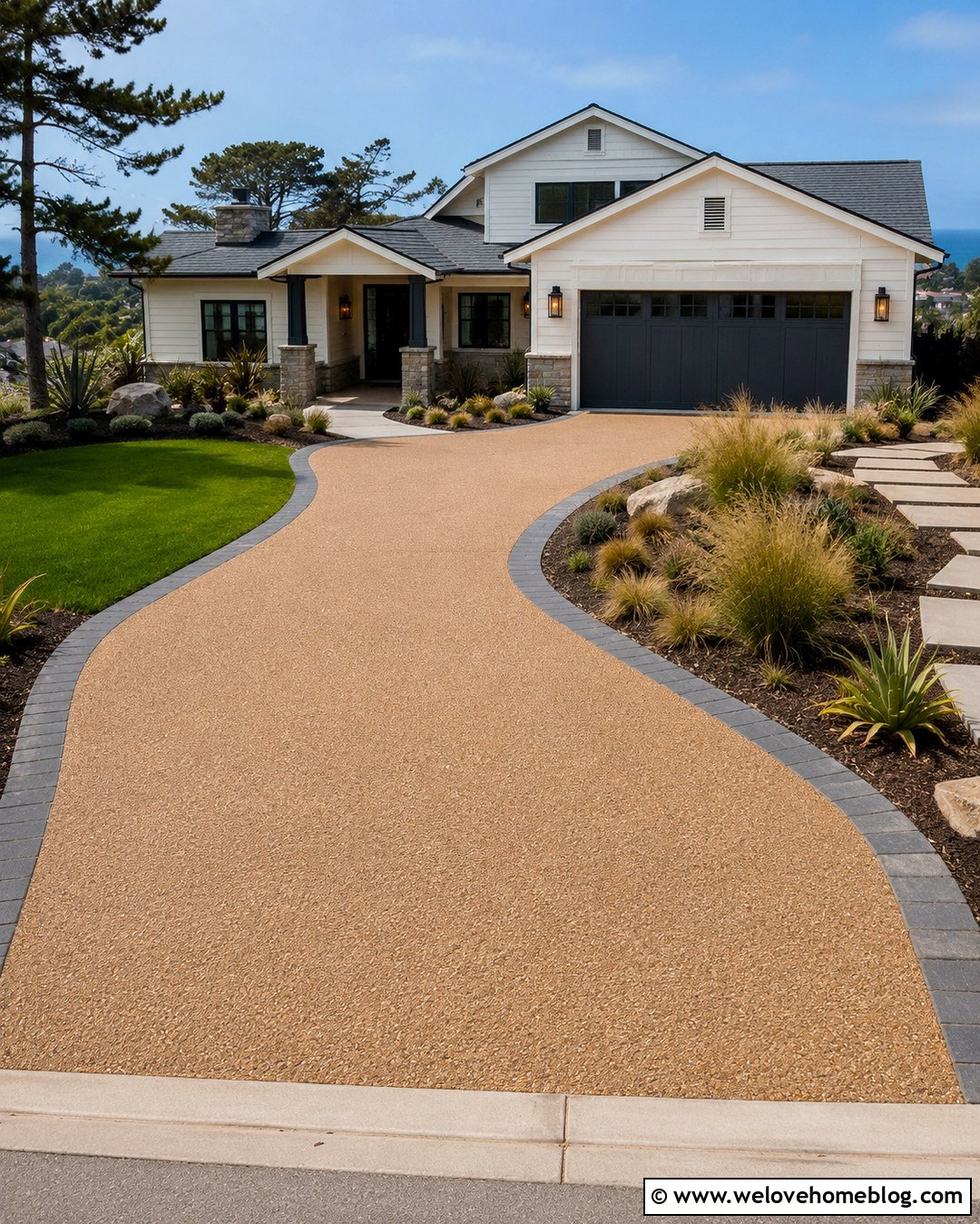
A resin-bound gravel driveway provides the natural appearance of small stones with a smoother, more controlled finish. Select a warm tan blend for a welcoming look or a silver-gray aggregate for a contemporary facade. Use charcoal paver borders to define the driveway and separate it from planting beds, lawn, and the sidewalk. A gently curved layout can soften a rectangular property while directing attention toward the front entrance. Surround the surface with drought-tolerant grasses, low shrubs, and neat areas of decorative stone. Continue the resin-bound material into a side walkway for a seamless transition, or use large concrete slabs for contrast. This complete look works with modern, coastal, and updated suburban homes. Professional base preparation and drainage planning are important for a stable, long-lasting installation.
9. Exposed Aggregate Driveway With Low Shrubs
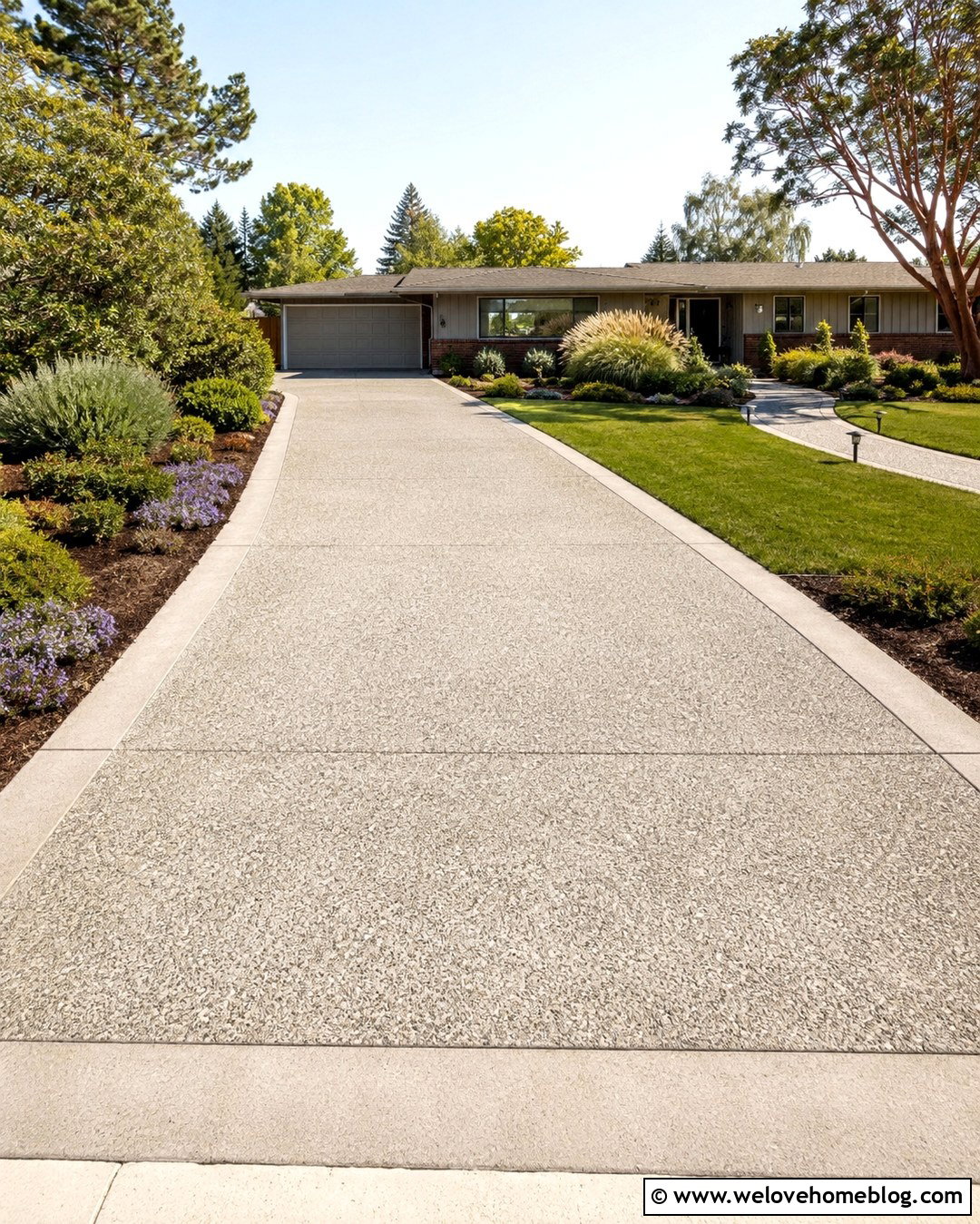
Exposed aggregate concrete adds texture without introducing a complicated pattern. Small stones visible in the surface help disguise minor dirt while giving a standard driveway more visual depth. Choose an aggregate blend containing colors found in the home’s brick, stone veneer, or roof. A smooth poured-concrete border can make the textured center look cleaner and create a comfortable edge for walking. Use broad planting beds filled with low shrubs, flowering ground cover, and ornamental grasses to soften the hardscape. Keep plants shorter near the street and garage so sightlines remain open. A coordinating exposed aggregate walkway can curve toward the porch and create a clear route for visitors. This durable, balanced driveway design complements ranch, midcentury, craftsman, and contemporary suburban homes without overpowering their architecture.
10. Permeable Paver Driveway With Rain Garden
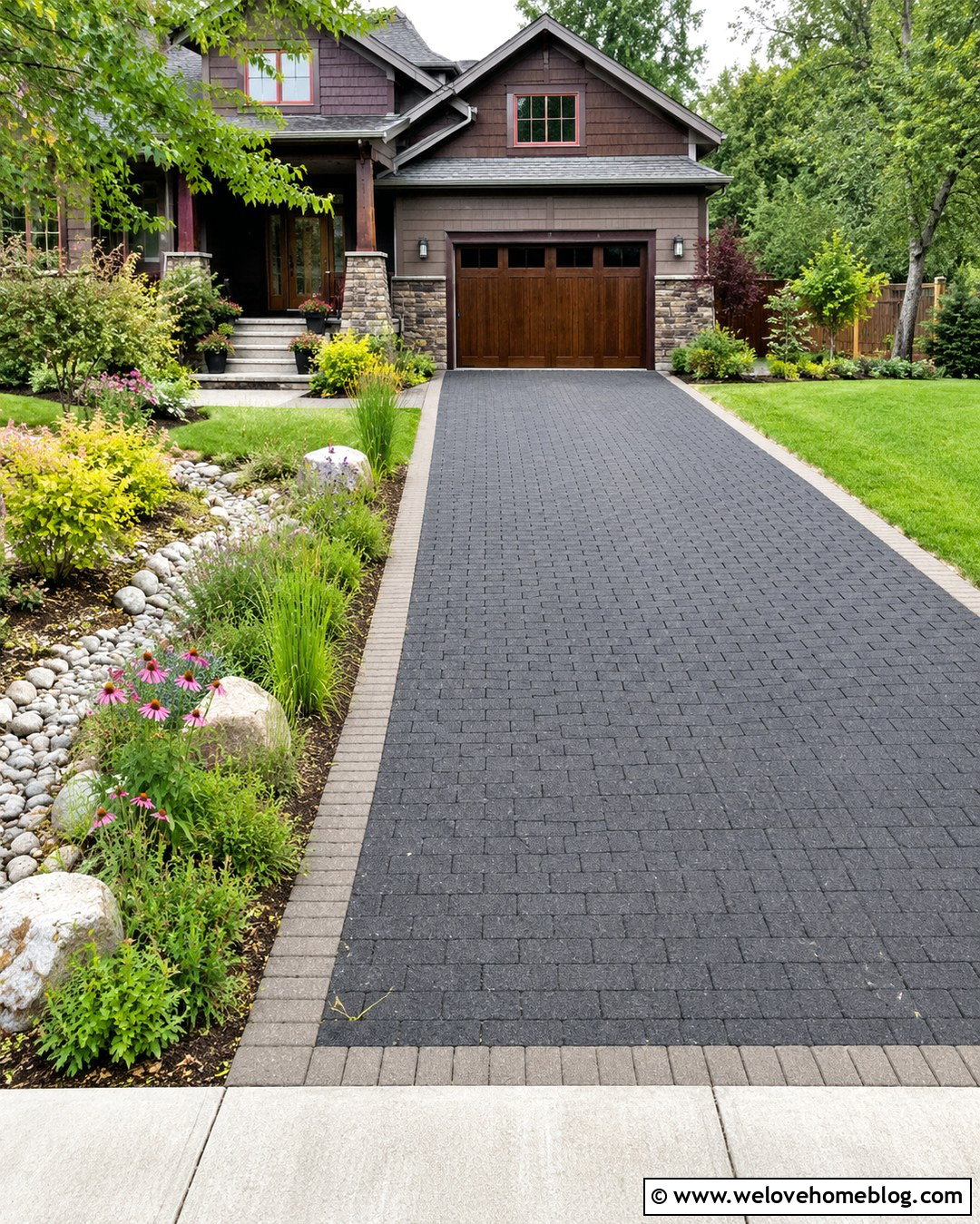
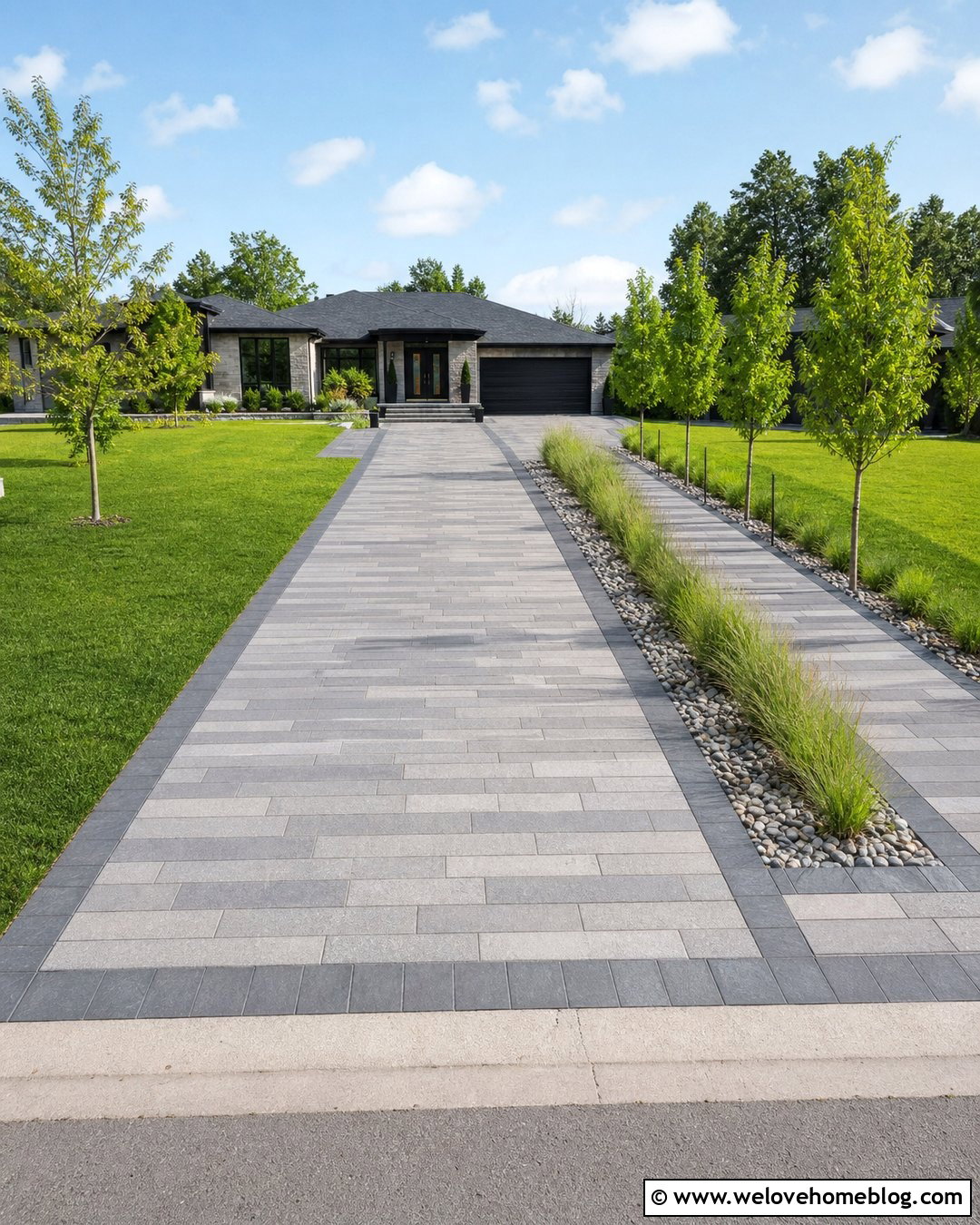
Permeable concrete pavers can create an attractive driveway while allowing water to move through open joints into the prepared base below. Choose rectangular charcoal or taupe pavers and arrange them in a simple running bond pattern. Define the perimeter with a solid paver border that complements the home’s exterior. Beside the lower portion of the driveway, add a shallow rain garden planted with species suited to occasional moisture and local growing conditions. Decorative stone can mark the transition and help the drainage feature look intentional. A raised walkway should remain separate from areas that temporarily collect water. This complete driveway look works especially well with modern, craftsman, and eco-conscious homes. The finished design combines parking, drainage planning, landscaping, and curb appeal in one organized front-yard layout.
11. Ribbon Driveway With Green Ground Cover
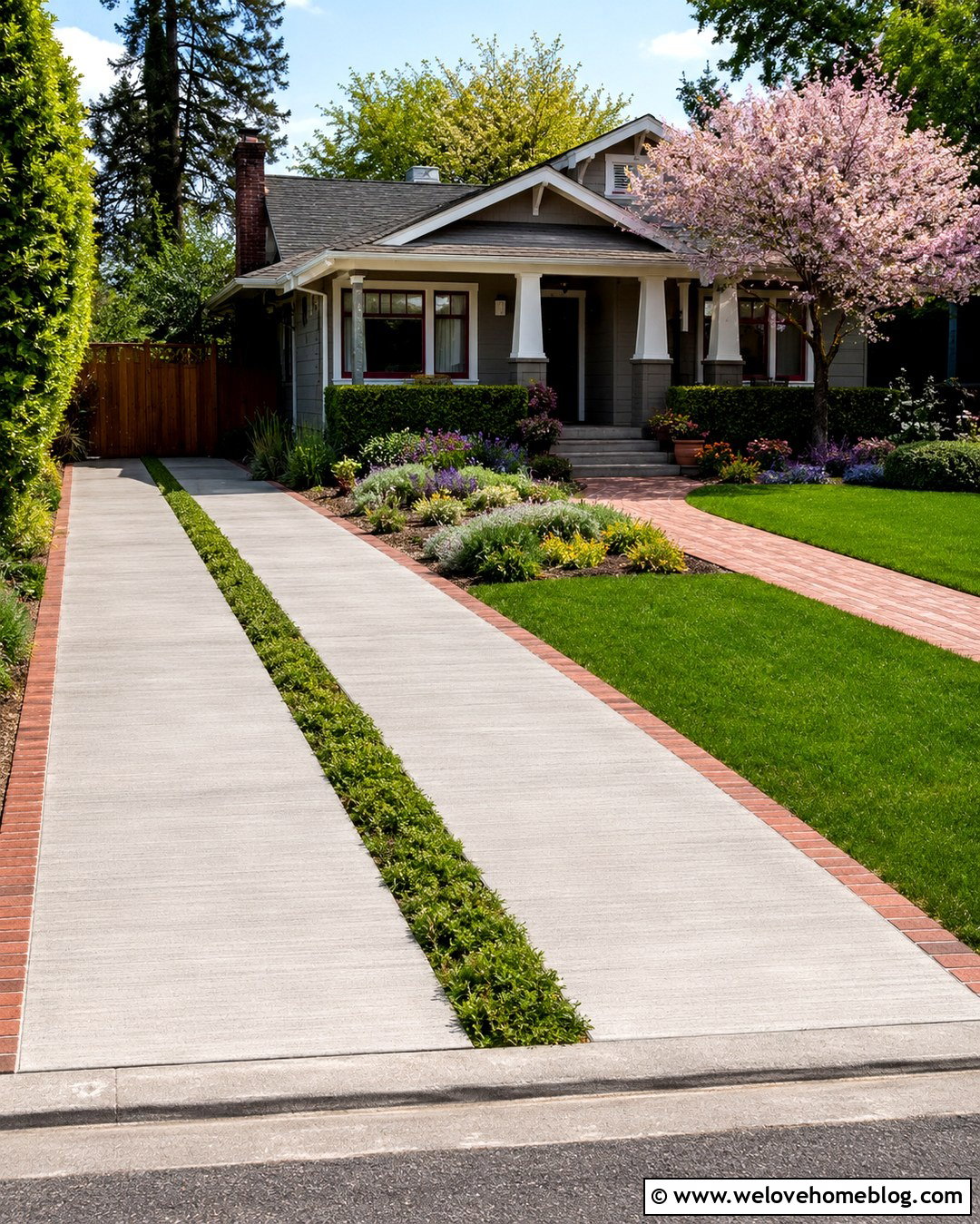
A ribbon driveway uses two paved tracks with a planted or gravel strip between them, reducing the amount of hard surface visible from the street. Construct the driving tracks from broom-finished concrete, concrete pavers, or brick wide enough to support vehicle tires comfortably. Fill the center with durable, low-growing ground cover suited to local sunlight and traffic conditions. Gravel is a lower-maintenance alternative for dry climates. Edge the full driveway with brick or steel to preserve its shape. Add relaxed planting beds along one side and a defined walkway on the other. This front-of-house layout looks especially charming with bungalows, cottages, and modest craftsman homes. Careful measurements are essential because the tracks must accommodate the vehicles regularly using the property without creating awkward turns.
12. Small Front House Driveway With Wide Apron
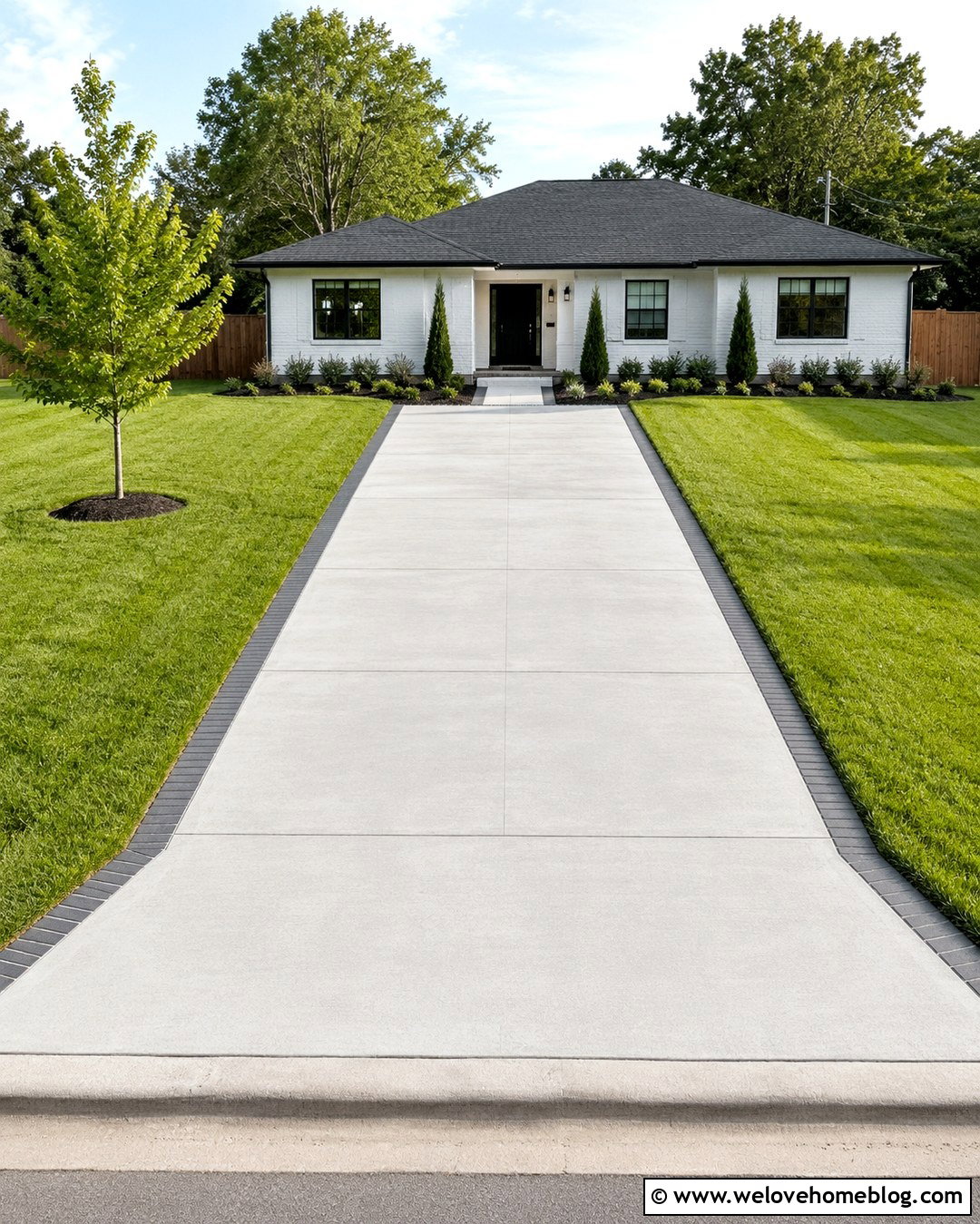
A compact front yard needs a driveway that feels efficient rather than crowded. Use a narrow, straight surface near the house and widen it slightly at the street to create a practical entrance apron. Light gray concrete or small-format pavers will help the area look open and orderly. Frame the driveway with narrow brick borders instead of bulky raised edging. On one side, install a direct walkway to the porch so guests have a safe route around parked vehicles. Use vertical plants near the house and low ground cover beside the pavement to conserve space. A small ornamental tree can balance the garage if its mature canopy will not interfere with access. This complete design gives a small ranch, townhouse, or cottage an organized entrance without covering the entire front yard.
13. Long Driveway With Tree-Lined Entrance
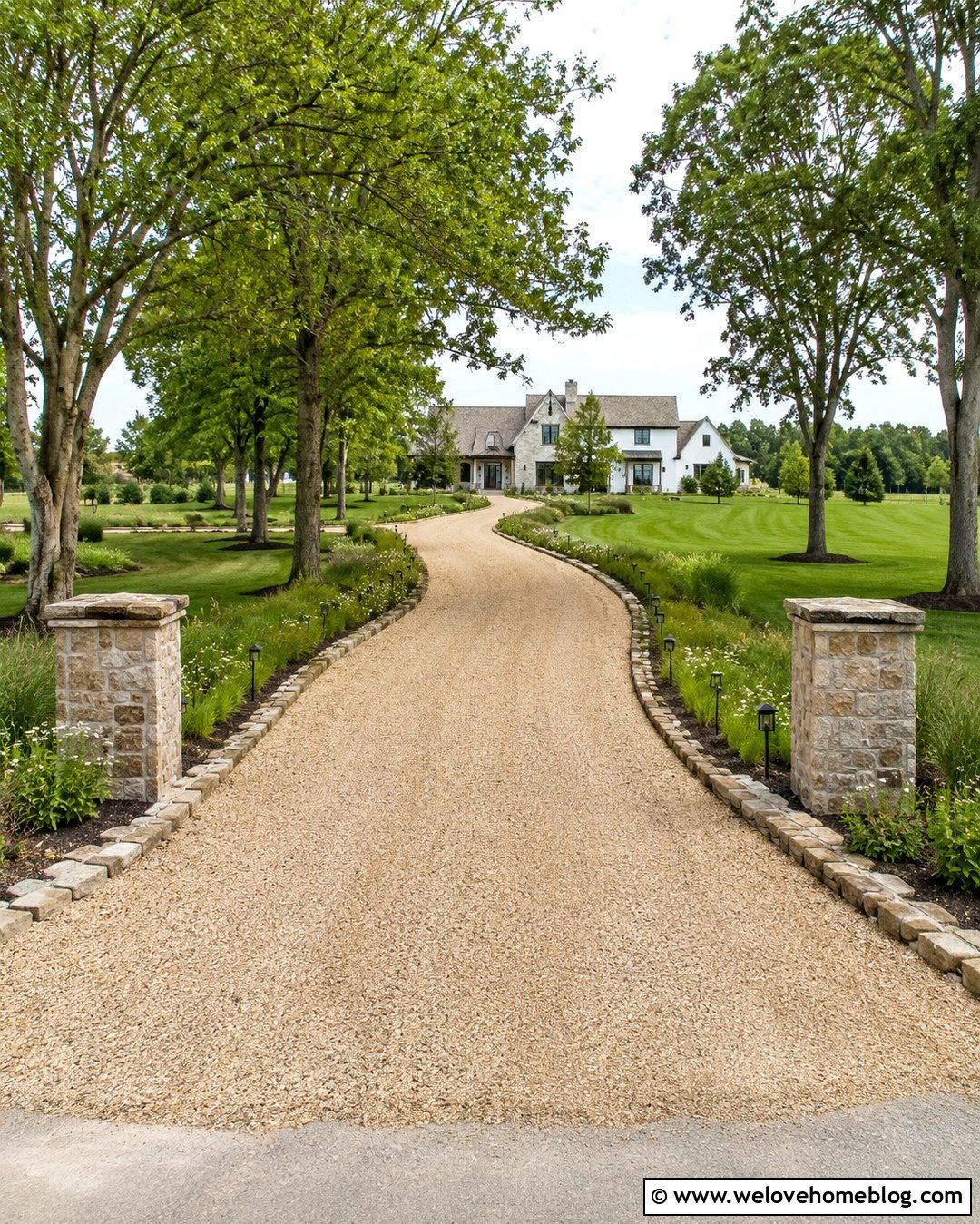
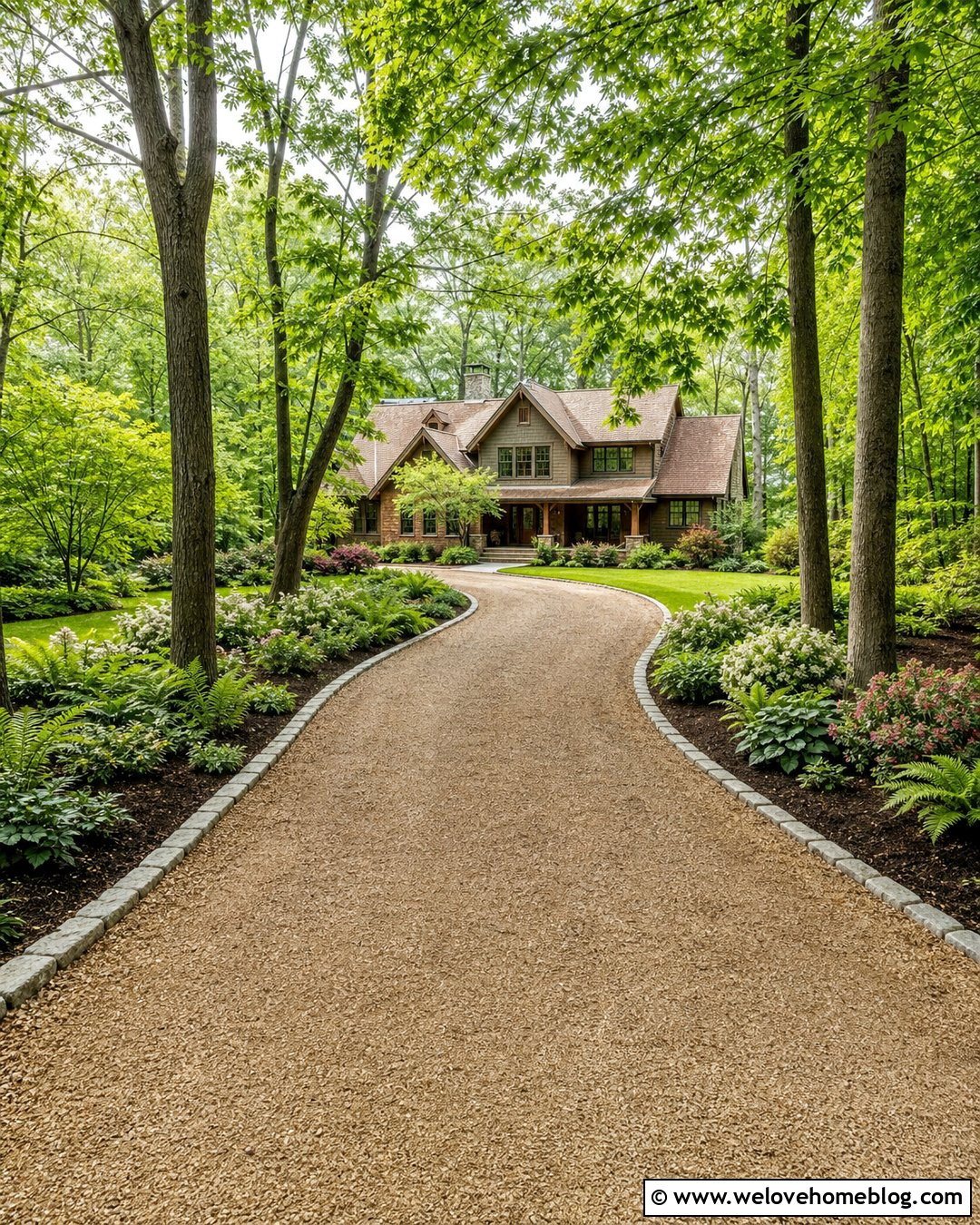
A long driveway can create a graceful approach when its material, shape, and planting are planned as one composition. Choose compacted gravel, asphalt, or concrete depending on the home’s character and maintenance requirements. A slight curve can gradually reveal the house instead of presenting the entire property from the street. Plant evenly spaced trees beyond the driveway edge, leaving enough room for trunks, roots, and mature canopies. Low meadow planting or clipped lawn underneath will keep the route visible and inviting. Mark the entrance with simple stone pillars, low walls, or broad planting beds rather than oversized decorations. Add discreet lighting where the driveway bends or intersects with walkways. This front-of-house design suits farmhouses, country homes, and large suburban properties with deep front yards.
14. Sloped Driveway With Stone Retaining Walls
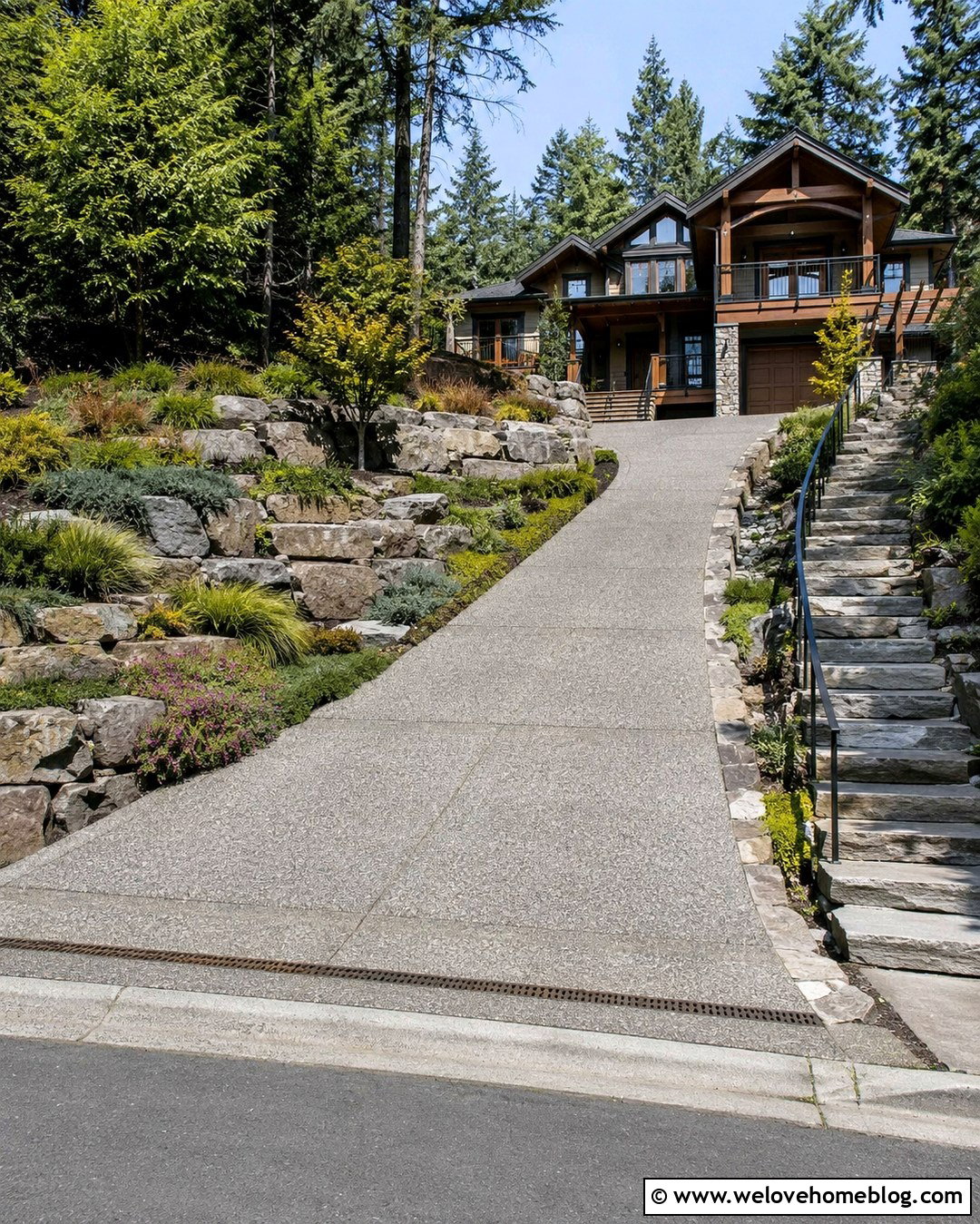
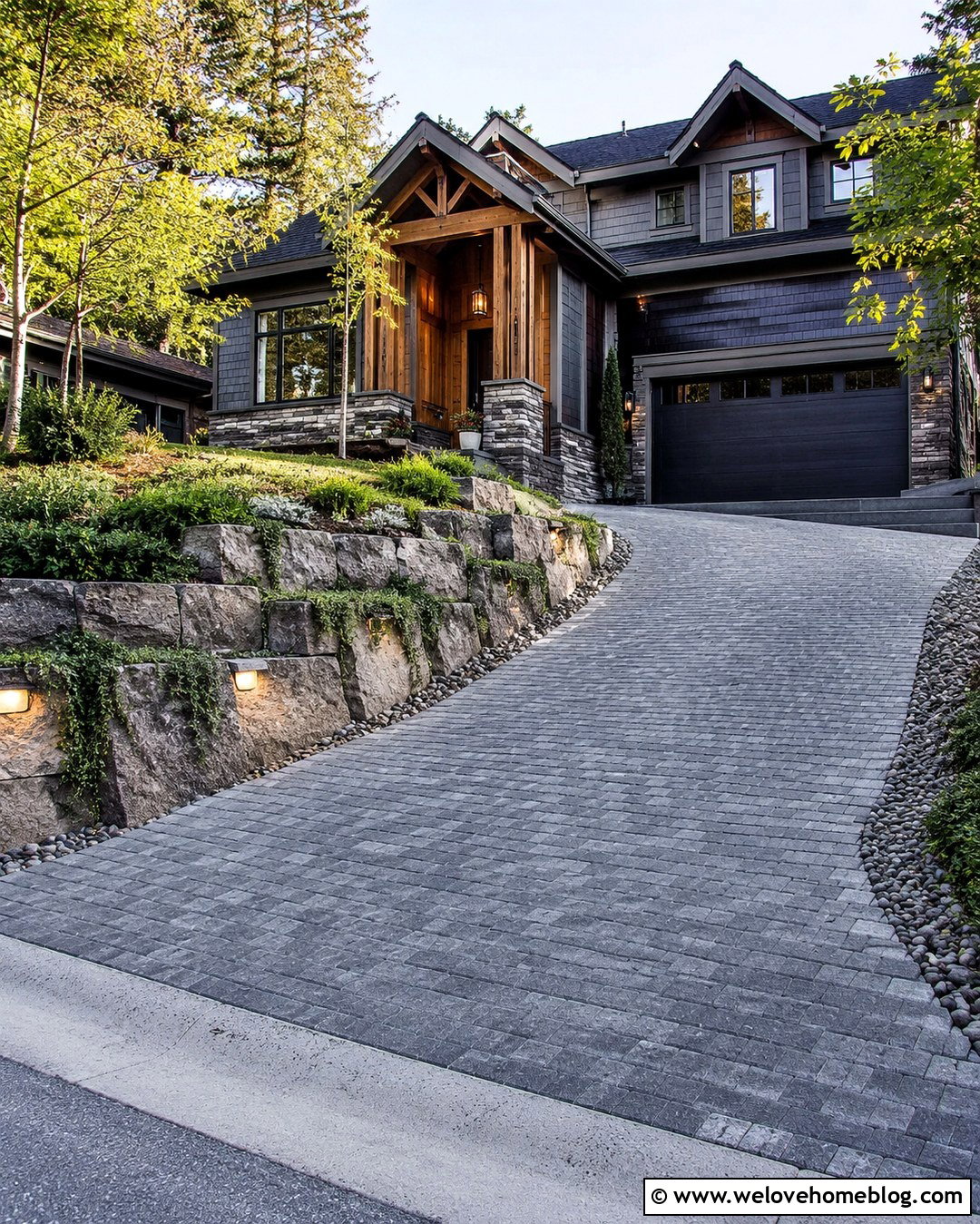
A sloped front yard becomes easier to manage when the driveway and retaining walls are designed together. Use textured concrete, interlocking pavers, or exposed aggregate to provide a visually substantial surface. Low retaining walls made from natural stone or concrete wall blocks can hold planting beds and define the driveway without creating a tunnel-like effect. Step the walls gradually with the grade, and use low shrubs or cascading ground cover to soften their upper edges. Include drainage behind walls and direct runoff away from the garage and foundation. A separate stepped walkway with a handrail may provide safer pedestrian access to the porch. This complete driveway look works with hillside ranch, craftsman, and contemporary homes. Professional grading is valuable when elevation changes are significant or drainage is complicated.
15. Farmhouse Gravel Driveway With Stone Apron
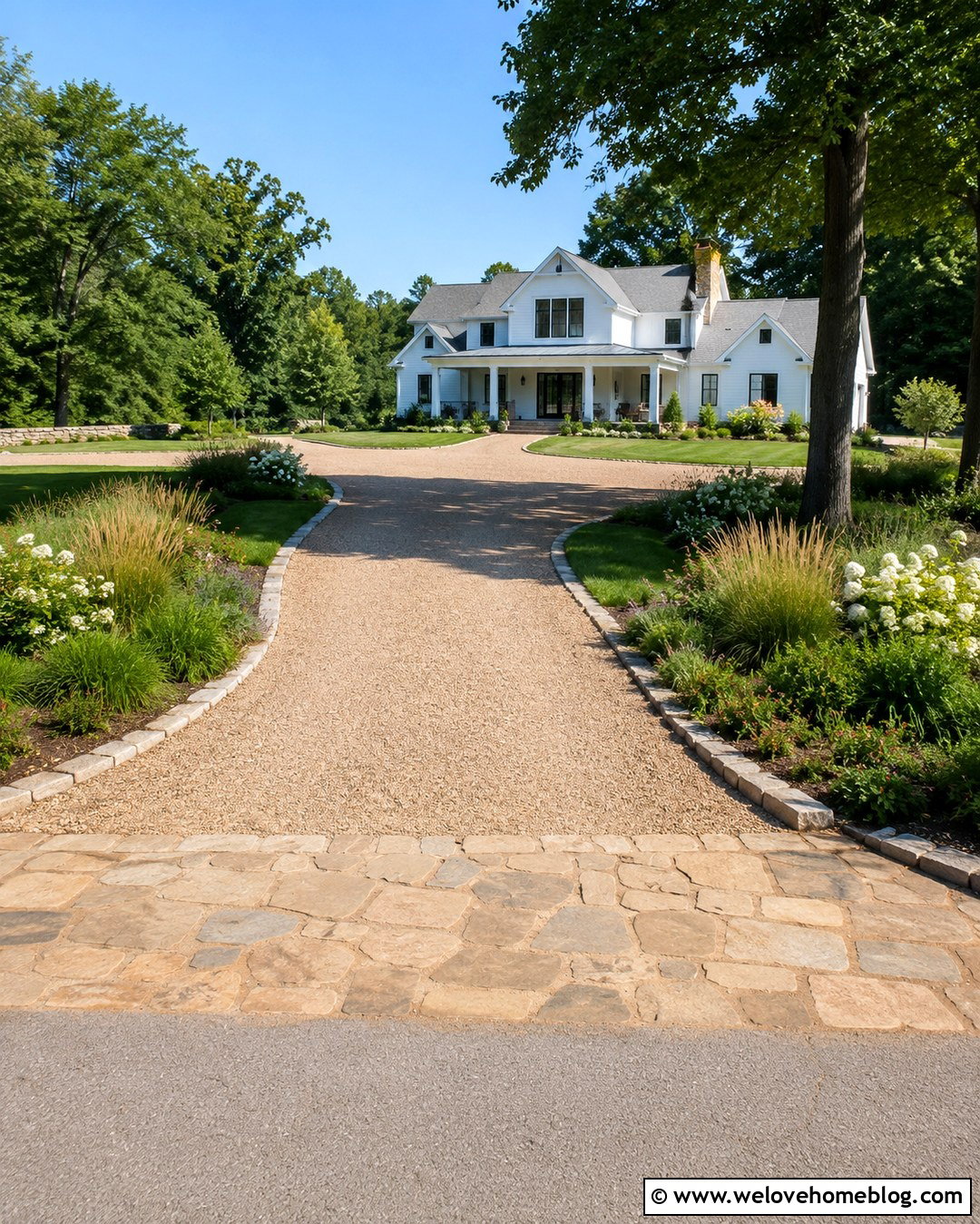
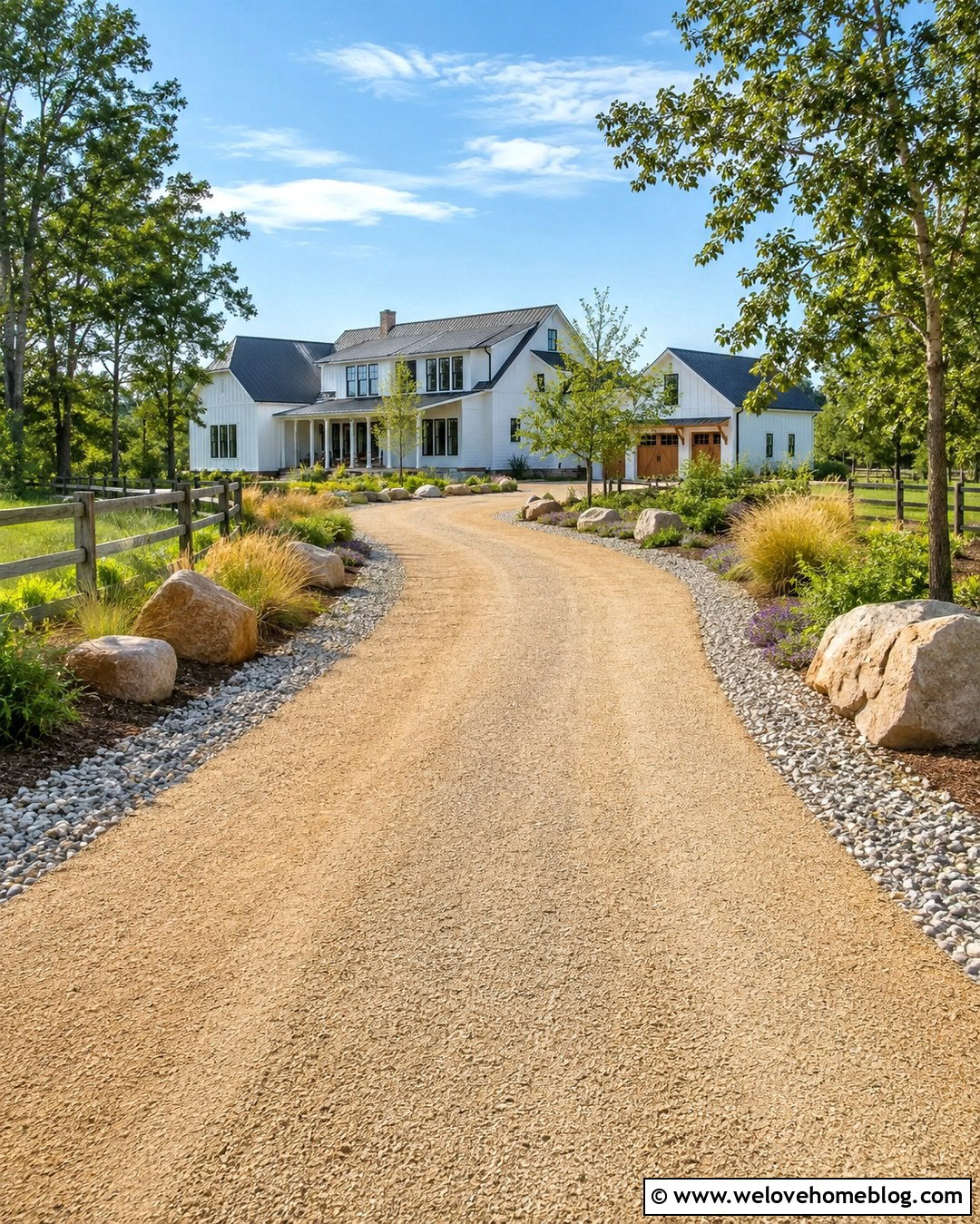
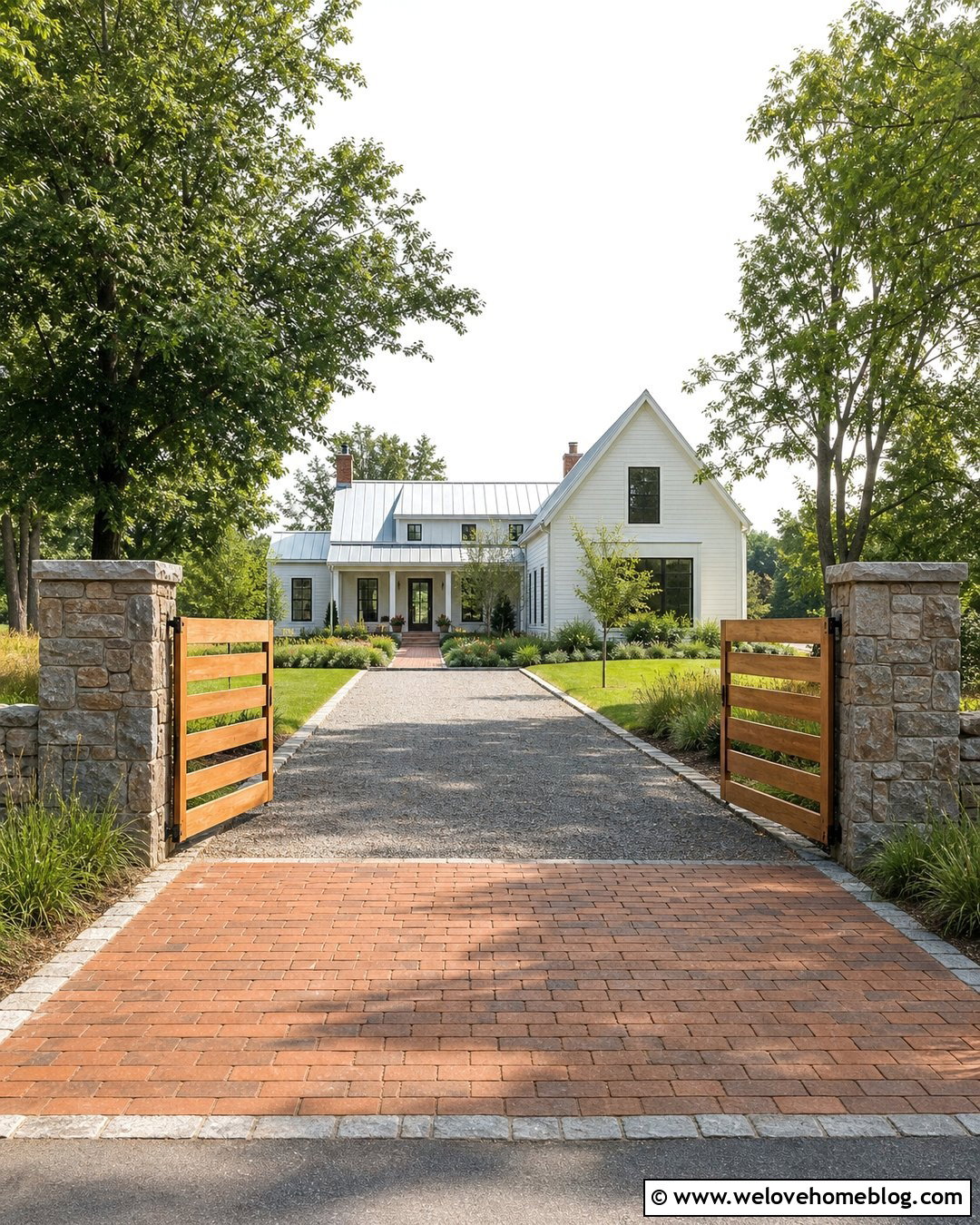
The sound and texture of gravel naturally complement a farmhouse exterior. Use beige or gray crushed gravel over a stable, compacted base, then add a stone or brick apron where the driveway meets the road. The solid apron creates a polished entrance and helps reduce loose material spreading toward the street. Frame the driveway with fieldstone edging or shallow grass shoulders for a relaxed country look. Near the house, widen the surface into a simple parking and turning area without allowing it to dominate the porch. Plant flowering shrubs, native grasses, and one or two shade trees in generous beds. A flagstone walkway can connect the parking area with the front door. This coordinated design suits modern farmhouses, barns, and rural homes with natural, informal landscaping.
16. Colonial Paver Driveway With Gate Pillars
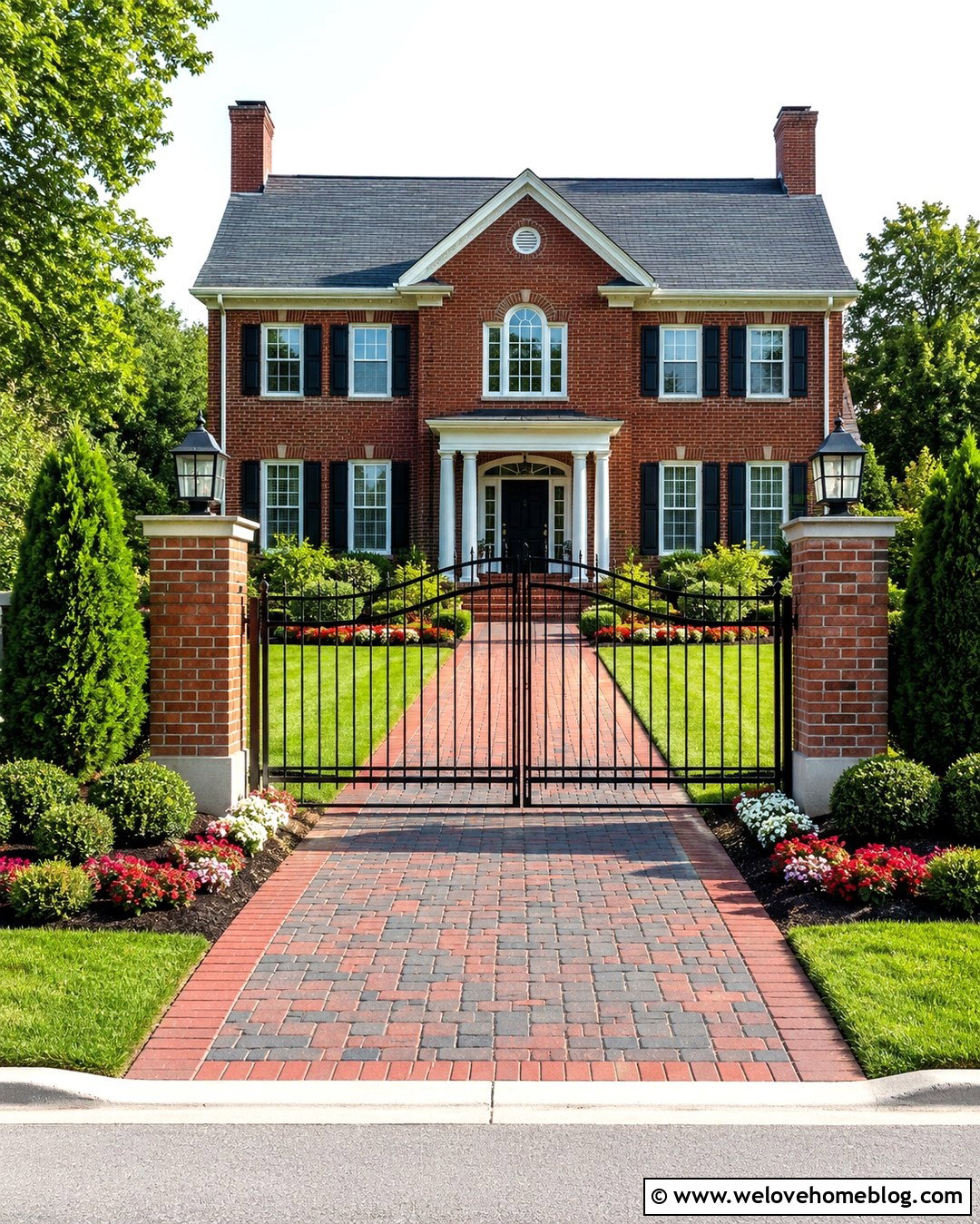
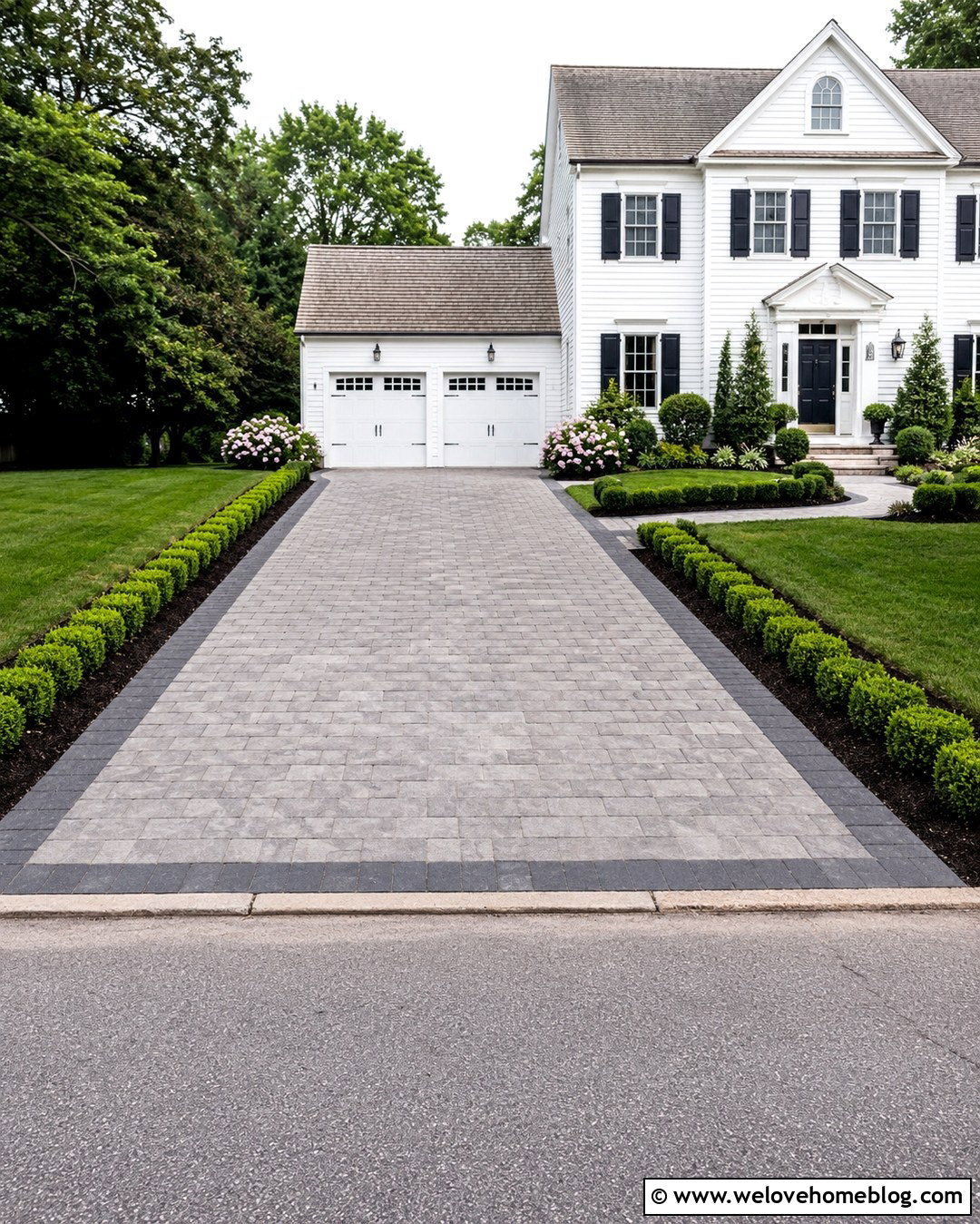
Symmetry is particularly effective in front of a colonial home. Create a straight driveway using traditional concrete pavers in blended charcoal, tan, or brick-red tones. Add a contrasting soldier-course border to strengthen the formal outline. At the street, install proportional brick or stone pillars that coordinate with the house foundation or chimney. The pillars can support simple lanterns, house numbers, or an understated gate where local conditions allow. Continue the balanced appearance with matching evergreen shrubs and curved planting beds on both sides of the entrance. A centered or gently branching walkway should guide guests toward the front door. Avoid pillars that are too large for the driveway width. This complete front-of-house design feels established and welcoming because the paving, architecture, entry markers, and landscaping share the same orderly character.
17. Craftsman Driveway With Mixed Materials
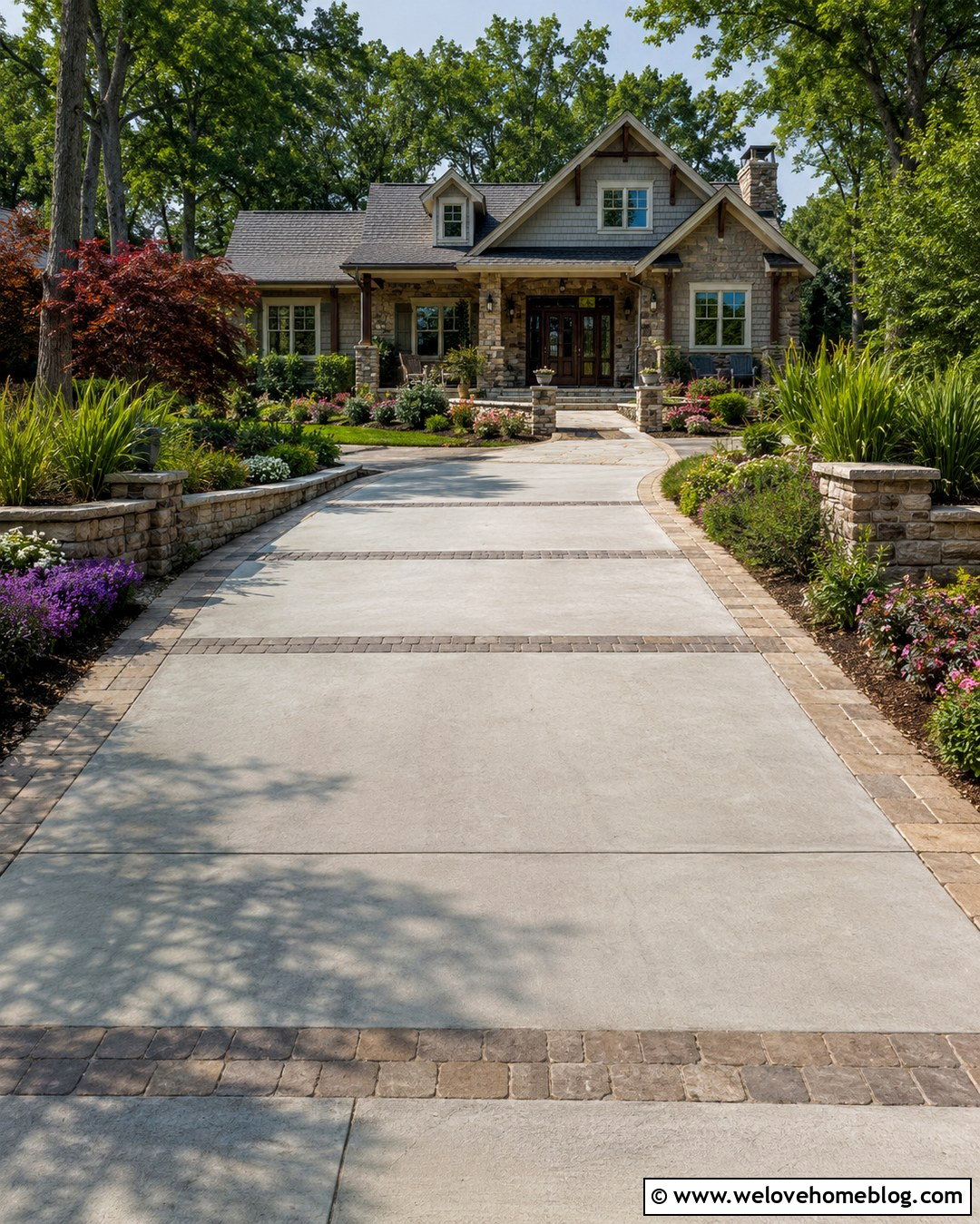
Craftsman homes often look best with natural colors, strong borders, and materials that echo the porch or foundation. Combine a warm gray concrete driveway with brick or stone paver bands across the surface. Position the bands at the entrance, near the walkway connection, and in front of the garage to break up a large paved area. Use matching stone as a border or in low landscape walls. Curved planting beds filled with compact evergreens, ornamental grasses, and flowering perennials will soften the driveway’s edges. A wide flagstone or paver walkway can lead directly to the porch steps. Keep the material palette limited so the result feels coordinated instead of busy. This complete design highlights the craftsmanship of the home while maintaining a smooth, practical driving and parking surface.
18. Modern Driveway With Lighting And Address Sign
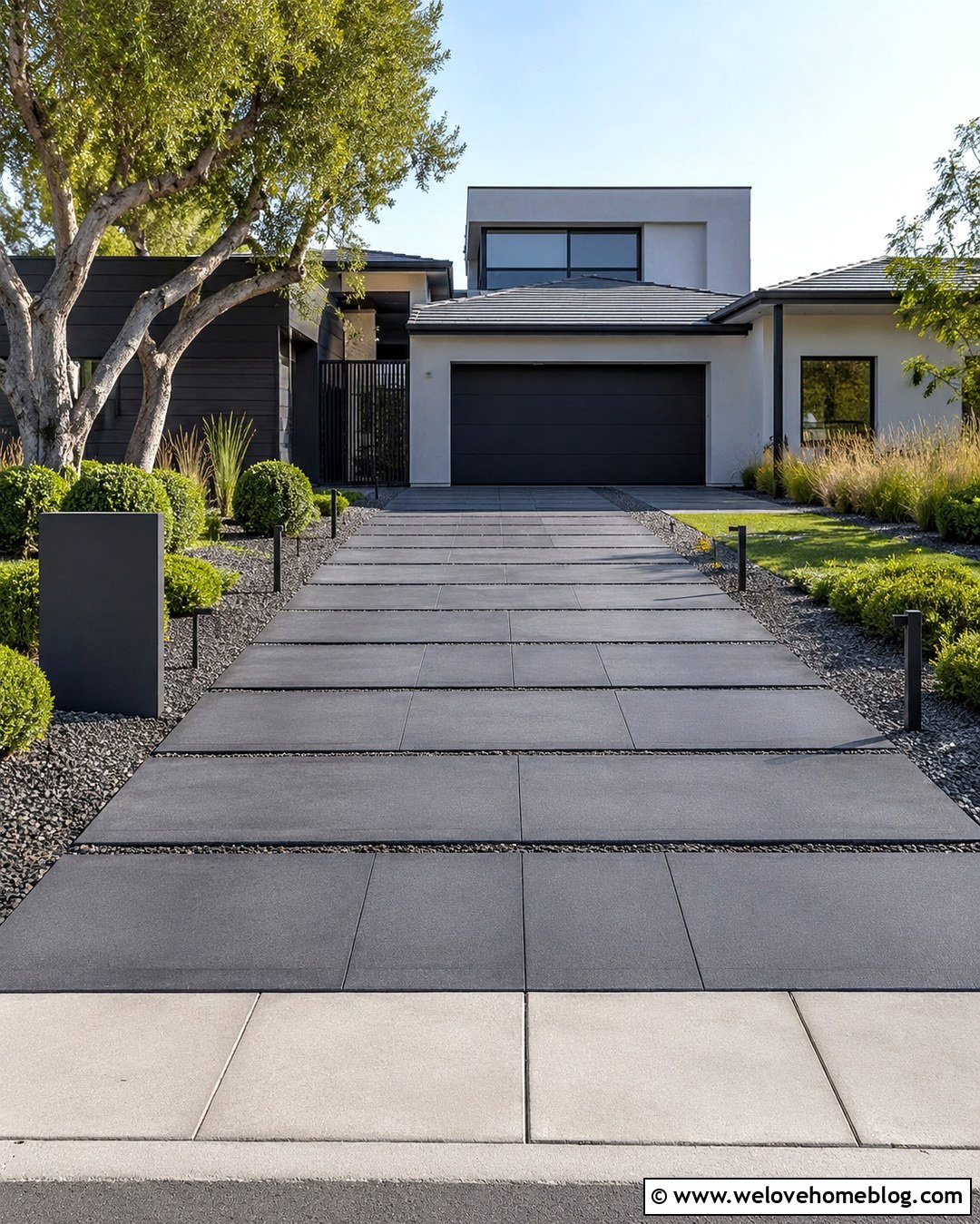
A modern driveway can remain visually clean while including helpful lighting and a highly visible address marker. Use large-format charcoal concrete pavers or smooth gray concrete panels in a straight, geometric layout. Install a narrow black metal or poured-concrete border to separate the surface from decorative gravel beds. Low bollard lights can mark the approach without creating clutter, while recessed fixtures may be added near steps and walkway transitions. Place a simple address sign within a landscaped bed near the entrance rather than directly in the driving path. Architectural grasses, sculptural shrubs, and one multi-trunk tree provide texture against the hard lines. This complete front-of-house driveway works with modern and contemporary architecture because every feature is functional, proportional, and tied to a restrained material and color palette.
19. Driveway With Front Yard Parking Court
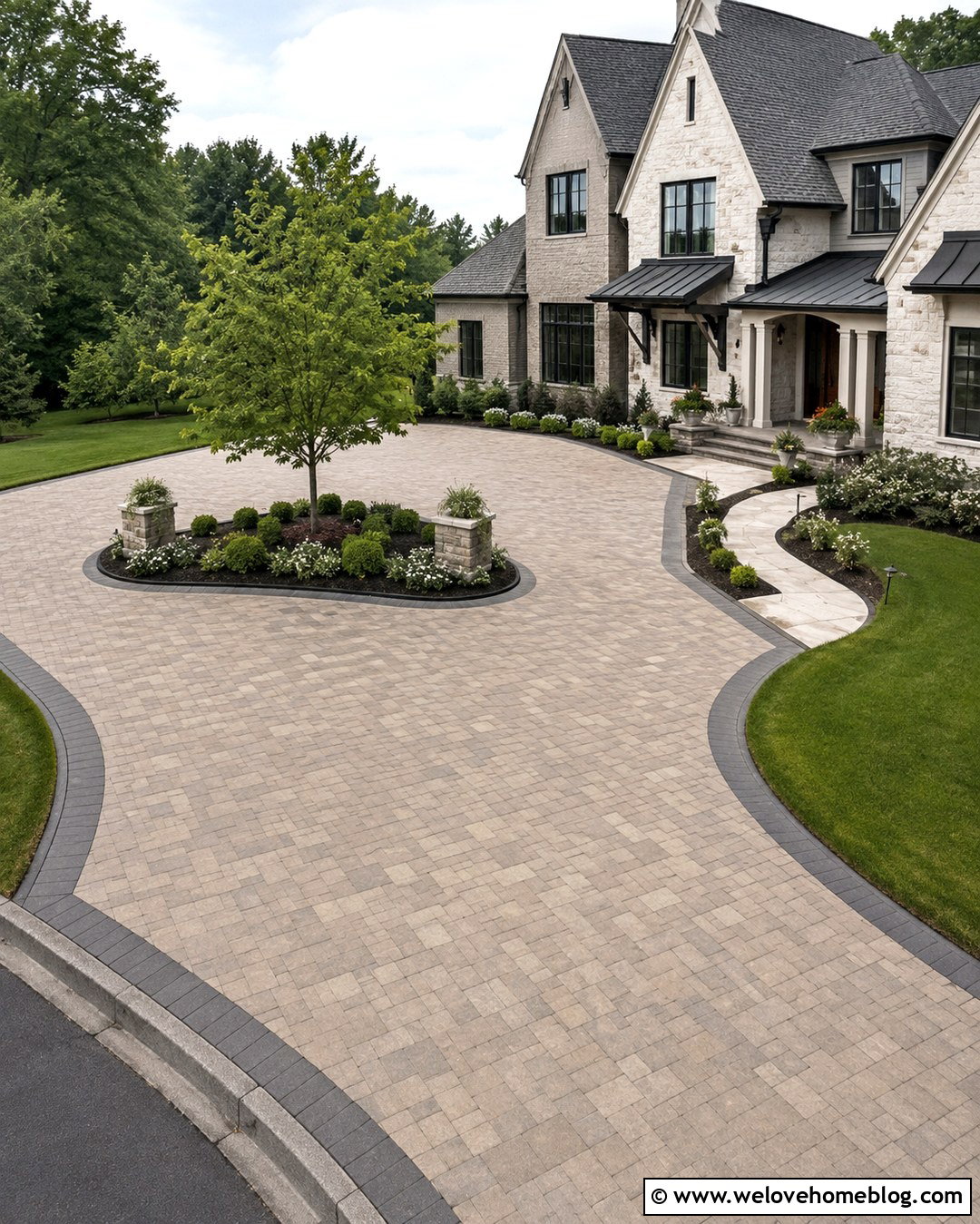
A front parking court can provide useful turning and guest space without making the house look like it sits behind a parking lot. Use a curved driveway that opens into a defined paver court near the garage. Change the paving pattern or add a border to distinguish the turning area from the main drive. A landscaped island, large planter, or ornamental tree can break up the hard surface, provided it does not restrict vehicle movement. Frame the outer court with shrubs and low walls that screen parked cars while preserving visibility. Create a separate walkway from the court to the front porch so the entrance remains obvious. This complete layout works best on wide lots and larger homes where dimensions can accommodate comfortable movement, drainage, planting, and pedestrian access.
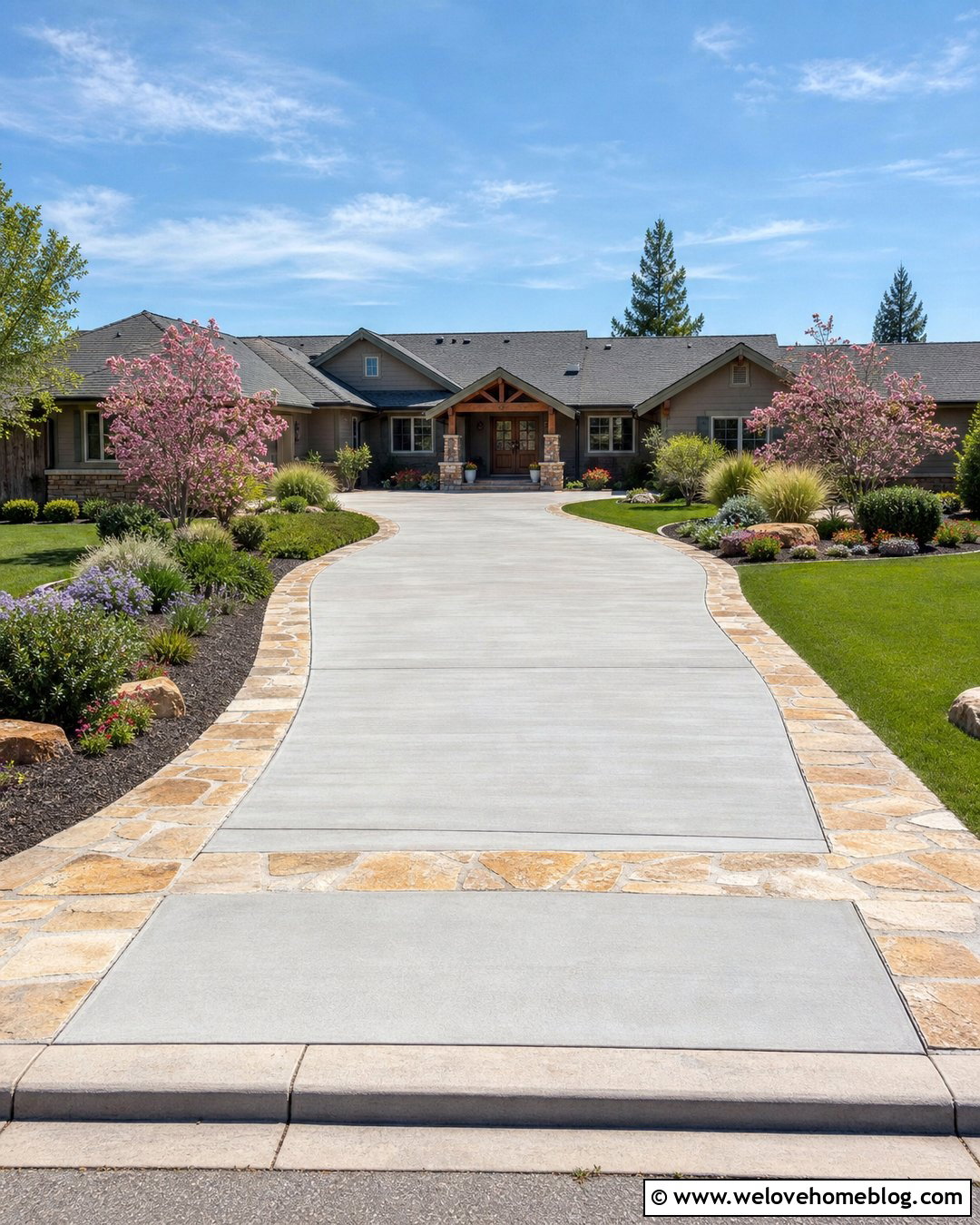
20. Resurfaced Driveway With Updated Landscaping
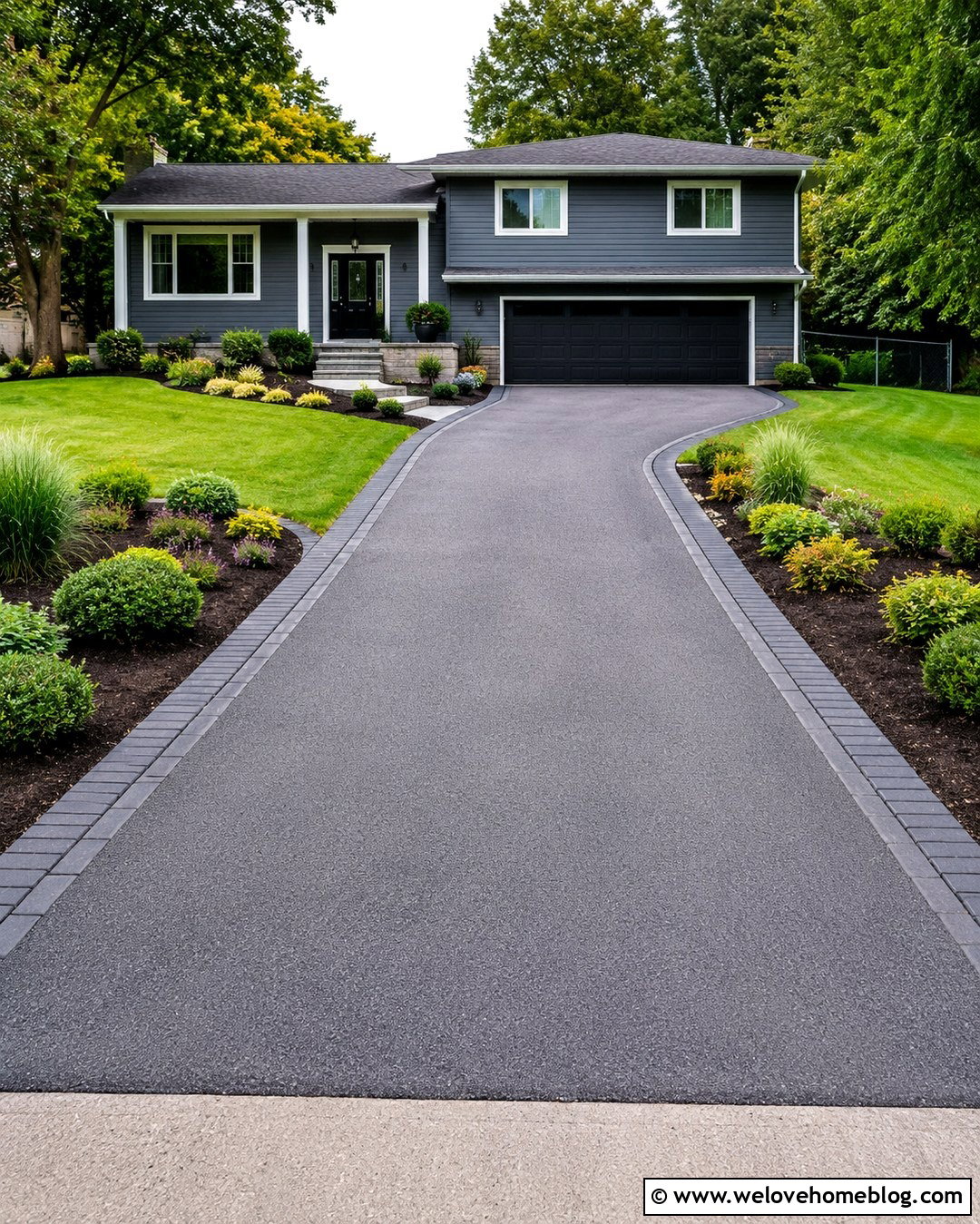
You do not always need to replace an entire driveway to improve the front of your house. A structurally sound concrete or asphalt surface may benefit from cleaning, repairs, resurfacing, or a compatible coating. Once the pavement looks consistent, add a new brick, cobblestone, or concrete paver border to create definition. Reshape narrow planting strips into wider beds with smooth curves, then fill them with compact shrubs and low-maintenance perennials. Replace damaged walkway sections and establish a clear connection between the driveway and front porch. Fresh mulch, trimmed lawn edges, and updated house numbers provide affordable finishing touches. This coordinated makeover works with nearly any home style. Begin by addressing drainage and major cracks so decorative improvements are supported by a dependable driveway beneath them.
Conclusion:
The best front driveway balances daily function with the architecture and landscaping around it. Start by considering your available space, vehicle movement, drainage, maintenance preferences, and overall budget. Then select a surface and layout that complement the house rather than competing with it. Borders, planting beds, walkways, lighting, and entrance markers can make even a basic concrete or asphalt driveway feel more intentional. Larger properties may accommodate circular layouts or parking courts, while smaller yards often benefit from simple lines and space-saving details. Use these 20 Front Of House Driveway Ideas as a starting point, then adjust the materials, plants, and proportions to suit your climate, property, and personal taste.

Related posts:
Leave a Reply