
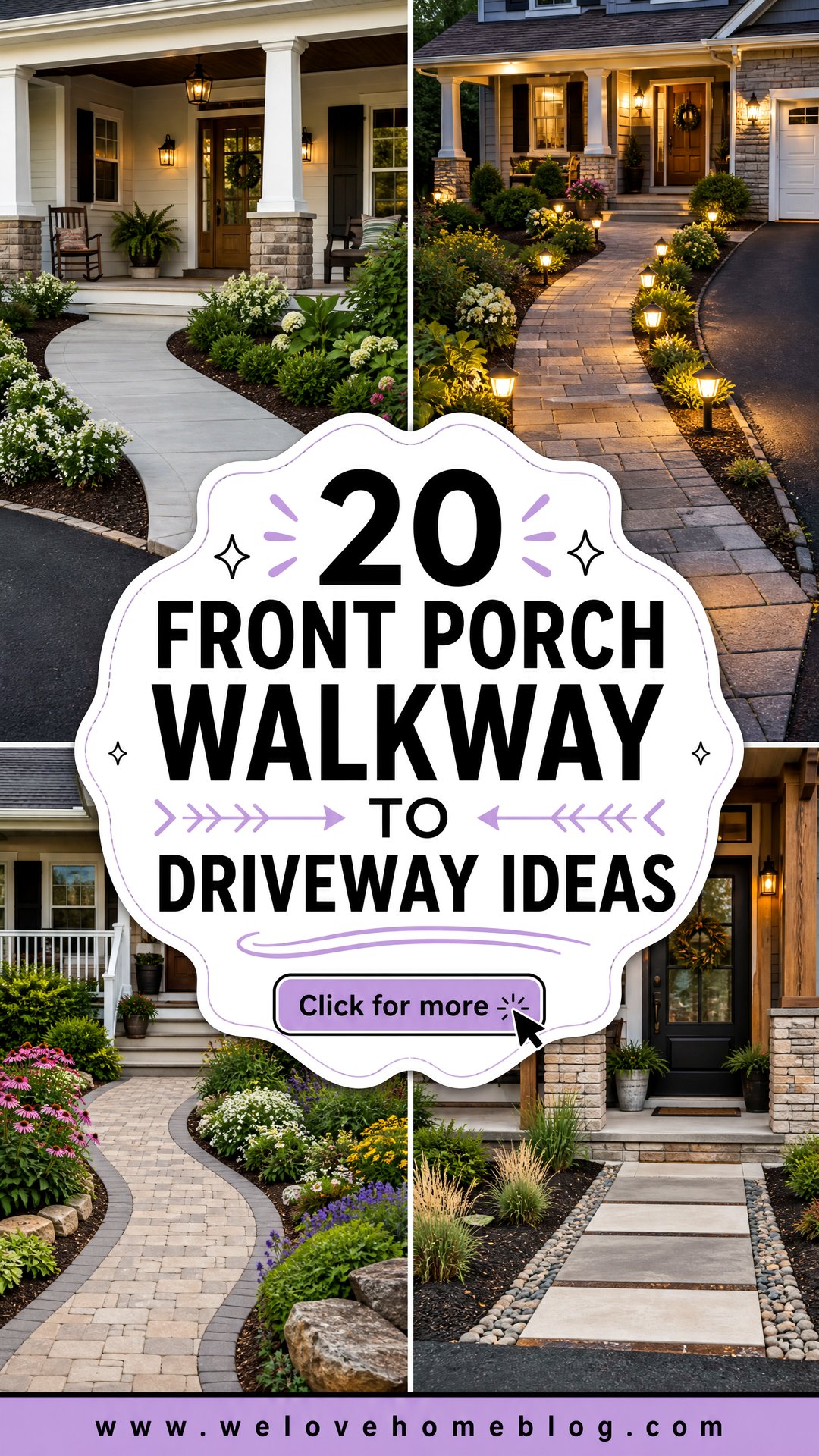
A well-planned path between the driveway and porch makes the entire front yard feel more welcoming. The best **front porch walkway to driveway ideas** do more than create a convenient route. They coordinate the walkway surface with the driveway, porch steps, planting beds, edging, and home exterior. Your design might use matching pavers for a seamless look or contrasting materials that clearly define the pedestrian path. Straight walkways provide an efficient connection, while gentle curves can soften a wide driveway or boxy facade. Practical details also matter, including comfortable width, secure footing, drainage, lighting, and an open landing near parked vehicles. The complete designs below offer inspiration for different homes, yard sizes, and budgets. Explore these **20 Front Porch Walkway To Driveway Ideas** to create a connected entrance with lasting curb appeal.
1. Curved Paver Walkway From Driveway To Front Porch
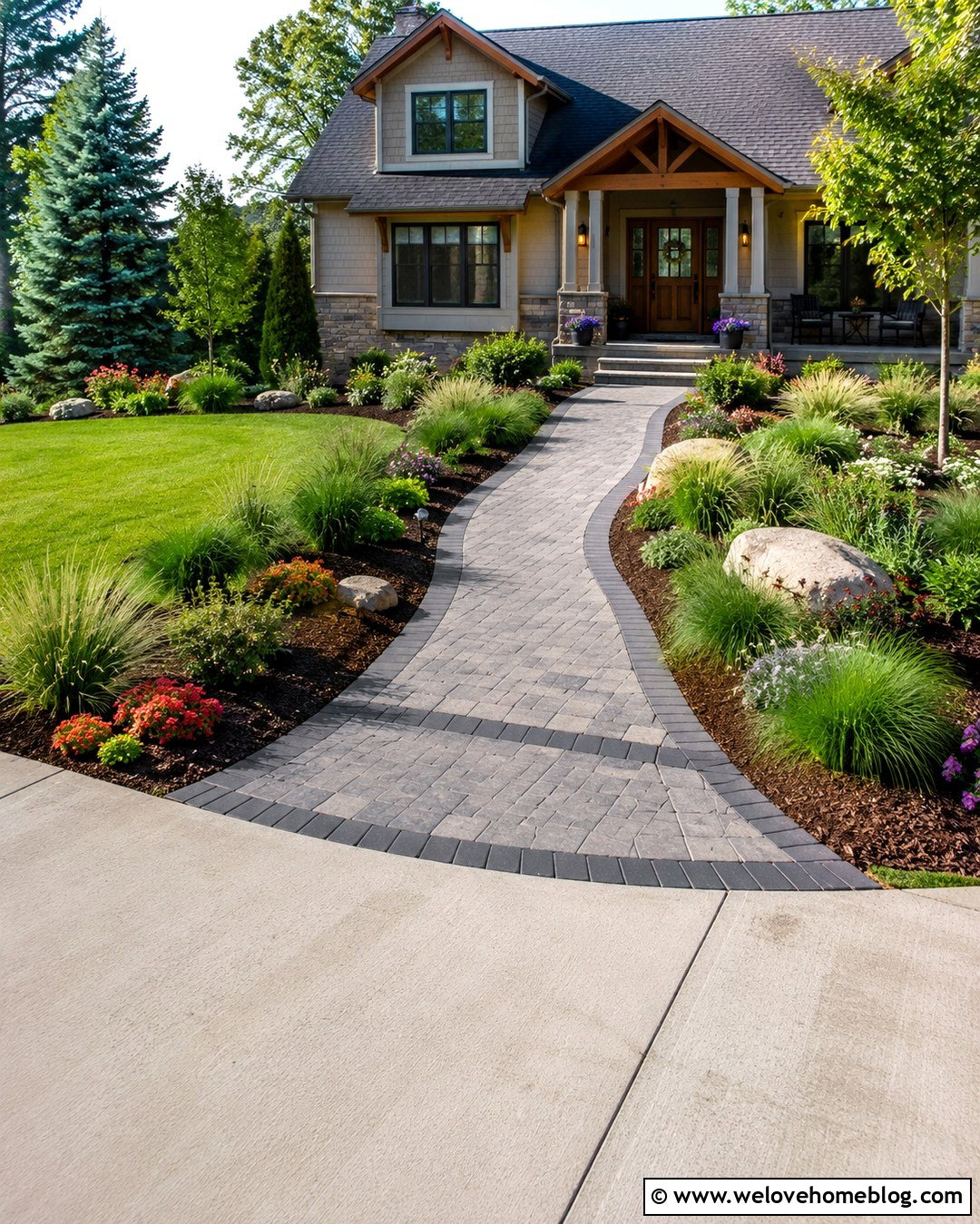
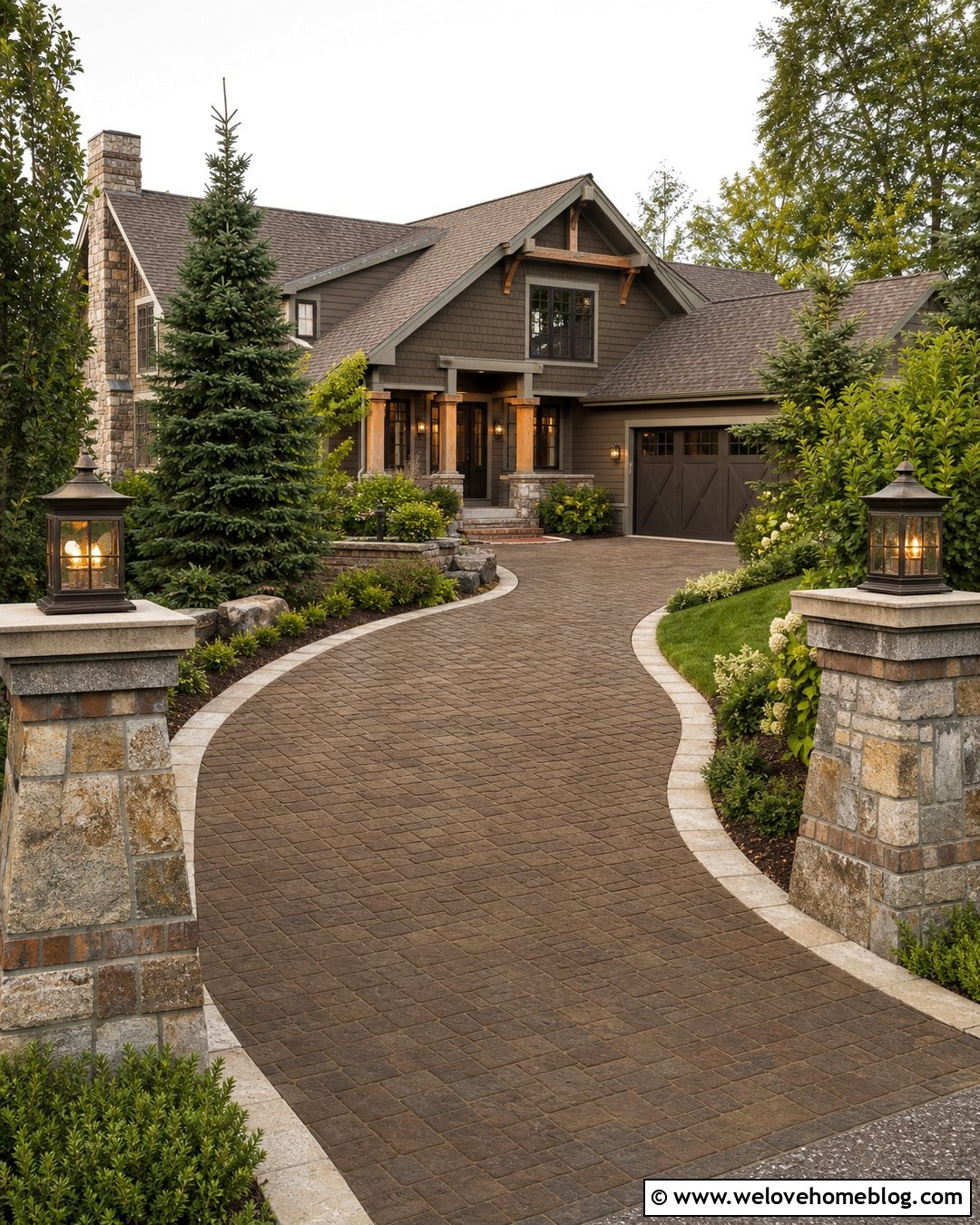
A softly curved path can make a short trip from the driveway to the porch feel more inviting. Use warm gray concrete pavers that complement the driveway without matching it exactly. Start the walkway with a slightly wider landing where passengers usually exit parked vehicles. Then guide the path around a layered planting bed before widening it again near the porch steps. A dark charcoal paver border provides definition and keeps the curve looking intentional. Fill the surrounding beds with low shrubs, ornamental grasses, and colorful perennials that will not spill across the walking surface. This complete design works especially well with Craftsman and suburban homes because it softens straight garage lines while maintaining a convenient, obvious route to the entrance.
2. Brick Walkway With Asphalt Driveway
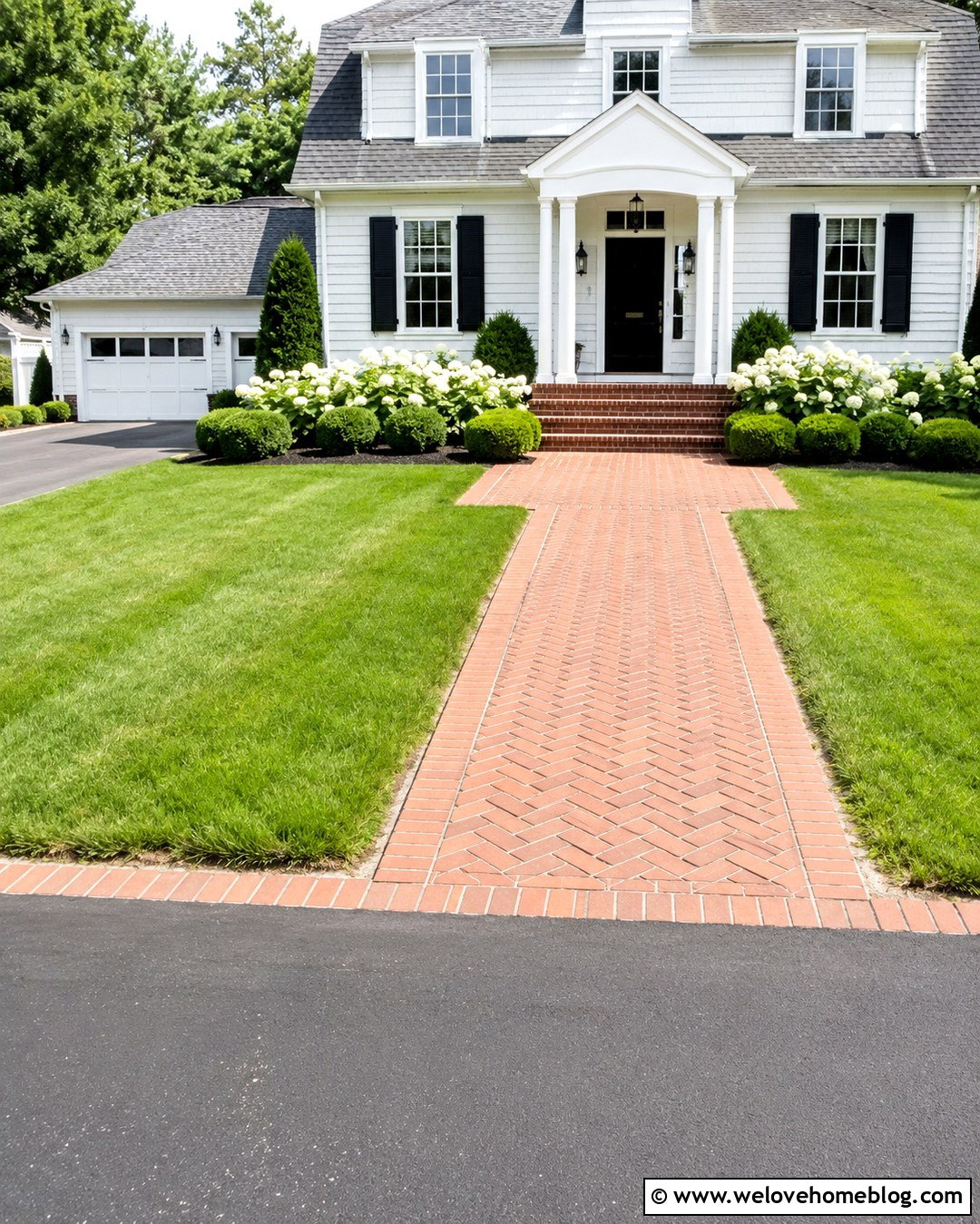
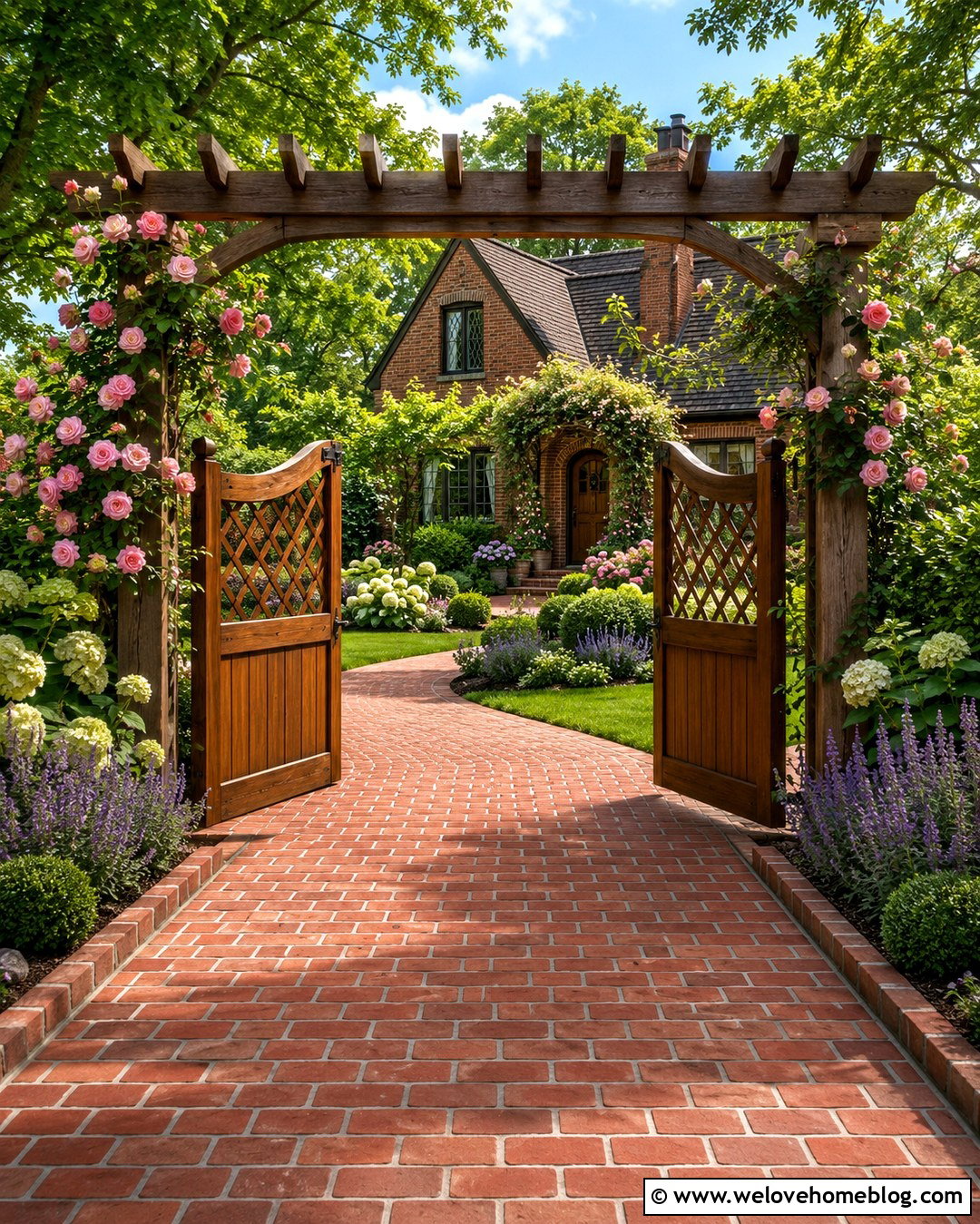
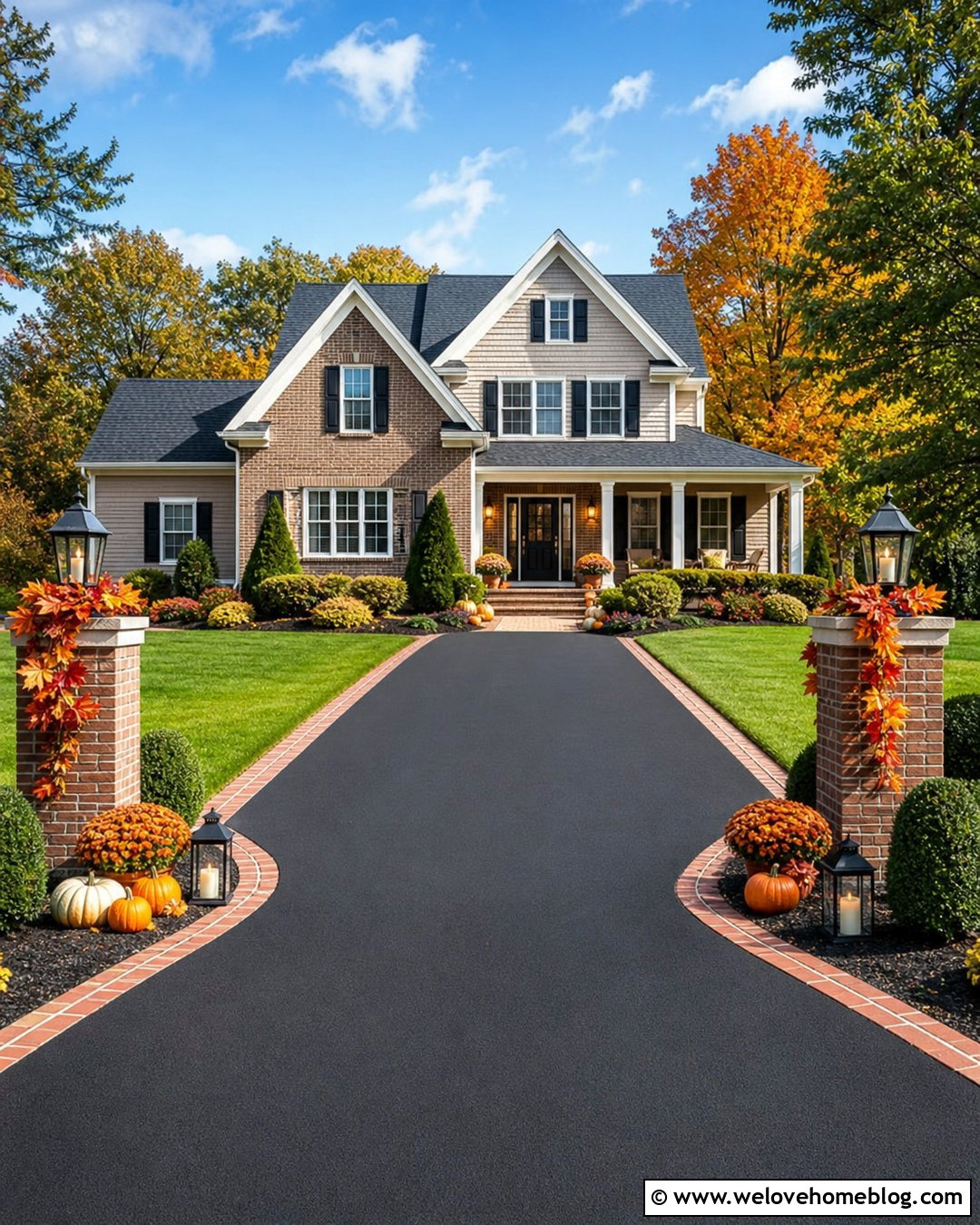
The rich color of clay brick can warm up a simple black asphalt driveway and connect it visually to a traditional front porch. Lay the bricks in a herringbone pattern for the main walkway, then add a straight soldier-course border along both sides. At the driveway junction, expand the brick into a generous rectangular landing so the path does not feel like a narrow afterthought. Continue the same border detail around the porch steps for a coordinated finish. Neatly clipped boxwoods, flowering hydrangeas, and a narrow mulch bed can frame the route without crowding it. This combination looks particularly natural beside Colonial, Cape Cod, and red-brick homes. The contrasting surfaces also help guests immediately identify the walkway leading to the front door.
3. Flagstone Walkway Beside A Gravel Driveway
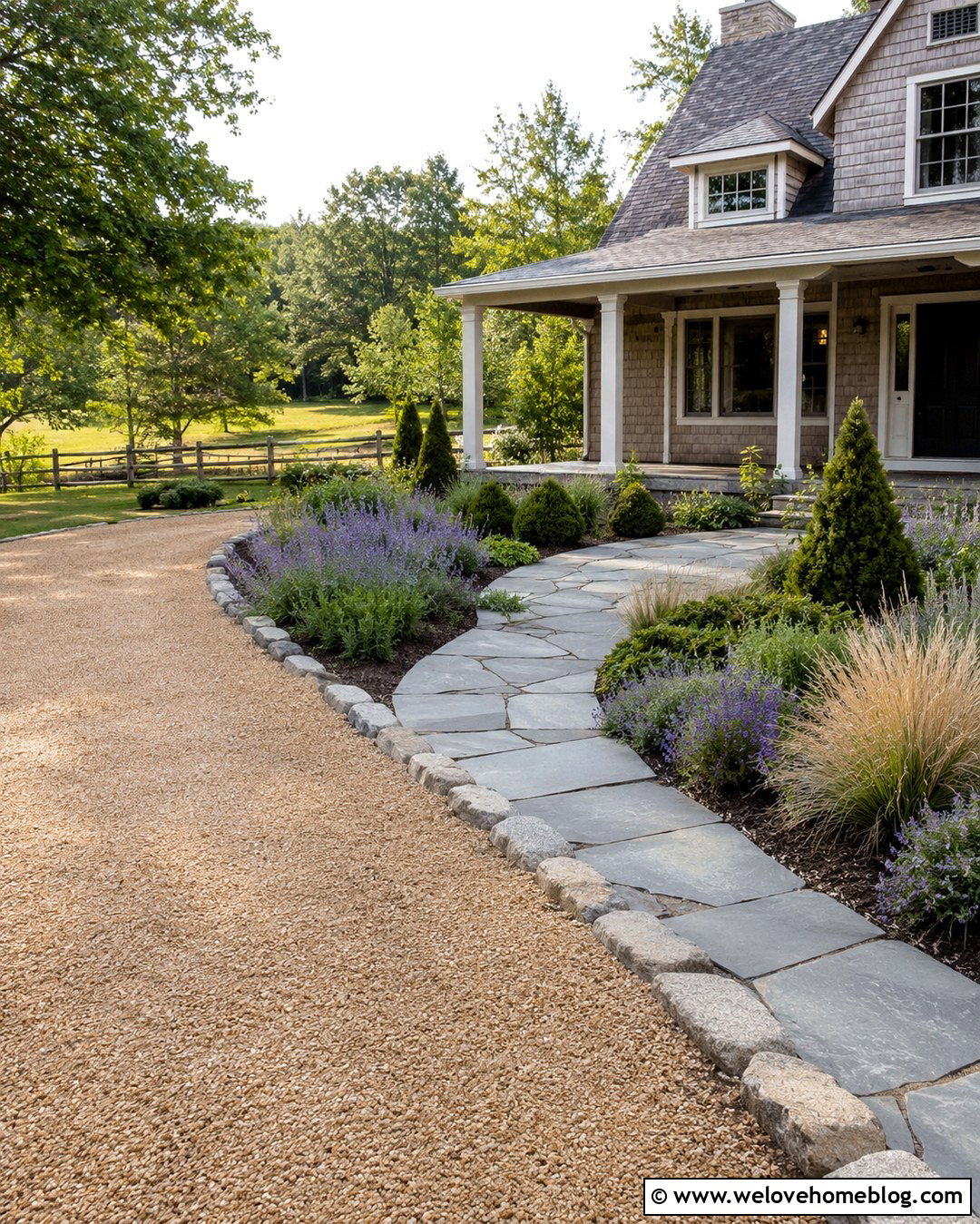
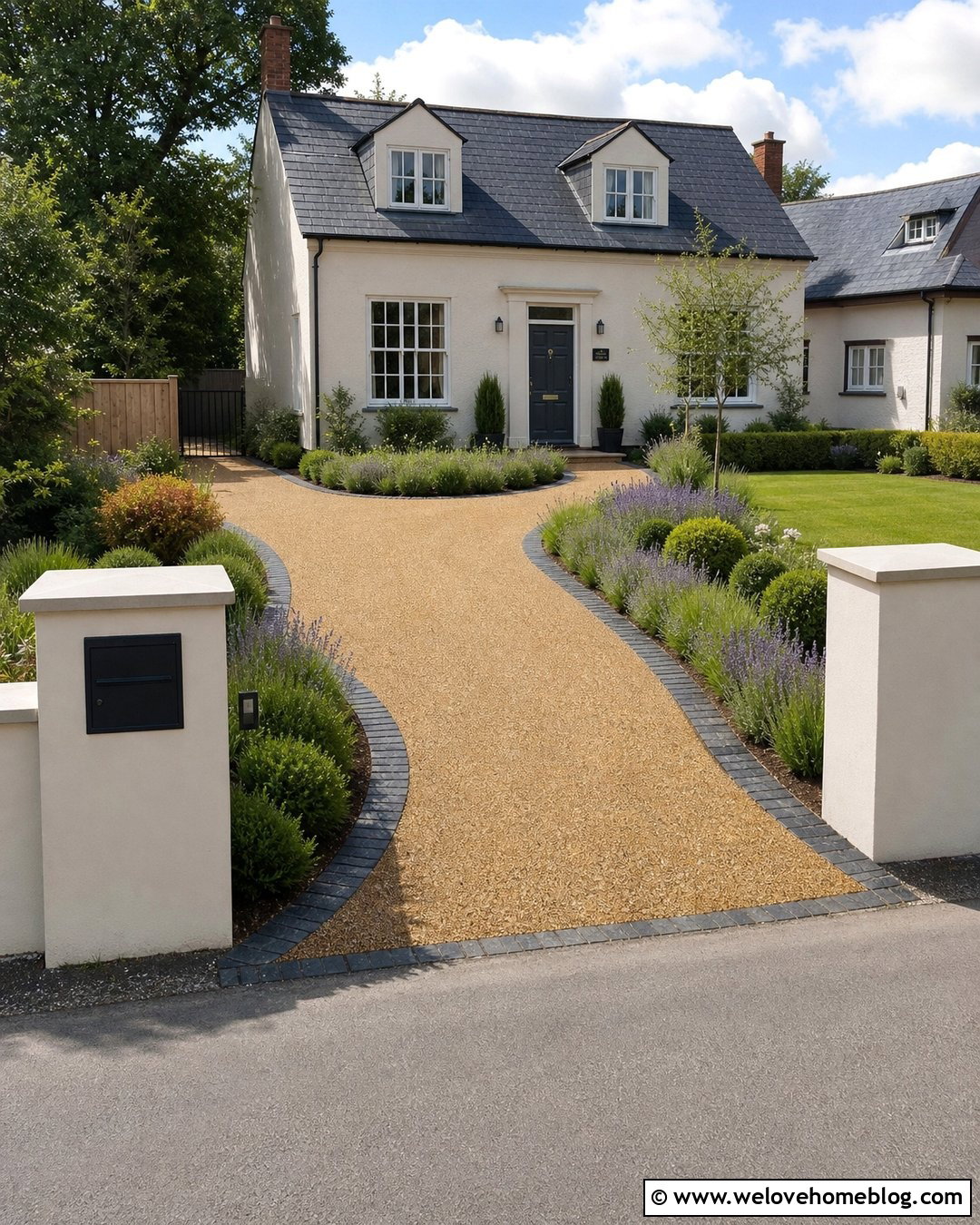
Irregular flagstone brings a relaxed, natural character to a gravel driveway and covered porch. Select large, relatively flat stones in colors that echo the gravel, foundation, and porch columns. Set them close enough together to create a comfortable continuous path rather than an uneven trail of widely spaced stepping stones. A low fieldstone edge can contain the gravel along the driveway side, while a planted border softens the opposite edge. Let the walkway follow a subtle curve through lavender, catmint, dwarf evergreens, and ornamental grasses. Near the porch, widen the flagstone into a small arrival area that aligns with the steps. The finished look suits cottages, country homes, and modern farmhouses while keeping the driveway-to-door connection practical and clearly visible.
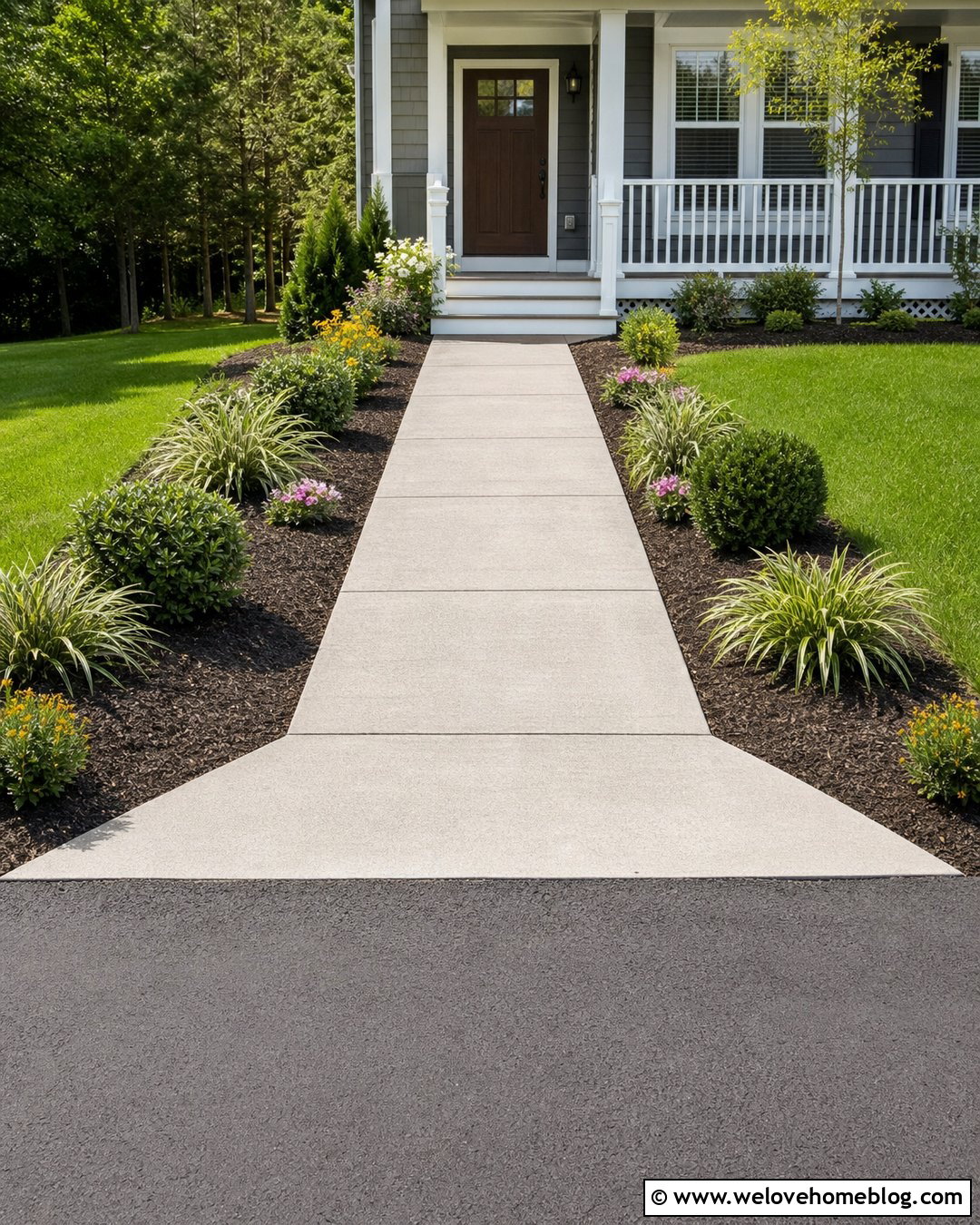
4. Concrete Walkway Connected To A Concrete Driveway
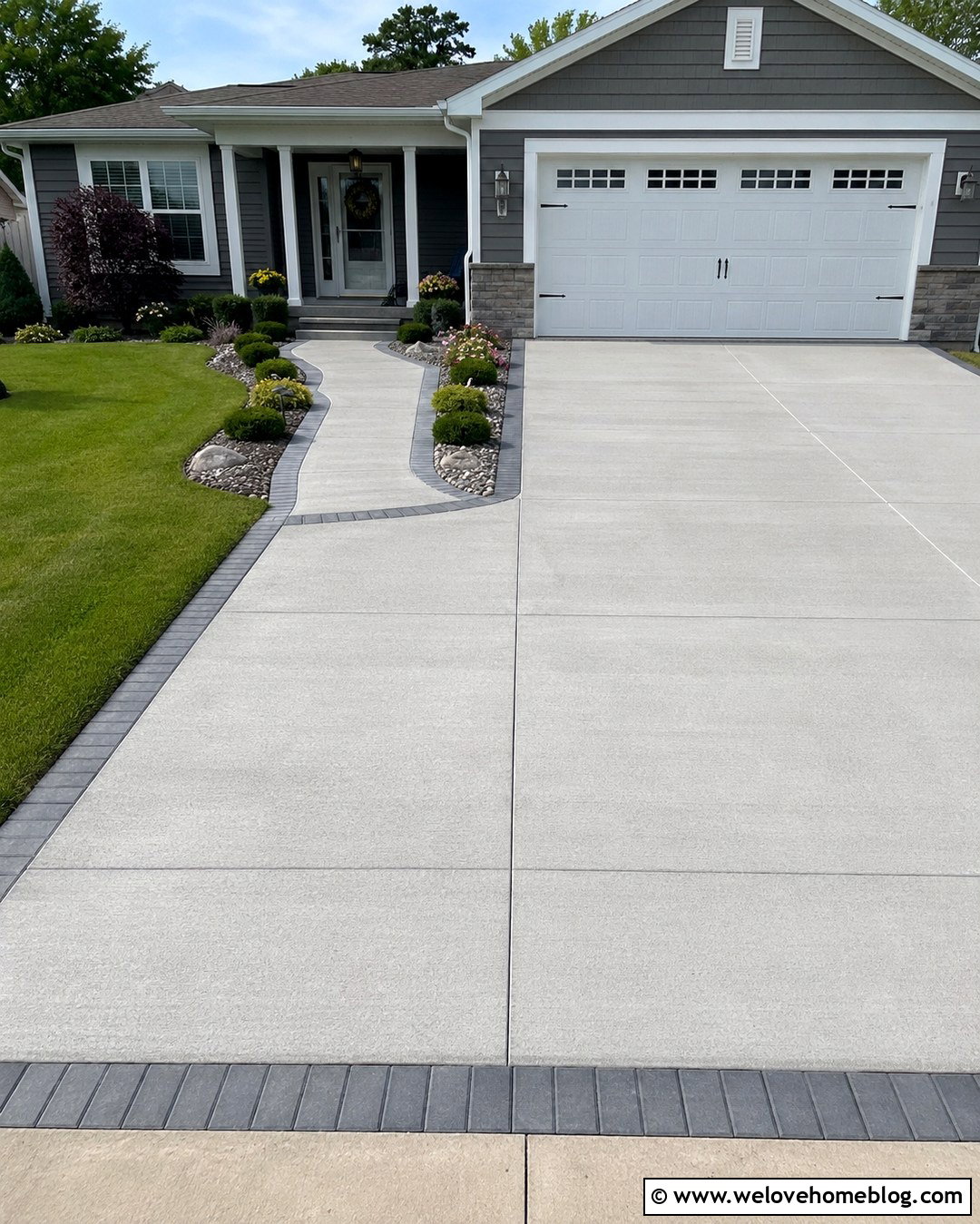
Matching poured concrete creates a clean, economical connection between a front porch and concrete driveway. The key is making the addition look planned rather than patched in later. Align the walkway joints with the driveway control joints whenever possible, and use the same light broom finish throughout. A gentle flare at the driveway provides extra room for turning onto the path or unloading bags. Border both surfaces with a narrow strip of dark river rock or charcoal pavers to introduce contrast. Simple foundation beds filled with compact evergreen shrubs and low flowering plants keep the design polished. This straightforward layout works well for ranch houses and smaller suburban yards. It also lets the architecture and landscaping stand out without adding competing colors, patterns, or complicated material transitions.
5. Stepping Stone Walkway With Gravel Joints
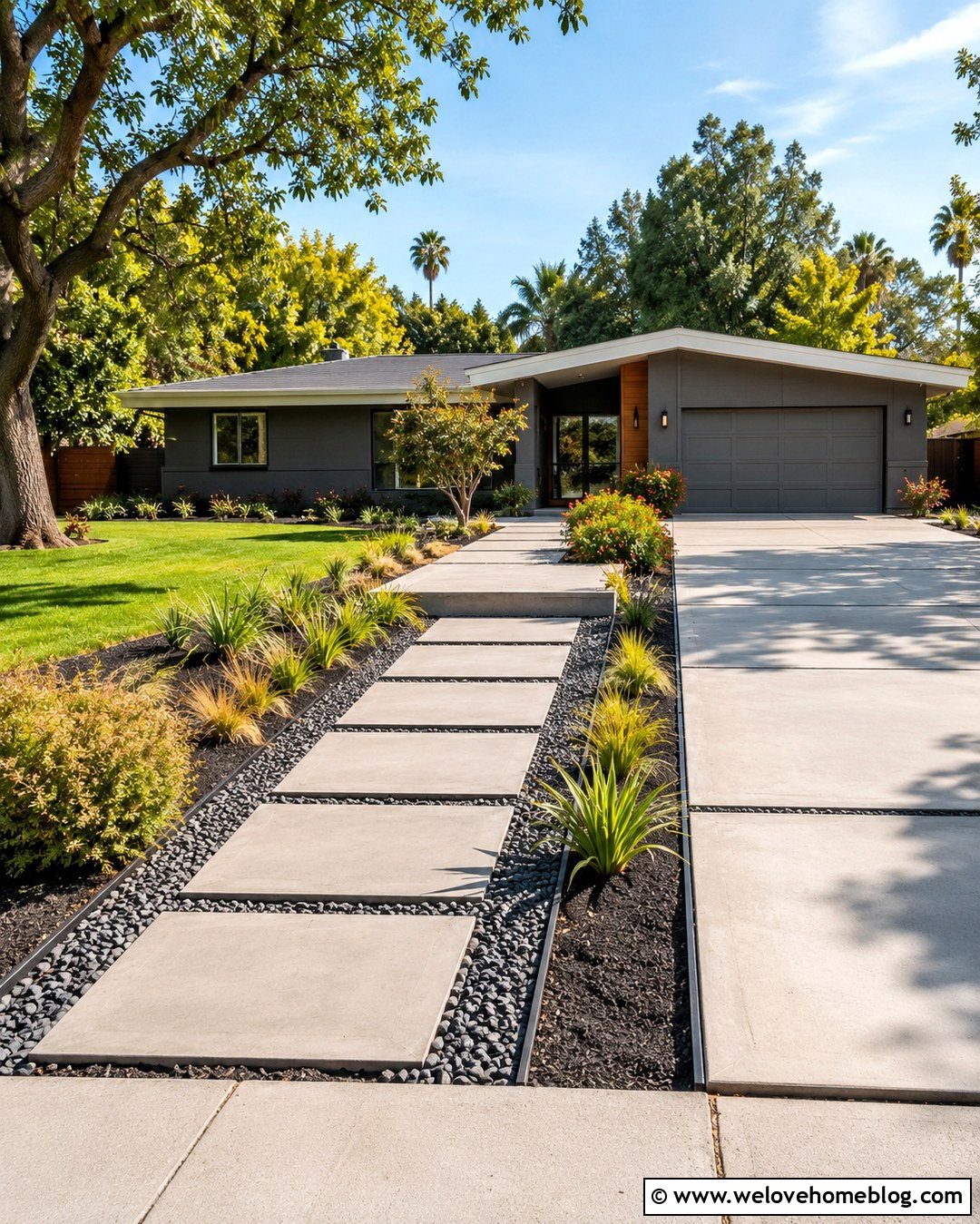
Large rectangular stepping stones can create a casual connection without covering the entire front yard in solid pavement. Choose smooth concrete slabs or natural stone with consistent thickness, then place them over compacted gravel with narrow, even gaps. Extend the same decorative gravel into the adjoining driveway border so the two spaces relate visually. Metal edging can keep the path crisp and prevent loose material from spreading into the lawn. Pair the walkway with drought-tolerant grasses, small flowering shrubs, and a specimen tree positioned away from the walking line. A broad slab landing at the porch steps makes the entrance feel finished. This design works especially well with contemporary ranch and midcentury homes, where strong rectangular shapes complement low rooflines and uncluttered architecture.
6. Front Porch Walkway With Matching Driveway Pavers
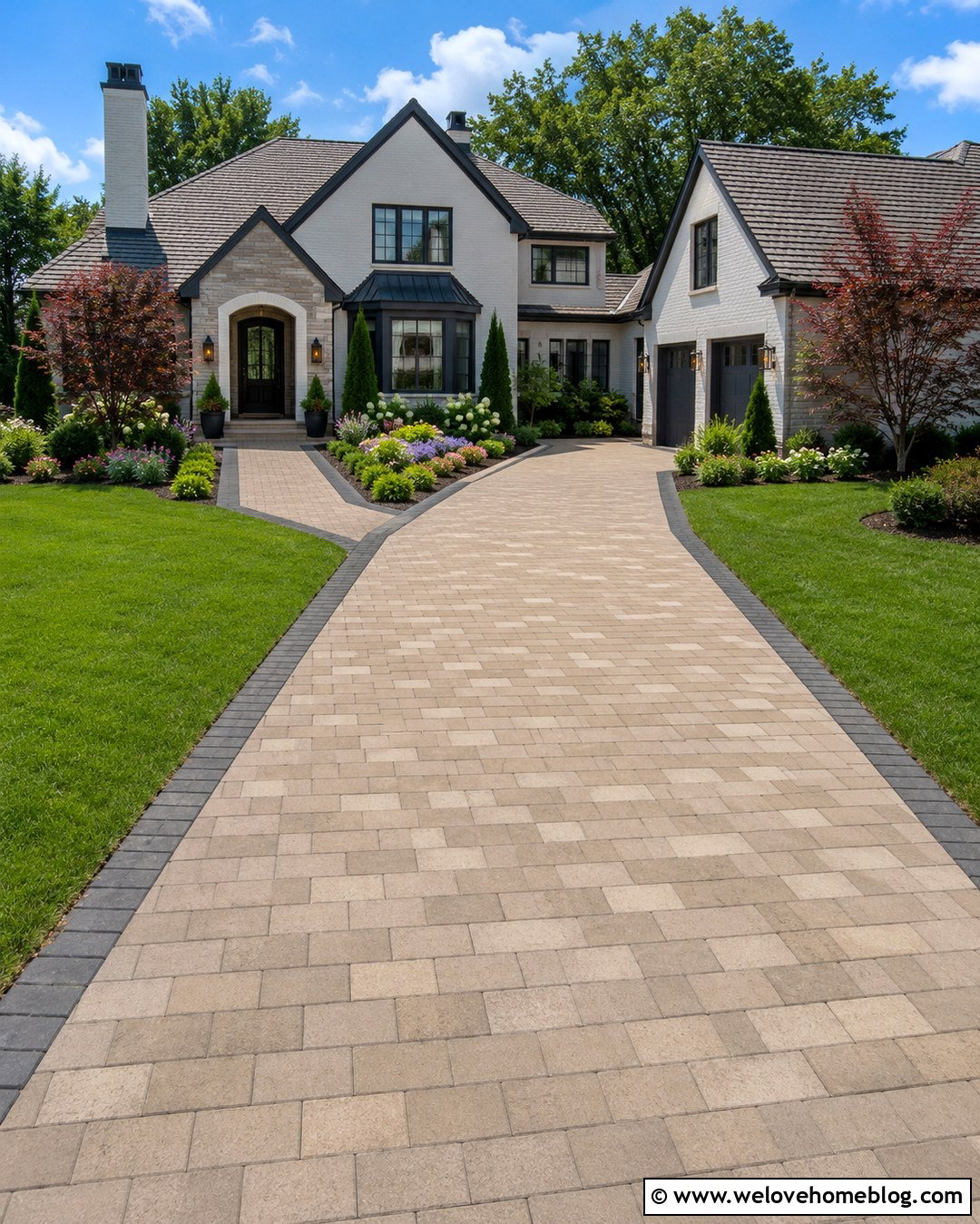
Using the same pavers for the driveway and walkway creates a seamless, upscale entrance. Different laying patterns can distinguish the pedestrian route without introducing another material. For example, install warm beige concrete pavers in a running bond across the driveway, then turn them into a herringbone pattern along the walkway. Outline the path with a contrasting charcoal ribbon that continues around the porch landing. A straight or gently angled layout keeps the entrance easy to understand from the curb. Add symmetrical planting beds with evergreen shrubs, flowering perennials, and a pair of small ornamental trees near the porch. This coordinated approach suits formal suburban, Mediterranean, and transitional homes. It makes the driveway, walkway, porch steps, and landscaping read as one carefully planned front-yard design.
7. Bluestone Walkway With A Circular Driveway
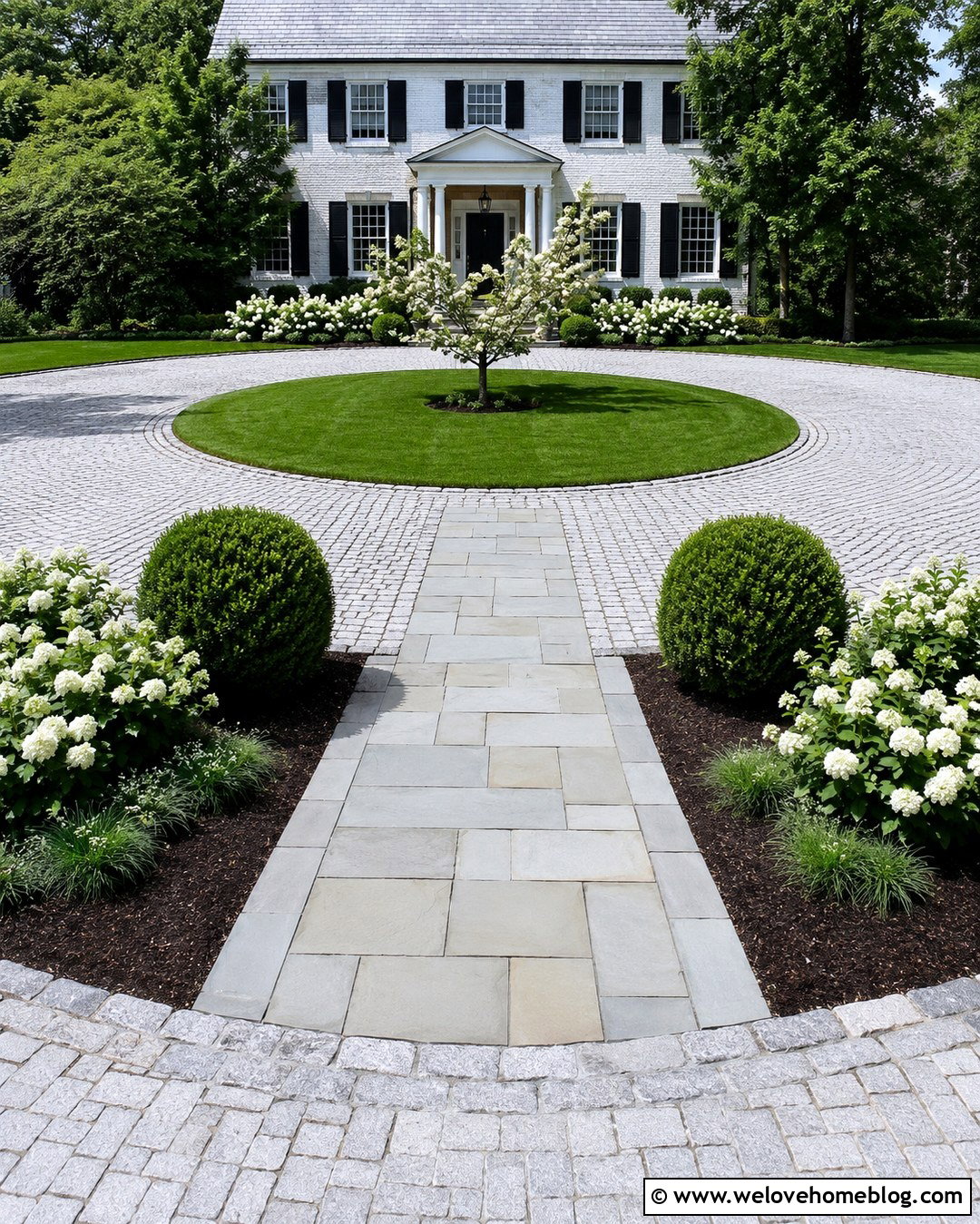
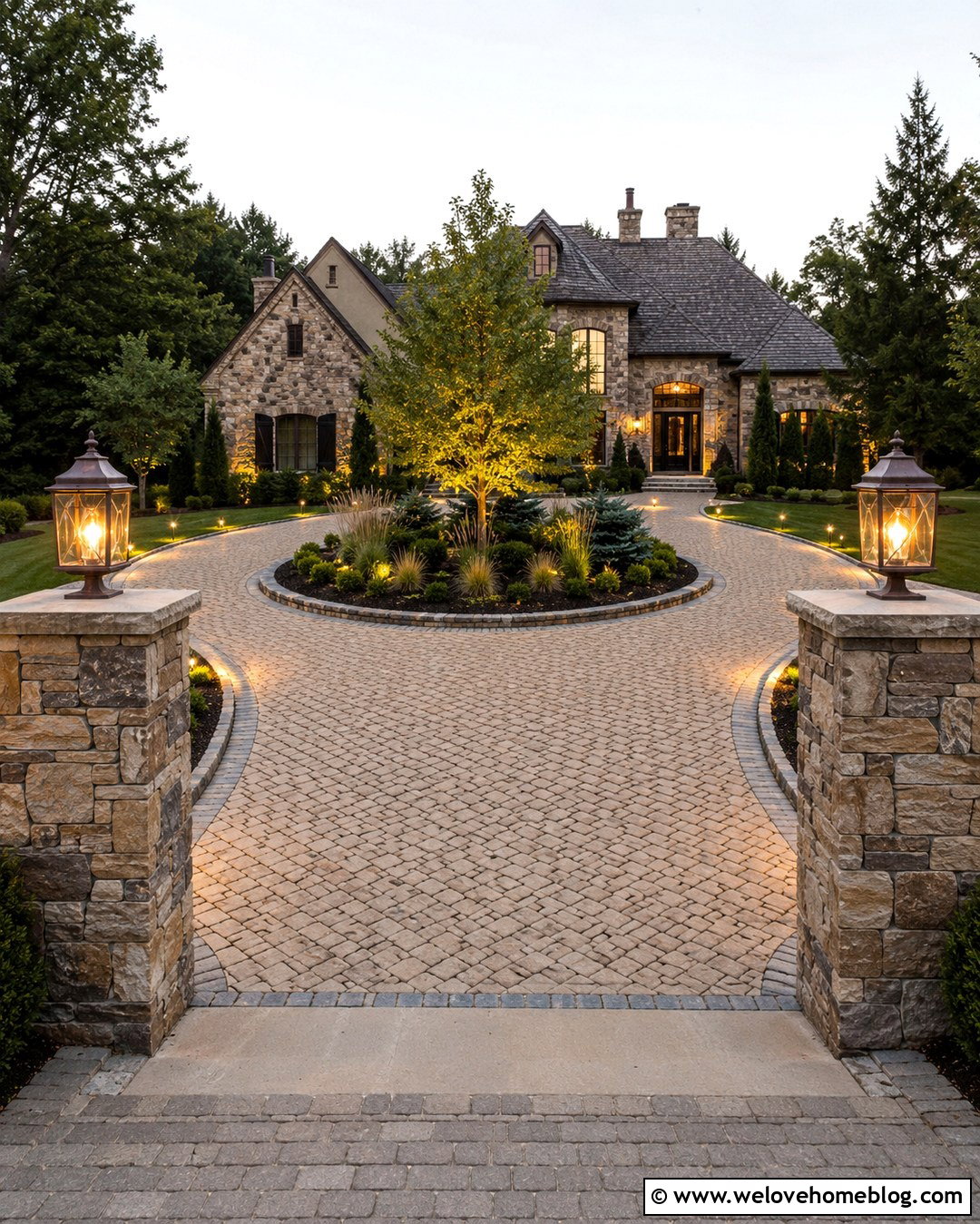
A circular driveway benefits from a walkway that clearly directs visitors toward the porch. A broad bluestone path can begin at the inner curve of the driveway and continue straight to a centered front entrance. Use rectangular stones in an ashlar pattern for a formal appearance, with a matching bluestone landing beneath the porch steps. A low cobblestone border along the driveway creates a durable transition between vehicle and pedestrian areas. Inside the circular lawn, repeat selected plants from the foundation beds, such as clipped evergreens, white hydrangeas, and a small flowering tree. Keep taller plants away from the walkway entrance so it remains visible. This complete arrangement complements Colonial, Georgian, and traditional homes with balanced facades, centered doors, and spacious front yards.
8. Modern Concrete Slab Walkway To Driveway
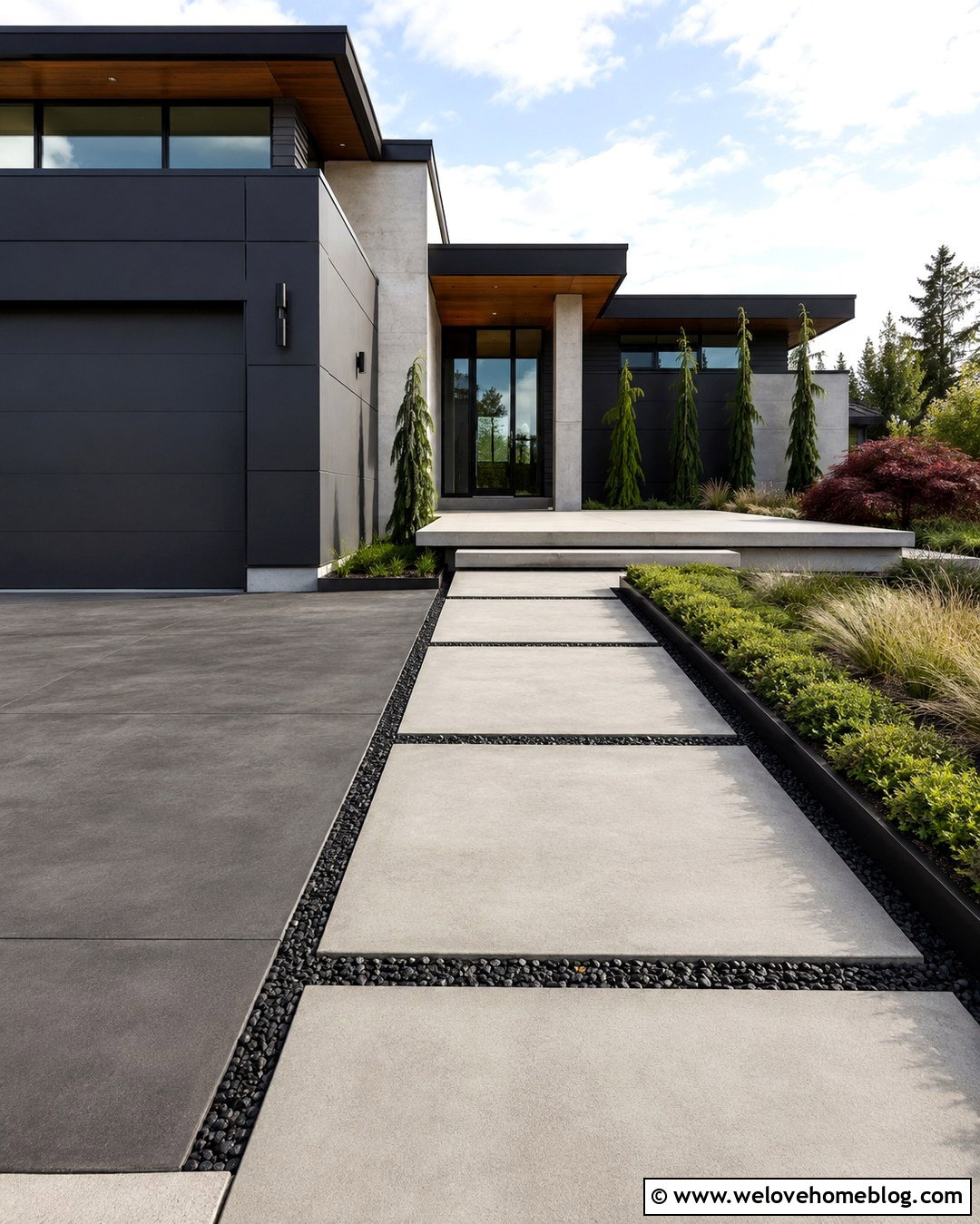
Wide concrete slabs separated by narrow gravel joints create a strong, modern route from the driveway to the porch. Use large-format, pale gray poured concrete panels that align with the home’s windows, porch columns, or garage lines. A straight path usually works best, although a single offset can help navigate around a planting bed or architectural feature. Continue black gravel between the slabs and along one side of the driveway for visual unity. Steel edging keeps the gravel contained and reinforces the crisp geometry. Frame the opposite side with ornamental grasses, sculptural evergreens, and low ground cover. Near the front door, transition into an oversized concrete landing with space for planters. The result feels organized, bright, and uncluttered beside contemporary or minimalist architecture.
9. Cobblestone Walkway With A Brick Driveway
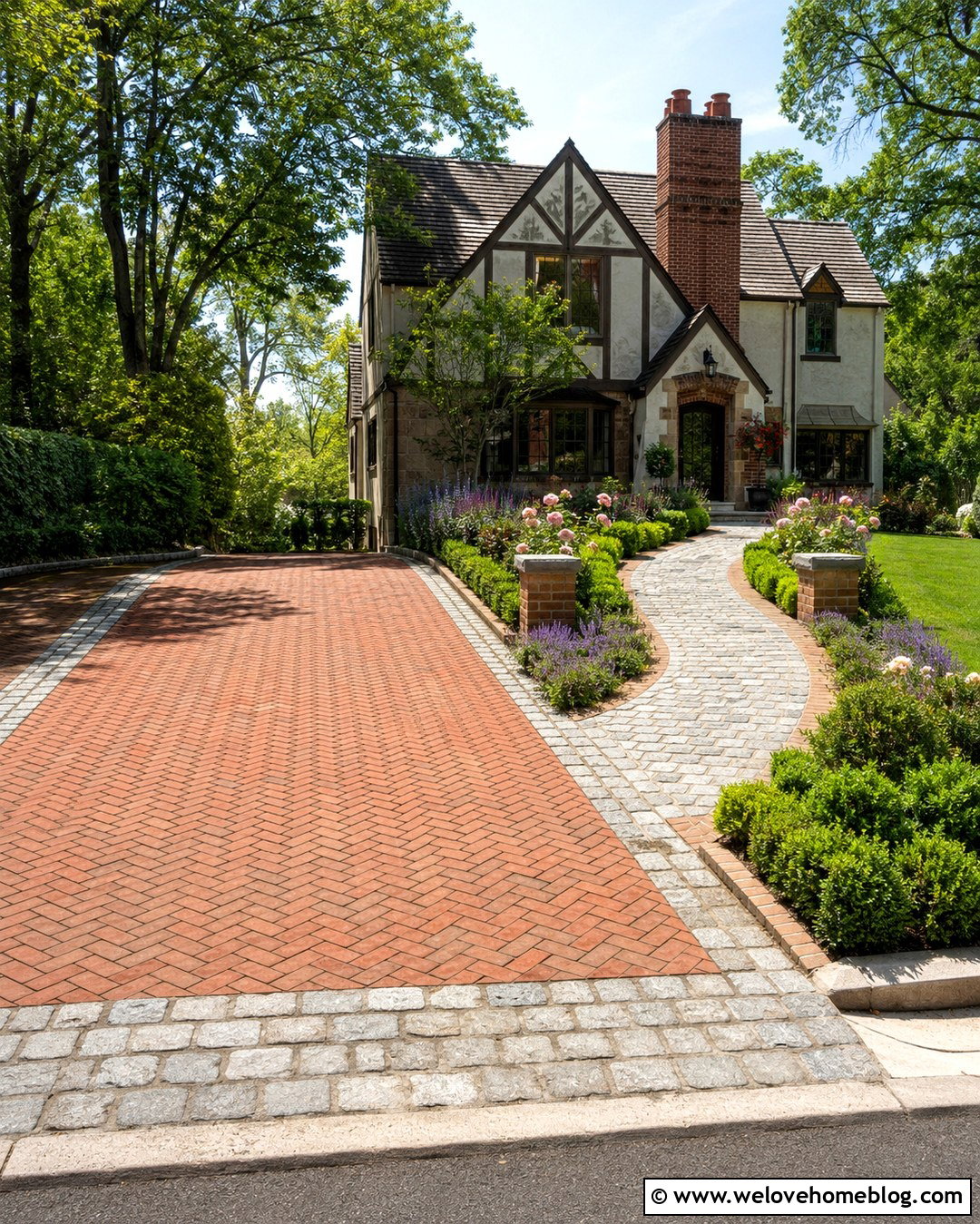
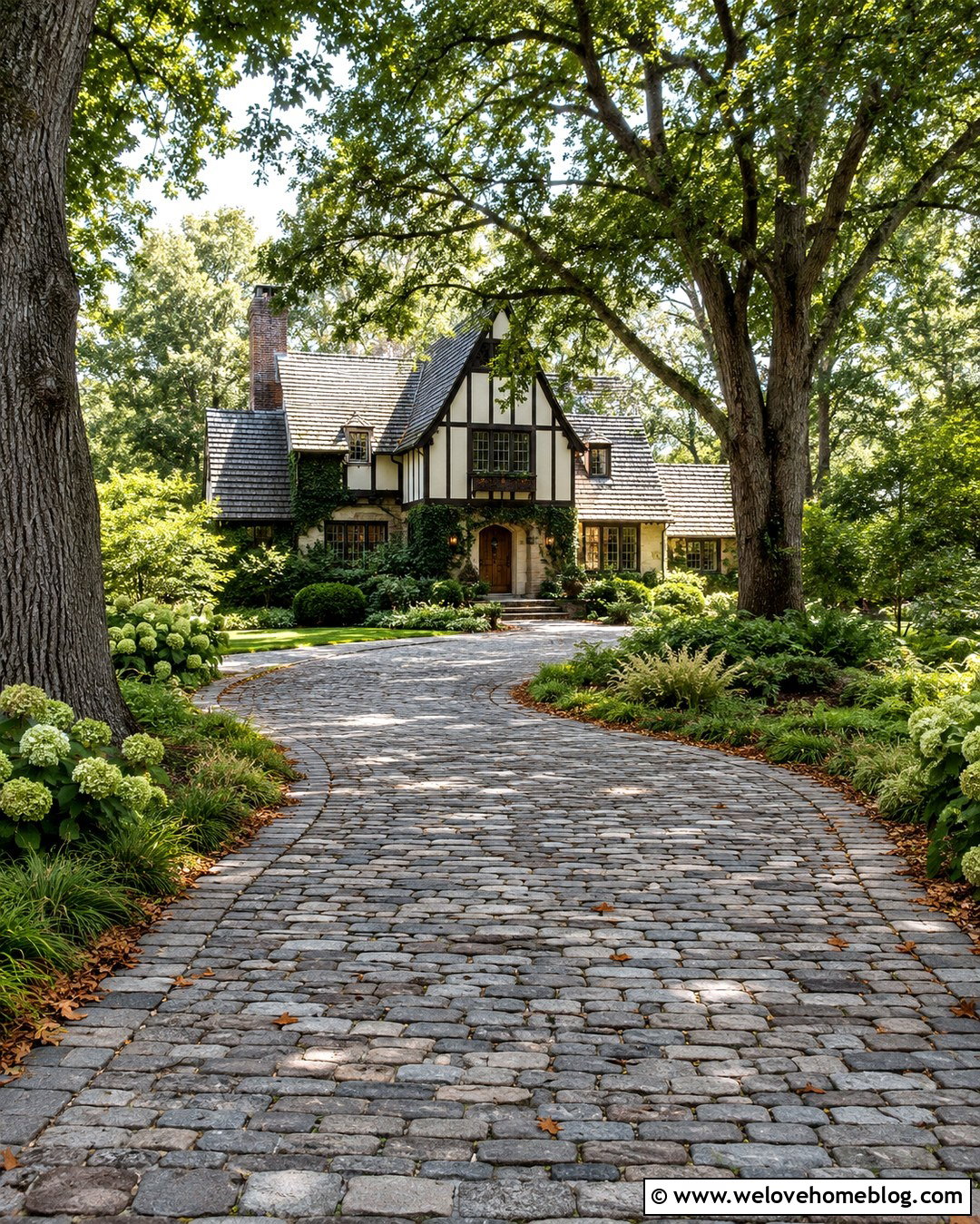
Cobblestone can add texture and historic character when paired with a clay brick driveway. Choose granite cobbles in soft gray and tan tones so the walkway complements the brick without blending into it. A fan or running pattern can lead from a widened driveway landing toward the front porch. Use the same cobblestones as a driveway apron or border to connect the two surfaces visually. Along the path, create informal beds with roses, catmint, dwarf boxwoods, and spring bulbs. A low brick retaining edge near the porch can handle a slight grade change while repeating the driveway material. This layered combination feels appropriate for Tudor, Colonial Revival, and older cottage homes. It gives the entrance an established appearance while maintaining a distinct, durable pedestrian route.
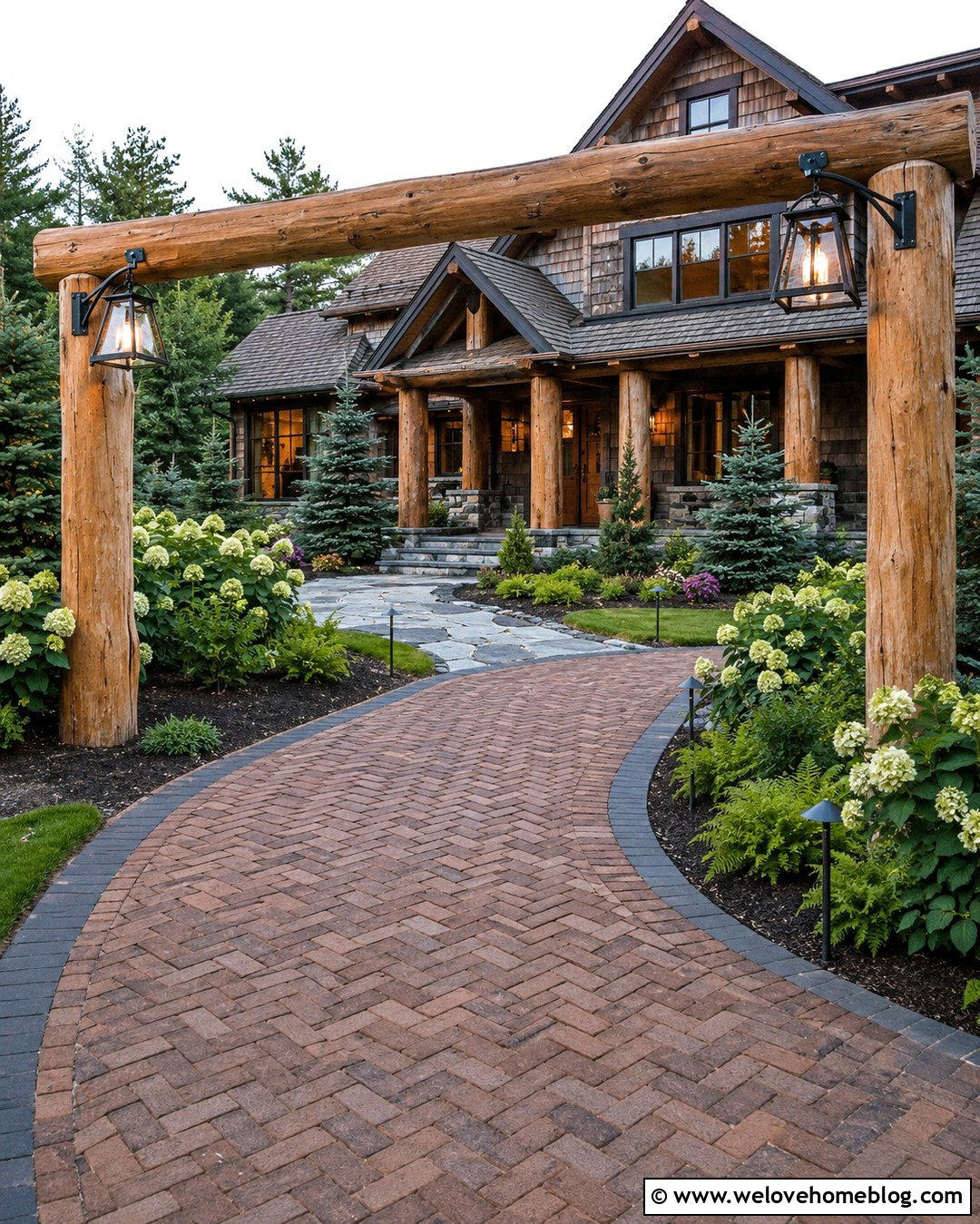
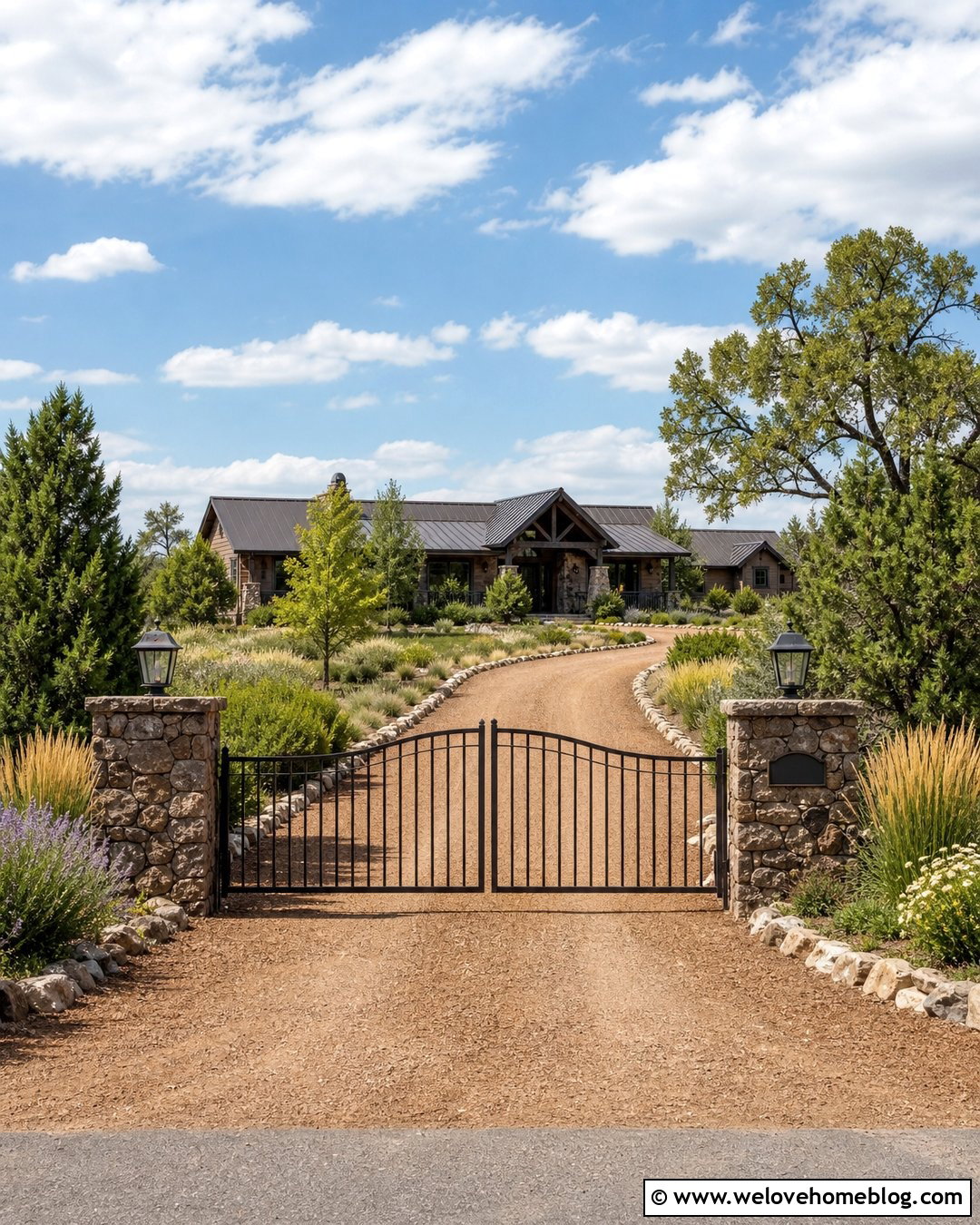
10. Side Walkway From Driveway To Covered Porch
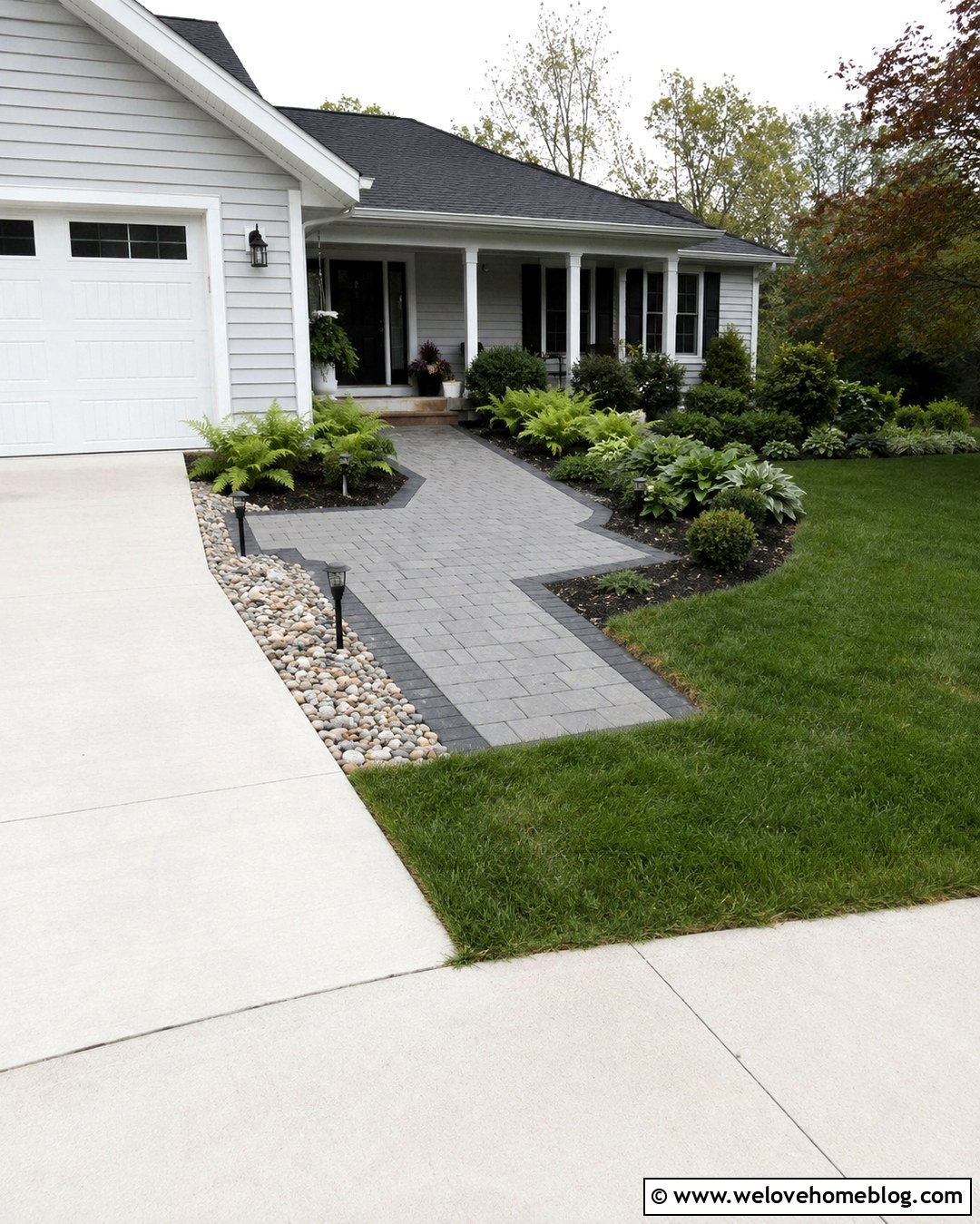
When the porch sits beside the garage, a side walkway can provide the shortest and most practical connection. Rather than squeezing a narrow strip directly against the house, create a comfortable paver path with a clear buffer of planting or decorative stone. Use medium-gray concrete pavers in a running bond, finished with a darker border that separates the walkway from the driveway. A slightly wider area at the driveway entrance gives passengers a stable place to step out. Low foundation shrubs, ferns, and shade-tolerant ground cover can soften the house side without blocking windows or vents. Add simple path lights near changes in direction. This layout is especially useful for ranch, split-level, and suburban homes where the main door is positioned close to the driveway.
11. Front Porch Walkway With A Driveway Landing
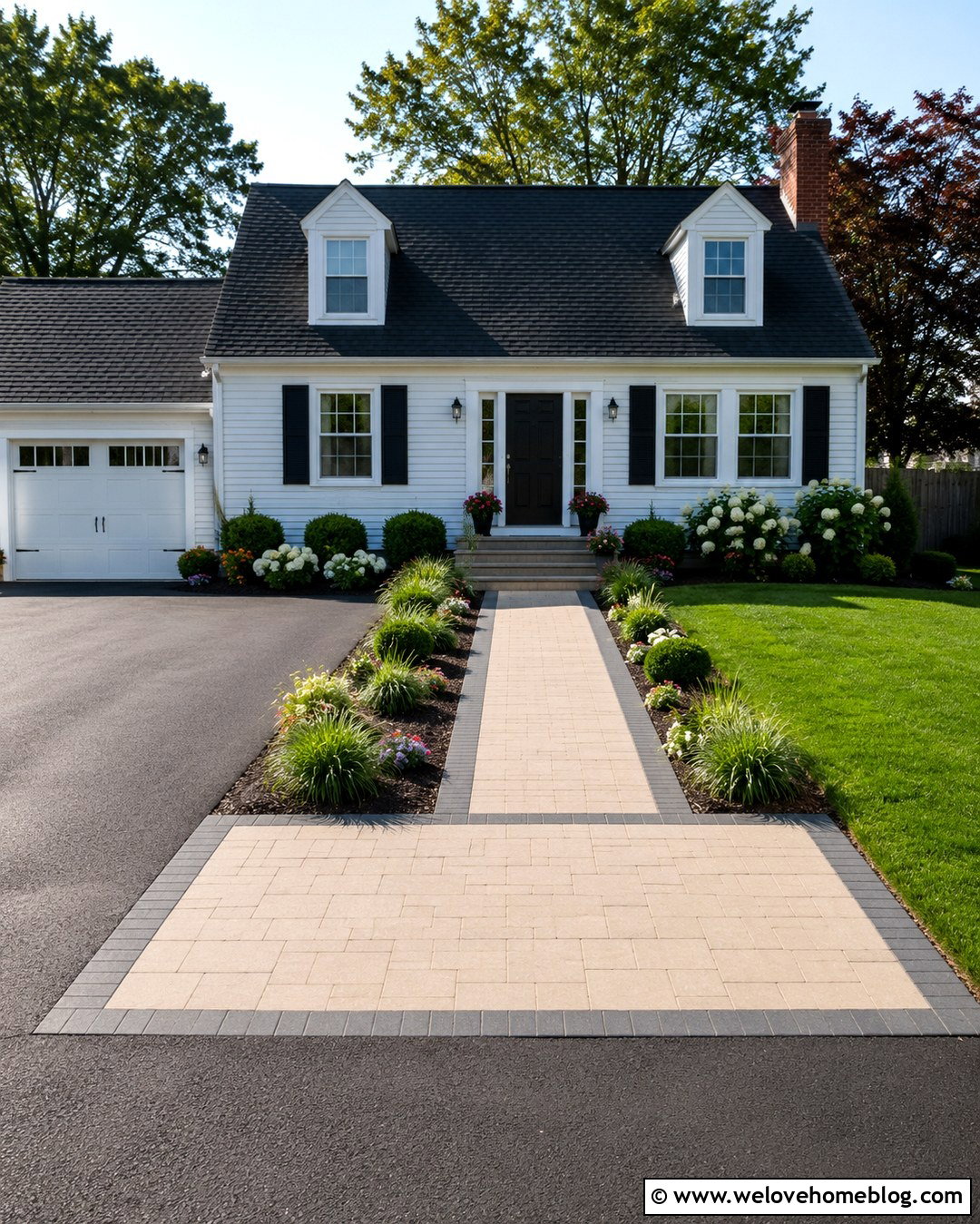
A dedicated landing solves the awkward transition that often occurs when a narrow walkway meets a busy driveway. Build a rectangular or gently rounded paver pad large enough to feel separate from the vehicle surface. From that landing, continue a straight brick or concrete paver walkway to the porch steps. A contrasting border can outline both areas and make the route easy to see. Place a small planting bed behind the landing rather than directly beside the vehicle door zone. Compact shrubs, ornamental grasses, and seasonal flowers add color while preserving movement space. This design is useful for households that regularly unload children, groceries, packages, or mobility equipment. It creates a comfortable pause point and makes the entire connection between the driveway, front yard, and porch feel more deliberate.
12. Raised Front Porch Walkway With Stone Steps
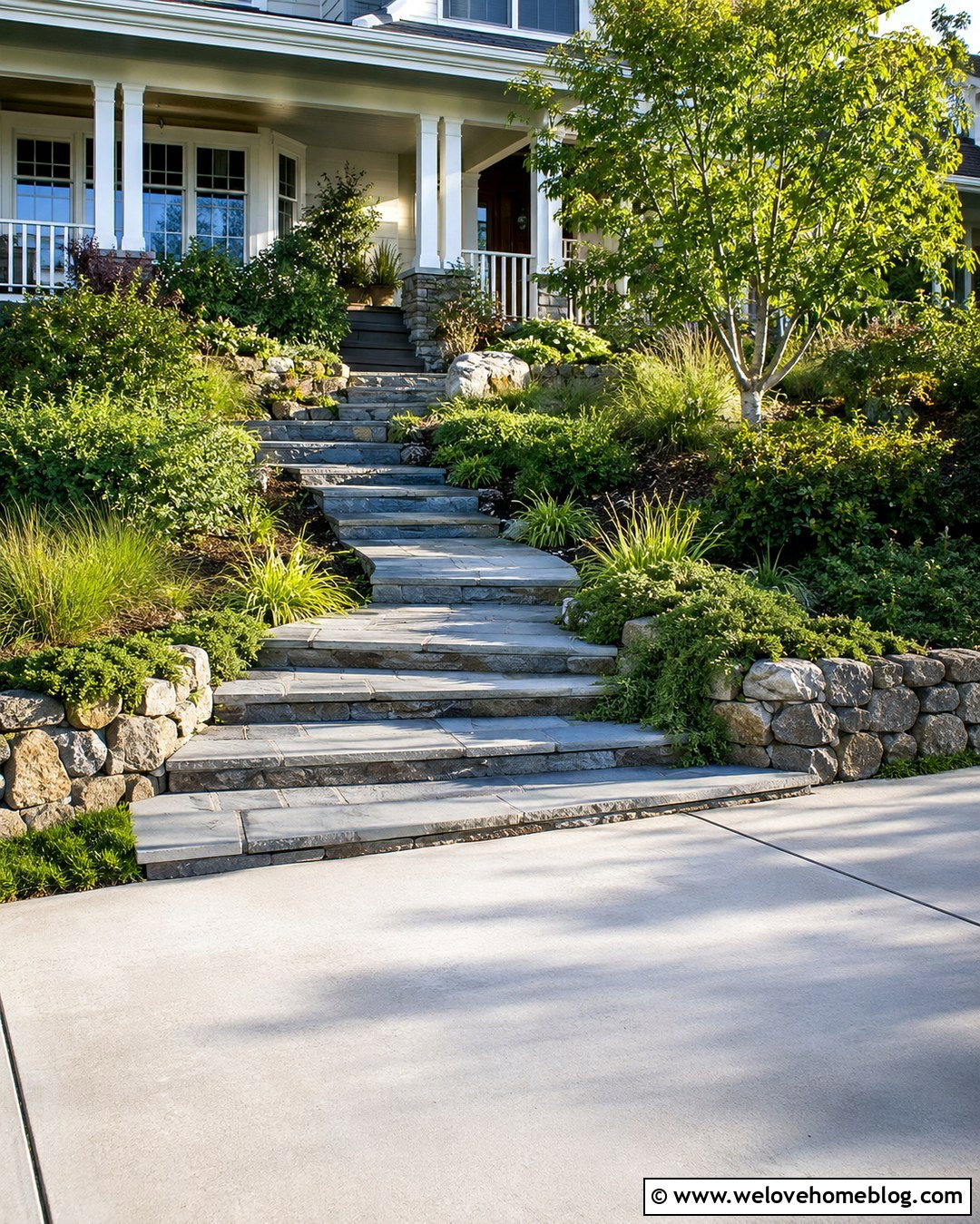
A sloped yard needs a walkway that handles the elevation change naturally. Begin with a level paver landing beside the driveway, then guide the path toward a short series of broad stone steps. Use textured bluestone or limestone treads with stone veneer risers that coordinate with the porch foundation. Place steps in small groups separated by level walkway sections whenever space allows. Low retaining walls can support planting beds on each side and keep soil away from the path. Fill those beds with cascading ground cover, compact shrubs, and ornamental grasses that highlight the changes in height. Finish with a generous landing aligned with the raised porch. This complete approach suits hillside lots and elevated entrances while making the route look integrated with the slope instead of forced across it.
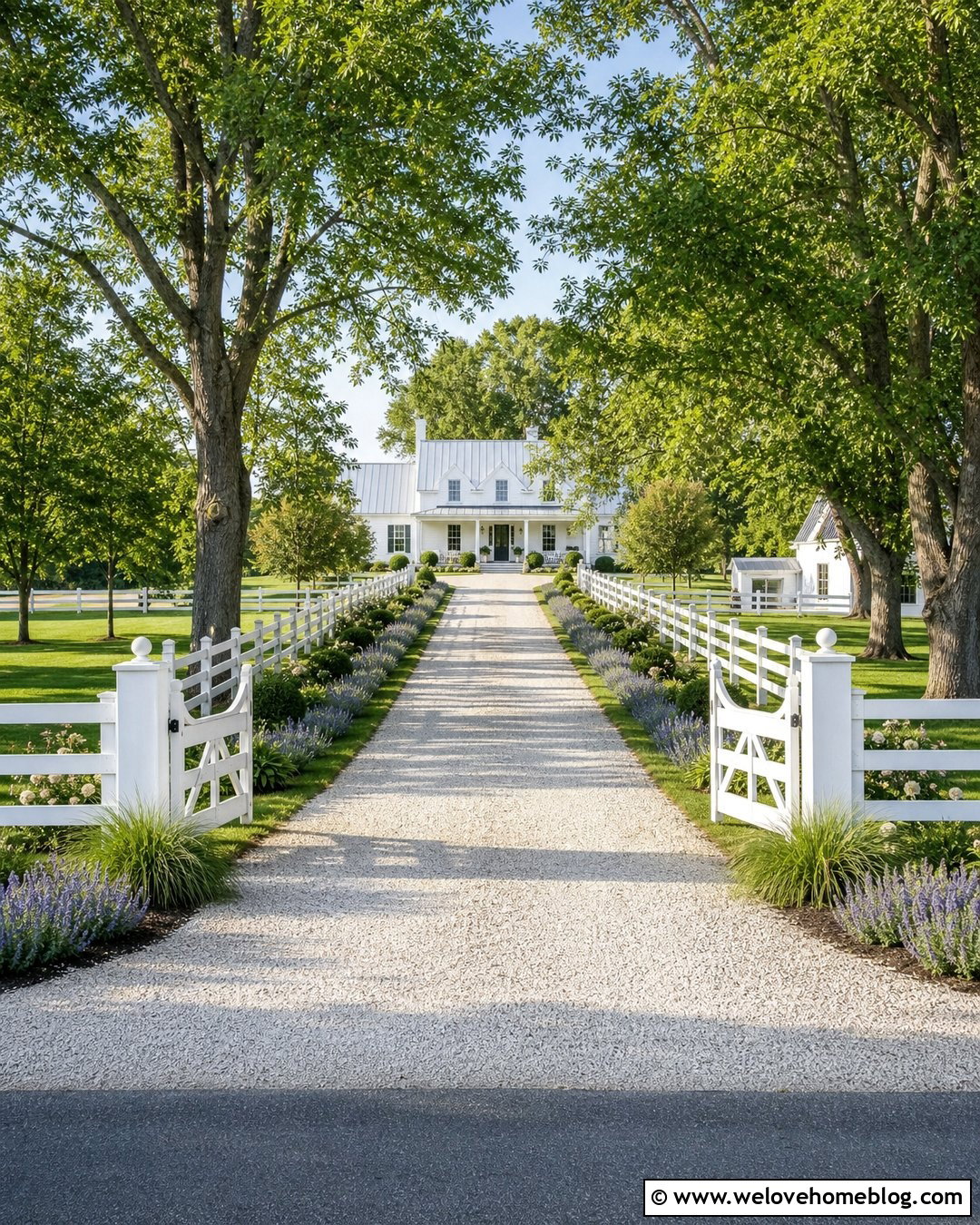
13. Farmhouse Walkway From Gravel Driveway To Porch
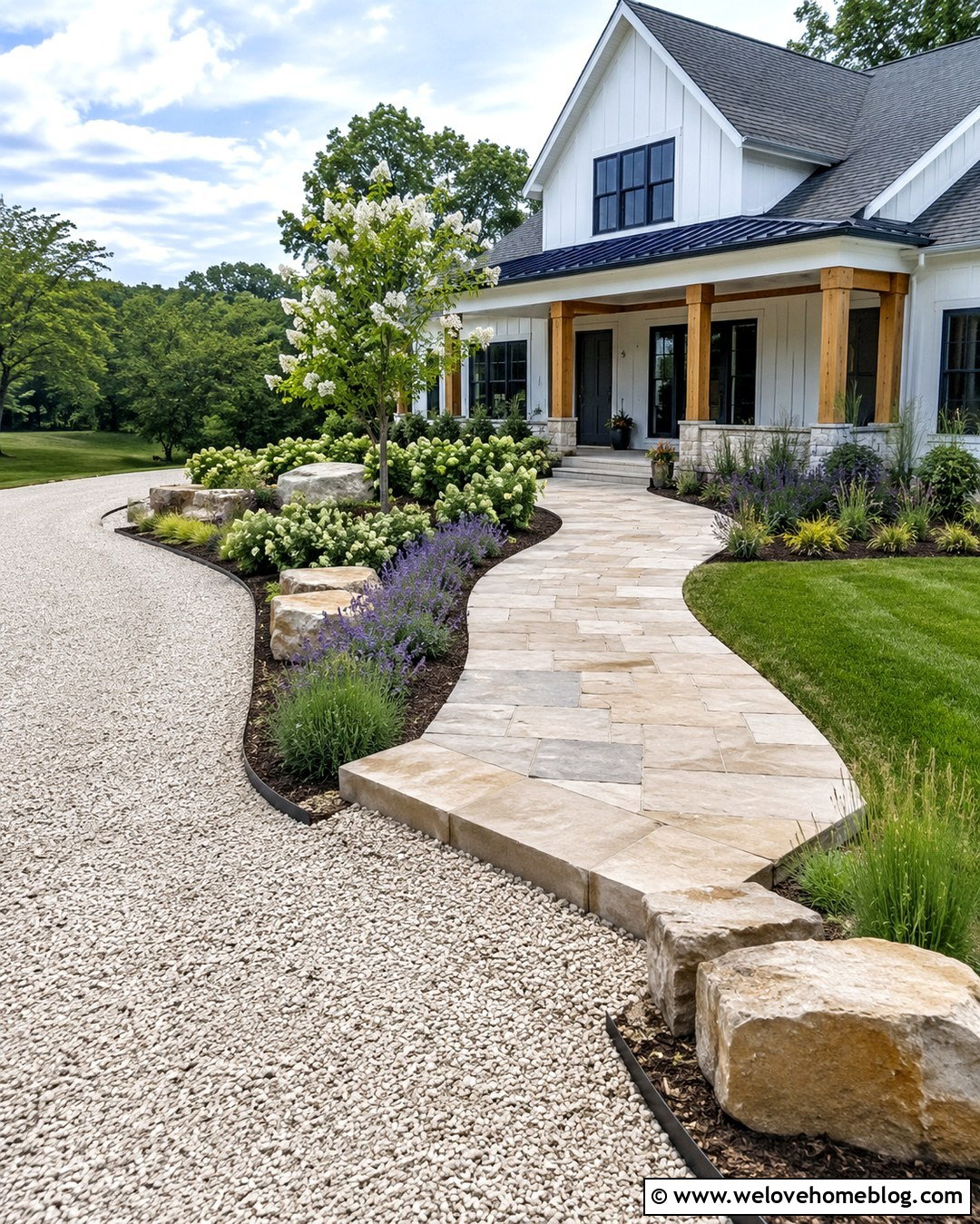
A modern farmhouse entrance looks especially cohesive with a pale gravel driveway and a simple natural-stone walkway. Use large buff or gray flagstones set closely over a stable base, then frame the path with dark metal edging. At the driveway, create a wider stone landing that prevents loose gravel from becoming the main stepping surface. Let the walkway follow a relaxed curve toward wood or painted porch steps. Layer the surrounding landscape with hydrangeas, native grasses, lavender, and a small flowering tree. A few limestone boulders can strengthen the country character when placed within the planting beds rather than on the path. This design balances rustic materials with clean organization, making it suitable for white siding, black windows, timber posts, and broad covered porches.
14. Craftsman Walkway With Brick And Concrete
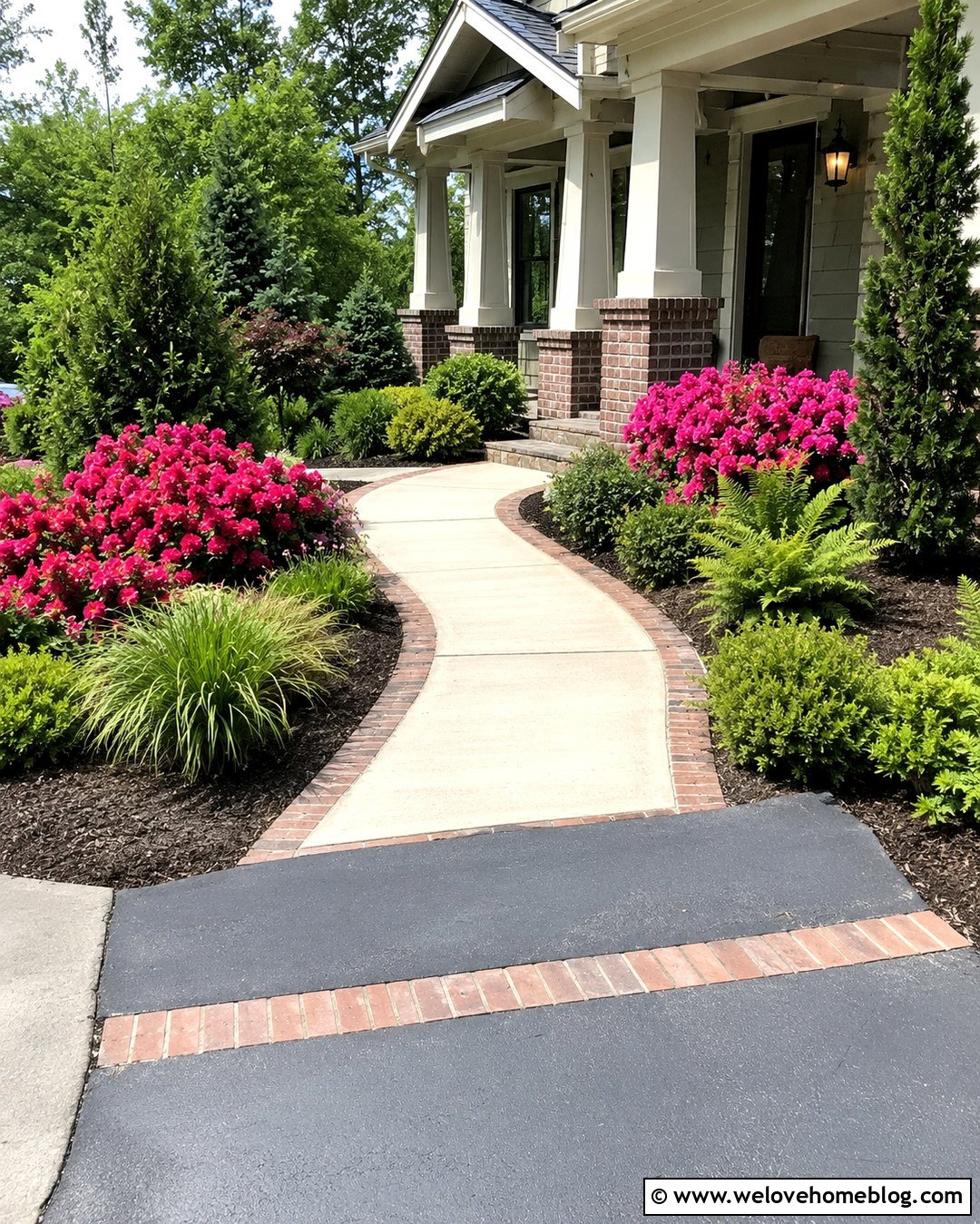
Craftsman homes often look best when the walkway combines warm color with strong structure. Use broom-finished concrete for the main walking surface and frame it with red or brown clay brick. Repeat the same brick as a ribbon across the driveway entrance, visually marking where the walkway begins. A gentle curve can lead toward tapered porch columns and a broad set of steps. Deep planting beds filled with azaleas, ferns, ornamental grasses, and compact evergreens soften the hardscape and complement the home’s layered facade. Keep the borders low near the driveway so people can see the path easily. The blend of concrete and brick controls costs while still providing architectural detail. It also ties together masonry porch piers, warm siding, and a simple asphalt or concrete driveway.
15. Small Front Yard Walkway To Driveway
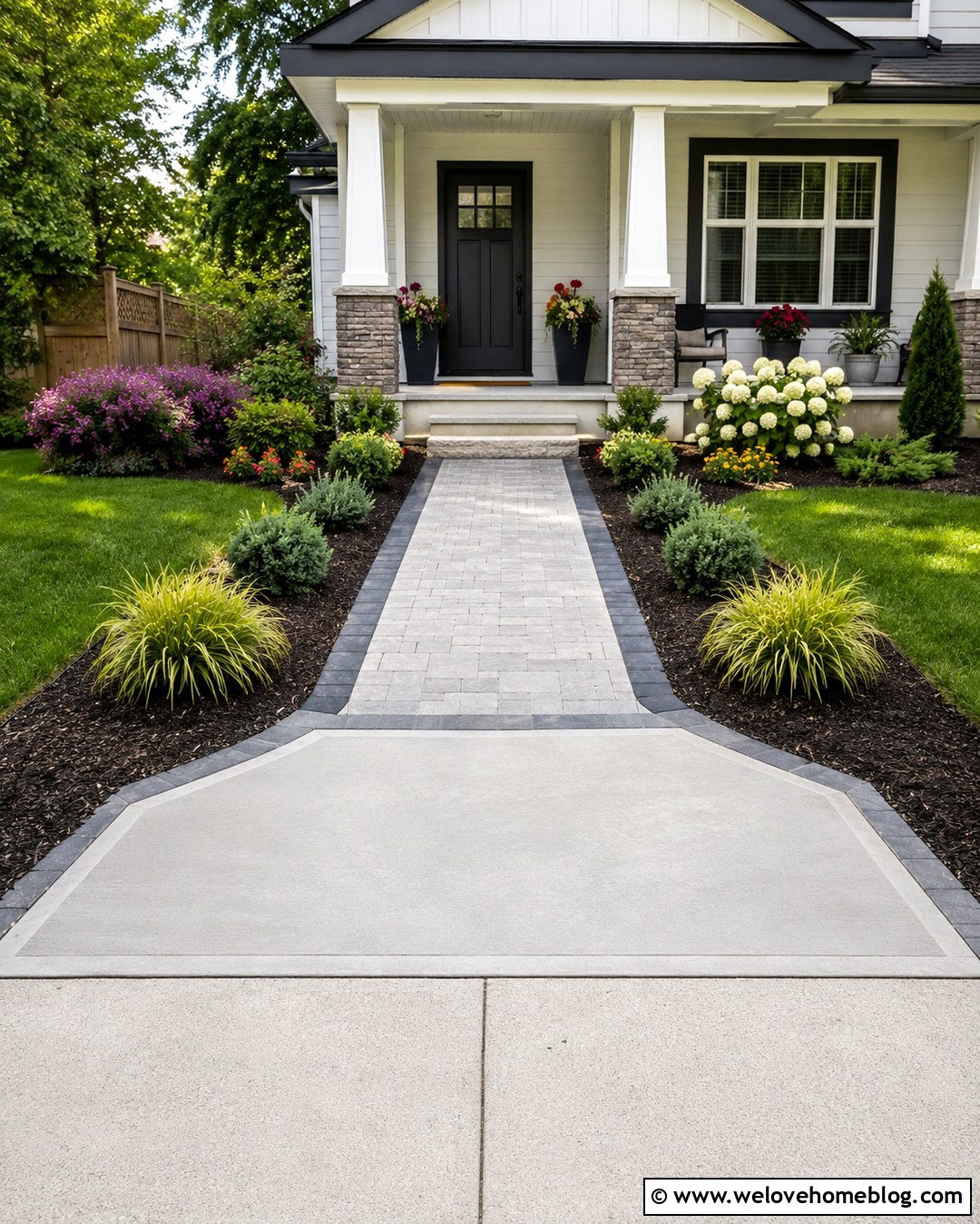
In a compact front yard, the walkway should provide a direct route without dividing the limited lawn into unusable pieces. A straight path of light gray concrete pavers can run from the driveway corner to the porch steps. Use a narrow charcoal border to define the route while keeping the material palette restrained. At the driveway connection, angle or flare the pavers slightly to create a comfortable entry point. Replace tiny leftover lawn strips with low planting beds containing dwarf evergreens, compact grasses, and seasonal color. Matching porch planters can reinforce the connection to the front door. This efficient design works well for townhomes, bungalows, and closely spaced suburban properties. Every component has a purpose, allowing the small yard to feel organized rather than crowded with unrelated features.
16. Wide Front Walkway With Driveway Access
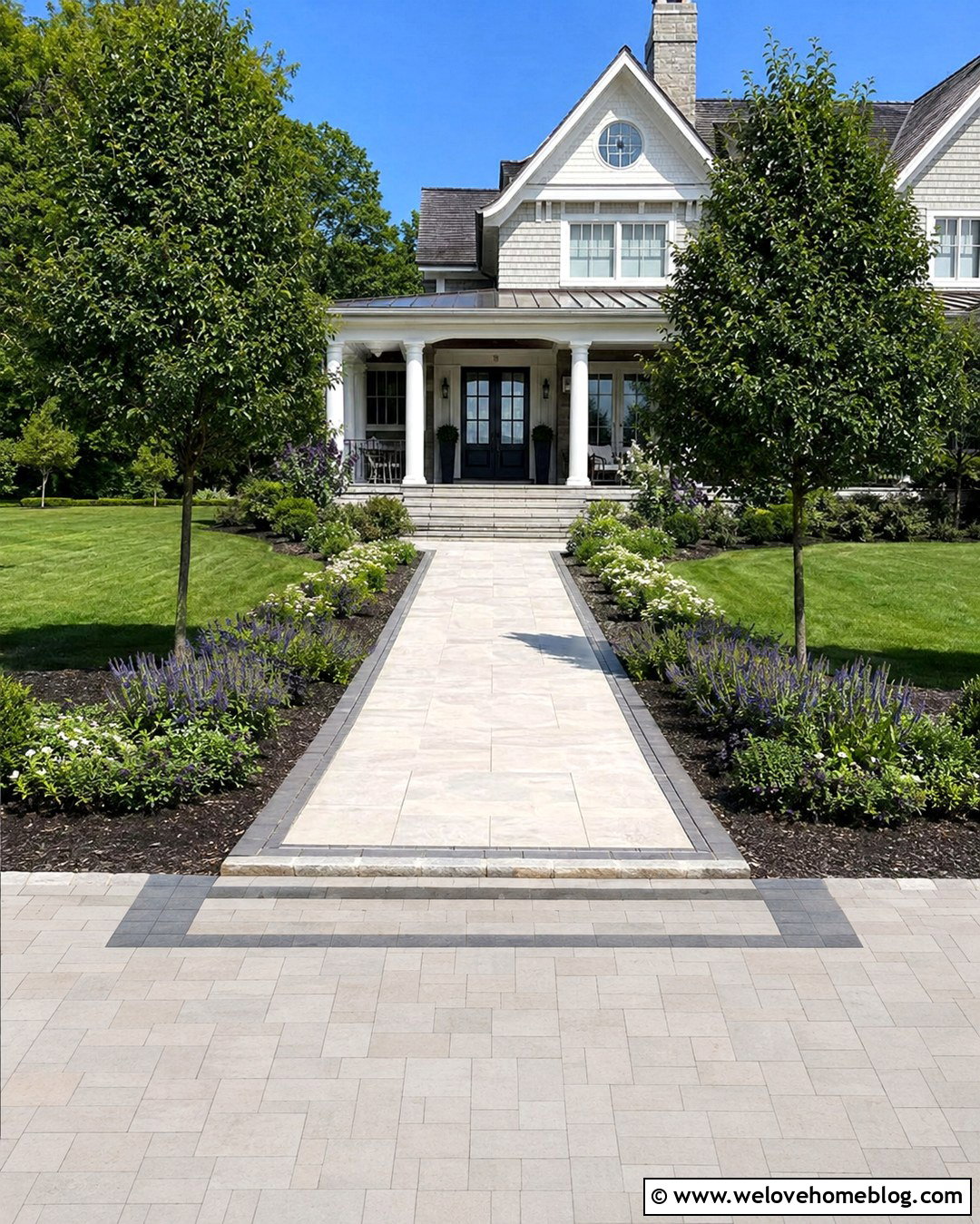
A wide walkway makes the entrance feel generous and supports people walking side by side. Use rectangular concrete pavers or natural stone slabs to create a broad path from the driveway to the porch. Start with an expanded driveway landing, then maintain a consistent width until the walkway reaches the steps. A double border of contrasting pavers can make the proportions feel intentional and connect with a matching driveway ribbon. Frame the route with balanced planting beds, but avoid filling every inch with dense shrubs. Open lawn, low perennials, and evenly spaced ornamental trees provide breathing room. This design is effective for homes with large porches or double front doors because the walkway matches the scale of the architecture. It also creates an unmistakable route for arriving guests.
17. Driveway Walkway With Low Landscape Lighting
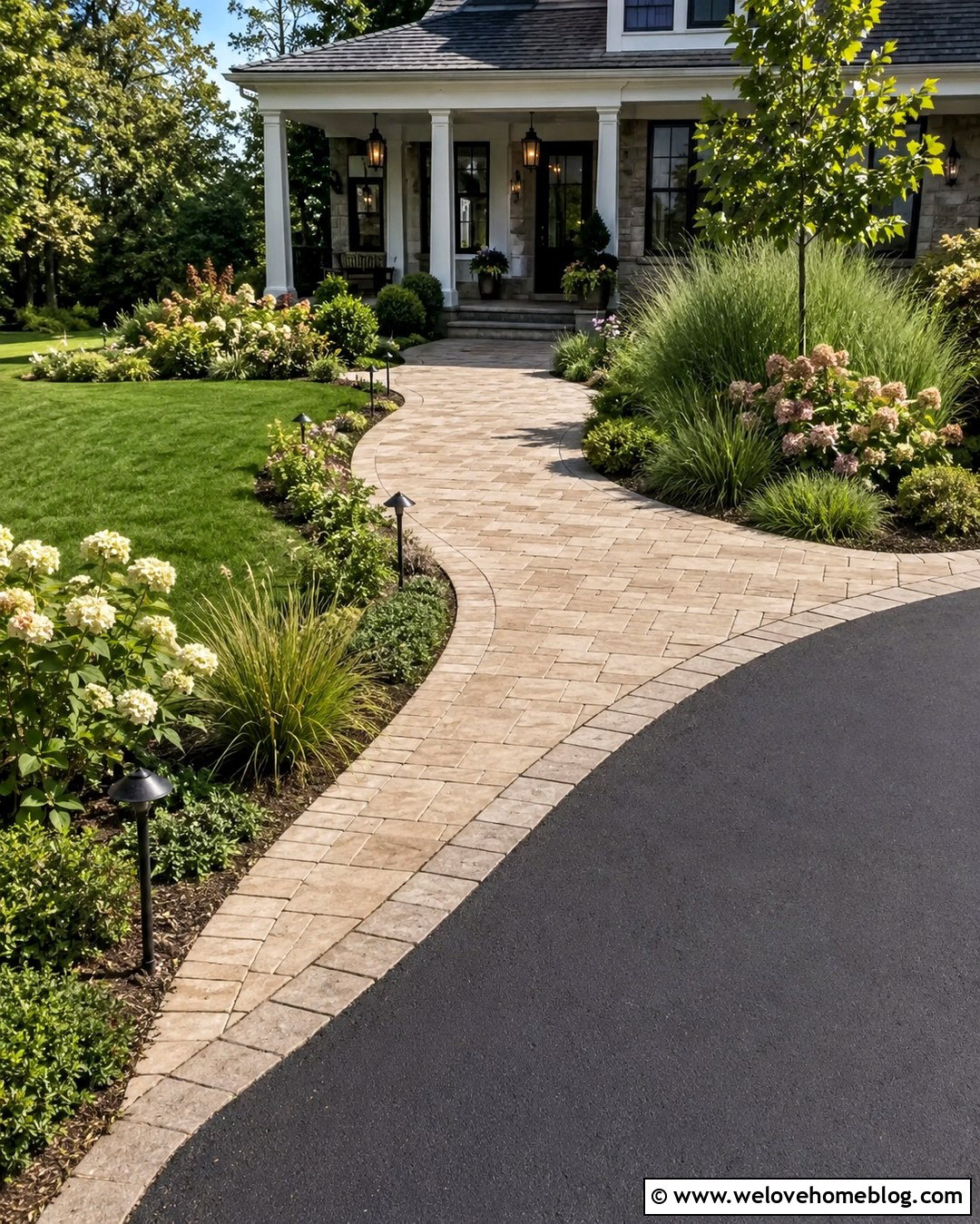
Thoughtful lighting can improve the complete driveway-to-porch design without dominating it during the day. Pair a curved tan paver walkway with a dark asphalt driveway and a coordinating paver edge. Install low-profile path lights at wider intervals along the planting-bed side rather than lining both edges like a runway. Near the driveway landing and porch steps, add fixtures where direction or elevation changes occur. During daylight, the path remains framed by flowering shrubs, ornamental grasses, and ground cover. Choose simple fixtures that coordinate with the porch lanterns and exterior hardware. The complete entrance should still look attractive in bright conditions, with lighting acting as a supporting detail. This approach works with many house styles and is particularly useful for long, curved, or partially hidden walkways.
18. Driveway Walkway With A Garden Border
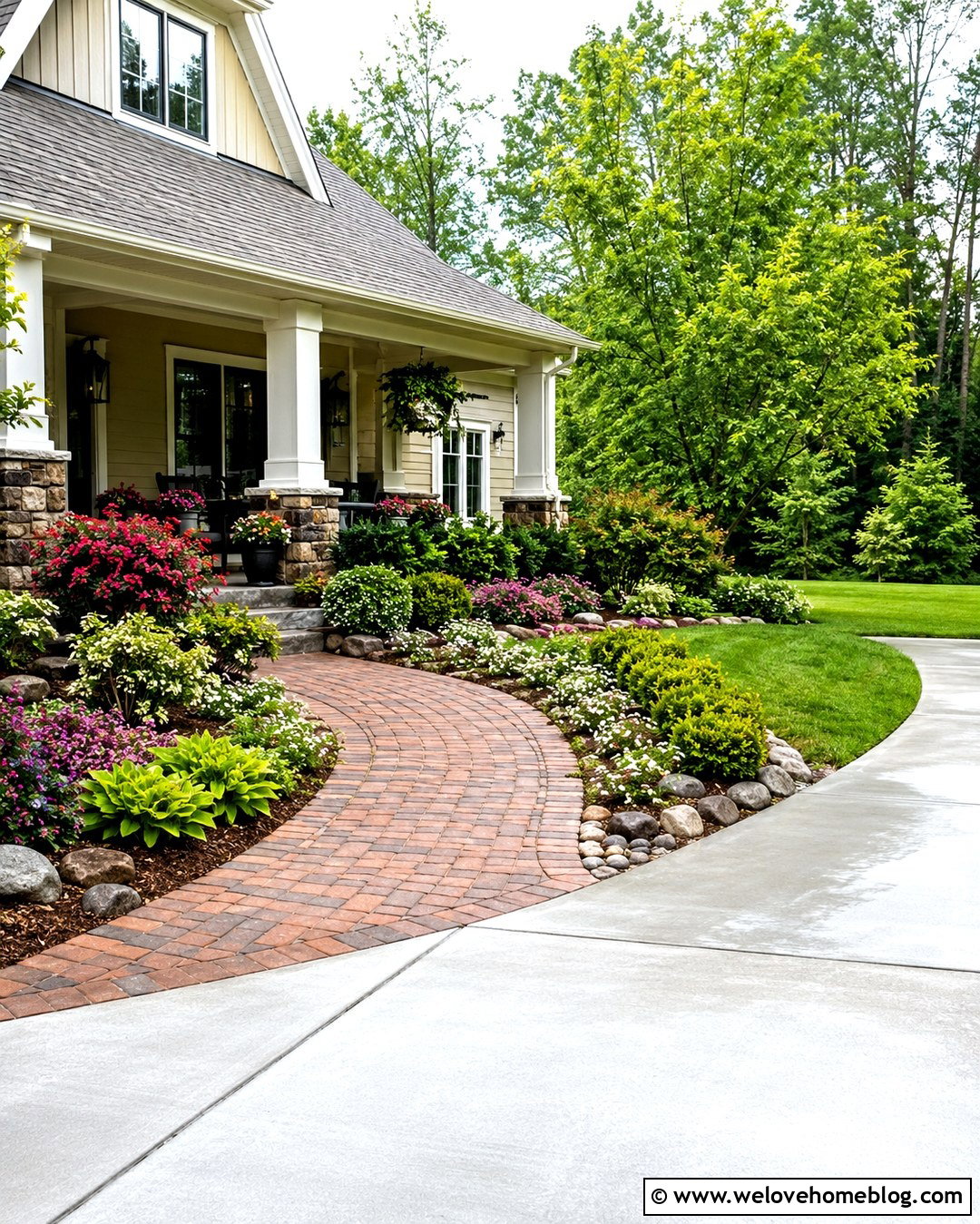
A lush garden border can turn an ordinary trip from the driveway to the porch into a welcoming approach. Begin with a stable brick or concrete paver walkway that follows a gentle curve beside the driveway. Add a defined stone edge to prevent soil and mulch from washing onto the walking surface. Build the planting in layers, keeping ground cover and compact perennials beside the path, medium shrubs behind them, and taller accents farther away. Repeat a few plant varieties near the porch so the landscape feels connected rather than random. Leave an open landing where the path meets the driveway, free from thorny or spreading plants. This complete look suits cottages and traditional homes, but the plant palette can be simplified for a cleaner contemporary version.
19. Driveway Walkway With A Small Retaining Wall
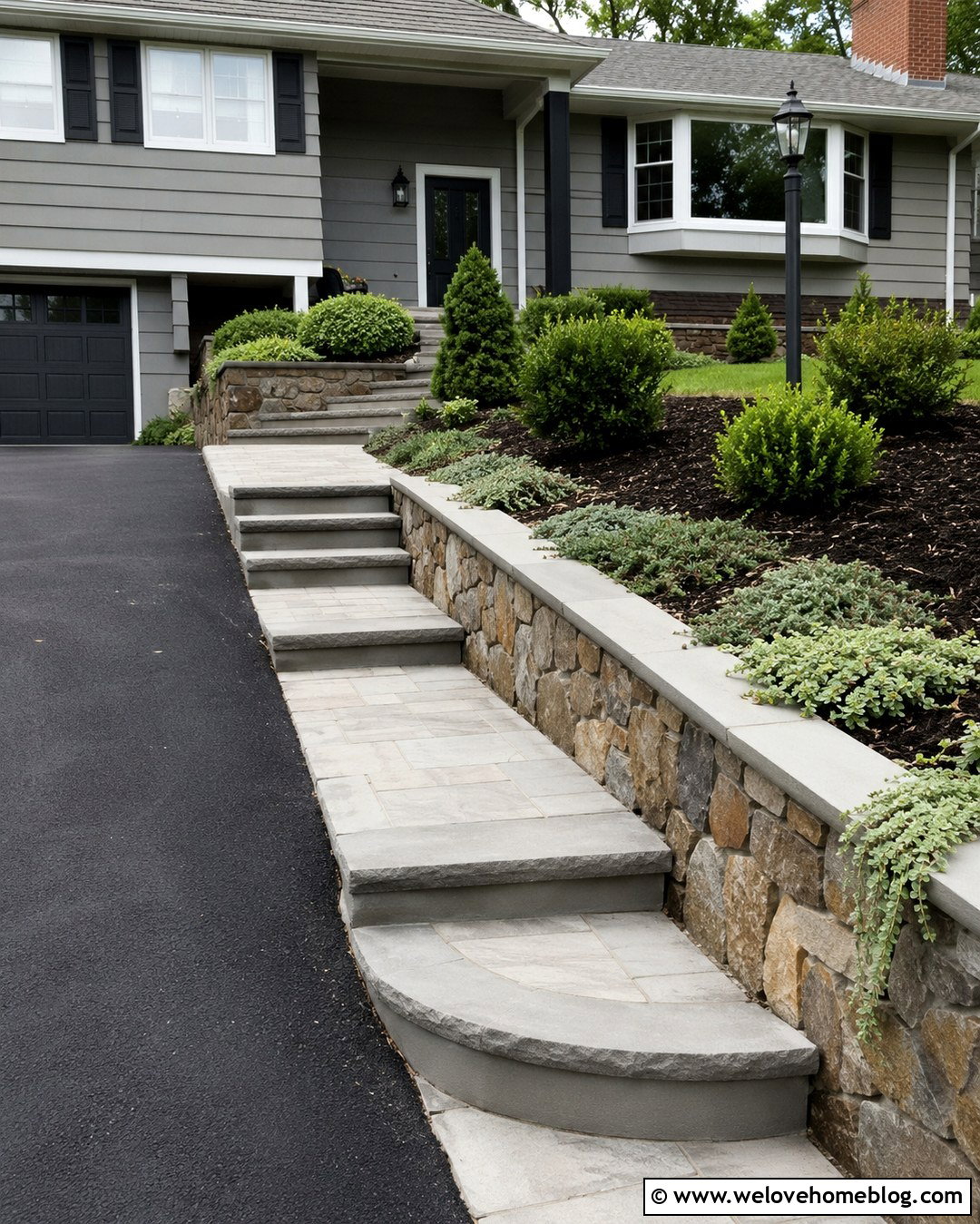
A low retaining wall can neatly manage the grade between a driveway and elevated front porch. Use smooth concrete pavers for the walkway and stack natural stone or modular wall blocks along the higher side. The path can rise gradually before reaching a short set of broad steps near the porch. Cap the wall with flat stones that coordinate with the walkway border or porch masonry. Plant trailing ground cover above the wall, along with compact shrubs that will not lean into the walking area. On the driveway side, maintain a clear landing for entering and leaving vehicles. This integrated layout prevents the slope from looking like leftover space. It works particularly well with split-level homes, raised ranches, and front yards where the driveway sits below the main entrance.


20. Mixed Material Walkway From Driveway To Porch
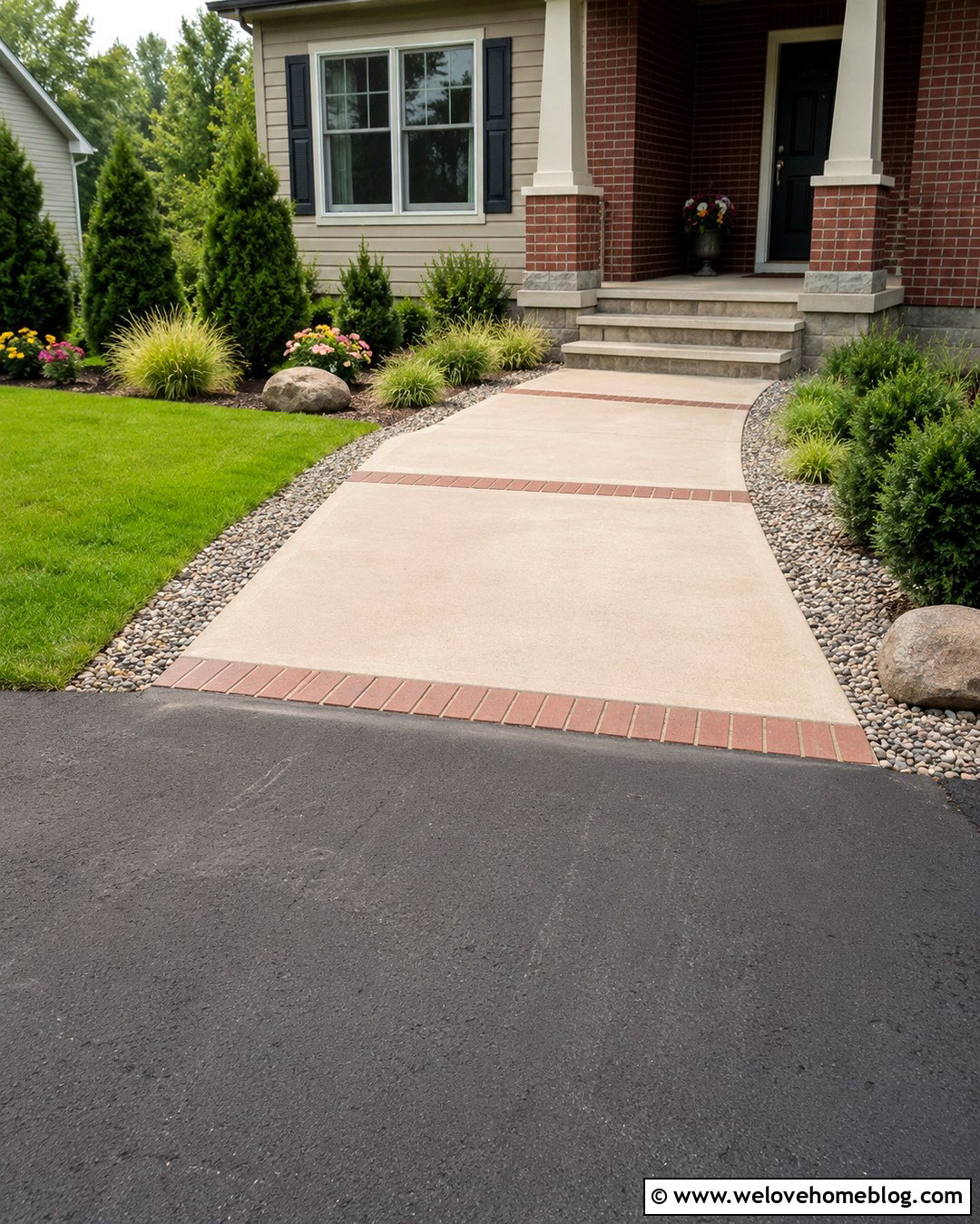
Mixing materials can connect a driveway and porch that do not naturally match. Start with a poured concrete walkway for a stable, understated base, then add brick or stone bands at key transition points. A brick ribbon across the driveway-side landing can relate to porch columns, while a second band near the steps repeats the detail. Edge the concrete with narrow gravel strips or matching masonry to prevent abrupt changes against the lawn. Use simple landscaping with evergreen shrubs, ornamental grasses, and one or two seasonal colors so the varied hardscape remains the focus. This strategy is helpful when updating an existing property in stages. It creates a coordinated entrance without requiring homeowners to replace a serviceable driveway, porch floor, and walkway at the same time.
Conclusion:
The right walkway makes moving between the driveway and porch safer, easier, and more visually appealing. It should feel like part of the home rather than a separate strip added to the lawn. Compare materials already found on your driveway, foundation, porch, and facade before selecting the path surface. Then consider shape, grade, edging, planting space, lighting, and the location of vehicle doors. A wider landing can greatly improve the driveway connection, while coordinated borders help different materials feel intentional. Whether you prefer brick, pavers, flagstone, gravel, or poured concrete, these **20 Front Porch Walkway To Driveway Ideas** offer practical ways to create a clear route and a more welcoming front-yard design.

Related posts:


Leave a Reply