
A well-designed driveway entrance does more than mark the edge of your property. It creates a welcoming first impression, guides vehicles safely, and connects the driveway with your home’s architecture and front-yard landscaping. The best **home driveway entrance ideas** combine practical surfaces with attractive pillars, gates, borders, lighting, and plants. Materials should complement colors already found on the house, while the entrance should remain open enough for comfortable access and clear visibility. Gates can add privacy and control, but simple upgrades such as a paver apron or matching address marker can also make a noticeable difference. () Whether your property is small, rural, traditional, or modern, the following complete looks offer useful inspiration through these **25 Home Driveway Entrance Ideas**.

1. Stone Pillar Driveway Entrance
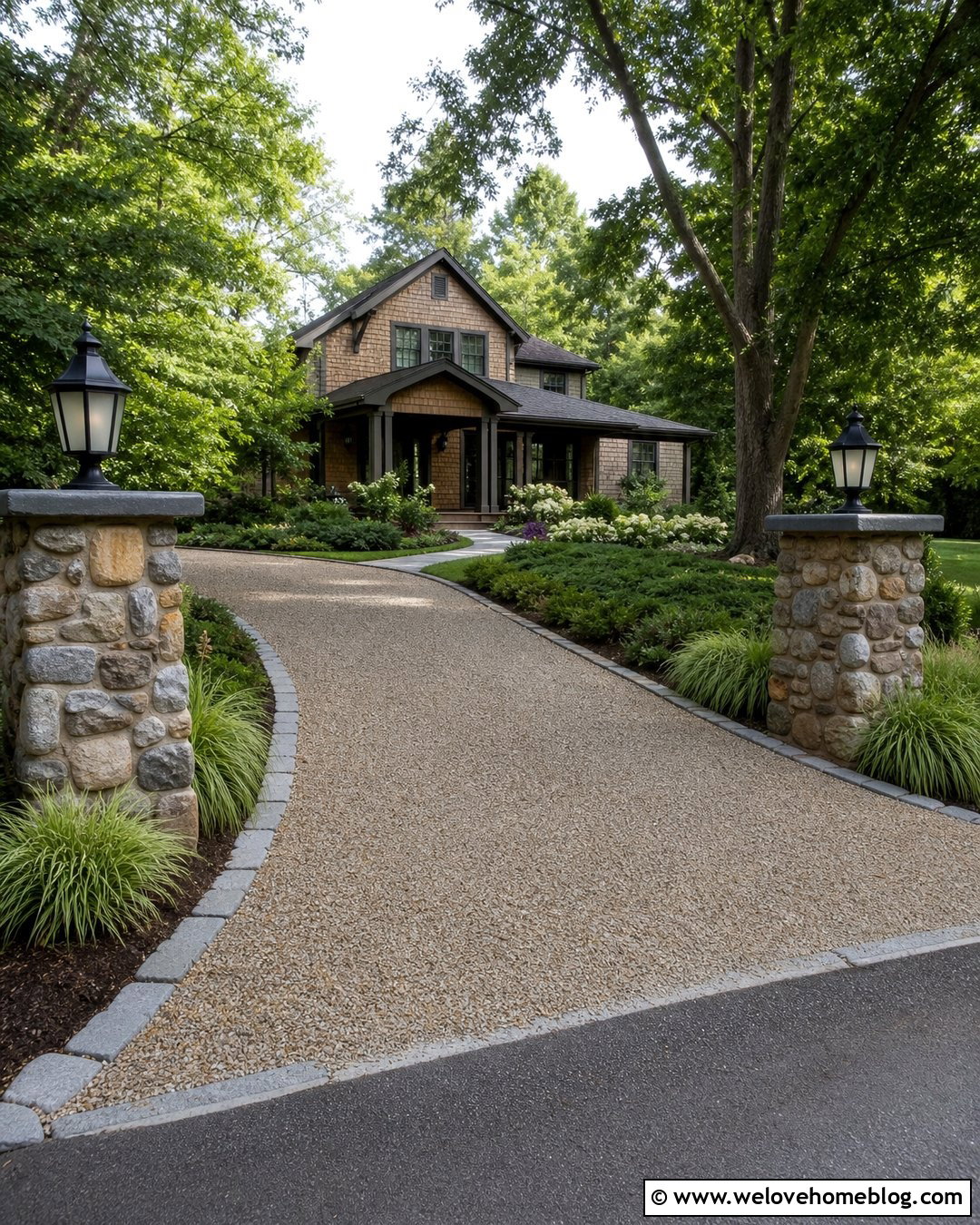
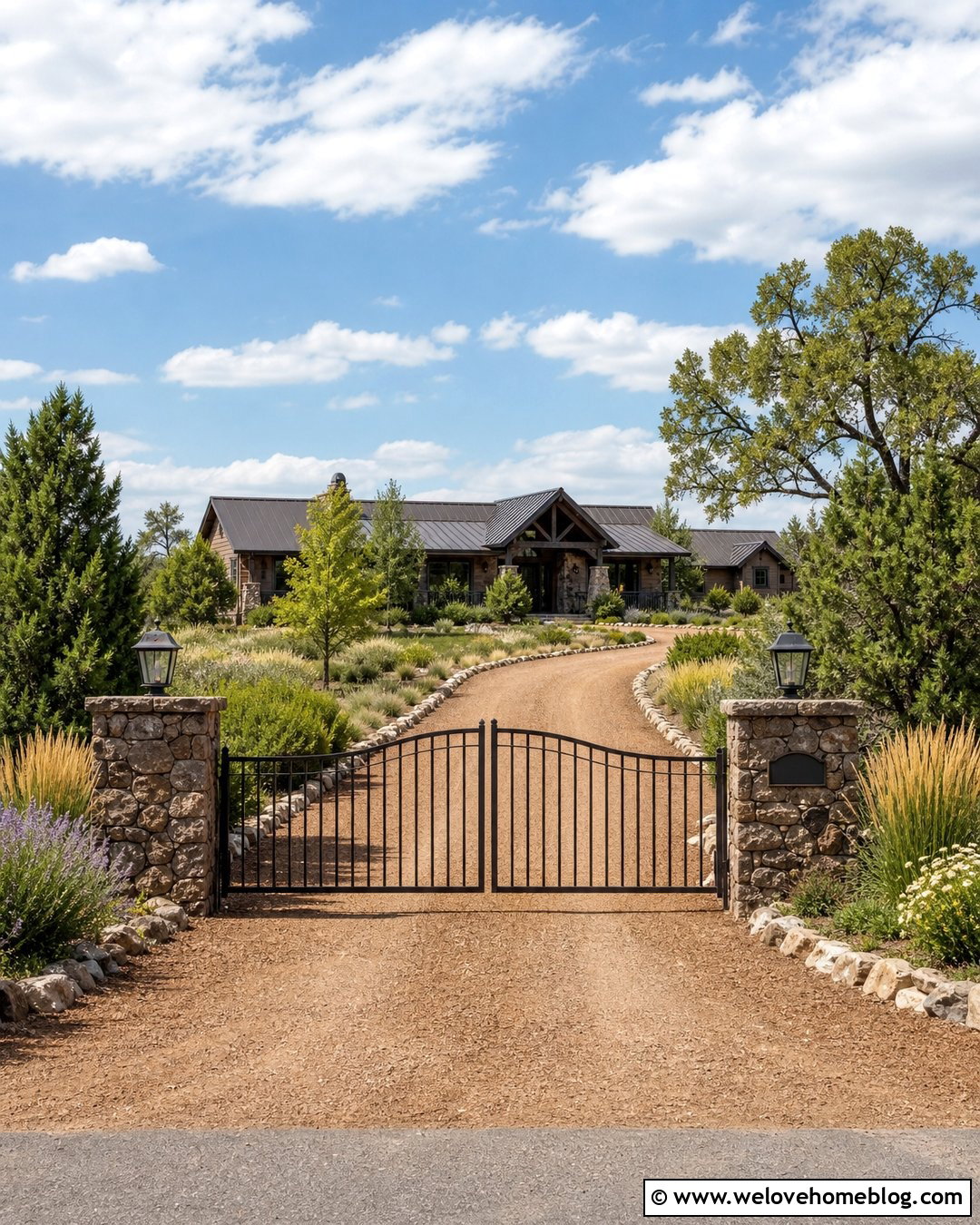
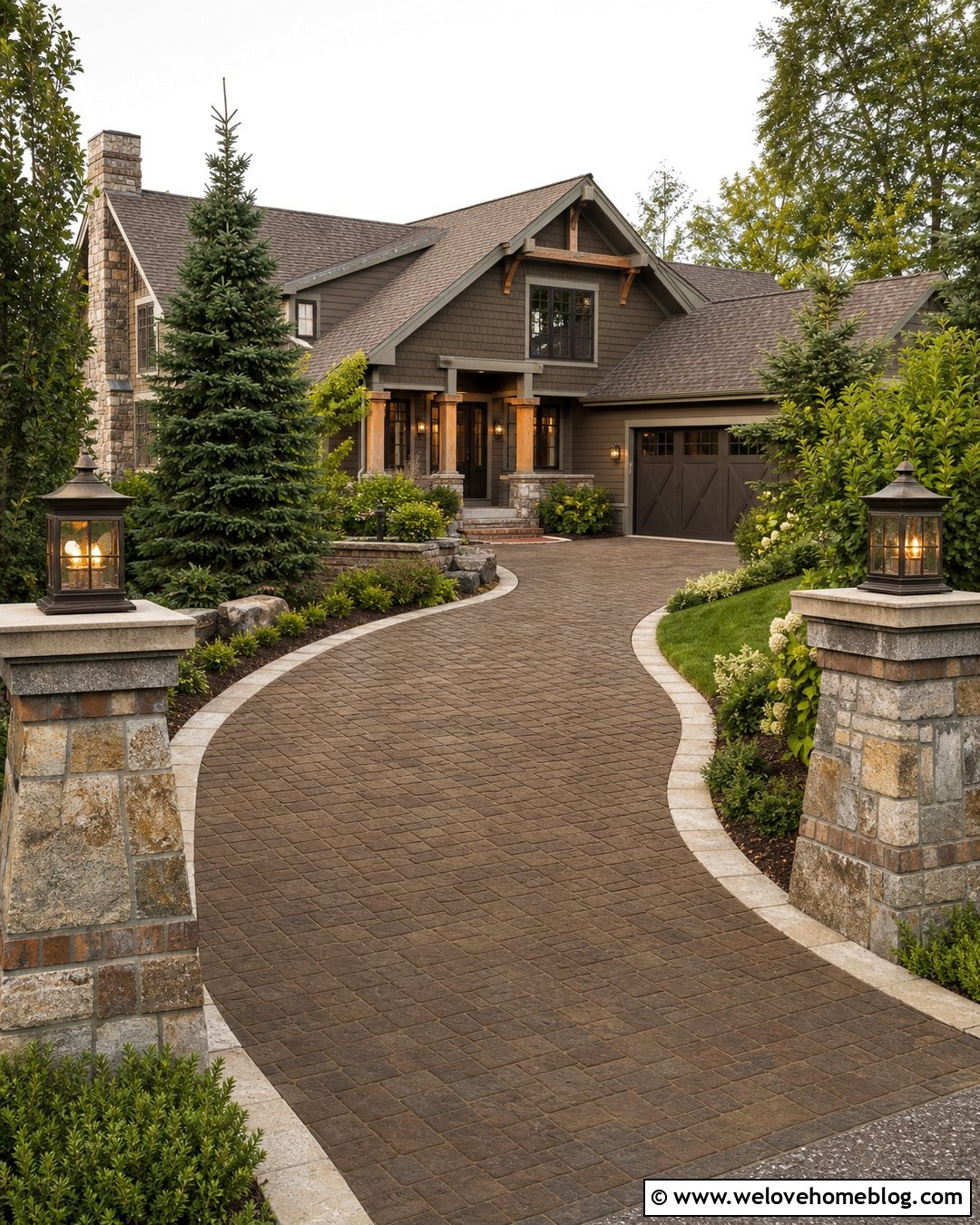
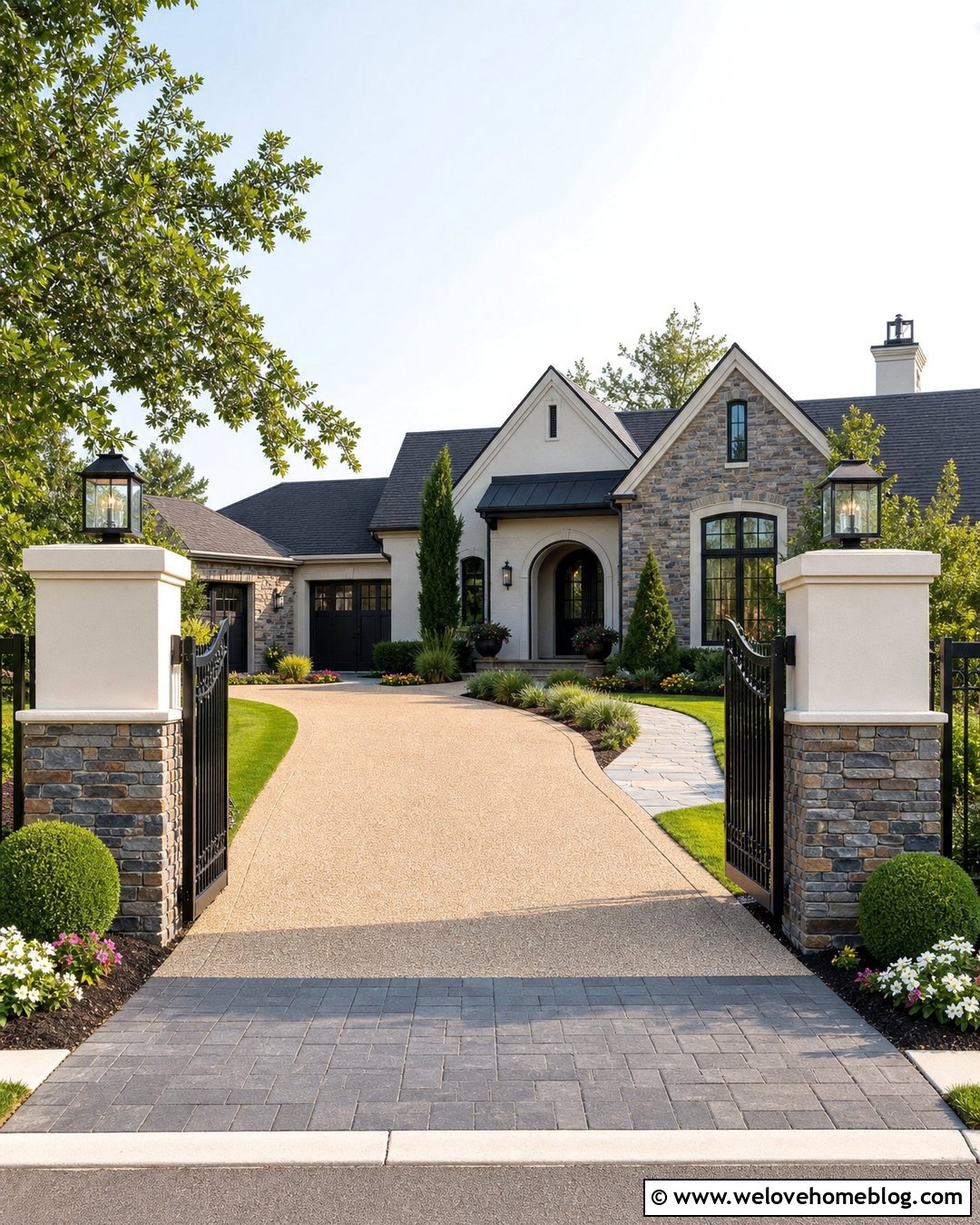
Natural stone pillars give a driveway entrance a strong, established appearance without requiring a full gate. Pair substantial fieldstone columns with a curved pea gravel driveway to create an inviting approach that feels connected to the landscape. Cap each pillar with smooth bluestone and install understated lanterns for visibility. Low beds of ornamental grasses, spreading juniper, and flowering perennials can soften the stone while preserving clear sightlines near the road. Continue the same stone around the foundation or front walkway to make the design feel intentional. This entrance works especially well with Craftsman, mountain, and country homes. Keep the pillar proportions appropriate for the driveway width so the entrance looks balanced rather than oversized.
2. Brick Pillar Driveway Entrance
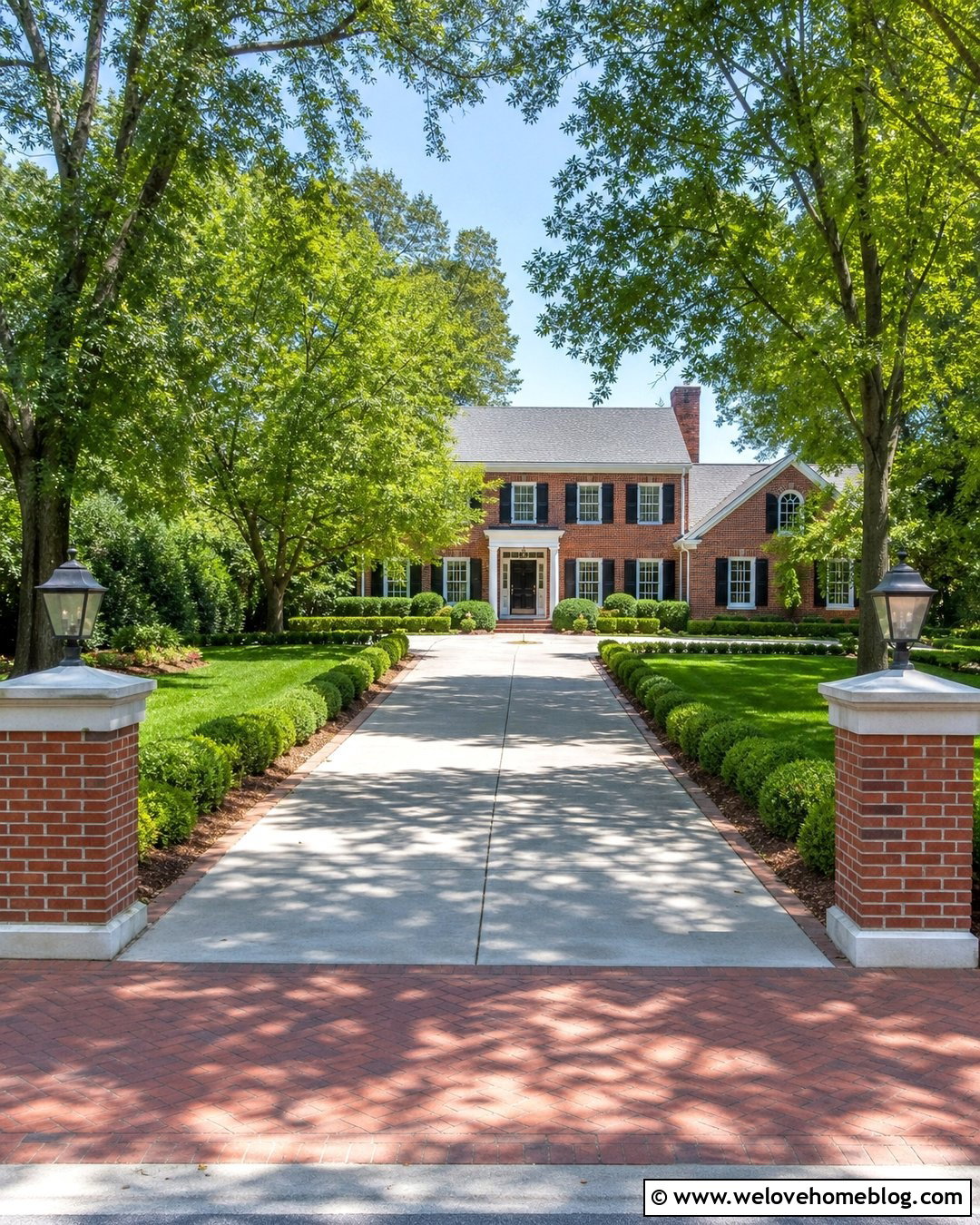
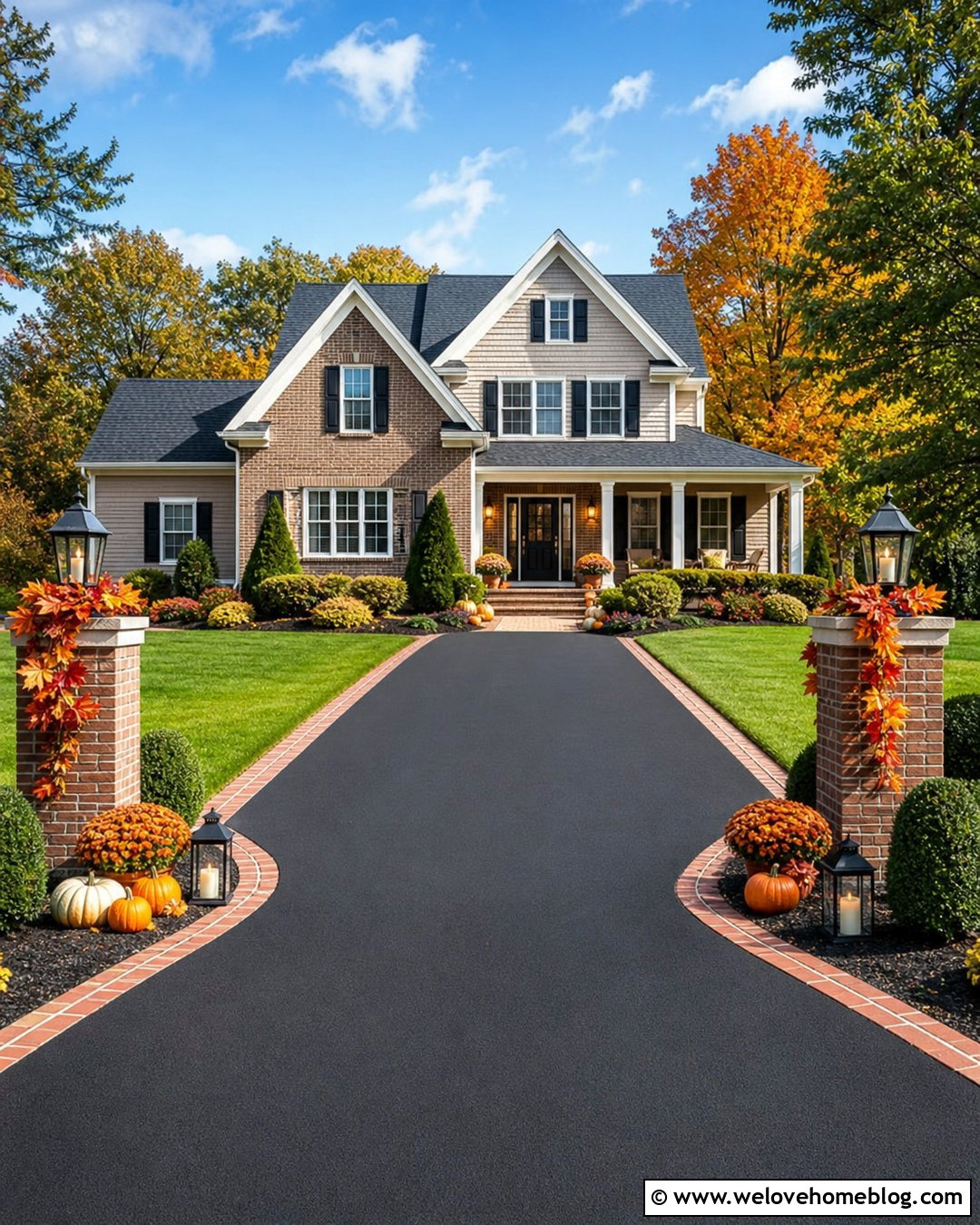
Warm brick pillars can visually connect the street to a traditional brick home. Build matching columns on both sides of a straight concrete driveway, then repeat the brick as a narrow border or entrance apron. This small amount of coordinated detailing makes an ordinary concrete surface feel more customized. Traditional lanterns, simple precast caps, and neatly clipped boxwood shrubs complete the formal look. Leave enough open space between the plants and pavement to prevent branches from narrowing the entrance. If the house has painted brick or brick accents, match the undertone rather than forcing an exact color match. This complete driveway entrance suits Colonial, Georgian, Cape Cod, and traditional suburban houses while offering a polished appearance from the curb.
3. Modern Metal Gate Driveway Entrance
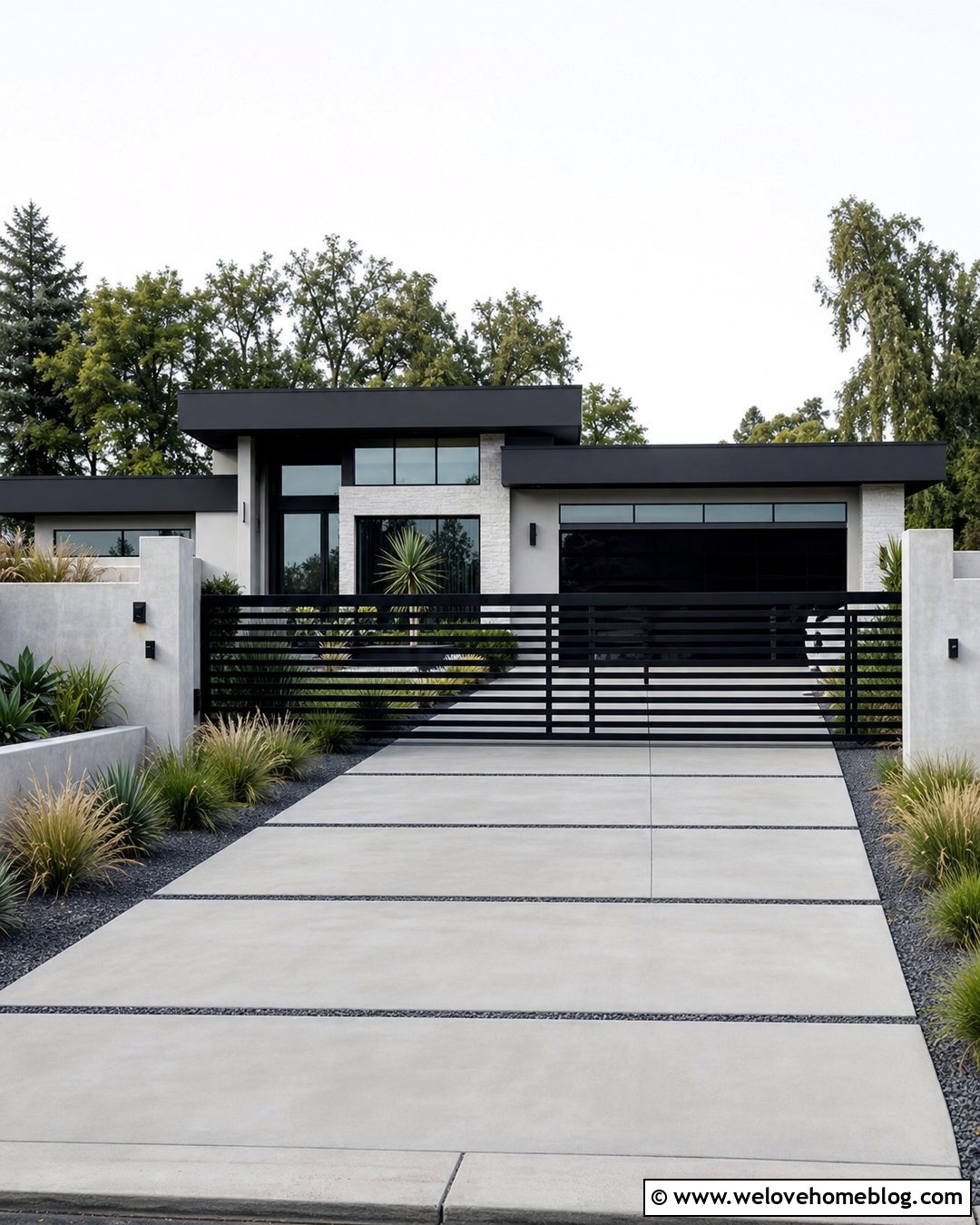
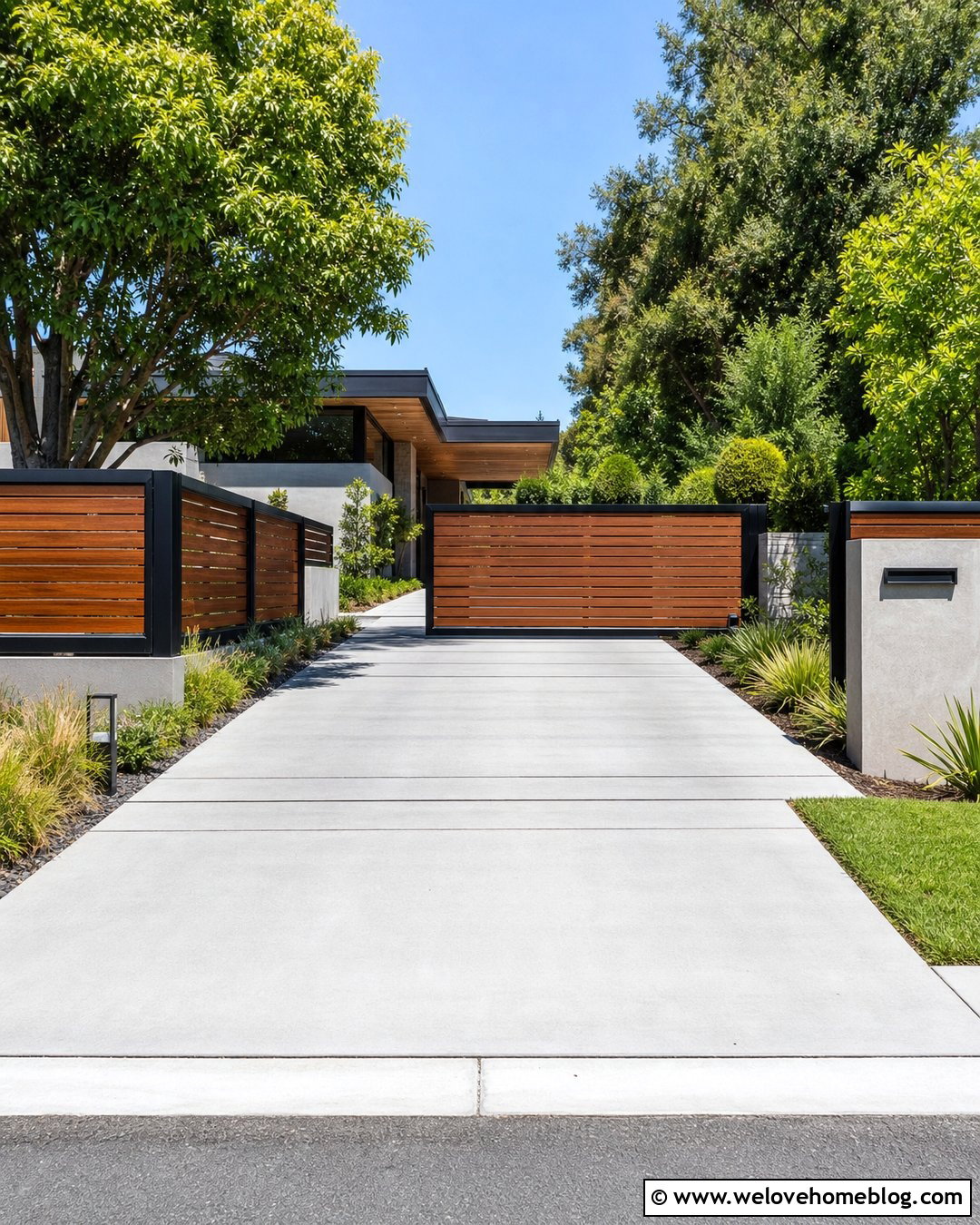
Clean horizontal lines make a modern metal gate feel private without appearing overly decorative. Combine a matte black aluminum sliding gate with a wide, straight driveway made from large-format gray concrete panels. Narrow gravel joints or dark stone bands can break up the surface and echo the gate color. Use smooth concrete pillars, architectural grasses, and low rectangular planting beds to frame the entrance. A sliding design is particularly useful where the driveway slopes or lacks room for swinging panels, although the track and operating system require careful planning. Modern gates can also support access controls and smart operating accessories. () Keep signs, lighting, fencing, and hardware minimal so the gate remains the entrance’s clear focal point.
4. Wooden Farm Gate Driveway Entrance
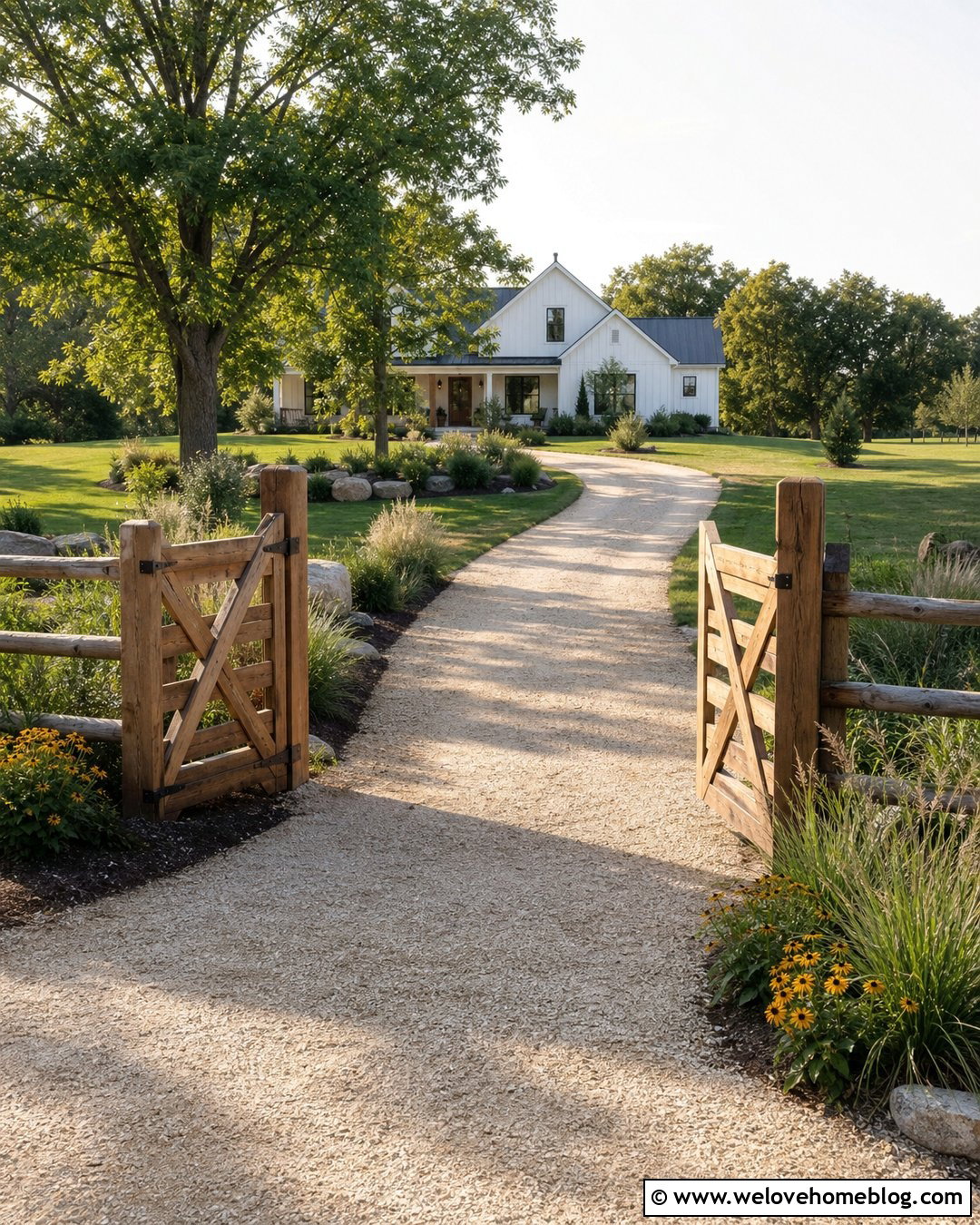
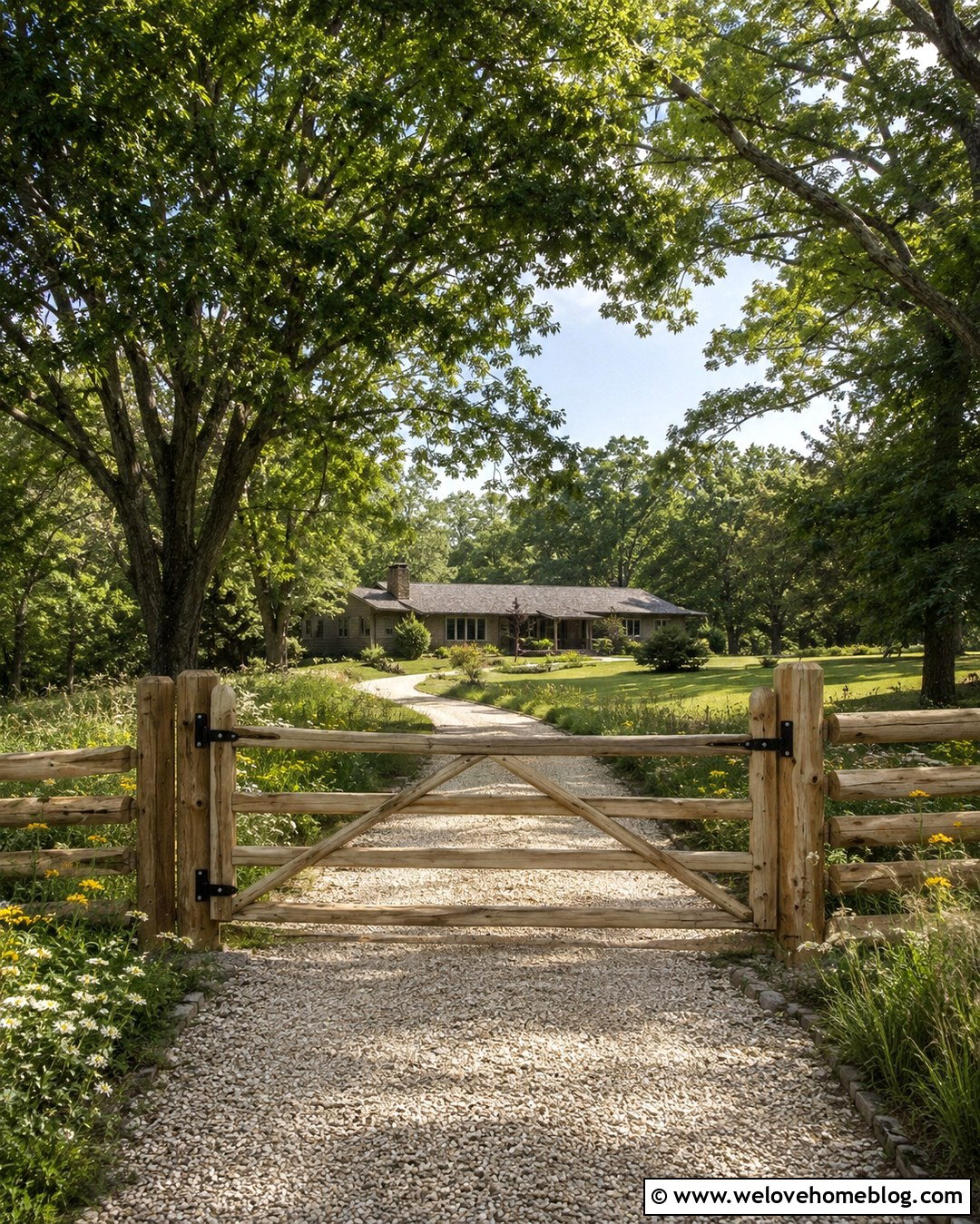
A simple wooden farm gate creates a relaxed welcome for a country property. Set a natural cedar gate between sturdy timber posts at the beginning of a gently curved gravel driveway. Add split-rail fencing on both sides so the entrance feels connected to the wider yard instead of standing alone. Crushed limestone or warm tan gravel complements the wood and provides a practical surface for a long approach. Plant native grasses, black-eyed Susans, and compact flowering shrubs outside the vehicle clearance area. A small hanging lantern or gooseneck light can improve visibility without making the setting feel formal. This complete look is especially suitable for ranch homes, barns, modern farmhouses, and wooded rural lots.
5. White Picket Gate Driveway Entrance
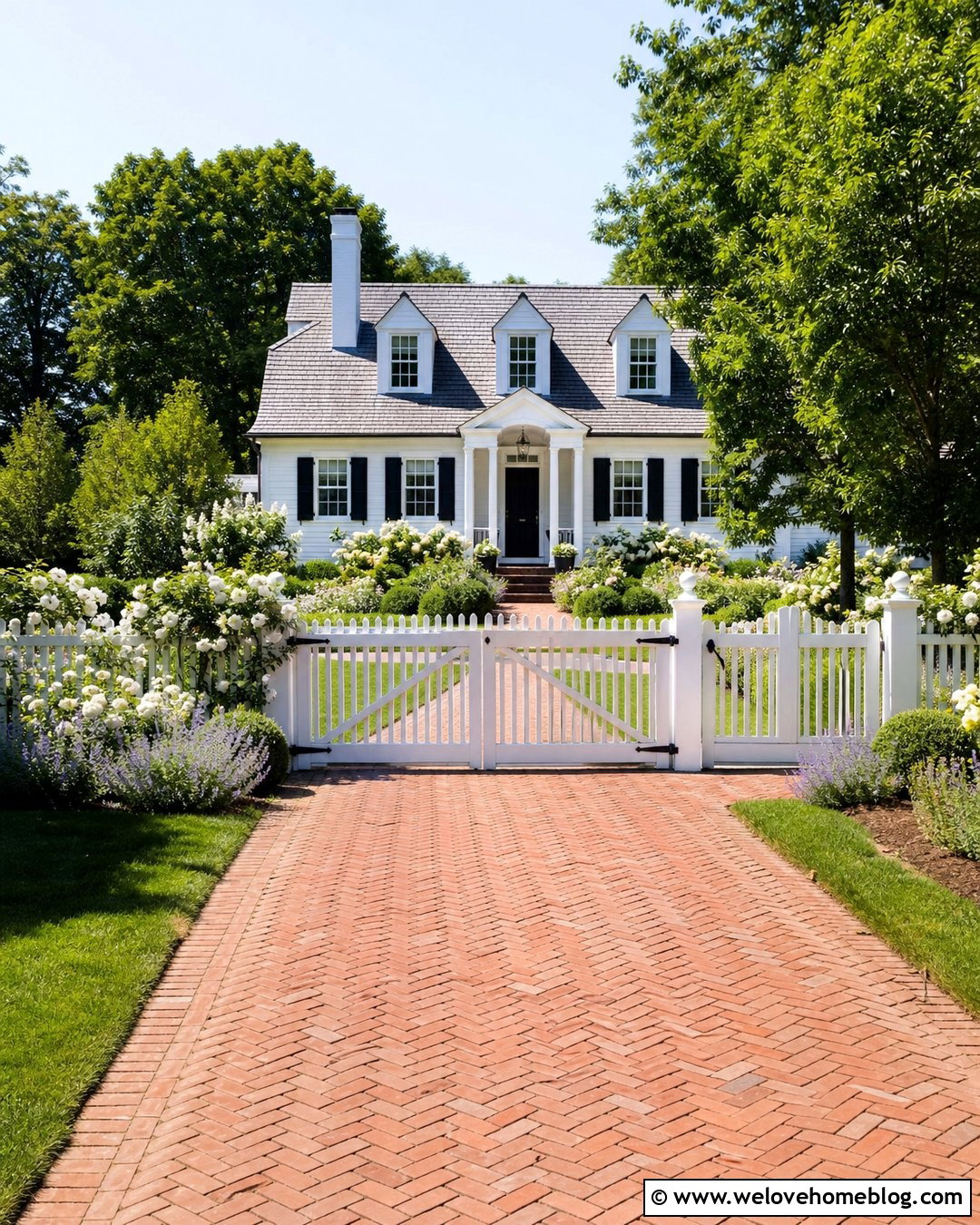
Few combinations feel more welcoming than a white gate, tidy lawn, and classic cottage planting. Use a simple double picket gate at the entrance to a narrow driveway surfaced with red clay brick pavers in a herringbone pattern. Continue matching white fencing along both sides for a short distance, then transition into low hedges or flower beds. Roses, catmint, salvia, and compact hydrangeas can provide color without overwhelming the gate. A coordinating pedestrian gate beside the driveway creates a clear route to the front walkway. This entrance works beautifully with Cape Cod, cottage, and traditional clapboard homes. Choose durable exterior paint and keep plants away from moving gate hardware to simplify seasonal upkeep.
6. Circular Gravel Driveway Entrance
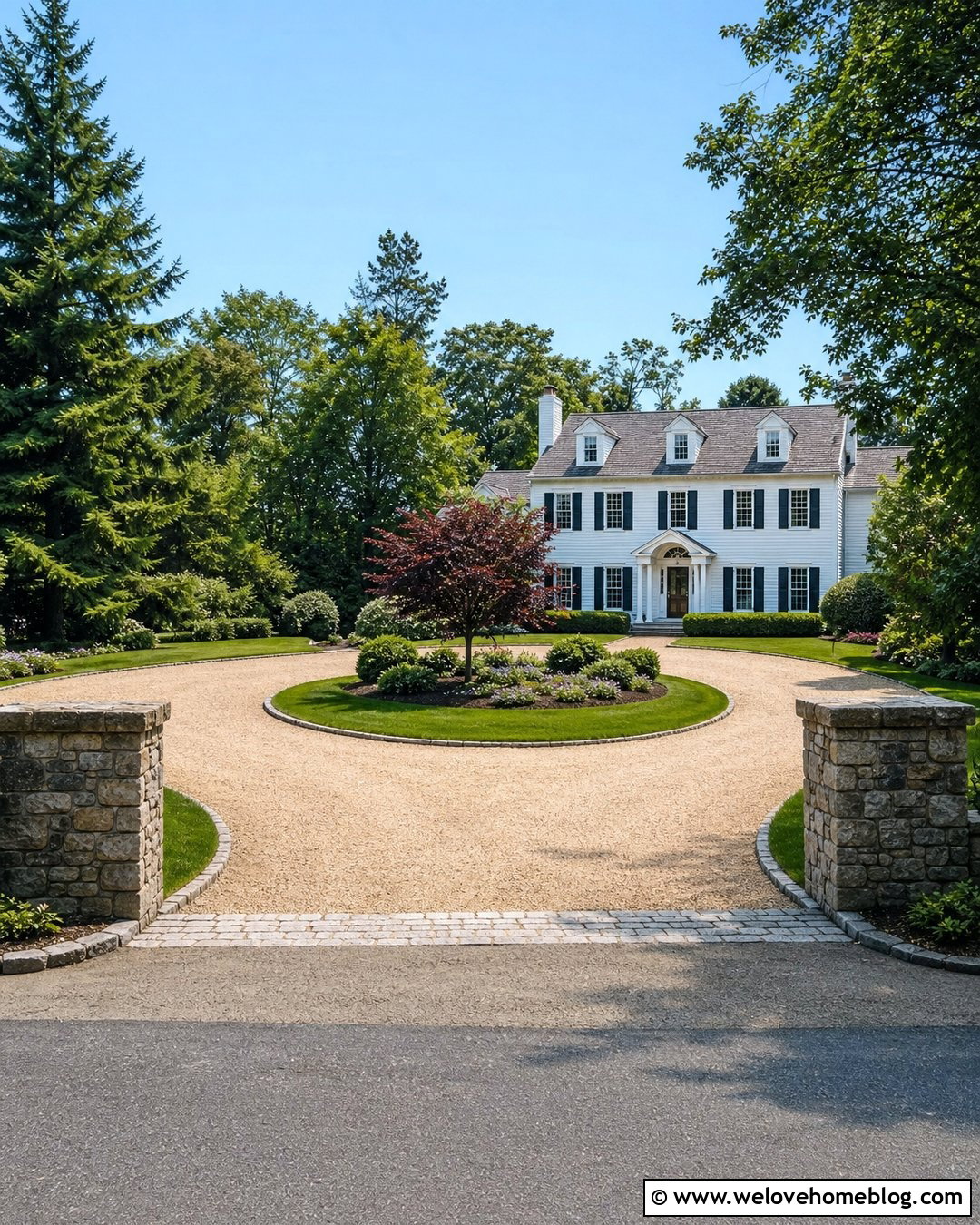
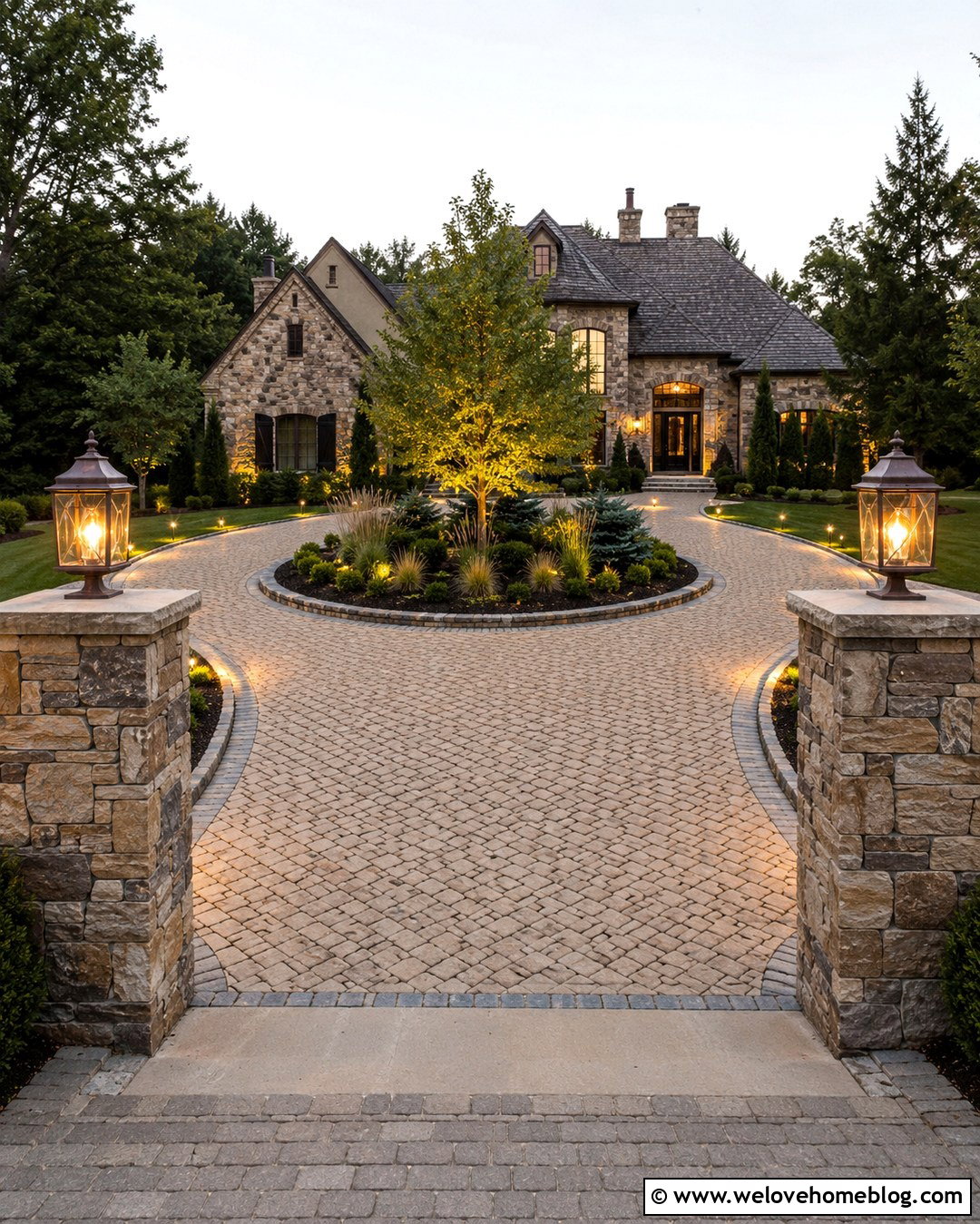
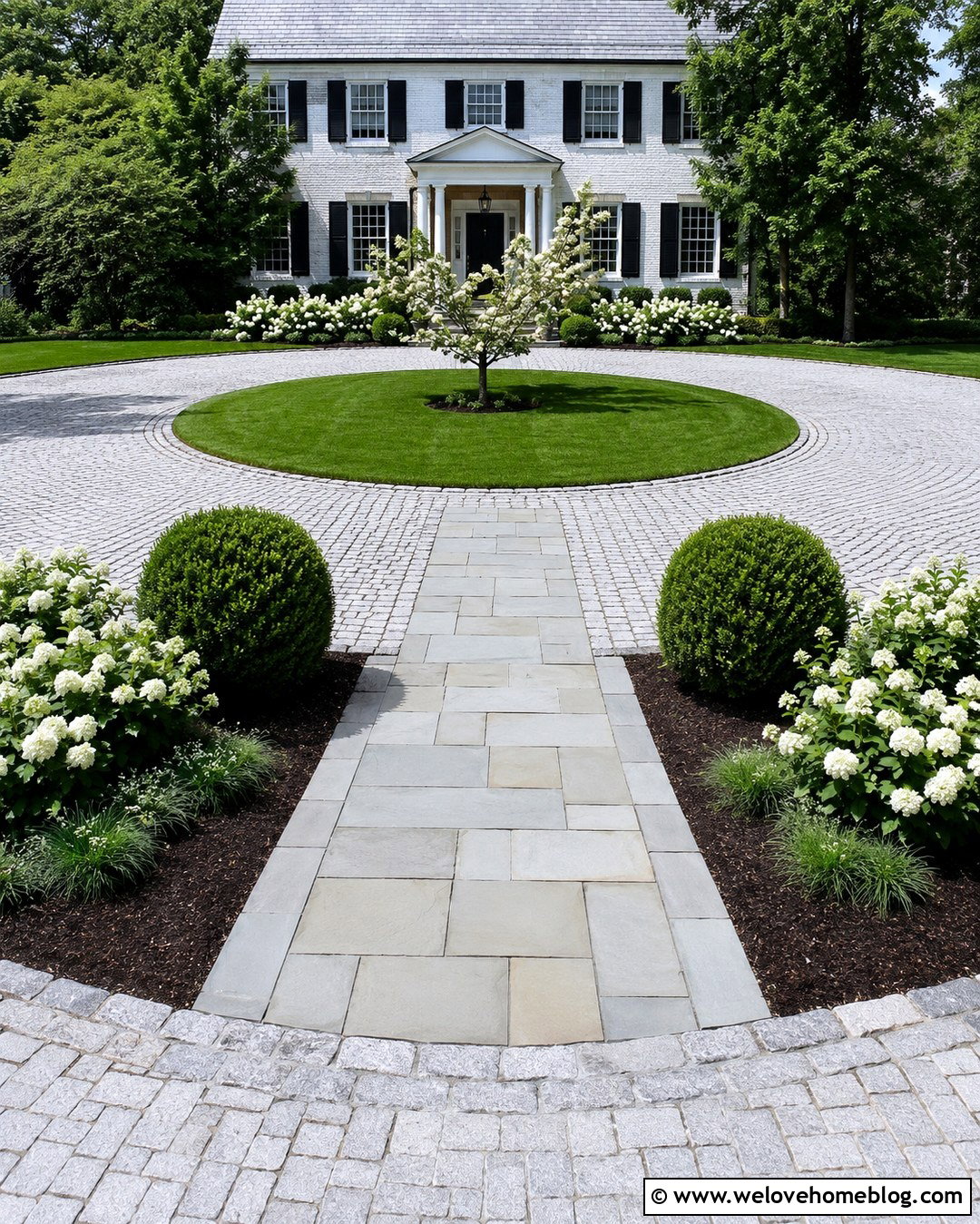
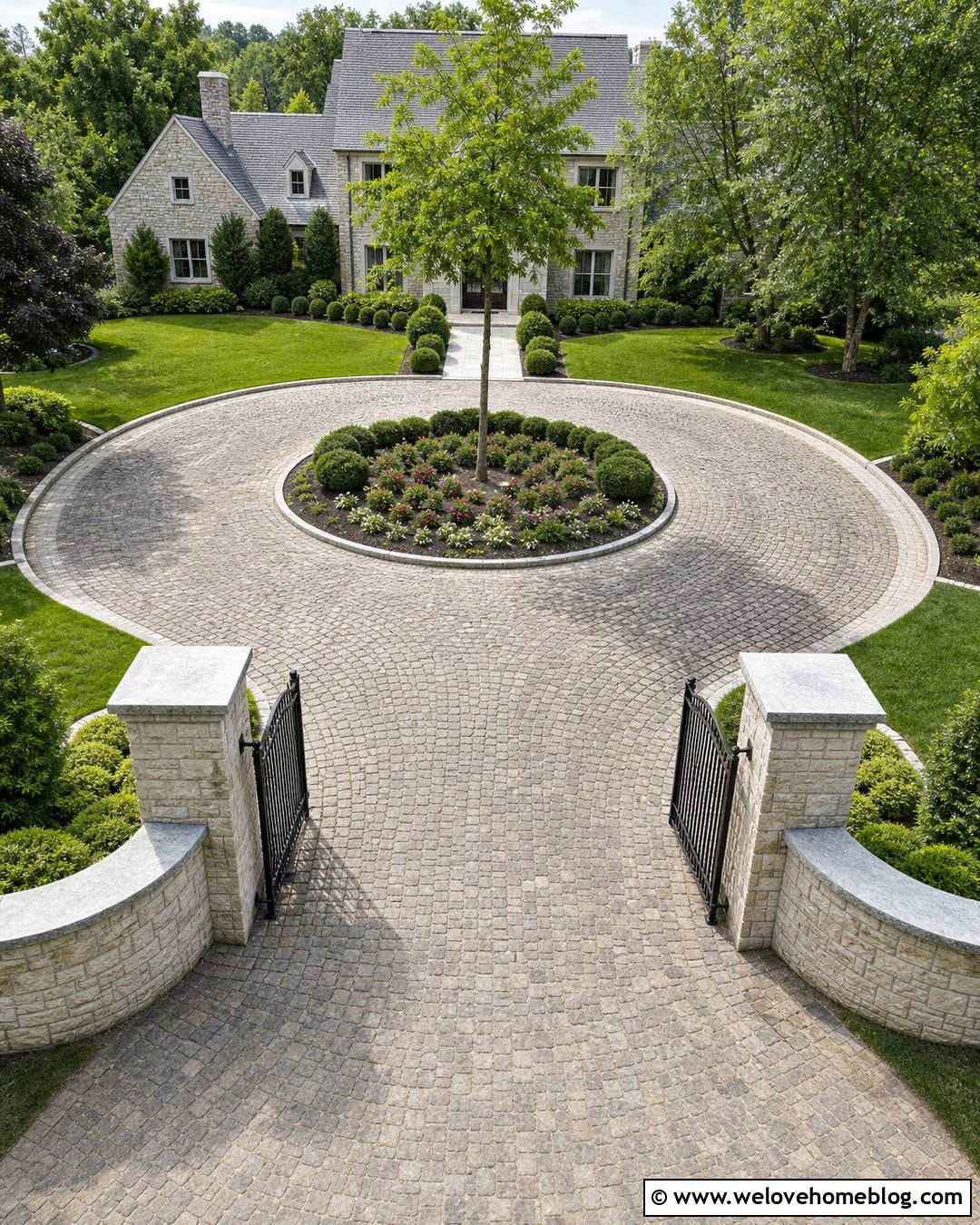
A circular gravel driveway can make a broad front yard feel graceful and organized. Define the two entrance openings with low stone pillars, then use warm beige gravel over a properly prepared base for the driving surface. Cobblestone edging helps contain loose material and creates a finished transition at the road. In the center island, plant one appropriately scaled ornamental tree surrounded by low evergreen shrubs and seasonal perennials. Keep taller plants away from the entrance openings so drivers can see pedestrians and approaching traffic. The circular layout allows vehicles to enter and leave without complicated backing. It pairs naturally with Colonial, country, Southern, and estate-inspired houses, especially when the center planting repeats colors from the home’s facade.
7. Curved Paver Driveway Entrance
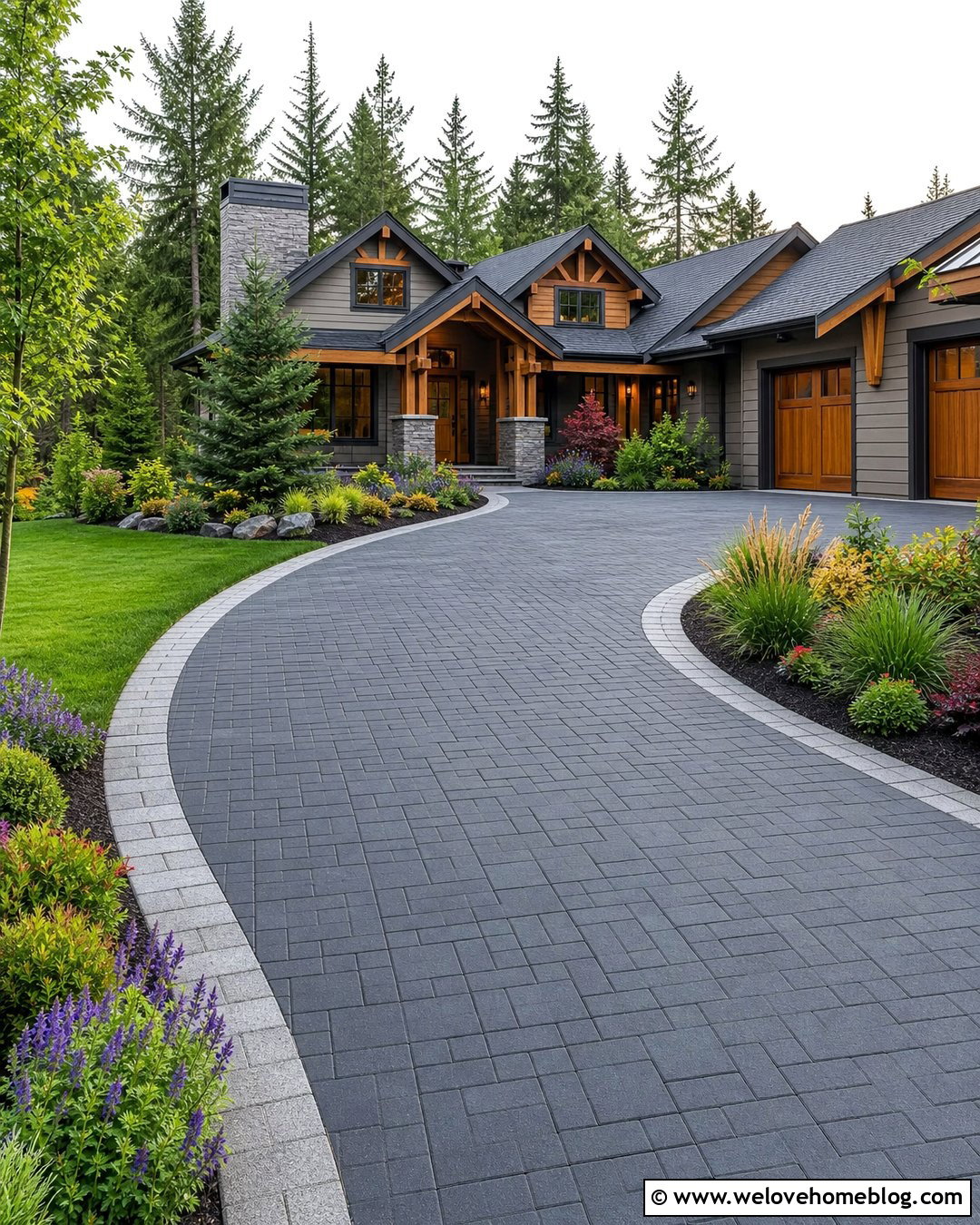
A curved paver driveway creates a softer approach and gradually reveals the house. Start the curve with two understated masonry columns and use charcoal concrete pavers laid in a running-bond pattern. A lighter paver border can highlight the shape and prevent the entrance from visually disappearing into the front yard. Continue layered planting beds along the outside curve with evergreen shrubs, ornamental grasses, and a few flowering accents. Keep the inside edge simpler to protect driver visibility. This design works well when the garage does not directly face the street or when the property has an irregular shape. Repeating the driveway pavers in the front walkway helps connect the vehicle route with the main entrance.
8. Concrete Driveway Entrance With Grass Strips
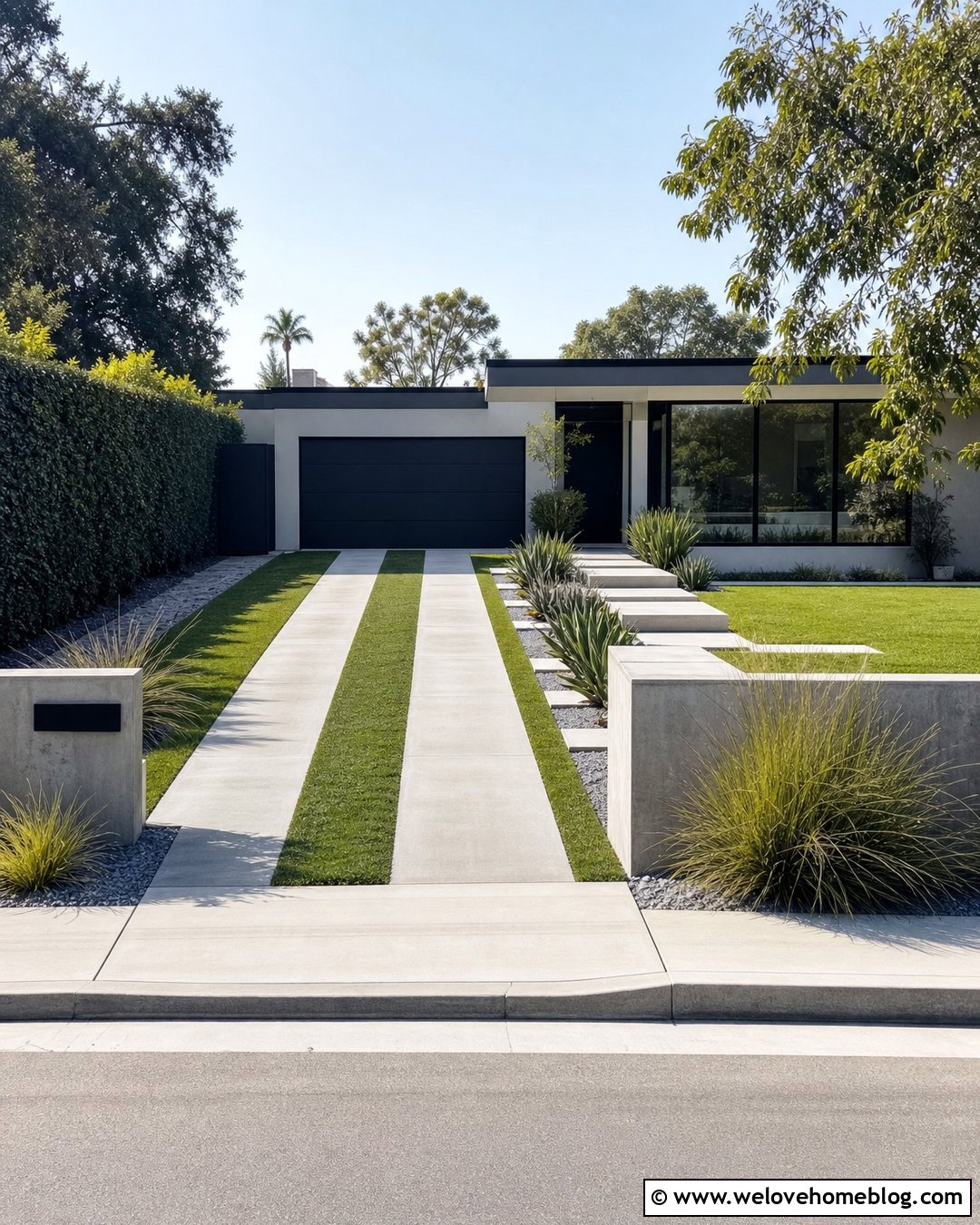
Grass strips can soften a broad concrete entrance and make it feel less like one solid paved area. Install smooth light-gray poured concrete as two reinforced driving tracks or as large rectangular slabs separated by narrow planted joints. Frame the entrance with low concrete walls, compact grasses, and a simple metal address plaque. The green lines introduce color while complementing a modern front lawn. This design works best where the planted sections can receive appropriate irrigation and regular trimming. In hotter or drier areas, low-growing ground cover or decorative gravel may be more practical than turf. Pair the complete entrance with a modern, midcentury, or contemporary house featuring clean lines, restrained colors, and simple geometric landscaping.
9. Asphalt Driveway Entrance With Brick Apron
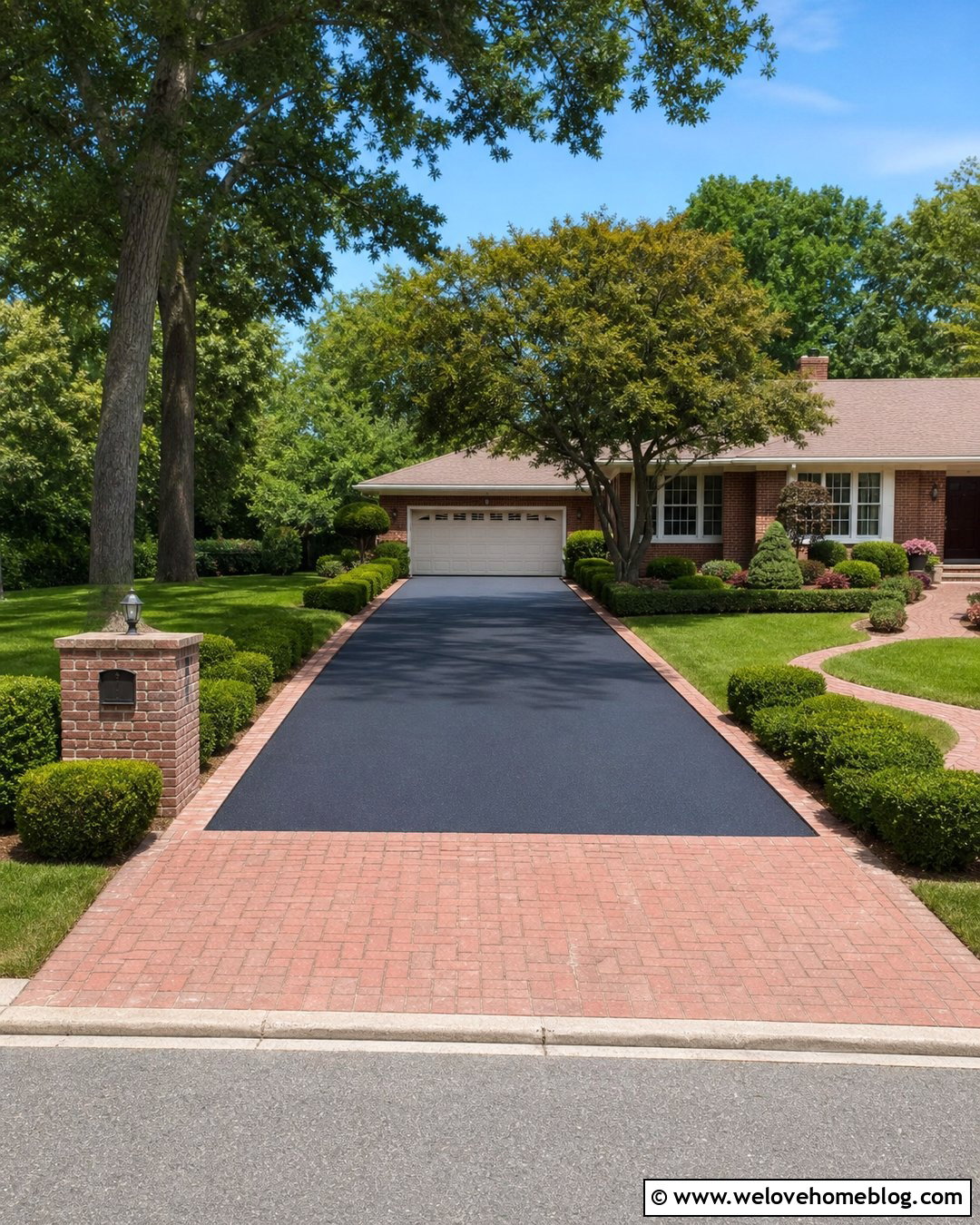
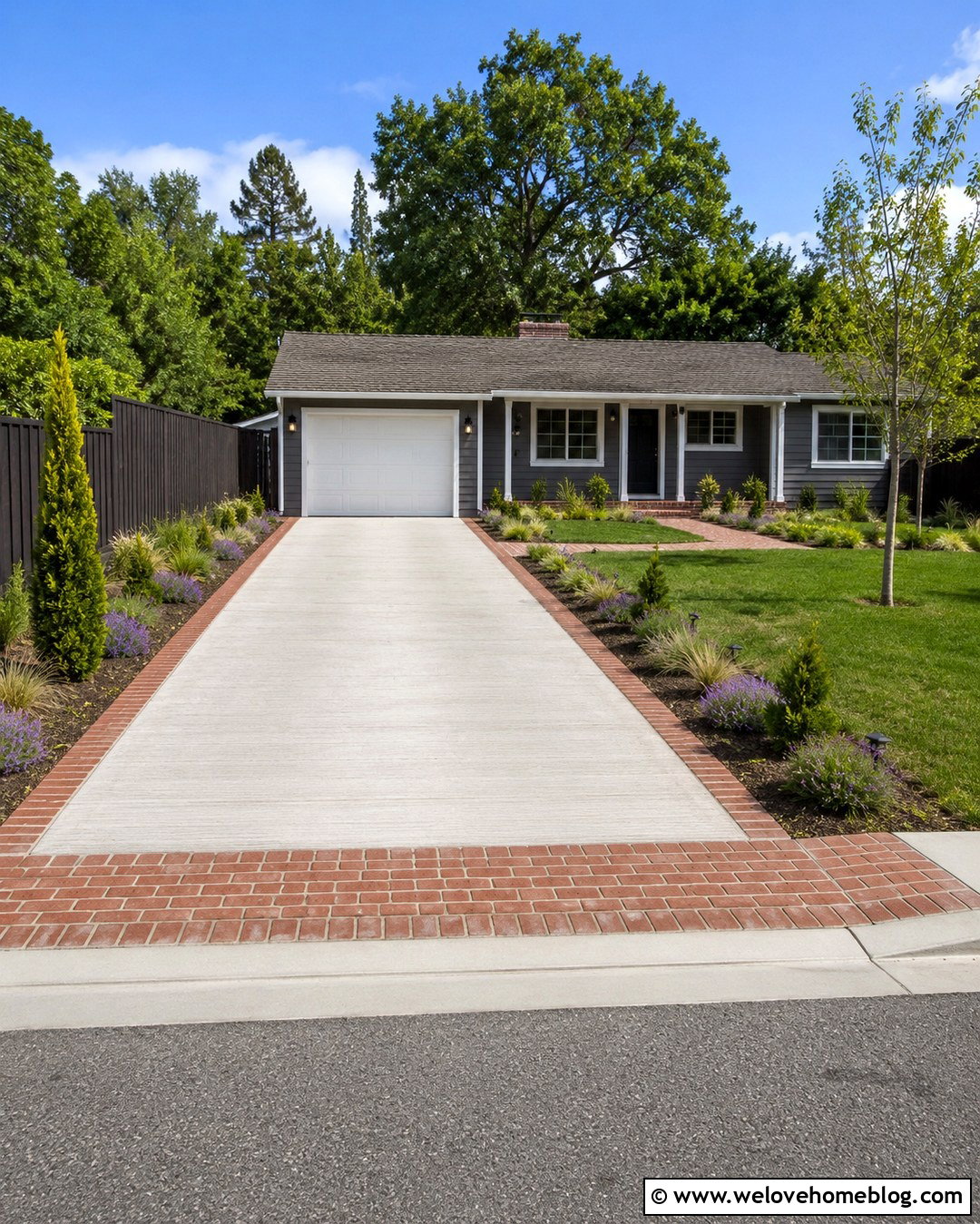
A brick apron adds character to an affordable black asphalt driveway without requiring the entire surface to be replaced. Install a wide band of red or brown brick pavers where the driveway meets the street, using a pattern that complements the home. Matching brick edging can continue several feet along each side before transitioning into a simpler border. Frame the entrance with small evergreen shrubs, neatly shaped lawn, and a brick address pillar. The contrasting apron creates a clear visual threshold and helps the driveway feel connected to a brick house. This look suits ranch, Colonial, and traditional suburban homes. Select pavers intended for vehicle loads, and coordinate base preparation carefully where the brick meets the asphalt.
10. Cobblestone Driveway Entrance
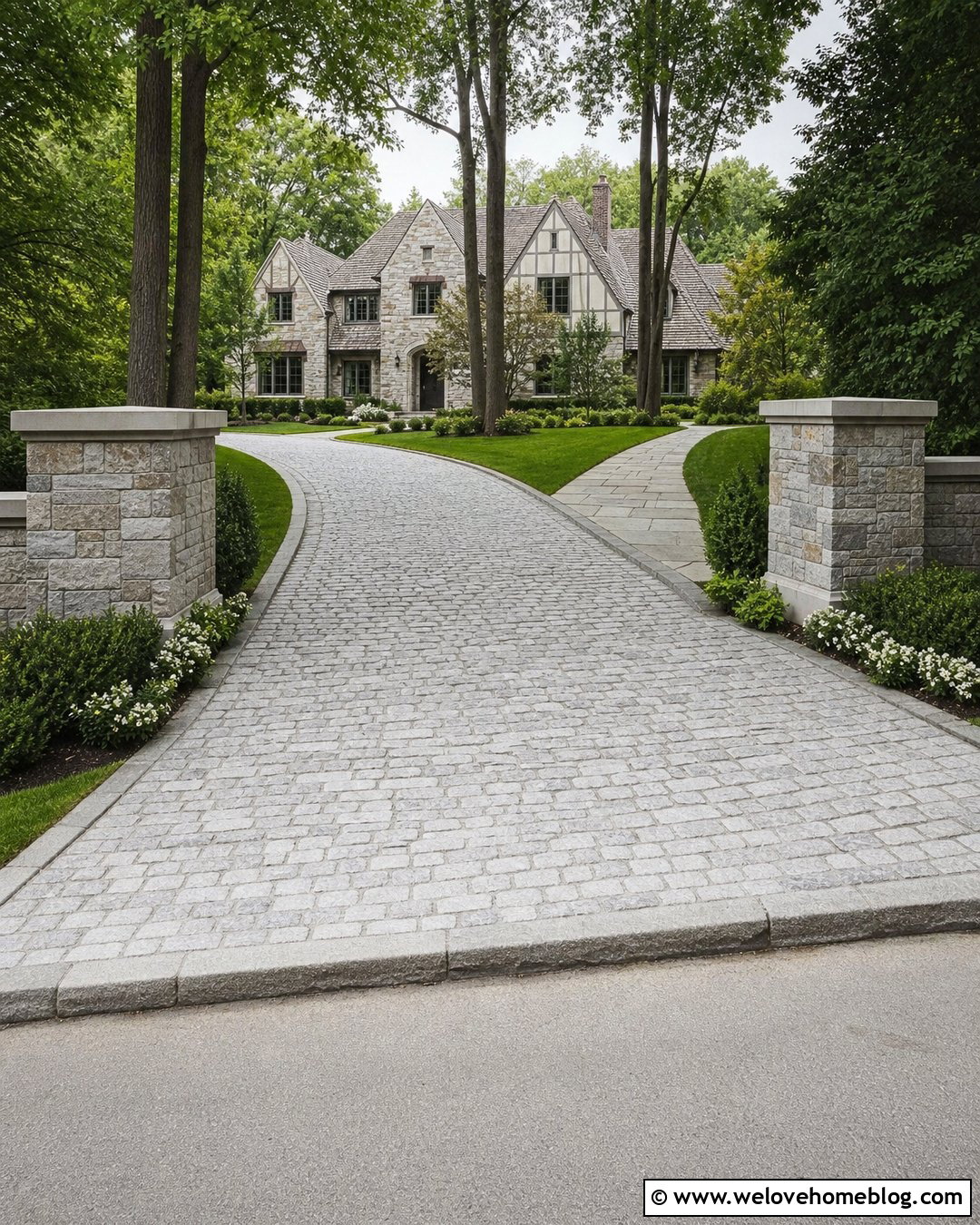
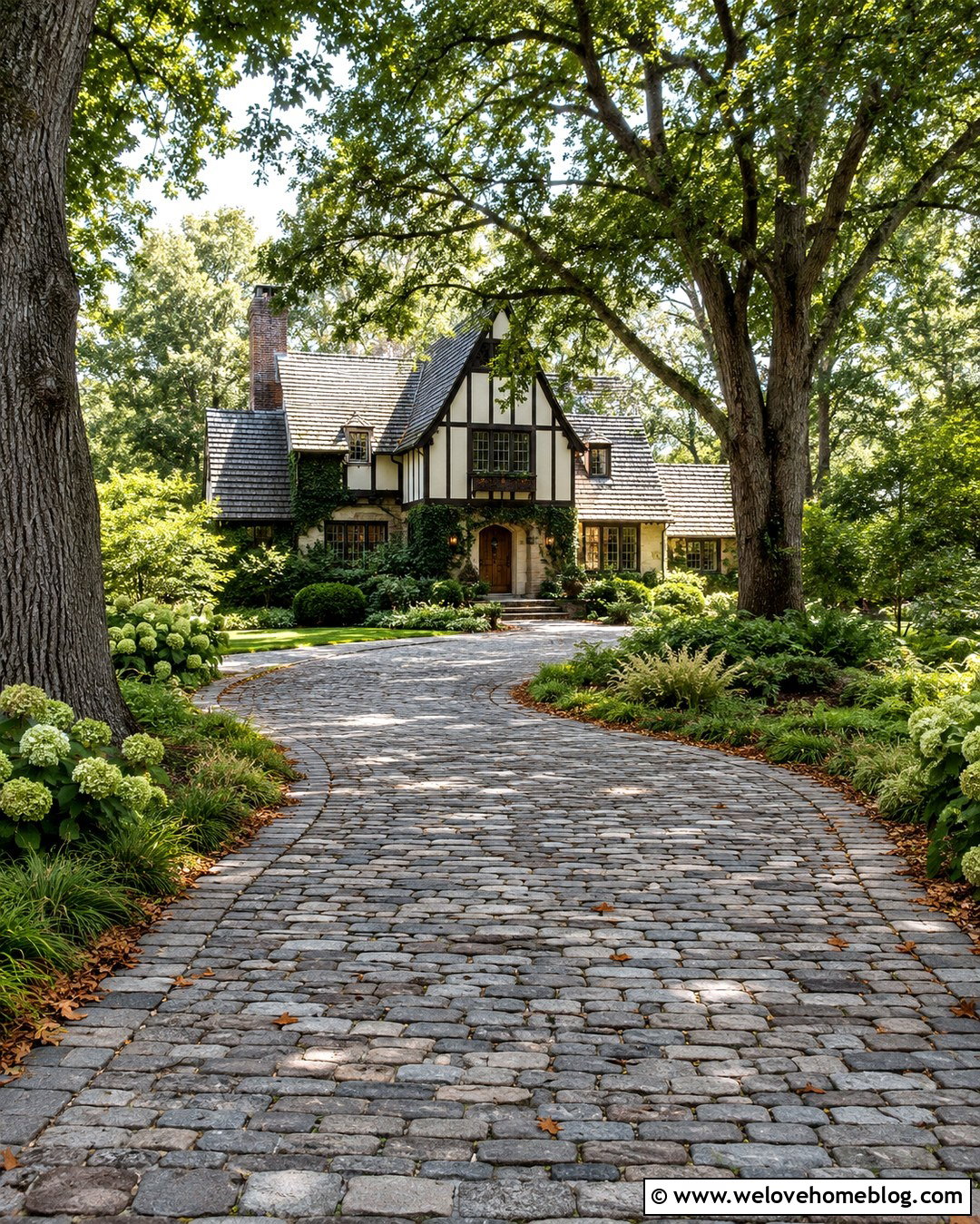
Cobblestone creates a rich, textured entrance that can make even a short driveway feel distinctive. Use granite cobblestones across the entrance apron, then continue them into a gently curved driveway or transition them into smoother concrete farther inside the property. Stone pillars with simple caps can frame the opening without competing with the paving. Add restrained landscaping such as clipped evergreens, ground-cover roses, and a well-kept lawn. Because cobblestone has a visually active surface, surrounding materials should remain quiet and coordinated. Gray, brown, and charcoal stones suit Tudor, European-inspired, traditional, and stone-front homes. A smooth walkway beside the driveway gives pedestrians a more comfortable route while allowing the cobblestone to remain the main entrance feature.
11. Resin-Bound Driveway Entrance
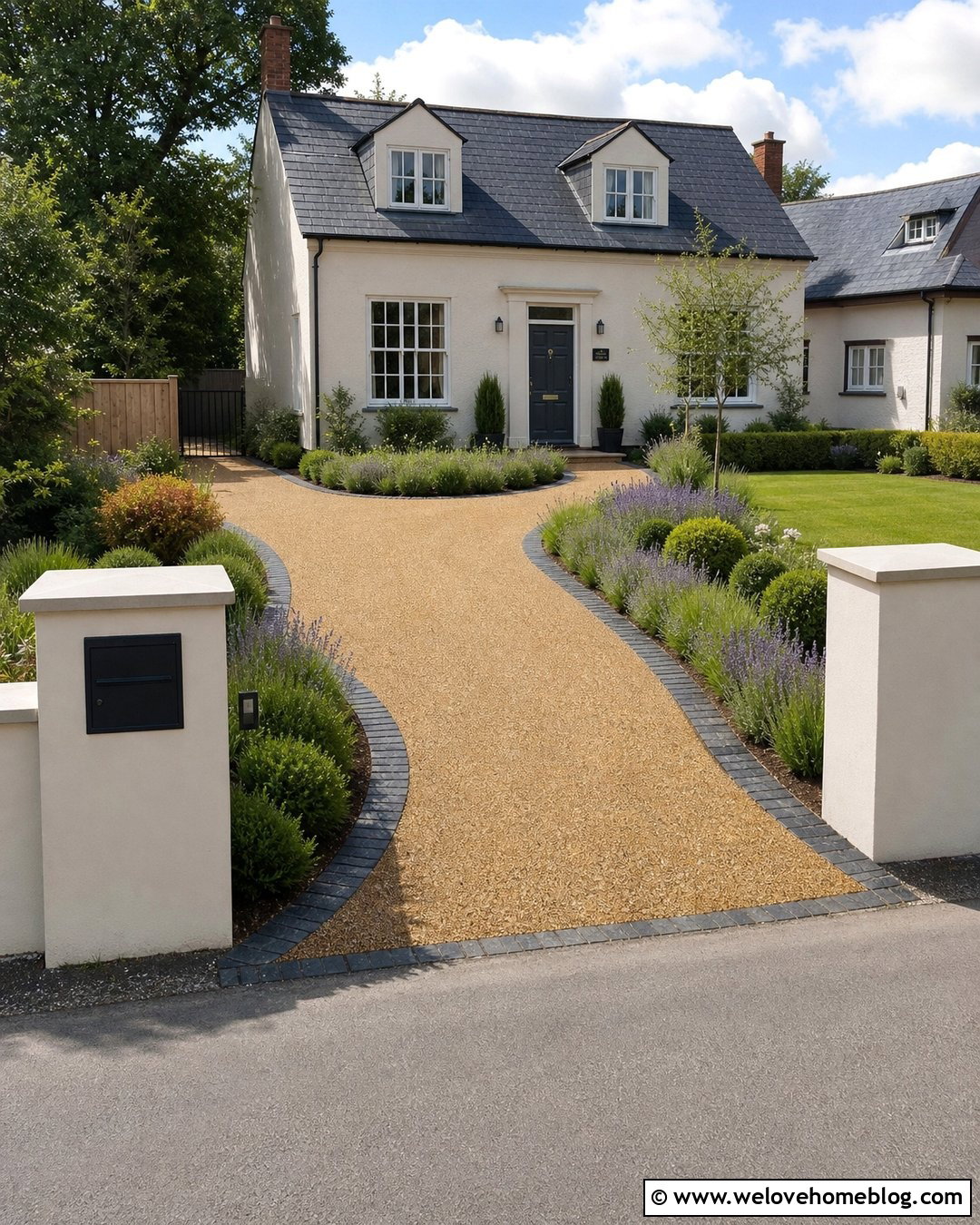
A resin-bound gravel surface gives the entrance the natural appearance of small stones with a cleaner, more unified finish. Choose a warm golden blend for a traditional house or a cool gray mixture for a modern facade. Shape the driveway with a gentle curve, then contain it with dark granite setts or slim concrete edging. At the street, install low rendered pillars and an integrated address panel. Lavender, compact grasses, and rounded evergreen shrubs can frame the entrance without spilling over the driving area. The consistent surface makes the overall approach look calm and uncluttered. This complete design is effective for updated ranch houses, contemporary homes, and renovated cottages where owners want texture without the appearance of loose gravel.
12. Permeable Paver Driveway Entrance
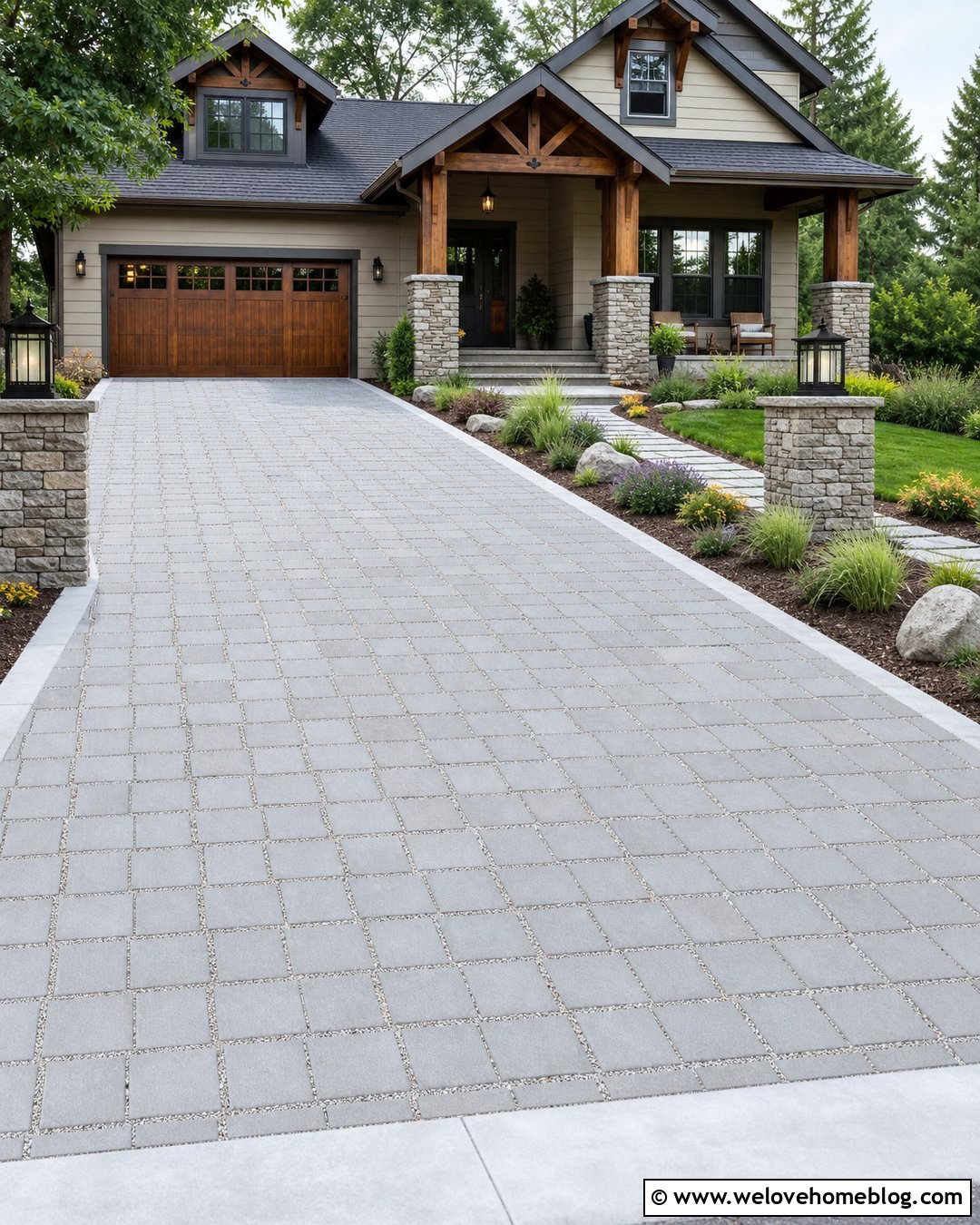
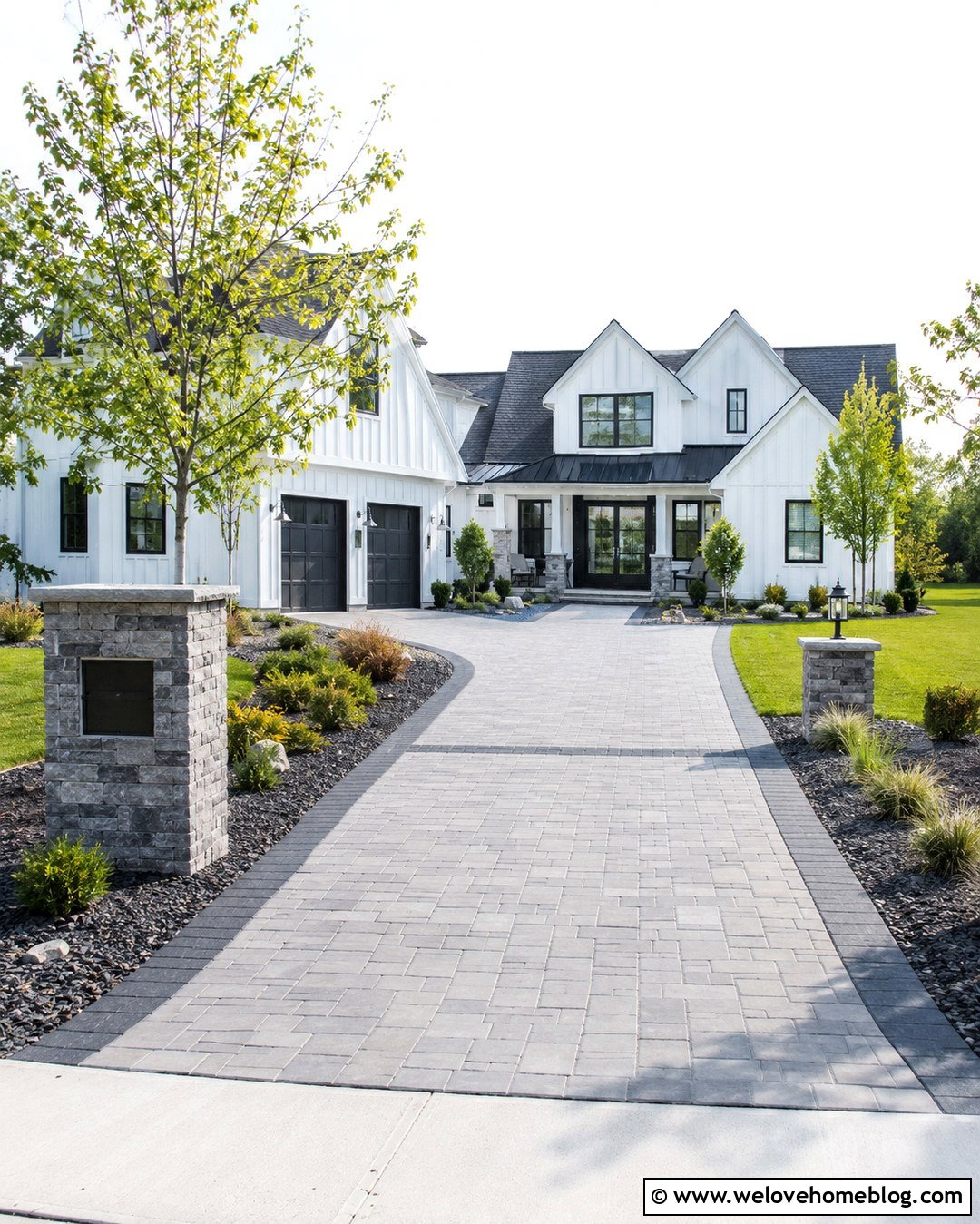
Permeable pavers can turn the driveway entrance into an attractive transition between the street, lawn, and home. Use interlocking concrete pavers in a soft gray tone, with small aggregate-filled joints that remain visible across the surface. A straight layout provides a clean approach to a contemporary Craftsman or modern farmhouse. Mark the entrance with short stone columns and wide planting beds filled with drought-tolerant shrubs. Carry the same pavers into a separate walkway so guests do not need to use the vehicle route. The paver pattern, joint material, base, and drainage plan must work together as a complete system. Before installation, check local requirements and have site conditions evaluated, especially where runoff, freezing weather, or heavy soil may affect performance.
13. Tree-Lined Driveway Entrance
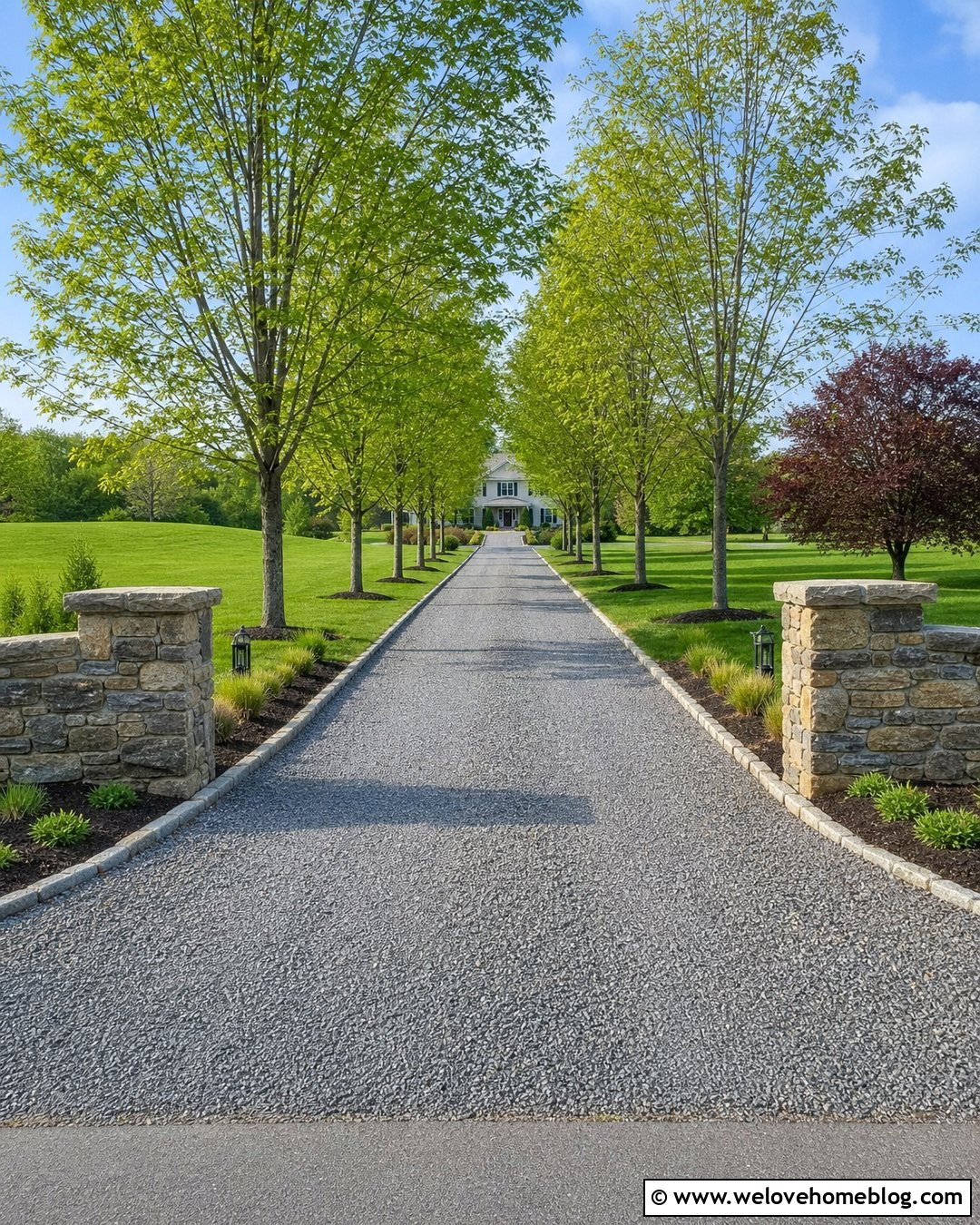
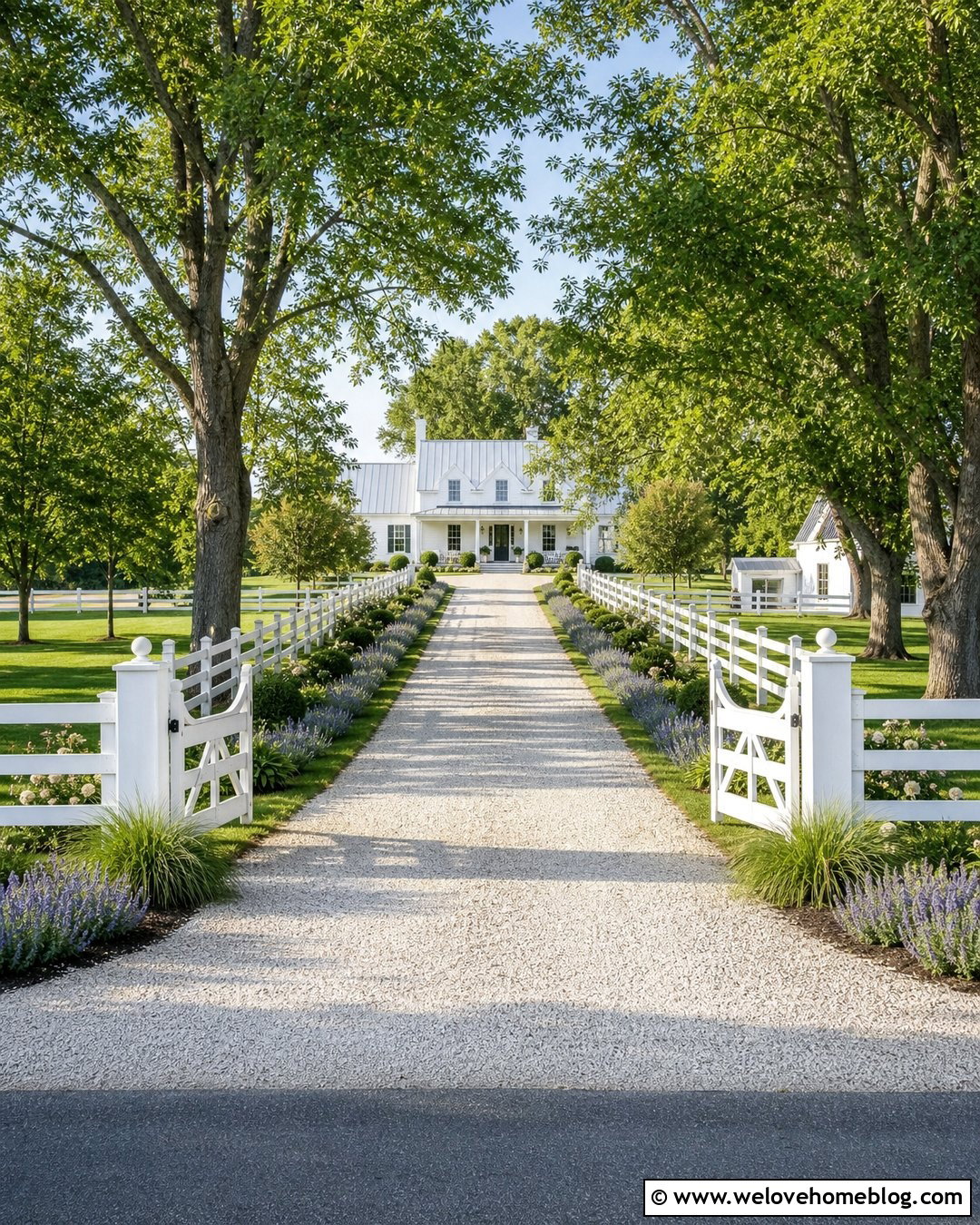
Trees can transform a long driveway into a structured approach that naturally directs attention toward the house. Begin with a wide gravel entrance bordered by low fieldstone walls, then plant evenly spaced trees along both sides of the drive. Choose species suited to the climate, soil, overhead clearance, and mature planting width. Set trunks far enough from the pavement to protect both roots and vehicles. Underplant the trees with simple ground cover, ornamental grasses, or a continuous lawn rather than crowded flower beds. A crushed granite surface and weathered stone edging create a relaxed finish for a farmhouse or country residence. Repeating the same tree variety provides rhythm, while a contrasting specimen near the house marks the end of the approach.
14. Native Plant Driveway Entrance
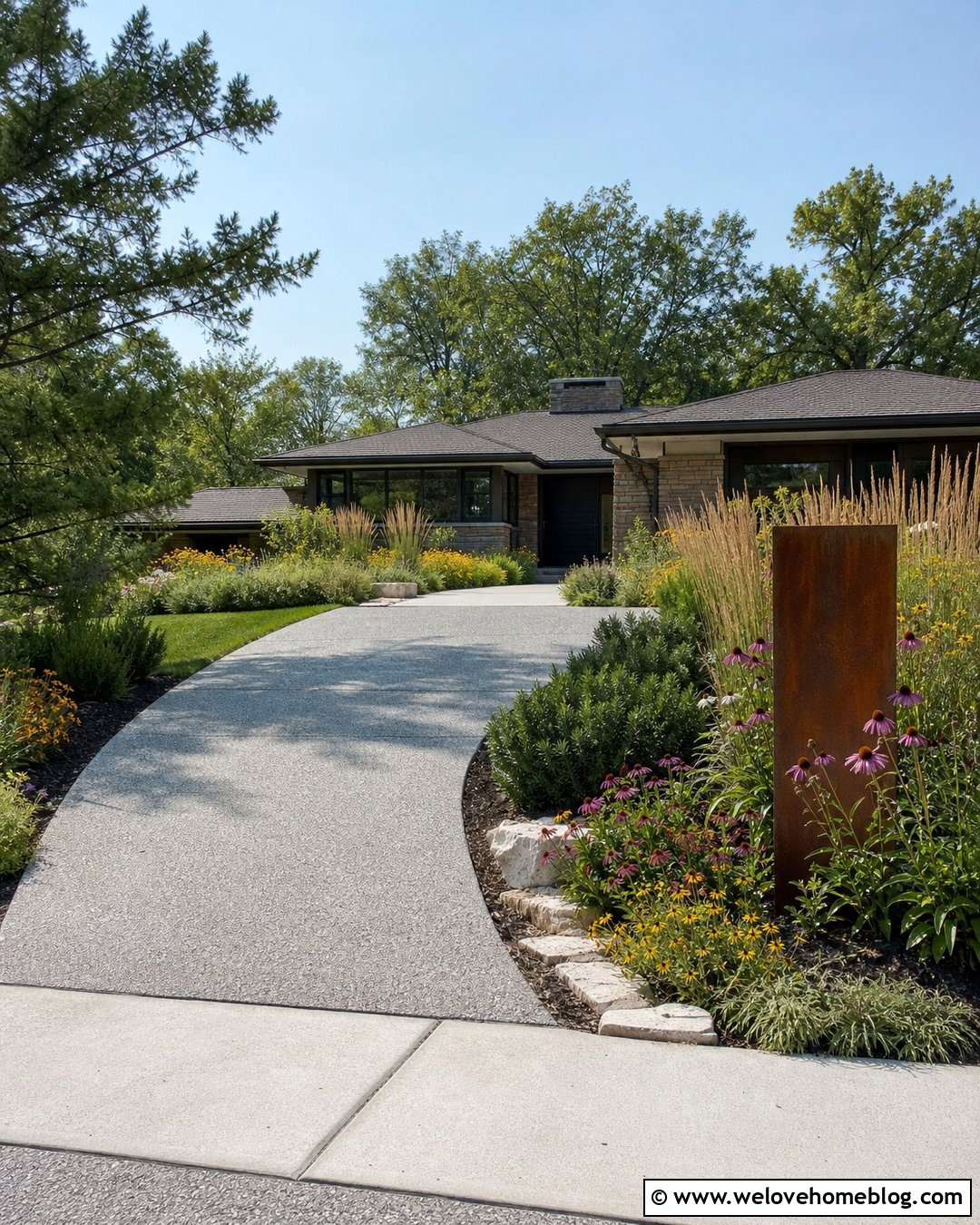
Native planting can give a driveway entrance a layered, natural appearance that suits the surrounding region. Pair a light exposed-aggregate concrete driveway with broad curved beds at the road. Fill the beds with regionally appropriate grasses, flowering perennials, and compact shrubs arranged in repeated groups. A weathering-steel address marker can rise above the lower plants without requiring bulky pillars. Use stone edging or a clean-cut border to keep the planting from appearing untidy. The driveway should remain visually open at the street, with taller species positioned farther into the property. This complete entrance looks particularly effective with modern ranch, Prairie, and contemporary homes. Repeating a limited plant palette on both sides creates cohesion while still allowing an informal, habitat-friendly character.
15. Hydrangea Driveway Entrance
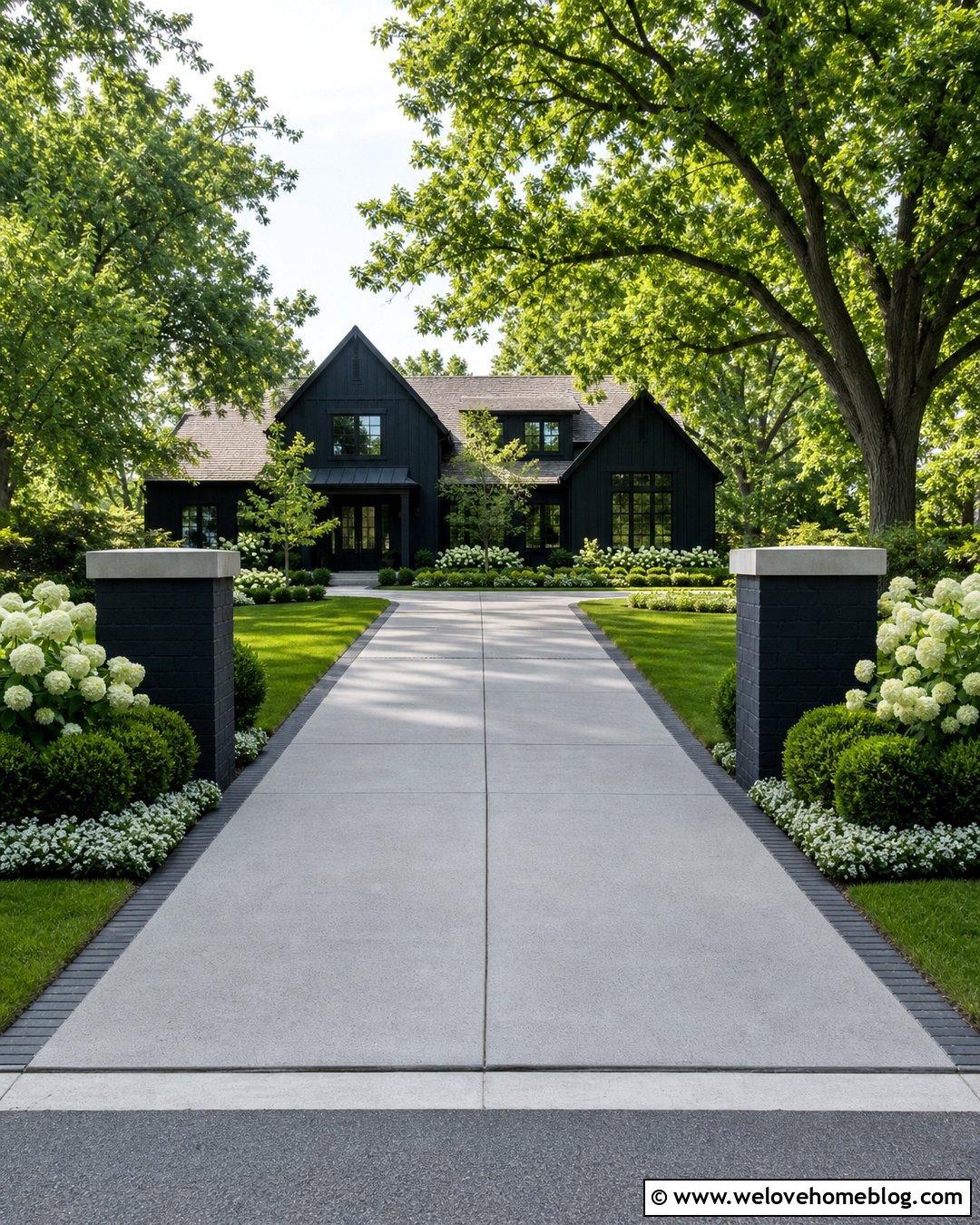
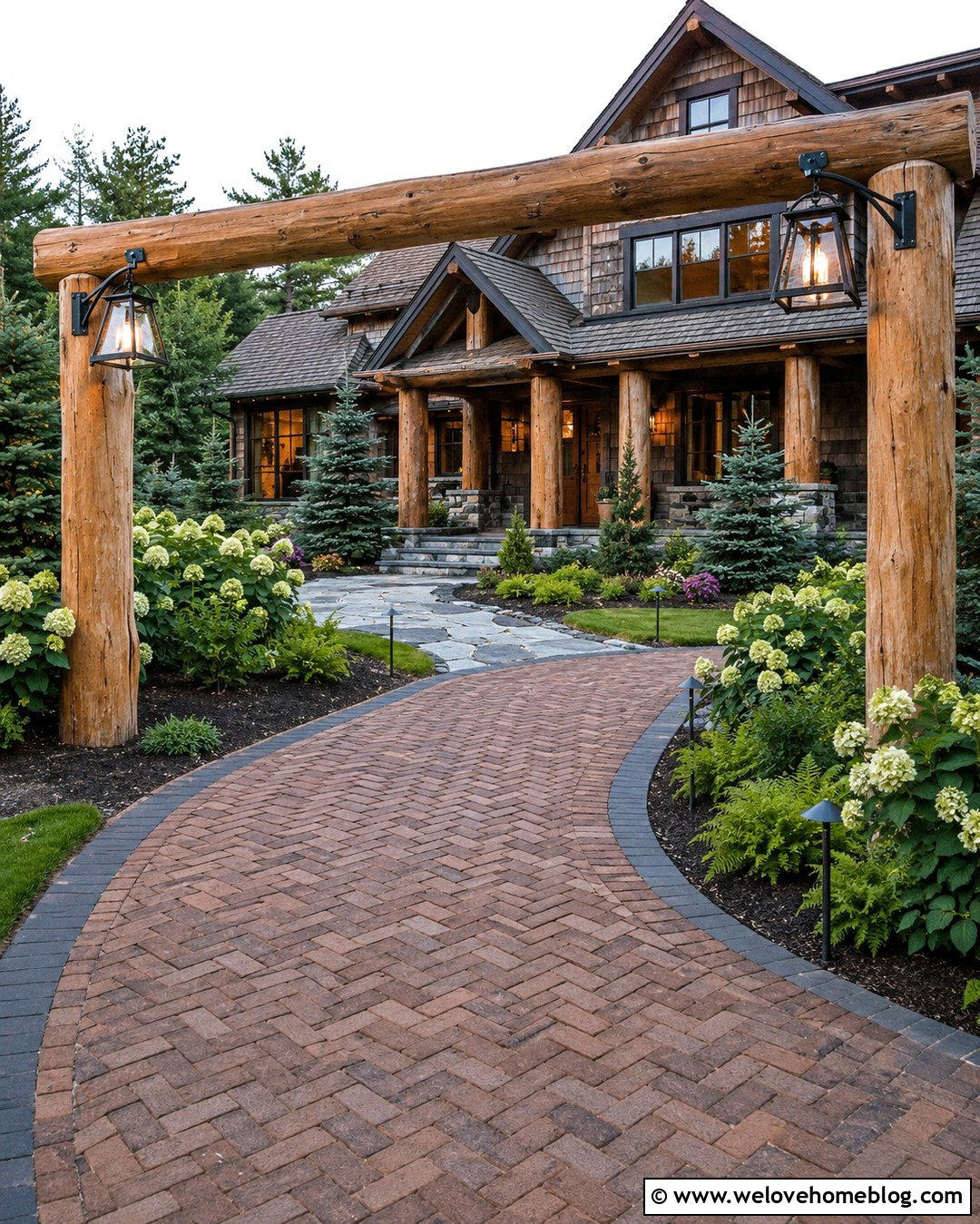
Large hydrangea borders can create a lush entrance when they are given enough room to mature. Pair a straight gray concrete driveway with a soldier-course border of charcoal brick pavers. Place hydrangeas in wide beds several feet back from the pavement, then add low boxwoods or ground cover along the front edge. White-flowering varieties offer a calm look beside a dark-painted farmhouse, while pink or blue blooms can complement traditional siding. Brick or painted masonry pillars provide a clear beginning without requiring a gate. Consider mature shrub width, winter appearance, irrigation needs, and local growing conditions before planting. The result should frame the driveway rather than crowd it, leaving a comfortable opening and an unobstructed view toward the front porch.
16. Evergreen Driveway Entrance
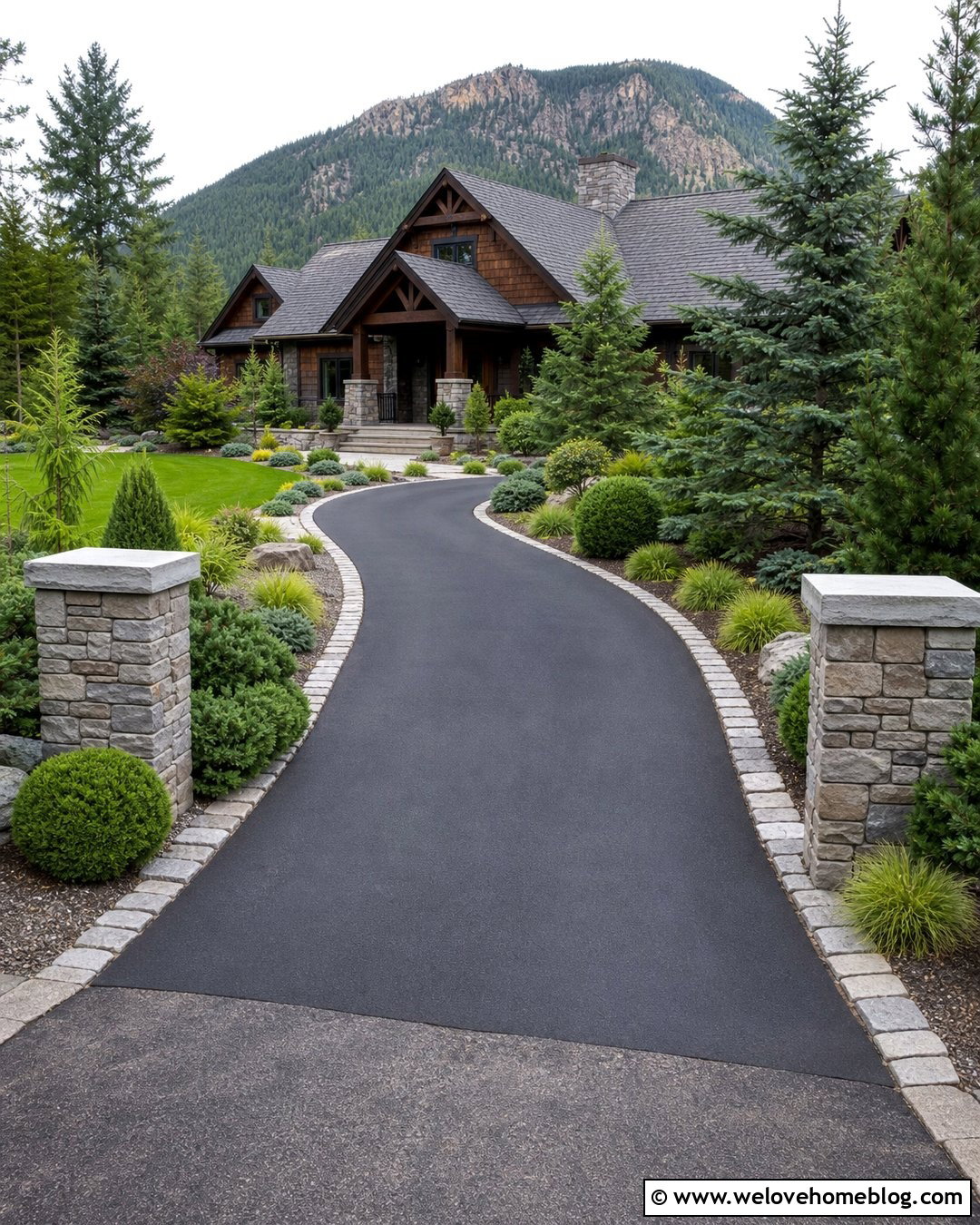
An evergreen-focused entrance offers steady structure through every season. Use a curved dark asphalt driveway bordered with light granite cobbles to create strong contrast. At the entrance, arrange compact conifers and broadleaf evergreen shrubs in staggered groups around two simple stone address columns. Mix upright, rounded, and spreading forms so the beds have depth without needing constant seasonal color. Decorative gravel mulch can reduce the amount of exposed soil and visually connect the planting to the stone border. Keep shrubs low near the road and place taller specimens farther back. This complete look works with traditional, Craftsman, mountain, and ranch houses. Allow adequate space between plants so the mature landscaping remains balanced instead of becoming an overgrown wall.
17. Dry Creek Driveway Entrance
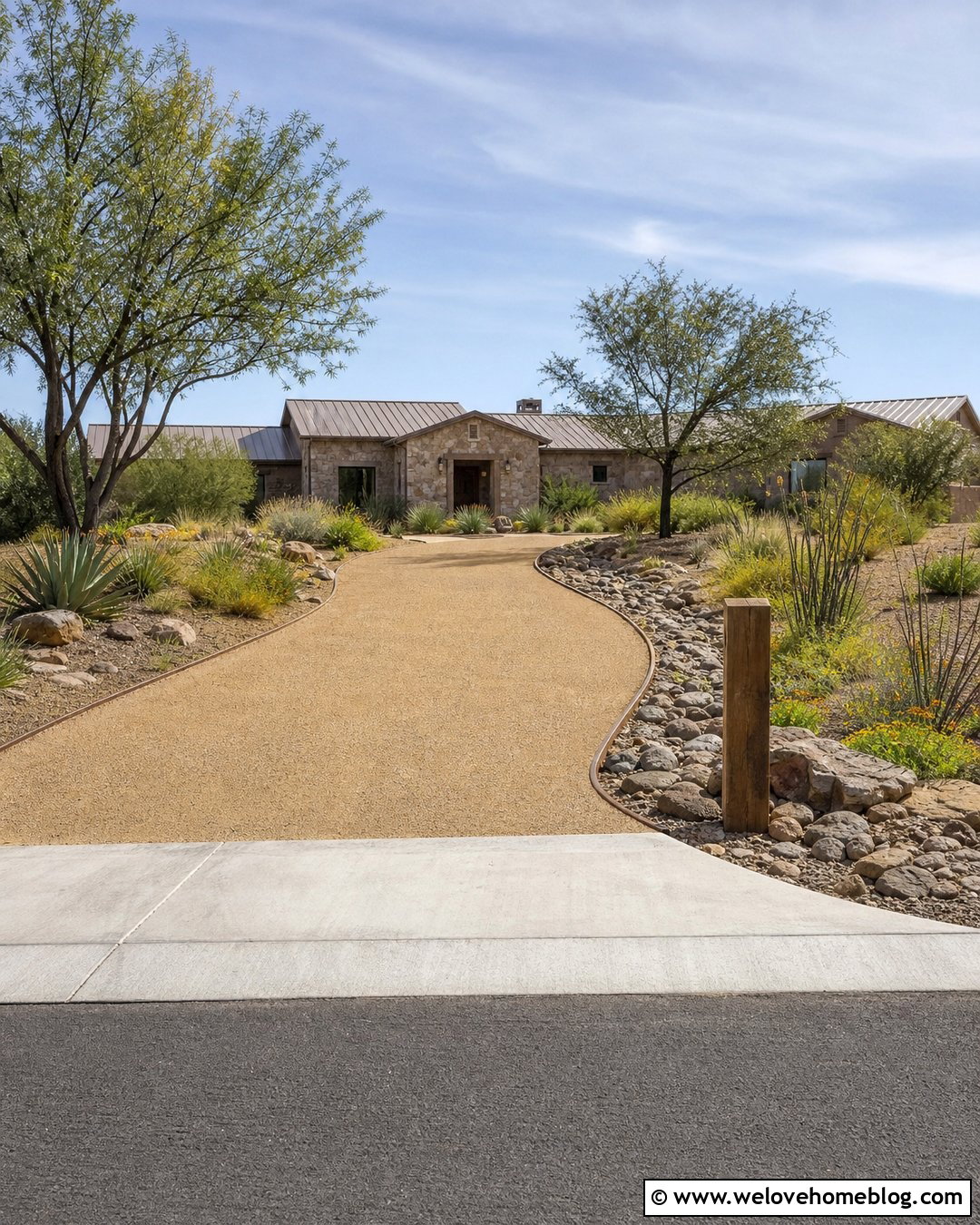
A dry creek bed brings natural texture to an entrance while visually connecting the driveway with a sloped or informal landscape. Use a tan decomposed-granite driveway with steel edging and create a shallow stone-lined channel beside the entrance. Arrange river rocks in mixed sizes, then soften the edges with native grasses, sedges, and drought-tolerant shrubs. A small stone bridge or reinforced driveway crossing can make the drainage feature feel intentional, but its construction should suit actual site conditions. Add a timber address post that matches the warm tones of the surface. This entrance complements desert, Southwestern, rustic, and contemporary ranch homes. Keep loose rock away from the driving lane and maintain a clear, durable transition at the public road.
18. Retaining Wall Driveway Entrance
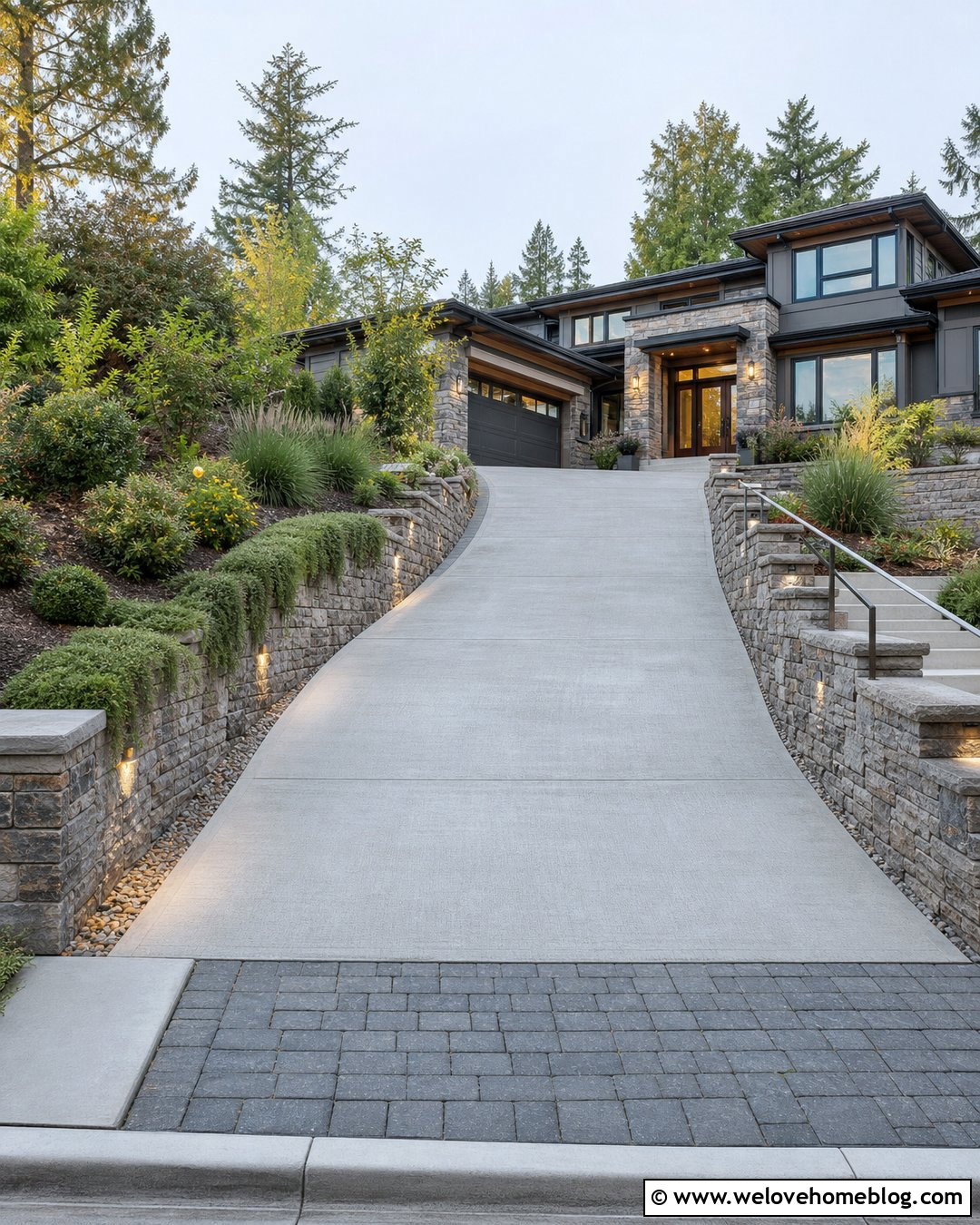
A retaining wall can turn a difficult sloped entrance into a strong architectural feature. Pair a sloping brushed-concrete driveway with low walls made from natural ledgestone or coordinated concrete blocks. Step the walls gradually with the grade rather than creating one overwhelming vertical face. Cap them with smooth stone and add low landscape lighting where appropriate. Above the walls, use cascading ground covers, ornamental grasses, and shrubs with roots suited to the available planting depth. A contrasting paver band across the driveway can mark the entrance and repeat the wall color. This complete approach works well for hillside ranch, Craftsman, and contemporary homes. Proper drainage and structural design are essential, so substantial retaining walls should be planned for local soil and load conditions.
19. Driveway Entrance With Address Sign
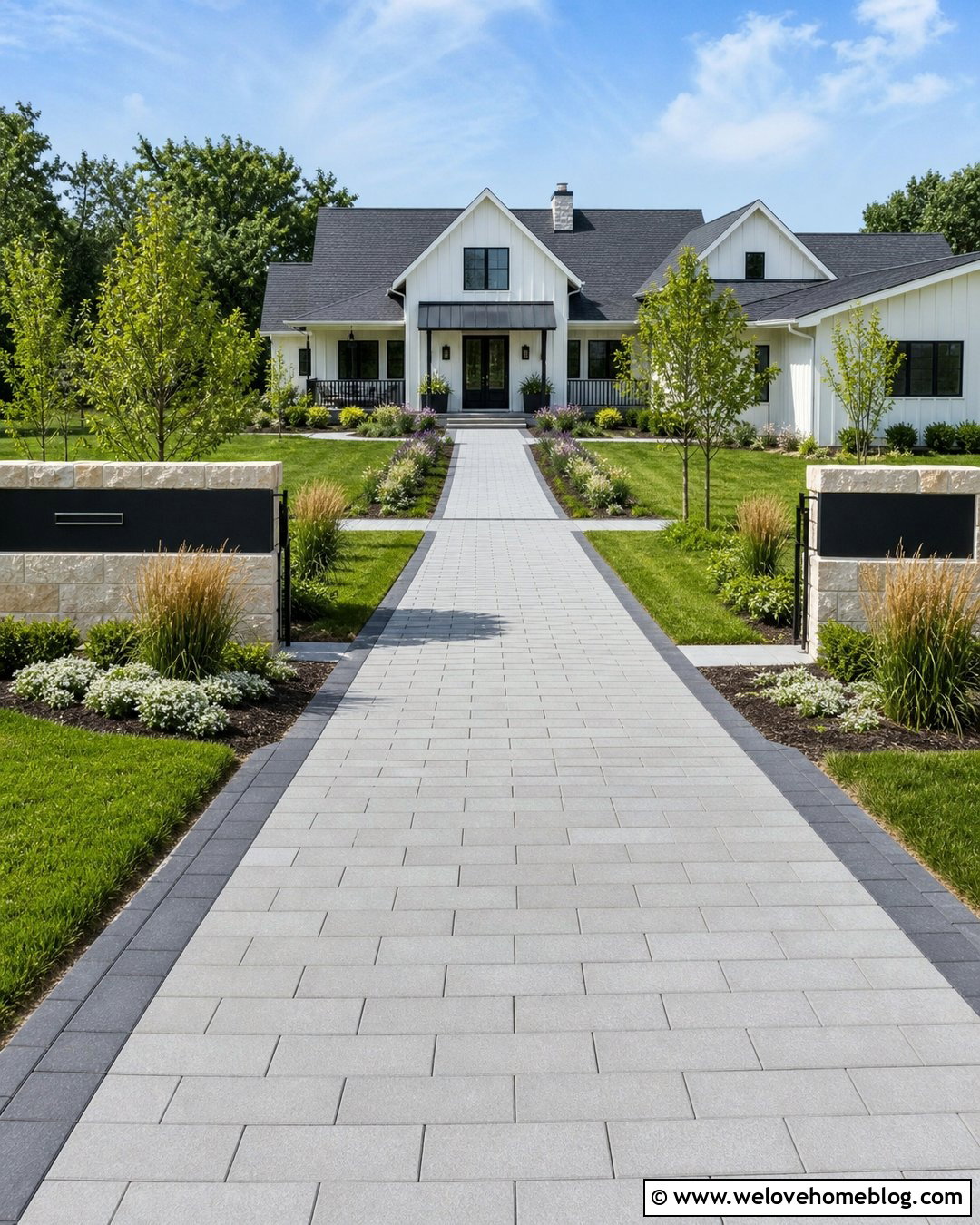
A clearly visible address marker can become the organizing feature of the entire driveway entrance. Set a large horizontal metal number panel into a low stone wall beside a straight concrete paver driveway. Repeat the home’s exterior colors through the stone, sign finish, and paver border. Add a narrow bed of ornamental grasses and low flowering plants beneath the sign, keeping every number unobstructed. On the opposite side, use a matching but simpler planting bed to balance the entrance. The result feels coordinated without requiring two expensive monuments. This design works with modern farmhouse, transitional, and contemporary suburban homes. Position the marker where it can be seen from the usual direction of approach and where it does not interfere with driver sightlines.

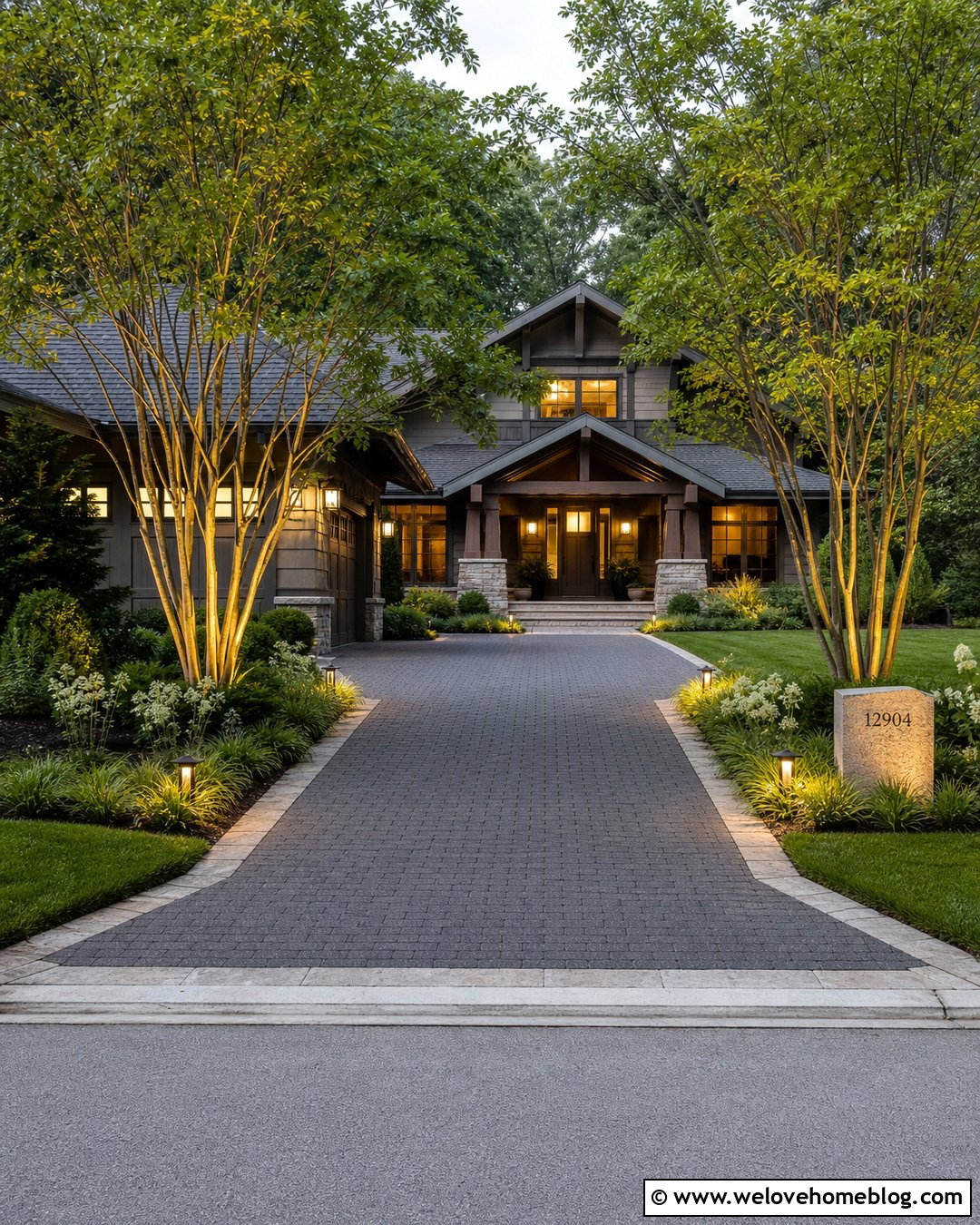
20. Driveway Entrance With Solar Lighting
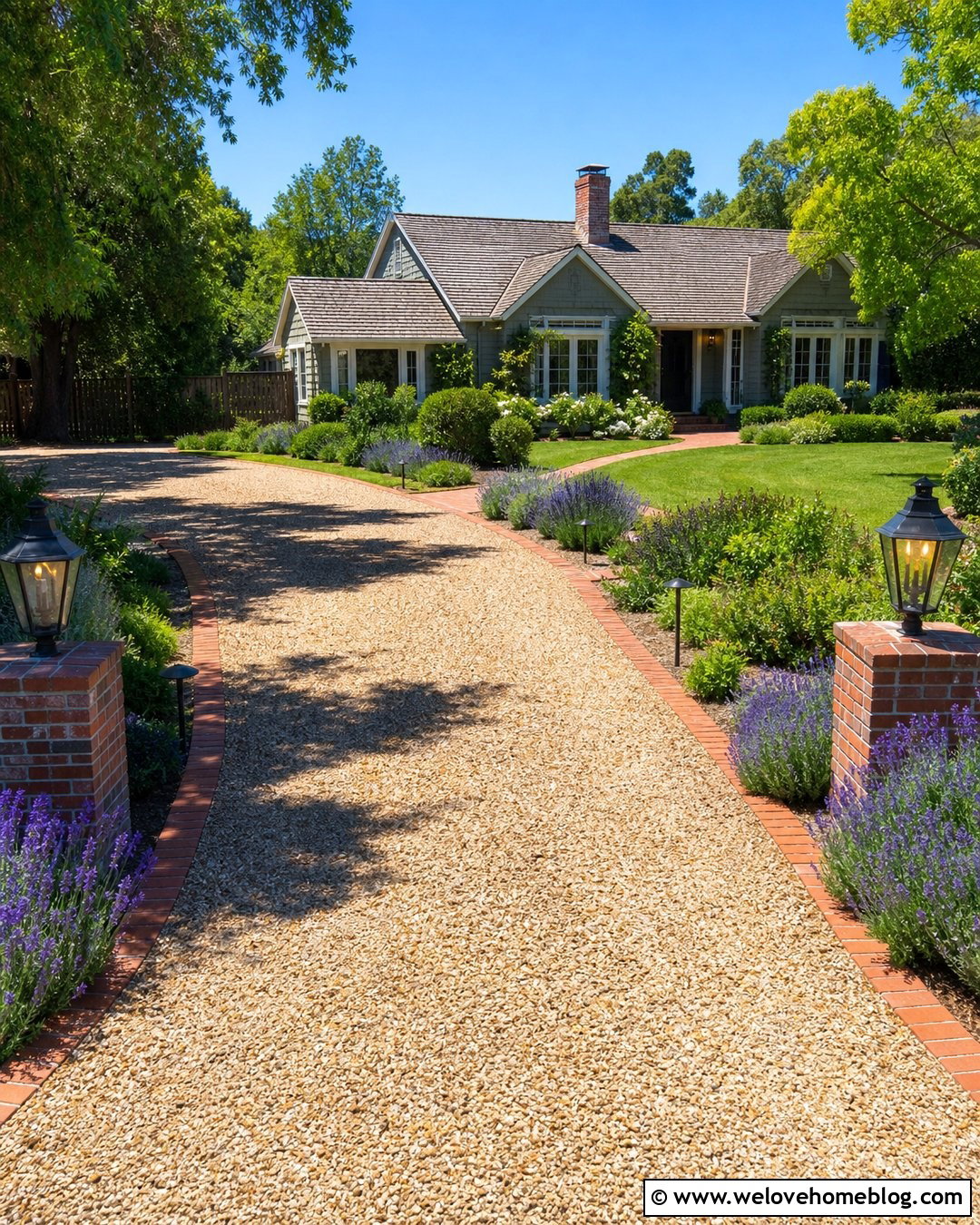
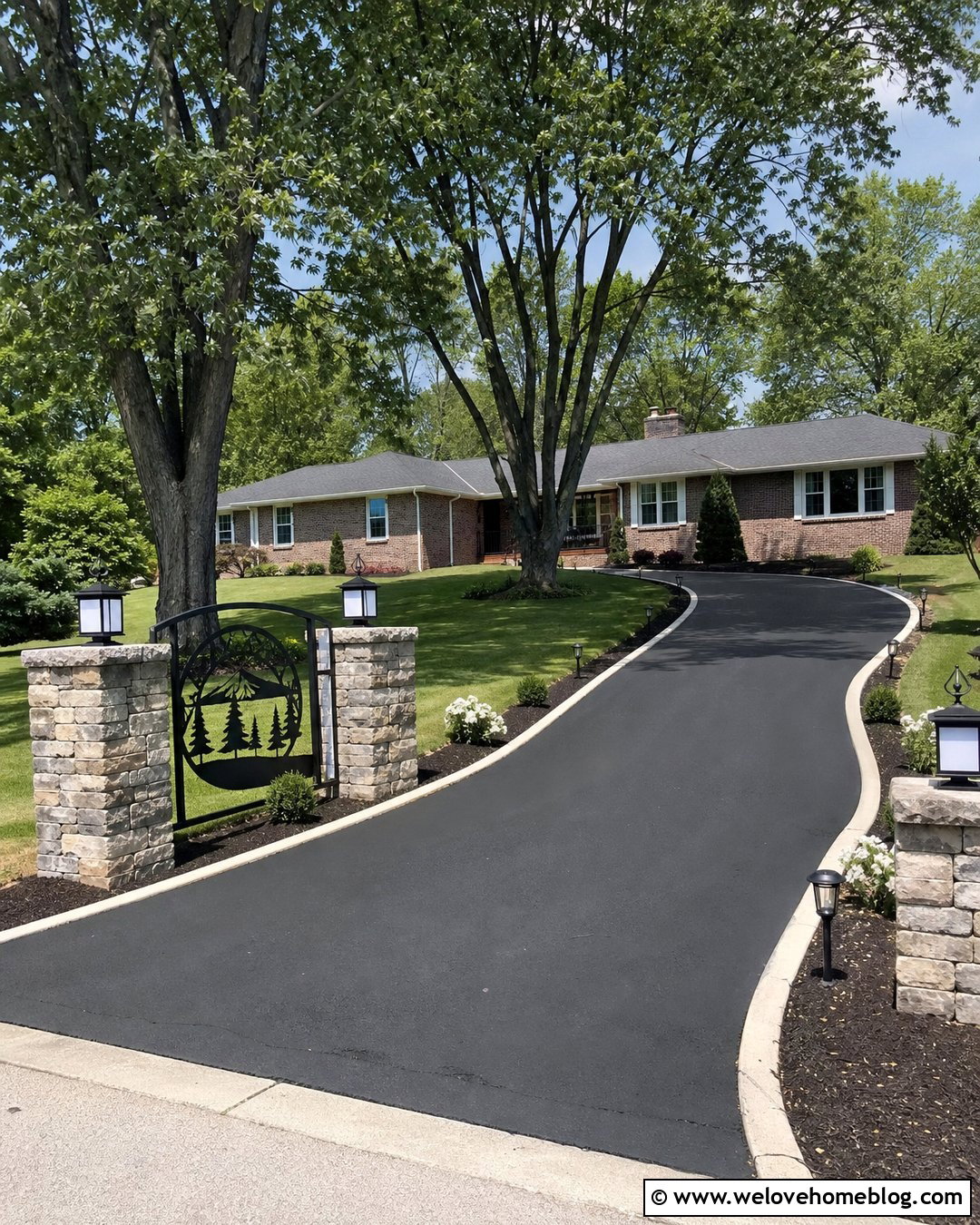
Solar lighting can add definition to a driveway entrance where running new wiring is inconvenient. Begin with a curved pea gravel driveway contained by warm brick edging. Place well-proportioned solar fixtures along the first section of the drive, spacing them consistently rather than crowding every edge. At the road, use low brick columns with separate illuminated address numbers and surround them with compact lavender, catmint, and evergreen shrubs. Choose fixture finishes that coordinate with the house hardware and gate details. The entrance should still look complete during daylight, with lighting serving as a supporting feature rather than the only decoration. This approachable design suits cottages, ranch homes, and casual suburban properties, especially when the brick border continues into the front walkway.
21. Driveway Entrance With Lantern Pillars
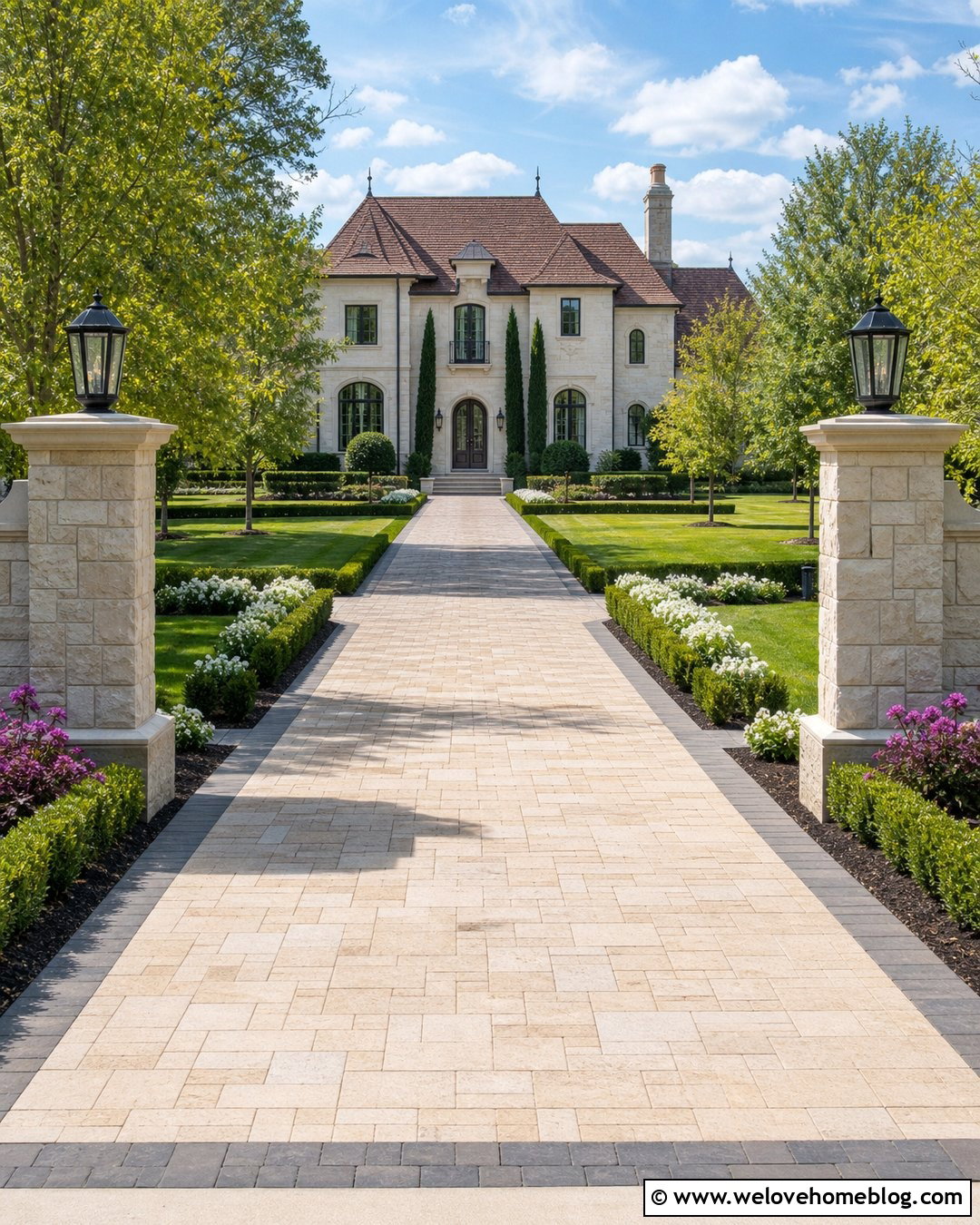
Lantern-topped pillars create a recognizable entrance and provide a strong sense of symmetry. Pair limestone-clad columns with a straight driveway made from beige concrete pavers in a running-bond pattern. Use dark metal lanterns that coordinate with the home’s porch lights, door hardware, and window trim. Low hedges can extend outward from the columns, while seasonal flowers add controlled color near the base. Continue a darker paver border down both sides of the driveway to reinforce the formal layout. This complete entrance works especially well with Colonial, French country, Georgian, and traditional homes. Select pillar and lantern dimensions that suit the driveway opening; fixtures that are too small disappear, while oversized ones can make an average suburban property feel visually crowded.
22. Driveway Entrance With Arbor
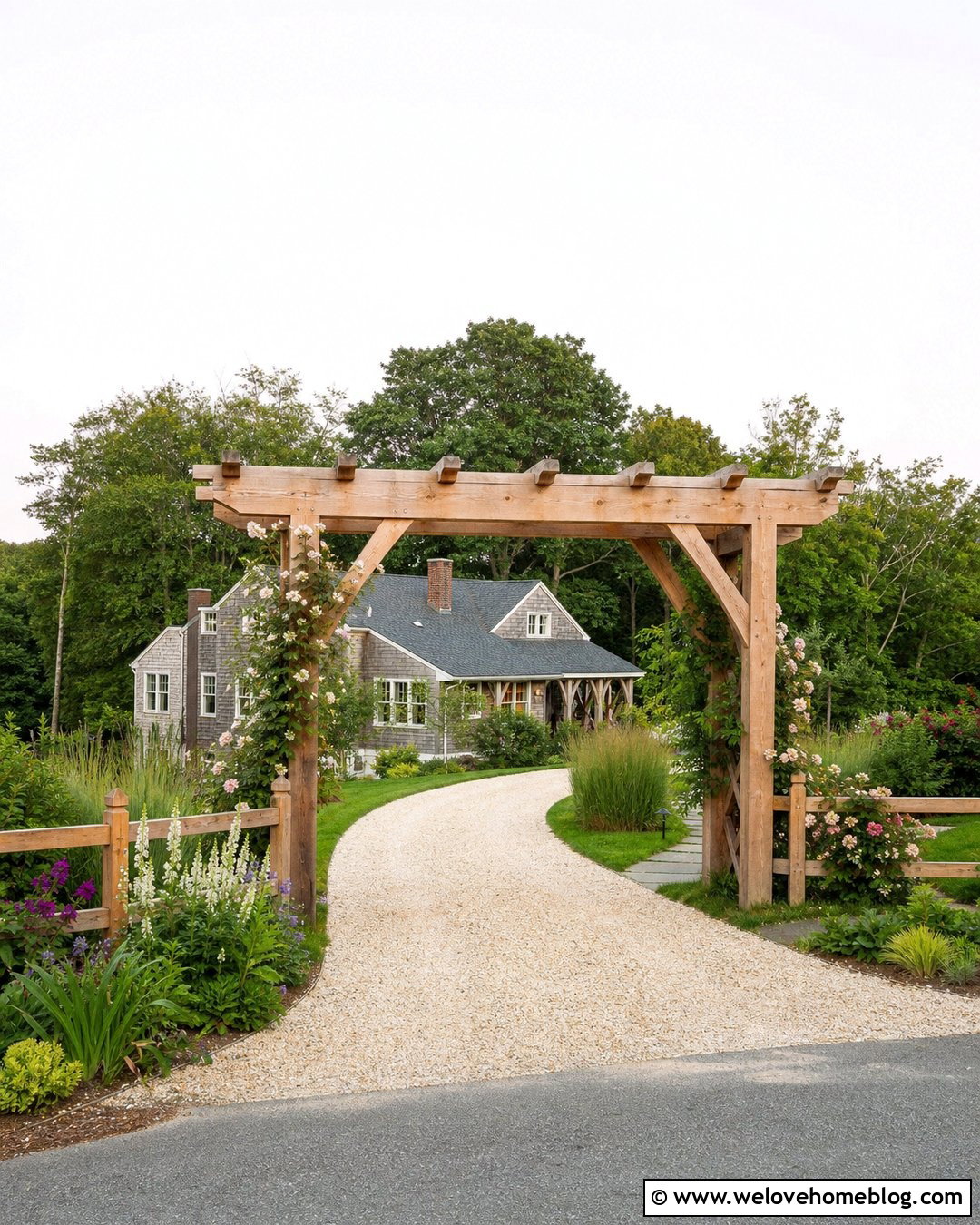
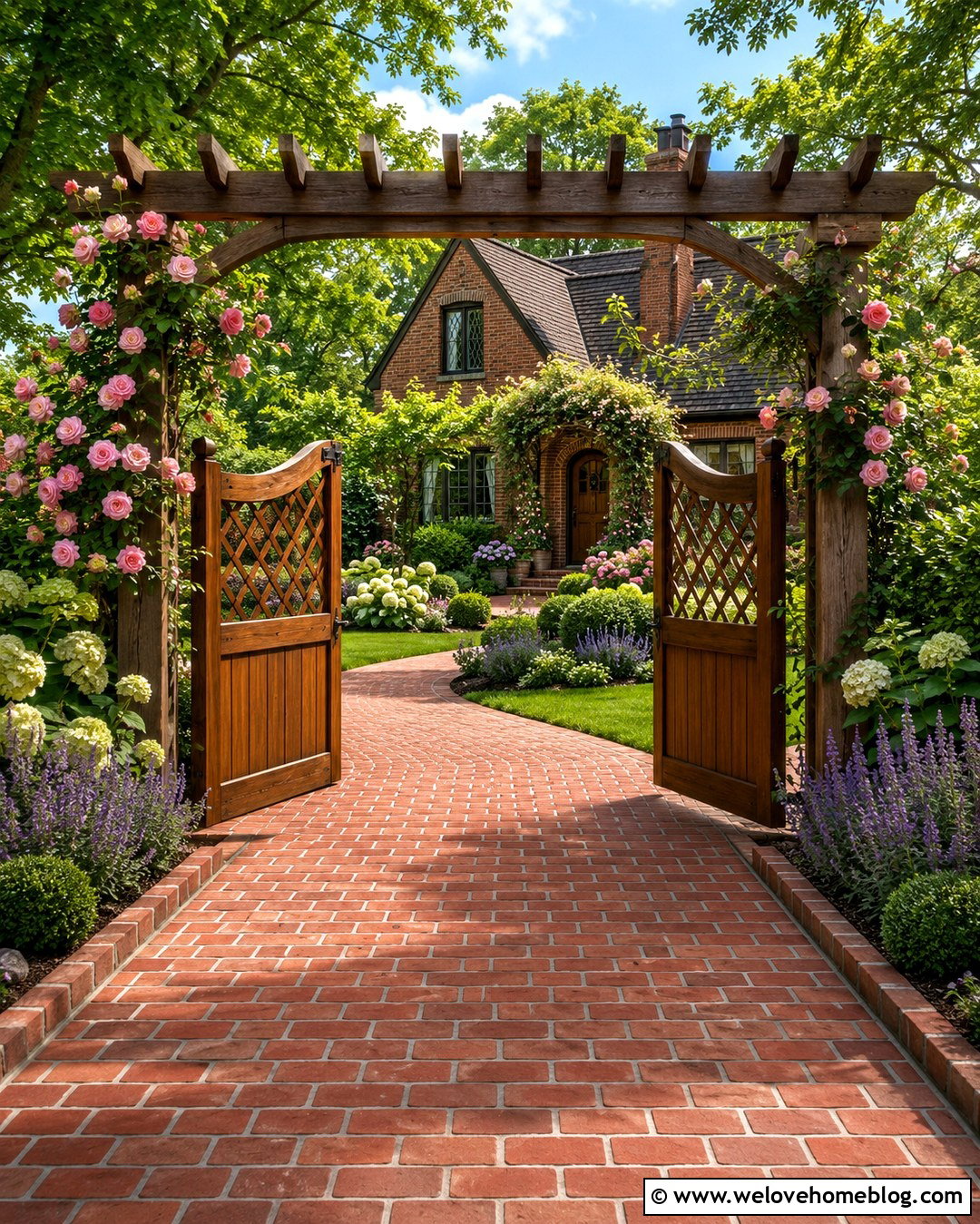
An arbor introduces height and softness without the weight of masonry pillars. Place a wide cedar arbor over or directly beside a pale crushed-stone driveway, ensuring its clear dimensions suit vehicle access if it spans the driving area. Train restrained flowering vines along the sides while keeping growth away from hinges, lights, and the overhead opening. Short cedar fencing can extend from the arbor into informal cottage beds filled with roses, salvia, and ornamental grasses. Add a separate flagstone walkway and smaller pedestrian opening for guests. The natural wood, loose stone, and layered planting create a relaxed entrance for cottage, farmhouse, and Craftsman homes. Keep the driveway curve gentle so the arbor remains visible as vehicles approach from the street.
23. Split-Rail Fence Driveway Entrance
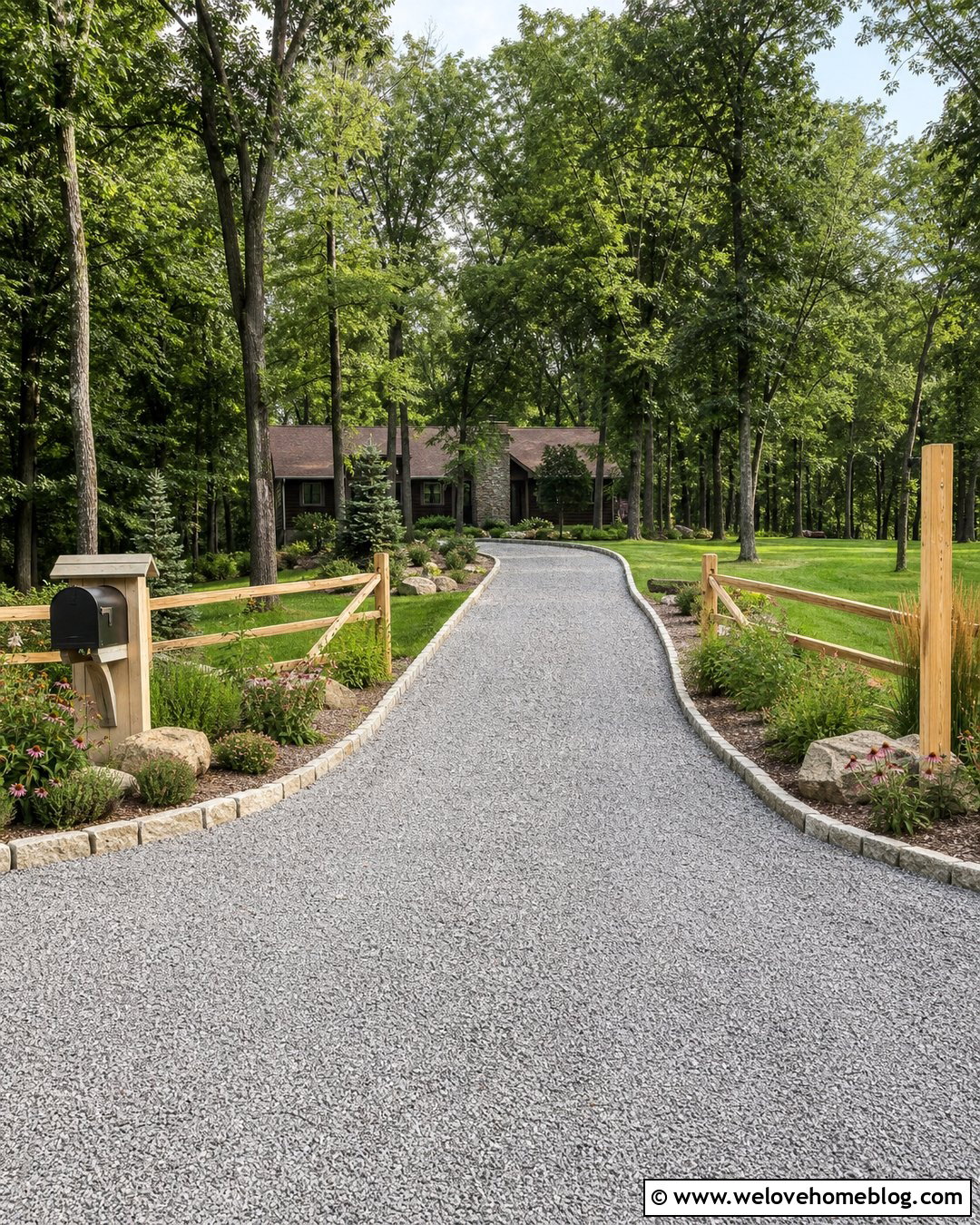
Split-rail fencing can define a wide rural entrance without making the property feel closed off. Use a gently curving driveway surfaced with gray crushed stone and edged with rough granite blocks. Begin the fence several feet from the driving lane, then sweep it outward toward the road to emphasize the entrance width. Large native grasses, coneflowers, and low shrubs can fill the spaces around the rails. Add a simple timber address post on one side and a matching mailbox structure on the other. The repeating wood details help the complete design feel balanced. This approach works well for ranches, wooded properties, cabins, and modern farmhouses. Maintain generous visibility at the road and avoid placing tall plants where they could conceal approaching traffic.
24. Budget Gravel Driveway Entrance
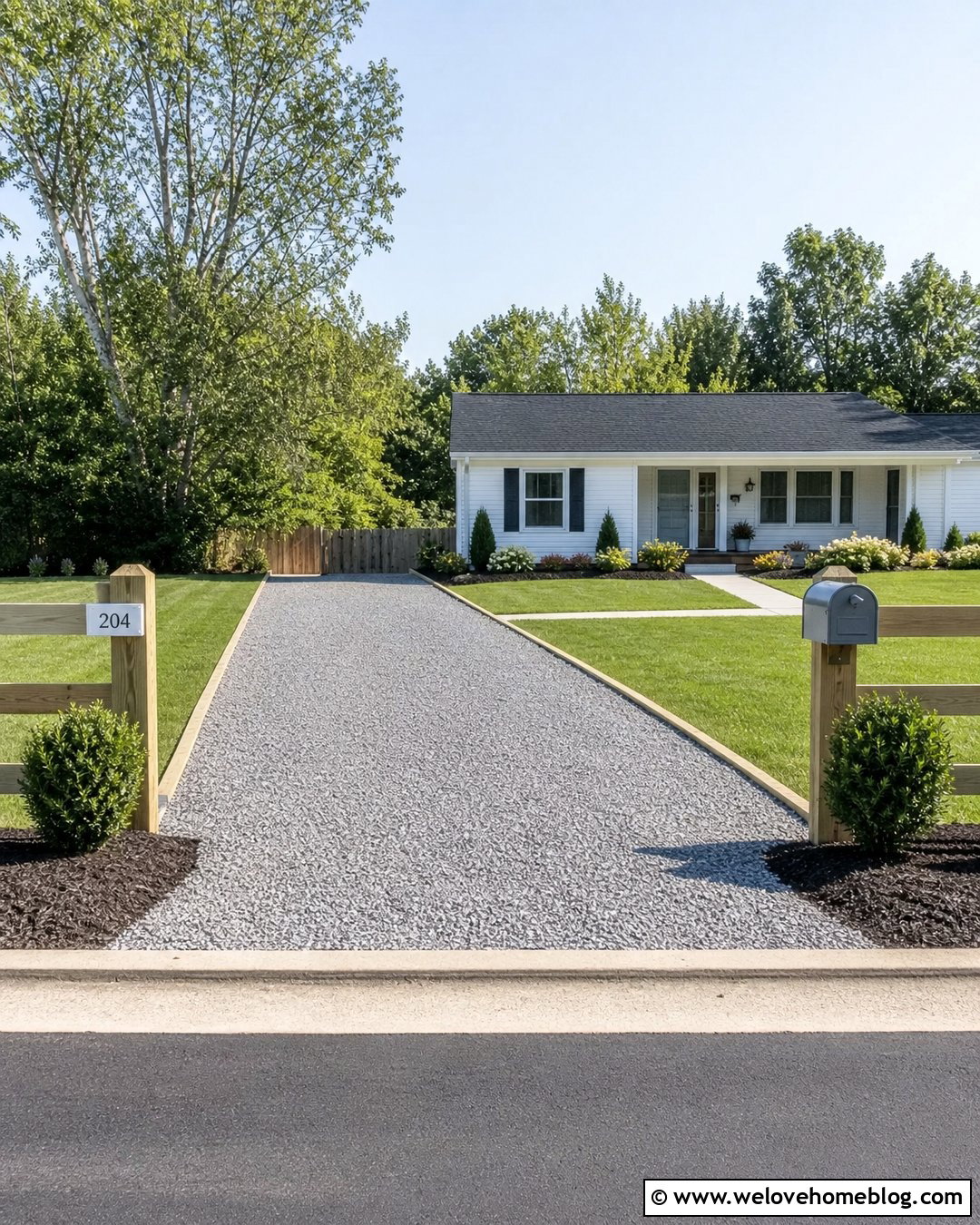
An attractive entrance does not require elaborate gates or custom masonry. Refresh a straight driveway with compacted gray crushed gravel, then define the opening with pressure-treated timber edging. Install two simple wood posts and connect them visually with a low rail fence extending into the yard. A painted address plaque, matching mailbox, and pairs of durable shrubs can create symmetry at a manageable cost. Use mulch beds around the posts to separate plants from loose gravel and simplify trimming. Farther along the drive, maintain clean lawn edges to make the whole approach look cared for. This affordable design suits ranch, cottage, farmhouse, and small suburban homes. Focus the budget on good surface preparation and a stable road transition before adding decorative features.
25. Small Driveway Entrance
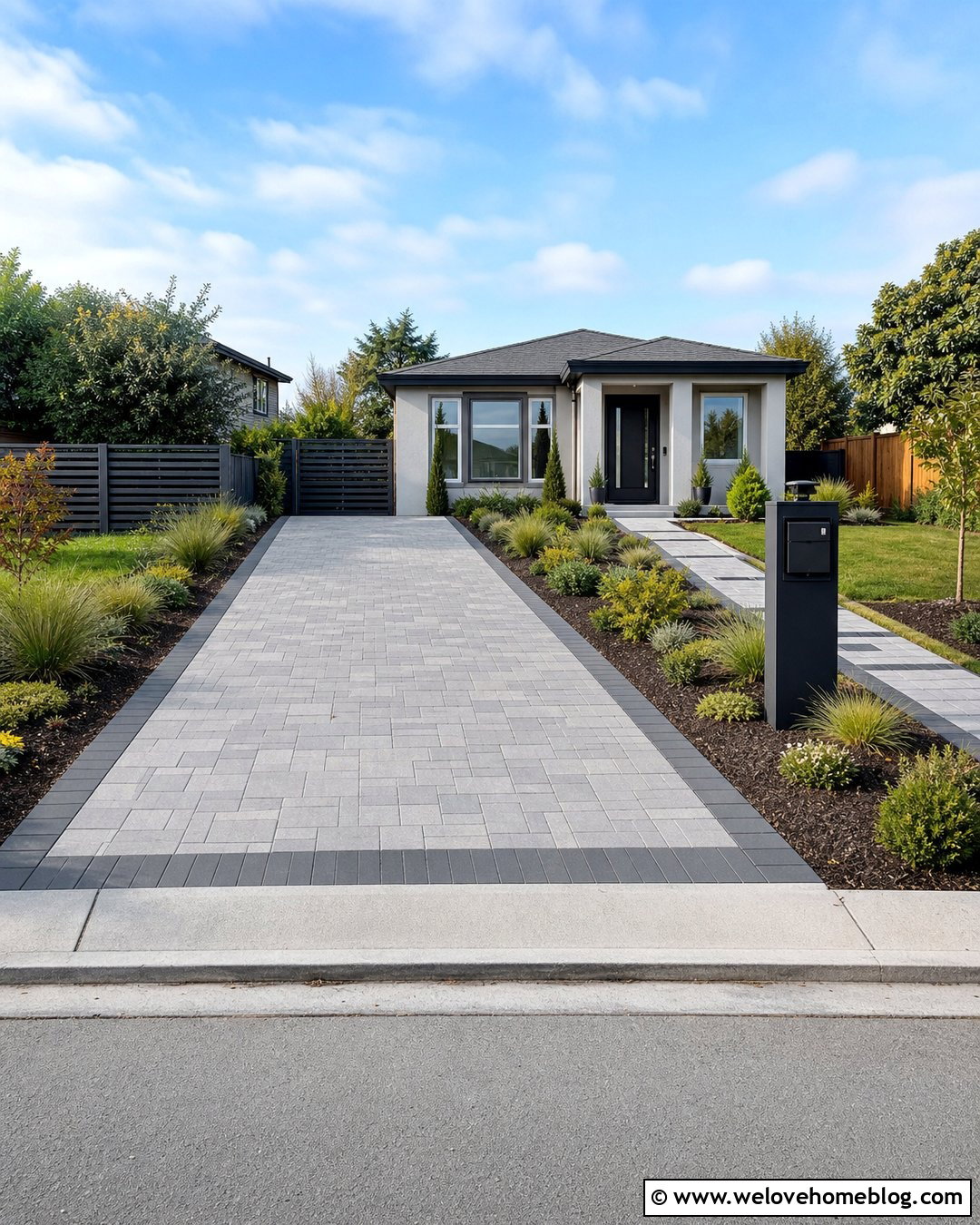
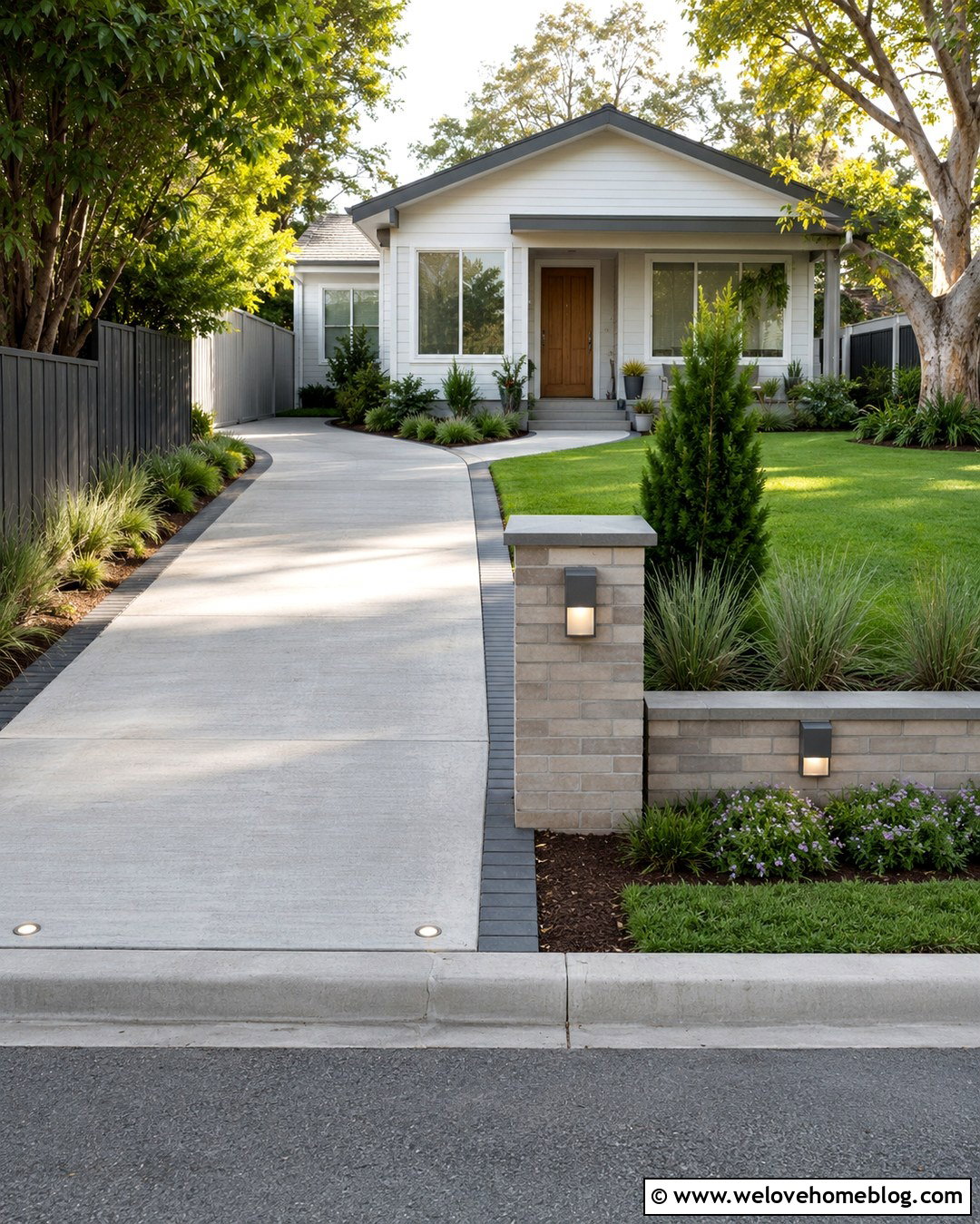
A compact entrance benefits from clean lines and carefully scaled details. Use light-gray concrete pavers for a narrow straight driveway, adding a dark charcoal border that clearly separates the surface from the lawn. Instead of bulky columns, install one slim vertical address sign with an integrated mailbox and a small planting bed beneath it. Low ornamental grasses, dwarf evergreens, and ground cover provide texture without reducing usable width. A narrow matching walkway can branch toward the front door near the house. Keep fencing low or visually open so the entrance does not feel confined. This complete look works with townhomes, bungalows, compact ranch houses, and small modern homes, proving that strong curb appeal depends more on coordination than property size.
Conclusion:
The most effective **25 Home Driveway Entrance Ideas** treat the entrance, driveway surface, borders, lighting, landscaping, and house as one connected composition. Start by identifying the practical needs of the property, including driveway width, visibility, drainage, slope, vehicle movement, and maintenance. Then select materials and features that repeat the home’s colors and architectural character. Stone pillars can bring structure, while gates increase definition and access control. Plants soften hard surfaces, and a distinctive apron can improve a basic driveway without changing its entire length. Whether you choose gravel, concrete, asphalt, pavers, brick, or resin-bound gravel, careful proportions and consistent materials will create a welcoming entrance that feels intentional from the street.

Related posts:
Leave a Reply