
A well-planned address marker does more than display house numbers. It helps define the entrance, guides visitors, and connects the street view to the home beyond it. The best driveway address sign ideas combine readable numbers with the driveway material, landscaping, architecture, and available space. Current designs range from natural stone monuments and cedar posts to steel pillars, planter signs, integrated mailboxes, and illuminated displays. () Before choosing one, consider how the sign will look from both traffic directions and whether plants could eventually hide it. Durable materials and strong contrast also make the entrance feel more intentional. The complete driveway looks below offer 45 practical driveway address sign ideas for different homes, budgets, and yard sizes.
1. Modern Black Metal Driveway Address Sign
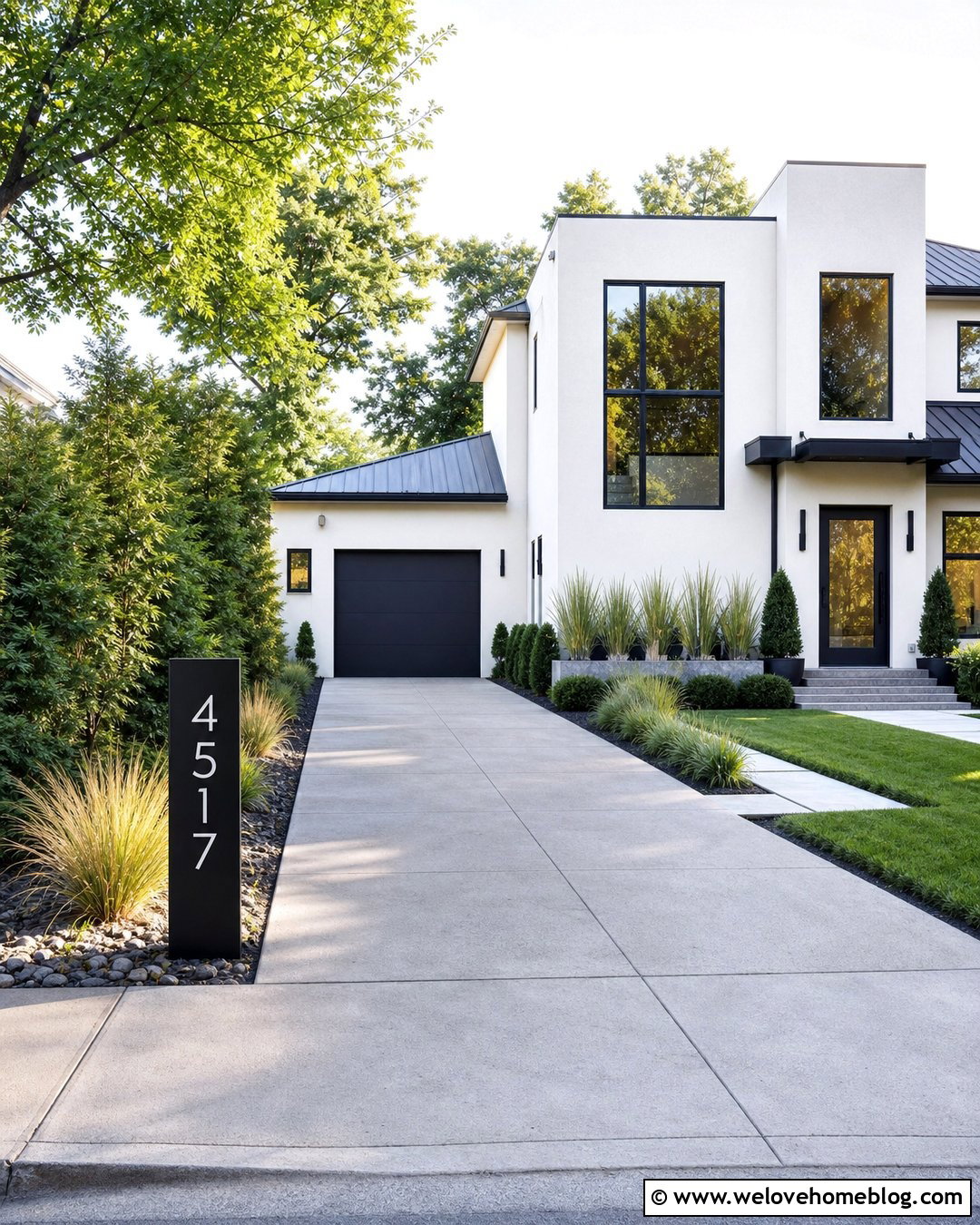
A slim black metal address sign creates a crisp focal point beside a straight gray poured concrete driveway. Choose oversized white or stainless-steel numbers that remain clear against the dark surface. Position the sign in a narrow gravel bed near the curb, where it can be viewed from both directions without blocking sightlines. Black aluminum edging can connect the sign area to the driveway border, while ornamental grasses and low evergreen shrubs soften the sharp geometry. This complete look works especially well with a modern house featuring white stucco, dark siding, or black-framed windows. Repeat the sign’s finish on exterior lights and door hardware. The matching details make the address marker feel like part of the architecture rather than a separate roadside accessory.
2. Stone Monument Driveway Address Sign
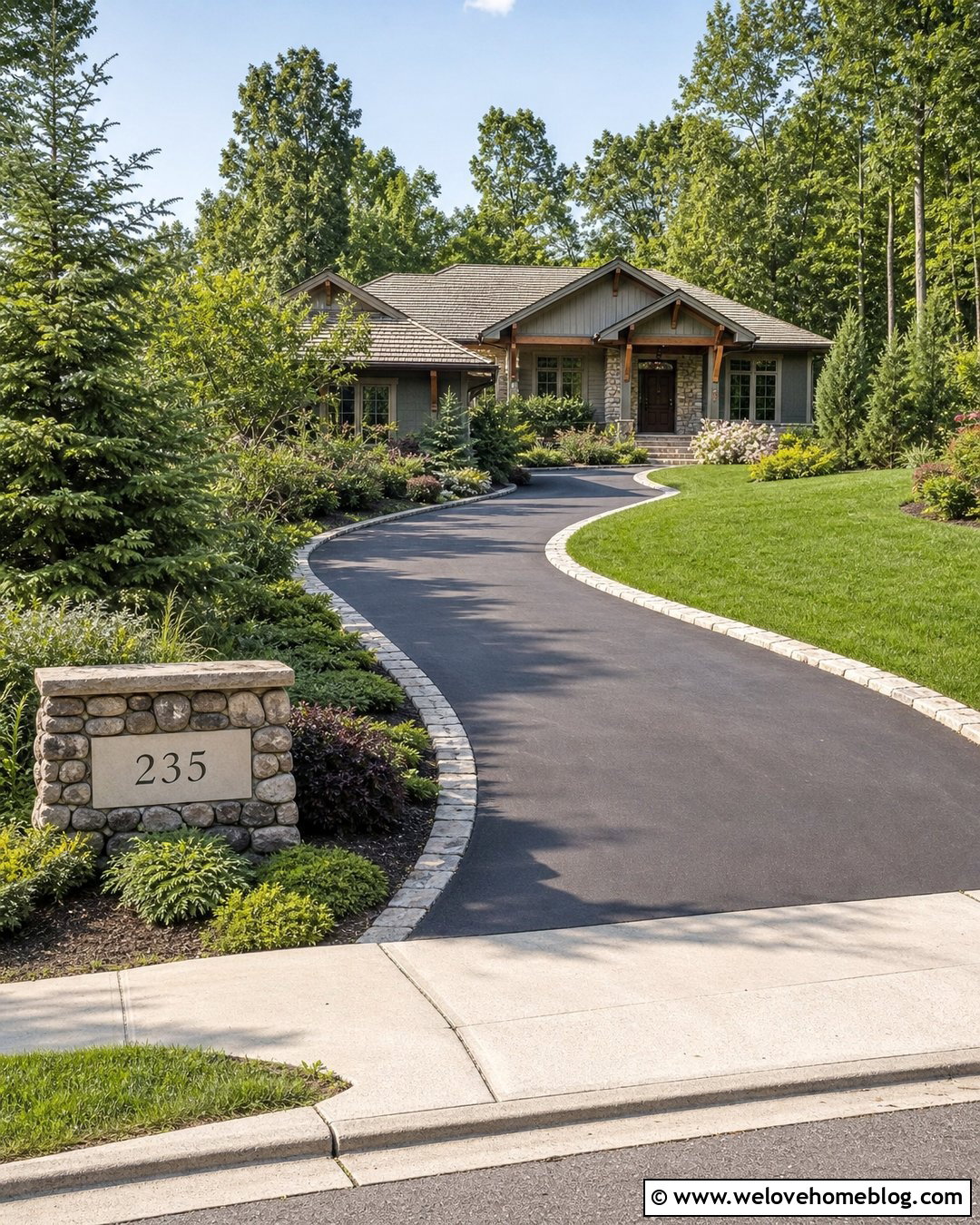
Natural stone gives an address sign enough visual weight to balance a wide black asphalt driveway. Build a low monument from fieldstone or stacked stone that matches the home’s foundation, chimney, or retaining walls. A smooth inset panel provides a clean background for large metal numbers. Place the monument just beyond the driveway apron and surround it with a gently curved planting bed. Dwarf evergreens, ground cover, and compact flowering shrubs can frame the structure without hiding the address. A stone border along the driveway helps carry the same material toward the house. This design suits ranch, Craftsman, and country homes because it blends architecture with landscaping. Keep the monument low enough that drivers can still see pedestrians and approaching vehicles clearly.
3. Cedar Post Driveway Address Sign
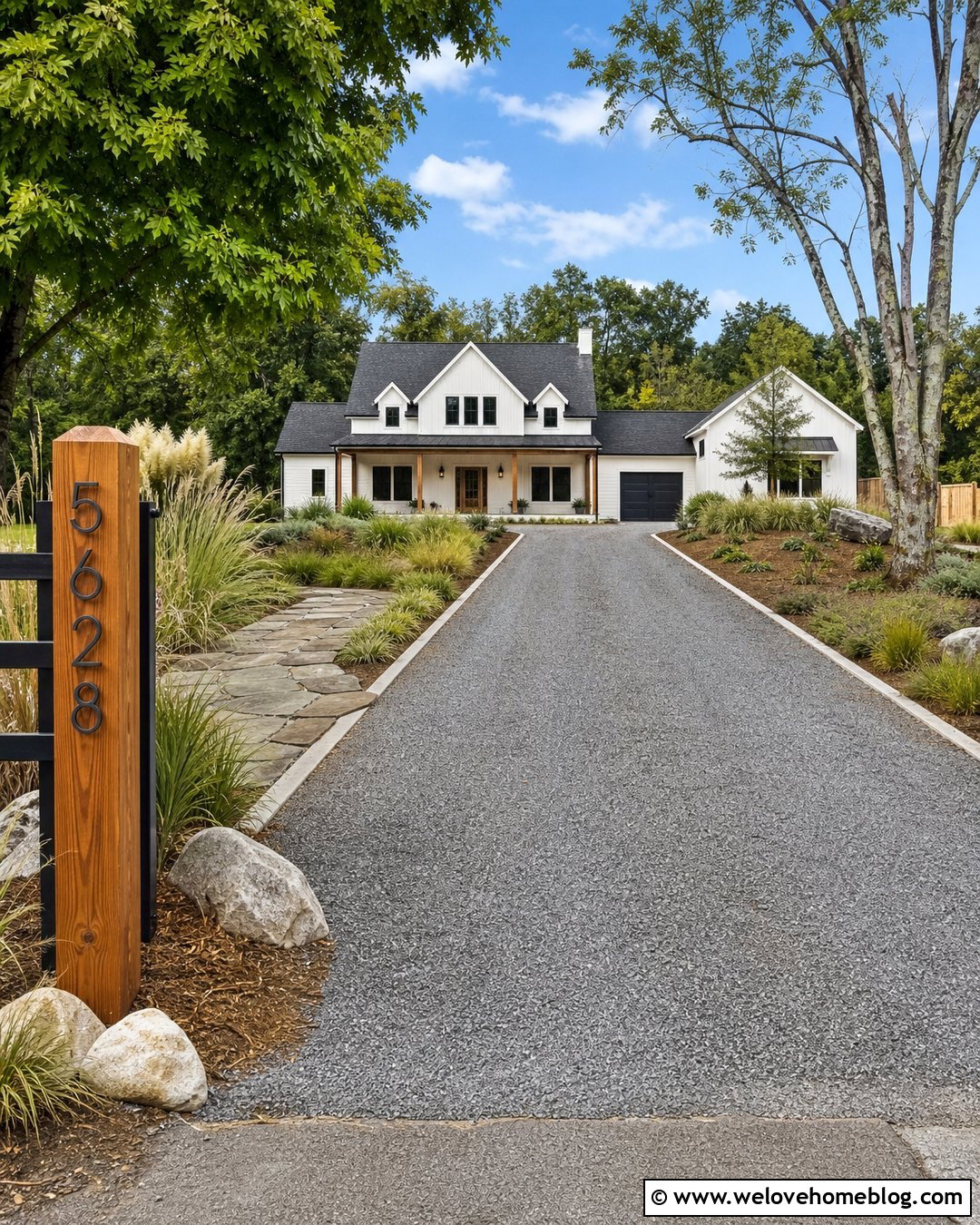
Warm cedar can turn a basic gravel entrance into an inviting farmhouse driveway. Use one substantial post with a horizontal cedar plaque, or create a simple two-post frame for a wider address panel. Dark metal numbers offer readable contrast and coordinate naturally with black gate hardware or exterior lanterns. Frame the straight crushed-gravel driveway with timber edging, native grasses, and a few rounded fieldstones. A short flagstone path beside the sign can provide convenient access for maintenance. Clear exterior stain preserves the wood’s natural character, while a darker stain creates a more polished appearance. This complete entrance feels especially appropriate for a modern farmhouse, barn-style home, or rural cottage. Keep branches and flowers below the bottom edge of the numbers so the address remains visible.
4. Solar Driveway Address Sign Pillar
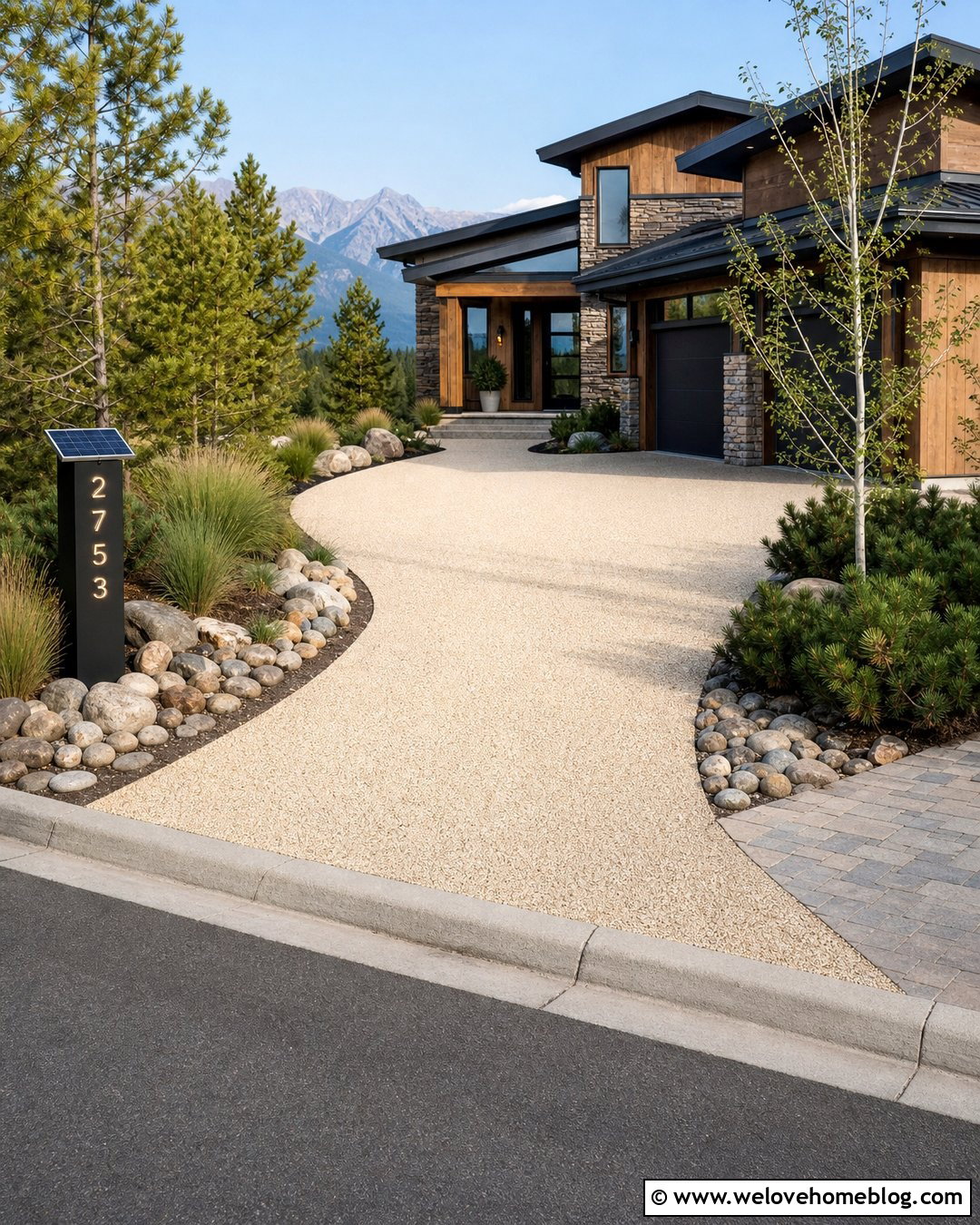
A solar-lit pillar is a practical choice when the house sits far from the road or the entrance lacks nearby electrical service. Pair a tall matte-black steel pillar with a curved resin-bound gravel driveway in a pale natural tone. Laser-cut or applied numbers can sit vertically on the street-facing panel, while a softly illuminated backing improves the display after sunset. Surround the pillar with a clean river-rock bed, low sedges, and a narrow paver border. The simple planting prevents the entrance from feeling crowded. This arrangement complements a contemporary home with wood siding, stone accents, or dark windows. Place the solar panel where trees will not shade it heavily. The finished entrance should look attractive during daylight, with illumination serving as a useful secondary feature.
5. Brick Mailbox Driveway Address Sign
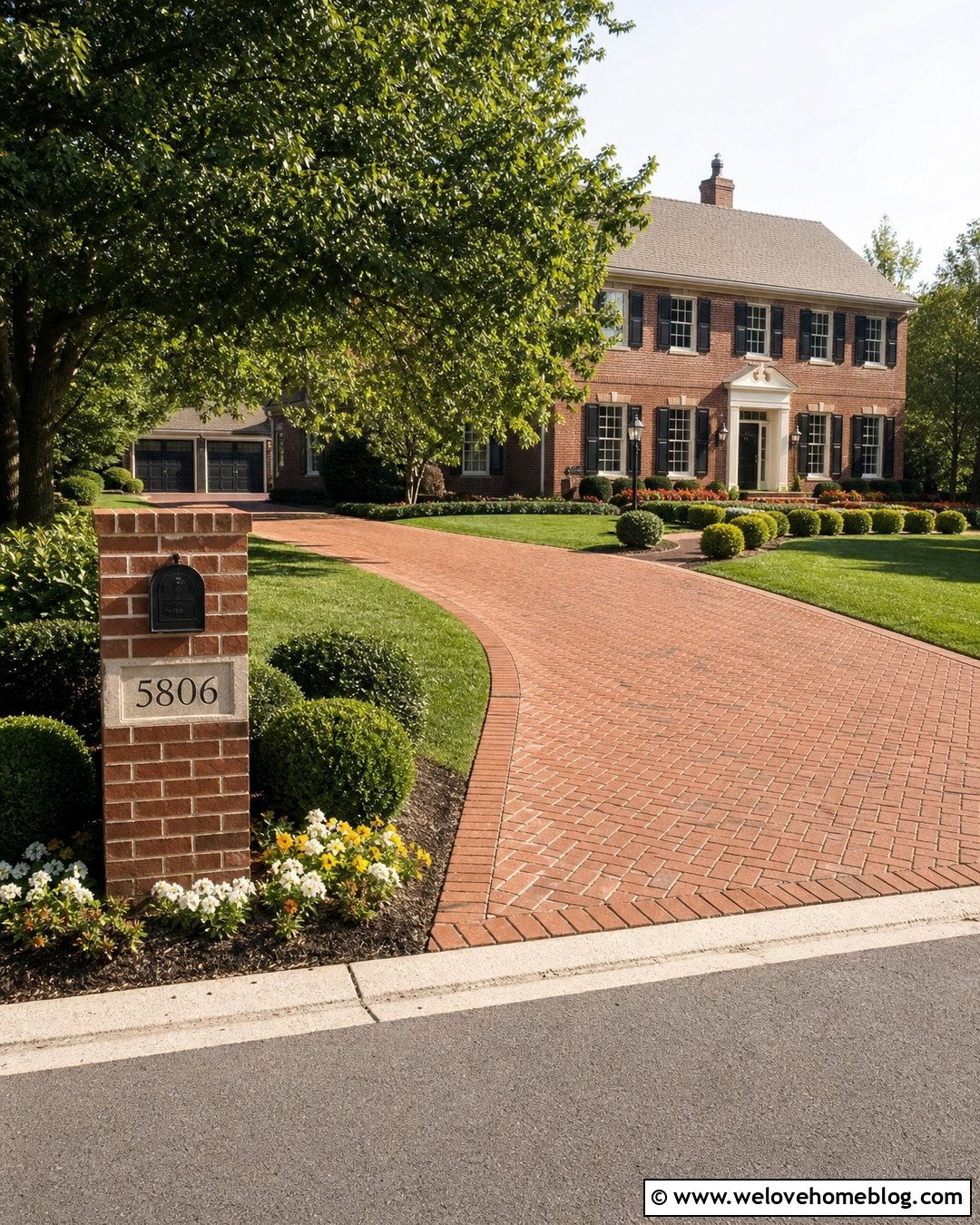
A brick mailbox pillar can combine mail delivery, house numbers, and entrance architecture in one coordinated feature. Pair it with a red or charcoal brick-paver driveway laid in a herringbone pattern. Use brick that matches the house, then add a contrasting limestone or precast concrete address panel. Large black numbers will keep the display simple and readable. A soldier-course brick border can connect the pillar visually to the driveway surface. Complete the setting with clipped boxwoods, seasonal flowers, and a curved lawn edge. This traditional look suits Colonial, Georgian, and suburban brick homes. Keep the mailbox opening and address panel proportional to the pillar rather than making either element look undersized. A matching cap protects the top and gives the structure a finished silhouette.
6. Boulder Driveway Address Sign
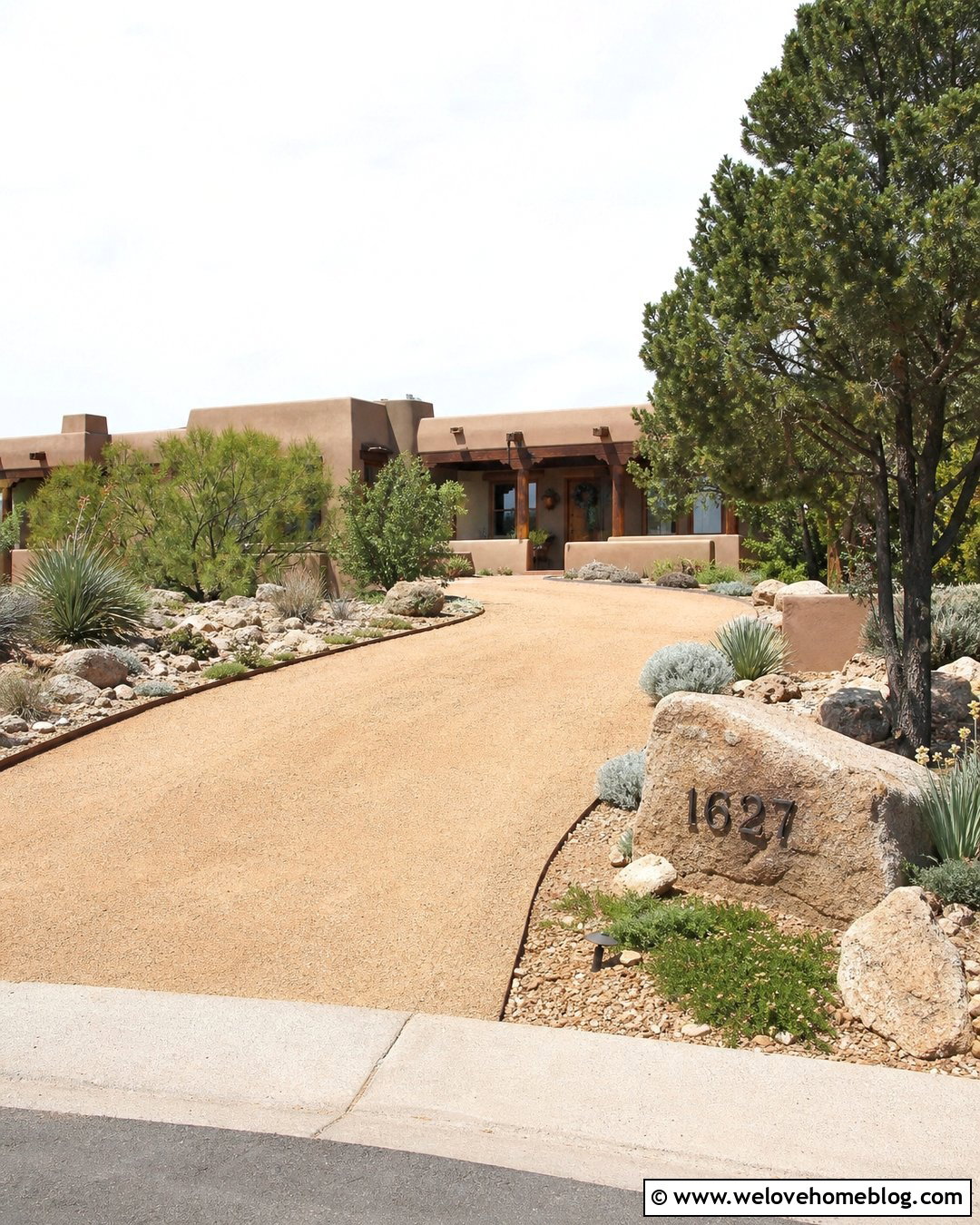
A large landscape boulder makes a natural address marker beside a decomposed-granite driveway. Select a stone with one relatively flat face so applied metal numbers can sit evenly and cast clear shadows. Alternatively, the address can be carved or sandblasted into the surface for a permanent-looking display. Nestle the boulder into a broad bed of smaller rocks rather than setting it alone on the lawn. Add drought-tolerant plants such as yucca, blue fescue, sage, or creeping ground cover around its base. Steel edging can define the driveway and keep loose material contained. This rugged entrance works beautifully with Southwestern, mountain, and rustic ranch homes. Choose a boulder color that relates to the home’s masonry so the marker feels native to the overall landscape.
7. Corten Steel Driveway Address Sign
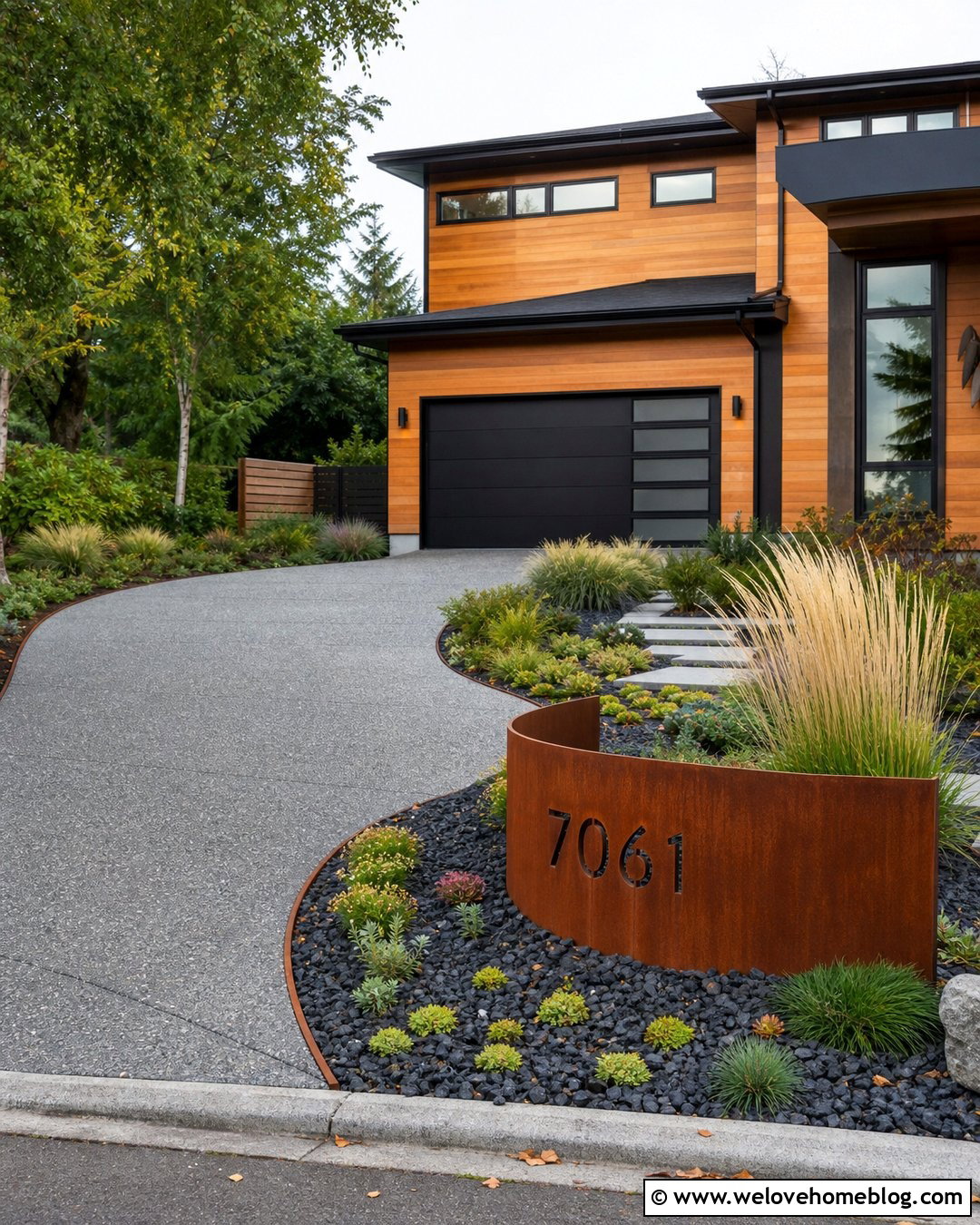
Weathered Corten steel adds rich color to a modern exposed-aggregate concrete driveway. Use a wide rectangular panel with precisely cut numbers, allowing a pale stone or planted background to show through the openings. Place the panel parallel to the road for easy reading, or turn it slightly toward approaching traffic. A matching steel edge around the driveway bed creates visual continuity. Feather reed grass, sedum, and dark gravel complement the rust-toned finish without making the area overly decorative. This combination looks especially strong in front of a contemporary home with cedar cladding, charcoal siding, or board-formed concrete. Corten changes appearance as it develops its weathered surface, so plan surrounding materials accordingly. A gravel buffer can separate the steel from pale paving and walls.
8. White Farmhouse Driveway Address Sign
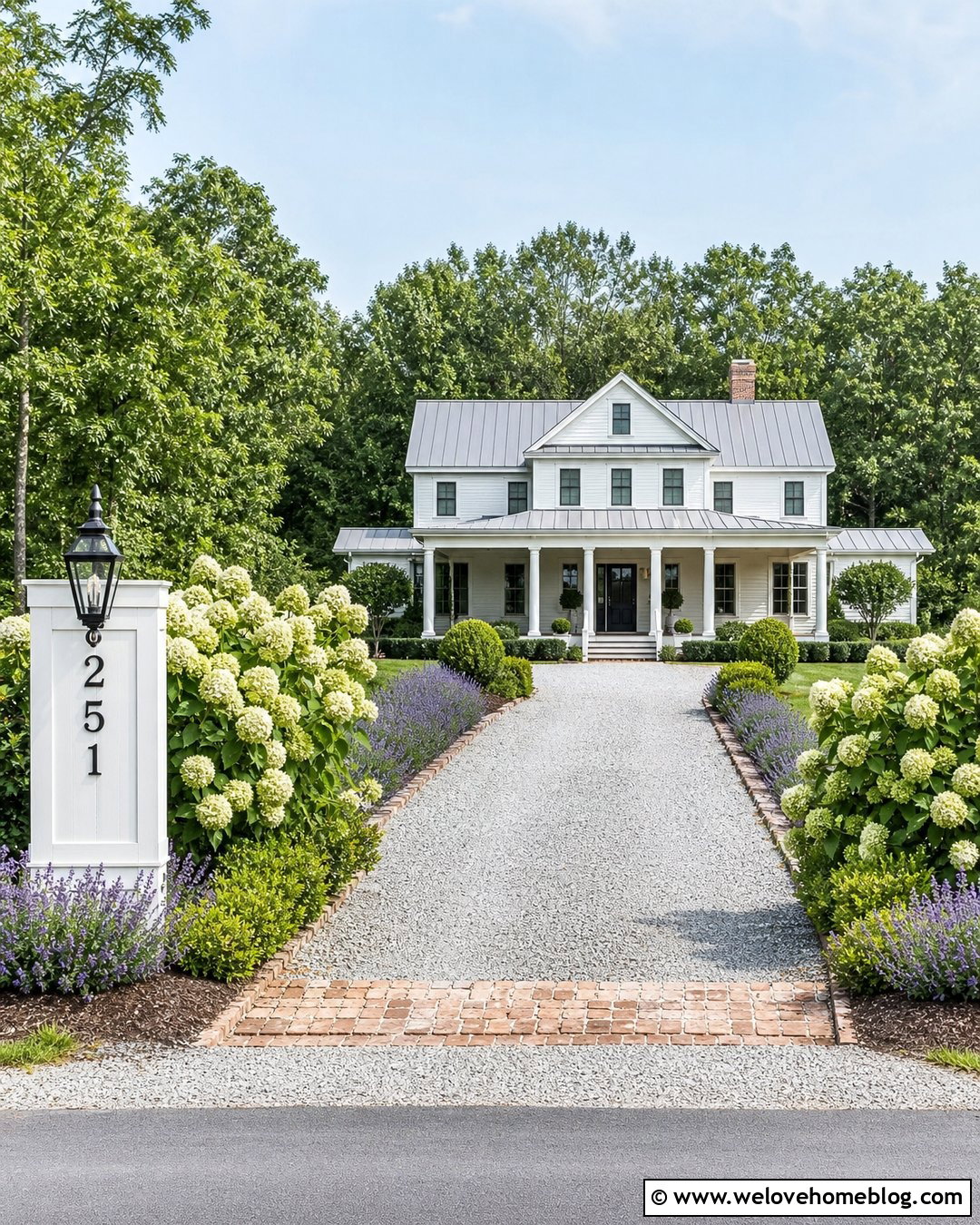
A white post-and-panel sign brings classic farmhouse character to a light gray crushed-stone driveway. Use a substantial square post with a simple cap, then hang or mount a horizontal board featuring large black numbers. A small black lantern mounted above the panel can repeat the home’s exterior fixtures. Border the driveway with reclaimed brick, timber, or narrow strips of lawn. Hydrangeas, catmint, and clipped shrubs can fill a curved bed behind the sign while leaving the number panel unobstructed. This complete look pairs naturally with a white farmhouse, wraparound porch, and black-trimmed windows. Avoid overly ornate lettering that becomes difficult to read from the road. A straightforward typeface and restrained landscaping keep the entrance charming without making it look themed or cluttered.
9. Concrete Pillar Driveway Address Sign
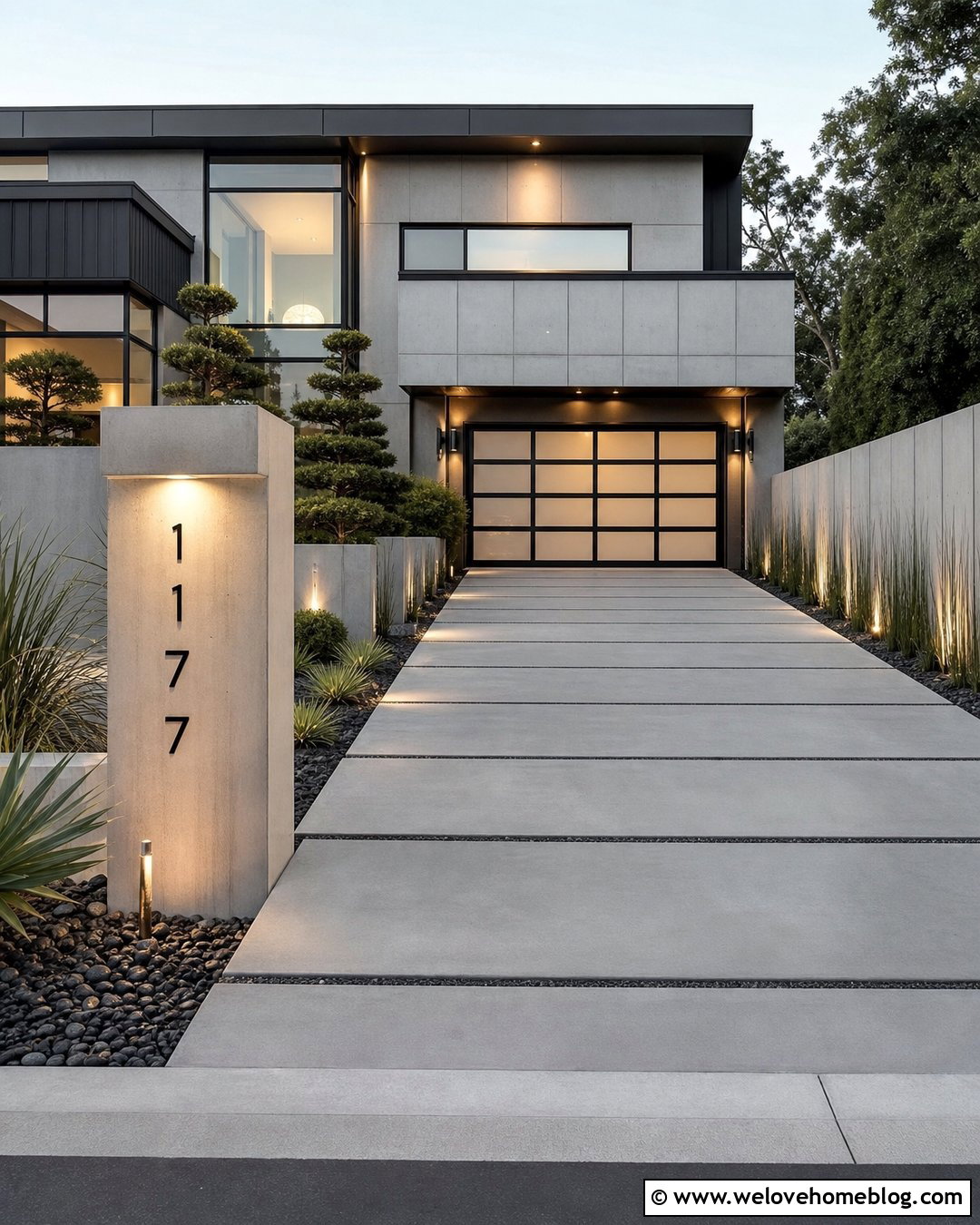
A poured-concrete address pillar creates a durable visual anchor beside a modern driveway. Pair the pillar with large-format gray concrete slabs separated by thin gravel joints or narrow grass strips. Mount dark metal numbers vertically to emphasize the pillar’s height, leaving generous spacing between each digit. A recessed light beneath the cap can provide subtle illumination without introducing a visible fixture. Surround the base with black pebbles, compact evergreen mounds, and architectural plants such as agave where the climate allows. This entrance works well with minimalist, industrial, and midcentury-inspired homes. Keep the pillar’s finish related to the driveway, but vary the texture slightly so it remains distinct. A smooth sign surface beside lightly textured paving creates a balanced, intentional contrast.
10. Retaining Wall Driveway Address Sign
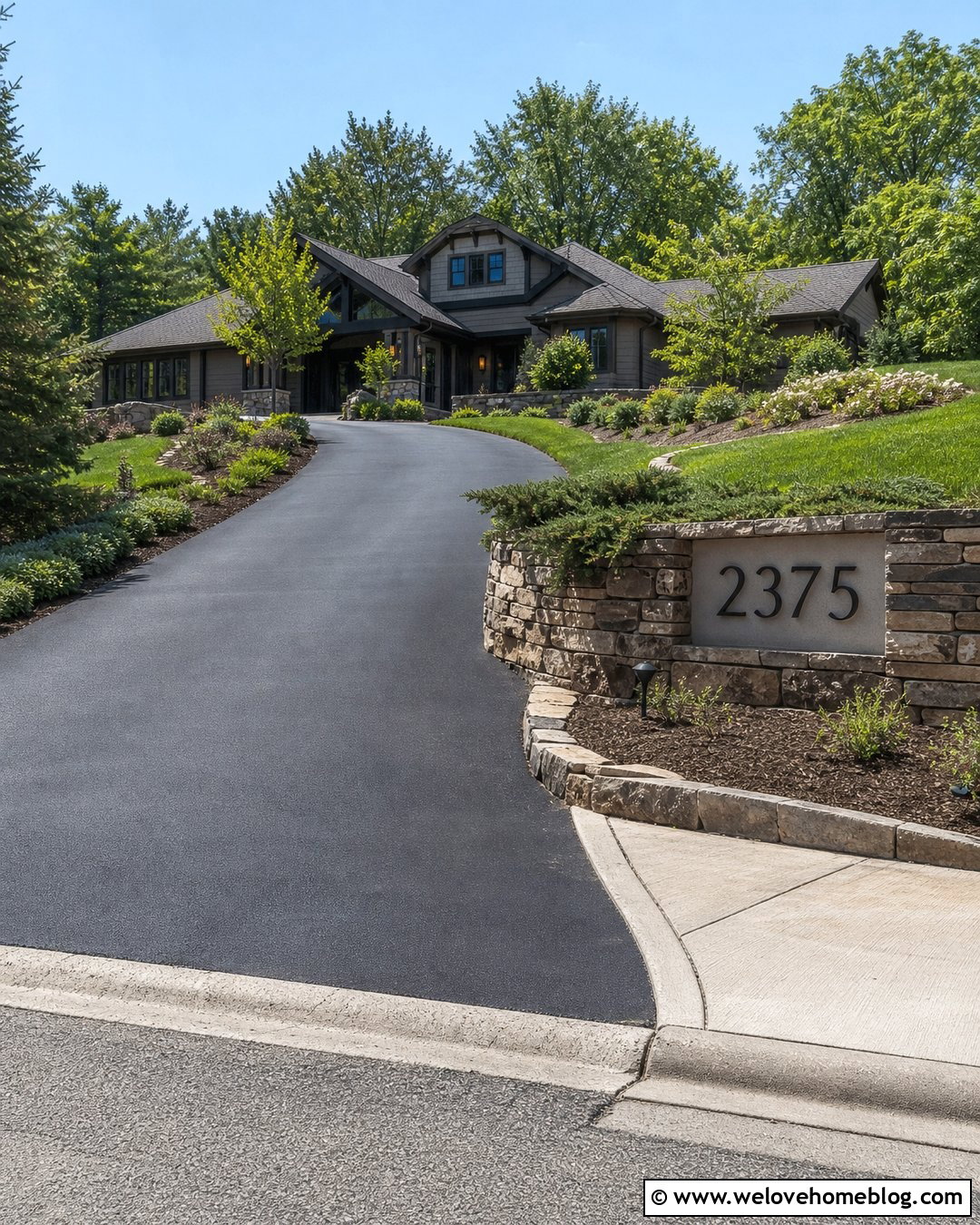
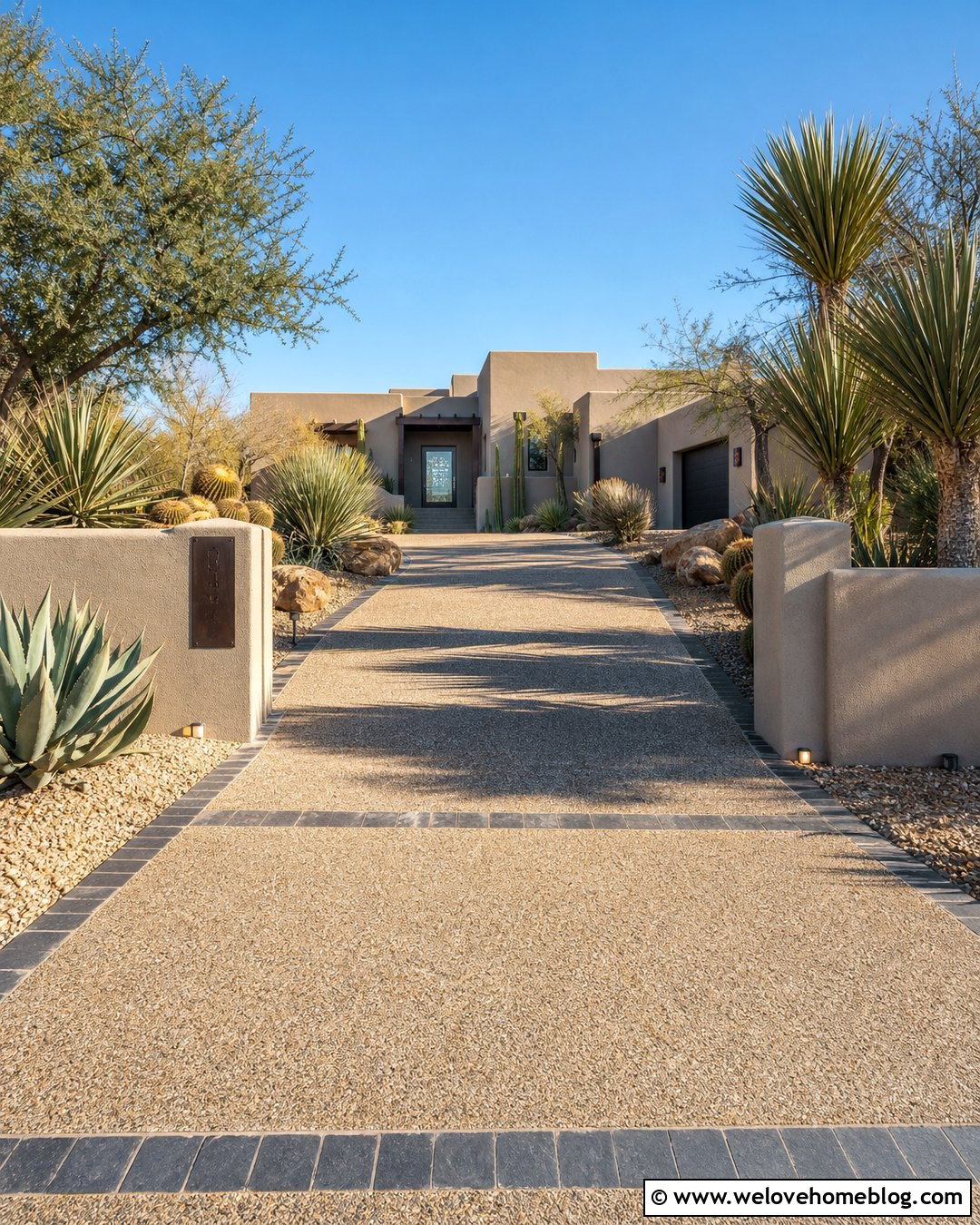
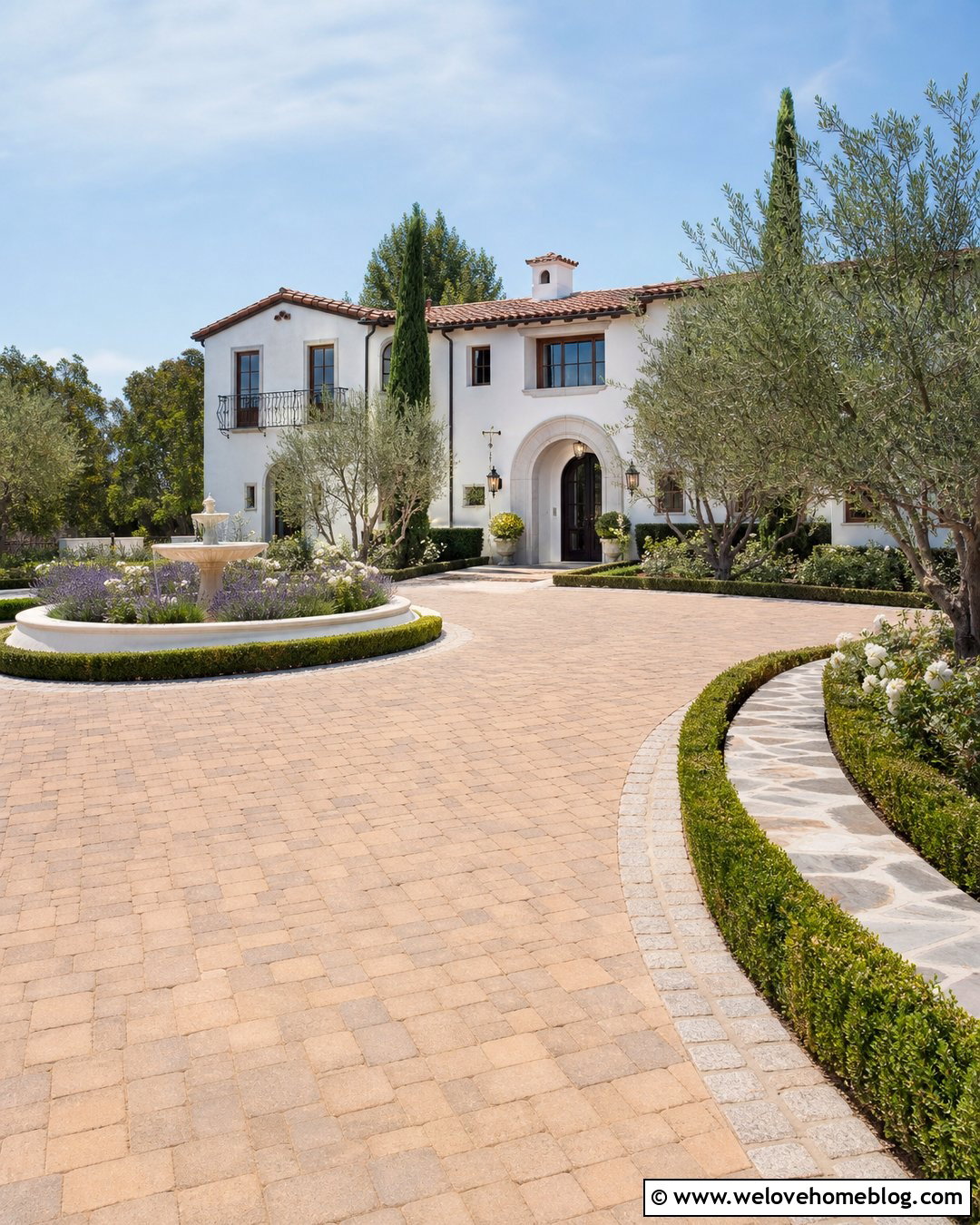
When a driveway cuts through a sloped yard, the retaining wall offers a natural place for the address. A curved asphalt driveway bordered by a low concrete or stone wall can feature oversized numbers near the entrance. Install them on the section most directly facing the road, rather than placing them farther up the drive. A smooth stucco panel can provide contrast when the rest of the wall has a rough stone finish. Use cascading ground cover above the wall, but keep vines and shrubs away from the numbers. Repeating the wall material on the home’s foundation ties the entrance together. This solution saves space because it does not require a separate post or monument. It also makes an existing structural feature part of the property’s overall curb appeal.
11. Hanging Driveway Address Sign
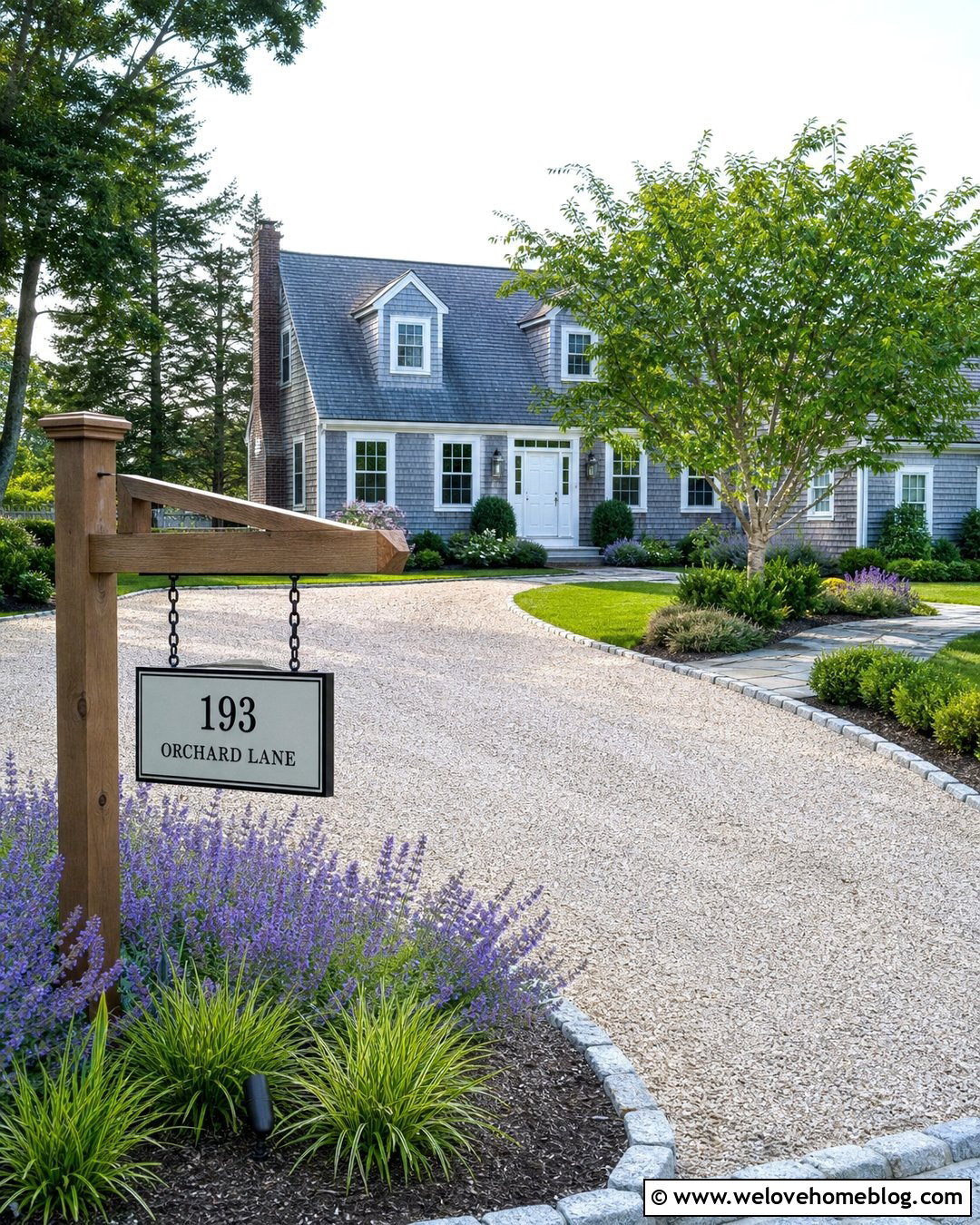
A hanging address sign adds a traditional focal point to a curved pea-gravel driveway. Build a sturdy timber frame using one vertical post and a short overhead arm. Suspend a painted wood or powder-coated metal plaque from two weather-resistant chains. The panel should be heavy enough to remain stable in normal wind and large enough to accommodate uncomplicated numbers. Define the driveway with cobblestone edging and plant lavender, salvia, or low ornamental grasses around the post. A compact tree behind the sign can frame it without blocking the view from the street. This entrance suits cottages, Cape Cod homes, and relaxed country properties. Match the hanging hardware to the home’s lighting and door fixtures. Limiting the display to the address keeps the design clear and functional.
12. Planter Driveway Address Sign
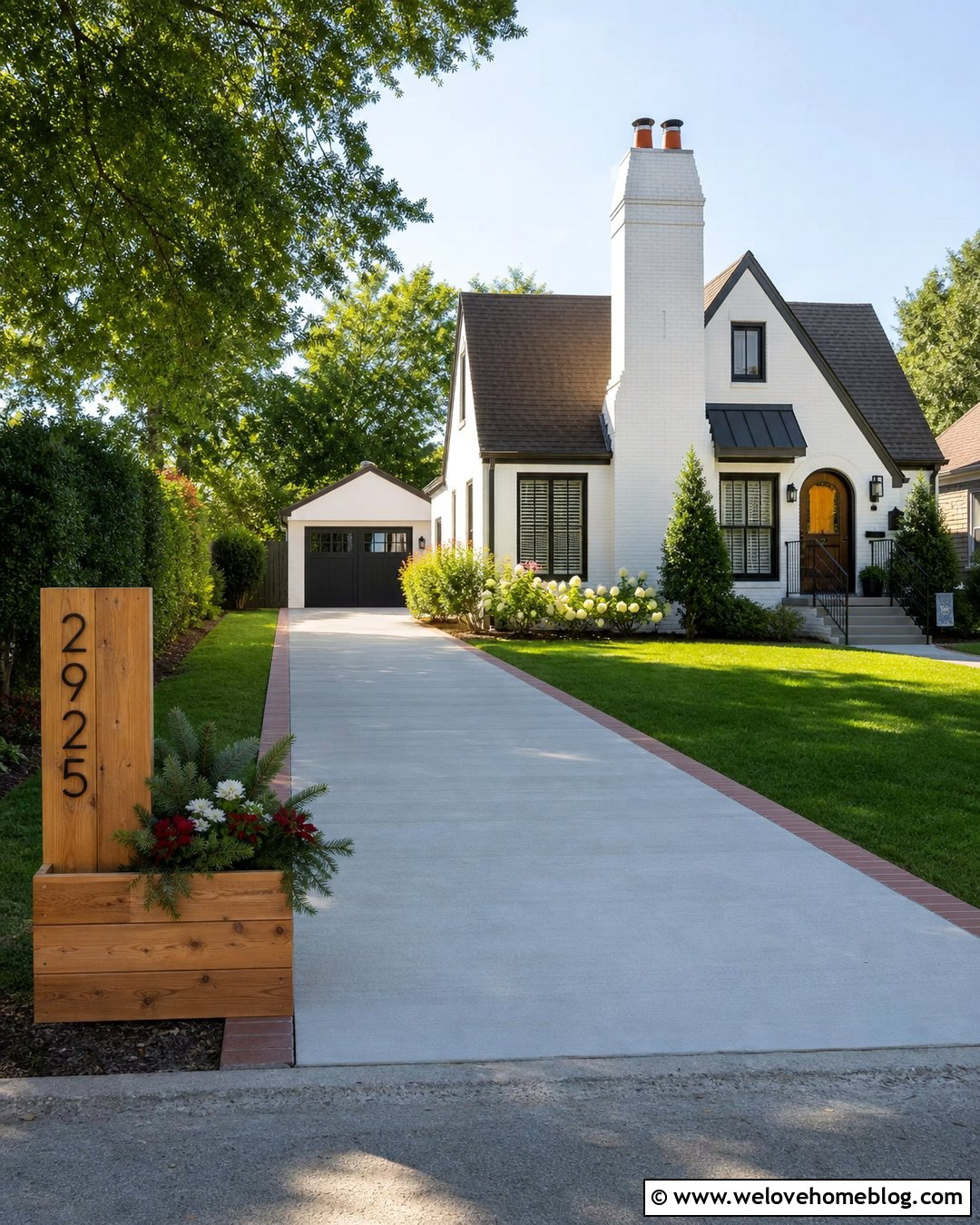
A planter sign combines house numbers with greenery, making it useful for a small suburban driveway entrance. Choose a rectangular cedar, composite, or painted wood planter with a tall back panel. Mount contrasting numbers near the top and keep the planting below them. Pair the planter with a straight broom-finished concrete driveway and a narrow brick border. Evergreen foliage provides structure, while seasonal flowers can add controlled color without requiring a complete entrance redesign. Position the planter on a compact gravel pad so soil and irrigation water do not stain the driveway. This look works with ranch, cottage, and transitional homes. Select plants according to sun exposure and mature size. A restrained arrangement will keep the numbers readable and prevent the planter from becoming visually crowded during the growing season.
13. Mailbox And Driveway Address Sign
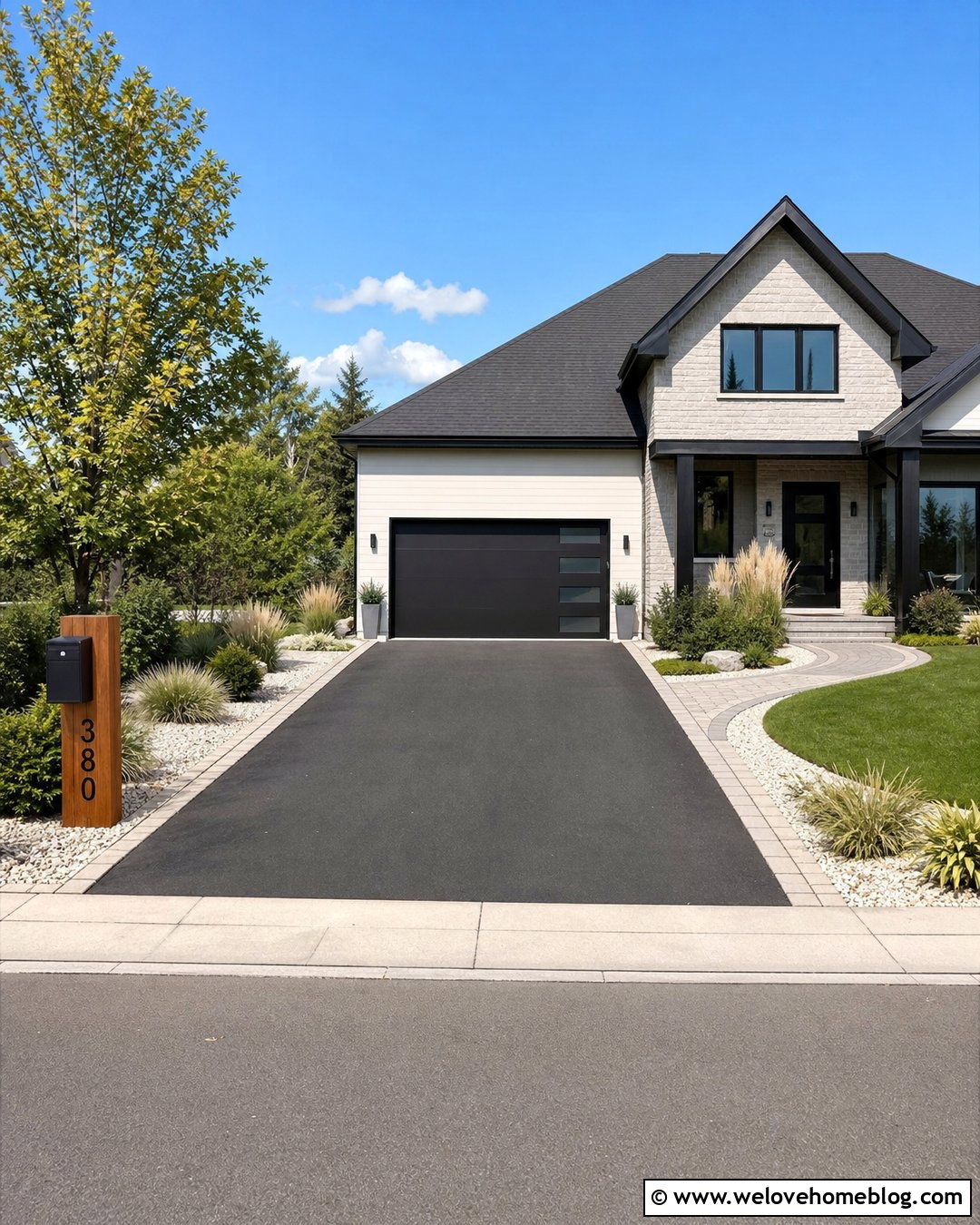
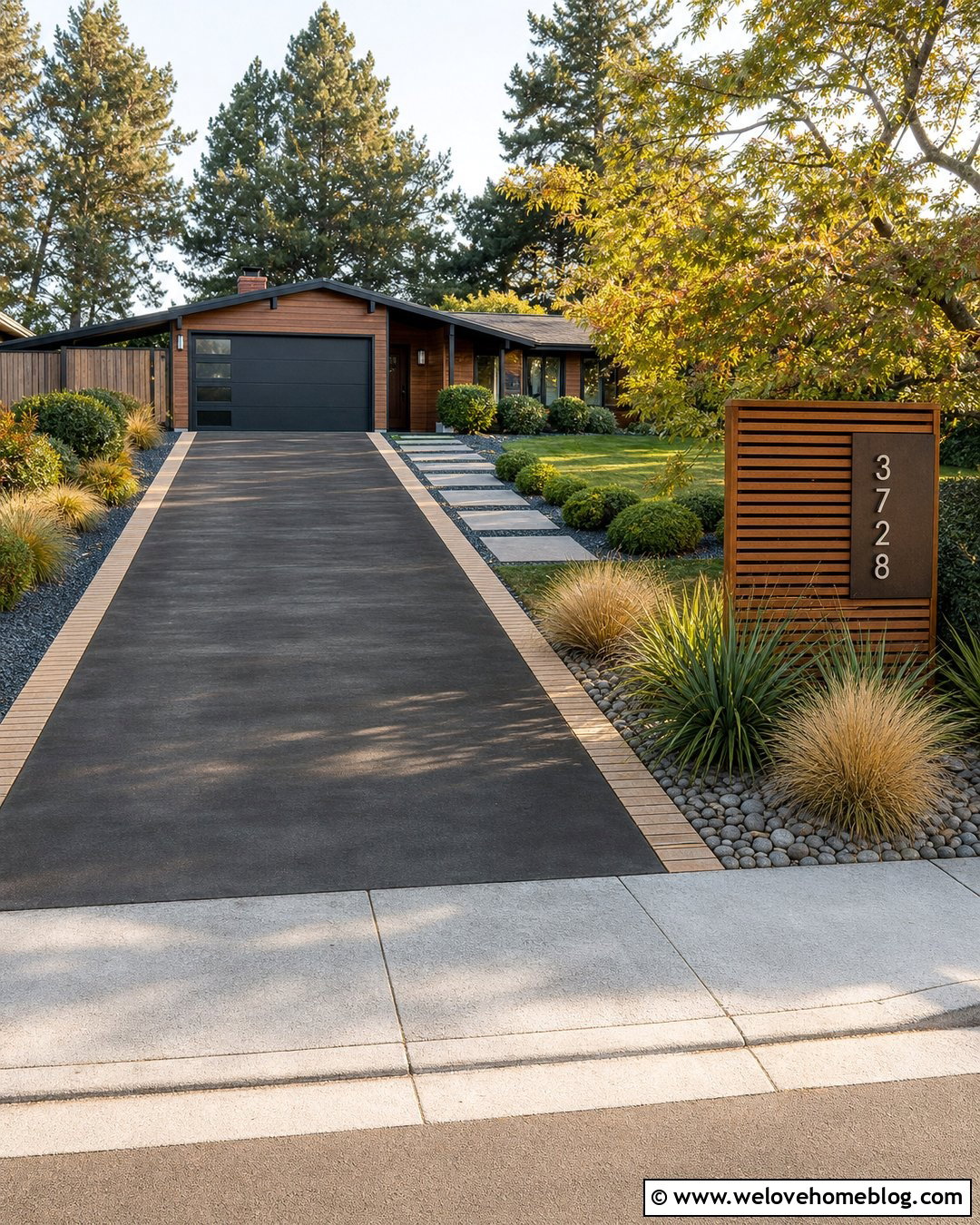
Combining the mailbox and address sign creates a clean solution for a narrow front yard. Install a modern black mailbox on a wide wood or steel post that includes a dedicated vertical number panel. Pair it with a straight black asphalt driveway edged by tan concrete pavers. A circular or kidney-shaped bed around the post can contain pale gravel, dwarf shrubs, and one low ornamental grass. This keeps mowing equipment away from the structure while giving the entrance a finished appearance. Coordinate the mailbox with the garage door hardware and exterior lights on the house. Place numbers on both road-facing sides when traffic approaches from different directions. The mailbox should remain the correct height and orientation for local delivery requirements, while the address panel stays visually separate and easy to recognize.
14. Double Pillar Driveway Address Sign
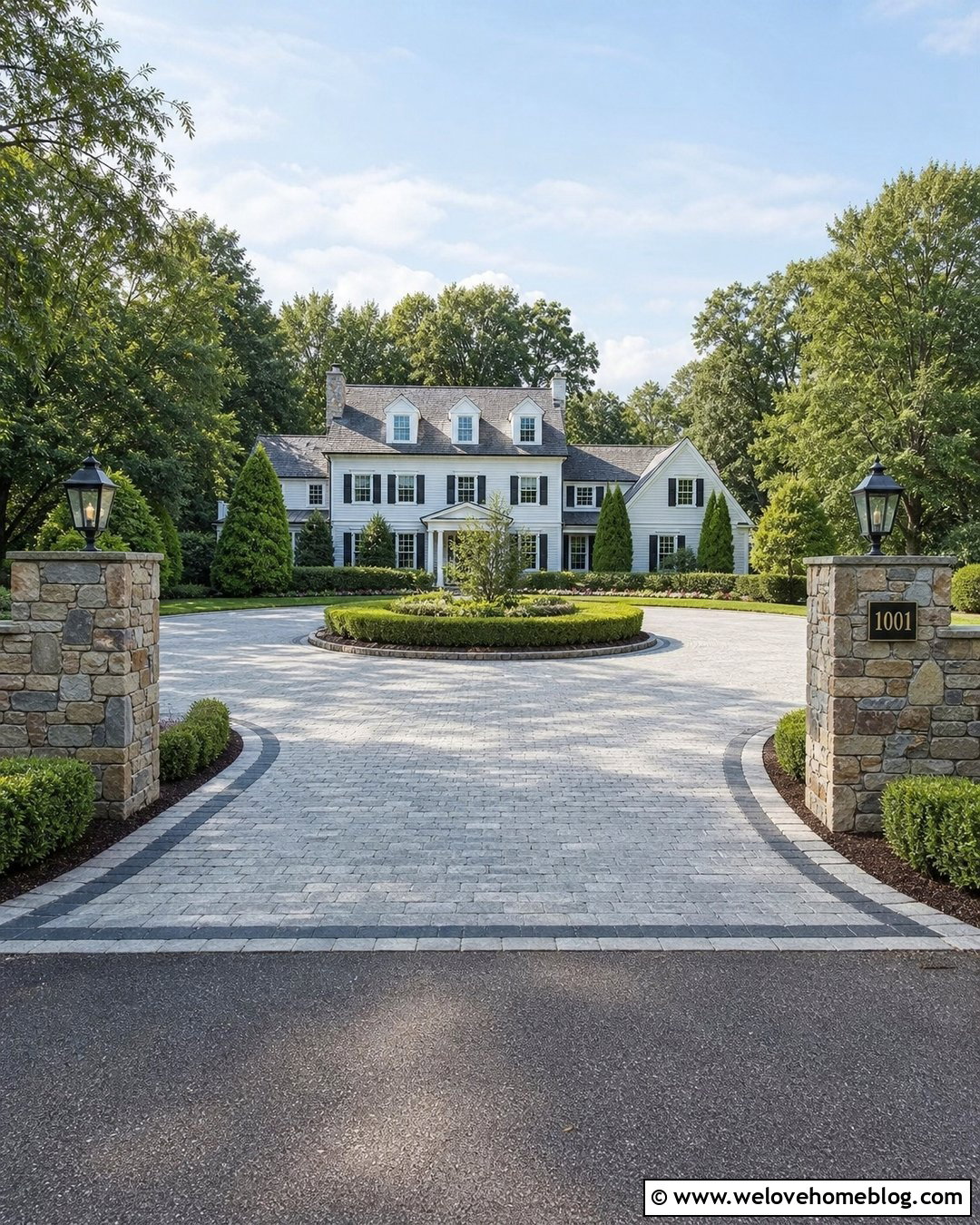
Two stone pillars can frame a circular driveway and give the entrance a balanced, estate-like appearance. Mount the house number plaque on the pillar that is most visible from approaching traffic. The opposite pillar can remain plain or support a matching light fixture. Use light-colored concrete pavers for the circular drive, with a darker paver band outlining the curves. Low hedges, upright evergreens, and a central planting island can reinforce the symmetrical layout. Choose natural stone or stone veneer that appears elsewhere on the home. This arrangement suits large Colonial, Tudor, and traditional properties, but the proportions should match the driveway width. Avoid squeezing oversized pillars into a narrow opening. Generous spacing and simple number typography create a more convincing, comfortable entrance.
15. Gate Mounted Driveway Address Sign
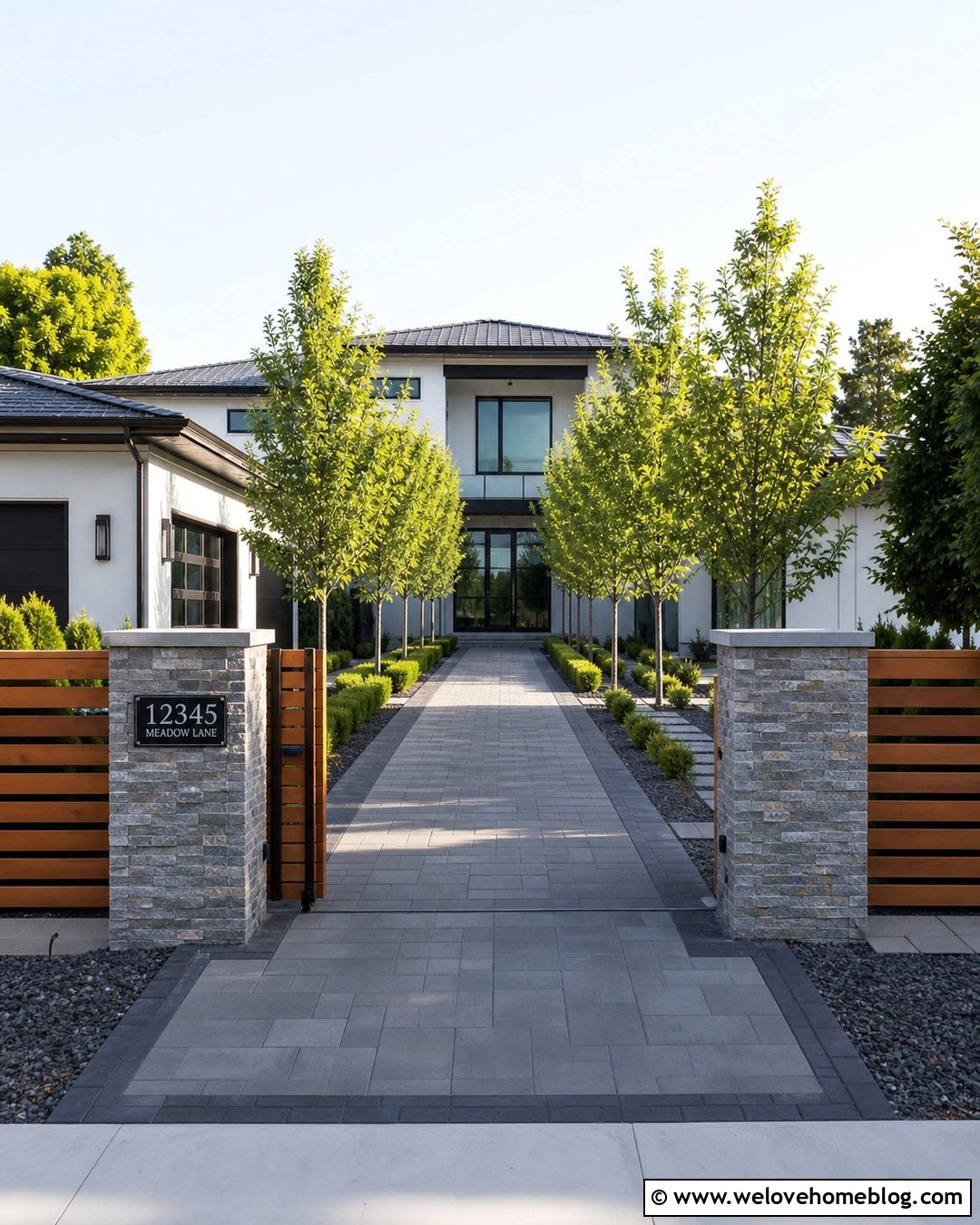
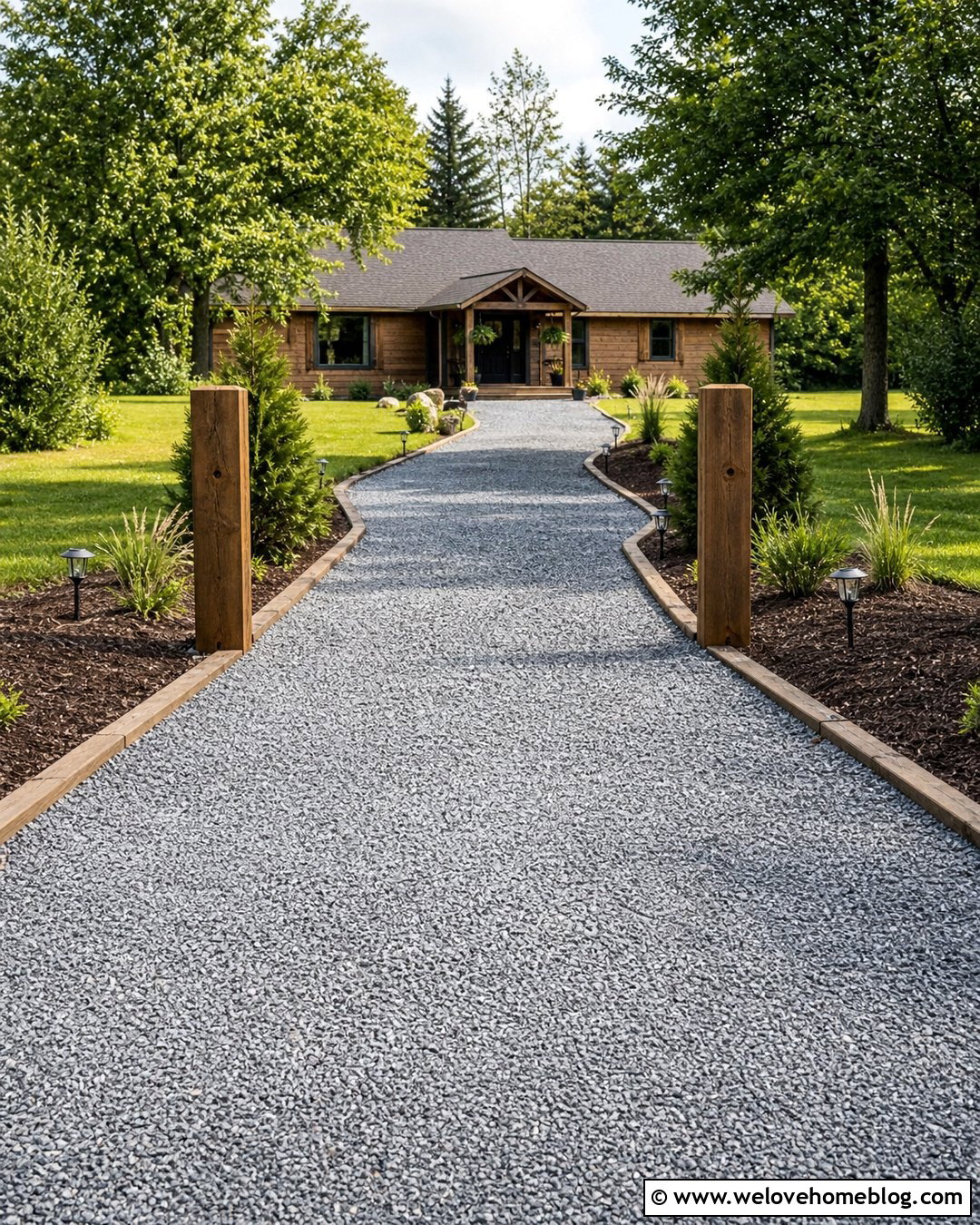
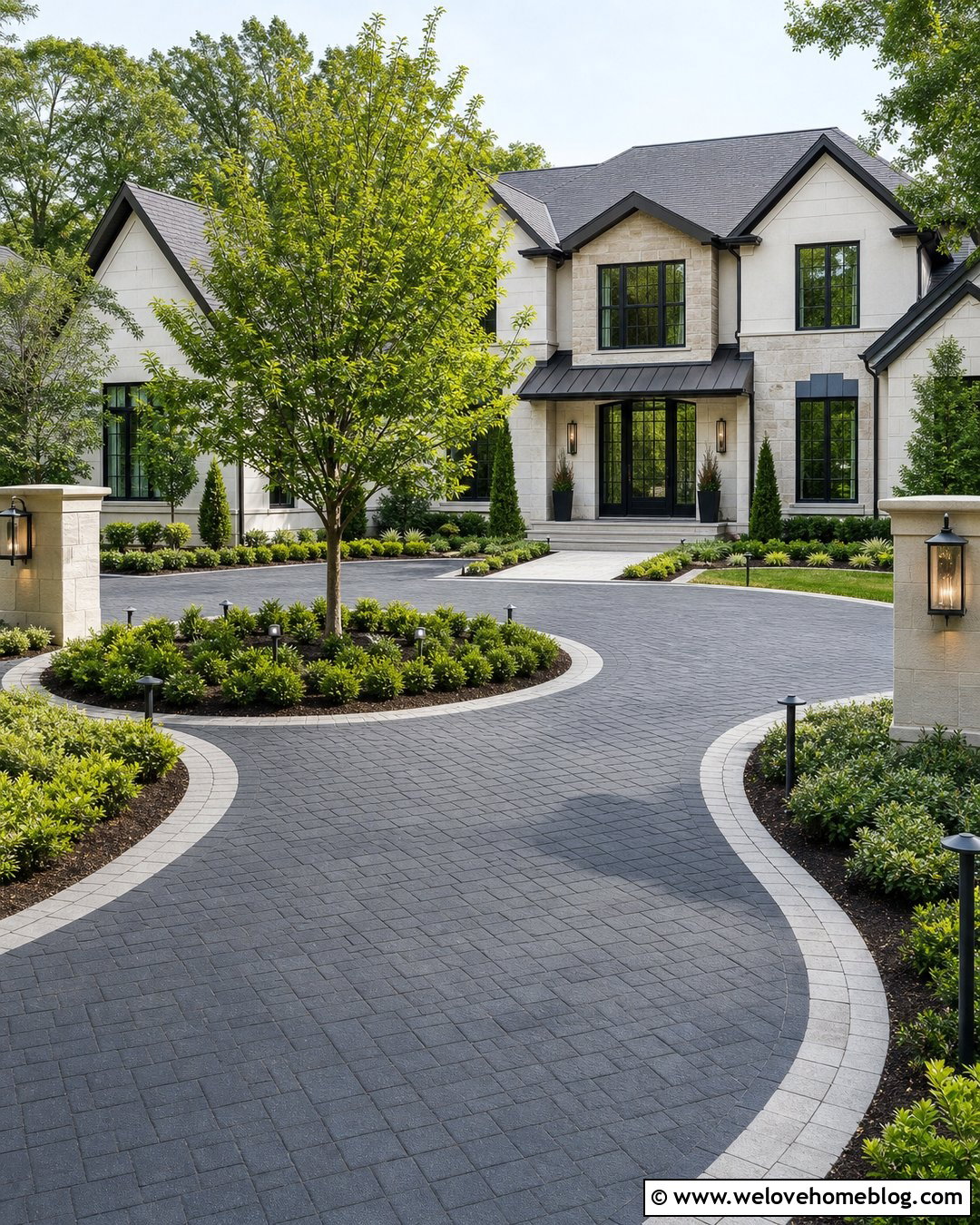
A driveway gate can display the address without requiring another freestanding structure. Mount a clear metal number panel near one side of a horizontal-slat cedar gate, where it remains readable whether the gate is open or closed. Pair the entrance with a straight charcoal concrete-paver driveway and low stone columns. Linear hedges, gravel planting beds, and evenly spaced trees can continue the structured look toward a contemporary house. The number panel should contrast with the gate rather than disappearing into the wood grain. Keep electronic controls, hinges, and intercom equipment visually organized around the pillars. If the gate slides sideways, confirm that landscaping will not cover the address in its open position. The result should feel like one coordinated entry system rather than several unrelated functional elements.
16. Laser Cut Driveway Address Sign
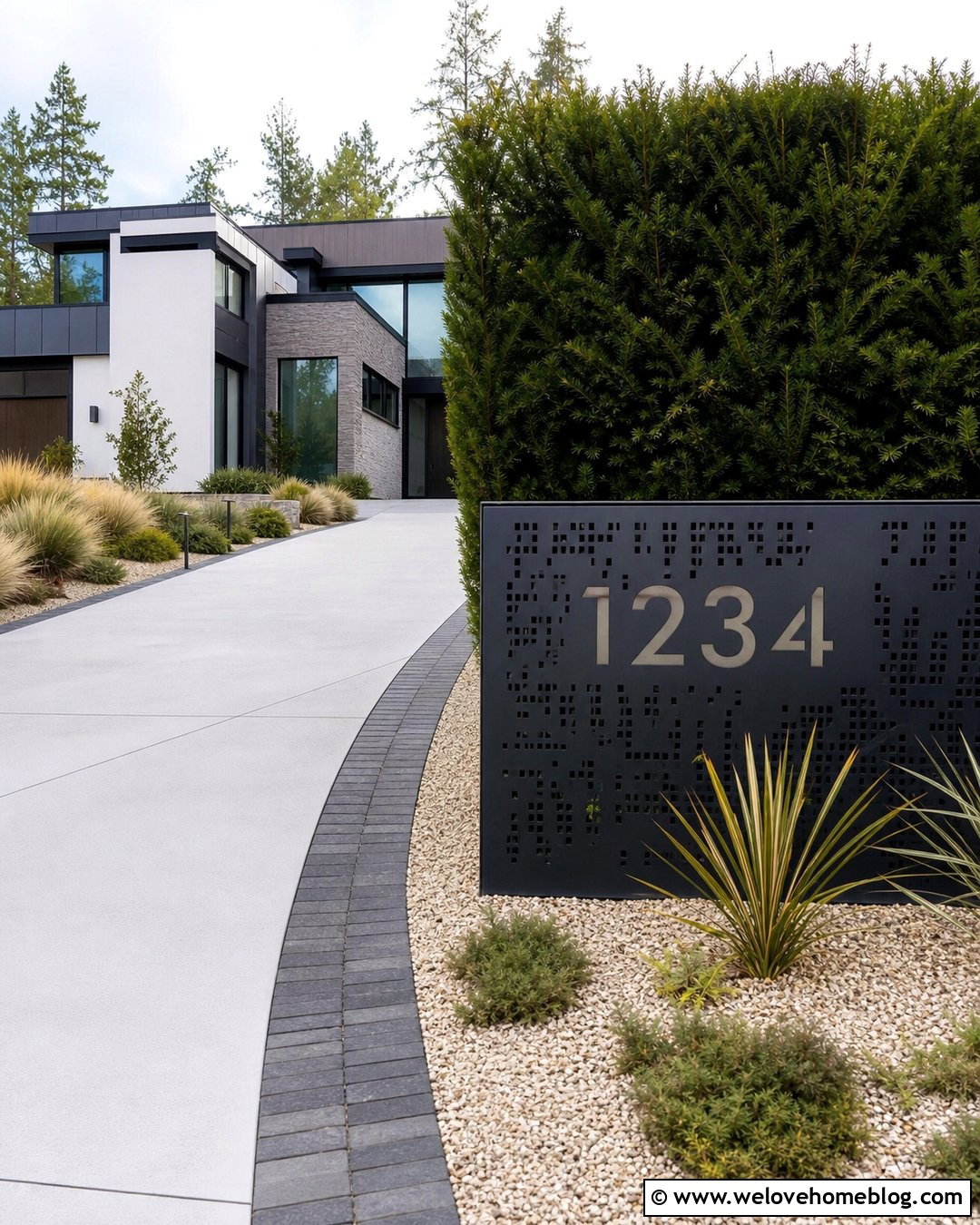
A laser-cut metal screen can serve as both an address marker and a sculptural entrance feature. Choose powder-coated aluminum or steel with large cutout numbers and a simple geometric pattern. Set it beside a sweeping light-gray concrete driveway with a black paver border. A pale wall, decorative gravel, or dense evergreen hedge behind the screen will show through the openings and improve contrast. Keep the surrounding planting low, using mounded grasses and ground cover instead of tall flowering shrubs. This design complements modern and contemporary homes with strong horizontal lines. Repeat the screen pattern sparingly on a side gate or porch panel for continuity. The number area should remain uncomplicated, since excessive perforation around the digits can reduce clarity when viewed from a moving vehicle.
17. Backlit Driveway Address Sign
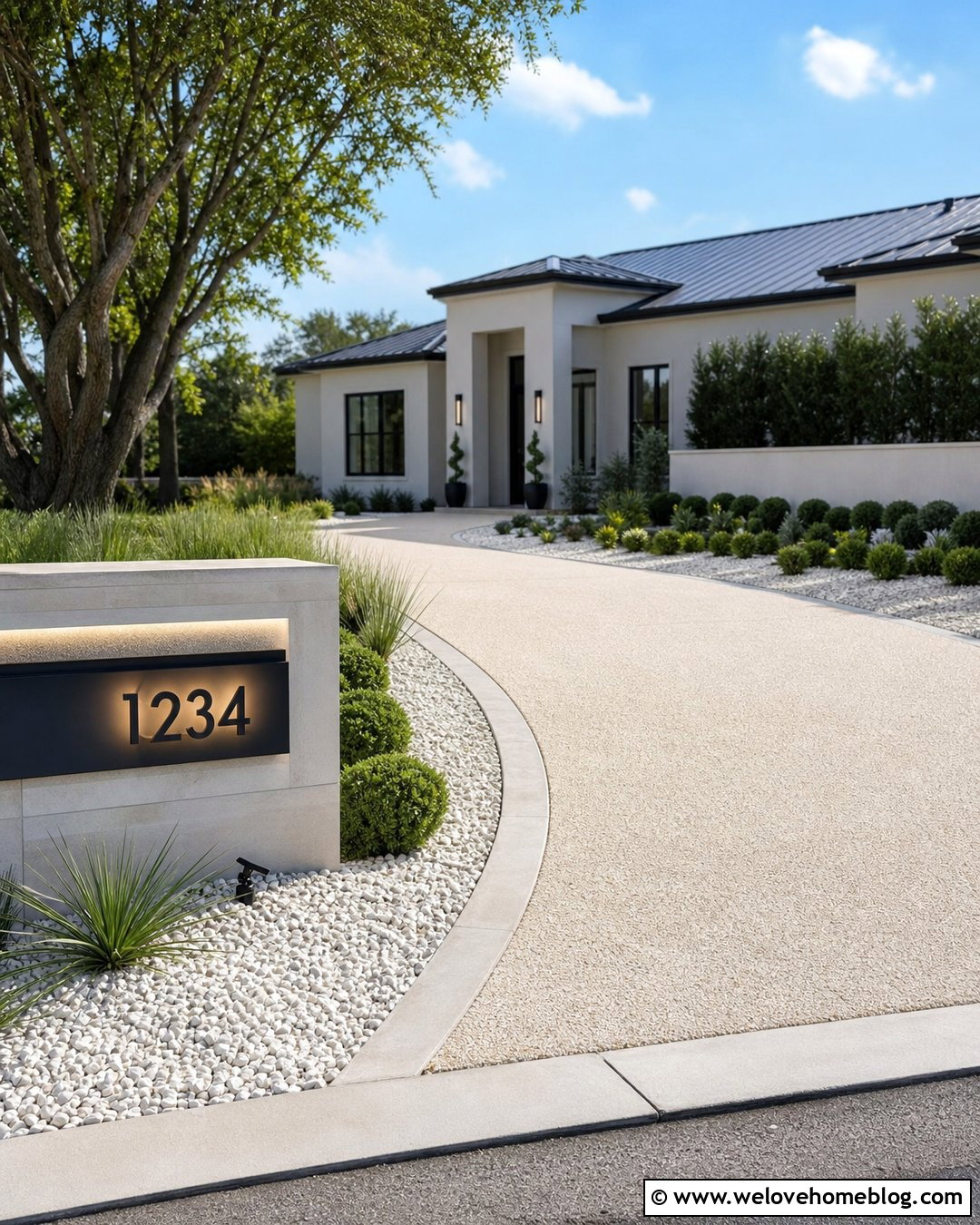
A backlit address monument creates a polished entrance without relying on exposed spotlights. Use a dark metal face with translucent acrylic behind cutout numbers, mounted on a low stucco or masonry base. Pair it with a pale resin-bound gravel driveway that curves gently toward a modern home. During daylight, the contrast between the face and numbers should remain strong. Surround the base with white gravel, clipped shrubs, and a few sculptural grasses. Install the sign away from competing landscape lights so the address stays visually distinct. A narrow concrete curb can connect the monument to the driveway border. This design is especially useful for deep lots where the house numbers cannot be seen from the road. Keep illumination even and controlled rather than excessively bright.
18. Spotlighted Stone Driveway Address Sign
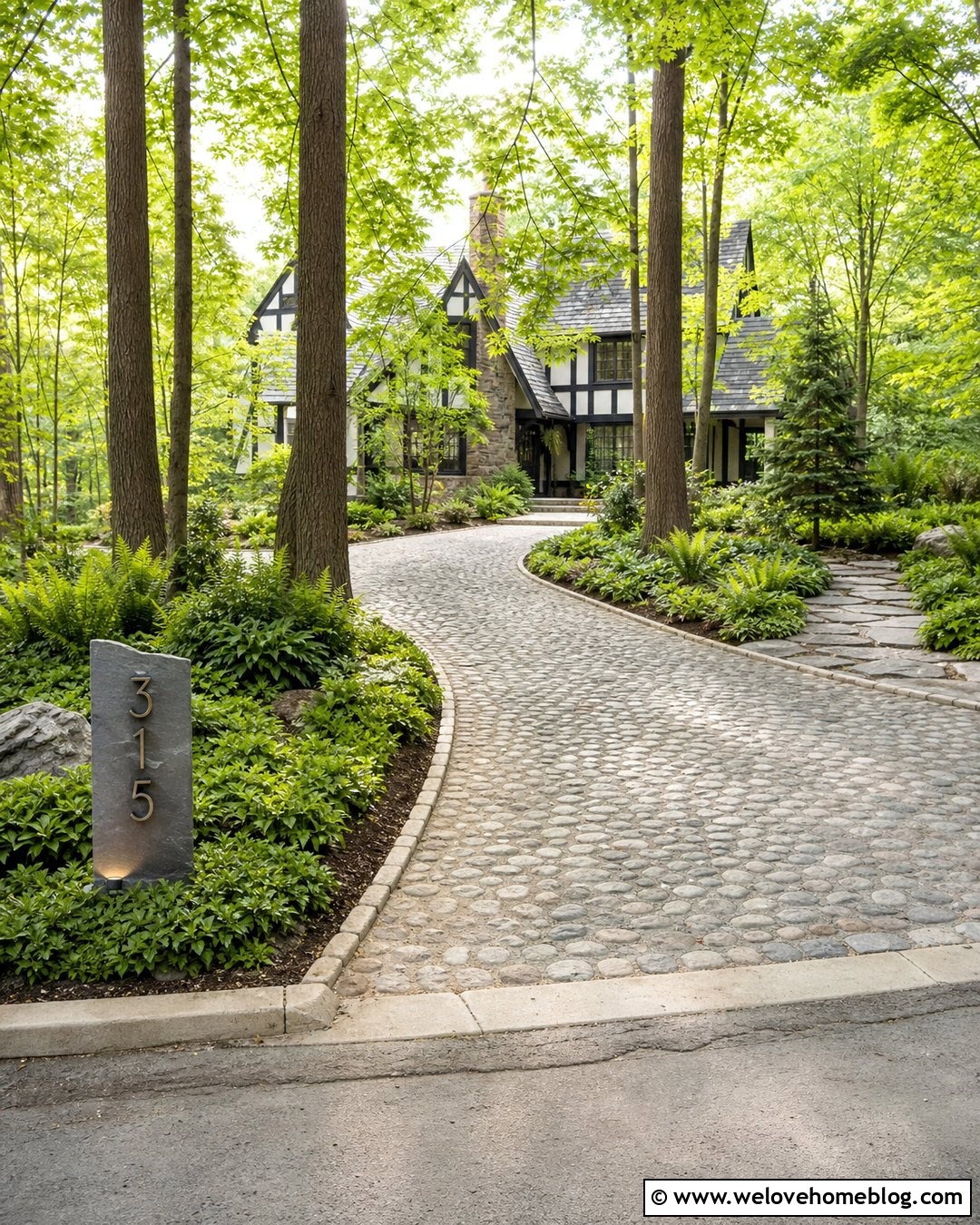
A low-voltage spotlight can make a stone address slab useful after dark while preserving its natural daytime appearance. Place a tall slate or limestone marker beside a curved cobblestone driveway, then mount brushed-metal numbers on its smoothest face. Aim a compact fixture upward from a nearby planting bed, keeping the light source concealed behind a small shrub or rock. Ferns, hostas, and woodland ground cover can soften the base in shaded landscapes. Use stone edging along the driveway to connect the marker with the paving. This complete entrance suits Craftsman, Tudor, and wooded cottage homes. Test the beam angle before permanent installation so shadows do not distort the numbers. During the day, the stone texture should remain the main feature of the sign.
19. Reflective Rural Driveway Address Sign
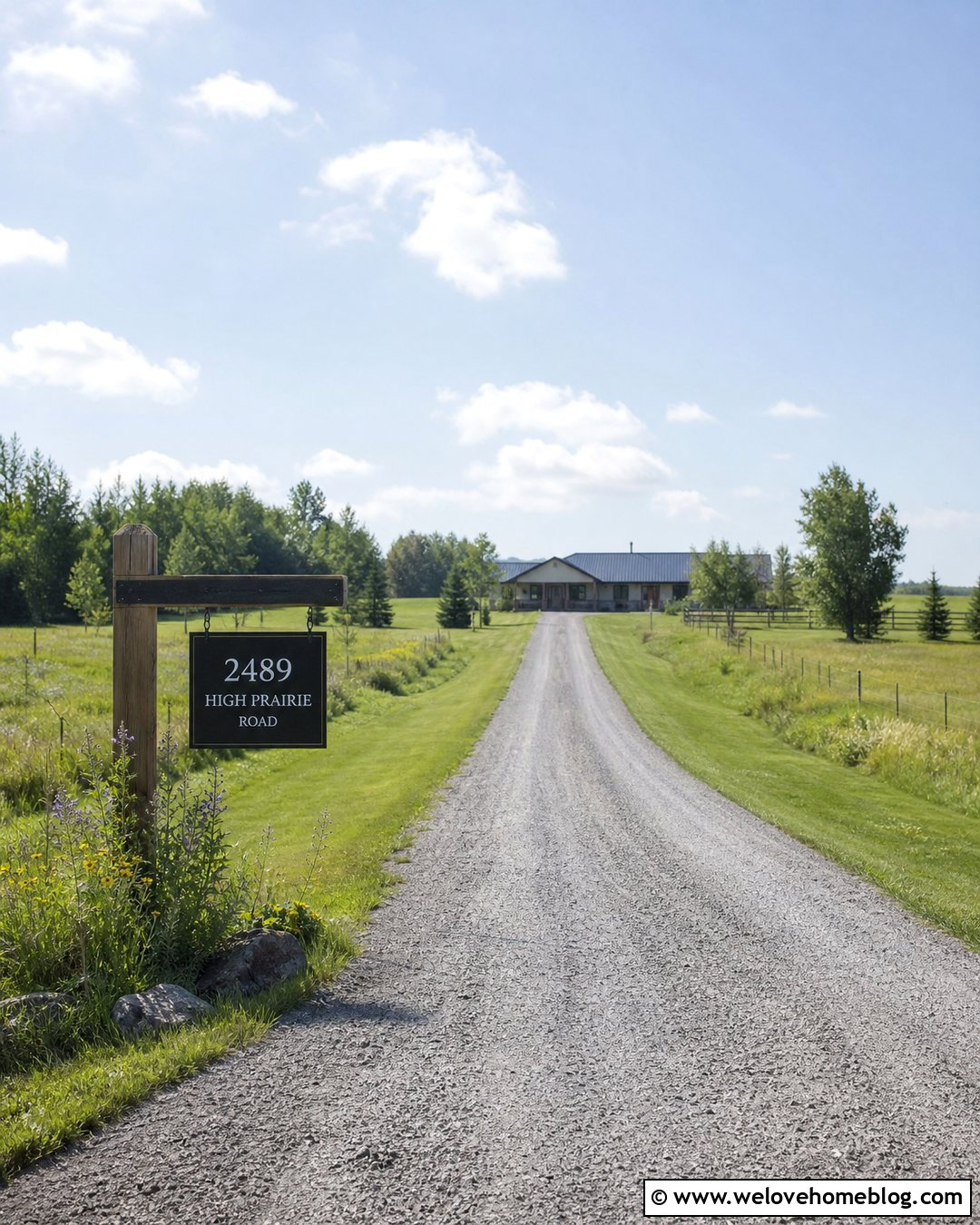
A reflective address panel provides a straightforward solution for a long rural driveway. Mount large reflective numbers on a dark green, brown, or black metal plaque attached to a sturdy timber post. Pair it with a straight gray gravel driveway edged by mown grass and simple drainage swales. A small bed of native grasses and wildflowers can integrate the post into the landscape without making maintenance difficult. Position the sign close enough to the entrance to be noticed, while leaving adequate clearance from the roadway. This unfussy design works with ranch houses, farmhouses, cabins, and properties surrounded by open land. Use a plain typeface and generous spacing rather than decorative lettering. The display can look practical and attractive when its colors repeat the home, fencing, or outbuildings.
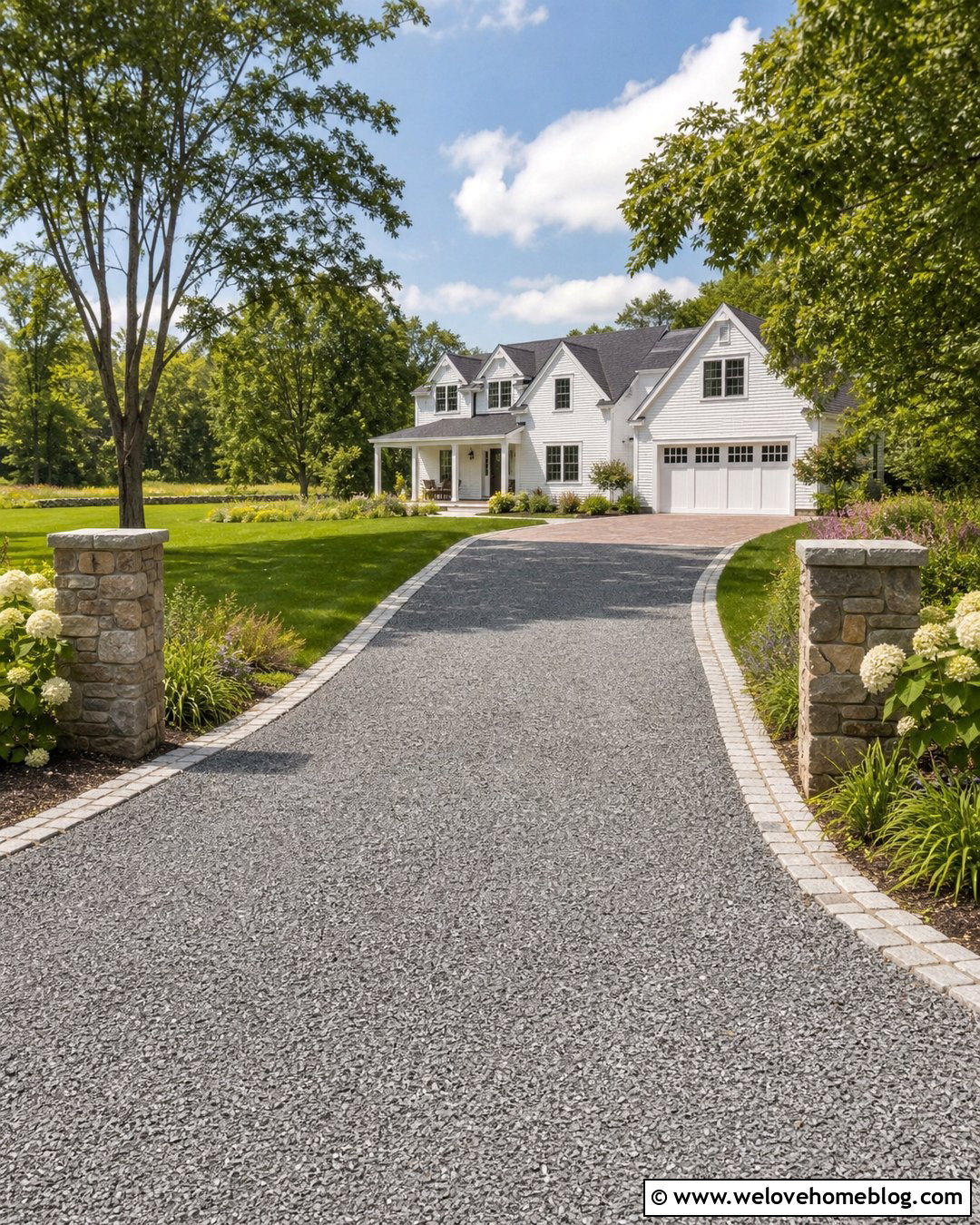
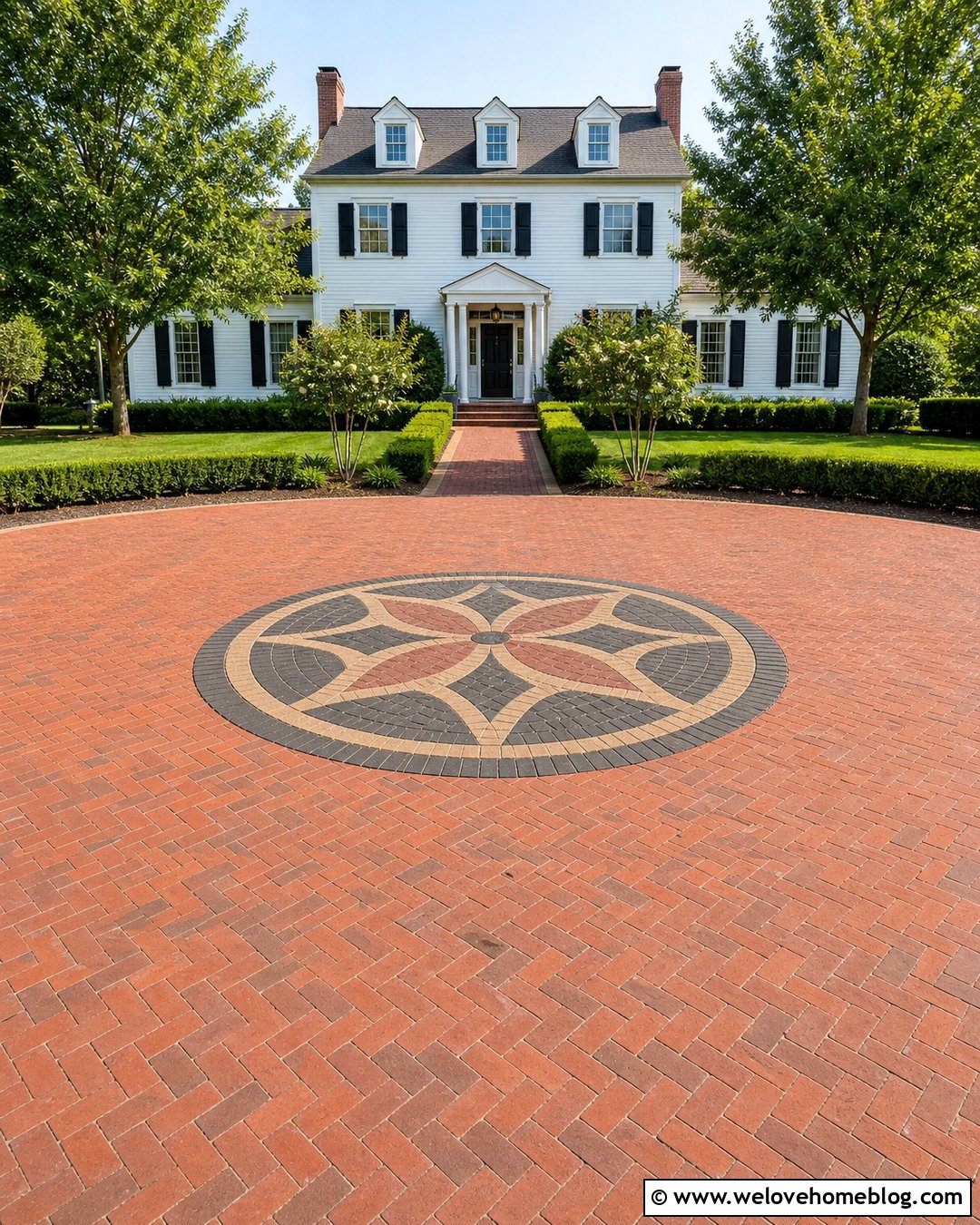
20. Coastal Driveway Address Sign
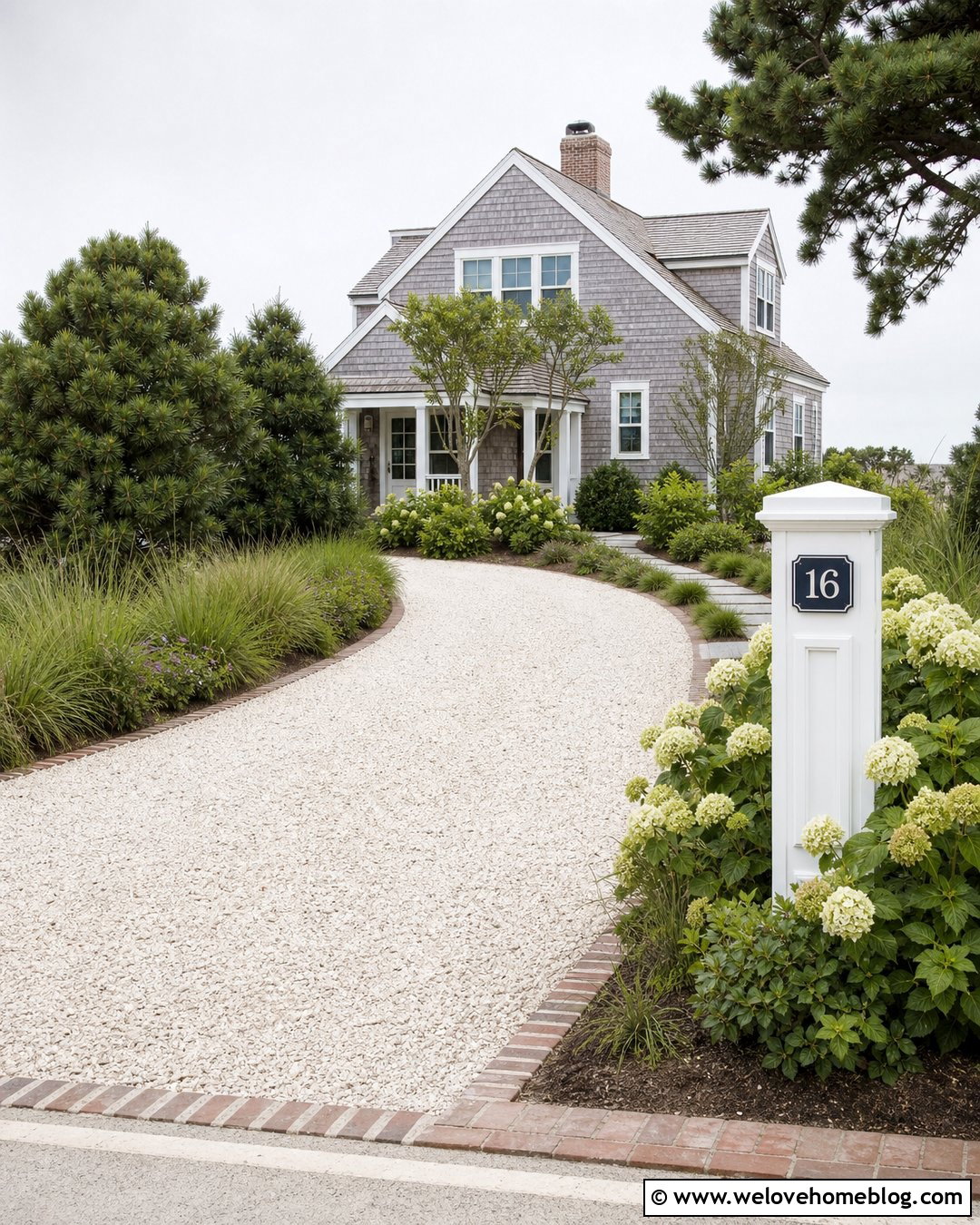
A coastal address sign looks fresh beside a pale shell, oyster-shell, or light gravel driveway. Use a white composite post with a navy, charcoal, or soft blue plaque and crisp white numbers. A gently curved layout bordered by weathered brick can guide the eye toward a shingle-style or coastal cottage home. Plant salt-tolerant grasses, low hydrangeas, and compact evergreen shrubs around the sign, depending on local growing conditions. Avoid filling the design with nautical symbols; color, texture, and simple materials can establish the character more subtly. A small cap light or discreet solar fixture may be incorporated above the panel. Keep the sign elevated above drifting gravel and vigorous plants. The complete entrance should feel bright, relaxed, and connected to the home’s exterior palette.
21. Craftsman Driveway Address Sign
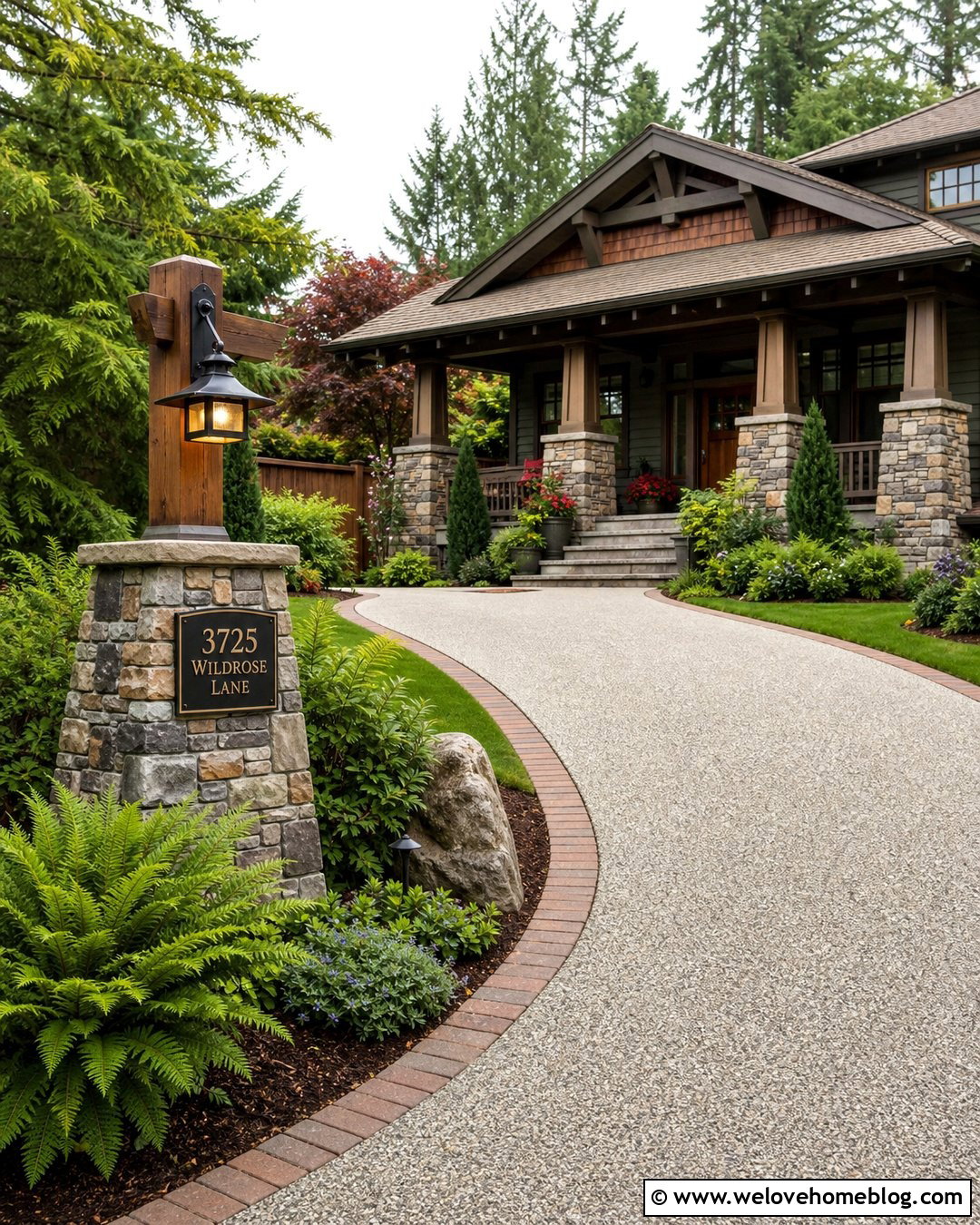
A Craftsman entrance benefits from natural materials and visible craftsmanship. Build a tapered stone base topped with a short stained-wood post and a bronze number plaque. Pair it with an exposed-aggregate concrete driveway that curves toward a bungalow or Craftsman home. A border of clay brick pavers can introduce warm color and echo porch columns or chimney masonry. Layer the nearby bed with ferns, dwarf conifers, flowering perennials, and ground cover, while keeping the plaque fully visible. A low lantern with an aged bronze finish can sit on the stone cap. Avoid a highly polished or minimalist sign that feels disconnected from the architecture. The strongest version repeats the home’s wood stain, masonry colors, and hardware, creating a cohesive arrival from curb to porch.
22. Colonial Driveway Address Sign
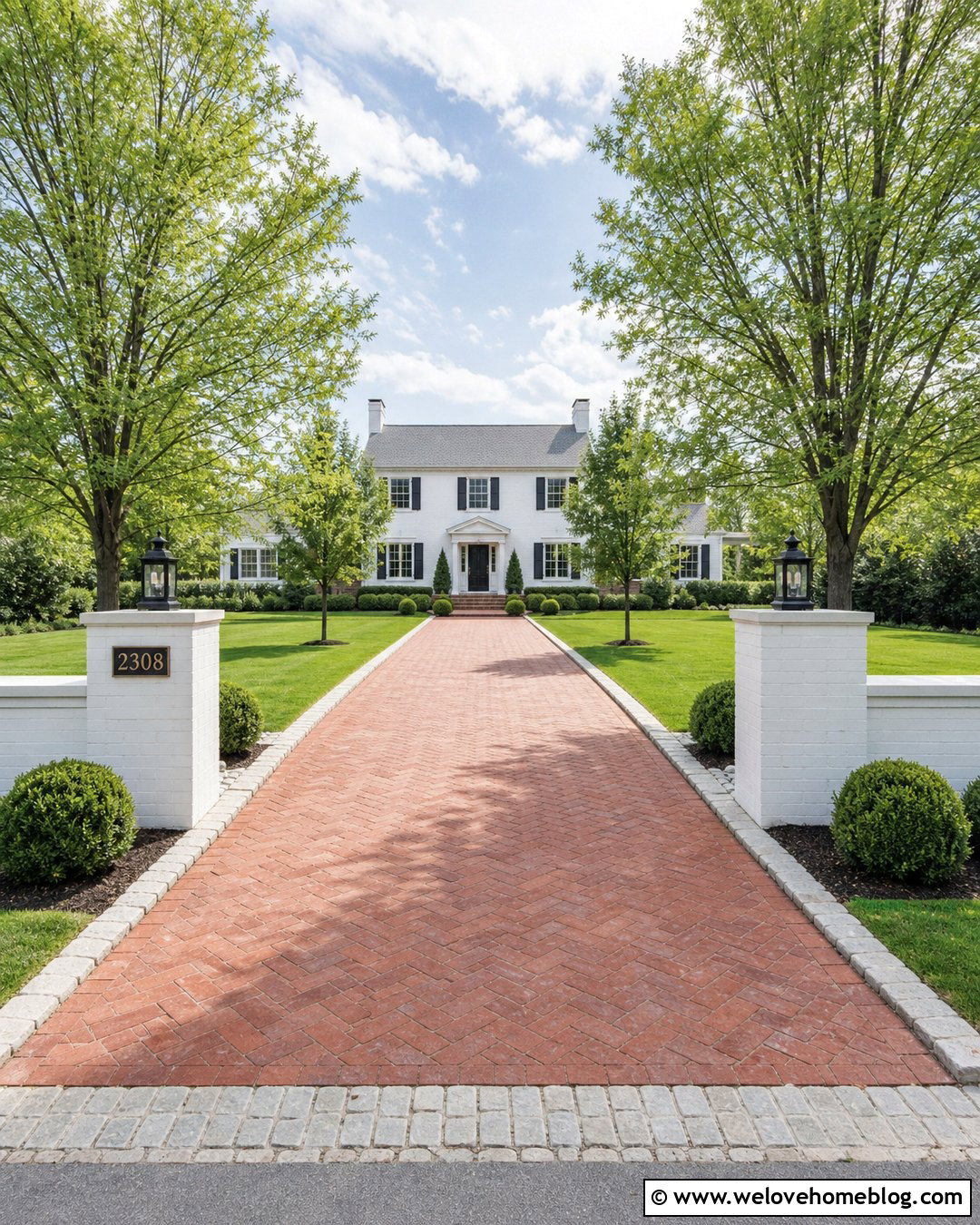
Symmetry makes a Colonial driveway address sign feel appropriately formal. Place a black or dark bronze plaque on a white masonry pillar beside a straight red brick driveway. Use traditional serif numbers, but keep them broad and uncomplicated enough to read easily. A matching pillar on the opposite side can hold a lantern or remain free of signage. Border the drive with clipped boxwood, lawn, and evenly spaced deciduous trees. A brick walkway branching toward the front door can strengthen the axial layout. This look works best when the pillar caps, brick tones, and exterior trim relate directly to the house. Position the address plaque at a comfortable viewing height and avoid surrounding it with elaborate decoration. Orderly spacing gives the entrance its strongest architectural presence.
23. Midcentury Driveway Address Sign
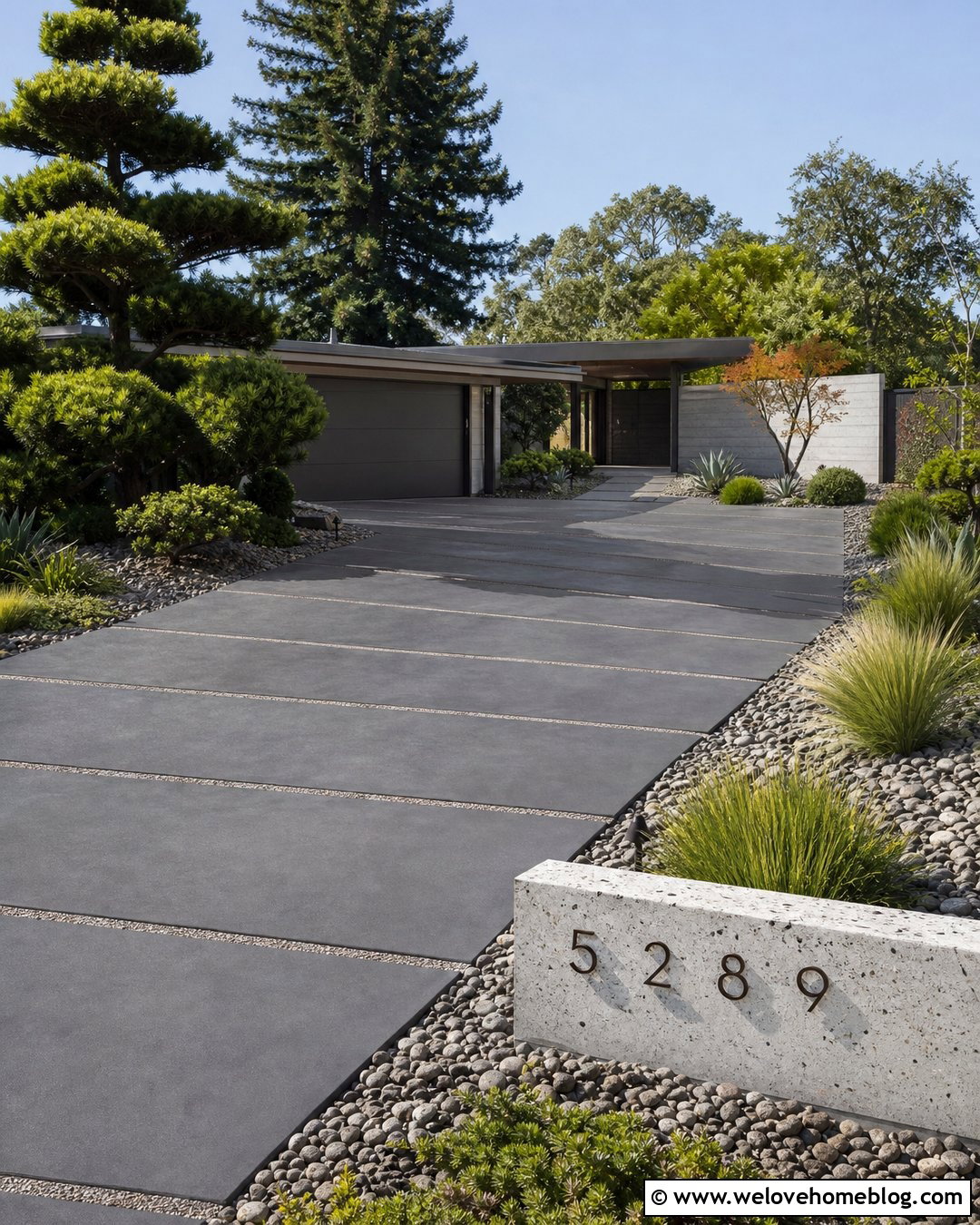
A low horizontal monument suits the long rooflines of a midcentury modern home. Construct the sign from smooth concrete, terrazzo, or painted masonry and add widely spaced metal numbers. Pair it with a broad driveway of charcoal concrete slabs separated by narrow gravel joints. Place the monument within an asymmetrical bed of river rock, ornamental grass, and sculptural evergreen plants. A concrete walkway can branch from the driveway using the same modular grid. Choose number shapes that feel clean and period-aware without becoming difficult to recognize. Warm wood fencing or siding behind the sign will soften the concrete surfaces. Keep the monument relatively low and wide so it mirrors the architecture. The completed entrance should emphasize horizontal lines, simple materials, and carefully controlled landscaping.
24. Minimalist Stucco Driveway Address Wall
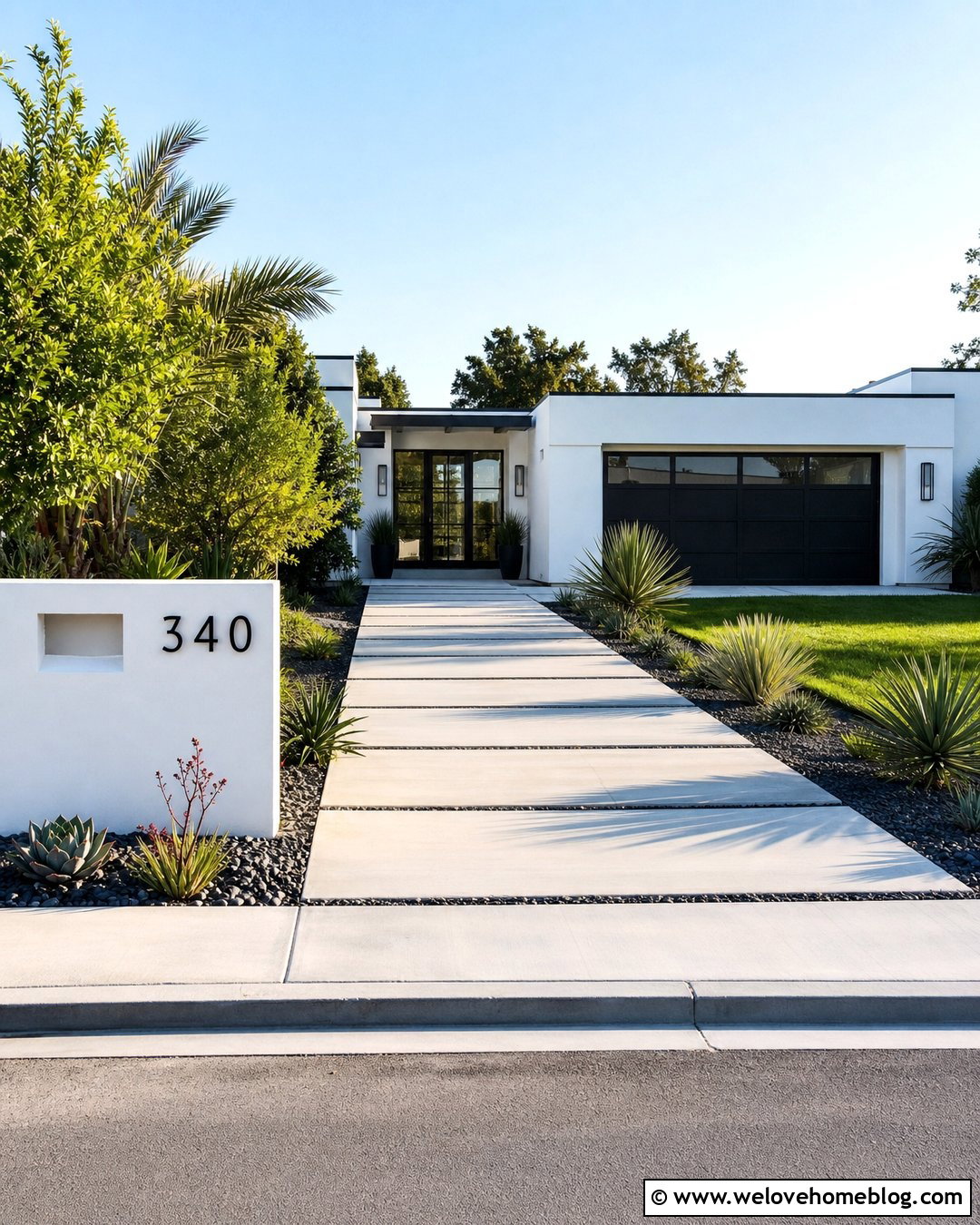
A short white stucco wall can define a driveway entrance while providing a bright background for black numbers. Set the wall beside a straight driveway made from large pale concrete pavers. A recessed vertical panel or shallow reveal gives the address area subtle depth without adding ornament. Use dark gravel and architectural plants around the base to create contrast. The wall can extend slightly into the landscape, helping separate the driveway from a pedestrian walkway or front garden. This clean arrangement works with modern stucco homes, desert residences, and contemporary Mediterranean architecture. Match the wall texture and color to the house facade. Large numbers, generous empty space, and a limited material palette prevent the feature from feeling busy. Keep irrigation spray away from the finished wall surface.
25. Gabion Driveway Address Sign
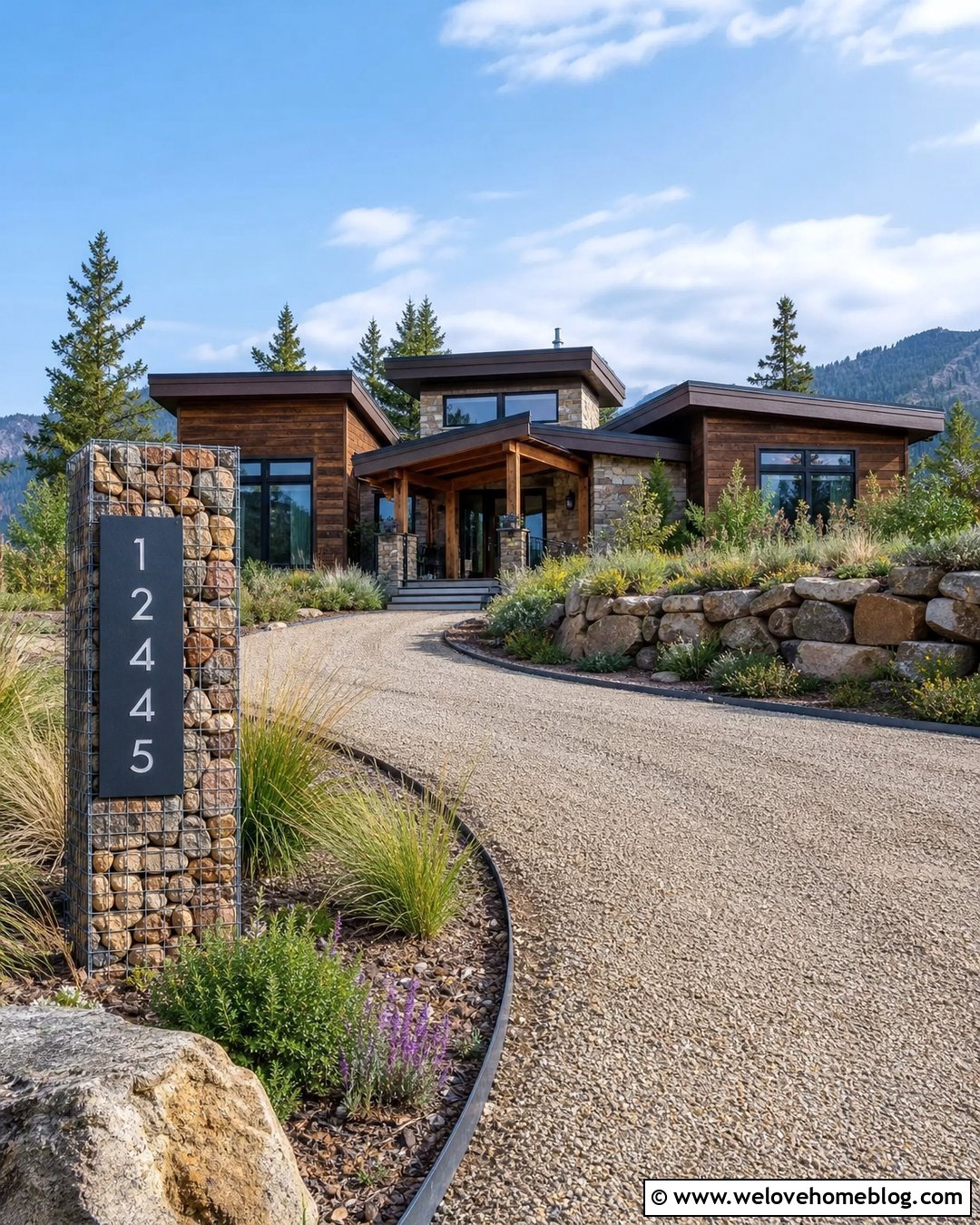
A gabion address marker introduces rugged texture to a gravel or mountain driveway. Fill a narrow steel cage with stones that coordinate with the surrounding landscape, then attach a smooth black metal panel to the front. Large white or stainless-steel numbers will stand out against the flat panel. Pair the sign with a gently curved crushed-granite driveway edged by steel or larger rocks. Native grasses, low junipers, and drought-tolerant perennials can blend the feature into the yard. This design complements industrial cabins, contemporary rural homes, and properties with stone retaining walls. Keep the stone fill consistently sized so the cage appears orderly. A substantial concrete footing can keep the tall, narrow structure stable. The final composition should feel grounded rather than bulky beside the driveway opening.
26. Slate Driveway Address Sign
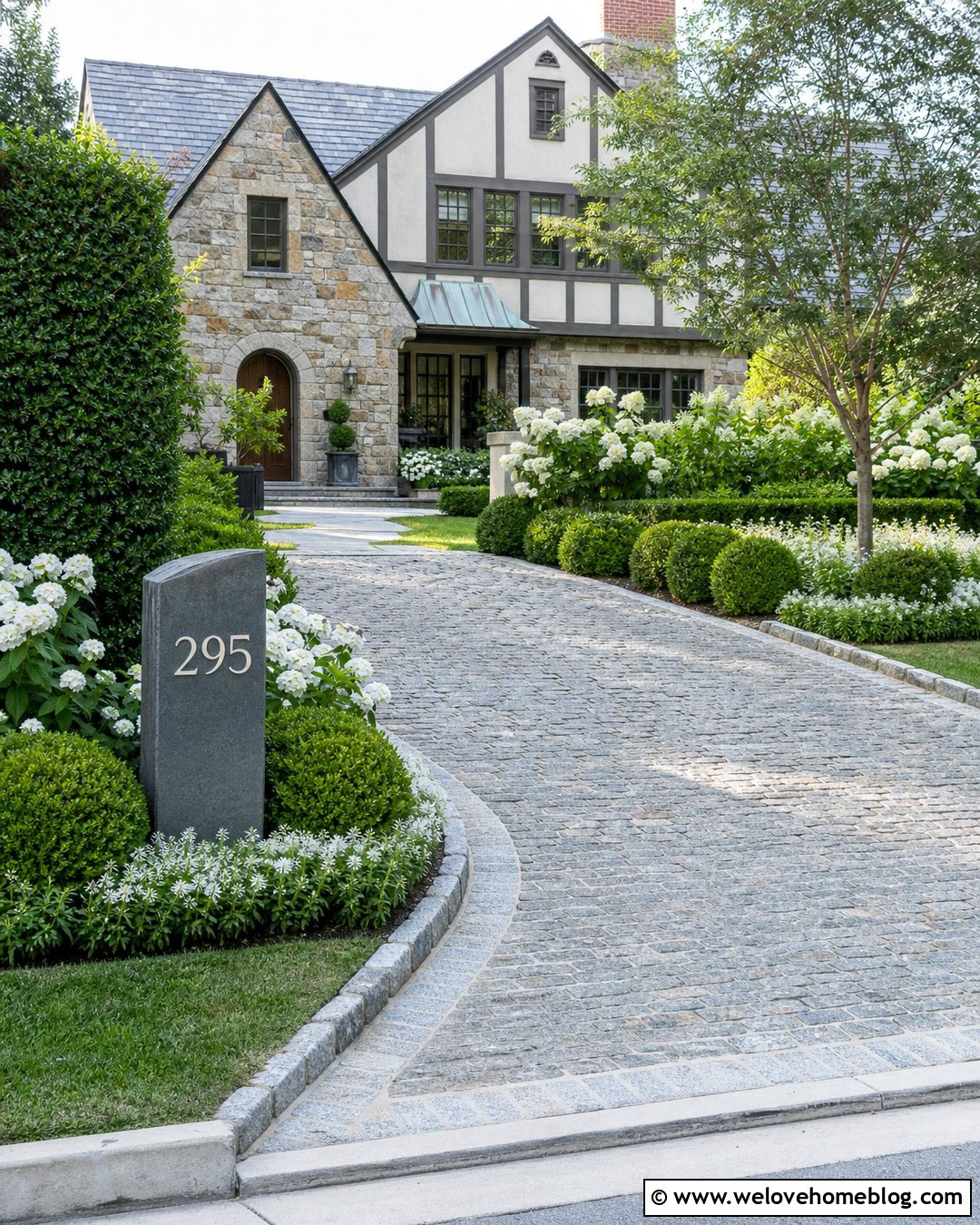
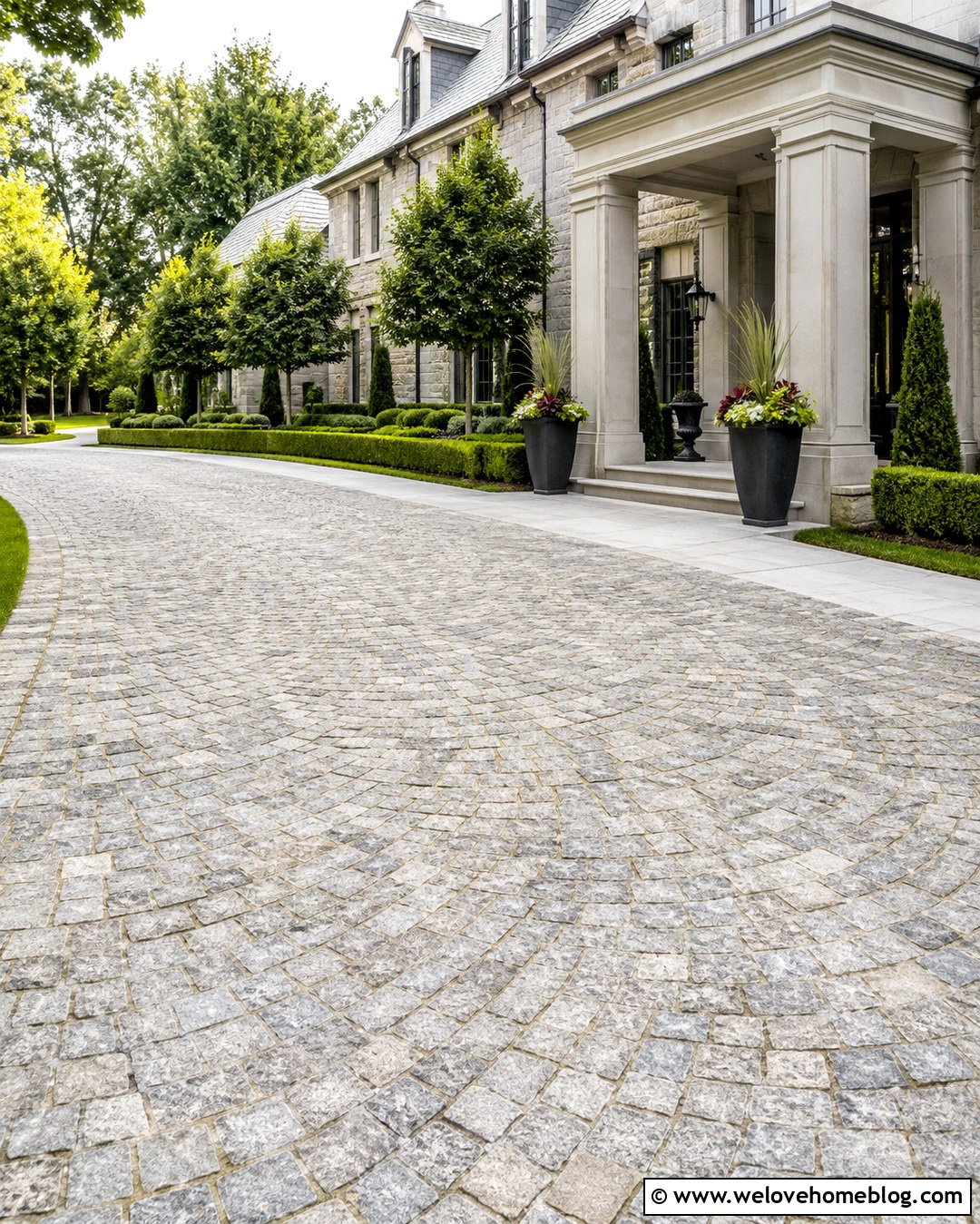
Dark slate creates an elegant address marker beside a traditional cobblestone driveway. Select a thick rectangular slab with natural split edges and mount pale metal numbers across the center. Set the stone upright in a low planting bed framed by granite setts or matching cobbles. Boxwood, white flowering perennials, and fine-textured ground cover can brighten the dark surface without concealing it. A gently curving drive leading to a Tudor, cottage, or stone-front home completes the look. Repeat slate on a walkway, porch step, or roof detail when possible. Because slate already has strong texture and variation, the lettering should remain simple. A small shielded spotlight can illuminate the numbers while leaving the planting subdued. The finished entrance feels refined but still closely connected to natural materials.
27. Limestone Driveway Address Marker
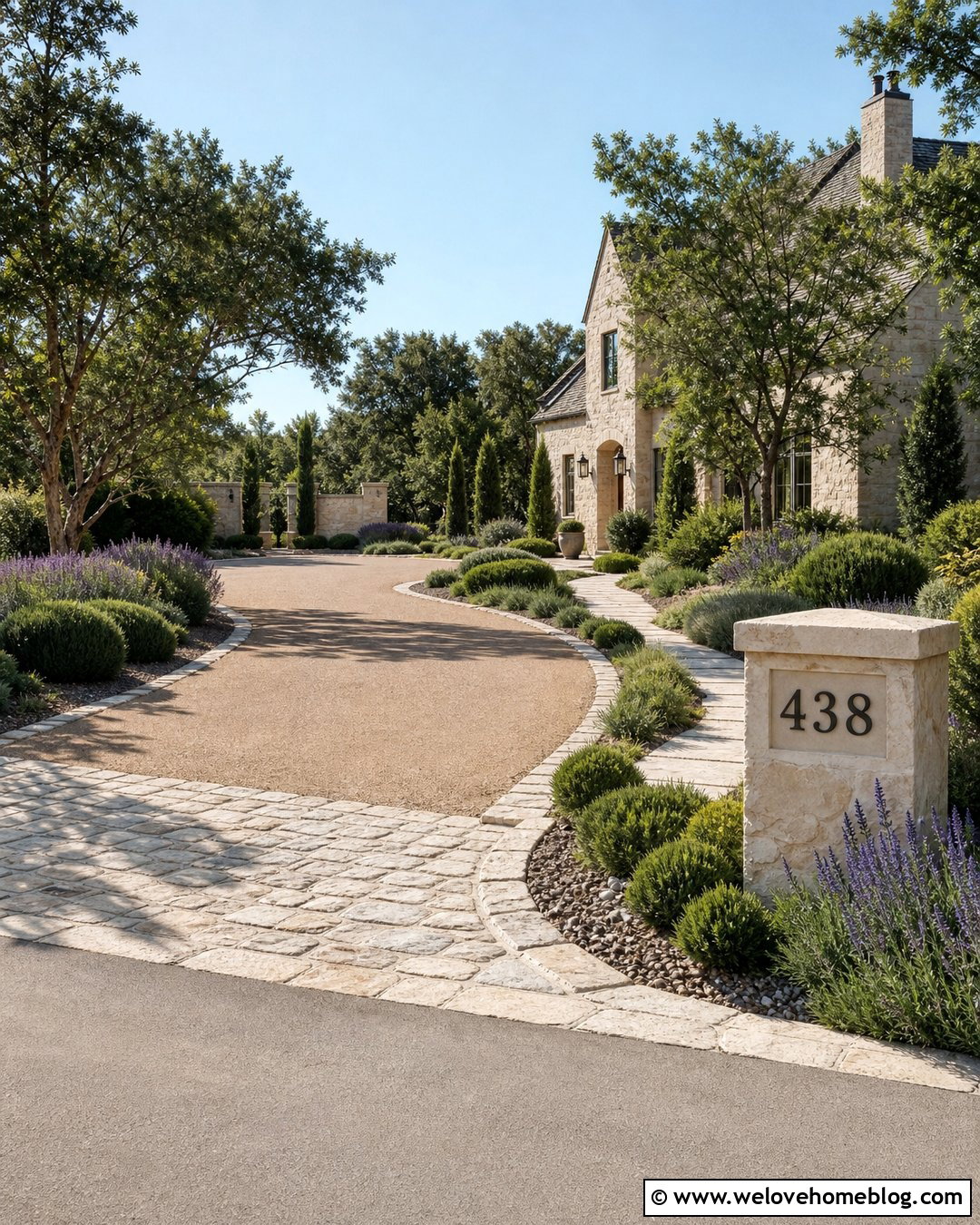
A pale limestone marker brings warmth to a chip-seal or tan gravel driveway. Use a rectangular block with recessed dark numbers, positioned perpendicular to the road or angled toward the primary approach. A border of limestone cobbles can define the driveway entrance and connect the sign to the surface. Surround it with lavender, dwarf rosemary, soft grasses, and low evergreen mounds where growing conditions permit. This palette complements French country, Mediterranean, Texas Hill Country, and light-brick homes. Keep the stone’s top simple, using either a flat profile or a shallow cap. Dark staining from irrigation can distract from pale limestone, so direct sprinklers away from the marker. The overall entrance should feel warm and established, with the address clearly separated from the texture of the surrounding masonry.
28. Copper Driveway Address Sign
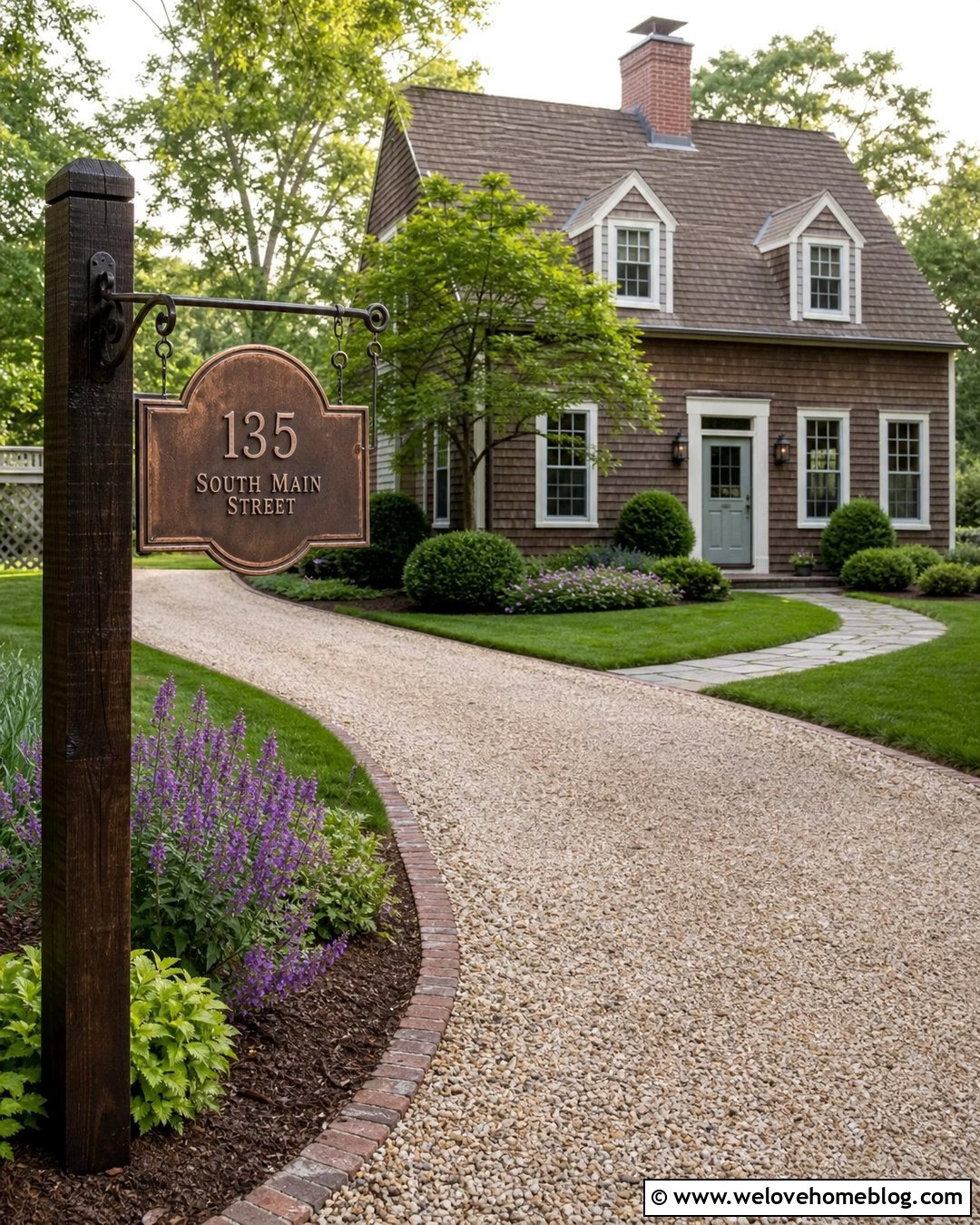
Copper brings a warm metallic accent to a relaxed pea-gravel driveway. Mount a copper plaque or raised copper numbers on a dark stained-wood post, allowing the two materials to create natural contrast. A curved driveway bordered by reclaimed brick can lead toward a cottage or traditional cedar-sided home. Frame the sign with soft green shrubs, purple flowering perennials, and a small ornamental tree. Repeat copper sparingly on a porch light, gutter detail, or mailbox so the sign feels connected to the building. Because the surface can change character over time, choose number colors that remain distinct from both warm copper and its later patina. Keep the plaque large and the lettering uncomplicated. The resulting entrance combines handcrafted character with a tidy, carefully planned landscape.
29. Bronze Driveway Address Plaque
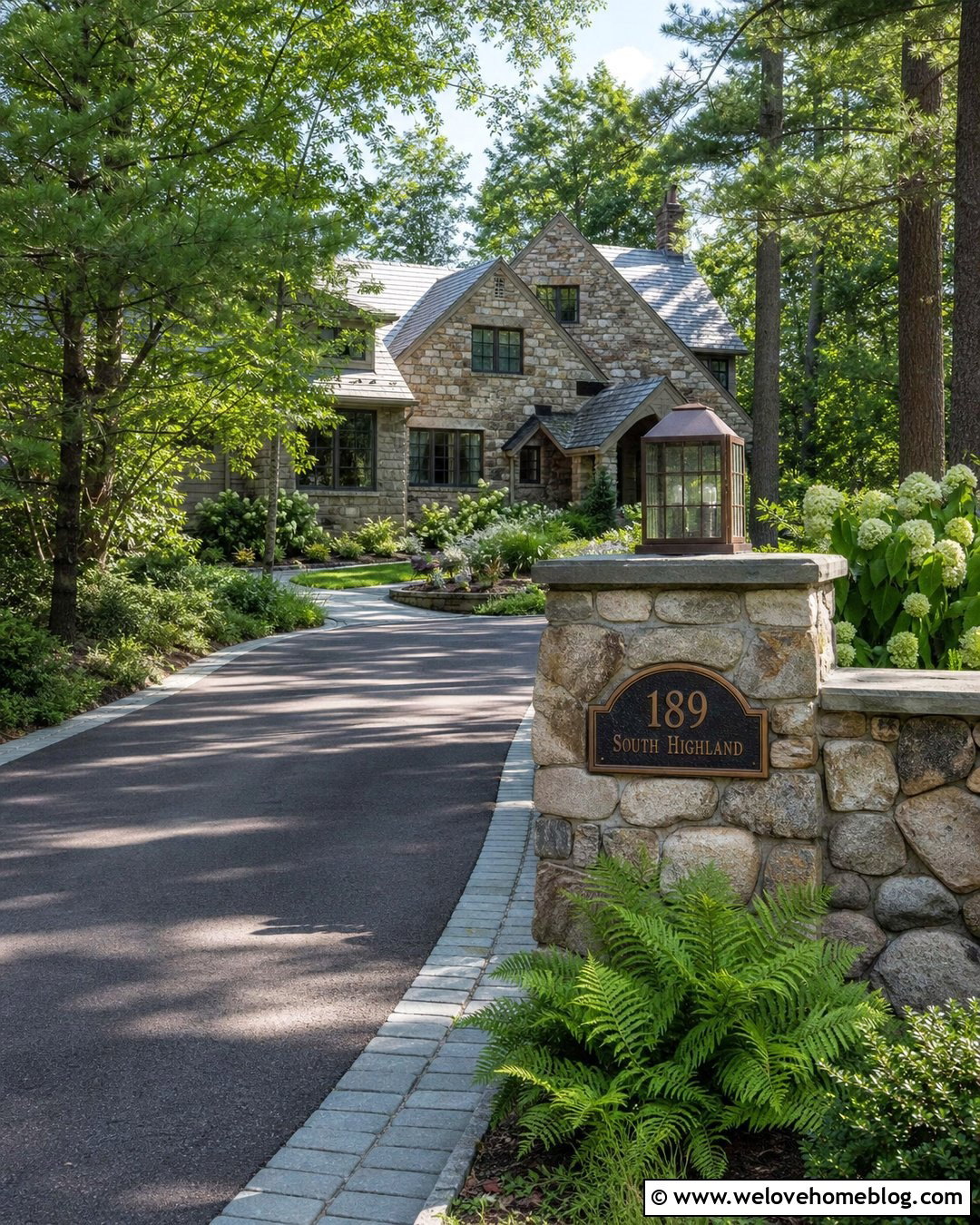
An aged bronze plaque works naturally with a bluestone-edged asphalt driveway. Mount the plaque on a low fieldstone wall or a square masonry pier near the curb. Cream or raised metallic numbers can provide contrast while preserving the traditional appearance. Shape the driveway with a gentle curve and use bluestone bands at the entrance and walkway transition. Ferns, inkberry, hydrangeas, and shade-tolerant ground cover can surround the marker in a wooded front yard. This complete design suits stone cottages, Craftsman homes, and refined traditional exteriors. Coordinate the plaque with door hardware and lanterns rather than introducing another metal finish. Leave open space around the numbers and avoid decorative borders that compete with them. The sign should look substantial, quiet, and integrated with the masonry.
30. Ranch Driveway Address Sign
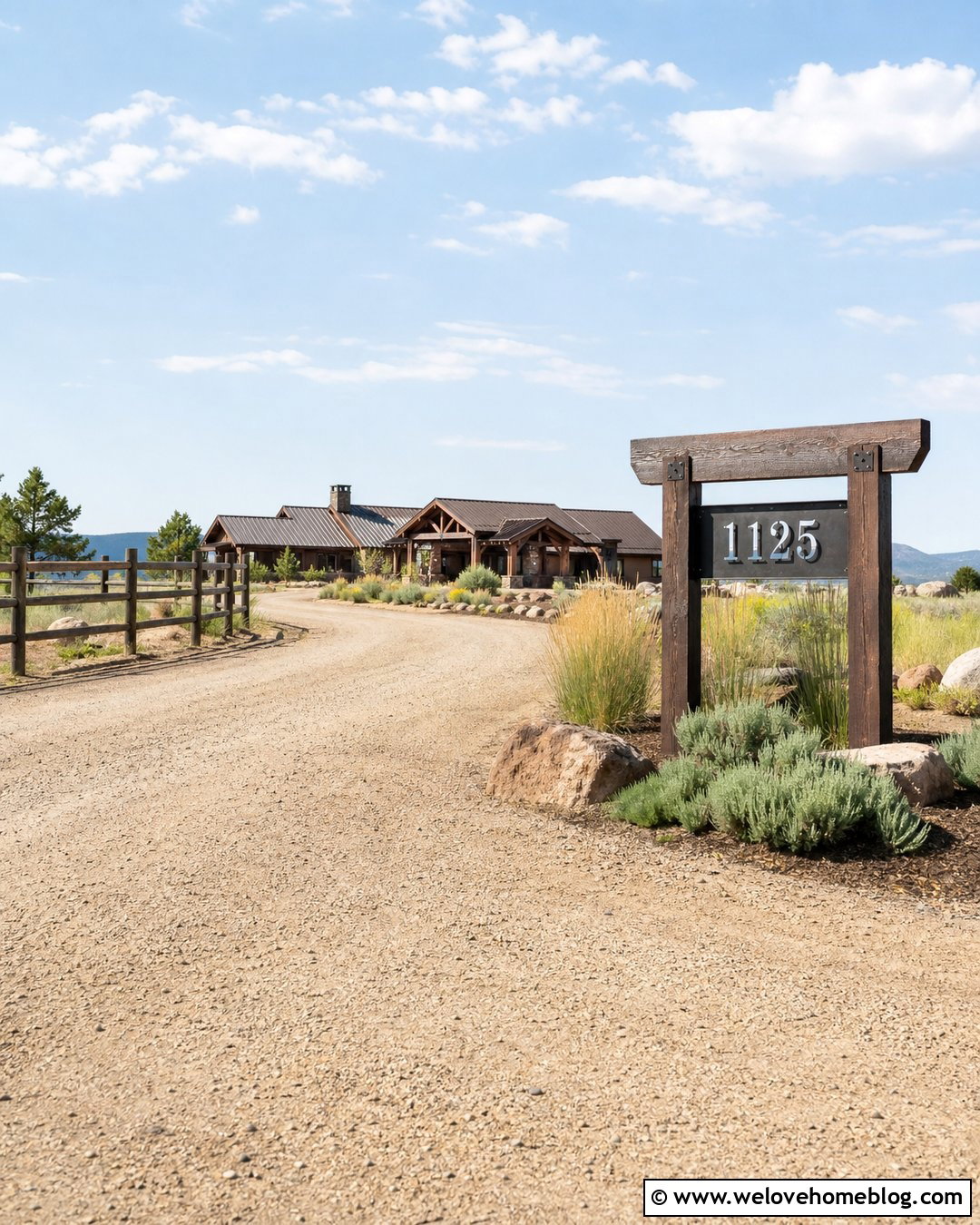
A ranch entrance can support a larger address feature because the driveway is often broad and open. Build a simple timber frame with thick posts and a horizontal metal panel displaying the house number. Pair it with a wide tan gravel driveway that passes through understated post-and-rail fencing. Native grasses, sage, low shrubs, and a cluster of landscape rocks can ground the structure. Use dark brown or black finishes that coordinate with gates, fencing, and barn hardware. The sign may include a modest ranch name, but the street number should receive the strongest contrast and largest type. Keep the top of the structure clear of excessive silhouettes or decorative cutouts. This complete look feels appropriate for Western ranch houses, rural farmsteads, and homes on spacious acreage.
31. Split Driveway Directional Address Sign
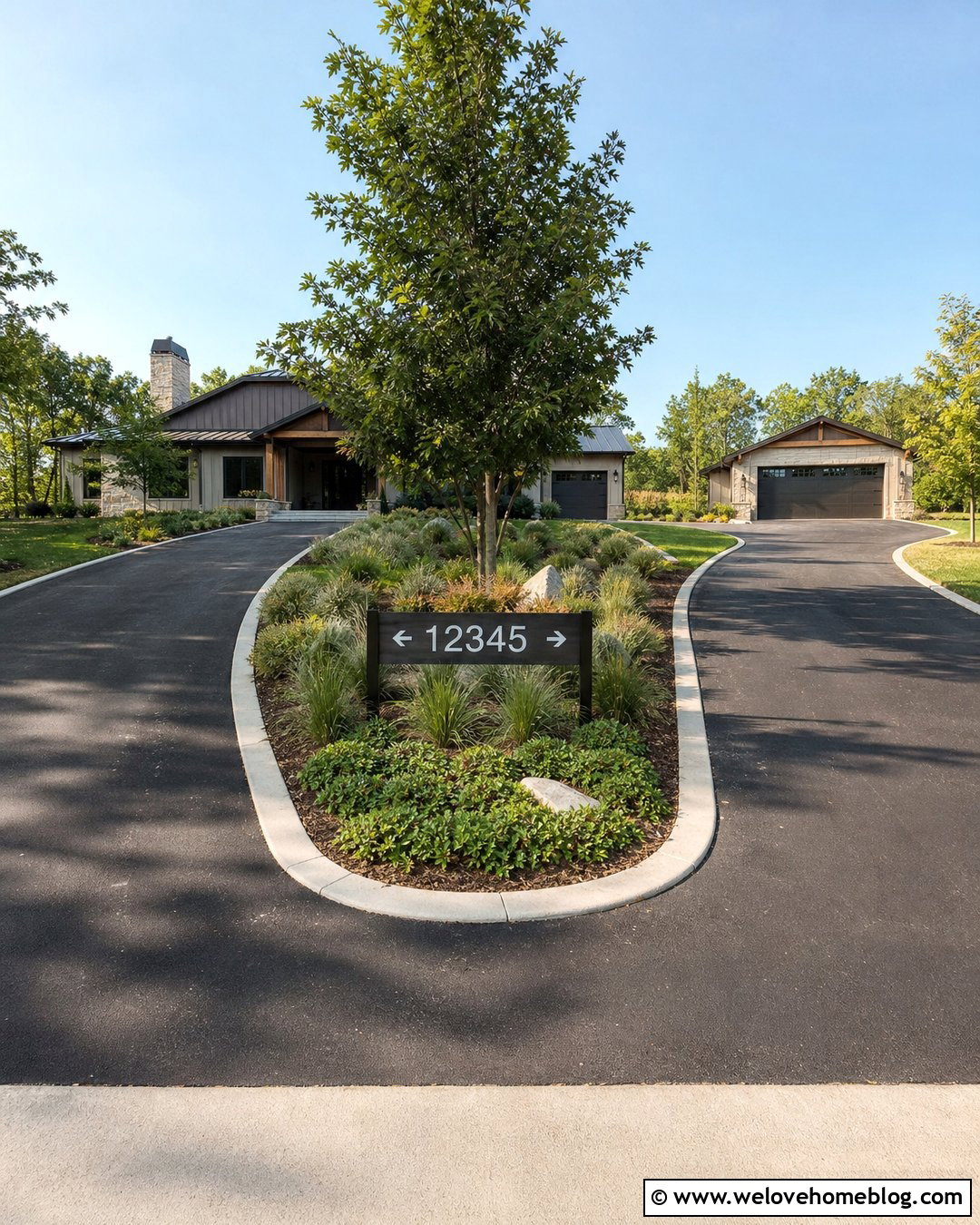
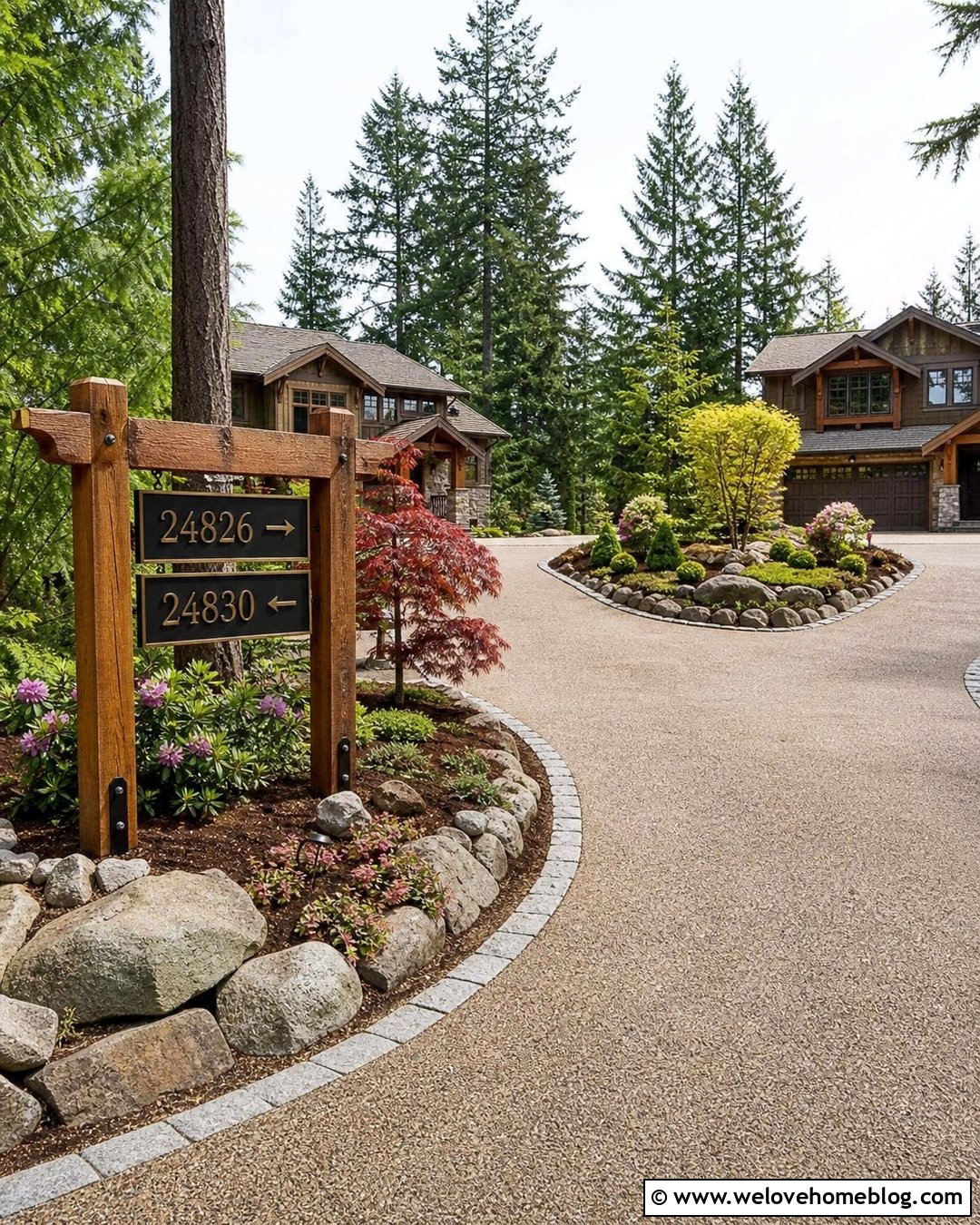
A split driveway needs an address sign that explains the route without overwhelming the entrance. Use a wide metal or wood panel with the main house number above two simple directional arrows. Pair it with a Y-shaped black asphalt driveway edged by light concrete curbing. Place the sign in the landscaped island where the drive divides, rather than crowding the roadside opening. Low ornamental grasses, ground cover, and a small specimen tree can define the island while preserving visibility. This solution works for a main residence with a guesthouse, garage, studio, or secondary parking area. Use the same lettering and colors found on the property’s other signs. Clear hierarchy matters: the street number should be noticed first, followed by the directional information needed farther inside the property.
32. Long Driveway Address Sign
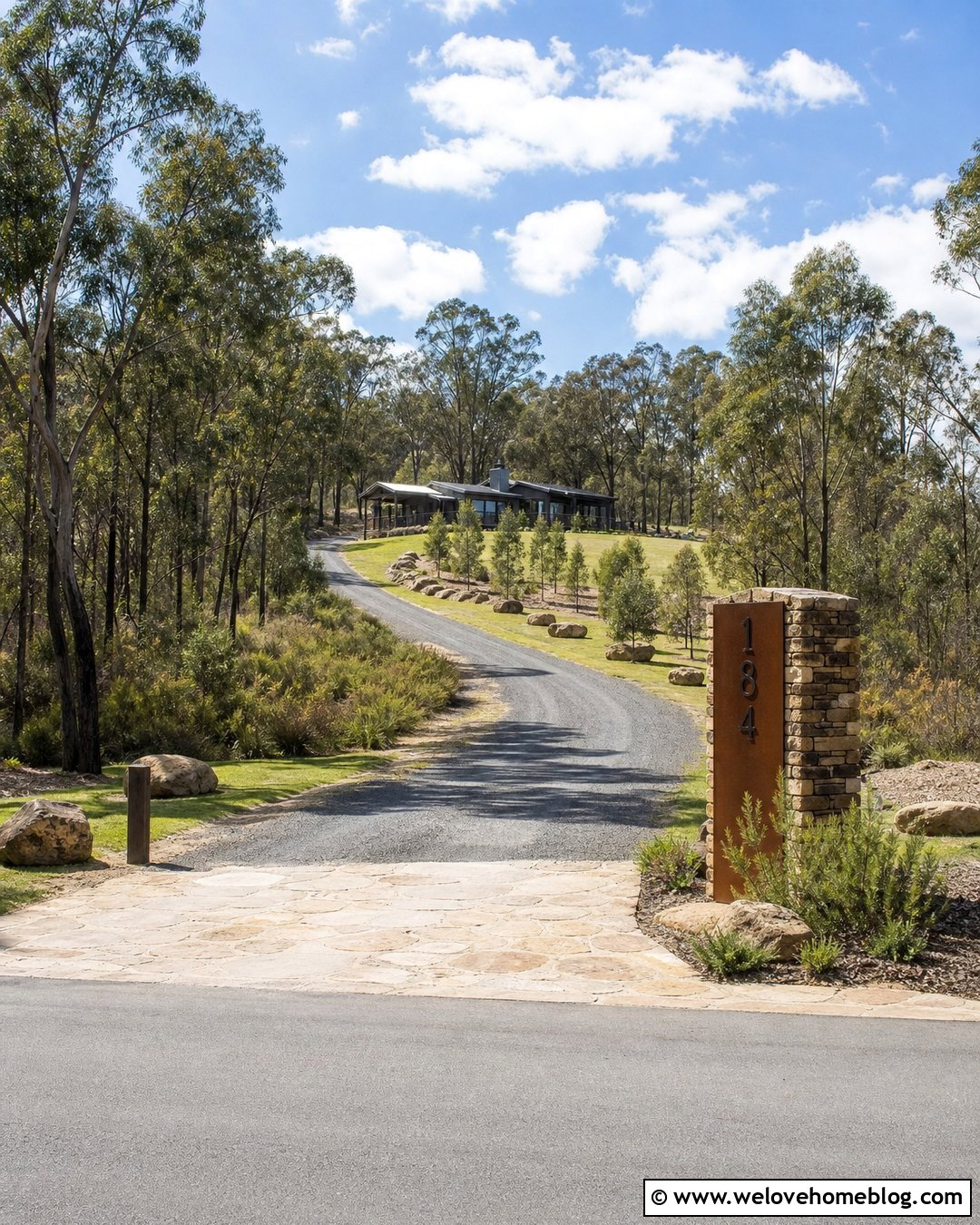
A long driveway benefits from a substantial marker positioned at the road rather than relying on numbers attached to the distant house. Use a tall stone-and-steel monument with oversized digits and an optional street name beneath them. Pair it with a sweeping gray gravel driveway framed by native trees and a narrow mown verge. A stone apron or paver band at the entrance can make the transition from public road to private drive feel intentional. Keep nearby planting low and repeat the monument stone in small landscape boulders farther along the route. This design works with secluded modern homes, rural estates, and wooded cabins. If there are turns or forks, repeat a smaller coordinating number marker deeper in the property to reassure visitors that they are following the correct drive.
33. Two Sided Driveway Address Sign
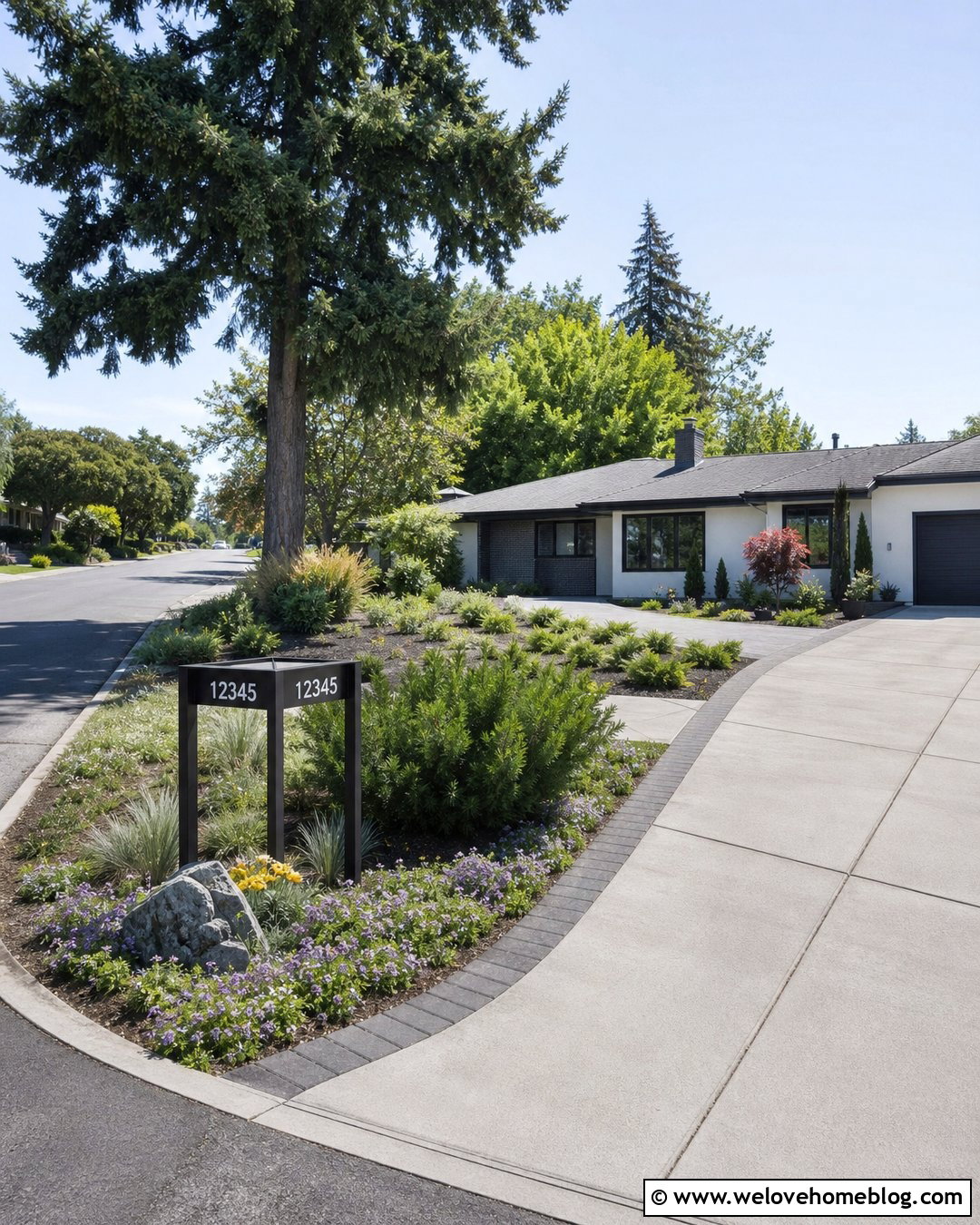
A corner property or angled entrance often needs a two-sided sign. Choose a freestanding metal blade, square post, or monument with the house number repeated on both visible faces. Pair it with a diagonal poured-concrete driveway bordered by dark pavers and a broad corner planting bed. The sign should sit at an angle that serves traffic approaching from either direction. Low junipers, flowering ground cover, and compact grasses can fill the bed without obscuring the lower digits. A modern ranch or transitional home in the background keeps the design grounded in a familiar suburban setting. Use identical number size and spacing on both sides. A small cap or integrated downlight can finish the structure. The dual display should feel deliberate rather than like two unrelated signs attached together.
34. Shared Driveway Address Sign
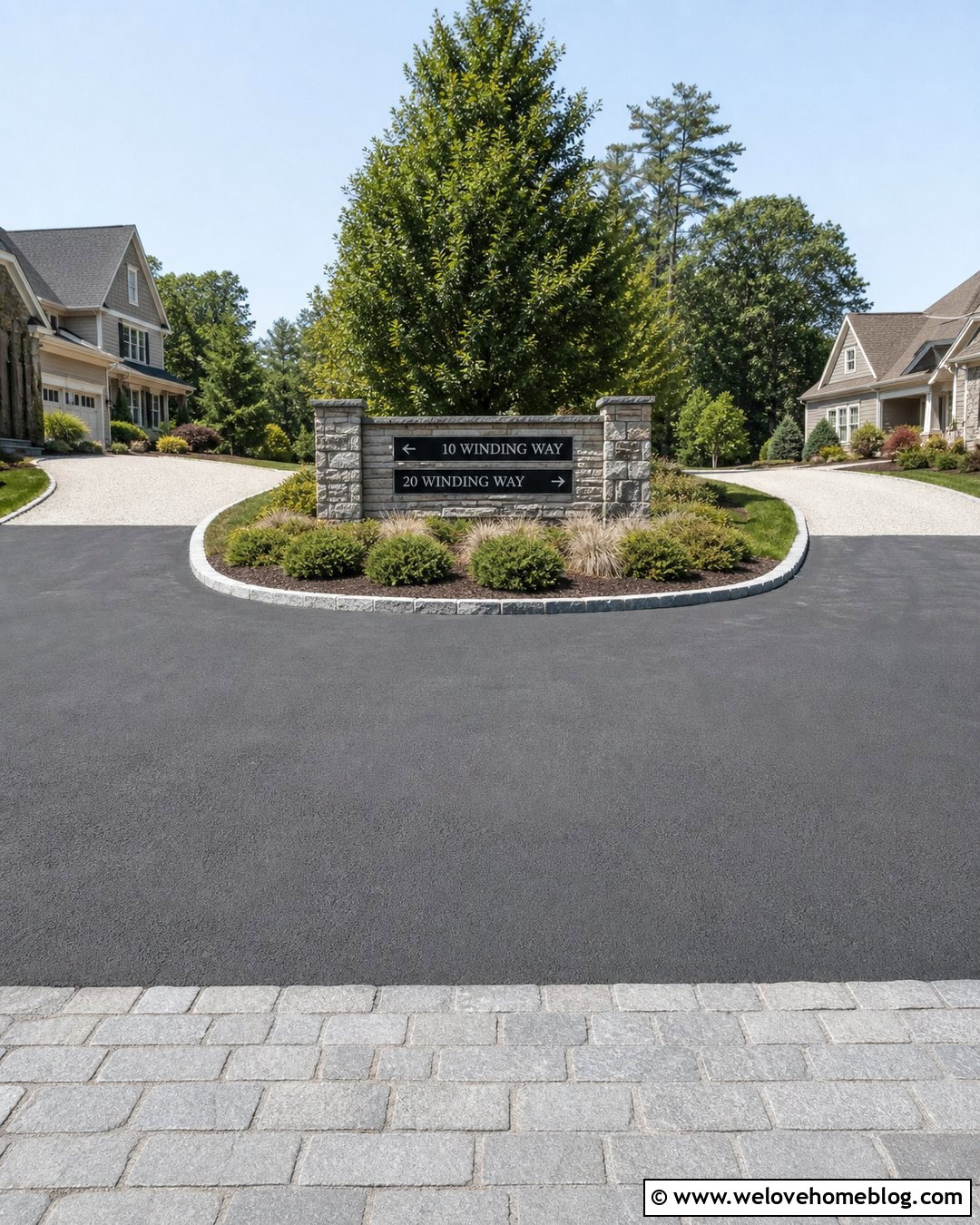
A shared driveway requires a clear layout that distinguishes multiple homes before visitors enter. Install a wide masonry or metal monument displaying each address on its own aligned row, with simple arrows where necessary. Pair it with a broad asphalt entrance that divides into two gravel or concrete branches farther back. Stone curbs and a central planting island can organize the space visually. Keep the sign background neutral and use one consistent font, reserving subtle accent colors for directional markers. Low evergreen planting will provide a tidy frame without covering the information. This complete entrance suits duplexes, family compounds, flag lots, and neighboring rural homes. Avoid squeezing too much wording onto the panel. Generous spacing between addresses will make the arrangement look calmer and easier to understand.
35. Driveway Address Sign With Arrow
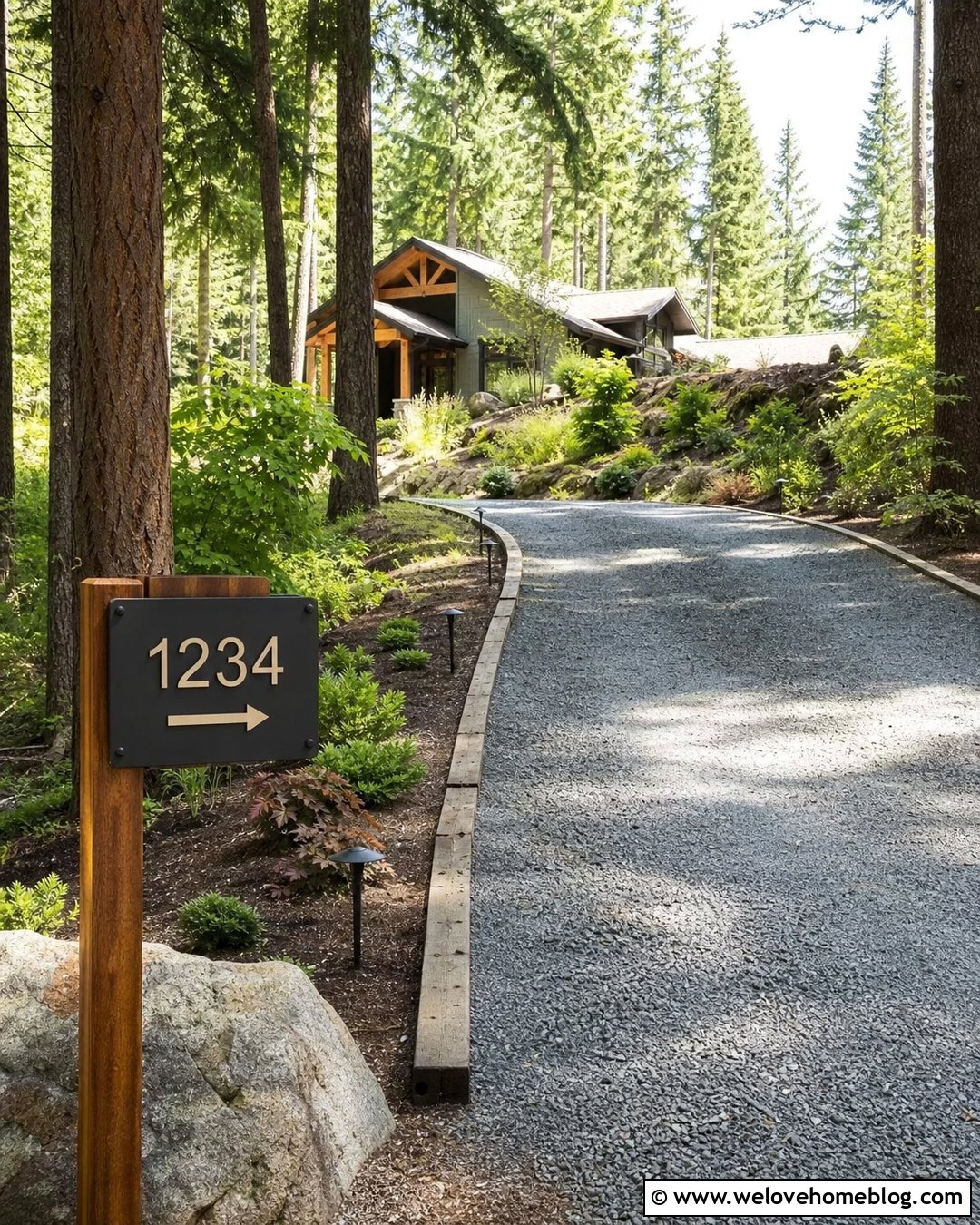
An arrow can clarify an entrance when the house is hidden, the driveway curves sharply, or nearby access points cause confusion. Use a rectangular dark metal sign with large pale numbers and one bold directional arrow. Mount it on a cedar post beside a curved crushed-stone driveway with timber edging. A small bed of native shrubs and ornamental grasses can frame the post, while low path lights continue along the drive. Position the arrow below or beside the address so it does not compete with the digits. This practical design suits wooded cabins, rural homes, and properties with detached garages. Match the sign’s colors to the house or entrance gate. Keep additional words to a minimum. The number and directional symbol should communicate the route quickly without making the display resemble a commercial sign.
36. Flower Bed Driveway Address Sign
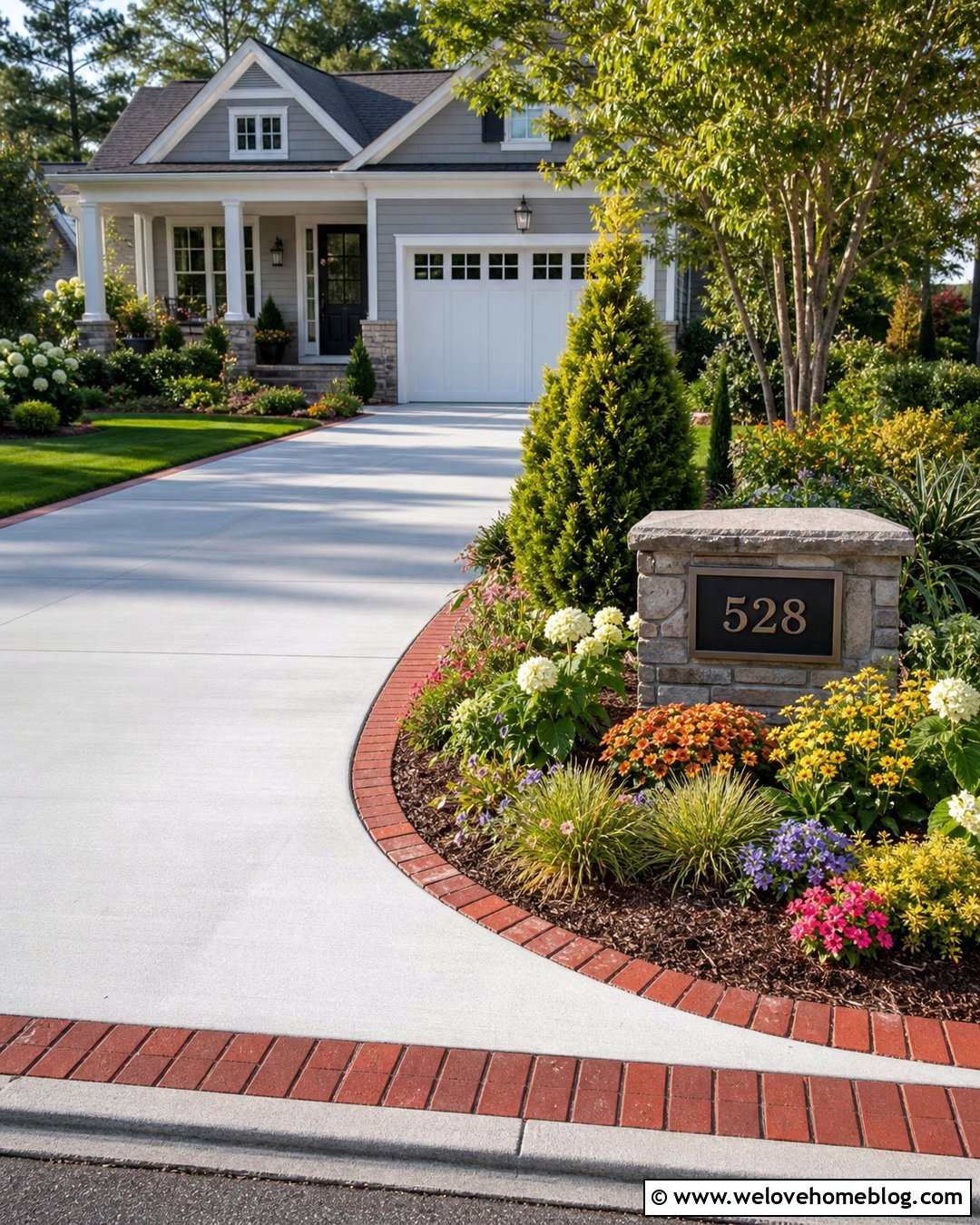
A landscaped flower bed can turn a simple address sign into a complete curbside feature. Install a dark metal plaque on a low stone base beside a straight concrete driveway with brick edging. Shape a broad crescent bed around the marker using compact evergreen shrubs, long-blooming perennials, and a neat layer of mulch or gravel. Arrange taller plants behind the sign and shorter varieties in front so the numbers stay visible. Select a restrained color palette that complements the home rather than using every available flower color. This design works with suburban ranch, cottage, and traditional homes. Repeat several plants from the front foundation beds to create continuity. The sign should remain the fixed focal point, while seasonal blooms provide changing color around its edges without taking over the display.
37. Ornamental Grass Driveway Address Sign
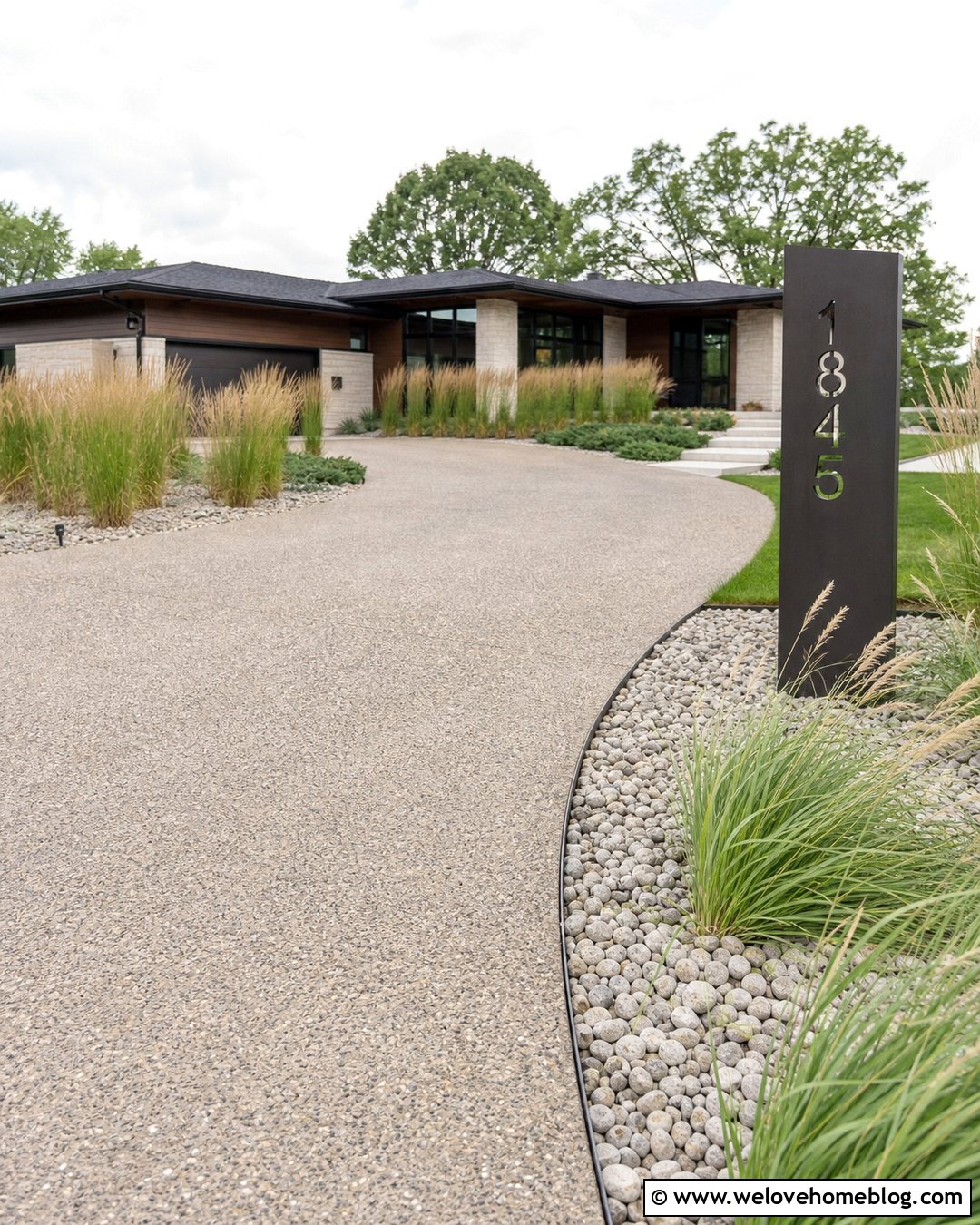
Ornamental grasses add movement and texture around a modern driveway address marker. Use a tall charcoal steel panel with cutout numbers beside a light exposed-aggregate driveway. Place the panel slightly forward of a staggered group of switchgrass, feather reed grass, or compact fountain grass. Keep enough open gravel around the base to prevent foliage from covering the digits as the plants mature. Black steel edging can outline the bed and follow the driveway’s gentle curve. This combination complements modern farmhouse, prairie, and contemporary architecture. Add a few low evergreen mounds for winter structure and repeat the grasses near the house. The address sign’s solid geometry provides a useful contrast to the softer planting. Periodic trimming will preserve that contrast and keep the entrance from appearing overgrown.
38. Hedge Backdrop Driveway Address Sign
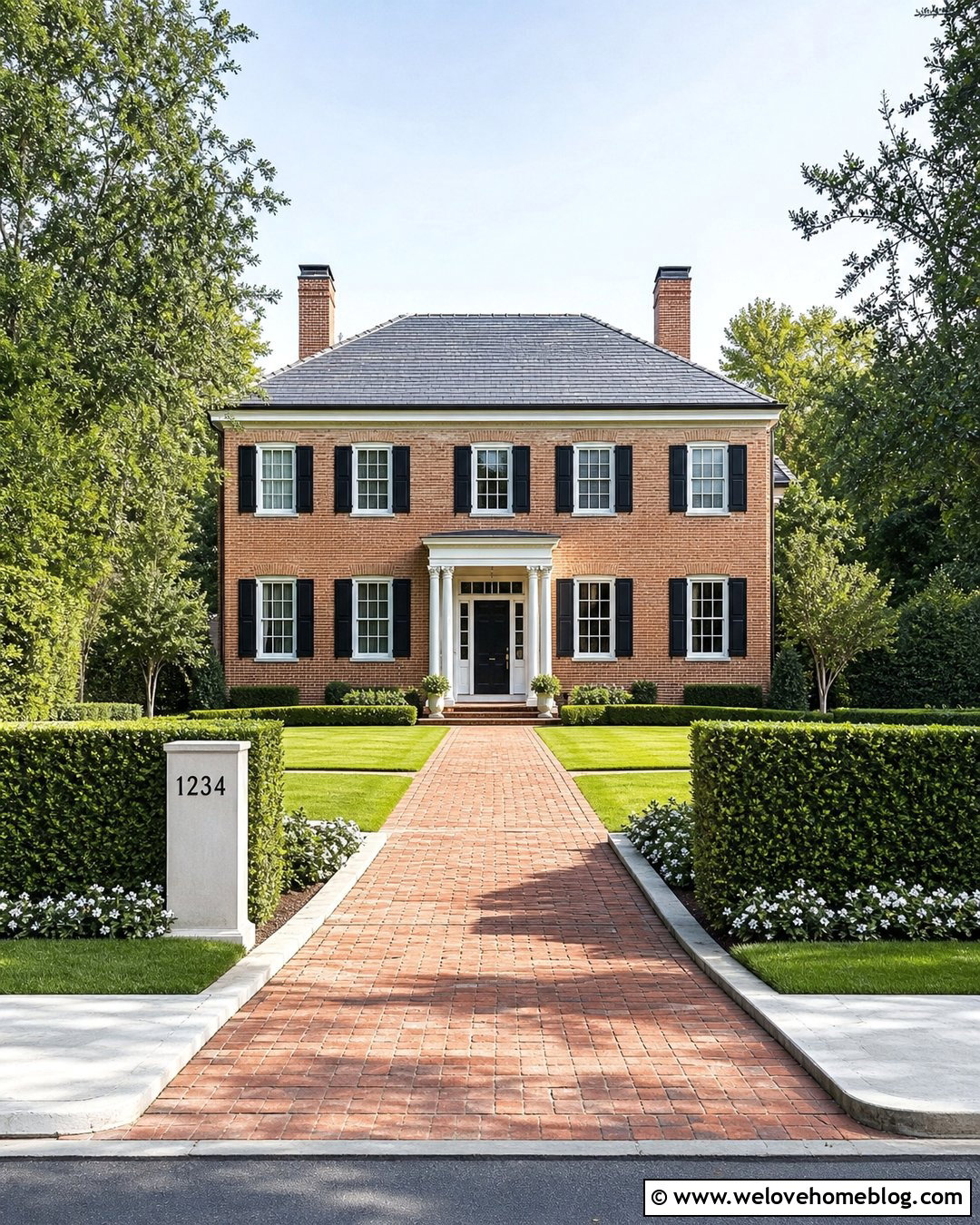
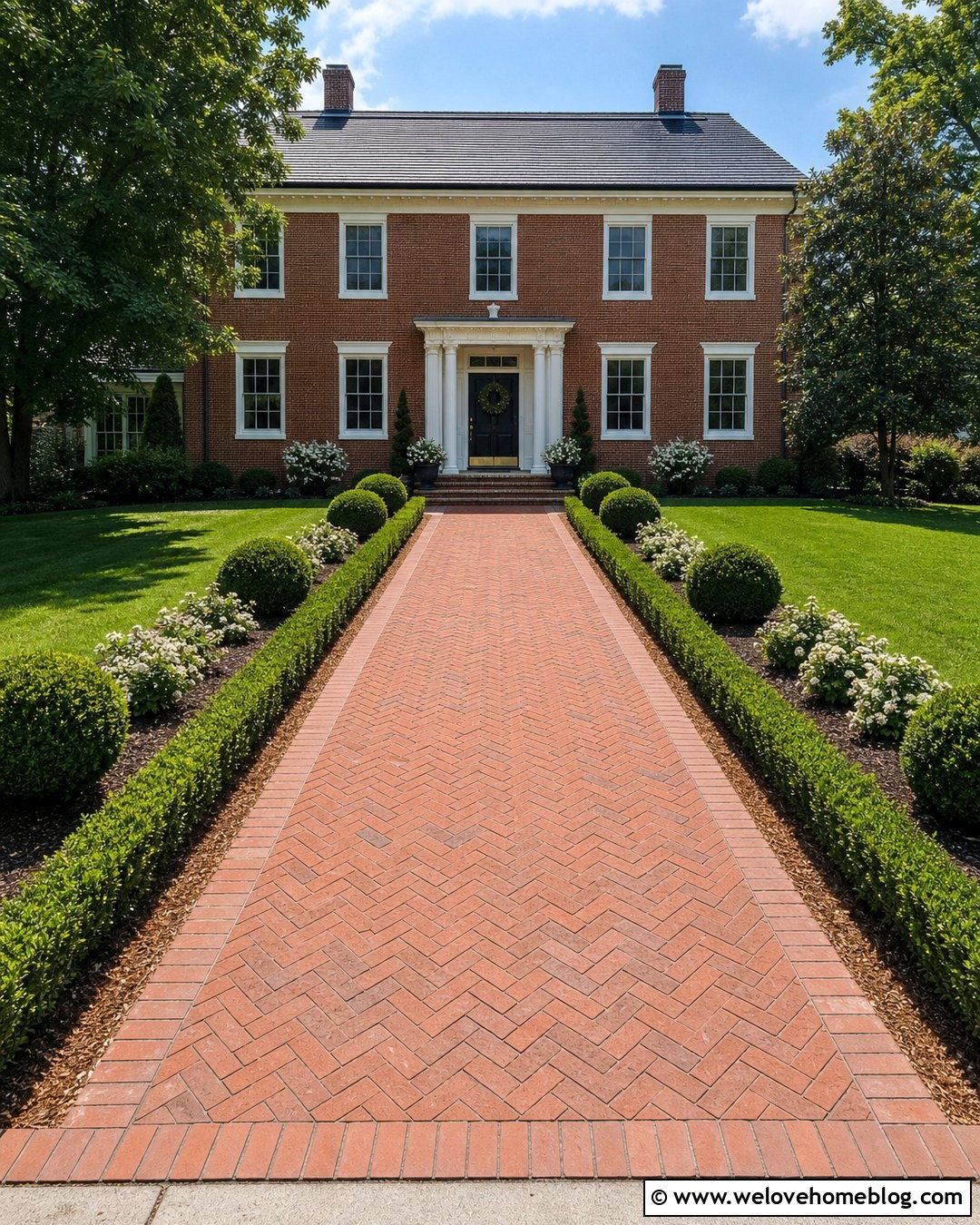
A clipped hedge can create a clean background that makes a freestanding address sign easier to notice. Choose a white stone or light concrete monument with dark numbers, positioned in front of a deep green hedge. Pair it with a straight clay brick driveway and narrow limestone borders. Keep the hedge several feet behind the sign so there is room for maintenance and visual depth. Low white flowers or ground cover can soften the monument’s base without reducing contrast. This formal composition suits Colonial, Georgian, and symmetrical traditional homes. Align the sign with the driveway edge or front walkway to strengthen the orderly appearance. Regularly maintain the hedge below or around the address panel. The combination of masonry, greenery, and crisp typography creates an entrance that looks structured throughout the year.
39. Dry Creek Driveway Address Sign
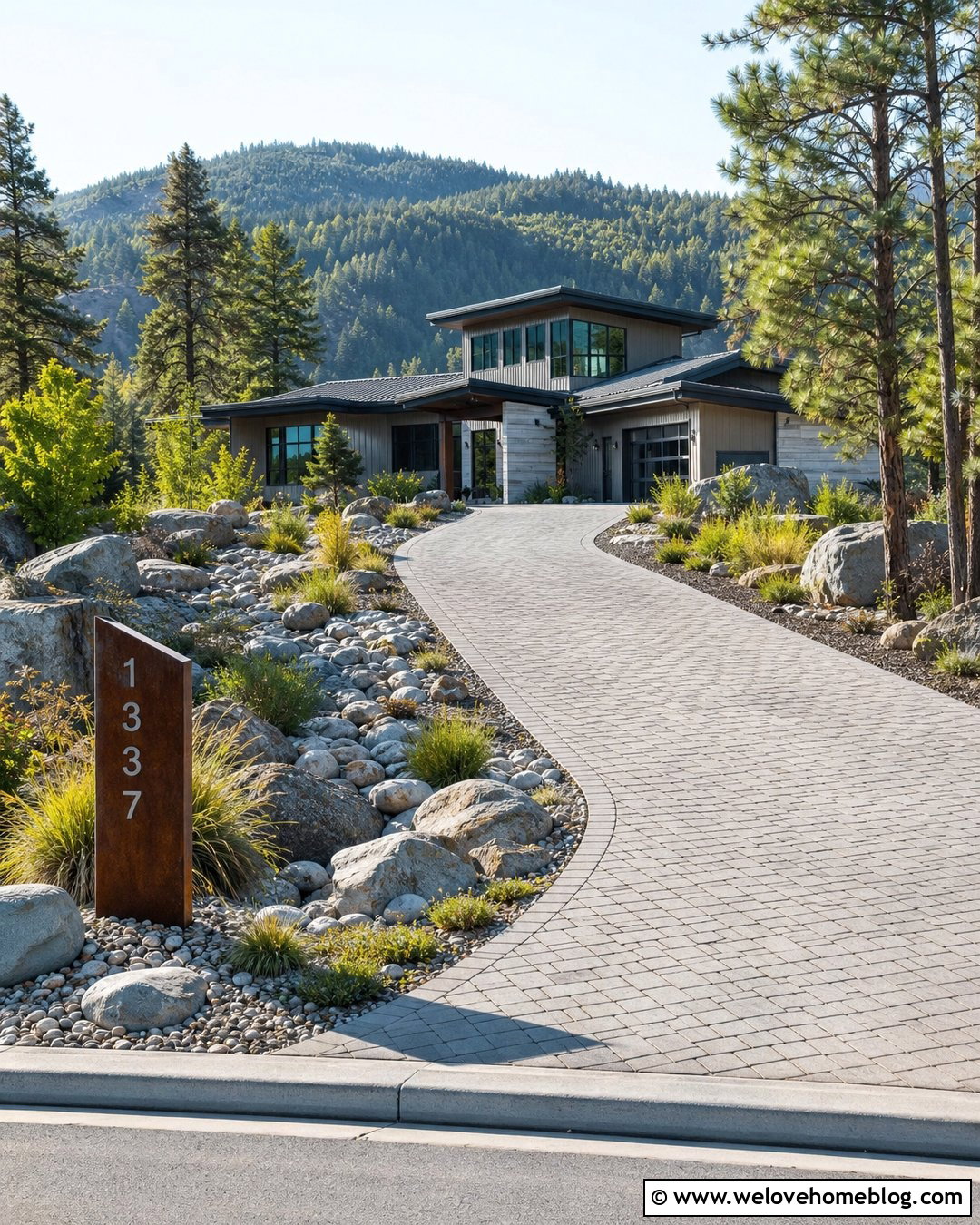
A dry creek bed can frame an address sign while helping a sloped entrance look integrated with the landscape. Set a weathered steel or natural stone marker beside a curved permeable-paver driveway. Extend rounded river rocks beneath the sign and through the planting bed in a natural, meandering line. Add sedges, native grasses, dwarf shrubs, and a few larger boulders along the edges. Keep the number face smooth and high-contrast so it does not disappear among the textured rocks. This complete design suits contemporary, mountain, and drought-conscious landscapes. A stone-lined drainage crossing can continue beneath the driveway where appropriate. Avoid piling decorative rock directly against the sign. Clear separation between the address panel and creek materials will keep the composition readable and visually balanced.
40. DIY Wood Driveway Address Sign
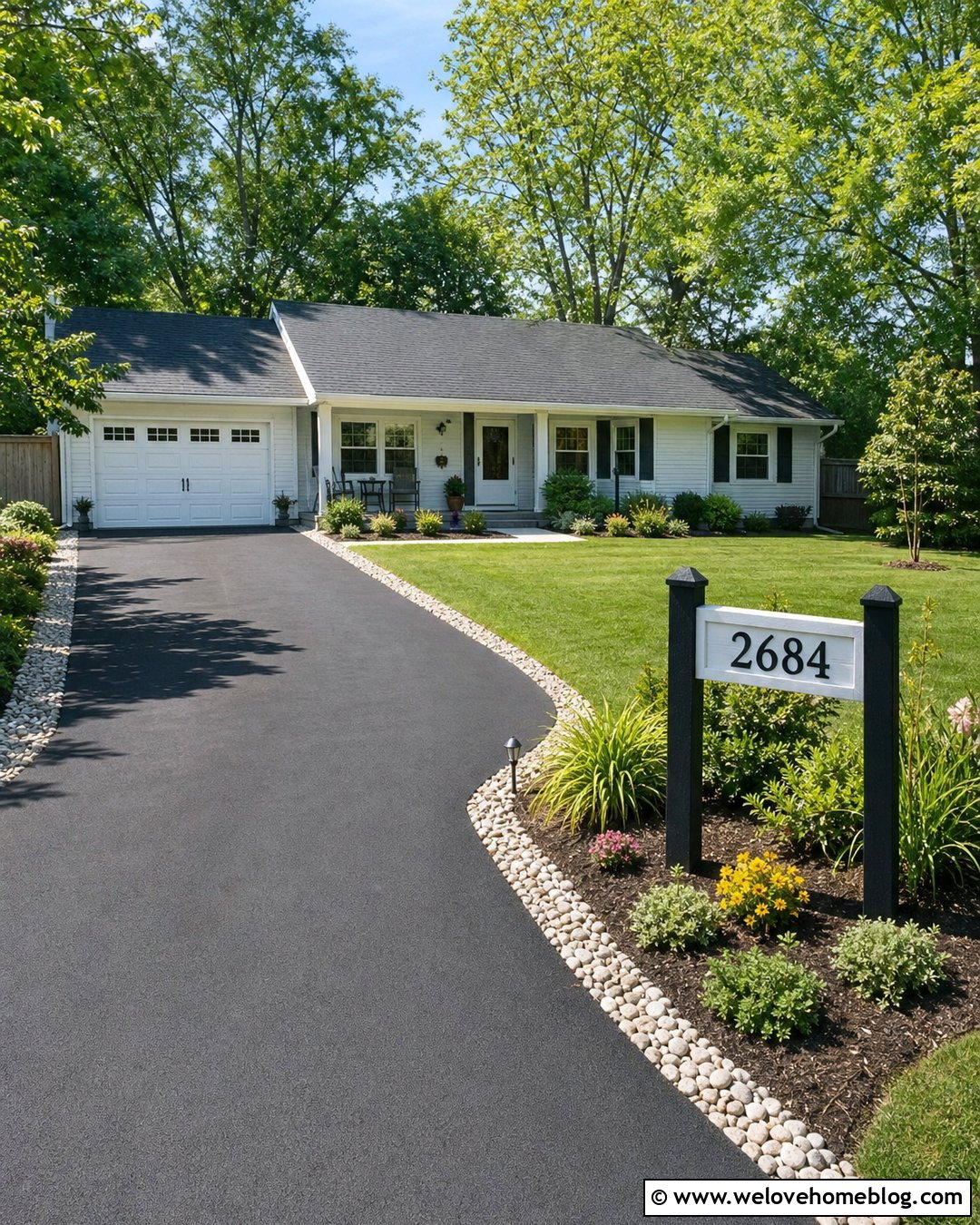
A budget-friendly wood sign can still look polished when it is properly scaled and coordinated with the entrance. Build a rectangular panel from exterior-grade boards and mount it between two simple painted posts. Pair the sign with an affordable black asphalt driveway edged by a narrow strip of pale gravel. Use large weather-resistant numbers rather than painting small decorative lettering. A tidy mulch bed with compact shrubs and low annuals can ground the posts. This approachable design fits ranch houses, starter homes, cottages, and casual farmhouses. Choose a paint or stain color already present on the siding, shutters, or front door. Straight cuts, consistent spacing, and a protective finish matter more than elaborate details. The completed entrance should look intentional, easy to maintain, and proportionate to the front yard.
41. Mosaic Tile Driveway Address Sign
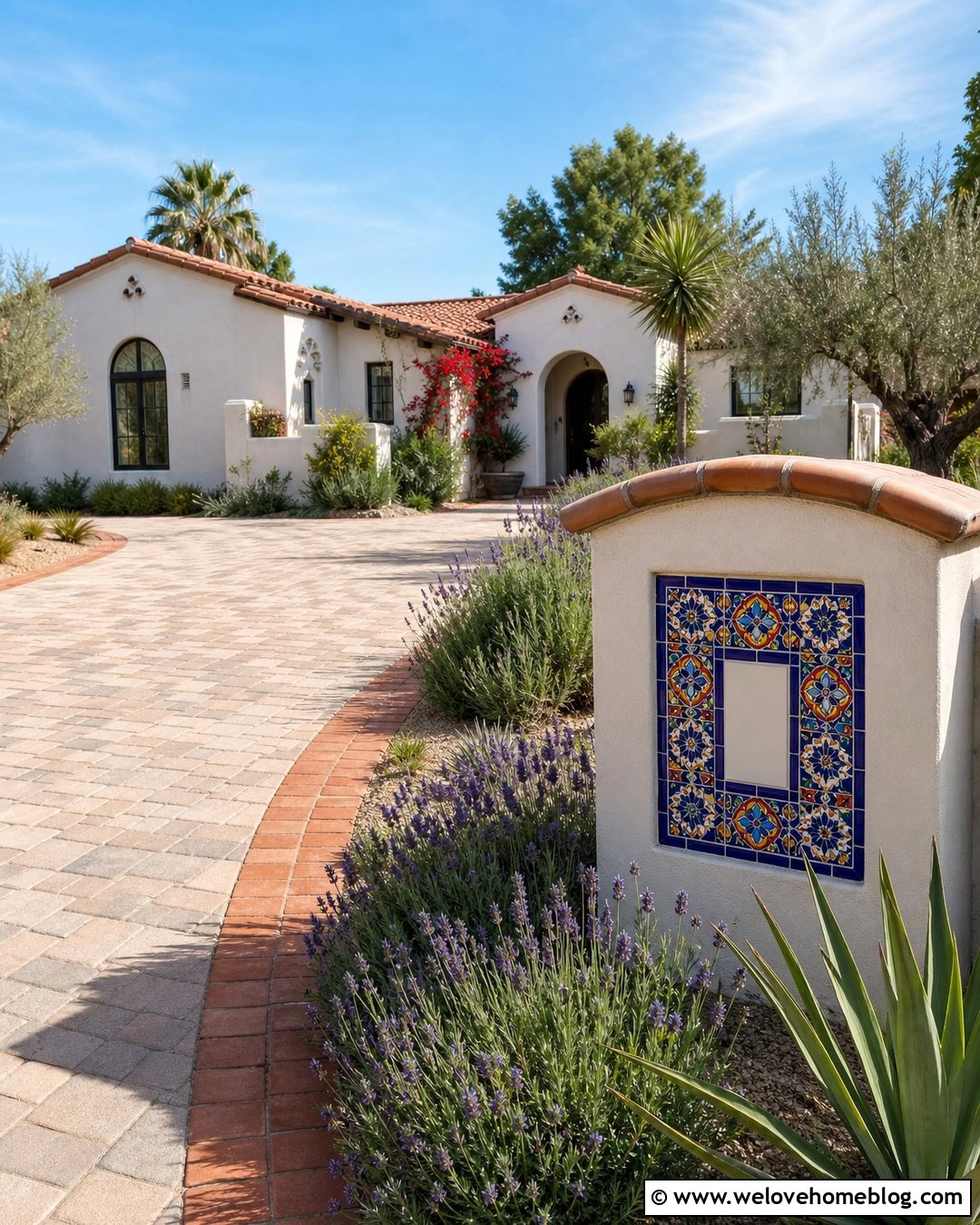
A mosaic address sign can bring color to a Mediterranean or Spanish-style entrance. Create a framed tile panel with highly legible numbers surrounded by a restrained geometric border. Set the panel into a stucco monument beside a warm-toned concrete or terracotta paver driveway. Use clay coping, gravel mulch, and drought-tolerant plants such as lavender, rosemary, agave, or soft ornamental grasses. Repeat one or two tile colors on the porch steps or walkway, but avoid covering every surface with patterns. The driveway can curve gently toward a stucco house with an arched entry and tile roof. Keep the address digits solid and uncluttered against the decorative background. This balance allows the sign to feel handcrafted and colorful while remaining useful from the street.
42. Cast Concrete Driveway Address Sign
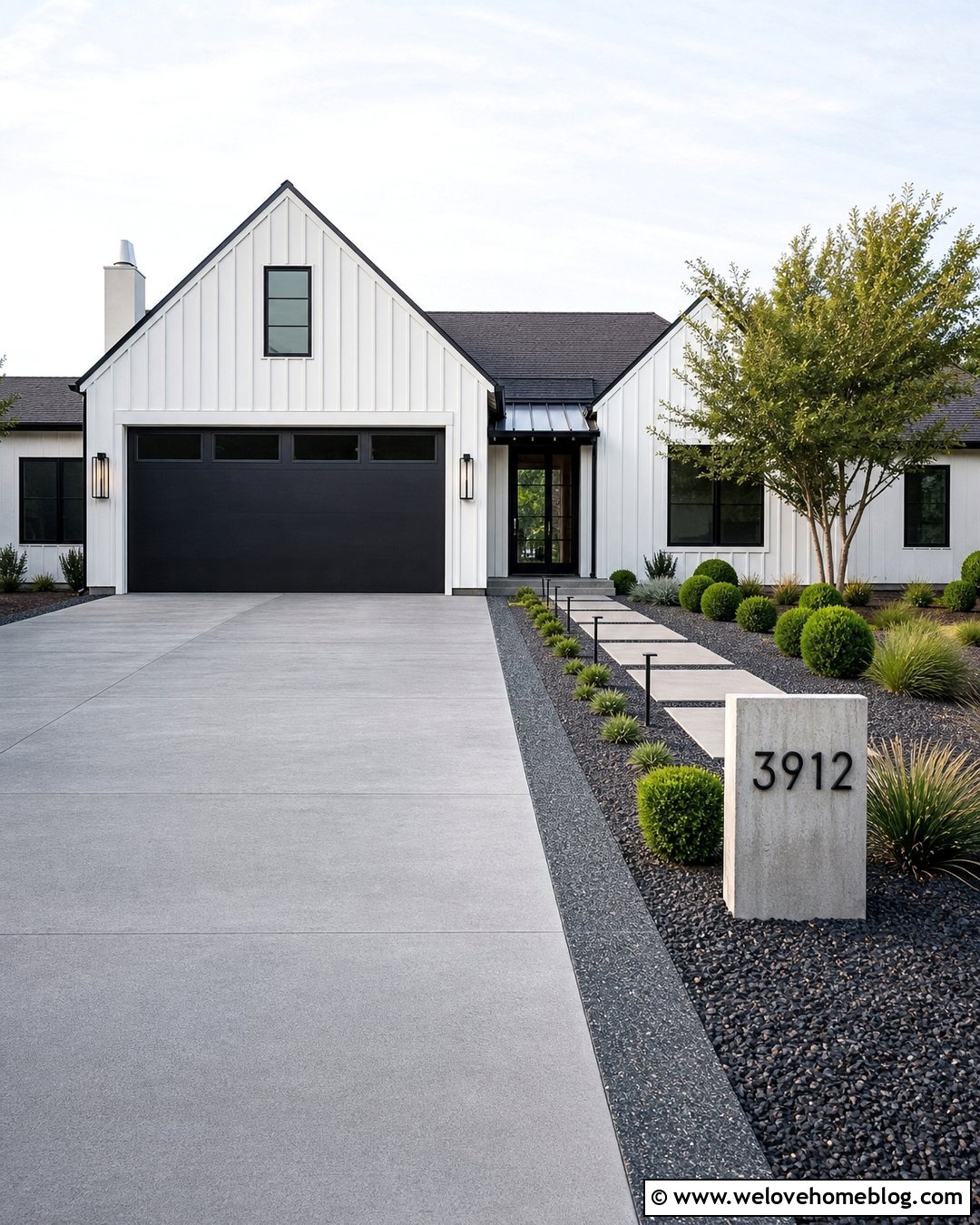
A cast-concrete address marker offers a strong architectural look for a contemporary entrance. Form the numbers directly into the monument or set dark metal digits into the face before installation. Pair the marker with a straight driveway of medium-gray brushed concrete and a darker exposed-aggregate border. Place it in a rectangular bed filled with black gravel, low grasses, and clipped evergreen spheres. The home might feature board-and-batten siding, smooth stucco, or mixed wood and concrete finishes. Slightly vary the monument’s tone from the driveway so the two concrete surfaces do not blend together. A crisp cap and carefully aligned numbers will give the design a custom appearance. Keep the shape simple and avoid unnecessary grooves or decorative inserts that compete with the address.
43. Illuminated Mailbox Driveway Pillar
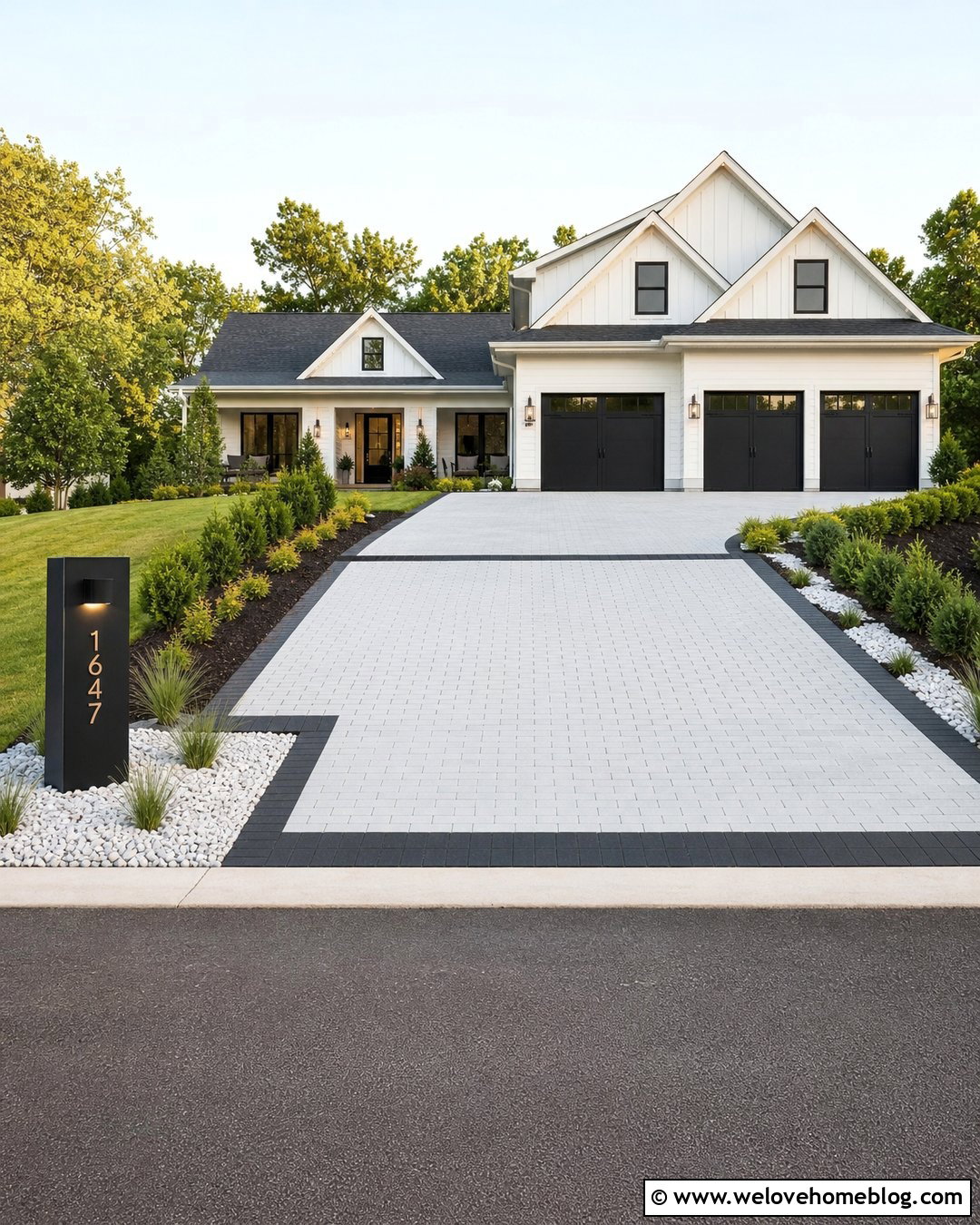
An illuminated mailbox pillar combines three entrance needs: mail storage, address visibility, and landscape structure. Choose a matte-black steel pillar with vertically arranged, internally lit numbers and an integrated mailbox. Pair it with a pale gray concrete-paver driveway in a straight layout. A narrow band of darker pavers can frame the entrance and connect visually with the pillar. Surround the base with white landscape stone, compact grasses, and low evergreen planting. This streamlined feature suits modern, transitional, and modern farmhouse homes. Keep the mailbox hardware concealed where possible so the number panel remains the primary visual element. The pillar should look attractive during the day, not merely after illumination. Coordinating black lights, window frames, and garage hardware will complete the overall entrance design.
44. Fence Mounted Driveway Address Sign
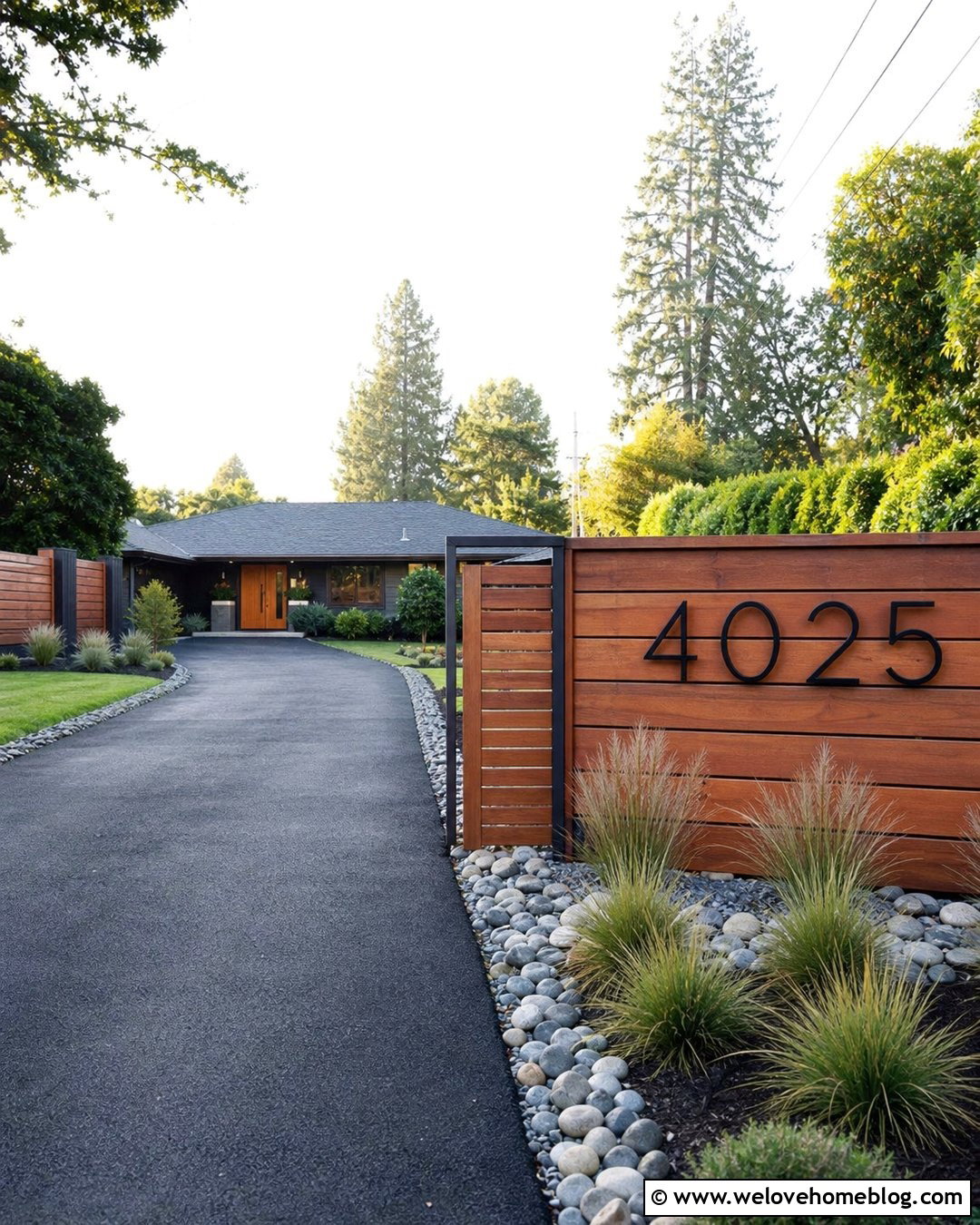
A fence offers a practical sign location when the driveway entrance is narrow or the yard has limited planting space. Mount oversized metal numbers on a smooth section of horizontal cedar fencing beside a black asphalt driveway. Choose numbers that contrast strongly with the wood and position them away from hinges, latches, or dense vines. A low strip of river rock and ornamental grass can separate the fence from the driveway edge. Continue the same fence toward a modern ranch or contemporary home for a unified appearance. If the driveway gate interrupts the fence, place the numbers on the fixed panel rather than the moving section. This simple arrangement eliminates another freestanding object near the curb. Generous spacing allows the address to function as an understated architectural detail.
45. Matching Driveway Address Sign And Columns
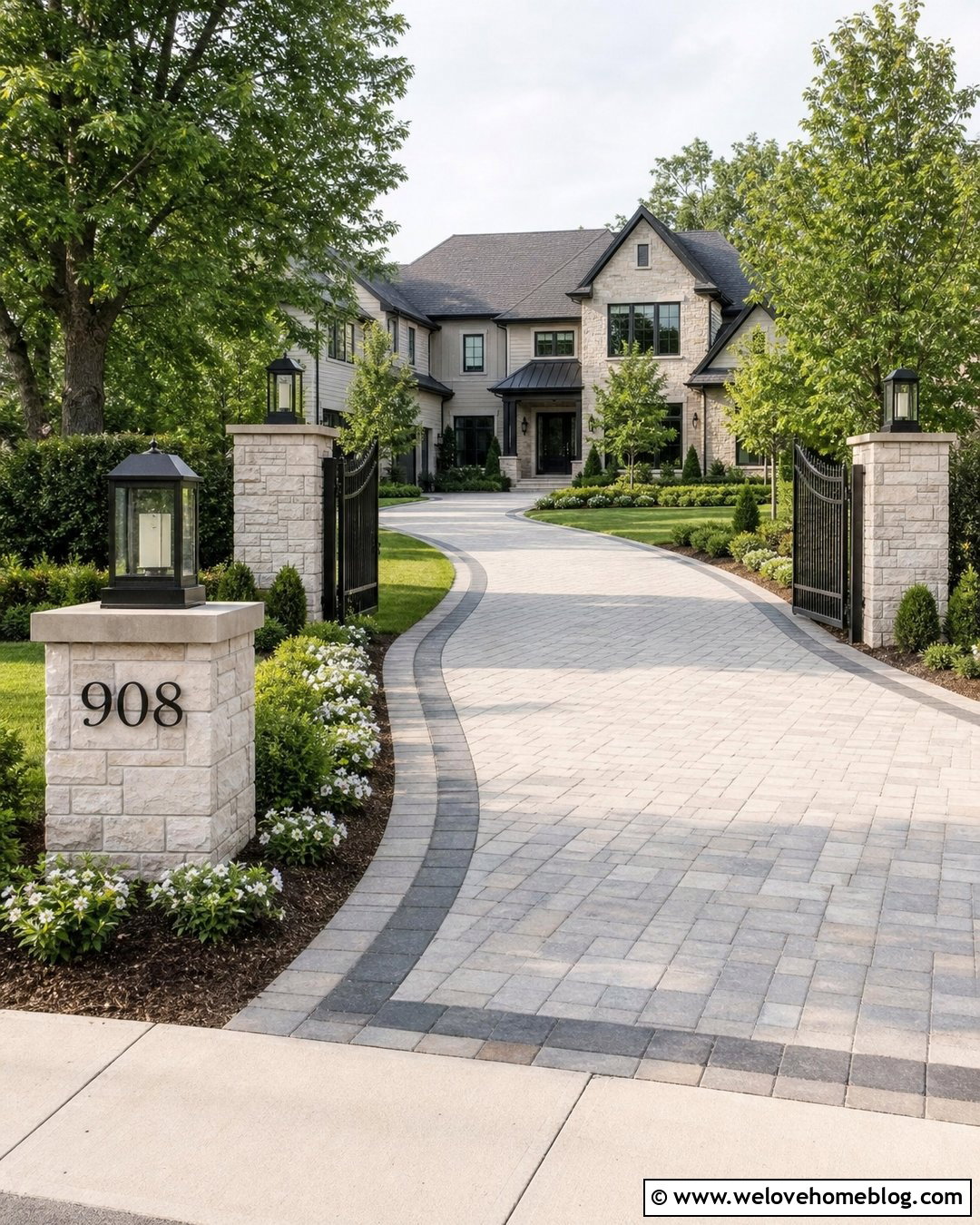
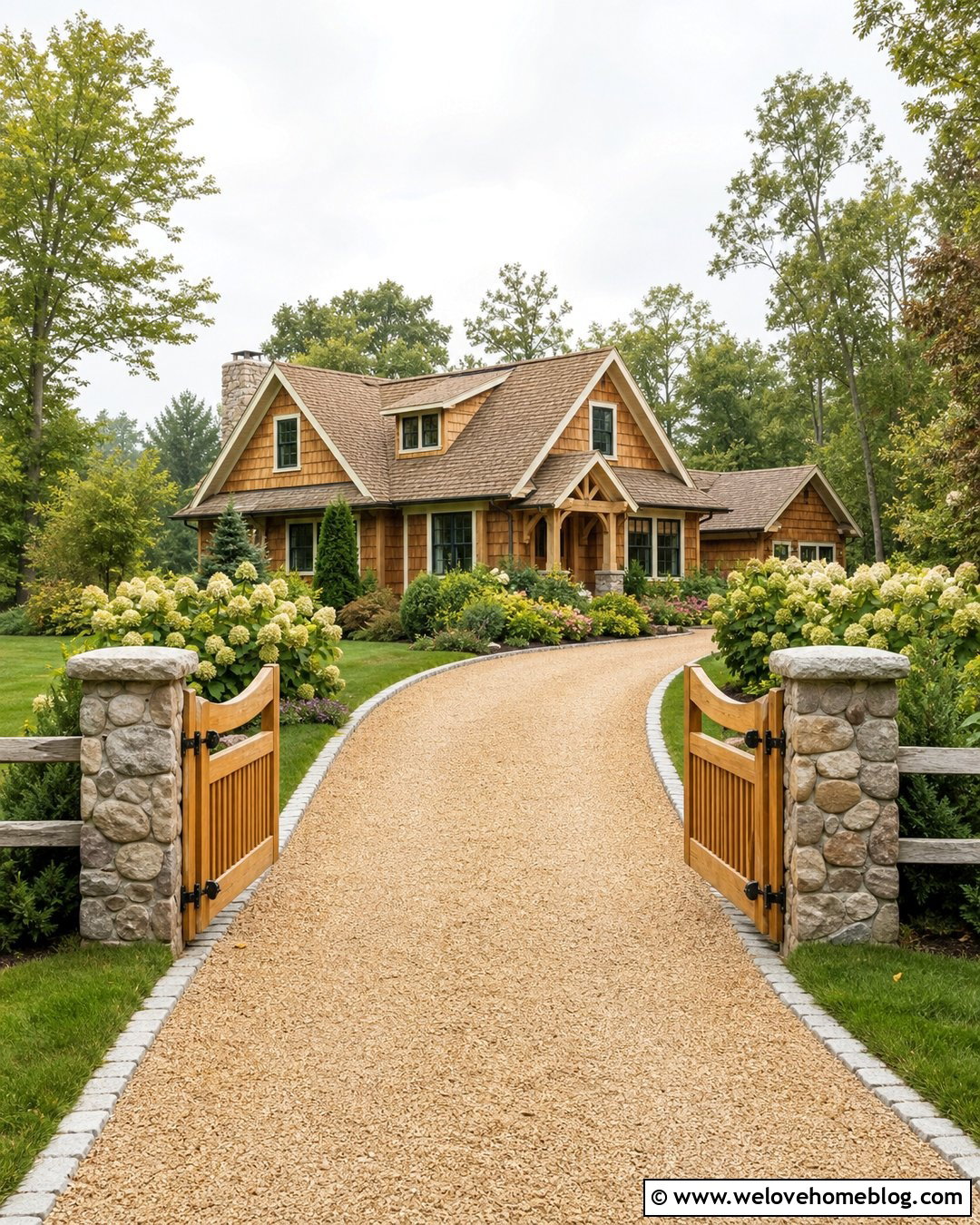
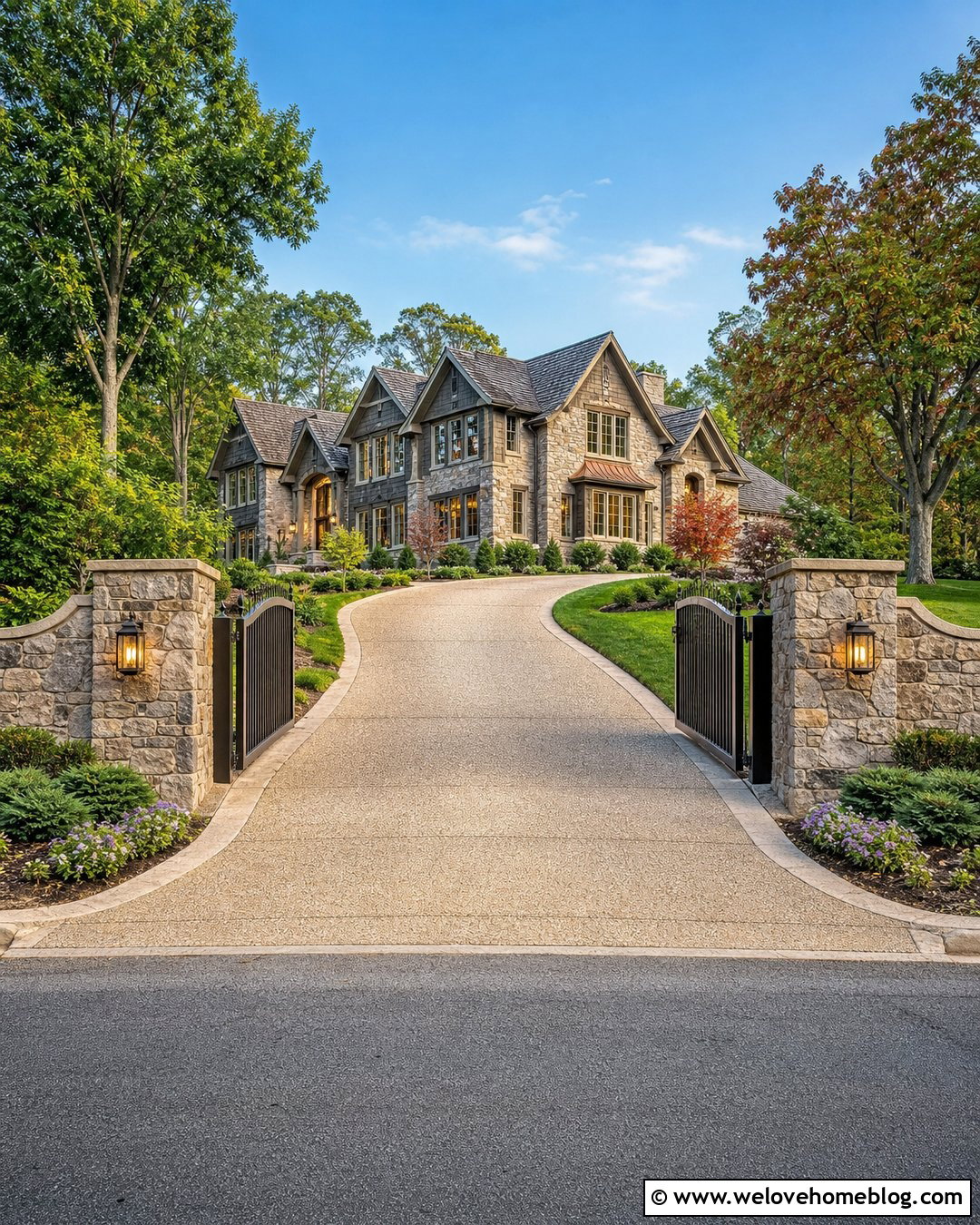
Matching the address marker to the entry columns creates one of the most cohesive driveway designs. Use stone-veneer columns at a broad curved paver entrance, then place a coordinating low monument just outside the opening. The monument can carry large metal numbers, while the columns support simple lanterns or an open metal gate. Repeat the same stone, cap material, and dark metal finish across all three structures. Layered shrubs, low flowering plants, lawn, and evenly spaced trees can frame the approach to a substantial traditional or transitional home. Keeping the address separate from the gate improves its visibility when the gate stands open. Careful repetition makes the entire curb view feel planned together, from the driveway surface and borders to the sign, pillars, lighting, and landscaping.
Conclusion:
The most effective driveway address sign ideas balance visibility with materials and landscaping that genuinely belong at the property. A small suburban entrance may need only a planter sign or updated mailbox, while a long rural drive can support a boulder, timber frame, or illuminated steel pillar. Stone monuments, modern metal panels, retaining-wall numbers, and gate-mounted signs offer additional options for different architectural settings. Whatever design you choose, use large uncomplicated numbers, strong contrast, and an open view from the road. Then repeat colors or materials from the house, driveway border, and nearby landscape. This approach makes the address easier to find while giving the entire entrance a more complete and intentional appearance.

Related posts:
Leave a Reply