
A well-planned driveway entrance does more than mark where vehicles turn in. It frames the property, guides guests, and connects the street to the home’s architecture. The strongest designs treat the driveway surface, apron, edging, planting, lighting, and entrance features as one coordinated composition. Pavers, planting beds, retaining walls, pillars, and landscape lighting can work together to create a more cohesive approach. () This guide to **20 Driveway Entryway Ideas** includes practical options for large estates, suburban homes, compact lots, and modest budgets. You will find gravel, asphalt, concrete, brick, cobblestone, and resin-bound layouts paired with gates, borders, trees, signs, and low-maintenance landscaping. Use these complete **20 Driveway Entryway Ideas** to plan an entrance that looks intentional from the curb.

1. Stone Pillar Driveway Entryway
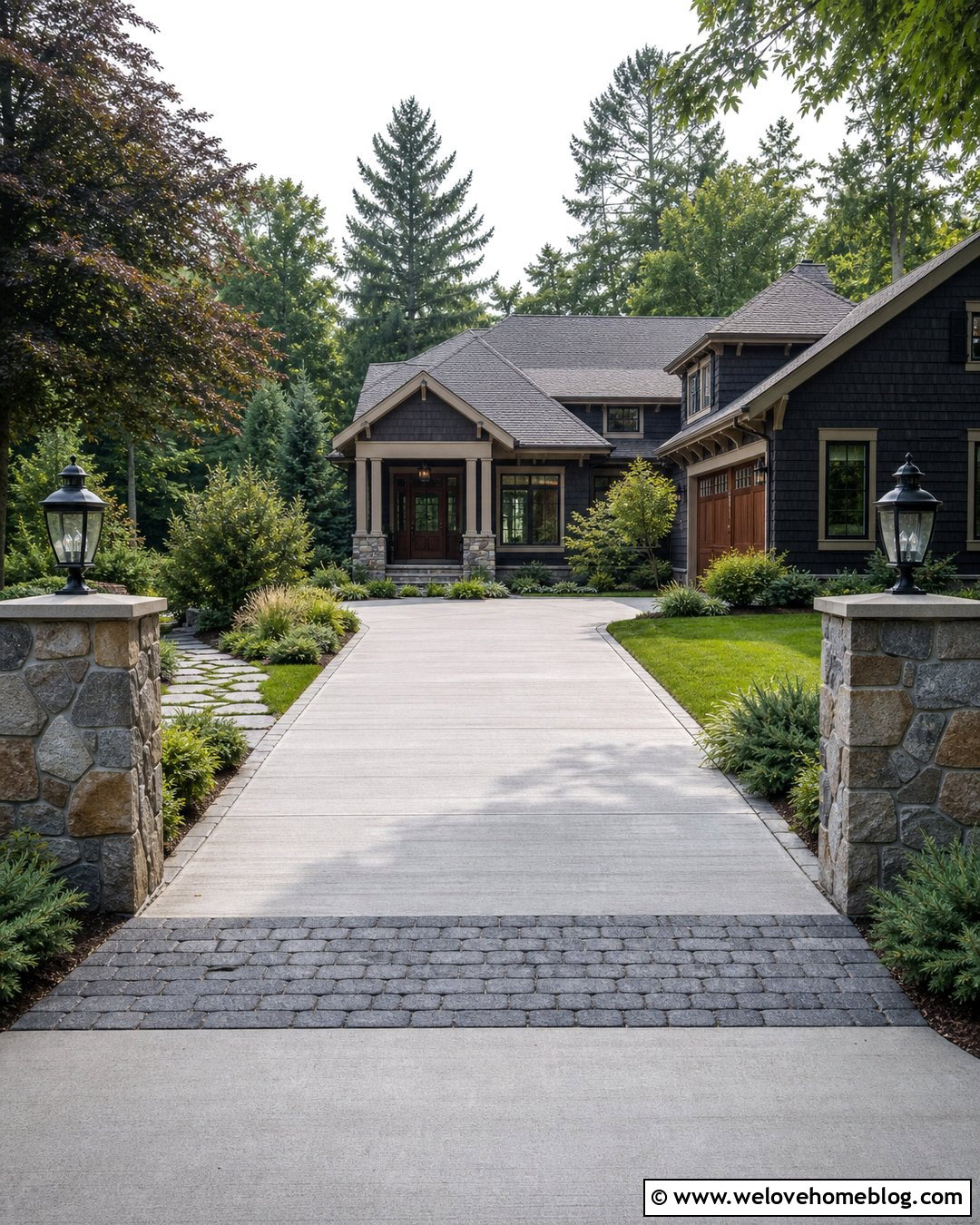
Stone pillars create a substantial entrance without requiring a fully enclosed gate. Start with a straight, light-gray concrete driveway and add two pillars faced with local fieldstone or manufactured stone veneer. Match their colors to the home’s foundation, chimney, or porch columns for a connected appearance. Wide planting beds around the pillars can soften the masonry with dwarf evergreens, ornamental grasses, and spreading ground cover. Add a dark cobblestone apron where the driveway meets the street to make the transition feel finished. Lanterns placed on top of the pillars improve visibility and give the entrance a balanced focal point. Keep each pillar safely back from the driving lane, and avoid plants that could block the driver’s view of approaching traffic.
2. Brick Column Driveway Entryway
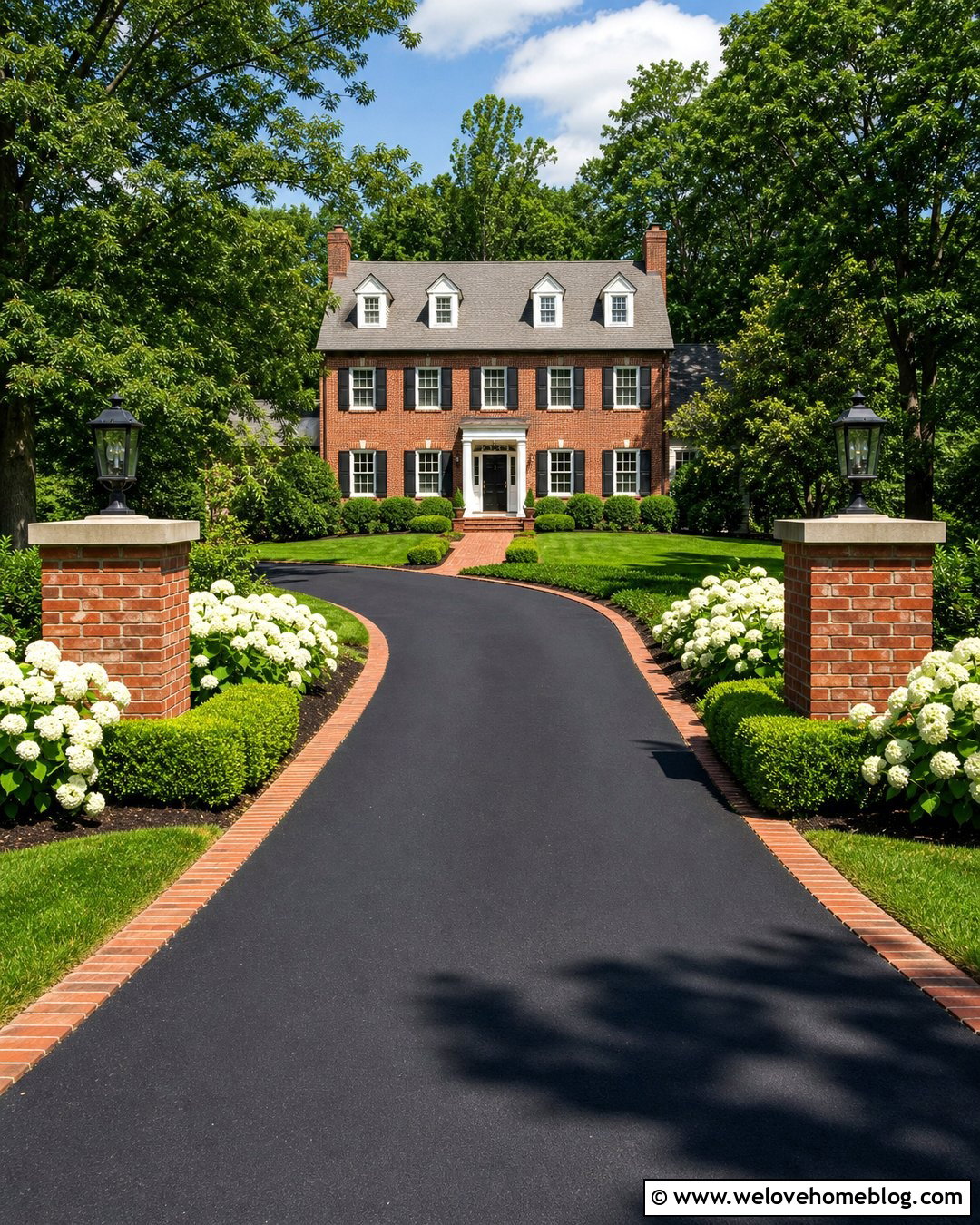
Warm brick columns work especially well with Colonial, Georgian, traditional ranch, and red-brick homes. Pair them with a gently curved asphalt driveway edged by a narrow soldier-course border of matching clay brick. The dark pavement creates a strong contrast, while the brick ribbon visually carries the entrance material toward the house. Finish each column with a cast-stone cap and a simple black lantern. Low boxwood hedges can frame the entry without hiding the masonry or reducing visibility. For more seasonal color, place compact flowering shrubs behind the boxwoods rather than directly beside the street. Repeating the brick around a walkway landing or front steps helps the entire front yard feel planned. Use restrained details so the entrance complements the house instead of competing with it.
3. Modern Metal Gate Driveway Entryway
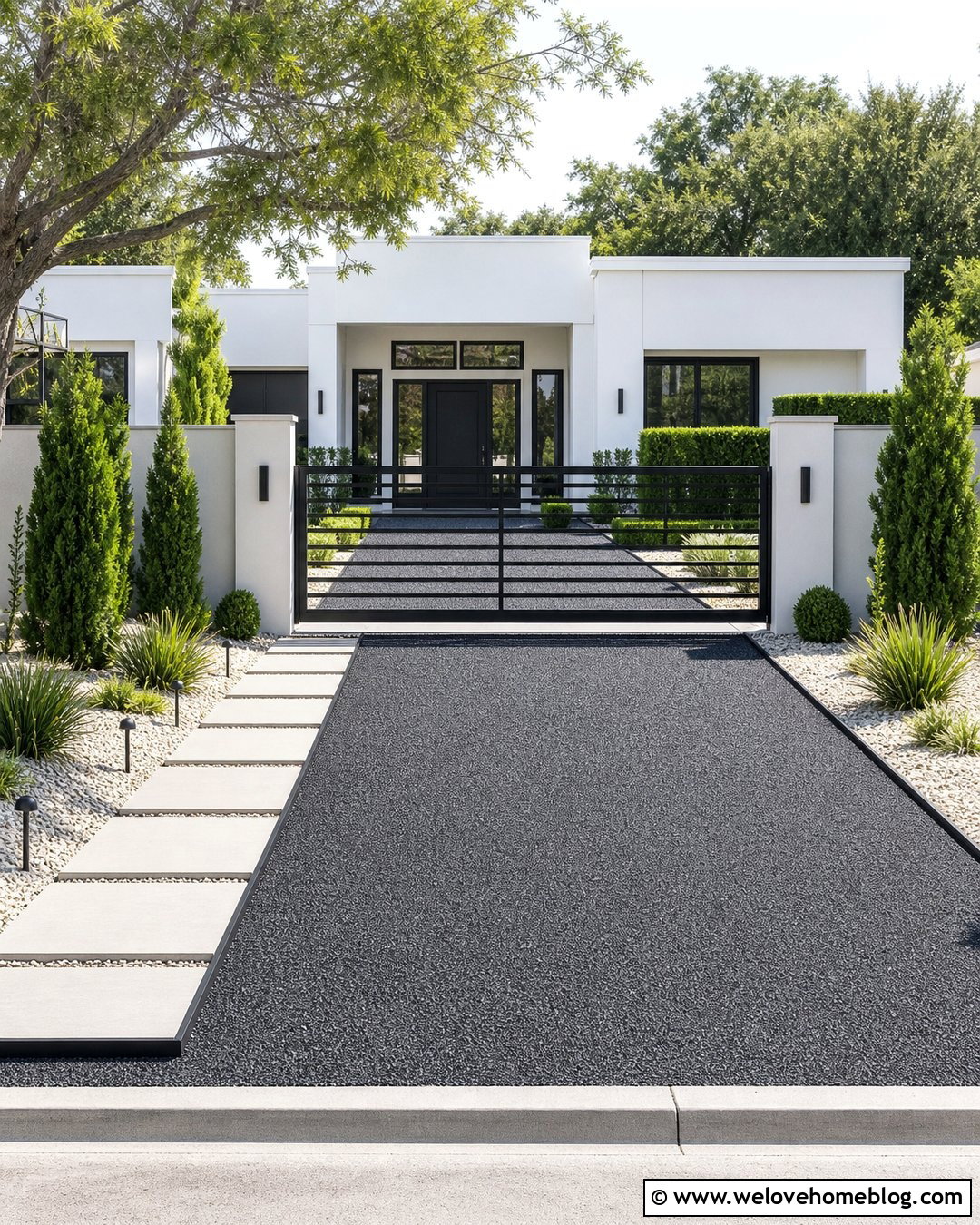
Clean lines and limited materials give a modern driveway entrance its impact. Choose a charcoal resin-bound gravel driveway with a straight layout, crisp steel edging, and a wide opening between smooth stucco pillars. A horizontal-slat aluminum gate in matte black provides security without the heavy look of solid masonry. Continue the contemporary theme with rectangular concrete stepping pads leading to the front door. Plant sculptural grasses, compact agaves where climate permits, or clipped evergreen mounds in simple gravel beds. The gate motor, keypad, and utility boxes should be concealed behind planting or integrated into a pillar. Because automated gates affect vehicle movement near the road, have the opening direction, setback, emergency access, and local requirements reviewed before installation.
4. Wood Gate Driveway Entryway
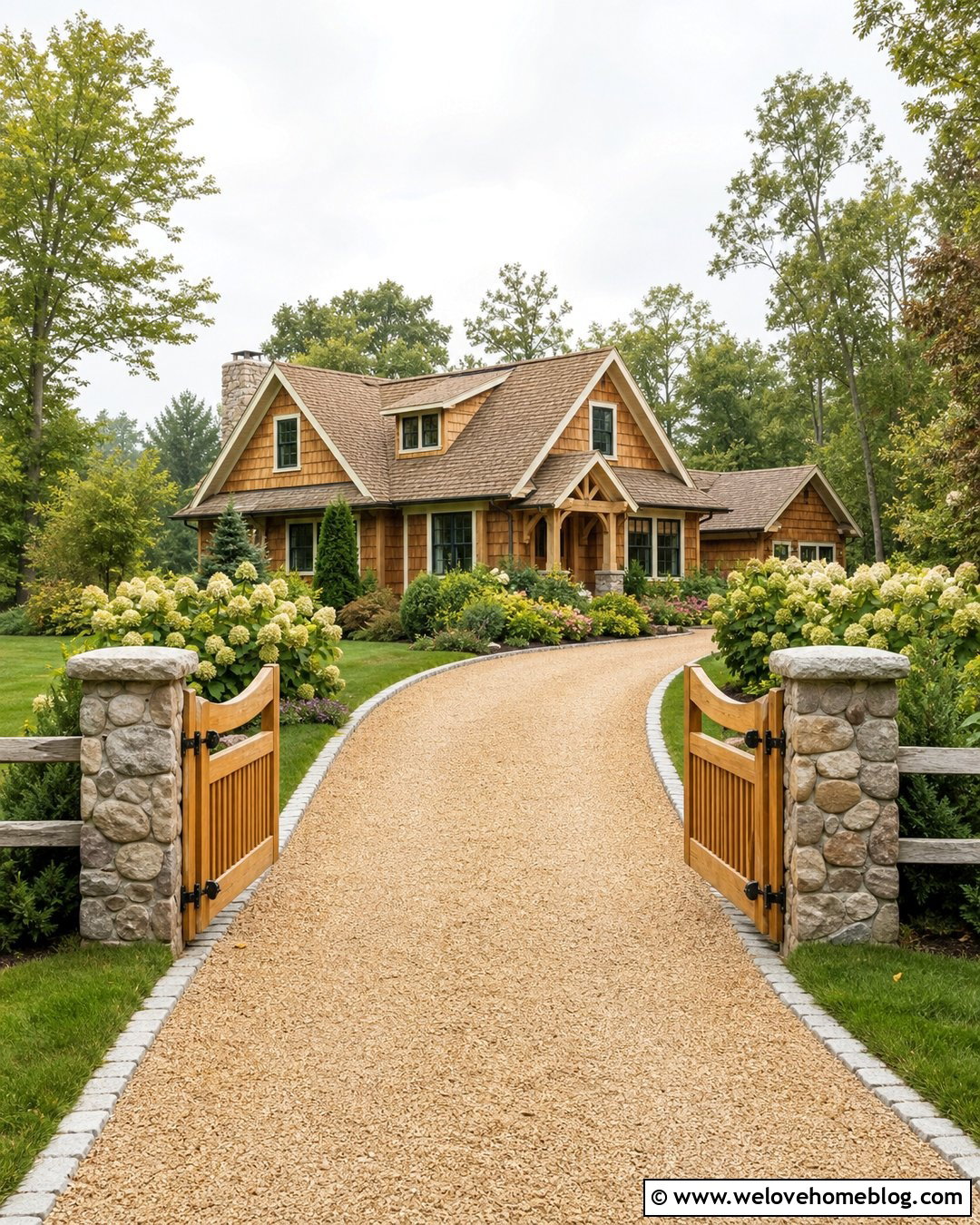
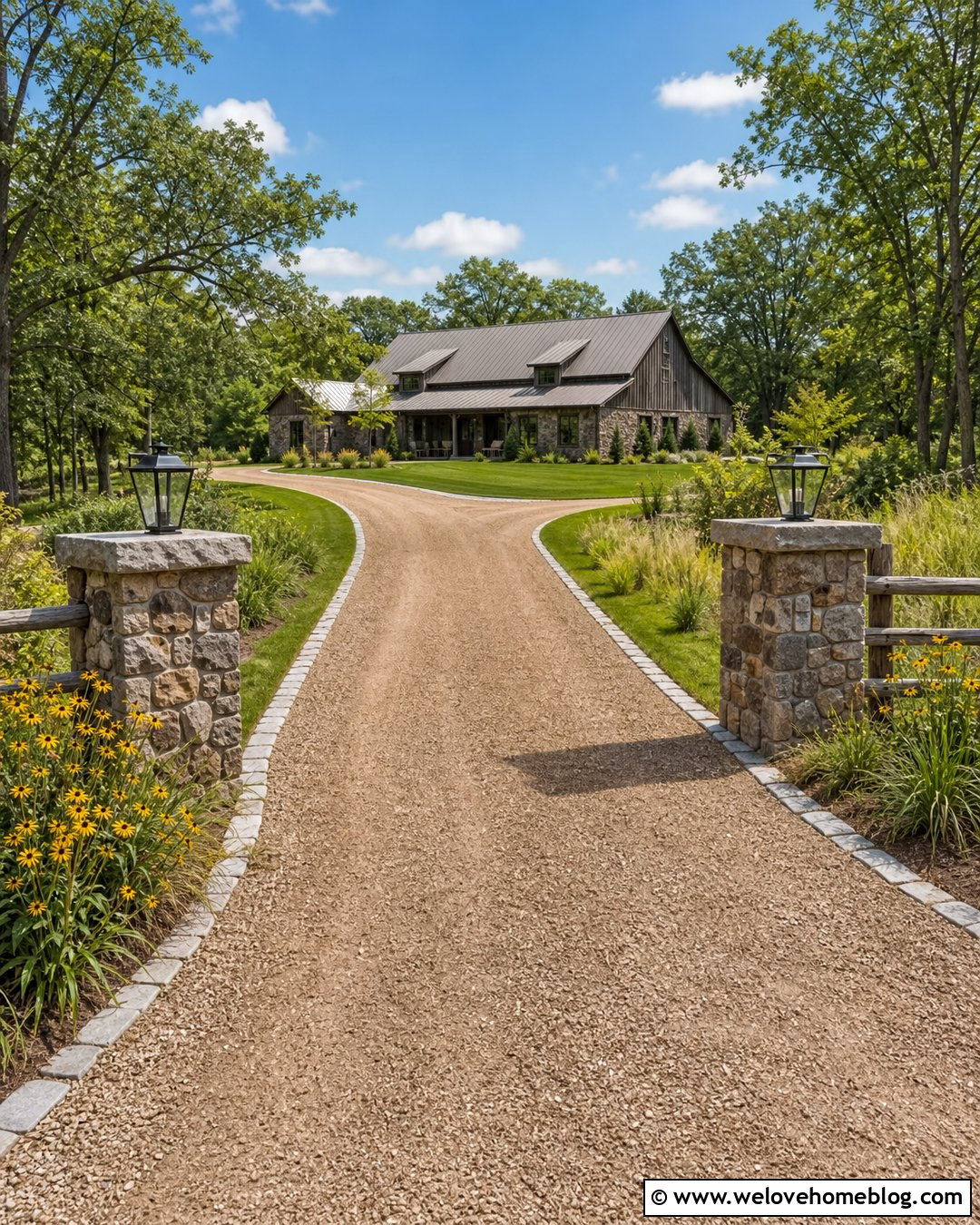
A wood gate brings natural warmth to country, Craftsman, cottage, and modern farmhouse properties. Frame a tan crushed-gravel driveway with chunky timber posts or stone piers, then install a simple cedar gate with black steel hardware. A slightly curved driveway feels relaxed and allows the house to reveal itself gradually. Use cobblestone edging near the gate to contain loose gravel and strengthen the most heavily traveled entrance area. On both sides, create deep planting beds with hydrangeas, flowering perennials, and compact evergreen shrubs. A nearby split-rail fence can extend the entry visually without making the property feel closed off. Choose a gate design with enough open space to preserve sightlines, and apply an exterior wood finish suited to local sun, moisture, and temperature conditions.
5. Farmhouse Fence Driveway Entryway
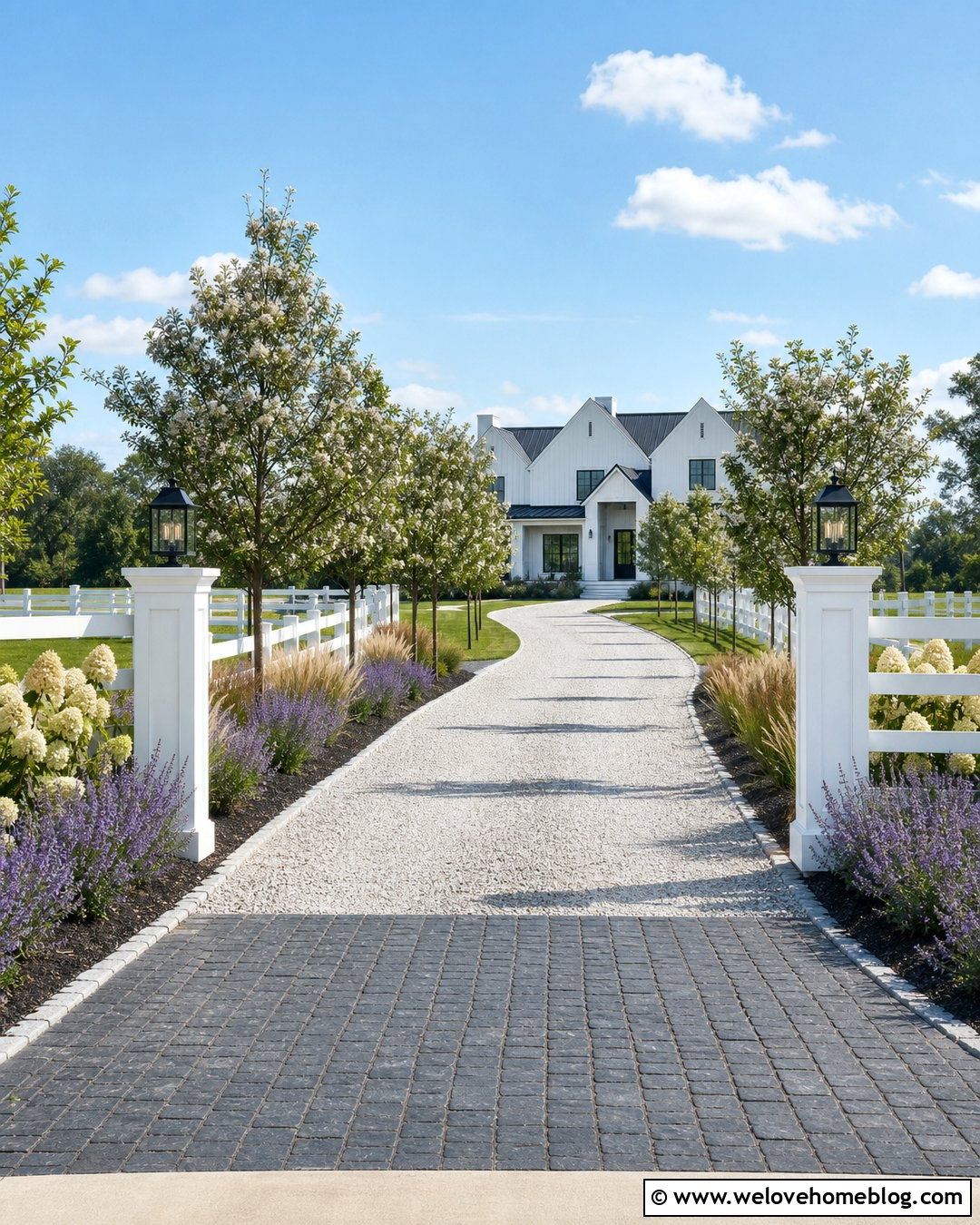
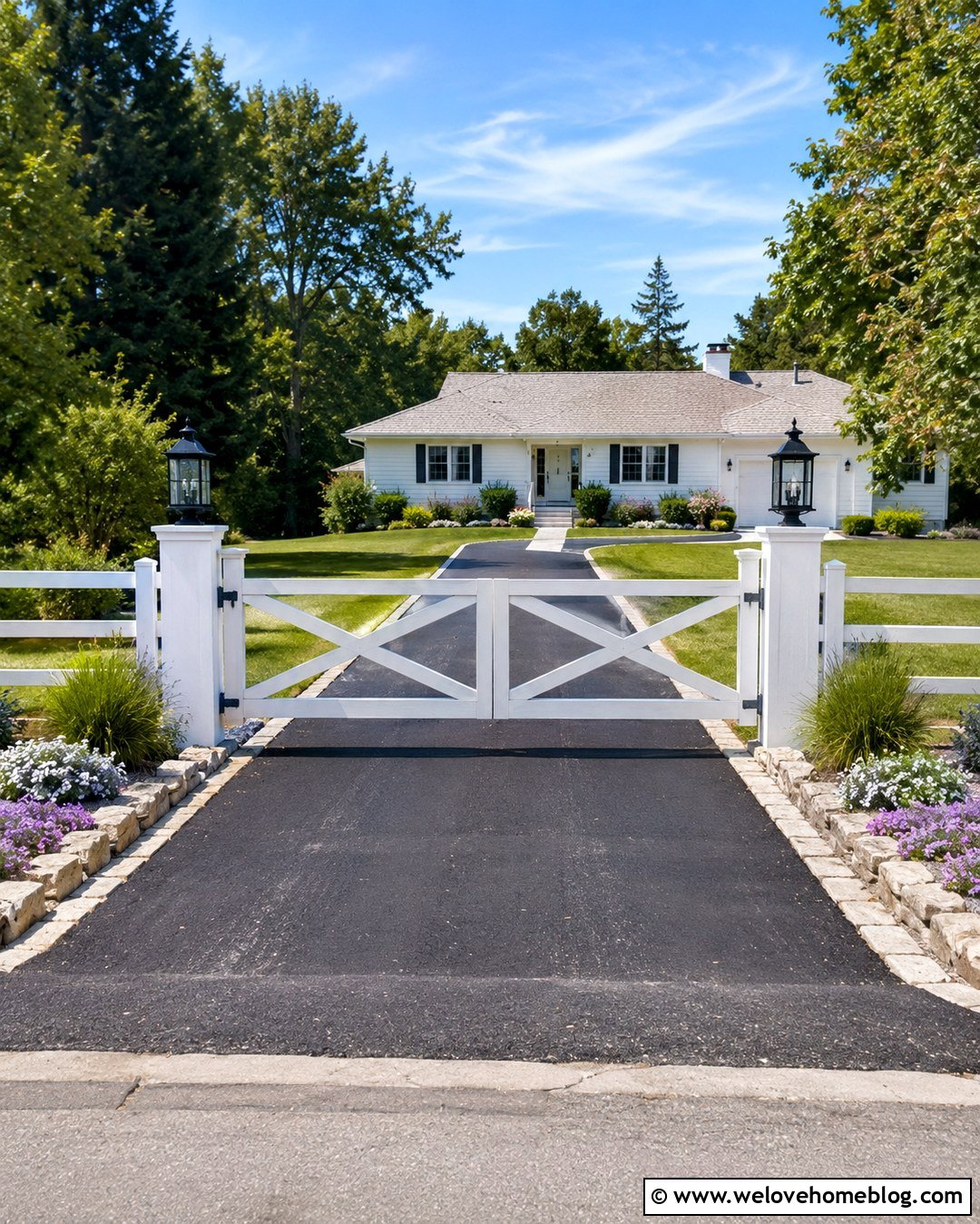
A farmhouse entrance feels most convincing when the driveway, fence, and planting share a simple rural character. Use a pale gray gravel driveway with a straight or softly curving approach. Add white three-rail fencing on both sides of the entrance, beginning near the road and gradually opening toward the yard. Dark granite cobbles can form a durable apron and keep gravel from scattering onto the street. Plant small flowering trees behind the fence, then fill lower beds with panicle hydrangeas, catmint, and ornamental grasses. Black lantern posts or traditional gooseneck fixtures provide a crisp accent against the white rails. Keep the fence proportions modest for a suburban farmhouse, while a longer country property can support taller posts and a wider, more dramatic entrance.
6. Curved Gravel Driveway Entryway
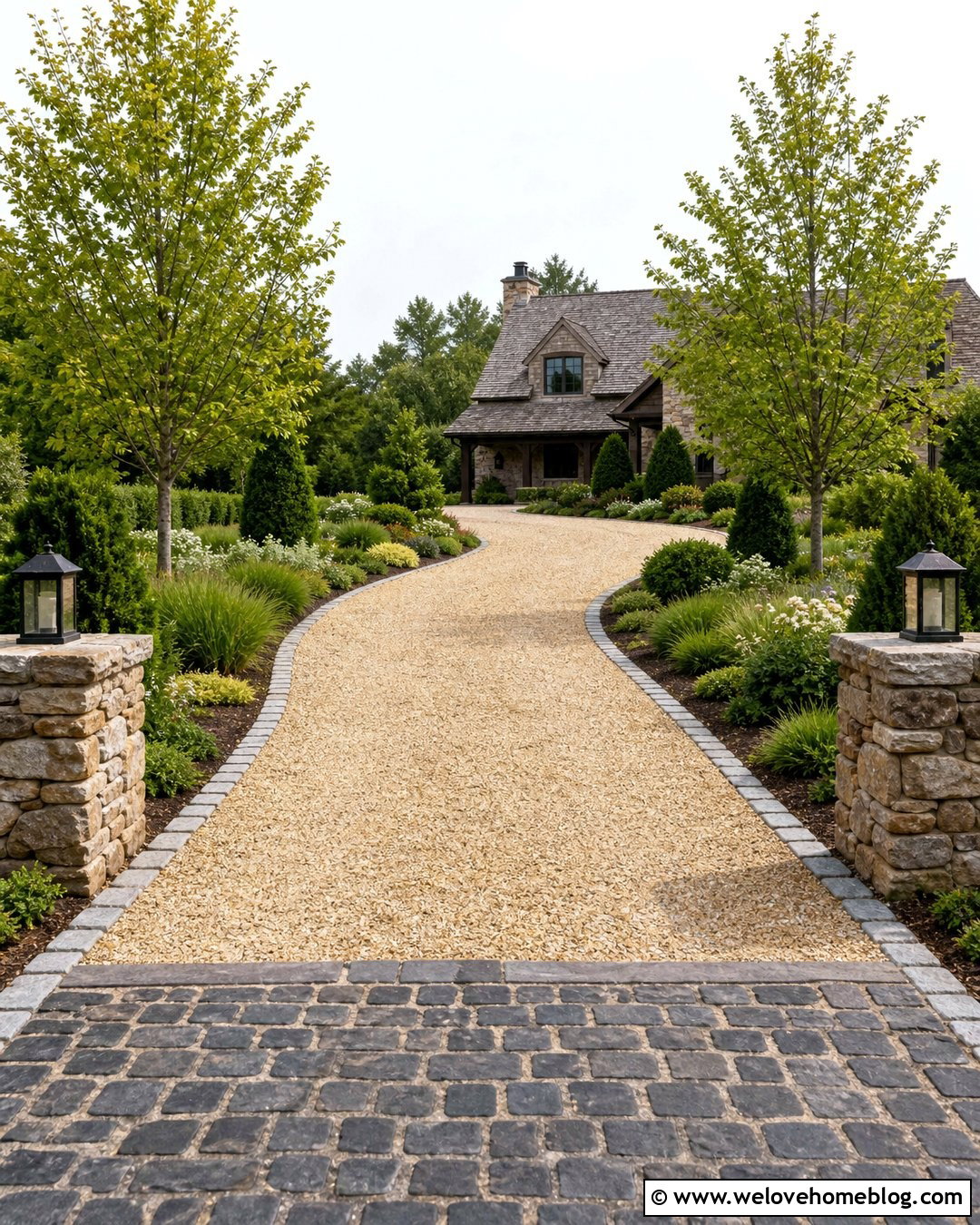
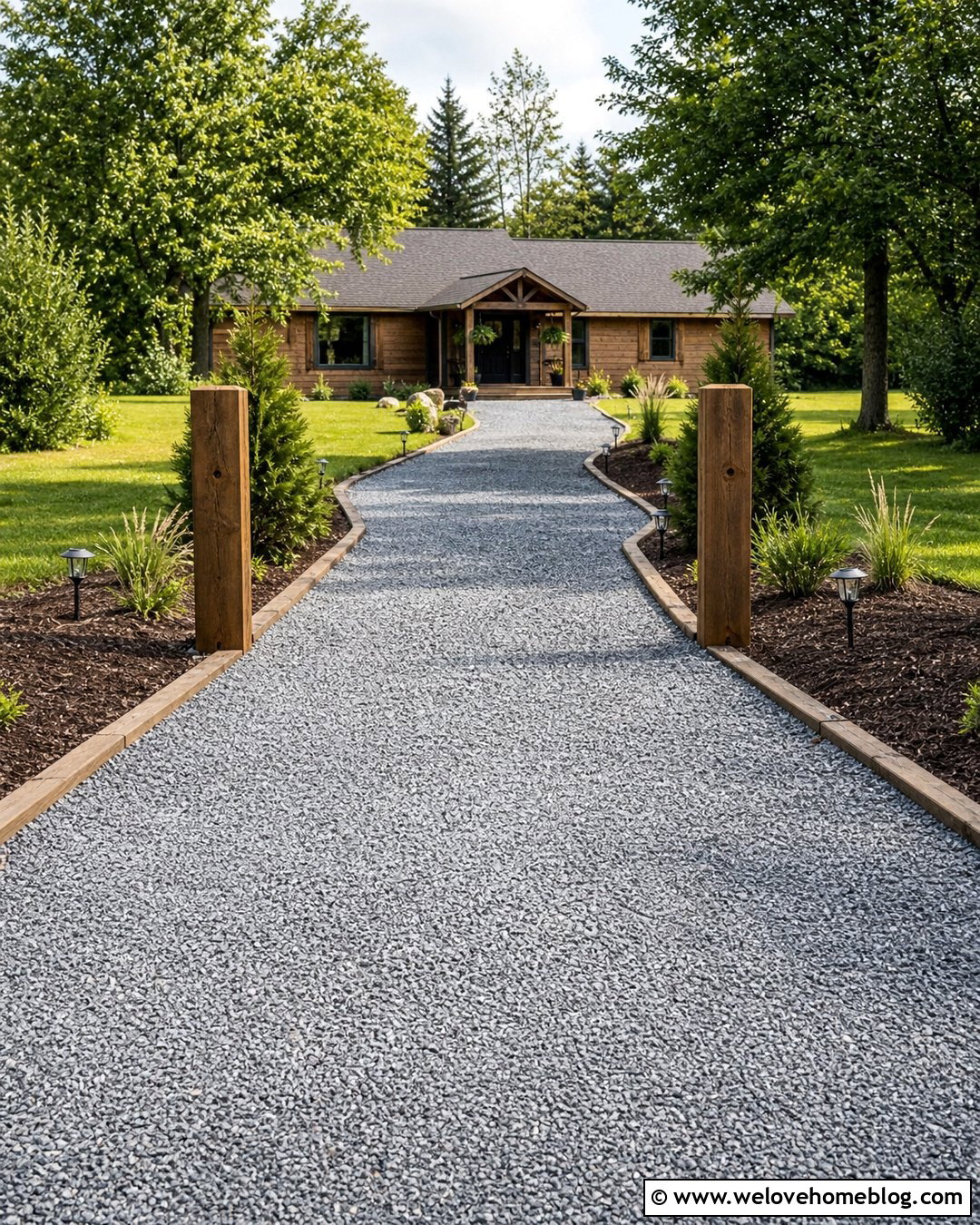
The sound and texture of gravel immediately give a curved entrance an informal, welcoming quality. Select angular crushed stone rather than very round gravel for the main driving surface, and use compacted base layers beneath it. Frame the street entrance with low natural-stone walls that curve gently into the property. A dark cobblestone threshold can create a cleaner transition between the road and loose aggregate. Continue the curves through generous planting beds filled with evergreen shrubs, native grasses, and one small ornamental tree on each side. These repeated shapes help the entry look unified rather than pieced together. Keep taller plants farther from the roadway and reserve the inside of the curve for low ground cover, allowing drivers to see across the bend while entering or leaving.
7. Circular Paver Driveway Entryway
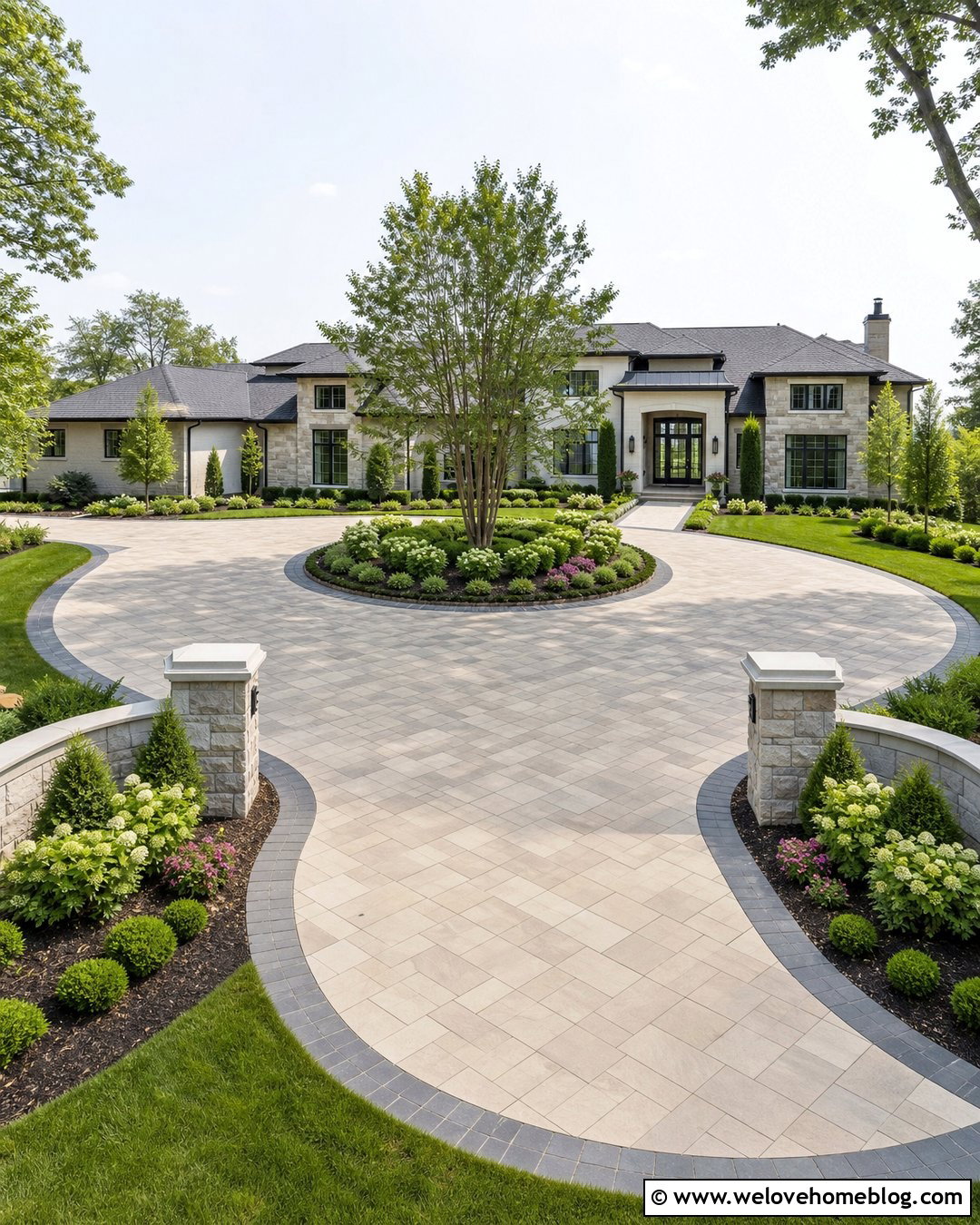
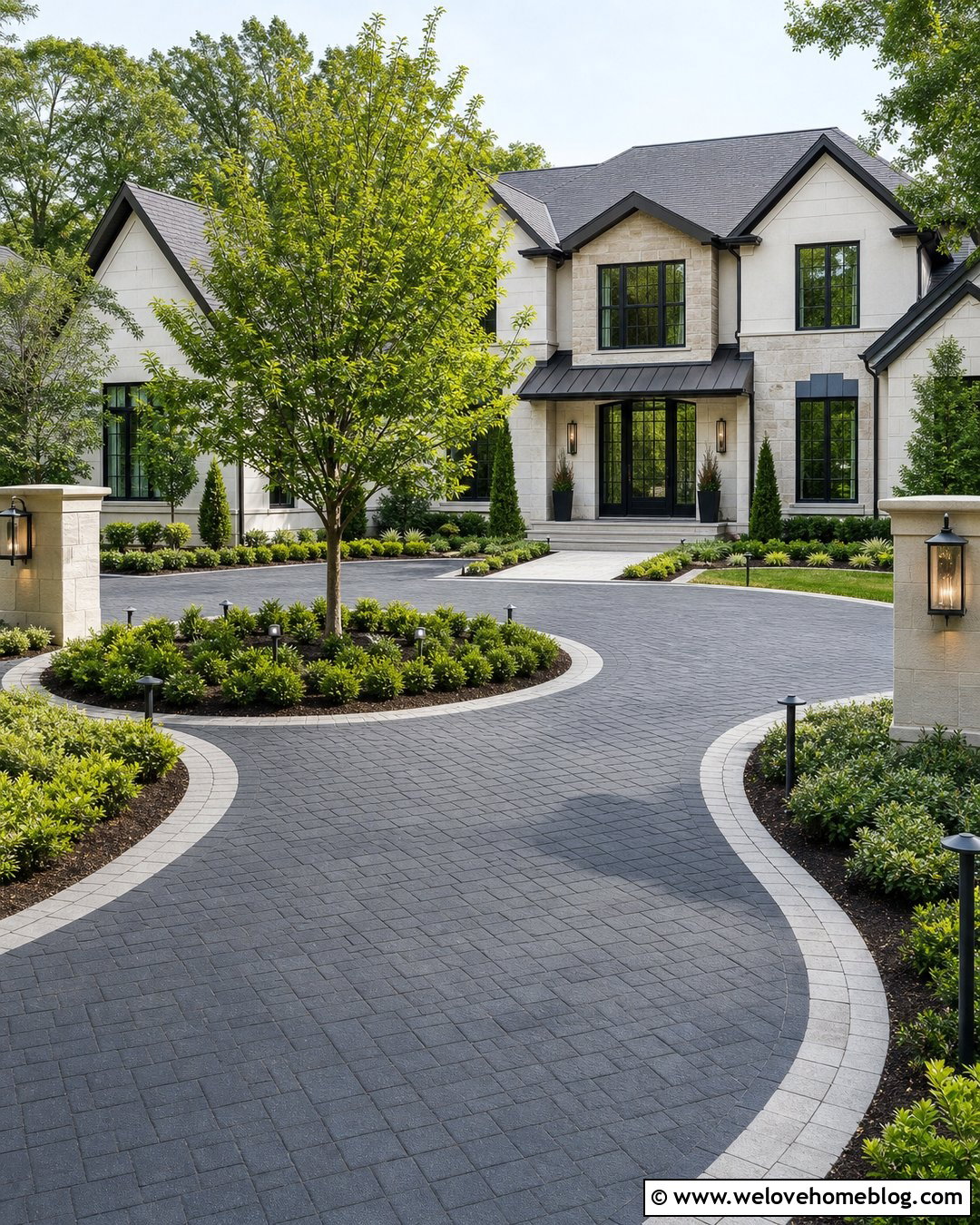
A circular paver driveway provides an impressive arrival sequence while allowing vehicles to move toward the house and return to the street without extensive reversing. Circular layouts have also been used to create practical overflow and guest parking. () Choose large-format concrete pavers in a blended beige-gray finish, then outline the circle with a darker charcoal border. A central landscape island can hold a multi-stem tree, clipped shrubs, and low seasonal flowers. At the street, short stone pillars and wide planting beds should echo the island’s materials and rounded shape. Connect the guest parking point to the front door with a clearly visible walkway. Before building, confirm that the circle provides suitable turning space and does not overwhelm the available front yard.
8. Cobblestone Apron Driveway Entryway
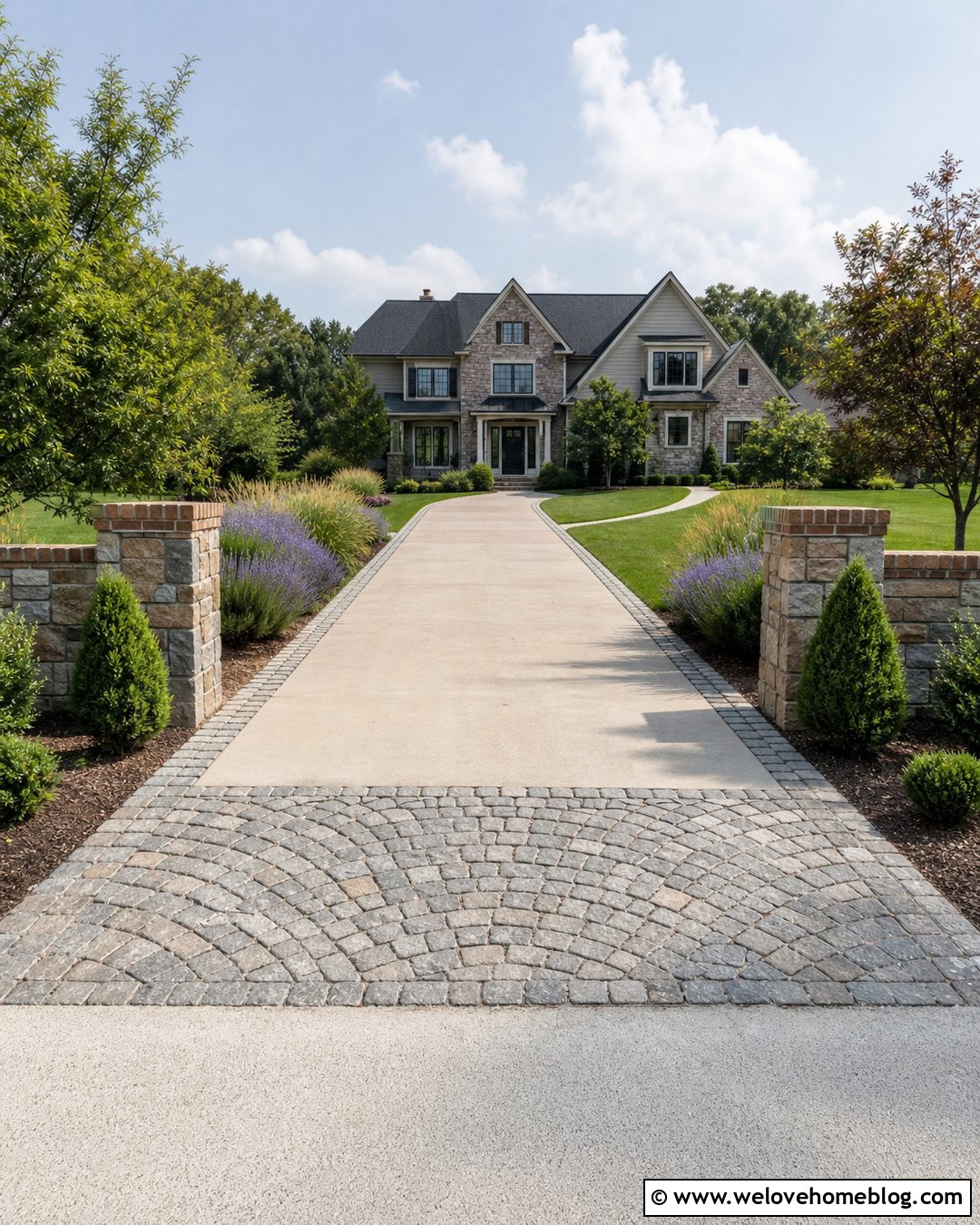
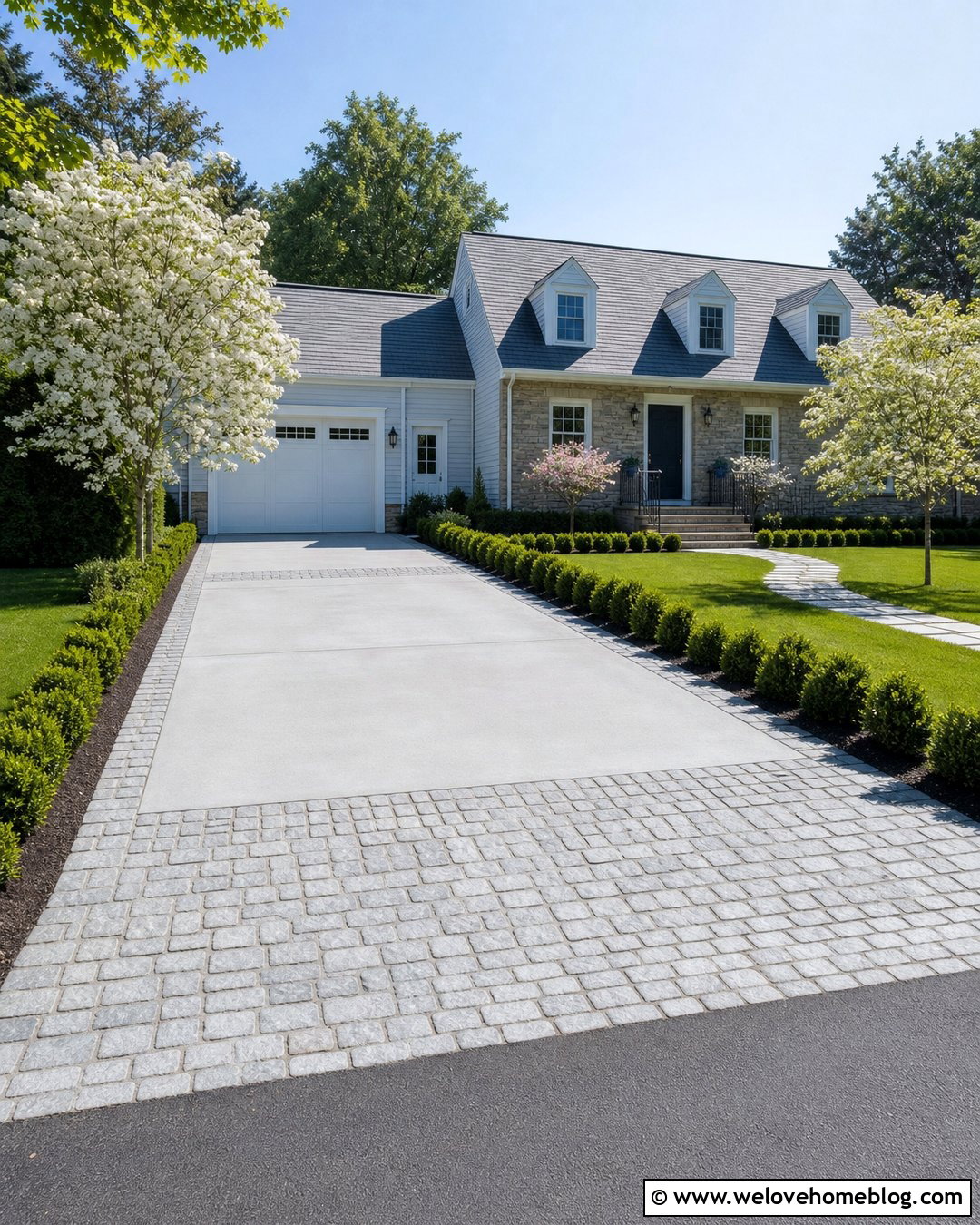
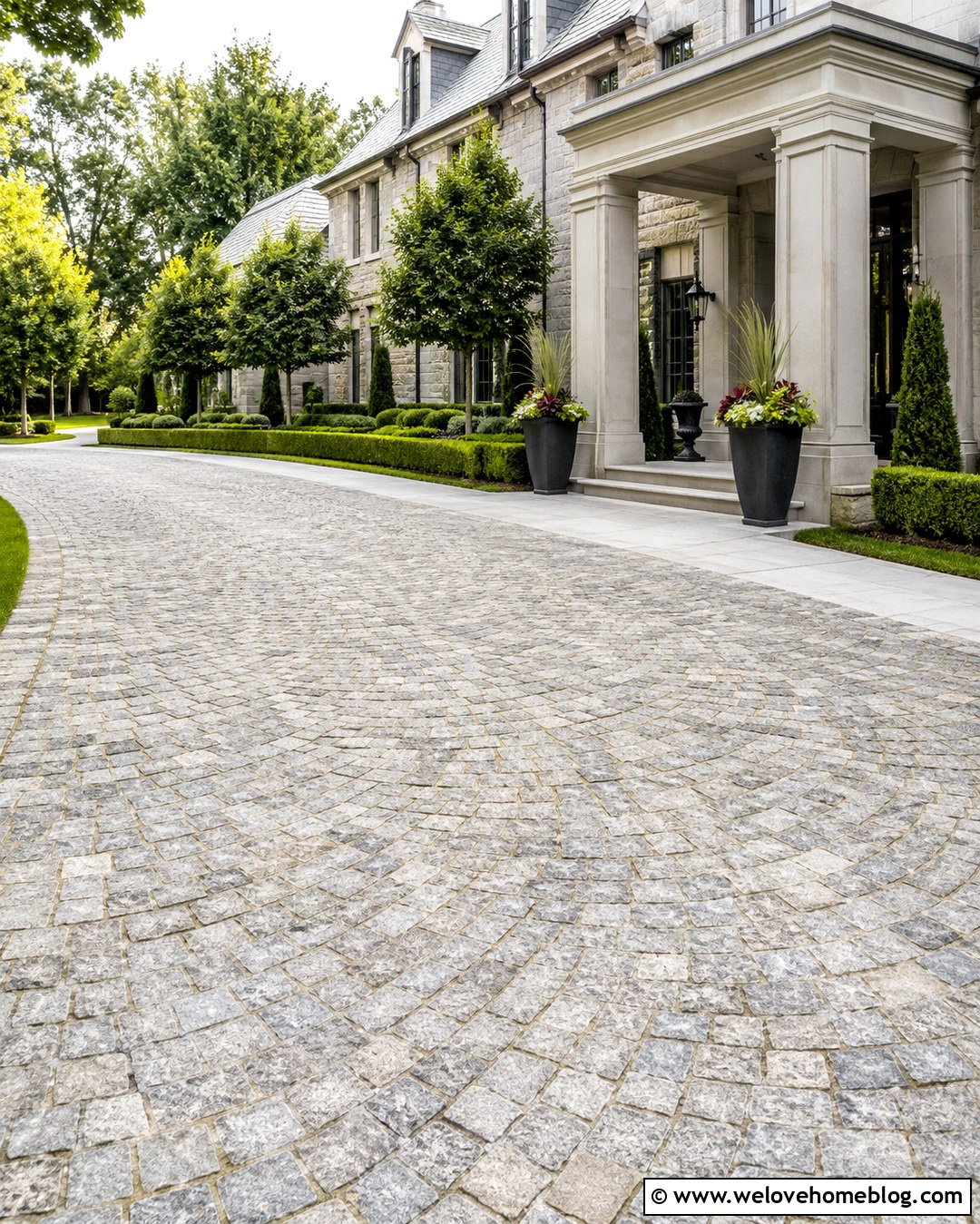
A cobblestone apron gives the driveway entrance a defined threshold and protects the visual edge where the private drive meets the street. Use reclaimed-looking granite cobbles across the first several feet of a warm beige concrete driveway. Arrange them in a fan pattern for a traditional home or straight rows for a simpler appearance. Continue a narrow cobblestone ribbon along both driveway edges to visually connect the apron with the house. On either side, low brick-and-stone walls can hold neat beds of evergreen shrubs, lavender, and soft ornamental grasses. Avoid placing tall columns too close to a narrow entrance. The textured apron should be installed over an appropriate base by an experienced hardscape professional so it remains even under repeated vehicle traffic and seasonal weather changes.
9. Concrete Driveway Entryway With Paver Border
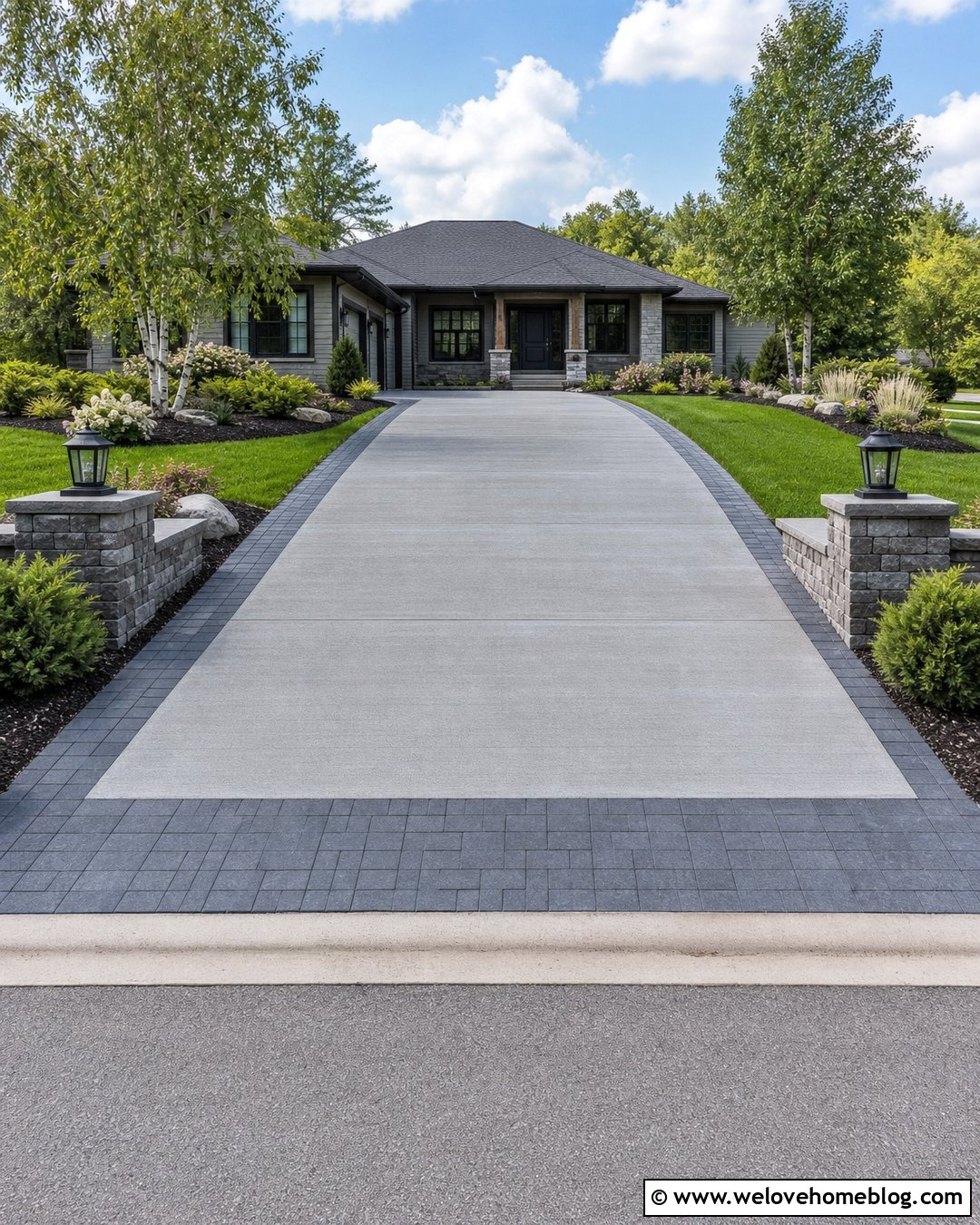
A poured concrete driveway can feel far more finished when contrasting pavers define its entrance and edges. Choose medium-gray concrete with a light broom finish for the main straight driveway. Add charcoal concrete pavers in a double border along both sides, then widen the paver treatment into a rectangular apron at the street. Two low landscape walls can frame the opening without creating the formality of tall pillars. Fill the surrounding beds with compact junipers, flowering shrubs, and layered ornamental grasses. Repeat the charcoal pavers in the front walkway so visitors can instantly identify the route to the door. Control joints, slopes, and transitions should be incorporated into the design rather than treated as afterthoughts. The result is clean, practical, and suitable for many suburban homes.
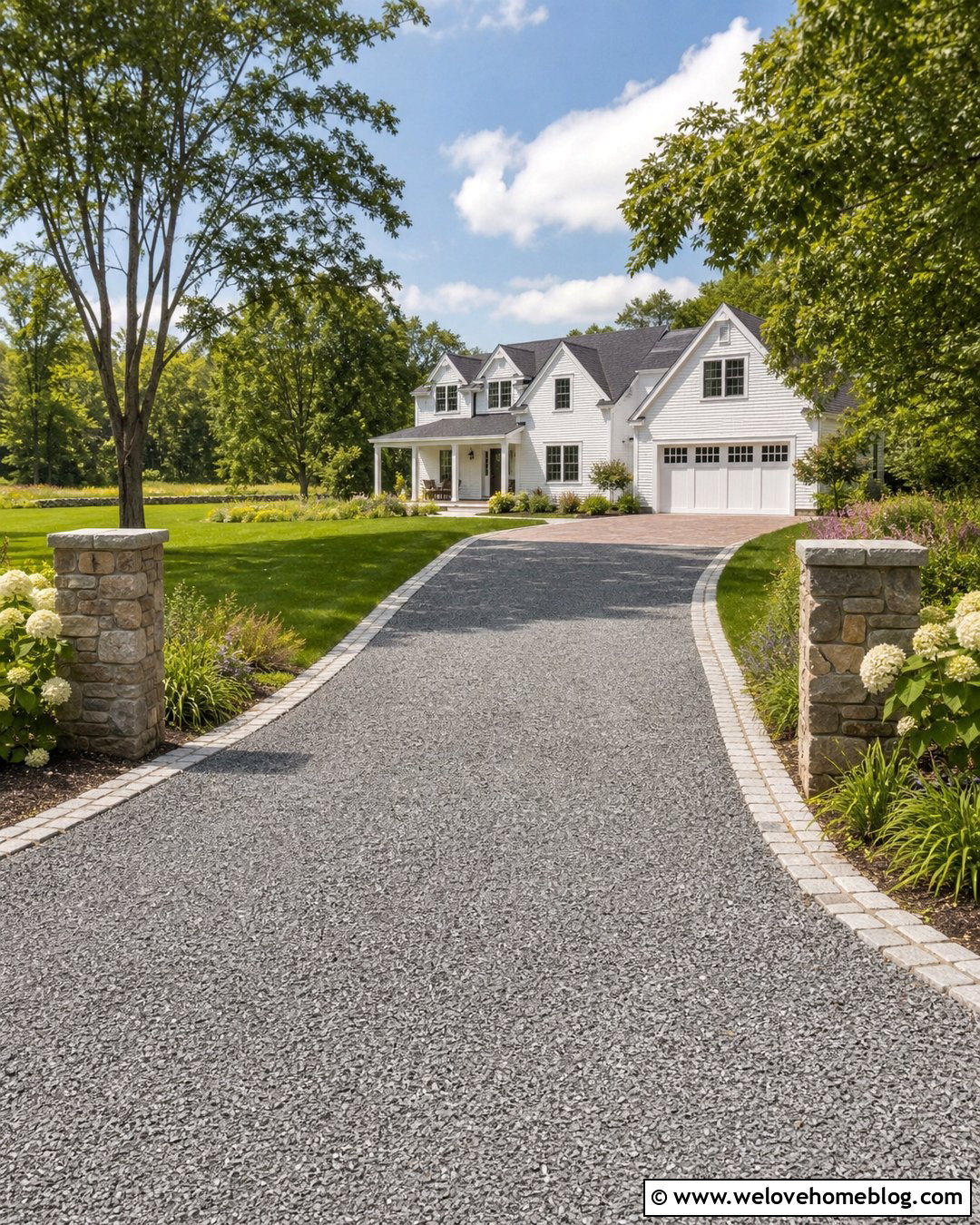
10. Asphalt Driveway Entryway With Stone Walls
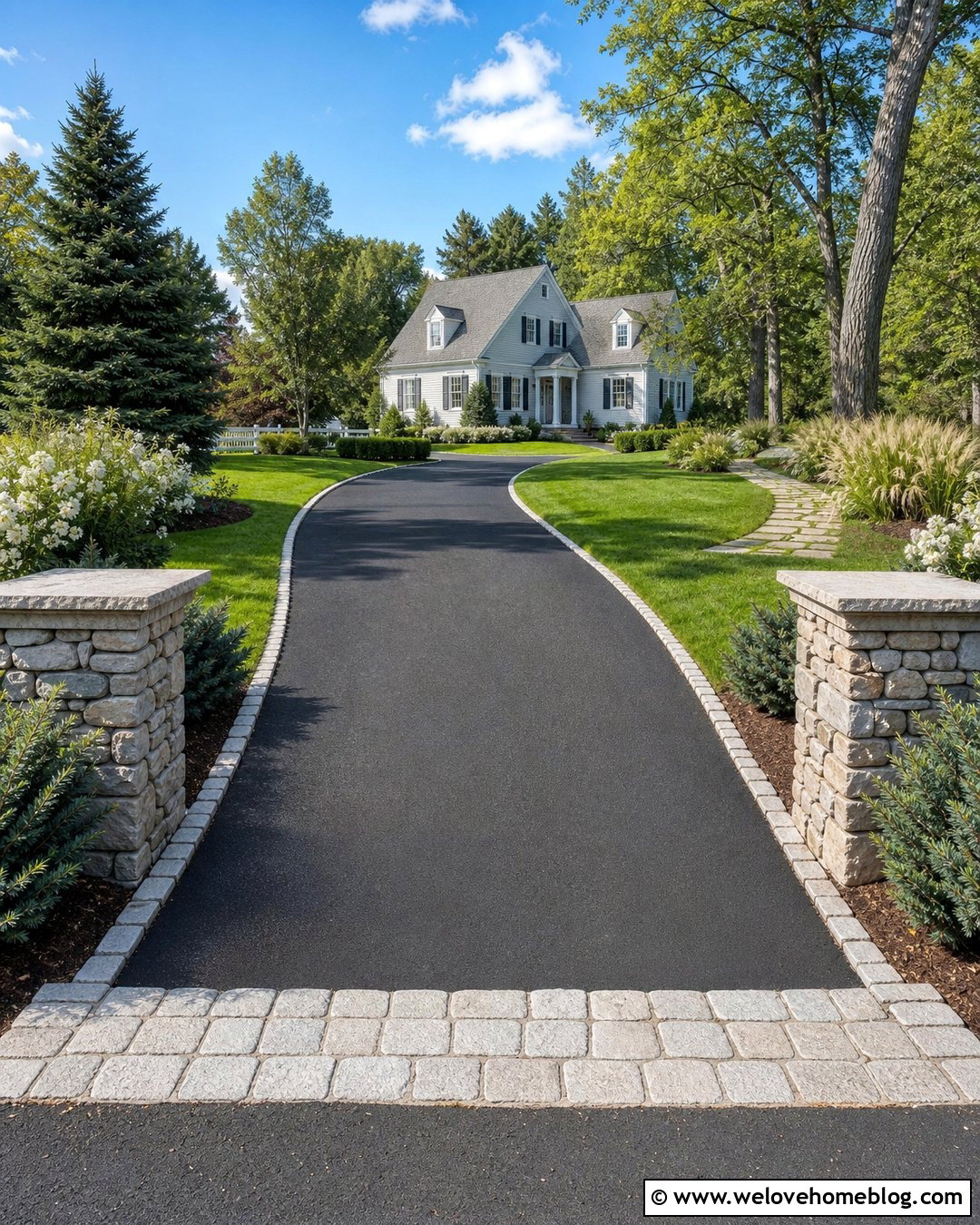
Black asphalt becomes an attractive design feature when lighter materials frame its strong, smooth surface. Use a gently curved asphalt driveway with a pale granite cobblestone border and matching stone walls at the entrance. Let the walls begin low near the street, rise gradually toward the center, and finish with broad capstones. This stepped profile feels welcoming and helps preserve open views. Plant spreading evergreens, white flowering shrubs, and airy grasses behind the walls so greenery appears to spill over the masonry. A separate flagstone walkway can branch from the driveway and lead guests toward the front door. Repeat the wall stone around a mailbox or small address monument. The consistent materials make an affordable asphalt surface feel connected to the surrounding landscape and home.
11. Resin-Bound Driveway Entryway With Steel Edging
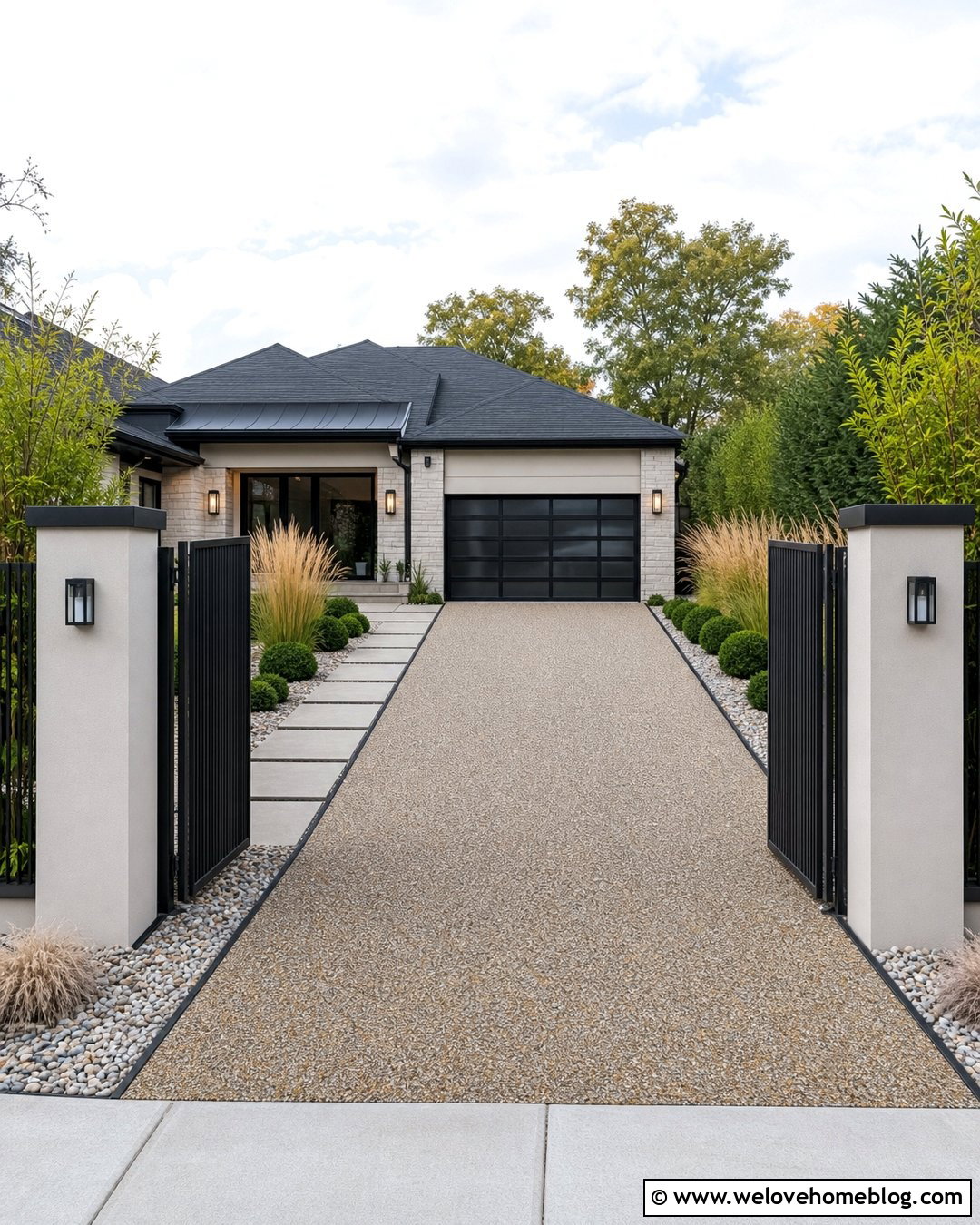
Resin-bound gravel suits a polished entrance because it provides the visual texture of aggregate within a clean, defined surface. Select a warm gray and buff blend for a straight driveway leading to a contemporary or transitional home. Use black steel edging to sharpen both sides and form geometric planting beds near the road. A pair of slim rendered pillars can support an open metal gate or remain ungated as simple markers. Fill the beds with upright ornamental grasses, rounded evergreen shrubs, and pale decorative stone. Large rectangular walkway slabs can cross one planting bed and connect the driveway to the home’s entrance. Keep the material palette limited to gray, black, green, and one warm accent. This restraint allows the aggregate texture and precise layout to remain the main visual features.
12. Tree-Lined Driveway Entryway
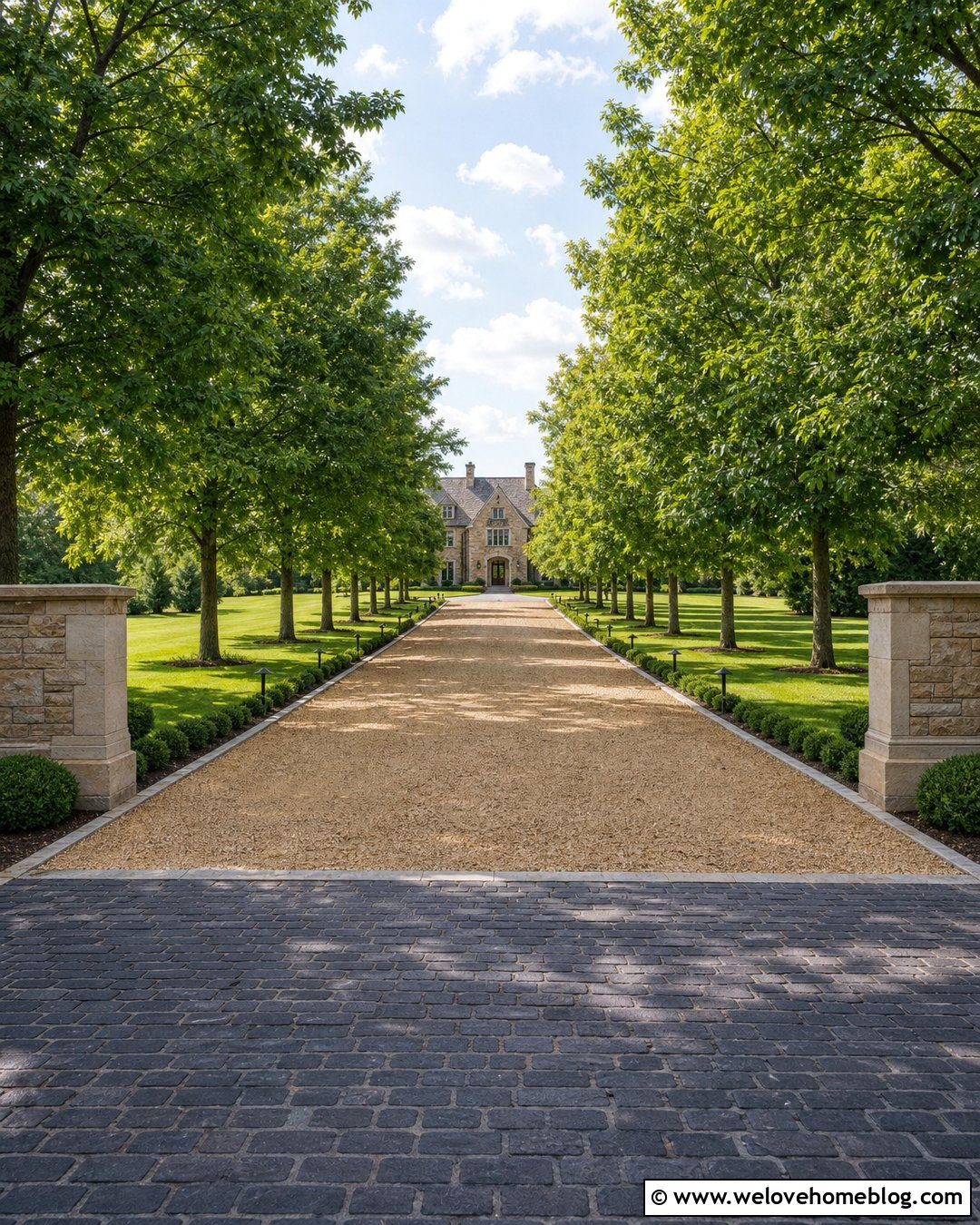
Few approaches feel as established as a driveway framed by evenly spaced trees. Begin with a long, straight tan gravel driveway and a broad cobblestone apron at the road. Mark the opening with low stone posts rather than tall gates, keeping attention on the landscape beyond. Plant a matching row of regionally appropriate trees along each side, leaving enough distance for mature trunks, roots, branches, and vehicle clearance. Underplant the rows with mown grass or a simple sweep of low ground cover. Formal properties can use a symmetrical layout, while a country home may look better with slightly looser spacing. Repeating lanterns or understated ground lights between selected trees strengthens the rhythm. Plan for mature growth from the beginning so the entrance remains comfortable and usable over time.
13. Low-Maintenance Driveway Entryway Landscaping
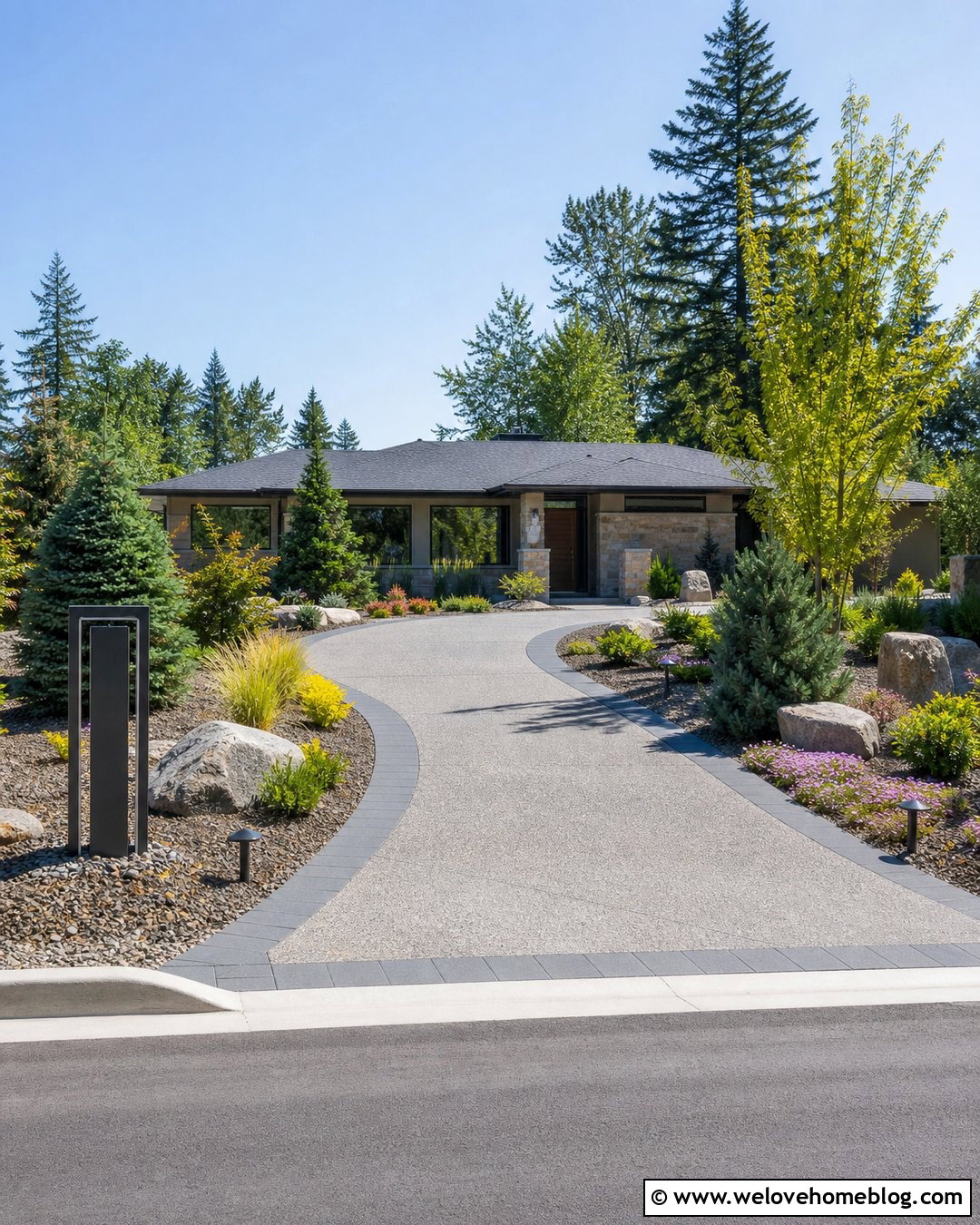
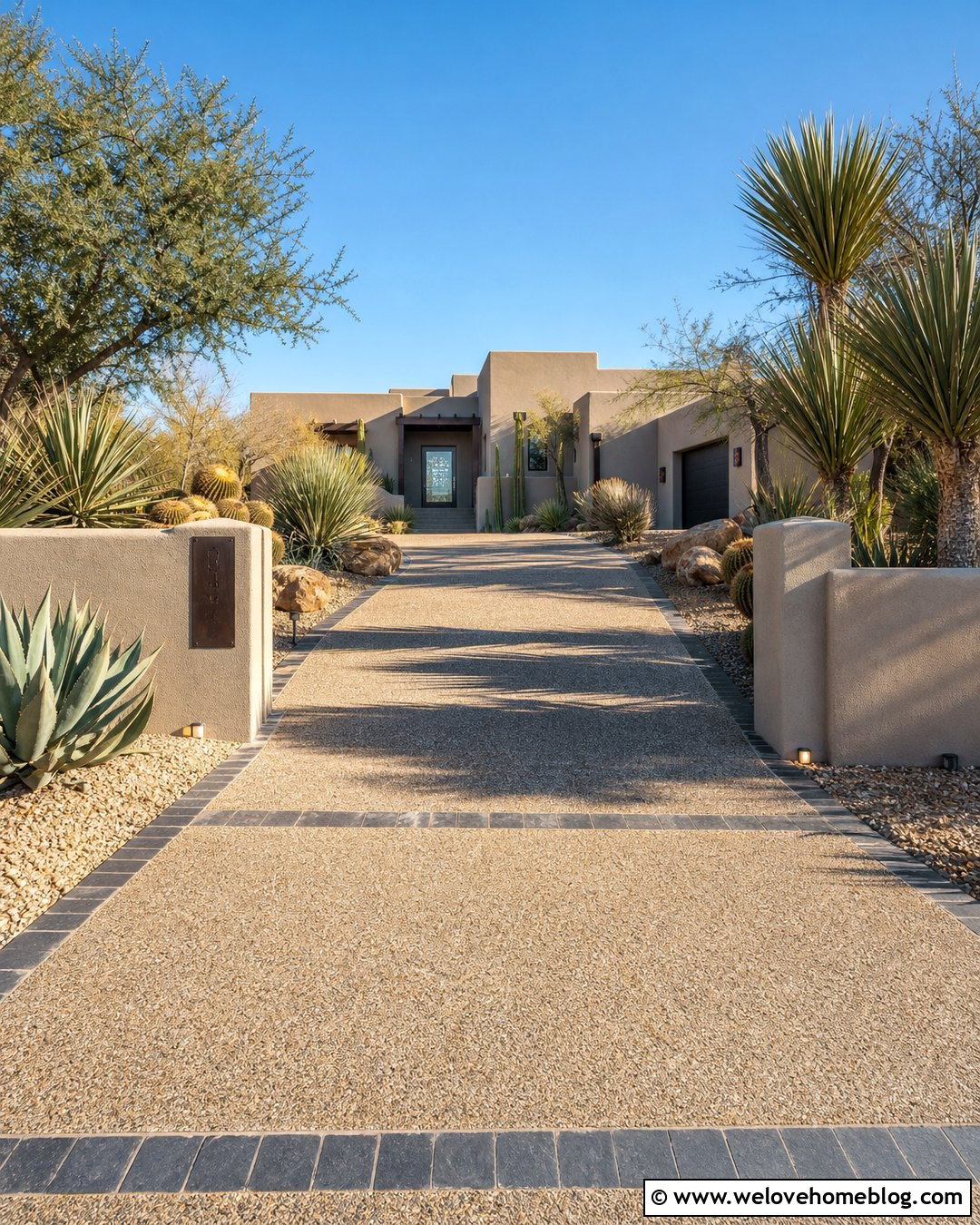
A low-maintenance entrance can still look layered and welcoming when plants are selected for structure rather than constant color. Pair a light exposed-aggregate concrete driveway with a curved border of dark concrete pavers. Create broad gravel-mulched beds on both sides using dwarf conifers, tough ornamental grasses, and compact flowering shrubs suited to the local climate. Space plants according to their mature widths to reduce pruning and crowding. Place large decorative boulders near the back of the beds, where they can add height without interfering with vehicles. A simple metal address marker and two low-voltage lights provide practical focal points. Avoid narrow strips of lawn that are difficult to mow. Repeating a small group of dependable plants will generally look calmer and more intentional than using many unrelated varieties.
14. Flower Bed Driveway Entryway
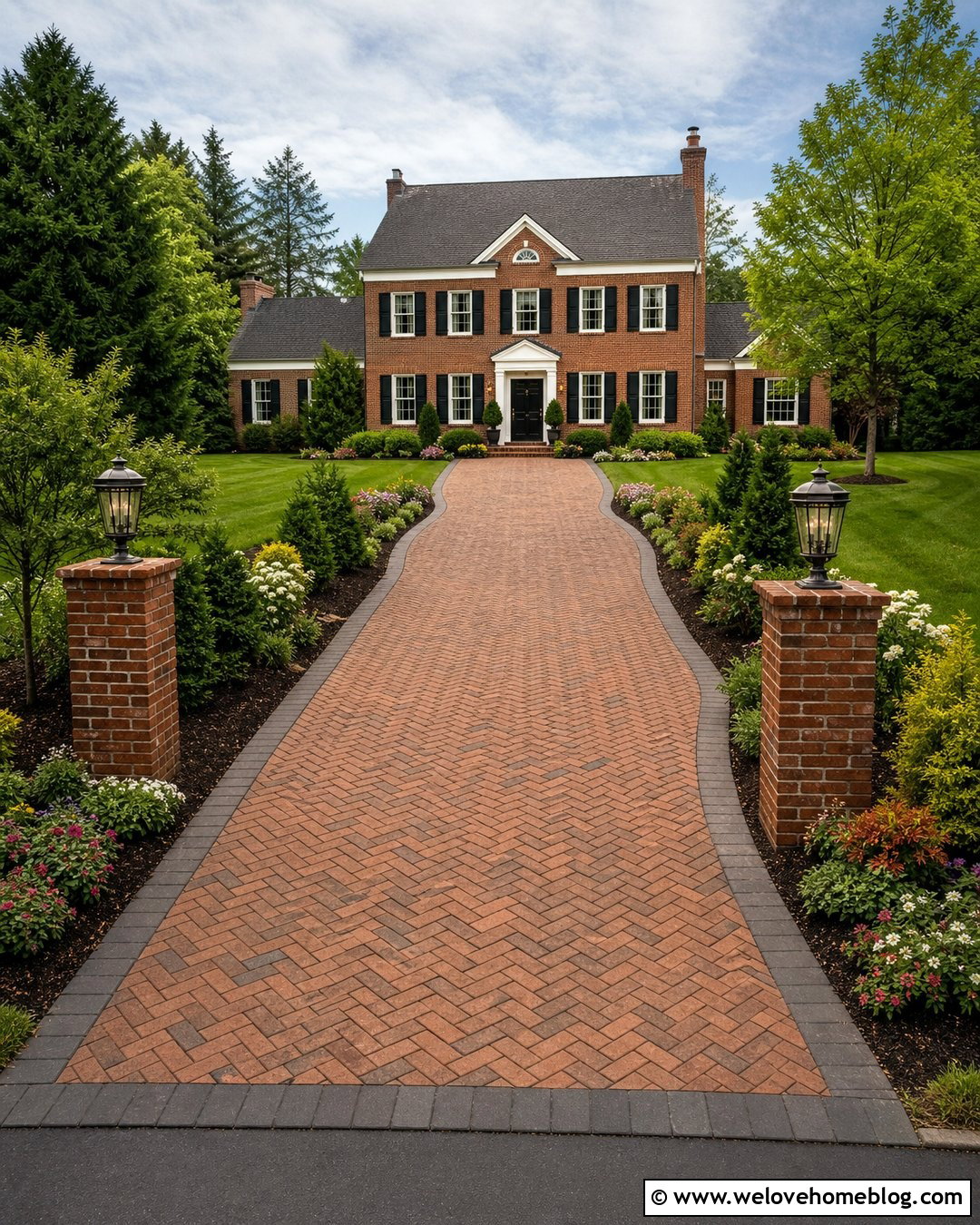
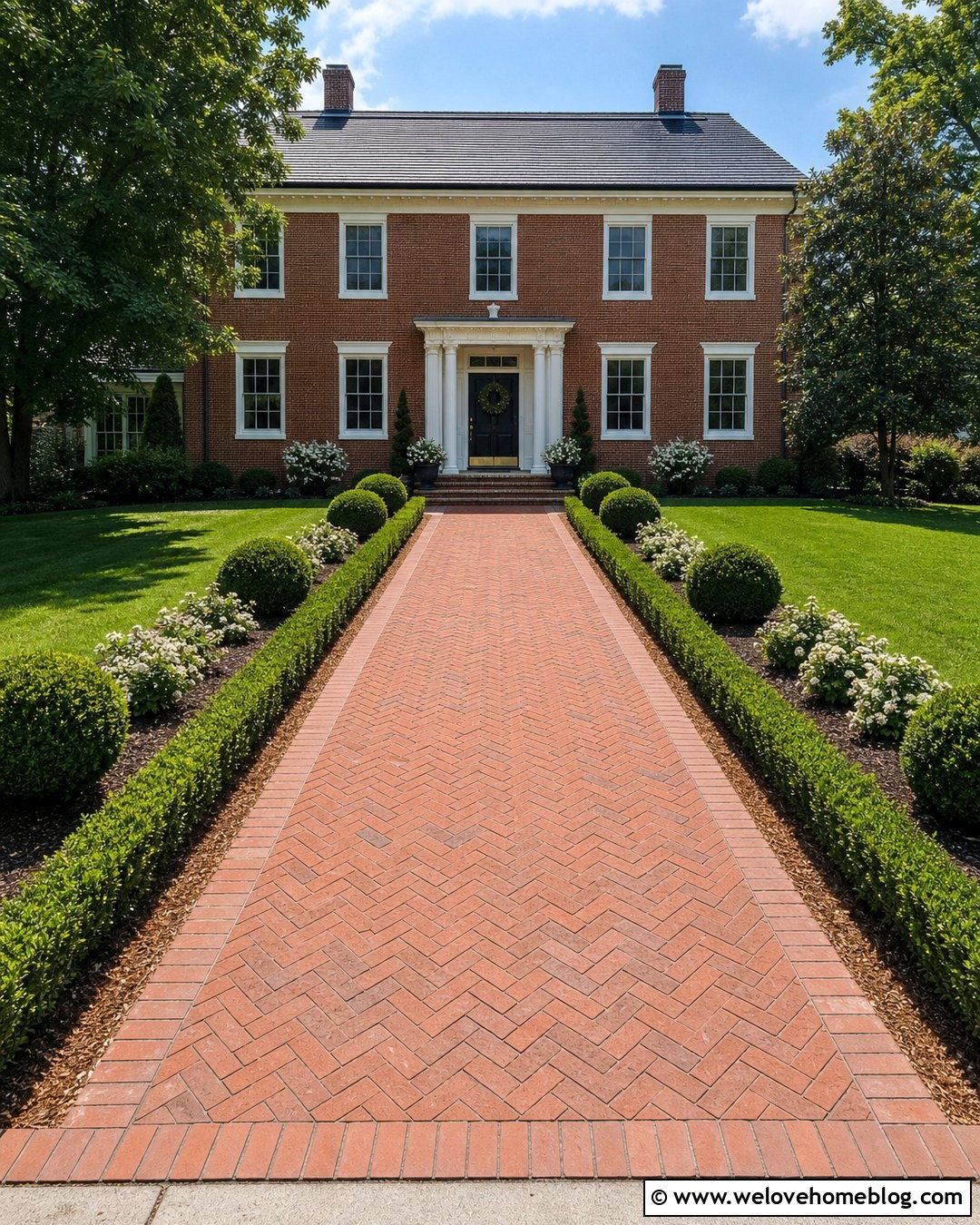
Colorful flower beds can frame a driveway beautifully without turning the entrance into a high-maintenance garden. Use clay brick pavers in a herringbone pattern for a traditional straight driveway, bordered by a contrasting row of dark brick. Build wide, gently curved beds outside the border so flowers stay protected from tires. Evergreen shrubs should form the permanent backdrop, while long-blooming perennials and annual accents provide changing color in front. Choose a limited color palette that works with the home’s siding, shutters, or front door. Matching brick columns at the road can support simple lanterns and visually anchor the beds. Leave open mulch or low ground cover beside the driveway edge to prevent stems from leaning into the driving lane and to make seasonal garden maintenance easier.
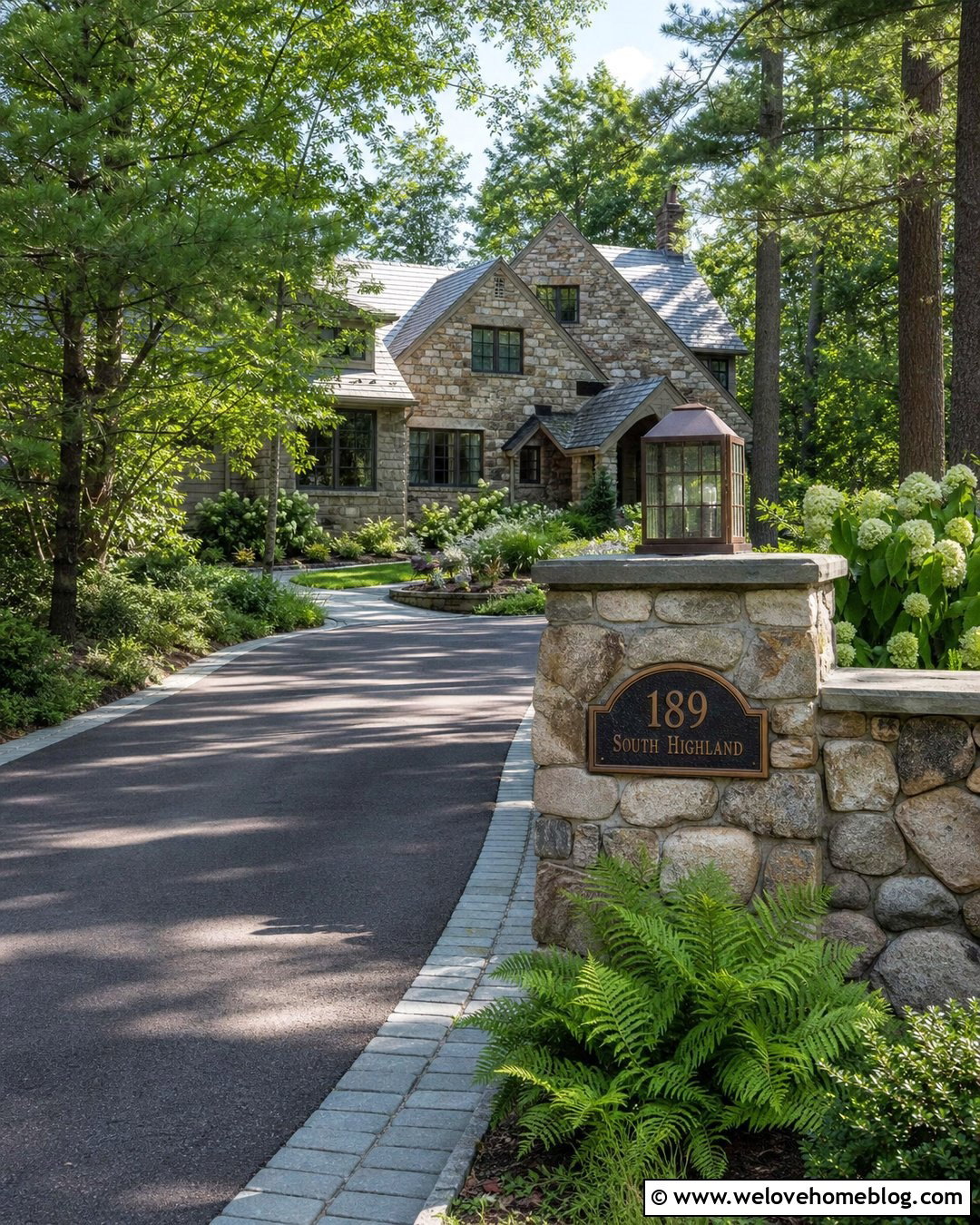
15. Native Plant Driveway Entryway
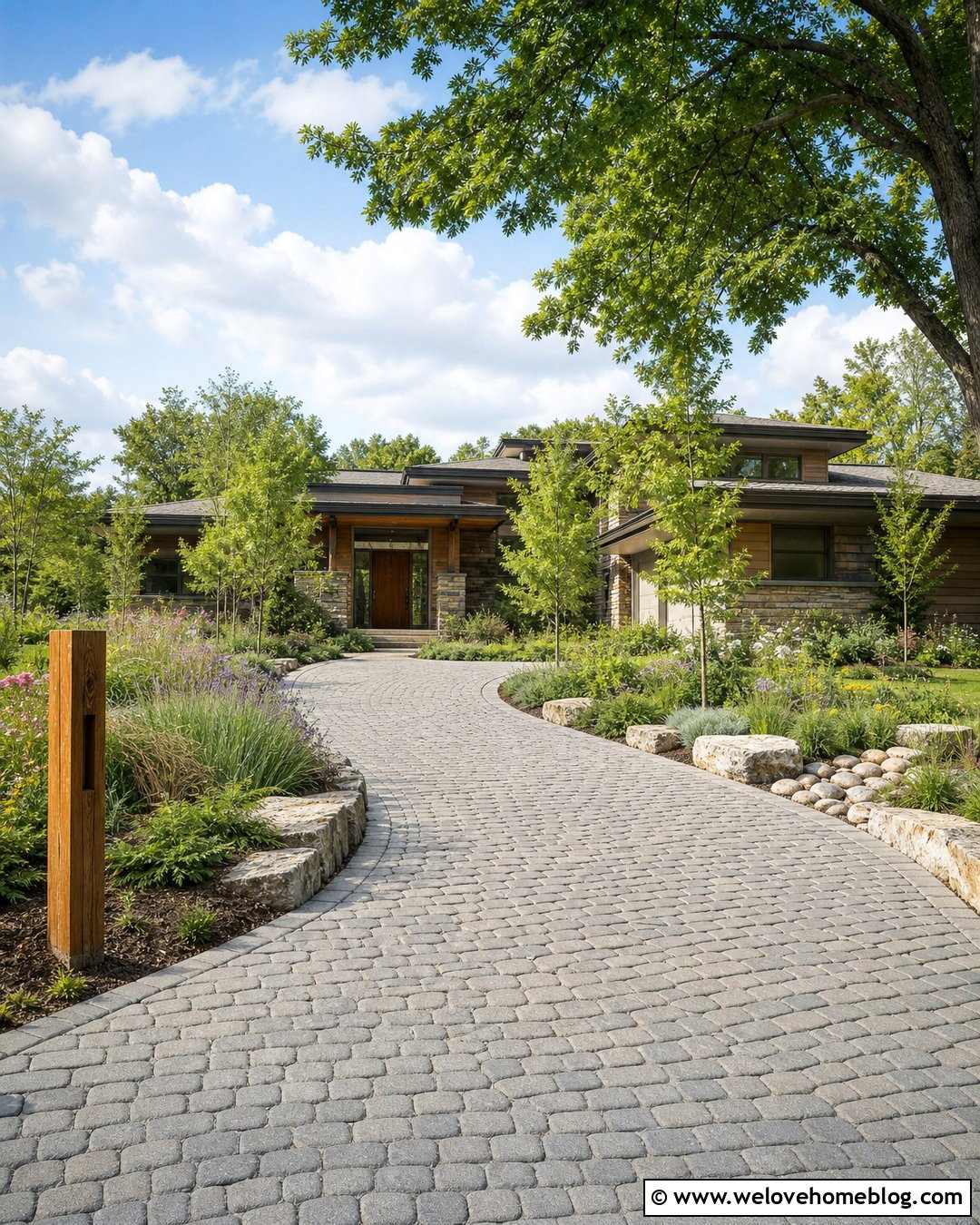
Native planting can give a driveway entrance a strong connection to its regional landscape. Pair a permeable interlocking concrete paver driveway with broad, naturalistic beds on both sides of a softly curved entrance. Choose locally suitable grasses, flowering perennials, evergreen ground covers, and small trees that can handle the site’s sunlight, soil, and moisture conditions. Group several plants of each type instead of scattering individual specimens. This creates visible sweeps of color and texture from the street. Use weathered stone edging or a narrow band of river rock to separate planting from the pavers. A simple timber address post can reinforce the natural look. Keep taller growth behind lower plants near the roadway so the landscape remains attractive without reducing essential driver sightlines.
16. Driveway Entryway With Lantern Pillars
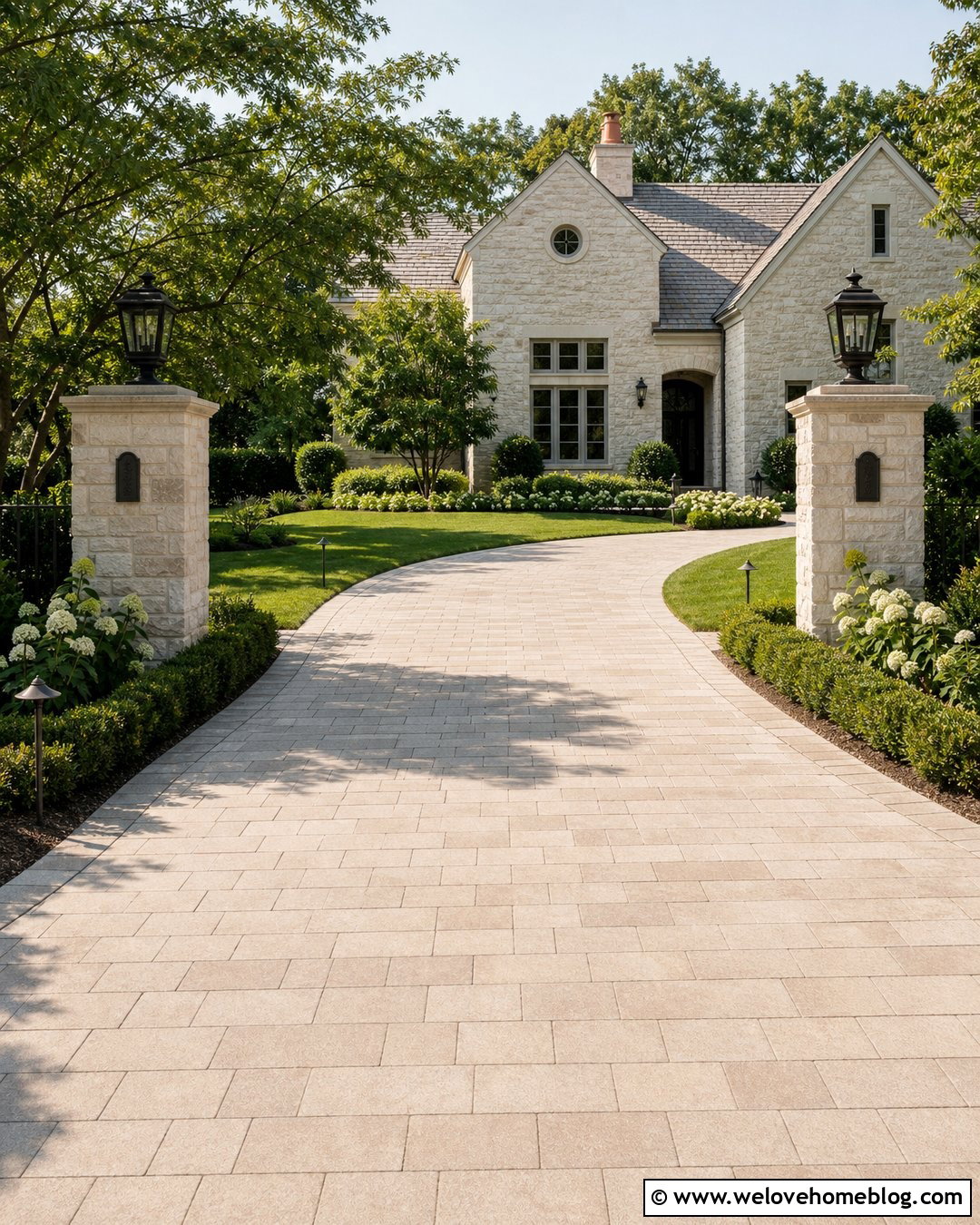
Lantern-topped pillars give a driveway entrance both daytime structure and practical illumination after sunset. Column-mounted fixtures and entry piers are commonly used to create a safe, welcoming approach. () Pair warm limestone pillars with a curved driveway made from beige concrete pavers in a running-bond pattern. Use dark bronze lanterns that relate to the home’s door hardware and exterior fixtures. Low boxwoods and white flowering shrubs can surround each pillar while leaving the lanterns visually unobstructed. Continue smaller shielded lights along the walkway rather than placing bright fixtures down the entire driveway. Select fixtures rated for outdoor conditions, and aim light carefully to limit glare toward drivers and neighbors. Balanced scale matters: oversized lanterns can overpower short columns, while tiny fixtures may appear insignificant.
17. Driveway Entryway With Address Sign
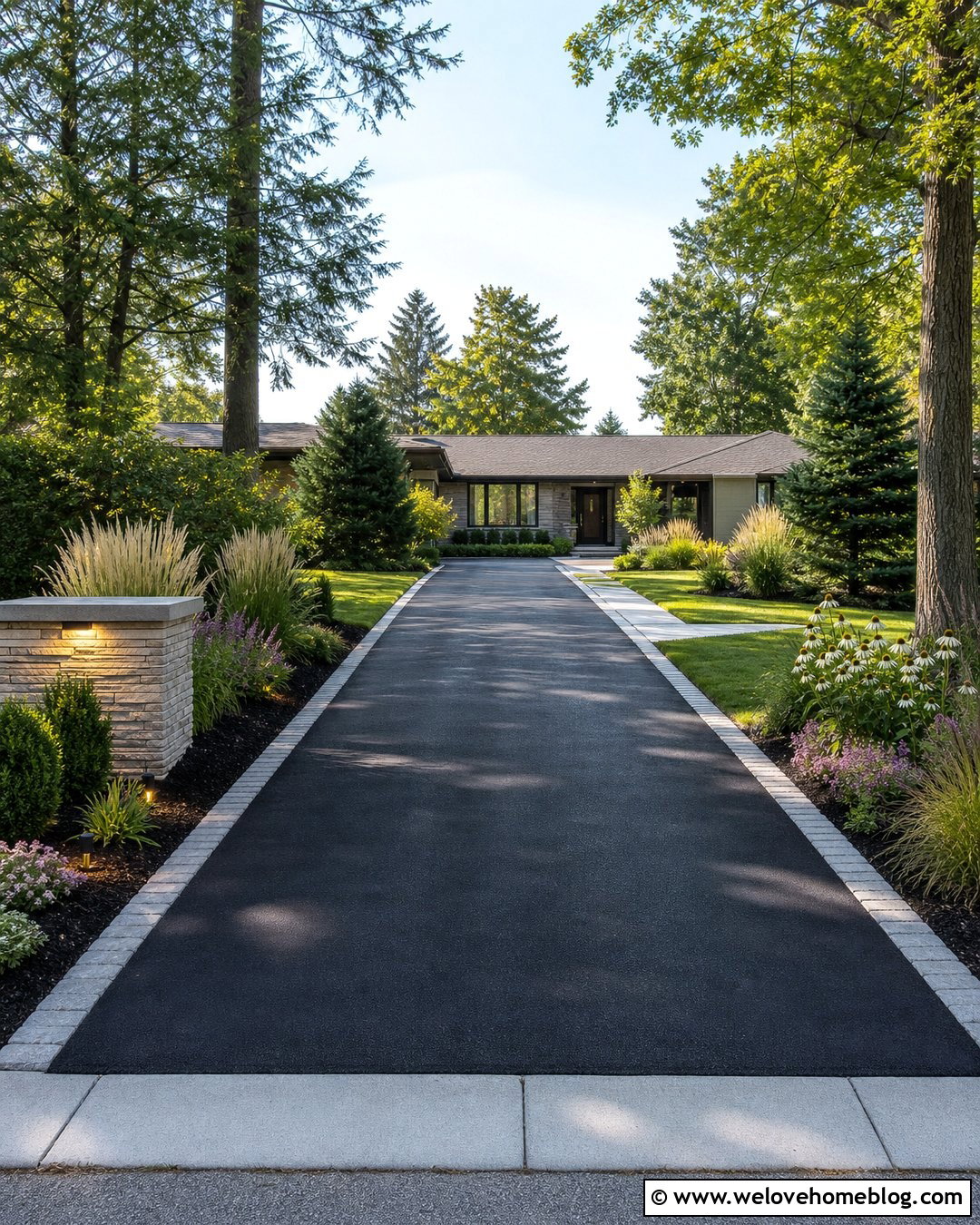
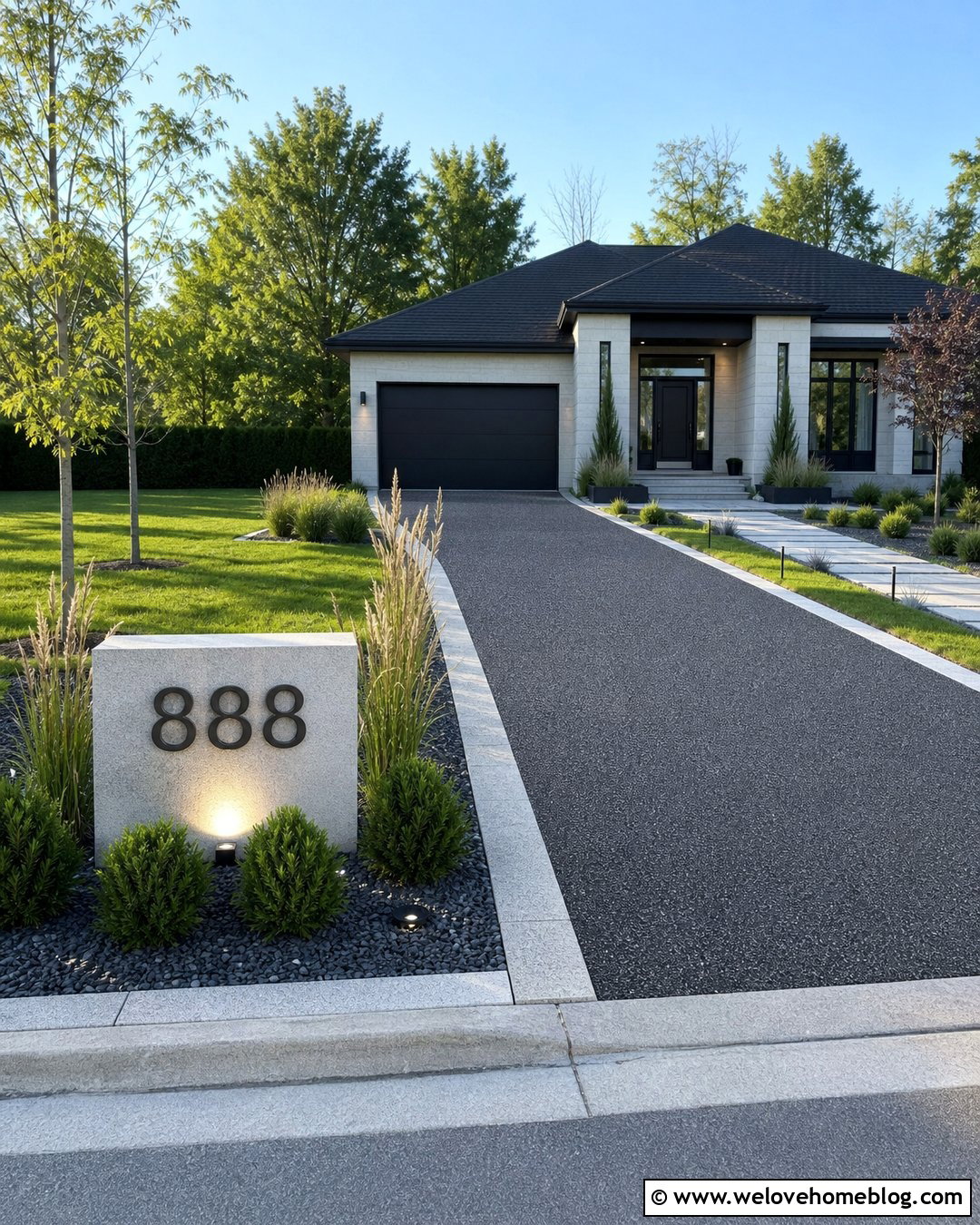
An address marker can serve as the central feature of a simple driveway entrance. Begin with a dark-gray asphalt driveway edged in light concrete cobbles. On one side, add a low horizontal monument made from matching stone veneer with large, high-contrast address numbers. Balance it with a similar planting bed on the opposite side rather than building a second sign. Evergreen shrubs, switchgrass, and low flowering perennials can soften the masonry while keeping the numbers visible. A narrow downlight mounted beneath the cap provides illumination without exposing a glaring bulb. Repeat the stone around the mailbox or porch foundation to create continuity. Position the sign where visitors and emergency responders can see it from the road, while ensuring it does not obstruct the driver’s view or conflict with local placement rules.
18. Small Driveway Entryway
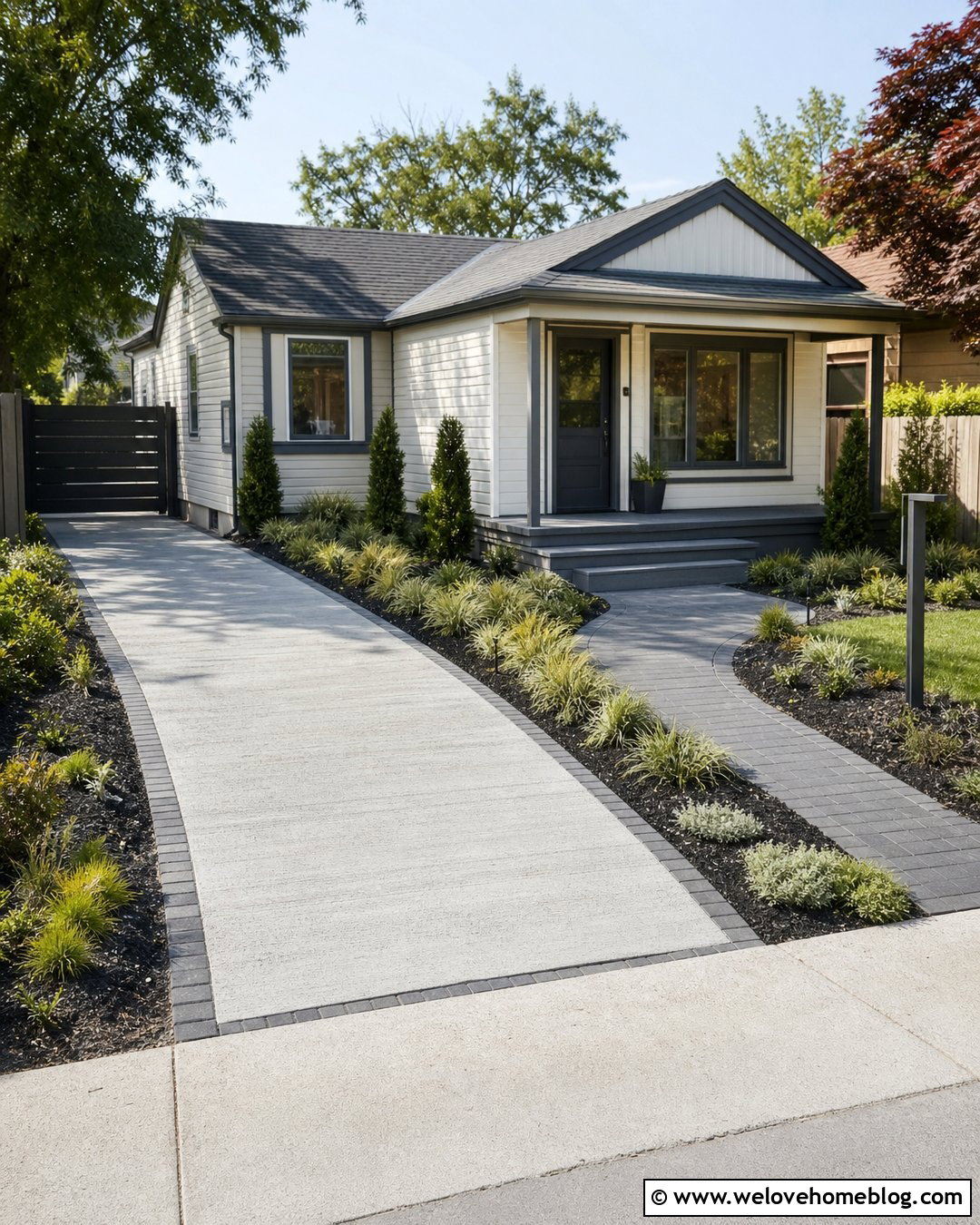
A compact driveway needs clear boundaries without bulky features that make the opening feel narrower. Use pale gray poured concrete in a straight single-car layout, then frame it with a slim border of charcoal brick pavers. Replace large pillars with two narrow planting beds that curve away from the entrance. Fill them with one compact evergreen, low ornamental grasses, and ground cover that will not spread across the pavement. A wall-mounted or post-mounted address sign can provide a focal point without consuming valuable width. Connect the driveway to the front door with a matching paver walkway and a slightly wider landing. Keeping materials consistent makes the small front yard look organized. Choose low planting and open details near the sidewalk so the driveway remains easy to enter and visually spacious.
19. Sloped Driveway Entryway With Retaining Walls
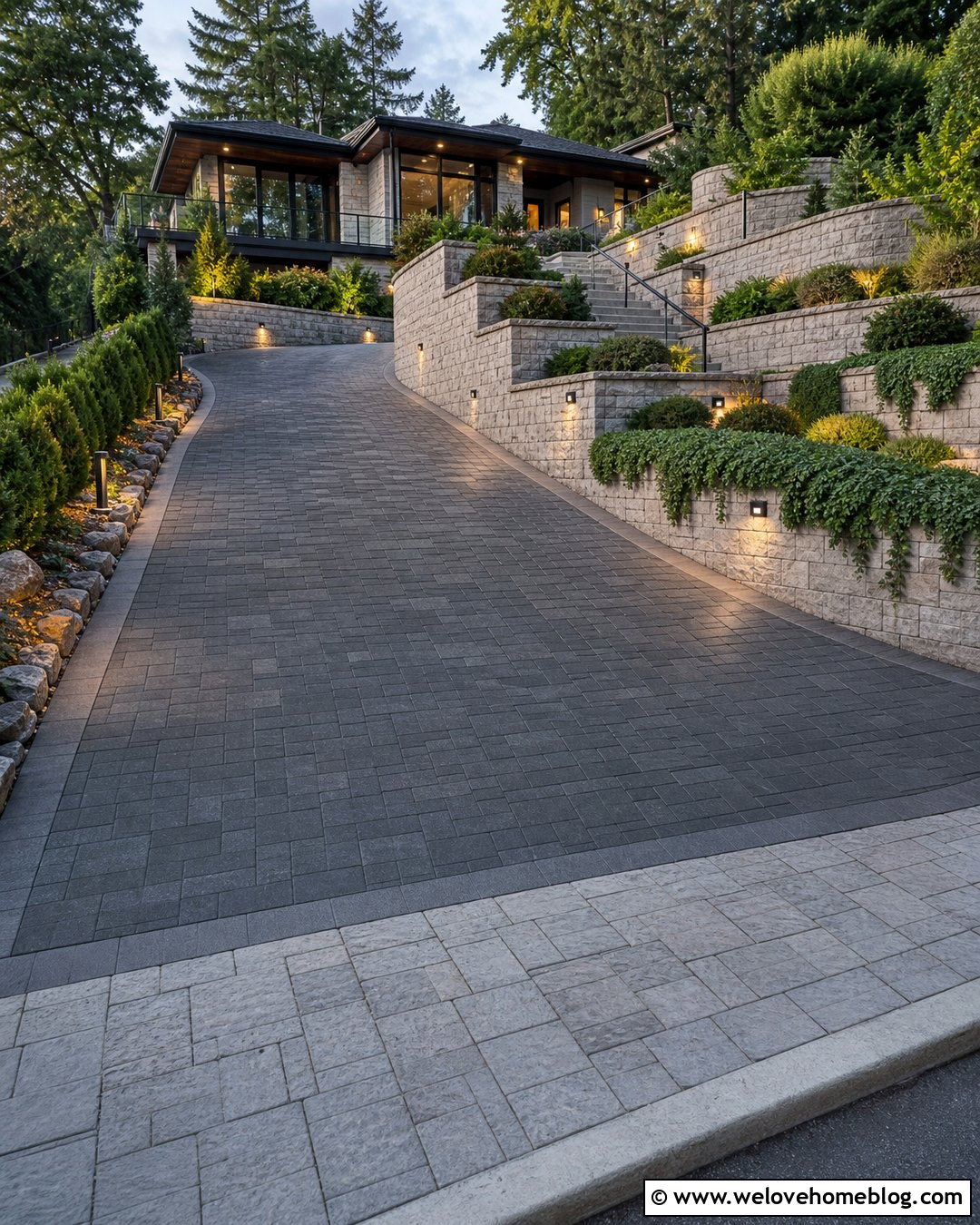
A sloped driveway entrance benefits from retaining walls that feel integrated into the grade instead of added as barriers. Use textured concrete pavers in a dark gray blend for the driveway and pale split-face block for low terraced walls. Step the walls gradually up the slope, keeping the sections near the road low enough for open visibility. Plant trailing ground cover along wall edges, then add sturdy shrubs and ornamental grasses on the upper terraces. A contrasting paver apron can make the street transition easier to see. Recessed wall lights may illuminate the entrance without adding freestanding fixtures to tight spaces. Because slopes affect drainage, traction, grading, and wall construction, have the complete layout evaluated professionally. Proper planning is more important here than decorative details alone.
20. Coastal Driveway Entryway With Grass Borders
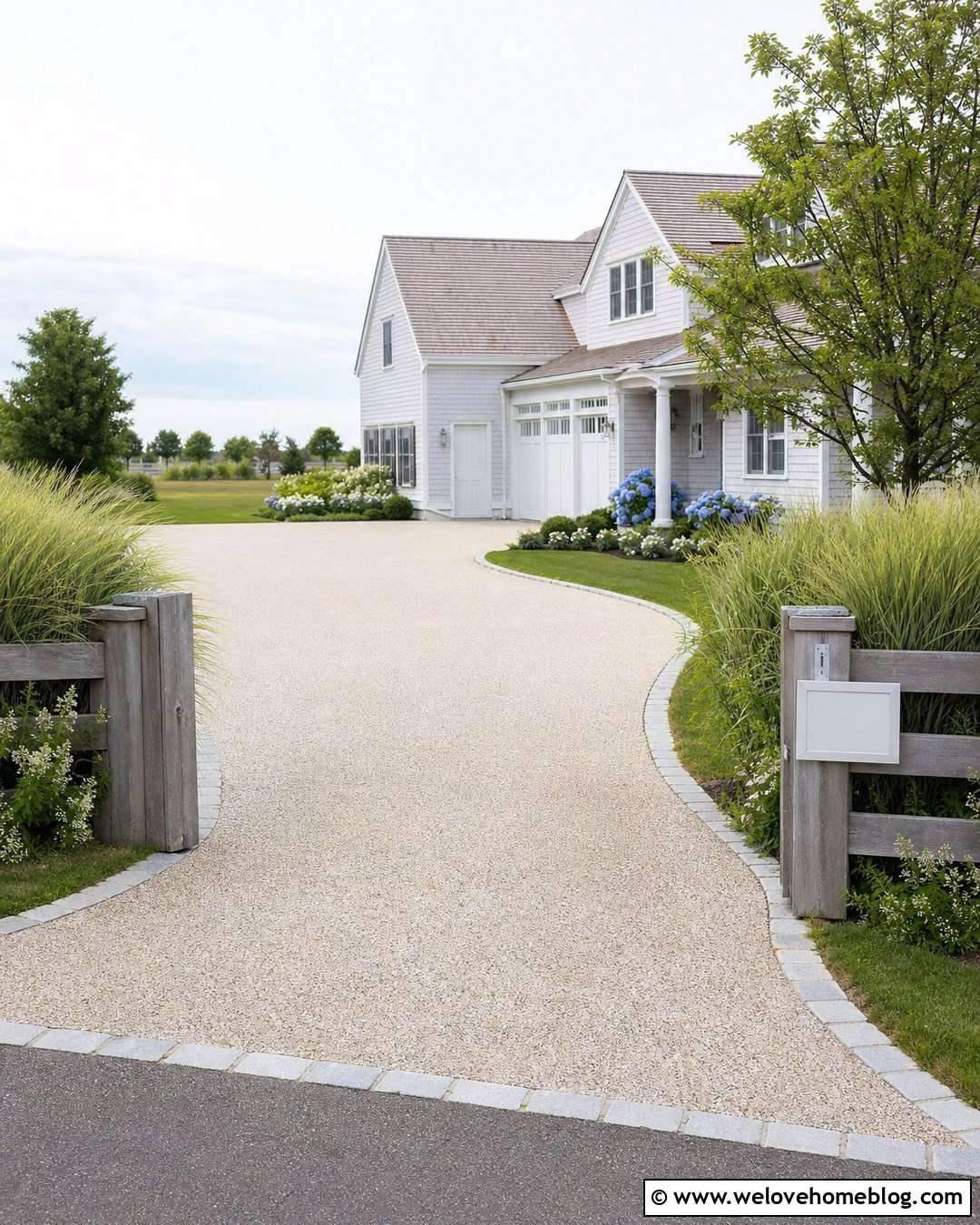
A coastal-inspired entrance should feel bright, open, and relaxed rather than heavily enclosed. Choose a pale oyster-shell-toned resin-bound gravel driveway with a wide, gently curved shape. Edge it with light-gray granite setts that prevent the aggregate surface from visually blending into the lawn. Place weathered cedar posts at the street and connect them to short sections of horizontal wood fencing. Surround the entrance with sweeping beds of salt-tolerant ornamental grasses, low evergreen shrubs, and soft blue or white flowers suited to the region. A simple painted address board can add character without becoming overly decorative. Leave generous open space around the driveway curves so the grasses can move naturally without brushing vehicles. A light-colored home with cedar or blue-gray details completes the calm coastal composition.
Conclusion:
The best driveway entrance combines appearance, circulation, visibility, and practical maintenance in one cohesive plan. Begin with the driveway’s surface and shape, then select pillars, gates, walls, edging, lighting, and plants that suit the scale and architecture of your home. Repeat a few materials rather than adding too many competing features. Leave comfortable vehicle clearance, protect roadway sightlines, and account for drainage, mature plant growth, and local requirements before construction. Even a modest upgrade, such as a paver apron, coordinated address marker, or pair of landscaped beds, can make the property feel more welcoming. Use these **20 Driveway Entryway Ideas** as flexible starting points, adapting colors, materials, and planting choices to your climate, budget, and available yard space.

Related posts:

Leave a Reply