
A well-planned roundabout driveway creates an easy arrival, a strong front-yard focal point, and a smoother path between the street, front door, and garage. This guide to **35 Roundabout Driveway Ideas** explores complete designs rather than isolated materials or plants. Current residential designs often combine a defined circular surface with a landscaped center island, coordinated borders, and a clear walkway to the house. () The best layout depends on available space, home architecture, drainage, maintenance needs, and how vehicles will move around the curve. Gravel, asphalt, concrete, brick, cobblestone, and permeable pavers can all produce distinctive results. From compact suburban loops to gated estate entrances, find practical inspiration in these **35 Roundabout Driveway Ideas**.

1. Gravel Roundabout Driveway With Lawn Island
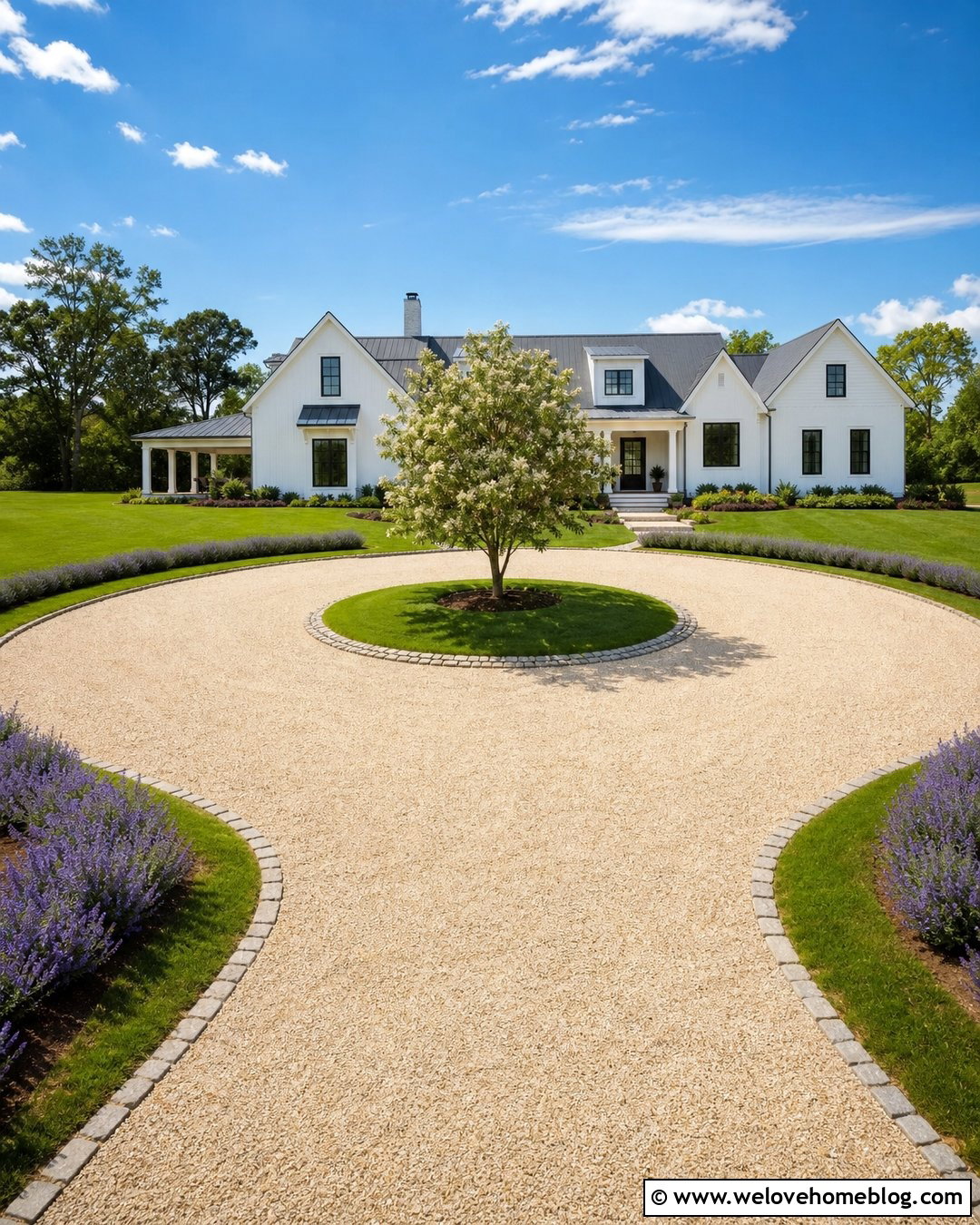
A pale gravel roundabout driveway feels relaxed and welcoming around a simple green lawn island. This design works especially well with farmhouse, ranch, and country homes because the loose texture softens a large driving area. Use compacted crushed stone beneath the decorative gravel to create a stable foundation. A cobblestone or steel border helps contain loose material along every curve. Keep the island slightly raised and plant it with durable turf, one small ornamental tree, or a restrained grouping of shrubs. A straight flagstone walkway can cross from the island-side parking point to the porch. Repeat the same gravel near the garage so the roundabout looks intentional rather than like a separate front-yard feature.
2. Asphalt Roundabout Driveway With Brick Border
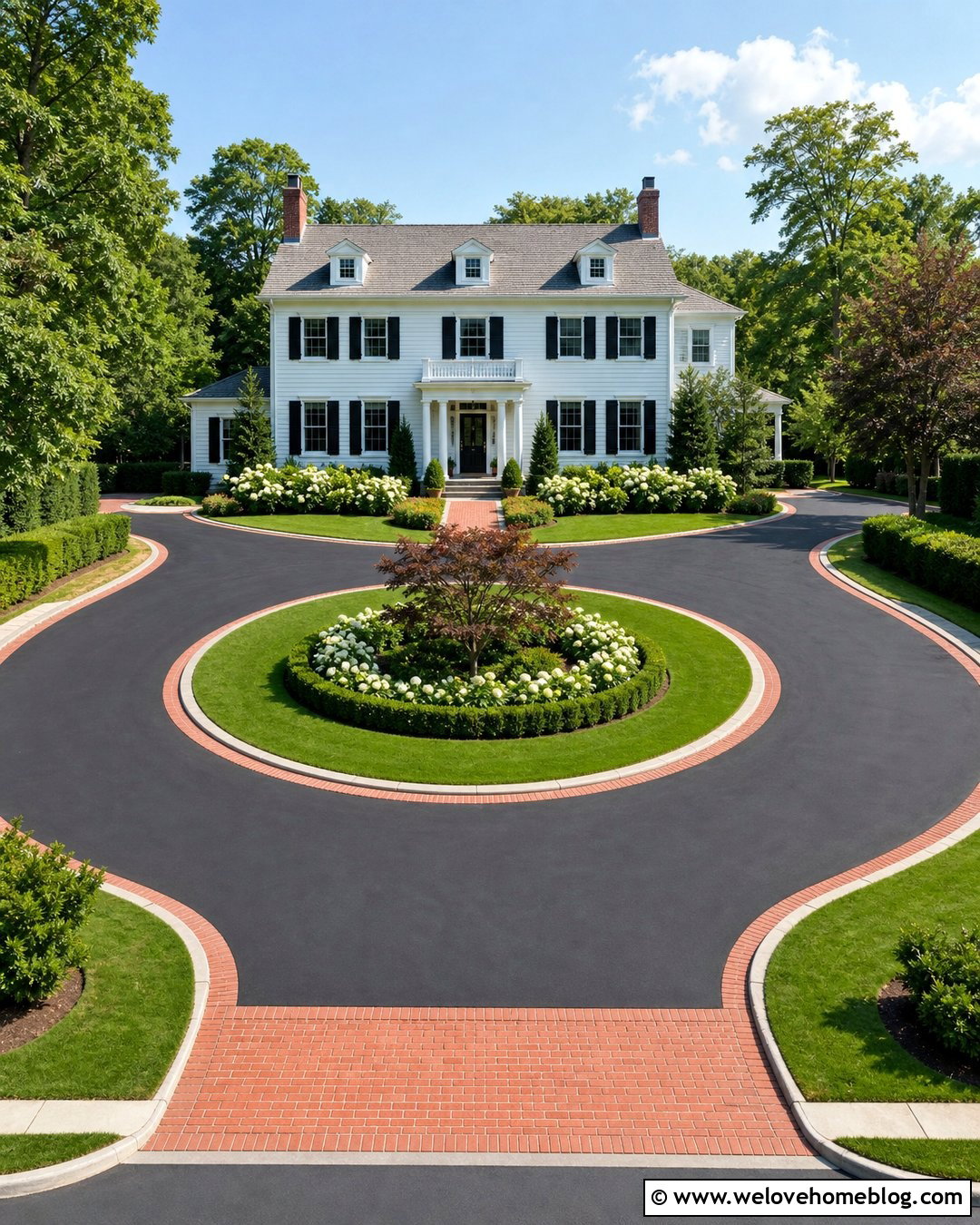
Fresh black asphalt creates a smooth, practical roundabout driveway that gains character from a warm brick border. The dark surface visually anchors a light-colored Colonial, Cape Cod, or traditional suburban home. Install clay brick pavers as a continuous soldier-course edge around the inner island and outer driveway curve. The brick helps define the layout while connecting the driveway to brick steps, pathways, or facade details. Fill the center with lawn and a layered bed of boxwood, hydrangeas, and a compact flowering tree. Wide entrance aprons make the two access points feel easy to navigate. This complete look balances straightforward paving with enough color and landscaping to prevent the asphalt from dominating the entire front yard.
3. Concrete Roundabout Driveway With Grass Center
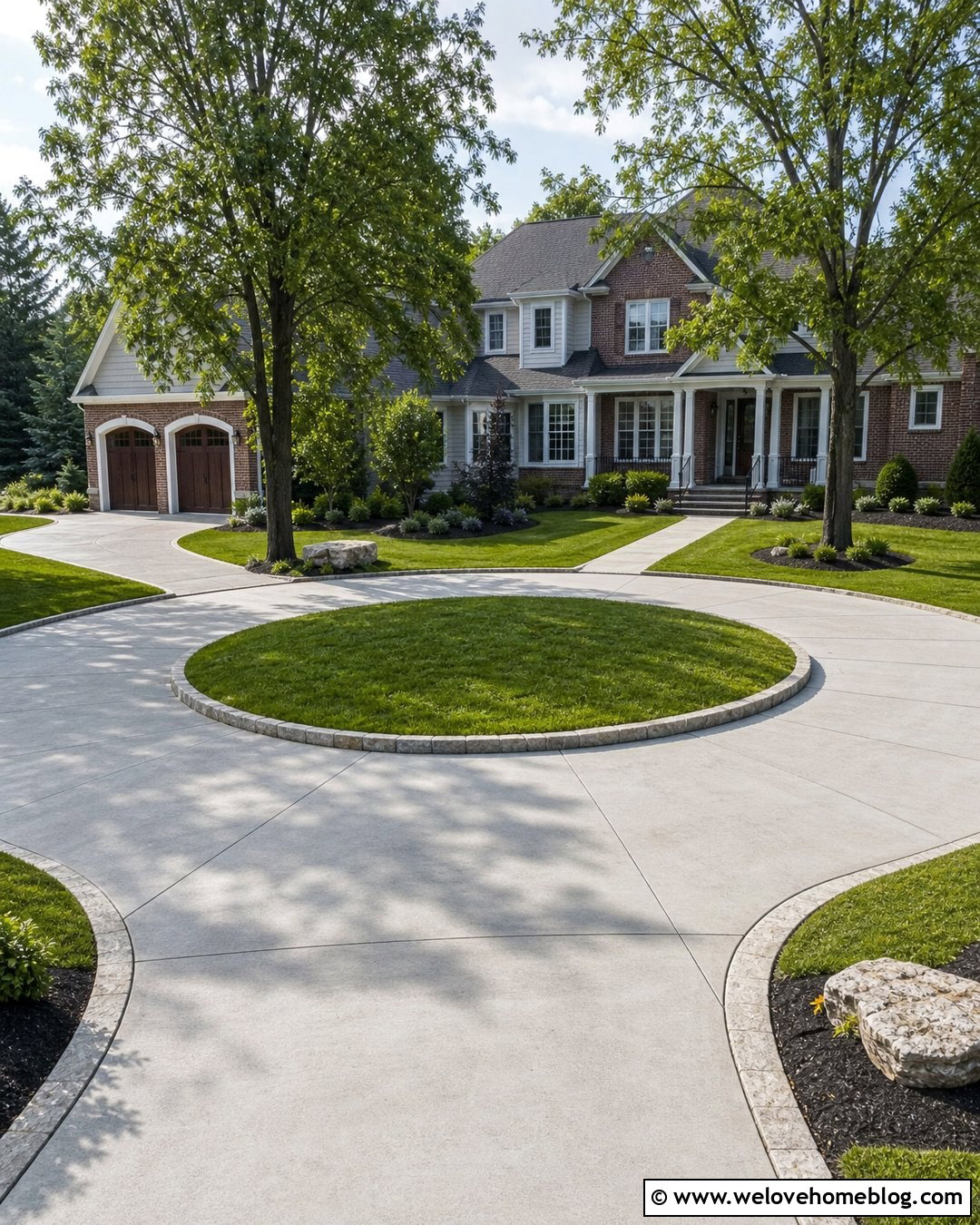
Light gray poured concrete gives a roundabout driveway a clean appearance without demanding complicated patterns. Divide the surface into evenly spaced sections with curved control joints that follow the direction of travel. These lines make the broad paved area feel more carefully designed. A wide grass island provides visual relief and preserves valuable green space in front of the house. Add a low stone curb around the island to protect the lawn and create a crisp transition. Simple foundation shrubs, shade trees, and a concrete walkway can connect the drive to a brick or siding-clad home. For a softer effect, use narrow planting beds along the outer curve instead of placing landscaping directly beside every paved edge.
4. Paver Roundabout Driveway With Stone Edging
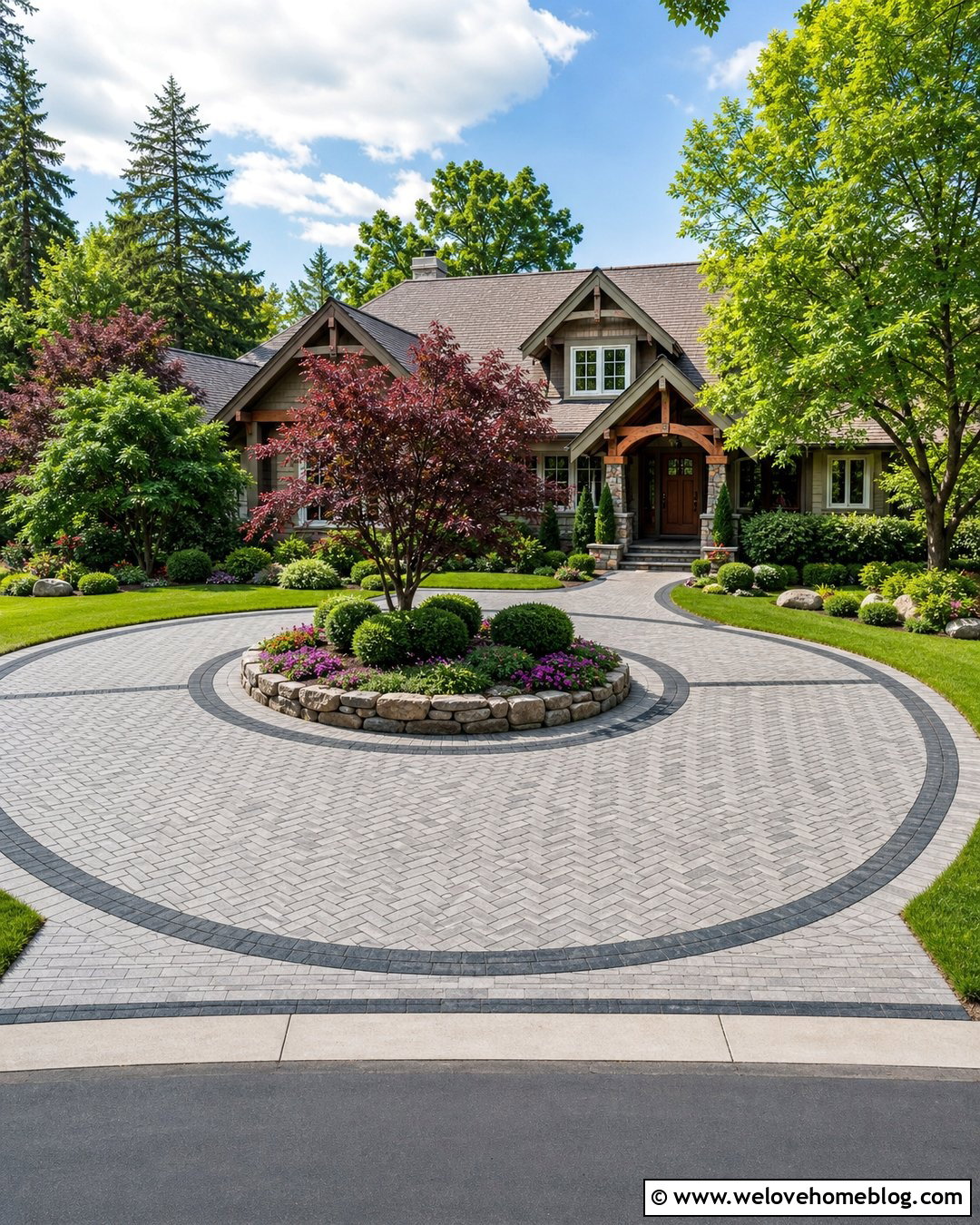
Concrete pavers can turn a functional roundabout driveway into a detailed architectural feature. Choose medium-gray rectangular pavers laid in a running bond or herringbone pattern for reliable visual movement around the curve. Dark charcoal pavers can form a contrasting border along both sides of the driving lane. Surround the central island with natural stone edging, then fill it with an ornamental tree, clipped shrubs, and low ground cover. Matching pavers on the walkway will connect the driveway to the front entrance without introducing another competing surface. This design suits Craftsman, transitional, and contemporary homes. Limiting the palette to two paver tones and one natural stone keeps the complete front approach attractive without making it appear overly busy.
5. Brick Roundabout Driveway With Boxwood Island
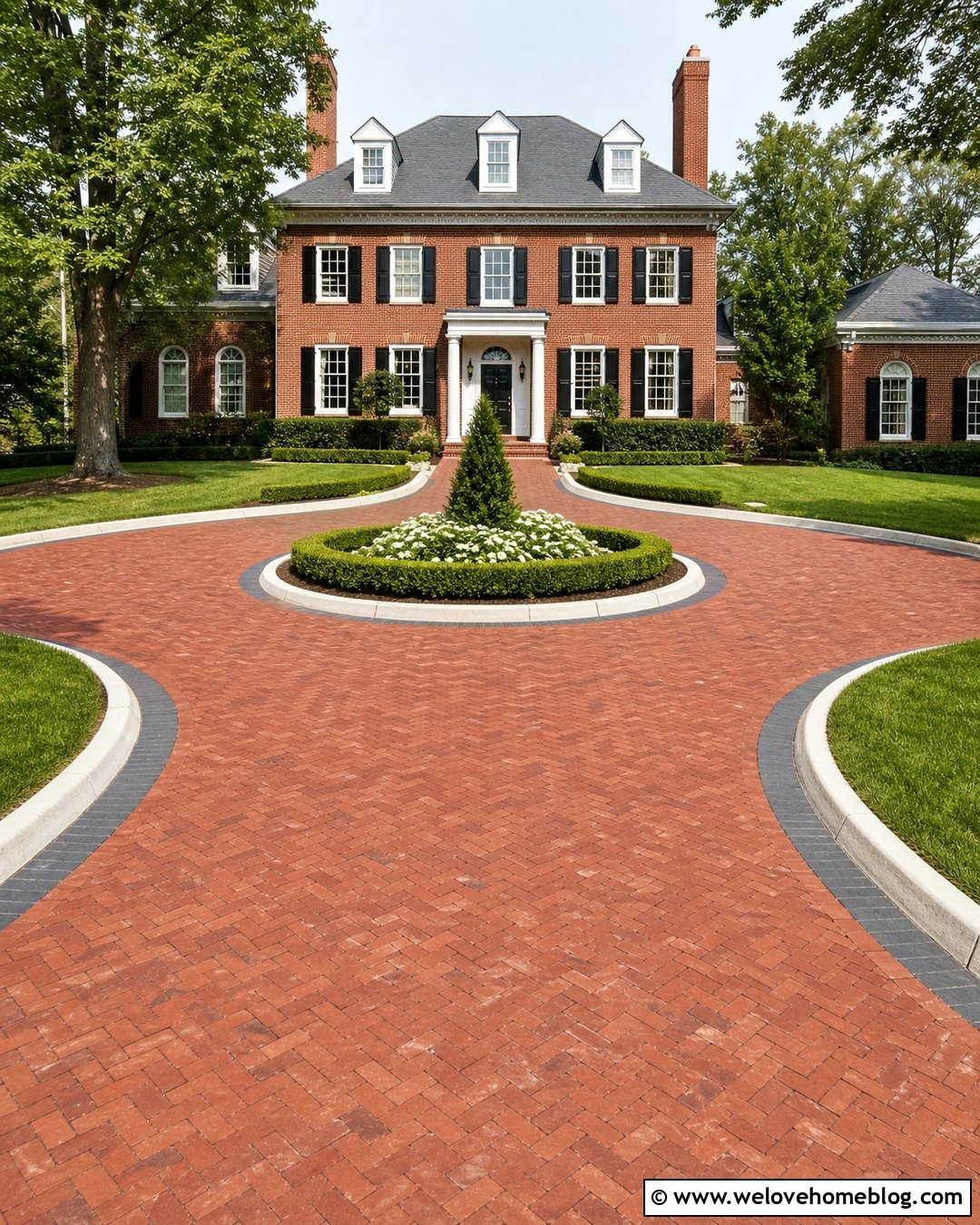
Red clay brick pavers bring warmth and established character to a traditional roundabout driveway. A herringbone layout provides rich texture, while darker brick ribbons can emphasize the inner and outer curves. In the center, clipped boxwood arranged in a circular pattern reinforces the geometry of the drive. Add one upright evergreen, flowering tree, or decorative urn as the focal point. Cream-colored stone curbing creates separation between the brick surface and planted island. This combination looks especially cohesive with Colonial, Georgian, and Tudor-inspired homes that already feature brick walls or chimneys. Keep nearby foundation beds symmetrical and repeat the boxwood along the front walkway. The coordinated planting and masonry create a formal appearance without requiring an oversized estate property.
6. Cobblestone Roundabout Driveway With Formal Landscaping
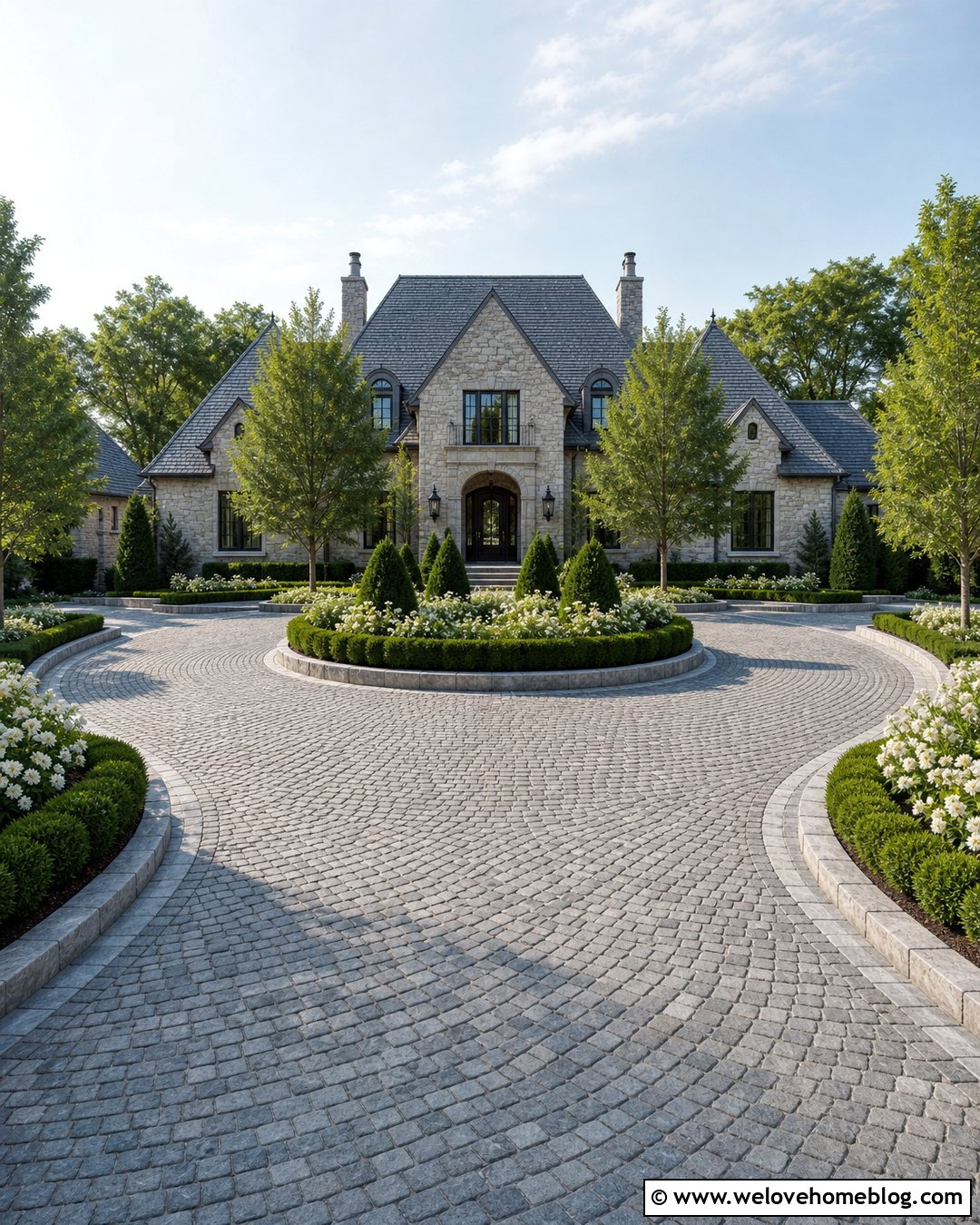
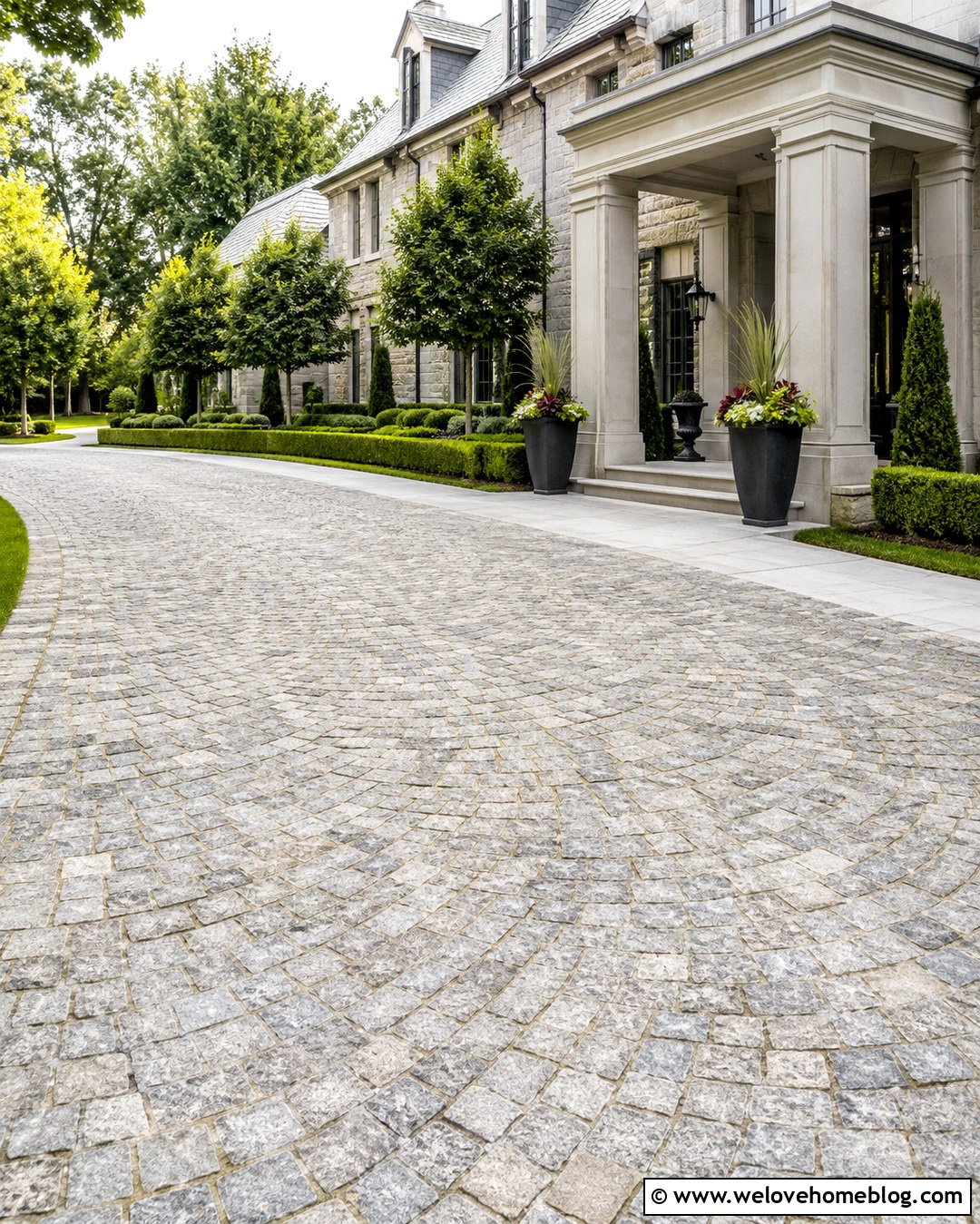
A full cobblestone roundabout driveway creates a substantial entrance that suits an older home or European-inspired residence. Use granite cobbles in blended gray tones to achieve natural color variation. Installing the stones in curved rows helps the pattern follow the loop instead of fighting against it. A cut-stone curb can frame a raised island planted with symmetrical evergreens, white roses, and low boxwood. Consider a broad stone walkway leading directly from the passenger drop-off area to the front steps. Formal trees placed near both driveway entrances provide height without blocking the view of the street. Because cobblestone already has noticeable texture, keep the landscaping controlled and the material palette limited. The finished approach should feel composed, durable, and connected to the architecture.
7. Resin-Bound Roundabout Driveway With Modern Planting
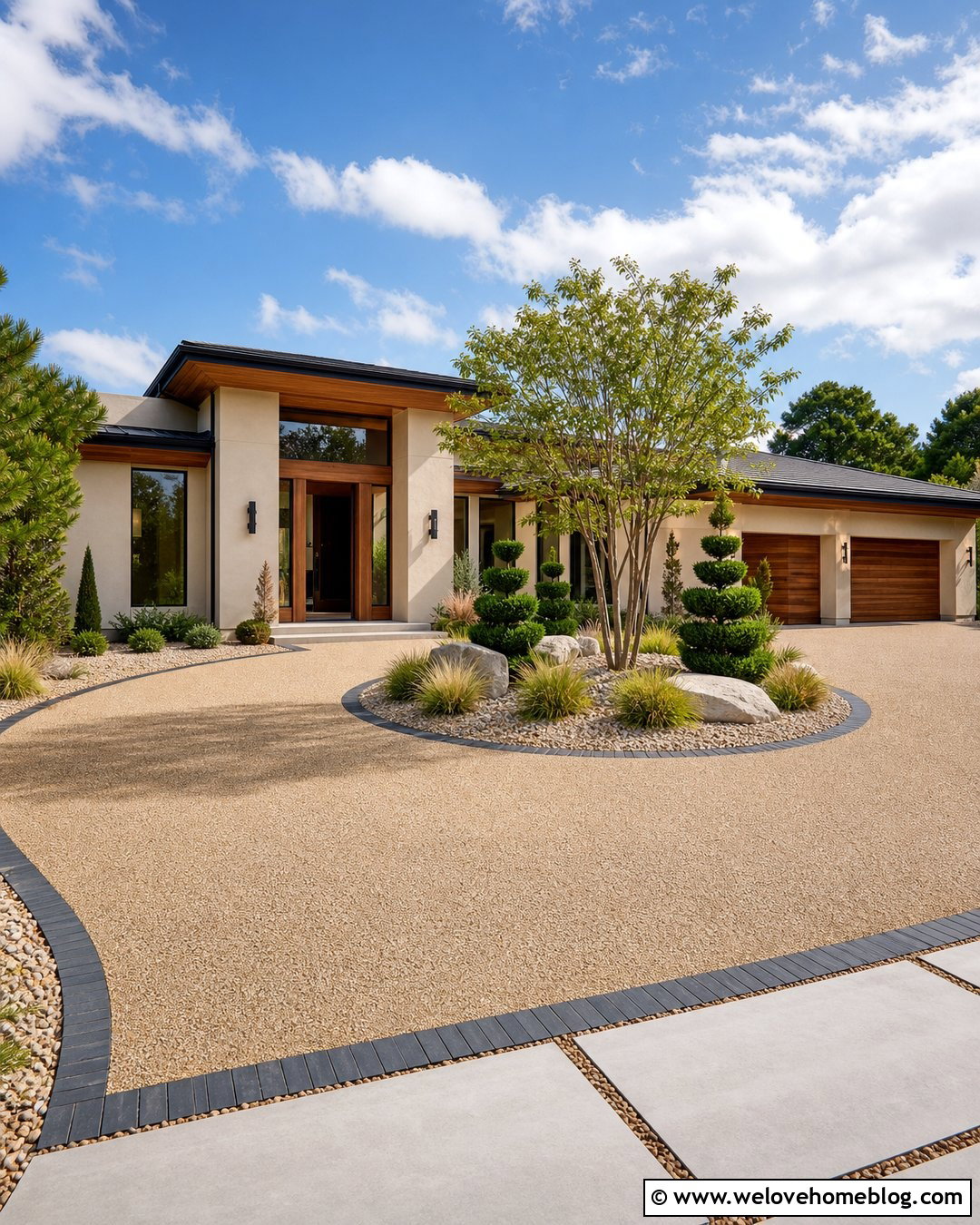
A warm beige resin-bound gravel surface gives a roundabout driveway a seamless finish while retaining the natural appearance of small stone. It pairs beautifully with modern homes that combine stucco, wood, stone, or black-framed windows. Define the curves with narrow charcoal paver borders for sharp contrast. Inside the island, create an understated arrangement of ornamental grasses, sculptural evergreens, and pale gravel mulch. The plants should remain low enough to preserve clear views across the turning area. Large rectangular stepping stones can form a direct route from the drive to the front door. Repeat the same grasses near the house to connect both landscape zones. This design feels polished and modern, but the muted colors prevent the driveway from appearing cold or overly commercial.
8. Exposed Aggregate Roundabout Driveway With Rock Garden
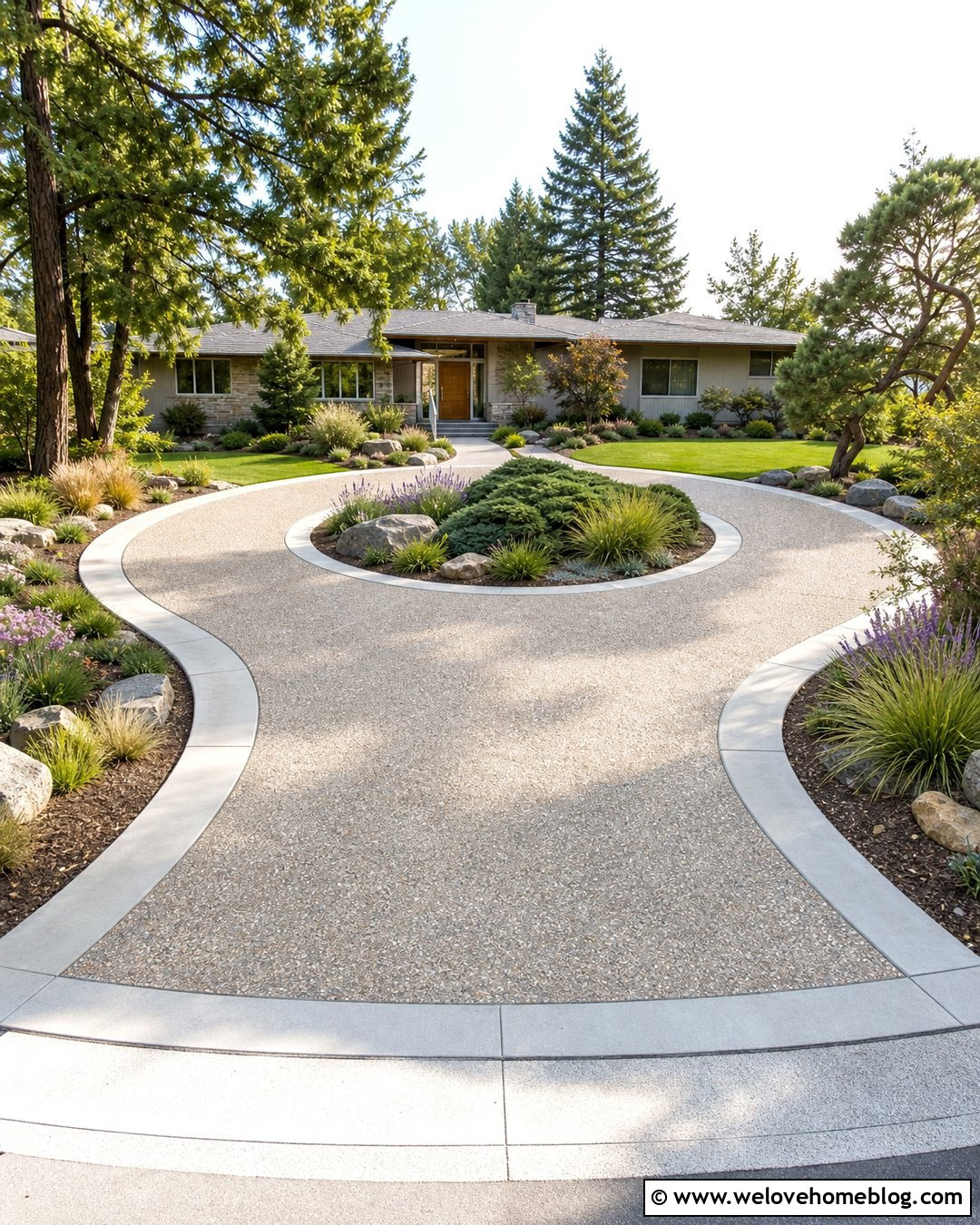
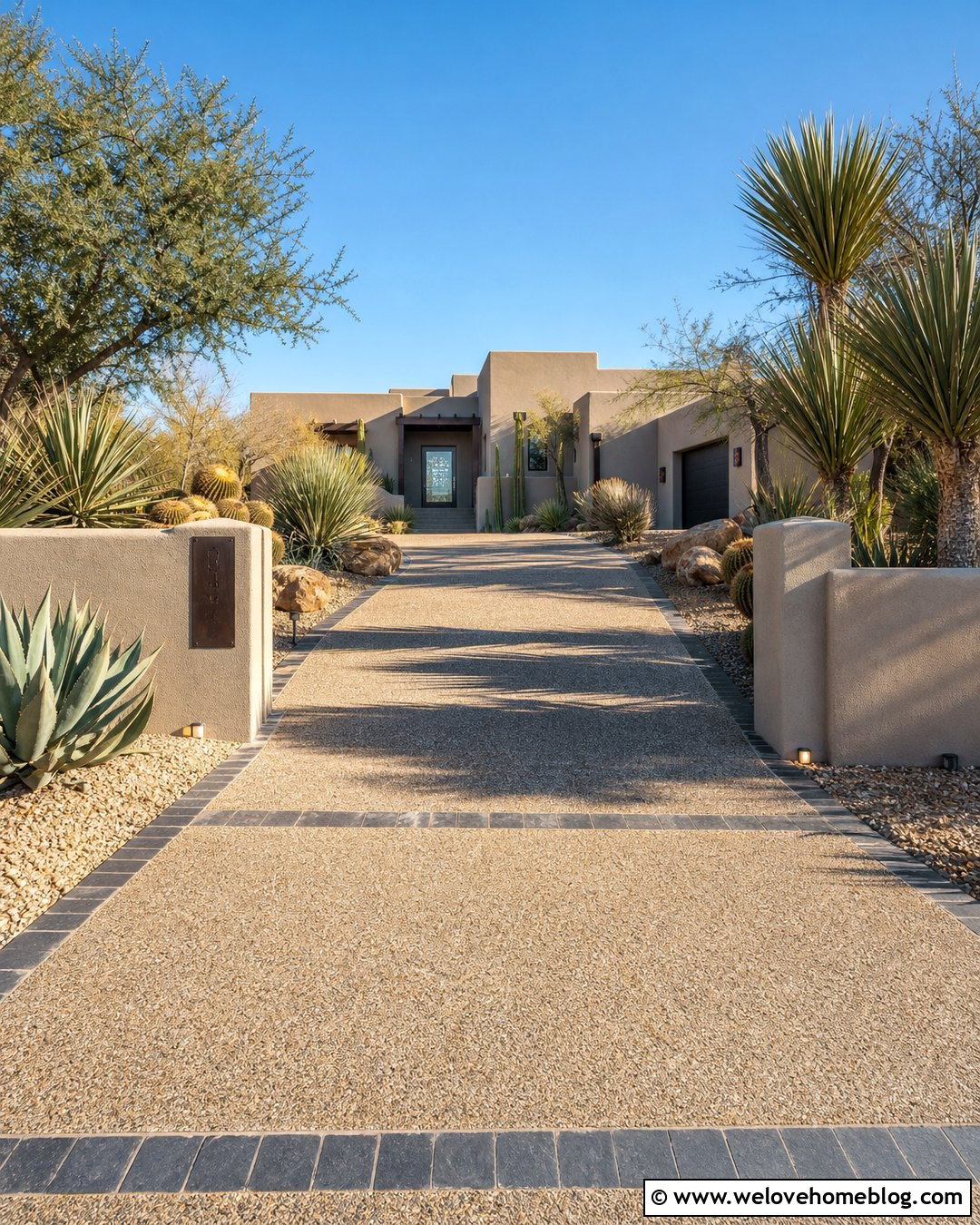
Exposed aggregate concrete introduces subtle stone color and a slip-resistant-looking texture to a broad roundabout driveway. Select an aggregate blend containing tan, cream, and gray pebbles that complements the home’s exterior. Smooth poured-concrete bands can outline the driving lane and create a cleaner edge around the center island. For landscaping, build a low rock garden with ornamental grasses, spreading juniper, hardy flowering perennials, and several carefully placed boulders. Curved planting groups echo the driveway without creating a rigid circle. This complete design works well with ranch, mountain, and mid-century homes. A matching aggregate walkway can branch toward the porch, while regular gray concrete near the garage provides a quiet transition. Keep taller plants away from both street entrances to maintain an open approach.
9. Stamped Concrete Roundabout Driveway With Tree Island
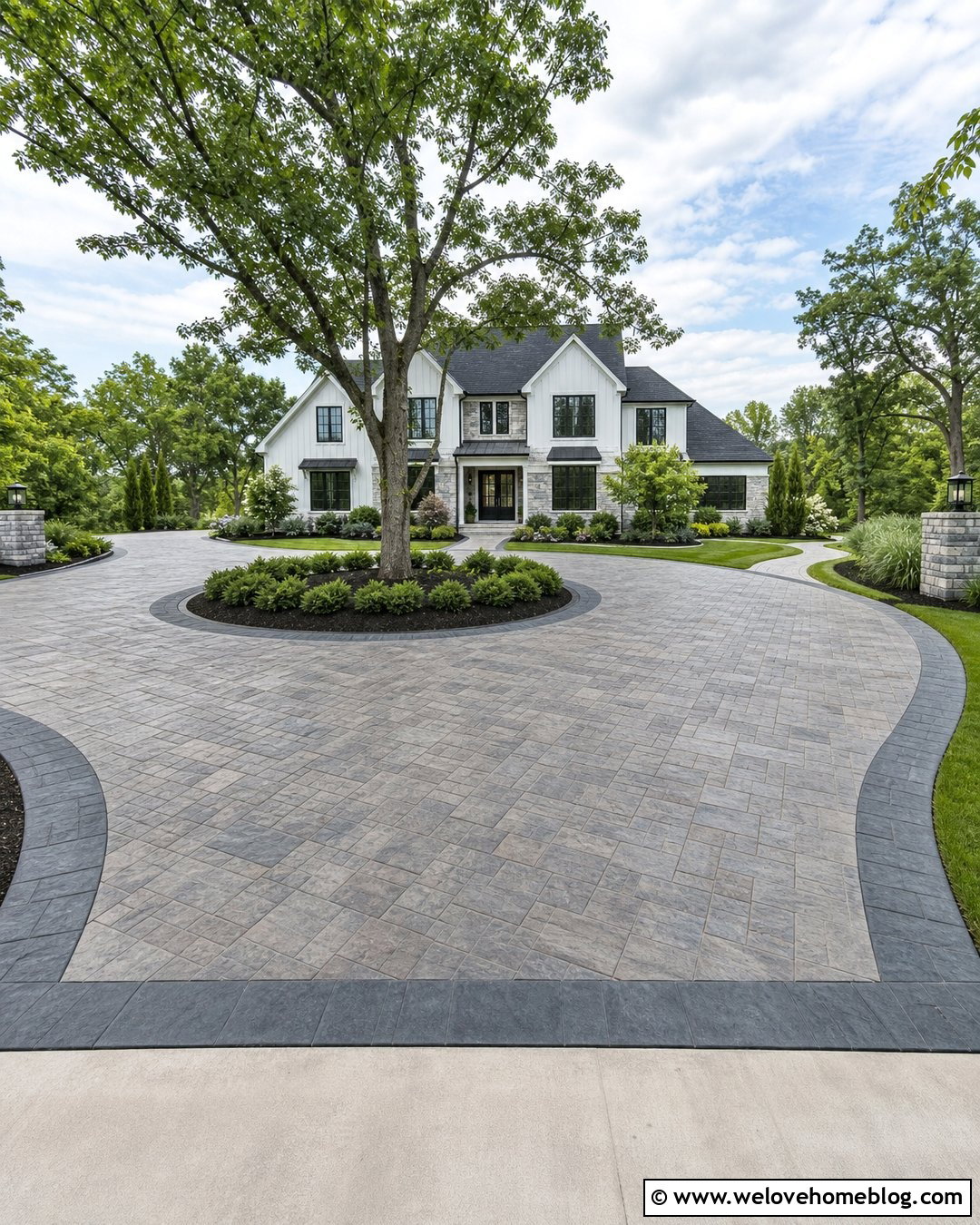
Stamped concrete offers the visual depth of stone while maintaining a continuous roundabout surface. A slate-style pattern in blended gray and taupe tones works with many exterior colors. Use a darker stamped border to trace the curves and visually narrow the large paved area. The central island can feature one specimen tree surrounded by low shrubs and a generous ring of mulch. Choose a tree with an attractive canopy and a mature size that fits the island without crowding the driveway. A curved walkway in the same stamped finish can lead toward the porch. To avoid an artificial appearance, select restrained colors and a pattern scaled appropriately for the driveway. Natural planting around the home will help balance the highly finished paving.
10. Permeable Paver Roundabout Driveway With Rain Garden
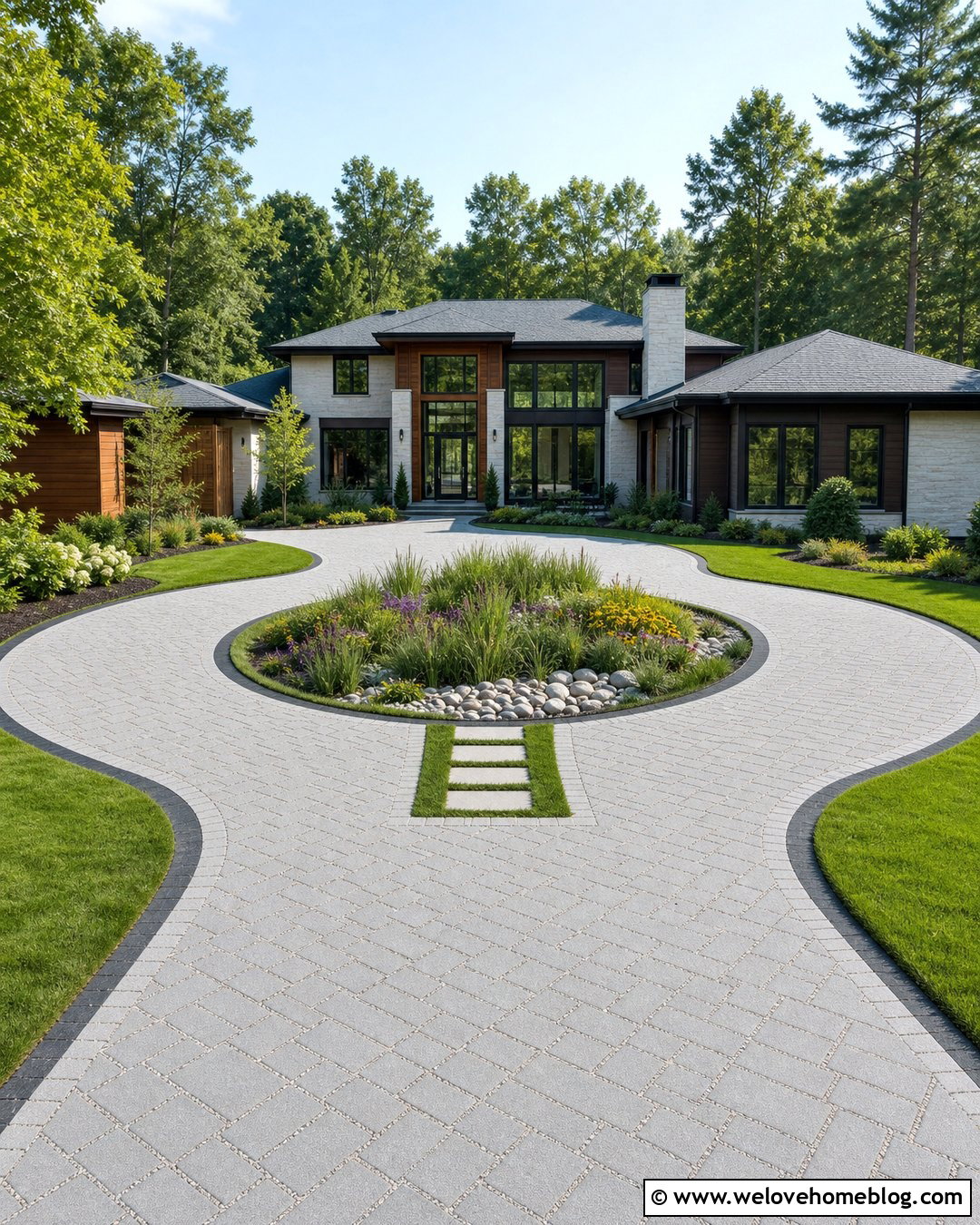
Permeable pavers create a practical roundabout driveway with visible joints that add texture to the surface. Choose gray grid-style concrete pavers filled with small gravel for a contemporary look, or use permeable interlocking pavers for a more traditional home. Turn the center island into a shallow rain garden filled with moisture-tolerant grasses, flowering perennials, and smooth river stone. The planted depression can look intentional when its shape follows the driveway loop. Dark stone edging gives the inner curve a neat boundary without forming a tall barrier. Add stepping stones between the drop-off zone and front walkway so visitors have a direct route. This complete design combines useful circulation, greenery, and a softer alternative to one uninterrupted expanse of paving.
11. Farmhouse Roundabout Driveway With White Fence
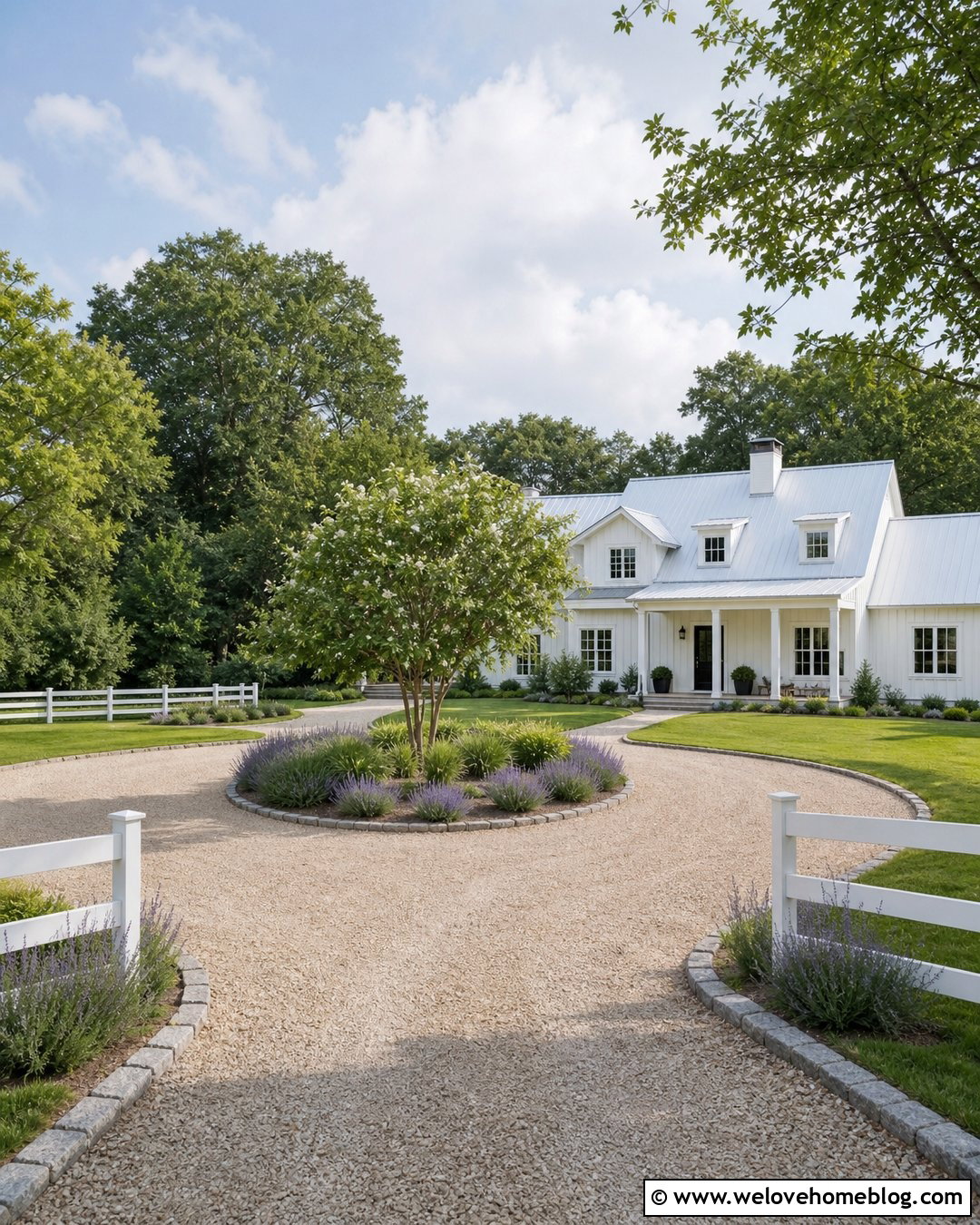
A farmhouse roundabout driveway looks natural with buff-colored crushed gravel, a broad grass island, and sections of white post-and-rail fencing. Keep the fence near the outer landscape rather than directly along tight curves, leaving an open and comfortable driving area. Edge the gravel with weathered granite blocks or dark steel to control spreading. In the island, plant a small flowering tree with drifts of lavender, catmint, and ornamental grass. A wide flagstone walkway can connect the passenger drop-off point to a covered porch. Repeat the same stone around the foundation and entrance steps for consistency. This design feels informal but organized, making it suitable for both renovated rural properties and newer modern farmhouses with large front lawns.
12. Modern Roundabout Driveway With Minimal Landscaping
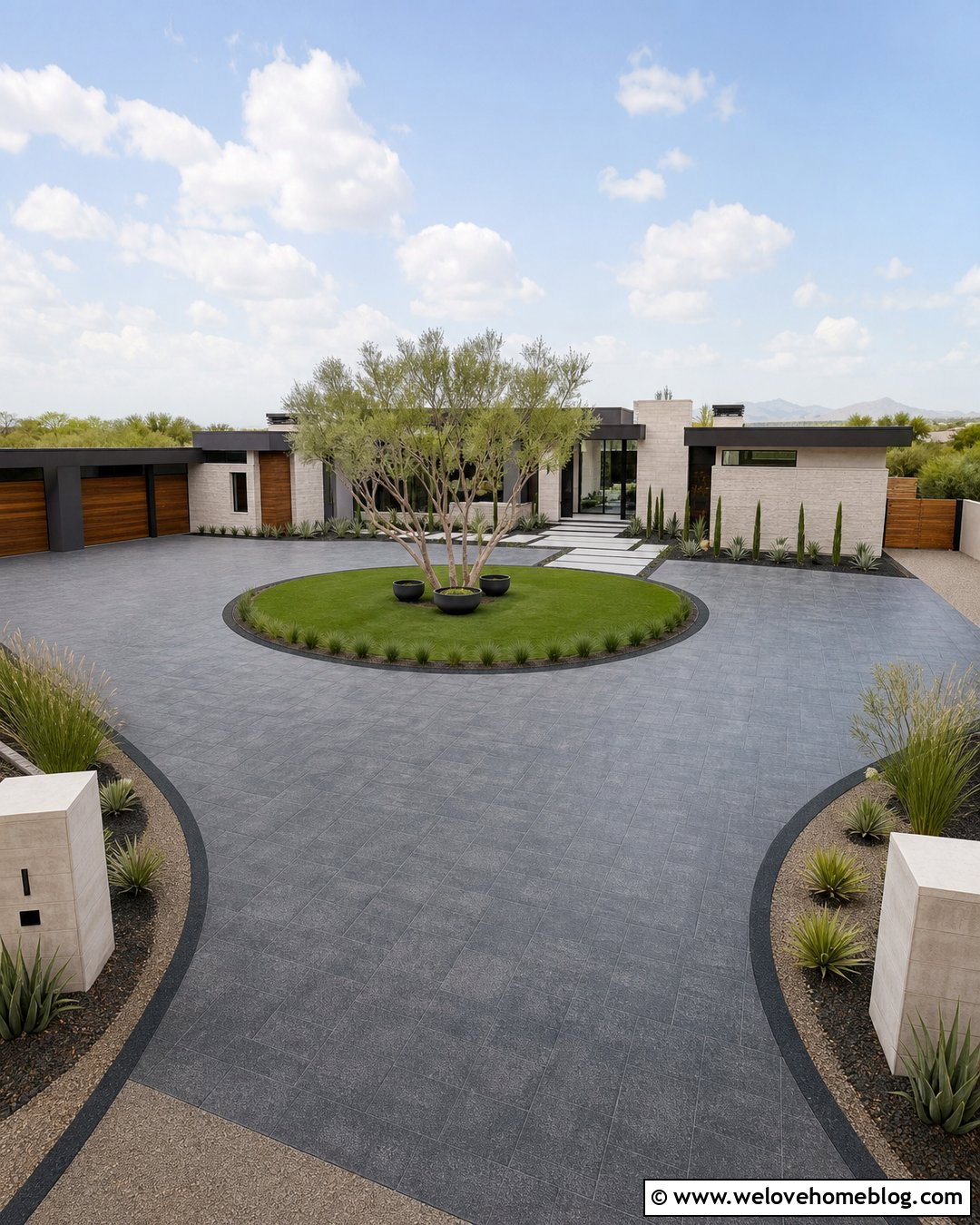
Clean geometry makes a modern roundabout driveway feel deliberate rather than decorative. Use smooth charcoal concrete pavers in a large rectangular format, laid in curved bands that guide vehicles around the island. A narrow black stone border can sharpen the inner and outer edges. Keep the center simple with a level lawn, one sculptural multi-stem tree, and a limited bed of ornamental grasses. Avoid filling every open area with plants. The negative space is part of the design. A straight walkway made from oversized concrete slabs should cross the landscape toward a flat-roofed or modern gabled home. Low linear lighting, dark metal planters, and matching garage paving complete the approach. The result is streamlined, functional, and visually connected to the architecture.
13. Colonial Roundabout Driveway With Symmetrical Planting
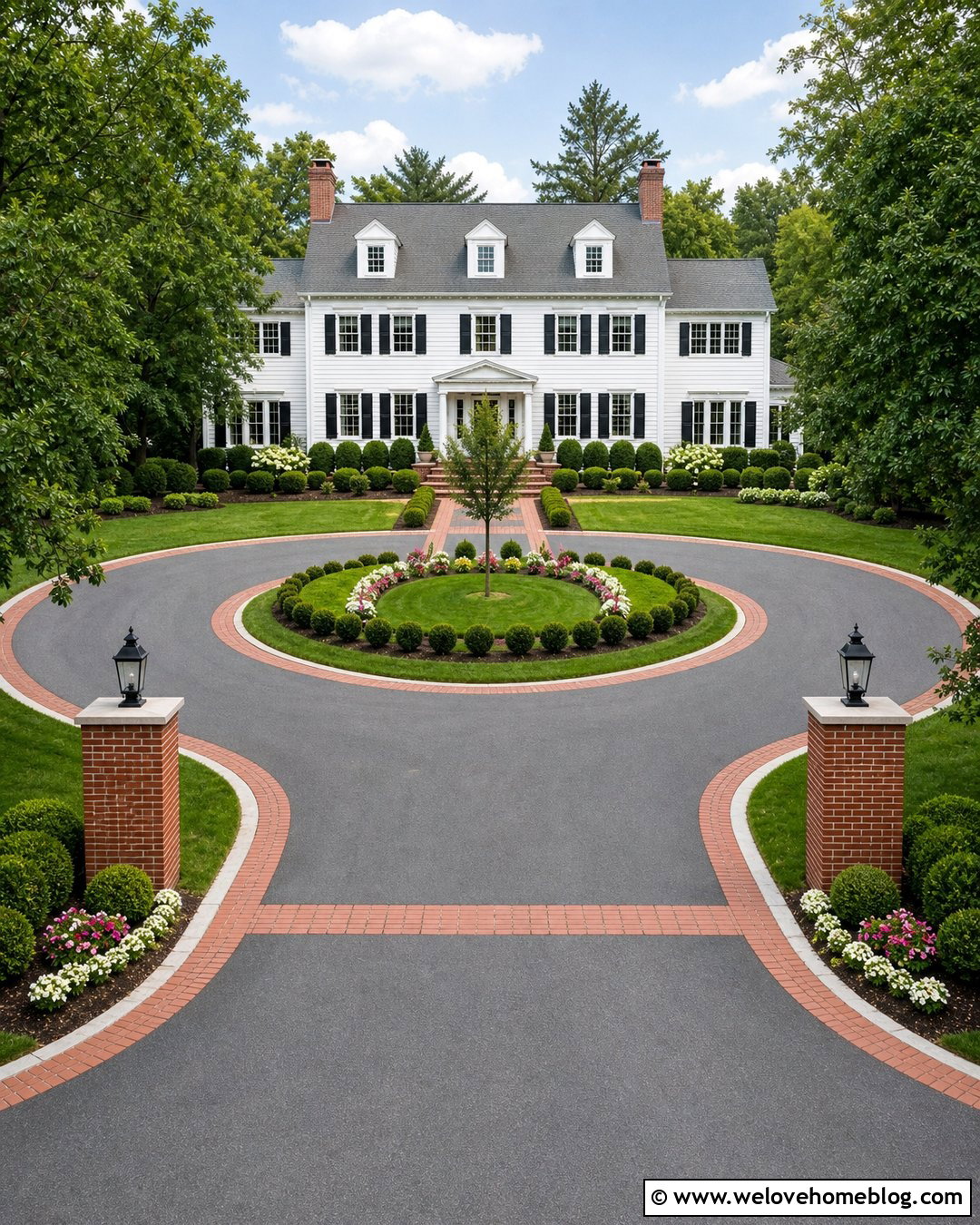
Symmetry helps a roundabout driveway complement the balanced facade of a Colonial home. Begin with a medium-gray asphalt or concrete surface framed by red brick paver ribbons. Place matching brick entrance pillars at the two street connections to establish a clear sense of arrival. The central lawn island can hold one upright tree surrounded by an even ring of boxwood and seasonal flowers. On both sides of the house, repeat matching foundation shrubs and small ornamental trees. A straight brick walkway should align with the front door and connect cleanly to the closest part of the drive. Keep plant heights consistent so the entrance remains formal but welcoming. This coordinated layout makes the circular traffic pattern feel like a natural extension of the home’s architecture.
14. Ranch House Roundabout Driveway With Native Plants
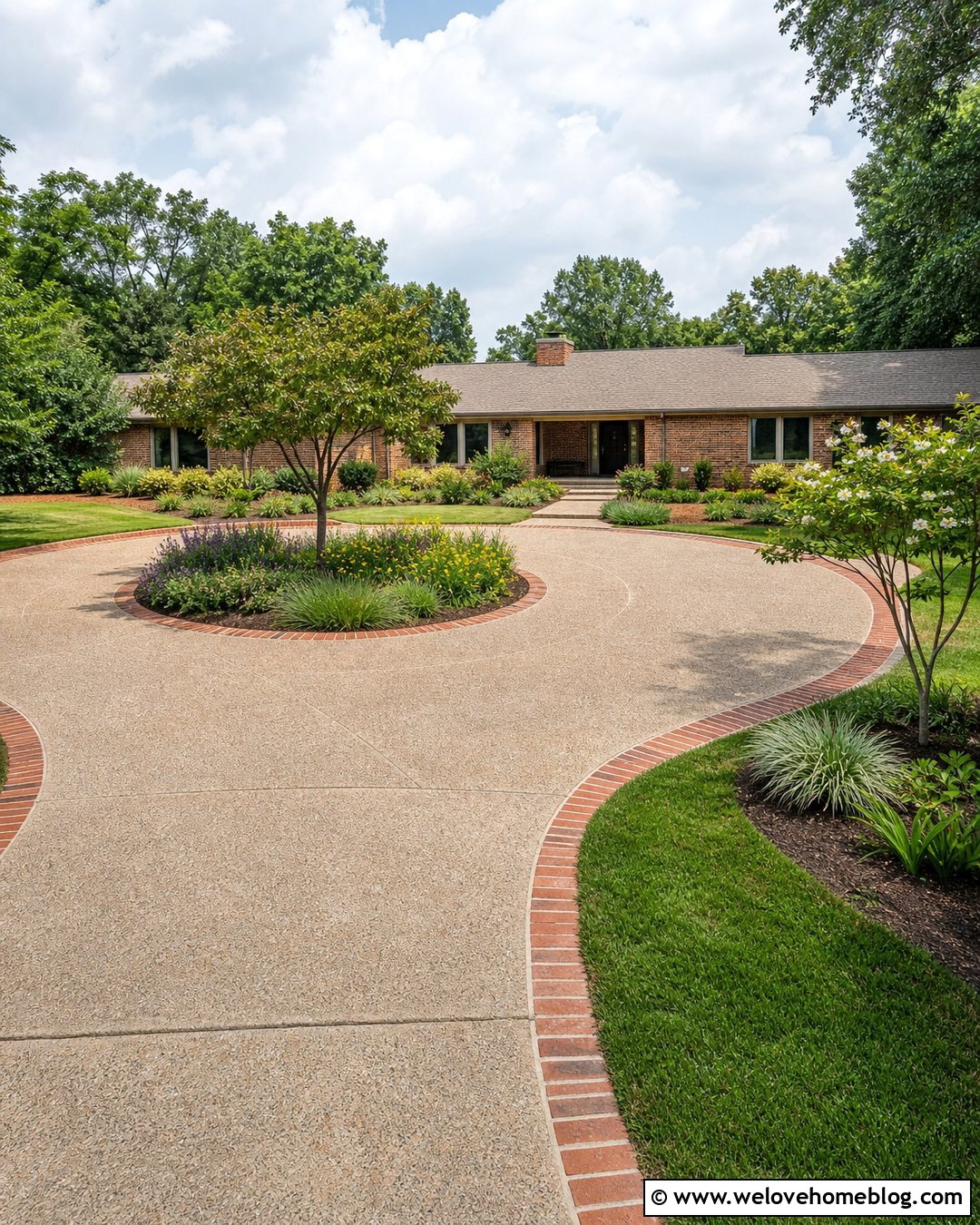
A low, sweeping roundabout driveway can emphasize the horizontal shape of a ranch house. Use exposed aggregate concrete in warm earth tones and outline it with a simple flush brick border. Rather than creating a tall island centerpiece, fill the center with layered native grasses, flowering perennials, and one small spreading tree. Their relaxed forms soften the paved curve while maintaining the home’s open character. Extend similar planting beds toward the facade to connect the island with the rest of the yard. A broad concrete-slab walkway can lead from the drop-off area to the front entrance. Keep the outer side mostly lawn to prevent the front yard from becoming crowded. This design feels spacious, practical, and appropriate for a wide suburban lot.
15. Mediterranean Roundabout Driveway With Olive Tree
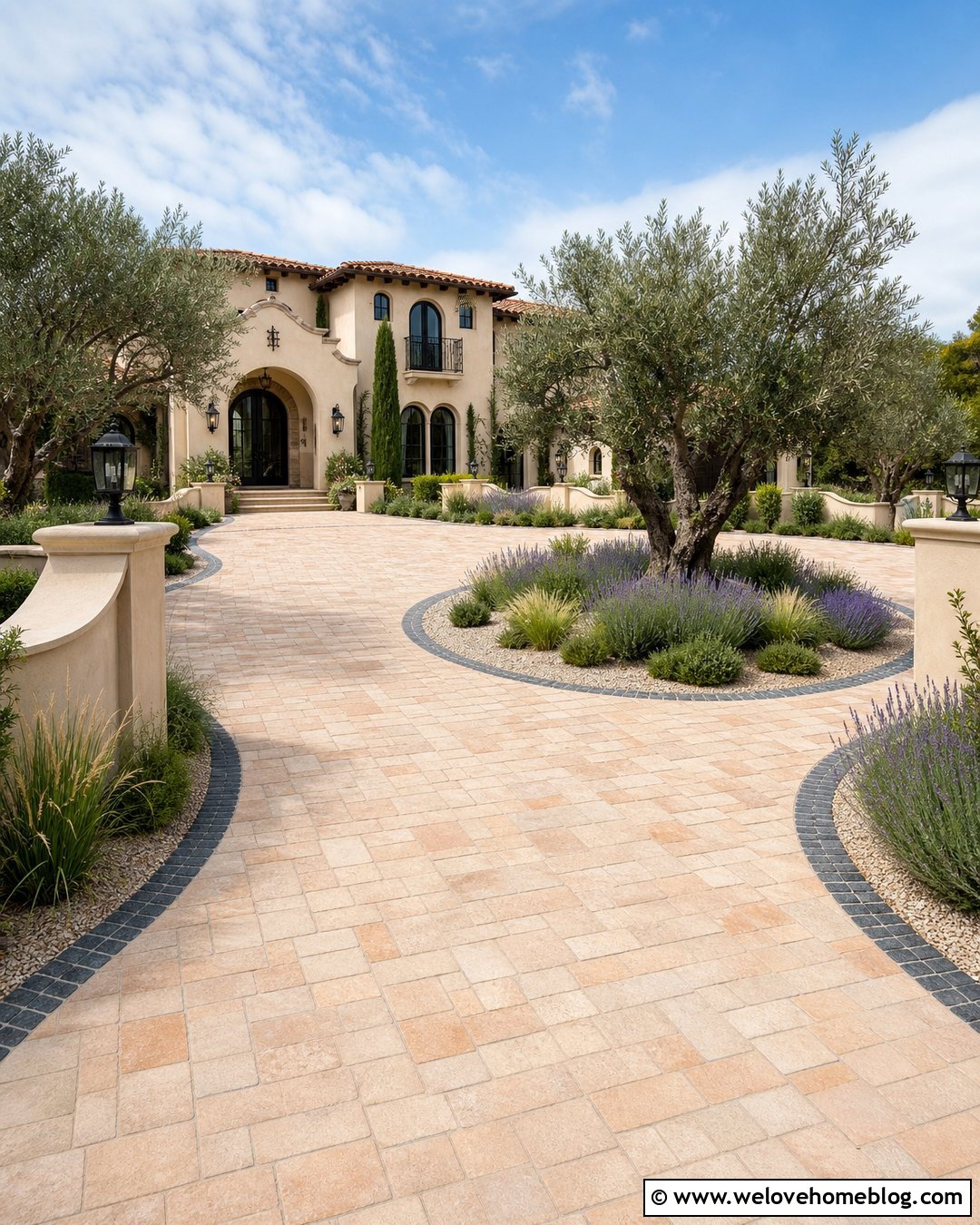
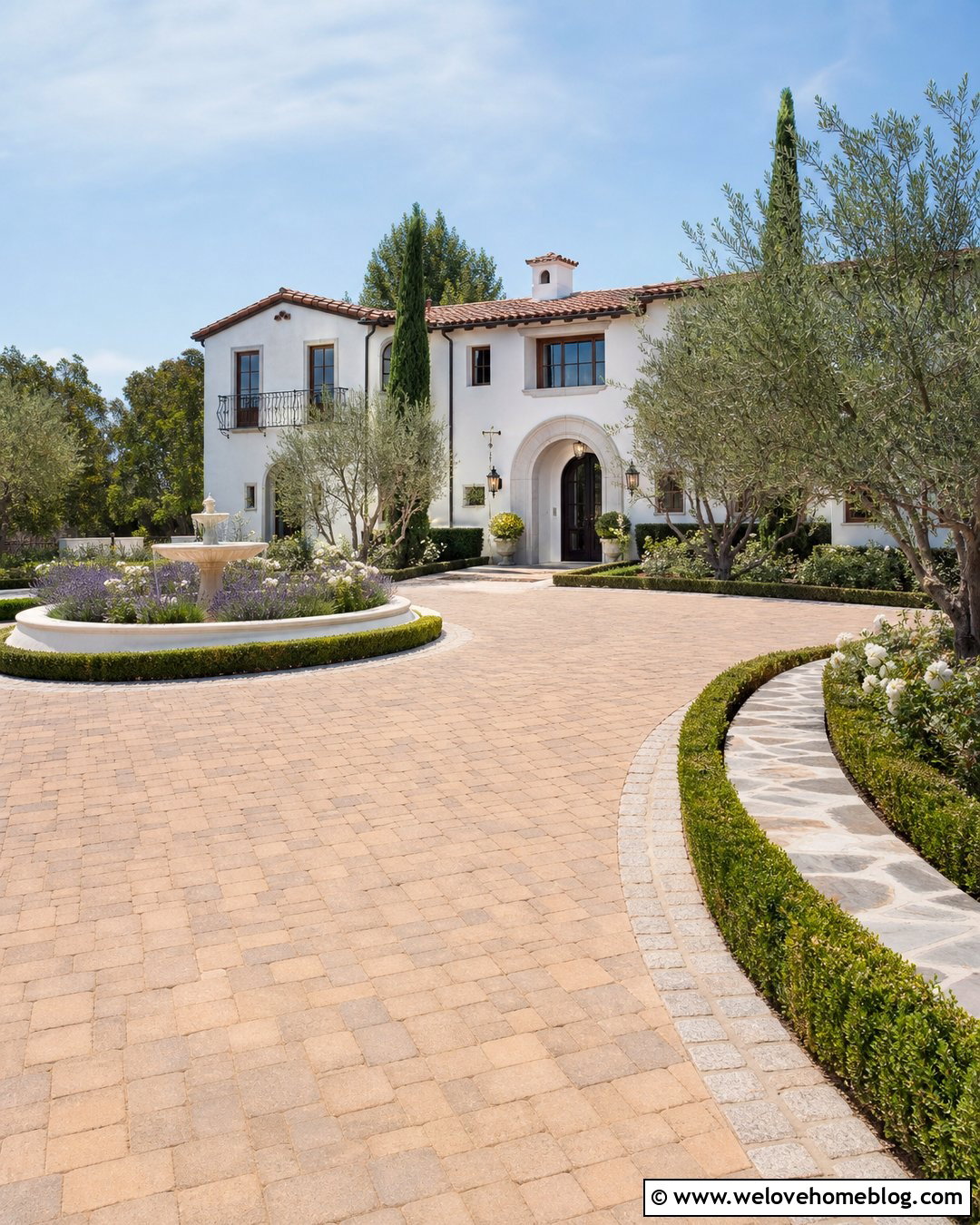
Warm-toned paving and drought-conscious landscaping give a Mediterranean roundabout driveway a strong sense of place. Use tumbled concrete pavers or travertine-style pavers in cream, sand, and pale terracotta tones. A darker cobblestone border can define the loop and coordinate with iron gates or lanterns. Plant the center island with a sculptural olive tree, clipped rosemary, lavender, and low ornamental grasses set in light gravel mulch. Curved stucco walls near the driveway entrances can echo the home’s facade without closing off street views. Continue the pavers onto a wide walkway leading toward an arched entry. The repeated colors, textured planting, and circular layout create a complete design that feels warm and established without relying on dense, water-demanding lawn.
16. Craftsman Roundabout Driveway With Mixed Pavers
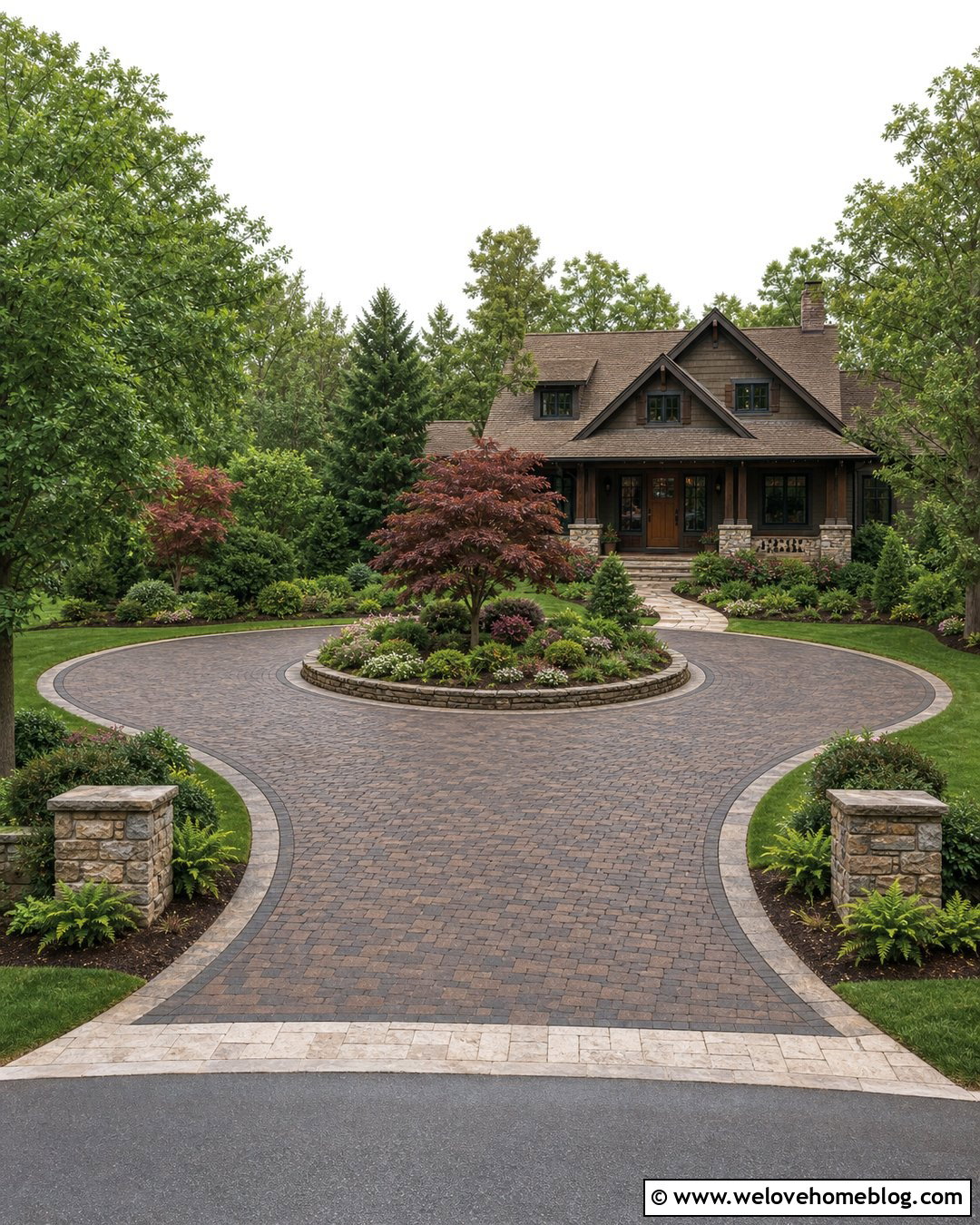
A Craftsman home benefits from a roundabout driveway that combines practical materials with handcrafted-looking details. Use brown and charcoal concrete pavers in a subtle blended pattern, then create broad stone ribbons at the entrances and passenger drop-off zone. A low fieldstone curb can frame the center island and match porch columns or foundation masonry. Plant the island with a Japanese maple, spreading evergreen shrubs, ferns, and seasonal ground cover. Keep the arrangement asymmetrical but balanced to suit the home’s natural character. A flagstone walkway with generous joints can lead toward the porch steps. Extend the same shrubs into foundation beds so the island does not appear isolated. Earthy colors and varied textures give the complete approach depth without overwhelming the architecture.
17. Small Roundabout Driveway With Compact Island
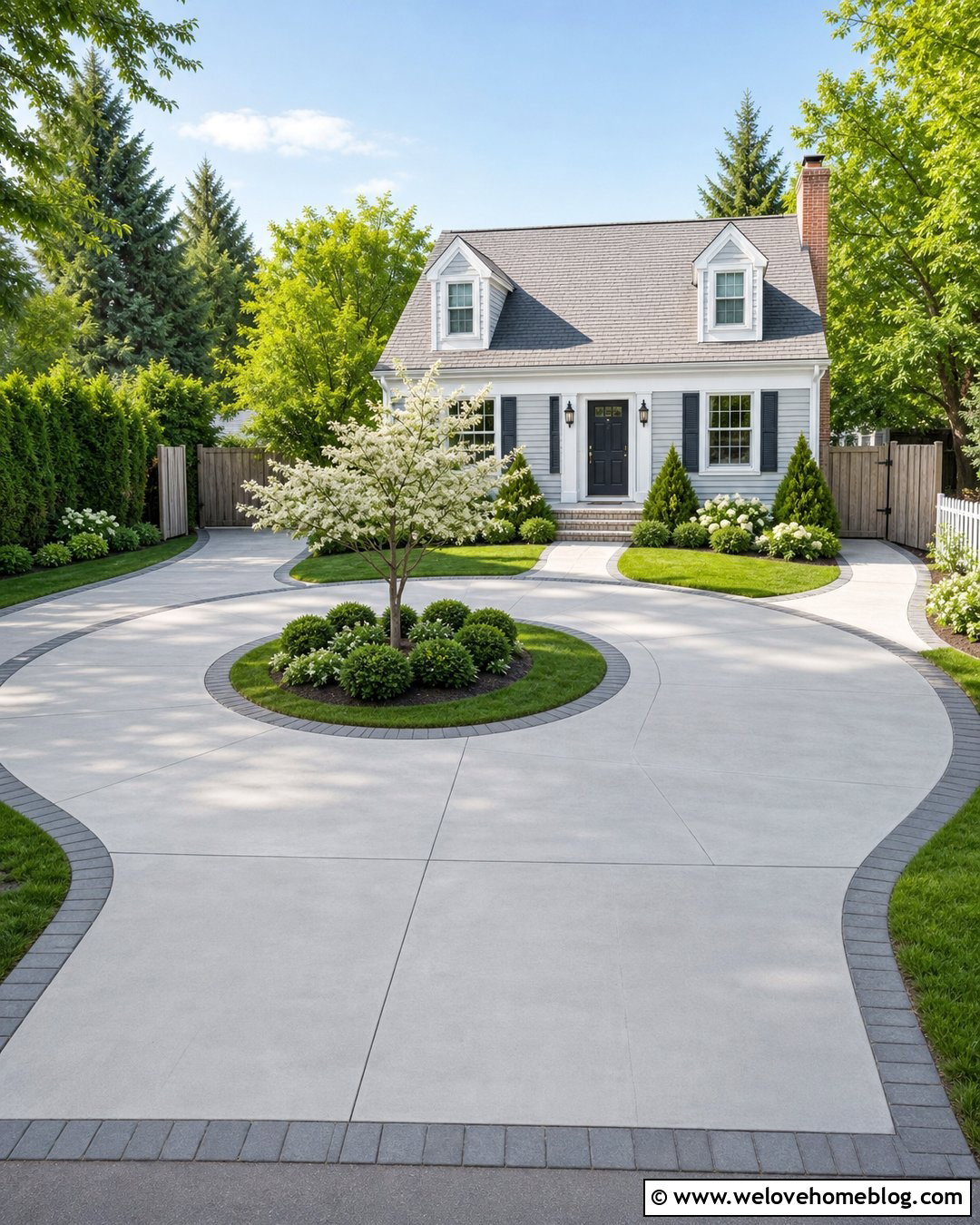
A small front yard may still accommodate a roundabout driveway when the island and driving lane are carefully proportioned. Use smooth light-gray concrete to prevent the compact space from appearing visually cluttered. Outline the inner curve with a single row of charcoal pavers, then keep the island low and simple. A neatly trimmed lawn circle, dwarf ornamental tree, or bed of spreading ground cover can provide a focal point without obstructing visibility. Avoid large boulders, fountains, and oversized shrubs. Place the walkway near the natural passenger drop-off area and use the same concrete finish for continuity. Narrow planting beds along the house can hold compact evergreens and flowering perennials. The restrained design provides convenient circulation while preserving a noticeable amount of green space.
18. Large Roundabout Driveway With Estate Landscaping
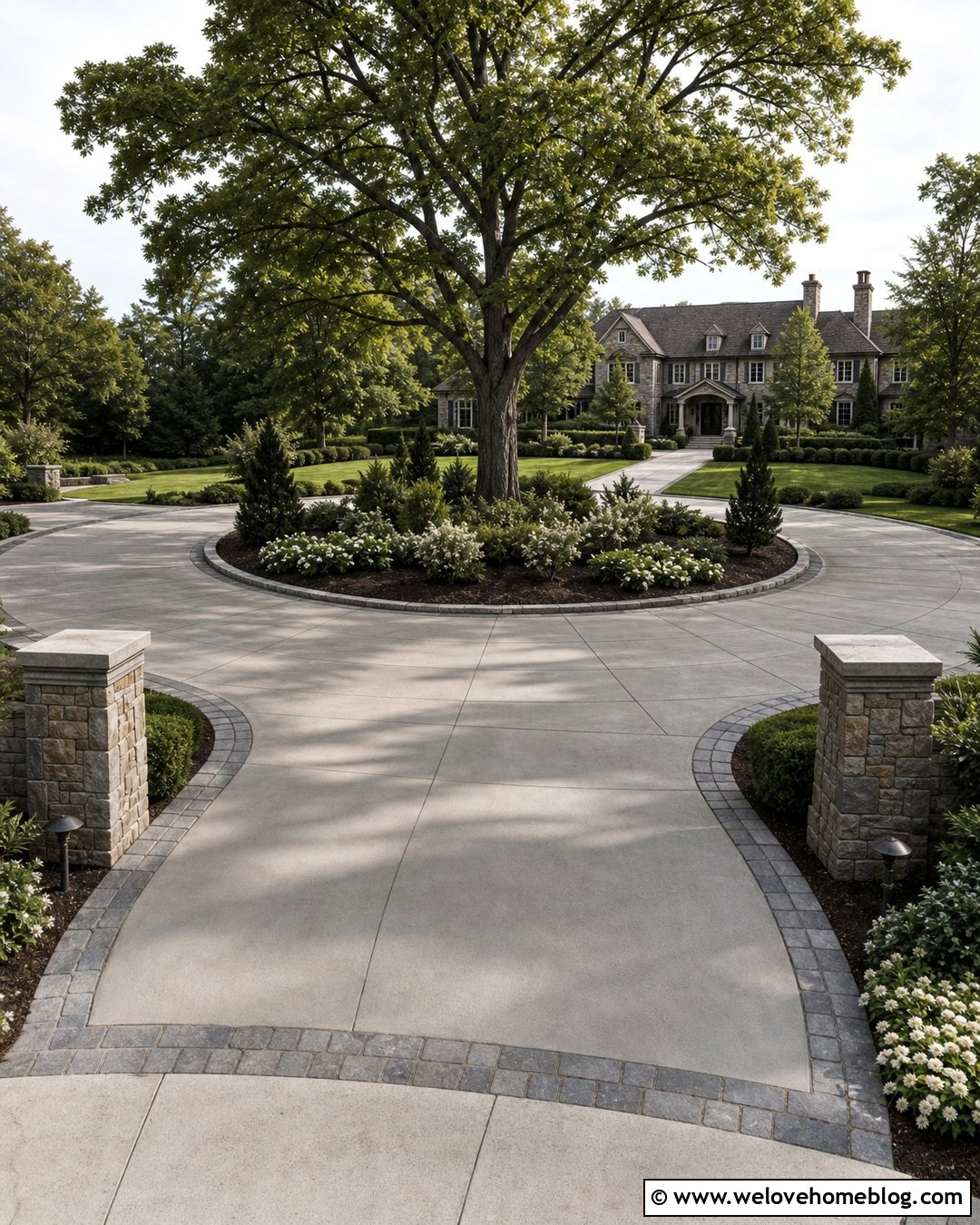
An expansive roundabout driveway needs strong proportions so it does not resemble an empty paved lot. Choose large-format concrete pavers in warm gray, arranged in sweeping curved rows. Define the island with a substantial natural stone curb and create layered landscaping around a mature specimen tree. Use evergreen structure, flowering shrubs, ground cover, and open mulch areas rather than packing the circle with unrelated plants. At the outer edges, broad lawn panels and evenly spaced trees can frame the approach to the house. Stone pillars at each entrance establish scale, while a generous walkway connects the drop-off zone to the front steps. Repeating the home’s masonry in the curbs, pillars, and walkway helps every part of this large design feel connected.
19. Oval Roundabout Driveway With Long Center Garden
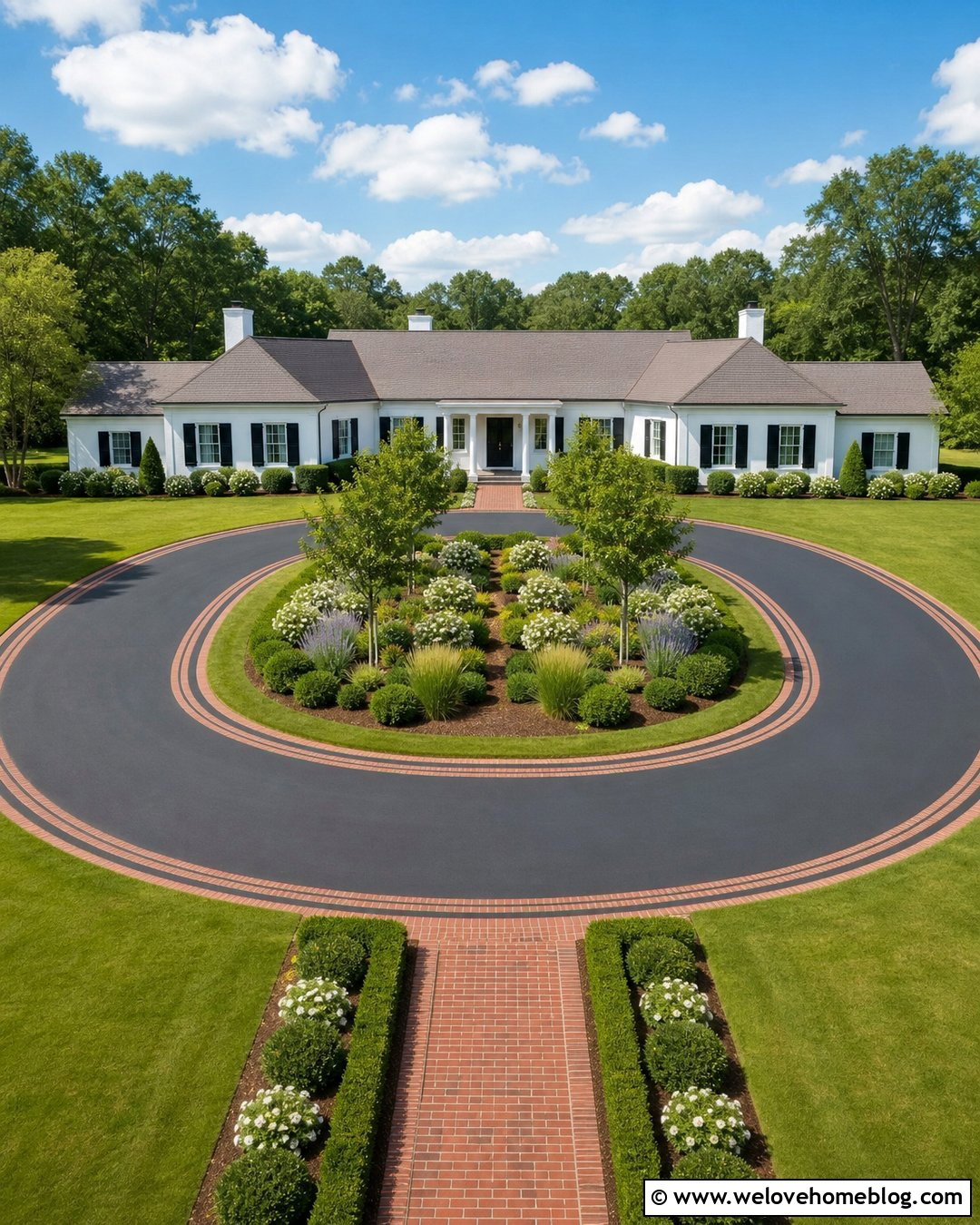
An oval roundabout driveway fits a wide rectangular front yard while creating a longer landscape focal point than a perfect circle. Use black asphalt for the driving surface and add a double brick ribbon along the elongated island. Inside, arrange several small ornamental trees through the center rather than relying on one large specimen. Connect them with sweeps of low shrubs, flowering perennials, and ornamental grasses. The planting should emphasize the island’s length without forming a solid hedge. At the house, a straight brick walkway can meet the closest side of the oval and continue toward the front door. Broad lawn areas on the outside maintain breathing room. This layout works especially well for long traditional, ranch, and symmetrical two-story homes.
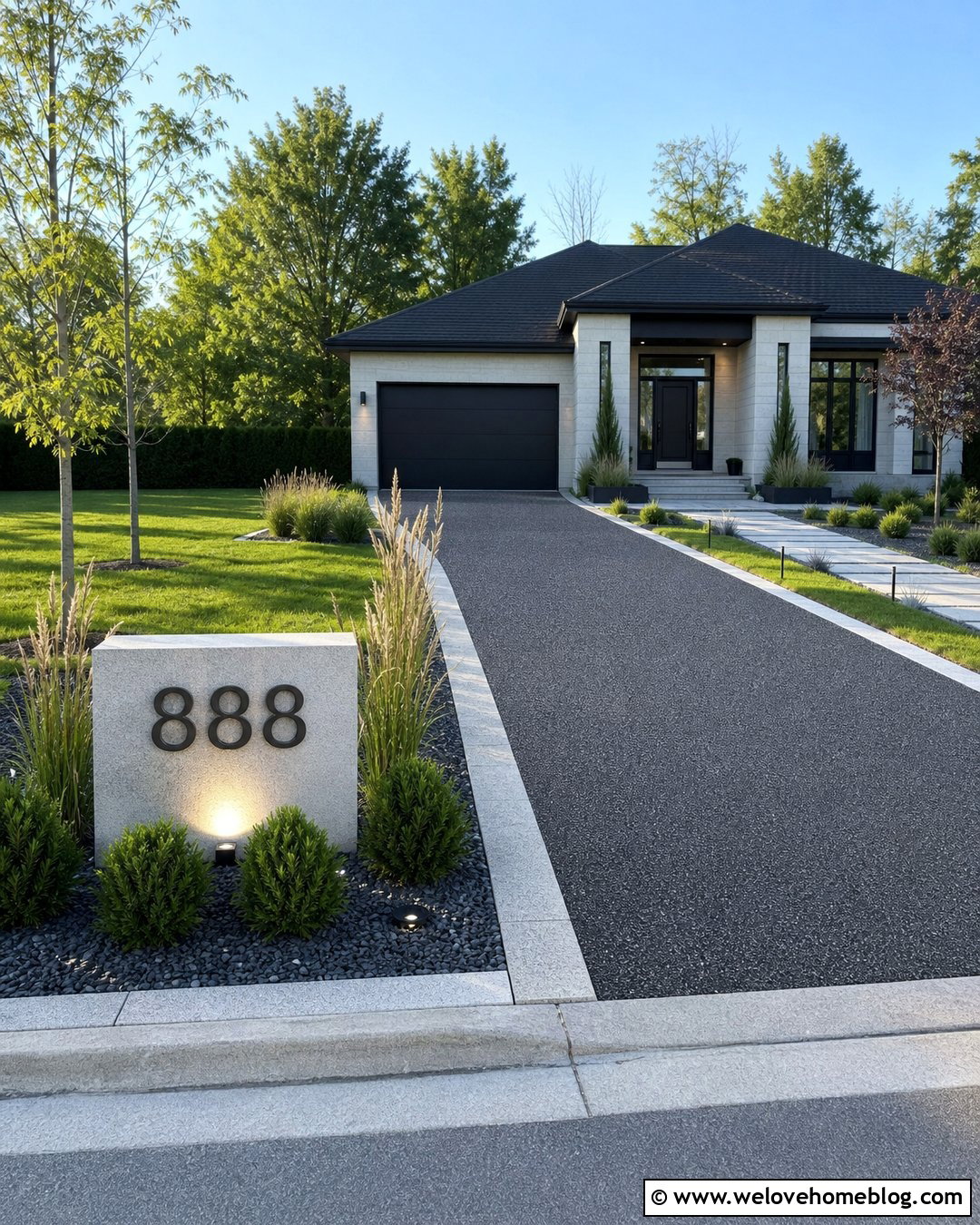
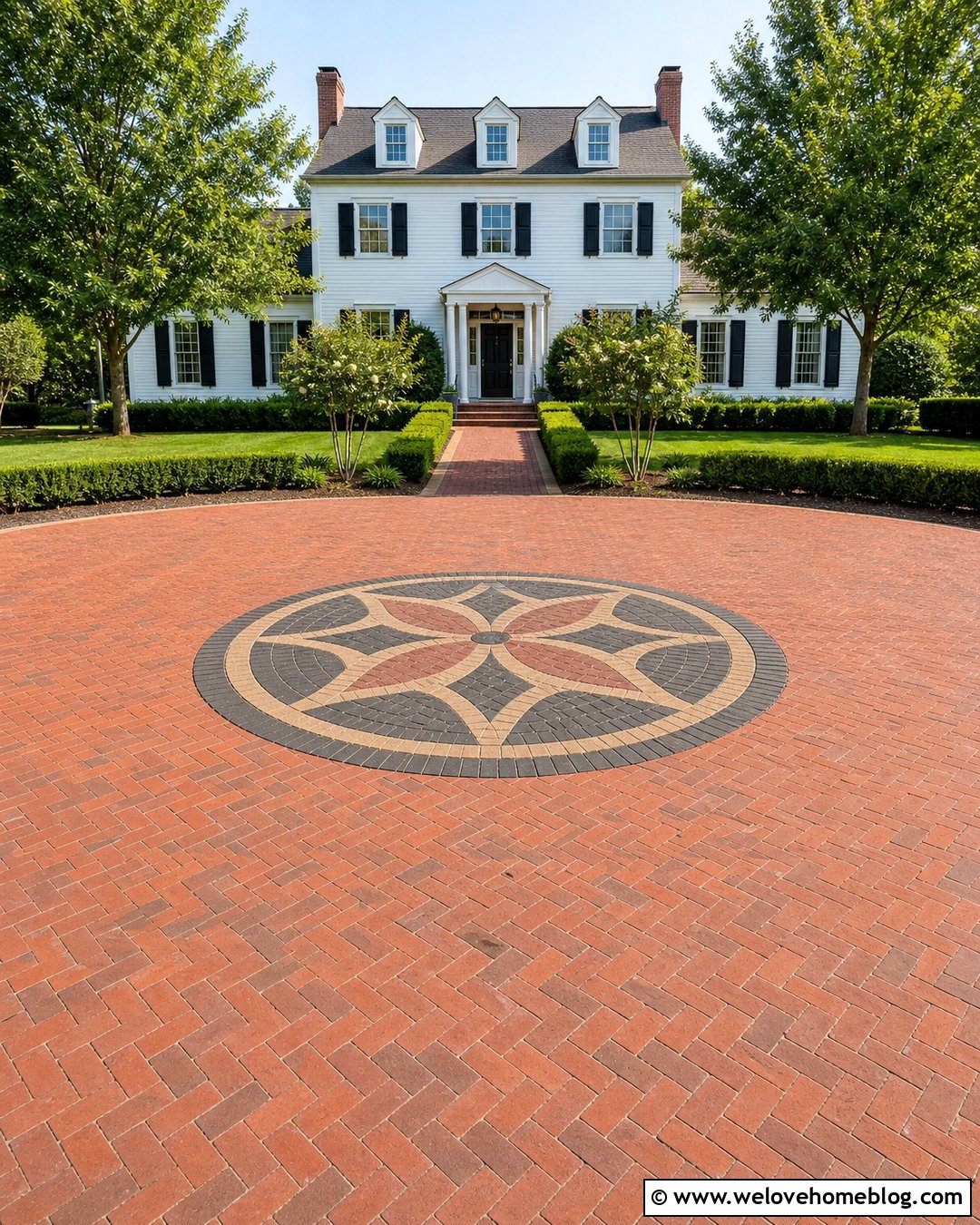
20. Teardrop Roundabout Driveway With Flower Bed
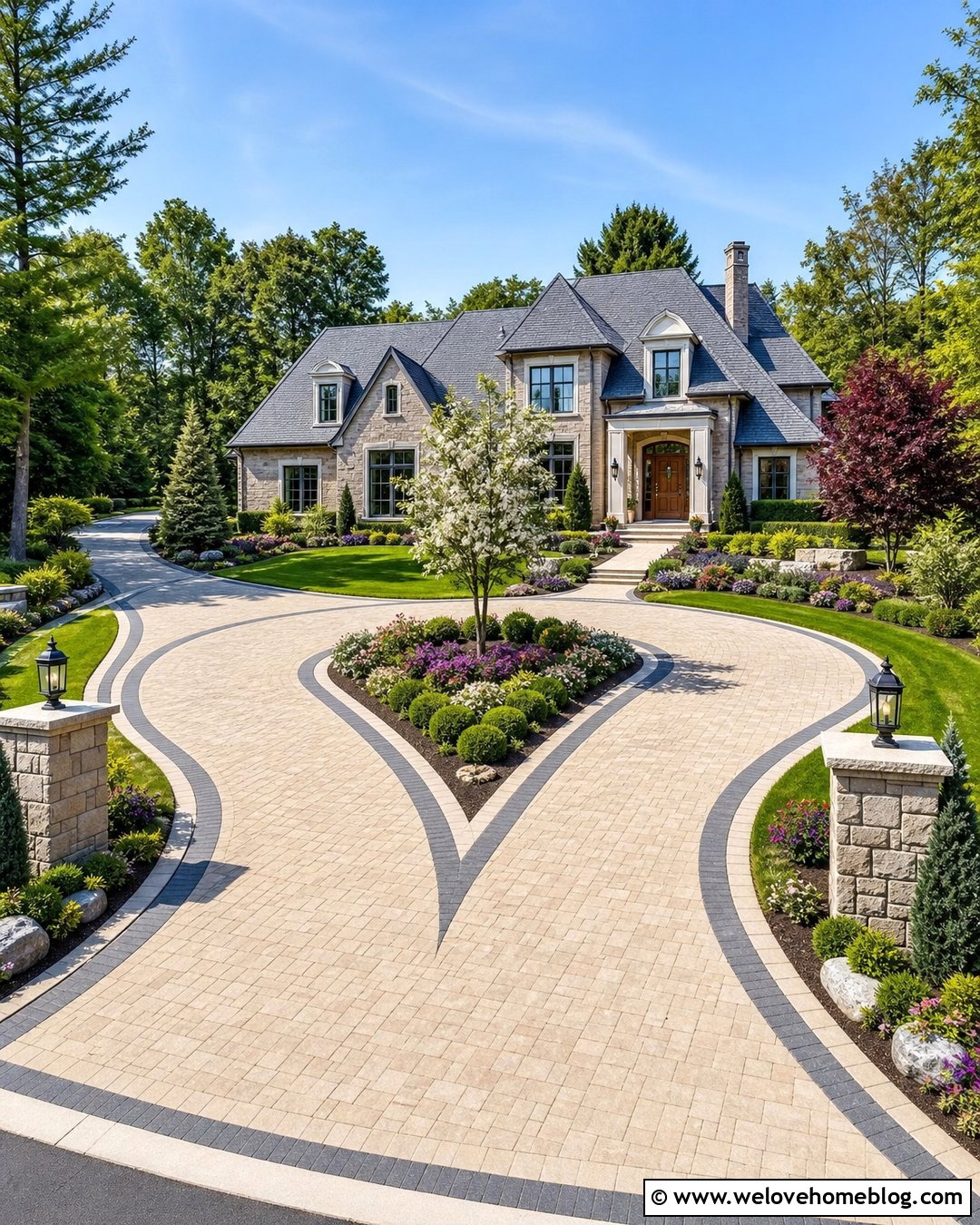
A teardrop-shaped roundabout driveway creates circular vehicle flow while directing attention toward the front entrance. Form the surface with light tan concrete pavers and use darker pavers to outline the pointed end of the island. Position that narrow end toward the house so it visually guides visitors to a connecting walkway. Fill the wider portion with a small flowering tree, evergreen shrubs, and curved sweeps of long-blooming perennials. Keep flowers slightly back from the curb to protect them from tires and foot traffic. A low stone edge will give the garden a finished appearance. This layout suits properties where the house is offset from the driveway entrance. The combination of directional geometry, layered planting, and coordinated paving makes the entire front approach easier to understand.
21. Horseshoe Roundabout Driveway With Open Lawn
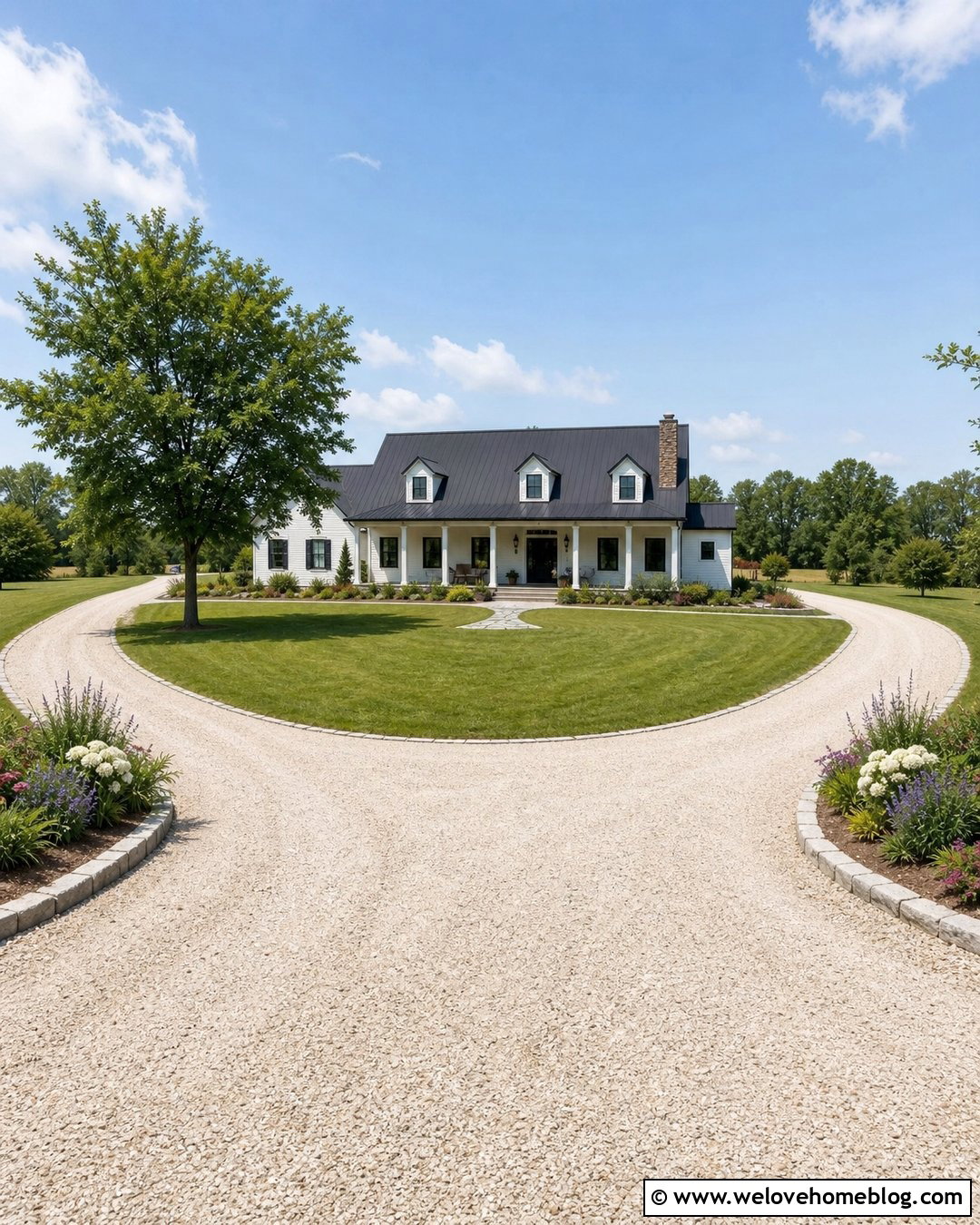
A horseshoe roundabout driveway provides two street connections while leaving the central lawn visually connected to the house. Unlike a fully enclosed circle, this layout uses a broad U-shaped curve with an open side near the front facade. Pale crushed limestone creates a casual surface, while a brick or granite edge gives the curve needed definition. Plant the center mainly with lawn and place one shade tree away from the primary view of the entrance. Low flower beds can follow the inside corners without closing the open space. A short walkway links the closest driveway point to the porch. This arrangement works well for country homes and wide suburban lots because it offers convenient movement without placing a large garden feature directly in front of the house.
22. Curved Roundabout Driveway Around Mature Trees
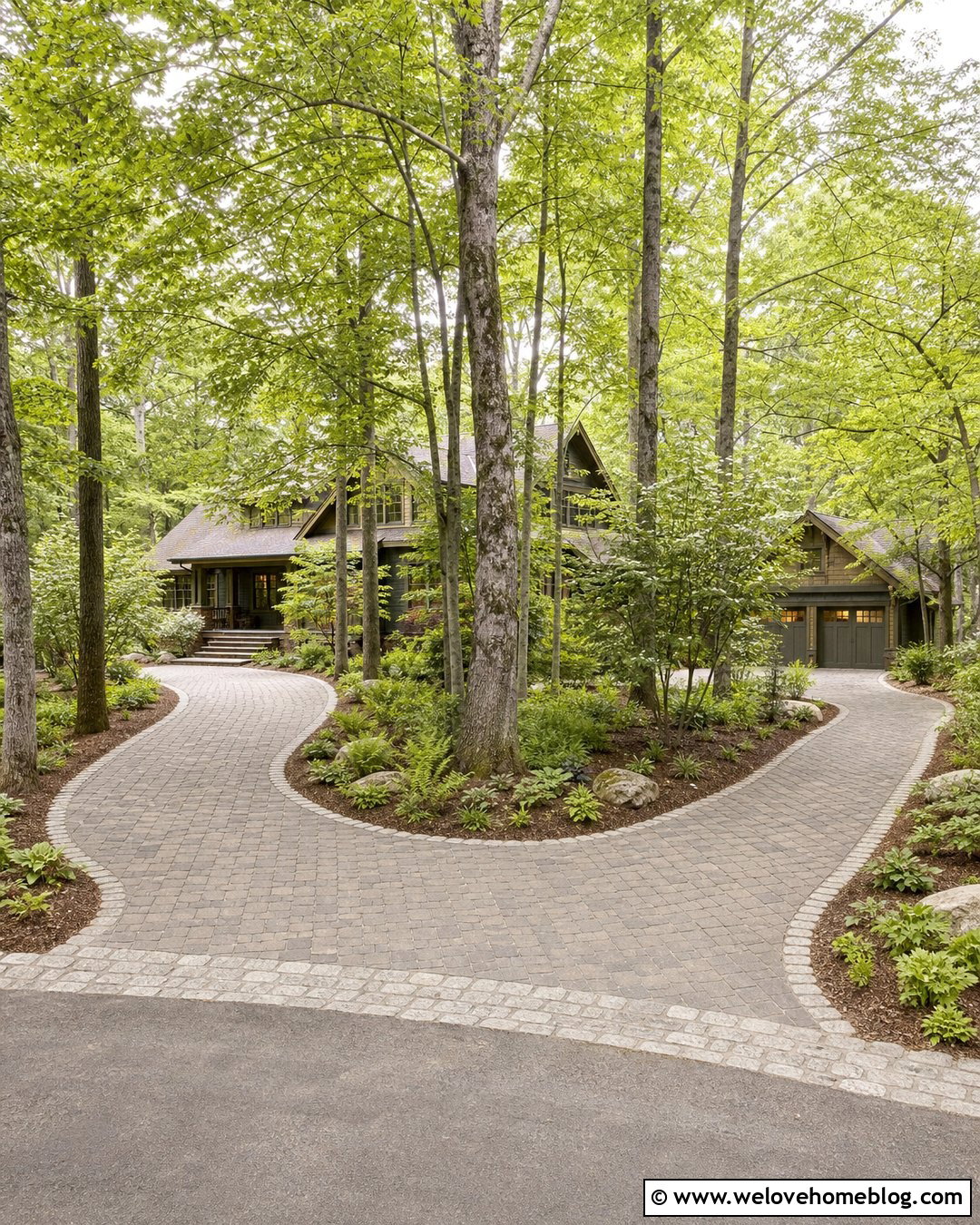
Existing trees can shape a roundabout driveway into a softer, more natural loop. Use warm gray concrete pavers to curve around a protected central grove rather than forcing the island into a perfect circle. A flush cobblestone border can define the driving surface while allowing the landscape to remain visually informal. Beneath the trees, use mulch and shade-tolerant ground cover instead of struggling turf. Add low ferns, woodland perennials, and scattered native shrubs, but avoid major changes around established roots without professional guidance. The outer drive can follow the property’s natural contours before meeting the garage. A gently curving walkway should offer a shorter pedestrian route to the porch. This layout feels settled into the landscape and suits wooded residential settings.
23. Roundabout Driveway With Center Fountain
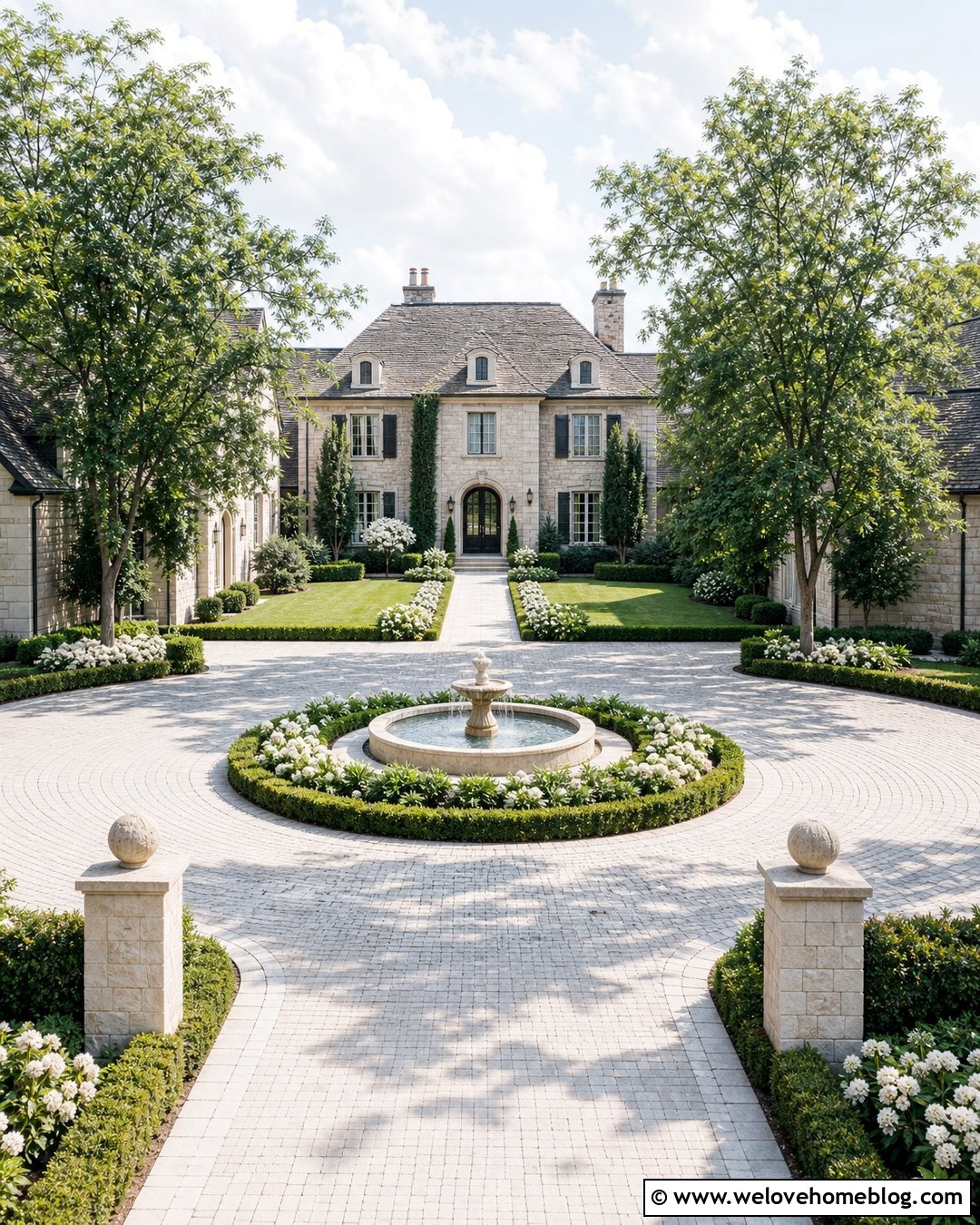
A fountain creates an elegant focal point when it is correctly scaled to the roundabout driveway and surrounding home. Use pale concrete pavers in a radial pattern to draw attention toward a low stone fountain in the center island. Leave a generous planted buffer between the fountain basin and driveway curb. Clipped boxwood, low ground cover, and seasonal flowers can soften the hard surfaces without hiding the water feature. Match the fountain stone to the front steps, facade, or entrance pillars. A straight walkway from the drop-off area should maintain a clear view of the front door rather than cutting awkwardly through the island. This complete design works best with formal, Mediterranean, French-inspired, or large traditional homes where the fountain feels proportionate.
24. Roundabout Driveway With Flowering Tree Island
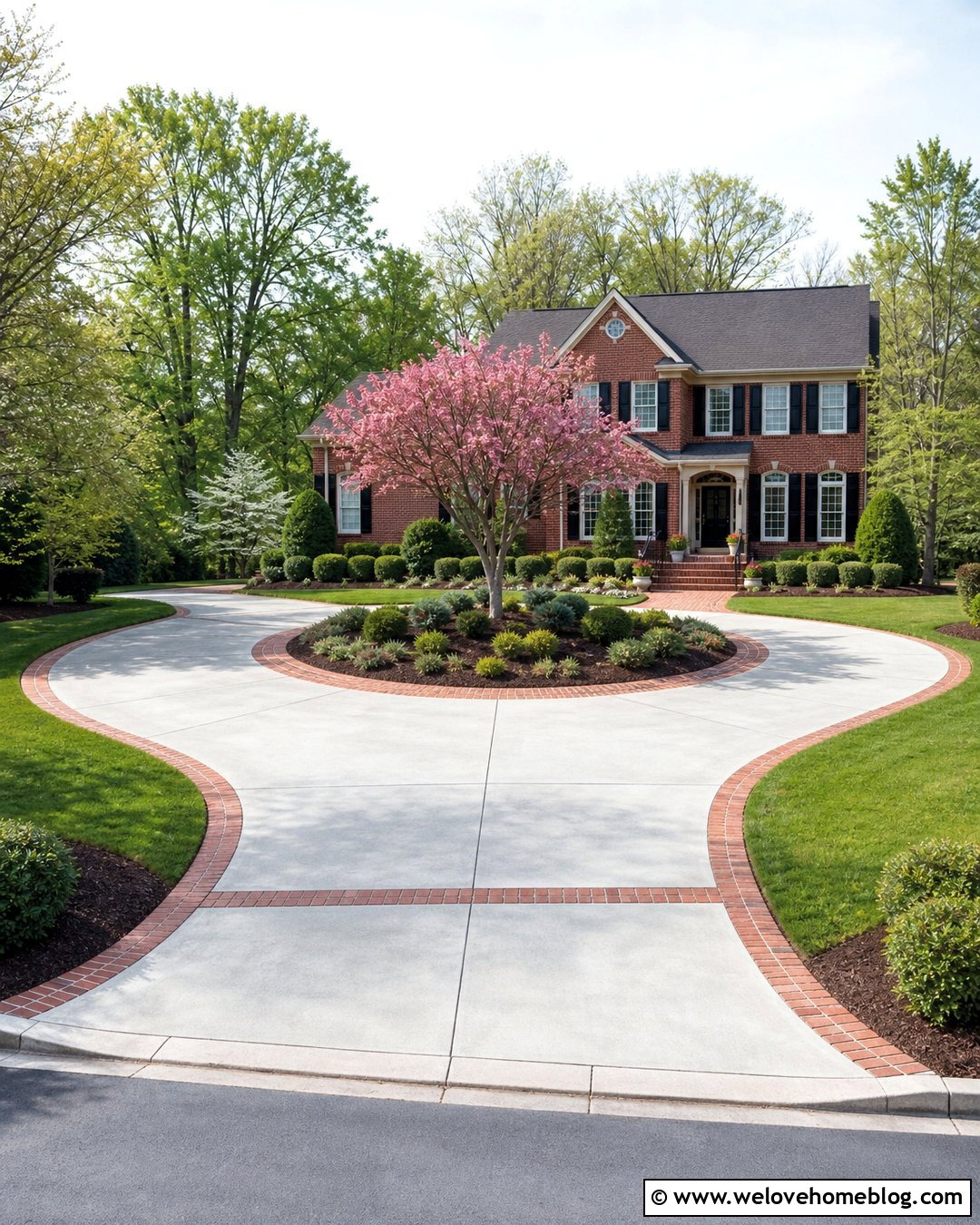
A flowering tree brings seasonal color to a roundabout driveway without requiring a complicated centerpiece. Select a tree whose mature canopy and root space suit the island, then surround it with a simple ring of low evergreen shrubs and ground cover. A light-gray poured concrete drive provides a quiet background for colorful spring blossoms. Add a clay brick border around the island to introduce warmth and connect the design to a brick house or walkway. Keep the trunk visible and avoid piling mulch against it. On the outer driveway edge, repeat a few of the same shrubs near the house. This coordinated planting makes the tree feel integrated into the entire yard. The result is approachable, attractive, and manageable throughout the year.
25. Roundabout Driveway With Layered Flower Garden
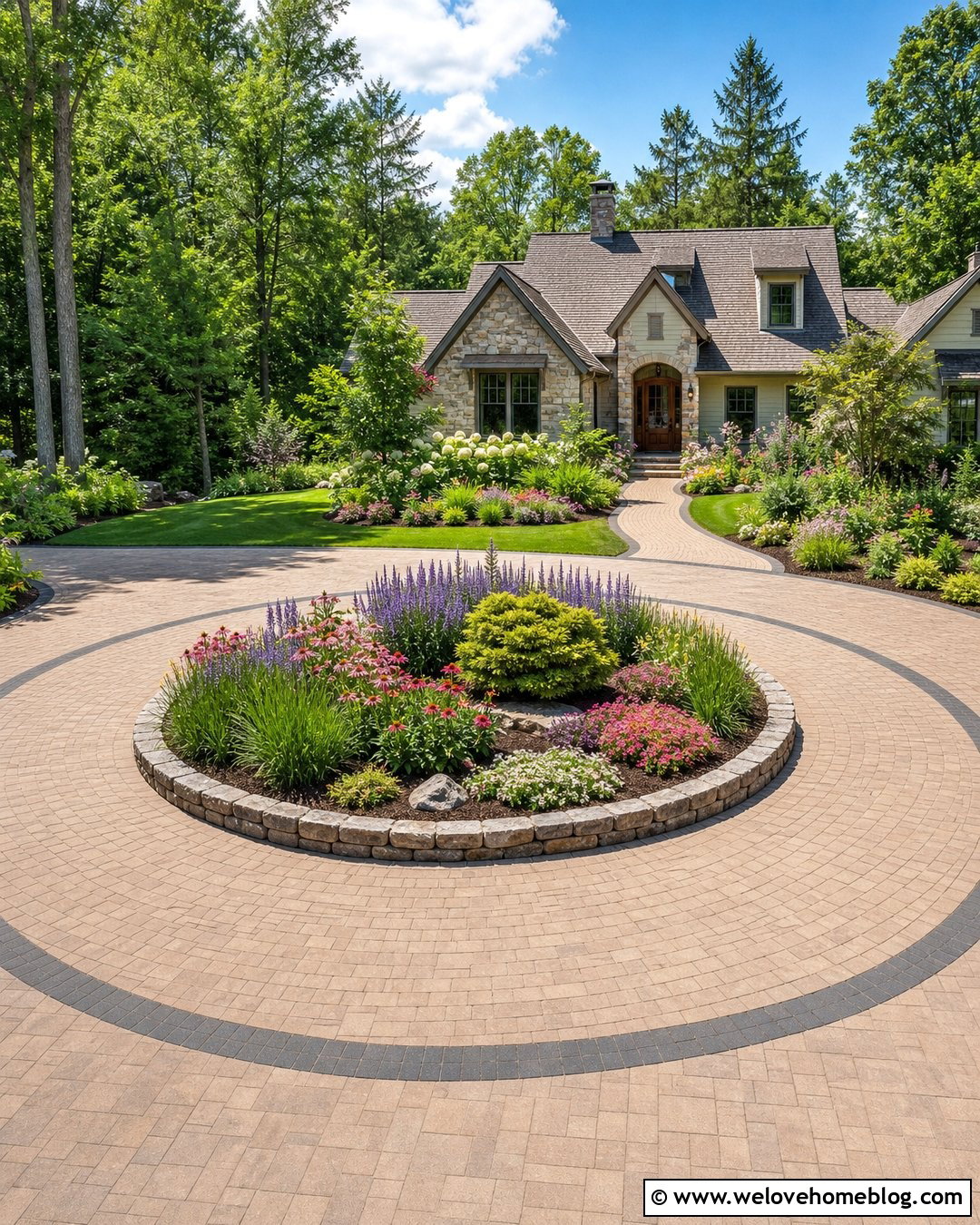
For a colorful front approach, transform the center of a paver roundabout driveway into a layered flower garden. Use neutral taupe concrete pavers with a charcoal border so changing plant colors remain the main attraction. Arrange taller perennials and one small shrub toward the middle, medium plants around them, and low ground cover near the curb. Repeat several plant varieties in broad groups instead of adding many single specimens. This creates a clearer design from the street. Curved stone edging can protect the bed and coordinate with the home’s facade. Include open mulch areas for easier maintenance and plant access. A matching paver walkway leading to the porch completes the look while connecting the garden, driveway, and house into one organized composition.
26. Roundabout Driveway With Native Landscaping
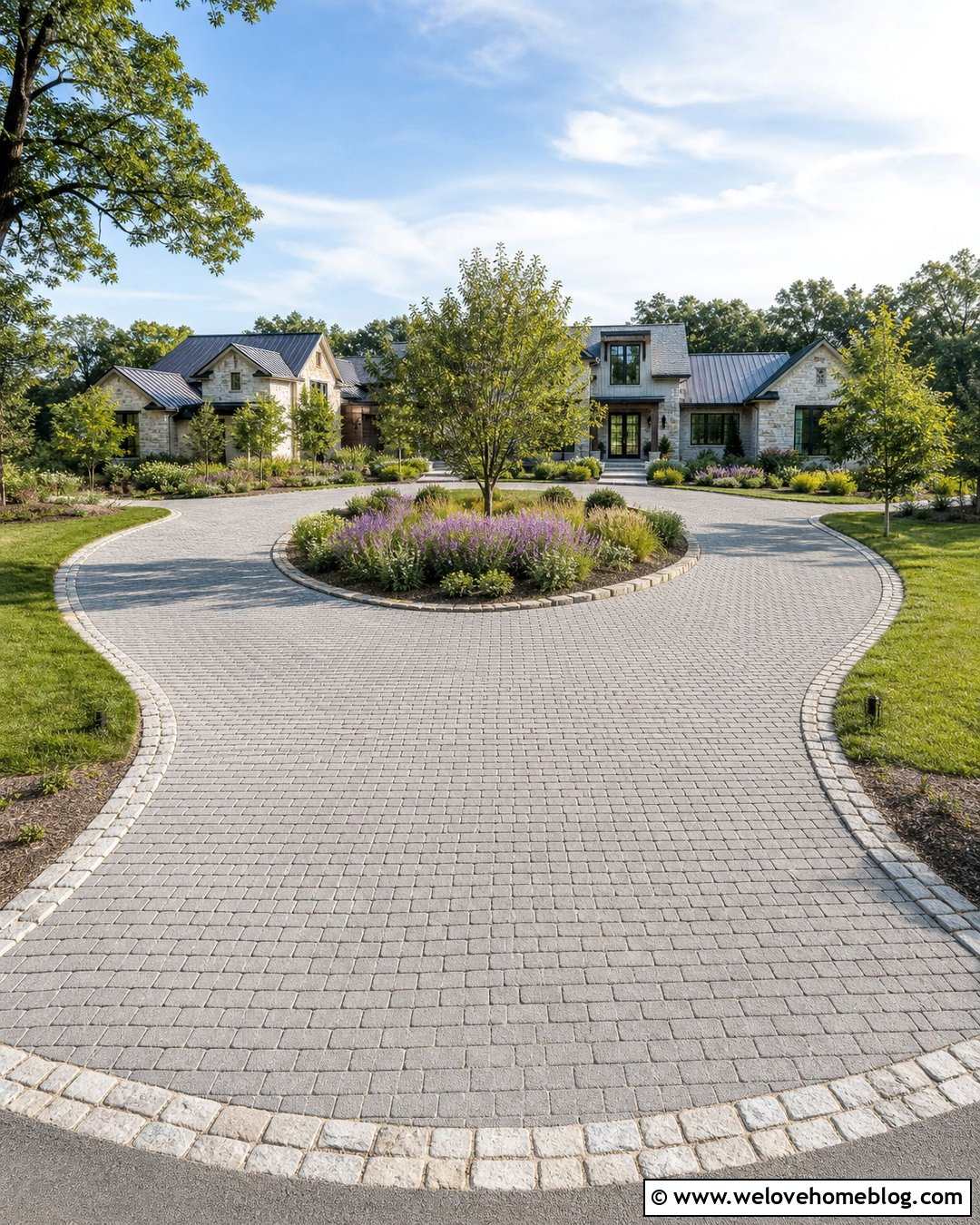
Native landscaping can make a roundabout driveway feel connected to its regional setting. Start with a permeable gray paver surface that provides a neutral frame for grasses, flowering perennials, and compact native shrubs. Arrange the island in broad naturalistic drifts, keeping the tallest plants near the middle and lower growth along the driving edge. Add one regionally appropriate ornamental tree if space allows. Local stone used as a flush curb or scattered accent can connect the planting with the broader landscape. Repeat selected plants near the house and both driveway entrances rather than treating the island as a separate garden. The design can appear relaxed while still having clear structure. A simple concrete-slab walkway keeps pedestrian movement direct and visually calm.
27. Roundabout Driveway With Drought-Tolerant Landscaping
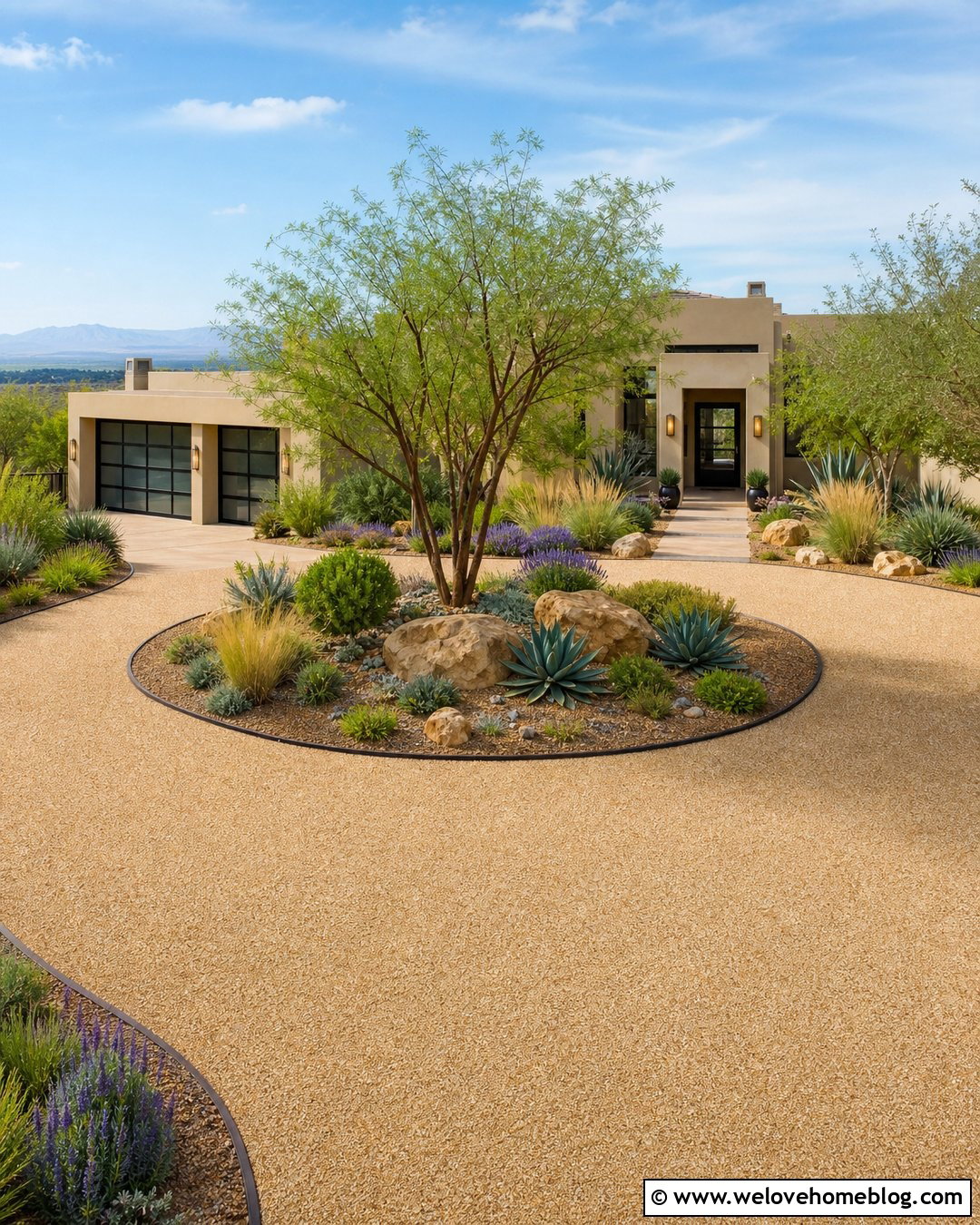
A drought-tolerant roundabout driveway can look lush through careful use of shape, foliage, and contrasting textures. Choose a sand-colored resin-bound gravel surface with dark metal edging for a crisp contemporary base. Fill the center island with sculptural succulents, ornamental grasses, lavender, compact flowering shrubs, and decorative gravel mulch. Position several boulders in a balanced grouping, leaving open space between plants so their forms remain visible. Use the same gravel mulch in foundation beds and along the entrance walkway. A multi-stem tree can provide height where the climate and island size permit. This cohesive look suits Southwestern, Mediterranean, ranch, and modern homes. The restrained palette also helps the roundabout remain attractive when seasonal flowers are not in bloom.
28. Low-Maintenance Roundabout Driveway With Evergreens
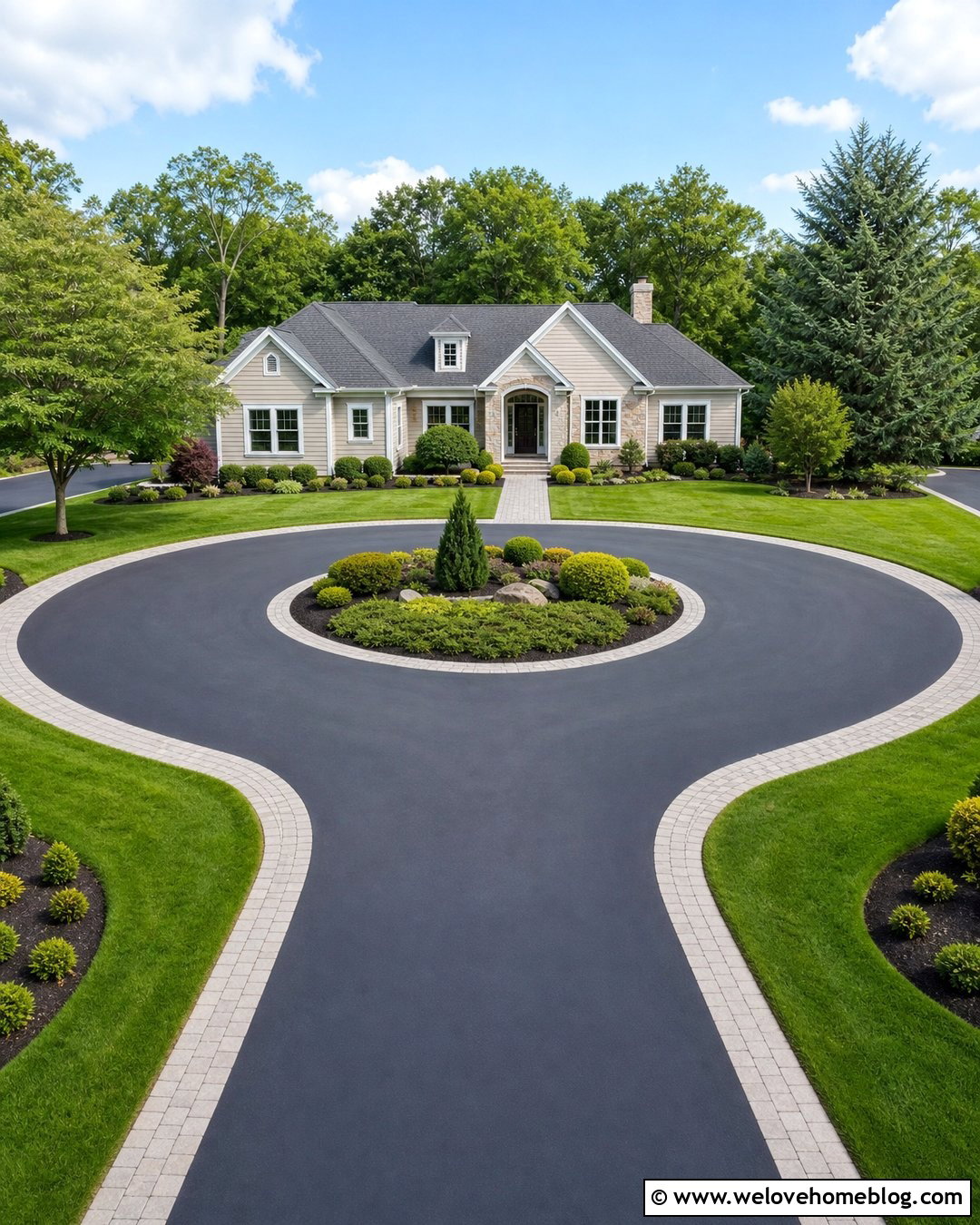
Evergreen planting provides dependable structure around a roundabout driveway with fewer seasonal changes. Use black asphalt bordered by light-gray concrete pavers to create a clean, durable-looking loop. In the central island, combine one compact upright evergreen with low mounded shrubs and spreading ground cover. Apply a generous layer of dark mulch and leave adequate space for each plant to reach its natural form. Avoid placing a continuous tall hedge around the island, which can make the driveway feel enclosed. Repeat the same evergreen varieties near the house and entrance corners for visual consistency. A straightforward paver walkway and simple lawn outer border complete the design. This approach works with many home styles and keeps the overall front yard neat without elaborate flower displays.
29. Roundabout Driveway With Boulder Landscaping
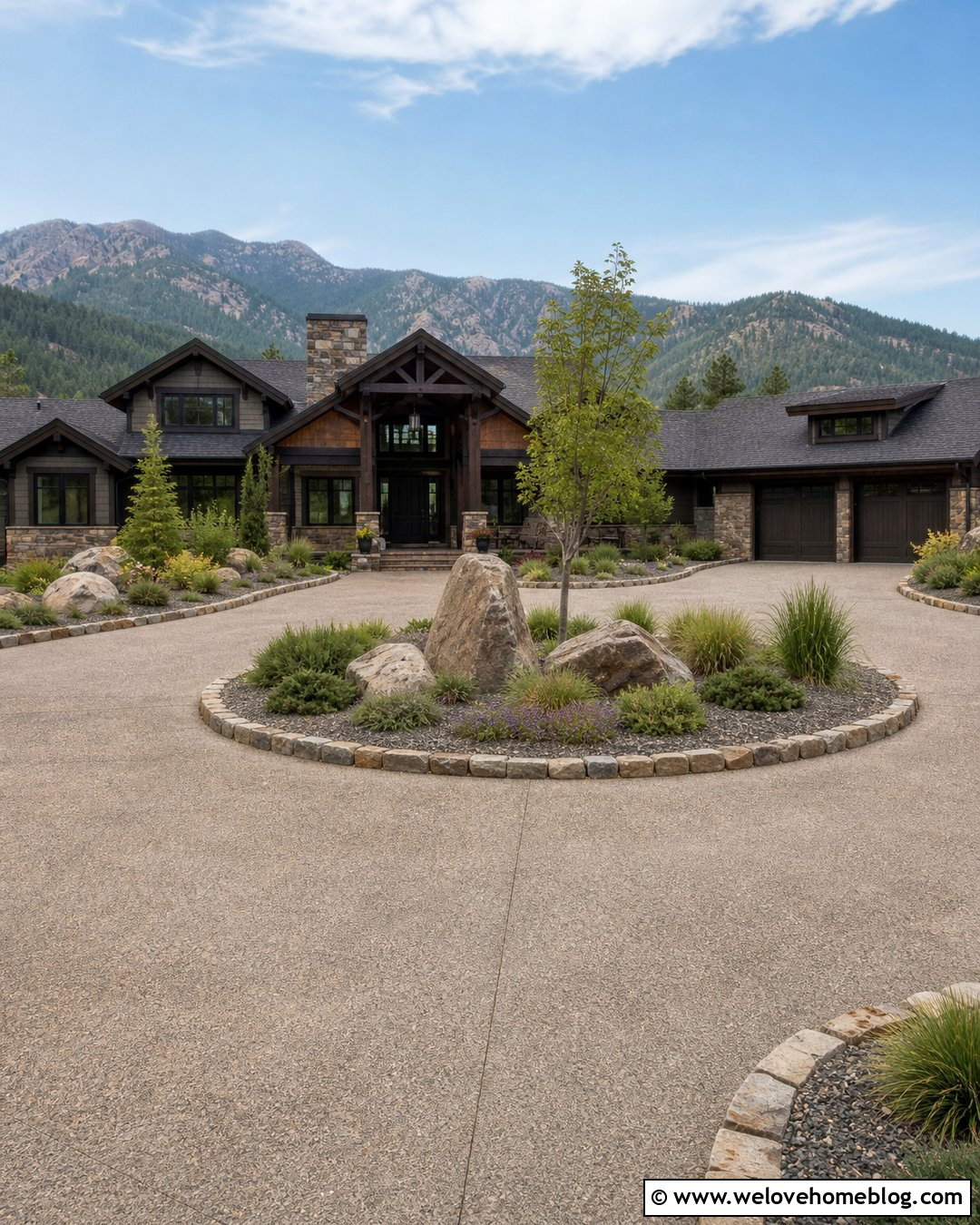
Large boulders can anchor a roundabout driveway when they are treated as part of a complete landscape rather than scattered decorations. Pair a warm exposed aggregate surface with a central island edged in rough-cut local stone. Place three or five boulders in an uneven grouping, partially setting them into the soil for a natural appearance. Surround them with ornamental grasses, low evergreen shrubs, flowering ground cover, and gravel mulch. One small tree can provide height without competing with the stone. Continue several smaller rocks into beds near the house to link both areas. This design works particularly well with mountain, rustic ranch, contemporary, and Craftsman homes. Keep boulders comfortably away from the driving lane and both entrance sightlines.
30. Gated Roundabout Driveway With Metal Entrance
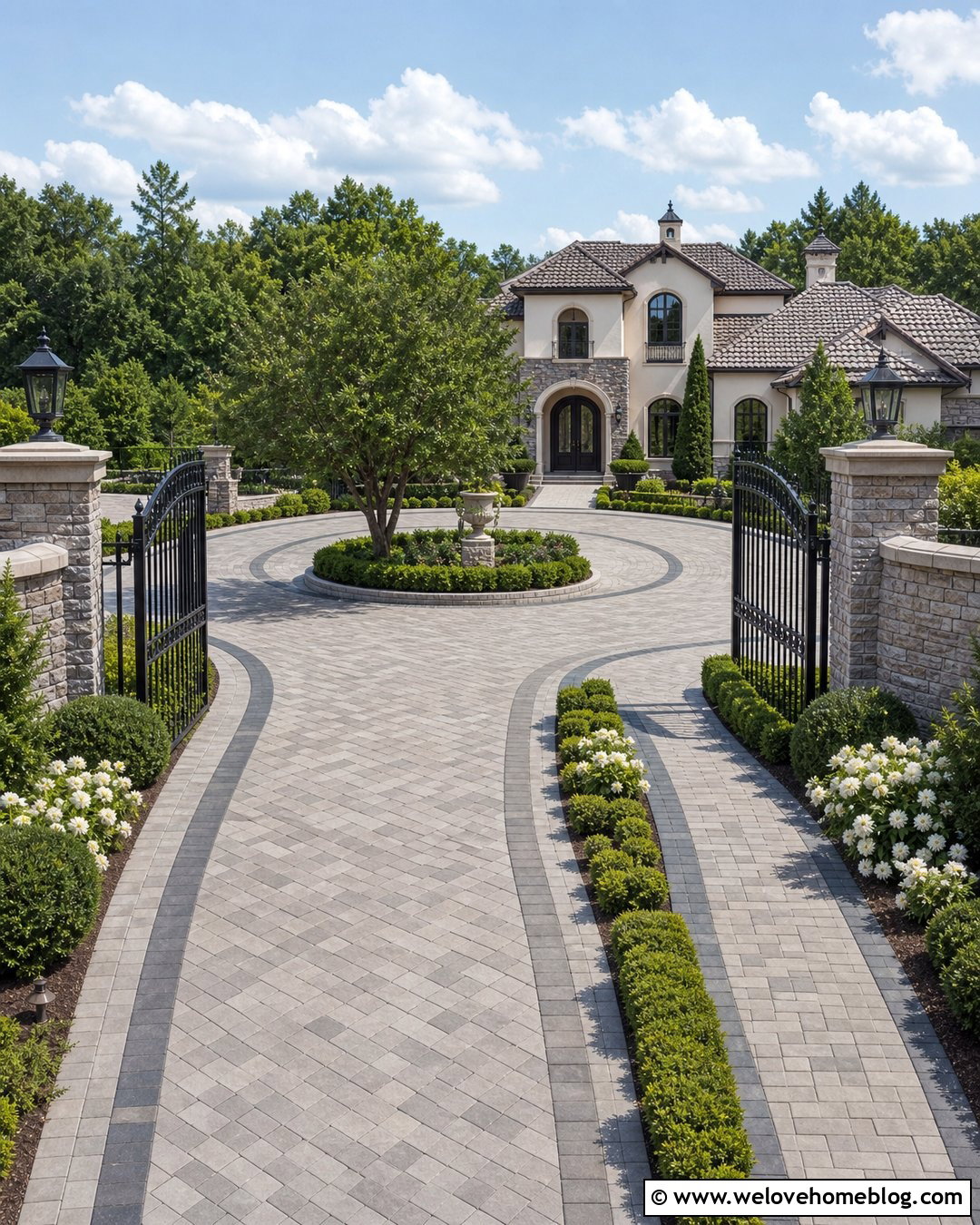
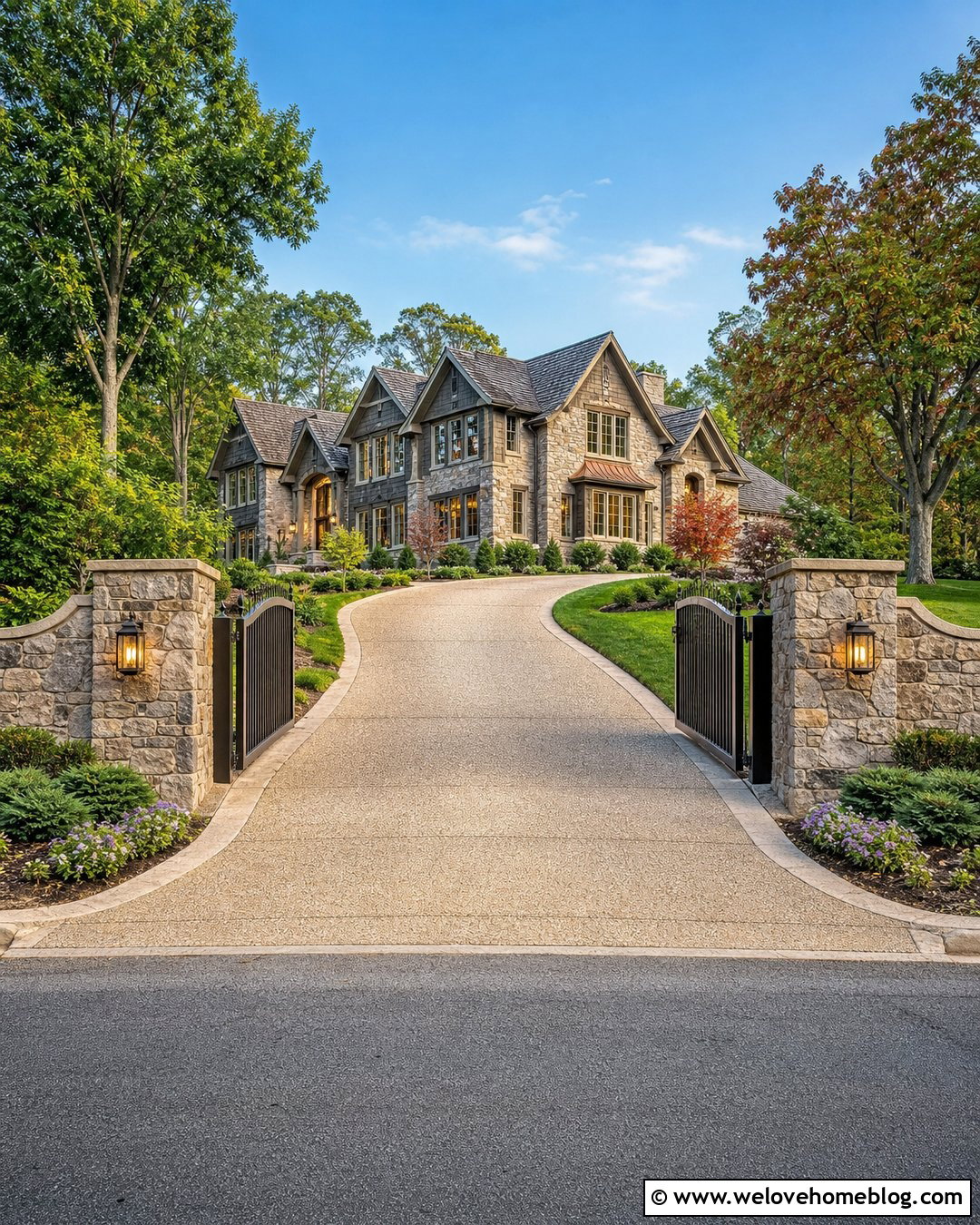
A gated roundabout driveway creates a defined entrance while allowing vehicles to approach and leave through separate openings. Use warm gray interlocking pavers for the loop and install matching black metal gates between stone or stucco pillars. The gate design should coordinate with railings, exterior lights, and other metal details on the house. Low hedges and flowering shrubs can soften the pillars without reducing visibility near the road. In the center island, repeat the same plants around one ornamental tree or formal urn. A contrasting paver ribbon can guide vehicles through the two entrances and around the curve. Position the pedestrian walkway beyond the gate line with a direct route to the porch. The complete design should feel welcoming, organized, and proportionate to the property.
31. Roundabout Driveway With Stone Pillars
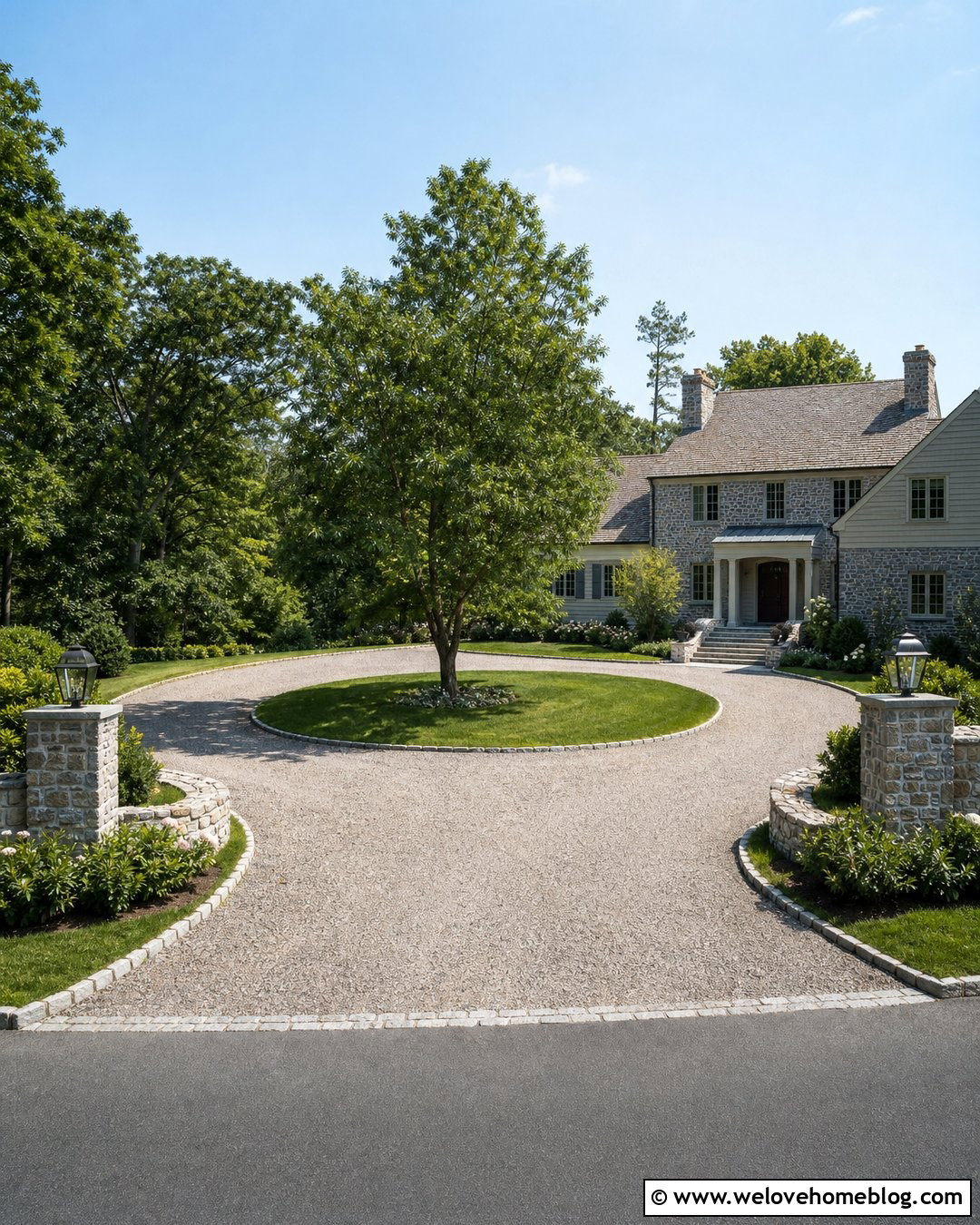
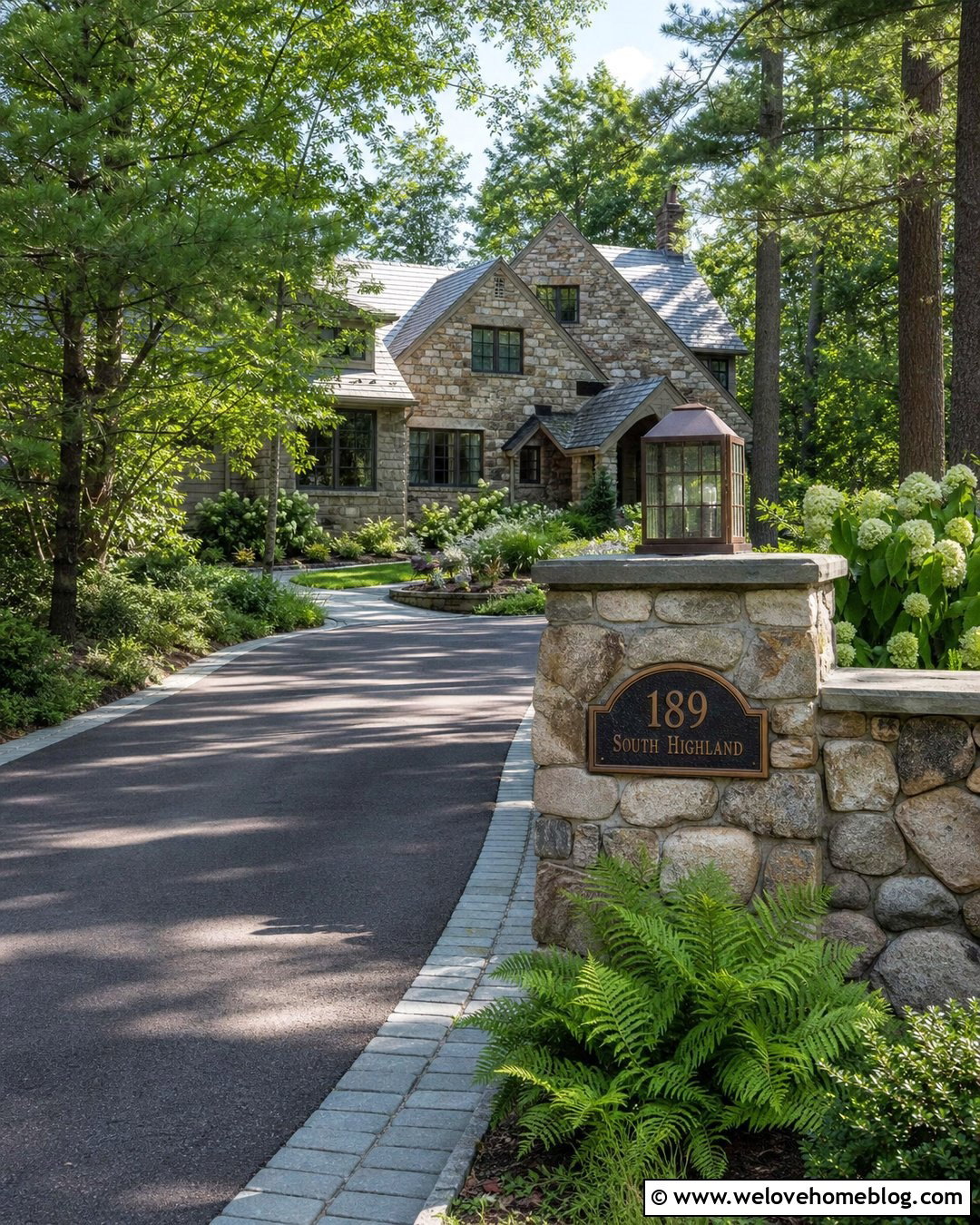
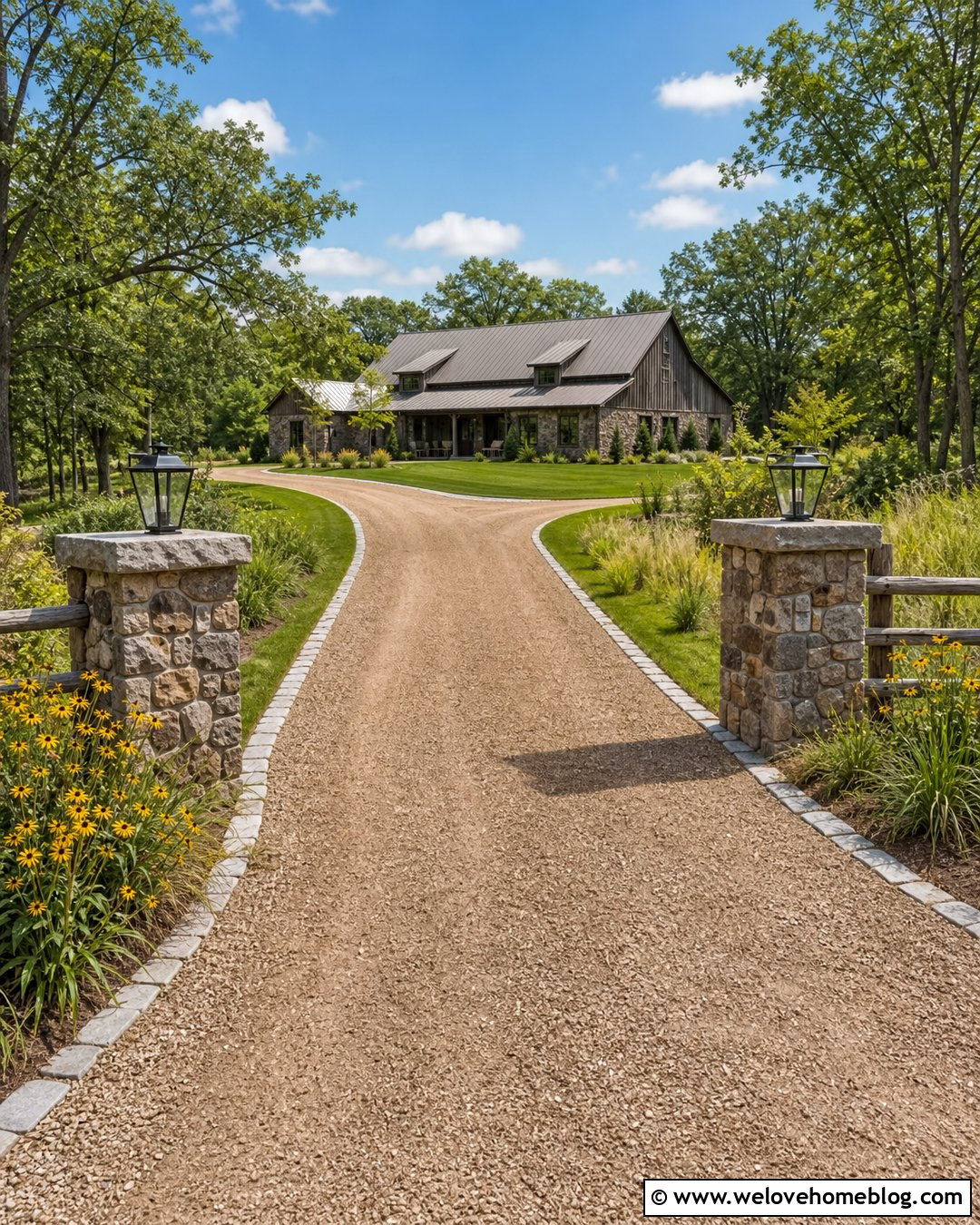
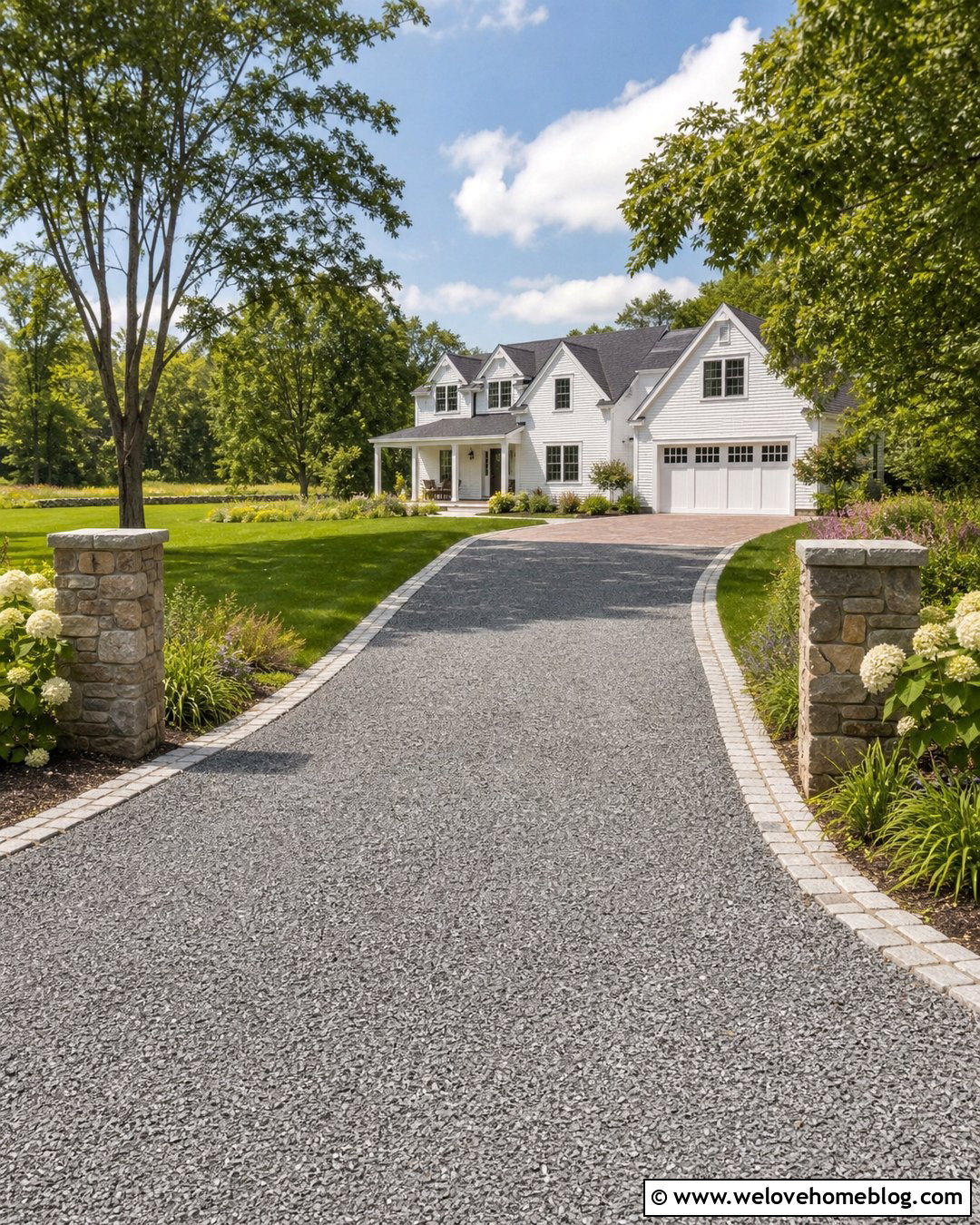
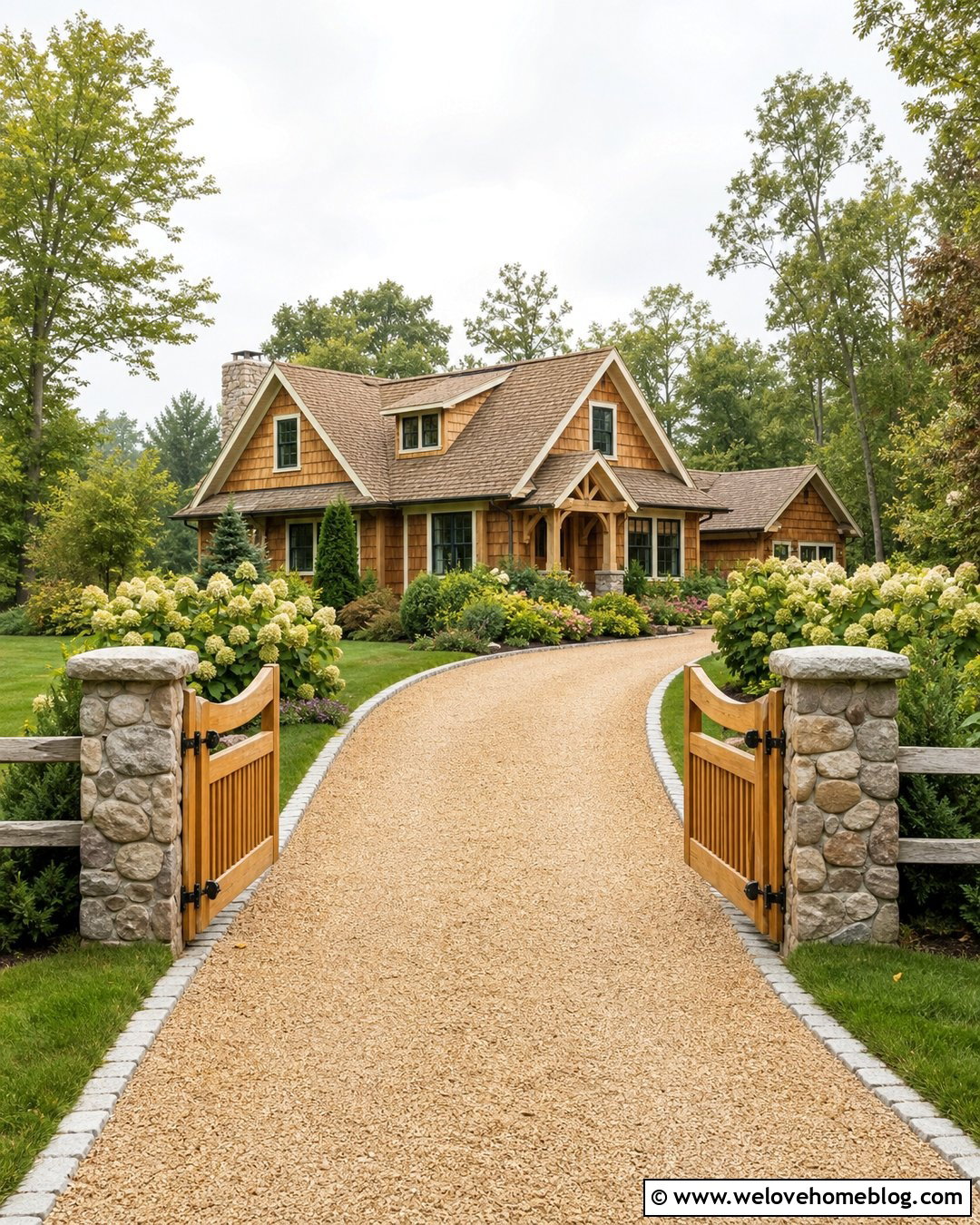
Stone pillars give both entrances of a roundabout driveway enough visual weight to be recognized from the street. Build them with masonry that matches the house’s foundation, chimney, or porch columns. A buff gravel driving surface can keep costs and visual formality under control, while granite cobblestone edging prevents loose material from spreading into the lawn. Add low planting beds around the pillar bases using compact shrubs and perennial flowers. The central island can remain simple with turf and one well-shaped tree, allowing the entrance masonry to stand out. Consider matching lanterns or understated address plaques on the pillars, but avoid excessive ornament. By repeating the same stone near the walkway and front steps, the driveway entrance becomes part of a unified property design.
32. Roundabout Driveway With Landscape Lighting
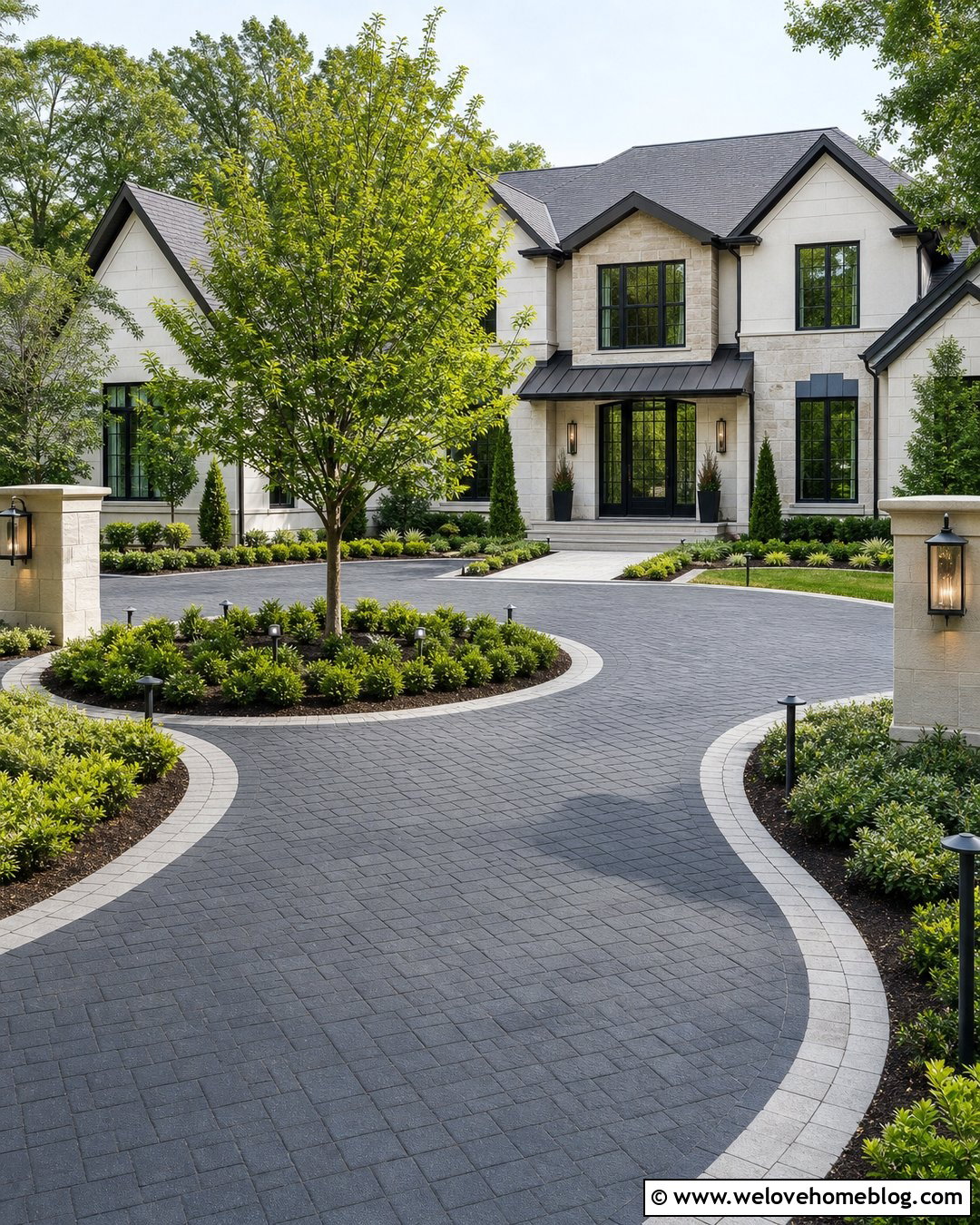
Landscape lighting should reinforce the shape of a roundabout driveway without turning the front yard into a runway. Begin with charcoal concrete pavers edged by a narrow light-gray border. Place low fixtures at key curves, walkway intersections, entrance pillars, and selected plants rather than spacing identical lights along every foot of paving. The central island can feature an ornamental tree with subtle uplighting, surrounded by low shrubs and ground cover. During the day, dark bronze or black fixtures should blend into the beds. Connect the drop-off point to the front door with a well-defined paver walkway and coordinated path lighting. The surface, borders, planting, and fixture placement will then work together as one clear design in both daytime and evening conditions.
33. Roundabout Driveway With Front Door Walkway
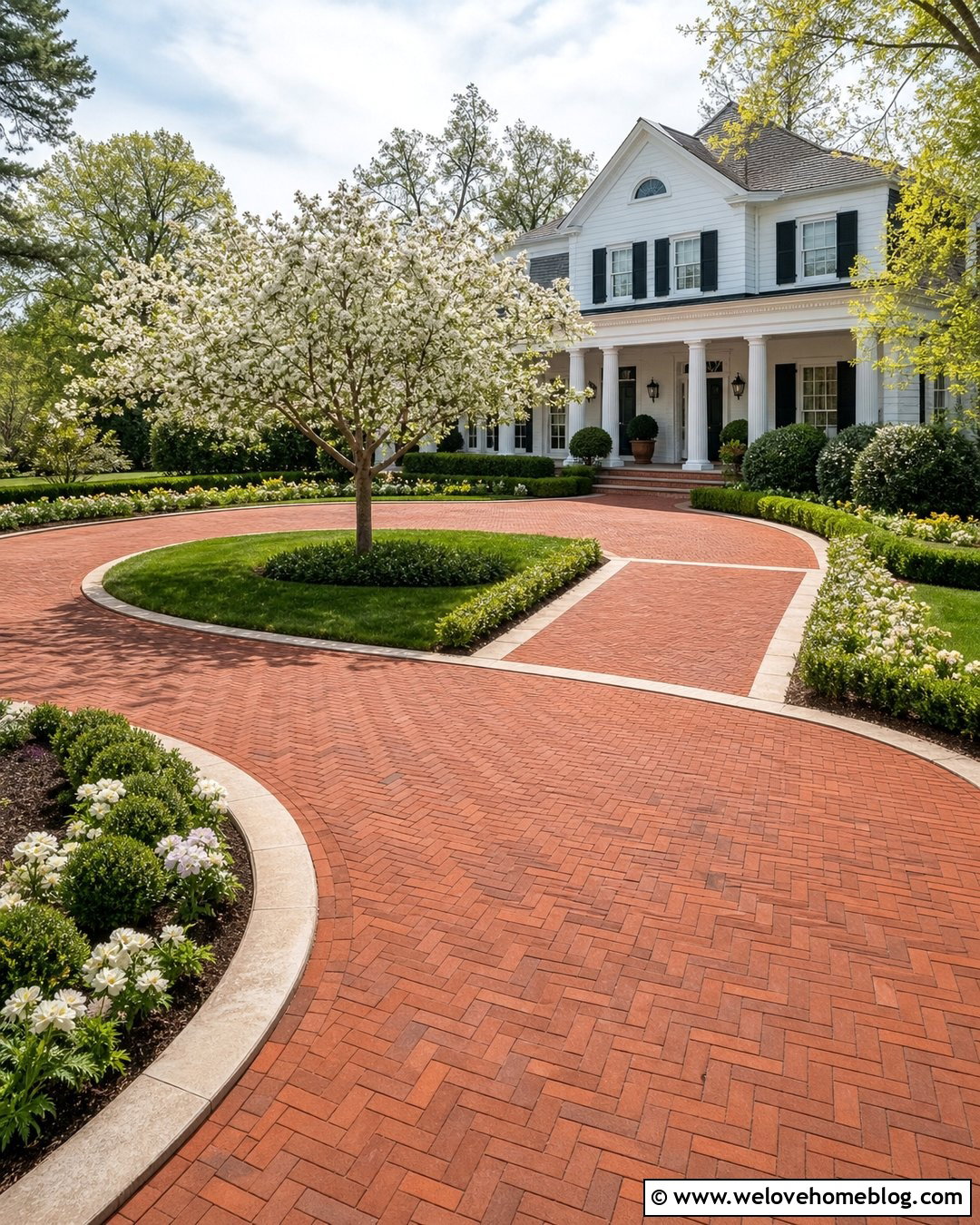
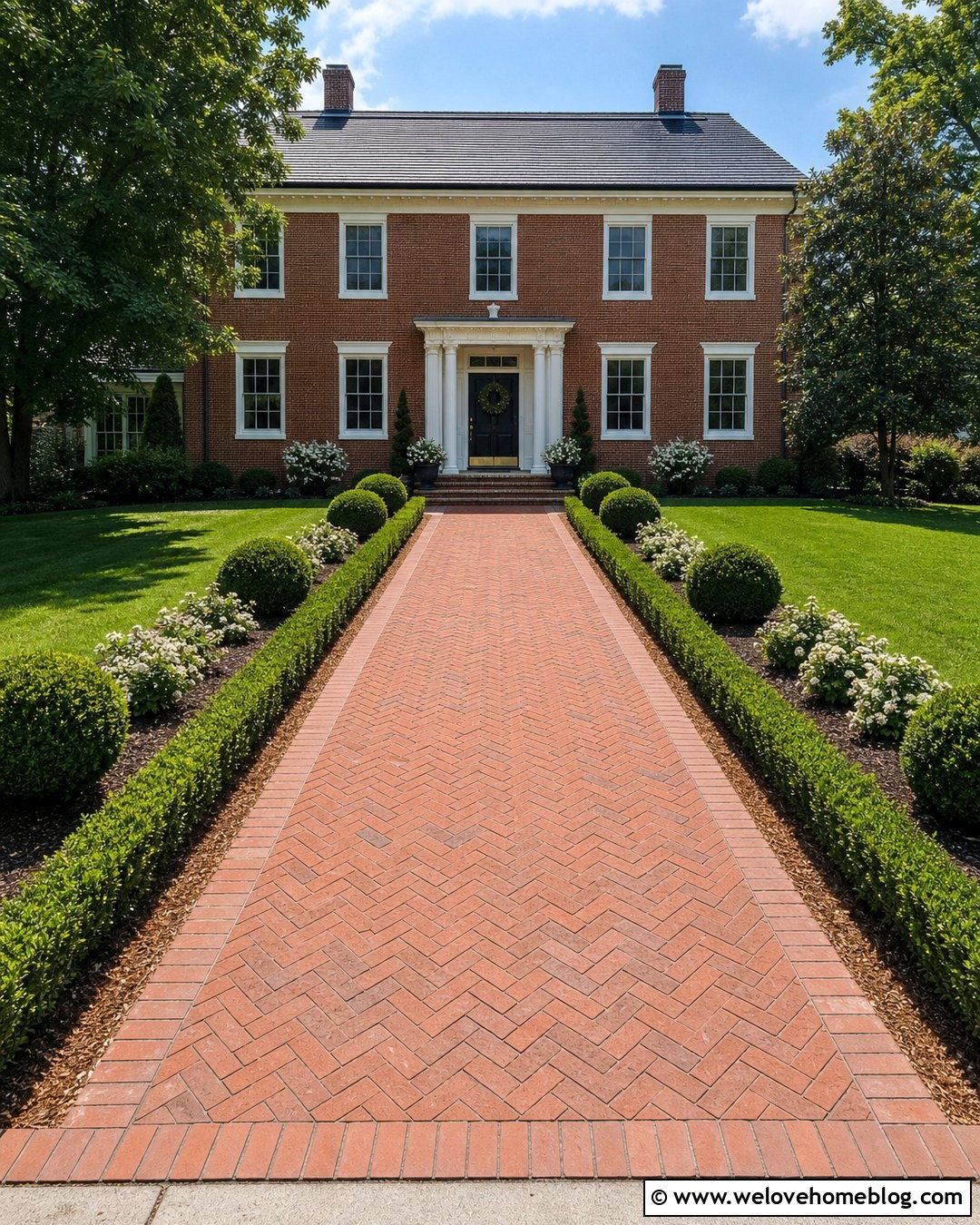
A clearly placed walkway prevents visitors from guessing how to reach the front door from a roundabout driveway. Use red brick pavers for the drive and create a wider herringbone path that branches from the natural passenger drop-off point. A contrasting stone border can outline both surfaces while making the pedestrian route easy to recognize. Keep the center island’s lawn and planting low near the walkway connection. One flowering tree, clipped shrubs, and curved flower beds can fill the remaining space without blocking views of the entrance. At the porch, widen the path slightly to create a comfortable arrival area. Repeat brick in the steps or facade details. This complete layout balances vehicle circulation with an obvious, welcoming route for people.
34. Roundabout Driveway With Side Garage Access
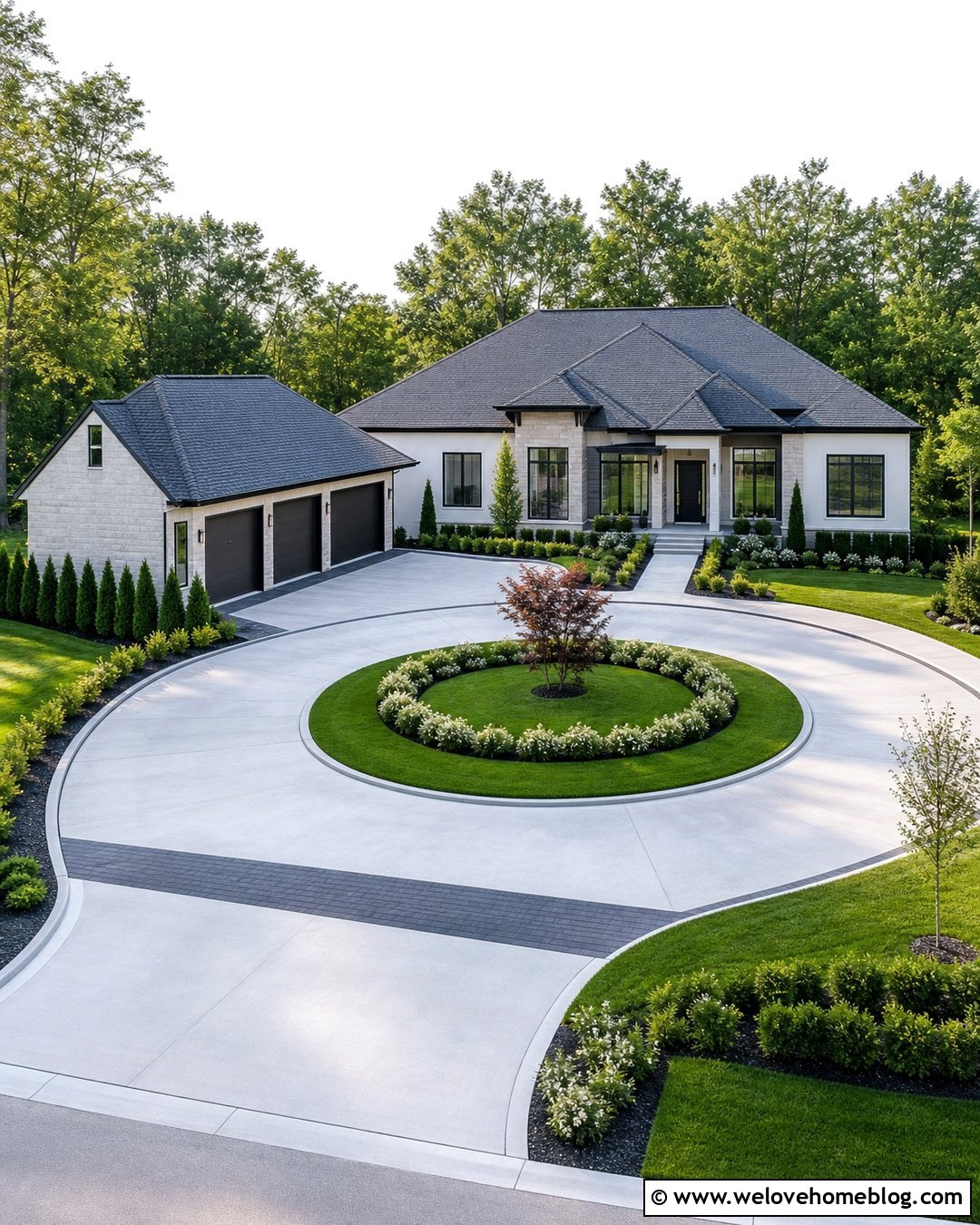
A roundabout driveway can serve the front entrance while extending discreetly toward a side-facing garage. Use smooth gray poured concrete for the main loop, then introduce a darker paver band where the driveway branches toward the garage doors. This visual transition helps separate the arrival route from the everyday parking area. Keep the center island focused on the house with lawn, low shrubs, and one ornamental tree. Along the garage extension, use a narrow landscape bed or hedge to screen parked vehicles from the street. A direct walkway should connect the drop-off point to the porch without crossing the garage route. The complete design supports practical daily movement while preserving a polished front view and a strong central landscape feature.
35. Sloped Roundabout Driveway With Retaining Walls
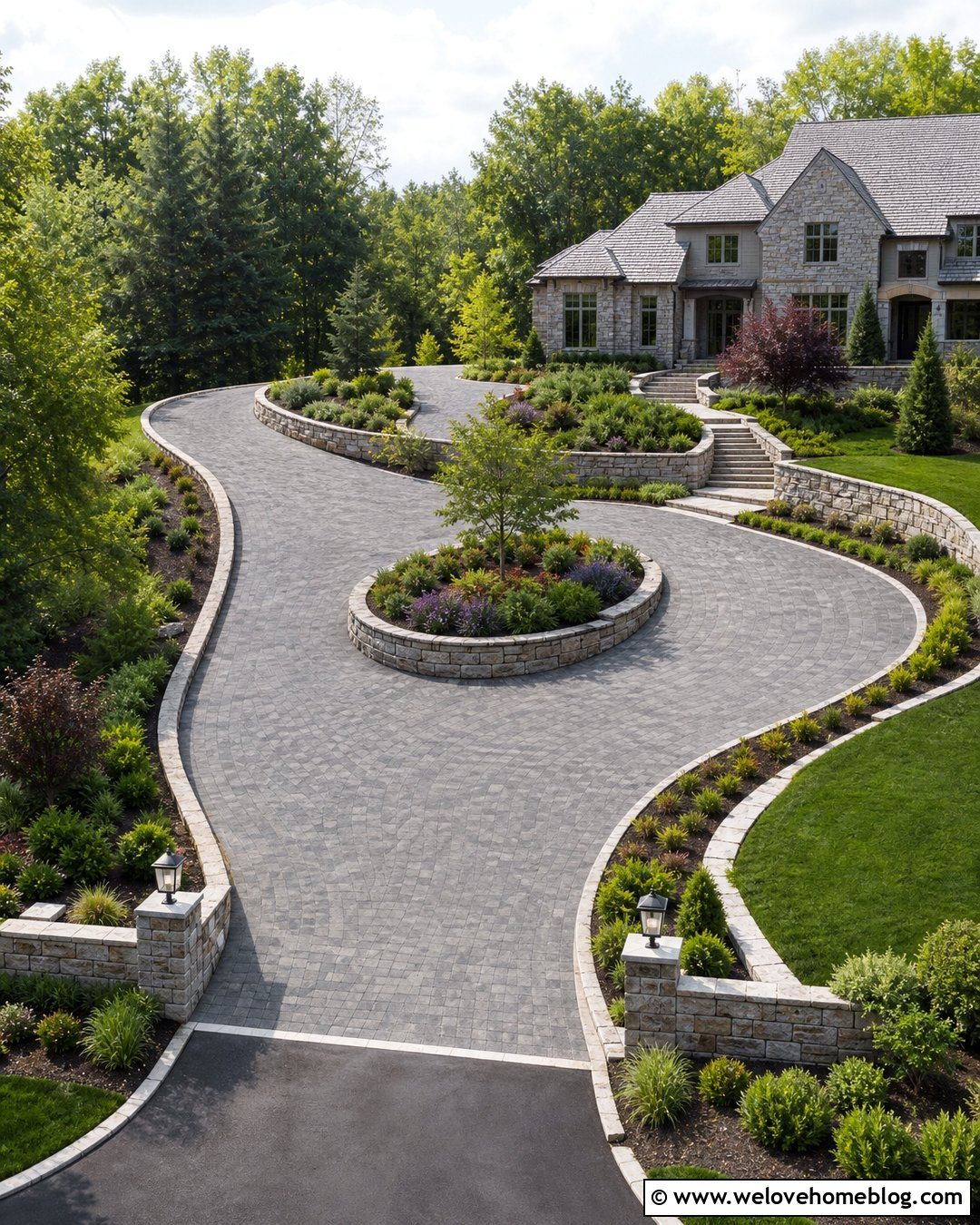
A sloped front yard can accommodate a roundabout driveway when the paving, grading, walls, and planting are designed together. Use textured concrete pavers in medium gray to provide visible definition across the incline. Low natural stone retaining walls can support the center island and outer planting beds while following the driveway’s curves. Step the landscaping in layers, placing low ground cover near the driving edge and larger shrubs farther back. Avoid tall features that could interfere with views across the slope. Include a gently graded walkway or broad steps between the drop-off area and front door. Wall stone should repeat materials from the house for a cohesive appearance. Professional planning is especially valuable when drainage, elevation changes, and safe vehicle movement must be coordinated.
Conclusion:
The strongest roundabout driveways combine smooth vehicle circulation with a clear entrance, suitable paving, defined borders, and landscaping that belongs with the house. These **35 Roundabout Driveway Ideas** show how gravel, asphalt, concrete, brick, pavers, cobblestone, and resin-bound surfaces can support many different looks. Before choosing one, consider available turning space, street access, drainage, garage location, pedestrian routes, maintenance, and mature plant sizes. Keep the center island proportional and preserve open views near both entrances. Repeating materials from the facade, porch, or walkway will make the finished design feel intentional. Whether the goal is casual farmhouse charm or formal estate curb appeal, treat the driveway and front yard as one complete composition.

Related posts:
Leave a Reply