
A well-designed driveway entrance does more than mark where vehicles turn in. It creates a clear arrival point, supports safer access, and introduces the character of your home before guests reach the front door. The best 20 Entryway Driveway Ideas combine the driveway surface with its shape, borders, landscaping, lighting, and architecture. Materials should complement the house, while plants and structural details soften the transition from the street. Even a small entrance can feel intentional with a defined apron, visible address marker, and tidy planting beds. Larger properties can support gates, pillars, sweeping curves, or tree-lined approaches. Whether your taste is modern, traditional, rustic, or coastal, the complete looks below offer practical and attractive 20 Entryway Driveway Ideas.

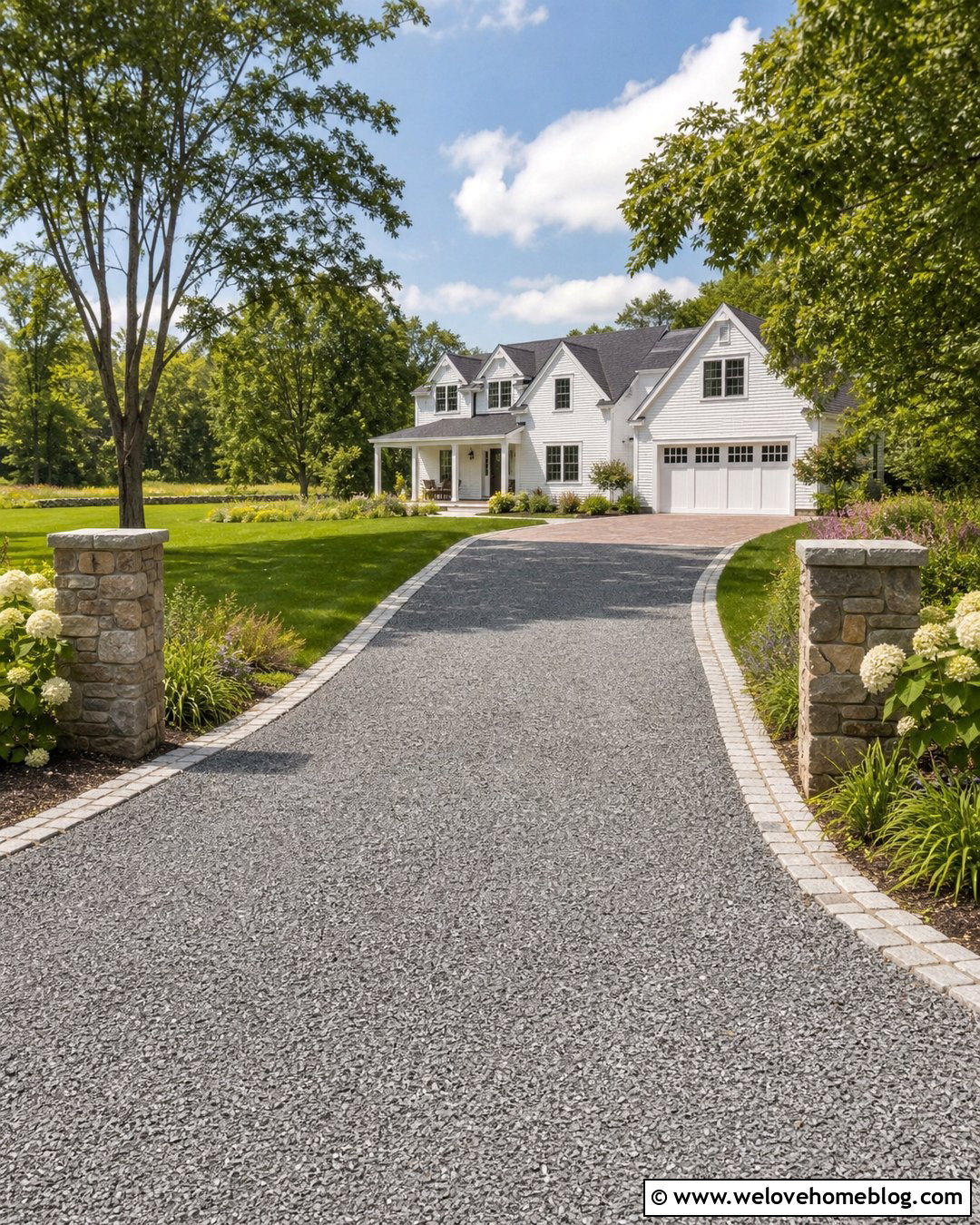
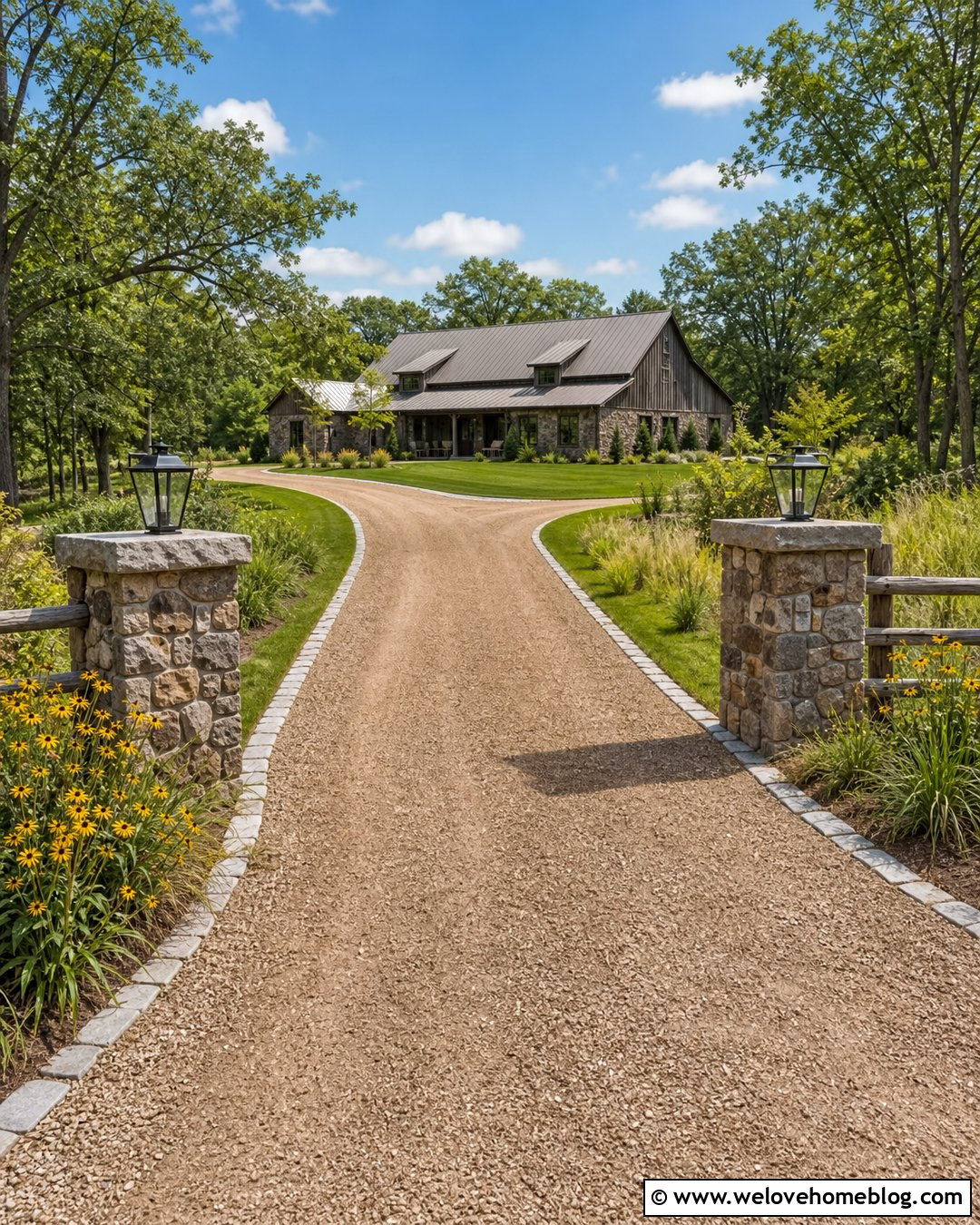
1. Gravel Driveway Entrance With Stone Pillars
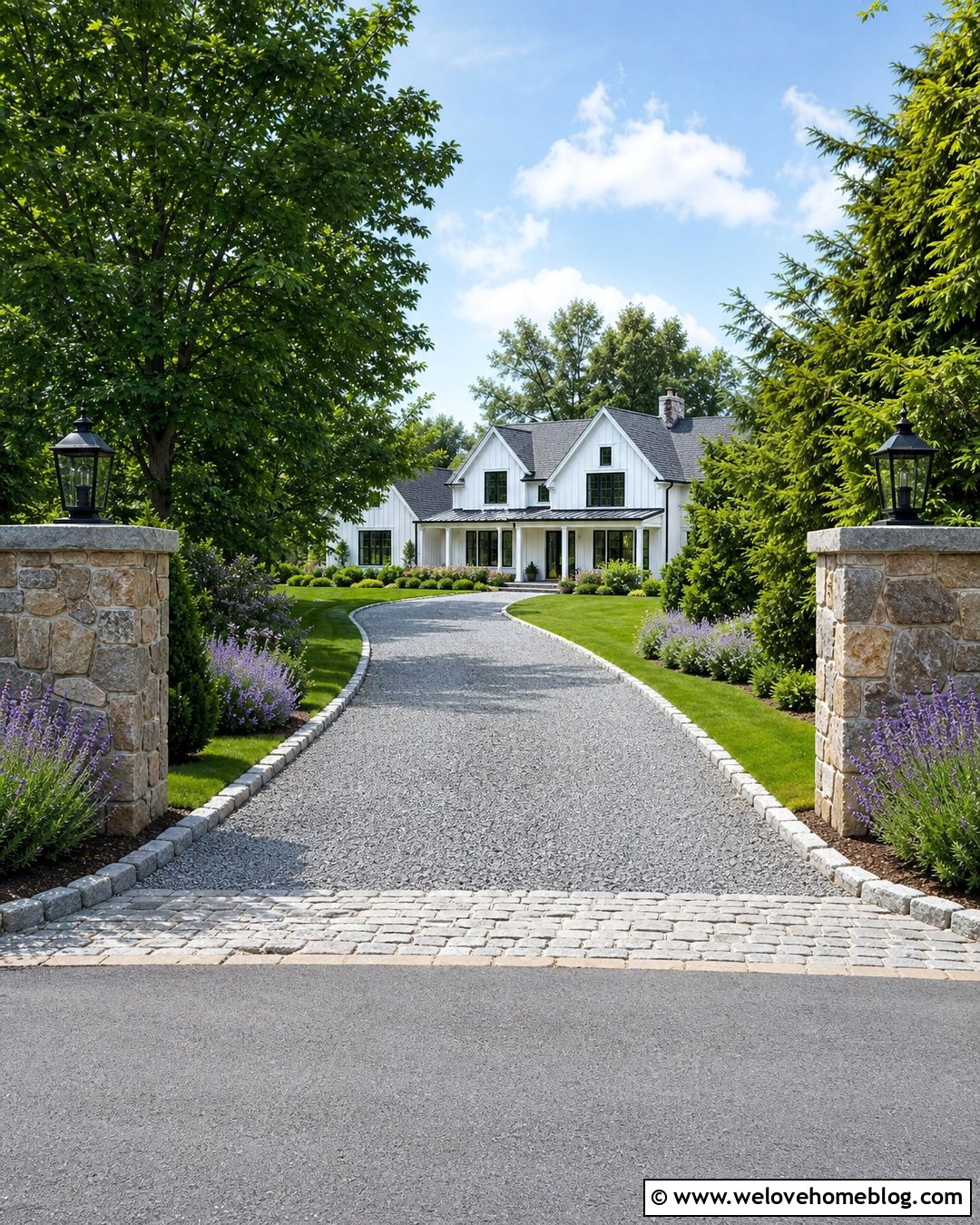
A gravel driveway framed by stone pillars creates a strong entrance without making the property feel overly formal. Choose compacted gray crushed stone for a stable surface, then install broad cobblestone edging to prevent gravel from spreading into the lawn. The pillars should use stone colors found on the house, foundation, or front walkway so the entire exterior feels connected. Low evergreen shrubs around each pillar provide year-round structure, while lavender or catmint adds softer color along the approach. Lanterns mounted on top improve visibility and emphasize the entry after sunset. This complete look works especially well with ranch homes, country houses, and modern farmhouses. Keep the planting low near the street to preserve clear sightlines when entering or leaving.
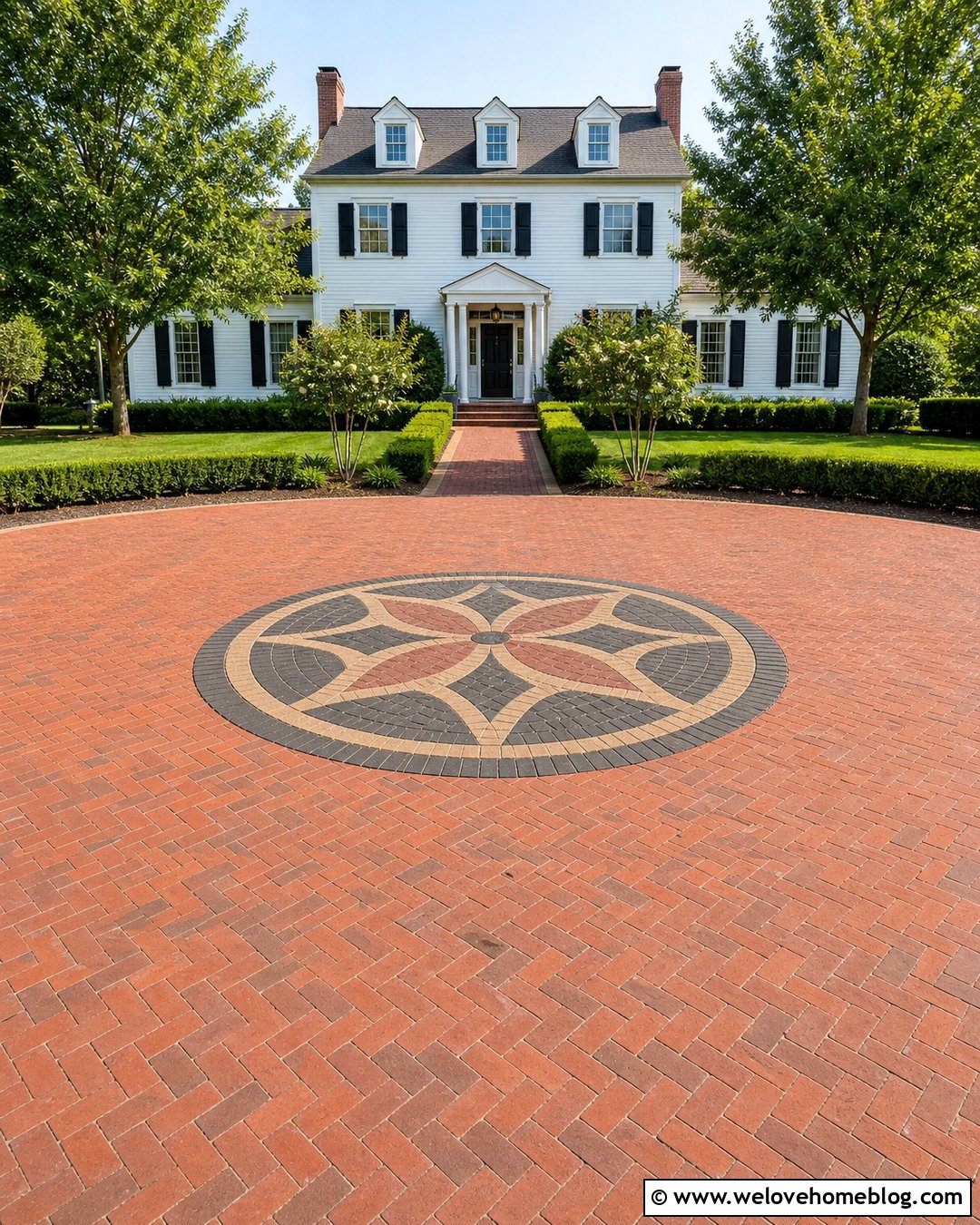
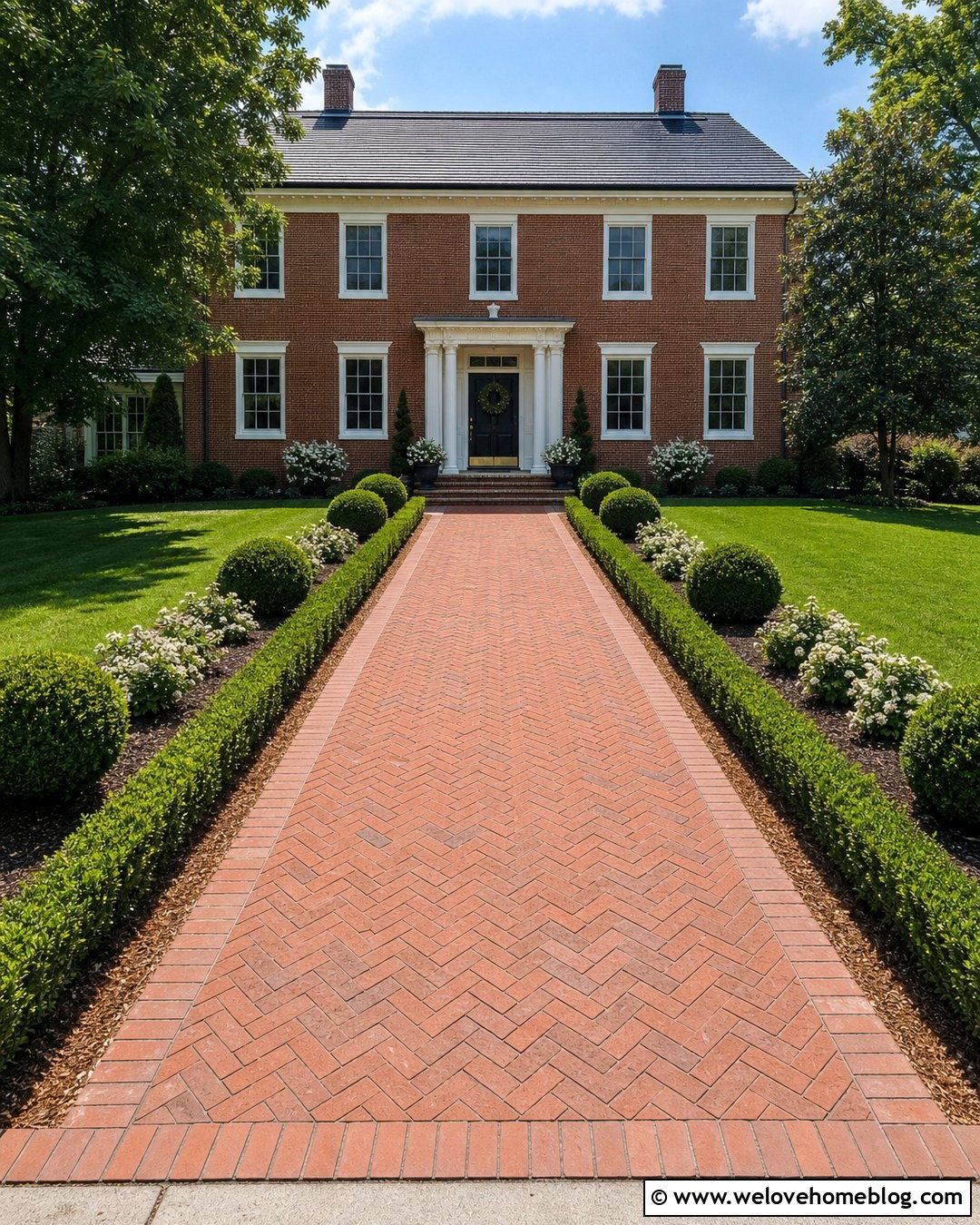
2. Brick Driveway Entrance With Wrought Iron Gate
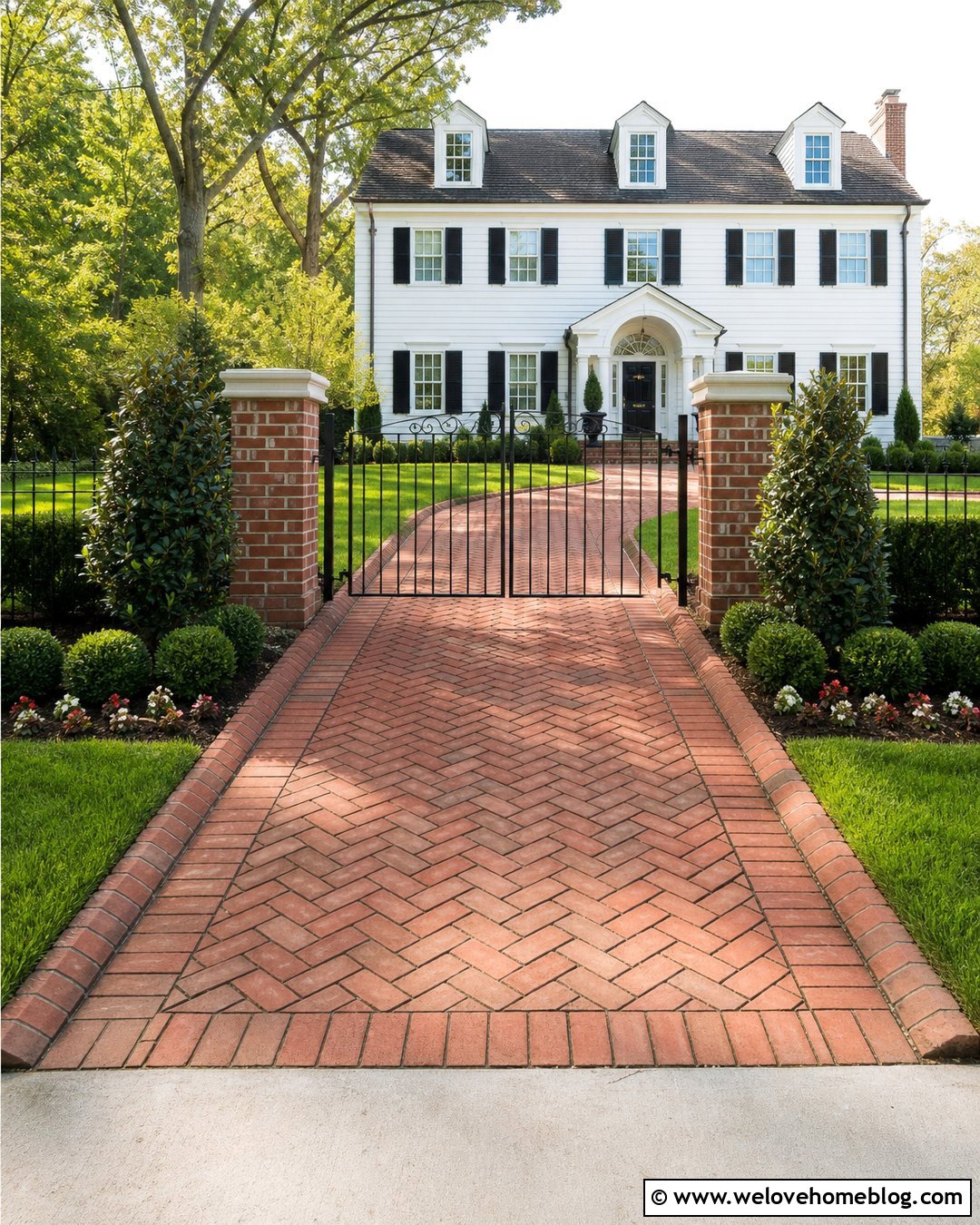
Warm clay brick pavers and a black wrought iron gate make a traditional driveway entrance feel polished and established. A herringbone paving pattern adds movement and provides a practical surface for a straight or gently curved approach. Frame the entrance with matching brick columns, capped in limestone or smooth concrete for contrast. The gate can include a simple arched top rather than excessive ornament, allowing it to suit both colonial and transitional homes. Plant clipped boxwood, upright hollies, or compact inkberry beside the columns to balance the hard materials. A narrow brick walkway branching toward the front door can help visitors understand where to go. Select gate hardware and lantern finishes that coordinate with the home’s exterior lights, door hardware, and nearby fencing.
3. Modern Concrete Driveway Entrance With Metal Panels
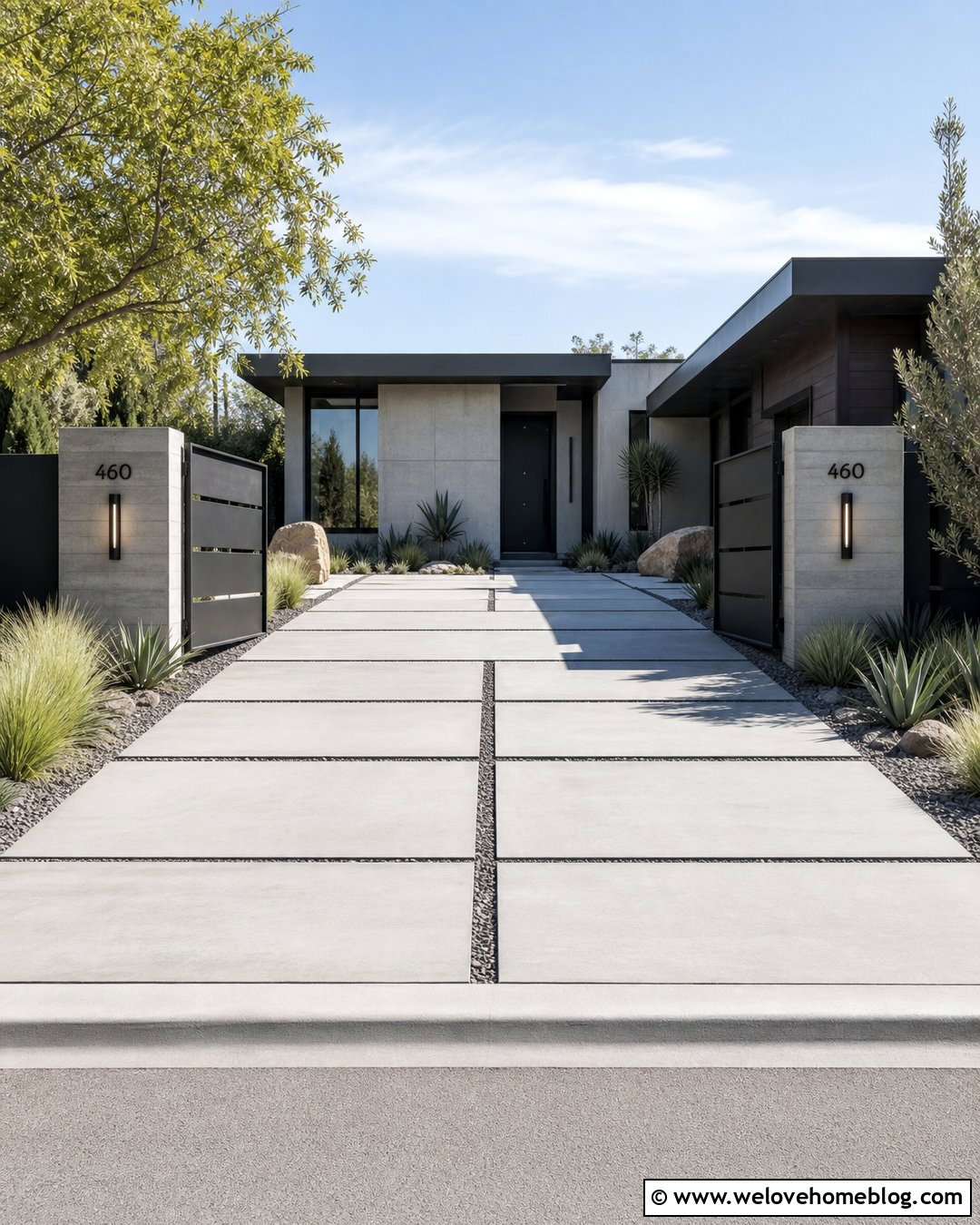
Clean lines make a modern concrete driveway entrance feel spacious, organized, and easy to navigate. Use large-format poured concrete sections with narrow gravel joints or dark paver bands to break up the surface. Slim charcoal metal panels on either side can define the property while maintaining an open entrance. Pair them with rectangular concrete address pillars, simple black numbers, and restrained LED lighting. Landscaping should follow the same uncluttered approach. Repeating ornamental grasses, low junipers, and sculptural agaves can provide texture without hiding the architecture. A straight driveway works best for this composition because it strengthens the visual connection between the street, garage, and front facade. Use a lightly textured concrete finish to improve traction and reduce the appearance of everyday tire marks.
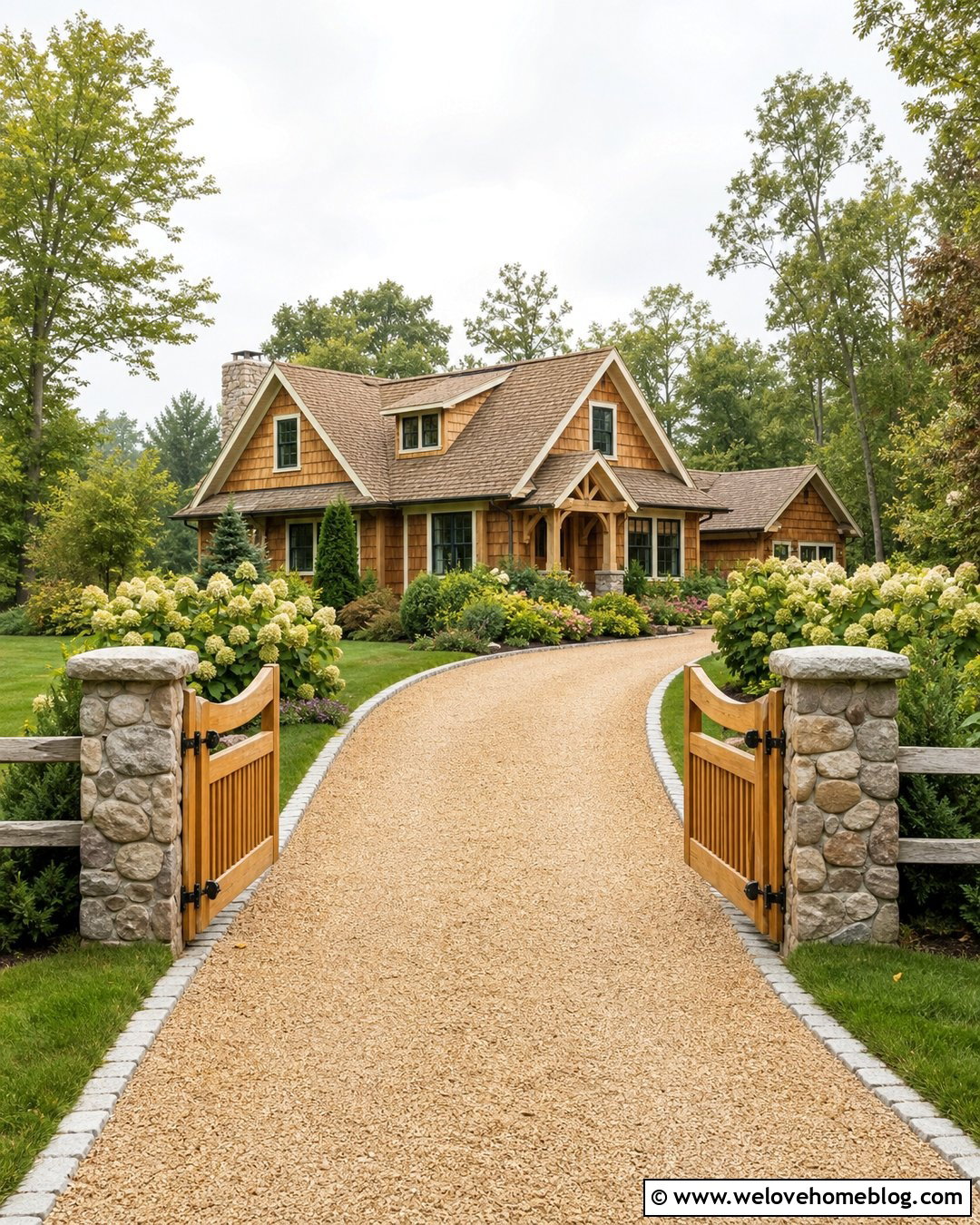
4. Farmhouse Driveway Entrance With Wooden Gate
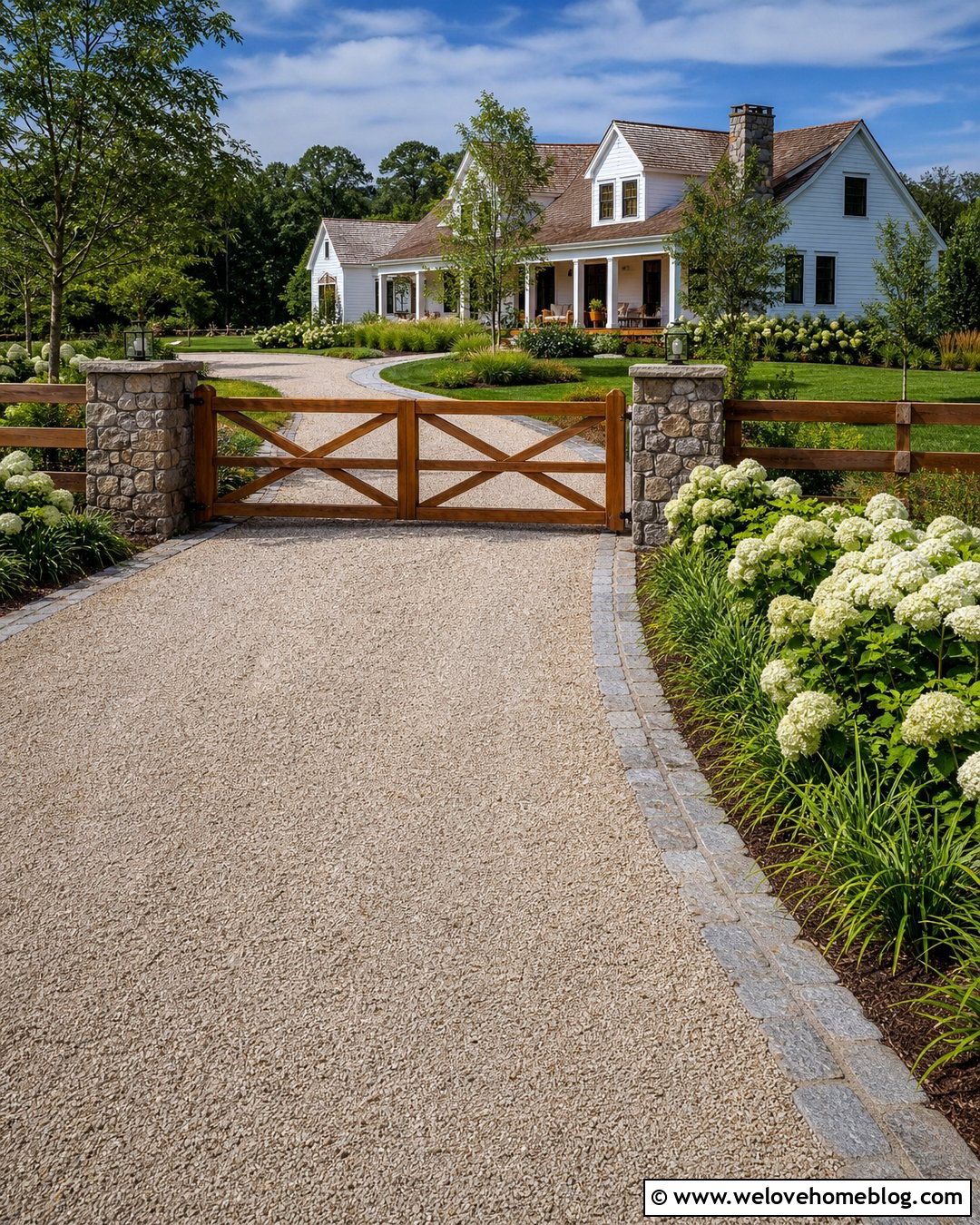
A wooden gate introduces warmth to a farmhouse driveway, especially when paired with pale gravel and relaxed planting. Use a wide, gently curved driveway surfaced with beige crushed limestone or tan gravel. Timber edging or weathered cobblestones can hold the loose material in place while reinforcing the rural character. A simple cross-braced cedar gate looks natural between fieldstone pillars or sturdy painted posts. Continue the entrance with split-rail fencing, but leave enough open landscaping to avoid making the property feel enclosed. Hydrangeas, white flowering shrubs, native grasses, and a pair of small ornamental trees create an inviting frame. Black lanterns and discreet gate hardware provide definition. This look suits modern farmhouses, renovated barns, cottages, and country homes with generous front yards.
5. Asphalt Driveway Entrance With Brick Borders
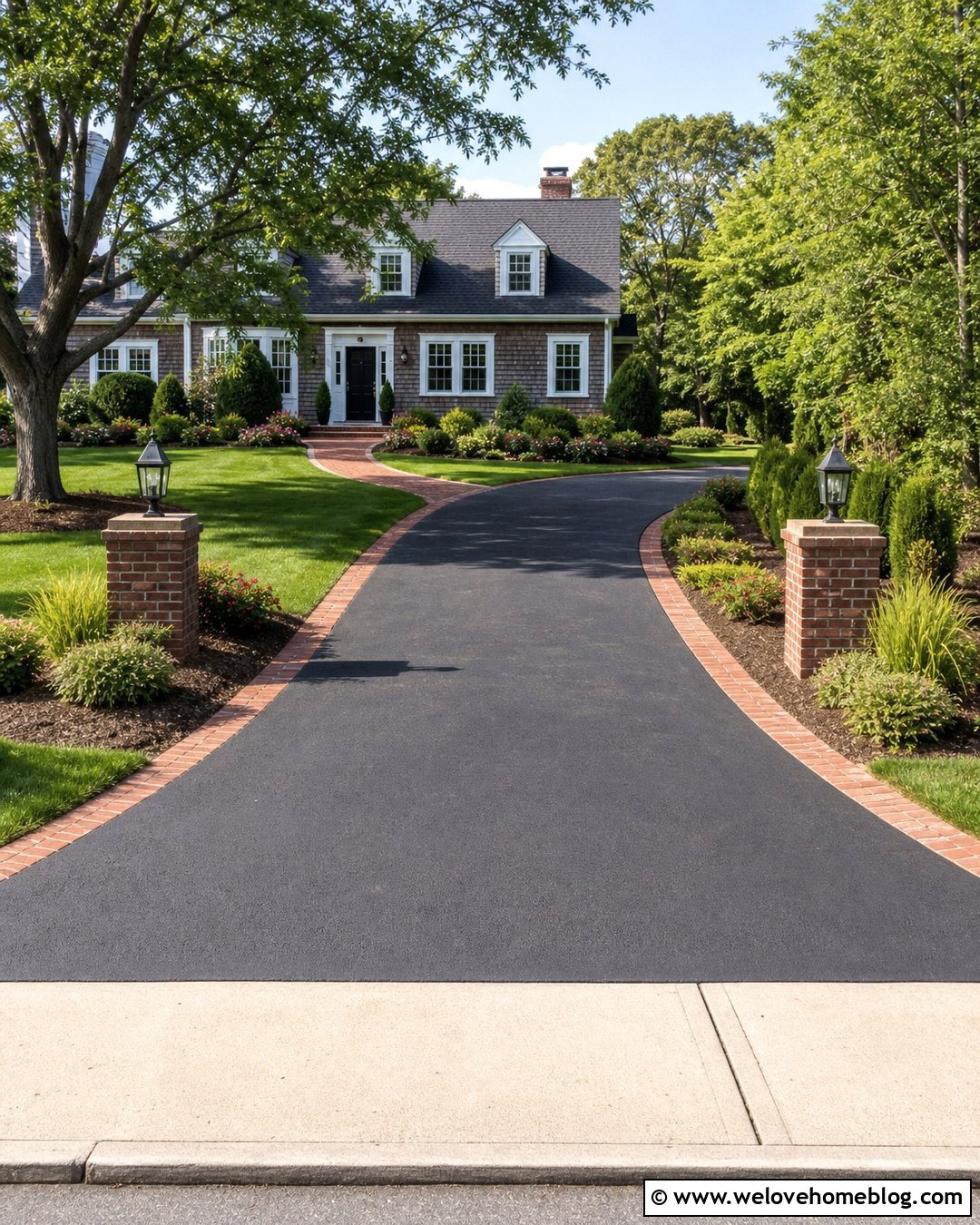
Black asphalt becomes much more attractive when the driveway entrance includes a crisp brick border and coordinated landscaping. Install red or charcoal clay bricks along both sides and across the apron to create a finished transition from the road. A slightly flared entrance gives drivers more turning room and makes a narrow driveway appear wider. Short brick columns with simple lanterns can mark the opening without requiring a gate. Around them, use curved mulch beds filled with dwarf evergreens, flowering perennials, and low ornamental grasses. Matching brick steps or a brick walkway leading toward the house will connect the entrance to the architecture. This practical combination is suitable for colonial, Cape Cod, and suburban homes where durability matters but plain asphalt needs more warmth and visual structure.
6. Circular Driveway Entrance With Central Landscaping
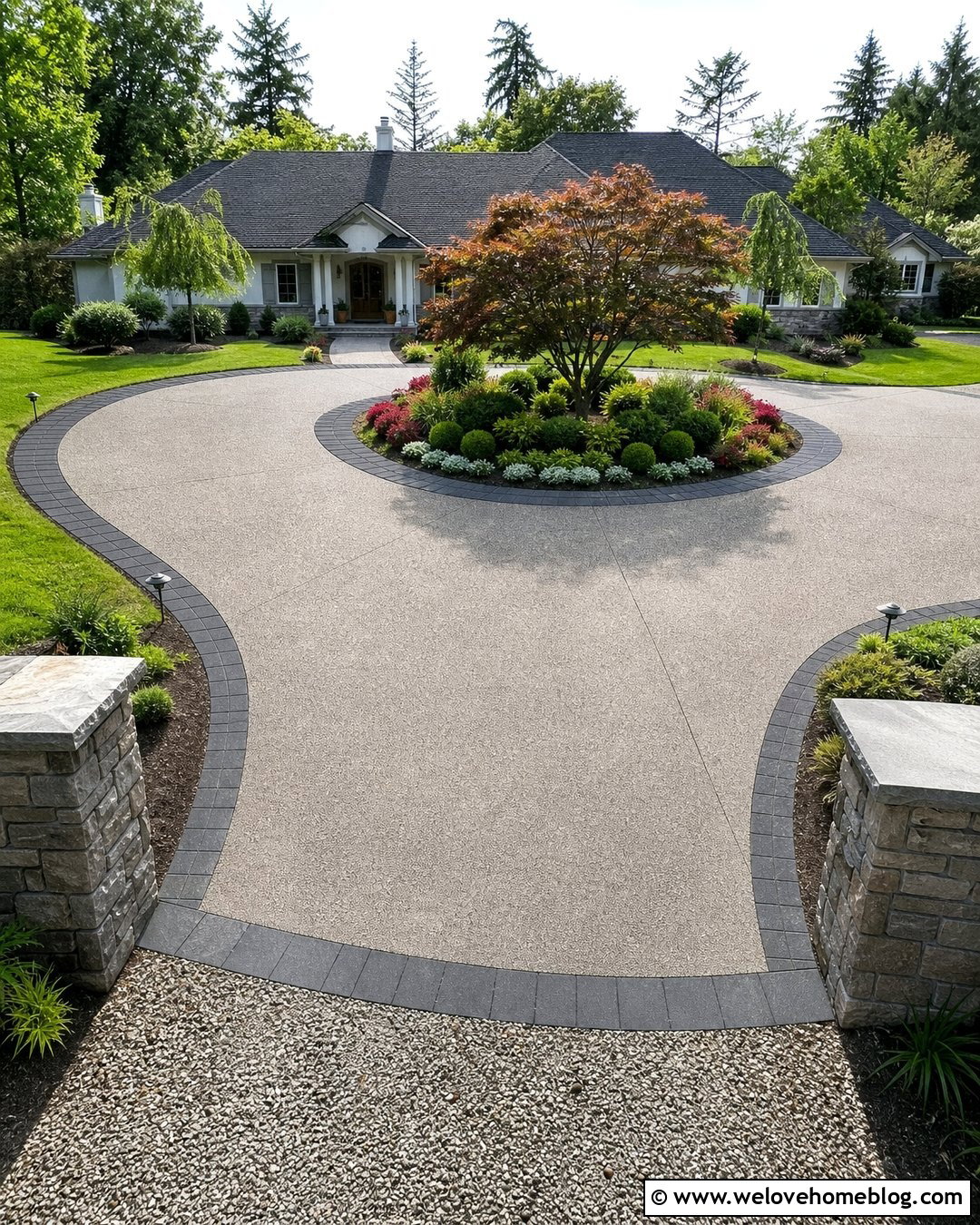
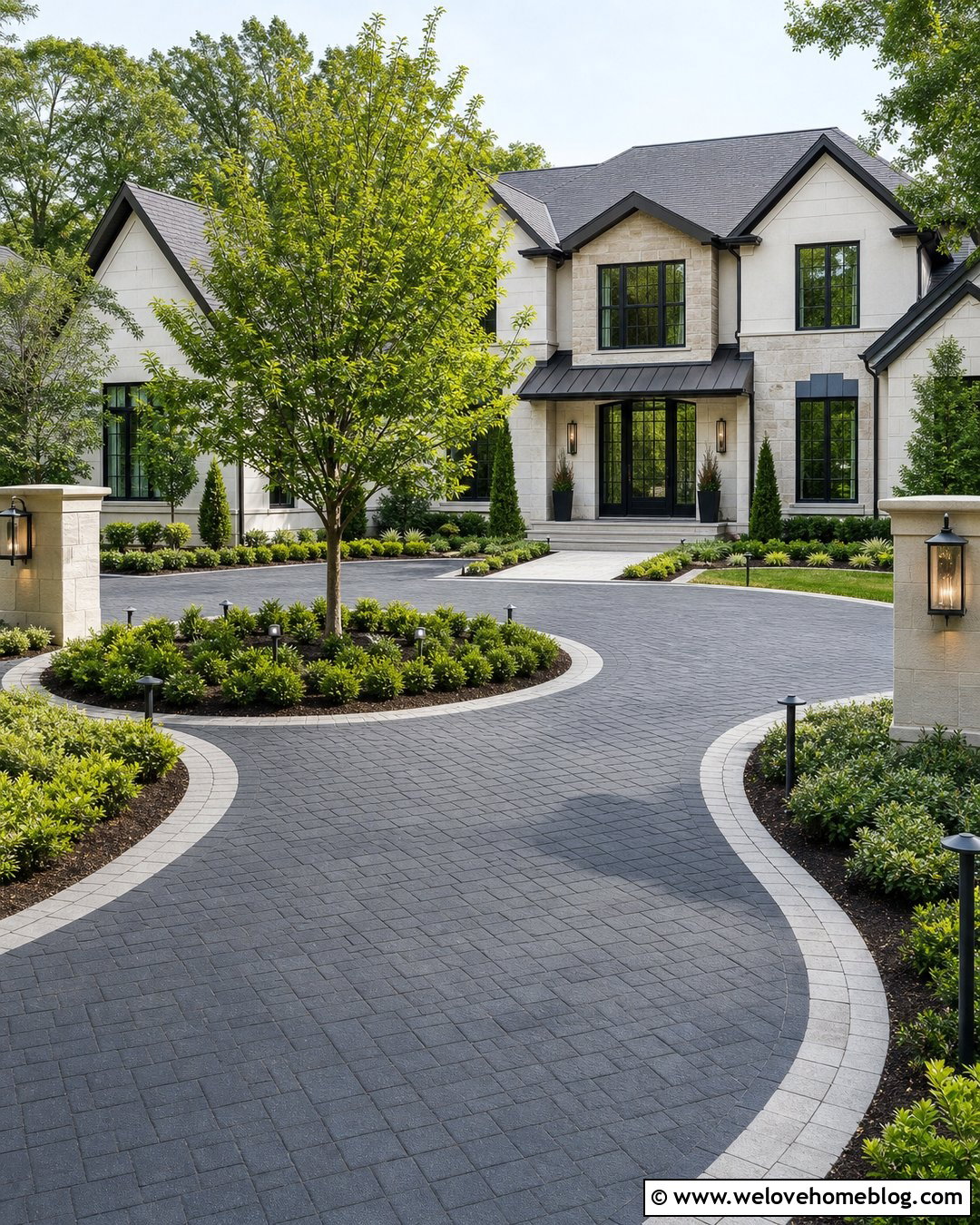
A circular driveway can create a graceful arrival sequence while giving vehicles room to enter and exit without backing toward the street. Use exposed aggregate concrete for the main surface and outline the curves with a contrasting charcoal paver ribbon. The central island should feel connected to the entrance rather than becoming an overgrown obstacle. A small ornamental tree, clipped shrubs, layered perennials, and ground cover provide height without blocking views across the circle. Place matching stone markers at the two driveway openings to make the route easy to understand. Low landscape lighting can trace the inner curve and highlight the planting. This arrangement works well for broad ranch homes, traditional estates, and large suburban properties with enough front-yard depth to accommodate comfortable turning space.
7. Cobblestone Driveway Entrance With Lantern Pillars
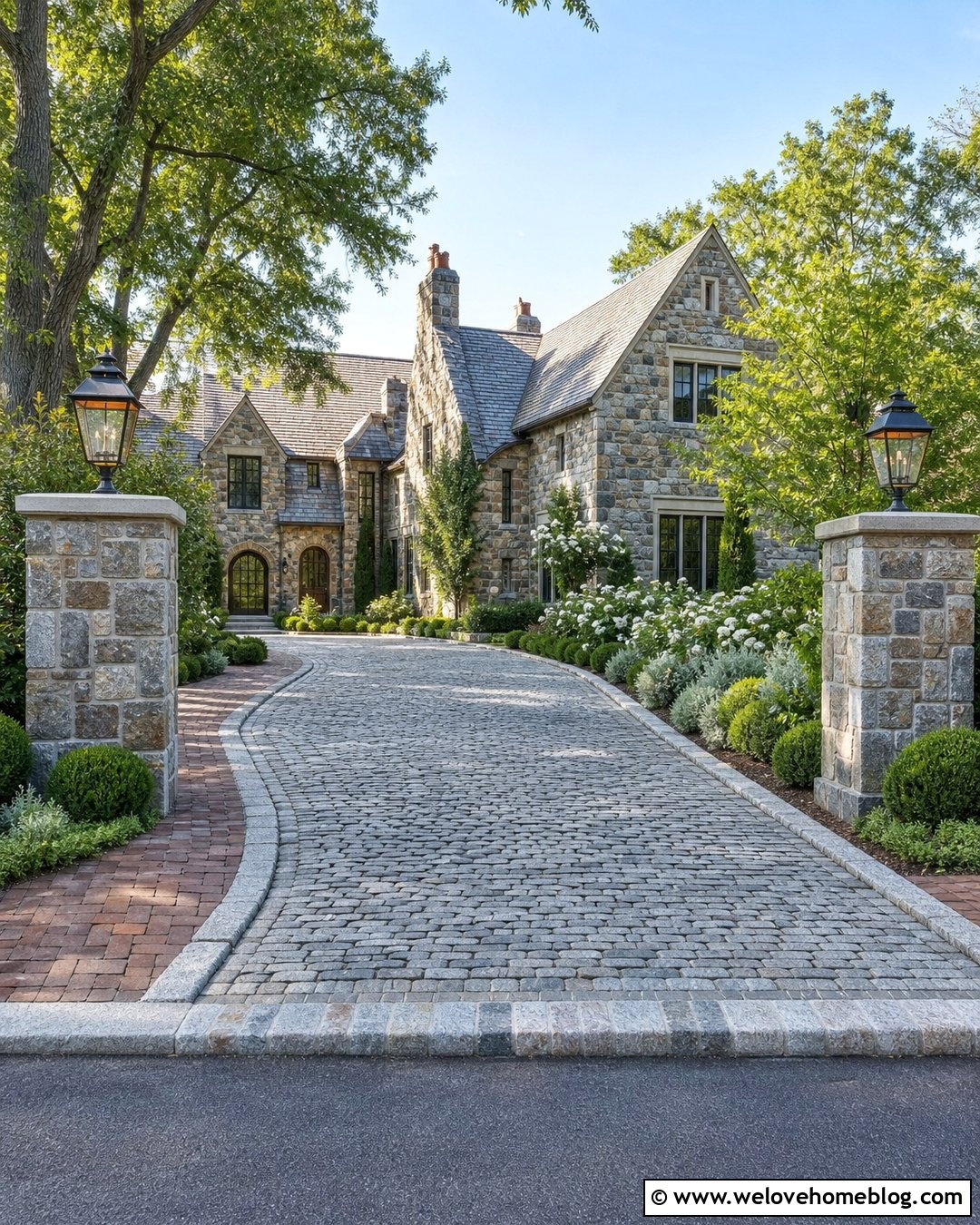
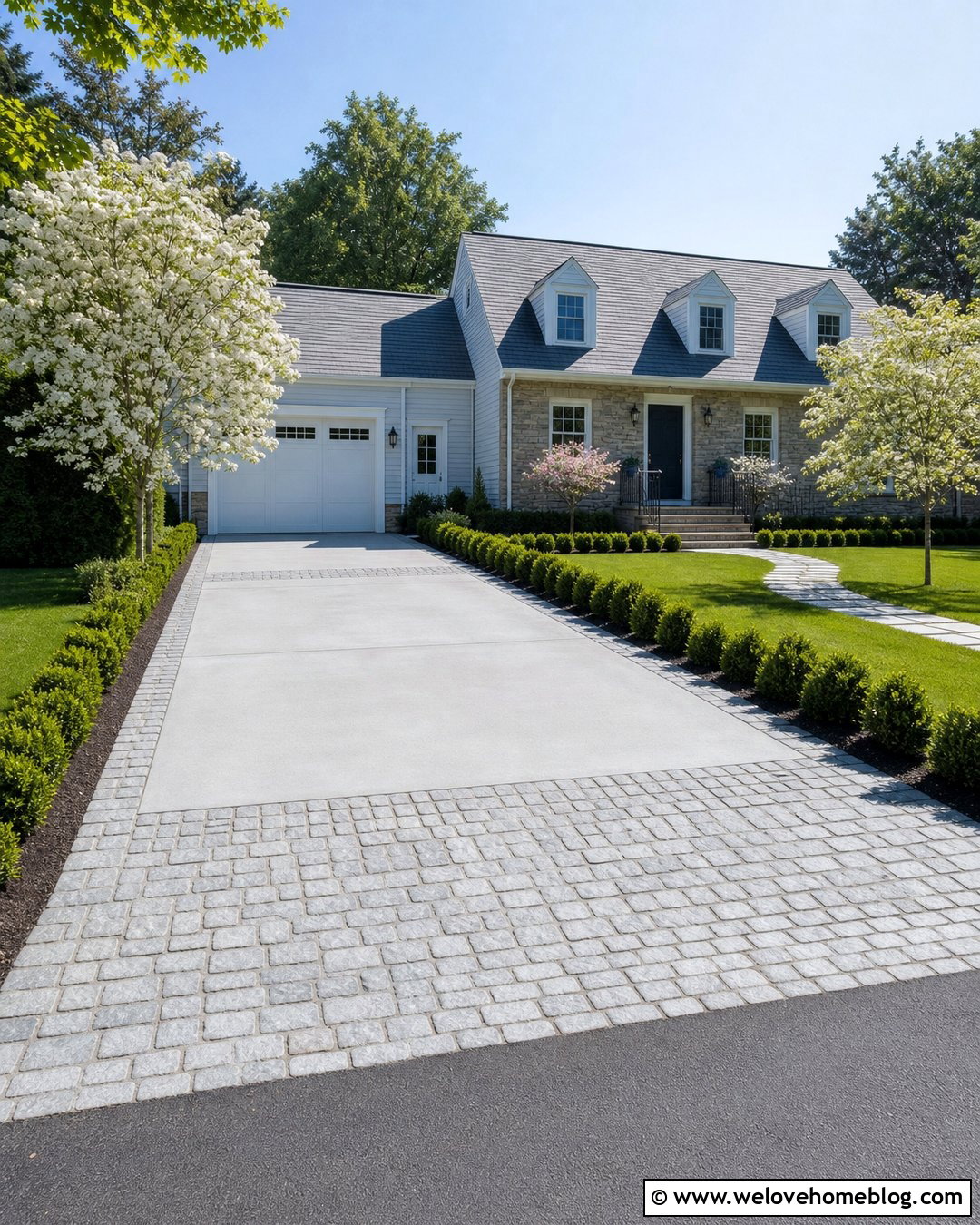
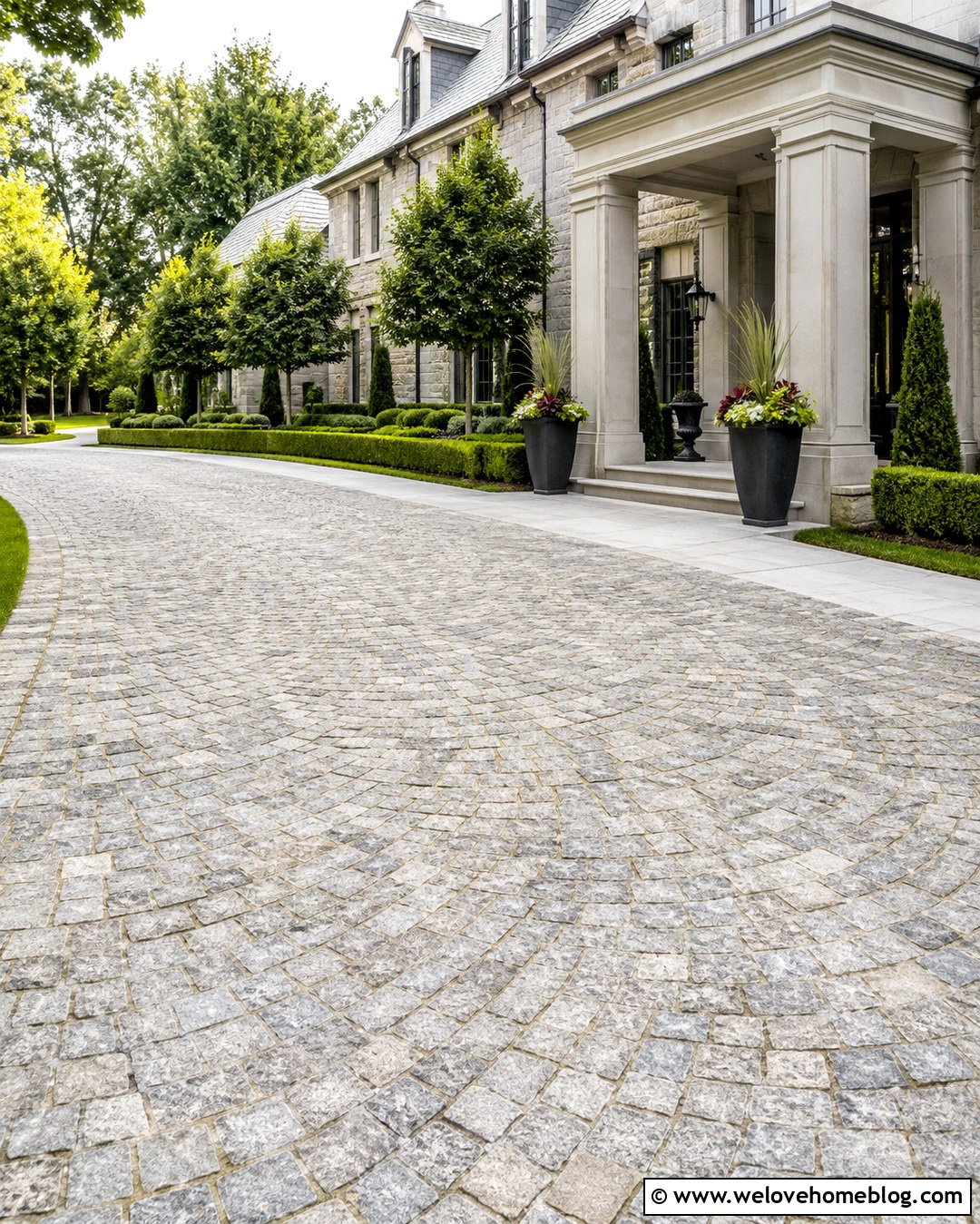
Cobblestone gives a driveway entrance rich texture and a sense of permanence. To keep the surface visually balanced, use full cobblestones across the entrance apron and continue them into a straight or curved driveway. Granite setts in mixed gray tones are especially effective beside stone, brick, or stucco homes. Substantial masonry pillars topped with classic lanterns can frame the entry and repeat materials from the home’s facade. Soft planting is essential because it prevents the stonework from feeling heavy. Add low boxwood, white roses, sage, and trailing ground cover around the pillar bases. A smooth stone or brick walkway beside the driveway provides a more comfortable pedestrian route. This complete look suits traditional homes, European-inspired residences, and properties with mature trees or formal front gardens.
8. Paver Driveway Entrance With Curved Flower Beds
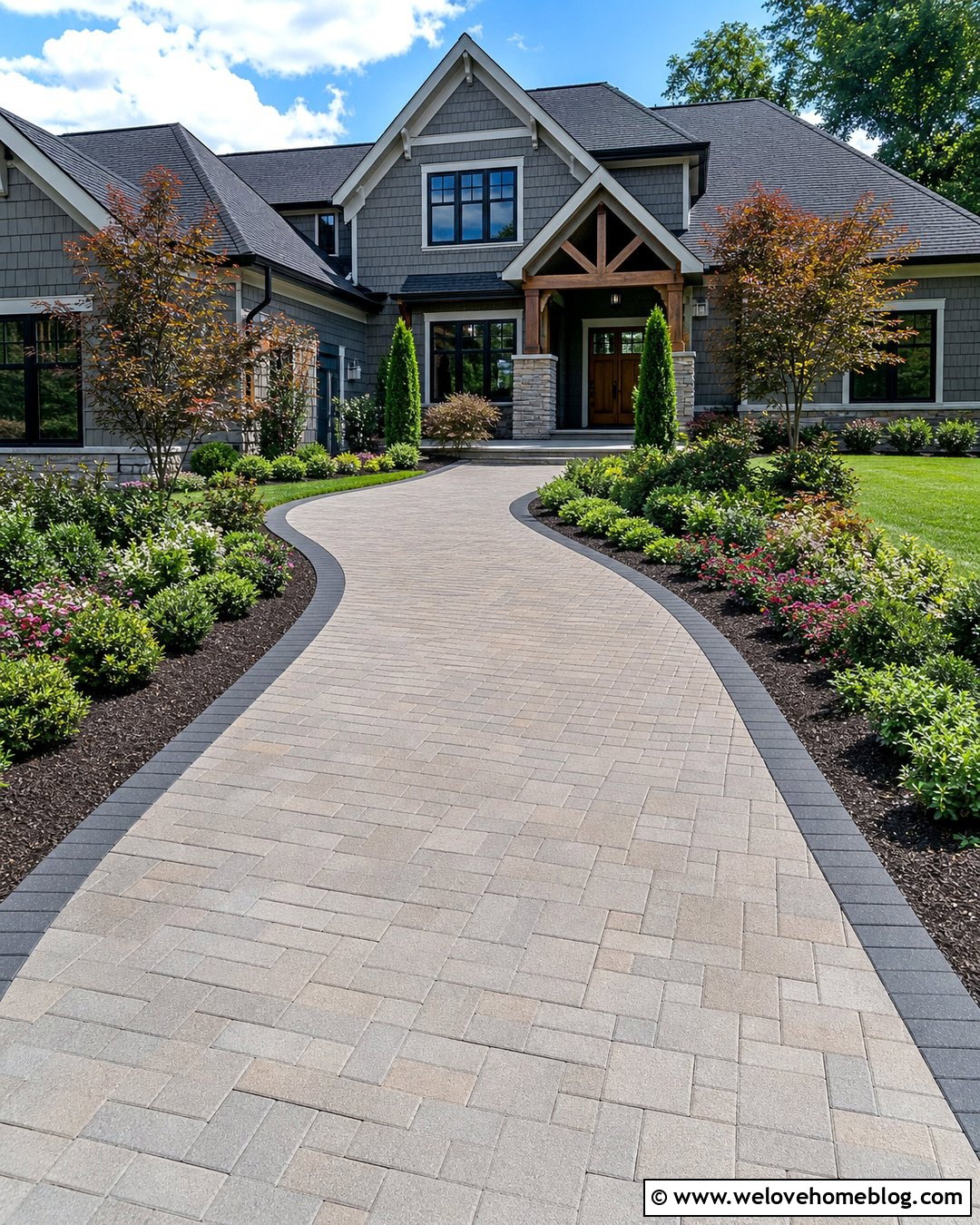
Interlocking concrete pavers create a versatile driveway entrance that can be tailored to nearly any home. Choose warm gray or taupe pavers in a running bond pattern, then form a gentle entrance curve using a darker soldier-course border. Curved flower beds should follow the same lines so the paving and landscaping feel like one planned design. Layer compact evergreens at the back, flowering perennials through the middle, and low ground cover near the driveway edge. A small ornamental tree on each side can create symmetry without requiring large pillars. Include a wide paver apron where the driveway meets the street for a clear and durable entry point. This approachable design complements craftsman, transitional, and contemporary suburban houses while remaining easy to adapt to different yard sizes.
9. Resin Driveway Entrance With Corten Steel Edging
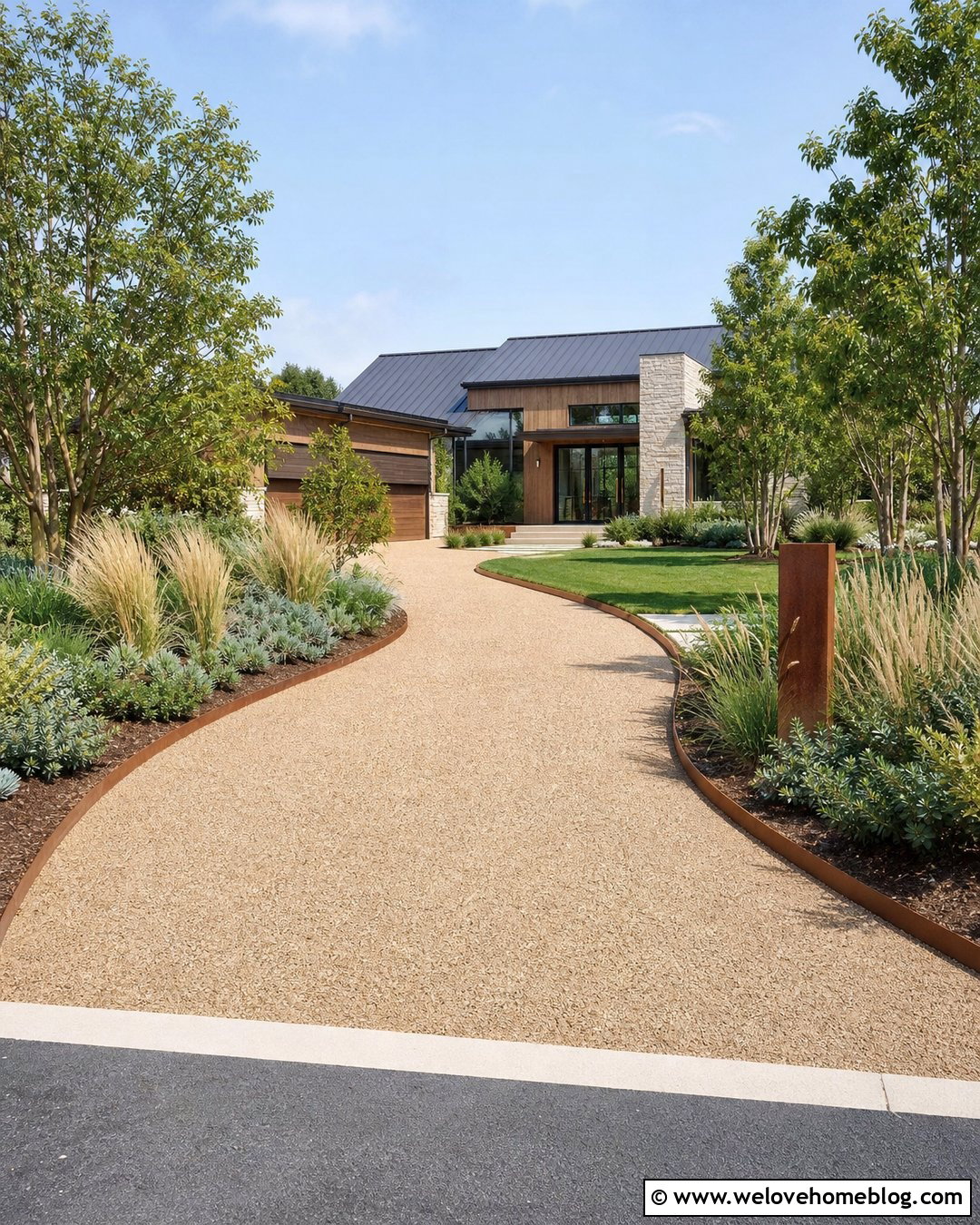
A resin-bound gravel driveway offers a smooth, clean appearance that pairs beautifully with contemporary landscaping. Select a warm beige or light gray aggregate blend and shape the entrance with a subtle curve toward the garage. Corten steel edging provides a thin, precise border while adding a natural rust tone that becomes more distinctive over time. Repeat the steel in a rectangular address sign or low planter near the entrance. Plant drifts of feather reed grass, sedges, and drought-tolerant perennials around the edges to soften the modern materials. A row of small multi-stem trees can guide the eye toward the house. Keep gates and tall walls out of this design so its open character remains intact. The result feels modern, welcoming, and visually lighter than a conventional paved driveway.
10. Small Driveway Entrance With Low Landscaping
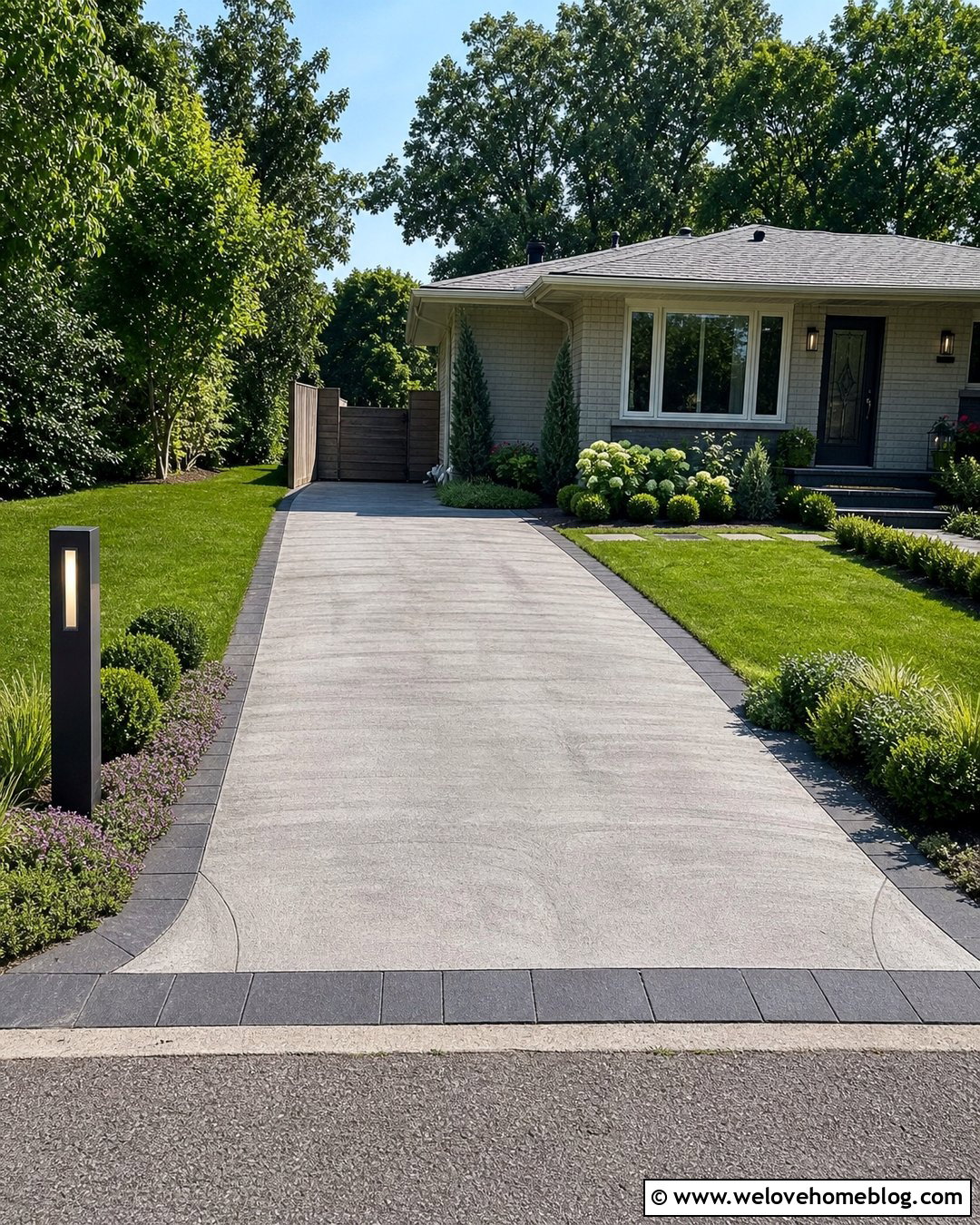
Limited frontage does not prevent a small driveway entrance from looking finished and welcoming. A light gray concrete driveway with a narrow charcoal paver border can visually organize the space without making it feel crowded. Slightly flare the apron at the street, then use compact planting beds that follow its edges. Dwarf boxwood, creeping thyme, compact grasses, and seasonal flowers provide color while staying below driver sightlines. Instead of large pillars, add one slim address post with an integrated light near the pedestrian side. A coordinating paver walkway can branch toward the front door, clearly separating foot traffic from vehicle space. This design works particularly well for bungalows, townhomes, and compact suburban houses. Keep the plant palette simple, repeating only a few varieties for a cleaner appearance.
11. Long Driveway Entrance With Tree-Lined Borders
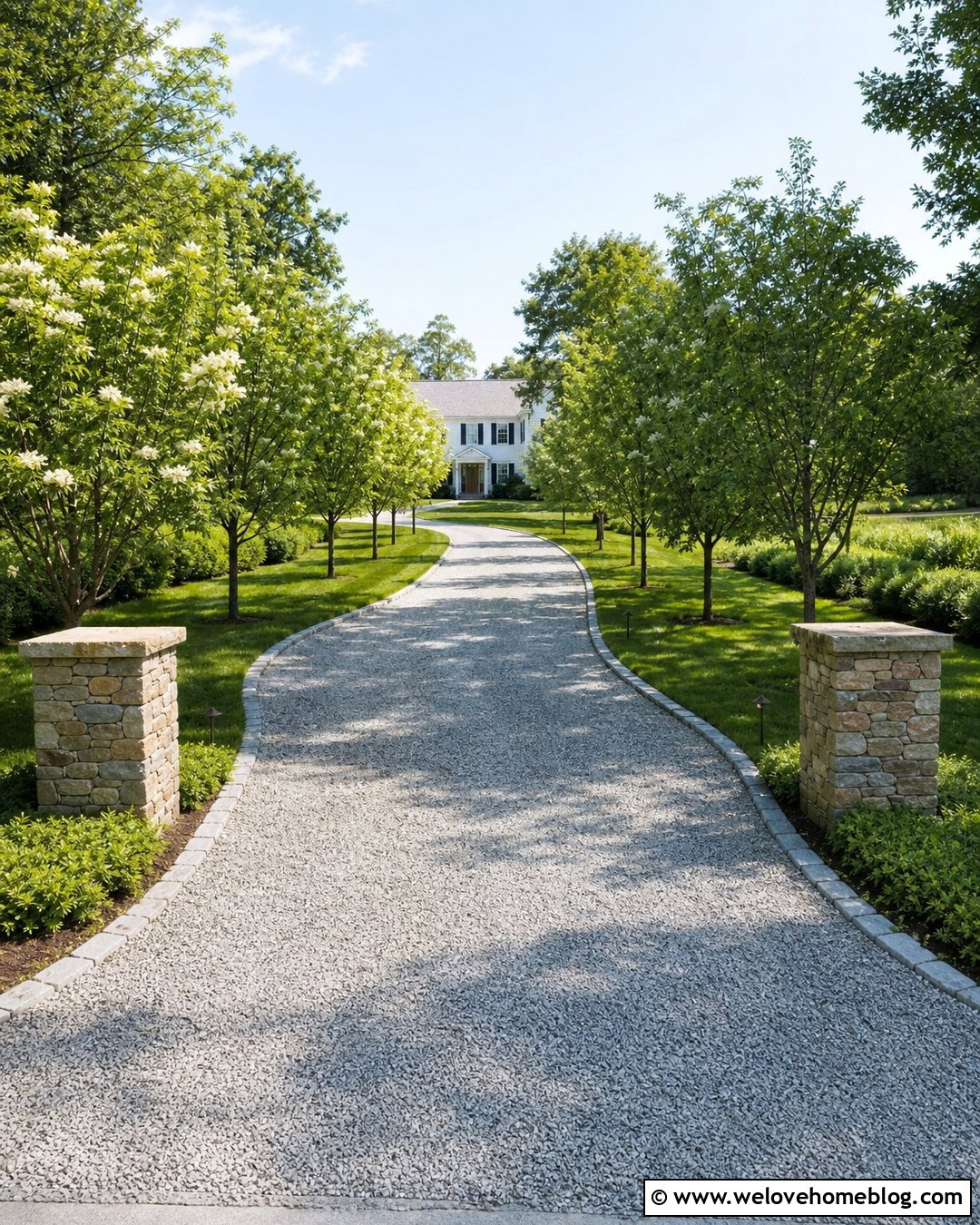
A long driveway becomes more inviting when the entrance provides a clear preview of the route ahead. Begin with a wide gravel apron edged in brick or granite, then continue the driveway in a gentle curve toward the house. Evenly spaced ornamental trees can frame both sides without forming a dark tunnel. Serviceberry, redbud, and smaller maple varieties offer seasonal interest at a manageable scale. Underplant the trees with mowed grass, low native ground cover, or simple mulch beds for a tidy appearance. Stone entrance markers and a visible address plaque establish the property line, while low lights help define the first portion of the drive. This composition suits large country lots and wooded properties, where the landscaping can connect the street entrance to a distant farmhouse, colonial, or craftsman home.
12. Coastal Driveway Entrance With White Gate
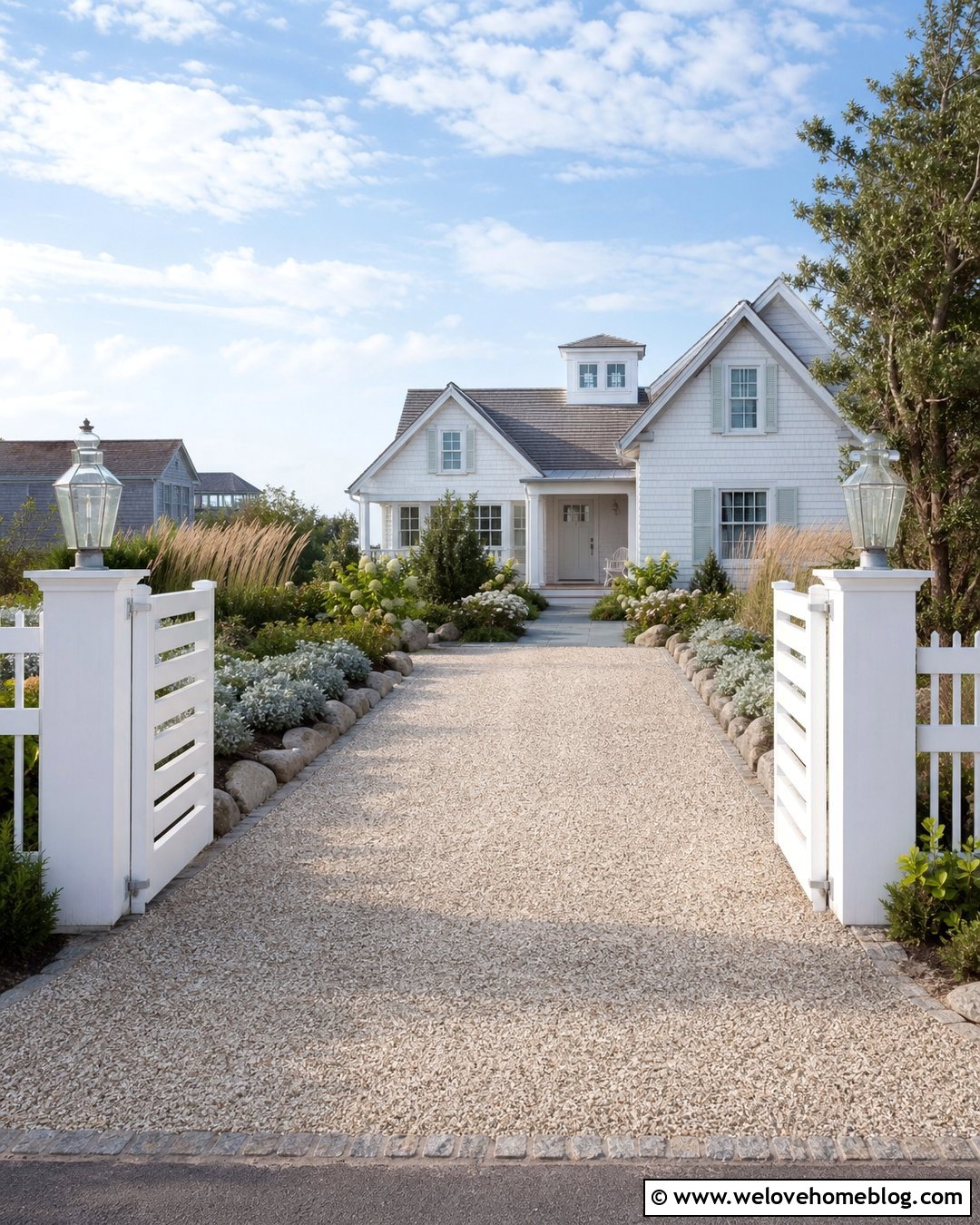
A white gate and pale paving create a fresh driveway entrance that feels appropriate for coastal and cottage-style homes. Use light sand-colored concrete pavers or oyster-toned resin-bound gravel in a straight layout with a softly flared apron. Frame the opening with white-painted posts and a simple slatted gate that allows light and visibility through the entrance. Natural stone edging can add texture without introducing a heavy color. Surrounding beds should feature salt-tolerant grasses, compact hydrangeas, low junipers, and silvery foliage. A shell-inspired gravel strip or bluestone walkway can lead pedestrians toward the porch. Keep accessories understated, using brushed metal house numbers and clear glass lanterns. The complete design should feel bright and breezy rather than themed, with materials chosen for a clean and relaxed appearance.
13. Rustic Driveway Entrance With Split-Rail Fence
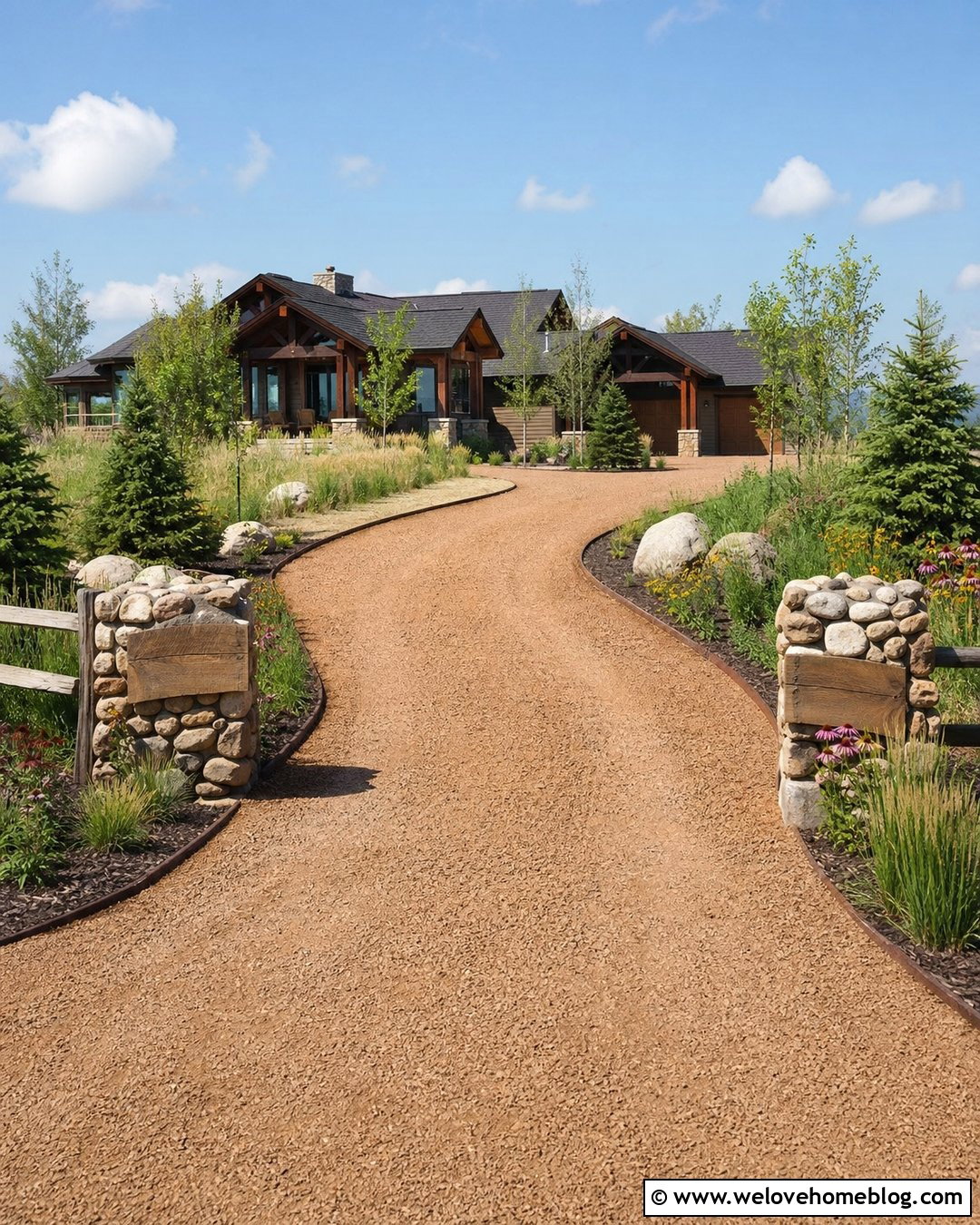
A rustic driveway entrance should feel connected to the land while still providing a clear, durable route to the house. Use compacted brown gravel in a curved layout, contained by large natural stones or dark timber edging. Extend a split-rail fence from both sides of the opening to frame the drive and establish the property boundary. Instead of matching columns, use simple fieldstone markers with a wooden address plaque on one side. Native grasses, coneflowers, black-eyed Susans, and clusters of evergreen shrubs can blend the entrance into a meadow or wooded yard. A few irregular boulders add structure, but they should sit well beyond vehicle clearance. This complete look works well with cabins, ranch houses, country cottages, and homes surrounded by mature natural landscaping.
14. Colonial Driveway Entrance With Brick Columns
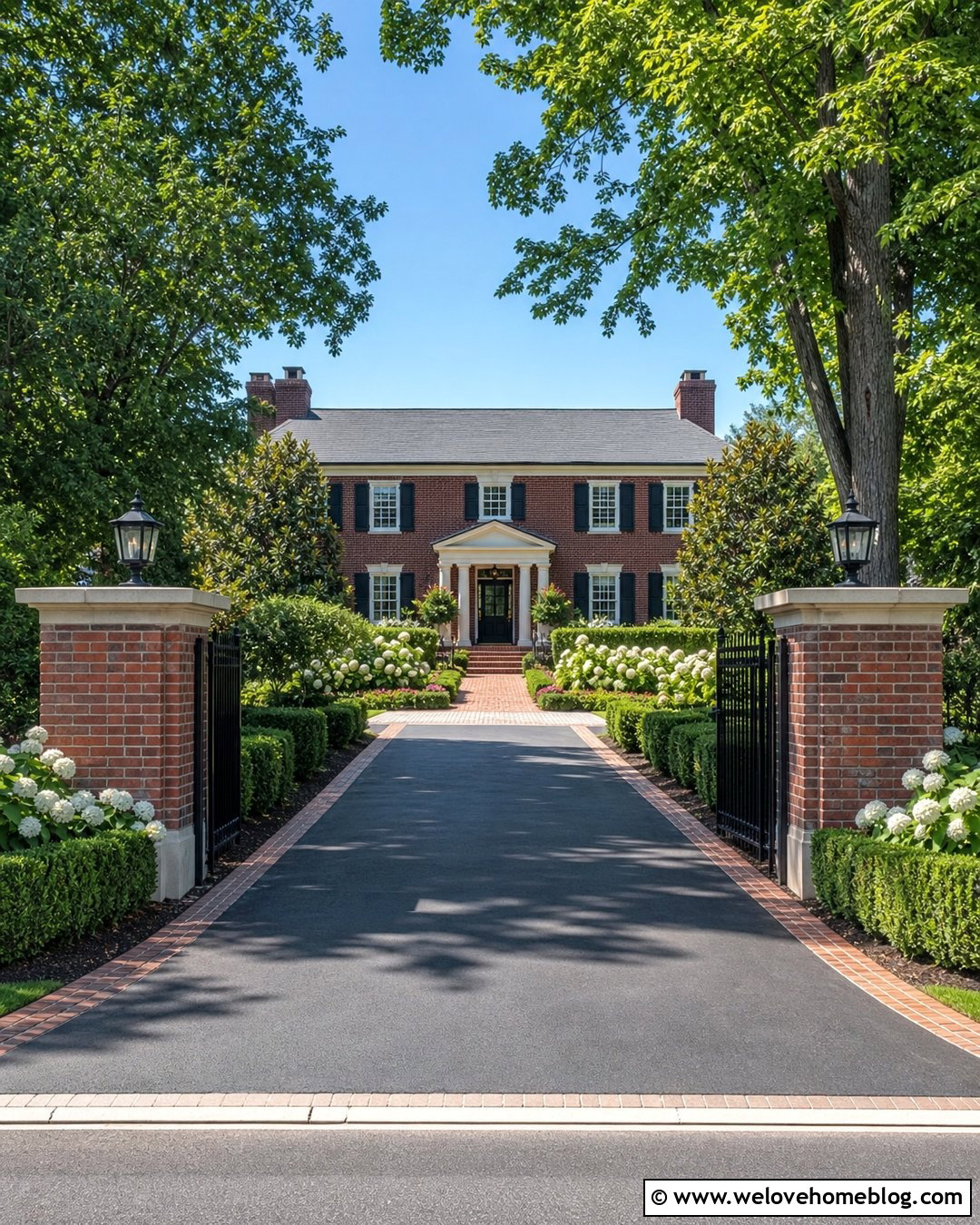
Symmetry is the key to a colonial driveway entrance that feels connected to the home. Begin with a straight asphalt or charcoal concrete driveway framed by red brick edging. At the street, install two evenly proportioned brick columns with pale stone caps and traditional black lanterns. Match the brick as closely as possible to the house facade or chimney. Formal planting beds can wrap around the columns using boxwood, inkberry, white hydrangeas, and low seasonal flowers. Continue the symmetry with evenly spaced trees or shrubs along the first section of the driveway. If a gate is included, choose a restrained black metal design with simple vertical bars. A brick walkway toward the front door completes the visual connection and helps the entrance feel planned rather than added separately.
15. Craftsman Driveway Entrance With Stone Walls
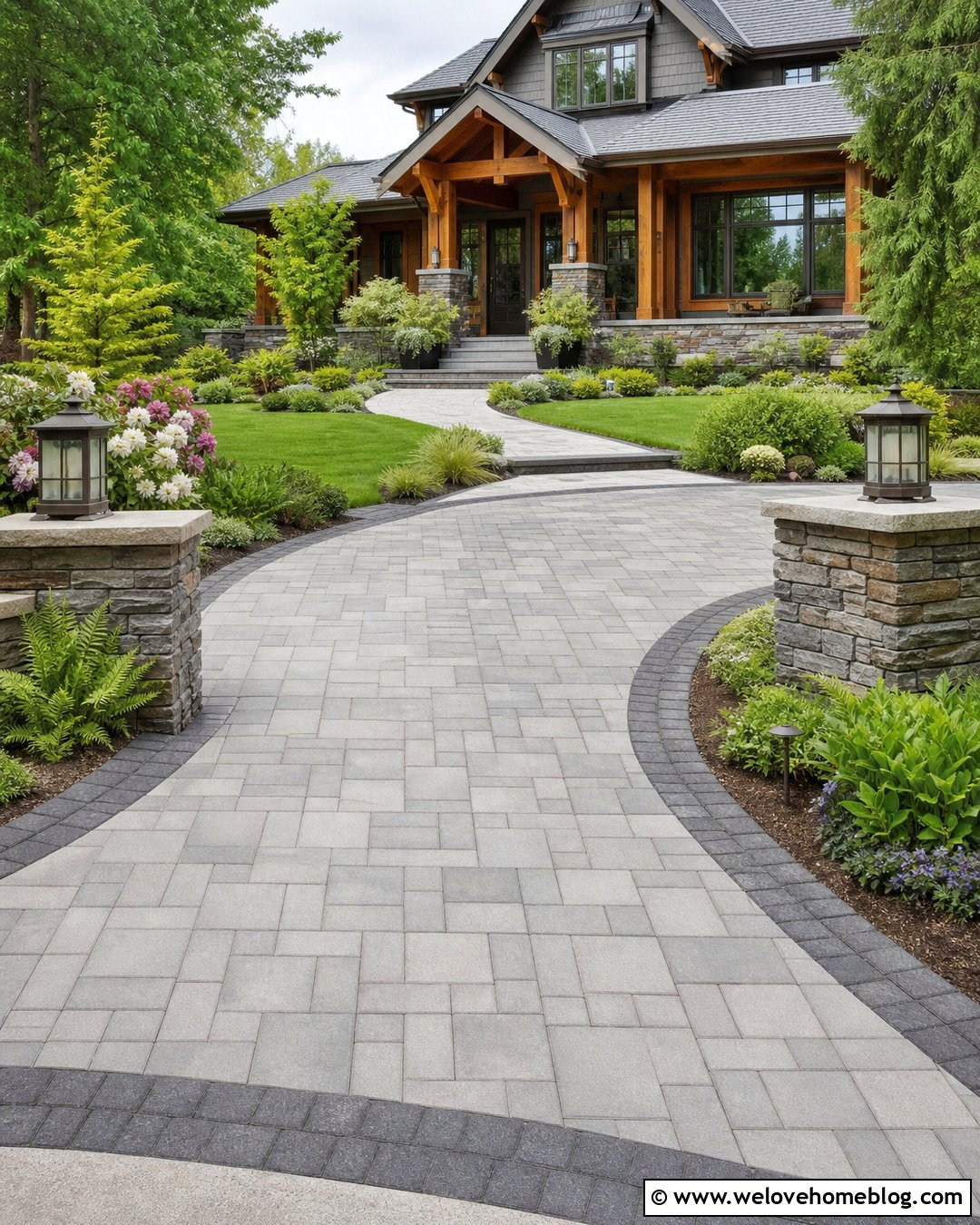
Natural materials give a craftsman driveway entrance the handcrafted character associated with this architectural style. Use warm gray concrete pavers in a subtle basket-weave or modular pattern, bordered by darker stone setts. Low tapered walls built from ledgestone can mark the opening without interrupting views of the front yard. Cap the walls with smooth stone and incorporate broad lanterns that echo the home’s porch lighting. Landscape around the walls with ferns, compact rhododendrons, ornamental grasses, and spreading ground covers. A gently curved driveway will feel more relaxed than a rigid straight approach and can reveal the house gradually. Repeat the stone in the front steps or walkway for continuity. This complete design works especially well when the house has timber details, deep eaves, and a welcoming covered porch.
16. Desert Driveway Entrance With Stone and Agave
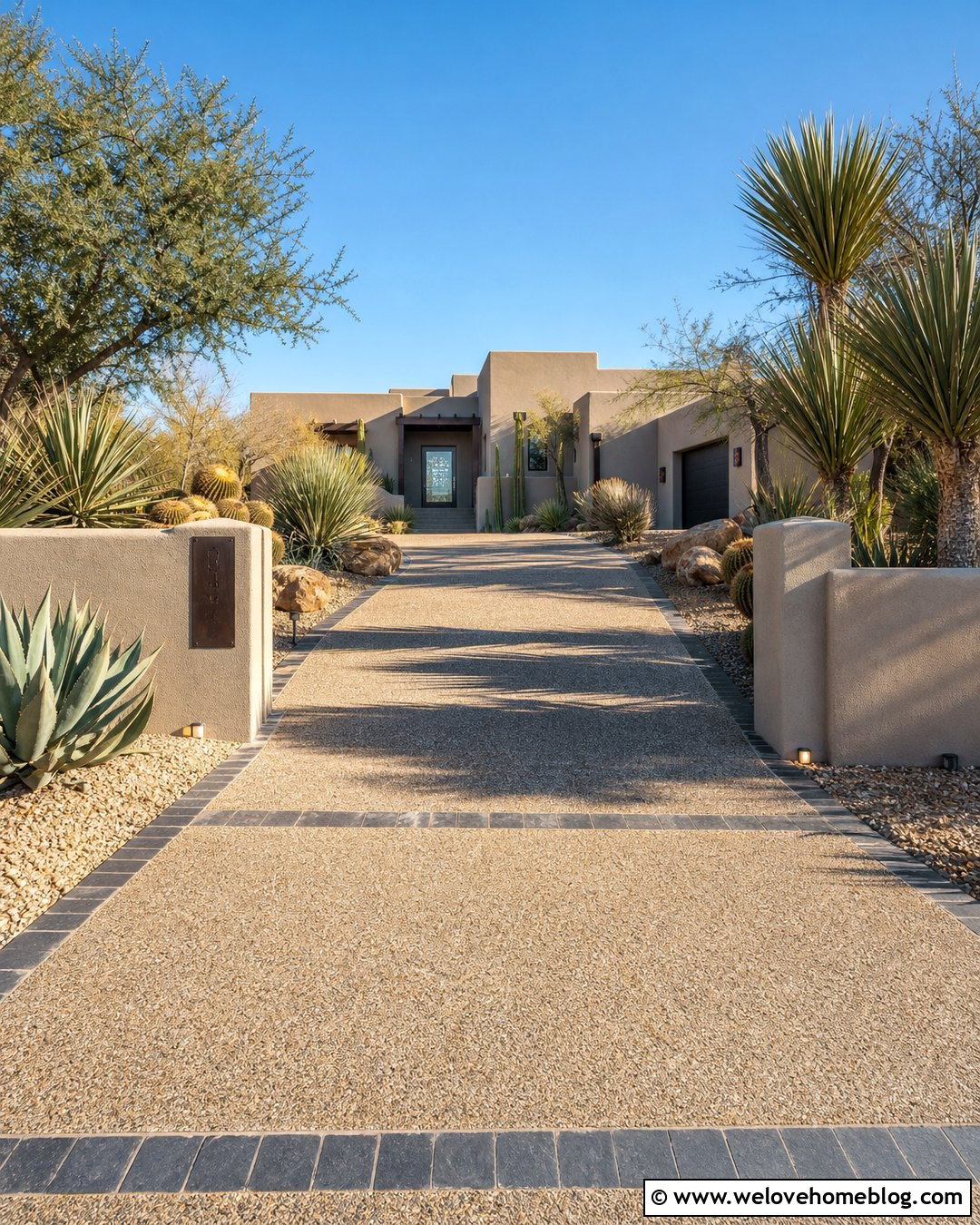
A desert driveway entrance can look dramatic without relying on thirsty lawns or dense flower beds. Use light tan exposed aggregate concrete in a wide straight layout, accented by bands of darker stone pavers across the apron. Low stucco entrance walls in a color matching the house can establish the property while keeping the view open. Group agaves, yuccas, barrel cacti, and upright desert grasses in gravel-covered beds on both sides. Place larger boulders behind the low plants so they add depth without creating a driving hazard. A steel address panel and simple downlights can provide a clean focal point. This composition works with Southwestern, adobe, ranch, and modern homes. Generous open space between plants keeps the entrance uncluttered and highlights each sculptural form.
17. Cottage Driveway Entrance With Flower Borders
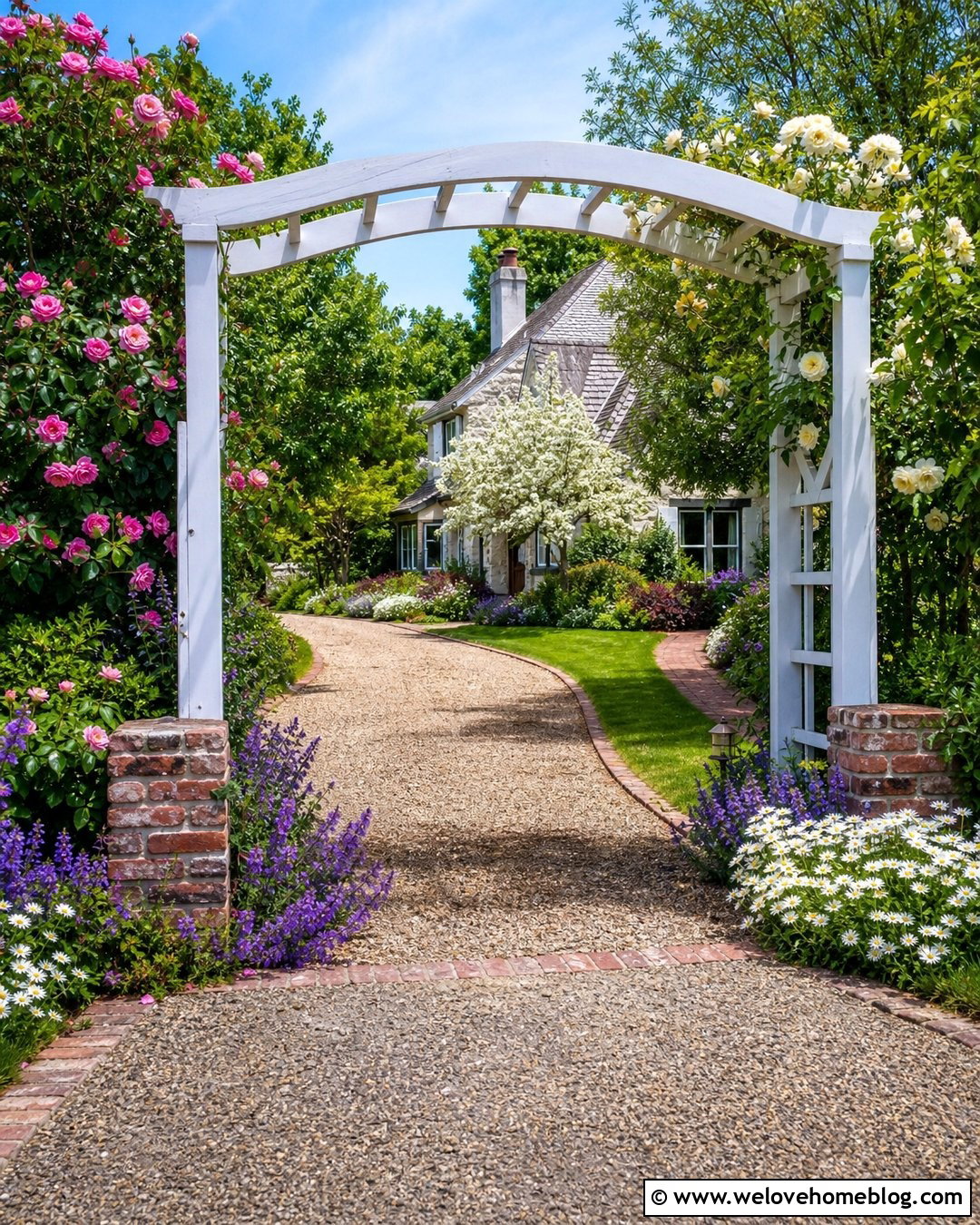
Flower-filled borders can make a cottage driveway entrance feel welcoming from the street, but the underlying design still needs clear structure. Choose warm pea gravel for a gently curved drive and contain it with reclaimed brick or cobblestone edging. A simple painted wooden gate or open arbor can mark the entry without making it feel formal. Layer roses, salvia, catmint, daisies, and compact hydrangeas along both sides, keeping taller plants farther from the driveway apron. Small flowering trees can frame the view toward the house and provide spring interest. Add a narrow brick walkway where pedestrians enter, using the same material as the driveway border. The finished look suits cottage, Cape Cod, and storybook-inspired homes, combining practical vehicle access with soft, abundant garden character.
18. Contemporary Driveway Entrance With Address Wall
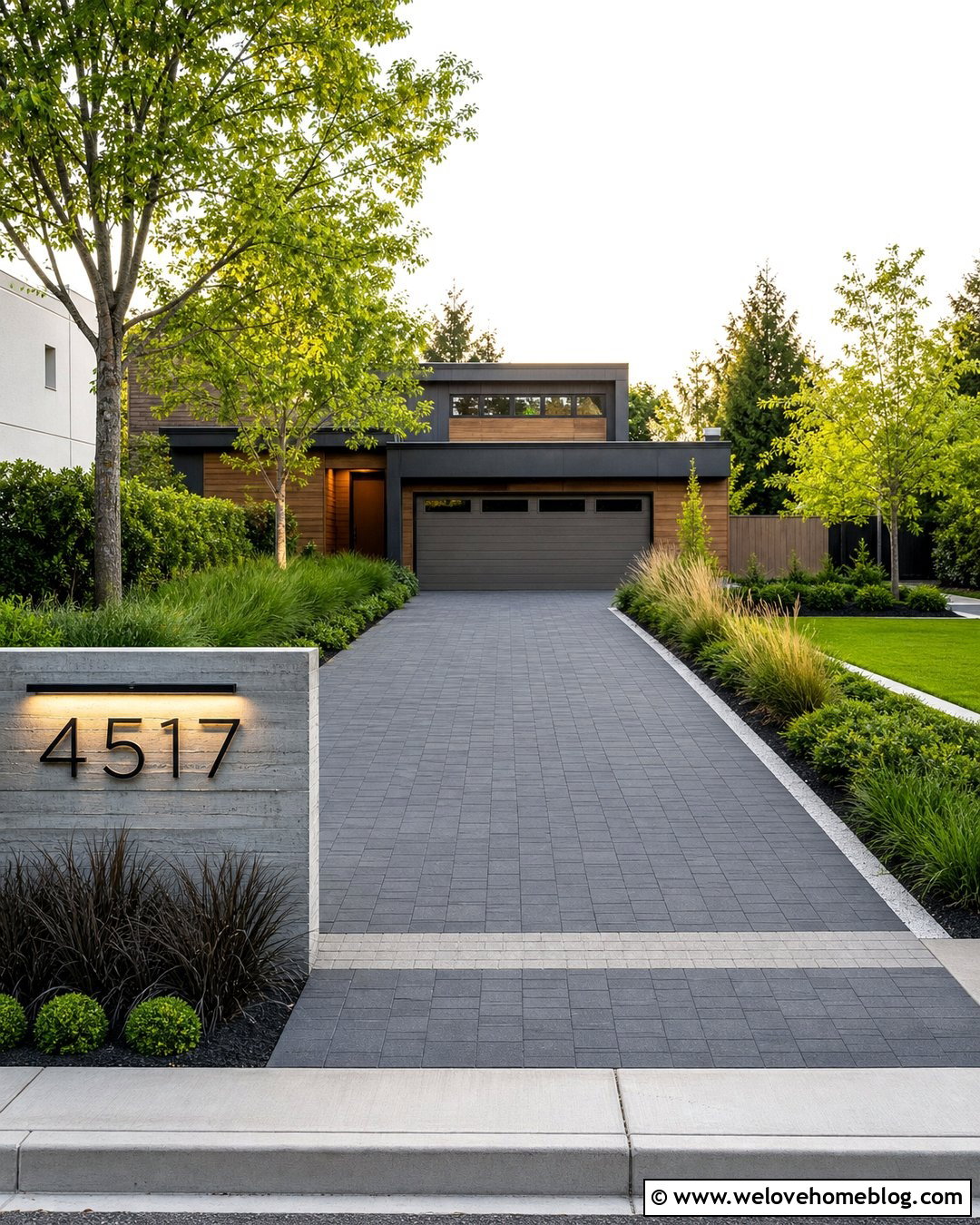
A low address wall can turn a simple contemporary driveway entrance into a memorable architectural feature. Use charcoal concrete pavers or smooth gray poured concrete for a straight, streamlined approach. Position the wall on one side of the apron so it remains highly visible without narrowing the vehicle path. Smooth stucco, board-formed concrete, or stacked stone can coordinate with the home’s exterior. Add large metal house numbers and a concealed LED wash light for easy identification. Balance the opposite side with a matching planting bed rather than a second wall. Repeating grasses, low evergreen mounds, and one sculptural tree will soften the geometry. A narrow paver band across the driveway can visually connect both sides and clearly announce the transition from public street to private property.
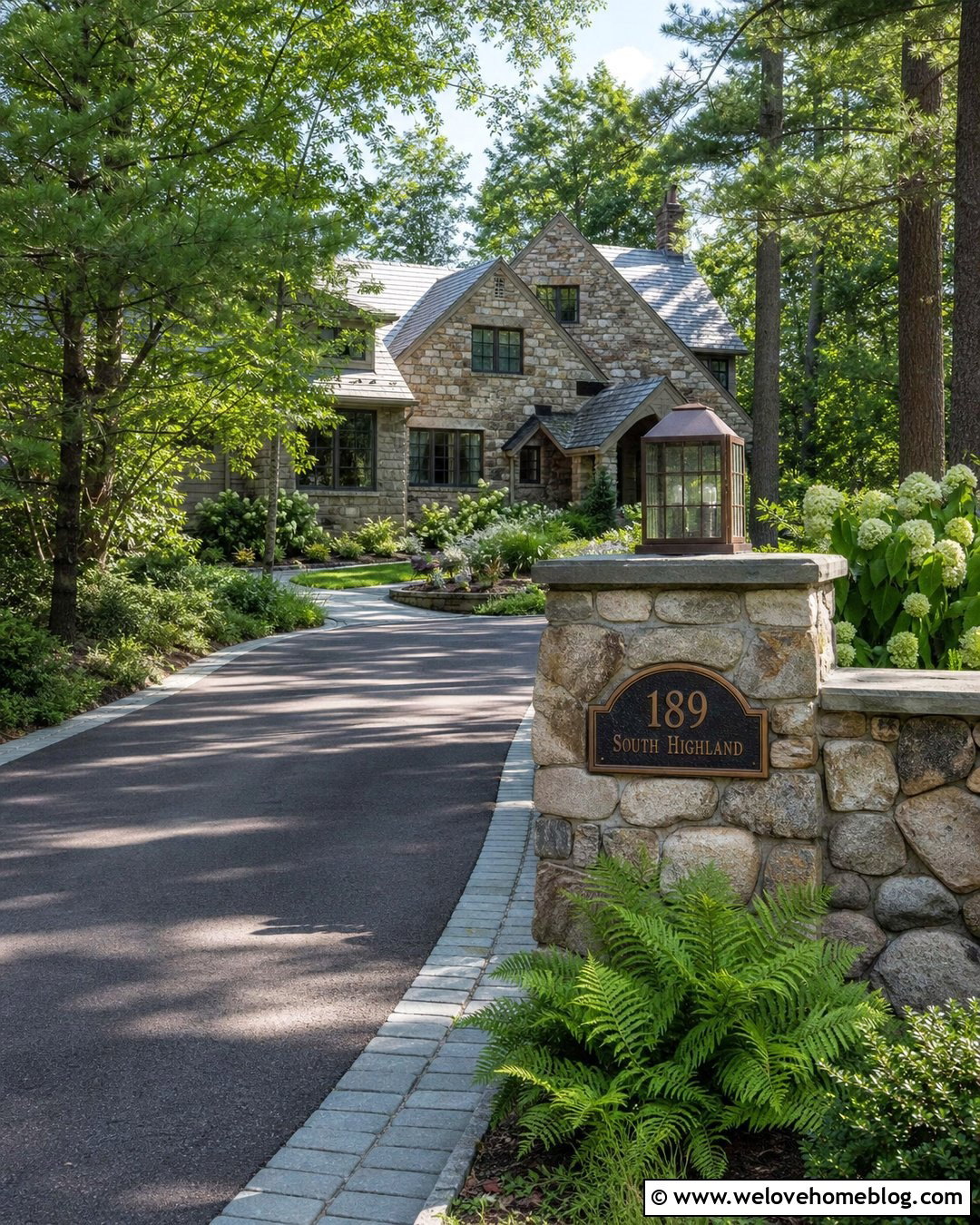
19. Wooded Driveway Entrance With Natural Stone Borders
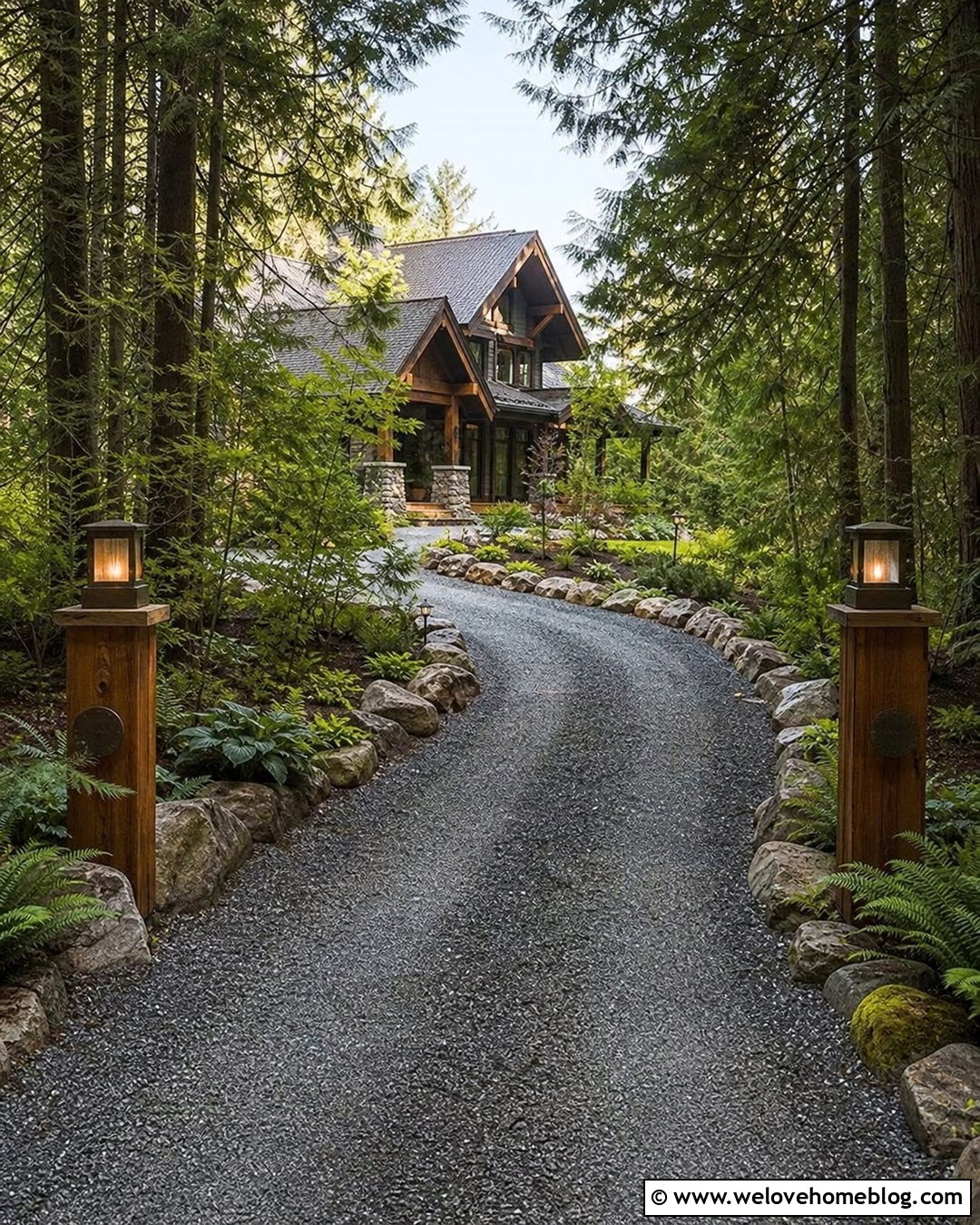
A wooded driveway entrance looks best when it respects the existing trees and uses materials that blend into the setting. Begin with dark gray crushed gravel laid in a gentle curve, allowing the approach to move naturally between mature trunks. Broad fieldstone edging can contain the gravel while echoing rocks already found on the site. Install low stone pillars or timber posts near the street, but avoid oversized structures that compete with the landscape. Shade-tolerant ferns, hostas, woodland sedges, and native shrubs can fill planting pockets along the borders. Subtle lighting should point downward to define the entrance without overpowering the natural atmosphere. This complete design complements cabins, mountain homes, craftsman houses, and secluded contemporary residences while maintaining a clear, well-kept arrival route through the trees.
20. Budget Driveway Entrance With Gravel and Timber Edging
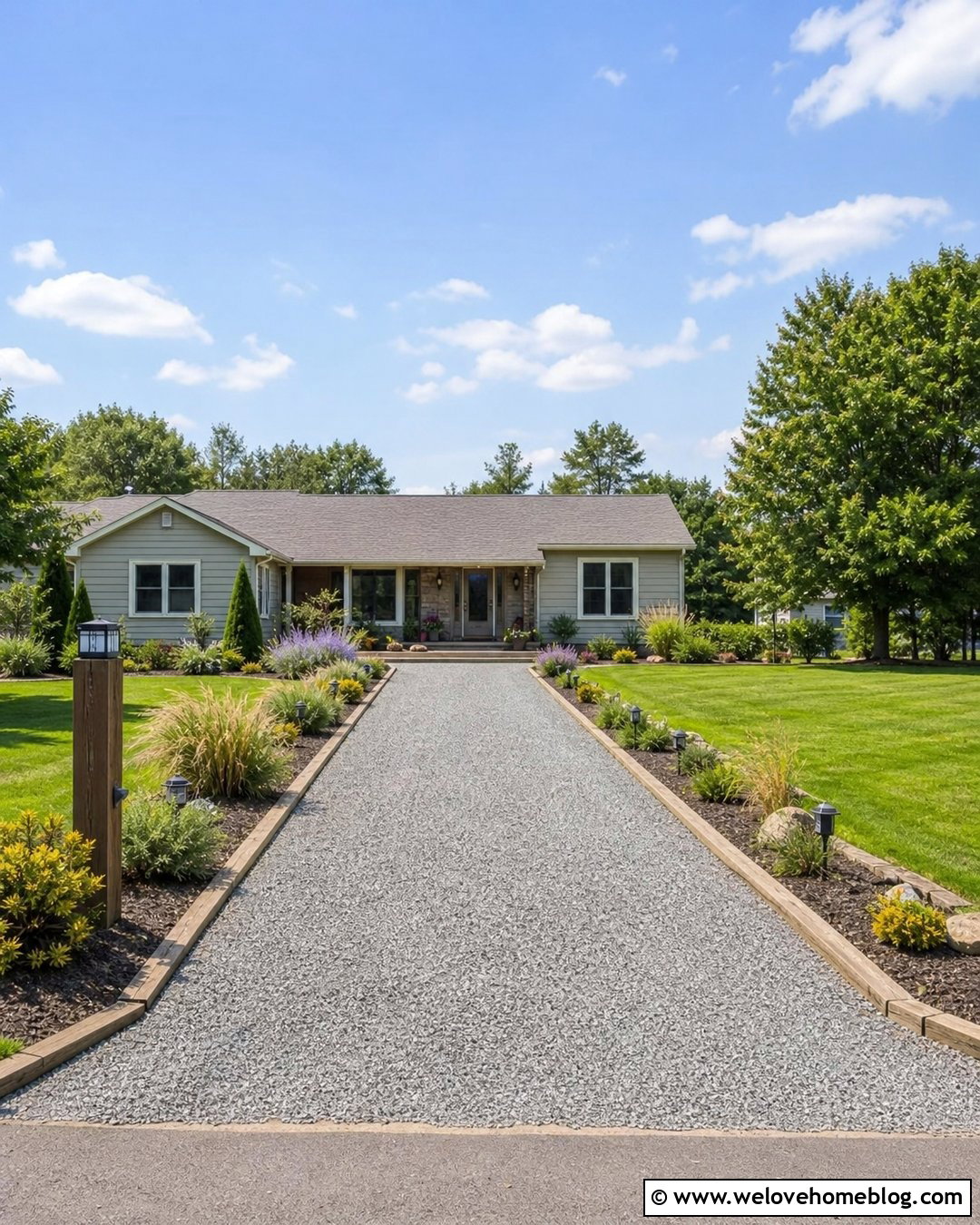
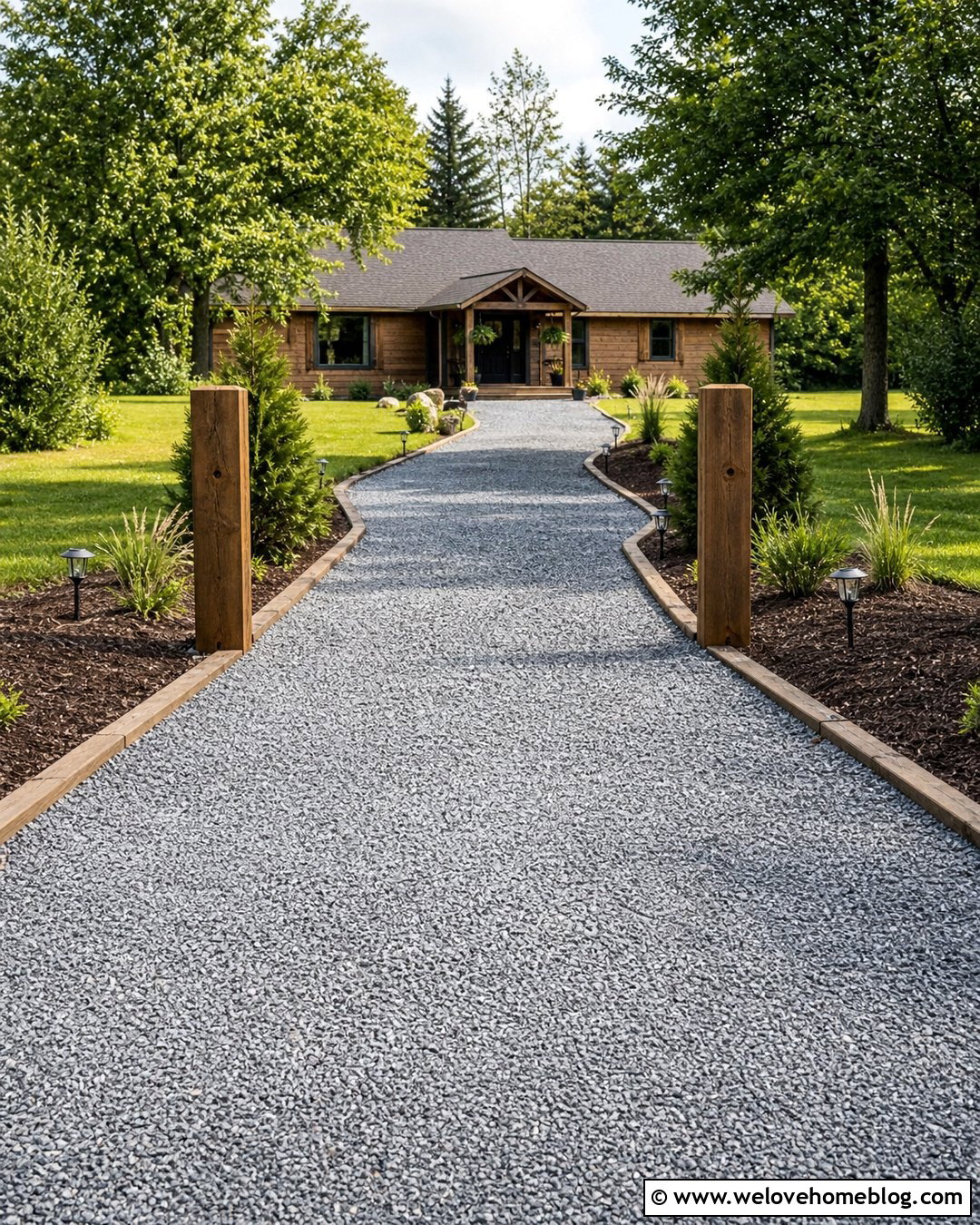
An attractive driveway entrance does not require masonry columns, custom gates, or costly paving. Start with compacted crushed gravel in a neutral gray or tan tone and shape a simple straight driveway with a slightly wider apron. Pressure-treated timber or landscape sleepers can create affordable edging, provided they are securely anchored and positioned outside the main tire path. Add two modest planting beds with ornamental grasses, dwarf evergreens, and long-blooming perennials suited to the local climate. A painted wooden address post and solar or low-voltage lights provide useful finishing details. Keep both sides balanced, but avoid perfect formality if the house is casual. This budget-conscious design works with ranch homes, small farmhouses, cottages, and starter homes while creating a much cleaner first impression.
Conclusion:
The most successful driveway entrances bring every part of the front yard into one coordinated composition. Surface material, layout, borders, plants, lighting, gates, and address markers should complement both the property and the home’s architecture. Start by considering vehicle clearance, visibility, drainage, maintenance, and the amount of space available. Then choose one or two defining features rather than filling the entrance with unrelated decorations. Stone pillars can strengthen a traditional design, while simple metal panels suit modern homes. Gravel, pavers, concrete, brick, asphalt, and resin can all look attractive when thoughtfully framed. Use these 20 Entryway Driveway Ideas to create an entrance that feels practical, welcoming, and distinctive from the street to the front door.

Related posts:


Leave a Reply